Warrior woman – the trials and triumphs of Marcia Langton

We have waited 122 years to recognize in our Constitution the privilege that we have of sharing this continent with the oldest continuous culture on earth. I say to Australians, do not miss this opportunity.

Australian Prime Minister Anthony Albanese


People will forget what you said. people will forget what you did. but people will never forget how you made them feel. people want to be treated justly. perceived injustices can create enmity, and enmity is the beginning of the slide towards intractable conflict.  

 Colin Tatz Reflections on the Politics of Remembering and Forgetting


What is going on in the mind of opposition Peter Dutton that in the belief that he’s taking the fight to the Prime Minister, he picks a fight with this most formidable woman?

This excellent profile of longtime indigenous academic and activist Marcia Langton should be required reading for all supporters of the Aboriginal and Torres Strait Islander Voice to Parliament and the recognition of indigenous Australians in our constitution – and for all people of goodwill who may be wavering under the weight of conservative misinformation and disingenuousness. We’ve republished it here in In That Howling Infinite for folk who cannot scale the News Corp pay-wall.

When Dutton committed the Liberal Party to a ‘resounding no”, Langton was not backward in coming forward. she pulled no punches when she declared:

“This is the Australia we live in; it is racist. So this could be the political making of a whole lot of people who want to help us get this over the line and create a permanent system of empowerment for Indigenous people. If we want to mute racism, we have to raise our own voices. We have to make sure that we win this campaign, because if we don’t, then the racists will feel emboldened. We have to have a constitutionally enshrined voice that empowers our people, regionally and nationally, to make bureaucrats accountable, and respond to representations on all policy matters and legislative matters that affect us. If we can have a constitutionally enshrined voice that’s permanent, that makes us a formal part of the democratic architecture of Australia, that’s how we fight racism. That’s how we fight our disempowerment”. The Guardian, 7th April 2023.

See also in In That Howling Infinite, We oughtn’t to fear an Indigenous Voice – but we do ;The Frontier Wars – Australia’s heart of darknessand Dark Deeds in a Sunny Land – a poet’s memorial to a forgotten crime  

[Author’s note: At Bellingen’s 2019 Readers and Writers Festival, it was our pleasure and privilege to attend a powerful “conversation” between acclaimed historian Henry ReynoldsMarcia Langton – and, by fortunate serendipity, to share a meal with them at the Federal Hotel afterwards].

‘Vote ‘No’ and you won’t get a welcome to country again’

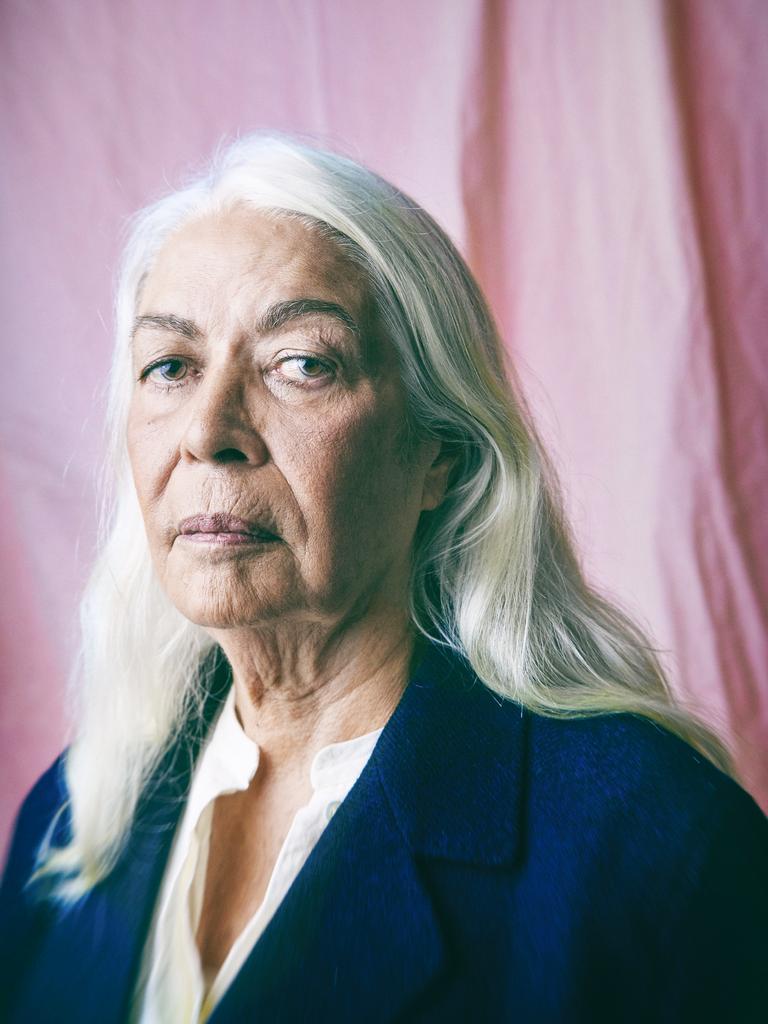
Marcia Langton doesn’t mince words and now she’s really had enough. When Australians vote on the voice, she wants them to think hard about what’s at stake.
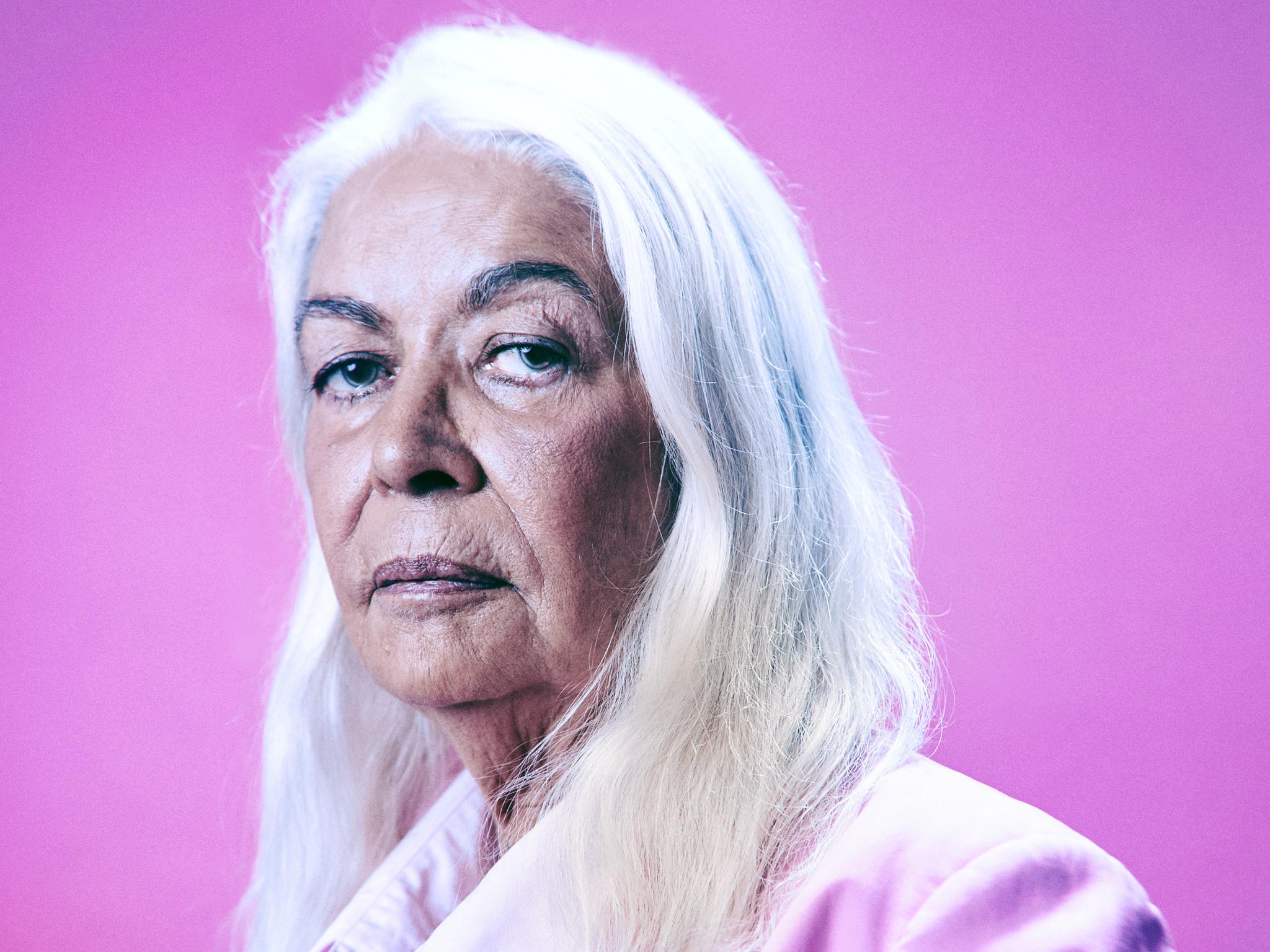
‘I imagine that most Australians who are non-Indigenous, if we lose the ­referendum, will not be able to look me in the eye,’ Marcia Langton says. Picture: Nic Walker
Marcia Langton.  Picture: Nic Walker

Over more than 50 years as an academic and activist, Marcia Langton has never been known to mince her words. But now the Melbourne University professor, Boyer lecturer, public intellectual and co-author of a landmark report on the Indigenous Voice to parliament and government has really had enough. When Australians go to the polls to vote on the Voice later this year, Langton wants them to think hard about what’s at stake. “I imagine that most Australians who are non-Indigenous, if we lose the ­referendum, will not be able to look me in the eye,” she says. “How are they going to ever ask an Indigenous person, a Traditional Owner, for a welcome to country? How are they ever going to be able to ask me to come and speak at their conference? If they have the temerity to do it, of course the answer is going to be no.”

This is classic Langton – unanswerable in its logic; intimidating in its ferocity. She has always been known for her intellectual clarity and lack of compromise and at 71, has lost none of that edge. But Langton is conscious that in some ways the referendum is the last throw of the dice for her ­generation of leaders. She is in demand to talk about the Voice but will pace herself in the campaign, in part because her job as Associate Provost and Redmond Barry Distinguished Professor at the University of ­Melbourne is time-consuming, in part because there’s a new group of Indigenous leaders snapping at her heels. “I want to be a less dominant voice because the younger generation must be given an opportunity to be heard on these matters,” she says. “I’m not an Indigenous leader and lots of young ­people hate the concept of ­Indigenous leader because they feel cut out, they feel like they’re not ­valued.” She says she can understand their point of view, and then pauses before adding: “They just need to learn a ­little bit about earning ­respect for one’s work.”

‘The younger generation must be given an opportunity to be heard.’ Picture: Nic Walker

Marcia Langston. Picture: Nic Walker

Respect for her work is what Langton has earnt in spades since those decades when Indigenous people who spoke up were so easily dismissed by white Australia. One observer notes she had to “bulldoze” her way to influence. Film director and producer Rachel Perkins quips that Langton is like the Beyoncé of Indigenous ­Australia: “You say Marcia, and everyone in black Australia knows who you are talking about.” To TV anchor and author Stan Grant, Langton is the “broken-hearted warrior” who, like Martin Luther King, Nelson Mandela and Rosa Parks, are “people who know the world can break you and still stand up”.

Revered and feared, this mother of two and grandmother of three is criticised at times from within her own community. An example: her commitment to constitutional recognition goes back decades and has never wavered. But when she decided in 2017 to work with human rights and social justice campaigner Tom Calma to produce a report to the federal Coalition on a Voice that could be a legislated advisory body to parliament and government, it was seen by some as letting government off the hook on constitutional reform. Langton, pragmatic, persisted and produced a 272-page document that proposed local and regional voices feeding into a National Voice of 24 members. They would have the “responsibility and the right” to give advice to the parliament and government. The final ­report of the Indigenous Voice Co-design Process, commonly known as the Calma-Langton ­report, was submitted to the Coalition Federal Government in July 2021. It is now seen as the blueprint for the Voice, which under the Labor Government’s policy will be ­enshrined in the constitution if the ­nation votes “yes” in the ­referendum expected later this year. Says Langton: “We want the ­principle voted on first. So that then there’s time for everybody, including all the parliamentarians in the House and in the Senate, and the public to debate the model.”
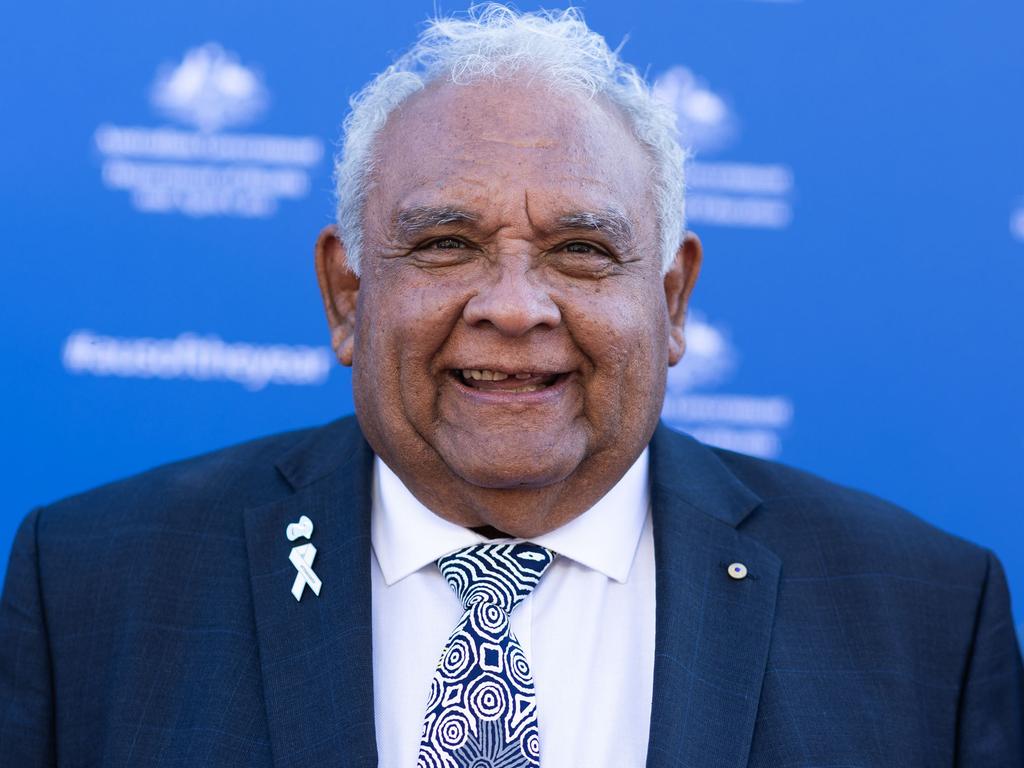
Human rights and social justice campaigner Tom Calma AO. Photo: NCA

On March 23, when Prime Minister Anthony Albanese announced the referendum wording, Langton was present in the Blue Room of Parliament House. When she stepped up to answer a ­reporter’s question it was with the gravitas that comes from a lifetime of reflection, research and ­advocacy. And defiance. And anger. And frustration. And sadness. “Each one of us here has been ­involved in a major initiative. The royal commission into Aboriginal deaths in custody. The inquiry into the forced removal of Aboriginal children from their families. The Don Dale royal commission,” she told journalists. “I could go on and on. And in each case we have doggedly recommended changes to stop the deaths, the incarceration, the early deaths, and the miserable lives and it is so ­infrequently that our recommendations are adopted.” She added: “And each year, people like you come along to listen to that misery-fest. And each year, people go away wringing their hands. We’re here to draw a line in the sand and say this has to change.”

There were tears that day, as Langton, the sophisticated political player, revealed a glimpse of the pressure she has been under since the PM used his election night victory speech in May last year to commit to the Voice.

Growing up in Queensland amid 1950s racism, the young Marcia learnt to step back and let the whites be served first in the local shop; she learnt to step aside and walk on the other side of the street from white Aussies. In her new book Law: The Way of the Ancestors, co-authored with Aaron Corn, Langton recalls attending a conference in Townsville in 1981 where she met the Torres Strait Islander intellectual, teacher and ­litigant Eddie Koiki Mabo. “He was the first person I had met who clearly articulated the fact that ­Indigenous laws exist”. She writes that “by day in school I was forced to ­listen to a fantasy about Australian history and ­Indigenous ­people in ­particular”. The young girl with Yiman and Bidjara heritage on her ­mother’s side figured these were ­“elaborate lies”. None of the people she grew up with resembled the ­“supposed ‘savages’ who rampaged through the pages of my school books”. Queensland was a state, she writes, “where no civil or ­humans rights were accorded my people.”
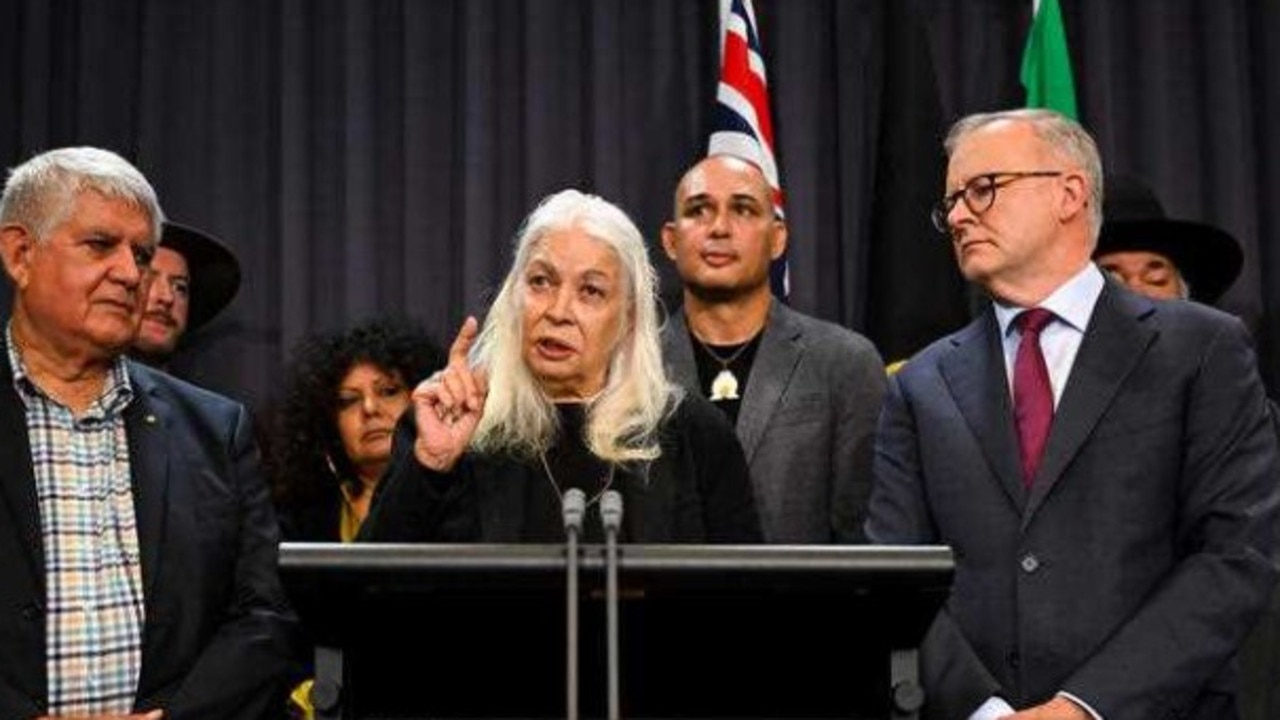
Langton at the press conference on March 23 after Prime Minister Anthony Albanese announced the referendum wording.
Press conference March 23 after Anthony Albanese announced the referendum wording.

It was an experience of racism that fired a lifetime of work on land claims, native title, field work, right campaigns, lobbying parliament, ­sitting on inquiries and commissions, working in government and in universities. “I don’t know of anyone else with her breadth of knowledge of Indigenous issues,” Perkins says. “She can write about deep culture, she can write about contemporary art and film, she can write about mining and economics, about women’s issues, about history, native title, treaty and of course constitutional law. She has an incredible mind.”

Prominent Indigenous academic Marcia Langton says there was “no evidence” to show previous bodies aimed at improving Indigenous outcomes did not work, arguing past consultative groups and councils made “dogged”

Over more than three hours of interview and a photoshoot in Sydney, Langton’s mind is on full display. She is in turn sharp-witted and ­sharp-tongued, resigned and optimistic, warm and angry. At one point her ­energy ebbs and she takes a break, walking outside for a smoke and a chat with photographer Nic Walker. She submits courteously to a makeup artist but her distinctive grey hair is largely untouched and her handsome face needs little attention. Langton has the classy dress sense of a Melburnian and is far from the stereotypical image of either activist or academic.

Indeed, the media has never been able to decide between the two ­labels, and she has long mixed academic smarts with activism, stepping between both worlds with ease. “My view as an academic has always been that my work must have a beneficial impact, so if I can find a ­solution to a problem, then I will advocate for that solution,” she says. “Unfortunately, there’s no word for an academic like me and so the ­Australian media call me an activist. Most people don’t even know that I am an academic.” She adds, without embarrassment: “I much preferred in my public work to be referred to as a public intellectual, and I think that’s the correct term.”
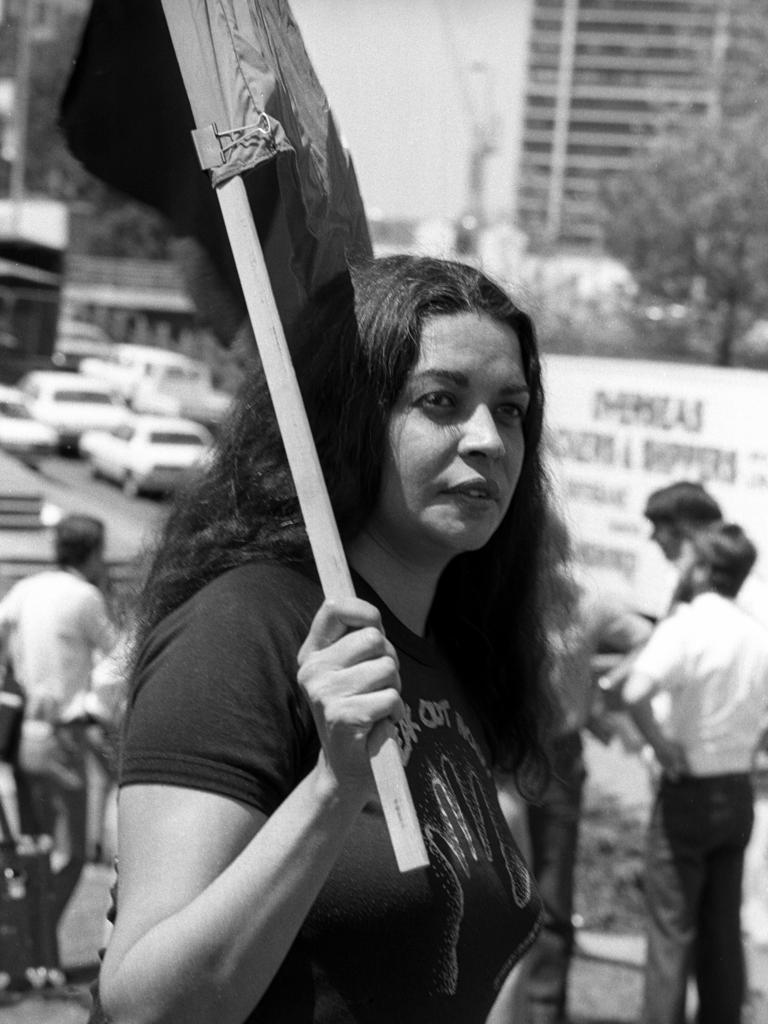
Langton in 1982.
Marcia Langton in 1982.

Last November, at the annual Outlook conference organised by The Australian and the Melbourne Institute, Langton’s sophisticated ­presence underlined the “incredible journey” she has made from a childhood of multiple schools and homes in ­regional Queensland and outer Brisbane to this crucial moment in her life and the life of the ­nation. Off stage, talk was of the brutal death of West Australian teenager ­Cassius Turvey just three weeks earlier and the alleged details of an ­attack that would later result in four people charged with the 15-year-old’s murder. For a moment Langton seemed overwhelmed. She was ­unwell and had been given only a few hours’ notice as a replacement speaker, but she gathered herself, put on her public face and had the audience in her thrall as she spoke of the ­desperate need for the Voice in ­regional areas; of how the green economy – specifically massive solar panels on Aboriginal land – was potentially damaging to communities; and of the challenges for many Indigenous people ever “closing the gap”. With a mixture of stoicism and sadness she told the room that only one third ­of Indigenous people had truly been able to close that gap. She had done so, as part of a cohort of Indigenous women who had done postgraduate study. Langton has a PhD.

Langton was very young when she realised there was a world she could access beyond her own. “Many of my ­childhood circumstances were ­unsafe and scary, so I would often go to the ­library. I learnt that I could ­borrow books from a very young age, and I would take my books to my ­secret places.” She was fascinated by Douglas Mawson and the journals of other adventurers and explorers that provided escape in those early years. By the time she arrived at Aspley High School in outer Brisbane her talent for leadership was apparent. In one of the few photographs from her ­childhood, the young Marcia is lined up with the other house captains, calm and serious as she faces the camera. It was a time of expanding ­university access but at the University of Queensland in 1969 she was one of only two Aboriginal students and among the first to attend the institution. “It was apartheid Queensland, where you were either Aboriginal or not, there was no in between,” she says.
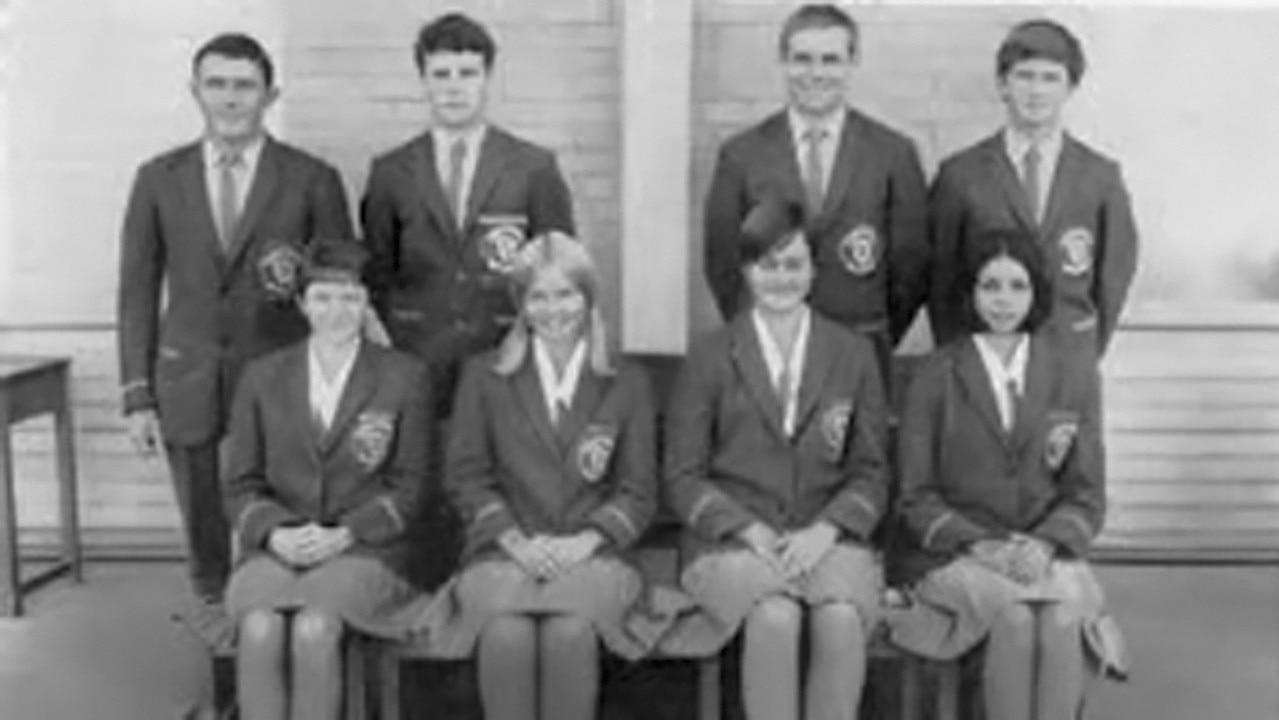
Langton, front row, right, at Aspley State High School, Brisbane. Picture: Supplied
Langton, front row, right, at Aspley State High School, Brisbane

She began to study anthropology, the discipline, along with human ­geography, she would eventually pursue for doctorate. But it was not easy: “There were some wonderful ­people and then there was a very nasty ­racist. I handed in a major essay and she failed me and her written comment on it was that I couldn’t have ­written it because I was Aboriginal. I should have stopped studying ­anthropology.” It still rankles. “To this day there are many anthropologists who say that I don’t write my own work because I couldn’t possibly as an Aboriginal,” she says. “They don’t regard me as Aboriginal. The only real Aborigines – quote, unquote – are the full bloods they worked with in the 1970s. So people like me aren’t real Aborigines. That’s still pervasive in the discipline of anthropology in Australia.”

After a year at UQ and already a mother, she postponed her studies ­because, she says, of racism, and went overseas with her then ­partner and their son, escaping from a state police force she calls ­“extremely brutal and terrifying, far worse than they are today”. It was the early 1970s and in the US and Asia she was exposed to new black narratives. “Despite all the ­terrible things I saw, it became very clear to me what ­Martin Luther King Jr, James Baldwin, Malcolm X were talking about in a very visceral way, and that is that we people of colour, we’re not regarded as human animals,” she says. Five years later, back in Australia and now a single mother, she went back to UQ, “stupidly” enrolling in Australian literature. “I was the lone Aborigine again in the class … and it was just so ­racist. I couldn’t cope. So then I came down to Sydney, I worked for the ­Aboriginal Medical Service, I worked for the Federal Council for the Advancement of Aboriginal and Torres Strait Islanders …”

Langton was elected general secretary, becoming increasingly involved in Aboriginal ­politics, working with several people including Roberta “Bobbi” Sykes in the Black Women’s Action group. Later, in Canberra she resumed her study of anthropology at the ­Australian National Univer­sity, becoming the first Indigenous person to take honours in the subject. It would be another couple of decades before she completed her doctorate in human geography and anthropology at Macquarie University, carrying out field work in the east Cape York Peninsula. In 2000 she was appointed foundation chair of ­Australian ­Indigenous Studies at the University of Melbourne.
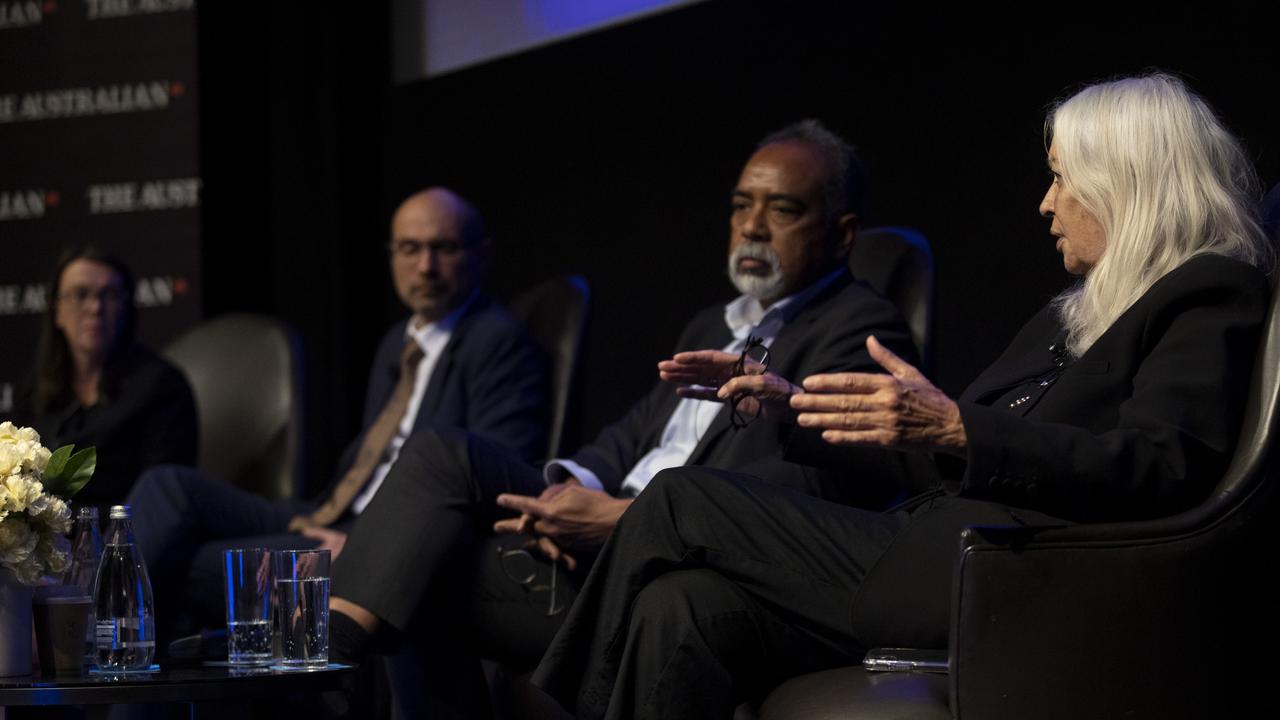
Langton, right, speaking during The Australian Outlook Conference. Picture: Arsineh Houspian
Langton speaking during The Australian Outlook Conference. Picture: Arsineh Houspian

It was in the 1980s, while working part-time as a history­ researcher at the Australian Institute of Aboriginal Studies in Canberra, that she sat the 18-year-old Stan Grant down one day and quizzed him about his ambition. Says Grant: “I was a young kid out of school, pushing a trolley around, ­delivering mail, and doing photocopying … She basically said, ‘What do you want to do with your life?’ She said, ‘My parents and my people have not struggled and ­sacrificed for me to be pushing a trolley around delivering mail’.” It changed Grant’s life. “I’m not here without her, it’s as simple as that. I knew what I had to do. Marcia is not someone you say no to easily.”

Indeed. Langton has a national reputation as intellectually intimidating to media and politicians alike and at the same time is always prepared to step up, to speak or write or debate the big issues. Her scope and influence is so broad that it has led inevitably to criticism within Indigenous communities, but Perkins says: ­“People are very deferential to her great knowledge”. Grant adds: “One of the great strengths in ­Marcia is that she’s been able to challenge herself, she’s found new ways to fight and she’s constantly questioning herself.”

That flexibility has made it hard to predict which side she will come down on in the issues that regularly inflame debate about her people. Fifteen years ago, in an essay in this newspaper, Nicolas Rothwell identified Langton and Noel Pearson as the former “radical activists” who had developed a deep understanding of the root causes of the crisis in remote ­Indigenous communities. Rothwell wrote that both believed alcohol and passive welfare were at the heart of destructive behaviour in these communities, and that both had to be addressed by contentious policy change.

Langton has not backed off, arguing that Indigenous people must receive funding on the basis of need, not identity; and supporting restrictions on the sale of alcohol in some cases. She has done years of research into the issue, published widely and advised the federal government, but she steps cautiously into a debate she says is “almost impossible” to enter. “If I say one thing, Aboriginal leaders are going to go ballistic, and at the very same time [conservative columnist] ­Andrew Bolt’s going to go ballistic, right?” she says. There is no silver bullet in this area, she says, but alcohol management plans are the best way forward.

Langton is fearless on funding, prepared to upset other Aboriginal ­advocates by saying identity should not be the criterion for assistance ­because “many middle-class ­Indigenous people … are not more disadvantaged than other Australians”. There is one exception: the children of Indigenous people who leap from social security to well-paid jobs, for example in mining, and who suddenly appear to be “closing the gap” but find it hard to break free of intergenerational disadvantage, ­will continue to need support. Her uncompromising ­approach can upset both left and right in white and black Australia: “I have been humiliated and insulted by all sides.”

Another example: When Langton delivered the Boyer Lectures on Radio National in 2012 she focused on mining and its potential to enrich Indigenous economies but quickly found herself the target of environmentalists, blasted for not declaring that a research project with which she had been associated had been partly funded by the mining sector. “Most of the left-wingers who attacked my lectures did not read them and they ­viciously attacked me on the basis of what they thought I was saying, not what I actually said,” she says. “They let the industry off the hook because they tried to humiliate me and diminish my arguments. I blame the left for so much of the damage caused to us because of their ­arrogant racism, and particularly many of the environmentalists who do not take us seriously as the First Peoples of this land.”

There’s that word again – racism. Langton uses it often. “Racists don’t understand the horrible impact they have,” she says. “They don’t realise the wear and tear of constant racism is a huge factor in the ­suicide of young Indigenous Australians. So don’t say to an Aboriginal ­person ‘you’re too fair to be Aboriginal’, or ‘you’re too pretty to be Aboriginal’, or, ‘did you write that?’” Langton is astonished at the “mischievous” demands for a definition of ­Aboriginality that have emerged in the Voice debate. Being Aboriginal, she says, has nothing to do with race, but is “a cultural link, a claim of descent, an assertion or claim of identity, and ­acceptance by the community; it’s about being a member of a community by descent and culture”. She references the High Court decision in the 1983 Tas­manian dam case, which defined an ­Aboriginal or Torres Strait Islander person as one of “Aboriginal or Torres Strait Islander descent who identifies as an Aboriginal or Torres Strait ­Islander and is accepted as such by the community in which he or she lives”.

She says the “terrible history” of the stolen generations continues for their descendants, some of whom are “as white as the driven snow”. “What they cop is, ‘you’re not dark enough to be Aboriginal’,” says Langton. “It’s a different kind of racism that they have to wear but it’s far removed from the racism you experience when you walk down the street in this country if you have dark skin. They might suffer occasional racism, they might not get the job, the promotion to professor that they wanted, they might not get an Australian Research Council grant. [But] there are a lot of Aboriginal ­people who will never be able to get a taxi. These young, fair-skinned ­people, they’ll get a taxi OK. They suffer a very ­different kind of racism, and it’s more in the zone of the typical … identity attacks of, ‘you’re doing it so you can get money’.”

To Langton, there’s a certain irony in columnists questioning the ­authenticity of those who don’t “look” Aboriginal: after all, she says, if there are fraudsters, they are ipso facto white, not Aboriginal. She has never felt confusion about her own identity, although she is still asked by some why she doesn’t “pass” as a white person. Overseas she’s often ­mistaken for Palestinan, Moroccan, ­Algerian, Puerto Rican, Indian or Anglo-Indian or even ­Brazilian Portuguese. Langton almost snorts her ­answer: “As if I wanted to do that [pass as white]. I used to say to them when I was younger, ‘Are you saying to me that I should disown my mother and my grandmother and all my family? They think I would ­prefer their life but actually, I don’t. I love being ­Aboriginal, I have never been anything else.”

Langton has stood out in the past as one of the few Indigenous women with a ­national profile in a world of ­Indigenous male leaders including Noel Pearson, Pat Dodson and others. ­Perkins ­recalls a ­corporate women ­leaders’ event at Sydney’s Barangaroo a few years ago at which Pearson was asked to name the woman who had the biggest ­influence on him. Says Perkins: “Noel thought for a while, then he said it had been Marcia.”
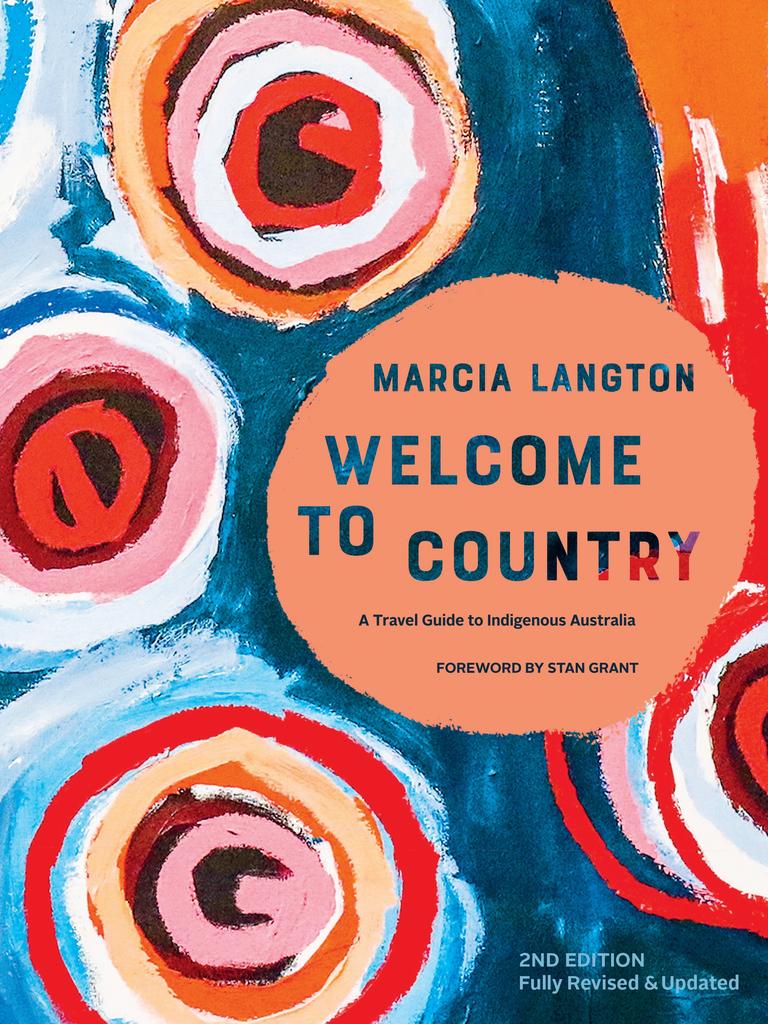
Welcome to Country by Marcia Langton.
Welcome to Country by Marcia Langton

Perkins worries about her friend’s vulnerability and the physical and emotional pressure she has absorbed: “I don’t know what I would do, I don’t know what we would do without Marcia, because she is so fearless, she has such depth. I don’t know of any other person who has had her ­staying power, she continues to give to the movement endlessly. It has ­absorbed her entire existence.”

As the referendum on the Voice nears, Langton appears almost fatalistic. If it’s a no, she will largely blame Opposition Leader Peter Dutton, who has “waged a very successful campaign to undermine the Voice”. As for those Indigenous leaders opposed to the Voice: “They have no better ideas. They say that the Voice won’t solve particular problems. So where are their ­solutions? We’ve put 30 years of work into our proposition, 30 years of work. There are countless reports, we’ve done the homework, we’ve done the hard yards, we’ve done the research, we’ve tested everything.”

If the referendum fails, it will be a staggering setback for Langton and others of her generation, but she readily acknowledges how far we have come. “Fifty years ago, I wouldn’t have been invited to give the Boyer ­Lectures; I wouldn’t have been invited by [publishers] Hardie Grant to write [her travel book] Welcome to Country; I wouldn’t be a professor at the ­University of Melbourne. Of course things changed.”

First Knowledges: Law, The Way of the Ancestors by Marcia Langton and Aaron Corn (Thames & Hudson Australia, $24.99), is out on April 25

Helen Trinca is a highly experienced reporter, commentator and editor with a special interest in workplace and broad cultural issues. She has held senior positions at The Australian

The Shoah and America’s Shame – Ken Burns’ sorrowful masterpiece

And high up above my eyes could clearly see
The Statue of Liberty
Sailing away to sea
And I dreamed I was flying
Paul Simon, American Tune

Ken Burns is a documentary maker and storyteller without equal. All his films are masterpieces of American history. I’ve watched much if not most of his work. They are among the most unforgettable histories I’ve ever viewed, high up in what I’d consider the pantheon of the genre, alongside The Sorrow and the Pity, The Battle of Algiers, Salvador and Waco – Terms of EngagementThe Civil War raised the bar so high that very few documentary filmmakers have reached it, with its mix of surviving photographic images (in an style that Apple now promotes as its “Ken Burns Effect”) and the mesmerizing recitation of diaries, letters home, and official communications. The West confronted his country’s enduring creation myth with an honesty balanced by empathy. The Dustbowl was breathtaking in its images, its narrative and the spoken testimonies it presented. The Vietnam War was a relentless, harrowing story told in pictures and the witness of the people ground zero of a a conflict that has been called “chaos without a compass”.

The US and the Holocaust is Burns’ latest film. It does not make for easy viewing being a searing indictment of America’s response to the catastrophe that was approaching for European Jewry. It’s a significant exposition centred on just how much evidence was accessible to Americans during that appalling time, and asks just why rescuing Jews was no priority, except for those few individuals who actually took risks to help. As Burns observed: “There is an American reckoning with this, and it had to be told. If we are an exceptional country, we have to be tough on ourselves and hold ourselves to the highest standard. We cannot encrust our story with barnacles or sanitise our history into a feel-good story”. As historian Rebecca Erbelding suggests, “There is no real perception in the 1930s that America is a force for good in the world or that we should be involved in the world at all. There is no sense among the American people, among the international community, that it is anyone else’s business what is happening in your own country”. There is indeed a disconnect between America’s self regard as the land of the free and the “light on the hill”, and the cold reality – and realpolitik – of its actual record at home and abroad. There is a none too subtle irony in the titles Burns has chosen for each two hour episode, drawn from extracts from the poem by Emily Lazarus that adorns the base of The Statue of Liberty (see below).

Burns work reminds us that historical memory in America, Europe, and indeed Australia is often like a sieve. Give it a good shake and only the big chunks are left. The story of the US’ public opinion and government policy regarding the worsening plight of European Jewry during the nineteen thirties and the a second World War is not one of those. When I posted an article about the film on Facebook, many Americans commented that they were unaware of their country’s disregard and outright obstruction. Burns has opened a crack that has let the light in.  

The quotations cited above are from a review published recently in the Weekend Australian which I have republished below – it is an excellent and quite detailed account of the issues and the incidents featured in this sorry tale, and I cannot better it. But I will note one distinctive feature of Ken Burns’ documentaries – his skill at recounting unfolding stories which he interweaves through the ongoing narrative, drawing viewers inexorably in and acquainting them with the characters, their hopes and their fears, and ultimately, their fates be these tragic – alas. in the most part – or fortunate.

In The Vietnam War, I followed the journey of an eager and patriotic young soldier, Denton “Mogie” Crocker, as he roved out from mall town USA to the battlefields of Indochina. I recount it. in The Ballad of Denton Crocker – a Vietnam elegy. In America and the Holocaust, there is the story of Anne Frank’s family as they sought asylum in the USA from the moment the the Nazi regime started to come down hard on Germany’s Jewish community. We all know how that ended for Anne and her sister. There is also the saga of what Hollywood called “the voyage of the damned”, the subject of an overwrought and overacted feature film, which nevertheless was based upon the actual voyage of the SS St.Louis which departed Hamburg with nearly a thousand desperate but hopeful travellers, but was refused entry into American and Canadian ports, and returned eventfully to Rotterdam where Britain, Belgium, France and the Netherlands gave them shelter. The latter three were conquered by the Wehrmacht in 1940, with harrowing consequences for those passengers who settled there, but a half of the St. Louis’ human cargo survived the war, predominantly those who were permitted to settle in Britain. 

On a personal note, whilst I am myself of Irish descent, Catholic and Protestant in equal measure on each side, my wife’s father’s family were Jews from eastern Germany and Czechoslovakia and experienced the same travails as those described in Burns’ film. Many, including her father’s elderly parents, perished in the death camps, and are memorialised the Yad Vashem shrine of remembrance in Jerusalem – which I have visited many times. Others managed to leave Germany, including her father, who settled in London, where she was born, and her uncle who a  lawyer who left Germany in 1933 after the promulgation of the infamous Nuremberg Laws, who settled in England and  and then made Aliyah to Palestine, ending his days in Haifa, in an independent Israel. Others headed westwards to Latin America in the hope of securing entry to the US from there.

Epilogue. Antisemitism, the devil that never dies

It has been said, with reason, that antisemitism is the devil that never dies. And yet, is antisemitism a unique and distinct form of racism, or a subset of a wider fear and loathing insofar as people who dislike Jews rarely dislike only Jews?

Fear of “the other” is a default position of our species wherein preconceptions, prejudice and politics intertwine – often side by side with ignorance and opportunism. it is no coincidence that what is regarded as a dangerous rise in antisemitism in Europe, among the extreme left as much as the extreme right, is being accompanied by an increase in Islamophobia, in racism against Roma people, and indeed, in prejudice in general, with an increase in hate-speech and incitement in the media and online, and hate-crimes.

We are seeing once again the rise of nationalism and populism, of isolationism and protectionism, of atavistic nativism and tribalism, of demagogic leaders, and of political movements wherein supporting your own kind supplants notions of equality and tolerance, and the acceptance of difference – the keystones of multicultural societies. It is as if people atomized, marginalized and disenfranchised by globalization, left behind by technological, social and cultural change, and marginalized by widening economic inequality, are, paradoxically, empowered, energized, and mobilized by social media echo-chambers, opportunistic politicians, and charismatic charlatans who assure them that payback time is at hand. These days, people want to build walls instead of bridges to hold back the perceived barbarians at the gates.

© Paul Hemphill 2023 All rights reserved

From Little Sir Hugh – Old England’s Jewish Question

Also, on American history and politics, My country, ’tis of thee- on matters American

The New Colossus

     Emily Lazarus

Not like the brazen giant of Greek fame,
With conquering limbs astride from land to land;
Here at our sea-washed, sunset gates shall stand
A mighty woman with a torch, whose flame
Is the imprisoned lightning, and her name
Mother of Exiles. From her beacon-hand
Glows world-wide welcome; her mild eyes command
The air-bridged harbor that twin cities frame.
“Keep, ancient lands, your storied pomp!” cries she
With silent lips. “Give me your tired, your poor,
Your huddled masses yearning to breathe free,
The wretched refuse of your teeming shore.
Send these, the homeless, tempest-tost to me,
I lift my lamp beside the golden door!”

Ken Burns’ “The US and the Holocaust” tells of a shameful past

Graeme Blundell, The Weekend Australian, 11th March 2023

A scene from The US and the Holocaust
The latest documentary series from Ken Burns’s Florentine Films, The US and the Holocaust, is inspired in part by the US Memorial Museum’s “America and the Holocaust” exhibition. The series was developed with the assistance of the museum’s historians (many of whom appear in it) and its extensive archives.

It’s a significant exposition centred on just how much evidence was accessible to Americans during that appalling time, and asks just why rescuing Jews was no priority, except for those few individuals who took the risk to help.

For Burns, the series is the most important work of his professional career.

“There is an American reckoning with this, and it had to be told,” he says. “If we are an exceptional country, we have to be tough on ourselves and hold ourselves to the highest standard. We cannot encrust our story with barnacles or sanitise our history into a feel-good story.”

The US and the Holocaust was originally supposed to be released in 2023 but Burns accelerated production by several months, “much to the consternation of my colleagues, just because I felt the urgency that we needed to be part of a conversation”. That conversation for Burns and his colleagues is about “the fragility of democracies” and demonstrating how, “we’re obligated then to not close our eyes and pretend this is some comfortable thing in the past that doesn’t rhyme with the present”.

The filmmaker is fond of quoting Mark Twain’s, “History doesn’t repeat itself but it often rhymes,” and like all his films he wants this one to rhyme with the present.

“We remind people that it’s important that these impulses are not relegated to a past historical event,” Burns says. “It’s important to understand the fragility of our institutions and the fragility of our civilised impulses.”

As Holocaust historian Deborah Lipstadt, a significant voice in Burns’s documentary, says with some alarm in the series, “The time to stop a genocide is before it starts”.

And Peter Hayes, also a revered historian, says, underling the subtext of the documentary, “exclusion of people, and shutting them out, has been as American as apple pie”.

The three-part, six-hour series is directed and produced by Burns, Lynn Novick and Sarah Botstein, two of his long-term collaborators, and beautifully written by another Burns regular, Geoffrey Ward. As always Burns manages to find major actors to play the parts of his central characters in voice over, including Liam Neeson, Matthew Rhys, Paul Giamatti, Meryl Streep, Werner Herzog, Elliott Gould, Joe Morton and Hope Davis.

And like so many of Burns’s films it’s narrated in that mesmerising way by Peter Coyote, who Burns calls “God’s stenographer”. Coyote is able to voice such complex ideas with authority and empathy, often with a kind of beguiling liturgical intonation.

Stylistically recognisable and cinematically audacious, Burns’s memorable documentaries (many of which he has co-produced with Lynn Novick) include The Civil War, Baseball, Jazz, The War, The National Parks, The Dust Bowl, Prohibition, Country Music and more recently Hemingway. He constructs a compelling narrative by using almost novelistic techniques, imaginatively selecting archival material, photographed in his now famous way, immersing us in photographs, developing characters and arranging details around their stories.

The filmmakers present their story in this new series across three overflowing episodes in six challenging, engrossing hours: the first The Golden Door (Beginnings-1938); the second Yearning to Breathe Free (1938-1942); and the final The Homeless, Tempest-Tossed (1941-).

There are two parallel storylines that continuously reverberate off each other – the American side details the history of American anti-Semitism, the notion of “race betterment” and the evolving immigration policy; the German narrative arc deals with the way hatred of the Jews sprouted over time, how the Nazis pursued the end of Jewish intellectualism, and of course the process of their extermination.

The first episode covers the period from roughly the end of the 19th century to the late 1930s, a historical background that delivers context and perspective for the complex narrative that follows.

A scene from The US and the Holocaust

It’s broken by a short pre-titles sequence that involves new archival material from the centre of Frankfurt in 1933 of Otto Frank, father of Anne, Hitler having been in power for some months. Otto is desperate to get his family to America, but in the absence of an asylum policy, Jews seeking to escape Nazi persecution in Europe had to go through a protracted emigration procedure. It’s an unanticipated and surprising piece of the Franks’s story highlighting an American connection to the Holocaust.

(It’s a lovely, if distressing, example of the way Burns likes compelling personal narrative to wrap his ideas around, finding “characters” who become involved as events dictate.)

There was limited willingness to accept Jewish refugees. America did not want them, as Coyote says. Frank would continue to apply when they moved to Amsterdam but his immigration visa application to the American consulate in Rotterdam was never processed.

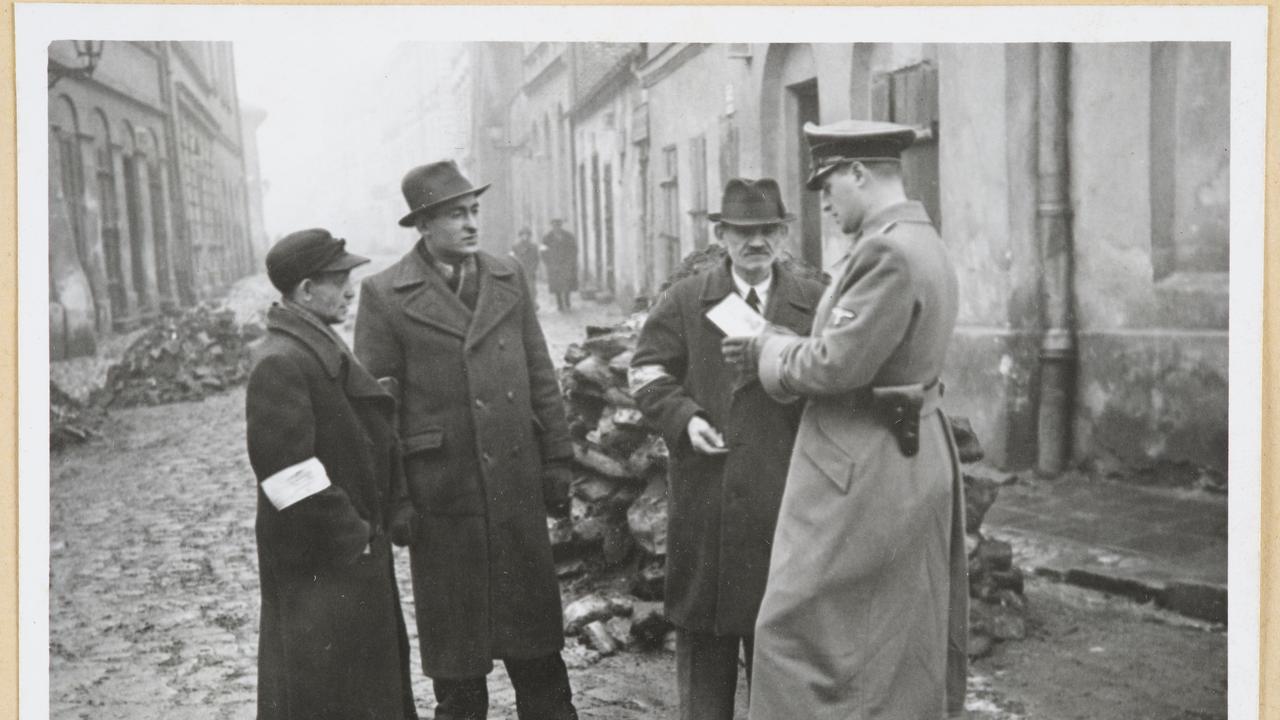
As the filmmakers later show so tragically, existence for European Jews became a deadly, exhausting pursuit of passports, identification cards, transit visas, and affidavits. As the journalist Dorothy Thompson, who features in the series, said, “For thousands and thousands of people a piece of paper with a stamp on it is the difference between life and death.”

We then cut to a beautiful period film sequence of the Statue of Liberty, Mother of Exiles, surrounded by slowly floating clouds, and a beautiful reading of the famous poem by 19th-century poet Emma Lazarus printed on a bronze plaque mounted inside the lower level of the pedestal:

Give me your tired, your poor,

Your huddled masses yearning to breathe free …,

I lift my lamp beside the golden door!

But the Golden Door, which gives the title for the first episode, had begun to close. The filmmakers take us back through history at quotas and the favouring of northerners over immigrants from southern or eastern Europe. Asians were largely locked out by the time of the Chinese Exclusion Act of 1882.

A so-called “racial abyss” was feared by Americans as the new century began; white people feared they would be outbred by the newcomers and their offspring. The white Protestant majority at the end of 19th century was certain that unless things changed they were about to be replaced.

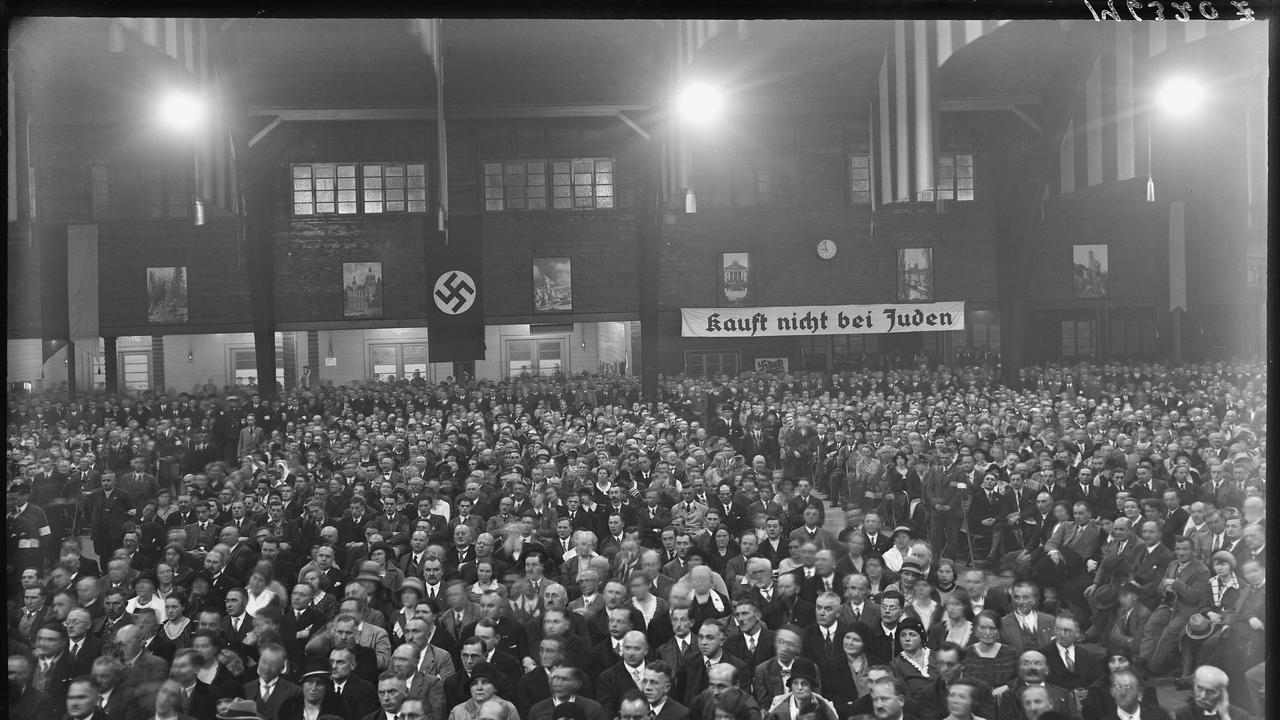
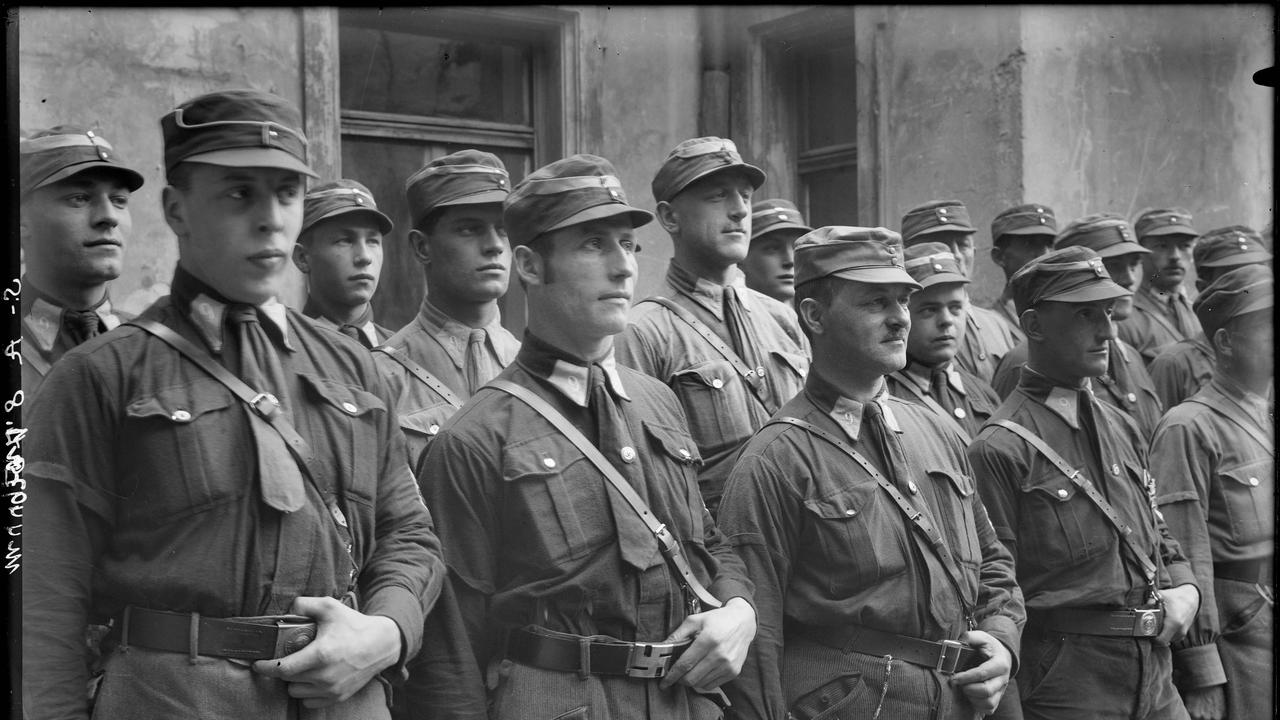
A part meeting with a sign reading "Kauft nicht bei Juden"- Don't buy from Jews.
A US Nazi Party meeting with a sign reading “Kauft nicht bei Juden”- Don’t buy from Jews.

A “mordant sentimentalism” was blamed by some for the US becoming “a sanctuary for the oppressed”, and “suicidal ethics” were leading to the extermination of the white people.

Helen Keller called it “cowardly sentimentalism” and Henry Ford, the series reveals, blamed Jews “for everything from Lincoln’s assassination to the change he thought he detected in his favourite candy bar”. He even published a hugely successful newspaper to triumphantly publish anti-Semitic harangues.

Jews were dismissed as “uncouth Asiatics” and the hogwash “science” of eugenics, the theory that humans can be improved through selective breeding of populations, was promulgated by conservationist Madison Grant’s The Passing of the Great Race. The filmmakers show how it evolved and thrived in response to America’s changing demographics.

It was a concept taken up by Hitler who also admired America’s expansion across the continent from east to west, brushing aside those who were already there. This was manifest destiny. “The immense inner strength of the US came from the ruthless but necessary act of murdering native people and herding the rest into cages,” he wrote. His dream was of territorial expansion and Germany would in time conquer the wild east of Europe he believed. “Our Mississippi,” he said, “must be the Volga”.

Jews, scapegoats for centuries, watched as anti-Semitism was normalised in the US, in and out of Washington. Burns and his colleagues closely follow the complex manoeuvrings of President Roosevelt as he coped with the anti-immigrant xenophobiaas well as a wilful, and for many, all-consuming obsession with white supremacy.

As historian Rebecca Erbelding suggests, “There is no real perception in the 1930s that America is a force for good in the world or that we should be involved in the world at all. There is no sense among the American people, among the international community, that it is anyone else’s business what is happening in your own country”.

The series unfolds with Burns’s typical elegance: the stylised organisation of personal anecdote, Coyote’s sonorous narration, erudite, subdued commentary from historians and some ageing witnesses to atrocities, an elegiac soundtrack from Johnny Gandelsman, and gracefully realised visual documentation.

Much of the German archival footage is not unfamiliar but some new sequences horrify and disturb deeply. SS soldiers parade in the streets, chanting “When Jewish blood spurts off a knife, everything will be all right”. And the midnight book burnings on May 10, 1933, are a frenzied, phantasmagoria of volumes hurled into bonfires, including the works of Jewish authors like Albert Einstein and Sigmund Freud as well as blacklisted American authors such as Ernest Hemingway and Helen Keller.

The series is an extraordinary piece of work, resonant and at times frightening. As historian Nell Irvin Painter says, “Part of this nation’s mythology is that we’re good people. We are a democracy, and in our better moments we are very good people. But that’s not all there is to the story”.

The US and the Holocaust is streaming on SBS On Demand.

Actor, director, producer and writer, Graeme Blundell has been associated with many pivotal moments in Australian theatre, film and television. He has directed over 100 plays, acted in about the same number, appeared in more than 40 films and hundreds of hours of television. He is also a prolific reporter, and is the national television critic for The Australian.

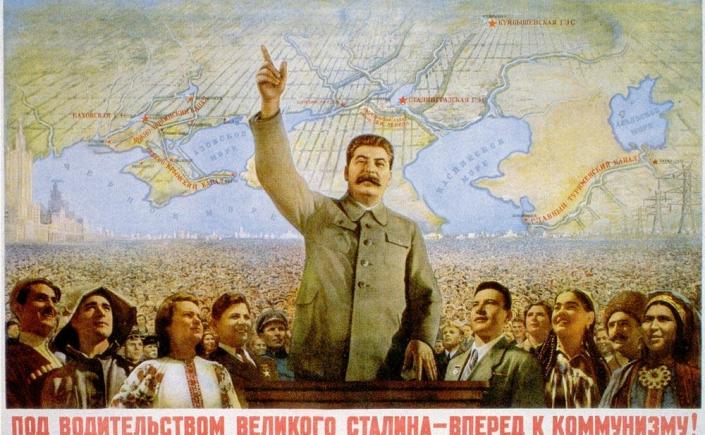
Великий Ужас (Velikiy Uzhas) – Stalin’s Great Terror

You were taken away at dawn. I followed you
As one does when a corpse is being removed.
Children were crying in the darkened house.
A candle flared, illuminating the Mother of God…
The cold of an icon was on your lips
A death-cold sweat on your brow –
I will never forget this; I will gather
To wail with the wives of the murdered streltsy
Inconsolably, beneath the Kremlin towers.
Anna Akhmatova, Moscow 1935 Continue reading

Bringing it all back home – the missing mosaic and other ‘stolen’ stuff

“Old stuff. The Old World is full of it. But objects speak.They tell us things”.

The word “loot” derives from from the Hindi lūṭ or “booty” either from Sanskrit loptra, “booty, stolen property” orluṇṭ, “to rob, plunder”. It is one of the many words that entered into the anglophone vernacular in the wake of European imperial expansion. Charles James’s “Military Dictionary, London 1802, defines it as “Indian term for plunder or pillage”, and “goods taken from an enemy”. Like the very concept of empire itself, the word is a loaded one, loaded with historical memories, with national identities, and with differential moralities. Are goods taken in war by the victors as reparations or recompense for blood and treasure spent? Are they stolen goods that the perpetrators have a moral obligation to return to their rightful owners – or, as is the case with most of the inheritors of once imperial patrimony, the current territorial powers that be.

These questions loom large in the commentatary of an entertaining if lightweight, and yet, most informative programme running on the ABC at the moment, called, provocatively, Stuff the British Stole.

In this Australian-Canadian production Marc Fennell, the affable host the ABC’s Mastermind, trots the globe recounting the stories of the artefacts that ended up in British and Australian museums, galleries and churches during the days of Empire. Arriving in the wake of global protests that have seen statues ripped down and colonial legacies scrutinised with renewed vigour, the series offers an accessible beginner’s guide to the British empire’s long shadow and sticky fingers. Along the way, he encounters academics and diasporic communities for whom these objects, and the dispossession, death and cultural erasure they represent, have been open wounds for generations.

Each artefact acquired during the age of Empire is a reminder of colonial rule, be this benign or oppressive as determined from the perspective of the observer. For a long time, Britain’s best excuse for having nicked and then held on to many of these priceless antiquities has been that in a world of chaos and destruction, its institutions have long been the safest place to keep its ill-gotten treasures. The programme asks rhetorically in commentary and actually to museum curators: “is there an honourable way of handing in to your stolen stash?” Shouldn’t you be handing it back to its people? “Is this loot” asks the narrator of the director of the Art Galley of NSW. It is a public art gallery”, he replies.” … it belongs to the people of NSW … it’s there for education and discussion … I think it’s best not to use words like this right away … it was coming out of the rubble in the middle of a war zone … its a bit problematic”.

Britain was not the sole perpetrator of plunder, mind. A lot of loot of found its way into the museums of other European empires and and also the United States and Russia. And it was acquired in much the same way, in a mix of altruism, academic inquiry, subterfuge and outright banditry.

In our own travels, Adèle and I encountered an amusing tale of imperial skulduggery. When we were in Damascus, we stood by the modest catafalque of the celebrated Muslim war lord Salah ad Din al Ayubi, known in the west as Saladin, as our guide recounted the story of how before the First World War, the German Kaiser visited the Levant, then under the rule of the Ottoman Empire. Whilst visiting the Old City of Damascus, Wilhelm cast covetous eyes over the famous sultan’s casket. It is said that his entourage attempted to poach Salah ad Din’s tomb and spirit it back to Germany, but was intercepted by the Sultan’s police. By way of contrition, the emperor presented Damascus with a gaudy new catafalque more suited, he reckoned, to the last resting place of a renowned warrior. The two monuments now sit side by side in Salah ad Din’s small mausoleum beside the looming Roman wall of the splendid Umayyad Mosque, and pilgrims weep beside them. Our guide, a Syrian Kurd, upbraided elderly fellahin visiting from the countryside for praying at the empty fake – “don’t you know that Salah ad Din al Ayubi was not Arab but Kurdi, and he is in that tomb, not this one!”

But I digress …

Marc Fennell with Stuff the British Stole

A stone and a rock, a statue and a shirt …

Episode One kicks off a tad earlier than Imperial age, and closer to home with Scotland’s Stone of Scone, the big brick upon which Scottish kings were crowned until Edward I took it home to Westminster as a symbol of Sassenach conquest. It has seated the arses of British monarchs ever since, and though it was sent back home to Edinburgh in recent times as a recognition of Scottish nationalist sympathies, it will doubtless be lent to London for the enthronement of Charles, Third of His Name.

But the usual imperial suspects follow. There’s the Koh i Nor Diamond “gifted” to Queen Victoria from an adolescent Duleep Singh, maharajah of the independent but defeated state of Punjab, along with his empire, in the mid-19th century It is now in Britain’s Crown Jewels, tucked away in the vaults of Tower of London (the ones on show to the public are replicas). Once the centrepiece of the Great Exhibition, the diamond is now set in a crown that Queen Consort Camilla may or may not wear at her husband’s coronation in May. Britain’s royals have amassed a Smaug-like treasure trove of bling that might featured in future lists of Stuff the British Stole.

The Peking Shadow Boxer is an ancient bronze statue “rescued” from the ruins of war by a British sea captain during the Boxer Rebellion at end of the nineteenth century and now somewhere in the storerooms of the Art Gallery of New South Wales – the rebellion was one of Australia’s first overseas war. Then there is the story of a ceremonial war-shirt once worn by Native American Blackfoot chief Crow Foot, his “uniform’ or regalia, if you will, “gifted” (no one really knows how or why) to the Mounties during treaty negotiations when Canada was a British Dominion, and now, “in a place where it does not belong”, in London’s V&A Museum. This episode was particularly visceral. Coming almost contemporaneously with the recent revelations of what happened in Canadian “residential schools” that endeavoured to “take the Indian out if the Indians”.

We’ve heard that one in Australia too as we still struggle to come to terms with our past. As Mark Twain quipped, history might not repeat, but sometimes it rhymes. And it is passing ironic that the final episode is a brief, sadly predictable chapter in Australia’s frontier war in the early Nineteenth Century.

The hunt for Yagan’s head

Yagan was warrior and Noongar man whose people lived by what is now the Swan River near Perth in Western Australia. Settlement land grabs and tit for tat robberies and murders, and revenge for the deaths for his brother and father provoked him to violence. The colonial authorities put a price of his head, dead or alive, for a payback killing in 1834-35 and he was shot in the back by two young settlers. His head cut off and was paraded around the colony to send a message to his people.

It took over a century to track down Yagan’s head. Ken Colberg, a Noongar war veteran and elder, made it his mission to find it. He traced it to a house in London – a colonial lieutenant had brought it back to England and endeavoured to sell it to a surgeon who was interested in such “trophies “. The surgeon declined to purchase it so the soldier conveyed it to Liverpool where he flogged it to Liverpool Museum. Over a century later, on the instructions of the museum, it was buried in Everton Cemetery near Liverpool in an unmarked common grave along other with other remains including 22 still born babies interred by a local hospital. Two English archaeologists agreed to assist Ken in his quest, tracing the location of the grave and negotiating with the authorities and descendants of the deceased children to effect Yagan’s exhumation.

It was handed over to a Noongar delegation in Liverpool Town Hall on 28th August 1997 – the day Princess Diana died in Paris. Ken made a passing reference to this during the ceremony: “That is how nature goes … Nature is a carrier of all good things and all bad things. And because the Poms did the wrong thing, they now have to suffer”. That went down well in the. Australian media, his comment prompted a media with newspapers receiving many letters from the public expressing shock and anger. Ken later claimed that his comments had been misinterpreted.

Yagan’s remains were finally laid to rest in Australian soil, on the banks of the Swan River on Noongar country.

And so concluded the first season of Stuff the British Stole. But there’s more to come – season two is promised and is already available as a podcast. It includes Tipu Sultan’s mechanical Tiger from Bengal, India, presently in the British Museum, commissioned by the sultan and depicting a tiger munching down on a prostrate English soldier. That one was taken when Tipu met his doom at the hands of Clive (of India, that is, and looter in chief of Indian artefacts). There’s there’s a revered chalice from Cork from a time when catholic worship was banned by British authorities; the Gweagal Shield acquired by Captain Cook when he hove to in Botany Bay; and the Makomokai tattooed heads from Aotearoa. And, of course, the most celebrated of artefact of all, the Elgin Marbles that most folk associate with the British Museum rather than with the Athens Parthenon which has served successively as a temple, church and mosque before Venetian ships bombed it in the seventeenth century – and from whence the eponymous Lord Elgin lifted them on the dubious pretext of preservation and plonked them down in perfidious Albion.

The return of Yagan. Ken Colberg is in the centre

Which brings us to the mosaic …

This is the story that enticed me into Stuff the British Stole and thence, into this post. Having enjoyed half a century of interest in the Middle East, I was immediately sucked in. And as with Yagan’s los head, it too has as Australian connection.

It is April 1917, during the second battle of Gaza, and British General Allenby’s army of soldiers from Britain and its empire is pushing northwards across the Negev Desert towards Ottoman-ruled Gaza and thence Jerusalem. It’s not officially called Palestine yet – the old Roman name, favoured by theologians, romantics, and British tourists and politicians, would not enter world politics and controversy for a few years yet. The Reverend William Maitland Woods is chaplain of the Australian and New Zealand Anzac division, and soldiers of a Queensland brigade of the Australian Light Horse are digging trenches at Besor Springs, near Gaza. The Reverend is an amateur archeologist and made a habit of entertaining the troops with stories about the Holy Lands where they were campaigning. The soldiers uncover the remnant of a 6th Century Byzantine mosaic dating from 561-562, during the reign of Emperor Justinian. A excited chaplain seeks professional advice from curators at the Cairo Museum and is given permission to organise a group of volunteers to uncover and remove the remains. Sapper McFarlane of the New Zealand Wireless Troop was given the job of drawing what they uncovered. That’s him in the picture below.

The reverend convinces his higher-ups that the mosaic must be saved, and sixty three crates are sent to Cairo. Egypt at the time was a British “dependency “ (good word, that).

There then commenced a tussle between British high command in Cairo and the Australian defence department. By September 1917, the Australian Records Section was feverishly collecting battlefield trophies. Charles Bean the official ANZAC historian liked to call them “relics”, consistent with the reverential language of “spirit”, “sacrifice” and “the fallen” he afforded his soldiers. The British : “It’s not a trophy of war – you cannot have it – it may be returned” or words to that effect. TheAussies: we wanted stuff for our prospective Australian War Museum, and anyhow, we’ve shed blood in this fight”.

And so, what would be called the Shellal Mosaic ended up in Canberra. Most of it, anyway. Other fragments found their way to St James Church in the Sydney CBD and in a church in Brisbane. It is believed that some diggers took pieces too. In 1941, when the War Memorial was under construction, an appeal was sent out to ageing members of the light horse regiments to return the bits they’d souvenired, but there were few, if any, volunteers.

Concerned, with very good reason, that the treasure might not get all the way Down Under, Woods gathered up several baskets of tesserae from the site, the individual fragments from which a mosaic is made, and commissioned an artisan to fashion an exact replica of the inscription headstone, one metre by half a metrre. He gave this to a friend, a Colonel John Arnott who at war’s end, returned to his family property at Coolah in rural New South Wakes and embedded itinto his garden steps. The farmhouse and its steps are with the family today.

Ancient History interlude: What makes the Shellal Mosaic such a significant archaeological find? For one, it was a Christian chapel from the Byzantine period when Hellenic pagan culture was giving way to Christianity. For two, the mosaic was made of marble, an expensive material and not commonly used other than by the very wealthy. And for three, the use of exotic animals from different lands, such as lions, tigers, flamingos and peacocks, common images in Byzantine art, all paying homage to a central chalice, could point to other pagan races and lands embracing Christianity.

The Shellal Mosaic

Yet, the tale gets curiouser and curiouser …

During the excavations, Maitland Woods discovered a chamber beneath the mosaic. It contained human bones lying with its feet to the east and its arms closed on the chest. The bones and inscriptions on the mosaic got the reverend quite excited, more so than the more mosaic itself as a rough translation of the inscription suggested to him that let him they were the bones were those of St George – of England and dragon fame, not the Dragons.the league football team of the eponymous suburb in southern Sydney which was not established until 1920. They were not, however. Saintly George lived in intolerant pagan Roman times and was martyred for his faith. More likely, they belonged to a local bishop time called as George. Woods feared these would be sent to England in perpetuity so he packed them up and gave a ‘parcel’ to his friend, Reverend Herbert Rose, for safe keeping, and this found its way to Rose’s home parish of St Anne’s in Strathfield in Sydney’s inner west, where they are interred in the floor in front of the church’s communion table. Woods’ fears were justified. During the delivery of the remaining bones from Cairo to London, George’s skull disappeared, never to be seen again.

As Yagan would aver, heads do that.

© Paul Hemphill 2023 All rights reserved

For further history stories in In That Howling Infinite, see Foggy Ruins of time – from history’s back pages

For stories about the Middle East, see A Middle East Miscellany

For stories about Australia and also the Frontier Wars, see Down Under – Australian history and politics 

Bronze, stone and possum fur

The ride of the psychotic Valkyries – Apocalypse Now Redux

Photographs of guns and flame
Scarlet skull and distant game
Bayonet and jungle grin
Nightmares dreamed by bleeding men
Lookouts tremble on the shore
But no man can find the war
Tim Buckley 1976

Our recently departed friend Tim Page was the central character in the 1992 ABC miniseries Frankie’s House, the story of the celebrated, inebriated Vietnamese home-away-from home and party house in Saigon for transiting newsmen – a decadent, dissolute, de facto foreign correspondents club. Tim was portrayed by Scottish actor Iain Glen, famous nowadays for his role as Ser Jorah Mormont in Game of Thrones. This was not Tim’s first first portrayal in film. Denis Hopper’s strung-out photojournalist in the 1979 film Apocalypse Now was said to have been inspired by Tim’s Vietnam adventures. This was referred to many times in the many media tributes that followed his passing and at his farewell in August last year.

Rewatching the film recently, for the first time in decades, I thought Hopper’s over the top, incongruous and unexplained character bears little resemblance to the Tim Page we knew. And yet, as Tim and his partner Mau were later to point out to me, Hopper’s cracked and crazed camera cowboy illustrated exactly what the soldiers at ground zero experienced in America’s war, a war that has since been defined as chaos without compass.

The film is loosely based on Joseph Conrad’s novel Heart of Darkness, set in a dark and deadly Belgium-ravaged Congo. A special forces officer is sent on a mission to assassinate a rogue officer who has established a quasi-kingdom in the heart of the Jungle. With poetic and creative license Francis Ford Coppola created a psychedelic fever dream somewhere up the crazy river on a journey through a war that had already been lost while the powers that be had concealed the fact to the American public and to the world at large.

The Vietnam War’s echoes reverberate to this day. In the United States, it has taken more than 50 years for such a traumatic defeat to fade. The deepest scars, inevitably, belong to those who suffered most. Author and Vietnam veteran Philip Caputo in the preface to his memoir A Rumor of War  wrote:

“I came home from the war with the curious feeling that I had grown older than my father, who was then 51,” writes. “A man saw the heights and depths of human behaviour in Vietnam, all manner of violence and horrors so grotesque that they evoked more fascination than disgust. Once I had seen pigs eating napalm-charred corpses – a memorable sight, pigs eating roast people.”

The scars on Vietnam itself were much much deeper and long lasting – on its politics, still a authoritarian communist regime; its people – millions died, were wounded or suffered long term psychological and genetic damage; and its environment – the effects of broad-acre defoliants and the damage and debris of war.

Two seminal scenes in the film encapsulate the carnage wrought in a country the US government wanted to “bomb back into the stone-age”.

Ou first introduction is where “little spots on the horizon, into gunships grow”, to borrow from Canadian songwriter Bruce Cockburn, as a squadron of US helicopters approach a tropical shore and attack a Vietcong camp in an idyllic seaside village to the exhilarating accompaniment of Richard Wagner’s rollicking The Ride of the Valkyries. Amidst the rattle of machine guns, the explosions and the flames, the American crews are portrayed as gung-ho and dispassionate participants in a real-time video game. The Vietnamese men, women and children are tiny black-garbed figures running around in panic like a disturbed ant’s nest, falling, flailing and flying through the air. Yet you know that this is no computer game. These helpless and doomed people are merely targets with nowhere to run to.

The second scene is set towards the end of the film, up that crazy river. The assassin, Willard, is about to slay his target, Colonel Kurtz – but not before Kurtz, filmed in a flame-lit semi-darkness, declares that he wants to die as a soldier and “not like some poor, crazed rag-assed renegade”. He then delivers his final testament on a war that has been all for nothing, and on why it has been lost:

“I’ve seen horrors … horrors that you’ve seen. But you have no right to call me a murderer. You have a right to kill me. You have a right to do that … but you have no right to judge me. It’s impossible for words to describe what is necessary to those who do not know what horror means. Horror. Horror has a face … and you must make a friend of horror. Horror and moral terror are your friends. If they are not, then they are enemies to be feared. They are truly enemies. I remember when I was with Special Forces. Seems a thousand centuries ago. We went into a camp to inoculate the children. We left the camp after we had inoculated the children for Polio, and this old man came running after us, and he was crying. He couldn’t see. We went back there, and they had come and hacked off every inoculated arm. There they were in a pile. A pile of little arms. And I remember … I … I … I cried. I wept like some grandmother. I wanted to tear my teeth out. I didn’t know what I wanted to do. And I want to remember it. I never want to forget it. I never want to forget. And then I realized … like I was shot … like I was shot with a diamond … a diamond bullet right through my forehead. And I thought: My God … the genius of that. The genius. The will to do that. Perfect, genuine, complete, crystalline, pure. And then I realized they were stronger than we. Because they could stand that these were not monsters. These were men … trained cadres. These men who fought with their hearts, who had families, who had children, who were filled with love … but they had the strength … the strength … to do that. If I had ten divisions of those men, then our troubles here would be over very quickly. You have to have men who are moral … and at the same time who are able to utilize their primordial instincts to kill without feeling … without passion … without judgment … without judgment. Because it’s judgment that defeats us”.

The film itself is much better than I recall it first time around. Perhaps it is because I now know substantially more about the Vietnam War than I did then. But also, because the 2001 directors cut, Apocalypse Now Redux has nearly an hour of footage that never reached the original cinema release, much of it quite crucial to an understanding of how pointless and crazy the war became.

The film contains several changes, mostly subtle, and two entirely new scenes, both of which enhance and serve to illustrate just how inchoate and crazy the war had become by the end of the sixties. By the time Richard Nixon was elected president in November 1968 with a promise to end the war and “bring the boys home”, it had almost seven years still to run.

One of the new scenes is set on the tiny US Navy river boat taking Willard up-country, Earlier in the story, the famous Penthouse Playmates arrive at a rear-base to entertain the troops. We now meet  them again at a neglected and run-down forward fire base further up the river. It is a bizarre scene with an equally bizarre script in which two stranded and befuddled beauties struggle with the surreal setting and its drug and combat addled garrison. The other has Captain Willard and the team encounter a family of well-armed holdout French colonists on their remote rubber plantation. Here we have the film’s the only solid explication of the origins and inevitable outcome of the Indochina conflict. Having denounced his country’s folly in being surrounded and defeated in the battle of Dien Bien Phu in 1954, which precipitated the end of French colonial rule and the beginning of US involvement in Indochina, patriarch Hubert de Marais declares: “You are fighting for the biggest nothing in history”.

© Paul Hemphill 2023 All rights reserved

Read more about the Vietnam War in In That Howling Infinite: The Ballad of Denton Crocker – a Vietnam elegy; Tim Page’s War – a photographer’s Vietnam journey; Journey’s end – photographer Tim Page’s wild ride; Things fall apart, the centre cannot hold – 1968 revisited 

Colonel Kurtz’s “Horror” monologue from Apocalypse Now,  performed by Marlon Brando

Lost in the rain with no direction home – Dylan’s poem for Woody

Stop this day and night with me and you shall possess the origin of all poems.
Walt Whitman, Song of Myself.

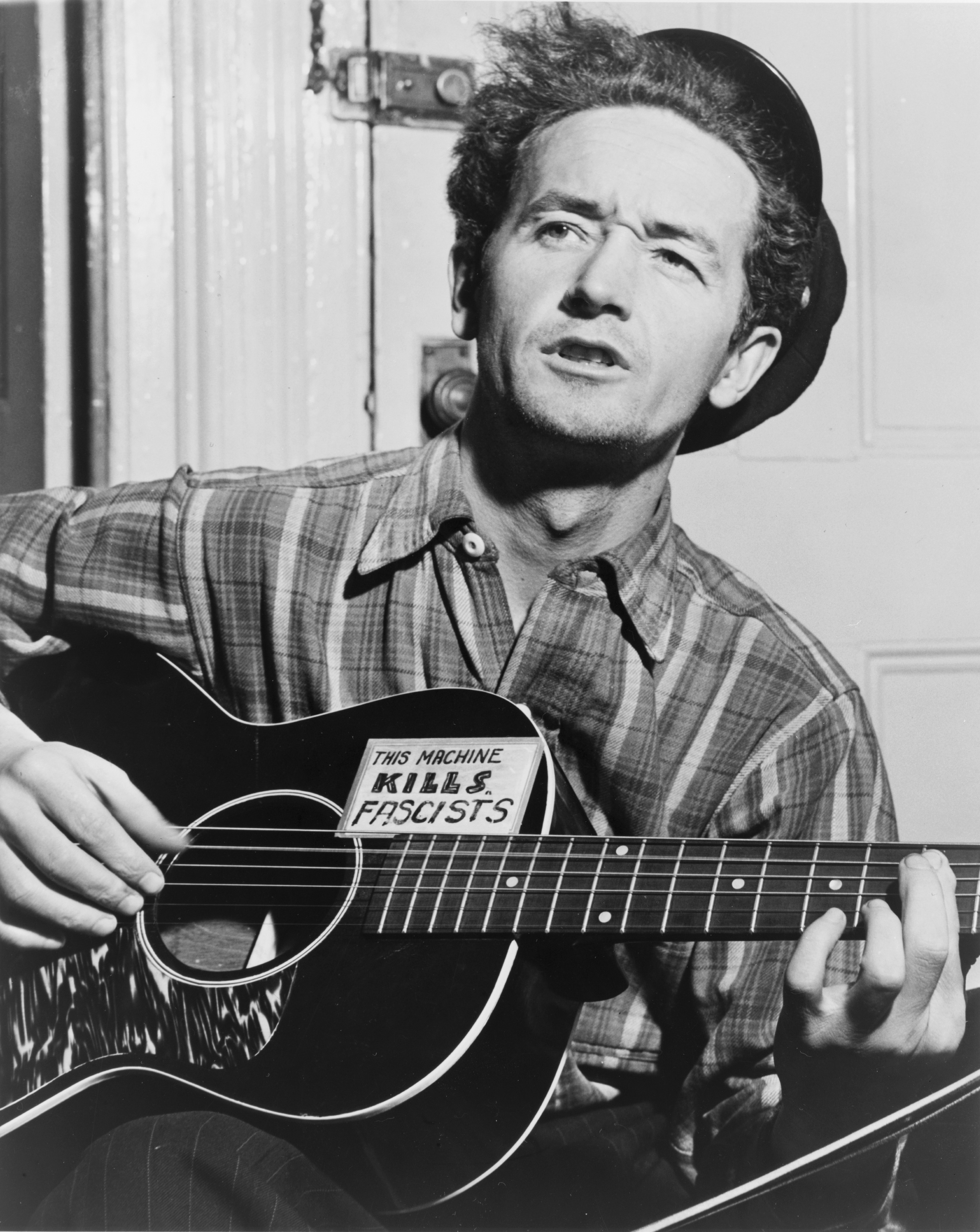
The words of America’s national bard came to me as I read for the first time this very morning Last Thoughts on Woody Guthrie, written by Bob Dylan in honour of his idol Woody Guthrie, who at the time was dying from Huntington’s disease.

I hear America singing, the varied carols I hear, wrote Walt Whitman, setting song lines for a young nation, and what was seen at the time as its promise and its bold, independent identity. He reflected his country’s growing up and coming of age to his own personal awakening and awareness, in his seeing and being enlightened. Dylan was to become the young voice of an older but not wiser nation that seemed very much like it was not busy being born, but, rather, under the weight of its myriad contradictions – of the old and the new, the youth and their elders, of war and peace,  black and white. Dylan heard the his country’s song in the turbulent, transformed and transforming sixties declaiming that he’d know my song well before I start singing.

In 1855, when Whitman published his first incarnation of Leaves of Grass, no one had yet heard anything like the raw, declamatory, and jubilant voice of this self- proclaimed “American”.  And the same could be said of the young Bob Dylan when he broke out from the pack that had gathered in the folk cafés and clubs of New York City in the early years of the nineteen sixties, an enigmatic poetic figure whose songs spotlighted the chaos and division that have long defined what it meant to be an American. It is no wonder that in later years,  Dylan would acknowledge his debt to Whitman in I Contain Multitudes – unoriginal and some would argue, pretentious, but then Bob has always borrowed, be it from the Anthology of American Folk Music, the British folk tradition, the avant guard poets of Europe, and the great books of the western literary canon.

Dylan read his poem for Woody aloud once only, reciting it at New York City’s Town Hall on April 12th 1963.

Introducing the poem, he told the audience he’d been asked to “write something about Woody … what does Woody Guthrie mean to you in twenty-five words,” for an upcoming book on the icon left wing singer-songwriter. He explained that he “couldn’t do it – I wrote out five pages, and, I have it here, have it here by accident, actually.” What followed was not a simple eulogy, but a lengthy, 1705 word stream of consciousness treatise on the importance of hope.

Dylan sets the scene by describing the stresses and strains of everyday life and challenging choices we have to make as we navigate it. He describes how these can cause us to feel alone, lost, and without direction. He then explains the need for hope and how we need something to give our lives meaning. He concludes by suggesting that, for him, Woody Guthrie is as much a source of hope and beauty in the world as God or religion.

Reading it for the first time ever this morning, I could hear words, lines and themes from songs that were yet to be written, songs that have followed me down these past sixty years, from those early albums of anger and introspection, protest and perception, through to My Rough And Rowdy Ways.

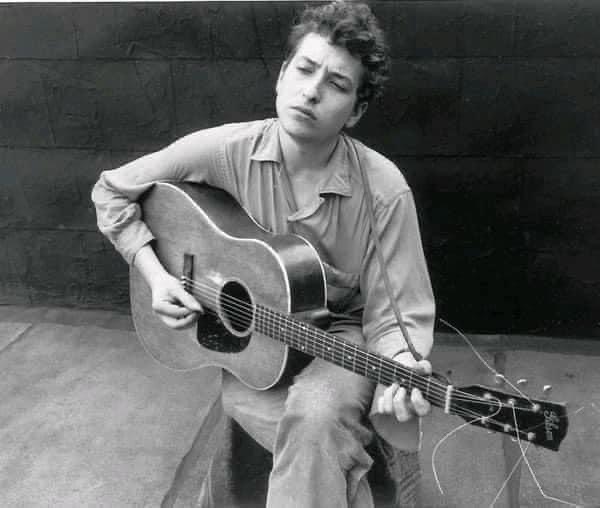
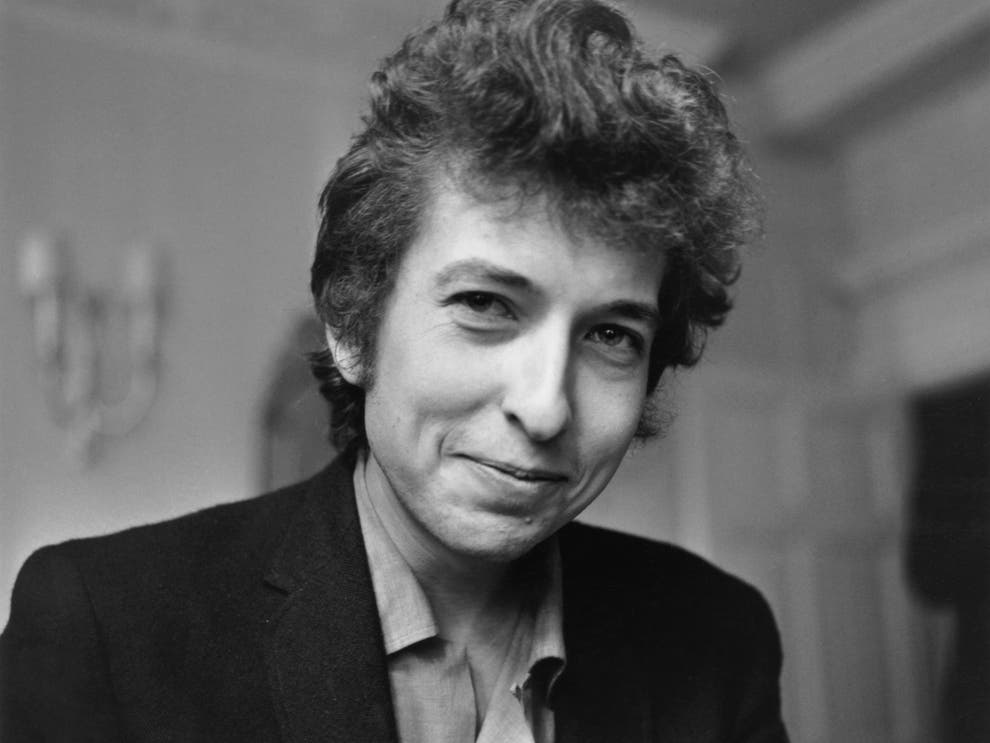
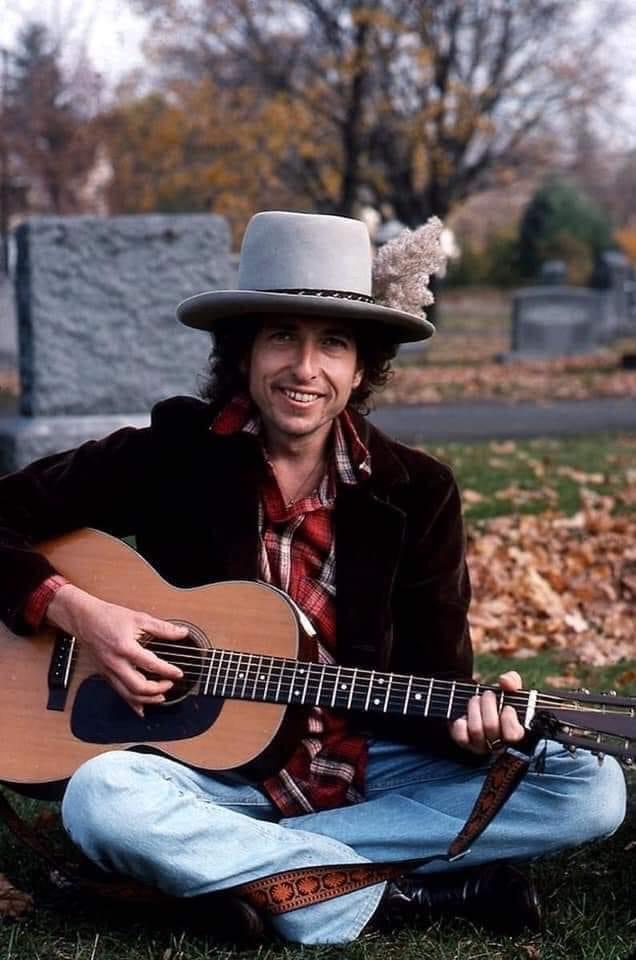
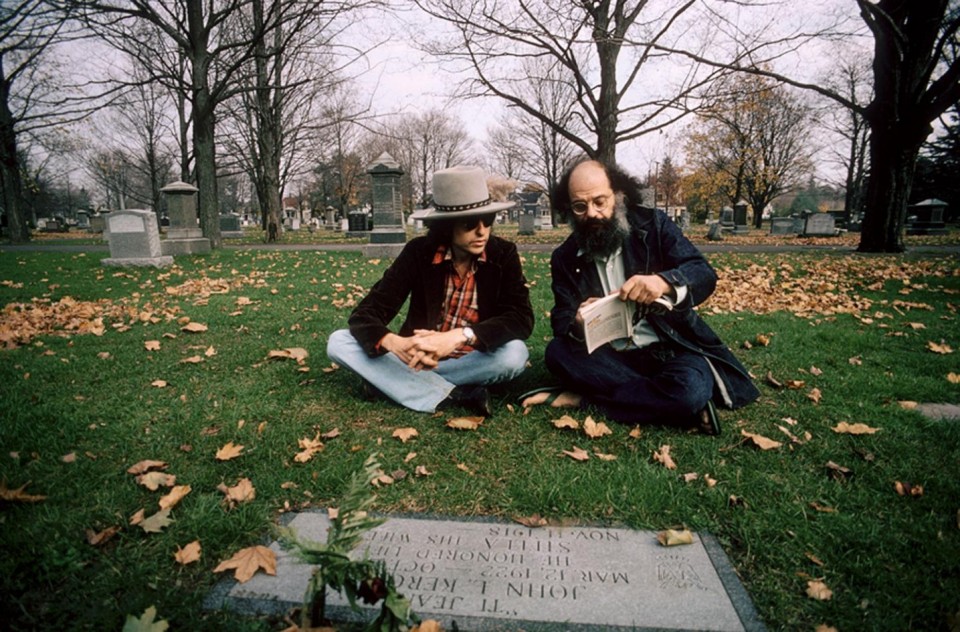
The recitation was recorded, but was not officially released until 1991, on The Bootleg Series Volumes 1-3 (Rare & Unreleased) 1961-1991, after circulating on bootleg releases for years. The poem is published in full below. The images in the video that follows it are clichéd and distracting; just shut your eyes and listen to the words. I prefer just reading and recalling all those uncounted ballads, songs and snatches and the improbable ‘echoes’ of things to come. I have added a gallery of favourite pictures of the man himself. Enjoy.

More on Bob Dylan in In That Howling InfiniteWhat’s Bob got to do with it?; Legends, bibles, plagues – Bob Dylan’s Nobel Lecture; Blind Willie McTell – Bob Dylan’s Americana; Cross the Green Mountain – Bob Dylan’s Americana; Still tangled up in Bob

In That Howling Infinite, read also, I hear America singing – happy birthday, Walt Whitman; The last rains came gently – Steinbeck’s dustbowl ballad, and The Sport of Kings – CE Morgan’s “great American novel”

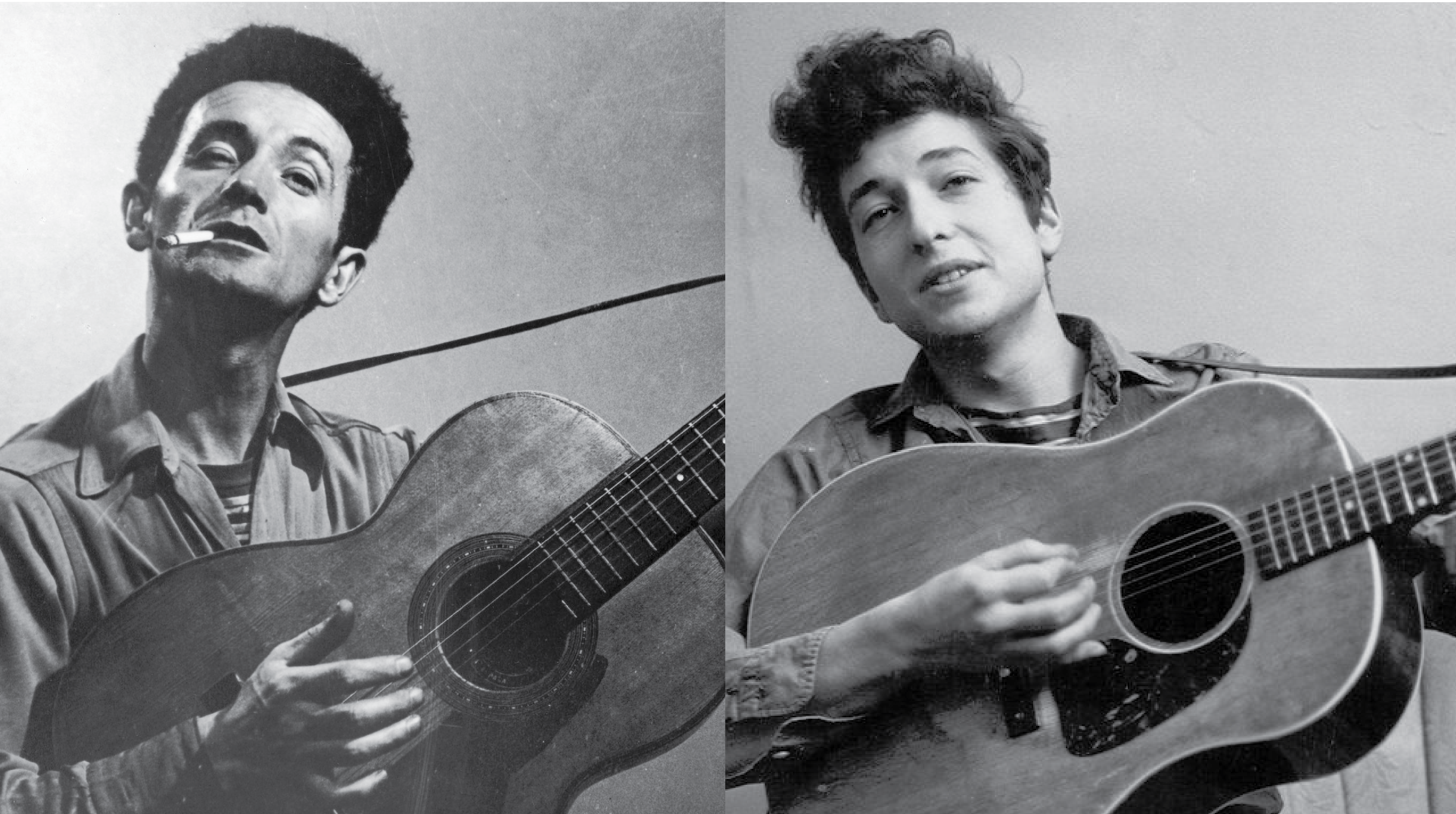
Bob and Woody

Last Thoughts On Woody Guthrie

When yer head gets twisted and yer mind grows numb
When you think you’re too old, too young, too smart or too dumb
When yer laggin’ behind an’ losin’ yer pace
In a slow-motion crawl of life’s busy race
No matter what yer doing if you start givin’ up
If the wine don’t come to the top of yer cup
If the wind’s got you sideways with with one hand holdin’ on
And the other starts slipping and the feeling is gone
And yer train engine fire needs a new spark to catch it
And the wood’s easy findin’ but yer lazy to fetch it
And yer sidewalk starts curlin’ and the street gets too long
And you start walkin’ backwards though you know its wrong
And lonesome comes up as down goes the day
And tomorrow’s mornin’ seems so far away
And you feel the reins from yer pony are slippin’
And yer rope is a-slidin’ ’cause yer hands are a-drippin’
And yer sun-decked desert and evergreen valleys
Turn to broken down slums and trash-can alleys
And yer sky cries water and yer drain pipe’s a-pourin’
And the lightnin’s a-flashing and the thunder’s a-crashin’
And the windows are rattlin’ and breakin’ and the roof tops a-shakin’
And yer whole world’s a-slammin’ and bangin’
And yer minutes of sun turn to hours of storm
And to yourself you sometimes say
“I never knew it was gonna be this way
Why didn’t they tell me the day I was born”
And you start gettin’ chills and yer jumping from sweat
And you’re lookin’ for somethin’ you ain’t quite found yet
And yer knee-deep in the dark water with yer hands in the air
And the whole world’s a-watchin’ with a window peek stare
And yer good gal leaves and she’s long gone a-flying
And yer heart feels sick like fish when they’re fryin’
And yer jackhammer falls from yer hand to yer feet
And you need it badly but it lays on the street
And yer bell’s bangin’ loudly but you can’t hear its beat
And you think yer ears might a been hurt
Or yer eyes’ve turned filthy from the sight-blindin’ dirt
And you figured you failed in yesterdays rush
When you were faked out an’ fooled while facing a four flush
And all the time you were holdin’ three queens
And it’s makin you mad, it’s makin’ you mean
Like in the middle of Life magazine
Bouncin’ around a pinball machine
And there’s something on yer mind you wanna be saying
That somebody someplace oughta be hearin’
But it’s trapped on yer tongue and sealed in yer head
And it bothers you badly when your layin’ in bed
And no matter how you try you just can’t say it
And yer scared to yer soul you just might forget it
And yer eyes get swimmy from the tears in yer head
And yer pillows of feathers turn to blankets of lead
And the lion’s mouth opens and yer staring at his teeth
And his jaws start closin with you underneath
And yer flat on your belly with yer hands tied behind
And you wish you’d never taken that last detour sign
And you say to yourself just what am I doin’
On this road I’m walkin’, on this trail I’m turnin’
On this curve I’m hanging
On this pathway I’m strolling, in the space I’m taking
In this air I’m inhaling
Am I mixed up too much, am I mixed up too hard
Why am I walking, where am I running
What am I saying, what am I knowing
On this guitar I’m playing, on this banjo I’m frailin’
On this mandolin I’m strummin’, in the song I’m singin’
In the tune I’m hummin’, in the words I’m writin’
In the words that I’m thinkin’
In this ocean of hours I’m all the time drinkin’
Who am I helping, what am I breaking
What am I giving, what am I taking
But you try with your whole soul best
Never to think these thoughts and never to let
Them kind of thoughts gain ground
Or make yer heart pound
But then again you know why they’re around
Just waiting for a chance to slip and drop down
“Cause sometimes you hear’em when the night times comes creeping
And you fear that they might catch you a-sleeping
And you jump from yer bed, from yer last chapter of dreamin’
And you can’t remember for the best of yer thinking
If that was you in the dream that was screaming
And you know that it’s something special you’re needin’
And you know that there’s no drug that’ll do for the healin’
And no liquor in the land to stop yer brain from bleeding
And you need something special
Yeah, you need something special all right
You need a fast flyin’ train on a tornado track
To shoot you someplace and shoot you back
You need a cyclone wind on a stream engine howler
That’s been banging and booming and blowing forever
That knows yer troubles a hundred times over
You need a Greyhound bus that don’t bar no race
That won’t laugh at yer looks
Your voice or your face
And by any number of bets in the book
Will be rollin’ long after the bubblegum craze
You need something to open up a new door
To show you something you seen before
But overlooked a hundred times or more
You need something to open your eyes
You need something to make it known
That it’s you and no one else that owns
That spot that yer standing, that space that you’re sitting
That the world ain’t got you beat
That it ain’t got you licked
It can’t get you crazy no matter how many
Times you might get kicked
You need something special all right
You need something special to give you hope
But hope’s just a word
That maybe you said or maybe you heard
On some windy corner ’round a wide-angled curve
But that’s what you need man, and you need it bad
And yer trouble is you know it too good
“Cause you look an’ you start getting the chills
“Cause you can’t find it on a dollar bill
And it ain’t on Macy’s window sill
And it ain’t on no rich kid’s road map
And it ain’t in no fat kid’s fraternity house
And it ain’t made in no Hollywood wheat germ
And it ain’t on that dimlit stage
With that half-wit comedian on it
Ranting and raving and taking yer money
And you thinks it’s funny
No you can’t find it in no night club or no yacht club
And it ain’t in the seats of a supper club
And sure as hell you’re bound to tell
That no matter how hard you rub
You just ain’t a-gonna find it on yer ticket stub
No, and it ain’t in the rumors people’re tellin’ you
And it ain’t in the pimple-lotion people are sellin’ you
And it ain’t in no cardboard-box house
Or down any movie star’s blouse
And you can’t find it on the golf course
And Uncle Remus can’t tell you and neither can Santa Claus
And it ain’t in the cream puff hair-do or cotton candy clothes
And it ain’t in the dime store dummies or bubblegum goons
And it ain’t in the marshmallow noises of the chocolate cake voices
That come knockin’ and tappin’ in Christmas wrappin’
Sayin’ ain’t I pretty and ain’t I cute and look at my skin
Look at my skin shine, look at my skin glow
Look at my skin laugh, look at my skin cry
When you can’t even sense if they got any insides
These people so pretty in their ribbons and bows
No you’ll not now or no other day
Find it on the doorsteps made out-a paper mache¥
And inside it the people made of molasses
That every other day buy a new pair of sunglasses
And it ain’t in the fifty-star generals and flipped-out phonies
Who’d turn yuh in for a tenth of a penny
Who breathe and burp and bend and crack
And before you can count from one to ten
Do it all over again but this time behind yer back
My friend
The ones that wheel and deal and whirl and twirl
And play games with each other in their sand-box world
And you can’t find it either in the no-talent fools
That run around gallant
And make all rules for the ones that got talent
And it ain’t in the ones that ain’t got any talent but think they do
And think they’re foolin’ you
The ones who jump on the wagon
Just for a while ’cause they know it’s in style
To get their kicks, get out of it quick
And make all kinds of money and chicks
And you yell to yourself and you throw down yer hat
Sayin’, “Christ do I gotta be like that
Ain’t there no one here that knows where I’m at
Ain’t there no one here that knows how I feel
Good God Almighty
THAT STUFF AIN’T REAL”
No but that ain’t yer game, it ain’t even yer race
You can’t hear yer name, you can’t see yer face
You gotta look some other place
And where do you look for this hope that yer seekin’
Where do you look for this lamp that’s a-burnin’
Where do you look for this oil well gushin’
Where do you look for this candle that’s glowin’
Where do you look for this hope that you know is there
And out there somewhere
And your feet can only walk down two kinds of roads
Your eyes can only look through two kinds of windows
Your nose can only smell two kinds of hallways
You can touch and twist
And turn two kinds of doorknobs
You can either go to the church of your choice
Or you can go to Brooklyn State Hospital
You’ll find God in the church of your choice
You’ll find Woody Guthrie in Brooklyn State Hospital
And though it’s only my opinion
I may be right or wrong
You’ll find them both
In the Grand Canyon
At sundown

Bringin’ it all back home …

Bob and Sara

Bob and Joan

Bob and Alan Ginsberg at the grave of Jack Kerouac

21st Century Bob – the Never Ending Tour

The Russian Tradition – Russia, Ukraine and Tibor Szamuely

In a televised address on September 30th last year, Vladimir Putin said: Russia is a great, 1000-year-old power, a whole civilisation, and it is not going to live by such makeshift, false rules … What, if not racism, is the West’s dogmatic conviction that its civilisation and neoliberal culture is an indisputable model for the entire world to follow?”

Now, one might not agree with Putin, and today, he is certainly persona non grata in Western forums, but one thing is for sure: Russian history mines its own unique seamWe republish below an article by American author, journalist and editor Christopher Caldwell. He advocates that we adopt a cautious and open minded perspective on historical memory, contemporary perceptions, lexicological differences, the dangers of making assumptions, and coming to conclusions and adopting opposing positions on the basis of incomplete and inadequate knowledge of other countries than our own with their distinct but not hermetically sealed histories and cultures.

Caldwell’s central focus is the colourful life and legacy of exiled Hungarian academic Tibor Szamuely.

Like many refugees from Communism, Szamuely was descended from both perpetrators and victims. An uncle of the same name served in the Hungarian Soviet Republic that took power for six months under Béla Kun in 1919, and died violently that year when the revolution failed. He was among that government’s most bloodthirsty ministers, and was called “Butcher Szamuely”. Szamuely’s family wound up in Moscow, where Tibor was born, and where his father was executed in Stalin’s purges. Young Tibor served in the Red Army, and he too was arrested and sent to a Labour camp. Rehabilitated, he served as Chancellor of Budapest University. In 1964, then nearing 40, he was teaching in the “ideological institute” of Ghana’s Marxist president Kwame Nkrumah when he defected to England.

He taught at the University of Reading in England and befriended Kingsley Amis, Robert Conquest, and Anthony Powell, among other literary anti-Communists. His book, unfinished when he died of cancer in 1972, was edited into its final form by Conquest and published two years later.

Szamuely taught me Russian and Soviet history and politics at Reading University. Back then, I was a political ingenue and a naive communist sympathizer and fellow-traveler, although my evolving perspectives were transforming and expanding. As my tutor, he advised me to study with an open mind and to put off juvenile thinking. He hadn’t been well when I knew him and he died a year after I graduated. Under his tuition, I’d resolved to specialize in Soviet Studies – but events intervened and I ended up in the Middle East (and that is another story. see: Tanks for the Memory – how Brezhnev changed my life).

He he would always impress upon me the historical and political continuity of what he called The Russian Tradition – the title of his one and only book, published shortly before his death, and now, regrettably, out of print. I purchased a first edition when it was published and it is on my bookshelf still.

Szamuely believed that the bloodstained drama of the revolutions of 1917 – there were two, the social democratic one in the February, the Bolshevik one in November – and the years that followed, including civil war, the establishment of the USSR and Stalinism largely obscured the underlying consistency of Russian history. He did not live to see the decline and fall of the Soviet Union, and the advent of Putin and Russia Redux, but the basic pattern persists, circular and repetitive. The frequent turmoils that have overtaken this vast continent have in their various ways made changes that were essentially superficial, leading in the end to the intensification, under new forms, of the old authoritarian structure.

From medieval times, autocracy has coexisted with a revolutionary traditionalism – a contradiction in terms as only Russia could sustain, a unique Russian capacity to seek revolution and discover regression, to invoke liberty merely to reinforce repression. if he were with us today, Szamuely would explain that the Soviet Union under Lenin and his successors and the Russia of Vladimir Putin bears so disconcertingly close a resemblance to Russia under the most savage of its tsars. His people, it turned out, had wanted freedom but wanted to retain the idea of their old Russian empire more. They ended up with the would-be czar, Vladimir Putin. And so the world turns.

© Paul Hemphill 2023 All rights reserved

Posts in In That Howling Infinite, about Eastern Europe: The Roots and fruits of Putin’s irridentism; Borderlands – Ukraine and the curse of mystical nationalism; Ghosts of the Gulag, The Death of Stalin is no laughing matter, Tanks for the memory – how Brezhnev changed my life, 2nd September 1939 – the rape of Poland (1), 17th September 1939 – the rape of Poland (2)  

You – Bolshevik recruiting poster 1918

You Are Needed In Kiev 2014

Churchill, Roosevelt and Stalin divide Europe at the Yalta Conference in Crimea, 1945

Why is Russia obsessed with slavery?

Tibor Szamuely: ‘The Russian Tradition’

Christopher Caldwell, UnHerd, 23rd august 2022

There’s nothing wrong with being cautious. Since 1709, when Peter the Great routed the troops of Swedish King Charles XII at Poltava, smack-dab in the middle of modern-day Ukraine, Europeans have understood Russia as a military threat. Never has this required us to close our minds to the glories of Russian culture or to forget that Russia’s strategic posture always has an explanation — and sometimes even a rationale.

But what was intellectually possible for Westerners in the winter of 1943, when Hitler’s troops and Stalin’s were killing each other by the millions on the Eastern front, is apparently beyond our powers today. In the wake of Russia’s February invasion of Ukraine, many Europeans will not be content with anything less than wiping Russia and its culture off the map. In April, novelist Oksana Zabuzhko, writing in the TLS  that it was the morality of Tolstoy and other Russian writers that “wove the camouflage net for Russia’s tanks”, urged us to “take a long, hard look at our bookshelves”. In early August, the Russian-language novelist Wolodymyr Rafejenko declared he now felt a “revulsion” when he conversed in Russian, and vowed never again to write in it.

These are Ukrainians — one can understand their anguish and rage. But Western Europeans, who are not even at war, have been even more zealous. A Milan university cancelled its Dostoevsky class last spring. The EU and UK have blacked out the Russian internet channel RT. Russians have been declared unwelcome at venues from Wimbledon to Estonia.

Back in the middle of the 20th century, when Russia was capable of far worse, the Russian-born historian Tibor Szamuely wrote an extraordinary book. The Russian Tradition explained how Russian political behaviour (about which Szamuely was wary to the point of hostility) arose from Russian history and culture (about which Szamuely was respectful to the point of reverence). This is the right balance. It has not been struck so well since. Too bad the book is out of print, because it is strangely relevant to a lot of this decade’s preoccupations: slavery, political correctness and Ukraine, for starters.

Like many refugees from Communism, Szamuely was descended from both perpetrators and victims. An uncle of the same name served in the Hungarian Soviet Republic that took power for six months under Béla Kun in 1919, and died violently that year when the revolution failed. He was among that government’s most bloodthirsty ministers, which is really saying something. Szamuely’s family wound up in Moscow, where his father was executed in Stalin’s purges. In 1964, Szamuely, then nearing 40, was teaching in the “ideological institute” of Ghana’s Marxist president Kwame Nkrumah when he defected to England. He taught at Reading and befriended Kingsley Amis, Robert Conquest, and Anthony Powell, among other literary anti-Communists. His book, unfinished when he died of cancer in 1972, was edited into its final form by Conquest and published two years later.

The simple question that animates it is how Russia came to be the centre of Marxist revolution and late 20th-century totalitarianism. Did aggressive Communism subvert blameless Russia? Or was aggressive Russia using blameless Communism as a pretext?

The beginnings of an answer lie in geography. Lacking frontiers, Szamuely writes, Russia has faced “a history of armed struggle against invaders that, for length, intensity and ferocity has no parallel in the annals of any other nation”. That is a large claim. Russia is always vulnerable someplace — at least for as long as it takes to gather and concentrate its killing power. And it is always fighting for its life, which tends — at least in domestic Russian debates — to empty of meaning our concepts of just and unjust war. “Despotic government,” Szamuely writes, “was the instrument she shaped to cope with the everlasting emergency.”

For Szamuely, the central problem in Russian history is slavery. Yes, slavery. Using the word “serf” to describe its put-upon agricultural workers leads us to think of the society as merely backward, quaint, feudal. But this is wrong. Russian slavery was a creation of modernity. Once-free agricultural labourers somehow got buried under debt about 500 years ago, and in the mid-16th century the government bound them to the land, the better to tax them. The owner of the serfs was the state, not the notables on whose land they toiled. There was an equality in this, for the notables were beholden to the state, too. The upper crust owed the tsar military service. Until recent centuries, Russia was one of the rare countries where nobles could be publicly flogged.

But this changed, as Peter the Great tried to modernise the system — Russia got rum, minuets, a navy and of course St. Petersburg. For aristocrats it meant Western connections and new opportunities, for serfs an overload of labour and hard discipline. That was an end to society’s old “mystic unity” and the mumbo-jumbo that had surrounded it. Serfs could now be sold or lost at cards. Russia now had not one people, Szamuely writes, but two: “the Westernised upper classes, and the masses, whose way of life became ever less distinguishable from that of the population of the great Asian empires.” As middle classes in America and France were forging republics, aristocrats were living a Golden Age under Catherine the Great (1762-95). “The most striking feature of 18th-century Russian social history,” Szamuely writes, “was the great expansion and intensification of peasant bondage at the precise moment when, with the emancipation of the nobility, it finally lost any vestige of moral, political or legal justification.”

Szamuely’s preoccupation with slavery anticipates a lot of the “woke” discussion of our own time. If slavery warped the development of the United States (which was one-eighth slave at the start of its civil war in 1861), Szamuely asks, then why has there been so much less soul searching about Russia (which was seven-eighths slave at the time of emancipation that same year)? He may misunderstand the parallel: The difference lies not in the size of the enslavement but in the identity of the rememberer. Progressive white America is wracked by guilt over what it did to “them”. Russia feels no such guilt because the misdeeds were done to “us”. The moral tenor of its soul-searching is more like that of Sicily, or Ireland, or black America.

But it is not as if Russia had no reckoning with serfdom. As access to higher education and newsprint spread, “gradually the idea began to sink in that every Russian of education and leisure was an accomplice in a crime unparalleled in its enormity”. This was the cause around which a revolutionary and often violent intelligentsia arose in the late 19th century, a class unique in Europe until the rise of political correctness. “The Russian intelligentsia was an instrument of destruction,” Szamuely writes. “Unlike the European bourgeoisie it had no constructive purposes, neither was it equipped to fulfil any such tasks.”

There was something Messianic in the intelligentsia’s role. Szamuely recognises that it used others’ suffering as a rationale for autocracy. But he never entertains the idea that the intelligentsia was an outright racket. He even praises the “intellectual honesty” of the critic Nikolay Chernyshevsky, who saw that equality would be won only at a very steep price in liberty: “What a contrast he provides to certain Western ‘progressive’ intellectuals, who worship at the altar of egalitarianism yet refuse to recognise that their dream… can only be realised by an arbitrary dictatorial government. Chernyshevsky and his followers, down to the present day, have never harboured any illusions about this.”

He is nonetheless struck that the great 19th-century Russian novelists (“men of sensibility, compassion and humanity”) were almost unanimously contemptuous of the intelligentsia (“with their joyless utilitarianism, their dogmatic intolerance, their fanatical devotion to a messianic vision”).

The modern enslavement of Russia’s peasantry was not, strictly speaking, a capitalist project. But it felt like one. More than the exploitation undergone in advanced industrial countries, it resonated with the exploitation Marx described. In the end, the Russian revolution was a matter of adjusting Marx’s teaching to powerful Russian folk-institutions, above all the autonomous peasant cooperative known as the obshchina. Marx himself wound up backing peasant “populists” against his own more orthodox followers. It actually turned out to be a piece of good fortune for the revolutionaries that the Marxist spark caught in what Szamuely considers the most conservative country on earth.

That is where Szamuely’s book ends. It is a shame he was never able to write at book-length about the 20th century, of which he was a passionate chronicler. He considered Lenin “the supreme political genius of the century”, and was impressed with the way he and his followers allied Russia’s interests abroad to Asian and African nationalism, not Communism. It was, in a way, the same judgment Marx had made in backing the populists.

Szamuely was fascinated with Ukraine. “Perhaps no other historical experience,” he writes in The Russian Tradition, “has left as lasting an impression on the folk-memory of the Russian people as the horrors of [the] interminable struggle against the slavers and killers of the south. For centuries the steppe remained a source of constant menace, a land of terror, death, destruction and degradation. It was called the Wild Plain, or, as we would say today, the Frontier; the greater part of this region is now called the Ukraine…”

He was highly sympathetic to Ukraine’s modern struggles. In 1968 he wrote a fascinating and well-informed account of the nationalist protests and ensuing prosecutions that had then been going on in Ukraine for much of the decade. While granting that the Ukrainians welcomed the Nazis as liberators in June 1941, he wasn’t surprised by this nationalist sentiment, given the decade of famine and purges they had endured. He noted, too, the “methodological dilution” of Ukraine’s ethnic composition by Russia, insisting that Russian dominance of the country’s high culture was a recent and unnatural phenomenon. Only 41% of books published in Ukraine were in Ukrainian, it is true, but in 1930, before Russification and famine, that figure had been 84%.

Szamuely never let justified fear of Russia drive out justified fascination. Vastly well read in the country’s history, he still found it ambiguous, describing the policies of Ivan the Terrible at one point as “a strange mixture of farsightedness and paranoia — a combination frequently reproduced by his successors through the centuries”. Few historians have been better equipped than Szamuely to understand the paradoxes of Russia, where the novelists are sublime and the politics are unendurable, and often for the same reasons.

Tsar Nicholas the Last

The last of the Romanovs – Tsar Nicholas and his family, murdered by the Bolsheviks in July 1918


That was the year that was – don’t stop (thinking about tomorrow)

The prophet’s lantern is out
And gone the boundary stone
Cold the heart and cold the stove
Ice condenses on the bone
Winter completes an age
WH Auden, For the Time Being – a Christmas Oratorio, 1941

I considered using a line from the above as the title of this retrospective of 2022.  It was written during 1941 and 1942, though published in 1947, when the poet was in self-exile in the United States and viewing the war in Europe from afar – although the long poem from which it has been extracted does not in itself reflect such pessimism. A more fitting title could be taken from another long poem that was published in another (very) long poem published in 1947 – Auden’s often overlooked masterpiece The Age of Anxiety, a meditation on a world between the wreckage of The Second World War and of foreboding for the impending armed peace that we now look back on as the Cold War, with its oft-repeated mantra: “many have perished, and more most surely will”.

The year just gone was indeed a gloomy one, meriting a dismal heading. There are few indications of where it might take us in ‘23 and beyond, and my crystal ball is broken. Pundits reached for convenient comparisons. Some propounded that it was like the 1930s all over again when Europe constantly teetered on the brink of war. Others recalled 1989 with the fall of the aneroid Wall and the collapse of the Soviet Union. But, beware of false analogies. In 2022, things were more confused. The tides of history have often resembled swirling cross-currents.

Things, of course, might have been worse. There are, as I’ve noted in successive posts on my own Facebook page, many qualified “reasons to be cheerful”. The  year could have ended with Ukraine under Russian control. An emboldened China might have been encouraged to launch an assault on Taiwan. A red wave in the midterms would have buoyed Trump. And here in Australia, Scott Morrison might have secured another “miracle” election victory. The West could have retreated on all fronts.

Instead, therefore, I have selected a title that hedges its bets, because, to paraphrase the old Chinese adage, and the title of an earlier retrospective, we certainly live in interesting times and in 2023, and a lot of energy will be spent endeavouring to make sense of them – or, to borrow from Bob:

Pointed threats, they bluff with scorn
Suicide remarks are torn
From the fool’s gold mouthpiece
The hollow horn plays wasted words
Proves to warn that he not busy being born
Is busy dying

B Dylan

The year in review 

Christine McVie, longtime and founder member of Fleetwood Mac departed the planet on 30th November this year. And contemplating this year’s posts in In That Howling Infinite, I could not help thinking about one her most famous songs. I recalled that it featured on newsreels of the revolution that ousted the Shah of Iran in 1979.

Why not think about times to come?
And not about the things that you’ve done
If your life was bad to you
Just think what tomorrow will do
Don’t stop thinking about tomorrow
Don’t stop, it’ll soon be here
It’ll be better than before
Yesterday’s gone, yesterday’s gone

The song seemed quite apposite as the soundtrack of a revolution that had overthrown one of America’s many friendly autocrats. At the time, no one could predict what would happen, but, as with the fall of the Berlin Wall in 1989, it was a time optimistic expectation. And yet its shock waves have reverberated and ricocheted in ways unimagined at the time.

As 2022 ends, with blood flowing on the streets of Iran and in the mullahs’s torture cells as young people rise up against a hypocritically brutal theocratic tyranny, we see again and again how that which goes around comes around.

Women, Freedom, Life

If the malign hand of history has literally reached out and gripped Iran’s young women and girls by their hair, it has also endeavoured to strangle the thousand year old Ukrainian nation in the name of an atavistic irredentism. Russian troops invaded the Ukraine on February 24, causing what has since become the largest conflict in Europe since World War II. Out if the spotlight of the world’s easily distracted attention. intractable conflicts lumbered mercilessly on – in Syria, Yemen, Ethiopia, the Congo and many other “far away  places with strange sounding names”.  

On the far side of the world, the USA continued to struggle with the reverberations of January 6th 2021. Donald Trump, like Dracula, has not gone away, and whilst his 2024 presidential run is looking increasingly shaky, he continues to poison the atmosphere like radioactive dust. The unfortunate folk of the United Kingdom endured three prime ministers during the year, including the shortest ever in the history of the office, and after two years of pandemic, are facing a bleak economic winter as well as a frigid actual one.

In Australia, it was the year of the teal – at least according to those who study the evolution of language, the year we lost a queen, our long-serving foreign head of state, and a king of spin, the down-fallen and disgraced Scott Morrison. And a sodden La Nina saw incessant rain drown large swathes of eastern Australia, visiting misery on thousands. COVID-19 mutated, the Omicron variant surging from beginning of the year, ensuring no end to the pandemic – today, it seems like everyone we know has had it, including ourselves (and we were soooo careful for a full two years!). As restrictions were cautiously lifted, we as a nation are learning to live with it. 

Politically, it’s been a grand year for the Australian Labor Party. With our stunning Federal election win in May and in Victoria in November, the Albanese government’s star is on the ascendant and it’s legislative record in six months has out run nine years of Tory stagnation on climate, integrity and equality – a neglect that saw the rise of a new political force in the shape of a proto-party, the aforementioned “teal”, named for the colour of the candidates’ tee shirts. The opposition has been reduced to a bickering and carping crew, and whilst Labor continues to ride high in the polls, the Coalition bounces along the bottom of the pond.

Lismore, northern NSW, March 2023

Flooded house aflame, Lismore March 2022

Christine McVie was just one of many music icons who checked out this past year. The coal miner’s daughter, Loretta Lynn, crooned her last, as did rock ‘n roll bad boy Jerry Lee Lewis and Ronnie “the Hawk” Hawkins, who gave the boys in The Band their big break. Rock heavyweight (literally) Meatloaf took off like his bat out of hell and keyboard evangelist Vangelis boarded his chariot of fire.

Acclaimed British author Hilary Mantel, whose Wolf Hall trilogy inspired back to back posts in In That Howling Infinite in 2020 found “a place of greater safety”, and French author Dominique Lapierre also joined the choir invisible. I had first learned about Israel’s war of independence and the Palestinians’ al Nakba in his O Jerusalem, and about the bloody tragedy that accompanied the birth of India and Pakistan, in Freedom at Midnight, both books featuring in past posts. 

Mark Rylance and Damian Lewis as Tom and Hal

One could argue that the most significant departure was that of Britain’s longest serving monarch. Queen Elizabeth II had been on the throne for almost all of my life, as has the now King Charles III who was born four months before me, and of whom, as a nipper, I was jealous. I recall how I watched the queen’s coronation on a tiny black and white television in the crowded and smokey parlour of the boarding house run by a friend of our family. By happenstance, Netflix served up two over the top regal sagas to binge on: the penultimate season of The Crown, which whilst entertaining, was a disappointment in comparison with earlier seasons, and Harry and Meghan which was whilst excruciatingly cringe-worthy, was nevertheless addictive viewing. The passing of Her Maj reminded me that in my lifetime, I have witnessed three monarchs and eighteen British prime ministers (and incidentally, eighteen Australian prime ministers).  The public outpouring of grief for the Queen’s ascent to the choir invisible was unprecedented – the picture below demonstrates what the Poms do best …

The Queue along the Thames to pay respect to Her Maj

There were farewells much closer to home. My mediation colleague, aspiring author and friend John Rosley, and Beau Tindall, the son of my oldest Bellingen friend Warren, took off on the same day in May. Peter Setterington, my oldest friend in England – we first met in 1972 – died suddenly in London in March, and our friend and forest neighbour, the world-famous war photographer Tim Page, in August, after a short but nasty illness. Pete is memorialized in When an Old Cricketer Leave His Crease whilst Journey’s end – Tim Page’s wild ride,is an adaptation of the eulogy I gave for Tim in September, one of many on that sunny afternoon day in Fernmount. It is a coda to Tim Page’s  War – a photographer’s  Vietnam journey, a story we published a year ago.

Tim Page by Joanne Booker

What we wrote in 2022

The ongoing Ukraine War has dominated our perception of 2022, from the morning (Australian time) we watched it begin on CNN as the first Russian missiles struck Kyiv, to the aerial assault on infrastructure that has left Ukrainians sheltering through a cold, dark winter. Two posts in In That Howling Infinite examined the historical origins of the conflict: Borderlands – Ukraine and the curse of mystical nationalism and The Roots and Fruits of Putin’s Irridentism. “Because of …” Iran’s voice of freedom looks at the song that has become the rising’s anthem. None can predict the outcome – whether it will be a doomed intifada, the Arabic word that literally means a shaking off – historically of oppression – and figuratively, a rising up, like that in Ireland in 1798 and 1916, Warsaw in 1943 and 1945, and Hungary in 1956, or an Inqilab, another Arabic word meaning literally change or transformation, overturning or revolution.

The run up to May’s Australian elections inspired Teal independents – false reality in a fog of moralism.; and Australia votes – the decline and fall of the flimflam man. 

More distant history featured in Menzie’s Excellent Suez Adventure, the story of the Suez crisis of 1956 that historians argue augured the end of the British imperium, and the role played therein by longtime Australian prime minister Sir Robert Menzies. Johnny Clegg and the Washing of the Spears is a tribute to the late South African singer, dancer and songwriter, and a brief history of the war that destroyed the great Zulu nation, setting the scene for the modern history of South Africa. And journeying further back in time to sixteenth century Ireland, there is O’Donnell Abú – the Red Earl and history in a song, a discussion of the origins of a famous and favorite rebel song.

Then there are the semi-biographical “micro-histories” in In That Howling Infinite’s Tall tales, small stories, obituaries and epiphanies. In 2023, these included: Folksong Au Lapin Agile, the evening we visited Montmarte’s famous folk cabaret; Ciao Pollo di Soho – the café at the end of the M1, the story of a café that played a minor part in my London days, as described in detail in an earlier travelogue, Song of the Road – my hitchhiking days; Better read than dead – the joy of public libraries; The quiet tea time of the soul, an ode in prose to a favourite beverage; and The work, the working, the working life recalling the many jobs I took on in the sixties to keep myself in music, books, travel and sundry vices. 

We cannot pass a year without something literary. We celebrated the centenary of three iconic literary classics in The year that changed literature, and with the release of The Rings of Power, the controversial prequel to The Lord of the Rings, we published a retrospective on the influence of JRR Tolkien. One ring to rule us all – does Tolkien matter? – a personal perspective with an opinion piece by English historian Dominic Sandbrook, an informative and entertaining chronicler of postwar British history and society which featured, in Unherd, an online e-zine that became a “must read” in 2022. A Son Goes To War – the grief of Rudyard Kipling recalls the death in battle on the Western Front in 1917 of the poet’s only son, it’s influence upon his subsequent work, whilst Muzaffar al Nawab, poet of revolutions and sorrow is an obituary for another poet, who seen a lifetime speaking truth to power.

And that was that for what was in so man ways a sad year. Meanwhile, In That Howling Infinite already has several works in progress, including a review of historian Anthony Beevor’s Russia – Revolution and Civil War, what King Herod really thought about the birth of baby Jesus, and the story of a famous and favourite British army marching song.

Best wishes for 2023 …

Death of a Son

That was the year that was – retrospectives

Life in Wartime – images of Ukraine

“Because of …” Iran’s voice of freedom

The caged bird sings
with a fearful trill
of things unknown
but longed for still
and his tune is heard
on the distant hill
for the caged bird
sings of freedom
Maya Angelou

زن زندگی آزادی  Zan zandaky āzādy  Women freedom life

In our relatively comfortable, free and still democratic countries, it is difficult to put ourselves in the position of people desperate and passionate enough to risk life and limb and to face the terrible consequences of potentially heroic failure. We can but sense, vicariously, the ache and the urge behind Maya Angelous’s poem The caged bird sings of freedom (above) and Lord Byron’s passionate couplet:

Yet, Freedom! thy banner, torn, but flying,
Streams like the thunder-storm against the wind.

The courage of the of the Iranian protesters, and particularly the woman and girls who have been the vanguard of this unprecedented intifada cannot be exaggerated. For brave they are indeed. Having endured long years of a brutal and vengeful, corrupt and misogynistic theocratic regime and its security and paramilitary enforcers, they are fully aware of the consequences of their actions.

Several weeks, the nationwide protests that followed the murder in custody of a young woman arrested by the morality police after wearing her hijab inappropriately, and other young women and also, now, young men, who, officially, have died at their own hand or of pre-existing causes, have mobilized Iranians of all ethnicities, classes, ages and genders. And the security state us reacted predictably, red in tooth and claw. There is torture and death actual and awaiting on the streets of villages, towns and cities throughout the country, and the public trials with their black-garbed and turbaned hanging judges are in place and ready to protect the nation and the revolution in the name of Allah and the legacy of the canonised grey and dour uber-mullah Ayatollah Khomeini.

The perseverance and nihilistic exuberance of the Iranian street has reminded me of an exhilarating song and video created by a young Egyptian and his friends celebrating the demonstrations in Cairo’s Tahrir Square that precipitated the fall of practically Egyptian president-for-life Hosni Mubarak thirteen  years ago last February. Sawt Al Huriya (The Voice of Freedom), went viral on YouTube after its release on 11 February 2011, the day before Mubarak’s departure?

Fast forward to the present, and we examine why the Islamic Republic’s  sclerotic theocratic regime is so afraid of another song of revolution, the crowd sourced protest anthem, Baraya, which has become a thorn in the side of the government in Tehran.

Baraye, translated as “because of …” or “for …”, the anthem of Iran’s Woman, Life, Liberty protest movement grew organically from a Twitter hashtag trend in which Iranians expressed their uncountable discontents and their commitment to the protests. It continues to unite Iranians in their opposition to the rules, restriction nd repression of Islamic Republic weeks after it was first released online on an international and social media that the authorities have tried and failed to silence. To paraphrase Canadian songwriter and activist for injustice and the environment in his song Santiago Dawn (see below) to keep millions down “takes more than a strong arm up your sleeve”.

Bareya’s lyrics were created by the Iranians themselves and gathered and set to music , recorded, sung and shared by a young Iranian singer, Shervin Hajipour. Crazy brave, perhaps for predictably, he was detained by security operatives soon after he posted it on his Instagram page and forced to remove it from his feed. But it had already attracted millions of views worldwide and continued to be shared and shared and shared, and it has now been played and performed the world over as people across the glob empathize, identify with, and add to the images verbalised and the emotions these engender. We all have stories to relate of oppression and exclusion, of the abuse of power and privilege and the pervasiveness of prejudice and discrimination. To quote Bruce Cockburn once more about an earlier resistance, “see them matching home, see them rising like grass through cement in the Santiago dawn”.

Baraja gives voice to the voiceless – as Bob Dylan sang in another century, in comparatively  straightened times:

For the countless confused, accused, misused, strung-out ones an’ worseAn’ for every hung-up person in the whole wide universeAn’ we gazed upon the chimes of freedom flashing

The Recording Academy, which hosts the annual Grammy Awards, announced that in its new merit category for best song for social change, more than 80% of nominations were for Baraye. Below is a video of the world-famous band Cold Play singing the song in Buenos Aires with Iranian actor Goldshifte Farahani.

The genesis of Baraya mirrors the organizational structure of the protests themselves insofar as like these, it is networked and leaderless, Ironically, however, David Patrikarakos editor of the e-zine Unherd wrote recently, this lack of leadership portends the protests’ doom:

“No leader has yet emerged. Instead, the protests are organised by different people or groups in different cities and towns on an almost ad hoc basis.The truth is that if the mullahs were to collapse tomorrow, there are no signs that a democratic movement would sweep to power …It is far more likely that the security state — led by the Revolutionary Guard Corps — would step into the void and make apparent what is already largely a fact: that Iran is no longer a clerical state but is now ruled by a Praetorian Guard …

… In 1979, Iranians held up images of Khomeini. In 2022, they tear them down. They know they want the regime gone but they have no one to hold up in its place. For a revolution to succeed, it’s not enough to be against someone; you have to be for someone else. It’s not enough that Khamenei loses. Someone else must win. Until that time, the mullahs will continue to cling on as murderously and barbarously as they always have, and Iranians will continue to die. For years Palestinians would say they needed a Saladin. They were wrong. What they need is a Ben Gurion. What the Iranian revolutionaries need now more than anything else is a Khomeini. Until that happens, this will only ever be half a revolution”.

At this moment in time, the outcome of that revolution hangs in the balance. The passion of the people for a better world is once again going up against the iron fist of the security state. Sadly, history past and present, in Iran and elsewhere, has shown us that when an irresistible force comes up against an immovable object, no matter how popular, righteous and justified that force may be, the immovable object invariably wins.

Meanwhile, hope springs eternal …

Our weapon was our dreams.
And we could see tomorrow clearly.
We have been waiting for so long.
Searching, and never finding our place.
In every street in my country,
The voice of freedom is calling.

Sawt al Huriya

Baraya … Because of 

Because of dancing in the street
Because of fear while kissing
Because of my sister, your sister, our sister
Because of changing rotten minds

Because of shame for moneyless
Because of yearning for an ordinary life
Because of the scavenger kid and his dreams
Because of a command economy

Because of air pollution
Because of ‘Vali Asr’ Avenue, and its dying trees
Because of a cheetah (Pirouz) that may go extinct
Because of innocent, outlawed dogs

Because of the incessant crying
For the image to repeat this moment
Because of the smiling face
For students, for the future
Because of students, for the future

Because of this forced paradise
Because of the imprisoned elites
Because of Afghan kids
Because of all (Because of…) non-repetitive

Because of all these empty slogans
Because of the rubble of fake houses
Because of the feeling of peace
Because of the sun after a long night

Because of the nerve pills and insomnia
Because of man, country, rebuilding
Because of a girl who wished she was a boy
Because of woman, life, freedom

Because of freedom

Because of Mahsa Amini

See also in In That Howling Infinite, Sawt al Hurriya – remembering the Arab Spring, Messing with the Mullahs – America’s phoney war?. and A Middle East Miscellany

Why Is Iran’s Regime So Afraid Of This Song?

Nahid Shamdouz,  assistant professor of Middle East and Media Studies at the University of Texas at Austin, Foreign Policy, 26th October 2022
Demonstrators sing "Baraye" while holding their phone lights high during a march in support of protests in Iran.

Demonstrators sing “Baraye” while holding their phone lights high during a march in support of protests in Iran. Allison Bailey, Reuters. 26th October 2021

“Baraye,” the anthem of Iran’s “Woman, Life, Liberty” protest movement—a song woven together entirely from a Twitter hashtag trend in which Iranians express their investment in the current protests—continues to unite Iranians in their opposition to the Islamic Republic several weeks after it was first released online.

For Iranians in Iran but also for the millions in the diaspora, this is the song of a generation, perfectly expressing this political moment and all that is at stake.

For dancing in the alleyways
Because of the fear you feel when kissing
For my sister, your sister, our sisters
To change the minds that have rotted away
Because of shame, because of being broke
Because of yearning for an ordinary life  

What makes this moment different from previous periods of protest is that the wall of acquiescence and pretense that maintained the state’s authority in the public realm has been torn down on a scale not seen since the 1979 revolution. In its recounting of all the painful grievances, “Baraye,” which translates in English to “for” or “because of,” signals the end of patience with the status quo and opens vistas onto a new future with a vocal crescendo that culminates in the word “freedom.”

The song reveals the simple, ordinary nature of the things that Iranians are aching for, asking for, and even dying for. It is radical in revealing on a national level the cruelty of a system that denies such basic demands—exposing the devastating conditions Iranians face under the current regime.

“Baraye” creates national intimacy by citing very specific events that all Iranians have suffered through together, in a palimpsest of collective traumas.

If “Baraye” reflects a different, perhaps unprecedented mood on a national level, it also mirrors the organizational structure of this recent protest movement. If it is networked and leaderless, so is the song. The lyrics were written by Iranians at large and merely set to music and vocalized by the young up-and-coming singer Shervin Hajipour. This explains why security forces detained Hajipour a couple of days after he posted it on his Instagram page, where it had already accrued millions of views. The regime has tried for years to push the apparent and already real aspects of people’s lives out of the public sphere.

On social media, Iranians have created a life that more closely mirrors their inner selves—replete with harsh criticism of leading clerics including Iran’s supreme leader, Ayatollah Ali Khamenei; female solo vocalists who are otherwise banned singing at the top of their lungs; and the exhibition of private lives that are anything but a reflection of the state’s projected pious paradise. Still, the state has sought to maintain a semblance of its ideology and control in actual public spaces and its media.

“Baraye” has broken that violently imposed wall between the state’s enforced reality and people’s real lives. It forced into the open, in the face of authority, all that people have known for long but were not supposed to express openly on such a national dimension.

For the sake of a laughing face
For schoolkids, for the future
Because of this mandatory paradise
For imprisoned intellectuals

Since its release, the song has become the single most covered protest song in Iran’s history. Within a few short weeks after Hajipour composed the music for it, musicians across Iran and beyond its borders have sung it verbatim in their own voices, translated it, and sung it in other languages—and even universalized the lyrics for a more global audience.

Last week, the Iranian rapper Hichkas released a militant hip-hop track referencing “Baraye” through the more casual rap lingo “vase,” enumerating his reasons, starting with “vase Mahsa” (for Mahsa Jina Amini, whose death at the hands of Iran’s morality police sparked the protests) and ending with “for a good day,” in a nod to his own 2009 Green Movement protest song.

Mahsa Amini Protest in Iran

Protesters gather in London on Oct. 1 in solidarity with people protesting across Iran.

Protesters gather in London on Oct. 1 in solidarity with people protesting across Iran.

For the garbage-picking kid and her dreams
Because of this command economy
Because of this polluted air …
For a feeling of peace
For the sun after long nights

At the same time, “Baraye” creates national intimacy by citing very specific events that all Iranians have suffered through together, in a palimpsest of collective traumas. Hajipour sings “For the image of this moment repeating again,” drawn from a tweet with a photo of Hamed Esmaeilion and his young daughter relaxing together on a couch reading newspapers. (His wife and 9-year-old daughter were killed when Iran’s Revolutionary Guards mistakenly shot down a Ukrainian airliner leaving Tehran in January 2020, and Esmaeilion has become the face of the grief affecting all those who lost loved ones in the crash.)

This line resonates with Iranians because so many families have been torn apart by the country’s massive brain drain, caused by a closed and corrupt economy that offers few opportunities.

In other lines, Hajipour sings sarcastically “Because of this mandatory paradise,” referring to the theocratic state’s imposed restrictions, justified in the name of achieving an Islamic utopia.

In yet another, he sings of “houses in rubble,” pointing to collapsing buildings caused by the rampant nepotism and corruption that shield state-connected builders from transparency on safety measures. In another, he sings of the “imprisoned intellectuals,” in a nod not just to the hundreds of journalists, human rights lawyers, and filmmakers but even award-winning university students who have been locked up.

The chorus arising from hundreds of tweets is clear: This is a regime that seems to be against life itself, punishing dancing, kissing, and smiling faces.

The song’s singular overnight success is not a small achievement given the long, rich history of protest songs in Iran. Already at the time of Iran’s Constitutional Revolution in 1906, poets created songs about the spilled blood of the youth who agitated for representative government and, not long after, about the Morning Bird breaking the cage of oppression, which many decades later became one of the most intoned protest songs in post-revolutionary Iran.

The trajectory of Iran’s musical history clearly exhibited a century-long struggle for freedom and justice, not yet realized.

Although “Baraye” and other songs of the current protest movement continue this strong tradition, they break with the post-revolutionary legacy on one key point: They no longer call for reforms.

At the time of the last major convulsions in 2009, many activists and musicians of the Green Movement called forth songs from the 1979 revolution to stake a claim to the revolution’s original yet unattained promises. People wore headscarves and wristbands in the green of Imam Hussain and went to their rooftops to shout “Allahu akbar” to invoke God’s help against a corrupt, earthly power.

But this time around, there are no religious signifiers or any demands for reforms. If classical songs are performed, they are not the icon Mohammad Reza Shajarian’s conciliatory song Language of Fire in 2009, when Iranians were still agitating for reforms from within, but his militant 1979 song Night Traveler, (also known as “Give Me My Gun”) in which he calls “sitting in silence” a sin and asks for his gun so he can join the struggle. One of Shajarian’s masterful female protégés posted the song with the hashtag #Mahsa_Amini and swapped “the brother” out of the verses to sing “The sister is an adolescent, the sister is drowning in blood,” in recognition of the teenage girls who have given their lives in the protests.

The state security system instantly understood the significance of “Baraye” as a protest song. Hajipour was forced to take it off his Instagram account; however, not only has his song already been shared widely by other accounts and on other platforms, but the sentiments behind the lyrics are within the millions of people who wrote them.

The chants of “Death to the Dictator” have reverberated from the streets to the universities, from oil refineries to urban rooftops, and from bazaars to school courtyards. And so have the haunting calls for freedom repeatedly intoned at the end of “Baraye,” pouring forth from every corner of the actual and virtual Iranian public sphere.

That song’s reality can no longer be repressed and hidden by force.

Song lyrics in this article are based in part on Zuzanna Olszewska’s translations.

Nahid Siamdoust is an assistant professor of Middle East and Media Studies at the University of Texas at Austin, and the author of Soundtrack of the Revolution: The Politics of Music in Iran.

Muzaffar al Nawab, poet of revolutions and sorrow

Iraq bade farewell on May 20 2022 to one of its foremost poets, Muzaffar Abdul Majeed Al-Nawab. He passed away in the UAE, where he’d lived in exile, after a long illness at the age of 88. His body was brought back to Iraq, where it was  met by the prime minister and other prominent officials, and was buried in the holy Shiite city of Najaf.

He was known in the Arab world as the “revolutionary poet” in recognition of a lifetime of publically opposing and criticizing corrupt Arab regimes, and for which, he spent many, many years in jail or in exile.

He was following a long tradition of writers and intellectuals who have ‘suffered’ for their art. Nearly 175 years ago English poet Percy Bysshe Shelley wrote in his Defence of Poetry: “poets are the unacknowledged legislators of the world.” In the years since, many poets have taken that role to heart, right up to the present day.

They’ve been rebel-rousers and protesters, revolutionaries and yes, sometimes, lawmakers. Some, like Czech author Václav Havel have become presidents. Poets like Nawab have commented on the events of the day, giving voice to oppressed and downtrodden, condemned tyrants, immortalized rebels, and campaigned for social change. Most chant from the sidelines and the bleachers. Others place themselves in harms way. Many end up in dungeons and torture chambers, and some have perished for their art and articulation. So it was with Spanish poet Garcia Lorca, murdered in 1936 by Generalissimo Franco’s Nationalist soldiery at the beginning of the savage Spanish Civil War. So it was with Chilean folk singer and songwriter Victor Lara, slain in a soccer stadium in September 1973 by Augusto Pinochet’s thugs.

The silencing of singers and poets on account of their words and their voices diminishes our lives and indeed, it diminishes the world in which we live, and in its hatred and nihilism, strikes at the heart of the values we hold most dear. But history has shown that the death of the singer does not kill the song. The dictator perishes but the poet remains.

What is Freedom? – ye can tell
That which slavery is, too well –
For its very name has grown
To an echo of your own.
Shelley The Masque of Anarchy, published posthumously in 1832

Revolution Road

Let the word makers and the revolution singers awake!
Egyptian poet Abd al-Wahhab al-Bayati

Al-Nawab was born in Baghdad, Iraq, in 1934,  into an aristocratic Shi’ite family of Indian origin that appreciated art, poetry and music, and from an early age, he displayed a talent for poetry . Completing his undergraduate studies at the University of Baghdad he became a teacher, but was expelled for political reasons in 1955 and remained unemployed for three years.

He joined the Iraqi Communist Party while still at college, and was detained and tortured by the Hashemite regime that ruled Iraq at that time. After the Iraqi revolution in 1958 which overthrew the monarchy, he was appointed an inspector at the Ministry of Education. In 1963 he was forced to leave Iraq to neighbouring Iran, after the intensification of competition between the nationalists and the communists who were prosecuted and put under strict observation by the republican regime. He was arrested and tortured by Savak, the Iranian secret police, before being forcibly repatriated to the Iraqi government. An Iraqi court handed down a death sentence against him for one of his poems, but this was later commuted to life imprisonment. He escaped from prison by digging a tunnel and fled to the marshlands, where he joined a communist faction that sought to overthrow the government.

Known for his powerful revolutionary poems and scathing invective against Arab dictators, the first complete Arabic language edition of his works was published in London in 1996 by “Dar Qanbar” He lived in exile in many countries, including Syria, Egypt, Lebanon and Eritrea, where he stayed with the Eritrean rebels, before returning to Iraq in 2011. Before he returned to Iraq, he had been essentially stateless, being able to travel only on Libyan travel documents.

Nawab’s popular and eloquent poetry earned him a prominent position at the forefront of modern Arabic literature. He was known as the “revolutionary poet” for decrying corrupt regimes across the Arab world. His poems were filled with revolutionary fervor, social anger, satire, and rebellion against injustice and corruption by Arab dictators. Syrian writer Aws Daoud Yaqoub described Nawab in a book dedicated to his poetry as the poet of “revolutions and sorrow.”

Nawab was also known as a poet of pop culture as his poems spoke to the Iraqis of all age groups, useing simplified folk language in a frank and sharp way. He sometimes resorted to attacks and obscene words to deliver a specific message. In 2018, he was nominated by the Iraqi Writers Union for the Nobel Prize for Literature. Many of his poems, composed in the spoken dialect,  were sung by some of the most renowned Iraqi singers, such as Yas Khoder. These include the poems called “Oh, Basil [Ya Rihan], “Al-Rayl and Hamad,” and The Night of Violet.”

Some Arab intellectuals considered him a great poet with sincere revolutionary principles who railed  against  oppressive regimes, injustice and corruption, using piercing words to expose the defects and deficiencies of the state, society, and poetry and to strip the emperor naked. He called for an end to the traditional practice in Arabic poetry of setting up poets and singers to perform songs of praise to the regime, sultan, or king.

He took extreme hostile positions against the West, Israel and the allies of the United States, such as the Gulf states. In one of his most renowned poems, he described the commanders of these countries as “the pigs of this Gulf” in the poem of this title. He described Arab meetings to solve the Arab issues, especially Palestine, as “lesbian meetings” in the sense that they produce nothing, and mocked the Arab rulers, saying “a pig’s pen is cleaner than the cleanest of you.”

And yet, many criticized him for his selective attitudes towards the tyrannical regimes in the region, and for behaviour that appeared to contradict to his declared principles. For example, the UAE has normalized ties with Israel, which contradicted Nawab’s opposition to both the rulers of the Gulf states and to Israel. His attitude attracted harsh criticism from critics on social media, who lamented the special treatment he received before his death in Gulf state that he had often condemned. Dhafer Al-Ajmi, Executive Director of the Gulf Monitoring Group, tweeted that Nawab was mostly known for decrying Gulf leaders using vulgar language to describe them. “Despite that, he died in a Gulf hospital, where he received treatment at the order of a Gulf Sheikh.” Saudi journalist Ali Al-Quhais noted that Nawab died in the Gulf states after he offended them and their rules, and even insulted Mecca. “The Gulf countries held poetry evenings for him and opened their hospitals to him,” Quhais said, criticizing Nawab for keeping mute when his own country [Iraq] was occupied

Other critics have  described him as sectarian and partisan, since he often attacked Arab rulers, the West and Israel, whilst praising Ayatollah Khomeini and Syrian dictator Bashar al-Assad, and failed to take any position on the occupation of Iraq, which brought the Shiites to power in that country after American invasion and the fall of Saddamn Hussein.. His poetry also included strong words against sacred Sunni figures such as Abu Sufyan and Amro bin Al-Aas, who are among the Ansar or Companions of the Prophet – and who are are frowned upon by Shiites because of their attitude towards Imam Ali.

.Others, howver, believe Nawab’s positions were not sectarian at all, but rather, expressed his revolutionary left-wing stance against reactionary principles, colonialism and injustice – he referred to himself in his poetry as an Qarmatian, in reference to a social movement which led a revolution against the Abbasid Caliphate between the years 899 -107, and which included non-Arab nationalities, including black-skinned people.

By describing himself thus, he sought to allude to his Indian origins, family having migrated to Iraq during 19th century. This would explains the diverse cultural aspect of his poems, and why he addressed issues like Iraq’s oppressed Iraqi cultural minorities and their long history of persecution under the dominion of the Arab majority.

Iraq was once distinguished by its ethnic, religious and cultural diversity, as it was home to large communities of diverse origins. Today, these communities are on the brink of disappearance, as they were forced to flee the political, security and societal pressures in the absence of the authority of law and the state.

From an obituary published by e-zine al Monitor on 27th May 2022.

For more on Arab poets, in In That Howling Infinite, see: Ghayath al Madhoun – the agony of an exiled poet, and O Beirut – songs for a wounded city (Syrian poet Nizār Tawfīq Qabbānī and  Lebanon’s national cultural icon, Fairuz).

Poetry Defeats Authority: Muzaffar al-Nawab 

An Iraqi man feeds seagulls

An Iraqi man feeds seagulls on a bridge across the Tigris River in central Baghdad,
December 11, 2020. Ahmad al Rubaye AFP

There are still poets that dare to tell this world about the wrong things that occur. They do that as if they were “Romeo” in Shakespeare’s play “Romeo & Juliet”. However, Arab repression forces them to “praise” rulers, politicians and security apparatus instead of writing for “Juliet”. While doing that, they use a totally very different language to deal with that circle. They curse when hit by batons and spit when tortured. They “pee on this apparatus” when their humanity is killed! The Iraqi poet Muzaffar al-Nawab (1934) managed to develop a unique style to deal with such a thing. He used a language that no other poet can create unless he/she was exiled from an Arab capital or subjugated to physical and psychological torture. Poets even have to face firmly “the beast” in Tehran to develop such a language. There, dozens of flagellants will be waiting to beat the poet with a whip and large boots.

Al-Nawab wrote in one of his poems about that experiment:

“ike two dull houses of ants
Are the eyes of the flagellants’ chief
His nose’s hair was growing like those of a pig
Mucus words were in his mouth
He was dripping them in my ears
He asked me: Who are you?
I was embarrassed to tell him:
I resisted colonization, so my homeland displaced me.
My eyes fainted from torture.

Although his family was an aristocratic one, al-Nawab became a member of the Iraqi Communist Party. After the coup of 1963, he became a fugitive. He fled to Iran and hid in Tehran. He was arrested there and held in prison for 5 months without knowing what was happening in his country. Then, he was sent back from Tehran to Basra in Iraq  and afterwards to Baghdad.

His journey of rejection started there. Later rejection turned into a language that Al-Nawab mastered. He produced his first poem of rejection “Acquittal”. This poem became for him the start of being abused and tortured continuously. It was like a monster that kept chasing him.

At that moment, al-Nawab defeated authority for the first time. He uttered his first “no” in public. This refusal costed him 20 years of prison. Writing the aforementioned poem meant also putting him into jail for extra three years. Thus, his journey of rejection started with a “no” and a poem.

The trail was absurd. Al-Nawab stood and they asked him to insult the communist party to claim his acquittal. It wasn’t an easy choice as the poet’s answer would have affected another 120 prisoners by doing what he was asked to do. They said to him: Curse the party. But he said: No. They asked him to curse all parties. He said: No. And he wrote his “Acquittal” poem in a folk Iraqi poetry. While imitating the language of a mother, he wrote the following:

Time crashes your bones for betrayal.
You compromise your wound for meanness
And you have to hide it.
O son, let the wound be cleaned.
Let it bleed.
My son, don’t conceal our honor.
O son, acquittal remains rotten forever.
You know my son with every acquittal,
We rebury each martyr of our people.

Al-Nawab wasn’t using rejection in his poetry alone, but also in each situation of his life. “Semi actions” used to annoy him a lot. In Al Hillah prison, the poet helped in 1965 Hamed Maksood, who was sentenced to death, to escape. Like a painter, he made Hamed back then look like an eighty years old man. He stamped Hamed’s hands with the prison’s stamp to look like a visitor. He also transformed his pillow into a sick sleeping man and the police got deceived by this ruse. After that, Al-Nawab himself escaped from the prison at the beginning of 1967. He got used to escaping with the same way. Meanwhile, his poems were reaching readers and this casted him with homage. He got used to escaping which comes before confrontation and even when he got arrested in Iran, he tried to escape. His second attempt to escape from Al Hillah prison succeeded by digging a tunnel in the prison that 40 prisoners, including Al-Nawab, escaped from. He, then, disappeared in Baghdad before authorities issued an amnesty order for political opponents.

This was his second victory over the authority in poetry and life. These victories were accompanied usually with him being tortured and exiled. He was arrested in 1968 and he met the former Iraqi president Saddam Hussein. May be the authority was trying to buy his silence or to direct his speech, but he said about both options: “Why does suppression enter the heart and censorship controls my silence, papers, steps and my mazes? Don’t I have the right to be silent, to speak, to walk outside the official path or to cry? Don’t I have the right to publish and distribute fire for free?”

In an unknown building, Saddam Hussein met him and asked him: “Don’t you trust the central government?” Al-Nawab replied: “I don’t trust you; you can send me back to jail.”

These constant escapes from one place to another have violated Al-Nawab’s humanity. In return, he created linguistic violations by attacking ministers, parliament’s meetings, police, informants and Arab league’s summits. He asks in his poem “The old pub”:

“How can man maintain his dignity while security apparatus hands reach everywhere?”

Al-Nawab was cursing on behalf of a whole nation. He represented hundreds of thousands of the poor who couldn’t curse the ones who deserved being cursed. Through this, he was freeing the anger of a whole nation, speaking to it in a way that he learned by blood. He cursed, with generosity, those who deserved that; those who tortured him, occupied his land, sold him and killed his joy. His curses became inclusive. He utters them from his throat that contains the throats of the silenced nation in an era that he called the urine era as he says:

I pee on the governing police.
It is the era of urine.
I pee on the tables, the parliaments and ministers with no shame
As they fought us with no shame.
The authorities of apes,
The parties of apes,
The apparatus of apes,
No!
The apes’ shit is better than you.

Using these linguistic violations in poetry was a response to abusing and suppressing thousands of people. But one person dared to use it and utter words before batons and torture chairs. That one was Muzaffar al-Nawab.

The poet, whose joy was killed in all Arab capitals, acknowledges the outright defeat and declares that in his poem “Summits”:

Now, I confess before the desert
That I’m filthy like your defeat.
O defeated rulers, defeated parties
Oh loser rulers
O defeated public
How rude we are!
And we deny it, how rude we are!

After the curse that he wrote in the poem: “Son of bitches, I exclude none of you”, he was shot but he survived. He says about this sentence: “They now got used to it” and he laughs.

In the home of foreignness and the collective feeling of alienation, Al-Nawab asks:

Oh, my homeland;
Are you the land of enemies?
O my homeland that is displayed as a morning star in the market

Speaking to God, he says:

Glory to you, I have accepted all things except humiliation.
I was satisfied that my share of life to be like that of a bird.
But glory to you, even birds have homes that they come back to.
And I’m still flying.
This homeland that extends from the sea to the sea
Is like adjacent prisons.
They are like a jailer who arrests another jailer.

Al-Nawab asks after all for forgiveness but tries to maintain his rejection:

Forgive my sadness, wine, outrage and harsh words.
Some of you will say that they were saucy.
Ok!
Show me then a situation that is more insolent
than the one we are now living in!