Rasputin and the downfall of the Romanovs

the protagonists of 1914 were sleepwalkers, watchful but unseeing, haunted by dreams, yet blind to the reality of the horror they were about to bring into the world
Christopher Clark, The Sleepwalkers: How Europe Went to War in 1914

The mystique of the mesmerising muzhik

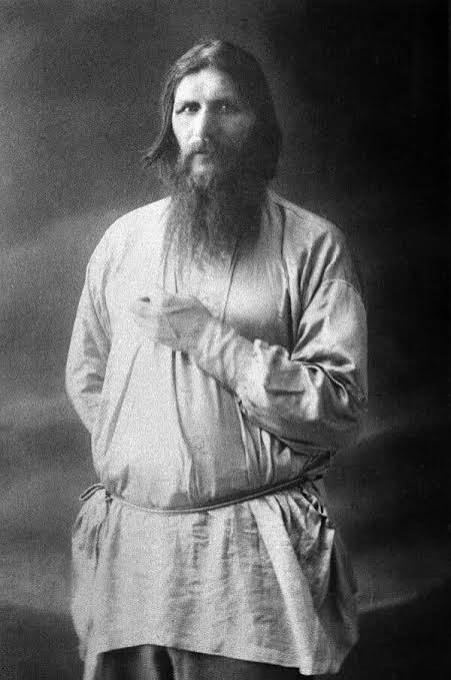
For readers unfamiliar with him, Grigori Rasputin was a Siberian peasant, self-styled holy man and wandering mystic who somehow found his way into the innermost circle of the last Russian imperial family. Born in 1869 in the remote village of Pokrovskoye, he possessed no formal religious training yet acquired a reputation as a healer and spiritual adviser. His influence grew largely because Tsarita Alexandra became convinced that he could alleviate the suffering of her hemophiliac son, Tsarevich Alexei, whose illness threatened both the family and the succession itself. From that point onward, Rasputin became a lightning rod for public anger, rumour and scandal. To his admirers he was a man of God; to his enemies a charlatan, sexual predator, political manipulator and symbol of everything rotten within the late Romanov regime.

History has rarely been kind to him. The very name “Rasputin” conjures images of dark-eyed depravity, hypnotic influence and imperial decadence, making him one of those figures who seem destined to play the villain in the historical imagination.

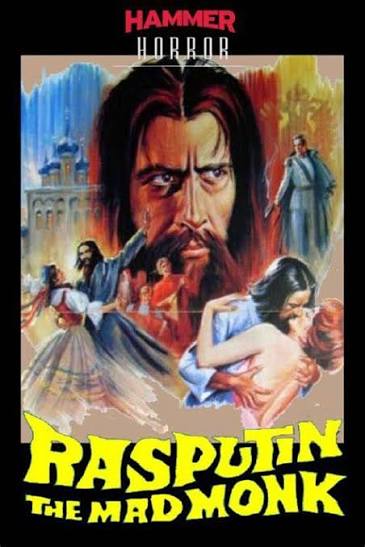
My own first encounter with him came not through history but through Hammer Horror’s gloriously lurid Rasputin: The Mad Monk (1966), in which Christopher Lee – already such a vampire icon that he’d earned the epithet “Draculee”. He played Rasputin with such operatic menace that it was not difficult to assume he must have personally engineered the fall of the Romanov dynasty between bouts of hypnotism, partying and priapic indulgence. The reality, as is so often the case, was both less theatrical and considerably more complicated. Like Boney M’s disco hit  a decade later (more on that at the end if this essay), it was great entertainment, if not necessarily great history. [In later life, Christopher Lee played a suitably malevolent Saruman in Peter Jackson’s The Lord of the Rings, resembling very much what Rasputin might have looked like had he reached old age. Lee really wanted to play Gandalf, but he was doomed to be typecast]
The mystical muzhik

Which brings us to acclaimed British historian Anthony Beevor’s latest book Rasputin and the Downfall of the Romanovs.

As happens often In That Howling Infinite, what begins as a review  ultimately becomes something larger than that. The book is the point of departure, but the essay then widens into a meditation on Russia itself and on historical continuity; and in this case, on the recurring problem of elites mistaking symptoms for causes, and on the peculiar human inability to recognise catastrophe even when its scent is already in the air.

I have read most of Anthony Beevor’s books and, on the whole, found them riveting, informative and refreshingly free of sensationalism. Stalingrad, Berlin, The Ardennes, Arnhem, Russia: Revolution and Civil War. Beevor is one of those rare historians who combines scholarship with narrative flair, making vast and complicated events accessible without sacrificing seriousness. Which is why I came to Rasputin with high expectations, and why I finished it feeling vaguely disappointed.

Not because it is a bad book. It is not. It is readable, entertaining, meticulously researched and full of fascinating material. But compared with Beevor’s finest work, it feels curiously slight: overextended and underdeveloped at the same time. There is enough material here for a long magazine essay, a television documentary; but not quite enough analytical depth to sustain a truly great work of history.
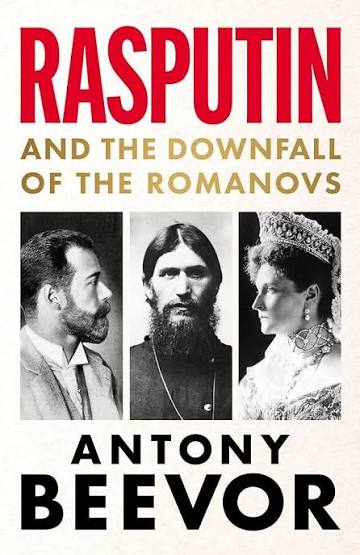
The title itself is slightly misleading. This is not really a biography of Rasputin. The so-called Mad Monk looms over the narrative like a spectral presence, but remains oddly elusive. Readers expecting a deep exploration of his Siberian origins, religious beliefs, charisma, psychology, sexuality, or the mythology that has accumulated around him often come away unsatisfied. Rasputin functions less as a subject than as a lens through which Beevor examines the final years of the Romanov court. What the book actually delivers is the story of imperial collapse between 1914 and 1917.

And what a royal court it was. Beevor presents a world populated by sycophants, grifters, mystics, opportunists, flatterers, courtiers and assorted aristocratic parasites orbiting an increasingly dysfunctional monarchy. Ministers come and go with bewildering speed. Rumours swirl through Petrograd salons. Schemes flourish and collapse. Rasputin dispenses advice, Tsarita Alexandra dispenses influence, Tsar Nicholas retreats ever further into passivity, and meanwhile the empire bleeds. All of this makes for compelling reading. Yet one gradually begins to suspect that the court is being asked to carry more explanatory weight than it can reasonably bear.

Certainly Nicholas II was an inadequate ruler and often dominated by his spouse. Certainly Alexandra was politically naïve – though that didn’t deter her from meddling: “Lovey”, she wrote to him in August 1915 while he away with his army, “I am your wall in the rear. I am here, don’t laugh at old wifey, but she has ‘trousers’ on unseen.” And both were catastrophically dependent upon Rasputin.

Certainly, the dynasty had become detached from the realities of modern Russia. But the Russian Revolution was not simply the consequence of a dysfunctional royal family making poor decisions in a palace. Russia’s problems ran far deeper than the imperial nursery. By 1917 the empire faced enormous peasant land hunger, rapid but uneven industrialisation, militant labour unrest, revolutionary traditions stretching back decades, ethnic tensions across a vast multi-national state, a fragile constitutional settlement after the failed revolution of 1905, catastrophic military losses on what we call the Eastern Front to distinguish it from the brutal stalemate on the Western one, economic breakdown, logistical paralysis and food shortages. Above all, it faced the immense pressures of total war. Even a far more capable monarch would have struggled. The Romanovs were undoubtedly part of the problem. They were not the whole problem.

Indeed, one of the ironies of Beevor’s narrative is that the closer he gets to Nicholas and Alexandra, the less convincing they become as the sole explanation for the catastrophe unfolding around them. The real story increasingly lies beyond the palace walls.

And then there is the nursery talk. The surviving correspondence between Nicholas and Alexandra is authentic, and Beevor quotes it extensively – perhaps too much. Endless references to “Sunny,” “Hubby,” “Wifey,” “baby” (the sickly heir apparent), pet names, sentimental endearments and emotional dependency reveal a couple inhabiting a private emotional universe increasingly disconnected from the realities of the empire they ruled. The first few examples are illuminating. The next fifty plus merely reinforce the point. One understands quickly enough what Beevor wishes to demonstrate: that the Tsar and Tsarina had retreated into a cocoon of domestic intimacy and religious certainty while the state around them was disintegrating. Yet repetition eventually diminishes rather than strengthens the effect.

I found myself feeling less contempt than pity, particularly for Alexandra. Beevor’s portrait is harsh, and not without justification. She was deeply unpopular even before the arrival of Rasputin. Her German origins became politically disastrous during wartime. Her interventions in ministerial appointments were often disastrous. Her faith in Rasputin was politically suicidal. Yet behind the political incompetence stood a tragic figure: a woman consumed by anxiety over a hemophiliac son whose death seemed perpetually imminent, a husband she believed had been divinely appointed, and a political system she scarcely understood. Her mistakes were enormous. Her burdens were equally profound.

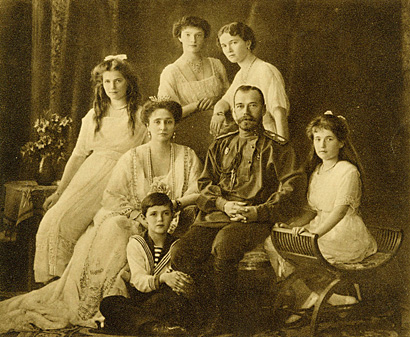
The children, meanwhile, are perhaps the saddest figures in the entire story. OTMA, the Grand Duchesses Olga, Tatiana, Maria and Anastasia. The family acronym itself has become strangely poignant, a small domestic joke preserved in history. Throughout the narrative I wondered how much they understood. Did they recognise that the dynasty was already doomed? Did they understand that the empire around them was beginning to crack apart? Olga especially emerges as a fascinating figure. Many contemporaries remarked upon her intelligence and seriousness. She often appears more politically aware than either parent. Had Russia permitted female succession, might she have made a better sovereign than Nicholas? It is impossible to know, but it is difficult to avoid the conclusion that several members of the younger generation among a myriad of dukes and duchesses possessed more common sense than the adults steering the ship of state.

As for Alexei, history has wrapped him in the melancholy glow reserved for doomed children. Understandably so. Yet had he survived to inherit the throne, one suspects he would have faced the same impossible contradictions that destroyed his father: autocracy confronting modernity, privilege confronting reform, dynasty confronting history itself.

The last of the Romanovs – Tsar Nicholas and his family, murdered by the Bolsheviks in July 1918

The road to Ekaterinburg

Let papa (Nicholas II) not plan war. It will be the end of Russia and
all of us. We shall be destroyed to the last man

Grigori Rasputin July 30, 1914

But if there is a deeper weakness in Beevor’s account, it lies not with the Romanovs, but with what overshadows them. The giant elephant in the room is the First World War. Without the war, Rasputin remains an eccentric holy man from Siberia. Alexandra remains unpopular. Nicholas remains mediocre. The Romanov dynasty perhaps limps on for another decade or two. With the war, every weakness becomes fatal.

Russia entered the conflict militarily, economically, politically and socially ill-equipped for the demands of modern industrial warfare. It possessed manpower but lacked organisation. It could mobilise millions of peasants but struggled to arm, supply and transport them. Railways buckled. Food shortages worsened. Casualties mounted on a staggering scale. Most importantly, the largely peasant army itself became fertile ground for revolution. The officer corps remained socially distant from the rank-and-file. Military disasters shattered confidence. Discipline deteriorated. Radical ideas spread. By 1917 the army was not merely losing battles. It was losing faith in the system it served. When revolution finally arrived that February, not with a bang but a slow-mo disintegration, it was little wonder that, encouraged by agitators in its ranks, the Russian Army did what we like to imagine most soldiers would like to do: lay down their arms and head for home – often first shooting their officers.

This, surely, was the real story. The gossip in Petrograd salons and restaurants drawing mattered. But millions of armed peasants questioning the legitimacy of the state mattered rather more. One occasionally wishes Beevor had spent less time recounting the latest court scandal and more time examining the immense structural forces pulling the empire apart.

Because by 1916 some observers could already smell danger. The writer Mikhail Lemke, serving at Stavka, the army headquarters, captured the mood perfectly: “Oh, the holy stupidity of the Romanovs. We are moving at full speed towards some terrible abyss, a dreadful end that is not clear to anyone but is inevitable… It is clear that the finale is going to be terrifying and in its haphazard nature.” It is a remarkable observation insofar as it captures something larger than the Romanovs themselves.

History is full of such moments. Barbara Tuchman encountered them repeatedly. Christopher Clark found them among the sleepwalkers of 1914. One finds them before the collapse of Austria-Hungary, before the fall of the Ottoman Empire, before Yugoslavia’s descent into war. People sense that disaster is approaching. The clouds gather, the pressure changes, the atmosphere becomes electric, even if the precise lightning strike remains unseen.

Beevor quotes Russian poet Alexander Blok expressing something similar when he wrote of the “peculiar merry horror that sits in the Russian soul.” It is one of those observations that sounds simultaneously profound, unfair, insightful and impossible to verify. Yet it evokes a Russia that appears repeatedly in its literature and history: exuberant and despairing, mystical and brutal, comic and tragic, capable of extraordinary creativity and extraordinary destruction, often simultaneously.

Reading these passages, I found myself thinking not only of Beevor but of my university tutor Tibor Szamuely who has featured often in In That Howling Infinite. Szamuely believed that Russia punished simplification. Its history moved in circles rather than straight lines. Revolutions proclaimed liberation only to rediscover autocracy in new forms. The Romanovs fell; the Bolsheviks inherited the imperial reflexes. The Soviet Union collapsed; empire returned draped in Orthodoxy, nationalism and Eurasian destiny. Beneath the turbulence remained what he called The Russian Tradition – the title of his one and only book, now out of print: centralised power, messianic consciousness, siege mentality and the recurring sanctification of suffering.

Szamuely believed that the bloodstained drama of 1917  and beyond – the February Revolution, the Bolshevik seizure of power in November, the Civil War, the creation of the USSR and Stalinism – often obscured the deeper continuities of Russian history. He did not live to see the collapse of the Soviet Union, the rise of Vladimir Putin or the war in Ukraine, but his argument remains strikingly relevant. The frequent upheavals that have overtaken this vast continent have often produced changes that were, at bottom, superficial, leading ultimately to the intensification of old authoritarian structures under new names.

One of the more revealing moments in Beevor’s narrative comes when Alexandra writes to Nicholas on December 14, 1916: “Be firm. Russia loves to feel the whip – it’s their nature – tender love and then the iron hand to punish and guide”. The observation is deeply revealing. It suggests a view of governance fundamentally at odds with constitutional politics. Whether one accepts Szamuely’s thesis or not, one cannot help noticing the irony. The Romanovs fell. Liberal democracy survived only briefly. The whip did not disappear. It merely changed hands. Lenin’s whip proved heavier. Stalin’s heavier still. Perhaps Alexandra was disastrously wrong about her own era and yet, in some darker sense, glimpsed something enduring about Russia’s future.

And that reminded me, oddly enough, of Deadwood. One of the reasons David Milch’s masterpiece remains such extraordinary television is that it understands something many historians understand and many politicians do not: catastrophe is usually visible before it arrives. Not in its precise form, certainly. Nobody sees the exact bullet, the exact revolution, the exact market crash. But the atmosphere changes. The clouds gather. The animals become restless. And somebody, somewhere, notices. Viewers who are paying attention notice too because the background music becomes jangly and minor key.

In the episode ominously titled Suffer the Little Children, world-weary Madame Joanie Stubbs asks  the young opportunist Flora a simple question: “Can you smell danger?” Joanie, from experience, can. The fey and feckless Flora cannot. She sees only opportunity and the immediate game she is playing and fails to recognise the larger forces closing around her. The result is one of the most violent conclusions in a series notorious for its displays of wanton brutality.

The same pattern appears repeatedly in history. People like Lemke could smell danger. Alexander Blok could smell danger. Many officers, politicians, intellectuals and ordinary Russians could smell danger. But did Nicholas and Alexandra? The evidence suggests not. Or perhaps they did but convinced themselves otherwise. In that sense they resemble the tragic Flora. Not wicked. Not entirely foolish. Simply trapped within assumptions that prevented them from recognising reality. Every warning became another irritation. Every crisis was temporary. Every setback could somehow be managed through faith, loyalty and persistence. Meanwhile the empire was bleeding to death.

The Romanovs spent years mistaking symptoms for causes. Rasputin was a symptom. Ministerial instability was a symptom. Court gossip and innuendo was a symptom. The disease lay much deeper: a political system incapable of reforming itself, a society under immense strain, and a war exposing every weakness simultaneously. By 1916 the smell of danger was everywhere. The tragedy is that those best placed to act either could not smell it or convinced themselves that the storm would somehow pass.

Tsar Nicholas in captivity

Which brings us to where Beevor’s book ends. Rasputin is assassinated by nobles determined to save the dynasty itself – treating a  symptom, not the disease (see below); the Tsar abdicates in March 1917; and the last of the Romanovs and his family disappear down the melancholy railway line to Ekaterinburg and death. The curtain falls. The reader must supply the rest. And the rest matters enormously. For all their failings, Nicholas and Alexandra were not succeeded by enlightened constitutional reformers. They were succeeded by the Bolsheviks. The road that began with Rasputin’s influence at court led through revolution, civil war, famine, terror, collectivisation, purges and the Gulag.

One leaves the book with an uncomfortable thought. The Romanovs were unquestionably part of the problem. But history’s eventual solution proved vastly more destructive.

Perhaps that is the most haunting aspect of the entire story. The downfall of the Romanovs solved one set of problems and unleashed others on an unimaginable scale. The train that Lemke saw hurtling toward the abyss did indeed reach its destination. But beyond the bend in the track lay not merely revolution, but decades of violence, repression and suffering.

In the end, Rasputin and the Downfall of the Romanovs is worth reading. The story itself remains compelling. Yet it is a lesser Beevor work: repetitive where his best books are incisive, narrowly focused where his best books are panoramic, occasionally so absorbed by court intrigue that it loses sight of the immense forces gathering beyond the palace gates. Like the dynasty it describes, it becomes most interesting when viewed as part of a larger story.

And perhaps that is the final irony. Rasputin, Nicholas, Alexandra, the four princesses, poor Alexei, the plotting dukes, ambitious ministers and aristocratic parasites all occupy centre stage for a time. Yet beyond them looms the true protagonist of the drama: Russia itself – vast, restless, wounded, contradictory, moving, as it has so often moved, between reform and reaction, idealism and coercion, hope and catastrophe.

The revolution was coming regardless. The tragedy of the Romanovs was not merely that they failed to stop it. It was that, like Flora ignoring Joanie Stubbs’ warning, they scarcely seemed to understand it was happening at all. The smell of danger was everywhere. The locomotive was already gathering speed. And somewhere ahead, beyond the next bend in the track, lay Ekaterinburg, the Civil War, Stalin, the Gulag, the Soviet century and perhaps even the long shadows that still stretch across Russia today.

The passengers continued gossiping, plotting, arguing and reassuring one another. A few looked nervously out the windows. A few could smell the storm. But by then it was already too late.

Bolshevik recruiting poster 1917

Explaining Rasputin’s power – Russia’s peasant complex

Rasputin arrived in St Petersburg trailing not merely Siberian mud on his boots but centuries of Russian argument about the peasantry.

For much of the nineteenth century, Russia’s educated classes had romanticised “the people” from a respectful distance. The peasant was imagined as the keeper of Holy Russia’s soul: patient, devout, long-suffering, close to the land and somehow morally superior to the fashionable, French-speaking aristocracy that governed him. Tolstoy found wisdom amongst peasants. Dostoevsky found redemption there. Intellectuals went “to the people” in search of authenticity, only to discover that actual peasants could be suspicious, conservative, superstitious and decidedly unimpressed by visiting idealists from St Petersburg.

Out of this tension emerged the Narodniks, the great “to the people” movement of the later nineteenth century. Young idealists abandoned universities and cities and went into the countryside to live amongst the peasants, educate them, organise them and, in some cases, save them. The peasants frequently responded by assuming they were spies and reporting them to the police.

Russia has always possessed an unusual talent for disappointing its romantics

Rasputin landed squarely in this contradiction. To admirers, he was the authentic Russia that the salons had spent generations searching for: a wandering pilgrim, a holy fool, a man of the soil with the smell of birch forests and woodsmoke still clinging to him. To his enemies, he represented everything that modern Russia was supposed to leave behind: ignorance, mysticism, obscurantism and the triumph of superstition over reason.

The aristocracy had always liked peasants rather in the way that modern urbanites like farmers’ markets — as long as the mud remained somebody else’s problem. Then one of them walked into the Winter Palace and sat down with the Tsarita.

Even popular culture recognised the type. At one point, Christopher Lee’s wonderfully excessive and inebriated Rasputin, breaks into an exuberant Russian dance to Stenka Razin, the great folk lament about the rebel Cossack who throws his Persian princess into the Volga to prove his loyalty to his comrades. Watching it as a teenager, I remember thinking not of Cossacks and river pirates but: “Hang on! That’s The Carnival Is Over.”

Tom Springfield had indeed borrowed one of Russia’s most famous melodies and transformed it into a global hit for The Seekers. Russia has always had a habit of turning up unexpectedly in other people’s stories. [See, in In That Howling Infinite,“High above the dawn is waiting” … the unlikely Russian origin of an English pop song]

Rather like Rasputin himself.

The resurrection of the Romanovs

One of the enduring ironies of Russian history – and indeed of history generally- is how often “all that is old is new again.” Revolutions announce themselves as clean breaks with the past, yet the past has a habit of returning through side doors and forgotten corridors. The symbols change, the slogans change, the uniforms change, but old habits, assumptions and institutions frequently re-emerge in unexpected forms.

Russia provides perhaps the most spectacular examples.

Much attention is paid to the persistence of the autocratic state: the succession from Tsarist secret police to Cheka, NKVD, KGB and FSB; the recurring preference for centralised authority over pluralism; the enduring suspicion of foreign influence; the tendency to frame political life as an existential struggle between order and chaos. These continuities are real enough.

Yet the return of older Russia extends well beyond the machinery of coercion. One of the most remarkable developments of the post-Soviet era has been the resurrection of the Russian Orthodox Church. The institution that survived persecution, marginalisation and attempted eradication under Soviet rule has re-emerged as one of the central pillars of contemporary Russian identity. Cathedrals demolished by the Bolsheviks have been rebuilt. Religious symbolism once dismissed as superstition now appears alongside state ceremonies and military rituals. Patriarchs once monitored by the Party have become influential public figures. Patriarch Kyril , the current head of the Russian Orthodox Church is a close political and ideological ally of Putin. Orthodoxy, once pushed to the margins, has returned to the centre of Russian public life.

And with Orthodoxy has come a reconsideration of the Romanovs, murdered along with their servants (and pet dogs) by bullet and bayonet by local Bolsheviks, on Lenin’s orders it is claimed, on the night of 16th and 17th July 1918 – ostensibly to prevent their rescue by Kolchak’s White forces who were closing in on Ekaterinburg. Many of their family and friends were executed in the days and months afterwards.

For much of the Soviet period, Nicholas II occupied a relatively simple role in the official story: a weak ruler whose incompetence justified the Revolution that swept him away. Post-Soviet Russia complicated that narrative. The Romanovs gradually ceased to be merely the defeated rulers of a vanished age and became, for many Russians, symbols of national martyrdom. Nicholas and Alexandra, together with their children, were canonised as Passion Bearers. Pilgrimages developed around sites associated with their imprisonment and murder. Their deaths came to be viewed not simply as a political execution but as a spiritual tragedy and a national wound.

The process was aided by the gradual revelation of what actually happened in the cellar of the Ipatiev House in Ekaterinburg. Soviet accounts had long been evasive. The fuller story proved profoundly unsettling. The murder of Nicholas and Alexandra is one thing. The murder of Olga, Tatiana, Maria, Anastasia and the sickly Alexei is quite another. Whatever one’s judgement of the Romanov regime, if the witness statements gathered after the slaughter are reliable, it is difficult not to recoil from the sheer brutality of what occurred that night. The image of frightened young women surviving the first fusillade because jewels sewn into their clothing deflected bullets, only to be finished off with bayonets and revolvers in a chaotic mess of panic and gun-smoke possesses a dreadful power.

That sympathy has done much to reshape public memory. The Romanovs who emerge in popular imagination are often not the rulers of a vast empire but a doomed family. The focus shifts from Nicholas the inadequate monarch to Nicholas the husband and father; from Alexandra the politically disastrous empress to Alexandra the anxious mother. Martyrdom eclipses governance.

There was to be, however, no martyr’s crown for Grigori Rasputin, whom we had lost sight of when we widened the scope of our review of Beevor’s historical pot-boiler.

The death of Rasputin

To borrow from the Bard of Avon (Macbeth, that is), “nothing in his life became him like the leaving it”. Rasputin’s demise has passed into legend largely because it seems to belong less to history than to black comedy.

In December 1916 a group of aristocratic conspirators, led by Prince Felix Yusupov and Grand Duke Dmitri Pavlovich, decided that the self-styled holy man had become a mortal threat to the monarchy and must be removed. What followed has often been retold as a Gothic horror story in which Rasputin was poisoned, shot, beaten, drowned and somehow kept coming back for more.

Beevor, however, strips away much of the mythology and reveals something closer to a tragic farce. The conspirators were astonishingly amateurish, repeatedly losing control of events, contradicting one another, panicking and improvising as their carefully laid plan unravelled. Reading Beevor’s account, one is reminded less of a sinister political assassination than of a darkly comic Ealing caper performed by nervous aristocrats hopelessly out of their depth. Yet the absurdity only heightens the symbolism. Here was the Russian elite, convinced it was saving the Empire, bungling even a murder. Rasputin’s chaotic end became a grotesque metaphor for the regime itself: confused, incompetent, riddled with fantasy, and staggering towards disaster while imagining it was still in control.

No wonder it provided such irresistible material for a shonky Hammer Horror melodrama. Rasputin’s life already contained all the necessary ingredients: a mysterious peasant mystic, aristocratic decadence, rumours of hypnotic powers, political intrigue, sexual scandal and a violent death wrapped in myth and exaggeration. His assassination only added to the legend. Poison that apparently failed to work, bullets that seemed unable to stop him, panicked noblemen stumbling through a murder plot and a corpse eventually dumped into the icy Neva – it all reads less like sober history than a fever dream concocted by a screenwriter after too many vodkas.

Hammer simply leaned into the absurdity. With Christopher Lee glowering, glaring and generally chewing the scenery as only Christopher Lee could, Rasputin became less a historical figure than a gothic supervillain, somewhere between Dracula and a mad prophet. The remarkable thing is that the real story, stripped of its embellishments, remains almost as bizarre as the cinematic version. Indeed, one suspects that if a screenwriter had invented the entire affair from scratch, critics would have dismissed it as implausibly over-the-top.

History, as usual, had other ideas. And therein lies the enduring fascination of Rasputin: not merely the man himself, but the way his life and death seem perpetually suspended between fact and folklore, political history and popular mythology.

The book of the film?

Whilst reading Beevor’s account, I wondered if he had recently watched the 1971 British film Nicholas and Alexandra. It is an appealing fancy, and not an entirely implausible one.

Anthony Beevor is a serious historian, of course, and his account of the Romanovs, Rasputin, and the revolutionary years rests on decades of scholarship rather than any cinematic influence. Yet historians are also human beings, and good historians often have a keen sense of narrative, character, and scene. Reading some passages in Russia: Revolution and Civil War, one occasionally gets the feeling that Beevor can see the events unfolding before him in almost cinematic fashion.

The 1971 film Nicholas and Alexandra remains one of the most ambitious attempts ever made to dramatise the collapse of Imperial Russia. Although it was something of a commercial disappointment, it assembled a remarkable cast of British acting royalty. Michael Jayston’s Nicholas II and Janet Suzman’s Alexandra are perhaps best remembered, but the supporting cast reads like a roll-call of twentieth-century British theatre and film: Laurence Olivier as Count Witte, Michael Redgrave as Sazonov, Jack Hawkins, Harry Andrews, Timothy West, Ian Holm, and a young Brian Cox in one of his earliest screen appearances as Leon Trotsky.

Then there is Tom Baker as Rasputin: wild-eyed, bearded, charismatic, unsettling, simultaneously ridiculous and strangely compelling. It remains one of the screen’s most memorable Rasputins, capturing something of the paradox that has fascinated generations- the peasant mystic who became confidant to an empress, faith healer, political liability, and eventually a figure of near-mythic notoriety. [Tom Baker reincarnated in 1974 as the Fourth Doctor, to become the longest serving time lord in that venerable television series, and, to hark back to our opening paragraphs, like Christopher Lee, he also pitched unsuccessfully to play Gandalf in The Lord of The Rings]

As for Ian Holm, His role is actually an interesting footnote. In Nicholas and Alexandra, he played Vasily Yakovlev, the Bolshevik commander who supervised the execution of the imperial family in Ekaterinburg in July 1918. Yakovlev survived the civil war and perished during Stalin’s Great Terror in 1938 while Holm morphed into the devious cyborg Ash in Ridley Scott’s Alien (1979).

Whether Beevor recently watched the film is impossible to know. But if one were writing about the twilight of the Romanovs, it would be hard not to have the film somewhere in the back of one’s mind. For all its historical simplifications, it remains one of those grand old epics that lodged themselves in the cultural imagination.

And perhaps that is one reason the movie endures despite its reputation as a flop. It was not merely recounting history. It was staging the last act of an entire civilisation – the chandeliers still glittering, the uniforms still immaculate, the orchestra still playing, even as the floorboards beneath the Russian Empire were already beginning to crack.
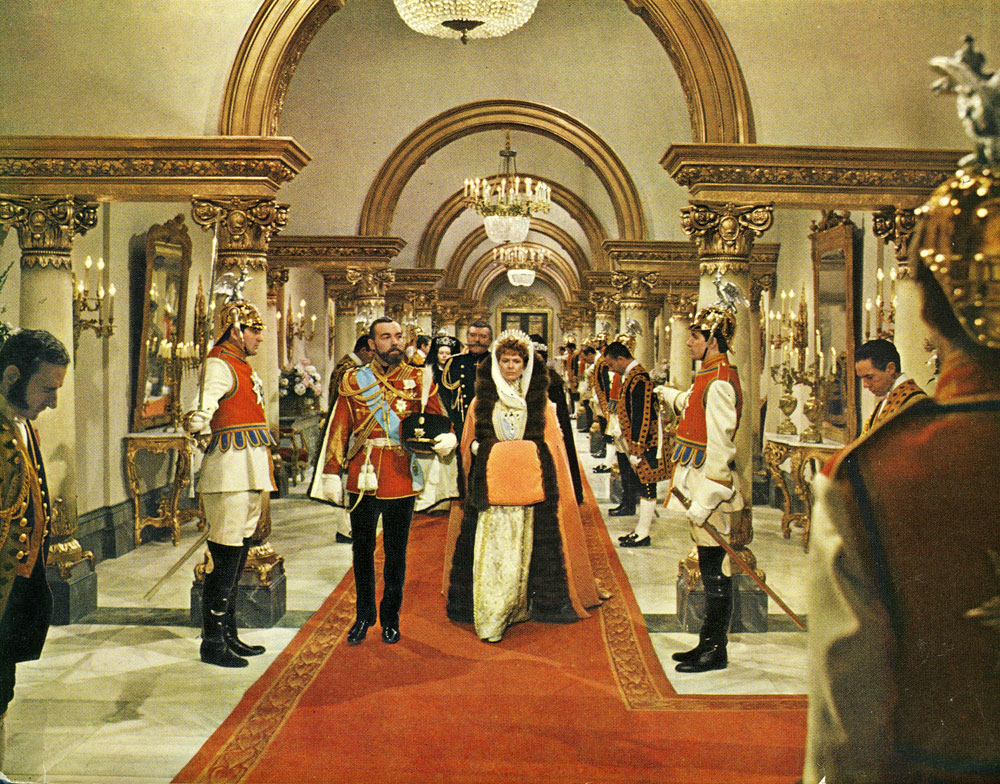
When Josef met Vladimir

There is a scene in Nicholas and Alexandra that takes us down one of history’s intriguing rabbit holes where fact, folklore and political mythology sit together at the same table – perhaps even, over a pint.

It depicts the First Conference of the Russian Social Democratic Labour Party in Tampere (then part of the Grand Duchy of Finland) in December 1905. That conference is generally accepted by historians as the first documented meeting between Lenin and Stalin. Stalin himself later recalled it as their first encounter, describing how the younger Georgian revolutionary was somewhat disappointed to discover that the legendary Lenin was not the towering, commanding figure he had imagined, but rather a relatively ordinary-looking man who blended easily into the crowd.

And yet, according to a London tradition, the two had met earlier at the Crown Tavern on Clerkenwell Green, a pub situated opposite what became the headquarters of the Twentieth Century Press, where Lenin worked while editing Iskra during his London exile. The tale has enormous appeal. One can easily picture the scene: two future dictators of the twentieth century sharing a beer in a smoky London pub while discussing the fate of the Russian Empire, utterly unknown to the drinkers around them.

The problem, though, is evidence. Lenin certainly spent considerable time in Clerkenwell. Stalin certainly visited London in 1907 for the Fifth Congress of the RSDLP. Both men undoubtedly walked the same streets. The Crown Tavern proudly embraces the connection. Yet hard documentary proof that they actually sat down together there before the 1905 Finnish conference is elusive. Soviet historians, who were often eager to document Lenin’s revolutionary activities in minute detail, generally treated the Tampere meeting as the first confirmed encounter. Modern historians tend to do the same.

That does not necessarily make the pub story false. Revolutionary underground movements were not renowned for maintaining meticulous attendance records. Absence of evidence is not evidence of absence. But it does leave the tale in that charming grey zone occupied by so much historical folklore.

There is also a delicious irony in the setting. Clerkenwell Green was one of the great centres of radical politics in Victorian and Edwardian London – a place where exiles, anarchists, socialists, trade unionists and political dreamers gathered. The British Empire, then at the height of its power, provided refuge to revolutionaries who were plotting the overthrow of other empires. London was simultaneously the capital of global capitalism and a sanctuary for those dedicated to its destruction.

If Lenin and Stalin really did share a pint at the Crown Tavern, neither man could have known that within two decades one would have created the Soviet state and the other would inherit it. Nor could the Londoners around them have guessed that two obscure Russian exiles would become among the most consequential figures of the twentieth century.

That, perhaps, is why the story survives. Whether true or not, it captures the peculiar magic of history: the possibility that world-changing events sometimes begin not in palaces, parliaments or battlefields, but in an ordinary corner pub on an ordinary London afternoon.

And, finally, from the surreal to the ridiculous …When it comes to exuberant absurdity, one cannot match that of German reggae, funk and disco group Boney M.

Ra- ra-ra Rasputin

For an entire generation, Boney M’s 1978 disco hit Rasputin probably did more to shape popular perceptions of the man than any serious work of history.

It is, of course, ridiculously inaccurate. Rasputin was not literally the “lover of the Russian Queen”; there is no credible evidence that he and Alexandra were lovers, despite endless rumours at the time. Nor did he “rule the Russian land and never mind the Tsar.” Even at the height of his influence he remained more symbolic than omnipotent, a trusted adviser whose access to the imperial family far exceeded his actual political competence.

Yet the song captures something important about how Rasputin entered popular mythology. He became less a historical figure than a larger-than-life archetype: part holy man, part conman, part libertine, part political puppet-master, wrapped in an aura of sex, mystery and impending catastrophe.

It compresses a complicated story into a memorable caricature. The real Rasputin was almost certainly less powerful, less sinister and less glamorous than legend suggests. But legends endure because they tell us something about the fears and fantasies of their age. To Russians watching their empire stagger towards collapse, Rasputin became a convenient embodiment of everything that seemed wrong with the Romanov regime. To the wider world, he became the bearded mystic with hypnotic eyes, impossible appetites and nine lives.

Boney M simply took that mythology, added a disco beat with a Russian flavour, Euro-pop chorus and a dash of Cold War exoticism, and produced one of the strangest historical stories ever to hit the dance floor.

Indeed, there is a curious progression in the way many of us first encountered Rasputin. First came Christopher Lee’s wild-eyed Hammer Horror incarnation in the 1960s; then Boney M’s improbable disco supervillain in 1978; and only much later the actual historical figure lurking behind both performances. By that stage, poor old Grigori scarcely stood a chance. History had already handed him over to popular culture, where villains, mystics and monsters invariably enjoy a much longer shelf life than ordinary men.

Paul Hemphill, June 2025

For more on Russia, Ukraine and the Soviet Union in In That Howling Infinite, see Russky Mir – Russian history’s long shadow

Rasputin, Bony M (1978)

There lived a certain man in Russia long ago
He was big and strong, in his eyes a flaming glow
Most people look at him with terror and with fear
But to Moscow chicks, he was such a lovely dear
He could preach the Bible like a preacher
Full of ecstasy and fire
But he also was the kind of teacher
Women would desire

Ra-Ra-Rasputin, lover of the Russian Queen
There was a cat that really was gone
Ra-Ra-Rasputin, Russia′s greatest love machine
It was a shame how he carried on

He ruled the Russian land and never mind the Tsar
But the kazachok, he danced really wunderbar
In all affairs of state, he was the man to please
But he was real great when he had a girl to squeeze
For the Queen, he was no wheeler-dealer
Though she’d heard the things he′d done
She believed he was a holy healer
Who would heal her son

Ra-Ra-Rasputin, lover of the Russian Queen
There was a cat that really was gone
Ra-Ra-Rasputin, Russia’s greatest love machine
It was a shame how he carried on

But when his drinking, and lusting and his hunger for power
Became known to more and more people
The demands to do something about this outrageous man became louder and louder

“This man’s just gotta go,” declared his enemies
But the ladies begged, “Don′t you try to do it, please”
No doubt this Rasputin had lots of hidden charms
Though he was a brute, they just fell into his arms
Then one night some men of higher standing
Set a trap, they′re not to blame
“Come to visit us,” they kept demanding
And he really came

Ra-Ra-Rasputin, lover of the Russian Queen
They put some poison into his wine
Ra-Ra-Rasputin, Russia’s greatest love machine
He drank it all, and he said, “I feel fine”
Ra-Ra-Rasputin, lover of the Russian Queen
They didn′t quit, they wanted his head
Ra-Ra-Rasputin, Russia’s greatest love machine
And so they shot him ′til he was dead

Oh, those Russians

Writer(s): Frank Farian, Fred Jay, George Reyam

Afterword

Being a longtime student of the Middle East, and having visited Jerusalem many times, whilst assembling this essay, I was surprised to discover a direct connection between the murdered Romanovs and the Holy City. Tsarita Alexandra’s sister, the Grand Duchess Elisabeth, who was executed along with other nobility on the sane night as The Tsar and his family, and later, interred in the incongruous and ostentatiously Muscovite Church of Saint Mary Magdalene in the Garden of Gethsemane on Mount Olive – which she and her husband had helped build – and in 1982, canonised as “new martyr” of the Russian Orthodox Church Outside Russia.
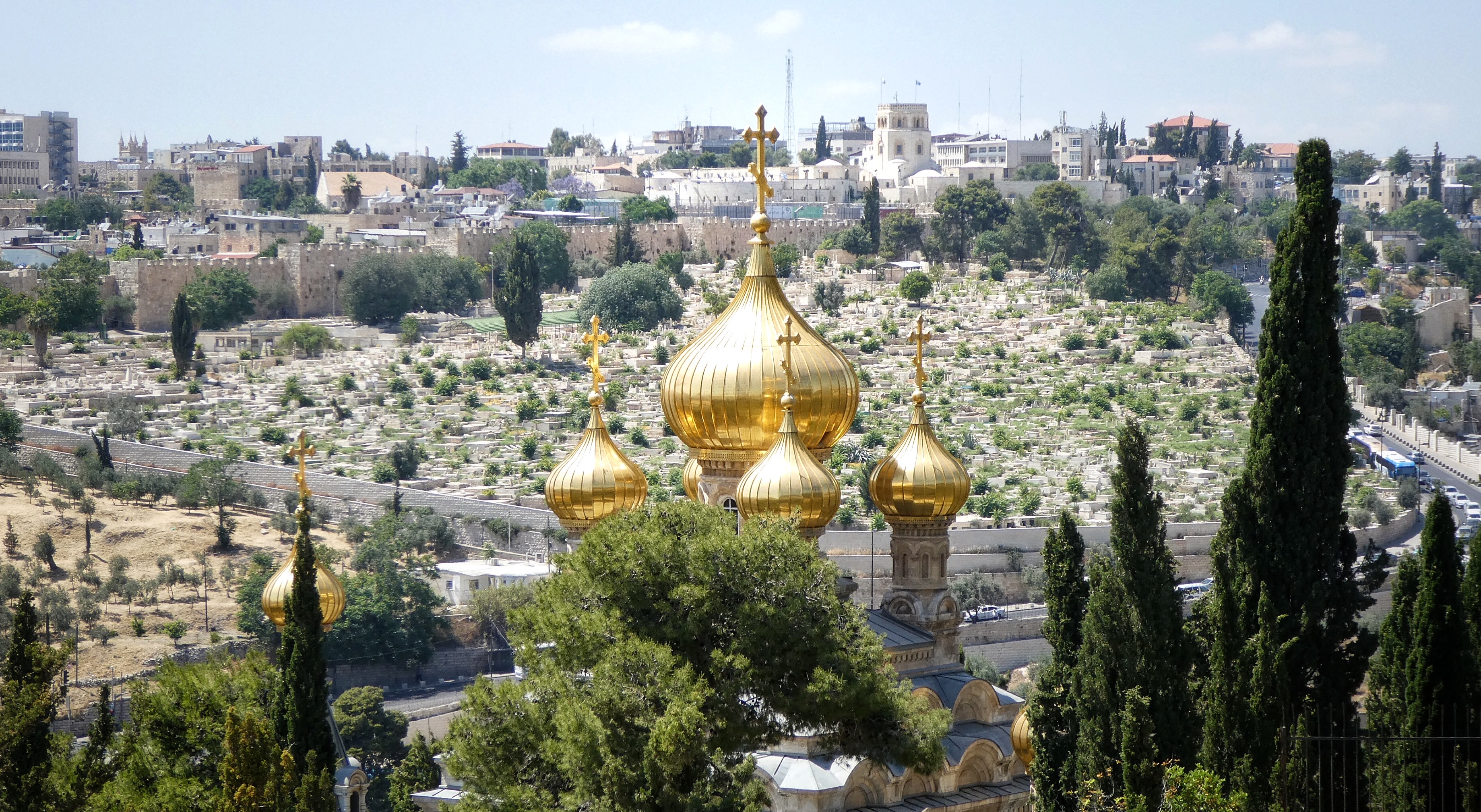
The Church of St. Mary Magdalene, viewed from the walls of Jerusalem. P.Hemphill, May 2014
Certainty and the independent mind

Time, time again, it is said
We will hear, we will see
See it all-in his wisdom-hear
His truth will abound the land
This truth will abound the land
This state of independence shall be
Evanghelos Papathanassiou & Jon Anderson

We live in a time of anxiety – yet we long for certainty.

Not certainty born of wisdom, experience or careful reflection, but certainty manufactured and amplified by technologies, institutions and cultures that reward simplicity over complexity, outrage over understanding, and tribal loyalty over independent thought. Never before have we had access to so much information, yet rarely has there seemed so little patience for ambiguity. Every issue arrives pre-packaged with approved opinions. Every controversy demands allegiance. Every debate is framed as a struggle between competing moral absolutes.

The pressure to choose a side is relentless.

Whether the issue is climate change, immigration, Indigenous recognition, Israel and Palestine, Donald Trump, nationalism, globalisation, identity politics or any number of the controversies that dominate contemporary discourse, citizens in countries like ours are increasingly expected to sort themselves into camps and remain there. To question one’s own side is often viewed as disloyalty. To acknowledge complexity is mistaken for weakness. To recognise competing truths can invite accusations of moral cowardice. Nuance, once regarded as evidence of maturity, is frequently condemned as equivocation.

Yet there is a deeper paradox at work. We often confuse certainty with conviction and conviction with wisdom. We mistake confidence for competence, consistency for truth and, increasingly, certainty for authenticity itself. In an age of institutional distrust and social fragmentation, those who sound most certain are often assumed to be the most honest. The politician who never wavers appears authentic; the citizen who hesitates appears weak. Doubt becomes suspect. Reflection begins to look like indecision.

At the centre of this lies a curious development. The word independent has itself become strangely contested.

Traditionally, independence implied a particular intellectual virtue. It suggested someone who weighed evidence, resisted fashion, distrusted slogans and arrived at conclusions through reflection rather than tribal loyalty. The independent thinker might be right or wrong, but their independence lay in their willingness to examine competing arguments, question prevailing orthodoxies and tolerate ambiguity. Independence was not a destination but a habit of mind.

Today, however, independence is viewed through very different lenses.

For some, it has become shorthand for conspiracy, contrarianism or the performative scepticism of the “do your own research” cohort. The independent thinker is recast as someone marinating in YouTube rabbit holes, Facebook memes and endless distrust of expertise. Independence becomes less a mark of judgement than a rejection of established knowledge.

For others, independence has become suspect for an entirely different reason. In an age defined by existential moral struggles – Trumpism, Gaza, Ukraine, climate change, racism, antisemitism, Islamophobia, democratic decline and a host of other causes that demand urgent attention – the person who refuses to choose a side can appear not thoughtful but evasive. Independence comes to look less like intellectual courage than moral cowardice, a refusal to commit when commitment is required.

Yet both assumptions are flawed. The first mistakes independence for reflexive distrust. The second mistakes uncertainty for indifference.

There is a profound difference between refusing to think and refusing to join a tribe. There is an equally important difference between acknowledging complexity and lacking conviction. The independent mind is neither conspiratorial nor apathetic. It is not defined by permanent scepticism, nor by a determination to stand in the middle of every argument. Rather, it is characterised by a willingness to follow evidence wherever it leads, to question assumptions – one’s own particularly- and to resist the comforting certainties offered by political, ideological and cultural tribes.

The tragedy of our age is that such independence is increasingly difficult to sustain. The incentives run in the opposite direction. Algorithms reward outrage. Social media rewards certainty. Activist movements reward loyalty. Political parties reward conformity. Every institution, it seems, encourages us to choose a side and remain there. The space for doubt, reflection and intellectual humility narrows a little more each year.

Yet life rarely conforms to such neat divisions.

History certainly does not. Human beings are complicated creatures. Nations are complicated creations. Political problems are rarely solved by slogans and almost never by certainties. The ability to hold two truths in tension at the same time – to recognise that a cause may be just yet imperfect, that opponents may sometimes be right, that allies may sometimes be wrong, and that competing moral claims can coexist- is becoming one of the most valuable and least celebrated civic virtues.

This essay is, in part, a reflection on that disappearing virtue. It draws upon a lifetime spent marching, protesting, arguing, campaigning, reading, writing and observing. It traces a journey from the certainties of youth to a greater appreciation of complexity; from the exhilaration of causes to a deeper awareness of unintended consequences; from the satisfactions of belonging to the more demanding discipline of independent judgement. Along the way it explores the distinction between moral clarity and moral certainty, the phenomenon of moral capture, the seductive appeal of authenticity, the dangers of passionate intensity, and the democratic necessity of intellectual honesty.

Above all, it is a defence of the independent mind – not as a posture of detachment or superiority, but as a commitment to judgement, humility and the difficult task of remaining intellectually free in an age that increasingly rewards certainty and punishes doubt.

Certainty, conviction and the curse of complexity

One of the curiosities of life is discovering that certainty becomes less attractive just as complexity becomes more apparent. When I was young, certainty seemed abundant. The world appeared neatly divided into camps. There were causes to join, banners to carry, songs to sing, villains to oppose, journeys to be made and futures to build. The moral landscape looked reasonably well ordered. There was right and wrong, justice and injustice, progress and reaction. The task, it seemed, was simply to determine which side one was on and then commit oneself accordingly. It was an age of grand narratives and great causes, and like many of my generation I threw myself into them with enthusiasm.

I marched against the Hydrogen Bomb and I marched against America’s war in Vietnam. I sat down, occupied buildings, disrupted meetings and occasionally found myself caught up in the odd mêlée when passions overflowed into something more physical. Later in life, I marched for East Timor and Bougainville and against French nuclear testing in the Pacific. I marched for forests, gun laws and airport noise. I confronted politicians, ambushed ministers and once helped surprise a Prime Minister at an election campaign launch. Looking back, I regret very little of it. There is something admirable about citizens who care enough to leave the comfort of their homes and enter the public square. Democracies require dissent. They need people willing to challenge power, question orthodoxies and occasionally make nuisances of themselves.

What I have learned, however, is that participation and wisdom are not the same thing.

That may sound obvious, but it is a lesson often forgotten. One of the enduring pleasures of activism is the feeling that one is participating in history. There is camaraderie in a march, solidarity in a crowd, a sense of shared purpose that can be intoxicating. One feels part of something larger than oneself. There is also a certain vicarious satisfaction in having “done something”, a sense of moral exoneration that comes simply from having turned up. If the cause succeeds, one can share in the triumph. If it fails, one can at least claim to have been on the right side.

Yet causes and solutions are often very different things. It is relatively easy to identify a grievance. It is much harder to resolve it. It is relatively easy to denounce injustice. It is much harder to construct a better alternative. It is relatively easy to carry a placard demanding perfection. It is much harder to govern a society of imperfect human beings.

This is not cynicism. It is simply an observation born of watching decades of politics unfold.

In recent years I have often found myself asking a question that rarely receives much attention. When people tell us that Australia is a racist country, that we live on stolen land, that our prosperity was built on dispossession and suffering, what exactly follows from that? If those propositions are accepted, what practical obligations arise from them? What policies should be adopted? What institutions reformed? What outcomes are being sought? Likewise, when people demand sanctions against one country, boycotts against another, the cancellation of this person or that organisation, do they imagine governments can simply comply? Do they believe that governments, with all their responsibilities, alliances, competing obligations and access to information unavailable to the rest of us, can simply act on moral impulse alone?

These are not dismissive questions. They are political questions. Indeed, they are the questions politics exists to answer.

There is often a significant gap between diagnosis and prescription. Many activists are extremely good at identifying injustices, hypocrisies and failures. Sometimes they perform a valuable service in doing so. Every society needs its critics. Every society needs people willing to point at uncomfortable truths that others would rather ignore. Yet identifying a problem is only the beginning. The harder question is what comes next. What is the proposed destination? How do we get there from here? What are the costs, the risks and the unintended consequences? These are the questions that confront governments every day. The activist’s role is often to pull society’s attention towards an issue. The government’s role is to balance competing goods, competing interests and competing risks. The activist can demand the impossible. The government must live with the consequences.

It is here that I find myself increasingly preoccupied by the distinction between moral clarity and moral certainty. The two are frequently confused, but they are not the same thing. Moral clarity involves recognising that some things are plainly wrong. The deliberate murder of civilians is wrong. Racism is wrong. Antisemitism is wrong. Corruption is wrong. Authoritarianism is wrong. Human suffering matters regardless of who experiences it. These are moral judgements that do not require ideological membership cards. They do not depend on tribal affiliation.

Moral certainty is something different. It is the conviction that one’s own side possesses not merely some truth but all of it. It is the belief that complexity is merely an inconvenience, that ambiguity is weakness and that every disagreement can be explained by malice, ignorance or bad faith. Moral certainty seeks to simplify the world into a contest between heroes and villains. It transforms politics into a morality play. It demands allegiance. It leaves little room for contradiction.

The difficulty is that reality is full of contradictions.

One of the most important lessons I have learned is that citizenship requires the ability to hold two truths in tension simultaneously. This is becoming increasingly difficult in a culture that rewards certainty and punishes complexity. Yet many of the most contentious issues of our age demand precisely this capacity. It is possible to believe that October 7 was an atrocity and that Gaza has suffered terribly. It is possible to oppose antisemitism while criticising aspects of Israeli government policy. It is possible to support Palestinian self-determination while condemning Hamas. It is possible to acknowledge the dispossession of Indigenous Australians while also recognising the achievements of modern Australia. It is possible to support immigration while discussing its challenges. It is possible to care deeply about the environment while recognising economic realities. None of these positions should be controversial. Yet increasingly they are treated as evidence of indecision, weakness or insufficient commitment.

The pressure today is not merely to possess moral clarity but to display moral certainty.

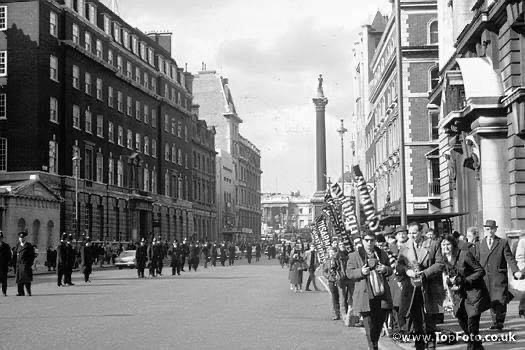
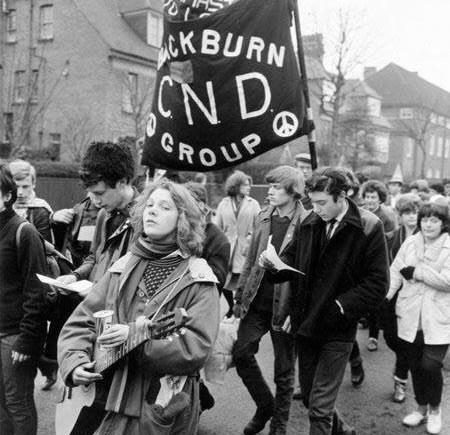
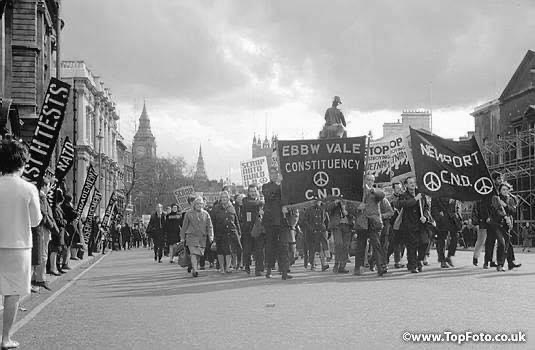
The photograph at the head of this essay and those below are of the 1966 Campaign for Nuclear Disarmament Aldermaston March reaching central London. The writer was somewhere in its ranks.

Moral capture and the discomfort of doubt

This pressure is reinforced by a phenomenon I have come to think of as moral capture. Moral capture occurs when a cause becomes so central to a person’s identity that every question must be filtered through it. Facts cease to be facts in their own right. Instead they become assets, liabilities, weapons or threats depending on whether they support the cause. The question is no longer whether something is true. The question becomes whether acknowledging it helps or hinders the narrative.

At that point intellectual honesty begins to erode.

Intellectual honesty is one of the most demanding virtues because it requires us to acknowledge facts we would rather avoid. It requires us to recognise when our opponents are correct and when our allies are mistaken. It demands that we apply the same standards to friends and enemies alike. It obliges us to distinguish between evidence and preference, between analysis and advocacy. Most importantly, it requires us to accept that reality does not rearrange itself to accommodate our politics.

This is remarkably difficult. Human beings are tribal creatures. We enjoy belonging. We like certainty. We prefer the comfort of the crowd to the discomfort of doubt. The tribe offers affirmation. The slogan offers simplicity. The crowd offers solidarity. Complexity offers none of these things. Complexity is untidy. It frustrates neat conclusions. It introduces caveats where certainty seeks absolutes.

Modern technology has made this problem worse. The algorithms that increasingly shape our information environment are not designed to cultivate wisdom. They are designed to cultivate engagement. Outrage is engaging. Certainty is engaging. Nuance is not. A meme travels further than a history lesson. A slogan spreads faster than an argument. A false analogy often possesses more emotional power than a careful comparison. Every issue is compressed into a binary choice. Every debate becomes a loyalty test. The first question is no longer whether a statement is true but which side it helps.

The result is a culture increasingly dominated by assumptions, preconceptions and caricatures.

I think back sometimes to those old marches through London in the 1960s. As we walked along singing earnest and often dreadful protest songs, members of the public would call out from the footpaths. “Get a haircut!” they would shout. “Have a wash!” “Get a job!” The implication was always the same. Protesters were outsiders. Troublemakers. Layabouts. Dreamers disconnected from reality.

Years later, in Australia, at that Liberal Party campaign launch I mentioned above, a young Liberal supporter deployed exactly the same line. “Get a job!” she called to me. I reached into my pocket and handed her my business card – back then, I was chief accountant with a small “c” conservative publishing firm. The look on her face was priceless. For a brief moment the stereotype collapsed as an assumption collided with reality. The protester turned out not to be the caricature she had imagined.

The incident was trivial, but the lesson was not. Much of political discourse today consists of people arguing with caricatures rather than engaging with reality. We sort one another into categories and then proceed as though the categories explain everything. Activist. Conservative. Progressive. Populist. Elite. Nationalist. Globalist. Zionist. Anti-Zionist. The labels become substitutes for thought. The person disappears behind the category.

Yet reality stubbornly refuses to cooperate. Human beings are more complicated than their labels. Nations are more complicated than their histories. Political problems are more complicated than their slogans.

The perils of passionate intensity

As I reread these reflections, I find myself returning to two observations that have echoed through much of my adult life. The first is Yeats’s famous warning from The Second Coming: “The best lack all conviction, while the worst are full of passionate intensity.” Like many celebrated quotations, it is often invoked more than it is examined. It is frequently used to lament the supposed timidity of moderates or to argue that our age requires more conviction, more certainty and greater willingness to fight for what we believe. Yet that was not Yeats’ point. He was not celebrating passionate intensity. He was warning about it.

Writing amid the upheavals of the early twentieth century, Yeats was observing a world in which restraint, balance and judgement appeared to be collapsing while fanaticism, absolutism and ideological fervour were on the rise. The “passionate intensity” belonged not to wise statesmen or thoughtful citizens but to those who possessed an unshakeable belief in their own righteousness. It was a description of certainty untethered from humility.

History would soon provide abundant examples.

The twentieth century was not a century that suffered from a shortage of conviction. Fascists possessed conviction. Communists possessed conviction. Religious extremists possessed conviction. Nationalists, revolutionaries and racial supremacists possessed conviction. None lacked certainty about the correctness of their cause. None doubted that history, morality or destiny stood firmly on their side.

The problem was never too little certainty. The problem was too much of it.

That is why Yeats’ warning speaks so powerfully to our own age. We live once again in a time of passionate intensity. Political tribes, activist movements, media ecosystems and online communities all encourage us to embrace certainty. The incentives are obvious. Certainty is emotionally satisfying. It creates solidarity. It simplifies complexity. It identifies heroes and villains. It provides meaning, belonging and purpose. Above all, it relieves us of the burden of doubt.

Yet doubt, properly understood, is not a weakness. It is one of the disciplines that protects us from ourselves.

The second observation, one we have touched upon above, comes from F. Scott Fitzgerald’s essay collection, The Crack-Up, who wrote that “the test of a first-rate intelligence is the ability to hold two opposed ideas in mind at the same time and still retain the ability to function.” Whether Fitzgerald consistently met his own standard is perhaps beside the point. The insight itself remains profound.

One might see Fitzgerald’s observation as a kind of antidote to Yeats’ warning. Where Yeats alerts us to the dangers of passionate intensity, Fitzgerald reminds us of the intellectual discipline required to resist it. The capacity to hold competing truths in tension, to acknowledge complexity without succumbing to paralysis, to recognise ambiguity without abandoning judgement—these are among the most important habits of mind a democratic citizen can possess.

Indeed, the independent mind is simply the refusal to surrender that capacity.

Not because all sides are equally right. Not because truth is unknowable. Not because every question has two equally valid answers. But because reality is usually larger, stranger and more contradictory than our tribes permit. Human beings are complicated. Nations are complicated. History is complicated. The slogans painted on our banners and the memes shared across our screens rarely capture more than a fragment of the truth.

Certainty and the attraction of  authenticity

One of the reasons certainty remains such a powerful force in politics is that people often confuse it with authenticity.

A recent observation about populist Australian politician Pauline Hanson captured something important. Her views have not substantially changed in thirty years, and that certainty about what she stands for forms part of her appeal to voters who feel alienated, anxious or ignored. Whether one agrees with Hanson or not is almost beside the point. The observation reveals something larger about the political culture in which we now live.

In times of uncertainty, certainty itself becomes politically valuable.

When people are struggling with rising costs, housing pressures, declining trust in institutions, geopolitical instability and the bewildering complexity of modern life, they are naturally drawn towards voices that appear confident and consistent. Human beings have always preferred clarity to ambiguity and confidence to hesitation. We are pattern-seeking creatures. Faced with confusion, we look for certainty. Faced with complexity, we look for simplicity.

The attraction is understandable.

What is often misunderstood, however, is that certainty and wisdom are not the same thing. Nor are certainty and conviction.

A politician may possess strong convictions while remaining open to evidence, criticism and changing circumstances. Indeed, that is probably what we should hope for in a democratic leader. Conviction involves knowing what one believes and being prepared to defend it. Certainty goes a step further. It is the belief that one cannot be wrong. Conviction allows room for learning. Certainty often does not.

Yet from a distance the two can look remarkably similar.

This is particularly true in an era when so much mainstream politics appears managerial, cautious and focus-grouped. Many contemporary politicians sound as though every sentence has been tested, refined and stripped of anything resembling genuine belief. They speak in carefully calibrated formulations designed not to offend any particular constituency. Such caution may be politically prudent, but it often creates an impression of evasiveness. Voters may not always agree with a politician who speaks plainly, but they often appreciate knowing where that politician stands.

People forgive a surprising amount in leaders they regard as authentic. What they struggle to forgive is the suspicion that their leaders believe one thing and say another.

This helps explain why figures as different as Pauline Hanson, Donald Trump, Bernie Sanders and Nigel Farage have attracted passionate followings. Their supporters frequently describe them not as wise, sophisticated or nuanced, but as “authentic”. What supporters often mean by authenticity is consistency. They know what these figures believe. The message may be right or wrong, attractive or repellent, but it is recognisable.

That consistency becomes especially attractive when the political centre appears uncertain of itself.

The irony is that certainty often flourishes precisely when trust is declining. When institutions command confidence, when living standards are improving and when mainstream parties appear competent, certainty on the political fringes tends to have less appeal. When trust collapses, however, certainty becomes a scarce commodity. Voters begin searching for leaders who seem sure of themselves, even if the proposed solutions are simplistic or unrealistic.

This is where the independent mind must exercise caution.

The temptation is to mistake certainty for competence, confidence for wisdom and consistency for truth. History repeatedly warns against such assumptions. The twentieth century did not suffer from a shortage of certainty. Some of its greatest disasters were fuelled by people who were utterly convinced of their own righteousness. Fanatics are rarely troubled by doubt. Ideologues seldom lack confidence.

Yet there is an equal danger in the opposite direction. A politics devoid of conviction quickly descends into managerial drift. Citizens want leaders who possess principles. They want to know where their leaders stand. They want evidence that there is something beneath the polling, the slogans and the spin.

The challenge, therefore, is not to choose between conviction and uncertainty, but to distinguish conviction from certainty. Conviction says, “This is what I believe, based on the evidence and experience available to me.” Certainty says, “This is what I believe, and no evidence could persuade me otherwise.”

The difference may seem subtle, but it is profound.

After decades of marching, arguing, protesting, campaigning and often, tilting at windmills, I have not lost faith in causes. Nor have I become indifferent to injustice. If anything, experience has reinforced the importance of civic engagement and public participation. Democracies need citizens who care. They need people willing to stand up, speak out and occasionally make nuisances of themselves.

What experience has changed is my relationship with certainty.

I have become more wary of movements that claim exclusive possession of truth. More alert to false analogies, seductive slogans and the temptations of moral capture. More conscious of unintended consequences. More appreciative of intellectual honesty, especially when honesty requires acknowledging facts that complicate one’s preferred narrative. More willing to question my own side as rigorously as I question its opponents.

In short, I have become less impressed by passionate intensity and more interested in judgement.

The challenge of democratic citizenship is not to choose between conviction and doubt. It is to possess enough conviction to act and enough doubt to remain honest. It is to seek moral clarity without succumbing to moral certainty. It is to care deeply about injustice while resisting the temptation to reduce every issue to a morality play. It is to recognise that one’s opponents may occasionally possess a fragment of truth and that one’s allies may occasionally be mistaken.

That is not fence-sitting. It is not moral relativism. It is not indifference.

It is the difficult and often uncomfortable work of remaining intellectually free.

And perhaps that is the final lesson. The independent mind is not characterised by the absence of belief but by the refusal to surrender judgement. It is not a rejection of commitment but a resistance to dogma. It is conviction disciplined by humility, passion tempered by experience, and certainty held in check by the recognition that the world is almost always more complicated than it first appears.

A healthy democracy requires leaders with convictions strong enough to act and citizens thoughtful enough to question them. It requires moral clarity without moral absolutism, confidence without arrogance, and principle without dogma. Above all, it requires the capacity to recognise that knowing what one stands for is a virtue, but believing that one possesses all the answers is not.

That distinction lies at the heart of the independent mind. It is not an argument against commitment. It is an argument against the seductive comfort of certainty. For while certainty may be politically attractive, judgement remains the rarer and more valuable quality. Yeats warned us about passionate intensity. Fitzgerald reminded us of the discipline required to resist it. Between them lies a space that democratic societies desperately need to preserve: a place where conviction and humility coexist, where competing truths can be held in tension, where citizens remain free to think for themselves, and where wisdom begins not with certainty but with the humility to recognise that reality is usually far more complicated than the slogans painted on our banners. In an age increasingly defined by certainty, that may be the most radical act of all.

Judgement and the Limits of Certainty

At this point an obvious question arises. If certainty is so dangerous, why place such faith in judgement? Are we not equally vulnerable to error there as well?

After all, our judgement is shaped by the very things that make us human. It is influenced by our experiences, upbringing, education, culture, temperament, loyalties, fears, aspirations and prejudices. None of us approaches the world as a detached observer. We all carry assumptions into every argument. We all inhabit particular histories. We all see some things more clearly than other.

A former refugee may view immigration differently from someone whose family has lived in the same town for generations. A soldier may understand war differently from a pacifist. An Indigenous Australian may experience Australian history differently from a recent migrant. A Jew may hear echoes in antisemitism that others fail to recognise. A Palestinian may understand displacement in ways others cannot. These perspectives do not necessarily cancel one another out. Nor does any single perspective possess a monopoly on truth. Each illuminates part of the landscape while leaving other parts in shadow.

The independent mind does not somehow escape these influences. It merely becomes conscious of them.

Indeed, one of the defining characteristics of intellectual maturity is recognising that our own perspective is necessarily incomplete. We are all standing somewhere. We are all looking from a particular vantage point. The challenge is not to eliminate subjectivity – an impossible task – but to understand its influence upon us.

This is why judgement differs from certainty.

Certainty assumes that because we have reached a conclusion, the matter is settled. Judgement recognises that conclusions are always provisional, always vulnerable to new evidence, new experiences and new insights. Certainty seeks finality. Judgement remains open to revision.

In this sense, judgement is less about arriving at the right answer than about cultivating habits that reduce the likelihood of arriving at the wrong one. It requires a willingness to ask uncomfortable questions of ourselves. Why do I believe this? What assumptions am I bringing to the issue? What evidence would change my mind? Am I applying the same standards to friends and enemies alike? What facts am I tempted to ignore because they complicate my preferred narrative?

These questions rarely provide certainty. They do, however, encourage honesty.

That honesty is particularly important because many of the most important questions confronting democratic societies involve genuine tensions rather than simple choices. Liberty and equality, security and freedom, justice and mercy, order and compassion, national interest and universal values – these are not problems to be solved once and for all. They are competing goods that must be balanced, negotiated and continually reassessed.

Politics, at its best, is not the elimination of such tensions but the management of them.

History offers countless reminders of the dangers of forgetting this. Time and again, the greatest political disasters have emerged not from excessive doubt but from excessive certainty. The fanatic, the ideologue and the zealot are rarely troubled by ambiguity. They know exactly where they stand. They possess answers for everything. They are convinced that history, morality and truth march in step behind them.

Yet history is littered with the wreckage left by people who were absolutely certain they were right.

This is where the independent mind returns to the insights of Yeats and Fitzgerald.

Yeats warned of those who are “full of passionate intensity,” not because conviction itself is dangerous, but because conviction unrestrained by humility can become fanaticism. Fitzgerald, meanwhile, celebrated the ability to hold two opposed ideas in mind at the same time and still retain the ability to function. Between those two observations lies a profound truth. Mature judgement is not confidence in one’s own infallibility. It is awareness of one’s own limitations.

The paradox is that the people with the best judgement are often those most conscious of how easily judgement can fail.

The more one learns about history, politics and human nature, the harder it becomes to believe that complex questions have simple answers. Good intentions can produce disastrous outcomes. Bad policies can emerge from noble motives. Opponents can occasionally be right. Allies can occasionally be wrong. Causes that deserve support can still produce unintended consequences. Human affairs are untidy in ways that slogans rarely acknowledge.

Yet none of this absolves us of responsibility. Citizens must still make choices. Governments must still govern. Voters must still vote. We cannot escape the necessity of judgement simply because certainty is unattainable.

The alternative to imperfect judgement is not objectivity. It is paralysis.

The challenge, therefore, is not to become certain of our judgement but to hold it provisionally: firmly enough to act, yet lightly enough to revise. To possess convictions without becoming imprisoned by them. To care deeply without succumbing to moral capture. To remain committed to principles while accepting that our understanding of them may always be incomplete.

Perhaps that is the most difficult discipline of all. Certainty says, “I know.” Judgement says, “This is my conclusion based upon the evidence and experience available to me, but I remain open to the possibility that I have missed something.”

The difference may appear subtle, yet it is immense. Certainty seeks closure. Judgement remains in conversation with reality.

And reality, unlike ideology, always has the last word.

In conclusion

Perhaps the independent mind has become one of the last unfashionable virtues.

It lacks the emotional satisfactions of certainty, the camaraderie of tribal belonging and the reassuring simplicity of slogans. It offers no guarantee of popularity and few opportunities for self-righteousness. More often than not, it leaves its advocate stranded between opposing camps, criticised by all sides for refusing to embrace the approved orthodoxy of any one of them. Yet it remains indispensable to the health of a democratic society because it asks something increasingly rare of us: that we think before we choose, question before we condemn, and understand before we judge.

A lifetime of political engagement has convinced me that neither protest nor power possesses a monopoly on wisdom. Activists can identify genuine injustices while proposing unworkable solutions; governments can understand practical realities while losing sight of moral obligations. Both require scrutiny. Both require criticism. Both require citizens willing to think beyond inherited narratives, ideological loyalties and partisan certainties. But this is not really an essay about protest, nor is it ultimately about independents in the electoral sense. It is about a disposition of mind: the determination to remain intellectually free in a culture that increasingly rewards conformity.

When we are young, we often imagine that the opposite of commitment is apathy. We assume that doubt is the enemy of conviction and that certainty is evidence of moral seriousness. Yet a lifetime of politics, protests, campaigns, victories, defeats, enthusiasms and disillusionments suggests something rather different. The real opposite of commitment is not apathy but dogma.

It is entirely possible to care passionately about injustice while resisting moral capture. It is possible to hold strong convictions while remaining open to evidence, criticism and changing circumstances. It is possible to stand for something without believing that one’s own side possesses a monopoly on virtue, wisdom or truth. Indeed, that may be what genuine conviction looks like. Conviction says, “This is what I believe.” Certainty says, “Nothing could persuade me otherwise.” The person who never questions themselves has ceased to serve a cause and has instead begun to worship it.

That, ultimately, is the thread running through this essay: a defence of judgement over certainty.

The phrase that recurs most often in my mind – and has featured prominently in this essay – is that notion of holding two truths at once. It sounds simple enough, yet it runs directly against the grain of contemporary political culture. Our public life increasingly rewards simplification. Algorithms prefer one truth. Activists often prefer one truth. Partisans almost always prefer one truth. The pressure is constant: choose a side, embrace a narrative, identify the villains and remain loyal to the script. Yet reality stubbornly resists such neat arrangements. Mature citizenship frequently requires us to live with competing realities, overlapping truths and unresolved tensions.

It is possible for a nation to be both admirable and flawed, for a people to be both victims and agents of their own history, for a cause to be just and yet produce harmful consequences, for an opponent to be right about one thing and wrong about another. As we have written, it is possible to condemn the atrocities of October 7 and mourn the suffering of Gaza. It is possible to oppose antisemitism while criticising Israeli policy, to support Palestinian aspirations while rejecting Hamas, to acknowledge the dispossession of Indigenous Australians while recognising the achievements of modern Australia. These are not contradictions to be eliminated but tensions to be navigated. They require judgement rather than certainty, humility rather than righteousness.

I find myself returning, too, to WB Yeats and Scott F Fitzgerald, writers who have hovered over these reflections. Between them lies the intellectual territory occupied by the independent mind: conviction tempered by doubt, clarity balanced by complexity, belief disciplined by self-examination.

This is not because all sides are equally right, nor because truth is unknowable, nor because every argument lies somewhere in a comfortable middle ground. Rather, it is because reality is usually larger, stranger and more contradictory than our tribes permit. Human affairs do not fit neatly into ideological categories. History rarely conforms to our preferred narratives. Good intentions do not guarantee good outcomes. Sincerity does not confer correctness. Authenticity does not guarantee wisdom. The world is full of competing goals, unintended consequences and moral ambiguities that cannot be resolved by slogans alone.

Perhaps that is the final irony. After decades of marching, arguing, protesting, campaigning, reading, writing and, more than occasionally, tilting at windmills, one does not necessarily end up believing in fewer causes. One does not become indifferent to injustice, retreat from public life or cease caring about the future. Rather, one becomes more wary of certainty, more conscious of unintended consequences, more alert to false analogies and seductive slogans, and more appreciative of the rare virtue of intellectual honesty.

One becomes more aware of the distinction between the high moral ground and the low moral ground disguised as the high moral ground. One becomes more sensitive to the dangers of moral capture, more sceptical of movements that demand conformity of thought, and more willing to question one’s own assumptions as rigorously as those of one’s opponents.

That is not a retreat from conviction. It is conviction disciplined by humility. It is passion tempered by experience. And experience, unlike ideology, has a habit of teaching modesty about what we know and caution about what we merely think we know.

In the end, that may be the independent mind’s greatest contribution to a democratic society. Not certainty, but judgement; not tribal loyalty, but intellectual honesty; not the comforting illusion of possessing all the answers, but the willingness to ask difficult questions, follow evidence wherever it leads, and hold competing truths in tension without surrendering either one’s principles or one’s capacity for doubt.

There is, however, one final irony. A defence of judgement over certainty should not be mistaken for confidence in one’s own judgement. We are all prisoners, to some degree, of our experiences, our histories, our loyalties and our blind spots. None of us sees the whole landscape. The independent mind is not distinguished by superior wisdom so much as by an awareness of its own limitations. It understands that every perspective illuminates some truths while obscuring others. Its task is therefore not to eliminate doubt but to live productively with it; not to achieve perfect objectivity but to remain open to correction. If certainty begins with the belief that one cannot be wrong, judgement begins with the recognition that one might be.

It is in that uneasy space between certainty and cynicism, between conviction and humility, between passion and judgement, that citizenship is at its most demanding and, perhaps, at its most valuable. Democracy ultimately depends not upon the certainty of its partisans but upon the wisdom of its citizens. Wisdom begins with the recognition that reality is usually more complicated than our slogans, larger than our causes, and far too important to be entrusted to those who claim to possess all the answers. In an age that increasingly rewards certainty, the independent mind remains one of the few places where freedom, judgement and humility can still coexist.

In That Howling Infinite, June 2026

This essay was written in conversation with an AI language model, which contributed to drafting, phrasing, and conceptual articulation. What appears here is not unmediated thought, but considered thought: selected, tested, revised and revised again, and owned.

See also in In That Howling InfiniteA Political World – Thoughts and Themes, including: Moral capture, conditional empathy and the failure of shock, Standing on the high moral ground is hard work and Shaping facts to feelings – debating intellectual dishonesty

Author’s Note

The essays published in In That Howling Infinite reflect a lifelong engagement with politics, history, culture and public affairs. They are not intended as manifestos, nor do they seek to recruit readers to a particular ideological camp. Rather, they represent an ongoing attempt to understand a complex world while resisting the temptations of certainty, tribalism and intellectual complacency.

The views expressed in this essay are not therefore confined to these pages. Rather, they form part of a broader body of work that range from Australian history and politic, the Middle East,  and Russian history to contemporary activism, political discourse, identity, memory and public morality. They are connected by a number of recurring themes.

Among these is the belief that genuine understanding requires intellectual honesty: the willingness to follow evidence even when it challenges our assumptions, complicates our preferred narratives or discomforts our own side. Another is the conviction that moral clarity and moral certainty are not the same thing. One may recognise injustice, condemn cruelty and defend human dignity without imagining that any individual, movement or ideology possesses a monopoly on truth.

These essays also reflect a persistent concern with what I have elsewhere called moral capture: the process by which a cause becomes so central to personal identity that facts are no longer evaluated on their merits but according to whether they support or undermine the cause itself. Closely related is the phenomenon of conditional empathy, where compassion is extended selectively—depending on the identity of victims or perpetrators—rather than consistently across human suffering. Both tendencies, I would argue, diminish our capacity for honest inquiry and weaken our ability to navigate complex moral questions.

Readers familiar with One Land, Two Peoples: History, Memory, Continuity, and Inheritance will recognise another recurring principle: the necessity of holding two truths in tension at the same time. The Israeli–Palestinian conflict is perhaps one of the clearest examples of a subject that resists simplistic narratives, demanding that we acknowledge competing histories, competing grievances and competing aspirations without reducing either side to caricature. Yet the same principle applies far beyond the Middle East. It applies equally to debates about national identity, immigration, colonial history, religion, social justice, populism and democratic governance.

Throughout these essays runs a scepticism towards slogans, false analogies and the seductive simplicity of binary thinking. The modern information environment rewards certainty, outrage and performative moral confidence. It is less hospitable to ambiguity, nuance and self-questioning. Yet history repeatedly suggests that the greatest errors are often committed not by those troubled by doubt but by those convinced they possess exclusive access to truth.

For that reason, the essays collected in In That Howling Infinite should be read not as declarations of certainty but as exercises in inquiry. They are attempts to ask difficult questions rather than provide final answers; to explore tensions rather than dissolve them; and to defend the increasingly unfashionable proposition that intellectual independence remains both possible and necessary.

If there is a single thread connecting them all, it is the belief that democratic citizenship requires more than passion and more than conviction. It requires judgement. It requires humility. It requires the capacity to hold competing truths in tension without surrendering either one’s principles or one’s willingness to question them.

In an age increasingly organised around tribes, narratives and certainties, that may be one of the most important responsibilities a citizen can undertake. The essays are offered in that spirit. They do not ask the reader to agree with every conclusion. They ask only that the questions remain open, the evidence be examined honestly, and the conversation continue. After all, the purpose of independent thought is not to win arguments, but to understand the world a little better than we did before.


“Corrupt on Earth” … Death in Sanandaj

The mass and majesty of this world, all
That carries weight and always weighs the same
Lay in the hands of others; they were small
And could not hope for help and no help came:
What their foes liked to do was done, their shame
Was all the worst could wish; they lost their pride
And died as men before their bodies died.
WH Auden, The Shield of Achilles

Among the many phrases that echo through modern Iranian history, few are as chilling – or as elastic – as the charge of “corruption on Earth” (mofsed-e-filarz). Rooted in Islamic jurisprudence but broadened by revolutionary courts into a political instrument, it has served as one of the Islamic Republic’s most powerful and feared accusations.

It was among the charges levelled against the eleven Kurdish prisoners executed at Sanandaj Airport in August 1979, their deaths immortalised in Jahangir Razmi’s Pulitzer Prize-winning photograph. In the years that followed, the same accusation would be invoked against Kurdish activists, political dissidents, monarchists, communists, members of the Mujahedin-e Khalq, protesters, and others deemed enemies of the revolutionary state. The charge’s very vagueness became its strength. To be declared “corrupt on Earth” was not merely to have broken a law; it was to be cast as a threat to the moral and political order itself.

Nearly half a century later, the phrase remains woven into the fabric of Iranian political life. It resurfaced during the prosecutions that followed the Woman, Life, Freedom protests of 2022–23, and again in the trials and executions that have followed subsequent unrest and acts of political violence, and particularly, in the wake of the demonstrations and subsequent massacres of January 2026 and the US-Israeli aerial assault the began a month later. Governments change their rhetoric, revolutions age, and generations pass, yet certain words endure. In Iran, “corruption on Earth” has become more than a legal charge. It is a window into how revolutionary states define legitimacy, identify enemies, and justify the use of ultimate power.

The story that follows is, in part, the story of that phrase – and of the people whose lives have been shaped, and often ended, by its invocation.

Iranian photographer Jahangir Razmi’s famous image, later known as “Firing Squad in Iran,” won the 1980 Pulitzer Prize for Spot News Photography. It remains the only Pulitzer awarded to an anonymous photographer. Razmi’s identity remained concealed for twenty-seven years before being publicly revealed in 2006 with his consent. The photograph endures as one of the defining visual records of the violence that accompanied the consolidation of the Islamic Republic.

The Revolution Devours Its Own

The Red–Green Alliance, Iranian Edition

In early June 1983, the Kurdish city of Mahabad awoke to grim news. Fifty-nine Kurdish prisoners had been executed by the Islamic Republic of Iran. Many were young. Some, according to Kurdish human-rights sources, were still school students. Their crime was not murder, terrorism or armed insurrection in any conventional sense. Their offence was opposition to the revolutionary order that had emerged from the upheavals of 1979.

Amnesty International later documented the executions as part of a wider campaign of repression that was sweeping across Iran. By then, the Islamic Republic had moved beyond the revolutionary euphoria of its founding years and into a phase familiar to students of revolutions throughout history: the consolidation of power. The idealism, pluralism and competing visions that had animated the overthrow of the Shah were being replaced by something far narrower and far less forgiving.

The executions in Mahabad were not an aberration. They were part of a pattern.

History offers many examples of revolutions that begin as broad coalitions and end as monopolies of power. The French Revolution consumed Girondins, Hébertists and Dantonists before eventually turning upon Robespierre himself. On the scaffold, Manon Roland is said to have exclaimed “O Liberté! O Liberté! que de crimes on commet en ton nom”. The Bolsheviks devoured Mensheviks, Socialist Revolutionaries and later their own Old Guard (see in In That Howling Infinite, Stalin’s Great Terror). Revolutions often unite disparate forces against a common enemy; once victory is achieved, the question becomes who will rule. At that point, yesterday’s allies can quickly become today’s enemies.

Iran followed a similar trajectory.

The revolution that overthrew Mohammad Reza Shah Pahlavi in 1979 brought together an unlikely alliance. Liberals sought constitutional government. Nationalists hoped for greater independence from foreign influence. Marxists and socialists imagined a future shaped by class struggle and social justice. Religious activists envisioned an Islamic state guided by clerical authority. What united these groups was opposition to the Shah, whose increasingly authoritarian rule, close alignment with the United States and powerful security apparatus had generated widespread resentment.

Yet while many revolutionary factions viewed the alliance as temporary, Ayatollah Ruhollah Khomeini and his followers possessed something their rivals lacked: a coherent vision of power and an organisational structure capable of seizing it. The mosques provided a nationwide network. The clergy enjoyed enormous social legitimacy. Religious symbolism offered a language that resonated far beyond university campuses and political cells.

Many on the secular left underestimated this advantage.

For some Marxists, political Islam appeared less as an ideological rival than as a useful partner in the struggle against imperialism and capitalism. The Shah was seen as a pillar of Western influence in the Middle East; therefore, any force capable of helping to overthrow him could be accommodated. The expectation, explicit or implicit, was that once the revolution succeeded, history would proceed along more familiar revolutionary lines. The clerics would either moderate, share power or eventually be superseded.

Events unfolded differently.

By 1980, universities were being purged and “Islamised” during what became known as the Cultural Revolution. Liberal and nationalist opponents were marginalised. Independent centres of authority were systematically dismantled. The Tudeh Party, Iran’s principal communist organisation and one that had initially supported the new regime, was outlawed. Its leaders were arrested, imprisoned and in some cases executed. Former revolutionary allies appeared on television delivering forced confessions. Political prisons filled. Revolutionary courts handed down death sentences with alarming speed.

The process was not unique to the Iranian left. Kurdish movements that had sought autonomy found themselves facing military campaigns. Women’s organisations that had supported the revolution discovered that many of their aspirations were incompatible with the state’s vision of Islamic governance. Student activists, secular intellectuals and minority groups encountered similar realities. The coalition that had overthrown the Shah steadily narrowed until meaningful opposition became impossible.

The Kurdish experience was particularly harsh. In regions such as Mahabad, Sanandaj and other Kurdish centres, resistance to central authority was met with military force and mass arrests. The executions of June 1983 were one episode in a larger struggle between the Islamic Republic and Kurdish political movements. For the families involved, ideological debates about revolution and anti-imperialism mattered little. The reality was imprisonment, exile and death.

The broader lesson is not confined to Iran, nor is it simply a story about the mistakes of the political left. Rather, it is a warning about the dangers of defining political movements primarily by what they oppose rather than by what they seek to build.

Opposition to a monarchy did not tell Iranians what kind of state would emerge after the Shah. Opposition to Western influence did not answer questions about civil liberties, minority rights, women’s equality or democratic institutions. Those questions remained unresolved until power was won—and by then it was largely too late.

This is one reason why the history of the Iranian Revolution continues to resonate.

Across the political spectrum there remains a temptation to view movements through the lens of a single conflict. If a regime opposes one’s enemies, its internal character can seem less important. If it stands against a disliked power, its treatment of dissidents, minorities or political opponents may receive less scrutiny than it deserves. Such thinking is hardly confined to any one ideology. Throughout modern history, people of varying political persuasions have excused authoritarianism when it appeared to serve a larger strategic or ideological purpose.

Iran offers a cautionary example of where that logic can lead.

Many who helped create the revolution imagined themselves as partners in a broad project of national liberation. Some believed they could influence its direction. Others assumed that shared opposition to the Shah guaranteed a shared future. Instead, they discovered that revolutionary coalitions are often marriages of convenience rather than communities of principle.

The tragedy of Mahabad, and of countless similar episodes in revolutionary history, is that those who helped bring down one form of authoritarianism often found themselves confronting another.

The revolution had succeeded. Then it began to consume its own.

Every picture tells a story

The story of Jahangir Razmi’s photograph is worth including because it captures, in a single frame, the moment when revolutionary justice gave way to revolutionary terror.

On 27 August 1979, at Sanandaj Airport in Iranian Kurdistan, eleven prisoners—most of them Kurdish militants or activists—were brought before a revolutionary tribunal. The proceedings reportedly lasted little more than half an hour. The charges ranged from weapons trafficking and murder to inciting unrest against the new Islamic Republic. There was no meaningful due process, no opportunity for appeal and no delay between verdict and sentence. Convicted by the revolutionary court, the prisoners were taken directly to a dusty section of the airfield, blindfolded and lined up before a firing squad.

Jahangir Razmi, a young photographer working for the Iranian newspaper Ettela’at, was present. Managing to position himself slightly behind and to one side of the execution squad, he captured the exact instant the rifles fired. The resulting image is extraordinary and horrifying in equal measure. Some of the condemned are already collapsing; others remain momentarily upright, suspended between life and death. The executioners stand almost casually, performing what the revolution had already normalised as an administrative task. There is no drama in the cinematic sense. That is precisely what makes the photograph so unsettling. It records death not as a battlefield tragedy but as bureaucratic routine.

The image appeared in Ettela’at the following day without a photographer’s credit. The omission was deliberate. In the volatile atmosphere of post-revolutionary Iran, public association with such a photograph could have endangered Razmi’s life. The picture was subsequently distributed internationally through United Press International and quickly became one of the defining images of the revolution’s aftermath. In 1980 it was awarded the Pulitzer Prize for Spot News Photography—the only Pulitzer ever granted to an anonymous photographer.

For more than a quarter of a century, the identity of the man behind the lens remained a secret known only to a handful of people. It was not until 2006 that Wall Street Journal reporter Joshua Prager traced the photograph’s origins and revealed, with Razmi’s consent, the identity of the photographer who had captured one of the twentieth century’s most haunting images.

Placed alongside the executions in Mahabad four years later, the photograph acquires an even deeper significance. It was taken not at the end of the Islamic Republic’s consolidation of power but near its beginning. The victims at Sanandaj were among the first casualties of a revolutionary process that would soon expand far beyond Kurdish militants to encompass liberals, communists, students, women’s activists, ethnic minorities and former revolutionary allies. In retrospect, the image serves as an early warning. The firing squad at Sanandaj was not an isolated excess. It was one of the first visible signs that the revolution had begun to devour its own.

As photographs go, it possesses the rare quality of becoming more disturbing the longer one studies it. It is not merely a record of eleven deaths on a Kurdish airfield. It is a glimpse into a larger historical pattern: the moment when a revolution, having seized power, turns from overthrowing its enemies to eliminating its competitors. The rifles are aimed at eleven men, but the photograph foreshadows the fate of thousands who would follow. In that sense, Razmi captured not just an execution but a prophecy.

Firing Squad in Iran. Jahangir Ramzi’s Pulitzer winning photo, 1980.

Death in the camera’s eye

The photo reminds me of Robert Capa’s The Falling Soldier (1936), the death of a republican soldier taken during the Spanish Civil War, and Eddie Adams’s photograph of a South Vietnamese general executing a Viet Cong prisoner on a during the1968; Offensive. [These pictures are not shown here so as not to detract from the immediacy and tragedy of Razmi’s photograph.

The comparison is a fascinating one because all three photographs have become shorthand for entire conflicts, yet each captures a very different relationship between photography, truth and death.

Robert Capa’s iconic photograph taken during the Spanish Civil War, purportedly shows the exact moment a Republican militiaman is struck by a bullet and collapses backwards. It became one of the most famous war photographs ever taken, embodying the courage and vulnerability of those fighting fascism. Yet for decades historians have debated whether the image was genuine, staged, or a reconstruction. The controversy has never been fully resolved. Ironically, the photograph’s power derives not only from what it may show, but from the uncertainty surrounding it. It sits on the uneasy border between journalism, art and myth.

Eddie Adams’s photograph of South Vietnamese General Nguyễn Ngọc Loan executing a Viet Cong prisoner on a Saigon street during the Tet Offensive in 1968 occupies the opposite end of the spectrum. There is no ambiguity about what happened. Adams captured the precise instant the bullet entered the prisoner’s head. The image is shocking because it is so immediate and undeniable. For millions of viewers, it crystallised the brutality of the Vietnam War. Yet Adams himself later lamented that the photograph reduced a complicated human story to a single frozen moment. The prisoner had allegedly participated in killings during the offensive; the general spent the rest of his life defined by one fraction of a second. “The general killed the Viet Cong,” Adams later wrote, “I killed the general with my camera.”

Jahangir Razmi’s photograph from Sanandaj belongs in the same company. Like Adams’s image, it records an actual execution rather than a symbolic representation of one. Like Capa’s photograph, it came to symbolise an entire conflict and a wider historical struggle. Yet there is something uniquely unsettling about Razmi’s image. Adams shows a single victim and a single executioner. Razmi shows eleven condemned men and a firing squad acting in concert. The killing is not spontaneous or personal. It is institutional. The state itself is pulling the trigger.

Viewed together, the three photographs almost form a visual history of modern political violence. Capa’s image represents the romantic age of ideological struggle, when young men went off to fight for causes larger than themselves. Adams’s photograph captures the moral chaos of Cold War counterinsurgency, where certainty dissolves into horror. Razmi’s image depicts something colder still: the machinery of revolutionary justice transforming human beings into categories—“counter-revolutionary,” “enemy of God,” “corrupt on Earth”—before extinguishing them.

All three photographs freeze the instant between life and death. But they also remind us of something else. Photographs rarely explain. They reveal, they shock, they haunt—but they do not provide context. Capa’s militiaman may or may not have been dying. Adams’s prisoner and general carried histories invisible to the camera lens. Razmi’s eleven Kurds had been reduced by the revolutionary court to a handful of accusations and a death sentence. The photograph records their end, but not the complexity of their lives.

And perhaps that is why such images endure. They force us to confront history in its most compressed form: a single irreversible moment, laden with all the arguments, ideologies, hopes and hatreds that brought it into being. The photograph captures the second. Understanding the story behind it can take a lifetime.

In That Howling Infinite, June 2026

Other articles about the Islamic Republic in In That Howling Infinite: Messing with the Mullahs – America’s phoney war?, The quality of mercy … looking beyond Iran’s ghost republic, “Because of …” Iran’s voice of freedom, and The end of the line … an epitaph for a tyrant

A Chilling Photograph’s Hidden History

Twenty-six years ago, a picture of an execution in Iran won the Pulitzer Prize. But the man who took it remained anonymous. Until now.

December 6, 2006, The Wall Street Journal

Firing_Squad_in_Iran.high.jpeg

TEHRAN — On Aug. 27, 1979, two parallel lines of 11 men formed on a field of dry dirt in Sanandaj, Iran. One group wore blindfolds. The other held rifles. The command came in Farsi to fire: “Atesh!” Behind the soldier farthest to the right, a 12th man also shot, his Nikon camera and Kodak film preserving in black and white a mass execution.

Within hours, the photo ran across six columns in Ettela’at, the oldest newspaper in Iran. Within days, it appeared on front pages around the world. Within weeks, the new Iranian government annexed the offending paper. Within months, the photo won the Pulitzer Prize.

Taken seven months after Islamic radicals overthrew the U.S.-backed Shah, the photo remains one of the most famous images of Iran. It is an icon of government terror, invoked in critiques of the regime from the 1979 poem “Screaming,” to the 1986 music video “Speak To Me From My Land, Iran” to the 1997 book “Kurdistan.” Davood and Davar Ghassemlouie, brothers who operate a photo shop in Los Angeles, say they have made tens of thousands of reprints for demonstrators, including 200 in late September when Iranian President Mahmoud Ahmadinejad visited the U.S.

Says Shahrokh Hatami, a pioneer of Iranian photojournalism: “It is the most revealing photograph of the beginning of the Iranian revolution.”

Ettela’at, however, didn’t print the photographer’s name, fearing his safety. The Pulitzer was officially awarded to “an unnamed photographer of United Press International,” the news service that distributed the photo in the U.S. It remains the only time the award has ever been given to an anonymous recipient.

In the years since, several people have falsely claimed to be “Anonymous.” When Iran’s most famous photographer died in 2003, his obituaries were filled with mentions of a Pulitzer some say he had insinuated winning. Last September, another prominent Iranian photographer living in France was quoted in Paris Match magazine claiming credit for the work.

In fact, nearly three decades after the epochal photograph first appeared, almost no one knows who took it.

Jahangir Razmi grew up in the industrial city of Arak, in central Iran, the first child of a housewife and military clerk. Governed by the Shah, the nation was at peace. The boy was shy and happiest in a local photo shop helping a cousin develop film and shoot portraits of brides and soldiers. In 1960, at the age of 12, he bought a Russian Lubitel-2 camera.

He quickly put it to use. When one day a boy shot a girl dead outside his studio, a reporter urged Jahangir to photograph the scene. He did, the skirt and shirt of a bloodied school uniform preserved in the newsprint of Ettela’at.

When his father died, Mr. Razmi says he found work in a Tehran photo shop. When he served in the army, he found reprieve from military drills in a darkroom on base. When he photographed a 20th birthday party, he found a wife. And when Ettela’at — Farsi for “Information” — hired him in 1973 to shoot breaking news, he found a career.

“Although we were colleagues and there was a competition, his pictures were better,” says Jafar Danyeli, then one of seven staff photographers. Razmi, as everyone called him, paid attention to composition and chiaroscuro, the interplay of light and shadow. He sat at the desk closest to the stairwell. “I was always the volunteer to go,” says Mr. Razmi, then 25. “I was quick. I was young. I was braver than anyone else.”

On Jan. 16, 1979, the Shah fled Iran following mass demonstrations protesting his rule. Sixteen days later, Ayatollah Khomeini, a radical Islamic cleric, returned from France and seized control. Mr. Razmi photographed Mr. Khomeini in his Qom headquarters so regularly that he came to greet the imam with a handshake. Using his favorite Nikon lens, a 28mm wide-angle lens with automatic exposure, Mr. Razmi chronicled the conversion of Iran to theocracy from autocracy.

By August, about 500 alleged counter-revolutionaries and officials of the former regime had been executed. The judiciary decreed it illegal to criticize Islam and Iran’s spiritual leaders. A holding company formed by the regime appropriated Kayhan, the only newspaper in Iran larger than Ettela’at. Journalists who pushed back at censorship under the Shah were petrified.

“Under Khomeini they would kill you,” says Amir Taheri, then editor of Kayhan and now a political analyst living in England. “It was a different ballgame.”

On Aug. 16, Mr. Khomeini called on Iranian troops to suppress restive Kurds hoping for autonomy. Thousands of soldiers headed 300 miles northwest to the Iranian province of Kurdistan. Mr. Razmi and Khalil Bahrami, an Ettela’at reporter, followed.

Ten days later, Mr. Bahrami received a tip that a judge he had befriended was set to try Kurds in an antechamber of the municipal airport at Sanandaj, the capital of Kurdistan. The reporter, then 37, had worked at Ettela’at for 22 years and was thankful he was paired with the young Mr. Razmi, whose father had lived in Sanandaj and had raised his son to admire the Kurds and their traditions. “He knew his responsibility,” says Mr. Bahrami, who lives in Iran and is retired. “And he was quicker than the others.”

At the airport, Mr. Razmi stood ready outside the makeshift courtroom as 10 handcuffed men filled a wooden bench before the judge, a black-bearded Shiite cleric named Sadegh Khalkhali. An injured 11th prisoner lay on a stretcher beside the door.

The judge removed his turban, Mr. Bahrami recalls. He removed his shoes. He put his feet on a chair. Scanning the prisoners through thick eyeglasses, he asked their names. Officers of the court told of the defendants’ alleged crimes — of trafficking arms, inciting riots and murder. The prisoners, some with leftward or nationalist leanings, denied the accusations.

No evidence was presented, Mr. Bahrami says. “It was pure speculation.” After roughly 30 minutes, Mr. Khalkhali declared the 11 men “corrupt on earth” — mofsedin fel arz — the Koranic phrase he cited before issuing a sentence of death. A few of the men cried.

Mr. Bahrami summoned his colleague Mr. Razmi. “It was Razmi’s luck that day that he was with me,” the reporter says.

Mr. Razmi withdrew from his green canvas shoulder bag a 35-80mm lens and attached the zoom to his Nikon FE. The handcuffed men were blindfolded. Each put his hand on the shoulder of the man before him and together they walked single-file through the airport’s concrete lobby, through a metal doorframe and toward an open airfield. Mr. Razmi darted ahead and shot, untroubled by security forces: “I was totally free,” he says. Unbeknownst to Mr. Razmi, a soldier present also was taking pictures, which were never published.

The caravan passed roughly 30 airport workers, both men say. Up front walked Mr. Razmi. In the rear, both men say, was Ali Karimi, one of the judge’s bodyguards, wearing white shoes, white pants, white shirt, sunglasses and twin hip holsters. After about 100 yards, an officer halted the condemned on a plain of dry dirt. All but one of the executioners tied about their own heads Iranian shawls called chafiyehs. Both the faces of the Shiites and the eyes of the Kurds were now concealed.

Mr. Karimi asked the prisoners if they had last words, the two journalists recall. The men didn’t, all silent save a man Mr. Bahrami later reported to be Essa Pirvali, who wept aloud. A sandwich maker, he belonged to no political party but possessed a handgun and had been accused of murder. “He was scared,” Mr. Razmi says. “He wouldn’t stand.” The soldiers instructed a fellow prisoner to hold him.

An afternoon sun shone behind the prisoners and Mr. Razmi reached for his 28mm lens. He sidled in behind members of the firing squad, who stood in brown leather boots laced to the calf. He thought, he says, only about “speed and angle.” The prisoners stood in plainclothes. The firing squad crouched in camouflage.

“Afrad mosallah!,” yelled the commanding officer, calling his troops to attention. His charges aimed their G3 rifles at the midsections of the men standing little more than a body’s length away.

Standing farthest to the right, Naser Salimi, an employee of the Sanandaj health department, raised his right hand to his chest. It was bandaged, injured in a street fight that had led to his sentencing, according to contemporary newspaper reports. Opposite him, the only soldier who wore no chafiyeh raised his rifle.

Mr. Razmi stood a few feet behind this unmasked gunman. He raised his camera. At 4:30 p.m., the command came to fire: “Atesh!” Eleven guns discharged. Eleven bodies dropped. “When they fell, it was dusty,” Mr. Razmi says. The photographer lowered his camera.

The soldiers eyed Mr. Karimi, the judge’s bodyguard, lifting a pistol off his right hip. Not all of the men were dead, the photographer recalls. The bodyguard leaned over Ahsan Nahid, the injured prisoner on the stretcher, and fired one bullet into his head. Mr. Razmi snapped his Nikon. Mr. Karimi stepped to the next man and shot him, too. He proceeded along — one bullet per body, both journalists say. (Recent efforts to locate Mr. Karimi were unsuccessful.)

WITHIN MINUTES, ambulances ferried away the 11 bodies, airport workers returned to work, the huddle of soldiers thinned and Mr. Razmi stowed his two rolls of Kodak 400 film in a pocket of his canvas bag. After a helicopter flight landed the pair too late to cover a second execution, Mr. Razmi left his colleague, flagged a passing minibus and returned to the airport in Sanandaj, where at 8 a.m. the only daily flight to Tehran departed.

The photographer fell asleep. He was awakened at a checkpoint by shouts from airport officers, the same men who had shared their lunch with him the previous afternoon as they awaited the Kurdish prisoners. “It’s me!” yelled Mr. Razmi. “Jahangir!” The men held their fire. Mr. Razmi told them he had film and an article that had to get back to Tehran. “I put it in an envelope and gave it to the flight attendant,” he says, needing to continue his work in the region.

Mr. Razmi called Ettela’at, which dispatched a courier to the airport. The man picked up the white envelope from Tehran airport and delivered it to the newspaper. Ali Akbar Moradi, head of the paper’s darkroom, says he knew the 70 exposures were taken by Mr. Razmi and that he turned them into two contact sheets with the help of a technician. An office runner gave them to the photo editor, the late Fereydoun Ebrahimzadeh, who marked the frames he wished turned into prints and delivered them to Mohammed Heydari, the chief Ettela’at editor, Mr. Heydari says.

Mr. Heydari was examining the layout of that day’s front page and flipped through the stills. At about noon, he says, he stopped, overwhelmed by a single image of the moment when some of the squadron had fired and some hadn’t. Bodies fell. Dust rose.

Mr. Heydari, then 35, had little time to think — the afternoon paper was about to go to print. He says he told himself that the country was conflicted over the killing of the Kurds and angry over censorship. He decided to publish the photograph, although not in the edition distributed in the Kurdistan province, where it would be tantamount to a call to arms. “Considering the political climate, I knew I could get away with it,” Mr. Heydari says.

The Ettela’at editor made another snap decision. The photograph would run with no credit. “I was aware that if I published his name, he would be in danger,” Mr. Heydari says. “I wanted to protect Razmi.”

By 2 p.m., newsstands across Tehran trumpeted word of the Kurdish executions. The banner headline read: “Forty People Executed in Sanandaj, Marivan and Saqqez.” The accompanying photograph was a sensation, the seven months of Iranian firing squads distilled to one image.

Copies of Ettela’at sold out and representatives of international news agencies hustled to Khayam Street to buy prints. The photo editor, Mr. Ebrahimzadeh, “sold it to everyone like he was selling French fries,” says Alfred Yaghobzadeh, 47, then a photographer for the Associated Press, now a photojournalist based in France.

The first to arrive at Ettela’at was Sajid Rizvi of United Press International. Mr. Rizvi, then 30, had seen the newspaper at his home, ordered a copy by phone and sped off in the company’s pistachio-colored sedan. He picked up the photo roughly 15 minutes later inside the Ettela’at newsroom.

“It was almost wet when I took it,” says Mr. Rizvi, now editor of an arts publishing house in London. “I don’t think I have ever seen a picture as moving as that,” he says. “It is a picture between life and death.”

Mr. Rizvi asked who had snapped it. “They said, ‘better not to give out the name of the photographer.’ ” Once home, he walked into the bathroom he had converted into a darkroom, dried the photo with a hairdryer, composed a caption on his yellow Olympus typewriter, phoned the UPI desk in Brussels and transmitted the print.

Genghis Seren, a photo editor in Brussels, sat transfixed beside the company UniFax. “The drama of that machine was that the picture took 15 minutes to complete,” recalls Mr. Seren, then 25 years old and in his first year at UPI. “It came a 10th of an inch after a 10th of an inch…. It was something!” Mr. Seren forwarded the photo to UPI bureaus in Africa, Europe and the Middle East, and to company headquarters in Manhattan.

“It was transmitted to us with no name,” says Larry DeSantis, the UPI managing editor who received the photo 11 stories above 42nd Street. “Not knowing who made it interested me.”

At about 3 p.m., several armed agents from the Islamic Revolutionary Council arrived at Ettela’at, ascended four flights and entered the office of the editor, Mr. Heydari. They asked for the negative of the photo and asked to speak with the photo editor, Mr. Heydari recalls.

Mr. Heydari refused. “I said, ‘No. I am the editor. I take full responsibility.’ ” Mr. Heydari says he told the men: “If I am arrested, the negative consequences will outweigh the effect of this photo.”

The chief agent backed off. Both men telephoned government and religious officials, and the judge who ordered the executions radioed the agent seated beside Mr. Heydari, the editor says.

Mr. Khalkhali, the judge, declared the photo a fabrication and told the agent to arrest the editor, Mr. Heydari says. He says he responded by offering to show the negatives to the agent “as long as you agree not to use force to confiscate them.”

The agent agreed and viewed the negatives with two fellow officials. “They were astonished,” recalls Mr. Heydari. The agent made another call and told Iran’s attorney general that “the newspaper has been considerate to only publish this one,” Mr. Heydari remembers. The agents left with one proviso: Upon their return from Kurdistan, Messrs. Bahrami and Razmi should come in for questioning.

THAT SAME DAY, Mr. DeSantis, the UPI editor, had prints of the photo distributed by motorcycle to the New York papers and by telephoto machine to thousands of papers across the country. On Aug. 29, the New York Times, Washington Post, Der Tagesspiegel in Berlin and the Daily Telegraph in London were among the many newspapers to run it. Nearly all credited UPI.

“Our play was fabulous,” exults Mr. DeSantis, now retired. “It was a once in a lifetime…. Like it was a movie set. One guy kneeling, aiming. One guy falling. A mass execution.”

Mr. Razmi remained in Kurdistan, where at a Sanandaj newsstand he came across a copy of Ettela’at featuring one of his other photos showing the blindfolded men standing in wait. He understood why his more incendiary photographs were unprinted but nonetheless was disappointed. “I expected my name to be published,” he says.

Two days later, reporter and photographer returned to the Ettela’at office in Sanandaj. The office manager lifted from his desk the Tehran edition of the paper that had reported the execution, they recall. He said copies brought to Kurdistan were selling for more than double the cover price. The manager was a Kurd and Mr. Razmi recalls him saying: ” ‘We have to build a statue of gold of you.’ And because of what he told me, I understood that this photo was dangerous.”

Close readers of Ettela’at could have surmised Mr. Razmi was the photographer. On Aug. 26, the day before the execution, the newspaper named him as one of three employees it had sent “to the Western portion of the country.” An Aug. 29, the day after the photo ran, the paper reported on its front page that he and Mr. Bahrami had been “sent to Kurdistan.”

Home in Tehran, after a long shower, Mr. Razmi spoke about the execution to his wife and again the next morning to curious colleagues in the newsroom. He says he asked Mr. Heydari why his photo had carried no credit and didn’t object when the editor explained his worry. “I told him jokingly that you would have also been executed in Kurdistan on the spot,” Mr. Heydari says.

Mr. Razmi walked to the newspaper darkroom and saw for the first time what had been the 18th exposure of his first roll of film. “There I realized what I had taken,” he says. Turning on the red safelights in the studio, the photographer made prints of eight stills and preserved on a contact sheet 27 of his 70 photographs.

Mr. Razmi asked the darkroom supervisor for his negatives and locked them in the middle of his three metal drawers together with his other prints. A few days later, he slipped the contact sheet and stills into the fold of a newspaper and hid them in his home, “somewhere no one would have noticed,” he says. The next morning, he returned to Kurdistan.

On Sept. 9, the Islamic Revolutionary Council published a notice in the Islamic Revolution newspaper: “we hereby draw your attention to the picture which was published on the front page of [Ettela’at] on 6/6/1358 and was objected to harshly by the public.” It continued: “If this occurs again, serious decisions will be made.”

A serious decision already had been made. The day before, the Foundation for the Disinherited — the holding company that in August had swallowed Kayhan, Iran’s largest paper — also seized Ettela’at. Overnight, the paper, privately held since 1920, became state-owned.

The image continued to spread. Reza Deghati, then 27, a free-lance Iranian photographer, had seen the photo. It is “the most stirring execution picture in the history of photojournalism, of the human being,” he says. Mr. Deghati says he procured five additional photos of the execution from an Ettela’at employee and mailed them to SIPA, the Paris agency that had been publishing his own photos since the revolution.

Goksin Sipahioglu says he received the prints from Mr. Deghati at his agency on Paris’s Rue Roquepine. Even though UPI had already published one, Michele Sola, photo editor of Paris Match magazine, paid 14,000 French francs (about $10,000 today) for the additional prints. Mr. Sipahioglu forwarded half that sum to Mr. Deghati in Tehran.

The magazine went on sale in Paris days before its Sept. 21, 1979, cover date. About 2,600 miles east, readers in Iran turned to page 66. Titled “Les Kurdes, sous les balles d’Allah” (“The Kurds, under Allah’s bullets”), the photos spread rapidly. People paid 20 times the cover price for the magazine, and dozens of Iranians tacked the photos about town.

No one, however, neither Mr. Razmi nor the Iranian brain trust, seemed to notice the magazine’s erroneous credit — “Reza (Sipa)” — printed in the lower left corner of the index page. “When someone sends a picture to us,” explains Mr. Sipahioglu, “we always credit him.”

Mr. Deghati says he sent SIPA a letter saying he didn’t take the photos and that SIPA sent out a news release via the AP retracting his name. Representatives at SIPA, Paris Match and the AP don’t recall Mr. Deghati clarifying the matter and didn’t find such a release in their archives.

Mr. Razmi returned from Kurdistan in late September and Mr. Ebrahimzadeh approached him at his desk. The photo editor asked for the negatives of the 70 photos and extended his hand. “I couldn’t protest,” Mr. Razmi says. “It belonged to him.” He unlocked his metal drawer. Mr. Ebrahimzadeh told the photographer the police wished to speak to him in Tehran’s Evin prison, Mr. Razmi recalls.

Mr. Razmi says he arrived at the prison with Mr. Bahrami and two Ettela’at editors, and quickly found himself alone with the late Asadollah Lajevardi, a future warden of the prison already notorious for torturing inmates. As part of his newspaper duties, Mr. Razmi had often photographed men housed in Evin whom the state would soon execute. “I had a right to be nervous,” he says.

Mr. Lajevardi asked him who had photographed the Sanandaj execution, Mr. Razmi says. When Mr. Razmi said he had, the guard asked why he had hidden his negatives in the drawer. “So that no one would take them,” Mr. Razmi recalls answering.

He told Mr. Lajevardi that he had permission from the judge to shoot the scene and that he hadn’t sent the pictures overseas. The interrogation was soft, and it became apparent to Mr. Razmi that he wouldn’t be harmed. Mr. Razmi returned to the paper, and a few weeks later was consumed with work when, on Nov. 4, Iranian students took hostages inside the U.S. Embassy.

The next month, UPI managing editor Mr. DeSantis sat down to submit his newswire’s best work of the year for awards. At the top of his list was the execution photo. “I was a very good picture editor,” Mr. DeSantis says, “but on this one you could be a dumb dog and pick this out.”

That neither he nor anyone at UPI knew who took the photo was of little concern. The agency had been the first to provide it to the press and presented it as the work of an unnamed UPI photographer, which, says Mr. DeSantis, he assumed it was. “It came on the UPI wire,” he explains.

“Because of the present unrest in Iran,” wrote the editor to the Pulitzer committee, “the name of the photographer cannot be revealed at this time.”

Mr. Razmi didn’t know his photograph had been nominated for the Pulitzer. He didn’t know the jury nominating finalists for Spot News Photography was overwhelmed by the entry UPI titled, “Firing Squad in Iran.” Robert Duffy, then an editor at the St. Louis Post-Dispatch and chairman of the jury, says he informally lobbied a member of the Pulitzer Board that spring to pick the photo. “We were hell-bent on giving the prize to ‘Anonymous,’ ” he says.

On April 14, 1980, seven days after the U.S. severed diplomatic relations with Iran, ‘Anonymous’ won the Pulitzer Prize. Mr. Heydari told Mr. Razmi the news. But the same people who, in effect, had ordered the execution now owned his employer. Mr. Heydari says he was fired two months later. Representatives of the paper cancelled an August 2005 appointment at their Tehran head office and declined to be interviewed for this article.

Ettela’at didn’t report news of its prize-winning employee. Mr. Razmi says he “didn’t have the guts to celebrate.”

UPI did. The newswire flew its Tehran bureau chief Mr. Rizvi to the U.S. and had him speak to subscribers. “They were trying to show me off,” he says. Asked about the anonymous photographer, Mr. Rizvi recalls answering: “Eventually it will be revealed.”

IN THE SPRING, Ettela’at promoted Mr. Razmi, then 32, to photo editor. Iraq attacked Iran in September and Mr. Razmi covered the war. A mortar deafened his right ear in 1987. When months later Ettela’at asked him to work in Iraq, he decided he was tired of war. He quit his employer of 15 years, sold the home he had built by himself in a leafy neighborhood of northern Tehran, bought an apartment and opened a photography studio.

Forty years old, the photographer had come full circle, developing film and shooting portraits as he had as a boy. Says Mr. Razmi: “I was looking for a peaceful life.”

Mr. Razmi called the studio “Abgineh,” the Farsi word for glassware, which he says connoted for him the clarity of water. He didn’t advertise the studio. Still, six days a week, brides in gowns flocked to the shop, looked at Mr. Razmi and smiled.

Mr. Razmi thought often of Sanandaj. In his shop, he hung a large portrait of a boy wearing a Kurdish shawl and sash. Every summer, during the month of Shahrivar, he locked himself in his bedroom and looked at the execution photographs he had hidden.

On Aug. 3, 1997, three weeks before Shahrivar, Mohammad Khatami took office as president of Iran and hired Hashem Taleb to head his public relations. Mr. Razmi had met Mr. Taleb years before and saw a business opportunity. He drove to the office of the president, pronounced the headshots of Iranian officials unbefitting their rank and “suggested I take photographs of the president and the cabinet,” he recalls. Mr. Taleb hired him.

Days later, Mr. Razmi, the first “Official Photographer of the President and his Cabinet,” set up his flash umbrellas inside the Iranian presidential residence at the intersection of Palestine and Pasteur streets. He shot pictures of the new government. He developed the color portraits. Before mailing the prints to the president’s office, he stamped his name on the back of each.

The name Jahangir Razmi, however, remained unconnected to his most famous photograph. Monir Nahid, mother of two of the executed men, who has since settled in Los Angeles, says over time, “10, 20 people came to me and said, ‘I took the picture.’ ”

Among them, say Mrs. Nahid and her daughter, was Mr. Deghati, the stringer who in 1979 sent the photo to Paris Match. Mr. Deghati, who left Iran in 1981 and today lives in France working for Webistan Photo Agency, says he has never met the Nahids. Last September, Paris Match magazine quoted him saying he took the photo, adding in French that Mr. Khomeini “was furious.” Mr. Deghati says he knows Mr. Razmi took the photo, and that the magazine misquoted him.

Mr. Razmi says he first learned about a decade ago that others were claiming his work. Kaveh Golestan, Iran’s best-known photographer, reported to him that Mr. Deghati had said as much at a European photo exhibit. Mr. Razmi didn’t know that Mr. Golestan also had taken credit for the photo in classes he taught, according to several of his photojournalism students at Tehran University.

When Mr. Golestan died in 2003, after stepping on a landmine in Iraq, newspapers around the world reported that he had won a Pulitzer Prize. His widow, Hengameh Golestan, says her late husband never took credit for the photo and that the obituaries were mistaken. Mrs. Golestan says she knows Mr. Razmi took the photo.

On the fourth floor of a cement apartment building in northern Tehran, Mr. Razmi sat on a dimpled leather couch. His living room walls were barren of his work. Beside him on his couch, his son Ali sat rapt, tamping down a pinch of Cavendish tobacco in his father’s pipe. Mr. Razmi struck a match and puffed.

“My sons have told me a lot of times that I should go and prove that I am the photographer,” Mr. Razmi said, his voice soft and his eyes cast down. “I said, ‘No. Better not.’ ”

It is understandable why he feared claiming credit for such a public indictment of the Islamic Revolution. The hardline Mr. Ahmadinejad, elected in June 2005, shuttered Shargh, the country’s last large reformist newspaper, three months ago. Mr. Razmi also was still the official government photographer and returned the next morning to the presidential residence to shoot Mr. Ahmadinejad’s cabinet, including the defense minister who in 1979 helped quell the Kurds.

But Mr. Razmi, who is now 58, said part of him always wanted to step forward. He was disappointed when he first saw that his photo didn’t carry his name. He was irked when others took credit, people who “never feel the danger,” he said. And all the time, he was weighted by his secret, that of an ordinary man witness to extraordinary events. “Without this picture,” he said, “I wouldn’t be anything.”

Emboldened by time and dismayed by the opportunism of his fellow photographers, Mr. Razmi decided the moment was right to tell his tale after this newspaper approached him. “My name should be there,” he said.

Minced lamb and baghali polo — a dish of green rice and beans — awaited Mr. Razmi at home, and he sat down to eat with his wife and sons, his sister, two nephews and his father-in-law. They talked about Mr. Razmi identifying himself, for the first time, as the anonymous photographer.

Mr. Razmi had done nothing wrong, they reasoned. He photographed the execution with the permission of the judge. He turned over his negatives to the photo editor. He described his work to the prison guard. He wasn’t the one who sent the six images abroad. He didn’t earn a single rial or credit from his photo, the rights to which had passed from UPI to the Bettmann Archive to Corbis Corp.

The family approved of his decision to come forward. Voicing hope that it wouldn’t harm Mr. Razmi, eight people around the table spoke as one: “Inshallah,” if Allah wills it.

Past midnight, Mr. Razmi retreated to a bedroom closet and lifted his canvas camera bag by the faded strap that had hung over his shoulder during the 1979 revolution. Here in pale black ink on the inside flap of a pocket was written in Farsi, “Jahangir Razmi, Ettela’at, 328 331” — the newsroom number to phone in the event of his death.

Mr. Razmi returned to his living room. He had unearthed his contact sheet and stills for his annual look back at the execution. “I have pictures that have never been published,” he said.

The photographer held in his right hand a sheaf of black-and-white photographs, 27 images that were 26 years, five days old. He withdrew from a plastic sleeve a furling photo of the sandwich maker who cried as he waited to be shot.

Mr. Razmi thrust it forward. “Who has this picture?” he asked, his voice rising. “Nobody.” He thrust forward a photo of the dust that rose over 11 fallen men. “Who has this picture?” he asked. “Nobody.” He thrust forward a photo of the bodyguard surveying the men he had shot. “Who has this picture?” he asked. “Nobody.”

Mr. Razmi returned the photos to the sleeve that had held them since 1979. And for the first time since he had secreted them home in a folded newspaper, he put them in a Samsonite briefcase he had long used to store chosen photos from his career.

Says Mr. Razmi: “There’s no more reason to hide.”

Copyright © 2006 The Wall Street Journal. All Rights Reserved

The wild ride of Nestor Makhno

Revolution, civil war and the horseman of the Steppe

The Russian Civil War was one of the great catastrophes of the twentieth century, although it is often overshadowed by the world wars that framed it. Between 1917 and 1922, across the vast territories of the collapsing Russian Empire, perhaps ten million people died from combat, famine, disease, terror, and reprisal. Reds fought Whites, Whites fought Greens, and Greens fought everyone. Autocrats fought anarchists, nationalists fought internationalists, peasants fought cities, and villages fought armies.

The conflict stretched from Poland to Vladivostok, from the Arctic Ocean to the Caucasus, and drew into its vortex Russians, Ukrainians, Jews, Cossacks, Tatars, Armenians, Greeks, Mennonites, Germans, Czechs, Poles, and dozens of other peoples caught between competing visions of the future. and foreign powers inserted themselves into the chaos including Britain, Australia, the United States, and Japan.

As I wrote in an earlier essay, Red and white terror – the Russian revolution and civil war, this was not one war so much as many wars occurring simultaneously. It was less a civil war than a kind of World War 1.2: a continental struggle in which the old order died, and several incompatible new worlds attempted to be born.

The civil war was infamous for its cruelty, Fratricidal wars are bound to be cruel because of the lack of definable front lines, because of their instant extension into civilian life, and because of the terrible hatreds and suspicions which they engender. The fighting ranged right across the Eurasian landmass was violent beyond belief, especially the unspeakable cruelty of the Cossack atamans in Siberia.

All too often, whites represented the worst examples of inhumanity, yet on that score, the Bolsheviks were unbeatable. Reds and Whites are both revealed as more than comfortable burning villages, shooting traitors, suspected or real, and torturing and massacring prisoners, and men women and children caught in the crossfire.

There were many instances of racist violence mainly on the White side – particularly towards Jews. The Whites’ antipathy towards Jews was to some degree due to their perception that most senior Bolshevik were Jewish, but mostly it was that old devil that never went away, antisemitism. Retreat from the major cities brought out the worse in the Whites, with terrible massacres of Jews – although they were not the only perpetrators. It is estimated that there were some 1300 anti-Semitic pogroms in the Ukraine during the civil war, with some 50000 to 60000 killed by both sides. There were pogroms in Belarus also, but these were not nearly as murderous as in Ukraine. A Soviet report of 1920 mentions 150,000 dead and as many again badly injured.

Among the prophets, executioners, bandits, ideologues, adventurers, warlords, saints, opportunists and dreamers thrown up by that upheaval, few were more remarkable than Nestor Ivanovych Makhno: charismatic Ukrainian anarchist insurgent, peasant revolutionary, cavalry commander, military opportunist, libertarian idealist, and larger-than-life folk hero.

Unlike so many of his contemporaries, he survived. He survived the firing squads, the battlefields, the prisons, the epidemics, and the purges. Survived the tuberculous contracted in jail before the revolution and the many wounds inflicted throughout the war. The man who fought Germans, Austro-Hungarians, Ukrainian nationalists, Cossacks, White armies, Red armies and assorted local warlords eventually died not with a rifle in his hand but in a Paris hospital bed, impoverished and tubercular, an exile far from the black-earth steppe that had made him famous.

Or perhaps infamous – because Makhno belongs to that category of historical characters who stubbornly resist classification. The Whites hated him because he was a revolutionary peasant insurgent. The Bolsheviks hated him because he was a revolutionary peasant insurgent who refused to obey them. Ukrainian nationalists distrusted him because he placed anarchism before nationalism. Landowners feared him. Foreign occupiers hunted him. Even fellow anarchists sometimes regarded him with suspicion. Yet somehow this peasant from Huliaipole (now in the Zaporizhzhia Oblast of Ukraine) acquired an almost mythological stature.

A century later, artists still paint him, films are made about him, rock bands commemorate him. political activists still claim him, and historians still argue about him. Wikipedia’s entry about Nestor Makhno, is long, thorough, and extensively detailed, but makes for exciting reading with its comprehensive account of his colourful career during, before and after the civil war, and even, beyond the grave.

The two manga-style illustrations that prompted these reflections are themselves evidence of that enduring fascination.

Nestor Makhno, the Legend

The first thing one notices is that the artists are not attempting strict historical realism. The Makhno of these images is tall, windswept, and handsome, somewhere between a Cossack ataman, a samurai, and a western gunslinger. The black banner streams dramatically behind him. His gaze is fixed on some distant horizon. One expects a swelling Russian chorale to surge in the background panning across limitless grasslands.

The real Makhno was another man. Contemporary photographs show a relatively short, compact man, often clean-shaven, intense rather than imposing. His contemporaries remembered not his stature but his energy. He seemed perpetually in motion. Charismatic, restless, impulsive, brave, reckless, idealistic and pragmatic in equal measure. The sort of man who appears during periods of social collapse and seems almost generated by the turbulence itself.

Yet the artists understand something important: historical memory rarely preserves people as they actually were. It preserves them as they are remembered. The artwork therefore depicts not so much the historical Makhno as “Makhno the Legend”, the anarchist rebel rider of the Ukrainian steppe. And legends tell us as much about those who create them as they do about their subjects.

The flag in the first picture identifies his force as the Revolutionary Insurgent Army of Ukraine. One speech bubble proclaims: “My ne khochemo zavoyovaty vladu – my khochemo zruynuvaty yiyi nazavzhdy!”  – “We do not want to seize power- we want to destroy it forever!” A poster declares: “No to authority! No to the Party! No to the State! Long live the free community!” Another slogan advocates “Free councils of free people.”

One can almost hear every bureaucrat in history grinding their teeth. For Makhno was that rarest of political creatures: an anarchist who genuinely seemed to mean it. Here was one who would have signed to Denearys Targaryen’s vow not to join the wheel but to break it.

A Kaleidoscope of Lost Futures

The popular memory of the Russian Civil War tends to reduce it to a struggle between Reds and Whites. Bolsheviks versus monarchists. Revolution versus reaction. Reality was considerably messier. The conflict resembled a kaleidoscope more than a chessboard.

The collapse of the Romanov Empire unleashed a bewildering array of competing visions. Monarchists wanted restoration. Liberals hoped for constitutional government. Socialist Revolutionaries dreamed of a peasant democracy. Bolsheviks sought proletarian dictatorship – with themselves as it unchallenged ruler. National movements emerged across the empire’s periphery. Foreign powers intervened. Countless local strongmen pursued their own ambitions. Entire regions changed hands repeatedly.

The lands between the Dnieper and the Don were particularly complex. They were never inhabited solely by Russians and Ukrainians in the neat modern national sense. These were borderlands in the deepest historical meaning of the word. Cossacks rode the steppe. Mennonite farmers cultivated colonies founded generations earlier. Jews lived in market towns and cities. Greeks inhabited settlements along the coast. Tartars maintained ancient communities. Armenians traded. Germans farmed. Merchants, smugglers, soldiers, pilgrims, revolutionaries and dreamers moved constantly through the landscape.

Every modern nation prefers neat origin stories. But history seldom cooperates.

Makhno emerged from this world of overlapping identities and competing loyalties. His Free Territory in southeastern Ukraine represented perhaps the most improbable political experiment of the entire Civil War: an attempt to create a libertarian society amidst one of the bloodiest upheavals in modern history.

Whether it could ever have survived is doubtful. The twentieth century belonged to states, bureaucracies, standing armies, intelligence services, and industrial administration. It rewarded those who could organise railways, requisition grain, count factory output and maintain prisons. Anarchism, though long part of Tsarist Russia’s political kaleidoscope, was a forlorn hope.

Makhno the Anarchist war lord had a precarious relationship with the ultimately ascendant Bolsheviks. Vladimir Lenin at one time looked upon him favourably. Leon Trotsky, commanding the Red Army, regarded him as a dangerous adventurer, an undisciplined partisan commander whose independence threatened revolutionary unity. Makhno regarded Trotsky as a would-be dictator masquerading as a liberator. Both men were, in their own ways, correct.

Their uneasy alliance against General Wrangel’s White Army in Crimea remains one of those moments when history briefly forces bitter enemies onto the same side before restoring them to mutual hostility. The Makhnovists helped defeat the Whites, but once that task was accomplished, the Bolsheviks turned on their troublesome allies.

The logic was almost inevitable. The Bolsheviks sought power. Makhno sought freedom from power. Those two projects could coexist only temporarily.

My old tutor Tibor Szamuely would undoubtedly have seen the episode as another illustration of what he called the Russian Tradition. Revolutions changed slogans and symbols, but the underlying gravitational pull of centralised authority remained remarkably constant. The old autocracy vanished. New forms emerged. Yet power continued to accumulate at the centre. The names changed. The structure endured. [See, in In That Howling Infinite, The Russian Tradition – Russia, Ukraine and Tibor Szamuely]

Yet for a brief moment Makhno’s movement offered a glimpse of a different possibility. That possibility was ultimately crushed, first by necessity, then by power, and finally by history itself.

Makhno and Anarchism

Makhno did not emerge from a vacuum. Like so much in Russian and Ukrainian history, he was both a product of his time and the inheritor of a much older tradition. The black banners that fluttered above the villages of southern Ukraine during the Civil War carried ideas whose roots stretched back decades, even centuries, nourished by peasant rebellion, intellectual dissent, and a deep suspicion of distant authority.

Russian anarchism emerged in the nineteenth century as a radical critique of both Tsarist autocracy and the centralising tendencies of socialism. Its two great theorists were Mikhail Bakunin and Peter Kropotkin, figures who remain among the most influential anarchist thinkers in history. Bakunin, the aristocratic revolutionary who spent years in prison and exile, rejected all forms of state power, arguing that liberation could never be achieved through a dictatorship, even one claiming to act on behalf of the workers. Kropotkin, the geographer and scientist, developed a more constructive vision, emphasising voluntary cooperation, mutual aid, and federations of free communities. Against the harsh Social Darwinism fashionable in his day, Kropotkin argued that cooperation was as important to survival as competition. Human beings, he believed, were capable of organising society without kings, bureaucrats, or party commissars.

These ideas found fertile ground in the Russian Empire. The vastness of the state, its bureaucratic inefficiency, and its often brutal methods of rule encouraged a culture of resistance. Anarchism attracted intellectuals, workers, and, perhaps most significantly, peasants. Long before Marxism became dominant, populist movements such as the Narodniks had romanticised the peasant commune as a foundation for a more egalitarian society. Although not anarchists in the strict sense, they helped create a political culture in which local self-government and suspicion of central authority were deeply valued.

The revolutionary years between 1905 and 1921 provided anarchism with its greatest opportunity. Across the empire, workers established councils, peasants seized land, and local militias sprang up with little regard for official authority. In the great cities anarchist groups were active among factory workers and sailors. The Kronstadt sailors, who would later revolt against Bolshevik rule in 1921 under the slogan “Soviets without Bolsheviks,” reflected many anarchist principles even if they were not uniformly anarchist in ideology.

It was in this turbulent environment that Nestor Makhno emerged. Born in 1888 into a poor peasant family in Huliaipole, a town in the steppe lands of southeastern Ukraine, Makhno encountered anarchism as a young man. Arrested for revolutionary activities after the 1905 Revolution, he spent years in Tsarist prisons where he came under the influence of anarchist intellectuals and immersed himself in the writings of Bakunin and Kropotkin. Prison served as his university.

When the Russian Empire collapsed in 1917, Makhno returned home and transformed theory into practice. His achievement was remarkable. Amid the chaos of civil war he helped create what became known as the. Makhnovshchina (loosely translated as “Makhno movement”), a vast anarchist experiment encompassing large areas of southern Ukraine. Villages elected their own councils. Land was redistributed. Local communities enjoyed a degree of autonomy rare in wartime. Makhno’s Revolutionary Insurgent Army of Ukraine ,often called the Black Army, defended these territories against a bewildering array of enemies: German occupiers, Ukrainian nationalists, White armies, and eventually the Bolsheviks themselves.

Military historians continue to marvel at Makhno’s campaigns. His forces perfected the use of the tachanka – a machine gun mounted on a horse-drawn cart – which allowed extraordinary mobility across the open steppe. His army repeatedly outmanoeuvred larger and better-equipped opponents. In 1919 and 1920, Makhno’s forces played a crucial role in defeating General Anton Denikin and later Baron Wrangel, two of the most formidable White commanders. Ironically, these victories helped secure the survival of the Bolshevik regime that would ultimately destroy the anarchist movement.

Makhno was not alone. Other anarchists left significant marks upon the revolutionary era. Volin (Vsevolod Eikhenbaum), an intellectual and organiser, sought to develop anarchist theory and worked closely with the Makhnovists. Lev Chernyi advocated individualist anarchism and was later executed by the Bolsheviks. Grigori Maximoff became a leading anarcho-syndicalist thinker in exile. Internationally, figures such as Emma Goldman and Alexander Berkman, both born in the Russian Empire, carried anarchist ideas to global audiences and later became disillusioned critics of Bolshevik authoritarianism.

Yet none combined military leadership, mass peasant support, and revolutionary vision quite as successfully as Makhno. His closest parallels are perhaps not found in Russia but elsewhere: Emiliano Zapata in Mexico, Buenaventura Durruti in Spain, or even the medieval peasant rebels who periodically erupted across Europe. Like them, Makhno embodied a recurring historical phenomenon: the attempt to create freedom from below rather than impose it from above.

The tragedy of Russian anarchism was that it found itself squeezed between two powerful forces. The Whites regarded it as revolutionary chaos; the Bolsheviks regarded it as a rival source of legitimacy. Both sought centralised authority, disciplined armies, and hierarchical control. Anarchism offered something messier and more elusive: local autonomy, voluntary association, and a belief that ordinary people could govern themselves. In the brutal arithmetic of the Civil War, such ideas proved difficult to defend.

Yet the legacy endured. Makhno became a folk hero to some, a bandit to others, and a symbol of resistance to authority for generations of radicals. His black flag bearing the slogan “We wish for freedom” represented more than a military movement. It expressed a persistent current in Russian and Ukrainian history – a stubborn refusal to accept that power must always flow from the centre, from the capital, from the party, or from the state. In a land famous for tsars, commissars, and strongmen, that may have been the most revolutionary idea of all.


Makhno (centre) with other Insurgent command staff in Huliaipole (1919)

The Black Banner and the Long Shadow of Empire

Makhno’s story emerged from one of the great turning points of modern history: the collapse of empires. The Russian Civil War was not simply a struggle between Reds and Whites. It was also a struggle over what would replace the Romanov Empire. Across the former imperial territories, peoples sought to determine their own futures. Finns, Poles, Estonians, Latvians, Lithuanians, Georgians, Armenians, Azerbaijanis, Ukrainians and many others attempted to carve nation-states from the wreckage of imperial collapse. Some succeeded. Others failed. All became caught up in the wider maelstrom.

The tragedy of the twentieth century is that many of those hard-won freedoms proved fleeting. The new states born from the ruins of the Romanov, Habsburg, Hohenzollern and Ottoman empires found themselves trapped between larger and more powerful forces. First came the Nazi storm. Then came the Soviet one. Much of Central and Eastern Europe spent decades living under one form of domination or another. The promise of national self-determination so evident in the years immediately following the First World War often ended in occupation, dictatorship or subordination.

Yet history did not stop there.

The Soviet Union eventually followed the Romanov Empire into the graveyard of failed political systems. One by one, nations that had disappeared behind the Iron Curtain re-emerged as sovereign states. Flags long hidden returned to public squares. Languages once marginalised regained official status. Historical memories suppressed for decades resurfaced. The old imperial map dissolved once again.

Seen from this perspective, the present war in Ukraine is not simply a dispute over territory. It is part of a much longer historical argument about empire, sovereignty and identity.

A century after Reds, Whites and Greens fought across the same black-earth steppe, war once more rages in the lands where Makhno made his name. Huliaipole itself has found itself close to the front line. Mariupol, Melitopol, Berdyansk, Donetsk, Zaporizhzhia and Kherson appear both in histories of the Civil War and in contemporary battlefield reports. The same landscape that once carried cavalry columns, tachanki those iconic horse drawn machine gun wagons )and, as this is Russia, sleighs), and armoured trains now carries tanks, drones, missile batteries and mechanised brigades.

The present conflict is not a replay of the Russian Civil War. Historical analogies are useful servants but dangerous masters. Yet the recurrence is striking. Once again Ukraine finds itself at the centre of a struggle shaped by the afterlife of empire.

At its heart lies a question that has echoed through East European history for more than a century: who has the right to determine Ukraine’s future?

An increasingly irredentist Russia, drawing heavily upon imperial memory and historical grievance, has launched an assault upon a former imperial possession that insists upon its own sovereignty and right to choose its own path. The arguments are framed in terms of security, history, ethnicity and geopolitics. Beneath them lies a much older issue. The Russian Empire fell. The Soviet Empire followed it. Must Ukraine forever remain part of another state’s historical imagination, or may it exist fully as itself?

It is impossible today to read about the Russian Civil War without occasionally experiencing moments of historical déjà vu. The geography is hauntingly familiar. Kharkiv. Kherson. Mariupol. Melitopol. Odesa. Kyiv. A century ago, armies advanced and retreated across these landscapes. Reds, Whites, Greens, nationalists, foreign interventionists and local militias fought for possession of the same territory. Entire populations found themselves trapped between competing visions of political destiny.

The circumstances are very different today and historical analogies always have limits. Yet the persistence of geography and geopolitics is striking. The lands between the Dnieper and the Don remain what they have long been: a frontier between competing narratives of the past and competing visions of the future.The same rivers flow. The same cities endure. The same questions of identity, sovereignty, memory and belonging continue to reverberate across the region.

History does not repeat itself exactly. But it often revisits old addresses.

One suspects Makhno would have found the question both familiar and irritating.He was never a nationalist in the conventional sense. Unlike Bandera and later Ukrainian nationalists, Makhno did not fight for a Ukrainian nation-state. He fought for something simultaneously larger and smaller: local autonomy, peasant self-government and anarchist freedom. He distrusted all states, whether Russian, Ukrainian, Bolshevik, White, German or otherwise.

This has made his legacy awkward for modern Ukraine. States generally prefer heroes who wanted states. Makhno wanted free councils of free people.

As a consequence, he occupies an unusual place in Ukrainian memory. Unlike Bandera or Shukhevych, he has never become a central pillar of official state mythology. Unlike the controversial legacy of the OUN-UPA or the Waffen-SS Galicia Division, debates surrounding Makhno are not primarily about nationalism. Instead, he exists in several overlapping forms at once: the historical insurgent commander, the libertarian icon celebrated by anarchists across the world, the regional folk hero of southern Ukraine, and increasingly, the son of Ukraine who resisted domination from distant centres of power.

None of these versions fully captures the man.

The historical Makhno remains elusive. His movement opposed antisemitic pogroms more consistently than many contemporary forces and included Jews within its ranks, yet it operated amidst the appalling violence and carnage of the Civil War and was never entirely untouched by it. His Free Territory represented one of the most ambitious anarchist experiments in modern history, yet it was also shaped by the brutal necessities of war. Admirers romanticise him. Critics emphasise the contradictions. Both have evidence on their side.

Perhaps that ambiguity explains his enduring fascination.

The unknown artist who created the image at the head of this essay gave his Makhno a modern Tryzub or trident belt buckle, a symbol of today’s Ukrainian resistance and resilience. It is a striking touch and a thoroughly anachronistic one. The symbol derives from the seals of Volodymyr the Great and modern Ukrainian statehood. Makhno himself never wore it.

The artist is making a statement. This is not merely Makhno the anarchist. This is Makhno the Ukrainian hero. The image therefore fuses three different figures into one. There is the historical insurgent Makhno of the 1918-21 Civil War. There is the anarchist her of libertarian mythology. And there is the modern Ukrainian patriot Makhno recruited into the story of national identity – retrospectively enlisted into a national story that he himself might have regarded with considerable scepticism. He spent much of his life rejecting national labels in favour of anarchist ones.

The anachronisms are historically dubious but symbolically powerful. But history rarely asks permission before appropriating its characters in an ongoing contest over memory.

Makhno in Red Army uniform, 1919

Twilight in Paris

And then there is the final act.

What happens after the war is over? Most stories conclude when the hero rides away. Real life begins afterwards. Makhno’s cavalry charges, victories, defeats and escapes belong to legend. The more intriguing question is what became of the dream once the banners were lowered.

Defeated but not destroyed, Nestor Makhno escaped the fate that overtook so many of his contemporaries. Unlike countless White and Red commanders, he did not perish on a battlefield, before a firing squad, or later in Stalin’s Great Terror. Unlike John Brown, Custer, and Davy Crockett or the Australians Ned Kelly and another horseman Harry “the Breaker” Morant, he did not die with his boots on. Miraculously, given the odds against him, he survived.

And improbably, the horseman of the steppe ended his days in Paris.

One imagines him there during the 1920s and early 1930s, sitting in smoky cafés among White émigrés, ex-Bolsheviks, anarchists, monarchists, refugees and stateless wanderers arguing about futures that had already vanished. The thunder of cavalry had faded into memory. The revolutionary epic had dissolved into reminiscence.

Nestor Makhno died on 25 July 1934 at the age of forty-five, worn down by tuberculosis, old wounds and years of hardship and, latterly, poverty. He was cremated and his ashes placed in the columbarium of Père Lachaise Cemetery. Not beneath a black banner. Not in the black earth of the Ukrainian steppe. Not in the town where his rebellion began. His ashes were placed not in the Ukrainian black earth but in niche 6686, a small compartment among thousands of others.

There is something wonderfully ironic, literary even, about that. The anti-clerical anarchist who spent his life fighting states, hierarchies and institutions, who once commanded tens of thousands of insurgents and rode across southern Ukraine pursued by enemies on every side, ends his journey among the famous dead of France, surrounded by poets, musicians, revolutionaries and dreamers.

History possesses a sense of humour.

Yet perhaps the final irony belongs to memory itself. For the world has turned another circle since his death.

The Black Army vanished and the Free Territory of the Makhnovshchina disappeared. They survive only in memory. Stalin’s Soviet Union rose and fell. The nations that struggled for freedom amidst the ruins of empire endured decades beneath first Nazi and then Soviet domination before re-emerging as sovereign states. The world that produced Makhno  passed into history, and now, in the lands where Makhno once rode beneath a black banner, another war is being fought over questions of empire, identity, memory and self-determination.

What would Nestor Makhno make of it all?  We cannot know. But one suspects he would recognise the landscape immediately. And perhaps that is why he refuses to stay buried. The ashes remain in Père Lachaise. The legend still rides the steppe.

There is a Russian word, toska, which Nabokov famously described as a spiritual anguish without precise object. A longing for something absent. A yearning that cannot quite be named. One suspects Makhno understood it. So did Chekhov. So did many of the exiles who haunted Paris in those years. For what is exile if not a prolonged conversation with vanished possibilities?

The revolutionary epic dissolved into memoirs, arguments and recollections. The thunder of cavalry became stories told over coffee and cigarettes. The dream survived. The dreamers grew old.

Yet Makhno remains. Not exactly as he was. Not exactly as he would have wished to be remembered. But alive nevertheless in paintings, songs, novels, political arguments, historical debates, and manga-inspired artwork.

The artist who gave him a Tryzub belt buckle and the physique of a cinematic hero understands something essential. Historical memory is not an archive. It is a conversation between past and present. Each generation creates the figures it needs. And so the anarchist who rejected states has become part of a national story. The peasant insurgent has become a folk hero. The historical man has become a legend.

The ashes rest quietly in Père Lachaise. The legend still rides the steppe. And somewhere beyond the horizon, beneath a black banner snapping in the wind, Nestor Makhno continues his endless charge toward a freedom that history never quite allowed him to reach.

Paul Hemphill, June 2026

For more on Russia, Ukraine and the Soviet Union in In That Howling Infinite, see Russky Mir – Russian history’s long shadow

Makhno, 1921. Wikipedia

Author’s note

For the dear departed, Père Lachaise is the best address in Paris. Some 300,000 people reste ici. A cavalcade of French cultural and political history, with a few foreign entombments, including the playwright Oscar Wild and Doors front-man and zeitgeist icon Jim Morrison.

I have always loved the place. I have wandered its avenues among the celebrated and the forgotten, the visited and the unvisited. It occurs to me that perhaps there is a verse yet to be written about those whose names draw no pilgrims and whose flowers have long since withered. Next time I find myself there, I think I shall seek out niche 6686 and offer a quiet dobryi den to the old anarchist.

The singers, and the dancers, and the actors, and the chancers,
The rebels and the statesmen, and the fallen communards,
Napoleonic Generals and politicians’ wives.
The poets and the dreamers, all those other famous lives.

Paul Hemphill, Chanson – living next to Jim

Coda: The Wall

History occasionally produces coincidences so perfect that a novelist would be accused of over-writing them.

Nestor Makhno spent his final years in Paris and today rests in the columbarium of Père Lachaise Cemetery. Visitors come to see Oscar Wilde, Jim Morrison, Édith Piaf, Chopin, Proust and a host of other luminaries. Few seek out the old anarchist from Huliaipole. Yet not far from where his ashes lie stands one of the most potent revolutionary monuments in Europe: Le Mur des Fédérés, the Wall of the Federals.

It was here, on 28 May 1871, that the last defenders of the Paris Commune made their final stand. After a week of savage street fighting- the Semaine Sanglante, the Bloody Week – surviving Communards retreated through the eastern districts of Paris, fighting among the tombs and avenues of Père Lachaise itself. Cornered among the graves and monuments, they were overwhelmed. One hundred and forty-seven prisoners were lined up against the wall and shot. Thousands more would be executed in the days that followed.

The image possesses an almost unbearable symbolism. Revolutionaries making their last stand in a cemetery, fighting among the dead before joining them.

For later generations of socialists, communists and anarchists, the Paris Commune became something far greater than its brief seventy-two-day existence. Marx regarded it as the first example of proletarian government. Lenin studied it obsessively. Trotsky drew military lessons from its failure. Bolshevik revolutionaries saw in the Commune both an inspiration and a warning. It represented what revolution could achieve, but also what happened when revolution hesitated.

When the Bolsheviks seized power in 1917 they consciously invoked the Commune’s memory. Lenin famously noted with satisfaction when the Soviet regime survived longer than the Commune’s seventy-two days. Soviet propaganda elevated the Communards into secular saints of the revolutionary tradition. Streets, factories and institutions were named in their honour. Their red banner became one of the sacred relics of international socialism.

The symbolism endured even into the Space Age. The Soviet Union, which liked to present itself as the culmination of all previous revolutionary struggles, repeatedly invoked the Commune as a precursor to October 1917. A banner associated with the Paris Commune was ceremonially carried aboard an early Soviet space mission – a remarkable journey for a symbol born in the barricades of nineteenth-century Paris. One could scarcely imagine a more dramatic arc: from the cobblestones of Belleville to orbit around the Earth.

And here, perhaps, lies the final irony.

The Commune inspired the Bolsheviks. The Bolsheviks built the Soviet Union. Makhno spent much of his life fighting the Bolsheviks. Yet in death he came to rest within walking distance of the Wall of the Federals, among the ghosts of the very revolutionaries whose memory helped shape the revolutionary tradition that ultimately hunted him into exile.

The layers fold into one another like a Russian matryoshka doll. Open Makhno and one finds the Civil War. Open the Civil War and one finds the Revolution. Open the Revolution and one finds the Commune. Open the Commune and one finds the old dreams of liberty, equality and fraternity that first burst forth in revolutionary France. Each generation inherits the visions of those who came before, and each generation remakes them, sometimes beyond recognition.

One wonders what Makhno would have made of the Wall. He might have admired the courage of the Communards while distrusting those who later appropriated their memory. He might have reflected that revolutions, like nations, are often most attractive in defeat. Victors build institutions. Martyrs become legends.

And perhaps there is another lesson in Père Lachaise itself.

The cemetery gathers together monarchists and republicans, communists and anarchists, believers and atheists, poets and soldiers, dreamers and executioners. The quarrels that once seemed world-shattering now coexist in uneasy silence beneath the trees. The dead no longer argue.

Yet their stories continue to speak.

So when I eventually return to Père Lachaise and seek out niche 6686, I shall also walk to the Wall of the Federals and salute the ghosts of the old revolution. Between them lies much of the history of the modern age: revolution and reaction, hope and disappointment, dreams of freedom and the realities of power. The Communards fell there. Makhno rests nearby. The Soviet Union that claimed their inheritance has itself vanished into history.

And still the questions remain. The wall stands. The ashes remain. The legend rides on.

Le Mur des Fédérés, Pere Lachaise

Epilogue. Midnight in Paris (with apologies to Woody)

There is one final irony to Nestor Makhno’s story that deserves mention, because it reminds us how strange history can be.

When one thinks of Paris in the 1920s, one tends to think of Woody Allen’s Midnight in Paris, that charming fantasy in which a modern writer wanders the streets of Montparnasse at night and stumbles into the city’s golden age. There are Hemingway and Fitzgerald, Picasso and Gertrude Stein, Cole Porter at the piano, Salvador Dalí being magnificently Salvador Dalí, and a parade of artists, poets and dreamers whose names would come to define the twentieth century.

The film is whimsical, nostalgic and perhaps a little romanticised. But the extraordinary thing is that it is not entirely wrong. Paris really was like that.

The city into which Nestor Makhno arrived in exile was arguably the most intellectually crowded place on earth. Somewhere in Montparnasse, Ernest Hemingway was learning how to write short sentences and long silences. F. Scott Fitzgerald was turning glamour and self-destruction into literature. James Joyce was wrestling with language itself. Gertrude Stein was hosting salons where painters, writers and poets mingled late into the evening. Picasso and Matisse were redefining art. Stravinsky and Ravel were reshaping music. Josephine Baker was electrifying audiences. André Breton and the Surrealists were busy dismantling reality and rebuilding it according to dream logic.

And scattered among them were thousands of exiles.

The collapse of empires had turned Paris into a gathering place for the displaced. White Russian aristocrats who had fled the Revolution. Former tsarist officers reduced to driving taxis. Poets, philosophers and theologians trying to reconstruct vanished worlds. Jews escaping pogroms. Political refugees from every corner of Europe. Revolutionaries who had won and revolutionaries who had lost. Monarchists, liberals, socialists, anarchists, nationalists and stateless wanderers all sharing the same cafés, boulevards and boarding houses.

One can almost imagine the scene.

At one table sits Ivan Bunin, the future Nobel laureate, lamenting the Russia that had vanished. At another, the philosopher Nikolai Berdyaev debates faith and freedom. Across the room a young writer named Vladimir Nabokov quietly works on stories that few people yet read. Somewhere nearby Emma Goldman and Alexander Berkman are arguing about anarchism. Victor Serge is reflecting on the revolution’s betrayal. Trotsky occasionally passes through the émigré world like Banquo’s ghost, carrying with him the memory of power and the certainty of future assassination.

And then there is Makhno.

Not the manga hero with the flowing coat and trident buckle. Not the legendary ataman galloping across the steppe beneath a black banner. Just a tired, impoverished former insurgent commander, his lungs damaged by tuberculosis, surviving on odd jobs, writing memoirs, arguing politics, and trying to make sense of a world that had moved on without him.

It is difficult not to feel a touch of svetlaya grust’ – that luminous melancholy the Russians understand so well – in contemplating the image. Somewhere in the city Hemingway is inventing modern prose while Makhno is remembering cavalry raids across the Donbas. Picasso is dismantling perspective while former White officers reminisce about the Crimea. Joyce is transforming literature while exiled revolutionaries debate futures that have already vanished.

The worlds scarcely intersect, yet they coexist in the same city.

And perhaps they were not as far apart as they appear.

For all their differences, many of these figures were grappling with the same underlying question. The old world had collapsed. What would replace it? The question haunted the artists as surely as it haunted the revolutionaries. Some sought answers through politics, some through nationalism, some through religion, some through art. All were living among the ruins of certainties.

History often encourages us to imagine neat compartments: politics here, literature there, art somewhere else. The reality is usually messier and more interesting. The horseman of Huliaipole, the author of Ulysses, the creator of Cubism, the composer of The Rite of Spring, the future Nobel laureates, the forgotten exiles, the dreamers, the drunks, the philosophers and the refugees all inhabited the same city at the same moment.

Paris was large enough to contain them all.

Which means that somewhere, perhaps on a damp evening in Montparnasse, while jazz drifted from a nearby club and rain glistened on the pavement, Nestor Makhno may have walked past Hemingway on his way to a café argument, or crossed paths with Picasso without either man recognising the other.

Woody Allen would have appreciated the coincidence.

History, after all, often writes better stories than novelists.

Author’s note: Paris has a myriad of attractions for history tragics. For me, there are three ‘must sees’ that are at the top of the ‘out there’ list. Les Catacombes de Pariss are one. The folk cabaret Au Lapin is another. and the third is La Cimetière du Père-Lachaise, the most famous cemetery in the world.

Makhno in Red Army uniform, 1919

Makhno, 1921. Wikipedia

The Great Unravelling – modern history is built on exodus and displacement 

And who will live in the house after us, my father?
The house, my son, will remain as it was!
Why did you leave the horse alone?
To keep the house company, my son.
When their residents go, the houses will die.
Together we will hold on
until we return.
When, my father?
Tomorrow, my son, and perhaps in another day or two!
That tomorrow trailed behind them, chewing the wind
in the endless winter nights.
Mahmoud Darwish

Two years ago, in an essay in In That Howling Infinite published entitled Modern history is built upon exodus and displacement we wrote: “The term ethnic cleansing is elusive and politically charged. In an age of endemic conflict, identity politics and competing narratives, it has become a contested and often diluted concept invoked with increasing frequency. Yet, it remains undefined in law. Unlike genocide or war crimes, it has never been codified as a distinct offence under international law, and so its use is contested.”

Henry Ergas’s essay begins from a premise that is not wrong in itself: the Palestinian Nakba did not occur in isolation from the twentieth century’s wider history of mass displacement. Modernity proved remarkably adept at producing refugees. The collapse of empires, the rise of nation-states, world wars, partitions and revolutions uprooted tens of millions of people. Greeks and Turks, Armenians, Germans, Poles, Indians and Pakistanis, Jews from Arab lands, and many others found themselves swept into movements of population that often combined violence, dispossession and the attempt to create more homogeneous states.

This broader historical context matters because contemporary discussion of Israel–Palestine often proceeds as though 1948 emerged from a vacuum. It did not. The creation of Israel, the Palestinian exodus, and the simultaneous flight and expulsion of Jews from Arab countries all unfolded in a world where population transfer – while morally disturbing to modern sensibilities – was often treated by governments as regrettable but practical statecraft.

Yet Ergas then moves beyond historical context into a stronger argument: that the Palestinians constitute a unique exception because their refugee status became institutionalised rather than resolved. Here too there is a substantial point beneath the rhetoric. Unlike most post-war refugee populations, Palestinian refugee status passed across generations through UNRWA rather than being handled under the broader UNHCR framework. The expectation of return became central to Palestinian national identity and politics. The refugee camps in Lebanon, Syria, Gaza and elsewhere became not simply humanitarian spaces but political spaces.

But this is where the argument narrows and history becomes more selective.

The essay tends to compress a complex chain of causes into a single line of responsibility. The 1948 refugee crisis did not arise simply because Arab leaders invaded and then refused to absorb the consequences. As discussed previously, historians describe a more tangled picture: military collapse, fear, local expulsions, battlefield conditions, psychological warfare, direct expulsions in some areas, and decisions by Arab authorities all played roles that varied from place to place.

Nor does the proposition that Arab states “created” the refugee crisis command broad historical consensus. What is more broadly accepted is that many Arab states subsequently chose policies that preserved refugee distinctiveness rather than encouraging full integration, often because permanent absorption was seen as abandoning claims of return or acquiescing in Israel’s legitimacy.

There is also a danger in drawing too neat a lesson from other twentieth-century displacements. Many of those “successful” examples came after immense suffering and often under conditions we would now regard as profoundly unjust. The Greek–Turkish exchange, the expulsions of Germans from Eastern Europe, and Partition in India all left deep scars that continue to shape politics generations later. Stability eventually emerged, but stability and justice are not identical things.

This recalls themes from that earlier essay of ours. There,  the argument was not that ethnic cleansing or forced population movements are unique, nor that Israel–Palestine should be detached from wider historical patterns. Rather, the point was almost the opposite: modern history itself appears built on recurring acts of uprooting and demographic engineering. Michael Mann called this “the dark side of democracy”: the tendency of modern states toward homogeneity, where political belonging becomes increasingly tied to identity.

The distinction matters because Ergas implicitly suggests that history eventually tidies itself up – that refugees are absorbed, wounds heal, and life moves on, except in the Palestinian case. The historical record appears less orderly. Displacement rarely disappears; it becomes memory, and memory becomes politics.

The Armenian diaspora still carries the memory of 1915. Partition remains embedded in Indian and Pakistani consciousness. The descendants of expelled Germans preserved memory of lost homelands for decades. Jewish memory of exile persisted for two millennia and became central to Zionism itself. Human beings have shown little inclination simply to reconcile themselves to history and forget.

Which brings us back to a previous discussion about stories and belonging in our Blue remembered hills (2) – the history we hold within us – Tolkien’s sub-creation, Scruton’s observations on home, Tyrion Lannister’s line that “there is nothing more powerful than a good story.” Nations are, among other things, stories people tell about themselves. Refugees do not merely lose houses or land; they lose continuity – the narrative linking memory, place and identity.

Palestinians constructed such a narrative around the Nakba. Israelis constructed one around return after exile and persecution. Both narratives contain truths; both contain mythologies; both can harden into absolutes.

That perhaps is the deeper tragedy. The problem was never simply refugee camps or UN agencies or demographic statistics. It was that two peoples built foundational stories around dispossession and return in the same small strip of land – your earlier “TARDIS nation”: a place physically tiny but historically and emotionally vast, where centuries of memory somehow occupy the same ground at the same time.

The twentieth century produced many displaced peoples. Most eventually found states, borders or political settlements that transformed exile into citizenship. Palestinians remain suspended between memory and statehood, between return and permanence. Whether this makes their situation unique is debatable. That it makes it unusually enduring is harder to deny.

The unravelling, then, may not be the Nakba itself, nor UNRWA, nor even 1948. It may be the wider unraveling of an older assumption: that history’s brutal rearrangements eventually settle into stable endings. History has shown a disconcerting habit of reopening what people believed was closed. And memory, unlike borders, seldom remains where states draw the lines.

What about ‘Whataboutism’?

When one widens the frame as we have dine here, an accusation appears sooner or later, often delivered with a certain weary certainty: whataboutism. The implication is not merely that one has made a weak argument but that one has committed a kind of moral sleight of hand- that by widening the frame one is really narrowing the conscience; that by speaking of Greeks and Armenians, Germans and Jews, Indians and Pakistanis, Bosnians and Rohingya, one is attempting to diminish Palestinians by dissolving them into statistics.

The charge deserves attention because there is such a thing as genuine whataboutism. The old Soviet formulation – and what about your own crimes? – was never an attempt at understanding. It was an escape hatch, a manoeuvre for changing the subject rather than addressing it. One suffering became a shield against discussing another. The object was evasion.

But comparison and evasion are not the same thing.

History itself is an exercise in comparison. Historians are forever placing one event beside another, not because they believe suffering can be ranked on some grotesque league table of misery, but because isolated events often become clearer when seen against a wider landscape. The Nakba did not occur on another planet. It unfolded amid a twentieth century that seemed to possess a grim talent for uprooting people from ancestral homes and redistributing them across maps with ruler-straight borders and bureaucratic efficiency. The century moved populations around with astonishing confidence, as though nations were puzzles whose pieces merely needed rearranging.

To note this is not to say that Palestinian suffering was unimportant, or unreal, or somehow cancelled out by the suffering of others. Human beings do not experience tragedy comparatively. Nobody standing beside a burning village pauses to think, yes, but larger displacements occurred elsewhere. People experience loss in the singular. The family home is not less mourned because millions of others lost theirs too.

And yet memory and history often operate differently. Memory looks inward. History looks outward. Memory says: this happened to us. History asks: where else has this happened, and why?

Perhaps the tension lies there.

Because the Holy Land –  a curious, poorly understood TARDIS territory, tiny on a map and infinite in emotional and historical dimensions – contains overlapping stories of exile and return. Palestinians built a national memory around dispossession; Israelis built one around return after exile and persecution. Both stories contain truth. Both contain myth. Both contain wounds carried across generations.

To place one beside wider human experience is not necessarily to belittle it. Sometimes it is the opposite. Sometimes it is an attempt to recognise that the Palestinian tragedy was not an aberration committed by monsters from another species, but part of a recurring and deeply human pattern – our alarming capacity to convince ourselves that peace, security or national redemption can be achieved by separating peoples and remaking maps.

The question, then, is not whether comparison itself is suspect. It is whether comparison is being used to illuminate or to dismiss.

The former enlarges understanding. The latter shrinks it.

And perhaps that distinction matters, because if modern history teaches anything, it is that human beings have shown little talent for forgetting and remarkable talent for carrying stories — stories of homes left behind, keys kept in drawers, vanished streets and remembered landscapes — across decades and across oceans.

Borders may eventually settle.

Memory seldom does.

Keys, homelands and the stories we carry within us

We did not weep
when we were leaving –
for we had neither
time nor tears
and there was no farewell.
We did not know
at the moment of parting
that it was a parting
so where would our weeping 
have come from?”
Taha Muhammad Ali

There is perhaps a further answer to the question of whether widening the frame becomes a form of whataboutism, and it lies in something written years earlier in In That Howling Infinite, in an essay on Mahmoud Darwish, Ismail Shammout and the symbolism of al-’awda –  return: Visualizing the Palestinian Return – the art of Ismail Shammout]

That essay did not begin with demographic tables, refugee agencies, diplomatic resolutions or arguments about international law. It began instead with Darwish’s father and son, with a house left behind and a horse kept company in the absence of those who had gone. It entered history through memory rather than politics. The language was intimate and domestic because exile is experienced first not through abstractions but through ordinary things: streets once walked, kitchens once occupied, olive trees, neighbourhoods and names. Long before displacement becomes a political problem, it is a human one.

Darwish understood Palestine not merely as territory but as metaphor: a homeland certainly, but also a language of longing, absence and dispossession. Palestine became not simply a place on a map but a way of expressing exile itself. Around that idea grew al-’awda, the dream of return, symbolised by al-muftah, the key that appears throughout refugee camps, paintings and political iconography. The key became more than metal. It became continuity –  evidence that interrupted lives had not entirely ended. Villages might disappear, maps be redrawn, and landscapes altered beyond recognition, but the key remained as a quiet refusal to surrender memory.

The earlier essay eventually moved into more contested territory, discussing UNRWA, inherited refugee status and the possibility that institutions established to preserve refugee welfare had also preserved expectation itself, transforming temporary exile into a political condition transmitted across generations. Yet the order in which those arguments appeared matters. The essay did not begin by reducing Palestinians to a demographic question or a bureaucratic problem. It first sought to understand what loss meant to those who carried it.

Perhaps that touches upon the larger issue raised here. Comparative history and lived memory often ask different questions and operate at different scales. History asks about patterns, causes and precedents. It seeks connections and broader landscapes, comparing one experience with another to understand how societies and states behave across time. Memory is more particular and less interested in patterns. It concerns itself with the singular experience of those who lost something and who continue to carry the memory of that loss.

The two perspectives are not necessarily opposed, but neither are they interchangeable. Statistics without memory can become sterile and detached. Memory without wider historical context can harden into myth, becoming a self-contained narrative resistant to complication.

This has been a recurring theme across earlier discussions – from Tolkien’s idea of sub-creation and Scruton’s reflections on belonging to Tyrion Lannister’s observation that there is nothing in the world more powerful than a good story. Stories are not merely embellishments laid over identity; they often become identity itself. They explain where people came from, who they are, and where they imagine themselves to be going.

Palestinians built such a story around the Nakba and the hope of return. Jews built one around exile and return as well: Jerusalem remembered across centuries, prayers ending with Next Year in Jerusalem, memory transformed into national aspiration. Both peoples, in different ways, carried keys. Some were literal objects passed through generations; others existed in memory and imagination.

Perhaps this explains why the accusation of whataboutism can feel misplaced in such discussions. Comparison does not necessarily diminish suffering by placing it alongside other suffering. Sometimes it attempts the opposite. Sometimes it seeks to recognise that exile, loss and the desire for return are among the oldest and most enduring of human experiences.

The danger lies not in telling stories but in mistaking stories for complete maps of reality. A key can indeed open a door, but after enough years –  after generations have passed, after landscapes have changed and houses have disappeared – it may become something else entirely. It becomes not a practical instrument but a memory carried in the hand, a reminder that home is not always a physical place waiting patiently at the end of a road. Sometimes it survives most completely in the minds of those still searching for it.

In That Howling Infinite, May 2026

In That Howling Infinite  has recently published a long essay explaining its position with regard to what is probably the most intractable conflict in modern times: One Land, Two Peoples: History, Memory, Continuity, and Inheritance 

See also in In That Howling Infinite, Modern history is built upon exodus and displacement, Visualizing the Palestinian Return – the art of Ismail Shammout , We did not weep when we were leaving – the poet of Nazareth 

The featured picture at the head of this blog post is one of Palestinian artist Ismail Shammout’s striking illustrations of Al Nakba, the dispossession of tens of thousands of Palestinian Arabs during Israel’s war of independence, from In That Howling Infinite’s Visualizing the Palestinian Return – the art of Ismail Shammout]

Al Miftah

How the Arab world recast the Nakba

Every May, Nakba Day, with its noisy demonstrations on our streets, brings the same charge against Israel: that the displacement of some 700,000 Palestinians in 1948 was a unique crime in modern history. The reverse is closer to the truth. Almost nothing about the Palestinian exodus was singular. What was singular – and which still disfigures the lives of Palestinians, Israelis and the wider world – is what was done with it ­afterwards.

For two centuries, modern states have been built on the unmixing of peoples. The idea is older than the romantic nationalists who weaponised it. Ferdinand and Isabella expelled the Jews from Spain in 1492, and Philip III the Moriscos a century later, precisely because they could no longer imagine a unified crown ruling a religiously mixed people. France’s revolutionary Jacobins, alarmed at Breton, Provencal and Alsatian, declared linguistic uniformity the price of citizenship; Mazzini and his epigoni said much the same for Italy.

Even that arch-liberal John Stuart Mill argued in 1861 that ­representative institutions could scarcely function in countries divided among “different nationalities” speaking different languages.

Bismarck drew the operational conclusion, expelling tens of thousands of Polish and Jewish “foreigners” from Prussia’s eastern provinces in 1885-86 – a program regarded at the time as enlightened statecraft and applauded throughout the liberal press of central Europe.

The unmixing accelerated as the great land empires – Ottoman, Habsburg, Romanov – gave way to nation-states. The Crimean War alone drove 900,000 Muslims from the Caucasus and Crimea into Ottoman territory; the Balkan Wars and the First World War uprooted two million more.

By 1923, the movements were no longer an incidental consequence of war; they were being designed. The burning of Smyrna in September 1922, which destroyed one of the great cosmopolitan cities of the eastern Mediterranean and drove 200,000 Greeks and Armenians into the harbour while Allied warships looked on, made any continued Greek presence in Anatolia impossible – and the world’s diplomats simply codified the new reality.

The Lausanne Convention of January 1923 compelled roughly 1.3 million Greek Orthodox to leave Anatolia for Greece and 400,000 Muslims to leave Greece for Turkey, stripping each of nationality, their possessions and any right of return. Cretan Muslims who had never seen Anatolia and knew only Greek were shipped to Anatolia; Cappadocian Greeks who knew only Turkish were shipped to Greece.

Set against the Armenian genocide of 1915, the exchange was hailed as humane and progressive, and Athens and Ankara settled into the longest peace they had ever known. Raymond Poincare spoke for the age when he concluded that “the mixture of populations of different races and religions has been the main cause of troubles and of war”.

That lesson governed what came next. In 1944, with Hitler’s empire collapsing, Churchill told the Commons he was “not alarmed by the prospect of the ­disentanglement of populations”. The Potsdam Agreement formalised it, providing for the expulsion of 12 million ethnic Germans from Eastern Europe.

The 1948 Palestinian exodus, known in Arabic as the Nakba. Picture: via Getty Images

The 1948 Palestinian exodus, known in Arabic as the Nakba. Picture: via Getty Images

The German share of Czechoslovakia’s population fell from 23 per cent to less than 2 within five years, under Benes’ decrees that stripped ethnic Germans of citizenship and property overnight. Equally, Poland’s minorities, 30 per cent of its inter-war population, were reduced to under 5 per cent; in 1947, the Ukrainian remnant was forcibly scattered across the new western territories to prevent any cohesive ethnic block reforming.

Meanwhile, the dismantling of Japan’s empire moved another five million Japanese back from Manchuria, Korea, Taiwan and Sakhalin, often after long internment, while Koreans and Chinese were marched in the opposite direction. And in 1947, Partition uprooted between 12 and 20 million people on the subcontinent; Pakistani Punjab’s Hindus and Sikhs went from 20 per cent of the population to 0.2 per cent in four years, amid massacres on the Lahore-Delhi railway that nobody who lived through them ever forgot.

Shortly afterwards it was the turn of the Jewish communities of Iraq, Egypt, Libya, Syria, Yemen and Morocco.

Some 800,000 people, whose ancestors had lived in those lands for two millennia, were evicted, forced to flee or statutorily expelled, losing their nationality and all their assets in the process. Iraq’s Jews, once 40 per cent of Baghdad’s population and producers of the country’s first finance minister, were down to under 1 per cent within five years.

In each case the expectation was the same: the receiving state would absorb its co-religionists or co-ethnics and prevent revanchism. Ataturk’s Turkey did exactly that – any attempts by the Muslims expelled from Greece to organise politically were firmly ­repressed.

So did the Allied occupiers, and then Adenauer’s Federal Republic, banning refugee parties in Germany and shutting down any attempt at creating new ones. Forced to accommodate to their new country, West Germany’s 12 million expellees – many of whom either spoke no German or antique forms of German locals could barely understand – powered the Wirtschaftswunder (economic miracle) and helped ­rebuild Germany’s fabled network of small firms.

Nor were they alone in proving a source of flexibility and innovation. In West Bengal, Hindus expelled from East Bengal transformed the jute industry, making it a pillar of India’s economy. The million-odd North Koreans who fled south during and after the Korean War, Chung Ju-yung of Hyundai prominent among them, supplied the entrepreneurial core of what became the South Korean miracle.

Israel, for its part, absorbed almost the entirety of the displaced Jews of the Arab lands: Operation Ezra and Nehemiah airlifted some 120,000 Iraqi Jews in 1950-51; Operation Magic Carpet flew 49,000 Yemenite Jews to Israel in 1949-50; Operation Moses, in 1984, collected the Beta Israel from the Sudanese desert, every wave transforming the country and yielding generations of military heroes and entrepreneurs.

Palestinian fighters beside a burned-out Israeli Haganah supply truck near Jerusalem in 1948. Picture: via Getty Images

Palestinian fighters beside a Haganah supply truck near Jerusalem in 1948. Picture: Getty Images

The pain was always immense; the absorption, almost everywhere, successful. Almost everywhere. For the Palestinians were the single, decisive exception.

In 1948, the Arab states had launched a war the Arab League’s Secretary-General announced would be “a war of extermination and a memorable massacre comparable to the Mongol massacres and the Crusades”, urged on by the rector of Cairo’s Al-Azhar Mosque, who told Muslims resident in Mandatory Palestine to “leave the territory temporarily so that our warriors can freely undertake their task of extermination”.

But unlike every other immediate historical precedent, the Arab states, having lost the war, refused to absorb the refugees their own actions had created. King Abdullah I of Jordan, who alone among Arab leaders had been prepared to come to terms with Israel and absorb the Palestinians, was assassinated at al-Aqsa in 1951 – a warning that subsequent Arab rulers heeded, until Anwar Sadat repeated the gesture in 1981 and met the same fate.

Predictably, the UN played a major role in the tragedy. Of the roughly 50 million people displaced by the Second World War and its aftermath, only two groups – Koreans and Palestinians – were given country-specific UN refugee agencies, and both were meant to be temporary. The UN Korean Reconstruction Agency wound up in 1958. UNRWA’s own founding report warned that “sustained relief operations inevitably contain the germ of human deterioration” and committed to speedily shut down.

Seven decades later, UNRWA still exists. It employs roughly 31,000 staff to serve almost six ­million registered “refugees”, the overwhelming majority of whom were born decades after 1948 and have never set foot in Mandatory Palestine. A fifth-generation Gazan whose ancestors left Jaffa remains classified as a refugee in a way that would be inconceivable anywhere else on earth.

The result was not merely administrative absurdity but political radicalisation. From the Cairo Agreement of 1969 onwards, the Palestinian camps in Lebanon became autonomous political and military zones. There and elsewhere, UNRWA facilities rapidly evolved into an integral part of the terrorist infrastructure.

Refugeehood ceased to be a temporary humanitarian condition and became an institutionalised political identity organised around the goal of destroying Israel, in an illusion that has instead destroyed generation after generation of Palestinians.

The Nakba charade

Those, in short, are the historical realities. But they do nothing to prevent the annual Nakba charade from insisting that Israel committed a uniquely monstrous act of “ethnic cleansing” in 1948.

Well, if ethnic homogenisation was truly the goal, Israel pursued it with startling incompetence. Arab citizens of Israel today are roughly a fifth of the population, a share slightly larger than at independence. And far from being “ethnically cleansed”, Israel is by far the most plural state in its region with its population Jewish (Ashkenazi, Mizrahi, Ethiopian, Russian), Arab Muslim, Christian, Druze, Circassian and Baha’i.

Compare that with northern Cyprus, where Greek Cypriots went from 82 per cent of the population in 1973 to zero within two years of the Turkish invasion.

Erdogan nevertheless stands among the loudest voices accusing Israel of practising precisely what Turkey has long excelled at – the expulsion and displacement of unwanted peoples, most recently the Kurds of northern Syria. Nor is Turkey alone. Saudi Arabia expelled 800,000 Yemeni workers in 1990 in retaliation for Sana’a’s tilt towards Saddam Hussein, while Kuwait expelled every single one of its 400,000 Palestinians in 1991 for the same offence.

These were not isolated episodes of political vengeance or wartime coercion. They formed part of a much broader regional trajectory: the ongoing, largely forced displacement and disappearance of the Muslim Middle East’s non-Muslim and minority populations.

Albert Hourani’s Minorities in the Arab World (1947) brilliantly mapped a region whose Christians, Jews, Yazidis, Druze, Alawites and countless smaller communities sustained a dense and intricate civic fabric. It was, unfortunately, a world on the cusp of extinction.

Today, the Christian share of Egypt, Syria, Iraq and Lebanon combined – around 11 per cent in 1945 – has fallen to 3 per cent, and the decline is accelerating. Syria’s Christians have declined from 9.7 per cent of its population in 1970 to under 2 per cent today; Iraq’s, once above 6 per cent, are well under 1 per cent; Egypt’s Copts continue their long erosion, from 8 per cent to no more than 3 per cent. Lebanon’s Christians, who made up over half of the population in 1970, are now below a third.

Nor is it a question of Christians alone. The Zoroastrians, whose religion once shaped an empire from the Indus to the Nile, have vanished from the Arab Middle East.

The Yazidis were enslaved and slaughtered in their thousands at Sinjar by Islamic State in 2014, in what was unquestionably a genocide. The Man­daeans of southern Iraq, who numbered 60,000 a generation ago, are now a remnant of perhaps 4,000. Almost everywhere, the Baha’is and Ahmadis have fled.

Stark contrast

As for the Jews, they are entirely gone, a population of close to a million across the Arab world reduced to a few thousand, almost all elderly; Egypt’s once 80,000-strong community now numbers in the low hundreds, and Yemen’s 50,000-strong Jewry, planted there in antiquity, was essentially lifted out by Operation Magic Carpet, with the Houthi takeover erasing the few that remained.

The trend is unmistakeable, the contrast stark. While the West accommodates ever more Muslims, the Arab world accommodates ever fewer non-Muslims. Its activists and their Western fellow travellers demand multiculturalism elsewhere; they ruthlessly deny it at home. They denounce Israel; but they are the ones engaged in the systematic destruction of ethnic and religious variety.

That is the historical fact the Nakba charade cannot accommodate. The 20th century normalised population transfer on a colossal scale, and the suffering it caused was sustained, widespread and ­immense.

But no international movement emerged demanding the restoration of Breslau to Germany, the ethnic reconstitution of the Sudetenland, a right of return for the Jews thrown out of the Arab lands, or hereditary refugee status for the descendants of the enormous population movements that swept across what had been British India. The displaced were expected to rebuild their lives where they arrived. However ­brutal the process, however bitter the pain, the governing assumption was clear: refugeehood was to disappear, not reproduce itself across generations.

The Palestinians alone were taught a different lesson – and that is the true Palestinian uniqueness. They were told not to end refugeehood but to preserve and reify it; not to build a future where they were, but to await the destruction of the state beside them; not to reconcile themselves to history, but to believe that history itself could be reversed.

For 75 years, generation after generation has been raised on that promise. It has brought not return but ruin, not recovery but repeated catastrophe. And as Gaza now demonstrates once again, it is the Palestinians themselves who pay the highest price for the post-war world’s longest and costliest political fraud.

The past is never past … and reappears unexpectedly

Time is an ocean but it ends at the shore
You may not see me tomorrow

Bob Dylan

A wander through the foggy ruins of time …

We had been having conversations at home about Jewish people I had known when I was young – we’ve had a lot to talk about on things like this in this hate filled times – and I recalled that there were not many to speak of. In those days, in the early and mid-1960s at Moseley Grammar School in Birmingham, there were, as I remember it, only three Jewish boys in the school. There may have been a Jewish teacher, but I’m not certain. Though Moseley was non-denominational, it was very much C of E in plain clothes. The Jewish boys and us Catholics – not meant of those either too –  would enter the daily school assembly after the routine prayers and hymns, and we were excused from scripture lessons even though these studied the same Old Testament.

Now, we often talk about memory here at In That Howling Infinite. Memories of our pasts, our younger selves, do not arrive with trumpets. They present themselves all of a sudden, unannounced and often sideways: through a stray remark on the couch of an evening; through a conversation about people once known; through one of those odd moments when the mind, unbidden, opens a door long thought shut and a forgotten face enters the room.

And Nicholas Molnar walked through that door …

On impulse, i went searching for one of those Jewish lads, one I had been friends with during my final years of Grammar School; and google brought up an obituary written by loved ones who bring you up to date, informing me that while I was busy becoming older, so was he.

It was written by members of the the Forres Friends of Woods and Fields, environmental and community garden group based some 40 km east of the northern Scottish town of Inverness, and it paid tribute to the their founder and chairperson who had just passed on. It got me wandering through my backpages

We were born in the same year, 1949, and arrived at Moseley at roughly the same time, around 1960, remaining there until the summer of 1967 (though I stayed another year). The son of German/Austrian parents who had escaped from Nazi Germany, Nick was small of stature, with curly hair, a prominent nose, and friendly, laughing eyes – an expression that always seemed on the verge of amusement. He was very bright, academically gifted, and a natural actor.

School drama productions in those days had a peculiar and often unimaginative tendency to cast according to what teachers thought somehow “fitted”. Nick, being Jewish, often found himself cast in Jewish roles. Looking back now, one raises an eyebrow at the assumptions involved, but at the time it seemed merely how the world worked.

I remember him particularly in Samuel Beckett’s Waiting for Godot and Wolf Mankowitz’s dark comedy The Bespoke Overcoat, a poignant and comic reimagining of Nikolai Gogol’s The Overcoat, itself a story carrying echoes of Jewish life and exile. These were esoteric two-handers (not quite what one would expect in grammar school drama production*) with one of the other Jewish boys – Chris Field, another outstanding student and gifted actor. The pair of them together had an ease on stage that some people spend a lifetime trying to acquire.

I cannot recall how we became pals. Nor do I remember much about the details of our friendship. But I often visited his home – in Moseley, I think, not far from our school – probably during school holidays.

I do recall that he bought a canoe and took to paddling Brum’s many canals. “Canoe, canal,” he would often refrain. At the time I thought it quite eccentric.

He then bought a second-hand Lambretta scooter. Those scooters possessed a strange glamour, belonging to a brave new world of Mods and movement and urban freedom – and, indeed, rebellion. A couple of my schoolmates had one and sported those long-tailed parkas that later featured in Quadrophenia. I envied them for the speed and freedom and would have loved to do likewise, but that required means and parental permission, and I had neither.

And then our schooldays drew to an end and we put off schoolboy things and ventured out into the wide world – the great divide that so often arrives at the end of adolescence: university, cities, the widening world.

Nick went up to university in London. I am fairly sure it was the LSE, or somewhere very near it in central London. I hitched down to visit him and stayed in his bedsit –  an atmosphere peculiar to student life where one exists in a halfway house between adolescence and whatever comes next.

Was it once or several times? I cannot recall. But I have an image of scooting through wet, wintry streets on the back of a Lambretta.

And he took me to what I recall as the Soviet Bookshop, though it may well have been Collet’s in Charing Cross Road. We had both developed a left-wing outlook on the world, and London at that time possessed a whole ecology of ideas. One could drift through central London moving from second-hand bookshops to political shops to cafés where everybody seemed convinced history itself had reached a point of imminent transformation.

Young people have always believed they stand on the threshold of a new age, but the late sixties had a particular confidence in this regard. Revolutions seemed possible. Societies looked malleable. One felt that history had become less a thing to study than a thing with which one might personally engage.

This was the life, I thought, mindful that I too would soon be taking that road.

Within a year I had left Birmingham for Reading in Oxfordshire and my own particular diversions, and, distractions. Unlike my upper sixth peers, I spent an extra year at Moseley, an unplanned and strange sabbatical during which I hitchhiked around Britain and nurtured my interest in history and politics. In what looks now in retrospect as one of life’s strange coincidences, in the Spring of 1967, I traveled the A98, the long road linking Aberdeen to Inverness – passing through Forres. I slept on the roadside somewhere near the Culloden battlefield and woke in the morning covered in snow.

Though London featured prominently, creatively and romantically in my university years, and I lived there from 1971 until 1978,  and though Nick and I may often have been in close proximity – I returned to that Russian book store several times , buying Lenin’s polemical pamphlets for my uni studies, Russian Revolution posters, and even, inspired by seeing Jethro Tull live, a balalaika (which I never learned to play) – I was never to see him again.

Until he walked through that door in our conversations here in the Tarkeeth forest – in the form of an obituary.

We lost touch – around 1968 –  as people sometimes do. Lives branch quietly. Then suddenly fifty or sixty years have passed and one discovers that entire lives have unfolded beyond one’s sight.

The strangest thing is that memory often preserves people at a fixed age. In my mind’s eye Nick remained perpetually young: climbing onto his Lambretta in his mod anorak, wandering through London, talking undergraduate politics, dropping me at the Tube station for my hitchhike back to Birmingham for school on Monday morning, and then heading off toward some unknowable future.

There is something poignant and bittersweet in discovering that the person you met a lifetime ago had not vanished after all, but had simply carried on further down the road, a.road that, for all its geographical, cultural, and social differences, might have been running parallel to my own.

Riffing on Nick’s biography – a life of service to community and environment as described below in the Forres Friends tribute –  I too became involved in student politics and protests in 1968 and 1969, including demonstrations against the Vietnam War in London, though I later parted company with politics in pursuit of more hedonistic things. I too travelled after graduation – my destiny lay in the Middle East and along the famous Hippie Trail to India and back.

My journey eventually carried me to Australia, where I now live out my latter years in a wildlife reserve and conservation area in the forests of northern New South Wales, caring for the bush while my wife tends our large vegetable garden. En route I have been an accountant, a folk singer, and an activist in Australia’s interminable forest wars.

People often imagine lives changing direction dramatically. We speak of transformations and reinventions. Yet perhaps character is more like a river than a sequence of disconnected events. It bends; it narrows; it widens; but somehow remains recognisably itself.

I had gone looking for a boy I once knew and found a life instead – a rich, generous, deeply lived life that had unfolded beyond my sight. We began with a door opening and a familiar face walking back into the room, but behind that remembered face lay an entire unseen life. There is a curious sadness in such rediscoveries. I found Nick again after all these years, only to discover that he had already rounded the bend and passed out of sight.

As Bob Dylan’s lines at the head of this memoire tell us, it is a reminder of how finite life is …

Paul Hemphill, May 2026

* But then again, maybe not. The young teacher who looked after school drama was of a bohemian bent, and in extracurricular drama classes, he introduced us sixth-formers to the plays of the “Angry Young Men” (a prominent group of working- and middle-class British writers and playwrights who emerged in 1950s postwar Britain), including Arnold Wesker and Joe Orton, and organised outings to the old Birmingham Repertory Theatre (back then, in its Stevenson Street location) to see contemporary plays.

In Tall Tales, small stories and eulogies, see more about my London in the nineteen sixties and seventies:  A Window on a Gone World … London days; Something about London; Song of the Road (1) – my hitchhiking days;; and Ciao Pollo di Soho – the cafe at the end of the M1

In That Howling Infinite has also written more generally about the nature of nostalgia. See: Blue remembered hills – a land of lost contentment (There is a précis of this below), and Blue remembered hills (2) – the history we hold within us

Forres Friends of Woods and Fields founder Nick Molnar passes away peacefully

Garry McCartney, The Northern Scott, 09 December 2025

A hard-working member of the community with a passion for the environment has passed away.

Forres Friends of Woods and Fields (FFWF) founder and chairman, Nick Molnar, 76, is survived by his wife and fellow volunteer Pippa, brother Michael, sister Nina and their families.

Nick (right) in the early days of the Chapelton polytunnel funded by the Berry Burn windfarm Community Fund.
The early days of the Chapelton polytunnel funded by the Berry Burn windfarm Community Fund.

FFWF chairman, Mick Drury, confirmed he also leaves the charity’s 26 diverse acres of land to be continued to be used for local community food production as well as a space to reconnect with nature.

The town has lost a core member of the community,” he said. “Nick was known for his warmth, helpfulness and involvement with a range of local projects. He had a lifetime’s commitment to the land and to building community.”

Nick was born in 1949 in Hertfordshire to German/Austrian refugees from the Nazi regime of the Second World war, spending most of his childhood in Birmingham.

He studied anthropology at university in London, taking part in student protests in 1967. After graduating, he travelled the world.

Nick then lived in Camphill communities in Norway, Ireland, England and Perthshire – supporting people with additional needs through work on the land. Camphill communities are residential communities and schools that provide support for the education, employment, and daily lives of adults and children with developmental disabilities, mental health problems, or other special needs.

Nick sowing in the Chapelton polytunnel.


Over the last five years, FFWF has been Nick’s life’s work, particularly after establishing its community garden at Chapelton.

Mick said: “His commitment and hard work have left a lasting legacy. A core group of volunteers meet there to work together weekly, harvesting for their own needs and making regular donations to Moray’s foodbank.”

The group’s summer open days are very popular now – Nick was always on-hand to welcome attendees and build new relationships.

“He’d always be out supporting the town’s apple and tattie days,” added Mick. “At home, he and Pen would be busy preserving soft fruits, making pickles and chutneys, sauerkraut and kimchi.”

Nick at the growing field and garden near Chapelton Farm.

Nick’s love of traditional skills and crafts of the countryside led to him trying his hand. Scything was a particular interest, and he was arrested for scything genetically modified crops on the Black Isle in 2001 when a test site was established there.

He was a keen reader and had a great interest in folk music, learning to play the violin in recent years.

Nick passed away at home just over a week after suffering a serious stroke. He was supported by his family, by Kate Clark from the Pushing up the Daisies bereaved charity, and with the “wonderful” assistance of the district nurses.

He was given a quiet send-off at Chapelton, with piper Rory O’Connell and a private green burial. There will be a life celebration for Nick in the new year. Messages of condolence are asked to be sent to forresfriends@gmail.com.

“We are blessed to have known Nick,” finished Mick, “and we will miss him greatly.”

Do you wish to respond to this article. If so, click here to submit your thoughts and they may be published in print

About Forres, Findhorn and Camphill

Forres is an historic market town in Moray in northeast Scotland, situated approximately 25 miles (40 km) east of Inverness and about 12 miles (19 km) west of Elgin, nestled between fertile farmland and the coast of the Moray Firth. Just 5 miles (8 km) north-east of Forres, a journey of little more than ten minutes by car, lies the small coastal village of Findhorn, set beside Findhorn Bay and opening onto the North Sea. Although distinct places, Forres and Findhorn have long existed in each other’s orbit: one a traditional Highland town with ancient roots, the other a village internationally known for its ecological and communal experiments.

Within this landscape sits Forres Friends of Woods and Fields (FFWF), a community woodland and garden project founded in 2020 by my old school chum Nic Molnar, who served as its founder and chair. The organisation brings together practical environmental work with a strong sense of community life, creating shared spaces where volunteers plant and grow food, manage woodland, support biodiversity, and learn sustainable land practices. Yet projects such as this are about more than gardens and trees. Their ethos is equally social: people gathering for a few hours of work, conversation, and companionship – “a blether and a cup of tea,” as the organisation itself cheerfully puts it. In that sense, FFWF reflects an older village ideal recast in modern form: a communal space where practical labour and human connection become intertwined.

The broader region also carries the influence of the Camphill Communities, an international movement founded in Scotland in 1940 by Karl König and fellow refugees from Nazi Europe. Based on principles of shared living and mutual care, Camphill sought to create communities in which people with learning disabilities and additional support needs lived and worked as equal participants rather than as institutional recipients of care. Farms, gardens, workshops, schools, and shared homes became central features of community life. The Moray region around Forres and Findhorn later developed into one of Camphill’s most significant centres, helping establish the area’s reputation for social innovation, community-based living, and environmental engagement. The underlying principles of König’s Camphill school were derived from concepts of education and social life outlined decades earlier by anthroposophistRudolf Steiner(1861–1925). Today there are over 100 communities worldwide, in more than 20 countries, mainly in Europe, but also in North America and Southern Africa

Findhorn itself added another layer to this local culture through the emergence of the Findhorn Foundation, whose experiments in ecological living and sustainability attracted international attention from the 1960s onward. Together, these overlapping influences –  the traditional town of Forres, the intentional and ecological communities of Findhorn, the Camphill movement, and local initiatives such as Forres Friends of Woods and Fields – have created a small corner of Scotland that is geographically modest yet unusually rich in ideas about community, stewardship, and shared ways of living.

Précis: Blue Remembered Hills — a land of lost contentment

Nostalgia is one of those curious human afflictions that sits somewhere between memory and myth. The Greeks called it nostos: the longing for home, the ache of return. Homer built The Odyssey around it. Houseman called childhood “the land of lost content”. We all know the feeling: that sudden gust of memory carrying with it a place that perhaps never quite existed in the form we remember it. A song, a smell, a taste, a street corner glimpsed through rain –  and suddenly one is standing again in those “blue remembered hills”.

The trouble is that nostalgia can be both consolation and deception. Memory does not preserve the past like amber trapping an insect; it edits, softens, rearranges and, occasionally, invents. It is less a historical archive than a film editor’s cutting room. We tend to remember not the world as it was, but the world as it felt. Childhood roads seem wider when revisited, old houses smaller, old certainties larger. Looking backward is a little like looking in a rear-view mirror: objects appear closer than they really are.

There is nothing inherently wrong with this. Quite the opposite. Nostalgia often provides continuity in a world moving at bewildering speed. Long-term memory can become a kind of inner refuge, perhaps even biology’s consolation prize for ageing. As we move through life, the past gradually acquires sovereignty over the present. The older we get, the more we discover that Hartley was probably right: the past really is another country. More disconcertingly, we begin to realise it has become home.

Yet nostalgia also has its darker uses. It can become what South Park hilariously called “memberberries”: seductive little fragments of selective memory that rot the brain with sentimental half-truths. “Remember when things were better?” they whisper. Remember when streets were cleaner, people knew their place, children behaved, and chips came wrapped in newspaper? The problem is that these memories often airbrush out the less attractive features of the era: poverty, prejudice, corporal punishment, rigid social hierarchies, casual cruelty and exclusion. There is a tendency to remember cohesion while forgetting whom that cohesion excluded.

And nowhere is this more visible than in those sprawling Facebook nostalgia communities now largely colonised by us boomers. They are fascinating anthropological sites – digital village greens where people gather not to discuss wars, elections or grand historical events but milkmen, street sweepers, bin men, old sweets, cassettes and television programmes long vanished into history.

At first glance it all appears harmless enough: a warm bath of collective memory. Yet beneath pictures of “proper bin men” and school playgrounds often lurk deeper currents of anxiety and resentment. The mundane becomes symbolic. The old milkman becomes shorthand for social trust; the local high street for community; black-and-white photographs of tidy streets for a world supposedly more ordered and comprehensible.

What many are mourning, however, may not be the world itself so much as their own place within it. We do not merely miss old streets or old songs; we miss younger versions of ourselves inhabiting them. We miss possibility. We miss novelty. We miss being twenty and imagining that life was still unfolding rather than slowly arranging itself into memory.

The political danger arrives when nostalgia stops being reflective and becomes restorative — when longing for the past becomes a demand to reconstruct it. The right has often understood this instinct well. It does not necessarily need to persuade people of a compelling future if it can offer an idealised yesterday. “Take back control”, “make things great again”, “return to traditional values”: all are variations on the same emotional melody.

But return tickets are unavailable. The past cannot be restored because it never truly existed in the form imagined. There were never really “good old days”; there were simply days – complicated, contradictory and viewed through younger eyes.

None of this means memory should be discarded. Far from it. There is immense pleasure in basking in les temps perdus. I happily indulge in musical rabbit holes and Facebook reminiscences myself. Songs especially are magical portals because music does not merely remind us of the past –  it briefly resurrects it. A song can collapse fifty years in three minutes.

But I would still choose today.

For all its noise and absurdity, for all the algorithms, grievances and existential clutter of modern life, today contains wonders unimaginable to my younger self. Medicine keeps people alive who once would not have survived. Knowledge sits literally in our hands. Distances have collapsed. Possibilities have expanded.

The trick perhaps is to hold memory gently: to enjoy nostalgia without becoming captive to it. To remember that we are, as Maria Popova put it, all our previous selves stacked inside us like Russian matryoshka dolls –  not discarded versions, but incorporated ones.

The little boy still exists somewhere in the old streets and schoolyards and songs. He is still playing in the enchanted forest with Pooh and Christopher Robin.