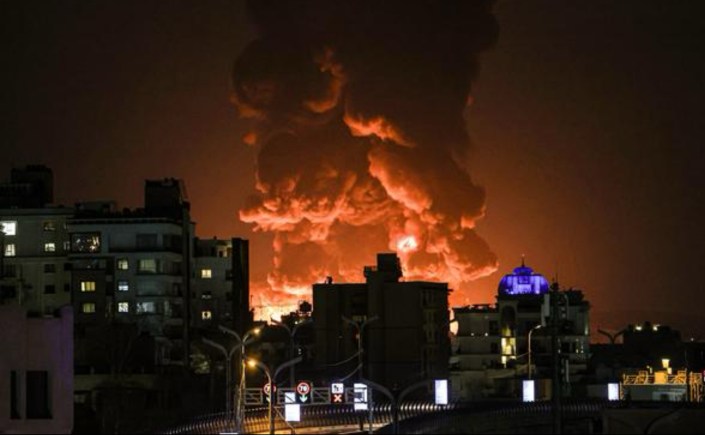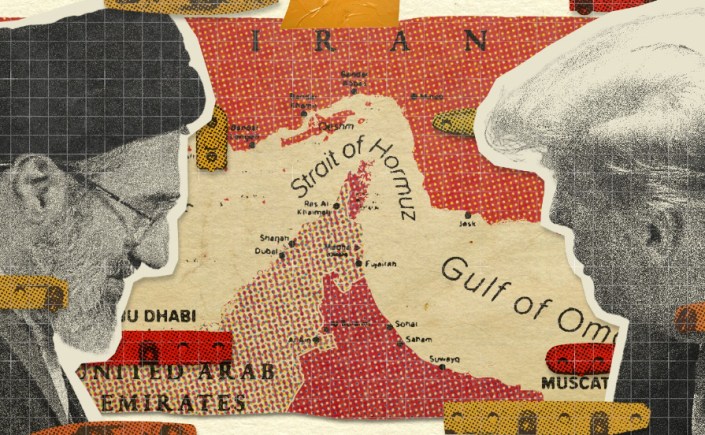
Oil tankers, container ships and bulk carriers shimmer all over the horizon to the left of the windswept beach here at the entrance to the Strait of Hormuz. They have been bottled up in the Persian Gulf ever since the US and Israel launched the war on Iran more than a month ago. To the right, with the Iranian coast only 65km away, the dark-blue sea is completely empty. Only a handful of vessels a day manage to cross the Strait of Hormuz, down from well over a hundred before the war. They take a circuitous route through Iranian territorial waters, often paying the Iranian regime a hefty toll.
Tehran’s ability to control this international waterway, through which one-fifth of the worldwide oil supply used to pass, has become Iran’s biggest leverage against the US, its Gulf neighbours and the global economy. Whether the war ends in a success or defeat for Iran depends first and foremost on whether Tehran emerges from this conflict still holding the strait – and, with it, the keys to the worldwide energy markets.
Yaroslav Trofimov, Wall Street Journal, 3 Aptil 2026
What follows is a piece for history tragics – and for all who, metaphorically or intellectually, nostalgically or romantically, still yearn to “go down to the sea in ships and do business in deep waters”. For those who hear, beneath the churn of headlines and hot takes, the older music: the creak of hulls, the logic of tides, the long memory of trade and war written across the surface of the world.
Because when the Strait tightens, when Hormuz flickers from map detail to global anxiety, there is a reflex, almost tidal in itself, to reach backwards. To steady the present with the ballast of the past. The antique mariners Francis Drake and Walter Raleigh, the classical strategists Alfred Mahan and Halford Mackinder, the catechisms of geopolitics and sea power half-remembered, half-invoked. The old grammar returns: command the sea, command the world.
And yet, while the past is summoned, it does not settle easily over the present. It frays at the edges. It argues back.
Some voices insist on restoring the full weight of history – reminding us that the Persian Gulf was not merely sailed but administered: the Royal Navy’s long vigil, the latticework of protectorates, Aden and Suez as imperial hinges. Sea power, in this telling, was never abstract; it was local, granular, enforced in specific places against specific resistances. Empire did not “command” the sea so much as continuously work it.
Others, just as insistent, suggest the sea’s primacy has already ebbed. Pipelines, railways, overland corridors – the new Silk Roads – quietly subvert the tyranny of chokepoints. Hormuz matters, yes, but not as it once did. The map has thickened; the old determinisms loosen.
And threading through it all – more unsettling than either nostalgia or revision – is a harder recognition: that the balance has tilted. That it is now easier to disrupt the sea than to command it. That a few well-placed risks – mines, missiles, drones, or even the rumour of these can achieve what fleets once guaranteed.
Which is precisely why this moment—and this place—invites a longer gaze. For Hormuz is not merely a crisis point. It is a lens. A narrow passage through which history, strategy, and imagination are forced to pass in close quarters, revealing not just what we think we know about the sea – but how much of that knowledge still holds when the waters grow tight.
And so we follow the thread.
A choke point and a global hinge
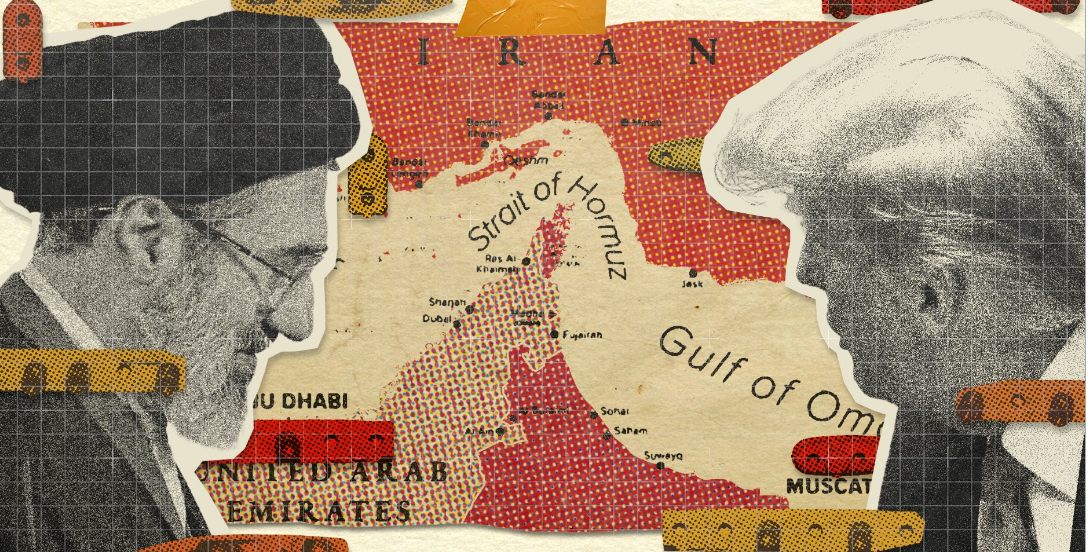
The essay, republished below, by English historian and author Peter Francopan turns on an old, almost Elizabethan intuition – Walter Raleigh’s dictum that “whoever commands the sea commands the trade… and so the world” – and asks whether it still holds in the age of drones, pipelines, and petro-politics. The Strait of Hormuz, that narrow, anxious funnel through which a fifth of the world’s oil must pass, becomes his stage: not merely a geographic chokepoint, but a historical echo chamber where empires, from the Portuguese to the British to the Americans, have tested the proposition that control of the sea is control of destiny.
The core argument is deceptively simple. However much globalisation has diversified supply chains, the world remains perilously dependent on a handful of maritime arteries. Hormuz is the most critical of them. Iran, by geography alone, sits with its hand on the tap.
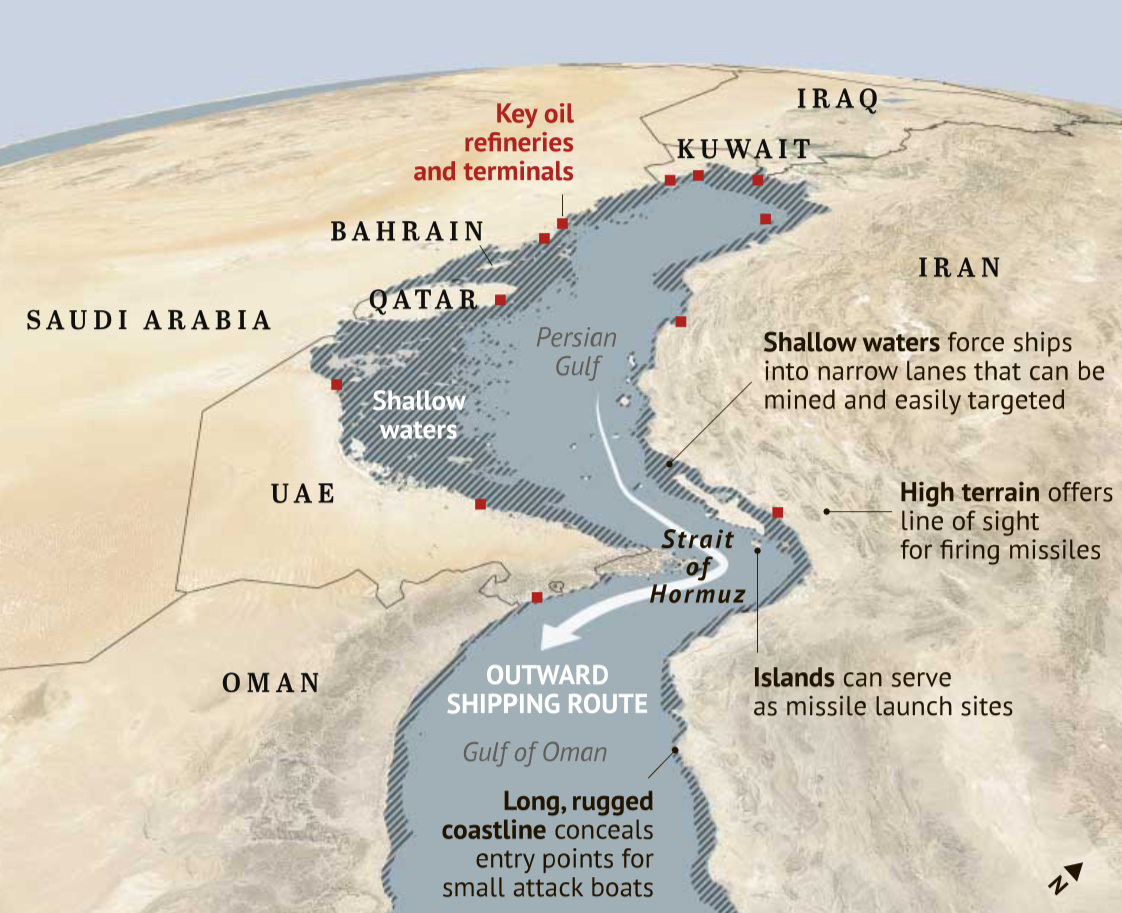
What follows is a kind of strategic paradox. The United States possesses overwhelming naval superiority, yet cannot easily guarantee safe passage. Iran, comparatively weak in conventional terms, can still disrupt—through mines, missiles, drones, and plausible threat alone—the flow of global energy. Control, in other words, has become asymmetrical: it is easier to deny the sea than to command it.
Frankopan folds this into a wider historical arc. Sea power has long structured global order – from the Iberian empires to Pax Britannica to the American century—but it has never been absolute. It is contingent, fragile, and dependent on political will as much as on fleets. The current crisis exposes that fragility. The cost of keeping Hormuz open – economically, militarily, psychologically – may exceed what even a superpower is willing to bear indefinitely.
Layered atop this is his reading of Trump’s confrontation with Iran: a clash driven as much by misapprehension and political impulse as by coherent strategy. The implication (never quite stated, but hovering like heat haze) is that great powers still stumble into old traps—overestimating control, underestimating local resolve.
Obstacle Course. Credit: New York Times
Command of the sea, or command of risk?
If Frankopan writes like the historian he is, the comments read like a dockside argument, a fractured chorus of rum, empire, drones, and Trump all sloshing together.
Several bridle at Francopan’s selectivity. Where, they ask, is the Royal Navy in the Gulf? The British protectorates? Aden? The Portuguese seizure of Hormuz in 1515? There is something almost touching here: a yearning to reinsert imperial continuity into a narrative that feels too compressed, too presentist. History, they insist, is longer – and perhaps more reassuring – than Frankopan allows.
Yet beneath the pedantry lies a point: chokepoints are never just geography; they are administered spaces, historically managed through bases, treaties, and coercion. Hormuz did not simply “matter”—it was made to matter, policed into significance.
A sharper critique comes from those who accuse Frankopan of naval determinism, of succumbing to Mackinder in sea going form. Where, they ask, are the pipelines, the highways of the modern Silk Road? If oil can flow overland, if energy can be rerouted, then the tyranny of chokepoints diminishes. The vulnerability of Hormuz is not just a military problem but a failure of diversification. If the Strait can be “closed,” it is because the world has allowed it to remain indispensable. Overland infrastructure does exist, but not at sufficient scale, nor with sufficient redundancy, to replace maritime flow quickly. The sea remains cheaper, denser, stubbornly dominant. Mackinder haunts the room after all.
Then there is the Trump versus Iran morality play. And here, the thread fractures into familiar ideological lines. One camp sees Trump as reckless, blundering into war without strategy; another as a hard realist confronting an implacable regime. But more interesting than the partisan positions is the shared assumption beneath them: that the conflict must be read through the personality of a single leader. Structural forces – energy dependency, regional rivalries, the logic of deterrence – fade into the background. The theatre of personality displaces the machinery of geopolitics.
Meanwhile, a darker undercurrent runs through several comments: casual talk of forcing the Strait, toppling regimes, even nuclear options. The language slips, almost unconsciously, from analysis into annihilation. One is reminded how easily strategic abstraction can become moral amnesia.
What the article and its commentariat together reveal is not a consensus but a tension – between old frameworks and new realities.
Francopan is right, broadly, that chokepoints still matter. Geography has not been abolished. Hormuz remains a lever capable of moving the world.
But his critics are right, too, that the nature of control has shifted. The age of decisive naval supremacy – Trafalgar, Jutland, Midway – has given way to something murkier. Control is now probabilistic. It lies in deterrence, in risk calculation, in the shadow of what might be done rather than what is done.
Iran does not need to “command” the Strait in Raleigh’s sense. It need only make others doubt that it is safe.
And here the deeper irony emerges. The more globalised the world becomes, the more sensitive it is to disruption at key nodes. Interdependence, that liberal promise, doubles as systemic fragility. A few missiles, a handful of drones, a rumour of mines—and the bloodstream of the global economy clots.
The comments circle this insight without quite naming it. They argue about navies versus pipelines, Trump versus Tehran, Britain versus decline- but beneath it all is a shared unease: that no one, not even the United States, can fully guarantee the openness of the system on which everyone depends.
Raleigh revisited
Raleigh’s maxim survives, but in altered form. To command the sea once meant mastery – fleets, flags, unquestioned passage. Now it means something closer to managing uncertainty, policing risk, absorbing disruption. Or, to invert it (and perhaps this is the real lesson of Hormuz): whoever can unsettle the sea can unsettle the world.
The Strait, narrow and ancient, becomes a kind of TARDIS of geopolitics – small on the map, vast in consequence, containing within it centuries of empire, trade, ambition, and miscalculation. You can sail through it in hours. You can be trapped by it for decades. Hormuz is one of those places where scale misbehaves.
On the chart it is almost an afterthought: a narrow blue incision between Iran and Oman, barely 21 nautical miles at its tightest navigable squeeze. A cartographer’s margin note. You could blink and miss it, the way you might skim over a comma in a long sentence. And yet – inside that comma, the world pauses.
Tankers queue like thoughts that cannot quite be completed. Insurance markets twitch. Futures spike. Admirals rediscover their relevance. Presidents improvise resolve. Somewhere in Delhi or Shanghai, a planner recalculates the cost of keeping the lights on. The Strait is not large, but it contains largeness: economics, empire, anxiety, history – all folded into a channel so narrow that a missile battery on one shore can imagine the other.
That is the TARDIS trick: disproportion. Interior vastness concealed within exterior modesty. A space where time thickens. Because Hormuz is not just a place. – it is an accumulation. Portuguese forts, British gunboats, American carrier groups, Iranian fast boats – all still present in the mind, layered like ghost traffic moving in opposite directions through the same confined lane.
And like the TARDIS, it distorts power. The strong discover their strength is conditional; the weak discover they possess a lever. To command the sea here is less about domination than about enduring the possibility of interruption.
It is gigantically small, metaphorically huge, a bottleneck that behaves like a universe.
In a wide ocean, power projects as a roar – carrier groups, satellite grids, the choreography of dominance. In a narrow strait, the same power ricochets. It echoes, distorts, sometimes even dampens. The voice is still large; the space refuses to carry it cleanly.
Hormuz does this to everyone. It compresses asymmetry into something almost theatrical. A superpower arrives with an orchestra; a regional actor needs only a well-timed cymbal crash – mines, missiles, the rumour of both – and suddenly the symphony falters. Not silenced, but unsettled. Hesitant. Listening to itself.
It tells us less about the decline of hegemony than about the environments in which hegemony operates. Power at sea is expansive; power in a choke point is negotiated, contingent, on the edge
The old imperial instinct – force the passage- still murmurs in the background (you can hear it in the comments: convoy the ships, clear the mines, damn the cost). But the modern world hesitates, because the cost is no longer just ships sunk – it is markets convulsed, alliances strained, escalation spiralling in ways that do not end neatly at the waterline.
Which leaves us with a paradox worthy of the place: the hegemon can still roar – but here, in this narrow theatre, it must decide whether the echo is worth the noise.
In That Howling Infinite, March 2026
Command the seas and you command the world
Historians these days doubt that Sir Walter Raleigh ever laid down his cloak to stop Queen Elizabeth I from stepping in a puddle. They do agree, though, that he understood the nature and benefit of maritime power. “Whosoever commands the sea commands the trade,” he wrote in A Discourse of the Invention of Ships in the early 17th century. “Whosoever commands the trade of the world commands the riches of the world, and consequently the world itself”.Raleigh lived in a different era, of course — one that most of us imagine as a time of swashbuckling sailors and risk-taking pirates, when control of the High Seas was a competition between the European states building empires in both the New and Old Worlds.
This was also an age when geography mattered every bit as much as resources. Many of the first European footholds overseas were chosen less for what lay in the ground than for where they sat along the great sea routes that were beginning to bind the world together. The Portuguese seizure of Malacca in 1511 was not about spices growing nearby but about controlling the narrow maritime gateway between the Indian Ocean and the South China Sea through which much of Asia’s trade passed.
The same strategic logic shaped the expansion of the British empire. Outposts were established above all because of their position along the world’s shipping arteries. The British occupation of Gibraltar in 1704 secured control over the entrance to the Mediterranean and the vital route between the Atlantic and Europe’s inland sea. In the Caribbean, islands such as Jamaica — seized from the Spanish in 1655 — were major naval and commercial hubs sitting astride the shipping lanes linking the Americas and Europe. Likewise, further south, control of Cape of Good Hope allowed Britain to dominate the maritime passage between the Atlantic and Indian Oceans.The empire that Raleigh’s generation started building was not only created through conquest and extraction: it was built through the control of the sea lanes and strategic points that allowed commerce, information and manpower to move across the oceans. The same ports that handled cargo could shelter naval squadrons, repair ships and project force across vast distances. Britain’s empire was fuelled by sugar, silver, slaves and more; but it was built on being able to move these at will across the oceans, and on the islands, harbours and strongpoints that underpinned maritime, economic and imperial power.
These days, we have become used to future-gazers insisting that the future belongs to those who control data and algorithms, or satellites and space rockets, or rare earths and critical minerals. Ships, shipping, and transport networks do not sound quite so exciting, so fresh or so unknown. To a historian, though, in a world that is hyper-connected, logistics are king.
In its heyday, Britain’s reach rested heavily getting the basics right. At Gibraltar, ships entering or leaving the Mediterranean could refuel and undergo repairs, while Malta secured British control of Mediterranean shipping routes. Further east, Aden functioned as a crucial coaling station at the mouth of the Red Sea once steam navigation transformed long-distance travel; or there was Singapore, which, from the early 19th century, grew into a key naval base guarding the approaches between the Indian Ocean and the South China Sea.
Each of these places mattered less for what they produced than for the services they provided: coal, water, repairs, provisions, intelligence and protection. Ships could not roam the oceans indefinitely; they required an interconnected chain of harbours capable of maintaining hulls, repairing sails or (later) overhauling, to provision with fresh food and water. Maritime power was not just about ships, captains and crews — but about a dense mesh of locations that were spread out around the world and reinforced each other.
Over time, however, it became easy to forget just how central these routes and nodes were. In the decades after the end of the Cold War, the world entered a period of globalisation underpinned by overwhelming American economic, political and military power — and by the mantra of free trade being the engine of prosperity and the bedrock of the international world order. Attention shifted elsewhere, and strategists and commentators forgot about shipping lanes. Yet as geopolitical competition intensifies and the world moves into a more multipolar era, the importance of the arteries of global commerce has once again become startlingly clear.Maritime transport moves over 80% of goods traded worldwide. Around 11 billion tons of goods are transported by sea each year — roughly one and a half tons per person. Ships carry around two thirds of global oil production, as well as around a fifth of natural gas, moving energy to places where they are most needed. Without global shipping networks, computers can’t be switched on, assembly lines can’t work, and houses can’t be heated.While the crisis in Iran and the Gulf have focused attention on oil, liquefied natural gas (LNG) and petroleum products, global shipping is fundamental in almost every aspect of daily life. Seaborne trade moves almost two billion tonnes of iron ore per year, with major exporters in countries like Australia, Brazil and South Africa being matched with demand in China, Japan, South Korea and elsewhere. Hundreds of millions of tonnes of bauxite and alumina are sent by sea from mines and processing plants in Guinea, Indonesia and Australia, as are tens of millions of tonnes of copper ores from Chile, Peru and south East Asia.
In the summer of 2011, Thailand experienced catastrophic flooding as a result of unusually high levels of rainfall, which had an enormous impact on global car production. At the time, Thailand was one of the world’s leading producers of hard-disk drives and wiring harnesses for cars, as well as electronics modules. As factories closed because of flooding, the effects spilled over into the global economy. Hard drive prices doubled in a matter of weeks; shortages of parts crippled automotive production not only in Thailand, but across Asia, North America and even Europe. The associated costs ran to tens of billions of dollars.
If that gives one example of the risks that come from the assumption that supply chains are dependable, then another comes from Covid-19. Lockdowns and collapsing industrial demand caused an immediate decline in maritime activity. Global maritime trade volumes fell sharply, with estimates suggesting a reduction of as much as 10% in the first eight months of 2020, representing cargo worth at least $225 billion in trade value — if not considerably more, precipitating an unprecedented logistics crunch.
In the past few days we have seen another classic case of the risks posed by pressure on supply chains. Energy markets have been spooked by the implications of attacks on infrastructure in the Gulf following US and Israeli strikes on Iran, with oil prices almost doubling in a matter of days. But it is shipping prices that have truly gone through the roof. Spot charter rates for LNG carriers are six times larger than they were before 28 February — a rise some industry experts refer to as “unthinkable”. Some charterers are paying as much as 10 times the rate they paid before the attacks on Iran began to secure prompt tonnage because of the scale of the shock.
The Strait of Hormuz is one of the world’s key chokepoints, a narrow stretch that connects the Gulf with the Arabian Sea and Indian Ocean, a crossroads where geology and geography dovetail to create perfect opportunities for disruption.
Peter Frankopan is the author of The Silk Roads (2015), The New Silk Roads (2018), and The Earth Transformed (2023). He is also a Professor of Global History at Worcester College, Oxford
A curated selection of comments from Unherd readers
This includes everything that carries an argument, stripped of noise but not over-pruned. There was a lot buried in that thread once one scraped away the rhetorical noise. Francopan’s essay and the comments rehearse empire, contest strategy, litigate politics, invoke technology, argue personality. They reach for certainty and find, instead, contingency.
Here they are:
Historical framing matters. Analyses of maritime power that ignore Britain’s long role in the Persian Gulf, its protectorates, and control of trade routes through Aden and Suez are incomplete. Control of sea lanes has always been exercised locally, even when its effects are global.
There is a fundamental tension between classical naval theory and modern infrastructure realities. Traditional doctrines of sea power emphasise chokepoints, yet pipelines, rail corridors, and overland routes increasingly challenge that dominance. Disruption of maritime trade today may reflect failures of diplomacy and diversification as much as limits of military power.
The strategic importance of the Strait of Hormuz is clear, but control is asymmetric. It is easier to threaten shipping than to secure it. A weaker power can impose risk without achieving dominance, using missiles, drones, and dispersed systems that are difficult to eliminate.
Modern warfare reinforces this asymmetry. Low-cost technologies can disrupt high-value assets, raising questions about the long-term viability of traditional force projection. At the same time, countermeasures are evolving, suggesting an ongoing cycle of adaptation.The scale of resources required to secure global shipping is immense. Sustained convoy operations would demand naval capacity that is not readily available. Even if assembled, such efforts would be costly and unlikely to restore previous economic conditions quickly.Alternative strategies exist but are slow to implement. Expanding pipelines, rerouting supply chains, and hardening vessels can reduce vulnerability, but require long-term investment and coordination.
Many states failed to prepare despite the predictability of such a crisis.There is deep disagreement over the nature of the current conflict. Some view it as a necessary confrontation with a regime that threatens regional and global stability. Others see a lack of clear objectives, inconsistent strategy, and the risk of open-ended escalation.The question of escalation remains unresolved. One side retains capacity to intensify, while the other relies on disruption. Proposals for decisive action raise further uncertainties about feasibility, consequences, and post-conflict stability.
Regime survival is interpreted differently. Some argue that mere survival constitutes success under pressure; others contend that survival after severe degradation would represent strategic defeat.Geopolitical decision-making often operates without clear or fixed end states. Objectives may shift in response to opportunity, reflecting the contingent nature of strategy rather than coherent long-term planning.
Historical analogies are widely used but often misleading. Claims of past maritime dominance are contested, with evidence that control has always been partial and constrained by other factors such as air power and competing theatres of war.
Debate over Western power reveals competing narratives. Some emphasise decline, overstretch, and lack of strategic coherence. Others point to enduring capabilities and the need for renewed investment, particularly in naval forces.
The scale of global security challenges exceeds the capacity of individual states. Effective responses likely require collective action, yet coordination remains difficult and politically constrained.
New vulnerabilities complicate traditional strategy. Subsea infrastructure, including data cables, represents a vast and exposed network that is difficult to defend, illustrating the expanding scope of strategic risk.
Legal frameworks exist but are contested in practice. International law mandates freedom of navigation, yet interpretations of neutrality and belligerency vary, particularly in complex conflicts.
Economic interdependence amplifies the consequences of disruption. Even limited interference with key trade routes can trigger wider global effects, including energy shocks and recessionary pressures.
At root, the issue is no longer simply control of the sea. The emerging reality is a system where disruption, deterrence, and alternative routing shape outcomes as much as traditional dominance.