Of our elaborate plans, the end Of everything that stands, the end No safety or surprise, the end
Jim Morrison
For God so loved the world, that He gave His only begotten Son. John 3:16
The eleventh hour of the eleventh day of the eleventh month of 1918 saw an end to four years of carnage on the western front and the end of of the First World War. The armies were demobbed and men went home to lives that were changed utterly: British and French, Austrian and German, Belgian and Italian, Serbs and Bulgarians, Turks and Arabs, and also, soldiers from across the ocean – Americans and Canadians, Australians and New Zealanders, South Africans and Indians. Friends and foes.
The victors retired to a restless peace, but the vanquished, Germany, Austria, and Hungary, descended into revolution and civil war for a time as gangs of former soldiers fought on the left and the right. In eastern Europe, the crumbling of empires, the Russian revolution, civil war and the struggle to establish the borders of newly established states meant that armed violence continued, leaving deep scars and bitterness that many ways set the stage for the autocracies of the 1930s and further bloodshed.
The Polish-Soviet war lasted until 1921. The Russian Civil War, ending in 1923, raged across most of today’s Ukraine, Belarus, Moldova and the Baltic region. British, Australian, American and French soldiers were dispatched to Murmansk and Archangel to fight the Red Army; Poles fought Ukrainians and Lithuanians, and defeated the Soviets at the gates of Warsaw; pogroms were perpetrated against Jews just as they had been for years, decades, centuries prior, accelerating , with subsequent consequence, Aliyah to Palestine.
The Greek-Turkish war of 1919-1922, which saw the Greeks, with British and French support, endeavouring to seize Constantinople, led to terrible massacres, and a forced exchange of populations that uprooted one and a half million Greeks and Turks from towns and villages they had occupied for a millennium. Armies marched back and forth across the Great European Plain, bringing devastation and starvation and destroying millions of lives. Central Asia, the lands now covered by the once Soviet ‘’stans likewise became battlegrounds for Reds, Whites and local warlords.
And in ‘John Bull’s Other Island’, as expat GBS Shaw called it, a “terrible beauty was born” – WB Yeats’ exquisite words – the doomed intifada that was the rebellion of Easter 1916, launched, opportunistically yet quixotically whilst English eyes were elsewhere, led exponentially into open rebellion, a qualified victory, and a civil war and partition that rested, roused and then resurrected in Derry in 1968 and decades termed somewhat innocuously ‘The Troubles’.
For some, there was light at the end of the terrible territorial tunnel. Poles, Czechs, Slovaks, Finns, Estonians, Latvians and Lithuanians, achieved statehood, or the restoration of nationhood, as did, fleetingly, Ukrainians, Armenians and Azerbaijanis. Poland reappeared on the map after over a century of having been carved up by empires. Hungarians lost two-thirds of their territory and more than half of their population. “Little” Serbia, which had ignited the Balkan powder keg in 1914, with Gavril Princip’s famous shot that ricocheted through complacent, twitchy and mightily armed Europe, was united with its Slav but religiously fractured Balkan neighbours in the Kingdom of Yugoslavia – and we now know how well that worked out.
Beyond Europe too, a bitter ‘Peace’ sowed dragon’s teeth. Last year, we commemorated the centenaries of the infamous Sykes Picot Agreement, the first draft of a colonial dispensation that established borders that remained unchallenged until Da’ish assaulted the status quo in 2014, and the Balfour Declaration, which set in train the rise and rise of the state of Israel and the long descent of Palestinian hopes for a land of their own. Ironically, the most militant Zionist pioneers and later, soldiers, terrorists and statesmen, emigrated from Poland and the Tsarist empire. These many legacies resonate today.
The end of WW1 saw the destruction of the Ottoman Empire and left Britain in control of Palestine and Mesopotamia. The peace conferences that followed led to the creation of modern Turkey, and, though for decades under French and British colonial rule, Lebanon, Syria, Iraq and Jordan. The Kurds turned up at the conference table but were denied a seat and thereafter, a state.
The war changed more than maps, frontiers and regimes. The needs of modern warfare brought women into the workforce, galvanizing the movements that won them the vote in many democracies. The pace of technological change already underway in industrialized countries was quickened by the demands of war, and advances in land transportation and aviation continued exponentially, as did the development of weaponry, together with the insatiable demand for fossil fuels. Economic privation precipitated the first successful Communist revolution and many failed ones, whilst the peace, resentments, reparations, and recession prompted many to turn to far-right authoritarians in Italy and then Germany. The mass movements of populations helped spread the deadliest epidemic the world has ever known: the 1918 influenza virus or Spanish Flu, which quietly killed possibly up to a hundred million souls – more than both world wars combined.
In the last decades of the Twentieth Century, historians would observe with the benefit of hindsight how the Second World War rose ineluctably from the ashes of the first, just as the division of Europe and the Soviet enslavement (and I say this as a lifelong leftist) of those Eastern European countries that emerged after 1918 led to the Europe of today, and as the peoples of the Middle East reaped the whirlwinds of both conflagrations. Many look back on the tumultuous decades that followed the Great War, and sensing signals and signposts in contemporary temporal tea leaves, advise is to be afraid, be very afraid.
We like to identify patterns in history that help us understand and explain our contemporary world. But we should exercise caution. To continue the hindsight riff, remember that things we see in the rear view mirror appear closer than they really are. The world is very much different today, as is our knowledge, our perception, our hopes and fears, and so also, our prognostications and expectations. If we can do it all over again, we’ll do it differently, and much more dangerously and destructively. Having learned so much, we have, one fears, understood so little.
As we remember that moment in Western Europe and the Levant when the guns at last fell silent, let us contemplate melancholy mathematics of the human toll poignantly described by American economist and academic Patrick Chovanec in a fine article in the New York Review of Books, which I have reproduced below:
“In the Great War itself, over sixteen million people died, including almost seven million civilians. The US got off relatively lightly, with 117,465 people killed, just 0.13 percent of its population. In Serbia, somewhere between 17 and 28 percent of the country’s population was killed. But even numbers like these leave little concrete impression on our minds … people would (tell) me about a grandfather or great-uncle who fought and died in the war, and is forever twenty-four-years old in some field in France, or Turkey, or Italy, or at sea. For most people, that absence is what defined the war: someone left and never came home. The world that they shaped, by their presence and their absence, is the one that we live in, whether we realize it or not. And we, like them, can only grope our way forward, day by day, into an unknown future”.
Gavrilo Princip arrested after his assassination of Archduke Franz Ferdinand of Austria, Sarajevo, June 28, 1914
Four years ago, I went to war. Like many of the people whose stories I followed in my daily “live-tweets” on World War I, I had no idea what I was getting myself into. What began as an impulsive decision to commemorate the hundredth anniversary of Austrian Archduke Ferdinand’s death at the hands of a Serbian assassin, in June 1914, snowballed into a blood-soaked odyssey that took me—figuratively and literally—from the rolling hills of northern France, to the desert wastes of Arabia, to the rocky crags of the Italian Alps, to the steel turret of a rebel cruiser moored within range of the czar’s Winter Palace in St. Petersburg, Russia. And like the men and women who actually lived through it, now that the Great War is ending I find myself asking what, if anything, I’ve learned from it all.
In the American mind, World War I typically occupies an unimpressive place as a kind of shambolic preamble to the great good-versus-evil crusade of World War II, a pointless slugfest in muddy trenches for no worthy purpose, and no worthwhile result. Its catchphrases—“The War to End All Wars,” “Make the World Safe for Democracy”—evoke a wry and knowing chuckle. As if. But the war I encountered, as it unfolded day by day, was far more relevant, passionate, and unpredictable.
Posting daily newspaper clippings and photographs, found mainly in books and online archives, I began to see the Great War as a kind of portal between an older, more distant world—of kings with handlebar mustaches, splendid uniforms, and cavalry charges—and the one that we know: of planes and tanks, mass political movements, and camouflage. It snuffed out ancient monarchies in czarist Russia, Habsburg Austria, and Ottoman Turkey, and gave birth to a host of new nations—Poland, Hungary, Czechoslovakia, Syria, Iraq, Jordan, Lebanon, Finland, Estonia, Latvia, Lithuania, Ukraine, Armenia, Azerbaijan—that, in their struggles to survive and carve out an identity, continue to shape our world today. The British declared their intent to create a national homeland in Palestine for the Jews.
Daily Mirror/Mirrorpix via Getty Images
Russian infantry marching to battle, Poland, August 1914
The needs of the war brought women into the workforce, and helped win them the right to vote. The huge privations it inflicted triggered the world’s first (successful) Communist revolution, and the frustrations it unleashed prompted many, afterward, to turn to far-right authoritarians in Italy and then Germany. And finally—though many have forgotten it—the comings and goings of people caused by the war helped spread the deadliest epidemic the world has ever known: the 1918 influenza virus, which quietly killed an estimated 50–100 million human beings in their homes and in hospitals, more than both world wars combined.
I also encountered a cast of characters more varied and amazing than I thought possible. Rasputin, the dissolute Russian mystic who warned Czar Nicholas that going to war would destroy his dynasty, and was murdered in part because he was (falsely) suspected as a German agent. The Austrian Emperor Karl, who inherited a war he didn’t want, and tried fruitlessly to make peace. T.E. Lawrence, a scholarly young intelligence officer whose affinity for the Arabs helped turn them to the Allied cause, and shaped the modern Middle East. Mata Hari, a Dutch-born exotic dancer who played double-agent, seducing high-ranking Allied and German officers for valuable information, until she was caught and shot by the French as a spy.
Some of the names are familiar, and offer hints of future greatness—or infamy. A young anti-war journalist named Benito Mussolini, sensing the way the wind blows, changes his tune and aggressively advocates for Italy to enter the war, before signing up himself. A young Charles De Gaulle is wounded at Verdun and taken prisoner for the rest of the conflict. A relatively young Winston Churchillplans the disastrous Gallipoli Campaign and pays his penance by serving in the trenches, before making a political comeback. A young Harry S. Truman serves as an artillery officer on the Western Front, alongside (and outranked by) a young George C. Marshall (his future Army Chief of Staff and Secretary of State) and Douglas MacArthur (his future general in the Pacific and Korea). A young George S. Patton develops a fascination with tanks. A young Walt Disney doodles cartoons on the side of the ambulances he drives, in the same unit as a young Ray Kroc (the founder of McDonald’s). Another young ambulance driver, Ernest Hemingway, finds inspiration on the Italian Front for his novel A Farewell to Arms. A young Hermann Göring (later head of the Luftwaffe) becomes a dashing flying ace, while a young Erwin Rommel wins renown fighting at Verdun and in the Alps. Meanwhile, an odd young German corporal, who volunteered in the very first days of the war, is blinded by poison gas in its final days, and wakes up in hospital to the bitter news that Germany has lost. His name is Adolf Hitler.
General Photographic Agency/Getty Images
French troops under shellfire during the Battle of Verdun, 1916
The dramatic panoply of people, places, and events, however, only occasionally rises to the fore. For the most part, the war is a steady stream of ordinary people doing ordinary things: washing their clothes, attending a concert, tallying supplies, fixing a car. History books give us a distorted sense of time, because they fast forward to major events. A day may take a chapter, a month may be passed over in a sentence. In fact, there were periods where nothing much happened—plans were being made, troops trained, supplies positioned—and when you live-tweet, you experience that waiting. Sometimes, it led to intriguing surprises, like photographs of dragon dances performed by some of the 140,000 Chinese laborers brought over to France to lend muscle to the Allied war effort. Mostly, it was a matter of endurance. Each winter, the fighting came to almost a complete stop as each country hunkered down and hoped its food would last. The “turnip winter” of 1916–1917, when the potato crop failed, nearly broke Germany; the increasingly desperate craving for “bread and peace” did break Russia the following year.
The future president Herbert Hoover made his reputation by coordinating food relief shipments to German-occupied Belgium, and later as the US “food czar” ensuring Allied armies and populations were fed. The vast mobilization was effective: by 1918, the Allies were able to relax their food rationing, while Germany and its confederates, strangled by an Allied naval blockade, were on the verge of starvation. America’s war effort was accompanied by a vast expansion in the federal government’s power and reach. It nationalized (temporarily) the railroads and the telephone lines. It set prices for everything from sugar to shoes, and told motorists when they could drive, workers when they could strike, and restaurants what they could put on their menus. It seized half a billion dollars of enemy-owned property, including the brand rights to Bayer aspirin, and sold them at auction. The US government also passed espionage and sedition laws that made it illegal to criticize the war effort or the president. Some people were sent to prison for doing so, including the Socialist Party leader Eugene V. Debs, who ran for president for a fifth and final time from a cell.
Hulton Archive/Getty Images
A woman munitions worker operating a machine in an armaments factory, Britain, circa 1915
Winning the war, however, was far from a sure thing. For three years, the Allies threw themselves against an evenly-matched enemy on the Western Front, without making any breakthroughs, while the Eastern Front gradually crumbled. An early Allied foray to take out Turkey, at Gallipoli in 1915, ended in bloody disappointment. Inducing Italy to enter the war on the Allies’ side, that same year, was supposed to swing the entire conflict in their favor; instead, the catastrophic Italian rout atCaporetto, in the autumn of 1917, put the Allied effort in greater jeopardy. When Lenin seized power in Russia, at the end of 1917, he took it immediately out of the war and ceded immense land and resources to German control. True, the US had by then entered the war, in response to Germany’s submarine campaign against merchant ships and its clumsy diplomatic scheming in Mexico. But with the war in the East essentially won, the Germans saw a window in which they could shift all of their armies to the West and crush the exhausted British and French before enough American troops could arrive to make a difference. Their spring offensive, or “Kaiser’s Battle,” in early 1918 drove deep into Allied lines, prompting the French government to evacuate Paris.
The Germans’ big roll of the dice failed. The Allies held, and the US mobilized much faster than anyone expected. By the summer of 1918, a perceptible change had taken place. Hundreds of thousands of American troops were arriving every month at French ports, and their first units were taking part in battles, piecemeal at first, to push the Germans back. Even in September, however, nearly everyone expected the war to continue into 1919. That was when a huge US army of 3 million men would be ready to take part in a big Allied offensive that would drive all the way to Berlin. It never happened. That fall, the German army—and those of Turkey, Austria, and Bulgaria—first buckled, then collapsed like a rotten log. By November 11, the war was over.
The fact that nobody saw the end coming, the way it did, highlights the value of going back, a hundred years later, and reliving events day by day, as they took place. What may seem obvious now was anything but so then, and we do the people who lived through it, and our understanding of them, a real disservice when we assume that it was. “Life can only be understood backwards,” the Danish philosopher Søren Kierkegaard observed, “but it must be lived forwards.” The British historian C.V. Wedgewood elaborated on the same idea: “History is lived forwards but is written in retrospect. We know the end before we consider the beginning and we can never wholly recapture what it was like to know the beginning only.” We can’t entirely forget that we know what happened next, but when we at least try to identify with people who did not know, we shed new light on them, and on what did happen.
Fine Art Images/Heritage Images/Getty Images
Leon Trotsky with the Soviet delegation to negotiate a peace treaty with Germany, Brest-Litovsk, 1918
Take the Russian Revolution. We see it as the birth of a Communist superpower, and struggle to make sense of the seemingly half-baked, half-hearted effort by the Allies to intervene by sending troops, including Americans, to Russia’s ports in the far north and far east. People at the time, however, saw it almost entirely through the prism of the Great War. At first, the Allies welcomed the overthrow of the czar, and believed it would rejuvenate the failing Russian war effort. By replacing an infamous autocrat on the Allied roster with a fledgling democracy, it made “making the world safe for democracy” a more credible call to arms, and helped pave the way for the US to enter the war. When Lenin took over and made a ruinous peace with the Central Powers, he was seen as simply a German puppet. And when Bolshevik forces, augmented with released German and Austrian prisoners of war, attacked a unit of Czech soldiers crossing Siberia to rejoin the Allies on the Western Front, those suspicions blossomed into fear of a full-fledged German takeover of Russia. The Allies sent troops to key Russian ports to secure the war supplies stockpiled there and provide an exit route for the loyal Czechs. They considered trying to “reopen” the Eastern Front, but realized it would take far too many men. They assumed that when Germany was defeated, their proxy Lenin would eventually fall, and when the war ended, they naturally lost interest. It all makes sense, but only if you see through the eyes that people saw through at the time.
Did it really matter who won the war? In its aftermath, the Great War came to be seen as a colossal waste, a testament to the vanity of nations, of pompous older men sending foolish younger men into the meat-grinder for no good reason. War poems like “Dulce et decorum est” and novels like All Quiet on the Western Front have crystalized this impression. But this was not how people felt at the time. German atrocities in Belgium and on the high seas—some exaggerated, but others quite real—convinced many people that civilization, as they knew it, really was at stake. I was consistently and often surprisingly struck by the sincerity of support, not just on the home front, but among soldiers who had seen the worst of combat, for pursuing the war unto victory. The tone matures, but remains vibrant: these were, for the most part, people who believed in what they were fighting for. At what point the bitter cynicism set in, after the war ended, I cannot say. But at some point, that enthusiasm, and even the memory of it, became buried with the dead.
Bettmann/Getty Images
Boys wearing bags of camphor around their necks to ward off influenza, 1917
Though, in fact, in many places the war did not actually end. An armistice was declared on the Western Front, and the armies there were disbanded and sent home. But Germany, Austria, and Hungary all descended into revolution and civil war for a time, with gangs of demobilized soldiers fighting on all sides. In Russia, the Soviet regime and its multiple enemies would battle for several years, while trying to reconquer territory surrendered when it quit the war against Germany. The Greeks tried to reclaim Constantinople from the Turks, and would be massacred when the Turks succeeded in reconsolidating their country. The Poles fought wars with the Ukrainians and the Soviets to define the boundaries of their newly independent country. Jews and Arabs continue to fight over the new lands liberated from the Ottoman Empire to this day.
In the Great War itself, over 16 million people died, including almost 7 million civilians. The US got off relatively lightly, with 117,465 people killed, just 0.13 percent of its population. In Serbia, somewhere between 17 percent and 28 percent of the country’s population was killed. But even numbers like these leave little concrete impression on our minds. Some of the most touching parts of my experience live-tweeting were the times when people would tweet back to me about a grandfather or great-uncle who fought and died in the war, and is forever twenty-four-years old in some field in France, or Turkey, or Italy, or at sea. For most people, that absence is what defined the war: someone left and never came home. The world that they shaped, by their presence and their absence, is the one that we live in, whether we realize it or not. And we, like them, can only grope our way forward, day by day, into an unknown future.
Historica Graphica Collection/Heritage Images/Getty Images
Poet Wilfred Owen died on 4 November 1918 – seven days before the guns fell silent. The centenary of his death was marked in the village where he died bya ceremony in which the Last Post was playedon a bugle Owen took from a German soldier killed during the battle to cross the nearby Sambre-Oise.
A poignant, fitting tribute by Gerry Condon of Liverpool to all the “doomed youth” of all wars. Lest we forget …
On this day, 8th October 1908, The Wind in the Willows, Kenneth Grahame’s classic children’s book was published.
In 1908, Kenneth Grahame retired from his position as secretary of the Bank of England. He moved to Berkshire, where he had lived as a child and spent his time by the River Thames doing much as the animal characters in his book do – “simply messing about in boats”. He elaborated on the bedtime stories he had earlier told to his son Alistair and created a children’s classic that has never been out of print. It was into its thirty-first printing in 1929 when playwright A. A. Milne, creator of Winnie the Pooh, adapted the most raucous and rambunctious part of it for the stage as Toad of Toad Hall in 1929 – which in 1949 Walt Disney’s studio took to the highest heights of slapstick hilariousness with its animated featurette the same name.
This anthropomorphic of riverside animals was set in a pastoral version of Edwardian England, characterized by its mix of mysticism, adventure, morality, and camaraderie, and celebrated for its evocation of the nature of the Thames valley. It was an early precursor of late-century melodramatic morality tales such asWatership Down (rabbits) and Ducton Wood (moles) which contain none of its endearing magic and humour.
The Wind in the Willows is a strange book. It poses as an almost homoerotic Arcadian fantasy, and yet it is also an opaque upper middle-class tract preaching deference to and and support for the British class system and the established order. Mole looks up to Rat who looks up to Badger and they all kowtow to the ridiculous, pompous and self-indulgent Bullington ClubToad because he is the lord of the manor. The bad weasels and stoats, of course, were the socialist revolutionaries who wanted to wreck the joint. They had to be vanquished by the valiant – one could say vigilante – forces of righteousness and order – the stout burgers of the riverbank – and violently ejected from Toad Hall. The rule of law is restored, and Mole and Ratty resume their bucolic idyll.
Six years later, this shuttered Edwardian dreamtime shuddered to a terrible end in the carnage of the Great War, and in a decade, Red weasels broke the wheel of history and reset the clock for the rest of the twentieth century.
When I first read The Wind in the Willows as a child, it was a fantasy. When I reread it again as a left-wing teenager, living not too far from where the story was set and indeed, often rambling by Thames water’s edge, it was a fable – and a lame one at that. But I really must’ve must’ve been stoned or tripping when I reached Chapter Seven because I fell in love with it. It has been a favourite of mine ever since despite its twee, self-conscious encounter with the “divine”. The Piper at the Gates of Dawn is a most magnificent chapter. No wonder Pink Floyd chose it as the title of their first album back in the day!
Critics have not been so smitten. As Rosemary Hill notes in her excellent centennial review (see below) , it is “one strange, unsettling chapter … that abridgers of the book have always been quick to drop, though Grahame himself thought it essential. In it, Rat and Mole, searching for the Otter’s lost child, are granted a vision of the great god Pan, a muscular, horned god, “the Friend and Helper”, before whom the animals, “crouching to the earth, bowed their heads and did worship”. Whether it is the latent homo-eroticism of the vision or simply the sudden change of tone that makes the scene so uncomfortable, it is certainly a failure. But while artistically it is the weakest part of the book, it is at the same time the key to it. Pan’s parting gift to Rat and Mole is “forgetfulness”. They will not remember the pure happiness of their vision because if they did the memory would grow until it overshadowed and spoiled the rest of their lives with the knowledge that it could never be regained. The “little animals” would never be “happy and light-hearted” again”.
Reproduced in full below are two excellent reviews of a centenary annotated edition published in 2009. They place Grahame’s story in the context of its time – an idyllic last summer bathed in golden sunshine before the storm that hit Europe in August 1914, and an equally golden age of children’s books. There is a certain consensus in both reviews – with which I concur: The Wind in the Willows is a above all a book about longing, but it also also a book about letting go, if only for a brief moment.
If Kenneth Grahame’s riverbank idyll inspires nostalgia, it’s because The Wind in the Willows is itself saturated in longing. The tale of Ratty and Toad was, Rosemary Hill argues, a product of its own uneasy times
If the Edwardian age is not remembered as a decade of social discontent and growing international tension when the cracks in the British empire began to show, but as an the reason is largely to be found in children’s literature. It was the age, if not of innocence, then of Jemima Puddleduck, Peter Pan and Mr Toad. Most of what became the canon of English writing for children appeared in a mere nine years. The Tale of Peter Rabbit, the first of the stories that Beatrix Potter modestly referred to as her “little books”, came out in 1902 and was rapidly followed by six more. Peter Pan was first staged in 1904, E Nesbit’s The Railway Children was published two years later, and then, in 1908, came Kenneth Grahame’s The Wind in the Willows, soon to become one of the best loved of them all.
The riverbank adventures of Mole, Ratty and Badger have now taken their place among the earliest memories of four generations and seem timeless, while the impossible, irrepressible Mr Toad got his own stage show, written by AA Milne, as early as 1929 and is still going strong. Yet Grahame’s story and indeed the whole Edwardian renaissance of books for and about children were peculiarly the products of their own uneasy time. If The Wind in the Willows inspires nostalgia now, that is because it is itself saturated in longing for other times and other places.
A year older than JM Barrie and a year younger than E Nesbit, Grahame was, like them, middle-aged when he produced his most enduring work. He was 49 when the book appeared, and described himself, accurately, as a “mid-Victorian”. His was the generation that had known no other monarch than Victoria and that felt with her death in 1901 that they had lost “a sustaining symbol”, as Henry James put it, adding, “the wild waters are upon us now”.
The Wild Wood and the Wide World are the twin menaces that loom over The Wind in the Willows. The sensible Water Rat wants nothing to do with either; it is only the Mole’s naivety and Toad’s hubris that force him to encounter them from time to time. The Mole soon learns his lesson. He is a creature, as he comes to understand, of the “frequented pasture” and the garden plot. “Nature in the rough” is not for him. The life of the riverbank, of messing about in boats, of ample picnics and long rambles, is essentially the life of suburbia, a rapidly growing but not entirely benign sign of the Edwardian times. The railway, which facilitates Toad’s daring escape from prison, had by now brought the branch lines deep into the shires, but with them came the commuters and the red-brick villas that Grahame so disliked. His typically English ambivalence towards suburban life runs like the river through the book. On the one hand, there’s the love of comfort and security, on the other, the chafing at its limitations and the sense that the pursuit of rural bliss may destroy the very thing that it desires.
Grahame was himself part of the phenomenon. Having spent the happiest years of his childhood at Cookham Dene in Berkshire, he returned, shortly before he started work on The Wind in the Willows, with his family and took a house there, grumbling, like Ratty, about incomers and over-crowding. In the episode where Toad’s caravan is overturned by a speeding motor car, the new Norton edition tells us that Grahame’s original version had Ratty shouting after it: “Stockbrokers!” Grahame changed it later to “road hogs”. As a recently retired secretary of the Bank of England he may have felt he was on thin ice.
Other social nuances of home-counties life in the early 20th century are reflected along the river bank. Toad Hall, with its secret passages and Tudor mullions, was given up some time ago by the original family and sold to a Victorian magnate. It is now in the hands, like Britain itself, of a spendthrift, headstrong eldest son who indulges one fad after another and is treated with the respect his pretensions deserve by the older tenantry. Rat points out to Mole the place where they will moor their boat at Toad Hall, next to “That creek on the left, where the notice-board says, ‘Private. No landing allowed'”. Toad blithely sees his non-ancestral home as a desirable commercial property. He describes it as it might be advertised in the new magazine, Country Life, founded in 1897 in London to cater largely to the aspirations of the stockbroking classes: “an eligible self-contained gentleman’s residence … dating in part from the 14th century but replete with every modern convenience … Five minutes from church, post-office, and golf-links.”
Like Beatrix Potter, Grahame was a keen observer of his characters’ domestic arrangements. The opulence of Toad Hall contrasts with Mole End, where the humble collection of prints and popular plaster busts, the outdated Gothic lettering on the house sign and the peculiar garden ornament made of cockle shells, mark Mole out as the Mr Pooter of the riverbank. Badger’s arts and crafts interior, complete with English oak settles and plain brick floor, shows a more cultivated taste. Indeed his home, with its central hall surrounded by “stout oaken comfortable-looking doors”, is in the old English style of suburban country-house design pioneered by architects such as Norman Shaw and admired by connoisseurs at home and abroad.
The trouble with Edwardian suburbia was that it was, as Grahame knew, an optical illusion. With its need for the golf club and the water closet as well as nature and history, it could best be found in the pages of Country Life where Gertrude Jekyll’s artfully planned landscapes dissolved the garden boundaries, while Edwin Lutyens’s houses turned newspaper magnates and mill-owners into county gentry. Great gusts of longing for something wilder and wider, whatever the risk, blow through The Wind in the Willows, as they stirred among many of Grahame’s contemporaries.
The fantasy of the “open road”, which troubles Toad and even sometimes Ratty, found expression in a fashion, which Grahame followed, for long cross-country walks. “Tramping”, as it was sometimes called, suggested a possible temporary change of class as well as scene. The poet WH Davies’s The Autobiography of a Supertramp was published in the same year as The Wind in the Willows and was also a great success. It told of Davies’s travels across thousands of miles of America, living rough and doing menial jobs, as he later recollected them in the tranquillity of Sevenoaks. For the riverbankers, however, there is no such possibility. Their caravan trip ends abruptly when they collide, literally, with modernity in the form of the car. Later, when Ratty is tempted by the sea rat to yield to the call of the Mediterranean, Mole rapidly talks him out of it.
England itself in the early 20th century was suffering from a similar timidity or failure of nerve – what Hermann Muthesius, the shrewd German observer of English life and architecture, called in 1904 “a certain hardening of the arteries”. The 1890s had been very different. Then it was possible briefly to belong to both suburbia and bohemia, and Grahame had. While rising smoothly through the ranks at the Bank of England to become its youngest ever secretary, he was also part of the literary set surrounding Aubrey Beardsley and Oscar Wilde. He had written regularly for The Yellow Book, a magazine devoted to modern decadence in the persons of Max Beerbohm, Walter Sickert and WB Yeats. It was in its second issue that he published the story that made his name, “The Roman Road”, a narrative cast as a conversation between a child and an adult, its message that only the artist and the child are imaginatively free.
Reviewing Grahame’s collection of stories The Golden Age, which was about, but not for, children, the arch-aesthete Algernon Swinburne found it “too praiseworthy for praise” in its lack of sentimentality about its subject. Then came the arrest of Oscar Wilde, the demise of The Yellow Book and a change of mood. Grahame’s Dream Days, another collection of stories published in 1899, was followed by nine years of silence before The Wind in the Willows, which, when it appeared, disconcerted some critics who had admired his earlier work and were not expecting a children’s book.
The editors of the latest editions are not the first to detect a comic echo of Wilde’s tragedy in the rise and fall of Mr Toad. Grahame’s Berkshire home was not far from Reading Gaol, George Gilbert Scott’s turreted Gothic revival prison, where Wilde was incarcerated. Reading is undoubtedly where Toad is taken from court, loaded with chains, having been sentenced to 20 years for being rude to a policeman. “Across the hollow-sounding drawbridge, below the spiky portcullis, under the frowning archway” Toad recedes.
He is disappearing, though, not only into prison but into the Victorian fiction of the past that Reading Gaol represents. As he passes them, the prison warders sprout medieval halberds, there is a rack-chamber and a thumbscrew-room, and the police sergeant suddenly starts to talk in impenetrable Walter Scott Gothic: “Oddsbodikins … and a murrain on both of them!” Toad finds he is immured in the darkest dungeon in “the stoutest castle in all the length and breadth of Merry England”. Merry England, Grahame knew, was a fiction, and it was finished. It could no longer offer a resort for the imagination as it had to the writers of the early 19th century who sought respite from their own times in the pious middle ages. The Edwardians knew much more about history and they were much less sure about God.
Those of them who went on searching for the divine often found it enveloped in clouds of pantheism and neo-paganism, spiritualism and theosophy, the faiths of the doubtful. It is this diffuse but potent supernaturalism that appears in The Wind in the Willows in one strange, unsettling chapter, “The Piper at the Gates of Dawn”. It is a section that abridgers of the book have always been quick to drop, though Grahame himself thought it essential. In it, Rat and Mole, searching for the Otter’s lost child, are granted a vision of the great god Pan, a muscular, horned god, “the Friend and Helper”, before whom the animals, “crouching to the earth, bowed their heads and did worship”.
Whether it is the latent homo-eroticism of the vision or simply the sudden change of tone that makes the scene so uncomfortable, it is certainly a failure. But while artistically it is the weakest part of the book, it is at the same time the key to it. Pan’s parting gift to Rat and Mole is “forgetfulness”. They will not remember the pure happiness of their vision because if they did the memory would grow until it overshadowed and spoiled the rest of their lives with the knowledge that it could never be regained. The “little animals” would never be “happy and light-hearted” again.
At Edward VII’s coronation in 1901 Kipling’s great fin-de-siècle poem, “Recessional”, was read with its tolling refrain “Lest we forget – lest we forget”. But for Grahame and his contemporaries the problem was that they couldn’t forget. The enemy without, the stoats and the weasels from the Wild Wood, might be driven from Toad Hall with sticks, but memory, the foe within, haunted them along with all that they had lost or might be about to lose. And so they turned aside, as one view of history has it, from modernism and went back to the nursery. What they found there, though, was not so much a second childhood as the first, the ideal one, which they preserved forever for their readers – childhood as we may all remember it and as it never was.
Second Wind for a Toad and His Pals
Charles McGrath, New York Times, July 9th 2009
The years between 1900 and the outbreak of World War I, it has often been remarked, were a golden age in Britain for the writing of children’s books. Among the books published then are most of what we remember of Beatrix Potter; several of E. Nesbit’s novels; Kipling’s “Jungle Book” and “Just So” stories, J. M. Barrie’s “Peter Pan in Kensington Gardens,” which became the basis for the stage play; Kenneth Grahame’s “Wind in the Willows”; and “A Little Princess” and “The Secret Garden,” by Frances Hodgson Burnett, who eventually became an American citizen but was born in Manchester, England. In hindsight these books seem to reflect the long, sunny afternoon of Edwardian England, a moment of arrested innocence before the outbreak of the Great War. Many of them also yearn for a rural, preindustrial England that was already vanishing. Part of their appeal is that they’re nostalgic, as we are, for childhood itself, or for a simpler past that seems to embody childhood virtue.
Of all these books “The Wind in the Willows” may be the oddest and most endearing. Too late for the centennial of its original publication in 1908, but a century and a half after the birth of the author, it has been reissued in two large-format annotated editions — one edited by Seth Lerer and published by the Belknap imprint of Harvard University Press, the other edited by Annie Gauger and published by Norton as part of its well-established series that already includes “Alice in Wonderland,”“The Wizard of Oz,” and three volumes of Sherlock Holmes.
“The Wind in the Willows” is probably most famous for a single line, Rat’s remark to Mole: “Believe me, my young friend, there is nothing — absolutely nothing — half so much worth doing as simply messing about in boats.” But the boating adventures, charming as they are, are the least of what makes the book so singular. “The Wind in the Willows” is a children’s book that, unlike most, doesn’t describe a world without grownups; instead, it parodies the grownup world. The characters — Rat, Mole, Badger, Otter, Toad — aren’t just woodland creatures with a few anthropomorphic traits. They’re of indeterminate scale — Toad is toad-size in some scenes but in others big enough to disguise himself as a human — and they have full-blown adult personalities, more nearly Edwardian clubmen than rodents, burrow-dwelling mammals or amphibians. Toad, who has certain traits in common with the overweight, fun-loving King Edward, even parts his hair in the middle, a detail that Beatrix Potter famously took exception to. “A frog may wear galoshes,” she wrote. “But I don’t hold with toads wearing beards or wigs!”
The adventures depicted in the book include the famous riverine idylls and a couple of almost equally well-known scenes of cozy underground bachelor life, which Mr. Lerer says owe something to Ruskin’s ideal of British domesticity. There are also the much wilder episodes of Toad’s manic car theft and car smashing; a Bolshevik takeover of Toad’s great manor house, Toad Hall, by the lower-class stoats and weasels; and, most bizarre of all, a moment of sexual and religious ecstasy when Mole and Rat behold, in the silvery, creeping light of dawn, no less than a naked, shaggy-flanked goat god, Pan himself, taking a break from his piping.
This scene is so charged that Ms. Gauger detects an element of homoeroticism. But then she, by far the more extensive and detailed of the two annotators, is quick to find an erotic subtext throughout a work that Grahame declared to be “free of the clash of sex.” After Toad and Mole companionably spend the night together, she notes, “If this were a novel for adults, Mole and Rat would perhaps consummate their relationship amorously.”
This kind of observation is indicative of the problems inherent in annotating a classic text, even one as well known as this. On the one hand, parts of the cultural landscape that inspired the book are already lost to us, and there are echoes and allusions that we remain deaf to even after having them pointed out, others that we are apt to misinterpret from our habit of seeing sex everywhere. On the other hand, the book is still perfectly readable without pedantic notes or explanations, and Ms. Gauger’s edition, in particular, is so laden with commentary that it sometimes resembles the Talmud, with more commentary than text on the page.
Both editors devote vast amounts of space to defining words like “panoply,” “repast,” “provender,” “vouchsafe,” “sniffy,” “fusty,” “hummocky” that are all in the dictionary and whose meaning hasn’t changed much, if at all, since 1908. And neither is entirely reliable: both think that a “well-metalled road” is one literally paved with metal when a glance at Google would have told them that the term is a synonym for what we think of as tarmac.
Both editors, to be fair, are very good at picking up echoes of Romantic poetry, huge chunks of which were clearly swirling inside Kenneth Grahame’s head while he was writing “The Wind in the Willows,” and both illuminate the text by suggesting, among other things, that Toad — blusterer, aesthete, jailed prisoner — was inspired in part by Oscar Wilde. He probably also owes something to Horatio Bottomley, a flamboyant, gasbag journalist and politician of the time. Mr. Lerer further suggests that Toad’s mania, his grandiosity, his compulsive lies and self-deceptions may derive from Grahame’s reading in Krafft-Ebbing’s “Textbook of Insanity.” A simpler explanation of Grahame’s understanding of wild, unpredictable personality may be that he grew up with an unreliable, alcoholic father who eventually abandoned his two sons.
In general Ms. Gauger is more willing than Mr. Lerer to find the roots of “The Wind in the Willows” in Grahame’s biography, and though she sometimes overdoes it, or explains the parallels at tedious length, her commentary nevertheless provides a sad and illuminating subplot of sorts. In many ways Grahame resembles A. A. Milne, who in 1929 dramatized the Toad sections of “The Wind in the Willows,” which always remained his favorite book. Both, though they had little use for women, were married to remote, difficult wives (Grahame courted his by writing to her in baby talk), and each had a single son whom he both doted on and neglected.
“The Wind in the Willows” began as a bedtime story and evolved over a series of letters (reproduced in the Gauger edition) that Grahame wrote to his son, Alastair, during the long months when he was farmed out to a nanny. Alastair Grahame was born part blind (an inspiration for Mole?) and appears to have been emotionally disturbed. After a miserable experience at school he lay down on some train tracks while an undergraduate at Oxford and was decapitated.
Kenneth Grahame’s own early life was scarcely much happier. His mother died when he was 5, his father ran off, and he was raised by relatives who were too stingy to send him to university. Like P. G. Wodehouse, another aspiring writer with a blighted childhood, Grahame went into the banking business. Unlike Wodehouse, he stuck it out, and by the age of 39 had risen to become secretary of the Bank of England, a post that doesn’t seem to have required him to do a whole lot.
His ostensible life was that of a proper Edwardian gent, with lots of male bonding and messing about in boats, and yet privately he burned to write, to live in his imagination. For all its apparent celebration of neatness and domestic orderliness “The Wind in the Willows” is really a book about letting go. It begins with Mole, tired of spring cleaning, putting aside his whitewash brush and taking to the road, and its true hero is Toad, who is anarchy incarnate.
Officially the text seems to disapprove of him: vain, swaggering and boastful, Toad is reprimanded and briefly chastened, and at one point the other characters even stage what we would call a full-scale intervention to confront him with his car-wrecking addiction. But he nonetheless runs away with the book, just as he runs away from prison disguised as a washerwoman, and supplies most of its narrative energy.
Though Rat is supposed to be a poet, Toad’s Song of Himself, sung to an imaginary audience near the end, is the novel’s most exuberant creation. To say that he is Grahame’s alter ego is too simple. More likely he’s the alter ego Grahame wished he could have but was also a little afraid of. Like a surprising number of stuffy-seeming Edwardians, Grahame was half in love with, and half terrified of, the idea of Pan, who never grows old, never goes to the office, never even bothers to put on clothes, and yet embodies all that is magical about the world we imagined we grew up in.
We are the boys of Wexford, who fought with heart and hand To burst in twain the Saxon chain, and free our native land!
The Boys of Wexford, RD Royce 1898
Glory-o, Glory-o to her brave men who died For the cause of long down-trodden man. Glory-o to Mount-Leinster’s own darling and pride Dauntless Kelly, the boy from Killane.
Patrick Joseph McCall, 1898
It was on this day in 1798, during the first great Irish rebellion against British dominion, that the Battle of Vinegar Hill took place at Inis Córthaid, now the second-largest town in County Wexford.
The Rebellion of 1798 (Éirí Amach) also known as the United Irishmen Rebellion, was an uprising against British rule in Ireland during the summer of ‘98. The United Irishmen, a republican revolutionary group influenced by the ideas of the American and French revolutions, were the drivers of the rebellion. It was led by Presbyterians irate at being shut out of power by the Anglican establishment whilst Catholics became increasingly involved. Plans called for significant French support, which never eventuated. The uprising was poorly organized, uncoordinated, and quickly suppressed by much more powerful British forces. Both sides indulged in bloody reprisals. Between 10,000 to 30,000 souls perished, most of them Irishmen and women of all denominations.
The rebellion raged Ireland-wide, but County Wexford was its heart. Overlooking the town, Vinegar Hill was the site of the largest camp and the headquarters of the Irish rebels who held County Wexford for thirty days against vastly superior English forces; and it was there, after inflicting several defeats upon the insurgents that the English sought to finally destroy the rebel army. Battle raged on Vinegar Hill itself and in the streets of Enniscorthy with considerable loss of life among both rebels and civilians. It marked a turning point in the rising, being the last attempt by the rebels to hold and defend ground against the British military.
The famous statue in the market square of Enniscorthy shows the doomed Father Murphy, a leader of the ’98, pointing the way to Vinegar Hill for a young volunteer, ‘The Croppy Boy’.
Father Murphy and The Croppy Boy
The Battle of Vinegar Hill, Enniscorthy
History – and indeed, our lives – have a way of echoing across the world and down the years. In 1804, Irish convicts in the far-away penal colony of New South Wales, raised the flag of rebellion against the British soldiery and the colonial masters they served. It was the only convict rising in Australia. Many of those convicts would have been involved in the ‘98, and transported to Botany Bay for their part in it. Their quixotic Intifada was crushed at a place they called Vinegar Hill after the Wexford battle. In 1979, having migrated to Australia, I visited what is believed to be the site of the convicts’ revolt, the Castlebrook lawn cemetery on Windsor Road, Rouse Hill, where a monument commemorating the revolt was dedicated in 1988, Australia’s bicentennial year. Once open farmland, a place of market gardens and horse riding (back in the day,we would canter across its gently rolling paddocks), it is now a suburban sprawl of McMansions.
The Battle of Vinegar Hill, New South Wales
Myth and memory often embellish the stories and the glories of oppressed people rising up against the power, but when we recall these oftimes forlorn hopes, from Spartacus to the Arab Spring, it is difficult to imagine ourselves, in our relatively comfortable, free and democratic countries, in the position of people desperate and passionate enough to risk life and limb and to face the terrible consquences of heroic failure. We can but sense, vicariously, the ache and the urge behind Lord Byron’s passionate couplet:
Yet, Freedom! thy banner, torn, but flying, Streams like the thunder-storm against the wind.
And ponder Seamus Heaney’s poignant Requiem for the Croppies:
The pockets of our greatcoats, full of barley No kitchens on the run, no striking camp We moved quick and sudden in our own country. The priest lay behind ditches with the tramp. A people, hardly marching on the hike We found new tactics happening each day: We’d cut through reins and rider with the pike And stampede cattle into infantry, Then retreat through hedges where cavalry must be thrown. Until, on Vinegar Hill, the fatal conclave. Terraced thousands died, shaking scythes at cannon. The hillside blushed, soaked in our broken wave. They buried us without shroud or coffin And in August the barley grew up out of the grave.
Father Murphy and me
I’ve always felt a connection with Vinegar Hill and “the boys of Wexford” who fought there.
In Birmingham, back in the early fifties, we lived with our aunt in a cold-water, back-alley walk-up on the border of Balsall Heath (just inside Moseley, a ‘better’ suburb). Aunty Mary was my mother’s mother’s sister. Her family had lived through Ireland’s war of independence and the civil war that followed, and she carried with her the memory of those times when she migrated to Birmingham before the Second World War – after her husband had run off “with another woman” (these things happened in Catholic Ireland). She lived in that same old house right through the Blitz when German bombers regularly targeted The Second City’s engineering, motor and arms factories, and not a few public buildings including the Piccadilly and Waldorf cinemas on nearby Stratford Road which were destroyed with considerable loss of life. Mary would serve tea to the bomb-disposal lads as they carried out their dangerous work. When her sister died and daddy Paddy (Patrick Joseph, my middle names) had decamped – he’d found a new Love – Mary brought their six children over to Birmingham from Enniscorthy one by one.
I never met nor learned what became of my grandfather. My aunt and mother would say that if Paddy Whelan died, the devil himself would come and tell us. Old Nick never did, but my brother Robert recently chased down the records. Paddy also crossed the water, passing on in Leicester – not that far from Brum – in 1985 at the age of eighty.
My father arrived in Brum by another road. He was born in Castlederg in County Tyrone. An Ulster man, indeed, and Protestant too, He and several of his brothers has likewise crossed the water in search of a new life. Most Ulster ‘Proddies’ migrated to Glasgow in those days – the original homeland of the the Protestant settlement of Ulster initiated by King James I of England and consolidated with Orange King Billy’s victory over the forces of catholic ex-king James II at the Battle of the Boyne in 1690. you can read more about all that here, and its legacy in Northern Ireland here. How he and my mom got together is another story and quite unrelated to this one. But it had a lot to do with the times. geography, coincidence, miscommunication, innocence – and romance.
I was born in Mary’s house. She had a friend who had once given birth so that friend was the midwife. My brothers followed over the next two years. By then, the National Health Service had kicked in, and they were born in hospital. Childbirth, forever dangerous, was now rendered less life-threatening. There we all lived, three kids, our folks, Aunty Mary, three uncles, two aunts, a pekingese called Monty, named for the famous field Marshall, and an ancient white cat called Gorgee. Monty was flattened by a bus on Moseley Road, right outside our home.
Three bedrooms, girls in one, boys in another, and our family in the third. Outside loo and coal shed, no bathroom or hot water (we kids bathed in the kitchen sink and grown-ups went down to The Baths). Cold and damp, and close to the shops. And there we lived until 1956 when a council house in Yardley Wood became our first family home. Cold and colder running water that froze in winter, but it was at least inside the house; a bathroom with hot water heated in a big gas boiler; and an outside flush lavatory that was nevertheless immediately adjacent to the backdoor and not down in the garden. A big garden it was too, for winter and spring vegetables, snowmen and summer camp-outs.
There we grew, with free medical treatment for all our ailments, and free optical and dental care. I still have crooked teeth – no fancy orthodontics on the NHS – but I have all my teeth still. And my eyesight. We were educated for free. This came in during the war with the Butler Act. So, thanks to the Welfare State, we were housed and healthy enough to get to primary school and beyond. Once there, we had free books, free pens and paper and compulsory sport, and doctors and nurses would turn up on a regular basis to check our vitals. And thus, we were able to reach the glorious ‘sixties ready to rock ‘n roll.
In 1956, my uncle took me “across the sea to Ireland” to meet our family – my mother’s, that is. Dad was a proddie from County Tyrone, and we didn’t talk about them. We stayed in the tiny terrace house in Patrick Street where my mother was born in 1928, a crowded place with an outside toilet and a whitewashed back wall that looked out onto windswept fields beyond.
Uncle Sonny (Philip, really, but knicknamed for Al Jolson’s famous song), took me to the top of Vinegar Hill, and it’s lonely ruined round tower, used then as a shelter for cattle. We visited the statue of Father John Murphy and the young volunteer, and I learned the story of The Croppy Boy. Today, the term “croppy” is used derogatively to refer to a country bumpkin. Back then, it also referred to the young patriots who answered to the call “at the rising of the moon”. Their name came from their cropped hair – interpreted by some at the time as symbolic of the rejection of the powdered wigs of the gentry and also of the style popularised by French revolutionaries. Sonny took me to The Bloody Bridge on the outskirts of town where Father Murphy was tortured and executed by the English soldiers, the ‘yeos’ (or yeomen). I put my fingers in the groove in the bridge’s stone parapet, said to have been made by the dying priest himself. We walked across the bridge in Wexford Town where so many martyrs perished at the hands of the foe – and, alas, so many innocents were murdered by the rebels. Little matter that the bridge we now trode was the third built there since those fateful days.
History was alive, and it was black and white. People remembered, as if it was yesterday, how Oliver Cromwell cut a bloody swathe through Catholic Ireland and massacred the innocents of Wexford town. It was said that people hung Cromwell’s picture upside down in their living rooms, and turned his face to the wall for good measure. Relatives would recount how the Black and Tans, the English paramilitaries raised to terrorise the populace, held their bayonets to women’s throats demanding “where’s your husband?”…or father…or son…Even the English teachers at my English grammar school would remark that the ‘Tans were war veterans who’d survived carnage of the Western Front and wanted more.
In the summer of 1969 my brother and I and an old chum spent several weeks in an Enniscorthy that looked and felt felt like it had not changed since Aunty Mary’s day – so well portrayed in the academy award nominated film Brooklyn. Dressed as we were in hippie garb and sporting long locks, we cut incongruous figures in the pubs and at the local hop, and were so unsuccessful hitchhiking around the county that we walked many a long Irish mile. We hiked to Killane, Sean Kelly’s country, and inspired by the song, climbed upwards though heath and hedge to the top of Mount Leinster. We stayed at 13 Patrick Street, and spent a lot of time sitting up on Vinegar Hill, beneath its round tower, looking down on the River Slaney and the town beyond. My brother was a keen photographer, and he took the following pictures:
The Croppy Boy 1969
Enniscorthy from atop Vinegar Hill August 1969
Enniscorthy Sunset August 1969
Fast forward into another century, and I was “on the Holy Ground once more”. Adèle and I attended the wedding of an old pal and cosmic twin (born on the same day as me at about the same time, in English town beginning with B) we were the only Brits in a seminar at London’s School of Oriental and African Studies. Back then, SOAS was known to many Arabs as the school of spies, a status I was reminded of by the owner of our hotel when we all visited Damascus in 2006. But I digress.
The wedding was held at an old pub in right in the heart of Ireland, and in getting there, we did a whistle-stop tour of the south, including Enniscorthy, Wexford and Ross, the heartland of the ‘98 rebellion. When I first visited Enniscorthy, you could lie down in the middle of the Main Street and not be disturbed by traffic. This time, you could still lie down in th middle of Main Street – we were stuck in a traffic jam as we wound up the hill past Saint Aiden’s Cathedral to Patrick Street, which was no longer on the edge of town. The old house was still standing, as the song goes. Clean and crisp and pebble-dashed. As we stood outside number thirteen, a young goth girl in a multicoloured hoodie with tattoos and piercings opened the door. I told her how my mother and her brothers and sisters were born in this very house a long, long time ago, and that we’d come all the way from Australia to see it. “You don’t say!” she said.
13 Patrick Street, August 2004
Vinegar Hill August 2004
I was best man at that wedding, and in a speech largely devoted to the groom and our mutual, lifelong appreciation of Bob Dylan, I was able to relate to guests young and old tales of my Irish childhood, taking us all “down the foggy ruins of time”, and sang extracts from songs I actually did learn at my mothers knee. When I was little, mother Mary would march us up and down the parlour as she sang Enniscorthy’s songs of rebellion: Kelly the Boy From Killane, Boulavogue, and the eponymous Boys of Wexford. “In comes the captain’s daughter, the captain of the Yeos …” – I’ve always wondered what became of that young rebel lass. Transported to Australia with hundreds of others, maybe? The songlines of my Celtic twilight.
We were told that such songs were banned in Britain, and that we must never sing them in public. There’s nothing so tempting as forbidden fruit. A relative brought us over Irish Songs of Freedom, sung in a sweet tenor by Willie Brady – a daring deed indeed, listening to it was, and perhaps my first act of rebellion. We know now that this was all a cod. The Clancy Brothers were singing those rebel songs to packed houses the length and breadth of the British Isles and North America. And today, of course, you lose count of the collections and anthologies of Irish songs of freedom, rebellion or resistance, sung with vim, vigour, and nostalgic gusto from the Clancy Brothers and Dubliners back in the day to Sinead O’Connor and Celtic Woman.
In true men, like you men – songs of ‘98
So, on this, the two hundredth and twentieth anniversary of Vinegar Hill, let us remember the patriot men with a few of those old songs.
At Vinegar Hill o’er the pleasant Slaney Our heroes vainly stood back to back And the yeos at Tullow took Father Murphy And burnt his body upon the rack God grant you glory, brave Father Murphy And open heaven to all your men The cause that called you may call tomorrow In another fight for the green again
Boulavogue Patrick Joseph McCall 1898
The song commemorates local parish priest Father John Murphy, he of the statue in he market place, who led his parishioners into battle in Wexford. Father Murphy and the other rebel leaders were captured and executed. He was hanged, decapitated, his corpse burnt in a barrel of tar, and his head placed on a spike as a warning to other rebels.
Enniscorthy is in flames and old Wexford is won And tomorrow the barrow will cross On the hill o’er the town we have planted a gun That will batter the gateway to Ross All the Forth men and Bargy men will march o’er the heath With brave Harvey to lead in the van But the foremost of all in the grim gap of death … Will be Kelly, the boy from Killane
But the gold sun of freedom grew darkened at Ross
And it set by the Slaney’s red wave
And poor Wexford stripped naked hung high on a cross
With her heart pierced by traitors and knaves.
Glory-o, Glory-o to her brave men who died
For the cause of long down-trodden man.
Glory-o to Mount-Leinster’s own darling and pride
Dauntless Kelly, the boy from Killane.
Patrick Joseph McCall 1898
Sean Kelly was one of the leaders of the ‘98, celebrated for his role in then Battle of Ross, where he was wounded. After the fall of Wexford on 21 June, he was dragged from his sick bed, tried and sentenced to death and hanged on Wexford Bridge along with seven other rebel leaders. His body was then decapitated, the trunk thrown into the River Slaney and the head kicked through the streets before being set on display on a spike as a warning to others.
These were bad times for brave men.
The “grim gap of death” The battle of Ross, April 5th 1798
Some on the shores of distant lands Their weary hearts have laid, And by the stranger’s heedless hands Their lonely graves were made; But though their clay be far away, Beyond the Atlantic foam, In true men, like you, men, Their spirit’s still at home.
Who Fears to Speak of ‘98, John Kells Ingram 1843
History might not repeat, but indeed it sometimes rhymes. The republican tricolour flew for a week over Enniscorthy in April 1916. A month before, Padraig Pearse, who would be one of the leaders of the Dublin insurrection, visited Enniscorthy for the commemoration of Robert Emmet, the Republican leader hanged for his rising of 1803, and told officers of the town’s republican Irish Volunteers that orders for an armed uprising would come soon. One of the Volunteers’ active supporters was actually a local priest called Father Murphy!
This article by John Dorney in The Irish Story website recalls these little known events.
“County Wexford is famous in Irish nationalist folklore as the site of the 1798 rebellion. In that year the republican Society of the United Irishmen proclaimed a “Wexford Republic”, which operated for a month before it was bloodily suppressed. What is less well-known is the role of the county in the Easter Rising of 1916, when the town of Enniscorthy was taken over for a week by the local units of the Irish Volunteers. Although much less bloody than the celebrated events of ’98, or of the Rising in Dublin, in which almost 500 people were killed within five days of fighting, the Wexford rebellion of 1916 does provide a fascinating look at reactions to the insurrection in provincial Ireland”.
As I look ahead, I am filled with foreboding; like the Roman, I seem to see the River Tiber foaming with much blood
Fifty years ago, conservative British MP Enoch Powell got himself sacked as a shadow minister after he controversially warned that Britain would face “rivers of blood” if it did not reduce immigration. The BBC has now kicked off a shit-storm by announcing that Scottish actor and erstwhile Stars Wars emperor Ian McDiarmid will recite Enoch’s incendiary speech in full for the very first time.
What Powell said back then, at closed gathering of Conservative Party faithful in Birmingham on 20th April 1968, was regarded as unacceptably over the top, rhetorical hyperbole. But we get stuff like this all the time these days. Every Tom, Dick and Himmler on the right of politics from Brixton to Brisbane, from Galveston to Gdańsk, from Hopkins to Hanson, come up with this and worse every day – to the delight of dog-whistling shock-jocks, populist politicians, and angry white men and women who hanker after the “good old days’ and want somebody or other to go back to where they’re came from – which quite often happens to be just around the corner: comedian Lenny Henry, raised in the Midlands’ Black Country (just west of Birmingham) which many wanted to make white, would satirize such white delusions: In a gig at West Bromwich , he said the National Front wanted to give black people £1,000 to go home. Fine, Henry said: after all, that would more than cover his bus fare back to Dudley.
After what was regarded at the time as Britain’s most racist election in 1964, Liverpudlian bard Brian Pattenpenned the wistful, unseasonable I’m Dreaming of a White Smethwick (just down the road from Brum and Dudley) in response to the the mood of certain sections in the population about immigration, a mood which entered the national dialogue in odorous array once Enoch let slip the hounds of woe, and which, as the Brexit referendum and its fallout continue to demonstrate, has never dissipated.
Immigration debates are running hot in western democracies, including down here in Australia, and on the neo-authoritarian eastern edges of the European Union, as fringe and mainstream parties defend and propound their invariably conflicting and flawed understanding of western civilization against disparate and often doomsday scenarios of mass migration, islamification, and ‘white replacement”.
This is not, however, the time or place to engage with these issues. The fiftieth anniversary of Enoch’s seminal “Rivers of Blood” speech has been greeted with many articles and reminiscences. This one in the New York Review of Books, Enoch, Bageye and Me, I found particularly informative and also entertaining. A piece in the Guardian on thatinfamous Smethwick by-electionis also worth reading. I reproduce Brian Patten’s poem below.
But right now, I want to leave the commemoration and commentary to the pundits and recall my own encounters with the phenomenon of Enoch Powell. I never actually met the man – the nearest I ever got to him was about twenty metres – let’s just say that on several occasions, our paths intersected
Vox Pop!
Back in the day, the words that Enoch had made flesh were not to be said in polite company. And yet, they could not be unsaid, and in pubs, parlours and playgrounds across Britain, he strummed a power chord long before these were invented.
In the summer of 1968, I had completed my final school year in, yes, Birmingham, of all places, at what was then emphatically white-bread, boys-only Moseley Grammar School.
Those hypothetical rivers of blood had a particular resonance in the industrial West Midlands with its motor industries and variegated populace a long-time home of immigrants and their descendants from all quarters of the coloured commonwealth. As I have written earlier, the bleak and bland streets and suburbs of our English and Irish Birmingham were already rocking with new sounds and flavours, from the ska and reggae beats of Sparkhill to the spicy aromas of Balsall Heath and Alum Rock. There was prejudice, there was discrimination, there was at times violence, but as Britain emerged from the austerity of the war years, as the bombed cities were rebuilt, and a resuscitated economy created a consumer society, labour shortages persuaded politicians to facilitate mass immigration from the empire – and particularly, from the West Indies and the Indian subcontinent (See: Weighing the White Man’s Burden)
And Birmingham, the Motown of the north, was at the heart of the calabash. But scratch its skin, and you find … Ron Simcox.
I spent the summer of ‘68 working as a labourer on a building site in Chelmsely Wood on the outskirts of Brum. Back then, my back was strong, my eye was keen, and my ears were sharp – and my memory for conversations, well, it must’ve been good, because a few years later, I was able to recall almost verbatim the world according to Simcox, a dark angel washed in White Tide. Warning! Bad language follows.
Ganger-man, foreman, industrial spy, jack of all trades, agent provocateur, martinet, scourge of the to bureaucrats, friend of the workers, champion of the oppressed, bless his soul and damn his eyes in the same breath. The man’s an institution – like prostitution. Big mouth, big belly, very big. Look, look at my tan, my body beautiful, “all muscle 18 stone and still as fit as a 18 year old!”
“Go to the other shop – not to the black man’s. You don’t know what filth he has in that place. Mind you, his bird could do with a good seeing to …”
“Bleedin’ wogs – we never should’ve let ‘em in now. Old Enoch Powell’s dead bloody right, int’e. We should kick ‘em all back to fucking India. If I had my way, I’d shoot the bleeding lot of them filthy cunts, coming over here and spreading their diseases, an’ fillin’ up all our hospitals, and taking the money and sending it all back home, and getting the fuck out of here when they get it …”
“We should offer to pay to pay ‘em a thousand quid each to go home, then put them in a boat and send them all to Jamaica or wherever the black monkeys come from. And when they’re in the middle of the ocean, torpedo the lot of them buggers. Anybody who gets to Jamaica after that would deserve the thousand bloody quid, I tell you!”
Ron couldn’t brook the shirkers, could Ron. But that was easy as he was always heard before he was seen even, and even if you had pleasure of gazing upon this Adam, he would rarely see you as he was for ever distracted by the body he was always admiring in car windows or or by the local talent of the estate across the way.
“How would you like those thighs around you, eh? Corr! I could take that one from behind!”
Ah, Ron, a way with words. “What are you doin’ Enoch? Come ‘ere bollock-chops. Fucking stoodents – good for nothing bastards. If I had my way, y’know what I’d do to these stoodents if they caused trouble? You know what I’d do. I’d turn the fuckin’ sewer hoses on ‘em, I would, cover ‘em in shit. Then they’d have to wash to get rid of the smell. Turn the hoses on ‘em. Cover ‘em in all the shit and rubbish, and all the jonnies and the jammies and the slime. That’d really shake ‘em up and give ‘em some sense it would!”
Always a one for words was Ron. All this and the big blue tractor too. Nine hours a day, six days a week and thirty quid at the end of it …
Among the Left, of course, Enoch was the fifth horseman of the black apocalypse. Even his name, with its Old Testament pedigree, was vicariously baleful. I recall his patrician mug on the cover of many a Private Eye, and artist Gerald Scarfe’s visceral caricature of the metaphorical hornèd one recoiling from a jar of Robertson’s Marmalade (golliwog and all – and, did you know that you can still buy golliwogs in Australia?)
Soon after Enoch’s incendiary oratory, prime and minister Harold Wilson chose a wet and windy Sunday afternoon in Spring to attend a Labour party function at Birmingham’s Victorian town hall. It was just over a month since the memorable mêlée in front of the American embassy in Grosvenor Square, and many of us, students, unionists, anarchists, and a raj taj and bobtail of South Asian organisations, anticipated a confrontation with Birmingham’s finest. We were, predictably, outmaneuvered and outnumbered, and in an early incarnation of what today we call “kettling”, the “wabble of woudy webels” were hemmed in, facing uphill on Bennett’s Hill, a wind-swept side street of Birmingham’s finance district. We learnt there, as we did during those Vietnam demonstrations in Grosvenor Square, that there’s no greater killer of revolutionary passion than the sight of a wall of fat horse’s arses backing towards you with those nervous hooves a’twitching (see: The Twilight of the Equine Gods).
Children of the Revolution
But I digress. Enoch! He was like catnip to the young and not so young of what was then the idealistic, radical, and what with Vietnam and Paris providing the fuel, fired-up left. What was it Old William Wordsworth said? “Bliss it was in that dawn to be alive. But to be young was very heaven”. As Marc would later warble, “you can’t stop the children of the revolution, oh, no…”
Later that year, I had gone up to Reading University, and as one would in those dynamic days – though not so many working class lads like myself – and, as a political ingenue, I was soon involved in sundry sit-ins and soviets. It was what young students did. Enoch Powell, exiled to the back bench, was at lose end. He had yet to be born-again as an Ulster Unionist MP, this most Churchillian – in a turncoat sense – of politicians. And like many career-truncated pollies nowadays, he had embarked on what was then a not so lucrative speakers circuit – and he was addressing the Conservative Club on the subject of … economics!
Naturally, we arrived well in advance, revved up and ready for revolution, and totally packed the lecture hall. The Young Tories were left out in the cold in their tweeds and twinsets (really, that’s what straight folk wore in those days, particularly Reading University which boasted a reputable college of agriculture that attracted the sons and a few daughters of the rural shires). When Enoch entered, there was sheer pandemonium. Cat-calls, wolf-whistles, swearwords, and those corny couplets that folk chant at marches (“Yes, we are all individuals!”). You couldn’t hear a bomb drop. The Antichrist just stood there at the lectern, cool, calm and collected as the vitriol poured over and around him. In retrospect, knowing as I do now that he’d “had a good war” as a decorated, veteran combat officer in World War 2, he was ice-cool under fire. Stock-still, silent, that famous, disdainful mug of his calm and expressionless. As the hubbub subsided, people got bored, tired, and impatient, muttered and mumbled, and shut up. And he gave his prepared speech. On economics. No old Roman aphorisms. No allusions or innuendo. Plain and simple, dry, economics. And gave it well. Cogent, it was, the odd joke, even, and informative. He had our interest, had our attention, and we listened. And when he’d finished, he was given a standing ovation. In recognition of his courage, I would like to think. Like Daniel in the lion’s den and the three amigos in the fiery furnace cool as a cucumber.
I’m Dreaming of a White Smethwick
(An old, never-to-be-forgotten song by Brian Patten)
I’m Dreaming of a White Smethwick,
One I didn’t want to know,
Where they’ll have allwhite, allright children
And the White and White Minstrel Show.
I’m Dreaming of a White Smethwick
Where they’ll have a brandnew dance;
Teach their kids to close their eyes
And forget that once
Strange men came to Smethwick
With slogans whitewashed on their minds,
They campaigned about a while
And left their shit behind.
I saw black father christmasses
Burning in the snow,
Protesting to the Opposition
About what happened a while ago.
The last blackbird’s been shot in Smethwick
And the council’s doing allright,
The M.P.’s in the Commons
Making sure his words are white.
Chorus: May all your days be merry and bright
And may all your citizens be white.
Poet’s Note: As in numerous folk songs, the words may be improvised on to suit the present.
I am the monarch of the sea, The ruler of the Queen’s Navee, Whose praise Great Britain loudly chants. And we are his sisters, and his cousins, and his aunts! When at anchor here I ride, My bosom swells with pride, And I snap my fingers at a foeman’s taunts; And so do his sisters, and his cousins, and his aunts!
Sir Joseph Porter, HMS Pinafore, Gilbert & Sullivan
Once upon a time, in a land not so far away, there dwelt a prince and his beautiful princess…
It may be hard for post-baby boomer generations with their iPods and iPads, smartphones, Spotify and You Tube to imagine the halcyon days of pop-music when radio, vinyl, and badly mic’ed, ramshackle live performances were the only pop music media available to the fans, when the venerably ‘square’ BBC ruled the airwaves, when teenagers broke the musical shackles of the predictable and unthreatening ‘forties and fifties with its big bands, comic songs and crooners by tuning-in, often under their bed-covers, to the new ‘sounds’ broadcast by Radio Luxembourg, and when enterprising and adventurous rebels endeavoured to throw off the cultural chains of the monochrome ‘Aunty’ by setting up shop for themselves.
Fifty years ago last September, a new state was born in the North Sea just off the English coast. Its genesis lay in the herculean struggle of the English pirate radio stationsto establish free and independent airwaves – events so memorably portrayed in the rock ‘n rolling, all singing and toking The Boat that Rocked. Check the soundtrack – it’s fab!
Five years ago, newspapers around the world published the obituary of one of the world’s longest reigning but least known monarchs. This is his story.
Welcome to Sealand
“Sealand is the smallest country in the world. The country‘s national motto is E Mare, Libertas (From the Sea, Freedom), reflecting its enduring struggle for liberty through the years. Sealand has been an independent sovereign State since 1967. Upon the declaration of independence, the founding Bates family raised the Sealand flag, pledging freedom and justice to all that lived under it”.
So goes the Sealand homepage. That’s the vision. The reality is a little less exalted. But the Principality of Sealand does exist. Its a real-life, royal family, passport-issuing, micro-nation that has been around since 1967, and it is arguably the most credible place like it in the world,, as a browse through the Wikipedia lists of micronations will show.
Roy Paddy Bates was a bit of a buccaneer. A war veteran who had risen to the rank of major in the British army, he’d fought in North Africa, Sicily, and Italy, and had been wounded in action several times. After the war, he started various enterprises, including an import-export business, a wholesale meat business, and a thirty boat fishing fleet. Nowadays, we’d call him an entrepreneur and throw buckets of public money at him.
In 1965, the the Major Bates family embarked on a project that his wife Joan cheerfully described as “pioneering commercial radio.” Others called it ‘pirate radio’ because at that time the BBC was the only licensed broadcaster in England, Inspired in part by the success of the outlaw Radio Caroline, Roy established a his own pirate radio station on Fort Knock John, one of many abandoned WWII sea forts, a complex of no-frills anti-aircraft forts that were used for shooting down German planes on bombing runs to London, and broadcast pop music and paid advertisements. Radio Essex broadcast to a quarter of England, until HMG summonsed Roy in September 1966 for operating a transmitter without a license – he’d picked a tower just inside England’s three mile territorial limit. He was fined one hundred quid and shut down.
But Roughs Tower, another of the forlorn forts, lay just beyond the pale – six miles out and beyond the limit. This old battle station stands still, in twenty four feet of chilly North Sea brine, six miles east of Felixstowe, an industrial port on the southeast coast of England. Abandoned like its siblings after the war, it was occupied in 1965 by Jack Moore and his daughter Jane in the name of Wonderful Radio London.
But, in September 1967, the Moores were evicted by Major Roy who wanted to use it to for his own station. On Christmas Eve that year, Roy and his son Michael, then aged fifteen and home from boarding school, dismantled Radio Essex and hauled it to Roughs Tower. The government was snookered – but the Royal Navy blew up another old fort that stood beyond the three mile limit to prevent another hijack, pour décourager les autres.
Shortly afterwards, Roy and Joan were out with friends in a local pub when Joan said that she’d like to have “a flag and some palm trees” to go with the “island” her husband had won for her. The company canvassed the things Roy and Joan could do with a sovereign property, so Roy hired a lawyer to check it out. And yes, there was loophole in international law whereby the Bates family could claim Roughs Tower as its own: “dereliction of sovereignty” – in effect, if you don’t use it, you lose it.
On September 2, 1967, Major Roy renamed the tower Sealand and declared its independence from Great Britain with himself himself as its ‘prince’ and Joan, his princess. In 1975, His Highness introduced Sealand’s constitution, followed soon afterwards by a national flag, a national anthem, currency (pegged to the US $) and passports, and printed a series of postage stamps honouring great explorers like Christopher Columbus and Sir Walter Raleigh (both of whom, ironically spent their last days in jail, and Sir Walter ending his lfe on the executioners block).
Officially, the UK doesn’t recognize Sealand, and except for “diplomatic” incidents every now and then, HMG left this strange little fief alone. Until 1968, that is, when, in a move that helped force the sovereignty issue, Michael fired warning shots at workmen who were servicing a navigational buoy near the platform. When Michael and Roy next set foot on British soil, they were promptly arrested for weapons violations, only to be acquitted in October of that year since as Sealand was “about three miles outside territorial waters,” the Crown’s firearms laws didn’t apply there. The authorities, perhaps sensing an embarrassing precedent, chose not to appeal.
The British government extended its territorial limit to twelve miles in 1987, but Sealand has been allowed to plod on. Over time, other legal cases have appear to have have bolstered the Bates’ sovereignty claim, and the government’s stance remains one of hands-off. In 1984, the Department of Health and Social Security issued a written ruling that Michael Bates did not have to pay his national health insurance for the periods he resided on Sealand. In 1990, Sealand once again fired shots at a boat that came too close, and although local authorities investigated, the matter was quickly dropped.
Sealand was never used for pirate broadcasting. Changes in English law and the broadcasting environment saw Prince Roy lose interest in the pirate radio scene by the late ’60s. He explored other investment opportunities in the ’70s and ’80s, but little came of them except misadventure. Prince Michael has said that that a number of “undesirables” had contacted the family over the years hoping to use the place for various schemes – from setting up some sort of “pleasure island” to smuggling, and Roy has claimed that he was approached during the Falklands War by a group of Argentinians who wanted to buy Sealand and set up camp “on Britain’s doorstep.” “Of course I sent them away,” he told The Independent in 1990. “I’d never do anything that would pose a threat to the UK”. And indeed, he has said that in if Britain has another hour of need, he would rally to the call. Old soldiers never die…
“Cry havoc and let slip the dogs of war!”
The most momentous moment in Sealand’s history occurred in 1977. when the royal family were approached by a German and Dutch consortium of shady lawyers and diamond merchants who had plans to build a luxury casino on the platform. “They wanted to be part of what we were doing, and they wanted to develop it as well,” Princess Joan recalls. “Then they asked us to go to Austria” for a meeting. Roy was wary, but Joan persuaded him, saying, “What have we got to lose?”
A lot, it would seem. When they landed in Austria, five men met them and arranged to meet later. They never showed, and the suspicious, highnesses endeavoured to contact the mother ship. “In those days it was very difficult,” said Princess Joan. “We had no radio communication and no telephone communication. We phoned different people who worked in the area – fishermen and the Coast Guard. One of them said, ‘I saw a big helicopter hovering over Sealand.’ It didn’t feel right.”
And it wasn’t. Crown Prince Michael was at Sealand when the helicopter showed up. As he remembers it, the mystery party lowered down a man who claimed to have a telex (remember those?) from Prince Roy confirming that a deal had been done. Prince Mikel didn’t buy that. Then the helicopter lowered a man who whinged that “he was sick and needed a glass of whiskey.” The Prince let the chopper land, but it was ruse : a bunch of Dutch and German mercenaries led by one Alexander Achenbach, a German lawyer who held a Sealand passport, disembarked. Once on the deck, they locked the prince up without food or water for three days. He recounts that his assailants finally put him on a Dutch fishing boat that they “controlled,” took him to Holland, and left him there without passport and money.
He made his way back to Southend, where he met up with his folks. They hired a helicopter and a dashing pilot who’d worked on a few James Bond movies, gathered a posse and set forth to reclaim the fiefdom. When they arrived, Michael, shotgun in hand, slid down a rope and fired a shot – apparently by accident – and the mercenaries surrendered.
Achenbach was taken captive. The governments of Germany, the Netherlanda and Austria petitioned the British Governmet for his release, but HMG declined to intervene, citing its 1968 ruling. Germany sent a diplomat to Sealand to negotiate Achenbach’s release, and the ‘prisoner’ was eventually freed, with Roy asserting thereby that Germany had effectively recognized Sealand as a sovereign nation. Achenbach returned to Germany whereupon he established a government in exile, the Sealand Rebel Government. His successor, Johannes Seiger, continues to claim that he is the one true prince. The SRG too is one of those quixotic micronations. In 2009, another German, calling himself King Marduk I, after the old Babylonian deity, declared that he had claimed Sealand for his own nation, The Kingdom of Marduk! The days of Europe’s dynastic squabbles are apparently not over. But, honestly, you couldn’t make this stuff up!
“Keep on rockin’ in the free world”
Nowadays, when Sealand blips on the geopolitical radar, it has more often than not been a kind of low comedy that makes it a tabloid favourite. In 1997, for example, when the killer of celebrity Gianni Versace’s assassin committed suicide on a Miami houseboat, police discovered that the man who owned the boat was in possession of a Sealand passport. Nothing eventuated, but as it turned out, it would appear that lots of people have Sealand passports who shouldn’t – these apparently self-replicate without the Bateses’ knowledge. There were an estimated 150,000 in curculatiuon, and in 1997, their majesties revoked all of them. 2000, Sealand made the news again when law enforcement officials in Spain busted a Madrid-based gang allegedly tied to international drug trafficking and money laundering. It appeared to be using a fake Sealand website and thousands of phony Sealand passports as part of its criminal activity. In
Questioned by Interpol, Prince Roy bewailed the injustice of anyone using the Sealand name for black deeds. “[Sealand] has all been a game, an adventure, and it is very unfortunate to see it take this turn,” he told one reporter. “Nobody is more honest than my husband,” Joan said at the time. “He’s so honest he creaks.”
But as the Bates admit, life on Sealand hasn’t always been a thrill, and in recent years the tiny country has been sliding into obscurity. The biggest challenge for Roy was always that of figuring out what to do with their patrimony. Over the years, Prince Roy, Princess Joan and Michael, the dauphin, earned their keep with humdrum pursuits – like commercial fishing and fish processing – while shuttling back and forth between their royal seat and the mainland as dual citizens of Sealand and the UK. They’d ponder all sorts of moneymaking dreams and schemes like pirate radio outposts, tax havens, pleasure dens, casinos, and internet havens. In January 2007, The Pirate Bay attempted to purchase Sealand after harsher copyright laws in Sweden forced it to look for a base of operations offshore. WikiLeaks is said to have considered moving its servers there – a plan that came to nought when Julian Assange became enmeshed in his Swedish quagmire and his diplomatic quarantine as Ecuadorian Embassy house-guest.
An article in Wired in 2000 entitled Welcome to Sealand – Now Bugger Off!describes a project to set up Sealand as the world’s first truly offshore, almost-anything-goes electronic data haven – a place that occupies a tantalizing gray zone between what’s legal and what’s possible – outside the jurisdiction of the world’s nation-states. Simply put: Sealand won’t just be offshore. It will be off-government. The HavenCo initiative came, saw and collapsed by 2007, but the Wired story is a fascinating insight into the world of geeks and gigabytes.
But in reality, Sealand has been a quixotic financial sink-hole. Whilst none of the Bateses live on Sealand, they did visit and provide upkeep, and say they’ve spent huge amounts on supplies, legal fees, and improvements A caretaker usually occupies the place, which includes modest living quarters, a kitchen, a chapel and an exercise area. Sealand was abandoned briefly after a fire in 2006 but later repaired. Prince Michael has said in recent years that the family would consider selling the place — or, given the complications of selling a supposedly sovereign nation, leasing it – from 2017 to 2010, a Spanish real estate company offered Sealand for sale for €750,000.
Michael lives in Southend, where he runs his own business. Roy spent most of the ’90s living on Sealand by himself, ready to defend its sovereignty with rifle and shotgun until his was physcially unable to keep his lonely watch. Joan, afflicted with arthritis, retired to Southend, keeping in touch with Roy by cell phone. Roy Bates died on 9th October 2012 after suffering from Alzheimers disease for several years. He was succeeded by his son Michael. On 15th March 2016, it was announced that Princess Joan had passed on, at the age of 86, in an nursing home in Essex.
These events have made Sealand more than a little depressing: a geriatric experiment in nation-building, doomed to die a slow death, beaten into the sea by wind and waves. But Prince Michael, now the Prince of Sealand, said on the patriarch’s passing that their descendants would preside over Sealand for many generations to come. “The family,” he said, “plans to continue the legacy.”
So we beat on, boats against the current, borne back ceaselessly into the past.
Roy Bates, who commandeered a former British military outpost in the North Sea nearly 50 years ago and declared it a sovereign nation, died on Tuesday in Essex, England. He was 91. He had had Alzheimer’s disease for several years, his son Michael said in announcing the death. Make that Prince Michael.
Members of the Bates family still claim dynastic dominion over what they call the Principality of Sealand, a rudimentary platform of concrete and steel rising out of the water seven miles southeast of the main British island. And they are looking to expand the royal family.
Even if you never get the chance to visit — the trip requires a helicopter ride or a willingness to be hoisted by crane from a boat — you, too, can join the royal court of one of the world’s most enduring and entrepreneurial micronations. The official Sealand Web site sells titles (the “Count/Countess Title Pack”: about $320), identity cards, stamps, wristbands and e-mail addresses (just under $10 for six months). “It it helps pay for the whole Sealand thing,” Michael Bates said.
A country does need an economy, and the effort to sustain Sealand with Internet commerce is at least somewhat consistent with why Roy Bates arrived there in the first place.
In the 1960s, Mr. Bates, a former major in the British Army, was among a group of disc jockeys who tried to avoid England’s restrictive broadcasting regulations by setting up pirate radio stations on some of the country’s abandoned offshore outposts, which had been used to fire ground artillery at German aircraft during World War 2. Mr. Bates began broadcasting from one outpost within the three-mile limit of England’s territorial waters, and when he was driven from there in 1966 he planned to start a station at Her Majesty’s Fort Roughs, which was in international waters. Instead, he founded Sealand.
On Sept. 2, 1967, Mr. Bates declared it an independent nation, himself its royal overseer and his wife, Joan, its princess. It was her birthday. “They had a huge love affair,” Michael Bates said. “He really worshiped her.”
Mr. Bates was emboldened the next year when, after he faced weapons charges for firing warning shots at an approaching British vessel, a British court ruled that it had no jurisdiction over the case because the exchange had occurred in international waters.
Prince Roy Bates and Princess Joan. Standard/Hulton Archive, via Getty Images
A decade later, a greater drama ensued when a group of Germans with plans to build a luxury casino on the platform tried to take control of Sealand while Mr. Bates and his wife were away. They held Michael Bates hostage for several days before Roy Bates stormed Sealand and retook it in a dramatic helicopter raid. He imprisoned one of the men there. When the German government sought Britain’s help in freeing him, Britain declined to intervene, citing the 1968 ruling.
Germany sent a diplomat, the man was eventually freed, and Mr. Bates asserted that Germany had effectively recognized Sealand as a sovereign nation.
Even after Britain expanded its territorial waters to 12 miles from shore, it mostly left Sealand and the Bateses alone. The family has explored various means of economic development, including housing an Internet company that wanted to create a financial haven without government oversight. It is still considering playing host to an online casino. WikiLeaks is saidto have considered moving its servers there. [This plan came to nought when Julian Assange became enmeshed in his Swedish quagmire and an Ecuadorian house-guest]
For now, most of Sealand’s trade is driven by Roy Bates’s grandson James — Prince Royal James — who oversees the Sealand Web site.
“The history of Sealand is a story of a struggle for liberty,” the Web site says. “Sealand was founded on the principle that any group of people dissatisfied with the oppressive laws and restrictions of existing nation-states may declare independence in any place not claimed to be under the jurisdiction of another sovereign entity.”
Paddy Roy Bates was born on Aug. 29, 1921, in London. His father served in the Royal Artillery in World War I and suffered lung damage from being gassed. The family moved to Essex with the goal of improving his health. According to an account on the Sealand Web site, Roy Bates was the only one of five siblings who survived childhood, and he barely survived his 20s, suffering several war wounds as a British soldier.
“He once said that despite the paradox of him breaking away from the U.K. with Sealand, he would do it all again if his mother country needed him,” the account said.
Besides his son, his wife and his grandson, Mr. Bates’s survivors include a daughter, Penelope Hawker, who has not been especially involved with Sealand, and a granddaughter.
Roy Bates was not just a self-made prince, he was a self-made man. After the war, he imported beef and ran butcher shops. He built fishing boats in Essex, and some family members still fish commercially for cockles, mussels, oysters and other seafood. None of the Bateses live on Sealand, though they do visit and provide upkeep. A caretaker usually occupies the place, which includes modest living quarters, a kitchen, a chapel and an exercise area. Sealand was abandoned briefly after a fire in 2006 but later repaired.
Prince Michael and Family
Michael Bates has said in recent years that the family would consider selling the place — or, given the complications of selling a supposedly sovereign nation, leasing it — but he said on Thursday that no sale was planned. He expects his descendants to preside over Sealand for many generations to come.
“The family,” he said, “plans to continue the legacy.”
Further Reading
There’s no better place to start than Sealand’s own home page.
The Wikipedia entry for Sealand is a treasure trove of references about Sealand and also the political and legal aspects of micro-nations. Wikipedia is also a good place to start one ishes to inquire firther on the infinite variety ofmicronationsscattered across the globe.
An article in Wired in 2000 entitled Welcome to Sealand – Now Bugger Off!describes a project to set up Sealand as the world’s first truly offshore, almost-anything-goes electronic data haven – a place that occupies a tantalizing gray zone between what’s legal and what’s possible – outside the jurisdiction of the world’s nation-states. Simply put: Sealand won’t just be offshore. It will be off-government. The HavenCo initiative came, saw and collapsed by 2007, but the Wired story is a fascinating insight into the world of geeks and gigabytes.
For other posts in our Small Stories series of ordinary folk doing extraordinary things, see: A Tale of Twin Pines, the story of a Lebanese migrant to New Zealand, The Odyssey of Assid Corban.
The horse has been man’s most important companion – forget cats and dogs – and the most durable of historical alliances – against which every other covenant has been fragile and ephemeral – not even our relationship with our gods has shown a comparable degree of stability. Our story resonates with an equine leitmotif – in our dreams, our fantasies, our histories, our literature, and our movies; in our aesthetics and our notions of speed, strength, power, courage, fortitude, loyalty and beauty.
Hey and away we go Through the grass, across the snow, Big brown beastie, big brown face, I’d rather be with you than flying through space.
Mike Oldfield, On Horseback
Pastorale
Oh the world is sweet The world is wide And she’s there where The light and the darkness divide And the steam’s coming off her She’s huge and she’s shy And she steps on the moon When she paws at the sky
Leonard Cohen, The Ballad of the Absent Mare
What is there not to love about a horse?
Its big, brown, doe eyes; its earthy, sweaty aroma from a land somewhere between babies and barnyards; the warmth of its neck on your palm; the rough feel of its mane in your fingers; the smell and the squeak of saddle leather; the jingle-bells of the bridle. The strength you sense through your thighs; an exhilaration that is close to fear as you kick his flanks into a trot, a canter, a gallop, and whoa! and you’re never one hundred percent sure she will obey you. And then, when it’s over, the radiated heat, the damp hide, the glow of sweat, almost a mist of equine energy as you dismount after the ride. You feel wired, alive, and at one with the horse, with the land, with nature.
I first rode a horse in the late seventies, on my first visit to Australia with my first wife. Her old man was a doctor on locum in Coolah, New South Wales, beyond of the Black Stump’, which is to say, the back of beyond (and there really WAS a black stump on the outskirts of town, for the infrequent tourist to be photographed by in pre-selfie days). A local farmer had invited us out to ride his large property, and so we rode, in the heat haze of high summer, through wide, dry, open, paddocks, mobs of roos scattering as we approached, flocks of cockatoos roosting riotously in the branches of dead trees, and flies. Yes, I learned about the “Aussie salute” that summer. I fell in love with the Australian bush then and there, the “wide brown land” of Dorothea Mackelllar’s “sunburnt country“. A few years later, as a newly arrived immigrant, I would go riding again, this time with country friends in the Dungog cattle country north of Sydney.
I was not a good rider, but I loved the craic. Not a natural like my future wife. When we first met, she kept four horses and looked after a whole riding school of them, bringing them in bareback riding, stock-whip cracking, a proper jillaroo. ‘Western pleasure’, it was called. No jackets and jodhpurs – it was cowboy hats, boots and blue jeans – before helmets and Occupational Health and Safety. I rode her gorgeous chestnut quarter horse called Twopence, and she, a handsome palomino named Trigger (of course). A riding accident put me in hospital – and I never rode a horse again.
Twopence & Trigger
That was a decades ago, but living in the bush, I still feel pleasure when I see horses in their paddocks. The sight, sound, and smell strike a melodious, atavistic chord that many would recognize as distinctively Australian. How many Aussies of a certain age would not thrill at the Banjo’s ballad of the bushman that is almost our national poem:
He hails from Snowy River, up by Kosciusko’s side, Where the hills are twice as steep and twice as rough, Where a horse’s hoofs strike firelight from the flint stones every stride, The man that holds his own is good enough’.
In this centennial year of the Palestine Campaign of WWI and the gallop of the Australian Light Horse towards the strategic Beersheba wells – praised, inaccurately, as history’s last great cavalry charge, the Light Horseman and his hardy “Waler” (from New South Wales) have achieved iconic status in a media supercharged on “Anzackery”. Calmer voices have argued that on the scale of the carnage on the western front, where Diggers died in their thousands, and indeed the Gaza battle itself, where the Anzacs were a very small part of a very large army, it was really no big thing, But never let the facts get between a politician and a photo-opportunity. During the closing scenes of The Man Who Shot Liberty Valance, the journalist says: “This is the West, sir. When the legend becomes fact, print the legend”.
And it was always thus. As German academic and cultural scientist Ulrich Raulff’s tells us in his captivating “micro-history” Farewell to the Horse: The Final Century of Our Relationship:
“Like love and the stock exchange, our historical memory is a motherland of wishful thinking, sacrificed to our faith and blind to known facts…This is why historical myths are so tenacious. It’s as though the truth even when it’s there for everyone to see, is powerless – it can’t lay a finger on the all powerful myth”.
Farewell to the horse
It is an easy segue from my Australian pastorale to Raulff’s illuminating canter through the story of the “Centaurian Pact” between humans and horses. it is at once a ride, a revelation, and a reminiscence of my short-lived ‘cowboy’ days.
“The horse” Raulff begins, “has been man’s most important companion – forget cats and dogs – and the most durable of historical alliances – against which every other covenant into which we have entered has been fragile and ephemeral – not even our relationship with our gods has shown a comparable degree of stability”.
He then recounts how over the span of a few decades, a relationship that endured for six millennia went “to the dogs” – excuse my awful pet-food pun. And it happened almost unremarked, unnoticed, and unsung. “For a century, the oat-powered engine was the universal and irreplaceable power unit of the forced mechanization of the world”. And then it was gone, replaced by the internal combustion engine. And yet, the term “horsepower” is to this day a measure of the performance of vehicle engines (although now mostly replaced by kilowatts) – a horse was the equivalent of seven men.
“The twilight of the equine gods”, as Raulff describes it, was a long goodbye indeed, and in the realm of myth, memory and metaphor, horses are with us still; or as he so lyrically expresses it: “ghosts of modernity” (echoes of Dylan, in my mind, at least) that “haunt the minds of a humanity that has turned away from them”.
Like its subject, Farewell to the Horse is a handsome, wide-ranging, beast. More elegy than epitaph, eclectic and imaginative in scope, viewing the horse as muse, as mount, and as metaphor, Raulff sings the song of the horse – and if ever there was a ‘horse opera’, this is it.
Eloquently and at times poetically translated, and generously illustrated with pictures from galleries, libraries, and photo archives, Raulff takes the reader through the many worlds of the relationship. On his academic home-turf of sociology and psychology, his references are primarily German, but straying from his academic stable, he ambles into a lush and diverse pastureland of history and mythology, politics and philosophy. economics and geography, industry and commerce, physics and biology, science and medicine, sport and recreation. And art and literature: how artists and writers brought their perspectives, personas and passions onto canvas, photographs and the printed page. In many ways, its infinite variety reminded me of English historian Simon Schama’s fascinating Landscape and Memory.
Raulff has divided his book into four broad thematic sections, each with an evocative title – The Centauran Pact, A Phantom in the Library. The Living Metaphor, and The Forgotten Player – each exploring a particular aspect of the horse’s story. But he allows himself much extempore stream of consciousness as he periodically wanders off-script with childhood reminiscences and collected anecdotes, and dips into favourite paintings, books and films. He time-travels through six thousand years, and traverses the globe too in his long ride – from the Steppes of Eurasia to the Great Plains of America, from the cities of MittelEuropa to those of the Midwest, with side trips to the Middle East and Andalusia.
It was contagious. I too got to thinking beyond the page, recalling and contemplating a miscellany of ideas and images that came to mind whilst reading, and indeed, whilst writing this review, wandering down forgotten bridle-ways (literally, a horse riding path, or trail originally created for use by horses, but often now serving a range of travelers). And is this not what a good book should do?
The Song of the Horse
The horse, the intelligent mammal, the great vegetarian, a prey animal whose strength is in flight, who has no desire or need for confrontation or quarrel. It’s speed, its main asset, enabling it to flee its predators, is also what attracted it to the attention of man, with whom it entered into a long-lived, unequal devil’s bargain. “They were able to turn the inconspicuous potential energy of tough prairie grasses, inedible to almost all other animals into the spectacular energy of a fast endurance runner. Thanks to its natural properties as a converter of energy, the horse could bear kings, knights, female lovers and rural doctors, draw carriages and cannons, transport hordes of workers and employees, and mobilize entire nations”. And indeed, Raulff takes us on a jaunt through these tableaux.
He quotes historian Ann Hyland: “it was a small step, albeit a brave one, for man to mount a horse”, and writes: “The comparison with the moon landing is certainly not exaggerated. The moment when man began, by domestication and breeding, to connect his fate to the horse – not with a nutritional intention, but with a vectorial aim – may have been, before the invention of writing, the narrow gate through which man entered the realm of history”.
And lo, our story resonates with an equine leitmotif.
The horse is in our dreams and our fantasies, in our literature, and our movies, in our aesthetics, and our notions of speed, strength, power, courage, fortitude, loyalty and beauty. In their mythology, the ancient Greeks gave them wings and narwhal horns, whilst centaurs, part human and part horse, were believed to represent the combined forces within human beings – animal instinct and intellect – and the connection between the physical and spiritual realities, symbolizing independence, knowledge, adventure, fertility and spiritual wisdom.
In our western culture their variety is infinite – from the diverse mounts that conveyed Chaucer’s pilgrims to Canterbury to that paragon of American folk culture, the cowboy. From the rambunctious centaurs and cute coloured unicorns of Disney’s’ Beethoven Fantasia to the gaunt quartet bearing the seer of Patmos’ four horsemen of the Apocalypse. From the teenage innocence of National Velvet and Black Beauty to Thomas Hardy and Carey Mulligan’s sensual and photogenic jaunt in the recent remake of Far From the Madding Crowd. From the patriotic jingoism of Alfred J Tennyson’s The Charge of the Light Brigade and Rudyard Kipling’s East is East and West is West to Banjo Patterson’s blokey bush ballad The Man From Snowy River, which I have quoted above (and will reprise below). The horse has even entered into the invented worlds of science fiction, with Joss Whedon’s rollicking space-pirate adventure, Firefly, and more recently, Westworldwith its Wild West theme park populated by lifelike android cowboys and Indians on their robot horses.
Westworld
[If I have one small quibble about Farewell to the Horse, it is in its Eurocentricity. The Land Down Under doesn’t rate a mention even though the horse has played an important role in the evolution of Australia’s perceived national identity – “perceived” because here too, we are captive to that “powerful myth” that Raulff believes subverts fact]. We see horses every time we leave our rural property. They are an intrinsic part of our country life, and many of our friends are riders. Here are a couple of pictures of our good friend Chris riding the National Trail through Guy Fawkes National Park:
Whilst drawing cleverly on the arts – and the book is well-furnished with illustrations that are well spoken to in the text – Raulff does not venture into poetry, where there are to be found many wonderful images. Take but a few examples drawn from just one poem, East is East and West is West, referred to above, and marvel at the metaphors in Rudyard Kipling’s ‘Boys Own’ tale of a young British officer tracking down a daring Pathan bandit:
The Colonel’s son has taken horse, and a raw rough dun was he, With the mouth of a bell and the heart of Hell and the head of a gallows-tree”.
“It’s up and over the Tongue of Jagai, as blown dust-devils go, The dun he fled like a stag of ten, but the mare like a barren doe. The dun he leaned against the bit and slugged his head above, But the red mare played with the snaffle-bars, as a maiden plays with a glove”.
“They have ridden the low moon out of the sky, their hoofs drum up the dawn, The dun he went like a wounded bull, but the mare like a new-roused fawn”.
And, of course, there are the songs. Here’s the doomed Texan troubadour Townes van Zandt’s enigmatic anti-hero:
Pancho was a bandit, boys His horse was fast as polished steel, Wore his gun outside his pants For all the honest world to feel
Pancho and Lefty
And whilst Raulff includes a poignant picture of a lone, pedestrian cowboy carrying his saddle through the scrub like a mariner lost on the land, he doesn’t mention Leonard Cohen’s bereft and distraught cowpoke :
Say a prayer for the cowboy His mare’s run away And he’ll walk til he finds her His darling, his stray
The Ballad of the Absent Mare
But more from St. Leonard of Montreal later…
Frederic Remington’s Bronco
A Phantom Limb
The horse’s glory days may be over, but the echoes of a long and fruitful relationship linger in our lives and in our language – in our idioms and our figures of speech: “getting back in the saddle”, “pulling the reins” and “taking the reins”, “champing at the bit”, “gaining the whip hand”, and the timeless put-down, “get off your high horse!” Phrases such as these are used everyday by people who have never been physically close to a horse let alone ridden one, and whose visual encounters are limited to country outings, circuses, televised equestrian events and westerns (in Australia, as in the US, we can still enjoy country fairs and carnivals that feature rodeos and endurance rides).
Joe Curtin falls from his horse at a combined rodeo, branding, campdraft and gymkhana weekend in Birdsville, Australia. Nick Moir
And note that these usages are somehow connected to power, control, and aggression – and often, casual, almost matter-of-fact violence (the idea of being “horse-whipped”) – violence inflicted not only on humans but on the animals too.
Raulff asks: Why is it that the most powerful visual images of horses are in their warrior role? Does it not say more about ourselves than what was genetically a passive, docile, tame-able (we call it “horse breaking”) grazer?
Equestrian Statues
Salah ud Din al Ayubi, Damascus
The horse has a complex and varied curriculum vitae. For six millennia, it has been our dependable beast of burden, the bearer of people, packages and progress, shrinking distance and opening up new lands. But it has also been the agent of power, politics and pogroms. A bearer of great ideas, and also of great tyrants.
The horse has long been a living metaphor of power – the absolute political metaphor, indeed.
“The combination of horse and rider is a powerful symbol of domination, and one of the oldest in the book”. The caudillo, the martial “man on horseback” so beloved of painters and sculptors – and of putative dictators (although Stalin and Hitler, Raulff reminds us, despised horses). There’s Alexander the Great on Bucephalus, defeating Darius; David’s conquering Napoleon crossing the Alps; bodacious Boudicca reining in her chariot steeds on The Embankment. To be physically and violently unhorsed is to be taken down literally and figuratively. Hence Richard III’s anguished “my kingdom for a horse”, and George Armstrong Custer and the men of the Seventh Cavalry demountd and doomed on Last Stand Hill.
The rise of the horse changes the position of the people and along with it, their view of the world around them – what Raulff calls the ‘cavalier perspective’. It is rooted in an age-old fantasy of the fusion of man and beast, from centaur to chevalier. The unfortunate Aztecs believed the mounted conquistadors to be half man half beast. That dismissive rebuke “get off your high horse” echoes a primal fear of the mounted marauder, be he the Scythian archer, the Mongol warrior, the rogue knight or the Red Indian (“savage” he was called back in the day) of the Great Plains. Recall the Cossacks lining up on the snow-covered square, about to charge the defenseless marchers in David Lean’s Dr Zhivago. Recall, in Game of Thrones, the Dothraki, screaming their war cries, thundering down on the doomed Lannister infantry. “We still see traces of horses’ archaic role as inspirers of terror when required to intimidate picketing workers or to drive rallies of protesters out of shopping precincts”.
Something wicked this way comes – Clive Owen’s Slav King Arthur
During his travels, Raulff visited Israel, where he chanced to observe ultra-orthodox Jews protesting against their youth being conscripted into the Israeli Defense Force. Jerusalem authorities mobilized mounted police officers against the recalcitrant religious. He indulges in pogrom projection, imagining the Haredim being intimated by a Cossack Shtetl flashback. Fanciful, perhaps, but as a young man during the Vietnam demonstrations in London’s Grosvenor Square, I learned that there’s no greater killer of revolutionary passion than the sight of than a wall of fat horse’s arses backing towards you with those nervous hooves a’twitching.
And yet, the use of the horse in this manner forces it to go against its nature, trained to stand its ground in dangerous circumstances when all its instincts are to flee danger. Ostensible police brutality in Grosvenor Square was juxtaposed by the reality that police horses were stabbed by banners and tripped and stoned with glass marbles. Several were so injured that they had to be euthanized.
Horse meets Haredim in Jerusalem
…and meanwhile, in the other side of town
The Wide-Open Spaces
The power bestowed upon men by horses is much more than such authoritarian, martial muscle. The horse enabled landsmen to conquer what Australian historian Geoffrey Blainey called “the tyranny of distance”. For Rudyard Kipling’s “fluttered folk and wild”, it ushered in a tyranny of a malevolent kind.
The horse-led conquests of European and Asian empires during the second millennium BCE by the chariots and later, cavalry of the horse-people disgorging from the steppes like some equestrian blitzkrieg, transformed world history. They brought their political structures, their warfare, their masculine, spiritual character – their “asabiyyeh” or, literally “muscle” as famed Arab historian Ibn Khaldun put it. The Eurasian nomadic warrior, “that ‘natural born’ combatant, who, as tough and austere as his resilient horse, emerged as the terror of the sedentary populations of Europe and the orient”. The same could be said of the warriors of Islam as they erupted out of their Arabian heartland and reached the walls of Constantinople and the frontiers of the Franks.
One powerful factor in these invasions was the horsemen’s speed. “In every contemporary account of the Mongols, great stress is laid on their speed: suddenly they were there, only to vanish and appear somewhere else even more suddenly”. The alliance between man, horse, and the arrow was likewise significant, providing the ability to kill from a distance, whilst moving, on horseback.
“Thanks to the horse, distant territories could be conquered and vast dominions could be established. The horse and its rider made the land they traversed tangible, recognizable, and able to be taken”. The horse became indispensable in terms of control of the land, subduing its inhabitants, and enabling Its exploration. In America, it brought the conquistadors, and in time, ensured that The West was won with catastrophic consequences for the native Americans with the loss their land and hunting grounds.
War Horse
Since it’s domestication, we humans have never resiled from putting our beloved horses in harms way. As an inspirer of terror and as a battering ram of blood and bone, mounted cavalry have been used on battlefields against soldiers and in streets and villages against civilians. Horses and mules have long provided most of the muscle used to move men and machines – the true “horsepower” of any war effort – serving in a wide variety of roles, including being ridden, as draft animals pulling vehicles and heavy weapons, and as pack animals. They, like their human comrades have perished in uncounted numbers by shot and shell, by accident and cruelty, disease and starvation, and during World War I, by poison gas. Sending animals to war seems, today, somehow even more awful than sending people to war, but in the past, there was little room for that sentiment. Animals were absolutely essential to any war effort, and they had to be sent – during WWI, millions of them, Most were horses and mules, but dogs, pigeons, camels, and even water buffalo and elephants were also found in some theatres of the war.
Celebrated English composer Sir Edward Elgar wrote in August 1914: “Concerning the war I say nothing … the only thing that wrings my heart and soul is the thought of the horses … oh! my beloved animals … the men … and armies can go to hell but my horses: I walk round and round this room cursing God for allowing dumb brutes to be tortured … let him kill his human beings but … how can he? Oh my horses.”
Farewell Old Friend by Fortunio Matana
A Day at the Races
Our pact with the horse was much more than the power and the glory, the conquest and the trail-blazing. Horses’ fleetness, stamina and beauty satisfied other, more hedonistic yearnings, and today, their days on the field of battle long over, they serve to give us pleasure – and profit.
And they have always done thus – particularly in the antecedents and descendants of the Ancient Greek hippodrome (named thus for horses and the racing thereof). In the downtime between warring and raiding, hunting and horse and chariot racing attracted many a warrior’s energy and enthusiasm, and provided less martial spectators with, vicarious thrills. We have been racing horses for as long as they have been our companions, and wagering on their speed and stamina. This passion fostered complementary endeavours in breeding, training, thieving, and gambling.
The racing carnival still exerts an atavistic, ofttimes addictive spell over riders, owners and punters alike. “The spectacle of race day echoes times and indeed conflicts past, the jockeys’ bright colours, representing a return of heraldry, a way of distinguishing otherwise indiscernible participants”.
It’s there you’ll see the jockeys and they’re mounted out so stately, The pink, the blue, the orange and green, the emblem of our nation, When the bell was rung for starting, all the horses seemed impatient, I thought they never stood on ground their speed was so amazing
Galway Races (Ireland, traditional)
Wincanton races
In horse racing, nothing and no one is hunted, only the shadows of time”, Raulff notes prosaicly.
American author EC Morgan is similarly lyrical: “Time is a horse you never have to whip”,
In That Howling Infinite recently published a review of Morgan’s masterwork The Sport of Kings, a long and deep story about an old Kentucky horse-breeding family. She displays an unerring instinct for metaphor and music. A horse’s neck shudders under its rider’s hands “like a dreaming dog”. Of the racehorses, she writes: “they exploded out of the gate like doves from a cote”; and, “now the school of horses swung round the turn as if caught in a sweep net”.
Raulff explains why horse racing was indeed ‘the sport of kings: Britain emerged as the world power of thoroughbred racing under the racIng-mad Stuart Kings who transformed the sleepy village of Newmarket into the Mecca of the turf, supplanting hunting with punting as the favourite pastime of the idle rich and the indolent upper classes. When Scots King James wasn’t corralling and coaxing the best minds in the land into producing his beautiful Bible, he was both patron and participant with a keen eye for quality horse-flesh.
Teenage Daydream
Did I mention that horses can be dangerous? They are large, high, broad, and heavy, and for all their tameness in the hands of a seasoned rider, they can also be excitable, unpredictable, and wild. When you take up the reins, you literally put your life in your hands. In My Early Life , his biography of his cavalry days, Winston Churchill wrote: “No hour of life is lost that is spent in the saddle. Young men have often been ruined by owning horses or through backing horses, but never through riding them, unless, of course, they break their necks, which, taken at a gallop, is a very good way to die”.
But danger can come in other guises.
There was probably no way a cultural scientist trained in sociology and psychology could or would avoid how in its variegated pedigree, the horse has also figured as a sexual metaphor, conjuring up thoughts erotic with images of fair maids carried away by amorous riders. Raulff’s copious images include those famous abduction scenes beloved of renaissance painters, but there are many encounters in literature, art, cinema and song that are much less violent. It is as if the rider’s skill with his mount presages his prowess in the sack. There is titillation, there is temptation, and perhaps, surrender. Picture Ross Poldark cantering broodily across the Cornish clifftop, and lifting his Demelza up onto Seamus’ back (that is indeed his name).
True you ride the finest horse I’ve ever seen, Standing sixteen one or two with eyes wild and green, And you ride the horse so well, hands light to the touch. I could never go with you no matter how I wanted to.
Jimmy McCarthy, Ride On (listen to the song at the end end of this post)
Ross Poldark and Seamus
Ulrich gets into his stride, so to speak, when he commits to print his daydreams of the object of many a teenage baby boomers’ longing, the androgynous, pony-tailed cow-girl. He ponders also the puzzle of pubescent girls and horses – that tom-boy world, temporary “islands in the flowing river of time”: “Somewhere between a doll and a real-life partner, the horse is the ultimate sex toy. It’s the largest, most beautiful and final plaything before the transition from home and family to a new relationship with a sexual partner”.
Arwen Evenstar
Having raised the subject of women on horseback, there no ignoring the Amazons. Legend says that they were adept horse-women. As are the heroines of the literary canon who express their subversive sexuality in equestrian interludes – Emma Bovary, Anna Karenina, and Thomas Hardy’s Bathsheba Everdene. Each are subjected to the author’s affectionate attention. When JRR Tolkien wanted to present a strong and wilful heroine in his ostensibly homoerotic epic, he placed Éowyn on a horse, albeit incognito. But she was the exception to JRR’s macho rule. He would never have sent elf princess Arwen Evenstar out like that. But director Peter Jackson, sensing how well it would translate to film, substituted the luminous Liv Tyler for elf lord Glorfindel to confound the Nazgul riders at the ford of Bruinen. Here is a Carey Mulligan in glamorous array as Bathsheba:
The horse, the healer
So what is this spell that horses weave? We’ve talked about power. We’ve talked about prowess. We’ve talked about passion. Raulff doesn’t venture into the imaginative, the mystical, the magical, and, going further, ameliorative power of horses – that inexplicable feeling you sense when you’re in close proximity to a horse. presence, an aura of sentient calmness. Let’s reprise our opening paragraph:
“What is there not to love about a horse? Its big, brown, doe eyes; its earthy, sweaty aroma from a land somewhere between babies and barnyards; the warmth of its neck on your palm; the rough feel of its mane in your fingers; the smell and the squeak of saddle leather; the jingle-bells of the bridle. The strength you sense through your thighs; an exhilaration that is close to fear as you kick his flanks into a trot, a canter, a gallop, and whoa! and you’re never one hundred percent sure she will obey you. And then, when it’s over, the radiated heat, the damp hide, the glow of sweat, almost a mist of equine energy as you dismount after the ride. You feel wired, alive, and at one with the horse, with the land, with nature”.
It is said that there there is more to a horse than its rider and that undeniably physical allure – that if you put your hands on or even near a horse’s body and close your eyes, you can feel a golden thread of energy travelling from your hands to its body, and from that body to your hands. There is a quiet strength to a horse that communicates a state of calm, relation, and peace. Therapists who work with grief and trauma are discovering that an emotional connection can exist between a horse and a human, that being in nature, in the presence of horses, seems to help children, teenagers and adults expand their emotional awareness and enhance their mental health, beginning the work of reconnecting them to the self, and to their environment, and even healing something inside that has been broken, often for years.
Poets might describe it as an opening up the heart – WH Auden’s “healing fountain”. Therapists call it limbic resonance, the capacity for sharing deep emotional states arising from the limbic system of the brain, which can include heightened feelings of empathic harmony. Horses, they believe, are highly sensitive creatures and possess an uncanny ability to read and mirror us because it is a skill that keeps them alive. They are instinctively prey animals, and in order to survive, they had to become excellent interpreters of energy, emotion and intention. Their sensitivity has been bred into their DNA for millions of years. But It is still all about the heart and the emotional states of calm and even joy when we feel positive emotions.
As a coda to this brief commentary on the horse as healer, a friend of mine passed away recently in Bellingen Hospital. The hospice ward is an impressive place in terms of its staff and the care they give. As he lay in declining repose, a horse came to his bedside and lay its head on his chest – a small horse, but a horse nonetheless. I have learned since that this pony is a regular visitor to hospices and aged care homes in the area. Bellingen hospital also allows cats and dogs to visit their owners.
For further reading on the horse as therapist, read this piece on horse heart math and an article by Candida Baker, an equine facilitated learning practitioner who helps people suffering from trauma in the Sydney Morning Herald.
The Unequal Bargain
There are wealth of emotions associated with horses, such as pride and admiration, a desire for power, fear and joy, compassion, and companionship, and a lust for freedom. The pony is the cowboys’ closest pal. Western star and crooner Roy Rogers described it best:
Who carries your burden, who carries your load On tumbleweed land or a long dusty road Who asks you no questions, who tells you no lies That four legged friend with the two honest eyes A four legged friend, a four legged friend He’ll never let you down He’s honest and faithful right up to the end That wonderful four legged friend
Roy Rogers, A Four Legged Friend (listen to the song at the end end of this post)
Over two millennia we have lavished depthless emotion, boundless affection and unlimited treasure upon horses. But we have also been capable of great cruelty both casual and calculated, – from willful neglect and senseless whipping to silent sacrifice as expendable extras on battlefields and motion picture sets. Raulff documents in prose and picture the violence inflicted upon our “four-legged friend”, and also how pathos and sympathy for the horses’ plight evolved into a worldwide movement for the prevention of cruelty to all creatures great and small.
That very same Banjo Paterson who gave us the Snowy Mountain man’s famous ride also glorifying the racetrack – and yet the annual Melbourne Cup, Australia’s ‘race that stops a nation’, sees horses killed every year. we as a nation continue to praise and perpetuate what many see as animal cruelty. In Paterson’s day, horses were valuable and relied upon for transport and pleasure – theft was common – yet they were treated appallingly. Read The Man From Snowy Riverand reflect on the agony the hero inflicts upon his mount, which could barely move by the end of the ride and ‘was blood from hip to shoulder from the spur’. Yet Banjo, like apologists for the deaths on the track today – suggests that the horse was reveling in the chase.
But horses’ iconic place in our hearts and souls are sealed by their status as mobile metaphors of speed, of grace, of the wind in one’s hair, of wild, exhilarating, uninhibited freedom: “Run wild, run free”, like the troubled teen and the wild blue-eyed white colt in the 1969 British film of that name.
As Victorian bush poet James Cayce write in his poem A Magnificent Contradiction, a reminder of a debt that cannot be repaid:
The swirl of your mane alive in the wind, the glow on your flanks in the sun The spirit of freedom you stir in my soul, the rhythm and grace when you run. A whirlwind of power to wield or withhold; each movement made with conviction, A titan at work, a child at play; a magnificent contradiction
And it is with this in mind that Raulff concludes his epic ride, for it is one of the most poignant paradoxes that the idea of freedom and movement associated with horses and being on horseback, the image of the wild mustangs in The Misfits and Banjo Paterson’s Colt from Old Regret, is juxtaposed with the reality that this “creature of the wind”, as the Arabs described him, has surrendered her freedom and free will in the service of man.
Quoting the poet Albrecht Schaefer, Raulff tells of how “the horse knows that it would like to be free … but the burden is never ending, and it is rarely allowed to run and has to stand there even when it is frightened and when it is seized by the urge to return to its nature, to flee … It is trapped in eternal captivity, always overshadowed by an inescapable will to which it resigns itself without ever realizing”.
This magnificent animal, Raulff writes, “held in perpetual captivity, is seen by us as the epitome of all in nature that embodies nobility and magnanimity, stature, pride, and courage”.
Now the clasp of this union Who fastens it tight? Who snaps it asunder The very next night Some say the rider Some say the mare Or that love’s like the smoke Beyond all repair
Leonard Cohen, The Ballad of the Absent Mare
Icelandic horses play at a stud farm in Wehrheim near Frankfurt. M Proust/AP
Epilogue
The Troubled Trail – an equine parable
In primeval times, horses were indigenous to North America, but were long extinct by the time the white man came into the new world. He brought with him his deity and his diseases, his guns and his greed – and his horses. He conquered the land and broke it – its ecology, its pre-Colombian history, and its people.
In the early years, the horses of the conquistadors humbled and harried the Native Americans. In time, many horses scattered and ran wild, and on the open prairie grasslands, they prospered and multiplied. The free people of the plains captured and tamed those feral mustangs, and so mounted, were better able to travel over great distances to fresh pastures and to the wide grazing grounds of the vast herds of buffalo, a rich source of food and fashion.
The horse gave the Native Americans mobility and speed, and an economic asset of value. They began trading horses with their neighbours, and also horse stealing, whilst their mounts gave them the edge in their territorial vendettas with neighbouring tribes. They bought steel axes and knives From the white traders who ventured into their lands from the east, and also, firearms which augmented their already effective mounted archery. This gave them a tactical edge when they first came up against the mounted soldiers of the US Army.
They were a formidable foe, their speed and maneuverability and their skill with bow and rifle, were more than a match for the clumsy, old-school heavy cavalry, and these, indeed, were compelled to adjust their own style and tactics to match their guerrilla adversaries, taking up light weapons – carbines and revolvers – and fighting on foot as circumstances dictated.
An irony of the Battle of Little Big Horn in the summer of 1876 is that George Armstrong Custer and his men rode over-confidently and fatefully onto a battlefield in which they were out-horsed, outgunned, and outmaneuvered by their numerically stronger foe. Another irony is that the only US Army survivors of that famous battle were the cavalry horses. As a contemporary witness of the aftermath wrote:
“As the men looked up and searched the broken terrain with weary, tearful eyes, down by the river a horse was struggling to get to its feet. Several of the men recognized the horse because of its peculiar buckskin-like colour. It was Comanche, the favourite mount of Capt. Myles Keogh, who had valiantly rallied the men of “I” Company right up to the end… He had apparently sustained at least seven wounds, and his coat was matted with dried blood and soil.” Comanche’s wounds were serious, but he recovered and spent his days as a celebrity, taking part in ceremonies and parades as a symbol of Custer’s memory. After his death, he was stuffed and placed on display at the University of Kansas Museum of Natural History. https://www.globetrotting.com.au/comanche-the-horse-that-survived-custers-last-stand/
The US Army exacted a terrible revenge for Little Big Horn. The days of the Plains Indian were numbered as the army and the hunters destroyed the buffalo herds that fed and clothed the tribes, and killed their horses, ending forever their wandering ways. As Neil Young was later to sing in Pocahontas:
They killed us in our tepee And they cut our women down They might have left some babies Cryin’ on the ground But the firesticks and the wagons come And the night falls on the setting sun
Say a prayer for the cowboy
His mare’s run away
And he’ll walk til he finds her
His darling, his stray
But the river’s in flood
And the roads are awash
And the bridges break up
In the panic of loss.
And there’s nothing to follow
There’s nowhere to go
She’s gone like the summer
Gone like the snow
And the crickets are breaking
His heart with their song
As the day caves in
And the night is all wrong
Did he dream, was it she
Who went galloping past
And bent down the fern
Broke open the grass
And printed the mud with
The iron and the gold
That he nailed to her feet
When he was the lord
And although she goes grazing
A minute away
He tracks her all night
He tracks her all day
Oh blind to her presence
Except to compare
His injury here
With her punishment there
Then at home on a branch
In the highest tree
A songbird sings out
So suddenly
Ah the sun is warm
And the soft winds ride
On the willow trees
By the river side
Oh the world is sweet
The world is wide
And she’s there where
The light and the darkness divide
And the steam’s coming off her
She’s huge and she’s shy
And she steps on the moon
When she paws at the sky
And she comes to his hand
But she’s not really tame
She longs to be lost
He longs for the same
And she’ll bolt and she’ll plunge
Through the first open pass
To roll and to feed
In the sweet mountain grass
Or she’ll make a break
For the high plateau
Where there’s nothing above
And there’s nothing below
And it’s time for the burden
It’s time for the whip
Will she walk through the flame
Can he shoot from the hip
So he binds himself
To the galloping mare
And she binds herself
To the rider there
And there is no space
But there’s left and right
And there is no time
But there’s day and night
And he leans on her neck
And he whispers low
“Whither thou goest
I will go”
And they turn as one
And they head for the plain
No need for the whip
Ah, no need for the rein
Now the clasp of this union
Who fastens it tight?
Who snaps it asunder
The very next night
Some say the rider
Some say the mare
Or that love’s like the smoke
Beyond all repair
But my darling says
“Leonard, just let it go by
That old silhouette
On the great western sky”
So I pick out a tune
And they move right along
And they’re gone like the smoke
And they’re gone like this song
Reviewing 2017, I am reminded of Game of Thrones‘ Mance Rayder’s valedictory: “I wish you good fortune in the wars to come”.
On the international and the domestic front, it appeared as if we were condemned to an infernal and exasperating ‘Groundhog Day’.
Last November, we welcomed Donald Trump to the White House with bated breath and gritted teeth, and his first year as POTUS did not disappoint. From race-relations to healthcare to tax reform to The Middle East, South Asia and North Korea, we view his bizarro administration with a mix of amusement and trepidation. Rhetorical questions just keep coming. Will the Donald be impeached? Are we heading for World War 3? How will declining America make itself “great again” in a multipolar world set to be dominated by Russia Redux and resurgent China. Against the advice of his security gurus, and every apparently sane and sensible government on the globe (including China and Russia, but not King Bibi of Iz), his Trumpfulness recognized Jerusalem as the capital of Jerusalem. Sure, we all know that Jerusalem is the capital of Israel – but we are not supposed to shout it out loud in case it unleashed all manner of mayhem on the easily irritated Muslim street. Hopefully, as with many of Trump’s isolationist initiatives, like climate change, trade, and Iran, less immoderate nations will take no notice and carry on regardless. The year closes in, and so does the Mueller Commission’s investigation into Russia’s meddling in the last presidential election and the Trumpistas’ connivance and complicity – yes, “complicit”, online Dictionary.com’s Word of the Year, introduced to us in her husky breathlessness by the gorgeous Scarlett Johansson in a spoof perfume ad that parodies Ivanka Trump’s merchandizing.
Britain continues to lumber towards the Brexit cliff, its unfortunate and ill-starred prime minister marked down as “dead girl walking”. Negotiations for the divorce settlement stutter on, gridlocked by the humongous cost, the fate of Europeans in Britain and Brits abroad, and the matter of the Irish border, which portends a return to “the troubles” – that quintessentially Irish term for the communal bloodletting that dominated the latter half of the last century. The May Government’s hamfistedness is such that at Year End, many pundits are saying that the public have forgotten the incompetence of Labour leader Jeremy Corbyn, and predict that against all odds, his missus could soon be measuring up for curtains in Number Ten.
Beset by devilish twins of Trump and Brexit, a European Union written-off as a dysfunctional, divided bureaucratic juggernaut, appears to have found hidden reserves of unity and purpose, playing hardball with Britain, dismissing the claims of Catalonia and Kurdistan, rebuking an isolationist America, and seeing-off resurgent extreme right-wing parties that threaten to fracture it with their nationalist and anti-immigration agendas. Yet, whilst Marine Le Pen and Gert Wilders came up short in the French and Dutch elections, and centrists Emmanuel Macron and Angela Merkel hold the moderate middle, atavistic, autocratic and proto-fascist parties have risen to prominence and influence in formerly unfree Eastern Europe, driven by fear of a non-existent flood of refugees from the Middle East and Africa (these are headed for the more pleasant economic climes of Germany, Britain and Scandinavia), and perhaps, their historically authoritarian DNA. Already confronted with the Russian ascendency in the east, and the prospects of the Ukrainian – Donetsk conflict firing up in the near future, the EU’s next big challenge is likely to be reacquainting itself with its original raisin d’etre – the European Project that sought to put an end to a century of European wars – and addressing the potential expulsion of parvenu, opportunistic member states who fail to uphold the union’s democratic values. As a hillbilly villain in that great series Justifed declaimed, “he who is not with is not with us”.
The frail, overcrowded boats still bob dangerously on Mediterranean and Aegean waters, and the hopeful of Africa and Asia die hopelessly and helplessly. Young people, from east and west Africa flee poverty, unemployment, and civil war, to wind up in Calais or in pop-up slave markets in free but failed Libya. In the Middle East the carnage continues. Da’ish might be finished on the battlefields of Iraq and Syria, with the number of civilian casualties far exceeding that of dead jihadis. But its reach has extended to the streets of Western Europe – dominating headlines and filling social media with colourful profile pictures and “I am (insert latest outrage)” slogans. Meanwhile, tens, scores, hundreds die as bombs explode in Iraq, Syria, Yemen, Egypt, Afghanistan and Pakistan, with no such outpourings of empathy – as if it’s all too much, too many, too far away.
Bad as 2017 and years prior were for this sad segment of our planet, next year will probably not be much better. The autocrats are firmly back in the saddle from anarchic Libya and repressed Egypt to Gulf monarchs and Iranian theocrats. There will be the wars of the ISIS succession as regional rivals compete with each other for dominance. Although it’s ship of state is taking in water, Saudi Arabia will continue its quixotic and perverse adventures in the Gulf and the Levant. At play in the fields of his Lord, VP Pence declared to US troops in December that victory was nigh, the Taliban and IS continue to make advances in poor, benighted Afghanistan. Meanwhile, Africa will continue to bleed, with ongoing wars across the Sahel, from West and Central Africa through to South Sudan, ethnic tensions in the fragile nations of the Rift Valley, and further unrest in newly ‘liberated’ Zimbabwe as its people realize that the military coup is yet another case what The Who called “meet the old boss, same as the new boss”.
This Syrian mother and her child were rescued by the Greek Coast Guard.
In our Land Down Under, we endured the longest, most boring election campaign in living memory, and got more of the same: a lacklustre Tory government, and a depressingly dysfunctional and adversarial political system. Politicians of all parties, blinkered by short-termism, and devoid of vision, insist on fiddling whilst the antipodean Rome burns. All this only accentuates Australians’ disenchantment with their representatives, warps their perception of the value and values of “democracy”, and drives the frustrated, disgruntled, fearful and alienated towards the political extremes – and particularly the Right where ambitious but frustrated once, present and future Tory politicians aspire to greatness as big fishes in little ponds of omniphobia.
Conservative Christian politicians imposed upon us an expensive, unnecessary and bitterly divisive plebiscite on same-sex marriage which took forever. And yet, the non-compulsory vote produced a turnout much greater than the U.K. and US elections and the Brexit referendum, and in the end, over sixty percent of registered voters said Yes. Whilst constituencies with a high proportion of Muslims, Hindus, Christians and Chinese cleaved to the concept that marriage was only for man and women, the country, urban and rural, cities and states voted otherwise. The conservatives’ much-touted “silent majority” was not their “moral majority” after all. Our parliamentarians then insisted on dragging the whole sorry business out for a fortnight whilst they passed the legislation through both Houses of Parliament in an agonizingly ponderous pantomime of emotion, self-righteousness and grandstanding. The people might have spoken, but the pollies just had to have the last word. Thanks be to God they are all now off on their summer hols! And same-sex couples can marry in the eyes of God and the state from January 9th 2018.
Meanwhile, in our own rustic backyard, we are still “going up against chaos”, to quote Canadian songster Bruce Cockburn. For much of the year, as the last, we have been engaged in combat with the Forestry Corporation of New South Wales as it continues to lay waste to the state forest that surrounds us. As the year draws to a close, our adversary has withdrawn for the long, hot summer, but will return in 2018, and the struggle will continue – as it will throughout the state and indeed the nation as timber, coal and gas corporations, empowered by legislation, trash the common treasury with the assent of our many governments.
And finally, on a light note, a brief summary of what we were watching during the year. There were the latest seasons of Game of Thrones and The Walking Dead. The former was brilliant, and the latter left us wondering why we are still watching this tedious and messy “Lost in Zombieland”. Westworld was a delight with its fabulous locations and cinematography, a script that kept us backtracking to listen again to what was said and to keep up with its many ethical arcs and literary revenues. and a cavalcade of well cast, well-written and original characters. Westworld scored a post of its own on this blog – see below. The Hand Maid’s Tale wove a dystopian tale all the more rendered all the more harrowing by the dual reality that there are a lot of men in the world who would like to see women in servitude, and that our society has the technology to do it. To celebrate a triumphant return, our festive present to ourselves were tee-shirts proclaiming: “‘ave a merry f@#kin’ Christmas by order of the Peaky Blinders”. And on Boxing Day, Peter Capaldi bade farewell as the twelfth and second-best Doctor Who (David Tennant bears the crown), and we said hello to the first female Doctor, with a brief but chirpy Yorkshire “Aw, brilliant!” sign-on from Jodie Whittaker.
Whilst in Sydney, we made two visits to the cinema (tow more than average) to enjoy the big-screen experience of the prequel to Ridley Scott’s Alien and the long-awaited sequel to our all-time favourite film Blade Runner. Sadly, the former, Alien: Covenant, was a disappointment, incoherent and poorly written. The latter, whilst not as original, eye-catching and exhilarating as its parent, was nevertheless a cinematic masterpiece. It bombed at the box office, just like the original, but Blade Runner 2049 will doubtless become like it a cult classic.
This then was the backdrop to In That Howling Infinite’s 2017 – an electic collection covering politics, history, music, poetry, books, and dispatches from the Shire.
An abiding interest in the Middle East was reflected in several posts about Israel and Palestine, including republishing Rocky Road to Heavens Gate, a tale of Jerusalem’s famous Damascus Gate, and Castles Made of Sand, looking at the property boom taking place in the West Bank. Seeing Through the Eyes of the Other publishes a column by indomitable ninety-four year old Israeli writer and activist Uri Avnery, a reminder that the world looks different from the other side of the wire. The Hand That Signed the Paper examines the divisive legacy of the Balfour Declaration of 1917. The View From a Balcony in Jerusalem reviews journalist John Lyons’ memoir of his posting in divided Jerusalem. There is a Oh, Jerusalem, song about the Jerusalem syndrome, a pathology that inflects many of the faithful who flock to the Holy City, and also a lighter note, New Israeli Matt Adler’s affectionate tribute to Yiddish – the language that won’t go away.
On politics generally, we couldn’t get through the year without featuring Donald Trump. In The Ricochet of Trump’s Counterrevolution, Australian commentator Paul Kelly argues that to a certain degree, Donald Trump’s rise and rise was attributable to what he and other commentators and academics describe as a backlash in the wider electorate against identity and grievance politics. Then there is the reblog of New York author Joseph Suglia’s original comparison between Donald Trump’s White House and Shakespeare’s Julius Caesar. But our particular favourite isDeep in the Heart of Texas, a review of an article in The New Yorker by Lawrence Wright. His piece is a cracker – a must-read for political junkies and all who are fascinated and frightened by the absurdities of recent US politics.
Our continuing forest fight saw us return to Tolkien’s Tarkeeth, focusing this time around on fires that recalled Robert Plant’s lyrics in Ramble On: In the darkest depths of Mordor. The trial in Coffs Harbour ofthe Tarkeeth Three and the acquittal of two of our activists were chronicled on a series of interviews recorded by Bellingen’s Radio 2bbb, whilst other interviews were presented in The Tarkeeth Tapes. On a lighter note, we revisited our tribute to the wildlife on our rural retreat in the bucolic The Country Life.
I have always wanted to write a tribute to the Beatles, but I can’t better Australian journalist and author David Leser’s piece in the Sydney Morning Herald on Nov 25-26 2017.
I was 6½ years old when I saw the Beatles perform Love Me Do on Britain’s Granada Television. Like anyone old enough to remember that moment in 1962, I was thunderstruck – by the harmonies, the haircuts and the wavering harmonica that John Lennon was playing.
Our generation had never heard anything like it – not until we heard Please Please Me, and then I Saw Her Standing There, and then From Me to You, and then She Loves You, I Want to Hold Your Hand, Can’t Buy Me Love, I Feel Fine, Ticket to Ride, Help …
They just kept coming didn’t they? One glorious foot-stomping pop classic after another. Songs that took us to places of head-shaking ecstasy in less than 2½ minutes, blending influences of rock ‘n’ roll, rhythm ‘n’ blues, rockabilly, skiffle and – later – reggae, folk, country and western, Indian, psychedelia and string quartets.
Songs that started with choruses. Songs that went from minor falls to major lifts. Songs with beautiful bridges and mysterious openings, like that indescribable shimmering announcement of A Hard Day’s Night, or the 16-minute medley that concluded Abbey Road, their final recorded album. (And, yes, Abbey Road was always my favourite, even though Rubber Soul, Revolver, Sgt Pepper and The White Albumcould always ambush me with their brilliant innovations.)
Police officers hold back the tide of fans screaming for the Beatles outside the Sheraton Hotel, where they stayed in Sydney during their 1964 Australian tour. Photo: George Lipman
Songs that were arrows aimed at the collective heart of nations. Songs that captured the tempo and temper of a generation. Songs that saw two geniuses – John Lennon and Paul McCartney – hunting as one pair to become the greatest songwriting duo in history – and this before George Harrison finally emerged from their oversized shadow.
Songs that came to represent arguably the greatest outpouring of melody from one source since Mozart. Not scores of good songs. Hundreds of great songs that are still being analysed, deconstructed and, of course, played today.
I was eight when the Beatles came to Australia in 1964 and 300,000 people poured onto the streets of Adelaide to welcome them. I had photos of the Beatles all over my bedroom wall (actually I still have photos all over my wall, although not my bedroom) and I remember crying when my mother went to see them at the Sydney Stadium and told me I couldn’t go.
I was 14 when the Beatles disbanded in 1970 and my world was shattered for that central part of my history – our history – that had just died. And then again 10 years later when John Lennon was murdered in New York. I remember the moment as though it were yesterday – standing in a hospital corridor waiting to see my sick grandmother – as a woman in the room next door yelled to her deaf mother: “Did you hear mum? A madman just shot John Lennon.”
Fans await the arrival of Ringo Starr of the Beatles at Kingsford Smith Airport,Sydney, in June 1964. Photo: Trevor Dallen
It was as if I’d lost a member of my own family, which in a way I had; only to be repeated 21 years later when George Harrison died from cancer.
The Beatles were the stuff that dreams and screams were made of and like millions of boys my age, I learnt to play guitar and sing because of them. I fell in love to the Beatles. And with the Beatles – George first, then Paul, then John, then George all over again.
Paul McCartney and John Lennon begin writing songs together in 1962. Photo: AP
And, truth is, this love has never deserted me – nor many in my generation – no matter how far we’ve travelled from their phenomenon, in time and space. Of course there were other loves too: the Beatles’ great rivals – the Rolling Stones, the Who, Cream; the Beatles’ successors – Led Zeppelin, Talking Heads and Fleetwood Mac; the Jewish songwriters – Bob Dylan, Leonard Cohen and Paul Simon; the androgynous ground breakers Bowie, Michael Jackson and Prince; not to mention Nick Drake, Tim Buckley, Van Morrison, Cat Stephens and Bruce Springsteen. And all this well before we’d even entered the ’90s.
Such a long list of musical loves, but never like that first great love. And now that Paul McCartney is about to arrive on our shores after a near 25 year absence it feels appropriate to reflect on why this should be so, notwithstanding the millions of words already penned about the Greatest Band the World has Ever Known.
I remember the moment as though it were yesterday – standing in a hospital corridor waiting to see my sick grandmother – as a woman in the room next door yelled to her deaf mother: ‘Did you hear mum? A madman just shot John Lennon.’
It was always about the music, but the multiple stories that attached themselves to the Beatles were no less compelling. Two motherless Liverpool teenagers, one caustic and witty (Lennon), the other conciliatory and hugely ambitious (McCartney), crossing their city one day to find the only person who could teach them the B7 chord.
And then, in the space of a few short years, forging a songwriting partnership that would see them, by early 1964, capturing 60 per cent of the American singles market, all top five positions on the Billboard’s singles and then, the following week, 14 of the top 100 US singles.
The Beatles give a press conference during their 1964 Australian tour
They’d honed their stage craft during their Hamburg years (1960-62) when – among the bouncers, gangsters and sex workers of the notorious Reeperbahn – they’d performed 800 hours on stage, mostly on Preludin to stay awake, with show-stopping songs like Ray Charles’ What’d I Say.
They were the Rolling Stones before the Rolling Stones ever declared themselves a white Chicago blues band from London. For one thing, McCartney was a virtuoso musician who already knew his way around his left-handed guitar by the age of 15.
Paul McCartney on his One On One tour in 2016
Son of a big band leader, he was steeped in famous music hall songs, while also imbued with the rock ‘n’ roll of Fats Domino, Little Richard, Elvis and Chuck Berry, not to mention the revival of British jazz, known as skiffle. Plus he could sing harmonies like an angel and he taught Lennon how to tune his guitar.
By the time he’d reached his prime, he was playing bass, electric guitar, acoustic guitar, piano, harmonica, trumpet, recorder, oboe, flugelhorn, cello, violin, harpsichord, even the drums.
I had photos of the Beatles all over my bedroom wall and I remember crying when my mother went to see them at the Sydney Stadium and told me I couldn’t go, writes David Leser. Photo: Supplied
“Mr Lennon, is Ringo Starr the best drummer in the world?” a breathless interviewer once asked John Lennon. “Ringo isn’t even the best drummer in the Beatles,” Lennon replied.
It was an apocryphal story and it belied Ringo’s mastery – his rock-steady backbeat, his tom tom grooves, his syncopated propulsion, his languid rolls. As McCartney noted after Ringo first sat in for original drummer Pete Best: “I remember the moment standing there and looking at John and then looking at George, and the look on our faces was like …what is this? And that was the moment, that was the beginning, really, of the Beatles.”
And then the so-called “Quiet Beatle” George Harrison, the lead guitarist, whose magnificent songwriting talent only began to fully reveal itself in 1968, four years after Beatlemania had swept the world, with songs like While My GuitarGently Weeps, Here Comes the Sun and Something, the latter Frank Sinatra describing as “the greatest love song ever written.”
All great stories naturally have their tension and for the Beatles it was, firstly, the global hysteria that saw them turn their backs on live performances in favour of the studio. There they would end up penning their most brilliant songs – Day Tripper, We Can Work it Out, Norwegian Wood, Nowhere Man, In My Life, Paperback Writer, Eleanor Rigby. And all this before they got around to Sgt Pepper, The White Album, Let it Be and Abbey Road.
It was the tension also of the Lennon-McCartney rivalry that, at its best, would see them trading song for song – Lennon’s Strawberry Fields Forever for McCartney’s Penny Lane; or lyric for lyric, as in Day in the Life, arguably their greatest collaboration.
At its worst, though, was the feud that finally erupted in the wake of manager Brian Epstein’s death from a drug overdose in 1967. That’s when, according to Lennon, McCartney began bossing the others around, trying to assert his will over the band.
Lennon was withering about McCartney in his final Rolling Stoneinterview, claiming McCartney was an “egomaniac” who’d tried to destroy – subconsciously – his [Lennon’s] songs. He also damned Yesterday, the most covered song in history, with faint praise.
“Well, we all know about Yesterday,” he said. “I have had so much accolade for Yesterday. That is Paul’s song, of course, and Paul’s baby. Well done. Beautiful … and I never wished I had written it.”
That final interview came three days before Lennon was gunned down and whatever chance there might have been of a true reconciliation between these old Liverpool friends ended with those five shots from Mark Chapman’s .38 Special revolver.
In the 47 years since the Beatles disbanded the question has often been asked: “Who was the better songwriter, Lennon or McCartney?” In 2014, an American documentary crew attempted to provide an answer after spending 10 years asking 550 musicians, directors and actors for their verdict.
One respondent said it was like choosing between your mum and dad. Another said it was like deciding between “food, shelter and clothing”. Lennon got the highest number of votes, although when US President Barack Obama awarded Paul McCartney the annual Gershwin prize for popular song in 2010 he described the now 75 year-old McCartney as “the most successful songwriter in history.
“He has composed hundreds of songs over the years – with John Lennon, with others, or on his own. Nearly 200 of those songs made the charts. Think about that. And stayed on the charts for a cumulative total of 32 years. His gifts have touched billions of lives.”
My friends and I are among those billions, although I might be the most hopelessly devoted of all. Once a month a few of us gather for a night of Beatles songs and I’ll be damned if I’m still not trying to work out the complex chord progressions and the high notes to their two and three-part harmonies.
My daughters, too, are fans, even though they were born two decades after it all ended. When each girl turned five I gave them the complete works of the Beatles with the instruction: “If you want to learn about songwriting and melody then listen to this.”
My elder daughter is now a singer-songwriter, my younger daughter a photographer. No prizes for guessing where we’ll be the night McCartney rolls back the years.Liverpool
The great and the good, the wise and the weary, have all offered a definition of ‘history’. To Napoleon, it was “a myth that men agree to believe”. Historian Marc Bloch observed that it was “an endeavour towards better understanding”. His Nazi killers disagreed – their’s was a less nuanced, more zero-sum approach. Abba Eban, long time Israeli foreign minister, wrote that it “teaches us that men and nations behave wisely once they have exhausted all other alternatives”. Aldous Huxley wrote “that men do not learn very much from the lessons of history is the most important of all the lessons that history has to teach.” And channeling Mark Twain and Karl Marx, Buffy Summers remarked, “You know what they say. Those of us who fail history are, doomed to repeat it in summer school”. But best is John Banville’s admission in The Sea that “the past beats inside me like a second heart”. Simply put, we like to see some pattern, some sense of order to it all. Arthur Schlesinger Jr. commented: “The passion for tidiness is the historian’s occupational disease”. Niccolo Machiavelli wrote: “Whoever wishes to foresee the future must consult the past; for human events ever resemble those of preceding times. This arises from the fact that they are produced by men who have ever been, and shall ever be, animated by the same passions. And thus they necessarily have the same results”. And yet, whilst seeking patterns, we cannot really use them to predict outcomes. And it is impossible to know what really happened. The past is another country and all that. All we can say for sure is that in the end, history will remember where we end up much more than how we got there. And, history takes time. All the time in the world.
As Mark Twain remarked sardonically, “history doesn’t repeat itself. A best, it sometimes rhymes”. A recent rhyme was evident when an opulent exhibition on the life and legacy of Alexander The Great of Macedon was brought from ‘old world’ St.Petersburg, the twice renamed city of Peter The Great of Russia, to ‘ new world’ Sydney, Australia. For all his ‘greatness’, young Alexander was, like Lord Byron “mad, bad, and dangerous to know”, but with murderous psycho mixed in. In his ‘Inferno’, Dante had him standing in the river of boiling blood, along with war-mongers and murderers. Why don’t these people just stay at home! Well, what would you think? You are minding your own business down beside the rivers of Babylon, and then suddenly, there’s an army of 50,000 Greeks on the other bank intent on doing damage. Or there you are, beside the sacred Indus, just about to tuck into your chicken vindaloo, when a rampaging horde of homesick Greeks come charging over the horizon. And you ask to no one in particular, because they have all been massacred or enslaved by now, “Why don’t they do the things they do back in their own bloody country?” And there you are on the banks of the Tigris, minding your own business, and keeping out of the way of the Mukhabarat, when over the horizon in a cloud of dust and disco sweeps a column of armoured vehicles and hordes of ka-firi-n with rifles and ray-bans. And you ask to no one in particular, because they have all been bombed or strafed by now, “Why don’t they do the things they do back in their own bloody country?” Plus ça change, plus c’est la meme chose. Nothing much has changed, really.
Which brings us back perhaps, to what Basil Fawlty called ‘the bleeding obvious”. Beyond the scholars’ passion for patterns, and the dry dialectics of cause and effect, there is the personal dimension. Who were the actual inhabitants of ‘history’? What did they think and feel? The thinking of another time can be hard to understand. Ideas and ideologies once compelling may become unfathomable. And the tone and sensibility that made those ideas possible is even more mysterious. We read, we ponder, and we endeavour to empathize, to superimpose the template of our value system, our socialization, our sensibilities upon the long-dead. And thence, we try to intuit, read between the lines, draw out understanding from poems, plays, novels, memoirs, pictures, photographs, and films of the past. We feel we are experiencing another facet of the potential range of human experience. But in reality, we are but skimming the surface, drawing aside a heavy curtain for a momentary glimpse through an opaque window into the past. Simply put, people who lived ‘then’ are not at all the same as we who live ’now’.
Over two and a half thousand years ago, the controversial Greek poetess Sappho wrote:”I tell you, someone will remember us; even in another time”. And so we do, for one thing is for certain: we all love a good story. As they say, in Arabic, as indeed in all tongues, times and places, “ka-n ya ma ka-n bil ‘adim izzama-n wa sa-lifi al aSri wa la-wa-n”‘ or, “once upon an time”.
So, let us walk down what Welsh poet RS Thomas called ‘the long road of history”, beginning with, yes, the usual suspects: power and pride, greed, and aggrandizement, and as accessories after the fact, dolour, devastation, and death.
Time: Year Zero of the Christian era. Place: The Mediterranean littoral
Often, with overwhelming political and military power and economic wealth come arrogance, decadence, and complacency. And with lean and hungry barbarians on the borderland, the geographical interface between the desert and the sown, and soon hanging around the gates, so the seeds of decline and destruction are scattered and germinate. The Pharaohs conquered and ruled over much of North Africa and the Middle East for centuries. Indeed, the first historical record of a ‘formal’ set piece battle between two armies took place in 1468 BCE at Meggido, just south east of Haifa in present day Israel – some five thousand Egyptians took on and bested two thousand Canaanite soldiers of local city states. But Egypt was to fall to the ascendant and ambitious Greeks and Persians, and later, the Romans. And down went these mighty successors. Thebes, Athens, Sparta, Persepolis, Ctesiphon, Rome, Carthage, Byzantium, Constantinople. Grand names, but now bones, bones, dry bones. The Bard of Avon declaimed “The cloud-capp’d tow’rs, the gorgeous palaces, the solemn temples, the great globe itself, Yea, all which it inherit, shall dissolve”. As Percy B Shelley intoned: “My name is Ozymandias, king of kings: look on my works, ye Mighty, and despair!” Nothing beside remains. Round the decay of that colossal wreck, boundless and bare, the lone and level sands stretch far away”.
It was the English historian Toynbee who suggested that “civilizations die from suicide, not murder”. They lose their “mojo”. The 14th Century Arab philosopher of history, Ibn Khaldun, called it “assabiyah” – in short, they lose their élan, their sense of direction and their minds. His point was that the moribund Byzantine and Sassanian empires were broke and militarily overstretched, corrupt, venal and soft, and hence no match for the desert hardened, combat keen, tribally cohesive, spiritually zealous warriors of the one true faith.
At the dawn of the Christian era, the known world was divided up between the those Romans and Persians, who themselves had subjugated and subsumed the Greeks and Phoenician Carthaginians, and Hittites and Assyrians respectively (in the east, the Chinese and Indians boasted powerful, prosperous civilizations as old as The Pharaohs, but this is not their story). Anyhow, the Romans, who morphed into the Byzantines with the loss of the western empire (to nomadic rovers from out of the east) in the third and fourth centuries, and the Persians, were over extended and overspent, slave societies living off the land and labour of conquered peoples. Until they were challenged and defeated by another ascendant power. Those Arabs of Arabia and of the imperial marches.
For generations this lot had served as mercenaries and satraps of both empires, and fired up by the energy and unity of a new but hybrid faith, and muscled up with a martial spirit built upon generations of mercenary employment and privateering, stormed the sclerotic empires from within and without, and in the space of fifty years after the prophet’s death, built a domain that extended from Spain to Afghanistan. Modern genetic analysis has shown that the bloodline of these desert conquerors is as much a mosaic as most other overlords. Assyrian, Babylonian, Hittite, Persian, Egyptian, Nubian, Greek, Phoenician, Roman, Arabian, Hebrew. And whoever else may have been passing through. Many races came and settled, and many too were invaded and scattered. The ruins and artefacts endure still to remind us of their passage.
And this genetic calabash was stirred some more with the Arab conquests. As they surged eastwards and westwards, slaves were sent homewards as plunder and labour. This was the modus operandi of carnivorous empires throughout history. The Babylonians did it; the Romans too. They conquered and controlled though mass death and deportation, dragging their broken subjects in tens and hundreds of thousands across the known world. So too with the Arabs, therefore, as hundreds of thousands of souls from afar afield as the Pyrenees and the Hindu Kush ended their days in Cairo, Damascus, Jerusalem, and Baghdad. Blue eyed blondes and redheads, sallow skinned Turkic and Chinese. You see their heirs today in Homs and Aleppo, Gaza and Hebron. In a fascinating post-classical irony, the European empires were likewise catalysts for ethic trans-migration. The suburbs of Paris and Marseilles, Birmingham and Bradford reflect the colours, cuisines, and conflicts of once-upon-a-homeland.
It is the view of some revisionist historians that whilst Mohammad and his revelations provided the impetus for the Arab “surge”, the religion that we know as Islam was actually retrofitted to the Arab adventurers’ ethos, a kind of ex post facto justification for what was in reality an old fashioned smash and grab. They suggest, therefore, that Islam and the role of Mohammad within it as the messenger and final word were cleverly constructed one to two hundred years after his death by Arab dynasties seeking legitimacy and heavenly sanction for their own aggrandizement. But then, wasn’t it always thus? As Jarred Dimond and others have written, this pandering to invisible friends and post-mortem insurance is part of our genetic baggage. It goes back to way back, to Neanderthals, and before them, to chimpanzees, our closest relatives).
Notwithstanding this, these parvenus ushered in the flowering of Arab culture in the arts, architecture, literature, and science as caliphs encouraged intellectual inquiry, and invited polymaths from across the known world to abide in their domains. Indeed, much of the work of the Greek and Roman philosophers, mathematicians, astronomers, doctors and scientists was translated into Arabic and preserved for posterity when the Roman Empire was overrun by waves of barbarians, the beginning of what are called The Dark Ages.
One other ‘safe house’ for these tracts during these dire days was Ireland, in the monasteries of the far west, where monks would meticulously copy rare texts, often embellishing them with their own, ‘Celtic’ art work. The Book of Kells owes a stylistic debt to the monasteries of the Byzantine Levant. And whilst we digress on the subject of books, it is believed by some scholars that The Quran was not actually written in Mecca or Medina, but most likely in Baghdad, which did not exist whilst Mohammad breathed. Learned iconoclasts also purport that it was originally written in Aramaic, the language of the Levant at the time of Jesus, and that Arabic has not yet evolved as a written language. The Torah, the basis of Jewish law and custom, and of The Bible, was written in Babylon and not Jerusalem. And The New Testament? Well. that was assembled all over the shop: in cosmopolitan Athens, Rome, the desert solitudes of Syria and the Sinai. The Quran itself drew on both of these. Such is the power of foundation myths. There are always issues surrounding the literal ‘Word of God’.
Contrary to popular assumptions, these centuries were not that dark at all. The Islam tide was turned at Tours by the Frankish forces of Charles ‘the Hammer’’ Martel, named nostalgically for the Israelite rebel who defied and defeated the Seleucid Greeks in the Maccabee Revolt in the second century BCE. Charlemagne founded the French monarchy which endured until the unfortunate Louis the Last lost his head to the French revolutionaries in 1793. The Western Christian church established many fundamentals of law, politics and theology that endure to this day. There was, nevertheless, a lot of fighting, most of it between squabbling European potentates, and a major doctrinal rift in the Christian Church that saw it bifurcate, often with accompanying bloodshed, into the Catholic Church of Rome, and the Eastern Church of Constantinople. Between the Christian ‘West’ and the Muslim ‘East” however, there endured an armed peace interspersed with occasional warfare until the eleventh century. The Byzantine heirs of Constantine were reasonably content to maintain a kind of Cold War with the many fractious emirs who ruled the lands to their east, and to sustain their power and influence through canny diplomacy, alliances, mercenaries, and proxies (It is testament to the ‘byzantine’ skills of these emperors and their servants that the empire endured for a thousand years as a powerful political, economic, and military force until Constantinople fell to the Ottoman Mehmed the Conqueror in 1453).
Things changed utterly for east-west relations towards the end of the eleventh century. The heirs to the Roman Empire in the west, the Franks and the Normans, descendants of those nomadic marauders who broke the power of Rome, fired up with religious zeal and the prospects of material gain, embarked upon a series of Crusades to free the Holy Land, the paths that Jesus trode, from the heathen Mohammedan. But do not for a moment dismiss the power of religious fervour in those far-off days. The promise of a full remission of all sins and a place in paradise was a powerful motivator. Nevertheless, God and gilt, backed by martial grunt, conveniently colluded with another new power, out of the east. The Mongols had spilled out of the steppes of central Asia, having conquered the ancient Chinese empire, and once again, the nomads were on the move as the sons and heirs of Genghis Khan sought khanates and kingdoms of their own in the west. And when they advanced into the Levant, they came up against, and collaborated with the Franks against the Saracens. History is never black and white – the crusaders also did deals with Muslim warlords if it suited their common interests. In their politics as well as their lifestyles, many ‘went native’.
It was always thus. The barbarians, usually horsemen originating from central Asia, surge in from the wild lands, devastate the settled lands, and take the cities. In Eastern as well as Western Europe, and the Middle East, they came, they saw, they conquered, and they moved in. Settled down, intermingled, and developing a taste for the good life, and gave up their roving, rampaging ways. We are their heirs and successors, us descendants of Celts and Saxons, Goths and Vikings, Vandals and Huns, as are French people, Italians, Spaniards, Turks, and Arabs.
Vaslily Grossman encapsulated all this poignantly and succinctly in An Armenian Sketchbook: “The longer a nation’s history, the more wars, invasions, wanderings, and periods of captivity it has seen – the greater the diversity of its faces .Throughout the centuries and millennia, victors have spent the night in the homes of those whom they have defeated. This diversity is the story of the crazed hearts of women who passed away long ago, of the wild passion of soldiers intoxicated by victory, of the miraculous tenderness of some foreign Romeo towards some Armenian Juliet”.
The story of the Vandals is an epic in itself. From out of what we now call Sweden they came, ethnic kin to the Norsemen and Vikings. Scouring through the Baltic lands, and present day Poland, Germany, and France, they settled in Spain. Andalusia is Arabic for ‘Land of the Vandals’. And eventually they established a kingdom in Libya, challenging and then paying tribute to the ascendant Roman Empire.
But the Norsemen were not quite finished with the east. On a rail of the gallery of the beautiful Aya Sofya basilica in Istanbul, there is some graffiti carved by Halvden, a 9th Century soldier of the Emperor’s Varangarian Guard, an elite force of Viking mercenaries. One commander of this guard was Harald Hardrada, who, as King of Norway, died in Yorkshire at the Battle of Stamford Bridge, the first of two kings to die during the English summer of 1066. Whilst specifically the imperial bodyguard, the Varangarians fought on the empire’s frontiers against Arab pirates and raiders, marauding nomads from the steppes, Saracens, Normans and Bulgarians. How Harald came to Mickelgard, or Great City, as the Norsemen called Contantinople, is a story in itself, but the sagas say that he even travelled to Jerusalem, protecting caravans of Christian pilgrims. Just picture it. A brigade of Norseman slashing and bashing their way through the wadis and wastelands of Syria, fifty years before the first crusaders put Jerusalem to the sword. One further Scandinavian digression: in 1110, Sigurd, the teenage King of Norway, having fought his way around the Mediterranean with a sixty ship fleet massacring infidels as he went, landed at Acre in Palestine and wintered in what the Norsemen called Jorsalaberg (See Harald Went a ‘Viking).
“If I forget thee, Oh Jerusalem!” The Arabs call the city ‘Al Quds’, “The Holy’. It was deemed sacred from pre-history. Those aforementioned iconoclast scholars suggest that Jerusalem was actually the holiest place in Islam, and that like Islam itself and the Prophet, Mecca and Medina were retrofitted to suit the conqueror’s narrative. A city of the mind as much as of this earth, it haunts the prayers and dreams of three faiths, and to this day, it is coveted and contested. “The air above Jerusalem”, wrote Israeli poet Yehuda Amichai, “is filled with prayers and dreams, like the air above cities with heavy industry. Hard to breath”. Arthur Koestler wrote: “The angry face of Yahweh is brooding over the hot rocks which have seen more holy murder, rape and plunder than any other place on earth”. Perhaps it is because Jerusalem is mankind’s number one hot spot. “There’s this thing that happens here, over the Hell Mouth”, says Buffy, “where the way a thing feels – it kind of starts being that way for real. I’ve seen all these things before – just not all at once”. More Jews have probably died violently in Jerusalem than in the Holocaust. And countless folk of other faiths have likewise perished.
Razed down to the bedrock like Jerusalem of old
The crusader kingdoms of Palestine lasted a hundred years, leaving their castles and churches to remind us of their passing, and have haunted the Arab historical memory to this day. The Arabic word for foreigner, ‘faranjiye’ is derived from Frank (or maybe not – it is also said that Varangarian derived from the Greek Varangos, for the Scandinavian Varing or Vara, either a placename or a family name, which became the Arabic Varank). They fell to the Kurdish warlord from Tikrit (hometown of Saddam Hussein, small world that it is), Salah ad Din Ibn Ayyubi, and were restored to the House of Islam. But even this renowned soldier and schemer could not escape the assassin’s poison forever (it may have been just typhoid, but why spoil a good yarn?). He was supplanted by other despots, not the least, the famed one-time slave, the blonde, blue-eyed Mameluk Barbars who ruled Egypt, conquered Syria, and died when he inadvertently ate the poison he intended for his dinner guest. And then, out of the east, came the aforementioned Mongols, and these brought the house down. They conquered, settled, assimilated, and then weakened and fell as they, in their turn, were supplanted by, yes, another nomad band, this time the Turkic Ottomans (and again, out of central Asia). That’s how assabiyeh works. Once you have it, you have to work on it. Lose it and you are done.
The Ottoman Empire inherited the Arab, Islamic patrimony and assumed the caliphate as the official ‘Deputy of God’. The Ottoman Caliphate, successor to the famed Umayyad and Abbasid Caliphates of Damascus and Baghdad, endured until its abolition in 1924 by Kemal Ataturk, the creator of modern Turkey. It was restored in 2014 as ad Dawlet al Islamiye fi Iraq w ash Sham or Da’esh. We will get to that later, but meantime, the wars and plagues and famines that beset the Middle East brought an end to the golden age of Arab civilization, with all its ecumenical, martial, intellectual, artistic, and scientific adventurousness (the same wars, plagues, and famines scoured the western world too, but these had less far to fall). And so, time stood still for Islam and the Arab world, as the outlying, often neglected provinces of the ascendant Ottoman Empire. It is said of old, that before the advent of the Mongol lord, Hulagu, a cockerel could graze from Baghdad to Basra without alighting to earth, such was the fertility and prosperity of the Land of the Two Rivers. In the wake of the Mongol, with his mass slaughter and the destruction of the long-lasting irrigation systems, came the Arab proverb: “When God made Hell he did not think it bad enough so he created Mesopotamia.” The place never recovered, although the Marsh Arabs of southern Iraq endured through all of this until the present, when their way of life was finally destroyed by Saddam.
Meanwhile, the focus of our story shifts westwards with the crusader armies returning home, bringing with them a taste for the luxuries of the east, and scientific and philosophical ideas and inventions lost to the west during the Dark Ages (what they didn’t take home, however, was a tolerance for folk of different colours and creeds). The Islamic world settled into the backward looking atrophy that we see today. And in time, came the rise of the great European powers. To Western Europe came the social and economic upheavals of war and plague, and the social and intellectual unravelling that was to lead to the age of discovery. Came the power of the papacy, the questioning of that power, the end of the feudal system and the rise of absolute monarchy, and the invention of the printing press and with it, the dissemination of knowledge. All this set the stage for the next act.
Enter the Spanish and Portuguese, resource poor and priest-ridden, astutely patronizing the adventurers, and hence, made wealthy and powerful on the riches that then flowed in from the New World. Enter the inquisition and the straighteners of religious conformity, the bedrock of imperial power. And enter also, the mercantile nations who challenged their claim to the Americas (sanctioned and sanctified as it was by Alexander, the Borgia Pope) and papal supremacy: England, France, and Holland. The era of world empires thus began against a backdrop of trade and religious wars that would set the stage for the very gradual evolution of what would become democratic institutions. But that was way, way down the bloody track.
The wars of religion, between Catholicism and Protestantism morphed into great powers’ wars by proxy (for there is nothing new under the sun). These endured some two hundred years, giving us the renaissance and the reformation, and many, many people perished. And amidst the scramble for colonies and resources, and the ever-widening scope of scientific and intellectual inquiry, there ensued interminable blood-letting. Folk got much too close to the fire, literally and figuratively. Many were dragged there, and many were eager pyromaniacs. The Thirty Years War wasn’t called that for nothing, and unlike The Hundred Years War between France and England before that, which enjoyed a few time-outs between bouts, this was an interminable danse macabre that was at once mediaeval and mid-20th Century in its savagery. ‘Full on’ is the term we use today. It is said that it staggered to an end in 1648 because the combatants just collapsed with exhaustion.
And in its shattered wake, came the decline of the Spanish and the Portuguese, and the ascendency of the English, the French, and the Dutch. Germany and Italy were still a profusion of principalities and oppressed satellites, Russia had yet to emerge out of an anarchic fog, and the USA had not even been thought of. Meanwhile, in the most populous parts of the planet, the Chinese and Indian empires carried on ever, in splendid isolation, narcissistic and ethnocentric, though not above trading profitably with the occident. The potentates that is – the lower orders were, and in many in many ways remain, in a state of repression and submission.
So came an era of religious and intellectual ferment and the mass movement of peoples across the known world and beyond it, to the Americas. Innovation in transport, communications, industry and warfare, and the trans-global transit of armies and of international commerce in goods and in humanity literally changed the face of the planet. Eleven million slaves crossed the Atlantic in four centuries. Over forty million migrants “went west” in less than one. The inscription on Our Lady Of The Harbour, a gift from the Old World to the New, still says: “Give me your tired, your poor, your huddled masses, yearning to breathe free, the wretched refuse of your teeming shore, send these, the homeless, tempest tost to me, I lift my lamp beside the golden door”. And so indeed did folk travel, fleeing poverty and pogroms, powerlessness and persecution, seeking “a new home in the sun”. From the glens of the Gael, from the shtetl and the steppe, from Old Europe and Old Asia. The Great American Dreaming. Today, some 1,300 airplanes a day cross ‘the pond” (475,000 transits a year).
And the printing press and the bible in the vernacular changed the way men thought. Merchants and missionaries and military men, seekers and makers of fortunes, slavers and saviours, prophets and potentates, philosophers and pamphleteers, poets and painters. Enlightenment, revolution, and war. And in America, the creation of democratic institutions.
Royal France was a midwife to this American Revolution, and endured the ironic blowback when French armies returned home harbouring the virus of republicanism and the concepts of liberty and equality. Be careful what you wish for, for liberty wields a two-edged sword as the revolution devours its children. Mounting the scaffold, the doomed Girondin Manon Roland exclaimed “Oh Liberty, what crimes are committed in thy name!” The redoubtable journalist Robert Fisk noted that freedom and liberty often had to crawl over broken glass.
And thence, the Nineteenth Century and the Age of Revolutions – political, industrial, and ideological, bountiful and bloody. And the rise of new empires – Russia, Germany, and the USA, competing with the old, and all extending their power and influence throughout the world, conquering and colonizing the oldest – India, China, and the Ottomans – and spanning the globe. The Americas, Africa, Asia, Australasia, no place was beyond the reach of the empire’s military and mercantile power, and no indigene was safe from the depredations of these latter-day Medes and Assyrians. Diamond again: it was all down to “guns, germs, and steel”. The ‘discovered’ world was ripe for plunder. For land, for minerals, for food. And if the natives got fractious, we had machine guns and gun boats to back us up. For this was the era of militant and muscular Christianity and gunboat diplomacy, synergized in a divine plan to render the world a holier and happier place. Rudyard Kipling said it best: “Take up the White Man’s burden, send forth the best ye breed. Go bind your sons to exile to serve your captives’ need”. A new age of Empire had arrived wherein competing white countries seeking economic and political aggrandizement, sent their boys to die far away from home. The West, it seemed, had got its mojo back!
So far away from home
A little known facet of that century’s history is that contemporaneous to the western expansion of ‘These United States” and the spread of British red across the globe, Imperial Russia was moving eastwards. One outstanding volume of George McDonald Fraser’s rollicking, picaresque and quite political incorrect Flashman series sees the eponymous anti-hero fleeing eastwards out of The Crimea having precipitated the disastrous Charge Of the Light Brigade (Captain Nolan was fitted up), and making his way through the vast Asian hinterland, one step ahead of the invading Czarist armies, and of sundry Muslim warlords. In the Flashman books, the unreconstructed villain of Thomas Hughes’ Victorian yarn “Tom Brown’s Schooldays” is roving and rogering his way through the late nineteenth century, somehow managing to escape by the skin of his teeth from one military disaster after another, including Custer’s famous “Last Stand” at Little Big Horn, and the last stand of the 44th Foot at Gandamak during the disastrous First Afghan War of 1842.
Amidst the humour and ribaldry is a poignant reminder of those ‘lost worlds’ that succumbed to the relentless blade of progress, a theme revisited in Thomas Berger’s Little Big Man and Theodore Olsen’s Soldier Blue, set in the American West, and Vincent Cronin’s The Last Migration and James A Michener’s Caravans, set in Iran and Afghanistan respectively. Ibn Khaldun’s ‘asabiyyah’ is no match for modern weaponry.,
With trade and economic wealth creation came the rise of the middle class. The urban, mercantile elite who seek political power commensurate with their economic clout thus demand a say in how they are governed. In an age of mass production and the beginnings of mass communication, we see the emergence of the masses as a political concept, and of mass society in which rulers are responsive and reactive to the needs fears, and rages of the masses and their representatives. The times of Machiavelli give way to those of Marx. And the focus of history is as much on the ruled as on the rulers.
So passed the Nineteenth Century. The Old World ruled. The New had its own preoccupations, with civil war and western expansion. The east and the south were conquered and colonized. God (European and most probably, English-speaking) was in His heaven and all was good and right in the world. The old scourges continued as they has since time immemorial: plague and famine, drought and flood, economic boom and bust, migration and invasion, war and peace, and comme d’habitude, death and destruction on a large scale. Good times and bad times as ever, with little to impede the onward march of progress. A reporter once asked Gandhi: “What do you think of Western civilization?” The Mahatma replied: “I think it would be a very good idea”.
In came the Twentieth Century. Same old, same old, but with markets and machines much more efficient, and likewise our capacity to create and destroy. A time of totalitarian regimes and total war, social change and technological wizardry. In 1905, the Imperial Russian Navy sailed eighteen thousand miles to the Korea Strait only to be broken by the Imperial Japanese Navy. There was a new boy on the block, and once the guns of Tsushima Bay had fallen silent, signalling that the white man could indeed be beaten, and thence, the decline of the colonial empires of old as the “our new-caught, sullen peoples” threw off their chains. In the political, economic, military and demographic spheres, balances of power changed, and changed again. In the wake of two World Wars, from Old Europe to the USA and the Soviet Union, and then, in these present times, to a totally new configuration that reflects the transitory rise and fall of nations. As I write, we see a hesitant America and a struggling Europe competing with a resurgent and belligerent Russia, and the rise and rise of its fellow BRICs, Brazil, India and China – an ascendency that is not however assured in this unstable and unpredictable world of ours. And in the post-Cold War, global financial crisis world of wide-open borders and the mass movement across them of people, goods, and capital, everything has a price and can be bought and sold. Immoral mathematics: “in these shifting tides, bombs and babies, girls and guns, dollars, drugs, and more besides, wash like waves on strangers’ shores – damnation takes no sides” (from E Lucevan le Stelle).
And passing strange it is that whilst we can place men on the moon and machines on Mars, we still live in a world riven by superstition. We have come through the age of enlightenment, the age of revolutions, the age of machines, the age of mass society, mass war, and of mass communications, And yet, we are so, so ignorant. We thought that the rising tide of progress and knowledge would raise all the boats. But how wrong we were. The Muslims in their glory days would refer to what went before as al Jahiliyya, the age of ignorance. But in so many ways, we have returned there. Helped in no small part by their more atavistic descendants who see some wisdom and benefit to all in reverting to a mediaeval ethos and lifestyle.
One thing is pretty certain. We are almost closing a circle. The history of the West, for the past two millennia has been dominated by the emergence and triumph of Christianity and of Islam. As the early Muslims saw it, al Dar al Harb and al Dar al Islam, the houses of war and peace respectively. A pretty good description if the terms are used interchangeably. Much of what has passed has been refracted through the prisms of these theologies. Call it crusade or call it jihad; or call it blow back on a grand scale. The legacy of two millennia of empire is coming back up the pipes. “Take up the White Man’s burden (or any conqueror’s burden, in fact) and reap his old reward: the blame of those ye better, the hate of those ye guard”.
For surely, “by all ye cry or whisper, by all ye leave or do, the silent, sullen peoples shall weigh your gods and you”. Weigh them all and find them wanting. In compassion and loving kindness, in reason and rationality, in patience and peacefulness. And the greatest, saddest irony of all for all who have a passion for history and for charting the unbroken story of humankind, and for those with this passion who treasure the depths of their cultural lineage through all the fugues, follies, and fault lines of our heritage, is the dawning realization and regret, that after two millennia, the religion that kicked off so much controversy and conflict, schism and schadenfreude, brilliance and bigotry, bounty and bloodshed, that was the heir to ancient faiths and the progenitor of many more, is probably now doomed in the lands wherein it was born.
It’s as if over a millennium of painful, staggering, stuttering, blood soaked, inventive, and pioneering progress has meant naught, and that we might as well have remained in the dark, literally and figuratively. “It is written in the Book of Days where the names of God a wrought, where all our dead a buried and all our wars a fought”. We range through “the battlefields and graveyards and the fields our fathers knew”. The cartography of carnage: Bali, Beslan, Gaza, Grozny, Kabul, Kigali, Sabra, Srebrenica, to mention but a few of those “far-away places with strange sounding names”. ”Many have perished, and more most surely will”. This latter quotation is adapted from Auden’s often overlooked masterpiece The Age of Anxiety, a meditation on a world between the wreckage of The Second World War and the foreboding for the impending armed peace. “The bane of bad geography, the burden of topography. The lines where they’re not meant to be are letters carved in stone”. And all this against a back-drop of the revolution despoiled, hijacked and betrayed. “The revolution’s father, the hero psychopath” shows us how hopes and dreams can be “fooled by the riddle of the revolution”. “Words carried far in time and space will topple tyrants, but there’s no salvation”. (see In That Howling Infinite – Poems of Paul Hemphill)
When Miranda exclaimed “what brave new world, with such people in’t!’, when the dismal Dane moaned ‘what a piece of work is man, how noble in reason, how infinite in faculty, in form and moving, how express and admirable’, was the Bard being singularly ironic? He was writing at the dawn of the Sixteenth Century when the wars of religion were well under way, and yet, the reign of Elizabeth had brought a degree of civil calm, and King James was determined to heal the schisms, using his translation of The Bible as his balm. Reasons to be cheerful, perhaps. The Thirty Years War had yet to devastate continental Europe, and the English Civil war had still to come. Sweden had not yet ravaged Eastern Europe (yes, the Swedes had indeed attempted world dominion before ABBA). The Pilgrim Fathers were not to set sail for a decade, the Inca and Aztec were already no more, and as the Plains Indians rode the range mounted on the descendants of the conquistadors’ horses, the American West had not yet been discovered let alone ‘won’.
Some digression, that! So, back to where are we now, in the first decade of the 21st century. A world of wonders, no doubt, of technological advances in medicine, machines, and mass communications. But the new millennium began with the destruction of the Twin Towers, and war in Afghanistan and Iraq. The wars in these sad states continue. Conflagrations now engulf Syria, Libya, and Yemen, and turmoil threatens Egypt and Turkey. These are all the battlegrounds of old. Alexander marched this way and back (he burned Persepolis and died in Babylon, and his body, embalmed in gold, lies waiting to be discovered). In 1853 Czar Nicholas I of Russia demanded the right to protect Christian shrines in Ottoman Jerusalem, setting in train the chain of events that led to the Crimean War, and thence to the dissolution of the once grand Ottoman Empire. Indeed, the long decline and eventual demise of what the ascendant Europeans called ‘the sick man of Europe”, accompanied by Europe’s cultural and political – and in the case of France, territorial – conquest of the Muslim Middle East and South Asia bred a bitterness that endures and manifests today. In June 1914, in Sarajevo, a former outpost of that empire, a wrong turn put Archduke Franz Ferdinand, the heir to the throne of the imminently moribund Habsburg Empire in pistol range of Bosnian Serb Gavrilo Princip. The sixth attempt on his life that morning sounded the first shot of “the war to end all wars”, which led, incidentally to the destruction of the long-declining Ottoman Empire, to the Balfour Declaration, and to the Sykes Picot Agreement that created the tortured Middle East that today is the sum of all our fears.
So, we are still paying the price as all these ghosts watch over a brave new world of asymmetrical, ideological warfare weaponized by the Lords of War who know no frontiers or ethics, and waged by rag-tag armies who likewise know neither. The sundered and sullied tribes of man are caught up in the dreams and fears of their fathers and grandfathers, all the old hatreds and habits, schemes and shibboleths, the ethnic, sectarian and partisan traps of their elders. “There rides the mercenary, here roams the robber band. In flies the emissary with claims upon our land. The lesser breed with savage speed is slaughtered where he stands, his elemental fantasy felled by a foreign hand” (from ‘Freedom Comes’).
Over to the good and the noble players of the new Great Game who wage those ‘savage wars of peace’ that are “the white man’s burden”. As the seventeenth century philosopher Thomas Hobbes expounded gloomily, “I show in the first place that the state of men without civil society (which state may be called the state of nature) is none other than a war of all against all; and that in that war, all has a right to all things”. He had the English civil war on his mind, but, if he had slept for over four hundred and fifty years, and awoke today, he would cry “See! What did I tell you?” In the war of all against all, Homer’s blinded Cyclops is staggering around, endeavouring to catch the one who robbed him of his sight.
And he wages his savage wars of peace with weapons that would make the inquisition jealous. In his tombstone of a book about Lebanon’s civil war, and Israel’s intervention therein, the redoubtable journalist Robert Fisk writes of a Lebanese doctor, Amal Shamaa: “I had to take the babies and put them in buckets of water to put out the flames. When I took them out half an hour after, they were still burning. Even in the mortuary, they smouldered for hours”. “Next morning”, Fisk continues, “Amal Shamaa took the tiny corpses out of the mortuary for burial. To her horror, they again burst into flames”. Such is the effect of phosphorous shells on mortals. Made in America, used on Arabs, by Jews. But it happens anywhere and everywhere, inflicted by anyone on everyone.
And meanwhile, back in the lands of the rich folks, economic recession and high unemployment, and political and social instability, financial graft and funny money dressed up in manufactured metaphors like derivatives, sub-prime mortgages, and collateralised debt obligations. And in the lands of the poorer folks, those “faraway places with strange sounding names”, as The Springfields once sang, and of those who are climbing out of the mud, a sliding scale of prosperity and poverty, venality and violence. And threatening all of us, environmental degradation and climate change, with ice caps melting, low lands flooding, pasturelands turning to dust, and oceans becoming deserts. Fires and floods, and twisters and earthquakes, famines and plagues. As Joni Mitchell sang, paraphrasing Yeats, “Surely some revelation is at hand, surely it’s the second coming and the wrath has finally taken form” (the word ‘apocalypse’ is derived from the Greek for ‘revelation’).
We are not on the ‘Morningtown Ride’ to Honalee, but are we on the road to Pichipoi? This not the last stand of the 44th Foot at Gandamak but are we Israelites looking out over Canaan Land? We are not climbing Jacob’s ladder to Paradise, but are we sliding down the road to Ragnarok? In Dante Alighieri’s Inferno, the poet begins his descent into Hell saying:”I came to myself in a dark wood where the straight way was lost”. Journeying down and then back up through the seven levels of Hell, he finally returns to the surface saying: “And thence we emerged to see the stars again”. We yearn, to quote Nigella Lawson, “that blissful moment when the bagpipes stop”. But in all truth, the crystal ball is shattered. All bets are off. Everyone has a game, and all is now in play. And remember what Bob said: “Come writers and critics who prophesize with your pen, and keep your eyes wide, the chance won’t come again. And don’t speak too soon for the wheel’s still in spin, and there’s no tellin’ who that it’s namin’, for the loser now will be later to win, for the times they are a-changin”’.
Epilogue
Yarmouk Camp, Damascus 2014
Since I wrote this history, the final paragraph has effectively been mugged by reality. The heady days of February 2011, with the green of the Arab Spring fresh sprung from the soil of the economic and political bankruptcy of the Arab Middle East, had not yet transformed into a long, hard and bloody winter. Five years on, the wars of the Arab Dissolution have dragged the world into its vortex. Great Power politics and proxy wars are taxing intellectual and actual imaginations.
The fall of longtime dictators Zine el Abidine Ben Ali of Tunisia and Hosni Mubarak of Egypt, was precipitated by the yearning of their oppressed and impoverished people, and particularly the young, for freedom, justice, dignity and employment, and an end to endemic corruption, nepotism and brutality. It was followed rapidly by the outbreak of insurrections in Syria, Libya, and Yemen that have led, five years later, to the virtual destruction and disintegration of these countries, the ongoing dismantling of Iraq, and an expanding arc of violence, bloodshed and repression from Morocco to Pakistan, that has extended southwards across Africa into Mali, Nigeria, Somalia and the Sudans, and their unfortunate neighbours.
Civil war and economic desperation have propelled millions of refugees across the Mediterranean and the Aegean into Europe, threatening the unity and stability of the European Union. Islamic fundamentalism has filled the vacuum created by crumbling dictatorships and vanishing borders, unleashing atavistic, uncompromising and vicious Jihadis against their own people and coreligionists, and onto the streets of cities as far apart as Paris, Istanbul, Beirut, Djakarta, and Mogadishu. In Syria particularly, but also in Iraq, Libya and Yemen, outsiders have intervened to further complicate the chaos, rendering an early end to these wars a forlorn hope.
In the game of political ifs and buts, the world reaps the whirlwind of bad decisions by our owners and rulers. If “the Coalition of the Willing” hadn’t destroyed Iraq in the Third Gulf War; if the war in Afghanistan hadn’t been subcontracted out to warlords and private security firms; if the west hadn’t propped up tyrants and kleptocrats for decades; if it hadn’t turned a blind eye to its Saudi friends financing and inspiring the Salafi Killers; if the US had destroyed the Da’esh convoys as they crossed the open desert to capture and desecrate Palmyra; if the Russians had attacked IS rather than other Syrian militias; if the coalition had made as many bombing runs as the Russians. If so many events that had come before had not happened – the fall of the Shah and Iraq’s invasion of Kuwait (apparently given the nod by the US), and the wars that ensued; the Russian invasion of Afghanistan and the civil war that followed it; the rise of al Qa’ida. If, if, if. But, at the end of the day, Muslims pay the price, and yet, it will have to be Muslims who sort it out. Western boots on the ground will not fix it, but, rather, as in days of yore, it will create yet another whirlwind for us all to reap.
We are in midst of what could be described as the final phase of the Wars of the Ottoman Succession. The lines drawn on maps by British and French bureaucrats in the years after The Great War have been dissolved. The polities fabricated by Messrs Sykes and Picot, and manifested in the mandates that evolved into the present states of Syria and Iraq have effectively disintegrated. The future of the other former mandates, Lebanon, Jordan and Israel, is uncertain, as is that of Turkey, the country which rose out of the ashes of defeat and civil war to inherit the Ottoman Anatolian heartland. Indeed, new states could emerge from the maelstrom. A Kurdistan long denied; a partitioned Iraq; Ottoman redux: and the atavistic Islamic Caliphate.
All is, as Kent lamented in King Lear, “cheerless, dark and deadly.
The featured image: Timeless. A Syrian moment, in Foreign Policy 23rd July 2012. Paul Simon once sang “On the side of a hill in a land called somewhere”. Little changes.
The Destruction of the Temple, AD70, Francesco Hayes
So Far From Home, William Barnes Wollen’s The Last Stand of the 44th Foot at Gandamak, 13th January 1842 (1898). The phrase ‘so far from home’ is the title of young Mary Driscoll’s 1847 account of her migration from Ireland to America.
Yarmouk Camp, Damascus February 2014. Al Jazeeraz 26 February 2014
Babes in the Wilderness. Syrian children in the eye of the storm. Al Jazeera, September 2011
Some References
In addition to a multitude of Wiki and Google searches, and references to and quotations from many songs and poems, including my own poetry and verse , special note is made of the following books that I have read of late that have inspired this piece:
Karen Armstrong, Fields of Blood (Knopf)
Thomas Cahill, How The Irish Saved Civilization (Sceptre)
William Dalrymple, From The Holy Mountain (Harper Perennial)
William Dalrymple, Return Of A King (Knopf)
Robert Fisk, The Great War For Civilisation (HarperCollins)
Robert Fisk, Pity The Nation (Andre Deutsch)
Vaslily Grossman, An Armenian Sketchbook (NYRB Classics)
Tom Holland, In The Shadow Of The Sword (Doubleday)
Robert D Kaplan, The Revenge Of Geography (Random House)
Amin Malouf, The Crusades Through Arab Eyes (Schoken)
Simon Sebag Montefiore, Jerusalem, The Biography (Orion)
Simon Winchester, Atlantic (HarperCollins)


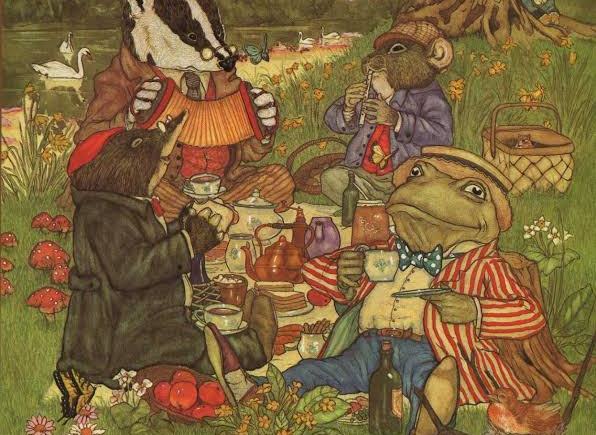
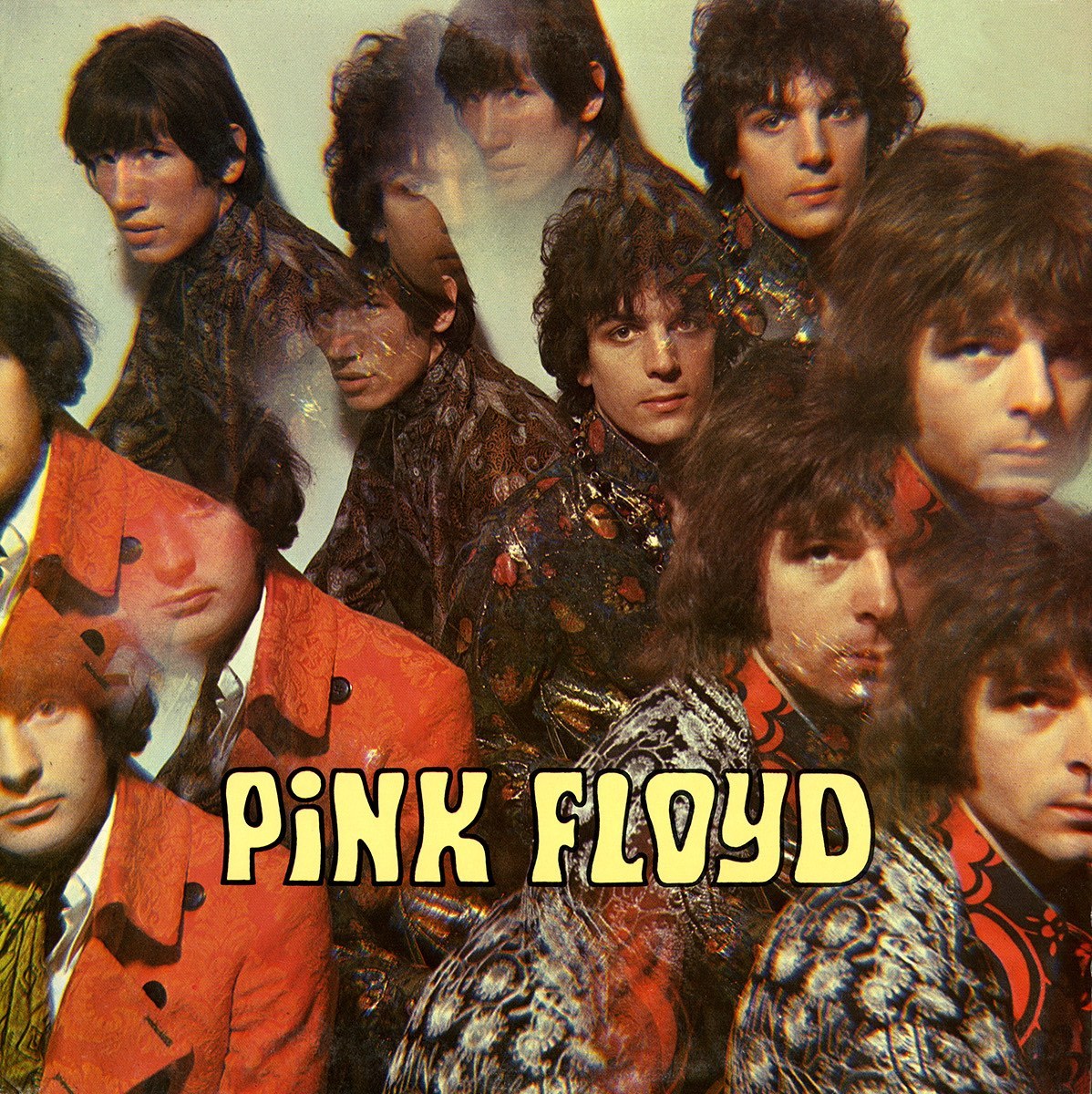
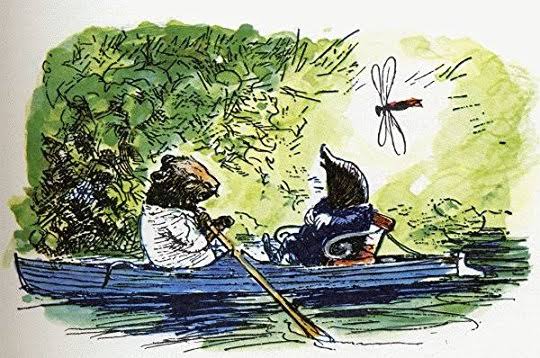


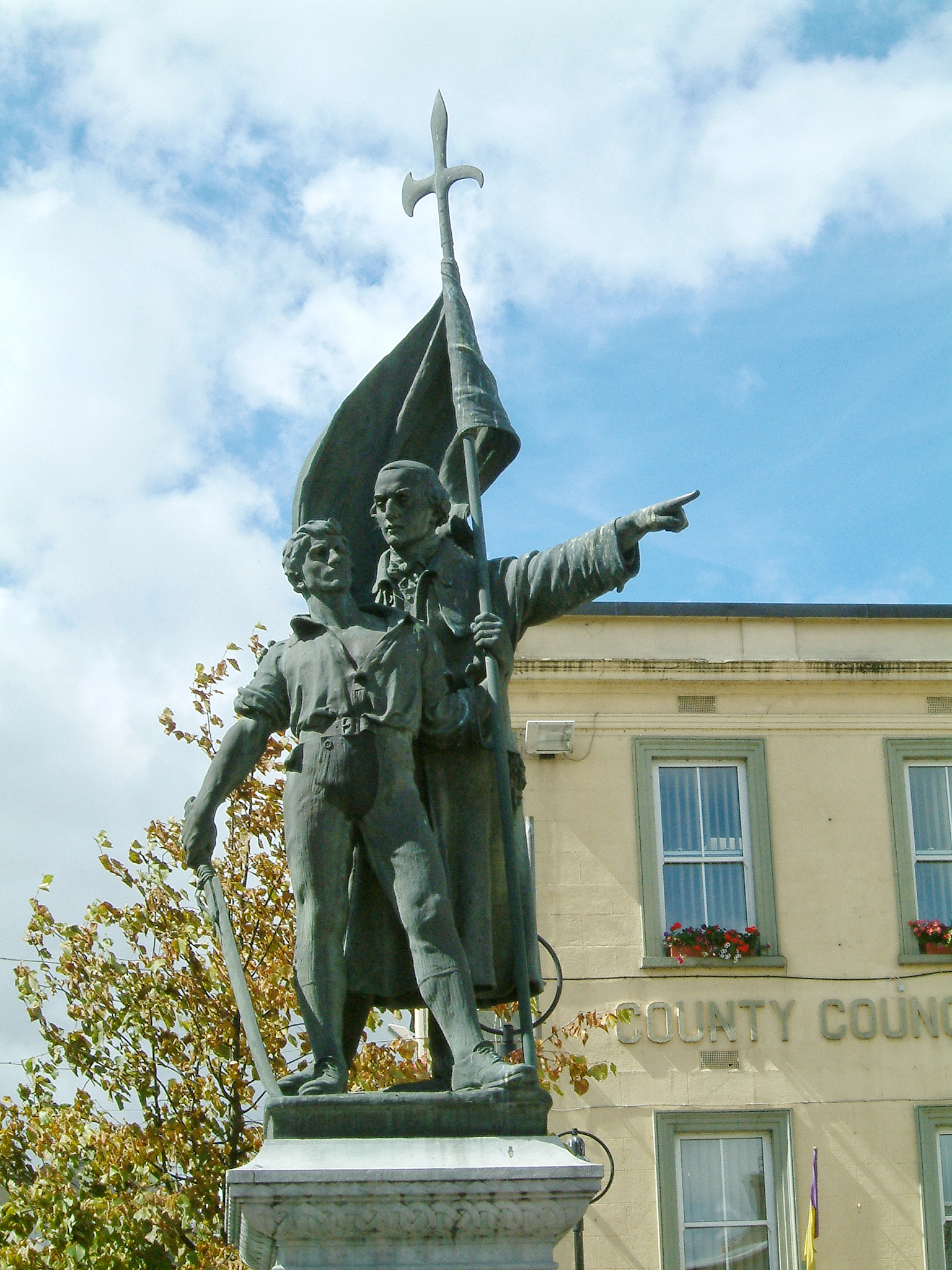


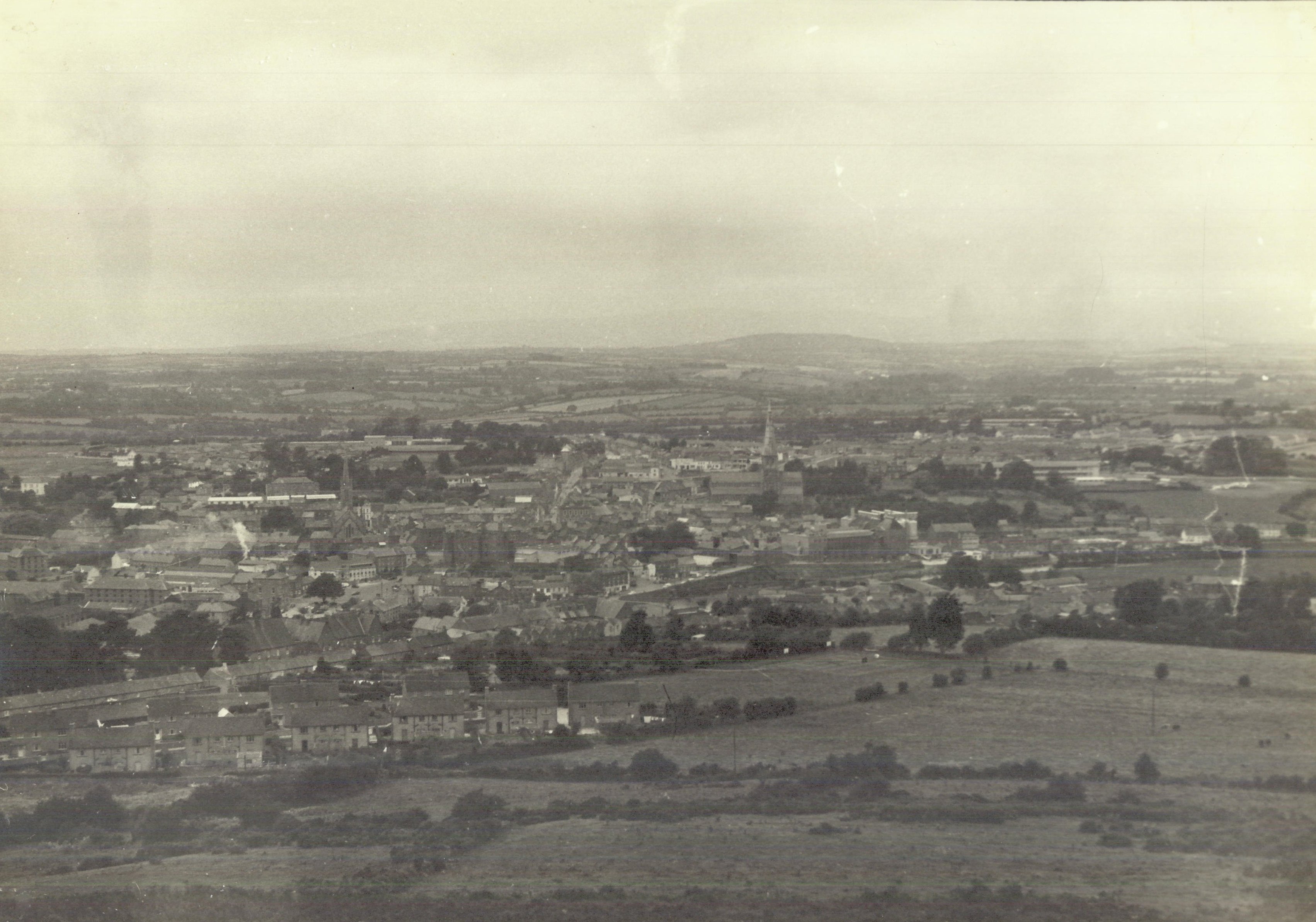


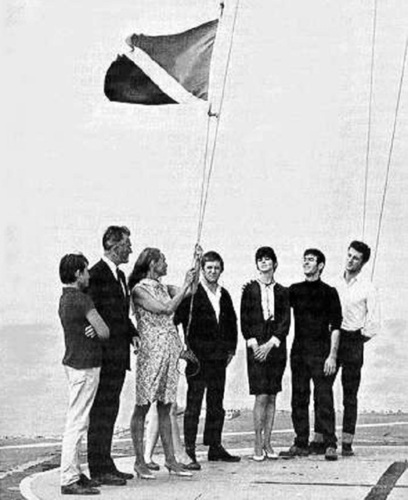
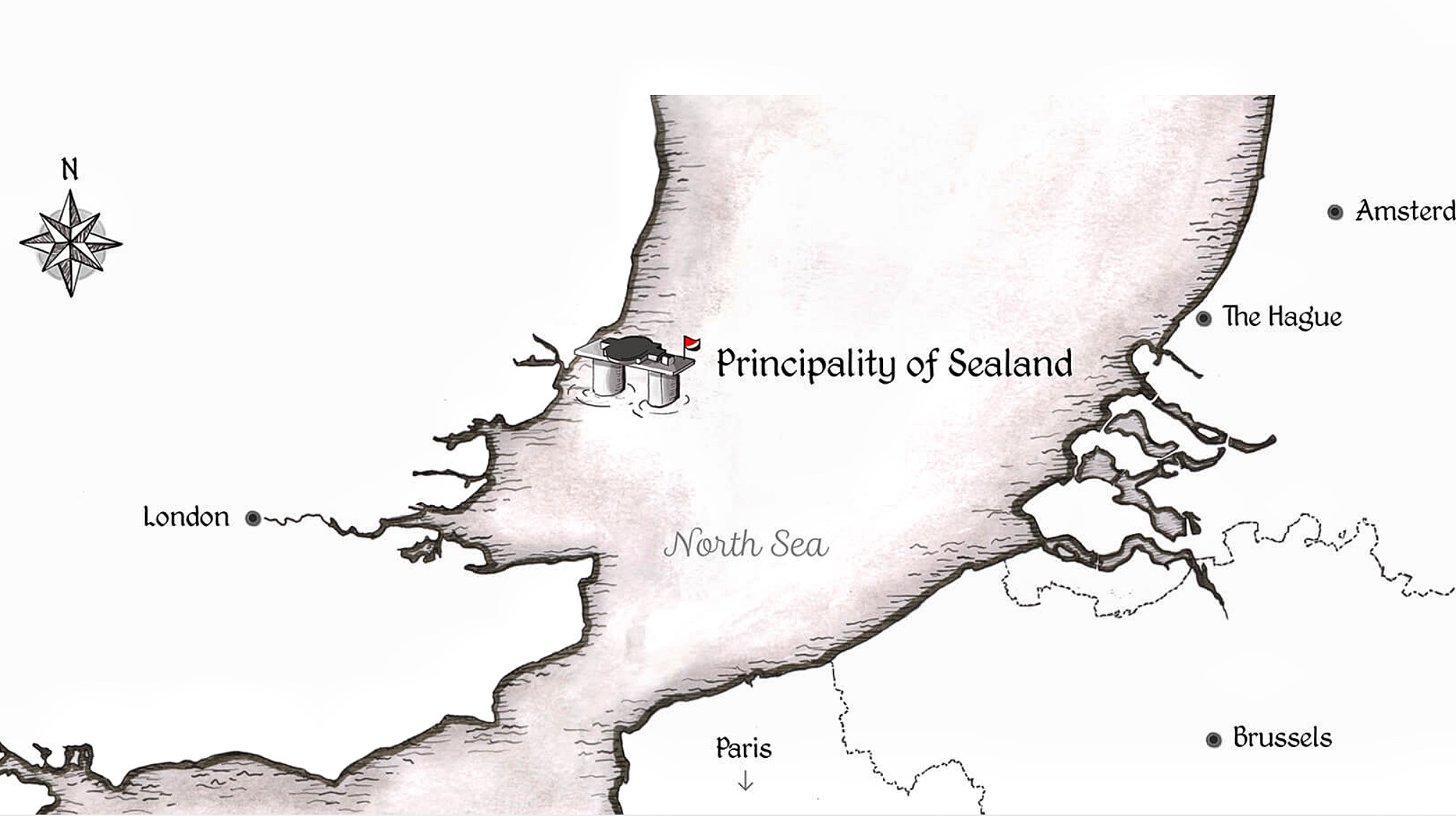

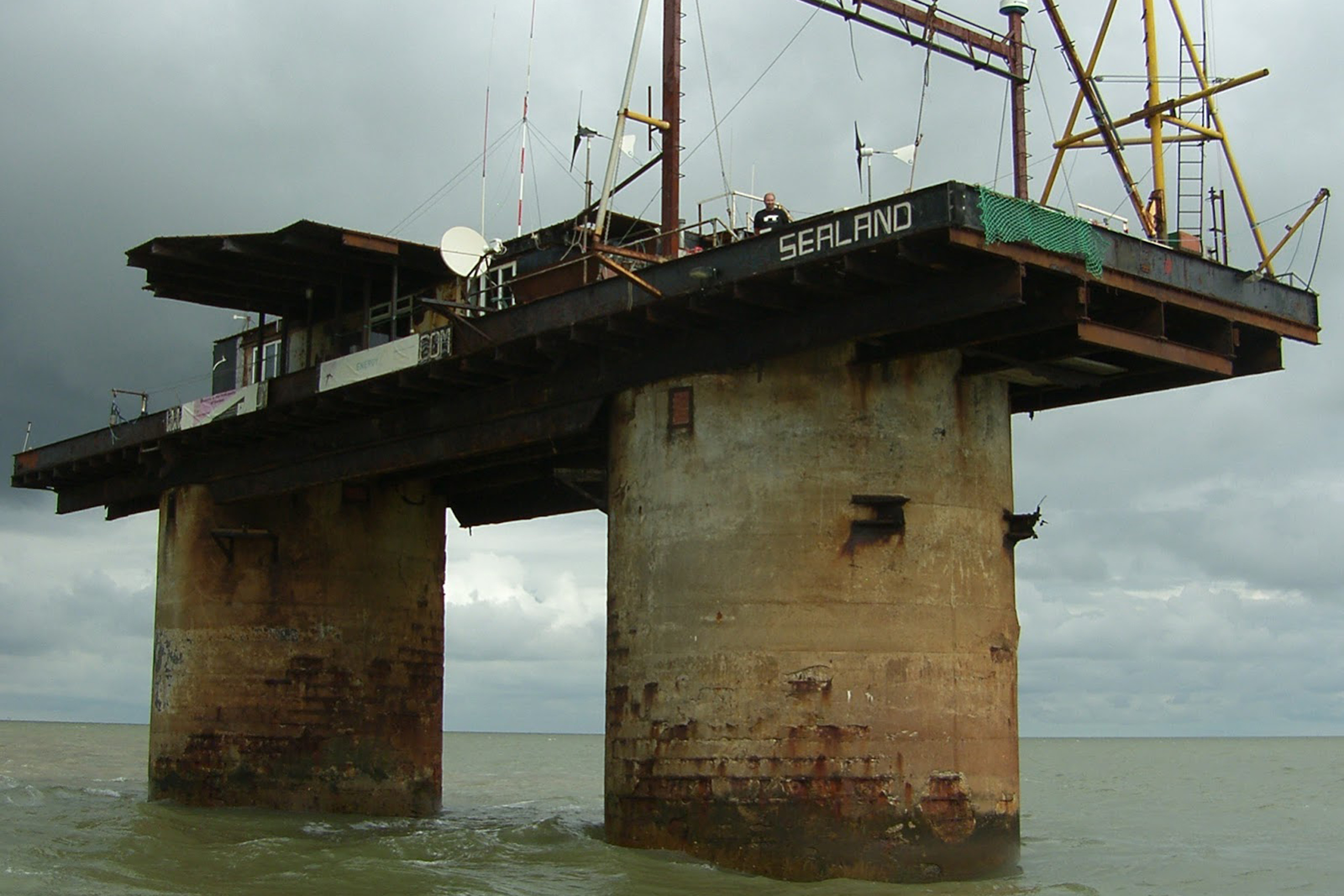


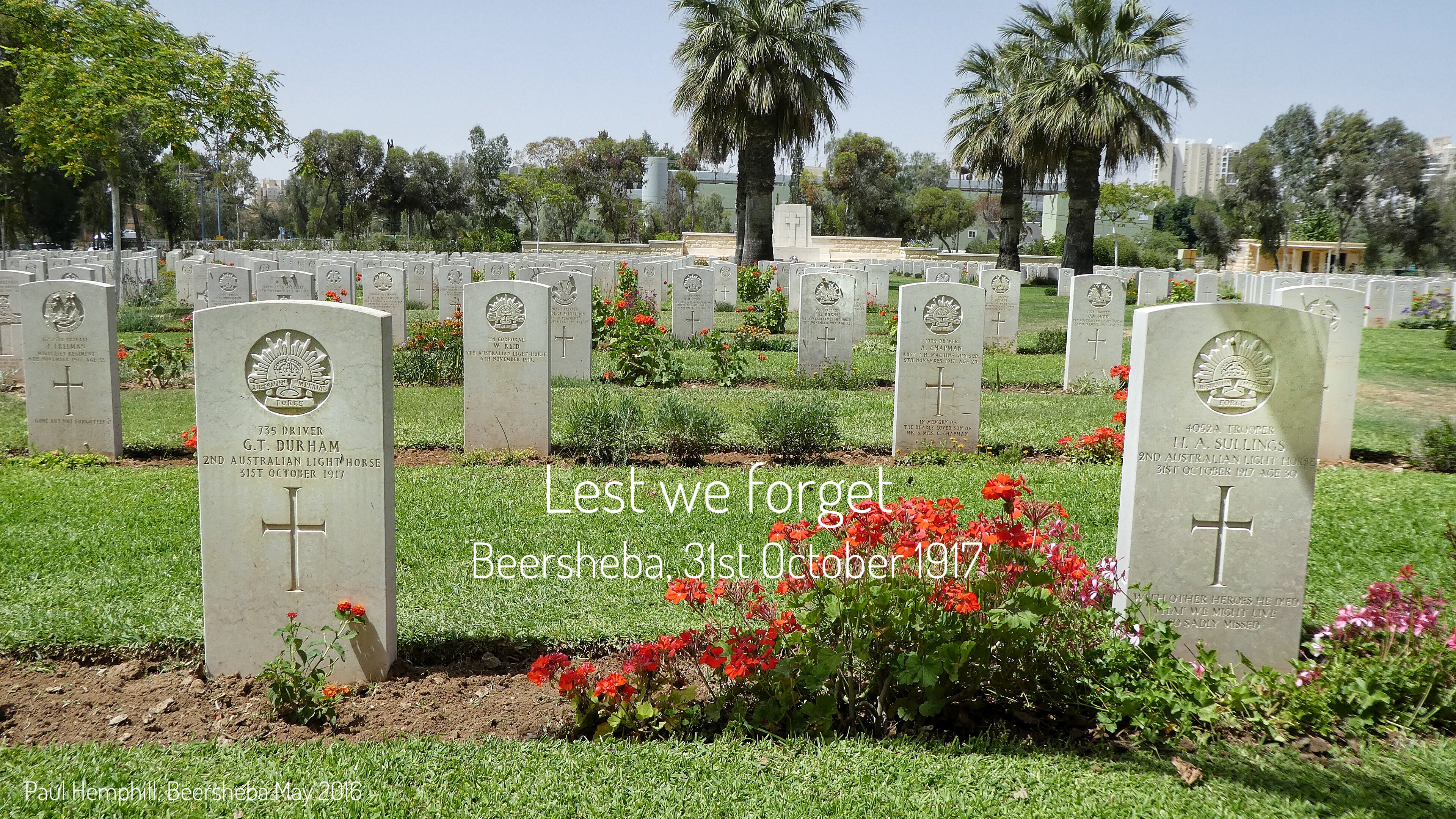


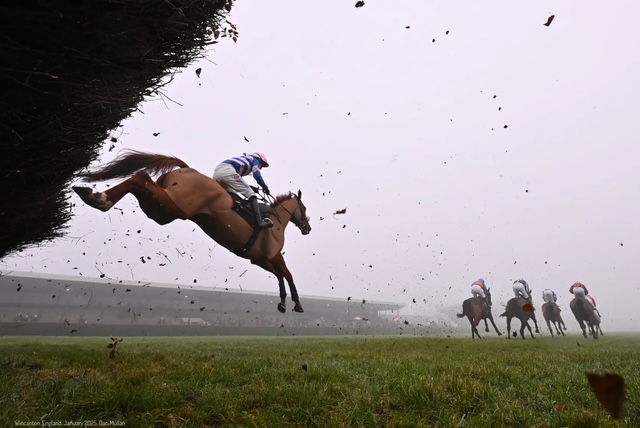

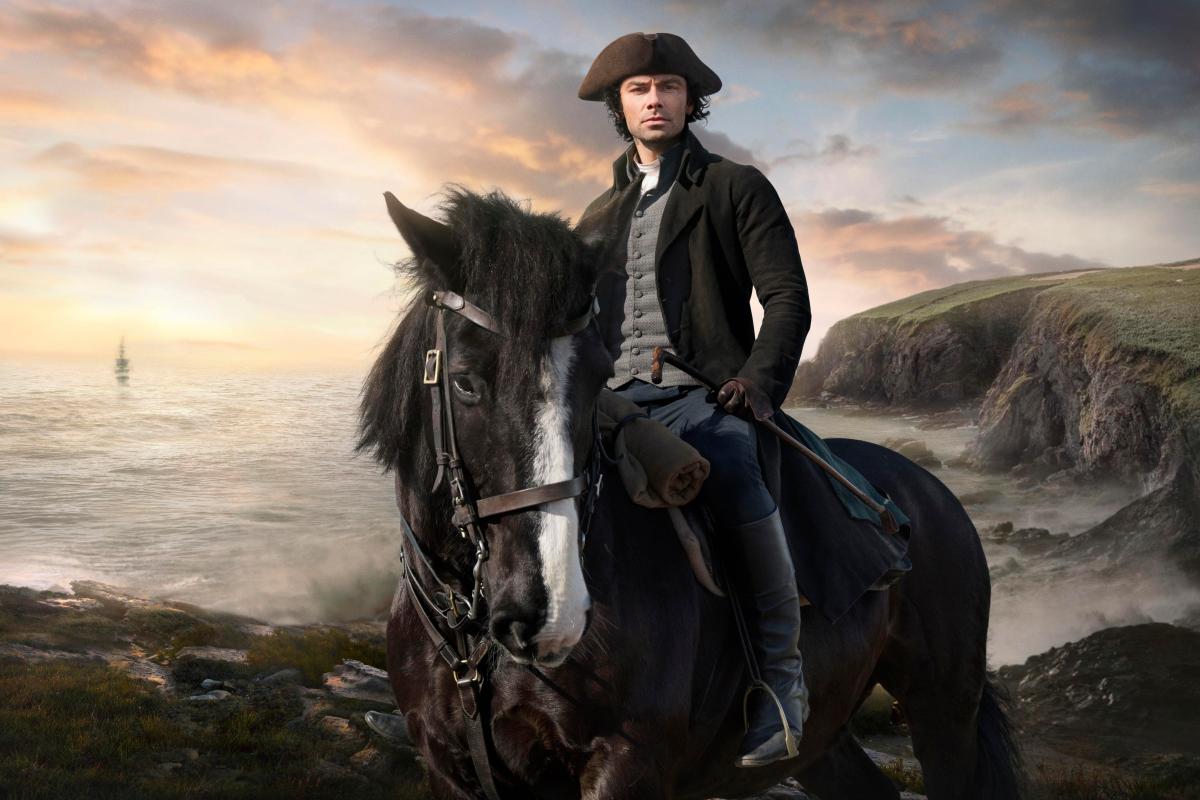



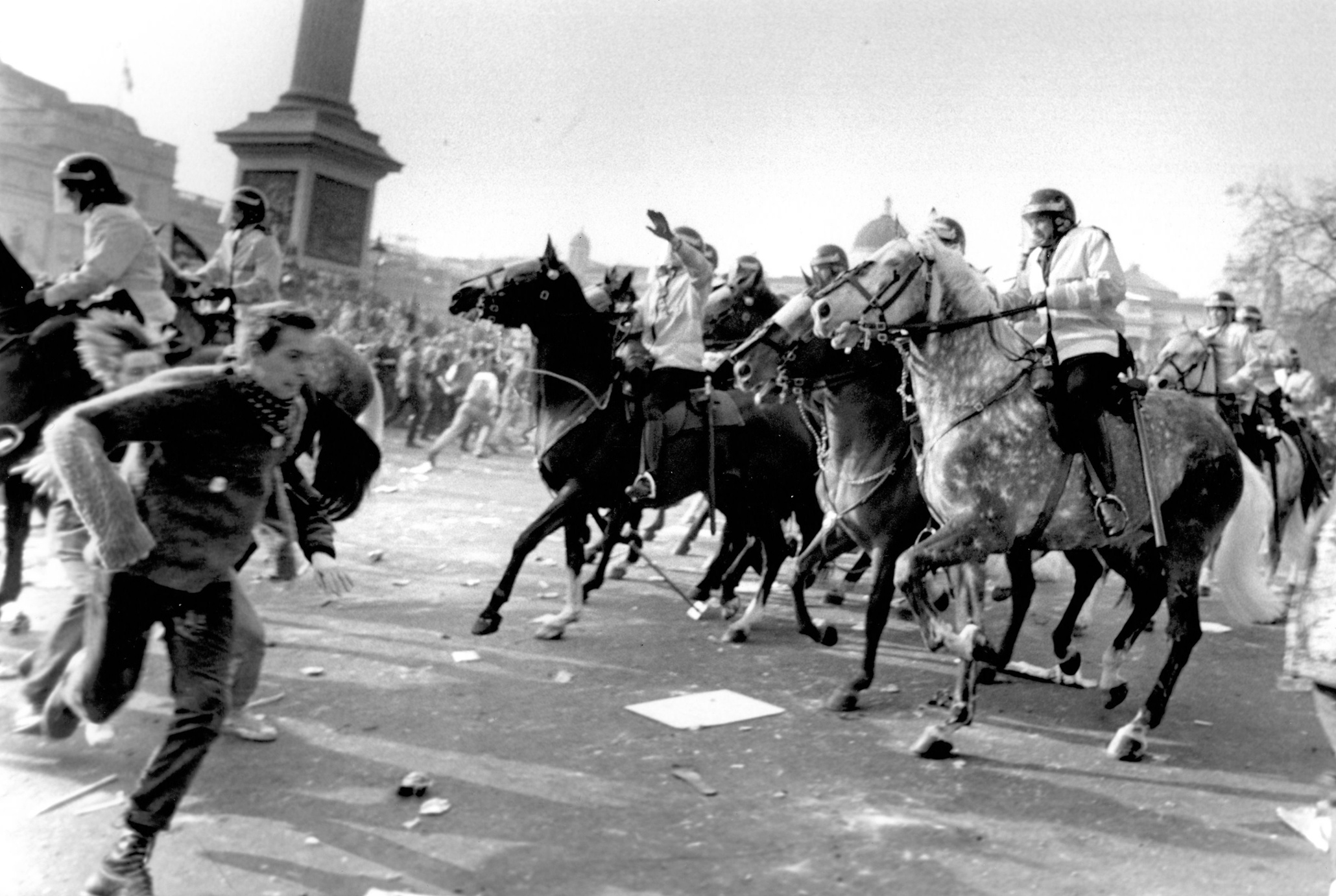





 In That Howling Infinite