That was the year that was – a year of living dangerously

Last December, when we wrote our review of the year that was ending, fires were ravaging Eastern Australia, and civil unrest had broken out across the world, from Hong to Chile, Beirut to Bolivia. Calling it The End of the Beginning, we wrote:

“We enter a new decade with an American election that will focus our attention; Britain’s long farewell to Europe; an end, maybe, to Syria’s agony (accompanied by renewed repression and victor’s revenge); the rise and rise of China and the geopolitical challenge it presents to the senescent “Old World”. And that is just a few things we have to look forward to”.

As they say, “be careful what you wish for”, or more prosaically, when men make plans, god laughs.

This was a year unlike any other in my, dare I say it and invite the evil eye, long lifetime. It started so well with the abatement of our smoky, fiery Black Summer, and then the rains came. This was the year optimists hoped would be one of 20/20 vision: progress on tackling climate change, perhaps, and end to the entertaining but scary presidency of Donald Trump, a cure for … well everything.

But it was to be the year of the virus. By year’s end nearly eight million people will have been infected and almost two million will have perished, with the US recording more than any other country – by New Years Day, its death-toll will very likely exceed its dead in World War II. Economies have been shattered, livelihoods threatened or destroyed, borders closed, cities, towns and homes closed, locked-down and isolated.

In its turbulent and divisive election year, the death of George Floyd at the hands of – or more specifically under the knee of a policeman, painted a brutal portrait of the implacable indifference to black life that defines American policing. It reopened America’s long-festering wounds of racial and social injustice, white racism and vigilante violence. Rather than douse the flames with water and retardant, The White House reached for a can of petrol. The Black Lives Matter Movement, like #MeToo in recent years, an incendiary spark ignited protests around the world, showing that police violence, injustice and inequality do not belong to the USA alone.

Armed protesters on the steps of the Michigan State Capitol in Lansing, demanding the reopening of businesses

Whilst most of the world had entered into a kind of limbo, awaiting the vaccine that will end our travails and reopen our countries and indeed, the wide world, others dropped down the rabbit hole of conspiracy theories that alternatively deny that the pandemic exists or that it had been deliberately created and spread by mysterious and malevolent cabal that seeks total control, like some villain from an old James Bond film or an Avengers movie. Social media has enabled a veritable eBay of ideas and explanations where the isolated and excluded who do their own research and follow the breadcrumbs into the Matrix can buy one and get four free.

On a saner but nonetheless destabilizing level, denizens of the so-called “cancel culture” had a field day exercising its democratic right to be easily offended by demanding the deplatforming, defenestration and demolition of persons, ideas, careers, and monuments. Long-dead slavers, imperialists and generals bit the dust; JK Rowling and Nick Cave got a serve, the latter for devaluing that “cancel culture’s refusal to engage with uncomfortable ideas has an asphyxiating effect on the creative soul of a society”; and an episode of Fawlty Towers was temporarily committed to the naughty corner. 

In the cold-blooded, brutal real world, there was no abatement in the wars and insurgencies that have been grinding on years now in Africa and the Middle East, whilst an old conflict over blood and soil broke out anew between Armenians and Azerbaijanis. Donald Trump’s much touted “deal of the century” that would reconcile Israelis and Palestinians was revealed to be no more than a shifty and shitty bribe, whilst US-brokered “peace” deals with a bunch of autocracies who had never gone to war against Israel are but smoke and mirrors that like Kushner’s Peace to Prosperity plan throw the unfortunate Palestinians under the bus. It is as if there is, beyond the planets COVID, Conspiracy and Cancel, a parallel universe of misery and carnage, power games and proxy wars.

Meanwhile, China, or more precisely, the Chinese Communist Party, having let loose the virus, has taken advantage of the world’s distraction and confusion by pressing forward in its quest its political, military and economic predominance. Uighurs, Mongolians and Tibetans face cultural extinction whilst in Hong Kong, the flame of freedom flickered and went out. Sooner or later, something is going to give – what some pundits perceive as President Xi’s impatient recklessness will be followed by a reckoning.

Michelle Griffin, World Editor with the Sydney Morning Herald provides a brief but excellent run down of 2020: The 2020 Pandemic – our year of living dangerously. And on 2020 as the year of “cancel culture”, the reflex response of the easily offended, here is 2020, the year we finally broke our culture. Both are well worth a read.

Time during 2020 has been elastic and confused. On 21st December, The Guardian asked readers to sum up how they felt about 2020 in one word – and likewise their feelings for 2021. As of Xmas Eve, the standout words were respectively (a) shit, fucked and challenging and (b) hopeful and better. My poll responses were “fascinating” and “unpredictable”.

The year ahead?

Our year in review

And so to our review of what In That Howling Infinite published during the plague year. Curiously, deliberately or by mere circumstances, nothing about the plague.

The year began with the fires and smoke abating here on our Mid North Coast, though raging still in southern New South Wales and eastern Victoria. Inspired by an early Cat Stevens song, we opened with a light, nostalgic history of the first the schools of the Tarkeeth, where we live.

Before we knew it, Australian Day was upon us. Normally, the weeks preceding our national day see social and mainstream media, posturing politicians and personalities and cultural warriors of all our tribes caught up in argument and invective about its meaning and significance. This year, however, things are unseasonably quiet. As a nation and a community, we were perhaps too preoccupied with Australia’s unprecedented bush-fire crisis to wage our customary wars of words. Elizabeth Farrelly asked what it means to be Australian: “As the fires rage on, bringing little but anti-green and pro-coal propaganda from our governments, we have a choice. We can go on pretending that exploitation is a sustainable way of life. We can pursue this culture of denial, where truths about nature, climate, women and Indigenous peoples are held in contempt. Or we can smarten up” … It was Australia’s choice – survive by respect or die by stupid.

February saw the first of several cynical and futile attempts by the international community to resolve the morass of the Libyan civil war. In Tangled – a cynic’s guide to alliances in the Middle East, we pointed out that Libya was not the only quagmire of outside powers and their local proxies. Then there the Trump administration’s “deal of the century”. Intended to end half a century of conflict between Israel and Palestine, it was the beginning, dead in the water: Clouded Vision – no peace, no plan, no Palestine, no point.

The unfortunate Palestinians were viewed more sympathetically in a retrospective of the life and work of one of Palestine’s most celebrated artists: Visualizing the Palestinian Return – The art of Ismail Shammout.

The ominous drumbeats of the novel coronavirus we now know as COVID19 drew close and closer during January and February, and by mid March, it was all on for young and old. A tiny but loud minority protested that all a cod. It was to misapply Bob Dylan, “just a dream, babe, a vacuum, a scheme babe that sucks you into feeling like this”.  With enough being written about the pandemic on mainstream and social media, we took the pasty now very well traveled with The view from the grassy knoll – the resilience of conspiracy theories.

The onward March of the “Conspiratualists” merged by midyear with anti-lockdown protests in otherwise rational western democracies, the violence on America’s streets following the death of George Floyd, and the anticipation of open war between rival militia in the Land of the fearful – home of the heavily armed. As the US descended into a social and political division as contagious as the coronavirus, the calls to right historical wrongs led to the demands that statues of morally dubious long-dead white be torn down led to Arguments of a Monumental Proportions.

It was time for In That Howling Infinite to retreat into history, with The Bard in the Badlands 2 – America’s Shakespearean dreaming, a sequel to an earlier piece on America’s historical fascination with William Shakespeare. The lockdowns and self-isolation of the pandemic’s first wave saw people going out less, homeschooling, drinking more (and sadly, in many instances, beating each other up more. But many of us were also avidly FaceBooking, Tweeting and Zooming; and also binge-watching Netflix and Scandi-noir and reading large books.

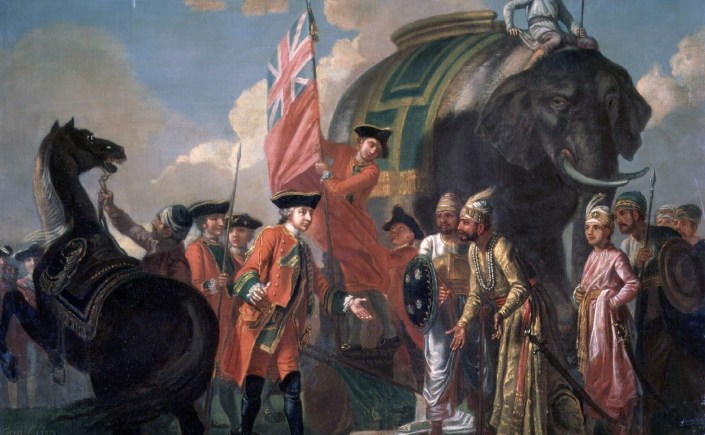
In Bad Company – how Britain conquered India, we reviewed The Anarchy, the latest in a long list of excellent histories of the sub-continent by Scottish scholar and longtime resident of India, William Dalrymple – the daunting and depressing story of the rise and fall of the British East India Company, a quasi-military industrial complex that earned the misleading sobriquet The Honourable Company.

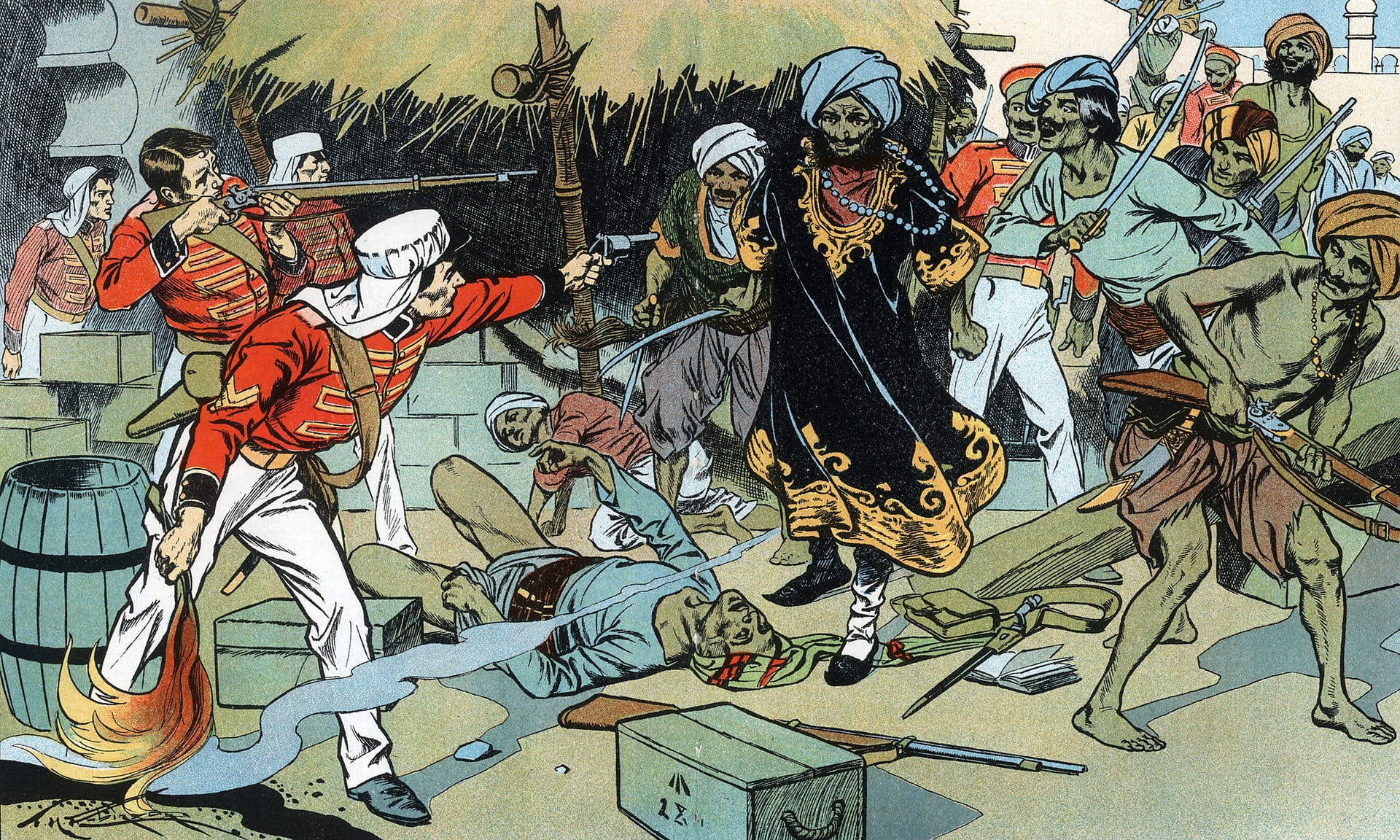
Flashman in the Great Game

Just in time for the lock-down, Hilary Mantel gave us the finale of her magisterial and magnificent Wolf Hall trilogy – The Light and the Mirror. In That Howling Infinite took up two themes that threaded through all three books. We know how the story ends, but are fascinated with how Mantel takes us there. Taking as it theme the golden bird-boy flying too close to the sun, Beyond Wolf Hall (2) – Icarus ascending asks the question “could Thomas Cromwell have avoided his doom?” Beyond Wolf Hall (1) – Revolution Road reviews Cromwell’s legacy, the Protestant Reformation that changed the course of English (and British) history.

Mark Rylance and Damian Lewis as Tom and Hal

Fast forward from the life and dangerous times of Henry VIII to the present, and Netflix’ release in November of the third season of The Crown, a sumptuous soap that beguiles even ardent republicans. The latest serve, highlighting the rise and fall of Margaret Thatcher and the salacious pas de trois of Charles, Diana and Camilla, is deliciously seditious. And there was an entertaining Australian interlude, as described in The Crown – the view from Down Under – even if it was actually filmed in Spain.

In August 2020, the largest man-made explosion since Hiroshima and Nagasaki rippled the heart out of Lebanon’s capital. Over two thousand tons of illegal, combustible, unstable, and almost forgotten ammonium nitrate went up in a fireball that resembled an atomic blast. Social media shared memes and messages, hearts and flags, and “we are all Lebanese” profiles. Expatriates and others wrote and spoke about the country’s present turmoil and fears of a return to the bad old days. Many shared  videos of songs by Lebanon’s national cultural icon, Fairuz – most particularly, her poignant Li Beirut, which she wrote during the civil war as a tribute to the city’s timeless beauty and the suffering of its people people. O Beirut – songs for a wounded city presents Fairuz’ songs, and also Syrian poet Nizar Qabbani’s famous O Beirut, Mistress of the World, and Khalil Gibran’s iconic Pity the Nation.

And finally, as this strangest of years was ending, we published a frolic that has been several years a’making. A cowboy key – how the west was sung takes us on a leisurely jaunt through some of those grand old songs, films and musicals that have shaped our more pleasant perceptions of America.

Happy New Year.

Our reviews of previous years: 2019, 2018; 2017; 2016; 2015

Androids Dolores and Teddy enjoy the Westworld view

A cowboy key – how the west was sung

Oh, give me land, lots of land under starry skies above,
Don’t fence me in.
Let me ride through the wide open country that I love,
Don’t fence me in.
Let me be by myself in the evenin’ breeze,
And listen to the murmur of the cottonwood trees,
Send me off forever but I ask you please,
Don’t fence me in.
Cole Porter and lyrics by Robert Fletcher and Cole Porter.

Outlaw songs and cowboy gothic

“An old cowpoke went riding by one dark and windy day …”

In his informative and entertaining Way Out West series, in The Immortal Jukebox, British blogger and music chronicler Thom Hickey reminds us that the Western Writers of America declared Ghost Riders In The Sky the greatest of all Western songs.  I’m totally with Thom here. Written and recorded in 1948 by Sons of The Pioneers alumni Stan Jones, it is probably the best of a glorious herd. The lyrics echo the Seer of Patmos’ four horsemen of the apocalypse …

Their brands were still on fire and their hooves were made of steel
Their horns were black and shiny and their hot breath he could feel
A bolt of fear went through him as they thundered through the sky
For he saw the riders coming hard and he heard their mournful cry

It’s as far way from “Whoopee ti yi yo, get along little dogies” as Kansas is from Oz.

Stan Jones also wrote the haunting and evocative theme for John Ford’s 1956 masterpiece, The Searchers. It is a quixotically existential song …

What makes a man to wander?
What makes a man to roam?
What makes a man leave bed and board
And turn his back on home?
Ride away, ride away, ride away

The Searchers is regarded by many to be the best western ever, and many modern filmmakers pay visual homage to it – recall Kill Bill and Westworld. I would argue that it is the second best, after Clint Eastwood’s redemptive avenger saga The Outlaw Josie Wales – which also had a memorable song, the corny Rose of Alabama, which would not be in Thom’s or anyone’s else’s cowboy song pantheon.

The Searchers and Kill Bill

And there’s Marty Robbins’ fatal fight for the affections of flirtatious Feleena at Rosa’s cantina in the West Texas town of El Paso. Yes, El Paso of 1959 is up there near the summit. It’s a crowded peak, with these songs tussling for space alongside a swag of worthy contenders.

Western movies provided irresistible opportunities for city songwriters to try their hands at moralistic cowboy carols. These included the Tin Pan Alley ring-in written by Burt Bacharach and Hal David and sung so well by Gene Pitney: The Man Who Shot Liberty Valance (1962). Those who tamed the wild west had cleaved to an ambivalent moral code …

But the point of a gun
Was the only law that Liberty understood
When the final showdown came at last
A law book was no good

From the moment a girl gets to be full grown
The very first thing she learns
When two men go out to face each other
Only one returns

The cowboy hero faced many challenges in his lonesome quest – none more so than Marshall Will Kane in Stanley Kramer’s showdown classic High Noon (1952) with its iconic theme song written by Ukrainian-born Dimitri Tiomkin and sung by the Chicago son of Sicilian immigrants Francesco Paolo LoVecchio – known to us as crooner Frankie Laine.

Oh, to be torn ‘tweenst love and duty
Supposin’ I lose my fair-haired beauty
Look at that big hand move along
Nearin’ high noon

The song is iconic. But rather than play it here, here is something completely different – the Ukrainian version performed by a shadowy, iconoclastic Australian combo:

Frankie Laine became a master of the genre with a swag of hits, including Gunfight at the OK Corral, Mule Train, The Hanging Tree, Cool Water, and Rawhide.

On the subject of films, let’s never forget the luminous, numinous, pulchritudinous Jane Fonda as Cat Balou on that “hangin’ day in Wolf City, Wyoming”, serenaded outside her death cell by Nat King Cole and Stubby Kayes as celluloid Earl Flatt and Lester Scruggs.

 Pancho was a bandit, boys – outlaw chic

There is a multitude of latter day tributes to the genre.

Many have tried their hand, and many have given us songs that endure. One is most certainly the mysteriously poignant, mariachi fever-dream Pancho and Lefty by the doomed Texan troubadour Townes Van Zandt, a song that has been covered by Emmylou Harris, Willie Nelson, and Bob Dylan. Townes later said that when writing the song, he had in mind President Nixon – figure that one out (as Neil Young did when he declaimed in The Old Campaigner that “even Richard Nixon has got soul …”).

Pancho was a bandit, boys
His horse was fast as polished steel,
Wore his gun outside his pants
For all the honest world to feel

“Dying outlaw’ ballads are a breed of their own, ranging from the maudlin and admonitory “take a warning from me” Streets of Laredo, to the syrupy Seven Spanish Angels sung so beautifully by Ray Charles and Willie Nelson:

There were seven Spanish angels at the altar of the sun
They were praying for the lovers in the valley of the gun
When the battle stopped and the smoke cleared
There was thunder from the throne
And seven Spanish angels took another angel home.
Troy Seals and Eddie Setser

Bob Dylan gave us a doom-laden outlaw Romeo and Juliet with Romance in Durango, not one of Desire’s outstanding tracks, but what a grand chorus:

No llores, mi querida, Dios nos vigila
Soon the horse will take us to Durango
Agarrame, mi vida, Soon the desert will be gone
Soon you will be dancing the fandango

El Paso, Pancho, Durango, those attendant Spanish angels – it is passing paradox that notwithstanding America’s ambivalent relationship with its Latino demographic, a Hispanic mystique permeates so many gorgeous songs!

Cocaine Canyon bad-boy Warren Zevon, never lost for a cowboy and rebel riff in his outstanding gothic oeuvre – his ingenue Frank and Jessie James, his tale of how two-timing Jeannie needed “a shooter, a shooter on her side”. and  the nihilistic Play it all night long: “Sweet home Alabama, play that dead band’s song!”.

Most bandit songs’ protagonists come out alive. But not all our trigger-happy troubadours end up with a bullet or a noose. The Everly Brothers sent a Message to Mary from a cold cell where the failed stage-coach robber was doing a long stretch, advising Mary that she ought to court a better beau; and Marty Robbins and Frankie Laine were both lucky enough to be spared The Hanging Tree.

Bob Dylan’s wonderful Blood on the Tracks included the cowboy-noir ballad Rosemary, Lily and the Jack of Hearts, a characters-driven saloon story of payback and pay-dirt which would not be out of place in decadent Deadwood and wired Westworld.

And, of course, there are the songs dedicated to the one they loved, the cowboy’s best pal, his Four Legged Friend. Roy Rogers blazed this equine trail, with that very song about his photogenic palomino Trigger. St. Leonard of Montreal, who had aspirations once upon a time to join a cowboy band, has given us his lyrically gorgeous paean to the pony and its desolate rider with the Ballad of the Absent Mare:

Say a prayer for the cowboy
His mare’s run away
And he’ll walk til he finds her
His darling, his stray

And from the sublime to the ridiculous, there’s Lyle Lovett calling up both Roy and Trigger and singing of how “… we could all together go out on the ocean, me upon my pony on my boat”.

Then there’s Lee Hazelwood, “the wayward guru of cowboy psychedelia” and onetime mentor of Nancy Sinatra (yes, he wrote These Boots Were Made For Walking – all over you). With his Great Plains drawl and his hankering for the outlaw Bad Girl who’d “took my silver spurs, a dollar and a dime, and left me cravin’ for more Summer Wine” with its “strawberries, cherries and an angel’s kiss in spring”,he was the inspiration for a kind of cowboy gothic that saw urban roustabout cos-play with Wild West dress-ups and bad-boy cowboy noir that found its apotheosis in the cover of the Eagles’s Desperado.

Emmylou Harris’ beau, Carolina coast-born Gram Parsons, who brought the Byrds eight miles down to the Sweetheart of the Rodeo,  pioneered “country rock”, went on to muster Keith Richards into the rockabilly ambiance of the Rolling Stones’s Devils Banquet, and on the brink of stardom, he exited on an overdose at the Jericho Tree Motel, close to the primeval vegetation that provided the title for Irish band U2’s excellent album – but that is not part of this story.

As big as all outdoors

Lost my heart in the Black Hills
The Black Hills of Dakota
Where the pines are so high
That they kiss the sky above
Sammy Fain, and Paul Francis Webster

There’s a bright golden haze on the meadow,
The corn is as high as an elephant’s eye,
An’ it looks like its climbin’ clear up to the sky.
Oh what a beautiful morning, Richard Rodgers and Oscar Hammerstein II

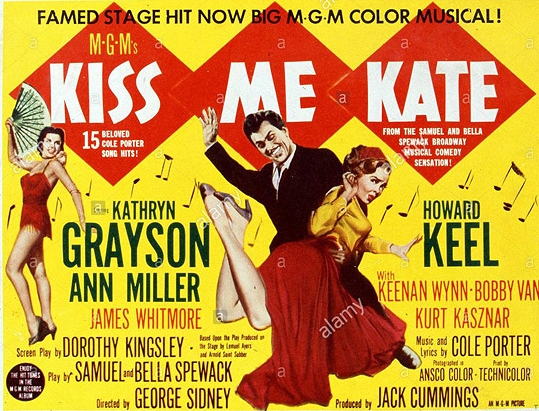
It was inevitable that cowboys should infiltrate that most American of theatrical excess, the musical. The contributions of the great musical songwriters – many of them urban Jewish immigrants from Eastern Europe – have endured with countless outings on screen and stage. Oklahoma gave us songs  “as big as all outdoors” with the title song, its standout ballad Oh What a Beautiful Mornin’, and the hand-clappin’, foot-stompin’ The Farmer and the Cow Man  (“Territory Folks should stick together”). Seven Brides For Seven Brothers brought the backwoods to the city with its retelling of the old tale of “the sobbin’ women who lived in the Roman days” (“… least that’s what Plutarch said!”) and songs like Wonderful, Wonderful Day, Bless Your Beautiful Hide, and Goin’ Courtin’. The rags to rodeo soapie Annie Get Your Gun gave us Doin’ What Comes Naturally and Anything You can Do. As they say, “there’s no business like show business”, and any excuse for a barn dance, shindig, hoedown or hootenanny.

My personal favourite is Calamity Jane. Doris Day could not be further from Robin Weigert’s foul-mouthed, drunk of Deadwood, but boy, could this girl “whip crack away” as she drove the Deadwood Stage into town. And didn’t we all yearn for “the Black Hills and the beautiful Indian country that I love” – notwithstanding the brutal irony that the seizure of that Indian country was the prelude to the annihilation of the Plains Indians.

Musical movies give film stars with terrible voices a chance to let it all hang out. Paint Your Wagon, was brought painfully and rib-ticklingly to life on the big screen by Clint Eastwood and Lee Marvin, who were not, to borrow Leonard Cohen’s word, “born with the gift of the golden voice”. Gruff Rod Steiger’s darkish Poor Judd is Daid  in Oklahoma gave Peter O’Toole and Richard Harris license to break out in dubious song in Man of La Mancha and Camelot. There is something evocative and timeless about Lee’s croaky I Was Born Under a Wondering Star: “… wheels were mean for rollin’, mules were mad to pack; I never saw a sight that don’t look better lookin’ back”. One can’t help but like it.

And whilst we’re breaking out the corn that sometimes is “as high as an elephant’s eye”, I have to admit that I have also always had an inexplicable affection for Tony Orlando’s melodramatic, latter-day revenger tragedy and El Paso clone I Did What I Did For Maria, and the overblown, whip-crackin’ Legend of Xanadu by that peculiar British band Dave Dee, Dozy, Beaky, Mick and Titch (the video is below – very cowboy cosplay and “all a bit Zorro”). Which brings us ineluctably – to the irreverently awful, bowdlerized Rawhide by the strange Scottish The Chaps (as in blokes or cowboy leg coverings?) and Sting’s eminently forgettable Cowboy Song. Here’s Tony grooving it with the dolly-birds during the decade that fashion forgot. And we never did find out what was done to Maria.

My cowboy days

How many Aussies of a certain age did not thrill at the Banjo’s ballad of the bushman that is almost our national poem:

He hails from Snowy River, up by Kosciusko’s side,
Where the hills are twice as steep and twice as rough,
Where a horse’s hoofs strike firelight from the flint stones every stride,
The man that holds his own is good enough.

Though I was immigrant and a townie, I had my ‘cowboy’ days. I was not a good rider, but I loved the craic. Not a natural like my future wife. When we first met, she kept four horses and looked after a whole riding school of them, bringing them in bareback riding, stock-whip cracking, a proper jillaroo. ‘Western pleasure’, it was called. No jackets and jodhpurs – it was cowboy hats, boots and blue jeans – before helmets and Occupational Health and Safety. I rode her gorgeous chestnut quarter horse called Twopence, and she, a handsome palomino named Trigger (of course). A riding accident put me in hospital – and I never rode a horse again. See In That Howling Infinite‘s The Twilight of the Equine Gods.

My riding days are over, but as this post will aver, I am still into westerns, and as a onetime musician myself, I have, in days gone by, penned songs in a cowboy key.

The Ballad of The Drover’s Dog is twin to iconic Australian poet Henry Lawson’s Harry Dale The Drover, that wistful if overwrought tragedy of the homeward bound stock-man who, along with his faithful hound, comes to grief in the flooded creek. Playing at a pub in Pontadawe, in South Wales, we sang the story of Bluey, a brave blue cattle dog. As ever, the audience took the song seriously albeit sardonically. But this time it was different – knowing smiles flickered across many faces. Afterwards, folk came up to us and asked if we heard of Swansea Jack, a local hero of yore who’d rescued sundry dogs and humans from the wild Bristol Channel until meeting dying a sailor’s death. Read the notes that accompany the song. Greater love hath no dog. Inspired by Henry, this story references council by-laws governing Sydney’s famous Bondi Beach.

From The Ballad of The Drovers Dog, it is only a hop, step, and a boot scoot to that song that dares not mention its name, a rollicking cross between The Man From Snowy River and Seven Brides For Seven Brothers. It is  loosely based on a true story – it was actually banned on our local radio station. As is Capricorn Cowboy: we were doing a gig in Cairns, in the tropical far north of Australia, against a backdrop of frogs and cicadas, street noise and broken and breaking glasses. One of the floor singers was Henry, a wannabe country & western singer. And country music of the cowboy variety is a thread that runs through most of these songs and stories. Three quarter time, regardless of the subject matter. I Still Call Mongolia Home, notwithstanding its title and subject matter, is a cowboy song through and through, dedicated as it is to The Duke himself. And Summer Is The Time, a Viking saga that meanders all over the map , resolves into a finale that would not be out of place in Oklahoma! Well, sort of. Listen to it and also the story of Henry below.

My Cowboy Days with Twopence & Trigger

Postscript – a cowboy like me

Americans love their outlaws and really love them running wild, and if that means going out in a blaze of glory, so much the better. We recall the closing camera pan of Bonny and Clyde, and the fade to sepia freeze-frame ending of Butch Cassidy and the Sundance Kid. In part, this is because the world’s most powerful country, and indeed, as recent history has shown, most libertarian, cleaves to its foundational “don’t tread on me” and “us against them” identities. In the American noir series Justified, an inept backwoods criminal declaims “he who is not with us – is not with us!”

But it is not only in the Land of the Free. England has its perennial and ageless Robin Hood – “age cannot wither nor custom stale” his infinite screen resurrections (there’s another on the way in 2021). And aren’t we still fascinated by those East End bully boys, the Kray Twins, DownUnder, the ghost of Ned Kelly haunts our ethos still, alongside those our famed and favoured bushrangers Captain Lightfoot and Ben Hall.

But the fascination with the cowboy is much more than outlaw chic. It is a deep and colourful repository of folk memories and foundation myths where fact and fiction coexist. During the closing scenes of The Man Who Shot Liberty Valance, the journalist says: “This is the West, sir. When the legend becomes fact, print the legend”. And it was always thus. As German cultural scientist Ulrich Raulff noted in his captivating Farewell to the Horse: “Like love and the stock exchange, our historical memory is a motherland of wishful thinking, sacrificed to our faith and blind to known fact s…This is why historical myths are so tenacious. It’s as though the truth even when it’s there for everyone to see, is powerless – it can’t lay a finger on the all powerful myth”.  [See: The Twilight of the Equine Gods]

The sad irony is that even as these songs, films and musicals were being created, the world of the cowboy was fast disappearing. Films such as The Wild Bunch and Butch Cassidy and The Sundance Kid saw its protagonists exit in a blaze of bloody glory. But the reality was more poignant: a slo-mo and allegorical lone rider heading into the sunset for one last time, an American archetype that is lost forever, as country singer Ed Bruce tells us in The Last Cowboy Song, the end of a hundred year waltz”, the video illustrated with a fine gallery of old photographs that recall Frederic Remington’s iconic paintings.

An Oklahoman friend reminded me of the famous Chisholm Trail, the rout for arduous cattle drives that traversed her state from Texas to Kansas. And there it is in Ed Bruce’s song too, together with references to Lewis & Clark, The Alamo, Custer’s Last Stand and other American epics. I had visions of visions of Rawhide and a young Clint Eastwood, but I also recalled our own  Long Paddock, the “travelling stock routes” where stockmen would walk their cattle to market over hundreds of miles exist today largely as tourist drives. Like the cowboy, our “drover” is a precious but passing of artefact of historical iconography.

We all get that cowboy vibe, the idea of a life lived on the edge. Though long “civilized” and sedentary, we harbour atavistic folk memories of running wild and free – from the law, from the tax man, from ‘civilization and its discontents‘. Even Taylor Swift has got the drift – albeit as image rather than actual in her song about a pair of hustlers: .

You’re a cowboy like me
Perched in the dark
Telling all the rich folks anything they wanna hear …
You’re a bandit like me
Eyes full of stars
Hustling for the good life
Never thought I’d meet you here …
I’ve had some tricks up my sleeve
Takes one to know one
You’re a cowboy like me

© Paul Hemphill 2020.  All rights reserved

For more posts on matters America in In That Howling Infinite, see My Country ’tis of thee, and on music, Soul Food- music and musicians.

O Beirut – songs for a wounded city

When venerable and remarkable cities are hurt, we feel their pain. The world felt it when Sarajevo was besieged for four years; when New Orleans was flooded by Hurricane Katrina in 2005; when the heart of the antique city of Aleppo was destroyed in 2012, and when Paris’ Notre Dame Cathedral was burned in 2019. And there was also Palmyra, the “Queen of the Desert” ( see In That Howling Infinite’s The Tears of Zenobia, 

So too with Beirut, once hailed as the “Paris of the Middle East.

In August 2020, the largest man-made explosion since Hiroshima and Nagasaki ripped the heart out of Lebanon’s historic capital. Over two thousand tons of illegal, combustible, unstable, and almost forgotten ammonium nitrate, the stuff that brought down the Alfred C Murrah building in Oklahoma City in 1995 went up in a fireball that resembled an atomic blast. Hundreds perished and thousands were injured, whilst the port and its adjacent neighbourhoods, a crowded inner-city of apartments and cafes, were devastated. Lebanon’s people, already roiled by economic ruin and political paralysis, the trigger for months of civil unrest (see In That Howling Infinite’s Lebanon’s WhatsApp Intifada) and the chains of COVID19, blamed their corrupt and incompetent rulers and the archaic sectarian dispensation that kept them in power. Caught up in the cogs of Lebanon’s crooked system, the search for the perpetrators, justice and closure will grind on for years. Meanwhile, the dead have been buried, the wounded will recover, limp on or succumb, and the psychological damage will endure.
When the port went up, many Beirutis were cast back into what must have seem like a time tunnel, a harrowing vortex of memories and traumas inherited from the fifteen-year long civil war – a conflict that has left wounds that ache still (see In That Howling Infinite’s Pity The Nation (there is an extract from this at the end of this post).

Social media shared memes and messages, hearts and flags, and “we are all Lebanese” profiles. Expatriates and others wrote and spoke about the country’s present turmoil and fears of a return to the bad old days. Many shared YouTube videos featuring songs by Lebanon’s national cultural icon, Fairuz – and most particularly, her poignant Li Beirut, which she wrote during the civil war as a tribute to the city’s timeless beauty and the suffering of its people people: “From my heart, peace to Beirut, and kisses to the sea and to the houses, To a rock shaped liked the face of an old fisherman”.  Listen to it below, and to a lovely cover by a young Lebanese teenage – and yes, the tune is indeed Joaquin Rodrigo’s famous Concierto de Aranjuez.

Beirut-born Fairuz, already a renowned singer and songstress, celebrated and adored throughout the Middle East, chose to remain in her home-town throughout the civil war. But whilst she continued to tour the world as a performing artist, she declined  to sing in Lebanon, refusing to be seen to be as taking sides in the political and sectarian conflict. As a national, unifying and consoling figure, she sang Li Beirut in a charity concert for the victims of the explosion, and for the wounded city itself.
For much of the past year, I have been refreshing my Arabic under the mentorship of Ya’rob, a Syrian and former refugee from America’s invasion of Iraq in 2003. Working on my reading, I have spent time translating Arabic songs and poems into English – primarily Syrian poet Nizār Tawfīq Qabbānī, Palestinian poet Mahmoud Darwish, and Fairuz herself – and English poems and songs into Arabic for the benefit of my teacher – these have included my own, WH Auden, and Leonard Cohen, and even Redgum – in a study of Australian icon and bad boy Ned Kelly, I translated Poor Ned!

And lo’, here was Qabbani’s poem Ya Beirut, Ya Sit al Dunya – O Beirut, Mistress of the World, a bitter soulmate of Fairuz’  Li Beirut.

Nizār Tawfīq Qabbānī was a Syrian diplomat, poet, writer and publisher. He is considered one of the most revered contemporary poets in the  Arab world and is acclaimed as Syria’s National Poet. His poetic style combined simplicity and elegance in exploring themes of religion and Arab nationalism, and controversially, in the Middle East, of love, eroticism and feminism. It may say something about Arab culture, and it’s moralistic constraints, that Palestinian poet Mahmoud Darwish used his craft to navigate similar waters – although   never have had the opportunity to have had an Israeli lover like his contemporary (the inspiration for oud master and jazz great’s Anouar Brahem in his excellent The Astounding Eyes of Rita.

Qabbani was born in Syria but spent much of his life in Beirut, a city he adored. His iconic poem Ya Beirut, Ya Sit al Dunya was published in 1978, three years into the fifteen year long Lebanese Civil War (see Pity the Nation). In it he eloquently and emotionally described the malign impact that the Arab world was having on Beirut, a beautiful and historic coastal city that for centuries has been a cultural and economic entrepôt between east and west. It lamented how the city had been repeatedly colonised, invaded and oppressed by jostling regional powers. “We confess now that we gave you no justice, no mercy/That we misunderstood you and were not sorry/That we offered you a dagger in place of flowers”.

Three years later, he went into exile in Europe, heartbroken when his wife was killed in a suicide bombing at the Iraqi embassy in Beirut.

In Arabic, the title can read O Beirut, Lady of the World, But figuratively, it could be seen to imply that the city was indeed the “mistress’ or prostitute of the Levant, used and abused by many outside powers. “We confess before the just God”, he wrote,”that we were envious of you, that your beauty hurt us … that we hurt you and exhausted you, that we burned you and made you cry, that we weighed you down with our sins”. Fairuz was less brutal but no less angry when she asks of her city: ‘how did its taste become the taste of fire and smoke. “She has became alone at night, alone with the night.”

Contemplating Ya Beirut, I was reminded of Lebanese poet Khalil Gibran’s famous poem, Pity the Nation, published posthumously after his death in 1931, a sardonic and incisive commentary on the politics of his time and his homeland. It is chilling in its prescience with regard to contemporary politics in the Middle East and indeed, much, much closer to home in our liberal democracies wherein ‘populism and post-truth, allegations of ‘alternative facts’ and fake news’ are ubiquitous and duplicitous, and where, in a milieu of fear, anger and loathing, intolerance and ignorance appear to be on the rise. See In That Howling Infinite‘s Pity the Nation that is full of beliefs and empty of religion. It came as no surprise that in the Age of Trump, onetime beat poet Lawrence Ferlinghetti’s clone, also titled Pity The Nation, was circulating widely in anxious progressive circles.

I reproduce each of these poems and songs below, in English and also in Arabic. As I was working on this post, I recalled a song by Bruce Springsteen that echoed them in their blend of bitterness and optimism – My City In Ruins. Indeed, the play-out of Bruce’s song, “Come on, rise up!” is almost identical to the last part of Qabbani’s poem: “Rise from beneath the rubble like the almond flower in April. Rise from under your grief. Rise!”  So I’ve reproduced Bruce’s song too, with a video thereof.
© Paul Hemphill 2020.  All rights reserved
Author’s note:

I visited Beirut several times before the civil war; my last visit was about eighteen months before its outbreak. Those were days when the city still held on tight to the soubriquet “Paris of the Middle East”. I walked the fashionable Corniche past the high-end restaurants, bars and nightclubs that attracted the well-heeled of the Gulf each summer. I recall dining well – but not extravagantly – with Lebanese friends and sunbathing as a guest at a sports centre on the Mediterranean shore. I’ve travelled to the Levant many times since, but I never returned to Lebanon.


Qabbani’s and Fairuz’ are presented in the original Arabic; the translations are a blend of my own and the work others that I believe best reflect the imagery and intent of the writer. The Arabic versions of Gibran’s poem and of Springsteen’s song are my own, word, grammar and narrative-checked by my Syrian friend Ya’rob. He also checked the English translations for faithfulness to the original text.

“That which was the holiest and mightiest of all that the world has yet possessed has bled to death under our knives. Who will wipe this blood off us? With what water could we purify ourselves?”  Friedrich Nietzsche, The Parable of the Mad Man

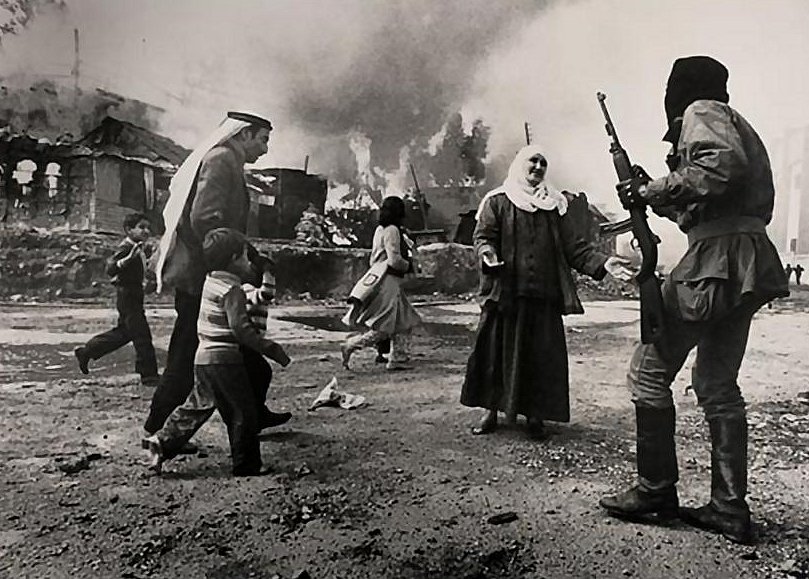
Muslim gunmen clash with right-wing Phalange militiamen outside the Phoenicia Intercontinental hotel in Beirut, December, 1975.


O Beirut, O Mistress of the World
O Beirut,
O Mistress of the World
We confess before the One God
That we were envious of you
That your beauty hurt us
We confess now
That we gave you no justice, no mercy
That we misunderstood you and were not sorry
That we offered you a dagger in place of flowers
We confess before the just God
That we hurt you and exhausted you
That we burned you and made you cry
That we weighed you down with our sins
O Beirut
Without you, the world is not enough
We know now that your roots run deep within us
We know now just what was done by our hands
Rise
Rise
Rise
Rise from beneath the rubble
Like the almond flower in April
Rise from under your grief
Rise
The revolution is born in the womb of sorrows
Rise from beneath the rubble
Rise in honour of the forests
Rise in honour of the rivers
Rise in honour of the rivers and the valleys
And of humanity
Rise in honour of humanity
Rise O Beirut
Rise
The revolution is born in the womb of sorrows
O Beirut
O Beirut

 يا بيروت
يا ست الدنيا

يا بيروت
يا ست الدنيا
يا بيروت
نعترف أمام الله الواحد
أنّْا كنا منك نغار
وكان جمالك يؤذينا
نعترف الآن
بأنّْا لم ننصفك ولم نرحمك
بأنّْا لم نفهمك ولم نعذرك
وأهديناك مكان الوردة سكيناً
نعترف أمام الله العادل
بأنّْا جرحناك واتعبناك
بأنّْا أحرقناك وأبكيناك
وحملناك أيا بيروت معاصينا
يا بيروت
إن الدنيا بعد ليست تكفينا
الآن عرفنا أن جذورك ضاربة فينا
الآن عرفنا ماذا إقترفت أيدينا
قومي
قومي
قومي
قومي من تحت الردم
كزهرة لوز في نيسان
قومي من حزنك قومي
إن الثورة تولد من رحم الاحزان
قومي من تحت الردم
قومي إكراماً للغابات
قومي إكراماً للأنهار
قومي إكراماً للأنهار والوديان
والإنسان
قومي إكراماً للإنسان
قومي يا بيروت
قومي
إن الثورة تولد من رحم الاحزان
يا بيروت
ا بيروت

Pity The Nation

Pity the nation that is full of beliefs and empty of religion.
Pity the nation that wears a cloth it does not weave
and eats a bread it does not harvest.

Pity the nation that acclaims the bully as hero,
and that deems the glittering conqueror bountiful.

Pity a nation that despises a passion in its dream,
yet submits in its awakening.

Pity the nation that raises not its voice
save when it walks in a funeral,
boasts not except among its ruins,
and will rebel not save when its neck is laid
between the sword and the block.

Pity the nation whose statesman is a fox,
whose philosopher is a juggler,
and whose art is the art of patching and mimicking

Pity the nation that welcomes its new ruler with trumpeting,
and farewells him with hooting,
only to welcome another with trumpeting again.

Pity the nation whose sages are dumb with years
and whose strongmen are yet in the cradle.

Pity the nation divided into fragments,
each fragment deeming itself a nation.

Kahlil Gibran, The Garden of The Prophet (1933)

رحم على الامة

ارحم على الأمة المليئة بالمعتقدات والخالية من الدين
ارحم على الأمة التي تلبس ثوبا لا يحاك
وتأكل خبزا لا تحصد.
ارحم على الأمة التي تعتبر المتنمر بطلاً
ويعتبر منتصرها رائعا.
ارحم أمة تحتقر الشغف في أحلامها
لكنه يخضع لها عندما تستيقظ.
ارحم على الأمة التي لا ترفع صوتها
إلا عندما تمشي في جنازة
وتفتخر فقط بين أطلالها
ولن تنقذ نفسها عندما توضع رقبتها
بين السيف والكتلة.
ارحم على الأمة التي فيها رجل الدولة وهو ثعلب
والفيلسوف مشعوذ
فنه من الترقيع والتقليد
ارحم على الأمة التي تستقبل حاكمها الجديد بصوت عالٍ
ويقول وداعا له بسخرية
فقط للترحيب بآخر من خلال الاحتفال الصاخب مرة أخرى
ارحم على أمة حكماؤها أغبياء السنين
وأولئك الذين لا يزال رجالهم الأقوياء في المهد.
ارحموا الأمة منقسمة
وكل قطعة تعتبر نفسها أمة

To Beirut
Fairuz

To Beirut,
From my heart, peace to Beirut
And kisses to the sea and to the houses,
To a rock shaped liked the face of an old fisherman
She is wine from the spirit of the people
From its sweat, she is bread and jasmine.
So how did its taste become the taste of fire and smoke

Glory from the ashes of Beirut
From the blood of a child held in its hand,
My city has extinguished its beacon,
She has closed her door,
She has became alone at night
Alone with the night.

You are mine, you are mine.
Oh, embrace me, you are mine
My banner, the rock of tomorrow, the waves of my travels.
The wounds of my people have blossomed
The mothers’ tears have blossomed
You, Beirut, are mine
You are mine
Oh, embrace me
You are mine.

 يا بيروت

فيروز

لبيروت
من قلبي سلامٌ لبيروت
و قُبلٌ للبحر و البيوت
لصخرةٍ كأنها وجه بحارٍ قديمِ
هي من روحِ الشعب خمرٌ
هي من عرقِهِ خبزٌ و ياسمين
فكيف صار طعمها طعم نارٍ و دخانِ

لبيروت
مجدٌ من رمادٍ لبيروت
من دمٍ لولدٍ حُملَ فوق يدها
أطفأت مدينتي قنديلها
أغلقت بابها
أصبحت في المساء وحدها
وحدها و ليلُ

لبيروت
من قلبي سلامٌ لبيروت
و قُبلٌ للبحر و البيوت
لصخرةٍ كأنها وجه بحارٍ قديمِ

أنتِ لي أنتِ لي
أه عانقيني أنتِ لي
رايتي و حجرُ الغدِ و موج سفري
أزهرت جراح شعبي
أزهرت دمعة الأمهات
أنتِ بيروت لي
أنتِ لي

Tell me, tell me about my country
Fairuz

Tell me, tell me about my country,
Tell me, O breeze blowing through the trees before me
Tell me stories of my family and of my home
Tell me a long story about me and my childhood sweetheart.

O breeze blowing through the laurel garden,
I beg you, come and play with me in my house
Tell me if he still remembers me in my country
Does he wait for me in the evening in my country
In these few hours happiness, tell me,
Habibi, tell me.

I beg you, tell me how are the olive trees
And the boy and girl in the shade of the windmill
And the almond trees and the earth and our sky
It is our our country, and our love
Blooms in these ungenerous times
Habibi, tell me

احكيلي احكيلي عن بلدي

فيروز

إحكيلي إحكيلي عن بلدي إحكيلي
يا نسيم اللي مارق عالشجر مقابيلي
عن أهلي حكايي عن بيتي حكايي
و عن جار الطفولي حكايي طويلي
يا نسيم اللي مارق عا أرض الغار
حلفتك تجي تلعب عندي بهالدار
خبرني ان كان بعدو بيذكرني
ببلدي و عالسهرة ناطرني
بساعات الفرح القليلي حبيبي إحكيلي
حلفتك خبرني كيف حال الزيتون
و الصبي و الصبيي بفيي الطاحون
و اللوزي و الأرض و سمانا
هو هني بلدنا و هوانا
زهر الأيام البخيلي حبيبي إحكيلي

My City In  Ruins

Bruce Springsteen
There’s a blood red circle
On the cold dark ground
My city of ruins
Young men on the corner
Like scattered leaves
While my brother’s down on his knees
Tell me how do I begin again?
My city of ruins
My city’s in ruins
Now with these hands
With these hands, I pray Lord
With these hands
I pray for the strength Lord
With these hands
I pray for the faith, Lord
With these hands
I pray for your love, Lord
With these hands
I  pray for the strength, Lord
With these hands
I pray for your love, Lord
With these hands
I pray for your faith, Lord
With these hands
I pray for the strength, Lord
With these hands
Come on, rise up
Come on, rise up
Come on, rise up
Come on, rise up
Come on, rise up

مدينتي في اخراب
بروس سبرينغستين

هناك دائرة حمراء بالدم
على الأرض المظلمة الباردة
مدينتي الخرائب
الشباب في الزاوية
مثل الأوراق المتناثرة
بينما أخي على ركبتيه
قل لي كيف أبدأ من جديد؟
مدينتي في الخراب

مدينتي في خراب
الآن بهذه الأيدي
بهذه الأيدي أدعو الله
بهذه الأيدي
أصلي من أجل القوة يا رب
بهذه الأيدي
أصلي من أجل الإيمان يا رب
بهذه الأيدي
أصلي من أجل حبك يا رب
بهذه الأيدي
أصلي من أجل القوة يا رب
بهذه الأيدي
أصلي من أجل حبك يا رب
بهذه الأيدي
أصلي من أجل إيمانك يا رب
بهذه الأيدي
أصلي من أجل القوة يا رب
بهذه الأيدي
تعال ، انهض
تعال ، انهض
تعال ، انهض
تعال ، انهض
تعال ، انهض

Postscript

Lebanese author Dominique Eddé has written: “We know more or less what constitutes Lebanon, but we don’t know how it works. If we had to send into space a country capable of containing the world, Lebanon would fit the bill. If we had to send one that did not contain what is needed to make a real country, Lebanon would also be the answer”. (See Lebanon’s WhatsApp Intifada

In April 2015 In That Howling Infinite  published a piece on Lebanon’s’ fifteen year long civil war. Named for Khalil Gibran’s iconic poem, it was entitled Pity The Nation.  It ran thus:

The Lebanese Civil War broke loose forty years ago this month. A cold war fuelled, by aggregating hostility between the Palestinian refugee community, a militarized state within a state, and their reluctant Lebanese hosts, became hot with deadly clashes between Palestinian and Maronite militias. Sects, clans, families, and the political parties and militias that gathered about them, went for their guns, the hounds of hell were loosed, and the massacres began.

In a Levantine echo of the Thirty Years War that raged through Western Europe from 1618, cities were destroyed and the countryside ravaged as armies, militias and gangsters fought over the fallen body of a divided and devastated land. Muslims fought Christians, Sunni fought Shi’a, Maronites fought Orthodox, Druze fought Muslims and Christians, communists fought nationalists, and Palestinians, at one time or other, fought everyone, including other Palestinians. And all changed partners and enemies in a bloody danse macabre that was at once mediaeval and mid-20th Century in its savagery.

This Hobbesian “war of all against all” drew in outsiders. Syrians, who during the course of their intervention, changed allies and adversaries as their political and strategic aims and interests mutated, and ruled the country until, implicated in the assassination of popular former prime Minister Rafik Hariri in 2005, beat an undignified retreat (whilst never quite relinquishing the levers of power). Israelis, threatened by guerrilla attacks in the Fatah land of southern Lebanon, ostensibly invaded Lebanon to destroy the Palestinian military machine, and as the midwife in the birth of the Shi’a Hezbollah, waded with eyes wide shut into a quagmire that many have viewed as their Vietnam. Americans and French, who intervened with the aim of separating the warring sides and pushing them towards a ceasefire, departed in the aftershock of Hezbollah bombs that killed hundreds of their servicemen. And United Nations Blue Berets who serve and die still in the hostile borderlands.

The war raged for the next fifteen years, staggering to an end in 1990 after claiming over 150,000 lives and destroying the lives of tens of thousands of others, including over 100,000 permanently handicapped. Nearly a million souls fled their homes, and some 76, 000 remain displaced to this day, now forgotten in the midst of the new and greater Syrian diaspora, whilst tens of thousands emigrated permanently. There are still some 17,000 “disappeared” who may be either still in Syrian or Lebanese jails, or more likely, in one of hundreds of unmarked graves scattered across this tiny country.  


The Crown – the view from Down Under

Having luxuriated in series one to three of The Crown, the fourth is deliciously seditious – particularly if one is a republican – and an Australian republican at that. 

Pheasants and peasants, dead trout and salmon, trekking the wilds in tweeds and wellies, and the stalking of a wounded stag. When Uncle Dickie gets blown to smithereens, it feels like some karmic comeuppance. This is even before we get to witnessing the making and breaking of “the people’s princess” in what transpired to be a fractured fairytale. 

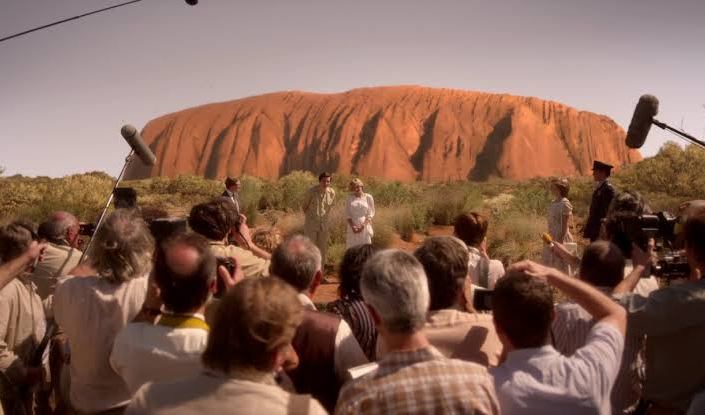
There was plenty for us antipodeans to enjoy in an episode ironically titled Terra Nullius, a phrase that is particularly potent in our ongoing “history wars”. The Australian scenes were actually filmed in Spain, but never mind. There was Richard ”Cleaver Green” Roxburgh as our larrikin Prime Minister, the late Bob Hawke, remarking that Princess Di had set back the republican movement for decades. The “silver bodgie” is cast as as an impatient republican, but in reality, he did not forcefully agitate for a republic during his early years in office.

On matters Australian, series four offered up a couple more events that have contemporary echoes. 

During the royal couple’s trip to Australia in 1983, Diana tried and failed to scale our iconic Uluru – it was called Ayers Rock in those days, the site of the tragically famous “a dingo are my baby” saga. Our government has only recently conceded to the wish of the traditional owners that climbing the sacred megalith be forbidden – to the chagrin of many, and the joy of many more. 

There is also the presence of Sir Martin Charteris, the Queen’s private secretary. Though long gone to his maker, and retired well before his fictional appearance, his name and reputation have been brought into critical review with revelations of the role he played in our Governor General’s dismissal of Labour Prime  Minister Gough Whitlam on Remembrance Day 1975 – an event that resonates still nearly half a century on. Whilst it has been shown that Queen Elizabeth did not have foreknowledge, it has also come to light that Prince Charles gave retrospective encouragement to Sir John Kerr, who was enthusiastically pushing for the Crown Prince succeed him as Governor General.

It is said that Australians’ affection for Wills and Kate has an impact on republican sentiment DownUnder similar to that of Princess Diana – though The Crown’s unflattering portrayal of Prince Charles, fresh on the heels of the release of “the Palace Letters” might lead folk to contemplate that when Her Maj goes to meet the saints, will we Aussies might declare that “it’s time!”?

For further reading on Australian history and politics in In That Howling Infinite, see; Down Under and The Frontier Wars – Austrtalias Heart of Darkness

Call yourself a Republican?  Then why are you bingeing The Crown?

Jacqueline Maley, Sydney Morning Herald, 22 November 20207

The television show The Crown presents a unique dilemma for republicans. How can we maintain our disdain for the monarchy, our assurance of its irrelevance, while we are bingeing on its depiction, lapping up every detail of its costume, marvelling at the strong hairline of Princess Margaret and delighting in Diana? Even the corgis who have walk-on parts compel us with the sureness of their stride.

As a friend of mine put it in our defence: I don’t like murderers, but I like watching shows about serial killers. Tolstoy knew how interesting unhappy families were, and there is plenty of personal misery in the fourth and latest season of The Crown, even though the only person the creators give us any sympathy for is Diana, Princess of Wales.

The power of her celebrity, two decades after her death, defies gravity. We only really want to watch the show because of her – the scenes which just feature the self-absorbed, self-pitying Prince Charles are the only ones that drag.

This mirrors the central problem of Charles’ life – the public was never very interested in him. What he doesn’t understand, at least according to the show (yes, I know, I know, it’s fiction), is that nobody is actually obliged to find him interesting.Advertisement

The Real Life Charles is reportedly very cross at the characterisation of him as a cruel husband who moons around Highgrove enunciating his pretentious gardening philosophy (“There will be no straight lines, Mummy,” he tells the Queen when she comes to visit).

I find myself straining to care when I read articles where “sources close to the prince” tell us such-and-such an event never happened that way, or that the depiction of Charles as smug and insecure is mean. So what? Fiction portrays truth far better than documentary, and that is the genius of the show.

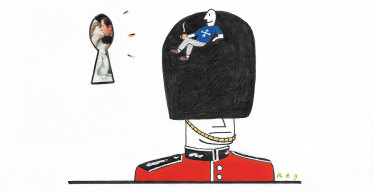
Illustration: Reg Lynch Besides, the most outlandish parts of the story are all true – the fact that two of the Queen’s first cousins were locked away in an institution for life because their disability might have caused people to believe the royal bloodline was “tainted”. The fact that a princess was so unhappy before her wedding that she tried to disappear herself through the misery of bulimia. The fact that the Queen’s children have to make appointments to see her.

I remember reading a defence of Kate Middleton – who was accused of not welcoming her sister-in-law Meghan Markle into the royal family – in which it was indignantly stated that Kate had even invited Meghan to her home once. This sort of weirdness is the second-generation iteration of Diana’s loneliness – in the show, the breeding mare/child bride Diana (she was 20) has been chosen to provide an heir, then locked in a palace to learn the rules. 

She is the key to the monarchy’s survival, yet when she rings the Queen, and her fiance, over and over, neither will take her call.

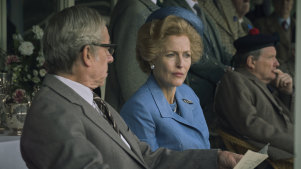
The Crown S4. Picture shows: Denis Thatcher (STEPHEN BOXER) and Margaret Thatcher (GILLIAN ANDERSON). Filming Location: Rothiemurchus, Scotland Gillian Anderson plays Margaret Thatcher in season 4 of The Crown.

In a recent essay on the pandemic, British novelist Zadie Smith writes that “suffering is not relative; it is absolute … it cannot be easily mediated by a third term like ‘privilege’.”

This sums up the Diana dynamic perfectly, and explains why millions of people loved her, or thought they did, for her vulnerability and her sadness, even though it was attended by servants and played out on the plump couches of Kensington Palace.

Here is another partial defence for republican viewers: the locations. Who is not dreaming of salmon-fishing in the Icelandic wilderness, walking the beach sadly in Mustique, a la Princess Margaret, or roaming the highlands of Scotland on a jolly hunting party (maybe minus the animal suffering)?Advertisement

The scenes of Balmoral, when Margaret Thatcher comes to stay with her husband Denis, are a fascinating portrayal of the clash between the low-born, broom-sweeping neo-liberalism of Thatcherism, and the fusty conservatism of Establishment Britain.

The Windsors look down on the shopkeeper’s daughter who doesn’t know how to dress properly for hunting. Seen through Thatcher’s eyes, the royal family are a ridiculous tribe with funny costumes and arcane habits.

Thatcher’s partially-sympathetic portrayal should be more controversial than Charles’ unsympathetic one. The bleakness of Thatcher’s Britain is shown but not focused on, and the only victim of her recession we see is Michael Fagan, the intruder who famously broke into the Queen’s bedroom in 1982. Fagan tells Liz “the system” is broken and complains about PM Maggie. The Queen is sympathetic and they have a moment together before he is whisked off by security.

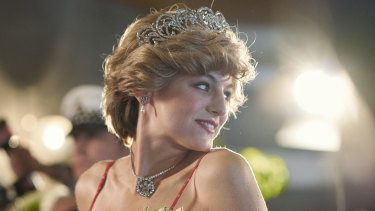
Emma Corin as Princess Diana  in an episode of The Crown  about Charles and Diana's tour of Australia.
                                                         Emma Corin as Princess Diana

But nothing happens, because the monarchy can’t make a material difference to any of its subjects’ lives, not that many of its members have shown an inclination to do so.Advertisement

Then there are the sons – Charles is self-pitying, Edward is a bullied boy turned bully, Andrew is charming but spoiled (perhaps a future series will explore the protection racket the royal family ran for the prince who refuses to answer police questions about his pedophile friend Jeffrey Epstein).

The Queen’s children, Diana, and even the Queen herself, all desperately need the validation of popularity, usually via the medium of the press, because it’s too sticky to get involved with one’s subjects personally. They are all jealous of the attention the others are getting. They all believe their misery to be worse than others’.

That, finally, is what the show brings out – how needy the royals are, and perhaps that’s the best republican take on The Crown.

That the act of divesting ourselves of the monarchy, when it eventually happens, will feel less like unshackling from a colonial power, and more like shaking off a clingy partner: the relief that comes with the end of a relationship you have simply grown out of.

Beyond Wolf Hall (1) – Revolution Road

A wide-ranging rural road trip through England’s green and pleasant land takes the traveller by antique and desolated abbeys and monasteries, their ageing walls crumbling and lichen covered, their vaulted pediments open to the English elements. The celebrated poets of the romantic era immortalized these relics in poetry, and even today, when one stands in grassy naves, gazing skywards through skeletal pillars, one can almost feel an ode coming on. Their number is remarkable – as a Wikipedia catalogue shows – and incalculable. The list is by no means exhaustive. There were one eight hundred religious houses existed in England and Wales before Henry VIII’s dissolution of the the monasteries and abbeys. Virtually every town of any size had at least one abbey, priory, convent or friary, including many small houses of monks, nuns, canons or friars. Many were spared despoliation and demolition, but many more were reduced to ruins and rubble by workmen and weather.

The 1530s were among the most significant in British history for the changes they wrought on its politics, society, culture. The backwash of the King’s Great Matter – his divorce from Katarina of Aragon, the onetime Spanish Princess and daughter of the formidable Queen Isabella, who was unable to give him a male heir to set fast his dynasty, and his marriage to Anne Boleyn in the hope that love and lust would bring forth male progeny – severed Britain from Rome’s papal dominion in matters of church and state, of its people’s bodies and souls. The pope in faraway Rome, regarded as a puppet of the Hapsburg Holy Roman Emperor in Vienna – who centuries later, historian Edward Gibbons declared as neither holy nor Roman – refused to grant Henry a divorce from Queen Katherine, his niece. Their reluctance and ultimate failure to secure this for their master doomed two wise, erudite and formidable chancellors, Cardinal Wolsey and Thomas More.

They were succeeded by Thomas Cromwell – kin, by way of his nephew, to his more famous namesake, Lord Protector Of The first and last English republic, Oliver Cromwell. Cromwell has until very recently been one of those people who whilst having immense historical significance is virtually unknown outside academia – most probably because his preeminent role in English government, politics, religion and society has long been overshadowed by the deeds and misdeeds of his royal master. Everybody knows about Henry and his six unfortunate wives – only one, Jane Parr who outlived him, got to live happily ever after – and his schism with catholic Rome that led to the establishment of the Church of England. It’s as if the narrative of the juvenile but enduring British history primer 1066 And All That had become established fact – to wit, Henry was “a bad king” but The Reformation was “a good thing”.  Few will be aware that Cromwell, Henry’s counsellor and Chief Minister, had a hand in three of those marriages and their undoing, and was the prime mover for Henry’s religious revolution, and much more besides.
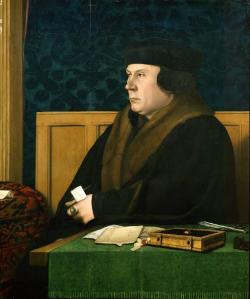
German artiist Hans Holbein The Younger’s portrait of Cromwell

The Hand of the King

In Hilary Mantel’s superb Wolf Hall and it’s equally magnificent sequels, Bring Up The Bodies and The Mirror and the Light, the story of English King Henry VIII is retold through the life and times of Thomas Cromwell, royal counsellor and chancellor. All the manoeuvres and machinations of church and state are set against the background of day to day life in 16th century England politics,trade, commerce and culture; and the annual plague that scourged high and low born alike, swift and deadly, laughing in the morning, dead by the evening. And threading through it all, is the religious ferment that was to persist, dangerous and deadly, for the next 150 years – Henry’s split with Rome, his founding of what was to become the Church of England, papists and protestants, priests and puritans, bells and smells, hair shirts, and burning flesh.

This article is the first of two published In That Howling Infinite discussing Hilary Mantel’s Cromwell. Read Beyond Wolf Hall – Icarus Ascending here.
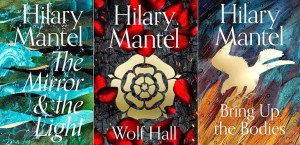
It is Mantel we must thank for placing Cromwell on a pedestal denied him for close on five hundred years. He is now a household name, and even, as she has herself described it, an industry. She and Oxford scholar and ecclesiastical historian Diarmaid MacCulloch have developed a mutual appreciation of each other’s ‘Crummie’, and it is MacCulloch’s 2018 biography Thomas Cromwell – A Life that is the ‘go to’ book for a definitive insight into the man and his works.

Before Wolf Hall, many of a certain age might remember he was portrayed with leering, Machiavellian relish by the late Leo McKern in the old movie A Man For All Seasons. In the play and film adaptation, Cromwell was the definitive ‘baddie’ and nemesis of the virtuous and principled Thomas Moore. Wolf Hall tells a different tale. More is the wowser and prig, and also, a keen inquisitor and torturer. And Cromwell is the reasonable, affable, capable, cultured “man for all seasons”.

Younger generations met him In HBO’s sprawling, splendidly dressed, violent and naughty multi-series The Tudors. James Frain plays Cromwell as an able, cunning, too-clever by half, commoner on the make; a vindictive and vengeful man who is not averse to “showing the instruments” (of torture, that is) and ordering their use upon those he wishes to interrogate and invariably execute. Hilary Mantel’s Thomas would do no such thing. A lifetime of observing and recording has taught him that less sanguinary measures more often than not encourage confessions, and indeed, as the value of information gleaned under torture is usually false, tend to elicit the truth also. Merely talking about the instruments is enough to open the most reticent of mouths. In the television adaptation of Wolf Hall, Cromwell is played with calm understatement and restraint by veteran actor Mark Rylance.
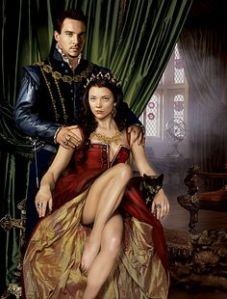
Henry VIIII and Anne Boleyn in The Tudors

In her review of the book, What Hilary Mantel left left out, The Guardian’s Jessie Collins wrote of Cromwell: “It is his contradictions that stand out: intense focus and frenetic energy, rapacity and a social conscience, “clubbability” and a trainspotterish enthusiasm for waterworks. He was a wily operator, but a favourite of widows and wayward young men. He was undoubtedly ruthless, but sometimes tried to mitigate the king’s cruellest inclinations. He was at his fiercest when seeking revenge for Wolsey’s fall, but if we are to be sympathetic to Cromwell – as MacCulloch is – then we must recognise its correlative: his ardent loyalty”.

Reviewing MacCulloch’s tome for The London Review of Books, Stephen Alford wrote that is was “necessarily the study of a royal bureaucracy knocked into shape by the size of the job it had to deal with, as well as a close encounter with a Church remodelled in the 1530’s image of a king”.

And regarding ‘The Hand of the King’, to borrow contemporary coinage, Alford continues:  “A man who in life strenuously resisted easy categories, Cromwell has been forced into the competing roles of hero and villain many times over. Neither quite fits him. To his enemies, of whom by the late 1530s there were many, he was an abominable heretic. Even today it can seem that every ruined monastery south of Carlisle and Berwick was somehow pulled to pieces by Cromwell personally … Over the centuries great claims have been made on Cromwell’s behalf. One is that he helped to bring the ‘true religion’ of Protestantism to England. Another is that he revolutionised and modernised the functioning of the English state. Both rest their weight on an individual whose life story is full of question marks …”

I have reproduced Alford’s and Collin’s reviews of MacCulloch’s biography of Cromwell below. They are well worth reading.
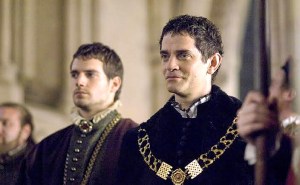
James Frain as Cromwell in The Tudors

The rift with Rome

Henry’s dispute with the Pope concerning his Great Matter was ostensibly more about monarchical power and sovereignty, his existential need to secure his heirs, and to Europe’s dynastic yet dysfunctional power struggles than about religion. He did not regard himself as one of the reformists, or Protestants as they became known. He remained, and regarded himself, a catholic monarch, and a “Defender of the Faith”, a title the Pope himself conferred upon him for his written repudiation of the heretical works and preachings of one time cleric Martin Luther – and a motto that still circles the image of the monarch on Britain’s coinage.

Mantel’s Thomas Cromwell is well aware that Henry is no true Protestant and that. His repudiation of papal authority split is about power and sovereignty, and not popish practises, which he persists in observing. The king continues to follow the mass, to observe the saints’s days (though there are less of them now). Both king and clergy resisted the publication and dissemination of the bible in English. Like their predecessors, they did not want the lower orders to discover that the scriptures made no mention therein of indulgences, of clerical celibacy, of purgatory, and indeed, of clergy. Like the kings and prelates of Catholic Europe, he was not averse to consigning heretics to faith’s cleansing fire, and torched those who’d adopted the rejectionist doctrines of Martin Luther and John Calvin – those who by the end of the sixteenth century, would be described as  Protestants – and before that, theological dissidents who populated a broad continuum between traditionalists and reformers. Later, when  Protestants were in the ascendant, the authorities cast Catholic and other adversaries into the fire.

But perennially impecunious, His Majesty can smell the money and is soon hooked on the riches and the lands that accrue to the crown and its cronies with the dissolution of the great abbeys and monastic houses. Thomas, his “go to”, “can do” red right hand fixes it – to his own benefit and that of his family and friends, and, also of the impecunious honour-rich but debt-deprived ancient families.

Whilst Henry was opportunistic and impulsively adventurous, Thomas, for all his erudition, political skill, and lived experience in Europe and England, was actually a cautious and calculating true believer. Stephen Alford again: “He was a man of the world, a pragmatist whose preoccupations were with the possible; it just so happened that for Cromwell the scope of possibility was so much greater than it seemed to be for other people. Yet he was a believer too, from at least the 1520s an enthusiast for Reformation. After 1537, as secure as he was ever likely to be politically, he began to pursue with a single mind an evangelical agenda. But he was also cautious …In the always unpredictable and often dangerous religious landscapes of the 1520s and 1530s he played his faith very close to his chest. Spared the agony and ecstasy of a public spiritual crisis, he left prophecy and martyrdom to others”.

In the wake of Cardinal Wolsey’s failure and demise, Cromwell becomes the public face of the king’s split with Rome and the spiritual and temporal authority of the Pope. His Protestant beliefs, fostered during his sojourn in the heretical Low Countries, impelled his rejection of the Roman faith with its corruption and its confidence tricks, its profiteering and its hypocrisy, its fabricated sinecures and sacraments, its relics and its indulgence. His pure hatred and contempt for the whole shaky edifice is force-fed by the prospects of divesting the English church of its immense power, wealth and influence, of filling the crown’s hungry coffers.

Cromwell is fully aware that he is loathed by the common people who yearn for the old, familiar ways, the “bells and smells”, the bits of dead saints’ bones and the shreds of their shrouds. They rise up, in a quixotic revivalist crusade called The Pilgrimage of Grace, and having risen up in rebellion against the new order, are on his orders, put down mercilessly with sword and rope by England’s hereditary warlords.

“It takes a generation, he says, to reconcile heads and hearts. Englishmen of every Shire  are wedded to what their nurses told them. They not like to think too hard, or disturb the plan of the world that exists inside their heads, and they will not accept change unless it puts them in a better case”?

And yet he is resolute in his convictions. “But new times are coming … children yet to be born – will never have known their country in thrall to an old fraud in Rome. They will not put their faith in the teeth and bones of the dead, or in holy water, ashes and wax. When they can read a Bible for themselves, they will be closer to God than to their own skin. They will speak His language, and He theirs”.
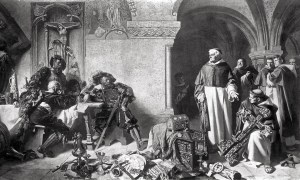
The Dissolution Of the Monasteries

The harrowing of the shires

Hilary Mantel gives us a formidable and very original account of the dissolution of the monasteries and the demolition of the very foundations of the established faith. She catalogues the work of the commissioners, the enforcers and the executioners, the suppression of the superstitions and the scams, and the rivers of gold that flowed into the pockets of the king and his agents along with lands and mansions. It’s such a remarkable read, I quote it here in full:

This winter the king is taking the surrender of the great abbeys, with their manorial titles and broad acres, their watercourses, fishponds, pastures, their livestock and the contents of their barns: Every grain of wheat weighed, every hide counted. If some geese have flocked to market, cattle strolled to the slaughterhouse, trees felled themselves, coins  jumped into passing pockets… it is regrettable, but the kings commissioners, men not easy to deceive, could not go about their work without their presence being heralded: The monks have plenty of time to spirit the assets away. Treat the King fairly, and he will be a good master. When Saint Bartholomew surrenders and it’s bells are taken to Newgate, Prior Fuller is granted land and a pension. Officers of the Court of Augmentations move into its great buildings, and Richard Riche plans to turn the prior’s lodgings into his townhouse. In the North Country, Abbot Bradley of Fountains settles for an annual pension of 100 pounds. The Abbot of Winchcombe, always a helpful man, accepts a hundred and forty. Hailes surrenders, where they displayed the blood of Christ in a phial. The great convent at Syon is marked for closure, and he reminds himself of Launde, with Prior of Lancaster has been in post for three decades, which is too long. It has not been a pious or happy house these last years. When questioned the prior would always declaring, omnia bene, all’s well, but it wasn’t: the church roof leaked and there were always women about. All that is over now. He will rebuild it, a house after his own liking, in England’s calm and green heart. In dark weather, he dreams of the garden arbour, of the drifting petals of the rose, pearl-white and blush-pink. He dreams of violets, hearts-ease and the blue stars of the pervink or periwinkle, used by our maids as lovers knots; in Italy they weave them into garlands for condemned men … (page 699)

… In November he writes in his memoranda, “the Abbott of Reading to be tried and executed”. He has seen the evidence and the indictments; there is no doubt of the verdict, so why pretend that there is? The Days of the great abbeys died with the north country rebellion. The king will no longer countenance subversion of his rule, or the existence of men who lie awake in their plush curtained lodgings and dream of Rome. Thousands of acres of England are now released, and the men who lived on them dispersed to the parishes, or to the universities if they are learned: if not, to whatever trade they can find. For the abbots and priors it’s mostly ends with an annuity, but if necessary with a noose. He has taken into custody Richard Whiting, the Abbott of Glastonbury, and after his trial he is dragged on a hurdle through the town and hanged, alongside his treasurer and his sacristan, on top of the tor: an old man and a foolish, with a traitors heart; an embezzler too, who has hidden his treasures in the walls. Or so the commissioners say. Such offences might be overlooked, if they were not proof of malice, a denial of the king’s place as head of the church, which makes him head of all chalices, pyxs, crucifixes, chasubles and copes, of candlesticks, crystal reliquaries, painted screens and images in guilds and glass.

No ruler is exempt from the death except King Arthur. Some say he is only sleeping, and will rise in an hour of peril: if say, the emperor sends troops. But at Glastonbury they have long claimed that he was as mortal as you and me, and that they have his bones. Time was, when the abbey wanted funds, the monks were on the road with the mouldy head of John the Baptist and some broken bits of the manger from Bethlehem. But when that failed to make that coffers chime, what did they arrange to find beneath the floor? The remains of Arthur, and beside him the skeleton of a queen with a long golden hair?

The bones proved durable. They survived the fires have destroyed most of the Abbey. Over the years they attracted so many pilgrims that Beckett’s shrine waxed jealous. Lead cross, crystal cross, Isle of Avalon: they wrung out of pennies from the treacherous and awed. Some say Jesus himself trod this ground, a bruit that the townsfolk encourage: at Saint George’s In they have an imprint of Christ’s foot, and for a fee you can trace around it and take the paper home. They claim that, after the crucifixion, Joseph of Arimathea turned up, with the Holy Grail in his baggage. 700 He brought a relic of Mount Calvary itself, part of the hole in which the foot of the cross was placed. He planted his staff in the ground, from which a Hawthorne flowered, and continues to flower in the fat years and lean, as the Edwards and Henrys reign and die and go down to dust. Now down to dust with them go all the Glastonbury relics, two saints called Benignus and two kings called Edmund, a queen called Bathilde, Athelstan the half-king, Bridget and Crisanta, and the broken head of Bede. Farewell, Guthlac and Gertrude, Hilda and Hubertus, two abbots called Seifredus, and pope called Urbanus.Adieu, Adelia, Aidan Alphege, Wenta, Walburga, and Cesarius the martyr: sink from man’s sight, with your muddles and your misstranscriptions, with the shaking of your flaky finger bones and the compound jumble of your skulls. Let us bury them once and for all, the skeletons of mice that mingle with holy dust; the ragged pieces of your tunics, your hairshirts clumbed with blood, your snippets and your offcuts and the crisp charred clothing of the three men who escaped from the Burning Fiery Furnace. The lily has faded, that the virgin held on the day the angel came. The taper is quenched, that lighted the Saviour’s tomb. Glastonbury Tor is over 500 feet high. You can see for miles. You can see a new country if you look, where everything is fresh, repainted, re-enamelled, bleached, scrubbed clean … (page 701)

While the welcoming party is around the sea, the Abbott of Colchester is in the air. Colchester had signed up to the King supremacy, he had taken the oath. Then he gave backward, in whispers behind the hand: More and Fisher were martyrs, how he pitied them! When he was called upon to surrender his abbey, he said the king had no right to it – which is to say, his will and laws I know. He is head neither of the spiritual realm nor the temporal; in effect he is no king and parliament can make the law. According to the Abbot.

… It is the last of the hangings, he is sure. They were infecting each other, Colchester,  Glastonbury and Reading.  But now resistance to the King’s will is broken. All other houses can be closed by negotiation: no more blood, no more ropes and chains. No more examples are needed; the traitor’s banner is trampled, that portrayed the Five Wounds. Superstitious men in the north claim that in addition to his principal wounds, Christ suffered 5470 more. They say that every day fresh ones are incised, as he is cut and flayed by Cromwell. (page 709)

Let England shake

Thomas Cromwell was executed on Tower Hill  on 28th July 1540 and was buried in the Tower of London’s  Chapel of St Peter ad Vincula. Interred thereto are  Anne Boleyn and Margaret Pole, Countess of Salisbury and the last of the Plantagenet line – both of whom were executed through Cromwell’s’ manoeuvrings. Seventeen year old Catherine Howard became Henry’s fifth wife on the day that Cromwell died – and condemned for adultery and accordingly, high treason, she went to the block on Tower Green less than two years later. These were dark times for bad girls and wide boys.

Hilary Mantel’s story has been about England, it’s legends and it’s legacies, it’s rythmns and rhymes, it’s history past, present, and future. And he, Thomas Cromwell, has made England shake. And hisnrevolution endured. Henry VIII let it run, and his son, frail but resolutely Protestant Edward, endeavoured to anchor it. The Spanish Princess’s daughter ‘Bloody Mary’ strove with fire and sword to unmake it. And Anne Boleyn’s child, Elizabeth, set it in concrete so strong that Scottish James and his unfortunate son Charles I could not crack its foundations.

The rest, as they say, is our history.

© Paul Hemphill 2020.  All rights reserved

For other posts in In That Howling Infinite on matters historical, see Foggy Ruins of Time – history’s pages

A Man It Would  Be Unwise To Cross

Stephen Alford, London Review of Books November 8th 2018

Review of Thomas Cromwell –  A Life by Diarmaid MacCulloch, September 2018

In 1517, a fierce commercial struggle broke out in England between two enterprising competitors in the busy trade of saving souls. The English Province of Austin Friars and Our Lady’s Gild of Boston, deep in the Lincolnshire fenland, went to law over the sale of indulgences, those pardons, common across the whole of Europe, offering remission for souls in purgatory. Since 1500 Our Lady’s Gild had built up what was probably the largest indulgences business in the kingdom. The friars pursued the same trade with equal vigour. The collision of interests was not surprising – big money was at stake. Far away in Saxony, Martin Luther, a brother Augustinian, was about to open heavy fire on what he saw as the whole worthless racket.

Our Lady’s Gild threw its considerable resources at the case. It appealed to Thomas Wolsey, Henry VIII’s indispensable right hand: cardinal, archbishop, lord chancellor, Wolsey was a formidable broker of power. And it also bought the services of a clever (and therefore expensive) attorney. This was Thomas Cromwell, who in early 1519 went to Rome to make his client’s case at the pope’s court. He journeyed via Calais, was away on his mission for 26 weeks, and as he travelled read Erasmus of Rotterdam’s New Testament in Greek and Latin. Erasmus, the most brilliant scholar of the age, got him thinking.

Cromwell loved books. He was a talented linguist and his Italian in particular was excellent. But he wasn’t a secluded intellectual. He hadn’t studied at a university, and the law he picked up in London he used to make a good living for himself. Intelligent and restless, he had knocked around a bit in his time. Teenage wanderlust had taken him as far as the Mediterranean, and in his twenties he was in Antwerp, the greatest European entrepôt of its day, a magnet for merchants and high financiers. He was comfortable in mercantile company and he liked money. Socially it was tricky to pin him down. His father was a yeoman with a substantial interest in brewing, his mother was a gentlewoman. He was thus himself a bit of a hybrid, and would always remain so. The accounts of Our Lady’s Gild of Boston gave their comfortably middle-aged attorney (he was now in his thirties) the gentleman’s title of master. Cromwell was the boy from Putney who rose and fell at the court of Henry VIII with, as Diarmaid MacCulloch’s biography shows, spectacular unobtrusiveness.

A man who in life strenuously resisted easy categories, Cromwell has been forced into the competing roles of hero and villain many times over. Neither quite fits him. To his enemies, of whom by the late 1530s there were many, he was an abominable heretic. Even today it can seem that every ruined monastery south of Carlisle and Berwick was somehow pulled to pieces by Cromwell personally. Reginald Pole called him a Machiavel, and the label, seemingly congruent with the Frick Collection’s famous portrait by Hans Holbein the Younger, has stuck: Cromwell’s intensely focused stillness suggests a man it would be unwise to cross. Even for those who lionised him as a champion of the English Reformation, there were bits of his life which didn’t quite fit. The story of attorney Cromwell’s mission to Rome was first told by John Foxe in Actes and Monumentes, the ‘Book of Martyrs’. Foxe had to rescue his hero with some deft literary footwork, turning on its head the uncomfortable tale of Cromwell’s journey to the heart of Roman superstition and error. Elizabethan Protestants could thank providence that Erasmus’s New Testament had spoken to Cromwell’s spiritual sensitivity in those weeks of travel and given him a ‘better understanding’ of God’s truth.

Over the centuries great claims have been made on Cromwell’s behalf. One is that he helped to bring the ‘true religion’ of Protestantism to England. Another is that he revolutionised and modernised the functioning of the English state. Both rest their weight on an individual whose life story is full of question marks. There is no tidy box of historical explanation into which we can put him. The brisk judgment of Hugh Trevor-Roper was that Cromwell ‘was a freak in English history’. It has always been easier to fall back on broad-brush assertions or to dismiss him with an adjective: ‘sinister’ and ‘Machiavellian’ used to be two of the most common. As Geoffrey Elton wrote in 1953, ‘We do not call a man sinister whom we know well, whether we like him or not.’ But Elton merely restates the problem. How do we get to know Thomas Cromwell in the first place?

The answer is by a painstaking forensic recovery of every surviving piece of evidence and then letting the completed dossier speak for itself. MacCulloch’s biography is itself an exercise in Cromwellian rigour. Nothing here is rushed, no detail overlooked. Care and precision are everything. Later reminiscences of Cromwell are positioned and repositioned, the chronology tested, every particle sifted and cross-referenced. We need to know before we can judge. We feel by the end of MacCulloch’s formidable book that we know Cromwell very well indeed.

The Cromwell of this Life seems at times to be a watcher more than an actor, purposeful and busy yet somehow also passive. He had a strong sense of family and kinship, and a gift for making friendships durable enough to survive the later painful upheavals in religious belief. He understood the obligations of courteous reciprocity in a society whose mechanisms were lubricated by patronage. MacCulloch’s Cromwell is a collector and a reader of books. Italy is his passion, Italian the shared language of his friends and colleagues. He read Machiavelli (History of Florence as well as The Prince), Petrarch and Castiglione’s manual for the courtier, Il Cortegiano – important reading for the attorney from Putney. He was on equal terms with university scholars like Cranmer, a don to his fingertips. But Cromwell never lost the self-containment and self-reliance of the autodidact. He was a man of the world, a pragmatist whose preoccupations were with the possible; it just so happened that for Cromwell the scope of possibility was so much greater than it seemed to be for other people.

Yet he was a believer too, from at least the 1520s an enthusiast for Reformation. After 1537, as secure as he was ever likely to be politically, he began to pursue with a single mind an evangelical agenda. But he was also cautious. As Foxe described it (and his description seems to fit the man), Cromwell’s conversion was a process, not a spasm of Damascene revelation. In reading the Erasmian New Testament, as Foxe put it, Cromwell ‘began to be touched and called to better understanding’. In the always unpredictable and often dangerous religious landscapes of the 1520s and 1530s he played his faith very close to his chest. Spared the agony and ecstasy of a public spiritual crisis, he left prophecy and martyrdom to others.

Striking in the world MacCulloch builds around Cromwell is its sense of order and routine, its reasonableness, its gentleness even. The fractures of the 1530s, the consequences foreseen and unforeseen of Henry’s ‘Great Matter’ – the problem of Katherine of Aragon and the break with the Church of Rome – are all the more shocking because the bonds of social and political solidarity which pushed Cromwell up the ladder of preferment and promotion had once been so resilient. He had no grand plan for greatness. To talk about his ‘rise to power’ after 1530 feels almost like bad form; however true, the cliché, which suggests the energy of personal ambition, doesn’t quite fit. Though he was ever the sharp-eyed attorney, it was his grasp of minutiae, his gift with a pen, his ability to persuade others, his patience, that really marked him out. He had an instinct for the right move to make at the right time, offering a masterclass in the softly, softly approach to the acquisition of authority. In his life, routine and process counterweighted those moments in Henrician politics when the blade of the executioner’s axe met the neck on the block or the fire was lit under the prisoner bound to a stake. Volatility in this book is left to King Henry, tantrums and petty revenge to Anne Boleyn, sulks and tactlessness to Stephen Gardiner, fuming at upstart nobodies to His Grace the Duke of Norfolk. Cromwell, without title and for a long time without proper position, moved quietly ever forward.

It all​ began in Putney, a few miles upriver from London, where he was born and from where he escaped probably as soon as he was able. Born around 1485, he was a teenager at the turn of the new century. His father, Walter Cromwell alias Smith, was a more or less successful businessman whose brushes with manorial justice were practically routine. His mother’s name may have been Katherine, and her origins can be traced with some close detective work to the Meverell family of the Staffordshire Peaks.

The mature Cromwell looked back to his own wild youth, ‘as he himself was wont oftentimes to declare unto Cranmer Archbishop of Canterbury, showing what a ruffian he was in his young days’ (the words belong to John Foxe). We shouldn’t take him too seriously here; it is easy to overlook his wry sense of humour. He was a wanderer and a traveller, and gave himself an education in the world so very different from the suffocating discipline and narrow curriculum of a university. What historians and biographers can’t fix with the certainty of fact and evidence offers the novelist the rich and necessary space of imaginative possibility. This has been true of Cromwell’s life since the 16th century. A novella by the Italian author Matteo Bandello, printed (naturally) by John Foxe, interpreted Cromwell’s adolescent travels in Europe as an escape from the violence of his father, a story with shaky foundations that was taken up with enthusiasm by the Victorians. Our first meeting with a young Thomas felled and bloodied by the calculated savagery of Walter Cromwell’s kicks in Hilary Mantel’s Wolf Hall is viscerally memorable.

There is no clear vision of Cromwell until the age of forty, though by the 1510s he begins to come a little more into focus. He married his wife, Elizabeth, probably a few years after Henry’s accession in 1509. They had two daughters, Anne and Grace, and a son, Gregory, born in 1519 or 1520. At some point in the 1520s Elizabeth’s mother, Mercy (the Mistress Prior always popular with the family’s friends and handy with medicines), moved in. In 1523 the Cromwells took up residence near Austin Friars, in a grand house on Throgmorton Street. Thomas was doing well for himself. Nestled close to the beautiful Augustinian friary, his legal practice took him upriver to the Court of Chancery in Westminster. His Anglo-Italian business and legal connections were extensive. He counted as friends and clients merchants who went to the king’s court to trade their luxurious fabrics before Henry himself. Already Cromwell was on the fringes of power.

The big step up came in 1524, when he was recruited into the household of Cardinal Wolsey. Wolsey, prince of the Church and Henry’s man, wanted to build his legacy in stone. He planned two colleges, one in Ipswich (his home town) and the other in Oxford, as well as a tomb that would stand as a masterpiece to celebrate a masterly career. With his scrupulous eye for detail, Cromwell was perfect for the job of managing these considerable projects. This laid the groundwork for a later career that, had Wolsey lived years longer, might never have happened. Cromwell had the job of winding up some small religious foundations whose liquidations funded Wolsey’s colleges and tomb. Cromwell visited these houses and, with an improvisatory talent for handling the paperwork, oversaw the legal details. By the late 1520s few outsiders knew the English monasteries better than he did. He was given a job and got on with it, enjoying his freedom. In recruiting distinguished scholars for the Oxford foundation, Cromwell already had a good eye for university men sympathetic to Reformation ideas.

And so he prospered and he learned. Elected to the House of Commons for the Parliament of 1523, he saw for the first time from the inside a body he would come to manage in the 1530s with the same confidence he demonstrated in Wolsey’s service. He knew early on what he was up against, though he saw too the very human side of institutions. Of his 17 weeks in Parliament he wrote to a friend in 1523: ‘Howbeit, in conclusion, we have done as our predecessors have been wont to do, that is to say, as well as we might, and left where we began.’ Even the frighteningly efficient attorney had a sense of humour.

The hardest year personally and professionally was 1529. Elizabeth, Anne and Grace Cromwell died and Wolsey proved unable to deliver what Henry VIII had demanded: a satisfactory conclusion to the Great Matter, the neat annulment of a marriage to Katherine of Aragon that had been no marriage at all in the eyes of the king. Wolsey – like everyone else – had failed to attend to his majesty’s delicate conscience. Yet Cromwell remained close to Wolsey. He stuck his neck out to defend the cardinal in the Parliament of 1529, where Wolsey’s many enemies were determined to bring him down once and for all. For most of 1530 Cromwell hovered uncertainly between loyalties. But he was Wolsey’s man still, handling his master’s business long after the cardinal’s fall.

Parliament had shown his capabilities. In early January 1530 he took a walk with the king in his majesty’s garden at Westminster during which, such evidence as there is suggests, he gave an expert’s view of how profit might be made out of Church reform. Henry, at a critical moment in his fight with Rome, saw the possibilities. But no deal was done. That summer Cromwell toyed with a plan to fall back on his private practice as an attorney. In August 1530 he laboured over the wording of a letter to his disgraced master, who seemed incapable of keeping himself out of the headlines. ‘Learn to experiment how ye shall banish and exile the vain desires of this unstable world,’ he wrote to Wolsey. Now with a decision to make for himself, Cromwell’s words may have spoken as much to his own situation.

Something almost irresistible seems to be acting on Cromwell in the early 1530s, MacCulloch’s biography suggests, and the next step in his career happened as a kind of natural process, like the turning of the seasons. Somehow it was inevitable. Some people noticed it, some didn’t. By 1530 he had supporters at court, and they shared a common profile: they had been close to Wolsey, they didn’t like Anne Boleyn, but they were obeying as loyal subjects the king’s efforts to get rid of Queen Katherine, though with little enthusiasm. Just when few knew precisely how to give Henry what he wanted, Cromwell was the man being talked about. ‘And forasmuch as now his Majesty had to do with the Pope, his great enemy, there was (he thought) in all England, none so apt for the King’s purpose, which could say or do more in that matter than could Thomas Cromwell.’ So, in later years, said Sir John Russell, a court insider.

From 1531 Cromwell became the king’s fixer. In a sense he merely moved from one legacy project to another, for by now Henry was no longer content to play by the rules of Rome. His majesty’s cause had run into the buffers at the legatine court at Blackfriars in 1529, precipitating the collapse of Wolsey’s power. Yet Henry refused to give up, and by 1530 a kind of royal think tank, of which Cranmer was a member, was beginning to suggest a radical change of strategy.

The King Henry of this biography is impulsive and unpredictable, with a short attention span and a consistently high regard for his own genius. In the Great Matter he knew what he wanted. When in late 1530 Henry read a dossier that set out compelling historical evidence of his own spiritual supremacy, he annotated it in 46 places. Even Henry’s normally dormant critical senses were alert enough to ask of key passages ‘Ubi hic?’ (‘Whence does this come?’). But naturally he was an enthusiast, for supposedly erudite scholarship by others told him what he wanted to hear. In his mind was the image that Cromwell and Cranmer were later able to transmit to all the king’s subjects by means of the title-page of the Great Bible: Henry at the centre of everything, beholden to no other human power, communicating with his God without the need for an intercessor.

It was Cromwell’s job to make something strong and meaningful out of this confection of royal ego, dodgy history, polarised court politics and happenstance. It was a task that involved facing down the elite of the English clergy, detaching England from the authority of the bishop of Rome by statutory means (while emphasising that the king was very firmly above any law), managing official propaganda, and breaking Henry’s opponents. Thomas More and John Fisher were two victims. In the final encounters with More we find in Cromwell the human face of a process the collateral damage of which meant almost nothing to the king; they were two servants of a royal master, bound by that commonality, who found themselves on opposite sides of his majesty’s will. Cromwell as ever got on with the job, roughly balancing duty and conscience, and smoothing to the best of his ability the sharper edges of Henry’s displeasure.

Closeness to the king himself mattered more for Cromwell than formal position. The later promotions – Baron Cromwell of Wimbledon in 1536, Earl of Essex for a mere two months in the year of his downfall, 1540 – look like overcompensations for a loyal servant snubbed early on. But the initial appointments, the earliest signs of favour, meant something. Master of the jewels (1532), chancellor of the exchequer (1533), master of the rolls (1534), vice-gerent in spirituals (1535): each of these gave access to the king and influence over the flow of paper, allowing Cromwell to expand his horizons and his control. Newly promoted, he quickly needed a portrait (hence Holbein’s extraordinary picture) and a coat of arms, for which he, daringly, chose to incorporate elements of Wolsey’s own. Always perhaps a little unpredictable, a bit of a hybrid, his standing was never quite fixed. In fact the new offices of vice-gerent and vicar-general, which gave him as the king’s deputy the authority to suppress the religious houses, produced a very English awkwardness over etiquette. How should one refer to the vice-gerent? ‘Your grace’ was out, ‘Your holiness’ a non-starter. One bureaucrat with a talent for flattery came up with the perfect title: ‘Your goodness’. Probably it spoke to Cromwell’s own genius for flexible improvisation, as well as to his sense of humour.

The question​ that used to be asked of the huge upheavals of Reformation in the 1530s was ‘King or minister?’ Henry or Cromwell? Whose responsibility was it all? Whose vision? Whose fault? These questions once made sense, based as they were on the belief that an individual alone might be masterful or visionary enough to direct the fortunes of a kingdom. We seem today to have lost that easy faith. In the 1530s there was a sustained effort at making the Henrician revolution work, at least in the interests of the king. That conversation between Cromwell and Henry in Westminster in early 1530 bore fruit. The king and his elite made a fortune out of the Church and its lands. Enforcement was tough, its instruments being a new treason law and propaganda and new agencies of government able to process a massive administration. There was of course a reaction from subjects who saw their world being ripped apart. In the great rebellion in the north of England in 1536 ‘pilgrims’ stood for the commonwealth against Cromwell and other heretics. And all of this from the king’s passion and scruple of conscience. There was little intelligent design here, at least initially. Henry was too flawed a leader to have thought very much or for very long about the consequences of what he began, other than for himself. Led by impulse from one moment to another, he put the allegiance of loyal subjects under immense strain. Disconnected from the human cost of his actions, he was a tyrant in the making.

Holbein’s portrait of Cromwell shows the ideal bureaucrat. Within reach are the implements of office: quill, book and papers. The steadiness of the gaze is what unnerves the viewer. Cromwell’s instinct for government and process, and his sense of balance, were impeccable, at least when he was at the height of his powers. He liked detail and he preferred neat uniformity. He understood possibilities and he worked with the realities of the moment. He was able to manage change on an immense scale. He shared with friends like Thomas Cranmer a reforming agenda in religion, and he had ambitions for his own promotion and the standing of his family. But even Cromwell could go only so far. He was human after all. Later portraits lack Holbein’s extraordinary precision but they succeed in showing just a little softening of that early hardness.

A Life of Thomas Cromwell is necessarily the study of a royal bureaucracy knocked into shape by the size of the job it had to deal with, as well as a close encounter with a Church remodelled in the 1530s in the image of a king. This is where MacCulloch’s passion lies: one feels his love of ecclesiastical process and order, his sympathy for spiritual men wrestling with the material realities of change and ambition. He has the pleasure in fine detail of an antiquary, the historian’s range and depth of vision and the biographer’s feel for his subject. This is a book about people, their friendships, alliances and obligations. As such it is inevitably a book about the forces in the 1530s that had the power to fracture all of those things. In it we never lose sight of Cromwell’s humanity. One strand of this is the protective eye he kept on wayward boys, the first of them Wolsey’s genially feckless illegitimate son Thomas Winter, the second his own son Gregory. An exquisite Holbein miniature of Gregory in 1537 shows a young man of about 18 with closely cropped hair. Lips pressed together, he looks down. There is something submissive in his attitude: the son of a powerful man with a certain weight of expectation resting on young shoulders. How different from the experience a generation earlier of that young ruffian who had knocked around Europe in the years after 1500, and who later made his own way up the ladder.

The end came in 1540. It was the strangest of years: an earldom, an English Bible, another neck on the block. The politics of the court finally caught up with Cromwell, as they had with so many others before. The debacle of the Cleves marriage, which was annulled after six months, left him exposed to enemies ready to take advantage of his having fallen from favour with the king. Of Cromwell’s arrest in early June we have a second-hand account by the French ambassador. Informed by the captain of the king’s guard that he was a prisoner, he ‘ripped his cap from his head and threw it to the ground in contempt, saying to the Duke of Norfolk and others of the Privy Council assembled there that this was the reward of the good service he had done to the king, and that he appealed to their consciences to know whether he was a traitor in their accusations.’ Norfolk’s response was to rip the Garter collar of St George from the prisoner’s neck. It’s likely His Grace rather enjoyed the moment.

In spite of his appeal to the loyal service he had given his majesty, he’d been around long enough to know that any minister was in the end dispensable. He served at his majesty’s pleasure, and his majesty’s track record spoke for itself. It was the same for everyone: once you were on the wrong side of Henry, he cut himself off completely, pulling down the shutters even on his closest relationships. In any case, Cromwell had never made Wolsey’s mistake of believing that he was the king’s friend. In some ways, oddly, Cromwell and Henry seem to have operated almost in parallel spheres. It was true at the very end. On the day of Cromwell’s execution, 28 July 1540, the king was otherwise occupied: that was the day he married Katherine Howard. With Cromwell on the scaffold there was no melodrama, only loyal submission to God and to Henry’s will. His thoughts in those few remaining minutes of his life were for the future wellbeing and security of his family.

In 1529, at the fall of Wolsey, Stephen Vaughan wrote to Cromwell: ‘You are more hated for your master’s sake than for anything else which I think you have wrongfully done against any man.’ We might ask ourselves whether Vaughan’s judgment is as true for the king Cromwell served, for that second legacy project he steered through to a conclusion of sorts – the heavy burden of a service from which he is only now being rescued.

Thomas Cromwell, by Diarmaid MacCulloch – What Mantel left out

Jessie Childs, The Guardian, 22nd September 2018

iarmaid MacCulloch, who is presumably no stranger to mispronunciation, thinks we’ve been getting Thomas Cromwell wrong. It should be “Crummle”. This matters more now that Cromwell is a household name, or, as Hilary Mantel has put it, “an industry”. There have been several biographies of him recently, but this is the one, according to the Booker-winner, “we have been awaiting for 400 years”.

The admiration is mutual: Mantel appears in MacCulloch’s introductory material as well as the main text, where he refers to a scene in her novel Wolf Hall in which Cromwell’s glowering portrait is unveiled. He adds that Cromwell put up with it, whereas Thomas More’s image took Holbein “quite a lot of adjustment to get right”. The two are now locked in a duel in the Frick collection in New York.

So this is far from being a buttoned-up biography of Henry VIII’s chief minister. MacCulloch is a stylish and playful writer who knows his readership and keeps his more scholarly conversations (“Frankly, that seems a naive reading of events”) to the back of the book. It is, at the same time, seriously heavyweight, both in terms of size (more than 700 pages) and archival heft. Anyone looking for the true story of Wolf Hall will be challenged, but also mightily rewarded. MacCulloch is Professor of the History of the Church at Oxford (you have to understand religion to get anywhere near Cromwell) and has spent six years reading, re-dating and interrogating Cromwell’s papers.

Cromwell only really got going in his 40s. His early years, like Shakespeare’s, are “lost” to the historian. MacCulloch does a fine job of slashing through dense undergrowth and catching “Putney straws in the wind”. The Cromwells might have had Irish roots. Thomas’s father, Walter, a brewer, was charged with assault, but was not necessarily abusive. MacCulloch doesn’t now think that he watered down his beer.

The Dissolution Of the Monasteries

As a teenager, Thomas travelled to Europe and opened his eyes to Florentine politics, Habsburg-Valois wars, Antwerp markets and the intellectual ferment of the early 16th century. He returned, according to MacCulloch, “the best Italian in all England” and it is ironic – though by no means incredible – that the man who would be known as the hammer of the monasteries began his career (in legal work for a Lincolnshire guild) as a champion of papal indulgences. MacCulloch speculates that his son Gregory might even be named after Pope Gregory the Great.

Cromwell soon caught the eye of Cardinal Wolsey and went to work on his “legacy project”, which involved dissolving monasteries in order to fund two memorial colleges and liaising with Italian sculptors on a magnificent tomb, topped by four bronze angels. Then Wolsey fell, the legacy was dismantled, and the angels flew. They eventually alighted on the gateposts of Wellingborough Golf Club and are now in the Victoria and Albert Museum.

Cromwell was rescued by Henry VIII, who relied on his “improvisatory genius” to drive through the break with Rome. Councillor Cromwell had the instinct to recognise the potential of parliament as an instrument of government. He had the talent to oversee the Valor ecclesiasticus, a financial survey comparable to the Domesday Book in scope. He had the chutzpah to curb the power of the church, as well as to marry his son to the king’s sister-in-law, and he was cut-throat enough to destroy Anne Boleyn, among others.

His greatest lasting achievement was the provision of an authorised vernacular Bible

None of this was straightforward, as can sometimes appear in more condensed narratives. MacCulloch describes Cromwell’s progress as “complex and crabwise”. He came to be loathed by the nobility as an upstart and by the rest of the country as a metropolitan elitist. The Pilgrimage of Grace (‘a northern civil war’) nearly toppled him, but iIn the end what did it was the king’s fourth marriage to Anne of Cleves. Henry’s Trumpian sense of injury was nowhere more apparent than in the bedroom.

Cromwell’s driving impulse was not to revolutionise government, but the church. MacCulloch brilliantly teases out his links to reformers in Zürich, far hotter Protestants than Martin Luther, who was too hot for Henry VIII. This was supremely risky and it is astounding that he should become, in 1535, vice-gerent in spirituals – effectively the lay head of the church under the king – a position that was unique and never repeated. His greatest lasting achievement was the provision of an authorised vernacular Bible, “the basis of every English biblical translation until modern times”.

This is a superb rendering of an extraordinary decade and a virtuoso portrait of the man whom most contemporaries blamed for its worst outrages. MacCulloch’s focus is sharp, but since nearly every item of business and news crossed Cromwell’s desk in the 1530s, there are fascinating vignettes on everything from water mills to Münster, that city state of apocalyptic fanatics who refused to baptise their babies. MacCulloch thinks it plausible that Cromwell’s much-laudedintroduction of parish registers listing burials, marriages and baptisms was a way of flushing out Anabaptist extremists at home.

Geoffrey Elton, the Cambridge don whose name was synonymous with Cromwell in the second half of the 20th century, didn’t think that his biography could be written. He thought it a poor way of doing history, and infra dig for a scholar, but the main problem was the nature of the evidence. It is overwhelmingly political and half of it is missing. MacCulloch thinks the filed copies of Cromwell’s sent letters, the ‘out-tray’, were burnt by his servants when he was arrested in June 1540. A few survive, but not enough. There is often a sense with Cromwell that we are running alongside his supplicants, clawing at his cloak as he hastens from Austin Friars, to Westminster, to The Rolls, to the Court.
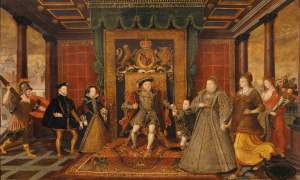
The Family of Henry Viii: an Allegory of the Tudor Succession, by Lucas de Heere, 1572.

There are no Cromwellian poems (though MacCulloch might have thrown us one of Wyatt’s), no hint from Cromwell as to why he didn’t remarry after the early deaths of his wife and two daughters, not even a legal trial at which he might have dropped his guard as More had done in 1535.

It is remarkable, therefore, how much of the man MacCulloch does, in fact, capture, certainly more than any previous attempt. It is his contradictions that stand out: intense focus and frenetic energy, rapacity and a social conscience, “clubbability” and a trainspotterish enthusiasm for waterworks. He was a wily operator, but a favourite of widows and wayward young men. He was undoubtedly ruthless, but sometimes tried to mitigate the king’s cruellest inclinations. He was at his fiercest when seeking revenge for Wolsey’s fall, but if we are to be sympathetic to Cromwell – as MacCulloch is – then we must recognise its correlative: his ardent loyalty.

There is a beautifully drawn scene in which Wolsey, his power ebbing away, avidly reads a letter from Cromwell and keeps it close, like a talisman. We later find Master Cromwell painfully drafting another letter that is full of crossings-out and corrections. He was trying to save Wolsey from himself, and from Henry VIII, who was manipulable, but always the master and sometimes a monster. “No one,” MacCulloch asserts, “reading the original of this letter can think of Cromwell simply as a heartless bureaucrat.”

• Thomas Cromwell: A Life is published by Allen Lane. To order a copy for £25.80 (RRP £30) go to guardianbookshop.com or call 0330 333 6846. Free UK p&p over £10, online orders only. Phone orders min p&p of £1.99.

Arguments of Monumental Proportions – Fallen Idols

Our historical memory is a motherland of wishful thinking. Ulrich Raulph

There was a land of Cavaliers and Cotton Fields called the Old South. Here in this pretty world, Gallantry took its last bow. Here was the last ever to be seen of Knights and their Ladies Fair, of Master and of Slave. Look for it only in books, for it is no more than a dream remembered, a Civilization gone with the wind…The opening of the film Gone with the Wind

The past is another country – they thought things differently there; and if the past shapes the present, the present also shapes the past.

With the spread of Black Lives Matter protests around the world, in response to the murder of George Floyd by a Minneapolis police officer, the defacing and destruction of monuments to dead and dubious white men is back in vogue – not that the practice has ever actually gone out of style.

As The Australian’s Art columnist Christopher Allen has written, statues have been set up as monuments to great and not so great men and removed by their enemies for a very long time. Even without considering the many precedents in antiquity, countless statues were destroyed during the French Revolution, others during the mob violence of the short-lived “Commune” government in Paris in early 1871 – including the figure of Napoleon on the Colonne Vendôme – and many more under the Nazi occupation of Paris.

Then there is the tearing down the statues of tyrants in the fall of dictatorships, from the former Soviet empire to Iraq. In those instances, the state or a despot had set up multiple effigies all over the country as symbols of power and instruments of oppression, and they were overthrown in the collective movement of popular revolution.

To paraphrase Allen once more, portrait monuments proliferated in more recent times, particularly in the 19th century, as a consequence of increasing prosperity, patriotism or nationalism and local municipal pride. Monarchs, politicians, leaders of national unification or liberation movements, explorers and founders of new colonies, notable scientists and writers, philanthropists and other prominent citizens were commemorated in public statuary. Arguably, too many were raised; sometimes their subjects have lost the prominence they once had; or some of their deeds may now be today be considered reprehensible. An argument could be made to relocate a statue to a museum instead, but such decisions ought not be taken lightly, especially if the justification for removal and relocation are ideological, or made in response to online protests and vandalism.

Fallen Idols

There is a certain historical irony that the statue of a 17th century slave trader (and on account of his wealth, philanthropist) Edward Colston has been consigned to the watery depths of Bristol Harbour from whence his ships sailed. He’d built his fortune as an influential member of the Royal African Company, a private company which branded its initials on the chests of some 100,000 men, women and children before shipping them to the Americas and the Caribbean. Thousands never made it, tossed into the ocean after drawing their last breath in the filth below decks. Ted and his fellow slavers have a case to answer. In the hundred years after 1680, some two million slaves were forcible removed from their homes in West Africa to the work camps of the West Indies. By 1750, the numbers of slaves had reached over 270,000 per decade, and by 1793, Liverpool handled three fifths of the slave trade of all Europe.Historian Peter Ackroyd wrote in his History of England: “No more than half of the transported slaves reached their destination; some plunged into the sea and were said to hike up their arms in joy from the brief sensation of liberty before they sank beneath the waves”.

Bristol owed its past prosperity to the slave trade – as did Liverpool. The statue had stood in the city centre for 125 years with a plaque that read: ‘Erected by citizens of Bristol as a memorial of one of the most virtuous and wise sons of their city’. Streets and buildings were also named after Colton though most townsfolk have probably never have heard of him. 

Activists have drawn up a hit list of 60 monuments in the United Kingdom that “celebrate slavery and racism”. London mayor Sadiq Khan paves the way for the legal removal of many of historic statues in the British capital and the changing of street names. Slave owner and West India Docks founder Robert Milligan has already been taken down. On the same day, Belgium’s bloody King Leopold, whose rule of the Congo – it was his private property – became a byword in colonial barbarity, was removed from his plinth in Brussels 

As an Aussie and a Brit of Irish parents, and as a history tragic, I find the long running monuments furore engrossing. Statues of famous and infamous generals, politicians and paragons of this and that grace plazas, esplanades and boulevards the world over, and their names are often given to such thoroughfares. They represent in visual and tangible form the historical memory of a nation, and as such, can generate mixed emotions reflecting the potentially conflicted legacies and loyalties of the citizenry. 

It is about the control of history – and who controls it. We all use history, incorporating perceptions of our national story into lessons that guide or confirm our present actions and outlooks. Our history is written not only in scholarly narratives, but also, in commemorations, in statues, flags and symbols, in the stories that children are taught about their country and their community from their earliest school years, and in the historical figure skating  they are taught to remember and honour. History, it is said, is written mostly by the victors  – but not always. So the inevitable tensions between different versions of the past fosters tension and conflict, and grievance and offense in the present. Particularly in onetime colonialist and settler countries, and the lands these once ruled and exploited.

Juxtaposing controversial British statuary, and those of American Civil War generals, against the empty plinths of the former People’s Republics of Eastern Europe, and the images of the toppling of the statue of Saddam Hussein, I have always contemplated our own monuments to reputed bad boys past. 

There are statues of Lord Protector Oliver Cromwell all over the place in England where his legacy is still debated. He stands authoritatively outside the Houses of Parliament and is remembered as one of the godfathers of that institution. And yet, when he died, and the monarchy he deposed restored, his body was disinterred and hanged. In Ireland, for so long “John Bull’s other island”, however, he is reviled. He did, after all, march through the land with “fire and fury”, to borrow Donald Trump’s hyperbole, and killed quite a number of Irish folk. In my southern Irish mother’s day, people would put his picture upside down, facing the wall. This may be apocryphal, but whatever.

Oliver Cromwell, Parliament Square

A statue of Lord Nelson stood in O’Connell Street, Dublin until March 1966 when the IRA blew him up, celebrated by the Clancies in the song below. The IRA also blew up that other famous English mariner, Lord Louis Mountbatten, inveterate pants-man, victor of the Burma campaign and facilitator of Indian Independence). It wasn’t that Horatio had inflicted anything unpleasant upon the Irish, but rather his renowned Englishness that earned him the TNT. And yet, in the wake of intermittent US monuments barnies, beady British eyes were always focusing on the admirable admiral and his ostensible racism (not a word in use at the turn of the eighteenth century) and support for the slave trade. After Colston’s dip in Bristol harbour, it won’t be long before Horatio is harangued – not that anyone actually believes that Nelsons Column should be evicted from iconic Trafalgar Square, and it would be damn difficult to paint-bomb his myopic visage. The British attachment to Lord Nelson is long and strong. In Birmingham, my hometown, the city centre around the Bullring has been refurbished, redesigned and reconstructed numerous times during my lifetime, but the immortal mariner and his battleship stand still on their plinth of honour – as in the featured picture.

The ongoing controversy in England over statues of Cecil Rhodes, colonialist and capitalist, and ostensibly an early architect of apartheid, still rages with respect to his African legacy, with many demanding that he be demolished. his statue in Cape Town, South Africa, was removed after extensive protests in  2015. as As I write, Cecil may not survive the week. There is a statue in Parliament Square, close to Cromwell and Winston Churchill (who some also abhor), of South African soldier and statesman Jan Smuts. His Boer War (on the enemy’s side) and segregationist sympathies were outweighed by his military and diplomatic record in service of the British Empire, and to date, none has called for his eviction. Perhaps he will be spared as he did not have a pariah state named for him, as it was with Cecil. Nor was he associated with the apartheid regime as it was decades before his time – although this wouldn’t satisfy some iconoclasts. But most likely, he is safe because most folk have never heard of him.  

Cecil Rhodes, Oxford University

Winston Churchill gets a paint-job

I have heard mumblings, however, of doing for General Smuts, and also for his Parliament Square neighbour Sir Winston Churchill, who has now been graffitied. Now, he might have saved Britain from Hitler’s hoards, but he did not like the Irish, nor Indians (and Pakistanis for that matter), and said some gross things about Arabs and Jews. And we Aussies, and Kiwis too, still blame him for the disastrous Dardanelles campaign – although he did give us our indefatigable and untouchable ANZAC legend and a long weekend. And whilst on the subject of the Middle East, an equestrian Richard the Lionheart stands close by. He did dastardly things to tens of thousands  of locals – Muslim, Christian and Jew – during the Third Crusade, almost a millennium ago. Watch out, Dick and Dobbin! 

Richard the Lionhearted

Lord Baden-Powell, the founder of the world scout movement, of which I was a relaxed and comfortable member for half of the sixties, sits on the seafront in Poole, Dorset, under twenty four hour CCTV protection. In a 2007 poll, he was voted the 13th most influential person in the UK in the 20th century. But critics say that he held racist views, and in 2010 declassified MI5 files revealed he was invited to meet Adolf Hitler after holding friendly talks about forming closer ties with the Hitler Youth. If old “bathing towel” as he was once affectionately called by us Boy Scouts, becomes persona non grata, what will become of Baden Powell Park in Coffs Harbour, our regional centre? It sits behind the Dan Murphy’s liquor mart, one of the town’s most popular retail outlets, and provides an opportunity for our discussion to segue DownUnder.

Dark deeds in a sunny land

In this strange, copycat world we live in, politicians and activists call for the removal of statues of our Australian founding fathers for the parts they played in the creation of our nation. In his challenging revisionist history of Australia, Taming of the Great South Land’, William Lines tells us that if we look up the names of the worthies who’ve had statues, squares, streets and highways, building and bridges, parks and promontories, rivers and even mountains named after them, we will uncover a dark history of which few are aware. Try it sometime; you’ll be surprised.

There has inevitably been much fuss about Captain James Cook, the renowned and courageous navigator who “discovered” the place two hundred and fifty years ago (notwithstanding that the Aborigines, Javanese, Dutch, Portuguese, and French had been here first). His “discovery”, many argue, led to genocide and the dispossession of our First Peoples (Columbus no doubt also gets more than pigeons shitting on him!). And also, there’s Lachlan Macquarie, fifth and last of the autocratic governors of New South Wales, who laid the economic and social foundations of the new colony. He is in the cross-hairs as responsible for initiating the ‘frontier wars‘ and for ordering the massacre of Aborigines. 

The captain, his chopsticks and his lunch. James Cook, Whitby, Yorks

Lachlan Macquarie, Hyde Park,Sydney

Inevitably, right-wing politicians, shock-jocks and  commentators, came out swinging, venting against political correctness and identity politics, defending what they see as an assault on our “Australian values”. When Macquarie got a paint job three years back, for a moment it seemed that our intractable history wars” were on again – the “whitewash” brigade versus the “black arm-band” mob. Statues were vandalized, voices raised and steam emitted as opposing sides took to their hyperbolic barricades. But once the graffiti had been removed from the statues of Cook and Macquarie in Sydney, and The Australian got it off its chest with a week of broadsheet history and a swag of indignant opinion pieces by the usual suspects, things appeared to have calmed down. 

But not for long, perhaps.

All sorts of emotions, hopes and fears lie behind our various creation myths. No matter the source of our different “dream-times” we are all correct in one way or another. People wheel out the wise old “blind men and the elephant” story to illustrate how blinkered we are; but in reality, if those blind men were given more time, they would have expanded their explorations and discovered a bigger picture.

For more on our Aussie worthies, see, for example, from The Guardian, on Australia, Statues are not history, and regarding former Soviet monuments, Poles Apart – the bitter conflict over a nation’s history. Below is a review of Alex von Tunzelmann’s recent book Fallen Idols: Twelve Statues That Made History

And, in In That Howling Infinite, read also: The Frontier Wars – Australia’s heart of darkness, and America’s Confederate legacy, Rebel Yell 

Fallen Idols: up they went and down they come

Jim Davidson, Weekend Australian, 17 Sept 2021

A statue of Cecil John Rhodes on the slopes of Devil’s Peak, Cape Town, South Africa.

For as long as there have been statues, says Alex von Tunzelmann in this new book, they have been subject to attack. The Egyptian pharaohs regularly disfigured or smashed images of their predecessors. And so, what we have witnessed over the past few years, for all its urgency, in one sense has been a recurrence.

Von Tunzelmann demonstrates this very well by the way she has shaped her new book, Fallen Idols: it may end with the statue of George Washington being pulled down in Portland, Oregon, but its first focus is the statue of George III pulled down by New Yorkers. This occurred immediately after a public reading of the Declaration of Independence.

Attacking statues is as old as the United States itself.

Von Tunzelmann has been fascinated by statues for years. She challenges the notion that statue attacks are aimed at “erasing our past in its entirety” and she is sceptical that a man of his time (for they are nearly always men) can hold, say, racist assumptions, and yet be justified by good works. She says orderly removals are all very well, but the process is protracted and cumbersome: street action is sometimes necessary.

“Statues do not have rights,” she says. “They stand at the pleasure of those who live alongside them.”

The book examines 12 case studies. Each culminates in attack or removal, when statues had functioned as instruments of dominance. The massive Stalin statue that loomed over Budapest – 25 metres high – was partly constructed from melted-down Hungarian ones, and people were enjoined by the Communist Party to go and respectfully converse with it. Friendly little Stalin – and yes, he was in fact quite short, and sensitive about it.

Worse (in some respects) was Rafael Trujillo, who graduated from outright criminality to becoming police chief, supervising an election so that he came to power and stayed there. He employed state terror to rule the Dominican Republic for 31 years, peppering the place with statues and public busts – nearly 2000 of them. Almost certainly a serial rapist, he gloried in what he saw as his virility: a couple of his column-centred monuments were in-your-face phallic. In case people didn’t get the point, at one unveiling his vice-president spoke of Trujillo’s “superior natural gifts”. All these statues came down, with others like them. In India as in Eastern Europe they have been put in special statue parks, where they stand largely neglected. A relatively benign relegation, sometimes leaving behind blank spaces. In one way, the recent attacks are a reversal of the statue-building mania across the Westernised world that accelerated through the 19th century. In 1844, London had 22 statues; by 1910, there were 10 times as many. The attacks are perhaps best seen as part of the reset following through the implications of the collapse of the European colonial empires. Hence the speed with which the Black Lives Matter movement spread: 13 days after George Floyd’s murder in Minnesota, a crowd in Bristol, England pulled down the statue of slave trader Edward Colston and threw it in the harbour.

The book also gives a highly contextualised account of the “Rhodes must Fall” movement. It is shown how deeply – indeed brutally – racist Cecil Rhodes was; how his belief in the superiority of the British race led him to conclude that it had a right to occupy those lands “at present inhabited by the most despicable specimens of human beings”.

So the first statue to go, after it had been smeared in excrement, was that at the University of Cape Town. Oxford, where he gazes down at the High Street from the facade of Oriel College, has proved a tougher nut to crack. The college has prevaricated – people threatened to withdraw bequests if it moved to take Rhodes down – so he is still there. But the agitation has led to some improvement in Oxford practice, including the appointment of the first black head of a college.

Toward the end, Von Tunzelmann retreats a little from a generally abolitionist stance when it comes to statues, admitting that she is quite fond of a few. As are the British public, polls show. Certainly, some statues should be statements of what the people who live around them admire, but some are needed to remind us of who we, as people, were, when they went up. There should always be room for that: in the recent frenzy in America, a statue celebrating an antislavery abolitionist was toppled, as was another celebrating women’s rights. For there is a broader problem: the technological imperative has brought with it a flattened sense of the past.

Jim Davidson’s book, Emperors in Lilliput: Clem Christesen of Meanjin and Stephen Murray-Smith of Overland, is to be published by Melbourne University Press next year.

Fallen Idols: Twelve Statues That Made History, Alex von Tunzelmann (Headline 2021)

Bad company – how Britain conquered India

In September 1599, as William Shakespeare was putting the finishing touches to Hamlet, in Southwark, a mile to the north across the Thames, a group of London merchants, artisans, adventurer and privateers formed history’s first joint-stock, limited-liability company with tradeable shares.

The East India Company developed over two centuries into “a state in the guise of a merchant”, to use English politician Burke’s phrase, with a private army 260,000 strong – twice as large as that of Britain at the time, and the proving ground of many celebrated British officers, the most famous of those being Arthur Wellesley, later to become the Duke of Wellington and who at the time of his Indian service, was the capable younger brother of the equally capable Richard Wellesley, Governor General of the principality Bengal, the keystone of the British hold on the Indian subcontinent.

At its peak, it had built a third of London’s docklands, its annual expenditure was half that of the British government, and it oversaw a third of the country’s imports and exports. For Britain, the East India Company was a gift that kept on giving. Unwittingly and haphazardly, it established and solidified British power in India and China, seeing off their European colonial competitors – the French and the Dutch, who also coveted a piece of the Indian action – and overseeing the transfer west of massive wealth to the home country. It set the keystone for the British Empire, with India, “The Raj”, the jewel in the crown.

William Dalrymple, author, historian, Indophile and longtime resident of India, has written a page-turner of a book called The Anarchy about the rise and fall of what became known as ‘The Honourable Company’ – yes, that’s what it was called with no hint of irony! It is a harrowing tale of how a small limited stock company managed to build an empire.

When the East India Company was first established, the Britain had about 1% of world GDP compared to 43% per cent for Mughal India. By the time it was wound down over one hundred and fifty years later, it had more or less inverted that. In co-opting, corrupting and conquering the powerful warlords of the fractious Mughal Empire, it effectively established the British Empire and in the process, destroyed India’s sovereignty, economy and society. The word “loot” is of Indian origin – it came to symbolize how the company drained the blood from India’s veins, sucked the marrow from out of Its bones, and sending its wealth back to Britain, many historians argue, substantially financed the nascent industrial revolution.

Sepoys of the East India Company

Granted the right to ‘‘wage war’’ in its royal charter, the Honourable Company was the first multinational corporation to run amok (a Malay word for unrestrained rampage) on a grand scale. Having established itself in eastern India, by 1765 it had control of a production and distribution network for opium that was illegally imported into China, sowing the seeds for the Opium Wars – and a Chinese animus that resonates to this day. It bought Chinese tea, which it sold in Britain and the continent, and established tea plantations in India. It was in fact company tea that ended up in Boston Harbour in 1773 – fear of what the company could do if it was granted access to the New World was one of the causes of the American Revolution.

The company effectively bankrolled the British economy, yet ironically, it was also the Bank of England’s largest creditor. It could also be said to have invented corporate lobbying. Members of the British Parliament were on retainers, and were offered shares in exchange for extending the company’s monopolies: some  two-fifths of British MPs held stock, including most members of the cabinet. Many members were in fact former employees who had repatriated millions of pounds in ill gotten gains from Bengal.  And yet, it overextended itself and its resources and was on the verge of insolvency. The contrast between the bankruptcy of the company and the vast riches of its employees was too stark not to be investigated, and indeed it was. but was deemed “too big to fail”,  and was bailed out by the British government  in 1773.

The Company’s premier enabler and exemplar was the first governor of the Bengal Presidency, Robert Clive, or Lord Clive of Plassey, as he was ennobled after a battle that demonstrated the aphorism that one should never enter a gunfight armed with just a knife. But wasn’t that just how the East – and West – was won?

Clive was a humble accountant labouring on the ledgers, but found his calling as a soldier (just like the Spanish conquistador Hernàn Cortéz “the killer” – as Neil Young called him), and rose to great heights of power and riches through remarkable grit and graft. When arraigned by parliament for his rapacity – and acquitted – he exclaimed: “My God, Mr. Chairman, at this moment I stand astonished at my own moderation!”

If ever you are in London, visit the small, quiet and shady Berkeley Square, where the fabled nightingale sang, and where Clive of India, as he became known, his mind curdled by corruption and conscience, and haunted by guilt and ghosts, cut his own throat with a blunt paper-knife. “How are the mighty fallen”. Leonard Cohen’s poet King David said that. “Not often enough!”  I said that.

Eventually, the company – whose lobbying efforts saw its original fifteen year charter last for 274 years – became an embarrassment for the English government and establishment. Its Indian “subjects” rebelled unexpectedly and violently in the Great Rebellion of 1857, and it was only by considerable military effort and repression that the British Army was able to save the company and its Indian ’empire”. In the wake of what the British called The Indian Mutiny, which saw cruel atrocities committed by Indians and Britons alike, tens of thousands of rebel sepoys (Indian soldiers in the company’s employ) were executed in vicious reprisal. As George McDonald Fraser’s antihero says in Flashman in the Great Game, “there’s nothing as cruel as a justified Christian”. Assuming full control, the British government nationalized the company in 1859. Long outliving its purpose it was wound down in 1874. Read more about what the British did for India in Weighing the White Man’s Burden  

Imagine today, a protection racket at the heart of government with the complicity of the British establishment, A company with the global reach of Facebook and Google, the economic tentacles of the likes of Halliburton and Exxon, and the military reach of Erik Prince’s mercenary armies. The corruption and criminality of the now defunct and disgraced BCAC (the so-called “Bank of Crooks and Criminals”), and the immunity and impunity of all the big corporates who took the world for a ride in the Global Financial Crisis, and not only got away with it, got governments to bail them out and we’re permitted to persist with their banditry. As Dalrymple himself has put it, The East India Company was literally Facebook with guns!

Read more about India and The Raj in In That Howling Infinite: Weighing the White Man’s Burden; Freedom at Midnight (1): the birth of India and Pakistan; Freedom at Midnight (2): the legacy of partition ; and Paradise Lost – Kashmir’s bitter legacy

Flashman in the Great Game

The Indian Mutiny – Weighing the White Man’s Burden

Visualizing the Palestinian Return – the art of Ismail Shammout

The Key and the Return – Palestine as a metaphor

And who will live in the house after us, my father?
The house, my son, will remain as it was!
Why did you leave the horse alone?
To keep the house company, my son.
When their residents go, the houses will die.
Together we will hold on
until we return.
When, my father?
Tomorrow, my son, and perhaps in another day or two!
That tomorrow trailed behind them, chewing the wind
in the endless winter nights.
Mahmoud Darwish

Palestinian poet Mahmoud Darwish saw Palestine as a homeland but also as a metaphor –  for the loss of Eden, for the sorrows of dispossession and and of exile, for the diminishing power of the Arab world in its relationship with the west (Mahmoud Darwish, Palestine as Metaphor). Arab-Israeli commentator Raja Natoor wrote in Haaretz that Darwish “wrote, faithfully communicated and defended the undisputed Palestinian narrative – the linguistic realm that dealt with the homeland and its loss, with displacement and being a refugee. It shaped the awareness and work of many Palestinians, which turned the poet, knowingly or not, into the Palestinian narrative itself and even into the Palestine lost” (June 28, 2020). Blogger Samah Sulaimi wrote a few days later in a reply to Natour: “In the eyes of most of the Palestinian people, Darwish was able to bring the Palestinian narrative into every home where an olive-wood map of Palestine hangs in the living room, on which the following words are engraved in Arabic: على هذه الارض ما يستحق الحياة – “We have on this land all of that which makes life worth living” (8 July 2020).

Palestinian Australian author and academic Nejmeh Khalil-Habib – and my Arabic teacher for many semesters at the University of Sydney – published a paper in Nebula magazine in 2008 examining how the “Return”  – al ‘awda العودة – a recurring theme in contemporary Arabic literature – has been dealt with in Arabic fiction, and how it depicted those who live the dream of “Return” and those who actually returned to Palestine after the 1967 war or after the Oslo Accords.

She writes: “The concept of “Return” throughout this literature manifests itself in various ways including the spiritual return (as manifested in dreams and aspirations); the literal, physical return; an individual’s return (a “Return” on the basis of family reunions); the “Return” as a result of the occupation of Gaza and the West Bank after the war of 1967; and the “Return” as a result of the peace process after the “Oslo Accords.”

Al Muftah, المفتاح, the key is an enduring symbol of al ‘awda. It is present in street art and in signs and posters throughout Palestine and in the refugee camps. It is a symbol, of a memory, of one day returning – to lost homes, villages, suburbs, towns, lives and livelihoods. As Nejmeh writes,“The Return” (Al-Awda) is deeply implanted in the Palestinian collective memory. It is rooted in their conscience like a faith that could not be denied, because denying it would mean uprooting the lynchpin upon which modern Palestinian history and identity depends”.

Al Mufta مفتاح

But for many, it is something more than that. Nejmeh writes: “Whether exile happens voluntarily or under oppressive circumstances, the dream of returning home stays alive in the mind of the exiled person. It flares or fades from person to person and from one circumstance to another; however, the concept of “return” ceases to be about its basic meaning, but comes to be seen as a means of resistance and challenging oppression”.

She notes American-Palestinian author and activist Fawaz Turky assertion that “the right and dream of Return is the rock upon which our nation was established and the social balance that unites the nation in this wretched world”.

It is the dream, the hope that enabled tens of thousands of refugees in camps throughout the Levant to perceive their situation as temporary and to resist the allure of assimilation and mainstreaming in their host countries – if this was indeed possible given that most hosts have steadfastly resisted granting Palestinians rights and privileges enjoyed by their own citizens. Whilst being much of the diaspora in the West has accepted inclusion and naturalization, these Palestinians connect with their people and their culture in Palestine, and still celebrate their national holidays.

Between seven and eight hundred thousand Palestinians fled their homes in present day Israel or were expelled during the 1948 war (a similar number of Jews were expelled from Arab countries after 1948). Many remained in Israel either in their original homes or where they sought refuge. They became Israeli citizens, but even for these, the memories endure and many continue to refer to the towns and villages and localities by the names they had prior to the establishment of the state of Israel.

And yet, al ‘awda, and the Right of Return is a chimera, a dream dangled before their eyes by their leaders like a hypnotist’s show. And UN refugee status, a tired old delusion perpetuated by UNRWA to justify its existence and well-paid salaries, and the Arab League as a fig leaf for their pulsanimity. UNWRA’s definition and establishment was at fault from day one, and whilst creating generational refugeedom, it engendered false hope, unrealisable dreams, and a road-block to subsequent peace efforts  There is indeed a whole economy, a living, a lifestyle devoted to and dependent on managing the conflict and the refugee problem rather than solving it. The exile was unreasonable and unjust, but the past will never be undone – and most certainly never by UN resolutions.

UNRWA is the only agency dedicated to helping refugees from a specific region or conflict and is separate from the UNHCR, the main UN refugee agency, which is responsible for aiding other refugees all over the world. Unlike UNRWA, UNHCR has a specific mandate to aid its refugees to eliminate their refugee status by local integration in current country, resettlement in a third country or repatriation when possible. It focuses on resettlement and rehabilitation of refugees and building new lives, not maintaining services that prop up a six-decade-long status quo. UNRWA , uniquely, allows refugee status to be inherited by descendants.

Palestinians were not helped by the original establishment of UNRWA which created a special, indeed, unique category of refugee where by heirs and successors are entitled to the aid and benefits normally given only to the dispossessed generation. Normally, the original refugees and their children have either returned to their homelands or have been resettled in another country within one generation. Hence, for better or for worse, Vietnamese, African, Burmese, and even Afghan, Syrian and Iraqi refugees leave the UNHCR’s care in the short to medium term.

But generations of Palestinians are locked into their special jail of statelessness by the duplicity and discrimination of their Arab “brethren” and by their inherited culture of victimhood and dependence. It is a vicious circle which gives all (dis)interested parties an excuse to do nothing but bloviate, and posture, and propose unrealistic resolutions. 

The key, therefore, is a forlorn hope, a closed door that no amount of keys can unlock; and the reality is that of a lock-out, out of politics, out of society, out of the jobs and housing market. The refugees are a minority in Palestine. There are no keys for the new houses and apartments that are going up in and around the cities of the West Bank in a property boom that has been going on for several years now and accessible and affordable only for a growing middle class of employees of the PA and foreign NGOs and young professionals.

But for refugees, all this is paradox. They are locked out of the old Palestine of their parents and grandparent and forebears. But they are also locked out the new Palestine that is struggling to be born.

Poets like Darwish and novelists have internalized and reflected al Nakba and al ‘awda in their work. The dream of al ‘awda is reflected in their writing. As it is also done with graphic artists – none as powerfully and poignantly as the late Palestinian artist Ismail Shammout, born in Lydia, Palestine in 1930. When last In Ramallah, de facto administrative “capital” of that part of the West Bank government by the  Palestinian Authority – Area A Continue reading →

The view from the grassy knoll – the resilience of conspiracy theories

Plots he has made, so ingenuous.
Dangerous follies and schemes
For he has stage-managed quite strenuous
Drunken prophecies, libels and dreams.
Lucifer, Paul Hemphill, after Shakespeare’s Richard II

Everybody who was alive when JF Kennedy was assassinated remembers where they were, just as we remember where we were when Neil Armstrong made that “great step for mankind”, and when we’d heard that the Twin Towers had been hit. And there is an almost universal consensus as to how, why and when these events occurred.

But many beg to differ, and cynical or suspicious, curious or just plan mischievous, they say “Ah, but …” and ascribe ulterior motives, describe oblique patterns, and maintain that they possess clear sight whilst the rest of us sport white sticks and dark glasses.

So, it was inevitable that some folk would some how find a link between COVID19, atmospheric chemtrails and the roll-out of the 5G telecommunications network. Before the coronavirus outbreak even began, 5G was being blamed for everything from cancer to infertility. Now, there are hints of deep state” plots and Illuminati plans to control population growth.

Many of the people spreading such theories are the same that share unfounded warnings about the dangers of vaccinations.​ indeed, folk who grasp conspiracy theories tend to go for the buy one, get five free deal – and the rest! Antivax, chem trails, JFK, 9/11, Apollo II, climate change, Illuminati, deep state, white replacement, the Rothschilds, George Soros, Satanic cults, black helicopters, Freemasons, Jews … Yes, it always come back to the Jews …

Although many common conspiracy theories flourished – some would say festered – in back streets and bedsits, the advent of social media has energized and amplified them. Facebook groups that act as petri dishes for new viral rumours to spread can be easily found by searching for ‘5G’ or ‘coronavirus’ on the social network.

Opportunistic political groups stir the pot, often for subversive and strategic ends. For example, RT, the Kremlin-backed broadcaster, has given a platform for 5G conspiracy theories long before coronavirus existed. The New York Times recently suggested that consistently reporting the “5G apocalypse” through its foreign media channels could all be part of a ploy to slow the roll-out of the technology so that Russia won’t be left behind.

Fear, suspicion, insecurity, resentment, powerlessness and a feeling that things are out of our control have much to do with it, rendering people of a bitter, misanthropic or nihilistic disposition – or a compendium of such traits – susceptible to unproven facts, untethered rumours, and in some cases, outright fantasy, and subscribing to alternative narratives, histories and universes.

In Contagion, a 2011 film about a deadly worldwide pandemic that has killed seventy million, a public health official retorts to a conspiracy theorist: “In order to get scared, all you have to do is come into contact with a rumour”.

Below, In That Howling Infinite provides links to three recent articles that endeavour to cast a light into the shadowy world of conspiracy theories and its inhabitants. But first, the irrepressible Sybil Fawlty’s excruciating exposition on fear and loathing:

“Old people are wonderful when they have so much life, aren’t they? Gives us all hope, doesn’t it? My mother on the other hand is a little bit of a trial, really. You know, it’s alright when they have the life force but Mother – well she’s got more of the death force really. She’s a worrier. She has these, well, morbid fears they are, really. Vans is one. Rats. Doorknobs. Birds. Heights. Open spaces. Confined spaces. It’s very difficult getting the space right for her really, you know. Footballs. Bicycles. Cows. And she’s always on about men following her, I don’t know what she thinks they’re going to do to her. Vomit on her, Basil says”.

Lies travel faster than facts

“Lies travel faster than facts and, perversely, efforts to debunk a conspiracy theory can end up reinforcing it …  Increasingly, authorities treat such misinformation contagion like their biological equivalent – proactively pushing out the right facts to inoculate people against unfounded theories or encouraging good information hygiene (such as checking sources) … such theories more as symptoms of a bigger problem, whether it be lack of transparency or a failure of communication … For most people, the more consistent and clear the messaging is from the people higher up, the better – even if that information is “we don’t know yet”.

How conspiracy theories about COVID-19 went viral, The Sydney Morning Herald

Never let the facts get in the way of a good story

“Conspiracy theories aren’t fueled by facts; they are fueled by attention. Twitter in particular, as the platform of choice for many national journalists as well as Trump, has become the perfect vehicle for conspiracy theories, misinformation and racist screeds to find massive audiences; messages grow from a few viral tweets, to a trending topic, to news coverage … When you ask experts about ways to limit the reach of racism and conspiracy theories on platforms such as Twitter, they’ll tell you to watch how it’s amplified: Sharing a meme to condemn it is still a share. Retweeting a racist tweet to shame its writer still gives the tweet more eyeballs … Even though many journalists and media organisations have gotten better at realizing that trending hashtags are often more representative of the weaponization of attention rather than a reflection of popular opinion, trending hashtags are still an effective tactic for courting news coverage of fringe ideas – even if that coverage is intended to debunk it”.

A dangerous cycle of conspiracy theories circulate around Donald Trump, The Sydney Morning Herald

The internet’s dark spaces

Christopher French, a professor of psychology at Goldsmiths, University of London explains in a Scientific American article. “As a species, one of our greatest strengths is our ability to find meaningful patterns in the world around us and to make causal inferences. We sometimes, however, see patterns and causal connections that are not there, especially when we feel that events are beyond our control.”

Voting for Brexit and Trump was found to be associated with a wide range of conspiratorial beliefs, with researchers uncovering that these groups are more likely to believe climate change is a hoax, vaccines are harmful, and that Illuminati-style groups rule the world. They also found that 33 percent of British and French people believe their governments are obscuring the truth about immigration and that many also supported a theory known as “the great replacement” which posits that Muslim immigration is part of a plan to make Muslims the global majority …

… As is the case with the Holocaust and the Second World War, as time passes, truth and fact often become distorted and replaced with myth and alternative stories to support new, disruptive thought. Although many common conspiracy theories flourished – some would say festered – in back streets and bedsits, the advent of social media has energized and amplified them. In the dark recesses of the Internet, all amplified by the likes of QAnon and 8chan which are only loosely tethered to reality, and para-State organs like RT which have more subversive and strategic motives.

How moon landing conspiracy theories influenced the far-right, The Independent

Read other posts about politics in In That Howling Infinite: A Political World – Thoughts and Themes

The Bard in the Badlands 2 – America’s Shakespearean dreaming

Two years ago, we published The Bard in the Badlands – Hell is empty and the devils are here,  a contemplation on the part played by William Shakespeare in the history and society of the American West – and more specifically in those original and excellent HBO series Westworld and Deadwood. It quotes Daniel Pollack-Pelzner  in Slate Magazine::  

“What these portentous allusions don’t seem to register … is the actual role that Shakespeare played in the American West…(Settlers) performed Shakespeare from Missouri to San Francisco in the Wild Frontier. Gold-miners queued up to land a plum part in favorites like the bloodthirsty Macbeth or Richard III. “Traveling through America in the 1830s, Alexis de Tocqueville observed “There is hardly a pioneer’s hut that does not contain a few odd volumes of Shakespeare. I remember that I read the feudal drama of Henry V for the first time in a log cabin.” An army scout in Wyoming traded a yoke of oxen for an edition of Shakespeare; mines named Cordelia, Ophelia, and Desdemona dotted the Colorado mountains. More recent evocations of this period link the Bard to territorial conquest…When the United States prepared to defend the newly annexed state of Texas from Mexico in 1846, Ulysses S. Grant was cast as Desdemona in an army production of Othello in Corpus Christi”.

President Abraham Lincoln used to love reciting, and was particularly enamoured of Macbeth, the play, not the disturbed anti-hero; ‘Nothing equals it’, he confided, “I think it is wonderful: he confided. John Wilkes Booth, his murderous nemesis, was also an aficionado. Booth, from an acting family, had a particular liking for Henry IV’s fiery and treasonous Geordie rebel, Hotspur, and was impressed in a less theoretical way by the regicidal Brutus in Julius Caesar.  

Whilst Shakespeare  and his plays attracted countless aficionados of high and low estate, he also found himself involuntarily conscripted into the young nation’s contentious race and immigration debates. eminent abolitionist and and former president John Adams believed that Desdemona was a “wanton trollop” for falling in love with a blackamoor”. Senator Henry Cabot Lodge opposed immigration and used the Bard as one of his weapons against the ‘Calibans” from Southern or Eastern Europe.

These are just a few examples of how The Bard of Avon popped up in at times in American history like a figurative and literary Doctor Who as guide, mentor, exemplar and even catalyst. in his new book, Shakespeare scholar James Shapiro informs us that when great (and small) things happened in the United States, someone, somewhere, was brushing up their bard – as the following review from The Times illustrates. These do not include, however, the present resident of 1600 Pennsylvania Avenue who “may be the first American president to express no interest in Shakespeare”. Or else, as the reviewer remarks, “maybe we’ll see a tweet soon revealing that at private school his Desdemona was accounted the most fabulous Desdemona ever seen”.

See other posts on American history from In That Howling Infinite: Blind Willie McTell – Bob Dylan’s Americana, Rebel Yelland The Bard in the Badlands – Hell is empty and the devils are here,.

Androids Dolores and Teddy enjoy the Westworld view

Deadwood’s wild bunch

The Bard in America’s Uncivil Wars

David Aaronovitch, The Australian, 14th March 2020

On May 10, 1849, outside the Astor Place Opera House in New York, more than 10,000 residents turned out to try to stop the great British Shakespearean actor William Macready giving an interpretation of Macbeth that they didn’t care for. The militia and the hussars were mobilized, artillery was deployed and in the ensuing riot more than a score died and twenty thousand were injured. This was arguably the most extreme event in the history of drama criticism.

This was just one example, according to Shakespeare scholar James Shapiro, of the way in which the playwright turns up at critical moments in American history as guide, mentor, exemplar and even catalyst. When great things happen in the US, someone, somewhere, is brushing up their Shakespeare.

In the case of the 1849 riots, the Bard was largely a pretext. The poor of the city were being roused by populists to attack the wealthy who exploited them, and the blacks and newer immigrants whom they despised. But the bard was a crowd magnet – on one turbulent night, ten thousand New Yorkers saw Macbeth in three separate productions.

Shakespeare in a Divided America

As Shapiro explains in his new book, Shakespeare in a Divided America, the theatre then was cheap and became a place where people of all classes gathered. The public battle about how to play Hamlet between Macready and the much more masculinist American actor Edwin Forrest was taken up by partisans as being a matter of tribal importance.

When demonstrations (including the flinging of animal carcasses on stage) led to Macready being invited to perform more safely in a new, smarter, more expensive venue — the Opera House — the “mob” took it amiss. So Shakespeare became a proxy for the war between the wealthy and cosmopolitan on the one hand, and the poorer and angrier on the other.

Indeed, it was a contention of more sophisticated exponents of American nationalism and nativism that Shakespeare was more like the Americans than like the British. His spirit was more authentically represented by those pioneers who left England for the New World than by the descendants of those who remained.

Certainly it is true that some of our best, most popular Shakespearean scholars have been American, and Shapiro is one of them. Readers who have invested in his two books about seminal years in Shakespeare’s creative life, 1599: A Year in the Life of William Shakespeare and 1606: Shakespeare and the Year of Lear, know what a lucid, lively joy he is to read.

And his dissection of the controversy over whether the Elizabethan Mr S wrote his own plays, Contested Will, settles the issue for any sensible reader.

Shapiro is the erudite tip of an American iceberg. He tells us that there are no fewer than 150 summer Shakespeare festivals in the US. I looked them up and decided that the Fairbanks Festival in Alaska looked particularly committed.

This enthusiasm is not universal, however, for, as Shapiro points out, the present incumbent “may be the first American president to express no interest in Shakespeare”. Or maybe we’ll see a tweet soon revealing that at private school his Desdemona was accounted the most fabulous Desdemona ever seen.

This was a fate narrowly avoided by Ulysses S Grant, who as a young officer was slated to play opposite Othello in an army production. His Civil War boss, Abraham Lincoln, though never called to act a part on stage, adored Shakespeare, had a particular affection for Macbeth and would recite long and apposite chunks when he felt moved to.

It was ironic, then, that his murderous nemesis, the actor John Wilkes Booth, was also an aficionado. Booth, from an acting family, had a particular liking for Henry IV’s Hotspur and was impressed in a less theoretical way by the regicidal Brutus in Julius Caesar. Indeed, he was playing as Mark Antony opposite his brothers to 2000 playgoers in a large theatre on lower Broadway in 1864 when Confederate sympathizers set fire to the building next door, hoping the flames would spread. Had the plot worked, it would have been the biggest death scene in theatre history.

Booth’s murder of Lincoln was animated by Lincoln’s promise to give limited suffrage to American blacks. And Shapiro writes a brilliant chapter on how Othello was interpreted in the first part of the 19th century as America’s original sin of slavery began to dominate the nation’s politics.

He focuses on the writings of the former president John Quincy Adams, who in 1836 published an essay on The Character of Desdemona. In it Adams wrote of Desdemona that “when Othello smothers her in bed, the terror and the pity subside immediately into the sentiment that she has her deserts”. Why?

As Shapiro tells us, two years earlier Adams had been at a dinner in Boston with the visiting British actress Fanny Kemble. According to her journals, he told her much the same thing, “with a most serious expression of sincere disgust that he considered all her misfortunes as a very just judgment upon her for having married a ‘n***er’ ”. Kemble had married a Texan slave owner. And she noted the Southern hypocrisy about “amalgamation”, given that, as she now knew, “throughout the South a large proportion of the population is the offspring of white men and coloured women”. One of those instances in which British bluntness punctures US social hypocrisy.

This isn’t a long book and it’s easy to read, elegant, to the point and with well-chosen quotes. Other chapters range from how the character of Caliban informed immigration debates in the early 1900s, to the way in which the screenplay of the movie Shakespeare in Love was watered down because of concerns about positive gay themes and Will’s unpunished adultery.

Possibly my favourite chapter convincingly links the musical Kiss Me Kate (based on The Taming of the Shrew) to the post-war situation of American women. During the war, when Rosie was a Riveter, American women went into occupations previously only held by men. And they liked it.

With those men due back from serving abroad, social psychologists and marriage experts expected trouble. Their answer was clearly that women needed to go back into the home and re-become pliant wives.

That many didn’t meekly accept their lot may be measured in the soaring divorce rate, and possibly in the hugely increased incidence of domestic violence. And it’s at this point that one of America’s most successful Shakespeare-inspired productions, Kiss Me Kate, appears, first on stage and then on film. In the film, one of the most famous scenes is when Petruchio puts Kate over his knee and “spanks” her. It’s even on the poster (see the featured image).

This spanking scene, though it had never occurred in any of the previous productions of The Taming of the Shrew, was by now common in US movies. Shapiro tells us there were five films featuring men spanking grown women in 1945 alone. Now Google the words of that most famous song from the show and you’ll see that Brush Up Your Shakespeare is practically a hymn to wife-beating. Someone really should tell the President.

David Aaronovitch is a columnist at The Times.

Shakespeare in a Divided America, James Shapiro Faber, $39.99