إن بيان أولورو من القلب هو وثيقة جميلة، وهي نتيجة مداولات ٢٥٠ مندوبًا إلى المؤتمر الدستوري الوطني للأمم الأولى لزعماء السكان
الأصليين في أستراليا وسكان جزر مضيق توريس الذي عقد على مدى أربعة أيام بالقرب من أولورو في وسط أستراليا في مايو ٢٠١٧.
وبعد عقود من الإعداد، كانت هذه دعوة من هذه المجموعة من شعوب الأمم الأولى إلى الأستراليين من غير السكان الأصليين للدعوة إلى إصلاح جوهري للمساعدة في تحقيق حقوق السكان الأصليين، من خلال إنشاء صوت للسكان الأصليين في البرلمان ولجنة ماكاراتا. “ماكاراتا” هي كلمة يلنو متعددة الطبقات تُفهم على أنها الالتقاء بعد صراع. وينص البيان على أن لجنة ماكاراتا ستتولى عمليات صنع الاتفاق (المعاهدة) وقول الحقيقة بين الحكومات والأمم الأولى.
وتدعو إلى إجراء إصلاحات هيكلية، سواء اعترافًا بالسيادة المستمرة للشعوب الأصلية أو لمعالجة “العجز” الهيكلي الذي أدى إلى تفاوتات حادة بين الأستراليين الأصليين وغير الأصليين. ويدعو إلى إنشاء مؤسستين جديدتين؛ صوت الأمم الأولى المحمي دستوريًا ولجنة ماكاراتا، للإشراف على صنع الاتفاقات وقول الحقيقة بين الحكومات والأمم الأولى.
ويمكن تلخيص هذه الإصلاحات في الصوت والمعاهدة والحقيقة.
الصوت – آلية تمثيلية منصوص عليها دستوريًا لتقديم مشورة الخبراء إلى البرلمان حول القوانين والسياسات التي تؤثر على السكان الأصليين وسكان جزر مضيق توريس.
المعاهدة – عملية صنع اتفاق بين الحكومات وشعوب الأمم الأولى تعترف بالحقوق والمصالح الثقافية التاريخية والمعاصرة للشعوب الأولى من خلال الاعتراف رسميًا بالسيادة، ولم يتم التنازل عن تلك الأرض أبدًا.
الحقيقة – عملية شاملة لكشف المدى الكامل للظلم الذي يعاني منه السكان الأصليون وسكان جزر مضيق توريس، لتمكين الفهم المشترك لتاريخ أستراليا الاستعماري وتأثيراته المعاصرة.
بيان أولورو من القلب
لقد اجتمعنا في المؤتمر الوطني الدستوري ٢٠١٧، قادمين من كل سماء الجنوب، لنصدر هذا البيان من القلب:
كانت قبائلنا من السكان الأصليين وسكان جزر مضيق توريس هي أولى الدول ذات السيادة في القارة الأسترالية والجزر المجاورة لها، وقد امتلكتها بموجب قوانيننا وعاداتنا. لقد فعل أسلافنا ذلك، وفقًا لتقدير ثقافتنا، منذ الخلق، ووفقًا للقانون العام منذ “الأزل”، ووفقًا للعلم منذ أكثر من ٦٠ ألف عام.
هذه السيادة هي فكرة روحية: وبالتالي فإن رابطة الأجداد بين الأرض، أو “الطبيعة الأم”، والسكان الأصليين وسكان جزر مضيق توريس المولودين تظل مرتبطة بها، ويجب أن تعود إلى هناك يومًا ما لتتحد مع أسلافنا. وهذا الارتباط هو أساس ملكية الأرض، أو بالأحرى السيادة. ولا يتم التخلي عنه أو إخماده، ويتعايش مع سيادة التاج.
كيف يمكن أن يكون خلاف ذلك؟ أن الشعوب امتلكت الأرض منذ ستين ألف سنة، وهذا الرابط المقدس اختفى من تاريخ العالم في مائتي عام فقط؟
ومع التغيير الدستوري الأساسي والإصلاح الهيكلي، نعتقد أن هذه السيادة القديمة يمكن أن تتألق كتعبير أكمل عن القومية الأسترالية.
وبالمقارنة، نحن أكثر الناس سجنا على هذا الكوكب. نحن لسنا شعبًا إجراميًا بالفطرة. يتم عزل أطفالنا عن عائلاتهم بمعدل غير مسبوق. لا يمكن أن يكون هذا لأننا لا نحبهم. شبابنا يقبعون في المعتقلات بأعداد فاحشة. ويجب أن يكونوا أملنا في المستقبل.
إن هذه الأبعاد لأزمتنا توضح الطبيعة الهيكلية لمشكلتنا. هذا هو عذاب كوننا بلا قوة
ونسعى إلى إجراء إصلاحات دستورية لتمكين شعبنا واحتلال مكانه الصحيح في بلدنا. عندما يكون لدينا القدرة على تحديد مصيرنا، سوف يزدهر أطفالنا. سيسيرون في عالمين وستكون ثقافتهم هدية لبلدهم.
نحن ندعو إلى إنشاء صوت للأمم الأولى المنصوص عليه في الدستور.
المكاراتا تتويج لأجندتنا: التقارب بعد النضال. إنه يجسد تطلعاتنا لعلاقة عادلة وصادقة مع شعب أستراليا ومستقبل أفضل لأطفالنا على أساس العدالة وتقرير المصير.
نسعى إلى تشكيل لجنة ماكاراتا للإشراف على إبرام الاتفاقات بين الحكومات والأمم الأولى وقول الحقيقة حول تاريخنا.
في عام ١٩٦٧ تم إحصائنا، وفي عام ٢٠١٧ نسعى إلى أن يُسمع صوتنا. نترك المعسكر الأساسي ونبدأ رحلتنا عبر هذا البلد الشاسع. ندعوكم للسير معنا في حركة الشعب الأسترالي من أجل مستقبل أفضل
The Uluru Statement from the Heart, the foundation of the Indigenous and Torres Strait Islander Voice to Parliament is a beautiful thing. Whatever the outcome of Australia’s referendum on August 14th 2023, it will take its place as one if our nation’s iconic documents.
It is brief and written in plain, lyrical and, in my opinion, very moving English. It speaks of the past, the present and the future, of our history and our national story, and of our land, our ‘country’, ancient and modern – how we see ourselves as Australians, and how we’d like to see ourselves as viewed by outsiders. It allows us to reflect on our nation’s colonial past and our future.
Reading it closely and carefully – it is less than an A4 page in length – a reasonable person of good heart and good will can find therein answers to most of the questions that are being raised by warring sides of the Voice debate in a fog of hyperbole, disinformation, ignorance and recrimination. But the reader must first clear his or her head of the sturm und drang (literally storm and stress), fear and loathing and partisan positions that have been established over the last six months. I do not intend to engage in further polemics here – the media, mainstream, social and anti-social are covering this already – but rather, I’ll refer you to the internet links listed at the end of this post.
Slow train coming …
The Statement from the Heart is the outcome of the deliberations of 250 delegates to the First Nations National Constitutional Convention of Australia Aboriginal and Torres Strait Islander leaders held over four days near Uluru in Central Australia in May 2017. It forms the basis for the question that will be out to The Australian electorate on Saturday 14th November 2023 – just six weeks away:
A Proposed Law: to alter the Constitution to recognise the First Peoples of Australia by establishing an Aboriginal and Torres Strait Islander Voice.
Do you approve this proposed alteration?
Professor Henry Reynolds, an Australian historian whose primary work has focused on the frontier conflict between European settlers and Indigenous Australians, wrote yesterday:
“To seek the source of the twin pillars of the 2017 Uluru Statement from the Heart – a Voice to Parliament and a makarrata, or treaty – we need to go back to the referendum of 1967 and the assumption of federal powers over Indigenous policy … The Voice to Parliament, which now meets ignorance and misunderstanding, has been with us for more than 50 years, although the bodies varied in name, structure and longevity, The only difference was the desire for entrenchment in the Constitution”.
Decades in the making, coming after two centuries of struggle for recognition and justice, The Statement from the Heartis an invitation from this group of First Nations people to non-Indigenous Australians calling for substantive reform to help realise Indigenous rights, through the establishment of an Indigenous Voice to Parliament and a Makarrata Commission.
Makarrata is a multi-layered Yolngu word describing a process of conflict resolution, peacemaking and justice, or a coming together after a struggle”, and delegates said that it “captures our aspirations for a fair and truthful relationship with the people of Australia”, and that the Makarrata Commission would supervise a process of agreement-making (treaty) and truth telling between governments and First Nations.
Reynolds reminds us that “the authors of the Uluru statement declared a makarrata was the “culmination of our agenda”, a proposal likely to be far more controversial than The Voice. But it, too, is an idea that has been seriously considered for more than 40 years. The Aboriginal Treaty Committee was founded in April 1979 and led by a group of prominent figures including Dr H C Coombs, Judith Wright and Charles Rowley. Launching it in an address on ABC radio, Coombs called for compensation for the loss of traditional land and disruption of traditional ways of life and the right of Indigenous people to “control their own affairs”.
The Statement from the Heart calls for structural reforms, both in recognition of the continuing sovereignty of Indigenous peoples and to address structural “powerlessness” that has led to severe disparities between Indigenous and non-Indigenous Australians. It calls for the creation of two new institutions; a constitutionally protected First Nations Voice and a Makarrata Commission, to oversee agreement-making and truth-telling between governments and First Nations.
These reforms can be summarized as Voice, Treaty and Truth.
Voice – a constitutionally enshrined representative mechanism to provide expert advice to Parliament about laws and policies that affect Aboriginal and Torres Strait Islander peoples.
Treaty – a process of agreement-making between governments and First Nations peoples that acknowledges the historical and contemporary cultural rights and interests of First Peoples by formally recognizing sovereignty, and that land was never ceded.
Truth – a comprehensive process to expose the full extent of injustices experienced by Aboriginal and Torres Strait Islander peoples, to enable shared understanding of Australia’s colonial history and its contemporary impacts.
The Uluru Statement from the Heart
We, gathered at the 2017 National Constitutional Convention, coming from all points of the southern sky, make this statement from the heart:
Our Aboriginal and Torres Strait Islander tribes were the first sovereign Nations of the Australian continent and its adjacent islands, and possessed it under our own laws and customs. This our ancestors did, according to the reckoning of our culture, from the Creation, according to the common law from ‘time immemorial’, and according to science more than 60,000 years ago.
This sovereignty is a spiritual notion: the ancestral tie between the land, or ‘mother nature’, and the Aboriginal and Torres Strait Islander peoples who were born therefrom, remain attached thereto, and must one day return thither to be united with our ancestors. This link is the basis of the ownership of the soil, or better, of sovereignty. It has never been ceded or extinguished, and co-exists with the sovereignty of the Crown.
How could it be otherwise? That peoples possessed a land for sixty millennia and this sacred link disappears from world history in merely the last two hundred years?
With substantive constitutional change and structural reform, we believe this ancient sovereignty can shine through as a fuller expression of Australia’s nationhood.
Proportionally, we are the most incarcerated people on the planet. We are not an innately criminal people. Our children are aliened from their families at unprecedented rates. This cannot be because we have no love for them. And our youth languish in detention in obscene numbers. They should be our hope for the future.
These dimensions of our crisis tell plainly the structural nature of our problem. This is the torment of our powerlessness.
We seek constitutional reforms to empower our people and take a rightful place in our own country. When we have power over our destiny our children will flourish. They will walk in two worlds and their culture will be a gift to their country.
We call for the establishment of a First Nations Voice enshrined in the Constitution.
Makarrata is the culmination of our agenda: the coming together after a struggle. It captures our aspirations for a fair and truthful relationship with the people of Australia and a better future for our children based on justice and self-determination.
We seek a Makarrata Commission to supervise a process of agreement-making between governments and First Nations and truth-telling about our history.
In 1967 we were counted, in 2017 we seek to be heard. We leave base camp and start our trek across this vast country. We invite you to walk with us in a movement of the Australian people for a better future.
This is a critical group of voters, whose natural generosity may be undermined by the dog-whistle of division. Their votes will deliver or doom the referendum. Greg Craven.
This referendum is a genuine, good idea to simply get it right. Bill Shorten
The title of this piece is borrowed from the poem by Rudyard Kipling that has served as the source of inspirational manuals, mottos and memes for over a century. It has inspired songs, stories, plays and films – my favourite being Lindsay Anderson’s 1968 anarchist fantasy set in a tyrannical English public school.
Sky after Dark and News Corp opinionista Chris Kenny is almost alone among his colleagues in speaking out in support of the Indigenous and Torres Strait Islander Voice to Parliament. To help readers scale The Australian’s pay-wall, I republish here his advice not to be fooled by the No campaign’s shallow and disingenuous scare tactics. To paraphrase Kipling’s poem, the words of both the referendum and the Uluru Statement from The Heart from which it sprang are “twisted by knaves to make a trap” for the ill-informed and disinterested.
This comes as in the same weekend edition Janet Albrechtsen, one of News’ several No camp tricoteuses * recycles her customary legal arguments (she was a lawyer after all in a past life, though according to a friend of mine who actually worked with her back then, “she thinks she’s much cleverer than she is”). She wrote, disingenuously riffing on the anniversary of Martin Luther King’s seminal “I have a dream” speech – how even the martyred MLK spoke of a land in which there was no distinction between black and white (with the benefi of hindsight, we know how well that dream worked out):
“Australians, without a scintilla of legal training, understand we are inserting into our Constitution brand-new special rights given to a group of people simply because of their race. It is something entirely different to anything in the Constitution right now. By placing this squarely in the Constitution, many Australians understand the High Court will be the ultimate determinant of those rights, not the parliament”.
A dog-whistle if ever I heard one, dressed up in lawyer-speak. Most Australians know sweet FA about our constitution, and their knowledge of our political institutions and the laws which govern them is likewise limited. Moreover, the Voice will not impinge on the lives of most Australians, and yet it’ll mean an enormous amount to First Australians.
Kenny is not alone in The Australian’s pages, however. Conservative expert in constitutional law, Greg Craven, whom I have featured several times in this blog’, provides a cogent rebuttal of many of the No campaign’s claimsprovides a cogent rebuttal of many of the No campaign’s claims, explaining how the High Court will cleave to constitutional realities and not to conservative fears and fantasies:
“… it is a constitutional principle that powers of the federal parliament should be interpreted broadly. This is a legal fact, rather than the clueless constitutional riffing of senior No campaigners such as Nyunggai Warren Mundine and Senator Jacinta Nampijinpa Price …constitutional provisions are to be interpreted as a whole, not cut and diced for media opportunities. The proposed amendment does not just give parliament power to make laws about the voice. It gives specific capacity to make laws about its composition, functions, powers and procedures. Every one of these envelopes enables parliament to make laws firmly locating the voice within proper constitutional and political limits … make a law compelling the voice to give priority to practical improvements rather than international frolics.
Worried the voice will be an exclusive clan of excessively remunerated, over-budgeted bureaucrats? Make laws requiring strong qualifications for members, forcing membership to be turned over at regular intervals, mandating modest remuneration, setting overall budget limits, confining staff numbers and banning business-class flights.
Worried about endless, expensive inquiries that could go anywhere, without focus and evidence? Make laws imposing reporting times and parameters for inquiries, mandating that they be based on documented evidence, and making the whole operation subject to the normal assurance measures for government action: the auditor-general, Freedom of Information, administrative review and the criticism of the person who makes the tea.
The court will give parliament the full extent of its power, but no more. It will give proper constitutional respect to the voice, but nothing extra. This is real adherence to the Constitution, not peddling constitutional zombies”.
Craven wrote in The Australian on 12 August 2023:
“Indigenous citizens will have no new powers or constitutional rights. They will have no differential status. Unlike in Canada and the US, there will be no unique Indigenous privileges. There simply will be a means for Indigenous people to express collective views to Canberra …The No case is misleading in maintaining the law never differentiates between groups of people based on disadvantage. Multiple equal opportunity Acts, let alone special laws for disabled people, stand out. Will we repeal them?
…The irony is that there is indeed a dramatic division between Indigenous and non-Indigenous Australians, but it is not constitutional, nor does it favour Indigenous citizens. Indigenous people suffer social and economic disadvantage that would see white Australians rise in armed revolt … Preaching against division, it divides by pretending to non-Indigenous Australians that Indigenous Australian are getting a cushy, special deal …
Resentment is always a bad base for policy. Logically, one group loses nothing when it is unaffected by modest change assisting some other, profoundly disadvantaged group. Their gain is nobody’s loss. But as a cynical promotion of division, the politics of grudge is highly attractive. Given encouragement, some proportion of people will feel neglected and disadvantaged by the voice. In practice, these will be Australians most exposed to economic hardship through social background or lack and opportunity. .
… Constitutionally, the greatest division and inequality in Australia is that every state gets the same 12 senators, regardless of population. Tasmania gets more places per person than Victoria. This is real power, not a constitutionalised chat. It is irrelevant that it was part of the Federation package. The principle is the same”
Recently, Mark Speakman, NSW Leader of the Opposition, former NSW Attorney General and Solicitor General weighed in:
“I don’t see this amendment as racist because, at the end of the day, it is an advisory body that has no constitutional entitlement to be consulted; is not a third chamber; and has no veto rights over legislation or decisions”.
He is is clear-eyed that the Voice is not a “magic wand”, but after decades of failures to close the gap between Indigenous and non-Indigenous Australians, something has to give. A Voice enshrined in the Constitution offers a pathway forward, he says. “There’s a real possibility it will make no difference. But you’re not running a criminal trial trying to prove beyond reasonable doubt that the Voice will work. You’re weighing up the pros and cons and probabilities. “And other things being equal, we’ll be better off with a Voice like this than without one.” (Sydney Morning Herald 12 August 2023).
Chris Kenny is convinced that is about the politics.
It is almost a tribal thing. Almost two-thirds of Coalition voters oppose altering the Constitution to establish an Aboriginal and Torres Strait Islander Voice, according to July’s Resolve poll. Only 17 per cent are in favour. Near one-in-five Coalition voters remain undecided. As recent analyses of election result illustrate, young and even middle-aged voters are deserting the Coalition in droves – and most women overall, parking their votes with Labor, the Grrens abd the Teal independents.
If the coalition introduced a referendum identical to this on it own initiative – an unlikely prospect, I know, given it had a decade to do so, but chose to do nothing- its boosters in the media, including its News Corp enablersand the Sky After Dark cabal, would be standing in its corner. If the Prime Minister decided that he’d replace a constitutional Voice with a legislated one, as indeed as he has “advocated” – though his National Party counterpart begged to differ – the part room would probably oppose it, as it has done with nearly everything the Labor govern has put up.
“The historically significant reconciliation project of the Indigenous voice has now been seized as a partisan, political weapon to be used against the federal Labor government – any doubt about that was removed this week. Senior Coalition figures now see defeating the referendum as their primary political priority to inflict political damage on the Prime Minister.
It is that ugly. It is that cynical … Yet think of what the Coalition might willingly trash in its hard-hearted ploy to take some bark off Anthony Albanese. Decades of Indigenous advocacy and consultation, including by Coalition governments, driven by the noblest of intentions, are being disrespected. Imperilling reconciliation for partisan advantage is hardcore. Yet this week the opposition led question time with scares about the voice and attempted to censure the Prime Minister, accusing him of running a secret agenda to undermine the nation’s future” (The Australian, 5th August 2023)
And so, here we are on the eve of the “actual” Yes campaign, and we are out on the street and at our local markets handing out information and answering questions on The Voice to Parliament. The vibe is good. You’d think we were home and hosed, but we know therein is a lot of wishful thinking. There’s still way t. I’ll leave the last word to Rudyard who is incidentally one of my favourite poets: “If you can fill the unforgiving minute with sixty seconds’ worth of distance run …” we certainly shall. But, win or lose, neither those who vote Yes or those who vote No will feel too good on the morning after.
* Tricoteuses is French for a knitting women. The term is most often used in its historical sense as a nickname for the women who supported French Revolution and sat beside the guillotineduring public executions of the Reign of Terror,supposedly continuing to knit.
Indigenous voice to parliament: Busting eight myths of the No campaign
Chris Kenny, The Weekend Australian, August 26, 2023
No campaigner and Coalition Senator Jacinta Nampijinpa Price
It was a simple interest in the truth that first entangled me in Indigenous issues almost 30 years ago. Back then I helped to expose the fabrication of the Hindmarsh Island secret women’s business and was scarified by the Keating Labor government, the ABC, Indigenous groups, environmental organisations, activist churches and every other arm of the broader green left.
It was a tough time, but it triggered a royal commission which exposed the episode, vindicated my reporting and endorsed the evidence and integrity of the Ngarrindjeri women who had called out the prostitution of their heritage. “Reconciliation starts with the truth,” said the late Beryl Kropinyeri, one of those courageous and wonderful women back in 1995.
Three decades later, my longstanding support for an Indigenous voice has seen me cross swords with many from the conservative side of the political debate. And again, in a different way, truth is central.
The referendum debate has been toxic at times, on both sides. The aim of the Yes case is to reassure, and the No case aims to heighten fears. I cannot deal with the myriad minor lies and distortions arising day by day but let me outline what I see as some of the major myths of the No campaign:
1 The voice “inserts race” into the Constitution.
This is a blatant mistruth. Race has been in the Constitution since Federation and still exists in two clauses, including under the so-called “race power”. The voice does not mention race (surely an outdated concept) but would ensure that when the government makes special laws or policies relating to Indigenous people (ironically, under that existing race power) then Indigenous people will at least have had the opportunity to offer their views.
2 The voice will deliver a treaty, reparations and more.
These claims form the heart of the scare campaign and deliberately ignore the most central element of the voice – it will have no legal power, it is advisory only and cannot implement any law or policy. The No campaign persistently raises extreme demands made by activists and pretends they will be delivered through the voice, even though the voice can deliver nothing.
Because it is only advisory, the effectiveness of the voice will be directly linked to the quality of its ideas. If the voice makes wild recommendations, governments will easily ignore it; whereas if it makes sensible recommendations, the voice will carry some weight. Either way, all the power of implementation rests with government and parliament, so the scares are baseless.
3 The Uluru Statement from the Heart is more than one page long.
The Indigenous consensus for a voice is expressed in the 2017 Uluru Statement, which has become the foundational document for political action. Anthony Albanese committed to “implement it in full” – in other words, he has committed to three elements, of voice, truth and Makaratta (a Yolngu word for agreement-making after disputes). The No campaign has used this to raise fears about treaties but then, earlier this month, they suddenly claimed there was a longer, secret version of the statement, explicitly mentioning treaties and reparations, so Labor had signed up to a more radical agenda.
The claim is false. The documents they refer to are background papers and meeting summaries from consultations leading up to Uluru. They have been public all along (including during five years of Coalition government) and no one has signed up to them. The No campaigners have rejected what is obvious from reading the papers, selectively quoting one of the authors, Megan Davis, and ignoring her clarification – Davis had urged people to read these documents to understand the Uluru statement and her choice of words was poor, but so much for secrecy. The “longer” statement claim is a confection aimed at sustaining a scare campaign but, incredibly, some persist with it.
[The Statement From The Heart is published in full at the end of this post]
4 The voice will divide the nation.
The No campaign argues the 1967 referendum ensured Indigenous Australians were “recognised as part of the population” and that a voice will “enshrine division” in the Constitution. This ignores how the main change in 1967 gave the federal government power to make special policies and laws for Indigenous people. Since, we have seen laws, policies, organisations, and government ministers specifically focused on Indigenous Australians – for good or ill. The voice push recognises this power is still required – to manage native title and cultural heritage issues, for instance, and to close the gap. But it proposes that to help ensure these powers are used effectively and not against the interests of Indigenous people, a representative body should provide non-binding advice to government. To characterise this as divisive is to turn practical reality on its head; alternatively, we would remove division by repealing the race power, abolishing native title and cultural heritage laws, scrapping the Indigenous affairs department (NIAA), axing the Indigenous portfolio, and removing every program and project specific to Indigenous communities. The notion is absurd. Given these special provisions must stay, allowing Indigenous people to provide advice on these matters is not divisive but inclusive – nothing more than a fair go.
Yes campaigner Noel Pearson.
5 The voice is an elite forum or a “Canberra voice”.
This, too, is the opposite to reality. It accurately describes the Indigenous advisory councils that Labor and Liberal governments appointed in the past – under Tony Abbott such a forum was headed by Warren Mundine. These hand-picked bodies have been the epitome of a “Canberra voice” and Indigenous people have had no say on membership.
The voice proposal aims to provide an advisory body chosen by Indigenous people in communities around the country, so that the federal government hears ideas from grassroots communities. The whole thrust of the voice proposal, including under the detailed work I was involved in under the Morrison Coalition government, is to provide local representatives from disparate communities.
6 The voice is overreach beyond recognition.
A constant refrain from No advocates is that the voice is overreach and they would support a simple statement of recognition in the Constitution. This ignores the fact voters were given this choice in the 1999 republic referendum when a constitutional preamble was put, including the words, “honouring Aborigines and Torres Strait Islanders, the nation’s first people, for their deep kinship with their lands and for their ancient and continuing cultures which enrich the life of our country”. It was rejected. Bipartisan support for recognition was kicked along again by John Howard in 2007, and subsequent political and Indigenous consultations settled on the voice as the preferred means of constitutional recognition. If the current proposal is defeated it will be a rejection of the only form of recognition on offer, and a repudiation of Indigenous aspiration for recognition.
Reconciliation cannot progress meaningfully if non-Indigenous Australia declares it will offer constitutional recognition only on its own minimalist terms – a modern version of trinkets and beads.
7 The voice allows 3 per cent of the population to hold sway over the rest.
This myth flips power balance and victim status on their heads. The idea that redressing disadvantage and a lack of agency for our most downtrodden cohort is a threat to the more successful majority is a perversion. To begin, the constitutional wording ensures the voice can make representations only on matters relating to Indigenous people, and even if opponents argue this could be liberally interpreted to cover virtually any government decision, nothing changes the fact the voice is advisory only.
So the idea the voice is a threat to the nation is to create resentment where there should be none. The proposal aims to redress imbalance, not create it. The voice could lead to some difficult political debates, so be it, but all power remains with parliament and the executive.
8 The voice will not fix Indigenous traumas or close the gap.
This argument is desperate but common. It sidesteps the important issues of justice, recognition, and future safeguards by feigning an overarching concern for contemporary outcomes. Opponents assert that a voice would not fix law and order problems in Alice Springs or end domestic violence trauma in Indigenous communities. None of us knows. What we do know is that these problems exist now, and current policies have failed.
A voice could provide the grassroots insights and ideas to make a difference, or it could fail like everything else. But the critics cannot pretend to know the outcomes of a consultative body that has not yet been tried.
One of the most prospective aspects of the voice, which conservatives should embrace, is that it would give Indigenous communities not only some input, but a share of responsibility for delivering outcomes. It takes away the excuse, if you like, of a lack of agency.
There have been failures on both sides of the voice debate. Early on, leading Yes campaigners engaged in personal abuse, and emotional blackmail remains a recurring theme.
The No campaign is designed to generate anxiety. Without fear, they have no persuasive arguments, especially given that the Coalition has long argued a voice is worthwhile (the only proviso that it is not mandated in the Constitution).
It is a tall ask to scare people about mandating the legislation of a voice when you propose to legislate a voice under existing powers anyway. But so far it is working.
The debate has hardly been front of mind for mainstream voters, so the next six weeks will be crucial.
No doubt the myths will still be peddled. Opponents are intent on baring their teeth at a toothless body.
The Uluru Statement From The Heart
We, gathered at the 2017 National Constitutional Convention, coming from all points of the southern sky, make this statement from the heart:
Our Aboriginal and Torres Strait Islander tribes were the first sovereign Nations of the Australian continent and its adjacent islands, and possessed it under our own laws and customs. This our ancestors did, according to the reckoning of our culture, from the Creation, according to the common law from ‘time immemorial’, and according to science more than 60,000 years ago.
This sovereignty is a spiritual notion: the ancestral tie between the land, or ‘mother nature’, and the Aboriginal and Torres Strait Islander peoples who were born therefrom, remain attached thereto, and must one day return thither to be united with our ancestors. This link is the basis of the ownership of the soil, or better, of sovereignty. It has never been ceded or extinguished, and co-exists with the sovereignty of the Crown.
How could it be otherwise? That peoples possessed a land for sixty millennia and this sacred link disappears from world history in merely the last two hundred years?
With substantive constitutional change and structural reform, we believe this ancient sovereignty can shine through as a fuller expression of Australia’s nationhood.
Proportionally, we are the most incarcerated people on the planet. We are not an innately criminal people. Our children are aliened from their families at unprecedented rates. This cannot be because we have no love for them. And our youth languish in detention in obscene numbers. They should be our hope for the future.
These dimensions of our crisis tell plainly the structural nature of our problem. This is the torment of our powerlessness.
We seek constitutional reforms to empower our people and take a rightful place in our own country. When we have power over our destiny our children will flourish. They will walk in two worlds and their culture will be a gift to their country.
We call for the establishment of a First Nations Voice enshrined in the Constitution.
Makarrata is the culmination of our agenda: the coming together after a struggle. It captures our aspirations for a fair and truthful relationship with the people of Australia and a better future for our children based on justice and self-determination.
We seek a Makarrata Commission to supervise a process of agreement-making between governments and First Nations and truth-telling about our history.
In 1967 we were counted, in 2017 we seek to be heard. We leave base camp and start our trek across this vast country. We invite you to walk with us in a movement of the Australian people for a better future
History is a myth that men agree to believe. Napoleon
Origin stories often contain a good deal of mythology – not the old gods and goddesses stuff, nor the tales folktales of faeries and elves, but rather, the stories we tell ourselves about who and what we are as a nation, it’s origins, character, it’s constitution The pioneer spirit is one, based on the now dismissed concept of terra nullius (there was nobody and nothing here of any worth when we arrived ) and the belief that white settlement established in the face of hardship and adversity made us the proud nation wer are today. Military valour and prowess is another, born of a military débâcle, and our repeated involvement in foreign wars, many but not all on others’ interests rather than our own. Other shibboleths evolved from these – like egalitarianism, mate ship, and the “fair go”. Periodically, we are forced to look at ourselves and out history, and to grapple with our many mythologies – and we discover that we are not really who we think we are. And, to quote American cartoonist Walt Kelly, who borrowed from the early 19th century US naval hero Commodore Perry, “we have met the enemy – and he is us!”
A leap of faith or a leap in the dark?
We have waited 122 years to recognize in our Constitution the privilege that we have of sharing this continent with the oldest continuous culture on earth. I say to Australians, do not miss this opportunity. Australian Prime Minister Anthony Albanese
Anthony Albanese calls the Torres Strait Islander and Aboriginal Voice to Parliament “the chance to make a positive change that will last for generations”. Peter Dutton says it’s a “reckless roll of the dice” that will “take our country backwards, not forwards”. These are the battle lines drawn around the upcoming referendum on the Voice to parliament, which promises to be a watershed moment in the history of our nation.
If a Yes vote prevails, the Constitution will be amended to formally recognize Aboriginal and Torres Strait Islander peoples with the creation of a new body to represent their interests in the running of this country.
If established , the Voice will be an advisory body to give indigenous people all around the country a say in government policy and programs that affect the lives of their peoples. Critically, the intention has always been to have its existence and validity enshrined in the Constitution. This would have a dual purpose: to formally recognise First Nations peoples as well as to insulate this new body from the threat of an unsympathetic government later attempting to disband it. But if the referendum fails it will bring to a sudden end years of work and, many believe, strike a devastating blow to the process of reconciliation.
Although opposition leader Peter Dutton’s anti-Voice campaign is yielding its bitter fruit in the steady rise in the No vote, it has yet to translate into a noticeable drop in support for Albanese and his Labor government. And Dutton’s friends and rivals continue to point out that he might suffer more politically than the prime minister if the referendum fails. “If Yes wins, he loses. If No wins, he loses anyway,” is how a senior Liberal put it. And so do we as a nation.
The Sydney Morning Herald provides a good explainer of what The Voice is, and how the arguments for and against are playing out. Read it HERE– though you might find the of The First Dog On The Moon more lighthearted:
Controversial indigenous author and anthropologist Bruce Pascoe advises us to read what Megan Davis, a Cobble Cobble woman of the Barunggam Nation and a renowned constitutional lawyer, authoritative public law expert, has written: Voice of reason, a document for Quarterly Essaythat covers the whole ground of colonial assumptions and Indigenous dispossession.
She calmly paints the picture of Aboriginal disadvantage and the origins of that disadvantage. Importantly, however, she emphasizes that Aboriginal and Torres Strait Islander people never ceded the land and the British never followed the terms of occupation as outlined by their sovereign. But Aboriginal people believed in realpolitik and continued to interact with the invader in order to set out their own sovereignty and claims of attachment to the land. She quotes Fred Maynard and William Cooper, both underrated Aboriginal advocates.
Bret Walker SC has said of this situation: “The basis of settlement of Australia is and always has been, ultimately, the exertion of force by and on behalf of the British arrivals. They did not ask permission to settle. No one consented, no one ceded.” The legal authority is completely absent. And in its absence, Australia was able to build, fig leaf by fig leaf, a myth of legitimacy. In this embarrassing nakedness, the few Australian attempts at some adjustment of this situation asked everything of the people and nothing of the state
When, on June 19th, parliament approved both the final wording of the constitutional amendment and the question that will be put to the Australian people later this year to approve it, or not, it was evident that neither a Yes nor a No result was a foregone conclusion. While support for the change had started out high earlier in the year, polling has shown it slipping as a variety of critics across the political spectrum have made their objections known. Still, the Yes campaign has only just officially begun with a series of events across the country this weekend. Nevertheless, as some commentators have pointed out, the Yes campaign appears to be further behind in advocacy and communication than the the Same Sex Marriage plebiscite campaign at this point on the campaign clock.
Like it or not, our civic culture and capacity for community discussion is distressingly thin. Our default setting is to leave it to our politicians to direct public debate. Big proposals like the Voice are inevitably funneled through an argument between a prime minister and a leader of the opposition. Right now, the government’s argument for the Yes case at the political level consists of telling us A: what a good feeling we’ll have if we endorse it, and B: what the Voice isn’t. The political risk for Albanese is that at year’s end, after finally fully devoting himself to the referendum in the vain hope that he can get it over the line, he’s condemned by rising numbers of voters who believe he has treated the burning issues of cost of living and the economy as second-order concerns. That wouldn’t be the future he imagined on election night. Sean Carney, SMH 15 June 2023
In what, alas, is shaping up to be a climactic battle in the Australian culture wars, so much of the rhetoric is exaggerated, inapposite and polarizing. It has the ring of being made in America. What conservative barrister and author Greg Craven describes as “the current wilderness of virulence, the toxic atmosphere now surrounding the Voice”.
Craven wrote in the Weekend Australian on 24th June: “As people of good heart, we should not automatically default to the baser character of our days: to weigh, to calculate, to carp and to critique. We need to ask – intelligently and with proper judgment – not just what conceivably could go wrong if everything went against us but what should go right given pervasive goodwill and even average good fortune … What is the actual opportunity, rather than the determinedly imagined Frankenstein’s monster? … The voice will enable those who have 65,000 years of connection to this country, who are now our most dispossessed, to talk to us, yes, with measured authority, but not with a veto. We are indeed the people of the fair go. How is this not fair?”
Hopes and fears
There exists still a darkness at the heart of our democracy that we struggle to come to terms with; and in these divisive days, it doesn’t take much to reignite our “history wars” as we negotiate competing narratives and debate the “black armband” and “white blindfold” versions of our national story. In That Howling Infinite, The Frontier Wars – Australia’s Heart of Darkness.
In August 2022, mini-micro-party leader Paul Hanson prematurely appointed herself as the leader of the No Vote (others have since grabbed back that dubious role, but she wears the crown well) in an interview with that millionaire champion of strugglers Alan Jones, declaring “If you believe that this is going to create reconciliation then you’re a bloody fool because it’s not.’
Was this contrived or some strange quirk of history and politics that Pauline Hanson resuscitated the the old bogeyman last seen during the lead up to the landmark Mabo decision of thirty years ago – the scare campaign warning that Aborigines would lay claim to our suburban backyards if Eddie Mabo’s High Court challenge succeeded.
Back at the beginning when the Albanese Labor Government was brand new and we basked in the glow of confidence that in a rerun of the 1967 referendum, Australians would embrace the long overdue constitutional recognition of our First Nations people, we believed that such visceral opposition was all bluster, as most scare campaigns tend to be.
Sadly, matters have escalated since then as supporters and opponents have got themselves lost on the woods and weeds of claim and counterclaim, hyperbole and just plain hype, and at times, hysteria. There are reasoned arguments on all sides, and in the middle ground between them, but the malevolent genie is out of the bottle. As Chris Kenny, News Corporation opinionista and Sky After Dark “outsider, but one of the very few amongst his colleagues to actively support the Yes campaign for the Voice to Parliament, wrote in the Australian on 3rd June:
“Here is a sample of the many thousands of messages I have received online: “You’re on the wrong side of history and shame on you, you’re keeping racism alive by supporting the voice.” “The voice is a racist joke.” “No to further division. No to giving up property rights. No to reparations based on lies and skin colour.” “Lockouts from state forests, no hunting if you’re not Indigenous, all would get worse. Why cement the woke mind virus, critical race theory, into the Constitution?” “The voice is racist, divisive, apartheid and undemocratic.” “Voice is nothing but a Trojan horse to impose more communist government on us all. They can’t all truly believe this?”
And by the way, the Voic could also call for changing the date of Australia Day and even, the Australian flag.
At the heart of the Liberal Party’s opposition to the Indigenous Voice is the notion that it divides Australia rather than uniting it because it gives Aboriginal people rights or privileges that others do not enjoy. Peter Dutton riffed on George Orwell when he declared that with regard to the Voice, some would be are “more equal than others”. But the paradox is that if politicians respond to protracted inequality experienced by different groups by continuing to treat them as equals, they perpetuate that inequality.
Lawyer Josh Bernstein wrote in the Herald on 4th July: “The reality is that the No campaign encourages Australians to lie to themselves; to deny reality. To pretend that the disturbing inequalities currently suffered by Australia’s Indigenous population – in life expectancy, health, education, income and rates of incarceration – don’t exist. To deny some of the most disturbing parts of our history. To pretend that Aboriginal Australians were not treated as non-citizens for many decades, were not deprived of the vote, were not separated from their families and were not subjected to massacres and violence”.
Then there are those who warn that should Yes prevail, something wicked this way comes. Whilst not indulging in the far-fetched imaginings of the political extremities, some like News Corp’s Madam Défarge Janet Albrechtsen warn of worse to come as the apparent end-game of the Uluru Statement From The Heart comes to pass: “The Uluru statement is the starting point”, she wrote in The Australian, “It calls for a “First Nations Voice enshrined in the Constitution” but acknowledges this is not the culmination of their ambition. As the statement says, “Makarrata is the culmination of our agenda … we seek a Makarrata Commission to supervise a process of agreement-making between government and First Nations and truth-telling about our history”. A Yes vote in the referendum, she predicts “is not the end of the process but rather the starting gun to a long and divisive treaty negotiation where the voice has the whip hand. This will likely lead to separatism and bitterness, not reconciliation. So if you are worried about the voice, wait until you see the treaty”.
Paul Hanson argues that Voice would be all-powerful, claims and “would override the supremacy of the elected Parliament and undermine the authority of the elected Australian government”, triggering litigation that would lead to “multiple constitutional crises”. She goes further: it could be a frontrunner for the creation of a new Indigenous state and could also be used as a vehicle for the establishment of racially exclusive seats in parliament held only by Indigenous people, similar to New Zealand’s parliament. Read her Senate speech HERE.
Indigenous independent senator Lidia Thorpe, on the other hand, who opposes the Voice on the basis that it will be powerless and compromise Indigenous sovereignty, has already made clear she wants her “progressive No” arguments included in the No case. Hanson has also demanded a say in the official pamphlet that will outline the Yes and No cases. Senator Jacinta Nampijinpa Price is chairing the Coalition committee that will formulate the No camp’s written case. The document will form the opposing half of the Yes/No referendum pamphlet that the Australian Electoral Commission is required to distribute to every Australian household at least 14 days before the vote. There is no legal requirement for the pamphlet to be truthful or accurate.
It is impossible to argue that an Indigenous representative body legislated under a new constitutional mandate is divisive while such a body legislated under existing constitutional provisions is not. This contradiction gives their ploy away. The No campaigners are effectively saying an advisory group drawn from less than 4% of the population advising only on matters affecting this less than 4% will somehow disrupt harmony in Australia. Am I missing something?
In a letter the editor in the Weekend Australian letter 27th May 2023, Janusz Bonkowski of Sunshine Beach, Queensland voiced something similar:
”Chris Merritt (a News Corp columnist in a recent opinion piece) crystallized the major objection to the voice when he said that “all Australians should be equal not just before the law, but before those who make the law and those who apply the law” (“Name-calling Noel Pearson misses the point about shifting support”, 26/5). Fair enough. So he means that nobody should have a voice because that means undue influence. So all lobbyists should be kicked out, no more meetings with business leaders by our elected representatives, no more preferential consideration of submissions by pressure groups, and no more freebies for our politicians and senior public servants. The voice has got nothing to do with one man, one vote; it is about joining the table that the business roundtable, the National Farmers Federation, the ACTU and every other special interest group has been sitting at since federation”.
So, as Anne Twomey, professor of constitutional law at the University of Sydney, wrote in 2029, we ought’nt to fear the voice but we do. We do this “not because of race. It is because of indigeneity. Only indigenous Australians have legal rights that preceded British settlement and continue to apply today. Only indigenous Australians have a history and culture unique to Australia. It is not racist, divisive or a breach of principles of equality to enact laws that deal with native title rights or protect indigenous cultural heritage. Nor is it racist, divisive or in breach of principles of equality to allow the only group about whom special laws are made to be heard about the making of these laws. Indeed, it is only fair, and fairness is a fundamental principle that Australians respect”. There is a link to her article at the end of this piece.
Nuff said …
The good heart or the fearful one?
No more turning away From the weak and the weary No more turning away From the coldness inside Just a world that we all must share It’s not enough just to stand and stare Is it only a dream that there’ll be No more turning away?
If people were being listened to, they would not need a voice. As Prme Minister Anthony Albanese said, back in those early days, “in the past, governments did things for indigenous Australians – ofttimes with good intentions, ofttimes not, and with mixed results. Now it’s time to do things with them”. Whether thevVoic will close the gap is moot, but this is not the point right now.
As Press Gallery journalist of the year David Crow observed in the Sydney Morning Herald on 19th June, “The Voice is more than recognition because Indigenous leaders wanted practical change. The terrible suffering of First Australians over 235 years gave those leaders good cause to demand a right to consult on federal decisions, even at the risk of a tragic setback for reconciliation if the referendum fails. Practical change is ultimately about power, and the polls suggest many Australians do not want to give Indigenous people more power. It is too soon to be sure”.
Peter Dutton declares that “the Prime Minister is saying to Australians ‘just vote for this on the vibe”. And yet, it is the “vibe” that will get The Voice over the line. Perhaps the good heart will prevail Australia-wide on polling day and those “better angels of our nature” will engender trust in our indigenous and also political leaders to deliver an outcome that dispels the prevailing doubt, distrust and divisiveness, and exorcise the dark heart that endures still in our history, our culture and our society. Because if the referendum goes down, none of us will feel too good the morning after …
… they were standin’ on the shore one day Saw the white sails in the sun Wasn’t long before they felt the sting White man, white law, white gun Solid Rock, Goanna 1982
Indigenous voice to parliament – not merely a good idea but the decent thing
Greg Craven, the Weekend Australian, 24th June 2023
Senator Lidia Thorpe as the Constitution Alteration (Aboriginal and Torres Strait Islander Voice) 2023 is voted on in the Senate. NCA NewsWire / Martin Ollman
No constitutional amendment is easy, and from our current vantage point the Indigenous voicelooks as hard as any. An idea formed in justice and empathy is surrounded by critics, nay-sayers and outright enemies. There are more quibbles and confusions than genuine debates and conversation.
The great challenge with constitutional change is that it becomes – literally – all about words. We forget whatever great good we are aiming for, and rather contend for the perfect adjective or the divinely inspired comma. We are so terrified of the instrumental word-slip that we forget the great imperative the words are meant to serve.
While the constitutional voice was forced in the parliament to duel with dictionaries and thesauruses, the passage of the bill allows us to return to the fundamental truth about successful constitutional amendments. Words are the servants of great constitutional ideas, not the other way around. The heart of those ideas are moral imperatives, not syntax.
Every great constitutional exercise has centred on matters of profound principle. The anti-slavery amendment to the US constitution was not a property law reform or even a realignment of the rights of the states. It was a proposition of humanity.
In Australia, we are famously constitutionally pragmatic, but we need to take a deeper look at the sprawling constitutional project of Federation. Signally imperfect as it was for Indigenous Australians, this was not the administrative reorganisation of the existing colonies. It was the birth of a nation in confidence and hope. The words of the Constitution did not really create Australia. Australia justified them.
As the referendum on the voice goes forward, we need to recapture the notion of constitutional spirit – a concept as familiar to Deakin and Barton as it was to Hamilton and Adams – from the closed fingers of constitutional actuaries. The voice is about the soul of our country, and there is nothing more basic, important and down-right pragmatic as the possession of a soul. Or as our forebears often put it, a good heart.
As people of good heart, we should not automatically default to the baser character of our days: to weigh, to calculate, to carp and to critique. We need to ask – intelligently and with proper judgment – not just what conceivably could go wrong if everything went against us but what should go right given pervasive goodwill and even average good fortune.
We should look at the concept of the voice not through a cracked microscope but a modestly lit window. What is the actual opportunity, rather than the determinedly imagined Frankenstein’s monster? On offer is not a cynical grab for power by a shadowy Aboriginal aristocracy. Frankly, if it were, we would be more than smart and tough enough to frustrate it, before or after referendum.
Nor is this constitutional impetus about “doing something” for Indigenous people. We have tried that for decades, and it has failed, as much for having at its heart a corrosive condescension to helplessness as for any other reason. Indigenous Australians will never rise simply through funding, philanthropy, help, sympathy, compassion or pity.
The only route by which a great people can embrace the indispensable indigeneity of its character, and the people who embody that character, is solidarity.
Solidarity is not some shallow trademark of retro-communists or showy trade unions. It is the sublime concept that people not only live within but within each other. In a Christian context, for example, it means that every person’s humanity is amplified, not qualified, by their commitment to others. The same principle runs through every major religion and most respectable political ideologies.
This is how we must approach our Indigenous brothers and sisters in the referendum. We are not going to give them something, or give up something ourselves, but do something mighty together.
At Federation we created a commonwealth. Now, we advance it.
In fact, Federation is an instructive example in the current wilderness of virulence around the voice. Can anyone doubt that the present No case would have been the No case then? The different states will divide the people. The bureaucracy will run amok. It will all be just too complex and expensive. The risk is just too great.
Listen carefully and you hear the same grudging growls. Those thought leaders who wish to strangle the voice out of contemptuous caution would have throttled the Federation they now flaunt. But the Australian people did not listen. Commonsensical and pragmatic, but still conscious of an irrepressible destiny, they voted Yes. The direct descendant of that vote would be the vote for the voice in October.
One of the great challenges in promoting the voice is that the sort of discussion required is emotionally counterintuitive to Australian public debate, let alone the constitutional politics of our country.
National stereotypes aside, and dismissing the occasional flocks of eccentric fringe protesters, we are not a polity given to the ostentation of public principle. We are not skites of constitutional and public virtue.
Minister Linda Burney during Question Time. Picture: NCA NewsWire / Martin Ollman
Many countries are. The US celebrates its bill of rights and the constitutional bonanza it confers in an unceasing national festival. Its historic failures for numerous racial and other minority groups, and its distortion of representative democracy, are not invited guests. France prosecutes a posterity based on a principle of glory that apparently underlies its numerous failed republics and catastrophic record of lost wars.
Even the British boast and swagger over their timeless constitution. They propound the mother of parliaments, Magna Carta (a parchment for the protection of earls) and the Glorious Revolution, actually a successful bid in aristocratic treason. The stiff upper lip curls in a thin smile of self-congratulation, set to the tune of Rule Britannia and Pomp and Circumstance. It is very hard to imagine constitutionally laconic Australians cavorting for anyone or anything.
But with the voice, a sober enthusiasm has to be achieved if it is to succeed. Australians will never be conned but will need to persuade themselves. The question is how this can happen without an emotionalism and hoopla they will never accept.
One insight is from the sorts of people Australians historically have regarded as being so compelling that they’re heroes: not Ned Kelly-type bunting but genuine figures of public reverence.
From totally different contexts, you might pick our only saint, Mary MacKillop; our most enduring war hero, Jack Simpson (and his donkey Murph); and, particularly in the current context, those two great Indigenous exemplars, senator Neville Bonner and Vincent Lingiari. All of them shared three features.
The first is a predictable lack of “side” or “show”, the true good manners of being Australian.
MacKillop laboured behind a veil. Simpson was shadowed by Murph. Bonner and Lingiari were soft-spoken, humble and self-deprecatory.
The second is that each devoted their lives to a vast project, not national needlework. MacKillop educated and salvaged a desperate Irish-Australian peasantry. Simpson saved multiple lives and gave dignity to hopeless suffering in impossible circumstances. Bonner and Lingiari advanced the justice of their people in the face of the stinging grit of disdain. These were all people who gave a resounding Yes to a truly great work.
The third glaring reality of these lives is that they personified a willingness to embrace risk in the service of good. MacKillop had no business plan, and the chance that she would establish an entire school system was infinitesimal. Simpson threw his life into the dirt of Gallipoli every time he went up some shattered gully. Bonner and Lingiari could never fully know a new Australia each time they fielded insult and injury.
The moral lesson for the voice is that great causes are not won by insurance policies and niggardly doubt. They are achieved by courage and intelligence yoked in the service of profound, national, common principle.
The impetus that prompted a religious sister, a mule driver and two Indigenous men without formal education is the principle that binds Australians as individuals, a nation and a people. That principle also animates the voice.
It is the principle of extravagant fairness.
Many individuals, nations or groups can be fair in the sense that they are not consciously unjust and try not to be too nasty. But extravagant fairness is completely different. This is the fairness that is not only just but generous, joyful, enduring and productive. It is the sort of profound fairness that activated both the Good Samaritan and Weary Dunlop, blessing both receiver and giver.
Senator Jacinta Nampijinpa Price. Picture: NCA NewsWire / Martin Ollman
This is the fairness of MacKillop and Bonner, and it is on this sublime national trait – ourselves at our very best – that the case for an Indigenous voice must be based. The strength in fairness, fairness in strength, that is so powerfully expressed in the notion of a fair go.
Appeals to history may be inspiring and even apt. But Australians usually blush at the suggestion of intergenerational praise and are apt to look at its guarantors as the property developers of posterity. But fairness they instinctively understand, as an imperative and a life choice. Postmodern cynics love to deride the concept of a “fair go”, but in a world of self-actualisation and life coaches it probably is the one purely moral proposition that has explicit everyday currency in contemporary Australian existence. When Australians become convinced that a constitutionally enshrined voice represents a fair go for their Indigenous brothers and sisters, they commit to voting Yes.
Undecided voters will vote for it not because they want to feel good about it, let alone because they like the wording, but because it is the right thing to do.
It is our grandmothers’ injunction about doing the “decent thing”. Decency is not merely rightness. It is a consciousness that our actions not only benefit others but in so doing make ourselves better, more human people. As when, in the creation of the voice, the privileged citizens of a nation reach out to some of the nation’s most powerless, the relationship becomes one of equals. Not merely because the voice is a good idea but because it is in the fullest sense just.
The prevalent tone of Australian history is cynical and sarcastic, but potent instances of national decency are not hard to find, often arising out of previous acts or policies of national shame. The justice meted out to the Myall Creek murderers of Aboriginal people was decent. The refusal of the Australian people to vote at referendum in favour of outlawing of the Communist Party, even at the height of the Cold War, was decent. Our historic welcome to the poor, displaced and fugitive from overseas has been decent.
The great challenge of the voice referendum is to engage the potent Australian sense of fairness with the enabling of our Indigenous people. There is so much story and history here that there is almost too much. In the swirling accounts of suffering and dispossession, we all need at least one story that drags at our soul.
Mine is from a dear Indigenous friend, dating back to his grandfather’s time before the war. His people came from NSW, across the Great Divide. They worked hard in hard jobs, splitting timber, working cattle, the odd factory job. In the town, they were not so much hated as tolerated.
One day the trucks turned up at the school. The kids were loaded up. Then the trucks drove around the streets and the mothers were told they would never see their kids again if they did not climb aboard. They were loaded up. Then the trucks drove to the workplaces and told the fathers they would never see their families again if they did not come too. They were loaded up. They were all driven hundreds of kilometres west, away from their lives and their country.
It is the banal administrative indifference that strikes you. It was not about doing evil but about spiritless efficiency. There is a bizarrely hurtful footnote. By an incredible effort that can barely be imagined, my friend’s grandfather had £200 saved in the bank. He had taken our country at its word, and worked for the betterment of his. He never saw his money again. He was robbed.
This awful story, and all like it, are blasphemies against the fair go. They are libels on the betterness of ourselves and our nation, which must be repudiated, and the notion of giving a voice to the descendants of this great and good man could not be more apt.
One of the truly miserly tunes against the voice is that there are other groups who have suffered, others who have felt the sting of discrimination, so why should we single out Indigenous people? As an Irish-Australian, I have ancestors who suffered starvation, dispossession, bigotry and even massacre. Many Vietnamese citizens remember expulsion and imprisonment, and many of our Indian diaspora have lived the refusal of opportunity and disdain.
Aboriginal rights activist and Gurindji elder Vincent Lingiari on Railway Terrace in Katherine. Katherine Regional Arts
Yet to expect jealous rejection of Indigenous people by Australia’s great multitude of the previously disadvantaged is a calumny on every Australian Indian, Chinese, Jew, Sudanese or Irishman. On the contrary, the natural feeling that subsists between those who have suffered and those who suffer is a deep empathy. The voice is the occasion for companionship, not contempt.
There also needs to be remembrance. Our richly varied immigrants need to ask themselves which Australians tried their hardest to keep them out, to claim they were dangerous, to say the cost would be too high. It was not Indigenous people.
But when one looks to the bastions of those who are opposed to the voice, there are those same icy sceptics. The lofty who now say the voice will create overpaid Indigenous bureaucrats are the same who said the Chinese would take work, and the Indians never fit in.
It is the same with division, the theme music for the No case. Its proponents claim terror at the fictitious notion of a people divided through the voice by race, but their direct ideological ancestors – some embarrassingly close – inveighed against an Australia divided by the inclusion of coloured ethnic misfits. The Vietnamese would never play cricket and the Chinese would never embrace democracy. Those Catholics breed.
The appalling irony here is that extreme opponents of the voice actually revel in division. Their entire strategy is to ensure that the referendum does indeed divide the Australian electorate so that a majority – however thin – is alienated not only from the voice but from the Indigenous people for whom it would speak.
For these opponents, it will be a good campaign’s work if any burgeoning, institutional alliance between black and white Australians – a work of the left and culture war guerrillas if ever there was one – were to be permanently sidelined. Hence the grotesque language of apartheid to describe the voice. They hijack a monstrous form of racism to impugn a design of national harmony. Whatever is beyond disinformation, this is it.
There are some views that are very hard to rationalise in the voice referendum. Of course, every one of us striving for the voice have friends on the No side, some very active. Other acquaintances are undecided or just plain confused. They may frustrate and even infuriate us. But these are honourable people striving to make sense of their constitutional obligations. No one is entitled to revile them.
Yet there are others, though mercifully few. These are not dissentients of goodwill but hard hearts. For whatever reason, Indigenous people appear an ideological enemy. They dislike any Indigenous cause that doesn’t align with their punitive thinking and deficit ideology. They revel in the language of division and discrimination. Unlike every decent Yes or No voter, they do not contemplate a failed referendum with concern. They savour the thought.
To force these souls of negativity towards alternative reality, what sort of Australia do you actually want? Yes, we understand the rhetoric of radical equality, but what are we going to do with that? Where is the place for co-operation, tolerance and shared commitment in your bleak wasteland of purist liberal theory? What sort of nation are we going to create, rather than prevent?
These ideologues do not represent the bulk of the Australian people. They should not be allowed to con the Australian people. They have no idea of the fairness of the Australian soul. And I hope the Australian public repudiates their ideas by voting Yes.
Over history, many truly awful people have talked about national destiny. Usually this means some great turning point, or new direction. But on the issue of the voice, the great issue of destiny for Australia actually is static in the very best sense: do we remain loyal to ourselves, and our creed of fairness?
The voice will enable those who have 65,000 years of connection to this country, who are now our most dispossessed, to talk to us, yes, with measured authority, but not with a veto. We are indeed the people of the fair go. How is this not fair?
We’ve poured the wine of anger On the graves of honest men. We’ve raised the banner once before We’ll raise it once again. In the holy ground of memory The dragon’s teeth are sown. We’ll send our sons to die again So far away from home.
Paul Hemphill, I Gotta Book
Eighty four years ago last month, the Spanish cities of Madrid and Valencia fell to the nationalist forces of Francisco Franco. Victory was proclaimed as Franco placed his sword to rest upon the altar of a church declaring that he wouldn’t raise the blade again until Spain was in peril. The Spanish Civil War that had claimed hundreds of thousands of lives (upwards of half a million, possibly up to two) was at an end; the long march of the generalissimo was over and the reign of the Caudillo had begun. It endured until his death in 1975.
The Spanish Civil War was long, brutal and bloody, and medieval in its savagery. It was a war of armies and of militias, of men and women, of skirmishes and set-piece battles, of massacres and reprisals, and of wars within wars. It saw cities besieged and starved into surrender and towns destroyed by bombers and heavy artillery. It cut a swathe across the country leaving scars that endure to this day.
It became a proxy war for three dictators – Hitler, Mussolini and Stalin – who dispatched men and machines to fight under false flags in what would appear in retrospect to be a rehearsal for wars to come. It was a magnet for idealists and activists of disparate political creeds and from many lands who were to fight and die on both sides, including the celebrated International Brigades. It lured writers and poets who were to chronicle its confusion and carnage, including Ernest Hemingway, George Orwell, WH Auden, André Malraux and Arthur Koastler. Many perished, the most famous being the Spanish poet Federico García Lorca, murdered by Nationalist militia and buried in an unmarked grave, one of many unquiet graves scattered throughout the land.
We republish below a remarkable story of that long forgotten army in a long-forgotten war, and also, an article about the International Brigades.
If you could hear, at every jolt, the blood Come gargling from the froth-corrupted lungs, Obscene as cancer, bitter as the cud Of vile, incurable sores on innocent tongues, My friend, you would not tell with such high zest To children ardent for some desperate glory, The old Lie: Dulce et decorum est Pro patria mori.
Poet Wilfred Owen died on 4 November 1918 – seven days before the guns fell silent in the war that people though would end all wars – as it turned out, the Treaty of Versailles became the peace that ended all peace.
That “old Lie,” from which his most famous poem Dulce et Decorum Est takes its title, comes from the Roman poet Horace. No bitter irony was intended, though, as Horace beseeched Romans to embrace the cleansing fire of a noble death.
In a brief article in the e-zine Quillette, titled The End of War Poetry, Simon British stand-up comic, satirist, writer, and broadcaster Simon Evans wrote: “Privately, I still find the idea of young men gladly ploughing themselves back into the earth of their homeland unbearably moving. But after Owen, recreating such an ecstatic embrace of death in the service of a greater cause became as impossible as nailing Christ back onto the cross, or rather, nailing that cross back onto the wall”.
As Evans observes, the First World War at least gave us some of the most cherished and painfully beautiful verse in our history. “Poetry bubbled from the trenches in France as abundantly as methane, oaths, and blisters … [and] central to earlier war poetry was the tension between the terror, devastation, and death on one hand, and the opportunity for virtues like loyalty and honour on the other”.
Contemplating explanations, he writes that a junior officer’s prospects of survival were considerably worse than those of his men. According to one account, as little as six weeks. That might explain the poetry. Such a violently diminished life expectancy must have focused the mind wonderfully. World War Two was—on that score at least—considerably more democratic and egalitarian … By 1939, the culture had shifted for officers and men alike. The practice of soldiers carrying a slim volume of Browning or Keats, and of aspiring to emulate whoever was in their pockets, had passed. In 1914, the available persona of the poet was still vital—or seems so now, in sepia vignette. He was the sensitive man quietly scratching a wet match against sandpaper and putting it to a candle, careful not to wake the slumbering cattle. Ignoring the grotesque shadows that leapt in the dug-out, he would unfold his notebook, its neat ruled lines like trenches in which the words would hunker, later pressed against his breast as a Talisman once returned to his pocket. Working slowly through his exhaustion and his tobacco ration, setting down his impressions in bottled ink, striving with purpose to resolve the lunacy and the oceans of spilt blood just a few dark yards away”.
Second lieutenant Wilfred Owen, 25 years of age, was one of the last to die in a war that claimed 20 million dead and 20 million injured. At least for the past half-century, his poems have served as a prism through which the so-called Great War is viewed. But, despite being anthologised by his friend Siegfried Sassoon in 1920 and Edmund Blunden a decade later, they did not enter popular parlance until pacifist composer Benjamin Britten incorporated some of Owen’s most potent verses in his War Requiem, written for the 1962 inauguration of the restored Coventry Cathedral
Gassed, John Singer Sargent 1919
Owen entered Britain’s national curriculum during the 1960s, and eventually the high school curricula of Commonwealth nations, which is where I first encountered him – and I was shocked by his visceral descriptions and implicit denunciations of war. He did not dwell on the causes but seemed to suggest that the sheer awfulness of military conflict between nations had stripped away all justifications.
“There had been many wars before, of course, but none where the poet was the soldier and, therefore, the intimate witness. This war was the rendering of wounds, both flesh and spiritual, by words”.
We republish below two excellent articles on Wilfred Owen and the poets of the First World War.
Bent double, like old beggars under sacks, Knock-kneed, coughing like hags, we cursed through sludge, Till on the haunting flares we turned our backs, And towards our distant rest began to trudge. Men marched asleep. Many had lost their boots, But limped on, blood-shod. All went lame; all blind; Drunk with fatigue; deaf even to the hoots Of gas-shells dropping softly behind.
Gas! GAS! Quick, boys!—An ecstasy of fumbling Fitting the clumsy helmets just in time, But someone still was yelling out and stumbling And flound’ring like a man in fire or lime.— Dim through the misty panes and thick green light, As under a green sea, I saw him drowning.
In all my dreams before my helpless sight, He plunges at me, guttering, choking, drowning.
If in some smothering dreams, you too could pace Behind the wagon that we flung him in, And watch the white eyes writhing in his face, His hanging face, like a devil’s sick of sin; If you could hear, at every jolt, the blood Come gargling from the froth-corrupted lungs, Obscene as cancer, bitter as the cud Of vile, incurable sores on innocent tongues,— My friend, you would not tell with such high zest To children ardent for some desperate glory, The old Lie: Dulce et decorum est Pro patria mori.
Sacrifice -Rayner Hoff, Anzac Memorial, Hyde Park, Sydney
War poet Wilfred Owen: sweet and honourable lie
Artwork: Sturt Krygsman.
Mahir Ali, Weekend Australian, 10th November 2018
During a visit to London in 1920, Bengali poet, philosopher and polemicist Rabindranath Tagore received an unexpected letter from a Mrs Susan Owen. She wished to share some information about her favourite son.
“It is nearly two years ago, that my dear eldest son went out to the War for the last time,” she wrote, “and the day he said Goodbye to me … my poet son said these wonderful words of yours … ‘when I leave, let these be my parting words: what my eyes have seen, what my life received, are unsurpassable’. And when his pocket book came back to me — I found these words written in his dear writing — with your name beneath.”
Tagore was something of a celebrity in Britain at the time, a white-bearded Indian sage who bore a resemblance to the then recently deceased Leo Tolstoy. He had won the Nobel Prize in Literature in 1913 on the strength, essentially, of Gitanjali, a collection of poetry he had translated from the original Bengali with the assistance of William Butler Yeats, which is the source for the aphorism that appealed to Owen’s son. That son, Wilfred, is likely to have perceived rather differently from Tagore the context of what each of them considered “unsurpassable”.
It is equally likely that the young Englishman was unfamiliar with Tagore’s thought-provoking critique of nationalism as well as the poem, composed on the last day of the 19th century, that demonstrates a remarkable prescience about the maelstrom that sneaked up on Europe shortly afterwards:
The last sun of the century sets amidst the blood red clouds of the West and the whirlwind of hatredThe naked passion of self-love of Nations, in its drunken delirium of greed, is dancing to the clash of steel and the howling verses of vengeanceThe hungry self of Nation shall burst in a violence of fury from its own shameless feedingFor it has made the world its food …
A plate from Poems by Wilfred Owen (1920)
Wilfred Owen’s final foray into that maelstrom came in August 1918. He won a Military Cross shortly afterwards. But while the Armistice Day bells pealed on November 11, his family received a telegram informing them that Wilfred had been killed a week earlier — 100 years ago last Sunday — while leading the men under his command across the Sambre-Oise canal at Ors.
The second lieutenant was 25, his longevity abbreviated by a year even in comparison with the life span of his favourite predecessor poet, John Keats.
Unlike all too many of his contemporaries, though, Owen did not exactly die in vain. At least for the past half-century, his poems have served as a prism through which the so-called Great War is viewed. But, despite being anthologised by his friend Siegfried Sassoon in 1920 and Edmund Blunden a decade later, they did not enter popular parlance until pacifist composer Benjamin Britten incorporated some of Owen’s most potent verses in his War Requiem, written for the 1962 inauguration of the restored Coventry Cathedral.
Coincidentally, about the same time, a fellow composer appropriated a contemporary young poet’s verses as the centrepiece of his 13th symphony: Dmitri Shostakovich immortalised Yevgeny Yevtushenko’s poem Babi Yar, which catapults from a reflection on an egregiously atrocious component of the Judeocide that accompanied World War II into a searing condemnation of anti-Semitism. It also serves as a reminder that the “war to end all wars” not only did nothing of the kind but in fact sowed the seeds for an even more outrageous bloodbath.
Owen entered Britain’s national curriculum during the 1960s, and eventually the curricula of Commonwealth nations, which is where I first encountered him and was blown away by his visceral descriptions and implicit denunciations of war. He did not dwell on the causes but seemed to suggest that the sheer awfulness of military conflict between nations stripped away all justifications.
The alliteration and onomatopoeia of the sonnet Anthem for Doomed Youth made a powerful impression, but so did the realisation that “those who die as cattle” were by no means restricted to Gallipoli or the Somme, and that “the stuttering rifles’ rapid rattle” continued to “patter out” all too many “hasty orisons”.
Dulce et Decorum Est stands out not only for nailing Horace’s destructive untruth about the value of patriotic sacrifice but also because gas attacks against unsuspecting victims remain par for the course on Middle Eastern battlefields — notably in Syria, where chlorine, used to such devastating effect in World War I, continues to serve as a favourite weapon for the Assad regime and some of its opponents.
Owen pictured a gas attack on a retreating column of comrades in which just one fails to fit “the clumsy (helmet) just in time”. “In all my dreams, before my helpless sight, / He plunges at me, guttering, choking, drowning,” he declares, comparing the soldier’s “hanging face” to “the devil’s sick of sin”, before going in for the kill, so to speak:
If you could hear, at every jolt, the blood Come gargling from the froth-corrupted lungs, Obscene as cancer, bitter as the cud Of vile, incurable sores on innocent tongues, My friend, you would not tell with such high zest To children ardent for some desperate glory, The old Lie: Dulce et decorum est Pro patria mori.
The Latin translates as “it is sweet and honourable to die for one’s country”, and Owen’s oeuvre offers incontrovertible evidence to the contrary.
He goes much further in Futility, whose title has been cited by scholars as a key to framing contemporary conceptions of the conflict. Yet in this poem Owen is questioning not just the war but the very point of life on earth. Again, it’s based on a single casualty, a human being the sun can no longer manage to revive after having roused it for so many years. “Was it for this the clay grew tall?” the poet asks: “O what made fatuous sunbeams toil / To break earth’s sleep at all?”
Then there’s Strange Meeting, a reinforcement of the trope whereby warriors in the battlefield come up against a foe who is a doppelganger, as in Bob Dylan’s relatively obscure early song John Brown, where the narrator informs his mother: “But the thing that scared me most was when my enemy came close / And I saw that his face looked just like mine.” In Owen’s case, the resemblance is not physical but spiritual, in a poem replete with the half-rhymes that distinguished his style; groined/groaned, moan/mourn, spoiled/spilled, mystery/mastery and so on.
He escapes “down some profound dull tunnel” to a “sullen hall”, and by the “dead smile” of an inmate who greets him “with piteous recognition in fixed eyes” knows that “we stood in Hell”. Back in the day, those social democrats (synonymous at the time with socialists and communists) who had not fallen into the patriotic trap tended to describe a bayonet as “a weapon with a worker at both ends”. Owen sees a blade with a poet at both ends: “Whatever hope is yours, / Was my life also,” his new acquaintance tells him. “I went hunting wild / After the wildest beauty in the world … For by my glee might many men have laughed, / And of my weeping something had been left, / Which must die now. I mean the truth untold, / The pity of war, the pity war distilled.” The poem concludes thus:
I am the enemy you killed, my friend. I knew you in this dark: for so you frowned Yesterday through me as you jabbed and killed. I parried; but my hands were loath and cold. Let us sleep now …
In The Parable of the Old Man and the Young, meanwhile, Owen subverts a key narrative from the Old Testament to formulate his angst. An angel intervenes as Abraham prepares to murder his firstborn, Isaac, and offers a ram instead. “But the old man would not so, but slew his son / And half the seed of Europe one by one.” It’s unlikely he would have quarrelled with American “singer-journalist” Phil Ochs’s declaration almost a half-century later: “It’s always the old to lead us to the war / It’s always the young to fall / Now look at all we’ve won with the sabre and the gun / Tell me is it worth it all …”
It wasn’t, of course, just the seed of Europe that perished in the early 20th-century carnage. We never cease to be reminded how Australia answered the call — and paid proportionately a higher price than any other country in what purportedly served as a nation-building cull. Its effort was voluntary, a precursor to almost every Western-waged war through the 20th century and beyond — from Korea to Vietnam, Afghanistan and Iraq — to which our nation has contributed its young blood, chiefly as a means of ingratiating itself with its imperial “protectors”, and partly by regurgitating “the old Lie”.
But plenty of countries that were still colonies in 1914 also contributed their spawn — a million men in India’s case, as reflected in Trench Brothers, a play premiered in Brighton a couple of weeks ago. Besides, the Ottoman Empire was a participant, on Germany’s side, in the Great War, so substantial parts of the Middle East were not immune to the conflict. And the war’s last shots were fired in southern Africa, where the imperial urge had drawn several European nations, including Britain and Germany.
Owen wasn’t a conscientious objector by nature. As a Shropshire lad he was deeply religious, to the extent that initially the liturgy trumped his second love, poetry, and for a time he was expected to join the clergy. But better sense prevailed, and he was teaching in France when the war broke out. He returned home, joined up and underwent training, but wasn’t cast into the cauldron until January 1917. He was back home by midsummer, after having been blown out of a trench into a well. He recuperated at Craiglockhart Hospital near Edinburgh, a facility for the shell-shocked, or those with what today would be designated as post-traumatic stress disorder.
It was there that he encountered Sassoon, an army captain who had been dispatched partly as means of silencing his increasingly trenchant anti-war propaganda.
Owen was familiar with the poetry of Sassoon, who was six years older, and tentatively approached him for an autograph before sharing his own efforts at wartime verse. In response, Sassoon combined constructive criticism with a great deal of encouragement, and soon enough the pent-up poems began pouring out of Owen.
Almost all of his best-known poems surfaced during the year or so between then and his demise, most of them emotions recollected during the relative tranquillity of sojourns in his homeland. Among the first was The Send-Off, in which he compares soldiers on an outward bound train, their “faces grimly gay”, with “wrongs hushed-up”. He goes on to ask: “Shall they return to beating of great bells / In wild train-loads? / A few, a few, to few for drums and yells, // May creep back, silent, to village wells, / Up half-known roads.”
In Exposure, we encounter frozen corpses as: “The burying-party, picks and shovels in shaking grasp, / Pause over half-known faces. All their eyes are ice, / But nothing happens.” In Mental Cases, there is the devastating verse: “Surely we have perished/ Sleeping, and walk hell; but who these hellish?”
In a draft preface to a planned 1919 collection of his verse, Owen wrote: “Above all, this book is not concerned with Poetry. The subject of it is War, and the pity of War. The Poetry is in the pity. Yet these elegies are to this generation in no sense consolatory. They may be to the next. All the poet can do to-day is to warn.’’
Less than 30 years later, Wilfred Burchett, the Australian who became the first Western journalist to witness the devastation of Hiroshima, prefaced his account with the words: “I write this as a warning to the world.”
Unheeded warnings remain one of the driving forces of history’s chariot wheels, clogged as they are with much blood, but who can sensibly argue that they ought not to have been articulated? Who can say when we will ever learn, but it’s unlikely Owen would have disputed his contemporary Robert Graves’s reflection on November 11, 1918:
When the days of rejoicing are over, When the flags are stowed safely away, They will dream of another ‘War to end Wars’ And another wild Armistice Day
Poets in action: How writers captured the horrors of the Great War
Warwick McFadyen, Sydney Morning Herald 2nd
One hundred years ago today, Wilfred Owen, poet and soldier, had 24 hours to live. On November 4, 1918, Owen and his men were trying to cross a canal near Ors in France. As Owen was walking among his men, offering encouragement, German machine guns burst into action. Owen fell. He was one of the last to die in a war that claimed 20 million dead and 20 million injured. He was promoted to lieutenant the next day.
In the cruellest twist, Owen’s mother in Shrewsbury received the telegram of his death on November 11, Armistice Day, as the bells were ringing for peace.
Poetry would mourn the loss of a singular talent, whose star was just beginning to light the sky. Owen had seen but a handful of his poems in print before his death, aged 25. He had written all we have, in little more than 12 months, from August 1917.
The first collection, edited by Siegfried Sassoon, was published in 1920, and then in 1931 appeared an expanded collection. In the latter edition, editor Edmund Blunden wrote that Owen “was a poet without classifications of war and peace. Had he lived, his humanity would have continued to encounter great and moving themes, the painful sometimes, sometimes the beautiful, and his art would have matched his vision.”
Apart from what are regarded as classics such as Anthem for Doomed Youth and Dulce Et Decorum Est, it is Owen’s preface to the collection that is as famous as the poems: “Above all I am not concerned with Poetry/ My subject is War, and the pity of War/ The Poetry is in the pity/ Yet these elegies are to this generation in no sense consolatory/ They may be to the next/ All a poet can do today is warn/ That is why the true Poets must be truthful.”
The First World War was a charnel house. A generation of young men marched to the front, often singing and with cheerful abandon, at least in the beginning, to be slaughtered. Poetry, unlike any time before or since, was the vehicle for their voices and those of bystanders. At first, it was celebratory, but as the days of carnage rolled on and on, truth came to be heard.
There had been many wars before, of course, but none where the poet was the soldier and, therefore, the intimate witness. This war was the rendering of wounds, both flesh and spiritual, by words.
Robert Giddings, in The War Poets, writes that “before 1914, when poets dealt with war it was to render it exotically or historically removed from immediate experience. War, in the hands of Macaulay, Tennyson, Arnold, Newboult and Aytoun, had all the conviction of modern television costume drama. There were two outstanding exceptions – Rudyard Kipling and Thomas Hardy.”
Anthem for Doomed Youth, World Archive
The primacy of the poet in people’s lives a century ago can be seen in the immediate bringing into action of writers to support war aims. On September 2, 1914, only five weeks after war was declared, The Times, published a letter from the Poet Laureate, Robert Bridges, in which he likened the good soldiers of empire fighting the Devil. The image of the soldier as Christ was popular in these early stages, as was the theory that war was a necessary purification of nations. The government’s Propaganda Bureau enlisted writers such as Arthur Conan Doyle and G.K. Chesterton to promote Britain’s war aims. It took the pre-eminent war poet Sassoon to use the figure of Christ in a heightened awareness of spirit, flesh and suffering that had nothing to do with patriotism.
Professor Tim Kendall, in Poetry of the First World War, writes that during the war “poetry became established as the barometer for the nation’s values: the greater the civilisation, the greater its poetic heritage”. He believes that the “close identification of war poetry with a British national character persists to the present day”.
Siegfried Sassoon
As to Australia’s war effort in poetry, despite more than 415,000 men enlisting (from a population of fewer than 5 million) with 60,000 killed and more than 150,000 injured or taken prisoner, the results hardly trouble the margins of anthologies.
As Geoff Page noted in Shadows from Fire: Poems and Photographs of Australians in the Great War, the literary efforts of those Australians with direct experience in the war were less than memorable. His intention with the book was to juxtapose recent poems “with Australians poems actually written during the conflict”.
“On closer examination, however, I found the quality of these latter poems to be depressingly low – especially when contrasted with those of the English war poets: Owen, Sassoon and Rosenberg . . . It rapidly became apparent that a much more appropriate and powerful record of the conflict could be found among the contemporary photographs held by the Australian War Memorial. These speak with a directness and truth seldom attempted, at that time, by our poets.”
By the end of 1914, two anthologies of wartime verse had been published. Many poets in the early years were no more than writers of patriotic doggerel. The Georgian movement, of pastoral whimsy, and gentle beauty, had found a cause in which to celebrate England. The modernism that had slowly been growing in Europe had not permeated English literary minds, but in the aftermath of the war it blossomed, seen no more so than in T.S. Eliot’s The Waste Land, published in 1922.
Dominic Hibberd and John Onions, in their book The Winter of the World, cite the work of historian Catherine Reilly in which she records 2225 British writers who experienced the war, and published poems of their experience. A quarter of the writers were women. By contrast Westminster Abbey honours 16 poets of WWI, all men: Richard Aldington, Laurence Binyon, Edmund Blunden, Rupert Brooke (“If I should die, think only this of me: That there’s some corner of a foreign field that is for ever England”), Wilfred Gibson, Robert Graves, Julian Grenfell, Ivor Gurney, David Jones, Robert Nichols, Owen, Sir Herbert Read, Isaac Rosenberg, Sassoon, Charles Sorley and Edward Thomas.
Since suffering and death were universal there were no frontiers in the writing of it, geographically, with Austrian Georg Trakl, German Alfred Lichtenstein, Italian Giuseppe Ungaretti, Canadian John McCrae and Frenchmen Guillaume Apollinaire and Henri Barbusse, or in gender, Edith Sitwell, Margaret Sackville, Alice Meynell and Vera Brittain, whose Testament of Youth is regarded as a masterpiece of the period.
This was the flowering that has not been captured again. The poets of the Second World War do not go much beyond Keith Douglas and Paul Celan.
It seems curious and strange now, but the biggest barricade to the acceptance of the war poets in the immediate years after came from the towering figure of Nobel Laureate W.B. Yeats.
The Oxford Book of Modern Verse 1892-1935, published in 1936, was edited by Yeats. It contained nothing from the war. Yeats defended his decision thus: “In poems that had for a time considerable fame, written in the first person, they made suffering their own. I have rejected these poems . . . passive suffering is not a theme for poetry. In all the great tragedies, tragedy is a joy to the man who dies, in Greece the tragic chorus danced. If war is necessary, or necessary in our time and place, it is best to forget its suffering, as we do the discomforts of fever, remembering our comfort at midnight when our temperature fell.”
Yeats was wrong, comprehensively so. But the glory was that Owen, Sassoon, Thomas, Rosenberg et al showed that there was art in death and suffering. The war poets found in the desolation of France and in the ruined bodies and spirits in hospital wards, a voice transcendent. Theirs was the fundamental expression of what it meant – still means – to be human. And there was a warning, but as history turned, no one was listening.
“Out there, we’ve walked quite friendly up to death;/ Sat down and eaten with him, cool and bland,/ Pardoned his spilling mess tins in our hand./ We’ve sniffed the green thick odour of his breath,/ Our eyes wept, but our courage didn’t writhe./ He’s spat at us with bullets and he’s coughed/ Shrapnel. We chorused when he sang aloft;/ We whistled while he shaved us with his scythe.” (The Next War, Wilfred Owen)
Siegfried Sassoon wrote in his diary of November 11: “The war is ended. It is impossible to realise. I got to London about 6.30 and found masses of people in streets and congested Tubes, all waving flags and making fools of themselves – an outburst of mob patriotism. It was a wretched wet night, and very mild. It is a loathsome ending to the loathsome tragedy of the last four years.”
We have waited 122 years to recognize in our Constitution the privilege that we have of sharing this continent with the oldest continuous culture on earth. I say to Australians, do not miss this opportunity.
Australian Prime Minister Anthony Albanese
People will forget what you said. people will forget what you did. but people will never forget how you made them feel. people want to be treated justly. perceived injustices can create enmity, and enmity is the beginning of the slide towards intractable conflict.
Colin Tatz Reflections on the Politics of Remembering and Forgetting
What is going on in the mind of opposition Peter Dutton that in the belief that he’s taking the fight to the Prime Minister, he picks a fight with this most formidable woman?
This excellent profile of longtime indigenous academic and activist Marcia Langton should be required reading for all supporters of the Aboriginal and Torres Strait Islander Voice to Parliament and the recognition of indigenous Australians in our constitution – and for all people of goodwill who may be wavering under the weight of conservative misinformation and disingenuousness. We’ve republished it here in In That Howling Infinite for folk who cannot scale the News Corp pay-wall.
When Dutton committed the Liberal Party to a ‘resounding no”, Langton was not backward in coming forward. she pulled no punches when she declared:
“This is the Australia we live in; it is racist. So this could be the political making of a whole lot of people who want to help us get this over the line and create a permanent system of empowerment for Indigenous people. If we want to mute racism, we have to raise our own voices. We have to make sure that we win this campaign, because if we don’t, then the racists will feel emboldened. We have to have a constitutionally enshrined voice that empowers our people, regionally and nationally, to make bureaucrats accountable, and respond to representations on all policy matters and legislative matters that affect us. If we can have a constitutionally enshrined voice that’s permanent, that makes us a formal part of the democratic architecture of Australia, that’s how we fight racism. That’s how we fight our disempowerment”. The Guardian, 7th April 2023.
[Author’s note: At Bellingen’s 2019 Readers and Writers Festival, it was our pleasure and privilege to attend a powerful “conversation” between acclaimed historian Henry Reynolds, Marcia Langton – and, by fortunate serendipity, to share a meal with them at the Federal Hotel afterwards].
‘Vote ‘No’ and you won’t get a welcome to country again’
Marcia Langton doesn’t mince words and now she’s really had enough. When Australians vote on the voice, she wants them to think hard about what’s at stake.
By Helen Trinca, The Weekend Australian, 8th April 2023
Marcia Langton. Picture: Nic Walker
Over more than 50 years as an academic and activist, Marcia Langton has never been known to mince her words. But now the Melbourne University professor, Boyer lecturer, public intellectual and co-author of a landmark report on theIndigenous Voice to parliamentand government has really had enough. When Australians go to the polls to vote on the Voice later this year, Langton wants them to think hard about what’s at stake. “I imagine that most Australians who are non-Indigenous, if we lose the referendum, will not be able to look me in the eye,” she says. “How are they going to ever ask an Indigenous person, a Traditional Owner, for a welcome to country? How are they ever going to be able to ask me to come and speak at their conference? If they have the temerity to do it, of course the answer is going to be no.”
This is classic Langton – unanswerable in its logic; intimidating in its ferocity. She has always been known for her intellectual clarity and lack of compromise and at 71, has lost none of that edge. But Langton is conscious that in some ways the referendum is the last throw of the dice for her generation of leaders. She is in demand to talk about the Voice but will pace herself in the campaign, in part because her job as Associate Provost and Redmond Barry Distinguished Professor at the University of Melbourne is time-consuming, in part because there’s a new group of Indigenous leaders snapping at her heels. “I want to be a less dominant voice because the younger generation must be given an opportunity to be heard on these matters,” she says. “I’m not an Indigenous leader and lots of young people hate the concept of Indigenous leader because they feel cut out, they feel like they’re not valued.” She says she can understand their point of view, and then pauses before adding: “They just need to learn a little bit about earning respect for one’s work.”
Marcia Langston. Picture: Nic Walker
Respect for her work is what Langton has earnt in spades since those decades when Indigenous people who spoke up were so easily dismissed by white Australia. One observer notes she had to “bulldoze” her way to influence. Film director and producer Rachel Perkins quips that Langton is like the Beyoncé of Indigenous Australia: “You say Marcia, and everyone in black Australia knows who you are talking about.” To TV anchor and author Stan Grant, Langton is the “broken-hearted warrior” who, like Martin Luther King, Nelson Mandela and Rosa Parks, are “people who know the world can break you and still stand up”.
Revered and feared, this mother of two and grandmother of three is criticised at times from within her own community. An example: her commitment to constitutional recognition goes back decades and has never wavered. But when she decided in 2017 to work with human rights and social justice campaigner Tom Calma to produce a report to the federal Coalition on a Voice that could be a legislated advisory body to parliament and government, it was seen by some as letting government off the hook on constitutional reform. Langton, pragmatic, persisted and produced a 272-page document that proposed local and regional voices feeding into a National Voice of 24 members. They would have the “responsibility and the right” to give advice to the parliament and government. The final report of the Indigenous Voice Co-design Process, commonly known as the Calma-Langton report, was submitted to the Coalition Federal Government in July 2021. It is now seen as the blueprint for the Voice, which under the Labor Government’s policy will be enshrined in the constitution if the nation votes “yes” in the referendum expected later this year. Says Langton: “We want the principle voted on first. So that then there’s time for everybody, including all the parliamentarians in the House and in the Senate, and the public to debate the model.”
Human rights and social justice campaigner Tom Calma AO. Photo: NCA
On March 23, when Prime Minister Anthony Albanese announced the referendum wording, Langton was present in the Blue Room of Parliament House. When she stepped up to answer a reporter’s question it was with the gravitas that comes from a lifetime of reflection, research and advocacy. And defiance. And anger. And frustration. And sadness. “Each one of us here has been involved in a major initiative. The royal commission into Aboriginal deaths in custody. The inquiry into the forced removal of Aboriginal children from their families. The Don Dale royal commission,” she told journalists. “I could go on and on. And in each case we have doggedly recommended changes to stop the deaths, the incarceration, the early deaths, and the miserable lives and it is so infrequently that our recommendations are adopted.” She added: “And each year, people like you come along to listen to that misery-fest. And each year, people go away wringing their hands. We’re here to draw a line in the sand and say this has to change.”
There were tears that day, as Langton, the sophisticated political player, revealed a glimpse of the pressure she has been under since the PM used his election night victory speech in May last year to commit to the Voice.
Growing up in Queensland amid 1950s racism, the young Marcia learnt to step back and let the whites be served first in the local shop; she learnt to step aside and walk on the other side of the street from white Aussies. In her new book Law: The Way of the Ancestors, co-authored with Aaron Corn, Langton recalls attending a conference in Townsville in 1981 where she met the Torres Strait Islander intellectual, teacher and litigant Eddie Koiki Mabo. “He was the first person I had met who clearly articulated the fact that Indigenous laws exist”. She writes that “by day in school I was forced to listen to a fantasy about Australian history and Indigenous people in particular”. The young girl with Yiman and Bidjara heritage on her mother’s side figured these were “elaborate lies”. None of the people she grew up with resembled the “supposed ‘savages’ who rampaged through the pages of my school books”. Queensland was a state, she writes, “where no civil or humans rights were accorded my people.”
Press conference March 23 after Anthony Albanese announced the referendum wording.
It was an experience of racism that fired a lifetime of work on land claims, native title, field work, right campaigns, lobbying parliament, sitting on inquiries and commissions, working in government and in universities. “I don’t know of anyone else with her breadth of knowledge of Indigenous issues,” Perkins says. “She can write about deep culture, she can write about contemporary art and film, she can write about mining and economics, about women’s issues, about history, native title, treaty and of course constitutional law. She has an incredible mind.”
Prominent Indigenous academic Marcia Langton says there was “no evidence” to show previous bodies aimed at improving Indigenous outcomes did not work, arguing past consultative groups and councils made “dogged”…
Over more than three hours of interview and a photoshoot in Sydney, Langton’s mind is on full display. She is in turn sharp-witted and sharp-tongued, resigned and optimistic, warm and angry. At one point her energy ebbs and she takes a break, walking outside for a smoke and a chat with photographer Nic Walker. She submits courteously to a makeup artist but her distinctive grey hair is largely untouched and her handsome face needs little attention. Langton has the classy dress sense of a Melburnian and is far from the stereotypical image of either activist or academic.
Indeed, the media has never been able to decide between the two labels, and she has long mixed academic smarts with activism, stepping between both worlds with ease. “My view as an academic has always been that my work must have a beneficial impact, so if I can find a solution to a problem, then I will advocate for that solution,” she says. “Unfortunately, there’s no word for an academic like me and so the Australian media call me an activist. Most people don’t even know that I am an academic.” She adds, without embarrassment: “I much preferred in my public work to be referred to as a public intellectual, and I think that’s the correct term.”
Marcia Langton in 1982.
Last November, at the annual Outlook conference organised by The Australian and the Melbourne Institute, Langton’s sophisticated presence underlined the “incredible journey” she has made from a childhood of multiple schools and homes in regional Queensland and outer Brisbane to this crucial moment in her life and the life of the nation. Off stage, talk was of the brutal death of West Australian teenager Cassius Turvey just three weeks earlier and the alleged details of an attack that would later result in four people charged with the 15-year-old’s murder. For a moment Langton seemed overwhelmed. She was unwell and had been given only a few hours’ notice as a replacement speaker, but she gathered herself, put on her public face and had the audience in her thrall as she spoke of the desperate need for the Voice in regional areas; of how the green economy – specifically massive solar panels on Aboriginal land – was potentially damaging to communities; and of the challenges for many Indigenous people ever “closing the gap”. With a mixture of stoicism and sadness she told the room that only one third of Indigenous people had truly been able to close that gap. She had done so, as part of a cohort of Indigenous women who had done postgraduate study. Langton has a PhD.
Langton was very young when she realised there was a world she could access beyond her own. “Many of my childhood circumstances were unsafe and scary, so I would often go to the library. I learnt that I could borrow books from a very young age, and I would take my books to my secret places.” She was fascinated by Douglas Mawson and the journals of other adventurers and explorers that provided escape in those early years. By the time she arrived at Aspley High School in outer Brisbane her talent for leadership was apparent. In one of the few photographs from her childhood, the young Marcia is lined up with the other house captains, calm and serious as she faces the camera. It was a time of expanding university access but at the University of Queensland in 1969 she was one of only two Aboriginal students and among the first to attend the institution. “It was apartheid Queensland, where you were either Aboriginal or not, there was no in between,” she says.
Langton, front row, right, at Aspley State High School, Brisbane
She began to study anthropology, the discipline, along with human geography, she would eventually pursue for doctorate. But it was not easy: “There were some wonderful people and then there was a very nasty racist. I handed in a major essay and she failed me and her written comment on it was that I couldn’t have written it because I was Aboriginal. I should have stopped studying anthropology.” It still rankles. “To this day there are many anthropologists who say that I don’t write my own work because I couldn’t possibly as an Aboriginal,” she says. “They don’t regard me as Aboriginal. The only real Aborigines – quote, unquote – are the full bloods they worked with in the 1970s. So people like me aren’t real Aborigines. That’s still pervasive in the discipline of anthropology in Australia.”
After a year at UQ and already a mother, she postponed her studies because, she says, of racism, and went overseas with her then partner and their son, escaping from a state police force she calls “extremely brutal and terrifying, far worse than they are today”. It was the early 1970s and in the US and Asia she was exposed to new black narratives. “Despite all the terrible things I saw, it became very clear to me what Martin Luther King Jr, James Baldwin, Malcolm X were talking about in a very visceral way, and that is that we people of colour, we’re not regarded as human animals,” she says. Five years later, back in Australia and now a single mother, she went back to UQ, “stupidly” enrolling in Australian literature. “I was the lone Aborigine again in the class … and it was just so racist. I couldn’t cope. So then I came down to Sydney, I worked for the Aboriginal Medical Service, I worked for the Federal Council for the Advancement of Aboriginal and Torres Strait Islanders …”
Langton was elected general secretary, becoming increasingly involved in Aboriginal politics, working with several people including Roberta “Bobbi” Sykes in the Black Women’s Action group. Later, in Canberra she resumed her study of anthropology at the Australian National University, becoming the first Indigenous person to take honours in the subject. It would be another couple of decades before she completed her doctorate in human geography and anthropology at Macquarie University, carrying out field work in the east Cape York Peninsula. In 2000 she was appointed foundation chair of Australian Indigenous Studies at the University of Melbourne.
Langton speaking during The Australian Outlook Conference. Picture: Arsineh Houspian
It was in the 1980s, while working part-time as a history researcher at the Australian Institute of Aboriginal Studies in Canberra, that she sat the 18-year-old Stan Grant down one day and quizzed him about his ambition. Says Grant: “I was a young kid out of school, pushing a trolley around, delivering mail, and doing photocopying … She basically said, ‘What do you want to do with your life?’ She said, ‘My parents and my people have not struggled and sacrificed for me to be pushing a trolley around delivering mail’.” It changed Grant’s life. “I’m not here without her, it’s as simple as that. I knew what I had to do. Marcia is not someone you say no to easily.”
Indeed. Langton has a national reputation as intellectually intimidating to media and politicians alike and at the same time is always prepared to step up, to speak or write or debate the big issues. Her scope and influence is so broad that it has led inevitably to criticism within Indigenous communities, but Perkins says: “People are very deferential to her great knowledge”. Grant adds: “One of the great strengths in Marcia is that she’s been able to challenge herself, she’s found new ways to fight and she’s constantly questioning herself.”
That flexibility has made it hard to predict which side she will come down on in the issues that regularly inflame debate about her people. Fifteen years ago, in an essay in this newspaper, Nicolas Rothwell identified Langton and Noel Pearson as the former “radical activists” who had developed a deep understanding of the root causes of the crisis in remote Indigenous communities. Rothwell wrote that both believed alcohol and passive welfare were at the heart of destructive behaviour in these communities, and that both had to be addressed by contentious policy change.
Langton has not backed off, arguing that Indigenous people must receive funding on the basis of need, not identity; and supporting restrictions on the sale of alcohol in some cases. She has done years of research into the issue, published widely and advised the federal government, but she steps cautiously into a debate she says is “almost impossible” to enter. “If I say one thing, Aboriginal leaders are going to go ballistic, and at the very same time [conservative columnist] Andrew Bolt’s going to go ballistic, right?” she says. There is no silver bullet in this area, she says, but alcohol management plans are the best way forward.
Langton is fearless on funding, prepared to upset other Aboriginal advocates by saying identity should not be the criterion for assistance because “many middle-class Indigenous people … are not more disadvantaged than other Australians”. There is one exception: the children of Indigenous people who leap from social security to well-paid jobs, for example in mining, and who suddenly appear to be “closing the gap” but find it hard to break free of intergenerational disadvantage, will continue to need support. Her uncompromising approach can upset both left and right in white and black Australia: “I have been humiliated and insulted by all sides.”
Another example: When Langton delivered the Boyer Lectures on Radio National in 2012 she focused on mining and its potential to enrich Indigenous economies but quickly found herself the target of environmentalists, blasted for not declaring that a research project with which she had been associated had been partly funded by the mining sector. “Most of the left-wingers who attacked my lectures did not read them and they viciously attacked me on the basis of what they thought I was saying, not what I actually said,” she says. “They let the industry off the hook because they tried to humiliate me and diminish my arguments. I blame the left for so much of the damage caused to us because of their arrogant racism, and particularly many of the environmentalists who do not take us seriously as the First Peoples of this land.”
There’s that word again – racism. Langton uses it often. “Racists don’t understand the horrible impact they have,” she says. “They don’t realise the wear and tear of constant racism is a huge factor in the suicide of young Indigenous Australians. So don’t say to an Aboriginal person ‘you’re too fair to be Aboriginal’, or ‘you’re too pretty to be Aboriginal’, or, ‘did you write that?’” Langton is astonished at the “mischievous” demands for a definition of Aboriginality that have emerged in the Voice debate. Being Aboriginal, she says, has nothing to do with race, but is “a cultural link, a claim of descent, an assertion or claim of identity, and acceptance by the community; it’s about being a member of a community by descent and culture”. She references the High Court decision in the 1983 Tasmanian dam case, which defined an Aboriginal or Torres Strait Islander person as one of “Aboriginal or Torres Strait Islander descent who identifies as an Aboriginal or Torres Strait Islander and is accepted as such by the community in which he or she lives”.
She says the “terrible history” of the stolen generations continues for their descendants, some of whom are “as white as the driven snow”. “What they cop is, ‘you’re not dark enough to be Aboriginal’,” says Langton. “It’s a different kind of racism that they have to wear but it’s far removed from the racism you experience when you walk down the street in this country if you have dark skin. They might suffer occasional racism, they might not get the job, the promotion to professor that they wanted, they might not get an Australian Research Council grant. [But] there are a lot of Aboriginal people who will never be able to get a taxi. These young, fair-skinned people, they’ll get a taxi OK. They suffer a very different kind of racism, and it’s more in the zone of the typical … identity attacks of, ‘you’re doing it so you can get money’.”
To Langton, there’s a certain irony in columnists questioning the authenticity of those who don’t “look” Aboriginal: after all, she says, if there are fraudsters, they are ipso facto white, not Aboriginal. She has never felt confusion about her own identity, although she is still asked by some why she doesn’t “pass” as a white person. Overseas she’s often mistaken for Palestinan, Moroccan, Algerian, Puerto Rican, Indian or Anglo-Indian or even Brazilian Portuguese. Langton almost snorts her answer: “As if I wanted to do that [pass as white]. I used to say to them when I was younger, ‘Are you saying to me that I should disown my mother and my grandmother and all my family? They think I would prefer their life but actually, I don’t. I love being Aboriginal, I have never been anything else.”
Langton has stood out in the past as one of the few Indigenous women with a national profile in a world of Indigenous male leaders including Noel Pearson, Pat Dodson and others. Perkins recalls a corporate women leaders’ event at Sydney’s Barangaroo a few years ago at which Pearson was asked to name the woman who had the biggest influence on him. Says Perkins: “Noel thought for a while, then he said it had been Marcia.”
Welcome to Country by Marcia Langton
Perkins worries about her friend’s vulnerability and the physical and emotional pressure she has absorbed: “I don’t know what I would do, I don’t know what we would do without Marcia, because she is so fearless, she has such depth. I don’t know of any other person who has had her staying power, she continues to give to the movement endlessly. It has absorbed her entire existence.”
As the referendum on the Voice nears, Langton appears almost fatalistic. If it’s a no, she will largely blame Opposition Leader Peter Dutton, who has “waged a very successful campaign to undermine the Voice”. As for those Indigenous leaders opposed to the Voice: “They have no better ideas. They say that the Voice won’t solve particular problems. So where are their solutions? We’ve put 30 years of work into our proposition, 30 years of work. There are countless reports, we’ve done the homework, we’ve done the hard yards, we’ve done the research, we’ve tested everything.”
If the referendum fails, it will be a staggering setback for Langton and others of her generation, but she readily acknowledges how far we have come. “Fifty years ago, I wouldn’t have been invited to give the Boyer Lectures; I wouldn’t have been invited by [publishers] Hardie Grant to write [her travel book] Welcome to Country; I wouldn’t be a professor at the University of Melbourne. Of course things changed.”
First Knowledges: Law, The Way of the Ancestors by Marcia Langton and Aaron Corn (Thames & Hudson Australia, $24.99), is out on April 25
Helen Trinca is a highly experienced reporter, commentator and editor with a special interest in workplace and broad cultural issues. She has held senior positions at The Australian
Photographs of guns and flame Scarlet skull and distant game Bayonet and jungle grin Nightmares dreamed by bleeding men Lookouts tremble on the shore But no man can find the war
Tim Buckley 1976
Our recently departed friend Tim Pagewas the central character in the 1992 ABC miniseries Frankie’s House, the story of the celebrated, inebriated Vietnamese home-away-from home and party house in Saigon for transiting newsmen – a decadent, dissolute, de facto foreign correspondents club. Tim was portrayed by Scottish actor Iain Glen, famous nowadays for his role as Ser Jorah Mormont in Game of Thrones. This was not Tim’s first first portrayal in film. Denis Hopper’s strung-out photojournalist in the 1979 film Apocalypse Nowwas said to have been inspired by Tim’s Vietnam adventures. This was referred to many times in the many media tributes that followed his passing and at his farewell in August last year.
Rewatching the film recently, for the first time in decades, I thought Hopper’s over the top, incongruous and unexplained character bears little resemblance to the Tim Page we knew. And yet, as Tim and his partner Mau were later to point out to me, Hopper’s cracked and crazed camera cowboy illustrated exactly what the soldiers at ground zero experienced in America’s war, a war that has since been defined as chaos without compass.
The film is loosely based on Joseph Conrad’s novel Heart of Darkness, set in a dark and deadly Belgium-ravaged Congo. A special forces officer is sent on a mission to assassinate a rogue officer who has established a quasi-kingdom in the heart of the Jungle. With poetic and creative license Francis Ford Coppola created a psychedelic fever dream somewhere up the crazy river on a journey through a war that had already been lost while the powers that be had concealed the fact to the American public and to the world at large.
The Vietnam War’s echoes reverberate to this day. In the United States, it has taken more than 50 years for such a traumatic defeat to fade. The deepest scars, inevitably, belong to those who suffered most. Author and Vietnam veteran Philip Caputo in the preface to his memoir A Rumor of War wrote:
“I came home from the war with the curious feeling that I had grown older than my father, who was then 51,” writes. “A man saw the heights and depths of human behaviour in Vietnam, all manner of violence and horrors so grotesque that they evoked more fascination than disgust. Once I had seen pigs eating napalm-charred corpses – a memorable sight, pigs eating roast people.”
The scars on Vietnam itself were much much deeper and long lasting – on its politics, still a authoritarian communist regime; its people – millions died, were wounded or suffered long term psychological and genetic damage; and its environment – the effects of broad-acre defoliants and the damage and debris of war.
Two seminal scenes in the film encapsulate the carnage wrought in a country the US government wanted to “bomb back into the stone-age”.
Ou first introduction is where “little spots on the horizon, into gunships grow”, to borrow from Canadian songwriter Bruce Cockburn, as a squadron of US helicopters approach a tropical shore and attack a Vietcong camp in an idyllic seaside village to the exhilarating accompaniment of Richard Wagner’s rollicking The Ride of the Valkyries. Amidst the rattle of machine guns, the explosions and the flames, the American crews are portrayed as gung-ho and dispassionate participants in a real-time video game. The Vietnamese men, women and children are tiny black-garbed figures running around in panic like a disturbed ant’s nest, falling, flailing and flying through the air. Yet you know that this is no computer game. These helpless and doomed people are merely targets with nowhere to run to.
The second scene is set towards the end of the film, up that crazy river. The assassin, Willard, is about to slay his target, Colonel Kurtz – but not before Kurtz, filmed in a flame-lit semi-darkness, declares that he wants to die as a soldier and “not like some poor, crazed rag-assed renegade”. He then delivers his final testament on a war that has been all for nothing, and on why it has been lost:
“I’ve seen horrors … horrors that you’ve seen. But you have no right to call me a murderer. You have a right to kill me. You have a right to do that … but you have no right to judge me. It’s impossible for words to describe what is necessary to those who do not know what horror means. Horror. Horror has a face … and you must make a friend of horror. Horror and moral terror are your friends. If they are not, then they are enemies to be feared. They are truly enemies. I remember when I was with Special Forces. Seems a thousand centuries ago. We went into a camp to inoculate the children. We left the camp after we had inoculated the children for Polio, and this old man came running after us, and he was crying. He couldn’t see. We went back there, and they had come and hacked off every inoculated arm. There they were in a pile. A pile of little arms. And I remember … I … I … I cried. I wept like some grandmother. I wanted to tear my teeth out. I didn’t know what I wanted to do. And I want to remember it. I never want to forget it. I never want to forget. And then I realized … like I was shot … like I was shot with a diamond … a diamond bullet right through my forehead. And I thought: My God … the genius of that. The genius. The will to do that. Perfect, genuine, complete, crystalline, pure. And then I realized they were stronger than we. Because they could stand that these were not monsters. These were men … trained cadres. These men who fought with their hearts, who had families, who had children, who were filled with love … but they had the strength … the strength … to do that. If I had ten divisions of those men, then our troubles here would be over very quickly. You have to have men who are moral … and at the same time who are able to utilize their primordial instincts to kill without feeling … without passion … without judgment … without judgment. Because it’s judgment that defeats us”.
The film itself is much better than I recall it first time around. Perhaps it is because I now know substantially more about the Vietnam War than I did then. But also, because the 2001 directors cut, Apocalypse Now Reduxhas nearly an hour of footage that never reached the original cinema release, much of it quite crucial to an understanding of how pointless and crazy the war became.
The film contains several changes, mostly subtle, and two entirely new scenes, both of which enhance and serve to illustrate just how inchoate and crazy the war had become by the end of the sixties. By the time Richard Nixon was elected president in November 1968 with a promise to end the war and “bring the boys home”, it had almost seven years still to run.
One of the new scenes is set on the tiny US Navy river boat taking Willard up-country, Earlier in the story, the famous Penthouse Playmates arrive at a rear-base to entertain the troops. We now meet them again at a neglected and run-down forward fire base further up the river. It is a bizarre scene with an equally bizarre script in which two stranded and befuddled beauties struggle with the surreal setting and its drug and combat addled garrison. The other has Captain Willard and the team encounter a family of well-armed holdout French colonists on their remote rubber plantation. Here we have the film’s the only solid explication of the origins and inevitable outcome of the Indochina conflict. Having denounced his country’s folly in being surrounded and defeated in the battle of Dien Bien Phu in 1954, which precipitated the end of French colonial rule and the beginning of US involvement in Indochina, patriarch Hubert de Marais declares: “You are fighting for the biggest nothing in history”.
Stop this day and night with me and you shall possess the origin of all poems.
Walt Whitman, Song of Myself.
The words of America’s national bard came to me as I read for the first time this very morning Last Thoughts on Woody Guthrie, written by Bob Dylan in honour of his idol Woody Guthrie, who at the time was dying from Huntington’s disease.
I hear America singing, the varied carols I hear, wrote Walt Whitman, setting song lines for a young nation, and what was seen at the time as its promise and its bold, independent identity. He reflected his country’s growing up and coming of age to his own personal awakening and awareness, in his seeing and being enlightened. Dylan was to become the young voice of an older but not wiser nation that seemed very much like it was not busy being born, but, rather, under the weight of its myriad contradictions – of the old and the new, the youth and their elders, of war and peace, black and white. Dylan heard the his country’s song in the turbulent, transformed and transforming sixties declaiming that he’d know my song well before I start singing.
In 1855, when Whitman published his first incarnation of Leaves of Grass, no one had yet heard anything like the raw, declamatory, and jubilant voice of this self- proclaimed “American”. And the same could be said of the young Bob Dylan when he broke out from the pack that had gathered in the folk cafés and clubs of New York City in the early years of the nineteen sixties, an enigmatic poetic figure whose songs spotlighted the chaos and division that have long defined what it meant to be an American. It is no wonder that in later years, Dylan would acknowledge his debt to Whitman in I Contain Multitudes – unoriginal and some would argue, pretentious, but then Bob has always borrowed, be it from the Anthology of American Folk Music, the British folk tradition, the avant guard poets of Europe, and the great books of the western literary canon.
Dylan read his poem for Woody aloud once only, reciting it at New York City’s Town Hall on April 12th 1963.
Introducing the poem, he told the audience he’d been asked to “write something about Woody … what does Woody Guthrie mean to you in twenty-five words,” for an upcoming book on the icon left wing singer-songwriter. He explained that he “couldn’t do it – I wrote out five pages, and, I have it here, have it here by accident, actually.” What followed was not a simple eulogy, but a lengthy, 1705 word stream of consciousness treatise on the importance of hope.
Dylan sets the scene by describing the stresses and strains of everyday life and challenging choices we have to make as we navigate it. He describes how these can cause us to feel alone, lost, and without direction. He then explains the need for hope and how we need something to give our lives meaning. He concludes by suggesting that, for him, Woody Guthrie is as much a source of hope and beauty in the world as God or religion.
Reading it for the first time ever this morning, I could hear words, lines and themes from songs that were yet to be written, songs that have followed me down these past sixty years, from those early albums of anger and introspection, protest and perception, through to My Rough And Rowdy Ways.
The recitation was recorded, but was not officially released until 1991, on The Bootleg Series Volumes 1-3 (Rare & Unreleased) 1961-1991, after circulating on bootleg releases for years. The poem is published in full below. The images in the video that follows it are clichéd and distracting; just shut your eyes and listen to the words. I prefer just reading and recalling all those uncounted ballads, songs and snatches and the improbable ‘echoes’ of things to come. I have added a gallery of favourite pictures of the man himself. Enjoy.
The prophet’s lantern is out And gone the boundary stone Cold the heart and cold the stove Ice condenses on the bone Winter completes an age
WH Auden, For the Time Being – a Christmas Oratorio, 1941
I considered using a line from the above as the title of this retrospective of 2022. It was written during 1941 and 1942, though published in 1947, when the poet was in self-exile in the United States and viewing the war in Europe from afar – although the long poem from which it has been extracted does not in itself reflect such pessimism. A more fitting title could be taken from another long poem that was published in another (very) long poem published in 1947 – Auden’s often overlooked masterpiece The Age of Anxiety, a meditation on a world between the wreckage of The Second World War and of foreboding for the impending armed peace that we now look back on as the Cold War, with its oft-repeated mantra: “many have perished, and more most surely will”.
The year just gone was indeed a gloomy one, meriting a dismal heading. There are few indications of where it might take us in ‘23 and beyond, and my crystal ball is broken. Pundits reached for convenient comparisons. Some propounded that it was like the 1930s all over again when Europe constantly teetered on the brink of war. Others recalled 1989 with the fall of the aneroid Wall and the collapse of the Soviet Union. But, beware of false analogies. In 2022, things were more confused. The tides of history have often resembled swirling cross-currents.
Things, of course, might have been worse. There are, as I’ve noted in successive posts on my own Facebook page, many qualified “reasons to be cheerful”. The year could have ended with Ukraine under Russian control. An emboldened China might have been encouraged to launch an assault on Taiwan. A red wave in the midterms would have buoyed Trump. And here in Australia, Scott Morrison might have secured another “miracle” election victory. The West could have retreated on all fronts.
Instead, therefore, I have selected a title that hedges its bets, because, to paraphrase the old Chinese adage, and the title of an earlier retrospective, we certainly live in interesting times and in 2023, and a lot of energy will be spent endeavouring to make sense of them – or, to borrow from Bob:
Pointed threats, they bluff with scorn
Suicide remarks are torn
From the fool’s gold mouthpiece
The hollow horn plays wasted words
Proves to warn that he not busy being born
Is busy dying
B Dylan
The year in review
Christine McVie, longtime and founder member of Fleetwood Mac departed the planet on 30th November this year. And contemplating this year’s posts in In That Howling Infinite, I could not help thinking about one her most famous songs. I recalled that it featured on newsreels of the revolution that ousted the Shah of Iran in 1979.
Why not think about times to come?
And not about the things that you’ve done
If your life was bad to you
Just think what tomorrow will do
Don’t stop thinking about tomorrow
Don’t stop, it’ll soon be here
It’ll be better than before
Yesterday’s gone, yesterday’s gone
The song seemed quite apposite as the soundtrack of a revolution that had overthrown one of America’s many friendly autocrats. At the time, no one could predict what would happen, but, as with the fall of the Berlin Wall in 1989, it was a time optimistic expectation. And yet its shock waves have reverberated and ricocheted in ways unimagined at the time.
As 2022 ends, with blood flowing on the streets of Iran and in the mullahs’s torture cells as young people rise up against a hypocritically brutal theocratic tyranny, we see again and again how that which goes around comes around.
Women, Freedom, Life
If the malign hand of history has literally reached out and gripped Iran’s young women and girls by their hair, it has also endeavoured to strangle the thousand year old Ukrainian nation in the name of an atavistic irredentism. Russian troops invaded the Ukraineon February 24, causing what has since become the largest conflict in Europe since World War II. Out if the spotlight of the world’s easily distracted attention. intractable conflicts lumbered mercilessly on – in Syria, Yemen, Ethiopia, the Congo and many other “far away places with strange sounding names”.
On the far side of the world, the USA continued to struggle with the reverberations of January 6th 2021. Donald Trump, like Dracula, has not gone away, and whilst his 2024 presidential run is looking increasingly shaky, he continues to poison the atmosphere like radioactive dust. The unfortunate folk of the United Kingdom endured three prime ministers during the year, including the shortest ever in the history of the office, and after two years of pandemic, are facing a bleak economic winter as well as a frigid actual one.
In Australia, it was the year of the teal – at least according to those who study the evolution of language, the year we lost a queen, our long-serving foreign head of state, and a king of spin, the down-fallen and disgraced Scott Morrison. And a sodden La Nina saw incessant rain drown large swathes of eastern Australia, visiting misery on thousands. COVID-19 mutated, the Omicron variant surging from beginning of the year, ensuring no end to the pandemic – today, it seems like everyone we know has had it, including ourselves (and we were soooo careful for a full two years!). As restrictions were cautiously lifted, we as a nation are learning to live with it.
Politically, it’s been a grand year for the Australian Labor Party. With our stunning Federal election win in May and in Victoria in November, the Albanese government’s star is on the ascendant and it’s legislative record in six months has out run nine years of Tory stagnation on climate, integrity and equality – a neglect that saw the rise of a new political force in the shape of a proto-party, the aforementioned “teal”, named for the colour of the candidates’ tee shirts. The opposition has been reduced to a bickering and carping crew, and whilst Labor continues to ride high in the polls, the Coalition bounces along the bottom of the pond.
Lismore, northern NSW, March 2023
Flooded house aflame, Lismore March 2022
Christine McVie was just one of many music icons who checked out this past year. The coal miner’s daughter, Loretta Lynn, crooned her last, as did rock ‘n roll bad boy Jerry Lee Lewis and Ronnie “the Hawk” Hawkins, who gave the boys in The Band their big break. Rock heavyweight (literally) Meatloaf took off like his bat out of hell and keyboard evangelist Vangelis boarded his chariot of fire.
One could argue that the most significant departure was that of Britain’s longest serving monarch. Queen Elizabeth II had been on the throne for almost all of my life, as has the now King Charles III who was born four months before me, and of whom, as a nipper, I was jealous. I recall how I watched the queen’s coronation on a tiny black and white television in the crowded and smokey parlour of the boarding house run by a friend of our family. By happenstance, Netflix served up two over the top regal sagas to binge on: the penultimate season of The Crown, which whilst entertaining, was a disappointment in comparison with earlier seasons, and Harry and Meghan which was whilst excruciatingly cringe-worthy, was nevertheless addictive viewing. The passing of Her Maj reminded me that in my lifetime, I have witnessed three monarchs and eighteen British prime ministers (and incidentally, eighteen Australian prime ministers). The public outpouring of grief for the Queen’s ascent to the choir invisible was unprecedented – the picture below demonstrates what the Poms do best …
The Queue along the Thames to pay respect to Her Maj
There were farewells much closer to home. My mediation colleague, aspiring author and friend John Rosley, and Beau Tindall, the son of my oldest Bellingen friend Warren, took off on the same day in May. Peter Setterington, my oldest friend in England – we first met in 1972 – died suddenly in London in March, and our friend and forest neighbour, the world-famous war photographer Tim Page, in August, after a short but nasty illness. Pete is memorialized in When an Old Cricketer Leave His Crease whilst Journey’s end – Tim Page’s wild ride,is an adaptation of the eulogy I gave for Tim in September, one of many on that sunny afternoon day in Fernmount. It is a coda toTim Page’s War – a photographer’s Vietnam journey, a story we published a year ago.
Tim Page by Joanne Booker
What we wrote in 2022
The ongoing Ukraine War has dominated our perception of 2022, from the morning (Australian time) we watched it begin on CNN as the first Russian missiles struck Kyiv, to the aerial assault on infrastructure that has left Ukrainians sheltering through a cold, dark winter. Two posts in In That Howling Infinite examinedthe historical origins of the conflict: Borderlands – Ukraine and the curse of mystical nationalism and The Roots and Fruits of Putin’s Irridentism. “Because of …” Iran’s voice of freedom looks at the song that has become the rising’s anthem. None can predict the outcome – whether it will be a doomed intifada, the Arabic word that literally means a shaking off – historically of oppression – and figuratively, a rising up, like that in Ireland in 1798 and 1916, Warsaw in 1943 and 1945, and Hungary in 1956, or an Inqilab, another Arabic word meaning literally change or transformation, overturning or revolution.
More distant history featured in Menzie’s Excellent Suez Adventure, the story of the Suezcrisis of 1956 that historians argue augured the end of the British imperium, and the role played therein by longtime Australian prime minister Sir Robert Menzies. Johnny Clegg and the Washing of the Spears is a tribute to the late South African singer, dancer and songwriter, and a brief history of the war that destroyed the great Zulu nation, setting the scene for the modern history of South Africa. And journeying further back in time to sixteenth century Ireland, there is O’Donnell Abú – the Red Earl and history in a song, a discussion of the origins of a famous and favorite rebel song.
We cannot pass a year without something literary. We celebrated the centenary of three iconic literary classics in The year that changed literature, and with the release of TheRings of Power, the controversial prequel to The Lord of the Rings, we published a retrospective on the influence of JRR Tolkien. One ring to rule us all – does Tolkien matter? – a personal perspective with an opinion piece by English historian Dominic Sandbrook, an informative and entertaining chronicler of postwar British history and society which featured, in Unherd, an online e-zine that became a “must read” in 2022. A Son Goes To War – the grief of Rudyard Kipling recalls the death in battle on the Western Front in 1917 of the poet’s only son, it’s influence upon his subsequent work, whilst Muzaffar al Nawab, poet of revolutions and sorrowis an obituary for another poet, who seen a lifetime speaking truth to power.
And that was that for what was in so man ways a sad year. Meanwhile, In That Howling Infinite already has several works in progress, including a review of historian Anthony Beevor’s Russia – Revolution and Civil War, what King Herod really thought about the birth of baby Jesus, and the story of a famous and favourite British army marching song.


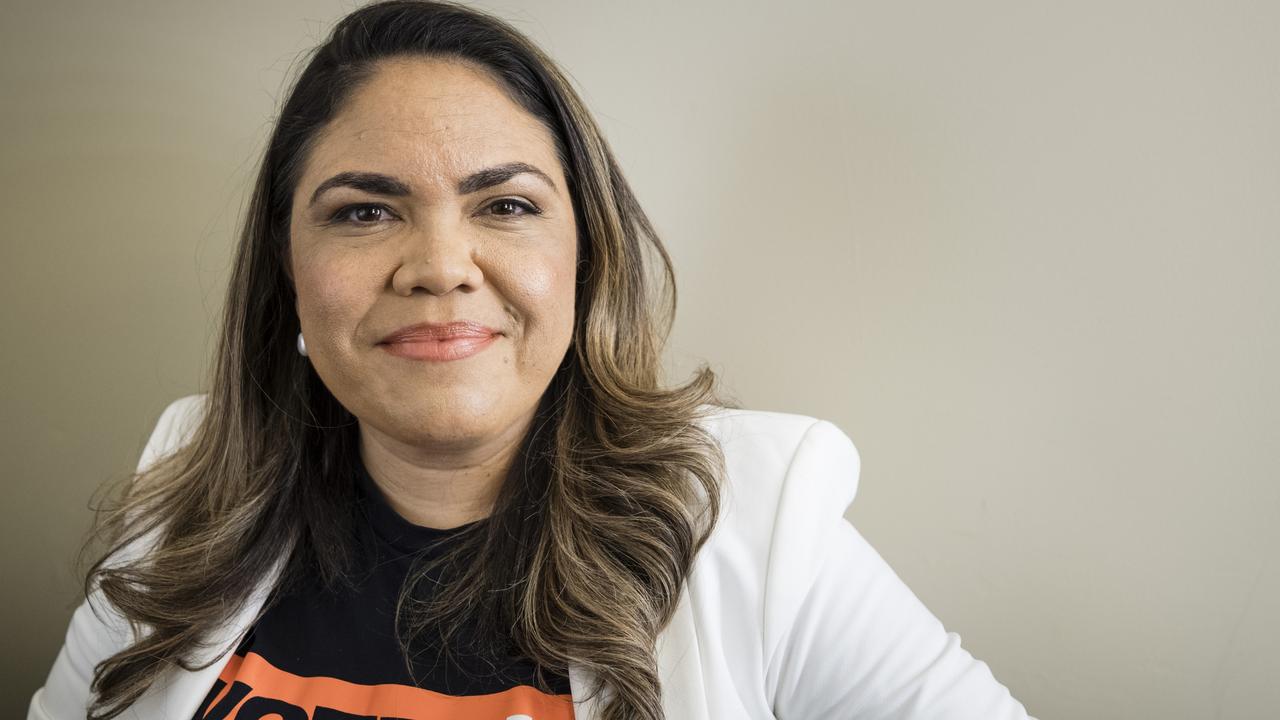
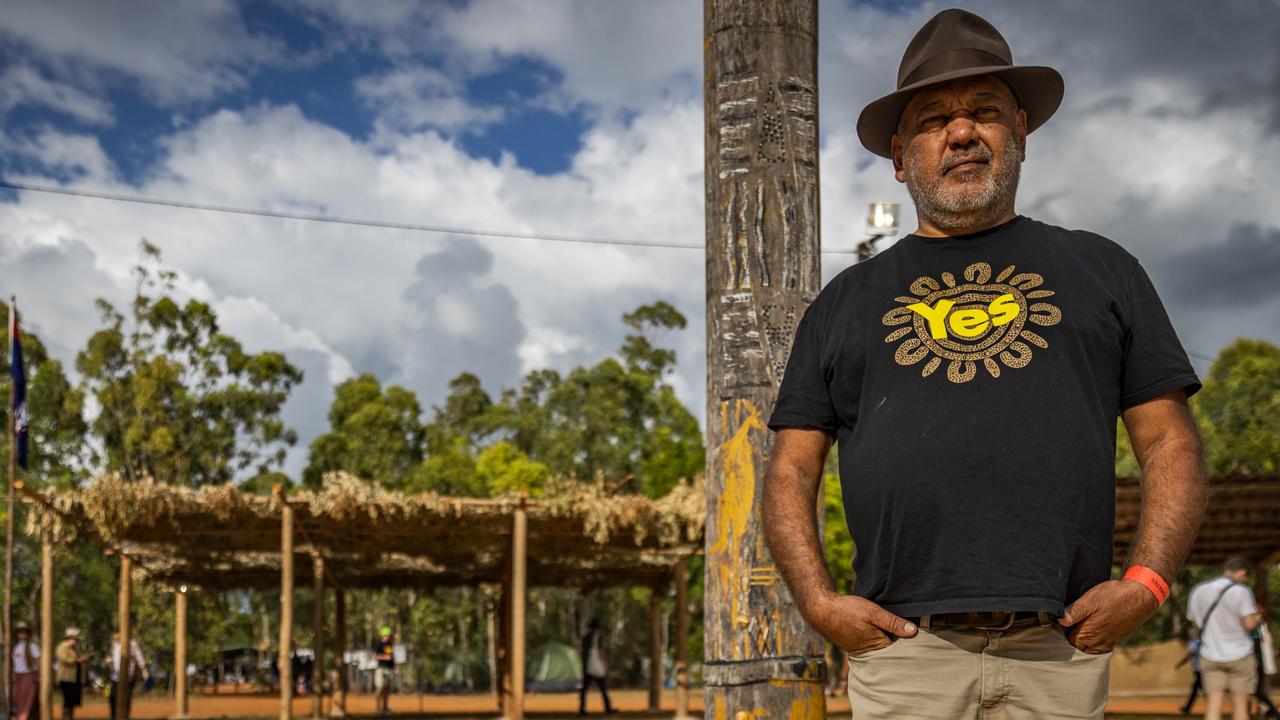


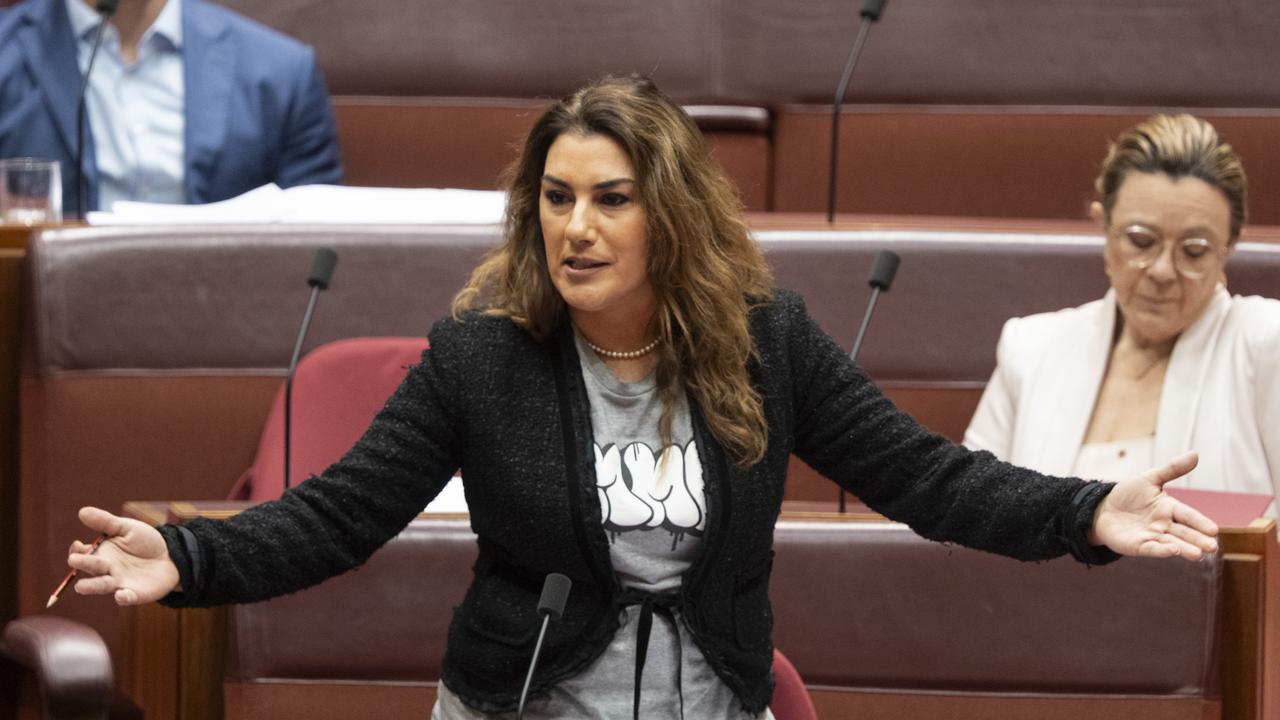

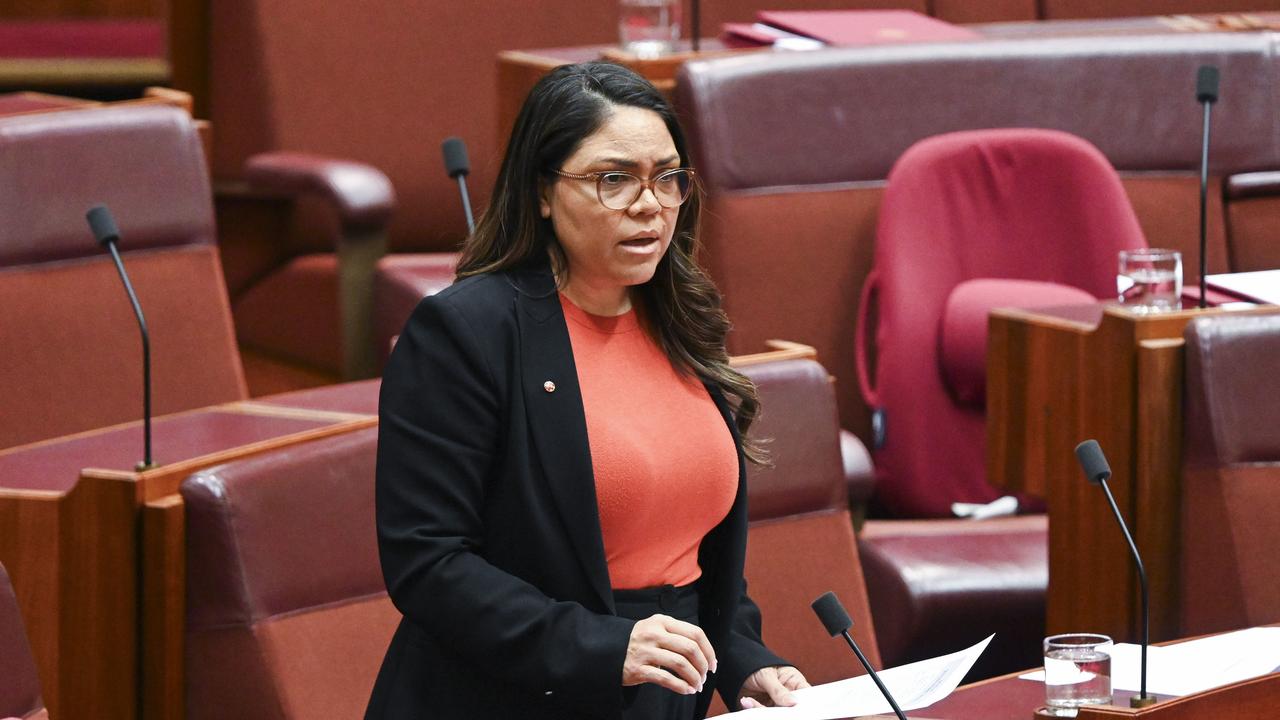
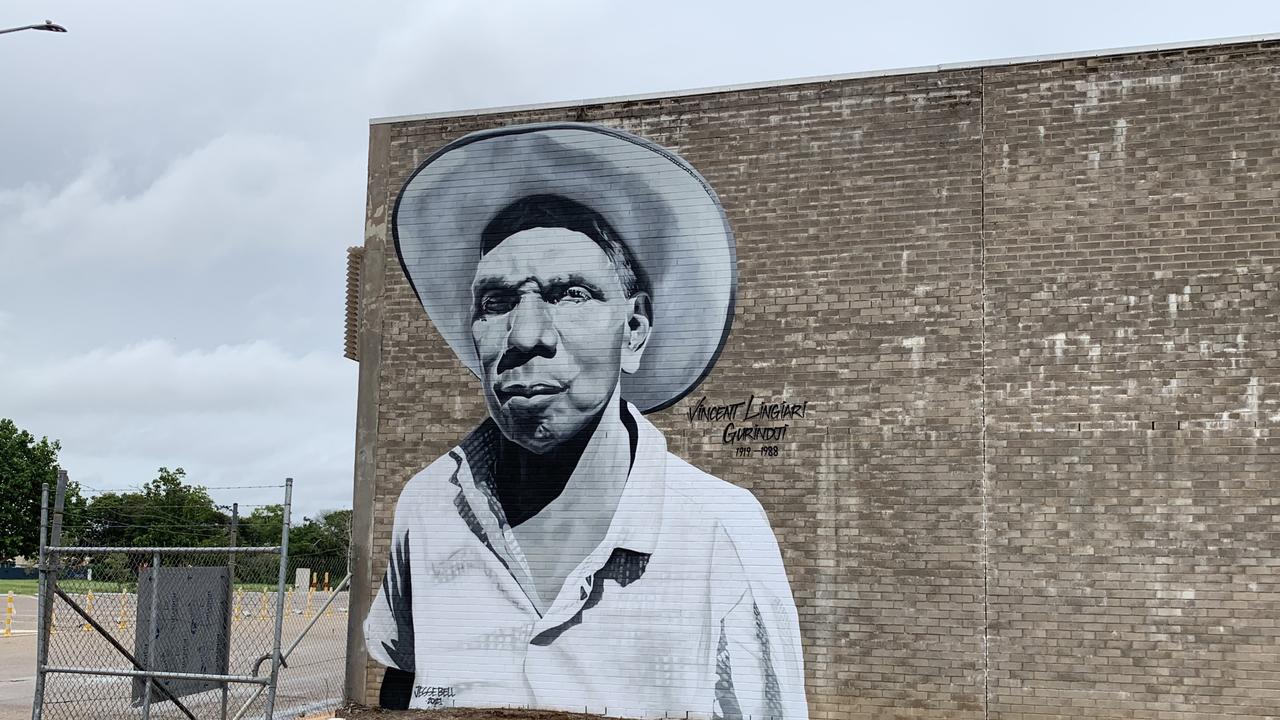


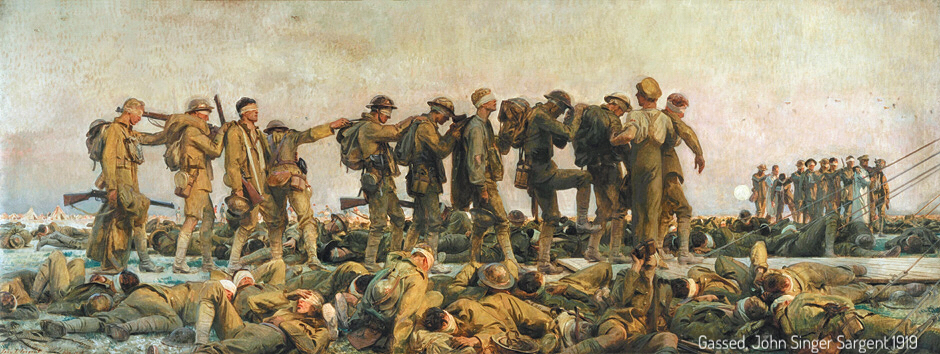

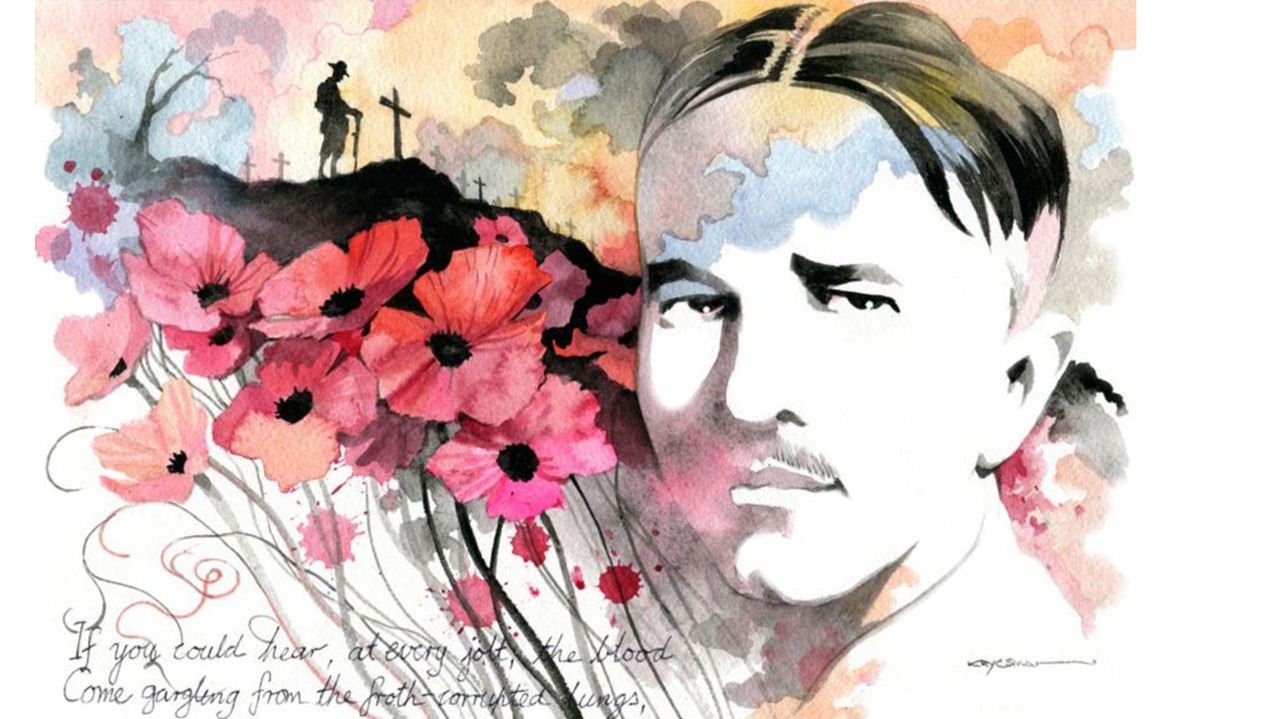
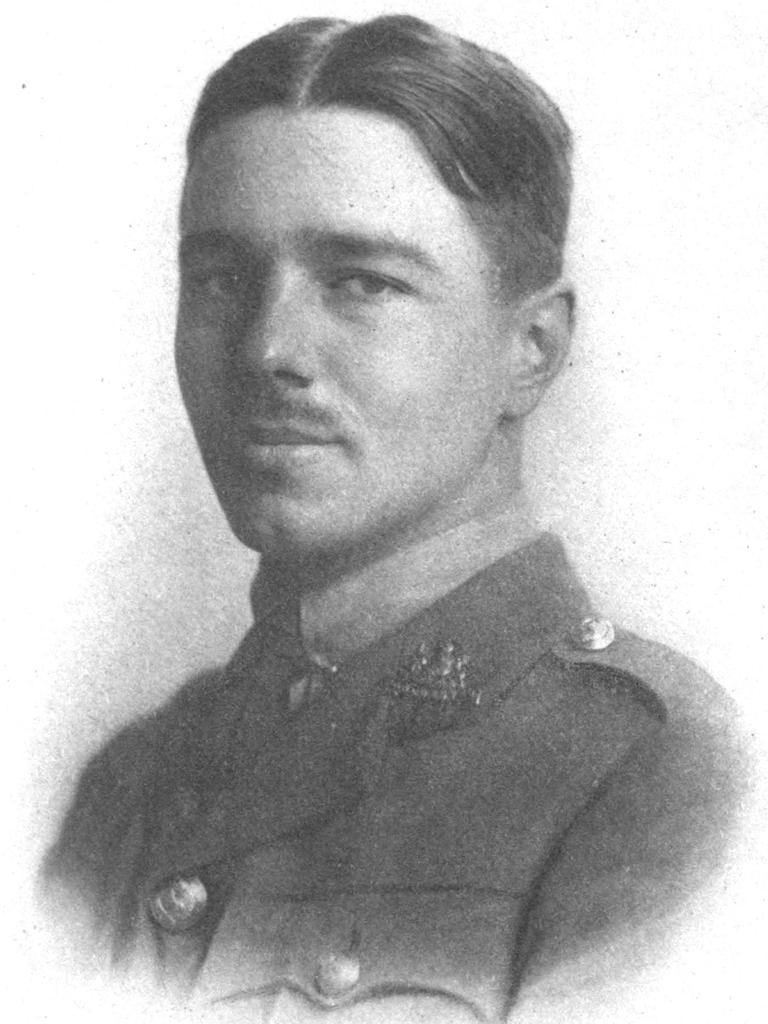

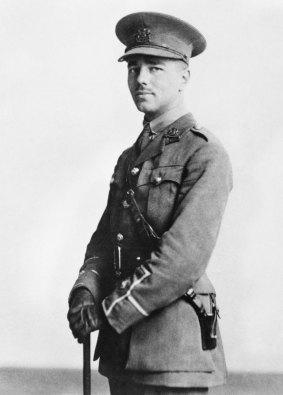
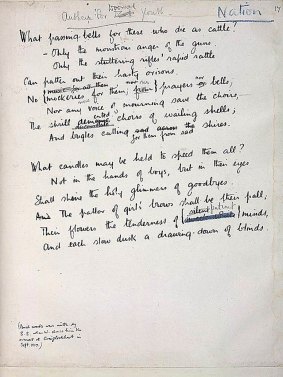
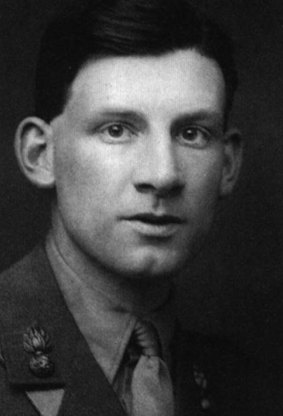

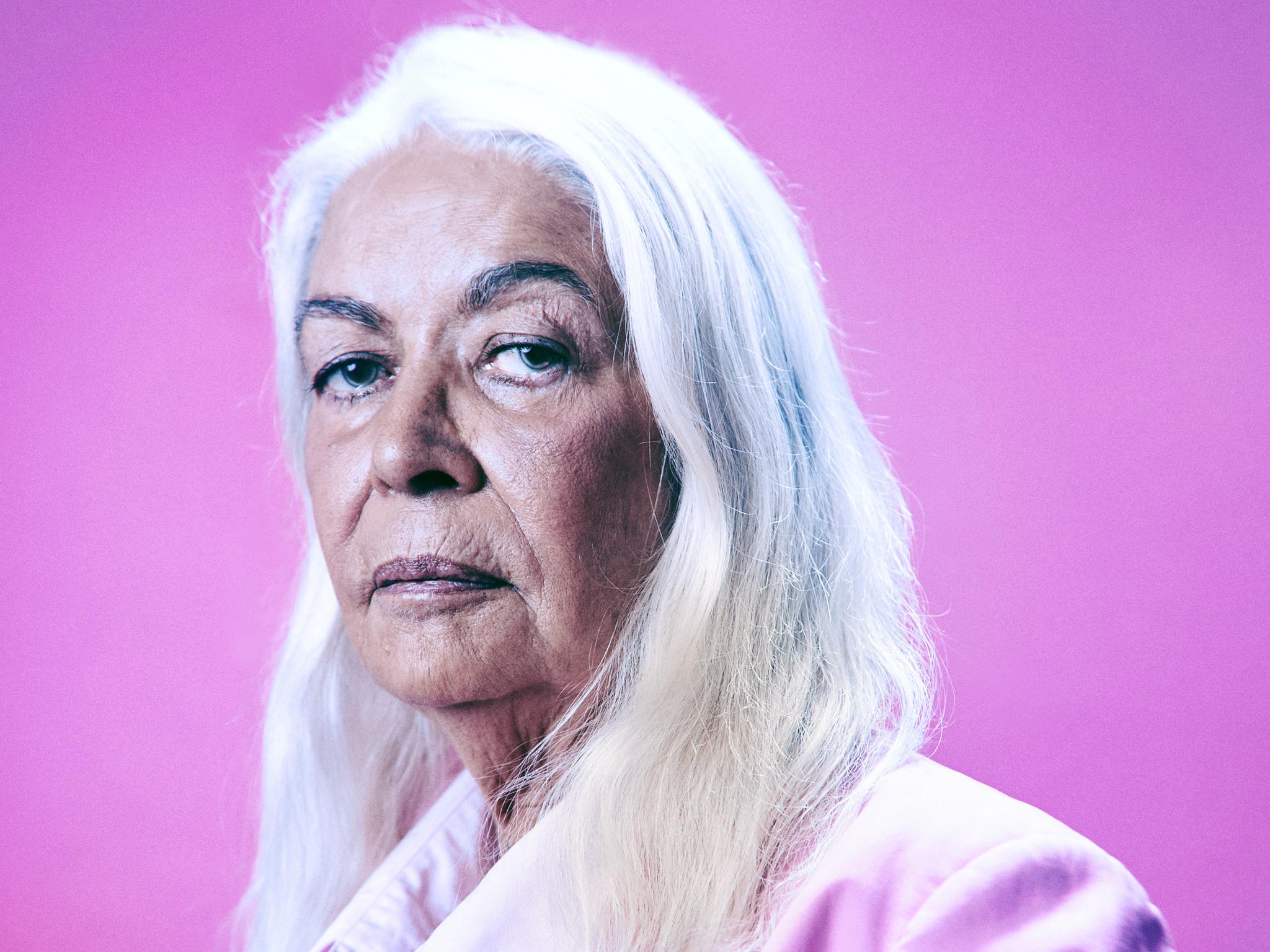
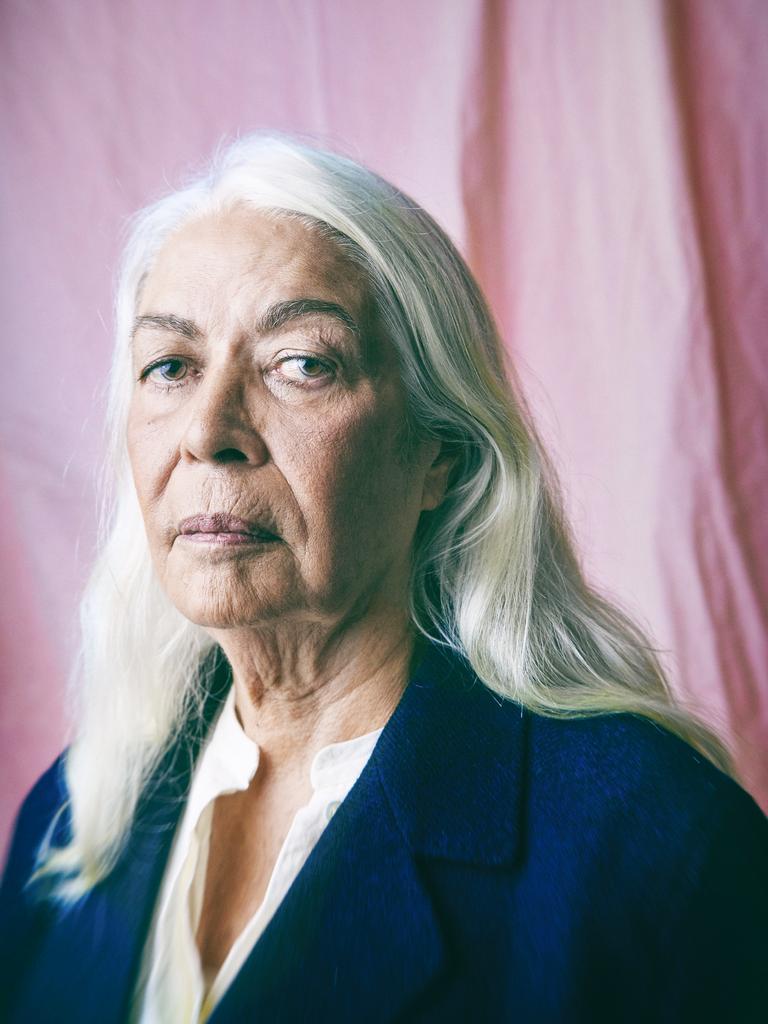
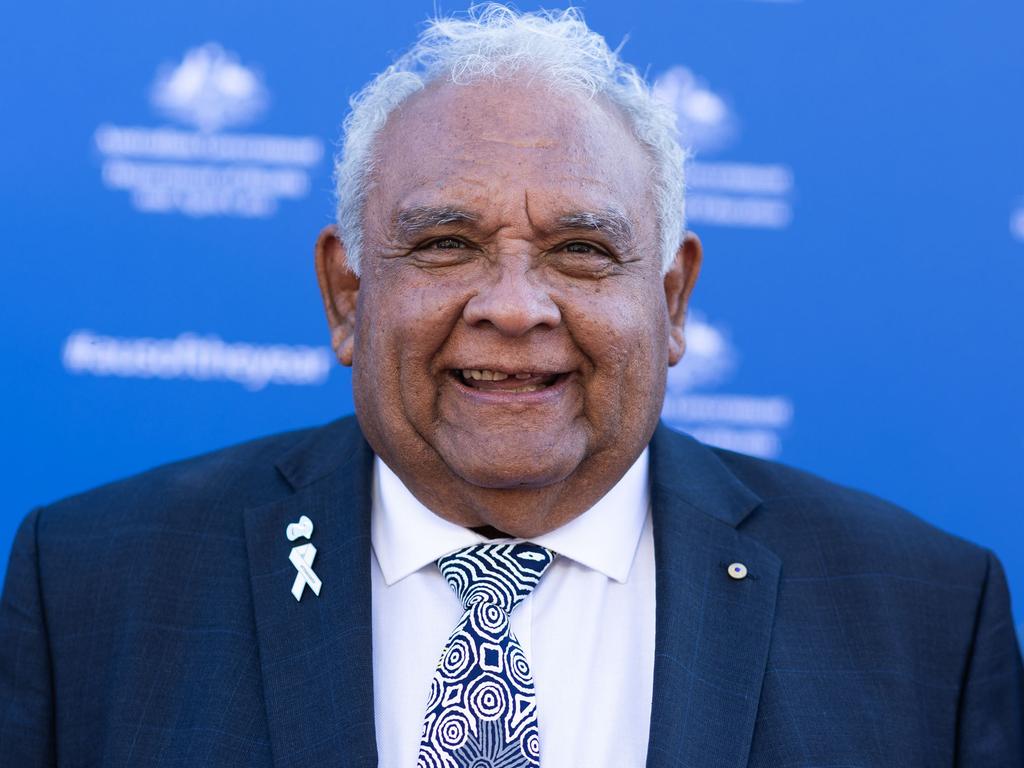
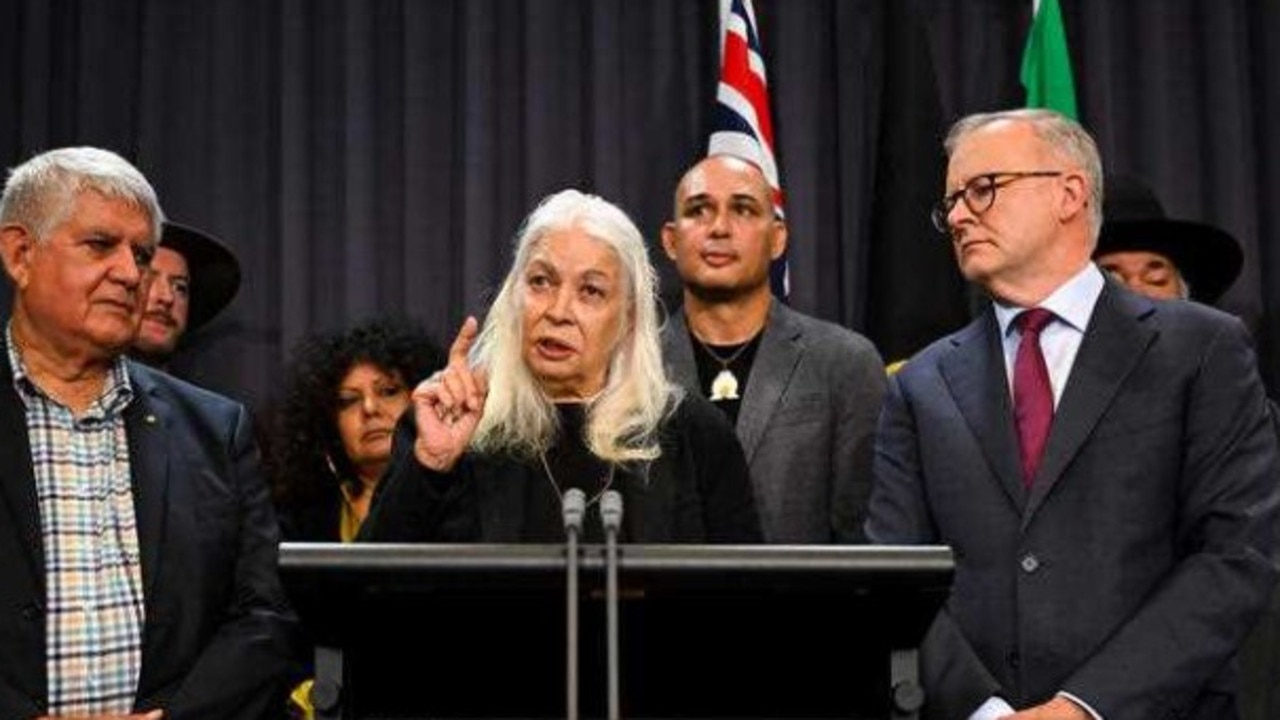
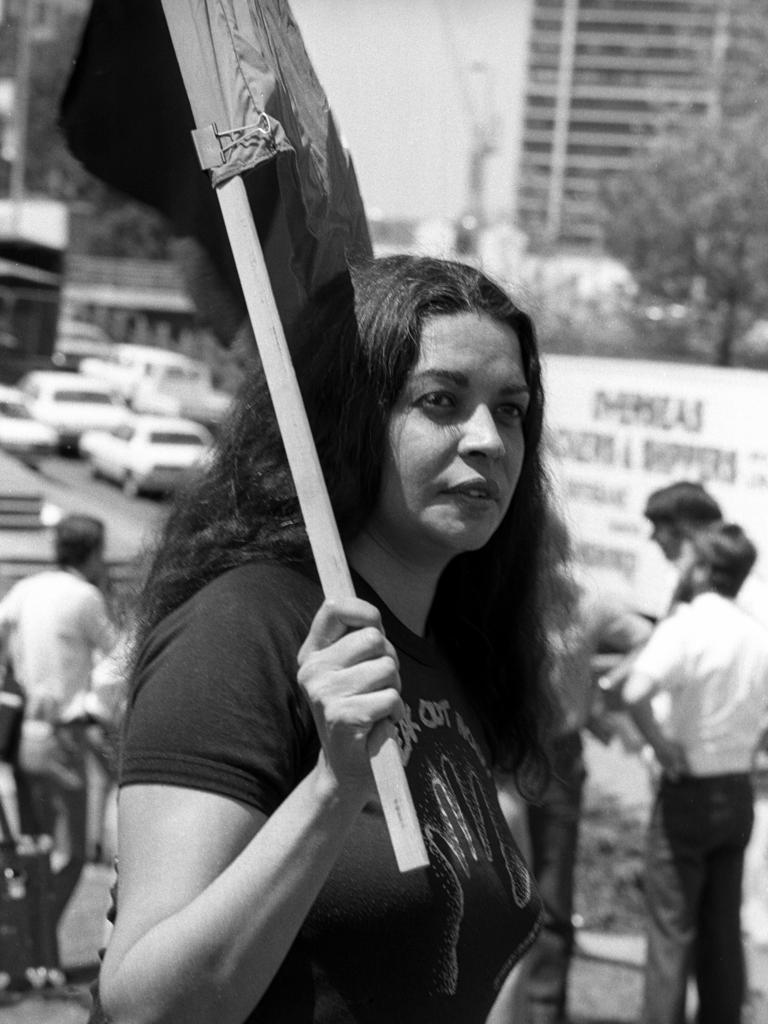
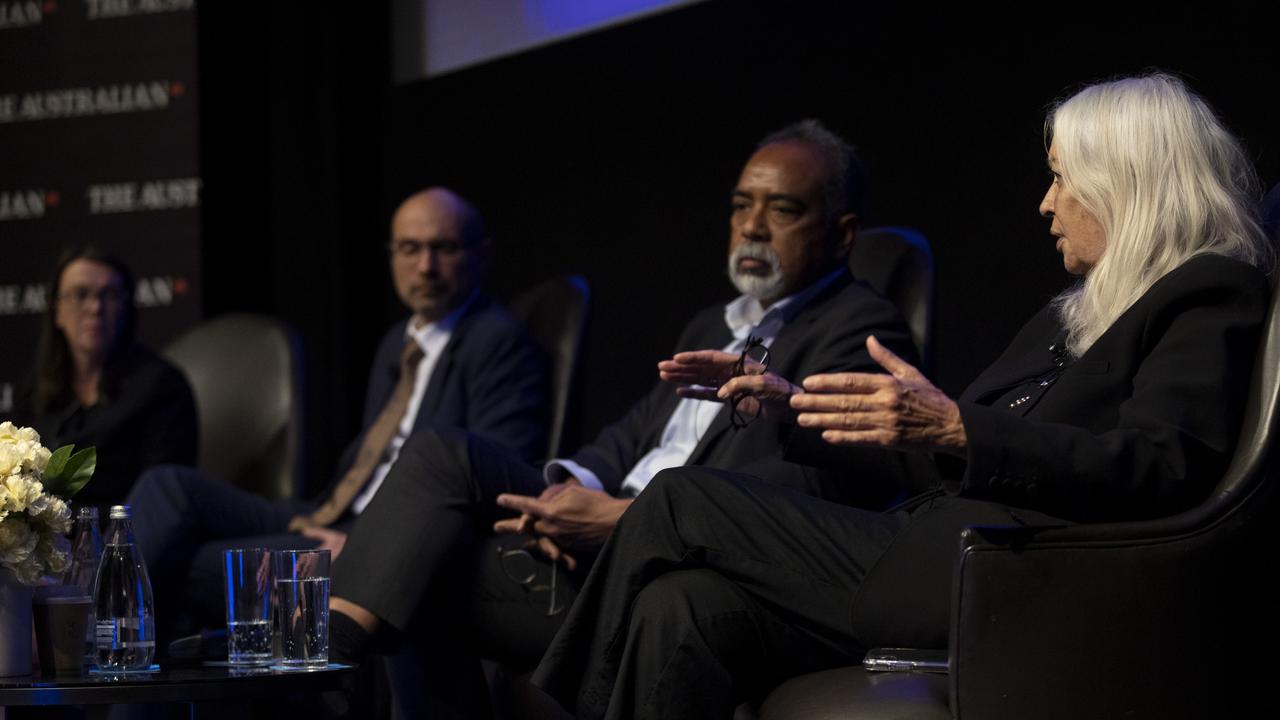














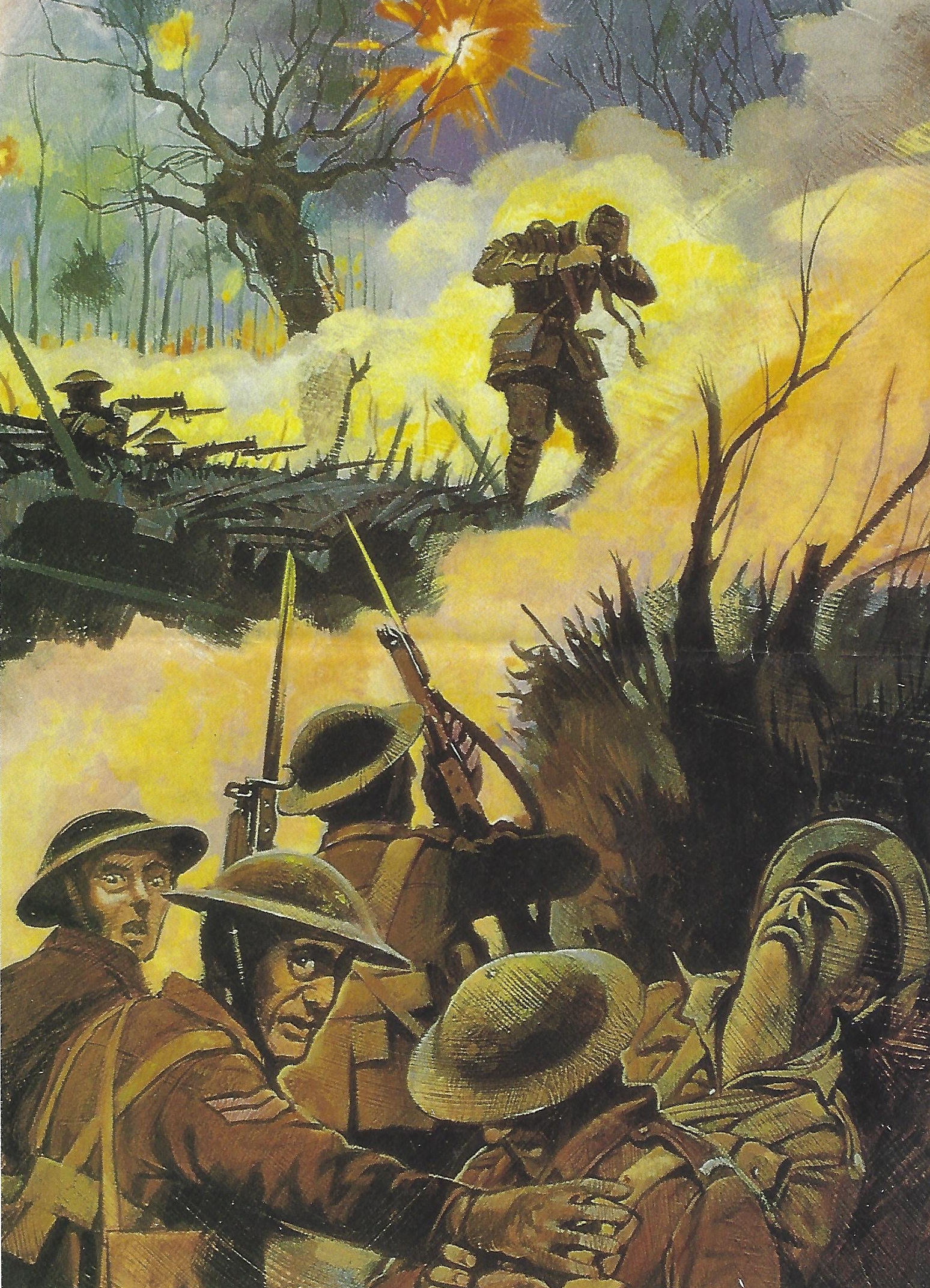


 In That Howling Infinite