“Texas is as politically divided as the rest of the U.S., but a recurrent crop of crackpots and ideologues has fed its reputation for proud know-nothingism and retrograde thinking”. This is a cracker. And a must-read for political junkies and all who are fascinated and frightened by the absurdities of recent US politics”.
This is a cracker. And a must-read for political junkies and all who are fascinated and frightened by the absurdities of recent US politics.
I haven’t enjoyed a lengthy American “fly on the wall” opinion piece since Variety despatched a writer to spend time with Lyndsay Lohan on the set of the The Canyons, her doomed porno-thriller (in case you are tempted, and it is indeed a hoot, there’s a link to it below).
Lawrence Wright’s piece reads like a tragicomical dystopian thriller, and indeed, Thomas Pynchon and Michael Chabon would find some great storylines here. His tale becomes increasingly surreal as the author charts the passions, policies and personalities that collude and collide in this chronicle of the recent legislative session of Texas’ State House.
It is full of stories short and tall, quips and quotes, and daring and dastardly deeds that would be hilarious and worthy of the best political satires if only they were not actually true! An Austin newspaper columnist recounts the story of an absconding representative: the police “tracked him to earth at his momma’s house, where he was found hiding in the stereo cabinet.” She added, “He always did want to be the Speaker.” A wannabe Republican candidate for the State Board of Education posts on Facebook that Barack Obama had worked as a male prostitute in his twenties: “That is how he paid for his drugs,” she reasons, (and) went on to assert that climate change is a “ridiculous hoax,” and that dinosaurs are extinct because the ones on Noah’s Ark were too young to reproduce”. Another representative tweets: “Top priority for Travis GOP: beautiful Big Titty women!!” A former governor once said of then presidential nominee, George H. W. Bush. “He can’t help it. He was born with a silver foot in his mouth.” She wore designer suits but picked her teeth, and she cleaned her fingernails with a Swiss Army knife. Successively opposing the placing of a Christmas manger scene in the state capitol, she said ““I’m afraid so…and it’s a shame, because it’s about the only time we ever had three wise men in the capitol.”
These are a selection of the more anodyne tales. Many others are downright scary, and one shakes one head in disbelief at what legislators and elected officials think and do. To bowdlerize the Bard, “what brave, bad world that has such people in it”.
“Texans…are hardly monolithic. The state is as politically divided as the rest of the nation. One can drive across it and be in two different states at the same time: FM Texas and AM Texas. FM Texas is the silky voice of city dwellers, the kingdom of NPR. It is progressive, blue, reasonable, secular, and smug—almost like California. AM Texas speaks to the suburbs and the rural areas: Trumpland. It’s endless bluster and endless ads. Paranoia and piety are the main items on the menu”.
Accordingly, Wright presses all the red (and blue) buttons that inspire, ignite and implode, delight, dismay and divide US politics and society, including in no particular order:
Abortion, gender and toilets. Obamacare, health insurance, and death panels (rememeber those?). Public schools, vouchers, and toilets. Gerrymandering, voter registration and electoral fraud. Lobbyists, political donations, and corruption. Immigration, Muslims, latinos, and sanctuary cities. Guns of all calibers, mass-shootings and pig hunting. Budgets, appropriations, and toilets. Donald Trump, the religious right, and the liberal menace – and, yes, toilets. You have to read the article if you want to understand how things always seem to come back to the rest room.
Maternal mortality rates (up), foster-care and child protection (down). The Poo Poo Choo Choo (really!), texting whilst driving, the right to say Happy Christmas instead of Happy Holiday, and a proposed law to fine masturbation outside of a woman’s parts or of a medical faculty – “an act against an unborn child, and failing to preserve the sanctity of life”. There’s the heroes : William Travis, Sam Houston, Davy Crockett, and, naturally, the Alamo (see below). Famous Texans Willie Nelson, Marty Robbins, and Kinky Friedman (and his band, the Texas Jewboys) get cameos, and Bruce Springsteen, a passing reference. But no Jimmy Webb or Galveston (Wichita is in Kansas in case you ask, and Phoenix is in Arizona), whilst Oklahoma is a refuge for dissenting Democrat legislators. And, whatever “they” do, “don’t California Texas!”
You will be amazed and horrified in equal measure as Lawrence Wright connects these dizzying dots. I never thought that politics could be so exciting. It makes the schoolyard bluster and the minor party shenanigans of our Australian Parliament seem like Children’s Play Time.
As we often say DownUnder: “Only in America Texas!”
In the dark times will there also be singing? Yes, there will also be singing. About the dark times.
Berthold Brecht
Rhiannon Giddens, a multifaceted singer, musician, folklorist and storyteller brings American history alive in her her drive to unearth the stories of forgotten people so that her audiences and listeners may remember them.
On Moon Meets The Sun, a defiantly joyous song, Giddens and her comrades of Our Native Daughters sing in the round over a polyrhythmic lacework of banjo and guitar, vowing not to let radical suffering diminish humanity. “You put the shackles on our feet, but we’re dancing”, she sings, “You steal our very tongue, but we’re dancing” “Ah, you sell our work for your profit, but we’re dancing,” she scoffs. “Ah, you think our home we have forgotten, but we’re dancing.” Then she recedes into the jubilant tangle of voices: “You can’t stop us now (We’ll be dancing). You can’t keep us down (We’ll be dancing)”.
Rhiannon Giddens: “There is surely racism in this country — it’s baked into our oldest institutions – just as there is sexism, millennia old. At the intersection of the two stands the African American woman. Used, abused, ignored and scorned, she has in the face of these things been unbelievably brave, groundbreaking and insistent. Black women have historically had the most to lose, and have therefore been the fiercest fighters for justice — in large, public ways that are only beginning to be highlighted, and in countless domestic ways that will most likely never be acknowledged.”
Quasheba, Quasheba
You’re free now, you’re free now
How does your spirit fly?
Blood of your blood
Bone of your bone
By the grace of your strength we have life
From the Golden Coast of Ghana
To the bondage of Grenada
You kept the dream of hope alive
They burned your body
They cursed your blackness
But they could not take your lights
Raped and beaten, your babies taken
Starved and sold and sold again
Ain’t you a woman, of love deserving
Ain’t it somethin’ you survived?
Quasheba, Quasheba
You’re free now, you’re free now
How does your spirit fly?
Blood of your blood
Bone of your bone
By the grace of your strength we have life
You dreamt of home, you dreamt of freedom
You died a slave, you died alone
You came from warriors who once built empires
Ashanti’s kingdom carries on
You were forgotten, almost forsaken
Your children founded generations
Your strength sustained them
They won their freedom
Traced their roots to find you [waiting?]
Quasheba, Quasheba
You’re free now, you’re free now
How far your spirit’s flown
Blood of your blood
Bone of your bone
By the grace of your strength we are home
Blood of your blood
Bone of your bone
By the grace of your strength we are home
By the grace of your strength we are home
We are home
We are home
We are home
I am reminded of Pete Seeger’s adaptation of the old Baptist hymn:
” My life flows on in endless song
Above earth’s lamentation.
I hear the real, thought far off hymn
That hails the new creation
Above the tumult and the strife,
I hear the music ringing;
It sounds an echo in my soul
How can I keep from singing?”
Here is the wondrous Éabha McMahon of Celtic Woman:
In the dark times
Will there also be singing?
Yes, there will also be singing
About the dark times.
– Bertolt Brecht, motto to Svendborg Poems, 1939
In an essay called ‘Undefeated Despair’, John Berger wrote of ‘Despair without fear, without resignation, without a sense of defeat.’ ‘However you look at it’, the Guardian editorialised a few days ago, ‘2017 offers a fearful prospect for America and the world.’ In the words of Paul Simon’s ‘American Tune’, I don’t have a friend who feels at ease when weighing the prospects for the year ahead. In the spirit that some solace may be found in poetry in these dark times, I offer a selection of poems or brief extracts – some have which have appeared in posts here before – which seem to offer meaning and hope; they may reflect Berger’s stance of undefeated despair, offering not ‘a promise, or a consolation, or an oath…
I was inspired to write this post on viewing the video below, a harrowing picture gallery of the Bosnian War, the bloodiest but not the last of the Wars of the Yugoslav Succession. I was reminded of the iconic Lebanese poet Khalil Gibran’s poem, Pity the Nation, a sardonic and incisive take on the politics of his time and his homeland. It is chilling in its prescience with regard to contemporary politics in the Middle East and indeed, much, much closer to home on in our liberal democracies where les mots de jour, and indeed, des temps are ‘populism’ and ‘post-truth’, where allegations of ‘alternative facts’ and ‘fake news are ubiquitous and duplicitous, and where, in a milieu of fear, anger and loathing, intolerance and ignorance appear to be on the rise.
Today, in America, 1984and The Handmaid’s Tale are best-sellers, and doubtless, as resignation and surrender sink in, Fahrenheit 451and Catch 22will catch on with intellectually and numerically inclined. The one is the temperature at which paper burns (“Remember, the firemen are rarely necessary. The public itself stopped reading”), the other, the mother of all vicious circles. The 22 was meant to be 18, but Joseph Heller was gazzumped by Leon Uris’ holocaust melodrama Mila 18 (which I do happen to like).
I was also reminded of a book of the same name. In Pity the Nation, his tombstone of a book about Lebanon’s civil war, and Israel’s intervention therein (inspired by Gibran’s poem, and by the fact the he has been a resident of Lebanon for going on half a century), the redoubtable British journalist Robert Fisk writes of a Lebanese doctor, Amal Shamaa: “I had to take the babies and put them in buckets of water to put out the flames. When I took them out half an hour after, they were still burning. Even in the mortuary, they smouldered for hours”. “Next morning”, Fisk continues, “Amal Shamaa took the tiny corpses out of the mortuary for burial. To her horror, they again burst into flames”. Such is the effect of phosphorous shells on mortals. Made in America, used on Arabs, by Jews. But it happens anywhere and everywhere, inflicted by anyone on everyone.
And that, is in essence, the underlying message of Gibran’s poem, published posthumously after his death in 1931.
Pity the nation that is full of beliefs and empty of religion.
Pity the nation that wears a cloth it does not weave
and eats a bread it does not harvest.
Pity the nation that acclaims the bully as hero,
and that deems the glittering conqueror bountiful.
Pity a nation that despises a passion in its dream,
yet submits in its awakening.
Pity the nation that raises not its voice
save when it walks in a funeral,
boasts not except among its ruins,
and will rebel not save when its neck is laid
between the sword and the block.
Pity the nation whose statesman is a fox,
whose philosopher is a juggler,
and whose art is the art of patching and mimicking
Pity the nation that welcomes its new ruler with trumpeting,
and farewells him with hooting,
only to welcome another with trumpeting again.
Pity the nation whose sages are dumb with years
and whose strongmen are yet in the cradle.
Pity the nation divided into fragments,
each fragment deeming itself a nation.
Kahlil Gibran, The Garden of The Prophet (1933)
ارحم على الامة
ارحم على الأمة المليئة بالمعتقدات والخالية من الدين.
ارحم على الأمة التي تلبس ثوبا لا يحاك.
وتأكل خبزا لا تحصد.
أشفق على الأمة التي تعتبر المتنمر بطلاً ،
ويعتبر منتصرها رائعا.
ارحم أمة تحتقر الشغف في أحلامها
لكنه يخضع لها عندما تستيقظ.
ارحم على الأمة التي لا ترفع صوتها
إلا عندما تمشي في جنازة ،
وتفتخر فقط بين أطلالها ،
ولن تنقذ نفسها عندما توضع رقبتها
بين السيف والكتلة.
ارحم على الأمة التي فيها رجل الدولة وهو ثعلب ،
والفيلسوف مشعوذ
فنه من الترقيع والتقليد
ارحم على الأمة التي تستقبل حاكمها الجديد بصوت عالٍ ،
“And time, ’tis said reveals its dead, and we will speak what was unsaid. How he was wrong, and I was led – his song I sing who gives me bread. It wasn’t me! I kept my head – I had my kin and kind to serve. It wasn’t me – I kept the faith. It wasn’t me who lost his nerve”.
It charts the cartography of carnage: Bali, Beslan, Gaza, Grozny, Kabul, Kigali, Sabra, Srebrenica, and other “far-away places with strange sounding names”. ”Many have perished, and more most surely will”. This latter quotation is adapted from Auden’s often overlooked masterpiece The Age of Anxiety, a meditation on a world in pain. “The bane of bad geography, the burden of topography, lines where they’re not meant to be are letters carved in stone”. “Bombs and babies, girls and guns, dollars, drugs and more betides, wash like waves on strangers’ shores: damnation takes no sides”.
Lawrence Ferlinghetti, American poet, painter, liberal activist, and co-founder of the legendary City Lights Booksellers & Publishers in San Francisco, wrote the following poem in 2007 as a tribute to Gibran, and as a sad testament to the aphorism “plus ça change, plus c’est la même chose”.
“Pity the nation whose people are sheep and whose shepherds mislead them.
Pity the nation whose leaders are liars, whose sages are silenced, and whose bigots haunt the airwaves.
Pity the nation that raises not its voice except to praise conquerors and acclaim the bully as heroand aims to rule the world with force and by torture.
Pity the nation that knows no other language but its own and no other culture but its own.
Pity the nation whose breath is money and sleeps the sleep of the too well fed.
Pity the nation – oh, pity the people who allow their rights to erode and their freedoms to be washed away.
People crushed by laws, have no hope but to evade power. If the laws are their enemies, they will be enemies to the law.Edmund Burke
The protest against the aggressive and toxic nature of Forestry Corporation’s clearfell, burn and poison forestry operation at Tarkeeth State Forest has been ongoing for over a year. The protest campaign kicked off in March 2016 with meetings and rallies, followed by the establishment of a protest camp in June, and direct action by forest protectors in July.
In January 2017, the Tarkeeth Three, Peter “Simmo” Simmonds, John “Sean” May, and Amber “AJ” Daley were convicted at Coffs Harbour Courthouse for their direct actions to protect The Tarkeeth. Sean and AJ appealed their convictions, and these were quashed in March. Simmo, a dedicated and veteran environmentalist, did not appeal his conviction because he had breached an earlier bond in relation to his direct action against coal seam gas operations at Narrabri, when he locked on at Tarkeeth. Thus did the Tarkeeth Three become the Tarkeeth Two. Simmo has since been acquitted of breaching the Narrabri bond.
As forest protector and protest leader Susan Weil said after the January trial, the outcome of the court proceedings:“allows people around Australia to not panic, and to not be scared to go out and protest for the environmental issues and social issues that matter to them”.
The following article features two interviews broadcast by Bellingen’s community radio 2bbb, with respect to these direct forest actions and the subsequent court proceedings. There are also live videos of the locks-ons, and links to media coverage.
Bellingen barrister John Carty, Counsel for the appellants, talked with 2bbb radio host Leo Bradney-George about the trial of the Tarkeeth Three, and particularly, the acquittal of the Tarkeeth Two at Coffs Harbour Courthouse on 2nd March 2017.
John Carty explains how Forestry Corporation had acted in a “disingenuous and opportunist” manner.
Prior to the Tarkeeth Three trial on 18th January 2017, forest protector Sean talked with 2bbb radio host Leo Bradney-George about Tarkeeth Forest and its defenders.
Greens MLC Jeremy Buckingham’s live coverage of Simmo’s lock-on at Tarkeeth on 25th July 2016:
Protest leader Susan Weil’s live coverage of the Not In My Forest action group’s onsite protest at Tarkeeth State Forest on 28th July 2016, where Sean and AJ locked on to a timber harvester machine:
A short video of the destructive clearfell and burn forestry operations that inspired the Tarkeeth Three to direct action:
Further reading …
Tales of Tarkeeth– other stories in this blog about Tarkeeth’s past and present.
A selection of local media coverage of the Tarkeeth Three:
Coffs Coast Advocate – The Tarkeeth Three convicted over battle with archaic logging operations
Commentator and counterinsurgency expert David Kilcullen is always worth reading. Here is his assessment of the Khan Sheikhoun gas attack and the US’ “laughably symbolic” response. Contrary to the view of many that Assad did not use sarin gas, and to those who praised Trump’s newfound, muscular foreign policy, Kilcullen maintains that it was indeed Assad wot done it, that his reasons were strategically justified, that the US and its allies need much than this one viagra hit to bring the multifarious warring parties to the negotiating table, and that anyhow, the real target of Trump’s martial signalling were Chinese President Xi and The North Korean Fat Controller, Kim Jong Il. And, perhaps, as Beirut-based correspondent for The Independent, Robert Fisk suggests in his own interpretation of the events, Vladimir Putin:
Patrick Cockburn, Fisks’s colleague at at The Imdependent paints a scarier scenario. The folk who brought you the disasters in Iraq and Afghanistan are back, and are keen to attend to unfinished business:
Sarin attack shows Assad is desperate as jihadist rebels gain ground
David Kilcullen. The Australian, April 15, 2017
US President Donald Trump’s missile strike against Syria’s Shayrat air base last week, responding to the chemical attack on Khan Sheikhoun in northern Idlib province, garnered cautious praise across the political spectrum. It also highlighted the complex choices facing the US, allies such as Australia, regional players like Turkey and Iraq, and institutions such as the UN.
The key to understanding the strike, though, lies in a question that’s been somewhat overlooked: why did Bashar al-Assad’s regime need to use the nerve agent in the first place?
We should start by noting that praise for the strike can largely be explained by the extraordinarily low expectations Trump and his predecessor set for effective action on Syria. Trump’s alleged Russia ties, praise for strongmen, positive statements about Assad until days before the attack, and expressed disdain for world opinion set the bar so low that he got credit just for upholding an international norm against chemical weapons, and showing he was prepared to go up against Moscow.
His prompt response also contrasted with president Barack Obama’s failure to enforce his own “red line” after the vastly more lethal Ghouta attack of September 2013, which killed 1500 and poisoned thousands (the Khan Sheikhoun attack killed 74). When Obama called his own bluff on the red line, ceded the diplomatic initiative to Moscow and put the Kremlin in the driver’s seat for negotiations on Syria, he enabled a Russian-brokered agreement on Syria’s chemical stockpile that bolstered the regime’s legitimacy.
Far from eliminating Syria’s chemical weapons — as former national security adviser Susan Rice repeatedly claimed — that agreement left Assad’s regime with reduced but still lethal capability, including extensive supplies of chlorine gas and smaller stocks of nerve agent that it used in later attacks. As Syrians told me after Ghouta, they felt the White House was telling Assad he could go ahead and massacre his own people, provided he did it with barrel bombs and artillery rather than chemicals.
The failure to act after Ghouta so appalled some members of Obama’s cabinet that Democratic “Syria hawks” (including former secretary of state John Kerry) came out in support of last week’s Shayrat strike. Given the continued refusal by many on the left to recognise Trump as America’s duly elected President, this speaks volumes for the level of bipartisan support for decisive action on Syria.
It also highlights the comfort of many progressive interventionists (including Kerry, but also Hillary Clinton) with unilateral American use of force — provided it is sanctified by humanitarian principles such as “responsibility to protect”. All this put Trump’s punitive strike in the political mainstream, making him look positively, well, Clintonian.
The Western narrative on Assad — reinforced just this week by presidential spokesman Sean Spicer — has been that his regime is uniquely evil, uses chemical weapons simply because it can, hates its own people and just wants to burn the country to the ground.
But, in fact, Syrian use of chemical weapons in the war so far has been highly calculated and strategic. Assad’s regime, far from being blind to international condemnation, understands the severe political consequences of using chemical weapons, and only does so when its back is against the wall. Assad’s regime has shown no compunction in using nerve agents when its survival is at stake, but otherwise it mostly keeps chemical weapons as a hip-pocket emergency reserve that can be rapidly deployed when manpower is short.
Thus, the real missed opportunity of 2013 lay in a failure to understand the regime’s motive in using chemical weapons: as a last resort, when a victorious coalition of mostly secular rebel groups was threatening the eastern suburbs of Damascus, making significant gains in the regime’s heartland and jeopardising its survival. Decisive action, combining the measured use of force with a strong diplomatic push, could have forced Assad — given the dire pressure he was under — into genuine peace talks.
The Ghouta attack was not an act of unthinking evil but one of calculated desperation, and strikes against regime positions could have not only punished Assad for his use of gas, but enabled a rebel advance into Damascus that would have opened a path to negotiations. The diplomatic price for suspending air strikes would have been regime concessions in UN-led peace talks, while the international community would have retained the ability to restart strikes at any time, or impose no-fly zones to enable humanitarian corridors to protect the people.
This, in fact, was the argument that allied airpower experts made at the time, likening the situation to the NATO-led bombing in the Balkans that ended the Bosnian war, led to the Dayton Accords and halted massacres in Kosovo in 1999.
This isn’t as far-fetched as it seems. Remember, 2013 was before Islamic State emerged, before its blitzkrieg dramatically changed the game in Iraq, before the declaration of the caliphate prompted a spike in world terrorism, before Turkey’s military incursions into Iraq and Syria, and before the European immigration crisis.
In 2013, the dominant Syrian rebel factions still included secular groups, while jihadists were on the back foot. This was also before Russia’s intervention improved Syrian air defences and complicated targeting by putting Russians on to key regime sites, and before the presence of more than 1500 Western ground troops in Syria made it possible for the regime to easily retaliate. And it was before the Iranian nuclear deal of 2015 brought a flood of funds, advisers and troops from Tehran to further bolster the regime.
Against this background, last week’s strike seems almost laughably symbolic: 60-odd Tomahawk cruise missiles, launched from two US navy ships in the Mediterranean, with allied aircraft kept away from Syrian air defences, and the Russians (and thus, presumably, their Syrian proteges) given plenty of warning to get out of the way. The missiles destroyed some obsolete aircraft, killed a few regime troops, and left the airfield at Shayrat so lightly damaged that the regime was using it again within hours, even launching a further strike from Shayrat (with conventional munitions) against Khan Sheikhoun the very next day.
Kosovo 1999 it was not. But again, the key question is why Assad’s forces felt the need to use the nerve agent in the first place.
Khan Sheikhoun is a town of 50,000 on the southern edge of Idlib, a province in northwestern Syria that abuts Turkey to the north, Aleppo to the east, and Hama and Latakia provinces to the south and west. As of mid-April, apart from tiny regime enclaves at Fua and Kefraya, Idlib is almost totally controlled by a jihadist coalition led by al-Qa’ida’s Syrian affiliate Jabhat Fatah al-Sham, still widely known by its former name, the Nusra Front.
Nusra detests Islamic State (a feeling Abubakr al-Baghdadi’s organisation heartily reciprocates). But in many ways it poses a much more severe threat to the regime than Baghdadi’s group. The Nusra-led offensive in Idlib and Hama has been under-reported, but for Syrians it’s the most important event of 2017 so far.
Even as the regime recaptured Aleppo in December 2016 — with heavy support from Russian airstrikes, Russian special forces, Iranian advisers and Hezbollah militia — Nusra and other groups formed an alliance, Hayat Tahrir al-Sham, to recapture ground from Assad’s forces.
After weeks of preparation they launched a major offensive on March 21 with more than 5000 well-armed and well-organised fighters from seven rebel groups operating under Nusra leader Abu Mohammed al-Jolani. Tahrir al-Sham gathered the most capable rebel groups in Syria into a single coalition under al-Qa’ida’s leadership, pointed them directly at the regime’s weakest point and achieved immediate success.
Within days, rebel fighters pushed to within 5km of the Hama suburbs, threatening the regime’s control of a critical city that anchors its northern flank and provides access to Aleppo. They also made significant gains into the al-Ghab plain, Syria’s breadbasket, an area essential to the regime’s ability to feed Syria’s pro-government population.
Nusra’s rapid advance jeopardised Assad’s control of the economically and politically important Hama and Latakia provinces, and posed a risk to Russia’s naval and air bases to the south.
Khan Sheikhoun now sits at the base of a rebel salient that stretches from Idlib south into the outskirts of Hama city, and west into al-Ghab. As I write, this salient is being counter-attacked all along its perimeter by regime forces desperate to stem the Nusra advance, but lacking the manpower or ground-based firepower to roll back the rebels. Knocking out Khan Sheikhoun from the air would immediately collapse the rebel salient, letting the regime stabilise the front line. Unsurprisingly, doing exactly that has become a major priority for Assad.
The town’s importance was underlined by the fact that the pilot who allegedly carried out the sarin attack was Major General Mohammed Hazzouri, a Syrian air force officer commanding the 50th Air Brigade at Shayrat, and whose family name suggests he’s related to Mohammed Abdullah al-Hazzouri, governor of Hama, who was appointed by Assad in November 2016. Obviously, when you launch a gas attack using a fighter jet flown by a two-star general from the same prominent family as the provincial governor, you’re telegraphing that this is a pretty serious priority.
In fact, the town has been heavily attacked by regime forces (including earlier attacks with chemical weapons late last year and again last month) and subjected to multiple air strikes and artillery bombardments as the regime tries to contain the threat to its northern flank. Assad’s reliance on artillery and aircraft underlines his lack of ground assets: despite Russian, Iranian and Hezbollah support, his forces have their hands full consolidating control over Aleppo, trying to relieve the isolated city of Deir Ezzor in eastern Syria, and fighting on the southern front against other rebel groups.
All this indicates that the regime is again under serious pressure, that its position is far shakier than its propaganda narrative after the recapture of Aleppo might suggest, and that firm pressure now might bring renewed progress toward peace talks. But the situation today is vastly more complicated than in 2013. There are real risks to allied aircraft over Syria from Russian and Syrian air defences, and to special forces and conventional troops (there are now, according to media reporting, as many as 1500 rangers, marines and special forces on the ground in Syria) in the event of strikes against the regime.
The rebels opposing Assad today are not the largely secular forces of 2013 but rather are dominated by al-Qa’ida, while Russia has indicated it plans to further improve Syria’s air defences and has vetoed efforts in the UN for further talks on a Syrian peace deal.
To think that, under these circumstances, mere words — Secretary of State Rex Tillerson’s frosty visit to Moscow, Trump’s call for Vladimir Putin to stop covering for Assad, or ambassador Nikki Haley’s fiery confrontation with Russian diplomats at the UN — will force Putin to back away from a critical strategic relationship going back to the 1960s, or force Assad to stop throwing everything at an attack that threatens his survival, is fantasy. If the Shayrat strike is to be more than the latest useless symbolic gesture, it needs to be followed by a fundamental change in strategy.
Until a week ago, Trump’s Syria policy was to downplay any call for regime change, acquiesce in the permanence of Assad’s regime and collaborate with Putin against Islamic State. As recently as April 5, the day after the Khan Sheikhoun attack, Tillerson was asserting that Assad was here to stay.
This was bad policy: not just on moral or political grounds (Assad has killed 10 times as many Syrians as Islamic State, and most US partners both inside Syria and throughout the region see removing Assad and ending the war as the top priority bar none) but also in practical military terms.
Assad lacks the military capacity to stabilise Syria: he’s losing ground in key areas, controls less than 23 per cent of the country, has no prospect of reunifying Syria, presides over a patchwork of local militias and thuggish warlords with purely nominal allegiance to his government, and couldn’t survive six months without external support.
The use of sarin gas underlines how desperate his situation is. Even if it were morally and politically possible to work with his regime for the greater goal of destroying Islamic State, the man simply can’t do the job.
More fundamentally, the goal of destroying Islamic State may not actually be the higher strategic priority, at least not in Syria. Unlike Iraq, where recapturing Mosul and crushing the caliphate is a key first step toward stabilising the country, in Syria the greatest threat to stability is Assad himself.
For most Syrians I’ve spoken to, the idea that anyone engaged in the uprising since 2011 would sit down again under Assad is ludicrous, and many have told me the biggest winner so far isn’t Islamic State but al-Qa’ida, through its Nusra affiliate.
From a wider strategic standpoint, the other key audiences for the Shayrat strike were Chinese leader Xi Jinping (who was dining with Trump as the strike went in) and North Korean leader Kim Jong-un. Using the Syria strike to telegraph a zero-tolerance policy for weapons of mass destruction, administration spokesmen talked of a new joint effort with China to rein in North Korea’s nuclear adventurism. For a President who spoke blithely on the campaign trail about Japan and South Korea acquiring their own nuclear weapons to deal with Pyongyang, this represents a big step forward.
More importantly, the move of the USS Carl Vinson aircraft carrier battle group toward Korean waters to deter further missile launches, and the deployment of US air defence systems and special operators in South Korea, showed this was not just talk.
The choices facing President Trump on Syria today are vastly more complex than those president Obama failed to deal with in 2013. But his change of policy after the Khan Sheikhoun attack — perhaps prompted by the presence in his inner circle of experienced strategists such as Secretary of Defence James Mattis and National Security Adviser HR McMaster — shows he’s at least capable of learning and adapting.
Along with the change on Syria policy and the move to deter North Korea, last week’s strike was rapidly followed by shifts in Trump’s tone on China (evidently no longer a currency manipulator), NATO (apparently no longer obsolete) and Russia (it would have been nice to co-operate, but that’s not possible while Russia continues to back Assad). Don’t look now, but all this seems to be pushing the Trump presidency back toward something resembling relatively mainstream US policy in the tradition of presidents Bush, Clinton and Reagan.
Whether you think that’s good or bad probably depends on your view of America’s role in the world, and the longstanding propensity of US leaders to use unilateral military force. But symbolic as it was, the Shayrat missile strike may also open the door to new thinking on Syria — and after six years, half a million dead, dozens of cities destroyed and millions displaced, that can only be a good thing.
David Kilcullen is a former lieutenant-colonel in the Australian Army and was a senior adviser to US general David Petraeus in 2007-08, when he helped to design the Iraq war coalition troop surge. He also was a special adviser for counterinsurgency to former US secretary of state Condoleezza Rice. He is the author of Blood Year: Islamic State and the Failures of the War on Terror (Black Inc).
From time to time, I republish articles by News Ltd commentators that I believe worth sharing with those who cannot scale the News paywall. This, by The Australian’s Editor at Large, Paul Kelly, is one of those.
In this piece, Kelly argues that to a certain degree, Donald Trump’s rise and rise was attributable to what he and other commentators and academics describe as a backlash in the wider electorate against identity and grievance politics.
“This election, beyond its madness, was about a clash of moral vision. Trump stood for three visions: economic protection against free trade, nationalism against internationalism, and cultural tradition against social liberalism”.
He quotes US academic Mark Lilla: “In recent years American liberalism has slipped into a kind of moral panic about racial, gender and sexual identity that has distorted liberalism’s message and prevented it from becoming a unifying force capable of governing. One of the many lessons of the recent presidential campaign and its repugnant outcome is that the age of identity liberalism must be brought to an end”.
American voters were “disaffected with the liberal message”. He said: “Democrats have simply lost the country. They have lost the capacity to speak to the vast middle of America, an America that is, in large part, white, very religious and not highly educated… identity liberalism was about self-expression, not persuasion, and claimed that “it’s narcissistic, it’s isolating, it looks within”.
Identity politics segue into grievance politics and the cultivation of victimhood and the creation of laws, rules and processes that appear to allow victims to pursue and punish the people who have offended them. This vests victims with a superior moral standing, even social status. Once the victim culture prevails, notions of morality and decency are redefined. As its scope widens any established idea is vulnerable: in Australian this is manifested in the belief that male-female gender norms should be respected, that Australia Day should be kept as January 26, and that the British civilization heritage should be fundamental to the school curriculum.
Kelly quotes another US academic, Jonathon Haidt, who writes that identity and grievance politics are tied to the idea of “emotional reasoning” or, the elevation of emotion over reason. Its essence is: “I feel it, therefore it must be true.” Feelings are permitted to guide reality. “A claim that someone’s words are ‘offensive’ is not just an expression of one’s own subjective feeling of offendedness. It is, rather, a public charge that the speaker has done something objectively wrong. It is a demand that the speaker be punished by some authority for committing an offense”.
We are now seeing the backlash, Kelly concludes. First in The UK, with Br sit, then with the triumph of Trump, this year in Europe, perhaps, and sooner rather than later, here in Australia:
“It is futile to think the counter-revolution will not occur. The only issues are its leadership, its rationality and the extent of its conservative or reactionary populism. If Prime Minister Malcolm Turnbull, as Coalition leader, feels this is not his responsibility then the vacuum will be occupied by others. As the two-generations-long campaign in the West for individual human rights reaches its logical cultural conclusion in identity politics, the results are an increasingly fragmented society, the decline of a shared historical narrative and a distorted moral order that damages us all”.
are we witnessing just another swing of the values pendulum, the correcting of a temporary imbalance, or something more challenging, permanent, and in the long-term, dangerous?
Read on…
Donald Trump’s election a rejection of identity and grievance politics
Paul Kelly, The Weekend Australian, 28th January 2017
As Donald Trump’s new presidency surges across our politics, creating chaos and uncertainty, there is one element in his victory where most Australian politicians remain in ideological denial — the revolt against identity politics.
Trump, in effect, was given permission to win the election by the US progressive class despite his narcissism, his coarseness and his smashing of the orthodox bounds of political and policy behaviour.
In retrospect, the 2016 US election story is a grand joke — enough voters in Middle America decided to tolerate Trump’s juvenile viciousness because they felt the narcissism of prevailing closed-minded progressive ideology was no longer to be tolerated. In the end, the alternative was worse than Trump. Is this too difficult an idea to grasp?
During the Obama era the US underwent a cultural revolution. Fuelled by social activists on race, sex and gender issues and the decisive swing by younger people to social liberalism as a way of life, the Democratic Party embraced identity politics as a brand. It mirrored the values transformation that swept through many American institutions: the academy, media, arts, entertainment and much of the high income earning elite. But revolutions are only guaranteed to bring counter-revolutions in their wake.
Barack Obama won two presidential elections enshrining identity and minority politics at the heart of his campaign. But Obama is a unique historical figure. What works for him doesn’t work for other Democrats — witness Hillary Clinton. In 2016 minority politics failed to deliver. Its momentum has been checked, with American progressives sunk in an angry valley of rage.
Last year Clinton, after a long and often tortuous journey, embraced not a call to all, but a collection of separate identity groups, a pervasive agenda of political correctness and pledges to end discrimination for lesbian, gay, bisexual and transgender people. This testified to the US Supreme Court decision in favour of same-sex marriage, the injustices visited on African Americans, the voting power of minorities and their decisive capture of the soul of the Democratic Party. The problem for the Democrats is now obvious: managing the Obama legacy without the magic of Obama.
This election, beyond its madness, was about a clash of moral vision. Trump stood for three visions: economic protection against free trade, nationalism against internationalism, and cultural tradition against social liberalism. In Australia there has been immense coverage of Trump’s victory combined with denial of its full meaning. It is a historic failure of progressivism.
In his defining New York Times article of November 18, “The End of Identity Liberalism”, US professor of humanities Mark Lilla said the liberal orthodoxy that society should “celebrate” its differences was splendid as moral pedagogy “but disastrous as a foundation for democratic politics in an ideological age”.
Lilla said: “In recent years American liberalism has slipped into a kind of moral panic about racial, gender and sexual identity that has distorted liberalism’s message and prevented it from becoming a unifying force capable of governing. One of the many lessons of the recent presidential campaign and its repugnant outcome is that the age of identity liberalism must be brought to an end.”
Lilla, no fan of Trump, said Clinton’s “strategic mistake” was slipping into “the rhetoric of diversity, calling out explicitly to African-American, Latino, LGBT and women at every stop”. It became a bigger problem when, having decided to play group politics, she ignored the biggest group: white voters without college degrees. They punted for Trump and who can blame them?
After the result Lilla said American voters were “disaffected with the liberal message”. He said: “Democrats have simply lost the country. They have lost the capacity to speak to the vast middle of America, an America that is, in large part, white, very religious and not highly educated.” He said identity liberalism was about self-expression, not persuasion, and claimed that “it’s narcissistic, it’s isolating, it looks within”.
The superficial lesson of the US election is that identity politics failed at the ballot box. That’s important. But what’s even more important — for the US and Australia — is that identity politics is bad in its essence, bad for nations, bad for societies and bad for peoples. Identity politics is a far bigger issue in the US than Australia but that does not gainsay this reality.
It goes to the flaw in progressive politics — its blindness to consequences of its policies. This is relevant in Australia given the Labor Party is fully pledged to identity politics as a tactic while for the Greens it is core ideology. The pent-up backlash, however, will come in this country probably sooner rather than later.
Trump, personally liberal in many ways, rode the tide of conservative moral revolt. It was wider and deeper than liberals expected because the rising progressive ethos touches virtually every aspect of US life. Progressives misjudged partly because they felt Trump condemned himself as a bigot, sexist and anti-Muslim extremist.
The genius of Trump’s “make America great again” slogan was that it resonated at multiple levels — with people who saw their jobs and incomes were being eroded along with something even bigger: they felt the values of their America were being stolen, that they were losing their country.
Lilla joins that other brilliant American academic, Jonathan Haidt, professor of ethical leadership at New York University and author of The Righteous Mind, whose speeches over the past year are a tour de force in documenting and exposing the crisis in the US university system caused by identity politics.
These speeches are reinforced by Haidt’s 2015 Atlantic magazine article, “The Coddling of the American Mind”, co-authored with constitutional lawyer Greg Lukianoff, that reveals the destructiveness of identity politics.
The key lies in its cultivation of victimhood and the creation of laws, rules and processes to allow victims to pursue and punish the people who have offended them. This vests victims with a superior moral standing, even social status, with the assumption such processes represent superior public policy and prove the compassion of institutions that embrace these norms.
The argument “I’m offended” is the ultimate card. Once these norms are accepted, it is unbeatable. This thinking is spreading rapidly into Australian institutions and is embraced by authorities who don’t understand the consequences of what they are doing.
Any Australian politician will gain currency by standing for the victim, winning moral acclaim and usually votes. The great examples are rejecting the same-sex plebiscite because it would offend and hurt gays and lesbians, the insistence under section 18C that people have a right to be offended because of racial comments, and the right of LGBTI students to have the school norms redesigned on gender grounds for self-protection. The principle in each case is the same: the norms of the majority must surrender to the demands of the victimised minority.
Once the victim culture prevails, then notions of morality and decency are redefined. As its scope widens any established idea is vulnerable: that male-female gender norms should be respected, that Australia Day should be kept as January 26 or that the British civilisation heritage should be fundamental to the school curriculum.
While Haidt’s analysis is university-based, it is valuable because US universities are the most advanced outreach of identity politics. He argues this transformation weakens the integrity of institutions and damages the precise people it is supposed to protect.
“What has been happening since the 1990s is there’s been a change — the most sacred thing at university is the victim,” Haidt says. “There are six groups of victims traditionally since the 1990s so mostly whenever there are big political blow-ups and controversies they tend to be around race issues, gender issues, or LGBT issues. Those are the big three. There are three other groups that tend to be sacred but there seems to be less controversy around Latinos, Native Americans and the disabled. The last two years have been extraordinary because there’s been a revolution in just two years with a seventh group, now Muslims, in the sacred category. You know you’re in the presence of sacredness when any little thing, any affront or insult, elicits a huge reaction.”
Haidt describes how the process works at American universities: “The transition to a victimhood culture is one characterised by concern with status and sensitivity.” The self-declared victim looks to the new norms for satisfaction. “They bring it to the attention of the authorities,” Haidt says. “If something happens, you don’t deal with it yourself. You report it. You get the president of the university, the dean, some older person, some bureaucratic authority, to bring them in. To punish the person who did this. In such a culture you don’t emphasise your strengths, rather the aggrieved emphasise the repression and their social marginalisation. The only way to gain status is not just to be a victim but to stand up for other victims.”
This is an accurate description of the ethos and operating rules of the Australian Human Rights Commission.
What are the consequences? Haidt says: “Professors are increasingly afraid of students. Everybody’s on the Left but they’re increasingly being hauled up for some charge of racism or sexism. Professors all over the country are pulling videos, pulling material. Undergrads are being exposed to far less provocative material in 2016 than they were even in 2014. Just in the last two years professors all over the country are changing their teaching.”
The origins of this cultural sickness are deep and pervasive. Lilla says: “The fixation on diversity in our schools and in the press has produced a generation of liberals and progressives narcissistically unaware of conditions outside their self-defined groups and indifferent to the task of reaching out to Americans in every walk of life.
“At a very young age our children are being encouraged to talk about their individual identities, even before they have them. By the time they reach college many assume that diversity discourse exhausts political discourse and have shockingly little to say about such perennial questions as class, war, the economy and the common good.
“In large part this is because of high-school curriculums, which anachronistically project the identity politics of today back on to the past, creating a distorted picture of the major forces and individuals that shaped our country.”
Haidt says that children born after 1980 got a message: “Life is dangerous but adults will do everything in their power to protect you from harm.” He’s right. But he misses the sharper political point. For progressives, identity politics and victimhood are a wedge to delegitimise leaders and institutions that sustain any conservative status quo against the radical social changes they want. This has played out in the politics of both the US and Australia.
Identity politics should be seen in its historical context. It is one manifestation of the chaotic yet momentous embrace of populism on both the Left and Right, fanned by social media, the crisis of traditional values and the debasement of the notion of what is a virtuous person. Emotional self-expression, not piety, is the behaviour that is now rewarded.
Haidt says identity politics is tied to the idea of “emotional reasoning” — or, to be crude, the elevation of emotion over reason. Its essence is: “I feel it, therefore it must be true.” Feelings are permitted to guide reality. Lukianoff and Haidt say: “A claim that someone’s words are ‘offensive’ is not just an expression of one’s own subjective feeling of offendedness. It is, rather, a public charge that the speaker has done something objectively wrong. It is a demand that the speaker be punished by some authority for committing an offence.”
Emotional reasoning is now evidence; it is seen as illegitimate for an authority or a government to inflict mental or emotional damage on people who constitute a historically repressed minority; subjective evidence of the hurt is all that is required to make the case. Let’s be clear: emotions and claims of mental damage have become political weapons to be ruthlessly deployed. This is a core tactic of identity politics.
Bill Shorten, the Australian Leader of The Opposition, grasps this and has used it brilliantly. Shorten and most of his parliamentary frontbench were explicit in their rejection of the same-sex marriage plebiscite: it had to be rejected because of the emotional damage it would do. Shorten said the “No” campaign would be “an emotional torment for gay teenagers” and raised the possibility of suicide. Many mental health clinicians backed him.
These views must be challenged. How healthy was it for the LGBTI community to present itself to the Australian public as such entrenched victims that they were unable to sustain a national vote on the marriage issue? Are such individuals better off having embraced this position? Are they better prepared for future life when, in an imperfect world, they will face inevitable discrimination from time to time?
Moving to the central contradiction in identity politics — as relevant in Australia as it is in America — Lilla said: “It says, on the one hand, you can never understand me because you are not exactly the kind of person I’ve defined myself to be. And on the other hand, you must recognise me and feel for me.”
Rates of mental illness have been increasing rapidly in both the US and Australia among young people. This is a serious issue but it is being exploited in the cause of ideology. As Haidt says, if young people are taught, encouraged and rewarded “to nurture a kind of hypersensitivity” that does not assist their lives. On the contrary, this new moral culture advocated by the progressives results in “an atrophying of the ability to handle small interpersonal matters on one’s own” while at the same time “it creates a society of constant and intense moral conflict”.
Nobody doubts that hurt and offence are genuine and justified across every minority group. That is a fact. But it is not the issue. The issue is the institutional, political and legal response. Haidt argues that the cult of victimhood in law and process “causes a downward spiral of competitive victimhood” and the generation of a “vortex of grievance”. The further tragedy is that victimhood penetrates both sides of the political conflict: men branded as sexist by feminists claim to be victims of reverse sexism.
Progressives have been setting the cultural agenda in Australia just as they have done in the US: on same-sex marriage, LGBTI rights, gender fluidity programs, social and ideological agendas in schools, the campaign against religious freedom, winning more support for affirmative action, radicalising the proposed indigenous referendum, shifting multiculturalism towards the “diversity” side of the spectrum and deploying anti-discrimination law as an instrument of radical social change.
It is futile to think the counter-revolution will not occur. The only issues are its leadership, its rationality and the extent of its conservative or reactionary populism. If Malcolm Turnbull, as Coalition leader, feels this is not his responsibility then the vacuum will be occupied by others.
As the two-generations-long campaign in the West for individual human rights reaches its logical cultural conclusion in identity politics, the results are an increasingly fragmented society, the decline of a shared historical narrative and a distorted moral order that damages us all.
As I contemplate my annual review of In That Howling Infinite, I am reminded, with clichéd predictability, of that well-worn Chinese curse: “may you live in interesting times”.
A torturous and seemingly endless US election campaign defied all the pundits by producing an colourful and unpredictable POTUS. In the UK, the unthinkable Brexit came to pass, dividing the polity and discombobulating the establishment. Next year is certainly going to be worth watching.
The slow and tragic death of Syria continued unabated with Russian and Turkey wading into the quagmire alongside Americans, British, French, Australians, Iran, Lebanon, Gulf tyrants, and Uncle Tom Cobley and all. Da’esh might be on the the ropes in Iraq, but the long term survival of the unitary state is doubtful. And the proxy wars of the Ottoman Succession have spread to Yemen, the poorest country in the Middle Eas as Gulf tyrants face off against Shia Iran’s alleged puppets, and, armed and abetted by British and American weaponry, South American mercenaries, and Australian officers, bomb the shit out of the place.
Whilst the grim reaper scythed through the world from Baghdad to Berlin, from Aleppo to Ankara, the Year saw the passing of a record number of icons of the seventies and eighties, two of whom who have provided a continuing soundtrack for my life, Leonard Cohen and David Bowie. We shall not see the like of them again.
In our little corner of the cosmos, we endured the longest and most boring election campaign in living memory, resulting in an outcome that only accentuates Australians’ disenchantment with a lacklustre Tory government, a depressingly dysfunctional political system, and politicians of all stripes who, blinkered by short-termism, and devoid of vision, insist on fiddling whilst the antipodean Roman burns.
Meanwhile, in our own rustic backyard, we find that we too are “going up against chaos”, to quote that wonderful Canadian songster Bruce Cockburn. For much of the year, we have been engaged in combat with the Forestry Corporation of New South Wales as it proceeds to lay waste to the state forest that surrounds us. As the year draws to a close, our adversary has withdrawn with only half of its proposed harvest completed. But it will return in 2017, and the struggle will continue – as it will throughout the state and indeed the nation as timber, coal and gas corporations, empowered by legislation, trash the common treasury with the assent of our many governments.
And yet, life on the farm remains pleasant and delightful, though dams are low and rain would be most welcome. The bird and reptilian life continues to amaze us, and an ironic corollary to the clear felling of the Tarkeeth Forest is that “refugees” are seeking shelter here. Wallabies rarely seen on our land are now quite common, whilst echidnas, and, we suspect, endangered spotted quolls have been sighted hereabouts
We took time out mid-year to revisit Israel and Palestine, and road-trip through the two countries was much an education as a holiday. We certainly got our history and archeology fix, and in travelling through the Golan and the Negev, we found respite in a stunning natural environment. But the answers to our many political questions merely threw up more questions. We have unfinished business in this divine but divided land, and will return.
In That Howling Infinite addressed all these concerns during 2016, and matters more eclectic and exotic.
And so, to the year in review:
The new year commenced with a reprise of our memorable journey to Hadrians Wall, and of the Victorian lawyer who helped preserve it for posterity, the saga of the viking Harald Hardraga and also, my subjective overview of world history. In a more lighthearted vein, I indulged in an unscholarly discussion of how film and fiction have portrayed or distorted history, and in a review of Mary Beard’s superlative history of Rome, I asked the immortal question “what have the Romans done for us?”
In April, in response to a discussion with a Facebook friend in Oklahoma, I wrote a trilogy of exotically-titled posts examining the nature of rebellion, revolution, and repression: Thermidorian Thinking, Solitudinem Faciunt Pacem Appellant, andSic Semper Tyrannis. The origin of these Latin aphorisms is explained, by the way, in the aforementioned Roman review.
Our travels through Israel and Palestine inspired numerous real-time posts, and a several retrospectives as we contemplated what we had experienced during what was as much an educational tour as a holiday. Historical vignettes included a tribute to bad-boy and builder King Herod the Great, a brief history of the famous Damascus Gate, and its place in Palestinian national consciousness, and a contemplation on the story of King David’s Citadel which overlooked our home-away-from home, the New Imperial Hotel. Thorny contemporary issues were covered with an optimistic piece on theJerusalem Light Rail, a brief if controversial post about Jewish settlers in the Old City, the story of Israel’s ‘Eastern’ Jews, the Mizrahim, and what appears to be a potentially problematic Palestinian property boom. Th e-magazine Muftah published an article I wroteabout the conflicting claims to the city of Hebron. And finally, there is a poem recalling our visit to the Shrine of Remembrance at Yad Vashem and honouring the Righteous Gentiles who saved thousand of Jewish lives during the Shoah.
Wintertime passed with our minds on the Tarkeeth Forest. I had the pleasure discovering the history of our locality, and connecting via Facebook with the relatives of the Fells family of Twin Pines. But the latter half of the year was very much taken up with enduring and bearing witness to the clear- felling of the forest to our east. “If you go down to the woods today, you’re in for a big surprise. If you go down to the woods today, you’ll never believe your eyes”. And you’d ask “what would JRR Tolkien have thought?”
The UK And US paroxysms fascinated and exasperated the mainstream and social media in equal measure, whilst the outcome of the Brexit referendum and the presidential election has initiated an a veritable orgy of punditry. Never have so many column inches and kilobytes been spent on loud sounding nothings as the sifting through the entrails of such events as Brexit, the US election, and the Australian senate! With half a dozen elections coming up in Europe, Trump’s inauguration and the triggering of Article 50 to take Britain out the European Union, we’re gonna have to endure a lot more. I confined my posts to two insightful pieces by respected right-wing Australian commentators, Paul Kelly’s Living in Interesting Times, and Greg Sheridan’s The Loss of American Virtue, and my own reflection on the right-wing media’s strange fascination with “insiders” and “outsiders”.
Finally, in comparison to last year, this year was very light on music and poetry. But American satirist Tom Lehrer got a retrospective, and murdered Pakistani qawwali singer Madhaf Sabri, an obituary, whilst an abridged and vernacular version of John Milton’s Paradise Lost told the tale of Lilith, the first and greatest femme fatale. In the words of the gloriously-named jockey Rueben Bedford Walker III says in EC Morgan’s magnificent The Sport of Kings, the subject of my first post for 2017, “Malt does more than Milton can to justify God’s ways to man”.
On that wise note, I wish the world a Happy New Year – and may it be less interesting than this one.
In That Howling Infinite is now on FaceBook. Check it out. And just for the fun of it, here’s my review of 2015.
The great political lesson of the “black swan” 2016 year of disruption is the tearing apart of the political centre and the rise of radicals, populists and frauds from opposing ends of the political spectrum defying conventional wisdoms and up-ending weary orthodoxies. Continue reading →
When I first visited Israel in the early ‘seventies, it seemed to me a white man’s land with the look and feel of a European colony transplanted in Levantine soil. But first impressions were deceptive. Subsequent visits made it very clear to me that State of Israel is anything but monochrome, but rather, a technicolor cultural melting pot.
Back then, European Ashkenazim (literally, “German” Jews), the returnees of the diaspora, were in the majority. They had dominated politics and culture from the days of the first Zionist immigration, and through the mandate years of the Yishuv when Eastern Europeans predominated in the movement and in the fledgling military. The republic that the Ashkenazim prepared for during the Mandate and then built after 1948 was, in intent and in actuality, a white, secular, socialist outpost of Central and Eastern Europe. But then things changed utterly.
The Sephardim, Jews who had lived in Palestine for centuries, and up to a million Jews expelled from Arab countries after 1948, were, for some forty years of Israel’s existence, a disadvantaged minority. The name itself was misleading. ‘Sephardi’ originally described Jews who had been expelled from Spain in the late fifteenth century. But it came to be applied to anyone who was not Ashkenazi. These Jews of Middle Eastern origin are now generally referred to as Mizrahim – “eastern” or “oriental” Jews. They were discriminated against in many spheres of Israeli life, regarded as primitive, backward, ill-educated, and poor – and more like Arabs than Jews.
And this was indeed the case in many respects. Jewish communities had been an integral part of Arab society for centuries. From Morocco to Iran, they had lived, thrived, and prospered among the their Muslim neigbours. The Jewish communities in Morocco, Algeria, Tunisia, Egypt, Iraq, Lebanon, Syria, Yemen and Iran were old and populous, and indeed often predated Christianity. From high to low, they were entwined in their local politics and economics.The lower classes were as poor and as downtrodden as their Arab neighbours. The professional and mercantile middle class lived very comfortable lives, and under late Ottoman rule, and British and French suzerainty, enjoyed a cosmopolitan lifestyle.
Embedded in the heart and soul of their Arab homelands, they shared the same history, suffered the same depredations, wore the same clothes, ate the same food, made and listened to the same music. Many of their values and cultural norms had more in common with the east than the west.
Oriental Jewish culture was based on three pillars: the community, the synagogue and the father. Faith was the cornerstone and family paramount, and with these, the authority of the rabbi and the head of the household. Piety was respected, chastity honoured, modesty and decorum observed, and marriages arranged. Religion, tradition and patriarchy preserved the community for a millennium. It did not experience European-style secularization, western enlightenment, or a revolt against religion. Even when modernization came, the father and the rabbi remained dominant.
There was harmony between Arab and Jew. Life had order, meaning, and a timeless rhythm. No one imagined that one day, they would have to abandon their lives, their homes and possessions and the graves of their ancestors. Never did they contemplate having to flee, in fear of their lives from the people among whom they had lived for generations, and seek refuge in a fledgling European, secular, modern state on the edge of the Mediterranean.
After 1948, the relatively charmed existence of oriental Jews in North Africa, the Levant, and Mesopotamia ended, and thousand year old communities disintegrated. A million Jewish Arabs were uprooted, their world destroyed, their culture ruined, their homes lost.
In an ironic twist, their Aliyah (literally “ascent” to Eretz Israel) confounded the Zionist model. Israel was created to be the home of European Jewry – until the Shoah brought those Jews to the brink of extinction. Young Israel had to populate or perish, and whilst designed for a European population and culture, it had no choice but to accommodate an oriental one. .
In yet another ironic twist, the creation of the State of Israel doomed the Jews of the Middle East by making mortal enemies of its Arab neighbours. But by giving these exiles refuge, Israel saved them from a life of repression, misery and backwardness in an unstable and violent Middle East. And yet, even as their numbers rose from under ten percent of the population to over fifty today, they were looked down upon, humiliated, discriminated against, neglected, and indeed, ignored by the secular Ashkenazi establishment. They were the Israeli “other”.
Destitute and grieving for their lost world and their old identities, and for the manner in which their longtime Arab compatriots turned on them, they were like flotsam on the shore of a new land. But it was an unfamiliar world, a world made for and ruled by European Zionists with an ethos alien to their own. This was a pioneer society, spartan yet permissive, that valued the individual and his or her contribution to the new state’s collective enterprises above the ties of family, custom and congregation. And for sound if not satisfactory reasons: the ties that bound European Jews to their centuries-old communities had been severed in the killing fields of Mitteleuropa – so many had few or no surviving relatives and friends from the prewar days – and new loyalties forged in the displaced persons camps of Europe, the mass Aliyah into disputed Palestine, and the cauldron on the Independence War.
The immigrant nation of Israel was conceived as a melting pot. The goal of the education system, the exclusive use of a reinvented and modernized Hebrew, and mandatory national service in the IDF, was to assimilate all who made Aliyah as Israelis. To make them Ashkenazis, in fact. The Ashkenazi social engineers encouraged European Jews to get over the Diaspora and the Shoah, and the struggle for independence and national survival, and to get on with the challenges of nation building. These orphans of Europe neither appreciated nor accommodated the eastern Jews’ attachment to their Arab identity, tradition, and culture. And indeed, may have resented, both consciously and subliminally, the fact that these Arab Jews had not come through the Holocaust or fought in the War of Independence
In the national project, the easterners were banished to existential shadow lands. Isolated, marginalized, dispersed, and cut off from their roots and heritage, their rabbis and synagogues, they were consigned to arid development towns in the Negev, to remote villages, and to the impoverished suburbs of the major cities. The state provided refuge, housing, schooling, and jobs. But it took away community, honour and tradition, the social and normative structures that kept Jews together in the eastern diaspora. They were given few tools to deal with the new world of physical and economic hardship, no authority, no bearings, no compass, no meaning. They took low paid, menial jobs, and a lost generation of youngsters drifted into crime and gang culture, drugs and prostitution.
Decades later, these “forgotten people” rose up against the (self)chosen race in a political and cultural revolution that saw “downstairs” gate crash the “upstairs” party. In the political turmoil that followed the Yom Kippur war, they found a political voice and demanded a seat at the top table. They backed Likud against “born to rule”, secular, Ashkenazi Labour, and precipitated a new political dispensation based on faith and values-based political parties and shifting and opportunistic coalitions. They were the working class, the factory hands, the tradies, and the small business owners. They were the parvenus, the usurpers, the nouveau riche, rising about their station, and as such, were scorned and maligned by many Ashkenazim. But they were now the majority. Through immigration and natural increase, their numbers grew, and with it, their political clout. One no longer heard the term ‘Sephardi’ – but rather, ‘Mizrahim’, literally ‘easterners’ – the descendants of Jews from Middle Eastern countries. Their values, interests and expectations were different to those held by the secular, liberal-minded Ashkenazim.
The Garibaldi of this Mizrahim Risorgimento was the charismatic Moroccan Jew Ariyeh Deri who formed the ultra-Orthodox Shas party – Shomrei Sfarad, literally, “(Religious) Guardians of the Sephardim”. Through the late nineties and into the twenty first century, Shas has become a pivotal political player. In the hurly-burly of Israeli coalition politics, its Mizrahi constituency has delivered parliamentary numbers that can make or break governments, and through the torturous wheeling and dealing, it influences policies as diverse and as critical as education and defense.
One of Binyamin Netanyahu’s key people in the current right-wing government is his Minister of Culture Miri Regev, whose family came from Morocco, a former brigadier general in the IDF, where she served as chief spokesperson during the Gaza pullout. She is a member of Likud, not Shas, and Netanyahu needs her backing in order to maintain his support among the Mizrahim. Regev likes to rail against what she calls “the haughty left-wing Ashkenazi elite” and once proudly told an interviewer that she’d never read Chekhov and didn’t like classical music. She has sought to give greater prominence to Mizrahi culture and to deprive “less than patriotic” artists of government subsidies. Many of the government’s recent actions appear designed to address the traditional disenfranchisement of the Mizrahim and of citizens living in the country’s “periphery” (that is, far from the central Tel Aviv–Jerusalem corridor), whilst other measures are aimed at promoting social mobility amongst these “outsiders”.
A changing world
Which brings me back the present and to my return to Israel after an absence of thirty years.
The dazzling sunlight reflected off the limestone brickage was the same. The history literally oozing from the stones was still exhilarating and addictive. The dry heat of summer in Jerusalem was as ever cleansing and enervating. The sociability, conviviality, argumentativeness, and at times obstreperousness of Israelis was the same. But Israel, as a society, had changed – and not just the cosmopolitan cafe and restaurant strips, the vibrant arts scene, the high-tech, wired-to-the-world communication systems, and the ever-present security presence.
Israel’s complexion has changed. Over half of the Israeli population are now Mizrahim (and some twenty percent are Arabs), and Russians and Ethiopians have come in by tens of thousands. There is intermarriage between Jews of all colours and cultures, and the place has taken on a coffee-coloured hue. Israel became the multicultural country it is now.
And it is changing still. As more and more foreign workers come in to work here – one of the consequences of the lock-down and separation that followed the 2002 Intifada, as Chinese and Southeast Asians replaced Palestinian Arabs in many sectors of the booming economy, there will be an increasing number of Israelis taking Filipina, Thai and Indonesian brides..
On our recent visits, we noted the high proportion of Mizrahim, and also, to a lesser degree, Ethiopians – most particularly, among young people. In the street, in the cafes, on the light rail, and especially with respect to the conscript army in which all young Israelis, boys and girls, must serve when they turn eighteen (with the exception of the ultra-orthodox Haredim and Israeli Arabs).
We had been contemplating why in recent years, and particularly, during the last Israeli election, right wing politicians were able to capitalize on an anti-Arab sentiment so incongruent (to liberal-minded outsiders, at any rate) among a people that proclaims itself to be conscious of its history of victimization and oppression. Why Israeli street protests and social media feature virulent tirades and slogans against the country’s Arab citizens and Palestinian neigbours (such inflammatory sentiment is returned with equal if not more vigour on the Arab street, on tabloid television, and from the mana-bir of mosques during Friday sermons). And why, therefore, Bibi Netanyahu’s election dog-whistle was so effective, resulting in a coalition government that is probably the most nationalistic, anti-Arab and anti-Palestinian in memory.
Commentators have suggested that the political shift to the right and to an increasingly authoritarian character has been due in part to the influx during the nineties of tens of thousands of Russian Jews who have no experience, appreciation and empathy for the occidental democratic model established by Israel’s founding fathers. It has also been said that the shift has been propelled by the exigencies of the security state that has perpetuated a pattern of fear and retaliation with respect to internal and external threats, be these Palestinian resistance to the occupation, as in the violent street protests and and bombings the first and second intifadas, and the lone-wolf vehicle attacks and stabbings of recent times, the ongoing rocket attacks and tunnel construction of Gaza, or the calls for the destruction of the Zionist entity by the Iran and its Hizbollah proxy, and by the televangelists and shock-jocks of the Muslim media.
It may well be “all of the above”, but there is also possibly the Mizrahi factor.
Now the majority of voters – this is where I am going out on a polemical limb with an argument that runs counter to what I have written above about the Mizrahim and their oriental legacy – Mizrahim don’t want Arabs – as friends, as neighbours, as fellow-citizens. Although Arabs and eastern Jews are literally ‘brothers under the skin’, although they shared the same lands, cultures and lifestyles for centuries, have they grown so far apart that the chasm has bred contempt?
They have grown up with the stories of their parents’ and grandparents’ own Nakba, the Arabic word for “the Catastrophe” of the 1948 war, when their families were cast out of their oriental Eden, expelled from Arab countries amidst threats and pogroms, murder and plunder. They spend their military service as conscripts and as reservists either serving in the occupied territories, or subject to deployment there or in Gaza when tensions flare, as they do frequently. They are aware of Arab mainstream and social media denigrating Jews and Israelis and calling for the destruction of their country. They know that any time, they and their loved ones, including particularly their soldier children, could be attacked by car, knife or bomb, or worse still, killed or kidnapped. Young – and not so young – Mizrahim have been hearing all their lives from their families and from the Arabs themselves that “they want to kill us”.
Nowadays, in many quarters, the Arab pogroms of the twenties and thirties appear to feature more prominently in Israel’s creation story than they did in earlier decades, providing an historical leitmotif to contemporary acts of violence. Times past, it was always the about the Zionist pioneers and, inevitably and unavoidably, the Shoah (and left-wing, peacenik Jews are predominately Ashkenazi of pioneer or Shoah heritage). Back then, there was also the image of triumphant David fending off five Arab armies and killing and expelling Arab Palestinians to create a contiguous national territory. Over half of Israel’s Jewish population has no connection to the Shoah, and to the secular and socialist Zionist ethos and once-powerful foundation institutions like the Kibbutz and Histradrut. The Israel of today, and the average Israeli, indeed, are very different to those of forty, fifty, sixty years ago, as are their perceptions and prejudices.
Perhaps the “victim” narrative appeals to and exploits atavistic fears of Arab hordes threatening to push the Jews into the sea. Maybe, too, it is a function of Israel’s dysfunctional place in the turbulent and bloody Arab world: a garrison state of citizen soldiers on a permanent, war-footing, the only democratic nation in these parts that nevertheless, paradoxically and immorally, maintains a military occupation of a conquered people, and sustains politically, financially, and among many Israelis, ideologically and spiritually, a neocolonial settler society. But in a sinister twist of fate, it is a narrative that would have been music to the ears of those long-gone Revisionist Zionists who harkened to the call of Zeev Jabotinsky and his Eastern European Ashkenazi crew who had resolved during the Mandate years that there could only be one people in Ha’Aretz, and that The Land would range from the Mediterranean to the Jordan River. Zeev’s vision inspired the vicious Irgun and Stern Gang, and these morphed in time into Likud, which is now effectively the ‘party of government, and the driver of all things intransigent.
One thing’s for sure: the Mizrahi factor adds to the many complications that hinder a just and permanent solution to the intractable conflict between Israelis and Palestinians.
In writing this piece, I am indebted to Israeli journalist and author Avi Shavit and his controversial and enlightening “My Promised Land – The Triumph and Tragedy of Israel” (Scribe 2014). Shavit wrote a brief, sad sequel in March 2015:
Veteran Zionist, humanist, journalist, and fighter for justice Uri Avnery wrote the following in February 2017: “When and how the Ashkenazi and Mizrahi Rift was born”. It is well worth reading:
http://www.haaretz.com/life/1.795156
hthttp://www.haaretz.com/life/1.795156tps://en.m.wikipedia.org/wiki/Mizrahi_Jews https://en.m.wikipedia.org/wiki/Demographics_of_Israel
In the statistics cited herein, there was no distinction made between Sephardim and Mizrachim. (If the Sephardim, Mountain Jews and other non-European groups are included in the Middle East and Asian group, then Middle Eastern and Asian Jews outnumber European and American Jews by a margin of 52 to 48
On a musical note:
From way back, I was particularly familiar with world-famous Israeli singers of eastern origin – Esther Ofarim, of dubious ‘Cinderella Rockefeller’ fame, (with her then-husband Abi, who was, incidentally, of Russian heritage), the late, sublime Ofra Haza, Noa, and latterly, Ladino diva Yasmin Levy].

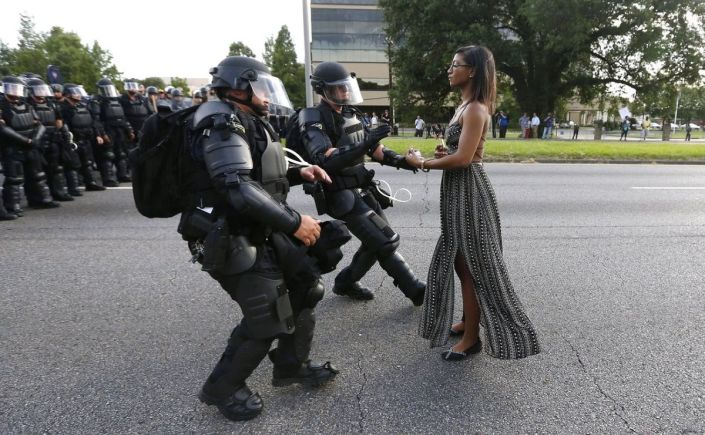




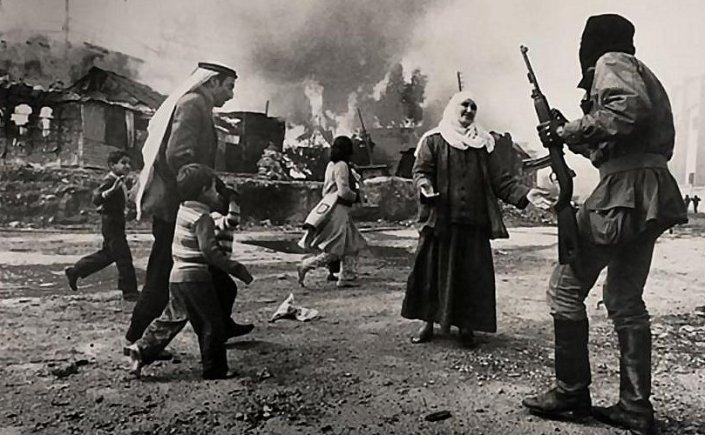


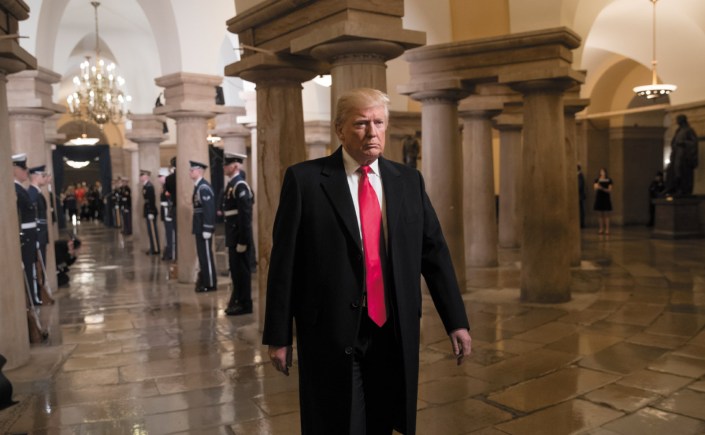


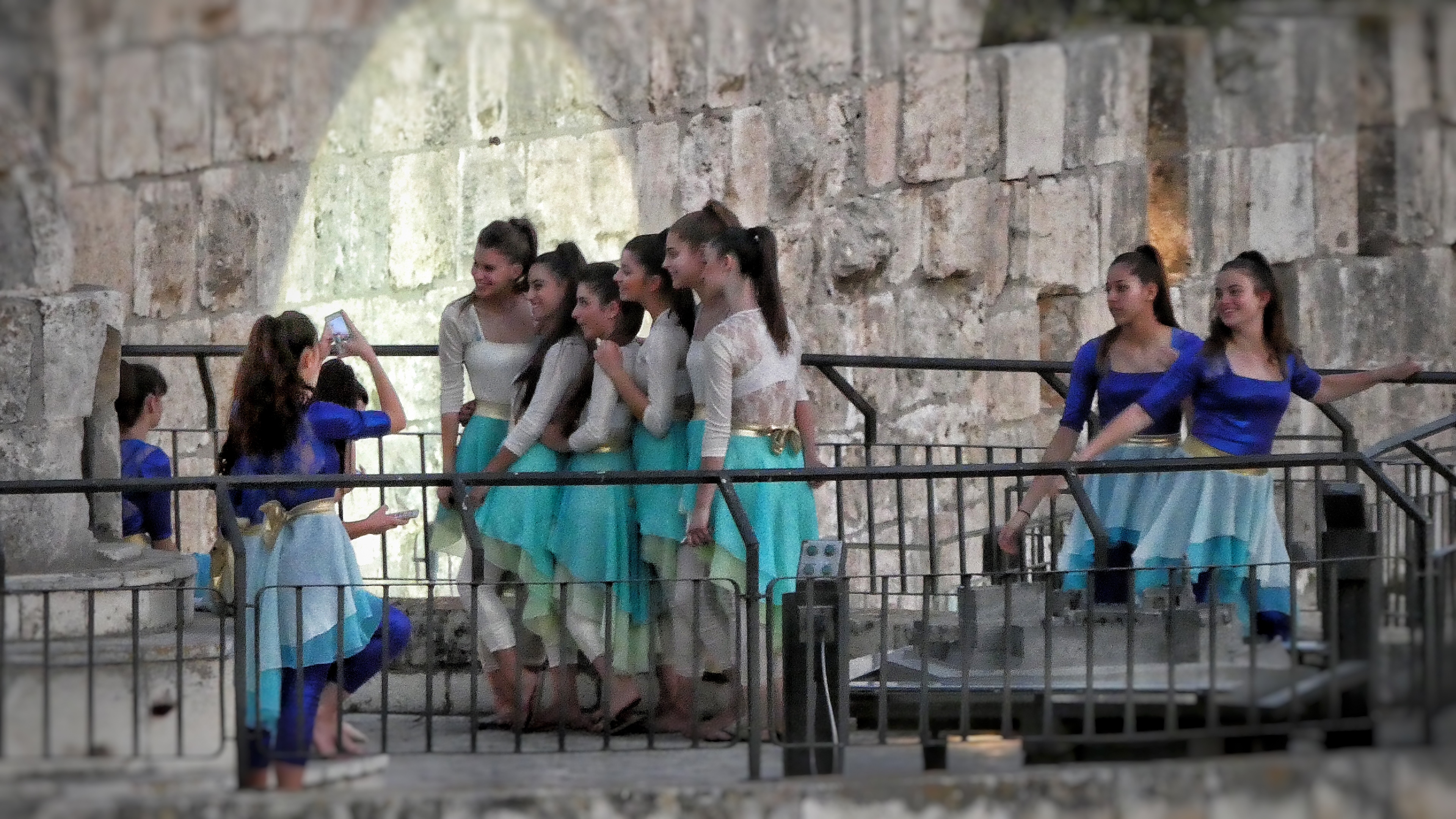



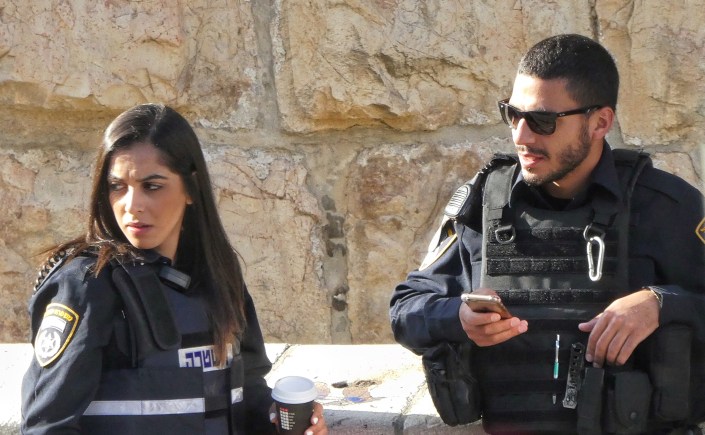
 In That Howling Infinite