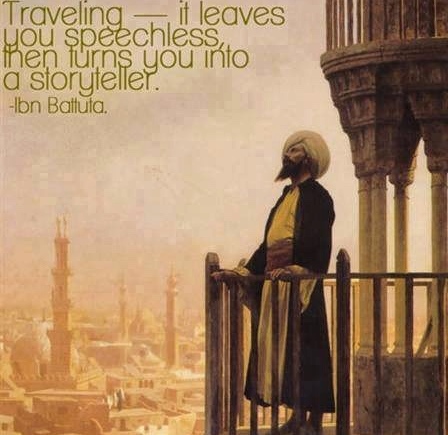
That was the year that was – from New Orleans to Jerusalem.

Its been a diverse year In That Howling Infinite. We have traveled, to quote Bob Dylan, “all the way from New Orleans to Jerusalem” – and to many other places in between. Vikings and Roman legionaries; Bob Dylan, Jackson Browne and Bruce Cockburn; Britain in the ‘forties and Paris in the ‘fifties; America, the Levant, and even Wonderland. By Year’s end a million souls will have journeyed to Europe from the war-ravaged lands of the Middle East, and my final posts for the year contemplate what it might mean for refugees who find to safe haven in Australia.

Here is a retrospective.

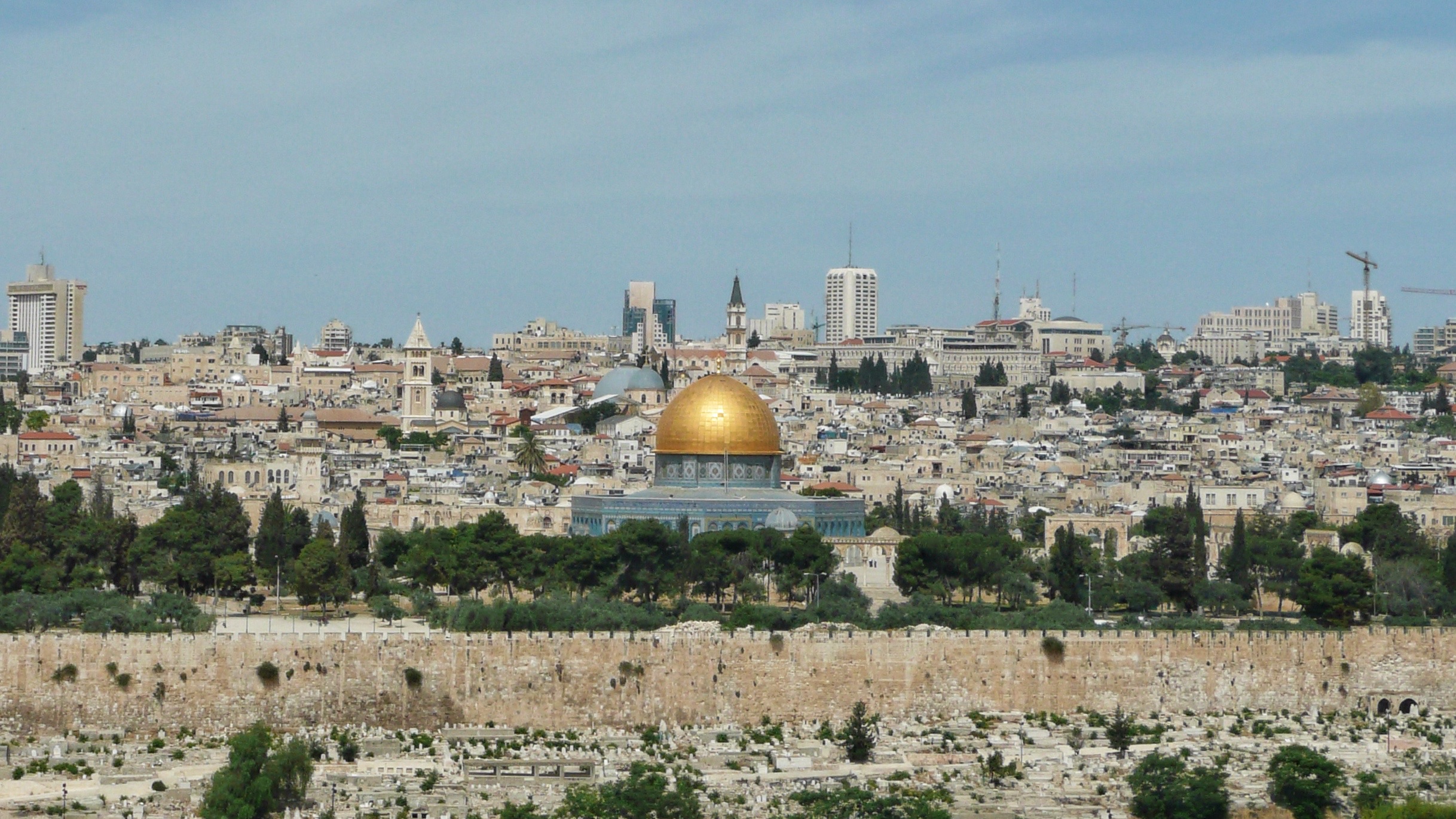
The year began with a short piece on recent archeological discoveries in Jerusalem that strongly suggested that the Via Dolorosa that Jesus trode on his final journey to Golgotha was the wrong route, and that instead, it began just inside of the Jaffa Gate. I took a light-hearted look at the Jerusalem Syndrome, a mental condition involving the presence of religiously-themed obsessive ideas, delusions and other psychoses triggered by a visit to The Holy City.
image

I read but one piece of fiction this year – a sad admission from a lifelong bibliophile – but this one book was probably one of the best I have read: The Incorrigible Optimists Club , winner of the prestigious Prix de Goncourt, by Jean Michel Guenassia. It is set in Paris’ Rive Gauche, as the ‘fifties gives way to the ‘sixties; as the crooners makes way for rock n’roll; as the Cold War divides a continent, sending dissidents and refugees fleeing to a safe haven in Paris; as the Algerian war divides and destroys families: and as the seeds of ‘les evenments de Mai 1968’ are sown in the hearts and souls of France’s young people. It is a coming of age book, of young hopes and fears, love and loss, a book about writers and reading, and the magic and power of the written word in prose and poetry.
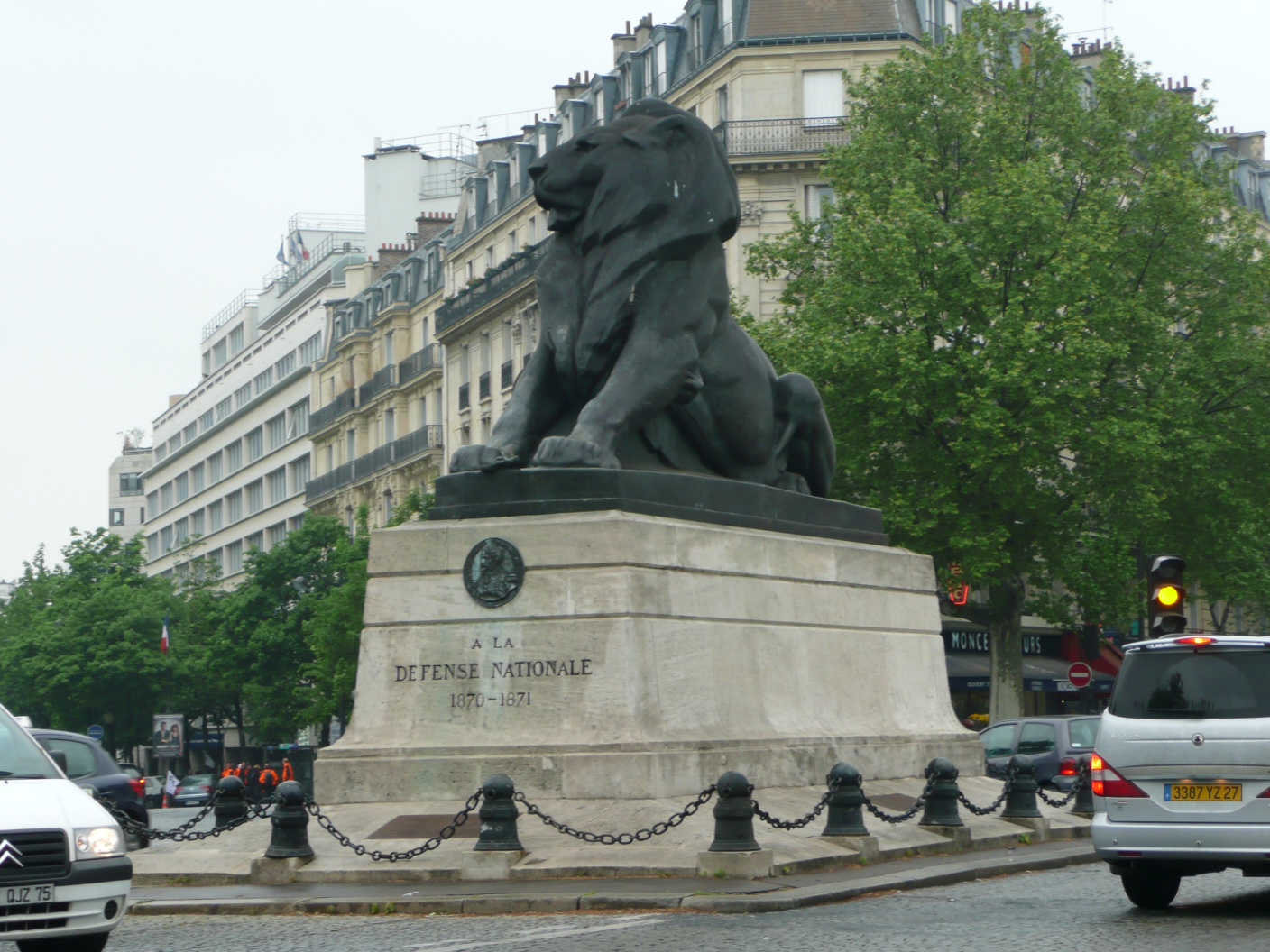
Le Lion de Belfort

March saw the passing of my old friend Dermott Ryder, chronicler and luminary of the Folk Music revival in Sydney in the early ‘seventies. Dermott’s Last Ride is my tribute to him. And April was a month of anniversaries and remembrance. Forty years since the outbreak of the Lebanese Civil War, and the centenary of the landings of the ANZACs at Gallipoli. Pity the Nation takes its title from Robert Fisk’s tombstone of a book on the long war; and he had taken it from a poem written in 1934 by Khalil Gibran, Lebanon’s most celebrated poet, a poem that was both a prophetic testament and a testimony of times to come: “Pity the nation divided into fragments, each fragment deeming itself a nation”. The Watchers of the Water is a song about Gallipoli sing by a Turkish solder.

May saw two diverse pieces of social history. The Spirit of 45  takes personal perspective of British filmmaker Ken Loach’s documentary of the excitement and optimism that followed the Labour Party’s election victory at the end of World War II. This laid the foundation stone for the British welfare state. Bob Dylan’s Americana discusses the meaning and significance of the lyrics and the imagery of Dylan’s early ‘eighties masterpiece Blind Willie McTell, a harrowing journey through America’s dark heart.

In June, we visited Yorkshire and in London, conjuring up memories and historical connections. Harald Went A Viking is a saga about the first of two kings to die on English soil in the late summer of 1066, and the adventures that took him from Norway to Constantinople and Jerusalem and finally, to Yorkshire. Roman Wall Blues takes its title from WH Auden’s poem about a homesick and grumpy legionnaire on Hadrian’s Wall, and contemplates the lives of the ethnically polyglot soldiery who defended the Empire’s borders. And June saw another famous anniversary, the Bicentennial of the momentous and bloody Battle of Waterloo. The Long Road to Waterloo prefaces a song for the men who, after twenty six long years of war, never came home.
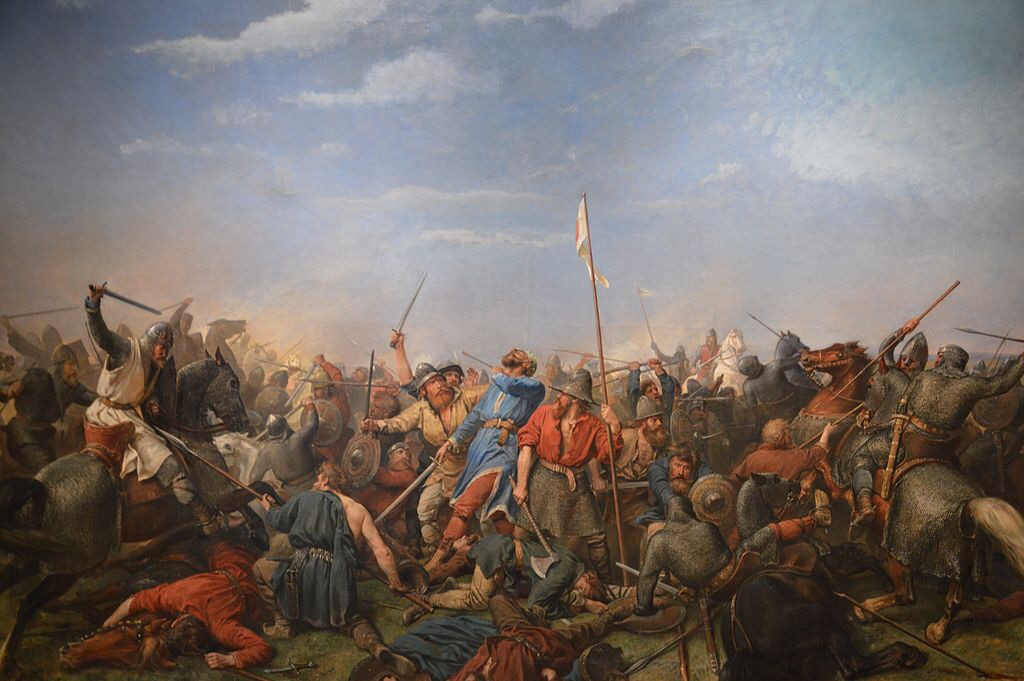
Painting of the Battle of Stamford Bridge by Peter Nicolai Arbo, depicting King Harald Hardrada hit in the neck by an arrow

Battle of Stamford Bridge, depicting King Harald Hardrada hit in the neck by an arrow

In July, controversy erupted in the Land of the Free over the flying of the Confederate Flag in states that were once part of Old Dixie. The dead hand of the Civil War reached out and touched the hearts of Americans and their friends throughout the world in the wake of yet another mass shooting. This time, a young man gunned down worshippers at prayer. That the victims were folk of colour, and the shooter, a young white extremist, reopened wounds that have never really healed. Rebel Yell surmises that The South will always be with us, in our thoughts, in our historical memory, in our art and literature, our books and films, and our favourite music.

September marked the one hundred and fiftieth anniversary of the publication of Lewis Carroll’s timeless, fabulist masterpiece Alice In Wonderland. Go Ask Alice, I Think She’ll Know reproduces Australian  critic Peter Craven’s masterful celebration of Alice 150. The title belongs to the mesmerizing Grace Slick of Jefferson Airplane who cut through to the rabbit chase channeling the long-gone Lewis in a psychedelic musical masterpiece.
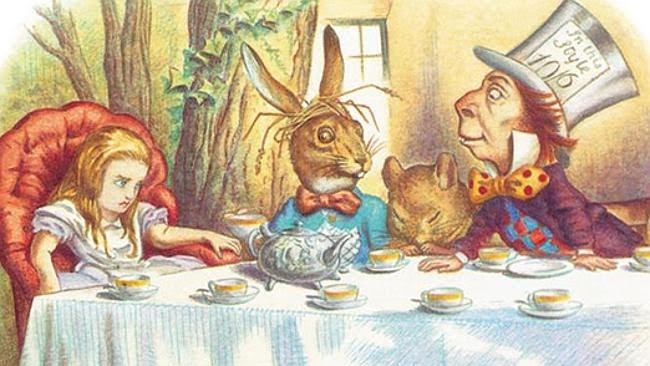
Alice

On an infinitely sadder note, Ruins and Bones is a tribute to the memory of Syrian archeologist Khaled Muhammed al Asaad, murdered by ISIS in August 2015, and of Palmyra, the ‘Pearl of the Desert’.

Allende’s Desk and Osama’s Pyjamas is a brief commentary on the extension  of American military power and the pathology of demons and demonization. Tales of Yankee Power looks at American foreign policy during the 1980s from the perspective of the songs of Jackson Browne and Bruce Cockburn.

November’s Children of the Revolution looks at the events that led up to the beginning of the Syrian Civil War, and the early days before it became too dangerous to gather on the streets, when men, women and children would parade in public places, waving the flag of the old Syria, the one that flew before the Assad clan seized power in 1966. Canny camera men could take media-friendly shots of photogenic little girls in face makeup looking sad, vulnerable and defiant. Those days of hope are long gone.

A highlight of this past year has been my work as a volunteer with the Humanitarian Settlement Services programme. The HSS’ mission is to assist newly arrived refugees to settle in Australia. In No Going Home,  I endeavour to imagine the refugee journey. Hejira is a sequel of sorts and, indeed, a happy ending.

Happy New Year to these prospective New Australians, and to all my readers. May 2016 be fortunate and fulfilling.

Palmyra, viewed from Tadmor

Palmyra, viewed from Tadmor

Allende’s Desk and Osama’s Pyjamas

To rephrase Euripides, those whom the state wishes to destroy, it first demonizes.

When the president of Chile was killed in the military coup d’état that brought Augusto Pinochet to power on 9th September 1973 (yes, that first, forgotten 9/11), ex post facto justification for the bloody coup and its equally bloody aftermath was provided by the content of the drawers in the dead presidents desk. Though never corroborated, there were alleged to contain proof of an imminent communist takeover, and evidence of drug taking and black magic.

image

Cut to Panama in December 1989, and the US invasion of Panama, ostensibly to take out strongman and erstwhile ally Emmanuel Noriega. There, in the ruins of the city, was Allende’s desk. The same communist literature, the drugs, the voodoo.

Cut to Mogadishu, Somalia, December 1992. US marines led a doomed UN intervention to take out the warlord. Mohamed Farah Aideed. Enjoy the folly in widescreen in Ridley Scott’s masterful Black Hawk Down. And although the villain decamped unscathed, guess what he left behind? Yes, Allende’s desk, contents intact. Actually, the desk had transformed into a bedside table, but the contents now included, shock horror, red silk pyjamas!

Communism. Drug taking. Black magic. And the sheer, un-American decadence of red silk pyjamas. The State Department pressed the hot buttons of white, Christian US morality to garner domestic support for its military adventures. The desk never came to light after the fall of Slobodan Milosevic in 2000. No doubt the Serbian authorities kept is existence hidden.

And it was never found at Waco because it was no doubt destroyed in the fire of state retribution. But David Koresh, self-proclaimed millenarian prophet, with his apparently indoctrinated and deluded followers, his harem, and his guns, was singled out for treatment very different to that meted out to scores of likeminded and heavily armed fringe dwellers scattered across the USA. To paraphrase Colin Powell, they were demonized, they were isolated, and they were destroyed. And on prime time television too. In that land of paradoxes, few eyebrows were raised when gun-toting members of the KKK offered to assist the DFDA and FBI in their assault on the besieged compound.

When Navy SEALS swooped on Abbottabad in Pakistan to take out long-sought-after Big Bad Osama bin Laden, they took careful notes of the contents of his bookshelves. An eclectic collection of reading matter – and pornography. No kindles, no iPads, so no eBooks or ePorn, which just went to show what a tired, old, out-of-date codger he was at the end of his days. The Pentagon has yet to reveal what they found on Osama’s bedside table. Maybe that voodoo and witchcraft stuff? And Osama’s pyjamas?

Though they both bequeathed sumptuous palaces to their conquerors, Saddam Hussein and Muammar Gaddafi were both spared the indignity of their cupboards being laid bare. But they were both caught hiding in drainpipes, which may show that the restless ghost of Allende’s Desk may have be laid at last.

Rumours of the inevitable demise of current bogeymen Bashar al Assad, Vlad Putin and Abu Bakr al Baghdadi are exaggerated. And the Fat Controller of Korea is still entertaining the world with his eccentricities and imaginative executions. So what will it be? Desks or drainage. And the long arm of the law has yet to reach inside another famous public enemy’s Knightsbridge hideaway. Yet, being the on-line, wired chap that Julian is, we may be disappointed.

And so it goes, as Vonnegut’s Kilgore Trout often declaimed when mad things happened. The American way of preparing the nation and its friends for a military adventure. First select your enemy. Give him horns and a tail. The latter day manifestation of the Judeo-Christian personification of the evil Other, the Dark Side of us all, and the public swallows and follows…Because it supports their own value system, their own perception of self, their own identity, and thereby, they’re own interpretation of what is and what is not appropriate behaviour. Then, hang on for a bumpy ride!

Over to Jackson Brown:

demons

Rebel Yell

I didn’t surrender, but they took my horse and made him surrender. They have him pulling a wagon up in Kansas I bet.
Chief Dan George, as Lone Watie in The Outlaw Josie Wales

In the winter of ’65
We were hungry, just barely alive
By May the 10th, Richmond had fell
It’s a time I remember, oh so well,
The night they drove old Dixie down.
Robbie Robertson and The Band

The Band, from The Last Waltz

I do not profess to be an expert on the subject, and being an outsider, I do not presume to preach. Nor am I a civil war tragic like some of our politicians here in Australia – they can tell you precisely who said what at what o’clock on such and such a location on this battlefield or that.

Mind you, a civil war that claimed more than seven hundred thousand American lives, tore a young nation apart, and the echoes of which reverberate still one hundred and fifty years later, is bound to exert a degree of fascination on an inquiring mind.

Recently, the dead hand of the American Civil War reached out and touched the hearts of Americans and their friends throughout the world in the wake of yet another mass shooting. This time, a young man gunned down worshippers at prayer. That the victims were folk of colour, and the shooter, a young white extremist, reopened wounds that have never really healed.

What made this massacre different from all the other massacres was the prominence of the Confederate flag in the iconography of the fresh-faced killer. The battle flag of Dixie has never gone away. It flies inThe Dukes of Hazzard, True Blood, and even The Walking Dead, and is a favoured accessory above government buildings and at right wing rallies in The South, those former secessionists states that lay south of the Mason-Dixon line

But what also makes this slaughter different from all those other slaughters is that something is actually being done about it.

Not, however a tightening of gun laws. The Second Amendment is safe and still well kept. The President mourns with the grieving relatives and congregation and breaks into song. POTUS’ rendering of Amazing Grace goes viral on You Tube. But as ever, nothing can be done. No God or mortal can stymy the U.S’ long-time love affair with the gun, nor challenge the NRA choke-hold on the American polity – particularly with the next presidential race in the starting blocks.

No, not the right to bear arms. But the rather, the right to flaunt the Stars and Bars, an enduring symbol of the lost Confederate cause, and a rallying point for those who still believe the rebel cause to be just, those who take solace from an heroic defeat, and those who believed that “the South will rise again”, and indeed those who KNOW that the South has indeed risen again. For have not the white, right wing, God fearing, Clinton-baiting, and Obama-hating ‘Red’ states of the South conquered and colonized the American political system?

Flags can unite nations. And also divide them. And none more so, it seems, than this one.  Professor Colin Tatz once said People will forget what you said. People will forget what you did. But people will never forget how you made them feel. This flag is potent symbol that spans both sides of the great divide. It is seen by many a a symbol of racism, and in the wake of the killings, there has been a loud call to remove it from public places and events. Others see it as part of their identity, of who they and their families are. They refuse to surrender it and to trade it in for Old Glory. The call has been met with with, well, dare I say it, defiance and rebellion. If you’ve got one, flaunt it – on houses, on cars, on roadsides, on Facebook posts, blogs and websites. Here are few of th m, all worth reading to place the battle flag in its social and political context:

http://www.thedailybeast.com/articles/2016/09/21/for-the-virginia-flaggers-it-s-hate-not-heritage.html

http://www.vox.com/first-person/2016/9/30/13090100/confederacy-myths-lost-cause

http://www.historynet.com/embattled-banner-the-convoluted-history-of-the-confederate-flag.htm

I do not want to editorialize here. Rather, I would like to share the following piece in the Washington Post. It is symptomatic of the intellectual and cultural reaction to tragic events. If your cannot do something positive and practical about a problem. Advocate something symbolic, politically correct, a placebo even. Like banning the film Gone with the Wind.

http://www.washingtonpost.com/news/act-four/wp/2015/07/01/why-we-should-keep-reading-gone-with-the-wind/

The past is another country. They thought things differently there: The iconic film opened with “There was a land of Cavaliers and Cotton Fields called the Old South. Here in this pretty world, Gallantry took its last bow. Here was the last ever to be seen of Knights and their Ladies Fair, of Master and of Slave. Look for it only in books, for it is no more than a dream remembered, a Civilization gone with the wind…”

So, as students of history, do we call for the suppression of an artistic rendering of the past because we feel uncomfortable with the ideas, opinions and sentiments expressed therein? If this sprawling Southern soap opera, this pseudo Shakespearean tale of love lost and found and lost again, against a backdrop of great events, is to be consigned to the oublier of history, why cease there? Why not Lawrence of Arabia? The Outlaw Josie Wales? The Searchers? Showboat?

Let’s not go there. The South will always be with us, in our thoughts, in our historical memory, in our art and literature, our books and films. It is forever on the border of our consciousness. Even when listening to our favourite music.

Take the Flag, but leave the songs alone.

Here is what the Rebel Yell sounded like:

Alison Krauss and Union Station

Paul Robeson, from Show Boat

Chet Atkins

http://www.deathandtaxesmag.com/254760/hero-rushes-through-traffic-to-rip-confederate-flag-off-truck/

.