Between the idea and the reality falls the shadow – coda in Kabul

I once wrote that the twenty year war in Afghanistan was like the Hotel California:  you can check out any time you like, but you can never leave. Recent events have shown otherwise – or have they, really? I am recalling those lines from David Byrne’s dystopian song, Once in a Lifetime: “same as it ever was, same as it ever was”. But perhaps Burning Down the House is more apt.

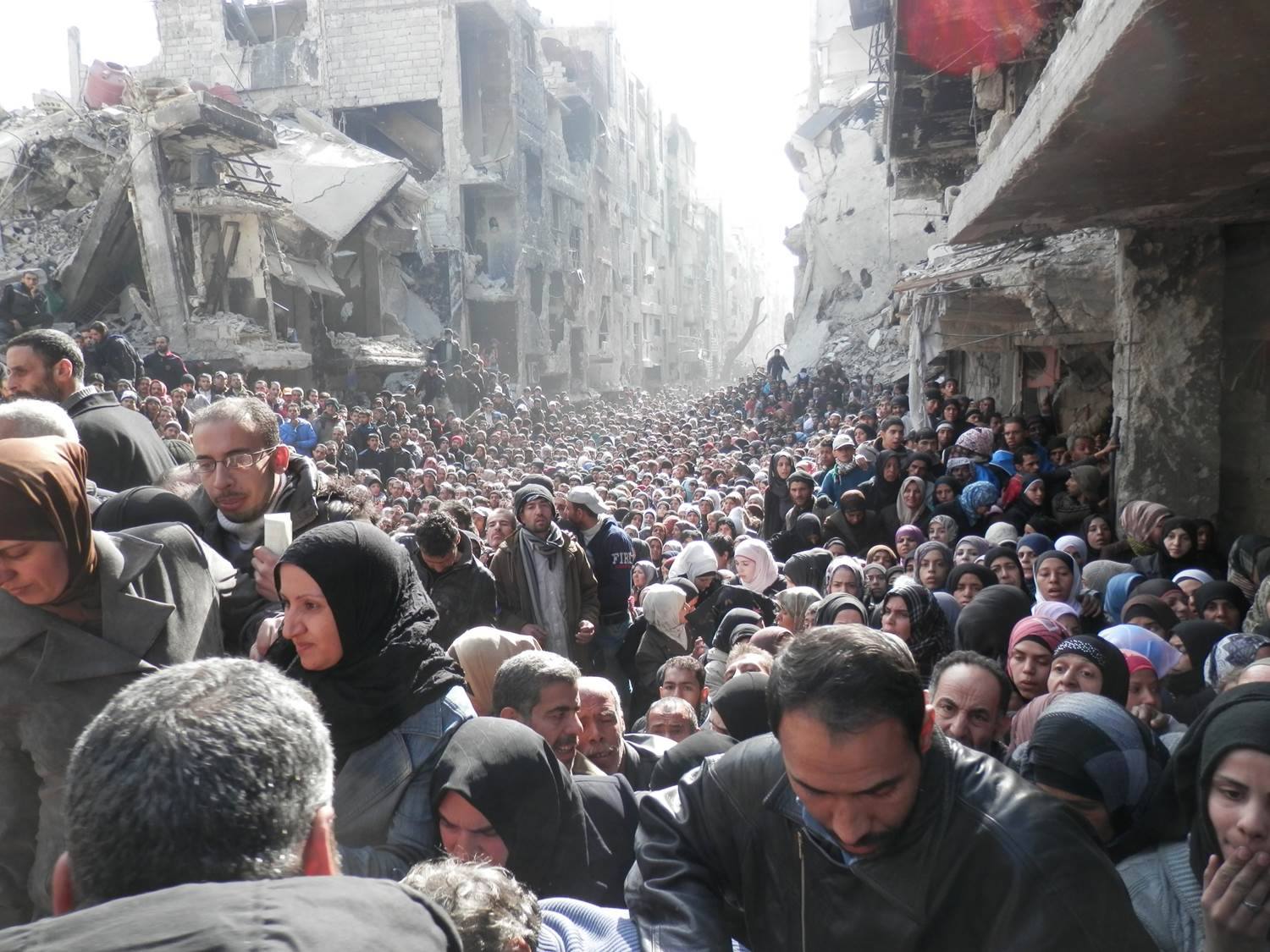
Desperate people scramble to escape, over the borders and over the airport walls. Afghans from all walks of life, including officials, soldiers, and policemen, former employees of the allies, women, and human rights advocates, fear the worst, as do ethnic and religious minorities who suffered horrific abuses at the hands of Taliban 1.0. Governments, NGOs and concerned folk all over the world wring their hands in vicarious anxiety, and for some, in shame. Europe. meanwhile, braces for another flood of refugees as displaced Afghans seek sanctuary

The US president declares that the America gave most of it’s all to save Afghanistan whilst the blame game as to “who lost Afghanistan?” commences, just as it did decades ago when the US ‘lost China” and then, Vietnam. The Chief Security Adviser says there’s no way of knowing how much American military hardware has been gifted to the Taliban, but it looks like a veritable bonanza.

America’s allies ponder the reliability of its erstwhile protector, fearing that the giant might have feet of clay – in choosing to give up on Afghanistan in order to confront China, Biden might actually have undercut America’s position everywhere. China and Russia, always happy to see America squirm, but always anxious about instability in neighbouring countries, eye up economic and strategic opportunities. And extremists all over the world, of all colours and creeds, are emboldened as yet another apparently rag tag militia humbles the world’s mightiest military power.

As Afghanistan slides into insolvency and famine, necessitating enormous amounts of aid, the question facing foreign governments is whether or not to recognize the new regime and to release the funds so urgently required. The appetite for isolating Afghanistan on human rights ground is diimishing. Pretty much all of Afghanistan’s neighbors are also guilty of the principal human rights violations that the Taliban are accused of. Minority rights have long been violated with impunity Pakistan and much of the Arab world, and most of Central Asia has been a showcase for ethnic nationalist authoritarianism for decades.

On the ground, and away from the besieged air[port, with the Taliban now well equipped and in control of the main towns and cities, many of the old politicians and warlords have chosen to work with them in the hopes of creating an inclusive transitional government. Former presidential aspirant and reconciliation council leader Abdullah Abdullah, disingenuous former president Hamid Karzai, and  that vicious and powerful old warlord, Gulbuddin Hekmatyar, have formed a council that seeks a political settlement with the Taliban, rather than join any nascent budding insurgency.

The old Afghanistan, divided along tribal, ethnic and religious lines, and governed by deals, compromises and the divvying up of the spoils may even reassert itself. All that is old might be new again!

Meanwhile our mainstream and non-mainstream media is awash with coverage and commentary , including contributions from a good number of Afghanistan/Iraq hawks – the ones who brought us those twin disasters in the first place _ who have been called on by major media organizations to offer their sage assessment of the current situation. Whether it’s retired generals who now earn money in the weapons industry, former officials from the Bush, Obama and Trump administrations who in many cases are directly responsible for the mistakes of the past two decades, or war enthusiast pundits with an unblemished record of wrongness, we’re now hearing from the same people who two decades ago told us how great these wars would be, then spent years telling us victory was right around the corner, and are now explaining how somebody else is to blame for Afghanistan.

As a counterbalance to all this, In that Howling Infinite republishes below  two excellent pieces by commentators of repute.

Sarah Cheyes, a journalist and political adviser with long experience in Afghanistan, identifies four elements contributing to the failure of America’s Afghan Project: corruption at the highest levels of government which the US chose to ignore – it also ignored the many billions of dollars ended up in the bank accounts of American arms manufacturers and contractors (a recent government report found that between 2011 and 2019, the US spent nearly $100 billion on private contractors); the role played by Pakistan’s intelligence organization, the ISI, in creating and nurturing the Taliban – and the allies refusal to call out Pakistan encouraged its impunity; the dubious maneuverings of former America’s onetime-favourite and former president Hamid Karzai, who appears to have a foot in both camps ; and America’s self-delusions about these and other matters.

Commentator and counterinsurgency expert   is always worth reading – and below is his latest piece  for The Australian. Whilst Cheyes looks back to determine how it all  came to this., Kilcullen ponders where it will it will go. But first, he denounces the blame-shifters and buck-passers: “Those pinning the entire blame for the collapse on the Afghan military should hang their heads in shame. The Afghans have been fighting desperately to survive, losing thousands killed every month, ever since President Joe Biden’s withdrawal announcement in April kicked off the final campaign. They have been carrying the main combat burden of the war since late 2014, losing close to 70,000 casualties in that time against a few dozen on the coalition’s part”.

None of the elements identified by Cheyes and Kilcullen is new news. Old Afghanistan’s hands like Robert Fisk and Patrick Cockburn, and many others have been saying this for decades. The big question, which I am sure will be answered soon is whether Taliban 2.0 will be an improvement on Taliban 1.0 vis a vis women, human rights and even modernity.

But Kilcullen does not see the war as a misbegotten  and forlorn hope. Far from it:

“Some will say the war was unwinnable, that it could never have succeeded. But deep down we all know that is not true. We were sustaining the effort with minimal expenditure and zero casualties, and could have continued it forever had we chosen to do so. We did not. The war was winnable, but we did not win it. Rather, we screwed it up and we have been defeated”.

That much is true.  And with an America smarting from humiliation and a China swaggering with hubris. What could possibly go wrong now?

Addendum

An old friend, Charles Tyler, wrote to me apropos this post:

“The last couple of weeks have certainly seen major shifts of power, but things are so very far from being settled, and probably never will be. Indeed. events as they unfold will defy all predictions, as they always do, and the commentary, informed and shallow, will continue as always. And all will need revision in the light of what actually transpires.

As several commentators have noted the US is now likely to become closer in military and strategic cooperation to India, while China and Russia will become closer to Pakistan and Afghanistan, with all the risks these shifts entail for every country involved.  But in this three-dimensional chess game the field of military and strategic action is just one layer. The layers of religion, tribalism, ethnicity, nationalism and plain human emotion – not to speak of even broader considerations like climate and demographic change and economic development – overlay and play into every other field, and can only be controlled or manipulated or predicted so far. So the consequences of moving any particular chess piece are unknowable”.

Well said, Charles!


For the history buffs, we also republish below an excellent history lesson from American academic and author Priya Satia; and  in In That Howling Infinite, read also: The Ghosts of Gandamak; The Devil Drives, and  One Two Three what are we fighting for?  
Taliban 2.0

Sarah Chayes, August 15, 2021

I’ve been silent for a while. I’ve been silent about Afghanistan for longer. But too many things are going unsaid.

I won’t try to evoke the emotions, somehow both swirling and yet leaden: the grief, the anger, the sense of futility. Instead, as so often before, I will use my mind to shield my heart. And in the process, perhaps help you make some sense of what has happened.

For those of you who don’t know me, here is my background — the perspective from which I write tonight.

I covered the fall of the Taliban for NPR, making my way into their former capital, Kandahar, in December 2001, a few days after the collapse of their regime. Descending the last great hill into the desert city, I saw a dusty ghost town. Pickup trucks with rocket-launchers strapped to the struts patrolled the streets. People pulled on my militia friends’ sleeves, telling them where to find a Taliban weapons cache, or a last hold-out. But most remained indoors.

It was Ramadan. A few days later, at the holiday ending the month-long fast, the pent-up joy erupted. Kites took to the air. Horsemen on gorgeous, caparisoned chargers tore across a dusty common in sprint after sprint, with a festive audience cheering them on. This was Kandahar, the Taliban heartland. There was no panicked rush for the airport.

I reported for a month or so, then passed off to Steve Inskeep, now Morning Edition host. Within another couple of months, I was back, not as a reporter this time, but to try actually to do something. I stayed for a decade. I ran two non-profits in Kandahar, living in an ordinary house and speaking Pashtu, and eventually went to work for two commanders of the international troops, and then the chairman of the Joint Chiefs of Staff. (You can read about that time, and its lessons, in my first two books, The Punishment of Virtue and Thieves of State.)

From that standpoint — speaking as an American, as an adoptive Kandahari, and as a former senior U.S. government official — here are the key factors I see in today’s climax of a two-decade long fiasco:

Afghan government corruption, and the U.S. role enabling and reinforcing it. The last speaker of the Afghan parliament, Rahman Rahmani, I recently learned, is a multimillionaire, thanks to monopoly contracts to provide fuel and security to U.S. forces at their main base, Bagram. Is this the type of government people are likely to risk their lives to defend?

Two decades ago, young people in Kandahar were telling me how the proxy militias American forces had armed and provided with U.S. fatigues were shaking them down at checkpoints. By 2007, delegations of elders would visit me — the only American whose door was open and who spoke Pashtu so there would be no intermediaries to distort or report their words. Over candied almonds and glasses of green tea, they would get to some version of this: “The Taliban hit us on this cheek, and the government hits us on that cheek.” The old man serving as the group’s spokesman would physically smack himself in the face.

I and too many other people to count spent years of our lives trying to convince U.S. decision-makers that Afghans could not be expected to take risks on behalf of a government that was as hostile to their interests as the Taliban were. Note: it took me a while, and plenty of my own mistakes, to come to that realization. But I did.

For two decades, American leadership on the ground and in Washington proved unable to take in this simple message. I finally stopped trying to get it across when, in 2011, an interagency process reached the decision that the U.S. would not address corruption in Afghanistan. It was now explicit policy to ignore one of the two factors that would determine the fate of all our efforts. That’s when I knew today was inevitable.

Americans like to think of ourselves as having valiantly tried to bring democracy to Afghanistan. Afghans, so the narrative goes, just weren’t ready for it, or didn’t care enough about democracy to bother defending it. Or we’ll repeat the cliche that Afghans have always rejected foreign intervention; we’re just the latest in a long line.

I was there. Afghans did not reject us. They looked to us as exemplars of democracy and the rule of law. They thought that’s what we stood for.

And what did we stand for? What flourished on our watch? Cronyism, rampant corruption, a Ponzi scheme disguised as a banking system, designed by U.S. finance specialists during the very years that other U.S. finance specialists were incubating the crash of 2008. A government system where billionaires get to write the rules.

Is that American democracy?

Well…?

Pakistan. The involvement of that country’s government — in particular its top military brass — in its neighbor’s affairs is the second factor that would determine the fate of the U.S. mission.

You may have heard that the Taliban first emerged in the early 1990s, in Kandahar. That is incorrect. I conducted dozens of conversations and interviews over the course of years, both with actors in the drama and ordinary people who watched events unfold in Kandahar and in Quetta, Pakistan. All of them said the Taliban first emerged in Pakistan.

The Taliban were a strategic project of the Pakistani military intelligence agency, the ISI. It even conducted market surveys in the villages around Kandahar, to test the label and the messaging. “Taliban” worked well. The image evoked was of the young students who apprenticed themselves to village religious leaders. They were known as sober, studious, and gentle. These Taliban, according to the ISI messaging, had no interest in government. They just wanted to get the militiamen who infested the city to stop extorting people at every turn in the road.

Both label and message were lies.

Within a few years, Usama bin Laden found his home with the Taliban, in their de facto capital, Kandahar, hardly an hour’s drive from Quetta. Then he organized the 9/11 attacks. Then he fled to Pakistan, where we finally found him, living in a safe house in Abbottabad, practically on the grounds of the Pakistani military academy. Even knowing what I knew, I was shocked. I never expected the ISI to be that brazen.

Meanwhile, ever since 2002, the ISI had been re-configuring the Taliban: helping it regroup, training and equipping units, developing military strategy, saving key operatives when U.S. personnel identified and targeted them. That’s why the Pakistani government got no advance warning of the Bin Laden raid. U.S. officials feared the ISI would warn him.

By 2011, my boss, the outgoing chairman of the Joint Chiefs of Staff, Adm. Mike Mullen, testified to the Senate Armed Services Committee that the Taliban were a “virtual arm of the ISI.”

And now this.

Do we really suppose the Taliban, a rag-tag, disjointed militia hiding out in the hills, as we’ve so long been told, was able to execute such a sophisticated campaign plan with no international backing? Where do we suppose that campaign plan came from? Who gave the orders? Where did all those men, all that materiel, the endless supply of money to buy off local Afghan army and police commanders, come from? How is it that new officials were appointed in Kandahar within a day of the city’s fall? The new governor, mayor, director of education, and chief of police all speak with a Kandahari accent. But no one I know has ever heard of them. I speak with a Kandahari accent, too. Quetta is full of Pashtuns — the main ethic group in Afghanistan — and people of Afghan descent and their children. Who are these new officials?

Over those same years, by the way, the Pakistani military also provided nuclear technology to Iran and North Korea. But for two decades, while all this was going on, the United States insisted on considering Pakistan an ally. We still do.

Hamid Karzai. During my conversations in the early 2000s about the Pakistani government’s role in the Taliban’s initial rise, I learned this breathtaking fact: Hamid Karzai, the U.S. choice to pilot Afghanistan after we ousted their regime, was in fact the go-between who negotiated those very Taliban’s initial entry into Afghanistan in 1994.

I spent months probing the stories. I spoke to servants in the Karzai household. I spoke to a former Mujahideen commander, Mullah Naqib, who admitted to being persuaded by the label and the message Karzai was peddling. The old commander also admitted he was at his wits’ end at the misbehavior of his own men. I spoke with his chief lieutenant, who disagreed with his tribal elder and commander, and took his own men off to neighboring Helmand Province to keep fighting. I heard that Karzai’s own father broke with him over his support for this ISI project. Members of Karzai’s household and Quetta neighbors told me about Karzai’s frequent meetings with armed Taliban at his house there, in the months leading up to their seizure of power.

And lo. Karzai abruptly emerges from this vortex, at the head of a “coordinating committee” that will negotiate the Taliban’s return to power? Again?

It was like a repeat of that morning of May, 2011, when I first glimpsed the pictures of the safe-house where Usama bin Laden had been sheltered. Once again — even knowing everything I knew — I was shocked. I was shocked for about four seconds. Then everything seemed clear.

It is my belief that Karzai may have been a key go-between negotiating this surrender, just as he did in 1994, this time enlisting other discredited figures from Afghanistan’s past, as they were useful to him. Former co-head of the Afghan government, Abdullah Abdullah, could speak to his old battle-buddies, the Mujahideen commanders of the north and west. You may have heard some of their names as they surrendered their cities in recent days: Ismail Khan, Dostum, Atta Muhammad Noor. The other person mentioned together with Karzai is Gulbuddin Hikmatyar — a bona fide Taliban commander, who could take the lead in some conversations with them and with the ISI.

As Americans have witnessed in our own context — the #MeToo movement, for example, the uprising after the murder of George Floyd, or the January 6 attack on the U.S. Capitol — surprisingly abrupt events are often months or years in the quiet making. The abrupt collapse of 20 years’ effort in Afghanistan is, in my view, one of those cases.

Thinking this hypothesis through, I find myself wondering: what role did U.S. Special Envoy Zalmay Khalilzad play? And old friend of Karzai’s, he was the one who ran the negotiations with the Taliban for the Trump Administration, in which the Afghan government was forced to make concession after concession. Could President Biden truly have found no one else for that job, to replace an Afghan-American with obvious conflicts of interest, who was close to former Vice President Dick Cheney and who lobbied in favor of an oil pipeline through Afghanistan when the Taliban were last in power?

Self-Delusion. How many times did you read stories about the Afghan security forces’ steady progress? How often, over the past two decades, did you hear some U.S. official proclaim that the Taliban’s eye-catching attacks in urban settings were signs of their “desperation” and their “inability to control territory?” How many heart-warming accounts did you hear about all the good we were doing, especially for women and girls?

Who were we deluding? Ourselves?

What else are we deluding ourselves about?

One final point. I hold U.S. civilian leadership, across four administrations, largely responsible for today’s outcome. Military commanders certainly participated in the self-delusion. I can and did find fault with generals I worked for or observed. But the U.S. military is subject to civilian control. And the two primary problems identified above — corruption and Pakistan — are civilian issues. They are not problems men and women in uniform can solve. But faced with calls to do so, no top civilian decision-maker was willing to take either of these problems on. The political risk, for them, was too high.

Today, as many of those officials enjoy their retirement, who is suffering the cost?

My warm thanks to all of you who have left comments, for taking the time to write, and for the vibrancy of your concern. A number of you have asked some excellent questions. Please have the kindness to stand by. I will try to provide what answers I can when I can.


Much as the Taliban may like to claim the war is over, it is far from finished. Afghanistan is collapsing in real time and a new bloodbath beginning. Now the world has a choice to make.

By Weekend Australian ,

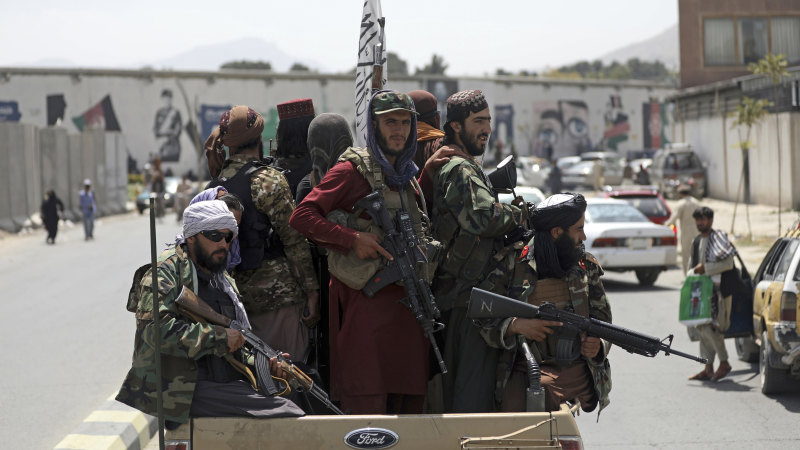
Taliban fighters sit over a vehicle on a street in Laghman province on August 15. Picture: AFPTaliban fighters sit over a vehicle on a street in Laghman province on August 15. Picture. AFP

Afghanistan is collapsing in real time. Two decades of effort down the gurgler, trillions of dollars and many thousands of lives lost, and a new bloodbath beginning inside Afghanistan. US credibility – like that of every American ally, including Australia – is on the line.

Approaching the 20th anniversary of 9/11, we are back to square one. What happened? Describing the full debacle would take more space than I have, but let me try to answer some obvious questions: Why did we fail to foresee the fall of Kabul? What is happening on the ground and what does it mean? What will others do now, and what should we do next?

I promised a mea culpa, and here it is: I was dead wrong about the fall of Kabul. I am on record just weeks ago saying “it would be a stretch to imagine the Taliban capturing Kabul anytime soon”.

Of course virtually every other analyst got it wrong, too, but I can speak only to my own thought process. Thinking it over, examining my conscience, I realise my lack of imagination rested on a critical but flawed assumption.

I simply could not credit the possibility that the US government and the entire international community would just abandon Kabul overnight without a fight, leaving their own evacuation plan in disarray and surrendering both the Afghans and many thousands of their own citizens to the mercy of the Taliban. I took it as given that the US, UN and global institutions (all of which repeatedly promised ongoing support to Afghanistan) meant what they said. I mistakenly believed our major ally possessed a modicum of moral fibre and basic competence, and would muster the will to fight rather than see decades of effort down the drain.

I was wrong, and I apologise.

In the end Kabul fell as described in my last piece and the world’s response was to do – nothing. Not one airstrike; not a single attempt to blunt the Taliban offensive (even as guerrillas gathered in the open on Kabul’s approaches, presenting the juiciest target since 2001); not even a harsh tweet. Instead we saw excuse-making, blame-shifting and victim-shaming of the most nauseating kind from many (not all) American military and political leaders, and hand-wringing impotence from the UN.

A baby is handed over to the American army over the perimeter wall of the airport for it to be evacuated, in Kabul, Afghanistan, on August 19. Picture: OMAR HAIDARI/via REUTERS

A baby handed to the US  army on the perimeter wall of Kabul airport,  Aug 19. Omar Haiudari

Those pinning the entire blame for the collapse on the Afghan military should hang their heads in shame. The Afghans have been fighting desperately to survive, losing thousands killed every month, ever since President Joe Biden’s withdrawal announcement in April kicked off the final campaign. They have been carrying the main combat burden of the war since late 2014, losing close to 70,000 casualties in that time against a few dozen on the coalition’s part.

The Afghan forces – which the coalition built to our own specifications – were like a stack of Jenga blocks in which certain critical pieces, by design, could be provided only by the US. Principal among these were air support, intelligence, logistics and maintenance. Suddenly in early May, with no warning, we whipped away these pieces, having promised Afghans for a decade that this was exactly what we would never do.

Of course the Afghan army collapsed – it was designed by us to function only with the parts we provided. To quote British explorer and author Rory Stewart, blaming Afghans now is like removing the wheels from your car, then complaining that it can’t drive.

Once the air support, intelligence and logistics were gone, the Afghan forces rapidly began to lose ground in an accelerating collapse of control across the countryside. As each successive district garrison fell, the government grew weaker and more isolated while the Taliban gained weapons, vehicles, defectors and ammunition. More than 200 such garrisons were lost in May and June alone. The loss of assets was bad enough but the blow to morale was deadly – no more so than early last month when US forces bailed out of the vast Bagram air base without even bothering to tell their Afghan partners, who woke up to find the Americans gone.

By early this month, the first provincial capitals began to fall. Within a week multiple provinces were falling each day, and by last Friday Kabul was the only major city in government hands.

US Secretary of State Antony Blinken, meeting politicians in June, scoffed at the need to evacuate at-risk Afghans who had worked with the coalition, saying: “We are not withdrawing. We are staying. The embassy is staying … If there is a significant deterioration in security, I do not think it is going to be something that happens from a Friday to a Monday.”

He was right: it happened from Friday evening to early Sunday afternoon. That is cold comfort for the 86,000 at-risk Afghans now running a gauntlet of Taliban checkpoints to reach the sole remaining runway at Hamid Karzai airport (soon to be renamed, one would think) in downtown Kabul. That multi-runway air base at Bagram we abandoned last month would be nice to have right now.

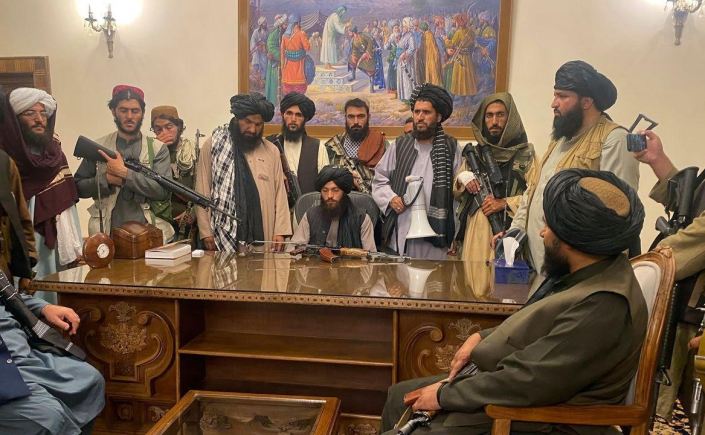
Taliban enters the presidential palace in Kabul. Picture: AP

Taliban enters the presidential palace in Kabul. AP

Like many other veterans, I have received hundreds of mes­sages and dozens of frantic calls for help during the past few days from Afghan friends now stranded – some being hunted house-to-house by the Taliban. There will be time to be angry about this later. For now, it’s most important to share their perspective as objectively as possible. So, what is happening now across the country, and what does it mean?

In Kabul, a Taliban delegation in the presidential palace is negotiating with Hamid Karzai and other leaders, seeking to form a transitional government. On the streets, Taliban forces are securing government buildings and patrolling in green Afghan police trucks or captured armoured vehicles.

While Taliban leaders have announced that they seek no revenge, they have put the security of Kabul under the control of Anas Haqqani, known for his deadly 2018 attack on the Kabul Serena Hotel and other civilian targets.

Civilians are being disarmed, since according to the Taliban the war is over now so nobody needs a weapon. In fact, special Taliban units have been going house-to-house, “disappearing” former military, intelligence and government officials.

Some have been shot in the street, others tortured to death. Taliban checkpoints are stopping all Afghans, and witnesses say they have pulled special-visa holders from the airport queues and beaten them with chains. Remnants of the Afghan army and intelligence service are hiding from death squads or trying to make their way to the Panjshir Valley, 160km north of Kabul. Some stragglers, and a few formed units, are still fighting outside the city.

In the Panjshir, first vice-president Amrullah Saleh, citing the escape of former president Ashraf Ghani, has declared himself acting president and is rallying opponents of the Taliban to join a government in internal exile. (Ghani has appeared in the United Arab Emirates, living in an expensive hotel and claiming he was forced to flee to avoid lynching.) In the Panjshir a coalition of local militias and army remnants is forming to defend the valley. Their size and capability are still vague.

Afghan people line up outside the Iranian embassy to get a visa in Kabul on August 17. Picture: AFP

Afghan people line up outside the Iranian embassy to get a visa in Kabul, on Aug 17. AFP

Access to the valley is easy – for now. One Afghan officer, in plainclothes, made it from Kabul to the Panjshir on Monday carrying a message, then turned around and drove back to Kabul, unmolested by the Taliban. As any soldier knows, just because a district is Taliban-controlled does not mean there is a Talib on every square metre of it. In fact, Taliban forces have flooded into the cities, leaving parts of the countryside relatively open. Those cities will be a handful to control.

Already there have been deadly protests – met by brutal beatings and Taliban shooting of protesters – in several towns, and reports of 1000 trusted fighters from Helmand and Kandahar heading to Kabul to help secure it.

What this means is that, much as the Taliban may like to claim the war is over, it is far from finished. Afghanistan is still at war, and revolutionary regimes that are at war and facing potentially disloyal populations are legendarily lethal. It also means the international community has a choice to make.

This choice will strongly influence what others do now. Pakistan – despite a history of some elements in its intelligence service backing the Taliban – is looking warily at the potential for mass refugee flows or spillover of violence. Central Asian states such as Tajikistan and Uzbekistan are stepping up border security. Russia is working with these states, activating a military base in the region, but simultaneously attempting to shape Taliban behaviour by dangling the possibility of recognition, aid and trade if the regime shows moderation. China’s leverage is more economic, with discussions on trade and investment starting as early as Monday when the Taliban held a press conference calling for an international donors’ conference and foreign direct investment.

A Taliban fighter holds a rocket-propelled grenade (RPG) along the roadside in Herat, Afghanistan's third biggest city. Picture: AFP

Taliban fighters Herat, Afghanistan’s third biggest city. AFP

America’s European allies have been stunned and alienated by the speed of the collapse, and offended by Washington’s unilateral withdrawal, on which they were not consulted. French, German and British politicians have all criticised the US this week. The UN Security Council has strongly condemned the violence, calling for respect for women and human rights (presumably such harshly worded statements were what the UN meant when it promised “ongoing support”).

What, then, should we do next? Initially, the answer is crystal clear: save as many Afghans as can be saved. The evacuation is the critical activity of the moment and the only way to salvage some self-respect from this debacle. After a horrifically chaotic start, the airport is finally under control, though the Taliban maintains an outer cordon preventing civilians getting through. This is creating a massive logjam, with crowds surging around the airport perimeter and few getting through. Many evacuation aircraft have departed almost empty as a result.

More important, the crowds are a tempting target for terrorists such as Islamic State-Khorasan, the local ISIS group, which hates both the Taliban and Westerners, and deplores Afghans who have worked with foreigners. It is only a matter of time before a suicide bomber or a truck bomb gets in among the crowds and stops the evacuation in its tracks. Clearing the backlog is thus a humanitarian as well as a strategic necessity.

Inside a U.S. Air Force C-17 Globemaster III flown from Kabul to Qatar on August 15, evacuating some 640 Afghans from Kabul. Picture: AFP

Inside a U.S. Air Force C-17 Globemaster III  Aug 15, evacuating some 640 Afghans from Kabul. AFP

Allied commanders recognise this, but political constraints – the US government has promised the Taliban its troops will not leave the airport, according to sources in the State Department – have prevented them expanding the perimeter or pushing the Taliban back.

Creating landing sites away from the airport, from which evacuees could be flown by helicopter over the Taliban checkpoints, is another obvious military move that will likely be blocked on political grounds. Beyond the obvious humanitarian imperative, resettling refugees (many of whom initially are being flown to Qatar) will be a huge and protracted task, one for which many countries are stepping up to assist, though few seem prepared to take anywhere near the number of evacuees needed.

Bigger choices loom. Should the International Monetary Fund release Afghanistan’s funds to an interim government that will be dominated by the Taliban? Should the US support Saleh’s government-in-exile in the Panjshir and back his fighters, or accept defeat and deal with the Taliban? Should airstrikes (so conspicuously absent when they could have made a difference) now resume against terrorists and, if so, who on the ground is left to spot and designate targets? Should there be a post-mortem to analyse what went wrong and allocate (or evade) blame, or should we move on?

All this will become increasingly important in coming weeks, but for now the focus needs to be the humanitarian crisis – and potential bloodbath – unfolding on the ground.

Some will say the war was unwinnable, that it could never have succeeded. But deep down we all know that is not true. We were sustaining the effort with minimal expenditure and zero casualties, and could have continued it forever had we chosen to do so. We did not. The war was winnable, but we did not win it. Rather, we screwed it up and we have been defeated.
Last weekend, as the Taliban advanced across Afghanistan, Indian Prime Minister Narendra Modi declared Aug. 14, the eve of Indian independence from British rule in 1947, “Partition Horrors Remembrance Day”—a day to remember the violent Partition of British colonial India into the separate countries of India and Pakistan, which produced the largest migration in human history. Millions of people died or lost their homes, livelihoods, and ways of life and suffered rape and other atrocities in harrowing months of sudden displacement as Sir Cyril Radcliffe drew a largely arbitrary border dividing Punjab and Bengal. But Modi’s pronouncement, made with typical blindsiding precipitousness, was also deeply disingenuous.

It is lost on no one that Aug. 14—the day chosen for this gruesome remembrance—is the day Pakistan marks its independence. (Independence came to British India at midnight on Aug. 14, with India marking its independence on the 15th and Pakistan on the 14th.) Modi’s designation of Pakistan’s Independence Day as an anniversary for Indian mourning is calculated to deflect blame and serves to aggravate rather than heal old wounds. It elides the reality that the violence of 1947 was not the work of neighbors in villages and towns turning against one another but of well-armed paramilitary groups bearing the imprint of Western fascism—including the Rashtriya Swayamsevak Sangh, a group that Modi joined as a child and that remains a pillar of support for his Hindu-nationalist Bharatiya Janata Party government.

His call to remember Partition’s horrors appears decidedly cynical against this historical reality. But its coincidence with the Taliban takeover of Afghanistan created an unintended opportunity for more honest reckoning with one often forgotten aspect of this haunting past. 1947 marked not only the creation of a new border between Pakistan and India but also, equally disastrously, the border between Pakistan and Afghanistan. As Afghans flee across borders today, remembrance of the dotted line from that past to our present, of the continued reboot of colonial-era partition, is essential for South Asians and for meddlers in Afghanistan, past and present.

Before the Radcliffe Line, there was the Durand Line. The British, having seized territory from Afghanistan during the Second Anglo-Afghan War in 1878-80 and annexed it to British India, dispatched Mortimer Durand to formalize those gains with a treaty in 1893. Afghanistan was not fully sovereign: The British controlled its foreign affairs in a semicolonial arrangement common to British practice in many parts of the world. The treaty was thus coercive (and possibly duplicitous under the cover of faulty translation), as was often the case with colonial-era British treaties. Indeed, the Durand Line was drawn just shortly after European powers had, with similar arbitrariness, etched borders across the map of Africa.

The line divided a large region inhabited by Pashtuns, many of whom Afghanistan had permitted to remain self-governing, with a western half included in an Afghan sphere of influence and an eastern half in the British sphere. The British took direct, formal control of the most eastward districts and informally influenced those abutting the line, like Waziristan, by providing tribes there with subsidies and arms. Since the line was not a physical border but a demarcation of spheres of influence, considerable freedom of movement persisted. But it was disputed by those on whom it was foisted, prompting an uprising in 1897.

After putting down this rebellion (a young Winston Churchill took part), the British reasserted control over disputed parts of the demarcated area and worked to stop the flow of arms into the region. In 1901, they incorporated the directly controlled eastward districts into the North-West Frontier province of British India. That year, a new emir came to power in Afghanistan and again questioned the British partition of the region, prompting the British to attempt to renegotiate arrangements in 1905. Still the line remained disputed. That year, the British also partitioned Bengal on India’s eastern frontier along religious lines with a view to undermining intensifying anti-colonial sentiment there. (By 1911, anti-colonial pushback forced the undoing of that partition—though Radcliffe would partition the region again in 1947.)

During World War I, Indian and Afghan affairs remained entangled, with anti-colonial activists establishing an independent Provisional Government of India in Kabul, plotting with the Turkish and German empires to free not only India but all Islamic countries from British rule. Its members worked with Bolsheviks, Pan-Islamists, Pan-Asianists, and other anti-colonial activists as far away as California, embracing humanistic ethics of internationalism and love. They saw this joint struggle as an end in itself, regardless of its political results.

Having encouraged these anti-colonial forces, Afghanistan also asserted its own full autonomy after the war and attempted to retake the disputed areas abutting British India, including Mohmand and Waziristan. The resulting Third Anglo-Afghan War of 1919, however, again left the issue unresolved. Anticipating the U.S. drone strategy of today, the British resorted to the new technology of aerial policing in the region, which Chief of the Air Staff Hugh Trenchard deemed suited to “the psychology, social organization and mode of life of the tribesmen and the nature of the country they inhabit.”

Indian anti-colonial activists with wartime ties to Kabul remained influential in the massively popular postwar Indian anti-colonial struggle. But while they dreamt federal dreams, the British practice of drawing hard lines to divide peoples acquired new force and purpose. Partition was asserted as a “solution” to political conflict between different groups across the empire—the division of Ireland in 1921 as the price of independence (Northern Ireland remaining within the United Kingdom) became a template for recommending a similar “solution” for Palestine in the 1930s. By the 1940s, partition was a standard part of Britain’s decolonization toolkit. And the British justification for colonialism in South Asia—that its Hindus and Muslims constituted distinct nations requiring a mediating presence—had been built into the society’s political fabric in the form of separate, religiously based electorates that encouraged separate political movements as Indians incrementally wrested greater autonomy from the British. A push to partition British India into Muslim and Hindu states emerged, predictably, but struggled for support among many Muslims. These included the Pashtun Khudai Khidmatgar movement in the North-West Frontier, a nonviolent anti-colonial organization closely allied with the Gandhian Congress movement and staunchly opposed to partition.

When the plan for partition was announced in June 1947, the Khidmatgars—a word that means servant—feared that geography would automatically dictate their membership in Pakistan, whose creation they had vehemently opposed on principle. They pushed instead for an independent Pashtunistan, as did the Afghan government. After August 1947, as Punjabis and Bengalis fled for their lives across the new Radcliffe Line, the Pakistani government defended the ever contentious Durand Line, too, as Pashtuns and the Afghan government denied its legitimacy and rebuffed Pakistan’s claim to the Pashtun areas abutting it. Despite Pakistan’s strenuous efforts to crush the Pashtunistan movement, it survived, finding loyal support from Afghan President Daoud Khan in the 1970s.

Pakistan’s U.S.-backed support of mujahideen against the Soviet presence in Afghanistan was aimed, in part, at solidifying the border at the Durand Line. (The communist governments during the Soviet occupation refused to recognize the Durand Line as the border.) But even the agents Pakistan cultivated to intervene in Afghanistan refused to serve that end. The border was more or less moot during the conflict itself, but the mujahideen, recruited primarily among Pashtuns, maintained loyalty to the Pashtun position against the Durand Line. So it went with the Taliban: Pakistani backing didn’t trump the Taliban’s Pashtun loyalty to historic opposition to the Durand Line.

Pashtuns on both sides of the border deny the validity of the Durand Line, but the Pakistani government, in the hands of a Punjabi elite perhaps hardened by the violent partitioning of their own community in 1947, has relentlessly repressed the Pashtun desire for unity and autonomy. It has clung with increasing desperation to the principle of territorial integrity, especially after losing the Bengali half of the country, now Bangladesh, in 1971. The colonial U.S. presence in Afghanistan has abetted this effort. Of late, Pakistan is disrupting cross-border life by building up the frontier in a manner that is likely to rival the India-Pakistan border to the east—a border so fortified that it is one of the few man-made structures visible from space. In holding on to Pashtun land claimed by Afghanistan, the Pakistani government, with U.S. support, has extended the outlook of the past British colonial government toward the land and its people, twisting a knife in the wounds of 1893 and 1947. Meanwhile, the Modi government, in stoking the notion of the Muslim “other”—both inside and outside India—also twists a knife in the wounds of 1947.

In a region characterized by syncretic cultures that are the product of long intermingling, both colonial and postcolonial governments have engaged in endlessly destructive efforts to partition people into boxes defined by language, religion, and ethnicity, rather than afford them the freedom of coexistence fostered by the looser, federal structures that many anti-colonialists proposed. But the intermixing persists. Afghan refugees reside in Pakistan by the millions, and the specter of an undetectable Pakistani and Bangladeshi presence fuels the Modi government’s bigoted policies for proving citizenship. Who is Indian and who Bangladeshi? Who is Pakistani and who Afghan? The difficulty of answering such questions stems from the artificiality and violence of the hard lines that have been drawn between people entangled in what the Congress leader Maulana Azad called a “composite culture,” in which nonviolent anti-colonial struggle easily encompassed both Muslim Pashtuns and Gujarati Hindus.

India’s Punjabi farmers have been challenging the Modi government’s assertion of the central government’s authority for a year now in what has been one of the biggest protests in history. All around South Asia’s borderlands—from Kashmir to Kerala, from Bengal to Pashtunistan—we see resistance to the centralizing power that is a legacy of colonial rule and struggles for greater local governance, federalism, and layered forms of sovereignty promoting coexistence with the other, as envisioned by the anti-colonial thinkers and activists of the Provisional Government of India in Kabul, the Khidmatgars, and Mahatma Gandhi.

While the Cold War helped spur the federal unification of a Europe reeling from the horrors of nationalist violence, the neocolonialism it unleashed simultaneously abetted South Asia’s fragmentation into fortresslike nation-states sustained by the continual demonization of enemies within and without. Still, as the masses of farmers encamped at Delhi show us, alternative futures are never foreclosed. South Asians can still dream beyond those fortresses and promote enduringly composite cultures focused on the shared protection of water and land that is critical to survival in our time. As memory of the horrors of colonial partition fuel fascist Hindu nationalism in India and the Taliban’s expansion in Afghanistan, it has never been more important to remember and amplify the khidmatgars of anti-colonial coexistence.

Priya Satia is the Raymond A. Spruance professor of international history at Stanford University and the award-winning author of Spies in Arabia: The Great War and the Cultural Foundations of Britain’s Covert Empire in the Middle East and Empire of Guns: The Violent Making of the Industrial Revolution. Her most recent book is Time’s Monster: How History Makes History.

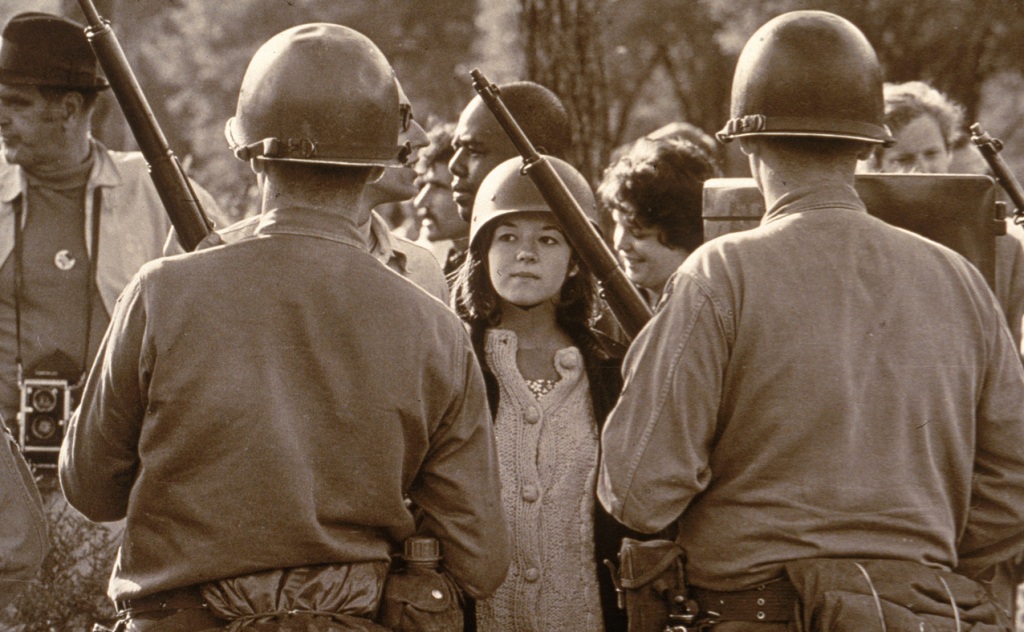
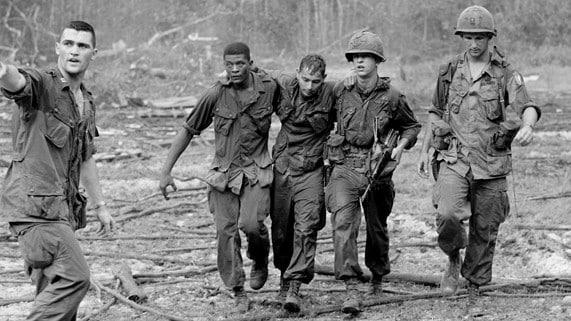
The Ballad of Denton Crocker – a Vietnam elegy

One of the most poignant stories in Ken Burns’ powerful documentary The Vietnam War is that of a young man called Denton Winslow Crocker Junior, born June 3rd 1947, class of ‘65.

The story opens with Bob Dylan singing With God on Our Side …”Oh my name it ain’t nothin’, my age it means less; country I come from is called the Midwest”.

Denton’s family nickname is “Mogie”. “He’s a right little mogul, the way he rules our lives”, says dad of his infant son. Young Denton loves history, is proud of America and its heroes, and hates “Reds”.

It is 1964 and Mogie is restless. He wants to do his bit. So he runs away from home for four months returning only when until his folks consent to him joining up before he turned 18.

He enlists in March 1965.

Eager for combat, he wants to be a paratrooper and is delighted when he is able to join the celebrated 101 Airborne, the famous “screaming eagles” who had led the way on D Day back in another war. 

Posted to a support unit, he is disappointed, writing home that he “felt no sense of accomplishment whilst one’s friends are facing all the dangers”.

He finally gets reassigned to a combat unit at Qan Duc on the Cambodian border.

May 11 1966. Paul Simon sings The Sound  of Silence.

Denton’s buddy is mortally wounded beside him. He carries his dying friend from the battlefield, earning an Army Commendation Medal.

He’s in the field and at the sharp end, hoping he’ll be taken off the line. He writes home: “I was religious for a while, sending out various and sundry prayers mainly concerned with staying alive. But I am once again an atheist – until the shooting starts”.

Hopes of withdrawal are an idle dream.

It is his 19th birthday, June 3rd 1966, nighttime, “in country”, on the Cambodian border, and yet another operation.

His unit is ordered to climb to the crest of a hill overlooking a besieged ARVN (South Vietnam Army) outpost to organise artillery support for the morning’s offensive.

Mogie is the point man. Out of the darkness, a Vietcong machine gun opens up.

Denton Crocker Junior never made it to the top the hill.

Back home, officers come to the door. His mother recalls: “it was just lovely day to be out in our garden”, in Saratoga Springs, New Jersey.

Bob Dylan sings “One to many mornings and a thousand miles behind”.

“Our children are really only on loan to us”, says his mother, who by the end of 1965 was already having doubts about what America was doing in Vietnam – she was well aware of the politics and the protests in South Vietnam and in the US.

But she never let on, least of all to Mogie.

At the going down of the sun, and in the morning. we will remember them.


Authors Note:

This piece was collated from Ken Burn’s chronological account of the Vietnam War and retold as one narrative.

The photograph heading this post is by internationally acclaimed photographer Tim Page who spent three years “in country” in Vietnam from 1965.  But his intoxicating and intoxicated Nam days came to an explosive end in a dry paddy field when he and his helo crew landed to help an injured GI and walked into a minefield. Dead on arrival and resuscitated three times, he was medivacced stateside minus part of his skull and with injuries that hamper him still half a century later. Photographs of that almost fatal encounter turned up out of the blue just a few years ago.  Hes come through, despite multiple surgeries, PTSD, and suicidal impulses, and is still shooting pictures , revisiting Laos, Cambodia and Vietnam, and hanging with those of his ‘bia chi’ who have also survived the journey. He’s now a neighbour of ours, over the hill, across the Torest, four thousand miles and a lifetime away from his Asian war.

For more in In That Howling Infinite with regard to the ‘sixties:

Things fall apart – the centre cannot hold ; Springtime in Paris – remembering May 1968Encounters with EnochRecalling the Mersey PoetsThe Strange Death of Sam CookeLooking for Lehrer; Shock of the Old – the glory days of prog rock; Window on a Gone WorldBack in the day; and, The Incorrigible Optimists Club.  

Cross the Green Mountain – Bob Dylan’s Americana

Things fall apart. The centre cannot hold.
WB Yeats, The Second Coming

Recently, I’ve been enjoying very much the Definitely Dylan podcasts produced and narrated by broadcaster Laura Tenschert, a board member at the Institute of Bob Dylan Studies at the University of Tulsa, Oklahoma (and yes, you’ve read it right – the Bobster is now a legitimate focus for the academy). With an enchanting Celtic lilt, she brings a fresh, and indeed very original perspective in her exploration of Dylan’s work. Listen, do!

This week, the New York Review of Books published an essay by one of Laura’s Institute colleagues, addressing Bob Dylan’s lyrical narratives of American history. Across the six decades of his career, Bob Dylan has mined America’s past for images, characters, and events that speak to the nation’s turbulent present. And Sean Wilenz discusses in some detail the chronological development of Dylan’s historical songs from With God on Our Side, to Bob Dylan’s 115th Dream, to Blind Willie McTell, to Tempest, and the to the history overload of his latest album of original songs Rough and Rowdy Ways, and most specifically in Murder Most Foul. But what caught my  attention, was Cross the Green Mountain.

Now, I’ve been tangled up in Bob Dylan for near on sixty years. Neither a fanatic nor a completist, I bob (yes, I know – bad pun!) out and back in. And sometimes I miss stuff. I missed Blind Willie McTelI, and it is now one of my Dylan favourites. I missed Love and Theft, but caught up with great pleasure – Mississippi is a gem! And I deliberately ignored his take on The Great American Songbook. Diana Krall does it better and she’s also a hot pianist and gorgeous.

And I missed Cross the Green Mountain, which he wrote for the soundtrack of Ted Turner’s American Civil War film Gods and Generals. Though based on a successful book, the film sank without trace. Ted was a Civil War aficionado – he joined the serried ranks of Civil War recreationalists in the epic, hours-long Gettysburg – in the forlorn hope that was Pickett’s Charge, the denouement of that harrowing two day battle. Bob’s song ended up in one of his many Bootleg releases.  Here is a truncated version featuring footage from Turner’s film. You can listen to the the complete song together wit Sean’s essay, below.

It is a remarkable song, drawing on a multitude of theological, literary, and historical sources. Sonic ally, it seems to me to reflect the mood and ambiance of the 1997 album Time Out Of Mind, and specifically It’s Not Dark Yet, and also, 2001’s Love and Theft. A blog called Waxing Lyrical describes it thus.

Cross the Green Mountain is truly one of Dylan’s finest creations. It is astonishing and maddening that such a towering achievement was initially hidden away on a soundtrack, and even despite it’s release on “Tell Tale Signs: The Bootleg Series Volume Eight” is yet to receive anywhere near the attention a lyric of this calibre deserves. In twelve remarkable verses, Dylan essays a civil war history, a visionary history of humanity and a grimly insightful summation of the likely path ahead for us all. It’s a strange, sad species that would choose maintaining a grip on destructive reality, but it is our world; and in Dylan’s hands it is brought into stark focus, and seems all the more revealing of our true nature because of it, as in charting our dreams, our strife and our struggles, he shows that the best and worst of who we are, who we were and who we can be are all strands of a single thread. An elegy, a tribute and a lament, this song is beautifully hewn tale of tragedy that reaches far beyond its overt themes and into the hearts and minds of all who seek to walk a clearer path in a confusing world.

In the his NYRB essay, Sean Wilentz writes:

“Not a shot gets fired; no bugles blare; you can’t tell one army from the other. The song dwells upon soldiers in a ravaged land just before the fog of war descends or just after it’s started to lift. Walt Whitman, who spent three years in Washington hospitals tending to mutilated, sick, and dying troops, wrote in his notebook, shortly after Robert E. Lee’s surrender at Appomattox, that “the real war will never get into books.” Dylan tries to get some of that real war into his song”.

And he concludes his review of Bob Dylan as a historian thus:

“It’s hard not to tremble in these dystopic days in American history—days when everywhere you look, the center seems undone—peering out from East Thirty-Eighth Street and Chicago Ave in Minneapolis, or from wherever you happen to have spent the plague year, all the way to the US Capitol, desecrated and bloody. These are days of schism, of evil for evil, when it’s unclear whether we’ll ever reverse the long decay diagnosed in “Murder Most Foul,” or whether, as may be the fate of life on Earth itself, it’s just too late: desire and destiny have already been dismembered, and it feels as though America is back on the cross, with only the slimmest chance that wisdom or redemption will follow. As much as to the past, Bob Dylan’s historical vision speaks to this, our moment.”

Don’t even hear the murmur of a prayer
It’s not dark yet but it’s gettin’ there

It’s a gloomy conclusion. For many, however, the glass is half full rather than half empty. As Paul Simon sang In American Tune, “we come in the age’s most uncertain hour and sing an American tune”. But he also added: “you can’t be forever blessed”.

The United States of America is more than North and South, Red and Blue. There are probably more than two Americas: North, South, Black, White, East and West Coast, and the Mid West; the heirs of the Mid 19th Century Know Nothings, nativists and immigrants, and indigenous, and more. It is the country of Trump and his carpetbaggers and of the tele-evangelists, the bitter and twisted, revanchist and retro America, the dangerously blinkered and overconfident America driven by its creation myths of manifest destiny and American exceptionalism. But it is also, the America of Martin Luther King, the Freedom Riders, Barack Obama and Alexandria Ocasio-Cortez and her Quad compadres. It is Walt Whitman’s America and the America of Herman Melville and John Steinbeck. It is the America of Clint Eastwood, Martin Scorsese and Woody Allen. It is Leonard Bernstein’s America, Paul Simon’s America, Woody Guthrie and Bob Dylan’s America.

As Leonard Cohen said, America is “the cradle of the best and the worst”.

But outsiders do indeed look at America today and shake their heads in wonder.

I have prayed for America
I was made for America
It’s in my blood and in my bones
By the dawn’s early light
By all I know is right
We’re going to reap what we have sown
Jackson Brown, from Lives in The Balance

Both the NYRB and Waxing Lyrical articles are republished in fill below.

Also in In That Howling InfiniteLegends, bibles, plagues – Bob Dylan’s Nobel lecture; Blind Willie McTell – Bob Dylan’s Americana; Still tangled up in Boband Tales of Yankee Power

Bob Dylan, Historian

Sean Wilentz, New York Review of Books, June 19, 2021

This essay is adapted from a keynote lecture delivered at a conference to honor Bob Dylan’s eightieth birthday, “Dylan @ 80,” convened by the Bob Dylan Institute at the University of Tulsa, Oklahoma, May 24, 2021.

Bob Dylan performing at a SNCC voter registration drive, Mississippi, 1963

Two American presidents, William McKinley and John F. Kennedy, bite the dust on Rough and Rowdy Ways, Bob Dylan’s latest record (his thirty-ninth studio album, released last year), and a third, Harry S. Truman, pops up on the next-to-last track, on Mystery Street off Mallory Square in Key West, where Truman had his winter White House. Elsewhere on the album, we cross the Rubicon with Julius Caesar; and on the beautiful song “Mother of Muses,” three Union senior officers from the Civil War as well as two great commanders from World War II (one American, one Soviet), clear the way for Elvis Presley and Martin Luther King Jr. This is not the same phenomenon as the appearance of Ma Rainey and Beethoven, emblems as much as people, in “Tombstone Blues” on his 1965 album Highway 61 Revisited: Bob Dylan brings a different kind of history to bear on this album, though hardly for the first time in his writing. Mystery Street doesn’t actually exist—it’s the one spot in the Key West song that’s imagined—but it is at the center of everything in that liminal paradise, just on Dylan’s horizon line. Once you get to the Mystery, it seems, you’ll find History dwelling there.

This in itself is highly unusual, as few songwriters if any have exhibited Dylan’s historical knowledge, let alone his historical consciousness. In Dylan’s case, though, history is only one branch of knowledge and creativity that absorbs him: whether it’s a Juvenal satire or a picture at an exhibition or a recording of Robert Johnson, Dylan responds by breaking things down, trying to understand how they work and what makes them different from everything else. As the critic Greil Marcus recently noted, it’s helpful to think of Dylan as a scholar, as well as craftsman. Do so and we might better understand how his art works.

But what difference does history—and more specifically, American history—make to Dylan’s work? Dylan has long populated his songs with historical characters, as well as characters from the territory where history shades into legend, and his work is never too far from the larger American mythos emanating from its rough and rowdy past, with its gamblers, prophets, false prophets, and outlaws, from Billy the Kid to Lenny Bruce. In his 2004 memoir Chronicles, Dylan writes, convincingly, of reading deeply in history books once he’d reached Greenwich Village, and of how figures such as the antislavery and civil rights congressman Thaddeus Stevens, who had “a clubfoot like Byron,” made a deep and lasting impression on him.

Dylan has also often seemed to depart from the mental clatter of the present, by living according to a time-warped calendar, in which the Galveston flood or the great Mississippi flood or the sinking of the Titanic have only just happened. Long ago, he has said, he discovered in folk songs a parallel universe of old-fashioned virtues and actions; and in time, that universe became real, so that if someone asked what was happening, the answer was (to take another assassination) that President Garfield had been shot down and there was nothing anybody could do, just as Bascom Lamar Lunsford sang it. “All of this was current, played out and in the open,” Dylan writes, of his Village days. “This was the news that I considered, followed and kept tabs on.” It’s hard to listen to the last two decades of Dylan’s compositions especially and not hear him living in some version of that time warp and pulling his listeners into it, too.

How does he go about it? Well, for one thing, he studies. For a historian, it was fascinating, even thrilling to read, in Dylan’s memoir, of the young rising artist’s visiting the New York Public Library and researching in American newspapers from the Civil War era on microfilm to help calm his mind. Of course, it may never have happened: although I can attest to the book’s spiritual accuracy about the Village in the early Sixties, the author of Chronicles also fabricates, which tells you something about Dylan and his relationship with history. (Indeed, I’m not entirely certain whether he really first encountered Thaddeus Stevens in the early Sixties, when most historians portrayed Stevens as a deformed, vindictive radical, or if he only discovered him later.)

Still, Dylan builds his fantasies from facts, and it was exciting to read of his carefully studying primary historical sources, as assuredly he does. Such was the routine until the Internet made microfilm largely obsolete—and the thought of an ambitious Bob Dylan’s seeking inspiration by threading one of those strips of film into one of those plastic or metal reels on one of those archaic machines, then turning a knob or pressing a lever, trying to keep everything in focus, just as we once did, felt like a kind of validation of his work and, I suppose, of mine. That Dylan remains fascinated with documents from the nineteenth century was affirmed recently by the historian Douglas Brinkley, reporting on Dylan’s research into the details of the gruesome Sand Creek Massacre of Cheyenne and Arapaho in 1864.

What Dylan takes from the past obviously isn’t the same as what the average historian does; the differences and the similarities are equally important. Dylan is no stickler for the kind of factual accuracy that the historian’s craft demands but that the songwriter’s safely ignores. When someone asked E. L. Doctorow if Emma Goldman and Evelyn Nesbit ever met, as they do in his novel Ragtime, Doctorow replied, “They have now.” That’s the spirit Dylan works into his songs.

“A songwriter doesn’t care about what’s truthful,” he told an interviewer in 2012. “What he cares about is what should’ve happened, what could’ve happened. That’s its own kind of truth.” Yet to discover and express that kind of truth requires knowing as much as you can about what actually happened, as much as any historian might hope to. This is surely the reason, I imagine, why Dylan pressed Brinkley for all that he knows about what happened at Sand Creek (which turns out to have been be much less than Dylan had already learned from his studies.).

A trained historian commonly dives into sources with a particular topic or line of narrative in mind and can block out the rest. Dylan, though, can get disoriented and nearly overwhelmed by the unexpected. “The issue of slavery wasn’t the only concern,” he writes in Chronicles of the 1850s. “There were news items about reform movements, antigambling leagues, rising crime, child labor, temperance, slave-wage factories, loyalty oaths and religious revivals. You get the feeling the newspapers themselves could explode and lightning will burn and everyone will perish.”

Once over his bewilderment, though, Dylan soon surpasses most historians in quickly building a syncretic sense of the whole. For example, Civil War–era America, as he says he discovered it a century later, was an unrealistic, grandiose, immensely suffering land, riven by clashing comprehensions of time itself. Enlightenment ideas of liberty and equality, the Declaration of Independence, checks and balances, everything Americans supposedly prided themselves on—indeed, reason itself—could carry you only so far. “After a while,” he continues, “you become aware of nothing but a culture of feeling, of black days, of schism, evil for evil, the common destiny of the human being getting thrown off course.” Shine a light on that America, he writes, and “you could see the full complexity of human nature,” in a place that did not at all resemble the America of the Sixties, “but yet it did in some mysterious and traditional way. Not just a little bit, but a lot.” A reasonable man tracking unreason, Dylan offers a summary metaphor, more pithy and powerful than any historian would ordinarily use: “Back there, America was put on the cross, died and was resurrected.” As important is where Dylan later claimed that perception took him: “The godawful truth of that would be the all-encompassing template behind everything I would write.”

That shows how seriously Dylan takes history. And looking back at some of his major efforts at historical perception, from his early songwriting through Rough and Rowdy Ways, it’s plain that his use of history has matured and become more sophisticated and nuanced over the decades.

A mural by Brazilian muralist Eduardo Kobra in downtown Minneapolis, Minnesota, 2020 Brian Peterson/Star Tribune via Getty Images

Dylan debuted his first obviously historical song, “With God on Our Side,” written when he was twenty-one years old, at Town Hall in April 1963. Although it became something of a favorite over the next couple of years, most famously as performed with Joan Baez, it fell out of his repertoire in 1965, and has remained largely untouched ever since. A sanctimonious lecture about American sanctimony—a counternarrative to what he portrays as the false one the history books tell us—the song is in keeping with an easy iconoclasm, asserting that the American history you’ve been fed is a pack of lies designed to glorify war and conquest. That easy iconoclasm is very much with us amid today’s social and political turmoil, but many of the feelings, as well as observations, inside that song are long out-of-date, stuck inside the high cold war, ban-the-bomb period of American antiwar protest, when every day felt as if human existence was on the brink of superpower thermonuclear annihilation. (In 1989, just as the Berlin Wall was falling, the Neville Brothers recorded an updated version of the song that substituted a new verse about Vietnam for the original one about World War II and the Holocaust. It didn’t catch on.)

As a songwriter’s history lesson, “With God on Our Side” is barely coherent. It has a point to make about the US military’s slaughter of the Indians, and maybe another about the futility of World War I. About the Spanish–American War, though, all it can is say is that the war had its day, whatever that means. It doesn’t know what to make of the Civil War, by which, a historian might point out, the US Army and Navy, with upward of 200,000 Black recruits, nearly half of them formerly enslaved, killing and dying to the strains of “Glory, Glory, Hallelujah,” effectively brought about slavery’s abolition—something the emancipated reasonably regarded as a godly outcome. The song’s most graphic, unsettling line concerns not American war crimes but Nazi Germany’s eradication of the Jews. The song’s final betrayal, of Jesus by Judas Iscariot, though assuredly timeless, invokes absolute evil in ways that reduce American history into foreshortened fable.

What can be said on behalf of the song is that it expresses an outrage, utterly innocent of tragedy, which encapsulates the first two critical lessons anyone needs to learn about American history alongside its achievements and promise: first, that the deadly gap between reality and the nation’s proud, sometimes messianic professions has, at its worst, been real and too often wide; and second, that America the beautiful also has some twisted roots planted in dark and bloody ground. “With God on Our Side” is a preachy song that Dylan had to outgrow, but without its historical foundation, there would have been much less for him to grow on.

“Bob Dylan’s 115th Dream,” written less than two years later and released on his fifth album, Bringing It All Back Home, is no less a protest song than “With God on Our Side,” but the similarities end there. One of the first efforts in Dylan’s shift from folk to rock, it is seemingly a song about what used to be called the discovery of America, and it is as rollickingly uplifting and zany as its predecessor was sententious and leaden. The recorded version opens with a carefully edited false start, but the musicians regroup for a six-and-a-half-minute roller-coaster ride, more joyful than scary, a display of clackety exuberance that brushes the guardrails yet stays on course. Dylan has written of how much, in his early New York years, he came to admire the frenzied comic work of the downtown artist Red Grooms, and “Bob Dylan’s 115th Dream” sounds like a Red Grooms composition put to music. That Dylan has thought to perform it publicly only six more times since that recording session fifty-odd years ago might signal that, unusually for him, he’s decided he likes the recorded version well enough that there’s little to be gained from revisiting it.

Unlike “With God on Our Side,” “Bob Dylan’s 115th Dream” puts us in a real, if also fantasized, historical place—“I think I’ll call it America,” Captain Ahab/A-rab announces early on from his ship as the place comes into view. The song gives us a couple of actual historical names and events—but, as in a dream, the names slip: A-rab’s ship starts out as the Mayflower then morphs into the Pequod; and at the end, when A-rab and the crew prepare to shove off back to sea, they spot the Niña, the Pinta, and the Santa Maria sailing their way, to discover an America that’s already been discovered. And so, as the names slip, time does, too.

The song’s protagonist, one of A-rab’s men, was already familiar to Dylan listeners from an earlier song, the Chaplinesque figure, assumed to be a traveling salesman, forever getting in and out of jams in “Motorpsycho Nitemare” (of which “Bob Dylan’s 115th Dream” is a rewrite, with the identical melody). But this time, the maybe salesman is a hipster sailor traveling across a historical landscape where it’s sometimes 1620, sometimes 1851, sometimes 1492, but always 1965 as well—and could just as easily be America today, which is really the point. From the start, when A-rab, momentarily transformed into Peter Minuit on Manhattan, sets about writing deeds, building a fort, and buying the place with wampum, America’s history collapses into stories of sharp dealers and confidence men, with a handsome ambiguous male waitress dressed in a powder-blue cape, and an undertaker who’s only interested if you’re dead, and people demanding not “Ban the Bomb” but “Ban the Bums” along what Peter Stuyvesant knew as the Bouwerie—an America that always has been and always will be: a newfound land that is frantic, exasperating, jumbled, and irrational beyond the point of absurdity.

Eighteen years later, in 1983, Dylan wrote what some have considered a historical masterpiece.“Blind Willie McTell” is as allusive as “With God on Our Side” is didactic, and as spare and exact as “115th Dream” is rambunctiously ramshackle. It’s another traveling song, but this time, the road is time, starting in a condemned Southland soaked with martyrs’ blood, moving back to the closing-down of a nighttime country tent show, then further back to slavery days and the Civil War, then up to the present via a chain gang and rebel yells, ending with the traveler on the road, his mind on the recurring, punctuating presence of Blind Willie McTell, the Georgia songwriter and bluesman who made his name recording in the 1920s and 1930s. The song offers a lesson about human greed and corruption, envisaged inside Southern history, born of slavery’s whips, the Middle Passage, and Sherman’s March to the Sea, yet with a trace of redemption, or, at any rate, of enduring beauty, and heard as sung and played in a blind black man’s blues.

I’ve sometimes seen “Blind Willie McTell” described as an updated protest song, intended to chart the continuing tragedy and suffering of Blacks in the American new world, and that’s there to be heard in the version recorded nearly forty years ago. But Dylan famously had doubts about the song in 1983 because he didn’t think it was finished, which is why it didn’t appear on Infidels, and, although it’s now esteemed, even beloved among Dylan’s songs, he’s struggling with it still. In contrast to “With God on Our Side” and “115th Dream,” he’s performed it frequently in concert (more than two hundred times since 1997), but over the years, the song has changed and continues to. None of Dylan’s work is fixed, but some songs are less fixed than others, and “Blind Willie McTell” is one of those—though even so, as with every song he alters, the original version never disappears. It is a matter of multiplication, not substitution.

Dylan’s current version of “Blind Willie McTell” eliminates the verse about burning plantations and slavery’s ships; and the chain gang and the rebel yells are gone, too. The song now confines itself historically more or less to McTell’s own time, or maybe as far back as the 1880s; and the verse that is now one of the two remaining historical verses, involving a woman and a fine young handsome man, notes that “Some of them died in the battle/Some of them survived as well,” leaving both “them” and the battle they fought to the listener’s imagination.

I can’t say why Bob Dylan has struggled with the song or why the struggle has led him here, but just as history seriously rendered has ironies and ambiguities as well as certainties, so a master of ambiguity has made this historical song more ambiguous, the suffering less specific, less singular, and less explicit, yet leaving nothing easy about it; while the “power and greed and corruptible seed” that the singer sees everywhere taint us all.

Ironies, more than ambiguities, mark what was, until recently, Dylan’s most ambitious and dedicated work of history: “’Cross the Green Mountain,” written nearly twenty years after “Blind Willie McTell” as part of a film soundtrack, one bright spot in an otherwise abysmal Ted Turner movie about the Civil War. In a mournful arrangement notable for Larry Campbell’s keening fiddle, and written in the style Dylan showcased two years earlier on Love and Theft (released, as luck had it, on September 11, 2001), it is a song of war that the precocious author of “With God on Our Side” could scarcely have imagined writing, yet with a curious possible connection to that older song.

Not a shot gets fired; no bugles blare; you can’t tell one army from the other. The song dwells upon soldiers in a ravaged land just before the fog of war descends or just after it’s started to lift. Walt Whitman, who spent three years in Washington hospitals tending to mutilated, sick, and dying troops, wrote in his notebook, shortly after Robert E. Lee’s surrender at Appomattox, that “the real war will never get into books.” Dylan tries to get some of that real war into his song.

Two striking verses, both reworkings of relatively obscure Civil War poems, spring cruel ironic traps, with a touch of Ambrose Bierce’s spirit, as well as Whitman’s. The first, containing a line lifted from an Ohio-born Confederate poet, relates the moment of the death of “our Captain,” “killed outright he was by his own men.” The second, a condensed rewrite of one of Whitman’s lesser-known poems, relates a mother’s initial shock at receiving a letter that her son has been severely wounded, shock relieved by the letter’s assurance that he has survived and is recovering in a hospital bed—“but,” the narrator encroaches, “he’ll never be better, he’s already dead.”

The living God’s presence pervades “’Cross the Green Mountain,” as something real and not an instrument for warmongering propaganda. But as the song’s cruel ironies dramatize, God’s ways are as inscrutable as His purposes. In that inscrutability, there is an important restatement of “With God on Our Side,” with a twist and a much deeper resonance. There is no godly side in “’Cross the Green Mountain”—Dylan certainly chooses no sides, either in the poetry borrowed or the stories related. And while we know that both Northerners and Southerners prayed to the same God and proclaimed He was on their side, in the song, at least, the Almighty picks neither.
Instead, Dylan writes of “an avenging God,” to whom all must yield—but whom or what, exactly, is God avenging? Abraham Lincoln, in his second inaugural address, began at one point to indict blasphemous Southern justifications of slavery—slavery, which he called the fundamental cause of the war—but he stopped short, lest he turn pharisaical, remarking, “Let us judge not that we be not judged.” Lincoln ventured, rather, that God had inflicted terrible carnage on both the North and the South, as both sides had shared in “the wealth piled by the bond-man’s two hundred and fifty years of unrequited toil.” Dylan, who has certainly read Lincoln’s address, is chiefly interested in other aspects of the war, but his invocation of God the Avenger, smiting “the land of the rich and the free,” squares with Lincoln’s.

Just past sixty years old when he recorded “’Cross the Green Mountain,” Dylan has, over the two decades since, seen the world in which he started out crumble to dust, and watched fiercely urgent events he wrote about in traditional forms pass into history. He was drawn, early on, to the ballad form, not simply as the source of mythic archetypes like John Henry and Stagolee but also as a means of rendering deadly incidents of injustice that touched him. He has lived long enough now for his once-current ballads to become as ancient-seeming as the original ones that inspired him. Give or take a few years, today we stand as distant in time from the killings of Emmett Till, Medgar Evers, and Hattie Carroll as Dylan stood, in 1963, from the killings of William “Billy” Lyons in “Stagolee,” Albert Britt in “Frankie and Albert,” and Delia Green in “Delia.” Longevity has similarly shaped Dylan’s most recent approaches to history, as he has inhabited old ballads about monumental catastrophes from well before his time and invented new ones about catastrophes he remembers well.

Other songwriters’ ballads about the sinking of the Titanic, in 1912, form a subgenre all their own, with a dozen or more different compositions, of which Lead Belly’s “The Titanic” and the campfire favorite “It Was Sad When That Great Ship Went Down” are among the best known. Of all these, Dylan’s “Tempest” (from the album of the same name, released in 2012) is by far the longest, its melody and some of the lyrics lifted from the Carter Family’s “The Titanic,” recorded in 1956. Dylan must have thought the Carters’ version unfinished, and he supplied the missing material, including a couple of time-warp cameos by Leonardo DiCaprio, borrowed, in turn, from James Cameron’s overblown movie. There is a recurring tragic note of a sleeping watchman, but otherwise, the song is a plain yet progressively riveting account that turns to horror: a chaos of floating dead bodies, flooded cabins, and exploding engine rooms, at times resembling a Civil War battle in which, as Dylan sings of the sinking ship, “Brother rose up against brother/In every circumstance/They fought and slaughtered each other/In a deadly dance.” The song offers vignettes of unreflective heroism alongside vignettes of betrayal, human nature in all its complexity amid the disaster.

And so, finally, eight years after that song—that is, in the plague year of 2020—Dylan’s historical quest brought him to the venerable presidential assassination genre with the song “Murder Most Foul” on Rough and Rowdy Ways. He would have known the traditional songs “Charles Guiteau” (about James Garfield’s assassin) and “White House Blues” (about William McKinley’s death) no later than when he first listened to Harry Smith’s Anthology of American Folk Music, released in 1952, in which both appear. Around the same time, he would also have heard Bascom Lamar Lunsford performing “Mr. Garfield” on Lunsford’s Smoky Mountain Ballads album, which had been released by Folkways in 1953.

Long-mislaid manuscripts from late 1963, rediscovered and later obtained by Graham Nash of Crosby, Stills, and Nash in 1989, show that Dylan was deeply affected by John F. Kennedy’s assassination, scribbling lines that included what would become the central image in “Chimes of Freedom.” His only public reaction at the time of that event consisted of his notorious, bungled, confrontational remarks three weeks later, upon receiving a civil liberties award, about seeing something of Lee Harvey Oswald in his own alienated self. He later denied that Kennedy’s killing had stunned him: If it had so affected him, he asked, why hadn’t he written a song about it? Today, just at the point when his songs from 1963 are passing from memory into history, he has written “Murder Most Foul” as a kind of incantatory ballad.

Kennedy’s murder inspired an important song in 1966, perhaps Phil Ochs’s finest, “Crucifixion,” even if its starry imagery, recalling Whitman’s elegy to President Lincoln, at times whirls a little grandly. (Ochs suggested his song was not only about JFK but about Dylan himself, also.) Like Ochs, Dylan presents Kennedy as a lamb led to ritual slaughter. Dylan, however, wishes for little imagery: although the song warps time and constructs its own truth, “Murder Most Foul” is as literal as can be, as literal as the Zapruder film (the footage that is described by the song’s narrator as ugly, vile, and deceitful, but which he has watched thirty-three times or more, trying and failing to make sense of what happened). Unlike the older assassination songs, which focus on the assassin or the deed’s aftermath, “Murder Most Foul” dwells on the actual killing, one cold fact after another feeding the tale, to the point at which Kennedy himself—though, in reality, his head would have just been shattered by the assassin’s bullet—describes falling into his wife’s lap, realizing in a flash he’s been caught in a trap.

The song begins by describing the assassination as a coolly calculated conspiracy, with Kennedy, like Julius Caesar, murdered shamelessly, mockingly, in the broad light of day. The singer then calls upon a mysterious wolfman to howl about the evil deed, when suddenly the song jumps from 1963 to 1964 and the Beatles’ arrival in the US, and then moves ahead in time to the rise and fall of the hippies’ Aquarian Age. Yet the irrepressible evil deed just as suddenly intrudes, uncontained; time slips, bits and pieces from the assassination story swirling around and piling up and blotting out the rest.

The Who’s Acid Queen flashes but swiftly disappears into the song’s most horrible couplets, placing us inside the presidential Lincoln at the fatal instant. We then encounter what seems like an odd reference to Patsy Cline, which in turn refers to Lee Harvey Oswald as a “patsy,” no longer a fellow alienated young man as Dylan had pegged him in 1963 but a fall guy.

Then, out of nowhere, the mysterious wolfman reappears, and he’s none other than the famous rock-and-roll disc jockey Wolfman Jack, crazed, shouting, speaking in tongues, just maybe a prophet, and it’s radio request time, and thence begins the better part of the entire second half of Dylan’s longest song ever, a six-hundred-word cascade of callouts, from Nat King Cole to On the Waterfront’s Terry Malloy to Etta James to Charlie Parker, some of the best of what America has had to offer the world (plus Beethoven’s Moonlight Sonata), tilting to the years since World War II. As in “Blind Willie McTell,” redemption or at least beauty glimmers out of a monstrousness that one of the song’s characters suggests has marked the arrival of the Antichrist. Yet nothing seems to work, and as the requests rampage, the fatal day returns to the song like a revenant, one more time. The perfectly timed bullet left the nation forever changed, forever conflicted, forever haunted: “Play ‘Love Me or Leave Me’ by the great Bud Powell,” the song concludes, Dylan’s voice combining elements of fear, resignation, and menace, “Play ‘The Blood-Stained Banner’—play ‘Murder Most Foul.’” The song becomes a part of the mercurial history it has just related, a history from which there seems to be no escape.

Dylan has studied the events closely, right down to the minute when Lyndon B. Johnson got sworn in. He connects Dealey Plaza with different layers of American culture, from the horror franchise Nightmare on Elm Street to the legendary Dallas barrelhouse and red-light district from which the traditional song “Deep Ellum Blues” takes its name, two miles from the old Texas School Book Depository sitting at 411 Elm Street. He sees the assassination as a ripping point, not a tipping point, when the three Graces died and when the nation, its soul torn away, began “to go into a slow decay.” With the full story unknowable, never to come out—“What is the truth, where did it go/Ask Oswald and Ruby—they oughta know”—“Murder Most Foul” is in part about the nation’s calamitous failure to come to terms with what happened. You don’t need to buy into the song’s conspiratorial set-up, reminiscent of Oliver Stone’s paranoid fantasy film JFK—which might even appear to be a symptom of the cynical nihilism that the assassination unleashed and that has poisoned the nation—in order to find its larger point deeply moving, the point about reckoning and failing to reckon with the dreadful moment in November 1963, when the fall of America began.

More history appears in the songs that precede “Murder Most Foul” on Rough and Rowdy Ways. In “Mother of Muses,” which sounds inspired by something he’d seen in the Nobel Prize medal that he finally picked up in 2017, Dylan looks back in honor to the military he’d denigrated in his 1963 song, when he sang about “the names of the heroes/l’s made to memorize/With guns in their hands/And God on their side.” “Goodbye Jimmy Reed” weaves subtle references to the dead bluesman into a juxtaposition of holiness and sex that is at least as old as the tent show in “Blind Willie McTell.” The awful killing of President McKinley as rendered by Charlie Poole’s slightly macabre 1926 recording of “White House Blues”—not the shooting itself, which the song barely mentions, but McKinley’s unexpected death from gangrene eight days later—is the entryway to Dylan’s “Key West (Philosopher Pirate),” a dreamlike song about a divine paradise, way down at the end of the line.

Bob Dylan performing in Hyde Park, London, England, July 12, 2019
Dave J Hogan/Getty Images for ABA

Thus, then nearing eighty, Dylan concluded his latest meditations, with American history all over the place. It turns out that Dylan was being straight in Chronicles, if not necessarily about every detail of what happened in 1961, then about a deeper truth in all that followed: if the songs have been, as he has said, his lexicon and prayer book, the American past has come to serve as his template for viewing, in a multitude of ways, an explosive culture of feeling, a place where human nature is visible in its full complexity. In his historical view, this is an America utterly different from our own and yet, in some mysterious and traditional way, not so different at all.

Along with the raging mayhem of history, there has been, also, a powerful elegiac quality to Dylan’s recent songwriting in this vein: a backward glance over traveled roads that appears elsewhere in his recent output, especially in the paintings of American cityscapes and byways in his “The Beaten Path Series,” first exhibited in 2016. That quality, which pervades Rough and Rowdy Ways, actually dates back many years, before Chronicles, and is tied to a feeling that a time is soon coming, if not already here, when truth will be erased and, with it, traditional songs and even history itself. Then, he intimates, anything that came before the here-and-now will be time out of mind. “Look out! there wont be songs like this anymore, factually there arent any now,” he wrote in his liner notes to World Gone Wrong, back in 1993. It’s become a late autumnal feeling in his work—call it November-ish, while recalling that November 22, 1963, was a hot, sunny day in Dallas—a feeling that speaks to a wider condition that has built to this very moment.

It’s hard not to tremble in these dystopic days in American history—days when everywhere you look, the center seems undone—peering out from East Thirty-Eighth Street and Chicago Ave in Minneapolis, or from wherever you happen to have spent the plague year, all the way to the US Capitol, desecrated and bloody. These are days of schism, of evil for evil, when it’s unclear whether we’ll ever reverse the long decay diagnosed in “Murder Most Foul,” or whether, as may be the fate of life on Earth itself, it’s just too late: desire and destiny have already been dismembered, and it feels as though America is back on the cross, with only the slimmest chance that wisdom or redemption will follow. As much as to the past, Bob Dylan’s historical vision speaks to this, our moment.

Sean Wilentz is the George Henry Davis 1886 Professor of American History at Princeton. His most recent book is Richard Hofstadter: Anti-­Intellectualism in American Life, The Paranoid Style in American Politics, Uncollected Essays, 1956–1965, the first in a multivolume edition of Hofstadter’s work that he is editing for the Library of America. (July 2021)

‘Cross the Green Mountain by Bob Dylan – A Lyrical Examination

In a lifetime of writing and performing music, Bob Dylan has constructed a considerable body of work comprised of innumerable songs that speak to individual listeners in distinct yet profound ways. It is my belief that Dylan’s song writing abilities have only increased with the passing years, and that the some of the songs he has composed since his creative “rebirth” in the late 1980’s are equal – if not superior – to anything he wrote in the halcyon days of his youth. I think that whilst his earlier lyrics captured the desired spirit of a generation – which ultimately catapulted Dylan to the forefront of public consciousness – in a more powerful and immediately persuasive manner, I think that in reaching maturity, Dylan has even more to say; and his breadth of understanding of history, contemporary society and his craft has allows him to  articulate lyrics that are considerably more controlled than the lyrics of youth, but that don’t compromise the extent to which evocative imagery and alluring ambiguity operate as key components of his style.

Songs such as “Dignity”, “Series of Dreams”, “Ain’t Talkin” and “Not Dark Yet” are magnificent songs that contain lyrics of the highest calibre. It is the depth and complexity of ideas and feeling that render them works of such stark beauty. They also typify Dylan’s current style of ambiguous and resonant simplicity, as opposed to the unrestrained, passionate imagery of earlier times. Each of these songs deserves fulsome analysis, if only to ensure time is actually given over to enjoying them. But it is “’Cross the Green Mountain – Dylan’s contribution to the largely unwatched civil war film, “Gods and Generals” – that in my opinion sits on par with his finest ever lyrics. It is a bold, rich, evocative and ultimately redemptive exploration of conflict on earth. It may take the American Civil War as an inspiration, but the implications of the themes it contains transcend historical connections. It certainly seems to have been designed to encourage listeners to forge meaningful connections between events, peoples and concepts; the very kinds of connections that I would argue that Dylan views as necessary to avoid the kind of bloodshed that he evokes so poignantly.

The song opens with a multilayered invitation to an experience grounded in reality and reflection, via the allusion to dreams and flood. The framing of the ensuing narrative with the context of “monstrous” dream lends the entire lyric a reflective and meditative air. The image of something rising out of the sea seems an image readily associated with the Boxing Day Tsunami of 2005; an event contemporaneous with the song’s origins.

The final lines of the opening stanza attain a level of authoritative ambiguity that Dylan sustains throughout the lyric; the ominous notion of something rising Leviathan-like out of the sea – a kind of vengeful force. But what is interesting is why a vengeful force would strike a land rich and free; intriguingly, the “otherness” of ‘something’ obscures motive, and Dylan’s selection of “rich” as opposed to brave suggests some uncomfortable possibilities.

The image of a “merciful friend” in the song’s second verse conjures an image of death as saviour or one capable of offering release from struggle or strife; but Dylan blurs this redemptive distinction through the placing the image within a question, and then transfers the narrative from the present to the future tense in a manner that accentuates doubt and emotive resonance, rather an any kind of reassuring certainty.

The concluding lines of the second verse are amongst Dylan’s very best. He twists the Shakespearean sentiment of parting as sweet sorrow into a subversive rejoinder, where in death, the departed meet. In the context of a lyric penned as an accompaniment to a civil war dramatisation, one wonders of whom Dylan is thinking when he “thinks of the souls in heaven who will meet”, as the notion of those on opposing sides meeting and accepting each other in death is a tragic counterpoint from which to consider lives lived and lost in brutal conflict.

The apocalyptic imagery of burning altars in the first couplet of the song’s third verse acts an horrific counterpoint to the battleground imagery of advancing troops in its second. Significantly, Dylan moves fluidly, if mysteriously, from either side of the rather abstract conflict that he recounts, so that listeners cannot easily align themselves to the conflict’s heroes. His shifting, elegiac and compassionate narrative dissolves the hero-villain dichotomy into something far more human, and more tragic.

The notion of a foe having crossed over from the other side is mordant and obtuse, an image that, in the context of far-reaching flames most strongly evokes the notion of the devil walking amongst man. It’s a disconcerting image, as is the notion of those soldiers with “more brave blood to spill”, whose sacrifice is simultaneously poignant and pointless, driven both by honour, desperation, and bloodlust. No wonder the flames fall wide, and that the foe has crossed over; it is as though the actions of man have enlarged hell itself.

The shift from foe to God in the fifth verse is startling; suggesting perhaps that an  “avenging God” and the foe could be one and the same. The wide streets and dim lines seem oddly redolent of the chartered world of Blake’s “London”; a comparably savage mediation on troubled times. It segues poignantly into one of those eminently quotable Dylan lines sagely reminding us that “lessons of life can’t be learned in a day”. In this context, the grey world seems a neglected pot of wisdom, unwisely discarded.

It’s here that again the boundaries between historical account and contemporary reflection blur darkly. And the fact that our narrator listens while he “stands” is a fascinating detail. Within lies the possibly that this is an act of remembrance, and that the music from a far better land is that of the past, or of Heaven. It’s curious that the natural tendency is to extrapolate forward or backwards in order to locate the better land, even though it may be a lateral leap that is required. Perhaps inevitably, Dylan has drawn upon the innate ethnocentrism inherent in all cultural examinations. The important question that remains all but unanswered is the source of the superiority of the better land; but the return to conflict and loss in the following verse gives a world-weary clue.

The death of the Captain seems drawn with the broad brush-strokes of an oil painting; the lament for what horridly would be termed today a “friendly fire” death seems a poetic tragedy, reclaimed in this context from the self-serving euphemism of the ‘friendly fire’ cliché. There is also, buried within these lines subtle allusion to rebellion and to mutiny; and the “great” is as much an affectation as it is affection. Again, Dylan has selected imagery that is readily interpretable, but with multiple, frequently contradictory possibilities.

In the following stanza, where a seeming time of judgement draws inexorably closer, the “unknown world’s” nature can be simultaneously seen from opposing sides: one on hand it is the hellish uncertainty subsequent to an annihilated world, but on another, it is the world beyond the vicious vices of mankind, where even virtue – perhaps no longer needed in Dylan’s utopia – exists only as memory. The “happy year” images makes the former more plausible than the latter, but both readings exist on an implicit level, and it is the latter interpretation’s presence that shades the deathly imagery of the lyric with such profound melancholy.

The assertive declarative tone of the lyric’s eighth verse is fascinating yet elusively troubling. The notions of blasphemy are disturbing, as is the persona’s exhortation of loyalty to truth and right, in spite of blasphemy being on “every tongue”, which logically must include its own. The irony is resolved only through an embracing of the kind of pluralism that accusations of blasphemy logically preclude through their very existence.

The hectoring self-righteousness of the persona at this point seems satirically designed to induce a knowing inscrutability, one that ultimately coheres with the lyric’s weary blend of compassion and indifference to those involved in the central conflict, albeit in a rather opaque manner. The stated fealty to “truth and to right” seems to be advocating a kind of declarative autonomy fused with an ambiguous incarnation of faith or

fidelity, whereby the writer has simply conveyed things as they are, which serves, bewilderingly, to obfuscate the meaning and message of the lyric still further, behind yet another layer of possible interpretations.

The next verse is one of Dylan’s finest ever creations. It delves further into an exploration of the relationship between purpose, perspective and meaning, with the command to “serve God and be cheerful” seeming both logical and ludicrous in equal measure, in that it may be the only sane choice, in spite of an insane context of war.  The choice to link the instruction to serve with being cheerful is fascinating, in that being cheerful can be read as either the end product of serving God, or a second (necessary or tautological) instruction. Depending on how this enigmatic half-line is read, it is either comforting, cynical or something else again. And yet, the concluding, tense-defying “look upward beyond” with its otherworldly overtones seems to yolk together an existence both earthly and spiritual into a single decree, startling in its fusion of futility and its lack of stated alternatives.

These words connect with the following line via one of Dylan’s better employments of the technique of enjambment, as two distinct meanings emerge from within lines that are distinctly (and rhythmically) complete. The notion of looking upward “beyond/the darkness that masks the surprises of dawn” is a surreal subversion of night and day imagery, as the song (and particularly the music)’s somnambulant creep staggers through a world of dark, disturbing visions; and, rather than emerge into a clear, comforting world, it is the night that becomes the place of certainty – underscoring its allure – thereby reinforcing the notion that our day’s actions are little more than an illusory defence against the true darkness and the empty anxieties of each new day.

In this context, the men’s position within the “green grasses of the bloodstained world” seems strangely logical; as though our day’s delusion will inevitably hold sway over other possibilities. At a stroke, Dylan gently, implicitly endorses the notion that reality is little more than smoke and mirrors, but to set it aside is akin to abandoning consciousness, which is as unfathomable in war time as it is in peace time.

The tenth verse is almost unbearably poignant, with its evocation of a world where ghosts permeate every pore of existence. With a deft shift in emphasis, Dylan’s directs the reader/listener’s gaze from the stars above – and their heavenly associations – to a world where the living are “walking in dreams, whoever you are”. Walking in the dreams of the living, including one’s own. And even more powerfully, walking in the dreams of the dead. It’s a startling image of the spirit world; one that simultaneously decries the futility of war, whilst painting the entirety of existence as a sacred place. The final couplet is tightly focused, suffused with sense of stifled grief that comes in acknowledgement of all that must needs be unspoken in times of tragedy and loss,  both in terms of the loss of human lives in conflict and in the loss of human possibility that inevitably comes from clinging to the coldly familiar and shunning the bright unknown.

The lyric’s penultimate verse is its most personal, with the tantalising personal touch of a wounded soldier and his mother, where the solider lives on – if only for a fleeting, tragic moment – in the illusion of a letter that lists him as wounded, rather than deceased. It’s a deftly cutting dramatic touch, positioning the reader/listener to feel – apart from sympathy for the mother and her son – that the real tragedy is the delusion.

It’s at this point that the narrator detaches from his worldly reportage, signified initially by notions of being “lifted away”, but ultimately realised in its shift to a collective first-person point of view. Here, Dylan pulls off the astonishing narrative trick of rendering the present and future into the past tense, and acts as the conscience and consciousness of the entirety of humanity. In it, two key understandings are offered: that the fate of humanity rests of the surrendering of fear – or perhaps the fear of fear – and the embracing of the uncertainty and weakness inherent in change and growth; and secondly, that the past, present and future are tangible, malleable and extant, and that the world we inhabit is a stranger, darker, more beautiful and more tragic reality than our limited perspectives allow us to see.

“’Cross the Green Mountain” is truly one of Dylan’s finest creations. It is astonishing and maddening that such a towering achievement was initially hidden away on a soundtrack, and even despite it’s release on “Tell Tale Signs: The Bootleg Series Volume Eight” is yet to receive anywhere near the attention a lyric of this calibre deserves. In twelve remarkable verses, Dylan essays a civil war history, a visionary history of humanity and a grimly insightful summation of the likely path ahead for us all. It’s a strange, sad species that would choose maintaining a grip on destructive reality, but it is our world; and in Dylan’s hands it is brought into stark focus, and seems all the more revealing of our true nature because of it, as in charting our dreams, our strife and our struggles, he shows that the best and worst of who we are, who we were and who we can be are all strands of a single thread. An elegy, a tribute and a lament, this song is beautifully hewn tale of tragedy that reaches far beyond its overt themes and into the hearts and minds of all who seek to walk a clearer path in a confusing world.

They say artists hold a candle to the world so we all can see it a little more clearly. On this occasion Dylan’s light is searing, and we can see just how rocky are our surroundings, and just our precarious our footing. But certainty – however daunting – must eventually hold sway over delusion. It’s just that reality might be a little more complex – and considerably less tangible – than we would like it to be.

Bob Dylan – ‘Cross the Green Mountain

I crossed the green mountain, I slept by the stream
Heaven blazing in my head, I dreamt a monstrous dream
Something came up out of the sea
Swept through the land of the rich and the free.

I look into the eyes of my merciful friend
And then I ask myself, is this the end?
Memories linger sad yet sweet
And I think of the souls in heaven who will meet.

Altars are burning with flames falling wide
The foe has crossed over from the other side
They tip their caps from the top of the hill
You can feel them come; more brave blood to spill.

Along the dim Atlantic line
The ravaged land lies for miles behind
The light’s coming forward and the streets are broad
All must yield to the avenging God…

The world is older, the world is grey;
Lessons of life can’t be learned in a day.
I watch and I wait and I listen while I stand
To the music that comes from a far better land.

Close the eyes of our Captain; peace may he know.
His long night is done; the great leader is laid low.
He was ready to fall; he was quick to defend;
Killed outright he was, by his own men.

It’s the last day’s last hour, of the last happy year
I feel that the unknown world is so near
Pride will vanish and glory will rot,
But virtue lives and cannot be forgot.

The bells of evening have rung
There’s blasphemy on every tongue;
Let them say that I walked in fair nature’s light,
And that I was loyal to truth and to right.

Serve god and be cheerful, look upward beyond
Beyond the darkness that masks the surprises of dawn
In the deep green grasses of the bloodstained world
They never dreamed of surrendering; they fell where they stood.

Stars fell over Alabama, I saw each star;
You’re walking in dreams, whoever you are.
Chilled are the skies, keen in the frost
The grounds froze hard, and the morning is lost.

A letter to Mother came today;
Gunshot wound to the breast is what it did say.
But he’ll be better soon; he’s in a hospital bed.
But he’ll never be better. He’s already dead.

I’m ten miles outside the city and I’m lifted away
In an ancient light at the start of day
They were calm, they were blunt we know them all too well,
We loved each other more than we ever dared to tell.


Ghayath al Madhoun – the agony of an exiled poet

Never in modern times – since the Second World War – have there been so many refugees. There are over sixty nine million people around the world on the move today – people who have been forcibly displaced from their homes and are fleeing from persecution or conflict. Forty million people have been internally displaced within their own countries – including six million Syrians. Over 25 million are refugees in neighbouring countries and further afield -. 25% of them are in Turkey, Lebanon, Iran, Pakistan, and Uganda. five million are Syrians. These figures are of those registered by the UNHCR. The real numbers are much higher. [See below, The World Refugee Crisis in Brief]

no one leaves home until home is a sweaty voice in your ear
saying-
leave,
run away from me now
i don’t know what i’ve become
but i know that anywhere
is safer than here
Somali poet Warsan Shire, Home

A million spaces in the earth to fill, here’s a generation waiting still – we’ve got year after year to kill, but there’s no going home. Steve Knightley, Exile

Historical and social memory, and indeed, remembrance and commemoration, and their opposites, forgetfulness and letting go, are intrinsic to our human story. Often our interpretation of history, and our historical narrative, is a version of what we want rather than what actually existed. And hence, the enduring, enthralling, captivating, and almost existential power of invention, if not quite myth, in the telling of our national stories. It is of particular potency amongst people who have for one reason or another left their native land and reside in another.
It is to varying degrees applicable to all migrants – myself included as a migrant to Australia in the Seventies, and my parents, as working class Irish immigrants to England in the late Nineteen Forties – but it is most poignant and melancholy with respect to exiles and refugees.

“We cannot imagine, us in our safe, comfortable, connected anglophone worlds the pain of exile. We cannot begin to imagine. No amount of empathy and Saint Paul’s exhortation to walk a mile on the shoes of The Other. For thousands, tens of thousands, hundred of thousands, millions even, there is no going home. For there is no home.  “Crying for home”, as Van Morrison so lyrically sung it, the idea of homecoming is a chimera, a forlorn hope. Van the Man could, can, and will forever be able to go home, just as I, an immigrant and the son of immigrants can go home. I can return to my father’s town, my mother’s town, my home town, and London Town”.  From In That Howling Infinite‘s No Going Home

I live in a our country town in northern New South Wales, and work as a community volunteer with Yazidis – mostly Iraqi Kurds but also Syrian. These were the ethnic and religious minority that suffered egregiously at the hands of Islamic State ( and indeed have suffered throughout history at the hands of Muslims who regarded their ancient religion and its rever bee for the mystical Melek Taus, The Peacock Angel, as akin to devil-worship. It is salutary to listen to their stories and to understand how they cleave to their history, faith and culture, and also, hold onto their pain as they adapt to living in Australia. I am conscious of their terrible homesickness, and the pain that they feel because for them, there is no going home – home for many of them no longer exists. I have Bosnian friends from once cosmopolitan Sarajevo who endured the Serbian siege and still have family in Sarajevo and Belgrade. They visit their relatives often but their Bosnia, their Sarajevo, their childhood and youth, indeed, are gone forever.

For the exile, the refugee, the involuntary migrant, their’s is a yearning, a longing, an absence of belonging – an existential homelessness and rootlessness, that is almost like a phantom limb. It is a bereavement, a loss, a spiritual and cultural death that could qualifies for descriptors drawn from Elisabeth Kübler-Ross’ Five Stages of Grief: (Shock and disbelief), denial, anger, bargaining, depression, (testing) and acceptance.

One way the refugee can assuage his or her anguish is through writing. Chicago librarian and writer Leslie Williams notes: “The literature of exile encompasses bitter, impassioned indictments of unjust, inhumane regimes, but also includes wrenching melancholy for lost homes, lost families, and a lost sense of belonging. The pervasive feeling of rootlessness, of never being quite at home echoes across centuries of exile writing” (read here her The Literature of Exile).

It is from this perspective that we look at the poetry of Syrian Palestinian poet Ghayath al Madhoun. His work is the fruit of two exiles. His father fled Palestine for Syria  in 1967 after the Six Day War, known to Palestinians as al Naksa, ‘the setback’. and the occupation of the West Bank, and marrying a Syrian from Dara’a in southern Syria. He settled in the Yarmouk refugee camp in southern Damascus. Occupied by rebel militias and ultimately Syrian and Russian forces during Syria’s civil war, Yarmouk was devastated and Madhoun fled to Europe, washing up in Stockholm, Sweden, where he now lives and writes.

Yarmouk camp,.Refugees wait for UNRWA food-deliveries February 2014

Of his life as a Palestinian in Syria, he wrote:

How beautiful life would’ve been
if I had an ID card in my pocket.
I’d travel with it to my mother in Daraa
without explaining to the policeman from Idlib
the difference between the Palestinians of 48 and the Palestinians of 67 —
or I’d just lose it as my friends do.

In Sweden, he was a stranger in a strange land – “like an olive tree at the north pole,” he once said. However, the irony is that while he was struggling alone with the northern ice, he became, after the Syrian exodus, a host in the house of exile. In I Can’t Attend, he writes:

In the North, close to God’s boundary wall, enjoying a developed culture, the magic of technology, the latest achievements of human civilization, and under the influence of the drug that grants safety, health insurance, social security and freedom of expression, I lie in the summer sun as if I am a white man and think of the South, contriving excuses to justify my absence.

In an excellent overview of modern Syrian poets, Waeed Wahesh writes that for Madhoun, exile Is a personal war;

“Ghayath al Madhoun’s poetry is full of paradoxes, news, and scientific and historical information. It’s crowded with names. It’s a poetry with appetite for saying. It wants to argue, but it doesn’t want to do that immediately. It conjures more the tools of modern art, especially installation art. A poetic narration comes out of a cluster of vocabulary and miscellaneous meanings. This narration combines magic and real, eastern and western, question and answer.

al Mahjar – or émigré – poets carried on their shoulders a renaissance burden, and their poetry was characterized by nostalgia, but they didn’t present examples of the environments and the struggles they went through at these exiles. This is what we find in the writings of the author of “Each Time the City Expanded, my Room Became Narrower.” His poetry faces, especially in his two latest books, questions entangled with the idea of European centralism. We who followed him to the north can see the reality of this struggle. The stereotypes faced on this journey can be summarized as follows: Islamophobia; anti-Arabism; hostility toward Palestinians by Israel’s supporters; the hostility of citizens – who may not have animosity toward Islam or Arabs – toward immigrants; and the resentment of previous generations of immigrants regarding the new ones, based on fear of losing their privileges. Furthermore, if a person survived all of this, then there is the impassable bump: the hatred toward the eastern men. Being an eastern man in the west means you despise women and seek to assemble wives like slaves.

On the edge of these sharp blades, the poet stands in confrontation, and converts this conflict into poet material, inquiring about the Palestinian’s rights and condemning the Mediterranean Sea, which has turned into a “predatory animal.”

Despite all the political background, al Madhoun doesn’t write political poetry. He writes about a life he knows. It’s true that its trait is violence, terrorism, oppression and asylum, but it’s true also that he searches for a horizon of possible life”.

Madhoun’s entry in Wikipedia is unusually lyrical”:

“The central themes in al Madhoun’s poetry, which has been translated into numerous languages, are war and destruction, death and fight, exile and homesickness. The speaker is a witness to violence and demise and, as the only survivor, lends his voice to the dead … The protagonists of the poems are the victims of the Syrian civil war, the injured, people fleeing and seeking asylum, and those who remain in the war zone. The complex, prosaic poems are nourished by the rich imagery of Arabic poetry as well as the traditions of European poetry. “Cruelty, brutalization, and love are just as universal in al Madhoun’s texts as the language of poetry. They impressively demonstrate that the Palestinian refugee from Syria is much closer to us than many would like to believe” (Deutschlandfunk). »His poems are carried by graphic vividness, absurdity, and great stylistic sensitivity”.The FAZ wrote: “He is the great poet of a great catastrophe”.

We present I Can’t Attend in full below, in English and also in the original Arabic. We also republish two other poems by this excellent poet.

In the poem, we meet the exiled poet as a stranger in a strange land, enjoying all the benefits of an advanced, heterogeneous Scandinavian country but constantly thinking of his homeland and endeavouring to justify to himself why he cannot return. The exile can never shake off a pervasive feeling of rootlessness, of never being quite at home.

The obvious reason for his exile is the Syrian civil war, now in its tenth year, which has shattered his country and scattered its people across the globe – and which has killed many of his friends. He now has a a northern girlfriend who he suggests has caused him to forget, though but for a while, for the memory of his life in Damascus and his family there.. He gives us a pathetic excuse – who will feed his fish when he is away.

He is terribly homesick and suffers from grief and depression, and also, survivor’s guilt. He has this deep longing, a wrenching melancholy for his lost home, his distant family, his sense of identity and belonging. He feels guilty about his exile,  It is as if the line between what was, what is and what shall be is blurred, as if he has become a non-person, a living ghost indeed. He fears that he will lose his connection with home, that he will loosen and loose the threads that bind him to his home – his memories.
But the war is forever in his thoughts, Its imagery shapes his prose poem, and he feels the immense loneliness, dislocation and uncertainty that is part of being a stranger, a dark-skinned Arab stranger at that, in a Nordic Land. There is, after all no place like home, and but home is far, far away. He juxtaposes the two societies:“Slow rhythms, slow grief, slow death”. There is a paradox at the heart of a western society, a society that protects you from being killed by others but is unable to protect you from yourself.

The poem concludes with a litany of excuses as to why he is in Sweden and not in Damascus. These become more and more fanciful, more and more mystical, magical realism indeed. He no longer speaks his own language. His old self is disappeared. It is as if he has died inside.

See also in In That Howling Infinite on the theme of exile and loss: Songs for a wounded city – Beirut, Fairuz and Nizar Qabbani, Visualizing the Palestinian Return – the art of Ismail Shammout, and, in Arabic, تصور عودة الفلسطينيين – فن إسماعيل شموط

For Damascus

I Can’t Attend

In the North, close to God’s boundary wall, enjoying a developed culture, the magic of technology, the latest achievements of human civilization, and under the influence of the drug that grants safety, health insurance, social security and freedom of expression, I lie in the summer sun as if I am a white man and think of the South, contriving excuses to justify my absence. Emigrants, travellers, refugees go by me, genuine inhabitants, bogus inhabitants, tax-dodgers, alcoholics, the newly rich and racists, all of them crossing in front of me as I sit in the North thinking of the South, composing spurious stories in order to cover up my absence and explain how I can’t attend.

Yes, I can’t attend, for the road between my poem and Damascus is cut off for postmodern reasons: these include the fact that my friends are ascending to God at a rapidly increasing rate, faster than my computer processor, while other reasons relate to a woman I met in the North who made me forget the taste of my mother’s milk, and some are connected to the fishes in the fish tank, who won’t find anyone to feed them in my absence.

I can’t attend, for the distance between my reality and my memory confirms that Einstein was right and the energy produced by my longing equals mass multiplied by the speed of light squared.

I can’t attend but I can be absent, yes, I can be absent with great skill. I’ve become an expert in recent times and I’ve acquired a diary where I make a note of the times I have to be absent and I have memories that haven’t happened yet.

I can be absent as if I have never existed, as if I am nothing, as if air has never entered my lungs, as if I’ve never had enemies before, as if I’m concentrated memory loss, a coma transmitted like a contagious disease.

I can’t attend as I’m currently busy with the cold war I fight daily with isolation, with indiscriminate shelling by darkness, with systematic depression, with the attacks of loneliness that target the kitchen, the checkpoints that stand between me and summer, the bureaucracy caused by the separation of the legislative and executive powers, the routine procedures of the tax department. You’ve talked to me at length about the war, now let me tell you a little about the peace that I enjoy here in the North. Let me tell you about gradations of skin colour, what it means when people don’t know how to pronounce your name, about black hair, about the democracy that always favours the rich, the health insurance that doesn’t cover your teeth because they aren’t part of the body. Let me talk to you about the tasteless vegetables, the flowers with no smell, the racism masked by a smile. Let me tell you about the fast food, fast trains, fast relationships, slow rhythms, slow grief, slow death.

Will you believe me if I say to you that my shoes are tired, that inside me is a wolf I can’t restrain once he’s smelt blood? Will you believe me if you see on my body the marks of the bullets that have hit my friends there, while I’m sitting here in front of a computer screen? Do you believe in coincidence? My absence is a coincidence planned with extreme care, a well-considered random act. I’ve discovered by coincidence that it’s no coincidence that coincidences happen, and in fact the coincidence is when they don’t happen. The point is, will you believe me if I swear to you by music? I swear by music that a European residence permit prevents us from being shot but makes it more likely that we’ll kill ourselves.

Fine, I’ll tell you the truth. I’ll tell you why I can’t attend. It happened on a summer’s evening when I met a sad woman on my way home. In her hand she carried a forest and in her bag a bottle of wine. I kissed her and she became eleven months pregnant…

That’s not what’s stopping me attending. I’ll tell you the truth. Damascus caught me in bed with another woman. I tried to put things right, to say what happened was a spur of the moment thing, nothing more, and it wouldn’t happen again. I swore by everything, by the moon, fireworks, women’s fingers, but it was all over, so I fled to the North.

That’s not what’s stopping me attending. I’ll tell you the truth. When I was a child I didn’t know anything about the market economy. Now, after I’ve become a citizen of a first world country, I don’t know anything about the market economy.

This isn’t what’s stopping me attending. I’ll tell you the truth. When I was intending to come, my suitcase collided with an item of breaking news and my language was smashed to bits, the passersby grabbed hold of the pieces and I no longer had a language…

That isn’t what is stopping me attending. I’ll tell you the truth, I’m dead, yes, I died several years ago.

That isn’t what’s stopping me attending. I’ll tell you the truth…

Translation: Catherine Cobham

I Can’t Attend

لا أستطيعُ الحضور.

غياث المدهون

في الشمالِ، بالقربِ من سياجِ الله، مستمتعاً بالتطورِ الحضاري وسحرِ التكنولوجيا، وبآخرِ ما توصلتْ إليهِ البشريةُ من أساليبِ التمدن، وتحتَ التأثيرِ المخدرِ الذي يمنحهُ الأمانُ والتأمينُ الصحيُّ والضمانُ الاجتماعي وحريةُ التعبير، أتمدَّدُ تحتَ شمس الصيفِ كأنَّني رجلٌ أبيض، وأفكرُ بالجنوب، مختلقاً أعذاراً تبررُ غيابي، يمرُّ بجانبي مهاجرونَ ورحالةٌ ولاجؤون، يمرُّ سكانٌ أصليونَ ومزيفونَ ومتهربونَ من الضرائب، كحوليونَ وأغنياءُ جددٍ وعنصريون، كلُّهم يعبرون أمامي وأنا جالسٌ في الشمالِ أفكرُ بالجنوب، وأؤلفُ قصصاً مزيفةً كي أُغطي على غيابي، وكيفَ أنَّني لا أستطيعُ الحضور.

نعم، لا أستطيعُ الحضور، فالطريقُ بين قصيدتي ودمشق مقطوعةٌ لأسباب ما بعد حداثية، منها أنَّ أصدقائي يصعدون إلى الله بتسارعٍ مُضطردٍ أعلى من سرعةِ مُعالجِ كمبيوتري، وبعضُها يخصُّ امرأةً قابلتها في الشمالِ فأنستني حليبَ أمي، وبعضها متعلقٌ بحوضِ السمكِ الذي لنْ يجدَ منْ يطعِمَهُ في غيابي.

 لا أستطيعُ الحضور، فالمسافةُ بين واقعي وذاكرتي تؤكِّدُ أنَّ أينشتاين على حقّ، وأنَّ الطاقةَ المنبثقةَ من اشتياقي تساوي حاصلَ ضربِ الكتلةِ في مربَّعِ سرعةِ الضوء.

 لا أستطيعُ الحضور، لكنَّني قادرٌ على الغياب، نعم، أستطيعُ الغيابَ بمهارةٍ عالية، وقد أصبحتُ محترفاً في الآونة الأخيرة، وصارَ لي أجندةٌ أرتِّبُ فيها مواعيدَ غيابي، وصارَ لي ذكرياتٌ لم تقعْ بعد.

أستطيعُ الغياب، كما لو أنَّني لم أكنْ، كما لو أنَّني عَدَم، كما لو أنَّ الهواءَ لم يدخلْ رئتي من قبل ولم يكُ لي أعداء، كما لو أنَّني فقدانُ ذاكرةٍ مُرَكَّز، كما لو أنَّني غيبوبةٌ تنتقلُ بالعدوى.

لا أستطيعُ الحضور، فأنا الآنَ مشغولٌ بالحربِ الباردة التي أخوضها يومياً مع العزلة، بالقصفِ العشوائيِّ للعتْم، بالاكتئابِ الممنهجِ وغاراتِ الوحدةِ التي تستهدفُ المطبخ، بحواجزِ التفتيشِ التي تقفُ بيني وبين الصيف، بالبيروقراطية بسببِ فَصْلِ السلطاتِ التشريعيةِ والتنفيذية، بالروتينِ في دائرةِ الضريبة، لقد حدَّثْتَنِي طويلاً عن الحرب، دعني أحدِّثك قليلاً عن السلامِ الذي أنعمُ به هنا في الشمال، دعني أحدِّثك عن تدرجاتِ لونِ البشرة، عن معنى ألَّا يعرفَ الناسُ أنْ يلفظوا اسمك، عن الشَّعر الأسود، عن الديمقراطيةِ التي تقفُ دائماً في صالحِ الأغنياء، عن التأمين الصحِّي الذي لا يشمل الأسنان لأنَّها ليست جزءاً من الجسد، دعني أحدِّثكَ عن الخضار التي لا طعمَ لها، عن الورودِ التي لا رائحةَ لها، عن العنصريةِ المغلفةِ بابتسامة، دعني أخبركَ عن الوجباتِ السريعةِ والقطاراتِ السريعةِ والعلاقاتِ السريعة، عن الإيقاعِ البطيءِ والحزنِ البطيءِ والموتِ البطيء.

هل ستُصدقني إنْ قُلتُ لكَ إنَّ حذائي متعبٌ، وإنَّ في داخلي ذئباً لا أستطيعُ كبحَهُ بعد أن اشتمَّ رائحة الدم، هل تصدقني إنْ رأيتَ على جسدي آثارَ الرصاصاتِ التي أصابتْ أصدقائي هناكَ بينما أنا جالسٌ هنا خلفَ شاشةِ الكمبيوتر، أتؤمنُ بالمصادفة، إنَّ غيابي مصادفةٌ مخططٌ لها بعنايةٍ بالغة، خبط عشواء مدروسة، ولقد اكتشفتُ مصادفةً أنْ ليس مصادفةً أنْ تحدثَ المصادفة، إنما المصادفةُ ألَّا تحدث. المهم، هل ستصدقني إنْ حلفتُ لكَ بالموسيقى، أقسمُ بالموسيقى أنَّ تصريحَ الإقامةِ في أوروبا قد يباعد ما بيننا وبين الموتِ بالرصاص، لكنَّه يقاربُ ما بيننا وبين الانتحار.

حسناً، سأخبركَ الحقيقة، سأخبركَ لمَ لا أستطيعُ الحضور، حدثَ ذلك في إحدى أمسياتِ الصيف، حين صادفتُ في الطريق إلى البيت امرأةً حزينة، كانتْ تحملُ في يدها غابة، وفي حقيبتها زجاجةَ نبيذ، قبَّلتُها فأصبحتْ حاملاً في الشهر الحادي عشر…

ليس هذا ما يمنعني من الحضور، سأخبركَ الحقيقة، لقد أمسكتني دمشقُ مع امرأةٍ أُخرى في الفراش، حاولتُ أنْ أُصلحَ الموقف، وأنَّ ما جرى نزوةَ ليس إلا، وأنَّها لن تتكرر، أقسمتُ بكلِّ شيء، بالقمر، بالألعابِ النارية، بأصابعِ النساء، لكنَّ كلَّ شيءٍ كانَ قد انتهى، فهربتُ إلى الشمال…

ليس هذا ما يمنعني من الحضور، سأخبركَ الحقيقة، حين كنتُ طفلاً، لم أكنْ أعرفُ أي شيءٍ عن اقتصاد السوق، الآن وبعدَ أنْ أصبحتُ مواطناً في إحدى دول العالمِ الأول فإنَّني لا أعرفُ أي شيءٍ عن اقتصادِ السوق…

ليس هذا ما يمنعني من الحضور، سأخبركَ الحقيقة، حينَ كنتُ أهمُّ بالمجيء، اصطدمتْ حقيبتي بخبرٍ عاجلٍ فانكسرتْ لغتي إلى قطعٍ وتناهبها المارة، ولم يعدْ لديَّ لغة…

ليس هذا ما يمنعني من الحضور، سأخبركَ الحقيقة، أنا ميِّت، نعم، لقد توفيتُ منذ عدةِ سنوات…

How I became…

Her grief fell from the balcony and broke into pieces, so she needed a new grief. When I went with her to the market the prices were unreal, so I advised her to buy a used grief. We found one in excellent condition although it was a bit big. As the vendor told us, it belonged to a young poet who had killed himself the previous summer. She liked this grief so we decided to take it. We argued with the vendor over the price and he said he’d give us an angst dating from the sixties as a free gift if we bought the grief. We agreed, and I was happy with this unexpected angst. She sensed this and said ‘It’s yours’. I took it and put it in my bag and we went off. In the evening I remembered it and took it out of the bag and examined it closely. It was high quality and in excellent condition despite half a century of use. The vendor must have been unaware of its value otherwise he wouldn’t have given it to us in exchange for buying a young poet’s low quality grief. The thing that pleased me most about it was that it was existentialist angst, meticulously crafted and containing details of extraordinary subtlety and beauty. It must have belonged to an intellectual with encyclopedic knowledge or a former prisoner. I began to use it and insomnia became my constant companion. I became an enthusiastic supporter of peace negotiations and stopped visiting relatives. There were increasing numbers of memoirs in my bookshelves and I no longer voiced my opinion, except on rare occasions. Human beings became more precious to me than nations and I began to feel a general ennui, but what I noticed most was that I had become a poet.   

… كيف أصب.حتُ

سقطَ حُزنُها من الشرفةِ وانكسر، أصبحتْ تحتاجُ إلى حزنٍ جديد، حين رافقتُها إلى السوق، كانتْ أسعارُ الأحزان خياليةً فنصحتُهَا أنْ تشتريَ حُزناً مستعملاً، وجدنا حزناً في حالةٍ جيدة، غيرَ أنَّهُ واسعٌ قليلاً، كانَ كما أخبرَنَا البائعُ لشاعرٍ شابٍ انتحرَ في الصيفِ الماضي، أعجبَها الحزنُ وقرَّرنا أخذه، اختلفنا مع البائعِ على السعرِ، فقال إنَّه سيعطينا قلقاً يعودُ إلى الستينياتِ كهديةٍ مجانيةٍ إن اشترينا الحزن، وافقنا وكنتُ فرحاً بهذا القلقِ الذي لم يكنْ في الحسبان، أحسَّتْ بفرحتي فقالت هو لك، أخذتُ القلقَ في حقيبتي ومضينا، مساءً تذكرتُ القلق، أخرجتُهُ من الحقيبةِ وقلَّبتُهُ، لقد كانَ بجودةٍ عاليةٍ وبحالةٍ جيدةٍ رغم نصفِ قرنٍ من الاستعمال، لا بدَّ أنَّ البائعَ يجهلُ قيمتَهُ وإلَّا ما كان ليعطينَاهُ مقابلَ شراء حزنٍ رديءٍ لشاعرٍ شاب، أكثرُ ما أفرحني به هو أنَّهُ قلقٌ وجودي، مشغولٌ بحرفيةٍ عاليةٍ وفيه تفاصيلُ غايةٌ في الدقةِ والجمال، لا بدَّ أنَّهُ يعودُ لمثقفٍ موسوعيٍ أو سجينٍ سابق، بدأتُ باستعمالهِ فأصبحَ الأرقُ رفيقَ أيَّامي، وصِرتُ من مؤيدي مباحثاتِ السلام، توقفتُ عن زيارةِ الأقاربِ وازدادتْ كتبُ المذكراتِ في مكتبتي ولم أعدْ أُبدي رأياً إلا ما ندر، صارَ الإنسانُ عندي أغلى من الوطنِ وبدأتُ أشعرُ بمللٍ عام، أمَّا أكثر ما لفتَ انتباهي هو أنني أصبحتُ شاعراً.

Massacre

Massacre is a dead metaphor that is eating my friends, eating them without salt. They were poets and have become Reporters With Borders; they were already tired and now they’re even more tired. ‘They cross the bridge at daybreak fleet of foot’ and die with no phone coverage. I see them through night vision goggles and follow the heat of their bodies in the darkness; there they are, fleeing from it even as they run towards it, surrendering to this huge massage. Massacre is their true mother, while genocide is no more than a classical poem written by intellectual pensioned-off generals. Genocide isn’t appropriate for my friends, as it’s an organised collective action and organised collective actions remind them of the Left that let them down.

Massacre wakes up early, bathes my friends in cold water and blood, washes their underclothes and makes them bread and tea, then teaches them a little about the hunt. Massacre is more compassionate to my friends than the Universal Declaration of Human Rights. Massacre opened the door to them when other doors were closed, and called them by their names when news reports were looking for numbers. Massacre is the only one to grant them asylum regardless of their backgrounds; their economic circumstances don’t bother Massacre, nor does Massacre care whether they are intellectuals or poets, Massacre looks at things from a neutral angle; Massacre has the same dead features as them, the same names as their widowed wives, passes like them through the countryside and the suburbs and appears suddenly like them in breaking news. Massacre resembles my friends, but always arrives before them in faraway villages and children’s schools.

Massacre is a dead metaphor that comes out of the television and eats my friends without a single pinch of salt.

Translated from the Arabic by Catherine Cobham

المجزرة

المجزرة مجازٌ ميتٌ يأكل أصدقائي، يأكلهم بلا ملحٍ، كانوا شعراءَ، وأصبحوا مراسلين مع حدود، كانوا متعبين وأصبحوا متعبين جداً، “يعبرون الجسر في الصبح خفافاً “، ويموتون خارج التغطية، إنني أراهم بالمناظير الليلية، وأتتبعُ حرارة أجسادهم في الظلام، ها هم يهربون منها إليها، مستسلمين لهذا المساج الهائل، المجزرة أمهم الحقيقية، أما الإبادة الجماعية فهي مجردُ قصيدةٍ كلاسيكيةٍ يكتبها جنرالاتٌ مثقفون أحيلوا إلى التقاعد، الإبادة الجماعية لا تليق بأصدقائي، فهي عملٌ جماعي منظم، والأعمال الجماعية المنظمة تذكرهم باليسار الذي خذلهم.

المجزرةُ تصحو باكراً، تحمّمُ أصدقائي بالماء البارد والدم، تغسلُ ملابسهم الداخلية وتعدُ لهم الخبز والشاي، ثم تعلمهم قليلاً من الصيد، المجزرة أحنُّ على أصدقائي من الإعلان العالمي لحقوق الانسان، فتحتْ لهم الباب حين غُلِّقتْ الأبواب، ونادتهم بأسمائهم حين كانت نشراتُ الأخبار تبحث عن عدد الضحايا، المجزرة هي الوحيدةُ التي منحتهم اللجوء بغض النظر عن خلفياتهم، لم يهمها وضعهم الاقتصادي، لم يهمها إنْ كانوا مثقفين أو شعراء، إنها تنظر إلى الأشياء من زاوية محايدة، لها نفس ملامحهم الميتة، وأسماءُ زوجاتهم الأرامل، تمرُّ مثلهم على الأرياف والضواحي، وتظهرُ فجأة مثلهم في الأخبار العاجلة، المجزرة تشبه أصدقائي، لكنها دائماً تسبقهم إلى القرى النائية ومدارس الأطفال.

المجزرة مجازٌ ميتٌ يخرجُ من التلفزيون، ويأكل أصدقائي دون رشة ملح واحدة.


The World Refugee Crisis in Brief

The Melancholy Mathematics

Like death and taxes, the poor and racism, refugees have always been with us.  But never in modern times – since the Second World War – have they been so many!

There are over sixty nine million people around the world on the move today – that have been forcibly displaced from their homes – fleeing from persecution or conflict.

This doesn’t count economic migrants who have hit the roads of sub Saharan Africa and Central America fleeing drought and crop failure, economic recession and unemployment, poverty, gangs and cartels, seeking a better life for themselves and the families in Europe or the USA.

Three quarters of a million ‘economic migrants’ are on the move in Central America, whilst the UN estimates that at least four million people have left Venezuela because of its political and economic crisis in what has been described as the biggest refuge crisis ever seen in the Americas. There are refugee camps on the Colombian border. Most are in Columbia but others have entered Brazil and Peru.  But these are not by legal definition refugees – see below, The Refugees’ Journey .

Of those sixty nine million people over 11 million or 16% are Syrians. The numbers keep growing Thirty one people at being displaced every minute of the day. In 2018 alone, 16.2 million people were newly displaced.

Forty million people have been internally displaced within their own countries – this includes six million Syrians and off our radars, some two million souls who once lived in the contested regions of eastern Ukraine.

Over 25 million are refugees in neighbouring countries and further afield. 25% of them are in Turkey, Lebanon, Iran, Pakistan, and Uganda. Some 57% of them come from three countries: Syria, 6.3 million, Afghanistan 2.6 million and South Sudan 2.4 million. The top hosting counties are Turkey 3.5 million, Lebanon, 1 million, Pakistan 1.4 million, Uganda 1.4 million and Iran 1 million.

Jordan shelters over three quarters of a million Syrians; during the Iraq wars, this relatively poor country sheltered a similar number of Iraqis, and still hosts tens of thousands of Iraqi Christians who’ve fled persecution at home.

These figures are of those registered by the UNHCR. The real numbers are much higher. The Lebanese government estimates that there are more than 1.5 million Syrian refugees in the country.

Much of the focus these days is on the Middle East – Syria and its neighbours, on Libya and the frail boats crossing the Mediterranean, on the war in Yemen which has killed over thirteen thousand and displaced over two million.

But situation in Africa is as dire.

More than 2 million Somalis are currently displaced by a conflict that has lasted over two decades. An estimated 1.5 million people are internally displaced in Somalia and nearly 900,000 are refugees in the near region, including some 308,700 in Kenya, 255,600 in Yemen and 246,700 in Ethiopia.

By August 2018, the Democratic Republic of the Congo hosted more than 536,000 refugees from Burundi, the Central African Republic and South Sudan. And yet, there are over 4.5 million Congolese people displaced inside their own country and over 826,000 in neighbouring countries, including Namibia, Angola and Kenya.

Should the present situation in Sudan deteriorate into civil war, another tide of humanity will hit the road.

And closer to home, there are millions of refugees in Asia.

As of March 2019, there are over 100, 000 refugees in 9 refugee camps in Thailand (as of March 2019), mainly ethnic Karen and Shan. Refugees in Thailand have been fleeing ethnic conflict and crossing Myanmar’s eastern border jungles for the safety of Thailand for nearly 30 years.

There were an estimated 1 million Rohingya living in Myanmar before the 2016–17 crisis, and since August 2017, an estimated 625,000 refugees from Rakhine, had crossed the border into Bangladesh.

The top-level numbers are stupendous. The detail is scary.

Some 52% of the world’s refugees and displaced are children. And many are unaccompanied. Every hour, around 20 children run for their lives without their parents to protect them.

Children are the most vulnerable to disease and malnutrition and also to exploitation and lose years of schooling. Millions are elderly and are also face health problems.

And the problems facing young people and adults are all enormous. International aid is limited and host countries often unsympathetic. Work opportunities are few, some countries even forbidding refugees to take work, whilst unscrupulous employers exploit the desperate. Migrants are often encouraged, sometimes forcibly, to return to their countries of origin regardless of whether or not it is safe for them to return. There are reports that many have returned to Syria into the unwelcoming hands of the security services.

Refugees have lived in camps and towns in Pakistan and Thailand, Namibia and Kenyan for decades. Most refugee children were not born in their parents’ homelands.

And the camps are by no means safe havens. There may be no shelter or only basic shelter in tents; no privacy; a lack of clean water; meagre food; limited medical care; and the threat of injury, disease and epidemics. They may be poor physical security and armed attacks, and abuse by the authorities and officials. There may be organized crime, shakedowns and extortion, corruption and bribery.

Families may have become separated, exposing women and children without the protection of male family members to more fear and violence. Women are subsequently vulnerable to harsh conditions, including potential sexual and physical and abuse, poor healthcare, and unequal access to food and water. They may be coping with the loss of the head of the family and with the changing roles and responsibilities that come from being the sole parent. They may not know if their male family members will return to them safely and they must deal with the stress and anxiety, the grief and loss arising from their recent experiences. They might be fearful of the future, which in a camp is unknown and unpredictable.

From In That Howling Infinite’No Going Home

Rhiannon the Revelator – In the dark times will there also be singing?

In the dark times will there also be singing?
Yes, there will also be singing. About the dark times.
Bertolt Brecht, motto to Svendborg Poems, 1939

Brown girl in the ring, raise your voice and sing

Rhiannon Giddens, a multifaceted singer, musician, folklorist and storyteller brings American history alive in her her drive to unearth the stories of forgotten people so that her audiences and listeners may remember them.

On Moon Meets The Sun, a defiantly joyous song, Giddens and her comrades of Our Native Daughters sing in the round over a polyrhythmic lacework of banjo and guitar, vowing not to let radical suffering diminish humanity. “You put the shackles on our feet, but we’re dancing”, she sings, “You steal our very tongue, but we’re dancing” “Ah, you sell our work for your profit, but we’re dancing,” she scoffs. “Ah, you think our home we have forgotten, but we’re dancing.” Then she recedes into the jubilant tangle of voices: “You can’t stop us now (We’ll be dancing). You can’t keep us down (We’ll be dancing)”. 

As Leonard Cohen sang, “that’s how the light gets in”. 

Songs of Our Native Daughters is at once a harrowing ride through early America’s darkness and also, a celebration of resilience and resistance. As  Rhiannon Giddens describes it:

“There is surely racism in this country — it’s baked into our oldest institutions – just as there is sexism, millennia old. At the intersection of the two stands the African American woman. Used, abused, ignored and scorned, she has in the face of these things been unbelievably brave, groundbreaking and insistent. Black women have historically had the most to lose, and have therefore been the fiercest fighters for justice — in large, public ways that are only beginning to be highlighted, and in countless domestic ways that will most likely never be acknowledged.” (NPR – First Listen to Our Native Daughters)

‘… slavery is not a historical event but rather an intrinsic, dominating, and ultimately destructive part of everyone’s day-to-day reality’ (CE Morgan’s “great American novel”)

When the day is done
The moon meets the sun
We’ll be dancing
When the day is done
The moon meets the sun
We’ll be dancing

You put the shackles on our feet
But we’re dancing
You steal our very tongue
But we’re dancing

Brown girl in the ring
Raise your voice and sing
Sing us solace
Sing us freedom
Hold us steady
Keep us breathing
We’ll endure this
You can’t stop us
And we’re dancing

You steal our children
But we’re dancing
You make us hate our very skin
But we’re dancing 

We’re your sons
We’re your daughters
But you sell us
Down the river
May the God
That you gave us
Forgive you
Your trespasses
We’re survivors
You can’t stop us
And we’re dancing

When the day is done
The moon meets the sun
We’ll be dancing
When the day is done
The moon meets the sun
We’ll be dancing

Like the rabbit
We won’t bend to your will
Like the spider
The smallest will still prevail
The stories of our elders
We find comfort in these
We smile to the sky
We move to stay alive
And we’re dancing

You steal our work for your profit
But we’re dancing
You think our home we have forgotten
But we’re dancing

Step into the circle
Step into the ring
Raise your voice and sing
Sing freedom
Sing freedom
You can’t stop us now
You can’t keep us down
We’ll be dancing

When the day is done
The moon meets the sun
We’ll be dancing
When the day is done
The moon meets the sun
We’ll be dancing

You can’t stop us now (We’ll be dancing)
You can’t keep us down (We’ll be dancing)
You can’t stop us now (We’ll be dancing)
You can’t keep us down (We’ll be dancing)
You can’t stop us now (We’ll be dancing)
You can’t keep us down (We’ll be dancing)
You can’t stop us now
You can’t keep us down
You can’t stop us now (We’ll be dancing)
You can’t keep us down (We’ll be dancing)
You can’t stop us now (We’ll be dancing)
You can’t keep us down (We’ll be dancing)

Quasheba, Quasheba
You’re free now, you’re free now
How does your spirit fly?
Blood of your blood
Bone of your bone
By the grace of your strength we have life

From the Golden Coast of Ghana
To the bondage of Grenada
You kept the dream of hope alive
They burned your body
They cursed your blackness
But they could not take your lights

Raped and beaten, your babies taken
Starved and sold and sold again
Ain’t you a woman, of love deserving
Ain’t it somethin’ you survived?

Quasheba, Quasheba
You’re free now, you’re free now
How does your spirit fly?
Blood of your blood
Bone of your bone
By the grace of your strength we have life

You dreamt of home, you dreamt of freedom
You died a slave, you died alone
You came from warriors who once built empires
Ashanti’s kingdom carries on

You were forgotten, almost forsaken
Your children founded generations
Your strength sustained them
They won their freedom
Traced their roots to find you [waiting?]

Quasheba, Quasheba
You’re free now, you’re free now
How far your spirit’s flown
Blood of your blood
Bone of your bone
By the grace of your strength we are home

Blood of your blood
Bone of your bone
By the grace of your strength we are home
We are home
We are home
We are home

Also in In That Howling Infinite,  Soul Food – music and musicians, a collection of posts on matters musical, My Country ’tis of thee, a collection of posts on american history, politics and music, Blind Willie McTell – Bob Dylan’s Americana, and The Sport of Kings – CE Morgan’s “great American novel”

Postscript

I am reminded of  Pete Seeger’s adaptation of the old Baptist hymn:

 My life flows on in endless song
Above earth’s lamentation.
I hear the real, thought far off hymn
That hails the new creation
Above the tumult and the strife,
I hear the music ringing;
It sounds an echo in my soul
How can I keep from singing?

and of Leonard Cohen’s Anthem

I can’t run no more
With that lawless crowd
While the killers in high places
Say their prayers out loud
But they’ve summoned, they’ve summoned up
A thundercloud
They’re going to hear from me

Here is the wondrous Éabha McMahon of Celtic Woman:


Tel as Sabi’ – Tarkeeth’s Anzac Story

The 25th April is Anzac Day, Australia’s national day of remembrance, honouring Aussies and Kiwis who perished in foreign wars from South Africa to Afghanistan. It takes its name from the ill-fated Gallipoli campaign – on this day in the spring time of 1915, Australian and New Zealand soldiers landed under heavy fire from Ottoman forces entrenched in the heights above what was later to be called Anzac Cove on Turkey’s Gallipoli peninsula. 

The Anzacs were just part of a wider campaign devised by British Secretary of the Navy Winston Churchill to knock The Ottoman Empire out of the war with one decisive blow by seizing the strategic Dardanelles Strait and occupying Istanbul, the capital. It do not go well. The Ottoman soldiers commanded by Mustafa Kamal Pasha, the future founder of modern Turkey, Kamal Atatürk, held the high ground and fought stubbornly and bravely, and ultimately, victoriously. 

The bloodshed ended in stalemate. The Allies withdrew eight months later leaving behind over eight thousand dead Australians and nearly three thousand New Zealanders (along with over thirty thousand English, Irish, and Frenchmen, Indians and North Africans, and close on ninety thousand Ottoman soldiers, Turks and Arabs, Muslims and Christians), without, historians say, having had any decisive influence on the course of the First World War. 

The rest, as we say, is our history. 

The Anzac Trail

Whenever we visit Israel, our friend and guide Shmuel of Israel Tours drives us all over tiny beautiful and vibrant country (travelling through the West Bank, we use Palestinian guides). During the pandemic year, most Israelis had been locked down three times and like in many countries, the all-important tourist trade barely has registered a pulse. When permitted to travel beyond his home in Jerusalem, Shmuel has spent the year exploring and learning, visiting places he has never guided to before. He believes that he has exited the plague year a better guide, and we are already making plans for our next Israel adventure, including recently excavated Herodian palaces and further travel in the Negev Desert. 

Shmuel recently told me that he had visited Tel Sheva, Tel as Sabi’ in Arabic, in the Negev, five kilometres east of the city of Beer Sheva, a site inhabited since the fourth   millennium BC. The ancient fortified town dates from the early Israelite period, around the tenth century BC. The walls, homes, storage warehouses and water reservoir system have been excavated and opened to the public. Today, Tel as Sabi’ s also known as the first of seven Bedouin townships established in the Negev as part of the Israeli government’s policy to plant the once-nomadic Bedouin permanent settlements. 

It was from the foot of this stark desert hill that the Light Horse Brigade launched its famous charge towards the Ottoman lines at the strategic rail-head and wells of Beersheva on October 31st 2017. 

Today, it is the ninth (not seventh) stop on The Anzac Trail which traces the route of the Light Horse Brigade from Gaza on the Mediterranean coast to Beer Sheva. For obvious reasons, it begins beyond Gaza’s wire and concrete encirclement and trail culminates at the Anzac Memorial Centre In Beer Sheva, inaugurated on the 100th anniversary of the battle. 

The Charge at Beersheba” by Sir Ivor Hele 1973

Tel as Sabi’ to Tarkeeth 

As we commemorate Anzac Day this Sunday, few folk in Bellingen Shire would know that there is a link between that hill in the heart of the Negev and Tarkeeth on the north bank of the Kalang River just six kilometres west of Urunga as the crow flies.  

In A Tale of Twin Pines, the first of our Small Stories, I wrote of how researching the history of the Urunga area where we live, I came across Lloyd Fell’s story of the Fell Family Farm. This was located close to the present Twin Pines Trail, just east of Fells Road on South Arm Road, and west of the Uncle Tom Kelly motorway bridge over the Kalang River. Click here to access TwinPinesStory.pdf

Lloyd tells the story of how in 1926, New Zealand farmer, solo-yachtsman, and returned ANZAC Chris Fell first saw the land that became the family farm, purchasing it from a deceased estate for a thousand pounds. Chris was impressed by the two mature hoop pines that stood on either side of the track leading to a rough timber house that already stood there – and these gave the farm its name. He cleared the bush, felling and hauling timber until he had sufficient land and capital to run cattle. In time, he built up a prosperous dairy business and cattle stud where he and his wife Laura, a Sydneysider from a well-to-do Vaucluse family, raised their three children. The house has long gone, but the two magnificent pines are still there. 

On October 31st 1917, Chris Fell and his comrades in the New Zealand Mounted Infantry fought on Tel as Sabi’. 

Tel as Sabi 1917, showing Ottoman trenches (AWM)

Chris Fell and the battle of Beer Sheva

As told in Short Stories – a tale of Twin Pines:

in his ebook The Twin Pines Story, Lloyd Fell tells how his father served as a mounted machine gunner with the New Zealand forces in the Gaza campaign of late 1917. His war record reports that he was one of the machine gunners who fought through the day before the famous charge to knock out the Turkish machine guns on the strategic Tel al Saba, east of the strategic desert town Beersheba.

The strong position the Ottomans had established on the hill was a key obstacle to the conquest of the town and the ANZACs had to seize it before storming Beersheva itself. The Ottoman soldiers fought valiantly, and it was only at around 3 p.m. that the fighters of the New Zealand Brigade, primarily the Auckland regiment, succeeded in capturing the hill in a face-to-face battle. Had these fortifications not been overrun, the Light Horse would have been prevented from advancing on the wells. Afterwards, the machine gunners and their Kiwi mates took part in a bayonet charge against the enemy.

As Jean Bou wrote in The Weekend Australian:

“The New Zealand brigade was sent against Tel el Saba’, but this steep-sided hill with terraced entrenchments was formidable. The dismounted horsemen, with the limited fire support of their machine-gunners and the attached horse artillery batteries, had to slowly suppress the enemy defences and edge their way forward. Chauvel sent light horse to assist, but as the afternoon crawled on, success remained elusive. Eventually the weight of fire kept the defenders’ heads down enough that the New Zealanders were able to make a final assault. The hill was taken and the eastern approach to Beersheba opened, but nightfall was approaching”

Major-General Harry Chauvel, the ANZAC commander faced a dilemma. The light was fading and there wasn’t enough time to properly regroup to assault the town. An unsuccessful attack would mean withdrawing far to the south, whilst delaying ng the attack until morning would deny him the element of surprise and and also give the Turks time to destroy the town’s vital wells. He decided to attack, and assigning the  the mission to the Australian 4th Light Horse Brigade. 

Epilogue

The 31 light horsemen who fell are buried in the Beersheba War Cemetery along with 116 British and New Zealand soldiers who perished in the Beersheba battle. There are 1,241 graves in the military cemetery, soldiers being brought in from other Great War Middle East battlefields. We visited it in May 2016.  It is a tranquil, poignant, and beautiful place in the Negev Desert, where the bodies of young men from Australia and New Zealand and from the shires of England, Ireland, Scotland and Wales were laid to rest. “Lest we forget”

See also, : The Taking of Tel el Saba

In In that Howling Infinite, see also, Tall Tales, Small Stories, Obituaries and Epiphanies,  The Watchers of the Water, and Loosing Earth – Tarkeeth and other matters environmental

Read in In That Howling Infinite more stories about Israel, Palestine and the Middle East: A Middle East Miscellany


Song of the Road (1) – my hitchhiking days

May the road rise up to meet you.
May the wind be always at your back.
May the sun shine warm upon your face,
The rains fall soft upon your fields
And until we meet again,
May God hold you in the palm of His hand.
An old  Irish blessing

You just picked up a hitcher
A prisoner of the white lines on the freeway
Joni Mitchell, Coyote

On the road

A recent story in Haaretz brought back memories of my hitchhiking days.

Whilst hitching has lost much of its allure in the west, it remains very popular in Israel. From my very first visit, There are always young people waiting by the roadside – it has always been so for young conscripts travelling home on leave, and motorists have traditionally been comfortable with picking up soldiers waiting with their rifles and kit bags (all non-Haredi or ultra orthodox Israelis must complete national service when they reach 18, and are required to carry their weapons with them at all times if these can’t be securely stored). It is also a popular mode of travel in the occupied West Bank where settlers regard hitching a ride as a political statement of sovereignty and freedom to travel through all of HaAretz, “the land”, and as an economical means of reaching scattered and often isolated (not to mention illegal under international law) settlements. Many drivers regard picking up fellow-settlers as a political and religious duty.


Hitching in the West Bank

This attachment to hitchhiking harbours a strong sense of community, but also, a delusion of safety –  it can and does have deadly consequences. For example, in June 2014, three Israeli teenagers were kidnapped by Hamas operatives at the bus/hitching stop at the Alon Shvut settlements in Gush Etzion and subsequently murdered. The atrocity precipitated Operation Protective Edge, an Israeli bombardment of Gaza which resulted in thousands of civilian deaths, and the kidnap and murder of a Palestinian boy by Jewish extremists. But that is not what this story is about …

In the second decade of the 21st century, hitchhiking is widely viewed as an edgy, even dangerous, activity to be avoided by both a potential hitcher and a prospective motorist contemplating whether to pull over or to drive on. For some, it also carries undertones of bludging and of indigence, although in rural areas like where I live, during these straightened times with high youth unemployment and poor public transport, many young people hitch out of necessity.

But the practice flourished for several decades, particularly during the fifties and sixties when few people owned vehicles and catching a ride with a friendly stranger was means of adventure as well as a mode of travel. Hitchhikers did so for a variety of reasons – a combination of thrift, expedience, and necessity, but also, a sense of romantic adventure – buoyed by what seems in retrospect, a naive sense of invulnerability.

More than just a means of transportation, it was also about social interaction and the opportunity for conversations with strangers. Jack Kerouac, American beat poet and secular patron saint of hitchers. begged to differ. In his seminal On the Road, a book revered more than read, he whinged: “One of the biggest troubles hitchhiking is having to talk to innumerable people, make them feel that they didn’t make a mistake picking you up, even entertain them almost, all of which is a great strain when you are going all the way and don’t plan to stay in hotels”.

In his recent Roadside Americans – the rise and fall of hitchhiking in a changing nation, North Carolina historian Jack Reid writes: “The waning of hitchhiking in the 1980s was a result of social change, but the main reason was related to the economy and to engineering. The highways changed. At the exits from cities, there are now huge interchanges rather than simple junctions, where it was easy to stop a car. Added to that was a sense of alienation, a growing fear of strangers and a loss of intimacy. Another reason was that years of economic prosperity and a significant reduction in car prices enabled many young people to buy their own cars”.

Allons! the road is before us! 

Afoot and light-hearted I take to the open road,
Healthy, free, the world before me,
The long brown path before me leading wherever I choose.
Strong and content I travel the open road.
Walt Whitman, Song of the Open Road

I was thumbing lifts before I’d even heard of Jack Kerouac,  It seemed like the easiest and cheapest thing to do when cash was scarce  and modes of carriage were few, and the open road and the horizon beckoned.

.In the days gone by, when money was tight and adventure beckoned, I hitched all-over England – visiting friends in far-flung towns and villages, attending music festivals and anti-war and anti-nuclear demonstrations, and often, simply for the joy of travelling and exploration.

Looking back, my hitching was destination focused,  getting to where I wanted to go and the route that would take me there rather than exploring the highways and byways, the towns and village in between and the folk therein – although I would take in appreciatively the landscapes and cityscapes I would pass through. The roadside and the adjoining nature strip, were, on the other hand, a world of their own. Between rides, standing at a place I’d never been and to which I would not return, I’d note the micro-milieu – the grass and the wildflowers, the flotsam and jetsam, the discarded bottles and butt ends, the empty cigarette packets and the candy bar wrappers. Vehicles  whizzed by and I’d observe their type and frequency to calculate when I’d likely be picked up. And then, destination in mind’s eye, like stepping into a cold pool,or breaking into a run, I’d extend my arm and raise a thumb, gingerly at first and then with bravado.

Living on the northeastern edge of Birmingham,  close to the motorways heading north and south, I’d simply pack a bag, walk to the nearby roundabout, and put out my thumb. It was, after it own fashion, a kind of commuting between hometown domesticity and the great beyond.

When first I roved out, the M1 started on the outskirts of London at Watford, and ended between Coventry and Rugby. The first section of the M1 Motorway between Watford and Crick, Rugby opened in 1959. Watford Gap Services, known then as The Blue Boar Services, opened on the same day. It was long hailed as the unofficial boundary between the North and South parts of the Britain.

The Coventry Road in south west Birmingham was my launching pad. Watford Gap services was like a transit lounge, as was Newport Pagnell. The large road sign Hatfield and the North was a landmark on the road to home. Daytime, nighttime, the wee small hours, in spring and summer sunshine or winter rain, it didn’t really matter – the M1 never slept.

In time, the road system extended and the M1-M6 link lay just a hundred metres in front my family home. One summer, I worked on that section of the motorway as an “on the lump”  casual navvy. No workers comp,or occupational health and safety in those days. Helmets and gloves were optional. My blood, and that of many others, including some who clocked one fine summer morning and never clocked off, is in that  concrete.

As a sixth former, I’d often hitch to “swinging” London for the weekend, to explore the capital and visit folk and jazz clubs, kipping in shop door-ways and underground car parks under cardboard and napping wrapped in newspapers, and eating at Wimpy bars and Lyons teas houses.

A few years later, whilst at Reading University,  the M4 began near Maidenhead and finished at Chiswick, and every few weekends, I’d stand opposite the cemetery in eastern Reading and hitch a ride to London and back – for sit-ins, marches, happenings at The Roundhouse, free open-air concerts (including the famous Rolling Stones concert in Hyde Park), and to hang with my London girlfriend.

                                                              The Roundhouse, Chalk Farm

When first I roved abroad, I thumbed my way from Budapest to Athens via Yugoslavia and thence back to Blighty, and the following year, on a side-step from the famous hippie trail, from Beirut to Aqaba and back via Petra and Wadi Rum. I slept a night in Petra itself – in those days, a deserted and un-restored hideaway for fugitive Palestinian  fedayeen after the Black September intifada. For reasons that I can not fully explain, I took my future first wife down the same road two years later, including sleeping out among Petra’s Nabatean tombs. And this was to be the end of my gypsy ways and hitching days. They lasted eight years. Thereafter, the famous “open road” was replaced by planes and trains, buses and cars – and one agonizingly crippled Ford transit van (to … an old saying, when life gives you a lemon, you’d wish you’d’ve been willing to spend more on a reliable motor).

If you’ve taken all you need from this post already, off you go … What follows now are an assortment of self-indulgent reminiscences of my hitchhiking days.

From this hour I ordain myself loos’d of limits and imaginary lines,
Going where I list, my own master total and absolute,
Listening to others, considering well what they say,
Pausing, searching, receiving, contemplating,
Gently,but with undeniable will, divesting myself of the holds that would hold me.
I inhale great draughts of space,
The east and the west are mine, and the north and the south are mine.
Walt Whitman, Song of the Open Road

Travellers’ Tales

Well I left my happy home
To see what I could find out
I left my folk and friends
With the aim to clear my mind out
Well I hit the rowdy road
And many kinds I met there
And many stories told me on the way to get there
So on and on I go, the seconds tick the time out
So much left to know, and I’m on the road to find out
Cat Stevens, Tea for the Tillerman

The toad road licked my wheels like a sabre. Marc Bolan

And what should they know of England …

There’s always a first time. We’d all like to daydream that we’d be picked up by Joni Mitchell, like she picked up that scallywag Coyote on her sublime Hejira album. Mine, alas, was as as stocky sixth former with long hair (long for those days) and horn-rims, heading down to London to meet meet up with school chums for the CND Easter March (that was a first too). Standing at the roundabout where the M1 and the world began, having already thumbed from the Coventry Road roundabout opposite the old Swan public house at Yardley, It wasn’t long before a Rolls Royce pulled up. “WTFl!” is what I’d say today A handsome bloke with shades and sideburns who looked like Englebert Humperdinck asked me where I was heading. “London”, I replied. “Of course – where else? Get in”, he said. It was all the way to Marble Arch with pop star Don Fardon – whom I’d never heard of at the time – he later entered the hit parade with a cover of John Loudermilk’s song Indian Reservation. Not a good song, I would say – with many similarly empathetic ballads, it is long on heartstring-pulling  and fucked on imagery and lyrics. If you want to listen to a good song, check out Bruce Cockburn’s evocative Indian Wars and the Australian Goanna Band’s anthemic Solid Rock.

Henceforward, that motorway from Brum to London was a road well-traveled. In my final year at Moseley Grammar, I’d often hitch down to London for a weekend with pals who’d gone there before. We’d hang out at cheap and cheerful Pollo’s Italian restaurant in Old Compton Street in Soho and the Coach and Horses right across the road, and go to Cousins folk and blues joint in a cellar in nearby Greek Street and the 101 Jazz Club off Oxford Street. Bunjies folk club and Ronnie Scott’s jazz Club were just around the corner. After a meal or a pint, I’d often catch the last tube to the end of the line closest to the M1. I can’t recall how many times I headed off into the night; and and there were always drivers on the road at the witching hour. I guess many folks “get the urge for going”, as Joni sang back then, “and they had to go …” And in those generous times, folks were willing to offer a lift to a wayfaring stranger – gentle souls who would not leave strays stranded by the dark wayside; lonesome folks seeking company and conversation in the dark night of the soul; curios people wondering why a young  man would hitch the highways in the middle of the night.

It is now early spring of 1968. I’d repeated my last year at Grammar School, and with assignments completed, an amenable headmaster let me take a week off to travel. This time, I headed northwest across Brum to Darkaston, near Walsall, and what was then the beginning of the M6 – it ended at Lancaster. Travelling through Lancashire, Cumbria and the Lowlands, I reached the outskirts of Glasgow by nighttime. Hitching across the city, I was picked up by a young couple who insisted that I spend the night at their place – they reckoned the green scarf I’d worn around my hat was a risky proposition in that part of sectarianist Glasgow. I loved that old brown fedora; it traveled with me all over England, to Greece and Yugoslavia, and the Middle East until it was stolen along with my harmonica at Wadi Musa, near Petra. Next morning, I was on the road to Edinburgh, crossed the silvery Tay of bad poet William McGonagall fame, transited the granite city of Aberdeen, and by nightfall, I was on the road into Inverness, where I slept by the roadside and woke up covered in snow. Next morning, I was on Culloden field, and thence, continued on my journey. It took me through the Great Glen where I’d caught a local bus that delivered the mail to isolated homesteads, a journey so slow that I was hallucinating mountains and braes for days, and thence to to Loch Lomond and beyond, southering homewards.


The brown fedora, Giza 1971

During my first year at the University of Reading, I kept on hitching – many more journeys to London and back and day trips to nearby Oxford and Windsor. In a cold and rainy April, with first year exams done, I headed east to London and north to the Humber and the port of Hull, to drop on a good friend who had dropped out of uni and to visit an former school chum. In a student share-house near the university, I took my first mescaline trip to the soundtrack of Roy Harper’s sang McGoohan’s Blues’, a twenty minute digression from the concept if not the plot of an iconic if indecipherable television series. “The Prisoner is taking his shoes off to walk in the rain”.  For 1,200 blissful seconds of cosmic consciousness, I found the meaning of life down that wonderful rabbit hole – and had forgotten what I’d found when I’d resurfaced the next morning. Peyote is a very colourful hallucinogenic. I still recall the Fantasia images that passed before my eyes as Roy sang:

Daffodil April petal hiding the game
Forests of restless chessmen life is the same
Tides in the sand sun lover watching us dream
Covered in stars and clover rainbows downstream …
Under the toadstool lover down by the dream
Everything flowing over rainbows downstream
Silver the turning water flying away
I’ll come to see you sooner I’m on my way

As I headed back down south, the wet and windy old weather changed and as I rode through rural Oxfordshire, all a sudden, the sun came out for behind dull English clouds and and Springtime came in verdant glory – as doomed young Robert Browning once declaimed

Oh to be in England now that April ’s there
And whoever wakes in England sees, some morning, unaware,
That the lowest boughs and the brushwood sheaf
Round the elm-tree bole are in tiny leaf,
While the chaffinch sings on the orchard bough
In England—now!

On arrival at my digs in Reading, there was a note from friends telling me that they’d headed off to Devon to spend a weekend with a fellow student’s farming family, and that me and my friend Jean should join them. So within minutes of arriving home, we were off into the west. Navigating Bristol where, I recall for no apparent reason, that on impulse. I’d bought a copy of The Beano comic) and Somerset. Late that night, we arrived in the tiny town Cullompton in the heart of rustic Devon. After some now forgotten but fun times, including a trip to the seaside and getting blotto on local cider, we hitched home. I don’t recall too much of the journey except that it took us through Basingstoke.

                                                                       Cullompton 1969

One glorious English summer I arranged to meet up with my late pal Dave Shaw in Cambridge, where he was attending a summer school at the University, and go to the celebrated Cambridge Folk Festival. I clocked off from my work on the motorway, got home, just ten minutes away – I said we were close! – showered and packed, and headed to the Clock Garage roundabout and put out my thumb. I took the M1 to London’s North Circular, and cut across to the A10 (there was no M11 in those days) and, And, my stars were alignment on this night ride, arrived at Dave’s digs in time for breakfast.I don’t remember much of the festival bill, but American folk diva Odetta was singing, and also, our idol, Roy Harper, England’s high priest of angst.

I had to leave Cambridge around Sunday lunchtime, after Roy’s last set, to return to Brum for work on Monday. Rather than head back down to London, to save time – a quixotic idea when you are hitching – I decided to cut cross-country to connect with the M1 at Newport Pagnell – in those days before GPS and route planners, a cheap, creased road map from WH Smith was the best we had, plus a good sense of direction, fair weather and loads of luck. And such are the movements of the cosmos, that my one and only only ride took me to, yes, what was then the bucolic village of Newport Pagnell. It was one of those summer evenings in England, when the days are long, the air warm and languorous, and the light, luminous. Birds were singing and church bells were ringing for evensong, and in my mind’s ear, I’d like to imagine that cows were lowing and sheep were bleating. One could almost feel an ode coming on. So there I was, once more, at the services on-ramp, hitching a ride to Birmingham , and hopping aboard an old Land Rover for what was the slowest and noisiest ride ever – which took me almost to my door.

… who only England know

The above header is the second half of Rudyard Kipling’s well known if oft misunderstood poem The English Flag, in which the old Imperialist exhorts his insular countrymen to go forth and conquer … In later and less jingoism times, it has been given a more benign slant, along the lines of the adages like “travel broadens the mind” to which I readily subscribe, or as Cat Stevens was to sing at the time “the road to find out”.

And so it was during the holidays before my final year at Grammar School that I tried my thumb on the Continent. With another school pal, I hopped across La Manche to Belgium with the idea of hitching to Amsterdam. Why we chose Belgium, I can’t recall, but my brother had been there shortly before and he reckoned it was a great place for art and architecture (that was his thing – he scored a rare First in architecture at Uni and went to become the chief architect for Nottingham City Council, designing the international ice rink in partnership with Jane Torvill of of skating icons Torvill and Dean fame). We did a lot of beer and chips and saw a lot of great art and architecture in Bruges, Ghent and Brussels – and we visited the Waterloo battlefield, as one would. As for the Netherlands, we got as far as Antwerp but gave up on Amsterdam after a long day of futile thumbing. We were, however, adopted by a young Belgian lass who took us home to meet her ma and pa. We enjoyed a  bucolic Sunday picnic on the banks of a tributary of the Scheldt before heading back to Oostende and England. In retrospect, I regretted that hadn’t turned south south and set a course for Paris, a  pleasure which would have to wait several more years.

My next “big hitch” was by happenstance in Eastern Europe. I’ve written of this before in In That Howling Infinite in Tanks for the Memory – how Brezhnev changed my life. Therein, I recalled how I’d flown to Prague on the first anniversary of the Soviet Invasion for Czechoslovakia, only to have the flight diverted to Budapest in Hungary.

“Given the circumstances of our arrival, and the atmosphere prevailing in the Bloc on the anniversary of Prague invasion, the authorities had given me a visa for four days only. I had therefore to depart the country quick-smart. I had effectively two choices of non-Soviet countries –  westwards to Austria, or south to what was then Yugoslavia. In a split second decision, I took the road less traveled – south to Szeged and the Serbian border. Wondering through the rural outskirts of Novi Sad, I was taken home by a pair of Serbian boys. I spent my first evening with their most hospitable family and slept that night on a bed of furs. “Novi Sad, Beograd” the lads had chanted, and so, instead of setting my direction home, I hitch-hiked south to the ancient Danube city of Belgrade. In the Yugoslav capital, I resolved to keep going southwards. Over the next two weeks, I transited Yugoslavia to Thessaloniki, where decided to continue with my southern odyssey – to Athens and the Greek Islands. At journeys end, I hitchhiked back the way I’d come, only this time, reaching Austria via the Croatian capital of Zagreb”.

My Balkan and Aegean adventures included that aforesaid sleepover in Novi Sad; sleeping by the highway south of Niš where I was awoken in the middle of the night by military police who reckoned I was a security risk; being propositioned – solicited more like – by a gypsy girl whose favours I forsook as she mustn’t have showered for a week; picked up by a Greek lorry-driver near the famous pass of Thermopylae who insisted we skinny-dip in the aquamarine Adriatic; and heading out of Thessaloniki on the road to Macedonia (the Slav one), I was picked by a bus load of frisky young Greek conscripts – I jumped out quicksmart into the night.

By the time I reached Zagreb, I’d had enough of the road and took the train to Vienna and thence to Calais and Albion. But, as I wrote in Tanks for the Memory, my southwards diversion to the Mediterranean fixed my gaze on other pastures and inspired  a lifetime interest in the Middle East. For that is where I roved next: “… the clear Hellenic sky and the cobalt blue of the Mediterranean, the parched hills and pine woods of the Peloponnese, the dazzling light and the warm sun on my body, and the ruins and bones of antiquity sang a siren’s song. As Jack Bruce warbled: You thought the leaden winter would bring you down forever, but you rode upon a steamer to the violence of the sun. And the colours of the sea bind your eyes with trembling mermaids, and you touch the distant beaches with tales of brave Ulysses. My thoughts and dreams no longer ranged eastwards. My next journey took me back to the Mediterranean, and thence, following in the footsteps of Alexander the Great – the golden hero of legend, not the “mad, bad and dangerous to know” destroyer – through the Middle East and on to the famous well-trodden Hippie Trail to India”.

I’d never intended to hit the Hippie Trail back then, in the northern summer of 1971. In fact, I didn’t even know it existed.

I’d just finished my final exams and graduated with a good degree, and after three exciting and formative years, it was as if everything had suddenly ground to a halt. Uni was over; a romantic relationship was on the rocks; I was footloose and free, floating and feeling the urge to escape elsewhere, somewhere, anywhere. I’d no idea at all what I would do next, other than an inchoate plan to undertake post-graduate study – guided by my tutor and mentor exiled Hungarian academic Tibor Szamuely, my academic interest was Eastern Europe and the Soviet Union, but that was to be down the track.

When the finals results came out, I spent the evening at the student union with friends, unwinding and getting pissed; and the very next day, I walked into the Student Travel office and booked a one-way air ticket to Athens, passage by steamer from Piraeus to Alexandria via Limassol, Cyprus, and from Egypt to Piraeus and thence to Tel Aviv, Israel, with no bookings for onward travel.

Seized by the idea of visiting the two principal antagonists of the almost recent Six Day War, I’d a naive and uninformed notion to view both sides of the Arab-Israeli puzzle. Within a few weeks, I’d bought a second-hand rucksack and sleeping bag, converted my savings to traveller’s cheques – there were still currency restrictions in the UK on how much cash you could take out of the country – packed a few things, and in the words of Cat Stevens, I was “on the road to find out”. That road took me through the Middle East, and on and on, until I reached Kolkata in Bengal. What was planned as but a two month holiday to “clear my mind out”, to quote Cat again, extended to over six months as the appetite grew with the eating.

And so I travelled through lands of which I knew little, picking up fragments of history and heritage, parables and politics as onwards I roamed

My final hitching hejiras were played out in the Levant – an Indian traveller I’d met in a Cairo youth hostel had told me that if I thought the slums of Cairo were bad – and to a naive Brummie, they were – I should see those in Kolkata. So that is what I resolved to do. Leaving Egypt, I found my way to Damascus by way of Beirut, with a side-trip to Israel via Cyprus, and on a quixotic notion, I resolved to visit Aqaba, and also Petra, the ancient “rose” city. Back then, I knew next to nothing about the Middle East. I’d recalled Aqaba from the film Lawrence of Arabia; and I’d been told that Petra was a “must see” by a fellow traveller in my Damascus hostel. So, I set off south, to Dara’a, a border town where Lawrence was allegedly captured and buggered by the Turks, and which was, in recent times, the spark that ignited the Syrian civil war.

The Jordanian border lay just beyond Dera’a, but all traffic thereto was forbidden – the Syrian and Jordanian army had just fought a desultory tank battle in one of the many ricochets of the latter’s suppression of the Palestinian Liberation Organisation after the failed Black September intifada the year before. The border checkpoints were still open, however, to traffic from Jordan only. So I walked across a kind of no man’s land, past tank tracks and the occasional military wreck. There was a large concrete marker at the actual borderline, with “welcome to jordan” on one side and “welcome to Syria” on the other. It was a surreal space. It’s was twilight and high summer. The air was hot and still and there was almost total silence. No birdsong, an imperceptible warm wind. And of a sudden, there was a buzzing of flies which which swarmed all about me and the marker. I walked on and before too long, passed through passport control with a tourist visa, and thumbed a ride to Amman, the capital.

I slept that night on the outskirts of Amman and continued on to Ma’an, the jump-off point for the village of Wadi Musa and Petra. Onwards then to Aqaba where, having paddled in the sea and walked about the town, I headed back straightaway the way I’d come, to Ma’an, Amman, Dera’a and Damascus – from whence I took the fabled Nairn Bus across the desert to Baghdad. From there, I traveled by bus through Iran, Afghanistan, and Pakistan, and finally, by train, to Delhi and journey’s end, Kolkata, in the midst of a cholera epidemic and a refugee crisis that was a prelude to the Indo-Pakistan war that led to the birth of Bangladesh.

                                                      By the rivers of Babylon, August 1971
                                                              Agra September 1971
                                                                 Srinegar, October 1971
                                                                           Petra 1973

If you never go, you’ll never grow 

With that, I’ll conclude these travellers’ tales, observing in the present how in all my journeying, I never came to harm, whether by accident, misadventure or malignancy.

As noted in opening paragraphs, there was the “combination of thrift, expedience, and necessity, but also, a sense of romantic adventure – buoyed by what seems in retrospect, a naive sense of invulnerability” .

Back in the day, hitchhiking in Britain and on the continent was taken for granted and hitchers were commonplace, even if the practice was frowned upon by the straighteners and the fearful. In the Levant, it was a rare thing. Passers-by would often ask what I was doing, and why I traveled thus. Saving money, I’d reply, I was on a budget and had a long way to go – which was indeed the case in the days when credit cards had yet to be invented and the cash and travellers’ cheques in your body belt were all you had to get your thousands of miles. But you come from a rich country, they’d say, adding that there were cheap service-taxis and buses, and that it was dangerous and there were men out there who would rob you or do you harm. Yes, but I have a long way to go. A policeman in Jerash in northern Jordan served me Arab tea and cakes and sat me down on a bench outside the police station whilst he flagged down a driver he considered to be a decent man.

Like those Israelis hitching between towns and villages in Israel and between settlements in the Occupied Territories, we who traveled the world before jumbo jets and cruise ships understood that bad things could happen and that they sometimes did whether you journeyed by thumb, van, bus or train. In hotels and hostels from Beirut to Baghdad, Kabul to Kolkata, you’d pick up word-of-mouth “travel advisories”, warnings and “war stories”. In India, I’d been told of a chap who’d been robbed and stranded in Afghanistan, and I actually met him when I bunked down in Sultanahmet, Istanbul, on my way back to Britain.

So yes, there always was a risk; but if you think too much about it, you’d never go, and if you never go, you’ll never grow.

© Paul Hemphill 2021. All rights reserved.

Also in In That Howling Infinite, read: Tanks for the memory – how Brezhnev changed my lifeBack in the Day ; and A Window on a Gone World


Hitching in the West Bank

Continue reading

Small Stories – Crossing the South Arm

In days gone by, the journey from Bellingen and Coffs Harbour to the south side of Kalang River, and thence to Kempsey, Taree and Sydney, was a torturous one. The crossing had to be made by a slow and ponderous  ferry. It is remembered today by the existence of Old Punt Road, on the right hand side of Giinagay Way in the seaside town of Urunga on the Mid North Coast of New South Wales – if you are heading south from Coffs Harbour, it is on the right hand side just before the present day Kalang Bridge.

We republish here the story of the old punt and the construction of the first bridge over the Kalang (since replaced by the steel meccano bridge we see today) as retold in the now dearly departed Bellingen Courier Sun.

But first, a tale of the South Arm in the days of the Shire’s early settlement:

Europeans entered what was to become Bellingen Shire in 1840 when stock-man William Miles led a party into the Bellinger Valley to ascertain the abundance of much prized, avidly sought (and rapidly depleted) Red Cedar in the area. They came on foot, all the way from Kempsey – a trek of some one hundred kilometres through virgin bush. Such was abundance of the “red gold” that Macleay Valley government surveyor Clement Hodgkinson financed and supplied Miles to take him there the following year to see for himself. Arriving at the estuary of a large river, they headed west along that very ridge walked by the Gumbaynggirr for untold centuries.  Following a stream that descended southwards from the ridge, they encountered another large river that the Gumbaynggirr called the Odalberrie …

… Further exploration revealed that the Odalberrie was the southern arm of this larger river, named the Bellinger – derived from the Gumbaynggirr name for the spotted quoll, a totemic and now endangered marsupial. It’s southern sister was unimaginatively christened The South Arm

Back in the day, there was no road along the northern bank of The South Arm. Access to the farms that were established along the river was by small jetties. Farmers and their families would travel by boat to visit the estuarine port of Urunga and to visit each other. In the late 19th century, Moses Lacey, the first selector, ran a store on the rive bank …

Whilst the river became the Kalang, after the Gumbaynggirri “galanga” – the native tree known as white beech, now uncommon although we have reintroduced scores of them on our property – the road kept its name.

From Small Stories – the Schools of the Tarkeeth

For other tales of Bellingen Shire in In That Howling Infinite, see: Small Stories – A Tale of Twin Pines and Dark Deeds in a Sunny Land – a poet’s memorial to a forgotten crime  

Crossing the South Arm of the Bellinger

Travelling by foot.

 Travelling by foot in Olden Days.

As you travel at 110kms along the new Urunga bypass, spare a thought for the travellers of bygone years, because in 1888 it was a much slower journey.

At this time there were only three ferries available for crossing the Bellinger River’s North and South arm (now called the Kalang River). One was at Fernmount, one at Raleigh and one at Urunga (the South Arm), the latter being on the mail route to the Macleay and had the greatest amount of traffic

Bridge blocked by steamroller until the Official Opening Party arrive.

The new bridge blocked by asteamroller until the Official Opening Party arrive.

The Minister was presented with a signed petition asking the Minister for an oil launch to be put on the ferries at South Arm and Raleigh.  Mr Arnold, a spokesman for the community, pointed out that “great inconvenience and delay were caused through the slowness of the ferries”[i]

By 1925 the members of the Bellingen Chamber of Commerce are wholeheartedly behind the Urunga Progress Association in the endeavour to secure a bridge over the South Arm. Mr W J Hammond (President of the Bellingen Chamber of Commerce) said that for 30 years, to his knowledge, the agitation had been going on.  He said “the present punt service was a disgrace, it was antediluvian and shocking inconvenience was occasioned to persons who were obliged to use the road”[ii] He instanced one delay recently when a doctor, hurrying to an urgent call from the other side of the river, was held up from 5am till 1pm through a breakdown of the punt.

Travelling by car.

 Travelling by car in days gone by.

By 1928 the battle was won and the Urunga Ferry contract for working of the punt expired on the 30 June 1928.  On September 29 1928 the punt was replaced by a timber bridge built by the Department of Main Road at a cost of $19,000.

The Engineer (Mr Baird) broke the ribbon at the entrance and drove his car over the bridge.  He had with him Mrs Gale (wife of the Bellingen Shire President) and Mesdames Atherton and Bushell, two of the oldest residents of the Bellinger.  It was noted that the ceremonies were not elaborate, as the Shire Clerk, Mr Witt put it “it was a case of no champagne by request as the Council is rather hard up at present”.

The Raleigh Sun reported on the 2 October 1928 that the opening was an important Milestone in the progress of the district. Mr Gale (the Shire President), in a fine speech, expressed the wish that it would not be long before another bridge at Raleigh would be on its way and that, with the bridges to be built over the Nambucca at Macksville and over the Clarence at Grafton, there would be no more punts to cross for hundreds of miles along the main North Coast road.[iii]

The bridge transformed the trip in 1928 but was eventually replaced by a new bridge in March 1972 at a cost $1.13 million.

The Minister of highways, the Hon P Morton, in his opening address, said that the new bridge was an example of the recent trend to avoid visual pollution. He added that this was as it should be in conformity with the beautiful district and a shire which was full of contrasts of scenery, which made it a delightful mecca for the tourist.

There are many more stories about the history of the Bellinger Valley available at the Bellingen and Urunga Museums. If you would like to become involved in the Bellinger Valley Historical Society as a volunteer or a Friend of the Museum please call Susan 0418 415 032 or drop in to either of our Museums.  Also visitors to the Bellingen Museum can view the collection of the Museum for a gold coin donation during the upgrading of the Museum.

.

  • [i] Raleigh Sun Mar 31 1911
  • [ii] Raleigh Sun Aug 7 1925
  • [iii] Raleigh Sun Oct 2 1928

Sawt al Hurriya – remembering the Arab Spring

Ten years ago, people across the Middle East and North Africa rose up in protest against their corrupt, autocratic and repressive rulers, demanding freedom and democracy. Tyrants were toppled or feared that power was being torn from their grasp as millions of demonstrators surged through the streets, chanting that “the people demand the fall of the regime”.  

Myth and memory often embellish the stories and the glories of oppressed people rising up against the power, but when we recall these oft-times forlorn hopes, from Spartacus to the Arab Spring, it is difficult to imagine ourselves, in our relatively comfortable, free and democratic countries, in the position of people desperate and passionate enough to risk life and limb and to face the terrible consequences of heroic failure.  We can but sense, vicariously, the ache and the urge behind Lord Byron’s passionate couplet:

Yet, Freedom! thy banner, torn, but flying,
Streams like the thunder-storm against the wind.

As Patrick Cockburn writes in a gloomy opinion piece in The Independent,

“There was nothing phoney about this mass yearning for liberty and social justice. Vast numbers of disenfranchised people briefly believed that they could overthrow dictatorships, both republican and monarchical. But …the dream of a better tomorrow expressed by herself and millions during the Arab Spring in 2011 was to be brutally dispelled as the old regimes counter-attacked. Crueler and more repressive than ever, they reasserted themselves, or where they had fallen, they were replaced by chaotic violence and foreign military intervention.

… none of the kleptocratic powers-that-be intended to give up without a fight. They soon recovered their nerve and struck back with unrestrained violence. … across the Middle East and North Africa, rulers used mass imprisonment, routine torture and summary executions to crush dissent. Repression not only affected places where the Arab Spring had been at its peak, but spread throughout the region, which is home to 600 million people, as frightened rulers sought to stamp out the slightest hint of dissent in case it could become a threat to their regimes …

… Could could the Arab Spring have ever succeeded against such odds? The question is highly relevant today because oppression by regimes, aptly described as “looting machines” on behalf of a tiny elite, is no less than it was in 2011. Even more people now live crammed into houses with raw sewage running down the middle of the street outside while their rulers loll on yachts anchored offshore.”

We published the following piece just over a year ago. Little has changed since them – if anything, with the world distracted by the pandemic and the US and its allies – and also  adversaries, indifferent if not complicit, the situation has gotten much worse. 

In Egypt, the grip of Egyptian strongman Abd al Fattah al Sisi has tightened. Civil wars rage still in Yemen and Libya exacerbated by outside interference (see Tangled – a cynic’s guide to alliances in the Middle East). Syria’s misery continues with the regime almost but not quite on the verge of victory, and the Kurds betrayed by the Trump administration and defeated by Turkish forces and their Syrian mercenaries. Lebanon, which avoided the fate of other Arab countries a decade ago, although enduring the influx of millions of Syrian refugees, in the wake of a winter of protests, economic meltdown and political paralysis, and the explosive destruction of Beirut’s port and environs, is on the edge of an abyss (see our Lebanon’s WhatsApp Intifada).

All is, as Kent lamented in King Lear, “cheerless, dark and deadly”.

Sawt al Hurriya – Egypt’s slow-burning fuse

In That Howling Infinite, 9th October 2019

Déjà vu

Last month saw the death in exile of former Tunisian strongman, dictator and kleptocrat Zine el Abidine Ben Ali, and the resurgence on 20th September of Friday street protests in Cairo and smaller Egyptian towns – and around the world – against the corruption and oppression of Egyptian strongman Abd al Fattah al Sisi and his military cronies. Predictably, some three thousand people have been arrested – protesters, prominent activists, journalists, lawyers and politicians, including Islamist and leftists alike and dissenters in general. These have now been added to the tens of thousands that have already been incarcerated on conspiracy and terrorism charges, largely without trial.

it appears to be an indiscriminate backlash, The Independent’s Bel True writes: “… according to rights groups and people I’ve interviewed, among those haphazardly rounded up are children who were out buying school uniform, tourists holidaying in Cairo, human rights lawyers going to court to represent clients, confused bystanders, young men popping out for evening strolls, visiting foreign students and street vendors. All are now swallowed up in Egypt’s notoriously opaque justice system”.

The protests have for the moment been contained, but with a third of Egypt’s population below the poverty line (and that’s a government figure – it’s very likely much higher), about one-third of the total under age 14 and sixty percent under 30, one can’t help feeling a hint of déjà vu. It is hard to keep one hundred million people down with just a strong arm up your sleeve.

Meeting with al Sisi in New York, US President Donald Trump praised him for restoring order to Egypt. At this year’s G7 summit in Biarritz, Trump had referred to the Egyptian president  as his “favourite dictator”, a comment that was met with stunned silence from American and Egyptian officials. Boris Johnson has likewise found a friend in Al Sisi. Tru quotes a British-Egyptian filmmaker: “There is a misconception that Sisi is a partner in stability which allows governments, particularly in Europe, to turn a blind eye to his behaviour: as long he keeps buying weapons and submarines and power stations”.

The Voice of Freedom

In our relatively comfortable, free and democratic countries, it is difficult to put ourselves in the position of people desperate and passionate enough to risk life and limb and to face the terrible consequences of potentially heroic failure. We can but sense, vicariously, the ache and the urge behind Lord Byron’s passionate couplet:

Yet, Freedom! thy banner, torn, but flying,
Streams like the thunder-storm against the wind.

The courage of the of the Egyptian protesters – for brave they are indeed For having experienced six years of brutal and vengeful military regime, they are fully aware of the consequences of their actions – reminded me of an exhilarating song and video created by a young Egyptian and his friends, celebrating the demonstrations in Cairo’s Tahrir Square that precipitated the fall of practically president-for-life Hosni Mubarak eight years ago last February. Sawt Al Huriya (The Voice of Freedom)), went viral on YouTube after its release on 11 February 2011, the day before Mubarak’s departure.

Bur first, let us revisit those heady days and the doleful years that followed.

Remembering Tahrir Square

The self-immolation in December 20111 of young Tunisian Muhammed Bouazizi was the catalyst for the pent-up popular outrage that led to the heady days of January and February 2011, with the green of the Arab Spring fresh sprung from the soil of the economic and political bankruptcy of the Arab Middle East.

The fall of longtime dictators Zine el Abidine Ben Ali of Tunisia and Hosni Mubarak of Egypt, was precipitated by the yearning of their oppressed and impoverished people, and particularly the young, for freedom, justice, dignity and employment, and an end to endemic corruption, nepotism and brutality; for a society in which there were jobs and a decent living, where you could save up enough money to get married, where you didn’t have to bribe corrupt officials for everything from traffic fines to court decisions to business permits to jobs, where you could be arbitrarily arrested and/or beaten up or worse for speaking out against the government, the system, or just…speaking out.

Egypt had only known a handful of military rulers until Mubarak was ousted in February 2011, following weeks of protests centred around Cairo’s Tahrir Square.

When elections were held a year later, Mohammed Morsi, standing for the Muslim Brotherhood’s Freedom and Justice Party, emerged as president. After decades of repression of the Muslim Brotherhood under Egypt’s military rulers, Morsi promised a moderate agenda that would deliver an “Egyptian renaissance with an Islamic foundation”.

A year later, he was gone, replaced by Abd al Fatah al Sisi, his own defense minister, who threw him in jail and cracked down on the Muslim Brotherhood, putting hundreds of its members in front of courts that sentenced them to death in mass trials. 

His year in office was turbulent, however, as Egypt’s competing forces struggled over the direction the country should go in. Opponents had accused him of trying to impose an Islamist agenda on the country and mass protests began on the anniversary of his election. After more than a week of spreading protests and violence and talks with Sisi in which Morsi reportedly was prepared to make concessions to the opposition, the army announced it had removed Morsi and taken control on 3rd July 2013.

Morsi’s supporters had gathered in Cairo’s Rabaa Square before he was toppled, and there they remained, demanding he be reinstated. On 13th August, the army moved in, clearing the square by force. More than a thousand people are believed to have been killed in the worst massacre of peaceful demonstrators since China’s Tienanmen Square in 1999.

Whereas Hosni Mubarak died in pampered confinement, Mohamed Morsi, Egypt’s only elected president, was held in solitary confinement for six years, and died in June 2019 after collapsing in a courtroom, the place where his face has been seen most often, behind metal bars, since he was removed from power. See: Nowhere Man – the lonesome death of Mohamed Morsi 

Morsi’s fall led to a military regime more brutal and corrupt than any that preceded it, and with full support from the US and it’s European allies, and of the Egyptian elites, has consolidated the rise and rise of the new pharoah. Al Sisi and other US supporterd and armed Arab autocrats have transformed an already volatile Middle East into a powder keg. 

Mohamed Morsi, Egypt’s only elected president died  in June 2019 after collapsing in a courtroom, the place where his face has been seen most often, behind metal bars, since he was removed from power in 2013

The Arab Spring failed because its youthful vanguard were not prepared for the next stage. In reality, it only occurred in Tunisia and in Egypt. Like the Occupy movement in the west, it lacked coherent leadership and purpose, and in the end, unity against the forces of the establishment that were mobilized against them. But the young, inexperienced idealists were no match for the experienced activists of the Muslim brotherhood, the apparatchiks of the established political parties, and the cadres of the mukhabarat, the military, and the “deep state” that were able to hijack and subvert the revolution.

The Arab Spring was effectively over once the Tunisian and Egyptian dictators had departed and the counterrevolution had already begun – in Egypt particularly with the electoral success and later putsch of the Ikhwan, and finally the “tamarrud” or “rising” of the fearful and conservative middle classes that ushered in military rule.

 The great unravelling

The Tunisian and Egyptian risings were followed rapidly by the outbreak of insurrections in Bahrain, Syria, Libya, and Yemen. These were more sectarian and tribal based, with less reliance on social media, and while media chose to consider them as part of the Arab Spring, in reality, they were not.

This was transformed into a long, hard and bloody winter., and eight years on, the wars of the Arab Dissolution have dragged the world into its vortex. Great Power politics and proxy wars are taxing intellectual and actual imaginations.

And they led to the virtual destruction and disintegration of these countries, the ongoing dismantling of Iraq, and an expanding arc of violence, bloodshed and repression from Morocco to Pakistan, extending southwards across Africa into Mali, Nigeria, Somalia and the Sudans, and their unfortunate neighbours.

Tunisia alone has held on to some of the gains of its “Spring”, but there it is often a case of two steps forward one step back. Nevertheless, the country is holding ostensibly free and fair elections as I write. Elsewhere, the misnamed Arab Spring entered into a cycle of protest and repression little different from earlier unrest, and also, as in the past, foreign intervention. And the story has still a long way to run…

Civil war and economic desperation propelled millions of refugees across the Mediterranean and the Aegean into Europe, threatening the unity and stability of the European Union. Islamic fundamentalism filled the vacuum created by crumbling dictatorships and vanishing borders, unleashing atavistic, uncompromising and vicious Jihadis against their own people and coreligionists, and onto the streets of cities as far apart as Paris, Istanbul, Beirut, Djakarta, and Mogadishu. In Syria particularly, but also in Iraq, Libya and Yemen, outsiders intervened to further complicate the chaos, rendering an early end to these wars a forlorn hope.

All is, as Kent lamented in King Lear, “cheerless, dark and deadly”.

See also in In That Howling Infinite, A Middle East Miscellany

 The voice of freedom

Against this a back-drop of the revolution despoiled, hijacked, and betrayed, I share the song created by Seed Mostafa Fahmy and his friends and the video they shot in Tahrir Square during the demonstrations. “In every street in my country, the voice of Freedom is calling!”

Sawt al Hurriya

I  went (to go protest), vowing not to turn back.
I wrote, in my blood, on every street.
We raised our voices, until those who had not heard us could.
We broke down all barriers.

Our weapon was our dreams.
And we could see tomorrow clearly.
We have been waiting for so long.
Searching, and never finding our place.

In every street in my country,
The voice of freedom is calling.

We raised our heads high into the sky.
And hunger no longer mattered to us.
Most important are our rights,
And that with our blood we write our history.

If you are one of us,
Stop your chattering,
Stop telling us to leave and abandon our dream.
Stop saying the word, “I”.

In every street in my country,
The voice of freedom is calling.

Brown Egyptian hands
Are outstretched amidst the roars (of the crowd)
Breaking barriers.

Our innovative youth
Have turned autumn into spring.

They have achieved the miraculous.
They have resurrected the dead,
Saying: “Kill me,
But my death will not resurrect YOUR country.
I am writing, with my blood,
A new life for my nation.
Is this my blood, or is it spring?
In color, they are both green.”

I do not know whether I smile from happiness,
Or from my sadnesses.
In every street in my country,

The voice of freedom is calling.

(Translated by Egyptian Seed Mariam Bazeed.)

Sout al-Hurriya
صوت الحرية

Nezelt We qolt ana mesh rage3
نزلت وقلت انا مش راجع
I went out and said I would not return

we katabt bedamy fe kol share3
وكتبت بدمي في كل شارع
And I wrote on each street with my blood

Sama3na elli makansh same3
سمعنا اللي ما كمش سامع
We heard what was not heard

we etkasaret kol el mawane3
واتكسرت كل الموانع
And all the barriers were broken

sela7na kan a7lamna
سلحنا كان احلامنا
Our weapon was our dreams

we bokra wade7 odamna
وبكره واضح قدمنا
And tomorrow was clear ahead of us

men zaman benestana
من زمان بنستني
We’ve been waiting a long time

bendawar mesh la2een makkanna
بندور مش لاقيين مكانا
Seeking but not finding our place

fe kol share3 fe beladi
في كل شارع في بلادي
In every street of my country

sout el houriya beynadi
صوت الحريه بينادي
the voice of freedom is calling
……………….
rafa3na rasna fe elsama
رفعنا رسنا في السما
We lifted our heads high (in the sky)

we elgo3 maba2ash beyhemna
والجوع مبقاش بيهمنا
And hunger no longer bothered us

aham 7aga 7a2ena
اهم حاجه حقنا
What’s most important are our rights

wenekteb tarekhna be damena
ونكتب تاريخنا بدمنا
And to write our history with our blood

law kont wa7ed mnena
لو كنت واحد مننا
If you were really one of us

balash terghi we t2ol lena
بلاش ترغي وتقولنا
don’t blather and telling us

nemshy we neseeb &elmna
نمشي ونسيب حلمنا
To leave and abandon our dream

we batal te2ol kelmt ana
وبطل تقول كلمه انا
And stop saying the word “I”

fe kol share3 fe beladi
في كل شارع في بلادي
In every street of my country

Sout El-7ouria beynadi
صوت الحريه بينادي
the sound of freedom is calling
……………..
spoken poetry at 2:14:
ايادي مصريه سمره
Dark Egyptian arms
ليها في التمييز
knows how to characterize (against discrimination)
ممدوده وسط الذئير
reached out through the roar
بتكسر البراويز
breaking the frams
طلع الشباب البديع
the creative youth came out
قلبوا خريفها ربيع
turned it’s fall into spring
وحققوا المعجزه
and achieved the miracle
صحوا القتيل من القتل
awakinging the murdered from death
اقتلني , اقتلني
kill me , kill me
قتلي ما هايقيم دولتك تاني
killing me is not going to build up you regime again
بكتب بدمي حياه تانيه لوطاني
I am writing with my blood another life for my country
دمي ده ولا الربيع
is this my blood or the spring
اللي اتنين بلون اخضر
both seem green
وببتسم من سعادتي ولا أحزاني
am i smiling from my happiness or my sadness
في كل شارع في بلادي
In every street of my country
صوت الحريه بينادي
the sound of freedom is calling
في كل شارع في بلادي
In every street of my country
صوت الحريه بينادي
the sound of freedom is calling

Over the sea to Skye

Many’s the lad, fought in that day
Well the claymore did wield;
When the night came, silently lay
Dead on Culloden’s field.

There are many folk songs that we are convinced are authentically “traditional”, composed in the days gone by an unknown hand and passed down to us by word of mouth and then, perhaps, by broadsheets and handbills, rustic kitchens and Victorian parlours, until finally pressed into vinyl during the mid-twentieth century folk revival. And yet many such songs were indeed written by poets and songwriters of variable fame. One such is The Skye Boat Song. 

This famous song is one of many inspired by the Scottish Jacobite Rising against Protestant England’s rule in 1745. It recalls the journey of Prince Charles Edward Stuart, “Bonny Prince Charlie”, from Benbecula to the Isle of Skye as he evaded capture by government troops after his defeat at the Battle of Culloden in 1746. The Jacobite Rebellion was sparked by many political, cultural and economic factors. but essentially, it was a dynastic civil war. 

He was aided in his flight by minor aristocrat Flora MacDonald who was subsequently arrested for her role and consigned to the Tower of London, but later amnestied. She married an army captain also named McDonald, and they later emigrated to the American colonies. Her captain served with the British forces during the American War of Independence, and as a result, their property was confiscated. They relocated to Canada and soon, after, returned to Scotland.

Flora and Charlie

Songwriter and philanthropist Sir Harold Boulton, 2nd Baronet composed the lyrics to an air collected by Anne Campbelle MacLeod in the 1870s. According to Andrew Kuntz, a collector of folk music lore, MacLeod was on a trip to the isle of Skye and was being rowed over Loch Coruisk (Coire Uisg, the “Cauldron of Waters”) when the rowers broke into a Gaelic rowing song “Cuachag nan Craobh” (“The Cuckoo in the Grove”). MacLeod set down what she remembered of the air, with the intention of using it later in a book she was to co-author with Boulton.

It was first published in 1884 Around 1885 the famed author Robert Louis Stevenson, considering Boulton’s lyrics words “ unworthy”, composed verses “more in harmony with the plaintive tune”. Purged of Jacobite content, these mentioned neither Charlie nor Culloden.

Boulton’s is the one that endured, along with the sentimental perspective Bonny Prince Charlie

Charles Stuart was the “Young Pretender” to the Protestant Hanoverian English throne that once belonged to the Roman Catholic Stuart clan, who after the bloody failure of the ’45 rebellion, fled into exile in France. And that’s where he remained, although his last resting place is in the crypt of Saint Peter’s Basilica in Rome – an ironic ending for this could’ve been champion of Catholic hopes.

He had many romantic and rousing songs written about him. But in reality he wasn’t the dashing, gallant leader that the songs portrayed and that the Scots and their Celtic Irish allies yearned for. He was an indecisive and vacillating leader, who thought himself much cleverer and popular than he actually was, and when the going got rough, he got going – and left the the Scots and Irish who supported him with blood and treasure to the tender mercies of the Sassenach foe.

But historical fact has never dimmed the popularity of the song. It is often played as a slow lullaby or waltz in many and varied contexts including soundtracks, including Outlander (adapting the text of the text Robert Lewis Stevenson’s poem “Sing Me a Song of a Lad That Is Gone” (1892), pipe bands and weddings. It entered into the modern folk canon in the twentieth century with renderings by singers as diverse and indeed betimes idiosyncratic as Paul RobesonTom Jones, Rod Stewart,  Esther & Abi OfarimThe Corries and Tori Amos. James Galway and The Chieftains recorded an instrumental version, as did The Shadows, whilst Roger Whittaker whistled it as comedic crooner Des O’Connor sang.

The song was played by pipers as the coffin of Her Late Majesty Queen Elizabeth II travelled up the Long Walk to Windsor Castle on 19 September 2022. Media comment included speculation that this was to ‘put to rest’ the conflict between the old Jacobite and Hanoverian royal houses. Maybe so, but it probably will not dampen the enthusiasm of many Scots for independence from the United Kingdom.

We much prefer the version presented below sung by the Choral Scholars of University College, Dublin, an amateur, mostly acapella bunch of Irish students. These young folk formally audition for a scholarship with the ensemble. There is little glamour or artifice, no fireworks or vocal gymnastics. Plainly dressed, they look like folk you would pass on the streets of Dublin or Galway.

Below that is a link to British film-maker Peter Watkins’ acclaimed film  Culloden (1964).

See also in In That Howling Infinite, a discussion about another famous Jacobite song:  Mo Ghile Mear – Irish myth and melody. This song is presented below.

Speed, bonnie boat, like a bird on the wing,
Onward! the sailors cry;
Carry the lad that’s born to be king
Over the sea to Skye

Loud the winds howl, loud the waves roar,
Thunderclaps rend the air;
Baffled, our foes stand by the shore,
Follow they will not dare.

Many’s the lad, fought in that day
Well the claymore did wield;
When the night came, silently lay
Dead on Culloden’s field.

Though the waves leap, soft shall ye sleep,
Ocean’s a royal bed.
Rocked in the deep, Flora will keep
Watch by your weary head.

Burned are their homes, exile and death
Scatter the loyal men;
Yet ere the sword cool in the sheath
Charlie will come again.