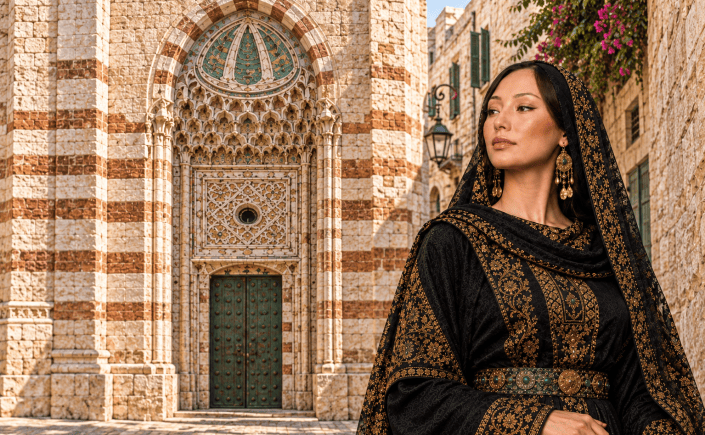
One morning in October, Sarah Tuttle-Singer, Jerusalem resident and author of the recently published and captivating Fairy Lights in God’s Backyard – A Jerusalem Love Story, took us on something of a magical mystery tour of places that most visitors would probably never find for themselves. It was less a conventional guided walk than an excursion through the Old City of Jerusalem’s hidden histories, eccentricities and unexpected connections. Our itinerary was wonderfully eclectic. It was Jerusalem in miniature: stories tucked away in the labyrinth of streets and courtyards that make up the Old City.
As Sarah recounts it in her book, there are places in Jerusalem where history seems to have accumulated rather than simply passed. One wanders down a narrow street, turns a corner, passes beneath an archway and suddenly finds oneself looking at a building that belongs to another age, another political order and sometimes another civilisation altogether. The Old City is full of such surprises. Its streets are not merely old; they are historical palimpsests, where successive generations have built upon, appropriated, adapted and occasionally obscured what came before.
One such building is Lady Tunshuq’s Palace, or Qasr al-Sitt Tunshuq, is tucked away in the Muslim Quarter on Aqabat al-Takiyya – close to the Via Dolorosa and historic al Wad Street. It is one of the more remarkable surviving examples of Mamluk domestic architecture in Jerusalem, and its story brings together two extraordinary women, separated by approximately 150 years: a wealthy and rather mysterious fourteenth century noblewoman and a Ukrainian-born slave who rose to become the wife of the Ottoman emperor Suleiman the Magnificent and one of the most influential women of her age.
It is also a story about the relationship between Damascus and Jerusalem, the political uses of architecture, the religious imagination of the Ottoman Empire and the rather different reasons why successive rulers admired and invested in a city that was not necessarily a place they wanted to live.
A hidden Palace in the Muslim Quarter
The palace dates from around 1388, during the Mamluk sultanate, and is generally associated with Sitt Tunshuq al-Muzaffariyya. Its architecture is immediately striking. The imposing stone façade, alternating bands of red and pale limestone, elaborate marble inlay and intricately carved entrance are a remarkable contrast to the relatively modest buildings and bustling commercial activity of the surrounding lanes.
The entrance is particularly impressive. The carved stonework above the doorways includes elaborate muqarnas, a form of architectural ornamentation consisting of tiered, honeycomb-like niches, rather like miniature stalactites. These decorative forms soften the transition between arches and walls, creating intricate patterns of light and shadow. They are characteristic of the sophisticated architectural vocabulary developed across the medieval Islamic world, particularly under the Mamluks.
The building was not a modest urban residence. Its scale suggests a substantial establishment, with a principal reception hall, courtyard and an upper storey containing some twenty-five rooms, connected by four staircases. It was a place intended to accommodate a considerable household and receive visitors in surroundings that proclaimed the owner’s wealth and standing.
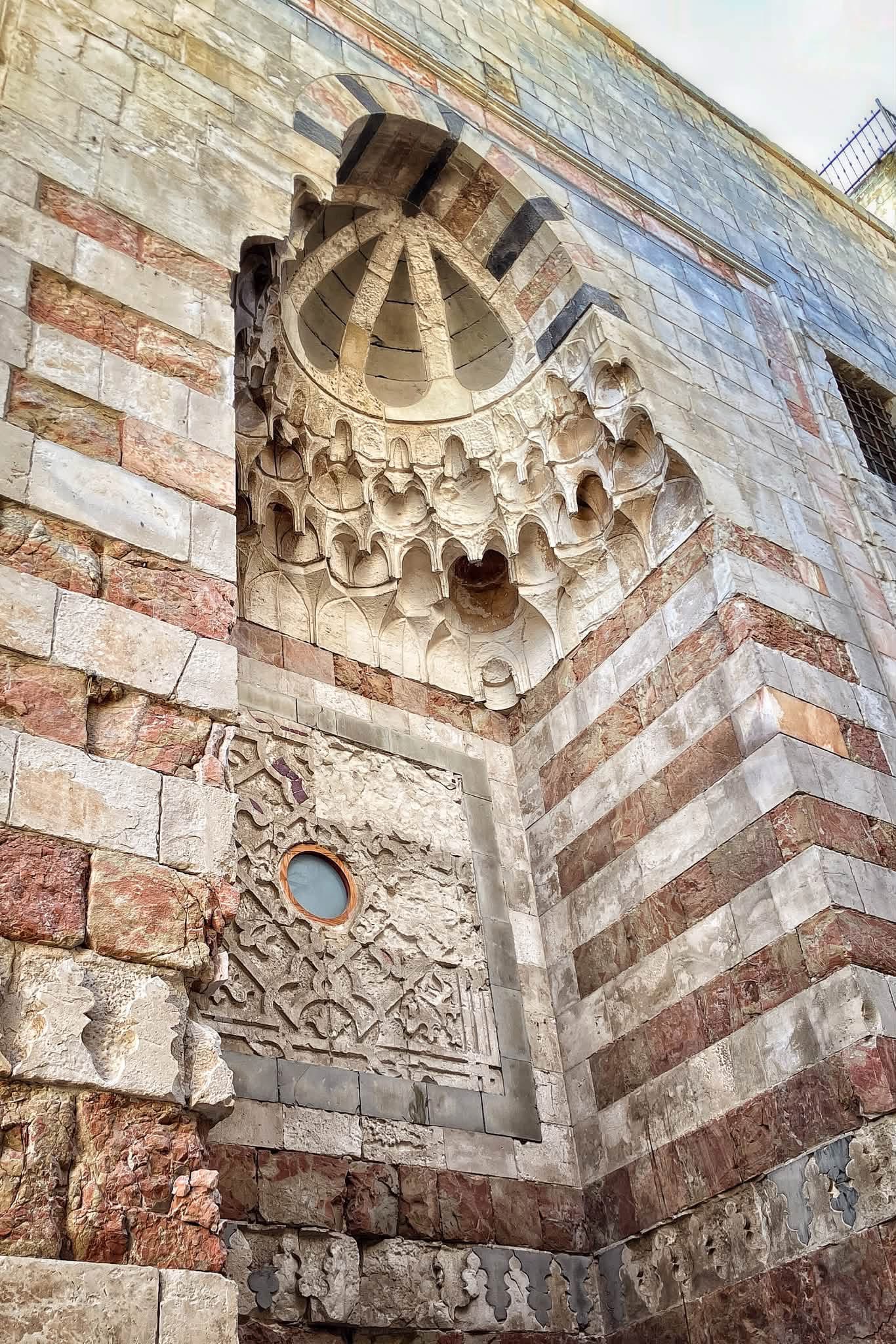
Qasr al-Sitt Tunshuq, Jerusalem. Paul Hemphill, October 2026
The name of the patron is worth lingering over: Sitt Tunshuq al-Muzaffariyya, sometimes referred to simply as Lady Tunshuq. Sitt is an honorific meaning lady or mistress, while al-Muzaffariyya is a feminine designation derived from al-Muzaffar (meaning victorious), suggesting an association with a person, family or ruling house bearing that title. Its precise significance, however, remains uncertain, and it would be unwise to infer a particular dynastic connection from the name alone.
Her origins are similarly obscure. She may have been of Mongolian, Turkish or more broadly Central Asian background, and some accounts suggest a marriage to a Kurdish nobleman. Two principal theories have emerged concerning her identity. The first, favoured by a number of architectural historians, associates her with the Muzaffarid dynasty, which ruled parts of southern and western Iran, including Fars and Kirman, during the fourteenth century. According to this interpretation, she may have fled to Jerusalem following Timur’s overthrow of the dynasty in 1387, bringing considerable wealth with her. The theory draws some support from the palace itself, whose distinctive Persian architectural features, particularly its monumental vaulted entrance portals (pishtaqs), are unusual in Mamluk Jerusalem. A second possibility connects her to the Egyptian Mamluk court, perhaps as a freed courtier or relative of Sultan al-Muzaffar Hajji (r. 1346–1347), whose title she may have adopted as a mark of status. The evidence is inconclusive, although the architectural clues have led some scholars to favour the Persian connection.
How, then, did a woman of apparently considerable wealth and standing come to establish herself in Jerusalem? Here we move from documented history into conjecture, though not entirely fanciful conjecture. Whatever her precise origins, Tunshuq appears to have belonged to the cosmopolitan world of the Mamluk elite, whose military, administrative, marital and courtly networks extended across Egypt, Syria and beyond, encompassing Turkic, Circassian, Kurdish, Mongolian and Persian backgrounds.
Jerusalem was by no means an isolated provincial backwater; it formed part of a political and administrative system centred on Cairo and Damascus, while its religious significance made it an attractive destination for wealthy officials, military families and patrons. It is entirely plausible, therefore, that Tunshuq’s arrival was facilitated by the networks of marriage, patronage and political association that connected the ruling classes across the region. Beyond that, we must allow the historical record to retain some of its mystery.
There is another possibility, which brings us to the rather interesting relationship between Damascus and Jerusalem.
The Mamluks ruled Egypt, Syria and much of the eastern Mediterranean from 1250 until the Ottoman conquest of 1516–17. Originally a military caste, largely recruited from enslaved soldiers of Turkic and Circassian origin, they eventually established one of the most formidable Islamic sultanates of the medieval period.
Their political system was not particularly tranquil. Power was concentrated among the sultan and a competing hierarchy of military commanders, or emirs, whose influence depended upon their military following, wealth, patronage networks and proximity to the court. The relationship between the sultan and his senior commanders could be decidedly fraught. An ambitious emir might be a valuable servant of the state one day and a potentially dangerous rival the next.
Damascus was one of the great centres of Mamluk authority. Its governor and military establishment occupied positions of considerable importance, and the city was an important administrative and strategic centre for the Syrian territories.
Jerusalem, meanwhile, offered a rather different political environment.
There is a recurring interpretation of Mamluk patronage in Jerusalem that is particularly interesting: the practice of transferring, or effectively exiling, troublesome or politically inconvenient Mamluk lords and officials from the centre of power in Damascus or Cairo to Jerusalem. A commander whose influence had become inconvenient at court could be removed from the immediate political arena, given an appointment or a position of responsibility in Jerusalem, and encouraged to turn his energies towards the city.
The word exile needs to be understood in this context. It was not necessarily banishment in the modern sense, nor was it always a punishment. It could be a form of political management: a way of moving an ambitious or potentially troublesome individual away from the centre of power while retaining his services and status.
And what better way to occupy a wealthy and ambitious Mamluk notable than to encourage him to build something?
Madrasas, Sufi hospices, religious institutions, fountains, public facilities and substantial private residences became part of the architectural landscape. Such patronage served several purposes simultaneously. It demonstrated religious devotion, enhanced the standing of the patron, provided employment and services, and helped establish a permanent presence in a city whose spiritual importance far exceeded its political and economic weight.
We should not mistake this interpretation for a single, formally documented policy applied uniformly to every inconvenient Mamluk commander. The transfer of officials and military figures, and the use of patronage to manage political relationships, were part of a much broader system of Mamluk government. But the idea helps explain why Jerusalem acquired such a remarkable concentration of Mamluk buildings, and why the city became a destination for wealthy patrons who might otherwise have been expected to remain in Damascus or Cairo.
In effect, Jerusalem could be both a place of honour and a place of political removal. A man might lose proximity to the sultan but gain the opportunity to establish a religious institution, build a mansion or endow a madrasa that would preserve his name for generations.
There is an interesting parallel with the story of Tunshuq, although we should not assume that she herself was an exiled political figure. Her presence in Jerusalem may have resulted from marriage, family connections, patronage, political turmoil in the wider Muslim world, or some combination of these. We simply do not know. But her palace belongs to precisely the world in which wealth, political status, religious patronage and architectural ambition were closely intertwined.
The Mamluk architectural inheritance: Damascus and Jerusalem
Having spent time wandering around both Jerusalem and Damascus, I find the architectural comparison – the Mamluk more so than the Persian one referred to above, particularly interesting. In my opinion, the Mamluk buildings in Damascus are generally grander in scale and often more finely cut in their stonework. That is perhaps not surprising. Damascus was a major centre of political power, administration and wealth, whereas Jerusalem occupied a rather different position in the hierarchy of the Mamluk empire.
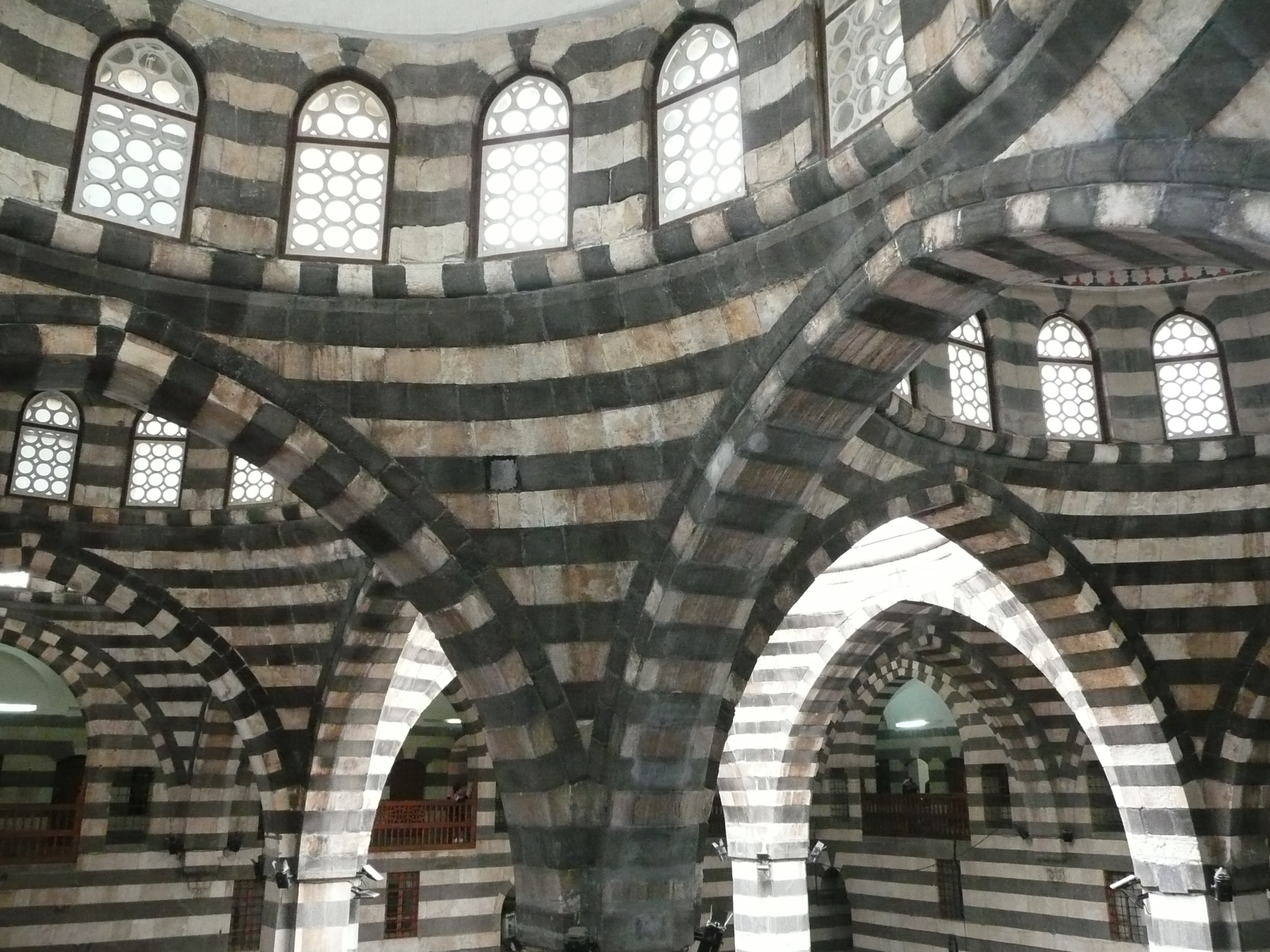
The difference is apparent even in the stone. Damascus makes wonderful use of dark basalt and pale limestone, often arranged in alternating bands in the decorative technique known as ablaq. The contrast is particularly striking around monumental entrances, arches and façades, where the alternating colours produce an almost geometric precision.
Jerusalem, by contrast, has its warm red, honey-coloured and golden limestone, which gives its Mamluk architecture a rather more intimate character. The buildings are often woven so thoroughly into the existing streetscape that one encounters them almost by accident. Damascus has the greater architectural swagger, perhaps; Jerusalem has a quality that comes from the buildings being embedded in the fabric of the city itself.
For the Mamluk rulers, Jerusalem was not simply another provincial town. Its religious significance made it one of the most important destinations in the Islamic world. The Haram al-Sharif, with the Dome of the Rock and al-Aqsa Mosque, gave the city an importance that was both spiritual and political. Successive sultans, emirs and wealthy officials endowed it with madrasas, hospices, fountains and religious institutions.
These buildings expressed piety, certainly, but also status and political influence. A madrasa was an educational institution, but it was also a statement about the patron who financed it. A Sufi hospice served a religious community, but it also demonstrated the patron’s devotion and generosity. A mansion proclaimed private wealth, but it might equally become the foundation of a religious or charitable endowment.
Lady Tunshuq’s Palace belongs to this architectural world. It is an extraordinary reminder that Mamluk Jerusalem was not exclusively the preserve of military commanders and male patrons. Women of rank and wealth could exercise considerable influence, own property and commission buildings intended to outlast them.
From private palace to religious endowment
Tunshuq’s own story took a turn characteristic of the religious world of medieval Jerusalem.
Towards the end of the fourteenth century, she endowed the property to a Sufi religious order, apparently continuing to reside there until her death in 1398. Sufism, the mystical tradition within Islam, placed particular emphasis on spiritual discipline, devotion and the search for a more intimate experience of the divine. Her endowment therefore gave the palace a life beyond its original domestic purpose.
Across the narrow street stands her tomb, the Turbat al-Sitt Tunshuq, facing the residence with which her name remains inseparably associated. There is something rather poignant about the arrangement. The woman who commissioned this magnificent building rests within sight of it, while the palace itself has continued through centuries of changing political and religious circumstances.
The building’s subsequent history reflects the changing purposes to which Jerusalem’s substantial properties were put. Under Ottoman rule, it became associated with a much larger charitable foundation, and later served administrative functions, including use as a residence for the Ottoman governor in the nineteenth century.
But the most interesting chapter in its history involves another woman.
Enter Hürrem Sultan
Her name was Hürrem Haseki Sultan, although she is better known in Western histories as Roxelana.
Hürrem derives from the Persian Khurram, meaning cheerful or joyful, and was the name she acquired at the Ottoman court. She became the first woman formally known as Haseki Sultan, the Sultan’s chief consort. In Europe she was known as Roxelana or Roxelana, a designation associated with her Ruthenian (present-day Ukrainian) origins. Her birth name is uncertain, although Aleksandra Lisovska is the name most commonly cited, with variations including Anastazja Lisowska. She was born around 1505 in Rohatyn, in the Ruthenian lands of the Kingdom of Poland (now Ukraine), and died in Constantinople in April 1558.
She entered the Ottoman world through one of its more brutal institutions. Captured during the Tatar slave-raiding of eastern Europe, she was brought into the Ottoman imperial household, where she eventually attracted the attention of Sultan Suleiman I, known in Europe as Suleiman the Magnificent. She rose from enslavement to become Suleiman’s favoured consort and eventually his legal wife, an extraordinary development in the conventions of the Ottoman court.
Hürrem was no passive ornament of the imperial household. She became one of the most influential women in Ottoman history, exercising considerable political and diplomatic influence and establishing a network of charitable and religious foundations. Her ascent was remarkable, although it should not be romanticised. It was made possible by the particular hierarchies and opportunities of the Ottoman imperial household, an institution that could elevate individuals to extraordinary positions while remaining founded upon slavery and profound inequalities of power.
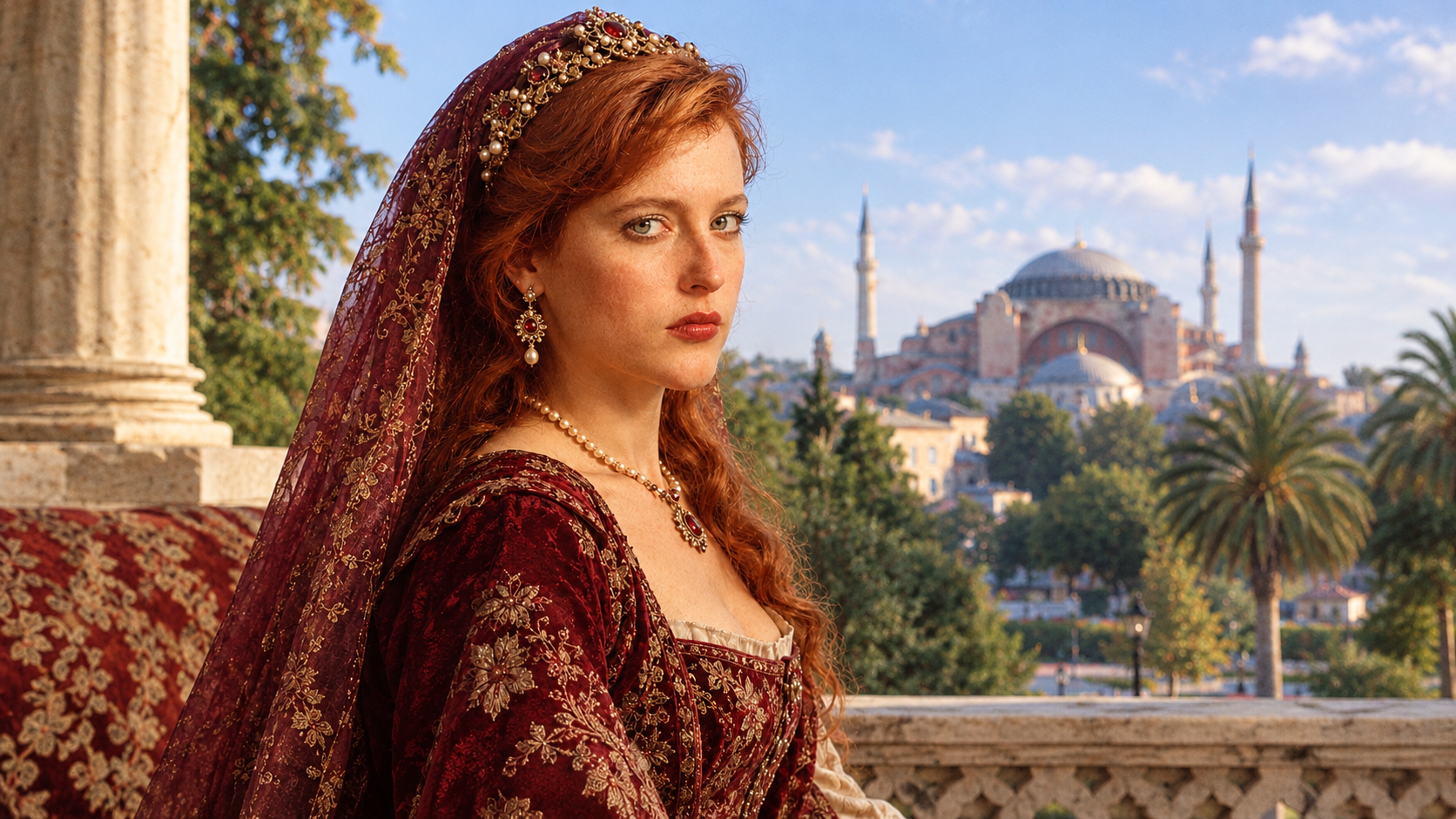
An idealized AI image of Hürrem. Contemporaries record her as striking rather than beautiful
Hürrem’s relationship with Jerusalem is particularly interesting because neither she nor Suleiman ever visited the city.kThis is an important point, and it gives the story a rather different dimension.
Jerusalem was not a place of residence or political power for the Ottoman imperial couple. Suleiman’s political world was centred on Constantinople, the imperial court and the administrative machinery of an empire extending across three continents. Damascus was a major provincial centre; Jerusalem was something else again.,It was an icon, a religious aspiration, a place of immense spiritual significance.
For Muslims, Jerusalem was associated with the Prophet Muhammad’s Night Journey and Ascension, the Isra and Mi’raj, and the sanctity of the Haram al Sharif, Noble Sanctuary – known also, controversially, as the Temple Mount – with twin holy places The Dome of the Rock nd al Aqsa mosque. Its importance was not dependent upon the presence of an emperor or the establishment of a royal residence. Indeed, its significance was precisely that it belonged to a wider religious imagination extending far beyond the boundaries of the city itself.
Suleiman never needed to live in Jerusalem to demonstrate his commitment to it. Nor did Hürrem need to visit to establish a charitable institution in her name. Their relationship with the city was expressed through patronage, religious endowment and the projection of imperial generosity. Jerusalem was a place to which the empire directed its resources and its piety, rather than a place from which it exercised its principal political authority. That distinction helps explain the extraordinary investment made in the city by Ottoman rulers and members of the imperial household.
Around 1552, Hürrem established the Haseki Sultan Imaret, one of the most significant Ottoman charitable foundations in Jerusalem.
The word imaret refers to a charitable institution, particularly one providing food to the poor, travellers and pilgrims. The foundation formed part of the Ottoman system of waqf, under which property and income were dedicated to religious, educational or charitable purposes, generally in perpetuity.
The name of the street on which it stands is pertinent. Al Tekiyya (التكية) is a term derived from the Arabic root w-k-ʾ (و ك أ), meaning “to lean upon” or “to recline.” In Ottoman and Arabic usage, where it appears in Turkish as tekke, it originally denoted a Sufi lodge or monastery, a place where dervishes gathered to rest and meditate. Over time, its meaning widened to include charitable complexes that offered free food and lodging to travelers, pilgrims, and the poor, so that a word for spiritual retreat came to name an institution of public welfare as well.
The Haseki Sultan complex was not simply a soup kitchen. It was an extensive institutional undertaking, involving facilities for the preparation and distribution of food and accommodation for those who came to Jerusalem. Its purpose was to sustain people who might otherwise have struggled to find food and shelter in a city that attracted visitors from across the Islamic world.
Think about the significance of that. Jerusalem was not the imperial capital. It was not where the Sultan held court, received foreign ambassadors or directed the affairs of government. Yet an institution established in the name of his wife provided a continuing service to the city’s population and to pilgrims arriving from distant parts of the empire and beyond.
It was an expression of imperial authority through philanthropy rather than direct political presence.
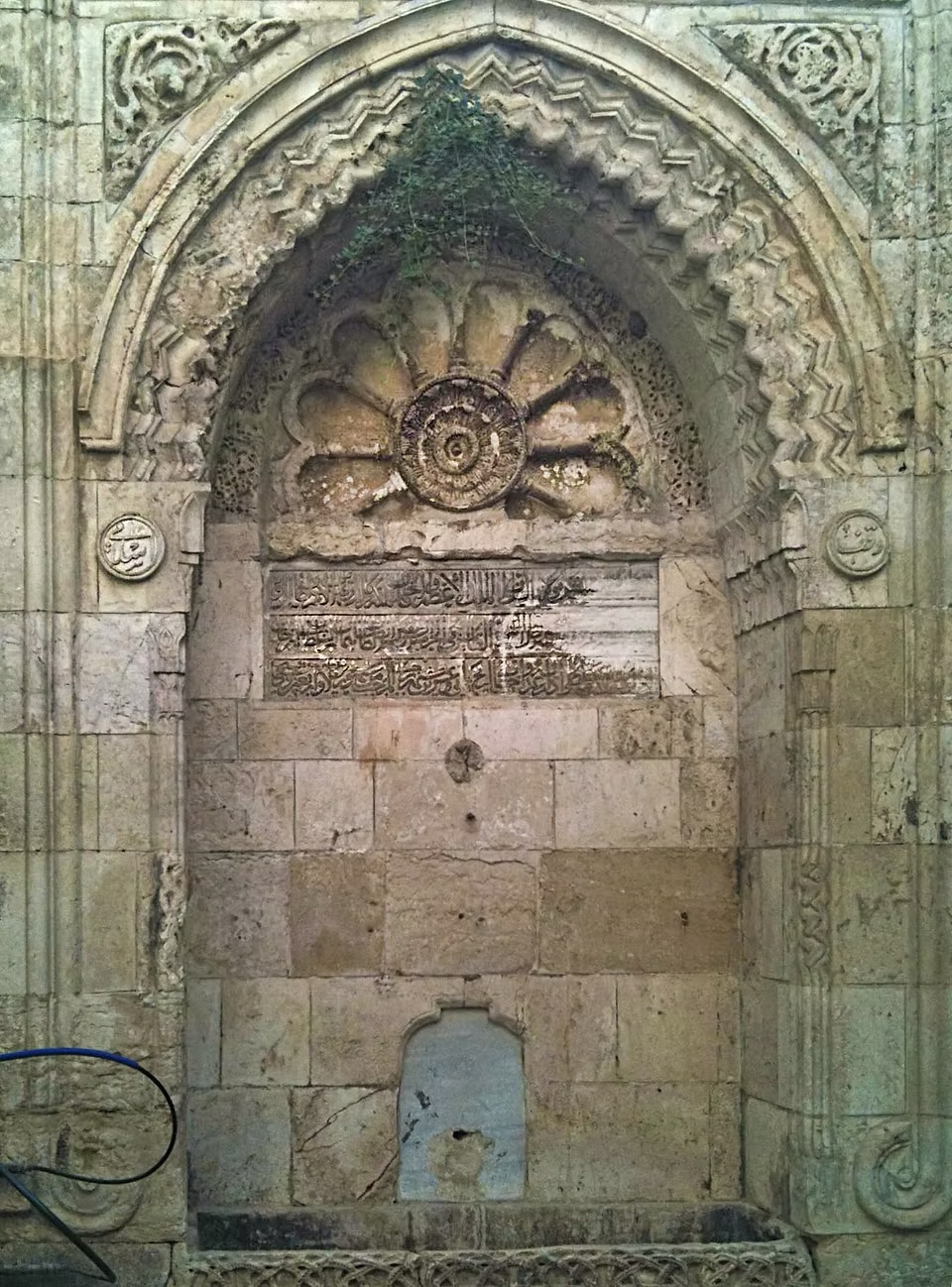
Hürrem‘s fountain on the Haram al Sharif, Jerusalem
Re-enter The Lady
In 1552, the palace was incorporated into Hürrem’s charitable complex. The distinction matters. It is not simply a story of Suleiman giving his wife a magnificent old palace, nor was it necessarily intended as a royal residence. Rather, a substantial Mamluk-era property became part of a much larger Ottoman charitable and institutional foundation.
A building commissioned by a wealthy woman in the fourteenth century was absorbed into the philanthropic enterprise of a woman who had risen from enslavement to become the wife of the Ottoman emperor.
There is something particularly appealing about that historical connection. Neither woman was born into the political world in which she eventually exercised influence in Jerusalem. Their circumstances were entirely different, but both left a material legacy through property, patronage and religious endowment.
Hürrem died in 1558, but her charitable foundation continued its work. The palace subsequently acquired further administrative uses, including its nineteenth-century association with the Ottoman governor. Its institutional history continued to evolve, as buildings in Jerusalem so often do.
Today, the property is associated with an orphanage and workshops and is not generally open to the public. Its present arrangements and precise administrative status deserve further confirmation, but its continuing institutional life is itself part of the story.
The Ottoman inheritance of the Mamluks
The Mamluk sultanate eventually disappeared as an independent political power following the Ottoman conquest of 1516–17. But its architectural inheritance did not disappear with it.
The Ottomans inherited cities, buildings, craftsmen, institutions and architectural traditions. They adapted them to their own purposes, sometimes incorporating existing structures into new religious and charitable foundations, sometimes adding their own buildings and sometimes changing the function of what they had inherited.
This continuity is particularly evident in Damascus.
Just off the Suq al-Hamidiya stands the magnificent Khan As’ad Pasha, an eighteenth-century Ottoman caravanserai and one of the great architectural treasures of the city. Built by As’ad Pasha al-Azm in the mid-eighteenth century, it is, quite simply, poetry in geometry. Its immense sheltered courtyard, symmetrical arrangement of domes, alternating stonework and carefully controlled light create an extraordinary sense of proportion. The nearby Azem Palace, with its courtyards, fountains, decorated reception rooms and intricate stonework, belongs to the same broader Damascene architectural tradition.
Neither building is Mamluk in the strict historical sense, but both demonstrate how deeply the architectural language of the earlier period had become embedded in the region. The Mamluks had established an architectural vocabulary that subsequent generations continued to use, adapt and develop.
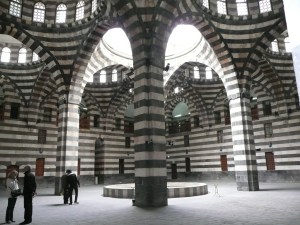
Khan As’ad Pasha, Damascus’ Paul Hemphill March 2009
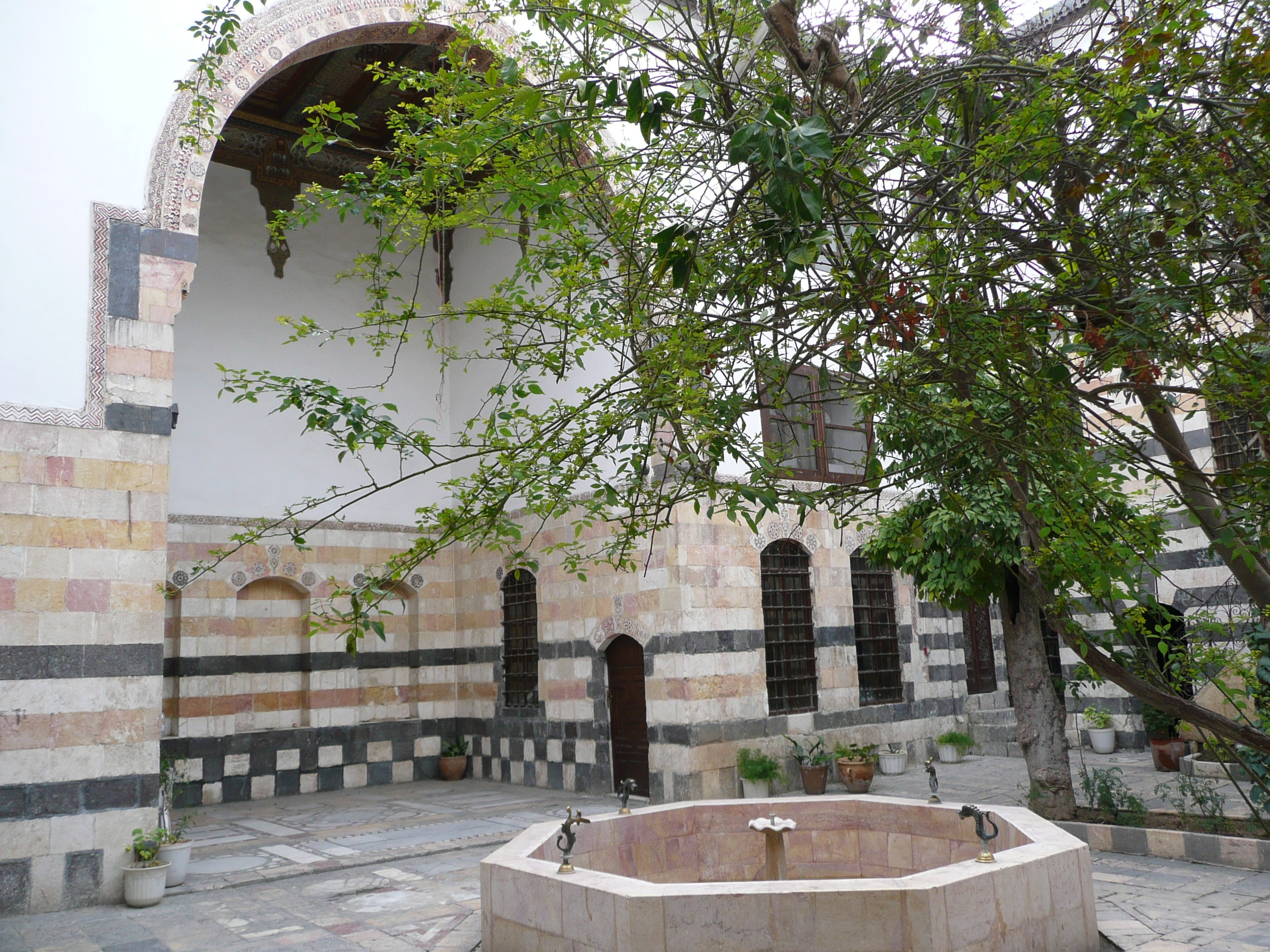
Al Azem Palace, Damascus. Paul Hemphill March 2009
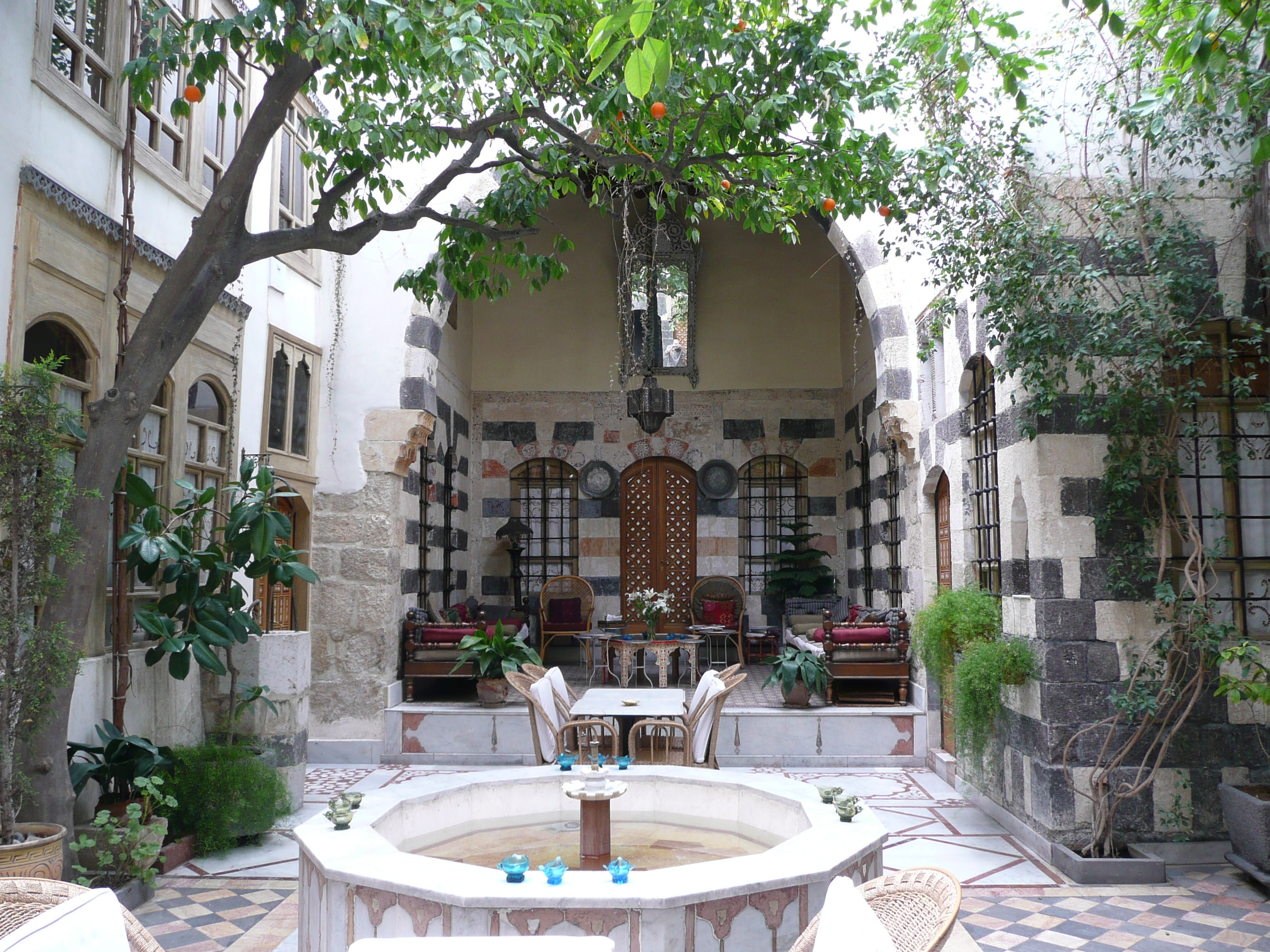
Bait Mamluka, our favourite Damascus hotel. an 18th century Ottoman merchant’s home
A city that belongs to more than one age
The Ottomans did not arrive in an empty landscape and start again. They inherited a sophisticated urban civilisation and added their own layers to it.
Jerusalem tells the same story, although in its own distinctive way.
There is something particularly rewarding about the story of Lady Tunshuq’s Palace because it brings together so many strands of Jerusalem’s history.
Tunshuq herself remains elusive. We can identify her name, the approximate date of her building and something of her religious patronage, but the details of her origins and personal circumstances remain uncertain. We can speculate about the political and social networks that brought her to Jerusalem, but we cannot confidently reconstruct her journey.
Hürrem’s biography, by contrast, is much better documented. Born in the Ruthenian lands, captured and enslaved, she rose to become the wife of Suleiman the Magnificent and one of the most powerful women of the Ottoman world. Yet she never visited Jerusalem, nor did her husband. Their relationship with the city was expressed through religious devotion and charitable patronage rather than residence or direct political involvement.
Between these two women lies the transition from Mamluk to Ottoman rule, from one political and architectural world to another. Their stories also remind us that the medieval and early modern Middle East was a far more interconnected place than our contemporary political geography sometimes encourages us to imagine. People, languages, religions, armies, merchants, architects and ideas moved across enormous distances. Jerusalem was one of the places in which these movements converged.
And perhaps that is what makes wandering through the Old City so rewarding. One is never looking at a single historical period. The buildings are palimpsests, each generation adding something, appropriating something, sometimes destroying something, but rarely beginning entirely anew.
The Mamluk stones of Lady Tunshuq’s Palace remain. The Ottoman charitable foundation became part of their history. The purposes of the building changed, as did the political authorities responsible for it. Its original owner has largely disappeared from the historical record, while the name of a Ukrainian-born Ottoman queen has become attached to its subsequent institutional life.
The palace is more than a surviving specimen of Mamluk architecture. It is a material trace of women’s wealth, agency and patronage in societies whose histories are too often told exclusively through the lives of men. It also reminds us that Jerusalem’s importance has never depended solely upon its role as a centre of government or political power. For successive generations of rulers, patrons and pilgrims, it was something more enduring: a place of religious aspiration, symbolic authority and spiritual imagination.
Standing in the narrow lanes of the Muslim Quarter, surrounded by the noise and bustle of contemporary Jerusalem, it is easy to overlook the extraordinary history contained in these buildings. But take a moment to look at the stonework, the entrance arches and the carved decoration, and the city begins to disclose its older stories.
A fourteenth-century Mamluk woman built a palace. A sixteenth-century Ottoman queen, born thousands of kilometres to the north, incorporated it into a charitable foundation without ever setting foot in Jerusalem. The sultans in Damascus and Cairo, and later the emperors in Constantinople, came and went. Their political worlds disappeared, but the buildings remained.
Jerusalem is rather good at that. Its history is not a succession of clean breaks, but an accumulation of lives, ambitions, faiths and political projects. One age writes over another, but rarely succeeds in erasing it entirely.
The stones remember, even when the people do not.
Paul Hemphill, Jerusalem, October 2026.
We are indebted to Sarah Tuttle-Singer for taking us to Lady Tunshuq’s Palace and recounting its remarkable story, and to David Steinberg for his series of monographs on the Women who built of Jerusalem. It provides brief biographies of six historical figures he believed contributed to the story of Jerusalem. They are, predictably, The Virgin Mary, but also: Saint Helena, the mother of Emperor Constantine, and Jerusalem’s first “archaeologist”; Athens borne, Byzantine empress and politician Amelia Eudocia; the crusader Queen Melisandre, with whom we’ve crossed metaphorical paths many times; and, of course, Hürrem Haseki Sultan. The sixth is probably unknown to most people unless they know their Imperial Russian history, Princess Elizabeth Feodorovna, who is, to borrow a catchphrase of Tom and Dom in The Rest is Histiry podcast, “a friend of In That Howling Infinite” – see her story in the unlikely setting of Rasputin and the downfall of the Romanovs, and, the equally unlikely take of Some dope, a small church and a big headache … A Jerusalem story. In the immortal words of the late Aussie music icon Molly Meldrum, how left is this very week, “do yourself a favour and read Sarah’s magical “Jerusalem love story” and Steinberg’s accounts of these remarkable ladies.
Read recently published essays about Jerusalem: Fairy Lights in God’s Backyard … a Jerusalem love story and A rabbi, a priest and an imam walk into a bomb shelter … a Jerusalem story. And about Israel, and Palestine: De Profundis … Apeirogon’s geometry of grief and understanding and Wasatia … building bridges, not walls
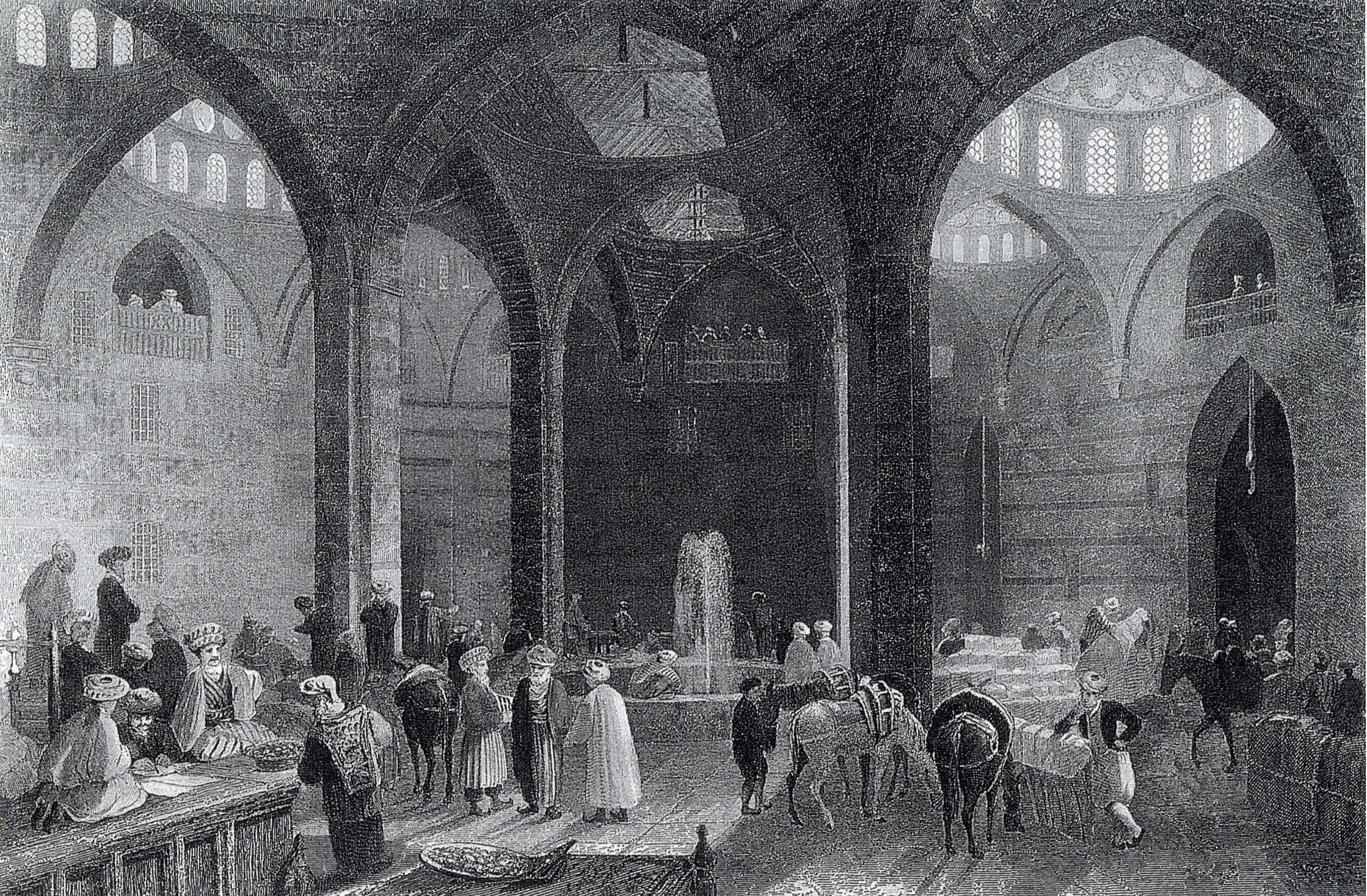
Khan As’ad Pasha in earlier times
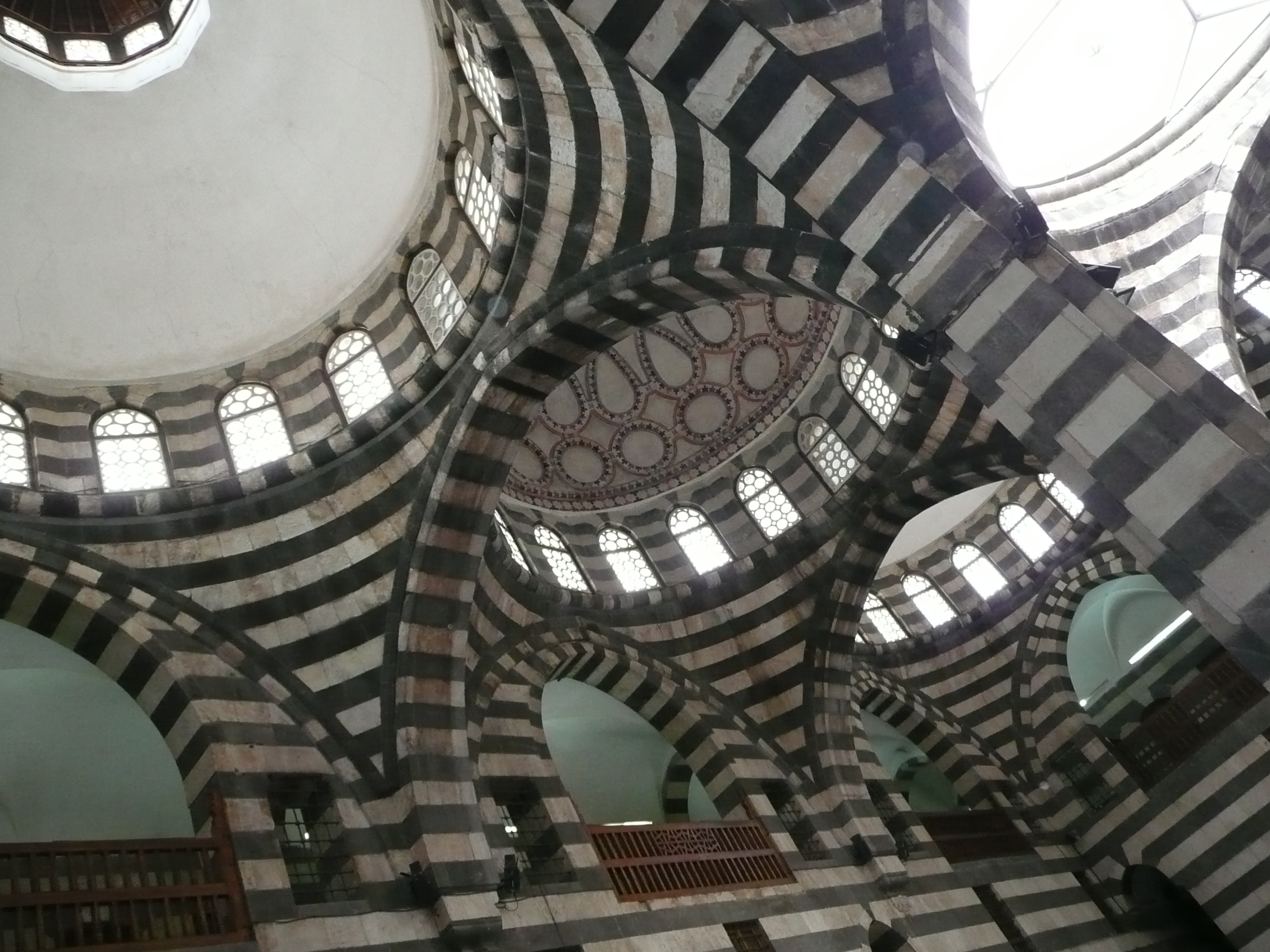
Khan As’ad Pasha, Damascus’ Paul Hemphill March 2009

