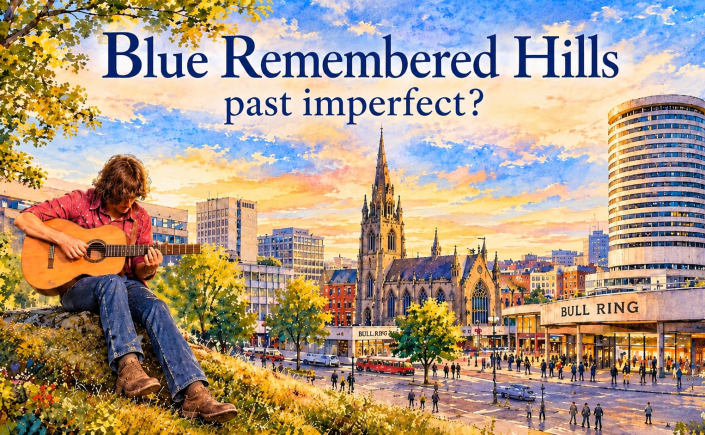
Every generation seems to have its own version of “the good old days”. They were simpler, more orderly, more civilised; people knew their place, children respected their elders, the streets were safer, the music was better and, apparently, the milk tasted of milk. The details vary, but the underlying sentiment is remarkably durable: somewhere behind us lies a world that was better than the one we inhabit now, and the further we travel from it, the more we seem to miss it.
There is, of course, nothing inherently wrong with nostalgia. Memory is part of the furniture of identity. It gives continuity to our lives, connects us to people and places we have lost, and occasionally offers a welcome refuge from the more dispiriting aspects of the present. A song, a photograph, a familiar smell or an old street can transport us, momentarily, to another time. But there is a difference between remembering the past fondly and imagining that it was better; between acknowledging what we have lost and forgetting what we never had.
That distinction was at the heart of an essay published in In That Howling Infinite in November 2023, Blue remembered hills – a land of lost contentment, which explored the pleasures, pitfalls and politics of nostalgia. It examined the way personal memories become entangled with collective mythology, how the ordinary recollections of childhood and youth can acquire a sentimental glow, and how that glow may be recruited into a much larger story about national decline, cultural displacement and the supposed failures of modernity. It was not arguing against nostalgia. The author confesses to rather enjoying it. He was arguing against allowing it to become a substitute for history.
British writer and commentator Graham Cunningham’s more recent essay, on his substack Slouching Towards Bethlehem, entitled Memories of The Way We Were … before the Progressive Deluge, (view it it here or else as republished below) provides a useful opportunity to revisit those questions. Cunningham recalls aspects of the Britain of his youth, while acknowledging that the world he remembers was far from perfect. His concern, however, extends beyond personal recollection. A small “c” conservative, he sees the social and cultural changes of the past half-century as a progressive transformation of Western society, one that has displaced older conventions and values, and he wonders what has been lost in the process. It is an argument worth engaging with, not least because some of his criticisms of contemporary progressive orthodoxies deserve consideration [he takes aim at these in another substack essay entitled Awful People … a diatribe]. But it also raises a familiar question: how much of what we believe we have lost was ever quite as we remember it?
The recollections of the author of Blue Remembered Hills are inevitably different. Born in 1949, into a working-class Irish Catholic family in Birmingham. he remembers the constraints as well as the pleasures of that world, the opportunities it offered and those it denied. He benefited from the social reforms of the post-war years, from free education, the NHS and the wider ambitions of the welfare state.,He experienced the freedoms of the 1960s, but is not not inclined to turn that decade into a universal liberation narrative. The revolution, such as it was, was walked by rather fewer people than subsequent mythology would have us believe. He does not imagine that the Britain of his childhood was some lost social paradise waiting to be recovered.
What interests us here is not whether Cunningham or Blue Remembered Hills tecall their respective pasts correctly in every detail. Memory is notoriously unreliable, and personal experience is never a complete account of a society. It is what we do with those memories, and the historical and political conclusions we draw from them. Nostalgia can illuminate the present, but it can also distort it. It can remind us of the value of community, continuity and belonging; it can equally become a vehicle for resentment, exclusion and the comforting fiction that the problems of today began when the world stopped being as it used to be.
So this is not an argument for the present against the past, or for progress against tradition. It is an attempt to keep both in view: to acknowledge genuine losses without inventing a golden age, to recognise the achievements of social change without pretending that everything new is necessarily better, and to resist the temptation to confuse familiarity with virtue. We can remain fond of those “blue remembered hills” of AE Housman’s iconic poem but harbour no particular wish to live there again.
Blue remembered hills, originally published in 2023, is revisited here in the light of Cunningham’s reflections. It is a comparative critique developed with the assistance of a large language model (LLM), which has acted as a critical interlocutor to test the argument, identify points of agreement and disagreement, and draw out some of the historical and political implications. The resulting discussion is ours to assess, amend and take responsibility for. The machine helped considerably with the conversation – but it does not get the last word.
Nostalgia is not all it’s cracked up to be
A reconsideration of Graham Cunningham’s Memories of The Way We Were in the light of Blue remembered hills – a land of lost contentment. It is probably worthwhile to check it out before you read on.
Blue Remembered Hills is not simply an earlier, more nuanced version of Cunningham’s. It is, in several important respects, an argument against the very tendency that animates his piece. And the irony is that they both begin in much the same place: the remembered world of post-war Britain, the cultural landscape of childhood, the passing of time and the peculiar emotional hold that the past exercises over those who have lived through it. But each arrives at rather different destinations.
Cunningham looks backwards and asks what we have lost through what he calls The Progressive Deluge. Blue Remembered Hills looks backwards and asks why we are so inclined to imagine that we have lost something better than what we actually had. That is a much more fundamental difference.
Two journeys into the past
Cunningham’s essay is essentially a personal inventory of the social conventions of his childhood. He remembers the strong and silent male, the familiar rituals of courtship, the authority of parents and teachers, the relative security of the streets, the conventional family, and a society in which class rather than identity was the principal lens through which inequality was understood.
He is careful to say that this was not a lost paradise. He acknowledges the shortcomings of the period, particularly its treatment of women, racial minorities and homosexuals. But his emotional investment is unmistakable. Much of what he remembers fondly has, in his view, been unnecessarily swept away by five decades of progressive social engineering.
His argument then expands. The changes he dislikes have become embedded in institutions, education and the media, creating what he calls a Progressive hegemony. The internet has begun to undermine that hegemony, releasing the pent-up frustrations of ordinary people and producing a populist backlash. He wonders whether Western society might eventually recover something of its former social conservatism, although he is not especially optimistic.
Blue Remembered Hills takes a different route. It begins with Housman’s A Shropshire Lad, Dennis Potter’s interrogation of childhood innocence, the Greek origins of nostalgia and the curious history of homesickness as a psychological condition. It then explores nostalgia as a cultural phenomenon, its commercial exploitation, its role in personal identity and, eventually, its appropriation by political movements.
The Facebook nostalgia groups provide its empirical material. It examines their apparently innocuous collections of old photographs, familiar household objects, milkmen, dustbin men, trams, television programmes and confectionery, and discovers beneath the affectionate recollections a more troubling current of resentment about immigration, race, gender, authority and national decline held by oldsters whom Australian author John Birmingham calls “grievance nostalgics”.
Blue Remembered Hills’ argument is not that the past was necessarily better or worse. It was different, and our memories of it are inseparable from our present circumstances, expectations and prejudices: When we talk about the past, we always reveal something about the present.
That is probably the key to reading both essays.
The distinction between remembering and reconstructing
The most important intellectual distinction in Blue Remembered Hills is between nostalgia as a personal and emotional experience, and nostalgia as a reconstruction of the past.
It is not embarrassed by nostalgia. Quite the reverse. It’s author admits to being an enthusiastic participant in it. He enjoys the photographs, the music, the recollections of Birmingham, the old streets, the Hippie Trail reunions and the cultural detritus of an earlier age. He are quite happy to bask in les temps perdu, but is also conscious of the traps.
The discussion of Svetlana Boym’s distinction between restorative and reflective nostalgia is particularly pertinent. Restorative nostalgia seeks to reconstruct an imagined home, a lost national identity or a supposedly better social order. Reflective nostalgia is more interested in the longing itself, in the contradictions of memory, the passage of time and the impossibility of recovering what has gone.
Blue Remembered Hills is explicit: I don’t want to be 17 again – that starry-eyed slacker! – but neither would I wish that self away. That is a rather good formulation of reflective nostalgia. You don’t want to return to the past. You want to retain it as part of the person you have become.
A quotation from Maria Popova, about our successive ages being stacked within the present self like Russian nesting dolls, reinforces the idea. We don’t discard our earlier selves as we grow older. They remain incorporated into us, although our understanding of them changes.
Cunningham, by contrast, seems to move rather more freely between remembering the past and wanting aspects of it restored. His qualification that the 1950s were not a prelapsarian paradise is genuine, but it doesn’t prevent him from treating many of their social conventions as desirable reference points for the future.
There is a subtle but important difference between saying I miss something about the world in which I grew up and saying the world would be better if we recovered it. The first is an observation about ourselves. The second is a political proposition requiring historical evidence. Cunningham sometimes treats the former as evidence for the latter.
The Facebook phenomenon: a chaotic archive of memes and memories
This where the two essays are most directly at odds.
Blue Remembered Hills description of Facebook nostalgia groups is not simply amusing social commentary. It is an attempt to use contemporary popular culture as a source of historical evidence. It makes the comparison with Mass Observation, that remarkable British social research project which collected the observations, diaries and opinions of ordinary people from the 1930s onwards. Facebook has become an enormous, chaotic archive of popular memory, although one in which the boundaries between recollection, fantasy, grievance and political mobilisation are not always easy to distinguish.
The essays’ treatment of “the proper binmen” is particularly telling. A photograph like that below of the traditional refuse collectors is a repository for all sorts of associations: public service, reliability, community, pride in work, national character and the presumed moral superiority of an earlier Britain. But the photograph itself proves none of those things. It shows binmen. The rest is projected onto it.
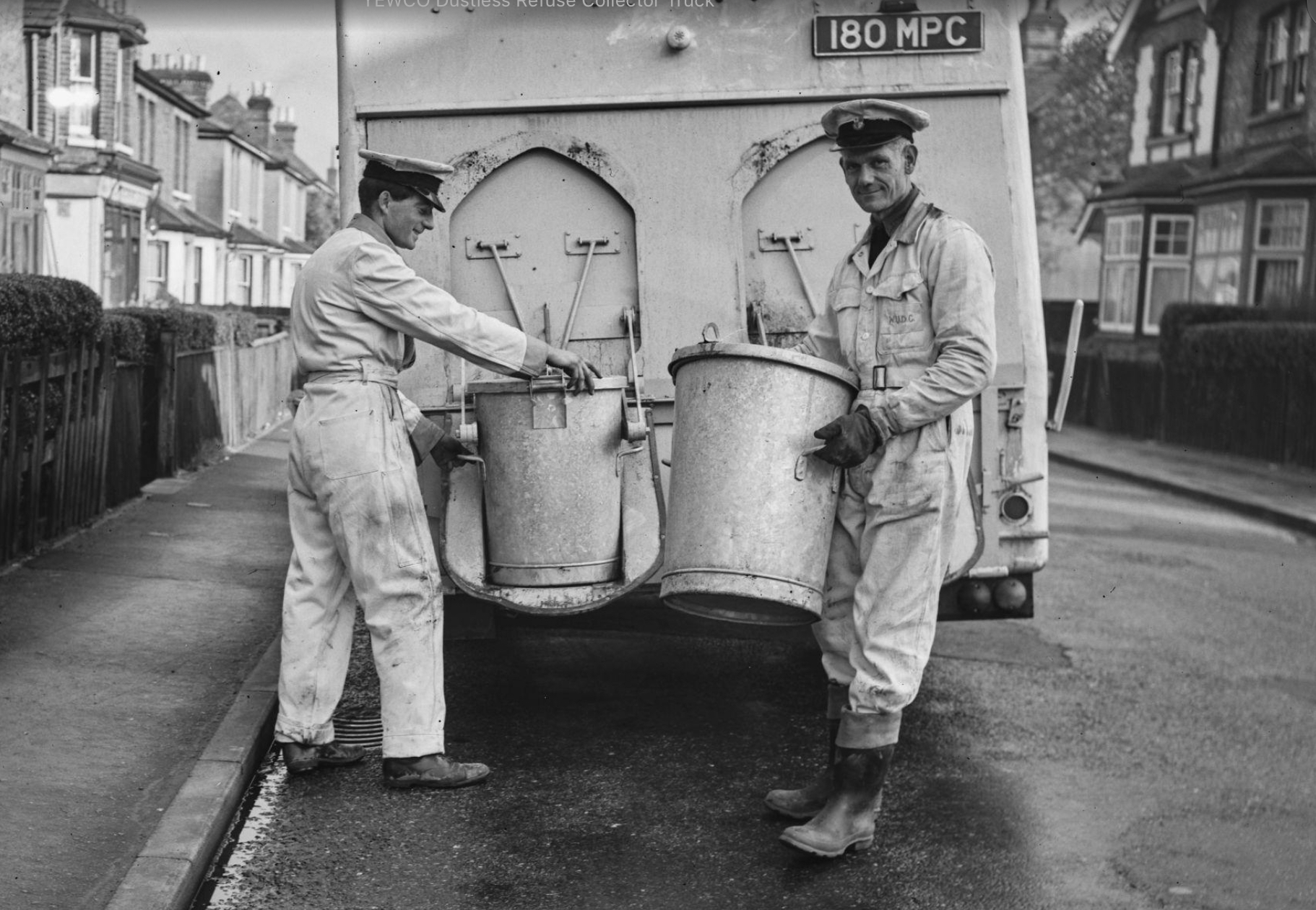
That is the crucial observation. A photograph of a milkman or a coalman becomes evidence, in the minds of some contributors, that Britain was once a gentler, cleaner, more respectful, more homogeneous and more law-abiding society. The nostalgic image is merely the starting point for a much larger argument about national decline.
Blue Remembered Hills’ response to the person who demanded that Britain be taken back – “where to? 1950?” – neatly exposes the absurdity. And its subsequent conflation of the “Sceptred Isle,” white children, coal mines, conscription, hanging, church attendance, Irish Catholics and the absence of women vicars is comically apposite Whether it was a wind-up or not, it encapsulates a recognisable mindset.
This is where Cunningham’s essay becomes interesting by comparison. He describes the internet as having broken the progressive monopoly over public communication, allowing ordinary people to express their dissatisfaction with institutional orthodoxy. You describe much the same phenomenon, but Blue Remembered Hills also examines what happens when ordinary people are given an unrestricted platform for expressing their dissatisfaction.
The internet has democratised communication. It has not necessarily democratised wisdom. And the fact that people are expressing genuine grievances does not establish that their explanations for those grievances are historically accurate.
There is an uncomfortable symmetry here. Cunningham sees the internet as an instrument of liberation from progressive conformity. You see it as an instrument of liberation from conformity which can also release prejudice, historical ignorance and political resentment.
Both observations can be true.
The inconvenient history of the good old days
This is where the author’ of Blue Remembered Hills‘ personal history gives the essay its moral and historical grounding.
It doesn’t approach the 1950s as an abstract period of social conservatism. It remembers what it meant to grow up in a working-class Irish Catholic family in Birmingham. It’s description of the Welfare State is important because it identifies the material foundations of subsequent opportunities: free medical treatment, dental and optical care, public education, school books, public libraries and the educational opportunities that eventually took the author to university. He makes an observation which goes to more to the heart of the nostalgia debate than it might initially appear.:
As for everyone “knowing their place”, my place would’ve been at the bottom if not for the social and political change, including free healthcare and education, that enabled working class children to grow up healthy and ambitious.
Cunningham remembers the social conventions of his youth and regrets some of their disappearance. The author remembers the same broad historical period but recognises that the social order within which those conventions operated was also capable of restricting people’s lives.
The difference is not merely political. It is biographical.
He benefited from a society that retained considerable class inequality, but which was also beginning to dismantle some of the institutional barriers that had previously made social mobility more difficult. The Butler Education Act of 1944, the expansion of secondary education, the NHS and the post-war welfare settlement were not incidental features of his childhood. They helped make his subsequent life possible.
His account of corporal punishment is another particularly effective corrective to nostalgia. He remembers being caned and slippered, sometimes for academic performance rather than indiscipline, by teachers known to be bullies. He questions the retrospective claim that such treatment was character-building, pointing out that the adults who administered it were often protected by the very institutions that supposedly existed for the benefit of children.
The phrase “it made a man of me” is worth interrogating. It may describe an individual’s ability to accommodate or survive an experience. It doesn’t establish that the experience was justified, necessary or beneficial.
The comparison with the institutional abuse of Irish children, drawing on Fintan O’Toole, takes the argument further. It reminds us that deference and respectability could conceal some fairly appalling practices.
Cunningham acknowledges the shortcomings of the old gender and racial arrangements, but he doesn’t really investigate the institutional power that sustained them. And this is an important distinction: the fact that an earlier society appeared more orderly does not tell us whether it was more just. Indeed, some of that order was maintained by people having fewer opportunities to challenge it.
The politics of nostalgia: Cunningham’s Progressive Deluge
Now we come to the more overtly political disagreement.
Cunningham’s essay is not simply nostalgic. It is an argument about the political consequences of social change. His Progressive Deluge is a description of what he regards as the ideological capture of Western institutions over the past fifty years.
There are legitimate questions here. Progressive institutions can become intellectually conformist. Social justice can become a form of moral orthodoxy. Identity politics can reduce complicated individuals to collective categories, and political activism can sometimes substitute moral assertion for argument.
Blue Remembered Hills recognises much of that criticism. It is consistent with In That Howling Infinite’s own recurring concerns about moral capture, ideological monocultures and the intolerance of people who believe themselves to occupy the morally correct position. But Cunningham makes a rather large leap from those observations to his wider account of Western decline.
His nostalgic recollections become a platform for a critique of multiculturalism, feminism, gender politics and institutional progressivism. His description of the contemporary media’s supposedly unrealistic multicultural and homosexual dream world is particularly revealing. He appears to regard the visibility of previously marginalised groups as evidence of ideological excess, rather than considering how the composition of society and its representation have changed.
There is also a curious contradiction in his treatment of race and immigration. He acknowledges the racial hierarchy of his childhood, and concedes that importing a black and Asian middle class has had benefits, but then distinguishes this from the supposed importation of a black and Asian underclass. That is a substantial proposition about immigration and social class, but it receives little examination.
Blue Remembered Hills is more alert to the political uses of this kind of historical selectivity. It observes that the political Right has a particular advantage when appealing to dislocated and atomised people. It doesn’t have to provide a compelling view of the future. All it needs is a romantic conception of the past, to which it can offer the false promise of return.
That is one of the most important passages in the essay, and it has become no less relevant since ir was written.
The MAGA movement, Brexit nostalgia and the various European movements built around national restoration all draw on this emotional reservoir. Their appeal is not simply a desire to change government policy. It is a promise to recover a lost national identity, a sense of belonging and a world in which social arrangements appeared more comprehensible.
Cunningham is right that there is a popular backlash against progressive institutional dominance. But Blue Remembered Hills asks a question he doesn’t sufficiently address: what exactly is the world that the backlash wants to restore, and did it ever exist in the form imagined?
That is the historical question beneath the political one.
The Sixties: an inconvenient counter example
There is another important aspect of Blue Remembered Hills which deserves more attention: its treatment of the 1960s.
The author of Blue Remembered Hills is hardly an impartial observer. He was born in 1949, grew up in the 1950s and came of age in the 1960s. He remembers the music, the sexual liberation, the drugs, the politics, the university experience, the overland journeys and the extraordinary sense of passibility, and asks: And was it as great as they say? Yes it was, to me at any rate.
But then comes the qualification, which is characteristic of its approach: And yet, this revolution road was walked by but a few. The greater proportion of the populace, young and old alike, carried on as if nothing untoward was happening.
This is an important piece of historical self-correction. It recognises that the mythology of the Swinging Sixties has grown with the telling. The decade was not a universal social revolution. Much of Britain remained conventional, class-bound and culturally conservative. The transformation was uneven, geographically concentrated and experienced very differently according to class, education, income and opportunity. The description of the West End as “the scene”, while much of the rest of London remained drab and monochrome, is a corrective to the mythology.
And here is another difference from Cunningham. Blue Remembered Hills is perfectly capable of celebrating a particular historical period without assuming that everyone experienced it in the same way, or that its achievements can be attributed to the decade itself. It also recognises that many of the changes conventionally associated with the Sixties had their origins in the preceding decade, or took considerably longer to reach fruition.
This is precisely the sort of historical qualification that Cunningham’s account could use more of.
The glass half full: the importance of personal good fortune
Perhaps the most revealing part of the essay is towards the end, when it turn from the generalities of social history to the anuthor’s own life.:He describes himself as a glass-half-full person, and acknowledge his enthusiasm for nostalgia, but reject the idea that the past was necessarily better: Back “then” was good. It is now 2023, and “now” is good too.
This is probably the philosophical centre of the essay.
But it also introduces an important qualification. The optimistic assessment of the present is partly attributable to good fortune: loving parents, a comfortable home, access to public healthcare and education, and opportunities which the author was fortunate enough to exploit. He acknowledges that his subsequent life was not entirely the product of personal astuteness or determination.
That admission matters. It prevents the essay from becoming another version of the familiar generational argument that because I succeeded, the system must have been fair, or because I had a happy childhood, the world must have been a better place.
He recognises the contingencies of his own biography, and understands that someone born into a different family, a different class, or a different set of circumstances might remember the same period very differently.
His observation that modern medicine is one of the reasons he and his wife are still here is also significant. It puts the argument about historical progress into rather more personal terms. There are things about the present that are not merely preferable to the past; they are literally life-preserving. It is difficult to argue for a return to the good old days when one considers the medical circumstances in which many of us would have died.
The music of memory
One thing particularly about the Blue Remembered Hills, which is less prominent in Cunningham’s, is the way it use music as a vehicle for exploring memory.
The Dusty Springfield opening, Housman, Spike Milligan, The Kinks, Lionel Bart, Springsteen, Larkin Poe and Dylan are not simply decorative cultural references. They establish the soundtrack through which your generation remembers its passage from childhood to adulthood.
The discussion of cassette tapes is especially evocative. The ability to compile and share a personal soundtrack was a small technological revolution, allowing people to construct an emotional geography of their own lives. There is the observation that our musical tastes are often shaped during adolescence, when new experiences and heightened emotions create particularly durable association, and this helps to explain why nostalgia is not simply an intellectual preference. It is embodied, sensory and emotional. A song can take us somewhere that no photograph or written recollection quite manages.
There is also something rather lovely about the fact that the author can celebrate the music of your youth while embracing the technology that us access to music from every corner of the world.
He is not trying to preserve the past in aspic. His final passages, moving from the Elves departing Middle Earth to Banjo Paterson, Dylan and Milne, reinforce the point. The enchantment of the past does not disappear simply because we acknowledge that it has passed. It becomes part of our imaginative inheritance. And that is a very different proposition from wanting to turn the clock back.
Where the two essays finally diverge
We would summarise the differences this way:
There is one qualification we could make in favour of Cunningham. His essay is not entirely a restorationist manifesto. He acknowledges the limitations of his own recollections, recognises some of the gains of social change and is sceptical about whether the past can actually be recovered. There is more self-awareness there than in much contemporary conservative nostalgia. But his argument remains vulnerable to the very problem that Blue Remembered Hills identifies: the selective reconstruction of a past that serves present political purposes.
Conversely, Blue Remembered Hills is not without its preferences and prejudices, particularly its affection for the social and cultural changes of the Sixties, and its assessment of the present is informed by a life that has, by the author’s own own admission, been fortunate. But we make those qualifications part of the argument rather than concealing them.
A conclusion: The past is another country, but it is also home
The most useful way of bringing these two essays together is to return one of Blue Remembered Hills ‘ opening propositions: Nostalgia isn’t all it’s cracked up to be. But perhaps the more precise formulation is that nostalgia is both indispensable and potentially dangerous.
It is indispensable because memory gives continuity to our lives. It connects our present selves to the people we were, the places we inhabited and the experiences that shaped us. It allows us to revisit people and places that have disappeared, and to recover something of the emotional texture of a world that can never be recreated. It becomes dangerous when we mistake that emotional attachment for historical evidence, when we elevate our personal experience into a universal account of how society once functioned, or when we use an imagined past to legitimise political prescriptions for the future.
And we must acknowledge that the generations that followed on our own have their particular “golden age”, their own “remembered hills”. Some might experience what Simon Birmingham diagnoses as “nostalgic deprivation”, a term describing “the gap between the future you were promised and the one now bearing down on you … You cannot be nostalgic for a paradise you never knew”. Others might argue that they don’t want to return to the past of their childhoods, but, rather, want to live in the future that childhood was told it was building.
Cunningham’s essay is a useful illustration. He remembers a world with which he has a considerable emotional attachment, identifies things that have been lost, and attributes much of that loss to progressive social change. Some of his criticisms are legitimate. But his nostalgia occasionally does the historical heavy lifting that his argument requires.
Blue Remembered Hills is more interested in the process itself: how memories are constructed, how they become collective narratives, how commercial and political interests exploit them, and how the disappointments of the present can colour our recollections of the past.
There is a distinction here between loving the past and wanting to live in it. Blue Remembered Hills‘ conclusion says it rather well: And yet, give me today any day for all its faults, challenges and complications – and its cultural and technological advances.
That is not an argument for uncritical progressivism. The essay explicitly acknowledges that not all change is for the better. It is an argument for accepting that history moves, that societies evolve, and that the task is to understand and negotiate change rather than retreat into an idealised reconstruction of what came before.
The final quotation from Cerri Lee, about the Elves sailing away from Middle Earth, is a particularly interesting choice. It acknowledges the sadness of lost enchantment without insisting that the world would be better if the Elves had stayed. Something has passed, something has been lost, but the story continues.
And perhaps that is the difference between reflective and restorative nostalgia.
A postscript: what may be worth taking forward
There is a rather good companion piece here, perhaps not a complete rewrite of either essay but a short reflective introduction to Cunningham’s article, drawing on the original Blue Remembered Hills. It could keep three propositions at its centre:
1. Memory is not history. Personal recollection is valuable historical evidence, but it is not a reliable account of the social order as a whole.
2. The absence of visible dissent is not evidence of social harmony. People may have appeared to know their place because the social, cultural and institutional penalties for stepping outside it were considerable.
3. We can mourn what has disappeared without wanting everything that replaced it to disappear too. The past can be cherished without being restored. As Blue Remembered Hills puts it: They were then and now is now. It is simple, but it carries the argument rather well.
A final verdict: Cunningham has written an entertaining and occasionally perceptive essay about what he believes has been lost.Blue Remembered Hills is something more ambitious about why we imagine we have lost it, what we choose to remember, and what those memories tell us about ourselves.
Or, to borrow the geographical metaphor, the remembered hills may indeed be blue and beautiful. But we should be careful not to mistake the landscape in the rearview mirror for a map of the road ahead.
In That Howling Infinite, November 2026
See also in In That Howling Infinite a sequel: Blue remembered hills (2) – the history we hold within us
If this article was not too long for you, you may be interested in an opinion piece by author and commentator Frank Furedi published in The Australian in May 2026 which argued that in a sociological and cultural sense, nostalgia can serve a useful purpose. It follows on below, after Cunningham’s piece.
Memories of The Way We Were … before the Progressive Deluge

Misty Watercolour Memories of The Way We Were
To be clear, these are the recollections and impressions of someone growing up in 1950s and 60s England. They are not a depiction of some prelapsarian ideal world. People today who would identify as socially conservative would, I think, feel an affinity with much – but by no means all – of it.
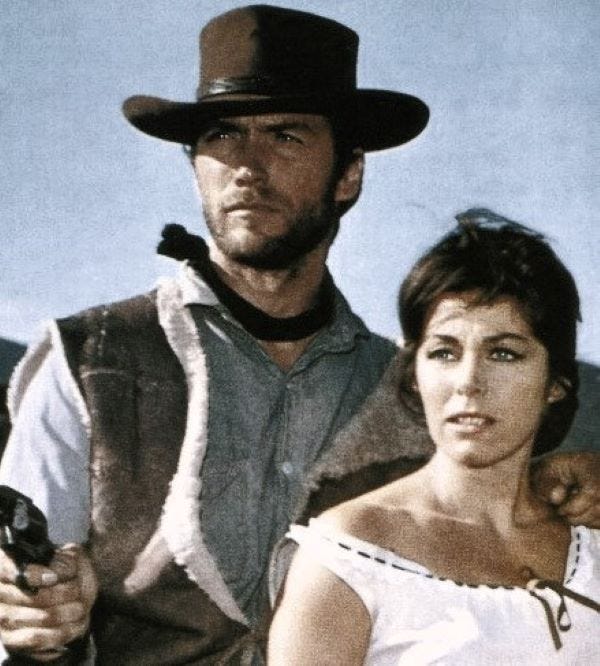
An idealised male role model in those days was the strong and silent type. There was a lot of laconic tipping of the hat and “just doin’ ma job Mam” in the hills around Hollywood. Phrases like mental health and self esteem did not feature. Manly and womanly were words that didn’t need to be spoken with a large helping of wink-wink irony. Strong and silent didn’t mean lonely – not when combined with confident. A late-1950s dance floor was alive with jive pair-bonding electricity. The sexes would rock&roll in symbiosis… more so than in the hermetically individualised dance crazes of the 60s and beyond.
It was my own wishful aspiration to be a strong and silent type. A cross between Clint Eastwood and Paul Newman…..in my dreams anyway. In reality, at disco-dances in the late 1960s, my teen self managed the silent better than the strong; diffidently racking my brains for a chat-up line to pitch at pretty girls on the dance floor. In any case, it seems to me that the strong and silent type has been supplanted by the cocky, boyish type. Social historians would probably say that this changing male archetype has a lot to do with the huge technological and economic changes in the second half of the 20thc, and beyond.
As a male of the species I have much less sense of how these changes may have affected default female archetypes. It does seem to me though that the huge impact of feminism must suggest that all was not entirely well with the mid-century male/female social contract. As I wrote in my The House That Jill Built essay, feminism’s critique of the world I grew up in cannot entirely be dismissed however misandric and mourir-la-difference its later phases became. Instinct tells me, on the other hand, that feminisation has brought losses as well as gains to womanhood but it would seem ungentlemanly of me, as a member of the opposite sex, to pontificate about what those might be.
Sex and romance axiomatically meant boy-meets-girl
Sex and romance axiomatically meant boy-meets-girl. It meant marriage and babies; these were the days of the baby boom. Most grown-ups would have been vaguely aware of minority sexualities other than that normal one but generally thought this something best left in the cupboard. I like to think few though will have regarded them as actually warranting criminal status.
The way people dressed (outside of job-specific clothing) was very different from now. Men typically wore trousers, jacket and leather shoes. (Grubby trainers and other kinds of stripy apparel had not yet been invented.) Women wore skirts and dresses (length changing with the latest fashion).
School was a place where you learned about rules – even more of them than Mum and Dad’s ones. You learned to sit in rows….walk don’t run. You might try to break those rules if you could get away with it (sometimes with the seeming tacit indulgence of the grown-ups) but generally you had to watch out for teachers’ and parents’ stern authority. The school mums’ rush-hour traffic jam had yet to arrive; we used to walk to school or go on the bus.
For middle class children there were prizes to be won but getting them was hard work. Winning them entailed constructing lucid, knowledgeable sentences and paragraphs; not picking the correct box to tick..
After school we might play in the street. Mums and Dads didn’t generally agonise “should we let them…..what about if…..?” etc. There was a pervasive sense that one had the good fortune to live in the ‘civilised world’. A world in which the nation and its police could, for the most part, be relied on to deal with ne’re-do-wells. There were baddies of course – robbers and kerb-crawlers, thugs and murderers – but unless you lived in a really ‘rough area’ that was something for the policeman to worry about; not you so much. Whether actually the case or not, there was a pervasive assumption that the police caught the bad guys and the courts put them in prison.
Was this a mid-20th century reality or a case of ignorance is bliss? A bit of both probably. Laughably, many of our tv crime dramas still peddle a, by now, highly fancifulnotion of effective policing. In the days of my youth, 99.9% of people would have thought that having pretty young women as prison officers in a male prison was an off-the-scale barmy idea. They would have thought that the kind of people who come up with the DEI blah blah that now pervades the mission statements of all the Western world’s institutions….just needed a good slap.
Social ‘injustice’ was viewed primarily through the lens of
Social ‘injustice’ was viewed primarily through the lens of class inequality. The following are my honest recollection of typical perceptions about race and ethnicity in the world of my youth; not necessarily an implied endorsement of them.
Crude racial bigotry was frowned apon by ‘decent’ people but there was also a perceived hierarchy with whites at the top. Adult ‘good manners’ dictated that it tasteless to make jokes about other ethnicities but such tastelessness was common amongst my fellow schoolboys. People didn’t generally give much thought to ‘foreigners’ and foreign lands. Apart from the upper middle-class, they generally holidayed by the seaside in their own land. Outside of Europe, America and the former British dominions, the archetypal foreigner was seen as either a Commie or ‘backward’.
Looking now at the dramatic changes resulting from mass immigration from the ‘third world’, I can see that the effective importation and nurturing of a black and Asian middle class arguably has much to be said in its favour. The importation of a large black and Asian underclass (to add to our own indigenous one)…… not so much.
What Westerners got hopelessly wrong was underestimating the huge latent cultural capital of the peoples of South East Asia.
Unless my recollections are woefully inaccurate, most people were not really that bothered about injustice unless it was close to home. Is this truly any different now? Or is the big difference that then, unlike now, there was no automatic victimhood status – and sanctification – conferred on particular ‘identities’. There were the deserving poor and undeserving poor. Women were not axiomatically victims of ‘the patriarchy’. Blacks could be good sorts or they could be bad sorts. And it was a given that their status was as immigrants to a land of opportunity that they were assumed to admire.
The foregoing misty watercolour has been painted by someone who was a young man in the times I am depicting. Grown-ups who had lived through world wars are bound to have seen things differently at least to some extent. And I would very much welcome comments from readers – both older and younger than I – on how well my recollections do or do not accord with their own.
and The Way We Are?
In the days I am depicting, the bien pensant Progressive pearls of wisdom that have been metaphorically rammed down our throats these past decades were already being proudly worn by the intelligentsia. Some of them – like white–self-hate-by-proxy – had been around since the late 19th c. But in those days you had to make a positive choice to opt in to such pseudo-intellectual fashions. Most ordinary Westerners had yet to be taught – in their schools and colleges and on their televisions – the joys of racial-guilt-tripping and gender-bending.
I would guess that ‘media people’ were probably pretty annoying and full of nonsense even in those days too. But nowhere near to the same degree as our 21st c. ones who seem unable to grasp that their 50% black and homosexual dream world is not the realworld…..not yet anyway. We have lived through a 50+ years of a Progressivism aiming to re-make us in its image as nice multicultural, non-binary, quasi-androgynous beings. Schools, colleges, civic institutions and media progressively came, in those decades to all sing from the same ‘social justice’ hymn sheet
Progressive hegemony over the means of communication has been undermined by the internet.
For many on the political Right it is tempting to imagine that – once finally freed from the yoke of up-its-arse hyper-Progressivism – our Western culture might revert to something not so far from the social conservatism of the pre-1960s. I personally would welcome the return of much of it….. but by no means all. In any case, I am not holding my breath. My instinct is that this might only happen in the wake of some economic cataclysm. So if my depiction of The Way We Were is not a natural Western order of things but just another of its historical phases, how then might an AI enhanced, digitised, post-Progressive 21st c. unfold?
how might an AI enhanced, digitised, post-Progressive 21st c. unfold?
The following are my brief thoughts on this…… a kind of …..well I’ll let you decide what they are a kind of.
In all civilisations, there will have been, I imagine, a gap between an ideal of human nature as conceived of by its spiritual clerisy and the actual appetites and inhibitions of common folk. It is worth remembering that The Enlightenment was essentially an intelligentsia mind-game; its transformation of our way of life more economic and technological than intellectual/spiritual. We certainly continue to be a people of extraordinary enterprise and ingenuity….. superb toolmakers. [I waxed lyrical in a previous essay on the wonders of the search engine.] But on the downside, has this IT wizardry given us a dose of ‘who we truly are’? Sociologist Danielle Lindemann thinks so: “For all of its extreme personalities and outlandish premises, reality TV reflects how regressive we truly are.”
It seems to me that there is currently a degree of cognitive dissonance in our Enlightenment/liberal individualist ideal of ourselves. Two kinds: firstly, it is at odds with the multi-trillion dollar market for the great majority of the tv we watch, advertisments we respond to and social media we engage with. And secondly, at odds with a life of sitting in front of little screens and pressing little buttons.
Thank you for reading Slouching Towards Bethlehem. If you enjoyed this essay, a press on the ‘Like’ button and a Restack would be much appreciated. It all helps to spread the word.
What’s so wrong with the good old days? In defence of nostalgia

Frank Furedi, The Australian, 21 May 2026
Nostalgia isn’t a political insult. Populists and conservatives are condemned for attachment to the values associated with ‘the good old days’. Here’s why we need it.
In the Western world – particularly among the intelligentsia and the cultural elites – nostalgia has a bad press. As one study of how the use of this label is seen or used stated: “To have one’s ideas, program, policies or style labelled ‘nostalgic’ is to be on the end of one of the most enduring and non-negotiable insults in modern political discourse.” The accusation of nostalgia serves to delegitimate individuals and movements by associating it with outdated and irrelevant sentiments.
Nostalgia is continually affixed to ideological attacks on populism and conservatism. Typically, the coupling of nostalgia with conservatism and populism serves to signify the fear of facing up to the present and an irrational escape into a mythical past. Time and again the accusation of nostalgia is coupled with a denunciation of everything its practitioners value about the past.
Critics of nostalgia contend that the “good old days” never existed. They insist that those who idealise the world of intact families, stable communities and solid intergenerational bonds are living a lie. These critics assert that people who possess an affinity to the past do so because in the old days racial minorities knew their place, women were confined to the kitchen and the LGBTQ+ community had no visibility or voice. Writing in this vein, one critic stated “conservatism is just weaponised nostalgia”.
It is worth noting that anyone who voices a positive attitude towards Australia’s past is likely to be accused of the reactionary crime of nostalgia. So earlier this year, commentary broadcast on the ABC suggested that former prime minister John Howard’s legacy represented “nostalgia for a whiter, more conservative Australia”.
In the same vein, Tony Abbott’s book, Australia, is frequently denounced as the product of colonial nostalgia. Those labelled as members of the Nostalgia Right are regarded as irredeemable racists and xenophobes.

John Howard during Question Time, December 1999.
Critics of nostalgia do not merely caution people about the problem of living in the past: they also seek to delegitimate the values and customs that prevailed in yesteryear.
The aim of the political critique of nostalgia is to distance society morally from its history. Its goal is to undermine a nation’s sense of cultural continuity. Australian conservatives and populists are frequently attacked for invoking three nostalgic pasts: the social order and prosperity of the 1950s Menzies era; the celebration of the nation’s connection with the British monarchical past, and; the social solidarity that prevailed in pre-multicultural Australia.
Yet maintaining a sense of historical and cultural continuity with the past is essential if we are to know where we come from and who we are. So don’t get defensive when you are told off for being nostalgic.
Without falling into the trap of uncritically celebrating the “good old days”, it is vital to affirm the legacy of our past, especially the sense of solidarity and community we are at risk of losing.
Nostalgia assists the maintenance of cultural continuity.
The sense of historical continuity plays an important role in the constitution of the self. Understanding where we come from influences and strengthens individuals’ sense of who they are. A feeling of continuity with the experience of previous generations lends stability to a people’s identity.
Continuity across time is achieved through the intergenerational transmission of a community’s way of life and its ideals. It is difficult to develop a sturdy sense of community identity without a shared memory and a common attachment to conventions or customs that are rooted in the past.
The sense of continuity across time is, as psychologist Roy Baumeister stated, one of the defining criteria of identity. This point was echoed by American social psychologist Kenneth Keniston, when he stated “one of the chief tasks of identity formation is the creation of a sense of self that will link the past, the present and the future”.
The common ground on which people live requires a shared understanding of where members of a community come from. Learning about the past helps children to know their place in the world and develop their identity. German psychoanalyst Erik Erikson, who formulated the concept of an identity crisis, attached great importance to providing young people with a sense of cultural continuity. He noted that “true identity … depends on the support which the young individual receives from the collective sense of identity characterising the social groups significant to him: his class, his nation, his culture”.

Tea and army cake refreshed then-Prime Minister Robert Menzies on a visit to Seymour military camp back in 1939. Picture:News Corp
For socialisation to occur successfully, adults draw on the experience of previous generations to provide young people with a meaningful account of adulthood. Erikson remarked that the values with which children are trained “persist because the cultural ethos continues to consider them ‘natural’ and does not admit of alternatives”.
He observed: “They persist because they have become an essential part of the individual’s sense of identity, which he must preserve as a core of sanity and efficiency. But values do not persist unless they work, economically, psychologically and spiritually; and I argue that to this end they must continue to be anchored, generation after generation, in early child training; while child training, to remain consistent, must be embedded in a system of continued economic and cultural synthesis.”
Valuing the past
The socialisation of children is key to the transmission of this legacy of the past. It is integral to an intergenerational transaction whereby moral norms are communicated by authoritative adults to the young. Though this form of socialisation is likely to be perceived as impregnated with nostalgia by the technocratic-managerial elites, it is essential for providing the young with roots.
Once the moral status of the past is put into question, the achievement of a stable identity becomes fraught with uncertainty. The de-authorisation of the past renders the experiences of the older generations redundant and complicates the task of socialisation. Adulthood becomes compromised by its association with the past. Instead of being able to serve as a model to the young, it ceases to serve that role effectively.
Erikson’s reference to the “collective sense of identity” that adults communicate to young people has as its premise the capacity of the older generation to communicate a model of identity to their offspring. However, with the loss of the “sense of the past”, cultural continuity has become disrupted and the capacity of adults to serve as models to the young has diminished.
Nostalgia can be understood as the cultural antithesis to the loss of a sense of the past. As sociologist Fred Davis noted, nostalgia “leads us to search among remembrances of persons and places of our past in an effort to bestow meaning upon persons and places of our present”. From the anti-populist standpoint, the very search for meaning in tradition and the experience of the past is likely to encourage opposition to the value system of the defenders of the cultural status quo.
A yearning for home
Instead of responding to the critics of nostalgia by dismissing the charge of being drawn towards it, it is preferable to embrace it. Nostalgia refers to a yearning for home. It expresses an understandable and genuine sense of cultural loss underwritten by the belief that values that had once provided the unity of social relations and personal experience have become marginalised.
Populists and conservatives are on solid ground when they seek to reconnect with the legacy of their nation’s past. Those who possess a positive orientation towards the past should not be seen as emotionally illiterate, naive simpletons. Through their nostalgic orientation, they attempt to retrieve and develop sources of identity, agency or community.

Tony Abbott’s book, Australia, is frequently denounced as the product of colonial nostalgia. Picture: Jane Dempster / The Australian
The attempt to forge a sense of historical continuity is a prerequisite for providing the present with the sturdy foundation needed to face the future. Those who have become detached from the past inevitably become obsessed with inventing an identity to the point that they become detached from the project of facing the future. Call it what you will, but the attempt to forge a consciousness of historical continuity makes an indispensable contribution to the creation of a bridge between the past and the present, and the present and the future. It is an effective way of cultivating a genuine sensibility of belonging.
Nostalgia is not only good for society but also for the wellbeing of individuals. Studies suggest that those who “reminisce are more likely to keep friends and expand social networks”, and are able to forge closer and more durable relations than those who are indifferent to their past. Common sense suggests that the individual’s attempt to forge and maintain a sense of continuity with the past assists the development of an individual’s identity and feeds the soul of society.
In the 21st century, the main distinguishing feature of movements labelled as populist is their tendency to challenge the cultural values espoused by the political establishment. Often, the challenge posed by populist movements to elite values is expressed through their reluctance to abandon customs and traditions that elites have discarded: sentiments described by the use of that confusing term “nostalgia”.
Yet without a close connection with the past, we become prisoners of fate. Why? Because we can only truly understand what humanity has achieved so far and acquire insight into what it can achieve in the future by evaluating the experience of our forebears. The legacy of the past provides the moral and intellectual resources for developing a 21st-century narrative of what solidarity and community looks like. Very importantly, it also provides the foundation for freedom.
Once society becomes de-historicised, it will become lost in a timeless wasteland. Those with an impoverished historical imagination are doomed to embark on an eternal quest for meaning because we become connected and situated in time through cultivating an empathetic relationship with the past as members of a community. Without such an attachment, we struggle to intuit where we have come from and are constantly in search of an identity. Navigating our way into the future is harder when we are deprived of a means to assimilate the experience of our ancestors. Put simply, to determine where to go, we need to know where we came from.
It’s an Australia that did exist
In Australia, hostility towards nostalgia is motivated by a venomous hatred towards the nation’s past. Take the hatred directed at former opposition leader Peter Dutton. According to the National Indigenous Times, his “path to the party leadership has been defined not by nation-building, nor a vision for Australia’s future, but through obstruction and division, wedded with a nostalgia for an Australia that never truly existed”.

Peter Dutton . Peled /Getty Images
The reference to an “Australia that never truly existed” is frequently invoked by critics of nostalgia. Implicit in this statement is the dispossession of Australia’s historical legacy of any positive features.
Populist conservatives do not want to go back to a golden age, but nor do they want their communities to be dispossessed of the customs and ways of being that made them who they are.
Keeping alive the traditions, customs and rituals that have inspired their communities over the generations provides populism with the cultural power to motivate millions of people. It provides the foundation for the kind of cultural security that allows people to face the future.
— Frank Furedi is a sociologist, author and former professor of sociology at the University of Kent. This is an edited extract from his new book, In Defence of Populism (Polity Press), which will be published on May 22 in Australia.

