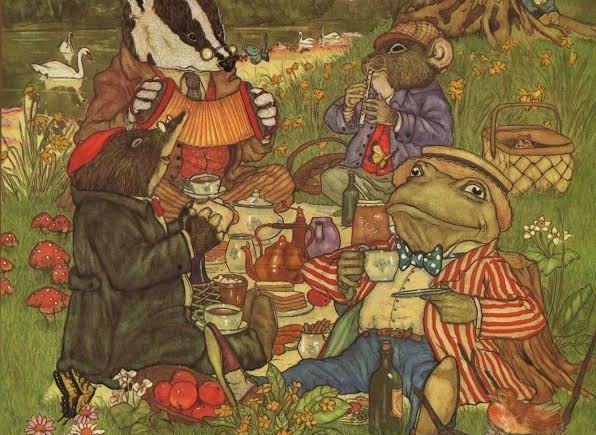
The Wild Wood and the Wide World

On this day, 8th October 1908, The Wind in the Willows, Kenneth Grahame’s classic children’s book was published.

In 1908, Kenneth Grahame retired from his position as secretary of the Bank of England. He moved to Berkshire, where he had lived as a child and spent his time by the River Thames doing much as the animal characters in his book do – “simply messing about in boats”. He elaborated on the bedtime stories he had earlier told to his son Alistair and created a children’s classic that has never been out of print.  It was into its thirty-first printing in 1929 when playwright A. A. Milne, creator of Winnie the Pooh, adapted the most raucous and rambunctious part of it for the stage as Toad of Toad Hall in 1929 – which in 1949 Walt Disney’s studio took to the highest heights of slapstick hilariousness with its animated featurette the same name.

This anthropomorphic of riverside animals was set in a pastoral version of Edwardian England, characterized by its mix of mysticism, adventure, morality, and camaraderie, and celebrated for its evocation of the nature of the Thames valley. It was an early precursor of late-century melodramatic morality tales such as Watership Down (rabbits) and Ducton Wood (moles) which contain none of its endearing magic and humour.

The Wind in the Willows is a strange book. It poses as an almost homoerotic Arcadian fantasy, and yet it is also an opaque upper middle-class tract preaching deference to and and support for the British class system and the established order. Mole looks up to Rat who looks up to Badger and they all kowtow to the ridiculous, pompous and self-indulgent Bullington Club Toad because he is the lord of the manor. The bad weasels and stoats, of course, were the socialist revolutionaries who wanted to wreck the joint. They had to be vanquished by the valiant – one could say vigilante –  forces of righteousness and order – the stout burgers of the riverbank – and violently ejected from Toad Hall. The rule of law is restored, and Mole and Ratty resume their bucolic idyll.

Six years later, this shuttered Edwardian dreamtime shuddered to a terrible end in the carnage of the Great War, and in a decade, Red weasels broke the wheel of history and reset the clock for the rest of the twentieth century.

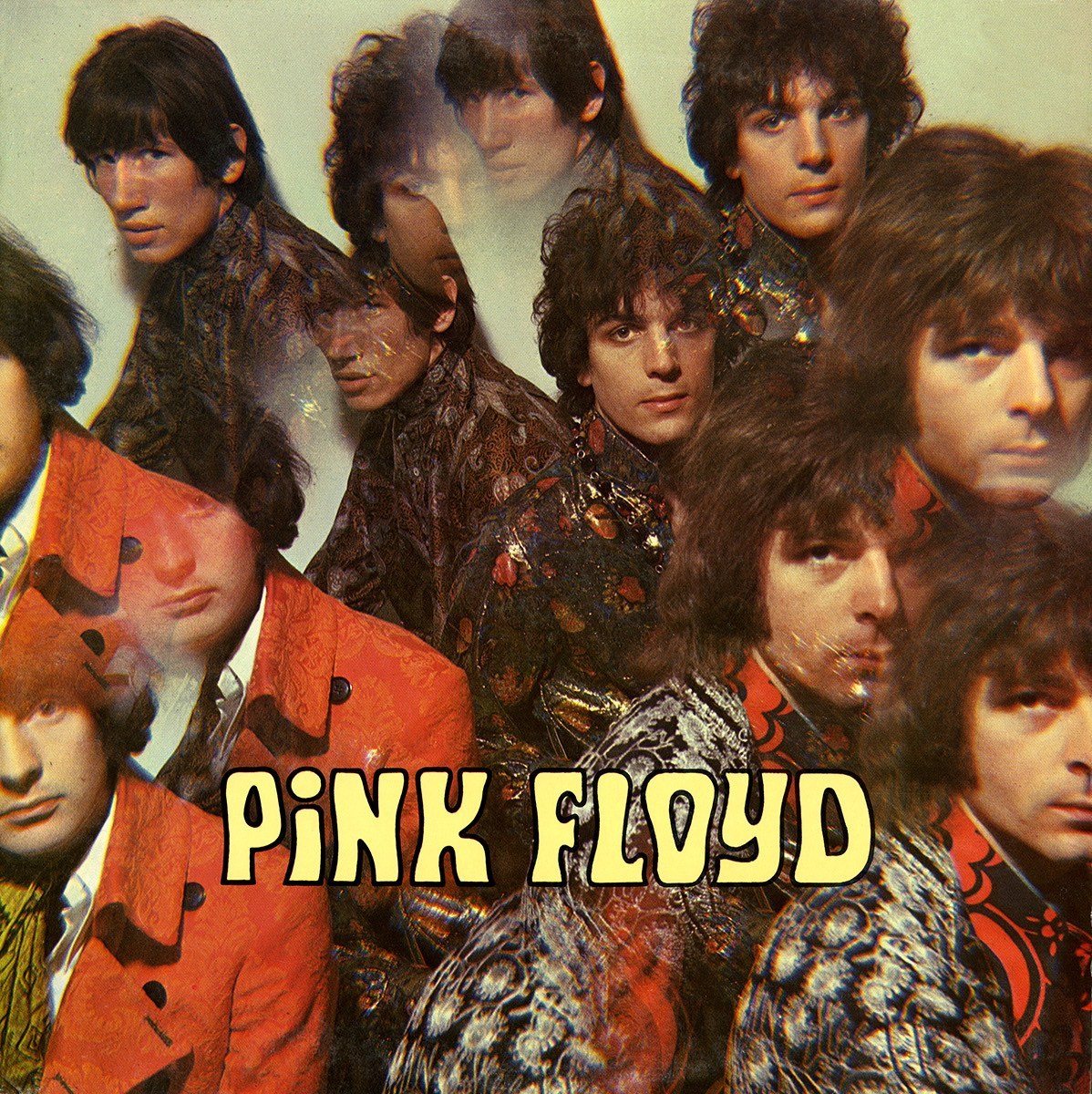
When I first read The Wind in the Willows as a child, it was a fantasy. When I reread it again as a left-wing teenager, living not too far from where the story was set and indeed, often rambling by Thames water’s edge, it was a fable – and a lame one at that. But I really must’ve must’ve been stoned or tripping when I reached Chapter Seven because I fell in love with it. It has been a favourite of mine ever since despite its twee, self-conscious encounter with the “divine”. The Piper at the Gates of Dawn is a most magnificent chapter. No wonder Pink Floyd chose it as the title of their first album back in the day!

Critics have not been so smitten. As Rosemary Hill notes in her excellent centennial review (see below) , it is “one strange, unsettling chapter … that abridgers of the book have always been quick to drop, though Grahame himself thought it essential. In it, Rat and Mole, searching for the Otter’s lost child, are granted a vision of the great god Pan, a muscular, horned god, “the Friend and Helper”, before whom the animals, “crouching to the earth, bowed their heads and did worship”. Whether it is the latent homo-eroticism of the vision or simply the sudden change of tone that makes the scene so uncomfortable, it is certainly a failure. But while artistically it is the weakest part of the book, it is at the same time the key to it. Pan’s parting gift to Rat and Mole is “forgetfulness”. They will not remember the pure happiness of their vision because if they did the memory would grow until it overshadowed and spoiled the rest of their lives with the knowledge that it could never be regained. The “little animals” would never be “happy and light-hearted” again”.

Read it anew here: Chapter 7: The Piper at the Gates of Dawn

Reproduced in full below are two excellent reviews of a centenary annotated edition published in 2009. They place Grahame’s story in the context of its time – an idyllic last summer bathed in golden sunshine before the storm that hit Europe in August 1914, and an equally golden age of children’s books.  There is a certain consensus in both reviews – with which I concur: The Wind in the Willows is a above all a book about longing, but it also also a book about letting go, if only for a brief moment.

And here is the e-book:  The Wind in the Willows  
Wild waters are upon us

Rosemary Hill, The Guardian, 13 June 2009

If Kenneth Grahame’s riverbank idyll inspires nostalgia, it’s because The Wind in the Willows is itself saturated in longing. The tale of Ratty and Toad was, Rosemary Hill argues, a product of its own uneasy times
If the Edwardian age is not remembered as a decade of social discontent and growing international tension when the cracks in the British empire began to show, but as an the reason is largely to be found in children’s literature. It was the age, if not of innocence, then of Jemima Puddleduck, Peter Pan and Mr Toad. Most of what became the canon of English writing for children appeared in a mere nine years. The Tale of Peter Rabbit, the first of the stories that Beatrix Potter modestly referred to as her “little books”, came out in 1902 and was rapidly followed by six more. Peter Pan was first staged in 1904, E Nesbit’s The Railway Children was published two years later, and then, in 1908, came Kenneth Grahame’s The Wind in the Willows, soon to become one of the best loved of them all.

The riverbank adventures of Mole, Ratty and Badger have now taken their place among the earliest memories of four generations and seem timeless, while the impossible, irrepressible Mr Toad got his own stage show, written by AA Milne, as early as 1929 and is still going strong. Yet Grahame’s story and indeed the whole Edwardian renaissance of books for and about children were peculiarly the products of their own uneasy time. If The Wind in the Willows inspires nostalgia now, that is because it is itself saturated in longing for other times and other places.

A year older than JM Barrie and a year younger than E Nesbit, Grahame was, like them, middle-aged when he produced his most enduring work. He was 49 when the book appeared, and described himself, accurately, as a “mid-Victorian”. His was the generation that had known no other monarch than Victoria and that felt with her death in 1901 that they had lost “a sustaining symbol”, as Henry James put it, adding, “the wild waters are upon us now”.

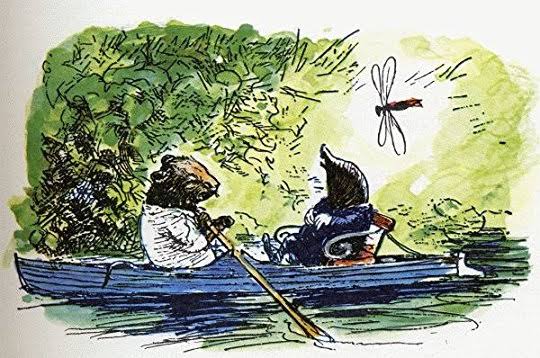
The Wild Wood and the Wide World are the twin menaces that loom over The Wind in the Willows. The sensible Water Rat wants nothing to do with either; it is only the Mole’s naivety and Toad’s hubris that force him to encounter them from time to time. The Mole soon learns his lesson. He is a creature, as he comes to understand, of the “frequented pasture” and the garden plot. “Nature in the rough” is not for him. The life of the riverbank, of messing about in boats, of ample picnics and long rambles, is essentially the life of suburbia, a rapidly growing but not entirely benign sign of the Edwardian times. The railway, which facilitates Toad’s daring escape from prison, had by now brought the branch lines deep into the shires, but with them came the commuters and the red-brick villas that Grahame so disliked. His typically English ambivalence towards suburban life runs like the river through the book. On the one hand, there’s the love of comfort and security, on the other, the chafing at its limitations and the sense that the pursuit of rural bliss may destroy the very thing that it desires.

Grahame was himself part of the phenomenon. Having spent the happiest years of his childhood at Cookham Dene in Berkshire, he returned, shortly before he started work on The Wind in the Willows, with his family and took a house there, grumbling, like Ratty, about incomers and over-crowding. In the episode where Toad’s caravan is overturned by a speeding motor car, the new Norton edition tells us that Grahame’s original version had Ratty shouting after it: “Stockbrokers!” Grahame changed it later to “road hogs”. As a recently retired secretary of the Bank of England he may have felt he was on thin ice.

Other social nuances of home-counties life in the early 20th century are reflected along the river bank. Toad Hall, with its secret passages and Tudor mullions, was given up some time ago by the original family and sold to a Victorian magnate. It is now in the hands, like Britain itself, of a spendthrift, headstrong eldest son who indulges one fad after another and is treated with the respect his pretensions deserve by the older tenantry. Rat points out to Mole the place where they will moor their boat at Toad Hall, next to “That creek on the left, where the notice-board says, ‘Private. No landing allowed'”. Toad blithely sees his non-ancestral home as a desirable commercial property. He describes it as it might be advertised in the new magazine, Country Life, founded in 1897 in London to cater largely to the aspirations of the stockbroking classes: “an eligible self-contained gentleman’s residence … dating in part from the 14th century but replete with every modern convenience … Five minutes from church, post-office, and golf-links.”

Like Beatrix Potter, Grahame was a keen observer of his characters’ domestic arrangements. The opulence of Toad Hall contrasts with Mole End, where the humble collection of prints and popular plaster busts, the outdated Gothic lettering on the house sign and the peculiar garden ornament made of cockle shells, mark Mole out as the Mr Pooter of the riverbank. Badger’s arts and crafts interior, complete with English oak settles and plain brick floor, shows a more cultivated taste. Indeed his home, with its central hall surrounded by “stout oaken comfortable-looking doors”, is in the old English style of suburban country-house design pioneered by architects such as Norman Shaw and admired by connoisseurs at home and abroad.

The trouble with Edwardian suburbia was that it was, as Grahame knew, an optical illusion. With its need for the golf club and the water closet as well as nature and history, it could best be found in the pages of Country Life where Gertrude Jekyll’s artfully planned landscapes dissolved the garden boundaries, while Edwin Lutyens’s houses turned newspaper magnates and mill-owners into county gentry. Great gusts of longing for something wilder and wider, whatever the risk, blow through The Wind in the Willows, as they stirred among many of Grahame’s contemporaries.

The fantasy of the “open road”, which troubles Toad and even sometimes Ratty, found expression in a fashion, which Grahame followed, for long cross-country walks. “Tramping”, as it was sometimes called, suggested a possible temporary change of class as well as scene. The poet WH Davies’s The Autobiography of a Supertramp was published in the same year as The Wind in the Willows and was also a great success. It told of Davies’s travels across thousands of miles of America, living rough and doing menial jobs, as he later recollected them in the tranquillity of Sevenoaks. For the riverbankers, however, there is no such possibility. Their caravan trip ends abruptly when they collide, literally, with modernity in the form of the car. Later, when Ratty is tempted by the sea rat to yield to the call of the Mediterranean, Mole rapidly talks him out of it.

England itself in the early 20th century was suffering from a similar timidity or failure of nerve – what Hermann Muthesius, the shrewd German observer of English life and architecture, called in 1904 “a certain hardening of the arteries”. The 1890s had been very different. Then it was possible briefly to belong to both suburbia and bohemia, and Grahame had. While rising smoothly through the ranks at the Bank of England to become its youngest ever secretary, he was also part of the literary set surrounding Aubrey Beardsley and Oscar Wilde. He had written regularly for The Yellow Book, a magazine devoted to modern decadence in the persons of Max Beerbohm, Walter Sickert and WB Yeats. It was in its second issue that he published the story that made his name, “The Roman Road”, a narrative cast as a conversation between a child and an adult, its message that only the artist and the child are imaginatively free.

Reviewing Grahame’s collection of stories The Golden Age, which was about, but not for, children, the arch-aesthete Algernon Swinburne found it “too praiseworthy for praise” in its lack of sentimentality about its subject. Then came the arrest of Oscar Wilde, the demise of The Yellow Book and a change of mood. Grahame’s Dream Days, another collection of stories published in 1899, was followed by nine years of silence before The Wind in the Willows, which, when it appeared, disconcerted some critics who had admired his earlier work and were not expecting a children’s book.

The editors of the latest editions are not the first to detect a comic echo of Wilde’s tragedy in the rise and fall of Mr Toad. Grahame’s Berkshire home was not far from Reading Gaol, George Gilbert Scott’s turreted Gothic revival prison, where Wilde was incarcerated. Reading is undoubtedly where Toad is taken from court, loaded with chains, having been sentenced to 20 years for being rude to a policeman. “Across the hollow-sounding drawbridge, below the spiky portcullis, under the frowning archway” Toad recedes.

He is disappearing, though, not only into prison but into the Victorian fiction of the past that Reading Gaol represents. As he passes them, the prison warders sprout medieval halberds, there is a rack-chamber and a thumbscrew-room, and the police sergeant suddenly starts to talk in impenetrable Walter Scott Gothic: “Oddsbodikins … and a murrain on both of them!” Toad finds he is immured in the darkest dungeon in “the stoutest castle in all the length and breadth of Merry England”. Merry England, Grahame knew, was a fiction, and it was finished. It could no longer offer a resort for the imagination as it had to the writers of the early 19th century who sought respite from their own times in the pious middle ages. The Edwardians knew much more about history and they were much less sure about God.

Those of them who went on searching for the divine often found it enveloped in clouds of pantheism and neo-paganism, spiritualism and theosophy, the faiths of the doubtful. It is this diffuse but potent supernaturalism that appears in The Wind in the Willows in one strange, unsettling chapter, “The Piper at the Gates of Dawn”. It is a section that abridgers of the book have always been quick to drop, though Grahame himself thought it essential. In it, Rat and Mole, searching for the Otter’s lost child, are granted a vision of the great god Pan, a muscular, horned god, “the Friend and Helper”, before whom the animals, “crouching to the earth, bowed their heads and did worship”.

Whether it is the latent homo-eroticism of the vision or simply the sudden change of tone that makes the scene so uncomfortable, it is certainly a failure. But while artistically it is the weakest part of the book, it is at the same time the key to it. Pan’s parting gift to Rat and Mole is “forgetfulness”. They will not remember the pure happiness of their vision because if they did the memory would grow until it overshadowed and spoiled the rest of their lives with the knowledge that it could never be regained. The “little animals” would never be “happy and light-hearted” again.

At Edward VII’s coronation in 1901 Kipling’s great fin-de-siècle poem, “Recessional”, was read with its tolling refrain “Lest we forget – lest we forget”. But for Grahame and his contemporaries the problem was that they couldn’t forget. The enemy without, the stoats and the weasels from the Wild Wood, might be driven from Toad Hall with sticks, but memory, the foe within, haunted them along with all that they had lost or might be about to lose. And so they turned aside, as one view of history has it, from modernism and went back to the nursery. What they found there, though, was not so much a second childhood as the first, the ideal one, which they preserved forever for their readers – childhood as we may all remember it and as it never was.

Second Wind for a Toad and His Pals

Charles McGrath, New York Times, July 9th 2009

The years between 1900 and the outbreak of World War I, it has often been remarked, were a golden age in Britain for the writing of children’s books. Among the books published then are most of what we remember of Beatrix Potter; several of E. Nesbit’s novels; Kipling’s “Jungle Book” and “Just So” stories, J. M. Barrie’s “Peter Pan in Kensington Gardens,” which became the basis for the stage play; Kenneth Grahame’s “Wind in the Willows”; and “A Little Princess” and “The Secret Garden,” by Frances Hodgson Burnett, who eventually became an American citizen but was born in Manchester, England. In hindsight these books seem to reflect the long, sunny afternoon of Edwardian England, a moment of arrested innocence before the outbreak of the Great War. Many of them also yearn for a rural, preindustrial England that was already vanishing. Part of their appeal is that they’re nostalgic, as we are, for childhood itself, or for a simpler past that seems to embody childhood virtue.

Of all these books “The Wind in the Willows” may be the oddest and most endearing. Too late for the centennial of its original publication in 1908, but a century and a half after the birth of the author, it has been reissued in two large-format annotated editions — one edited by Seth Lerer and published by the Belknap imprint of Harvard University Press, the other edited by Annie Gauger and published by Norton as part of its well-established series that already includes “Alice in Wonderland,”“The Wizard of Oz,” and three volumes of Sherlock Holmes.

“The Wind in the Willows” is probably most famous for a single line, Rat’s remark to Mole: “Believe me, my young friend, there is nothing — absolutely nothing — half so much worth doing as simply messing about in boats.” But the boating adventures, charming as they are, are the least of what makes the book so singular. “The Wind in the Willows” is a children’s book that, unlike most, doesn’t describe a world without grownups; instead, it parodies the grownup world. The characters — Rat, Mole, Badger, Otter, Toad — aren’t just woodland creatures with a few anthropomorphic traits. They’re of indeterminate scale — Toad is toad-size in some scenes but in others big enough to disguise himself as a human — and they have full-blown adult personalities, more nearly Edwardian clubmen than rodents, burrow-dwelling mammals or amphibians. Toad, who has certain traits in common with the overweight, fun-loving King Edward, even parts his hair in the middle, a detail that Beatrix Potter famously took exception to. “A frog may wear galoshes,” she wrote. “But I don’t hold with toads wearing beards or wigs!”

The adventures depicted in the book include the famous riverine idylls and a couple of almost equally well-known scenes of cozy underground bachelor life, which Mr. Lerer says owe something to Ruskin’s ideal of British domesticity. There are also the much wilder episodes of Toad’s manic car theft and car smashing; a Bolshevik takeover of Toad’s great manor house, Toad Hall, by the lower-class stoats and weasels; and, most bizarre of all, a moment of sexual and religious ecstasy when Mole and Rat behold, in the silvery, creeping light of dawn, no less than a naked, shaggy-flanked goat god, Pan himself, taking a break from his piping.

This scene is so charged that Ms. Gauger detects an element of homoeroticism. But then she, by far the more extensive and detailed of the two annotators, is quick to find an erotic subtext throughout a work that Grahame declared to be “free of the clash of sex.” After Toad and Mole companionably spend the night together, she notes, “If this were a novel for adults, Mole and Rat would perhaps consummate their relationship amorously.”

This kind of observation is indicative of the problems inherent in annotating a classic text, even one as well known as this. On the one hand, parts of the cultural landscape that inspired the book are already lost to us, and there are echoes and allusions that we remain deaf to even after having them pointed out, others that we are apt to misinterpret from our habit of seeing sex everywhere. On the other hand, the book is still perfectly readable without pedantic notes or explanations, and Ms. Gauger’s edition, in particular, is so laden with commentary that it sometimes resembles the Talmud, with more commentary than text on the page.

Both editors devote vast amounts of space to defining words like “panoply,” “repast,” “provender,” “vouchsafe,” “sniffy,” “fusty,” “hummocky” that are all in the dictionary and whose meaning hasn’t changed much, if at all, since 1908. And neither is entirely reliable: both think that a “well-metalled road” is one literally paved with metal when a glance at Google would have told them that the term is a synonym for what we think of as tarmac.

Both editors, to be fair, are very good at picking up echoes of Romantic poetry, huge chunks of which were clearly swirling inside Kenneth Grahame’s head while he was writing “The Wind in the Willows,” and both illuminate the text by suggesting, among other things, that Toad — blusterer, aesthete, jailed prisoner — was inspired in part by Oscar Wilde. He probably also owes something to Horatio Bottomley, a flamboyant, gasbag journalist and politician of the time. Mr. Lerer further suggests that Toad’s mania, his grandiosity, his compulsive lies and self-deceptions may derive from Grahame’s reading in Krafft-Ebbing’s “Textbook of Insanity.” A simpler explanation of Grahame’s understanding of wild, unpredictable personality may be that he grew up with an unreliable, alcoholic father who eventually abandoned his two sons.

In general Ms. Gauger is more willing than Mr. Lerer to find the roots of “The Wind in the Willows” in Grahame’s biography, and though she sometimes overdoes it, or explains the parallels at tedious length, her commentary nevertheless provides a sad and illuminating subplot of sorts. In many ways Grahame resembles A. A. Milne, who in 1929 dramatized the Toad sections of “The Wind in the Willows,” which always remained his favorite book. Both, though they had little use for women, were married to remote, difficult wives (Grahame courted his by writing to her in baby talk), and each had a single son whom he both doted on and neglected.

“The Wind in the Willows” began as a bedtime story and evolved over a series of letters (reproduced in the Gauger edition) that Grahame wrote to his son, Alastair, during the long months when he was farmed out to a nanny. Alastair Grahame was born part blind (an inspiration for Mole?) and appears to have been emotionally disturbed. After a miserable experience at school he lay down on some train tracks while an undergraduate at Oxford and was decapitated.

Kenneth Grahame’s own early life was scarcely much happier. His mother died when he was 5, his father ran off, and he was raised by relatives who were too stingy to send him to university. Like P. G. Wodehouse, another aspiring writer with a blighted childhood, Grahame went into the banking business. Unlike Wodehouse, he stuck it out, and by the age of 39 had risen to become secretary of the Bank of England, a post that doesn’t seem to have required him to do a whole lot.

His ostensible life was that of a proper Edwardian gent, with lots of male bonding and messing about in boats, and yet privately he burned to write, to live in his imagination. For all its apparent celebration of neatness and domestic orderliness “The Wind in the Willows” is really a book about letting go. It begins with Mole, tired of spring cleaning, putting aside his whitewash brush and taking to the road, and its true hero is Toad, who is anarchy incarnate.

Officially the text seems to disapprove of him: vain, swaggering and boastful, Toad is reprimanded and briefly chastened, and at one point the other characters even stage what we would call a full-scale intervention to confront him with his car-wrecking addiction. But he nonetheless runs away with the book, just as he runs away from prison disguised as a washerwoman, and supplies most of its narrative energy.

Though Rat is supposed to be a poet, Toad’s Song of Himself, sung to an imaginary audience near the end, is the novel’s most exuberant creation. To say that he is Grahame’s alter ego is too simple. More likely he’s the alter ego Grahame wished he could have but was also a little afraid of. Like a surprising number of stuffy-seeming Edwardians, Grahame was half in love with, and half terrified of, the idea of Pan, who never grows old, never goes to the office, never even bothers to put on clothes, and yet embodies all that is magical about the world we imagined we grew up in.


Whoar! And Peace – or, Gone with the Balalaikas

Here are random thoughts on the latest television dramatization of War and Peace which showed on free-to-air here in Australia in September 2017 and has been repeated many times since.

In the early ‘seventies, I went through a ‘Russian’ phase, wading patiently and pensively through the greatest literary hits of Tolstoy, Dostoevsky, Turgenev and Solzhenitsyn. They seemed to suit my temperament during the cold, damp winter months as I journeyed back and forth on the London Undergound to mundane and monotonous temp jobs. I recall watching all seven hours of Sergei Bondarchuk’s epic ‘sixties adaptation in one overnight sitting at at an art house cinema in Bloomsbury Square in 1973. But I fell asleep during the thunderous battle of Borodino. The BBC crammed its 1972 adaptation of War and Peace into fifteen hours over twenty episodes – the film that shot Anthony Hopkins and Robert Powell to stardom.

How on earth do you compress some 1,500 close-typed pages into just six one-hour episodes, as the Beeb’s  latest period piece does?

A lot, obviously, has to go.

So, out go all the long expositions and naval-gazing ruminations. There no need to ponder much on the inner manifestations of the ‘Russian soul’, whatever that might be. The philosophizing that was retained felt lightweight and incongruous against the splendour of the social scene, the rural vista, the battlefields, and great historical events. Hence Andre’s deep-and-meaningfull thoughts on glory, and latterly, on bucolic visions, seemed a tad intrusive. Pierre’s thoughts on freedom. freemasonry and, latterly, after his near-death experiences, on brotherly love and the simple life, appear lightweight and cloying.

And to suit our twenty-first century tastes, in comes some glamorous naughtiness – a surfeit of sexy vignettess which old Leo Tolstoy would probably have loved but would never have committed to print, and some poetic license (or licentiousness), bare thighs and cleavage so that we well and truly got the message. It was, nonetheless a “polite society” sans filth, blood, and profanity.

What Tolstoy left to surmise and imagination, this down-sized saga leaves no sheet unturned. Helene and Anatole Kuragin really do appear to have had it off together, and she does indeed bonk Nikolai’s mates Dolokhov and Drubetskoy, and sundry others – she was quite clearly the Petrograd bike. And, of course, she comes to a bad, hallucinogenic, and sanguinary end.

The families are well drawn, and quite humorously depicted. The scheming, naughty Kuragins; the affectionate and lighthearted Rostovs, headed up by their bumbling, adoring and ultimately impecunious papa – well played by comedian Adrian Edmondson. The uptight, and undemonstrative Bolkonskys, with Jim Broadbent giving a masterclass in fine acting – “best in show” indeed. We get a fair if Kubrikesqe ‘Eyes Wide Shut’ picture of Pierre Bezukhov’s wicked, dissolute lifestyle, and his faltering, stumbling road to redemption.

So, does this truncation of the big book work? I would say yes. The story flowed, the various story-lines held together, and it was relatively easy to keep track of the characters by their appearance if not by their long names. The best way to judge a serialization is by the question: do you finish an episode looking forward to the next? And the answer is yes.

As for the cast, it appears like anyone who was anybody in British television drama or comedy, looked good in historical costume and was not in Game of Thrones, got a gig and a chance to do Napoleonic dress-ups – with the exception perhaps of Colin Firth, Aiden Turner, John Simm, Matt Smith,  Jenna Coleman, Olivia Colman and Claire Foy.

Lily James is gorgeous in an elfin, ingenue way. Although her Natasha Rostova looks and behaves like an eighteen year old throughout, and not the thirteen years old who ages in years and wisdom as portrayed by Tolstoy. She sang beautifully, and she sure can dance. The famous Natasha’s Dance scene was nicely done if too brief. It was over too quickly and failed to show how important this particular scene was to Tolstoy ; in the book, the Rostovs retire to a wooden hut at the end of a day’s hunting, where folk songs are played to the balalaika. Natasha dances to a song, but it is not a waltz or polka she is doing – instinctively, she dances like a peasant girl. The Russian soil is in her blue blood. Nevertheless, I do like Lily James. And so, it seems do the powers that be: she’s doing quite alright these days with lead roles in Darkest Hour, Mama Mia! Here we go again (singing and dancing again), and Yesterday, again singing and dancing – the lass cant keep still.

Paul Dano, the slim, young, scheming, preacher of There Will Be Blood, as Pierre Bezukov? Still slim and young looking, though “kinda funny looking” as they say in Fargo-speak. But portraying the tall, fat, shortsighted, dissolute and bumbling Pierre? Amazingly, it seems to have worked. His is a credible performance, although his “niceness” to the Rostovs and Bolkonskys, and his transformation to all-round good guy could be quite irritating. Inept, opinionated, inadequate, and out of his depth both romantically and socially. My favourite Pierre moment in the book is when he resolves to  liberate or lighten the burden on his serfs – a subject close to Tolstoy’s heart – and how his steward circumvents his wishes. This was not even touched on in the film.

Jim Broadbent as the crusty, cranky old curmudgeon Bolkonsky Senior was a tour de force. He stole every scene he was in, and although he was not like I imagined from the book – less ascetic, more rough-edged – he was the best character in the film.

Adrian Edmondson, comedienne Jennifer Saunders’s other half, and bad boy of The Young Ones and Bottom, was an unexpected delight as the genial but incompetent Rostov patriarch. He played it for laughs, and his decline under financial pressures and family tragedy was nicely handled.

James Norton’s wannabe martial hero Andrei Bolkonsky was a stitched up, uptight, frustrating, and irritating jerk. You wanted to give him a good shake. And that’s just how Tolstoy would have liked it. He looked good, especially in uniform, and carried himself just as a stitched up, uptight jerk would. I guess that makes his apotheosis and death all the more interesting. So nice that everyone got to say their goodbyes. The Gladiatoresqe ‘out of body’, vanishing into into the Russian sunset sequence as he passed on was a bit too much, but.

Jessie Buckley as his sister Princess Marya was excellent. Whilst she was in no way as plain and unprepossessing as Tolstoy painted her, her “ugly duckling” transformation was lovely to behold. I actually felt happy that she finally found happiness. She had to lose her father and brother to find herself, and also, find Nikolai, the naive and gallant hussar. Irish Jessie has been making quite  a name for herself of late as a country and western singer, and in major roles in the dubious Taboo and chilling Chernobyl.

Jack Lowden’s Nikolai, Natasha’s air-headed, profligate brother, was very well cast. A selfish prick who takes his folks for granted (and bankrupts them for bad measure), and treats pretty, poor, patient, pauper Sonya terribly, he has awful taste in friends (except for loyal Denisov) and plays a terrible game of cards,. But he sings beautifully (his duet with Natasha is a delight), and looks great in uniform.

Tuppence Middleton played Helene Kuragin as the soap-opera bad girl. She looked good, took her clothes off, wore see-through fashions, and camped it up (would Tolstoy have let her out like that, I wonder? He would doubtless of appreciated her “indoors,). And you couldn’t wait for Pierre to kick her out.

Helene and Anatole Kuragin

Minor characters were presented – with the exception of Matthieu Kannovitz’s Napoleon – a very poor caricature. I liked Brian Cox’s Kutuzov, but for me, he will always be Dalgeish of Deadwood. And Aneurin Barnard was excellent as the opportunistic Boris Drubetskoy. His meeting with Napoleon was a hoot. He is a great actor, having portrayed Cilla Black’s Bobby in Cilla, David Bailey in We’ll Take Manhattan. Rebecca Front was very good as his scheming, impecunious and irritating Mama – well remembered from the comedies The Thick of It and Nighty Night, and still, to a degree, playing it for laughs – even when securing Pierre’s inheritance by wrestling a soon-to-be disappearing will from the hands of his avaricious relatives.

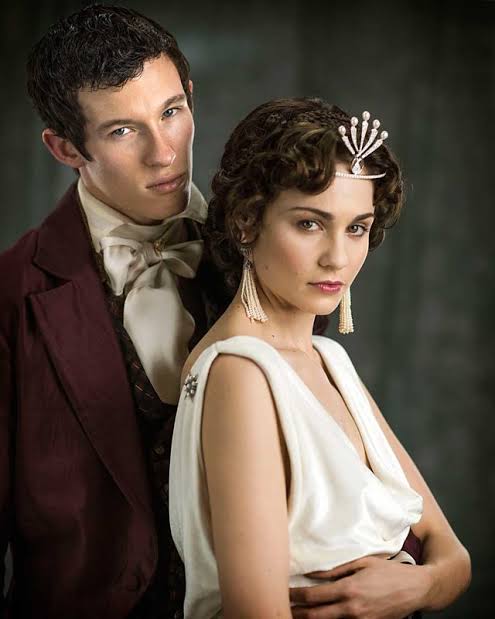
Stephen Rea played Prince Vassily Kuragin with a supercilious lugubriousness, whilst Callum Turner portrays his son Anatole as a card-board cut-out rake. Gillian Anderson, looked resplendent as society hostess Anna Pavlovna Scherer, did not have very much to do except play, well, a society hostess. And lastly, there was Tom Burke’s over-the-top bad-boy Fedor Dolokhov. As Tolstoy himself put it: “There are three things I love to do!’ he roared. ‘Fight, drink, and I can’t remember the other one … “ And: “I think you’re an absolute ruffian,’ Helene tutted, branding him ‘disgusting.’

One judges the success of a visual dramatization by how well renders the original’s iconic scenes and set-pieces. Here then is a brief critique.

The famous, plot-setting grand ball was nicely done – the set, the clothes, and the dancing, building up well to Nat and Andy’s meeting and floor show. Natasha’s Dance at the Rostov dacha, so iconic and important to Tolstoy’s narodnik sympathies, was, however, disappointingly undercooked.  Bezukhov and  Dolakhov’s duel in the snow , was deftly done, demonstrating what a foolish, deadly practice this was. Pierre’s Freemason initiation was risably pythonesqe – all signs and handshakes and overdone dramatics. Why bother?

The French Invasion of 1812, heralded Halley’s Comet, as a vast army crossing the Neimen, Boney’s fateful Rubicon, is melodramatically underwhelming but perhaps, to be otherwise would have required a very big budget. and yet, the battle of Borodino – I was awake for this one – was probably the best screen portrayal of this bloodbath that I have seen. The French occupation of Moscow was cliched and cursory, whilst the burning of the city, always difficult portray in film, came across as cut-price CGI. The disastrous French retreat from Moscow, prisoners in tow,  was likewise difficult to portray, but somehow, by thinking small and focusing on the micro-dramas of the debacle, and with some cold-weather channeling of David Lean’s Dr Zhivago, it actually worked.

And finally, when the tumult and the shouting ended, the captains and the kings departed, and the characters have met their various ends or apotheoses, what of that bucolic happy families ending?

As Tolstoy himself was to say, in the opening lines of another weighty tome, all happy families are alike. The rural family barbecue was a derivative denouement. The surviving members of the three families, now three generations, gather together after all their trials and tribulations in an idyllic rustic lifestyle bought and paid for with Bezukhov and Bolkonsky money. It is reminiscent of the final scene in Cold Mountain,  Shenandoah, How the West was Won, The Sound of Music, and many others in which ‘Good’ eventually triumphs over despair, deprivation and disaster – you know how it goes: “We’re so glad all the bad stuff is over and done – may our lives now be pleasant and delightful”. Or as Tiny Tim (of Dickens’ fame, not Tulips) declaimed, “God bless us all!”

But, Tolstoy’s drawn-out, ponderous and indeed, anticlimactic and awful “getting of wisdom” finale would not have worked on screen. “Thankfully!” many would declare.  And anyhow, isn’t this how the classic hero’s quest is meant to end: with revelation redemption, reunion, and a kind of contentment. The old Count, in his mystical, mythic way, wouldn’t have wanted it any other way.

And after six hours of pretty good entertainment, who am I to blow against the wind?


Here’s what the papers said:

And here is all you ever wanted to know about Leo Tolstoy’s War and Peace, but were put off by three inches of closely-typed mall print:

War and Peace by Leo Tolstoy – digested read

We’re going to speak Frussian, join the army, fall in love, fall out of love, get very cold, and then die
Illustration: Matt Blease
                                                                Illustration: Matt Blease

It was July 1805, and all St Petersburg was concerned about the advance of Bonaparte. Though not so much as to cancel a soiree at which Pierre, a bastard by birth but not by nature, was to be introduced to Russian society.

“Pierre is not one of nous,” several guests observed. “Not only does he forget choses but he doesn’t speak Frussian. Et he drinks even plus que nous.”

Prince Andrew, a bastard by nature but not by birth, cleared his throat delicately. “As a member of the officer class, I have decided to join the army,” he declared.

“I shall join the hussars,” Nicholas declared, while his sister Natasha eyed up potential husbands. They might become rather scarce.

Pierre checked his fob watch. The pages were turning faster than he expected and his father had now died. “I seem to find myself the richest man in Russia.”

War proved more terrible than either Andrew or Nicholas has expected. Dreams as well as men got killed. “How I embrace death,” Andrew murmured as the battle of Austerlitz raged. “Pas so vite,” said Napoleon. “Permettez-moi de vous donner une main. Now I must wash my chubby little body.”

“I’m home,” said Andrew as his wife died in childbirth.

Pierre felt the burden of expectation and married Helene but, helas, she had a bit on the cote. The anguish was intolerable, but Pierre felt obliged not to kill his love rival in a duel and left St Petersburg for many years to ruminate on Freemasonry before deciding a knotted handkerchief was not for him. Instead, he chose to improve the lot of his serfs, who had up till now remained entirely invisible. “Harrumph,” he concluded at last. “I cannot improve their lot because they have never had it so good.” Tolstoy nodded approvingly, lifting his eyes momentarily from the handsome handmaiden beneath him.

“So, 500 roubles on the peace lasting,” said Nicholas, as Napoleon and the Tsar embraced in friendship, thereby losing the remains of the Rostov fortune.

“I am distraught,” Andrew declared as Natasha fell dangerously ill.

It was now 1812 and Pierre was beside himself as the French approached Moscow. “‘I am deranged with symbolism and Helene has left me even though I left her first. I vow to kill Napoleon,” he said.

“Je ne peux pas believe que je have just perdu the battle of Borodino,” Napoleon squeaked, his shoe-lifts giving him gip. “The French had by lointhe best army.”

“But Russia had nature and spirituality on its side,” said Tolstoy while a chorus of Volga boatmen sang patriotic songs.

“Can you not faire quelque chose about the fumee in Moscow?” asked Napoleon. “Et quand will I receive the surrender?”

“Jamais,” Mother Russia replied. First scorched earth, then General Winter. War is hell.

Pierre hovered between madness and death as the French performed atrocities during their withdrawal from the icy embrace of Mother Russia.

“There is a nobility in being broke,” said Nicholas’s aunt. “So I am going to give you some more money.” “Oh, thank you,” Nicholas replied. “Now I can marry Mary. And maybe you and Andrew can make up now, Natasha?”

“I forgive you, Natasha,” said Andrew, before dropping dead.

“That’s handy,” said Pierre, appearing out of nowhere. “Maybe I can marry you instead.”

“Yes please,” Natasha whimpered. “I can give up my singing, we can have four children and I can become a right old drudge, because Leo thinks that submission is a woman’s natural state.”

Tolstoy bowed his head. He was tired. The novel was a difficult thing. Not that his book was a novel, of course. Though people would be bound to call it that. Fools all of them. We can only know we know nothing.

 Hear Simon Callow read John Crace’s digested War and Peace on the BBC Today programme

Cuddling up to Caligula

Why is it that when we think of Roman Emperor Caligula, we recall the late John Hurt’s over the top, mad and malevolent portrayal in the classic BBC adaptation of Robert Grave’s sardonically serious I Claudius.(1976). Or else, Malcolm McDowell’s vicious, almost cartoon villain in Penthouse pontiff Bob Guccione’s semi-pornograpic biopic Caligula  (1979).

British author Simon Turney turns I Claudius on its head with the bumbling, stumbling, stammering Clau-Clau of book and film cast as a canny, conniving and ultimately successful player positioning himself to assume the imperial purple. Gone is the Caligula so malevolently and magnificently portrayed by John Hurt. No horses in the Senate. No incest. None of the orgies, explicit sex and delectable cameos of Penthouse Pets. But there is violence and gore – loads of it, in fact – and plots and conspiracies aplenty. But it is Claudius who is “nasty, brutish and short” while young Gaius is tall, blonde and well-intentioned. He’s certainly not all hugs and puppies, but he’s an astute, well-meaning but misunderstood victim of imperial circumstance who rides the perilous waves of bereavement and betrayal to assume the psychotic Tiberius’ throne.

The full title of Turney’s tome says it all: Caligula: loving brother, reluctant ruler and tortured soul (Orion 2017)

It is inevitable that history is written by the victors and throughout the past two millennia there have been plenty of cases of good men being maligned by their successors, as well as evil men canonized by their heirs and successors. Rome was no different and may indeed be the very epitome of this. Being so far removed from our modern world, we have only fragmentary archaeological and epigraphic evidence to directly base our research on – that and the writings of those who lived in these times.

And so it is with Caligula. Turney argues that once the chaff is cleared away, misunderstandings and misrepresentations clarified, and the more obvious cases of character assassination discarded, we are left with a complex man who fell foul of the most influential and dangerous people in the Empire. He could hardly have been the monster he has painted, for while those powerful senators and nobles managed to remove him, the ordinary people of Rome held him up as the golden prince and the army remained his – the latter in part on account of how as a child, he’d accompanied his father on victoriouscampaigns in Germania and Syria, earning the sobriquet “Little Boots” – in Latin, “Caligula” – named for the replica army sandals he wore on these road trips.

So, leave your assumptions and preconceptions at the city gates and enter Rome, 37AD.

Emperor Tiberius Caesar is dying. No-one knows how much time is left to him, but the power struggle has begun. The ailing old tyrant thrusts Caligula’s family into the imperial succession in a bid to restore order to the chaos and carnage engineered by Sejanus, the cruel commander of the Praetorian Guard. The story is told through the eyes of Livilla, Caligula’s loyal, little sister and confidante. She recounts how her quiet, caring, beautiful brother became the most powerful man in the known western world, how, with lies, murder and betrayal, Rome was changed for ever. She is an attractive and insightful narrator, drawing the reader into her life as niece and hostage of mad, bad Tiberius and sister of his infamous successor.

Starship Captain Picard as Praetorian commander Sejanus

Being part of the extended family of the Divine Augustus is a tough gig. The five children of Germanicus appear to be cursed from birth. Their war-hero father is believed to have been poisoned on Tiberius’ orders, and mom and two brothers are arrested for treason, exiled on desert islands, and starved to death. Cold, ambitious, Agrippina is married off to an abusive husband, but keeps her eye on the ultimate prize. Sweet, docile Drusilla is wedded to a mild nonentity and pines for her own true love. Only Caligula and Livilla remain, as virtual captives on Capri, Tiberius’ pleasure island.

The ascent of the family into the imperial succession transforms Caligula from the easygoing lad Livilla knew to a shrewd, wary and calculating young man, used to watching his back and learning the dangerous power game of thrones. As much out of self-preservation as ambition, he maneuvers himself into the top job. A golden age beckons for Rome, but things unravel as political allies, friends, and finally family betray him and plot his demise. He becomes a bitter, resentful and vengeful Emperor, eventually losing touch with reality and his humanity. Even loyal Livilla comes a cropper. Power corrupts and absolute power, whilst not surreal scale of the films, leads Caligula to a rendezvous with the assassins’ knives.

Complementing the human drama of the quasi-Shakespearean rise and fall of a tragic hero, Turney also provides his tale with a political dimension. There is the well known backstory of the Roman Republic and how Julius Caesar was slain by gallant patriots who feared that he was about to make himself King – a concept that was anathema to SPQR, the Senate and people of Rome. Caesar’s heir, Octavius, who became Augustus, whilst hailed as ‘Imperator’, was most careful not to become ‘Rex’. Through Robert Graves’s epic, Claudius as courtier and as Caesar, perennially proclaims his desire to restore the republic – although, truth be told, the republic had run its course, governed by a corrupt and self serving senatorial elite. It was, perhaps, a nostalgic chimera, which, nevertheless, provides numerous conspirators in Turney’s narrative with a worthy motive. Caligula, they fear, is falling under the influence of royal middle eastern friends who advertise the attractions of absolute monarchy. At the end, Caligula’s Caesar complex commands a Caesar solution.

Turney next turns his attention next to another Roman emperor who was “mad, bad, and dangerous to know”. Skipping the lugubrious Nero, who features in Caligula as a chubby babe in the arms his devious and disloyal momma Agrippina, the projected series of “The Damned Emperors” will jump to Commodus, last seen impaled by Maximus Decimus Meridius, known today as Russell Crowe, in Ridley Scott’s solid if somewhat overwrought sword and sandals saga Gladiator (2000). It would appear that whatever history and show business has conceived, Turney aims to tear asunder.


In That Howling Infinite has traveled the Roman world many times before:

Roman Holiday, the perils of a poet in the time of Claudius and Nero;
What have the Romans Done For Us? A review of Mary Beard’s wonderful history of the republic and the early emperors;
Roman Wall Blues, a riff on WH Auden’s famous poem and a tale of Hadrian’s Wall and the magical museum of Vindolanda; and
A Brief History of the Rise and Fall of the West.


The Twilight of the Equine Gods

The horse has been man’s most important companion – forget cats and dogs – and the most durable of historical alliances – against which every other covenant has been fragile and ephemeral – not even our relationship with our gods has shown a comparable degree of stability. Our story resonates with an equine leitmotif – in our dreams, our fantasies, our histories, our literature, and our movies; in our aesthetics and our notions of speed, strength, power, courage, fortitude, loyalty and beauty.

Hey and away we go
Through the grass, across the snow,
Big brown beastie, big brown face,
I’d rather be with you than flying through space. 
Mike Oldfield, On Horseback

Pastorale

Oh the world is sweet
The world is wide
And she’s there where
The light and the darkness divide
And the steam’s coming off her
She’s huge and she’s shy
And she steps on the moon
When she paws at the sky
Leonard Cohen, The Ballad of the Absent Mare

What is there not to love about a horse?

Its big, brown, doe eyes; its earthy, sweaty aroma from a land somewhere between babies and barnyards; the warmth of its neck on your palm; the rough feel of its mane in your fingers; the smell and the squeak of saddle leather; the jingle-bells of the bridle. The strength you sense through your thighs; an exhilaration that is close to fear as you kick his flanks into a trot, a canter, a gallop, and whoa! and you’re never one hundred percent sure she will obey you. And then, when it’s over, the radiated heat, the damp hide, the glow of sweat, almost a mist of equine energy as you dismount after the ride. You feel wired, alive, and at one with the horse, with the land, with nature.

I first rode a horse in the late seventies, on my first visit to Australia with my first wife. Her old man was a doctor on locum in Coolah, New South Wales, beyond of the Black Stump’, which is to say, the back of beyond (and there really WAS a black stump on the outskirts of town, for the infrequent tourist to be photographed by in pre-selfie days). A local farmer had invited us out to ride his large property, and so we rode, in the heat haze of high summer, through wide, dry, open, paddocks, mobs of roos scattering as we approached, flocks of cockatoos roosting riotously in the branches of dead trees, and flies. Yes, I learned about the “Aussie salute” that summer. I fell in love with the Australian bush then and there, the “wide brown land” of Dorothea Mackelllar’s “sunburnt country“. A few years later, as a newly arrived immigrant, I would go riding again, this time with country friends in the Dungog cattle country north of Sydney.

I was not a good rider, but I loved the craic. Not a natural like my future wife. When we first met, she kept four horses and looked after a whole riding school of them, bringing them in bareback riding, stock-whip cracking, a proper jillaroo. ‘Western pleasure’, it was called. No jackets and jodhpurs – it was cowboy hats, boots and blue jeans – before helmets and Occupational Health and Safety. I rode her gorgeous chestnut quarter horse called Twopence, and she, a handsome palomino named Trigger (of course). A riding accident put me in hospital – and I never rode a horse again.

Twopence & Trigger

That was a decades ago, but living in the bush, I still feel pleasure when I see horses in their paddocks. The sight, sound, and smell strike a melodious, atavistic chord that many would  recognize as distinctively Australian. How many Aussies of a certain age would not thrill at the Banjo’s ballad of the bushman that is almost our national poem:

He hails from Snowy River, up by Kosciusko’s side,
Where the hills are twice as steep and twice as rough,
Where a horse’s hoofs strike firelight from the flint stones every stride,
The man that holds his own is good enough’.

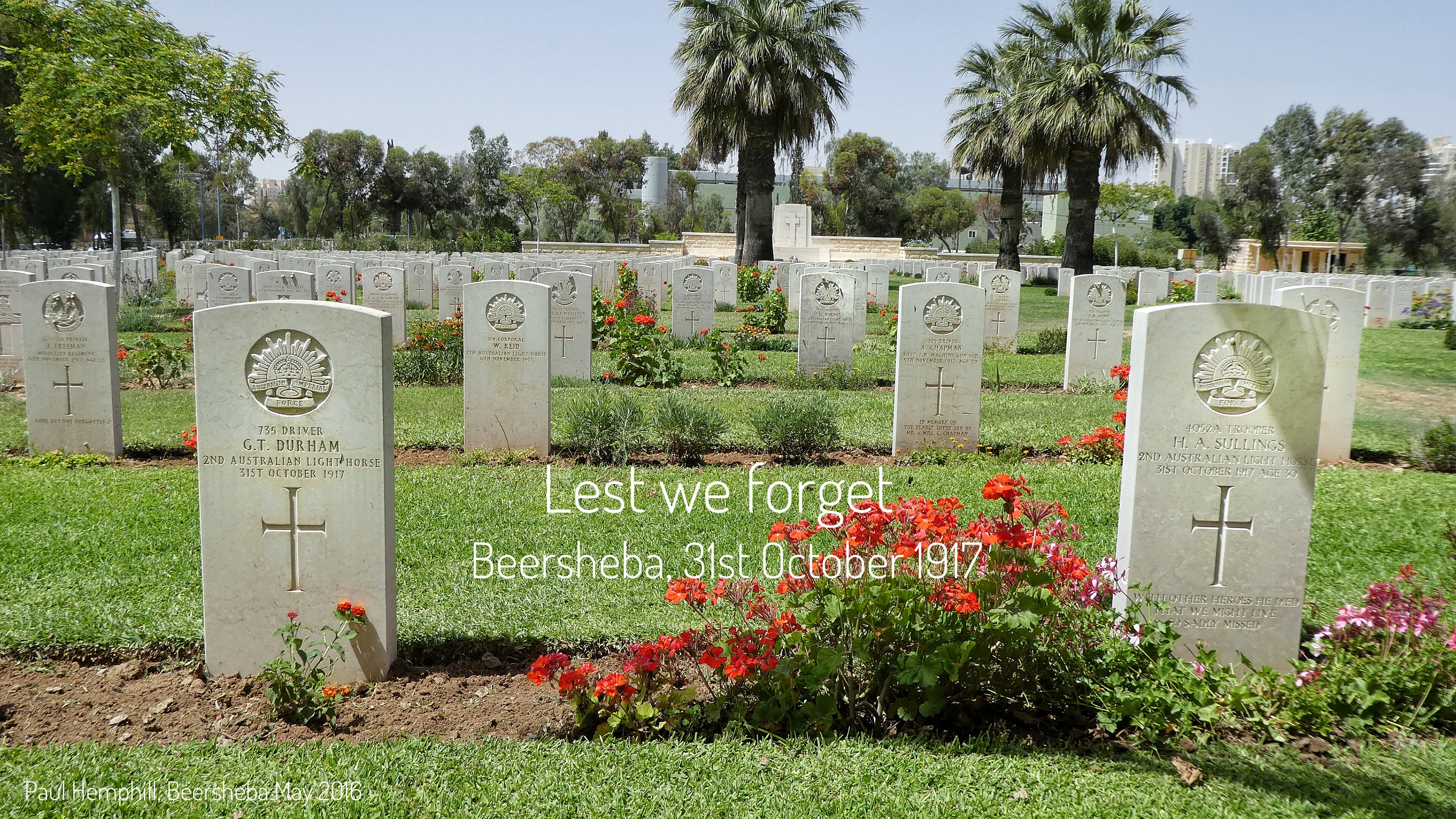
In this centennial year of the Palestine Campaign of WWI and the gallop of the Australian Light Horse towards the strategic Beersheba wells – praised, inaccurately, as history’s last great cavalry charge, the Light Horseman and his hardy “Waler” (from New South Wales) have achieved iconic status in a media supercharged on “Anzackery”. Calmer voices have argued that on the scale of the carnage on the western front, where Diggers died in their thousands, and indeed the Gaza battle itself, where the Anzacs were a very small part of a very large army, it was really no big thing, But never let the facts get between a politician and a photo-opportunity. During the closing scenes of The Man Who Shot Liberty Valance, the journalist says: “This is the West, sir. When the legend becomes fact, print the legend”.

And it was always thus. As German academic and cultural scientist Ulrich Raulff’s tells us in his captivating “micro-history” Farewell to the Horse: The Final Century of Our Relationship: 

“Like love and the stock exchange, our historical memory is a motherland of wishful thinking, sacrificed to our faith and blind to known facts…This is why historical myths are so tenacious. It’s as though the truth even when it’s there for everyone to see, is powerless – it can’t lay a finger on the all powerful myth”.

Farewell to the horse

It is an easy segue from my Australian pastorale to Raulff’s illuminating canter through the story of the “Centaurian Pact” between humans and horses. it is at once a ride, a revelation, and a reminiscence of my short-lived ‘cowboy’ days.

“The horse” Raulff begins, “has been man’s most important companion – forget cats and dogs – and the most durable of historical alliances – against which every other covenant into which we have entered has been fragile and ephemeral – not even our relationship with our gods has shown a comparable degree of stability”.

He then recounts how over the span of a few decades, a relationship that endured for six millennia went “to the dogs” – excuse my awful pet-food pun. And it happened almost unremarked, unnoticed, and unsung. “For a century, the oat-powered engine was the universal and irreplaceable power unit of the forced mechanization of the world”. And then it was gone, replaced by the internal combustion engine. And yet, the term “horsepower” is to this day a measure of the performance of vehicle engines (although now mostly replaced by kilowatts) – a horse was the equivalent of seven men.

“The twilight of the equine gods”, as Raulff describes it, was a long goodbye indeed, and in the realm of myth, memory and metaphor, horses are with us still; or as he so lyrically expresses it: “ghosts of modernity” (echoes of Dylan, in my mind, at least) that “haunt the minds of a humanity that has turned away from them”.

Like its subject, Farewell to the Horse is a handsome, wide-ranging, beast. More elegy than epitaph, eclectic and imaginative in scope, viewing the horse as muse, as mount, and as metaphor, Raulff sings the song of the horse – and if ever there was a ‘horse opera’, this is it.

Eloquently and at times poetically translated, and generously illustrated with pictures from galleries, libraries, and photo archives, Raulff takes the reader through the many worlds of the relationship. On his academic home-turf of sociology and psychology, his references are primarily German, but straying from his academic stable, he ambles into a lush and diverse pastureland of history and mythology, politics and philosophy. economics and geography, industry and commerce, physics and biology, science and medicine, sport and recreation. And art and literature: how artists and writers brought their perspectives, personas and passions onto canvas, photographs and the printed page. In many ways, its infinite variety reminded me of English historian Simon Schama’s fascinating Landscape and Memory.

Raulff has divided his book into four broad thematic sections, each with an evocative title – The Centauran Pact, A Phantom in the Library. The Living Metaphor, and The Forgotten Player – each exploring a particular aspect of the horse’s story. But he allows himself much extempore stream of consciousness as he periodically wanders off-script with childhood reminiscences and collected anecdotes, and dips into favourite paintings, books and films. He time-travels through six thousand years, and traverses the globe too in his long ride – from the Steppes of Eurasia to the Great Plains of America, from the cities of MittelEuropa to those of the Midwest, with side trips to the Middle East and Andalusia.

It was contagious. I too got to thinking beyond the page, recalling and contemplating a miscellany of ideas and images that came to mind whilst reading, and indeed, whilst writing this review, wandering down forgotten bridle-ways (literally, a horse riding path, or trail originally created for use by horses, but often now serving a range of travelers). And is this not what a good book should do?

The Song of the Horse

The horse, the intelligent mammal, the great vegetarian, a prey animal whose strength is in flight, who has no desire or need for confrontation or quarrel. It’s speed, its main asset, enabling it to flee its predators, is also what attracted it to the attention of man, with whom it entered into a long-lived, unequal devil’s bargain. “They were able to turn the inconspicuous potential energy of tough prairie grasses, inedible to almost all other animals into the spectacular energy of a fast endurance runner. Thanks to its natural properties as a converter of energy, the horse could bear kings, knights, female lovers and rural doctors, draw carriages and cannons, transport hordes of workers and employees, and mobilize entire nations”. And indeed, Raulff takes us on a jaunt   through these tableaux.

He quotes historian Ann Hyland: “it was a small step, albeit a brave one, for man to mount a horse”, and writes: “The comparison with the moon landing is certainly not exaggerated. The moment when man began, by domestication and breeding, to connect his fate to the horse – not with a nutritional intention, but with a vectorial aim – may have been, before the invention of writing, the narrow gate through which man entered the realm of history”.

And lo, our story resonates with an equine leitmotif.

The horse is in our dreams and our fantasies, in our literature, and our movies, in our aesthetics, and our notions of speed, strength, power, courage, fortitude, loyalty and beauty. In their mythology, the ancient Greeks gave them wings and narwhal horns, whilst centaurs, part human and part horse, were believed to represent the combined forces within human beings – animal instinct and intellect – and the connection between the physical and spiritual realities, symbolizing independence, knowledge, adventure, fertility and spiritual wisdom.

In our western culture their variety is infinite – from the diverse mounts that conveyed Chaucer’s pilgrims to Canterbury to that paragon of American folk culture, the cowboy. From the rambunctious centaurs and cute coloured unicorns of Disney’s’ Beethoven Fantasia to the gaunt quartet bearing the seer of Patmos’ four horsemen of the Apocalypse. From the teenage innocence of National Velvet and Black Beauty to Thomas Hardy and Carey Mulligan’s sensual and photogenic jaunt in the recent remake of Far From the Madding Crowd. From the patriotic jingoism of Alfred J Tennyson’s The Charge of the Light Brigade and Rudyard Kipling’s East is East and West is West to Banjo Patterson’s blokey bush ballad The Man From Snowy River, which I have quoted above (and will reprise below). The horse has even entered into the invented worlds of science fiction, with Joss Whedon’s rollicking space-pirate adventure, Firefly, and more recently, Westworld with its Wild West theme park populated by lifelike android cowboys and Indians on their robot horses.

Westworld

[If I have one small quibble about Farewell to the Horse, it is in its Eurocentricity. The Land Down Under doesn’t rate a mention even though the horse has played an important role in the evolution of Australia’s perceived national identity – “perceived” because here too, we are captive to that “powerful myth” that Raulff believes subverts fact]. We see horses every time we leave our rural property. They are an intrinsic part of our country life, and many of our friends are riders. Here are a couple of pictures of our good friend Chris riding the National Trail through Guy Fawkes National Park:

Whilst drawing cleverly on the arts – and the book is well-furnished with illustrations that are  well spoken to in the text – Raulff does not venture into poetry, where there are to be found many wonderful images. Take but a few examples drawn from just one poem, East is East and West is West, referred to above, and marvel at the metaphors in Rudyard Kipling’s ‘Boys Own’ tale of a young British officer tracking down a daring Pathan bandit:

The Colonel’s son has taken horse, and a raw rough dun was he,
With the mouth of a bell and the heart of Hell and the head of a gallows-tree”.

“It’s up and over the Tongue of Jagai, as blown dust-devils go,
The dun he fled like a stag of ten, but the mare like a barren doe.
The dun he leaned against the bit and slugged his head above,
But the red mare played with the snaffle-bars, as a maiden plays with a glove”.

“They have ridden the low moon out of the sky, their hoofs drum up the dawn,
The dun he went like a wounded bull, but the mare like a new-roused fawn”.

And, of course, there are the songs. Here’s the doomed Texan troubadour Townes van Zandt’s enigmatic anti-hero:

Pancho was a bandit, boys
His horse was fast as polished steel,
Wore his gun outside his pants
For all the honest world to feel
Pancho and Lefty

And whilst Raulff includes a poignant picture of a lone, pedestrian cowboy carrying his saddle through the scrub like a mariner lost on the land, he doesn’t mention Leonard Cohen’s bereft and distraught cowpoke :

Say a prayer for the cowboy
His mare’s run away
And he’ll walk til he finds her
His darling, his stray
The Ballad of the Absent Mare

But more from St. Leonard of Montreal later…

Frederic Remington’s Bronco

A Phantom Limb

The horse’s glory days may be over, but the echoes of a long and fruitful relationship linger in our lives and in our language – in our idioms and our figures of speech: “getting back in the saddle”, “pulling the reins” and “taking the reins”, “champing at the bit”, “gaining the whip hand”, and the timeless put-down, “get off your high horse!” Phrases such as these are used everyday by people who have never been physically close to a horse let alone ridden one, and whose visual encounters are limited to country outings, circuses, televised equestrian events and westerns (in Australia, as in the US, we can still enjoy country fairs and carnivals that feature rodeos and endurance rides).

Joe Curtin falls from his horse at a combined rodeo, branding, campdraft and gymkhana weekend in Birdsville, Australia. Nick Moir

And note that these usages are somehow connected to power, control, and aggression – and often, casual, almost matter-of-fact violence (the idea of being “horse-whipped”) – violence inflicted not only on humans but on the animals too.

Raulff asks: Why is it that the most powerful visual images of horses are in their warrior role?  Does it not say more about ourselves than what was genetically a passive, docile, tame-able (we call it “horse breaking”) grazer?

Equestrian Statues

Salah ud Din al Ayubi, Damascus

The horse has a complex and varied curriculum vitae. For six millennia, it has been our dependable beast of burden, the bearer of people, packages and progress, shrinking distance and opening up new lands. But it has also been the agent of power, politics and pogroms. A bearer of great ideas, and also of great tyrants.

The horse has long been a living metaphor of power – the absolute political metaphor, indeed.

“The combination of horse and rider is a powerful symbol of domination, and one of the oldest in the book”. The caudillo, the martial “man on horseback” so beloved of painters and sculptors – and of putative dictators (although Stalin and Hitler, Raulff reminds us, despised horses). There’s Alexander the Great on Bucephalus, defeating Darius; David’s conquering Napoleon crossing the Alps; bodacious Boudicca reining in her chariot steeds on The Embankment. To be physically and violently unhorsed is to be taken down literally and figuratively. Hence Richard III’s anguished “my kingdom for a horse”, and George Armstrong Custer and the men of the Seventh Cavalry demountd and doomed on Last Stand Hill.

The rise of the horse changes the position of the people and along with it, their view of the world around them – what Raulff calls the ‘cavalier perspective’. It is rooted in an age-old fantasy of the fusion of man and beast, from centaur to chevalier. The unfortunate Aztecs believed the mounted conquistadors to be half man half beast. That dismissive rebuke “get off your high horse” echoes a primal fear of the mounted marauder, be he the Scythian archer, the Mongol warrior, the rogue knight or the Red Indian (“savage” he was called back in the day) of the Great Plains. Recall the Cossacks lining up on the snow-covered square, about to charge the defenseless marchers in David Lean’s Dr Zhivago. Recall, in Game of Thrones, the Dothraki, screaming their war cries, thundering down on the doomed Lannister infantry. “We still see traces of horses’ archaic role as inspirers of terror when required to intimidate picketing workers or to drive rallies of protesters out of shopping precincts”.

Something wicked this way comes – Clive Owen’s Slav King Arthur

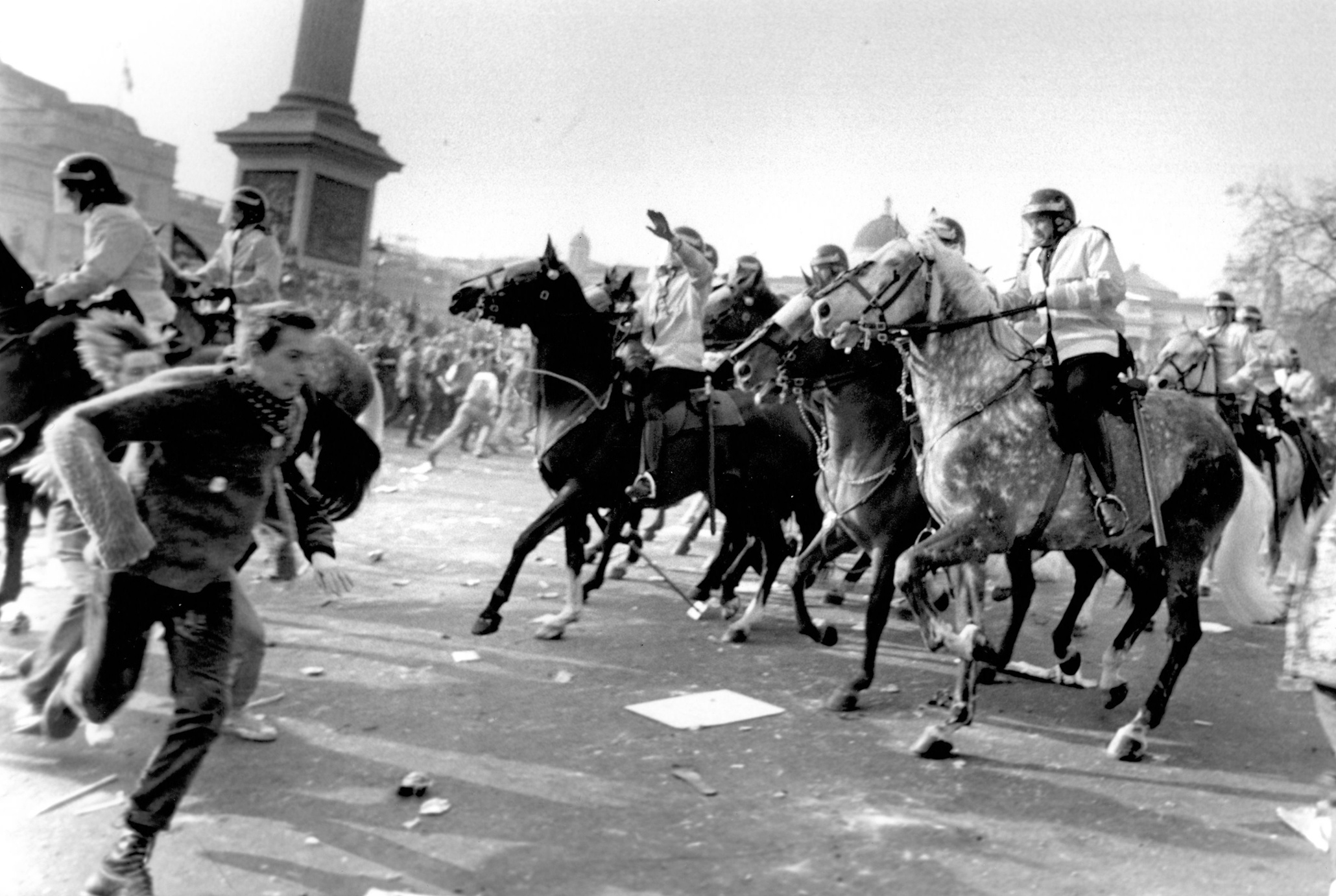
During his travels, Raulff visited Israel, where he chanced to observe ultra-orthodox Jews protesting against their youth being conscripted into the Israeli Defense Force. Jerusalem authorities mobilized mounted police officers against the recalcitrant religious. He indulges in pogrom projection, imagining the Haredim being intimated by a Cossack Shtetl flashback. Fanciful, perhaps, but as a young man during the Vietnam demonstrations in London’s Grosvenor Square, I learned that there’s no greater killer of revolutionary passion than the sight of than a wall of fat horse’s arses backing towards you with those nervous hooves a’twitching.

And yet, the use of the horse in this manner forces it to go against its nature, trained to stand its ground in dangerous circumstances when all its instincts are to flee danger. Ostensible police brutality in Grosvenor Square was juxtaposed by the reality that police horses were stabbed by banners and tripped and stoned with glass marbles. Several were so injured that they had to be euthanized.

Horse meets Haredim in Jerusalem

…and meanwhile, in the other side of town

 The Wide-Open Spaces

The power bestowed upon men by horses is much more than such authoritarian, martial muscle. The horse enabled landsmen to conquer what Australian historian Geoffrey Blainey called “the tyranny of distance”. For Rudyard Kipling’s “fluttered folk and wild”, it ushered in a tyranny of a malevolent kind.

The horse-led conquests of European and Asian empires during the second millennium BCE by the chariots and later, cavalry of the horse-people disgorging from the steppes like some equestrian blitzkrieg, transformed world history. They brought their political structures, their warfare, their masculine, spiritual character – their “asabiyyeh” or, literally “muscle” as famed Arab historian Ibn Khaldun put it. The Eurasian nomadic warrior, “that ‘natural born’ combatant, who, as tough and austere as his resilient horse, emerged as the terror of the sedentary populations of Europe and the orient”. The same could be said of the warriors of Islam as they erupted out of their Arabian heartland and reached the walls of Constantinople and the frontiers of the Franks.

One powerful factor in these invasions was the horsemen’s speed. “In every contemporary account of the Mongols, great stress is laid on their speed: suddenly they were there, only to vanish and appear somewhere else even more suddenly”. The alliance between man, horse, and the arrow was likewise significant, providing the ability to kill from a distance, whilst moving, on horseback.

“Thanks to the horse, distant territories could be conquered and vast dominions could be established. The horse and its rider made the land they traversed tangible, recognizable, and able to be taken”. The horse became indispensable in terms of control of the land, subduing its inhabitants, and enabling Its exploration. In America, it brought the conquistadors, and in time, ensured that The West was won with catastrophic consequences for the native Americans with the loss their land and hunting grounds.

War Horse

Since it’s domestication, we humans have never resiled from putting our beloved horses in harms way. As an inspirer of terror and as a battering ram of blood and bone, mounted cavalry have been used on battlefields against soldiers and in streets and villages against civilians. Horses and mules have long provided most of the muscle used to move men and machines – the true “horsepower” of any war effort – serving in a wide variety of roles, including being ridden, as draft animals pulling vehicles and heavy weapons, and as pack animals. They, like their human comrades have perished in uncounted numbers by shot and shell, by accident and cruelty, disease and starvation, and during World War I, by poison gas. Sending animals to war seems, today, somehow even more awful than sending people to war, but in the past, there was little room for that sentiment. Animals were absolutely essential to any war effort, and they had to be sent – during WWI, millions of them, Most were horses and mules, but dogs, pigeons, camels, and even water buffalo and elephants were also found in some theatres of the war.

Celebrated English composer Sir Edward Elgar wrote in August 1914: “Concerning the war I say nothing … the only thing that wrings my heart and soul is the thought of the horses … oh! my beloved animals … the men … and armies can go to hell but my horses: I walk round and round this room cursing God for allowing dumb brutes to be tortured … let him kill his human beings but … how can he? Oh my horses.”

Farewell Old Friend by Fortunio Matana

A Day at the Races

Our pact with the horse was much more than the power and the glory, the conquest and the trail-blazing. Horses’ fleetness, stamina and beauty satisfied other, more hedonistic yearnings, and today, their days on the field of battle long over, they serve to give us pleasure – and profit.

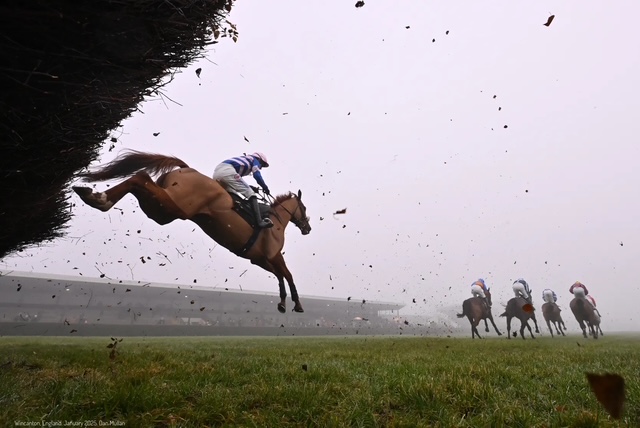
And they have always done thus – particularly in the antecedents and descendants of the Ancient Greek hippodrome (named thus for horses and the racing thereof). In the downtime between warring and raiding, hunting and horse and chariot racing attracted many a warrior’s energy and enthusiasm, and provided  less martial spectators with, vicarious thrills. We have been racing horses for as long as they have been our companions, and wagering on their speed and stamina. This passion fostered complementary endeavours in breeding, training, thieving, and gambling.

The racing carnival still exerts an atavistic, ofttimes addictive spell over riders, owners and punters alike. “The spectacle of race day echoes times and indeed conflicts past, the jockeys’ bright colours, representing a return of heraldry, a way of distinguishing otherwise indiscernible participants”.

It’s there you’ll see the jockeys and they’re mounted out so stately,
The pink, the blue, the orange and green, the emblem of our nation,
When the bell was rung for starting, all the horses seemed impatient,
I thought they never stood on ground their speed was so amazing
Galway Races (Ireland, traditional)

Wincanton races

In horse racing, nothing and no one is hunted, only the shadows of time”, Raulff notes prosaicly.

American author EC Morgan is similarly lyrical: “Time is a horse you never have to whip”,

In That Howling Infinite recently published a review of Morgan’s masterwork The Sport of Kings, a long and deep story about an old Kentucky horse-breeding family. She displays an unerring instinct for metaphor and music. A horse’s neck shudders under its rider’s hands “like a dreaming dog”. Of the racehorses, she writes: “they exploded out of the gate like doves from a cote”; and, “now the school of horses swung round the turn as if caught in a sweep net”.

Raulff explains why horse racing was indeed ‘the sport of kings: Britain emerged as the world power of thoroughbred racing under the racIng-mad Stuart Kings who transformed the sleepy village of Newmarket into the Mecca of the turf, supplanting hunting with punting as the favourite pastime of the idle rich and the indolent upper classes. When Scots King James wasn’t corralling and coaxing the best minds in the land into producing his beautiful Bible, he was both patron and participant with a keen eye for quality horse-flesh.

Teenage Daydream

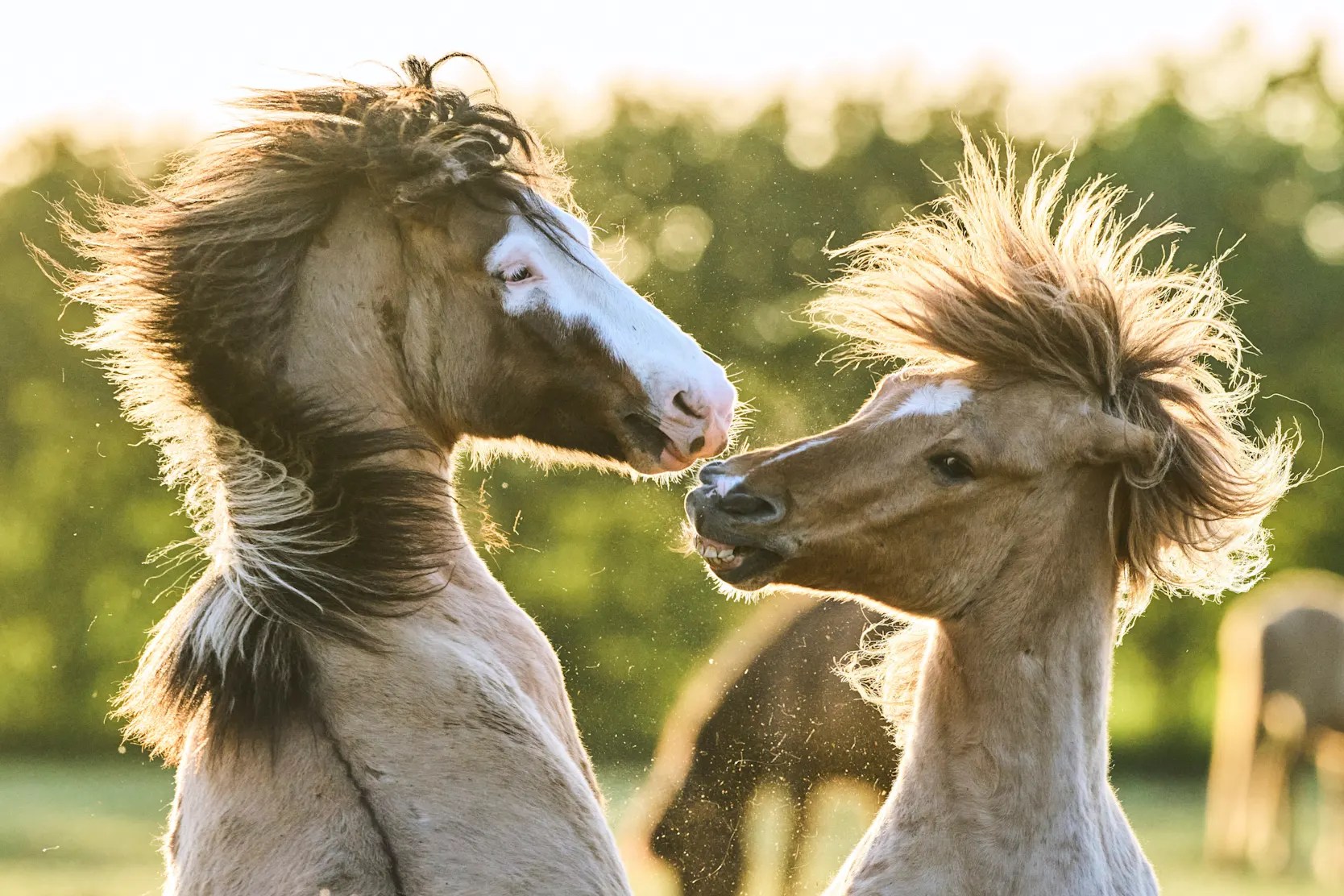
Did I mention that horses can be dangerous? They are large, high, broad, and heavy, and for all their tameness in the hands of a seasoned rider, they can also be excitable, unpredictable, and wild. When you take up the reins, you literally put your life in your hands. In My Early Life , his biography of his cavalry days, Winston Churchill wrote: “No hour of life is lost that is spent in the saddle. Young men have often been ruined by owning horses or through backing horses, but never through riding them, unless, of course, they break their necks, which, taken at a gallop, is a very good way to die”.

But danger can come in other guises.

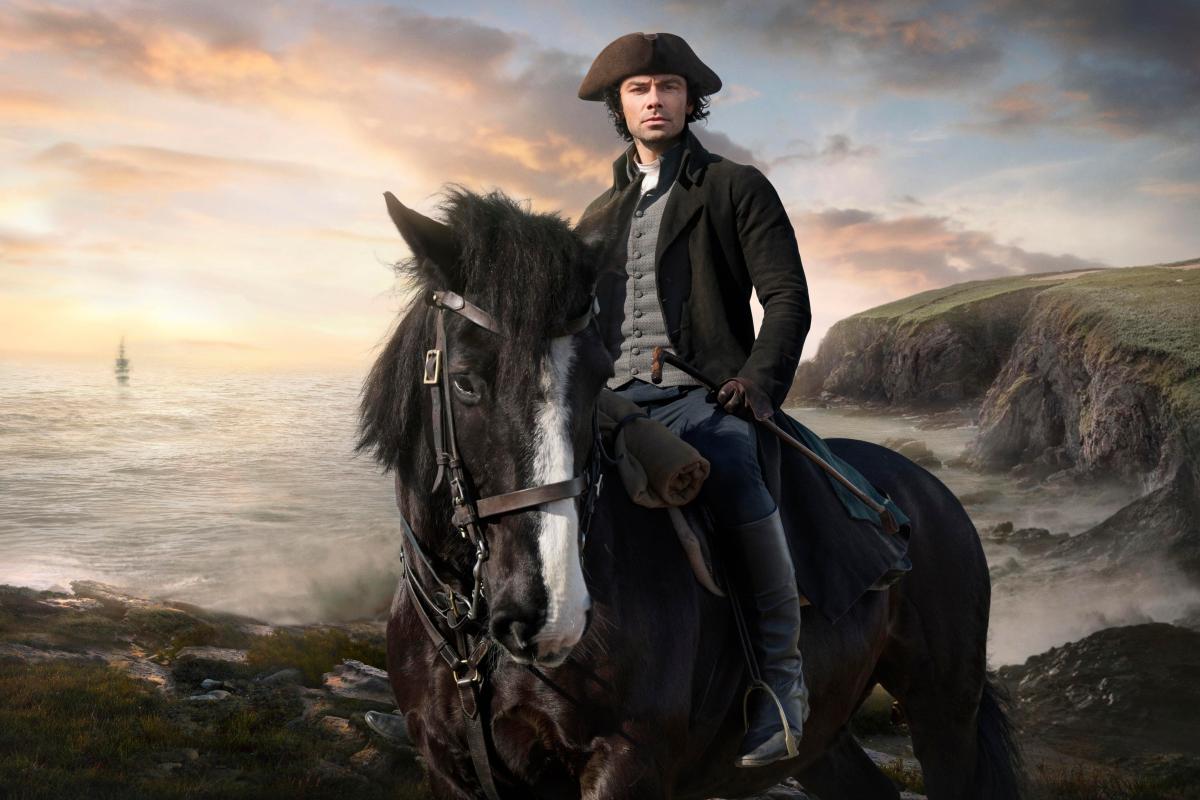
There was probably no way a cultural scientist trained in sociology and psychology could or would avoid how in its variegated pedigree, the horse has also figured as a sexual metaphor, conjuring up thoughts erotic with images of fair maids carried away by amorous riders. Raulff’s copious images include those famous abduction scenes beloved of renaissance painters, but there are many encounters in literature, art, cinema and song that are much less violent. It is as if the rider’s skill with his mount presages his prowess in the sack. There is titillation, there is temptation, and perhaps, surrender. Picture Ross Poldark cantering broodily across the Cornish clifftop, and lifting his Demelza up onto Seamus’ back (that is indeed his name).

True you ride the finest horse I’ve ever seen,
Standing sixteen one or two with eyes wild and green,
And you ride the horse so well, hands light to the touch.
I could never go with you no matter how I wanted to.
Jimmy McCarthy, Ride On (listen to the song at the end end of this post)

Ross Poldark and Seamus

Ulrich gets into his stride, so to speak, when he commits to print his daydreams of the object of many a teenage baby boomers’ longing, the androgynous, pony-tailed cow-girl. He ponders also the puzzle of pubescent girls and horses – that tom-boy world, temporary “islands in the flowing river of time”: “Somewhere between a doll and a real-life partner, the horse is the ultimate sex toy. It’s the largest, most beautiful and final plaything before the transition from home and family to a new relationship with a sexual partner”.

Arwen Evenstar

Having raised the subject of women on horseback, there no ignoring the Amazons. Legend says that they were adept horse-women. As are the heroines of the literary canon who express their subversive sexuality in equestrian interludes – Emma Bovary, Anna Karenina, and Thomas Hardy’s Bathsheba Everdene. Each are subjected to the author’s affectionate attention. When JRR Tolkien wanted to present a strong and wilful heroine in his ostensibly homoerotic epic, he placed Éowyn on a horse, albeit incognito. But she was the exception to JRR’s macho rule. He would never have sent elf princess Arwen Evenstar out like that. But director Peter Jackson, sensing how well it would translate to film, substituted the luminous Liv Tyler for elf lord Glorfindel to confound the Nazgul riders at the ford of Bruinen.  Here is a Carey Mulligan in glamorous array as Bathsheba:

The horse, the healer

So what is this spell that horses weave? We’ve talked about power. We’ve talked about prowess. We’ve talked about passion. Raulff doesn’t venture into the imaginative, the mystical, the magical, and, going further, ameliorative power of horses – that inexplicable feeling you sense when you’re in  close proximity to a horse. presence, an aura of sentient calmness. Let’s reprise our opening paragraph:

“What is there not to love about a horse? Its big, brown, doe eyes; its earthy, sweaty aroma from a land somewhere between babies and barnyards; the warmth of its neck on your palm; the rough feel of its mane in your fingers; the smell and the squeak of saddle leather; the jingle-bells of the bridle. The strength you sense through your thighs; an exhilaration that is close to fear as you kick his flanks into a trot, a canter, a gallop, and whoa! and you’re never one hundred percent sure she will obey you. And then, when it’s over, the radiated heat, the damp hide, the glow of sweat, almost a mist of equine energy as you dismount after the ride. You feel wired, alive, and at one with the horse, with the land, with nature”.

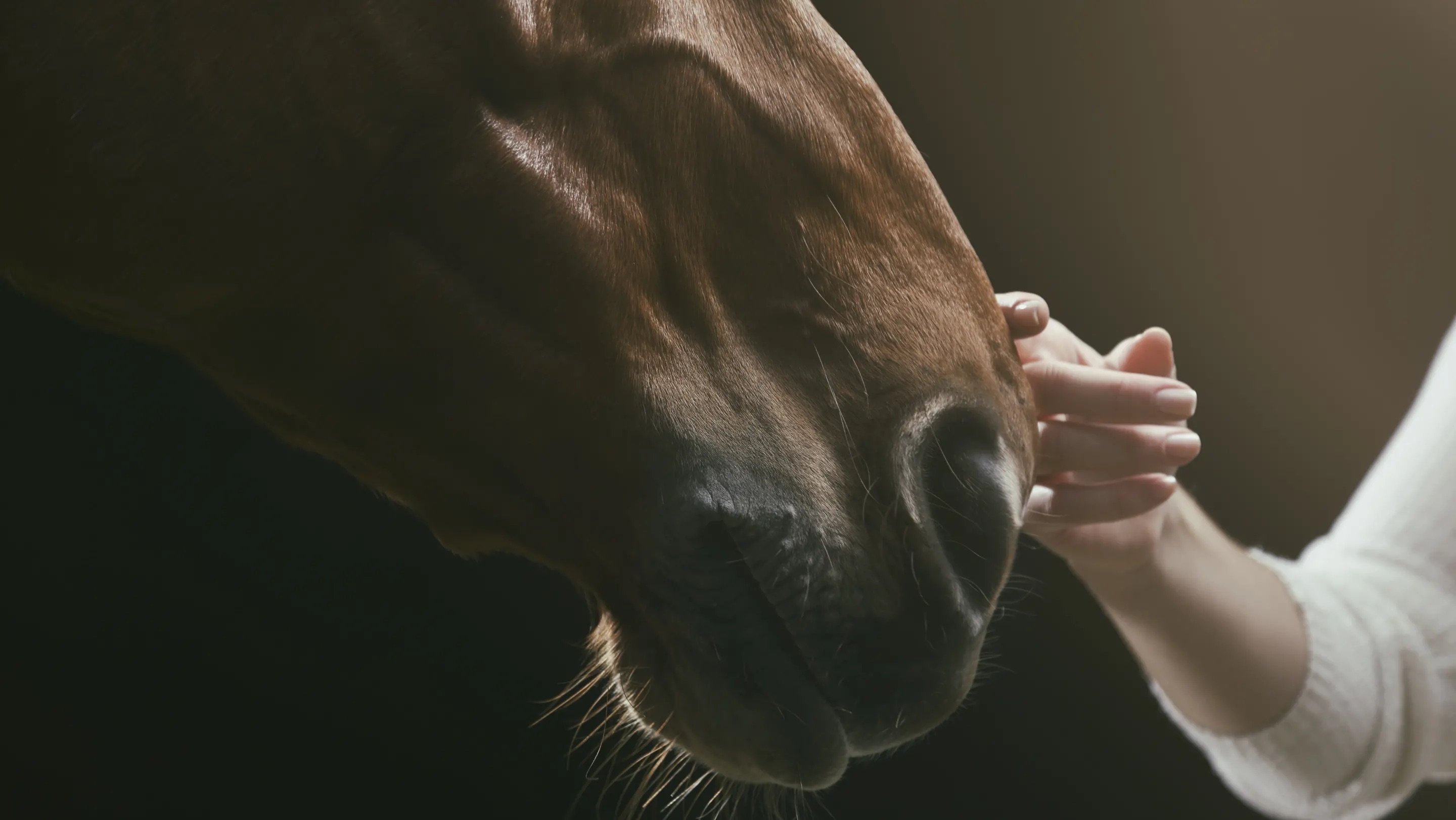
It is said that there there is more to a horse than its rider and that undeniably physical allure – that if you put your hands on or even near a horse’s body and close your eyes, you can feel a golden thread of energy travelling from your hands to its body, and from that body to your hands. There is a quiet strength to a horse that communicates a state of calm, relation, and peace. Therapists who work with grief and trauma are discovering that an emotional connection can exist between a horse and a human, that being in nature, in the presence of horses, seems to help children, teenagers and adults expand their emotional awareness and enhance their mental health, beginning the work of reconnecting them to the self, and to their environment, and even healing something inside that has been broken, often for years.

Poets might describe it as an opening up the heart – WH Auden’s “healing fountain”. Therapists call it limbic resonance, the capacity for sharing deep emotional states arising from the limbic system of the brain, which can include heightened feelings of empathic harmony. Horses, they believe, are highly sensitive creatures and possess an uncanny ability to read and mirror us because it is a skill that keeps them alive. They are instinctively prey animals, and in order to survive, they had to become excellent interpreters of energy, emotion and intention. Their sensitivity has been bred into their DNA for millions of years. But It is still all about the heart and the emotional states of calm and even joy when we feel positive emotions.

As a coda to this brief commentary on the horse as healer, a friend of mine passed away recently in Bellingen Hospital. The hospice ward is an impressive place in terms of its staff and the care they give. As he lay in declining repose, a horse came to his bedside and lay its head on his chest – a small horse, but a horse nonetheless. I have learned since that this pony is a regular visitor to hospices and aged care homes in the area. Bellingen hospital also allows cats and dogs to visit their owners.

For further reading on the horse as therapist, read this piece on horse heart math and an article by Candida Baker, an equine facilitated learning practitioner who helps people suffering  from trauma in the  Sydney Morning Herald. 

The Unequal Bargain

There are wealth of emotions associated with horses, such as pride and admiration, a desire for power, fear and joy, compassion, and companionship, and a lust for freedom. The pony is the cowboys’ closest pal. Western star and crooner Roy Rogers described it best:

Who carries your burden, who carries your load
On tumbleweed land or a long dusty road
Who asks you no questions, who tells you no lies
That four legged friend with the two honest eyes
A four legged friend, a four legged friend
He’ll never let you down
He’s honest and faithful right up to the end
That wonderful four legged friend
Roy Rogers, A Four Legged Friend (listen to the song at the end end of this post)

Over two millennia we have lavished depthless emotion, boundless affection and unlimited treasure upon horses. But we have also been capable of great cruelty both casual and calculated, – from willful neglect and senseless whipping to silent sacrifice as expendable extras on battlefields and motion picture sets. Raulff documents in prose and picture the violence inflicted upon our “four-legged friend”, and also how pathos and sympathy for the horses’ plight evolved into a worldwide movement for the prevention of cruelty to all creatures great and small.

That very same Banjo Paterson who gave us the Snowy Mountain man’s famous ride also glorifying the racetrack – and yet the annual Melbourne Cup,  Australia’s ‘race that stops a nation’, sees horses killed every year. we as a nation continue to praise and perpetuate what many see as animal cruelty. In Paterson’s day, horses were valuable and relied upon for transport and pleasure – theft was common – yet they were treated appallingly. Read The Man From Snowy River and reflect on the agony the hero inflicts upon his mount, which could barely move by the end of the ride and ‘was blood from hip to shoulder from the spur’. Yet Banjo, like apologists for the deaths on the track today – suggests that the horse was reveling in the chase.

But horses’ iconic place in our hearts and souls are sealed by their status as mobile metaphors of speed, of grace, of the wind in one’s hair, of wild, exhilarating, uninhibited freedom: “Run wild, run free”, like the troubled teen and the wild blue-eyed white colt in the 1969 British film of that name.

As Victorian bush poet James Cayce write in his poem A Magnificent Contradiction, a reminder of a debt that cannot be repaid:

The swirl of your mane alive in the wind, the glow on your flanks in the sun
The spirit of freedom you stir in my soul, the rhythm and grace when you run.
A whirlwind of power to wield or withhold; each movement made with conviction, 
A titan at work, a child at play; a magnificent contradiction

And it is with this in mind that Raulff concludes his epic ride, for it  is one of the most poignant paradoxes that the idea of freedom and movement associated with horses and being on horseback, the image of the wild mustangs in The Misfits and Banjo Paterson’s Colt from Old Regret, is juxtaposed with the reality that this “creature of the wind”, as the Arabs described him, has surrendered her freedom and free will in the service of man.

Quoting the poet Albrecht Schaefer, Raulff tells of how “the horse knows that it would like to be free … but the burden is never ending, and it is rarely allowed to run and has to stand there even when it is frightened and when it is seized by the urge to return to its nature, to flee … It is trapped in eternal captivity, always overshadowed by an inescapable will to which it resigns itself without ever realizing”.

This magnificent animal, Raulff  writes, “held in perpetual captivity, is seen by us as the epitome of all in nature that embodies nobility and magnanimity, stature, pride, and courage”.

Now the clasp of this union
Who fastens it tight?
Who snaps it asunder
The very next night
Some say the rider
Some say the mare
Or that love’s like the smoke
Beyond all repair
Leonard Cohen, The Ballad of the Absent Mare

© Paul Hemphill 2018.  All rights reserved


Icelandic horses play at a stud farm in Wehrheim near Frankfurt. M Proust/AP

 Epilogue

The Troubled Trail – an equine parable 

In primeval times, horses were indigenous to North America, but were long extinct by the time the white man came into the new world. He brought with him his deity and his diseases, his guns and his greed – and his horses. He conquered the land and broke it – its ecology, its  pre-Colombian history, and its people.

In the early years, the horses of the conquistadors humbled and harried the Native Americans. In time, many horses scattered and ran wild, and on the open prairie grasslands, they prospered and multiplied. The free people of the plains captured and tamed those feral mustangs, and so mounted, were better able to travel over great distances to fresh pastures and to the wide grazing grounds of the vast herds of buffalo, a rich source of food and fashion.

The horse gave the Native Americans mobility and speed, and an economic asset of value. They began trading horses with their neighbours, and also horse stealing, whilst their mounts gave them the edge in their territorial vendettas with neighbouring tribes. They bought steel axes and knives From the white traders who ventured into their lands from the east, and also, firearms which augmented their already effective mounted archery. This gave them a tactical edge when they first came up against the mounted soldiers of the US Army.

They were a formidable foe, their speed and maneuverability and their skill with bow and rifle, were more than a match for the clumsy, old-school heavy cavalry, and these, indeed, were compelled to adjust their own style and tactics to match their guerrilla adversaries, taking up light weapons – carbines and revolvers – and fighting on foot as circumstances dictated.

An irony of the Battle of Little Big Horn in the summer of 1876 is that George Armstrong Custer and his men rode over-confidently and fatefully onto a battlefield in which they were out-horsed, outgunned, and outmaneuvered by their numerically stronger foe. Another irony is that the only US Army survivors of that famous battle were the cavalry horses. As a contemporary witness of the aftermath wrote:

“As the men looked up and searched the broken terrain with weary, tearful eyes, down by the river a horse was struggling to get to its feet. Several of the men recognized the horse because of its peculiar buckskin-like colour. It was Comanche, the favourite mount of Capt. Myles Keogh, who had valiantly rallied the men of “I” Company right up to the end… He had apparently sustained at least seven wounds, and his coat was matted with dried blood and soil.” Comanche’s wounds were serious, but he recovered and spent his days as a celebrity, taking part in ceremonies and parades as a symbol of Custer’s memory. After his death, he was stuffed and placed on display at the University of Kansas Museum of Natural History. https://www.globetrotting.com.au/comanche-the-horse-that-survived-custers-last-stand/

The US Army exacted a terrible revenge for Little Big Horn. The days of the Plains Indian were numbered as the army and the hunters destroyed the buffalo herds that fed and clothed the tribes, and killed their horses, ending forever their wandering ways. As Neil Young was later to sing in Pocahontas:

They killed us in our tepee
And they cut our women down
They might have left some babies
Cryin’ on the ground
But the firesticks and the wagons come
And the night falls on the setting sun

© Paul Hemphill 2018.  All rights reserved

Frederic Remington’s Braves


The Ballad of the Absent Mare

Leonard Cohen 

Say a prayer for the cowboy
His mare’s run away
And he’ll walk til he finds her
His darling, his stray
But the river’s in flood
And the roads are awash
And the bridges break up
In the panic of loss.

And there’s nothing to follow
There’s nowhere to go
She’s gone like the summer
Gone like the snow
And the crickets are breaking
His heart with their song
As the day caves in
And the night is all wrong

Did he dream, was it she
Who went galloping past
And bent down the fern
Broke open the grass
And printed the mud with
The iron and the gold
That he nailed to her feet
When he was the lord

And although she goes grazing
A minute away
He tracks her all night
He tracks her all day
Oh blind to her presence
Except to compare
His injury here
With her punishment there

Then at home on a branch
In the highest tree
A songbird sings out
So suddenly
Ah the sun is warm
And the soft winds ride
On the willow trees
By the river side

Oh the world is sweet
The world is wide
And she’s there where
The light and the darkness divide
And the steam’s coming off her
She’s huge and she’s shy
And she steps on the moon
When she paws at the sky

And she comes to his hand
But she’s not really tame
She longs to be lost
He longs for the same
And she’ll bolt and she’ll plunge
Through the first open pass
To roll and to feed
In the sweet mountain grass

Or she’ll make a break
For the high plateau
Where there’s nothing above
And there’s nothing below
And it’s time for the burden
It’s time for the whip
Will she walk through the flame
Can he shoot from the hip

So he binds himself
To the galloping mare
And she binds herself
To the rider there
And there is no space
But there’s left and right
And there is no time
But there’s day and night

And he leans on her neck
And he whispers low
“Whither thou goest
I will go”
And they turn as one
And they head for the plain
No need for the whip
Ah, no need for the rein

Now the clasp of this union
Who fastens it tight?
Who snaps it asunder
The very next night
Some say the rider
Some say the mare
Or that love’s like the smoke
Beyond all repair

But my darling says
“Leonard, just let it go by
That old silhouette
On the great western sky”
So I pick out a tune
And they move right along
And they’re gone like the smoke
And they’re gone like this song


Grosvenor Square, London 1968

Poll Tax Riots, London 1990

Grosvenor Square 1968

Yiddish – the language that won’t go away

The past and present of a language that refuses to disappear. An iluminating post from Matt Adler’s excellent blog planting Roots Bearing Fruits.

Matt Adler - מטע אדלר's avatarPlanting Roots Bearing Fruits

One might be surprised to hear this, but Yiddish lives in Israel- and not just among Hasidim.  Yiddish is the traditional language of Ashkenazi Jews like me.  Before someone says something stupid, let me clarify something- Yiddish is NOT a “mixture of German and Hebrew”.  It is also not only a Hasidic language- it has existed for at least a thousand years as a distinct language, whereas Hasidism has been around for about 400.  On the eve of the Holocaust, 13 million Jews- socialists, communists, Zionists, anti-Zionists, Hasidim, secularists- spoke the language.

Yiddish is an archaeology of the Jewish people and linguistic proof of our ties to the Land of Israel.  About 2000 years ago, Romans expelled Jews from Israel and destroyed the Temple in Jerusalem.  The Jews who weren’t executed were expelled or enslaved.  Many eventually made their way to other parts of the Roman Empire, where their Aramaic…

View original post 1,716 more words

The politics of Shakespeare’s Julius Caesar

In the wake of controversial production of Shakespeare’s play in New York’s Central Park,  here is an excellent exposition of the politics of this play by American screenwriter, novelist and producer Joseph Suglia. One forgets just how politically sophisticated and daring William Shakespeare was – potentially dangerous and, indeed, deadly during the unsettled and bloody times of the Tudor monarchs.

Dr. Joseph Suglia's avatarSelected Squibs, Scrips, and Essays by Joseph Suglia

Caesar Anti-Trump

by Joseph Suglia

“Nackt kann die Wahrheit vor dem Volke nicht erscheinen.”

—Arthur Schopenhauer, Die Welt als Wille und Vorstellung, Zweiter Band, Kapitel 17

The election of Donald Trump to the presidency of the United States of America gives further evidence, if needed, that Americans wish to be led by cartoon characters.  It was not Trump the human being who acceded to the presidency.  It was his screen double, which is all the American electorate has ever known of him.  It was Trump the Rich Man of Home Alone 2: Lost in New York (1992).  It was Trump the Boss of The Apprentice (2004-2015).  It was Trump the Billionaire of Wrestlemania 23 (2007).  Donald Trump is every bit as unreal as Flo the Progressive Insurance Girl or Colonel Sanders—all three of these characters are strategic unrealities.  All are holograms, shadows of living beings rather than living…

View original post 5,091 more words

Laugh Out Loud! What are “the funniest books ever”?

The listing and rating of comedy books – any books, really, and indeed, “best of” lists of anything, be it music or movies, holiday choices or cheeses, is a highly selective and subjective exercise that says more about the compilers of the lists than about the quality of the books themselves. A demonstration of their erudition, perhaps, and their eclectic tastes? Or is it pomposity and pretentiousness, or worse, that put-down so beloved nowadays of shock-jocks, populists and self-styled”outsiders”: elitism.

Huffington Post published a list entitled “46 Hilarious Books Guaranteed To Make You Laugh Out Loud”. Now, how presumptuous is that? “Hilarious”. “Guaranteed”. “Make you laugh”. Says who? Esquire listed “the funniest books ever“, and The Telegraph presented “the fifteen best comedy books of all time“. And recently, there was he worthy Guardian wrangling famous authors into the paddock: “I fell out of bed laughing‘. “Funniest”. “Best”. Oh well!

I must confess that whilst I have heard of most of the books in these lists, I have read only a handful. And with the exception of Catch 22, The Hitchhikers Guide to The Galaxy, I would not rank these in a list of my own – which I will get to shortly.

Humour, comedy, call it what you will, is a funny business. Sorry. Bad pun.

There is a wide gap between a wry grin and a guffaw. One man’s cringe is another man’s belly laugh. And whilst whoopee cushions are anachronisms, remembered only by over-sixties, some folk actually DO like fart jokes. And age is no barrier – last week in Big W, I marveled (I think “winced with incredulity” is more apt) at a “fart blaster”, a promotional spin-off from the Despicable Me film franchise.

Humour works in many ways and on many levels. Sometimes, it doesn’t work at all. I recall my schooldays back in England, and being obliged to write essays explaining and analyzing the humour in Henry IV Part One (a title that doesn’t suggest a lot of laughs, although this is the play that gave  world that lovable old rogue Sir John Falstaff and his motley crew) , The Pickwick Papers, and the plays of George Bernard Shaw (I can still sing all the songs from My Fair Lady). Like numberless students before me, I tried unsuccessfully to explain to “Sir” that I just didn’t find them “funny”. As did most of my classmates. So we settled for memorizing the different “types” of “humour” (as if being “funny” was not really a part of it). These were usually words of Greek and Latin origin (these old folk invented it, you see – the classical “commedia” that is ), and classifying the Bard, Boz and GBS according to this scholarly taxonomy. Which, incidentally, is summarized beautifully in Monty Python’s classic Piranha Brothers sketch as an a witness describes the negotiating techniques of the demented and dangerous Douglas Dinsdale:

“Well, I was terrified. Everyone was terrified of Doug. I’ve seen grown men pull their own heads off rather than see Doug. Even Dinsdale was frightened of Doug…He used… sarcasm. He knew all the tricks, dramatic irony, metaphor, pathos, puns, parody, litotes and… satire. He was vicious”.

Some may find the concept and realization of this ice-thinly disguised and ridiculous send-up of the notorious and seriously brutal Kray Brothers to be in dubious taste (it would never get up today, what with political correctness and defamation laws). But that was the way the Python crew worked. You really had to “get” it. The same could be said of its predecessors, The Goon Show, Beyond the Fringe, That Was The Week That Was, and Pete and Dud’s Not Only But Also. And it’s successors, The Young Ones, Bottom, Black Adder, and Ab Fab. What is hilarious to some is puerile to others. What is deep and meaningful to serious aficionados is lightweight, trite and pointless to high and low-brow grumps alike – who “just don’t get it”.

And “getting it” too is selective and subjective. Some people “get” Woody Allen, and see all his stuff (and believe me, it can be patchy, and as he gets older, you do have to kiss a lot of frogs before you find the prince of the Annie Hall and Manhattan days), and others just don’t see the point (quite apart from expressing discomfort with his private life). So you can see how subjective it all is.

Humour in radio, film and television is in the eye, ear and imagination of the beholder. It is audiovisual as well as textual, the one often illustrating and enhancing the other. Expressing humour on the printed page is an altogether different and difficult endeavour.

Which brings me back to books, and to those lists.

I could never get into the lightweight upper-class comedies of manners so beloved of many English people, the Jeeveses and the Woosters and the Three Men in a Boat, or the precocious, neurotic memories of New York Jewish writers and intellectuals (although I do “get” Woody, as   I  mentioned earlier, I couldn’t abide Portnoy’s Complaint), nor the chatty, revelatory memoirs and faux-memoirs of celebrities of stage, screen and standup  (I did however enjoy David Niven’s Bring on the Empty Horses, back in the day, and Clive James’ Unreliable Memoirs). Yet these and their ilk would appear to dominate the “best comedy books” lists. And I wondered why classics like Cervante’s Don Quixote and Lewis Carroll’s Alice’s Adventures in Wonderland, surreal and eccentric as they are, didn’t make the team – nor old George Bernard or the now rehabilitated Oscar Wilde. But then again, these worthies were so weighed down with social and political comment that the humour often got side-tracked. I mean, who wants to hear about madness and despair, class prejudice, the privileged few and the downtrodden masses? Who needs to read about what happens when “the white knight is talking backwards and the Red Queen’s off her head”. Sorry about that, but I couldn’t resist bringing Grace Slick into this.. “Remember! What te dormouse said”:

Back to those lists. Compiled several years apart, they contain quite a few of the same titles. Which might suggest one of several things: that intelligent, well-read, journalists and reviewers  are into much the same kind of books as their peers; that their literary tastes are not at all like mine – I am very much a “I like what I like” person, are many other readers; and that people who put together such lists google others’ lists in order to draw up their own – so perhaps there are some lazy compilers out there who have not even read the books that they are listing.

Anyhow, in no particular order, here are my top five:

1. Jospeh Heller, Catch 22
The adventures of an American airman who maintains his sanity in an insane WW2 by endeavouring by fair means or foul to get discharged from the forces on grounds of insanity, and gives the world an iconic catchphrase for paradoxical double-binds and vicious circles. It was mean to be “Catch 18”, but Heller was gazzumped by Leon Uris’ Warsaw Ghetto soap opera Mila 18.

2. Thomas Pynchon, The Crying of Lot 49
Oedipa Maas returns home from a Tupperware party to discover that she has been appointed executrix of a former lover’s estate, and embarks on a strangely strange quest in which she encounters an exotic bunch of people with equally exotic names, like fascist Mike Fallopian, philatelist Ghengis Cohen, and a shrink named Doctor Hilarius.

3. Michael Chabon, The Yiddish Policemen’s Union
An alternative history set in the Yishuv of Sitka, Alaska where the Jews of Palestine were settled after being expelled by the victorious Arabs in 1948, as alcoholic detective Meyer Landsmen struggles with his personal demons, broken relationships, Hassidic gangsters, Jewish-Inuit mixed-bloods, and timeless  Jewish customs and traditions whilst investigating a gruesome mob murder.

4. David Barret’s Penguin Books translation of Aristophanes’ The Frogs and Other Plays Written by an Old Greek in the Fourth Century BC, these camp and corny, political satires, replete with cross-dressing, bawdy repartee, catchy choruses, and yes, fart jokes, are sharp and acerbic, and readily applicable to the politics of today. “Not my circus”, his over-the-top characters seem to say, “not my monkeys”.

5. Fyodor Mikhailovich Dostoyevsky, Crime and Punishment.
Impoverished, arrogant, misanthropic, know-it-all Russian student plots the perfect murder. And, doesn’t get away with it.  Just kidding.

Seriously though, here is number five:

5. George McDonald Fraser, The General Danced at Dawn
GMF Is better know for his Flashman books, in which the unreconstructed villain of Thomas Hughes’ Victorian yarn “Tom Brown’s Schooldays” roves and rogers his way through the late nineteenth century, managing to escape by the skin of his teeth from one military disaster after another. But Fraser’s semi-autographical memoir as a young officer in Egypt during WW2, recounted in a series of short stories, is an absolute delight. The title story of The General Danced At Dawn contains one of my unforgettable “almost pissed myself laughing” moments. It goes like this:

The inspecting General MacCrimmon is unimpressed with the Battalion until he watches a display of the regiment’s officers performing Highland dancing. He joins in, becoming more and more excited, and recruiting more and more soldiers and passers-by to join in, by dawn the next morning, a mob of Highlanders, Fusiliers who share their base, military policemen, Egyptian locals, an Italian cafe proprietor, a some Senussi Arabs from the west in burnouses, and three German prisoners of war make history by dancing ‘a one hundred and twenty-eightsome reel’. The General’s inspection report “congratulated the battalion, and highly commended the pipe-sergeant on the standard of the officers’ dancing.” The pipey’s opinion was that as a dancer, the General was “no’ bad … for a Campbell.

I “got it”. And still smile whenever recall that strange ceilidh.

Didn’t I say that lists can be selective and subjective.

Visit:
https://m.facebook.com/HowlingInfinite/
https://m.facebook.com/hf1983/