Between the idea And the reality Between the motion And the act Falls the Shadow
TS Elliot, The Hollow Men
It’s like the Hotel California. You can check out any time you like, but you can never leave.
When in the wake of 9/11 the US and it’s allies invaded Afghanistan, critics and cynics invoked the long arm of history to declare that the venture was a forlorn hope. Many questioned latter day imperial hubris. Others asked what were the long term goals, and what was the exit strategy. Reference was made to the Soviet Union’s destructive, demoralizing and ultimately debilitating invasion and nine year occupation (some 15,000 Soviet soldiers died, and 35,000 were wounded whilst about two million Afghan civilians were killed) which left the land in the tyrannical thrall of competing warlords; and to America’s own Vietnam quagmire. And then there were the British history buffs who reminded the world that Afghanistan was indeed the graveyard of empires, so well illustrated in the famous painting of the last stand of the 44th Foot on the bleak hillside of Gandamak during the disastrous retreat from Kabul in 1842. Inevitably, we dust down Rudyard Kipling’s well worn rhyme:
When you’re wounded and left on Afghanistan’s plains, And the women come out to cut up what remains, Jest roll to your rifle and blow out your brains An’ go to your Gawd like a soldier.
After more than 17 years, Afghanistan is the longest war in American history, with over two thousand soldiers dead and some twenty three thousand wounded. And yet, USforces are no closer to defeating the Taliban, who ruled most of Afghanistan before 2001 – than they were a decade ago. Indeed, In fact, the proportion of the country under the full control of the elected, American-backed government is humiliatingly small. A war which has caused over 31,000 civilian deaths due to war-related violence and 29,900 wounded (over 111,000 Afghans, including civilians, soldiers and militants, are estimated to have been killed) has staggered to a bloody stalemate.
Whilst a American force that once reached 140,000 soldiers America could not wipe out the Taliban, a mere 13,000 troops bolstering the Afghan army today, seems capable keeping the Taliban more or less in check. Whilst the Taliban appear to control the arid, countryside But 10,000 Afghan police and soldiers, 3,400 civilians and an unknown number of insurgents died in 2017 alone.
The US is now endeavouring to come to a peace deal with the Taliban, and its efforts are all the more urgent in the wake of President Trumps decision to extricate American troops from this expensive and dangerous entanglement. The Taliban appears happy to deal – and may be willing to accede to the US’ conditionsto rid themselves of the Americans knowing that if they renege on their word, the GIs are unlikely to return.
Before America toppled the Taliban regime, Afghanistan was a violent theocratic despotism. Women were not allowed out of their homes unless covered head to toe and accompanied by a male relative. Any departure from the Taliban’s barbaric version of Islam, such as dancing or shaving or educating girls, could earn floggings, imprisonment or even death. Ancient statues were dynamited as pagan idols. Keeping such zealots at bay, for as long as they try to impose their beliefs by force, is an incalculable benefit to the two-thirds of Afghans (about 24 million people) who live in government-controlled areas.
Hearts and Minds
A US withdrawal could jeopardize all this If the Taliban were to overthrow the Afghan government after an American withdrawal, it would be a humiliation on a par with Vietnam when Nixon’s administration hung its South Vietnamese allies out to dry (read Max Hastings recently published Vietnam – an American Tragedy for a chilling account of the US’ cynical, cold-blooded duplicity).
Even if the Afghan government staggered on, a US withdrawal without a solid peace agreement would cause chaos. In a 21st century replay of The Great Game, neighbours India, Iran, and Pakistan, and regional powers China and Russia would be tempted take advantage of the vacuum for their own strategic and economic ends, but to would all struggle to fill it. There could be a surge in fighting, as warlords once again reassert their influence and as ISIS and al Qaeda take advantage of the situation. The whole region could be further destabilized, and America and its allies could be sucked back in – on other’s terms.
And Afghanistan, at war with itself for 40 years, would be condemned to continuing conflict and carnage.
Click on the picture below to read the New York Times’ commentary on the negotiations. And below that is a recent piece by David Kilcullen, Australian author, strategist and counterinsurgency expert. He argues that talks between the US and the Taliban are not new. He asks: “What’s different now? A cynic might say that one reason the war has dragged on so long is that most sides have been achieving their objectives by letting it continue”. In essence, he argues, three new factors are driving the latest set of developments. Donald Trump and the shifting, unpredictable nature of US foreign policy; the growth of Chinese influence and engagement in Afghanistan’s political and economic development; and the rise of Islamic State-Khorasan, the Afghan branch of Abubakar al-Baghdadi’s Islamic State terrorist group, and now the Taliban’s is an arch-enemy. Kilcullen is, as ever, well worth reading.
David Kilcullen, The Australian, 16th February 2019
Training Wheels
The recent announcement that US and Taliban negotiators had agreed a framework for peace talks was greeted as a breakthrough in the 18-year war. But the twin issues around which those talks will be framed — a withdrawal pledge by Washington in return for a Taliban promise to never again let Afghanistan become a threat to any other country — are far from new.
These have been consistent Taliban demands since December 2009, when (as part of the headquarters team in Kabul) I met insurgent leaders who asked for the same deal in almost the same words. Likewise, I have heard these demands from many Taliban-aligned elders in Afghanistan over the years, and Taliban representatives proposed the identical quid pro quo during talks with the Obama administration in 2011-14.
What’s different now? A cynic might say that one reason the war has dragged on so long is that most sides have been achieving their objectives by letting it continue.
Washington’s original war aims — destroy al-Qa’ida’s Afghan base in retaliation for 9/11 and overthrow the Taliban as punishment for protecting Osama bin Laden’s outfit — had already been achieved by mid-December 2001, less than eight weeks after the war began. All the effort since then has been about rebuilding Afghanistan, and that effort is founded on two assumptions: that leaving without first standing up a stable pro-Western government would trigger a Taliban return, and that a Taliban return would mean terrorist attacks emanating from Afghanistan.
Since rebuilding Afghanistan was always recognized as a multi-decade project (akin to the US presence in South Korea, Japan and Germany), Washington was effectively telegraphing an intent to never leave — US forces are still present, after all, in all three of those countries more than 75 years after occupying them.
For coalition partners, and allies including Australia, the aim has been to demonstrate commitment, strengthen ties to Washington and thereby increase access to the political, economic and security benefits these ties offer. This goal, too, was achieved as soon as coalition forces entered Afghanistan: our hypothetical cynic might observe that we gain “alliance points” simply by being there and doing a decent job.
No coalition partner would be fighting in Afghanistan without Washington, and none can win or lose the war on its own. Thus, for the allies, whether the war is won or lost is, strictly speaking, irrelevant: having succeeded in being seen as a valuable ally, the only thing that could now undo that success would be to leave before the US does. Winning the war is, of course, a real objective for coalition capitals as it is for Washington — but it’s a secondary one.
Thus, for the coalition, given the open-ended nature of the Afghan commitment, the focus has been on calibrating troop levels, expenditure and other inputs to make the effort sustainable for the long haul. There are about 14,000 American troops in country (less than half the number stationed in Korea for the past several decades) and US spending on Afghan security forces is tracking at about $US3.7 billion ($5.2bn) a year — a tiny fraction of the overall US budget).
On Australia’s part, after peaking during 2010-11 with reconstruction and stabilization forces in Oruzgan province and a special operations task group that achieved widespread respect for its professionalism, our commitment now stands at about 300 personnel.
Most Australians are in headquarters roles in Kabul, at Camp Qargha (the officer academy near Kabul), as advisers to the Afghan Air Force, and at the training, advisory and assistance command for Afghanistan’s southern region in Kandahar. There is no doubt the Australians are performing a valuable role and enhancing our reputation with Afghans and allies — but again, we would achieve this effect whether the war is won or simply drags on; the only thing we could do to undermine ourselves at this point would be to withdraw ahead of the allies.
Coalition casualties are also relatively low — the coalition lost 18 personnel last year, dramatically down from 2010, the worst year of the war, when 711 US and allied troops were killed. Australia has suffered 41 fatalities, with more than half killed in 2010 and 2011 at the peak of our commitment. Our last fatality occurred in July 2014, while our last combat casualty was in June 2013.
While any loss of life is a horrendous tragedy, in the harsh logic of defense planners the US casualty rate is sustainable. In short, at the current level of financial and human cost, there is no strictly military (as distinct from political or humanitarian) reason why the US could not simply continue the war indefinitely. Of course, for the Afghan military and police — which have lost 45,000 killed since September 2014, compared with the coalition’s 72 — the war is far from sustainable, and its impact on civilians is both horrific and increasing. So while the coalition can essentially keep this up forever, the Afghan military and ordinary Afghans can’t.
For the Afghan government, another key stakeholder, our imaginary cynic might say that the main goal is to maintain the benefits of international presence including military aid, funding, donor engagement and reconstruction effort. Again, although winning is a real objective for Kabul, until its capture of Kunduz in October 2015 the Taliban showed no ability to seize provincial cities or do deep damage to the capital, so losing to the Taliban seemed an impossibility. And under those circumstances, winning the war was desirable but continuing it was mandatory, since it was the war that guaranteed international engagement.
This is no longer the case: given rising civilian casualties, the high loss rate of Afghan forces, the deadly string of Taliban bombings now afflicting Afghan cities and the fact that the Taliban are now capturing and briefly holding provincial capitals every few months, the Kabul government wants to reduce the war to a far lower level of intensity.
Containing the Taliban as a remote, rural threat, grave enough to stop the international community abandoning Afghanistan yet able to be gradually overcome as a long-term national project (with international money and help) would be ideal.
On the Taliban side, winning has always been the ultimate goal but, like other stakeholders, the insurgents have been willing to let the war drag on without a resolution. In the first few years after 9/11 the Taliban was in disarray — its senior leadership group, the Quitta Shura, wasn’t even founded until October 2003, two years after the US-led invasion.
Then after a resurgence in 2005-06, it suffered severe setbacks in the south and east of the country and its fighters were forced to bide their time as they rebuilt, recruited and rearmed in Pakistan, and stealthily recaptured territory in remote parts of Afghanistan. Then Barack Obama, in announcing his surge in December 2009, also (very helpfully for the Taliban) announced its end date, later extended by NATO but still resulting in a rigid timetable for withdrawal.
As a result, Taliban leaders wisely decided their best course was to withhold most of their combat troops in Pakistan, do enough to stay in the public eye in Afghanistan, and wait for withdrawal, which duly took place right on schedule. After the International Security Assistance Force departed at the end of 2014, the Taliban immediately began ramping up its activity, and within a year it was gaining ground, taking the fight to Afghan cities, and projecting force into Afghanistan from its haven in Pakistan.
For Pakistan, which has historically seen India as its principal threat and feared encirclement by an India-Afghanistan alliance, keeping Afghanistan unstable is an important means of preventing that encirclement and achieving strategic depth. Pakistani decision-makers have long been extraordinarily open about this.
From their standpoint, the Afghan Taliban (as distinct from the Pakistani Taliban, which Islamabad sees as a real threat and has fought hard to contain) is an insurance policy, to be preserved in case of a need to crank up the pressure on Kabul and New Delhi. A Taliban victory would be problematic for Pakistan, as would an outright Taliban defeat, so keeping the war on a low boil and letting parts of Pakistan become a haven for the Taliban has made sense through much of the war since 2001.
This might be why, during the tentative talks in 2009-10 that I mentioned earlier, Pakistani intelligence officers arrested a key Taliban figure — Mullah Abdul Ghani Baradar, brother-in-law to Taliban founder Mullah Omar, a former deputy defense minister and a highly respected combat leader who had expressed willingness to talk with the coalition.
With Baradar out of the picture, the talks collapsed, but Pakistan now had a controlling hand in the resumption of talks, at a time and in a manner of its choosing. That’s why Baradar’s release by Pakistan last October — and his participation in the most recent talks in Doha last month, by far the most productive to date — was such a big deal. For the first time in years, the Taliban now has a negotiator at the table with the power to deliver on agreements, and the fact that Pakistan released Baradar to participate suggests that Islamabad, too, is serious about finding a path to peace in Afghanistan.
This brings us back to our original question: what’s different now? In essence, three new factors are driving the latest set of developments.
The first is Donald Trump.
I mentioned that two key assumptions have underpinned the enduring international presence, namely the fear of a Taliban takeover if we withdraw, leaving a weak Afghan government behind, and the expectation that such a takeover would result in terrorist attacks from Afghanistan. Trump doesn’t seem to care much about the first issue, and his answer to the second is that if an attack took place, he would order massive retaliation.
Given his generally mercurial approach to foreign policy and the fact that he has indeed ordered strikes in Syria and raids in Yemen and Africa, this threat is probably credible enough to give the Taliban pause — and, more importantly, reassure some in Kabul. The US President — who campaigned on getting out of Afghanistan as part of a broader policy of extricating America from its Middle Eastern wars of occupation — has been remarkably consistent in fulfilling his campaign promises. In his recent State of the Union address he repeatedly emphasized the need for a political solution in Afghanistan.
But while he seems entirely serious about settling (as he calls it) with the Taliban, his attitude is sharply at odds with that of the US foreign policy establishment, the Defense Department (where secretary James Mattis resigned in protest over the Afghan and Syrian withdrawals), the Democratic opposition, and even his own Republican Party in congress, which passed a bipartisan resolution calling on him to maintain forces in Afghanistan and Syria.
So, with a US presidential election next year and its guerrillas gaining ground, Taliban negotiators know that this is the best offer they are likely to get, while by January 2021 there could be a very different occupant in the White House and Washington’s Afghanistan “forever war” project could be back on.
A second factor is also preying on Taliban minds — the rise of Islamic State-Khorasan, the Afghan branch of Abubakar al-Baghdadi’s Islamic State terrorist group. Having lost 98 per cent of its territory in Iraq and Syria, the group is looking for greener pastures in Africa, The Philippines, and particularly Afghanistan. IS-K has been very active since its first appearance in September 2015, launching a series of horrendously violent bombings and massacres, and the Taliban is an arch-enemy of the group.
Still, the group’s reach and influence are growing, leaving the Taliban with the choice to make peace this year under relatively favourable circumstances or face a war on two fronts with an emboldened IS-K in the future. Again, this puts pressure on Taliban negotiators to find a solution.
The final new factor is that Pakistan seems to have finally decided its interests are best served by peace in Afghanistan — hence the release of Baradar and the willingness to support talks.
The reason for this change might partly be the new, tougher line on Pakistan adopted by the Trump administration, or a policy shift by the civilian administration in Islamabad. But for my money, the most plausible explanation has to do with Pakistan’s major ally, China.
Chinese business and political influence in Afghanistan have been growing significantly in recent years through investments in mining and infrastructure, aid money, diplomatic activity and a limited military presence (with troops often disguised as security contractors working for Chinese companies in country).
Afghanistan is also an increasingly important market for Chinese goods. This matters to Pakistan because, if the key factor driving Islamabad’s behaviour has been fear of encirclement by India, then one solution is for a major Pakistani ally, China, to play an important role in Afghanistan and thereby counterbalance Indian influence.
This would reduce the requirement for Pakistan to tolerate the Taliban, since there would no longer be a strategic rationale to destabilise Afghanistan. While many in Washington see Chinese influence in Afghanistan as a threat, in fact a greater Chinese role in the region is probably inevitable in the long term and is likely to be quite constructive.
All this means that — after 18 years in which everybody wanted to end the war, but everybody also wanted some other objective even more and was willing to continue the war rather than risk that other goal — things might finally be changing for Afghanistan. While I am not as cynical about this as my hypothetical observer, I am very sceptical about the prospects for peace anytime soon. This is not the first time that talks have been mooted, it’s not the first time the stars have seemed to align for peace, and it’s clear that the Taliban is both far from defeated and incapable of winning outright.
There is also the not-so-minor matter of the sovereign independent government of Afghanistan, which strongly resents being cut out of negotiations, has defense and interior ministries led by highly competent hard-line adversaries of the Taliban, and is highly unlikely to acquiesce in its own abandonment.
So, time will tell, but at this point, colour me sceptical but not entirely cynical about prospects for peace in Afghanistan.
“As I have stated strongly before, and just to reiterate, if Turkey does anything that I, in my great and unmatched wisdom, consider to be off limits, I will totally destroy and obliterate the Economy of Turkey (I’ve done before!)” Donald Trump 7th October 2019
The history of the Kurdish people has long been one of abandonment and betrayal. Recent events (October 2019) bring to mind American baseball great Yogi Berra’s famous line: “It’s like déjà vu all over again”.
In line the promise to his base to pull American troops out of costly and interminable wars, President Donald Trump has decided to act on his earlier commitment to withdraw the US’ meagre but deterring force in north-eastern Syria, and hand Syrian lands controlled by the largely Kurdish Syrian Democratic Forces to Turkey, the Kurds’ long-time, inveterate enemy.
Already straining at the leash, President and would-be Sultan Recep Tayyib Erdoğan has his troops ready to go. With apparently declining political fortunes, he needs to shore up his nationalist credentials at home, and also eyes this part of Syria as a dumping ground for some two million Syrian refugees that Turkey no longer wishes to look after. Trump has warned Turkey that should it behave badly, like use disproportionate force or indulge in a bit of ethnic cleansing, the US will “destroy and obliterate” its economy.
So far, so … predictable, really. It replays the standard trope of the current US administration: the US is great because it crushes all before it.
Many are questioning POTUS’ “great and unmatched wisdom”. The US’ European allies and the Democratic Part are aghast at Trump’s move. The Pentagon warns that a Turkish invasion – for this is what it is – will further destabilize the region. And many of Trump’s staunchest Republican allies have broken their hitherto closed ranks with their Dear Leader and declared that a US withdrawal would be “catastrophic” – no mincing word here! – not only because it betrays their allies, sending an unfortunate signal to the US’ other friends and dependents, but also that it would be a steroid boost for the scattered, defeated, but not quite demoralized, still active and dangerous cadres of the Islamic State.
This is no rhetorical exaggeration. The SDF bore the brunt of the fight against ISIS in this theatre, and lost thousands of its its soldiers men and women both. Presently, they are guarding rend of thousands of captured ISIS fighters and their wives and children, and continue to combat instances of Islamist resurgence.
Should push come to shove – a likely prospect – Kurdish forces, whilst well-armed, experienced and motivated, are no match for the Turkish Army. Which leaves Syria’s Kurds with few practical options, none of them pleasant. One is to abandon the indefensible plains and withdrawing their traditional mountain heartlands – essentially, back to square one, but living to fight another day. Another is to do a deal with Assad’s regime. That would be a pact with the devil. Assad, backed by his Iranian, Russian and Hezbollah allies and auxiliaries, are bent on reuniting the shattered country and restoring Syrian, Arab dominion.
Things might not go all Turkey’s way, however. As Borzu Deragahi writes in The Independent, “… the risks for Turkey aremany. From the Saudi intervention in Yemen, to the Iranian role in Iraq, to the United Arab Emirates and Egypt’s backing for a warlord in Libya, the region is dotted with open-ended and expensive entanglements that end up backfiring”. . And the last time a country was given a green light to invade its neighbour did not end well – as Saddam Hussein discovered in Kuwait in 1991. It was, indeed the start of all our present nightmares.
As the following article explains, Syria’s Kurds are are trapped between the Turkish hammer and the Syrian anvil. All is, as Kent lamented in King Lear, “cheerless, dark and deadly”.
Rojava and the Kurdish conundrum
Media coverage of the Syrian Kurds is largely a romantic narrative of brave and plucky soldiers -particularly photogenic female fighters and a selfless cadre of idealistic foreign fighters – in an egalitarian para-socialist, anarchist-lite reimagining of the Paris Commune overcoming poor odds against a resilient and vicious barbarian foe, threatened by traditional enemies to their rear, and about to be betrayed by their fair-weather allies. Some on the left cleave to a narrative that conforms with pro-Assad, Russa-aligned reportage that views any opposition to the legitimate Syrian government and its popularly elected President Bashar al Assad as either criminal or deluded, and a cat’s paw of western interests.
With US policy with regard to its erstwhile Kurdish ally in constant flux – some would describe it as floundering – here is a brief discussion on what or may not happen next. As is often the case in Middle Eastern affairs, and particularly in sad, shattered Syria, it may well be redundant tomorrow.
But first, how did we get here?
Past
The Kurds are a distinct ethnic and linguistic group spread across northern Syria, southeast Turkey, northern Iraq and northwestern Iran. At the end of World War 1, with the disintegration of the multinational Austro-Hungarian, Russian and Ottoman empires, the Kurd’s representatives joined delegations from many other small nations demanding their own independent states. Unlike those in Eastern Europe, the Kurds were to be disappointed. Britain and France has already determined to divide the Arab provinces of the Ottoman Empire between themselves, and with Treaty of Sèvres of 1922, Kurds were subsumed into the new states of Syria and Iraq. Kemal Ataturk, having ejected Greek and other forces from Anatolia and established a unitary Turkish state, had no intention of allowing the Kurds in the east their own patrimony. And neither did the Persians (the country did not adopt the name Iran until 1935).
For almost a hundred years, the governments of Iraq and Syria, Turkey and Iran, for reasons strategic, economic, political and nationalistic, resisted the demands of their Kurdish citizens for autonomy let alone nationhood, and indeed actively discriminated against them. Dissent and rebellion were suppressed, often brutally, well into the 21st Century.
The Turkish and Iraqi armies have waged war are against their restive Kurdish populations for decades. After the second Guif War (the Kuwait one),Iraq Kurds were able to establish an autonomous statelet aided by a US underwritten no-fly zone. The Kurdish PeshMerga forces sustained the bitter fight against a seemingly unstoppable Da’ish after Iraqi forces had fled the field and extended military and administrative control beyond their own territory. Syria’s Kurds were able to exploit the chaos of the civil war to establish autonomous cantons in the north-west aground the city of Afrin, and in the Syria-Turkey borderlands in the northeast, now known as Rojava. Having borne the brunt of the fight against Da’ish, armed by the US and aided by allied air power and special forces, they earned the ire and suspicion of Turkish prime minister and now president Recep Tayyib Erdogan, who for his own political purposes, had broken a longstanding truce with Turkish Kurds, branding them as terrorists, he maintained, in cahoots with their equally terrorist Syrian confrères.
Taking advantage of the Syrian Army’s preoccupation with al Qaeda-aligned opposition forces in the northwest and a US policy vacuum with respect to Syria, and with the tacit approval of Syria‘s Russian ally, Turkish forces occupied Afrin and its surroundings. The US reliance on the Kurdish militias who bore the brunt of the fight against Da’ish in northeastern Syria, and the presence of a small US force have deterred Erdogan from moving against Rojava. Until recently, that is, when US President Donald Trump declared that the US would soon withdraw its 2,000 ground troops from Rojava, leaving the Kurds vulnerable to Turkish attack. Erdogan assured him that his forces would not move against Rojava … yet. The outcry among America’s allies was immediate. How could the US treat its allies so? What message would this send to potential allies in the future? The US would be handing Syria to Russia and Iran. Da’ish was not dead yet and would be reinvigorated by a US retreat and a conflict between Kurds and Turks. Backtracking somewhat, Trump has now threatened Turkey with economic destruction should it attack the Kurds.
This then is the current state of play.
Present
The Kurds are caught between a Turkish rock and a Syrian hard place, they can fight (they’ve a large, experienced, well trained and well-armed army, an esprit de Corp that few others possess) or they can deal – with Assad, that is, becauseErdogan won’t play – for a degree of autonomy within the Syrian fold. The US might offer a no-fly zone which will interdict warplanes and choppers, strafing and barrel bombs, but wouldn’t stop tanks and infantry from manoeuvring with impunity. Kurdish forces would probably hold those off, and meanwhile others might be tempted into the fray. The resulting ground war could see neighbouring armies, Russian mercenaries and western special forces bogged down like the Americans were in Vietnam and the Russians in Afghanistan.
In their presently autonomous ‘commune’ of Rojava in north eastern Syria, the Kurds are not in the strongest strategical or geopolitical position. It has a sizeable Arab population in, and Turcoman also, and many are not too happy to be governed by Kurds. Divisions are ethic, racial, and tribal as much as political, and there are reports that Kurdish soldiers and administrators have been a tad heavy handed. Arabs and others will no doubt be pining for Assad’s comradely embrace before long. The Kurds themselves are divided amongst themselves, often between families and clan, and rival militias, and have been for generations. In Iraq, for example, two extended families, the Barzanis and Talabanis, have dominated Kurdish politics and have foughteach other since Iraq was created in 1922, often siding with the Iraqi government against their rivals. The provincial capital of Kirkuk in northern Iraq was occupied by Barzani-controlled forces during the successful offensive against Da’ish, but was recently taken by Iraqi forces with the help of pro-Talabani Kurdish soldiery.
Rojava, furthermore, is landlocked, and strategically placed between Turkey, Iraq and western Syria, and there are oil reserves and agricultural land that Syria would want back. Syria, Iraq, Iran and Turkey all loathe the idea of an independent Kurdistan and indeed, could work together to enforce a blockade and ferment discord within.
Russian president Vladimir Putin is backing Assad’s campaign to reconquer all of Syria, and that includes Afrin, now Turkish occupied, and Rojava, which is currently being watched over by the US, and eyed-up by Erdogan. But Assad’s forces are currently preoccupied with retaking Idlib province from al Qaida and other Islamist groups and eliminating Da’ish hold-outs near Hama and in the south, so right now, they are not ready or able to move on either Afrin or Rojava.
The Turks are quite aware that the Russians are reporting to Putin and also to Assad, and have been kind of warned off by the US, so they might be cautious. The Russians are in effect a tripwire. If the Turks occupy Syrian land, Assad will have to move against them – as will his Russian, Iranian and Hizbollah allies. He is probably already contemplating a move on Afrin, and if the Turks threaten to to occupy Rojava, he will have to move against them there too. And he has a brigade of battle-hardened troops just south east of there at Dier ez Zor.
When push comes to shove, Turkey has a well-equipped NATO army, but it has limited battle-experience – fighting a historical Kurdish insurgency doesn’t count, and it’s officer corp has been decimated and demoralized in the wake of the failed “coup”. Assad can field a depleted but experienced, Russian-supplied army backed by Hizbollah and Iranian fighters. The Russians know this, the Americans know this, and one would assume that Erdogan knows this – unless he is totally blindsided by his sultanate ambitions.
Future
Academically, this Is all very interesting – but to the Kurds in Rojava, quite scary. They are the small guys and the fall guys in this geopolitical game. They fight hard and well and they fight to win what they can, but they also want to live to fight another day. They are used to betrayal and are probably inured to it. It has been their lot since World War 1 when they turned up at the peace conferences asking for a country of their own just like those other small nations who came into being in Eastern Europe.
So they will deal with Assad – to save their skins, to save their towns, their homes and their families. They will endeavour to hold out against any Turkish offensive, buying time and perhaps, buying some for Assad too whilst he rolls up the rebels in the west and south. And whilst they hold on, they will bargain for a degree of autonomy, amnesty, and aid.
This is where Russia can call the shots. There is in reality no good way forward for the Kurds, but there is a possibility that the worst can yet be avoided if Russia, keen to maintain it’s influence in a post-war Syria, can mediate an arrangement between Damascus and Ankara.
Turkey’s bottom line is a border with Syria not under the control of the YPG/PKK, its erstwhile mortal enemy. Despite Erdogan’s jingoistic drum-beating, he probably does not want to occupy Syrian territory nor provoke confrontation with Assad and his allies. Assad wants a Syria free of Turkish (and, indeed NATO) troops and a return of his mandate and mukhabarat to all parts of the country, including the Kurdish north. He can live with the YPG, but only in its “proper” place: as a vassal, defanged, compliant, and a useful ally against Ankara.
Can and will the Kurds trust Assad? Never! After seventy years as second-class citizens in Syria, who would? One can but hope that the analogy of the Paris Commune is just that – an analogy only. That quixotic intifada ended tragically for the communards.
Will all this come to pass? Who knows. The situation, the players, the circumstances change moment by moment. A few days ago, The Independent’s knowledgeable Middle East correspondent Patrick Cockburn wrote: “The only solution in northeast Syria is for the US to withdraw militarily under an agreement whereby Turkey does not invade Syria, in return for the Syrian government backed by Russia absorbing the Kurdish quasi-state so hated by the Turks and giving it some degree of internationally guaranteed autonomy. Any other option is likely to provoke a Turkish invasion and two million Kurds in flight – a very few of whom will one day end up on the pebble beaches of Dungeness”. As I was saying …
Well we know where we’re going But we don’t know where we’ve been And we know what we’re knowing But we can’t say what we’ve seen And we’re not little children And we know what we want And the future is certain Give us time to work it out
The Talking Heads
To borrow from Boz, these were the worst of times, these were the strangest of times. So disillusioned were we with our politics and our politicians, so dispirited by the sad state of the plant, so fissured and fractured as a society, with our intractable culture wars, we retreated into own private Idahos, pulled up the drawbridge and settled in with our iPads and iPhones and our Foxtel with the vino collapso and watched all the fun of the fair.
The mellifluous but perennially entertaining Donald Trump had a bad year, and a resolute Theresa May likewise. Confounding critics, she endeavours to persevere as she steers her foundering shipm of State towards Brexit and China’s Uighur Muslims. Barbaric Da’ish had a bad year (which was rather a good thing) , as did the unfortunate Rohinga of Myanmar, and the long-suffering people of Gaza.. Resilient Bashar Assad had a good year, with a little help from his Russian, Iranian and Hezbollah friends, but the wars of the Ottoman succession grind on. Vladimir Putin and the fat conductor Kim Jong Un had an excellent year, courtesy of POTUS. Angela Merkel lost her sparkle but royal Markle sparkled, and the luminous Taylor Swift, all legs and lipstick, emerged from her apolitical closet to swing the vote against the Donald in the US midterms. Her trim gluteus maximus starredin a court case that typified a year that saw women stand up strongly against years of aberrant male behaviour.
The Australian parliament devolved into a circus of tantrums and turncoats as the Liberal and National coalition devoured its own in a year book-ended by smutty sexual scandals, whilst canny Labor kept its powder dry for what bodes to be an whopping electoral victory in 2019. We wished that our rulers and representatives would stop behaving like children and start running the country and governing it for all of us.and then the children walked out of school en mass and told us that when they grew up they’d do a better job. The circus clowns huffed and puffed and denigrated the young ones – which only served to embarrass them more for their paucity of vision and partisan division.
And so, to the year in review:
During what was to many observers a dispiriting year of division and destruction, In That Howling Infinite maintained its watch with an eclectic mix of commentary, commemoration, culture and comedy. It was a big year – some forty posts in all. So many indeed that decided to reposted my favourite top five – those that I most enjoyed writing – on In That Howling Infinite’s Facebook page. See these at the conclusion of this review.
In a December post, Free Speech, One Each, we expressed disappointment with the ignorance, naivety, and self-absorption of electorates, left and right: their lack of historical knowledge and of curiosity, an unhealthy and self-defeating habit of accepting facts, narratives and theories based upon their preconceptions and prejudices. Nowadays, it often seems as if the reasonable middle has been excised from political discourse, drained out by the shrill voices of the extremes with their identity politics, virtue signalling, and vested interests. Social media has exacerbated the situation as folk lock themselves into their own echo chambers, listening only to those with whom they agree, ignoring or even avoiding contrary opinions and perspectives. It is a self-defeating, delusional, zero-sum form of groupthink that erodes trust and goodwill and prevents the development of consensus and cooperation. Meanwhile, opportunistic politicians and commentators build their constituencies by appealing to the particularistic, even atavistic wants and fears of their followers. Too often this reduces things down to atavistic lowest common denominators. They literally seize the low moral ground. Peoples problems and fears are real enough, and do need to be solved or allayed, but too often they are gulled, manipulated and recruited by modern-day snake-oil salesmen and show-tent shysters.
It was with this in mind that we caste a weary and cynical eye over Australian politics and society, particularly the ongoing history and culture wars, beginning in January with the self-explanatory We’ve Got The Australia Day Blues , and continuing with Conservatism in Crisis, Milo Downunder, an alt-right love story, and the ongoing angst about the Ramsay Centre and its proposed university course on western civilization. Never in recent memory have so many words been printed about so little – at least not until the right’s last holy war. And so, there is The long, dark teatime of The Australian’s soul and its sequel The Oz’s lonely crusade. By year’s end, both sides appear to have run out of puff and the course will most likely end up in small regional campuses rather than the prestigious halls of Sydney and Melbourne.
Southern Discomfort.
The year’s leitmotif was the ongoing fiftieth anniversary of 1968, a tumultuous year for the world, and a formative one for myself personally. Stories of the events of that year are interspersed my own recollections – what I was doing at at the time, and what was going through my youthful head. In Encounters with Enoch, I revisit English politician Enoch Powell’s controversial ‘Rivers of Blood’ speech. Then it’s Springtime in Parisas I recall les Évènements de Mai. And thence to Prague and the Soviet invasion of Czechoslovakia with Tanks for the memory – how Brezhnev changed my life. Finally, there was the year in review with Things fall apart, the centre cannot hold – 1968 revisited.
2018 was also the centenary of the armistice that ended The Great War. November 1918 – the counterfeit peace discussed how for many countries and peoples in Europe and beyond, the conflict and the bloodshed continued. We also shared a poignant, fitting tribute by Gerry Condon to all the “doomed youth” of all wars withDulce et ducorem est – the death of war poet Wilfred Owen
There were other anniversaries. The Wild Wood and the Wide World revisited Kenneth Grahame’s riverbank pastorale The Wind in the Willows 110 years after it’s publication. Ghosts of the Gulag, which followed on from an earlier discussion of film The Death ofStalin released earlier in the year, looked at the contribution of Alexander Solzhenitsyn on the fiftieth anniversary of The Gulag Archipelago. The Russian theme continued with Whoar! And Peace – a light look at the BBC’s recent racey adaptation of Tolstoy’s celebrated house-brick.
As always, the politics and people of the Middle East feature prominently in In That Howling Infinite. January kicked off with Ahed Tamimi – A Family Affair, a discussion about the young Palestinian activist and the first family of the resistance. Out of season, we visited the birthplace of the Christ child with O Little Town of Bethlehem, how still we see thee lie and tell the story of a border town that has existed since the beginning of recorded history. We considered whether an Israeli-Palestinian confederation was possible, and republished Israel author David Grossman’s A Fortess But Not Yet a Home, and a review of author Amos Oz’ Dear Zealots – letters from a divided land. Sadly, Oz passed on 28th December, his death and that of the indomitable Uri Avnery (see last September’s Seeing through the eyes of “the other’) in August saw the passing of two of the most forthright intellectual proponents of the receding ‘two state solution’. We also reviewed the intimations, imperfections and implications of Donald Trump’s “ultimate deal”, an ostensible end to the intractable Arab-Israeli conflict but which is effectively Throwing Abbas under the bus. The wider Arab and Islamic world features in Islam’s house of many mansions, and, in the wake of the murder of journalist Jamal Khashoggi and the Yemen war, we consider the possibility of Sanctioning Saudi -1973 revisited.
Our history posts were as eclectic as ever. We continued our series of Small Stories with a profile of The Monarch of the Sea, Prince Roy of Sealand, the smallest country in the world, and The Odyssey of Assid Corban from a tiny village in Lebanon to a wine dynasty in Auckland, New Zealand. A video of University College Dublin’s celebrated Choral Scholars inspired a look at an old Jacobite song Mo Ghile Mear, whilst the anniversary of the Irish rebellion of 1798 recalled another song and a host of personal memories: The Boys of Wexford – memory and memoir. We reviewed two historical novels. In Cuddling up to Caligula, we discovered a soft side to the controversial Roman Emperor; whilst melancholy Martin Sparrow’s Bluesshone fresh light on the travails of Australia’s early white settlers. And a review of Ulrich Raulff’s Farewell to the Horse, a history of man’s long relationship with our four-legged friend, galloped away from me as we sang the song of the horse with The Twilight of the Equine Gods – part history, part memoir, part prose-poem.
You were taken away at dawn. I followed you As one does when a corpse is being removed. Children were crying in the darkened house. A candle flared, illuminating the Mother of God… The cold of an icon was on your lips A death-cold sweat on your brow – I will never forget this; I will gather To wail with the wives of the murdered streltsy Inconsolably, beneath the Kremlin towers.
Anna Akhmatova, Moscow 1935
Russian author and historian Aleksandr Solzhenitsyn‘s three volume The Gulag Archipelagowas completed fifty years ago. It was published five years later, with an English translation the following year. It covered life in the gulag, the Sovietforced labour campsystem, in a narrative constructed from a variety sources – reports, interviews, statements, diaries, legal documents – and Solzhenitsyn’s own experience as a zek, a gulag prisoner – famously if excruciatingly retold in his chilling, literally and figuratively, and yet brief, autobiographical OneDayInTheLifeofIvanDenisovich.
Following its publication in the west, the book circulated in underground samizdat publication in the Soviet Union until its appearance in the literary journal Novy Mir in 1989. Since the dissolution of the Soviet Union, The Gulag Archipelago has been officially published in Solzhenitsyn’s own country, and since 2009, it has been mandatory reading in Russian school curricula.
A 50th anniversary edition was released on November 1st, 2018 with a forward by Jordan Petersen, the Canadian psychologist, author, and poster-boy – a kind of thinking person’s Milo Yiannopoulos – for many on the conservative side of politics who rant and rave about the existential threat to western civilization and Judeo-Christan values posed by the triple headed Cerberus of political correctness, identity politics and value signaling that has ensorcelled the hearts and minds of the youthful, radical, emotional, university left and their mentors and their sinister svengalis in academe and media. There is almost a “Reds under the beds” paranoia at play here in which is that communism and all it’s works are a kind of secular succubus, and that impressionable youngsters and deluded oldsters must be exorcised of false and failed promises.
Petersen’s forward is actually a good read, if somewhat overblown, slanted, jumbled and repetitive, long on opinion and short on historical memory. For example, whilst Karl Marx, Josef Stalin and Mao Zedong, and also Cuba, Cambodia and Venezuela come in for a predictable and justified bollocking, there is no mention at all of their ideological opposites, the equally repugnant and brutal authoritarian regimes of Hitler, Mussolini and Franco, and numerous right wing tyrants the world over – although admittedly, these in no way matched the rigour and discipline and the pervasive and pernicious social and psychological control of the ‘peoples’ republics’. Nor, apart from an acknowledgement that brutal excesses are common to all regimes, is there a balanced recognition that capitalism can be as corrupt and exploitative and as red in tooth and claw as communism.
I’ve republished an edited extract of the forward below as it is worth reminding readers of Solzhenitsyn’s significant contribution to our understanding of recent history and of the resilience of the human spirit and the courage of the flesh and blood “souls in torment” who run the gauntlet of man’s inhumanity to man and emerge at the far end bloodied but unbowed. But Bob Dylan said it better in his shimmering anthem Chimes of Freedom;
Tolling for the aching whose wounds cannot be nursed For the countless confused, accused, misused, strung-out ones an’ worse An’ for every hung-up person in the whole wide universe An’ we gazed upon the chimes of freedom flashing
I have included the online comments on Petersen’s piece as these encapsulate the good, the bad and the ugly of ostensibly informed opinion among the readership of Rupert Murdoch’s redoubtable and often cogent flagship, The Australian. Some display binary groupthink and an almost Pavlovian approbation replete with predictable, tired epithets about left-wingers and Labor/Labour politicians. Others are more nuanced and better informed. Most surprising and indeed disturbing is that few readers appear to know much about the subject matter – namely the history of the Soviet Union and of Solzhenitsyn’s journey, including the story of the Bolshevik revolution, of Lenin and Stalin, the purges of the ‘thirties and ‘forties, and the gulag itself – an institution that was actually initiated by the Czars. Few appear to have heard of let alone read any of Solzhenitsyn’s novels, nor indeed any of the many published accounts of the Stalin years. I would wager that this dearth of knowledge and perspective is a reflection of the weakening of historical memory among the wider populace as such momentous events and eras recede further and further into the past.
By strange symmetry, I have recently reread historian Robert Conquest’s tombstone of a book, The Great Terror, a relentless narrative of arrests, trials, fabricated confessions, hostage-taking, deportations, torture and executions as Stalin consolidated his rule, eliminated enemies real and imagined, and created his own model of a socialist state.
It commenced with the elimination of the Old Bolsheviks, his former comrades in arms, and then expanded to embrace all in the party and society at large who may or may not have shared his vision. Intellectuals, philosophers, writers, poets, musicians, priests, scientists, academics, teachers, civil servants, workers and peasants, and the Red Army’s Officer Corps – a contributing factor to the Soviet Union’s need to make a pact with Nazi Germany in 1939 and its disastrously slow response to Hitlers invasion in June 1941.
An estimated death toll is difficult to determine. In those dark days, people simply disappeared, and the NKVD covered its tracks well. The official number for the “Great Purge” of 1936 to 1938 stands at 1,548,366 detained persons, of whom 681,692 were shot – an average of 1,000 executions a day. Various historians claim that the real number of victims could be twice as much.
But the the arrests, executions, and deportations commenced as early as 1930 and continued right up until Stalin’s death in 1953. Conquest, in his The Great Terror: A Reassessment does the gloomy math: 1930-36, 7 million; 1937-1938, 3 million; 1039-53, 10 million. The number of deaths in the Soviet Union that were explicitly ordered by someone – in other words, the number of executions – is actually relatively low at around 1.5 million. The majority of the deaths were caused by neglect or repressive policies – for example, those who died in the Soviet gulags, those who died while being deported, and German civilians and Prisoners of War are believed to have perished while under Soviet guard.
The numbers who were transported, exiled, displaced, and scattered to concentration camps or far-eastern towns and villages were likewise incalculable. as the brother of Boris Pasternak’s Doctor Zhivago comments in the final scenes of David Lean’s beautiful but flawed movie)
There is a myriad of books and films about these events. Wikipedia is as good a place as any to start. Robert Conquest’s is the most acclaimed – and rightly so. Then there is Arthur Koestler’s chilling novel, Darkness at Noon, published in 1940, which recounts the thoughts of an Old Bolshevik as he awaits death in the execution cells:
A shapeless figure bent over him, he smelt the fresh lrather of the revolver belt: but what insignia did the figure wear on the sleeves and shoulder-straps of its uniform – and in whose name did it raised the dark pistol barrel?
As for movies, there’s always David Lean’s DoctorZhivago, which realistically albeit melodramatically portrays the choices and compromises confronting ordinary, intellectual Russians in the years of revolution and civil war. But I would highly recommend the poignant but powerful Burnt by the Sun, a 1994 film by Russian director and screenwriter Nikita Mikhailkov and Azerbaijani screenwriter Rustam Ibragimbekov. The film depicts the story of a senior officer (played by Mikhalkov) and his family during the purge of the Red Army.
And there was the poet Anna Akhmatova, whose words open this piece, bearing sad witness to the imprisoned, the deported, the disappeared and the dead – including in their number, two husbands and her only son – memorializing the suffering of herself, her family and millions of her compatriots in her tortured testament, Requiem.
Russia’s Stations of the Cross did not cease with the end of the Terror. Three years latrer came Operation Barbarossa and the German invasion of the Soviet Union, the rapid blitzkreig that took the Wehrmacht to the gates of Leningrad, Moscow and Stalingrad, and the bloody clawback that brought the Red Army to Berlin and to take captive the peoples of Eastern Europe.
Over twenty five million Soviet citizens died during the Great Patriotic War, of which just under ten million were military. Most died as a direct result of the military conflict that ranged from the Baltic to the Caucasus. But miilions also perished at the hands of the NKVD and in the forced mass deportations of “suspect” peoples, including the Volga Germans and the Crimean Tartars.
At wars’ end, the Terror rolled on, albeit at a lower setting. Josef Stalin remained suspicious, vengeful and paranoid, and the purges continued right up until the moment he departed this mortal coil (as depicted in dubious slapstick in Armando Iannucci‘s recent TheDeath ofStalin).
Many, many Red Army soldiers who had been taken captive by the Nazis were arrested on their return from captivity. Many were shot for ‘desertion’, and thousands sent to the Gulags. Whether they had surrendered or had been subdued and taken captive, often as fast-moving battle fronts left them stranded, abandoned and entrapped behind enemy lines, they were deemed cowards, traitors and enemies of the Soviet Union and its people. They were moreover doubly damned. Whether from behind the wire of concentration camps or as slave labourers in German mines, fields and factories, they had witnessed, come into contact with, and had been contaminated by the world outside.
Which is where Solzhenitsyn came in.
But but first, English songwriter Al Stewart’s tribute to Solzhenitsyn and those like him who were ill-paid for their service and sacrifice.
I’m coming home, I’m coming home, now you can taste it in the wind, the war is over And I listen to the clicking of the train-wheels as we roll across the border And now they ask me of the time that I was caught behind their lines and taken prisoner “They only held me for a day, a lucky break, ” I say they turn and listen closer I’ll never know, I’ll never know why I was taken from the line and all the others To board a special train and journey deep into the heart of holy Russia And it’s cold and damp in the transit camp, and the air is still and sullen And the pale sun of October whispers the snow will soon be coming And I wonder when I’ll be home again and the morning answers “Never” And the evening sighs, and the steely Russian skies go on forever
The Gulag Archipelago confirmed the horrors of the Soviet Union
Jordan Petersen, The Australian 17th November 2018
First, you defend your homeland against the Nazis, serving as a twice-decorated soldier on the Eastern front in the criminally ill-prepared Soviet Red Army. Then you’re arrested, humiliated, stripped of your military rank, charged under the auspices of the all-purpose Article 58 with the dissemination of “anti-Soviet propaganda”, and dragged off to Moscow’s infamous Lubyanka prison. There, through the bars of your cell, you watch your beloved country celebrating its victory in the Great Patriotic War. Then you’re sentenced, in absentia, to eight years of hard labour (but you got away easy; it wasn’t so long afterwards that people in your position were awarded a “tenner” — and then a quarter of a century!). And fate isn’t finished with you yet — not by any means. You develop a deadly cancer in the camp, endure the exile imposed on you after your imprisonment ends, and pass very close to death.
Despite all this, you hold your head high. You refuse to turn against man or God, although you have every reason to do so. You write, instead, secretly, at night, documenting your terrible experiences. You craft a personal memoir — a single day in the labour camps — and, miracle of miracles! The clouds part! The sun shines through! Your book is published, and in your own country! It meets with unparalleled acclaim, nationally and internationally. But the sky darkens, once again, and the sun disappears. The repression returns. You become (once again) a “non-person”. The secret police — the dread KGB — seize the manuscript of your next book. It sees the light of day, nonetheless; but only in the West. There your reputation grows beyond the wildest of imaginings. The Nobel committee itself bestows upon you its highest literary honour.
The Soviet authorities, stripped of their camouflage, are enraged. They order the secret police to poison you. You pass (once again) near death. But you continue to write: driven, solitary, intolerably inspired. Your The Gulag Archipelago documents the absolute and utter corruption of the dogmas and doctrines of your state, your empire, your leaders — and yourself. And then: that is printed, too! Not in your own country but in the West — once again — from copies oh-so-dangerously hidden and smuggled across the borders. And your great book bursts with unparalleled and dreadful force into the still naive and unexpecting literary and intellectual world. You are expelled from the Soviet Union, stripped of your citizenship, forced to take residency in a society both strange to you and resistant, in its own way, to your prophetic words. But the power of your stories and the strength of your morals demolish any remaining claims to ethical and philosophical credibility still made by the defenders of the collectivist system that gave rise to all that you witnessed.
Years pass (but not so many, from the perspective of history). Then? Another miracle! The Soviet Union collapses! You return home. Your citizenship is restored. You write and speak in your reclaimed homeland until death claims you, in 2008. A year later The Gulag Archipelago is deemed mandatory reading by those responsible for establishing the national school curriculum of your home country. Your impossible victory is complete.
The three volumes of The Gulag Archipelago — one continuous, extended scream of outrage — are, paradoxically, brilliant, bitter, disbelieving and infused with awe: awe at the strength characterising the best among us, in the worst of all situations. In that monumental text, published in 1973, Aleksandr Solzhenitsyn conducted “an experiment in literary investigation” — a hybrid of journalism, history and biography, unlike anything written before or since. In 1985 the author bestowed his approval upon Edward E. Ericson Jr’s single-volume abridgment — republished here on the 50th anniversary of the completion of the full three-volume edition and centenary of the author’s birth — and sold 30 million copies in 35 languages. Between the pages of Solzhenitsyn’s book — apart from the documentation of the horrors of the legions of the dead, counted and uncounted, and the masses whose lives were torn asunder — are the innumerable soul-chilling personal stories, carefully preserved, making the tragedy of mass betrayal, torture and death not the mere statistic Stalin so disdainfully described but individual, real and terrible.
It is a matter of pure historical fact that The Gulag Archipelago played a primary role in bringing the Soviet Empire to its knees. Although economically unsustainable, ruled in the most corrupt manner imaginable, and reliant on the slavery and enforced deceit of its citizens, the Soviet system managed to stumble forward through far too many decades before being cut to the quick. The courageous leaders of the labour unions in Poland, the great Pope John Paul II and the American president Ronald Reagan, with his blunt insistence that the West faced an evil empire, all played their role in its defeat and collapse. It was Solzhenitsyn, however, whose revelations made it positively shameful to defend not just the Soviet state but the very system of thought that made that state what it was. It was Solzhenitsyn who most crucially made the case that the terrible excesses of communism could not be conveniently blamed on the corruption of the Soviet leadership, the “cult of personality” surrounding Stalin or the failure to put the otherwise stellar and admirable utopian principles of Marxism into proper practice. It was Solzhenitsyn who demonstrated that the death of millions and the devastation of many more were, instead, a direct causal consequence of the philosophy (worse, perhaps: the theology) driving the communist system. The hypothetically egalitarian, universalist doctrines of Karl Marx contained hidden within them sufficient hatred, resentment, envy and denial of individual culpability and responsibility to produce nothing but poison and death when manifested in the world.
Solzhenitsyn, the day of his release in 1953 after 8 years in prison.
For Marx, man was a member of a class, an economic class, a group — that, and little more — and history nothing but the battleground of classes, of groups. His admirers regarded (continue to regard) Marx’s doctrine as one of compassion — moral by definition, virtuous by fiat: “consider the working classes, in all their oppression, and work forthrightly to free them”. But hate may well be a stronger and more compelling motivator than love. In consequence, it took no time, in the aftermath of the Russian Revolution, for solidarity with the common man and the apparently laudable demand for universal equality to manifest its unarticulated and ever-darkening shadow. First came the most brutal indictment of the “class enemy”. Then came the ever-expanding definition of that enemy, until every single person in the entirety of the state found him or herself at risk of encapsulation within that insatiable and devouring net. The verdict, delivered to those deemed at fault, by those who elevated themselves to the simultaneously held positions of judge, jury and executioner? The necessity to eradicate the victimisers, the oppressors, in toto, without any consideration whatsoever for reactionary niceties — such as individual innocence.
What can be concluded in the deepest, most permanent sense, from Solzhenitsyn’s anguished Gulag narrative? First, we learn what is indisputable — what we all should have learned by now (what we have nonetheless failed to learn): that the Left, like the Right, can go too far; that the Left has, in the past, gone much too far. Second, we learn what is far more subtle and difficult — how and why that going too far occurs. We learn, as Solzhenitsyn so profoundly insists, that the line dividing good and evil cuts through the heart of every human being. And we learn as well that we all are, each of us, simultaneously oppressor and oppressed. Thus, we come to realise that the twin categories of “guilty oppressor” and “justice-seeking victim” can be made endlessly inclusive. This is not least because we all benefit unfairly (and are equally victimised) by our thrownness, our arbitrary placement in the flow of time. We all accrue undeserved and somewhat random privilege from the vagaries of our place of birth, our inequitably distributed talents, our ethnicity, race, culture and sex. We all belong to a group — some group — that has been elevated in comparative status, through no effort of our own. This is true in some manner, along some dimension of group category, for every solitary individual, except for the single most lowly of all. At some time and in some manner we all may in consequence be justly targeted as oppressors, and may all, equally, seek justice — or revenge — as victims. Even if the initiators of the revolution had, therefore, in their most pure moments, been driven by a holy desire to lift up the downtrodden, was it not guaranteed that they would be overtaken by those motivated primarily by envy, hate and the desire to destroy as the revolution progressed?
Thus the doctrine of group identity inevitably ends with everyone identified as a class enemy, an oppressor; with everyone uncleansibly contaminated by bourgeois privilege, unfairly enjoying the benefits bequeathed by the vagaries of history; with everyone prosecuted, without respite, for that corruption and injustice. “No mercy for the oppressor!” And no punishment too severe for the crime of exploitation! Expiation becomes impossible because there is no individual guilt, no individual responsibility, and therefore no manner in which the crime of arbitrary birth can be individually accounted for. And all the misery that can be generated as a consequence of such an accusation is the true reason for the accusation. When everyone is guilty, all that serves justice is the punishment of everyone; when the guilt extends to the existence of the world’s misery itself, only the fatal punishment will suffice.
It is much more preferable instead — and much more likely to preserve us all from metastasising hells — to state forthrightly: “I am indeed thrown arbitrarily into history. I therefore choose to voluntarily shoulder the responsibility of my advantages and the burden of my disadvantages — like every other individual. I am morally bound to pay for my advantages with my responsibility. I am morally bound to accept my disadvantages as the price I pay for being. I will therefore strive not to descend into bitterness and then seek vengeance because I have less to my credit and a greater burden to stumble forward with than others.”
Is this not a, or even the, essential point of difference between the West, for all its faults, and the brutal, terrible “egalitarian” systems generated by the pathological communist doctrine? The great and good framers of the American republic were, for example, anything but utopian. They took full stock and full measure of ineradicable human imperfection. They held modest goals, derived not least from the profoundly cautious common-law tradition of England. They endeavoured to establish a system the corrupt and ignorant fools we all are could not damage too fatally. That’s humility. That’s clear-headed knowledge of the limitations of human machination and good intention.
But the communists, the revolutionaries? They aimed, grandly and admirably, at least in theory, at a much more heavenly vision — and they began their pursuit with the hypothetically straightforward and oh-so-morally-justifiable enforcement of economic equality.
Wealth, however, was not so easily generated. The poor could not so simply become rich. But the riches of those who had anything more than the greatest pauper (no matter how pitiful that “more” was)? That could be “redistributed” — or, at least, destroyed. That’s equality, too. That’s sacrifice, in the name of heaven on earth. And redistribution was not enough — with all its theft, betrayal and death. Mere economic engineering was insufficient. What emerged as well was the overarching and truly totalitarian desire to remake man and woman, as such — the longing to restructure the human spirit in the very image of the communist preconceptions. Attributing to themselves this divine ability, this transcendent wisdom — and with unshakeable belief in the glowing but ever-receding future — the newly minted Soviets tortured, thieved, imprisoned, lied and betrayed, all the while masking their great evil with virtue. It was Solzhenitsyn and The Gulag Archipelago that tore off the mask, and exposed the feral cowardice, envy, deceit, resentment and hatred for the individual and for existence itself that pulsed beneath.
Others had made the attempt. Malcolm Muggeridge reported on the horrors of “dekulakization” — the forced collectivisation of the all-too-recently successful peasantry of the Ukraine and elsewhere that preceded the horrifying famines of the 1930s. In the same decade, and in the following years, George Orwell risked his ideological commitments and his reputation to tell us all what was truly occurring in the Soviet Union in the name of egalitarianism and brotherhood. But it was Solzhenitsyn who truly shamed the radical leftists, forcing them underground (where they have festered and plotted for the last 40 years, failing unforgivably to have learned what all reasonable people should have learned from the cataclysm of the 20th century and its egalitarian utopianism). And today, despite everything, and under their sway — almost three decades since the fall of the Berlin Wall and the apparent collapse of communism — we are doing everything we can to forget what Solzhenitsyn so clearly demonstrated, to our great and richly deserved peril. Why don’t all our children read The Gulag Archipelago in our high schools, as they now do in Russia? Why don’t our teachers feel compelled to read the book aloud? Did we not win the Cold War? Were the bodies not piled high enough? (How high, then, would be enough?)
Why, for example, is it still acceptable — and in polite company — to profess the philosophy of a communist or, if not that, to at least admire the work of Marx? Why is it still acceptable to regard the Marxist doctrine as essentially accurate in its diagnosis of the hypothetical evils of the free-market, democratic West; to still consider that doctrine “progressive” and fit for the compassionate and proper thinking person? Twenty-five million dead through internal repression in the Soviet Union (according to The Black Book of Communism). Sixty million dead in Mao’s China (and an all-too-likely return to autocratic oppression in that country in the near future). The horrors of Cambodia’s killing fields, with their two million corpses. The barely animate body politic of Cuba, where people struggle even now to feed themselves. Venezuela, where it has now been made illegal to attribute a child’s death in hospital to starvation. No political experiment has ever been tried so widely, with so many disparate people, in so many different countries (with such different histories) and failed so absolutely and so catastrophically. Is it mere ignorance (albeit of the most inexcusable kind) that allows today’s Marxists to flaunt their continued allegiance — to present it as compassion and care? Or is it, instead, envy of the successful, in near-infinite proportions? Or something akin to hatred for mankind itself? How much proof do we need? Why do we still avert our eyes from the truth?
Perhaps we simply lack sophistication. Perhaps we just can’t understand. Perhaps our tendency towards compassion is so powerfully necessary in the intimacy of our families and friendships that we cannot contemplate its limitations, its inability to scale and its propensity to mutate into hatred of the oppressor, rather than allegiance with the oppressed. Perhaps we cannot comprehend the limitations and dangers of the utopian vision given our definite need to contemplate and to strive for a better tomorrow. We certainly don’t seem to imagine, for example, that the hypothesis of some state of future perfection — for example, the truly egalitarian and permanent brotherhood of man — can be used to justify any and all sacrifices whatsoever (the pristine and heavenly end making all conceivable means not only acceptable but morally required). There is simply no price too great to pay in pursuit of the ultimate utopia. (This is particularly true if it is someone else who foots the bill.) And it is clearly the case that we require a future towards which to orient ourselves — to provide meaning in our life, psychologically speaking. It is for that reason we see the same need expressed collectively, on a much larger scale, in the Judeo-Christian vision of the Promised Land, and the kingdom of heaven on earth. And it is also clearly the case that sacrifice is necessary to bring that desired end state into being. That’s the discovery of the future itself: the necessity to forgo instantaneous gratification in the present, to delay, to bargain with fate so that the future can be better; twinned with the necessity to let go, to burn off, to separate wheat from chaff, and to sacrifice what is presently unworthy, so that tomorrow can be better than today. But limits need to be placed around who or what is deemed dispensable.
Here’s some thoughts — no, some facts. Every social system produces inequality, at present, and every social system has done so, since the beginning of time. The poor have been with us — and will be with us — always. Analysis of the content of individual Paleolithic gravesites provides evidence for the existence of substantive variance in the distribution of ability, privilege and wealth, even in our distant past. The more illustrious of our ancestors were buried with great possessions, hoards of precious metals, weaponry, jewellery and costuming. The majority, however, struggled through their lives and were buried with nothing. Inequality is the iron rule, even among animals, with their intense competition for quality living space and reproductive opportunity — even among plants, and cities — even among the stellar lights that dot the cosmos themselves, where a minority of privileged and oppressive heavenly bodies contain the mass of thousands, millions or even billions of average, dispossessed planets. In equality is the deepest of problems, built into the structure of reality itself, and will not be solved by the presumptuous, ideology-inspired retooling of the rare free, stable and productive democracies of the world. The only systems that have produced some modicum of wealth, along with the inevitable inequality and its attendant suffering, are those that evolved in the West, with their roots in the Judeo-Christian tradition; precisely those systems that emphasise above all the essential dignity, divinity and ultimate responsibility of the individual. In consequence, any attempt to attribute the existence of inequality to the functioning of the productive institutions we have managed to create and protect so recently in what is still accurately regarded as the free world will hurt those who are weakest and most vulnerable first. The radicals who conflate the activities of the West with the oppression of the downtrodden therefore do nothing to aid those whom they purport to prize and plenty to harm them. The claims they make to act under the inspiration of pure compassion must therefore come to be regarded with the deepest suspicion — not least by those who dare to make such claims themselves.
The dangers of the utopian vision have been laid bare, even if the reasons those dangers exist have not yet been fully and acceptably articulated. If there was any excuse to be a Marxist in 1917 (and both Dostoevsky and Nietzsche prophesied well before then that there would be hell to pay for that doctrine) there is absolutely and finally no excuse now. And we know that mostly because of Aleksandr Solzhenitsyn and The Gulag Archipelago. Thank heaven for that great author’s outrage, courage and unquenchable thirst for justice and truth. It was Solzhenitsyn who warned us that the catastrophes of the Soviet state were inextricably and causally linked to the deceitful blandishments of the Marxist utopian vision. It was Solzhenitsyn who carefully documented the price paid in suffering for the dreadful communist experiment and who distilled from that suffering the wisdom we must all heed so that such catastrophe does not visit us again. Perhaps we could take from his writing the humility that would allow us to understand that our mere good intentions are not sufficient to make us good men and women. Perhaps we could come to understand that such intentions are instead all too often the consequence of our unpardonable historical ignorance, our utter wilful blindness and our voracious hidden appetite for vengeance, terror and destruction. Perhaps we could come to remember and to learn from the intolerable trials endured by all those who passed through the fiery chambers of the Marxist collectivist ideology. Perhaps we could derive from that remembering and learning the wisdom necessary to take personal responsibility for the suffering and malevolence that still so terribly and unforgivably characterises the world. We have been provided with the means to transform ourselves in due humility by the literary and moral genius of this great Russian author. We should all pray most devoutly to whatever deity guides us implicitly or explicitly for the desire and the will to learn from what we have been offered. May God himself eternally fail to forgive us if in the painstakingly revealed aftermath of such bloodshed, torture and anguish we remain stiff-necked, incautious, and unchanged.
Jordan Peterson is a professor of psychology at the University of Toronto and author of the bestseller 12 Rules for Life: An Antidote to Chaos. This is an edited extract from the foreword to the new edition of The Gulag Archipelago by Aleksandr Solzhenitsyn, published by Vintage Classics.
As I have noted above,the online comments reflect on the range of opinions among the ostensibly informed opinion among the readership of The Australian. One entertaining characteristic is how often commenters lay into each other.
t’s much easier and more comforting to accept the narrative of the Left that you are oppressed, the victim of others. But I’m wondering where is this Oppression today in Australia? There are so so many helping hands out there for those who want to have a go. But then, to many, nothing beats being told you are oppressed and getting paid for it (Centrelink).
A powerful and thought-provoking read, this. I’ll be reading it over again and again to be sure I’ve got it right. If any man alive within the last hundred years deserves the title of ‘prophet’, it must be Solzhenitsyn and yet most ‘ordinary’ people have hardly heard of him let alone read his prophetic words.
This week the Greens have announced they want to jail anyone exporting coal (Currently or biggest export). Who else will be sent to the Greens gulag under the new left regime?
Word salad from a master of over oily pre-packaged 1000 Island dressing drenched word salads, Last week it was how Raskolnikov somehow proved the existence of objective morality or something like that. This time another false literary allusion to bolster the illusions of those right wingers who like to pretend they have read a book that doesn’t have pictures. One Day in the Life of Ivan Denisovich was very good, the rest was self serving attempts to get money from Yank publishers hoping to reinforce Yank prejudices during the Cold War.
The Canadian Peterson is part of the same racket.
Fantastic article by a man whose work should be studied and viewed in Unis worldwide. A totally brilliant mind whose moniker of Psychologist merely understates the depth and breadth of his anyalysis of humanity. Please keep his stuff coming in the MSM. The world really needs more like this.
One is so used to having a full page advertisement on the back page of the Weekend Australian Inquirer hardcopy, that it took me sometime to wake up that here was an article for the ages. It wasn’t until I retired to my bed that I was able to read it.
So much to think about and reflect on of our past for many of us.
What is so terrifying is that there is now a generation who do not know and understand.
Yet, this time next week, Victorians will have just gifted a further four year reign to the most Socialist Government this state has ever seen.
Marxism is essentially evil but democracy is not a Christian invention
The Greeks were the mothers of democracy but the Christians modernised it to what we have today.
It’s modern application certainly is. Bearing in mind there were well over a thousand years (two thousand, perhaps) between its origins in ancient Greece (but only for the elites) to its widespread adoption in what we now call the West, in what were all Christian nations at the time of its adoptions, it’s not drawing a long bow to describe democracy as a christian construct.
Wow excellent article and still today left winger activists are trying to stifle his voice and ban him from universities
Jesus spoke straightforwardly of the devil or Satan as a real spiritual personality, not a metaphor. And he knew and demonstrated practical authority over him.
Richard Wurmbrand makes a reasonable case that the envy and and desire to destroy that characterise communism historically already had a spiritual presence in Marx’s personal life following a souring of his early Christian faith.
A kindred visceral hatred, routinely transcending the rational, has manifested time and again in the world against Christians, Jews and Israel, through a variety of agencies. There’s no coincidence nor natural justice in the fact that Christians are statistically far and away the most persecuted group on earth (not least in communist China today).
Yet the same malice manifests less obviously in the neo-Marxism much closer to home. Activists are aggressively pushing an agenda to erode biblical morality, destroy Judaeo-Christian institutions and subvert godly authority structures and even the natural order, including the sexes and natural family. This is no less dangerous in the long run than the communism of Solzhenitsyn’s era.
While I agree with much that you have said, reality is Christian Institutions have been doing as much of those you accuse, to destroy the Judeao Christian place in the world through their own immoral behaviour and confusion about what they now stand for.
I see that Jesus/ Christianity would have been Marxist in ideology. However experiments in Marxism have failed usually ending up with totalitarian leadership living the high life while the peasants work their guts out. China is a little different in that they have a free market economy whilst pursuing socialism and totalitarianism. No one knows how it will end. The US with its plutocracy (not really democracy) pursuing a military state is hardly an ideal. We are mere corks bobbing on the ocean!
In the seventies Alexandre S was taught in Victorian schools as was Orwell. Suspicion lies on leftist leanings for their demise. Be sure they outnumber the democrates. You have to overcome that hurdle first. In other words Daniel Andrews has to go before you get any voice about recommending AS to be on the mainstream English curriculum which it was. Makes his meeting with the Chinese recently and keeping the supposed agreement secrete revealing about his leftist agenda. Daniel Andrews wouldn’t know about AS and less about George Orwell. Andrews is the biggest treat to our sovereignty and human rights than any leftist labour premier in recent history.
The elite who govern us now is an unhealhy blend of unions, public servants and big business. The next elite will be the same eccept worse.
Public servants are the most unionised of employees (I nearly said workers!), so no need to distinguish.
Great article JP. Best discussion for some time.
My thoughts: I have always seen Russia as a corrupt society run by an elite 1 to 2 million rich, with 150m poor. Given the hit Russia took defending against Nazi Germany I think it’s a bit simplistic to say Marxism failed, when given circumstances it never had a chance. Western Europe had the Marshall Plan to revive war torn economies, Russia didn’t. Regardless 60 years on, the Communist system, the leaders paranoia with the West, and the over expenditure on military does largely explain Russia’s ongoing underperformance. JP is right to call them out as a failure. Totalarian leadership doesn’t have a good record.
Right on, JP! In my experience, having had close association with members of the Labor Party in the early 70s, many immediately previously having graduated from university, and they having toasted “the revolution!” at joint dinners/lunches which appeared to be possible at that time, the prevailing thought was “why should we miss out?” I know from personal experience that there was not a scintilla of idealism present, and that they were craven opportunists (Labor lawyers, MPs, Ministers and union officials). They were the true entrepreneurs of our time, and have become rich beyond the most hopeful dreams of their conservative counterparts.
Also read “One day in the life of Ivan Denisovich”. A classic. And Bulgakov’s “The Master and Margarita”. Bravo Jordan Petterson, bravo.
And this is supposed to be original? Where’s this guy been. Robert Conquest laid it out in 1968 in The Great Terror. And Marx doesn’t have a lot to do with it. He was just a pretext for neo-Tsarist dictatorship, particularly under the Red Tsar Stalin. Stick to psychology,
Peterson has informed my secularly enforced ignorance of history, has framed for me the importance of understanding our cultural/political errors. Given your right to express complete knowledge on this topic, will you now meet your responsibility to individually do something about it. We wouldn’t be in this mess if you had in 1968.
There was nothing miraculous about the collapse of the Soviet Union. It was inevitable, at a predictable time It is a fundamental fact of human nature that first hand information takes precedence over second hand information. The hatred that drove government in the USSR depended on first hand memory of how bad things were before the revolution. Only that memory could suppress recognition of how bad things were after the revolution. Once the old guard faded from influence that veil would be lifted, and sanity would start to get a look in. And so it was lifted, Thirty years on, it’s a good time to be republishing The Gulag Archipelago.
The “evil empire” and its underpinning Marxist ideology, would not have gained traction without the wide spread acceptance of Darwin’s (atheistic) Evolution Theory. Without God their is no moral authority or compass; life really is all about the “survival of the fittest”. Stalin embraced communism after he read Darwin book on Evolution. He even went so far as to try to create “Ape Warriors” to populate his depleted army. Moreover “racism” is intrinsically linked to evolution theory. The historical and scientific evidence is overwhelming that God created this earth and mankind, but the lefty intelligentsia have turned their backs on truth to promote their own dark & dangerous agenda. Its ugly manifestation has been Marxism. (b47)
Communists are merely a political gang of very well organised criminals who want to kill the rich so that they can replace them.
Essential reading for all. And a clear reason why we need to abolish both the Labor and Greens Party’s.
Brilliant if not a long read, well worth it mind you. How do you dare abbreviate the piece to a comment, to my simple mind it is do not ignore the past, do not forget, do not think there is a magic solution. The extremists left and right have left a trail. Neither is correct, but we must be able to discuss the issues that matter without being branded.
Orwell and Aleksandr Solzhenitsyn should be mandatory reading in every High School and in every Arts course. I read Animal Farm at school, then 1984 after graduating and finally The Gulag. Unfortunately I didn’t read the latter two until after twice voting for EG Whitlam and his ALP disaster team. But never again. If you don’t like Peterson’s introduction to TGA then read those 3 books. Read then before voting for BS and his bs.
I see the ‘usual suspects’ are absent from this discussion.
Who?
No. All the moderator’s favourites appear to be here, as usual. Ray.
What astonishing writing by Jordan Peterson. Astonishing because nothing like it has graced the pages of newspapers in my memory. He puts truth to the reasons why the Soviet’s mass murdered millions upon millions of Russians during its 74 year rule. As he says, it had nothing to do with egalitarianism and everything to do with pure hatred for fellow human beings. Stalin’s deliberate starvation of Ukrainians in 1930’s because he did not like them is a hard fact for committed socialists to compute. Such people have debated me on this topic in these Comments columns in the past accusing me of fabricating a story. Jordan Peterson has I hope begun a long overdue conversation into the real history of Soviet rule as written by a man who experienced the worst of it. Luckily for the West, Aleksandr Solzhenitsyn escaped death more than once to write The Gulag Archipelago and many other books after that. My thanks to Jordan Peterson for unmasking and highlighting the truth of the Communist rule of the USSR 1917-1991.
Socialism – yet shorten and his receycled gillard government still believe this is the height of wisdom
It should be a compulsary in school history curriculum of what happened to millions who suffered and died in pursuit of communistic utopia.
I’m a teacher in public schools and I hand a copy of that book (the cut down version) to any thoughtful but naive student who seriously considers Communism to be a legitimate political system.
The author talks about the Stalinist period in USSR but fails to compare it to the historical periods both before and after it (e.g., the Hrushev ‘ottepel’ period, etc.). He also talks about a few examples of bad things happening in a few other countries. He then uses this selective evidence to come to his conclusions. He mentions, briefly, that extremes on either right or left are bad, but that is the only mention of any alternative views or any facts that do not accord with his opinion. After mentioning that both left and right extremes are bad, he still illogically concludes that left-wing views are bad based on what he is saying (but not the right-wing views). Furthermore, he somehow extrapolates what was happening during the Stalinist period and in a few other countries during certain historical periods into claims that the left-wing views are bad in general even if they are not extreme. The author ignored what was happening in right-wing Spain during the same period (where people were killed rather than sent to hard labour camps). The author also ignored examples of other right-wing states similar to Spain in the 20th century in South America, Asia, and other parts of the world. I understand the article can at the most support that certain manifestation of ideological extremes, either on the right or left are bad but clearly that is not what the author is trying to convey. The author is biased in a sense that he provides examples of bad governments in certain left-wing communist/socialist states in particular historical periods (ignoring other periods of these states and other communist/socialist countries) but does not provide examples of bad governments of extreme right-wing capitalist states in corresponding or other historical periods of the 20th century. This comment is not meant to support left or right, communism, socialism or capitalism. However, if the author meant to support capitalism he could have done a better job.
The author wrote the forward to The Gulag Archipelago, not an analysis of comparative political systems. One of his central points is that there is no excuse for continuing to believe and teach that Marxism is a legitimate and desirable system of social organisation. It has been, is and always will be a miserable, murderous failure. The books of Solzhenitsyn and the background to those books, along with works on democratic theory and practice, must, in future, be foundational texts in every Australian high school.
You are obviously confused and need to read more carefully. “A few examples of bad things happening….”? Do you not understand the momentous nature of those few ‘bad things’, the horrific death toll, the economic devastation, the extermination of intellectual capacity, the depravity of the slaughter? Sorry, anyone who claims that the socialist record can be discounted as ‘a few bad things’ is grossly ignorant or just an apologist!
The Marxist/communist doctrine begins with the rejection of the God of the Bible & His authority over us. Then it proceeds to put the State in the place of God. It uses the theory of evolution as its excuse for the rejection of God. The results of this Marxist belief are seen in the working out of this belief in Russia & all other communist countries. The Marxist philosophy put into practice actually proved the truth of the Bible where God reveals that every person has a depraved, sinful nature & is under the just condemnation of a Righteous & Holy God. the Lord Jesus came into this world & died in the place of sinful men & women so that they could be forgiven & cleansed from their guilt & condemnation & so receive eternal life. That in turn leads to a Christian living according to the precepts laid out in the Bible. Our way of life in the Western World & the freedoms, the system of law & order are based on that Judeo/Christian foundation. Those who follow Marxist/Communist doctrine destroy that Christian foundation & the end result is seen in the terrible consequences that took place in Communist Russia, China etc. One can only hope that Australians see this before it is too late & latter day Marxists (as seen in the Labor party & Greens etc) destroy what we have here.
Marxist indoctrination and oppression has succeeded in nations which are not Christian, China being the most obvious example. The theological and philosophical underpinnings of the society are forcefully removed by Marxism and replaced by it. People don’t throw away their religion to embrace Marxism! As for evolutionary theory, this is not an essential part of Marxism and many Christians and adherents of other faiths accept its validity without abandoning their religion.
I happen to agree with the content of what you say, but you shoot yourself in the foot with your stilted and pompous ‘elevated’ language. It makes your comment read as being all about yourself, rather than anything you might be trying to express.
God’s got nothing to do with it. Fairy tales.
How wonderful it would be if we had academics/professors with the wisdom of Professsor Peterson resident in our universities instead of the virtue signalling do gooders we seem to have in some universities in this country.
You make an error here, Bruce. The word should have been “all” universities here. Given time, our universities will destroy everything that Australia stands for and, sadly, most people don’t even realise it’s happening. Evil by stealth is the worst kind of evil.
As George Orwell said “There are some ideas so absurd that only an intellectual could believe them.”
This should be mandatory reading for all voting citizens. Wonderfully articulated.
You can’t even get them to read ‘1984’ or ‘Animal Farm’
But long winded!
I read those books in 1973 and it opened my eyes to the evil of Communism. Jordan is the new Alexsandr in shining the light back on Totalitarian terror.
This was a good article from Peterson due to the content but he’s not a very good writer for this format. Peterson favours a “tossed salad” of words. He is verbose, well meaning but not a clear thinker, writer or talker (three kinds of clarity that go together).
Peterson’s ideas tumble. He is not able to make them coherent, to give them shape and purpose. His heart is in the right place but his expression lets him down.
Ok, so show us how it’s done. I find his clarity appealing but am ready to be awestruck by yours.
If only we can secede to the Taxpayers Republic of Australia and let the Progressive Republic of Australia have its own future! I am even happy to let the PRA have first pick of the best 3 States of their own choosing. The only condition of living in the TRA is that you pay more tax than you get from the Government or if you don’t then you forego your vote, and the only rule for leaving to the PRA is that once gone you may never come back. The PRA people can create their Utopia in whatever image they fit! Imagine how awesome life would be for you to let go of your hate and negativity in being freed from the burden of us oppressive and uncaring conservatives??! Surely it would be absolute heaven for you?? I wonder what people would choose? Ultimately it wouldn’t matter though – I guarantee that we would have war inside 20 years as the embittered and envy-ridden swill of the PRA seek to batter down the gates and overrun the TRA to escape the barren and destitute world that they will create for themselves and need to get their hands on other people’s money yet again. Where are you out there you compassionate and perfect Progressives who want to take me up on my ridiculously generous offer?? You can even have Queensland or wherever else you want as first pick??! Please I am begging you to come forward – no price is too big to be rid of you so that once gone we can concentrate on real nation building for the good of all once again….but I am sure that it will be sadly the case that pigs might fly first. ;-(
A free one way ticket to Venezuela would sufice:
For me, First Circle was better. Solzhenitsyn did indeed issue the warning. All of the frenetic “socialism must be tried again” fan club should read it before they condemn their own societies to such outrages against humanity. Wrong Mr Peterson the Left constantly reminds us that Russia, Venezuela, Cuba etc got socialism wrong, but they’ll get it right this time. Now for the facts. If you think socialism is the answer to your problem, you’ve never lived under socialism to know better. Equality of poorness, corruption when you’ve run out of other people’s money, war crimes. No innovation, no choices, basically one state produced brand of chocolate, oil, clothing etc. West Germany produced the BMW, East Germany just forget that lemon write-off. I’m in a rare position to witness this from an Aussie perspective, having grown up in Sydney’s inner west and then moving to the Socialist Federal Republic of Yugoslavia for 3 years with my father, the differences could not have been so stark. I opened my wallet with candy money to buy some, but such a display of wealth was considered offensive. You had to look equally poor. Landline phones mostly non-existent, roads unsealed. Corruption paying off police and bribing teachers at schools for favours was rife. Bread rations for students, we had to pick it up from the UN several km’s away from school. Then modern day Croatia was born. The transition to capitalism gave them sealed roads, women discovered gossiping when landline phones first came. Mercs and BMWs started replacing those flimsy Yugo state produced socialist lemon cars. Now back in Sydney’s inner west, what do they want? Posters are rife with “kill capitalism”, “Turn Left”, socialist conferences etc. The “progressive” Left here obviously have never lived under socialism, and clearly they know no better.
A typically erudite rebuttal from a socialist. An individual so limited in thinking, he is incapable of comprehending he has conclusively proved his own cretiny.
It seems when people have freedom of speech, so many of them just want to ignore the lessons of history (or simply don’t read history) and dream of yet another socialist utopia. And whinge! How they like to whinge.
Solzhenitsyn’s work (which deserves more respect) is treated by Professor Peterson as a convenient peg on which to hang another of his long-winded, rambling statements about Jordan Peterson saving the world.
Did you bother actually reading the entire article?
Have you read the book Tom ?
This was written as a forward to the book. Do you not understand the context?
The rambling is the “edited extract”?
Despite a globalist agenda to segregate & secularise humanity into groups for identity processing, there is a profound thankfulness that we not only have Peterson as a instrument of forewarning the mass indoctrination techniques of past political regimes, but a national masthead that vigilantly advocates our right to individualism and freedom of speech, even whilst postmodern tendrils of the communist seed continue to attempt to strangle our western democratic way of life.
He’s totally opposite to identity politics but that’s cool.
Communism might be possible with lots and lots of God’s grace, an abundance of it to make it work. Unfortunately those who impose communism are atheists.
A one legged man could convert to Christianity, tomorrow. He’d still have to hop to the church on Sunday, same as he hopped to the pub, yesterday.
You need to ask Nick Vujicic, who was born with no arms or legs, whether having Christ in his life makes a difference.
Thank you. An academic who can communicate with reason. An educator that inspires us to think for ourselves not just about ourselves.
Here are random thoughts on the latest television dramatization of War and Peacewhich showed on free-to-air here in Australia in September 2017 and has been repeated many times since.
In the early ‘seventies, I went through a ‘Russian’ phase, wading patiently and pensively through the greatest literary hits of Tolstoy, Dostoevsky, Turgenev and Solzhenitsyn. They seemed to suit my temperament during the cold, damp winter months as I journeyed back and forth on the London Undergound to mundane and monotonous temp jobs. I recall watching all seven hours of Sergei Bondarchuk’s epic‘sixties adaptation in one overnight sitting at at an art house cinema in Bloomsbury Square in 1973. But I fell asleep during the thunderous battle of Borodino. The BBC crammed its 1972 adaptation of War and Peace into fifteen hours over twenty episodes– the film that shot Anthony Hopkins and Robert Powell to stardom.
How on earth do you compress some 1,500 close-typed pages into just six one-hour episodes, as the Beeb’s latest period piece does?
A lot, obviously, has to go.
So, out go all the long expositions and naval-gazing ruminations. There no need to ponder much on the inner manifestations of the ‘Russian soul’, whatever that might be. The philosophizing that was retained felt lightweight and incongruous against the splendour of the social scene, the rural vista, the battlefields, and great historical events. Hence Andre’s deep-and-meaningfull thoughts on glory, and latterly, on bucolic visions, seemed a tad intrusive. Pierre’s thoughts on freedom. freemasonry and, latterly, after his near-death experiences, on brotherly love and the simple life, appear lightweight and cloying.
And to suit our twenty-first century tastes, in comes some glamorous naughtiness – a surfeit of sexy vignettess which old Leo Tolstoy would probably have loved but would never have committed to print, and some poetic license (or licentiousness), bare thighs and cleavage so that we well and truly got the message. It was, nonetheless a “polite society” sans filth, blood, and profanity.
What Tolstoy left to surmise and imagination, this down-sized saga leaves no sheet unturned. Helene and Anatole Kuragin really do appear to have had it off together, and she does indeed bonk Nikolai’s mates Dolokhov and Drubetskoy, and sundry others – she was quite clearly the Petrograd bike. And, of course, she comes to a bad, hallucinogenic, and sanguinary end.
The families are well drawn, and quite humorously depicted. The scheming, naughty Kuragins; the affectionate and lighthearted Rostovs, headed up by their bumbling, adoring and ultimately impecunious papa – well played by comedian Adrian Edmondson. The uptight, and undemonstrative Bolkonskys, with Jim Broadbent giving a masterclass in fine acting – “best in show” indeed. We get a fair if Kubrikesqe ‘Eyes Wide Shut’ picture of Pierre Bezukhov’s wicked, dissolute lifestyle, and his faltering, stumbling road to redemption.
So, does this truncation of the big book work? I would say yes. The story flowed, the various story-lines held together, and it was relatively easy to keep track of the characters by their appearance if not by their long names. The best way to judge a serialization is by the question: do you finish an episode looking forward to the next? And the answer is yes.
As for the cast, it appears like anyone who was anybody in British television drama or comedy, looked good in historical costume and was not in Game of Thrones, got a gig and a chance to do Napoleonic dress-ups – with the exception perhaps of Colin Firth, Aiden Turner, John Simm, Matt Smith, Jenna Coleman, Olivia Colman and Claire Foy.
Lily James is gorgeous in an elfin, ingenue way. Although her Natasha Rostova looks and behaves like an eighteen year old throughout, and not the thirteen years old who ages in years and wisdom as portrayed by Tolstoy. She sang beautifully, and she sure can dance. The famous Natasha’s Dance scene was nicely done if too brief. It was over too quickly and failed to show how important this particular scene was to Tolstoy ; in the book, the Rostovs retire to a wooden hut at the end of a day’s hunting, where folk songs are played to the balalaika. Natasha dances to a song, but it is not a waltz or polka she is doing – instinctively, she dances like a peasant girl. The Russian soil is in her blue blood. Nevertheless, I do like Lily James. And so, it seems do the powers that be: she’s doing quite alright these days with lead roles in Darkest Hour, Mama Mia! Here we go again (singing and dancing again), and Yesterday, again singing and dancing – the lass cant keep still.
Paul Dano, the slim, young, scheming, preacher of There Will Be Blood, as Pierre Bezukov? Still slim and young looking, though “kinda funny looking” as they say in Fargo-speak. But portraying the tall, fat, shortsighted, dissolute and bumbling Pierre? Amazingly, it seems to have worked. His is a credible performance, although his “niceness” to the Rostovs and Bolkonskys, and his transformation to all-round good guy could be quite irritating. Inept, opinionated, inadequate, and out of his depth both romantically and socially. My favourite Pierre moment in the book is when he resolves to liberate or lighten the burden on his serfs – a subject close to Tolstoy’s heart – and how his steward circumvents his wishes. This was not even touched on in the film.
Jim Broadbent as the crusty, cranky old curmudgeon Bolkonsky Senior was a tour de force. He stole every scene he was in, and although he was not like I imagined from the book – less ascetic, more rough-edged – he was the best character in the film.
Adrian Edmondson, comedienne Jennifer Saunders’s other half, and bad boy of The Young Ones and Bottom, was an unexpected delight as the genial but incompetent Rostov patriarch. He played it for laughs, and his decline under financial pressures and family tragedy was nicely handled.
James Norton’s wannabe martial hero Andrei Bolkonsky was a stitched up, uptight, frustrating, and irritating jerk. You wanted to give him a good shake. And that’s just how Tolstoy would have liked it. He looked good, especially in uniform, and carried himself just as a stitched up, uptight jerk would. I guess that makes his apotheosis and death all the more interesting. So nice that everyone got to say their goodbyes. The Gladiatoresqe ‘out of body’, vanishing into into the Russian sunset sequence as he passed on was a bit too much, but.
Jessie Buckley as his sister Princess Marya was excellent. Whilst she was in no way as plain and unprepossessing as Tolstoy painted her, her “ugly duckling” transformation was lovely to behold. I actually felt happy that she finally found happiness. She had to lose her father and brother to find herself, and also, find Nikolai, the naive and gallant hussar. Irish Jessie has been making quite a name for herself of late as a country and western singer, and in major roles in the dubious Taboo and chilling Chernobyl.
Jack Lowden’s Nikolai, Natasha’s air-headed, profligate brother, was very well cast. A selfish prick who takes his folks for granted (and bankrupts them for bad measure), and treats pretty, poor, patient, pauper Sonya terribly, he has awful taste in friends (except for loyal Denisov) and plays a terrible game of cards,. But he sings beautifully (his duet with Natasha is a delight), and looks great in uniform.
Tuppence Middleton played Helene Kuragin as the soap-opera bad girl. She looked good, took her clothes off, wore see-through fashions, and camped it up (would Tolstoy have let her out like that, I wonder? He would doubtless of appreciated her “indoors,). And you couldn’t wait for Pierre to kick her out.
Helene and Anatole Kuragin
Minor characters were presented – with the exception of Matthieu Kannovitz’s Napoleon – a very poor caricature. I liked Brian Cox’s Kutuzov, but for me, he will always be Dalgeish of Deadwood. And Aneurin Barnard was excellent as the opportunistic Boris Drubetskoy. His meeting with Napoleon was a hoot. He is a great actor, having portrayed Cilla Black’s Bobby in Cilla, David Bailey in We’ll Take Manhattan. Rebecca Front was very good as his scheming, impecunious and irritating Mama – well remembered from the comedies The Thick of Itand Nighty Night, and still, to a degree, playing it for laughs – even when securing Pierre’s inheritance by wrestling a soon-to-be disappearing will from the hands of his avaricious relatives.
Stephen Rea played Prince Vassily Kuragin with a supercilious lugubriousness, whilst Callum Turner portrays his son Anatole as a card-board cut-out rake. Gillian Anderson, looked resplendent as society hostess Anna Pavlovna Scherer, did not have very much to do except play, well, a society hostess. And lastly, there was Tom Burke’s over-the-top bad-boy Fedor Dolokhov. As Tolstoy himself put it: “There are three things I love to do!’ he roared. ‘Fight, drink, and I can’t remember the other one … “ And: “I think you’re an absolute ruffian,’ Helene tutted, branding him ‘disgusting.’
One judges the success of a visual dramatization by how well renders the original’s iconic scenes and set-pieces. Here then is a brief critique.
The famous, plot-setting grand ball was nicely done – the set, the clothes, and the dancing, building up well to Nat and Andy’s meeting and floor show. Natasha’s Dance at the Rostov dacha, so iconic and important to Tolstoy’s narodnik sympathies, was, however, disappointingly undercooked. Bezukhov and Dolakhov’s duel in the snow , was deftly done, demonstrating what a foolish, deadly practice this was. Pierre’s Freemason initiation was risably pythonesqe – all signs and handshakes and overdone dramatics. Why bother?
The French Invasion of 1812, heralded Halley’s Comet, as a vast army crossing the Neimen, Boney’s fateful Rubicon, is melodramatically underwhelming but perhaps, to be otherwise would have required a very big budget. and yet, the battle of Borodino – I was awake for this one – was probably the best screen portrayal of this bloodbath that I have seen. The French occupation of Moscow was cliched and cursory, whilst the burning of the city, always difficult portray in film, came across as cut-price CGI. The disastrous French retreat from Moscow, prisoners in tow, was likewise difficult to portray, but somehow, by thinking small and focusing on the micro-dramas of the debacle, and with some cold-weather channeling of David Lean’s Dr Zhivago, it actually worked.
And finally, when the tumult and the shouting ended, the captains and the kings departed, and the characters have met their various ends or apotheoses, what of that bucolic happy families ending?
As Tolstoy himself was to say, in the opening lines of another weighty tome, all happy families are alike. The rural family barbecue was a derivative denouement. The surviving members of the three families, now three generations, gather together after all their trials and tribulations in an idyllic rustic lifestyle bought and paid for with Bezukhov and Bolkonsky money. It is reminiscent of the final scene in Cold Mountain, Shenandoah, How the West was Won, The Sound of Music, and many others in which ‘Good’ eventually triumphs over despair, deprivation and disaster – you know how it goes: “We’re so glad all the bad stuff is over and done – may our lives now be pleasant and delightful”. Or as Tiny Tim (of Dickens’ fame, not Tulips) declaimed, “God bless us all!”
But, Tolstoy’s drawn-out, ponderous and indeed, anticlimactic and awful “getting of wisdom” finale would not have worked on screen. “Thankfully!” many would declare. And anyhow, isn’t this how the classic hero’s quest is meant to end: with revelation redemption, reunion, and a kind of contentment. The old Count, in his mystical, mythic way, wouldn’t have wanted it any other way.
And after six hours of pretty good entertainment, who am I to blow against the wind?
We’re going to speak Frussian, join the army, fall in love, fall out of love, get very cold, and then die
John Crace, Mon 11 Jan 2016
Illustration: Matt Blease
It was July 1805, and all St Petersburg was concerned about the advance of Bonaparte. Though not so much as to cancel a soiree at which Pierre, a bastard by birth but not by nature, was to be introduced to Russian society.
“Pierre is not one of nous,” several guests observed. “Not only does he forget choses but he doesn’t speak Frussian. Et he drinks even plus que nous.”
Prince Andrew, a bastard by nature but not by birth, cleared his throat delicately. “As a member of the officer class, I have decided to join the army,” he declared.
“I shall join the hussars,” Nicholas declared, while his sister Natasha eyed up potential husbands. They might become rather scarce.
Pierre checked his fob watch. The pages were turning faster than he expected and his father had now died. “I seem to find myself the richest man in Russia.”
War proved more terrible than either Andrew or Nicholas has expected. Dreams as well as men got killed. “How I embrace death,” Andrew murmured as the battle of Austerlitz raged. “Pas so vite,” said Napoleon. “Permettez-moi de vous donner une main. Now I must wash my chubby little body.”
“I’m home,” said Andrew as his wife died in childbirth.
Pierre felt the burden of expectation and married Helene but, helas, she had a bit on the cote. The anguish was intolerable, but Pierre felt obliged not to kill his love rival in a duel and left St Petersburg for many years to ruminate on Freemasonry before deciding a knotted handkerchief was not for him. Instead, he chose to improve the lot of his serfs, who had up till now remained entirely invisible. “Harrumph,” he concluded at last. “I cannot improve their lot because they have never had it so good.” Tolstoy nodded approvingly, lifting his eyes momentarily from the handsome handmaiden beneath him.
“So, 500 roubles on the peace lasting,” said Nicholas, as Napoleon and the Tsar embraced in friendship, thereby losing the remains of the Rostov fortune.
“I am distraught,” Andrew declared as Natasha fell dangerously ill.
It was now 1812 and Pierre was beside himself as the French approached Moscow. “‘I am deranged with symbolism and Helene has left me even though I left her first. I vow to kill Napoleon,” he said.
“Je ne peux pas believe que je have just perdu the battle of Borodino,” Napoleon squeaked, his shoe-lifts giving him gip. “The French had by lointhe best army.”
“But Russia had nature and spirituality on its side,” said Tolstoy while a chorus of Volga boatmen sang patriotic songs.
“Can you not faire quelque chose about the fumee in Moscow?” asked Napoleon. “Et quand will I receive the surrender?”
“Jamais,” Mother Russia replied. First scorched earth, then General Winter. War is hell.
Pierre hovered between madness and death as the French performed atrocities during their withdrawal from the icy embrace of Mother Russia.
“There is a nobility in being broke,” said Nicholas’s aunt. “So I am going to give you some more money.” “Oh, thank you,” Nicholas replied. “Now I can marry Mary. And maybe you and Andrew can make up now, Natasha?”
“I forgive you, Natasha,” said Andrew, before dropping dead.
“That’s handy,” said Pierre, appearing out of nowhere. “Maybe I can marry you instead.”
“Yes please,” Natasha whimpered. “I can give up my singing, we can have four children and I can become a right old drudge, because Leo thinks that submission is a woman’s natural state.”
Tolstoy bowed his head. He was tired. The novel was a difficult thing. Not that his book was a novel, of course. Though people would be bound to call it that. Fools all of them. We can only know we know nothing.
All that was old is new again with the potential re-emergence of the US’ Cold War strategy of “offshore balancing”
Commentator and counterinsurgency expert David Kilcullen is always worth reading. Here is his latest piece for The Australian on this subject.
It is a well-tried and well-documented strategy whereby an offshore power counters a rival by backing opposing coalitions in a region of strategic competition, supporting local allies indirectly (with weapons, money, advisers intelligence or diplomatic cover), and using proxy military muscle, regular and irregular, to prevent any one rival dominating the region.
Maritime powers (including Britain in the 18th and 19th centuries, and the US for much of its history until 1945) historically used offshore balancing to counter land-based rivals while lowering their own costs and avoiding decisive commitment. To succeed, the offshore power does not need to control a region itself, merely to prevent a rival doing so. As such, this is a low-cost approach — something military planners call an “economy of effort” strategy — that reduces exposure and preserves freedom of action.
This comes in the wake of hugely expensive and largely unsuccessful efforts by the US to dominate a region directly through direct military intervention – and subsequent entanglement that left it ‘neck deep in the big muddy’ to quote political activist and balladeer Pete Seeger. It was a maximalist approach that had adverse consequences in terms of lives lost, funds wasted, credibility eroded and loss of freedom of action (particularly after 9/11, as the US became bogged down in self-inflicted wars of occupation).
But, offshore balancing requires a cool nerves, a steady hand and deft footwork.
Bad timing and miscalculation can increase the risk of wars that the US neither wants or is prepared for. And in inexperienced, needful, and impetuous hands, it could render the US vulnerable to being played by its partners. Kilcullen notes that a body of opinion in the US intelligence community, and also, within Israeli intelligence, holds that the threat from Iran has been overstated, that Iran’s ability to dominate the so-called “land bridge” from Afghanistan to the Golan Heights is overblown, and that no regime in Tehran would be suicidal enough to consider a nuclear strike on Israel, Saudi Arabia or any of its other regional rivals.
But it would appear that Israeli Prime Minister Benjamin Netanyahu and the Saudi crown prince Muhammed bib Salem have successfully sold Donald Trump on their expansive vision of the Iranian threat, creating the possibility that Washington may be manipulated into decisions that run counter to its own wider interests.
Moreover, with regard to US foreign policy generally, one size does not necessarily fit all. Taking a strategy like offshore balancing, however successful it might prove to be in the Middle East, and blindly applying it on the Korean peninsula, to Russia or China where conditions are dramatically different, would be full of risk.
Read on…
Donald Trump: The man with the plan
David Kilcullen, Contributing Editor for Military Affairs, The Australian, May
Donald Trump welcomes home three Americans released by North Korea. Picture: AFP
This week, as Donald Trump announced his decision to withdraw from the Iran nuclear deal and start reimposing sanctions on Tehran, a chorus of condemnation broke out on both sides of the Atlantic. European politicians condemned the decision and began working on ways to keep Iran in the deal, while in the US former secretary of state John Kerry engaged in last-minute direct negotiations with Iranian leaders.
Fred Kaplan of Slate penned a piece that was typical of the mainstream media reaction, arguing that Trump withdrew “because of spite, ignorance, or both”.
There is no doubt that the US President’s decision reflected animus toward his predecessor’s signature achievement in foreign policy. It also highlighted president Barack Obama’s self-inflicted vulnerability over the deal, which he approved personally as an executive agreement rather than submitting it to the US Senate for formal ratification as a treaty. His administration also voted for a UN resolution lifting sanctions on Iran before congress had properly begun its review of the agreement. These decisions, over near-unanimous Republican opposition, made the deal a bone of partisan contention from the outset, a problem Obama’s staff exacerbated through a manipulative media campaign that drew harsh criticism when disclosed in 2016. All this made it easier for Trump to leave the deal with just a stroke of the pen.
Yet there’s reason to believe Trump may be acting from more than political spite. Indeed, it’s possible we might be witnessing the early signs of a new approach with the potential to transform America’s overseas military posture, though also carrying enhanced risk of war and other unintended consequences. The new approach may signal the re-emergence of Washington’s former strategy of working through regional coalitions to counter rivals in the Middle East, thereby enabling US military disengagement from the post-9/11 wars.
The decision to dump the deal is far from the only indicator. Other recent signs include statements by Trump to the effect that he seeks to withdraw from Syria while sponsoring an Arab coalition to prevent the re-emergence of Islamic State. Under this scheme, Washington would support allies (including, potentially, Saudi Arabia and the United Arab Emirates, as well as a coalition of local Kurdish militias) but end combat troop deployments.
Last month’s coalition strike on Syria sent a similar message in that it avoided targeting the Assad regime’s leadership or Russian and Iranian assets in Syria. It was also accompanied by clear statements that the US did not seek regime change — effectively acquiescing in Bashar al-Assad’s victory, moving away from Obama’s goal of regime change and further disengaging from involvement in the Syrian conflict.
Iranians burn US flags and makeshift Israeli flags in Tehran. Picture: AFP
Alongside an Arab coalition, Israel seems ready to step into any gap created by US withdrawal, while cheering Trump’s decision to exit the Iran deal. Indeed, an undeclared low-level air battle has been going on between Israel, Hezbollah and Iranian forces in Syria since February. Israel decided to retain its advanced fighter aircraft in-country rather than send them to a scheduled exercise in Alaska last month and this week it raised military forces to their highest alert level, called up air defence and intelligence reservists, and opened air-raid and missile shelters for Israelis living within range of the Syrian border. If anything, Israel’s willingness to directly engage Iranian and Iranian-backed forces in Syria has only increased after since Trump’s withdrawal from the nuclear deal.
At the same time, statements by Saudi Arabia and the UAE indicate that the Sunni monarchies and their Gulf allies would consider participating in an Arab stabilisation force in Syria. Saudi leaders also have expressed a willingness to participate in strikes within Syria (making Saudi Arabia a de facto coalition partner with Israel, a tricky political position for Saudi leaders).
Overtures by the US towards Egypt suggest Washington also is seeking Egyptian support for the same Arab coalition.
All this may be evidence of an emerging post-deal strategy, whereby the US works through Israel and Arab partners in the region to weaken and contain Iran. For political reasons, Israeli and Arab components would operate separately, but Washington would co-ordinate with each and support both to prevent the re-emergence of Islamic State while containing and undermining Iran, Hezbollah and Russia (with the emphasis very much on Iran).
As part of this strategy, US forces may launch periodic operations (missile and drone strikes, air raids or special forces operations) to preserve their preferred balance but would avoid protracted commitments, and troop numbers in Iraq and Syria would be drawn down. Washington would operate with allied support where possible, but strike unilaterally if needed.
Provided Turkey can agree on a demarcation line with US-backed Kurdish groups — probably somewhere near the present line of control along the Euphrates river — the US also might support Turkey’s buffer zone in northern Syria. In that case Turkey, too, would play a role in containing Iran and preventing the re-emergence of Islamic State — the two paramount US objectives.
This approach, if it does emerge, would be a classic instance of offshore balancing, where an offshore power counters a rival by backing opposing coalitions in a region of strategic competition, supporting local allies indirectly (with weapons, money, advisers intelligence or diplomatic cover) to prevent any one rival dominating the region.
Maritime powers (including Britain in the 18th and 19th centuries, and the US for much of its history until 1945) historically used offshore balancing to counter land-based rivals while lowering their own costs and avoiding decisive commitment. To succeed, the offshore power does not need to control a region itself, merely to prevent a rival doing so. As such, this is a low-cost approach — something military planners call an “economy of effort” strategy — that reduces exposure and preserves freedom of action.
One of the strategy’s key attractions would be that it might restore a critical strategic distinction: the difference between hugely expensive (and largely unsuccessful) efforts to dominate a region directly, and the far cheaper and more achievable goal of merely preventing a rival doing so.
In the post-Cold War era of liberal and neo-conservative interventionism, US leaders often conflated the two, as if preventing a hostile power from dominating a region necessarily implied dominating it themselves.
This maximalist approach had obvious adverse consequences in terms of lives lost, funds wasted, credibility eroded and loss of freedom of action (particularly after 9/11, as the US became bogged down in self-inflicted wars of occupation).
Trump has been railing against these overseas commitments for years. Indeed, one of his themes on the campaign trail was the need to get out of overseas commitments, bring troops home, force allies to commit their own resources to their defence, cease putting American lives at risk to provide security guarantees for countries (in Europe, Asia or the Middle East) that were unwilling to pay their fair share, and stop spending money on nation-building that would be better used at home.
An offshore-balancing strategy offers a way to do this while still acting tough and reserving the right to intervene unilaterally (another key Trump theme).
Offshore balancing does not preclude periodic interventions to restore a favourable balance of power in a given region, but it does tend to rule out long-term occupation or decisive commitments of the post-9/11 kind. It also implies holding military power back, over the horizon or outside the region, rather than establishing permanent bases.
As such, naval forces (including warships, expeditionary marine units, carrier-based aircraft and submarines) are the key assets needed for such a strategy — and for now, at least, the US leads the world in these capabilities, giving it a comparative advantage.
The strategy’s other key benefit is its low cost and ability to preserve (or, in this case, restore) strategic freedom of action. Its disadvantage is that interventions, when they do occur, can be extremely costly.
Britain’s approach to Europe from the 1680s to 1945 — periodic interventions to prevent any one power dominating the continent but reluctance to create permanent alliances or bases — is one example of offshore balancing. Another was the US strategy for the Middle East from just before the end of World War II (when Washington first became concerned about the strategic centrality of the region) until the Gulf war in 1991.
From 1944 to 1992, despite periodic interventions (a CIA-backed coup in Iran in 1953, brief engagements in Lebanon in 1958 and 1983, bombing Libya in 1986) the US generally kept its military out of the region, preferring to counter Soviet influence through partners such as Israel, Turkey, the Arab monarchies, the Afghan mujaheddin in the 1980s and, until 1979, the shah of Iran.
After 1991, everything changed: permanent US bases in Saudi Arabia (plus no-fly zones over Iraq, and the Clinton administration’s policy of “dual containment” towards Iraq and Iran) committed the US directly to the Middle East. US bases in Saudi Arabia, in particular, created intense grievances that led in part to the 9/11 attacks. After 2003, the Iraq war mired Americans in a full-scale military occupation. Successive presidents have sought to extricate themselves, but to little avail, proving what advocates of offshore balancing long have argued: hard though it is to avoid being dragged into permanent commitments, it’s far harder to extract yourself once committed.
It’s unclear whether Trump knows any of this history; Harvard international relations professor Stephen Walt argued last month on Foreign Policy’s website that he probably does not.
This may not matter, though, since offshore balancing so closely aligns with Trump’s instinctive preferences. Despite his surface volatility, Trump consistently follows certain patterns of strategic behaviour. His two main (and apparently contradictory) urges — the desire to appear strong, while disengaging from post-9/11 commitments in the Middle East and lopsided (“unfair”) treaty arrangements in Europe and Asia — would be well served by an offshore-balancing strategy, so he may consistently follow it, consciously or otherwise.
A more serious criticism, from the few analysts who have yet commented on the emerging strategy, is that Trump is too mercurial and strategically illiterate, and his administration too incoherent, to enact this kind of strategy. These criticisms, too, are overblown. The sacking of secretary of state Rex Tillerson and national security adviser HR McMaster in March has removed competing power centres in US foreign policy, while former CIA director Mike Pompeo (Tillerson’s replacement as Secretary of State), and Defence Secretary James Mattis appear more than capable of executing an offshore balancing strategy.
New national security adviser John Bolton is from the neo-conservative tradition that led directly to the post-9/11 wars of occupation and to the invasion of Iraq, and he will have to modify his views to be able to support this kind of strategy. Likewise, independent-minded UN ambassador Nikki Haley will need to collaborate more closely with the State Department and the White House than she has done to date.
But neither Bolton nor Haley are likely to oppose the strategy if it appears to be succeeding.
If it does succeed — a big if — offshore balancing may become a de facto Trump doctrine to be applied elsewhere. Opportunities to apply it include the Korean peninsula, where Trump seems willing to agree to partial US withdrawal and a permanent peace treaty in return for North Korean denuclearisation and enhanced sponsorship of Japan and South Korea to balance China.
Another possible opportunity is eastern Europe, where Washington may continue arming Ukraine, and support the Baltics and Scandinavia to balance Russia while stepping back from permanent NATO commitments (or making them more conditional on European defence spending.)
Africa, where efforts to work through regional coalitions against terrorists are already well advanced, naturally lends itself to this strategy, which could be further enhanced through France and its G5 Sahel regional coalition, which is already operating against Islamic State in northwest Africa.
Likewise, in Southeast Asia, enhanced support for Vietnam and The Philippines may combine with existing US relationships with Australia, India and Japan to balance China.
Whatever its possibilities, offshore balancing does carry significant risks. The most important is proxy conflict, which can spiral out of control when more than one external power backs local actors, drawing them into confrontation. This risk is severe in the Middle East, where Iran and Russia are sponsoring their own proxies. Saudi Arabia and the United Arab Emirates are already fighting a proxy war against Iran and its Houthi allies in Yemen, from where conflict is spilling into the Horn of Africa and bringing missile strikes to the heart of Saudi Arabia (most recently, this past week after the nuclear deal announcement).
Internal conflict in Saudi Arabia is also a risk: a recent incident where a drone flew into the royal compound in Riyadh triggered a coup scare and highlighted nervousness within the Saudi royal family about opposition towards Crown Prince Mohammed bin Salman’s reforms. Co-operation between Saudi and Israeli forces (even tacit) would be highly controversial within Saudi Arabia and could prompt sharply increased internal unrest.
For its part, given this week’s series of strikes and the ongoing air campaign, Israel appears to be posturing for imminent war against Hezbollah and Iranian-backed forces in Syria, and possibly Lebanon too. This could draw Israel into more direct conflict with Iran — indeed, one possibility here is that Israel is deliberately escalating conflict with Iran in order to increase its leverage in post-nuclear-deal Washington.
In the same region, a US exit from Syria (a key element of a balancing approach) would remove deterrents on Turkey’s ability to attack Kurdish groups, heightening conflict risk between Ankara and the Kurds.
Besides enhanced war risk, the other important concern of an offshore-balancing strategy is that it leaves Washington vulnerable to being played by its partners. A body of opinion in the US intelligence community (and also, ironically, within Israeli intelligence) holds that the threat from Iran has been overstated, Iran’s ability to dominate the so-called “land bridge” from Afghanistan to the Golan Heights is overblown, and no regime in Tehran would be suicidal enough to consider a nuclear strike on Israel, Saudi Arabia or any of its other regional rivals.
But Israeli Prime Minister Benjamin Netanyahu and the Saudi crown prince seem to have successfully sold Trump on their expansive vision of the Iranian threat, creating the possibility that Washington may be manipulated into decisions that run counter to its own wider interests.
Likewise, taking a strategy such as offshore balancing, however successful it might prove to be in the Middle East, and blindly applying it on the Korean peninsula or in Europe, where conditions are dramatically different, would be full of risk.
Still, despite the ongoing condemnation from the policy establishment and allies alike, Trump’s decision to exit the Iran deal may indicate something deeper than mere ill-informed petulance — and if a strategy of offshore balancing does emerge, it just may point the way to disengagement from the post-9/11 wars, a goal that every president since 2001 (including George W. Bush himself, since about five minutes after his “mission accomplished” speech in May 2003) has sought but failed to achieve.
When do satire and comedy cross the line and become tasteless? Some find this black comedy hilarious, whilst others think otherwise. Many whose families lived and suffered under totalitarian regimes, and those knowledgeable of the events might have a different view to those whose knowledge and experience is limited. And those who’ve actually lived under the Soviets might display the wry gallows humour of the oppressed. As a Ukrainian friend commented: ‘I think the film is better dubbed into Russian – they really worked on the dialogue. The English version is somewhat farcical. But watching it in Russian, you want to cry and laugh at the same time (not easy to do – it takes practice)”.
In the small, beautiful Art Deco Capitol cinema in Auckland, New Zealand, we watched this blackest of black comedies: the wise-cracking, slap-sticking, foul-mouthed, Machiavellian maneuvering of the Soviet politburo on the death of venerated and feared dictator for life Joseph Stalin in 1953. The shorts promised a cinematic treat, a “comedy of terrors” replete with malice aforethought as great actors have a good time with sharp one-liners, language worthy of The Thick of It’s Malcolm Tucker (the same script-writing and production team, after all) and gags of dubious taste. The cast includes Steve Buscemi (Boardwalk Empire), Michael Palin (Monty Python) and Robert Friend (Homeland’s Peter Quinn). Critics have acclaimed it as uproarious and wickedly irreverent, and devastatingly funny (that’s the Sydney Morning Herald).
But I personally didn’t find it funny at all. A friend commented that there was little difference between the black humour of this film and that of, say, Black Adder and Monty Python’s The Life of Brian. Quite so, but it is a matter of degree, content, the descriptions of sexual assault, and the explicit depiction of violence. From the opening scenes, the NKVD, the all-powerful Soviet internal security service, was a constant, threatening presence. Against a predictable, seedy but picturesque backdrop of Red Square, the Kremlin and Saint Basil’s cathedral, dingy and darkened apartments, incongruously inappropriate rococo dachas, and brooding pine forests, and a soundtrack of soulful Russian music, midnight arrests, brutal interrogations and summary executions were an ongoing leitmotif for this comedy of Soviet bad manners.
The Independent reported in January this year that the film has been banned in Russia. Whilst some commentators see this as symptomatic of th state of democracy in Putin’s Russia, critics and filmmakers supportive of the ban have called it variously unpatriotic, blasphemous and unprofessional; hateful, vile and repugnant; and “insulting our national symbols. The trailer goes out using our national anthem and it shows our great war marshals as … I don’t know how else to put it … idiots.”
My primary emotion was one of sadness – for the victims, so many nameless, who perished during the Soviet Union’s two decades of terror, and for the millions – from the Baltic to ththe Crimea- who were transported to the labour camps of the distant Gulags, to work, to starve, and to die.
By strange symmetry, I had been rereading historian Robert Conquest’s tombstone of a book, The Great Terror: a relentless narrative of arrests, trials, fabricated confessions, hostage-taking, deportations, torture and executions as Stalin consolidated his rule, eliminated enemies real and imagined, and created his own model of a socialist state.
It commenced with the elimination of the Old Bolsheviks, his former comrades in arms, and then expanded to embrace all in the party and society at large who may or may not have shared his vision. Intellectuals, philosophers, writers, poets, musicians, priests, scientists, academics, teachers, civil servants, workers and peasants, and the Red Army’s Officer Corps – a contributing factor to the Soviet Union’s need to make a pact with Nazi Germany in 1939 and its disastrously slow response to Hitlers invasion in June 1941.
An estimated death toll is difficult to determine. In those dark days, people simply disappeared, and the NKVD covered its tracks well. The official number for the “Great Purge” of 1936 to 1938 stands at 1,548,366 detained persons, of whom 681,692 were shot – an average of 1,000 executions a day. Various historians claim that the real number of victims could be twice as much.
But the the arrests, executions, and deportations commenced as early as 1930 and continued right up until Stalin’s death in 1953. Conquest, in his The Great Terror: A Reassessment does the gloomy math: 1930-36, 7 million; 1937-1938, 3 million; 1039-53, 10 million. The number of deaths in the Soviet Union that were explicitly ordered by someone – in other words, the number of executions – is actually relatively low at around 1.5 million. The majority of the deaths were caused by neglect or repressive policies – for example, those who died in the Soviet gulags, those who died while being deported, and German civilians and Prisoners of War are believed to have perished while under Soviet guard.
The numbers who were transported, exiled, displaced, and scattered to concentration camps or far-eastern towns and villages were likewise incalculable. as the brother of Boris Pasternak’s Doctor Zhivago comments in the final scenes of David Lean’s beautiful but flawed movie)
There is a myriad of books and films about these events. Wikipediais as good a place as any to start. Robert Conquest’s is the most acclaimed – and rightly so. Then there is Arthur Koestler’s chilling novel, Darkness at Noon, published in 1940, which recounts the thoughts of an Old Bolshevik as he awaits death in the execution cells.
As for movies, there’s always David Lean’s Doctor Zhivago, which realistically albeit melodramatically portrays the choices and compromises confronting ordinary, intellectual Russians in the years of revolution and civil war. But I would highly recommend the poignant but powerful Burnt by the Sun, a 1994 film by Russian director and screenwriter Nikita Mikhailkov and Azerbaijani screenwriter Rustam Ibragimbekov. The film depicts the story of a senior officer (played by Mikhalkov) and his family during the purge of the Red Army.
On our return from New Zealand, I retrieved from my archive a paper I wrote as an undergraduate at Reading University in 1970, under the wise tutorship of eminent Sovietologist, historian and former political prisoner Tibor Szamuely, entitled How Rational Was The Great Purge? My writing style, the content and the conclusions I drew have changed little over the years. I shall publish it soon on Into That Howling Infinite.
You were taken away at dawn. I followed you As one does when a corpse is being removed. Children were crying in the darkened house. A candle flared, illuminating the Mother of God… The cold of an icon was on your lips A death-cold sweat on your brow – I will never forget this; I will gather To wail with the wives of the murdered streltsy Inconsolably, beneath the Kremlin towers.
Anna Akhmatova, Moscow 1935
And first, English songwriter Al Stewart’s tribute to Solzhenitsyn and those like him who were ill-paid for their service and sacrifice.
I’m coming home, I’m coming home, now you can taste it in the wind, the war is over And I listen to the clicking of the train-wheels as we roll across the border And now they ask me of the time that I was caught behind their lines and taken prisoner “They only held me for a day, a lucky break, ” I say they turn and listen closer I’ll never know, I’ll never know why I was taken from the line and all the others To board a special train and journey deep into the heart of holy Russia And it’s cold and damp in the transit camp, and the air is still and sullen And the pale sun of October whispers the snow will soon be coming And I wonder when I’ll be home again and the morning answers “Never” And the evening sighs, and the steely Russian skies go on forever
When we were in Istanbul in 2014, we were particular keen to see the famous Viking graffiti on a rail of the gallery of the beautiful Aya Sofya basilica. And there indeed it was, carved by Halvden, a 9th Century soldier of the Emperor’s Varangian Guard, an elite force of Viking mercenaries. The name Varangian derives from the Greek via Old Norse væringi or ‘pledge’.
This year, we visited York, successively a Roman, Saxon, and Viking city.
I have an intense interest in connections, in the valences that link people, times, and places. And in York, there were many. Constantine, the creator of the Byzantine Empire, and founder of Constantinople, was declared emperor here on the death in York of his father. His statue sits (literally) outside York Minster. The Roman brickage we saw in Ephesus, Palmyra, and Jerusalem was replicated here in York, and in the forts of Hadrian’s Wall. And it was exciting to discover another connection to Istanbul, and that long-departed Viking warrior.
Viking graffiti in the Hagia Sophia, Istanbul
My story recalls one the most famous dates in English history, the the Battle of Hastings. But I shall not retell the story of that battle, nor of the battle at Stamford Bridge which preceded it. Rather, I will describe one particular Viking’s adventurous journeying before he met his doom near York in September 1066.
Harald Sigurdsson, named Hardrada (“Stern Counsel” or “Hard Ruler”), was born about 1015, and he was the first King to perish in 1066. King of Norway, his appetite grew with the eating, and he made unsuccessful plays for the thrones of Denmark and England. Failing the first, he invaded and raided east of what was then Eoforic (formerly Roman Eboracum, Viking Jorvik, and today, York – and there is an isolated hamlet on the plateau to our west in northern New South Wales called Ebor). His protagonist that day was one Harold Godwinson of Wessex, otherwise known as Harold II, King of England. Harold marched his army all the way up to Eoforic to confront his almost-namesake and Harald’s ally, one Tostig Goodwinson, Saxon turncoat and also, Harold’s embittered brother. In four days, Harold marched his army 180 miles from London, meeting and defeating Harald and Tostig at Stamford Bridge, just east of York. Hearing that William the Bastard, Duke of Normandy had landed near Hastings to challenge his claim to the English throne, King Harold then marched his army south again. 241 miles this time. The rest, as they say, is history.
King Harald is not hard to find on the Internet. There are websites, histories, and even novels that tell his story in lesser and greater detail – I republish a review of Don Hollway’s imaginative The Last Viking below. And, rumour has it, Leonardo DiCaprio is pondering the prospect of making a movie about him, and possibly starring in it. There are also many resources dealing with the Varangian Guard. I recommend Frank Westenfelder’s succinct blog history of mercenaries, Soldiers of Misfortune. So what follows is my own sensationalist synopsis, written as much for entertainment as for education.
As a teen Harald was caught up in internecine warfare between battling Viking eorls. Brothers and half-brothers, rebels and pretenders fought for lands and crowns in the realms that now constitute Scandinavia. Young Harald often fought and failed, and on failing, he fled. He washed up in Kyivan Rus on Lake Ladoga, east of present day Petersburg, and then entered the service of Grand Prince Jaroslav or (Yaroslavl) the Wise in Novgorod. The principality of Kyivan Rus, by the by, was the predecessor of today’s Ukraine, Russia, and Belorussia, and was established and ruled for over a century by Viking warriors. Harald captained the Grand Prince’s soldiery and, so the sagas sing, paid court to Jaroslav’s beautiful daughter Elesiv (Elisabeth). Ukrainian historians maintain that Yaroslavl actually ruled in raked in Kyiv and that his daughter was called Yelizaveta; but they tell the same story.
In Jaroslav’s service, Harold fought Poles, Estonians, Turkic nomads, and Byzantines. He eventually took five hundred Viking warriors to Constantinople – the Norsemen called it Mickelgard, or Great City – where his martial reputation saw him rise to head the Varangian Guard, that same mob that our Istanbul graffitist served in. Whilst this was specifically the emperors’s bodyguard, as an elite force, it fought on the empire’s frontiers against Arab pirates and raiders, marauding nomads from the steppes, Saracens, Normans and Bulgarians. The sagas say that Harald even traveled to Jerusalem – the Vikings called it Jorsalberg – protecting caravans of Christian pilgrims. Just picture it. A brigade of Norseman slashing and bashing their way through the wadis and wastelands of Syria, fifty years before the first crusaders put Jerusalem to the sword.
Harald passed twelve years in Byzantium departing a wealthy warrior. Not that his leaving was without complications. Implicated in murky financial dealings (including a fair amount of looting and blackmail), Byzantine power struggles, and, possibly, an illicit love affair with the Empress Zoe, he fled with his men in two ships. One was trapped by the famous chain that was strung across the Bosporus (see below for more details). but his boat reached the Black Sea and sailed thence to Rus’ once more, and the lovely Princess.
Elisef’s father, the renowned Jaroslav ‘the law giver’, was in fact the son of a Viking Varangian, and this may have been a reason he gave Harald sanctuary and employment in the first place, and encouraged him to seek service in Constantinople. Whilst there, Harald had secured sufficient funds to finance a bid for the Norwegian throne. After much battling and bargaining, he succeeded, and indeed, ruled Norway for twenty years until he made the fateful decision to try his hand in England.
Tostig was angry that Harold has taken the earldom of Northumbria away from him, and so encouraged Harald to challenge his brother’s disputed claim to the English throne. It is mooted that Viking Harald and French William each believed that he had been promised said crown by the dying English king, Edward the Confessor. Both therefore came ashore with their forces to claim what they reckoned was their inheritance. Which was why the unfortunate Harold did his exhausting round-trip in September and October of 1066.
At Stamford Bridge, Harald’s long run of good fortune ran out. the Norns, having long ignored him, decided to cut his thread. The Viking army was heavily beaten, and Harald himself was struck in the throat by an arrow and killed early on in the battle in a state of “berserkergang” or “battle rage”. He wore no body armour nor carried a shield, fighting fiercely with both hands clutching his heavy sword. Dying thus, sword in his hand, he was assured entry into Valhalla.
And so our story ends. Scholars have considered Harald’s death in battle as the end of The Viking Age. He is also reckoned to have been the last great Viking king, indeed, the last great Viking.
There is a song for every occasion, and with our our sojourn in York, and Viking fact and fiction echoing along its ersatz City Walls, I would like to share my very own Viking saga:
Further Reading
The Saga of Harald Hardrada
The original source for much of what we know of Harald is The Heimskringia Saga. therein is much more fascinating detail of his adventures, including the full story of his escape from Constantinople. All of Harald’s Varangians piled onto two ships and rowed like crazy for the chain. As they approached, he had every man who wasn’t rowing pick up any baggage he had and run to the back of the boat, so that the prow of was raised and the stern lay low in the water. Thus, the ships managed to run themselves halfway up onto the chain, whereupon all the vikings at the stern ran to the front with their gear, so that the ships tilted forward and came down on the other side. At least, that was the plan. Harald’s ship made it but the other broke its keel and sank, along with half of his men. The Saga is available in the online Gutenberg Library. Go to Saga 8, The Saga of Harald Hardrade.
Anglo Saxon Varangians
An exciting addition to the saga of the Varangian Guard is recent evidence that in the wake of they Norman Conquest, Saxon exiles emigrated from conquered England and joined the Emperor’s bodyguard. They acquired quite a reputation for martial prowess, and were believed to have established a city in what is today the Crimean Peninsula. Read Caitlin Green’s well-written post:New England on the Black Sea
The Vikings of Rus
The principality of Kyivan Rus, with its capital at Kyiv, was established and ruled for over a century by Viking warriors who ventured south down the great rivers of today’s Ukraine, Russia, and Belorussia. The Viking age lasted from the end of the eighth century to the latter half of the eleventh.
The vikings raided and traded, subjugated and ruled whole countries or parts thereof, transforming existing politics and creating new ones. In so doing, they butted up against the Byzantine Empire, even reaching the gates of Constantinople itself. Envoys of the king of Rus first came to the city in 838, offering peace, friendship and trade. But there was also conflict. In 860, Vikings besieged the city and passing through the Bosporus into the Mediterranean, plundered Byzantine-controlled islands. This was repeated in 959.
Over time, relations became much more cordial. Prince Volodymyr the Great of Kyiv converted to Christianity in 988, a purely political move to secure the goodwill of the Byzantine empire, his most powerful and dangerous neighbour. He adopted the Byzantine orthodoxy, thus drawing him closer to the empire, and proceeded to convert his subjects. Alliances of mutual benefit were formed, with Vikings fighting Byzantium’s border wars, and were often sealed with marriages between Viking lords and Byzantine princesses.
Constantinople was like a lode star to the Vikings. The princes of Kyivan Rus were attracted to its wealth and commerce, and also to the power, prestige and high culture. Indeed, they endeavoured to replicate it on the Dnieper. Voldymyr’s grandson Yaroslav/Jaroslav (he’s acclaimed by both Ukraine and Russia) rebuilt Kyiv in Byzantium’s image, in brick and stone, built a magnificent cathedral modeled on Theodosius’ Aya Sofia, naming it Saint Sofia, and a raised a Golden Gate like that in the Great City. Princes in other cities followed Kyiv’s example.
Everything was violently undone in 1238 when the Mongols invaded Kyivan Rus, and Kyiv itself was devastated in 1240, and did not recover its former importance and prosperity for centuries. Yet, the cathedral of St Sophia still stands in the heart of Kiev, as it has done for almost a millennium, its golden domes a symbol of the advent of Christianity in eastern Europe.
There’s a fascinating account of Kyivan Rus See Serhii Plokhy’s history of Ukraine,The Gates of Europe.
If you love heroic fantasy a la George R.R. Martin, you’ll love ‘The Last Viking’
Michael Dirda, Washington Post September 22, 2021
Harald Hardrada, the 11th-century Norse adventurer of Don Hollway’s “The Last Viking,” led an iron-hammered life of struggle, travel, scheming and violence. Especially that last. As Tom Shippey observed in his history of Viking culture, “Laughing Shall I Die,” everything the ax-wielding warriors of the North did “was based on violence. That is what Vikings were good at, especially good at, spectacularly good at.”
And none more so than Harald Hardrada, Harald the Hard-Ruler or Tyrant, whose marauding ways came to an end in England at the Battle of Stamford Bridge, near York, in the pivotal year of 1066. In effect, the 51-year-old invader, by then the king of Norway, was caught by surprise. The Anglo-Saxon King Harold Godwinson unexpectedly quick-marched his army north, covering 200 miles in four or five days instead of the usual two weeks. Hollway calls this “one of the greatest feats of military tactics in medieval history.” Yet even though Harald, the “thunderbolt of the North,” was defeated and killed, he unknowingly exacted a cold revenge. Immediately after this costly, hard-fought victory, the Anglo-Saxon king and his remaining, exhausted troops were compelled to hurry back south to face William of Normandy — soon to be William the Conqueror — at the Battle of Hastings. A fresher, bigger army might have changed English history. As it was, in just three weeks both the age of the Vikings and the reign of the Anglo-Saxons reached a blood-drenched close.
When we think of Vikings, we generally picture dragon ships raiding the coasts of England and Scotland or intrepidly sailing westward across the Atlantic to Iceland and, quite probably, North America. Yet Harald passed much of his young manhood in the wild, wild East, where this “almost legendary Norse hero”— as John Julius Norwich calls him in “Byzantium: The Apogee”— served as a mercenary in the Byzantine Empire’s elite Varangian Guard, eventually becoming its de facto commander. He also participated in diplomatic missions and military actions in the Holy Land, Sicily and Constantinople itself. Beyond that, matters grow somewhat hazy.
Much of what we know about Harald derives from Icelandic sagas, poems and histories, supplemented by Byzantine sources, such as Michael Psellus’s “Chronographia.” In “The Last Viking,” Hollway, a journalist specializing in military history, dramatically weaves together all the facts and most of what is conjectured about the Viking, the result being at once a biography and “a melding, comparison and recounting of the old tales.” Was the handsome blond warrior a favorite of the aging, lustful Empress Zoe? Did he gouge out the eyes of the pusillanimous Emperor Michael V? Was he the secret lover of the Emperor Constantine IX’s mistress? Might the imperial throne have actually been within reach of his sword-arm? Though it’s impossible to be sure, all of these questions could plausibly be answered “yes.” That’s what the skalds and chroniclers believed and that’s the riveting story Hollway tells.
In the year 1030 Harald was 15 years old when he joined his much older half brother Olaf, the deposed king of Norway, in the latter’s attempt to regain his throne. Just before the climactic battle of Stiklestad, Olaf told Harald he was too young for the upcoming clash of arms, to which the teenager reportedly countered, “I will certainly be in this battle. I’m not too weak to handle a sword. If necessary my hand can be strapped to the hilt.” During the fighting, Olaf was killed and Harald left for dead. But the boy survived, recovered from his wounds, and with a small company headed for Russia, traveled up the Neva River to Lake Ladoga and then on to Kiev, where his kinsman Prince Yaroslav ruled. Three years later, only 18, Harald captained that prince’s household guard. Recognizing that he could rise no higher in Kiev, this ambitious, natural-born commander sailed and portaged down the river Dnieper, then crossed the Black Sea to Miklagard, the Big City, as the Scandinavians called Constantinople.
“The Last Viking” author Don Hollway
Hollway devotes half his book to Harald’s adventures and machinations during the decade he spent with the Varangian Guard. Toward the end of those years, the Viking and his closest lieutenants were cast into a lightless dungeon, yet nonetheless managed to break out, kidnap the emperor’s mistress and commandeer two galleys. But so what? Escape by sea was blocked by a heavy barrier chain stretched across the estuary known as the Golden Horn. Ever resourceful, Harald ordered his men to row toward it with all their might just as he and the others on board all rushed to the ship’s stern. This raised its bow high enough so that the vessel rode halfway over the chain, at which point everyone immediately raced forward to elevate the galley’s back half, allowing the ship to slide down into open water.
Once back in Kiev, Harald married Yaroslav’s pretty daughter Elisaveta, then journeyed homeward to seize power in Norway and attempt to subjugate Sweden and Denmark. Up to this point, the Viking could be construed a hero or at least a brilliantly audacious and quick-witted soldier of fortune, but in his unrelenting drive to be ruler of all Scandinavia he soon grew treacherous and cruel, looting and burning Danish cities, murdering any nobles who stood against him. His battle standard, white silk bearing the image of a black raven, became known as Land-Waster. The chance to bring England under its sway ultimately led to Harald’s last stand at Stamford Bridge.
A fencer and historical reenactor, Don Hollway excels at describing medieval weaponry, shield walls and battle tactics. Yet this isn’t just a book for military history buffs. If you love Frans Bengtsson’s picaresque masterpiece, “The Long Ships,” Robert Graves’s intrigue-suffused “I, Claudius,” or heroic fantasy in the mold of Robert E. Howard, George R.R. Martin and Howard Andrew Jones, you owe it to yourself to pick up “The Last Viking.” It’s that exciting, that good.
Michael Dirda reviews books for Style every Thursday.
The Last Viking – the True Story of King Harald Hardrada, Don Hollway, Osprey.
You come at the king, you best not miss.
Omar Little, The Wire (after RW Emerson)
The phrase “one man’s freedom fighter is another man’s terrorist” is at once apt, correct, and yet often oversimplified to the point of disingenuousness. The word “terrorist” itself describes its goal. To instill fear in the heart of the enemy. In the past, the target would have been the king, the dictator, the ruling class, and those who served them and upheld their rule. Politicians, officials, solders and policemen. Today, terrorists indiscriminately target whole societies. Irish bombers blasted communities of the rival faith, murdered shoppers, office workers, and pub patrons, as well as soldiers and policemen. Palestinian suicide bombers hit malls and pizza bars in city centres. ISIS, al Qa’ida and the Taliban detonate cars in busy city streets and publicly execute prisoners in callous and calculating “lectures in flesh” (the phrase is civil rights lawyer Geoffrey Robertson’s, from his chilling account of the trials and execution of King Charles I of England and those who sentenced him, The Tyrannicide Brief.).
But targeted and random terrorism has a long historical pedigree. For centuries, it has been the desperate and nihilistic weapon of last resort of resistance and rebellion against perceived oppression and injustice, and against invaders and occupiers.
In the second century BCE Palestine, the Maccabees used assassination in their resistance to the Seleucid Greeks, and a century later, the Jewish zealots, the Sicarii, named for the easily concealed small daggers, paid the Romans in like coin, and ultimately in an insurrection that culminated in the destruction of Jerusalem in 70CE and the scattering of the Jewish race (giving history the emotive and symbolic last exit that was Masada). In an etymological irony that Mark Twain would have been proud of, the present unrest in Jerusalem, a large number of young Palestinians have perished in attempting to stab jewish soldiers and civilians. Their jaquerie is called the “Intifada Sakni-in”, the ‘Knife Uprising – an echo of those long-dead Sicarii “dagger men”.
Nowadays, one would be excused for thinking that “terrorism” and “terrorist” are synonymous with Arabs and Muslims. And a historical precedent reinforces this erroneous assumption. The Hashishan or “Assassins” of Middle East fame (yes, that is where that noxious noun originated) were Muslim men and boys mesmerized and mentored by Rashid ad Din as Sina-n, the “Old Man of the Mountain” (and all this, before Osama in the caves of Tora Bora), and were Twelfth Century hit-men contracted out to rival Muslim princes in the internecine conflicts that plagued the Levant in the wake of the Crusades and the demise of the great Arab Caliphates.
But the assassin’s knife (and in modern times, the gun and bomb, and latterly cars and trucks) predates these medieval hoods and links the Hebrew rebels of old to the Irgun and Stern Gang who encouraged Britain and the UN to abandon Palestine in 1948, bequeathing most of it to the new state of Israel, and triggering the Palestinian diaspora. European anarchists and Irish rebels and loyalists were adept at shootings and ambushes. In Algeria, during the ‘fifties, the nationalist FLN and the “colon” OAS shot and bombed each other and those unfortunates caught in the crossfire. The IRA perfected the improvised explosive device that today has crippled thousands of American, Canadian, and Australian soldiers in Iraq abd in Afghanistan. Hindu Tamil separatists of Sri Lanka introduced the suicide bomber, an economical and efficient weapon against soft (civilian, that is) targets, deployed today by Islamist killers in the streets of London and Lahore, Damascus and Dar es Salaam, Jerusalem and Jakarta. Whilst Arabs – and particularly Palestinians may have given the world the hijacking of aircraft – a tactic that fell into disuse due to diminishing political returns and rapid response forces – other Arabs showed us how to fly them into public buildings as the whole world watched in horror and disbelief. The shockwaves of this one are still reverberating through the deserts of the east and the capitals of the western world.
In going up up against their occupiers, the Palestinians have an old heritage. In my old country, Boudicca and Caractacus fought a losing battle against the Romans in Britain during the First CE. The Roman historian Tacitus ascribed to a vanquished chieftain the memorable words “solitudinem faciunt, pacem appellant” – they make a desert and they call it peace. After the battle of Hastings in 1066, the defeated Saxons pushed back against the Normans and brought the genocidal wrath of William the Conqueror down on their heads with the devastating “Harrying of the North”. The Green Man and Robin Hood legends are said to be a retrospective and romanticised remembering of the Saxon resistance. Warrior fugitives from that failed guerilla war fled as far as Constantinple, where many joined the Emperor’s acclaimed Varangarian Guard, (see When Harald Went A Viking)
In the streets and the countryside of Ireland, my parents’ birthplace, the United Irishmen, Fenians, Free Staters, IRA and Unionists fought against the redcoats, tommies, and black and tans of the British Army. Fought amongst themselves, fought against each other, and killed and were killed in their centuries long war of liberation. And in my adopted country, indigenous Australians fought a futile frontier war against settlers and soldiers just as native Americans did, albeit on a much smaller scale, and paid the price in hangings, massacres, poisoned wells, dispossession, marginalization, and “stolen children”. The legacy of those times lingers still – see The Frontier Wars – Australia’s heart of darkness.
In Central America, Juarez led the Mexicans against the French, and Sandino, Nicaraguans against US marines. Spaniards rose up against Napoleon’s forces, giving the world the word “guerilla”, or “little war”. Russian partisans ambushed the Grande Armé and the Wehrmacht. Throughout occupied Europe, the very term “resistance” became synonymous with the heroic unequal struggle against tyranny. In another of history’s ironies, muqa-wamat, Arabic word for resistance, unites sectarian rivals Hamas and Hizbollah against Israel.
And not just resistance to invasion and occupation, but also against oppression by one’s own rulers. Religious tracts tie themselves in knots reconciling the obligation to obey our rulers with the right to resist and overthrow those that rule badly. The unequal struggle against tyranny – or what is perceived by the perpetrators as tyranny – is the cause that inspires men and women to desperate acts.
The most celebrated in fact, film and fiction is the death of Julius Caesar at the hands of peers who feared that he intended to usurp the ostensibly democratic Republic (ostensible because democratic it was not) and institute one-man rule. That ended badly for the conspirators, and for Rome, as it precipitated years of civil war and ultimately, half a century of empire).
In 1880 the reforming Czar Alexander II of Russia, discovered the hard way that liberating the serfs did not inoculate himself against the bomb that took his legs and his life. His fearful and unimaginative successors hardened their hearts and closed their minds against further reform. setting in train the crackdown on dissent and democratic expression that led eventually to the storming of the Winter Palace on Petrograd in 1917. Narodnaya Volya, the killers called themselves – the People’s Will. And that is what terrorists do. They appeal and owe fealty to a higher court, a greater good, a savage God.
So it was when student and Serbian nationalist Gavril Princip assassinated Archduke Ferdinand of Austria-Hungary in June 1914 and ignited the spark that lit the conflagration of World War 1 which precipitated the demise of the old European empires.
So too when John Brown and his sons brought their broadswords to bear on slavers and their sympathizers and made a date with destiny at Harpers Ferry. Their famous raid may or may not have accelerated the downward slide to the secession and civil war that erupted the following year, but it provided a moral and symbolic prelude and also, the resonating battle hymn of the republic. John Wilkes Booth bookended this bloody era with his histrionic and public murder of Abraham Lincoln, shouting “sic semper tyrannis”, “thus always to tyrants,” attributed to Brutus at Caesar’s assassination – today, it’s the Virginia state motto. Brown and Booth were quite clear in their motives. As was were the segregationalist shooters who did for African Americans Medgar Evers and Martin Luther King. Less so were the killers of the Kennedy brothers in the sixties.
To conclude, sometimes that savage, rebel God is one of faith, sometimes, of blood and soil. In some instances, it is revenge for wrongs real and imagined – the reasons at times lost or forgotten through the passage of time and fading memories. And often, “the cause” is corrupted by the immoral economics of illicit commerce, including contraband, kidnapping, blackmail and extortion. Sometimes all merge in an incongruous hybrid of religious passion, ethic identity, libertarian or anarchistic fervour, and protection racket. As was the case in Northern Ireland, in Lebanon, in sub-Saharan Africa, and currently so in Syria and Iraq.
But most times, terror and turmoil is simply a political weapon planned, targeted and executed as a mechanism of regime change. Rebellion, revolt and revolution. Resisting, opposing, challenging, confronting and defeating the central authority. The seizing, holding, consolidation and keeping of political power.
And one thing is for sure. The outcome is unpredictable. History does not move in straight lines, but often follows a bitter and twisted path. Cliched as it is, the phrase “be careful what you wish for” is an apt one. And when, as Bob Dylan sang, “the line it is drawn, the curse it is cast”, there is no going back. To quote WB Yeats’ famous lines, “all is changed, changed utterly”.
Terrorism, then, can shift the course of history. If we were to stumble into the swamp of alternative histories, imagine what might of happened
If Caesar had walked home from the senate on the Ides of March
If Lincoln had been able to guide the Reconstruction
If the reforming Czar had introduced democratic government to Russia
If Gavril Princip’s shot had missed the archduke
If Kennedy had returned from Dallas
If John Lennon outlived George Harrison
If Yitzak Rabin had left the peace concert in Tel Aviv
If the Twin Towers stood still
To quote “Stairway to Heaven”, a curiously apposite title given the millenarian mindset of many terrorists, “Oh, it makes you wonder!”
I fought in the old revolution on the side of the ghost and the King. Of course I was very young and I thought that we were winning; I can’t pretend I still feel very much like singing as they carry the bodies away. Leonard Cohen, The Old Revolution
‘Thermidorian’ refers to 9th Thermidor Year II (27 July 1794), the date according to the French Republican Calendar, when Robespierre, Danton and other radical revolutionaries came under concerted attack in the National Convention, resulting in their downfall and execution.
Grim travelers butt each other to establish dominance. One lot plays Danton to another’s Robespierre, with the moderate Manon Roland and her Girondins trampled underfoot in the melee. On the scaffold, Madame Roland is said to have exclaimed “O Liberté! O Liberté! que de crimes on commet en ton nom”. Maximillian Robespierre destroys his erstwhile friends and slaughters thousands, precipitating the Jacobin meltdown as the ascetic and purist Marat is murdered in his bath. Robespierre and Saint-Just are guillotined by those who believe “the Terror” had gone too far, soon to be followed by fellow Jacobins Georges Danton and Camille Desmoulins. [Hilary Mantel’s excellent door-stop of a debut novel, A Place of Greater Safety, tells the story of all these revolutionaries. The bones of most of them rest amongst those of tens of thousands of others in the famously macabre Catecombes de Paris, a “tourist” attraction I highly recommend]
I would argue that this “Thermidorian Reaction” – the ostensibly “better angels of our nature” (Abraham Lincoln said that) reasserting themselves – is a rare bird indeed. Inevitably, things get worse, much worse, before they get better. As WH Auden observes in his sombre eclogue The Age of Anxiety, “many have perished: more will”.
Revolutions are unpredictable. They never run in straight lines. They reverberate, the shockwaves expanding and impacting on their vicinity, and way beyond. The shots ricochet, like drive-bys and crossfires, and you never know who will be hit, where the bullets will come to rest, and who will be damaged or destroyed. Many people will be liberated, and many enslaved. Many peoples will prosper, and many, many will perish. As TS Elliot wrote, “between the idea and the reality falls the shadow”.”
Stalin seizing Lenin’s crown as the father of the revolution lay dying. Trotsky launching the Red Army against the sailors of Kronstadt whose guns had heralded the fall of the Romanovs, and who then fought to last man against their former comrades. Stalin and Trotsky wrestling for control of party and power as the old Bolsheviks disappeared into the gulags and the execution cells. Stalin’s long arm putting an ice pick through his rival’s skull in Mexico decades later. Trotsky knew a thing or two about “permanent revolution. See Red and white terror – the Russian revolution and civil warand Stalin’s Great Terror
Adolf Hitler making his move against the corrupt and sybaritic Rohm and his Brown Shirt bully boys, a threat to his control of party and state, in the “Night of the Long Knives”, and setting the course for a Germany’s slow spiral to damnation with the plausible deniability of the similarly dramatically named Kristalnacht. The German language has surely given the world ominous words of iron, including Nacht und Nebel; Storm und Drang; Weltanschauung, Blitzkrieg and Schadenfreude – none of them boding well for tyranny’s unwelcome attentions.
It is a zero-sum play book well-thumbed by latter-day revolutionists like the Baathists Saddam Hussein and Hafiz Assad in their relentless and merciless accession to power in Iraq and Syria respectively, like the cruel and vengeful but infinitely pragmatic regime that has ruled Iran’s Islamic Republic for these past forty years, and the kleptocratic dictators who lord over much of Sub-Saharan Africa. In the manner of revolutions past and present, each one has “devoured its children”, harrying, jailing, exiling and slaughtering foes and onetime allies alike.
The sad reality in so many countries is that when the going gets tough, the mild get going, and the hard men ride roughshod over their people.
Vengeful, vindictive. Merciless. Unforgiving and never forgetting. Do no deals. Take no prisoners. Give no quarter.


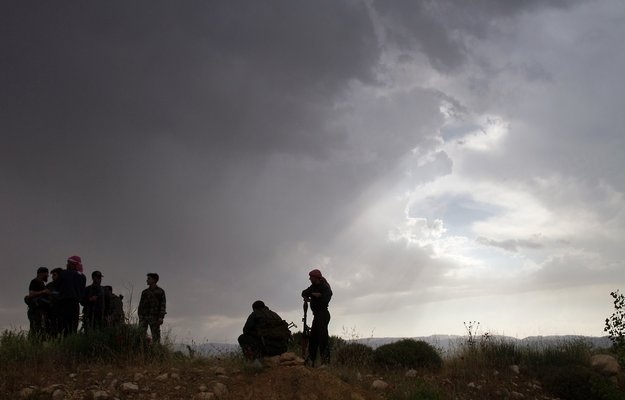

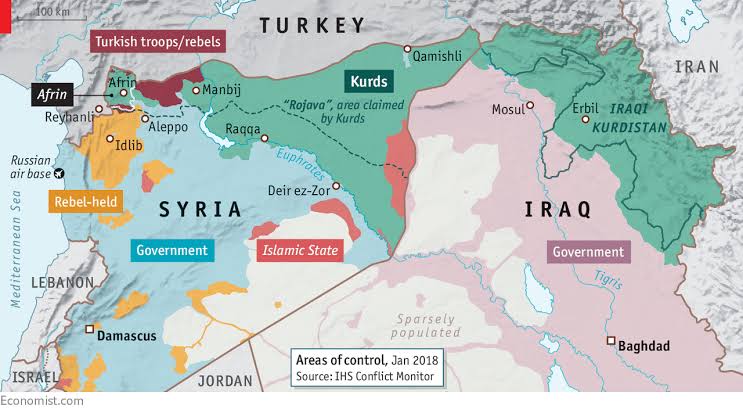




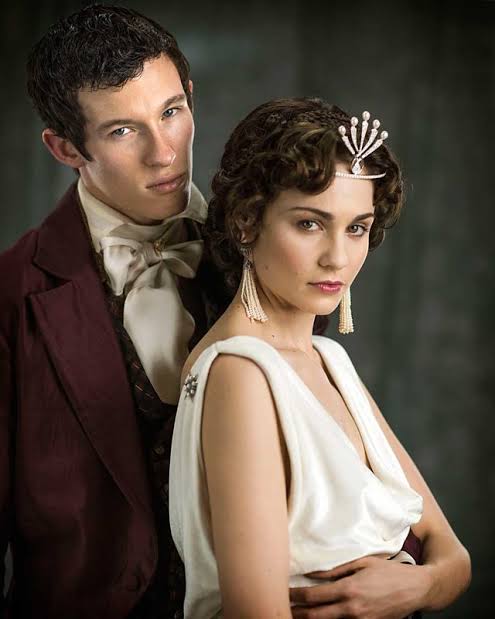


 In That Howling Infinite