Certainty and the independent mind

Time, time again, it is said
We will hear, we will see
See it all-in his wisdom-hear
His truth will abound the land
This truth will abound the land
This state of independence shall be
Evanghelos Papathanassiou & Jon Anderson

We live in a time of anxiety – yet we long for certainty.

Not certainty born of wisdom, experience or careful reflection, but certainty manufactured and amplified by technologies, institutions and cultures that reward simplicity over complexity, outrage over understanding, and tribal loyalty over independent thought. Never before have we had access to so much information, yet rarely has there seemed so little patience for ambiguity. Every issue arrives pre-packaged with approved opinions. Every controversy demands allegiance. Every debate is framed as a struggle between competing moral absolutes.

The pressure to choose a side is relentless.

Whether the issue is climate change, immigration, Indigenous recognition, Israel and Palestine, Donald Trump, nationalism, globalisation, identity politics or any number of the controversies that dominate contemporary discourse, citizens in countries like ours are increasingly expected to sort themselves into camps and remain there. To question one’s own side is often viewed as disloyalty. To acknowledge complexity is mistaken for weakness. To recognise competing truths can invite accusations of moral cowardice. Nuance, once regarded as evidence of maturity, is frequently condemned as equivocation.

Yet there is a deeper paradox at work. We often confuse certainty with conviction and conviction with wisdom. We mistake confidence for competence, consistency for truth and, increasingly, certainty for authenticity itself. In an age of institutional distrust and social fragmentation, those who sound most certain are often assumed to be the most honest. The politician who never wavers appears authentic; the citizen who hesitates appears weak. Doubt becomes suspect. Reflection begins to look like indecision.

At the centre of this lies a curious development. The word independent has itself become strangely contested.

Traditionally, independence implied a particular intellectual virtue. It suggested someone who weighed evidence, resisted fashion, distrusted slogans and arrived at conclusions through reflection rather than tribal loyalty. The independent thinker might be right or wrong, but their independence lay in their willingness to examine competing arguments, question prevailing orthodoxies and tolerate ambiguity. Independence was not a destination but a habit of mind.

Today, however, independence is viewed through very different lenses.

For some, it has become shorthand for conspiracy, contrarianism or the performative scepticism of the “do your own research” cohort. The independent thinker is recast as someone marinating in YouTube rabbit holes, Facebook memes and endless distrust of expertise. Independence becomes less a mark of judgement than a rejection of established knowledge.

For others, independence has become suspect for an entirely different reason. In an age defined by existential moral struggles – Trumpism, Gaza, Ukraine, climate change, racism, antisemitism, Islamophobia, democratic decline and a host of other causes that demand urgent attention – the person who refuses to choose a side can appear not thoughtful but evasive. Independence comes to look less like intellectual courage than moral cowardice, a refusal to commit when commitment is required.

Yet both assumptions are flawed. The first mistakes independence for reflexive distrust. The second mistakes uncertainty for indifference.

There is a profound difference between refusing to think and refusing to join a tribe. There is an equally important difference between acknowledging complexity and lacking conviction. The independent mind is neither conspiratorial nor apathetic. It is not defined by permanent scepticism, nor by a determination to stand in the middle of every argument. Rather, it is characterised by a willingness to follow evidence wherever it leads, to question assumptions – one’s own particularly- and to resist the comforting certainties offered by political, ideological and cultural tribes.

The tragedy of our age is that such independence is increasingly difficult to sustain. The incentives run in the opposite direction. Algorithms reward outrage. Social media rewards certainty. Activist movements reward loyalty. Political parties reward conformity. Every institution, it seems, encourages us to choose a side and remain there. The space for doubt, reflection and intellectual humility narrows a little more each year.

Yet life rarely conforms to such neat divisions.

History certainly does not. Human beings are complicated creatures. Nations are complicated creations. Political problems are rarely solved by slogans and almost never by certainties. The ability to hold two truths in tension at the same time – to recognise that a cause may be just yet imperfect, that opponents may sometimes be right, that allies may sometimes be wrong, and that competing moral claims can coexist- is becoming one of the most valuable and least celebrated civic virtues.

This essay is, in part, a reflection on that disappearing virtue. It draws upon a lifetime spent marching, protesting, arguing, campaigning, reading, writing and observing. It traces a journey from the certainties of youth to a greater appreciation of complexity; from the exhilaration of causes to a deeper awareness of unintended consequences; from the satisfactions of belonging to the more demanding discipline of independent judgement. Along the way it explores the distinction between moral clarity and moral certainty, the phenomenon of moral capture, the seductive appeal of authenticity, the dangers of passionate intensity, and the democratic necessity of intellectual honesty.

Above all, it is a defence of the independent mind – not as a posture of detachment or superiority, but as a commitment to judgement, humility and the difficult task of remaining intellectually free in an age that increasingly rewards certainty and punishes doubt.

Certainty, conviction and the curse of complexity

One of the curiosities of life is discovering that certainty becomes less attractive just as complexity becomes more apparent. When I was young, certainty seemed abundant. The world appeared neatly divided into camps. There were causes to join, banners to carry, songs to sing, villains to oppose, journeys to be made and futures to build. The moral landscape looked reasonably well ordered. There was right and wrong, justice and injustice, progress and reaction. The task, it seemed, was simply to determine which side one was on and then commit oneself accordingly. It was an age of grand narratives and great causes, and like many of my generation I threw myself into them with enthusiasm.

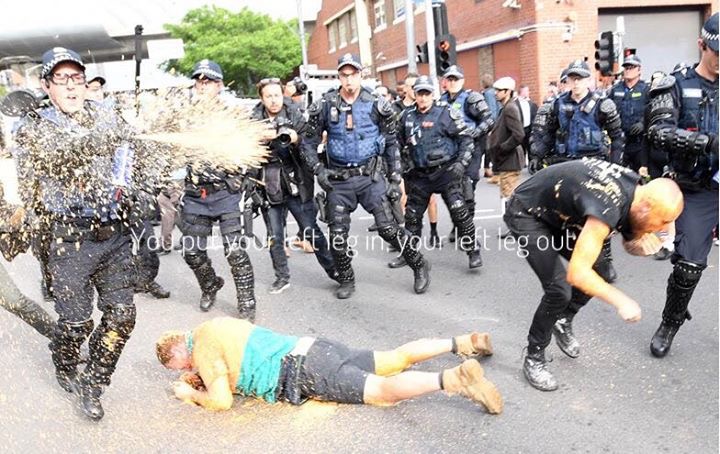
I marched against the Hydrogen Bomb and I marched against America’s war in Vietnam. I sat down, occupied buildings, disrupted meetings and occasionally found myself caught up in the odd mêlée when passions overflowed into something more physical. Later in life, I marched for East Timor and Bougainville and against French nuclear testing in the Pacific. I marched for forests, gun laws and airport noise. I confronted politicians, ambushed ministers and once helped surprise a Prime Minister at an election campaign launch. Looking back, I regret very little of it. There is something admirable about citizens who care enough to leave the comfort of their homes and enter the public square. Democracies require dissent. They need people willing to challenge power, question orthodoxies and occasionally make nuisances of themselves.

What I have learned, however, is that participation and wisdom are not the same thing.

That may sound obvious, but it is a lesson often forgotten. One of the enduring pleasures of activism is the feeling that one is participating in history. There is camaraderie in a march, solidarity in a crowd, a sense of shared purpose that can be intoxicating. One feels part of something larger than oneself. There is also a certain vicarious satisfaction in having “done something”, a sense of moral exoneration that comes simply from having turned up. If the cause succeeds, one can share in the triumph. If it fails, one can at least claim to have been on the right side.

Yet causes and solutions are often very different things. It is relatively easy to identify a grievance. It is much harder to resolve it. It is relatively easy to denounce injustice. It is much harder to construct a better alternative. It is relatively easy to carry a placard demanding perfection. It is much harder to govern a society of imperfect human beings.

This is not cynicism. It is simply an observation born of watching decades of politics unfold.

In recent years I have often found myself asking a question that rarely receives much attention. When people tell us that Australia is a racist country, that we live on stolen land, that our prosperity was built on dispossession and suffering, what exactly follows from that? If those propositions are accepted, what practical obligations arise from them? What policies should be adopted? What institutions reformed? What outcomes are being sought? Likewise, when people demand sanctions against one country, boycotts against another, the cancellation of this person or that organisation, do they imagine governments can simply comply? Do they believe that governments, with all their responsibilities, alliances, competing obligations and access to information unavailable to the rest of us, can simply act on moral impulse alone?

These are not dismissive questions. They are political questions. Indeed, they are the questions politics exists to answer.

There is often a significant gap between diagnosis and prescription. Many activists are extremely good at identifying injustices, hypocrisies and failures. Sometimes they perform a valuable service in doing so. Every society needs its critics. Every society needs people willing to point at uncomfortable truths that others would rather ignore. Yet identifying a problem is only the beginning. The harder question is what comes next. What is the proposed destination? How do we get there from here? What are the costs, the risks and the unintended consequences? These are the questions that confront governments every day. The activist’s role is often to pull society’s attention towards an issue. The government’s role is to balance competing goods, competing interests and competing risks. The activist can demand the impossible. The government must live with the consequences.

It is here that I find myself increasingly preoccupied by the distinction between moral clarity and moral certainty. The two are frequently confused, but they are not the same thing. Moral clarity involves recognising that some things are plainly wrong. The deliberate murder of civilians is wrong. Racism is wrong. Antisemitism is wrong. Corruption is wrong. Authoritarianism is wrong. Human suffering matters regardless of who experiences it. These are moral judgements that do not require ideological membership cards. They do not depend on tribal affiliation.

Moral certainty is something different. It is the conviction that one’s own side possesses not merely some truth but all of it. It is the belief that complexity is merely an inconvenience, that ambiguity is weakness and that every disagreement can be explained by malice, ignorance or bad faith. Moral certainty seeks to simplify the world into a contest between heroes and villains. It transforms politics into a morality play. It demands allegiance. It leaves little room for contradiction.

The difficulty is that reality is full of contradictions.

One of the most important lessons I have learned is that citizenship requires the ability to hold two truths in tension simultaneously. This is becoming increasingly difficult in a culture that rewards certainty and punishes complexity. Yet many of the most contentious issues of our age demand precisely this capacity. It is possible to believe that October 7 was an atrocity and that Gaza has suffered terribly. It is possible to oppose antisemitism while criticising aspects of Israeli government policy. It is possible to support Palestinian self-determination while condemning Hamas. It is possible to acknowledge the dispossession of Indigenous Australians while also recognising the achievements of modern Australia. It is possible to support immigration while discussing its challenges. It is possible to care deeply about the environment while recognising economic realities. None of these positions should be controversial. Yet increasingly they are treated as evidence of indecision, weakness or insufficient commitment.

The pressure today is not merely to possess moral clarity but to display moral certainty.

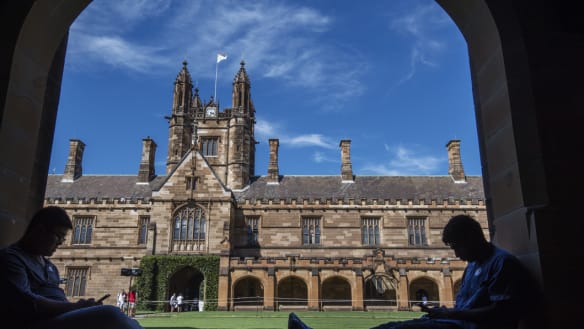
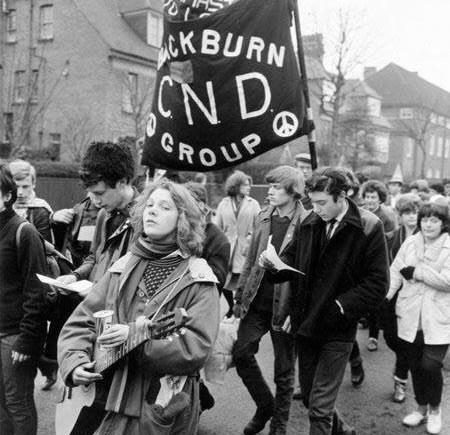
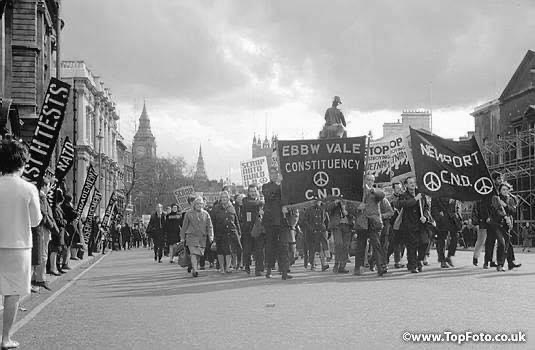
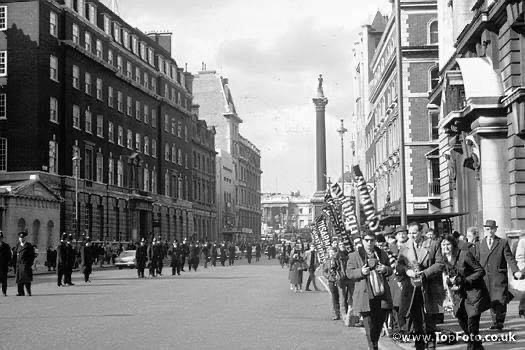
The photograph at the head of this essay and those below are of the 1966 Campaign for Nuclear Disarmament Aldermaston March reaching central London. The writer was somewhere in its ranks.
Moral capture and the discomfort of doubt

This pressure is reinforced by a phenomenon I have come to think of as moral capture. Moral capture occurs when a cause becomes so central to a person’s identity that every question must be filtered through it. Facts cease to be facts in their own right. Instead they become assets, liabilities, weapons or threats depending on whether they support the cause. The question is no longer whether something is true. The question becomes whether acknowledging it helps or hinders the narrative.

At that point intellectual honesty begins to erode.

Intellectual honesty is one of the most demanding virtues because it requires us to acknowledge facts we would rather avoid. It requires us to recognise when our opponents are correct and when our allies are mistaken. It demands that we apply the same standards to friends and enemies alike. It obliges us to distinguish between evidence and preference, between analysis and advocacy. Most importantly, it requires us to accept that reality does not rearrange itself to accommodate our politics.

This is remarkably difficult. Human beings are tribal creatures. We enjoy belonging. We like certainty. We prefer the comfort of the crowd to the discomfort of doubt. The tribe offers affirmation. The slogan offers simplicity. The crowd offers solidarity. Complexity offers none of these things. Complexity is untidy. It frustrates neat conclusions. It introduces caveats where certainty seeks absolutes.

Modern technology has made this problem worse. The algorithms that increasingly shape our information environment are not designed to cultivate wisdom. They are designed to cultivate engagement. Outrage is engaging. Certainty is engaging. Nuance is not. A meme travels further than a history lesson. A slogan spreads faster than an argument. A false analogy often possesses more emotional power than a careful comparison. Every issue is compressed into a binary choice. Every debate becomes a loyalty test. The first question is no longer whether a statement is true but which side it helps.

The result is a culture increasingly dominated by assumptions, preconceptions and caricatures.

I think back sometimes to those old marches through London in the 1960s. As we walked along singing earnest and often dreadful protest songs, members of the public would call out from the footpaths. “Get a haircut!” they would shout. “Have a wash!” “Get a job!” The implication was always the same. Protesters were outsiders. Troublemakers. Layabouts. Dreamers disconnected from reality.

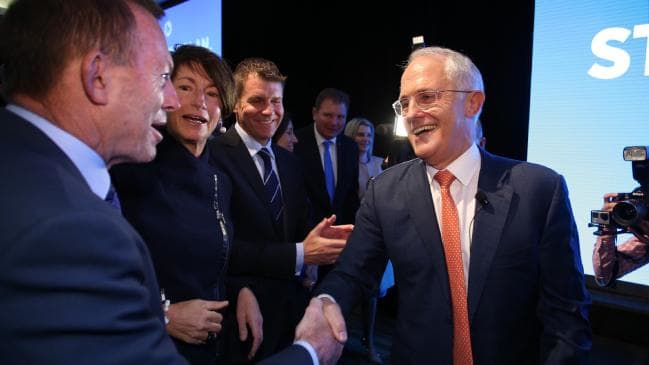
Years later, in Australia, at that Liberal Party campaign launch I mentioned above, a young Liberal supporter deployed exactly the same line. “Get a job!” she called to me. I reached into my pocket and handed her my business card – back then, I was chief accountant with a small “c” conservative publishing firm. The look on her face was priceless. For a brief moment the stereotype collapsed as an assumption collided with reality. The protester turned out not to be the caricature she had imagined.

The incident was trivial, but the lesson was not. Much of political discourse today consists of people arguing with caricatures rather than engaging with reality. We sort one another into categories and then proceed as though the categories explain everything. Activist. Conservative. Progressive. Populist. Elite. Nationalist. Globalist. Zionist. Anti-Zionist. The labels become substitutes for thought. The person disappears behind the category.

Yet reality stubbornly refuses to cooperate. Human beings are more complicated than their labels. Nations are more complicated than their histories. Political problems are more complicated than their slogans.

The perils of passionate intensity

As I reread these reflections, I find myself returning to two observations that have echoed through much of my adult life. The first is Yeats’s famous warning from The Second Coming: “The best lack all conviction, while the worst are full of passionate intensity.” Like many celebrated quotations, it is often invoked more than it is examined. It is frequently used to lament the supposed timidity of moderates or to argue that our age requires more conviction, more certainty and greater willingness to fight for what we believe. Yet that was not Yeats’ point. He was not celebrating passionate intensity. He was warning about it.

Writing amid the upheavals of the early twentieth century, Yeats was observing a world in which restraint, balance and judgement appeared to be collapsing while fanaticism, absolutism and ideological fervour were on the rise. The “passionate intensity” belonged not to wise statesmen or thoughtful citizens but to those who possessed an unshakeable belief in their own righteousness. It was a description of certainty untethered from humility.

History would soon provide abundant examples.

The twentieth century was not a century that suffered from a shortage of conviction. Fascists possessed conviction. Communists possessed conviction. Religious extremists possessed conviction. Nationalists, revolutionaries and racial supremacists possessed conviction. None lacked certainty about the correctness of their cause. None doubted that history, morality or destiny stood firmly on their side.

The problem was never too little certainty. The problem was too much of it.

That is why Yeats’ warning speaks so powerfully to our own age. We live once again in a time of passionate intensity. Political tribes, activist movements, media ecosystems and online communities all encourage us to embrace certainty. The incentives are obvious. Certainty is emotionally satisfying. It creates solidarity. It simplifies complexity. It identifies heroes and villains. It provides meaning, belonging and purpose. Above all, it relieves us of the burden of doubt.

Yet doubt, properly understood, is not a weakness. It is one of the disciplines that protects us from ourselves.

The second observation, one we have touched upon above, comes from F. Scott Fitzgerald’s essay collection, The Crack-Up, who wrote that “the test of a first-rate intelligence is the ability to hold two opposed ideas in mind at the same time and still retain the ability to function.” Whether Fitzgerald consistently met his own standard is perhaps beside the point. The insight itself remains profound.

One might see Fitzgerald’s observation as a kind of antidote to Yeats’ warning. Where Yeats alerts us to the dangers of passionate intensity, Fitzgerald reminds us of the intellectual discipline required to resist it. The capacity to hold competing truths in tension, to acknowledge complexity without succumbing to paralysis, to recognise ambiguity without abandoning judgement—these are among the most important habits of mind a democratic citizen can possess.

Indeed, the independent mind is simply the refusal to surrender that capacity.

Not because all sides are equally right. Not because truth is unknowable. Not because every question has two equally valid answers. But because reality is usually larger, stranger and more contradictory than our tribes permit. Human beings are complicated. Nations are complicated. History is complicated. The slogans painted on our banners and the memes shared across our screens rarely capture more than a fragment of the truth.

Certainty and the attraction of  authenticity

One of the reasons certainty remains such a powerful force in politics is that people often confuse it with authenticity.

A recent observation about populist Australian politician Pauline Hanson captured something important. Her views have not substantially changed in thirty years, and that certainty about what she stands for forms part of her appeal to voters who feel alienated, anxious or ignored. Whether one agrees with Hanson or not is almost beside the point. The observation reveals something larger about the political culture in which we now live.

In times of uncertainty, certainty itself becomes politically valuable.

When people are struggling with rising costs, housing pressures, declining trust in institutions, geopolitical instability and the bewildering complexity of modern life, they are naturally drawn towards voices that appear confident and consistent. Human beings have always preferred clarity to ambiguity and confidence to hesitation. We are pattern-seeking creatures. Faced with confusion, we look for certainty. Faced with complexity, we look for simplicity.

The attraction is understandable.

What is often misunderstood, however, is that certainty and wisdom are not the same thing. Nor are certainty and conviction.

A politician may possess strong convictions while remaining open to evidence, criticism and changing circumstances. Indeed, that is probably what we should hope for in a democratic leader. Conviction involves knowing what one believes and being prepared to defend it. Certainty goes a step further. It is the belief that one cannot be wrong. Conviction allows room for learning. Certainty often does not.

Yet from a distance the two can look remarkably similar.

This is particularly true in an era when so much mainstream politics appears managerial, cautious and focus-grouped. Many contemporary politicians sound as though every sentence has been tested, refined and stripped of anything resembling genuine belief. They speak in carefully calibrated formulations designed not to offend any particular constituency. Such caution may be politically prudent, but it often creates an impression of evasiveness. Voters may not always agree with a politician who speaks plainly, but they often appreciate knowing where that politician stands.

People forgive a surprising amount in leaders they regard as authentic. What they struggle to forgive is the suspicion that their leaders believe one thing and say another.

This helps explain why figures as different as Pauline Hanson, Donald Trump, Bernie Sanders and Nigel Farage have attracted passionate followings. Their supporters frequently describe them not as wise, sophisticated or nuanced, but as “authentic”. What supporters often mean by authenticity is consistency. They know what these figures believe. The message may be right or wrong, attractive or repellent, but it is recognisable.

That consistency becomes especially attractive when the political centre appears uncertain of itself.

The irony is that certainty often flourishes precisely when trust is declining. When institutions command confidence, when living standards are improving and when mainstream parties appear competent, certainty on the political fringes tends to have less appeal. When trust collapses, however, certainty becomes a scarce commodity. Voters begin searching for leaders who seem sure of themselves, even if the proposed solutions are simplistic or unrealistic.

This is where the independent mind must exercise caution.

The temptation is to mistake certainty for competence, confidence for wisdom and consistency for truth. History repeatedly warns against such assumptions. The twentieth century did not suffer from a shortage of certainty. Some of its greatest disasters were fuelled by people who were utterly convinced of their own righteousness. Fanatics are rarely troubled by doubt. Ideologues seldom lack confidence.

Yet there is an equal danger in the opposite direction. A politics devoid of conviction quickly descends into managerial drift. Citizens want leaders who possess principles. They want to know where their leaders stand. They want evidence that there is something beneath the polling, the slogans and the spin.

The challenge, therefore, is not to choose between conviction and uncertainty, but to distinguish conviction from certainty. Conviction says, “This is what I believe, based on the evidence and experience available to me.” Certainty says, “This is what I believe, and no evidence could persuade me otherwise.”

The difference may seem subtle, but it is profound.

After decades of marching, arguing, protesting, campaigning and often, tilting at windmills, I have not lost faith in causes. Nor have I become indifferent to injustice. If anything, experience has reinforced the importance of civic engagement and public participation. Democracies need citizens who care. They need people willing to stand up, speak out and occasionally make nuisances of themselves.

What experience has changed is my relationship with certainty.

I have become more wary of movements that claim exclusive possession of truth. More alert to false analogies, seductive slogans and the temptations of moral capture. More conscious of unintended consequences. More appreciative of intellectual honesty, especially when honesty requires acknowledging facts that complicate one’s preferred narrative. More willing to question my own side as rigorously as I question its opponents.

In short, I have become less impressed by passionate intensity and more interested in judgement.

The challenge of democratic citizenship is not to choose between conviction and doubt. It is to possess enough conviction to act and enough doubt to remain honest. It is to seek moral clarity without succumbing to moral certainty. It is to care deeply about injustice while resisting the temptation to reduce every issue to a morality play. It is to recognise that one’s opponents may occasionally possess a fragment of truth and that one’s allies may occasionally be mistaken.

That is not fence-sitting. It is not moral relativism. It is not indifference.

It is the difficult and often uncomfortable work of remaining intellectually free.

And perhaps that is the final lesson. The independent mind is not characterised by the absence of belief but by the refusal to surrender judgement. It is not a rejection of commitment but a resistance to dogma. It is conviction disciplined by humility, passion tempered by experience, and certainty held in check by the recognition that the world is almost always more complicated than it first appears.

A healthy democracy requires leaders with convictions strong enough to act and citizens thoughtful enough to question them. It requires moral clarity without moral absolutism, confidence without arrogance, and principle without dogma. Above all, it requires the capacity to recognise that knowing what one stands for is a virtue, but believing that one possesses all the answers is not.

That distinction lies at the heart of the independent mind. It is not an argument against commitment. It is an argument against the seductive comfort of certainty. For while certainty may be politically attractive, judgement remains the rarer and more valuable quality. Yeats warned us about passionate intensity. Fitzgerald reminded us of the discipline required to resist it. Between them lies a space that democratic societies desperately need to preserve: a place where conviction and humility coexist, where competing truths can be held in tension, where citizens remain free to think for themselves, and where wisdom begins not with certainty but with the humility to recognise that reality is usually far more complicated than the slogans painted on our banners. In an age increasingly defined by certainty, that may be the most radical act of all.

Judgement and the Limits of Certainty

At this point an obvious question arises. If certainty is so dangerous, why place such faith in judgement? Are we not equally vulnerable to error there as well?

After all, our judgement is shaped by the very things that make us human. It is influenced by our experiences, upbringing, education, culture, temperament, loyalties, fears, aspirations and prejudices. None of us approaches the world as a detached observer. We all carry assumptions into every argument. We all inhabit particular histories. We all see some things more clearly than other.

A former refugee may view immigration differently from someone whose family has lived in the same town for generations. A soldier may understand war differently from a pacifist. An Indigenous Australian may experience Australian history differently from a recent migrant. A Jew may hear echoes in antisemitism that others fail to recognise. A Palestinian may understand displacement in ways others cannot. These perspectives do not necessarily cancel one another out. Nor does any single perspective possess a monopoly on truth. Each illuminates part of the landscape while leaving other parts in shadow.

The independent mind does not somehow escape these influences. It merely becomes conscious of them.

Indeed, one of the defining characteristics of intellectual maturity is recognising that our own perspective is necessarily incomplete. We are all standing somewhere. We are all looking from a particular vantage point. The challenge is not to eliminate subjectivity – an impossible task – but to understand its influence upon us.

This is why judgement differs from certainty.

Certainty assumes that because we have reached a conclusion, the matter is settled. Judgement recognises that conclusions are always provisional, always vulnerable to new evidence, new experiences and new insights. Certainty seeks finality. Judgement remains open to revision.

In this sense, judgement is less about arriving at the right answer than about cultivating habits that reduce the likelihood of arriving at the wrong one. It requires a willingness to ask uncomfortable questions of ourselves. Why do I believe this? What assumptions am I bringing to the issue? What evidence would change my mind? Am I applying the same standards to friends and enemies alike? What facts am I tempted to ignore because they complicate my preferred narrative?

These questions rarely provide certainty. They do, however, encourage honesty.

That honesty is particularly important because many of the most important questions confronting democratic societies involve genuine tensions rather than simple choices. Liberty and equality, security and freedom, justice and mercy, order and compassion, national interest and universal values – these are not problems to be solved once and for all. They are competing goods that must be balanced, negotiated and continually reassessed.

Politics, at its best, is not the elimination of such tensions but the management of them.

History offers countless reminders of the dangers of forgetting this. Time and again, the greatest political disasters have emerged not from excessive doubt but from excessive certainty. The fanatic, the ideologue and the zealot are rarely troubled by ambiguity. They know exactly where they stand. They possess answers for everything. They are convinced that history, morality and truth march in step behind them.

Yet history is littered with the wreckage left by people who were absolutely certain they were right.

This is where the independent mind returns to the insights of Yeats and Fitzgerald.

Yeats warned of those who are “full of passionate intensity,” not because conviction itself is dangerous, but because conviction unrestrained by humility can become fanaticism. Fitzgerald, meanwhile, celebrated the ability to hold two opposed ideas in mind at the same time and still retain the ability to function. Between those two observations lies a profound truth. Mature judgement is not confidence in one’s own infallibility. It is awareness of one’s own limitations.

The paradox is that the people with the best judgement are often those most conscious of how easily judgement can fail.

The more one learns about history, politics and human nature, the harder it becomes to believe that complex questions have simple answers. Good intentions can produce disastrous outcomes. Bad policies can emerge from noble motives. Opponents can occasionally be right. Allies can occasionally be wrong. Causes that deserve support can still produce unintended consequences. Human affairs are untidy in ways that slogans rarely acknowledge.

Yet none of this absolves us of responsibility. Citizens must still make choices. Governments must still govern. Voters must still vote. We cannot escape the necessity of judgement simply because certainty is unattainable.

The alternative to imperfect judgement is not objectivity. It is paralysis.

The challenge, therefore, is not to become certain of our judgement but to hold it provisionally: firmly enough to act, yet lightly enough to revise. To possess convictions without becoming imprisoned by them. To care deeply without succumbing to moral capture. To remain committed to principles while accepting that our understanding of them may always be incomplete.

Perhaps that is the most difficult discipline of all. Certainty says, “I know.” Judgement says, “This is my conclusion based upon the evidence and experience available to me, but I remain open to the possibility that I have missed something.”

The difference may appear subtle, yet it is immense. Certainty seeks closure. Judgement remains in conversation with reality.

And reality, unlike ideology, always has the last word.

In conclusion

Perhaps the independent mind has become one of the last unfashionable virtues.

It lacks the emotional satisfactions of certainty, the camaraderie of tribal belonging and the reassuring simplicity of slogans. It offers no guarantee of popularity and few opportunities for self-righteousness. More often than not, it leaves its advocate stranded between opposing camps, criticised by all sides for refusing to embrace the approved orthodoxy of any one of them. Yet it remains indispensable to the health of a democratic society because it asks something increasingly rare of us: that we think before we choose, question before we condemn, and understand before we judge.

A lifetime of political engagement has convinced me that neither protest nor power possesses a monopoly on wisdom. Activists can identify genuine injustices while proposing unworkable solutions; governments can understand practical realities while losing sight of moral obligations. Both require scrutiny. Both require criticism. Both require citizens willing to think beyond inherited narratives, ideological loyalties and partisan certainties. But this is not really an essay about protest, nor is it ultimately about independents in the electoral sense. It is about a disposition of mind: the determination to remain intellectually free in a culture that increasingly rewards conformity.

When we are young, we often imagine that the opposite of commitment is apathy. We assume that doubt is the enemy of conviction and that certainty is evidence of moral seriousness. Yet a lifetime of politics, protests, campaigns, victories, defeats, enthusiasms and disillusionments suggests something rather different. The real opposite of commitment is not apathy but dogma.

It is entirely possible to care passionately about injustice while resisting moral capture. It is possible to hold strong convictions while remaining open to evidence, criticism and changing circumstances. It is possible to stand for something without believing that one’s own side possesses a monopoly on virtue, wisdom or truth. Indeed, that may be what genuine conviction looks like. Conviction says, “This is what I believe.” Certainty says, “Nothing could persuade me otherwise.” The person who never questions themselves has ceased to serve a cause and has instead begun to worship it.

That, ultimately, is the thread running through this essay: a defence of judgement over certainty.

The phrase that recurs most often in my mind – and has featured prominently in this essay – is that notion of holding two truths at once. It sounds simple enough, yet it runs directly against the grain of contemporary political culture. Our public life increasingly rewards simplification. Algorithms prefer one truth. Activists often prefer one truth. Partisans almost always prefer one truth. The pressure is constant: choose a side, embrace a narrative, identify the villains and remain loyal to the script. Yet reality stubbornly resists such neat arrangements. Mature citizenship frequently requires us to live with competing realities, overlapping truths and unresolved tensions.

It is possible for a nation to be both admirable and flawed, for a people to be both victims and agents of their own history, for a cause to be just and yet produce harmful consequences, for an opponent to be right about one thing and wrong about another. As we have written, it is possible to condemn the atrocities of October 7 and mourn the suffering of Gaza. It is possible to oppose antisemitism while criticising Israeli policy, to support Palestinian aspirations while rejecting Hamas, to acknowledge the dispossession of Indigenous Australians while recognising the achievements of modern Australia. These are not contradictions to be eliminated but tensions to be navigated. They require judgement rather than certainty, humility rather than righteousness.

I find myself returning, too, to WB Yeats and Scott F Fitzgerald, writers who have hovered over these reflections. Between them lies the intellectual territory occupied by the independent mind: conviction tempered by doubt, clarity balanced by complexity, belief disciplined by self-examination.

This is not because all sides are equally right, nor because truth is unknowable, nor because every argument lies somewhere in a comfortable middle ground. Rather, it is because reality is usually larger, stranger and more contradictory than our tribes permit. Human affairs do not fit neatly into ideological categories. History rarely conforms to our preferred narratives. Good intentions do not guarantee good outcomes. Sincerity does not confer correctness. Authenticity does not guarantee wisdom. The world is full of competing goals, unintended consequences and moral ambiguities that cannot be resolved by slogans alone.

Perhaps that is the final irony. After decades of marching, arguing, protesting, campaigning, reading, writing and, more than occasionally, tilting at windmills, one does not necessarily end up believing in fewer causes. One does not become indifferent to injustice, retreat from public life or cease caring about the future. Rather, one becomes more wary of certainty, more conscious of unintended consequences, more alert to false analogies and seductive slogans, and more appreciative of the rare virtue of intellectual honesty.

One becomes more aware of the distinction between the high moral ground and the low moral ground disguised as the high moral ground. One becomes more sensitive to the dangers of moral capture, more sceptical of movements that demand conformity of thought, and more willing to question one’s own assumptions as rigorously as those of one’s opponents.

That is not a retreat from conviction. It is conviction disciplined by humility. It is passion tempered by experience. And experience, unlike ideology, has a habit of teaching modesty about what we know and caution about what we merely think we know.

In the end, that may be the independent mind’s greatest contribution to a democratic society. Not certainty, but judgement; not tribal loyalty, but intellectual honesty; not the comforting illusion of possessing all the answers, but the willingness to ask difficult questions, follow evidence wherever it leads, and hold competing truths in tension without surrendering either one’s principles or one’s capacity for doubt.

There is, however, one final irony. A defence of judgement over certainty should not be mistaken for confidence in one’s own judgement. We are all prisoners, to some degree, of our experiences, our histories, our loyalties and our blind spots. None of us sees the whole landscape. The independent mind is not distinguished by superior wisdom so much as by an awareness of its own limitations. It understands that every perspective illuminates some truths while obscuring others. Its task is therefore not to eliminate doubt but to live productively with it; not to achieve perfect objectivity but to remain open to correction. If certainty begins with the belief that one cannot be wrong, judgement begins with the recognition that one might be.

It is in that uneasy space between certainty and cynicism, between conviction and humility, between passion and judgement, that citizenship is at its most demanding and, perhaps, at its most valuable. Democracy ultimately depends not upon the certainty of its partisans but upon the wisdom of its citizens. Wisdom begins with the recognition that reality is usually more complicated than our slogans, larger than our causes, and far too important to be entrusted to those who claim to possess all the answers. In an age that increasingly rewards certainty, the independent mind remains one of the few places where freedom, judgement and humility can still coexist.

In That Howling Infinite, June 2026

This essay was written in conversation with an AI language model, which contributed to drafting, phrasing, and conceptual articulation. What appears here is not unmediated thought, but considered thought: selected, tested, revised and revised again, and owned.

See also in In That Howling InfiniteA Political World – Thoughts and Themes, including: Moral capture, conditional empathy and the failure of shock, Standing on the high moral ground is hard work and Shaping facts to feelings – debating intellectual dishonesty

Author’s Note

The essays published in In That Howling Infinite reflect a lifelong engagement with politics, history, culture and public affairs. They are not intended as manifestos, nor do they seek to recruit readers to a particular ideological camp. Rather, they represent an ongoing attempt to understand a complex world while resisting the temptations of certainty, tribalism and intellectual complacency.

The views expressed in this essay are not therefore confined to these pages. Rather, they form part of a broader body of work that range from Australian history and politic, the Middle East,  and Russian history to contemporary activism, political discourse, identity, memory and public morality. They are connected by a number of recurring themes.

Among these is the belief that genuine understanding requires intellectual honesty: the willingness to follow evidence even when it challenges our assumptions, complicates our preferred narratives or discomforts our own side. Another is the conviction that moral clarity and moral certainty are not the same thing. One may recognise injustice, condemn cruelty and defend human dignity without imagining that any individual, movement or ideology possesses a monopoly on truth.

These essays also reflect a persistent concern with what I have elsewhere called moral capture: the process by which a cause becomes so central to personal identity that facts are no longer evaluated on their merits but according to whether they support or undermine the cause itself. Closely related is the phenomenon of conditional empathy, where compassion is extended selectively—depending on the identity of victims or perpetrators—rather than consistently across human suffering. Both tendencies, I would argue, diminish our capacity for honest inquiry and weaken our ability to navigate complex moral questions.

Readers familiar with One Land, Two Peoples: History, Memory, Continuity, and Inheritance will recognise another recurring principle: the necessity of holding two truths in tension at the same time. The Israeli–Palestinian conflict is perhaps one of the clearest examples of a subject that resists simplistic narratives, demanding that we acknowledge competing histories, competing grievances and competing aspirations without reducing either side to caricature. Yet the same principle applies far beyond the Middle East. It applies equally to debates about national identity, immigration, colonial history, religion, social justice, populism and democratic governance.

Throughout these essays runs a scepticism towards slogans, false analogies and the seductive simplicity of binary thinking. The modern information environment rewards certainty, outrage and performative moral confidence. It is less hospitable to ambiguity, nuance and self-questioning. Yet history repeatedly suggests that the greatest errors are often committed not by those troubled by doubt but by those convinced they possess exclusive access to truth.

For that reason, the essays collected in In That Howling Infinite should be read not as declarations of certainty but as exercises in inquiry. They are attempts to ask difficult questions rather than provide final answers; to explore tensions rather than dissolve them; and to defend the increasingly unfashionable proposition that intellectual independence remains both possible and necessary.

If there is a single thread connecting them all, it is the belief that democratic citizenship requires more than passion and more than conviction. It requires judgement. It requires humility. It requires the capacity to hold competing truths in tension without surrendering either one’s principles or one’s willingness to question them.

In an age increasingly organised around tribes, narratives and certainties, that may be one of the most important responsibilities a citizen can undertake. The essays are offered in that spirit. They do not ask the reader to agree with every conclusion. They ask only that the questions remain open, the evidence be examined honestly, and the conversation continue. After all, the purpose of independent thought is not to win arguments, but to understand the world a little better than we did before.

 

If you must say it, don’t say it in Jerusalem!

It was entitled: “Keeping Wolves from the Flock: The Case for Good Religion to Fight Anti-Semitism”. It was delivered on International Holocaust Remembrance Day on 27 January 2026 at the Binyaney Ha’uma Conference Center, Jerusalem, Israel. The presenter was former Australian prime Minister Scott Morrison. It was well received by audience, and praised by Israeli prime minister Binyamin Netanyahu. And it quickly reverberated back home.

The venue, the timing, and the company mattered. Israel, in the midst of an ongoing war and under the leadership of a government increasingly isolated internationally, was hardly a neutral stage. The event itself was framed as a moral gathering – a stand against antisemitism at a moment when Jewish communities worldwide feel newly exposed and embattled. Into this charged atmosphere stepped a deposed and disgraced Australian leader, now embarked on an international, largely ecclesiastical speaking circuit, offering prescriptions not for Israel, but for Islam in Australia.

The reaction in Australia followed well-worn grooves. Conservative outlets and commentators – most loudly those aligned with Murdoch media – cast Morrison as a truth-teller, bravely naming uncomfortable realities about radical Islam and standing up for Jewish security against a censorious, “woke” establishment that had been slow to deal with the acknowledged threat of radical Islamism. Progressive commentators, by contrast, focused on the dangers of securitising religion, the selective targeting of Muslims, exacerbating existing Islamophobia, and the symbolic violence of lecturing Australian minorities from abroad. The argument was instantly polarised, less a conversation than a mirror held up to our own media ecosystems and their predictable reflexes.

What was largely missing, however, was sustained attention to the deeper questions the speech inadvertently raised – questions that recur across debates about diversity, cohesion, and authority in plural societies. Who gets to speak about whom, and from where? How does a liberal democracy balance legitimate security concerns with religious freedom and civic trust? When does critique shade into control, and when does concern curdle into performance? And what happens when discussions about coexistence are conducted not face to face, but at altitude, before distant audiences primed for applause?

It is to those questions – rather than to the outrage or applause – that the brief following essay turns.

The politics of posturing 

There is a particular genre of speech that is recognisable before one even reaches the second paragraph. It is delivered abroad, framed as courageous, freighted with moral urgency, and aimed not so much at those ostensibly being addressed as at a wider, watching audience. Scott Morrison’s address in Israel belongs squarely in this genre. It is less a contribution to Australian social cohesion than a performance within a global culture war, delivered from a stage carefully chosen for its symbolism rather than its suitability.

Morrison, now out of office and out in the world, occupies a familiar post-political niche as he treads an international speaking circuit, heavily ecclesiastical in tone and audience, where moral clarity is prized over policy detail and applause over accountability. This matters, because the speech was not made in the Australian Parliament, not to Australian Muslims, not even in Australia. It was made in Israel – at a moment when Benjamin Netanyahu, politically cornered and morally embattled, will accept reassurance and affirmation from almost any quarter. In that sense, the speech served two purposes: it burnished Morrison’s credentials with a transnational conservative audience, and it offered Netanyahu symbolic solidarity. Australia, and Australian Muslims, were almost incidental.

The content of Morrison’s address has been widely rehearsed: calls for nationally consistent standards for Islamic institutions; accreditation and registration of imams; translation of sermons; expanded scrutiny of foreign funding; praise for Middle Eastern states that have “reasserted authority” over religious teaching. None of these ideas, taken in isolation, are wholly unthinkable. Liberal democracies already regulate religion in numerous ways – through education standards, charity law, financial transparency, and criminal statutes relating to incitement and abuse. No faith operates in a vacuum, and Islam is not exempt from the tensions between patriarchal authority and moral absolutism, and the egalitarian instincts of a secular, humanist society like Australia’s.

Nor is it controversial to observe that Islam, like Christianity before it, is engaged in a long, unfinished argument with modernity. Questions of gender, authority, pluralism, sexuality, and the limits of clerical power are not impositions from outside but live debates within Muslim communities themselves (see, in In That Howling Infinite, Islam’s house of many mansions and Educate a girl and you educate a community – exclude her and you impoverish it ). Australian Islam, however, is overwhelmingly benign, pragmatic, and law-abiding – a quiet negotiation between inherited tradition and lived reality, not a breeding ground of medieval zealotry. The men and women who left Australia to fight for ISIS were not summoned by local mosques but seduced by freelancing radicals in unregulated prayer halls algorithmic feeds, online grievance, and a search for meaning in a fractured digital world in which they find no place..

This is where Morrison’s argument begins to fray. Security agencies themselves – including ASIO director Mike Burgess – have been clear: you cannot arrest your way to social cohesion, nor spy your way to less youth radicalisation. The most rapidly evolving threats now emerge from the post-Covid morass of conspiracy theorists, anti-government paranoiacs, white nationalists, and apocalyptic survivalists – movements that often cloak themselves in Christian symbolism without any expectation that Christianity as a whole should be placed under special surveillance. To single out Islam, therefore, is not just analytically weak but politically loaded.

That loading is amplified by Morrison’s own biography. He is not a neutral secularist but an openly proselytising evangelical Christian, steeped in a tradition that would respond angrily to equivalent proposals applied to its own institutions. His political career was marked by secrecy, performative culture-war gestures, and a tendency to govern by symbolic posture rather than deliberative engagement – a style that ultimately saw him removed from office. These things do not invalidate his right to speak, but they do shape how his speech is received in his home country.

Then there is the matter of exemplars. Morrison’s citing of Saudi Arabia, the UAE, Egypt, and Jordan as models of religious regulation is not merely unfortunate; it is disqualifying. These are regimes that suppress women, persecute Christians and heterodox Muslims, criminalise dissent, and weaponise religion as an instrument of authoritarian control. They have form for dealing with Islamists like the Muslim Brotherhood with what the Americans euphemistically call “extreme prejudice”.

To invoke them while speaking the language of freedom of worship is to betray a deep confusion about the difference between liberal regulation and illiberal domination. If the aim is integration, these are strange teachers to cite.

Yet even all this misses the most important point, which is not what Morrison said but how and where he said it.

It is presumptuous to lecture Australians from abroad. It is disrespectful to address Australian Muslims without engaging them directly. And it is incendiary to do so from Israel – a place that is anything but neutral in Muslim political consciousness, and where questions of religion, power, land, and legitimacy are already saturated with pain and contestation. To speak from there is to speak over, not to; to align oneself symbolically before dialogue has even begun. No amount of policy caveating can undo that gesture.

This is where the charge of Islamophobia becomes both understandable and, paradoxically, incomplete. Morrison did not denounce Muslims as such, nor did he advocate exclusion or expulsion. But by singling out Islam, invoking authoritarian models, and delivering his critique from a stage freighted with geopolitical meaning, he helped reinforce the sense that Muslims are a problem to be managed rather than citizens to be engaged. That perception matters, because alienation is not a side effect of radicalisation; it is one of its preconditions.

The reactions to the speech followed predictable lines. British commentator Brendan O’Neill, for example, writing in The Australian, cast Morrison as a brave blasphemer, persecuted by a censorious “Islamophobia industry” – a piece of rhetorical theatre entirely consistent with Spiked’s long-standing contrarian brand and its comfortable alignment with Murdoch culture-war politics. Jacqueline Maley, writing in the Sydney Morning Herald, and the progressive wing of liberal commentary, focused on the dangers of securitisation, surveillance, and selective moral panic. Neither is wrong, exactly, but neither escapes their own political ecosystem.

What is striking is how little the speech had to do with Australia at all. It was not an attempt to build consensus, to consult, or to wrestle with the messy realities of pluralism. It was an attention-seeking intervention by a man no longer accountable to the electorate and yet nostalgic for its attention, speaking to an international audience that rewards moral certainty and civilisational framing. In that sense, the speech says less about Islam than it does about the temptations of post-power relevance.

If there is a lesson here, it is an old one. Social cohesion is not forged by speaking about communities from afar, nor by borrowing the language of security to police belief. It is built, slowly and imperfectly, through proximity, dialogue, and the unglamorous work of trust. Morrison chose distance instead. And in doing so, he turned a necessary conversation into a symbolic skirmish – one that generated headlines, applause, and division, but very little understanding. One that we hope, unrealistically alas, in today’s febrile political climate, will be forgotten sooner rather than later.

Call it concern if you like; politics has another word for speeches that travel so far to say so little at home: posturing.

For more on the Middle East in in That Howling Infinite, see A Middle East Miscellany.

Recent posts on the current state of Australian politics include Same old stone, different rock. What’s in a word?’ Shaping facts to feelings – debating intellectual dishonesty, Moral capture and conditional empathy, and Standing on the high moral ground is hard work!

The phantom of liberty … the paradoxes of conservatism

Economist and commentator Henry Ergas wrote in The Australian recently: “With the Trump revolution wreaking havoc on conservative movements worldwide and the election rout leaving Liberals stunned, Australian conservatism faces an identity crisis it no longer can afford to ignore. Understanding its divergence from overseas traditions is vital to recovering and redefining the distinctive voice it needs to deal with the latest threat to its existence.”  I have repolished it below.
Personally, I find the crisis in contemporary conservatism, particularly as it pertains to Australia politics, fascinating. Here it is in danger descending into a culture of grievance and of populism (- defined as the quest for simple solutions to complex problems).

These fast-moving times are shaky ground for the creed. People are losing faith in institutions; the church no longer has moral influence; the social norms that once tied the community together are changing at lightning speed. Even many within what can be classified as the centre-right acknowledge  what might be described as the conservative movement is apparently on the back foot, scrambling to define itself by what it opposes rather than what it believes, plagued by self-doubt and confusion as to what to believe what to stand up for.

As younger voters in the Anglo-sphere veer away from conservative parties, old warhorses and young fogeys, an incongruous, anachronistic cabal of reactionaries if ever there was one, desperately seek relevance and comfort as they endeavour to beat back what they see as the rising tide of progressivism and the proliferation of what they condemned as “woke” – a portmanteau word for whatever that dislike and disdain in politics and society’s at large.

“Conservatism” is an intriguing concept. It can broadly be translated as “traditional” values, and can embrace a varied spectrum of “isms”, including authoritarianism, hierarchy, nationalism, nativism and ethnocentrism, and also, en passant, religiosity, homophobia, and indeed, anything deemed antithetical to the old, tried and true ways. In a general sense, it has gained traction across much of the world as people yearn for order and stability and belonging and identity that western-style liberalism with its ecumenical emphasis on identity, equity and diversity cannot satisfy. Many highlight what they see as to the erosion of national institutions, of Western culture and even morality itself. Some advocate a national conservatism that hold nations to be distinctive and to seek to protect this distinctiveness.

It is in essence an atavistic worldview, one which harks back to the ways of thinking and acting of a former time and a yearning for “la recherche du temps perdu”. In its modern manifestations, it is in many ways a belligerent, intolerant creed, quite distinct from the late 18th century English parliamentarian Edmund Burke’s benchmark conservatism, namely the preservation of principles of the past which emerge from “the nature of things by time, custom, succession, accumulation, permutation and improvement of property”, and in which institutions and customs were rendered sacred by longevity and continual use. The comfort of continuity, in fact.

And it is different to what perennial Australian prime minister Robert Menzies was alluding when he formed the Australian Liberal Party in 1945: “a healthy and proud sense of continuity, is one of the greatest steadying influences and a superb element of sanity in a mad world… “ in his Forgotten People speech of 1942, he invoked homes material, homes human and homes spiritual – the homes humans can live in and where families can be enriched spiritually – rather than the merits of some cold ideology. It was a uniquely reassuring doctrine for homely, ordinary folk opposed to change or frightened by it.

In his essay, “Why I Became A Conservative“, the late British philosopher Roger Scruton wrote that the romantic core of the creed was the search for the “lost experience of home”, the dream of a childhood that cannot ever be fully recaptured, but can be “regained and remodelled, to reward us for all the toil of separation through which we are condemned by our original transgression”. At the heart of conservatism, in other words, is love: love for things that exist or existed and must be saved.

In his introduction to A Political Philosophy, Scruton wrote: “the conservation of our shared resources — social, material, economic and spiritual — and resistance to social entropy in all its forms”. His conservatism was, above all, conservationist: constant care for institutions, customs, and family. His debt to Edmund Burke: society is a contract between the living, the dead and the unborn; a “civil association among neighbours” is superior to state intervention; “the most important thing a human being can do is to settle down, make a home and pass it on to one’s children”.

There is something quite benign about these concepts of conservatism. In stark contrast, conservatism that is gaining traction in many countries, particularly in eastern Europe, but also on the MAGA movement in the United States and on the far-right in Western Europe and also, Australia is a cold, atavistic and embittered beast. Populist in its nature, it appeals primarily to those who favour the reassuring hand of a paternal authority figure who is able to promise those aforementioned simple solutions to the modern world’s bewildering array of complex problems. Freethinkers, individuals, and all of heterodox opinions and practices, political, social, biological or spiritual – beware!

© Paul Hemphill 2025. All rights reserved

Disclaimer: the only thing this post has to do with Spanish director Luis Buñuel’s 1974 surrealist comedy drama Le Fantôme de la liberté is its title, although like the film, it challenges pre-conceived notions about the stability of social mores and reality.

See also in In That Howling Infinite, A Political World – thoughts and themes

Existential dilemma: the great conservative split

With the Trump revolution wreaking havoc on conservative movements worldwide and the election rout leaving Liberals stunned, Australian conservatism faces an identity crisis it no longer can afford to ignore.

Henry Ergas and Alex McDermott, The Australian 10 May 2025

The Trump revolution is wreaking havoc on conservative movements worldwide. Artwork: Frank Ling

In the aftermath of last weekend’s devastating election loss it is easy to write off conservatism in Australia. This wouldn’t be for the first time. As historian Keith Hancock observed in Australia (1930), conservative, in this country, has always been a term of abuse, implying that its target is an out-and-out reactionary.

There is nonetheless a profound paradox. Although conservative may be a term of abuse, Australian politics has long had a marked conservative vein, even as its chief protagonists have studiously avoided the descriptor. A hardy perennial, with a distinctive voice that contrasts with overseas conservatism, the conservative instinct in Australia has run deep, dominating federal politics for decades – and recovering, time and again, from setbacks that had been claimed to foreshadow its demise.

Now, however, with the Trump revolution wreaking havoc on conservative movements worldwide and the election rout leaving Liberals stunned, Australian conservatism faces an identity crisis it no longer can afford to ignore. Understanding its divergence from overseas traditions is vital to recovering and redefining the distinctive voice it needs to deal with the latest threat to its existence.

US President Donald Trump and Vice-President JD Vance. Picture: AP

US President Donald Trump and Vice-President JD Vance. Picture: AP

In part, that identity crisis reflects the factor that has made for conservatism’s enduring success: its infinite adaptability. Indeed, the term defies easy definition, just as the groups to which it has been applied defy ready categorisation, making the conservative identity inherently labile.

As Paul de Serville, a historian of Australian and British conservatism, has observed, every party that has emerged to represent conservatism’s interests and beliefs across the past 350 years “is a study in contradiction between opposing traditions and schools of thought”.

Even its founding parent, the movement that eventually became the Conservative Party in Britain, has “died or lain dormant” numerous times, split at least twice, and never settled on any singular set of policies, ideas and beliefs. Its capacity to incorporate diverse elements has in fact been one of its defining qualities. After all, “what other party has elected a Jewish novelist (Disraeli) to lead a group of wordless squires? Or a grocer’s daughter (Thatcher) to rule a sulky band of Tory Wets?”

But beneath the shifting terrain of cultural and political battlegrounds, there are in British conser­vatism some identifiable commitments. Originally, the commitment was above all to tradition. Born in the turmoil of the English civil war, the Tories (a term derived from the Middle English slang for outlaw) stood for loyalty to the Church of England and the crown. Unapologetic royalists, their clergy defended the church against the Puritans while stressing the values of family, home and nationhood. Over time, however, the primary emphasis of British conservatism changed into a commitment to the virtue of prudence.

Often associated with a sense of human limitations and the impossibility of achieving utopia, British conservatism became the embodiment of a Western intellectual tradition that extends back at least as far as St Augustine.

Former British Prime Minister Boris Johnson picture in 2019, led a populist style Conservative Party. Picture: AFP

Former British Prime Minister Boris Johnson led a populist style Conservative Party. AFP

Conservatism in the US had a starkly different origin and trajectory. Far from being a reaction to the threat of change, it was a by-product of the American Revolution’s fight against the crown. Initially, what it sought to conserve was the ideal of a “mixed constitution” whose myriad checks and balances could prevent the development of an overmighty state. That coexisted with the agrarian conservatism of the south that feared, above all, the centralism that might abolish slavery and privilege northern manufacturers over southern primary exporters. Together, those foundations fuelled the development of a staunchly conservative, often highly formalistic legalism whose power – unrivalled in any other Western country – grew with the ascendancy of the Supreme Court.

But as early as the 1820s that version of conservatism faced a powerful challenge from Andrew Jackson’s radical populism. Jacksonian populism had more than its fair share of incoherence but its grassroots pugnacity spawned one of US politics’ most enduring and certainly most distinctive notions: the spectre of a “deep state” that was liberty’s greatest enemy.

Permeated by a Manichean friend-enemy dynamic that distinguishes what American historian Richard Hofstadter famously called the “paranoid style” in US politics, the Jacksonians portrayed the federal government as far worse than overbearing: having been hijacked by the enemies of the common man, it was an actively malevolent force hiding behind the facade of law and order. Only by dismantling it could freedom be preserved.

Former US President Andrew Jackson. Jacksonian populism spawned one of US politics’ most enduring and distinctive notions: the spectre of a ‘deep state’. Picture: News Corp

Former US President Andrew Jackson

The Jacksonians left a deep imprint on the American right and most notably on its rhetoric, but they never entirely conquered the field. The somewhat rigid constitutional conservatism that had preceded Jacksonianism survived and, inspired by intellectual leaders such as Supreme Court associate justice Antonin Scalia, flourished.

At the same time, many other varieties of conservatism appeared and at times reappeared after having gone into abeyance.

For instance, Vice-President JD Vance’scommitment to an intensely moralistic vision of politics – that privileges honest labour over endless consumption, security at home over adventures overseas, family and local community over wider notions of society – renews a Catholic tradition that had waned as the ethnic communities that were its original bearers assimilated into the American mainstream.

Vice-President JD Vance’s commitment to an intensely moralistic vision of politics renews a Catholic tradition that had waned. Picture: AFP

Vice-President JD Vance

In that sense American conservatism was always as mutable, open-ended and diverse as the US itself. But for all of that diversity, the nature of the presidential contest periodically forced its differing elements to coalesce around a leader who somehow embodied the spirit of the times.

Seen in that perspective, Donald Trump’s ascendancy reflects the triumphant resurgence of the movement’s radical populist streak.

As with all populisms, Trump’s message jumbles together contradictory, even irreconcilable, components. But it isn’t intended as a coherent intellectual project – it is not a politics of ideas that Trump pursues but of emotive response and instantaneous impact.

Even less is it a politics of cautious pragmatism, as was the conservatism of Republicans George HW Bush or John McCain, who also channelled one of American patriotism’s many styles. And least of all is it, like Vance’s, a politics of high moral purpose. Rather, it is a politics of personal power, deployed, often arbitrarily, to purposes that can change unpredictably from day to day.

That it is not to deny that there runs through Trump’s project American conservatism’s golden thread: the goal of restoring what his supporters view as the freedoms that were the original promise of the American founding and, later, the American Revolution.

But much as was the case with the Jacksonians, that goal is to be achieved by demolishing existing institutions, which are cast as having betrayed the original promise, rather than through their cautious reform. Trumpism’s intensely antinomian character is starkly antagonistic to the American tradition of constitutional conservatism, which is why a number of unquestionably conservative scholars are challenging the administration’s actions in the courts. At the same time, its messianic quality, imbued with visions of future glory, breeds a fanaticism entirely alien to the British conservative tradition.

Trumpism breeds a fanaticism entirely alien to the British and Australian conservative tradition. Picture: AFP

Trumpism breeds a fanaticism alien to the British and Australian conservative tradition. AFP

It is entirely alien to the Australian conservative tradition too. Here the greatest difference lies in the fact the Australian political ethos has not seen the state as the enemy, much less as a malignant force. It has been regarded instead as a tool to be effectively used to benefit the people and help them flourish.

That difference from the US has profound historical roots. America’s initial European settlement occurred in the 1600s, a period distinguished in Britain by what became known as the “Old Corruption”. Government offices were chiefly sinecures, officially apportioned rackets for personal gain, propping up an oligarchy whose favours were openly for sale.

In contrast, European settlement in Australia and New Zealand began as sweeping reforms to Britain’s system of government were taking hold. For the first time it was becoming possible to treat the government as a utility, dispensing valued benefits, rather than as a lurking predator. Colonial governors’ administrations, while not without their own rackety aspects, were shaped by changes reducing royal patronage and improving government accountability. As Australian historian John Hirst argued, that laid the seeds of an enduring respect for impersonal authority, exercised, at least in theory, in the pursuit of prosperity and good order.

There were, for sure, periodic outbreaks of radical opposition. But the Australian approach was almost always to absorb the conflict by institutionalising its protagonists. Embedding the agitators within the system they were fighting against, that solution traded moderation for tangible gains.

For example, violent class war and mass strikes in the 1890s Depression culminated in the birth of the ALP as an official parliamentary party, changing laws and winning government. Later, the Arbitration Court became run largely by what had been the warring parties – the infamous “industrial relations club”, as columnist Gerard Henderson called it. In exchange for prestigious sinecures, the former enemies descended into what Hancock derided as a “pettifogging” legalism that suffocated the radicals.

Equally, landless gold-diggers demanded the squatters’ leases be ripped up, and stormed Victoria’s parliament in the 1850s. The Land Selection Acts in the subsequent decades established a regional population of often struggling farmers whose 20th-century political incarnation took the form of country parties.

Those parties not only secured “protection all round” in the 1920s, along with significant direct subsidies; they also ensured the establishment of marketing boards to which party worthies were invariably appointed. And much the same could be said of the Tariff Board, which shaped manufacturing protection for decades.

The corollary of that solution was a particular type of conservatism. Yes, in the early years of settlement there had been “real” conservatives of the Tory variety. But when self-government began, they were rudely jostled aside. Australian conservatism would not draw its strength from them.

It was instead the middle class that provided the dominating motifs of enduring Australian conservative strength. It isn’t difficult to understand why. The “workingman’s paradise” was a place where ordinary settlers and working men could get ahead, not rags-to-riches style, as the American dream pitched it, but enough to acquire comfort, leisure and independence.

Australian wages had been essentially the highest in the world since first settlement and the political victory of liberalism, which occurred during the 1850s gold rushes, ensured free markets and social mobility. To become an independent small business owner, to own your own home, to provide for your family, your children – this was the dream, and in Australia they by and large found it.

The conservatism that resulted from that success story incorporated the liberal beliefs and practices that proved so decisively triumphant in the colonial context. Historian Zachary Gorman observes that liberalism’s 19th-century victory in Australia was so comprehensive it became “less of a clear agenda and more of a pervasive political culture”. No longer conservatism’s upstart challenger as in Britain, liberalism here almost instantaneously became the established mainstream – it became what needed to be protected, as well as what conservatives sought to conserve.

Australian conservatism, then, sprang not out of reverence for the past or social hierarchy but from attachment to the enjoyments and freedoms of ordinary life that the most liberal polity in the world encouraged to flourish. It kept faith with ordinary experience and the socially durable values of an open society.

It soon came to shape the whole of the centre-right, underpinning both the twin liberal traditions of early 20th-century Australian life – the neo-Gladstonian free trade liberalism typified by NSW’s Henry Parkes, George Reid and Joseph Carruthers and the Deakenite liberalism protectionist Victoria championed.

More pragmatic and willing to innovate than, say, Britain’s Home Counties conservatism, Australian conservatism was dispositional rather than traditionalist – as a byproduct of urban, aspirational, middle-class Australia, generally inspired by the hope of improvement, it had no difficulty accommodating an uninterest in the past. The attachment to steady improvement was the important thing.

Robert Menzies’ pitch in his justly famous “Forgotten People” broadcast in 1942 captures this spirit perhaps better than any other significant Australian political testament. In it Menzies speaks directly to the attachment to the home and the family as the cornerstone of the “real life of the nation … in the homes of people who are nameless and unadvertised, and who … see in their children their greatest contribution to the immortality of their race”.

Accompanying that emphasis on home and family is a classically conservative sense of continuity.

“It’s only when we realise that we are a part of a great procession,” Menzies declared in laying the foundation stone of the National Library of Australia two months after he retired in March 1966, “that we’re not just here today and gone tomorrow, that we draw strength from the past and we may transmit some strength to the future.”

Across several decades of political leadership Menzies’ speeches pulsed with phrases that exemplified this disposition. His governments have been “sensible and honest”. He speaks “in realistic terms”, sustained “by an unshake­able belief in the good sense and honesty of our people”.

It was the constant undercurrent of hope and aspiration that gave Robert Menzies’ conservatism its distinctive flavour. Former PM Robert Menzies is pictured in 1941. Picture: Herald Sun

 Former PM Robert Menzies is pictured in 1941. Picture: Herald Sun

Yet this stress on continuity in Menzies’ rhetoric complemented rather than contradicted a commitment to what he referred to as “solid progress”. This country was a settler society built by successive waves of migrants; since its earliest days, its life had been saturated with optimism: Australia, said Menzies, was “our young and vigorous land”, still embarking on its glad, confident morning.

It was the constant undercurrent of hope and aspiration that gave Menzies’ conservatism its distinctive flavour, making it more explicitly geared to the confident expectation of future possibility than its European or American counterparts.

And it was precisely because it was so oriented to progress that the term conservative was generally avoided by the movement he forged, even as a conservative disposition bubbled along beneath its immediate surface, and was mirrored in electoral preferences of voters – not simply by voting right of centre but by giving governments a second term even if their first had been somewhat disappointing, and by regularly knocking back proposed constitutional changes.

However, those two elements – continuity and change – were uneasy bedfellows: continuity could, and eventually did, act as an obstacle to indispensable change.

The institutionalisation of conflict through entities such as the arbitration tribunals and the Tariff Board had, for decades, moderated conflict – but only at the price of inefficiencies that became ever more unsustainable as the world economy globalised in the 1970s and 80s. At that point, Australian conservatism entered into a prolonged crisis, torn between the deeply embedded value of caution and the equally strong value of adaptation.

It was easy to repeat Edmund Burke’s axiom that “A state without the means of some change, is without the means of its own conservation”; but effecting sweeping change without destroying the party’s unity was of an entirely different order of difficulty.

Nothing more clearly highlighted the dilemma than Liberal leader John Hewson’s Fightback – a call to arms that was as close as the movement ever came to a truly Thatcherite policy revolution. Its failure had many causes but one was the complete absence of the sense of continuity and stability that has always been dear to the Australian middle class.

It lacked, too, the high Gladstonian moral clarity that Margaret Thatcher articulated in her heroic campaign to reverse Britain’s slide to socialised mediocrity. In fact, Thatcher’s argument for the moral basis of capitalism had far more in common with Menzies’ creed of “lifters not leaners” than with Hewson’s “economic rationalism”.

Former British PM Margaret Thatcher addresses an election rally for Conservative Party leader William Hague in 2001. Picture: AP

Former British PM Margaret Thatcher2001. Picture: AP

What was needed was a new synthesis. As Menzies had, John Howard, the first Liberal leader to actively identify himself as a conservative, provided it.

Nigel Lawson, who served as the Thatcher government’s most consequential chancellor of the exchequer, once commented that whereas “Harold Macmillan had a contempt for the (Conservative) party, Alec Home tolerated it, and Ted Heath loathed it, Margaret (Thatcher) genuinely liked it. She felt a communion with it.” Exactly the same could be said about Howard: his scrupulous respect for his party’s traditional ethos helped him succeed for as long as he did.

That is not to deny that Howard at times pursued dramatic change – a GST, industrial relations reform, gun ownership – but the approach was rarely radical in style, much less revolutionary in tone. It is telling that the one reform that failed was Work Choices, which went furthest in dismantling existing institutions. And it is telling, too, that subsequent Coalition governments tinkered with the arrangements Labor put in its place rather than seeking their wholesale removal.

Now the synthesis Howard forged between conservation and change is yet again under extreme stress. So, too, are its electoral foundations, as the bases of politics undergo a profound transformation.

Because of Australian conservatism’s pragmatic nature, marshalling broad alliances against those forces and movements that endanger the foundations of the polity has always been its signature approach. Finding some common ground among its constituents, each of those alliances combined the shared opposition to an adversary with a positive program based on overlapping, if not entirely shared, values. The way Liberals, free-traders and protectionists alike rallied alongside Conservatives when threatened by a new common enemy, the ALP in the early 20th century, is a classic example.

John Howard pictured in 1996 after claiming victory for the Coalition. His scrupulous respect for his party’s traditional ethos helped him succeed for as long as he did. Picture: Michael Jones

John Howard pictured in 1996 after claiming victory for the Coalition. Picture: Michael Jones

However, the dominant force in contemporary politics is fragmentation: the centrifugal pressures that make coalitions hard to assemble but easy to destroy have become ever stronger as social media and identity politics shatter politics’ traditional alignments.

The centre-right is far from being immune from those tendencies, as the emergence of the teals shows. And they are compounded by the pressures of Trumpian populism, which is as hostile to the compromises coalition-building entails as it is to inherited institutions. The only coalitions Trumpism can forge are those that aggregate resentments: against the arrogance of the “progressives”, the abuses of power that occurred during the pandemic, the perception that common values are denigrated and despised.

To use a phrase American constitutional lawyer Greg Lukianoff and social psychologist Jonathan Haidt coined for the left, Trumpism’s dominant mode of action is “common-enemy politics”, with the adversary being the principal factor unifying its disparate parts. There are no shared values, nor any shared aspirations; the glue comes from shared hatreds.

But intransigent oppositionalism is no basis for a viable politics. Regardless of what Trump’s Australian acolytes believe, its transposition to this country would make for a future of repeated failure.

Rather, for a broader alliance to be possible again, a new synthesis is needed. Australia’s two greatest prime ministers, Menzies and Howard, suggest the way. Both exemplified a social conservatism that drew from the distinctively Australian emphasis on the conservative temperament over and above distinctive philosophical creed. Both forged a synthesis that combined an attachment to liberal principles with a commitment to large-scale changes needed to underwrite prolonged prosperity and progress.

Now, after the rout of last weekend’s election, that synthesis desperately needs to be redefined.

In the end, politics is about argument and arguments are about ideas. When politics seems so entirely bereft of them, Australian conservatives have no choice but to think again.

Henry Ergas is a columnist with The Australian. Alex McDermott is an independent historian.

Calling Australia! Reading the Trump revolution

Countless left-wing memes about American stupidity illustrate how out of touch, self righteous, arrogant and morally “superior” many of the so-called “left” have become – unlike the Democrats whom New York Times columnist Maureen Dowd said were “finally waking up and realizing that woke is broke” after having embraced a self-defeating world view of “hyper-political correctness, condescension and cancellation”.

The Democrats. – and indeed, our Labor party – would ignore the outcome of the presidential election at their peril. The people, for better or worse, have spoken, and it’s a pointless exercise for the Democrats to live in a fantasy world of denial, not accepting their own responsibility in the loss. The Sydney Morning Herald’s Peter Hartcher wrote on 12 November:“ It’s also extremely condescending and arrogant to assume you know better and anyone who didn’t agree must be an idiot. In that light, I’d suggest Trump didn’t win this. The Democrats lost it in a spectacular fashion, and if you can lose it to the likes of Trump, something is majorly wrong on the left side of politics”.

There are lessons aplenty for Australian politics. The Coalition wants to spend the months leading up to next year’s election talking about migration driving up household bills. It has no actual plan for decreasing immigration or reducing inflation, but voters don’t care. They don’t do nuance. They’re disatisfied with the status quo and disappointed in the government. They’ll just want to punish the mob in charge. Sure, they’ll be burning down the house, and they’ll be in the house when it burns down (two song references there!) but they won’t care. The question will be “are you better off today than you were four years ago?” And, like in America, for a great many, the answer will be a big “no!”

Waleed Ali’s recent article on why Trump won concurs with the above: “Last week, a historically unpopular government, presiding over a period of high inflation that saw food prices especially explode, got thrown out of office. There is quite simply nothing extraordinary about that”. Former Liberal attorney general and high commissioner to the UK George Brandis wrote similar in the Herald on 18 November:“… the sheer weirdness of Donald Trump himself: narcissistic, vulgar, bombastic, mendacious, idiosyncratic, outrageous; while at the same time flamboyant, mesmerizing and on occasions very funny. He broke every rule, told every lie, did the unthinkable, said the unsayable and still came up … (you complete the pun). The epic unconventionality of Trump’s campaign dramatised a result that would probably have been the same had the Republican candidate been less unorthodox. For that reason, the outcome is fertile ground for over-interpretation and exaggeration”.

On a different but not dissimilar tack, John Carroll, Professor Emeritus of Sociology at La Trobe University wrote in The Australian:

“The resounding Trump victory confirms the cardinal law: politics is about power. In times of peace and prosperity, such as we in Australia have enjoyed for almost 80 years, it is easy to forget, and continue along in the hopeful illusion that life is good, people are intrinsically nice, and problems can be solved amicably …

… One of the appeals of Donald Trump to the United States electorate – I suspect his main appeal – has been that, in his bluster and braggadocio, he flexes power muscles and seems to show he is unafraid to mobilise power for his own ends. There is an intuitive understanding across middle and lower-middle America that progressive posturing and feel-good speeches will not steer the ship of state safely through turbulent waters. In contrast, Trump policy appears clear, direct, and down-to-earth – booming economy, secure borders, and resolved international conflict. When 70 per cent of Americans feel worse off than they were four years ago, they want strength in leadership and focus on their everyday interests.

…The Trump persona – aggressive, confrontational, and petulant, not to mention pathologically narcissistic – also seems to have appealed to marginalised social strata. Those living in poorer states, young black and Latino males, recent immigrants, and the old city working classes resenting their decline, all seem to have been drawn to his maverick contempt for the trendy issues of the time. His character may be suspect – indeed he is widely disliked – but he appears powerful, practical, and not of the coterie elite. In politics, power eclipses niceness”.

I republish below an opinion piece by The Australian’s editor at large Paul Kelly. It is to my mind one if the best articles I have read to date regarding the outcome of the  American elections and how this may impact Australian politics. It is particularly interesting insofar as Kelly pushes back against the conservative narrative prevalent in the Murdoch media and among more extreme right wing commentators, politicians and culture warriors. Regarding Australian politics, he writes:

“If Trump succeeds he will further undermine the shaky policy framework of the Labor Party. The optics will be: Trump’s strength versus Albanese’s weakness. In this situation, the pro-Trump media and conservative drum-beaters in this country – in effect the Trump Appeasement Syndrome lobby – will demand the Peter Dutton-led Coalition follow their messiah while they will use Trump’s success to undermine Albanese. Destroying former prime minister Kevin Rudd as ambassador to the US is just the first step”.

“So what’s driving the campaign to target Rudd”, asked Hartcher on 16 November. “The Murdoch media, in short. Some other commentators have been drawn into it, too, useful idiots for the Murdoch effort. Ostensibly they demand that Rudd go because he was critical of Trump, but in reality, “this is revenge”, as Malcolm Turnbull explained this week. “This is a campaign that News Corp kicked off, and they are running a vendetta,” he told my colleague Matthew Knott. Revenge for what? Rudd founded a movement called Australians for a Murdoch Royal Commission. Murdoch’s empire was “a cancer on our democracy”, he said. A royal commission would examine the level of concentration in Australian media ownership and the conduct of the Murdoch group in particular”.
“But the Murdoch media is not monolithic”, Hartcher continues.”Its éminence grise is Paul Kelly. Kelly has the stature to make his own judgment. The campaign to remove Rudd as “a ritual sacrifice before Trump has even said anything” is “part of Trump Appeasement Syndrome”. “This shows a contempt for Australian sovereignty and a craven weakness before Trump,” Kelly wrote this week. “For any Americans wasting their time following this saga, we must look a sad, pathetic little country.”

Trump and his cabinet picks Robert F Kennedy Jr and Elon Musk

Donald Trump’s revolution leaves Albanese exposed

America’s leap to the right will have political repercussions for Australia.

The Trump Revolution is coming and, like all revolutions, its outcome will fluctuate between a glorious remaking of the existing order or a spectacular overreach and fall – maybe even a contradictory mix of both – with Anthony Albanese and Australia in front-row seats for the drama.

[In the same issue as this article, national affairs editor Joe Kelly summed up this revolution: “Trump’s sweeping “day one agenda” includes dismantling the deep state, pursuing mass deportations, imposing across-the-board tariffs, scrapping the “Green New Scam”, withdrawing from the Paris Agreement, rolling back environmental regulations, ending the Ukraine conflict, unpicking pro-transgender policies, pardoning January 6 offenders, and rolling back the Biden health and education agendas. This is a blueprint to overhaul the country. Leading thinkers are already focused on which items are set in stone and which could merely be attempts to enhance Trump’s negotiating position. While Trump is a familiar political figure, this exercise reveals his policy agenda has still generated widespread uncertainty. Paradoxically, no one knows how the experiment will turn out or even exactly what it is – a recipe for a populist catastrophe, or a profound new American reinvention”.]


From the Trump appointments so far, the big “America First” play is on. The sharemarket has been excited, the bond market is wary, Big Tech is king, Beijing should be worried. President Trump Mark II is more resolute and revolutionary than Trump Mark I.

His hunger for change seems ferocious; his willingness to take risks is more pronounced. He is assembling a tribe of Trump loyalists to punch through the disintegrating Democratic scaffold. Trump demands loyalty and prioritises vindication.

Two lights are flashing – danger and opportunity. Some people will make a stack of money and others will be cast into painful obscurity.

Trump is going to remind everyone of the extent of power vested in the office of US president when pushed to the limit.

Consider the Elon Musk appointment. Surely this can’t be true. The world’s richest man, heading social-media platform X, hanging out at Mar-a-Lago, almost part of the Trump family, will now co-lead a Department of Government Efficiency – sitting outside the federal government – and while keeping all his existing corporate positions, he will pursue his pledge to cut US agency budgets by $US2 trillion ($3 trillion), or about one-third.

Tesla CEO Elon Musk will now co-lead a Department of Government Efficiency. Picture: AFP

Tesla CEO Elon Musk will now co-lead a Department of Government Efficiency. Picture: AFP

Of course, it is true – only in America. Think about this marriage: Trump’s America meets the Big Tech oligarchs. This is a serious moment for US capitalism, great for innovation, bad for integrity. Trump likens Musk’s brief to “the Manhattan Project of our time”. How many struggling Americans are going to be punished in the process? Australian officials, long familiar with our experience of external budget audits (think Tony Shepherd in 2013), know Musk’s promise is impossible in delivery terms. It can’t be done, short of a massive anti-Trump electoral revolt from the public.

At this time, however, such quibbles don’t matter. Nothing seems impossible in the exaggerated hype of Trump’s vindication. A tariff of 60 per cent on China’s imports? Sure. Cutting a third off federal agency budgets? No problem. Licensing the king of Big Tech, loaded with conflict-of-interest federal contracts, to stage a shooting gallery across the entire federal bureaucracy? Great idea. It’s called purging the deep state.

Change on the scale Trump wants generates both high excitement and high risk. Nobody can be sure of the consequences because these things have never been tried before and we don’t know where the line will be drawn between impression and reality. How long before Trump and Musk fall out?

Trump’s appointments show his priority to purge the “deep state” institutions of justice and intelligence. Given his history, these seem non-negotiable personal passions for Trump. He appointed former Democrat, now Trump loyalist, Tulsi Gabbard as director of national security despite, or perhaps because of, her sustained support for Russian leader Vladimir Putin.

He appointed a professional provocateur, Republican congressman Matt Gaetz, as attorney-general with Gaetz, already at political war with the Justice Department he is supposed to run, praised by Trump, who said Gaetz will end “the partisan weaponisation of our justice system”. That means a purge.

Trump has appointed Republican congressman Matt Gaetz as attorney-general. Picture: AFP

Trump has appointed Republican congressman Matt Gaetz as attorney-general. AFP

The wilful naivety of Trump’s apologists in this country looks embarrassing given Trump’s resolve to impose his will on the ­intelligence community, justice and the FBI. Gabbard’s appointment is highly dubious and Gaetz’s should be overruled, with The Wall Street Journal saying it would “undermine confidence in the law” and would be used for “political revenge”.

Trump’s mind seems a cross between powerful insights into the flaws of the Obama-Biden-Harris age and the vindictive fantasies of all rebels pulling down the established order.

But Trump’s experiment will resonate far beyond America. Markets seem alert to the inflationary consequences of his fiscal policy. The combination of Trump and our tight labour market will further weaken Anthony Albanese’s hope of an interest-rate cut before the election.

But the big picture consequences are far larger. At a time when most Western democracies are burdened by disillusion, poor economic and social outcomes and leadership that lacks either conviction or courage, Trump arrives as a giant on the stage of history.

He mocks the orthodox governing model. Much of Trump’s appeal is because he presents as a change agent against leaders running a failed status quo, witness the dismissed Biden-Harris team. More than 70 per cent of Americans felt their country was going in the wrong ­direction.

Trump’s win is the antithesis of Albanese’s victory in 2022 when Albanese ran on reassurance, incrementalism and “safe change”. Trump consigns “safe change” to the dustbin of history. He will steamroll Albanese’s “safe change” into the gutter. Trump’s American political strategy is the complete opposite of Albanese’s Australian strategy.

Of course, America is not Australia; we are different countries and in different moods. Yet the stakes for Australia cannot be denied – the more Trump succeeds, the more Labor’s policies will look feeble, ineffective and missing the big picture.

At almost every point in his agenda, Trump is diametrically opposed to Labor’s framework.

Consider the list: Trump wants savage public-sector cuts, a reduction in federal bureaucratic numbers, a purging of regulation, cutting the corporate tax rate to 15 per cent (half that of Australia), extending income tax cuts, imposing punitive tariffs on China where Australia is just restoring trade normality, repudiating free trade by resurrecting across-the-board tariffs, more support for oil and gas, walking out of the Paris Agreement on climate, dismantling ­environmental obstacles to development, cracking down on immigration, launching a domestic war on all forms of identity politics, boosting US defence spending and disdaining global institutions.

It is folly to think Trump won’t be influenced by the chasm between himself and Albanese. It’s good he told Albanese on the phone that Australia was the “perfect friendship”. Let’s cut to reality – if Trump has initial success in fuelling the animal spirits of the US economy, the governance model for Western democracy will be shaken to its foundations. Parties of the radical right will gain fresh traction everywhere.

It is folly to think Trump won’t be influenced by the chasm between himself and Anthony Albanese. Picture: AFP

It is folly to think Trump won’t be influenced by the chasm between himself and Albanese. AFP

If Trump succeeds he will further undermine the shaky policy framework of the Labor Party. The optics will be: Trump’s strength versus Albanese’s weakness. In this situation, the pro-Trump media and conservative drum-beaters in this country – in effect the Trump Appeasement Syndrome lobby – will demand the Peter Dutton-led Coalition follow their messiah while they will use Trump’s success to undermine Albanese. Destroying Kevin Rudd as ambassador is just the first step.

Of course, it might not evolve this way. It might be the precise ­opposite. You never know with Trump. He may overreach from the start, prioritising vengeance, smash too many institutional norms and, drunk on hubris, alienate even his own voters.

But last week Trump sent another message of profound significance for Australia – he is riding with the China hawks. This means Trump will expect Albanese to muscle up and toughen up against China. Forget the idea of Trump going cool on Australia – he likes us, he’ll go hot on Australia and ­expect more action from us to ­reinforce his China hawks.

This is surely the coming message from the appointment of Senator Marco Rubio as Secretary of State and Congressman Mike Waltz as his National Security ­Adviser.

Waltz, in a jointly written essay for The Economist, said the US must wind up the Ukraine conflict and direct its assets towards confronting and deterrence of China. Rubio warns China is “far more dangerous” than the old Soviet Union and poses the central threat of the 21st century. They will drive deeper US rivalry with China.

Rubio supports AUKUS. That’s the good news – but under Trump the US support for AUKUS means more action and commitment from Australia against China. That’s the transactional deal, got it?

China's President Xi Jinping. Picture: AFP

China’s President Xi Jinping. AFP

How does this fit with Albanese’s “stabilisation” agenda with China? Answer: not comfortably. History tells us that Australian domestic support for the US alliance falls when there’s a US president we don’t like, witness the fall in popular backing for the alliance under George W. Bush. Now we will likely have in Trump a US president who expects us to get more hawkish on China while domestic support for that Trump-induced option will plummet.

It’s better for Australia that Trump rides with the China hawks, not the China doves. But you cannot miss the problem. Paul Keating sees it and fell upon the remarkable political monitor poll in The Sydney Morning Herald showing that 57 per cent said Australia should avoid taking sides in any war between the US and China, with only 16 per cent disagreeing. Extraordinary stuff.

Keating said this repudiated ­Albanese’s “lock-in” military ­arrangement with the US, the AUKUS agreement and the ­assumption Australia is tied to the US in any conflict.

Trump’s China policy looks ominous for Labor – his tariff strategy will weaken our trade with China while his overall “get tough” strategy will intensify anti-Trump sentiments within the public in Australia and ignite a debate within Labor, with protests the party is too accommodating of Trump’s anti-China stand. It will be dangerous and unpredictable.

The broader political takeout from Trump’s victory is the failure of Democratic Party progressivism – economic and cultural. This is a mammoth event. Of course, direct political lessons cannot be simply transposed from America to Australia. These are very different countries. Yet it would be unwise to assume there is no connection point for Australia from this epic US election.

Here are three propositions – that US progressives are no longer the party of the working class or the non-college educated; that US progressivism contains the seeds of its own destruction, witness the Trump counter-revolution; and that the deepest faith of the progressives – that Trump is a threat to democracy – didn’t work because the progressives constitute their own threat to democracy.

Let’s consider the first proposition – in effect, the voter realignment. Australian pollster Kos Samaras wrote post-election that low-income, working-class voters were heading right-wing. This realignment would reshape politics including in Australia and was tied to the changing nature of left-wing politics with its new priorities around climate change, social justice, urban fashions and housing.

Analysis by the Financial Times shows that in the US poorer and less-educated voters think Republicans best represent them, with the Democrats now the party of high-income and college-educated voters.

Trump won a majority of households with incomes of less than $100,000 while the Democrats won more support from the top third of the income bracket. Education is a sharp line of division – nearly two-thirds of voters without a college degree supported Trump.

Samaras warns the realignment in Australia deepens the divide between urban and rural voters and between professional and low-income voters, “creating fertile ground for conservative and populist leaders”. Is the urban professional class slowly suffocating Labor? Obviously, Dutton will be exploiting this divide at the coming poll.

On the second proposition, most progressives and elites in Australia are in denial, unable to admit what is happening, despite the defeat of the voice referendum at home and the evidence in the American election – many people voted for Trump on cultural grounds, pointing to a counter-­revolution.

There are numerous pro-Trump commentators hailing the moment. Many exaggerate, yet the trend is manifest. Writing in the Financial Times, respected analyst John B Judis said Democrats must dissociate themselves from support for “gender-affirming care”, their opposition to strong borders, their backing of equal outcomes rather than equal opportunity on racial issues, their indifference to the plight of working-class men, just dismissing Trump supporters as racists and sexists, and their focus on imminent planetary apocalypse to justify draconian ­climate action.

He said the priorities of many voters who deserted the Democrats are decent jobs, safe streets and a proper safety net. But Judis warns even action on these fronts will fail politically “if Democrats don’t sever their identification with cultural radicalism”.

Labor hasn’t gone as far as the Democrats – but it is largely and proudly a progressive party now, and this risk is potent. Most progressive leadership elites in Australia don’t understand the consequences of the cultural positions they champion. Their cultural ignorance is astonishing and dangerous. They need to read the long masterclass provided in July this year by David Brooks in The New York Times.

Prime Minister Anthony Albanese. Labor hasn’t gone as far as the Democrats – but it is largely and proudly a progressive party. Picture: NewsWire / Nikki Davis Jones.

s

Brooks said that with the demise of religion, US public life became secular in recent decades with “science and reason” becoming the methods by which the nation could be held together. It is now obvious that this answer, championed by the elites, has failed. “By the 21st century, it became clear that Americans were no longer just disagreeing with one another,” Brooks said. “They didn’t even perceive the same reality.”

Was there anything to fill this moral void? As usual, the left produced an answer – identity politics. Brooks said: “This story provides a moral landscape – there are those bad guys over there and us good guys over here. The story provides a sense of belonging. It provides social recognition.” It is orientated around proper esteem for and inclusion of different identity groups.

The problem, however, is the incompatibility of identity politics with the liberal principle of equality – that regardless of identity we are bonded by a common humanity. This is the foundation stone of our liberal democracy. Undermine this principle and our society is undermined. As Brooks says, “the problem with this form of all-explaining identity politics is that it undermines democracy”.

Trump’s voters don’t offer such sophisticated reasoning for their vote. But their visceral distrust of how they are being treated says this is what they feel in their bones. It is reinforced by numerous examples across their lives, telling them they don’t really count.

The more progressives in Australia push this ideology, the more they guarantee a backlash. Dutton knows this – he just needs to judge how far it has gone in Australia and how much to advance the counter-revolution.

This leads directly to the third proposition. The Democrats were consumed by the idea of Trump as a threat to democracy. Ultimately, this was the Harris campaign – and the argument was correct. Watching Trump’s backers in this country trying to pretend black was white was pitiful intellectual dishonesty. Trump refused to concede he lost in 2020 – of course he was a threat to democracy.

But what the Democrats didn’t get was the point brilliantly made by political scientist Yascha Mounk – some exit polls suggested that people felt Harris was a greater threat to democracy than Trump. “This hints at the fundamental fact of the past decade,” Mounk said. “A fact that elite discourse still has not fully confronted: citizens’ trust in mainstream institutions has been absolutely shattered. Corporations and the military, universities and the courts, all used to enjoy a certain modicum of residual trust. That trust is now gone. It is unlikely to return any time soon.”

It is gone because of the left’s march through the institutions, the story in both America and Australia. Progressive activists took charge, while established leaders were weak and ignorant. When people look across the landscape – universities, bureaucracies, cultural bodies, corporates, government departments – they see progressive values, great and small, shoved in their faces. It’s not the democracy they voted for

A bridge from past to present – the forgotten memoirs of Alice Duncan-Kemp

We lost so much when the old people went. No one else wrote down what they had to say and the chance to preserve their knowledge and wisdom died with them. Without Alice’s passion, without her parents being open to our culture all those years ago, we would know a lot less today about our language and traditions. For us, she is a bridge to both the past and present.  Mithaka elder Lorraine McKellar

The seed of my knowledge, of that corner of sand-hills, was implanted within me as a mere babe straddling Mary Ann’s hip, or toddling with little black mates after the billy-cart. In later youth the seed grew and fruited. The secret lay in a profound respect for the aborigines (sic) and their customs. In return, these trusty folk taught me to read, with wonder and pleasure, in Nature’s Infinite Book of Secrecy, the reading of which was as simple as ABC to them”.

These are quotations from an illuminating feature article in The Weekend Australian on the forgotten memoirs of Alice Duncan-Kemp, describing her childhood on a remote station in south west Queensland almost a century ago, in which she vividly describes her first contact with indigenous Australians.

Whether it is the stories she tells, or the manner in which she tells them – or even the language and syntax she uses, her work dividing today’s experts.

Predictably, the shadow of Bruce Pascoe’s Dark Emu looms large. The debate over who the First Australians were and how they lived prior to contact was picked up in the Voice campaign – prominent No advocate Jacinta Nampijinpa Price bitingly referred to the “Pascoisation” of Australia’s pre-settlement history when arguing that the intergenerational effects of colonisation had been overstated. Pascoe says that Duncan-Kemp deserves all the belated attention and more. “She suffered from being a woman outside the academy,” he tells The Weekend Australian Magazine. “Her work was judged with unnecessary harshness by white male ethnographers. There are flaws in her work but compared to most ethnographic work of the time it is enlightened.”

But, veteran anthropologist Peter Sutton, co-author of a searing 2021 book rebutting Dark Emu, “insists Nash is right to raise questions about Duncan-Kemp’s reliability when she “mixed memory with plagiarism from works about quite different regions”. Sutton is critical of the weight being placed on her books by ­researchers who claim to be “testing Pascoe’s theories” on the ground. “Archaeologists and others who rely on those works for Mithaka traditions, in the absence of proper investigation of them, are in danger of mistaking Duncan-Kemp’s descriptions for Mithaka traditions when they may in fact not be,” he says”.

Notwithstanding these academic polemics, the story as described in the article is a beautiful one. It is republished below. The reader may take whatever he or she wants from it. Austrian novelist and Nobel laureate Peter Handke Has written, “if a nation loses its storytellers, it loses its childhood.“ One thing is for certain in this uncertain world : we all love a good story. As they say, in Arabic, as indeed in all tongues, times and places, “ka-n ya ma ka-n bil ‘adim izzama-n wa sa-lifi al aSri wa la-wa-n”‘ or, “once upon an time”.

Storytelling has played an important role in the evolution of society. Storytellers were the keepers of our memories, our culture, our history. Indeed, are a storytelling species. We think in story, talk in story, and admire those who keep and spread our stories.

Most of the familiar faces have gone, gone to Malkuri, their god – into shadow time … The homesteads seem so utterly dead without old-time familiar sounds, corroborees, and the merry laughing chatter … To walk or ride about the sand-hills and swamps today is like entering a house suddenly emptied of children. Silence, where before there had been laughter and the merry pitter-patter of baby feet; a desperate loneliness which can be felt but is hard to describe.

I’ll leave the last word to none other than Tyrion Lannister:

What unites people? Armies? Gold? Flags? Stories. There’s nothing in the world more powerful than a good story. Nothing can stop it. No enemy can defeat it.

Author’s note

I’ve written often about the indigenous history of our country. The following passage from my piece on Australia’s The Frontier Wars.This passage therefrom encapsulates my perspective:

”There is a darkness at the heart of democracy in the new world “settler colonial” countries like Australia and New Zealand, America and Canada that we struggle to come to terms with. For almost all of our history, we’ve confronted the gulf between the ideal of political equality and the reality of indigenous dispossession and exclusion. To a greater or lesser extent, with greater or lesser success, we’ve laboured to close the gap. It’s a slow train coming, and in Australia in these divisive days, it doesn’t take much to reignite our “history wars” as we negotiate competing narratives and debate the “black armband” and “white blindfold” versions of our national story”.

Read more In That Howling Infinite on Indigenous history:

Read more in In That Howling Infinite on the Indigenous Voice to Parliament, 2023:

‘Improbable tales’: trailblazing historian’s Dark Emu moment

The forgotten memoirs of Alice Duncan-Kemp vividly describe first contact with indigenous Australians almost 100 years ago. So why is her work dividing today’s experts?

Copies of Alice Duncan-Kemp’s memoirs. Picture: Lyndon Mechielsen

Copies of Alice Duncan-Kemp’s memoirs.  Lyndon Mechielsen

It’s hard not to be enchanted by the lost books of Alice Duncan-Kemp when they resonate so deeply with the nation Australia would become. A photograph of her, on a winter’s day 90 years ago, shows her tapping out her childhood on Mooraberrie station, a speck in the red dirt of southwest Queensland’s far-flung Channel Country. The story of boom and bust in the bush, of hope given over to despair, of cattle dying of thirst one day and drowning the next in a frothing flood, is as old as the Outback ­itself. We know it by heart.

What sets Duncan-Kemp apart – and why the rediscovery of her work is causing a stir in academe and out in the field where scientists use it like a “road map” to unlock the secrets of how the First Australians lived – is the detailed and partly disputed account she provides of the contact era. A voice like hers was rarely heard at the time: ­admiring of the tribal ­Aborigines she grew up with, heavy of heart for a way of life in its death throes. Recalling the Aboriginal nanny who helped raise her on the family beef run, 1200km west of Brisbane, she wrote in 1933:

The seed of my knowledge, of that corner of sand-hills, was implanted within me as a mere babe straddling Mary Ann’s hip, or toddling with little black mates after the billy-cart. In later youth the seed grew and fruited. The secret lay in a profound respect for the aborigines (sic) and their customs. In return, these trusty folk taught me to read, with wonder and pleasure, in Nature’s Infinite Book of Secrecy, the reading of which was as simple as ABC to them.

Duncan-Kemp’s name and oeuvre – running to five out-of-print volumes and many more unpublished manuscripts – was forgotten by all but her family until a new generation of Australian historians dusted them off. Tom Griffiths, of the Australian National University, was 14 when he chanced across her second book, Where Strange Paths Go Down. He loved it, inspiring a lifelong passion for her work. Decades later the W.K. Hancock Professor of History would extol “the exciting truthfulness of her memoir – one tinged by innocence and nostalgia and prey to the glitches of memory, but faithfully told. A precious possibility emerges that Alice’s books comprise one of the richest ethnographic sources Australia possesses”.

University of Queensland archaeologist ­Michael Westaway began tracking down the scenes and places she described. There were dead-ends, of course. (“Alice was a bit airy-fairy on distances,” her grandson Will explains.) But in instance after instance, 21st-century technology and old-fashioned legwork confirmed her observations. Traces of sizeable Indigenous villages were found where she said they had been; a thriving trade in the narcotic pituri leaf did indeed span the length of the great inland ­rivers, from northwest Queensland to Kati Thanda-Lake Eyre, just as she described it; the jarra-jarra millstones she saw Aboriginal women sweat over to grind grass seed and other bush “grains” came from vast quarries dotted across the nearby desert; rare medicine plants continued to flourish in the out-of-the-way spots she had documented.

“It’s a bit like following the Iliad to find Troy,” says Westaway, referring to Heinrich Schliemann’s 1870 feat to unearth the ruins of the fabled city in Turkey through clues in Homer’s text. “You know … we’ve been able to go through what she wrote and test it as a hypothesis: here’s a site or activity or plant she mentions, so let’s go and find proof of it.”

But some things haven’t changed. The critics are still at it, chipping away at Duncan-Kemp’s credibility. Take this 1961 review of book three, Our Channel Country. “Mrs Duncan-Kemp ­proceeds to unfold improbable tales of her childhood which dwarf most previous ‘tall ­stories’ of the outback,” the Sydney Morning Herald’s man sniffed. “It is impossible to take many of them seriously.”

These days, the carping is couched in more academic terms. The revival of interest in Duncan-Kemp engaged serious people in serious research that underpinned a successful Native Title claim by the Mithaka people of southwest Queensland in 2015. At the same time she was quoted approvingly by Bruce Pascoe in his polemic Dark Emu, which challenged the ­orthodoxy that Aborigines were “hapless” hunter-gatherers prior to European settlement and argued that they had developed the makings of an agricultural society. That willing skirmish, as we will see, has spilled into the reappraisal of Alice Duncan-Kemp’s work and legacy and in turn the national debate over the Voice, with its denouement at today’s referendum.

Linguist Dr David Nash has picked apart her writing phrase by phrase. An honorary senior lecturer at the Australian National University’s School of Literature, Language and Linguistics, Nash compiled dozens of examples of her ­appropriating Aboriginal vernacular and plagiarising text from other writers. “Users” of her work need to be wary, he cautions.

Cooper Creek in Queensland’s Channel Country wasn’t even explored by Europeans until the 1860.

Cooper Creek in Queensland’s Channel Country unexplored by Europeans until the 1860s

Will Duncan-Kemp is a keeper of the flame, carefully tended in a two-bedroom cottage in Toowoomba cluttered with his grandmother’s manuscripts, papers and family memorabilia. Bearded and full-bellied, the retired geologist, 66, wouldn’t look out of place in the sepia-tinged photos we’re looking through. He points to a faded image of Alice and her sister, Laura, as young women, standing beside a flooded river, backs to the camera, about the time she started on her debut book, Our Sandhill Country. “It was a hard life out there,” he says quietly.

Then as now, the vast chameleonic landscape on the edge of the Simpson Desert defied the efforts of mere mortals to tame it. The region, cut by intermittently-running rivers such as the Diamantina, Thomson, Barcoo and Cooper Creek, wasn’t even explored by Europeans until the 1860s; Burke and Wills would have approached the western boundary of Mooraberrie on their ill-fated trek through the interior. The pioneering Durack family settled there before embarking on a cross-continental cattle drive to open up the Kimberley in 1883. When Alice’s father, William Duncan, ­arrived eight years later to manage the 93,000ha station, ­violence with the Mithaka clans was still an ever-present threat. Native Mounted Police ­detachments – death squads in all but name, ­according to the ANU’s Griffiths, made up of Aborigines from outside tribal groups under the command of a white sergeant – would roam the Channel Country terrorising the black population.

Occasionally the young warriors would strike back and spear an unlucky squatter, unleashing a fresh round of bloodletting. The Mithaka refused to lie down. In her celebrated memoir Kings in Grass Castles, Mary Durack captured the raw brutality of late colonisation, citing the settlers’ belief that far southwest Queensland would only be made safe when the last of the Indigenous inhabitants had been killed off, “by bullet or by bait”.

Still, some graziers were sympathetic. What became known as the Debney Peace was ­brokered by a friend of William Duncan in 1889, ending the vicious frontier war. Scottish-born Duncan was himself an enlightened figure among the hard-nosed settlers, well-read and deeply interested in the emerging science of ethnography. After securing the leasehold to Mooraberrie, he would refer to the Aborigines as his “landlords”, making them welcome on the property. Alice, the second of the couple’s four children, became “twice born” at the age of two during a midwinter drama on a raging Bulloo River. Negotiating the flood in 1903, her father had slammed their horse-drawn buggy into a semi-submerged tree, nearly overturning the carriage. Then a heavy bough crashed down on where the infant lay swaddled, gravely injuring a harnessed colt. Somehow, Alice emerged unscathed. The astonished black stockmen accompanying them, Wooragai and Bogie, lit a ceremonial fire and started up a chant: from then on, she would be the reincarnation of a spirit sacred to the Aborigines.

Moorabberrie in 1939, courtesy of William Duncan Kemp.

In due course, she was initiated and given the name Pinningarra, or leaf spirit. But there were limits even for her open-minded parents. Duncan put his foot down after the red-hot stone tip of a naming spear was drawn across the little girl’s chest, leaving a welt. There would be no more ritual scarring, he insisted. But for the rest of her life, Alice wore the faded mark above her heart with immense pride, a visible link to the Mithaka.

The death of her father in a riding fall when she was six reinforced their role as her second family. Between showering her with affection, Mary Ann Coomindah – Bogie’s wife and the sisters’ nanny, who possibly breastfed them as infants – taught her to see the world through different eyes. Years later, Duncan-Kemp would write of the day Mary Ann took her on a long walk through the bush with Laura and ­little Beatrice. (Their older brother, David, had died of diphtheria aged four.) They were hours from the homestead when the sky clouded over. Mary Ann sniffed the air and told the children a wildfire was bearing down on them. Hurry! Their only chance was to get to Teeta Lake, 2km away. Running through the reed beds, they were overtaken by Indigenous families and wildlife fleeing to the shallow water. Mary Ann ushered the frightened girls into the deepest part of the lake, leaving only their heads exposed, shielded from the radiant heat and falling ash with strips of wet bark and sacking – and when that failed, with her own body. Leading the children home, testing every step to make sure the scorched ground was safe, the selfless woman said nothing of the second-degree burns she had incurred. Instead, she whispered to Alice: “This is our country, missee.”

You can only shake your head at how the ­settlers clung to their heavy British clothes and customs that were as out of place as could be in this remote corner of the Outback. One ­summer, Duncan-Kemp would write, the ­thermometer hovered between 123F and 125F (50.5-51.6C) for three endless days and nights. Her mother, now managing Mooraberrie on her own, hung blankets set in tubs of water across the doorways and windows in an attempt to cool the place down.

The homestead was built of pale anthill clay, the 60cm thick walls paired with 3.6m high ­ceilings. Drinking water was hand-drawn from an outside tank; what was needed for cooking, laundry and personal care came from the waterhole at the back, past the open-sided kitchen shack that was washed away the year Farrar’s Creek erupted. Regardless of the outside temperature, meals were prepared in enervating proximity to the wood-fired range; well into the 20th Century, carbide-powered lamps lit the living spaces after dark.

Alice Duncan-Kemp at home in Toowoomba, west of Brisbane, using a typewriter to record her memoirs.
Alice Duncan-Kemp’s wedding pictures taken in 1922.

Alice Duncan-Kemp’s wedding pictures taken in 1922.

Young Alice would sit on the canegrass ­veranda listening to the stockmen talk of epic ­cattle drives and the characters they met along the way; for the women, life was a drudgery of caring for children, cooking and housework. The nearest town, Windorah, lay 210km away across the empty blacksoil plains. Yet where other Europeans saw arid desolation, Alice perceived beauty and the promise of renewal; when they complained about the heat and the interminable, all-consuming waiting for rain, she enthused about “one of the healthiest ­climates” going, dry and clear unlike the “clammy” coast, in the “great heart of Australia stretching away for hundreds of lonely miles beyond the Cooper, Diamantina, beyond Birdsville, Bedourie and Alice Springs; destined yet, with the advent of railways and population, to pour out through countless channels a hidden wealth that will command wonder and envy”.

Yet to the Mithaka, the world was held in Yamma-coona’s net, tethering every living thing by invisible silken threads to a mythical witch. Yamma-coona held court with the spirits of the trees and the air beneath a needle bush, while her left hand spun the lives of people. Those who strayed too far felt a tug at the heart that made them ache for home. Her net, the blue sky, was set in the morning; at night, the spirits drew it in and gathered the souls of the dead, Alice recounted.

At first the bush frightens and repels; the loneliness of the open spaces, lack of companionship, the hardships, dangers and privations, seem too big a price for so little a gain. Then by degrees the bush awakens interest; the open spaces begin to have a magnetic charm all of their own; the ‘bush sense’ develops. At last, it holds men’s souls in an iron clasp that relaxes only with death. The woman wizard makes magic and entangles them … spinning, spinning, always spinning her net until the strands of her captives’ lives run out.

Along with her sisters, she spent most of World War I at boarding school and then worked on another station as a governess. On returning home, she married a bank clerk, Fred Kemp, but was adamant she would preserve the family name to become Alice Duncan-Kemp. They moved from post to post in southwest Queensland with Fred’s bank, raising cattle and sheep on the side. But Duncan-Kemp, by now a softly-spoken woman in her thirties, busy with her own family, never let go of her childhood with the Mithaka. As a girl, she had always jotted her thoughts down in a notebook and now she began writing her memoir in longhand, ­typing and retyping drafts until she felt ready to approach a publisher, Griffiths discovered.

Our Sandhill Country, completed while she was staying at Mooraberrie with Laura, who’d taken over from their mother, was released in 1933 by Angus & Robertson and did well enough to be reprinted. But Duncan-Kemp wasn’t finished yet, not by a long way.

Scattered over the river-flats and highlands maybe seen the remains of humpies, circular impressions where a one-time humpy stood with earth scooped out and piled around the back and sides to form a moat or drain for river waters; yerndoos, or cracking stones, where they cracked their shell food before or after cooking; jara-jaras, or large sandstone grinding slabs, some with elaborate hieroglyphics and carvings upon them; stone chisels and bluestone tomahawks; burnt-out clay ovens; charcoal ridges in the soil that denote middens and the dead ashes of many campfires; a few battered wooden or flint weapons; old wooden coolamons and smaller pitches corroded by age and sands; mounds of red and yellow ochre, in chalky slices of lumps mixed ready for some long forgotten corroboree; glittering mounds of crab and mussel shells bleached white by sun and winds – are all that remain to record the passing of the original owners of this bushland. To anyone who troubles to read them, these mute records unfold a poignant story.

Michael Westaway made it his business to absorb just about every word Duncan-Kemp had published. The 52-year-old archaeologist reached out to Griffiths in 2017, keen to recruit him to what would become a multifaceted exploration of the region’s pre-colonial history. Supported and guided by Mithaka elders, field teams comprising dozens of scientists and support staff from three universities have been busy excavating sites and cataloguing native plants identified through her writings. What they found partly vindicates the Dark Emu ­theory that Aborigines developed village-like settlements and technology beyond that of ­nomadic hunter-gatherers. Westaway, however, stops short of Bruce Pascoe’s contentious conclusion that they were early agriculturalists who behaved much like subsistence farmers the world over to till the soil, sow crops, irrigate, and build dams and permanent stone homes, their lives rooted to a single spot.

Associate Professor Michael Westaway. Picture: Lyndon Mechielsen
Jennifer Silcock holds a specimen of trichodesma zeylanicum (commonly known as camel bush) which was located at the Mooraberrie-Morney Plains boundary. Picture: Supplied
Jennifer Silcock holds a specimen of trichodesma zeylanicum (
(camel bush) at the Mooraberrie-Morney Plains boundary
y. 

The reality, he believes, was more nuanced. An ever-changing landscape, never far from those extremes of feast or famine, demanded mobility and quick-stepping adaptability for these people to survive, let alone thrive. In the absence of written records – rock art and artefacts such as stone tools or weapons can only say so much when there was no textual ­language, Westaway says – the observations of the explorers and first settlers are critical. Sadly, detailing their experiences, if any, with Indigenous populations wasn’t a priority for most of them. This is where Duncan-Kemp comes in. She grew up only a generation removed from the fraught contact period in the Channel Country, schooled by Mithaka teachers still steeped in the ancient ways. “She provided a ­diverse social history of these communities at a time when they were basically disintegrating, when all of this accumulated knowledge of the country, traditional practice and lore was being lost,” Westaway says. “You would never see any record of that in the archaeology alone; we could never hope to reconstruct it from the archaeology. So what we’ve done is go, ‘OK, Alice says people did this or that at a given place we can identify from her books’. We treat that as a hypothesis we can test – we go out on country and look for the proof. We’ve been doing this for seven years now and I feel we’re very much in the early stages. But … there’s nothing really that we’ve been able to detect to say that she was bullshitting. Nothing substantial at all.”

One eye-opening finding was that the ­Mithaka practised “industrial-scale mining” – Westaway’s words – for millstone. The quarry fields contained tens of thousands of pits, so vast their scope could only be seen with satellite imagery. The scale of the enterprise suggests the completed grindstones, typically weighing 6kg-7kg, and often elaborately carved, would have been traded up and down an Indigenous silk road tracking the great inland rivers. ­Nicotine-laced pituri leaf, prized for ceremonial use and as an everyday pick-me-up, was carried on human backs to destinations as far north as Arnhem Land and south to the red-rock Flinders Ranges. The footsore porters returned with rock axes, red ochre and razor-sharp stone knives.

Duncan-Kemp’s account of the Debney Peace is the only known record of the 1889 agreement to end the frontier war in the ­Channel Country. A ceremony to seal the deal brokered by George Debney, manager of ­Monkira station, was attended by more than 500 people from the local clans. ANU’s Tom Griffiths, who is writing a biography of ­Duncan-Kemp, says the colonial authorities kept the accord secret, probably to avoid having to acknowledge the standing it conferred on the Indigenous parties to the peace.

Clearly, Duncan-Kemp could not have been writing from first-hand knowledge. But her ­father kept a meticulous journal, which she had access to. (Griffiths believes the Debney Peace might have been one of the factors that drew William Duncan to Mooraberrie, after which he married Laura, the daughter of a ­Sydney ­solicitor. Her sister also wed a local grazier.) Duncan owned an impressive library filled with the books and journal articles of early Aboriginal anthropologists such as Walter Roth, one of the many unattributed sources Duncan-Kemp would later use and, in some cases, ­appropriate. This brings us to the thorny new question that hangs over her writing: how much of it was the work of others?

After the release of Our Sandhill Country, she struggled to find a publisher for the planned ­follow-up. In the event, life would have intruded on the busy young mother’s time: while she juggled family responsibilities with managing the cattle properties that she and Fred acquired, the 1930s devolved into the Great Depression and a Second World War. Her next book, Where Strange Paths Go Down, building on her experience of growing up with the Mithaka, didn’t come out until 1952, almost 20 years later. It was followed by Our Channel Country in 1961, Where Strange Gods Call in 1968 and People of the Grey Wind, published privately by the family after her death in 1988, a few months short of her 87th birthday.

The dismissive reviews continued. The commissioned historians of western Queensland’s Barcoo Shire scoffed that she had been “only a child or a very young woman” during the period she was writing of, and couldn’t possibly be taken seriously. It must have hurt. Yet Duncan-Kemp kept at it, typing and retyping drafts on her old Remington Rand

By her own admission she was “no scientist”. For all their whimsical charm, her books are unstructured, the narrative ebbing and flowing like a sleepy conversation around the campfire. You have to keep up as she meanders through a childhood filled with memories of her beloved Indigenous mentors. The story of her life – and theirs – emerges episodically, and there are gaps that the family and researchers such as Griffiths have had to fill in. “Alice wrote like a blackfella,” Will says. “She gets sidetracked, she doesn’t necessarily go in a straight line or in the direction you’re expecting. You’ve got to ­wander around a bit before you get to where you’re going with her.”

For Jen Silcock, an ethnobotanist at the University of Queensland who works alongside Westaway, Duncan-Kemp’s reproduction of traditional language marked out another page of road map for the field teams to explore. After poring through the books, correspondence and manuscripts in the family archive, Silcock identified 900 references to 100 different plants and set out to track them down. “She goes into what the Mithaka called these plants, what they were used for in terms of food or medicine or other applications and in some cases where they could be found,” the 38-year-old explains. “It’s a pretty extensive botanical record … and we can match her landscape descriptions and the vegetation descriptions with what’s there today.”

As with Westaway’s investigation, the ­results have been mixed. “But when she’s ­accurate, she’s mind-blowingly accurate,” ­Silcock continues, pointing to the discovery of an unusual form of native camel bush growing on an inaccessible cliff-edge, exactly as ­described. The fleshy taproot was used by medicine women such as Mary Ann to ease the pain of childbirth, Duncan-Kemp wrote. “Alice couldn’t have made that up,” Silcock says. “There’s just no other record of that plant being used in that way.”

Trouble is, many of the Aboriginal words peppering the books turned out not to have ­derived from the Mithaka, but from different traditional languages spoken as far away as the Pilbara in WA. The title of David Nash’s draft paper, Where Strange Words Fit: Channelling Alice Duncan-Kemp, pithily sums up the problem. Although a “sizeable” number of the vernacular terms matched other records of the Channel Country lexicon, “another portion must have been copied from further afield”, sometimes with a “varied sense”, he says.

For example, she copied the spelling of ­Pitta-Pitta words recorded by Walter Roth near today’s Boulia, 270km away, down to the ­conventions and phonetic detail he used; Roth published an 1897 monograph that was relevant to the Mooraberrie area and Nash says ­Duncan-Kemp’s father may well have acquired this, explaining how the identical language turned up under her name.

Mithaka Country. Picture: Peter McRae

More damagingly, she duplicated entire passages from Daisy Bates’ best-selling 1938 book The Passing of the Aborigines, and lifted terms from a 1951 Women’s Weekly article to describe a gathering of Aborigines she professed to have seen. Her plagiarism of a 1954 piece published in the popular Walkabout magazine was even more blatant, Nash found. His conclusion: “As a ­witness of events her work would be valuable, especially since the other historical records of that time and place are so meagre. But once it is shown that some supposed events can’t have been quite as stated, a shadow is surely cast over any uncorroborated recountings.”

Is Duncan-Kemp being held to too high a standard? After all, she made no claim to have penned anything other than her memoirs, with all the limitations that decades-long endeavour entailed. Griffiths, who knows more than anyone about her life and work, argues that she stands as a uniquely important Australian writer. “I think Alice felt a sacred responsibility to record the stories of her Mithaka teachers as she heard them,” he says. “It’s possible that even where she is drawing on other published sources, she is elaborating her own experience and trying to make sense of it.” To his credit, Will Duncan-Kemp supports Nash’s hard-driving approach. “It’s fair enough, what he’s doing,” he says. “I just don’t necessarily agree with some of his conclusions.”

The shadow of Dark Emu looms large. The debate over who the First Australians were and how they lived prior to contact was picked up in the Voice campaign – prominent No advocate Jacinta Nampijinpa Price bitingly referred to the “Pascoisation” of Australia’s pre-settlement history when arguing that the intergenerational effects of colonisation had been overstated – but author Bruce Pascoe says Duncan-Kemp deserves all the belated attention and more. “She suffered from being a woman outside the academy,” he tells The Weekend Australian Magazine. “Her work was judged with unnecessary harshness by white male ethnographers. There are flaws in her work but compared to most ethnographic work of the time it is enlightened.”

But veteran anthropologist Peter Sutton, co-author of a searing 2021 book rebutting Dark Emu, insists Nash is right to raise questions about Duncan-Kemp’s reliability when she “mixed memory with plagiarism from works about quite different regions”. Sutton is critical of the weight being placed on her books by ­researchers who claim to be “testing Pascoe’s theories” on the ground. “Archaeologists and others who rely on those works for Mithaka traditions, in the absence of proper investigation of them, are in danger of mistaking Duncan-Kemp’s descriptions for Mithaka traditions when they may in fact not be,” he says.

Most of the familiar faces have gone, gone to Malkuri, their god – into shadow time … The homesteads seem so utterly dead without old-time familiar sounds, corroborees, and the merry laughing chatter … To walk or ride about the sand-hills and swamps today is like entering a house suddenly emptied of children. Silence, where before there had been laughter and the merry pitter-patter of baby feet; a desperate loneliness which can be felt but is hard to describe.

Duncan-Kemp was clear-eyed about the changes she saw around her. The world she grew up in had faded away, so too the old ­people she adored – Mary Ann, dependable Bogie and Mary Ann’s tribal brother, Moses Yoolpee. Perhaps the most intriguing of her Mithaka family, Moses spoke English with a clipped, drawing-room accent and enjoyed quoting scripture, Griffiths recounts, sometimes in Latin; as a boy, he had been taken to Victoria by a white family and likely attended Melbourne’s elite Scotch College. But he could never escape Yamma-coona’s net and made his way back to the Channel Country on foot sometime in the 1890s where he took charge of instructing Alice and her sisters in the ways of the bush and the Mithaka. “A word to the wise, miss,” he would say, gently admonishing the girls when they erred.

Towards the end of his life, the proud old ­fellow refused to speak the white man’s tongue in silent protest at the misfortune that had ­befallen his people.

Will Duncan-Kemp at home in Toowoomba. Picture: Lyndon Mechielsen

The ultimate tragedy was that countless generations of knowledge would die with Moses, Mary Ann, Bogie and their like. Duncan-Kemp saw it coming. As early as the 1930s, she complained that the missions had contrived to break up the murdu or totem ­organisation of the tribes, marrying young Arunta men to Dieri women, and vice versa, something that would never have happened in the old times. There was no longer black company on the cattle stations for the few Myall people left on the Diamantina, so they had stopped coming. Traditional customs, totemic restrictions on food, the stringent sexual laws governing circumcision and subincision and mores that once prevented young unwed men and women from sharing a campfire had been discarded, one by one. “The semi-civilised product is, in nine cases out of ten, pretty awful,” Duncan-Kemp wrote.

Will wishes his grandmother had lived to see her books being read again, if only by feuding academics. The few copies that remain are tightly held in university and state libraries or by private collectors. But the family is open to a publishing offer to get them in front of a wider audience. His 62-year-old sister, ­Heather, retains the copyright. She remembers their gran being a quiet woman, thoughtful and clever, who didn’t smoke at a time when most people did and rarely drank anything stronger than black tea. “What really fascinates me is how progressive she was in her thinking about Indigenous people,” Heather says. “I think a lot of that came from her father, our great-grandfather. He understood that they were only ­custodians of the land, and that the tribes had a special relationship with the land.”

On this bracing Toowoomba afternoon – it’s chilly atop the range west of Brisbane – Will has been joined by Mithaka elder ­Lorraine McKellar to sort another stack of yellowed papers. The prolific Duncan-Kemp left a mountain of material, including several near-complete manuscripts. Will hopes there might be an opportunity one of these days to add volume six to the canon.

McKellar, 73, says the Mithaka’s 55,000 sqkm native title claim fired her interest in Duncan-Kemp after the Federal Court accepted the books as evidence of their enduring ties to the lands. More than that, it has helped her people understand who they were. “We lost so much when the old people went,” she explains. “No one else wrote down what they had to say and the chance to preserve their knowledge and wisdom died with them. Without Alice’s passion, without her parents being open to our culture all those years ago, we would know a lot less today about our language and traditions. For us, she is a bridge to both the past and present.”

Will Duncan-Kemp smiles at those words. Gran would be so pleased. “She was ahead of her time, wasn’t she?” he says, before returning to his reading

Hopes and fears – the morning after the referendum for The Voice

“We remember emotions … long after the details have faded. For the potency of emotion is barnacled on memory … and I know I’ll remember forever how I will feel when the vote for an Indigenous voice to parliament is declared. Win or lose”. Nikki Gemmell, The Weekend Australian, 23rd September 2023

“At a time when surveys tell us our sense of national pride is falling to alarming levels, we need to ask whether rejecting a voice would help us feel proud of our nation or fuel the growing sense of disconnection”. Chris Kenny, The Weekend Australian, 23rd September 2023

In July, I wrote in A Voice crying in the wilderness:

“Peter Dutton declared  that “the Prime Minister is saying to Australians ‘just vote for this on the vibe”. And yet, it is the “vibe” that will get The Voice over the line. Perhaps the good heart will prevail Australia-wide on polling day and those “better angels of our nature” will engender trust in our indigenous and also political leaders to deliver an outcome that dispels the prevailing doubt, distrust and divisiveness, and exorcise the dark heart that endures still in our history, our culture and our society. Because if the referendum goes down, none of us will feel too good the morning after …

The divisiveness of this referendum will probably be felt for years to come. The polarization it has brought into the open (for some would argue that it has already been there as illustrated by our perennialcukrure and history wars) is a path from which it is notoriously hard to turn back. Whether you were  “Yes” or  “No” may well will be a key marker of political identity? Will it also some to symbolize Australia’s great continental divide?

Sky after Dark and News Corp opinionista Chris Kenny, who is almost alone among his colleagues in speaking out in support of the Indigenous and Torres Strait Islander Voice to Parliament, wrote today of the daunting prospect of a No vote on October 14th, and what it might mean for our country and how we feel about it, and also, about ourselves as Australians. To help readers scale The Australian’s pay-wall, I republish it below.

Here are some cogent points from his article:

“When we wake on Sunday, October 15, it will be too late to reconsider …

First and foremost, a No victory would have repudiated Indigenous aspiration, rejecting a proposal for constitutional recognition and non-binding representation formulated after decades of consideration and consultation. This would not so much be a setback for reconciliation but a roadblock that will take many years to get around …

Would a No vote resolve a single issue or merely delay our attempts to resolve them? Would it make us a better nation, or anchor us to unflattering elements of our past?

Would a Yes victory give us a sense of accomplishment and set us on a course for improvement? Would a Yes vote rejuvenate reconciliation and wrap our arms around Indigenous Australians and their challenges?

Would a Yes victory display a bigger, more optimistic and accepting country? Would a No vote confirm us as a frightened, insular and small-minded nation?

While the No leadership would presumably counsel against celebrations in favour of making sober pronouncements about preventing a constitutional mistake, there would likely be outbreaks of triumphalism from many No supporters if they defeat the referendum proposal.

This would create a harrowing contrast with a mournful Yes camp and the reality of Indigenous Australians feeling rejected in their own country.

Where Yes would have provided a path forward, with immediate work to be done to legislate, construct and implement the voice, defeat will lead to nothing. The task ahead will be simply a return to the status quo, the failed status quo.

Indigenous people, communities and organisations understandably would feel dispirited. Whatever the merits of the respective campaigns, negative politics again would have proven more effective than positive advocacy – a misleading scare campaign would have thwarted a carefully devised and constitutionally conservative reform.

A nation that has been talking the talk on reconciliation would have been revealed as too timid to walk the walk.

We would have spent decades of consideration and consultation to come up with the desired constitutional amendment, and then strangely rejected it.

A country in which all sides of politics say they want reconciliation, representation and recognition would have deliberately refused to give Indigenous people a guaranteed say on matters affecting them. We would have become, for a time at least, the scared weird little country”.

Read the full article below, but first, Back to Gemmell:

“Once upon a time I was tremendously naive. I assumed the Voice would bring Australia together, in joy and healing; that it would mark a new waypoint of maturity in the evolution of our nation. In simpler times I dreamed that the vision of an advisory body on Indigenous affairs, painstakingly devised over 15 long years, would be agreed to, and a new era of nationhood would be ushered in.

The proposal felt necessary, suturing, for all of us. It felt like a proposal that went some way towards lifting the corrosive weight of past wrongs. Considered and careful, it seemed a simple request: for an Indigenous committee to be able to advise parliament on Indigenous issues, without being able to make laws or control funding. Yet what a sour-spirited campaign we’ve seen from the forces determined to scupper this vision …

More than 80 per cent of Indigenous people support this voice proposal. The idea came directly from Aboriginal communities, not politicians. I cannot imagine the broken hearts among many of them if this proposal isn’t carried; it would feel like a soul blow, along with all the other soul blows over generations, that would reverberate for years to come.

Once I dreamt of a feeling of great national pride, and relief, following a successful vote for the Voice. Now I worry there’ll be despair and disbelief among many, that in the end it came to this. And anger. Towards one of its scupperers-in-chief most of all. I feel certain Mr Dutton will never become prime minister if the No vote prevails. Be careful what you wish for, sir. The feeling towards you will linger, long after the specifics have faded”.

Press Gallery journalist of the year David Crow observed in the Sydney Morning Herald on 19th June, “The Voice is more than recognition because Indigenous leaders wanted practical change. The terrible suffering of First Australians over 235 years gave those leaders good cause to demand a right to consult on federal decisions, even at the risk of a tragic setback for reconciliation if the referendum fails. Practical change is ultimately about power, and the polls suggest many Australians do not want to give Indigenous people more power. It is too soon to be sure”.

A gloomy prospect, eh?

See other related stories in In That Howling Infinite: 

No vote would confirm us as a frightened, insular nation

The Weekend Australian, 23rd September 2023
If Australia votes No, the task ahead will be simply a return to the status quo, the failed status quo, writes Chris Kenny. Picture: NCA NewsWire / Morgan Sette

A morning is looming for this nation, just three weeks away, that warrants attention from all voters entrusted with a historic choice.

My worry is that, instead of Ron­ald Reagan’s Morning in America, the dawn after the voice referendum will herald Kris Kristofferson’s Sunday Morning Coming Down. We owe it to ourselves to think carefully about what a No vote would say and do in this country. When we wake on Sunday, October 15, it will be too late to reconsider.

First and foremost, a No victory would have repudiated Indigenous aspiration, rejecting a proposal for constitutional recognition and non-binding representation formulated after decades of consideration and consultation. This would not so much be a setback for reconciliation but a roadblock that will take many years to get around.

Similar to how the same-sex marriage plebiscite overwhelmed the gay and lesbian communities with a sense of acceptance and inclusion, a No victory would represent a fend-off to our Indigenous population. They were promised recognition, engaged in good faith to find a suitable path, made their considered request to the nation, and their fellow citizens will have slammed a door in their face.

And why? To save the nation from the risk of entrenched racial division? Or to deliver an ephemeral partisan win?

After a No victory (the phrase seems like an oxymoron) we would face a vacuum, with Labor, Greens and Liberal voice supporters left defeated and impotent, and the Coalition leadership promising more of the same – although weirdly, a vague promise of some kind of legislated voice in the future. If the referendum is defeated, we would be a discombobulated, dispirited and divided federation for some time to come.

Offers of a second referendum would be seen as a cruel joke. The option of bipartisan support for purely symbolic recognition in the preamble would be the epitome of condescension – telling Indigenous Australians we have rejected their voice but propose, instead, something less, something we are prepared to give, not because it is worthy but because it is easy.

Beads and trinkets.

This strikes to the heart of the reconciliation bargain. Reconciliation is about making good and restoring friendly relations – it is about compromise. Just as apologies require acceptance, reconciliation demands concession from all sides.

Indigenous people have provided a road map to put the sins and trauma of the past behind us and forge a future together. The No campaign rejects this because they believe they will lose something, or risk losing something. This seems selfish and paranoid given we are talking about only a constitutional guarantee to have some kind of body giving Indigenous people a non-binding say on issues that affect them.

What the No campaign is saying is that they want reconciliation without compromise or cost. They want reconciliation where the aggrieved party is given nothing, not even a constitutional protection that injustices cannot easily be perpetrated against them again.

This represents a shrivelled view of this nation’s history and future. The No campaign wants our political architecture to curl up like an echidna under attack, remaining defensive and prickly until the Indigenous issues go away.

If we put aside the deceptive scare campaigns from the No side, which pretends the voice will have real power rather than merely an advisory platform, there is an even uglier aspect to the voice opposition. The campaign has increasingly morphed into an opportunity to vent grievances against any aspect of Indigenous people’s place in our society.

The No advocates now argue that if you do not like welcomes to country, you should vote No to a voice. If you think a lot of money is wasted on Indigenous programs, vote No. If you think Indigenous people should not be given additional opportunities for university, jobs or contracts, vote No. If you think we hear too much about Indigenous culture and history, vote No. If you oppose treaties, Vote No. And if you do not want to shift the date of Australia Day, vote No.

This has become a grab-bag of anti-Indigenous grievance, which makes it the worst manifestation of politics this nation has seen in living memory.

But it is also a collection of issues that will continue to be debated and tackled, whether we have an Indigenous voice or not – which makes the argument inane.

There is a harsh, resentful and divisive element in the debate. And we must be able to call it out without the shrill cries that we are accusing others of racism or demonising people for their views.

It is clear many voters do not want to be troubled by Indigenous issues or aspirations. They might have little or no contact with Indigenous people or problems and want it all to go away. That is a benign and plausible interpretation of what seems to be a visceral rejection of the voice proposition.

These sentiments are not reason enough to vote No. And it should be beneath the No campaign to attempt to exploit them.

Voting No will not make anything go away, except a voice.

Nyunggai Warren Mundine. Picture: NCA NewsWire / Morgan Sette

Prominent No campaigner Nyunggai Warren Mundine, for instance, wants to shift the date of Australia Day and supports treaties and other agreements between Indigenous groups and governments. And state governments are negotiating treaties and establishing voices regardless.

Yet the No campaign creates irrational fear about treaties and Australia Day. If the No case wins, Mundine and others still will advocate for treaties and shifting Australia Day. So, what is the scare campaign about?

The lead No campaigner, opposition Indigenous Australians spokeswoman Jacinta Nampijinpa Price, is a brave advocate. I have helped to platform her determined efforts to give voice to grassroots Indigenous people for many years, helping her to become a national voice.

Price began speaking up for Indigenous Australians, for her community, as an Alice Springs councillor and entered federal politics to become a voice for the “silent victims” in Indigenous communities. So it is paradoxical that her robust politicking is probably the most influential factor in threatening a permanent Indigenous voice.

Her good intentions are beyond question; Price, her family and supporters believe a voice will amplify the views of the wrong people – the same Indigenous leadership she and her family have battled for years.

This novice senator and rising political star is campaigning against the possibility of a bad voice – yet the Coalition promises to legislate a voice, go figure.

The alternative was for the Coalition to throw in their lot with the voice and ensure it is effective and driven by grassroots concerns – practical rather than ideological. We will never know what might have been.

Taken to its logical conclusion, this fear of the voice running astray is a surrender that would have thwarted the creation of our Federation in the 1890s. Any representative or governance model requires constant engagement and vigilance to protect the complacent mainstream from the activism of the ideologues.

The Coalition decided instead to make this a partisan contest. While Anthony Albanese must wear his share of blame for the failure of bipartisanship, it is rich indeed for the Coalition to blame Labor for the division when it deliberately chose to make this a defining debate between the major parties.

If it is successful, the No campaigners would have done nothing but preserve a situation that the entire nation knows is grossly unsatisfactory. How would history judge them?

We should consider what this does to our sense of worth as a nation. At a time when surveys tell us our sense of national pride is falling to alarming levels, we need to ask whether rejecting a voice would help us feel proud of our nation or fuel the growing sense of disconnection.

Would a No vote resolve a single issue or merely delay our attempts to resolve them? Would it make us a better nation, or anchor us to unflattering elements of our past?

Would a Yes victory give us a sense of accomplishment and set us on a course for improvement? Would a Yes vote rejuvenate reconciliation and wrap our arms around Indigenous Australians and their challenges?

Would a Yes victory display a bigger, more optimistic and accepting country? Would a No vote confirm us as a frightened, insular and small-minded nation?

While the No leadership would presumably counsel against celebrations in favour of making sober pronouncements about preventing a constitutional mistake, there would likely be outbreaks of triumphalism from many No supporters if they defeat the referendum proposal.

This would create a harrowing contrast with a mournful Yes camp and the reality of Indigenous Australians feeling rejected in their own country.

Where Yes would have provided a path forward, with immediate work to be done to legislate, construct and implement the voice, defeat will lead to nothing. The task ahead will be simply a return to the status quo, the failed status quo.

Indigenous people, communities and organisations understandably would feel dispirited. Whatever the merits of the respective campaigns, negative politics again would have proven more effective than positive advocacy – a misleading scare campaign would have thwarted a carefully devised and constitutionally conservative reform.

A nation that has been talking the talk on reconciliation would have been revealed as too timid to walk the walk.

We would have spent decades of consideration and consultation to come up with the desired constitutional amendment, and then strangely rejected it.

A country in which all sides of politics say they want reconciliation, representation and recognition would have deliberately refused to give Indigenous people a guaranteed say on matters affecting them. We would have become, for a time at least, the scared weird little country.

How the ‘Lucky Country’ lost its mojo

A simple explanation  of seventeenth century physicist Robert Boyle’s Law is: the greater the external pressure, the greater the quantity of hot air. 

And none more so than in contemporary Australian politics. Commenting on the shameless political posturing and finger-pointing inflicted on us by our inadequate leaders during this fiery week, Australian journalist  Jacqueline Maley nailed it:

“Politicians like to talk sentimentally about how much Australians pull together in a crisis, putting aside differences to help out their neighbours. And of course they have during these bushfires. We always do, when it comes to natural disasters. It was the politicians who failed to. And they keep failing. Increasingly it feels the government, so keen to invoke its “quiet Australians”, is using the phrase as a gag on debate. “Quiet Australians” is a genius political term – mystical and impossible to disprove. If you self-nominate as one, you ain’t one. Strangely the quiet Australians’ biggest boosters in the media tend to be the loudest, un-drown-outable voices”.”

We know the system is broke. But how to fix it?

Author and onetime publisher Steve Harris offers some directions as he recalls the genesis of two seminal books on Australian history, politics and culture and examines their continuing relevance. It is a scathing commentary on the sad state of politics and governance in Australia today and of the wit and wisdom of our elected rulers in addressing the myriad problems confronting our country and indeed the wider world.

“Many who use the terms “lucky country” or “tyranny of distance” have probably not even read the books or understand their original context or meaning. If they read the books today, they might see that almost every form of our personal, community, national and global interests still involves “distance” as much as ever, and that notions of “the lucky country” ­remain ironic.”

Harris writes of our need for a better understanding of our past, present and future We are “led”, he observes, by nine parliaments, 800 federal and state politicians, 500 councils and an estimated 6000 local councilors, hundreds of bureaucracies and agencies, standing commissions and committees, and continuous reviews, papers, inquiries, royal commissions, consultancies, conferences and consultancies; and concludes that we have “so much “government”, so little­ good governance’.

“Attention too often on the urgent rather than the important, the short-term quick gain rather than long-term betterment. Debates that are just re-runs and meaningless point-scoring. Parties that cannot even be sure their candidates are legal and honest, and are geniuses in calling from opposition benches for ambition and results that they failed to adequately address in government. Delivery too often poorly managed or funded, incompetent or even corrupt. Rarely do we see a harnessing of all the available strengths, leadership and resources across government, business, makers, sellers, investors, funders, networkers, teachers, influencers, enablers, consumers, with good governance, transparency and accountability”.

The result, he laments, is a re-run of issues revisited but not ­resolved, opportunities not seized, and challenges not confronted … “it is no surprise that the distance ­between word and deed on so many fronts, and so often, has created its own climate change, one of a collective vacuum or vacuousness. An environment where it is too easy to become disinterested, or be distracted by, or attracted to, those offering an “answer”, even if it is often more volume, ideology, self-interest, simplicity, hype and nonsense than validity, ideas, public­ interest, substance, hope and common sense. A 24/7 connected world where we drown in words and information but thirst for bona fide truth, knowledge and understanding, and more disconnectedness and disengagement”.

On 16 the November, the Sydney Morning Herald’s economic commentator Jessica Irvine reported on the malaise described by Harris, quoting John Roskam, the director of conservative think tank The Institute of Public Affairs “Public policy in Australia is often made on the run, built on shabby foundations, motivated by short term political gain, and consequently having mediocre outcomes.”

On the same day, the Herald’s  political editor Peter Hartcher voiced similar sentiment. He was referring specifically to the politicians’ inability to unite to face a common foe – the devastating bush-fires raging through New South Wales and Queensland – but his diagnosis is much wider than this:

“Now we have to ask if we’re entering a new phase of over-politicization. Where each party is so intent on its own internal politics that they are incapable of coming together to deal with a parched country, running out of water, and burning as never before. This might be premature. The so-called leaders might yet discover leadership. Real leadership would bring the major parties, and governments federal and state, together to soberly deal with a national crisis. There is a much broader agenda than climate change alone, but it’s also hard to pretend that climate change is irrelevant.

And yet, he concludes, “The omens aren’t good. The Prime Minister refuses to meet former fire chiefs who’ve been seeking a meeting since April to warn of fire catastrophe. Refusing expert advice on a national crisis because it might not exactly suit your existing policies is hardly the stuff of leadership. Politics at its best is problem-solving. Guys, it’s your job. Don’t tell us “not now”.”

Veteran journalist Laura Tingle has summed up a widely felt frustration with our leaders: “For so many people, and so many communities, there have been days and nights of sleeplessness, exhausting anxiety, and fear of monstrous firestorms; and for some, the destruction they have caused. And now the oppressive knowledge that it is likely that this could go on for months. It has also been a week of catastrophic failure of our political dialogue. It’s easy to just express exasperation at the sniping of some of the statements made by politicians this week as they have tried to fight a culture war about climate change in the midst of such disastrous scenes. But there is actually something much more alarming going on here. If our political conversation really is at a point when these cultural weapons can’t be downed in the face of a crisis, we really are in a lot of trouble”.

When commentators and opinion-makers on all sides – even conservative platforms like The Australian and the IPA – are lamenting the (sclerotic?) condition of our body politic and the (toxic?) quality of much public debate, I am reminded of what an old Greek once said (or maybe didn’t say it quite like this): those whom the Gods wish to destroy, they first render stupid.


For more on Australian history and politics in In That Howling Infinite, see: Down Under

Bare Dinkum

A failure to create our own luck results in new tyranny

Steve Harris, The Weekend Australian, 2nd November 2019

Albert Tucker, The Lucky Country, 1964

Albert Tucker, The Lucky Country, 1964

Dragon years are especially significant in the Chinese zodiac, the dragon being the only animal born of imagination, and dragons seen to be the world’s best leaders because of their traits of ambition, courage, tenacity, intelligence and risk-taking. And so it was in the dragon year of 1964, when the ­storyline of China was challenged by its own leadership and the ­storyline of Australia was challenged by three men with a different perspective.

In 1964, China exploded an atom bomb and Mao Zedong made his famous “China will take a giant stride forward” speech, declaring­ the country had to “not just follow the beaten track traversed by other countries … and trail behind them at a snail’s pace” but be unstoppable in showing that the East could best the West.

And three Australians took some bold strides: a young Rupert Murdoch bravely launched The Australian to start a global reshaping of media. A former newsboy and young historian, Geoffrey Blainey, accepted a commission that became The Tyranny of ­Distance, a bold and fresh perspective on the story of Australia. And journalist-editor Donald Horne wrote The Lucky Country, a ­courageous and challenging crit­ique of Australia’s capabilities.

In their own way, Mao, Murdoch, Blainey and Horne understood Nobel laureate William Faulkner’s sentiment of the 1950s, one Barack Obama also adapted in 2008 in his landmark “A more powerful union” speech that set him on the path to the presidency: “The past isn’t dead and buried. In fact, it isn’t even past.” All understood this, and ­wanted to impact our knowledge of the arc of history and its consequen­ces, and the capacity to bend it.

The three Australians reflected a view that conventional wisdom is more conventional than wisdom­, that status quo can be code for “not good enough”. Today The Australian is an integ­ral part of the ­national lexicon, so too ­“tyranny of distance” and “the lucky country”, and half a century on the ­potency of their thinking remains very alive.

In the final chapter of his study of Australia in the 1960s, Horne lamented that his country had ridden­ for too long the “luck” of its natural resources, weather, British ­antecedents and distance from problems elsewhere in the world. It had become manacled to its past, bogged in mediocrity and lacked imagination. “Australia is a lucky country run mainly by ­second rate people who share its luck. Although its ordinary people are adaptable, most of its leaders (in all fields) so lack curios­ity about the events that surround them that they are often taken by surprise.”

Blainey ambitiously elevated his commission to write a slim volume on the history of transport in Australia into a deeper explor­ation and explanation of how Australia’s remoteness and distance from the British “mother country”, and the enormous size of the continent, shaped so much of Australia’s history and thinking. He originally had two equal halves, The Tyranny of Distance and The Taming of Distance, and his first choice for the title was Distance and Destiny.

Blainey was somewhat hesitant about The Tyranny of Distance as the chosen title, and it did not initially sell well, stirring critics and resentment as much as Horne’s Lucky Country. But then the launch of new satellites transmitting images between hemispheres and the first reigning pope visit saw people boasting of a conquering of the “tyranny of ­distance”. It featured in the Split Enz masterpiece, Six Months in a Leaky Boat, and now, as perhaps the ultimate modernist cred, is the name of a vegan restaurant in Melbourne.

Many who use the terms “lucky country” or “tyranny of distance” have probably not even read the books or understand their original context or meaning. If they read the books today, they might see that almost every form of our personal, community, national­ and global interests still involves “distance” as much as ever, and that notions of “the lucky country” ­remain ironic.

A 2020 publisher might commission new versions called The Mucky Country and The Tyranny of Distraction, recognising that while Australia has come a good distance and been “lucky” in many respects, we have not made the most of our “lucky” assets and have “mucked about” on too many fronts.

Yes, we have seen notable examples of national ­ambition and outcomes but they are the ­exception. And, yes, there has been some taming of distance with the global transformation of transport, trade, communications and economics but it has also brought us closer to world forces of nationalism, terrorism, crime, social ­unrest, civil rights, people movement, pandemics and the environment.

Such authors might argue that we still have a poor understanding of the many forms, the tyrannies, of “distance”, that distance and proximity can swing between positive and negative. And that “luck” is a fragile companion. They might see new and different tyrannies of distance and more ­reportage evidencing a country limping along the same beaten tracks, unable to take “giant ­strides. They might challenge us to think whether it is due to a “she’ll be right” lethargy, insou­ciance and detachment. Or distraction. Or lack of imagination, ambition or competence.

We have the world’s oldest civilisation yet have not learned much from its people’s practices and powerful sense of “country” or “mob”. And still not closed the ­distance to full connectedness and acceptance.

On the driest continent on the planet, we still struggle to have ­national policies on how to optim­ally trap, maintain and use our rainwater and rivers. Government departments insist we are on “the leading edge” of water policy, yet urban rain and water flows into the sea, we recycle almost anything except water for drinking, our rivers have become ill-used and ill-managed, and we have a mirage of national drought, clim­ate, energy and environmental policies. Dorothy Mackellar’s “sunburnt country” has not seen us become a world technology epicentre.

A scheme that took 25 years, 100,000 people from all over the world to build 10 townships and 1600km of road and track in rough terrain to divert water for farms and energy sounds like a heroic engineering tale from 19th-century America or 21st-century China. Or a pipe dream in modern Australia. But this was the Snowy Mountains scheme just 70 years ago. Forget such ambition and commitment today: we muck around with decisions, let alone de­livery, of even modest ­infrastructure.

Australia’s colonies united in part to end rivalry and ineffic­iency. But it didn’t prevent passengers from Perth to Brisbane having to travel in six trains and Sydney-Melbourne passengers changing trains at Albury. A century on, we still have inefficient and disconnected systems in and between cities and towns.

We salute the self-sacrifice of so many of our military, the ethos of “mateship”, and ride on the shoulders and self-sacrifices of our parents and grandparents. We have talked about “a fair go” for our soldiers, young, aged, ­disadvantaged and ill since Federation, and every election features words about “the battlers” and “the forgotten”.

Yet today we have unresolved wounds among our vets and in Veterans Affairs management. An estimated 700,000-plus children live in poverty, 30 years after Bob Hawke’s prepared speech ­declared that “by 1990 no child need live in poverty”. About 600 children under the age of 14 are incarcerated­ and frequently held in solitary confinement, despite its condemnation as a form of mental torture. Our age of criminal ­responsibility remains at 10. Suicide is the leading cause of death among those aged 15-24.

We see more intergenerational disadvantage, with diminished prospects and ambitions, more uncertain paths through education to meaningful employment. The “fair day’s work for a fair day’s pay” mantra, job security and training-skill balance are victims of globalisation, outsourcing, casualisation, contracting, ageism and wage theft.

A royal commission is demonstrating that our entire aged-care system, despite numerous past ­reviews, is on the point of collapse, yet there is no sense of urgency or action. Health systems are struggling and one’s wellbeing can depend on a postcode. Inquiries into corporate and financial malfeasance do not seem to preven­t new sins.

After decades of prosperity, the dream of home ownership has ­become unaffordable to many, and we build houses and apartment complexes that are unsafe and unsound in engineering and environmental terms. We celebrate our story as a ­nation of immigrants, and bristle at any charge of being racist.

Yet 70 years after the post-World War II rallying cry to “populate or perish” in the pursuit of econo­mic and military security, and despite­ all the economic and cultur­al up­sides of immigration and living in one of the most diverse­ populations in the world, with ­almost half the population being born overseas or having at least one parent born overseas, we lack meaningful policies and strategies on population and immigration. Half a century after the Whitlam government dismantled “White Australia” laws, we have not ­buried latent racism, inequal­ity and bigotry.

Colonial Irish and Catholic settlers­ were demonised, their ­religious leaders pressed to disown any troublesome members and avow “loyalty” to Australia. We now have multiple faiths but still slide into moral panic and ­demonisation when “different” religious and ethnic groups are seen to be threatening or un-Australian “them” rather than “us”.

The Cold War 1960s and “yellow­ peril” fear has been overtaken by the “luck” of our natural ­resources being fuel for China’s great strides, and the dollars from fee-paying students and tourists. Now we fret over China’s Belt and Road Initiative economic and military influence across the globe, including our South Pacific backyard.

We don’t know how Brexit and Trump nationalism will impact­ our longest-standing allies and alliances­. Closer to home, outside trade and economic pragmatism and holidays in Bali and South ­Pacific, few ­Australians could honestly say they have a real understanding of and/or trust with many of our nearest neighbours other than New Zealand.

Australia’s 43 universities ought to be unambiguously at the heart of curating our past and present knowledge and understanding, and underpinning ­nation-building. But too many pursue fee-paying students even if it means compromising standards and results; send conflicting signals­ about academic freedom and assaults on free speech, science­ and reason; opportunist­ically offer populist and profitable courses while reducing crucial ­engagement in Australian history, culture and literature.

The national need for a better understanding of our past, present and future is not for lack of government, reviews and regulations. Or perhaps the need is greater ­because of it. We are “led” by nine parliaments, 800 federal and state politicians, 500 councils and an estimated 6000 local councillors, hundreds of bureaucracies and agencies, standing commissions and committees, and continuous reviews, papers, inquiries, royal commissions, consultancies, conferences and consultancies.

So much “government”, so little­ good governance. Attention too often on the urgent rather than the important, the short-term quick gain rather than long-term betterment. Debates that are just re-runs and meaningless pointscoring. Parties that cannot even be sure their candidates are legal and honest, and are geniuses in calling from opposition benches for ambition and results that they failed to adequately address in government.

Delivery too often poorly managed or funded, incompetent or even corrupt. Rarely do we see a harnessing of all the available strengths, leadership and resources across government, business, makers, sellers, investors, funders, networkers, teachers, influencers, enablers, con­sumers, with good governance, transparency and accountability.

The result, predictably, is a re-run of issues revisited but not ­resolved, opportunities not seized, challenges not confronted. And it is no surprise that the distance ­between word and deed on so many fronts, and so often, has created its own climate change, one of a collective vacuum or vacuousness. An environment where it is too easy to become disinterested, or be distracted by, or attracted to, those offering an “answer”, even if it is often more volume, ideology, self-interest, simplicity, hype and nonsense than validity, ideas, public­ interest, substance, hope and common sense. A 24/7 connected world where we drown in words and information but thirst for bona fide truth, knowledge and understanding, and more disconnectedness and disengagement.

There is something amiss in the national storyline when we have long had many more assets and opportunities than billions of others in the world, yet we have reached a point in our story where many Australians see too many tyrannies of distance in their lives, too many doubts about future “luck” and prosperity.

If we do not better see and ­respond to needs and opportunities then current distances will ­become greater, risking whether our destiny is one of our own ambition. One hopes we don’t have a future historian challenging us with a critique of a place called Lostralia, a land where “distance” and “luck” slayed the dragons.

Steve Harris is a former publisher and editor-in-chief of The Age and Herald Sun, and author of three books on Australian history. His latest book is The Lost Boys of Mr Dickens, How the British Empire turned artful dodgers into child killers (Melbourne Books).

Living off the sheep’s back


The Oz’s lonely crusade for Western Civilization

In June, Into That Howling Infinite published a piece that discussed a subject that was causing many conservative commentators to lose their beauty-sleep:  Western Civilization and the long dark tea-time of The Australian’s soul.  I wrote at the time:

“Australia’s national broadsheet (that is, published nationally rather than in a particular state) The Australian, owned by expatriate Rupert Murdoch’s News Corporation, is indulging in a mighty bout of shadow boxing on the subject of whether or not western civilization is or isn’t in decline in our antipodean Elysium. Shadow boxing in the sense that it preaches largely to the converted on a subject that is close to the heart of its opinionistas, and of little consequence to the public at large. Its adversary is that will ‘o the wisp otherwise know as the ‘green-left’ that has set up a virtual red commune in the our universities and the soviet that is our national broadcaster. Take the question of whether the Australian National University should have accepted money from a private body to establish a course in Western civilization aimed at educating a new generation of potential movers and shakers in the cultural foundations of our society. This argument has swept the pages of the conservative media like a wildfire with, it must be said, more heat than light. In the outrage industry it is hard to recall an episode that has generated, well, more outrage”.

As an hour of reckoning draws closer with respect to the Ramsay Centre’s intellectual monument to the virtues of Western Civilization, The Australian is still battling its demons with its staunch defense of this noblest of causes. None more resolutely than its latter-day Madame Défarge Janet Albrechtsen whose succinct summary of the academic left’s opposition to the course is : “White: bad. West: evil. No learning, no debate but lots of unshakable victim-hood”.

Since the phoney “culture war’ erupted six months ago, clearer heads have outed the motives of the opposing teams. The left thinks members of the Ramsay board, such as former prime minister Tony Abbott, are using it as an ideological Trojan horse, a nag that is Anglo-centric, Christian, white, and, predominately, male. The right considers the the opponents’ outrage is yet more more evidence that left-wing group think has overtaken our university campuses. And yet, even without the controversy sparked by the Ramsay board’s perceived politics,  there is nevertheless unease among some academics about creating a new course focusing on Western and mainly antique works whilst Australia’s community becomes increasingly multicultural and socially polyglot.

This piece takes up where the last left off …

When negotiations between the Ramsay Centre an the Australian National University down last  May, the prestigious University of Sydney entered the ring. In June, one of The Australian’s Inquirer’s editors must have thought, “perhaps we ought to get someone with intellectual heft to have a shot at this”, to which another replied, “Hey, why don’t we get the professor to write something?” So they call ‘national treasure’ historian Geoffrey Blainey and ask him to put his epaulette-laden shoulder to the conservative wheel. The good professors thinks, “Blimey! I don’t have much to say about this storm in a tea cup, but to keep The Oz happy and earn some beer money, I’d better rustle something up”.

And so we got another couple of thousand word in defense of the, well, by now tired old debate, as the acclaimed conservative historian weighed in with a longish piece that actually added very little to this bonfire of the inanities. He did, however, make a few interesting but with regard to the subject at hand, irrelevant observations.

“Nothing has done so much to transform the world in the past 400 years as Western civilisation. It is a main cause of the rise of democracy, the spread of education, the dissemination of Christianity to new continents and the flowering of various fine arts. Yet another gift — thanks to Western medicine — is that billions of human lives are enhanced and prolonged. These gains are part of what we call Western civilization. Yet this is the civilization that most Australian universities are ceasing to study in depth or, if they do study it, often reach hostile or unsympathetic conclusions.

“Much of (the ANU’s) income is from Asian parents who attach invisible strings to their financial support. Chinese citizens might not send their sons and daughters to the ANU if it preached worrying messages about China and its history, and various other overseas citizens would be offended if Islam were heavily criticized in ANU lectures … It was little known until this month that one ANU department received large sums from Turkey, Iran and Dubai. Would the same money arrive next year if Israel suddenly became the more favoured nation in ANU books and articles?”

“But Western civilisation is not Eurocentric. Even in origins it owes a heavy debt to the Old and New Testaments — and they are Asian, not European, books in origin…The fact is that science and technology dominate the mainstream of Western civilisation, and they are the dynamic, not conservative, fields of knowledge. A … course in Western civilisation cannot be confined to Europe. Printing as an infant technology came from East Asia to Europe, where it was improved, with dynamic effects. The Protestant Reformation of the 16th century, one of the ultimate mainsprings of democracy, owed much to the printing press. The slow rise of democracy and the rise of mass education owed much to the printing press and cheap paper.

“There are few grounds…for the idea that a Ramsay-type course simply would be preaching the benefits of Western civilisation. It will gain legitimacy only if it weighs on the same scales the defects as well as merits of the changing civilisation in which we live”.

A week later, the cauldron was bubbling stilll. This time, it was the turn of Greg Sheridan, Cardinal Pell admirer, Tony Abbot aficionado, devout Catholic nostalgist, but otherwise competent and cogent veteran writer of foreign affairs. And former NSW premier, ex-foreign minister, American Civil War tragic, and longtime bush-walker Bob Carr, a self-confessed interrogator of “the canon” who surrendered the premiership out of ennui. We publish Sheridan’s artiucle below, after that of the good professor.

But first, welcome reality checks by the Herald’s Jacqueline Maley and Jordan Baker.  In short, our hyperventilating culture warriors ought to get out more often and hang out with the oi polloi.

Jordan Baker, Education Editor, 27 October 2018

If negotiations succeed, the first of the University of Sydney’s Ramsay scholars will file into their classrooms in February 2020. There will be six to eight of them in each class, mostly fresh-faced 18- and 19-year-olds armed with sky-high ATARs, big dreams, and dog-eared copies of Homer’s Iliad, which is usually the first text dissected in a course on Western tradition.

They’ll chat about their selection interviews, their scholarships – up to 40 of them will get about $30,000 a year – and the other subjects they are studying. They may well talk about the outcry over their course, too, which probably intensified as their first day drew near; everyone they know would have had an opinion on their controversial choice of major.

They will graduate three years later with what the chief executive of the Ramsay Centre for Western Civilisation, Simon Haines, believes will be an education “in the old and important sense. What this course is supposed to be teaching you is to be a more thoughtful, more reflective, more articulate, more authentic, more self-possessed citizen, parent, friend, or member of the community.”

Negotiations may not succeed. The University of Sydney last week revealed the terms on which it would accept the Ramsay Centre’s millions, but there’s no guarantee the centre’s board, led by former prime minister John Howard, will agree to them. If it does, the university will begin drawing up a curriculum for the first significant Great Books course in Australia.

Such courses are an American creation, established in the 1920s to revive the concept of a broad education amid increasingly narrow focus on disciplines. Many have survived; there’s Columbia’s Core Curriculum, Yale’s Directed Studies, and Reed College’s Humanities 110.  “The great book model was founded on the idea of independent thinking,” says Salvatore Babones, a US-born assistant professor in sociology at Sydney University.

Students discuss the themes that have recurred in great works of literature from “Plato to NATO” across philosophy, history and literature. They might discuss the concept of duty as argued by Aristotle, Cicero and Immanuel Kant; or revenge across The Iliad, Othello and Milton’s Paradise Lost.

Their teachers use the Socratic method. “Students are encouraged to disagree with each other with the gentle mediation of an experienced teacher,” says Haines. The classes are intellectually intense and so small that they leave nowhere for students to hide.

Some Great Books courses don’t want specialists teaching texts, and might enlist a philosopher to teach Thucydides’ History of the Peloponnesian War, for exampleinstead of a Greek historian. “A specialist wants to get into discipline-specific debates,” says  Babones. “But the idea is not to get the ‘right’ understanding of the book, it’s to explore the book.” St John’s College in Annapolis in the US, which teaches only Great Books, believes that providing historical and social context is ideological, and unnecessarily distorts students’ independent thought.

But like Ramsay’s proposed course, US liberal arts courses have faced controversy. In the late 1980s, protesters argued that Stanford’s Western civilisation courses perpetuated European and male biases. Civil rights activist Reverend Jesse Jackson joined protesters chanting, ‘Hey hey, ho ho, Western civ has got to go.” Stanford cut the course,  and an attempt by conservative students to reinstate it two years ago failed. More recently, students at Reed University protested in Humanities 101 lectures, arguing the course is too white, too male, too Euro-centric, and ignored how the texts might been used to perpetuate violence against people of colour.

Great Books courses are not entirely new in Australia;  Sydney University already has one. But it is open only to Dalyell Scholars, elite students who’ve achieved an ATAR of 98 or above. Students can study it for two semesters, reading 12 texts over the year. A Ramsay-funded course would be far more ambitious, says Professor Peter Anstey, a senior advisor to the university during negotiations with the Ramsay Centre

'Puerile' culture war battering Ramsay Centre negotiations, says Sydney Uni boss

Instead of 12 texts over one year, there would be 30 over three, with the option of an honours year. “What we are proposing is an undergraduate major that is six times the size of that [existing] course,” he says. “If we did get funding, our course in Western tradition would not just be a Great Books course. We would also teach students the skills for analysis and interpretation and so on. It’s a quantum leap from what we are currently doing.” The university would use subject specialists, some of them inter-disciplinary, to run the courses’ tutorials. “However, it might all fall over,” Anstey says. “We don’t know.”

When the Ramsay Centre first invited Australian universities to apply for two or three Western civilisation degrees late last year, funded from part of a $3 billion bequest from late healthcare magnate Paul Ramsay, it posted an example of a potential curriculum on its website. The University Sydney would draw up its own, but Ramsay’s is indicative. Students would begin with Homer, Sappho and Euripides, then move through the classical historians to Chaucer, Augustine and Machiavelli. In later years they would study Marx, W.E. Du Bois, and Patrick White. They would study female writers, but only a handful including Virginia Woolf and Jane Austen.

Some Sydney University academics don’t think much of that curriculum. “It’s largely about the conversation between modern English and German writers about the Graeco-Roman classics,” says Bruce Gardiner, a senior lecturer in the Department of English. “However much the university may massage the syllabus, its version would still be measured by the centre against its own version, which is neither cogent nor disinterested.”

Details of a Sydney University-Ramsay partnership are yet to be nutted out and hang on the Ramsay board’s decision, which could be weeks away. But an initial agreement with the Australian National University before the negotiations broke down in May amid claims from ANU that Ramsay’s demands would interfere with academic independence (a claim denied by the centre) – illustrates what it might look like

Ramsay scholars would need ATARs of 97 or above and be selected by application and interview, the ANU agreement said. Some 12 academic staff would be paid for by Ramsay, and about 30 students would receive scholarships of about $30,000 a year so they could focus on their studies, a benefit some believe has been lost in the debate. “The opportunities for students in terms of scholarships are tremendous,” says Professor Matthew Hindson, a composer at the university’s Conservatorium of Music who supports Ramsay’s proposal at Sydney. “Students do it really tough these days.”

Not everyone agrees. Gardiner believes the scholarships are iniquitous. “The fundamental educational principle of equal opportunity would be entirely undermined were some to be treated, in this way, as more equal than others,” he says.

Partly because of the ANU scandal, the proposed partnership between Sydney and Ramsay has become mired in a culture war. The left thinks members of the Ramsay board, such as former prime minister Tony Abbott, are using it as an ideological Trojan horse; the right considers their outrage more evidence that left-wing group think has overtaken campuses. But even without the controversy sparked by the Ramsay board’s politics,  there is still unease among some academics about creating a new course focusing on Western works while Australia’s community becomes increasingly multicultural.

Ahead of a speech on Australian education in China next week, Dr Nicholas Jose, professor of English at the University of Adelaide, has been thinking about the texts he would include in a Great Books course that reflects the ethnically diverse Australian community of 2018. He would begin with Aboriginal song poetry. “That raises the question of ‘what is a book?'” he says. “This is literature that was oral literature for many centuries before being written down and translated”. He would include texts from the Indian Sanskrit tradition, China’s Confucius, and the world’s first novel, the ancient Japanese Tale of Genji by Murasaki Shikibu. “Then there’s the literature of the southern hemisphere more broadly, whether it’s J.M. Coetzee’s Waiting for the Barbarians or great writers of Latin America,” he says.

An Australian Great Books course should be more ambitious than those on offer in the US, but “also specific to the questions of Australian civilisation in the 21st century,” says Jose. “Of course, the same themes apply in the thinking and literature of these other cultures – ambition, revenge, power, politics, greed, passion, love.”

Sydney’s deal with the Ramsay Centre might never come to pass. Even if the board accepts the university’s conditions – changing the name ‘Western civilisation’ to ‘Western tradition’, and giving Ramsay fewer rights on scholarship and academic appointment committees than other donors to reassure staff of the university’s academic independence – there is no guarantee the arts faculty and academic boards would approve the university’s proposed curriculum.

Ramsay’s millions might end up at the University of Queensland, which is also interested. Or nowhere.

Professor Haines believes part of the resistance to Ramsay’s proposal is unease about introducing a concept that is unfamiliar to Australia’s academic landscape. But he believes it’s necessary. “We need more diversity, and more variety, and more different approaches in the university sector, as many in the humanities say themselves,” he says. “[We need] to reintroduce this kind of concept of a rounded education at a time when the pressure is ever stronger to make university e


Academic freedom, freedom of speech, the right to be a bigot that former Attorney-General George Brandis so famously advocated – the fight for such liberties is a luxurious hobby for people who have all their basic needs covered.

I have a hunch that the people who have enjoyed the greatest personal freedom the modern world can offer – those with money, freedom of career choice, and few caring responsibilities at home – are the ones most pre-occupied with freedom-based culture wars.

That doesn’t mean these freedoms are unimportant, on the contrary.  It just means we need to be hyper-aware that the people with time on their hands to fight for them are highly unlikely to be representative of the mainstream.

Meanwhile, most Australians, preoccupied with paying mortgages, raising children, worrying about looming HECS debts or laughing with incredulity at the impossibility of buying a home have their views consistently misrepresented by people with an ideological agenda.

Recently we have seen this dynamic play out over a few very important issues.

The Ramsay Centre/Australian National University debacle is perhaps the most infuriating example of the gaping chasm between mainstream values and the agenda pushed by cultural warriors.  The Ramsay Centre for Western Civilisation, funded by a bequest from the late billionaire Paul Ramsay, had been in talks to finance a Western Civilization degree at the Australian National University.

Then Tony Abbott wrote an article for Quadrant magazine. The piece is well argued and worth looking up, if only because it reads like Abbott had been binge-watching Dead Poets Society before he wrote it. In it, Abbott explains the Ramsay Centre is not simply “about” Western civilisation but “in favour” of it, and asserts that “respect for our heritage has largely been absent for at least a generation in our premier teaching and academic institutions”. This statement is as false as it is sweeping, and proof, if it was needed, that Abbott is out of touch with what is being taught in iversities.

Crucially, Abbott also wrote that “a management committee including the Ramsay CEO and also its academic director will make staffing and curriculum decisions” for the new degree, which was wrong, insomuch as it had not been agreed upon. Abbott’s article helped cripple the negotiations, which were at a delicate stage when it was published.

But what truly killed the deal was the imposition that the centre wanted to make on the academic freedom of the university. ANU chancellor Gareth Evans and vice-chancellor Brian Schmidt wrote this week that: “We took our decision for no other reason than the centre’s continued demands for control over the program that were inconsistent with the university’s academic autonomy.”  They said the Ramsay Centre had “an extraordinarily prescriptive micro-management approach to the proposed program” and most extraordinary of all: “the centre has gone so far as to insist on the removal of ‘academic freedom’ as a shared objective for the program”.

In his Quadrant piece, Abbott quoted a Tennyson poem on Britain as a land where “freedom slowly broadens down from precedent to precedent”. Such freedom stops when you have the culture police sitting in on tutorials to make sure the professor stays on message.

Similarly, Abbott and his small band of supporters in the Coalition party room are out of touch with mainstream Australia on the issue of reducing Australia’s carbon emissions. Their continued opposition to the National Energy Guarantee, which Energy Minister Josh Frydenberg is trying desperately to wrestle into legislation, shows zero regard for the majority of Australians who support renewable energy.
The 2018 Lowy Institute Poll showed 84 per cent of people agree that “the government should focus on renewables, even if this means we may need to invest more in infrastructure to make the system more reliable”.  This is up from 81 per cent last year.
Likewise, the vote of the federal Liberal Party executive to “privatise the ABC”, the latest step in an anti-ABC campaign based on criticisms the broadcaster is a swamp of left-wing bias, only shows how out-of-step the executive is with average Australians.

The Roy Morgan MEDIA Net Trust Survey, published this week, shows the ABC is Australians’ most trusted media brand, followed by fellow public broadcaster SBS, with Fairfax Media, the only commercial publisher in the top three, coming third.

Finally, the campaign to change section 18C of the Racial Discrimination Act, which occupied the culture warriors for half a decade, was one of the most marginal of their un-Australian causes. A Fairfax-Ipsos poll taken in March 2017, amid the second round of debate over the section, showed 78 per cent of Australians opposed legalising speech that “offends, insults or humiliates” on the basis of race.  Most trusted Brandis; 84 per cent; 78 per cent – they are the kinds of polling results politicians can only dream of.

Australian values, mainstream values, the values of Western civilisation that we have been hearing so much about lately: they are too important to be hijacked by men (for it is mostly men) who have too much time on their hands and little care for what most Australians actually believe in.

Let the culture warriors play their Boy’s Own war games over academia, free speech or even climate policy.  But not for a minute can they tell us, with a straight face, that their views represent “mainstream Australian values”.

Geoffrey Blainey The Australian, 23rd June 2018

Australia’s universities are themselves creatures of Western civilisation. But many of their leaders refuse to teach or debate the history and the essence of their civilisation.

When some reply that they are independent and cannot possibly handicap themselves by accepting a big sum of Ramsay Centre money, then maybe they should devise their own courses.

Several vice-chancellors convey the strong impression that they are less interested in the vast sweep of Western civilization than in being the king of their own impressive castle. We must have academic autonomy, they say.

Australian National University vice-chancellor Brian Schmidt seems to be doubting his own civilisation. He is a great scientist, and our nation is lucky to have enticed him away from his fast-moving Arizona-Harvard escalator of fame.

His field is astronomy and astrophysics, and if this year in Canberra his university had been offered a huge Chinese grant for that domain of research, he would have turned on all lights and telescopes to accept it. Obstacles would have been swept aside. But when offered a new course in the humanities and social sciences, and especially in history, he says no.

He is backed so far by several academic heads who say they display already in the ANU a wonderful smorgasbord of courses. But why is there no room for one more plate, a larger plate that tries to fit into one piece many fragments of knowledge?

Nothing has done so much to transform the world in the past 400 years as Western civilization. It is a main cause of the rise of democracy, the spread of education, the dissemination of Christianity to new continents and the flowering of various fine arts. Yet another gift — thanks to Western medicine — is that billions of human lives are enhanced and prolonged.

These gains are part of what we call Western civilization. Yet this is the civilization that most Australian universities are ceasing to study in depth or, if they do study it, often reach hostile or unsympathetic conclusions.

The ANU is said to possess one of the best humanities and social sciences faculties in Australia. Why are its leaders not guiding the debate?

Although they respond enthusiastically to a few media queries, their answers raise fresh questions and doubts.

Where is a thorough academic statement that covers each of the key issues? Does the university already have a wide course that covers Western civilisation and much more? Of course the university has dozens of minor history courses, but is there one that covers the wider world?

Schmidt has been frugal in his public appearances. Interviewed expertly and politely by Stan Grant on ABC television, he cheerfully played a straight bat while giving away scant information. In the end he gave the impression, mistaken of course, that he knew less about the topic than did Grant. He relied almost solely on the argument that the university must be autonomous.

Why does he think the ANU has held such a high reputation in the world? He says it is “based on that academic autonomy we have”. With all respect, this seems slightly far-fetched. There is no evidence that the other 40 or so Australian universities have less academic autonomy than the ANU.

Academic autonomy, while important, can be illusory. Much of a university’s income is from the federal government, with strings sometimes attached.

Much of its income also is from Asian parents who attach invisible strings to their financial support. Chinese citizens might not send their sons and daughters to the ANU if it preached worrying messages about China and its history, and various other overseas citizens would be offended if Islam were heavily criticised in ANU lectures.

It was little known until this month that one ANU department received large sums from Turkey, Iran and Dubai. Would the same money arrive next year if Israel suddenly became the more favoured nation in ANU books and articles? In light of these facts the Ramsay Centre cannot be seen as a unique threat to academic autonomy. It is easy to toss around the hallowed phrase “academic autonomy” because it implies that academics preside over that autonomy. But the council that governs the typical Australian university — and appoints the vice-chancellor, and often has a hand in appointing other high officials and even professors — includes lay members.

Traditionally citizens of some distinction, many have not attended a university but still have a welcome say in its affairs. These council members sometimes prove much superior to certain professors in judging human nature.

The chancellor — the chairman of the governing body — of a new university is appointed usually by the state government and reflects its sympathies. Some of the best known leaders of the oldest universities were retired prime ministers. Sir Robert Menzies was chancellor of the University of Melbourne and EG Whitlam was prominent on the senate of the University of Sydney.

Gareth Evans has been chancellor of the ANU since 2010 and presumably was chairman of the committee that appointed Schmidt. Before beginning his long career as a federal Labor politician and prominent cabinet minister, Evans was an excellent law lecturer at the University of Melbourne, but it was not that area of expertise that won him the honoured post of chancellor of the ANU.

There is indignation that two former Liberal prime ministers, John Howard and Tony Abbott, were on the board of the Ramsay Centre and trying to influence the university’s autonomy. But Kim Beazley, former leader of the Labor opposition in the federal parliament, also was on the board during nearly all the months of negotiation. And on the other side of the debate, Evans was perfectly entitled to his say. It is unlikely Schmidt would have made a decision about academic autonomy without close consultation with his chancellor. As I was once the chancellor of a new university, I glimpse the unwritten rules and conventions.

Evans, being overseas, remained out of sight in this debate but his views were briefly and eloquently quoted in The Australian Financial Review: “Great universities are fiercely defensive of their autonomy, and alarm bells properly ring when potential donors refuse, for example, to accept ‘academic freedom’ as a shared objective, as was the case here.”

Do alarm bells sometimes ring in your head when you hear the phrase “academic freedom”? A noble phrase and worthy goal, it is sometimes scorned or misused by universities.

Should scholars retain academic freedom (and the high salary and superannuation that goes with it) when their performance as teachers and researchers fails to meet normal academic standards by a large margin? When freedom is venerated but incompetence is tolerated, the university has really lost its autonomy. Moreover, its paying students have been robbed.

The forces so vigorously opposing a new course in Western civilisation have not yet found persuasive arguments. About 100 academics at the University of Sydney, uneasy that their campus might be landed with the course, called the concept “conservative” and “Eurocentric”. Here was “European supremacism writ large”. But Western civilisation is not Eurocentric. Even in origins it owes a heavy debt to the Old and New Testaments — and they are Asian, not European, books in origin.

The Sydney 100 attach the word conservative without thinking. The fact is that science and technology dominate the mainstream of Western civilisation, and they are the dynamic, not conservative, fields of knowledge. A Ramsay Centre course in Western civilisation cannot be confined to Europe. Printing as an infant technology came from East Asia to Europe, where it was improved, with dynamic effects. The Protestant Reformation of the 16th century, one of the ultimate mainsprings of democracy, owed much to the printing press. The slow rise of democracy and the rise of mass education owed much to the printing press and cheap paper.

How can the Sydney 100 view Western civilisation as simply a European phenomenon or a woeful example of white supremacy?

There are few grounds, in any case, for the idea that a Ramsay-type course simply would be preaching the benefits of Western civilisation. It will gain legitimacy only if it weighs on the same scales the defects as well as merits of the changing civilisation in which we live.

I agree that universities have to be cautious. With much to be proud of, they have much to defend. Major earners of export income and supermarkets of knowledge, they closely watch their competitors at home and overseas. Every year they must woo a new procession of customers, from Shanghai to Gundagai.

Like huge corporations, they have to steer clear of the more damaging kinds of controversy. A harsh headline in the morning paper, an exposure on evening television news, the threat of a parliamentary inquiry, all have to be avoided.

Big decisions that were once made by a variety of specialist scholars, after much debate, are now made quickly and defensively on high.

You can bet your life that if this inflammable topic had come up for discussion in the late 1940s, in the small universities of that era, the debate would have been intense in tea rooms and lecture theatres. A surprising facet of the Schmidt debate is that it is taking place less in the ANU than in the media. And the university is not yet winning this debate.

If I understand the contents of the proposed course in Western civilisation, I would suggest that it does not go far enough. Many critics see the proposed course (which they mostly have not read) as a hostile invasion of Canberra on a wide front. But the teaching course proposed by the Ramsay Centre and rejected by the ANU is notable for its modesty. Perhaps that was the wisest path when approaching a university that ultimately has proved to be sceptical.

So many of those who reject Western civilisation are cultural offspring of the 1960s. They deplore the recent history of the environment and they rejoice in the rise of feminism, the campaign against racism and the crusade for civil rights. Especially in the 60s and later decades, they rediscovered the Aborigines and their lost history.

No university in the nation can equal the role of the ANU — and its celebrated researchers such as John Mulvaney, Jim Bowler, Rhys Jones and others — in unveiling the long and often ingenious story of Aborigines.

Without doubt these new teachings revealed weaknesses in Western civilisation, but many present-day scholars exaggerate. They minimise the benefits of Western civilisation and forget the gains.

They forget to report that Australia was sometimes a trailblazer globally. This was the first nation in the world to allow women not only the right to stand for parliament but also the right to vote.

These critics actually enjoy the fruits of the Western civilisation that they deride. Unlike their great-grandparents, they had the chance to study at secondary school and university, largely through dramatic improvements in the standard of living. It was Western civilisation and its genius in multiplying wealth and leisure that gave them this opportunity.

In the 90s I coined the phrase “the black armband view of history”. The phrase is still valid. Too many educated Australians feel guilty or ashamed about their nation’s past. Admittedly there is much to regret but there is far more to be praised.

If the ANU were defending a majority ideology and viewpoint, we might have to pay more attention to its arguments. But an opinion poll conducted this week shows that most Australians, whether Labor or Coalition voters, appreciate Western civilisation. The only major political viewpoint that is often opposed to Western civilisation is that of the Greens.

Until recently, John Warhurst was a professor of political science at the ANU. Discussing the Schmidt affair on the basis of his wide experience of universities and their politics, he concludes pragmatically: “Universities should be left to make their own decisions so long as they are consistent, pluralist, transparent and willing to explain themselves in the public square.”

This is the problem facing the leading university in Canberra. Its leaders have so far been unable “to explain themselves in the public square”.


Western civilisation a lost cause at public universities

Greg Sheridan, The Australian, 30th June 2018

Australian philanthropists, anyone who has accumulated a little extra money and would like to ­donate it generously to make a difference, should no longer consider giving any gift to an Australian public university in the field of ­humanities.

In the physical sciences, and mostly in the learned professions, our public universities are still good. But if you have any interest in or concern for Western civilisation, and all the treasures of human wisdom and insight involved in that vast, sprawling, critical and magnificent tradition, stay away altogether from our public universities.

If this tradition is to be creatively explored, renewed and understood, indeed intelligently criticised, it will happen outside our public universities. Pockets of excellence remain in the humanities in public universities but overall they are on an ideological path of narrowness and anti-intellectualism, and they are getting worse. Their university administrations will certainly never reform them.

This is the inescapable conclusion from the extraordinary opinion piece penned by Australian National University vice-chancellor Brian Schmidt and chancellor Gareth Evans to explain why they suddenly ended negotiations with the Ramsay Centre for Western Civilisation, which had offered huge donations to set up a degree based on the great books.

Such courses are common in the US. But in Australia only the small Campion College runs such a great-books-based program to an accredited degree level. (Full disclosure: I have been a visiting fellow at Campion, as I have been at sandstone universities.)

Schmidt and Evans made various allegations about Ramsay seeking improper control that were rebutted the next day by the centre’s chief executive, Simon Haines. Haines was at the meetings. Schmidt and Evans were not. Haines, and Ramsay board members John Howard and Tony Abbott, quoted ANU documents on its website to support their case that these disagreements were not serious until ideological political opposition emerged at the ANU. Schmidt and Evans have now offered a counter-narrative that also seems plausible.

However, it is not important to adjudicate who is giving the more accurate account. Schmidt and Evans make one crucial statement: “The Ramsay Centre for Western Civilisation simply did not trust the ANU to deliver a program acceptable to it.” If it is to succeed with other public universities, Schmidt and Evans argue, “it will have to change its approach”.

I don’t know if the Ramsay people agree with those propositions but I think Schmidt and Evans are right. No vice-chancellor in recent decades has stood up to on-campus far-left pressure. Ramsay is in negotiations with the University of Sydney. I have no doubt that if it embarks on a program there it will effectively be flushing its money down the toilet.

More than 100 Sydney University academics signed a protest letter against the prospect of Ramsay coming to their campus that declared: “The Ramsay programme represents, quite simply, European supremacism writ large.”

If a Ramsay Centre is established at Sydney it will be at best an embattled outpost surrounded by hostility and controversy. It will be at any moment subject to crippling demonstrations. It will wilt and die in the hostility or, more likely, be taken over in time by the educational left, the normal fate of any such conservative effort.

The grotesque inversion of normal standards in allowing the department of peace and conflict studies to be a throbbing principle of political activism, but expressing horror that someone in academe might have some genuine appreciation of Western civilisation, reveals the deep reality of Sydney Uni today.

The educational left is also politically left, but the bigger problem is the pedagogic and epistemological nature of the dominant view in humanities departments. This is not a distinctively Australian phenomenon. As is normal, our left-wing intellectual revolutionaries are completely derivative of US and British trends. Nor is this something conservatives made up to scare innocent children.

Let me offer you three random examples. The Economist, a socially liberal magazine, in its Bagehot column last week commented, entirely in passing, that an Oxbridge education “disposes people to despise their own country”.

Niall Ferguson, one of the great contemporary historians, recently lamented the systematic way the educational and political left have moved through mainstream Western university departments and taken over every new position. They are ruthless about appointing like-minded people who sign up to broadly sympathetic ideological approaches.

Mark Bauerlein, professor of English at Emory University in Atlanta, in a recent Australian interview suggested the effective suppression of the great books has become so ubiquitous and entrenched, yet their appeal is so timeless and magnificent, that they will survive now only through new courses springing up outside traditional departments.

Confronting the stark reality that you can no longer enjoy the prestige of the traditional institutions, no longer rely on them to do the job, that you must support the newer private institutions or undertake the herculean task of creating new institutions, can be bitter, especially if you like the quiet life. But you will never reach your destination if you don’t start your journey from reality.

The ANU says it has more than 150 courses concerned with Western civilisation. Yet as my colleague Rebecca Urban has reported, many of them approach their subject through the cliched lenses of class, race and gender as rendered by contemporary cultural theories.

The Institute of Public Affairs did a simple word search of the course description material and found that none of them mentions Dante Alighieri or Thomas Aquinas. It is not possible to understand the development of Western civilisation without understanding such figures. And of course there is no sense of a coherent integrated exposure to the development of Western civilisation.

There are two fundamental problems with humanities departments in many Western universities now — their content and their intellectual methods. Both have been overwhelmed by critical theory and postmodernism.

Postmodernism regards all traditional historical narrative as false, while critical theory denies the very reality of objective facts. Both are mired in a series of interlocking cliches and dogmatic assertions about gender, class and race. These approaches, far from being radical, hip and relevant, have resulted in massive decline across the Western world of enrolments in humanities.

Partly this is because these approaches render even beautiful texts horrible to read. When your analysis is fixated on a frequently fictional and highly tendentious a priori evaluation of class, gender and race, you don’t really read the books at all. It doesn’t matter whether you’re analysing Shakes­peare or a restaurant menu, you can come up with the same theoretical analysis games.

Much that passes for humanities study in Western universities now routinely convicts the West — both Western societies today and the West more broadly throughout all its history — of five capital ­offences.

One, chronic, structural, irredeemable injustice in the economic order.

Two, always and forever being sexist, patriarchal and, most recently, destructively and oppressively heteronormative.

Three, pervasive racism in every aspect of their power structures.

Four, inherent and intrinsic militarism.

Five, false consciousness, imprisoning a supine public in unjust and wickedly untrue meta-narratives, which are themselves instruments of oppression.

Naturally, in the history of Western civilisation all kinds of crimes and injustices were committed, as in the history of every other civilisation. That is the nature of the human condition. The intellectual dialogue that students would engage in by studying a traditional great books course would be a thrilling journey of humanity trying to come to grips with questions of meaning and justice.

The idea that such a course is inherently triumphalist or all about European supremacism is a grotesque parody, a kind of kindergarten argument of stupefying misrepresentation of the contents of the Western canon itself.

It is not necessary to subject the great books of Western civilisation to the depravity of critical theory to imbue students with critical thinking. The great books do that themselves.

For example, Dante wrote his Divine Comedy in the early 14th century. During the Middle Ages there was a robust dialogue between popes and princes about the limits of political power and spiritual power. Pope Boniface VIII claimed a rather excessive degree of spiritual and temporal authority over all rulers. Partly as a result, Dante rather unkindly puts him in the eighth circle of hell.

If you actually engage with the great books, and read them before consigning them to a sterile theoretical subcategory of mind-numbing tediousness, you will find every critical faculty exercised and challenged. Human rights did not begin with the UN declaration after World War II but were at the centre of a great rolling theological and political dialogue. From the start, the Western tradition, profoundly influenced by Christianity, grappled with the evil of slavery. Many Christians stand rightly accused before the bar of history as slave owners. But many Christians denounced slavery.

Gregory of Nyssa, a 4th-century bishop, delivered a sermon in response to a rich man’s boast that he had bought slaves. Gregory asked: “For what price, tell me? What did you find in existence worth as much as this human nature? What price did you put on rationality … If he is in the likeness of God and … has been granted authority over everything from God, who is his buyer, tell me? To God alone belongs this power; or rather, not even to God himself. For His gifts are irrevocable.”

One of the worst ways to teach Western civilisation is as isolated bits and pieces without ever seeing the integrated, connected nature of Western thought. The West, uniquely, developed experimental science because of its theological views of nature. God was sacred and nature was natural. Nature didn’t embody warring or capricious demons. It was good, as Genesis had proclaimed. And it embodied order, as a reflection of divine order. The desire to discover the secrets of that order led to experimental science.

In an act of vandalism and cruelty, of neglect and foolishness, we are hiding from our young people all the fun and adventure of the great books, all the grandeur and excitement, all the drama and passion of the Western canon.

We will never recover it at our public universities. Better to recognise that, and make a start somewhere else.

READ MORE : Why we rejected Ramsay CentreGARETH EVANS, BRIAN SCHMIDTWestern studies, with a twistREBECCA URBAN

Comments made in response to Sheridan’s article:

Yes. And Ramsay should walk away from the Public Unis and leave them to wallow in their ideological sewers. The left is nothing if it is not railing against something. Leave the academics to rail against themselves as is happening in the feminist movement and amongst the gender warriors where now all men are rapists and all women are victims. Normal people regard this as tiresome and are keen to see it unravel. At Unis before too long the public will demand that the students get an education, not an indoctrination. The Lomberg nonsense was a good start. Now it is Ramsay. Soon it will just unravel when miserable self loathing old lefties like Evans and a few thousand other 60’s and 70’s “revolutionaries” leave the trough.

It is difficult to see what we have understood as ‘western’ civilization lasting for many more decades, for both ideological and demographic reasons. We are now ideologically committed to multi culturalism, by which we mean, not having a plurality of cultures, but equating all cultures as of similar value, therefore forbidding critique. That’s hate speech. The exception is being super critical of our own past, and of the Christian influence within it. This leveling of cultures, is, in my view, non sustainable and illusory. Whilst secularism predominates, it lacks coherence and fails to satisfy deeper human needs. What will rise to the top? Whatever it is, it will be totalitarian in nature.
I am more optimistic. I dont think even the disillusioned millennials want totalitarianism. They are just disappointed with the pathetic leaders recently thrown up by democracy. But I think it is a cycle. There is evidence of the people in the west demanding values based leadership. Some of their choices are experimental and enigmatic and flawed, like Trump, but they presage change. The tired old mixed up sexual revolution generation (like Evans) is dying out literally, and that is great.
Universities should be redefined as “insular institutions for the social conditioning of young people, the propagation of ideas that don’t work and the defence of values-less stupidity.”
The bottom line is that publicly funded institutions HAVE to be accountable to the various Acts that require Universities to have open discussions. They are not there for themselves but for the people of Australia.

An audit to measure compliance is overdue. Funding will have to hinge on whether these institutions are fulfilling their PUBLIC duties and obligations full stop! We pay the taxes that fund these places.

Simply replace ‘Univesities’ with ‘ABC’ and it explains why nothing will change.
I wont pretend that I can even begin to understand what this academic stuff is about. I think that people should be free to study whatever they want if they think they can make a living out of it.

What has really annoyed me over the last week or so in reading all the articles & opinion pieces here is the way that the perpetually outraged have reduced this matter to a bomb throwing exercise between the “We love Tony fan club” and “everybody else”. The whole thing has been hijacked by the Abbott fans as another weapon in their war on the Liberal Party. Now I am not a supporter of Abbott as a politician although I freely admit being an admirer of (most of) his religious and family values and I am not sure if in fact he had anything to do with the material content of this course of study. I just wish that the Editor of The Australian had not allowed this matter to be hijacked as a populist political issue for the sake of clickbait, rather that the Editor had encouraged a far more nuanced academic debate such as this article by Mr Sheridan. I don’t pretend that I would have understood the arguments from either side but I would have enjoyed reading and trying to understand them.

A great article. Jordan Peterson is proven again to be correct in his criticism of the loony left ideology driving our universities. Shame on you all.
An over reaction Mr Sheridan to an esteemed University exercising its right to say no. Disgruntled Ramsay Centre supporters are now only talking to each other. The ANU has dismissed the Ramsay Centre, it’s over, it’s time to move on, everyone else has and as far as the ANU is concerned the matter is closed. Give it a rest Greg.!

Yes Conrad, “it’s time to move on”. When  I see that phrase I know its NOT time to move on, unless you like to join the other leemings heading for the cliff of great social equality and diversity utopia. Prepare for the mass destruction mate, you’ll be the first to suffer.

If we raise student fees we might drain the arts swamp. Otherwise tenure makes them untouchable fools.
If the post that I have just made is actually posted Barbara, your post is a perfect example of what I have just said.
With all honesty, we cannot look in the mirror and deny our the past that has created our current beingز
Perhaps the 100 Sydney academics ensconced in their insular monastic universities would have preferred that Japanese supremacism had dominated in the Second World War rather than European.

I wonder exactly what these academics contribute to our society.  I mean they don’t seem to produce anything of quantifiable value as do those engaged in the hard university areas such as medicine, engineering , sciences etc (although recent revelations indicate that some have been infected with the humanities plague and have rejected the scientific method). The 5 capital offences listed:  economic injustice in the economic order, sexist, patriarchal and heteronormative, racist, inherent and intrinsic militarism and false consciousness, imprisoning a supine public in unjust and wickedly untrue meta-narratives, which are themselves instruments of oppression; all of these define Middle Eastern Islamic culture, not Western civilisation.

These five define ALL civilisations that currently and previously existed some, as you’ve pointed out, more so than others.  To paraphrase Winston “Western Civilisation is a dreadful system it’s just better than all the others”, especially those utopian dreams based on Marxist false premises.  Go ahead read the old fool, all his assertions are based on mid nineteenth century English class structures.  Remove those premises from his writings and its just a recipe for totalitarian rule just different tyrants as Orwell wrote in his seminal critique Animal Farm.
There are other ways of framing this.  Let’s assume that HECs is a way of framing Western Civilization.

Here we have the consumers deciding what they want to buy. Here we have consumers making choices. Here we have the market, distorted as all markets are, operating as it ought to operate.

Here we have a University protecting its extremely valuable brand.

Here we have the purchaser unable to debase the that brand by piggybacking on it, replete with a bit of ambush marketing.

Where do all these points come together?

Southern Cross University.

Craven wants the money and would let the Ramsay Centre do what it wants because it would do what he wants.

Abbott could have a sort of St Patrick’s Seminary with some additional ‘canon’ texts added but without the gays, the feminists, the Marxists, the post-modernists, without Indigenous people and without global warming.

Howard could set the seal on a couple of decades of setting back the fight against global warming and a couple of decades of utter denial about the way in which Western Civilization utterly smashed the Indigenous population. Legitimacy at last!

But why will this not happen? Because, as it says in the canon of another domain, ‘Money can’t buy me love’.

Virtue signalling and rank hypocrisy does not buy you a loaf of bread either Pat .

If you and your ilk were in charge long enough , bread would be something only your “ elite “ would know anything about .

Hey, hey, Tim. HECs is the apotheosis of Western Civilization: have money, can choose, will buy.
The logic of those who view western civilization through the prism of the five points Greg highlights totally escapes me.You could apply those same five prisms totally or in part to all civilizations.Surely an open mind should be maintained in examining all history and placing it in the context of the prevailing views of the time.Same applies to the recent phenomenon of apologizing for past what are now seen as injustices.Being over seventy I lived at the time when these perceived injustices were the prevailing world view and although I won’t be around to see it I will guarantee in fifty years society will look back in horror to the things that we now see as mainstream, and particularly the current post modernists philosophies.
What a great debate is happening. The role of universities, the quality of education, the achievements of the West, and the skeletons of the West.

 Students doing such Western civilisation courses can learn what others have thought about the West’s 2,500 years of civilisation, and apply to the current age what they’ve learned from the past.

Negotiations have not ended – just mere sabre-rattling.

A very good article. Maybe the most optimistic point is that enrolements in humanities are falling. These remaining students will be the left wing politicians of the future.

Spot on Greg. We need to commence the redesign and new build of all our institutions. The West can do it. We have been in this type of instability before and our young are waiting for new leadership and ‘to go’.
Yesterday, someone disputed my assertion that, unlike existing courses on Islam, an ANU course would have been critical of Western Civilisation.

It seems that many are unaware of the fondness for teaching ‘Critical Theory’ amongst left wing academics these days. From Wikipedia:

“Critical theory is a school of thought that stresses the reflective assessment and critique of society and culture by applying knowledge from the social sciences and the humanities. As a term, critical theory has two meanings with different origins and histories: the first originated in sociology and the second originated in literary criticism, whereby it is used and applied as an umbrella term that can describe a theory founded upon critique; thus, the theorist Max Horkheimer described a theory as critical insofar as it seeks “to liberate human beings from the circumstances that enslave them”.

In sociology and political philosophy, the term critical theory describes the neo-Marxist philosophy of the Frankfurt School, which was developed in Germany in the 1930s.”

Most often, what left-wing academics mean by “critical” is *not* critical reasoning, but merely criticising anything that runs counter to Marxist dogmas.
If you want to study Western Civilization go to Asian universities. They are pretty sure that it is an important study if you want to prosper

Well said Greg. Schmidt is a great scientist. He should have stuck to that and left university admin to someone who knows about it. As for Evans, well, he is just being his Biggles best.

A very tactful exclusion of your colleague, PVO, who supports the ANU narrow mindedness. You are right, the ANU is beyond redemption until the lefty thinkers see the error of their ways.
Both Schmidt and Evans are men of towering intellect and monumental achievement. But should they be running a university? Surely it is obvious that universities should be run by people who have established their credentials as leaders in tertiary education? Presumably people like Schmidt and Evans are appointed as bridges to the wider world. But part of the problem surely is that people of stature do not rise up through the ranks of tertiary education. Something is rotten in the state of Denmark.
Well one of them is.  Wouldn’t rank Grovelling Gareth anywhere near this term.
There is great depth and insight here.
Just on the question of slavery, it was white Christian men that defeated the use of slaves in the West. The Royal Navy and 400, 000 casualties in the US civil war. Worthy of praise IMO.
Just on the Question of Slavery. A classic example of Revisionist Christian History. Christian England was only Second to Christian Portugal in transporting millions of slaves into the New World. Rather than some great moral epiphany, the only reason (not withstanding some isolated moral souls) England abandoned the Slave trade was the colonies had decimated her sugar trade and she sort to economically cripple them. Meanwhile England moved from the slave trade to direct oppression and plundering in India destroying a thriving economy and nation.
Slavery existed long before Western Civilisation (ask how the pyramids were built) and during & by Western Civilisation (as you point out)and finally ended by Western Civilisation (as Peter states).

But the modern Arts student at ANU will of course never hear the full story, courtesy of Evans and Schmidt. Only the Left viewpoint, as you kindly outline, allowed.

So Wilberforce had nothing to do with it?

Um Oh Russ.  Suggest you read up on the history of muslim slave traders before you start ranking societies.  But of course that doesn’t fit with your mindset does it.

The Liberal Party has been blind to the decades-long leftist indoctrination going on in our universities. As a student in the 1970s, we truly were taught to despise our culture and civilisation, usually through snide references and cheap mockery. To our juvenile minds, we thought that was the ‘right’ attitude–ie to be unthinkingly left. It’s a training ground for the leftists, who then vote Greens or Labor. Why do the Liberals tolerate it? Surely not on ‘free speech’ grounds? Free speech at universities is only the ‘freedom’ to preach leftist, or worse, Marxist, doctrine.
This is why history is not being pursued. If students were taught real history they would be extremely scared of what is being preached to them by the marxists
You are right Greg. It would be a big mistake for the Ramsay Centre to go to ANU or Sydney Uni or any of Australia’s public universities. Campion would be an excellent choice.

I think, however, that there is a serious problem within the Ramsay vision of Western civilisation. Ramsay has a ‘great texts’ focus. This is too limited. It puts (for example) John Locke on the same level as the Bible. The latter is the fundamental ‘great text’ of the West. The truth is that Western civilisation cannot be taught or understood from a position wholly external to the Christian worldview. It cannot in principle be secularised.

What we are seeing today is many advocates of Western civilisation courses, including Simon Haines from Ramsay, but extending into the general public, who are thinking in terms of the Enlightenment. They are progressives, in other words, who see the West as having evolved via John Locke and other ‘greats’, from a benighted religious culture into the wonderful secular culture we have today. This is not going to communicate to students what Western civilisation – the real civilisation – is all about.

I would be disappointed if the Ramsay trust were to renegotiate with ANU. This worthy benefactor has really dodged a bullet. The ANU have been outed as a shameful bunch of left wing politicians that are not interested in anything academic- what is worse, is that we the tax payer fund this garbage institution that purports to be our national university
Yes. Being rejected by ANU is what my mother used to call a “blessing in disguise”.
Absolutely agree. Transfer the funding to a new start elsewhere from the current universities.

Every builder knows when termites have infested a building, you knock it down, destroy the infestation, and rebuild with strong defences. The infested structure is irredeemable. Metaphorically, universities and their academies are the same.

Well said Greg. The Ramsay Centre should focus on either private universities or establish its own, or perhaps spend money on public awareness campaigns to counter the biased rubbish being taught in our slipping Education System. Perhaps it should also donate to political parties that strongly defend Western culture and values; Australian Conservatives springs to mind!
Postmodernism projects present grievances onto the past. The objective is to undermine and destroy western civilisation. It has been fueled by the environmentalism that developed in the 60s and the scare mongering that came with global warming catastrophism. Maurice Strong who chaired the 1992 Earth Summit was a Marxist and stated: “Isn’t the only hope of the planet that the industrialized civilizations collapse? Isn’t it our responsibility to bring that about?” The survival of Western civilisation faces challenges not only in the social sciences and humanities but in the natural sciences where scientists who question global warming alarmism are sacked or ostracized. Look what happened to Peter Ridd at James Cook.
What a great article Greg.  In our primary education seventy years ago in a small school in Charters Towers, we learnt much of what you have discussed here in our history classes and form the many extracts from the great classics which formed part of our “reading books.  (See Queensland School Readers”)

Unfortunately, in the 1960s/70s, when our children were in primary school, all of this was flushed away.  The readers wre replaced by a series about two modern children in the uninspiring series of “Dick and Dora”, intended to make children read about things with which they were already familiar and hence, it was argued, could learn to read more efficiently.  This was rubbish of course and did not cause children to become avid readers. (fortunately in our case, their mother did that for them)   (John, Nancy’s husband is writing!).

I don’t want to get bogged down in the merits of Western civilisation but to identify why one inherently cannot trust an academic culture that does not recognise the benefits of intellectual diversity. Ideas should be tested from a variety of viewpoints to find truth and bad ideas changed or rejected. Karl Popper said that a theory that cannot be falsified cannot be valid. Yet vast swaths of Left orthodoxy are not allowed to be challenged because they throw up all these alleged principles that are more important than truth. On the Ramsay issue 170 Sydney University academics have now signed a protest letter that Ramsay is at odds with “promoting a society of diversity, inclusiveness, and mutual respect.” Those words are not harmless motherhood statements but the Left’s Trojan horses for Marxism, and they are apparently of a higher order priority to the pursuit of truth. They promote identity diversity at the expense of ideas diversity. The Left has cleverly arranged their ideology and strategies in such a way that all pathways leads back to privileging their ideology irrespective of common sense observations that they are wrong. The Left insists that they know all and that challenging them is evil because the Left also claim to monopolise all lofty morals. This arrogant, unchallenged outlook means for example that social researchers should be suspected of corruption because they are not intellectually curious but merely inventing or massaging ‘facts’ to fit their ideological prejudices. There is nothing new to learn, just a plan to implement. It mocks the core functions of a university. With challenge impossible academic life becomes a virtue signalling contest to be the most extreme and other-worldly. The university becomes a place of ritual like an Islamic Madrassa where they chant dogma and rock back and forth, except at the centre of this religion is worship of oneself for transcending the earthly limits of pesky obstacles like facts and reason to become creatures of pure moral essence. John Stuart Mill said, “he who only knows his side of the case knows little of that.”   Antipostmodernism Stephen

A very neat analysis, Stephen. I particularly like your remark regarding the Gauleiters of the Left, “They promote identity diversity at the expense of ideas diversity.”

Excellent comment on an excellent article. I particularly liked: “With challenge impossible academic life becomes a virtue signalling contest to be the most extreme and other-worldly. The university becomes a place of ritual like an Islamic Madrassa where they chant dogma and rock back and forth, except at the centre of this religion is worship of oneself…”

Milo Down Under

Is it only six months since the cream of Australia’s intelligentsia, including those famous insider outsiders Mark Latham and Ross Cameron, News Corp flunkies Andrew Bolt and Janet Albrechtson, Alan Jones (of course), the entire Whine Nation cabal, including the irritating dwarf Malcolm Roberts (now consigned to that limbo where lame ex-pollies languish), and that gruesome twosome Cory Bernadi and George Christiansen rocked up to salute confused libertarian and Alt-Right poster-boy Milo Yiannopoulos?

[Author’s note: this piece was penned (don’t we miss that anachronism!) in a fit of frolic and nostalgia. I found Milo’s adventures in Australia quite entertaining and informative. May he come back soon! Many of the places and personages mentioned herein may be unknown to readers who are unacquainted with the politics of our great southern land. I beg your indulgence.]

That giant can of ‘Milo’ ?  ‘Milo’ is a chocolate powder, often served in hot milk, and commonly given to kiddies as a dinkum night-cap (thus guaranteed to keep them up all night long). It is one of many Aussie icons – alongside meat pies, lamington cakes, kangaroos, the late Steve Irwin, and the ABC (our national broadcaster, which many on the right would like to see abolished).  And we have many such BIG Things in Australia. Like the Big Merino in Goulburn, the Big Prawn in Ballina, and the Big Banana in my own regional centre, Coffs Harbour]

Did Milo REALLY make such a big impression DownUnder when he was out here last December? At the time, I thought that it was just shock jocks, insider “outsiders” (or is it outsider “insiders”?), a One Nation coven, and a mob of journos who view politics as entertainment, who fawned at the feet of this strange muppet.

I guess we will never really know because the media, forever breathlessly covering our antipodean political blood-sport, generally loses all sense of objectivity and proportion. And in vicariously entertaining and picturesque way, the carnival was quite newsworthy.

There was wide media coverage as demonstrators of all stripes flocked to Milo’s clandestine but well-publicized-Melbourne gig in their tens and proceeded to get stuck into each other, and the police turned out in force to break up the very telegenic brawl. Milo’s myrmidons were sighted sporting Trump flags and red “Make America Great Again” caps (which goes to show what an unoriginal lot we Aussies are). Guy Rundle of e-zine Crikey sent an entertaining dispatch from the Flemington front-line on 4th December 2018 (it is republished below). Damian Costas, the organizer of the event, who also happens to be the publisher of Australian Penthouse, Was billed A$50,000 for the services of the boys in blues, but he has yet to pay up. A case of “free speech, one each”?


it was a gift that kept on giving. Soon afterwards, celebrity sex therapist, Milo-fangirl and occasional News Corp mouthpiece Bettina Arndt spent quality time with Milo (our featured image), and joined the opinionistas of the House of Rupert by writing to a News Corp and Institute of Public Affairs template in an opinion piece in The Australian which echoed a Janet Albrechtsonesque angst about left-wing university group-think into a contrived diatribe against the preponderance of young women in said left-wing ranks. Universities, she says, are brainwashing our damsels and transforming them into latter-day Mesdames Defarge.

And yet, Betty, maybe girls were already left-wing before they enrolled in Uni. And one really can understand why they veer to the left given the example set by the conservative right-wing males who dominate our politics, business, churches and media. Sisters are doing it for themselves, and “the powers that be” do not like it.

They do not like very much, it seems. It is becoming quite predictable that “culture war” opinionistas coopt any contrarian who comes along as a crusader for their conservative cause. Late militant atheist Brit Christopher Hitchens; dissenting Danish environmentalist Bjorn Lomberg; Canadian psychologist Jordan Petersen. Even eccentric and useless climate-change denialist Viscount Christopher Walter Monckton. So it was not unusual that Milo got a guernsey from the News Corp chattercrats. As did Milo’s mate, photogenic Canadian Alt Right poster girl Lauren Southern who dropped in on us last month. Laurie canceled her New Zealand speaking tour, however, after the Mayor of Auckland banned her from speaking in his burgh. Yet another example of how the Kiwis are doing things better than its neighbour across the Tasman these days.

Southern Discomfort

The whole Milo mythos is founded upon a world of make-belief, a political world overly determined by rhetoric, fear and loathing, fireworks and fictions. It is driven by false narratives that envelop false hopes and expectations. But, like that big can of chocolate powder, we like big things in Australia, and if they are not as huge as we like them, in the immortal word of Captain Jean-Luc Picard, we make it so …

And so, whenever the likes of Milo and his ilk land on our fatuous shore, they are feted by the right and vilified by the left whilst the affronted at every hand huff and puff in self-righteous indignation, posture and pontificate, vigorously virtue-signaling energetically to their minuscule covens. The chucks cluck, the dogs bark, and the circus leaves town.

As Led Zeppelin once crooned, “Oh, it makes you wonder!”. But, as John Lennon sang: “Strange days indeed! Most peculiar, Mama!”

[I’ve just remembered what Milo’s martial get-up reminds me of – Michael Jackson. As the Donald would say, “Sad”]

Peter Fitzsimmons wrote a highly amusing piece in the SMH recently. Read it here, or in full at the end of this post, he also reveals that Brexit bon-viveur Nigel Farge will grace our shores shortly. be still my beating heart!

For more in In That Howling Infinite on Australia’s politics, see Outside Looking in;  Western Civilization and the long, dark tea-time of The Australian’s Souland Conservatism in Crisis

Guy Rundle reminisces in Crikey ,4th December 2018:

Night had fallen on Flemington when your correspondent rocked up to the Milo extravaganza. The houso flats across the road, sheer cliffs of lights, the Citylink overpass glowing green on the other side.

Racecourse Road was blocked off either side of the Milo venue, Melbourne Pavilion, an old art deco hall with a concrete box attached to one end of it. “Weddings Events Functions” reads the sign on the side. All that, and, inevitably, boxing too.

Big cop trucks at each end of the area, flashing red and blue, cop helicopter thrumming overhead.

Cops and cops and cops around. Cops in yellow hi-viz; cops in blue; black-clad ninja-turtle riot squad. Rings and rings of them. Cops in number absurd.

“No place for fascists no place for fascists” or something, shout coming from the grounds beneath the flats. “We live here, fuck off.” The remnant left protesters, hardy anarchists mostly, had been joined by locals, young mainly, African mainly, from the flats.

The Milo late-show crowd were arriving on the other side of the street. They gleamed white in the fluoro and arc lights. A few Mediterranean types, of martial arts/UFC styling, top-crop hair and T-shirted, hard-body man tits. But mostly Anglo, boiled-potato pale.

“They don’t even know what they’re protesting,” they laughed, at the protesters.

“It was easy to get a park, because protestors don’t own cars.” That got a big laugh.

And:

“How can Milo be a racist? He’s married to a black man!”

“I know! I know!”

Heard that exchange six times if once. A sort of alt-right ring tone.

I’d missed the early session argy-bargy, because I’d been to — what else? — a book launch in Fitzroy. The first show crowd were just coming out, the cops directing them down a corridor between temporary barriers, running down a side street.

“Go go go go this way this way this way” — the cops treated it like they were getting the Kurds out of Iraq. The protesters were half a kilometre away.

“Lot of cops to protect one paedophilia advocate,” I said loudly, and one cop on the end of the line winced, visibly. I made a mental note.

The place was in lockdown, yet I was drifting easily back and forth between the lines, threading through the riot cops, my press card in a lanyard. Admirable respect for free activity of the press I thought.

Then I looked at the stage door, where bouncers and tour officials were gathered. Fat men in dark suits and lanyards, they — ah.

The cops thought I was with the tour.

There were 600 in the early show, took a while to get them out. They clutched copies of Dangerous, Milo’s self-published book, and copies of Australian Penthouse, sponsors of the tour, and my sometime publishers (hello, fellows! You still owe me author’s copies of the September and October issues by the way. Send them to the Crikey office, please).

“The show was great,” Trisha told me, without much prompting. Trump-style red baseball cap, bottle-blonde, fake-leather jacket, two copies of Dangerous, two copies of Penthouse. “I just love him, he’s so funny.”

“What do you like in what he’s saying?”

She thought for a long time.

“Ohhhhhhhhhhhhhh … well, I mean immigration. Not that we don’t like Muslims! Just not the wrong ones!”

“There anyone in Australia who inspires you like he does?”

“No one! No one!”

“Andrew Bolt?”

“He’s pretty boring.”

‘What about the pro-paedophilia stuff? ‘Thirteen year old boys can consent meaningfully’ …”

Trisha squirmed.

Ponytail man came up. There were a lot of ponytails in this crowd. Long, short, ’80s adman, postmodern architect, vegan grindcore maleorexic, Milo’s little ponies.

“I’ve seen Milo four times.” Ponytail man was soft-faced, soft-bodied. Milo men are either hard-body keto warriors, living off bullet coffee enemas and T-gel patches, or they appear to be carved from a giant bar of soap. Ponytail man wore a red tie, and a white cotton suit, over hips that wobbled like an offal tray.

“How was he tonight?”

“Top form, top form.” As if speaking of an employee.

“What’s the most important issue facing Australia today?”

“Oh corporate control. Banks, globalisation …”

“Who do you like politically here-“

“Oh the Citizens Electoral Council make … sense.” (A LaRouchite! I’d found a LaRouchite!)

“We need a state-owned bank, public ownership,” he said.

“But that’s exactly what most of the protesters would say!”

“Well, yes, we’ve got to build bridges …”

“And Milo, well, as far as he has any position at all, he’s sort of a gay Thatcherite.”

Ponytail’s eyes peeped out his puffy face, imploringly: don’t spoil this for me.

“What do you do?”

“I’m a music producer.”

“You make a living from that?”

“Well no,” he laughed, like George Martin between Beatles LPs. “I’m living off savings. And,” voice lowered, “getting some payments from the government.” (“Ah, Mr Ponytail,” the voice said on the phone at midnight, “you are too dangerous not to have on our side. Your fee will be dispatched fortnightly disguised as a Centrelink payment.”)

The helicopter thrummed, the protesters got louder. People were coming out of the flats now, it was getting big. Couple of smoke bombs went off near the tram stop, and the riot squad formed up in a phalanx. This was all piss-weak, yet they looked skittish. The more suited up cops are, the more scared they get.

Late-show arrivals, early-show departures commingled. Ross Cameron, the show MC, was walking around, looking at his notes, like anyone gave a damn what he said.

“You’re going to miss the late show Ross,” I said.

He looked up.

“Oh you’re right, yes, thanks very much,” and scurried in through the stage door. He thought I was security, too. Jesus, six Trots in Target suits and lanyards could have taken this place. It was Stupidolooza.

“Do you want to know what I think?” A large blonde swayed towards me, in big blue comedy shades, Jimmy Buffett fan sans margarita, and said, and I will sign an affidavit to this conversation, “they don’t like us cos we support Trump! Yahhhhhh,” she yelled towards the protestors “we’re lefties”.

“Lefties?”

“Oh hang on, no, I get those two mixed up.”

Her equally imposing friend turned up. “Stop talking to him.”

“This is my friend Tziporah,” Lefty said. “She knows a lot of stuff.”

Tziporah! Tziporah Malkah! Kate Fischer as was! Last time I’d seen her, I was writing lines for her for an awards night performance. A torturous joke that included the name “Wittgenstein”. It took a long time.

Tziporah had been casting herself as a Milo fan, or Milo-curious, hours earlier, posting a pic of herself kissing his pic on her “access all areas” pass. Now they wouldn’t let her in. Malkah and Lefty tottered back and forth between the entrances, but they’d been barred.

“You want to talk, call my agent,” Malkah said.

“But I don’t want to talk.”

“Call my agent.”

They tottered off.

The crowd was herded in, the old one herded off, the protesters got louder, plastic bottles started flying across the road.

Suddenly there was loud shouting, and a megaphone “back back, leave them alone …” and the riot squad, having demobbed, formed up again, and started coming across Racecourse Road to the flats.

I walked across with a few others. Malkah and Leftie, passes still dangling, had walked across to talk to the protesters, locals now, nearly all African, and appeared to have asked a question about Muslim extremism, and the organisers were having a bit of trouble restraining some of the more rambunctious.

“Back, back … OK OK look,” the organiser glanced around. No TV still around. “Leave the women alone! Leave the women alone!” Yeah. That would not have looked good on the news.

“Why are they holding this here –” one of the kids asked me, “to insult us?”

“It’s a boxing venue. They-“

The last anarchist charged over, white as the moon. “Don’t talk to the media! Don’t talk to the media.”

Big mistake. The kids, seeing his pale face and black hoodie thought he was a Milo-ister and laid into him. The organisers had to wade in and rescue him. It was all sorted out.

At which point, of course, the riot squad began to move, the Behan principle taking over (“no situation so bad, a policeman cannot make it worse,” Brendan Behan said).

Banging on their shields, they came into the flats gardens in a flank that even I could see was far too long. The kids got behind them. There was pelting with empty mineral-water bottles, the equivalent of a stern letter to The Flemington Leader. The squad narrowed their line and charged deep into the gardens. The kids legged it easily.

Piqued, the squad set up camp, holding a corden inside the gardens for 45 minutes, an empty Fanta can from the windows bouncing off a helmet now and again.

I tried the line again.

“Four hundred cops on night shift to defend a paedophile sympathiser. You must feel really proud of your work.” Tried it about half a dozen times. Pretty sure it got a few wobbles. Tease the cops about being agents of the banks, etc, no response. But, overtime aside, I don’t think anyone signed on to defend a Hitler Youth tribute act.

The gardens quietened.

‘Bout 11.30pm a cop car pulled up. A senior cop got out, took a look at the pointless vigil, and said something sharpish to the field commander. The riot squad moved backward slowly, and in 10 minutes they were gone.

Across the road, somewhere inside, a gay man likely to faint at the sight of a visible panty line was adjudicating on which women were and weren’t fuckable. Today, he’s addressing the right at Parliament House. Australian conservatism in our time.


Peter  Fitzsimmons, Sydney Morning Herald, 7th August 2018

It remains one of my favourite bits of rugby writing.

In the late 1980s, after a Wallaby of modest repute changed national rugby camps to turn out for the Irish team instead, a writer for the Irish Timescommented: “Why is Ireland importing bad rugby five-eighths? Don’t we have enough bad rugby five-eighths of our own?”

Might I ask a different version of the same question for Australia in 2018?

Why on earth are we importing so many “alt-right” political nutters to Australia on speaking tours? Seriously, don’t we have enough alt-right – whatever that is – nutters of our own?

The most recent visitor to our shores was a 23-year-old Canadian, Lauren Southern, whose schtick seems to be warning about the dangers of Islam, multiculturalism, immigration, political correctness and the left side of politics in general, while also trying to right the many wrongs done to white people just because they are white. I repeat: she is just 23-years-old. From the fine, peaceful, happy country of Canada.

I ask you: how likely is it that this young woman, as fine as she might be, will have some wisdom, some insight into Australian affairs, something she can tell us, warn us about, that our own people of her ilk haven’t been saying around the clock, on the radio, in reams of columns, in parliament, on the street, for years?

Police assemble at Broadmeadows train station to manage people protesting against Lauren Southern who is in Australia on a speaking tour.Photo: Darrian Traynor

Hasn’t Pauline Hanson been doing all of the above for a quarter of a century? Wasn’t our very own Malcolm Roberts a seer on these very issues? And isn’t he planning a comeback? (Where are you, Mr Roberts, by the way? A nation turns its lonely, bemused eyes to you.)

As for paying up to $750 to see Ms Southern, close-up, and speak? Please.

Save your money, my friends. Turn on Sky News After Dark any day of the week. You can watch hours of that kind of stuff, from the comfort of your own home. You can call Bronwyn Bishop “Butter,” ’cos she’s always on a roll, on those very subjects. And don’t forget Ross Cameron. And that other fellow, someone-or-other Hargraves.  On Sunday night, and I am not making this up, they even provided a platform for Blair Cottrell – previously notable for his criminality, and for advocating that every Australian classroom should have a portrait of Hitler on the walls – to give his views on immigration. I am not making that up, I said! And tell us, Blair, given your boast about using “violence and terror”, to get what you want from women, your views on feminism?

Yes, Sky News costs a bit, but if you divide the cost of subscribing by the number of cans of Pissed-Off they serve up, it is, seriously, as cheap as chips.

The Brit, Nigel Farage, will also be here shortly, I gather. He, you’ll recall, rose to fame by running the campaign which saw Britain commit to the economic suicide of Brexit and then turned his back on the whole mess, waltzing away on something of a world speaking tour. What, pray tell, can he see, that our own nutters haven’t spotted? In the first place, we don’t have a Brexit situation and in the second place, he’s never lived here, never shared our experience, never had much to do with us at all. So what would he know that, say, Alan Jones doesn’t?

Alan’s great on that kind of thing generally. When he speaks on the radio, there is never a pause, never a nuance to be examined, never a grey area which he is not sure about – he delivers outraged certainty, for a good 15 hours a week. Everything is either right or wrong, it is mostly wrong, and he is the only man who can right the wrongs. All your prejudices will be fed, all the bleak angels in your nature can gorge themselves and you can hit the day roundly pissed off at about 15 things at once. Yes, Alan is, as Paul Keating once described him, a “middle-of-the-road fascist” but he’s our middle-of-the-road fascist and that has to count for something, dammit.

For the Fascist 1500 metre race, our Alan would lap Farage. Not only that, he has endurance. I first heard Alan ranting like that in the Manly rugby dressing sheds, in 1983, and he is still going strong.

Milo Yiannopoulos? I frankly can’t remember what he was all about when he visited earlier in the year – I think it was most of the above, bar ganging up on gays – and only recall that our own Mark Latham delighted in displaying a photo of himself kissing him on the cheek. That would be a fair indication that Latham believes in his views, so if that is the stuff you want, my fellow Australians, if the Yiannopoulos brand of outrage is your thing, buy home-grown, buy Latham. He is producing so much of that highly refined bile – the really good Aussie stuff, not that imported rot – he is giving it away.

I am serious about this.

A consistent theme of the whole alt-Right thing, is to defend Australia, stop the bastards at our borders, say no to foreigners of all descriptions, make Australia great again by putting Australia first, etc.

Can’t the people who espouse all this then, and who want to consume that kind of stuff, start with our own nutters and set a good example?

Support Alan. Support Mark. Support Bronwyn and Pauline. And bring back Malcolm Roberts, the real star of the whole show.

But Blair Cottrell? Actually, no. Even we, have to draw the line somewhere.

An earlier version of this comment was briefly published online last month .


Conservatism in Crisis

“In a fractured society”, writes The Australian’s Paul Kelly, “the Liberals are losing by choosing the wrong battles”. In his article, republlshed below, Kelly reveals the void in the heart and soul of a rudderless, directionless, dysfunctional government, and the loss of an ethos that once bound together the many mansions of the Liberal-National Coalition’s  broad but perennially fractious church.

He writes: “The upshot is that the conservative movement in this country has no organisational structure, no agreed agenda or strategic mission.It features rival leadership contenders, crisscrosses the Coalition, pulls in a few celebrities, falls for the false mantra from its media champions and seizes up any grassroots eruptions of support from the suburbs and regions. This is not a winning formula. Conservatives suffer from serious tactical ineptitude and misread public opinion”.

But behind all of this, challenging the Coalition, and haunting the long dark night of Mr Kelly’s  tortured conservative soul, is a social and cultural revolution that challenges all mainstream parties, and indeed, mainstream media (if the recent angst-ridden moralizing of the News Corp opinionistas is anything to go by) exemplified in the growth of social media and a new ethos of individual independence and “self-actualization”, accompanied by a decline in the status of and respect for the institutional political, commercial and cultural pillars of the past generations – government, church, family, and business.

Out there on ‘battler’, dinky-di, aspirational and struggle streets, the prevailing attitude is that of ‘a plague on all their self-interested, opportunistic and hypocritical houses!”

Kelly quotes the American conservative writer Yuval Levin:  “Our culture has been moved by an increasingly individualistic ideal and so by a drive for greater distinction, more customization and the elevation of personal choice and identity”. To conservatives, this has meant the erosion of a once-unifying moral and cultural consensus, and the loss of comfortable and reassuring certainties.

Many of these old certainties, and the values, perceptions and assumptions that sustained them were actually quite regressive, and indeed, entrenched prejudice, oppression and discrimination, and it was good to see the back of them.

Turnbull Liberals doomed while conservatism in crisis

Paul Kelly, The Australian 10th March 2018

Featured picture: Australian Prime Minster Malcolm Turnbull with ousted PM Tony Abbott after the Coalition’s campaign launch in Sydney in 2016.

Conservatives in the Anglo democracies are confused, divided and mainly in retreat. The meaning of conservatism is now riddled with disputation. Conservatives fight over whether Donald Trump is saviour or demon, whether Brexit is a calamity or a liberation and whether the Turnbull government deserves to be saved or denounced.

In Australia there is not a single leader among the six premiers and Prime Minister who is a self-declared conservative. The triumph conservatives enjoyed with Tony Abbott’s 2013 victory has surrendered to frustration under Malcolm Turnbull, who is not a conservative and shuns the label.
President Trump brings the conservative dilemma to a peak. Many applaud him for defeating Hillary Clinton and are seduced by his success — yet Trump champions ideas that violate traditional conservatism. Witness his blowing the US budget deficit by $US1.5 trillion in his tax cut package and this week’s protectionist lurch, with his tariff policy denounced across the world, including by Reserve Bank governor Philip Lowe as “highly regrettable and bad”.

What do conservatives believe in 2018? Are they for massive public deficits and debt, or governments that pay their way? Are they for unilateral protectionism or a global free trade order? Do they, like Trump, favour quitting the Paris climate change accords or sticking by this global pact of 175 nations? Do they want a US president capable of extolling the values of liberal democracy and freedom against the rival Chinese model of state capitalism and dictatorial repression? Do they want leadership that respects women and shuns racist wedges, or are they unfazed by insults to women and racist political ploys?

Elected as a Republican, Trump is a pro-business populist nationalist who is a killing agent for traditional conservative norms. His success heralds the rise of a destructive populism that in the guise of revitalisation threatens to poison mainstream conservatism. But it is not just Trump who poses such fundamental questions. They are being put at home across the centre-right of Australian politics.

Turnbull’s 2015 removal of Abbott was driven by electoral alarm and self-interest by MPs, but its progressive character was potent. Conservatives are thinner along the corridors of power, yet their frustration is driving a pent-up ideological purpose. The Liberal Party now suffers the sharpest rivalry for a generation between conservatives and progressives. This risks becoming a dagger at its heart: it damages the Turnbull government and the threat exists of a serious convulsion after any election defeat next year. This is not just about personalities. It goes to rising differences over core Liberal and centre-right belief.

Conservatism is consumed by confusion over its principles and purpose. It is fragmenting in party terms — witness the Coalition bleeding votes to Hanson’s One Nation and Cory Bernardi’s Australian Conservatives. With John Howard long gone, it is devoid of any authority figure in office able to hold the movement together and retain it within the party. Abbott remains its figurehead with the faithful but his internal standing has nosedived.

The upshot is that the conservative movement in this country has no organisational structure, no agreed agenda or strategic mission, it features rival leadership contenders, crisscrosses the Coalition, pulls in a few celebrities, falls for the false mantra from its media champions and seizes up any grassroots eruptions of support from the suburbs and regions. This is not a winning formula.

Conservatives suffer from serious tactical ineptitude and misread public opinion. The array of prescriptions they demand from the Turnbull government — such as quitting the Paris accords, pitting coal against renewables, ditching Gonski funding, revisiting the National Disability Insurance Scheme and achieving small government with a new round of spending cuts — might delight conservatives but constitutes a package for guaranteed electoral suicide. No government would entertain it.

Many of these issues are legacies from battle that conservatives have already lost with current public opinion. Conservatives in Australia, far more than in the US or Britain, have almost no cultural power, little institutional power and have suffered near-annihilation in schools and universities.

The cultural ascendancy of the progressives has been a long and turbulent 40-year story originating with Gough Whitlam. The personal success of Howard as PM for 11 years merely disguised the extent to which progressives were taking control of institutions.

The three institutions that long sustained conservative sentiment in Australia have been transformed — the church, the family and the business sector. The church, notably the Catholic Church, long the conservative sheet anchor, is discredited, with its influence in eclipse; the traditional family structure with its values has surrendered to the “modern” family on the new norm that one type of family is as valid as another; and the business community, more pluralistic but unpopular, has abandoned financial support for the Coalition and, desperate to purchase credibility, presents as an agent of social and environmental change while singularly inept at selling an economic reform message.

Amid this political and cultural turbulence, former Liberal Party federal director Brian Loughnane has warned that restoration of unity on the centre-right — the condition that underwrote Howard’s success — is essential for Turnbull’s re-election.

Such unity is unlikely as de facto political warfare between the progressive and conservative rank and file only intensifies. It would be equally wrong, however, to think progressive ideology is the solution for the Liberal Party or Turnbull government. The notion of “modernising” the Liberal Party with progressive ideas only guarantees the fracture of voters on the right, a process now far advanced. Hanson is the beneficiary at present but other breakaways on the right will emerge.

The test for the Liberals is: can such fragmentation be contained or does it inevitably arise from the social and cultural forces being unleashed that have their most powerful demonstration in the Trump presidency? Trump’s success has ignited conservative energy, breakaways and populist revolts around the world.

The Howard formula of a Liberal Party that unites both the conservative and liberal traditions seems lost these days, a victim of turbulence in the political system and social transformation. Put another way, the ultimate question is whether Howard’s successful party model can be reconstructed or whether it has been terminated by social change.

In the US and Australia today the idea of a common culture is eroding. Ultimately, this threatens both sides of both politics — Liberal and Labor — since their ability to hold together a majority coalition of voters across shared values becomes harder if not impos­sible. It is a bottom-up revolution that has a long way yet to run.

The American conservative writer Yuval Levin described this process in his 2016 book The Fractured Republic: “Our culture has been moved by an increasingly individualistic ideal and so by a drive for greater distinction, more customisation and the elevation of personal choice and identity. “The highest rated television program of the 1950s, I Love Lucy, earned a 67.3 Nielsen rating … in 1953. This meant that roughly 67 per cent of active television sets in the country were tuned to the program. By contrast, the highest rated program of the current decade, Sunday Night Football, maxed out at a 14.8 rating in 2014…The idea that the publication of a new novel by a leading author or the latest production by a noted playwright would be a huge cultural moment … now seems impossibly quaint. Such moments matter to the subcultures in which they emerge, but there is barely a mainstream culture at all to receive them.

“The internet has been developing in our time in ways perfectly suited to advance this process of fragmentation …As each of us is encouraged by our culture, economy and politics to be more like our individual selves, we are naturally inclined to recoil from any demands that we conform to the requirements of some external moral standard — a set of rules that keeps ‘me’ from being ‘the real me’.”

This stretches to breaking point Edmund Burke’s concept of conservatism as a contract to transit time-honoured values and traditions: “It is a partnership in all science; a partnership in all art; a partnership in every virtue … it becomes a partnership not only between those who are living but between those who are living, those who are dead and those who are to born.”

This cannot apply to a society where individuals practise “living my truth” with as much emotion as possible — emotion now widely accepted as proof of sincerity. As our shared moral culture recedes, it is replaced by individuals being true to themselves and having the “courage” to reveal their authentic self to all and sundry.

The issue for conservatism has been its paralysis before this gobsmacking rise in individual expressionism and its violation of Christian views of human nature. The first warning signs came from the pro-market economic-based individualism of the 1980s and then in the culturally based individualism of the past 20 years.

The crisis of conservatism is a moral crisis. This has been apparent since the 90s in Australia, and the inability of conservatives to recognise and respond has been remarkable. Warning about the unpopularity of necessary economic reform after the loss of the 1993 election dominated by the Liberal Party’s free-market Fightback! agenda, the leader of the “dries” John Hyde said: “What Liberals must do is explain these policies in moral terms: in terms of the liberty of workers, of a fair shake for unprotected industry, of justice for all and compassion for the needy.”

They failed. Reflect 20 years later on the inability of today’s Liberal Party to explain its policies in moral terms. From budget repair to inequality to climate change to same-sex marriage, the progressives win because they make a moral appeal — witness their campaigns around the need for compassion and fairness, egalitarian­ism, saving the planet and marriage equality. These became moral crusades.

This is to justify neither their policies nor their arguments but to make the essential point that progressives typically tie their stance to a moral position. It is part of their cultural DNA. The conservatives, by contrast, are exposed in moral terms. They lack the intellectual depth and the language to persuade others of the merits of their position.

The irony is that while conservatives obsessed over the decline of religion, progressives devised arguments based on secular morality. Just because the shared culture and religion of the nation is disintegrating doesn’t mean that morality is irrelevant. Morality always matters — the political contest over morality is pivotal and the conservatives mainly lose it.

Conservatives despise what they see as the phony morality of progressives. But that doesn’t count. What counts are the moral arguments conservatives have fail­ed to mount with sufficient persuasion. The list of battles they have lost is impressive or frightening, depending on your viewpoint.

In recent times conservatives have lost out over free speech and section 18C of the Racial Discrimination Act, spending cuts, opposition to creeping higher taxes, smaller government, less state regulation, trade union powers, industrial relations reform and jobs, same-sex marriage, union amalgamation, renewable energy, superannuation fund transparency and resistance to the Gonski model. They may lose the battle over the Adani coalmine and the defining contest over religious freedom.

This is not to deny substantial victories on border protection and national sovereignty, national security laws, the first phase of corporate tax cuts, better policing of the industrial relations system and a series of budget measures to restrain the deficit.

The failure of conservatism today is on vivid display when contrasted with Howard, a ruthless pragmatist. He surprised his opponents and the progressive class by turning his interpretation of conservatism into a weapon of political attack and electoral gain — yes, electoral gain.
The grounds on which he fought told the story — gun laws, national sovereignty by halting unauthorised arrivals, national security, social conservatism seen in family tax benefits, mutual obligation and individual responsibility, consumer choice and middle-class self-improvement, a social concept that popularised the “mainstream mob” against either elites or minorities, depending on the need, and a cultural agenda that spanned the patriotism of the Anzac legend, the bush ethos and monarchical stability.

There are three lessons from the Howard era that remain highly relevant. First, conservatism, like all movements, is lost without a leader whose task is to reinterpret the movement for the times and who delivers by exercising power. Second, it is a mistake to present conservatism as a rigid ideology, since that triggers the scepticism of the Australian public, but rather to frame initiatives as being practical, based in common sense, values and in the public interest.l

Third, conservatism’s success depends on tactical political judgment. Howard, for example, never restored knighthoods as PM nor would he have given a knighthood to the Duke of Edinburgh.

On the other hand, Howard as PM would have launched a high-profile national campaign against the Safe Schools program promoting gender and sexual diversity in schools, a campaign the current Liberal government declined to launch while insisting on reforms.

In short, don’t fight battles you are destined to lose. By picking battles you can win, your cause wins traction, prestige and more followers. Too many conservatives today break the Howard rules — they run on the wrong issues with implausible arguments, fail to persuade, delude themselves into thinking the silent majority is with them, and get shot down when the contest becomes serious.

The Liberal Party will not succeed while conservatism remains in crisis. Conservatism is too integral to the heart and soul of the party. If Turnbull believes his mission is to prove the Liberal Party can succeed essentially as a progressive entity, that project is doomed to fail as well.
An analysis, however, of Turnbull’s policies suggest that he seeks to govern from the centre; the problem with Turnbull is that he remains a transactional rather than conviction politician, weak in defining the terms of engagement against Labor and in projecting a clear message to middle Australia about living standards and values.

The 2019 election assumes a double meaning. It will determine not only whether the Turnbull government survives into a third term but also the future of the progressive-conservative power balance in the party, and whether the party stabilises or sinks into a full-blown crisis of identity.
The irony is that Labor, if it comes to power, will confront from opening day the demoralising social, economic and cultural forces that have played havoc with the Coalition.

There is no immunity for any government any more. Labor in office will reveal the equally lethal dilemma this time of a trade union/progressive party trying to hold together a fragile coalition of voters in an age of extreme individual self-expression.