We are the boys of Wexford, who fought with heart and hand To burst in twain the Saxon chain, and free our native land!
The Boys of Wexford, RD Royce 1898
Glory-o, Glory-o to her brave men who died For the cause of long down-trodden man. Glory-o to Mount-Leinster’s own darling and pride Dauntless Kelly, the boy from Killane.
Patrick Joseph McCall, 1898
It was on this day in 1798, during the first great Irish rebellion against British dominion, that the Battle of Vinegar Hill took place at Inis Córthaid, now the second-largest town in County Wexford.
The Rebellion of 1798 (Éirí Amach) also known as the United Irishmen Rebellion, was an uprising against British rule in Ireland during the summer of ‘98. The United Irishmen, a republican revolutionary group influenced by the ideas of the American and French revolutions, were the drivers of the rebellion. It was led by Presbyterians irate at being shut out of power by the Anglican establishment whilst Catholics became increasingly involved. Plans called for significant French support, which never eventuated. The uprising was poorly organized, uncoordinated, and quickly suppressed by much more powerful British forces. Both sides indulged in bloody reprisals. Between 10,000 to 30,000 souls perished, most of them Irishmen and women of all denominations.
The rebellion raged Ireland-wide, but County Wexford was its heart. Overlooking the town, Vinegar Hill was the site of the largest camp and the headquarters of the Irish rebels who held County Wexford for thirty days against vastly superior English forces; and it was there, after inflicting several defeats upon the insurgents that the English sought to finally destroy the rebel army. Battle raged on Vinegar Hill itself and in the streets of Enniscorthy with considerable loss of life among both rebels and civilians. It marked a turning point in the rising, being the last attempt by the rebels to hold and defend ground against the British military.
The famous statue in the market square of Enniscorthy shows the doomed Father Murphy, a leader of the ’98, pointing the way to Vinegar Hill for a young volunteer, ‘The Croppy Boy’.
Father Murphy and The Croppy Boy
The Battle of Vinegar Hill, Enniscorthy
History – and indeed, our lives – have a way of echoing across the world and down the years. In 1804, Irish convicts in the far-away penal colony of New South Wales, raised the flag of rebellion against the British soldiery and the colonial masters they served. It was the only convict rising in Australia. Many of those convicts would have been involved in the ‘98, and transported to Botany Bay for their part in it. Their quixotic Intifada was crushed at a place they called Vinegar Hill after the Wexford battle. In 1979, having migrated to Australia, I visited what is believed to be the site of the convicts’ revolt, the Castlebrook lawn cemetery on Windsor Road, Rouse Hill, where a monument commemorating the revolt was dedicated in 1988, Australia’s bicentennial year. Once open farmland, a place of market gardens and horse riding (back in the day,we would canter across its gently rolling paddocks), it is now a suburban sprawl of McMansions.
The Battle of Vinegar Hill, New South Wales
Myth and memory often embellish the stories and the glories of oppressed people rising up against the power, but when we recall these oftimes forlorn hopes, from Spartacus to the Arab Spring, it is difficult to imagine ourselves, in our relatively comfortable, free and democratic countries, in the position of people desperate and passionate enough to risk life and limb and to face the terrible consquences of heroic failure. We can but sense, vicariously, the ache and the urge behind Lord Byron’s passionate couplet:
Yet, Freedom! thy banner, torn, but flying, Streams like the thunder-storm against the wind.
And ponder Seamus Heaney’s poignant Requiem for the Croppies:
The pockets of our greatcoats, full of barley No kitchens on the run, no striking camp We moved quick and sudden in our own country. The priest lay behind ditches with the tramp. A people, hardly marching on the hike We found new tactics happening each day: We’d cut through reins and rider with the pike And stampede cattle into infantry, Then retreat through hedges where cavalry must be thrown. Until, on Vinegar Hill, the fatal conclave. Terraced thousands died, shaking scythes at cannon. The hillside blushed, soaked in our broken wave. They buried us without shroud or coffin And in August the barley grew up out of the grave.
Father Murphy and me
I’ve always felt a connection with Vinegar Hill and “the boys of Wexford” who fought there.
In Birmingham, back in the early fifties, we lived with our aunt in a cold-water, back-alley walk-up on the border of Balsall Heath (just inside Moseley, a ‘better’ suburb). Aunty Mary was my mother’s mother’s sister. Her family had lived through Ireland’s war of independence and the civil war that followed, and she carried with her the memory of those times when she migrated to Birmingham before the Second World War – after her husband had run off “with another woman” (these things happened in Catholic Ireland). She lived in that same old house right through the Blitz when German bombers regularly targeted The Second City’s engineering, motor and arms factories, and not a few public buildings including the Piccadilly and Waldorf cinemas on nearby Stratford Road which were destroyed with considerable loss of life. Mary would serve tea to the bomb-disposal lads as they carried out their dangerous work. When her sister died and daddy Paddy (Patrick Joseph, my middle names) had decamped – he’d found a new Love – Mary brought their six children over to Birmingham from Enniscorthy one by one.
I never met nor learned what became of my grandfather. My aunt and mother would say that if Paddy Whelan died, the devil himself would come and tell us. Old Nick never did, but my brother Robert recently chased down the records. Paddy also crossed the water, passing on in Leicester – not that far from Brum – in 1985 at the age of eighty.
My father arrived in Brum by another road. He was born in Castlederg in County Tyrone. An Ulster man, indeed, and Protestant too, He and several of his brothers has likewise crossed the water in search of a new life. Most Ulster ‘Proddies’ migrated to Glasgow in those days – the original homeland of the the Protestant settlement of Ulster initiated by King James I of England and consolidated with Orange King Billy’s victory over the forces of catholic ex-king James II at the Battle of the Boyne in 1690. you can read more about all that here, and its legacy in Northern Ireland here. How he and my mom got together is another story and quite unrelated to this one. But it had a lot to do with the times. geography, coincidence, miscommunication, innocence – and romance.
I was born in Mary’s house. She had a friend who had once given birth so that friend was the midwife. My brothers followed over the next two years. By then, the National Health Service had kicked in, and they were born in hospital. Childbirth, forever dangerous, was now rendered less life-threatening. There we all lived, three kids, our folks, Aunty Mary, three uncles, two aunts, a pekingese called Monty, named for the famous field Marshall, and an ancient white cat called Gorgee. Monty was flattened by a bus on Moseley Road, right outside our home.
Three bedrooms, girls in one, boys in another, and our family in the third. Outside loo and coal shed, no bathroom or hot water (we kids bathed in the kitchen sink and grown-ups went down to The Baths). Cold and damp, and close to the shops. And there we lived until 1956 when a council house in Yardley Wood became our first family home. Cold and colder running water that froze in winter, but it was at least inside the house; a bathroom with hot water heated in a big gas boiler; and an outside flush lavatory that was nevertheless immediately adjacent to the backdoor and not down in the garden. A big garden it was too, for winter and spring vegetables, snowmen and summer camp-outs.
There we grew, with free medical treatment for all our ailments, and free optical and dental care. I still have crooked teeth – no fancy orthodontics on the NHS – but I have all my teeth still. And my eyesight. We were educated for free. This came in during the war with the Butler Act. So, thanks to the Welfare State, we were housed and healthy enough to get to primary school and beyond. Once there, we had free books, free pens and paper and compulsory sport, and doctors and nurses would turn up on a regular basis to check our vitals. And thus, we were able to reach the glorious ‘sixties ready to rock ‘n roll.
In 1956, my uncle took me “across the sea to Ireland” to meet our family – my mother’s, that is. Dad was a proddie from County Tyrone, and we didn’t talk about them. We stayed in the tiny terrace house in Patrick Street where my mother was born in 1928, a crowded place with an outside toilet and a whitewashed back wall that looked out onto windswept fields beyond.
Uncle Sonny (Philip, really, but knicknamed for Al Jolson’s famous song), took me to the top of Vinegar Hill, and it’s lonely ruined round tower, used then as a shelter for cattle. We visited the statue of Father John Murphy and the young volunteer, and I learned the story of The Croppy Boy. Today, the term “croppy” is used derogatively to refer to a country bumpkin. Back then, it also referred to the young patriots who answered to the call “at the rising of the moon”. Their name came from their cropped hair – interpreted by some at the time as symbolic of the rejection of the powdered wigs of the gentry and also of the style popularised by French revolutionaries. Sonny took me to The Bloody Bridge on the outskirts of town where Father Murphy was tortured and executed by the English soldiers, the ‘yeos’ (or yeomen). I put my fingers in the groove in the bridge’s stone parapet, said to have been made by the dying priest himself. We walked across the bridge in Wexford Town where so many martyrs perished at the hands of the foe – and, alas, so many innocents were murdered by the rebels. Little matter that the bridge we now trode was the third built there since those fateful days.
History was alive, and it was black and white. People remembered, as if it was yesterday, how Oliver Cromwell cut a bloody swathe through Catholic Ireland and massacred the innocents of Wexford town. It was said that people hung Cromwell’s picture upside down in their living rooms, and turned his face to the wall for good measure. Relatives would recount how the Black and Tans, the English paramilitaries raised to terrorise the populace, held their bayonets to women’s throats demanding “where’s your husband?”…or father…or son…Even the English teachers at my English grammar school would remark that the ‘Tans were war veterans who’d survived carnage of the Western Front and wanted more.
In the summer of 1969 my brother and I and an old chum spent several weeks in an Enniscorthy that looked and felt felt like it had not changed since Aunty Mary’s day – so well portrayed in the academy award nominated film Brooklyn. Dressed as we were in hippie garb and sporting long locks, we cut incongruous figures in the pubs and at the local hop, and were so unsuccessful hitchhiking around the county that we walked many a long Irish mile. We hiked to Killane, Sean Kelly’s country, and inspired by the song, climbed upwards though heath and hedge to the top of Mount Leinster. We stayed at 13 Patrick Street, and spent a lot of time sitting up on Vinegar Hill, beneath its round tower, looking down on the River Slaney and the town beyond. My brother was a keen photographer, and he took the following pictures:
The Croppy Boy 1969
Enniscorthy from atop Vinegar Hill August 1969
Enniscorthy Sunset August 1969
Fast forward into another century, and I was “on the Holy Ground once more”. Adèle and I attended the wedding of an old pal and cosmic twin (born on the same day as me at about the same time, in English town beginning with B) we were the only Brits in a seminar at London’s School of Oriental and African Studies. Back then, SOAS was known to many Arabs as the school of spies, a status I was reminded of by the owner of our hotel when we all visited Damascus in 2006. But I digress.
The wedding was held at an old pub in right in the heart of Ireland, and in getting there, we did a whistle-stop tour of the south, including Enniscorthy, Wexford and Ross, the heartland of the ‘98 rebellion. When I first visited Enniscorthy, you could lie down in the middle of the Main Street and not be disturbed by traffic. This time, you could still lie down in th middle of Main Street – we were stuck in a traffic jam as we wound up the hill past Saint Aiden’s Cathedral to Patrick Street, which was no longer on the edge of town. The old house was still standing, as the song goes. Clean and crisp and pebble-dashed. As we stood outside number thirteen, a young goth girl in a multicoloured hoodie with tattoos and piercings opened the door. I told her how my mother and her brothers and sisters were born in this very house a long, long time ago, and that we’d come all the way from Australia to see it. “You don’t say!” she said.
13 Patrick Street, August 2004
Vinegar Hill August 2004
I was best man at that wedding, and in a speech largely devoted to the groom and our mutual, lifelong appreciation of Bob Dylan, I was able to relate to guests young and old tales of my Irish childhood, taking us all “down the foggy ruins of time”, and sang extracts from songs I actually did learn at my mothers knee. When I was little, mother Mary would march us up and down the parlour as she sang Enniscorthy’s songs of rebellion: Kelly the Boy From Killane, Boulavogue, and the eponymous Boys of Wexford. “In comes the captain’s daughter, the captain of the Yeos …” – I’ve always wondered what became of that young rebel lass. Transported to Australia with hundreds of others, maybe? The songlines of my Celtic twilight.
We were told that such songs were banned in Britain, and that we must never sing them in public. There’s nothing so tempting as forbidden fruit. A relative brought us over Irish Songs of Freedom, sung in a sweet tenor by Willie Brady – a daring deed indeed, listening to it was, and perhaps my first act of rebellion. We know now that this was all a cod. The Clancy Brothers were singing those rebel songs to packed houses the length and breadth of the British Isles and North America. And today, of course, you lose count of the collections and anthologies of Irish songs of freedom, rebellion or resistance, sung with vim, vigour, and nostalgic gusto from the Clancy Brothers and Dubliners back in the day to Sinead O’Connor and Celtic Woman.
In true men, like you men – songs of ‘98
So, on this, the two hundredth and twentieth anniversary of Vinegar Hill, let us remember the patriot men with a few of those old songs.
At Vinegar Hill o’er the pleasant Slaney Our heroes vainly stood back to back And the yeos at Tullow took Father Murphy And burnt his body upon the rack God grant you glory, brave Father Murphy And open heaven to all your men The cause that called you may call tomorrow In another fight for the green again
Boulavogue Patrick Joseph McCall 1898
The song commemorates local parish priest Father John Murphy, he of the statue in he market place, who led his parishioners into battle in Wexford. Father Murphy and the other rebel leaders were captured and executed. He was hanged, decapitated, his corpse burnt in a barrel of tar, and his head placed on a spike as a warning to other rebels.
Enniscorthy is in flames and old Wexford is won And tomorrow the barrow will cross On the hill o’er the town we have planted a gun That will batter the gateway to Ross All the Forth men and Bargy men will march o’er the heath With brave Harvey to lead in the van But the foremost of all in the grim gap of death … Will be Kelly, the boy from Killane
But the gold sun of freedom grew darkened at Ross
And it set by the Slaney’s red wave
And poor Wexford stripped naked hung high on a cross
With her heart pierced by traitors and knaves.
Glory-o, Glory-o to her brave men who died
For the cause of long down-trodden man.
Glory-o to Mount-Leinster’s own darling and pride
Dauntless Kelly, the boy from Killane.
Patrick Joseph McCall 1898
Sean Kelly was one of the leaders of the ‘98, celebrated for his role in then Battle of Ross, where he was wounded. After the fall of Wexford on 21 June, he was dragged from his sick bed, tried and sentenced to death and hanged on Wexford Bridge along with seven other rebel leaders. His body was then decapitated, the trunk thrown into the River Slaney and the head kicked through the streets before being set on display on a spike as a warning to others.
These were bad times for brave men.
The “grim gap of death” The battle of Ross, April 5th 1798
Some on the shores of distant lands Their weary hearts have laid, And by the stranger’s heedless hands Their lonely graves were made; But though their clay be far away, Beyond the Atlantic foam, In true men, like you, men, Their spirit’s still at home.
Who Fears to Speak of ‘98, John Kells Ingram 1843
History might not repeat, but indeed it sometimes rhymes. The republican tricolour flew for a week over Enniscorthy in April 1916. A month before, Padraig Pearse, who would be one of the leaders of the Dublin insurrection, visited Enniscorthy for the commemoration of Robert Emmet, the Republican leader hanged for his rising of 1803, and told officers of the town’s republican Irish Volunteers that orders for an armed uprising would come soon. One of the Volunteers’ active supporters was actually a local priest called Father Murphy!
This article by John Dorney in The Irish Story website recalls these little known events.
“County Wexford is famous in Irish nationalist folklore as the site of the 1798 rebellion. In that year the republican Society of the United Irishmen proclaimed a “Wexford Republic”, which operated for a month before it was bloodily suppressed. What is less well-known is the role of the county in the Easter Rising of 1916, when the town of Enniscorthy was taken over for a week by the local units of the Irish Volunteers. Although much less bloody than the celebrated events of ’98, or of the Rising in Dublin, in which almost 500 people were killed within five days of fighting, the Wexford rebellion of 1916 does provide a fascinating look at reactions to the insurrection in provincial Ireland”.
Never in recent memory have so many words have been printed about so little. at least not since The Australian’s last holy war.
Australia’s national broadsheet (that is, published nationally rather than in a particular state) The Australian, owned by expatriate Rupert Murdoch’s News Corporation, is indulging in a mighty bout of shadow boxing on the subject of whether or not western civilization is or isn’t in decline in our antipodean Elysium. Shadow boxing in the sense that it preaches largely to the converted on a subject that is close to the heart of its opinionistas, and of little consequence to the public at large. Its adversary is that will ‘o the wisp otherwise know as the ‘green-left’ that has set up a virtual red commune in the our universities and the soviet that is our national broadcaster.
Take the question of whether the Australian National University should have accepted money from a private body to establish a course in Western civilization aimed at educating a new generation of potential movers and shakers in the cultural foundations of our society. This argument has swept the pages of the conservative media like a wildfire with, it must be said, more heat than light. In the outrage industry it is hard to recall an episode that has generated, well, more outrage.
Cultural commentator Peter Craven writes: “It’s hard to imagine the heat of the Western civilization/Ramsay Centre debate being generated in the way it has been anywhere but in this country”. And it is indeed a peculiar penchant of our own predominantly white, middle aged, Anglo-Celtic cultural warriors. Nothing, it seems, stirs their blood more than an argument about academic license or press freedom if this is not favourably disposed to their side. One is tempted to ask what would these champions of “political incorrectness” do without academia and the ABC to rail against; although it might be observed that one person’s political correctness is another person’s political incorrectness.
Now, many of us share reservations about sources of university funding that may or may not have a particular political purpose, such as those directed at establishing Confucius institutes and such like, supported by Chinese government front organisations, and cash provided to the likes of the ANU’s Centre for Arabic and Islamic Studies by Middle East autocracies like Saudi Arabia and the UAE. Somehow, soft power exercised through football stadiums and other bread and circuses are preferable to surreptitiously propagating favourable opinion, research, and influence in our institutions of higher learning.
In a university like the ANU, recognized globally as one of Australia’s top three universities (with Sydney and Melbourne), a course in the great foundational texts of Western civilization would seem to be desirable. It would have been modeled on the Great Books courses offered as core curricula at American institutions like Columbia and Chicago. None of these courses are branded as disciplines in “Western civilization’’, this is the basis for the works studied, representing the canon of Western literature and thought.
Given the challenges facing us in an era disrupted by a rank populism that owes little to the Enlightenment – rather a return to the Dark Ages – it would seem all the more desirable for a great Australian institution like the ANU to focus on texts that have contributed to Western civilization.
And there is indeed nothing wrong with a university course dedicated to western civilization provided it included the bad bits as well as the “hope and glorious”, like the dark side of Empire, Ireland, Australia, and the MidEast, the Wars Of Religion, and such. And if it endeavoured to avoid bias and prejudice, and control by the Centre for Independent Studies. One would hope that the Centre for Arab and Islamic Studies would do likewise and resist the atavistic urging of its autocratic and anachronistic donors (we are assured that all is indeed above board). But it’s hard to dismiss the logic of that old German idiom Wes Brot ich ess, des Lied ich sing – His song I sing who gives me bread.
Much of the opposition to the proposed course by left-wing academics, students and commentators is inspired by its sponsors. Those old culture war-horses, former Liberal prime ministers John Howard and Tony Abbot get people thinking the course will be an Anglo-Christian, Rule Britannia whitewash, and a mirror of the old Oxbridge PPE that has spawned much of Britain’s Tory elite. To many, these two and those who think like them, are in thrall to our English heritage as a conquering Anglo-Celtic tribe and wish we were back in the 1950s when the Christian God was in his heaven, women were in the kitchen, blacks were in their place, and our White Australia Policy kept out all the rest.
The Abbott and Howard vision would no doubt be an Anglo-centric one. They seek a panegyric of Imperial nostalgia and a narrative that reflects their world view. I can’t quite see these old culture warriors and many Young Liberals for that matter (an incongruous, anachronistic cabal of reactionaries if ever there was one) getting off on Greek and Roman poetry and philosophy (Socrates and Sappho would not pass moral muster), Charles Darwin and Karl Marx, and the Russian and French literary canon. There’s much more to Western Civilization than Shakespeare, Milton and the King James Bible. Recall what Old Mahatma Gandhi said when asked about western civilization. He thought it might be a good idea, and worth giving it a try.
Much of the commentary concerning the Ramsay Centre has been secreted behind News Limited’s pay-wall, Which, by default, preaches to the conservatism converted. So I have taken the liberty to republish below some of the more intriguing coverage. I begin, however, an amusing overview from Crikey, followed by commentaries by journalist and academic Peter van Onselen, whom many on the right would probably regards as a communist mole and class traitor like Malcolm Fraser, and The Australian’s resident aynrandista and the counter-revolution’s Madame Defarge, Janet Albrechtsen. I present more cogent opinion pieces by sociologist John Carrroll, and the ever-readable and reasonable Peter Craven, whilst American pundit Daniel Pipes provides an international perspective on the wider “war of civilization” to ground the puny polemics of our parochial partisans. Western civilization is indeed under threat at the moment, and it certainly needs defending – from enemies far more dogmatic, determined and dangerous than the reds under our Murdoch myrmidons’ beds.
I’m with Craven when he writes: “It’s all been a bit mad, the suggestion that any reverence for Western civilization implies an endorsement of all the crimes done in its name, or the opposite notion, that it requires blatant boosting and barracking in a world of dangerous futile left-wing loons who do nothing but repudiate our heritage and deprive our children. None of which is to deny elements of truth in both bits of cartoon invective”. And I’m still with him when he concludes “We’re all better for reading these things. They civilise us. Take the Ramsay money and run”.
This story has all the makings of a classic Australian culture war campaign. But what are those exactly?
There’s no outlet in the country that’s dedicated quite as much energy to the latest culture war battle than The Australian. Last week, Australian National University announced it was dropping a controversial degree in Western civilisation, funded by the Ramsay Centre. The Oz has been closely following developments, especially since Ramsay Centre director and former PM Tony Abbott wrote about the centre being “not merely about Western civilisation but in favour of it” in Quadrant in April.
The story has all the makings of a classic Australian culture war campaign. Some of the coverage already shows signs of being a full Holy War. If it does, here’s what we can expect over the coming weeks:
News ‘exclusives‘
There has already been a small flurry of “exclusive” news stories from national education correspondent Rebecca Urban over the past few days, with headlines including “Uni blasted for double standards”, “ANU reaps mid-east millions”, and “Fury as uni dumps study of the West“.
If past campaigns are anything to go by, you can expect more stories up the front of the paper about the decision to close the centre, the people involved, and reactions from the their usual rent-a-quote sources. The IPA’s Bella d’Abrera has been quoted today, and Liberal MP Craig Kelly’s comments to Sky News have also made the cut. Abbott was quoted yesterday. In fact, Liberal politicians are always a good source for quotes — they’ve provided content for one of the news stories in today’s paper.
Urban has taken the lead on the “news” coverage (as she did with the Holy War on Roz Ward and Safe Schools), but other reporters will also be on the case. Today, Andrew Clennell, Samantha Hutchinson and Rachel Baxendale all have bylines on stories.
Bombardment
A key feature of any Australian Holy War is quantity. Today, for example, there are five full pieces in the print edition, including two comment articles. Expect this to continue, with roughly daily news stories, entries in Cut and Paste, commentary pieces from staff and external writers, editorials, and letters to the editor. As the “story” develops, expect increasingly trivial updates — the goal is to keep the story alive.
Vigilance
In order to keep the content coming, any social media posts, speeches and public appearances of anyone remotely relevant will be monitored, and their histories examined. Those under the radar will include Vice Chancellor Brian Schmidt, who announced the decision to drop the course. No target is ever too qualified or too well-respected to be above attack, so don’t expect his Nobel Prize or academic pedigree to be off limits. ANU’s history department head Frank Bongiorno, quoted in yesterday’s story by Rebecca Urban, could also be under suveillance, as could officials from the National Tertiary Education Union, especially branch president Matt King. His letter to ANU about the course after Abbott’s article was published was quoted in Urban’s piece about the uni withdrawing from the deal, and was cited by Ramsay Centre chairman John Howard as a reason for the deal falling through.
Call in the opinion attack dogs
Since June 2, when the paper printed news of the degree being dumped, there’s already been one editorial, two “Last Post” letters columns, and op-eds from foreign editor Greg Sheridan, Swinburne University of Technology’s John Fitzgerald, and higher education editor Tim Dodd. And before that, they had Janet Albrechtsen, Jennifer Oriel, former deputy PM John Anderson, and education minister Simon Birmingham writing about the degree. Sheridan is back today, and political editor Dennis Shanahan also had a piece on it.
Keep an eye out for more on this topic from Chris Kenny, Gerard Henderson, Henry Ergas and Terry McCrann.
How many words do you think The Australian will dedicate to this Holy War? Email boss@crikey.com.au to let us know
There’s an ugly side but it does not diminish Western civilisation
Peter Craven, The Australian, June’s 16th 2018
The Western civilisation that brought us Adolf Hitler also brought us Gustave Mahler
It’s hard to imagine the heat of the Western civilisation/Ramsay Centre debate being generated in the way it has been anywhere but in this country. Someone wants to leave a lot of money to establish courses at the Australian National University that trace the glories of what we have inherited from, say, Homer and Herodotus, Plato and the Psalms to wherever you want to stop: Wittgenstein and Proust, perhaps. The Ramsay Centre appointed a board that included John Howard and Kim Beazley.
Yes, but it also includes Tony Abbott, who writes an article in Quadrant suggesting the course must be for Western civilisation and the people who teach it should be selected to further this bias. And, lo and behold, this scares the horses, or rather the academics who are fearful of being Eurocentric, who want to interrogate the horrors of postcolonialism and generally back away from cultural triumphalism.
This, in turn, affects the Nobel prize-winning vice-chancellor of ANU, Brian Schmidt, the physicist, and he has to back off, so the pot of gold falls from the hands of the university. Sydney University is also chary but no doubt there will be negotiations with others.
It’s all been a bit mad, the suggestion that any reverence for Western civilization implies an endorsement of all the crimes done in its name, or the opposite notion, that it requires blatant boosting and barracking in a world of dangerous futile left-wing loons who do nothing but repudiate our heritage and deprive our children.
None of which is to deny elements of truth in both bits of cartoon invective. But, look, an investment of money in teaching the history and substance of our art and thought and literature can only be a good thing, even if we all know what Gandhi meant when he said of Western civilisation that he thought it was worth a try. Just as we all know the deep truth of what that great German Jewish critic Walter Benjamin meant when he said that the history of civilisation is always at the same time the history of barbarism.
We should never forget that Greece executed Socrates and Rome executed Christ. That our own English language civilisation that produced Shakespeare was also, during the reigns of Elizabeth I and James I, a period when people burned each other at the stake for their religious opinions. A monarchist like Abbott would not fail to recall, in the lead-up to the English Civil War that followed, how Oliver Cromwell, said of Charles I: “I will cut off his head with the crown on it.” And did.
That great epic poem, John Milton’s Paradise Lost, came from that period of horror and so did what is probably the most formidable work of political philosophy in our language, Thomas Hobbes’s Leviathan: Hobbes said life was nasty, brutish and short, and argued that violence should be the prerogative of the state.
The regicide and the absolutist would each have their place in a Western civilisation course. And why not? It was Guy Rundle recently in The Saturday Paper who said that literature courses these days were likely to exclude Milton even though all the writers on them would have read him.
So perhaps we need to push our own tradition a bit. None of which is to deny the argument that we already have courses on Western civilisation: they’re taught — sometimes badly, sometimes well, but abidingly — by the arts faculties of our universities.
But bear in mind that one of the competing orthodoxies in the teaching of literature when I was growing up — and one that caused a civil war in the Sydney University English department — derived from FR Leavis of Cambridge, and consisted of saying that much of the canon was not up to scratch. And years later when Harold Bloom — in reaction against relativism and deconstruction — wrote The Western Canon, he was not disputing the right to discriminate. He once said of that great flawed poet Ezra Pound —— who had referred to the Old Testament as “black evil” — “Call that a Western mind!”
We all have Western minds, alas, black, white and wishy washy. And there is nothing wrong with celebrating it, even though this is something that has traditionally been done rather more in America because the Americans are not afraid of a delicatessen approach to this subject. Think of the Great Books course of the University of Chicago, or the comparable course at Columbia. The latter was undertaken, in later middle age, by David Denby, then New Yorker film critic, and he wrote a book about what it was actually like to encounter such figures as Plato or Machiavelli who may be only known even to educated people by surmise and reputation or as archaic memories from adolescence.
One difficulty with Great Book courses, however, is that they require the teaching of people from different disciplines who, by necessity, see the world from different angles. If the lectures on Plato, say, were given by Raimond Gaita (whose own philosophical work is in the Platonist tradition) this would be very different from the way Jane Montgomery-Griffiths, the Monash classicist who now teaches drama, would teach the Electra of Sophocles.
Still, these problems would be surmountable, nor would it be impossible to teach a course like this while admitting that the Western civilisation that brought us Mozart and Mahler also brought us the Holocaust and Hiroshima.
Our Greco-Judeo-Christian tradition has a very strong emphasis on self-scrutiny: “Know thyself” (gnothi seauton), as Socrates said. And this, inevitably, in the Hebraic and Christian traditions involves self-reproach. Think of the self-massacring majesty of the Psalms. Think of those plangent words of the Anglican confession that can stir any believing or unbelieving soul: “We have left undone those things which we ought to have done; And we have done those things which we ought not to have done; And there is no health in us.”
What is great in our civilisation went along with plenty of frailty, plenty of fault. And, as someone who is wheeled out to talk about how much the great moments of the Christian calendar underlie our culture, I have always tried to emphasise the high and mighty parallels in Eastern religion and the way a work like the Bhagavad Gita enriches our sense of our own scripture — as TS Eliot knew. A reverence for our tradition will hardly diminish our sense of the great T’ang poets Pound translated or the classical art of China so beloved of Pierre Ryckmans. Just as we might as well acknowledge that the combination of totalitarianism and capitalism that characterises contemporary China is something we gave them, like the Opium Wars.
We should not be afraid of being cultural conservatives, though I remember the sorrow on the face of Bloom, the one time I met him, when I got him to admit that this is what we were. But that kind of conservatism has nothing to do with political boosterism.
It’s also worth remembering that some fraction of people I fought with during the theory wars could recognise a good writer — a Gerald Murnane or a Helen Garner — when they saw them.
But we are too afraid of words. I wonder if that conservative John Howard is haunted at times like these by the time when, as opposition leader, he was given a copy of War and Peace by Barry Jones. “Why, Barry?” “Because, John, if you ever become PM you’ll be better for having read it.”
We’re all better for reading these things. They civilise us. Take the Ramsay money and run.
Ramsay Centre has Tony Abbott to blame for ANU’s rejection
Peter van Onselen, The Australian, 9th June 018
The first rule of trying to seal a deal is to give the other party an excuse to say yes, not an excuse to say no. Which brings us to the Australian National University’s decision to reject the Ramsay Centre-sponsored course on Western civilisation.
The excuse to say yes was the money, plain and simple. The centre was offering millions of dollars and, yes, there was internal opposition at ANU — which, according to the latest world university rankings released this week, has maintained its status as Australia’s No 1 university.
But the excuse for vice-chancellor Brian Schmidt to say yes was compelling — in an era when funding for higher education isn’t what it once was, here was a chance to lock in long-term funding for a course Schmidt had some sympathy for. As do I. When the Ramsay Centre was announced I contacted its chairman, John Howard, to voice my support. I’ve spent my working lifetime as an academic promoting democratic principles derived from Western civilisation. Many of my writings on this page have done the same, just as I equally have condemned dictatorships and totalitarian regimes that don’t ascribe to Western democratic values.
Then, as if on cue, entered Tony Abbott, who couldn’t help but write an opinion piece for Quadrant magazine. In the piece he cited the Ramsay Centre’s unofficial design principle to not lose its philosophical direction: “Every organisation that’s not explicitly right-wing, over time becomes left-wing.” As though Western civilisation is owned by one side of this crude ideological divide. He went on to claim the centre would have a say over curriculum design and academic appointments when giving money to universities, which infuriated some academics (who still believe in academic independence) and many left-wing ideologues within the student and staff unions on campus at ANU.
Yes, they already were working behind the scenes to scuttle a deal between Australia’s best university — which also houses our only world top 10 humanities division — and the Ramsay Centre. But, courtesy of Abbott, the thing you never want to inject into the deal-making moment happened.
ANU had an excuse to say no.
There is no escaping the reality that, by design or by accident, Abbott became a martyr rather than a rational conservative seeking to lock down a deal to bring new ideas and potential cultural change to an important institution. He handed left-wing critics the ammunition they needed.
It’s not conservative to storm a defensive line you cannot defeat in one blaze of glory. True conservatives know that Western civilisation was built across thousands of years. Its incremental advance is why it has been so successful. Equally, any conservative with a modicum of strategic sense knows that getting a foot in the door from which incremental cultural and political change can happen is far more effective than blowing up a deal simply to get a few cheap headlines; headlines that preach only to the converted anyway.
I’ve worked in the Australian university sector for nearly 20 years, from PhD student to professor, across five institutions. I can tell you that the CV tag line of having once worked for Abbott is no asset.
The broad point that the so-called left (the labelling is a little crude) is dominant in the sector is absolutely true, although there are many other moving parts that don’t fit that crude classification in big universities. And, yes, at a superficial level there appears to be hypocrisy — universities tolerate taking money from non-democracies to fund centres yet the ANU unions kicked up a fuss about the Ramsay partnership.
But Abbott was wrong — strategically and intellectually — to seek to challenge academic independence, to claim his board could wield influence beyond the mandate formally discussed in the negotiations. It took the goodwill out of the discussions to get the deal done that the unions weren’t even part of. By gloating too early about the influence Abbott hoped his board would have, he gave his enemies the excuse they needed to thwart the deal. It was dumb. Of course there’s soft power handing out money but nobody wants that unsaid power to be explicitly detailed in a way that violates academic rules.
I don’t like Australian universities taking money from non-democracies, especially anyone tied to tyrannical non-democracies (which is most of them). And while I can see the failures of elements of Western civilisation, there is absolutely no doubt in my mind that it is an overwhelming success story in the annals of time, valuable to be taught over and above other histories.
In fact, a core ingredient of Western civilisation, robustly built organically from the 1700s on, is academic independence. Listening to critics of ANU’s decision not to go ahead with the partnership citing other worrying funding streams to higher institutions is as lowbrow as it is weak. Two wrongs don’t make a right. Fix such failures rather than build on them by letting what, according to the Quadrant article, is essentially a think tank violate academic standards and independence. That is no solution to existing failures. And even if that’s your clandestine ideological goal, keep it clandestine, don’t put it in a polemic publication before the deal has been inked.
The reason the left has the influence it does within some universities is because it plays by the rules, using the system to its advantage. That is what it has done by jumping on Abbott’s article — more fool him for giving it the ammunition. Conservatives are supposed to be better at using the rules to their advantage. A degree on the history of Western civilisation would show how they generally have been.
The idea that some other lesser institution may pick up the deal is no substitute. They haven’t a vice-chancellor such as Nobel laureate Schmidt, who can walk into any room (even at our best uni) and command the cultural discussion. He was a supporter until the deal was wrecked. It took the strategic genius of a prime minister who managed to blast himself out of office less than two years after winning a thumping victory, and six months after a partyroom warning, to unintentionally disempower Australia’s most formidable and awarded VC.
The loud critics of ANU’s decision completely miss the point. Bemoan the outcome by all means, but reflect on the process failures that led to the Pyrrhic victory (note the classical reference) of martyrdom over getting this centre established at ANU.
I see the suggestion floating around now is that the Ramsay money instead could go to a new liberal arts college because Australia’s public universities are too far gone. How ridiculous.
First up, only a fraction of the money businessman Paul Ramsay bequeathed is specifically allocated for this venture. There is nowhere near adequate funding to properly set up such an institution.
Second, it likely would lack credibility anyway and attract only students who already believe in the virtues of Western civilisation, when surely a key goal is to teach others about such things.
Finally, giving up on our university sector is the kind of defeatism I don’t associate with Western civilisation or conservatism.
Peter van Onselen is a professor at the University of Western Australia and Griffith University.
Disdain for the best of the west
John Carroll, The Australian, June 9th 2018
The Australian National University has just backed off hosting a course on Western civilisation on the grounds of it being somehow in conflict with what the university stands for. What does it stand for, we might ask.
One further step in the demoralisation of the academy has just taken place, care of ANU senior management caving in to a minority of noisy radical students, one which, while small in itself, can count on background support from most of the academic staff in the humanities. There is a long history behind how we, as a society, have let this come to pass. At issue is what has transpired in the humanities and social sciences, not in the rest of the university.
The Western university as we know it today was founded in the Middle Ages as a Christian institution. It was predicated on unquestioned and unifying faith. Within the faith, its central task was theological, to explain the works of God to man and to train minds for that interpretative work. The university was transformed by the Renaissance, and later the Enlightenment, into a humanist institution. In this, its second phase, culture replaced God as the transcendental force that welded the unifying vision. We are now well into a third phase in which the university has a confused idea of itself, and inasmuch as it has direction, it is to be found in pockets still under the influence of the ghosts of the old beliefs.
This history is best clarified by a closer look at the humanist era. The humanist university drew its lifeblood from three related ideals. One was aristocratic, that of the gentleman, a character ideal. The assumption was that the good society depends on a social hierarchy led by a cultivated elite, one with a strong sense of civic duty. That elite was defined by the character of its individuals.
The second ideal was that of “civilisation”, which was imagined as the pinnacle of human achievement. It depends on the most intellectually and imaginatively gifted, in trained application, producing great works. Civilisation has created the gothic cathedral and the steam engine, Hamlet and the Sistine ceiling, Newton’s laws of motion, graceful town planning, hygiene, democracy and codified law. The works of civilisation show humans at their highest, transcending mundane everyday life; making of themselves something immortal and godlike; and creating both powerful tools for the conquest of necessity and objects of supreme and edifying beauty.
A fresco featuring Plato, Arisotle and The School of Athens in the Vatican.
The third ideal was a utilitarian one, that culture and knowledge are useful. In Matthew Arnold’s formulation, deriving from Socrates, knowledge will make a person better and happier. Ignorance is the source of misery and evil. Humans who have knowledge will find it more difficult — in the extreme version, impossible — to do ill. They will be more rational about their lives and therefore make them more pleasurable and fulfilling. These qualities applied to society will result in it, too, being reformed and improved.
This humanist optimism had gone by the end of World War I, as German sociologist Max Weber reflected in a 1918 lecture titled “Knowledge as a Vocation”. Weber’s question was whether the university is possible in a godless and prophetless time, a time in which the traditional ultimate values had lapsed and no new ones had appeared. Weber observed that many were looking to the university to provide the meaning that had gone out of a disenchanted world. However, knowledge cannot provide meaning in the ultimate sense of answering Tolstoy’s questions: “What should we do and how shall we live?” Nor, according to Weber, should it try. Prophecy does not belong in the lecture halls.
What then remains? Weber finds three functions for the university: the advancement of knowledge, the teaching of methods of thinking, and the imposing on students of a clarity and consistency of thought within the framework of already given ultimate values. At this point, Weber’s defence of the university collapses in unacknowledged contradiction. The one function that preoccupies him is the third, but it depends on already given ultimate values, the lack of which is the problem that stimulated his lecture in the first place.
Weber concludes by defending the virtue of intellectual integrity, founded on the individual teacher’s own conscience. The implication is that rigorously disciplined scholars dedicated to their own branches of knowledge will communicate enough moral authority to their students to fill the metaphysical void.
Behind this flattering absurdity, Weber has described the modern university: where there is authority, it is in individuals obeying their own consciences, usually in isolation, an odd dispersion of one-person sects to be found sprinkled thinly through an ever-expanding bureaucracy.
In the US, there were examples of the survival of the old education, especially in the liberal arts colleges, often centring on courses teaching the great books of Western culture. Chicago and Columbia were notable. The Ramsay initiative at the ANU sought to revive this noble tradition.
In the 20th-century wake of the humanist university, there was one quite different strategy: to create a politically active institution. In the ashes of the last “idea” grew the university as training camp for political and social reformers. Here the university again followed the church, in compensating for a lack of belief in itself with political activism. Weber knew the phenomenon in the German universities of the 1890s. It reappeared in the 1930s with the sacking of Jewish professors, the burning of books and Heidegger’s rectorial address at Freiburg in which the eminent philosopher urged commitment to Hitler.
In the 30s it also appeared in other countries, England for instance, where a Marxist socialism became the fashion among intellectuals. The political motivation returned in the 60s and has continued ever since, this time pioneered by leftist students demanding that radical social reform replace learning as the main activity of the university.
Activism was energised by a displacement of religious zeal into politics. With the death of God and the marginalisation of the churches, salvation came to be sought in social crusades and highly charged moral causes, loosely guided by Marxist ideology. One might have imagined that the main historical lesson of the 20th century would provide a cautionary tale, that redemptive politics — whether communist or fascist — leads not to utopia but to a human wasteland strewn with a hundred million corpses. The universities, free from any constraining reality principle, were blind to this lesson.
The politicisation of the university continues unabated. For instance, until a decade or so ago, courses teaching Shakespeare and Jane Austen remained common. Today, if the creator of the classic novel is to be found in any English literature department, it will probably be because of her picture of colonialism — in reality, so trivial amid the magnificence of her work as needing a microscope to find.
The demoralisation of the humanist university was compounded by a profound attack launched by Friedrich Nietzsche in the 1880s, in a castigation of intellectuals, and indeed of the entire Western ascetic tradition of scholars and priests. Sorel, Spengler, Benda, Rieff, Allan Bloom and other later critics of intellectuals have been much under his influence, although their work is pale by comparison. Weber’s 1918 lecture is troubled precisely because it accepts Nietzsche’s case and cannot get around it.
Nietzsche’s argument contrasts instinct and knowledge. The history of civilisation is the history of increasing repression, of steadily proliferating checks on the instincts. This development is against nature. Healthy, strong, admirable human individuals are decisive, they see things clearly and can act on what they see — their instincts are good, and they obey them.
The high level of repression concomitant with civilisation produces people, by contrast, whose passions are tepid, who dither, who are ineffectual and who take to moralising in compensation for their inability to decide and to act. Hamlet is the literary exemplar. He lost the instinctive sense of what is good and bad, what is worth doing and what is not, and lived under the delusion that he could reason himself into action. It follows that the celebration of knowledge, epitomised in the philosopher and the university, is not a mark of progress, not the banner under which human life will be made better and happier.
In effect, Nietzsche makes two points. One is about the human types who pursue knowledge; the other about the function of knowledge itself. The first point is that it is the worst people who become intellectuals, types who are devious, inhibited and rancorous. Not only is repressed emotion sublimated into thinking but the overcharged intellectual faculty is then commandeered to manufacture tortuous justifications of bad motives as good ones, of bad acts as reasonable ones.
The recent politicisation of language in the universities exemplifies this. In diametric opposition to the principle of free speech, students are discouraged from saying what they think lest they transgress approved usage and risk being damned as a “racist” or whatever the current target for righteous indignation. It is as if they are being trained in political inhibition.
Nietzsche’s second point is that knowledge has helped us become more comfortable, not better or happier. The best societies have strong cultures. Culture is rooted in myth, not knowledge. Indeed, the pursuit of knowledge is a sure sign that the sacred myths have lost their authority. In particular, academic history is an abstract endeavour and only appears once real ties to the past have withered — family ties, tribal ties and communal ties. Our own Anzac Day illustrates this in its revitalised mythic force.
The last part of the argument is that the increasing repression of the active individual, combined with the canonisation of knowledge, has killed God. There are no transcendental powers left in a rational world. Where comfort is the highest value, it is the stomach, not the sacred, that rules. However, without belief in a higher order of some kind, human life becomes meaningless, losing purpose and direction.
Weber’s defence of the university is against modern culture as interpreted by Nietzsche. The task of the university is not to restore the spirit or revive the heart. In any case, Weber is too pessimistic to believe in that possibility. His modest claim is that the university allows specialist disciplines and that they have a virtue as long as their practitioners obey their ethos, that of intellectual integrity.
We know, early in the 21st century, that Weber’s uncertain defence of the university does not work — as a conglomerate of specialist disciplines vaguely unified at the individual level by an ethic of intellectual integrity.
Nor is a polytechnic a university, and, in any case, it only suits the natural sciences and perhaps such in-between studies as business and the various professions. A university draws its sustenance from the ultimate questions about the human condition, and therefore it centres on the humanities (including the social sciences). It always has.
The university requires a unifying and guiding vision. Experience in the past century proves that, without such a vision, it becomes demoralised, and those teachers who are not completely listless in their vocations tend to become rancorous, teaching against the authorities and truths of the inherited culture in what they themselves often celebrate as a “critical” or “radical” manner. This is not criticism in the sense of open-minded scrutiny of a text in order to gain access to some truth.
A university depends on collective belief in universals of goodness, beauty and truth — and that they carry with them some kind of transcendental value. When that belief fails, all that remains is to tear down and to shock — what the contemporary academy has unselfconsciously legitimised as “deconstruction”. The high priest of modernism, Marcel Duchamp, entered a urinal in an art exhibition in New York in 1917. His intention was to shock but also, more seriously, to challenge that there are no standards left by which to say that my porcelain urinal is less beautiful, good or true than any of the works of the old masters. Duchamp has carried the day, both in contemporary art and in university arts faculties.
A further cost of the collapse of confident belief in the university has been the failure of academics in the past two decades to resist bureaucratisation, to their own further detriment. Fifty-five per cent of those employed in Australian universities today are administrators. This is not the place to go into what they all do, or don’t do, in an institution devoted to teaching and research. Academics have joked, borrowing from Yes Minister, that the perfect university for the new order of management is one in which there are no academics and no students. Indeed, there is little chance that these vast structures of senior and middle management, with rare exceptions, will have any sense of the higher purpose of the institution they run. Recent events at the ANU are, given this context, unsurprising.
The humanist university has run down. The Christian university, founded in medieval form, is too culturally alien to the contemporary West to be revived. The church, the one institution that could replace the university as the master teacher of eternal truths, is in a state of hopeless disrepair. Yet the university is here to stay, for a bureaucratically organised society will, of its nature, maintain an educational hierarchy, with the universities at the pinnacle.
Nietzsche saw that cultural demolition will start with ascetic individuals, ones subject to high levels of instinctual repression, complexity of psychological disposition, given to thinking, those very individuals to fill the ranks of the priesthood, the academy and the caste of artists, writers and musicians. When they begin to lose their faith, they turn on the gods that have failed them.
It is commonplace that the most virulent critics of the pope and the Church of Rome are priests with faltering belief or laity in the process of defection. There is a sense of betrayal, a rage against the sacred walls that have crumbled, against the past authorities that still roam around uneasily in the individual unconscious but no longer command.
And “rage” is not an overstatement. George Orwell lamented towards the end of World War II that the whole left intelligentsia in Britain had been secretly pleased whenever the Germans won a battle. Orwell called himself a socialist at the time, and while he no doubt exaggerated, the visceral intensity and irrationality of national self-hatred is exemplified here — preferring Hitler to your own people. There is very little left at any level in the universities with the spine to resist this kind of cultural self-loathing.
The rage against a culture that has lost authority has percolated more and more widely through left-green political culture, if usually in more mellow tones. Generations of students in schools and universities have now been subjected to Marxist ideology, teaching them about the West’s capitalist exploitation of other peoples, of its own minorities and of the disadvantaged in general. That the West is evil has become the default reading for much of the tertiary-educated upper middle class. Yet only a small, noisy minority are rancorous. For most, a vague reflex view of the world has come to prevail, ignorantly held and often naive, while occasionally grounded in genuine empathy for those who are less well-off.
It is, of course, true that Western history has its negative episodes, but which society or civilisation hasn’t? Realist comparisons show the modern West, especially since 1945, in a very favourable light in terms of quality of life, fairness and respect for universal human rights.
The hatred of Western civilisation that has arisen in the cultural elites draws on one further motivational strand: power envy.
The very success of the West, in creating the most prosperous, the most powerful and the most just society the world has ever known, creates its own irritant. Those who are unhappy with their lives, insecure in their identities and anxious about their future may come to resent the extraordinary privilege, comfort and opportunity into which they have been born. Their society is successful and powerful; they are not.
What follows is identification with the “wretched of the earth”, those victims who are helplessly disadvantaged. This first appeared among radical university students in the 1960s, in a ludicrous inversion of the reality that they were a uniquely privileged generation of spoiled rich kids.
University rancour has commonly surfaced in a condescending disparagement of ordinary people and popular culture — for cheap taste, crass materialism, jingoism, xenophobia and syrupy values. The reality is that Western popular culture, by contrast, has retained a healthy belief in universal moral laws, in the value of the beautiful and in the ultimate significance of truth.
Power envy is linked with a paranoid reflex, which holds that if I can destroy what has power and persecutes me, then I myself can gain that power. Hence the radical hostility to the main power on our side, the US, and, increasingly on the left, to Israel — as the one prosperous, democratic and successful country amid the wretched stagnation of most of the Middle East.
Where to now? Central to any viable idea of the university, whether Christian, humanist or other, is a retelling of the human story as a kind of epic, with gravity and dignity, following the diverse ways it plays out its fateful tragedies. This requires interpretations of the story that reveal that life is more than an egoistic performance governed by power struggles.
All humans want answers to the big questions of where they come from, what they should do with their lives in order to make sense of them and what happens when they die. Deep engagement with the best literature, art, music and philosophy of our own Western culture is fundamental. Today’s students crave just this sort of education.
Here is the aim of the Ramsay Centre for western Civilisation, which will almost certainly have to set up its own independent institution if it is to prosper.
It is vitally important for the country that it succeeds.
John Carroll is professor emeritus of sociology at La Trobe University. johncarrollsociologist.wordpress.com
How to stop the culture wars: unite on the kernel of liberty
Janet Albrechtsen.The Australian, June 9th 2018
Janet Albrechtsen has been labelled Australia’s answer to Ayn Rand, who famously said: “The question isn’t who is going to let me; it’s who is going to stop me.” Former Labor leader Mark Latham once controversially said she was “a skanky ho who would die in a ditch to defend the Liberal Party” in parliament. Crikey dubbed her a “right-wing rage machine”. But The Australian’s “most talked about columnist” is adored by conservatives as well as her editors.
The body count from the killing fields of the Australian culture wars keeps piling up. And don’t imagine the battles are esoteric disagreements among elites. The battles over how free we are in a liberal society seep into every corner of the country, from a dour scientist at a north Queensland university to a glamorous morning television host beamed into Australian living rooms.
Here’s a tally from this week alone. The Australian National University recoiled in response to objections from a few unionists, pulling out of an unprecedented deal with the Ramsay Centre to provide students with generous scholarships and a new course in Western civilisation. The editor of literary journal Meanjin, Jonathan Green, wrote a long, grovelling apology for his white privilege because the latest cover wrongly chose to promote #MeToo feminism over indigenous people in the Balkanised world of identity politics. Television personality Sonia Kruger will have to answer to a government bureaucracy because she expressed a view about Muslim immigration. Go back a few days further, to when a fine professor of physics was sacked for not toeing an ideological line on climate change at James Cook University.
It’s easy to write up what’s wrong with intellectual freedom in Australia. It’s much harder to work out how we work through this mess. A sure way to entrench the madness is to stay in our bunkers, convince ourselves that we, on our side of politics, whichever that may be, hold the high moral ground. That has been the way for the past few decades and things have gone from bad to worse. It must be time, then, to try something different. Perhaps listen to the other side, find points of common ground, admit where we may be wrong, and do all this in the spirit of respect for others, curiosity about ideas and a determination that Western progress genuinely means progress.
Inquirer spoke at length this week with Grahame McCulloch, who has been general secretary of the National Tertiary Education Union since its inception in the early 1990s, and whose working adult life has been with the union movement. The NTEU has been in the press a lot in recent days, lining up on both sides of the culture wars that are ripping apart intellectual learning in this country.
The NTEU, under McCulloch’s leadership, was an early defender of Peter Ridd, the geophysicist recently sacked on trumped-up charges of misconduct by JCU because he spoke out about science that is not properly checked, tested or replicated. Ridd said some people pushing out research were not very objective: “They’re emotionally attached to their subject and, you know, you can’t blame them, the reef is a beautiful thing.”
On March 1, the Queensland division secretary of the NTEU, Michael McNally, wrote to union members at JCU explaining the union’s support for Ridd. McNally said the right to academic freedom was specifically enshrined in the enterprise bargaining agreement with JCU, and “it is not for a university management to determined that such scholarly debate either denigrates or offends others”.
On June 1, the NTEU issued a compelling press statement that asked: “Whither academic freedom?” It demanded Ridd’s immediate reinstatement by JCU.
“The NTEU is obliged to reassert its commitment to academic freedom, even or especially where its expression contains statements that may be at odds with many or most members’ views. Without the maintenance of the core value of academic freedom, our universities would cease to be worthy of the name,” wrote McNally.
Are we more comfortable bashing the NTEU when it does something wrong than paying credit when it does the right thing? After all, the NTEU’s support for Ridd hasn’t received much attention in the press. Whereas the words of one NTEU branch member opposed to funding from the Ramsay Centre for Western Civilisation has received blanket coverage.
Talking to Inquirer this week, McCulloch said “the NTEU was prepared to consider making some financial contribution to Peter’s defence but in any event his GoFundMe (where Ridd raised $260,000 for legal costs) was oversubscribed so it was unnecessary”.
“I believe in serious intellectual discussion. That is why I am on Peter Ridd’s side even if I am concerned about the methods of delivering his message. But that’s a different point,” adds McCulloch, who grew up in Hobart, was a student leader at the University of Tasmania and then national leader of the National Union of Students.
A few days before we spoke, McCulloch posted some comments on a blog by political scientist and writer Don Aitkin, pointing out that the NTEU has defended many cases of academic freedom in the past two decades, from Ted Steele at Wollongong University to Andrew Fraser at Macquarie University, Judith Bessant at RMIT, Roz Ward at Latrobe, and now Ridd. Andrew Fraser was an academic moved on by Macquarie University in 2005 because he expressed views about the problems of increased crime from African migration that offended the sensibilities of orthodox views on campus. The issue still offends polite circles, and still demands to be debated. The Macquarie branch of the NTEU didn’t like Fraser’s views, but the centrally run union took the view that it raised fundamental questions about individual rights and academic freedom. Supporting him was non-negotiable.
“The union’s support in the Steele, Fraser, Ward and Ridd matters attracted some hostility from sections of our membership and the press,” wrote McCulloch. “The interesting point is that the intellectual perspectives of the academics involved have ranged from the right conservative to radical left poles … this underlines that NTEU has adopted a principled defence of academic freedom — a necessary condition for a viable university — even at the cost of internal and external criticism.”
Whatever we may think of a government imposing Ward’s Safe Schools agenda, if we believe in academic freedom at universities, it must apply equally to Ward and Ridd and Fraser.
The NTEU has 28,500 members, 16,000 of them academic staff. Union coverage among permanent teaching and research staff in universities is high, between 35 per cent and 50 per cent, and between 15 per cent and 20 per cent among professional staff. It has been a swift transformation given that academic labour was one of the last workforces, before enterprise bargaining, to become unionised.
Since its inception, the NTEU has been fighting to include academic freedom clauses in collective bargaining agreements with all 37 public universities in Australia, to sit alongside internal review panels, which Ridd did not have access to at JCU. McCulloch explained the fine pedigree of academic freedom clauses, drawing on the Humboldtian universities in Germany, the liberal philosophy of John Newman, John Dewey who created the American Association of University Professors, and models of academic freedom in Canadian universities. The NTEU deserves praise for this pursuit.
Now for the hitch. The general secretary of that same union has nothing to say about the hijacking of education by Matthew King, the NTEU branch president in the ACT who opposed ANU accepting money from the Ramsay Centre to teach a course in Western civilisation. King used an article in Quadrant by Tony Abbott, a Ramsay board member, to launch spurious objections to the Ramsay donation.
McCulloch’s silence on this matter is unfortunate. After all, the craven hypocrisy of ANU and King is obvious. If they are so concerned about relinquishing academic freedom, what about ANU’s Centre for Arab and Islamic Studies which, as The Australian reported this week, receives money from Middle Eastern countries such as United Arab Emirates, Iran and Turkey? A Dubai foundation is listed as member of the centre’s advisory board. Six Australian universities host Confucius centres with money from Chinese donors who also assign a teacher to each program and have control over what is taught.
ANU’s pusillanimity is doubly clear. It had almost sealed a deal for students to learn the great books of Western civilisation, then caved in to a few rowdy voices. The next time ANU cries poor, the Education Minister surely will recall this episode as severely denting its credibility. And, by the way, why isn’t one of our premier universities already offering a course on the great books of Western civilisation, without outside money?
The head of a tertiary education union could have a lot to say here. What McCulloch will say is that he has had enough of the rising corporatism in universities that causes administrators to run for cover whenever there is a controversy. Vice-chancellors don’t want a Roz Ward or a Peter Ridd, or anyone who ruffles feathers. University bosses want calm waters so they can carry on with their marketing and advertising, domestically and especially overseas. Craven corporatism causes a university to lose sight of its mission as a place of learning, inquiry and debate. It explains why Bjorn Lomborg couldn’t find a home at an Australian university. It explains why University of Sydney vice-chancellor Michael Spence tried to stop the Dalai Lama from speaking on campus in 2013. Once leaked emails appeared in the media, the university tried to use logistics to justify its position, but emails pointed to a university keen to disassociate itself from a man who upset Chinese sensibilities. The same craven corporatism that explains JCU’s treatment of Ridd also explains ANU backing out of a deal with Ramsay. In fact, the NTEU branch manager exploited the cowardice of university administrators, writing to ANU vice-chancellor Brian Schmidt that the association with Ramsay “could potentially damage the intellectual reputation of the humanities at ANU and the ANU more broadly”.
McCulloch will say only this: “I have consistently, across many universities, had it put to me directly by senior management, up to and including deputy vice-chancellor level, that the profitability, and more particularly the reputation, of the university is the primary consideration in these matters. That we can’t afford to have things that might put our brand reputation in the international marketplace or in the research race … in jeopardy.”
McCulloch says this corporatist attitude is a seriously conformist and stifling influence on internal debate at all levels of a university. The NTEU boss has no beef with corporations but worries when university leaders “have swallowed this management jargon bible and intellectual discourse has been lost in an arid sea of performance-management indicators that lack substance”.
Is McCulloch’s silence over ANU and Ramsay a case of the dog that didn’t bark in the Sherlock Holmes story, a union boss staying quiet to support a union comrade at the branch level? Or is there another way to join the dots here? Given the NTEU’s public statements on other matters such as Ridd, McCulloch’s silence over the Ramsay debacle may suggest deep dissent within the NTEU and disagreement with the actions of a rogue branch at ANU. Either way, it doesn’t pay to tar everyone with the same brush. There is too much at stake. Equally, left and right occasionally joining forces won’t settle the culture wars. That will happen only when the warring sides find more common ground to embed fundamental principles of liberty and enlightenment in our universities, and beyond.
A good place to start is learning about what is good, not just bad, about Western civilization.
In an interesting excursion into to what The Australian’s readers might be thinking about this business. Here are the comments posted online with respect John Carroll’s article:
So what has Western civilization done for us? Now philosophy, value systems and history have been mentioned but what about literature, dance and classical music? Wouldn’t our lives be eminently poorer without thes
Most who have succeeded over the last century+ in those artistic endeavours you mentioned are likely to never have graduated from Uni. Classical music might have had some respected candidates within their fields but Classical Music itself hasn’t seen a front billing in popularity since probably the mid-late 19th century. Talented people no doubt but otherwise unknown.
Great article, not one stupid or senseless idea. The professor will never be heard on the ABC. Time to found new institutions all over, stop funding the existing ones incrementally.
Humanities “academics” have abandoned any pretence at upholding genuine intellectual values. And this has happened before. Just look at how, for example, with few exceptions, the Humanities in Germany served the Nazi state.
In China they celegrate to butcher Mao, and at Melb Uni they want to hang Captain Cook. The MU system is a joke
Great insight. Thank you Professor Carrol. More of this please The Australian. There is hope for our institutions of higher learning as long as this calibre of academic discipline survives the onslaught of mechanical bureaucratic politicians.
30 years ago a migrant said to me, Rolf, the West is going to excuse itself out of existence. Horrifically possible that may be true. Thankfully there are enough rebellious youth around.
And here I was thinking that ALL academics were devoid of common sense and reason and analytical thinking. There is some hope after all.
Except that Prof Carroll is long retired.
Why do so called conservatives like John Howard and Tony Abbott reject the scientific consensus on climate change. Science after all is one of the most important tenants of Western Civilization. Further they are both comfortable with the High Courts gymnastics calling asylum seekers indefinite detention administrative imprison instead of judicial imprisonment. Otherwise habeas corpus does not apply and we are no longer a western society. Then again neither man believes in the Christian 8th commandment bearing false witness against people. Remember it is not against the law to seek asylum, however both men call them illegals. They obviously do not understand the fundamental tenants of Western society. Very sad.
Science isn’t about consensus. Ever. Religion often is.
@Garrett This just appears to be a leftist rant……unsubstantiated drivel!
@Garrett In referring to science, many people seem to conflate theories or interpretation of the available evidence with demonstrable fact. This is the case with climate change (formerly “global warming”), and even with evolution as the origin of species. Catastrophic anthropogenic global warming and the evolution of man from single-celled organisms are strongly held beliefs, not empirically established facts – far from it.
A summary on the Parliament of Australia website says those who come to Australia by boat seeking Australia’s protection are classified by Australian law to be “unlawful non-citizens”, though they have a right under international law to seek asylum. In general, the tough response to asylum seekers arriving by boat was a pragmatic solution to an out-of-control border policy that had effectively ceded significant authority to a people-smuggling model. Most Australians are happy with the stricter stance.
The real problem with Western Civ studies for the Left is that it shows up the “new age” university education for what it is – a shallow and miserable imitation of true scholarship. WC will appeal only the strong and eager student rather than the lazy and bitter.
I am thankful that my degrees are in engineering and later business. Real fields of study that have real concepts able to have real applications
Your outlook is part of the malaise that has infected the Western world; bare ‘utility’ yields nothing but incomes and materialism, and in the end the despair of nihilism.
Engineering and science require rigour, intuition, creativity and hard work; failures are often very visible and result in litigation.
Most science science and humanities do not require those characteristics and often little more than an ability to live in an echo chamber full of non achievers, who believe that their ignorance qualifies them to pontificate on complex issues they do not understand eg electricity supply
Mine are in chemical engineering, physics, and…cosmology, er, similar to the V/C at ANU, O dear…can it be that studies of type 1a supernovae lead one to Mike’s malaise infecting the Western world? Nihilism awaits, so does despair…aaaaargh, off to the nearest euthenasiatorium…
You fundamentally miss the point. Pursuing any endeavour with passion creates truth, beauty and happiness. Gaining Knowledge for its own sake is shallow; having the wit and wisdom to know what to do with it is precious. Doing something worthwhile and doing it well is uplifting.
Power envy? I’m sure the captive market that colonies were and captive source of raw material via colonialism combined with captive source of labor through slavery helped a lot in modern Europe’s rise. Are we supposed to envy that?
On the other hand, this is one of the rare case of quality argument on this sections though. Hats off to the author who seems to understand that conservatism is different from the plain tabloid style appeal to baser instincts of humanity which daily mail and Murdoch media generally tries to cater to.
Slavery has been around for many thousands of years, in most cultures. Freedom from slavery is only a recent human achievement, especially in western cultures. It still occurs in Africa and Asia.
Thank you John for your patient, reasoned article on a subject of such importance that has been conflicted and distorted by those with other agendas.
Only the threat of a funding cut would now have any effect on having an open and free place for ideas and courses in Universities.
Agreed, the best article I have read in a long time. Thought provoking, timely and true.
JThis is the kind of truly great op-ed contribution from outside the newspaper industry that makes a great newspaper. No full-time press writer can produce a diamond like this week after week or day after day. I’m guessing it took months of work and distils a lifetime of experience and thought. It is the clearest and most incisive analysis of the tertiary education syndrome I have ever read.
However, it does not convince me that the Ramsay Centre can rescue the public university sector from itself, or even survive within it. On the contrary, it convinces me that the forces of nihilism are fundamental to public university humanities, because of the combination of academic autonomy and financial independence. Cut off from any need to justify its own existence or fertilise the source of its own sustenance, it must always end up this way. And freedom of thought, counter-intuitively, will always be its enemy, not its guiding light.
I would be approaching Notre Dame University, the only private university in Australia that has a fully developed faculty of humanities. It still has traditional courses in the liberal arts that celebrate the Western tradition, classics, the Enlightenment … everything that that state-run universities now refuse to study without lampooning it.
Great article. I hope Professor Carroll still has a job tomorrow when he fronts up at La Trobe.
He is an Emeritus Professor. He stands on his own good reputation. They can’t take that away from John Carroll.
This is one of the best articles I have ever read in a newspaper. There can be transcendent beauty in truth and high standards. The miserable regressives of the far-Left should be pulling people up but prefer to drag others down – jealousy, and feelings over facts, and avoiding personal responsibility which is arrested development. Their virtue is disguised hate. They hate humanity.
I don’t know if you have noticed or would agree that Professor Carroll’s article has, in general, raised the standard of ‘debate’, for want of a better word, on this board. It appears to be less given to specious name calling and subjective assertion and posters seem more willing to grapple with a few salient facts and real argument. It seems also that the general tone is a little less abusive. Maybe I’m dreaming. I hope not.
Socialism is revenge of the underling, pure and simple. Socialists identify with envy and guilt they divide and conquer.
ANU when are going to start burning books?
You have not heard or read of the burning of historian Geoffrey Blainey’s books that occurred at some Australian universities following some very mild remarks he made about immigration some 20 or so years ago?
Bit long but a great article. I wonder if the good professor would keep his job at La Trobe, after this article, if he was still employed there.
thank you Professor; a polemic work
Peterborough Cathedral is in [drum roll] Peterborough. Not Cambridge. If you look really closely you may discern a very subtle clue in the name. FAKE NEWS
Yes. It’s in Cambridgeshire though.
Correct. Many places are in Cambridgeshire but Peterborough Cathedral is only in one place, namely, Peterborough.
A cathedral – like a university – encompasses, or should encompass, more than the one place in which it is situated. The world at large does not need cloistered minds.
What a confused article. When I look at lists of the top universities in the World they are almost all universities with very strong Science, Engineerng and technology departments. Think MIT, Caltech, Stamford, Cambridge..Over the past 50 years social and humanity disciplines have ceased to be of great importance in deciding what a university shoiuld stand for. The disdainfull way that Carroll says a Polytechnic is not a University demonstrates that the arts departments in Universities have lost the plot.
No confusion at all. Carroll clearly distinguishes between the practical sciences and the humanities, with the corruption of the classical ideal of the university starting and being most advanced in the humanities.
Prof. Carroll is disparaging when he says “nor is a polytechnic a university” and it only suits the natural sciences and seems to make a put down about some business studies and various other professions. He reinforces that by saying a real university centres on the humanities. “It always has”, he said. Fortunately things change and the humanities can go on navel gazing while the world passes them by.
Both arts and science departments have lost the plot but it is less obvious in the science departments as they are just looking at physical phenomena.
Neither tend to have any idea about human nature or the true purpose of a university.
Professor Carroll simply states a fact when he says that a polytechnic is not a university. A 101 course in western civilization incorporated into degrees such as in science, engineering, law, economics, commerce, business, etc., would enrich the education of leaders in these fields and give them moral guidance.
A 101 course in western civilisation would be a good course, however to suggest any 101 humanities or social science course provides moral guidance is somewhat optimistic given than graduate and advanced degrees in these subjects have already created an amoral society
In the UK all technically oriented universities of repute started as polytechnics, other than Cambridge which had a strong maths and physics reputation, they were doing advanced research in many areas, the university community could not handle this and they were force ably converted to universities or merged into them. Part of the reasons for this was a general contempt for applied science which had led to the UK being among the last countries in Europe to offer university science and engineering courses, this forced the development of high grade polytechnics which were at least equal to universities in intellectual rigour. e.g. Loughborough, UMIST, Cranfield, Hadfield Rugby, London polytechnic. Without this forced conversion and assimilation of the polytechnics many of the universities would have died of irrelevance.
Victor Orbán’s landslide electoral victory on Sunday, gaining 134 seats out of 199 in Hungary’s parliament, increases his governing supermajority and endorses his tough policy of excluding illegal immigrants, especially from the Middle East. His success dramatizes a new reality across Europe and in Australia: a novel kind of party has emerged, disturbing the political scene and arousing impassioned debate.
Examples of this phenomenon include the other three members of the Visegrád group (Poland, Czechia, and Slovakia) as well as Austria’s four-month old government. Geert Wilders, leader of the Party for Freedom in the Netherlands, sees western Europe following the Visegrád group: “In the Eastern part of Europe, anti-Islamification and anti-mass migration parties see a surge in popular support. Resistance is growing in the West, as well.”
In France, the National Front emerged as the second strongest party in last year’s presidential elections, in Italy, a muddled situation could lead to an Orbán-like government, while Cory Bernardi’s Conservatives and Pauline Hanson’s One Nation have made their mark on the Australian scene. Indeed, like-minded parties have quickly become a significant force in some twenty countries.
General election seats won by civilizationist parties in Europe.
An initial problem is how correctly to name them in general. The media lazily lumps these parties together as far-right, ignoring their frequent leftist elements, especially in economic and social policy. Calling them nationalist is wrong, for they neither bellow calls to arms nor raise claims to neighbors’ lands. Populist misses the point because plenty of populist parties such as La France Insoumise (Rebellious France) pursue nearly opposite policies.
Best is to focus on their key common elements: rejecting the vast influx of immigrants and especially Muslim immigrants. Non-Muslim immigrants also cause strains, especially those from Africa, but only among Muslims does one find a program, the Islamist one, to replace Western civilization with a radically different way of life. Turned around, these parties are traditionalists with a pro-Christendom, pro-European and pro-Western outlook; they are civilizationist. (This definition also has the benefit of excluding parties like the neo-Nazi Golden Dawn in Greece, that despise traditional Western civilization.)
Enlightened opinion generally reacts with horror to civilizationist parties, and not without reason, for they carry a lot of baggage. Some have dubious origins. Staffed mainly by angry political novices, they feature dismaying numbers of anti-Jewish and anti-Muslim extremists, Nazi nostalgists, power-hungry cranks, economic eccentrics, historical revisionists, and conspiracy theorists. Some proffer anti-democratic, anti-European Union, and anti-American outlooks. Far too many – and especially Orbán – have a soft spot for Russian dictator Vladimir Putin.
Putin (L) and Orbán chat amiably.
But civilizationist parties also bring critical benefits to the political arena: realism, courage, tenacity, and a civilizational critique necessary if the West is to survive in its historic form. Therefore, contrary to many friends and allies, I favor working with most civilizationist parties, advocating critical co-operation rather than rejection and marginalization.
Four reasons drive this decision: First, civilizationist parties pose a lesser danger than do Islamists. They are traditionalist and defensive. They are not violent, they do not seek to overthrow the constitutional order. Their errors are correctable. Arguably, they are less dangerous even than the Establishment parties which permitted immigration and shirked Islamist challenges.
Second, they respond to political realities. The lure of power has already inspired some civilizationist parties to mature and moderate; for example, the founder of the National Front in France was expelled from his own party by his daughter due to his persistent antisemitism. This sort of evolution entails personnel fights, party divisions, and other drama; however inelegant, these are part of the growing process and, so, have a constructive role. As they gain governing experience, the parties will further evolve and mature.
Third, parties focused on civilizationism cannot be dismissed as ephemeral. They emerged quickly and are steadily rising in popularity because they represent a sizeable and growing body of opinion. As they relentlessly approach power; it is better they be engaged with and moderated than be reviled and alienated.
Finally, and most critically, civilizationist parties have a vital role in bringing their issues to the fore: without them, other parties usually ignore immigration and Islamist challenges. Conservative parties tend to overlook these issues, in part because their big business supporters benefit from cheap labor. Leftist parties too often promote immigration and turn a blind eye to Islamism.
Great Britain lacks a civilizationist party because Nigel Farage decided that UKIP would not deal with immigration and Islamism.
To appreciate the role of civilizationist parties, contrast Great Britain and Sweden, the two European countries most lax in dealing with culturally aggressive and criminally violent forms of Islamism. Lacking such a party, these issues are not addressed in Great Britain; immigration and Islamist inroads progress almost unimpeded. Prime ministers might provide excellent analyses, but their words lack practical consequences and problems such as the sex-grooming gangs go unaddressed.In contrast, because Sweden’s civilizationist party, the Sweden Democrats, has doubled its votes every four years since 1998, it has fundamentally altered the country’s politics to the point that the country’s right and left blocs have allied against it. While this maneuver successfully excluded it from power, some policy changes have already occurred and more may lie ahead, especially as a conservative party, the Moderates, has raised the hitherto inconceivable notion of cooperating with the Sweden Democrats.
This points to another implication: the presence of an expanding civilizationist party pressures legacy parties of both right and left. Conservative ones, fearing the loss of voters to civilizationist parties, adopt policies to keep their support. The Republican Party in France has moved sharply in this direction, first under François Fillon and now under his successor, Laurent Wauquiez. Germany’s Free Democratic Party withdrew from the “Jamaica” negotiations for this same reason. Angela Merkel may still be chancellor of Germany, but her interior minister, Horst Seehofer, is doing his best to apply civilizationist policies.
Leftist parties have also begun to take note of the voters they have lost, especially those workers who tend to be economically and culturally on the front lines. The Danish Social Democrats led the way when its leader, Mette Frederiksen, declared “We want to introduce a cap on the number of non-Western foreigners who can come to Denmark” and offered a detailed, if ungainly, plan. The party would set up reception centers outside Europe.
Migrants in Budapest, Hungary, in 2015.
I acknowledge their many faults, but parties focused on immigration and Islamism are essential for Europe not to become an extension of Northern Africa but to remain part of the Western civilization it created. Their raising the immigration and Islamist issues makes up for their shortcomings. This assessment leads me to urge cooperation with civilizationist parties, rather than a horrified shunning of them. In my experience, they are open to discussion and to learning; they also have something to teach. For example, Anne Marie Waters of For Britain focuses on Islamic law, or sharia, bringing new clarity to complex problems.
Returning to Viktor Orbán: despite his serious flaws as a democratic leader and an alignment with Putin, his electoral success points to a real and legitimate anxiety in Hungary about immigration and Islamization, especially in the aftermath of the 2015-16 surge in both. Orbán leads, but others are not far behind. In twenty years, I predict, civilizationist parties will likely be widely in government; no less important, their policies will have influenced their conservative and leftist rivals. It would be folly to try to ignore or ostracize this movement; far better to temper, educate, and learn from it.
The serpentine storylines of Nathan Hill’s astonishing debut novel The Nixconverge on the chaos and carnage of the Democratic National Convention in Chicago in August 1968, when Hubert Humphrey was selected as candidate to run against Richard Nixon that fall, and Mayor Daley set the city’s finest upon the thousands who had gathered to protest the Vietnam War, racial injustice, and other social and political ills in what contemporary reports described as a “police riot”.
Hill sets the scene beautifully…
“The day before the riots the weather turned. The grip of the Chicago summer loosened and the air was spring-like and agreeable…In the very early dawn there appeared on the ground a thin, slick dew. The world was alive and lubricated. It felt hopeful, optimistic, and therefore disallowable as the city prepared for battle, as National Guard troops arrived by the thousands on green flatbed trucks, as police cleaned their gas masks and guns, as demonstrators practiced evasion and self-defense techniques and assembled various projectiles to lob at the cops. There was a feeling among them all that so great a conflict deserved an nastier day. Their hatred should ignite the air, they thought. Who could feel revolutionary when the sun shined pleasantly on one’s face. The city instead was full of desire. The day before the greatest, most spectacular, most violent protest of 1968, the city was saturated with want”.
Indeed, for most of that year, the western world was full of unfulfilled desires and unsatisfied wants.
In this, the third in a series of posts recalling the tumultuous events of 1968, we review a year that breathless commentators have dubbed “the year that changed America”, and, drawing an even longer bow, “the year that changed the world”. It was indeed a year of seismic social and political change, from the anti-Vietnam War and civil rights movements in America, to protests and revolutions in Europe, and famine in Africa. And as the year ended, Apollo 8 gave us our first view of our sad, blue planet from space.
It was indeed a great year to be alive, young and engaged – although a very great many endured grief, misery and pain, and met violent deaths. Yet, it is in our nature to imagine and indeed, re-imagine our salad days as the best of times and the worst of times. But looking back through our back pages, the year was perhaps no better or worse, no more significant or seminal than any year fore or aft. Like cars seen through the rear-vision mirror, memories always seem a lot closer and bigger. Recall the last verse of Bobby Goldsboro’s tear-jerker Honey, released that February: “…see the tree how big it’s grown. But friend it hasn’t been too long. It wasn’t big”. But we do, however, enhance our depth of perception, and accordingly, our understanding.
1968 conjures up a kaleidoscope of searing images apart from those of police clubbing demonstrators on the streets of Chicago.
A South Vietnamese general blowing out the brains of a Vietcong prisoner on a Saigon street during the Tet Offensive. The Reverend Andrew Young Jr. and his colleagues, on the balcony of the Lorraine Motel in Memphis standing next to the body of Martin Luther King Jr. and point to where the assassin’s bullet was fired. Students at Columbia University taking over campus buildings, only to be hauled away, battered and bloody by police. Parisian protesters hurling tear gas canisters back at the police. Robert Kennedy felled by Sirhan Sirhan in the basement at the Ambassador Hotel in Los Angeles. Soviet tanks rolling into Prague. Women dumping bras and girdles into a trash can on the boardwalk outside Atlantic City’s Miss America pageant. Protesters facing off against coppers and horses in a violent mêlée in front of the US embassy in London’s Grosvenor Square. Tommy Smith and John Carlos on the Olympic medalists’ platform in Mexico City, raising their black-gloved fists in the Black Panther Salute as second-placed Aussie Peter Norman stands tall and silent in solidarity (a stance which would earn him opprobrium in his still prejudiced and conservative homeland).
As young people in the UK, we viewed these scenes to an exciting and eclectic soundtrack of blues, rock and psychedelia as the pop music cavalcade of the ‘sixties rock ‘n rolled on.
The Beatles sang Hey Jude, and The Rolling Stones, Street Fighting Man, and Jimi Hendrix delivered simply the best-ever cover of a Bob Dylan song with his blistering, sinister All Along the Watchtower. Imagining we were Born To Be Wild, we were invited to get our motors running and head out on the highway, or else to “take the load off, take the load for free”. We could pointlessly ponder the mysterious meaningless of MacArthur Park, or just lay back in a hazy daze with the Hurdy Gurdy Man (a strange ditty that has enjoyed a brief comeback with the recent hippy, trippy Romans-versus-druids soap Britannia). Koo-koo-ka-choo, Mrs. Robinson!
Images and music aside, what was it really like to experience 1968?
Christopher Allen, in a piece in The Australian reviews an exhibition commemorating the events of 1968 at the National Library of Australia in Canberra. His is an original overview, advising caution when seeking signs and patterns in contemporary events. The past, as they say, is a foreign country – they see things differently there. “The signs 50 years ago were alarming, hopeful or dispiriting, depending on your point of view, but above all conflicting, as are the signs today. We will one day know where events on the Korean peninsula or the latest phase of tensions in the Middle East are leading. The shadowy, seemingly fluid future, with its dramatically different possible alternatives, will have become the ossified, unchangeable past.
In an entertaining and upbeat piece in The Guardian, Hendrick Herzberg rebuts that cliched putdown of how people who remember the sixties weren’t really there, recounts his own adventures, and claims that “In a modest way, 1968 was the kind of year that pushes history in some unforeseen, astonishing direction – a gentler little brother to 1492, 1776, 1848, 1914, 1945, and 2001”. I would add 1789, 1939, and 1989 and 2011. Check them out.
I too remember the ‘sixties, and I too was there, albeit not on the political, social or cultural front lines. But I was at Grosvenor Square, occupied the vice-chancellor’s offices, did drugs (soft, mind), dug Cream, read Oz and IT, and totally got into Hair, which opened in London that year. And today, I share Hetzberg’s reverie: “In 1968, the ‘sixties were almost over, but The Sixties have never fully gone away. For me, and no doubt for many others of my vintage, it’s hard to believe that half a century now separates us from that momentous, tumultuous year, and that 1968 is now as distant in time as 1918 – the year of the end of World War I, the consolidation of Bolshevik power in Russia, and the flu pandemic that killed 50 million people – was in 1968. Fifty years from now, it’ll be 2068. The ‘sixties again! I Can’t wait!”
In contrast, Tod Gitlin gazes through a glass darkly in a sober retrospective for The New York Review of Books: “When we fight over the meaning of the past, we are fighting over what, today, we choose to care about. In this way, the 1968 anniversaries stalk 2018, depicting scene after scene of revolt, horror and cruelty, of fervor aroused and things falling apart, and overall, the sense of a gathering storm of apocalypse, even revolution. Inevitably, the “iconic” images of the time feature scenes of brutality, rebellion, and tragedy”.
And indeed, the enduring historical memory of 1968 is one of a succession of seemingly disconnected conflicts and collisions, turmoil and turbulence, not only in the USA but around the world. Yet beneath the apparent chaos, Gitlin seems to suggest, there were patterns that can only be discerned with the benefit of hindsight or as visions from a great height – much like, perhaps, that iconic image of our blue planet.
“Public life seemed to become a sequence of ruptures, shocks, and detonations. Activists felt dazed, then exuberant, then dazed again; authorities felt rattled, panicky, even desperate. The world was in shards. What were for some intimations of a revolution at hand were, for exponents of law and order, eruptions of the intolerable. Whatever was valued appeared breakable, breaking, or broken”.
The pendulum was swinging away from the previous year’s Summer of Love into a darker place. The lyrics of Steppenwolf’s Magic Carpet Ride, released that September, seem, in retrospect, to describe the turning tide: “Last night I held Aladdin’s lamp, so I wished that I could stay, but before the thing could answer me, well, someone took the lamp away. I looked around, and a lousy candle’s all I found”. In November 1968, Jimi Hendrix sang: “Outside in the cold distance, a wildcat did growl. Two riders were approaching, and the wind began to howl”.
There lurked a new narrative, and this was one of backlash and counterrevolution. “What haunted America”, writes Gitlin, “was not the misty spectre of revolution but the solidifying spectre of reaction. As the right consolidated around an alliance of Christian evangelicals, racial backlashers, and plutocrats, the left was unable, or unwilling, to fuse its disparate sectors. The left was maladroit at achieving political power; it wasn’t even sure that was its goal”.
”This country is going so far to the right you won’t recognize it,” Nixon’s attorney general, John Mitchell, said in 1969. He spoke prematurely. And presciently. Fifty years on from this momentous year, all that is old is new again.
Read on and enjoy these articles and the accompanying pictures.
But first, a poignant memento of 1968 from the 1979 film version of the “tribal love-rock musical” (yep, that how it was marketed back in the day) Hair, which i saw in London in the fall of 1968.
Associates of Dr. Martin Luther King Jr., the slain civil rights leader lying on the motel balcony, pointing in the direction of the assassin, Memphis, Tennessee, April 4, 1968
Commemorations are the greeting cards that a sensation-soaked culture sends out to acknowledge that we, the living, were not born yesterday. So it is with this year’s media reassembly of 1968. What is hard to convey is the texture of shock and panic that seized the world a half-century ago. What is even harder to grasp is that the chief political victor of 1968 was the counter-revolution.
When we fight over the meaning of the past, we are fighting over what, today, we choose to care about. In this way, the 1968 anniversaries stalk 2018, depicting scene after scene of revolt, horror and cruelty, of fervor aroused and things falling apart, and overall, the sense of a gathering storm of apocalypse, even revolution. Inevitably, the “iconic” images of the time feature scenes of brutality, rebellion, and tragedy: a South Vietnamese general’s blowing out the brains of a prisoner on a Saigon street during the Tet Offensive; the Reverend Andrew Young Jr. and his colleagues, on the balcony of the Lorraine Motel in Memphis, next to the body of Martin Luther King Jr., pointing at where the assassin’s bullet had come from; demonstrators at Columbia taking over campus buildings, then hauled away, battered bloody by cops; Parisian protesters hurling tear gas canisters back at the police; Robert Kennedy felled by Sirhan Sirhan’s shots at the Ambassador Hotel;Soviet tanks rolling into Prague; police clubbing demonstrators at the Democratic National Convention in Chicago; women’s liberation activists dumping girdles, hair curlers, and bras (unburnt) in a trash can on the boardwalk outside Atlantic City’s Miss America pageant; Tommy Smith and John Carlos on the Olympic medalists’ platform in Mexico City, raising their black-gloved fists in defiance.
Helmeted police blocking antiwar protesters in Grant Park, Democratic National Convention, Chicago, Aug 1
A more thorough survey would take note of social collisions that, however violently repressive, failed to register in America with the same supersaturated significance. For example: the killing of three students in Orangeburg, South Carolina, by highway patrol officers after the students protested segregation at a bowling alley (February 8); the near-deadly shooting of the German radical student leader Rudi Dutschke in Berlin (April 11); Chicago police battering a wholly nonviolent antiwar protest (April 27).
As for less bloody demonstrations, there were so many, so routinely, that TheNew York Times regularly grouped civil rights and antiwar stories on designated pages. Neither does this rundown of calamities take into account images that did not see the light of day until much later, like the color shots of the My Lai massacre (March 16), not published until late 1969—by which time they were almost expected. Or the images that never materialized at all, like the slaughter of hundreds of demonstrating students by troops in Mexico City (October 2).
A feminist protester at the Miss America beauty pageant, Atlantic City, New Jersey, September 7
Images aside, what was it really like to experience 1968? Public life seemed to become a sequence of ruptures, shocks, and detonations. Activists felt dazed, then exuberant, then dazed again; authorities felt rattled, panicky, even desperate. The world was in shards. What were for some intimations of a revolution at hand were, for exponents of law and order, eruptions of the intolerable. Whatever was valued then appeared breakable, breaking, or broken.
The textureof these unceasing shocks was itself integral to what people felt as “the 1968 experience.” The sheer number, pace, volume, and intensity of the shocks, delivered worldwide to living room screens, made the world look and feel as though it was falling apart. It’s fair to say that if you weren’t destabilized, you weren’t paying attention. A sense of unending emergency overcame expectations of order, decorum, procedure. As the radical left dreamed of smashing the state, the radical right attacked the establishment for coddling young radicals and enabling their disorder. One person’s nightmare was another’s epiphany.
The familiar collages of 1968’s collisions do evoke the churning surfaces of events, reproducing the uncanny, off-balance feeling of 1968. But they fail to illuminate the meaning of events. If the texture of 1968 was chaos, underneath was a structure that today can be—and needs to be—seen more clearly.
Two Viet Cong captured during the Tet Offensive, one already dead, the other about to be executed by pistol shot, Vietnam, May 1968
The left was wildly guilty of misrecognition. Although most on the radical left thrilled to the prospect of some kind of revolution, “a new heaven and a new earth” (in the words of the Book of Revelation), the main story line was far closer to the opposite—a thrust toward retrogression that continues, though not on a straight line, into the present emergency. The New Deal era of reform fueled by a confidence that government could work for the common good was running out of gas. The glory years of the civil rights movement were over. The abominable Vietnam War, having put a torch to American ideals, would run for seven more years of indefensible killing.
The main new storyline was backlash. Even as President Nixon assumed a surprising role as environmental reformer, white supremacy regrouped. Frightened by campus uprisings, plutocrats upped their investments in “free market” think tanks, university programs, right-wing magazines, and other forms of propaganda. Oil shocks, inflation, and European and Japanese industrial revival would soon rattle American dominance. What haunted America was not the misty specter of revolution but the solidifying specter of reaction.
Even as established cultural authorities were defrocked, political authorities revived and entrenched themselves. In so many ways, the counterculture, however domesticated or “co-opted” in Herbert Marcuse’s term, became the culture. Within a few years, in public speech and imagery, in popular music and movies, on TV (All in the Family, M*A*S*H, TheMary Tyler Moore Show) and in the theater (Hair, Oh! Calcutta!), profanity and obscenity taboos dissolved. Gays and feminists stepped forward, always resisted but rarely held back for long. It would subsequently be, as the gauchistes of May ’68 in Paris liked to say, forbidden to forbid.
In the realm of political power, though, for all the many subsequent social reforms, 1968 was more an end than a beginning. After les évènements in France in May came June’s parliamentary elections, sweeping General De Gaulle’s rightist party to power in a landslide victory. After the Prague Spring and the promise of “socialism with a human face,” the tanks of the Soviet-run Warsaw Pact overran Czechoslovakia. In Latin America, the Guevarist guerrilla trend was everywhere repulsed, to the benefit of the right. In the US, the “silent majority” roared. As the divided Democratic Party lay in ruins, Richard Nixon’s Southern strategy turned the Party of Lincoln into the heir to the Confederacy. As the right consolidated around an alliance of Christian evangelicals, racial backlashers, and plutocrats, the left was unable, or unwilling, to fuse its disparate sectors. The left was maladroit at achieving political power; it wasn’t even sure that was its goal.
Counter-revolutions, like their revolutionary bêtes noires, suffer reversals and take time to cohere. The post-1968 counter-revolution held the fort against a trinity of bogeymen: unruly dark-skinned people, uppity women, and an arrogant knowledge class. In 1968, it was not yet apparent how impressively the recoil could be parlayed into national power. “This country is going so far to the right you won’t recognize it,” Nixon’s attorney general, John Mitchell, said in 1969. He spoke prematurely.
1968: the year that changed America
Hendrick Herzberg, The Guardian, April 15, 2018
Where were you in the 1960s? And what were you? A toddler, a grade schooler, a teenager? A young adult? Were you already old enough to form your own memories? Or were you old enough but in the “if you can remember The Sixties you really weren’t there” category?
Of course, if you’re like most people, you were nowhere. You hadn’t been born yet. You didn’t exist. But wherever and whatever you were or weren’t, it’s a safe bet that you’ve heard about The Sixties – quite enough, maybe. Ad nauseam, maybe.
There is a continuing theological controversy among sixtiesologists concerning when The Sixties can properly be said to have begun and ended. Tuesday 8 November1960 – the day Senator John F Kennedy was elected president – has a pretty good claim to the beginning. Kennedy’s campaign slogan, which appeared on every campaign poster, had been LEADERSHIP FOR THE 60’s. Out with the dull, conformist, priggish, crewcut, Eisenhowerish Fifties! In with the dashing, exciting, daring, sexy, slightly longer-haired, Kennedyesque Sixties!
A darker view – the view I take – sets the clock of The Sixties ticking three years later. The assassination of President Kennedy was a crack in time. Like Sunday 7 December 1941; and like Tuesday 11 September 2001; Friday 22 November 1963 was “a date that will live in infamy”. And, like them, it was a day that is remembered in vivid detail by those who experienced it.
I was taking a noontime shower in my Harvard dorm room, having been as usual up till dawn getting out the college daily, the Crimson. I heard a faint, muffled radio news bulletin coming through the wall from the neighboring room. As I dried off, I turned on my own radio. I can still see the edge of the shower stall and the little bathroom window next to it. On the grass below, a girl was standing under a tree, weeping. The Crimson put out an extra that afternoon, but without my help. It felt too much like a schoolboy stunt. Rightly or wrongly, I didn’t want to play newspaperman. I didn’t want to be distracted from the communal grief all around me.
So The Sixties, in this conceit, began either in 1960 or, like Philip Larkin’s sexual intercourse, in 1963. And the ending? That too has long been a subject of debate. There are plenty of nominees, two of which may be considered the frontrunners. Like the beginnings, one is light and one is dark. The light one: Friday 9 August 1974, the day Richard Nixon resigned the presidency, freeing the nation from a quarter-century of having had him to kick around. The dark one: Altamont. Sunday 6 December 1969. Google it. Or see the movie.
It is possible to build a narrative around two currents of the year’s events, currents that melded and crisscrossed and fed off each other, to startling effect: the music, mostly a kaleidoscopic, wildly imaginative explosion of rock’n’roll; and the politics, mostly a politics of protest – protest against the Vietnam war, against racial injustice, and, more broadly, against what was experienced as the joyless, stultifying blandness of mainstream American life.
Those two currents, the music and the protests, washed over me as they did over millions of others. In 1966, a year out of college and a newly minted cub reporter for Newsweek, I was lucky enough to land in San Francisco. Something was happening there, and I found myself in a position to absorb it.
Jefferson Airplane San Francisco, 3 August 1968. Photograph: AP
The scene, cultural and political, was quite something. A new kind of music – rooted in blues, rock, and electronica, and supercharged by psychedelia – was drawing motley-dressed weekend crowds to a couple of repurposed old dance halls, the Fillmore Auditorium and the Avalon Ballroom. For $2.50 you could spend hours listening and dancing to bands that were still unknown back east or down south in LA – bands still without record contracts but with wonderful names: Jefferson Airplane, the Grateful Dead, Big Brother and the Holding Company, Quicksilver Messenger Service – often paired with iconic bluesmen like Muddy Waters and James Cotton. The walls were mesmerizingly alive with rhythmically pulsating, ever-changing liquid projections. It was, in the patois of the moment, mind-blowing. For the gentle dreamers that Herb Caen, the San Francisco Chronicle’s gossip columnist, had dubbed hippies, the Fillmore and the Avalon were Carnegie Hall and the Philharmonic.
Like every young man of my generation, I had to reckon with the draft. I was against the war, of course, but I didn’t think I had the stomach to go to jail over it. I had zero desire to go to any more schools, graduate or otherwise. I was unmarried and childless. Canada was not my country, my country was the United States of America. I wasn’t physically or mentally ill and was too proud to fake it. And I wasn’t a conscientious objector. On the other hand, I didn’t want to get killed either. My solution was the US navy.
I got a haircut and reported to the naval base at Newport, Rhode Island, for three months of officer training. From there I asked to be sent to Vietnam, but it wasn’t like it sounds. Unless you were a flier (like John McCain, the future senator), a Seal (like Bob Kerrey, also a future senator) or a member of the Riverine Force (like John Kerry, a future senator, presidential nominee, and secretary of state), being a naval officer in Vietnam, especially a “public affairs” officer like me, posed very little physical risk. Instead, however, the navy, in its wisdom, assigned me to a desk job in lower Manhattan.
As the year rushed on, the pace of events grew ever more frenziedI stole away from the office whenever I could, and devoted the time to salving my conscience. I pitched in at the ramshackle headquarters of the War Resisters League. In March, after Robert Kennedy entered the presidential race, I took to hanging around his Manhattan headquarters, doing layouts and writing headlines for the Kennedy Current, the campaign’s weekly tabloid.
As the year rushed on, the pace of events grew ever more frenzied: the bloody shock of the Tet Offensive; the electoral abdication of President Lyndon Johnson; the assassination of Martin Luther King Jr and the riots that followed; the murder of Robert Kennedy; the chaotic, riotous Democratic convention in Chicago; Nixon’s hairsbreadth victory over Hubert Humphrey in November. And me? Well, at Christmastime I got the orders to Vietnam (as a “recreation officer” at the US base in Da Nang) I’d hoped for two years earlier. Only this time I didn’t want to go. My antiwar sentiments had hardened to the point that I decided I preferred jail to further military service, and I announced my intention to refuse the orders.
Riots in Chicago follow the assassination of Martin Luther King.
Photograph: Lee Balterman/TimePix/Rex Features
But before I could achieve fame as a martyr for peace an unexpected medical difficulty developed: I had a wisdom tooth pulled, the wound bled for days, and when I was diagnosed with a (relatively mild) form of hemophilia, the navy quickly mustered me out. I had managed to have it both ways: veteran (kind of) and resister (in a way).
Why didn’t I think of that?
In 1968 the sixties were almost over, but The Sixties have never fully gone away. For me, and no doubt for many others of my vintage, it’s hard to believe that half a century now separates us from that momentous, tumultuous year, and that 1968 is now as distant in time as 1918 – the year of the end of World War I, the consolidation of Bolshevik power in Russia, and the flu pandemic that killed 50 million people – was in 1968. Fifty years from now, it’ll be 2068.
Many Cheers on the Founding of the Revolution Committee of Hubei Province, papercut poster (1968). All images from 1968: Changing Times exhibition, National Library of Australia
In one of the most famous stories from antiquity, Croesus, the proverbially rich king of sixth-century BC Lydia, in what is now Turkey, was disturbed by the rise of the Medes and the Persians on his eastern borders. Thinking it might be wise to crush these potential rivals before they became a serious threat, he consulted the oracle of Apollo at Delphi, plying it with gifts to ensure a favourable answer. The oracle replied that if he made war on the Persians, a great empire would be destroyed. Croesus accordingly gathered his armies and attacked, but he was defeated and taken prisoner by Cyrus the Great, founder of the Persian Empire.
The oracle had a reputation for accurate yet riddling answers. A half-century after these events, Heraclitus, one of the most brilliant Pre-Socratic thinkers and famous for enigmatic aphorisms, declared: “The lord whose oracle is at Delphi neither reveals nor conceals but signifies.” It is up to us to read the sign he gives, and Croesus had fatally misconstrued that sign in his eagerness to hear what he wanted to hear.
The signs 50 years ago, in 1968, were alarming, hopeful or dispiriting, depending on your point of view, but above all conflicting, as are the signs today. We will one day know where events on the Korean peninsula or the latest phase of tensions in the Middle East are leading. The shadowy, seemingly fluid future, with its dramatically different possible alternatives, will have become the ossified, unchangeable past.
The political protests of May 1968 in Paris were among the most significant events of that year. Although partly emulating earlier student agitation in the US, the French protests were much broader in their implications. The term that the French use for this movement, la contestation, suggests its universal spirit of revolt and its nebulous sense of direction, if not nihilistic disorientation. It was a catastrophic time for many young people caught up in the hysteria and afterwards left to pick up the pieces of interrupted studies and broken careers, in an ambience of cynicism and disenchantment. Ever since the revolution of 1789, the French have been prone to political overexcitement, and throughout much of the 20th century communists continued to believe in their own kind of revolution in the same way Christians believe in the second coming.
The zealots thought 1968 heralded the end of days and the imminence of the dictatorship of the proletariat; but the grassroots movement, spreading from students to workers, was not supported by the Communist Party, which was still committed to a totalitarian and Stalinist model of central control. A few months later, a similar pattern evolved within the communist world: the opening up of Czechoslovakia to greater freedom, democracy and independence — the Prague Spring — was crushed in August when Soviet tanks invaded the country and occupied its capital.
The events of Paris and of Prague dealt a fatal blow to the credibility of communism in the West; the old left began slowly bleeding to death until its collapse with the fall of the Berlin Wall 21 years later. Thus May 1968, as in the story of Croesus, did indeed herald the fall of an empire, but not the one the student rioters thought they were going to bring down.
Much else happened in 1968, including the opening of the new National Library in Canberra, whose anniversary is the occasion for this exhibition. As we enter the exhibition, we are confronted by a wall of 21 tabloid bills, in the centre of which is one announcing the opening of the library. The remaining headlines sum up many other momentous events of the year, starting with the mysterious loss of prime minister Harold Holt, who disappeared, presumed drowned, while spearfishing off Portsea in December 1967.
America was shocked by two political assassinations: that of Martin Luther King in April and Robert Kennedy in June. Both events are covered in the exhibition by photographs, posters and copies of contemporary news magazines. Particularly interesting, especially today, is an article about the revulsion against gun culture that followed the death of Kennedy, whose brother, president John Kennedy, had been assassinated less than five years earlier. There are pictures of individuals willingly giving up guns at police stations: so many were handed in that the police, as we see in another photograph, ended up disposing of them by dumping them in the sea.
John Gorton Visiting Australian Troops in Vietnam, Australian News and Information Bureau (1968)
Meanwhile, the Vietnam War was growing more intense — it was the year of the Tet offensive — and provoking greater opposition at home, mainly because of the draft, of which fatal randomness we are reminded by a set of the wooden balls that were used in the birthday ballots. It was clearly a political mistake to send conscripted soldiers to Vietnam; professional soldiers expect to fight wherever their nation sees fit to send them, but conscripted troops should be reserved for national self-defence.
At the time, however, the spread of communism in Asia looked like a serious menace, which it would be smug to discount with the benefit of hindsight. Communism had only recently been suppressed by the British in the course of the Malayan Emergency (1948-60) and, more recently still, by Suharto in Indonesia, in a far bloodier struggle from 1965 onwards. So the threat of violent totalitarian revolution was real. At the same time, there was a prima facie moral justification in helping South Vietnam defend itself against the north. The way that North Vietnamese aggression was turned into a fight for freedom in the eyes of many in the West was one of the first examples of the self-destructive neurosis that has afflicted the Western intelligentsia for the past couple of generations. A map of Vietnam published in the US in 1968 includes an insert labelled “Freedom’s struggle in Asia”, with a pall of black covering Siberia, Mongolia, China and North Vietnam. It is easy to understand the fear of the domino theory in Southeast Asia, and clear that this had serious consequences for Australia.
And to argue that time was running out for the communist dream, and that even China would, within a generation, be starting to build its own unique model, combining capitalist profiteering with communist authoritarianism, would have seemed mere wishful thinking.
For the time being Mao Zedong, after killing 45 million people by starvation during the Great Leap Forward of 1957-62, had launched the almost equally disastrous Cultural Revolution, which lasted from 1966 until his death in 1976, and posters showed beaming peasants and workers celebrating the foundation of new socialist regional committees.
This is the great difficulty in anticipating the future: we can imagine plausible scenarios but the really important things are often ones that seem entirely implausible until they happen. It would have seemed far-fetched to suggest that Southeast Asian countries racked with poverty and communist insurrection in 1968 would be booming capitalist economies by the early 20th century, but even more unbelievable that one of the most significant threats to security, freedom and human rights would one day be the rise of fanatical Islamic belief among the populations of several regional countries. Religion in general was assumed to be a long-spent political factor, of marginal relevance in the thinking of left and right.
Even in the Middle East, religion was not yet an important factor. Israel had spectacularly crushed its Arab neighbours in the Six-Day War of 1967 and extended its control over buffer territories in the north and east; its neighbours were angry and humiliated, but were all ruled by secular dictators. Iran was a prosperous, secular and modernising nation under the rule of the shah, even though there was growing opposition to his authoritarian rule. But a map of The Daily Telegraph motor marathon from London to Sydney reminds us how essentially peaceful the region still was: it is many years since such a rally could follow an itinerary from London through Europe to Turkey, then on to Tehran, Kabul and Bombay (as Mumbai was then called), before the cars were ferried to Fremantle for the final legs from Perth to Sydney.
Culturally, the period represented a new level of mass consumption of pop music and other media. At the time, pop groups often seemed to give voice to various forms of social and political dissent, but in retrospect their objective role was to channel and neutralise the malaise, turning it into harmless entertainment. Television had more or less completed its takeover of family life by 1968; people who used to play the piano or talk or read a book after dinner now sat glued to serials and talk shows. TV was a new form of addiction, whose damaging effects we now can begin to understand in the age of far more serious addiction to smartphones and other devices.
National Library of Australia at Night from beneath Commonwealth Avenue Bridge near Regatta Point, Canberra, (1968, detail), by Max Dupain
The final part of the exhibition is devoted to the conception, planning and building of the new library. Canberra, only 55 years old in 1968, was still in the process of growing into its ambitious urban design. An area from Capital Hill down to the lake had been designated as a special ceremonial triangle, destined to house not only the new Parliament House but also some of the most significant cultural edifices of the new city. These included the National Library on one side and the National Gallery, which was established in 1967 and opened in 1982. The new library was a favourite project of Robert Menzies as prime minister, and the exhibition includes correspondence and his speech in introducing the National Library bill in 1960. Although he retired in January 1966, his successor Holt invited him to lay the foundation stone in March that year.
In his speech on that occasion, Menzies expressed the hope he would live long enough to see the white marble structure reflected in the waters of the lake: this is exactly how Max Dupain photographed the finished structure in 1968. Seeking grandeur in the depth of distance, he takes a view of the new building from across the lake at night, so the library appears as a small but radiant temple-like form, its reflection shimmering silently on the dark waters.
1968: Changing Times. National Library of Australia, Canberra, Until August 12, 2018
Featured photograph: Banksey mural on the road into Bethlehem, Paul Hemphill May 2016
Winston Churchill defined the fanatic as one who can’t change his mind and won’t change the subject. Celebrated Israel author Amos Oz argues against religious fundamentalism, political cynicism and wishful thinking, reflecting on the rise of fundamentalism, and how, in an increasingly complex world, we take cover in xenophobia, religious fanaticism, and isolationism. He argues against fanaticism and for the acceptance of differences of opinion, celebrating the Jewish tradition of disputation, interpretation and persuasion and discovering an “anarchist gene” that thrives on disagreement as the perfect antidote to dogma.
Some people argue that Israeli commentators like Amos Oz, David Grossman, Gideon Levi, Uri Avnery, Ari Shavit, and Sarah Tuttle-Singer are cliche-bound idealists who love the Israel they wish to see, and not the one of a real, mutable and dangerous world. Fanatics and zealots themselves, indeed. It is a valid if over-the-top criticism, but does not detract from what they are telling us. They, like their critics love their country with all their hearts. But they and ourselves all have our idealized homeland, a Dreamtime of our memories and imaginations, and it is, in a way, a kind of “magical thinking”. The irony is that the outside, “western” world often appears to share the same, romanticized, idealized and unrealistic concept of what Israel was, is and ought to be, and harshly holds it to that lofty standard regardless of the fact that no nation , however heroic and glamourous its creation story, is pure and innocent.
Nevertheless, Australian publisher Louse Adler distills perfectly the message of this timely, perceptive book:
Dear Zealots: Letters from a Divided Land, by Amos Oz
Louse Adler, The Australian May 26, 2018
Writing about the Middle East may be considered timely, given the latest battles between the Israeli military and the citizens of Gaza. Yet this impasse has been in urgent need of resolution for 70 years.
Whether you celebrate the establishment of the state of Israel or mourn it as the Nakba, what remains a tragedy is the lack of a just solution that brings peace to the region and recognises the equally rights of competing claims.
Dear Zealots: Letters From a Divided Land, the 40th book from Israeli writer Amos Oz, offers the slimmest hope that peace may be possible, and a dire warning about the unholy coalition of anti-democratic forces that may thwart progress. Criticism of Zionism and contemporary Israeli politics is de rigueur in Israel, often cited as a testimony to this democratic island isolated in the midst of a fundamentalist Middle East. It is a truism that debate in Israel is robust and that critics of the state are afforded the right to dissent.
Despite treason accusations and the issuing of death threats, writers and journalists such as Oz, David Grossman, Etgar Keret and Gideon Levy continue to identify the moral malaise infecting Israeli society while the occupation of Palestine continues and settlements increase.
But these longstanding and courageous opponents of the government’s attitudes to its neighbours have had little impact, despite their oratorical skills, international visibility and credibility. Great writers continue to write, speak out, sign petitions and demonstrate to no avail. Paradoxically, beyond Israel it is almost impossible to speak about government policies without inciting the wrath of its loyal defenders.
Into this seemingly intractable quagmire Oz has lobbed his latest literary missile. He argues against religious fundamentalism, political cynicism and wishful thinking. In three powerful essays he reflects on the rise of fundamentalism and why, in an increasingly complex world, we take cover in xenophobia, religious fanaticism, isolationism.
Winston Churchill defined the fanatic as one who can’t change his mind and won’t change the subject. Dear Zealots is an argument against fanaticism and for the acceptance of differences of opinion. Only Oz could include Israel’s “hilltop thugs”, Islamophobes, the Ku Klux Klan and Islamic State in one sentence; adding veganism, smoking and breastfeeding to this catalogue of zealotry. Against the rise of the zealot Oz celebrates the Jewish tradition of disputation, interpretation and persuasion. His discovery of an “anarchist gene” that thrives on disagreement is the perfect antidote to dogma.
Oz loves Israel. He tends to romanticise the place, pointing to the country’s eight million prime ministers, eight million prophets and eight million messiahs. However, a cacophony of voices and opinions doesn’t ensure a genuinely democratic state. A state that does not offer full rights to all citizens, a state inextricably bound by religious authority, where there is no separation of church and state, imperils democracy.
The conflation of Israeli political practice and Jewish heritage makes it difficult to prise apart the state, the residual impact of its eastern European founders, religious influences and the challenging ethnic demographics of the polity.
Oz rages against Halachic Judaism, a form of religious piety demanding blind faith, investing God with supreme authority and believing the Torah protects Jews from assimilation. In Halachic Judaism, the history of the Jewish people is an unchanging story of sin, suffering and repentance. According to this logic, the innocent victims of the Holocaust, like those killed in Israeli military service, are martyrs sanctifying God’s name. Where else do we hear this today?
Who is a Jew remains a fundamental question. The answer delivers remarkable consensus. Everyone seems to agree that the most Jewish Jews are the “black hats”. Next are the settlers, then the traditional Jews who drive to synagogue but don’t eat prawns, then the Jews who are lost. The worst are the Jewish anti-Zionists, lefties who go on about human rights and peace.
Oz argues Jewish identity does not derive from holding fast to religious orthodoxy but is
amassed over generations, customs absorbed from outside which become part of the family, perhaps a certain type of humour, an inclination to be critical and sceptical, to be ironic, self-pitying and sometimes self-righteous, pragmatism tinged with fantasy, ecstasy diluted with scepticism, euphoria blended with pessimism, melancholy cheerfulness, a healthy suspicion of authority and a stubborn resistance to injustice.
The summation by Oz, often described as the secularists’ rabbi, of the commandments is the exhortation “to cause no pain”. That humanist ethos insists on the right of all to equal rights and a dignified life. That principle is disappearing from the fabric of Israel and the moral lacuna is being filled by pieties and pessimism.
Fundamentalism in Israel has brought together an unholy alliance between the ultra-Orthodox Haredim (anti-Zionist) and the (pro-Zionist) Messianic Jews of the settlements. Neither recognise the authority of the state of Israel. Fortress Israel is also the binding idea for Israel’s religious fundamentalists and political right; they perpetuate the myth of Israel being forever in conflict with the rest of the world.
The Israeli left’s attempts to resolve the conflict imply the terrifying prospect that Israel’s exceptionalism will evaporate, its identity will be lost, with assimilation an inevitability. Oz proposes instead that the focus should be on the future, forgetting the border fetishes of both the left and right along with the flags and holy sites.
In the final essay, Dreams Israel Should Let Go of Soon, Oz argues that Israel hasn’t won a war since 1967 and that, after 100 years of struggle, the Palestinian aspiration to self-determination has not been vanquished. There is justice and injustice on both sides in equal measure, and a two-state solution is the only way to ensure the continuation of a Jewish state and justice for the Palestinians. This will require compromise from both, and compromise is the antithesis of zealotry.
Dear Zealots is a passionate polemic against dogmatism and defeatism. Viscerally angered by the idea of irreversibility, Oz rejects as irrevocable the settlements and occupation. Religious fanatics demand a theocratic state; the right continues to ignore international pressure; the left argues that the status quo is apartheid and the only solution is one state. Oz, a left-wing Zionist, opposes occupation but defends the historical right of Jews to statehood. He refuses to give up on democracy, on Israel or on justice for Palestinians.
Jews and Arabs are Semites, sharing more than they have chosen to remember, including a sensibility tinged with pessimism. Perhaps we should keep in mind the story of the Jewish optimist and the Jewish pessimist. The Jewish pessimist turns to the Jewish optimist and says: “Oy, things can’t get any worse for our people!” The Jewish optimist turns to the Jewish pessimist, smiles, and says: “Sure it can!”
It is the obligation of all of us with a social conscience to wish Oz all power to his pen.
Louise Adler is chief executive of Melbourne University Publishing.
Dear Zealots: Letters from a Divided Land, By Amos Oz (Chatto & Windus, 224pp, $29.99)
Whenever I pen commentaries such as this, people ask why I rarely forward my own opinion on the issues I am presenting or discussing. On the contrary, I would argue that my views are fairly transparent in in the subjects I chose to engage with, the words I use, and the vein in which I use them.
With respect to my numerous posts about Israel and Palestine, and the Middle East in general, I come to my conclusions from a political science and sociology perspective – that’s where my academic experience came from – and a background in conflict resolution, supported by study and travel. If I do on occasions display any particular bias, it. originates in my longtime interest, understanding and affection for the history, politics and culture of the region, of its geography and archeology, and of its people of all faiths and nationalities that I make my observations.
I am presently working on a piece that encapsulates my thoughts on this complex and controversial subject. But meanwhile, here is a brief exposition.
I do believe that the systematic dispossession of almost a million Palestinians and the destruction of half of their towns and villages in 1948 is Israel’s original sin. It is the primal stain that colours and corrupts all that followed. And yet, if not for the actions, often daring, often brave, often questionable, and often deplorable, of the politicians and soldiers of 1948 – and of the generations that folllowed – Israel would not exist today. This paradox is addressed sympathetically by Avi Shalit in My Promised Land, referred to above, and scathingly by ‘new history’ scholar Ilan Pappe in TheEthnic Cleansing of Palestine.
The Occupation, fifty years old this year, which grew out of the unexpectedly total victory of June 1967, has taken on strategic, ideological and indeed messianic dimensions by many in the Israeli government and political elite. It compounded the original sin, deepened the primal stain, released the demons of messianic fervour, and wounded Israel’s soul. The settlements locked the nation into the the colonialist project. With the close-call of the Yom Kippur War, the violence and murder of the first and second Intifadat, and present Palestinian jaquerie, Israel’s heart has not just hardened, it has become sclerotic.
I admit that I have always been sympathetic towards Israel – from my first visit in 1972. But it is not a blinkered viewpoint. I am deeply critical of Israeli politics and policies, and have no respect for many of its leaders.
Ayelet Shaked, the nationalist’s La Pasionaria, and her boss Naftali Bennett do not not represent ALL Israelis! They hold extremist views just like we in UK, US, and Australia have parties and individuals with extremist views. But there are hundreds of thousands of Israelis who oppose the present government and long for justice and peace. And if – a very big “if” – Arab Israelis and the Israeli left could work together, they could obtain a majority in the Knesset and change Israel’s politics.
Yet meanwhile, Binyamin Netanyahu and his nationalist allies call all the shots, the Israelis continue to control and exploit the land, its people, and its resources, whilst varying degrees of annexation are on the cards. The settlements are an abomination, as are the policies and practices of the state and its occupying army, as described by Lyons and others. There’s no escaping these facts.
But I am likewise critical of Palestinian governance, politics and politicians. Hamas and the PA are on the nose in their respective fiefdoms, and if a moderate “third force” were to arise – and survive, because sure as hell, they would risk being murdered – Palestinians who just want a quiet, normal life, adequate services, and opportunities for their children, and Israelis who want likewise, might – just might – reject their extremist, dogmatic, entrenched leaders and reach some form of modus vivendi.
Palestinians themselves have to take control of their own lives, kick out their corrupt leaders, cease inculcating their children with hatred and jihadism, and use all that international good will and dollars to build a viable economy that can provide jobs, opportunities, and security, economic and physical to the people. Only this way will they be inoculated against cronyism, corruption and extremism. And yet, the dead hand of a moribund, patriarchal, conservative and ethnocentric culture holds them back – but that is the subject of another, future discussion for In That Howling Infinite.
Today, the ‘powers that be’, defenders and beneficiaries of a status quo that looks more like a cul de sac, predominate over a dispiriting array of competing, clamouring factions, left, right, nationalist, secular, tribal, Haredi, and Islamist alike. New, young, brace, local voices in both Israel and Palestine, are not heard.
So what happens next?
I get that question too. And I am perennially reluctant to venture an answer beyond one that runs like “on the one hand…but then on the other”. I inevitably fall back on Robert Fisk’s response to the same question with regard to the calamatous freezing over of the Arab Spring and the fall and rise again of the same old autocrats and tyrants: “my crystal ball is broken”. It’s a cop out, really, but just as cogent as that famous line in that UK spy drama Spooks: “What’s gong to happen to me?” “Bad things!”
One thing is for sure: as songwriter Warren Zevon sang, “the hurt gets worse, and the heart get harder”.
“Bliss it was in that dawn to be alive, but to be young was very heaven”.
The famous line from that old romantic William Wordsworth evokes a degree of nostalgie for les temps perdue. And so it is with the many published recollections and reveries surrounding the fifties anniversary of “les évènements de Mai” 1968. Perhaps we would be better served with Charles Dickens’ take on an earlier French Revolution:
“It was the best of times, it was the worst of times, it was the age of wisdom, it was the age of foolishness, it was the epoch of belief, it was the epoch of incredulity, it was the season of Light, it was the season of Darkness, it was the spring of hope, it was the winter of despair, we had everything before us, we had nothing before us, we were all going direct to Heaven, we were all going direct the other way – in short, the period was so far like the present period, that some of its noisiest authorities insisted on its being received, for good or for evil, in the superlative degree of comparison only”.
As German social historian Ulrich Raullf has written: “Our historical memory is a motherland of wishful thinking, sacrificed to our faith and blind to known facts…This is why historical myths are so tenacious. It’s as though the truth even when it’s there for everyone to see, is powerless – it can’t lay a finger on the all powerful myth”. During the closing scenes of the western The Man Who Shot Liberty Valance, a journalist says: “This is the West, sir. When the legend becomes fact, print the legend”. And so it is with that Paris Spring.
To those of us who were young and politically progressive in those dear dead days, the protests, strikes and other forms of civil unrest of that springtime in Paris offered a mix of hope and vicarious adventure.
It was not simply a fight against something, like the Vietnam War that was raging at the time. Rather, It was a fight for something – for social change, for new forms of political, economic, social and class relations. We believed change was in the air, and there was a palpable frisson (such a great French word) of excitement.
We’d all read our Communist Manifesto, that mercifully brief and breathless primer for wannabe rebels, and now, to misquote oldKarl Marx (ironically, two hundred years old this month), a spectre was indeed haunting Europe. Anything could happen. The future was unwritten. Regimes could tumble, and old ways crumble. Everything was mutable, impermanent – an idea that was simultaneously uplifting and terrifying.
We watched these events from across the La Manche with admiration and not a little envy. Our perspective may have been obscured, coloured and tittilated by distance and the biases of mainstream media, and by the pictures and the posters that found their way onto bedsit and bedroom walls. But there was not the 24/7 syndicated saturation that we get nowadays nor the live tweets and FB posts from the Sorbonne.
As Mitchell Abidor wrote recently in The New York Times: “The images … which changed my life when I was a teenager watching them on TV, are still burned in my memory: the enormous marches through the streets of France’s major cities; the overflowing crowds of people speechifying and debating in the amphitheater of the Sorbonne; workers occupying factories and flying red flags over the gates; students occupying universities and being beaten by the police. Workers and students, it appeared, were united against a sclerotic Gaullist state…These were images of the previously unimaginable: a revolution in the modern West. Revolution was no longer something that happened only in the past, or elsewhere, or in theory”.
Mick Jagger later explained how he and Keith Richards came to a compose one of the Rolling Stones’ seminal songs, released that August on Beggars Banquet: “Yeah, it was a direct inspiration, because by contrast, London was very quiet…It was a very strange time in France. But not only in France but also in America, because of the Vietnam War and these endless disruptions … I thought it was a very good thing at the time. There was all this violence going on. I mean, they almost toppled the government in France; de Gaulle went into this complete funk, as he had in the past, and he went and sort of locked himself in his house in the country. And so the government was almost inactive. And the French riot police were amazing”. And so the Stones sang:
Everywhere I hear the sound of marching, charging feet, boy ‘Cause summer’s here and the time is right for fighting in the street, boy Well what can a poor boy do Except to sing for a rock ‘n’ roll band ‘Cause in sleepy London town There’s just no place for a street fighting man
We all have differing memories and perspectives of those days, as do today’s commentators who may or may not have been born back then, or lived of the far side of the world, and who in these polarised times, cleave to tediously turgid talking points.
News Corp opinionistas and others on the right have put it all down to the nihilistic nonsense of pampered youth, using it as yet another stick which to beat the virtue-signalling, politically correct, young culture warriors of today. And on cue, The Australian’s resident Ayn Randista Janet Albrechtson is particularly possessed of the perception that a “wabble of woudy webels” holding our universities hostage to what she sees as a virulent post-modern anarchism identical to the apparent hedonist nihilism of the students of Paris. But many on the left are also captive of binary thinking, looking back on the events as a grand and glorious upsurge of worker and student solidarity and revolutionary zeal – a latter-day replay of the Paris Commune (another doomed Intifada that ended with firing squads during le semaine sanglant”. And then there are others who view it today as the political equivalent of coitus interruptus, remembered all over the world this year as a great missed opportunity, and the end of a revolutionary illusion. But, as the selection of articles featured below demonstrate, in retrospect, it probably a mix of all three, and maybe, even, none at all …
To many contemporary commentators, the violent unrest that shook Paris through May 1968 was driven by a cathartic reaction to a national feeling of ennui. After decades of economic growth, high employment rates, rising living standards, and a burgeoning educational system, France was bored – with the ageing but immovable and indomitable President Charles de Gaulle, and with a stultifying, bureaucratic, “father knows best” vein that ran through the public, political and social establishment, through administration, education, industrial and sexual relations.
The times they were a’changin’, but the ferment, the fashion, the fun that roiled and rock ‘n rolled the US and even staid and stitched-up Great Britain, had somehow bypassed La France – 1968 did not begin in Paris, but in Berkeley, California around 1965, where the Vietnam protests originated, spreading by early 1968 to Britain and to Germany. Viewing photographs of the sit-ins, demonstrations and street-battles, commentators remark on the straight appearance of the students with their sports jackets, ties and long skirts, and “short back and sides” haircuts, such a long way away from London’s Carnaby Street and California’s Summer of Love. To borrow again from Karl, the French has nothing to loose but their chains.
No doubt there was indeed a fair dose of teen rebellion during that Parisian prima vera. But there was much more to it than just wild oats, teen spirit, a cursory reading of Marx, Mao and Marcuse, and a battle cry of Egalité! Liberté! Sexualité! It takes more than the desire for a yahoo to take to the streets for a month of barricades and cobblestones (so French and red chic!) in the face of paramilitary batons, water-cannons and teargas. Though it must be said that the French do Revolution extremely well. It doesn’t mean that they succeed. Indeed. Most have failed, and have ended badly with blood on the streets, betrayal and retribution.
But there were in, effect, three Mays, each of them quite distinct and different.
There was the May of the students, which we all recall so well in our own subjective hindsight, a protest against the rigidity and hierarchy of the French university system, defying the historical deference of young people to their elders, and yes, demanding more sex!
Then was the May of the workers with their call for higher wages, less hours, and consultation with management. Some ten million people came out on strike and brought the factories of France to a virtual standstill. They were, despite the slogans of worker-student unity, no true friends of ostensibly spoiled middle class student firebrands and their foreign pals. They joined the revolution for their own sectional and economic reasons, and the end, the state represented by Jacques Chirac, secretary of state for employment, and the unions, led by the Communist Georges Séguy, agreed that the revolt had to end, and negotiated tremendous pay increases, a shorter working week, the strengthening of workers’ councils, and much more.
And there was a third May – an “anti-May even – that ultimately carried the day, one that the students failed to take into account and which their left wing heirs have often ignored. On May 30, half a million people paraded on the Champs-Élysées in support of President de Gaulle – perhaps the largest demonstration of the month. The France that the students were rebelling against, one they thought was all but dead, turned out to be very much alive – and eager to put rebellious youth back in its place. Charles de Gaulle emerged triumphant from the elections in June. And the political right remained in power in France until the victory in 1981 of François Mitterrand and his very un-1968 brand of socialism.
In the wings was the maker and breaker of kings and communes: the French Army, the traditional bulwark of successive French Republics, and the strong arm up canny conjurer Charles de Gaulle’s sleeve. Then there were those half a million French men and women who took to the streets at the fag end of the month to defend the staid and safe republic. De Gaulle had at first been nonplussed by the students, describing them at one point as chienlit – literally, “shit-a-bed” – youngsters and and shocked by the scale of the strikes, and even briefly fled France for Germany whilst he recalibrated. And finally, when Le President had made his feints, and done his deals, and went to the people, he was re-elected in a landslide in an anxious conservative backlash.
The revolution, such as it was, kind of faded away, much like Marx has reckoned the state would fade away. The students went back to their crowded classrooms, and the workers, to higher wages and a shorter working week. And those who John le Carré might’ve called “the many too many” returned to the safe, serene, suburban lives. God was in his heaven and de Gaulle back in the Élysée Palace.
Since then, the French left has been reduced to a shadow of its former self, while the right and neoliberalism have grown ever stronger. As for “les soixante-huitards”, some have become grumpy old men, and conservatives even. Others, like Daniel Cohn Bendit, Sorbonniere firebrand Danny Le Rouge, and now a Green, German member of the European Parliament, are open to new ideas and changing times.
Chou En Lai, China’s premier at the time, was asked of the French Revolution – the big one, that is, if 1789 – whether he thought it was a good thing. “Its too early to tell” he replied. As many conservatives are eager to point out, he seems to have been talking about May 1968.
But, after May 1968, “all changed, changed utterly”, to quote WB Yeats. As the Bobster had written just a few years prior, the line had been drawn and the curse had been cast, and the order was rapidly fadin’. The old dispensation of patriarchal authority and catholic morality had been mortally wounded. the Karl’s chains had indeed been broken and France had entered the swinging ‘sixties.
The Paris riots of May 1968: How the frustrations of youth brought France to the brink of revolution
Fifty years ago today the streets of Paris staged a battle between 6,000 student demonstrators and 1,500 gendarmes – within days it had snowballed into civil dispute that saw 10 million French workers go on general strike and brought the economy to a virtual halt. Andreas Whittam Smith recalls the events of ‘Mai 68’
To the barricades: on 30 May, the unions led 400,000 to 500,000 protesters through Paris chanting ‘Adieu, De Gaulle’ Getty
The French always celebrate 1 May with a few riots. They did so this year with added piquancy because it was the 50th anniversary of the famous “Mai 68” when, in the Latin Quarter of Paris, the Left Bank, the whole month was devoted to riotous assembly led by students. In contemplating these events, I recall Wordsworth’s often quoted phrase: “Bliss it was in that dawn to be alive” – unless, of course, you were struck by a cobblestone hurled by a student demonstrator or soaked and knocked off balance by a police water cannon.
Presumably those who were demonstrating in Paris last Tuesday have now resumed their normal lives. The point about May 1968, however, is that they didn’t go back to college or to work the next day, they carried on, some of them for the whole month. Why was that? After all, economic growth had been unusually strong, the country was calm, both politically and socially, inflation was weak, living standards had been rising and there was little unemployment.
Was it in a way a very 1960s thing? That question is prompted by a French historian of the period, Éric Alary, who observes that “May 68 is seen as a period when audacious moves seemed possible and during which society profoundly changed”. For that is an accurate description of the nature of the 1960s, whether in Western Europe or in North America.
At the same time, there was a big rise in the sheer number of young people as a result of an increase in the birth rate in the closing stages of the Second World War and for some years afterwards. Thus, in France, the under-20 cohort rose from 30.7 per cent of the population in 1954 to 33.8 per cent in 1968. At the same time in France (1967), the school leaving age was raised from 14 to 16.
Two men take evasive action during a Paris street riot on 30 May (Getty)
This required a massive expansion of teaching staff and building. As a result, students often found themselves being taught by hastily trained teachers in hastily built class rooms. In France, as in Britain, this was followed by a big expansion of the university sector. There was inevitably something ramshackle about it all, and students noticed. Yet the command structures of educational establishments remained unchanged.
Nonetheless, universities are never just academic establishments full stop. For their campuses and their indoor and outdoor spaces lend themselves to meetings and debates and even to organising mini demonstrations. The intellectual gods of these 1960s students were Marx, Freud and Sartre, the French existentialist philosopher. In a famous passage, Sartre wrote that “God does not exist, and as a result man is forlorn, because neither within himself nor without does he find anything to cling to”. This struck home. For as Bob Dylan sang in 1965 – “How does it feel/How does it feel/To be on your own/With no direction home/Like a complete unknown/Like a rolling stone?”
One had either to start things on one’s own without adult backing, or not at all. This was an unprecedented and intoxicating freedom. As the French student leader Dany Cohn-Bendit told the Paris demonstrators in May 1968: “There are no marshals and leaders today. Nobody is responsible for you. You are responsible for yourselves.”
In fact, as is the way of things, Mai 68 began not in central Paris, but in Nanterre, a suburb seven miles to the northwest, and not in May but on 22 March. The construction of the university of Nanterre campus in a bleak shanty town had begun in 1962. In the spring of 1968 it was still not finished. The building were exceedingly functional and contained some 12,000 students. They were particularly shocked to find themselves living and doing their studies in what was in effect a building site. They demanded, too, the right to circulate freely between the residences of males and female students, still forbidden in what one might call pre-1960s style. There was a lot of justified discontent.
Daniel Cohn-Bendit was known as ‘Dany le Rouge’ because of his politics as well as the colour of his hair (Getty)
Some 150 students, including far-left groups together with a small number of poets and musicians, occupied a building. The police surrounded it. After publication of the students’ wishes, they left the building without any trouble. But then they took their protest movement to the Sorbonne in the very middle of the Latin Quarter. That was how Mai 68 started.
In a drastic action, the authorities shut down the University of Nanterre on 2 May. The students who had decamped to the Sorbonne were bound to think that this was a hostile act, an outbreak of war between the university authorities and the student body. It had been natural to head to the Sorbonne, France’s premier university, which had the prestige of its ancient foundation 700 years earlier. This meant nothing to the police, of course, who invaded the Sorbonne the next day.
In response, on 6 May the national students’ union and the union of university teachers organised a protest march. It was one of the key events of the month. The head of the Paris police was obsessed by the need to protect the Sorbonne and its surroundings from a massive invasion by the students. He placed 1,500 officers in defence. But then came 6,000 protesters in waves. Overnight the confrontation was particularly violent. Thousands of cobblestones were ripped up and used as projectiles by the demonstrators. The police responded with teargas grenades. Dozens of gendarmes were taken to hospitals. Students were wrenched from the arms of the police by their colleagues.
The next day, students, teachers and increasing numbers of young workers gathered at the Arc de Triomphe to demand that all criminal charges against arrested students be dropped, that the police leave the university and that the authorities reopen Nanterre and the Sorbonne. But negotiations broke down. When the students returned to their campuses to find that the police were still in occupation, a near revolutionary fervour began to grip them.
The lyrics of Bob Dylan captured the sense of isolation and alienation felt by many young people
The next big date was 10 May. The atmosphere became more and more tense. Left-wing students were seeking a confrontation and the force of law and order did nothing to avoid it. Senior politicians now began to fear that an insurrection was being planned that would soon set ablaze the whole country. When the Compagnies Républicaines de Sécurité, a special police unit specialising in riotous situations, blocked the demonstrators from crossing the river, the crowd again threw up barricades, which the police then attacked at 2.15 the next morning after negotiations once again floundered. The confrontation, which produced hundreds of arrests and injuries, lasted until dawn.
The events were broadcast on radio as they occurred, and the aftermath was shown on television the following day. This demonstration of heavy handed police brutality brought on a wave of sympathy for the strikers. Moreover, in a highly significant move, the major union federations called a one-day strike and demonstration for Monday, 13 May. The workers were going to march with the students.
They had their own grievances. There had been sporadic industrial trouble since the beginning of the year. More than half of them put in a 48-hour week. They feared that their standard of living had ceased to improve. Unemployment, albeit from a low base, was beginning to rise. As a result this was no longer a Paris event, for workers took to the streets throughout France. Their slogan was “Ten years! That’s enough!” referred to Charles de Gaulle’s long period as president.
French politicians Michel Debre and Andre Malraux at the tomb of the unknown soldier, demonstrating their support for De Gaulle (Getty)
The events the next day, 14 May, were as important. For workers began occupying factories, starting with a sit-down strike at the Sud Aviation plants near the city of Nantes. If students could occupy their universities, then workers could seize control of their factories. By 16 May, workers had occupied roughly 50 factories throughout France and 200,000 were on strike by 17 May. That figure snowballed to two million workers on strike the following day (18 May) and then ten million, or roughly two thirds of the French workforce on strike the following week (23 May).
The unions assumed that the workers simply wanted more pay. So, when they were able to negotiate substantial pay increases with employers’ associations, they thought their job was done. But workers had also demanded the ousting of the De Gaulle government and in some cases demanded to run their own factories.
The demonstrations and the strikes went on. Meanwhile on the morning of 29 May, De Gaulle suddenly boarded a helicopter and left the country. He went to the headquarters of the French military in Germany and called a meeting of Council of Ministers for 30 May back in Paris. On that same day, the unions led 400,000 to 500,000 protesters through Paris chanting “Adieu, De Gaulle”. The head of the Paris police carefully avoided the use of force.
Sensibly De Gaulle responded by dissolving the National Assembly and calling a new election for 23 June. He ordered the workers to return to work immediately, threatening to institute a state of emergency if they did not. The Communist Party agreed to the holding of the election. Immediately revolutionary feelings began to fade away. The police retook the Sorbonne on 16 June. And the Gaullists won the greatest victory in French parliamentary history.
The May days of 1968, it turned out, had been a convulsive moment, nothing more enduring than that. Nonetheless in Wordsworth’s words, “to be young was very heaven”.
Egalité! Liberté! Sexualité!: Paris, May 1968
It began with a demand by students for the right to sleep with each other. And it ended in one of the greatest upheavals in French society since the revolution. John Lichfield goes in search of the spirit of 68 . Saturday 23 February 2008
BRUNO BARBEY/MAGNUMPHOTOS
“Bliss was it in that dawn to be alive, But to be young was very heaven!”
It took a dead British poet to understand May 1968. The conventional French politicians of the time did not have a clue what was going on, even the left-wing politicians. The student and worker revolt in France 40 years ago this spring was a cultural revolution, even a sexual revolution, before it was a political one.
The young William Wordsworth wrote the above lines about a much bloodier French revolution. They express perfectly, all the same, the mood of May 1968: the idealism, the whimsy, the zeal, the humour, the self-righteousness, the excitement.
The photographs tell the story. On the first night of rioting in the Paris Left Bank, on 3 May 1968, the riot police wore old-fashioned uniforms and old-fashioned helmets. They looked rather like French soldiers from the 1914-18 war.
The male students wore jackets and ties or neat jumpers and short hair and well-pressed trousers. The women had long hair and sensible skirts and hair-bands. There were few jeans or sandals or beards.
This, remember, was more than a year after Sgt Pepper’s Lonely Hearts Club Band. It was the year after the Flower Power revolution had begun in San Francisco. No self-respecting, revolting student in America or Britain or Germany would have worn a jacket and tie on a barricade in the first days of May 1968. Before the end of the student revolt in early June, the French students looked more convincingly revolutionary: they were scruffier, more hirsute and more psychedelic. They had lost politically but they had won culturally and maybe even spiritually.
May 1968 was, in its origins, a revolt against the stifling papa-knows-best conservatism, and dullness, of General Charles de Gaulle’s economically booming 1960s France. It was, at one level, a catch-up, fast-forward revolution for the right to wear long hair and purple trousers. It began in March, at the new Nanterre University west of Paris, as a demand for the rights of boy and girl students in their late teens and twenties to sleep together.
There were other student revolts in Europe and America, before and after May 1968. In no other country did a student rebellion almost bring down a government. In no other country did a student rebellion lead to a workers’ revolt, one that rose up from the blue-collar grass roots and overwhelmed the paternalistic trade-union leadership as much as the paternalistic, conservative government.
The two revolts remained largely separate: despite the efforts of a fringe of Maoist students, despite the eloquence of Jean-Paul Sartre, who stood on a box outside the Renault factory at Boulogne-Billancourt telling the workers about the student-worker-intellectual paradise to come. (“Be brief,” someone advised him, but he wasn’t.)
The workers’ demands were tangible and precise. The students’ aims were diffuse and contradictory: more philosophical than political and often shot-through with sexual innuendo (and frustration). “Marxist, Groucho tendency.” “Be realistic, ask for the impossible.” “Take your desires for realities.” “Unbutton your brain as much as your trousers.”
Of the two rebellions, it was the wildcat general strike by workers which worried the government most at the time. A young minister called Jacques Chirac was sent secretly to prepare the way for the pay rises, and reduced working hours, which helped to bring the strike to an end. He put a revolver in his inside jacket pocket before going to his clandestine meetings. This was not self-dramatisation; it was just the giddy mood of the times.
And yet, 40 years on, it is the student revolt which is most remembered and the workers’ revolt which has been almost forgotten. This is partly because the leaders of the young people who built barricades and overturned cars in the Paris Latin Quarter in 1968 went on, in many cases, to become senior journalists, writers, philosophers and politicians (including the present foreign minister, Bernard Kouchner).
It is also because the French cultural and sexual revolution of the 1960s was compressed so memorably into four or five weeks. Elsewhere the changes were stealthier. Philip Larkin (another dead British poet) said: “Sex was invented in 1963, between the Chatterley trial and the Beatles’ first LP.” In truth, the end of the old social and sexual certainties and taboos in Britain was a gradual process from 1963 to 1970, driven by the Profumo scandal, the Beatles, the reforms of the first Harold Wilson government and a virus of revolt carried on the wind of television from Vietnam and the United States.
In France, typically enough, the same transition was acted out in a great, concentrated psycho-drama on the streets. As the French journalist and writer Jacques Julliard said, revolutions in France are “rites of passage”. Quiet, peaceful, social transitions, even noisy, peaceful transitions, are not the French Way.
“To go from Louis XVI to Louis XVIII, from moderate absolutism to a parliamentary monarchy, clumsy foreigners would have gone by way of a Louis XVII,” M. Julliard wrote. “We went via Robespierre and Napoleon.”
By the same logic, France needed six weeks of mayhem to go from grey trousers to purple trousers; from the social and sexual repression of the 1950s to the social and sexual freedom, and confusion, of the 1970s (and afterwards).
The French students who manned the Left Bank barricades thought – among other things – that they were revolting against French-ness itself. In fact, they were behaving in a classically French way.
Perhaps because it was such a French occasion, French commentary to this day tends to treat May 1968 as a purely French phenomenon. Reading some of the French analyses of 1968 – both for and against – one could have the impression that the May student revolt alone created the post-1970s world of tolerance and individualism, free-thinking and consumerism.
Other Western countries were going the same way before France. Most of them had brief or scattered outbreaks of anti-establishment violence in the late 1960s and early 1970s, even of terrorism in the case of Germany and Italy. None of them had a brief, intense, mythologised youth rebellion as France did.
The fast-forwarding of events made the myth of May 1968. And the myth, as myths do, has achieved a life of its own.
During his presidential campaign last year, Nicolas Sarkozy launched into a series of vituperative speeches in which he promised to “liquidate” the legacy of 1968, which he blamed for everything from poor school results to high crime figures and the decline of old-fashioned patriotism.
And yet M. Sarkozy, a twice-divorced, consumerist, value-muddling, politican par excellence, is himself a child of 1968. At least, he is a child of the social changes which 1968 symbolised rather than generated.
Similarly, on the French Left, May 1968, precisely because it was so memorable, has become a sacred totem. Unfortunately, it is the most hidebound, unthinking lefties who cling onto the memory of France’s revolution manqué. The open-minded, joyful, jokey, surreal side of May 1968 – the “Groucho tendency” – tends to be forgotten. There are, none the less, specific reasons why “May 1968” – which began in March and ended in June – happened in France in the way that it did.
From 1945 to 1975, still known as “les trentes glorieuses”, France enjoyed 30 years of unbroken growth and relative prosperity. After the revolving-door governments and the lost colonial wars of the 1950s, France under President Charles de Gaulle settled into a period of unusual stability in the 1960s (give or take a few incidents of pro-colonial terrorism).
In that period, an old France, mostly agricultural, mostly Catholic, was being quietly buried. In 1945, there were still 7,000,000 farmers and peasants in France. By 1968, there were 3,000,000. (There are now, by the way, only about 500,000.)
The rural population poured into towns and suburbs and worked in offices and factories. Their children thrived in urban schools. Long before 1968, anyone who passed the baccalaureate (equivalent to A levels) had an absolute right to go to university, virtually for free.
In 1938, France had 60,000 university students. In 1961, it had 240,000. By 1968, it had 605,000, as many as Britain, West Germany and Belgium combined. Few new university campuses were built or extended to take the massed ranks of students. Nanterre University was one exception.
Despite the overall rise in prosperity, and levels of education, De Gaulle’s France was a quietly oppressive place. Memories of French failure in the war were everywhere but rarely discussed. The general wanted a modern, dynamic France rooted in an old, conservative and non-dynamic social system.
Students felt that they were treated like children and herded like cattle into vast “amphis” or amphiteatres to scribble down notes. Factory workers were treated like inferior beings, by bosses and union bosses alike. They also resented the fact that the 1960s prosperity had failed to trickle down to the shop floor.
In a celebrated, prophetic, but also obtuse, article in Le Monde on 15 March 1968, Pierre Viansson-Ponté said that France was suffering from a dangerous political malady: “boredom”. Elsewhere, he said, from Spain to the US, students were protesting about wars or fundamental liberties. “French students are mostly concerned that the girls … should be able to visit the bedrooms of the boys, which is a rather limited conception of human rights.” Not so limited if you are French, aged 20 and the sexual revolution is already well under way in the United States and even in supposedly frigid Britain.
The right of young adults to have sex with one another in their rooms was, indeed, one of the first of the demands of students at Nanterre University, which led directly to the events of May 1968. Sociology students at Nanterre, led by a 22-year-old, red-haired, French-born German called Daniel Cohn-Bendit, successfully used sexual oppression as a symbol for political and spiritual oppression. ………
By 22 March 1968, the issues were much wider, including the Vietnam War. Cohn-Bendit led 300 students in an occupation of the admin block at Nanterre. Several students, including Cohn-Bendit, were accused of “agitation” and threatened with expulsion.
A demonstration in support was planned in the courtyard of the venerable Sorbonne, in the centre of Paris’s Left Bank, on 3 May. A far-right-wing group, Occident, enflamed tempers – and pumped the left-wing students with self-righteous adrenaline – by threatening to attack the “manif” (demo).
The police scattered the “righties” and then began to remove the “lefties” from the Sorbonne. The demonstrators had been promised that they could leave freely. About 400 of them were brutally arrested.
Larger demonstrations gathered. The first “pavés”, or cobble stones, were thrown at the police. The Paris police, supported by a few busloads of the notorious CRS riot police, responded with indiscriminate baton charges and volleys of tear gas, assaulting students, journalists, passers-by, tourists, cinema-goers and elderly couples who were sitting at café terrasses watching the fun. Many of the younger victims, and some older ones, joined in the riots. By that night, there were barricades all over the fifth arrondissement.
A week later a large crowd of students tried to “liberate” the Sorbonne, which had been ringed by the CRS. Trees were ripped up, cars overturned and cobble stones hurled – exposing yards of sand, and leading to one of the best-known anarcho-libertarian sayings of 1968: “Sous les pavés, la plage” (Under the cobble-stones, the beach).
On 13 May, the trades unions – against the better judgement of their own leaders – called a one-day strike and demonstration. The government ordered the CRS to withdraw, and an immense student and worker demonstration choked the Left Bank. But the strike did not end after one day as the union leaders planned. Eight million workers went on indefinite, wildcat strike, the largest labour stoppage in French history.
The demonstrations spread to provincial cities. A half-hearted attempt was made on 24 May to burn down the Bourse (the Paris stock exchange). The Prime Minister, Georges Pompidou, began secret – and then public – negotiations with the unions. Cohn-Bendit was expelled from France, returned and was expelled again.
Parts of the Left Bank of Paris came to resemble giant debating chambers, in which anyone who wished could discuss, endlessly, the future of humanity. At the 18th-century Odéon theatre, beside the Luxembourg gardens, there was an all day and all night, open-ended conference between, among others, Renault car workers, students, cleaning ladies, tourists, celebrated writers and artists and businessmen with nothing to do because
their factories were on strike. In the wings of the theatre, young men and women performed loveless sexual acts never previously seen on the French stage.
On 29 May, De Gaulle left France for Baden-Baden in West Germany. Crazy rumours spread that he had resigned or that there had been a military coup. In fact, De Gaulle was talking to the French military high command, making sure that they would support him.
The next day a carefully managed, but huge, counter-demonstration by De Gaulle supporters blocked the Avenue des Champs Elysées. The President called early elections (which he won easily the next month).
To the fury of the students and the more revolutionary workers, the trades unions accepted a generous, capitalism-preserving deal from the government: a 10 per cent increase in all wages and a 35 per cent increase in the minimum wage, a shorter working week and mandatory employer consultations with workers. Right wing economists argue that France’s post-war prosperity ended that day, though in fact it continued until the mid-1970s and the first oil crisis.
By early June, the strikes and the student demos had melted away. France was saved. Utopia was cancelled, or at least postponed.
What remains of May 1968? Some left-wing thinkers of the time have – like William Wordsworth before them – become grumpy and conservative in their old age. The philosopher Régis Debray, a minor figure in the events of 1968, argues that, far from a left-wing revolution, “les évènements de Mai” let loose the individualism and the ultra-capitalism of the 1980s and 1990s. Under the paving stones, the beach; under May 1968, Margaret Thatcher and Ronald Reagan.
But this is once again – in the French way – to mistake May 1968 for the whole of the Western zeitgeist of the late 1960s. If anything survives of May 1968, the month and the myth, it is the tendency to romantic absolutism of the French Left. What other developed Western country could produce four (or was it five) Trotskyist candidates in a presidential election? French social democracy is still paying the price for such dogmatism, which is quite alien to the best of the free-wheeling, mind-opening spirit of ’68.
This, at any rate, is the argument made by a 62-year-old Green German Euro MP who played a part in the “events of May” in Paris. “I say forget May 1968,” he said. “It is finished. Society today bears no relationship with that of the 1960s. When we called ourself anti-authoritarian, we were fighting against a very different society.”
The Green German Euro MP is now a pro-market, pro-European, libertarian liberal and ecologist. Like the best of the “soixante-huitards” (sixty-eighters), his mind is still open to new ideas and changing times. His name is Daniel Cohn-Bendit.
May 1968: A Month of Revolution Pushed France Into the Modern World
A student hurling rocks at the police in Paris during the May 1968 student uprising. The protests transformed France.CreditGamma-Keystone, via Getty Images
Just six weeks after France’s leading newspaper, Le Monde, pronounced that the country was “bored,” too bored to join the youth protests underway in Germany and in the United States, students in Paris occupied the Sorbonne, one of the most illustrious universities in Europe.
The day was May 3, 1968, and the events that ensued over the following month — mass protests, street battles and nationwide strikes — transformed France. It was not a political revolution in the way that earlier French revolutions had been, but a cultural and social one that in a stunningly short time changed French society.
“In the history of France it was a remarkable movement because it was truly a mass movement that concerned Paris but also the provinces, that concerned intellectuals but also manual workers,” said Bruno Queysanne, who, at the time was an assistant instructor at the École des Beaux-Arts in Paris, one of the country’s most prestigious art and architecture schools.
“Each person that engaged, engaged himself all the way,” he said. “That was how France could stop running, without there being a feeling of injustice or sabotage. The whole world was in agreement that they should pause and reflect on the conditions of existence.”
Jacques Sauvageot, center right, one of the protest leaders, and other students marching in Paris. Universities across the country shut down during the protests.CreditBruno Barbey/Magnum Photos
Photo
Police forces in the Latin Quarter in Paris during the “night of barricades” on May 10 to 11.CreditAgence France-Presse — Getty Images
Photo
Riot police in front of the Le Rex cinema on the Grands Boulevards in Paris. The 1968 Cannes Film Festival was cancelled about halfway through its run because of the protests and strikes.CreditBruno Barbey/Magnum Photos
Today it is hard to imagine a Western country completely engulfed by a social upheaval, but that is what happened in May 1968 in France. It is hard to find any Frenchman or woman born before 1960 who does not have a vivid and personal recollection of that month.
“Everything was enlarged by 1968; it determined all my life,” said Maguy Alvarez, a teacher of English to elementary school students, as she walked through an exhibition of posters and artworks from the period.
“In religion, in sexual things, what it meant to be a woman — that it did not mean only to serve a man or to submit to men. These are questions you think about your whole life,” she said.
Both the women’s liberation movement and the gay rights movement in France grew out of the 1968 upheaval and the intellectual ferment of the time.
Students at Nanterre University in the suburbs of Paris in 1968.CreditGilles Caron/Fondation Gilles Caron
Students gathered for a general assembly in the amphitheater at Sorbonne University on May 15.CreditAgence France-Presse — Getty Images
Posters at a French university celebrating communist leaders.CreditBruno Barbey/Magnum
While some people saw the mass strikes and protests as a shattering and painful event that upended social norms — the authority of the father of the family and of the leader of the country — for most, it pushed France into the modern world.
“The 19th century was a very long century,” said Philippe Artières, a historian and researcher at the National Center for Scientific Research and one of the curators of the show on the posters of 1968.
“We’re hardly out of it, and you have to keep in mind that in ’68 we were just 50 years after the revolution of ’17 and a century after the Paris commune,” he said, referring to the Russian Revolution and the 1871 uprising by mostly poor and working class residents of Paris (although the leadership was middle class) that was brutally put down, leaving as many as 10,000 dead.
President Emmanuel Macron, who was born in 1977, is the first post-1968 French leader not to have personal memories of the upheaval — the exhilaration, the sense of possibility, and the potential power of the street.
Students passing cobble stones to build barricades in Paris on May 10.CreditBruno Barbey/Magnum Photos
Universities across the country shut down as students, often joined by their professors, occupied the classrooms and courtyards. In Paris and other major French cities, workers, students, intellectuals and anyone else who was interested thronged into the street for mass rallies.
Blunting the sense of exhilaration were the daily confrontations with the police. As early as May 3, police charged into the Sorbonne and ousted the students; in the ensuing melee, some 600 were arrested, according to Agence France-Presse.
The students returned and quickly set up barricades to stop the police from entering the areas where they were massing. The two factions faced off night and day: The police wearing helmets and armed with riot shields, tear gas, truncheons and water cannons; and the university students, sometimes still wearing the ties and jackets mandated at the time by the university administration. The students dug up paving stones from the Paris streets to heave at the police.
The night of May 6 was particularly violent, with 600 people wounded and 422 detained, but it was overnight between May 10 and May 11, known as the “night of barricades” that people still talk about.
The protesters ripped up the paving stones from two streets in the Latin Quarter, where the Sorbonne is, set fire to cars and confronted the police. By the time the bloody fighting ended, hundreds of students had been arrested and hundreds more hospitalized, as were a number of police officers.
A student chased by a police officer on May 6 in Paris.CreditGilles Caron/Fondation Gilles Caron
Students in the Latin Quarter being led to a police station on May 11. Hundreds of students were arrested during the protests that night, and hundreds more hospitalized, as were a number of police officers.CreditAssociated Press
The evacuation of an injured student under the eyes of the riot police during the night of May 10-11.CreditBruno Barbey/Magnum
“During the night there were very violent protests, cars burned, things broken, but during the day, there was an air of vacation, of summer, a relaxed feeling,” said Mr. Queysanne, who later became a professor of the philosophy of architecture at the University of Grenoble and then at the Southern California Institute of Architecture in Los Angeles.
“But then the next day, people came and discussed what they had seen; some were for, some were against. This was incredible, there was freedom of speech, words were set free.”
The aftermath of a night of riots in Paris.CreditBruno Barbey/Magnum Photos
Amazingly, somehow the violence did not taint the euphoria of the protesters.
“The feeling we had in those days, which has shaped my entire life really, was: We’re making history. An exalted feeling — suddenly we had become agents in world history,” said Daniel Cohn-Bendit, the most prominent of the student leaders at the time, in an essay in the May 10 issue of The New York Review of Books.
The French philosopher Jean-Paul Sartre, right, addressing students at the Sorbonne on May 20, 1968.CreditAssociated Press
French student leaders Daniel Cohn-Bendit, left, and Pierre Delteil, with glasses, speaking to the media in the Jardin du Luxembourg in Paris after a night of violent clashes on May 7.CreditAgence France-Presse — Getty Images
Hundreds of thousands of people demonstrated their support for President Charles De Gaulle on May 31, 1968. Many sang “La Marseillaise” on the tomb of the Unknown Soldier.CreditGamma-Keystone, via Getty Images
Simultaneously with the student protests, France’s factory workers walked off the job and in many places camped out on the factory floor, refusing to work and demanding a new order.
The shipyards in Nantes stopped loading and unloading freighters, and work in much of the car manufacturing and aeronautics industries also ceased. The unions did not call the strikes but when workers and students embraced them, they acquiesced.
By the third week in May, between 10 and 11 million people were on strike. There was no gas for cars because the refineries came to a halt; the trains did not run, nor did the Paris Metro.
A May Day demonstration in Paris against the bombings in North Vietnam by United States forces.CreditGilles Caron/Fondation Gilles Caron
Strikers at the Renault factory in Boulogne-Billancourt on May 27.CreditBruno Barbey/Magnum
A student on a barricade in front of the School of Medicine; it was the last barricade to be breached by the police, on May 12.CreditBruno Barbey/Magnum
In France, the enemy of change was the government, then headed by President Charles de Gaulle, who tried to repress the strikes and the sit-ins, but on May 29, he appeared to be overwhelmed.
In an unprecedented move, he left the country without saying either that he was leaving or where he was going. It was a startling turn of events and for a day or two the students and workers thought they had won.
But Mr. de Gaulle returned, dissolved the National Assembly and called an election for the end of June. Already, on May 27, the government and the unions had made a deal to get the striking workers back on the job, offering them generous pay increases and benefits.
But the established hierarchy and formality that permeated relationships between teachers and students, parents and children, bosses and workers, and ultimately even politicians and citizens, had been upended.
“At the level of daily life, and the relationships of people with institutions, there were big changes,” said Mr. Queysanne, the professor of the philosophy of architecture.
When students returned to classes, they could now ask questions in class and dispute ideas — a revolution in the French educational system. Bosses had to treat their workers better.
But that heady atmosphere of social foment, excitement and a sense of deep camaraderie that cut across class and education, that touched factory workers, students, intellectuals and farmers alike had passed.
There would be other moments of social protests, but none that were quite the same as those that occurred in the Paris spring of 1968.
A Paris street in June, with the aftermath of the protests still clearly visible.CreditGilles Caron/Fondation Gilles Caron
During the major strikes and student uprisings in France that year, the École des Beaux-Arts turned itself into a workshop for revolutionary messages.
Image
“Clash of Images,” an exhibition in Paris of posters, paintings, films and other works from the uprising of May 1968 and beyond.CreditFrancois Mori/Associated Press
PARIS — Fifty years ago, almost to the day, students here began to strike over the rigidity and hierarchy of the French university system, defying the historical deference of young people to their elders; the same day, workers at a major factory near Nantes walked out.
Within days, the strikes spread to other universities and factories, and garbage collectors and office workers joined in. By mid-May, more than 10 million people across France were on strike, and the country had all but come to a standstill.
The protests of 1968 ushered in more than five years of social upheaval, intensifying an antiwar movement in Europe and contributing to the women’s liberation and gay rights movements. And it all started with a call to upend the old order.
“There was an idea that France was a class society and it had to be torn down,” said Éric de Chassey, a professor of contemporary art who curated, with Philippe Artières, “Clash of Images,” an exhibition at the Beaux-Arts de Paris. It showcases posters from those early days of social upheaval, as well as art and documents from subsequent protests for women’s rights and gay rights.
The show’s title refers to the way the 1968 protests evolved from uniting the left and people from different backgrounds — middle class and working class — to dividing them when the strikes ended and leftist factions re-emerged. But in those first months of protest, university students, factory workers and government employees joined intellectualsand teachers to try to fulfill the dream of making France a more egalitarian place.
Image
The protests ushered in more than five years of social upheaval, intensifying an antiwar movement in Europe and contributing to the women’s liberation and gay rights movements. CreditAssociated Press
The École des Beaux-Arts was at the center of the revolt. Many of the prestigious art school’s students and teachers occupied the 300-year-old stone structure on the Left Bank of the Seine: Rather than holding meetings only in the building’s vast rooms and courtyards, they turned the school into an atelier, or artists’ workshop, where they created protest art.The often arresting posters straddled the line between art and propaganda.
In keeping with the utopian ideals of collective work and anonymous authorship, the artists labored together to conceptualize, design and write slogans for the posters that framed their revolutionary sentiments.
“Someone would say ‘We need a poster that talks about immigration,’ ” Mr. de Chassey explained. “Then someone would propose a design, someone else would propose a slogan and then it would be discussed by a committee.”
The students printed hundreds or sometimes several thousand copies of the posters and taped them to lampposts and walls around Paris. In an era before the internet, the posters became a trusted way to communicate plans for action as well as the protesters’ political messages. There was little faith in electronic media at the time because it was state owned.
The strikes that began in May 1968 became the template for social protest in contemporary France, and although the fervent anti-establishment sentiments have faded, the mentality of struggle still resonates. The Beaux-Arts posters, on display through May 20, give a sense of the ferment of idealism, rebellion and rejection of the status quo that permeated French society and marked the second half of the 20th century.
Some of the posters are easily comprehensible, but others need a little explanation. Here’s a look at 11 of the most emblematic.
CreditÉcole des Beaux-Arts
One of the most iconic posters on display depicts a member of the French riot police (the Compagnies Républicaines de Sécurité, or C.R.S.) as a baton-wielding member of the SS, the Nazi special police.
CreditÉcole des Beaux-Arts
Under the title “Grève Illimitée” (“Unlimited Strikes”), three figures walk arm in arm, representing the students, union members and factory workers who joined together in protest.
CreditÉcole des Beaux-Arts
The words on a bottle of poison read, “Press Do Not Swallow,” a warning not to trust the state-owned news media. At the time, France’s television and radio stations were state-owned corporations.
CreditÉcole des Beaux-Arts
The raised fist is a straightforward call to march and to fight for the causes of students and workers. It remains a well-known symbol of solidarity on the left.
CreditÉcole des Beaux-Arts
Police officers raided the École des Beaux-Arts and forcibly expelled the students who had occupied it, turning the complex into a workshop. In this poster, a helmeted officer, complete with wolf-sharp teeth, grips a paintbrush in his mouth, a symbol of the police takeover of the school.The slogan plays on the French verb “afficher,” which means “to display” but in its reflexive form, “s’afficher,” means “to show up.” The poster says: “The police show up at the Beaux-Arts, the Beaux-Arts displays in the street.”
CreditÉcole des Beaux-Arts
The poster above is a straightforward reference to the ties that bond factory workers and university students and that calls on them to unite.
CreditÉcole des Beaux-Arts
This poster shows the silhouette of Charles de Gaulle, a World War II general and the French president at the time, covering the mouth of a young man. “Be young and shut up,” he says. The expression was also an adaptation of a well-known phrase, sometimes used to denounce sexism, from a popular French film of 1958 titled “Be Beautiful but Shut Up.”
CreditÉcole des Beaux-Arts
A sketch of Daniel Cohn-Bendit, a French-German student leader during the uprising, above the French words for “We are all undesirables.” It refers to Mr. Cohn-Bendit’s expulsion from France during the protests, when he was deemed “an undesirable.”
CreditÉcole des Beaux-Arts
In this poster, the factory chimney completes the last letter of “Oui,” or “Yes,” above the words “Occupied factories,” to encourage workers to take over more of them. At the time, factories all over France were closed or occupied by striking workers. Among the many companies affected were the auto manufacturers Renault and Citroën, and the aeronautics firms Sud Aviation and Dassault.
CreditÉcole des Beaux-Arts
In response to the protests, Mr. de Gaulle was reported to have said: “Reform, yes. Havoc, no.” The poster above reads “Once again, the havoc is him.” Until 1968, Mr. de Gaulle was primarily associated with the resistance in World War II, but in ’68 he tried to repress the strikes with armed police officers. His lack of sympathy for the strikers and his seeming inability to understand them made him the target of much of the protesters’ anger.
CreditÉcole des Beaux-Arts
This classic poster of May ’68 depicts unity between French and immigrant workers. France had recruited many workers from Algeria, Morocco and Tunisia to help build railroads and other infrastructure or industrial installations. A short man, who appears to symbolize the factory owners or owners of capital, tries to push them apart. The slogan reads, “Workers united.”
Daphné Anglès contributed reporting from Paris.
Alissa Johannsen Rubin is the Paris bureau chief for The New York Times. @Alissanyt
All that was old is new again with the potential re-emergence of the US’ Cold War strategy of “offshore balancing”
Commentator and counterinsurgency expert David Kilcullen is always worth reading. Here is his latest piece for The Australian on this subject.
It is a well-tried and well-documented strategy whereby an offshore power counters a rival by backing opposing coalitions in a region of strategic competition, supporting local allies indirectly (with weapons, money, advisers intelligence or diplomatic cover), and using proxy military muscle, regular and irregular, to prevent any one rival dominating the region.
Maritime powers (including Britain in the 18th and 19th centuries, and the US for much of its history until 1945) historically used offshore balancing to counter land-based rivals while lowering their own costs and avoiding decisive commitment. To succeed, the offshore power does not need to control a region itself, merely to prevent a rival doing so. As such, this is a low-cost approach — something military planners call an “economy of effort” strategy — that reduces exposure and preserves freedom of action.
This comes in the wake of hugely expensive and largely unsuccessful efforts by the US to dominate a region directly through direct military intervention – and subsequent entanglement that left it ‘neck deep in the big muddy’ to quote political activist and balladeer Pete Seeger. It was a maximalist approach that had adverse consequences in terms of lives lost, funds wasted, credibility eroded and loss of freedom of action (particularly after 9/11, as the US became bogged down in self-inflicted wars of occupation).
But, offshore balancing requires a cool nerves, a steady hand and deft footwork.
Bad timing and miscalculation can increase the risk of wars that the US neither wants or is prepared for. And in inexperienced, needful, and impetuous hands, it could render the US vulnerable to being played by its partners. Kilcullen notes that a body of opinion in the US intelligence community, and also, within Israeli intelligence, holds that the threat from Iran has been overstated, that Iran’s ability to dominate the so-called “land bridge” from Afghanistan to the Golan Heights is overblown, and that no regime in Tehran would be suicidal enough to consider a nuclear strike on Israel, Saudi Arabia or any of its other regional rivals.
But it would appear that Israeli Prime Minister Benjamin Netanyahu and the Saudi crown prince Muhammed bib Salem have successfully sold Donald Trump on their expansive vision of the Iranian threat, creating the possibility that Washington may be manipulated into decisions that run counter to its own wider interests.
Moreover, with regard to US foreign policy generally, one size does not necessarily fit all. Taking a strategy like offshore balancing, however successful it might prove to be in the Middle East, and blindly applying it on the Korean peninsula, to Russia or China where conditions are dramatically different, would be full of risk.
Read on…
Donald Trump: The man with the plan
David Kilcullen, Contributing Editor for Military Affairs, The Australian, May
Donald Trump welcomes home three Americans released by North Korea. Picture: AFP
This week, as Donald Trump announced his decision to withdraw from the Iran nuclear deal and start reimposing sanctions on Tehran, a chorus of condemnation broke out on both sides of the Atlantic. European politicians condemned the decision and began working on ways to keep Iran in the deal, while in the US former secretary of state John Kerry engaged in last-minute direct negotiations with Iranian leaders.
Fred Kaplan of Slate penned a piece that was typical of the mainstream media reaction, arguing that Trump withdrew “because of spite, ignorance, or both”.
There is no doubt that the US President’s decision reflected animus toward his predecessor’s signature achievement in foreign policy. It also highlighted president Barack Obama’s self-inflicted vulnerability over the deal, which he approved personally as an executive agreement rather than submitting it to the US Senate for formal ratification as a treaty. His administration also voted for a UN resolution lifting sanctions on Iran before congress had properly begun its review of the agreement. These decisions, over near-unanimous Republican opposition, made the deal a bone of partisan contention from the outset, a problem Obama’s staff exacerbated through a manipulative media campaign that drew harsh criticism when disclosed in 2016. All this made it easier for Trump to leave the deal with just a stroke of the pen.
Yet there’s reason to believe Trump may be acting from more than political spite. Indeed, it’s possible we might be witnessing the early signs of a new approach with the potential to transform America’s overseas military posture, though also carrying enhanced risk of war and other unintended consequences. The new approach may signal the re-emergence of Washington’s former strategy of working through regional coalitions to counter rivals in the Middle East, thereby enabling US military disengagement from the post-9/11 wars.
The decision to dump the deal is far from the only indicator. Other recent signs include statements by Trump to the effect that he seeks to withdraw from Syria while sponsoring an Arab coalition to prevent the re-emergence of Islamic State. Under this scheme, Washington would support allies (including, potentially, Saudi Arabia and the United Arab Emirates, as well as a coalition of local Kurdish militias) but end combat troop deployments.
Last month’s coalition strike on Syria sent a similar message in that it avoided targeting the Assad regime’s leadership or Russian and Iranian assets in Syria. It was also accompanied by clear statements that the US did not seek regime change — effectively acquiescing in Bashar al-Assad’s victory, moving away from Obama’s goal of regime change and further disengaging from involvement in the Syrian conflict.
Iranians burn US flags and makeshift Israeli flags in Tehran. Picture: AFP
Alongside an Arab coalition, Israel seems ready to step into any gap created by US withdrawal, while cheering Trump’s decision to exit the Iran deal. Indeed, an undeclared low-level air battle has been going on between Israel, Hezbollah and Iranian forces in Syria since February. Israel decided to retain its advanced fighter aircraft in-country rather than send them to a scheduled exercise in Alaska last month and this week it raised military forces to their highest alert level, called up air defence and intelligence reservists, and opened air-raid and missile shelters for Israelis living within range of the Syrian border. If anything, Israel’s willingness to directly engage Iranian and Iranian-backed forces in Syria has only increased after since Trump’s withdrawal from the nuclear deal.
At the same time, statements by Saudi Arabia and the UAE indicate that the Sunni monarchies and their Gulf allies would consider participating in an Arab stabilisation force in Syria. Saudi leaders also have expressed a willingness to participate in strikes within Syria (making Saudi Arabia a de facto coalition partner with Israel, a tricky political position for Saudi leaders).
Overtures by the US towards Egypt suggest Washington also is seeking Egyptian support for the same Arab coalition.
All this may be evidence of an emerging post-deal strategy, whereby the US works through Israel and Arab partners in the region to weaken and contain Iran. For political reasons, Israeli and Arab components would operate separately, but Washington would co-ordinate with each and support both to prevent the re-emergence of Islamic State while containing and undermining Iran, Hezbollah and Russia (with the emphasis very much on Iran).
As part of this strategy, US forces may launch periodic operations (missile and drone strikes, air raids or special forces operations) to preserve their preferred balance but would avoid protracted commitments, and troop numbers in Iraq and Syria would be drawn down. Washington would operate with allied support where possible, but strike unilaterally if needed.
Provided Turkey can agree on a demarcation line with US-backed Kurdish groups — probably somewhere near the present line of control along the Euphrates river — the US also might support Turkey’s buffer zone in northern Syria. In that case Turkey, too, would play a role in containing Iran and preventing the re-emergence of Islamic State — the two paramount US objectives.
This approach, if it does emerge, would be a classic instance of offshore balancing, where an offshore power counters a rival by backing opposing coalitions in a region of strategic competition, supporting local allies indirectly (with weapons, money, advisers intelligence or diplomatic cover) to prevent any one rival dominating the region.
Maritime powers (including Britain in the 18th and 19th centuries, and the US for much of its history until 1945) historically used offshore balancing to counter land-based rivals while lowering their own costs and avoiding decisive commitment. To succeed, the offshore power does not need to control a region itself, merely to prevent a rival doing so. As such, this is a low-cost approach — something military planners call an “economy of effort” strategy — that reduces exposure and preserves freedom of action.
One of the strategy’s key attractions would be that it might restore a critical strategic distinction: the difference between hugely expensive (and largely unsuccessful) efforts to dominate a region directly, and the far cheaper and more achievable goal of merely preventing a rival doing so.
In the post-Cold War era of liberal and neo-conservative interventionism, US leaders often conflated the two, as if preventing a hostile power from dominating a region necessarily implied dominating it themselves.
This maximalist approach had obvious adverse consequences in terms of lives lost, funds wasted, credibility eroded and loss of freedom of action (particularly after 9/11, as the US became bogged down in self-inflicted wars of occupation).
Trump has been railing against these overseas commitments for years. Indeed, one of his themes on the campaign trail was the need to get out of overseas commitments, bring troops home, force allies to commit their own resources to their defence, cease putting American lives at risk to provide security guarantees for countries (in Europe, Asia or the Middle East) that were unwilling to pay their fair share, and stop spending money on nation-building that would be better used at home.
An offshore-balancing strategy offers a way to do this while still acting tough and reserving the right to intervene unilaterally (another key Trump theme).
Offshore balancing does not preclude periodic interventions to restore a favourable balance of power in a given region, but it does tend to rule out long-term occupation or decisive commitments of the post-9/11 kind. It also implies holding military power back, over the horizon or outside the region, rather than establishing permanent bases.
As such, naval forces (including warships, expeditionary marine units, carrier-based aircraft and submarines) are the key assets needed for such a strategy — and for now, at least, the US leads the world in these capabilities, giving it a comparative advantage.
The strategy’s other key benefit is its low cost and ability to preserve (or, in this case, restore) strategic freedom of action. Its disadvantage is that interventions, when they do occur, can be extremely costly.
Britain’s approach to Europe from the 1680s to 1945 — periodic interventions to prevent any one power dominating the continent but reluctance to create permanent alliances or bases — is one example of offshore balancing. Another was the US strategy for the Middle East from just before the end of World War II (when Washington first became concerned about the strategic centrality of the region) until the Gulf war in 1991.
From 1944 to 1992, despite periodic interventions (a CIA-backed coup in Iran in 1953, brief engagements in Lebanon in 1958 and 1983, bombing Libya in 1986) the US generally kept its military out of the region, preferring to counter Soviet influence through partners such as Israel, Turkey, the Arab monarchies, the Afghan mujaheddin in the 1980s and, until 1979, the shah of Iran.
After 1991, everything changed: permanent US bases in Saudi Arabia (plus no-fly zones over Iraq, and the Clinton administration’s policy of “dual containment” towards Iraq and Iran) committed the US directly to the Middle East. US bases in Saudi Arabia, in particular, created intense grievances that led in part to the 9/11 attacks. After 2003, the Iraq war mired Americans in a full-scale military occupation. Successive presidents have sought to extricate themselves, but to little avail, proving what advocates of offshore balancing long have argued: hard though it is to avoid being dragged into permanent commitments, it’s far harder to extract yourself once committed.
It’s unclear whether Trump knows any of this history; Harvard international relations professor Stephen Walt argued last month on Foreign Policy’s website that he probably does not.
This may not matter, though, since offshore balancing so closely aligns with Trump’s instinctive preferences. Despite his surface volatility, Trump consistently follows certain patterns of strategic behaviour. His two main (and apparently contradictory) urges — the desire to appear strong, while disengaging from post-9/11 commitments in the Middle East and lopsided (“unfair”) treaty arrangements in Europe and Asia — would be well served by an offshore-balancing strategy, so he may consistently follow it, consciously or otherwise.
A more serious criticism, from the few analysts who have yet commented on the emerging strategy, is that Trump is too mercurial and strategically illiterate, and his administration too incoherent, to enact this kind of strategy. These criticisms, too, are overblown. The sacking of secretary of state Rex Tillerson and national security adviser HR McMaster in March has removed competing power centres in US foreign policy, while former CIA director Mike Pompeo (Tillerson’s replacement as Secretary of State), and Defence Secretary James Mattis appear more than capable of executing an offshore balancing strategy.
New national security adviser John Bolton is from the neo-conservative tradition that led directly to the post-9/11 wars of occupation and to the invasion of Iraq, and he will have to modify his views to be able to support this kind of strategy. Likewise, independent-minded UN ambassador Nikki Haley will need to collaborate more closely with the State Department and the White House than she has done to date.
But neither Bolton nor Haley are likely to oppose the strategy if it appears to be succeeding.
If it does succeed — a big if — offshore balancing may become a de facto Trump doctrine to be applied elsewhere. Opportunities to apply it include the Korean peninsula, where Trump seems willing to agree to partial US withdrawal and a permanent peace treaty in return for North Korean denuclearisation and enhanced sponsorship of Japan and South Korea to balance China.
Another possible opportunity is eastern Europe, where Washington may continue arming Ukraine, and support the Baltics and Scandinavia to balance Russia while stepping back from permanent NATO commitments (or making them more conditional on European defence spending.)
Africa, where efforts to work through regional coalitions against terrorists are already well advanced, naturally lends itself to this strategy, which could be further enhanced through France and its G5 Sahel regional coalition, which is already operating against Islamic State in northwest Africa.
Likewise, in Southeast Asia, enhanced support for Vietnam and The Philippines may combine with existing US relationships with Australia, India and Japan to balance China.
Whatever its possibilities, offshore balancing does carry significant risks. The most important is proxy conflict, which can spiral out of control when more than one external power backs local actors, drawing them into confrontation. This risk is severe in the Middle East, where Iran and Russia are sponsoring their own proxies. Saudi Arabia and the United Arab Emirates are already fighting a proxy war against Iran and its Houthi allies in Yemen, from where conflict is spilling into the Horn of Africa and bringing missile strikes to the heart of Saudi Arabia (most recently, this past week after the nuclear deal announcement).
Internal conflict in Saudi Arabia is also a risk: a recent incident where a drone flew into the royal compound in Riyadh triggered a coup scare and highlighted nervousness within the Saudi royal family about opposition towards Crown Prince Mohammed bin Salman’s reforms. Co-operation between Saudi and Israeli forces (even tacit) would be highly controversial within Saudi Arabia and could prompt sharply increased internal unrest.
For its part, given this week’s series of strikes and the ongoing air campaign, Israel appears to be posturing for imminent war against Hezbollah and Iranian-backed forces in Syria, and possibly Lebanon too. This could draw Israel into more direct conflict with Iran — indeed, one possibility here is that Israel is deliberately escalating conflict with Iran in order to increase its leverage in post-nuclear-deal Washington.
In the same region, a US exit from Syria (a key element of a balancing approach) would remove deterrents on Turkey’s ability to attack Kurdish groups, heightening conflict risk between Ankara and the Kurds.
Besides enhanced war risk, the other important concern of an offshore-balancing strategy is that it leaves Washington vulnerable to being played by its partners. A body of opinion in the US intelligence community (and also, ironically, within Israeli intelligence) holds that the threat from Iran has been overstated, Iran’s ability to dominate the so-called “land bridge” from Afghanistan to the Golan Heights is overblown, and no regime in Tehran would be suicidal enough to consider a nuclear strike on Israel, Saudi Arabia or any of its other regional rivals.
But Israeli Prime Minister Benjamin Netanyahu and the Saudi crown prince seem to have successfully sold Trump on their expansive vision of the Iranian threat, creating the possibility that Washington may be manipulated into decisions that run counter to its own wider interests.
Likewise, taking a strategy such as offshore balancing, however successful it might prove to be in the Middle East, and blindly applying it on the Korean peninsula or in Europe, where conditions are dramatically different, would be full of risk.
Still, despite the ongoing condemnation from the policy establishment and allies alike, Trump’s decision to exit the Iran deal may indicate something deeper than mere ill-informed petulance — and if a strategy of offshore balancing does emerge, it just may point the way to disengagement from the post-9/11 wars, a goal that every president since 2001 (including George W. Bush himself, since about five minutes after his “mission accomplished” speech in May 2003) has sought but failed to achieve.
Bethlehem has captured the imagination of the world for centuries – we are culturally and spiritually drawn to this famous Palestinian town, and specifically, to an event that may or may not have happened 2,020 years ago. Many express doubt but we nevertheless embrace the myth and the magic it inspires: the appearance of a “star of wonder, star of light, star of royal beauty bright”, harking back to prophecies of old; stories of wise men journeying on camels’ back from the exotic and mysterious east, choiring angels, simple shepherds watching their flocks, and homely livestock; and an auspicious birth in the outhouse of a village pub – all the well-loved dramatis personae of the classic manger scene.
These moments in time have long inspired painters and poets, and are recalled by carol singers from the field mice of The Wind in the Willows to the sentimentality of that famous book by the one they now hail as “the man who invented Christmas” to the songs that make shopping at this time of the year cruel and unusual punishment.
For over a century, Christian pilgrims have flocked to Bethlehem from all over the world – until COVID and the current conflict. It has long been the bedrock of the town’s economy. As a frequent visitor to Israel and Palestine, an amateur historian and a one-time catholic, I’ve visited the town and the Church of the Nativity many times over the years. Though I do not profess faith, I treasure Bethlehem for what it represents in Christianity’s story and also my own.
Poets have always been ambivalent about Bethlehem. It’s been invested with a symbolism quite detached from the geographic. TS Elliot’s magi we’re unsure what it all actually meant, whilst to WB Yeats, it might’ve been a place where bad things would happen. But then they hardly knew the place, and them and countless others, it is a place of myth and memory, most of it imagined.
And whilst “the hopes and fears of all our years” abide with this town of some 27,000 souls, it has a life of its own, a history, a society, an economy, and a political story that reaches back eleven thousand years.
Like Jerusalem, its sacred, senior sibling, just ten kilometres away as the crow flies (and much, much longer by road due to the impositions of the occupation), the “little town of Bethlehem” is as much a city of the mind and heart as one of bricks and mortar and of ordinary people with myriad preoccupations and passions.
British author and screenwriter Nicholas Blincoe has now written an affectionate and informative biography of a town that is as close to the heart of our culture as any town ever was, and yet one that is almost unknown. Whilst “the hopes and fears of all our years” abide with this town of some 27,000 souls, it has a story of its own that reaches back eleven thousand years.
Ballad of a border town
Blincoe’s story is part history, part travelogue and memoir, the past intermingling with the present in informative and ofttimes entertaining anecdotes and interviews, memories and personal experiences, as he takes us on a journey from the stone age to the stone wall – one that is in places eight metres in height.
Bethlehem has since the beginning of recorded history been a border-town on a physical and metaphysical borderland.
A borderland between “the desert and the sown”, the Judean Desert with it’s sheep-herding nomads and Bedouin bandits, and the orchards and vineyards in the fertile wadis that for centuries had supplied world-famous wine and olive oil.
A borderland also between the Christians who once constituted a majority, and who for generations have tended to the churches, shrines, and monasteries that were drawn to the holy ground around the Church of the Nativity, and the vast Muslim hinterland from whence over the centuries have come traders and invaders, missionaries and marauders, tourists and tanks. For two thousand years, Jerusalem and Bethlehem have been one of the world’s preeminent destinations for religious tourism, and over two million tourists and pilgrims visit the town each year.
Bethlehem’s location has given it a social, political, economic, and strategic significance disproportionate to its size. It grew the confluence of the springs and aqueducts that have supplied nearby Jerusalem for millennia. “All ittakes to conquer Jerusalem is to seize its water supply…This is what every future invader did.” It was close to the historic trade route between the Kings Road that linked the Hijaz to the Hauran, Damascus and the north, and the ancient Palestinian ports on the Mediterranean.
Its importance as a Christian island in a sea of Islam saw it serve as a refuge for the oppressed and dispossessed of Ottoman pogroms and genocides and also of the Nakba, it has earned a reputuaion as a haven for the more secular and radical elements of the Palestinian national movement their struggle with more religious and indeed fundamentalist adversaries.
But over the last half-Century, it is town that is increasingly cut off and isolated by the Separation Wall, encircled and encroached upon by the ever multiplying and expanding Israeli settlements (forty one at the last count with well over 100,000 inhabitants), hostile and acquisitive settlers, and the daily impositions and injustices of the military occupation with its restricted roads, armed soldiers and border police, checkpoints and the Kafkaesque permit system.
A cultural caravanserai
For most of his historical narrative, Blincoe maintains a degree of scholarly detachment with regard to the serpentine history and politics of the region, and crafts a captivating tale of warlords and adventurers, of soldiers and saints, as a parade of foreign armies pass through. Egyptians, Hittites, Persians, Greeks, and Romans, Arabs, Franks, and Mamluks, Turks, Brits, and finally, Israelis. There is a great picture of a group of Anzacs from the far side of the world in their winter coats emerging from the cave of the nativity in December 1917. Rulers and rebels have passed this way, and many, like mad, bad King Herod, Bar Kokba’s Jewish fighters, and the Shabab of the Palestinian Intifada-t have died nearby.
Given its religious significance, Bethlehem has forever been a focus and at times, a flash-point for events that have enmeshed the Holy Land and its Holy Places, from the fossicking of Emperor Constantine’ mother Helena and the self-imposed exile of estranged Empress Eudocia, through the Muslim conquest, the Crusades and Mongol raids to the Crimean War, the Palestine Campaign of WW1, and the Arab-Israel conflict. Bethlehem’s history has been one of civilization, colonization and conquest.
As a former scholar of philosophy, Blincoe seems particularly at home amidst the theological disputes of the early Christian, Byzantine period, and brings to life a host of passionate, idiosyncratic, adventurous, and infuriating men and women – the wandering saints and scholars, clerics and ascetics, wealthy widows and society matrons of the Middle Ages, and an unending caravan of pilgrims, tourists, evangelical adventurers and amateur archaeologists that have walked these hills and valleys for centuries. As with Jerusalem, seekers of the numinous could never get enough of the place.
He doesn’t shy away from the social, theological and political complexities of his chronicle, but his objectivity is severely tested in his final chapters when writing of Bethlehem and the occupation.
But then he does after all have a lot of skin in the game: he is married to Bethlehem filmmaker Leila Samsour, dividing his time between London and Bethlehem. He is quite embedded with Leila’s Christian Palestinian family, one with deep roots in the town’s history and politics, and has often been in the thick of the crises, protests, incursions and violent clashes that periodically embroil his adopted home.
He is not some desktop warrior, NGO apparatchik or “occupation tourist”. And whilst he deplores the actions of the settlers and the right wing politicians – Avigdor Leiberman and other nationalist MKs are virtual neighbours of his – and ascribes to revisionist Israeli historians like Ilan Pape and Benny Morris’ reading of the Nakba, he is not one of Israel‘s haters But he is disappointed, saddened, infuriated even by the Jewish state’s often cavalier and callous approach to its Palestinians who are its neighbours and also, its sullen, subject people.
Banksy’s Bethlehem Bouquet. Paul Hemphill
Breaking the wheel
Palestine, and with it, Jerusalem and Bethlehem, have always been under strangers’ dominion. But in the past, the rulers largely left the locals to live their own lives and manage their own affairs in accordance with their own social, political, and religious ways, and in the fullness of time, they departed, ceding the land to the next despot. Until, that is, the Israelis. In the words of Daenerys Targaryen: “ We’re not going to stop the wheel. I’m going to break the wheel.”
Year by year, Bethlehem’s economy shrinks. Over two million tourists and pilgrims visit “Royal David’s City” annually, but its economically stressed, and it has the highest unemployment rate (nearly 30%) in the West Bank.
Year by year, Bethlehem’s Christian population diminishes as people head overseas in search of a better life – and particularly its young folk. In 1950, Bethlehem and the surrounding villages were 86% Christian, but by 2016, the Christian population was but 12%.
Year by year, the settlements grow, and settlers, encouraged by an extremist, nationalist government and a seemingly compliant IDF, become more emboldened in their expansion onto Palestinian land. Considered illegal under international law, Israel regards them as legitimate suburbs of Jerusalem- a territorial fait accompli that is tantamount to de facto annexation.
Year by year, Bethlehem becomes more and more cut off from the rest of the West Bank by walls, wire, and a web of “Israeli only” highways, and indeed from the world beyond the wall. Travel to Jerusalem and to the rest of the West Bank is severely restricted by roads, checkpoints and permits, whilst the interaction between Israelis and Palestinians that existed during the seventies and eighties, in workplaces, educational and health institutions, friendships and romances, ceased after the terrors of the second, bomb Intifada as israel and Israelis withdrew into their mental and physical fortress.
A generation of young people on either side of the old and ostensibly moribund Green Line have grown up with negligible contact with their peers on the “other side” – and this is most likely to be limited to military service in the Occupied Territories on the one hand, and confrontations with armed soldiers on the other.
Writing of the 1948 war, Blincoe notes: “From their future actions it became clear that both Jordan and Israel saw the term “Palestine” as an empty tag: it was the name of a piece of real estate rather than the home of people demanding self representation”, this is how he sees the future for Palestine and for Bethlehem, his adopted home. He argues that the settlement project is first and foremost about land and cheap housing for middle and lower class Israelis pressed by rising property values and a shortage of affordable housing to rent or buy in Israel proper. it is real estate developers, he argues, with friends in high places, who are calling the shots, rather than the more visible and vocal Zionist nationalists. As the Israeli historian and one–time deputy mayor of JerusalemMeron Benvenisti puts it, the settlements are a “commercial real estate project that conscripts Zionist rhetoric for profit”. The story of Jesus and the money-changers somehow comes to mind.
It is an intriguing argument that invites further research. it also echoes what would appear to be a similar patter in those parts of the West Bank that are under the direct control and administration of the Palestinian Authority, as we have reported earlier in Castles Made of Sand, an account of the land rush that is taking place in Area A.
With this and all the other pressures in play, from Blincoe’s perspective, the future prospects of Palestine and the little town of Bethlehem not appear to be promising. Bethlehem – Biography of a Town does not have a happy ending.
Synchronicity – a footnote
A few days after this post was published, an article by Hillel Zand appeared in the Matzav Review addressing the settlements and the real estate argument: “Israel’s right-wing has strengthened in recent years because it has promoted heavily financing the settlement project as a way to compensate for the not insignificant negative side-effects of neoliberal economic policy, especially rising housing prices and increasing inequality and poverty…In Israel, the “losers” are being compensated by the advocates of these policies with incentives, subsidies and entitlements that allow them to maintain, or even raise, their quality of life by living in West Bank settlements”.
The Israel-Jordan collaboration referred to by Blincoe also raised its controversial head recently when Justice Minister Ayalet Shaked and her boss Naftali Bennett hinted, favourably, at the prospects of US’ impending “peace deal” that includes the West Bank being ceded to Jordan and Gaza to Egypt. Murmurings from US allies Egypt and Saudi Arabia have also indicated support for such an idea.
Aida Refugee Camp, Bethlehem. Paul Hemphill
Walls and wire define the brotherhood of man. Paul Hemphill
Whenever I pen commentaries such as this, people ask why I rarely forward my own opinion on the issues I am presenting or discussing. On the contrary, I would argue that my views are fairly transparent in the subjects I chose to engage with, the words I use, and the vein in which I use them.
With respect to my numerous posts about Israel and Palestine, and the Middle East in general, I come to my conclusions from a political science and sociology perspective – that’s where my academic experience came from – and a background in conflict resolution, supported by study and travel. If I do on occasions display any particular bias, it originates in my longtime interest, understanding and affection for the history, politics culture and language of the region, of its geography and archaeology, and of its people of all faiths and nationalities that I make my observations.
I am presently working on a piece that encapsulates my thoughts on this complex and controversial subject. But meanwhile, here is a brief exposition.
I do believe that the systematic dispossession of almost a million Palestinians and the destruction of half of their towns and villages in 1948 is Israel’s original sin. It is the primal stain that colours and corrupts all that followed. And yet, if not for the actions, often daring, often brave, often questionable, and often deplorable, of the politicians and soldiers of 1948 – and of the generations that folllowed – Israel would not exist today. This paradox is addressed sympathetically by Avi Shalit in My Promised Land, referred to above, and scathingly by ‘new history’ scholar Ilan Pappe inTheEthnic Cleansing of Palestine.
The Occupation, fifty years old this year, which grew out of the unexpectedly total victory of June 1967, has taken on strategic, ideological and indeed messianic dimensions by many in the Israeli government and political elite. It compounded the original sin, deepened the primal stain, released the demons of messianic fervour, and wounded Israel’s soul. The settlements locked the nation into the the colonialist project. With the close-call of the Yom Kippur War, the violence and murder of the first and second Intifadat, and present Palestinian jaquerie, Israel’s heart has not just hardened, it has become sclerotic.
I admit that I have always been sympathetic towards Israel – from my first visit in 1972. But it is not a blinkered viewpoint. I am deeply critical of Israeli politics and policies, and have no respect for many of its leaders.
Ayelet Shaked, the nationalist’s La Passionaria, and her boss Naftali Bennett do not not represent ALL Israelis! They hold extremist views just like we in UK, US, and Australia have parties and individuals with extremist views. But there are hundreds of thousands of Israelis who oppose the present government and long for justice and peace. And if – a very big “if” – Arab Israelis and the Israeli left could work together, they could obtain a majority in the Knesset and change Israel’s politics.
Yet meanwhile, Binyamin Netanyahu and his nationalist allies call all the shots, the Israelis continue to control and exploit the land, its people, and its resources, whilst varying degrees of annexation are on the cards. The settlements are an abomination, as are the policies and practices of the state and its occupying army, as described by Lyons and others. There’s no escaping these facts.
But I am likewise critical of Palestinian governance, politics and politicians. Hamas and the PA are on the nose in their respective fiefdoms, and if a moderate “third force” were to arise – and survive, because sure as hell, they would risk being murdered – Palestinians who just want a quiet, normal life, adequate services, and opportunities for their children, and Israelis who want likewise, might – just might – reject their extremist, dogmatic, entrenched leaders and reach some form of modus vivendi.
Palestinians themselves have to take control of their own lives, kick out their corrupt leaders, cease inculcating their children with hatred and jihadism, and use all that international good will and dollars to build a viable economy that can provide jobs, opportunities, and security, economic and physical to the people. Only this way will they be inoculated against cronyism, corruption and extremism. And yet, the dead hand of a moribund, patriarchal, conservative and ethnocentric culture holds them back – but that is the subject of another, future discussion for In That Howling Infinite.
Today, the ‘powers that be’, defenders and beneficiaries of a status quo that looks more like a cul de sac, predominate over a dispiriting array of competing, clamouring factions, left, right, nationalist, secular, tribal, Haredi, and Islamist alike. New, young, brace, local voices in both Israel and Palestine, are not heard.
So what happens next?
I get that question too. And I am perennially reluctant to venture an answer beyond one that runs like “on the one hand…but then on the other”. I inevitably fall back on Robert Fisk’s response to the same question with regard to the calamitous freezing over of the Arab Spring and the fall and rise again of the same old autocrats and tyrants: “my crystal ball is broken”. It’s a cop out, really, but just as cogent as that famous line in that UK spy drama Spooks: “What’s gong to happen to me?” “Bad things!”
One thing is for sure: as songwriter Warren Zevon sang, “the hurt gets worse, and the heart get harder”.
On the seventieth anniversary of the foundation of Israel and of the Palestinian Nakba, acclaimed Israeli author David Grossman reached out across the many seemingly irreconcilable, intractable, and atavistic divisions that sunder this tortured land, appealing to what Abraham Lincoln once called “the better angels of our nature”.
It carries a message for all of us, of a universal longing for a world beyond the reach of the long arm of history with its monuments, myths and memories: “Home, where we will live a peace and safe life; a clear life; a life that will not be enslaved — by fanatics of all kinds — for the purposes of some total, messianic, and nationalist vision…That life in it would be measured in its humanity. That suddenly a nation will wake up in the morning, and see that it is human. And that human will feel that he is living in an uncorrupted, connected, truly egalitarian, non-aggressive and non-covetous place”.
Author David Grossman, whose son Uri was killed in the 2006 Lebanon War and who on Thursday will be awarded the 2018 Israel Prize for Literature, addressed bereaved Israelis and Palestinians at an alternative Memorial Day event on April 17, 2018. Below is the full text of his speech
Dear friends, good evening.
There is a lot of noise and commotion around our ceremony, but we do not forget that above all, this is a ceremony of remembrance and communion. The noise, even if it is present, is beyond us now, because at the heart of this evening there is a deep silence — the silence of the void created by loss.
My family and I lost Uri in the war, a young, sweet, smart and funny man. Almost twelve years later it is still hard for me to talk about him publicly.
The death of a loved one is actually also the death of a private, whole, personal and unique culture, with its own special language and its own secret, and it will never be again, nor will there be another like it.
It is indescribably painful to face that decisive ‘no.’ There are moments when it almost sucks into it all the ‘have’ and all the ‘yes.’ It is difficult and exhausting to constantly fight against the gravity of loss.
It is difficult to separate the memory from the pain. It hurts to remember, but it is even more frightening to forget. And how easy it is, in this situation, to give in to hate, rage, and the will to avenge.
But I find that every time I am tempted by rage and hate, I immediately feel that I am losing the living contact with my son. Something there is sealed. And I came to my decision, I made my choice. And I think that those who are here this evening — made that same choice.
And I know that within the pain there is also breath, creation, doing good. That grief does not isolate but also connects and strengthens. Here, even old enemies — Israelis and Palestinians — can connect with each other out of grief, and even because of it.
I have met quite a few bereaved families over these past years. I told them, in my experience, that even when you are at the heart of the pain you should remember that every member of the family is allowed to grieve the way they want, the way they are, and the way their soul tells them to.
No one can instruct another person how to grieve. It’s true for a private family, and it’s true for the larger ‘bereaved family.’
There is a strong feeling that connects us, a feeling of a joint fate, and the pain that only we know, for which there are almost no words out there, in the light. That is why, if the definition of a ‘bereaved family’ is genuine and honest, please respect our way. It deserves respect. It is not an easy path, it is not obvious, and it is not without its internal contradictions. But it is our way to give meaning to the death of our loved ones, and to our lives after their death. And it is our way to act, to do — not to despair and not to desist — so that one day, in the future, the war will fade, and maybe cease completely, and we will start living, living a full life, and not just subsisting from war to war, from disaster to disaster.
We, Israelis and Palestinians, who in the wars between us have lost those dearer to us, perhaps, than our own lives — we are doomed to touch reality through an open wound. Those wounded like that can no longer foster illusions. Those wounded like that know how much life is made up of great concessions, of endless compromise.
I think that grief makes us, those who are here tonight into more realistic people. We are clear-eyed, for example, about things relating to the limits of power, relating to the illusions that always accompany the one with the power.
And we are warier, more than we were before the disaster, and are filled with loathing every time we recognize a display of empty pride, or slogans of arrogant nationalism, or leaders’ haughty statements. We are more than wary: we are practically allergic. This week, Israel is celebrating 70 years. I hope we will celebrate many more years and many more generations of children, grandchildren, and great-grandchildren, who will live here alongside an independent Palestinian state, safely, peacefully and creatively, and — most importantly — in a serene daily routine, in good neighborliness; and they will feel at home here.
What is a home?
Home is a place whose walls — borders — are clear and accepted; whose existence is stable, solid, and relaxed; whose inhabitants know its intimate codes; whose relations with its neighbors have been settled. It projects a sense of the future.
And we Israelis, even after 70 years — no matter how many words dripping with patriotic honey will be uttered in the coming days — we are not yet there. We are not yet home. Israel was established so that the Jewish people, who have nearly never felt at-home-in-the-world, would finally have a home. And now, 70 years later, strong Israel may be a fortress, but it is not yet a home.
The solution to the great complexity of Israeli-Palestinian relations can be summed up in one short formula: if the Palestinians don’t have a home, the Israelis won’t have a home either.
The opposite is also true: if Israel will not be a home, then neither will Palestine.
I have two granddaughters, they are 6 and 3 years old. To them, Israel is self-evident. It is obvious to them that we have a state, that there are roads and schools and hospitals and a computer at kindergarten, and a living, rich Hebrew language.
I belong to a generation where none of these things are taken for granted, and that is the place from which I speak to you. From the fragile place that vividly remembers the existential fear, as well as the strong hope that now, finally, we have come home.
But when Israel occupies and oppresses another nation, for 51 years, and creates an apartheid reality in the occupied territories — it becomes a lot less of a home.
And when Minister of Defense Lieberman decides to prevent peace-loving Palestinians from attending a gathering like ours, Israel is less of a home.
When Israeli snipers kill dozens of Palestinian protesters, most of them civilians — Israel is less of a home.
And when the Israeli government attempts to improvise questionable deals with Uganda and Rwanda, and is willing to endanger the lives of thousands of asylum seekers and expel them to the unknown — to me, it is less of a home.
And when the prime minister defames and incites against human rights organizations, and when he is looking for ways to enact laws that bypass the High Court of Justice, and when democracy and the courts are constantly challenged, Israel becomes even a little less of a home —for everyone.
When Israel neglects and discriminates against residents on the fringes of society; when it abandons and continuously weakens the residents of southern Tel Aviv; when it hardens its heart to the plight of the weak and voiceless — Holocaust survivors, the needy, single-parent families, the elderly, boarding houses for children removed from their homes, and crumbling hospitals — it is less of a home. It is a dysfunctional home.
And when it neglects and discriminates against 1.5 million Palestinian citizens of Israel; when it practically forfeits the great potential they have for a shared life here — it is less of a home — both for the minority and the majority.
And when Israel strips away the Jewishness of millions of Reform and Conservative Jews — again it becomes less of a home. And every time artists and creators have to prove — in their creations — loyalty and obedience, not only to the state but to the ruling party — Israel is less of a home.
Israel is painful for us. Because it is not the home we want it to be. We acknowledge the great and wonderful thing that happened to us, by having a state, and we are proud of its accomplishments in many areas, in industry and agriculture, in culture and art, in I.T. and medicine and economics. But we also feel the pain of its distortion.
And the people and organizations who are here today, especially the Family Forum and Combatants For Peace, and many more like them, are perhaps the ones who contribute most to making Israel a home, in the fullest sense of the word.
And I want to say here, that half of the money from the Israel Prize that I will be receiving the day after tomorrow, I intend to donate and divide between the Family Forum and the Elifelet organization, which looks after the children of asylum seekers — those whose kindergartens are nicknamed “children’s warehouses”. To me, these are groups who do sacred work, or rather — do the simply human things that the government itself should be doing.
Home.
Where we will live a peace and safe life; a clear life; a life that will not be enslaved — by fanatics of all kinds — for the purposes of some total, messianic, and nationalist vision. Home, whose inhabitants will not be the material that ignites a principle greater than them, and supposedly beyond their comprehension. That life in it would be measured in its humanity. That suddenly a nation will wake up in the morning, and see that it is human. And that that human will feel that he is living in an uncorrupted, connected, truly egalitarian, non-aggressive and non-covetous place. In a state that runs simply on the concern for the person living within it, for every person living within it, out of compassion, and out of tolerance for all the many dialectics of ‘being Israeli’. Because ‘These are the living words of Israel’.
A state that will act, not on momentary impulses; not in endless convulsions of tricks and winks and manipulations; and police investigations, and zig-zags, and flip-flops backwards. In general — I wish our government to be less devious and wiser. One can dream. One can also admire achievements. Israel is worth fighting for. I also wish these things for our Palestinian friends: a life of independence, freedom and peace, and building a new, reformed nation. And I wish that in 70 years’ time our grandchildren and great-grandchildren, both Palestinian and Israeli, will stand here and each will sing their version of their national anthem.
But there is one line that they will be able to sing together, in Hebrew and Arabic: “To be a free nation in our land,” and then maybe, at last, it will be a realistic and accurate description, for both nations.
Whenever In That Howling Infinite posts commentaries such as this, people ask why I rarely forward my own opinion on the issues I am presenting or discussing. On the contrary, I would argue that my views are fairly transparent in in the subjects I chose to engage with, the words I use, and the vein in which I use them.
With respect to my numerous posts about Israel and Palestine, and the Middle East in general, I come to my conclusions from a political science and sociology perspective – that’s where my academic experience came from – and a background in conflict resolution, supported by study and travel. If I do on occasions display any particular bias, it. originates in my longtime interest, understanding and affection for the history, politics and culture of the region, of its geography and archeology, and of its people of all faiths and nationalities that I make my observations.
I am presently working on a piece that encapsulates my thoughts on this complex and controversial subject. But meanwhile, here is a brief exposition.
I do believe that the systematic dispossession of almost a million Palestinians and the destruction of half of their towns and villages in 1948 is Israel’s original sin. It is the primal stain that colours and corrupts all that followed. And yet, if not for the actions, often daring, often brave, often questionable, and often deplorable, of the politicians and soldiers of 1948 – and of the generations that followed – Israel would not exist today. This paradox is addressed sympathetically by Avi Shalit in My Promised Land, referred to above, and scathingly by ‘new history’ scholar Ilan Pappe in TheEthnic Cleansing of Palestine.
The Occupation, fifty years old this year, which grew out of the unexpectedly total victory of June 1967, has taken on strategic, ideological and indeed messianic dimensions by many in the Israeli government and political elite. It compounded the original sin, deepened the primal stain, released the demons of messianic fervour, and wounded Israel’s soul. The settlements locked the nation into the the colonialist project. With the close-call of the Yom Kippur War, the violence and murder of the first and second Intifadat, and present Palestinian jaquerie, Israel’s heart has not just hardened, it has become sclerotic.
I admit that I have always been sympathetic towards Israel – from my first visit in 1972. But it is not a blinkered viewpoint. I am deeply critical of Israeli politics and policies, and have no respect for many of its leaders.
Ayelet Shaked, the nationalist’s La Passionaria, and her boss Naftali Bennett do not not represent ALL Israelis! They hold extremist views just like we in UK, US, and Australia have parties and individuals with extremist views. But there are hundreds of thousands of Israelis who oppose the present government and long for justice and peace. And if – a very big “if” – Arab Israelis and the Israeli left could work together, they could obtain a majority in the Knesset and change Israel’s politics.
Yet meanwhile, Binyamin Netanyahu and his nationalist allies call all the shots, the Israelis continue to control and exploit the land, its people, and its resources, whilst varying degrees of annexation are on the cards. The settlements are an abomination, as are the policies and practices of the state and its occupying army, as described by Lyons and others. There’s no escaping these facts.
But I am likewise critical of Palestinian governance, politics and politicians. Hamas and the PA are on the nose in their respective fiefdoms, and if a moderate “third force” were to arise – and survive, because sure as hell, they would risk being murdered – Palestinians who just want a quiet, normal life, adequate services, and opportunities for their children, and Israelis who want likewise, might – just might – reject their extremist, dogmatic, entrenched leaders and reach some form of modus vivendi.
Palestinians themselves have to take control of their own lives, kick out their corrupt leaders, cease inculcating their children with hatred and jihadism, and use all that international good will and dollars to build a viable economy that can provide jobs, opportunities, and security, economic and physical to the people. Only this way will they be inoculated against cronyism, corruption and extremism. And yet, the dead hand of a moribund, patriarchal, conservative and ethnocentric culture holds them back – but that is the subject of another, future discussion for In That Howling Infinite.
Today, the ‘powers that be’, defenders and beneficiaries of a status quo that looks more like a cul de sac, predominate over a dispiriting array of competing, clamouring factions, left, right, nationalist, secular, tribal, Haredi, and Islamist alike. New, young, brace, local voices in both Israel and Palestine, are not heard.
So what happens next?
I get that question too. And I am perennially reluctant to venture an answer beyond one that runs like “on the one hand…but then on the other”. I inevitably fall back on Robert Fisk’s response to the same question with regard to the calamitous freezing over of the Arab Spring and the fall and rise again of the same old autocrats and tyrants: “my crystal ball is broken”. It’s a cop out, really, but just as cogent as that famous line in that UK spy drama Spooks: “What’s gong to happen to me?” “Bad things!”
One thing is for sure: as songwriter Warren Zevon sang, “the hurt gets worse, and the heart get harder”.
As I look ahead, I am filled with foreboding; like the Roman, I seem to see the River Tiber foaming with much blood
Fifty years ago, conservative British MP Enoch Powell got himself sacked as a shadow minister after he controversially warned that Britain would face “rivers of blood” if it did not reduce immigration. The BBC has now kicked off a shit-storm by announcing that Scottish actor and erstwhile Stars Wars emperor Ian McDiarmid will recite Enoch’s incendiary speech in full for the very first time.
What Powell said back then, at closed gathering of Conservative Party faithful in Birmingham on 20th April 1968, was regarded as unacceptably over the top, rhetorical hyperbole. But we get stuff like this all the time these days. Every Tom, Dick and Himmler on the right of politics from Brixton to Brisbane, from Galveston to Gdańsk, from Hopkins to Hanson, come up with this and worse every day – to the delight of dog-whistling shock-jocks, populist politicians, and angry white men and women who hanker after the “good old days’ and want somebody or other to go back to where they’re came from – which quite often happens to be just around the corner: comedian Lenny Henry, raised in the Midlands’ Black Country (just west of Birmingham) which many wanted to make white, would satirize such white delusions: In a gig at West Bromwich , he said the National Front wanted to give black people £1,000 to go home. Fine, Henry said: after all, that would more than cover his bus fare back to Dudley.
After what was regarded at the time as Britain’s most racist election in 1964, Liverpudlian bard Brian Pattenpenned the wistful, unseasonable I’m Dreaming of a White Smethwick (just down the road from Brum and Dudley) in response to the the mood of certain sections in the population about immigration, a mood which entered the national dialogue in odorous array once Enoch let slip the hounds of woe, and which, as the Brexit referendum and its fallout continue to demonstrate, has never dissipated.
Immigration debates are running hot in western democracies, including down here in Australia, and on the neo-authoritarian eastern edges of the European Union, as fringe and mainstream parties defend and propound their invariably conflicting and flawed understanding of western civilization against disparate and often doomsday scenarios of mass migration, islamification, and ‘white replacement”.
This is not, however, the time or place to engage with these issues. The fiftieth anniversary of Enoch’s seminal “Rivers of Blood” speech has been greeted with many articles and reminiscences. This one in the New York Review of Books, Enoch, Bageye and Me, I found particularly informative and also entertaining. A piece in the Guardian on thatinfamous Smethwick by-electionis also worth reading. I reproduce Brian Patten’s poem below.
But right now, I want to leave the commemoration and commentary to the pundits and recall my own encounters with the phenomenon of Enoch Powell. I never actually met the man – the nearest I ever got to him was about twenty metres – let’s just say that on several occasions, our paths intersected
Vox Pop!
Back in the day, the words that Enoch had made flesh were not to be said in polite company. And yet, they could not be unsaid, and in pubs, parlours and playgrounds across Britain, he strummed a power chord long before these were invented.
In the summer of 1968, I had completed my final school year in, yes, Birmingham, of all places, at what was then emphatically white-bread, boys-only Moseley Grammar School.
Those hypothetical rivers of blood had a particular resonance in the industrial West Midlands with its motor industries and variegated populace a long-time home of immigrants and their descendants from all quarters of the coloured commonwealth. As I have written earlier, the bleak and bland streets and suburbs of our English and Irish Birmingham were already rocking with new sounds and flavours, from the ska and reggae beats of Sparkhill to the spicy aromas of Balsall Heath and Alum Rock. There was prejudice, there was discrimination, there was at times violence, but as Britain emerged from the austerity of the war years, as the bombed cities were rebuilt, and a resuscitated economy created a consumer society, labour shortages persuaded politicians to facilitate mass immigration from the empire – and particularly, from the West Indies and the Indian subcontinent (See: Weighing the White Man’s Burden)
And Birmingham, the Motown of the north, was at the heart of the calabash. But scratch its skin, and you find … Ron Simcox.
I spent the summer of ‘68 working as a labourer on a building site in Chelmsely Wood on the outskirts of Brum. Back then, my back was strong, my eye was keen, and my ears were sharp – and my memory for conversations, well, it must’ve been good, because a few years later, I was able to recall almost verbatim the world according to Simcox, a dark angel washed in White Tide. Warning! Bad language follows.
Ganger-man, foreman, industrial spy, jack of all trades, agent provocateur, martinet, scourge of the to bureaucrats, friend of the workers, champion of the oppressed, bless his soul and damn his eyes in the same breath. The man’s an institution – like prostitution. Big mouth, big belly, very big. Look, look at my tan, my body beautiful, “all muscle 18 stone and still as fit as a 18 year old!”
“Go to the other shop – not to the black man’s. You don’t know what filth he has in that place. Mind you, his bird could do with a good seeing to …”
“Bleedin’ wogs – we never should’ve let ‘em in now. Old Enoch Powell’s dead bloody right, int’e. We should kick ‘em all back to fucking India. If I had my way, I’d shoot the bleeding lot of them filthy cunts, coming over here and spreading their diseases, an’ fillin’ up all our hospitals, and taking the money and sending it all back home, and getting the fuck out of here when they get it …”
“We should offer to pay to pay ‘em a thousand quid each to go home, then put them in a boat and send them all to Jamaica or wherever the black monkeys come from. And when they’re in the middle of the ocean, torpedo the lot of them buggers. Anybody who gets to Jamaica after that would deserve the thousand bloody quid, I tell you!”
Ron couldn’t brook the shirkers, could Ron. But that was easy as he was always heard before he was seen even, and even if you had pleasure of gazing upon this Adam, he would rarely see you as he was for ever distracted by the body he was always admiring in car windows or or by the local talent of the estate across the way.
“How would you like those thighs around you, eh? Corr! I could take that one from behind!”
Ah, Ron, a way with words. “What are you doin’ Enoch? Come ‘ere bollock-chops. Fucking stoodents – good for nothing bastards. If I had my way, y’know what I’d do to these stoodents if they caused trouble? You know what I’d do. I’d turn the fuckin’ sewer hoses on ‘em, I would, cover ‘em in shit. Then they’d have to wash to get rid of the smell. Turn the hoses on ‘em. Cover ‘em in all the shit and rubbish, and all the jonnies and the jammies and the slime. That’d really shake ‘em up and give ‘em some sense it would!”
Always a one for words was Ron. All this and the big blue tractor too. Nine hours a day, six days a week and thirty quid at the end of it …
Among the Left, of course, Enoch was the fifth horseman of the black apocalypse. Even his name, with its Old Testament pedigree, was vicariously baleful. I recall his patrician mug on the cover of many a Private Eye, and artist Gerald Scarfe’s visceral caricature of the metaphorical hornèd one recoiling from a jar of Robertson’s Marmalade (golliwog and all – and, did you know that you can still buy golliwogs in Australia?)
Soon after Enoch’s incendiary oratory, prime and minister Harold Wilson chose a wet and windy Sunday afternoon in Spring to attend a Labour party function at Birmingham’s Victorian town hall. It was just over a month since the memorable mêlée in front of the American embassy in Grosvenor Square, and many of us, students, unionists, anarchists, and a raj taj and bobtail of South Asian organisations, anticipated a confrontation with Birmingham’s finest. We were, predictably, outmaneuvered and outnumbered, and in an early incarnation of what today we call “kettling”, the “wabble of woudy webels” were hemmed in, facing uphill on Bennett’s Hill, a wind-swept side street of Birmingham’s finance district. We learnt there, as we did during those Vietnam demonstrations in Grosvenor Square, that there’s no greater killer of revolutionary passion than the sight of a wall of fat horse’s arses backing towards you with those nervous hooves a’twitching (see: The Twilight of the Equine Gods).
Children of the Revolution
But I digress. Enoch! He was like catnip to the young and not so young of what was then the idealistic, radical, and what with Vietnam and Paris providing the fuel, fired-up left. What was it Old William Wordsworth said? “Bliss it was in that dawn to be alive. But to be young was very heaven”. As Marc would later warble, “you can’t stop the children of the revolution, oh, no…”
Later that year, I had gone up to Reading University, and as one would in those dynamic days – though not so many working class lads like myself – and, as a political ingenue, I was soon involved in sundry sit-ins and soviets. It was what young students did. Enoch Powell, exiled to the back bench, was at lose end. He had yet to be born-again as an Ulster Unionist MP, this most Churchillian – in a turncoat sense – of politicians. And like many career-truncated pollies nowadays, he had embarked on what was then a not so lucrative speakers circuit – and he was addressing the Conservative Club on the subject of … economics!
Naturally, we arrived well in advance, revved up and ready for revolution, and totally packed the lecture hall. The Young Tories were left out in the cold in their tweeds and twinsets (really, that’s what straight folk wore in those days, particularly Reading University which boasted a reputable college of agriculture that attracted the sons and a few daughters of the rural shires). When Enoch entered, there was sheer pandemonium. Cat-calls, wolf-whistles, swearwords, and those corny couplets that folk chant at marches (“Yes, we are all individuals!”). You couldn’t hear a bomb drop. The Antichrist just stood there at the lectern, cool, calm and collected as the vitriol poured over and around him. In retrospect, knowing as I do now that he’d “had a good war” as a decorated, veteran combat officer in World War 2, he was ice-cool under fire. Stock-still, silent, that famous, disdainful mug of his calm and expressionless. As the hubbub subsided, people got bored, tired, and impatient, muttered and mumbled, and shut up. And he gave his prepared speech. On economics. No old Roman aphorisms. No allusions or innuendo. Plain and simple, dry, economics. And gave it well. Cogent, it was, the odd joke, even, and informative. He had our interest, had our attention, and we listened. And when he’d finished, he was given a standing ovation. In recognition of his courage, I would like to think. Like Daniel in the lion’s den and the three amigos in the fiery furnace cool as a cucumber.
I’m Dreaming of a White Smethwick
(An old, never-to-be-forgotten song by Brian Patten)
I’m Dreaming of a White Smethwick,
One I didn’t want to know,
Where they’ll have allwhite, allright children
And the White and White Minstrel Show.
I’m Dreaming of a White Smethwick
Where they’ll have a brandnew dance;
Teach their kids to close their eyes
And forget that once
Strange men came to Smethwick
With slogans whitewashed on their minds,
They campaigned about a while
And left their shit behind.
I saw black father christmasses
Burning in the snow,
Protesting to the Opposition
About what happened a while ago.
The last blackbird’s been shot in Smethwick
And the council’s doing allright,
The M.P.’s in the Commons
Making sure his words are white.
Chorus: May all your days be merry and bright
And may all your citizens be white.
Poet’s Note: As in numerous folk songs, the words may be improvised on to suit the present.
Years ago, American humorist Tom Lehrer was said to quip: “Political satire became obsolete when Henry Kissinger was awarded the Nobel Peace Prize”. This is most probably apocryphal. But as contemporary American politics (and our own, to a lesser degree) increasingly resembles a political satire, Lehrer’s back catalogue is welcome light relief.
Lehrer is ninety years of age this week. It is sixty years since the release of An Evening Wasted With Tom Lehrer, the first of his three live albums. This one-time mathematician at the Los Alamos nuclear laboratory, was, for a few short years, a concert performer. In his own words: I’m sure you’ll all agree without hesitation that Tom Lehrer is the most brilliant creative genius that America has produced in almost 20 years (and this was forty years ago). But for two years in the United States Army, he was a teacher of mathematics, and indeed until the 21st Century, taught at UC Santa Cruz. Here is an excellent summation of his career: https://www.nature.com/articles/d41586-018-03922-x
For sixty years, Tom Lehrer has had an enduring influence. There were other musical comedians of similar sardonic and satirical mien, Victor Borge and Alan Sherman, for example, but none had Tom Lehrer’s infectious, eternally youthful appeal.
The late ‘fifties and early ‘sixties. They were the best of times, they were the worst of times.
The United States was a culture on the cusp of change. The country still enjoyed postwar economic prosperity. The Cold War, with all its fears and uncertainties, with its sanction of mutually assured destruction , with its chosen enemies and innate hypocrisies, where any dictator opposed to the Soviets was a friend of the “free west” (now there’s a phrase we haven’t heard for years!), had been simmering for over fifteen years with no conclusion in sight. Americans (or more specifically, the Marines and the CIA) were the “cops of the world”. Kennedy had been assassinated, sending shock waves through the American psyche. Thanks to that same JFK, the United States was wading well into the morass that would become Vietnam. Knee deep in the big muddy as Pete Seeger was to put it. Rock ‘n’ Roll and “Popular” Music were elbowing out the crooners. No protest, no rebellion, no drugs (well, not that sort), no race riots (a bit of trouble in Alabama, but), no positive discrimination, no ride-by-shootings, no premarital sex (as far as decent people were concerned, and besides, good girls didn’t), no AIDS, no faxes, no mobile phones, no personal computers, no Internet. And America was relaxed and comfortable.
England, where I was born and grew up, was much the same. The postwar austerity had given way to a new found prosperity and national self-confidence. Working class kids had brass in their pockets and smart clothes. More of these (the kids, that is) were getting an education, and were gate-crashing the cultural establishment. The “Angry Young Men” were breaking down all sorts of barriers with their iconoclasm. And the pop music of America provided anthems for youth to live by.
Robert Zimmerman still lived with his folks back in Hibbing, Minnesota, and the Silver Beetles had yet to play in Hamburg. The times were not a changing just yet.
I can remember the ‘sixties, and I was there! What I can’t remember is listening to Tom Lehrer. That pleasure had to wait until the early ‘eighties when my friend and partner in artistic crime, Yuri the Storyteller, sat me down to listen to The Man. But I do remember the times which created Tom Lehrer, and to listen to his songs and the soliloquies that accompanied them on his live recordings, is to be put aboard a Tardis and sent back to those days.
For Lehrer was a product of his times and his class: the liberal, pinkish intelligentsia that constituted America’s cultural elite. Harvard, Yale, ivy covered professors in ivy covered halls, as Lehrer put it. His audience was an educated and erudite mob, well read, with a wide vocabulary. They understood Lehrer’s jokes and puns and his witty double entendres. They appreciated his droll delivery and his often risque sense of humour. He was theirs’ and they were his. Shared experiences, shared schools, shared professions, shared pastimes, shared politics, and shared prejudices.
There was also a shared condescension to the less cerebrally endowed (or, as we would put it nowadays in the declining years of political correctness, the more intellectually challenged): Rock-n-roll and other children’s records…and: the usual jokes about the army aside, one of the very fine things one has to admit is the way the army has carried out the American democratic ideal to its logical conclusion in the sense that not only do they prohibit discrimination on the grounds of race,creed, and colour, but also on the grounds of ability.
So, Life is like a sewer: what you get out of it depends on what you put in.
Lehrer flirted with the big issues of the day.
Race: “I Wanna Go Back To Dixie”. I wanna talk to Southern gentlemen and put my white sheet on again, I ain’t seen one good lynchin’ for years. “National Brotherhood Week”.I’m sure we all agree that we ought to love one another, and I know there are people in the world that do not love their fellow human beings, and I hate people like that.
Nukes: “We Will All Go Together When We Go”. Down by the old maelstrom, there’ll be a a storm before the calm. “MLF Lullaby”, and “Werner Von Braun”. Don’t say that he’s hypocritical, say rather that he’s apolitical.”Once the rockets go up, who cares where they come down”.
Environment: “Pollution”. Wear a gas mask and a veil. Then you can breathe, long as you don’t inhale (where have I heard that before?).
America’s place in the world: “Send the Marines”. They’ve got to be protected, all their rights respected, ’til somebody we like gets elected.
He sparred affectionately with time-honoured American icons: “Be Prepared”, “Fight Fiercely, Harvard”, The Hunting Song”, “The Wild West Is Where I Want To be”, “It Makes A Fellow Proud To Be A Soldier”. He put culture and those with pretensions to it under a spotlight whilst pushing the boundaries of morality and taste: “Oedipus Rex”, “Masochism Tango”, (the singer exhorts his partner to haunt him and taunt him and, if at all possible, to consume him with a kiss of fire),”I Hold Your Hand In Mine”, “The Old Dope Pedlar”, “Smut”. He poked fun at the nostalgia of the popular music of his day: “She’s My Girl”, “When You Are Old and Grey”. “Bright College Days”, “My Home Town”, “A Christmas Carol”.
He took a swipe at the nascent folk song revival, the particularly fashionable form of idiocy among the self-styled intellectual: “Clementine”, “The Irish Ballad”, “The Folk Song Army”….the theory I have held for some time to the effect that the reason most folk songs are so atrocious is that they were written by the people. And at times, he verged on the manic in a manner that was almost Pythonesque: “Poisoning Pigeons in the Park”, and “Old Mexico”. I hadn’t has so much fun since the day my brother’s dog Rover got run over. And like Python, rather daring and yet safe at the same.
I know it’s very bad form to quote one’s own reviews, but there is something the New York Times said about me [in 1958], that I have always treasured: ‘Mr. Lehrer’s muse [is] not fettered by such inhibiting factors as taste.
Lehrer has said of his musical career, If, after hearing my songs, just one human being is inspired to say something nasty to a friend, or perhaps to strike a loved one, it will all have been worth the while.
So, I’d like to take you now on wings of song as it were, and try and help you forget perhaps for a while your drab, wretched lives. Without further ado, here is a selection of Tom Lehrer sites:
First of all, by way of an entree, there’s The Tom Lehrer Home Page, and wikipedia. Very highly recommended for main course is Jeremy Mazner’s excellent paper, “Tom Lehrer: The Political Musician That Wasn’t“, a detailed analysis of Lehrer’s life, times and music. And for dessert, Paul Lehrman’s conversation with Tom Lehrer, taped in September 1997. Finally, with the coffee and a brandy, the songs of Tom Lehrer, together with the introductions that were often as memorable as the songs themselves. From our own Sydeney Morning Herald, “Stop Clapping – This is Serious“. And in this US Election year, a recent appraisal of Leherer as a political satirist from AV Club.
And here are a few samples of the wit and wonder of Tom Lehrer:

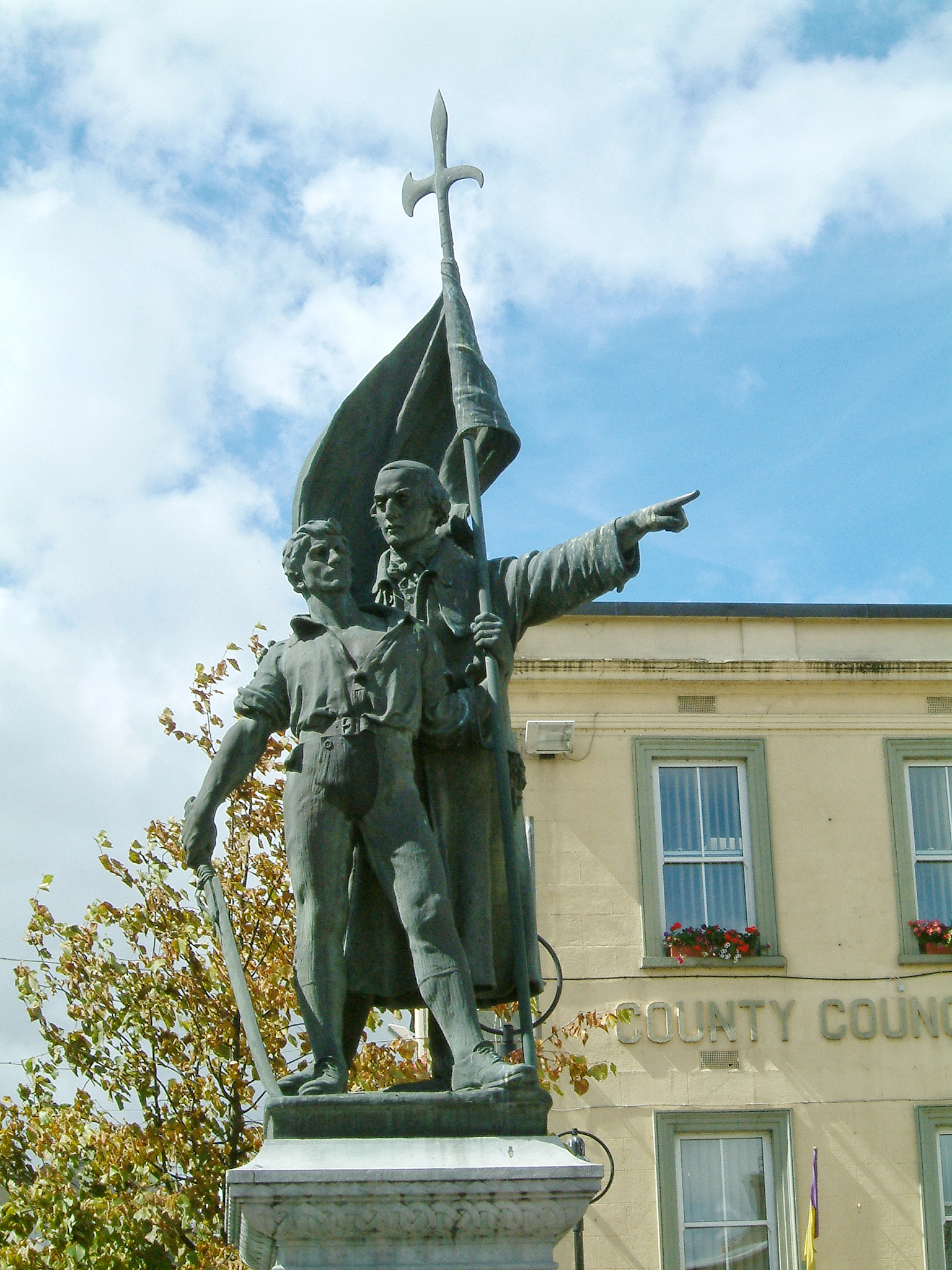


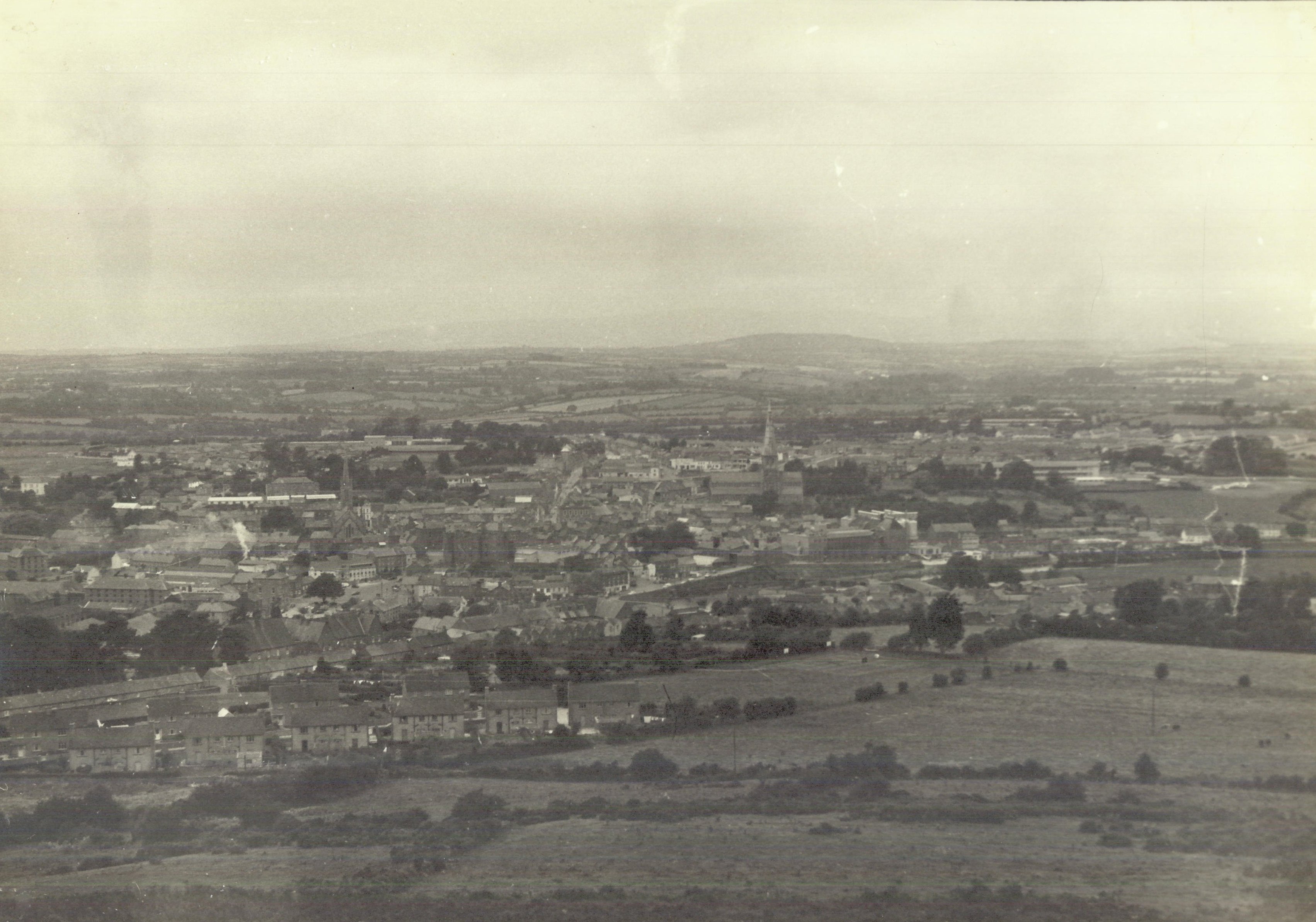


 General election seats won by civilizationist parties in Europe.
 Putin (L) and Orbán chat amiably.
 Great Britain lacks a civilizationist party because Nigel Farage decided that UKIP would not deal with immigration and Islamism.
 Migrants in Budapest, Hungary, in 2015.

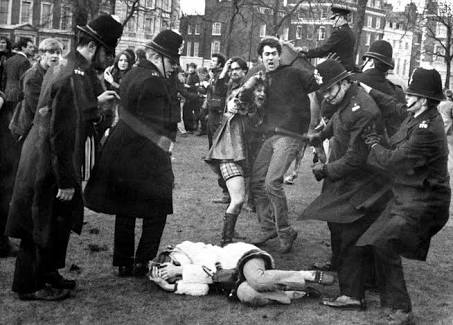
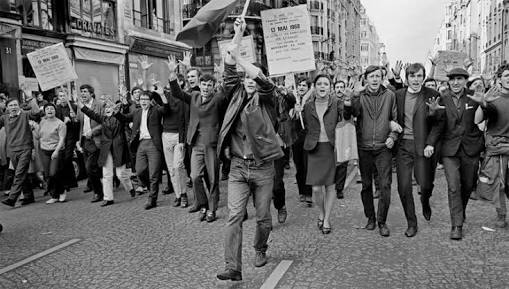






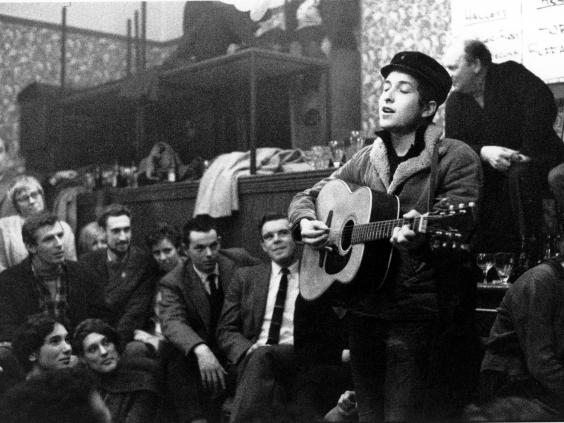
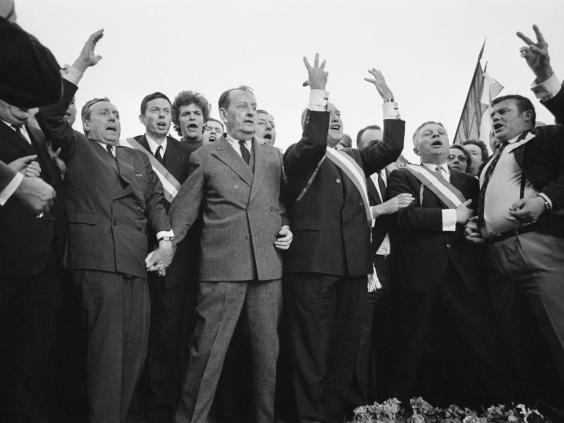
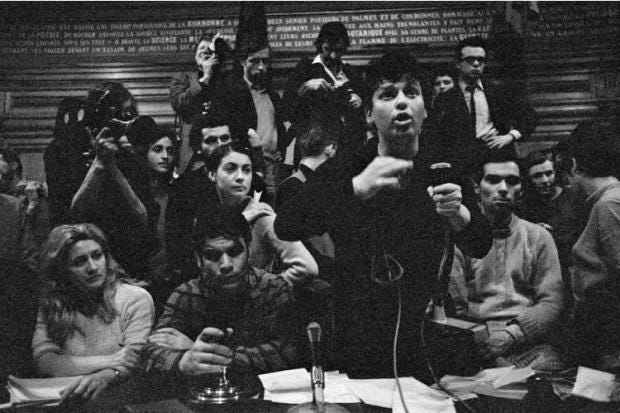









 In That Howling Infinite