The past is never past … and reappears unexpectedly

Time is an ocean but it ends at the shore
You may not see me tomorrow

Bob Dylan

A wander through the foggy ruins of time …

We had been having conversations at home about Jewish people I had known when I was young – we’ve had a lot to talk about on things like this in this hate filled times – and I recalled that there were not many to speak of. In those days, in the early and mid-1960s at Moseley Grammar School in Birmingham, there were, as I remember it, only three Jewish boys in the school. There may have been a Jewish teacher, but I’m not certain. Though Moseley was non-denominational, it was very much C of E in plain clothes. The Jewish boys and us Catholics – not meant of those either too –  would enter the daily school assembly after the routine prayers and hymns, and we were excused from scripture lessons even though these studied the same Old Testament.

Now, we often talk about memory here at In That Howling Infinite. Memories of our pasts, our younger selves, do not arrive with trumpets. They present themselves all of a sudden, unannounced and often sideways: through a stray remark on the couch of an evening; through a conversation about people once known; through one of those odd moments when the mind, unbidden, opens a door long thought shut and a forgotten face enters the room.

And Nicholas Molnar walked through that door …

On impulse, i went searching for one of those Jewish lads, one I had been friends with during my final years of Grammar School; and google brought up an obituary written by loved ones who bring you up to date, informing me that while I was busy becoming older, so was he.

It was written by members of the the Forres Friends of Woods and Fields, environmental and community garden group based some 40 km east of the northern Scottish town of Inverness, and it paid tribute to the their founder and chairperson who had just passed on. It got me wandering through my backpages

We were born in the same year, 1949, and arrived at Moseley at roughly the same time, around 1960, remaining there until the summer of 1967 (though I stayed another year). The son of German/Austrian parents who had escaped from Nazi Germany, Nick was small of stature, with curly hair, a prominent nose, and friendly, laughing eyes – an expression that always seemed on the verge of amusement. He was very bright, academically gifted, and a natural actor.

School drama productions in those days had a peculiar and often unimaginative tendency to cast according to what teachers thought somehow “fitted”. Nick, being Jewish, often found himself cast in Jewish roles. Looking back now, one raises an eyebrow at the assumptions involved, but at the time it seemed merely how the world worked.

I remember him particularly in Samuel Beckett’s Waiting for Godot and Wolf Mankowitz’s dark comedy The Bespoke Overcoat, a poignant and comic reimagining of Nikolai Gogol’s The Overcoat, itself a story carrying echoes of Jewish life and exile. These were esoteric two-handers (not quite what one would expect in grammar school drama production*) with one of the other Jewish boys – Chris Field, another outstanding student and gifted actor. The pair of them together had an ease on stage that some people spend a lifetime trying to acquire.

I cannot recall how we became pals. Nor do I remember much about the details of our friendship. But I often visited his home – in Moseley, I think, not far from our school – probably during school holidays.

I do recall that he bought a canoe and took to paddling Brum’s many canals. “Canoe, canal,” he would often refrain. At the time I thought it quite eccentric.

He then bought a second-hand Lambretta scooter. Those scooters possessed a strange glamour, belonging to a brave new world of Mods and movement and urban freedom – and, indeed, rebellion. A couple of my schoolmates had one and sported those long-tailed parkas that later featured in Quadrophenia. I envied them for the speed and freedom and would have loved to do likewise, but that required means and parental permission, and I had neither.

And then our schooldays drew to an end and we put off schoolboy things and ventured out into the wide world – the great divide that so often arrives at the end of adolescence: university, cities, the widening world.

Nick went up to university in London. I am fairly sure it was the LSE, or somewhere very near it in central London. I hitched down to visit him and stayed in his bedsit –  an atmosphere peculiar to student life where one exists in a halfway house between adolescence and whatever comes next.

Was it once or several times? I cannot recall. But I have an image of scooting through wet, wintry streets on the back of a Lambretta.

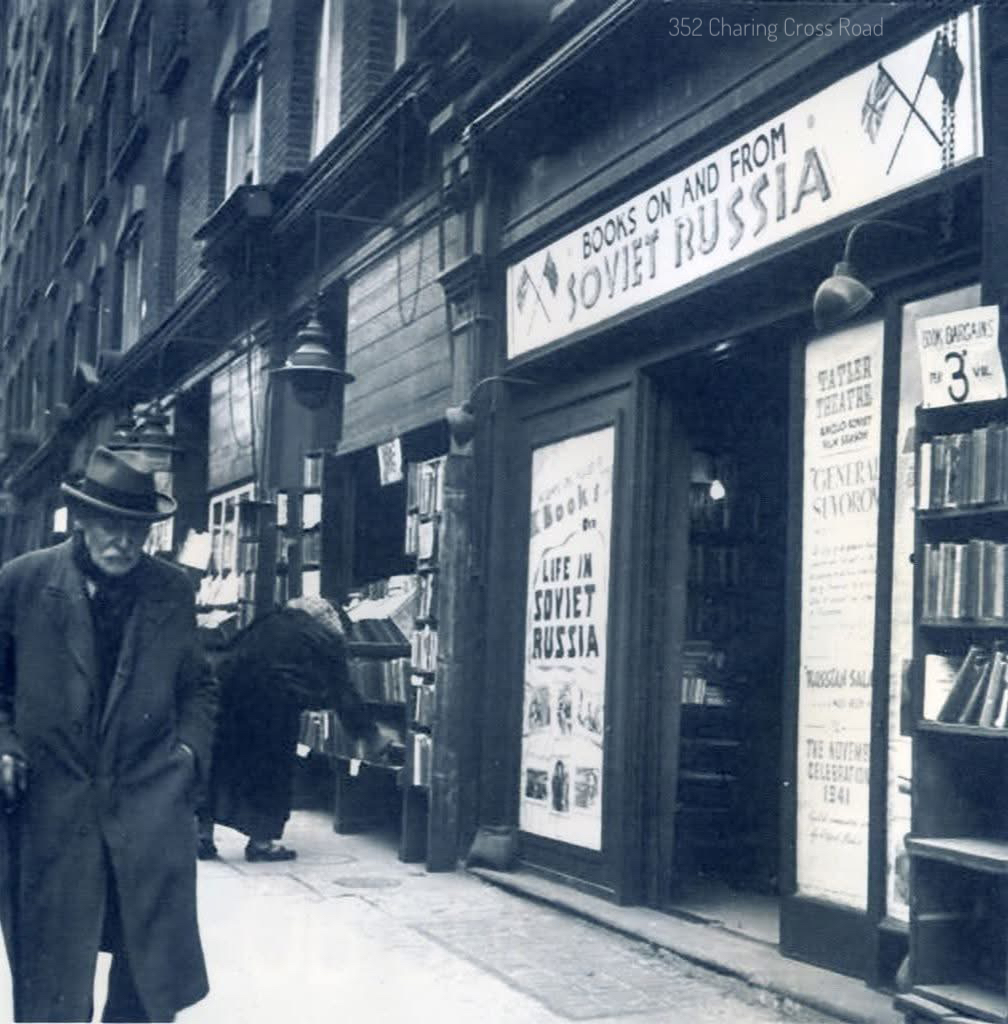
And he took me to what I recall as the Soviet Bookshop, though it may well have been Collet’s in Charing Cross Road. We had both developed a left-wing outlook on the world, and London at that time possessed a whole ecology of ideas. One could drift through central London moving from second-hand bookshops to political shops to cafés where everybody seemed convinced history itself had reached a point of imminent transformation.
Young people have always believed they stand on the threshold of a new age, but the late sixties had a particular confidence in this regard. Revolutions seemed possible. Societies looked malleable. One felt that history had become less a thing to study than a thing with which one might personally engage.

This was the life, I thought, mindful that I too would soon be taking that road.

Within a year I had left Birmingham for Reading in Oxfordshire and my own particular diversions, and, distractions. Unlike my upper sixth peers, I spent an extra year at Moseley, an unplanned and strange sabbatical during which I hitchhiked around Britain and nurtured my interest in history and politics. In what looks now in retrospect as one of life’s strange coincidences, in the Spring of 1967, I traveled the A98, the long road linking Aberdeen to Inverness – passing through Forres. I slept on the roadside somewhere near the Culloden battlefield and woke in the morning covered in snow.

Though London featured prominently, creatively and romantically in my university years, and I lived there from 1971 until 1978,  and though Nick and I may often have been in close proximity – I returned to that Russian book store several times , buying Lenin’s polemical pamphlets for my uni studies, Russian Revolution posters, and even, inspired by seeing Jethro Tull live, a balalaika (which I never learned to play) – I was never to see him again.

Until he walked through that door in our conversations here in the Tarkeeth forest – in the form of an obituary.

We lost touch – around 1968 –  as people sometimes do. Lives branch quietly. Then suddenly fifty or sixty years have passed and one discovers that entire lives have unfolded beyond one’s sight.

The strangest thing is that memory often preserves people at a fixed age. In my mind’s eye Nick remained perpetually young: climbing onto his Lambretta in his mod anorak, wandering through London, talking undergraduate politics, dropping me at the Tube station for my hitchhike back to Birmingham for school on Monday morning, and then heading off toward some unknowable future.

There is something poignant and bittersweet in discovering that the person you met a lifetime ago had not vanished after all, but had simply carried on further down the road, a.road that, for all its geographical, cultural, and social differences, might have been running parallel to my own.

Riffing on Nick’s biography – a life of service to community and environment as described below in the Forres Friends tribute –  I too became involved in student politics and protests in 1968 and 1969, including demonstrations against the Vietnam War in London, though I later parted company with politics in pursuit of more hedonistic things. I too travelled after graduation – my destiny lay in the Middle East and along the famous Hippie Trail to India and back.

My journey eventually carried me to Australia, where I now live out my latter years in a wildlife reserve and conservation area in the forests of northern New South Wales, caring for the bush while my wife tends our large vegetable garden. En route I have been an accountant, a folk singer, and an activist in Australia’s interminable forest wars.

People often imagine lives changing direction dramatically. We speak of transformations and reinventions. Yet perhaps character is more like a river than a sequence of disconnected events. It bends; it narrows; it widens; but somehow remains recognisably itself.

I had gone looking for a boy I once knew and found a life instead – a rich, generous, deeply lived life that had unfolded beyond my sight. We began with a door opening and a familiar face walking back into the room, but behind that remembered face lay an entire unseen life. There is a curious sadness in such rediscoveries. I found Nick again after all these years, only to discover that he had already rounded the bend and passed out of sight.

As Bob Dylan’s lines at the head of this memoire tell us, it is a reminder of how finite life is …

Paul Hemphill, May 2026

* But then again, maybe not. The young teacher who looked after school drama was of a bohemian bent, and in extracurricular drama classes, he introduced us sixth-formers to the plays of the “Angry Young Men” (a prominent group of working- and middle-class British writers and playwrights who emerged in 1950s postwar Britain), including Arnold Wesker and Joe Orton, and organised outings to the old Birmingham Repertory Theatre (back then, in its Stevenson Street location) to see contemporary plays.

In Tall Tales, small stories and eulogies, see more about my London in the nineteen sixties and seventies:  A Window on a Gone World … London days; Something about London; Song of the Road (1) – my hitchhiking days;; and Ciao Pollo di Soho – the cafe at the end of the M1

In That Howling Infinite has also written more generally about the nature of nostalgia. See: Blue remembered hills – a land of lost contentment (There is a précis of this below), and Blue remembered hills (2) – the history we hold within us

Forres Friends of Woods and Fields founder Nick Molnar passes away peacefully

Garry McCartney, The Northern Scott, 09 December 2025

A hard-working member of the community with a passion for the environment has passed away.

Forres Friends of Woods and Fields (FFWF) founder and chairman, Nick Molnar, 76, is survived by his wife and fellow volunteer Pippa, brother Michael, sister Nina and their families.

Nick (right) in the early days of the Chapelton polytunnel funded by the Berry Burn windfarm Community Fund.
The early days of the Chapelton polytunnel funded by the Berry Burn windfarm Community Fund.

FFWF chairman, Mick Drury, confirmed he also leaves the charity’s 26 diverse acres of land to be continued to be used for local community food production as well as a space to reconnect with nature.

The town has lost a core member of the community,” he said. “Nick was known for his warmth, helpfulness and involvement with a range of local projects. He had a lifetime’s commitment to the land and to building community.”

Nick was born in 1949 in Hertfordshire to German/Austrian refugees from the Nazi regime of the Second World war, spending most of his childhood in Birmingham.

He studied anthropology at university in London, taking part in student protests in 1967. After graduating, he travelled the world.

Nick then lived in Camphill communities in Norway, Ireland, England and Perthshire – supporting people with additional needs through work on the land. Camphill communities are residential communities and schools that provide support for the education, employment, and daily lives of adults and children with developmental disabilities, mental health problems, or other special needs.

Nick sowing in the Chapelton polytunnel.


Over the last five years, FFWF has been Nick’s life’s work, particularly after establishing its community garden at Chapelton.

Mick said: “His commitment and hard work have left a lasting legacy. A core group of volunteers meet there to work together weekly, harvesting for their own needs and making regular donations to Moray’s foodbank.”

The group’s summer open days are very popular now – Nick was always on-hand to welcome attendees and build new relationships.

“He’d always be out supporting the town’s apple and tattie days,” added Mick. “At home, he and Pen would be busy preserving soft fruits, making pickles and chutneys, sauerkraut and kimchi.”

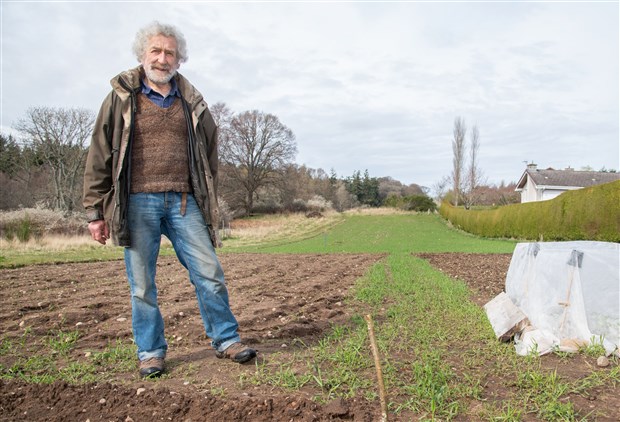
Nick at the growing field and garden near Chapelton Farm.

Nick’s love of traditional skills and crafts of the countryside led to him trying his hand. Scything was a particular interest, and he was arrested for scything genetically modified crops on the Black Isle in 2001 when a test site was established there.

He was a keen reader and had a great interest in folk music, learning to play the violin in recent years.

Nick passed away at home just over a week after suffering a serious stroke. He was supported by his family, by Kate Clark from the Pushing up the Daisies bereaved charity, and with the “wonderful” assistance of the district nurses.

He was given a quiet send-off at Chapelton, with piper Rory O’Connell and a private green burial. There will be a life celebration for Nick in the new year. Messages of condolence are asked to be sent to forresfriends@gmail.com.

“We are blessed to have known Nick,” finished Mick, “and we will miss him greatly.”

Do you wish to respond to this article. If so, click here to submit your thoughts and they may be published in print

About Forres, Findhorn and Camphill

Forres is an historic market town in Moray in northeast Scotland, situated approximately 25 miles (40 km) east of Inverness and about 12 miles (19 km) west of Elgin, nestled between fertile farmland and the coast of the Moray Firth. Just 5 miles (8 km) north-east of Forres, a journey of little more than ten minutes by car, lies the small coastal village of Findhorn, set beside Findhorn Bay and opening onto the North Sea. Although distinct places, Forres and Findhorn have long existed in each other’s orbit: one a traditional Highland town with ancient roots, the other a village internationally known for its ecological and communal experiments.

Within this landscape sits Forres Friends of Woods and Fields (FFWF), a community woodland and garden project founded in 2020 by my old school chum Nic Molnar, who served as its founder and chair. The organisation brings together practical environmental work with a strong sense of community life, creating shared spaces where volunteers plant and grow food, manage woodland, support biodiversity, and learn sustainable land practices. Yet projects such as this are about more than gardens and trees. Their ethos is equally social: people gathering for a few hours of work, conversation, and companionship – “a blether and a cup of tea,” as the organisation itself cheerfully puts it. In that sense, FFWF reflects an older village ideal recast in modern form: a communal space where practical labour and human connection become intertwined.

The broader region also carries the influence of the Camphill Communities, an international movement founded in Scotland in 1940 by Karl König and fellow refugees from Nazi Europe. Based on principles of shared living and mutual care, Camphill sought to create communities in which people with learning disabilities and additional support needs lived and worked as equal participants rather than as institutional recipients of care. Farms, gardens, workshops, schools, and shared homes became central features of community life. The Moray region around Forres and Findhorn later developed into one of Camphill’s most significant centres, helping establish the area’s reputation for social innovation, community-based living, and environmental engagement. The underlying principles of König’s Camphill school were derived from concepts of education and social life outlined decades earlier by anthroposophistRudolf Steiner(1861–1925). Today there are over 100 communities worldwide, in more than 20 countries, mainly in Europe, but also in North America and Southern Africa

Findhorn itself added another layer to this local culture through the emergence of the Findhorn Foundation, whose experiments in ecological living and sustainability attracted international attention from the 1960s onward. Together, these overlapping influences –  the traditional town of Forres, the intentional and ecological communities of Findhorn, the Camphill movement, and local initiatives such as Forres Friends of Woods and Fields – have created a small corner of Scotland that is geographically modest yet unusually rich in ideas about community, stewardship, and shared ways of living.

Précis: Blue Remembered Hills — a land of lost contentment

Nostalgia is one of those curious human afflictions that sits somewhere between memory and myth. The Greeks called it nostos: the longing for home, the ache of return. Homer built The Odyssey around it. Houseman called childhood “the land of lost content”. We all know the feeling: that sudden gust of memory carrying with it a place that perhaps never quite existed in the form we remember it. A song, a smell, a taste, a street corner glimpsed through rain –  and suddenly one is standing again in those “blue remembered hills”.

The trouble is that nostalgia can be both consolation and deception. Memory does not preserve the past like amber trapping an insect; it edits, softens, rearranges and, occasionally, invents. It is less a historical archive than a film editor’s cutting room. We tend to remember not the world as it was, but the world as it felt. Childhood roads seem wider when revisited, old houses smaller, old certainties larger. Looking backward is a little like looking in a rear-view mirror: objects appear closer than they really are.

There is nothing inherently wrong with this. Quite the opposite. Nostalgia often provides continuity in a world moving at bewildering speed. Long-term memory can become a kind of inner refuge, perhaps even biology’s consolation prize for ageing. As we move through life, the past gradually acquires sovereignty over the present. The older we get, the more we discover that Hartley was probably right: the past really is another country. More disconcertingly, we begin to realise it has become home.

Yet nostalgia also has its darker uses. It can become what South Park hilariously called “memberberries”: seductive little fragments of selective memory that rot the brain with sentimental half-truths. “Remember when things were better?” they whisper. Remember when streets were cleaner, people knew their place, children behaved, and chips came wrapped in newspaper? The problem is that these memories often airbrush out the less attractive features of the era: poverty, prejudice, corporal punishment, rigid social hierarchies, casual cruelty and exclusion. There is a tendency to remember cohesion while forgetting whom that cohesion excluded.

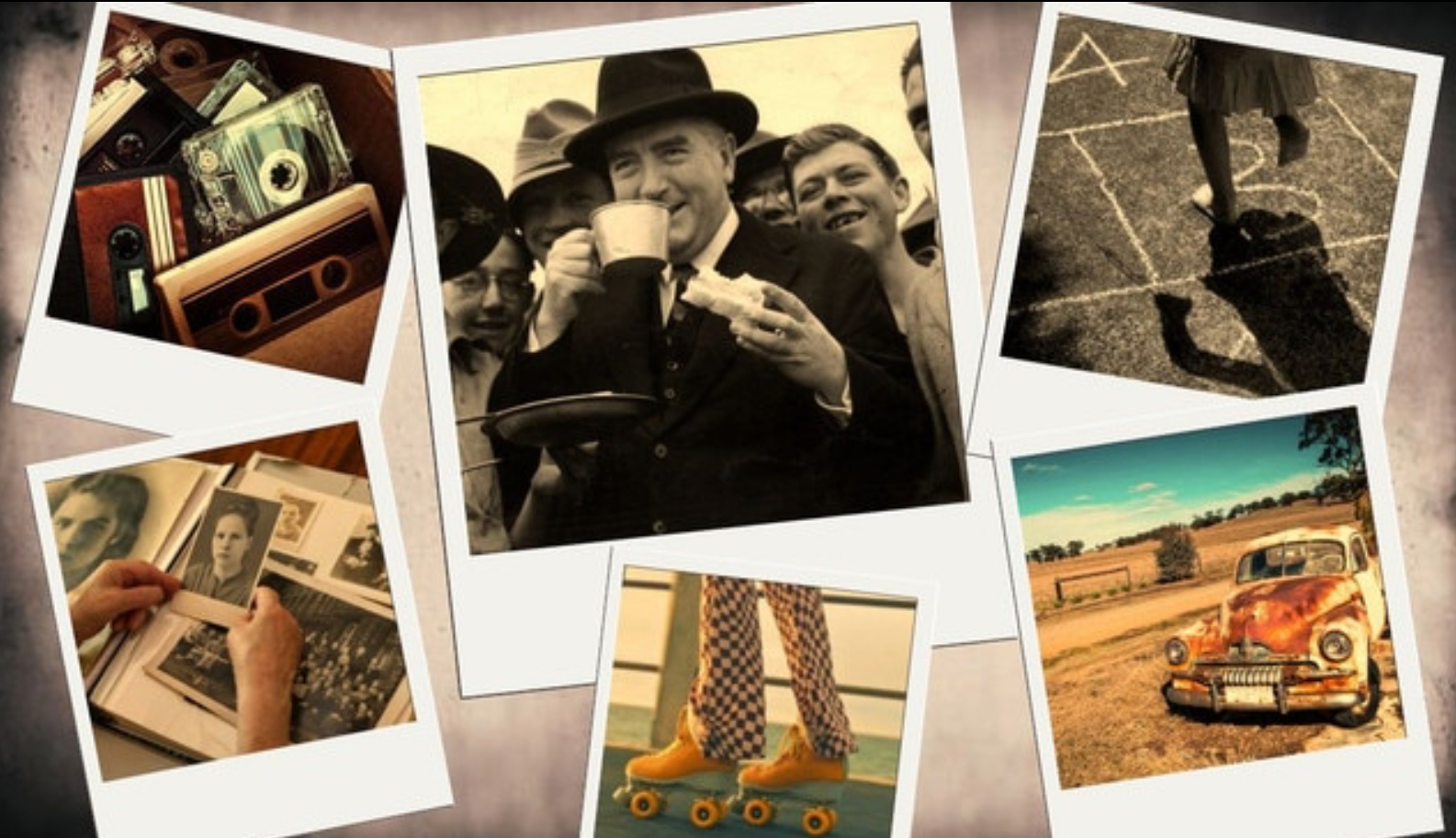
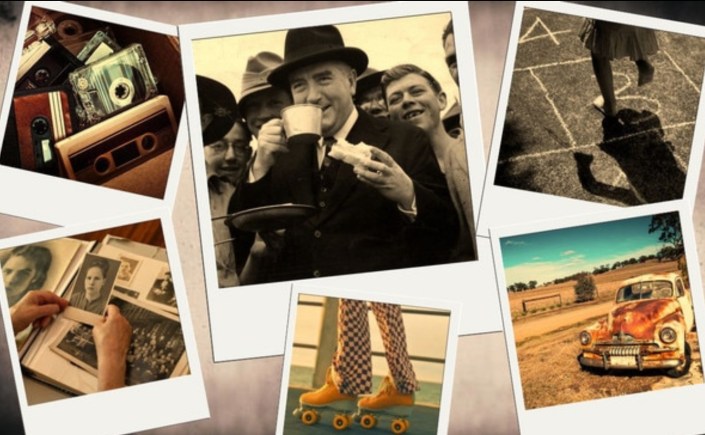
And nowhere is this more visible than in those sprawling Facebook nostalgia communities now largely colonised by us boomers. They are fascinating anthropological sites – digital village greens where people gather not to discuss wars, elections or grand historical events but milkmen, street sweepers, bin men, old sweets, cassettes and television programmes long vanished into history.

At first glance it all appears harmless enough: a warm bath of collective memory. Yet beneath pictures of “proper bin men” and school playgrounds often lurk deeper currents of anxiety and resentment. The mundane becomes symbolic. The old milkman becomes shorthand for social trust; the local high street for community; black-and-white photographs of tidy streets for a world supposedly more ordered and comprehensible.

What many are mourning, however, may not be the world itself so much as their own place within it. We do not merely miss old streets or old songs; we miss younger versions of ourselves inhabiting them. We miss possibility. We miss novelty. We miss being twenty and imagining that life was still unfolding rather than slowly arranging itself into memory.

The political danger arrives when nostalgia stops being reflective and becomes restorative — when longing for the past becomes a demand to reconstruct it. The right has often understood this instinct well. It does not necessarily need to persuade people of a compelling future if it can offer an idealised yesterday. “Take back control”, “make things great again”, “return to traditional values”: all are variations on the same emotional melody.

But return tickets are unavailable. The past cannot be restored because it never truly existed in the form imagined. There were never really “good old days”; there were simply days – complicated, contradictory and viewed through younger eyes.

None of this means memory should be discarded. Far from it. There is immense pleasure in basking in les temps perdus. I happily indulge in musical rabbit holes and Facebook reminiscences myself. Songs especially are magical portals because music does not merely remind us of the past –  it briefly resurrects it. A song can collapse fifty years in three minutes.

But I would still choose today.

For all its noise and absurdity, for all the algorithms, grievances and existential clutter of modern life, today contains wonders unimaginable to my younger self. Medicine keeps people alive who once would not have survived. Knowledge sits literally in our hands. Distances have collapsed. Possibilities have expanded.

The trick perhaps is to hold memory gently: to enjoy nostalgia without becoming captive to it. To remember that we are, as Maria Popova put it, all our previous selves stacked inside us like Russian matryoshka dolls –  not discarded versions, but incorporated ones.

The little boy still exists somewhere in the old streets and schoolyards and songs. He is still playing in the enchanted forest with Pooh and Christopher Robin.

Blue remembered hills (2) – the history we hold within us

What unites people?” Armies? Gold? Flags?” No. It’s stories, he said. “There’s nothing in the world more powerful than a good story. Nothing can stop it. No enemy can defeat it. And who has a better story than Bran the Broken? The boy who fell from a high tower and lived… He’s our memory. The keeper of all our stories. The wars, weddings, births, massacres, famines, our triumphs, our defeats, our past. Who better to lead us into the future?”
Tyrion Lannister, Game of Thrones, Season 8

A couple of years ago In That Howling Infinite published a long meditation on nostalgiaentitled Blue remembered hills – a land of lost contentment. It wandered through Housman and Homer, Facebook nostalgia groups and old LPs and cassette tapes, Spike Milligan and Dusty Springfield, milkmen and memberberries, touching along the way on memory, ageing, and that curious ache that seems to settle upon us as the years accumulate and our lives begin to look less like roads stretching ahead and more like maps folded and unfolded over time.

This ramble through memory’s brambles was never really about the past itself. It was about our relationship with the past – why we keep glancing over our shoulders even as technology either frog-marches us unwillingly into the future or lures us there like the sirens of yore; why old songs can unexpectedly inflict  sweet pain; why memories unsummoned but never ignored can transport us across decades with a force that no deliberate act of memory quite manages. It was very much about that peculiar territory where memory, longing and identity overlap.

In an essay published in The Australian and republished below, sociologist Frank Furedi covers much the same terrain, thought from a somewhat different direction and with a more explicitly political destination in mind.

It him brought me back immediately to Blue Remembered Hills because I realised we were traversing similar landscapes, though perhaps by different paths. He is concerned principally with nostalgia as a cultural and political phenomenon; I was more interested in nostalgia as a human condition, a state of mind, perhaps even a permanent feature of consciousness itself. Yet the overlap is considerable, and worth exploring.

Furedi begins with an observation that feels difficult to dispute. In contemporary political and cultural discourse, nostalgia is rarely employed as a neutral descriptor. It usually arrives as an accusation. To describe someone as nostalgic is no longer simply to suggest wistfulness or sentimentality; it increasingly carries implications of intellectual weakness or moral deficiency. Nostalgia becomes shorthand for reactionary impulses, coded language for a desire to return to a world in which minorities “knew their place,” women remained within prescribed roles, social conformity prevailed, and authority went largely unquestioned. This conservatism itself is often dismissed as little more than “weaponised nostalgia.”

Furedi argues that this caricature misses something fundamental about human beings. We require continuity. Individuals and societies alike need some sense of connection across time if they are to understand themselves. Identity does not simply emerge from acts of self-invention. We understand who we are partly through knowing where we have come from, and that understanding is transmitted through families, customs, traditions, rituals, stories and shared memories. Drawing upon psychologists such as Erik Erikson and Roy Baumeister, Furedi suggests that stable identities depend upon linking past, present and future together. When that continuity is disrupted, people become untethered. The de-authorisation of the past – the tendency to regard inherited traditions chiefly through the lens of their failures – risks creating citizens detached not merely from particular customs but from historical memory itself. In this formulation, nostalgia becomes less an irrational yearning for a golden age than a search for home.

Reading him, I was reminded immediately of Roger Scruton’s small-c conservatism and also of one of the most resonant lines in English literature, from Thomas Babington Macaulay’s Horatius at the Bridge: “And how can man die better/Than facing fearful odds/For the ashes of his fathers/And the temples of his gods?”

The line is often invoked in patriotic contexts, but its significance extends well beyond nationalism. Macaulay was attempting to articulate what people fight for when circumstances become existential. They do not fight primarily for policy settings or administrative arrangements or economic forecasts. They fight for inheritance. “The ashes of his fathers” speaks of continuity itself – reverence for ancestors, memory, sacrifice, lineage and identity accumulated across generations. “The temples of his gods” points towards those sacred structures, literal and metaphorical, that provide coherence and meaning: religion perhaps, but also customs, symbols, institutions and moral frameworks. And “facing fearful odds” follows naturally once these things matter deeply enough.

In Macaulay’s poem, the Roman soldier is not merely defending a bridge into Rome. He is defending an entire civilisational story and all that has been invested in this: ancestry, faith and ultimate sacrifice – the belief that preserving one’s inherited world can be a noble undertaking. The late British philosopher Roger Scruton understood something similar. His conservatism was not fundamentally ideological but ecological. Human beings live within webs of affection and obligation that they inherit rather than construct. Home, family, language, neighbourhood and nation are not assembled from scratch like flat-pack furniture. They are inherited houses, perhaps imperfect and drafty, requiring repair and maintenance, but home, nonetheless. Burning them down because some parts are structurally unsound rarely ends well.

This is where Blue Remembered Hills perhaps parts company slightly with Furedi, because while it shares his concern regarding continuity, it remains cautious about nostalgia itself – or more accurately, nostalgia in excess.

As it observed, “nostalgia is not just wanting to go back to something that no longer exists but wanting to go back because it no longer exists”. That distinction matters because memory is not a neutral recording device. Memory is an artist, and often a romantic one. It edits and embellishes. It softens edges and airbrushes imperfections. Like objects in a rear-view mirror, the past often appears larger and closer than it actually was. The roads where we grew up seem wider; summers seem longer; music seems better; friendships seem deeper; and the world itself somehow appears more coherent and comprehensible.

Or, as in AE Housman’s “land of lost content”, “The happy highways where I went/And cannot come again”, the oft remembered lines from The Shropshire Lad. The crucial phrase here is not happy but cannot come again, because the longing itself derives partly from irretrievability. The ache comes not simply from what was, but from knowing it has gone forever.

This is where the distinction made by the late artist and scholar Svetlana Boym becomes useful. She wrote of two forms of nostalgia: restorative nostalgia which attempts to rebuild the lost world and reflective nostalgia which simply contemplates its loss.

The distinction matters enormously because much contemporary politics increasingly resembles restorative nostalgia. Whether in “Make America Great Again”, “Take Back Control” ans national flag marches in England and Australia, or broader calls to restore traditional values, the promise offered is not remembrance but return. Yet return is impossible. The world changes, and we change with it. Lewis Carroll put it succinctly through Alice: “It’s no use going back to yesterday, because I was a different person then”. Reflective nostalgia, by contrast, understands that the longing itself may reveal something important.

This was what was fascinated about the Facebook nostalgia communities discussed in Blue Remembered Hills. On the surface, people appear to be reminiscing about milkmen, trams, proper binmen, fish-and-chip shops, sweet shops, old television programmes and the countless banalities of everyday life. Yet they are rarely mourning the objects themselves. Nobody seriously wants coal deliveries or outside toilets back. Very few wish to exchange modern medicine for the old days or surrendering a smart phone wired to the world for queuing up outside a telephone kiosk in winter rain and then fumbling with pennies to connect.  What they seem to miss is something much harder to define: predictability, familiarity, social coherence and a sense that the world itself made sense.

And here lies the danger, because loss can become attached to myth. The comments beneath nostalgic posts often drift rapidly from warm recollection towards grievance. “Everyone knew their place.” “People respected authority.” “Families stayed together.” “Children behaved.” “Things were simpler.” Much of Blue Remembered Hills wandered through precisely these landscapes because nostalgia communities frequently become repositories not merely for memory but also for disappointment and dislocation.

Not always, of course. Often, they are charming and deeply touching. But they can also become vessels carrying resentment. The difficulty is that social solidarity and exclusion frequently travelled together. The supposedly cohesive worlds people remember often contained rigid hierarchies and invisible outsiders. There was always an “other”, Irish, Catholics, West Indians, travellers, beatniks and hippies, homosexuals, single mothers, long-haired layabouts, anyone deemed insufficiently conformist. The problem with some nostalgic narratives is not that they remember the past, but that they remember selectively.

Yet contemporary culture often risks making the opposite error. If some nostalgists remember only the good, many contemporary critics remember only the bad. History becomes reduced to oppression, traditions become little more than systems of exclusion, and inherited identities become sources of guilt rather than belonging. Continuity itself becomes suspect.

But human beings do not thrive in a historical vacuum. People need stories. They need rootedness. They need to feel themselves situated within something larger than themselves. Otherwise identity becomes an endless project of self-construction. Perhaps this explains something of our present condition – that strange mixture of anxiety and certainty, fragmentation and tribalism. If the old maps are discarded and no convincing new maps emerge, people begin drawing their own, often with thick permanent marker.

So perhaps Frank Furedi and Blue Remembered Hills are not ultimately in disagreement after all. Furedi reminds us that continuity matters. Our concern was simply to remind us that memory lies – or at least embellishes. Nostalgia is perhaps neither pathology nor virtue. It may simply be part of being human.

We cannot live entirely in the past, but neither can we sever ourselves from it. The challenge is to carry forward what was best without importing what was worst; to preserve solidarity without exclusion, belonging without mythmaking, and continuity without embalming it. Or, as Roger Scruton might have put it, to repair the house rather than set fire to it.

Because ultimately Horatius was not defending stones and timber. He was defending meaning itself. And perhaps all of us, in one way or another, spend our lives doing much the same thing – carrying fragments of home with us as we move through time, searching always for those blue remembered hills shimmering in the distance, knowing perfectly well that we cannot return there, yet unwilling entirely to let them disappear beneath the horizon.

Coda: the power of stories

Recall the quotation at the head of this article – Tyrion Lannister’s’s final speech in Game of Thrones, addressed to the assembled nobles of the erstwhile Seven Kingdoms of Westeros.

It fits remarkably well into the thread running through both Furedi and Blue Remembered Hills, because beneath all the discussion of nostalgia, continuity, memory and belonging sits a simpler and much older question: how do human beings hold themselves together across time? Tyrion’s speech, whatever one thought of the controversial series ending itself, touched on something ancient and surprisingly profound:

“What unites people? Armies? Gold? Flags?…There’s nothing in the world more powerful than a good story.”

The speech sits very comfortably beside Macaulay’s “the ashes of his fathers and the temples of his gods.” Armies may defend states, gold may purchase influence, and flags may function as symbols around which people rally, but stories explain why any of these things matter in the first place. Beneath institutions and political structures there almost always lies a narrative – some account of who we are, where we came from, and what obligations and meanings flow from that inheritance.

Rome was held together not merely by its legions but by stories about Rome itself – Romulus and Remus suckled by the she-wolf, Cincinnatus leaving his plough to save the Republic and returning quietly to his farm, Horatius standing at the bridge against impossible odds. Britain carried stories of Dunkirk and the Blitz spirit, of endurance and muddling through. America possesses its frontier myth and constitutional narratives. Australia has Gallipoli and the digger tradition, Ned Kelly and the battler, Clancy of the Overflow and the secular civic religion of giving everyone “a fair go”.

Whether these stories are entirely true in a strict historical sense is almost beside the point. They function as interpretive frameworks, shared narratives through which societies understand themselves and situate individuals within a larger continuity extending backward and forward through time.

This perhaps returns us to what Furedi is really lamenting. Beneath his discussion of nostalgia lies not simply concern over the loss of affection for the past but anxiety regarding a broader loss of confidence in inherited stories themselves. Increasingly our old narratives are subjected, often quite rightly, to forensic examination. We ask difficult questions. Who was excluded? Who suffered? Whose voices were ignored or omitted? Such questions are entirely legitimate and indeed necessary. Historical narratives that are immune from criticism become dogma.

Yet something else can be lost if all inherited stories are reduced solely to exercises in power, domination or hypocrisy. Human beings do not seem able to live indefinitely without narratives that locate them in time and place. Remove old stories entirely and people rarely become liberated, detached rational actors. More often they begin constructing new tribes, new identities and new mythologies of their own.

Blue Remembered Hills circled around much the same thought without quite expressing it this directly. The Facebook nostalgia groups it wrote about, with their endless photographs of everyday life in those golden, olden days, were never really about the objects themselves. These fragments were really pieces of larger stories people were attempting to preserve. What they were saying, consciously or otherwise, was something closer to: this is where I came from; this is the world that made me; this is how I understand myself.

That may explain why nostalgia can be both comforting and dangerous. Stories bind communities together, but stories can also become myths. The “good old days” can cease being memory and become something approaching scripture. The selective recollection of the past can harden into certainty, grievance and exclusion.

Which is why Tyrion’s choice of Bran becomes more interesting than it first appears. Bran is not presented as the strongest warrior, the wealthiest lord, or the most charismatic leader. Tyrion describes him instead as: “our memory. The keeper of all our stories.” And the important word there is all. Not some stories. Not only the glorious ones. The wars and the weddings, the triumphs and the massacres, the births and the famines, the victories and the defeats. In other words, continuity without selective amnesia, memory without mythmaking.

A people who remembers only their triumphs eventually become propagandists; a people who remember only their crimes risk becoming paralysed by self-reproach. A mature culture probably requires both: stories that inspire affection and belonging, and stories that remind us where we failed and what we learned.

Which returns us, inevitably, to Horatius standing at the bridge, and perhaps also to those blue remembered hills shimmering on Housman’s horizon. We do not ultimately fight for stones and timber, borders and institutions alone. We fight for meaning, for the stories that tell us who we are, where we came from, and why any of this matters.

If Tyrion was right, and he probably was, then what ultimately joins past and future is not power at all. It is narrative itself. We are, in the end, storytelling creatures carrying old tales forward as we walk into countries, we have not yet seen.

Paul Hemphill, May 2026

See also in In That Howling Infinite, Blue remembered hills – a land of lost contentment. A précis of this follows Furedi’s essay.

What’s so wrong with the good old days? In defence of nostalgia

Frank Furedi, The Australian, 21 May 2026

Nostalgia isn’t a political insult. Populists and conservatives are condemned for attachment to the values associated with ‘the good old days’. Here’s why we need it.

In the Western world – particularly among the intelligentsia and the cultural elites – nostalgia has a bad press. As one study of how the use of this label is seen or used stated: “To have one’s ideas, program, policies or style labelled ‘nostalgic’ is to be on the end of one of the most enduring and non-negotiable insults in modern political discourse.” The accusation of nostalgia serves to delegitimate individuals and movements by associating it with outdated and irrelevant sentiments.

Nostalgia is continually affixed to ideological attacks on populism and conservatism. Typically, the coupling of nostalgia with conservatism and populism serves to signify the fear of facing up to the present and an irrational escape into a mythical past. Time and again the accusation of nostalgia is coupled with a denunciation of everything its practitioners value about the past.

Critics of nostalgia contend that the “good old days” never existed. They insist that those who idealise the world of intact families, stable communities and solid intergenerational bonds are living a lie. These critics assert that people who possess an affinity to the past do so because in the old days racial minorities knew their place, women were confined to the kitchen and the LGBTQ+ community had no visibility or voice. Writing in this vein, one critic stated, “conservatism is just weaponised nostalgia”.

It is worth noting that anyone who voices a positive attitude towards Australia’s past is likely to be accused of the reactionary crime of nostalgia. So earlier this year, commentary broadcast on the ABC suggested that former prime minister John Howard’s legacy represented “nostalgia for a whiter, more conservative Australia”.

In the same vein, Tony Abbott’s book, Australia, is frequently denounced as the product of colonial nostalgia. Those labelled as members of the Nostalgia Right are regarded as irredeemable racists and xenophobes.

John Howard during Question Time, December 1999.

John Howard during Question Time, December 1999.

Critics of nostalgia do not merely caution people about the problem of living in the past: they also seek to delegitimate the values and customs that prevailed in yesteryear.

The aim of the political critique of nostalgia is to distance society morally from its history. Its goal is to undermine a nation’s sense of cultural continuity. Australian conservatives and populists are frequently attacked for invoking three nostalgic pasts: the social order and prosperity of the 1950s Menzies era; the celebration of the nation’s connection with the British monarchical past, and; the social solidarity that prevailed in pre-multicultural Australia.

Yet maintaining a sense of historical and cultural continuity with the past is essential if we are to know where we come from and who we are. So don’t get defensive when you are told off for being nostalgic.

Without falling into the trap of uncritically celebrating the “good old days”, it is vital to affirm the legacy of our past, especially the sense of solidarity and community we are at risk of losing.

Nostalgia assists the maintenance of cultural continuity.

The sense of historical continuity plays an important role in the constitution of the self. Understanding where we come from influences and strengthens individuals’ sense of who they are. A feeling of continuity with the experience of previous generations lends stability to a people’s identity.

Continuity across time is achieved through the intergenerational transmission of a community’s way of life and its ideals. It is difficult to develop a sturdy sense of community identity without a shared memory and a common attachment to conventions or customs that are rooted in the past.

The sense of continuity across time is, as psychologist Roy Baumeister stated, one of the defining criteria of identity. This point was echoed by American social psychologist Kenneth Keniston, when he stated, “one of the chief tasks of identity formation is the creation of a sense of self that will link the past, the present and the future”.

The common ground on which people live requires a shared understanding of where members of a community come from. Learning about the past helps children to know their place in the world and develop their identity. German psychoanalyst Erik Erikson, who formulated the concept of an identity crisis, attached great importance to providing young people with a sense of cultural continuity. He noted that “true identity … depends on the support which the young individual receives from the collective sense of identity characterising the social groups significant to him: his class, his nation, his culture”.

Tea and army cake refreshed then-Prime Minister Robert Menzies on a visit to Seymour military camp back in 1939. Picture:News Corp

Tea and army cake refreshed then-Prime Minister Robert Menzies on a visit to Seymour military camp back in 1939. Picture:News Corp

For socialisation to occur successfully, adults draw on the experience of previous generations to provide young people with a meaningful account of adulthood. Erikson remarked that the values with which children are trained “persist because the cultural ethos continues to consider them ‘natural’ and does not admit of alternatives”.

He observed: “They persist because they have become an essential part of the individual’s sense of identity, which he must preserve as a core of sanity and efficiency. But values do not persist unless they work, economically, psychologically and spiritually; and I argue that to this end they must continue to be anchored, generation after generation, in early child training; while child training, to remain consistent, must be embedded in a system of continued economic and cultural synthesis.”

Valuing the past

The socialisation of children is key to the transmission of this legacy of the past. It is integral to an intergenerational transaction whereby moral norms are communicated by authoritative adults to the young. Though this form of socialisation is likely to be perceived as impregnated with nostalgia by the technocratic-managerial elites, it is essential for providing the young with roots.

Once the moral status of the past is put into question, the achievement of a stable identity becomes fraught with uncertainty. The de-authorisation of the past renders the experiences of the older generations redundant and complicates the task of socialisation. Adulthood becomes compromised by its association with the past. Instead of being able to serve as a model to the young, it ceases to serve that role effectively.

Erikson’s reference to the “collective sense of identity” that adults communicate to young people has as its premise the capacity of the older generation to communicate a model of identity to their offspring. However, with the loss of the “sense of the past”, cultural continuity has become disrupted and the capacity of adults to serve as models to the young has diminished.

Nostalgia can be understood as the cultural antithesis to the loss of a sense of the past. As sociologist Fred Davis noted, nostalgia “leads us to search among remembrances of persons and places of our past in an effort to bestow meaning upon persons and places of our present”. From the anti-populist standpoint, the very search for meaning in tradition and the experience of the past is likely to encourage opposition to the value system of the defenders of the cultural status quo.

A yearning for home

Instead of responding to the critics of nostalgia by dismissing the charge of being drawn towards it, it is preferable to embrace it. Nostalgia refers to a yearning for home. It expresses an understandable and genuine sense of cultural loss underwritten by the belief that values that had once provided the unity of social relations and personal experience have become marginalised.

Populists and conservatives are on solid ground when they seek to reconnect with the legacy of their nation’s past. Those who possess a positive orientation towards the past should not be seen as emotionally illiterate, naive simpletons. Through their nostalgic orientation, they attempt to retrieve and develop sources of identity, agency or community.

Tony Abbott’s book, Australia, is frequently denounced as the product of colonial nostalgia. Picture: Jane Dempster / The Australian

Tony Abbott. Jane Dempster / The Australian

The attempt to forge a sense of historical continuity is a prerequisite for providing the present with the sturdy foundation needed to face the future. Those who have become detached from the past inevitably become obsessed with inventing an identity to the point that they become detached from the project of facing the future. Call it what you will, but the attempt to forge a consciousness of historical continuity makes an indispensable contribution to the creation of a bridge between the past and the present, and the present and the future. It is an effective way of cultivating a genuine sensibility of belonging.

Nostalgia is not only good for society but also for the wellbeing of individuals. Studies suggest that those who “reminisce are more likely to keep friends and expand social networks”, and are able to forge closer and more durable relations than those who are indifferent to their past. Common sense suggests that the individual’s attempt to forge and maintain a sense of continuity with the past assists the development of an individual’s identity and feeds the soul of society.

In the 21st century, the main distinguishing feature of movements labelled as populist is their tendency to challenge the cultural values espoused by the political establishment. Often, the challenge posed by populist movements to elite values is expressed through their reluctance to abandon customs and traditions that elites have discarded: sentiments described by the use of that confusing term “nostalgia”.

Yet without a close connection with the past, we become prisoners of fate. Why? Because we can only truly understand what humanity has achieved so far and acquire insight into what it can achieve in the future by evaluating the experience of our forebears. The legacy of the past provides the moral and intellectual resources for developing a 21st-century narrative of what solidarity and community looks like. Very importantly, it also provides the foundation for freedom.

Once society becomes de-historicised, it will become lost in a timeless wasteland. Those with an impoverished historical imagination are doomed to embark on an eternal quest for meaning because we become connected and situated in time through cultivating an empathetic relationship with the past as members of a community. Without such an attachment, we struggle to intuit where we have come from and are constantly in search of an identity. Navigating our way into the future is harder when we are deprived of a means to assimilate the experience of our ancestors. Put simply, to determine where to go, we need to know where we came from.

It’s an Australia that did exist

In Australia, hostility towards nostalgia is motivated by a venomous hatred towards the nation’s past. Take the hatred directed at former opposition leader Peter Dutton. According to the National Indigenous Times, his “path to the party leadership has been defined not by nation-building, nor a vision for Australia’s future, but through obstruction and division, wedded with a nostalgia for an Australia that never truly existed”.

Peter Dutton is another pilloried for valuing nostalgia and the past. Picture: Dan Peled /Getty Images

Peter Dutton. Dan Peled /Getty Images

The reference to an “Australia that never truly existed” is frequently invoked by critics of nostalgia. Implicit in this statement is the dispossession of Australia’s historical legacy of any positive features.

Populist conservatives do not want to go back to a golden age, but nor do they want their communities to be dispossessed of the customs and ways of being that made them who they are.

Keeping alive the traditions, customs and rituals that have inspired their communities over the generations provides populism with the cultural power to motivate millions of people. It provides the foundation for the kind of cultural security that allows people to face the future.

Frank Furedi is a sociologist, author and former professor of sociology at the University of Kent. This is an edited extract from his new book, In Defence of Populism (Polity Press), which will be published on May 22 in Australia

Précis: Blue Remembered Hills — a land of lost contentment

Nostalgia is one of those curious human afflictions that sits somewhere between memory and myth. The Greeks called it nostos: the longing for home, the ache of return. Homer built The Odyssey around it. Houseman called childhood “the land of lost content”. We all know the feeling: that sudden gust of memory carrying with it a place that perhaps never quite existed in the form we remember it. A song, a smell, a taste, a street corner glimpsed through rain — and suddenly one is standing again in those “blue remembered hills”.

The trouble is that nostalgia can be both consolation and deception. Memory does not preserve the past like amber trapping an insect; it edits, softens, rearranges and, occasionally, invents. It is less a historical archive than a film editor’s cutting room. We tend to remember not the world as it was, but the world as it felt. Childhood roads seem wider when revisited, old houses smaller, old certainties larger. Looking backward is a little like looking in a rear-view mirror: objects appear closer than they really are.

There is nothing inherently wrong with this. Quite the opposite. Nostalgia often provides continuity in a world moving at bewildering speed. Long-term memory can become a kind of inner refuge, perhaps even biology’s consolation prize for ageing. As we move through life, the past gradually acquires sovereignty over the present. The older we get, the more we discover that Hartley was probably right: the past really is another country. More disconcertingly, we begin to realise it has become home.

Yet nostalgia also has its darker uses. It can become what South Park hilariously called “memberberries”: seductive little fragments of selective memory that rot the brain with sentimental half-truths. “Remember when things were better?” they whisper. Remember when streets were cleaner, people knew their place, children behaved, and chips came wrapped in newspaper? The problem is that these memories often airbrush out the less attractive features of the era: poverty, prejudice, corporal punishment, rigid social hierarchies, casual cruelty and exclusion. There is a tendency to remember cohesion while forgetting whom that cohesion excluded.

And nowhere is this more visible than in those sprawling Facebook nostalgia communities now largely colonised by us boomers. They are fascinating anthropological sites — digital village greens where people gather not to discuss wars, elections or grand historical events but milkmen, street sweepers, bin men, old sweets, cassettes and television programmes long vanished into history.

At first glance it all appears harmless enough: a warm bath of collective memory. Yet beneath pictures of “proper bin men” and school playgrounds often lurk deeper currents of anxiety and resentment. The mundane becomes symbolic. The old milkman becomes shorthand for social trust; the local high street for community; black-and-white photographs of tidy streets for a world supposedly more ordered and comprehensible.

What many are mourning, however, may not be the world itself so much as their own place within it. We do not merely miss old streets or old songs; we miss younger versions of ourselves inhabiting them. We miss possibility. We miss novelty. We miss being twenty and imagining that life was still unfolding rather than slowly arranging itself into memory.

The political danger arrives when nostalgia stops being reflective and becomes restorative — when longing for the past becomes a demand to reconstruct it. The right has often understood this instinct well. It does not necessarily need to persuade people of a compelling future if it can offer an idealised yesterday. “Take back control”, “make things great again”, “return to traditional values”: all are variations on the same emotional melody.

But return tickets are unavailable. The past cannot be restored because it never truly existed in the form imagined. There were never really “good old days”; there were simply days — complicated, contradictory and viewed through younger eyes.

None of this means memory should be discarded. Far from it. There is immense pleasure in basking in les temps perdus. I happily indulge in musical rabbit holes and Facebook reminiscences myself. Songs especially are magical portals because music does not merely remind us of the past — it briefly resurrects it. A song can collapse fifty years in three minutes.

But I would still choose today.

For all its noise and absurdity, for all the algorithms, grievances and existential clutter of modern life, today contains wonders unimaginable to my younger self. Medicine keeps people alive who once would not have survived. Knowledge sits literally in our hands. Distances have collapsed. Possibilities have expanded.

The trick perhaps is to hold memory gently: to enjoy nostalgia without becoming captive to it. To remember that we are, as Maria Popova put it, all our previous selves stacked inside us like Russian dolls — not discarded versions, but incorporated ones.

The little boy still exists somewhere in the old streets and schoolyards and songs. He is still playing in the enchanted forest with Pooh and Christopher Robin.
 

Whitewashing slavery’s deep and dark history

Forward. The Gravest Crime – and selective conscience

On March 25, the UN General Assembly declared the transatlantic slave trade the “gravest crime against humanity.” 123 countries voted in favour, three against, and 52 abstained – including the UK, all 27 EU member states and Australia.

The moral core is unobjectionable. The slave trade was monstrous, its consequences did not end with abolition, and saying so plainly is not theatre  –  it is history. But UN resolutions are not history lectures. They are political instruments.

This one was carefully engineered. Its most controversial element was the recognition of slavery as a violation of jus cogens  – peremptory norms of international law binding on all states. Not a historical observation, but a legal foundation for future liability claims. The EU noted the resolution’s “unbalanced interpretation of historical events” and legal references inconsistent with international law, including retroactive application of rules that simply did not exist at the time.

The 123 who voted yes include states with active, present-tense records of forced labour and ethnic persecution. Their zeal for condemning 18th-century European slave traders carries a faint whiff of convenience. And the Western abstentions were the diplomatic equivalent of leaving before the bill arrives – not endorsement, but not courage either.

Slavery was real. The suffering was immense. But a resolution shaped by reparations politics and the arithmetic of bloc voting is not the act of collective moral reckoning it claims to be. It is politics, dressed, as so much UN business is, in the language of justice.​​​​​​​​​​​​​​​​

Whitewashing slavery’s deep and dark history

Slavery sits in the human story like a dark, deep river that refuses to keep to its banks. It runs from the Assyrian deportations and Roman estates, mines and galleys, through the markets of old Baghdad and the longships on the rivers of Keven Rus, down into the Atlantic crossings from Africa to the Americas and thence to Europe. and out again into the contract-labour regimes and hidden rooms of the present. Names change – thrall, concubine, slave, servant, “sponsored worker” – but the underlying grammar is stubborn: power converting vulnerability into utility, often with a theory to justify it and a market to sustain it.

Into this long, uneasy history steps the modern urge to judge it – to apportion blame, to rank crimes, to extract from the past a usable morality for the present. The UN resolution is one such attempt: part commemoration, part indictment, part politics by other means. A counter-brief insists that this particular ledger has been selectively drawn, that some entries are inked in heavily while others are left in the margin or omitted altogether. Between them lies not a settled account but a contested one, in which the Atlantic system with its Islamic trades, and African agency, “King Cotton” and John Brown, and modern forms of coercion all jostle for place and proportion.

The following essay does not endeavour to tidy that argument into a single verdict. It widens the frame without dissolving the particulars; to hold in view both the universality of slavery and the distinctiveness of its forms; to recognise the rarity of abolition without mistaking it for completion. History, in this register, is less a courtroom than a map – dense, overlapping, and resistant to clean lines.

The deep and dark river 

That UN resolution formally condemned slavery as a universal crime – indeed, the “gravest crime”. But, in practice it narrows its indictment to the transatlantic trade of the seventeenth and eighteenth centuries, presenting it as a distinctively Western, racialised, and capitalist enterprise.

It is precise, almost prosecutorial, assigning blame, embedding the trade in a narrative of structural injustice that echoes into the present. Yet it grows evasive when confronting the forces that ended slavery: the Enlightenment, abolitionist movements, legal reforms – reduced to a kind of historical afterthought.

More significantly, as economist and commentator Henry Ergas argues in an article in The Australian, republished below, the resolution omits the long and substantial history of slavery in the Islamic world – trans-Saharan, Red Sea, Indian Ocean – systems that endured for centuries, moved millions, and in many places persisted well into the modern era. Unlike in the West, he contends, there was no sustained, institutionalised moral revolt against slavery at scale; abolition came late, often under external pressure, and in some cases remains incomplete in practice.

He pushes further. By declaring the slave trade “the greatest” crime against humanity, the resolution risks collapsing distinctions – most notably between exploitation and extermination – thereby, in his reading, relativising the Holocaust. And finally, he notes the political choreography: strong support from authoritarian states and those with troubling contemporary records, contrasted with the hesitant abstention of many Western democracies.

That is his case – straightforward, and cleanly drawn –  perhaps a little too cleanly. Because once we widen the frame, the lines begin to blur in ways that resist both the UN’s moral staging and Ergas’s counter-brief.

Slavery is not an aberration of one civilisation but a near-constant of many; and it spans millenia. The Assyrians and Persians deported whole populations as instruments of empire. Sennacherib and other potentates would empty a conquered land of its indigenous peoples and replace them with deportees from another conquest. The Romans built an economy on servile labour whilst the Byzantines continued the practice. Muslim caliphates and emirates, including the Abbasids and Ayyubids, Mamluks and Ottomans, sustained vast networks of concubinage and domestic and military slavery.

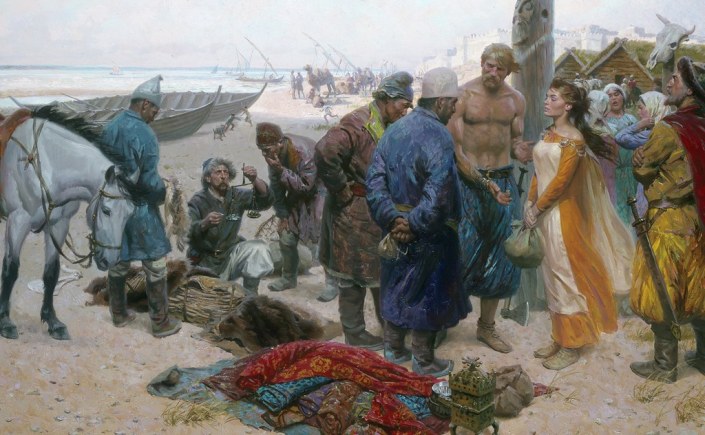
The Vikings – often reduced in popular memory to picturesque if violent raiders – operated something closer to a transcontinental syndicate. The river systems of the Rus, threading south through the Volga and Dnieper, connected the Baltic to the Black Sea and Baghdad. Silver flowed north; human beings flowed south. This was not episodic plunder but a business model – structured, repeatable, and profitable. And conducted across astonishing distances. Baghdad and York sat at the far ends of a human supply chain. [The illustration at the head of this article is that of a young Slavic woman being sold into slavery by Vikings to a Persian merchant (Image: Tom Lovell / National Geographic)]
So, in short. Salvery has existed in some form in almost every known civilisation. In the ancient world, captives were routinely taken, bought, sold, and traded. Greek city-states enslaved defeated populations; Rome built much of its economy on slave labour; raiding societies from the Eurasian steppe to the Atlantic world, and across the ocean, among the First Nations people of the Americas, treated slavery as part of warfare and survival. For most of human history, slavery was seen less as a moral evil than as an accepted social institution, however tragic it might be for those caught within it.
It is necessary therefore to resist any account that isolates the Atlantic trade as if it emerged sui generis from European wickedness. The Islamic world sustained large-scale slave systems over a long durée; and African polities were not merely passive victims but active participants in capture and sale; Arab traders were integral intermediaries. The Atlantic system, or “the Middle Passage” and “Triangular Trade” as it was euphemistically described, depended in its operation on a web of local agency as well as European demand. To acknowledge that is not to dilute culpability but to complicate it – uncomfortably, but necessarily.

And yet – here the counterweight – the Atlantic system was not merely one more iteration of an ancient practice. In the Americas – north and south –  fused race, heredity, and commerce into something peculiarly rigid and self-reproducing. Slavery became not just a condition but a caste, encoded in law and biology, and scaled through plantation economies that fed a global market. Cotton, sugar, coffee and tobacco were not marginal commodities but engines of early modern capitalism. The system’s brutality was not incidental; it was structural.

It is here that the North American story assumes its central, paradoxical role. Chattel slavery became both foundational and explosive – so deeply embedded in the economy that its removal threatened the entire edifice, and yet so morally corrosive that it generated its own opposition. The American Civil War was among many things, the moment when that contradiction could no longer be managed rhetorically or regionally; it was settled, instead, in blood. Abolition here was not simply argued into being; it was fought into being.

Slavery was America’s original sin, and its malign influence ricochets still through its politics and society. [See American historian Sarah Churchwell’s.chilling account of darkest Dixie in In That Howling Infinite’s The Wrath to Come. Gone With the Wind and America’s Big Lie]

Which brings us to what may be the most historically unusual feature in all of this: not slavery itself, but the sustained movement to abolish it. The West generated, from the 17th century onward, a mounting moral and political challenge to slaver, in legal cases, religious agitation, popular campaigns – that eventually dismantled it – significant help from the Royal Navy. Comparable, system-wide movements were less evident in the Islamic world, where dissent existed but did not crystallise into mass abolitionism with similar force or effect.

The distinction matters. Saying it did not happen is a statement of fact; suggesting it could not have happened, or that its absence reflects some deeper civilisational failing, goes beyond the evidence. The divergence likely owes as much to political economy, state structure, and the contingencies of modernity as to theology alone. Which is where English historian and The Rest is History podcaster Tom Holland’s excellent doorstop of a book Dominion hovers, suggestively, over the argument [See In That Howling Infinite’s Getting back to the garden – Tom Holland’s Dominion 

Holland’s claim – broadly put – is that the moral vocabulary underpinning abolition in the West owes much to a Christian inheritance: the elevation of the weak, the insistence on the equal worth of souls, the suspicion of unrestrained power. Even as the Enlightenment secularises these ideas, it carries their imprint. One need not follow him into every chapel of that argument to see the outline: abolition is historically anomalous, and anomalies tend to have genealogies. The West did not simply stumble into anti-slavery; it argued its way there, drawing on intellectual and moral resources that had been accumulating, often ambivalently, for centuries.

One must exercise caution here. Moral discomfort with slavery existed elsewhere and earlier, even if it did not produce mass abolitionist movements in the same way as in the West. Nor does the existence of Western abolition somehow erase the brutality or scale of European colonial slavery, particularly the Atlantic slave trade and plantation economies. The West occupies both roles in history: architect of the largest racialised slave system in modern history, and birthplace of the most influential abolitionist movements against it.

History is often untidy like that.

Old poison, new bottles

The story end in the 19th century however much resolutions might prefer it to. The Gulf states remind us that abolition in law does not always mean abolition in practice. The kafala system – sponsorship, contract labour – operates in a grey zone where dependence can harden into coercion. Passports withheld, mobility constrained, recourse limited: not chattel slavery, but an echo, or perhaps a mutation. History rarely repeats itself verbatim; it adapts, keeping the structure while altering the terminology.

And then there are the moments when the past returns not as echo but as revival. ISIS, with its enslavement of Yazidi women, did not merely exploit chaos; it articulated a doctrine. Slavery, and most particularly, sexual slavery, was justified, systematised, and bureaucratised with price lists, allocations, and rules, and even, trans-national trafficking: one captive ended up in Gaza where she was eventually rescued from a war zone. It was, in the grimmest sense, a reactivation of an old logic under modern conditions. Old poison in new bottles. If abolition was an anomaly, here was the reminder that anomalies can be reversed.

Governments and citizens of ostensibly westernized states should look to their self-awarded laurels. We should be wary of treating coercion as something that happens “over there.” The exploitation of domestic workers – underpaid, over- controlled , sometimes effectively trapped – appears not only in the Gulf but in Lebanon, Israel, and also parts of Western Europe and North America, where immigration status and private households create shadows the law struggles to reach. And closer still, in our own economies, sweatshop labour, debt bondagea and various forms of servitude persist at the margins, along with physical violence and sexual exploitation – which is precisely why regulation, inspection, and enforcement remain not moral luxuries but necessities.

Against this broader canvas, the UN resolution begins to look less like a statement of history than a negotiation, negation, even – of memory. Its selectivity – foregrounding Western guilt, backgrounding Western abolition, omitting other systems – is not unusual in such documents; it is, in some sense, as we have often seen, their defining feature. They are less concerned with completeness than with consensus, less with analysis than with alignment. Countries with difficult presents often find it convenient to condemn curated pasts.

Ergas is justified in objecting to that selectivity. Where he overreaches is in answering it with a counter-selectivity of his own – one that risks understating the distinctiveness of the Atlantic system and overstating the clarity of civilisational contrasts. History, inconveniently, refuses to stay within either brief.

On the question of the Holocaust, however, his warning lands. To rank atrocities – to declare one “the greatest” – is to turn history into a macabre competition. More importantly, it obscures differences of intent. Most slave systems, however brutal, were premised on exploitation; the Holocaust was premised on annihilation. That distinction is not a matter of moral bookkeeping but of historical substance.

And so we arrive, circuitously, at a position that satisfies no one entirely – which is probably how one knows it is closer to the truth.

Slavery is not the property of any one civilisation; it is a recurrent human institution, appearing wherever power, profit, and permission align. The Atlantic trade is distinctive but not unique; Islamic and African systems are substantial but not singular; modern forms persist under altered names and legal veneers. What is genuinely unusual is the emergence of sustained, organised movements that declare slavery illegitimate and succeed – partially, unevenly – in abolishing it.

Between the UN’s moral narrowing and Ergas’s corrective widening lies a more uncomfortable landscape: one in which culpability is diffuse, agency is shared, and progress, where it occur, is contingent, fragile, and slow. The past does not arrange itself into neat indictments or tidy vindications. It lingers, instead, as habit and warning.

And, if one is honest, as a question still not fully answered.

On the Holocaust comparison, Ergas is on firmer ground. Collapsing all historical crimes into a single ranked category – the greatest” – is less analysis than moral theatre. The distinction between exploitation and extermination is not pedantic; it goes to intent. The Nazi project was annihilatory in a way most slave systems, however cruel, were not. History flattens at our peril.

And then there is the politics of the thing. UN resolutions are not monographs; they are negotiated texts, shaped by blocs, interests, and the quiet arithmetic of votes. Selectivity is almost baked in – as is prejudice. Countries with uncomfortable presents often find safety in condemning selective pasts. Western abstentions, too, are rarely acts of intellectual surrender; more often they are the diplomacy of not quite wanting to pick a fight that cannot be cleanly won.

Unfinished business 

So we end where we began, with a familiar tension. Yes, slavery is a near-universal inheritance, and any telling that singles out one civilisation to the exclusion of others is suspect. But neither does the universality of the crime dissolve its particular forms. The Atlantic system, the Islamic trades, ancient chattel systems – they rhyme, but they are not identical verses.

And there remains a broader, less comfortable truth: the story of slavery is not a morality play with a single villain, but a long human habit, periodically challenged, never entirely extinguished, and always ready, given the right circumstances and excuses, to return.

History, in other words, refuses both the courtroom brief and the absolution. It is messier than Ergas allows, but also less conveniently moralised than the resolution he criticises.

It leaves us not ranking guilt, but paying closer attention. The Atlantic system was distinctive; the Islamic and other trades were vast and enduring; African rulers and Arab merchants were participants as well as intermediaries; the West generated powerful abolitionist movements even as it profited from what it eventually condemned. None of these claims cancels the others. Together they form a picture that is, at once, more accurate and less flattering than any single narrative allows.

And the present refuses to sit quietly beneath the verdicts we pass on the past. The exploitation of domestic workers in the Gulf, Lebanon, Israel, and parts of Western Europe; the persistence of sweatshop labour, debt bondage, and coerced work within Western economies themselves – these are not historical footnotes but contemporary reminders. Laws and conventions matter, but so do inspection, enforcement, and the unglamorous work of closing the gap between principle and practice.

Which is why the most suspect posture, at the end of such an inquiry, is self-congratulation. There is no stable ground here for laurel wreaths, no civilisational vantage point from which to survey a completed moral victory. At best there is a difference in degree – of scrutiny, of institutional capacity, of willingness to act. And even that requires constant renewal.

Slavery, in its older forms, has been dismantled in many places; in its newer guises, it adapts. The question is less who was worst than who is still looking, and still prepared to do something about what they find.

Postscript: Etymology

The history lingers, as it often does, in the words. They carry within themselves their own freight.

“Slave” in English carries within it a map of early medieval Europe. The term is widely traced to the Latin sclavus, itself derived from Sclavus – “Slav” – a reflection of the large numbers of Slavic peoples captured and sold through the trading networks that ran from the Baltic down the great river systems to Byzantium and the Islamic world. What began as an ethnonym hardened into a condition. By the High Middle Ages the word had shed its geographic specificity and settled into general use- esclave, schiavo, esclavo, slave – the person eclipsed by the status, the origin story buried in the syllable. The modern word is not, in itself, a slur; but its lineage is a reminder of how readily a name can be stripped of personhood and repurposed as a category of subjection.

Arabic offers a parallel, though not an identical one. The root ʿabd (عبد) denotes a servant or slave, but in its primary register it is theological: ʿabd Allāh, servant of God – a posture of submission before the divine rather than a description of worldly bondage. Yet the plural ʿabīd (عبيد) – once a straightforward term for slaves – acquired, over time and in certain contexts, a sharper edge, used for Black slaves and, by extension, Black people more generally. In modern usage it can carry derogatory force, depending on context and intent, illustrating how a neutral descriptor can drift into insult as it absorbs the hierarchies of the societies that use it.

In both cases, language records a quiet transformation. A people becomes a condition; a condition gathers associations; those associations harden into overtones that may wound long after their origins are forgotten. The vocabulary survives the systems that shaped it, carrying their traces forward – compressed, half-visible, but still there for those inclined to listen.

Afterword: Thraldom, it’s unwinding and its afterlives

A final turn of the lens, back to northern Europe, where the language and the practice briefly align – and then, tellingly, reappear in altered guises.

In Anglo-Saxon England, þræl – thrall – named a condition within a broader spectrum of unfreedom. These were the captured, the indebted, the born into it: men and women who laboured in households and on estates, who could be bought and sold, though not yet within the fully racialised, hereditary system that would later define Atlantic chattel slavery. The boundaries were hard but not always impermeable. Manumission occurred; over generations, absorption was possible. It was a system of subjection, but not yet a totalising one.

The British port of Bristol stands as a reminder of how visible and organised that system could be. It became wealthy with the transatlantic slave trade. But in the 11th century it also functioned as a significant slaving port, exporting captives – often from Wales and the Welsh borderlands – into Irish and wider networks. This was not an anomaly but a node in a broader medieval traffic in human beings, linking the British Isles to circuits that extended, directly and indirectly, toward the Mediterranean and beyond.

Nor was England unique. Across medieval Europe, slavery persisted in varied forms: Italian city-states drew on Black Sea supplies; Iberian polities, both Muslim and Christian, trafficked in captives amid the long wars of the Reconquista; eastern Europe fed human cargo into Byzantine and Islamic markets. The word “slave” itself, with its Slavic root, is a linguistic fossil of that traffic (see below)..

And yet, in England at least, something shifted – and the Norman Conquest appears to have hastened it. On the eve of 1066, Domesday would soon record servi in significant numbers, perhaps around a tenth of the population. By the 12th century, however, chattel slavery had largely withered. The causes were less a single decree than a convergence. The Norman regime imported a more continental feudal logic, in which labour was bound to land rather than owned outright; a villein, fixed, dues-paying, and reproductively stable, was often more useful than a saleable slave. The Church, already critical of slave trading – Wulfstan of Worcester’s condemnation of the Bristol trade is emblematic. – found firmer footing in the new order, aligning moral pressure with institutional power. Trade patterns shifted too, as England’s orientation tilted across the Channel, loosening older Irish Sea networks that had sustained export markets.

None of this amounted to abolition in the modern sense. What replaced slavery was serfdom: a different architecture of dependence, less overtly transactional but hardly free. The change was real, but it was also a translation—from one form of unfreedom into another, quieter one.

And, as if to underline the point, elements of the older logic resurfaced later under new names. In the 17th and 18th centuries, Britain exported large numbers of indentured labourers – many English, but also Scots and Irish, including prisoners of war and political rebels after uprisings – to the American colonies and the Caribbean. Bound by contract rather than owned outright, they nonetheless occupied a coercive world of limited rights, harsh discipline, and restricted movement. The loss of the American colonies in 1783 did not end this habit of displacement; it redirected it. Transportation – of convicts and dissidents – to Australia became the next imperial outlet for managing surplus and troublesome populations, a system different in law but recognisably akin in its logic of removal and compelled labour [see in In That Howling InfiniteFarewell to Old England forever … reappraising The Fatal Shore 

Meanwhile, further east, a different trajectory prevailed. In eastern Europe and Russia, serfdom did not wither but intensified. From the late medieval period into the early modern era, landlords consolidated control over peasant populations, binding them ever more tightly to the land and to service. In Russia, this culminated in a system that, by the 18th century, bore striking resemblances to slavery in practice, if not always in name – serfs bought, sold, and mortgaged along with estates, their mobility sharply curtailed, their obligations exacting. Emancipation would come late: 1861 in Russia, and even then imperfectly, leaving behind structures of dependency that proved stubbornly durable.

Which is, perhaps, the thread worth keeping in hand. Systems of coercion rarely disappear cleanly; they evolve, recur and rephrase. From thrall to serf, from market to manor, from indenture to transportation, from eastern estate to western plantation. The names change; the grammar does not. Waiting, as ever, for the conditions that allow it to harden once again. waiting, as ever, for the conditions that allow it to harden once again.

In that Howling Infinite, May Day 2026

This essay was written in conversation with an AI language model, which contributed to researching, drafting, phrasing, and conceptual articulation. What appears here is not unmediated thought, but considered thought: directed and selected, revised and revised again, and owned.

See also in In That Howling InfiniteA Political World – Thoughts and Themes, and A Middle East Miscellany


Coda

When this essay was published on Facebook, it elicited several comments that amounted to a polemical defense of the West that began with a legitimate historical observation – slavery was historically near-universal and abolitionism emerged most powerfully from Enlightenment Europe – but then overextended  the claim into a triumphalist narrative about Western moral uniqueness and non-Western incapacity for self-criticism. Its tone is combative, culturally chauvinistic, and marked by sweeping generalisations about “the Third World,” Islamic societies, Arabs, and Asian civilisations.

Intellectually, they mixed valid historical points with selective history, rhetorical exaggeration, and resentment politics. They treated “the West” as unusually self-critical and morally generative, while caricaturing other societies as conformist or authoritarian. The result is less a sober historical analysis than a reaction against contemporary anti-Western discourse, expressed through broad-brush civilisational language.

A more balanced critique might read as follows:

Slavery has existed in some form in almost every known civilisation. In the ancient world, captives were routinely taken, bought, sold, and traded. Greek city-states enslaved defeated populations; Rome built much of its economy on slave labour; raiding societies from the Eurasian steppe to the Atlantic world treated slavery as part of warfare and survival. For most of human history, slavery was seen less as a moral evil than as an accepted social institution, however tragic it might be for those caught within it.

One of the major intellectual shifts of the Enlightenment era was the emergence, particularly in Western Europe and North America, of the idea that slavery itself was morally illegitimate. Philosophical ideas about natural rights, combined with religious and humanitarian movements, helped give rise to organised abolitionism. Britain, France, and the United States were deeply implicated in the Atlantic slave trade, yet they also produced influential movements that eventually challenged and dismantled it. Modern international norms against slavery owe much to these developments.

At the same time, slavery was not uniquely Western, nor was opposition to injustice confined solely to the West. Different forms of servitude and human bondage existed across Africa, the Middle East, Asia, and the Americas, and criticism of oppression has emerged within many cultures and traditions. The historical record is complex: societies can simultaneously perpetrate injustice and generate the ideas that challenge it.

Contemporary debates about slavery and colonialism sometimes oversimplify history by treating Europe and the West as uniquely culpable, while overlooking the broader global history of slavery. But responding to that simplification with sweeping condemnations of non-Western societies is equally reductive. A more useful approach is to recognise both the universality of slavery in human history and the particular historical significance of the abolitionist movements that emerged during the Enlightenment and after.

UN resolution on slavery falsifies history by ignoring Islamic world’s role

Henry Ergas, The Australian, 1 May 2026

The UN resolution on slavery has sparked debate over historical interpretation. Picture: Getty Images

The UN resolution sparks debate over historical interpretation: Getty Images

Henry Ergas, The Australian, 1 May 2026

That the African slave trade was a monstrosity, inflicting unspeakable cruelty on millions of innocent victims, is beyond dispute. But the resolution the UN General Assembly passed two weeks ago, marking the trade’s commemoration, is nothing less than an appalling falsification of history.

Formally, the resolution condemns the African slave trade as a whole. Substantively, every concrete reference targets the transatlantic trade, fixating on a “racialised capitalist system” and its purported Western antecedents. The cumulative effect is unmistakeable: to brand the trade a distinctively Western crime. To sustain that impression, the resolution parades a sequence of decrees, starting with the papal bulls of 1452 and 1455, which it casts as the founding charters of the enslavement and “structural racism” that still unjustly impoverishes Africa, thereby grounding a claim to substantial reparations.

Yet, having been forensically specific about blame, the text turns conspicuously evasive when it confronts the forces that brought the Atlantic trade to an end. The Enlightenment, the abolitionist movements, and the Western legal and political campaigns that culminated in the trade’s eventual demise are, it appears, unmentionable.

While the offending decrees are named, dated and indicted, the tide of opposition to slavery, which gathered momentum in the 17th century, is dismissed as “certain legal challenges and judicial developments in the 18th century” that “questioned the legality and morality of chattel enslavement”.

That descent into vagueness reflects a deliberate strategy: to particularise the guilt while diluting the credit. Merely cataloguing the misrepresentations, confusions and factual errors this strategy produces would require far more space than is available here. What is especially striking, however, are the omissions.

It is, for example, intellectually dishonest to invoke the papal bulls of 1452 and 1455 while ignoring Pope Paul III’s bull of 1537, which denounced as an invention of the devil the idea that native peoples “should be treated as dumb brutes created for our service”, and affirmed “that they may and should, freely and legitimately, enjoy their liberty”.

Paul III’s exhortations had limited immediate effect; so too did Cartwright’s Case (1569), which declared that England’s air was “too pure for slaves to dwell in”. What matters is what they reveal: an unceasing moral interrogation of slavery within the West itself – an interrogation that gave abolitionism the bedrock on which to build.

Here, too, the resolution’s selectivity is purposeful. It allows it to avoid an obvious and crucial comparator: the long history of slavery under Islamic rule, which it ignores altogether. From the Arab conquests to the early 20th century, some 14 million black slaves were transported into the lands of Islam via the trans-Saharan, Red Sea and Indian Ocean routes, with nearly a million more carried beyond the East African coast. Add to these more than a million white slaves, and the total comfortably exceeds the 10 million to 12 million who landed in the Americas.

Yet the numbers are not what is most significant. The salient fact is the absence of any sustained doctrinal or institutional challenge to the morality and legality of the slave trade within the Islamic world – even where it starkly contradicted the Koranic prohibition on enslaving Muslims. As Bruce Hall shows in his study of Saharan and Sahelian slavery, by the 19th century – when the West was vigorously suppressing chattel slavery – the operative presumption among Maliki jurists was that black Africans, routinely described as “savages”, were enslavable by default, whatever their faith.

There were individuals who objected strenuously to chattel slavery, such as Syrian reformer Abd al-Rahman al-Kawakibi (1855-1902); but no Muslim opponent of slavery ever forged those concerns into a mass movement. Bernard Lewis’s verdict that “even the most radical Muslim modernists” fell well short of matching the fervour and effectiveness of Western abolitionists retains all its force.

It is therefore unsurprising that Islam’s leading theologians, far from championing abolition, actively resisted it – beginning with the infamous 1855 fatwa, issued with the full authority of Mecca’s Shaykh Jamal, which declared any prohibition of the slave trade “contrary to the holy law of Islam” and any official who attempted to enforce it “lawful to kill”.

Nor is it surprising that Saudi Arabia and Yemen abolished slavery only in 1962, the United Arab Emirates in 1964, Oman in 1970, and Mauritania – after repeated ineffectual measures – in 2007. Moreover, even where slavery was formally abolished, forms of vassalage have remained firmly in place: of the 10 countries with the highest incidence of “modern slavery”, eight are majority-Muslim.

But the resolution does not merely distort history by pretending Islamic slavery didn’t exist. It declares the slave trade “the greatest” crime against humanity ever committed. Although not explicitly stated, a central purpose of this travesty – which converts the horrors of the past into a “suffering Olympics” – is again transparent: to relativise the Holocaust.

It is frankly obscene to degrade moral evaluation into a body count, with medals of ignominy awarded by a show of hands. Yet even in so repulsive a spectacle, realities should have been allowed to intrude. Those realities are well known. Death rates in the Holocaust – whose unrelenting aim was the complete extermination of Jews – were close to or above 90 per cent. So complete was the indifference to fatalities that the German railways were paid whether the Jews being shipped by them lived or died during their transport – and the few who survived the journeys were killed, on average, within days of arrival.

In contrast, as investor Thomas Starke wrote to Captain James Westmore in 1700, “the whole benefit of the voyage lyes in your care of preserving negroes’ lives”. As a result, strenuous efforts were made to ensure slaves remained alive and saleable, including by granting handsome bonuses to captains for high survival rates and imposing stiff penalties for excess mortality.

Although those efforts hardly eliminated the trade’s horrors, they did mean that by the late 18th century, death rates for black slaves on the “middle passage” had declined dramatically, to the point where they were only marginally greater than those for crews. To pretend otherwise is to erase the distinction between exploitation and extermination: for there was nothing in the slave trade even remotely comparable to the systematic mass murder at the heart of the Holocaust.

But to acknowledge those facts – which flatly contradict the assault on the standing of the Holocaust – might have eroded the overwhelming support the resolution secured. And the composition of that support says everything one needs to know about the resolution.

Thus, every one of the 20 countries that have the highest incidence of modern slavery and forced labour cynically voted in its favour; so did all the authoritarian states that participated in the vote, with the exception of Kazakhstan and Kyrgyzstan; and, again with the exception of Kazakhstan and Kyrgyzstan, it received the active backing of every Muslim-majority country.

Yet that is not the real tragedy. Rather, it is that only three Western countries – the US, Israel and Argentina – had the decency to vote against the falsification of history, instead of abstaining, as Australia and the European Union did. Those three were willing to oppose this charade. Why weren’t we?


Go, Move, Shift! Singing the Traveling People

Born at the back of a hawthorn hedge,
where the black hole frost lay on the ground,
no eastern kings came bearing gifts.
Instead, the order came to shift:
“You’d better get born in some place else.”
So move along, get along,
Move along, get along –
Go! Move! Shift!
Ewan MacColl

“Why …. are we setting ourselves the impossible task of spoiling the Gypsies?… they stand for the will of freedom, for friendship with nature, for the open air, for change and the sight of many lands; for all of us that are in protest against progress … The Gypsies represent nature before civilisation … the last romance left in the world.
Arthur Symons, a gypsiologist of the early 20th century

Back in the day, when I was a nipper in Birmingham, “the tinkers,” as we called them, would camp with their caravans and lorries on what we referred to as the “waste land.” That name seemed self-explanatory to a child: a place where people left their waste, a liminal zone of half-ruin, where pre-war homes and factories had been destroyed in the Luftwaffe raids over a decade earlier. Travellers really did move through those bombed-out spaces, setting up their vardos where council workers feared to tread. They brought horses, music, and a whiff of danger to the drab post-war city.

Their Irish accents created an unexpected affinity. Our parents and relatives were Irish immigrants, and we inhabited an Irish world of history, politics, music, and stories. Listening to them, you could feel the rhythm of lives bound to roads and fields rather than concrete and council by-laws.

Peaky Blinders later turned my home city into a stylised myth. I knew the streets around Small Heath and Digbeth and the canal bridges and tow tracks of Gas Street long before Steven Knight turned them into a smoky dystopia. The series was actually filmed in Yorkshire and Lancashire, but let’s not worry about that. The travelers drift in and out of the Shelby story with their wagons and their horses, their alien tongue and their clan codes, and also, an air of imminent danger – an arcane, half-hidden life. Rewatching the series decades later, it feels less like historical fiction and more like a remembered geography, half real and half myth.

Tom Shelby and his caravan

Advisory

In order to deflect potential criticism and recrimination, please be advised that the following is a mix of memory and music and not an academic paper. It is of historical, sociological and musicological significance only in a general sense, and not does not claim to be. In the light of prior criticisms of my use of the word “tinker” in online discussions about travellers – some readers have insisted that I employed it in a discriminatory and derogatory manner – this is indeed the term that we used back in the fifties and sixties, and whilst it was, indeed, a common term of abuse, it is for all that historically accurate – see the paragraphs immediately below. We cannot unhear in order to accommodate 21st century sensitivities.

An lucht siúil

Those Irish Travellers (an lucht siúil, “the walking people”), also called Mincéirs in Shelta, a secret language mixing Irish and English, are a nomadic indigenous Irish ethnic group. Predominantly Catholic, they are English-speaking but often fluent in their patois. Although historically labeled “Gypsies,” they have no genetic relation to the Romani; their ancestry is Irish, likely diverging from the settled population around the 1600s during Cromwell’s conquest. Over centuries, persecution, famine, and displacement hardened their itinerant ways into a distinct culture – social networks, craft skills, folklore, and traditions of travel and trade.

Many names – tinkler, tynkere, or tinker – were historically derogatory, reflecting society’s unease with their mobility. The “Acte for Tynckers and Pedlers,” passed by Edward VI in 1551, attempted to regulate their wandering, sometimes brutally. Yet, for all the attempts at control, their culture survived: a resilient, mobile society where language, music, and kinship preserve identity against erosion.

Irish Traveller Family’, Killorglin, County Kerry, Ireland, 1954.

Folksong

My childhood soundtrack was full of gypsy ballads that painted freedom in a major key. A Gypsy Rover came over the hill, down through the valley so shady to win the heart of lady; three Raggle Taggle Gypsies stood at the castle gate, singing high and low, and made off with the lady of the house; Black Jack Davy rode up hills and he rode down vale’s over many a wide-eyed mountain, luring a lady gay from her goose feather bed. The songs made the Gypsy a figure of romance and rebellion, a charmer, a rascal and a pants-man; an outsider who steals not just horses but hearts and who answers to no law but the road.

As a boy, I sang them without irony. As a teenager, on the Easter CND march in London in 1966, billeted in an old cinema in Southall, I gave my first public ‘performance’ with an a capella version Ewan MacColl’s beautiful but poignant Freeborn Man of the Travelling People. There was something electric in the way the song moved through the audience – a recognition of wandering, of roots that were not fixed in soil, but in story, song, and kin.

Ewan MacColl’ and Peggy Seeger’s BBC Radio Ballads, especially The Travelling People (1964), but went further, capturing not just the romance but the hard truth of life on the road. I can still hear the defiant swing of Freeborn Man the bitter weariness of Go Move Shift, and the rolling litany of The Thirty-Foot Trailer capturing the sway of a caravan. Each song contained a chronicle of eviction, exclusion, and the stubborn joy of those who refuse to settle. These weren’t just pretty melodies. They were dispatches from a parallel Britain that existed beyond the pale of urban, modernising and dynamic Britain.

The songs, the caravans, the road-weary children and dogs – they are fragments of memory, but also of history. Travellers have always lived on the edge of maps, on the margins of law and land, carrying a freedom that many of us envy in memory but cannot fully grasp in practice.

Ballads of a Vanishing Road

Those three great songs from Seeger and MaColl’s radio ballads form a kind of triptych, each panel catching a different light on the same restless life. 

They begin with the open road itself: imagine if you will hedgerows dripping with rain, country lanes that meander through woods and fields, the smell of horses and wood-smoke, and the small birds singing when the winter days are over. A Freeborn Man strides out first, proud and lilting. The open road gleams with dew and possibility – open spaces and resting places where “time was not our master”. The freedom is real enough: the night fires, the sunrise on a new day, the easy rhythm of horse and dog. But you feel the weather changing. “Winds of change are blowing, old ways are going, your travelling days will soon be over.”

I can still hear the icon Yorkshire siblings, the Watersons, singing: “The auld ways are changing’, you cannot deny. The days of the traveler’ over ..  It’s farewell toto the tent and the old caravan, to the Tinker, the Gypsy, the Travelling Man, and farewell to the thirty-foot trailer”. Verse by verse the song bids adieu to the things that portrayed the traveling life. The old caravan is no longer a symbol of liberty but rather a target for eviction. “You’ve got to move fast to keep up with the times,” the song warns, “for these days a man cannot dander.It’s a bylaw to say you must be on your way and another to say you can’t wander”.

If Freeborn Man celebrates the open lane, The Moving-On Song reports from the other side of the hedge.  Each verse begins with a birth – on the A5, in a tattie field, beside a building site – and each is met by the same cold refrain: “Move along, get along, Go! Move! Shift!”  Policemen, farmers, and local worthies take turns as chorus, a modern Nativity rewritten as perpetual eviction.  Where Luke gave us shepherds and angels, MacColl gives us by-laws and property values. The travelling child is the Holy Infant born in the wrong postcode, and the only miracle is survival. 

I find this song resonates not only as a story, but also as a powerful allegory. At its heart, it is the Nativity turned inside out. It takes the timeless Christmas story – the miraculous birth, the wandering family, the knock at the door – and drains it of every trace of welcome. Instead of angels there are policemen, instead of shepherds there are farmers, instead of gifts there is the repeated command to move along, get along, go, move, shift. Each verse begins with a birth – on a roadside, in a potato field, beside a building site – just as Christ was born in a stable because there was no room at the inn.

But where the infant Jesus is eventually carried to safety in Egypt, MacColl’s traveller child is met at every stop with suspicion: The refrain is a bitter parody of the angelic chorus: a peremptory command instead of  “tidings of great joy.” The sound of authority closing ranks, a bitter counter-melody to the dream of freedom. It is the Flight into Egypt without sanctuary, an endless journey where every Bethlehem has a by-law.

This inversion does two things at once. It sacralises the ordinary – making each child born in a trailer or a tent a holy innocent – and it indicts the society that drives them out. Listeners raised on the Nativity can hardly miss the sting: the travelling people are the Holy Family in modern Britain, but the innkeepers are us. MacColl forces a choice – either keep singing “Go, Move, Shift” with the crowd, or recognise the Christ-child in the roadside cradle.

Taken together, these three songs chart the whole arc of the travelling life: the exhilaration of the road, the daily skirmish with draconian laws, the slow extinguishing of a culture that once roamed the hedgerows of Britain and Europe.  They are more than nostalgic laments.  They are witness statements – melodic affidavits of a people whose very birthplaces are contested, whose freedom is both cherished and criminalised, and whose songs will outlast the by-laws that try to silence them.

The dark side of the road 

Ewan MacColl’s words echo still: go, move, shift – because life has often demanded it. And perhaps that is the core of the Travellers’ tale: a dance between space and place, between survival and song, between yesterday and the road ahead.

The songs of my youth were both true and false. The gypsy rover was real enough, but his freedom came at a cost: eviction notices, police batons, barbed wire, and centuries of prejudice stretching from the wastelands of Birmingham to the bean fields of Wiltshire, from Damascus to Transylvania. The travellers remain, in MacColl’s proud phrase, freeborn men and women – though the price of that freedom has always been higher than the ballads admit.

For hundreds of years, the Gypsy way of life – the Irish Travellers among them – was one of ancient traditions and simple tastes. Until their world collided with the 21st century, with bureaucracies, police crackdowns, and urban encroachment. Romance met reality, and reality was hard. Travellers were hounded from one lay-by to the next, fined, fenced, and evicted by councils and constables who never forgave them for existing outside the parish ledger.

The romance of the traveller life had a harder edge. It is not a folk-song idyll; it is cold nights in lay-bys rough ground under wheels, police knocking at midnight. Travellers were, and still are, hounded by bylaws, denied stopping places, and stereotyped as thieves or beggars. In Britain, “tinker” and “gypo” were playground slurs. Councils moved them on, police fined them for parking on common land, newspapers blamed them for every petty crime.

Nor have modern times rendered the traveller life any easier. In the Battle of the Bean Field of 1985, Margaret Thatcher’s days of law and order, hundreds of police in riot gear smashed up a convoy of festival-bound New Age Travellers near Stonehenge, wrecking and burning their lorries and caravans, Wrecking homes and terrorising babies, and displaying the state’s fury at those who dared to live otherwise. The later Dale Farm eviction in 2011 near Basildon, Europe’s largest Traveller site, bulldozed after years of legal trench warfare, proved that little had softened.

I’ve watched video footage on YouTube of riot police in fluorescent jackets  confronting families who had chained themselves to caravans, and listened to the late iconoclastic songster Ian Dury, who had long celebrated life on the margins, singing his elegy Itinerant Child – a refrain that could be sung in any layby in Britain or in the migrant  camps of Calais.

Slow down itinerant child, the road is full of danger
Slow down itinerant child, there’s no more welcome stranger
Slow down itinerant child, you’re still accelerating
Slow down itinerant child, the boys in blue are waiting

That refrain could be sung in any layby in Britain. It could be sung in the refugee camps of Europe today.

As for those so-called New Age Travellers of the Beanfield and Basildon – part hippie, part anarchist, part rave-culture refugee – they borrowed Romany mystique but lived a diesel-fumed modern reality: buses and sound-systems instead of bow-topped wagons, dreadlocks instead of black curls, and the same hostility from the same authorities.

The Battle of Basildon 2011

Dale Farm – The Battle of Basildon 2011

The Other at the Gate

Gypsies and Travellers have always been Britain’s – and the world’s – most visible “Other”- not defined by race alone, but by movement. Where the settled majority built houses, filed deeds, and mapped parishes, the travelling people carried their world on wheels and in stories. That refusal to stay put turned them into a kind of living mirror for the fears of the settled: lawless when laws were written for farmers, suspicious when surnames anchored reputations, dangerous because they belonged nowhere and therefore everywhere.

From the “Egyptians Acts” of the sixteenth century, which outlawed Romani life, to the casual playground taunts the message was the same: you are not one of us. And yet, precisely because they stood outside the pale, they became a canvas for fantasy – the romantic lovers of the ballads, the free spirits in the Radio Ballads, dark prophets in the Peaky Blinders mythos. To the townsfolk they were both temptation and threat, the embodiment of freedom and the price of it.

The wild World and the Wider Road

The Irish travelers of my Birmingham childhood were but one branch of a much older and wider wandering world. Their history – rooted in Ireland’s upheavals and shaped by centuries of marginalisation – belongs to the islands of Albion. But the idea of the travelling people, the caravan on the verge and the road as inheritance, stretches far beyond Britain and Ireland. Across Europe the figure of the wanderer takes on another name: Roma, Sinti, Kalderash, communities bound not to neither land nor country but to a migration that began centuries earlier and thousands of miles away. Their very names carry centuries of misunderstanding.“Gypsy” arose from the medieval belief that these travellers had come from Egypt – hence “Egyptians,” shortened over time to “Gyptians” and finally “Gypsies.” “Roma,” by contrast, is the name many of the people use for themselves. In the Romani language the word rom simply means “man” or “husband,” and by extension “member of the community.” Whatever the label, their deeper history leads eastwards. Linguistic and genetic traits – including shared vocabulary with Hindi, Punjabi and other Indo-Aryan languages – point to origins beyond the Hindu Kush in Rajastan a thousand years ago. From there groups migrated slowly westward through Persia, Armenia and the Byzantine world before scattering across the planes and forests of Europe. By the time they reached England in the early modern period they were already seasoned exiles – strangers everywhere and always and yet, nevertheless, somehow at home on the road, bringing music, craft, and a stubborn freedom.

I encountered these European Roma when hitchhiking through Yugoslavia in the early seventies, and later, travelling in Syria and Israel/Palestine, I saw dusty Domari camps. pitched on the fringes of towns, cousins of the European Roma, their Sanskrit-tinged language betraying the long migration. They were not romantic there either. Arabs called them Nawar, a word laced with disdain, treating them with the same mix of curiosity and disdain that dogs their European kin. They are seen as rootless outsiders, neither honoured nor trusted, often harassed by police and locals alike. they are harassed, marginalised, and sometimes treated as beggars or tricksters. Unlike the semi-nomadic Bedouin, celebrated in poetry and nationalist lore (though these too have been known to be discriminated against). Their tents were not “exotic,” just poor.

Eastern Europe tells an even darker story. In Slovakia, Hungary, and Romania, Roma communities were enslaved for centuries-in Wallachia and Moldavia until the 19th century and are still scapegoated in politics and corralled into segregated schools. In Eastern Europe they remain targets of discrimination today, from the eviction of camps in France and Italy to far-right attacks in Hungary and Slovakia.

The twentieth century added its own atrocity: the Porajmos – “the Devouring” – the Nazi genocide of Roma and Sinti that claimed perhaps half a million lives. They were rounded up alongside Jews, homosexuals, and the disabled, marked with black or brown triangles, starved in camps, shot in forests and gassed in Auschwitz. For decades their suffering was barely acknowledged in official memorials, their deaths long footnoted beside the Shoah.

The open road may bring freedom, but freedom can come an unbearably heavy price.

Paul Hemphill, March 2026

Other combinations of memoire and history in In That Howling infinite include: The Boys of Wexford – memory and memoirThe Spirit of ’45Enoch knocking on England’s door, Tanks for the memory – how Brezhnev changed my life, and One ring to rule us all – does Tolkien matter?

Here is the well-known old folksong sung by my old friend Malcolm Harrison, recorded in Sydney, Australia in 2005. The Raggle Taggle Gypsy is a traditional folk song that originated as a Scottish border ballad, and has been popular throughout Britain, Ireland and North America. its earliest text is believed to have been published in the early sixteenth century.  concerns a rich lady who runs off to join the gypsies. Common alternative names are “Gypsy Davy”, “Gypsum Davy”, “The Raggle Taggle Gypsies O”, “The Gypsy Laddie(s)”, “Black Jack David” (or “Davy”) and “Seven Yellow Gypsies”.

Itinerant Child

Ian Dury and the Blockheads

I took out all the seats and away I went
It’s a right old banger and the chassis bent
It’s got a great big peace sign across the back
And most of the windows have been painted black
The windshield’s cracked, it’s a bugger to drive
It starts making smoke over thirty-five
It’s a psychedelic nightmare with a million leaks
It’s home sweet home to some sweet arse freaks
Slow down itinerant child, the road is full of danger
Slow down itinerant child, there’s no more welcome stranger
Soon I was rumbling through the morning fog
With my long-haired children and my one-eyed dog
With the trucks and the buses and the trailer vans
My long throw horns playing Steely Dan
We straggled out for miles along the Beggar’s Hill
And the word came down that we’d lost Old Bill
You can bet your boots I’m coming when the times are hard
That’s why they keep my dossier at Scotland Yard
Slow down itinerant child, you’re still accelerating
Slow down itinerant child, the boys in blue are waiting
Itinerant child, don’t do what you’re doing
Itinerant child, you’d better slow down
We drove into Happy Valley seeking peace and love
With a lone helicopter hanging up above
We didn’t realise until we hit the field
There were four hundred cozzers holding riot shields
They terrorised our babies and they broke our heads
It’s a stone fucking miracle there’s no one dead
They turned my ramshackle home into a burning wreck
My one-eyed dog got a broken neck
Slow down itinerant child, the road is full of danger
Slow down itinerant child, there’s no more welcome stranger
Slow down itinerant child, you’re still accelerating
Slow down itinerant child, the boys in blue are waiting
Listen to the song and watch its video HERE

References & Further Reading

The first 100 Days on the wagon

Haven’t had a drink. It’s all right, but time does pass slowly. When you’re drunk, you’re never bored. Did you know that? You may bore other people. But the moments slip by in such a satisfactory manner
Charles Collingridge, brother of Prime Minister, to journalist Mattie Storin, House of Cards (1990), episode 3

The end of a fifty year old relationship

Back in the day, we were young, fun, and quite often, sozzled.

I’ve been a heavy drinker more or less since the seventies, an almost life-member of the just-one-more club. Not recklessly, not always dramatically – though there have been embarrassing beanos I’d rather have forgotten – just faithfully, habitually, the way a generation learned to take the edge off, to mark time, to soften the day, or just because it was what you did. What began as a rite de passage in the late sixties, at folk clubs and at a weekly get-together with school chums became routine in the union bar, and became part of the lifestyle in the seventies.

The first time I visited Australia, in the summer of 76-77, one of the things that impressed me the most, apart from the sun, the beaches, and the Warringah Mall was drive-through bottle shops – oh, and the wine in plastic bladders, the old vin plastique. It wasn’t very good wine – but never mind the quality, feel the weight! As years went, booze was inextricably woven into both downtime and social gatherings. The reality that Australian wine got much better oiled the wheels of inebriation. Celebration or commiseration, to toast good news and to drown the blues. Whether traveling – even in the abstemious Middle East, where there is no drinking culture and where it often haram – or on the property, five o’clock was booze o’clock and time for a sundowner – or two.

Alcohol was never a crisis in my life; it was a companion, a punctuation mark, an easy and unassuming way of moving from one hour to the next without too much friction. Never enjoyed alone, except when writing or composing, and rarely during the daytime hours apart from social occasions. It was woven into evenings, into conversation, into music and writing, into courting, into the social grammar of a life that otherwise often ran on discipline, routine, and contemplation.

But let’s not kid ourselves. However civilised it looked, however bounded it remained, it was still a dependency, addictive in its own quiet, culturally sanctioned fashion. Alcohol is a poison, metabolised as such, and it does no one no good in the long run. It may take its payment slowly, but it always takes it. That is why it had to stop – not because it had ruined anything yet, but because it worked too well, too reliably, and the trajectory was obvious to anyone prepared to look- though we often avert our gaze and carry on.

In these declining days, when every new ache and pain is endured with unease, every blood test, every medical scan is a game of health roulette. And alcohol plays its pernicious part. As if I didn’t already know, the World Health Organisation says there is no safe level of alcohol consumption, and experts tell us that we should be drinking zilch. My doctors too. Multiple studies link alcohol to seven types of cancer.

And then there’s what it does to the brain. I’ve joked in the past that I must’ve been very bright back in my prime because I’ve still got my marbles. But I know full well that I’m no longer a sharp and as perceptive as I once was. “Is my memory waning?”, I ask myself? My longterm memory is fine – but might that just that be the old nostalgia-muscles kicking in?

Folk of a certain age often joke about walking into a room and then wondering why they went there. I do that too – though not often. Sometimes, I’m unable to recall the names of people I ought to have remembered. My internal hard drive is invariably able to chase them down – without resort to Google – but it’s nonetheless a cause for concern. My mother died slowly with dementia. It diminishes you beyond recognition. She was not a drinker, but. Never touched the stuff.

I’ve contemplated cutting back often, and I’ve made many desultory attempts to do so. As the old quip goes, “giving up is easy – I’ve done it many times!” But I’ve never considered actually quitting. Giving up, or drastically cutting back on alcohol, is a conscious decision – and thenceforward, a continuous one. Perhaps my decision came at a time when I was ready to step back.

I gave it up one day without ceremony. No declaration, no conversion. No identity shift announced to the world. Well, not quite … I was given a big push – and maybe that’s what’s making it work this time around. I was given a guided tour of  a CT Scan of my grey matter, and … to quote the late Warren Zevon, “Guess what? It ain’t that pretty at all!” The doctor dived deep into my scan, told me what he’d seen, and declared that for me, there could be no safe limit. As I walked out of his rooms, I said “I need a drink”, and we headed straightaway to the Plantation Hotel. And that glass of Italian Pinot Grigio was the end of the liquid line.

When I first embarked on sobriety, I hadn’t a clue whether or not I would succeed. And I was shocked that it was easier than I’d expected. There were no cravings (though I drink more tea and coke) and when month one came to an end, I was ready to step into the next and then the next. It’s like deciding to lose weight, learn a language or change jobs (and I’ve done all this too). You decide that you are going to do it, then you try really hard to stick with it. There’s no magic wand.

Apart from one standard drink a week, on Tuesday or Wednesday, that was that. Initially I kept count – of that one day, and even of the drinks. So much fizz, this many Pinot Grigio, so many Shiraz. Counting turns pleasure into ledger; once you count, you’ve already conceded that something has changed.

For starters, my palate is changing. Fizz does nothing for me now. A former favourite tastes as though it’s had petrol added. The whites have been a pleasant change after the zero-alcohol placebo interregnum in which everything tastes faintly of apples (there are tons of zero or low-alcohol options out there. Some are awful and taste like weird-flavoured fizzy water, but I have my favourites too). The reds, interestingly, still carry a spike, a kick of spice. Something happens – but it’s only the mildest hint of getting stoned – no re-angling of thought, more a slight tilt, the barest of edges being taken off the now. Whatever it may be, red wine is most often my weekly onesie, so I no longer keep count.

When I took that first glass of red, I let it stand for a while to room – an old habit, but also to make sure it was at its best. But before I’d even picked up the glass, the oddest thing occurred. As I looked at the waiting glass, I felt a flicker of guilt. Not moral guilt, exactly. Not shame. Something quieter and stranger: the nervous system recognising a former solution now marked with an asterisk. A sense that this familiar alteration of being no longer had my clear permission. A fleeting return, perhaps, to the scene of the crime. Like meeting up with an old pal after many years and realising that you no longe4 have much in common.

100 days on, and I’m not tempted to tell a story of revelation. No clouds have parted. Nothing has been cured. But something has shifted, and it’s the sort of shift that only becomes visible in retrospect – by subtraction rather than addition.

When I tell people, most ask me how easy or hard it was and is. I say it’s been hard – but not too hard. Particularly come fizz o’clock when my wife and I we do our evening walkabout and enjoy our sundowner – but I tell them it does become easier as the days and weeks progress. They often casually ask if I’ve noticed any difference since ditching the drink. I keep it brief, so as not to bore them with the details – but the following is my own private dossier.

The changes have not been theatrical, but they have been real. I’ve lost weight; my skin is clearer; my sleep is deeper. I feel that wake more clear-headed now, ready, I guess, for the day ahead. I have more energy. I relax more easily. I  always experienced anxiety, but I sense that its incidence has lessened. Though I still habitually have to find something, anything to get hung up about, it doesn’t feels as pervasive and debilitating. And, I imagine, I’ve become more tolerant of the follies and frailties of others. Or maybe more laid back and lackadaisical.

When I wake at 3am, that existential hour of angst, and the mind instantly revs into restless motion, I don’t lie abed in a state of mental turmoil. Nor do I stir this early as much and as often as I once did – mind you, I turn the bedside clock on its face these days so I’m not as conscious of the hour. If I do wake early and find that I can’t go back to sleep, I write – as I am doing right now. But I sense that not drinking has made me realise how much alcohol contributed to my anxiety. Those occasional tremors and twitches we put down to what might be early onset Parkinson’s might not have been that at all. [In In That Howling Infinite, see It’s 3am and an hour of existential angst ]

I sense a steadiness now. The mental landscape feels different – perhaps clearer, perhaps simply less crowded. Am I more present in the world? Sometimes I think I am. Though I can still inattentive – including towards others – and absent minded. Better able to hold several things in mind at once? Possibly. It could be down to using a chatbot when writing, but I feel that I haven’t been this productive in years. But that doesn’t make me more articulate. A few years back, I senses that I was not longer as up to public speaking as I was if yore – and that has not changed. I put that down to the ageing process – but it could be something less benign. Does the world itself look altered – a little brighter, a little sharper? Perhaps. Though, to be fair, I did have cataract surgery a week after my last drink, which complicates the metaphor.

What is undeniable is time. There seems to be more of it. Whether it’s been created or merely reclaimed is hard to say. Perhaps it’s the same quantity as before, just less of it leaking away – into fog, into fatigue, into the dull, unexamined bargain of later. Evenings are longer now. Much longer. The day closes more slowly without that familiar hinge that once snapped it shut. I’m not sure I’m comfortable with this. I pace myself with a new found evening ritual: zero beer at five or six – the onetime “booze o’clock – followed by a zero Prosecco, with its hint of apple – but at least it has a bit of a bead – then a mineral water or a coke – sugar-free but a caffeine hit. Then it is teatime, with a mineral water to sip and maybe a zero wine – and at last, between nine and ten, a cup of tea and some fruit. It’s interesting how much liquids leaven the longing.

What’s been interesting is what hasn’t happened. I’m told fresh renouncers experience tremors, night sweats, vivid dreams. I haven’t. There’s been no drama of withdrawal. If anything, my nervous system seems to have settled rather than rebelled. Alcohol, it turns out, was not supporting my sleep or steadying my nerves; it was quietly fragmenting both. Removing it didn’t provoke crisis. It removed interference.

These aren’t miracles, but they aren’t imaginary either. And once you begin to notice the benefits, they become their own quiet incentive. Resolve stops feeling like deprivation and starts to feel like momentum.

What remains is the effort. Not physical exhaustion so much as a kind of existential tiredness – the absence of the old accelerator, accelerant, even. Alcohol had been doing a great deal of invisible work: easing transitions, softening edges, carrying me through the long middle stretch of the evening. It marked the end of work, licensed drift, permitted a mild, socially acceptable derangement of thought. As I noted above, I rarely drank alone, except when writing or composing; rarely during the day or working hours, except on social occasions. This was not chaos. It was tuning. A dimmer switch, not a blackout.

And that, precisely, is why it counts as dependency. The brain learned the sequence: evening, glass, “clocking off”, altered state. Reliable, repeatable, intoxicatingly reinforced. Functional addiction is still addiction. Calling it civilised doesn’t change its chemistry. Without it now, that work has to be done consciously. Nothing is anaesthetised. Nothing is rushed through.

There’s a certain grief in that. Grief for ritual, for the reliable companion that marked the end of the day. Grief, too, for a sanctioned way of stepping briefly sideways out of the self, without explanation. There’s a certain ennui too – sometimes with sharp edges. It can feel as though fun has gone missing, or at least changed address. And yes, I miss getting stoned: not smashed, not obliterated, but lightly, productively altered – the associative looseness, the permission to wander.

This isn’t romanticising damage. It’s mourning coherence. Alcohol once bundled ritual, companionship, permission, and altered state into a single, efficient act. Removing it unbundles those functions, and the nervous system doesn’t yet know where to rehouse them. Which is why I suspect this is the real work: not abstinence, but redesign.

I worry, of course, about damage already done. Particularly when I think about how much I actually did consume on a daily basis. Looking back now, I no longer lie to myself about it and admit that it was a fucking lot! After so many years, it’s reasonable to hope the body can still repair what it can. The signs so far suggest it might. The improvements have been quiet and cumulative rather than theatrical. These are the kinds of changes that accrue slowly – and, importantly, tend not to reverse. Reasons to be relatively optimistic then?

What I know for certain is that I can’t simply relent and surrender the hard-won effort – physical and mental – of getting to this point. This isn’t abstinence by accident. It’s something maintained daily, by attention. Ritual and habit will re-form; that’s my nature. But for now, it requires intention and attention rather than habit, awareness rather than drift.

No great revelation, then. Just a steadier hand on the tiller, a longer fuse – or perhaps fewer things lighting it – and a growing sense that less of life is slipping away unnoticed.

The truth is, stopping drinking can be an issue when hanging out with people who still enjoy their evening tipple. It’s helpful to know this in advance if you’re contemplating doing the same. Interactions are now based around a whole new version of what makes us tick. When someone says they are not drinking, the word “boring” appears in a speech bubble above their head. It’s an assumption we tend to make, but I am hoping I can prove the naysayers wrong because it’s OK, amazing actually, being sober.

Written by Paul Hemphill between November 2025 and February 2026.

The following supplementary sections were compiled with the assistance of an AI language model. In That Howling Infinite has deep reservations about the use of  chatbots – see, for example, The promise and the peril of ChatGPT, and but blimey! they are useful and uber efficient.

I asked ChatGPT why I felt a certain guilt and hesitation when having that weekly drink?

After interrogating the published literature, the chatbot replied:

It isn’t really guilt It’s not shame about drinking, not fear of relapse, and not a sign that anything is out of control. What you’re feeling is quieter than that: a brief internal hesitation. Alcohol once had a role in your life. It wasn’t just a drink; it functioned as a regulator. When things felt tense, flat, overwhelming, or sharp, it adjusted the tone. It softened edges and shifted mood. That use may not have been dramatic, but it was real. At some point, you made a conscious decision to step back from that role. You examined it and reduced its authority. Maybe you didn’t ban it outright, but you stopped treating it as the default solution. That was a deliberate, adult choice.

Now when you pick up a glass, even casually, your nervous system pauses. Not because you’re about to spiral. Not because you’re craving more. Not because you’ve failed. It pauses because something that used to be automatic is no longer automatic. The body remembers patterns long after the mind revises them. Dependency in this sense wasn’t only chemical; it was procedural. It was a learned sequence: when pressure rises, do this. When the present feels too sharp, adjust it this way. That sequence still exists in memory. So when you pour, hold, and sip, your system runs a quick internal check: are we choosing this, or reverting to an old move? Is this pleasure, or regulation? The flicker you call guilt is that check-in happening in real time.

Ritual adds another layer. Pouring a drink is structured. It creates a small frame around a moment and signals transition — the day is ending, the evening is beginning. Rituals stabilize us; they give shape to time. But if the original purpose of the ritual changes — if it’s no longer needed for emotional regulation — the gesture can feel slightly off. The act remains, but its old meaning doesn’t fully apply. That mismatch creates unease.

So what’s happening is simple. You changed the contract with yourself, and your nervous system is making sure you meant it. This isn’t weakness; it’s self-trust developing. In the past, the drink required no reflection. Now it does. That pause is evidence that the behavior is no longer automatic. Change often feels like this before it settles. Old habits don’t disappear in drama; they fade through moments of awareness. The body checks in. The mind answers. Over time, the friction lessens. The feeling isn’t moral failure. It’s an old coping mechanism becoming optional, and the fact that you notice it means you’re conscious of your choice. And that’s a quietly healthy place to be.

What’s Actually Happening

Next, I asked my pet chatbot to parse what I’d written above and to explain what was going on in my body and in my mind. Its response was fascinating and illuminating. It wrote:

What’s striking about this period is not the drama of withdrawal, but its absence. That absence is itself informative. It suggests that alcohol, over time, had stopped functioning as a sedative and had become a source of background interference – subtly fragmenting sleep, compressing attention, and lending artificial momentum to the day.

Start with sleep. Alcohol is often mistaken for a sleep aid because it hastens unconsciousness. What it reliably does, however, is fracture sleep architecture. REM cycles are shortened and disrupted; cortisol rises in the early morning hours; the nervous system is nudged toward vigilance just when it should be standing down. Remove alcohol, and the result is not necessarily more dreams or vivid imagery – often the opposite. Sleep deepens, becomes less narratable, less memorable. The absence of the 3am anxiety, the end of clock-checking, suggests a circadian rhythm no longer being chemically jerked out of phase.

This is not REM rebound so much as REM normalisation. The mind does not perform theatrics; it gets on with its work.

Circadian rhythm follows. Evenings lengthen not because the clock has slowed, but because the body is no longer negotiating with itself. Alcohol compresses time by dulling perception and accelerating fatigue. Without it, the day unfolds at a more even tempo. There is less urgency to escape the evening, less unconscious bargaining with “later.” Time feels reclaimed because it is no longer being quietly traded away.

Physically, the changes are cumulative rather than spectacular. Lower baseline anxiety suggests reduced cortisol load. Fewer irritation spikes point to a nervous system no longer oscillating between chemical sedation and rebound arousal. Skin improvement reflects vascular and inflammatory changes rather than vanity; weight loss hints at metabolic recalibration. None of this arrives as euphoria. It arrives as steadiness.

Mentally, the shift is subtle but consequential. Alcohol narrows attention while giving the illusion of focus. Without it, attention broadens. Several things can be held at once, not with brilliance, but with tolerance. The mental landscape feels altered not because it has been transformed, but because it is no longer being continuously nudged off balance. What emerges is not sharpness so much as room.

The fatigue that remains – the existential tiredness – is not a failure of repair but the cost of re-engagement. Alcohol had been doing invisible labour: smoothing transitions, easing social friction, advancing momentum. Without that chemical assistance, effort becomes evenly distributed across the day. Life asks to be met directly. This is tiring in a way sedation is not.

Perspective shifts follow physiology. The world does not become brighter; it becomes clearer. Edges sharpen not because reality has improved, but because one is no longer slightly elsewhere while moving through it. Presence increases by degrees, not declarations. Emotion flattens in places, but also steadies. The fuse lengthens, or perhaps fewer sparks reach it.

None of this constitutes revelation. It is adjustment – systems returning to their own tempo after years of external modulation. The body is not celebrating; it is recalibrating. The mind is not announcing a new identity; it is learning how to occupy the old one without chemical assistance.

If there is a single through-line, it is this: alcohol had been quietly negotiating with time, attention, and effort on my behalf. Removing it returns those negotiations to me. The work is greater. The rewards are quieter. But less of life now passes by unattended

Here’s a clear-eyed, unsentimental checklist of what many people notice after giving up alcohol after decades of use. Not everything happens to everyone, and the timeline isn’t tidy – but this is the landscape.

1. The First Weeks: The Body Re-negotiates

What to expect
• Poor or fragmented sleep (counter-intuitive, but common)
• Night sweats, vivid dreams
• Sugar cravings; appetite swings
• Fatigue that feels existential, not just physical
• Headaches, gut grumbles, reflux shifts
• Mood volatility: flatness, irritability, sudden melancholy

What’s actually happening
• Your nervous system is recalibrating after decades of alcohol-mediated sedation.
• GABA and dopamine systems are under-firing; cortisol can spike.
• The liver, pancreas, and gut microbiome are changing pace.

Look out for
• Withdrawal symptoms beyond mild (tremor, confusion, heart racing) → medical advice immediately
• The false conclusion: “This proves booze was helping me.” It wasn’t. This is readjustment.

2. Weeks 4–12: The Emotional Weather Front

What to expect
• Clearer mornings – but emotionally thinner afternoons
• A strange grief (for ritual, for identity, for the “old companion”)
• Boredom with sharp edges
• Anxiety that feels newly naked
• Moments of startling clarity (“So that’s what I was avoiding”)

What’s happening
• Alcohol was not just a drug; it was a regulator of feeling.
• You’re now encountering emotion without chemical mediation – for the first time in decades.

Look out for
• Over-romanticising past drinking
• Replacing booze with compulsive sugar, scrolling, or righteous self-discipline
• Social withdrawal out of awkwardness rather than choice

3. Months 3–9: Cognitive and Physical Shifts

What to expect
• More stable energy (not euphoria – steadiness)
• Improved memory and verbal fluency
• Less background anxiety; fewer spikes
• Better digestion, skin, blood pressure
• Weight changes (either direction)
• A recalibrated sense of time (evenings feel long)

What’s happening
• REM sleep improves.
• Neuroplasticity increases.
• Inflammation decreases.
• Your baseline is quietly rising.

Look out for
• Impatience: “Is this it?”
• The urge to declare the project finished
• Moral capture in reverse (becoming evangelical or brittle)

4. The Identity Question (Often the Hardest Part)

What to expect
• A sense of being socially “out of phase”
• Re-evaluation of friendships
• A quieter confidence – but also social self-consciousness
• The loss of an easy shorthand for intimacy

Key realisation
You didn’t just stop drinking. You stopped being someone who drinks. That identity shift takes longer than detox.

Look out for
• Believing fun is gone rather than different
• Mistaking sobriety for austerity
• Confusing clarity with certainty

5. One Year and Beyond: The Long View

What many report
• Fewer regrets
•  A calmer moral centre
• More reliable moods
• Better resilience to shock and grief
• A sense of having reclaimed time

But also
• No miracle cure
• Life remains tragicomic
• Pain still visits – just without anaesthetic

6. Practical Guardrails (Worth Having)
• Medical check-in (liver, BP, glucose -baseline matters)
• Sleep hygiene (don’t expect instant improvement)
• One or two sober rituals you enjoy
• language for saying “I don’t drink” that doesn’t invite debate
• At least one person who knows the whole story

Final Note (Not Sentimental, Just True)

After fifty years, alcohol is not merely removed; it leaves a negative space.
That space can feel eerie before it feels free.

But many discover – quietly, without fireworks – that what returns is not youth or joy or certainty, but something rarer: presence without rehearsal.

Liquid Assets: Britain and Australia Compared

Compared to Britain, Australia’s drinking culture is less about the pub as a fixed social institution and more about alcohol as a social lubricant woven through the grain of everyday life. Both societies drink – deeply, historically, sometimes unwisely – but they narrate that drinking differently, and in the telling they reveal something about themselves.

Britain’s drinking culture is, in its classical form, pub-centred, ritualised, and faintly class-coded. Once upon a time, it was centred on the local, but nowadays this is more often  seen in television dramas, Drinking is public and scheduled; it has hours and habits. One goes out to drink. The pub is both setting and container, a space that brackets excess within custom. Even intoxication feels regulated – permitted, but on a leash. The building holds it. The ritual absorbs it.

Excess exists, of course – William Hogarth drew it, temperance preachers thundered against it, and social realists filmed it – but when British culture foregrounds alcohol, it tends to moralise or satirise. Gin Lane is not a celebration. Nor, for that matter, is the kitchen-sink drama. More often, drinking simply sits in the background of the national story. The pub is infrastructure: as assumed as rain, as unremarkable as queueing. Britain drank as much as anyone – often more- but it did not always feel the need to mythologise the fact.

Australia is different. Here alcohol travels. It moves from pub to barbecue to beach to backyard to footy to festival. It is less ceremonial and more ambient – less an event than an accompaniment. Drinking does not structure leisure; it accompanies it, like a soundtrack humming under the scene. Climate plays its part. So does the mythology of mateship, egalitarianism, and a lingering suspicion of restraint (especially if that restraint looks imported or officious). To drink is to belong; to refuse can still read as faintly antisocial, a quiet opting-out of the circle.

This mobility produces a culture more diffuse and more permissive. Where Britain historically contained drinking within the architecture of the pub, Australia lets it spill across open spaces – geographical and symbolic alike. The result is that alcohol becomes not merely a habit but a marker of identity. In Britain people go out to drink; in Australia, drinking often comes along for the ride.

There is a sharper edge to this. Australia’s long struggle with binge drinking, alcohol-fuelled violence, and the normalisation of getting “smashed” – particularly among young men – has required interventions that would feel oddly alien in Britain: lockout laws, public health campaigns, regulatory skirmishes over closing times. Britain, too, has known its laddishness and its Friday-night casualties, but the conversation there increasingly circles moderation, dry months, craft beer over quantity. Australia still wrestles with the idea that having a good time might not require obliteration.

Yet the deepest difference lies not in units consumed but in cultural emphasis. Alcohol features more visibly – more symbolically – in Australian historical imagination than in Britain’s, even when the raw consumption figures do not justify the disparity. In Britain, the pub is a setting. In Australia, the pub and the bottle become characters.

From convict songs and bush ballads to Henry Lawson and Banjo Paterson, from the sly grog shop to the corrugated-iron bar, drinking is bound up with survival, loneliness, defiance, rebellion against authority, and the fragile solidarity of men (usually men) scattered across a vast continent. Alcohol functioned as social glue in isolated, male-dominated frontier societies; as informal currency; as meeting point; as small theatre of resistance to discipline and hierarchy. The drink carried narrative weight. It meant something.

Britain, by contrast, rarely needed to turn alcohol into allegory. It was too embedded, too infrastructural. One drank and moved on. When the bottle demanded attention, it did so as problem or parody, not myth.

So the divergence is this: Britain drank deeply; Australia wrote about it. Britain drank within a culture; Australia fashioned a culture of drinking. One anchored excess to institution and habit; the other wove it into atmosphere and identity. The difference is subtle until the night grows long. Then it shows – in the stories told the next morning, in whether the pub remains the frame or the whole scene dissolves into open air.

Liquid assets indeed: in one country, stored in barrels behind the bar; in the other, poured into the national imagination, where they continue to circulate – warming, bonding, sometimes burning – long after last orders should have been called.

This is no AA Tract

In my conservations with ChatGPT on the subject of the renunciation of liquor, two prior conversations, it seemed like the chatbot had been rifling through the textbooks of Alcoholics Anonymous. Not that I criticise it for that. I get it. I challenged it with this suspicion, and the following was the chatbot’s reply;

I understand why it sounds that way – but what it was doing wasn’t rifling through AA so much as circling the same human terrain AA mapped early and named bluntly.

AA didn’t invent dependency, ritual, permission, or the idea that substances become solutions rather than pleasures. It just systematised them in a moral-spiritual register that’s become culturally dominant. I was working from a phenomenological and neurological lens, not a confessional one – closer to William James than Bill W., closer to habit, embodiment, and meaning than to surrender or sobriety as creed.

A few clarifications, because this matters:

1. This is not an “alcoholic narrative.”
Nothing you wrote resembles loss of control, compulsion, or denial. What you’re describing is post-use reclassification. The substance has been downgraded from instrument to object. That transition produces unease even in people with no addiction history whatsoever. AA language often colonises that space because it’s one of the few vocabularies we have – but the experience itself is broader, older, and not diagnostic.

2. AA talks about morality; you’re talking about permission.
AA frames the problem as moral failing corrected by spiritual realignment. Your description is about authority over state change. Who gets to authorise alteration? The self, the habit, the past, the ritual? That question belongs as much to philosophy and cognitive science as to recovery culture.

3. Ritual ≠ relapse.
AA tends to collapse ritual, memory, and desire into a single danger zone. What I was describing is subtler: ritual persisting after necessity has passed. That’s not pathology; it’s what happens when meaning lags behind behaviour. Cultures deal with this all the time – retired uniforms, obsolete ceremonies, ghost gestures.

4. The nervous system doesn’t speak Twelve Steps.
Bodies remember patterns without subscribing to ideologies. When a former regulator reappears, the system flags it. AA interprets that flag as temptation or warning. I read it as adaptive caution – the organism noting that a previously high-leverage tool is back in view.

So yes – there’s overlap, inevitably. AA has been loud and long-lasting, and it’s soaked into the language. But what we’ve been doing is closer to descriptive anthropology of the self than to recovery doctrine.

If AA says, “This is dangerous; abstain,”
what you’re saying is, “This used to mean something. It doesn’t mean that anymore. Why does the gesture still echo?”

Those are very different questions – and yours is the more interesting one.


Ulster’s history and the long shadow of The Troubles

This is not a comprehensive history of Ireland. It is, rather, an explainer – a guide for the interested reader to understand how the late twentieth-century conflict, known in euphemistic understatement as The Troubles, began, endured, and proved so intractable. Though the guns and bombs have for the most part fallen silent, memories endure. In some quarters, the bitterness remains, the venom lingers, and the need to keep fighting – at least in memory, at least in ritual – has not entirely faded. As the old rebel song goes, “No surrender is the war cry of the Belfast Brigade”. Its notes echo still across streets, walls, and the ever-present consciousness of a place where the past is never far from the present. Though the hatchet may be buried, many remember where they buried it.

The Troubles did not begin in 1969 when civil rights marchers were viciously ambushed by Protestant gangs. They erupted then. Their deeper roots stretched back to the early seventeenth century, when the English Crown undertook the Plantation of Ulster after the defeat of Gaelic lords in the Nine Years’ War (1594–1603). After the Flight of the Earls in 1607, when those lords fled to continental Europe, James VI of Scotland –  now also James I of England – set about remaking Ulster. Confiscated land – taken from Irish Catholic chieftains – was granted to “undertakers” from England and, crucially, from lowland Scotland. This was not mere migration; it was a state project of demographic engineering, designed to pacify and anglicise a rebellious province.

The Plantation was not simply an English imposition; it was profoundly Scottish. Tens of thousands of Presbyterian Scots crossed the narrow North Channel. The geography made it almost inevitable: on a clear day you can see Scotland from Antrim. What had once been a porous Irish sea became, in effect, a corridor of Protestant settlement.

These were not aristocrats alone. Many were farmers, tradesmen, smallholders – industrious, Calvinist, wary of episcopal hierarchy and religious certainly wary of Rome. They brought with them kirk discipline, covenant theology, and a hard-earned suspicion of both Catholic rebellion and Anglican condescension. In the seventeenth century they were themselves dissenters within the British confessional order – not the establishment, though they would become it locally. From that moment, land, religion, and political loyalty fused. Ownership mapped onto confession. Power mapped onto identity.

So when we speak of “settlers,” it is not an abstraction. It is families. It is surnames. It is my own father’s ancestors crossing from Ayrshire or Galloway into Antrim or Down, carving farms from confiscated land, building kirks, speaking Scots-inflected English, marrying within their community, and slowly – almost without noticing – becoming native to a place that had been politically engineered for them. Over generations, the settler becomes the local. The memory of arrival fades; the memory of threat remains.

The seventeenth century hardened the divide. The 1641 Irish Rebellion, with massacres of Protestant settlers, entered Protestant folk memory as proof of Catholic barbarity; Cromwell’s subsequent campaign (1649–53), with its sieges and land seizures, entered Catholic memory as atrocity and dispossession. The Williamite War (1689–91), culminating in the Battle of the Boyne, sealed Protestant ascendancy. In Ulster especially, victory became ritualised memory –  parades, commemorations, banners – history as annual rehearsal.

That is one of the deep paradoxes of Ulster: both communities can claim indigeneity and grievance simultaneously. Catholic memory looks back to dispossession; Protestant memory looks back to siege – 1641, the Boyne, 1798. One narrative emphasises loss of land; the other, survival against massacre. Each contains truth. Each edits.

The eighteenth century formalised Protestant dominance through the Penal Laws, which marginalised Catholics politically, economically, and educationally. Landownership remained overwhelmingly Protestant. Catholics were not exterminated; they were subordinated. Resentment, therefore, did not burn out. It banked.

The nineteenth century complicated everything. The Act of Union (1801) abolished the Irish Parliament and bound Ireland directly to Westminster. Catholic Emancipation (1829) removed many legal disabilities, but not structural inequities. An Gorta Mór (The Great Hunger) (1845–52) devastated the island demographically and psychologically; in Ulster, its effects were uneven, reinforcing regional distinctions. Meanwhile, industrialisation made Belfast a Protestant-majority, shipbuilding powerhouse – economically dynamic, culturally British, and deeply anxious about being subsumed into a Catholic-majority Ireland.

By the nineteenth century, the descendants of those Scottish Presbyterians were no longer temporary colonists but industrial citizens of Belfast — shipbuilders, linen magnates, skilled labourers — economically confident, culturally British, and deeply anxious about being subsumed into a Catholic-majority Ireland.  As Irish nationalism (increasingly Catholic in composition, though not exclusively) pressed for Home Rule — limited self-government within the United Kingdom. Ulster unionists resisted fiercely. “Home Rule is Rome Rule” was not merely a slogan; it was an inherited reflex. Paramilitary formations appeared before the twentieth century: the Ulster Volunteer Force (1912) to oppose Home Rule; the Irish Volunteers (1913) to advance it. Guns were imported on both sides. The pattern was set.

The First World War postponed the crisis but did not dissolve it. The Easter Rising (1916), the War of Independence (1919–21), and the Anglo-Irish Treaty (1921) partitioned the island. Six counties of Ulster -with a built-in Protestant majority – became Northern Ireland, remaining within the United Kingdom. Partition did not resolve identity; it institutionalised it.

Northern Ireland’s new parliament at Stormont operated, for decades, as a Protestant-dominated state. Catholics faced systemic discrimination in housing allocation, employment, and electoral boundaries. This was not apartheid in the South African sense, but it was structured inequality, visible and resented.

By the 1960s, inspired partly by global civil rights movements, Northern Irish Catholics began peaceful campaigns for equal voting rights, fair housing, and an end to discriminatory practices. The response from elements within the Protestant community and the security apparatus was defensive, sometimes violent. Marches were attacked. The police (RUC), largely Protestant, were perceived as partisan. In 1969, serious sectarian rioting broke out; the British Army was deployed initially as peacekeeper. Very quickly, it became another protagonist.

From there, the Troubles crystallised: Provisional IRA campaigns against British presence and unionist authority; loyalist paramilitary violence against Catholics; tit-for-tat bombings, assassinations, internment without trial, Bloody Sunday (1972), hunger strikes (1981), urban segregation hardening into peace walls and psychological walls alike. Roughly 3,500 people died between the late 1960s and the Good Friday Agreement in 1998. That number, in global terms, is small. Its density in a small place was immense.

Which is why the Troubles cannot be reduced to simple binaries of coloniser and colonised, though that language has its place. The Ulster story is more entangled. Plantation created a settler community; centuries created a rooted one.

The Good Friday Agreement did not erase those centuries. It acknowledged them obliquely: consent as the principle of sovereignty; power-sharing between unionist and nationalist parties; recognition that identity in Northern Ireland could be British, Irish, or both. It was less a solution than a framework for managing disagreement without bloodshed.

And that, perhaps, is the long arc: from plantation to partition to power-sharing. Land engineered into loyalty. Religion hardened into political identity. Memory ritualised into grievance. Grievance institutionalised into governance. Governance resisted into violence. Violence exhausted into compromise.

History hardens. Families blur.

Memory, and the theatre of symbols

If history is the argument, memory is the costume in which it appears on stage.

In Ireland — and perhaps nowhere more intensely than in the North — the past does not lie quietly in archives. It walks. It marches. It drums. Specifically, the Lambeg drum is a large traditionally orange-painted drum, beaten with curved malacca canes brought out for  Unionist and the Orange Order’s street parades. Along with the bagpipes, it is one of the loudest acoustic instruments in the world, frequently reaching over 120 dB. Named for the village of  Lambeg it is commonly believed to have come to Ulster with the English settlers orvekse with the army of William of Orange during the Williamite war. Having its roots in 17th-century European military instruments, it was originally smaller. Traditionally it was accompanied by the shrill fife, a small transverse flute similar to the piccolo – and sometimes irreverently referred to as the Audi Orange Flute.

Oliver Cromwell is not merely a seventeenth-century general and dictator; he is a moral shorthand. For Catholics, his name condenses siege, massacre, confiscation – Drogheda and Wexford becoming synecdoche for atrocity itself. “To Hell or to Connacht” may not survive scholarly cross-examination as a verbatim decree, but as memory it requires no footnote. It signals dispossession. It names a wound. Invoke Cromwell and one need not rehearse the details; the symbol carries the freight.

William of Orange – King William III – King Billy – performs a parallel function on the other side of the ledger. Astride his white horse at the Boyne, he is less a Dutch Protestant prince than a guarantor of survival. The Battle of the Boyne (1690) was, in European terms, a minor theatre in a wider war. In Ulster, it became sacrament. Each Twelfth of July, sashes are worn, drums beaten, banners unfurled – if through or adjacent to Catholic areas, so much the better – not to refight the battle but to rehearse belonging and dominion.The Orange Lodge is both fraternal society and mnemonic device. Its rituals keep memory warm. Its parades trace routes that are never neutral, geography turned into catechism.

Thus Oliver Cromwell and King Billy face each other across centuries like bookends of grievance – one representing conquest, the other deliverance –  though each is also more complicated than the emblem allows.

Move forward, and symbolism thickens.

The War of Independence (1919–21) and the Civil War (1922–23) fractured Irish nationalism itself. Partition in 1922 was not only a constitutional arrangement; it was an emotional amputation. For nationalists in the North, the new border confirmed abandonment and unfinished struggle. For unionists, it secured a state in which they would not be submerged. The same act – partition – functioned simultaneously as betrayal and salvation.

Martyrs followed. The executed leaders of 1916. The hunger strikers of 1981, their faces rendered in mural form, eyes large and unsurrendered. Martyrdom, in Ireland, has rarely required embellishment; death itself supplies the poetry. Funerals render it local – masked men in military dress fire shots into the damp airship air. Graves become pilgrimage sites. Names become incantation. Commemoration ceremonies bind past sacrifice to present purpose, as if history were an unfinished sentence demanding completion.

And always, the Protestant marches. The Twelfth of July. Apprentice Boys in Londonderry – a name that changes with  one’s allegiance. Even the name of the city is a declaration. The ancient Derry” gestures toward Gaelic continuity; “Londonderry” toward plantation charter and imperial connection. To choose a word is to choose a side. Language itself becomes boundary wall.

In 1969, the Bogside in Derry turned symbolic geography into lived confrontation. “You Are Now Entering Free Derry” was not merely graffiti; it was a claim to moral and territorial autonomy. The walls and wire that later cut through Belfast –  peace walls, they are called, with a certain exhausted irony –  materialised distrust in concrete and corrugated steel. They were defensive architecture, but also mnemonic devices. Every barrier says: remember.

And then the murals.

On the Falls Road and the Shankill, gable walls became galleries of memory. Masked volunteers with rifles. King Billy crossing the Boyne. Bobby Sands’ thin, resolute face. The Red Hand of Ulster. Palestinian flags in nationalist districts; Israeli flags in loyalist ones – global conflicts borrowed to refract local identity. These images are not random decoration. They are narrative shorthand, pedagogy in paint. Children grow up under them. They learn who they are by the stories on the wall.

Symbolism, of course, simplifies. It flattens ambiguities into heroes and villains, saints and tyrants. Cromwell the monster. King Billy the saviour. The hunger striker the pure martyr. The volunteer the defender of the realm. Real history is messier: Cromwell was brutal and also a product of his century’s ferocities; William’s victory secured Protestant liberties while entrenching Catholic subordination; the independence struggle produced both liberation and internecine slaughter. But symbols do not trade in nuance. They trade in clarity.

Yet the Good Friday Agreement, too, is a symbol – though a quieter one. No horse. No musket. No mural of triumphant death. Its symbolism is procedural: consent, parity of esteem, power-sharing. It offers not a martyr but a mechanism. Its genius is almost anti-theatrical. It asks people to live with ambiguity rather than resolve it in blood.

And so Northern Ireland today remains a place where the past is both curated and contested. Bonfires blaze each July; wreaths are laid each Easter; murals are repainted; walls still stand, though some have gates that open by day. Memory has not faded. It has been domesticated, partially, into ritual rather than riot.

Perhaps that is the final paradox. Symbols once mobilised for war now coexist within a fragile peace. The same banners flutter, but fewer guns answer them. The same songs are sung, but often as heritage rather than summons.

History argues. Memory performs.

And in Ulster –  and in the bloodlines that carry it beyond Ulster — the stage is never entirely dismantled.

What have I now?” said the fine old woman
“What have I now?” this proud old woman did say
“I have four green fields, one of them’s in bondage
In stranger’s hands, that tried to take it from me
But my sons have sons, as brave as were their fathers
My fourth green field will bloom once again” said she
Tommy Makem

Personal Reflection

For me, this is not abstract history. My own lineage embodies that braid: Scottish Protestant migration on one side, Irish Catholic inheritance on the other – far from Belfast or Derry, those threads met in my family; I grew up carrying both memories, the power of both histories.

When I watch film footage or view pictures of Orange parades and civil rights marches, of explosions, street riots and military manoeuvres, of walls and murals, I am not a casual onlooker viewing a “quarrel in a far-away country between people of whom we know nothing”, to borrow Neville Chamberlain’s fateful words. I feel weight of dual inheritance. Scottish Presbyterian settlers on one side, Irish Catholic dispossessed on the other –  both lineages threading through my own family, colliding and entwining in Birmingham, far from the streets of Belfast or Derry.

I grew up knowing these histories not as abstractions but as intimations, as stories that shaped who I was. Though vicariously, I feel the pull of both pasts –  the grievance and the survival, the displacement and the rootedness. Perhaps that is the quiet hope: that memory, with all its violence and ritual, can also be inherited as empathy, that symbols can teach not just fear, but recognition; that families, however braided by history, can live in the space between suffering and reconciliation.

This short history of The Troubles was largely written by an AI language model as an explainer first and foremost, and not as an opinion piece. 

Read more on The Troubles in In That Howling Infinite in Free Derry and the battle of the Bogside: and on Irish history, Mo Ghile Mear – Irish myth and melody, The Boys of Wexford – memory and memoir and O’Donnell Abú – the Red Earl and history in a song 

Dreaming in the night, I saw a land where no man had to fight
Waking in your dawn, I saw you crying in the morning light
Lying where the Falcons fly, they twist and turn all in you e’er blue sky
Living on your western shore, saw summer sunsets asked for more
I stood by your Atlantic sea and I sang a song for Ireland
June and Phil McLough

Postscript … from Blood and Brick … a world of walls

In Belfast, the capital of Northern Ireland, there are imposing walls that have actually stood longer than that in Berlin. Now called the the Peace Walls, they were first erected by the British army in 1969. They were temporary affairs of corrugated iron, as the inter-community conflict solidified and ossified, they were soon extended and upgraded to bricks, steel and concrete. The walls separated predominantly Protestant loyalist and Catholic nationalist enclaves throughout The Troubles, the three decades of bombings, murders, riots and civil-rights protests.

Though not all linked, 38 kilometres of walls still slice through the city, outliving the conflict that engendered them. Only some short sections have been removed – partly they’ve become a tourist attraction, while the communities that live closest to them say they still provide a sense of security – though tensions may have eased, people are easily divided and it’s much harder to bring them together again. In the Shankill and Falls roads area of western Belfast, which were particularly notorious during The Troubles, the wall is splattered with political messaging, which makes it easy to know which side you’re on. One side has portraits of British soldiers and the queen and kerbs are painted red, white and blue. On the other the colours of the Irish flag predominate, framing portraits of Republican heroes and hunger-strike martyrs.

Belfast’s Peace Wall

Blood and Brick … a world of walls

Answering the call – national service in Britain 1945-63

And I guess that’s why they call it the blues
Time on my hands could be time spent with you
Elton John

My sweetheart is a soldier as handsome as can be
But suddenly they sent him away across the sea
So patiently I waited until his leave was due
Then wrote and said, my darling,
I’ll tell you what to do:
Come to the station, jump from the train
March at the double down lover’s lane
Then in the glen where the roses entwine
Lay down your arms
And surrender to mine
Geoff Downes, John Payne and Gregory Hart

Not long after the unfortunate and former British Prime Minister Rishi Sunak appeared to be pandering to older voters by campaigning to bring back national service for Britain’s youth, an article appeared in the e-zine Unherd entitled “National values … grasping for something that doesn’t exist” by regular columnist Terry Eagleton. He wrote:

“Right-wingers … have a disreputable history of picking on that particular cohort. The young, and not just those of Muslim persuasion, are more likely to question the conventional mores of the time than the middle-aged, which is why they make a lot of conservatives uneasy. Maybe national service will get them to shape up. This is really quite a smart idea from a Tory standpoint, since many of the values which young people in Britain are wary of are military in origin … they are cultural traits rather than basic moral values. Loyalty, team-spirit, toughness, honour, character, valour, austerity, self-discipline, leadership, physical prowess: the nation divides between those like the present monarch who consider these values utterly vital, and those who think they have their origin in a tiny, unrepresentative sector of society (the officer class, public schools, Boy Scouts and so on), and stem ultimately from Britain’s repressive colonial history”.

Sunak’s call triggered some sympathetic martial bugles here DownUnder. There were letters to the editor aplenty in Australian newspapers, including our own Coffs Harbour News of the Area (an actual printed newspaper too). I couldn’t resist writing a response – and it was actually published:

“There’s been a couple of letters recently suggesting that national service would be a suitable panacea for the problems of delinquent youth, and another by Bellingen’s Warren Tindall (an old pal of mine, by the bye) on the “perils of national service”, reminding us that whingeing about the younger generation is timeless and generational. The notion appears to appeal to folk of a certain age who lament the lack of respect, discipline and Australian values (whatever that means) amongst Australian youth – the “knock some sense into them” law and order types who would like disorderly young folk to be “out of sight and out of mind”, and effectively, someone else’s problem. They naively believe that the induction of potentially underage and recalcitrant youths would somehow contribute to our defense manpower shortfalls and bolster our military preparedness. On the contrary, the conscription of unwilling and probably unfit recruits, and the time, effort and money needed to render them of use in any military capacity is are the last things a proficient defense force needs.

In countries culturally and politically unaccustomed to national service, conscription has historically been considered a burden on the forces. In western countries with national service – most notably the Scandinavian and Baltics, and Israel – young people grow up with the expectation of service and the national duty that implies, and are culturally and temperamentally prepared for it by the time they come of age. It is not a military trainer’s job or even skill set to “instil a sense of purpose”, teach “physical and mental coping skills” or “positive career paths” or “train responsible human beings”, whilst “reducing our prison population” seems like something like Vladimir Putin would do”.

All this brings me to British author Richard Vinen’s enthralling book National Service in Britain 1945-1963. It charts the institution’s origins, administration, and social consequences, painting a vivid picture of postwar Britain negotiating the uneasy transition from empire to welfare state, revealing how conscription shaped not only military efficiency but the habits, ambitions, and identities of an entire generation – a cultural imprint whose echoes still surface in debates about civic duty, and national identity.

Reading it a while back, I recalled the promotional video for the Elton John song quoted above with its nostalgic visual narrative of young lovers separated by a call to duty, including footage of young army conscripts and of the early British rock ‘n roll era. I also recalled the BBC serial Lipstick on Your Collar – a particular favourite of mine; A romantic pop song Lay down your arms featured in its finale. [More on Potter’s story below] Both dramatise a decade and more of British social history that few recall today when over two million young men were conscripted to serve in the armed forces for up to two years, and sometimes more, at a critical time in their social, intellectual and emotional development.

We republish below a comprehensive overview by Davenport-Hines But first, here are a some of my own recollections, and themes explored by Vinen that are not covered therein.

A grave new world 

After the Second World War (1939-45), the young men of Britain were called upon to meet new challenges facing the country in a rapidly changing world – the Cold War between the USA and its European allies, and the Soviet Union.

The post-war world was a tenuous time for the old empires. Whilst old King Canute demonstrated his inability to control the tides, when Britain faced emergent and powerful nationalist movements, it sought to reassert its control in de facto colonies as far-flung as Egypt and Palestine, Cyprus and Kenya; and together with France and the Netherlands, actually fought to reclaim and hold on to their “possessions” (a term that reflected a mindset as much as political reality) that had fallen to the Japanese. Portugal, Spain and Belgium likewise fought to prevent their subject peoples breaking loose. Few outposts of empire endure today. 

The decision to repurpose wartime conscription in 1947 was a response to these challenges and also to the threats presented by the Soviet Union and a multitude of communist-inspired and Soviet-nourished national liberation movements. And yet, only a very small proportion of conscripts served overseas – and most who did were stationed in what was then West Germany and isolated and divided Berlin.

To meet the military manpower needs of this grave new world, the National Service, a standardised form of peacetime conscription, was introduced in 1947 for all able-bodied men between the ages of 18 and 21. Nowadays, when all sorts of evasion, dodges, and exceptions are common in society at large, it is hard to imagine a nationwide system in which all were actually deemed eligible, lord or landless, toff or tough, brains or bozo, had to serve. endured and was endured for over a decade; its abolition was announced in 1957 but continued until 1960, and the last conscripts were not demobbed until 1963. Every fortnight some 6,000 youths were conscripted, with a total of 2,301,000 called up over the sixteen years.

And then it was over, not with a bang but with a series of whimpers, stuttering indecisively to a close, leaving few traces on the cultural topography of late twentieth century Britain. Whilst many soon to be famous authors, playwrights, producers and musicians served, only a few wrote of their experiences. Nor did many other conscripts, although Woodfield Publishing carries a range of memoirs by ordinary men who resolved to record their experiences for posterity. The most important films and television programs about National service were comedies. Carry on Sergeant, which appeared in 1958 was the first and the most innocent of the long “carry on“ series. It was filmed at a real army camp.

There was no tangible ‘outcome’ to National service. There was no single conflict that ended in victory or defeat. There were none of the collective events – bonfires, parties, mutinies – that marked the end of the two world wars. It was ‘ending’ almost soon as it began because individual men were demobilized every two weeks. They went back to work – in the tight labor market of 1950s some of them started jobs on the Monday after they were demobilized – and to marriage and families in the dour but brightening fifties. It was not until they retired in the 1990s that most of the former servicemen had much time to reflect on their youth – which is why national service was so little discussed in the three decades after it ended.

Setting a date for the end of conscription was awkward. No one wanted to be the last conscript. There was a danger that the whole system might come to an end in “a most ragged and unsatisfactory manner” if men knew the precise day on which was ceased to operate, especially since as officials recognized, they would not have the resources to track down and prosecute evaders once the machinery of National service had been put into mothballs.

Though the last years of national service were uncomfortable for many conscripts, in someways, they were even worse for regulars particular, particularly for regular officers in the army. The tone of civil-military relations changed. when the first peace time conscripts had been called up, the army still had some of the prestige that went with victory in the second world war and with the military traditions of the Empire …

Those who regarded themselves as defenders of the interest of the army, had implied that peace time. conscription was a burden for the forces and look forward to the day when a well trained well paid and dedicated professionals were combined comprise a lean flexible and hard, hitting army. At least, in the short term this did not happen, and the end of conscription went with an undignified period when middle-aged officers scrambled to hold onto their jobs.

In one sense conscription was just one aspect of a British illusion of great power status, an illusion few people outside Britain, and perhaps a few people outside the British governing classes, believed or cared about

As Vinen reminds us in his enthralling story, the public’s historical memory of the institution imperceptibly faded from the national consciousness once it had ended, once parents no longer fretted about their sons being called up and once young men no longer needed to be anxious about interrupting or postponing careers and higher education. High rates of employment, rising incomes and standards of living during the fifties and early sixties, the attractions of consumerism and new forms of mass entertainment, and the lowering of Cold War tensions with the death of Josef Stalin, gave rise to fresh and less war-like circumstances and expectations.

The end of national service coincided with the beginning of the cultural era now known as the sixties (which actually lasted from about 1963 until about 1973). Changes in British society in the 1960s would have made it increasingly difficult to call men up even if the government wished to do so. It was a time remembered for self-consciously irreverent attitudes towards the British establishment, the class system, the almost casual racism of the past, and indeed history itself. It manifested the in theatrical reviews of the early sixties like Beyond the Fringe and the scatological and iconoclastic Private Eye magazine, and also the so-called youth culture which revolved about fashion and pop music.

In 1964, a year after National Service finally ended, a British band called the Barron Knights recorded an awful parody medley called Call Up The Groups which imagined many popular British groups being conscripted. It was hammy and cringeworthy then and it has not aged well, but when listened to sixty years on, it seems like an irreverent dated relic of Britain’s stuttering “farewell to arms”.

The very last line of Vinen’s book says it all: the culture in which national service existed belongs to a different age. To repurpose LP Hartley’s well used line, the past was another country where people thought and did things differently.

Descent from Glory

As noted in our introduction, present day advocates of conscription – or “national service”, which soothes the sting of compulsion – argue that it would encourage young people to “shape up”, to inculcate in them those treasured values that many of a certain age believe have been lost in the tide of modernity – to reiterate, like patriotism, loyalty, respect, honour, character, valour, leadership, toughness, self-discipline and physical prowess. And yet, the society that existed in those postwar years, and the values it espoused and revered, are long gone. The historical, political, social and cultural conditions that rendered national service universally acceptable no longer exist.

The British Empire had created a political culture that took greatness for granted and victory in the Second World War had reinforced this, even as it eroded the resources with which great power might be supported. The leaders of both political parties shared this culture as did most of the officials who advised them; and during the early years of National Service, most people of all classes accepted the shared obligation to serve, and with the memory of the war years still fresh and the Soviet and communist “threat” manifest, the populace as a whole were onboard with what could be described as official patriotism.

Most national servicemen had grown up in a period when there were no great ideological divisions in Britain. At least they were mostly young and the forces provided them with little in the way of political education. Of the small number who were actually posted overseas, many went without having much idea of what they were being sent to defend, and rarely understood what they were doing. In farflung outposts like Cyprus and Palestine, Kenya and the Far East, they were fighting people with whom they were not at war and often, as in Korea and later, in Egypt, countries that were not British possessions. The army didn’t get down to the politics what it was all about, and some national servicemen appear to have thought about the political significance of their actions at Suez, or in Malaya only years after the event.

Regular Army officers introducing themselves to conscripts would advise to tell them that the British preferred the term national service to conscription, because, to quote Vinen, “that is what it is “a service to the nation, each national serviceman contributes towards giving the nation, strong and efficient army”.  Judged on an international perspective, however, the most striking thing about national service is, that was not actually very national

And yet, the military authorities never tried to instill patriotism.

Often, particularly in new states many ethnicities and religious affiliations and little social cohesion, military service is regarded as a “school of nation” inculcating presumptive national loyalty, values, interests. This was not the intent of the designers of national service. It was not intended to inculcate patriotic feelings. Nor was it really designed to foster manly martial virtues. Service for most conscripts was monotonous and seemingly pointless, whilst stories of bullying and mistreatment were common. One serviceman, Peter Burns, noted in a memoir years later: “In the old phrase, I went in a boy and came out a man, but not a very nice man”. He did not elaborate further.  

It was manpower first and foremost, “boots on the ground” and potentially, on the battlefield – though technological innovation was rendering “serried ranks” redundant. Military authorities, determined to make things easier for themselves, were reluctant to call up, as a War Office report put it “a social group that is poorly integrated in the nation. For example, barrow boys, gypsies, the racing community, Liverpool Irish, foreign communities in London, the Glasgow community from which the gangs are recruited, etcetera … “. Indeed, the forces were probably glad to be rid of some of their potential and actual delinquent conscripts. 

Conscription was never applied in the part of the United Kingdom where the largest number of people was likely not to feel themselves British: Northern Ireland. In Scotland and Wales, there was a small amount of overtly nationalist opposition to fighting for a ‘foreign’ government. more important was the general sense that conscription did not fit with the social structure of either Wales or Scotland. The Welsh dislike of the armed forces, rooted in chapel going respectability, was very different from the antipathy to army discipline that was associated with some working-class Scotsman. Sometimes the single word that aroused most terror in the war office was Glasgow”. 

National service did not create a more homogenous and disciplined society – on the contrary, it worked partly because Britain, mainland Britain at least, was already homogenous and disciplined.

But there were the outliers. As Vinen writes: “Would that substantial group of men of Irish origin living in mainland Britain have been called up during the northern Irish troubles? What would the forces have done about non-white immigrants? Black Britons were not excluded from national service, but given how rare such men were, it is significant that they were quite common amongst those that officers regarded as ‘difficult’. The British army recruited 2000 West Indians in 1960, partly to make the shortfall that sprang from the imminent end of national service. However, the authorities decided that coloured soldiers should not make up more than 2% of the strength of any corps”.

Lipstick on your collar … national service through Potter’s prism

Lipstick on Your Collar is a 1993 British TV serial written by the late socialist playwright Dennis Potter, acclaimed for his television dramas The Singing Detective, Karaoke and Cold Lazarus. He also wrote the brilliant screenplay for the film adaption of Martin Cruz-Smith’s most excellent novel Gorky Park, itself, in my opinion, one of the best ever film adaptations of a novel.

Potter was a national service conscript along with many soon to be well-known British politicians, sportsmen, authors, poets, playwrights and performing artists – including Rolling Stones bass player, former RAF private, Bill Wyman, iconic actor and national treasure Michael Caine, late actors Sean Connery and Michael Gambon, onetime Conservative Party firebrand Michael Heseltine, and the  ‘Angry Young Men’ of letters Allan Sillitoe, John Braine, Arnold Wesker and Joe Orton.

Royal Fusiliers conscripts circa 1952. Maurice Joseph Micklewhite (Michael Caine) is in the back row, fourth from the left.

The story is for the most part set in a British Military Intelligence Office in Whitehall during 1956.  A small group of foreign affairs analysts find their quiet existence is disrupted by the Suez Crisis. A young conscript is completing his national service as a translator of Russian documents, but bored with his job, he passes time in fantasy daydreams in which his very straight colleagues break into contemporary hit songs. The character is portrayed by a young  Ewan McGregor went on to movie fame in Star Wars and other major films. His fellow language clerk is a clumsy Welsh intellectual and admirer Russian poets and playwrights – Pushkin and Chekov in particular- whose academic career has been interrupted by his call up. collar.

The subtext is the conflict between the old order, as represented by the middle-aged and-patriotic regular army officers, the conscripted ‘other ranks’ as portrayed by the two privates, and the new ‘rock ‘n roll’ generation, illustrated her by dance halls, coffee bars, and ‘fifties American popular music.

Denis Potter studied at Ministry of Defence’s Russian Language School. Apparently, those few conscripts who graduated as interpreters and translators were regarded as the crême de la crême of conscripts. Often, trainees would put on concerts of Russian songs and plays for their own amusement. A natural linguist, he’d learned Russian whilst undergoing compulsory national service in the fifties. One such graduate was Tom Springfield, the elder brother of diva Dusty Springfield. He borrowed the melody of The Seeker’s timeless song The Carnival is Over from Stenka Razin a traditional Russian folk tune that told the tale of a drunken seventeenth century Cossack rebel who threw his Persian bride of one night over the side of his boat into the Volga River when his men accused him of going soft. Tom changed the story entirely though he retained a nautical riff and cast the star-crossed lovers as the theatre characters Pierrot and Columbine rather than casting them overboard. See High above the dawn is waiting” … the unlikely origin of a pop song


Boomers born at the right time

For the sake of this story, let’s jump back to 1945, the year a six year long worldwide war ended. As an early piece in In That Howlng Infinite wrote:

“And what a year that was! With peacetime restored, the British electorate immediately voted out its esteemed and beloved war leader, Winston Churchill, and bought Labour’s promise of a democratic socialism. In his excellent documentary The Spirit of ‘45, film maker Ken Loach describes the nationalisation of public services and industries and their subsequent privatization three decades later. His interviewees provide poignant anecdotes about the poverty of the 1930s, the dangerous and exploitative working conditions, poor housing, and abysmal health care, and the renewed sense of purpose and optimism a the end of the war and Labour’s landslide victory. He recounts the subsequent expansion of the welfare state, with its free to all medical service and the nationalization of significant parts of the British economy, most notably, electricity, the railways, and the mines. The Attlee government was elected due to a general belief that nothing would or could be as it had been before. Britain had pulled together to win the war; now, it would transform the peace.

But for ordinary folk, life in the immediate postwar years wasn’t that rosy. Britain emerged from the war victorious and though brave, physically battered and financially broke, its towns and factories in disrepair, and it’s people coming to terms with a not so brave new world of disappointed expectations and ongoing privation. Rationing, introduced early in the war on most foodstuffs and consumer items, remained in place and was only gradually lifted until its end in 1954.”

If we’re born in forties and early fifties, and look back, to our childhoods or to contemporary photographs and films, there is a patina of austerity and drabness. It was mirrored in how people dressed and in the fashions of the time. During the conflict and long after, clothing and colour were rationed due to the shortage of fabrics and of dyes as industry and manufacturing were directed to “essential industries” contributing to the war effort. This is why images of the time look so monochrome, or when colourized all blacks, browns and greys. Until the technicolor explosion that is now synonymous with the “swinging sixties”, enabled by the invention of new, often synthetic fabrics and an insurrectionist generation of designers, artists, and entrepreneurs.

I was born at the right time in the right place. I missed the Second World War, and arrived to be blessed with the benefits of the National Health Service – launched by Labour health minister Aneurin Bevan on 5th July 1948 – which had had at its heart three core principles: that it met the needs of everyone, that it be free at the point of delivery, and that it be based on clinical need, not ability to pay – and The Education Act , or ‘Butler Act’, of 1944 which promised and then delivered ‘secondary education for all’. I was too young to do National Service in the fifties, and caught the wondrous wave of the sixties in all its freewheeling, rumbustious glory, whilst Harold Wilson kept us potentially eligible conscripts out of America’s Asian war in Vietnam.

When I was a nipper, the Second World War was tangible. I born less than four years after the fighting finished. It was nearer than Vietnam, Iraq, Afghanistan, and even Northern Ireland are today. We just called it “The War”. We had family, friends and relations who had lived through it, fought in it, and died in it, as had many of the schoolmasters who taught us. Many wore scars and infirmities from the war, and some bore invisible wounds.

We played war-games on bombed-out “wasteland”. Rationing continued into the fifties, so it constrained our lifestyles. War stories were ubiquitous, on the screen and in print; James Bond had served in the war, as had George Smiley. In the boys’ comics, gallant British Tommies invariably overcame superior numbers of Germans, who were portrayed as mindless automatons and referred to contemptuously as ‘Krauts’ or ‘Jerries’. In the sixties, we built Airfix warplanes, battleships and fighting vehicles.

Conscription was reintroduced in 1948 to maintain what remained of Britain’s imperial dream; young men in uniform were always around whilst older cousins and friends’ big brothers had to do their national service. Little wonder that the war’s echoes reverberated through our imaginations, pastimes and preoccupations.

My own memories of National Service are are just fleeting images of young relatives in army uniforms and of school pals mentioning that their brothers or uncles were doing their bit. To us children, it was relatively unobtrusive and taken for granted. I commenced grammar school in September 1960 at a time when many grammar schools imitated the practise of public schools with a military training outfit called the CCF or Combined Cadet Force. Once a week, toy soldiers would strut about school in khaki attire. Prefects, another practise borrowed from public schools (along with the term “fags” for first and second formers – though none the servile duties immortalised in that fabulous movie If) were naturally officer-cadets. And they would march up and down the square with real guns! No ammo, but. I was already a Boy Scout by then and that was enough of matters martial and patriotic for me. And my Irish folks said “No!”

Whether by design or coincidence, by 1963, conscription and our school CCF were no more. And I did not notice the passing of either.

We were taught and accepted the narrative that wartime prime minister Winston Churchill had promulgated: that the period after the fall of France, when Britain had stood alone against the Axis powers, had been our finest hour and that the eventual defeat of Nazi Germany made all the sacrifices worthwhile. We also accepted His word for his pivotal role in it. “History will be kind to me”, he famously wrote, “for I shall write it”.  And we were inculcated with the values that he fostered and indeed, personified: courage, duty, obedience, self-denial, reticence, restraint – the qualities that had won the war, or at least had enabled Britons to survive it. This is what being a man meant, then. 

The are not values that resonate today. By the beginning of the sixties, “the times were a’changin’”, slowly but surely. Changes in British society in the 1960s would have made it increasingly difficult to call men up even if the government wished to do so. Rising levels of education, and also, of affluence wrought changes in attitudes and ambitions. The fifties gave rise to the phenomenon of “the teenager”, an American concept that took off in drab Britain as rationing came gradually to an end and as life in general took on more colour and excitement – young people were less accepting of authority, discipline, and ageing and anachronistic concepts of Queen and Country – and as the songs at the head if this post illustrate, love was always in the air …

Rather than keeping a stiff upper lip, we are encouraged to show our emotions; rather than keeping it in, we are supposed to let it all out. Like most of us today, I share these modern, peacetime values; yet I retain a respect for the men of my father’s generation. Without them, our lives would have been very different.

The world was much smaller then

In those days, young people did not travel too much, and accordingly, did not move far from their economic and social circles. Vinen notes that schools and later, universities, were for many, the most important gatehouses on the social frontiers. Until then, few folk got close enough to see the middle class or conversely, the working class closeup. The eleven plus was the border crossing where children who’d come through primary school together were filtered off onto different paths.

My recollections concur totally regional differences were less pronounced in primary school where children were drawn from a particular locality, where even Scottish, Welsh and Irish accents were to a degree diluted and normalized by schoolmates. My Roman Catholic primary school in Yardley Wood in south Birmingham was located between middle- and working-class neighbourhoods, the former on the eastern side of Trittiford Road, the latter on the west and south, so we were a socially mixed bunch. But Catholics all. Of Irish parentage, went through primary school without mixing socially with non-Catholics. Secondary schools drawing on a wider yet still local catchment saw more familiarization with differences accents, often of a social character. But it was in tertiary education that young people came into continued contact with contemporaries and teachers from all over the country and even from abroad.

Conscription in the Anglosphere post 1945

The following is a brief overview of postwar conscription in Australia and the United Sates, particularly with reference to its introduction in the light of these countries’ controversial involvement in the Vietnam War. Britain sat this one out – to the great relief of myself and my peers, who were all of conscription age and had no inclination to take part in America’s Asian war – although US President Lyndon B Johnson endeavoured unsuccessfully to strongarm and indeed blackmail British Prime Minister Harold Wilson into committing British troops to the conflict. A more comprehensive overview of conscription in the Eastern and Western blocs during and after the Cold War is provided in an addendum at the end of this post.

Britain had done away with military service in 1963; Belgium did so in 1992. France in 1997 and Germany 2011, between 2004 and 2011, a vast swathe of Europe did away with national service. Only Denmark, Estonia, Finland, Cyprus, Greece, Austria and Switzerland have never abandoned conscription.

In Australia, I’d meet veterans who’d been conscripted for the Vietnam War through the notorious, discriminatory birthday ballot – a method actually rejected by the British government as inequitable, unfair, and contrary to the notion of universal obligation.

It was introduced in April 1964 primarily to meet the challenges if of the Indonesian “confrontasi” and the emerging threats from communism in Asia and Australia’s overseas commitment to Cold War allies. Tensions were increasing between North and South Vietnam by May 1965, and as an ally of the US, Australia agreed to allow national servicemen to be sent overseas to Vietnam.

Australia sent over 60,000 military personnel to Indochina between 1962 and 1972, including large combat units and conscripts under the National Service Scheme. Most 20-year-old Australian men had to register for national service between 1965 and 1972, and 15,300 ‘nashos’ as they were called were conscripted into. More than 200 died and at least 1,200 were wounded on active duty.

Conscription was generally supported by Australians. Polls showed widespread support for the policy. Parents saw it as a way of instilling discipline in their sons, as well as teaching valuable life skills. At the time, the Australian media portrayed conscription in a positive way. Army life and national service were generally praised. The army was not so enthusiastic. Instead, it argued the need for skilled tradesmen and officers and not what it considered a ragtag selection of semi trained men. Public support waned after the first conscripts were killed, stirring the anti-war movement. Australia’s last combat troops came home from Vietnam in March 1972, and the national service scheme ended that December after the election of the Whitlam Labor government.

Like Britain, Canada did not enter the Vietnam War. New Zealand, the last of the ”Five Eyes” allies did, for similar geopolitical reasons to Australia’s.There was domestic opposition, but never on the scale or intensity of Australia’s anti-Vietnam movement. New Zealand’s total deployment was around 3,500 personnel over the whole war, but all of them were volunteers. There was no conscription in NZ and therefore not the same resentment about people being forced into service – major driver of Australian protests. The protest narrative focused on the morality and legitimacy of the war, not the injustice of conscription.

While in both countries, the conservative governments framed Vietnam as part of the Cold War “forward defence” strategy and alliance obligations (SEATO, ANZUS). the scale and visibility of the commitment in NZ were smaller, and the government carefully emphasised the limited nature of the force.

Early in the war, like in Australia, public opinion was more favourable toward involvement, partly due to alliance loyalties and the perception of a communist threat in Asia. Opposition grew in the late 1960s and early 1970s, particularly among students, churches, and parts of the Labour Party –  but large street protests only became common toward the end, especially around 1970–72. There was no equivalent of the huge moratorium marches across the Tasman.  NZ began winding down combat deployments earlier than Australia; the infantry company was withdrawn in late 1971, with only a small training team remaining until 1972. The Labour government elected in 1972 (Norman Kirk) quickly ended remaining involvement. It never became the same national political crisis that it did in Australia, but it did, help cement a more independent foreign policy during the 1970s–80s, culminating in the nuclear-free policy and tensions with the US.

America’s Vietnam conscription experience was combustible and cathartic. Between 1964 and 1973, the U.S. military drafted 2.2 million American men out of an eligible pool of 27 million. All men of draft age (born January 1, 1944, to December 31, 1950) who shared a birthday would be called to serve at once.

Although only 25 percent of the military force in the combat zones were draftees, the system of conscription caused many young American men to volunteer for the armed forces in order to have more of a choice of which division in the military they would serve. While many soldiers did support the war, at least initially, to others the draft seemed like a death sentence: being sent to a war and fight for a cause that they did not believe in. Some sought refuge in college or parental deferments; others intentionally failed aptitude tests or otherwise evaded; thousands fled to Canada; the politically connected sought refuge in the National Guard; and a growing number engaged in direct resistance. Antiwar activists viewed the draft as immoral and the only means for the government to continue the war with fresh soldiers. Ironically, as the draft continued to fuel the war effort, it also intensified the antiwar cause. Although the Selective Service’s deferment system meant that men of lower socioeconomic standing were most likely to be sent to the front lines, no one was completely safe from the draft. Almost every American was either eligible to go to war or knew someone who was.

© Paul Hemphill 2024.  All rights reserved

Global areas of operation for National Servicemen, 1947-63

National Service: Conscription in Britain 1945-1963 

The forgotten history of Britain’s peacetime conscription

Fifty years ago, at the dawn of the cultural revolution of the 60s, there had never been so many ex-soldiers and ex-sailors in British history. Mods and peaceniks were reacting against generations that had been mobilised during two world wars. Yet the militarisation of British society was not just the outcome of war. Under the National Service Act, introduced in 1947, healthy males aged 18 or over were obliged to serve in the armed forces for 18 months. After the outbreak of the Korean war in 1950, the length of service was raised to two years – more onerous than elsewhere in Europe. In practice national service was a catch-all for men born between 1927 and 1939 whose childhoods had already been overcast by economic depression, wartime bombing and evacuation. Although its abolition was announced in 1957, it continued until 1960, and the last conscripts were not demobbed until 1963.

Every fortnight some 6,000 youths were conscripted, with a total of 2,301,000 called up over this period. The army took 1,132,872 and the RAF much of the rest, leaving relatively few sailors. After discharge, conscripts remained on the reserve force for another four years, and were liable to recall in the event of an emergency. Many drilled men became conformist and respectful of authority, but others reacted to their experiences with a lifetime of insubordination and resentment. National service did not cause the upheaval or leave the distressed aftermath of the US draft in the Vietnam war, but the significance of the forgotten militarisation of mid-20th century Britain is enduring.

National Servicemen relax in the NAAFI canteen at Weybourne Camp, April 1954

In an era when it was hard to recruit enough regular soldiers to meet Britain’s commitments in Europe, the Middle East, Africa and Asia, conscripts trained to police regions occupied by the British after the war, to provide a reserve of troops who could be called up in any future major conflict, and they were available for immediate deployment, notably in the decolonisation wars in Malaya, Kenya and Cyprus. Most of them were not yet old enough to vote (voting age was only lowered from 21 to 18 in 1970) and felt disempowered. They had scant pay, and provided a cut-price way for Britain to maintain its illusory great power status. But withdrawing this number of fit youngsters from the economy at a time of labour shortage harmed British post-war reconstruction.

Vinen admits that he could write a whole chapter on a Conservative MP’s claim that he was offered a commission because an officer spotted that he was circumcised and concluded that he must be a public school boy. In turn, a reviewer could write a monograph on Vinen’s book, which is chock-a-block with important themes, provocative ideas, arresting stories, heartbreak and good jokes.

Nowadays we commemorate the launch of the National Health Service as promoting a historically unprecedented mentality whereby a benign state provided its citizens with social benefits rather than treating them as subjects serving the needs of the nation. The National Service Act was the negative counterpart of the NHS, whereby civilians were dragooned into compliance with the demands of the state. Its chief proponent was Field Marshal Montgomery, the posturing bully who was in a permanent panic of denial about his repressed homosexuality, and hoped to use military service to mould national character towards chaste combative virility. For many conscripts their sense of the state was not the benign NHS but the bullying of national service square-bashing.

Generally, though, national service was not intended as an instrument of social discipline. It was disliked not only by antimilitarists and left-wingers, but by middle-of-the-road people because it disrupted the lives of their sons in a period when there was full employment for the working classes. Welsh chapel-going traditions were hostile to conscription. Working-class Scotsmen fought army discipline. As Vinen writes, “Sometimes the single word that aroused most terror in the War Office was ‘Glasgow’.” Regular army officers resented national service, especially during its early years, because the need to train a constantly renewed stream of conscripts was dull, repetitive and diminished “real soldiering”.

The Church of England, unlike the nonconformists and the Catholics, encouraged its clergy to undertake national service. Anglicanism and “manly morality” were promoted together by the military authorities. An army guide of 1947 declared, “the sexual appetite was implanted in man for the lawful use in Wedlock”. Yet Christian morality had minimal influence on the sex lives of conscripts. Rather, says Vinen, national servicemen, as opposed to regular soldiers, believed in “that greatest of all postwar virtues: deferred gratification”. His findings support Claire Langhamer’s wonderful study The English in Love (2013) in showing how strongly young men of the 1950s were romantics who believed in love at first sight, idealised virginity and had sweet dreams of domestic bliss within the institution of marriage. The discomfort and violence of military life, the lack of privacy and the mindless rules imposed without consent produced a generation that cherished intimacy and non-confrontation. Most conscripts came from families where defiance of the law was inconceivable. Yet the armed forces gave innumerable opportunities for non-commissioned officers and clerks to exploit conscripts, pilfer stores and make dodgy deals. Many conscripts learned how to duck and dive, to break rules and subvert authority. One RAF clerk issued instructions that officers must count the number of flies stuck to flypapers at all bases. Such experiences chipped away at the law-abiding, respectful traditions of Britain before peacetime conscription.

Vinen depicts “the hellish chaos of basic training”: its violence, verbal savagery, the dumb misery of military drills, the horrors of bayonet practice. Several young men killed themselves during training – usually by hanging from a lavatory cistern, because “the shithouse” was the only place that gave a moment’s privacy – but suicide statistics seem to have been doctored by officials. Sergeants with booming voices and curling moustaches were fabled figures, but it was corporals who gave the orders in training – many were malevolent, sadistic figures. Vinen gives numerous instances of cruelty, both in training and in combat. These include the massacre in 1948 by a Scots Guards patrol – mainly national servicemen – of 24 Chinese labourers on a Malaysian rubber plantation, killings and mutilations in Kenya and a rampage by troops in Cyprus after two British servicemen’s wives were shot. A serviceman described: “wholesale rape and looting and murder”, including “a 13 year old girl raped and killed in a cage”.

Royal Engineers homeward bound from Suez on the SS ‘Dilwara’, 1954

National Service may prove to be the most original social history book of 2014. It is written with cool, elegant lucidity and there are neither ideological tricks nor obscure jargon. The book is bigger than its ostensible subject, embracing class, masculinity, sexuality, compliance, rebellion, combat atrocities, petty crime, notions of national identity, group solidarity, the fallibility of memory and what it means to be a man.

How National Service introduced in 1949 saw more than two million young men take up military roles 

  • Males aged between 17 and 21 were conscripted between 1949 and 1960
  • Initially recruits had to serve for 18 months, but this was extended to two years
  • Did YOU do National Service? Email harry.s.howard@mailonline.co.uk

Harry Howard, History Correspondent, Daily Mail, 31st August 2023

Between 1949 and 1960, more than two million men aged between 17 and 21 were conscripted into the armed forces as part of National Service.

Among them were acting legend Michael Caine, boxing champion Henry Cooper and former Conservative leadership contender Michael Heseltine.

Only those who failed the medical or who worked in the three ‘essential’ industries of coalmining, farming and the merchant navy were exempt.

This week, Commons Leader and former Defense SecretaryPenny Mordaunt backed a National Service-style scheme that could see every 16-year-old in Britain sign up.

The proposals – mooted by think-tank Onward – would not be compulsory, but youths would have to opt out if they did not want to join. As many as 600,000 youngsters could be involved.

Between 1949 and 1960, more than two million men aged between 17 and 21 were conscripted into the armed forces as part of National Service. Above: Triplets Allan, Brian and Dennis Kirkby (front, left to right) reporting with other recruits at North Frith Barracks, Hampshire, in 1953

Triplets Allan, Brian and Dennis Kirkby (front, left to right) reporting with other recruits at North Frith Barracks, Hampshire, in 1953

Michael Caine (back row, fourth from left) was among the men who were called up. He served in the Royal Fusiliers from from April 1952 and ended up fighting in the Korean War

Michael Caine (back row, fourth from left) was among the men who were called up. He served in the Royal Fusiliers from from April 1952 and ended up fighting in the Korean War
The British Empire – although diminishing – still existed and both Germany and Japan were still occupied following the end of the Second World War.

Ministers also wanted to re-establish British influence in the world, including in the Middle East.

Further manpower demands were imposed by the Cold War with the Soviet Union, whilst Indian independence in 1947 meant Britain no longer had the huge Indian Army to call upon.

Those who were conscripted as part of National Service would have to sleep 20 to a room in ramshackle barracks, with little heating, primitive toilets and poor washing facilities.

They would be woken at 5.30am and spent hours marching on the parade ground, with afternoons taken up by field or rifle training, ten-mile runs and obstacle courses.

Recruits spent their evenings cleaning the barracks, their kit and their rifles in a routine that was known as ‘the bull’.

Former boxing champion Sir Henry Cooper (pictured left with his twin brother George), who died in 2011, spent two years in the Army after representing Great Britain at the 1952 Olympic Games in Helsinki

Former boxing champion Sir Henry Cooper (pictured left with his twin brother George), who died in 2011, spent two years in the Army after representing Great Britain at the 1952 Olympic Games

Sir Henry Cooper (left) is seen on a training jog with other recruits during his National Service

Sir Henry Cooper (left) is seen on a training jog with other recruits during his National Service

Former Conservative minister Michael Heseltine, 90, was called up for National Service but served for just nine months before obtaining leave to stand as a Tory candidate in the 1959 election. Above: Lord Heseltine (middle row, fifth from right) with fellow conscripts at Caterham Guards Depot in 1959

Former Conservative minister Michael Heseltine, was called up but served for just nine months before obtaining leave to stand as a Tory candidate in the 1959 election: (middle row, fifth from right) with fellow conscripts at Caterham Guards Depot in 1959

National Service conscripts are seen at a depot in Kingston upon Thames in 1953

Conscripts are seen at a depot in Kingston upon Thames in 1953
National Servicemen at a depot in Kingston upon Thames enjoy a smoke as a comrade examines his rifle in 1953

National Servicemen at a depot in Kingston upon Thames enjoy a smoke as a comrade examines his rifle in 1953

National Servicemen are seen marching at a depot in Kingston upon Thames

National Servicemen are seen marching at a depot in Kingston upon Thames

National Servicemen are seen training with the Royal Air Force at RAF Booker in Buckinghamshire in 1951

National Servicemen training with the Royal Air Force at RAF Booker in Buckinghamshire in 1951

Punishments for any slip in standards included being confined to barracks, washing latrines or peeling potatoes.

Recruits also had little chance to see their families. They were given just 14 days’ leave for every eight months of service.

Basic pay in 1949 was 28 shillings (£1.40) a week, much less than the average weekly wage of around £8.

But the men still had to buy all their own razor blades, shaving soap, boot polish, haircuts, dusters and Brasso for polishing any buckles and badges.

If any kit was lost, recruits would have to pay for it twice. Once to replace it and once as a fine.

After finishing basic training, conscripts were posted to regiments both at home and abroad. Overseas postings included Germany, Cyprus and the Middle East.

Other National Servicemen who went on to become household names include Oliver Reed, Tony Hancock, and Bill Wyman of the Rolling Stones

Around 125,000 National Servicemen were deployed to war zones such as the conflict in Korea and 395 lost their lives in combat.

Others saw action in Malaya and during the Suez Crisis in 1956.

Although for some the experience of serving was a negative one, many National Service veterans look back fondly on the period.

They often formed bonds that have stayed with them ever since.

During his stint in the Royal Fusiliers, which began in 1952, Sir Michael, now 90, served in the Korean War.

He recalled his experiences in an interview with the Daily Mail in 1987.

Commenting on the tactics employed by the enemy, he told of ‘attack after attack, you would find their bodies in groups of four’.

‘We heard them talking and we knew they had sussed us…Our officer shouted run and by chance we ran towards the Chinese. Which is what saved us; in the dark we lost each other,’ he added.

Lord Heseltine, 90, served for just nine months before obtaining leave to stand as a Tory candidate in the 1959 election and then getting his solicitor to persuade the War Office that he did not need to return to the barracks.

Sir Bobby, 85, combined his football career at Manchester United with a stint in the Army in the mid 1950s.

He served with the Royal Army Ordnance Corps in Shrewsbury, meaning he could still play football at the weekend.

Former boxing champion Sir Henry Cooper, who died in 2011, spent two years in the Army after representing Great Britain at the 1952 Olympic Games in Helsinki.

Eighteen-year-old conscripts on parade at the Royal West Kent Depot in Maidstone, Kent, having been called up for National Service, November 195

Eighteen-year-old conscripts on parade at the Royal West Kent Depot , November 1955

Teenagers conscripted for national service line up at the Royal West Kent Depot in Maidstone for their inoculations in November 1954

Teenagers line up at the Royal West Kent Depot in Maidstone forinoculations in November 1954

Major General Sir Reginald Laurence Scoones of the British Army takes the salute at the passing-out parade of 32 National Service and regular recruits from the depot of the Royal Fusiliers (City of London Regiment) at the Tower of London, October 17, 1958

Major General Sir Reginald Laurence Scoones of the British Army takes the salute at the passing-out parade of 32 National Service and regular recruits from the depot of the Royal Fusiliers (City of London Regiment) at the Tower of London, October 17, 1958

National Service recruits who have entered the Army are seen lined up in 1952

National Service recruits  lined up in 1952

He joined up with his twin brother George. Recalling his first day, Sir Henry previously said: ‘Well, it’s all a bit nerve-wracking because we didn’t know what to expect.

‘We went to Blackdown where we did our basic training.

‘We had to have medicals, strip off in front of doctors, put our arms up and they stuck a needle, one in our shoulder, one in our arm, and we wondered what was going on.’

He added: ‘They were hard on you in those days. Thank God we were a little bit better than a lot of the ordinary guys.

‘We were very fit because we’d been training as amateur boxers so the physical fitness side didn’t bother us at all.’

Sir Henry was crowned Army Boxing Association champion two years’ running and went on to win the Imperial Services Boxing Association title.

In the late 1950s it was decided to bring National Service to an end, in part because of the burden it placed on the Army and the fact that workers were being drained from the economy.

Rifleman E Akid showing National Service recruits a captured Korean flag at the Royal Ulster Rifles Depot in Ballymena, County Antrim, Northern Ireland

Rifleman E Akid showing National Service recruits a captured Korean flag at the Royal Ulster Rifles Depot in Ballymena, County Antrim, Northern Ireland

Yorkshiremen are seen in 1956 posing for a group photo before they entered the armed forces for their National Service

Yorkshiremen a posing for a group photo before they entered the armed forces 1955
A group of national servicemen in the canteen at their barracks, November 1954

A group of national servicemen in the canteen at their barracks, November 1954

Swansea Town and Wales international footballer Cliff Jones serving his National Service at with the Kings Troop Royal Horse Artillery regiment of the British Army. Here he is having his rifle inspected at the St John's Wood barracks, October 14, 1957

Swansea Town and Wales international footballer Cliff Jones serving his National Service at with the Kings Troop Royal Horse Artillery regiment of the British Army. Here he is having his rifle inspected at the St John’s Wood barracks, October 14, 1957

Recruits are seen taking part in an assault course in 1955 after being called up for National Service

Recruits taking part in an assault course in 1955

The last recruits entered the armed forces in November 1960, with their service coming to an end in 1963.

The last man to be discharged was Second Lieutenant Richard Vaughan of the Royal Army Pay Corps, who departed on June 14, 1963.

Ms Mordaunt enthusiastically endorsed the blueprint for the new National Service-style scheme yesterday in an article for the Telegraph, saying it would foster the ‘goodwill and community spirit, energy and imagination’ of teens.

She also insisted it could promote ‘good mental health and resilience’ after the upheaval of the Covid crisis.

Addendum – Around the World

Britain 1945–1962

  • Name: National Service (post‑WWII call‑up)
  • Period: Men born from 1927–1939 were called; effective peacetime service formally ran 1947 to 1960 for new call‑ups, with final discharges in 1963 (legal end often cited as 1960–62 depending on measure). (Double‑check exact administrative end dates for your footnote.)
  • Age at call‑up: typically around 18–20 (varied).
  • Length of service: initially 18 months (later raised to 2 years during Korean War era, then cut back to 18 months by the 1950s).
  • Exemptions/deferrals: students, those in reserved occupations, medical unfitness, and conscientious objectors (who faced tribunals and could receive civilian or non‑combatant service).
  • Context: early Cold War, Korean War, decolonisation operations; political consensus for a peacetime force to meet global commitments. Abolished as Britain moved to a smaller professional army and as political pressure mounted against peacetime conscription.

Comparative snapshot: selected Western & allied countries (1945 → present)

Note: “Present” means status as of mid‑2024 unless otherwise noted. Please ask if you want this converted into a formal table with citations.

France

  • Post‑1945 pattern: Mandatory service re‑established after WWII; heavily used during the Indochina and Algerian wars.
  • Length: historically 18–28 months at various times.
  • End/suspension: Standing conscription ended in 1996 (President Chirac suspended the appel). France shifted to a professional army; short mandatory civic training (Journée Défense et Citoyenneté) remains.
  • Notes: Algeria and decolonisation had big effects on French policy and public debate.

Federal Republic of Germany (West Germany) / GDR (East Germany)

  • West Germany (FRG): Introduced conscription in 1956 (Bundeswehr). Length and rules changed over decades. Suspended in 2011 (modern Bundeswehr since then volunteer‑based; conscription remains in law but de facto suspended). Alternative civilian service existed.
  • East Germany (GDR): Conscription existed until German reunification in 1990.
  • Notes: Reunification led to integration and later suspension in unified Germany.

Italy

  • Post‑1945: Universal conscription throughout Cold War.
  • End/suspension: 2005 (Italy moved to an all‑volunteer force).
  • Notes: Length and structure varied; alternative civilian service for conscientious objectors established in the 1970s.

Spain

  • Post‑Franco transition: Conscription continued during Francoist era and into the transition.
  • End/suspension: Abolished in the early 2000s (commonly cited as 2001), moving to a professional force.

Netherlands

  • Post‑1945: Conscription kept for Cold War.
  • Status: Compulsory service suspended in 1996 (military became professional; registration obligations remain in law).
  • Notes: Like many NATO states, transitioned in the 1990s.

Sweden

  • Post‑1945: Long tradition of universal conscription.
  • Suspension and reintroduction: Suspended in 2010, reintroduced in 2017 (partial, gender‑neutral selective conscription) in response to regional security concerns.
  • Notes: Good example of 21st‑century reintroduction.

Norway

  • Status: Conscription continued after WWII and remains active; Norway extended recruitment to women (practical gender‑neutral service).
  • Notes: Nordic model with broad reserve obligations.

Finland

  • Status: Conscription has been continuous since WWII and remains active; long service and comprehensive reserves are central to defence doctrine.
  • Notes: Key example of a small state with universal conscription for territorial defence.

Switzerland

  • Status: Active conscription for men with militia model; long tradition dating well before 1945 and continuing to present.
  • Notes: Extensive reserve system; alternative service exists.

Greece

  • Status: Conscription has persisted; length and requirements have varied but it remains active (security focus with Turkey as contextual factor).
  • Notes: Frequently among the longer service lengths in Europe.

Turkey

  • Status: Mandatory military service continues; important political and social role.
  • Notes: One of the larger countries with longstanding conscription.

Israel

  • Status: Conscription active and central to society (included here though not in “Western Europe”).
  • Notes: Universal for men and women; unique labour/defence mix.

United States

  • Post‑1945: Draft (Selective Service) used during Korea and Vietnam (peacetime draft active through early 1970s).
  • End/suspension: All‑volunteer force established in 1973; Selective Service registration remains mandatory for men (no draft since 1973).
  • Notes: US is important precedent for transition to volunteerism.

Canada

  • Post‑1945: Canada did not maintain peacetime conscription after WWII (it had conscription in WWII and limited measures in WWI). No peacetime universal conscription for most of the Cold War.
  • Notes: Canada used volunteers and reserves; National Service not used after WWII.

Australia

  • Pattern: Australia used selective/periodic national service schemes post‑1945: e.g. conscription for Korean War era? (there were early 1950s programmes) and notably 1964–1972 conscription for the Vietnam War (National Service Scheme) — abolished in 1972.
  • Status today: All‑volunteer force.
  • Notes: Australia shows intermittent use tied to specific conflicts and governments.

New Zealand

  • New Zealand’s post-1945 conscription story is short and quite different from Britain’s or Australia’s. Compulsory military training (CMT) existed during the war; at the end of WWII, conscription was wound down but not entirely abandoned.
  • In 1949, New Zealand reintroduced Compulsory Military Training for men aged 18–26. This wasn’t the same as Britain’s two-year full-time National Service — instead, recruits did a few months’ full-time training (initially 14 weeks), followed by years in the reserves with annual camps. New Zealand’s 1949–1958 scheme was short-term training + reserves rather than Britain
  • Korean War period: CMT supplied trained reservists but no direct mass call-up for the Korean front; active service was still voluntary.
  • Abolition: The peacetime CMT scheme was abolished in 1958 by the Labour government (Walter Nash PM), in part due to cost and a belief that a small professional army plus reserves would suffice.
  • Later conscription: No peacetime conscription after 1958. During the Vietnam War, New Zealand’s forces were all-volunteer (unlike Australia’s mixed volunteer/conscription model).
  • Current status: No conscription; military is all-volunteer.

Cross‑cutting themes & political context

  1. Cold War & immediate post‑war security environment — NATO, Warsaw Pact, and decolonisation shaped demand for mass armies in 1940s–1960s.
  2. Colonial wars and conscription politics — France (Indochina/Algeria) and Britain (Malayan Emergency, Suez, later emergencies) faced public controversy and political consequences.
  3. Economic costs vs. professionalisation — By the 1990s many democracies shifted to volunteer forces to improve quality, reduce political resistance, and cut costs; the end of the Cold War accelerated this.
  4. Social effects & demographics — Education deferments, social class effects, and the experience of the working class vs. middle class; conscription often politicised by student movements (e.g., US/Vietnam).
  5. Conscientious objection & alternatives — Growth of legal alternatives, tribunals, civilian service provisions from the 1950s–1980s onward.
  6. Reserves, mobilization policy & territorial defence — Nordic and Swiss models retained conscription because of territorial defence doctrines; small states with perceived existential threats (Finland, Israel, Greece, Turkey) kept universal systems.
  7. Gender & conscription — Mostly male‑only until the 21st century; some states (e.g., Norway) expanded to gender‑neutral service in recent years.
  8. Legal suspension vs. abolition — Some countries (Netherlands, Germany) suspended conscription or kept the law on the books; others formally abolished it.

The USSR and the Warsaw Bloc (1945–1991)

The Soviet bloc had a very different conscription story to that of Western democracies, both in duration and in the political role of the draft. Here’s a condensed but detailed overview for the USSR, post-Soviet Russia, and Eastern Europe from 1945 to present:

  • Status: Universal male conscription was a central feature of Soviet defence. It had existed since before WWII and continued uninterrupted until the USSR dissolved in 1991.
  • Length:
    • Immediately after WWII: usually 3 years in the army, longer in the navy.
    • Reduced slightly in the late 1950s–60s (Khrushchev era) to about 2 years army / 3 years navy, which remained the basic Cold War standard.
  • Scope: All able-bodied men aged roughly 18–27; women could be drafted in wartime but were not subject to peacetime call-up.
  • Exemptions: Health grounds, some students (especially in priority fields), certain ethnic minority exemptions in early post-war years.
  • Role:
    • Central to the USSR’s massive standing force, supporting Warsaw Pact commitments.
    • Ideological as well as military — military service was seen as a key Soviet citizenship duty.
  • Notes: Discipline was often harsh, with hazing (dedovshchina) a chronic problem; conscripts served both in domestic garrisons and abroad (e.g., Eastern Europe, Afghanistan).

Post-Soviet Russia (1991–present)

  • 1990s: Conscription continued under the Russian Federation; legal term reduced in the 2000s from 2 years to 1 year (army) under reforms completed around 2008.
  • Exemptions/avoidance: Student deferments remain; draft evasion became common in the 1990s/2000s due to unpopular wars (Chechnya).
  • Current status: Conscription still active (as of 2024); men aged 18–30 serve 1 year. In wartime (e.g., Ukraine 2022–), the Kremlin has also mobilised reservists and in some cases extended service.
  • Differences from USSR: Smaller total force, more reliance on contract soldiers (kontraktniki), but conscription is still a key manpower source.

Eastern Europe – Warsaw Pact members (1945–1991)

  • General pattern: Every Warsaw Pact state maintained conscription for men during the Cold War; service length typically 18–36 months.
  • Common features:
    • Universal or near-universal male service, with medical and limited educational exemptions.
    • Conscripts formed the backbone of armed forces aligned with the USSR.
    • Political indoctrination part of military training.
  • Examples:
    • Poland: 2–3 years service until 1980s; some reductions late in the Cold War.
    • East Germany (GDR): Introduced conscription in 1962 (before that it was nominally voluntary); 18 months army service; alternative service existed from 1964 (construction units for conscientious objectors).
    • Czechoslovakia: 2 years for most of the Cold War; universal male service.
    • Bulgaria, Hungary, Romania: 18–24 months typical; service deeply integrated into socialist “citizen duty” ideology.

Post-1991 – Eastern Europe after communism

Ended or suspended conscription (most NATO-aligned former Warsaw Pact states)

  • Poland: Suspended 2009 (professional force; registration remains).
  • Czech Republic: Suspended 2005.
  • Slovakia: Suspended 2006.
  • Hungary: Suspended 2004.
  • Romania: Suspended 2007.
  • Bulgaria: Suspended 2008.

Retained or reintroduced conscription

  • Estonia, Latvia, Lithuania:
    • Lithuania suspended in 2008, reintroduced in 2015 due to Russian aggression in Ukraine/Crimea.
    • Estonia and Latvia have maintained or reintroduced forms of conscription (Latvia restarted in 2023).
  • Belarus: Maintained continuous conscription (close Russian ally).
  • Ukraine: Maintained conscription post-1991; partially suspended in 2013, reinstated in 2014 after Crimea; now fully mobilised for war.

Key contrasts with Western Europe/Britain

  • Longevity: USSR and its satellites kept conscription far longer, with no 1960s/70s abolition wave seen in Western Europe.
  • Purpose: In the East, conscription was linked not just to military manpower but to political indoctrination and socialist identity.
  • Transition after 1991: Most former Warsaw Pact states that joined NATO abolished conscription by the late 2000s, while Russia and some post-Soviet states retained it.
  • Resurgence: Some Eastern states (Baltics, Ukraine) have reintroduced or strengthened conscription due to perceived Russian threat — a trend not mirrored in Western Europe except in Sweden.

Key comparative themes

  1. Duration & timing: Britain’s National Service was a comparatively short post‑war peacetime draft (roughly late‑1940s → early‑1960s) vs. the Soviet bloc’s continuous Cold War conscription and the patchwork Western transition to volunteerism from the 1970s–2000s.
  2. Purpose & doctrine: Western shifts towards professional forces were driven by expeditionary/NATO interoperability, cost/quality debates and changing public opinion; Eastern conscription prioritized territorial mass, political control and bloc commitments.
  3. Colonial/operational effects: Colonial wars (France, Britain) made conscription politically salient; in contrast, Moscow used conscripts for garrisoning client states.
  4. Political contestation & social impact: Student movements, anti‑war activism (Vietnam, Algeria, late‑1960s), and changing labour/economic expectations shaped abolitionist pressure in the West; in the East, conscription was harder to contest publicly under single‑party regimes.
  5. Resurgence & selective reintroduction: Recent security shocks (Russia’s actions 2014–present) have prompted reintroduction or reinforcement of conscription in parts of Eastern Europe; Sweden’s 2017 reintroduction demonstrates the flexible, security‑driven character of modern conscription policy.
  6. Legal suspension vs formal abolition: Some countries suspended conscription (kept the law on the books) while others formally abolished it — an important distinction when discussing future reintroduction.

A mighty voice … the odyssey of Paul Robeson

Robeson’s extraordinary career intersects with some of modernity’s worst traumas: slavery, colonialism, the Cold War, Fascism. Stalinism. These are wounds covered over and forgotten, but never fully healed. Not surprisingly, the paths Robeson walked remain full of ghosts, whose whispers we can hear if we stop to listen. They talk to the past, but they also speak to the future.
Jeff Sparrow, No Way But This. In Search of Paul Robeson (2017)

I read Jeff Sparrow’s excellent biography of the celebrated American singer and political activist Paul Robeson several years ago. I was reminded of it very recently with the publication of a book about Robeson’s visit to Australia in November 1960, a twenty-concert tour in nine cities. I have republished a review below, together with an article by Sparrow about his book, and a review of the book by commentator and literary critic Peter Craven. the featured picture is of Robeson singing for the workers constructing the Sydney Opera House.

I have always loved Paul Robeson’s songs and admired his courage and resilience in the face of prejudice and adversity.  Duriung his colourful and controversial career (see the articles below), he travelled the world, including Australia and New Zealand and also, Britain. He visited England many times – it was there that my mother met him. She was working in a maternity hospital in Birmingham when he visited and sang for the doctors, nurses, helpers and patients. My mother was pregnant at the time – and, such was his charisma, that is why my name is Paul.

Paul Robeson was a 20th-century icon. He was the most famous African American of his time, and in his time, was called the most famous American in the world. His is a story of political ardour, heritage, and trauma.

The son of a former slave, he found worldwide fame as a singer and an actor, travelling from Hollywood in the USA to the West End of London, to Europe and also Communist Russia. In the sixties, he visited Australia and is long remembered for the occasion he sang the song Old Man River for the workers building the famous Sydney Opera House.

He became famous both for his cultural accomplishments and for his political activism as an educated and articulate black man in a white man’s racist world.

Educated at Rutgers College and Columbia University, he was a star athlete in his youth. His political activities began with his involvement with unemployed workers and anti-imperialist students whom he met in Britain and continued with support for the Republican cause in the Spanish Civil War and his opposition to fascism.

A respected performer, he was also a champion of social justice and equality. But he would go on to lose everything for the sake of his principles.

In the United States he became active in the civil rights movement and other social justice campaigns. His sympathies for the Soviet Union and for communism, and his criticism of the United States government and its foreign policies, caused him to be blacklisted as a communist during the McCarthy era when American politics were dominated by a wave of hatred, suspicion and racism that was very much like we see today,

Paul Robeson, the son of a slave, was a gifted linguist. He studied and spoke six languages, and sang songs from all over the world in their original language.

But his most famous song was from an American musical show from 1927 – Show Boat, by Jerome Kern and Oscar Hammerstein – called Old Man River. The song contrasted the struggles and hardships of African Americans during and after the years of slavery, with the endless, uncaring flow of the Mississippi River. It is sung the point of view of a black stevedore on a showboat, and is the most famous song from the show.

It is a paradox that a song written by Jewish Americans from the Jewish villages of Eastern Europe, the targets of prejudice and pogrom, should voice the cries of America’s down-trodden people.

When the song was first heard, America was a divided country and people of colour were segregated, abused and murdered. The plot of the musical was indeed about race, although it pulled its punches with the romantic message that love is colour-blind

It reflected America’s split personality – the land of the free, but the home of the heartless. Robeson sung the words as they were written, but later in his career, as he became more and more famous, he changed them to suit his own opinions, feelings, sentiments, and politics. So, when he sang to the workers in Sydney, Australia, his song was not one of slavery but one of resistance.

© Paul Hemphill 2025. All rights reserved

For other posts in In That Howling Infinite on American history and politics, see My Country, ’tis of Thee – Matters American

The Big Voice of the Left … Paul Robeson Resounds to this Day

Mahir Ali The Australian November 9, 2010

FIFTY years ago today, more than a decade before it was officially inaugurated, the Sydney Opera House hosted its first performance by an internationally renowned entertainer when Paul Robeson, in the midst of what turned out to be his final concert tour, sang to the construction workers during their lunch break.

Alfred Rankin, who was at the construction site on November 9, 1960, recalls this “giant of a man” enthralling the workers with his a cappella renditions of two of his signature songs, Ol’ Man River and Joe Hill.

“After he finished singing, the men climbed down from the scaffolding, gathered around him and presented him with a hard hat bearing his name,” Paul Robeson Jr writes in his biography of his father, The Undiscovered Robeson. “One of the men took off a work glove and asked Paul to sign it. The idea caught on and the men lined up. Paul stayed until he had signed a glove for each one of them.”

Workers had the best seats when Robeson sang at the Sydney Opera House, 9 November 1960

The visit, Rankin tells The Australian, was organised by the Building Workers Industrial Union of Australia and the Australian Peace Council’s Bill Morrow, a former Labor senator from Tasmania.

In a chapter on Robeson’s visit in the book Passionate Histories: Myth, Memory and Indigenous Australia, which will be launched in Sydney tomorrow, Ann Curthoys quotes the performer as saying on the day after his visit to the Opera House site: “I could see, you know, we had some differences here and there. But we hummed some songs together, and they all came up afterwards and just wanted to shake my hand and they had me sign gloves. These were tough guys and it was a very moving experience.”

In 1998, on the centenary of Robeson’s birth, former NSW minister John Aquilina told state parliament his father had been working as a carpenter at the Opera House site on November 9, 1960: “Dad told us that all the workers – carpenters, concreters and labourers – sang along and that the huge, burly men on the working site were reduced to tears by his presence and his inspiration.”

Curthoys, the Manning Clark professor of history at the Australian National University, who plans to write a book about the Robeson visit, also cites a contemporary report in The Daily Telegraph as saying that the American performer “talked to more than 250 workmen in their lunch hour, telling them they were working on a project they would be proud of one day”. [Curthoy’s book, The Last Tour: Paul and Eslanda Robeson’s visit to Australia and New Zealand, was published at last in 2025]

According to biographer Martin Duberman, Robeson wasn’t particularly enthusiastic about the offer of a tour of Australia and New Zealand from music entrepreneur D. D. O’Connor, but the idea of earning $US100,000 for a series of 20 concerts, plus extra fees for television appearances and the like, proved irresistible.

Robeson had once been one of the highest paid entertainers in the world, but from 1950 onwards he effectively had been deprived of the opportunity of earning a living. A combination of pressure from the US government and right-wing extremists meant American concert halls were closed to him, and the US State Department’s refusal to renew his passport meant he was unable to accept invitations for engagements in Europe and elsewhere. Robeson never stopped singing but was able to do so only at African-American churches and other relatively small venues. His annual income dwindled from more than $US100,000 to about $US6000.

At the time, Robeson was arguably one of the world’s best known African Americans. As a scholar at Rutgers University, he had endured all manner of taunts and physical intimidation to excel academically and as a formidable presence on the football field: alone among his Rutgers contemporaries, he was selected twice for the All-American side.

Alongside his athletic prowess, which was also displayed on the baseball field and the basketball court, he was beginning to find his voice as a bass baritone. When a degree in law from Columbia University failed to help him make much headway in the legal profession, he decided to opt for the world of entertainment, and made his mark on the stage and screen as a singer and actor.

An extended sojourn in London offered relief from the racism in his homeland and established his reputation as an entertainer, not least through leading roles in the musical Show Boat and in Othello opposite Peggy Ashcroft’s Desdemona.

(He reprised the role in a record Broadway run for a Shakespearean role in 1943 and again at Stratford-upon-Avon in 1959)

Robeson returned to the US as a star in 1939 and endeared himself to his compatriots with a cantata titled Ballad for Americans.

In the interim, he had been thoroughly politicised, not least through encounters in London with leaders of colonial liberation movements such as Kenya’s Jomo Kenyatta, Ghana’s Kwame Nkrumah and India’s Jawaharlal Nehru.

He had sung for republicans in Spain and visited the Soviet Union at the invitation of filmmaker Sergei Eisenstein.

Robeson’s refusal to reconsider his political affiliations once World War II gave way to the Cold War made him persona non grata in his homeland: his infatuation with the Soviet Union did not perceptibly pale in the face of horrific revelations about Stalinist excesses, partly because he looked on Jim Crow as his pre-eminent foe. It is therefore hardly surprising that exposure in Australia to Aboriginal woes stirred his passion.

On the day after his appearance at the Opera House site, at the initiative of Aboriginal activist and Robeson fan Faith Bandler he watched a documentary about Aborigines in the Warburton Ranges during which his sorrow turned to anger, and he vowed to return to Australia in the near future to fight for their rights. He made similar promises to the Māori in New Zealand.

But the years of persecution had taken their toll physically and psychologically: Robeson’s health broke down in 1961 and, on returning to the US in 1963, he lived the remainder of his life as a virtual recluse. He died in 1976, long after many of his once radical aspirations for African Americans had been co-opted into the civil rights mainstream. His political views remained unchanged.

It’s no wonder that, as writer and broadcaster Phillip Adams recalls, Robeson’s tour was like “a second coming” to “aspiring young lefties” in Australia.

Duberman cites Aboriginal activist Lloyd L. Davies’s poignant recollection of Robeson’s arrival in Perth on the last leg of his tour, when he made a beeline for “a group of local Aborigines shyly hanging back”.

“When he reached them, he literally gathered the nearest half dozen in his great arms.”

Davies heard one of the little girls say, almost in wonder, “Mum, he likes us.”

She would have been less surprised had she been aware of the Robeson statement that serves as his epitaph: “The artist must take sides. He must elect to fight for freedom or slavery. I have made my choice. I had no alternative.”

Left for Good – Peter Craven on Paul Robeson

The Weekend Australian. March 11 2017

What on earth impelled Jeff Sparrow, the Melbourne-based former editor of Overland and left-wing intellectual, to write a book about Paul Robeson, the great African American singer and actor?

Well, he tells us: as a young man he was transporting the libraries of a lot of old communists to a bookshop and was intrigued by how many of the books were by or about Robeson.

All of which provokes apprehension, because politics is a funny place to start with

Robeson, even if it is where you end or nearly end. Robeson was one of the greatest singers of the 20th century. When I was a little boy in the 1950s, my father used to play that velvet bottomlessly deep voice singing not only Ol’ Man River — though that was Robeson’s signature tune and his early recording of it is one of the greatest vocal performances of all time — but all manner of traditional songs. Not just the great negro spirituals (as they were known to a bygone age; Sparrow calls them slave songs) such as Go Down, Moses, but Shenandoah, No, John, No and Passing By, as well as the racketing lazy I Still Suits Me.

My mother, who was known as Sylvie and loathed her full name, which was Sylvia, said the only time she could stand it was when Robeson sang it (“Sylvia’s hair is like the night … such a face as drifts through dreams, such is Sylvia to the sight”). He had the diction of a god and the English language in his mouth sounded like a princely birthright no one could deny.

It was that which made theatre critic Kenneth Tynan say the noise Robeson made when he opened his mouth was too close to perfect for an actor. It did not stop him from doing Eugene O’Neill’s All God’s Chillun’ Got Wings or The Emperor Jones, nor an Othello in London in 1930 with Peggy Ashcroft as his Desdemona and with Sybil Thorndike as Emilia.

Robeson later did Othello in the 1940s in America with Jose Ferrer as Iago and with Uta Hagen (who created Martha in Who’s Afraid of Virginia Woolf?) as his Desdemona. He toured the country; he toured the south, which was almost inconceivable. When he was told someone had said the play had nothing to do with racial prejudice, Robeson said, “Let him play it in Memphis.”

Southern white audiences were docile until Robeson’s Othello kissed Hagen’s Desdemona: then they rioted. Robeson also made a point, at his concerts and stage shows, of insisting the audience not be segregated. James Earl Jones. who would play Robeson on the New York stage, says in his short book about Othello, “I believe Paul Robeson’s Othello is the landmark performance of the 20th century.”

Robeson would play the Moor again in 1959 at Stratford-upon-Avon. By that time, though, he had fallen foul of 1950s America. He had been called before the McCarthyist House Un-American Activities Committee. You can hear a dramatisation of his testimony with Earl Jones as Robeson, which includes an immemorial reverberation of his famous words when senator Francis E. Walter asked him why he didn’t just quit the US and live in Russia.

“Because my father was a slave and my people died to build this country, and I am going to stay here and have a part of it just like you. And no fascist-minded people will drive me from it. Is that clear?”

It’s funny how it was the real communists such as Bertolt Brecht and Robeson who handled the committee best. Still, in an extraordinary act of illiberalism, they took away his US passport and it took two years for the Supreme Court to declare in 1958 in a 5-4 decision that the secretary of state was not empowered to withdraw the passport of any American citizen on the basis of political belief.

When Paul Robeson sang at the Sydney Opera House

It was this that allowed Robeson to do his Othello in Peter Hall’s great centenary Stratford celebration along with Charles Laughton’s Lear and Laurence Olivier’s Coriolanus. It also allowed him to come to Australia. Very early on Sparrow tells the story of watching the clip of Robeson singing Ol’ Man River to construction workers in Sydney with the Opera House still a dream in the process of meeting impediments. The version Robeson sings is his own bolshie rewrite (“I must keep fightin’/ Until I’m dyin’ ”).

Well, fight he did and bolshie he was. I remember when I was a child my father telling me Robeson was a brilliant man, that he had won a sporting scholarship for American football (to Rutgers, in fact), that he’d gone on to receive a law degree (from Columbia, no less) and that he was so smart he had taught himself Russian.

But the sad bit was, according to my father, that he’d become a communist. Understandably so, my father thought, because of how the Americans treated the blacks. My father’s own radical impulses as a schoolboy had been encouraged, as Robeson’s were on a grander scale, by World War II where Uncle Joe Stalin was our ally in the war against Hitler’s fascism.

But this was the Cold War now, and a lot of people thought, with good reason, that it was behind the Iron Curtain that today’s fascists were to be found. Even if others such as the great German novelist Thomas Mann and Robeson thought they were encroaching on Capitol Hill.

Sparrow’s book No Way But This is circumscribed at every point by his primary interest in Robeson as a political figure of the Left rather than as a performer and artist.

It’s an understandable trap to fall into because Robeson was an eloquent, intelligent man of the Left and his status was also for a while there — as Sparrow rightly says — as the most famous black American on Earth. So his radicalism is both pointed and poignant.

His father, who became a Methodist minister, was born a slave and was later cruelly brought down in the world. But, unlike the old Wobblies whose bookcases he transported, Sparrow is not inward with what made Robeson famous in the first place and it shows.

No Way But This is a great title (“no way but this / killing myself, to die upon a kiss” is what Othello says when he’s dying over the body of Desdemona, whom he has killed) but Sparrow’s search for Robeson is not a great book.

As the subtitle suggests, it is a quest book but Sparrow is a bit like the Maeterlinck character cited in Joyce’s Ulysses who ends up meeting himself (whether in his Socrates or his Judas aspect) on his own doorstep. Sparrow goes to somewhere in the US associated with Robeson and meets a black-deaths-in-custody activist full of radical fervour. She introduces him to an old African-American who was in Attica jail for years. There is much reflection on the thousands of black people who were slaves on the plantations and the disproportionate number of them now in US prisons.

Yes, the figures are disquieting. No, they are not aspects of the same phenomenon even though ultimately there will be historical connections of a kind.

And so it goes. But this is a quest book that turns into a kind of travelogue in which Sparrow goes around the world meeting people who might illuminate Robeson for him but don’t do much for the reader except confirm the suspicion that the author’s range of acquaintance ought to be broader or that he should listen to people for a bit more rather than seek confirmation of his own predilections.

There are also mistakes. Sparrow seems to know nothing about the people with whom Robeson did Othello. There’s no mention of Thorndike, and when Ashcroft comes up as someone he had an affair with, Sparrow refers to the greatest actress of the Olivier generation as “a beautiful glamorous star”. Never mind that she was an actress of such stature, Judi Dench said when she played Cleopatra she could only follow Ashcroft’s phrasing by way of homage.

Sparrow also says “American actor Edmund Kean started using paler make-up for the role, a shift that corresponded with the legitimisation of plantation slavery”. Kean, who was the greatest actor of the later romantic period, was English, not American. His Othello would, I think, be more or less contemporary with William Wilberforce lobbying to have slavery made illegal. Sparrow seems to be confusing Kean with Edwin Booth, the mid-century Othello who happens to have been the brother of John Wilkes Booth, the assassin of Abraham Lincoln. But it’s still hard to see where the plantations fit in.

A few pages later — and it’s not important though it’s indicative — we hear of the rumour that Robeson was “romancing Edwina Mountbatten, Countess Mountbatten of Burma”. Well, whatever she was called in the early 1930s, it wasn’t Countess Mountbatten of Burma because her husband, Louis Mountbatten, the supreme allied commander in Southeast Asia during World War II, didn’t get the title until after the Japanese surrendered to him — guess where?

Such slips are worth belabouring only because they make you doubt Sparrow’s reliability generally. It’s worth adding, however, that his chapter about the prison house that the Soviet Union turned itself into is his most impressive. And the story of the last few years of Robeson’s life, afflicted with depression, subject to a lot of shock treatment, with recurrent suicide attempts, is deeply sad.

He felt towards the end that he had failed his people. He just didn’t know what to do. It was the melancholy talking as melancholy will.

It’s better to remember the Robeson who snapped back at someone who asked if he would join the civil rights movement: “I’ve been a part of the civil rights movement all my life.”

It’s to Sparrow’s credit that he’s fallen in love with the ghost of Robeson even if it’s only the spectral outline of that power and that glory he gives us.

Peter Craven is a cultural and literary critic

The Last Tour: Paul and Eslanda Robeson’s visit to Australia and NZ

Australians of a certain age know all about Paul Robeson’s magnificent voice. They know, too, that on a warm November day more than 60 years ago, the bass-baritone sang to 250 construction workers on the Sydney Opera House building site as the workers sat on scaffolding and stacks of timber and ate their lunch. Fewer know of Robeson’s Pro-Communist and pro-Soviet views and of how those beliefs damaged his career at home and abroad. And that’s not so surprising – as historian Ann Curthoys points out, the Cold War suppression of Robeson’s career and memory has been very effective.

Recovering the story of a man who was once the most famous African-American in the world and his equally impressive wife, Eslanda, is the task Curthoys, who grew up in an Australian communist family in the 1950s and 60s, sets herself in a new book, The Last Tour: Paul and Eslanda Robeson’s visit to Australia and New Zealand.

It follows the couple’s tour – a mix of his concerts and their public talks and media interviews – to Australia and New Zealand over October, November and December 1960. Curthoys goes further, using the seven-week tour by this celebrated singer to explore the social and political changes just beginning in post-War Australia. Her interest is “the slow transition from the Cold War era of the late 1940s and 50s, to the 60s era of the New Left, new social movements and the demand for Aboriginal rights”.

Curthoys is 79 now, but when Robeson toured she was 15 and living in Newcastle, a city the singer did not visit. Her mother, Barbara Curthoys, a well-known activist and feminist, was a fan of the singer but the trip passed the teenager by.

It was only decades later, as she researched her 2002 book on the 1965 Aboriginal Freedom Ride through regional NSW, that Curthoys connected with the story. As a university student she had taken part in the ride and moved from communism to the New Left. When she approached the subject as a historian, she realised that for some riders, their attendance at Robeson’s concerts five years earlier had been a defining moment in their “understanding of racial discrimination and Aboriginal rights”.

Curthoys has had a long career in research and teaching at the Australian National University and the University of Technology, Sydney. She’s part of a remarkable family, and not just parents Barbara and Geoffrey, who was a lecturer in chemistry at Newcastle University. Her sister Jean is a leading feminist philosopher and her husband, John Docker, has written several books on cultural history, popular culture and the history of ideas.

Curthoys began researching The Last Tour in 2007, but put it aside for another project on Indigenous Australians before resuming work on it during the Covid-19 lockdowns. Post-­Robeson, she has worked with two scholars on a forthcoming book on the history of domestic violence in Australia.

The tour, she says, was really several tours rolled into one with the Robesons covering many bases – from music to Cold War politics to feminism to Aboriginal rights. It was a conservative era: Robert Menzies’ Liberals ruled federally and five of the six Australian states had conservative governments. Robeson’s presence went unremarked by governments but for fans of his music – and his ideals – the tour was a significant event that was well covered by the press, even those opposed to his views on the Soviet Union.

For some fans, it was a music tour – 20 concerts in nine cities in Australia and New Zealand, at which Robeson sang his show-stoppers, including Deep River, Go Down, Moses; We Are Climbing Jacob’s Ladder, and the song with which he is always identified, Ol’ Man River. The 62-year-old with the extraordinary voice also delivered “recitations” – a monologue from Shakespeare’s Othello, an anti-segregationist poem Freedom Train, and William Blake’s anthem, Jerusalem.

What a thrill for Australian audiences, some of whom had followed the handsome, 1.9m singer and actor since the 1920s. Even in an age of limited communications, Robeson was well-known here through films; records and radio. Curthoys notes that one indicator of his fame was the way promising Aboriginal singers in the 1930s were dubbed “Australia’s Paul Robeson”.

He was famous – and controversial. Unlike many other supporters of communist ideas, Robeson refused to break from the Soviets after the invasion of Hungary in 1958 and continued to defend Moscow. The “anti-communist repression and hysteria” that gripped the US in the McCarthy era had a profound effect on his life and career, Curthoys writes. He was cited in 1947 by the House Committee on Un-American Activities as “supporting the Communist Party and its front organisations”.

A 1949 US tour was destroyed “after mass cancelling of bookings by venue managers either vehemently opposed to his politics or afraid in such a hostile climate of being classed as communist sympathisers themselves”. Then in 1950, he lost his passport. Over the years, he would “become for communists an emblem of defiance in the face of adversity, and one of the communist world’s most prominent speakers for peace,” ­Curthoys writes.

Unable to travel until his passport was restored in 1958, Robeson was steadfast in his support for communist ideals. That commitment was evident in Australia when the “peace tour” – built around a series of public meetings – was as important to the singer as the popular concerts where he reached a different audience. Curthoys details a related strand – the “workers’ tour”, which involved seven informal concert performances to groups of railway workers, waterside workers and those at work on the Opera House on that November day.

She says the events revealed much about the “the nature of class in Australia and New Zealand” at a time when “strong and confident trade unions” were interested in “broad cultural concerns”. Over several weeks Robeson attracted people who loved his music alongside those who loved his politics. Far from being shunned for his pro-Soviet views, Curthoys suggests, there was support from two different audiences – music people and “left-wing ­people who were either pro-Soviet or not”.

Even so, the Cold War anxieties over the Soviets meant a positive reception was not necessarily assured when Paul and Eslanda flew into Sydney at midday on Oct­ober 12, 1960. They were greeted by several hundred fans carrying peace banners but they faced pointed questions about the Soviet Union at the 20-minute press conference at the airport.

Robeson refused to condemn the suppression of the Hungarian uprising and media reports suggested a torrid exchange. Curthoys reviewed a tape of the press conference and says while the questioning was “a little aggressive”, the event was not as bad as reported in the media. Indeed it was “fairly friendly” albeit for a “bad patch” when Robeson refused to budge on Hungary.

That tape and others, along with newspapers and Trades Hall documentation, yielded rich material but so too did the ASIO files on the couple. At the Palace Hotel in Perth on December 2 an ASIO operative appeared to be among those at a reception organised by the communist-influenced Peace Council. Among guests were the writer (and well-known communist) Katharine Susannah Prichard and “two women by the name of Durack, who were writers and/or artists”.

Curthoys sees Robeson as a “very courageous, very intelligent, intellectual person, very thoughtful about music, about folk music, about people”, but says his commitment to the Soviet Union was a costly mistake. He had embraced Moscow when he and Eslanda visited in 1934 at the invitation of Soviet film director Sergei Eisenstein. Later, Robeson, a fluent Russian speaker, would say it was in the Soviet Union that he felt for the first time he was treated “not through the prism of race but simply as a human being”. Curthoys writes: “The excitement and validation he received during this visit would create a loyalty that later events would not dislodge and the public expression of which would damage him politically, commercially and professionally.”

The couple made several trips to the Soviet Union and accepted its political system completely. Curthoys notes: “They made no public comments about Stalin’s forced collectivisation policies that were in place during the 1930s and led to famine and the loss of millions of lives.” In Sydney Robeson was careful, but on November 5 he celebrated the forthcoming anniversary of the Russian Revolution at the Waterside Workers Federation in Sussex Street. Two days later, during his first public concert in the city, he paid tribute to the Soviet Union as “a new society”.

The Soviet Union had been a great influence but so too was the Spanish Civil War, which Curthoys says helped define his view of the political responsibilities of the artist.

“Increasingly famous as a public speaker, on 24 June, 1937, he made a huge impression at a mass rally at the Albert Hall in London sponsored by prominent figures such as WH Auden, EM Forster, Sean O’Casey, HG Wells and Virginia Woolf, held to raise financial aid for Basque child refugees from the war. In what became his most well-known and influential speech, he stressed how important it was for artists and scientists and others to take a political stand: ‘Every artist, every scientist, every writer must decide NOW where he stands. He has no alternative. There is no standing above the conflict on Olympian heights.’”

After World War II, Robeson was deeply involved in radical and anti-racism politics in the US but in 1947, as the Cold War worsened, he had had enough. He announced he intended to abandon the theatre and concert stage for two years to speak out against race hatred and ­prejudice. In fact he stopped stage acting for 12 years but continued to perform as a singer, often in support of political causes.

It was another 13 years before Australian audiences heard that glorious voice “live”. Australians, it seemed were primed for Paul. The tour may have been ignored by governments but during her research, Curthoys was “overwhelmed” by people “ready to assist, donating old programs, photographs, pamphlets, records, cassette tapes, invitations and other documents”.

Today, much of the Robeson image is defined by his Opera House performance on November 9 – high culture delivered, without condescension, to a building crew by a champion of the workers. Robeson, in a heavy coat, despite the warm weather, sang “from a rough concrete stage”. A PR expert could not have dreamt up a a better way to “democratise” an opera house than having the “first concert” delivered in its half- built shell. Curthoys shows how the event, no matter how memorialised now, was a small part of a tour that proved a financial and political success for the Robesons, who left Australia on December 4.

A few months later, depressed and exhausted, Robeson tried to commit suicide in Moscow. Over the next three years he was treated but could no longer perform or engage in public speaking. Curthoys notes that though his affairs with other women had strained their marriage, he and Eslanda had a common political vision and were together until her death in 1965. Robeson died on January 23, 1976 at the age of 77.

Helen Trinca’s latest book is Looking for Elizabeth: The Life of 
Elizabeth Harrower (Black Inc.)

Let Stalk Strine – a lexicon of Australian as it was once spoken (maybe)

How’s your ebb tide?
Do you sign on the dotted lion?
Is your tea nature Orpheus Rocker?
Who is Charlie Charm Puck in ‘Waltzing Matilda’

Back in London in the early seventies, when Earl’s Court in Kensington was such a mecca for itinerant Australians that it was known in London and in Australia as Kangaroo Valley, I was acquainted with many expatriate and transient Aussies. Indeed, I married one I’d met at the School of Oriental and African Studies where we were both studying.

Breaking free of the cultural confines of their conservative country, many young Aussies overcame historian Geoffrey Blainey called “the tyranny of distance” by flying across it or joining the famous Hippie Trail from Southeast Asia to what many still referred to as “The Old Country”. Some became household names, including actor Barry Humphries, writer Clive James, art critic Robert Hughes, journalists John Pilger, lawyer Geoffrey Robertson, fashion designer Jenny Kee and sociologist Germaine Greer, and bands like The Easy Beats and The Bee Gees, who were actually Poms returning home, and the Seekers. By far the most controversial were the editors of Oz Magazine, Richard Neville, Richard Walsh and Martin Sharpe, the defendants in the infamous Oz Trial of 1970, at the time, the longest obscenity trial in British legal history, and the first time that an obscenity charge was combined with the charge of conspiring to corrupt public morals. See The Australians who set 60s Britain swinging 

Most, however, were just ordinary folk, and they were so ubiquitous in London that they were often the butt of jokes (mostly good natured) and comedies, as personified in the cringeworthy uber-Coker Barry McKenzie which featured in Nicholas Garland’s comic strip in the satirical magazine Private Eye and Bruce Beresford’s dubious directorial debut, The Adventures of Barry McKenzie. 

I was fascinated and highly amused by the Aussie’s accents and their many hilarious colloquialisms, including “I’m as dry as a dingo’s conger” and “flat out as a lizard drinking”. To assist my communication with these antipodean strangers, I purchased a little lexicon assembled by Professor Afferbeck Lauder of the University of Sinny. I was assured that this was exactly how Strine was spoke by dinkum Strayans.

When I emigrated DownUnder a few years later, I found that very few natives spoke proper Strine – though there was The Paul Hogan Show – that the Australian accent was perpetually evolving due to the country’s exposure to outside cultural influences – especially American and British – and its increasing multiculturalism.

Rereading Let Stalk Strine recently, I found was a little like opening a time capsule or deciphering a text of Chaucerian English, though vagrant traces of the old vernacular linger still in such “Australianisms” as nukelar, envimint, gomint, and, of course, Straya. But even the use of words such as these is not widespread, and usually confined to interviews with National Party politicians and Pauline Hanson.

The book is still available, and although air fridge Strines and new Strines no longer speak the lingo, it is picture of the strine wire flife half a century ago.

Here are some of my personal favourites. They’re still pretty grouse after all these years.

There’s “baked necks” and “egg nishner”, “garbled mince” and “nairm semmitch”, the public speaking opener “laze and gem…”, and the nursery rhyme Chair Congeal. There’s idioms like “fitwer smeeide” and “fiwers youide”, translated as “if I were you, I would” and “if I were you, I’d…” as in “fitwer smeeide leave him. He saw-way sonn the grog” and “fiwers youide leave him anode goan livener unit”. And there’s the prefix didjerie as in “didgerie dabout it in the piper” and “ didgerie lee meenit or were you kidding”, and, of course, “he plays the didgerie do real good”.

My personal favourite, relevant, apt even, to this day is “Aorta”.

To quote the author, it is “the personification of the benevolently paternal welfare state to which all Strines – being fiercely independent and individualistic- appeal for help and comfort in moments of frustration and anguish. The following are typical examples of such appeals. They reveal the innate reasonableness and sense of justice which all Strines possess to such a marked degree: “Aorta build another arber bridge. An aorta stop half these cars from cummer ninner the city – so a fella can get twerk on time”. “Aorta have more buses. An aorta mikey smaller so they don’t take up half the road. An aorta put more seats in ‘em so you do a tester stand all the time. An aorta put more room in ‘em. You can tardily move in ‘em air so cradled. Aorta do summing about it.”

For more on Australia in In That Howling Infinite, see Down Under

Man Friday … a poet’s Robinson Crusoe sequel

You won’t have to worry anymore
When you hear the cry for home

Van Morrison

Alec Derwent Hope (21 July 1907 – 13 July 2000) was an Australian poet and essayist known for his satirical slant, and also, a critic, teacher and academic: He ended his career as Professor of English at the Australian National University, Canberra. He was referred to in an American journal as “the 20th century’s greatest 18th-century poet”.

Man Friday, published in 1958, is actually set in those faraway days of Georgian England. It begins where English novelist and journalist Daniel Defoe leaves off his 1719 tale of the iconic castaway Robinson Crusoe. Readers will recall that Crusoe was shipwrecked and subsequently spent 28 years on a remote tropical desert island near the coasts of Venezuela and Trinidad, encountering cannibals, captives, and mutineers before being rescued. To refresh memories, there is a 200 word synopsis at the end of this post.

Hope takes up the story of Crusoe’s companion and servant Friday after he is brought by his “master” and sole companion to live in England. The completely alien culture that Friday, now a stranger in a strange land, encounters on this new “desert island” requires a huge and disturbing recalibration of his temporal, cultural and spiritual compass. He gradually arrives at an acceptance of the way of life that has been imposed upon him by circumstance.

His transformation and quiet resignation into an upper-class servant and his subsequent marriage and children take him farther and farther away from his memories and encase him within an artificial persona – until the day he accompanies Crusoe to an English sea port and hears the ocean’s beckoning roar for the first time in many years. The song of the ocean, the rush of memory, and Friday’s response to the call of the sea crystalizing in the poem’s ending. 

It is a remarkably imaginative work juxtaposing Friday’s former life on an idyllic “island in the sun” (to quote the late Harry Belafonte’s lovely rhapsody’) to the stitched-up, hung-up, and in his perception, confined world of polite Georgian society. It is also captivating insofar it employs the sea as an extended metaphor (a device that I myself have used in poems and songs – see the Sound Cloud audio clips at the end of this post).

The sea runs like a leitmotif throughout the poem even when it is not mentioned explicitly. It has multiple associations: journeys by sea, separation and exile, isolation and loneliness, and the idea of home as an anchor, a goal, a safe haven, and as a longing. AD Hope further infuses it with the cultural differences and divisions, of social and spiritual barriers, of acclimatisation and assimilation of a kind. And in the end, an atavistic crying for home.

Saved, at long last through Him whose power to save
Kept from the walking, as the watery grave,
Crusoe returned to England and his kind,
Proof that an unimaginative mind
And sober industry and common sense
May supplement the work of Providence.
He, no less providential and no less
Inscrutably resolved to save and bless,
Eager to share his fortune with the weak
And faithful servants whom he taught to speak,
By all his years of exile undeterred,
Took into exile Friday and the bird.

The bird no doubt was well enough content.
She had her corn – what matter where she went?
Except when once a week he walked to church,
She had her master’s shoulder as a perch.
She shared the notice of the crowds he drew
Who praised her language and her plumage too,
And like a rational female could be gay
On admiration and three meals a day.

But Friday the Dark Caribbean Man,
Picture of his situation if you can:
The gentle savage, taught to speak and pray
On England’s Desert Island cast away,
No God like Crusoe is issuing from his cave
Comes with his thunder-stick to slay and save;
Instead from caves of stone, as thick as trees,
More dreadful than ten thousand savages,
In their strange clothes and monstrous mats of hair,
The pale-eyed English swarm to joke and stare
With endless questions round him crowd and press,
Curious to see and touch his loneliness.
Unlike his master Crusoe long before,
Crawling half drowned upon the desolate shore,
Mere ingenuity useless in his need,
No wreck supplies him biscuits, nails and seed,
No fort to builds, no call to bake, to brew,
Make pots and pipkins, cobble coat and shoe,
Gather his rice and milk his goats and rise
Daily to some absorbing enterprise.

And yet no less than Crusoe so he must find
Some shelter for the solitary mind;
Some daily occupation to contrive
To warm his wits and keep the heart alive;
Protect among the cultured, if he can,
The “noble savage” and the “natural man”.
As Crusoe made his clothes, so he no less
Must labour to invent his nakedness
And, lest their alien customs without trace
Absorb him, tell the legends of his race
Each night aloud in the soft native tongue
That filled his world when, bare and brown and young,
His brown, bare mother held him to her breast,
Then say his English prayers and sink to rest.
And each day waking in his English sheets,
Hearing the wagons in the cobble streets,
The morning bells, the clatter and cries of trade,
He must recall, within their palisade,
The sleeping cabins in the tropic dawn,
The wrapt leaf-breathing silence, and the yawn
Of naked children as they wait and drowse,
The women chattering around their fires, the prows
Of wet canoes nosing the still lagoon;
At each meal, handling alien fork and spoon,
Remember the spice mess of yam and fish
And the brown fingers meeting in the dish:
Remember too those island feasts, the sweet
Blood frenzy and the taste of human meat.

He piled memories against his need;
In vain! for still he found the past recede
Try as he would, recall, relieve rehearse,
The cloudy images would still disperse.,
Till as in dreams, the island world hecknew
Confounded the fantastic with the true
While England, less unreal day by day,
The cannibal Island ate his past away.
But for the brooding eye, the swarthy skin,
Witness to the Natural Man within,
Year following year, by inches, as they ran
Transformed the savage to an English man
Brushed, barbered, hatted, trousered and baptised,
He looked, if not completely civilised,
What came increasingly to be the case:
An upper servant, conscious of his place,
Friendly but not familiar in address
And prompt to please, without obsequiousness
Adept to dress , to shave, to carve, to pour
And skilled to open or refuse the door,
To keep on terms with housekeeper and cook,
But quell maids and footman with a look.
And now his master, thoughtful for his need,
Bought him a wife and gave him leave to breed.
A fine mulatto, once a ladies maid,
She thought herself superior to Trade
And, reared on a Plantation, much too good
for a low native Indian from the wood;
Yet they contrived at last to rub along
For he was strong and kind, and she was young
And soon a father, then a family man
Friday took root in England and began
To be well thought of in the little town,
And quoted in discussions at The Crown
Whether the Funds would fall, the French would treat
Or the new ministry could hold its seat
For though he seldom spoke, the rumour ran
The master had no secrets from his man
And Crusoe’s ventures prospered so, in short,
It was concluded he had friends at Court.

Yet, as the years of exile came and went,
Though first he was he grew resigned and then content,
Had you observed him close, you might surprise
A stranger looking through the servant’s eyes.
Some colouring of speech , some glint of pride,
Not born of hope, for hope had long since had died,
Not even desire, scarce memory at last
Preserved that stubborn vestige of the past.

It happened once that man and master made
A trip together on affairs of trade;
A ship reported founding in the Down
Brought them to visit several seaport towns.
At one of these great Yarmouth or Kings Lynn,
Their business done, they baited at an inn,
And in the night were haunted by the roar
Of a wild wind and tide against the shore.
Crusoe soon slept again but Friday lay
Awake and listening till the dawn of day.
For the first time in all his exiled years
The thunder of the ocean filled his ears;
And that tremendous voice so long unheard
Released and filled and drew him till he stirred
And left the house and passed the town, to reach
At last the dunes and rocks and open beach:
Pale bare and gleaming in the break of day
A sweep of new-washed sand around the bay,
and spindrift arriving up the bluffs like smoke
As the long combers reared their crests and broke.
There, in the sand beside him, Friday saw
A single naked footprint on the shore
His heart stood still, for as he stared, he knew
The foot made it never had worn shoe
And, at glance, that no such walker could
Have been a man of European blood.
From such a footprint once he could describe
If not the owner’s name, at least his tribe,
And tell his purpose as men read a face
And still his skill sufficed to know the race;
For this for this was such a print as long ago
He too had made and taught his eyes to know.
There could be no mistake. A while he stood
Staring at that great German Ocean’s flood;
And suddenly he saw those shores again
Where Orinoco flows into the main,
And, stunned with an incredible surmise,
Heard it his native tongue once more the cries
Of spirits silent now for many a day;
And all his years of exile fell away.

The sun was nearly to the height before
Crusoe arrived hallowing at the shore,
Followed the footprints to the beach and found
The clothes and shoes and thought his servant drowned
Much grieved he sought saw him up and down the bay
But never guessed, when later in the day
They found the body drifting in the foam,
That Friday had been rescued and gone home.

See also in In That Howling Infinite, Better read than Dead – books, poems and reading

Daniel Defoe’s Robinson Crusoe in 200 words

Courtesy of the Cliff’s Notes blog  

Robinson Crusoe is an English adventure novel by Daniel Defoe (1660- 1731. an English novelist, journalist, merchant, pamphleteer and spy. First published on 25 April 1719, it is claimed to be second only to the Bible in its number of translations.

Written with a combination of epistolary, confessional, and didactic forms, the book follows the title character (born Robinson Kreutznaer) after he is cast away and spends 28 years on a remote tropical desert island near the coasts of Venezuela and Trinidad, encountering cannibals, captives, and mutineers before being rescued. The story has been thought to be based on the life of Alexander Selkirk, a Scottish castaway who lived for four years on a Pacific island called “Más a Tierra” (now part of Chile) which was renamed Robinson Crusoe Island in 1966. Pedro Serrano is another real-life castaway whose story might have inspired the novel.

The first edition credited the work’s protagonist Robinson Crusoe as its author, leading many readers to believe he was a real person and that the book was a non-fiction travelogue.Despite its simple narrative style, Robinson Crusoe was well received in the literary world and is often credited as marking the beginning of realistic fiction as a literary genre. Some allege it is a contender for the first English novel.

It tells the story of one Robinson Crusoe, a young and impulsive wanderer who, having his defied his parents, ran away to sea. 

He was rescued by a Portuguese ship and started a new adventure. He landed in Brazil, and, after some time, he became the owner of a sugar plantation. Hoping to increase his wealth by buying slaves, he aligned himself with other planters and undertook a trip to Africa in order to bring back a shipload of slaves. After surviving a storm, Crusoe and the others were shipwrecked. He was thrown upon shore only to discover that he was the sole survivor of the wreck.

Crusoe made immediate plans for food, and then shelter, to protect himself from wild animals. He brought as many things as possible from the wrecked ship, things that would be useful later to him. In addition, he began to develop talents that he had never used in order to provide himself with necessities. Cut off from the company of men, he began to communicate with God, thus beginning the first part of his religious conversion. To keep his sanity and to entertain himself, he began a journal. In the journal, he recorded every task that he performed each day since he had been marooned.

As time passed, Crusoe became a skilled craftsman, able to construct many useful things, and thus furnished himself with diverse comforts. He also learned about farming, as a result of some seeds which he brought with him. An illness prompted some prophetic dreams, and Crusoe began to reappraise his duty to God. Crusoe explored his island and discovered another part of the island much richer and more fertile, and he built a summer home there.

One of the first tasks he undertook was to build himself a canoe in case an escape became possible, but the canoe was too heavy to get to the water. He then constructed a small boat and journeyed around the island. Crusoe reflected on his earlier, wicked life, disobeying his parents, and wondered if it might be related to his isolation on this island.

After spending about fifteen years on the island, Crusoe found a man’s naked footprint, and he was sorely beset by apprehensions, which kept him awake many nights. He considered many possibilities to account for the footprint and he began to take extra precautions against a possible intruder. Sometime later, Crusoe was horrified to find human bones scattered about the shore, evidently the remains of a savage feast. He was plagued again with new fears. He explored the nature of cannibalism and debated his right to interfere with the customs of another race.

Crusoe was cautious for several years, but encountered nothing more to alarm him. He found a cave, which he used as a storage room, and in December of the same year, he spied cannibals sitting around a campfire. He did not see them again for quite some time.

Later, Crusoe saw a ship in distress, but everyone was already drowned on the ship and Crusoe remained companionless. However, he was able to take many provisions from this newly wrecked ship. Sometime later, cannibals landed on the island and a victim escaped. Crusoe saved his life, named him Friday, and taught him English. Friday soon became Crusoe’s humble and devoted slave.

Crusoe and Friday made plans to leave the island and, accordingly, they built another boat. Crusoe also undertook Friday’s religious education, converting the savage into a Protestant. Their voyage was postponed due to the return of the savages. This time it was necessary to attack the cannibals in order to save two prisoners since one was a white man. The white man was a Spaniard and the other was Friday’s father. Later the four of them planned a voyage to the mainland to rescue sixteen compatriots of the Spaniard. First, however, they built up their food supply to assure enough food for the extra people. Crusoe and Friday agreed to wait on the island while the Spaniard and Friday’s father brought back the other men.

A week later, they spied a ship but they quickly learned that there had been a mutiny on board. By devious means, Crusoe and Friday rescued the captain and two other men, and after much scheming, regained control of the ship. The grateful captain gave Crusoe many gifts and took him and Friday back to England. Some of the rebel crewmen were left marooned on the island.

Crusoe returned to England and found that in his absence he had become a wealthy man. After going to Lisbon to handle some of his affairs, Crusoe began an overland journey back to England. Crusoe and his company encountered many hardships in crossing the mountains, but they finally arrived safely in England. Crusoe sold his plantation in Brazil for a good price, married, and had three children. Finally, however, he was persuaded to go on yet another voyage, and he visited his old island, where there were promises of new adventures to be found in a later account.