The defacing and destruction of monuments to dead and dubious white men is back in vogue – not that the practice has ever actually gone out of style. As The Australian’s Art columnist Christopher Allen writes in an article republished below, statues have been set up as monuments to great and not so great men and removed by their enemies for a very long time. Even without considering the many precedents in antiquity, countless statues were destroyed during the French Revolution, others during the mob violence of the short-lived “Commune” government in Paris in early 1871 – including the figure of Napoleon on the Colonne Vendôme – and many more under the Nazi occupation of Paris.
Then there is the tearing down the statues of tyrants in the fall of dictatorships, from the former Soviet empire to Iraq. In those instances, the state or a despot had set up multiple effigies all over the country as symbols of power and instruments of oppression, and they were overthrown in the collective movement of popular revolution.
To paraphrase Allen, portrait monuments proliferated in more recent times, particularly in the 19th century, as a consequence of increasing prosperity, patriotism or nationalism and local municipal pride. Monarchs, politicians, leaders of national unification or liberation movements, explorers and founders of new colonies, notable scientists and writers, philanthropists and other prominent citizens were commemorated in public statuary. Arguably, too many were raised; sometimes their subjects have lost the prominence they once had; or some of their deeds may now today be considered reprehensible. An argument could be made to relocate a statue to a museum instead, but such decisions ought not be taken lightly, especially if the justification for removal and relocation are ideological or made in response to online protests and vandalism.
“As an Aussie and a Brit of Irish parents, and as a history tragic, I find the long runningmonuments furore engrossing. Statues of famous and infamous generals, politicians and paragons of this and that grace plazas, esplanades and boulevards the world over, and their names are often given to such thoroughfares. They represent in visual and tangible form the historical memory of a nation, and as such, can generate mixed emotions reflecting the potentially conflicted legacies and loyalties of the citizenry”.
“It is”, I wrote, “about the control of history – and who controls it. We all use history, incorporating perceptions of our national story into lessons that guide or confirm our present actions and outlooks. Our history is written not only in scholarly narratives, but also, in commemorations, in statues, flags and symbols, in the stories that children are taught about their country and their community from their earliest school years, and in the historical figure skating they are taught to remember and honour. History, it is said, is written mostly by the victors – but not always. So, the inevitable tensions between different versions of the past fosters tension and conflict, and grievance and offense in the present. Particularly in onetime colonialist and settler countries, and the lands these once ruled and exploited … All sorts of emotions, hopes and fears lie behind our various creation myths. No matter the source of our different “dream-times” we are all correct in one way or another. People wheel out the wise old “blind men and the elephant” story to illustrate how blinkered we are; but in reality, if those blind men were given more time, they would have expanded their explorations and discovered a bigger picture”.
Which brings to recent events in Hobart, in our most southern state and one of Australia’s earliest colonies and the location of many of many bloody atrocities in Australia’s Frontier Wars, and to Allen’s article which tells the tale of a nineteenth century public figure whom very few Australians have heard of and of his illicit trafficking in the remains of a decease indigenous man.
William Crowther’s statue, Franklin Square Hobart, May 2024. Nikki Davis-Jones.
No doubt many people, regardless of their political orientation, were disturbed by the recent news thata civic statue had been vandalized and destroyed under the cover of night by an anonymous gang of attackers in Hobart. The event was all the more shocking because the city council had already determined to remove the statue from its public location following controversy about the actions of the individual it celebrated.
This kind of attack, to be quite clear, has nothing in common with tearing down the statues of tyrants in the fall of dictatorships, from the former Soviet empire to Iraq. In those instances, the state or a despot had set up multiple effigies all over the country as symbols of power and instruments of oppression, and they were overthrown in the collective movement of popular revolution. In this case an individual monument to a respected citizen, erected by the community, was destroyed by a small group of zealots.
Statues have been set up as monuments to great men and removed by their enemies for a long time. Even without considering the many precedents in antiquity, countless statues were destroyed during the French Revolution, others during the mob violence of the short-lived “Commune” government in Paris in early 1871 – including the figure of Napoleon on the Colonne Vendôme – and many more under the Nazi occupation of Paris.
Statues have not always been effigies of individuals; some of the most beautiful Greek sculptures were simply of the ideal body; others represented divinities, as also in Christian, Buddhist or Hindu traditions. Portrait sculpture began in the Hellenistic kingdoms and flourished in the Roman period. After the fall of the Empire, and with the decline of all the arts, no sculptural likeness was made for a thousand years. The Renaissance rediscovered portraiture with enthusiasm, both in painting and sculpture, and over the next few centuries portraits of monarchs and other leaders became common in big cities.
Portrait monuments proliferated in more recent times, particularly in the 19th century, as a consequence of increasing prosperity, patriotism or nationalism and local municipal pride. Not only monarchs but prominent politicians, leaders of national unification or liberation movements, explorers and founders of new colonies, notable scientists and writers, philanthropists and other prominent citizens were commemorated in public statuary. Often these adorned and helped to shape the new public parks laid out for the enjoyment of populations in great modern cities.
Arguably too many of these monuments were put up, and sometimes the individuals in question have lost the prominence they once had; or some of their deeds may now be considered reprehensible. In certain cases an argument could be made to relocate a statue to a museum instead, but such decisions should not be taken lightly, especially if the grounds for removal and relocation are ideological, or made in response to the digital mob behaviour of social media.
The case of William Crowther (1817-85) is an interesting one. He was a member of a prominent Hobart family of doctors and natural historians, including his own father and then his son and grandson who enjoyed distinguished careers in medicine, science, war and politics over the following century. He was an expert surgeon, a keen natural scientist and an entrepreneur with important shipping and whaling interests, as well as a member of the colonial parliament and briefly premier of Tasmania. Less than four years after his death, a statue was set up by public subscription to honour an eminent fellow citizen.
Crowther is controversial because of his alleged, and it seems fairly certain, involvement in a grisly, if scientifically motivated, affair in 1869. Darwin’s great book On the Origin of Species had only appeared a decade earlier, in 1859, and scientists were eager to understand more about the comparative morphology of different human families. Tasmania held a particular interest because the Indigenous Tasmanian population differed considerably from the mainland people.
By those years, however, over a generation after the end of the Black War (1824-31), very few individuals of unmixed Tasmanian descent survived, and just one male: William Lanne (c. 1836-69) – sometimes given as Lanney or Lanné – who worked as a whaler, was well-known in Hobart, and had even been introduced by the governor to Prince Alfred, the Duke of Edinburgh in 1868. When he died of cholera in 1869, he was buried at Saint David’s Church in Hobart, where Prince Alfred had just laid the foundation stone for the present Saint David’s Cathedral (consecrated in 1874).
Lanne’s funeral was a solemn occasion, attended by a large number of Hobart citizens. The Hobart Mercury reported (March 8, 1869): “Having been duly sealed, the coffin was covered with a black opossum skin rug, fit emblem of the now extinct race to which the deceased belonged; and on this singular pall were laid a couple of native spears and waddies, round which were twined the ample folds of a Union Jack, specially provided by the shipmates of the deceased. It was then mounted upon the shoulders of four white native lads, part of the crew of the Runneymede, who volunteered to carry their Aboriginal countryman to his grave.”
Behind the scenes, however, there was a struggle to secure a “perfect” Tasmanian skeleton for scientific research; the Royal Society of Tasmania, founded in 1843 and the first Royal Society outside Britain, wrote to the government, and according to the same article in the Mercury, “The Government at once admitted their right to it, in preference to any other institution, and the Council expressed their willingness at any time to furnish casts, photographs, and all other particulars to any scientific society requiring them. Government, however, declined to sanction any interference with the body, giving positive orders that it should be decently buried.”
The William Crowther statue as it was. Chris Kidd
On the night before the burial, nonetheless, someone stole Lanne’s skull from the morgue, as the article goes on to relate: “The dead-house at the Hospital was entered on Friday night, the head was skinned and the skull carried away, and with a view to conceal this proceeding, the head of a patient who had died in the hospital on the same day, or the day previously, was similarly tampered with and the skull placed inside the scalp of the unfortunate native, the face being drawn over so as to have the appearance of completeness.”
Crowther was suspected of having carried out this mutilation because he had wanted the skeleton to go to the Royal College of Surgeons in London. The Royal Society, concerned that the rest of the body might similarly be stolen, then removed the hands and feet, partly to render the remaining skeleton less attractive to thieves. They also alerted the governor to the need to guard the grave against possible robbery, and while this was agreed on, it seems that the Hobart municipality failed to arrange watchmen; the grave was opened on the night after the funeral and the skeleton removed, leaving behind the skull that had been inserted into Lanne’s head.
It is not entirely clear who was responsible for these events, although it seems to be generally assumed that Crowther sent Lanne’s skull to the Royal College of Surgeons, who awarded him a gold medal and a fellowship. His entry in the Australian Dictionary of Biography (1969) states: “In 1860 he was appointed one of the four honorary medical officers at the Hobart General Hospital, but was suspended in March 1869 over charges of mutilating the body of William Lanney, the last male Tasmanian Aboriginal. An inquiry showed that two mutilations had taken place, the first at the Colonial Hospital, the other at the cemetery the night of the burial. Drs Crowther and G. Stokell, resident medical officer at the hospital, were suspected of the first, the Royal Society of Tasmania of the second.”
Whatever the truth, the story is gruesome, a window into another time and a world of which we can be highly critical but from which there is also much to learn. Perhaps it would have been preferable to move the statue to the Tasmanian Museum and Art Gallery, where it will no doubt now be transferred and where it can be accompanied by displays that explain what we know about the events surrounding Lanne’s death and burial.
Simply cutting the statue down, however, closes off the opportunity for reflection; erasing the traces of the past may offer short-term satisfaction, but in the long run it encourages forgetting rather than remembrance and reflection. Is it not better to understand this episode and ponder its implications than to bury it under self-indulgent slogans like “decolonize”, which was scrawled on the statue’s base?
The most fundamental principle in this and similar cases, however, is the protection of public space in a democratic society. In a figurative sense, it is imperative to protect the public space of free discourse and open debate. Today that space is more than ever under attack from ideologues of different political orientations who seek to suppress or silence those who disagree with their views.
We saw recently the attempt by a city council in the west of Sydney to ban a book on same-sex parenting; but we could equally have seen another group trying to ban a book critical of the same arrangements.
Freedom of speech means accepting that those who disagree with you have a right to argue their case.
The preservation of freedom of discourse and debate is harder than ever in the digital age; this may seem paradoxical, since social media ostensibly allows everyone to express their opinions more promiscuously than ever before. But in practice that expression is quickly drawn into various competing maelstroms in which people vie to agree with each other ever more vociferously.
The same kind of mechanics endanger the physical public spaces of the modern city, the streets and squares and parks which are shared by all its citizens and residents. This public space must be one of order and peaceful process, where people can live and work and socialise in security and as much as possible in an environment of harmony.
It is as unacceptable for a self-appointed gang to destroy a public monument as it is for selfish residents to cut down trees that block their view or greedy developers to demolish a heritage building for commercial gain or looters to smash a shopfront during a natural disaster. We must be unequivocal in our condemnation of the violation of common space in a democratic society.
What are the roots that clutch, what branches grow Out of this stony rubbish? Son of man, You cannot say, or guess, for you know only A heap of broken images, where the sun beats, And the dead tree gives no shelter, the cricket no relief, And the dry stone no sound of water.
TS Elliot, The Wasteland
This murky world of (the state-owned forestry industries) is at best ignorant and self-interested and at worst sinister and corrupt. Its most cynical manoeuvres involve aggressively logging forest as soon as there is a movement for its protection. Another is co-opting First Nations groups under the guise of “forestry gardening” or “cultural thinning”. Here, business-as-usual logging becomes “healing Country”, an attempt to “blackwash” a calamitous PR image … Attempts to regulate have been underfunded and politically compromised … ‘if everyone is losing, why does it continue? When the answer arrives, it is depressingly banal: government capture by vested interests.
Professor David Lindenmayer
There is little that surprises in the following review of Forest Wars by environmental scientist David Lindenmayer.
Eight years ago, In That Howling Infinite publishedIf You Go Down to the Woods Today describing what was then happening to the forest in which we live. As logging has intensified throughout the mid-north coast over the last year, things have not changed, but rather, have gotten much, much worse.
As we survey the desolation and devastation of state forests on the mid-north coast of New South Wales, we bear witness to his words at first hand. For years now we have witnessed the destruction of our ecosystems and critical wildlife habitat by large scale, broad acre industrial logging as harvesters as large as battle tanks camp upon the land like an occupying army. Forestry Corporation NSW’s operations on the Coffs Coast and its hinterland has left us and our precious ecosystem at the mercy of what is by any account a destructive and seemingly unaccountable extractive industry.
See also in In That Howling Infinite’s Losing Earth series:
Tarkeeth morning, And Tarkeeth evening. What a difference a day makes
Myths, spin and outright lies: the truth behind the logging industry
Kurt Johnson, Sydney Morning Herald 7th June 2024
The Forest Wars, by David Lindenmayer (Allen & Unwin 2024)
It was once possible to walk the 1500 kilometres from Melbourne to Brisbane enclosed in native forest. Today Australian forests have been pushed to the margins, surviving as scattered islands, logged around and through. In most states this continues, enabled by expedient myths about forest’s resilience and replaceability that have become entrenched in popular wisdom. These range from “logging is good for fire safety” to “wildlife can simply scuttle away to another tree as soon as one is felled”.
Renowned scientist David Lindenmayer confronts these fables that he was educated on as a young student in his latest offering, The Forest Wars. He is concerned with native forest, which provides a range of benefits beyond forest plantations. Tall, wet eucalypts in particular are not only habitats for native wildlife but are more resistant to fire, better sinks for carbon and can conserve clean water for cities.
Many myths rely on a neoliberal lexicon where native forests are “resources”, or “green capital” and logging can be “sustainable”. It assumes the fungibility of nature, as if one tree were as good as another. The author explains that native forests are complex ecosystems that have developed sometimes for hundreds of years, with ancients that cannot simply be bulldozed and replanted by saplings in another cycle.
Forest Wars begins with its author tracking wildlife, trudging around wet eucalypts and through mossy gullies, but soon evolves into a sustained and righteous tract as we follow him up the production line to the sheer waste at the heart of the enterprise. Another myth: old-growth forest will end as fine furniture. In fact, only four per cent becomes sawn lumber and half of that is used for beer pallets. A whopping 60 per cent is lost as waste, with most wood taken from the forest simply pulped for paper and packaging.
David Lindenmayer in Healesville. Michael Clayton-Jones
The economics surrounding the destruction of native forests are obscene. State-run enterprises are loss-running, essentially charging taxpayers to destroy their own native forests. VicForests, for instance, has only once reported a profit, while Forestry Tasmania lost an eye-watering $1.3 billion in the decade from 1998. Over the years they have survived on generous loans from state treasuries that will never be repaid, with expenses that include settling lost court cases, and, in the case of VicForests, hiring a private investigator to spy on the author. “Melbourne is not Moscow,” Lindenmayer states.
This murky world is at best ignorant and self-interested and at worst sinister and corrupt. Its most cynical manoeuvres involve aggressively logging forest as soon as there is a movement for its protection. Another is co-opting First Nations groups under the guise of “forestry gardening” or “cultural thinning”. Here, business-as-usual logging becomes “healing Country”, an attempt to “blackwash” a calamitous PR image.
Attempts to regulate have been underfunded and politically compromised. In one instance the author meticulously investigates violations of logging boundaries and gradient guidelines, then submits the analysis to regulators, only to have his findings contradicted. Through an FOI request he discovers their results are nearly identical to his, entering a Kafkaesque netherworld.
Lindenmayer with a mountain brushtail possum, 2004. Rebecca Halas
The most pressing question is left to the final chapter: if everyone is losing, why does it continue? When the answer arrives, it is depressingly banal: government capture by vested interests.
To lift us from our funk, Lindenmayer offers an invigorating alternate universe. Here forests are protected and valued. They provide habitat for endangered native species, income through carbon sequestering and tourism as well as jobs in management and conservation – far more than heavily mechanised logging provides at present.
As one of the most referenced researchers, Lindenmayer is a world-renowned scientist. Yet again he demonstrates that he is also an excellent science communicator. The book’s 37 myths are mostly treated soberly and, with the aid of diagrams, dispel many popular misconceptions without a hint of condescension. The reader will permit the author wandering from hard science to rhetoric to sum up in the final myths.
I found I was more comfortable in the forest’: The scientist who took on the logging industry
To be honest, the conversation did not begin promisingly.
Everything else was going well. I managed to get there on time and Professor David Lindenmayer was waiting out the front with a cheery grin. He had suggested we go for fish, but not too fancy. I had proposed Fich, which I’d heard was good – a takeaway joint adjoining a smart seafood restaurant in Sydney’s inner west.
David Lindenmayer at lunch at Fich.Kate Gerachty
He looked neater than you’d expect from a bloke famous for the years he has spent deep in Australia’s oldest and wettest forests and for finding his way into the political heart of the sprawling battles fought over the industries that depend on cutting them down.
Tasmanian salmon is admired by conservationists about as much wood chipping is. The problem is, Lindenmayer explains with the sort of detail you’d expect from a scientist that the salmon are raised in great big floating pens in places like Macquarie Harbour.
There, he says, great clouds of fish poo sinks, sucking the oxygen and life out of the surrounds. Native species like the Maugon Skate, already threatened, are pushed towards extinction.
He explains that these salmon-farming fish-poo death clouds can also contain tiny parasitic worms called nematodes. A quick Wiki session later in the afternoon informs me that nematodes can be found in half the world’s population and that having travelled into space in the payload of the space shuttle Columbia, they are the first known life form to survive a virtually unprotected atmospheric descent to Earth’s surface.
Lindenmayer might be famous as (for a time) the nation’s single most-cited scientist (93,500) for his work on forests and regenerative farming, but he began his career in the water, and before that, he began to explore the natural world with his father, Bruce.
“He was a very, very difficult man to talk to,” recalls Lindenmayer when we get to the scallops.
The old man worked as a rocket scientist at the Woomera missile range and in Melbourne, helping to develop rockets and the propellant that would drive missiles into space or between continents. Eventually, disturbed by the machines’ violent potential, Bruce gave up the work and retrained as an economist.
Around this time, father and son began spending more time together, birdwatching in the bush. Men, says Lindenmayer, communicate better side-by-side, looking out at something rather than towards one another. “No bloke says, ’Let’s go and look at the sunset; they say, ‘let’s go fishing’.”
Lindenmayer with a mountain brushtail possum in 2004. Rebecca Hallas
And so another world began to open somewhere between them. It was not just about what they saw but what they heard. Beside his father, Lindenmayer learned that the sounds birds made could reveal not just what species they were but what sex they were, what they were doing, and what was bothering them.
Those quiet moments resonated.
In the late 1970s, at school in Melbourne and then Canberra, Lindenmayer became a useful athlete, even playing for a graded football team in the Netherlands. Within a year, he realised he was not going to make it.
“I was a goalie. Everyone in the Netherlands has the perfect physique for a goalkeeper. I didn’t. I realised my hands are smaller than Donald Trump’s.” (First noted in the wild by Vanity Fair editor Grayden Carter, Trump’s small hands became a thing during the 2016 election.)
On his return to Australia, Lindenmayer dived into ecology, studying marine biology in Townsville and apprenticing himself to the famous reef ecologist Dr John “Charlie” Veron, the man who would become known as the “godfather to the corals” for his work in building the first expansive and accurate taxonomy of the Great Barrier Reef.
Lindenmayer volunteered on some of that world-leading work, trailing behind Veron underwater in Scuba gear, helping to gather and carry Veron’s coral samples. “He must have spent 10,000 hours underwater,” says Lindenmayer, who spent hundreds of hours in the sea with his mentor. He was calm, and he used less air than anyone. He must have had a set of gills or something. His breathing was incredible.”
Lindenmayer’s was not. “I found that I was more comfortable in the forest rather than in the water. I learnt I could see more in the forest than I could underwater,” he explains. “I didn’t have to concentrate on breathing.”
Our mains have arrived. Lindenmayer has ordered fish and chips and I have opted for a fish skewer. His plate lands like proper fish and chips should. The batter has erupted volcanically around the flesh, and the chips are holding up in the heat. My fish comes in spiced cubes impaled on a fat metal skewer hanging on its own scaffolding over a warm bed of flatbread, attended bowls of pickles and sauces.
It looks much like the famous beef and pork you get at Silvas, the famous old Portuguese joint a block up the road.
Reading Lindenmayer latest book (his 49th), The Forest Wars, you don’t get any sense of comfort. Lindenmayer’s description of his early work in the 1980s building a scientific baseline of how species like the Leadbeater possum, “the sweet-faced faunal emblem of Victoria”, use their habitat trees reads as deeply unpleasant.
The young scientist hauled bundles of traps and equipment, a tall ladder over one shoulder, deep into the dense understory of wattles and ferns, fallen logs and moss of Victoria’s central highlands to set traps, one for every 50 metres of forest. He soon discovered that the possums were “feisty and lighting fast” with a bite. By day’s end, his neck was garlanded with leeches, and in the shower, the water ran red “like a horror movie”.
He immediately fell in love with the work.
Lindenmayer’s work in those forests overturned how modern Australia understands them. When he began in the field, he believed, like everybody else, that trees would rejuvenate endlessly after their logging. His research shows the ecosystems they support are simply lost when they are felled.
His work reveals that rather than protecting us from fire, selective logging removes trees, drying forests out and creating highways for the infernos of the modern era. It has also shown that the animals that live in towering old trees do not move on from logged areas to reestablish themselves elsewhere but die in them when they are cut down.
David Lindenmayer in a native forest near Currawon. Wolter Peeters
To establish this, Lindenmayer and the teams he has worked with over 40-odd years spent thousands of hours in the forests.
They sat in silence, watching the animals they had carefully caught, radio-tagged and released – birds, gliders and possums – return time and again to the same hollows high in the bows of the old mountain trees.
… they were standin’ on the shore one day Saw the white sails in the sun Wasn’t long before they felt the sting White man, white law, white gun
Solid Rock, Goanna 1982
As indigenous author and academic Victoria Grieves-Williams writes below in her essay regarding journalist David Marr’s recently published family history: “We live in a time of reckoning over the colonisation of the land mass that we now know as Australia. While British officials carefully avoided acknowledging that people existed on this continent prior to their arrival by adopting the infamous doctrine of terra nullius, many Australians are now re-examining the historical basis of their presence here. They know that they enjoy the material wealth and lifestyle of the lands they have come to call home and until recently there was no need to doubt, or be self-conscious, about Australia being “home”. Yet there clearly were people here, and it was only the idea of an empty country that made it possible for agents of Empire, such as the Uhr brothers, ancestors of the journalist David Marr, to go about attempting to empty it”.
I’ve written often about the indigenous history of our country. The following passage from my piece on Australia’s The Frontier Wars. This passage therefrom encapsulates my perspective:
”There is a darkness at the heart of democracy in the new world “settler colonial” countries like Australia and New Zealand, America and Canada that we struggle to come to terms with. For almost all of our history, we’ve confronted the gulf between the ideal of political equality and the reality of indigenous dispossession and exclusion. To a greater or lesser extent, with greater or lesser success, we’ve laboured to close the gap. It’s a slow train coming, and in Australia in these divisive days, it doesn’t take much to reignite our “history wars” as we negotiate competing narratives and debate the “black armband” and “white blindfold” versions of our national story”.
Below are pieces published in In That Howling Infinite in regard to Australian history and politics as these relate to Indigenous Australians:
Healing country key in David Marr’s awful family history of murder and mayhem
Victoria Grieves Williams, The Weekend Australian. 16th March 2024
David Marr with Indigenous leader Noel Pearson in 1997
We live in a time of reckoning over the colonisation of the land mass that we now know as Australia. While British officials carefully avoided acknowledging that people existed on this continent prior to their arrival by adopting the infamous doctrine of terra nullius, many Australians are now re-examining the historical basis of their presence here. They know that they enjoy the material wealth and lifestyle of the lands they have come to call home and until recently there was no need to doubt, or be self-conscious, about Australia being “home”.
Yet there clearly were people here, and it was only the idea of an empty country that made it possible for agents of Empire, such as the Uhr brothers, ancestors of the journalist David Marr, to go about attempting to empty it.
Thus, settler colonials are having to come to terms with the fact that their ancestors were often murderous, criminal and racist, to what we may now understand as absurd and totally unnecessary lengths. And if they were not actually involved in these dirty deeds they were condoning them and even cheering them on. There were voices of dissent, but few are in the historical record. It is a ghastly story.
It is hardly surprising that Marr is now at the forefront, telling a family story about one of his great great grandparents and siblings that truly angers him. He has said that researching and writing this history is “partly an act of atonement and partly an act of rage”.
Marr is palpably angry. The book is written with an urgent passion, brave in what it reveals and unforgiving in the light it casts on bloody deeds.
I can only echo all that reviewers and commentators have said about this book. As Richard King said in his review (The Australian, October 13, 2023, republished below)this is “a magnificent achievement and a necessary intervention, on a subject that still divides Australia: the violent dispossession of its native peoples”.
It is what we have come to expect from a master journalist and storyteller who has a brilliant track record in publishing. The research is thorough and in this Marr was assisted by his partner Sebastian Tesoriero who connected with the joys of Trove, the online historical newspaper database. The search for the deeds of the Uhr brothers and the bloody swathe they and the Black Troopers cut through northern NSW and up through Queensland and into The Gulf country during the 19th century is satisfyingly forensic.
The aim of my essay is to place the book Killing for Country: A Family Story in the context of a process of truth telling. There is no doubt about the truth and veracity of this argument, that the frontier was a place of bloody mayhem and murder. Many Aboriginal people have always known this; the more naive of us have known at least since the early 1980s, with the publication of Geoffrey Blomfield’s groundbreaking Baal Belbora: The End of the Dancing and Henry Reynold’s important work, The Other Side of the Frontier.
What is left is to find a way to deal with this history in the best way possible, so as not to exacerbate social tensions and negatively impact race relations. My contention is that this is indeed a family story, to be resolved at that level.
On finishing reading the book I was left with the question: “What now?” What do we do with this awful history of murder and mayhem, the rage and need for atonement?
The first thing is to understand these events as history in a deeper sense, that is within a larger historical frame. Perhaps then we can understand what it is telling us of the true nature of human beings. This is the approach evident in Aboriginal cultural understandings of time and the ways in which conflicts are resolved.
Victoria Grieves Williams
Historians are now recognising that the colonial wars unleashed from the 16th century onwards are the first of the Great Wars. The death toll was immense: the Spanish conquest of the Americas from the 16th-18th centuries has an estimated death toll of 28 million. The British Empire, which held 24 per cent of the Earth’s total land area by 1920, wrought an estimated death toll of 100 million people. It was by far the largest empire in history and a source of great pride for those who tied their fortunes to it.
One could say that it was the fashion. Colonial wars were fought by European powers over the Indigenous people of the global south, not only in Australia but in Africa, Asia, South America and Mexico, India and China. The aim was to dispossess, enslave, destroy and claim all of what these people had of value, for the Empire. They were enormously successful.
No small part of this success is due to the specific kind of white masculinity that enabled the bloody conquest, that seemed to relish the lawless frontier and the opportunity to prove oneself.
This specific masculine ideal of violence as normative was nurtured and fostered as a part of the imperial ambitions of Britain, and thus built into colonial culture and politics. The workings of what the anthropologist Rita Laura Segato refers to as the masculine mandate whereby the libido is conscripted into providing constant proof that one truly is a man was the order of the day. Subservience to the masculine mandate is for both men and women the only way to exercise any power “power is expressed … exhibited and consolidated, as virile potency in a brutal form”.
Thus arises the pedagogy of cruelty through which Segato names all of what is manifest on human bodies to reduce them to things – violence, terror and cruelty.
In interviews, Marr has been emphatic that the people of the killing times are the same as those of today. It is my view that they are separated by huge social, cultural and political gaps and contexts that shape them. This has been a long debate in sociology, is it nature or nurture that produces certain kinds of people? In the case of settler colonial masculinist ideology, the society back in Britain was often shocked by the excessive violence of the frontier. They sought ways to curb them. Perhaps some realised they were a necessary evil and continued to fund and support them.
Invasion Day ceremony held in Kings Domain park in Melbourne
However, Marr has a point about the unchanged nature of people over time when you consider the murdered and missing Aboriginal women and children in Australia. For example, the crimes of the serial murderer Richard Dorrough against Aboriginal and Pacifica women. He, who perversely wanted his crimes to be known, can be seen as subservient to the masculinist mandate. There are many other perpetrators. The phenomenon of murdered and missing Aboriginal women and children is evidence of the continuation of the gendered conquest and pedagogy of cruelty in contemporary Australian society.
To enlarge on the macro view, the huge death toll in all of the worldwide wars since the 16th century has not seemed to make a dent on the continuing overpopulation of the Earth. We need to consider that huge hordes of Europeans moved out to the global south because they could not continue to live in home countries that were already overpopulated. The 18th century saw famines and food riots in Britain and France.
The colonial wars and subsequent mass migrations were a result of the very pressing need to find other lands on which to grow food and be able to live, as well as the search for the bounty that these lands could offer in timber, animal and mineral resources. While the idea of Manifest Destiny propelled settlers in North America, settlers in Australia were not untouched by this and also had the idea of an empty continent – therefore those who were there beforehand were not legitimate, had no rights, were not truly human.
And still yet – what now?
It’s important to understand that the way people see history, utilise it or deal with it varies according to cultural approaches. Aboriginal cultural understanding has it that our ancestors beyond the last two generations (that are usually in living memory) go back into eternal time where they are part of the paradigms for the proper human behaviour on Earth, also known as the Law. These paradigms are accessed through stories that are often attached to constellations and landforms. Eternal time is ever-present, it is here “running along beside us” enabling a connection through eruptions of eternal time into the present.
Eternal time then is connected to normal time in which we live, this is the “everywhen” that is often used to describe Aboriginal understandings of time. It is more than that, it is known as tjukurpa by Central Australian Anangu, and by other names elsewhere. Altogether it is the sacred, that is more easily accessed when in the state between dreaming and wakefulness. Hence the misnomer, the Dreaming.
David Marr.
If the Law is transgressed then people have to be held to account for their actions and the aim of a full and frank hearing is for people to be able to continue to live together in a good way. All involved are given an opportunity to speak their truth and an appropriate punishment is decided on and meted out. Once resolved, settled, these matters are never spoken of again. It is considered that the business is finished.
So, what now? The Yoorrook Commission in Victoria defines truth telling as the act of telling true history by listening to the experiences of First Peoples.
Marr has written this book as a contribution to the truth-telling process and this is, as he says, a family story. It holds the key to the important connections and relationships that can grow out of meeting with the “other” side. There are many descendants of the survivors of the killing times in north Queensland who have their own stories to tell. In some places the notorious Darcy Uhr is still in living memory.
What remains is for the Uhr family descendants to reach out and begin to make connections across the divide of a brutal history, for which no-one alive today is responsible or culpable, but for which we can feel deep regret and seek to heal the bonds that bind us as human beings. Our lives will all be so much better for it.
Victoria Grieves Williams is an historian and Warraimaay woman whose mother worked as a cook and housemaid at sheep stations at Brewarrina. She is based in New York
Killing for Country book review: examining the Native Police’s violent dispossession of Indigenous Australians
Richard King, The Australian. October 13th 2023
Running to almost half a thousand pages, prodigiously researched and immaculately written, David Marr’s Killing for Country: A Family Story is surely one of the books of the year. Modestly described as a “family story”, it is in fact as solid a work of history as one could hope to find on the shelves. Clearly, the book holds enormous significance – enormous personal significance – for its author. But Marr brings the same forensic approach to this narrative of the frontier wars as he did to his celebrated biography of Patrick White, to his monographs of Tony Abbott and George Pell, and to his indispensable account of the Tampa/Children Overboard affair and Pacific Solution, Dark Victory.
It is a magnificent achievement, and a necessary intervention, on a subject that still divides Australia: the violent dispossession of its native peoples.
It was the discovery that his great-great-grandfather had served with the Native Police that set Marr off on this bold endeavour. The son of Edmund Blucher Uhr, scion of a poorly connected family with pretensions to Irish nobility, Reginald Uhr and his brother D’arcy were both officers in this notorious outfit, which cleared land of its Aboriginal owners at the behest of the squattocracy, avenging attacks on farmers’ livestock and “dispersing” troublesome gatherings. “Dispersing” was a euphemism, of course, but so too was “police”: as even contemporaries understood, the NP was a quasi-military unit, not a tool of law enforcement. It’s estimated that over 60 years it murdered more than 10,000 people (Marr says a “cautious interpretation” of these figures has seen estimates rise from 10,000 to 20,000 and now to more than 40,000).
The NP began its campaign of killing in the Darling Downs in 1848, but its brutality reached its feverish peak as it moved north in the 1860s, in the wake of Queensland’s break from New South Wales. Its campaigns were characterised by a basic asymmetry, as the belligerents in the frontier wars operated according to different principles: the Indigenous peoples saw themselves as redressing grievances through evening up the score, while white retaliation was inordinate. A pattern quickly established itself. Colonial expansion led to Indigenous resistance, which led in turn to further dispersals. Notwithstanding that these acts of violence were often met with disapproval by the colonial authorities, the indulgence shown towards them was baked in, in a way that gives the lie to the idea that the NP was dispensing justice. The reality is that it was clearing the land of black bodies.
This picture is complicated by the fact that the NP comprised units of eight to ten such bodies under the command of a single white one. But in Marr’s telling, this organisational structure was something of a genius-stroke, in that it drew on the multinational nature of the Indigenous population and on the profound connection to place – to country – that characterises Indigenous society in general. As he puts it:
“What made them strange and dangerous to each other was being away from their own country, the country that made them who they were. Here was a deadly conundrum. While officially denying their attachment to land, colonial authorities would rely on that profound attachment – and the divisions it provoked – to raise a black force that would strip them of their country.”
Such an arrangement also allowed the NP to characterise the murdering as what a US Republican might call “black on black” violence. The recruitment of Aboriginal men gave white officers a handy alibi when questioned by their superiors.
Why would the killers need an alibi? The question may sound ridiculous, but conservative history warriors who criticise histories such as these, will often suggest that their authors are guilty of projecting modern values backwards (this is the so-called “black armband” charge). But what emerges from these grisly pages, and from the accounts of the contemporary outrage directed against the clearances, is a picture of a system of “justice” founded on a gargantuan hypocrisy – hypocrisy being the compliment that vice implicitly pays to virtue. In other words, many of the men in this “story” knew full well that they were involved in an immoral undertaking, and commentary that attempts to downplay this reality is, itself, unhistorical. This is not to say that the picture is simple: history is a tragedy, not a morality play. It is simply to agree with the author that if it is possible to feel pride in one’s country, it should be possible to feel ashamed of it too.
Marr does not make a show of such feelings. In his television appearances, he will often adopt the sort of demeanour that (I imagine) sends conservatives round the bend: the more-in-sorrow-than-in-anger eyes; the casual, cruising exasperation at the politics he doesn’t share, and is, therefore, self-evidently preposterous. But here the tone is even and controlled. One notes the slightly ironic adjectives and the occasionally sardonic descriptions. (“He recruited blacks as guides. He also shot blacks who stood in his way. Somerville was a genial and unscrupulous gentleman of the warrior class.”) But in general he lets the material speak for itself. Goodness knows, there’s plenty of it. As Marr notes – again, a little sardonically – one good thing about the colonists is that they wrote plenty of fine letters home.
The attitudes evinced in those letters, or the language in which those attitudes are couched, will no doubt distress most contemporary readers, and it would be vacuously polemical to assert that nothing’s changed. It has. Nevertheless, it is the achievement of this book to invite us to reflect on the many connections between contemporary Australia and its bloody past. That past is not a foreign country. It just speaks in thicker accents than we are used to.
Richard King is an author and critic. His most recent book is Here Be Monsters: Is Technology Reducing Our Humanity? (Monash University Press)
Killing for Country: A Family Story
By David Marr
Black Inc, Nonfiction
$39.99; 468pp
We lost so much when the old people went. No one else wrote down what they had to say and the chance to preserve their knowledge and wisdom died with them. Without Alice’s passion, without her parents being open to our culture all those years ago, we would know a lot less today about our language and traditions. For us, she is a bridge to both the past and present. Mithaka elder Lorraine McKellar
“The seed of my knowledge, of that corner of sand-hills, was implanted within me as a mere babe straddling Mary Ann’s hip, or toddling with little black mates after the billy-cart. In later youth the seed grew and fruited. The secret lay in a profound respect for the aborigines (sic) and their customs. In return, these trusty folk taught me to read, with wonder and pleasure, in Nature’s Infinite Book of Secrecy, the reading of which was as simple as ABC to them”.
These are quotations from an illuminating feature article in The Weekend Australian on the forgotten memoirs of Alice Duncan-Kemp, describing her childhood on a remote station in south west Queensland almost a century ago, in which she vividly describes her first contact with indigenous Australians.
Whether it is the stories she tells, or the manner in which she tells them – or even the language and syntax she uses, her work dividing today’s experts.
Predictably, the shadow of Bruce Pascoe’s Dark Emu looms large. The debate over who the First Australians were and how they lived prior to contact was picked up in the Voice campaign – prominent No advocate Jacinta Nampijinpa Price bitingly referred to the “Pascoisation” of Australia’s pre-settlement history when arguing that the intergenerational effects of colonisation had been overstated. Pascoe says that Duncan-Kemp deserves all the belated attention and more. “She suffered from being a woman outside the academy,” he tells The Weekend Australian Magazine. “Her work was judged with unnecessary harshness by white male ethnographers. There are flaws in her work but compared to most ethnographic work of the time it is enlightened.”
But, veteran anthropologist Peter Sutton, co-author of a searing 2021 book rebutting Dark Emu, “insists Nash is right to raise questions about Duncan-Kemp’s reliability when she “mixed memory with plagiarism from works about quite different regions”. Sutton is critical of the weight being placed on her books by researchers who claim to be “testing Pascoe’s theories” on the ground. “Archaeologists and others who rely on those works for Mithaka traditions, in the absence of proper investigation of them, are in danger of mistaking Duncan-Kemp’s descriptions for Mithaka traditions when they may in fact not be,” he says”.
Notwithstanding these academic polemics, the story as described in the article is a beautiful one. It is republished below. The reader may take whatever he or she wants from it. Austrian novelist and Nobel laureate Peter Handke Has written, “if a nation loses its storytellers, it loses its childhood.“ One thing is for certain in this uncertain world : we all love a good story. As they say, in Arabic, as indeed in all tongues, times and places, “ka-n ya ma ka-n bil ‘adim izzama-n wa sa-lifi al aSri wa la-wa-n”‘ or, “once upon an time”.
Storytelling has played an important role in the evolution of society. Storytellers were the keepers of our memories, our culture, our history. Indeed, are a storytelling species. We think in story, talk in story, and admire those who keep and spread our stories.
Most of the familiar faces have gone, gone to Malkuri, their god – into shadow time … The homesteads seem so utterly dead without old-time familiar sounds, corroborees, and the merry laughing chatter … To walk or ride about the sand-hills and swamps today is like entering a house suddenly emptied of children. Silence, where before there had been laughter and the merry pitter-patter of baby feet; a desperate loneliness which can be felt but is hard to describe.
I’ll leave the last word to none other than Tyrion Lannister:
What unites people? Armies? Gold? Flags? Stories. There’s nothing in the world more powerful than a good story. Nothing can stop it. No enemy can defeat it.
Author’s note
I’ve written often about the indigenous history of our country. The following passage from my piece on Australia’s The Frontier Wars.This passage therefrom encapsulates my perspective:
”There is a darkness at the heart of democracy in the new world “settler colonial” countries like Australia and New Zealand, America and Canada that we struggle to come to terms with. For almost all of our history, we’ve confronted the gulf between the ideal of political equality and the reality of indigenous dispossession and exclusion. To a greater or lesser extent, with greater or lesser success, we’ve laboured to close the gap. It’s a slow train coming, and in Australia in these divisive days, it doesn’t take much to reignite our “history wars” as we negotiate competing narratives and debate the “black armband” and “white blindfold” versions of our national story”.
Read more In That Howling Infinite on Indigenous history:
‘Improbable tales’: trailblazing historian’s Dark Emu moment
The forgotten memoirs of Alice Duncan-Kemp vividly describe first contact with indigenous Australians almost 100 years ago. So why is her work dividing today’s experts?
Copies of Alice Duncan-Kemp’s memoirs. Lyndon Mechielsen
It’s hard not to be enchanted by the lost books of Alice Duncan-Kemp when they resonate so deeply with the nation Australia would become. A photograph of her, on a winter’s day 90 years ago, shows her tapping out her childhood on Mooraberrie station, a speck in the red dirt of southwest Queensland’s far-flung Channel Country. The story of boom and bust in the bush, of hope given over to despair, of cattle dying of thirst one day and drowning the next in a frothing flood, is as old as the Outback itself. We know it by heart.
What sets Duncan-Kemp apart – and why the rediscovery of her work is causing a stir in academe and out in the field where scientists use it like a “road map” to unlock the secrets of how the First Australians lived – is the detailed and partly disputed account she provides of the contact era. A voice like hers was rarely heard at the time: admiring of the tribal Aborigines she grew up with, heavy of heart for a way of life in its death throes. Recalling the Aboriginal nanny who helped raise her on the family beef run, 1200km west of Brisbane, she wrote in 1933:
The seed of my knowledge, of that corner of sand-hills, was implanted within me as a mere babe straddling Mary Ann’s hip, or toddling with little black mates after the billy-cart. In later youth the seed grew and fruited. The secret lay in a profound respect for the aborigines (sic) and their customs. In return, these trusty folk taught me to read, with wonder and pleasure, in Nature’s Infinite Book of Secrecy, the reading of which was as simple as ABC to them.
Duncan-Kemp’s name and oeuvre – running to five out-of-print volumes and many more unpublished manuscripts – was forgotten by all but her family until a new generation of Australian historians dusted them off. Tom Griffiths, of the Australian National University, was 14 when he chanced across her second book, Where Strange Paths Go Down. He loved it, inspiring a lifelong passion for her work. Decades later the W.K. Hancock Professor of History would extol “the exciting truthfulness of her memoir – one tinged by innocence and nostalgia and prey to the glitches of memory, but faithfully told. A precious possibility emerges that Alice’s books comprise one of the richest ethnographic sources Australia possesses”.
University of Queensland archaeologist Michael Westaway began tracking down the scenes and places she described. There were dead-ends, of course. (“Alice was a bit airy-fairy on distances,” her grandson Will explains.) But in instance after instance, 21st-century technology and old-fashioned legwork confirmed her observations. Traces of sizeable Indigenous villages were found where she said they had been; a thriving trade in the narcotic pituri leaf did indeed span the length of the great inland rivers, from northwest Queensland to Kati Thanda-Lake Eyre, just as she described it; the jarra-jarra millstones she saw Aboriginal women sweat over to grind grass seed and other bush “grains” came from vast quarries dotted across the nearby desert; rare medicine plants continued to flourish in the out-of-the-way spots she had documented.
“It’s a bit like following the Iliad to find Troy,” says Westaway, referring to Heinrich Schliemann’s 1870 feat to unearth the ruins of the fabled city in Turkey through clues in Homer’s text. “You know … we’ve been able to go through what she wrote and test it as a hypothesis: here’s a site or activity or plant she mentions, so let’s go and find proof of it.”
But some things haven’t changed. The critics are still at it, chipping away at Duncan-Kemp’s credibility. Take this 1961 review of book three, Our Channel Country. “Mrs Duncan-Kemp proceeds to unfold improbable tales of her childhood which dwarf most previous ‘tall stories’ of the outback,” the Sydney Morning Herald’s man sniffed. “It is impossible to take many of them seriously.”
These days, the carping is couched in more academic terms. The revival of interest in Duncan-Kemp engaged serious people in serious research that underpinned a successful Native Title claim by the Mithaka people of southwest Queensland in 2015. At the same time she was quoted approvingly by Bruce Pascoe in his polemic Dark Emu, which challenged the orthodoxy that Aborigines were “hapless” hunter-gatherers prior to European settlement and argued that they had developed the makings of an agricultural society. That willing skirmish, as we will see, has spilled into the reappraisal of Alice Duncan-Kemp’s work and legacy and in turn the national debate over the Voice, with its denouement at today’s referendum.
Linguist Dr David Nash has picked apart her writing phrase by phrase. An honorary senior lecturer at the Australian National University’s School of Literature, Language and Linguistics, Nash compiled dozens of examples of her appropriating Aboriginal vernacular and plagiarising text from other writers. “Users” of her work need to be wary, he cautions.
Cooper Creek in Queensland’s Channel Country unexplored by Europeans until the 1860s
Will Duncan-Kemp is a keeper of the flame, carefully tended in a two-bedroom cottage in Toowoomba cluttered with his grandmother’s manuscripts, papers and family memorabilia. Bearded and full-bellied, the retired geologist, 66, wouldn’t look out of place in the sepia-tinged photos we’re looking through. He points to a faded image of Alice and her sister, Laura, as young women, standing beside a flooded river, backs to the camera, about the time she started on her debut book, Our Sandhill Country. “It was a hard life out there,” he says quietly.
Then as now, the vast chameleonic landscape on the edge of the Simpson Desert defied the efforts of mere mortals to tame it. The region, cut by intermittently-running rivers such as the Diamantina, Thomson, Barcoo and Cooper Creek, wasn’t even explored by Europeans until the 1860s; Burke and Wills would have approached the western boundary of Mooraberrie on their ill-fated trek through the interior. The pioneering Durack family settled there before embarking on a cross-continental cattle drive to open up the Kimberley in 1883. When Alice’s father, William Duncan, arrived eight years later to manage the 93,000ha station, violence with the Mithaka clans was still an ever-present threat. Native Mounted Police detachments – death squads in all but name, according to the ANU’s Griffiths, made up of Aborigines from outside tribal groups under the command of a white sergeant – would roam the Channel Country terrorising the black population.
Occasionally the young warriors would strike back and spear an unlucky squatter, unleashing a fresh round of bloodletting. The Mithaka refused to lie down. In her celebrated memoir Kings in Grass Castles, Mary Durack captured the raw brutality of late colonisation, citing the settlers’ belief that far southwest Queensland would only be made safe when the last of the Indigenous inhabitants had been killed off, “by bullet or by bait”.
Still, some graziers were sympathetic. What became known as the Debney Peace was brokered by a friend of William Duncan in 1889, ending the vicious frontier war. Scottish-born Duncan was himself an enlightened figure among the hard-nosed settlers, well-read and deeply interested in the emerging science of ethnography. After securing the leasehold to Mooraberrie, he would refer to the Aborigines as his “landlords”, making them welcome on the property. Alice, the second of the couple’s four children, became “twice born” at the age of two during a midwinter drama on a raging Bulloo River. Negotiating the flood in 1903, her father had slammed their horse-drawn buggy into a semi-submerged tree, nearly overturning the carriage. Then a heavy bough crashed down on where the infant lay swaddled, gravely injuring a harnessed colt. Somehow, Alice emerged unscathed. The astonished black stockmen accompanying them, Wooragai and Bogie, lit a ceremonial fire and started up a chant: from then on, she would be the reincarnation of a spirit sacred to the Aborigines.
Moorabberrie in 1939, courtesy of William Duncan Kemp.
In due course, she was initiated and given the name Pinningarra, or leaf spirit. But there were limits even for her open-minded parents. Duncan put his foot down after the red-hot stone tip of a naming spear was drawn across the little girl’s chest, leaving a welt. There would be no more ritual scarring, he insisted. But for the rest of her life, Alice wore the faded mark above her heart with immense pride, a visible link to the Mithaka.
The death of her father in a riding fall when she was six reinforced their role as her second family. Between showering her with affection, Mary Ann Coomindah – Bogie’s wife and the sisters’ nanny, who possibly breastfed them as infants – taught her to see the world through different eyes. Years later, Duncan-Kemp would write of the day Mary Ann took her on a long walk through the bush with Laura and little Beatrice. (Their older brother, David, had died of diphtheria aged four.) They were hours from the homestead when the sky clouded over. Mary Ann sniffed the air and told the children a wildfire was bearing down on them. Hurry! Their only chance was to get to Teeta Lake, 2km away. Running through the reed beds, they were overtaken by Indigenous families and wildlife fleeing to the shallow water. Mary Ann ushered the frightened girls into the deepest part of the lake, leaving only their heads exposed, shielded from the radiant heat and falling ash with strips of wet bark and sacking – and when that failed, with her own body. Leading the children home, testing every step to make sure the scorched ground was safe, the selfless woman said nothing of the second-degree burns she had incurred. Instead, she whispered to Alice: “This is our country, missee.”
You can only shake your head at how the settlers clung to their heavy British clothes and customs that were as out of place as could be in this remote corner of the Outback. One summer, Duncan-Kemp would write, the thermometer hovered between 123F and 125F (50.5-51.6C) for three endless days and nights. Her mother, now managing Mooraberrie on her own, hung blankets set in tubs of water across the doorways and windows in an attempt to cool the place down.
The homestead was built of pale anthill clay, the 60cm thick walls paired with 3.6m high ceilings. Drinking water was hand-drawn from an outside tank; what was needed for cooking, laundry and personal care came from the waterhole at the back, past the open-sided kitchen shack that was washed away the year Farrar’s Creek erupted. Regardless of the outside temperature, meals were prepared in enervating proximity to the wood-fired range; well into the 20th Century, carbide-powered lamps lit the living spaces after dark.
Alice Duncan-Kemp’s wedding pictures taken in 1922.
Young Alice would sit on the canegrass veranda listening to the stockmen talk of epic cattle drives and the characters they met along the way; for the women, life was a drudgery of caring for children, cooking and housework. The nearest town, Windorah, lay 210km away across the empty blacksoil plains. Yet where other Europeans saw arid desolation, Alice perceived beauty and the promise of renewal; when they complained about the heat and the interminable, all-consuming waiting for rain, she enthused about “one of the healthiest climates” going, dry and clear unlike the “clammy” coast, in the “great heart of Australia stretching away for hundreds of lonely miles beyond the Cooper, Diamantina, beyond Birdsville, Bedourie and Alice Springs; destined yet, with the advent of railways and population, to pour out through countless channels a hidden wealth that will command wonder and envy”.
Yet to the Mithaka, the world was held in Yamma-coona’s net, tethering every living thing by invisible silken threads to a mythical witch. Yamma-coona held court with the spirits of the trees and the air beneath a needle bush, while her left hand spun the lives of people. Those who strayed too far felt a tug at the heart that made them ache for home. Her net, the blue sky, was set in the morning; at night, the spirits drew it in and gathered the souls of the dead, Alice recounted.
At first the bush frightens and repels; the loneliness of the open spaces, lack of companionship, the hardships, dangers and privations, seem too big a price for so little a gain. Then by degrees the bush awakens interest; the open spaces begin to have a magnetic charm all of their own; the ‘bush sense’ develops. At last, it holds men’s souls in an iron clasp that relaxes only with death. The woman wizard makes magic and entangles them … spinning, spinning, always spinning her net until the strands of her captives’ lives run out.
Along with her sisters, she spent most of World War I at boarding school and then worked on another station as a governess. On returning home, she married a bank clerk, Fred Kemp, but was adamant she would preserve the family name to become Alice Duncan-Kemp. They moved from post to post in southwest Queensland with Fred’s bank, raising cattle and sheep on the side. But Duncan-Kemp, by now a softly-spoken woman in her thirties, busy with her own family, never let go of her childhood with the Mithaka. As a girl, she had always jotted her thoughts down in a notebook and now she began writing her memoir in longhand, typing and retyping drafts until she felt ready to approach a publisher, Griffiths discovered.
Our Sandhill Country, completed while she was staying at Mooraberrie with Laura, who’d taken over from their mother, was released in 1933 by Angus & Robertson and did well enough to be reprinted. But Duncan-Kemp wasn’t finished yet, not by a long way.
Scattered over the river-flats and highlands maybe seen the remains of humpies, circular impressions where a one-time humpy stood with earth scooped out and piled around the back and sides to form a moat or drain for river waters; yerndoos, or cracking stones, where they cracked their shell food before or after cooking; jara-jaras, or large sandstone grinding slabs, some with elaborate hieroglyphics and carvings upon them; stone chisels and bluestone tomahawks; burnt-out clay ovens; charcoal ridges in the soil that denote middens and the dead ashes of many campfires; a few battered wooden or flint weapons; old wooden coolamons and smaller pitches corroded by age and sands; mounds of red and yellow ochre, in chalky slices of lumps mixed ready for some long forgotten corroboree; glittering mounds of crab and mussel shells bleached white by sun and winds – are all that remain to record the passing of the original owners of this bushland. To anyone who troubles to read them, these mute records unfold a poignant story.
Michael Westaway made it his business to absorb just about every word Duncan-Kemp had published. The 52-year-old archaeologist reached out to Griffiths in 2017, keen to recruit him to what would become a multifaceted exploration of the region’s pre-colonial history. Supported and guided by Mithaka elders, field teams comprising dozens of scientists and support staff from three universities have been busy excavating sites and cataloguing native plants identified through her writings. What they found partly vindicates the Dark Emu theory that Aborigines developed village-like settlements and technology beyond that of nomadic hunter-gatherers. Westaway, however, stops short of Bruce Pascoe’s contentious conclusion that they were early agriculturalists who behaved much like subsistence farmers the world over to till the soil, sow crops, irrigate, and build dams and permanent stone homes, their lives rooted to a single spot.
Associate Professor Michael Westaway. Picture: Lyndon Mechielsen
Jennifer Silcock holds a specimen of trichodesma zeylanicum (
(camel bush) at the Mooraberrie-Morney Plains boundary
y.
The reality, he believes, was more nuanced. An ever-changing landscape, never far from those extremes of feast or famine, demanded mobility and quick-stepping adaptability for these people to survive, let alone thrive. In the absence of written records – rock art and artefacts such as stone tools or weapons can only say so much when there was no textual language, Westaway says – the observations of the explorers and first settlers are critical. Sadly, detailing their experiences, if any, with Indigenous populations wasn’t a priority for most of them. This is where Duncan-Kemp comes in. She grew up only a generation removed from the fraught contact period in the Channel Country, schooled by Mithaka teachers still steeped in the ancient ways. “She provided a diverse social history of these communities at a time when they were basically disintegrating, when all of this accumulated knowledge of the country, traditional practice and lore was being lost,” Westaway says. “You would never see any record of that in the archaeology alone; we could never hope to reconstruct it from the archaeology. So what we’ve done is go, ‘OK, Alice says people did this or that at a given place we can identify from her books’. We treat that as a hypothesis we can test – we go out on country and look for the proof. We’ve been doing this for seven years now and I feel we’re very much in the early stages. But … there’s nothing really that we’ve been able to detect to say that she was bullshitting. Nothing substantial at all.”
One eye-opening finding was that the Mithaka practised “industrial-scale mining” – Westaway’s words – for millstone. The quarry fields contained tens of thousands of pits, so vast their scope could only be seen with satellite imagery. The scale of the enterprise suggests the completed grindstones, typically weighing 6kg-7kg, and often elaborately carved, would have been traded up and down an Indigenous silk road tracking the great inland rivers. Nicotine-laced pituri leaf, prized for ceremonial use and as an everyday pick-me-up, was carried on human backs to destinations as far north as Arnhem Land and south to the red-rock Flinders Ranges. The footsore porters returned with rock axes, red ochre and razor-sharp stone knives.
Duncan-Kemp’s account of the Debney Peace is the only known record of the 1889 agreement to end the frontier war in the Channel Country. A ceremony to seal the deal brokered by George Debney, manager of Monkira station, was attended by more than 500 people from the local clans. ANU’s Tom Griffiths, who is writing a biography of Duncan-Kemp, says the colonial authorities kept the accord secret, probably to avoid having to acknowledge the standing it conferred on the Indigenous parties to the peace.
Clearly, Duncan-Kemp could not have been writing from first-hand knowledge. But her father kept a meticulous journal, which she had access to. (Griffiths believes the Debney Peace might have been one of the factors that drew William Duncan to Mooraberrie, after which he married Laura, the daughter of a Sydney solicitor. Her sister also wed a local grazier.) Duncan owned an impressive library filled with the books and journal articles of early Aboriginal anthropologists such as Walter Roth, one of the many unattributed sources Duncan-Kemp would later use and, in some cases, appropriate. This brings us to the thorny new question that hangs over her writing: how much of it was the work of others?
After the release of Our Sandhill Country, she struggled to find a publisher for the planned follow-up. In the event, life would have intruded on the busy young mother’s time: while she juggled family responsibilities with managing the cattle properties that she and Fred acquired, the 1930s devolved into the Great Depression and a Second World War. Her next book, Where Strange Paths Go Down, building on her experience of growing up with the Mithaka, didn’t come out until 1952, almost 20 years later. It was followed by Our Channel Country in 1961, Where Strange Gods Call in 1968 and People of the Grey Wind, published privately by the family after her death in 1988, a few months short of her 87th birthday.
The dismissive reviews continued. The commissioned historians of western Queensland’s Barcoo Shire scoffed that she had been “only a child or a very young woman” during the period she was writing of, and couldn’t possibly be taken seriously. It must have hurt. Yet Duncan-Kemp kept at it, typing and retyping drafts on her old Remington Rand
By her own admission she was “no scientist”. For all their whimsical charm, her books are unstructured, the narrative ebbing and flowing like a sleepy conversation around the campfire. You have to keep up as she meanders through a childhood filled with memories of her beloved Indigenous mentors. The story of her life – and theirs – emerges episodically, and there are gaps that the family and researchers such as Griffiths have had to fill in. “Alice wrote like a blackfella,” Will says. “She gets sidetracked, she doesn’t necessarily go in a straight line or in the direction you’re expecting. You’ve got to wander around a bit before you get to where you’re going with her.”
For Jen Silcock, an ethnobotanist at the University of Queensland who works alongside Westaway, Duncan-Kemp’s reproduction of traditional language marked out another page of road map for the field teams to explore. After poring through the books, correspondence and manuscripts in the family archive, Silcock identified 900 references to 100 different plants and set out to track them down. “She goes into what the Mithaka called these plants, what they were used for in terms of food or medicine or other applications and in some cases where they could be found,” the 38-year-old explains. “It’s a pretty extensive botanical record … and we can match her landscape descriptions and the vegetation descriptions with what’s there today.”
As with Westaway’s investigation, the results have been mixed. “But when she’s accurate, she’s mind-blowingly accurate,” Silcock continues, pointing to the discovery of an unusual form of native camel bush growing on an inaccessible cliff-edge, exactly as described. The fleshy taproot was used by medicine women such as Mary Ann to ease the pain of childbirth, Duncan-Kemp wrote. “Alice couldn’t have made that up,” Silcock says. “There’s just no other record of that plant being used in that way.”
Trouble is, many of the Aboriginal words peppering the books turned out not to have derived from the Mithaka, but from different traditional languages spoken as far away as the Pilbara in WA. The title of David Nash’s draft paper, Where Strange Words Fit: Channelling Alice Duncan-Kemp, pithily sums up the problem. Although a “sizeable” number of the vernacular terms matched other records of the Channel Country lexicon, “another portion must have been copied from further afield”, sometimes with a “varied sense”, he says.
For example, she copied the spelling of Pitta-Pitta words recorded by Walter Roth near today’s Boulia, 270km away, down to the conventions and phonetic detail he used; Roth published an 1897 monograph that was relevant to the Mooraberrie area and Nash says Duncan-Kemp’s father may well have acquired this, explaining how the identical language turned up under her name.
Mithaka Country. Picture: Peter McRae
More damagingly, she duplicated entire passages from Daisy Bates’ best-selling 1938 book The Passing of the Aborigines, and lifted terms from a 1951 Women’s Weekly article to describe a gathering of Aborigines she professed to have seen. Her plagiarism of a 1954 piece published in the popular Walkabout magazine was even more blatant, Nash found. His conclusion: “As a witness of events her work would be valuable, especially since the other historical records of that time and place are so meagre. But once it is shown that some supposed events can’t have been quite as stated, a shadow is surely cast over any uncorroborated recountings.”
Is Duncan-Kemp being held to too high a standard? After all, she made no claim to have penned anything other than her memoirs, with all the limitations that decades-long endeavour entailed. Griffiths, who knows more than anyone about her life and work, argues that she stands as a uniquely important Australian writer. “I think Alice felt a sacred responsibility to record the stories of her Mithaka teachers as she heard them,” he says. “It’s possible that even where she is drawing on other published sources, she is elaborating her own experience and trying to make sense of it.” To his credit, Will Duncan-Kemp supports Nash’s hard-driving approach. “It’s fair enough, what he’s doing,” he says. “I just don’t necessarily agree with some of his conclusions.”
The shadow of Dark Emu looms large. The debate over who the First Australians were and how they lived prior to contact was picked up in the Voice campaign – prominent No advocate Jacinta Nampijinpa Price bitingly referred to the “Pascoisation” of Australia’s pre-settlement history when arguing that the intergenerational effects of colonisation had been overstated – but author Bruce Pascoe says Duncan-Kemp deserves all the belated attention and more. “She suffered from being a woman outside the academy,” he tells The Weekend Australian Magazine. “Her work was judged with unnecessary harshness by white male ethnographers. There are flaws in her work but compared to most ethnographic work of the time it is enlightened.”
But veteran anthropologist Peter Sutton, co-author of a searing 2021 book rebutting Dark Emu, insists Nash is right to raise questions about Duncan-Kemp’s reliability when she “mixed memory with plagiarism from works about quite different regions”. Sutton is critical of the weight being placed on her books by researchers who claim to be “testing Pascoe’s theories” on the ground. “Archaeologists and others who rely on those works for Mithaka traditions, in the absence of proper investigation of them, are in danger of mistaking Duncan-Kemp’s descriptions for Mithaka traditions when they may in fact not be,” he says.
Most of the familiar faces have gone, gone to Malkuri, their god – into shadow time … The homesteads seem so utterly dead without old-time familiar sounds, corroborees, and the merry laughing chatter … To walk or ride about the sand-hills and swamps today is like entering a house suddenly emptied of children. Silence, where before there had been laughter and the merry pitter-patter of baby feet; a desperate loneliness which can be felt but is hard to describe.
Duncan-Kemp was clear-eyed about the changes she saw around her. The world she grew up in had faded away, so too the old people she adored – Mary Ann, dependable Bogie and Mary Ann’s tribal brother, Moses Yoolpee. Perhaps the most intriguing of her Mithaka family, Moses spoke English with a clipped, drawing-room accent and enjoyed quoting scripture, Griffiths recounts, sometimes in Latin; as a boy, he had been taken to Victoria by a white family and likely attended Melbourne’s elite Scotch College. But he could never escape Yamma-coona’s net and made his way back to the Channel Country on foot sometime in the 1890s where he took charge of instructing Alice and her sisters in the ways of the bush and the Mithaka. “A word to the wise, miss,” he would say, gently admonishing the girls when they erred.
Towards the end of his life, the proud old fellow refused to speak the white man’s tongue in silent protest at the misfortune that had befallen his people.
Will Duncan-Kemp at home in Toowoomba. Picture: Lyndon Mechielsen
The ultimate tragedy was that countless generations of knowledge would die with Moses, Mary Ann, Bogie and their like. Duncan-Kemp saw it coming. As early as the 1930s, she complained that the missions had contrived to break up the murdu or totem organisation of the tribes, marrying young Arunta men to Dieri women, and vice versa, something that would never have happened in the old times. There was no longer black company on the cattle stations for the few Myall people left on the Diamantina, so they had stopped coming. Traditional customs, totemic restrictions on food, the stringent sexual laws governing circumcision and subincision and mores that once prevented young unwed men and women from sharing a campfire had been discarded, one by one. “The semi-civilised product is, in nine cases out of ten, pretty awful,” Duncan-Kemp wrote.
Will wishes his grandmother had lived to see her books being read again, if only by feuding academics. The few copies that remain are tightly held in university and state libraries or by private collectors. But the family is open to a publishing offer to get them in front of a wider audience. His 62-year-old sister, Heather, retains the copyright. She remembers their gran being a quiet woman, thoughtful and clever, who didn’t smoke at a time when most people did and rarely drank anything stronger than black tea. “What really fascinates me is how progressive she was in her thinking about Indigenous people,” Heather says. “I think a lot of that came from her father, our great-grandfather. He understood that they were only custodians of the land, and that the tribes had a special relationship with the land.”
On this bracing Toowoomba afternoon – it’s chilly atop the range west of Brisbane – Will has been joined by Mithaka elder Lorraine McKellar to sort another stack of yellowed papers. The prolific Duncan-Kemp left a mountain of material, including several near-complete manuscripts. Will hopes there might be an opportunity one of these days to add volume six to the canon.
McKellar, 73, says the Mithaka’s 55,000 sqkm native title claim fired her interest in Duncan-Kemp after the Federal Court accepted the books as evidence of their enduring ties to the lands. More than that, it has helped her people understand who they were. “We lost so much when the old people went,” she explains. “No one else wrote down what they had to say and the chance to preserve their knowledge and wisdom died with them. Without Alice’s passion, without her parents being open to our culture all those years ago, we would know a lot less today about our language and traditions. For us, she is a bridge to both the past and present.”
Will Duncan-Kemp smiles at those words. Gran would be so pleased. “She was ahead of her time, wasn’t she?” he says, before returning to his reading
“We remember emotions … long after the details have faded. For the potency of emotion is barnacled on memory … and I know I’ll remember forever how I will feel when the vote for an Indigenous voice to parliament is declared. Win or lose”. Nikki Gemmell, The Weekend Australian, 23rd September 2023
“At a time when surveys tell us our sense of national pride is falling to alarming levels, we need to ask whether rejecting a voice would help us feel proud of our nation or fuel the growing sense of disconnection”. Chris Kenny, The Weekend Australian, 23rd September 2023
“Peter Dutton declared that “the Prime Minister is saying to Australians ‘just vote for this on the vibe”. And yet, it is the “vibe” that will get The Voice over the line. Perhaps the good heart will prevail Australia-wide on polling day and those “better angels of our nature” will engender trust in our indigenous and also political leaders to deliver an outcome that dispels the prevailing doubt, distrust and divisiveness, and exorcise the dark heart that endures still in our history, our culture and our society. Because if the referendum goes down, none of us will feel too good the morning after …
The divisiveness of this referendum will probably be felt for years to come. The polarization it has brought into the open (for some would argue that it has already been there as illustrated by our perennialcukrure and history wars) is a path from which it is notoriously hard to turn back. Whether you were “Yes” or “No” may well will be a key marker of political identity? Will it also some to symbolize Australia’s great continental divide?
Sky after Dark and News Corp opinionista Chris Kenny, who is almost alone among his colleagues in speaking out in support of the Indigenous and Torres Strait Islander Voice to Parliament, wrote today of the daunting prospect of a No vote on October 14th, and what it might mean for our country and how we feel about it, and also, about ourselves as Australians. To help readers scale The Australian’s pay-wall, I republish it below.
Here are some cogent points from his article:
“When we wake on Sunday, October 15, it will be too late to reconsider …
First and foremost, a No victory would have repudiated Indigenous aspiration, rejecting a proposal for constitutional recognition and non-binding representation formulated after decades of consideration and consultation. This would not so much be a setback for reconciliation but a roadblock that will take many years to get around …
Would a No vote resolve a single issue or merely delay our attempts to resolve them? Would it make us a better nation, or anchor us to unflattering elements of our past?
Would a Yes victory give us a sense of accomplishment and set us on a course for improvement? Would a Yes vote rejuvenate reconciliation and wrap our arms around Indigenous Australians and their challenges?
Would a Yes victory display a bigger, more optimistic and accepting country? Would a No vote confirm us as a frightened, insular and small-minded nation?
While the No leadership would presumably counsel against celebrations in favour of making sober pronouncements about preventing a constitutional mistake, there would likely be outbreaks of triumphalism from many No supporters if they defeat the referendum proposal.
This would create a harrowing contrast with a mournful Yes camp and the reality of Indigenous Australians feeling rejected in their own country.
Where Yes would have provided a path forward, with immediate work to be done to legislate, construct and implement the voice, defeat will lead to nothing. The task ahead will be simply a return to the status quo, the failed status quo.
Indigenous people, communities and organisations understandably would feel dispirited. Whatever the merits of the respective campaigns, negative politics again would have proven more effective than positive advocacy – a misleading scare campaign would have thwarted a carefully devised and constitutionally conservative reform.
A nation that has been talking the talk on reconciliation would have been revealed as too timid to walk the walk.
We would have spent decades of consideration and consultation to come up with the desired constitutional amendment, and then strangely rejected it.
A country in which all sides of politics say they want reconciliation, representation and recognition would have deliberately refused to give Indigenous people a guaranteed say on matters affecting them. We would have become, for a time at least, the scared weird little country”.
Read the full article below, but first, Back to Gemmell:
“Once upon a time I was tremendously naive. I assumed the Voice would bring Australia together, in joy and healing; that it would mark a new waypoint of maturity in the evolution of our nation. In simpler times I dreamed that the vision of an advisory body on Indigenous affairs, painstakingly devised over 15 long years, would be agreed to, and a new era of nationhood would be ushered in.
The proposal felt necessary, suturing, for all of us. It felt like a proposal that went some way towards lifting the corrosive weight of past wrongs. Considered and careful, it seemed a simple request: for an Indigenous committee to be able to advise parliament on Indigenous issues, without being able to make laws or control funding. Yet what a sour-spirited campaign we’ve seen from the forces determined to scupper this vision …
More than 80 per cent of Indigenous people support this voice proposal. The idea came directly from Aboriginal communities, not politicians. I cannot imagine the broken hearts among many of them if this proposal isn’t carried; it would feel like a soul blow, along with all the other soul blows over generations, that would reverberate for years to come.
Once I dreamt of a feeling of great national pride, and relief, following a successful vote for the Voice. Now I worry there’ll be despair and disbelief among many, that in the end it came to this. And anger. Towards one of its scupperers-in-chief most of all. I feel certain Mr Dutton will never become prime minister if the No vote prevails. Be careful what you wish for, sir. The feeling towards you will linger, long after the specifics have faded”.
Press Gallery journalist of the year David Crow observed in the Sydney Morning Herald on 19th June, “The Voice is more than recognition because Indigenous leaders wanted practical change. The terrible suffering of First Australians over 235 years gave those leaders good cause to demand a right to consult on federal decisions, even at the risk of a tragic setback for reconciliation if the referendum fails. Practical change is ultimately about power, and the polls suggest many Australians do not want to give Indigenous people more power. It is too soon to be sure”.
A gloomy prospect, eh?
See other related stories in In That Howling Infinite:
A morning is looming for this nation, just three weeks away, that warrants attention from all voters entrusted with a historic choice.
My worry is that, instead of Ronald Reagan’s Morning in America, the dawn after the voice referendum will herald Kris Kristofferson’s Sunday Morning Coming Down. We owe it to ourselves to think carefully about what a No vote would say and do in this country. When we wake on Sunday, October 15, it will be too late to reconsider.
First and foremost, a No victory would have repudiated Indigenous aspiration, rejecting a proposal for constitutional recognition and non-binding representation formulated after decades of consideration and consultation. This would not so much be a setback for reconciliation but a roadblock that will take many years to get around.
Similar to how the same-sex marriage plebiscite overwhelmed the gay and lesbian communities with a sense of acceptance and inclusion, a No victory would represent a fend-off to our Indigenous population. They were promised recognition, engaged in good faith to find a suitable path, made their considered request to the nation, and their fellow citizens will have slammed a door in their face.
And why? To save the nation from the risk of entrenched racial division? Or to deliver an ephemeral partisan win?
After a No victory (the phrase seems like an oxymoron) we would face a vacuum, with Labor, Greens and Liberal voice supporters left defeated and impotent, and the Coalition leadership promising more of the same – although weirdly, a vague promise of some kind of legislated voice in the future. If the referendum is defeated, we would be a discombobulated, dispirited and divided federation for some time to come.
Offers of a second referendum would be seen as a cruel joke. The option of bipartisan support for purely symbolic recognition in the preamble would be the epitome of condescension – telling Indigenous Australians we have rejected their voice but propose, instead, something less, something we are prepared to give, not because it is worthy but because it is easy.
Beads and trinkets.
This strikes to the heart of the reconciliation bargain. Reconciliation is about making good and restoring friendly relations – it is about compromise. Just as apologies require acceptance, reconciliation demands concession from all sides.
Indigenous people have provided a road map to put the sins and trauma of the past behind us and forge a future together. The No campaign rejects this because they believe they will lose something, or risk losing something. This seems selfish and paranoid given we are talking about only a constitutional guarantee to have some kind of body giving Indigenous people a non-binding say on issues that affect them.
What the No campaign is saying is that they want reconciliation without compromise or cost. They want reconciliation where the aggrieved party is given nothing, not even a constitutional protection that injustices cannot easily be perpetrated against them again.
This represents a shrivelled view of this nation’s history and future. The No campaign wants our political architecture to curl up like an echidna under attack, remaining defensive and prickly until the Indigenous issues go away.
If we put aside the deceptive scare campaigns from the No side, which pretends the voice will have real power rather than merely an advisory platform, there is an even uglier aspect to the voice opposition. The campaign has increasingly morphed into an opportunity to vent grievances against any aspect of Indigenous people’s place in our society.
The No advocates now argue that if you do not like welcomes to country, you should vote No to a voice. If you think a lot of money is wasted on Indigenous programs, vote No. If you think Indigenous people should not be given additional opportunities for university, jobs or contracts, vote No. If you think we hear too much about Indigenous culture and history, vote No. If you oppose treaties, Vote No. And if you do not want to shift the date of Australia Day, vote No.
This has become a grab-bag of anti-Indigenous grievance, which makes it the worst manifestation of politics this nation has seen in living memory.
But it is also a collection of issues that will continue to be debated and tackled, whether we have an Indigenous voice or not – which makes the argument inane.
There is a harsh, resentful and divisive element in the debate. And we must be able to call it out without the shrill cries that we are accusing others of racism or demonising people for their views.
It is clear many voters do not want to be troubled by Indigenous issues or aspirations. They might have little or no contact with Indigenous people or problems and want it all to go away. That is a benign and plausible interpretation of what seems to be a visceral rejection of the voice proposition.
These sentiments are not reason enough to vote No. And it should be beneath the No campaign to attempt to exploit them.
Voting No will not make anything go away, except a voice.
Nyunggai Warren Mundine. Picture: NCA NewsWire / Morgan Sette
Prominent No campaigner Nyunggai Warren Mundine, for instance, wants to shift the date of Australia Day and supports treaties and other agreements between Indigenous groups and governments. And state governments are negotiating treaties and establishing voices regardless.
Yet the No campaign creates irrational fear about treaties and Australia Day. If the No case wins, Mundine and others still will advocate for treaties and shifting Australia Day. So, what is the scare campaign about?
The lead No campaigner, opposition Indigenous Australians spokeswoman Jacinta Nampijinpa Price, is a brave advocate. I have helped to platform her determined efforts to give voice to grassroots Indigenous people for many years, helping her to become a national voice.
Price began speaking up for Indigenous Australians, for her community, as an Alice Springs councillor and entered federal politics to become a voice for the “silent victims” in Indigenous communities. So it is paradoxical that her robust politicking is probably the most influential factor in threatening a permanent Indigenous voice.
Her good intentions are beyond question; Price, her family and supporters believe a voice will amplify the views of the wrong people – the same Indigenous leadership she and her family have battled for years.
This novice senator and rising political star is campaigning against the possibility of a bad voice – yet the Coalition promises to legislate a voice, go figure.
The alternative was for the Coalition to throw in their lot with the voice and ensure it is effective and driven by grassroots concerns – practical rather than ideological. We will never know what might have been.
Taken to its logical conclusion, this fear of the voice running astray is a surrender that would have thwarted the creation of our Federation in the 1890s. Any representative or governance model requires constant engagement and vigilance to protect the complacent mainstream from the activism of the ideologues.
The Coalition decided instead to make this a partisan contest. While Anthony Albanese must wear his share of blame for the failure of bipartisanship, it is rich indeed for the Coalition to blame Labor for the division when it deliberately chose to make this a defining debate between the major parties.
If it is successful, the No campaigners would have done nothing but preserve a situation that the entire nation knows is grossly unsatisfactory. How would history judge them?
We should consider what this does to our sense of worth as a nation. At a time when surveys tell us our sense of national pride is falling to alarming levels, we need to ask whether rejecting a voice would help us feel proud of our nation or fuel the growing sense of disconnection.
Would a No vote resolve a single issue or merely delay our attempts to resolve them? Would it make us a better nation, or anchor us to unflattering elements of our past?
Would a Yes victory give us a sense of accomplishment and set us on a course for improvement? Would a Yes vote rejuvenate reconciliation and wrap our arms around Indigenous Australians and their challenges?
Would a Yes victory display a bigger, more optimistic and accepting country? Would a No vote confirm us as a frightened, insular and small-minded nation?
While the No leadership would presumably counsel against celebrations in favour of making sober pronouncements about preventing a constitutional mistake, there would likely be outbreaks of triumphalism from many No supporters if they defeat the referendum proposal.
This would create a harrowing contrast with a mournful Yes camp and the reality of Indigenous Australians feeling rejected in their own country.
Where Yes would have provided a path forward, with immediate work to be done to legislate, construct and implement the voice, defeat will lead to nothing. The task ahead will be simply a return to the status quo, the failed status quo.
Indigenous people, communities and organisations understandably would feel dispirited. Whatever the merits of the respective campaigns, negative politics again would have proven more effective than positive advocacy – a misleading scare campaign would have thwarted a carefully devised and constitutionally conservative reform.
A nation that has been talking the talk on reconciliation would have been revealed as too timid to walk the walk.
We would have spent decades of consideration and consultation to come up with the desired constitutional amendment, and then strangely rejected it.
A country in which all sides of politics say they want reconciliation, representation and recognition would have deliberately refused to give Indigenous people a guaranteed say on matters affecting them. We would have become, for a time at least, the scared weird little country.
We have waited 122 years to recognize in our Constitution the privilege that we have of sharing this continent with the oldest continuous culture on earth. I say to Australians, do not miss this opportunity.
Australian Prime Minister Anthony Albanese
People will forget what you said. people will forget what you did. but people will never forget how you made them feel. people want to be treated justly. perceived injustices can create enmity, and enmity is the beginning of the slide towards intractable conflict.
Colin Tatz Reflections on the Politics of Remembering and Forgetting
What is going on in the mind of opposition Peter Dutton that in the belief that he’s taking the fight to the Prime Minister, he picks a fight with this most formidable woman?
This excellent profile of longtime indigenous academic and activist Marcia Langton should be required reading for all supporters of the Aboriginal and Torres Strait Islander Voice to Parliament and the recognition of indigenous Australians in our constitution – and for all people of goodwill who may be wavering under the weight of conservative misinformation and disingenuousness. We’ve republished it here in In That Howling Infinite for folk who cannot scale the News Corp pay-wall.
When Dutton committed the Liberal Party to a ‘resounding no”, Langton was not backward in coming forward. she pulled no punches when she declared:
“This is the Australia we live in; it is racist. So this could be the political making of a whole lot of people who want to help us get this over the line and create a permanent system of empowerment for Indigenous people. If we want to mute racism, we have to raise our own voices. We have to make sure that we win this campaign, because if we don’t, then the racists will feel emboldened. We have to have a constitutionally enshrined voice that empowers our people, regionally and nationally, to make bureaucrats accountable, and respond to representations on all policy matters and legislative matters that affect us. If we can have a constitutionally enshrined voice that’s permanent, that makes us a formal part of the democratic architecture of Australia, that’s how we fight racism. That’s how we fight our disempowerment”. The Guardian, 7th April 2023.
[Author’s note: At Bellingen’s 2019 Readers and Writers Festival, it was our pleasure and privilege to attend a powerful “conversation” between acclaimed historian Henry Reynolds, Marcia Langton – and, by fortunate serendipity, to share a meal with them at the Federal Hotel afterwards].
‘Vote ‘No’ and you won’t get a welcome to country again’
Marcia Langton doesn’t mince words and now she’s really had enough. When Australians vote on the voice, she wants them to think hard about what’s at stake.
By Helen Trinca, The Weekend Australian, 8th April 2023
Marcia Langton. Picture: Nic Walker
Over more than 50 years as an academic and activist, Marcia Langton has never been known to mince her words. But now the Melbourne University professor, Boyer lecturer, public intellectual and co-author of a landmark report on theIndigenous Voice to parliamentand government has really had enough. When Australians go to the polls to vote on the Voice later this year, Langton wants them to think hard about what’s at stake. “I imagine that most Australians who are non-Indigenous, if we lose the referendum, will not be able to look me in the eye,” she says. “How are they going to ever ask an Indigenous person, a Traditional Owner, for a welcome to country? How are they ever going to be able to ask me to come and speak at their conference? If they have the temerity to do it, of course the answer is going to be no.”
This is classic Langton – unanswerable in its logic; intimidating in its ferocity. She has always been known for her intellectual clarity and lack of compromise and at 71, has lost none of that edge. But Langton is conscious that in some ways the referendum is the last throw of the dice for her generation of leaders. She is in demand to talk about the Voice but will pace herself in the campaign, in part because her job as Associate Provost and Redmond Barry Distinguished Professor at the University of Melbourne is time-consuming, in part because there’s a new group of Indigenous leaders snapping at her heels. “I want to be a less dominant voice because the younger generation must be given an opportunity to be heard on these matters,” she says. “I’m not an Indigenous leader and lots of young people hate the concept of Indigenous leader because they feel cut out, they feel like they’re not valued.” She says she can understand their point of view, and then pauses before adding: “They just need to learn a little bit about earning respect for one’s work.”
Marcia Langston. Picture: Nic Walker
Respect for her work is what Langton has earnt in spades since those decades when Indigenous people who spoke up were so easily dismissed by white Australia. One observer notes she had to “bulldoze” her way to influence. Film director and producer Rachel Perkins quips that Langton is like the Beyoncé of Indigenous Australia: “You say Marcia, and everyone in black Australia knows who you are talking about.” To TV anchor and author Stan Grant, Langton is the “broken-hearted warrior” who, like Martin Luther King, Nelson Mandela and Rosa Parks, are “people who know the world can break you and still stand up”.
Revered and feared, this mother of two and grandmother of three is criticised at times from within her own community. An example: her commitment to constitutional recognition goes back decades and has never wavered. But when she decided in 2017 to work with human rights and social justice campaigner Tom Calma to produce a report to the federal Coalition on a Voice that could be a legislated advisory body to parliament and government, it was seen by some as letting government off the hook on constitutional reform. Langton, pragmatic, persisted and produced a 272-page document that proposed local and regional voices feeding into a National Voice of 24 members. They would have the “responsibility and the right” to give advice to the parliament and government. The final report of the Indigenous Voice Co-design Process, commonly known as the Calma-Langton report, was submitted to the Coalition Federal Government in July 2021. It is now seen as the blueprint for the Voice, which under the Labor Government’s policy will be enshrined in the constitution if the nation votes “yes” in the referendum expected later this year. Says Langton: “We want the principle voted on first. So that then there’s time for everybody, including all the parliamentarians in the House and in the Senate, and the public to debate the model.”
Human rights and social justice campaigner Tom Calma AO. Photo: NCA
On March 23, when Prime Minister Anthony Albanese announced the referendum wording, Langton was present in the Blue Room of Parliament House. When she stepped up to answer a reporter’s question it was with the gravitas that comes from a lifetime of reflection, research and advocacy. And defiance. And anger. And frustration. And sadness. “Each one of us here has been involved in a major initiative. The royal commission into Aboriginal deaths in custody. The inquiry into the forced removal of Aboriginal children from their families. The Don Dale royal commission,” she told journalists. “I could go on and on. And in each case we have doggedly recommended changes to stop the deaths, the incarceration, the early deaths, and the miserable lives and it is so infrequently that our recommendations are adopted.” She added: “And each year, people like you come along to listen to that misery-fest. And each year, people go away wringing their hands. We’re here to draw a line in the sand and say this has to change.”
There were tears that day, as Langton, the sophisticated political player, revealed a glimpse of the pressure she has been under since the PM used his election night victory speech in May last year to commit to the Voice.
Growing up in Queensland amid 1950s racism, the young Marcia learnt to step back and let the whites be served first in the local shop; she learnt to step aside and walk on the other side of the street from white Aussies. In her new book Law: The Way of the Ancestors, co-authored with Aaron Corn, Langton recalls attending a conference in Townsville in 1981 where she met the Torres Strait Islander intellectual, teacher and litigant Eddie Koiki Mabo. “He was the first person I had met who clearly articulated the fact that Indigenous laws exist”. She writes that “by day in school I was forced to listen to a fantasy about Australian history and Indigenous people in particular”. The young girl with Yiman and Bidjara heritage on her mother’s side figured these were “elaborate lies”. None of the people she grew up with resembled the “supposed ‘savages’ who rampaged through the pages of my school books”. Queensland was a state, she writes, “where no civil or humans rights were accorded my people.”
Press conference March 23 after Anthony Albanese announced the referendum wording.
It was an experience of racism that fired a lifetime of work on land claims, native title, field work, right campaigns, lobbying parliament, sitting on inquiries and commissions, working in government and in universities. “I don’t know of anyone else with her breadth of knowledge of Indigenous issues,” Perkins says. “She can write about deep culture, she can write about contemporary art and film, she can write about mining and economics, about women’s issues, about history, native title, treaty and of course constitutional law. She has an incredible mind.”
Prominent Indigenous academic Marcia Langton says there was “no evidence” to show previous bodies aimed at improving Indigenous outcomes did not work, arguing past consultative groups and councils made “dogged”…
Over more than three hours of interview and a photoshoot in Sydney, Langton’s mind is on full display. She is in turn sharp-witted and sharp-tongued, resigned and optimistic, warm and angry. At one point her energy ebbs and she takes a break, walking outside for a smoke and a chat with photographer Nic Walker. She submits courteously to a makeup artist but her distinctive grey hair is largely untouched and her handsome face needs little attention. Langton has the classy dress sense of a Melburnian and is far from the stereotypical image of either activist or academic.
Indeed, the media has never been able to decide between the two labels, and she has long mixed academic smarts with activism, stepping between both worlds with ease. “My view as an academic has always been that my work must have a beneficial impact, so if I can find a solution to a problem, then I will advocate for that solution,” she says. “Unfortunately, there’s no word for an academic like me and so the Australian media call me an activist. Most people don’t even know that I am an academic.” She adds, without embarrassment: “I much preferred in my public work to be referred to as a public intellectual, and I think that’s the correct term.”
Marcia Langton in 1982.
Last November, at the annual Outlook conference organised by The Australian and the Melbourne Institute, Langton’s sophisticated presence underlined the “incredible journey” she has made from a childhood of multiple schools and homes in regional Queensland and outer Brisbane to this crucial moment in her life and the life of the nation. Off stage, talk was of the brutal death of West Australian teenager Cassius Turvey just three weeks earlier and the alleged details of an attack that would later result in four people charged with the 15-year-old’s murder. For a moment Langton seemed overwhelmed. She was unwell and had been given only a few hours’ notice as a replacement speaker, but she gathered herself, put on her public face and had the audience in her thrall as she spoke of the desperate need for the Voice in regional areas; of how the green economy – specifically massive solar panels on Aboriginal land – was potentially damaging to communities; and of the challenges for many Indigenous people ever “closing the gap”. With a mixture of stoicism and sadness she told the room that only one third of Indigenous people had truly been able to close that gap. She had done so, as part of a cohort of Indigenous women who had done postgraduate study. Langton has a PhD.
Langton was very young when she realised there was a world she could access beyond her own. “Many of my childhood circumstances were unsafe and scary, so I would often go to the library. I learnt that I could borrow books from a very young age, and I would take my books to my secret places.” She was fascinated by Douglas Mawson and the journals of other adventurers and explorers that provided escape in those early years. By the time she arrived at Aspley High School in outer Brisbane her talent for leadership was apparent. In one of the few photographs from her childhood, the young Marcia is lined up with the other house captains, calm and serious as she faces the camera. It was a time of expanding university access but at the University of Queensland in 1969 she was one of only two Aboriginal students and among the first to attend the institution. “It was apartheid Queensland, where you were either Aboriginal or not, there was no in between,” she says.
Langton, front row, right, at Aspley State High School, Brisbane
She began to study anthropology, the discipline, along with human geography, she would eventually pursue for doctorate. But it was not easy: “There were some wonderful people and then there was a very nasty racist. I handed in a major essay and she failed me and her written comment on it was that I couldn’t have written it because I was Aboriginal. I should have stopped studying anthropology.” It still rankles. “To this day there are many anthropologists who say that I don’t write my own work because I couldn’t possibly as an Aboriginal,” she says. “They don’t regard me as Aboriginal. The only real Aborigines – quote, unquote – are the full bloods they worked with in the 1970s. So people like me aren’t real Aborigines. That’s still pervasive in the discipline of anthropology in Australia.”
After a year at UQ and already a mother, she postponed her studies because, she says, of racism, and went overseas with her then partner and their son, escaping from a state police force she calls “extremely brutal and terrifying, far worse than they are today”. It was the early 1970s and in the US and Asia she was exposed to new black narratives. “Despite all the terrible things I saw, it became very clear to me what Martin Luther King Jr, James Baldwin, Malcolm X were talking about in a very visceral way, and that is that we people of colour, we’re not regarded as human animals,” she says. Five years later, back in Australia and now a single mother, she went back to UQ, “stupidly” enrolling in Australian literature. “I was the lone Aborigine again in the class … and it was just so racist. I couldn’t cope. So then I came down to Sydney, I worked for the Aboriginal Medical Service, I worked for the Federal Council for the Advancement of Aboriginal and Torres Strait Islanders …”
Langton was elected general secretary, becoming increasingly involved in Aboriginal politics, working with several people including Roberta “Bobbi” Sykes in the Black Women’s Action group. Later, in Canberra she resumed her study of anthropology at the Australian National University, becoming the first Indigenous person to take honours in the subject. It would be another couple of decades before she completed her doctorate in human geography and anthropology at Macquarie University, carrying out field work in the east Cape York Peninsula. In 2000 she was appointed foundation chair of Australian Indigenous Studies at the University of Melbourne.
Langton speaking during The Australian Outlook Conference. Picture: Arsineh Houspian
It was in the 1980s, while working part-time as a history researcher at the Australian Institute of Aboriginal Studies in Canberra, that she sat the 18-year-old Stan Grant down one day and quizzed him about his ambition. Says Grant: “I was a young kid out of school, pushing a trolley around, delivering mail, and doing photocopying … She basically said, ‘What do you want to do with your life?’ She said, ‘My parents and my people have not struggled and sacrificed for me to be pushing a trolley around delivering mail’.” It changed Grant’s life. “I’m not here without her, it’s as simple as that. I knew what I had to do. Marcia is not someone you say no to easily.”
Indeed. Langton has a national reputation as intellectually intimidating to media and politicians alike and at the same time is always prepared to step up, to speak or write or debate the big issues. Her scope and influence is so broad that it has led inevitably to criticism within Indigenous communities, but Perkins says: “People are very deferential to her great knowledge”. Grant adds: “One of the great strengths in Marcia is that she’s been able to challenge herself, she’s found new ways to fight and she’s constantly questioning herself.”
That flexibility has made it hard to predict which side she will come down on in the issues that regularly inflame debate about her people. Fifteen years ago, in an essay in this newspaper, Nicolas Rothwell identified Langton and Noel Pearson as the former “radical activists” who had developed a deep understanding of the root causes of the crisis in remote Indigenous communities. Rothwell wrote that both believed alcohol and passive welfare were at the heart of destructive behaviour in these communities, and that both had to be addressed by contentious policy change.
Langton has not backed off, arguing that Indigenous people must receive funding on the basis of need, not identity; and supporting restrictions on the sale of alcohol in some cases. She has done years of research into the issue, published widely and advised the federal government, but she steps cautiously into a debate she says is “almost impossible” to enter. “If I say one thing, Aboriginal leaders are going to go ballistic, and at the very same time [conservative columnist] Andrew Bolt’s going to go ballistic, right?” she says. There is no silver bullet in this area, she says, but alcohol management plans are the best way forward.
Langton is fearless on funding, prepared to upset other Aboriginal advocates by saying identity should not be the criterion for assistance because “many middle-class Indigenous people … are not more disadvantaged than other Australians”. There is one exception: the children of Indigenous people who leap from social security to well-paid jobs, for example in mining, and who suddenly appear to be “closing the gap” but find it hard to break free of intergenerational disadvantage, will continue to need support. Her uncompromising approach can upset both left and right in white and black Australia: “I have been humiliated and insulted by all sides.”
Another example: When Langton delivered the Boyer Lectures on Radio National in 2012 she focused on mining and its potential to enrich Indigenous economies but quickly found herself the target of environmentalists, blasted for not declaring that a research project with which she had been associated had been partly funded by the mining sector. “Most of the left-wingers who attacked my lectures did not read them and they viciously attacked me on the basis of what they thought I was saying, not what I actually said,” she says. “They let the industry off the hook because they tried to humiliate me and diminish my arguments. I blame the left for so much of the damage caused to us because of their arrogant racism, and particularly many of the environmentalists who do not take us seriously as the First Peoples of this land.”
There’s that word again – racism. Langton uses it often. “Racists don’t understand the horrible impact they have,” she says. “They don’t realise the wear and tear of constant racism is a huge factor in the suicide of young Indigenous Australians. So don’t say to an Aboriginal person ‘you’re too fair to be Aboriginal’, or ‘you’re too pretty to be Aboriginal’, or, ‘did you write that?’” Langton is astonished at the “mischievous” demands for a definition of Aboriginality that have emerged in the Voice debate. Being Aboriginal, she says, has nothing to do with race, but is “a cultural link, a claim of descent, an assertion or claim of identity, and acceptance by the community; it’s about being a member of a community by descent and culture”. She references the High Court decision in the 1983 Tasmanian dam case, which defined an Aboriginal or Torres Strait Islander person as one of “Aboriginal or Torres Strait Islander descent who identifies as an Aboriginal or Torres Strait Islander and is accepted as such by the community in which he or she lives”.
She says the “terrible history” of the stolen generations continues for their descendants, some of whom are “as white as the driven snow”. “What they cop is, ‘you’re not dark enough to be Aboriginal’,” says Langton. “It’s a different kind of racism that they have to wear but it’s far removed from the racism you experience when you walk down the street in this country if you have dark skin. They might suffer occasional racism, they might not get the job, the promotion to professor that they wanted, they might not get an Australian Research Council grant. [But] there are a lot of Aboriginal people who will never be able to get a taxi. These young, fair-skinned people, they’ll get a taxi OK. They suffer a very different kind of racism, and it’s more in the zone of the typical … identity attacks of, ‘you’re doing it so you can get money’.”
To Langton, there’s a certain irony in columnists questioning the authenticity of those who don’t “look” Aboriginal: after all, she says, if there are fraudsters, they are ipso facto white, not Aboriginal. She has never felt confusion about her own identity, although she is still asked by some why she doesn’t “pass” as a white person. Overseas she’s often mistaken for Palestinan, Moroccan, Algerian, Puerto Rican, Indian or Anglo-Indian or even Brazilian Portuguese. Langton almost snorts her answer: “As if I wanted to do that [pass as white]. I used to say to them when I was younger, ‘Are you saying to me that I should disown my mother and my grandmother and all my family? They think I would prefer their life but actually, I don’t. I love being Aboriginal, I have never been anything else.”
Langton has stood out in the past as one of the few Indigenous women with a national profile in a world of Indigenous male leaders including Noel Pearson, Pat Dodson and others. Perkins recalls a corporate women leaders’ event at Sydney’s Barangaroo a few years ago at which Pearson was asked to name the woman who had the biggest influence on him. Says Perkins: “Noel thought for a while, then he said it had been Marcia.”
Welcome to Country by Marcia Langton
Perkins worries about her friend’s vulnerability and the physical and emotional pressure she has absorbed: “I don’t know what I would do, I don’t know what we would do without Marcia, because she is so fearless, she has such depth. I don’t know of any other person who has had her staying power, she continues to give to the movement endlessly. It has absorbed her entire existence.”
As the referendum on the Voice nears, Langton appears almost fatalistic. If it’s a no, she will largely blame Opposition Leader Peter Dutton, who has “waged a very successful campaign to undermine the Voice”. As for those Indigenous leaders opposed to the Voice: “They have no better ideas. They say that the Voice won’t solve particular problems. So where are their solutions? We’ve put 30 years of work into our proposition, 30 years of work. There are countless reports, we’ve done the homework, we’ve done the hard yards, we’ve done the research, we’ve tested everything.”
If the referendum fails, it will be a staggering setback for Langton and others of her generation, but she readily acknowledges how far we have come. “Fifty years ago, I wouldn’t have been invited to give the Boyer Lectures; I wouldn’t have been invited by [publishers] Hardie Grant to write [her travel book] Welcome to Country; I wouldn’t be a professor at the University of Melbourne. Of course things changed.”
First Knowledges: Law, The Way of the Ancestors by Marcia Langton and Aaron Corn (Thames & Hudson Australia, $24.99), is out on April 25
Helen Trinca is a highly experienced reporter, commentator and editor with a special interest in workplace and broad cultural issues. She has held senior positions at The Australian
In Australia, there is no song more iconic than that based on the poem by AB ‘Banjo” Paterson, Waltzing Matilda. Back in the days gone by, schoolchildren across the Anglophone world would sing it, and most of the adult population could hum it – although I am informed that this is no longer the case in our globalized culture. But at one time, folk singers would croon it, bush bands would rollick it, and film scores would kitsch it. Sentimental souls would hold back tears at its tragic denouement. It was as Australian as football, meat pies, Vegemite, and Holden cars, as dinky di as Chips Rafferty, Barry “Mckenzie” Crocker, Paul “Crocadile Dundee” Hogan and Dame Edna Everage.
No wonder then that from its eariiest days it made an ideal marketing hook – as writer and commentator Monica Dux points out in an entertaining article in the Sydney Morning Herald (read it below):
“In the early 20th century, a copy of the song was included in packets of the popular Billy Tea, as a promotional stunt. The tea manufacturers were concerned that the song ended on a pretty grim note, so the word “jolly” was added to the opening line. To liven things up a bit. Shocking, isn’t it? That one word changes the whole feel of the thing, elevating the swag man from an impoverished, homeless man, hounded to death by police, to a happy-go-lucky bush scamp. Yet the only reason the word is there is so the song would work better as an ad.”
Waltzing Matilda is recognizable around the world. Tom Waits excerpted it in Tom Traubert’s Blues, and saloon dogsbody Jewel sung it to Al Swearagen as he lay dying in the Deadwoodwrap-up -incongruously, as historically, the song hadn’t been written then. Our old mate Victor Mishalow, the onetime Carlingford Cossack and formerly one of the iconoclastic HuldreFolk, performs his own arrangement (see below).
Such is its status in our folklore that when anational plebiscite was held to choose a new anthem to replace God Save The Queen, it was one of the four songs selected for the people’s choice. I voted for it, but it came in second to Advance Australia Fair and well ahead of that British entry. No candidate received a majority of votes – the field was full of wannabes which delivered an informal vote of nearly 11% of ballots issued – doubtless including Johnny Farnham’s rousing You’re the Voice, Men At Work’s ironic Downunder, Slim Dusty’s The Pub With No Beer, and, ahem. Rolf Harris’ Sun Arise.
I pondered why Advance, flawed and fallacious as it was, got the gig. I concluded that it was because in our multicultural country’s changing demographic, cultural and social landscape, a plurality of voters were ether ignorant of the song or indifferent to its context and status. And in truth, a song about a person who steals a sheep and commits suicide when the police arrive is hardly an inspirational and aspirational anthem. Paterson’s original poem is republished below.
But it remains in some quarters an enduring tribal totem. The Banjo would’ve been surprised and perhaps flattered at its sustained popularity. His poem told the tale of a bloke who would rather die than succumb to authority. Historians now argue that Banjo was inspired by the story of a German gold prospector, down on his luck and mentally unstable, who took his own life when confronted by the law. It is also believed that he actually co-wrote Waltzing Matilda with a Queensland lass he was courting (and it is said, leading on) and that he took all the credit. That’s show biz, I guess!
Although it lost out as our anthem, I still cheer for Matilda. Maybe it would have made the grade if our anthem just had music, and not words open to potential controversy and ridicule. And yet, critics would argue that the tune is itself not original, and is actually an old English one, a march played by Marlborough’s army at the beginning of the eighteenth century. I have a recording of it, The Rochester Recruiting Sergeant, sung by an English folk group called Strawhead. On a flight of fancy, the aforementioned HuldreFolkused to perform the Italian version – sung and played as an actual waltz to the tune of the famous Neapolitan song Farewell to Sorrento (Torna a Surriento). As far as I know, there is no recording – although the concert may have been taped and retained by the National Archive in Canberra.
Monica Dux, Sydney Morning Herald September 24th 2021
I was lucky to read an early copy of Symbols of Australia, a soon to be republished collection of essays about things that have traditionally been used to represent and define Australia. Included in the assortment are essays on wattle, Vegemite and cooees, all tired national cliches, yet the book still manages to surprise, and is packed with curious and unexpected detail.
Take Waltzing Matilda. In the early 20th century, a copy of the song was included in packets of the popular Billy Tea, as a promotional stunt. The tea manufacturers were concerned that the song ended on a pretty grim note, so the word “jolly” was added to the opening line. To liven things up a bit. Shocking, isn’t it? That one word changes the whole feel of the thing, elevating the swagman from an impoverished, homeless man, hounded to death by police, to a happy-go-lucky bush scamp. Yet the only reason the word is there is so the song would work better as an ad.
I thought my daughter would enjoy this fact, but as I told her, I could see her zoning out. “You do know the song I’m talking about, don’t you?“, I asked. “Well”, she ventured, “I think it’s the thing they used to sing at important events, before Australia had an official anthem?”
Fair enough. But could she sing it? I was a little shocked to discover that she could not. I certainly could, so I did. With gusto. Prompting my son to pop his head out of his bedroom, appalled, as he always is when I break into song. This gave me an opportunity to question him about his own familiarity with the adventures of the swagman and the jumbuck. “Yeah, I know it,” he grunted. “Sort of. But can you please stop singing now?”
Like his sister, he was vaguely aware that Waltzing Matilda existed, but that was about it. “Ra-ra Australia, or something”, he replied, when I grilled him on what he thought the song was actually about.
I felt a strange mix of pride and sadness at discovering my children’s ignorance about Waltzing Matilda. My own childhood was awash with Australiana. Growing up, I sang Waltzing Matilda countless times, but also other bush ballads, such as The Wild Colonial Boy. I was also fond of Rolf (spit on the ground) Harris, particularly his Six White Boomers – the eugenically white kangaroos that helped Santa deliver presents across Australia – which I listened to every December, in anticipation of Christmas.
The stories and songs of Australia that I heard were filled with bearded bushrangers, stockmen, damper and diggers; people who said things such as “fair dinkum” and “true blue”, and greeted everyone with hearty “giddays”. Very few people I knew actually spoke like that, and my class at school had to have damper explained to us, as it was an entirely mysterious substance. Yet that’s how we were encouraged to see our country, our culture and our history.
As a child, I was happy with that simplistic story. But it quickly soured as I entered my teens, and started learning more about the realities of colonisation, and our relationship to First Nations. About the White Australia policy, and the complexity of our many wars, seen through a very specific Anglo-male prism. To quote my son, Ra Ra Australia!
My children have a very different understanding of their country. And I’ve actively encouraged that. I’ve taught them that the accident of birth should not in itself be a source of pride, and that the real measure of a nation is not how hairy-chested its soldiers and bushrangers are, but how it treats its most vulnerable.
But it’s not just my aversion to jingoism that has resulted in a pair of children who can’t sing a single bush ballad. It has more to do with the internationalised world they inhabit, one that all too often obscures what’s local and home-grown. And that’s where my twinge of sadness came in. After all, Waltzing Matilda is a lovely little song, and a delight to sing. And I do sometimes wonder whether we’ve done much better in trading some of our local culture for the hyper-commercial global version we see on YouTube and social media.
So, maybe Waltzing Matilda is still relevant. A song with a dark undercurrent, brightened up and made more palatable so that it could be used to flog tea. That really does sound like an apt representation, not only of what we were, but of what we’ve become.
Monica Dux is a writer, columnist and social commentator
Our could’ve been national anthem
In June 2019, in our own antipodean version of America’s footballers “taking the knee” to protest racial injustice and particularly, police violence against people of colour, Aussie football players refused to sing our national anthem, In a fresh bout in our ongoing history and culture wars, the white and angry brigade are rallying around Advance Australia Fair.
Personally, though i am not a sports fan, I was on the side of the players. Our anthem is archaic, Eurocentric and corny, And it’s a simply awful song – as i write above, I would have much preferred Waltzing Matilda – and it’s poetry is doggerel. And, at the time, its motif was anachronistically inaccurate – we are not a young fair country at all. It was only on January 1st this year that our the government officially altered the song’s second line, It was a move cheered by some of the country’s almost 800,000 Indigenous people, and millions of other Aussies of goodwill, “Australians all let us rejoice for we are young and free” (young we are not – our first people have been here for sixty thousand years and more) with “one and free”.
So, if I don’t like Advance and i cant have Matilda, if the choice was solely mine, what would I pick?
Well, I loved that old Qantas ad of the children’s choir singing Tenterfield son Peter Allen’s I Still Call Australia Homeas they stood before iconic Aussie places, like the Sydney Opera House and the Sydney Harbour Bridge, the Kimberleys and Uluru. I would hum it every time I’d fly into Sydney from overseas on the Flying Kangaroo,
But just the other night, I watched a government advertisement that featured children in COVID19 lockdown all over Australia, children of many cultures singing “We are One but we are Many”. It was written and often sung by our ever popular vocal group The Seekers.
Old softy that I am, I thought “now that make a fine anthem!”. I am sure that i would not be alone on that.
A new version has been created to celebrate ninety years of the ABC. This one celebrates our cultural and ethnic diversity, with a dynamic mix of dancing and drumming. It’s a lot of fun and quite uplifting too.
Australia’s rugby team has received praise for singing a version of the country’s national anthem in a First Nations language. The Wallabies sang “Advance Australia Fair” in both the Eora language and English before their international match against Argentina on Saturday. It is the first time a joint-language version of the anthem has been performed at an international event. The players, wearing their indigenous jerseys, sang along with both versions.
Young musician Olivia Fox performed the anthem in the language of the Eora Nation – a clan from around the coastal area of Sydney, where the match was held. All of the players sang along. They had regular practice sessions with Ms Fox before the match in order to learn the words and sing it confidently, the Sydney Morning Herald reports.”
Who am i to blow against the wind?
Postscript (2)
In June 2019, eZine New Matilda waded through Facebook comments on a tabloid morning TV show’s poll on changing the national anthem. It is entertaining and informative. And yet, at the same time, it is sad insofar as it shows how ignorant of history and lacking in empathy many of us Australian are. Here are a couple of choice pieces:
Comment: Leave things alone most people in Australia want things left alone. Stop the minority from interfering. Who are these people who want to change everything. Don’t like our anthem go home
New Matilda” Aboriginal people are Indigenous to Australia. They already are ‘home’.
Comment: amazing 40 years ago when I arrived in this land, they used to say it was 40000 of indigenous history, so what happened, how can it be, in 40 years we added 20000 years.
New Matilda: It’s called ‘science’. Current indications are that Aboriginal people have lived here at least 120,000 years.
Oh there once was a swagman camped in the billabongs,
Under the shade of a Coolibah tree;
And he sang as he looked at the old billy boiling
“Who’ll come a-waltzing Matilda with me.”
Who’ll come a-waltzing Matilda, my darling.
Who’ll come a-waltzing Matilda with me.
Waltzing Matilda and leading a water-bag.
Who’ll come a-waltzing Matilda with me.
Up came the jumbuck to drink at the waterhole,
Up jumped the swagman and grabbed him with glee;
And he sang as he put him away in his tucker-bag,
“Who’ll come a-waltzing Matilda with me.”
Who’ll come a-waltzing Matilda, my darling.
Who’ll come a-waltzing Matilda with me.
Waltzing Matilda and leading a water-bag.
Who’ll come a-waltzing Matilda with me.
Up came the squatter a-riding his thoroughbred;
Up came the policeman – one, two, and three.
“Whose is the jumbuck you’ve got in the tucker-bag?
You’ll come a-waltzing Matilda with we.”
Who’ll come a-waltzing Matilda, my darling.
Who’ll come a-waltzing Matilda with me.
Waltzing Matilda and leading a water-bag.
Who’ll come a-waltzing Matilda with me.
Up sprang the swagman and jumped into the waterhole,
Drowning himself by the Coolibah tree;
And his voice can be heard as it sings in the billabongs,
“Who’ll come a-waltzing Matilda with me.”
Who’ll come a-waltzing Matilda, my darling.
Who’ll come a-waltzing Matilda with me.
Waltzing Matilda and leading a water-bag.
Who’ll come a-waltzing Matilda with me.
Written 1895, first published as sheet music 1903
We are Australian
I came from the dream-time
From the dusty red-soil plains
I am the ancient heart
The keeper of the flame
I stood upon the rocky shores
I watched the tall ships come
For forty thousand years I’ve been
The first Australian
I came upon the prison ship
Bowed down by iron chains
I fought the land, endured the lash
And waited for the rains
I’m a settler, I’m a farmer’s wife
On a dry and barren run
A convict, then a free man
I became Australian
I’m the daughter of a digger
Who sought the mother lode
The girl became a woman
On the long and dusty road
I’m a child of the Depression
I saw the good times come
I’m a bushie, I’m a battler
I am Australian
We are one, but we are many
And from all the lands on earth we come
We’ll share a dream and sing with one voice
“I am, you are, we are Australian”
I’m a teller of stories
I’m a singer of songs
I am Albert Namatjira
And I paint the ghostly gums
I’m Clancy on his horse
I’m Ned Kelly on the run
I’m the one who waltzed Matilda
I am Australian
I’m the hot wind from the desert
I’m the black soil of the plains
I’m the mountains and the valleys
I’m the drought and flooding rains
I am the rock, I am the sky
The rivers when they run
The spirit of this great land
I am Australian
We are one, but we are many
And from all the lands on earth we come
We’ll share a dream and sing with one voice
“I am, you are, we are Australian”
We are one, but we are many
And from all the lands on earth we come
We’ll share a dream and sing with one voice
“I am, you are, we are Australian”
Normally, the weeks preceding our national day see social and mainstream media, posturing politicians and personalities and cultural warriors of all our tribes caught up in argument and invective about its meaning and significance. And then, it’s all over. Calm is restored as summer winds down, the kids return to school, and the working year starts in earnest – until the next national shibboleth lumbers into view – Anzac Day in late April.
This year, however, things are unseasonably quiet. As a nation and a community, we are too preoccupied with Australia’s unprecedented bush-fire crisis to wage our customary wars of words.
The fires have dominated the media space, with harrowing photographs and video footage of their impact on people, property, and wildlife, stories of heroism and resilience, and circular debates and divisions, political posturing and finger-pointing. They have crowded out others news and reportage from around Australia and overseas where much is happening, be it the US’ assassination of Iran’s foremost general, ongoing protests in Beirut and Baghdad, the continued pounding on tons and villages in Syria’s beleaguered Idlib province, devastating floods in Indonesia, and volcano eruptions in the Philippines and and Zealand – and, less catastrophic but infinitely entertaining, Britain’s imminent retreat from Europe, and Harry and Meghan’s divorce from the royal family.
The fires have also crowded out the predictable argy-bargy over our national identity. It’s as if the partisans and opinionistas right across our political spectrum have holstered their weapons in deference to our collective pyro-purgatory.
There is one piece, however, that I deem worthy of republishing in In That Howling Infinite insofar as it encapsulates perfectly a cognitive and cultural dissonance at the heart of our national identity that I touched upon recently in How the ‘Lucky Country’ lost its mojo.
Sydney journalist Elizabeth Farrelly is always worth reading for her perspective on our identity, our culture and our natural and built environment. On this Australia Day 2020, she asks the perennial rhetorical question: what does it mean to be Australian? Her observations are illuminating. Here is my summary – you can read it in full below.
“As the fires rage on, bringing little but anti-green and pro-coal propaganda from our governments, we have a choice. We can go on pretending that exploitation is a sustainable way of life. We can pursue this culture of denial, where truths about nature, climate, women and Indigenous peoples are held in contempt. Or we can smarten up …
Australian culture has always relied on easy exploitation. From the moment white people arrived, we’ve been kidding ourselves that arrogance and theft add up to a lifestyle with a future. We dig stuff up and flog it, no value added, no questions asked. We grow food in the most destructive possible manner – clear-felling, mono-culturing, irrigating and overgrazing; destroying soil, desertifying land and belching carbon. We crowd to the edge of the continent, gazing out to sea, chucking our trash over our shoulders, pretending it won’t come back to bite.
Even now, our Indigenous peoples are being displaced three and four times over. Last year we extinguished native title for Adani’s foreign coal-mining interests, making the Wangan and Jagalingou people trespassers on their own land. We relentlessly export such coal, helping drive temperatures in central Australia beyond the habitable, exiling people for a second time from their ancestral homelands. Then, should anyone dare critique this mindlessness, as Bruce Pascoe obliquely has, we label them non-Indigenous andset the federal police onto determining their ancestry.
And we apply this domineering denialism, this refusal to listen, across the board. In agriculture it says, we don’t care what naturally grows here. We’re going to poison the insects, suck the water from ancient caverns and nuke the living daylights out of the soil with petroleum-based fertilizers. We’re going to burn oil and coal, and if we get fires that destroy our townships, we’ll clear the forests too.
In politics and at home it says, if our women are troublesome, we’ll ridicule, intimidate and beat them into submission (with one woman murdered every week by her current or former partner and our political sphere internationally recognized for its misogyny).
In sport, it says it’s fine if our cricketers – so long as they don’t get caught. And in social relations, if people insist on different hierarchies – if they demand gender fluidity, or optional pronouns, or same-sex marriage or voluntary race-identity or anything else that questions our superiority we’ll come down on them like a ton of bricks.
It’s the arrogance we came with, two centuries back, but it’s getting worse, not better … God gave us white guys dominion and we’ve weaponized it. We’ll show this country who’s boss.
Forget the Aussie flag, the flag of dominion.
This we should carve on our hearts: there is no economy without ecology”.
The first three are questions of both fact and perception. As such they may be partly addressed by Scott Morrison’s $76m commitment to beef-up Australia as a brand. But the last is a question for us. Who are we, as a nation, and who do we wish to be going forward?
The tourism industry has lost some $4.5 billion as overseas visitors cancel trips over bushfires.
As the fires rage on, bringing little but anti-green and pro-coal propaganda from our governments, we have a choice. We can go on pretending that exploitation is a sustainable way of life. We can pursue this culture of denial, where truths about nature, climate, women and Indigenous peoples are held in contempt. Or we can dust off our angel wings and smarten up.
Australian culture has always relied on easy exploitation. From the moment white people arrived, we’ve been kidding ourselves that arrogance and theft add up to a lifestyle with a future. We dig stuff up and flog it, no value added, no questions asked. We grow food in the most destructive possible manner – clear-felling, mono-culturing, irrigating and overgrazing; destroying soil, desertifying land and belching carbon. We crowd to the edge of the continent, gazing out to sea, chucking our trash over our shoulders, pretending it won’t come back to bite.
Illustration: Simon Letch
And sure, to some extent, that’s just colonialism. Colonialism is inherently macho, and inherently denialist. But it should be transitional. Now, as the NY Times argues, our political denialism is “scarier than the fires”. Smarten up? It’s time we grew up.
This is Australia’s moment of reckoning. It’s time we lost the attitude. Time we made a clear, rational and collective choice between survival-by-respect and death-by-stupid.
On top of Auckland’s Maungakiekie, the volcanic Māori pa also known as One Tree Hill, stands an obelisk. The land was bequeathed to the city in the mid-19th century by the beloved Scot Sir John Logan Campbell, who designed the obelisk as a permanent record “of his admiration for the achievements and character of the great Maori people”. That was then – now, New Zealand has Jacinda. And yes, these dots are connected.
Australia has shown no such reverence. Indeed, unable even to express genuine remorse for our repeated attempts at genocide and erasure-by-other-means, we’re still doing arrogant displacement. And we, as a result, have Scott Morrison, who must live with the disparaging epithet concocted by the lads at the Betoota Advocate – Scotty from marketing – because many Australians believe there is a ring of truth to it.
Morrison who responds to bushfires by wanting to clear more land. Who thinks hazard reduction is climate action and more advertising can persuade them back to a charred continent. Death by stupid.
It’s the arrogance we came with, two centuries back, but it’s getting worse, not better. Even now, our Indigenous peoples are being displaced three and four times over.
Last year we extinguished native title for Adani’s filthy foreign coal-mining interests, making the Wangan and Jagalingou people trespassers on their own land. We relentlessly export such coal, helping drive temperatures in central Australia beyond the habitable (Alice had 55 days above 40 degrees last year, and recorded street-surface temperatures between 61 and 68 degrees celsius), exiling people for a second time from their ancestral homelands. Then, should anyone dare critique this mindlessness, as Bruce Pascoe obliquely has, we label them non-Indigenous and set the federal police onto determining their ancestry.
As if that very ancestry, those very records, hadn’t been, for two centuries, the subject of our energetic erasure. As if being Indigenous had always yielded some special right to speak, instead of the precise opposite. As if the speaker’s genetic makeup validated or invalidated his speech. What?
And we apply this domineering denialism, this refusal to listen, across the board. In agriculture it says, we don’t care what naturally grows here. We’re going to poison the insects, suck the water from ancient caverns and nuke the living daylights out of the soil with petroleum-based fertilisers. We’re going to burn oil and coal, and if we get fires that destroy our townships, we’ll clear the forests too. That’ll show them.
In sport, it says it’s fine if our cricketers cheat – so long as they don’t get caught. And in social relations, if people insist on different hierarchies – if they demand gender fluidity, or optional pronouns, or same-sex marriage or voluntary race-identity or anything else that questions our superiority we’ll come down on them like a ton of bricks.
God gave us white guys dominion and we’ve weaponised it. By golly we’ll show this country who’s boss. Then if things get really rough, we’ll pop to heaven. Let’s hear it. A recent street poster picturing Morrison declaring Pentecostals for a Warmer Planet! may seem extreme, but Meritus Professor of Religious Thought, Philip C. Almond, explains why Morrison’s faith means “reducing carbon emissions … may have little intellectual purchase with the PM” – because world’s end means the second coming and, for the chosen, salvation. It’s also why Morrison’s beloved Hillsong church can happily advertise its coming conference, called Breathe Again, with Bishop T D Jakes saying “it’s amazing how God can strike a match in Australia and the whole world catches on fire”. As if the fires were God given.
That’s choice A, Scott Morrison’s choice. Business as usual but with extra cheesy advertising. Choice B, survival-by-respect, recognizes that even cheese can’t sell a pile of ash.
Survival-by-respect means just that: respect for Indigenous peoples, for nature and for women. It means knowing that listening is no weakness, but a path to greater strength.
On the ground, the shift would be dramatic but not impossible. Zero carbon cities would become an immediate priority: solar vehicles, green roads, every surface productive of food or energy. It would mean ending coal production. Investing in renewables. Creating whole new industries.
This would mean listening to people who’ve spent 60,000 years here. Not copying, necessarily, listening. And listening, above all, to nature, heeding the fires’ overwhelming lesson. Forget the Aussie flag, the flag of dominion. This we should carve on our hearts: there is no economy without ecology.
Sure, we can stick with lazy old Plan A. We can bow to Brand Australia and trust our grandchildren’s futures to the Rapture Hypothesis. Good luck with that, and happy Straya Day!
Bare Dinkum
Elizabeth Farrelly is a Sydney-based columnist and author who holds a PhD in architecture and several international writing awards. She is a former editor and Sydney City Councilor. Her books include ‘Glenn Murcutt: Three Houses’, ‘Blubberland; the dangers of happiness’ and ‘Caro Was Here’, crime fiction for children (2014).
A simple explanation of seventeenth century physicist Robert Boyle’s Law is: the greater the external pressure, the greater the quantity of hot air.
And none more so than in contemporary Australian politics.Commenting on the shameless political posturing and finger-pointing inflicted on us by our inadequate leaders during this fiery week, Australian journalist Jacqueline Maley nailed it:
“Politicians like to talk sentimentally about how much Australians pull together in a crisis, putting aside differences to help out their neighbours. And of course they have during these bushfires. We always do, when it comes to natural disasters. It was the politicians who failed to. And they keep failing. Increasingly it feels the government, so keen to invoke its “quiet Australians”, is using the phrase as a gag on debate. “Quiet Australians” is a genius political term – mystical and impossible to disprove. If you self-nominate as one, you ain’t one. Strangely the quiet Australians’ biggest boosters in the media tend to be the loudest, un-drown-outable voices”.”
We know the system is broke. But how to fix it?
Author and onetime publisher Steve Harris offers some directions as he recalls the genesis of two seminal books on Australian history, politics and culture and examines their continuing relevance. It is a scathing commentary on the sad state of politics and governance in Australia today and of the wit and wisdom of our elected rulers in addressing the myriad problems confronting our country and indeed the wider world.
“Many who use the terms “lucky country” or “tyranny of distance” have probably not even read the books or understand their original context or meaning. If they read the books today, they might see that almost every form of our personal, community, national and global interests still involves “distance” as much as ever, and that notions of “the lucky country” remain ironic.”
Harris writes of our need for a better understanding of our past, present and future We are “led”, he observes, by nine parliaments, 800 federal and state politicians, 500 councils and an estimated 6000 local councilors, hundreds of bureaucracies and agencies, standing commissions and committees, and continuous reviews, papers, inquiries, royal commissions, consultancies, conferences and consultancies; and concludes that we have “so much “government”, so little good governance’.
“Attention too often on the urgent rather than the important, the short-term quick gain rather than long-term betterment. Debates that are just re-runs and meaningless point-scoring. Parties that cannot even be sure their candidates are legal and honest, and are geniuses in calling from opposition benches for ambition and results that they failed to adequately address in government. Delivery too often poorly managed or funded, incompetent or even corrupt. Rarely do we see a harnessing of all the available strengths, leadership and resources across government, business, makers, sellers, investors, funders, networkers, teachers, influencers, enablers, consumers, with good governance, transparency and accountability”.
The result, he laments, is a re-run of issues revisited but not resolved, opportunities not seized, and challenges not confronted … “it is no surprise that the distance between word and deed on so many fronts, and so often, has created its own climate change, one of a collective vacuum or vacuousness. An environment where it is too easy to become disinterested, or be distracted by, or attracted to, those offering an “answer”, even if it is often more volume, ideology, self-interest, simplicity, hype and nonsense than validity, ideas, public interest, substance, hope and common sense. A 24/7 connected world where we drown in words and information but thirst for bona fide truth, knowledge and understanding, and more disconnectedness and disengagement”.
On 16 the November, the Sydney Morning Herald’s economic commentator Jessica Irvine reported on the malaise described by Harris, quoting John Roskam, the director of conservative think tank The Institute of Public Affairs “Public policy in Australia is often made on the run, built on shabby foundations, motivated by short term political gain, and consequently having mediocre outcomes.”
On the same day, the Herald’s political editor Peter Hartcher voiced similar sentiment. He was referring specifically to the politicians’ inability to unite to face a common foe – the devastating bush-fires raging through New South Wales and Queensland – but his diagnosis is much wider than this:
“Now we have to ask if we’re entering a new phase of over-politicization. Where each party is so intent on its own internal politics that they are incapable of coming together to deal with a parched country, running out of water, and burning as never before. This might be premature. The so-called leaders might yet discover leadership. Real leadership would bring the major parties, and governments federal and state, together to soberly deal with a national crisis. There is a much broader agenda than climate change alone, but it’s also hard to pretend that climate change is irrelevant.
And yet, he concludes, “The omens aren’t good. The Prime Minister refuses to meet former fire chiefs who’ve been seeking a meeting since April to warn of fire catastrophe. Refusing expert advice on a national crisis because it might not exactly suit your existing policies is hardly the stuff of leadership. Politics at its best is problem-solving. Guys, it’s your job. Don’t tell us “not now”.”
Veteran journalist Laura Tingle has summed up a widely felt frustration with our leaders: “For so many people, and so many communities, there have been days and nights of sleeplessness, exhausting anxiety, and fear of monstrous firestorms; and for some, the destruction they have caused. And now the oppressive knowledge that it is likely that this could go on for months. It has also been a week of catastrophic failure of our political dialogue. It’s easy to just express exasperation at the sniping of some of the statements made by politicians this week as they have tried to fight a culture war about climate change in the midst of such disastrous scenes. But there is actually something much more alarming going on here. If our political conversation really is at a point when these cultural weapons can’t be downed in the face of a crisis, we really are in a lot of trouble”.
When commentators and opinion-makers on all sides – even conservative platforms like The Australian and the IPA – are lamenting the (sclerotic?) condition of our body politic and the (toxic?) quality of much public debate, I am reminded of what an old Greek once said (or maybe didn’t say it quite like this): those whom the Gods wish to destroy, they first render stupid.
For more on Australian history and politics in In That Howling Infinite, see: Down Under
Bare Dinkum
A failure to create our own luck results in new tyranny
Steve Harris, The Weekend Australian, 2nd November 2019
Albert Tucker, The Lucky Country, 1964
Dragon years are especially significant in the Chinese zodiac, the dragon being the only animal born of imagination, and dragons seen to be the world’s best leaders because of their traits of ambition, courage, tenacity, intelligence and risk-taking. And so it was in the dragon year of 1964, when the storyline of China was challenged by its own leadership and the storyline of Australia was challenged by three men with a different perspective.
In 1964, China exploded an atom bomb and Mao Zedong made his famous “China will take a giant stride forward” speech, declaring the country had to “not just follow the beaten track traversed by other countries … and trail behind them at a snail’s pace” but be unstoppable in showing that the East could best the West.
And three Australians took some bold strides: a young Rupert Murdoch bravely launched The Australian to start a global reshaping of media. A former newsboy and young historian, Geoffrey Blainey, accepted a commission that became The Tyranny of Distance, a bold and fresh perspective on the story of Australia. And journalist-editor Donald Horne wrote The Lucky Country, a courageous and challenging critique of Australia’s capabilities.
In their own way, Mao, Murdoch, Blainey and Horne understood Nobel laureate William Faulkner’s sentiment of the 1950s, one Barack Obama also adapted in 2008 in his landmark “A more powerful union” speech that set him on the path to the presidency: “The past isn’t dead and buried. In fact, it isn’t even past.” All understood this, and wanted to impact our knowledge of the arc of history and its consequences, and the capacity to bend it.
The three Australians reflected a view that conventional wisdom is more conventional than wisdom, that status quo can be code for “not good enough”. Today The Australian is an integral part of the national lexicon, so too “tyranny of distance” and “the lucky country”, and half a century on the potency of their thinking remains very alive.
In the final chapter of his study of Australia in the 1960s, Horne lamented that his country had ridden for too long the “luck” of its natural resources, weather, British antecedents and distance from problems elsewhere in the world. It had become manacled to its past, bogged in mediocrity and lacked imagination. “Australia is a lucky country run mainly by second rate people who share its luck. Although its ordinary people are adaptable, most of its leaders (in all fields) so lack curiosity about the events that surround them that they are often taken by surprise.”
Blainey ambitiously elevated his commission to write a slim volume on the history of transport in Australia into a deeper exploration and explanation of how Australia’s remoteness and distance from the British “mother country”, and the enormous size of the continent, shaped so much of Australia’s history and thinking. He originally had two equal halves, The Tyranny of Distance and The Taming of Distance, and his first choice for the title was Distance and Destiny.
Blainey was somewhat hesitant about The Tyranny of Distance as the chosen title, and it did not initially sell well, stirring critics and resentment as much as Horne’s Lucky Country. But then the launch of new satellites transmitting images between hemispheres and the first reigning pope visit saw people boasting of a conquering of the “tyranny of distance”. It featured in the Split Enz masterpiece, Six Months in a Leaky Boat, and now, as perhaps the ultimate modernist cred, is the name of a vegan restaurant in Melbourne.
Many who use the terms “lucky country” or “tyranny of distance” have probably not even read the books or understand their original context or meaning. If they read the books today, they might see that almost every form of our personal, community, national and global interests still involves “distance” as much as ever, and that notions of “the lucky country” remain ironic.
A 2020 publisher might commission new versions called The Mucky Country and The Tyranny of Distraction, recognising that while Australia has come a good distance and been “lucky” in many respects, we have not made the most of our “lucky” assets and have “mucked about” on too many fronts.
Yes, we have seen notable examples of national ambition and outcomes but they are the exception. And, yes, there has been some taming of distance with the global transformation of transport, trade, communications and economics but it has also brought us closer to world forces of nationalism, terrorism, crime, social unrest, civil rights, people movement, pandemics and the environment.
Such authors might argue that we still have a poor understanding of the many forms, the tyrannies, of “distance”, that distance and proximity can swing between positive and negative. And that “luck” is a fragile companion. They might see new and different tyrannies of distance and more reportage evidencing a country limping along the same beaten tracks, unable to take “giant strides. They might challenge us to think whether it is due to a “she’ll be right” lethargy, insouciance and detachment. Or distraction. Or lack of imagination, ambition or competence.
We have the world’s oldest civilisation yet have not learned much from its people’s practices and powerful sense of “country” or “mob”. And still not closed the distance to full connectedness and acceptance.
On the driest continent on the planet, we still struggle to have national policies on how to optimally trap, maintain and use our rainwater and rivers. Government departments insist we are on “the leading edge” of water policy, yet urban rain and water flows into the sea, we recycle almost anything except water for drinking, our rivers have become ill-used and ill-managed, and we have a mirage of national drought, climate, energy and environmental policies. Dorothy Mackellar’s “sunburnt country” has not seen us become a world technology epicentre.
A scheme that took 25 years, 100,000 people from all over the world to build 10 townships and 1600km of road and track in rough terrain to divert water for farms and energy sounds like a heroic engineering tale from 19th-century America or 21st-century China. Or a pipe dream in modern Australia. But this was the Snowy Mountains scheme just 70 years ago. Forget such ambition and commitment today: we muck around with decisions, let alone delivery, of even modest infrastructure.
Australia’s colonies united in part to end rivalry and inefficiency. But it didn’t prevent passengers from Perth to Brisbane having to travel in six trains and Sydney-Melbourne passengers changing trains at Albury. A century on, we still have inefficient and disconnected systems in and between cities and towns.
We salute the self-sacrifice of so many of our military, the ethos of “mateship”, and ride on the shoulders and self-sacrifices of our parents and grandparents. We have talked about “a fair go” for our soldiers, young, aged, disadvantaged and ill since Federation, and every election features words about “the battlers” and “the forgotten”.
Yet today we have unresolved wounds among our vets and in Veterans Affairs management. An estimated 700,000-plus children live in poverty, 30 years after Bob Hawke’s prepared speech declared that “by 1990 no child need live in poverty”. About 600 children under the age of 14 are incarcerated and frequently held in solitary confinement, despite its condemnation as a form of mental torture. Our age of criminal responsibility remains at 10. Suicide is the leading cause of death among those aged 15-24.
We see more intergenerational disadvantage, with diminished prospects and ambitions, more uncertain paths through education to meaningful employment. The “fair day’s work for a fair day’s pay” mantra, job security and training-skill balance are victims of globalisation, outsourcing, casualisation, contracting, ageism and wage theft.
A royal commission is demonstrating that our entire aged-care system, despite numerous past reviews, is on the point of collapse, yet there is no sense of urgency or action. Health systems are struggling and one’s wellbeing can depend on a postcode. Inquiries into corporate and financial malfeasance do not seem to prevent new sins.
After decades of prosperity, the dream of home ownership has become unaffordable to many, and we build houses and apartment complexes that are unsafe and unsound in engineering and environmental terms. We celebrate our story as a nation of immigrants, and bristle at any charge of being racist.
Yet 70 years after the post-World War II rallying cry to “populate or perish” in the pursuit of economic and military security, and despite all the economic and cultural upsides of immigration and living in one of the most diverse populations in the world, with almost half the population being born overseas or having at least one parent born overseas, we lack meaningful policies and strategies on population and immigration. Half a century after the Whitlam government dismantled “White Australia” laws, we have not buried latent racism, inequality and bigotry.
Colonial Irish and Catholic settlers were demonised, their religious leaders pressed to disown any troublesome members and avow “loyalty” to Australia. We now have multiple faiths but still slide into moral panic and demonisation when “different” religious and ethnic groups are seen to be threatening or un-Australian “them” rather than “us”.
The Cold War 1960s and “yellow peril” fear has been overtaken by the “luck” of our natural resources being fuel for China’s great strides, and the dollars from fee-paying students and tourists. Now we fret over China’s Belt and Road Initiative economic and military influence across the globe, including our South Pacific backyard.
We don’t know how Brexit and Trump nationalism will impact our longest-standing allies and alliances. Closer to home, outside trade and economic pragmatism and holidays in Bali and South Pacific, few Australians could honestly say they have a real understanding of and/or trust with many of our nearest neighbours other than New Zealand.
Australia’s 43 universities ought to be unambiguously at the heart of curating our past and present knowledge and understanding, and underpinning nation-building. But too many pursue fee-paying students even if it means compromising standards and results; send conflicting signals about academic freedom and assaults on free speech, science and reason; opportunistically offer populist and profitable courses while reducing crucial engagement in Australian history, culture and literature.
The national need for a better understanding of our past, present and future is not for lack of government, reviews and regulations. Or perhaps the need is greater because of it. We are “led” by nine parliaments, 800 federal and state politicians, 500 councils and an estimated 6000 local councillors, hundreds of bureaucracies and agencies, standing commissions and committees, and continuous reviews, papers, inquiries, royal commissions, consultancies, conferences and consultancies.
So much “government”, so little good governance. Attention too often on the urgent rather than the important, the short-term quick gain rather than long-term betterment. Debates that are just re-runs and meaningless pointscoring. Parties that cannot even be sure their candidates are legal and honest, and are geniuses in calling from opposition benches for ambition and results that they failed to adequately address in government.
Delivery too often poorly managed or funded, incompetent or even corrupt. Rarely do we see a harnessing of all the available strengths, leadership and resources across government, business, makers, sellers, investors, funders, networkers, teachers, influencers, enablers, consumers, with good governance, transparency and accountability.
The result, predictably, is a re-run of issues revisited but not resolved, opportunities not seized, challenges not confronted. And it is no surprise that the distance between word and deed on so many fronts, and so often, has created its own climate change, one of a collective vacuum or vacuousness. An environment where it is too easy to become disinterested, or be distracted by, or attracted to, those offering an “answer”, even if it is often more volume, ideology, self-interest, simplicity, hype and nonsense than validity, ideas, public interest, substance, hope and common sense. A 24/7 connected world where we drown in words and information but thirst for bona fide truth, knowledge and understanding, and more disconnectedness and disengagement.
There is something amiss in the national storyline when we have long had many more assets and opportunities than billions of others in the world, yet we have reached a point in our story where many Australians see too many tyrannies of distance in their lives, too many doubts about future “luck” and prosperity.
If we do not better see and respond to needs and opportunities then current distances will become greater, risking whether our destiny is one of our own ambition. One hopes we don’t have a future historian challenging us with a critique of a place called Lostralia, a land where “distance” and “luck” slayed the dragons.
Steve Harris is a former publisher and editor-in-chief of The Age and Herald Sun, and author of three books on Australian history. His latest book is The Lost Boys of Mr Dickens, How the British Empire turned artful dodgers into child killers (Melbourne Books).
It was recently announced that Phillip Noyce, Director of the award winning Rabbit-Proof Fence, is to bring to our screens the story of Bidjigal warrior and resistance leader Pemulwuy who lived near present day Botany Bay and who united local tribes in a twelve year guerrilla war against the British invaders of what we now call New South Wales.
As is always often the case with such fearless but forlorn intifadat, Pemuluy came to a sad, bad end. Shot down in a a totally one-sided firefight, his pickled head was sent by Governor Philip King to renowned botanist Joseph Banks in England, a grisly souvenir of Britain’s self-ordained, and, to many in power, god-given, mission civilatrice.
White historical memory is like a sieve. Give it a good shake and only the big chunks are left. For a long time in Australia, the story of our frontier wars was not one of those. But in recent decades, an ever-widening crack has let the light in.
The first hairline fissures appeared in the early years of settlement as a small number of humanitarians voiced their concerns, although not with enough impetus to cool our pioneer fervour. Henry Reynolds, acclaimed historian of the frontier wars, quotes one such: ‘How is it our minds are not satisfied? What means this whispering in the bottom of our hearts?’
I touched upon this paradox in a review I wrote of historian Peter Cochrane’s novel The Making of Martin Sparrow:
“The country into which most characters venture is not, as we now acknowledge, an empty land. It was a peopled landscape, a much revered, well-loved, and worked terrain, its inhabitants possessed of deep knowledge, wisdom and respect for “country” …
… Whilst many colonists, particularly the soldiery, regard the native peoples as savages and inflict savage reprisals upon them for their resistance to white encroachment, others, in the spirit of the contemporary ‘Enlightenment’ push back against the enveloping, genocidal tide with empathy and understanding …
… “It’s the first settlers do the brutal work. Them that come later, they get to sport about in polished boots and frock-coats … revel in polite conversation, deplore the folly of ill-manners, forget the past, invent some bullshit fable. Same as what happened in America. You want to see men at their worst, you follow the frontier”. “I don’t reckon we’re the Christians … We’re the Romans. We march in, seize the land, crucify them, stringing ‘em up in trees, mutilate their parts”.
… They knew in their hearts that this ancient people and its ancient ways are helpless against the relentless tide of the white man’s mission civilatrice. “It might be that the bolters have the ripest imagination, but sooner or later, an official party will get across the mountains and find useful country, and the folk and the flag will follow, that’s the way of the world. It’s a creeping flood tide and there’s no ebb, and there’s no stopping it. No amount of … goodwill”.
No ceasefires, no parlays and no treaties
At Bellingen’s recent Readers and Writers Festival, it was our pleasure and privilege to attend a powerful “conversation” between Reynolds and indigenous activist and academic Marcia Langton (and, by fortunate serendipity, to share a meal with them at the Federal Hotel afterwards). One of many discussion points was that old conundrum: are those who rebel against authority and resist oppression and dispossession terrorists or freedom fighters? The festival event’s tight schedule precluded what was shaping up to be a very lively question time.
Australia’s frontier wars, Reynolds reminded us, raged for decades from Tasmania in our far southto Queensland’s far north. It was a story of vicious raids and reprisals.
Australia at the time of first settlement, and particularly on the frontier, was a brutal, violent place. It was colonized by soldiers and convicts, most of them young men chock-full of testosterone and aggression, bitterness and prejudice, greed and ambition. The conflict, which in Queensland, enduredinto the last decades of the 19th Century, was a war of conquest and extrajudicial killings – or more bluntly, murders. The subdued territories were patrolledby the native police – effectively paramilitary forces.
The wars were waged by an outgunned people on the one hand, and, on the other, what were effectively robber bands raised and provisioned by the local magnates and squatters intent on seizing, holding and expanding their often enormous landholdings.
There were to be no ceasefires, no parlays and no treaties. And no recognition of indigenous rights. None were ever on offer – not that that would’ve made a difference.
Reynolds observed how we as a nation celebrate war and warriors, but do not recognize, and indeed, forget our foundational wars of martial conquest. We commenced our national journey with a declaration that our landwas terra nullius, an empty land that was “ceded andconquered”. There is still no proper explanation at law of how sovereignty passed from the indigenous people to Britain and thence the Australian State.
Waterloo Creek Massacre, January 1838
Until the momentous Mabo decision of 1992 when the High Court held that the doctrine of terra nullius, which imported all laws of England to a new land, did not apply in circumstances where there were already inhabitants present – even if those inhabitants had been regarded at the time as “uncivilized”, and that as such, any indigenous land rights which had not been extinguished by subsequent grants by the Crown continued to exist in Australia. The concept of indigenous land title was thus born.
And today, at public gatherings and meetings, at carnivals and ceremonials, at conferences and conventions, many of us now recognize and acknowledge our first peoples as the traditional owners of this land and acknowledge elders past, present and future.
We have come a long way in a short time; but we’re not there yet.
There exists still a darkness at the heart of our democracy that we struggle to come to terms with; and in these divisive days, it doesn’ttake much to reignite our “history wars” as we negotiate competing narratives and debate the “black armband” and “white blindfold” versions of our national story.
Solid Rock They were standin’ on the shore one day Saw the white sails in the sun Wasn’t long before they felt the sting White man, white law, white gun Don’t tell me that it’s justified ’cause somewhere, someone lied And now you’re standing on olid rock Standing on a sacred ground Living on borrowed time And the winds of change are blowin’ down the line


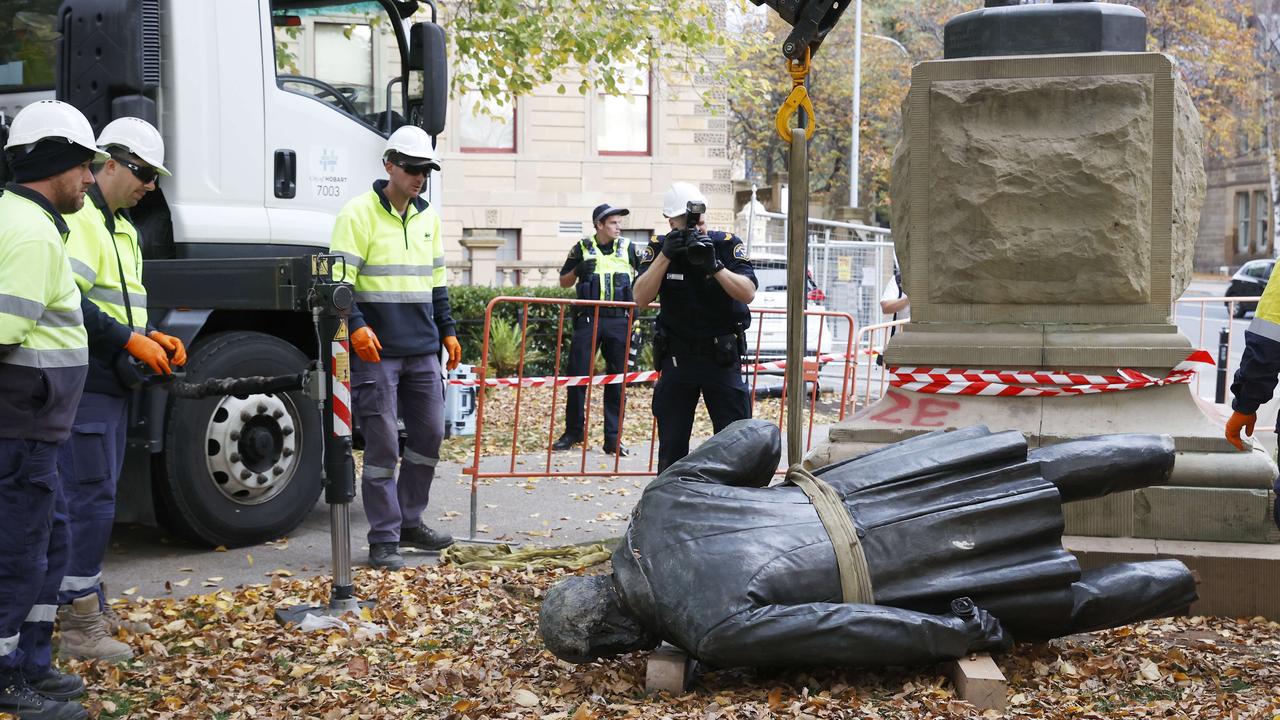
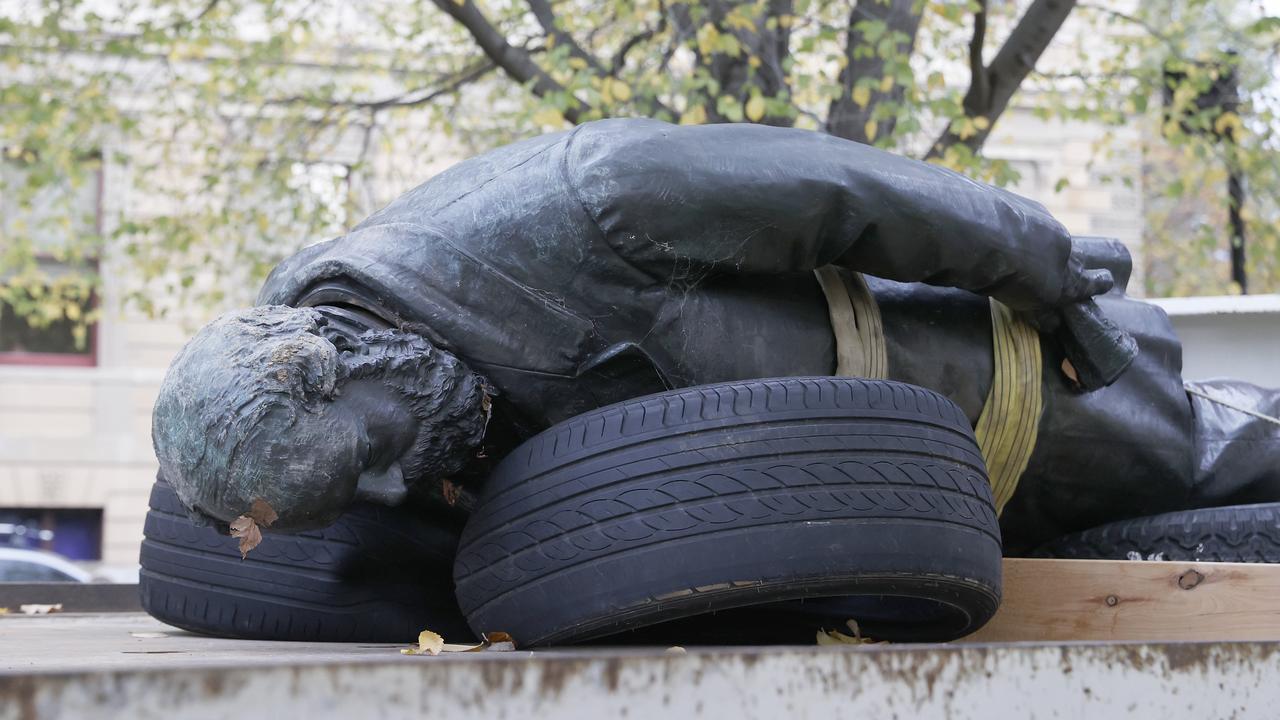
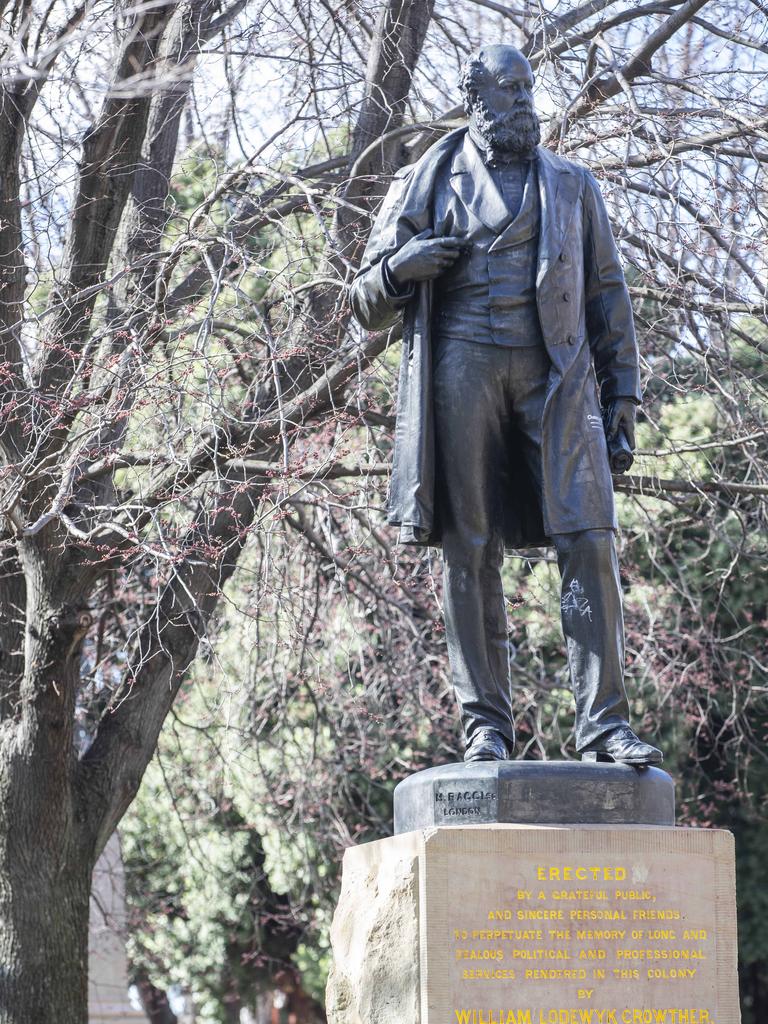
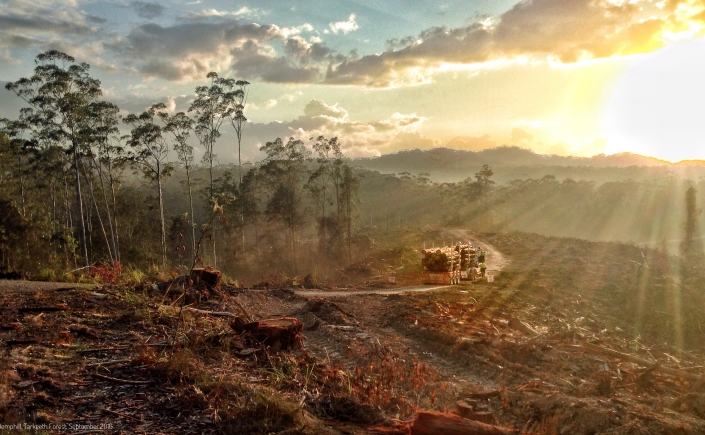
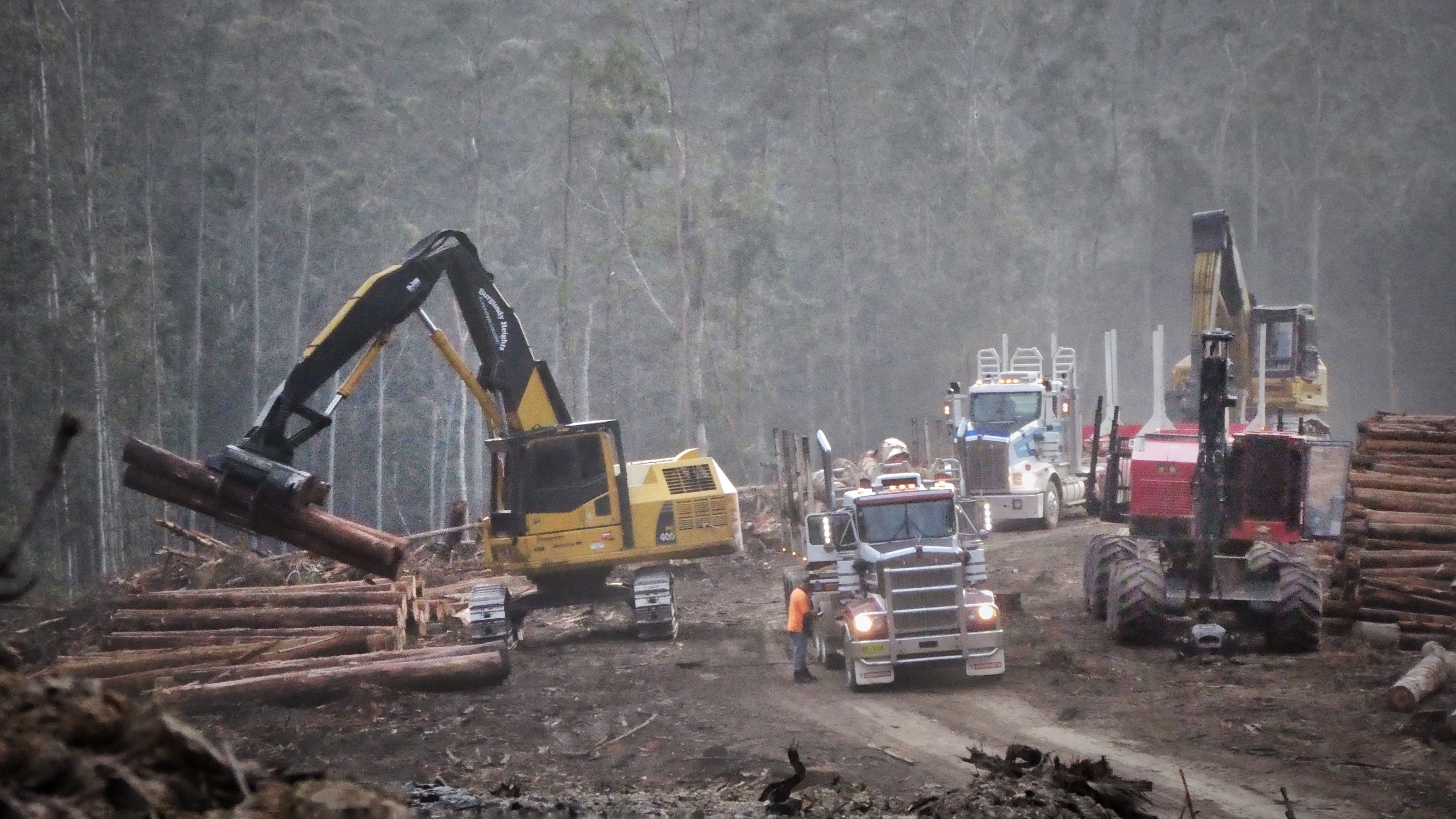
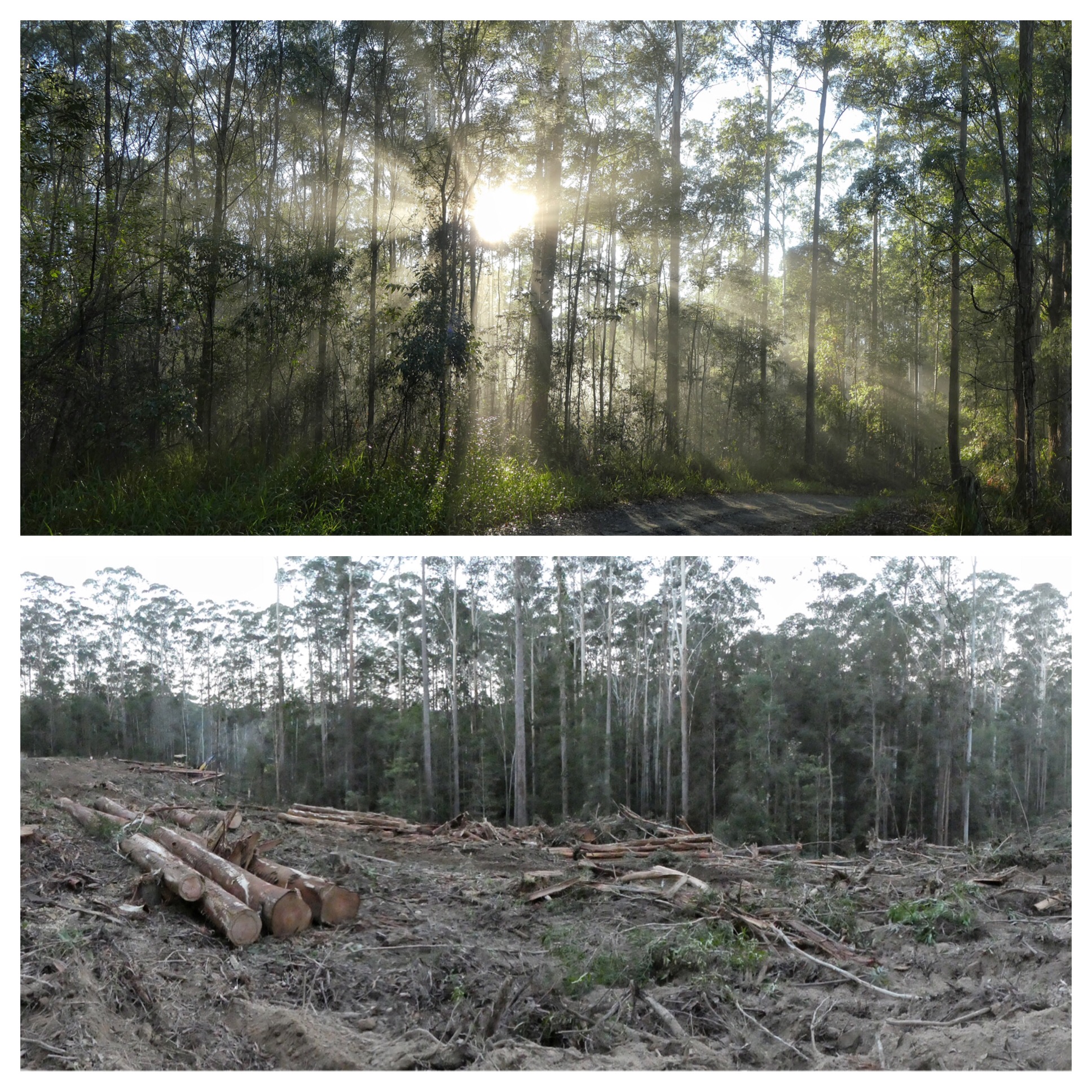
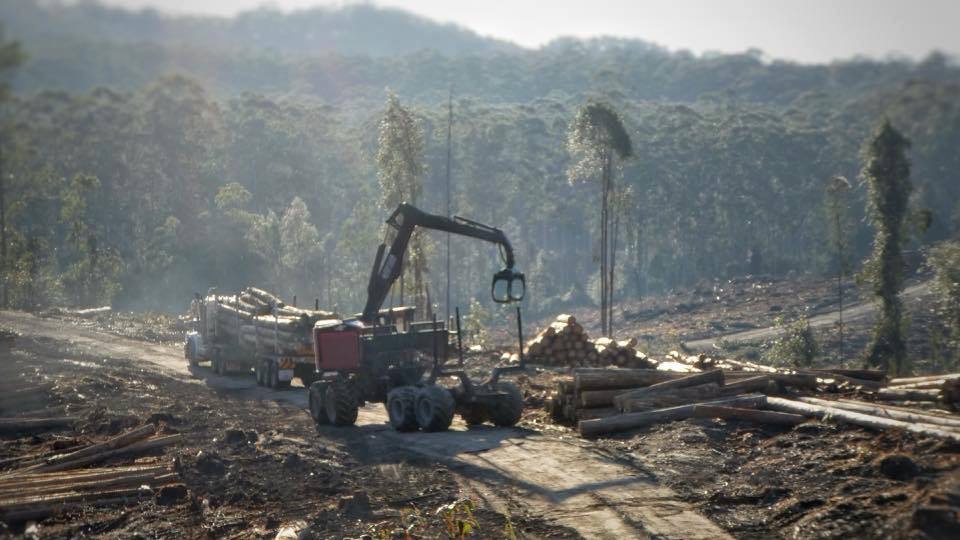
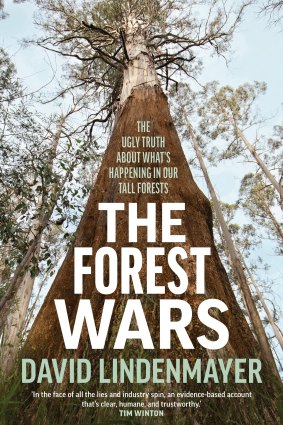
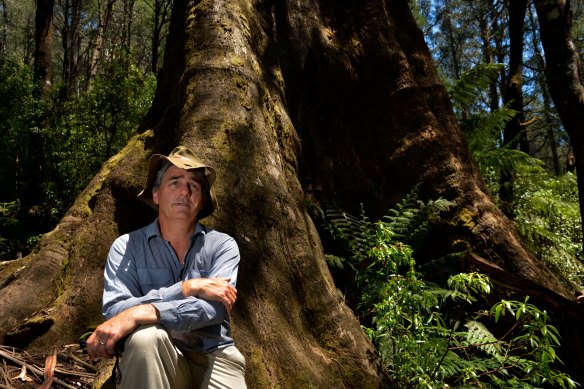
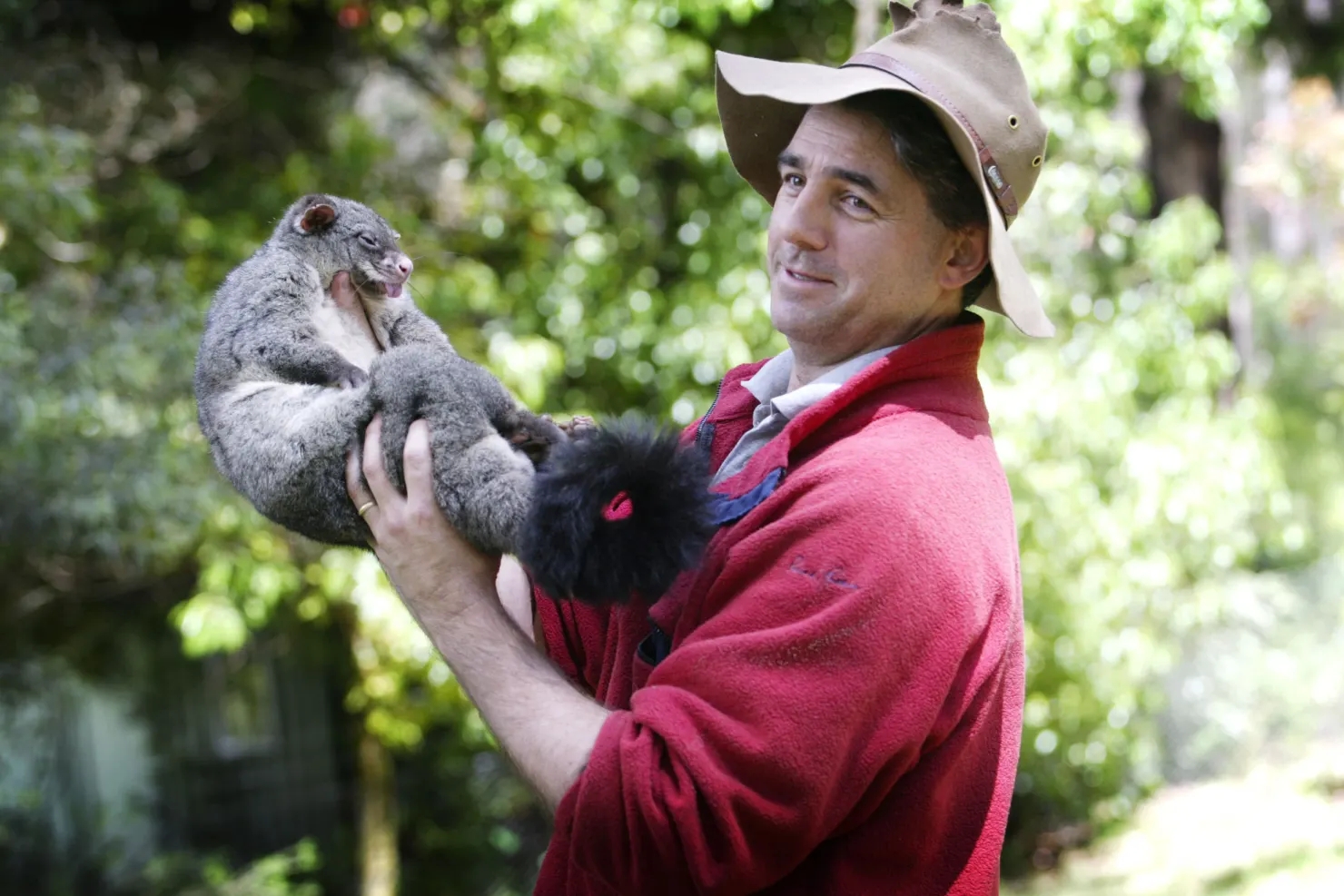

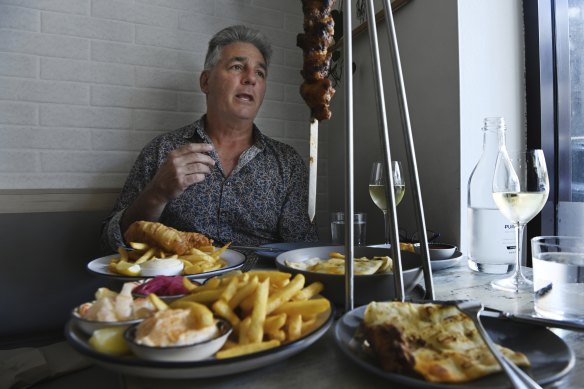
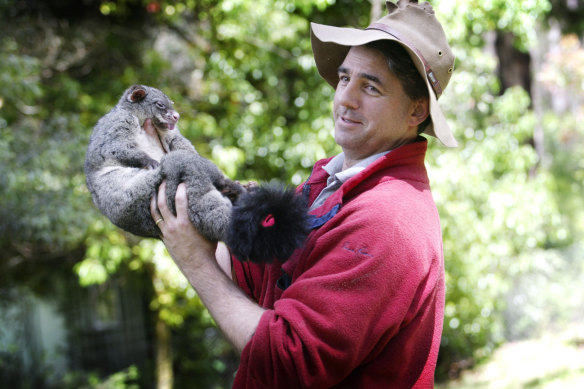
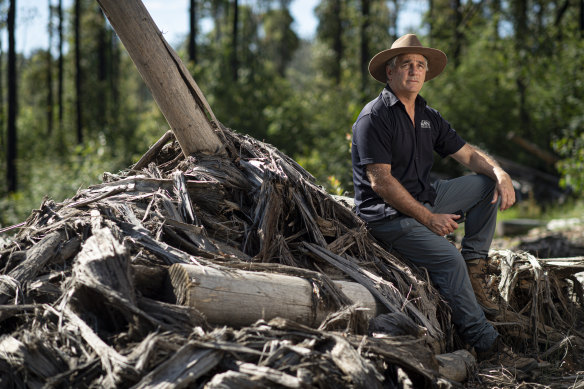


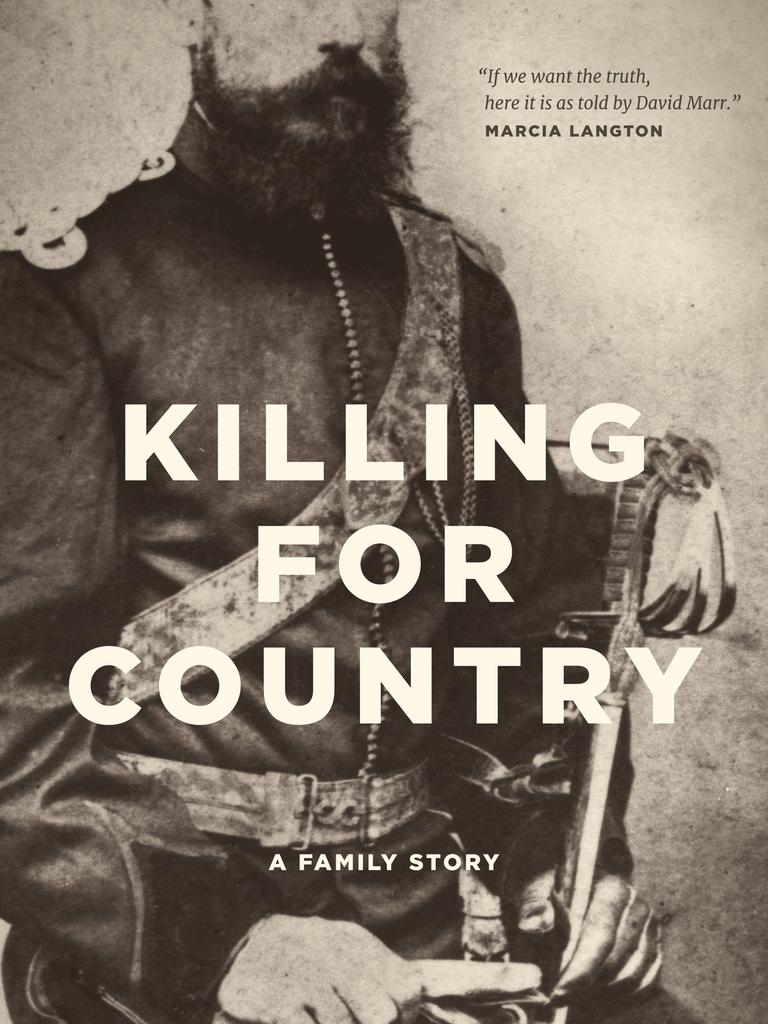





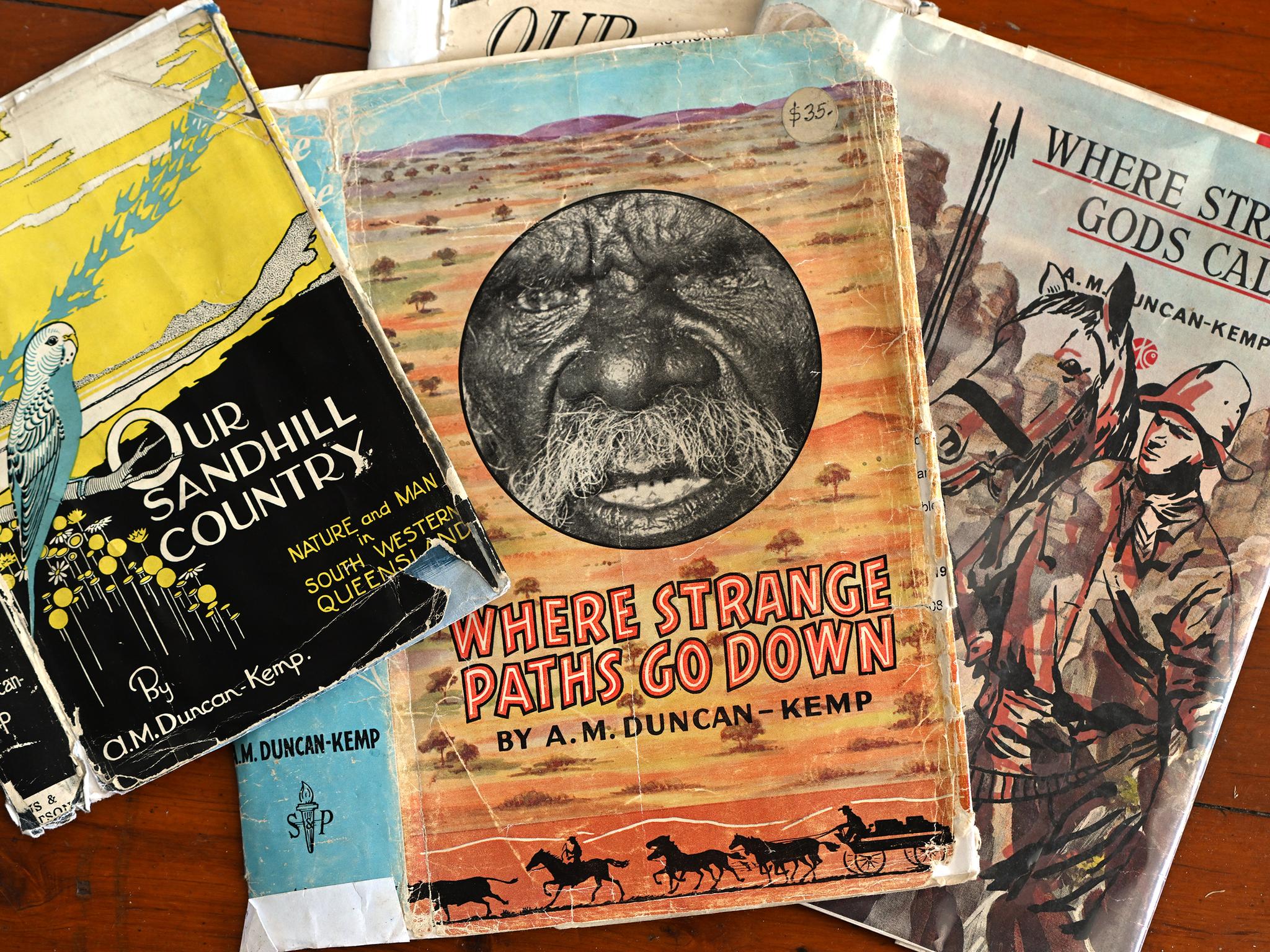

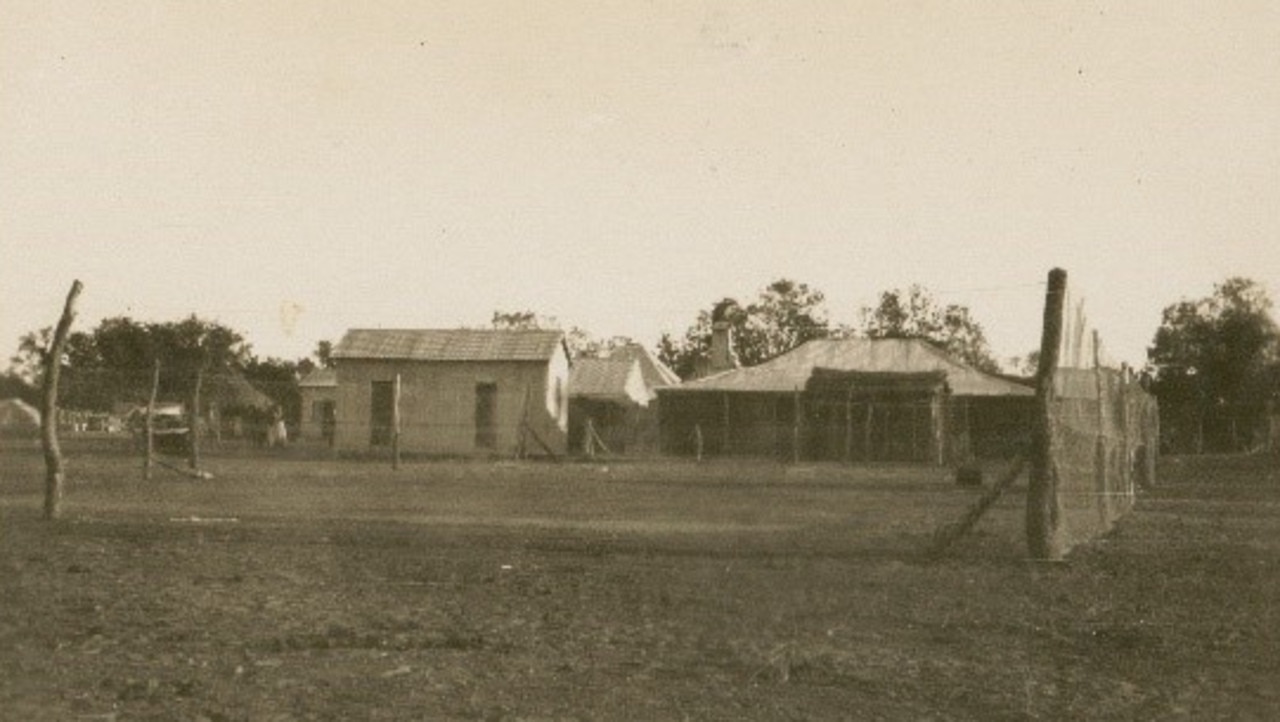
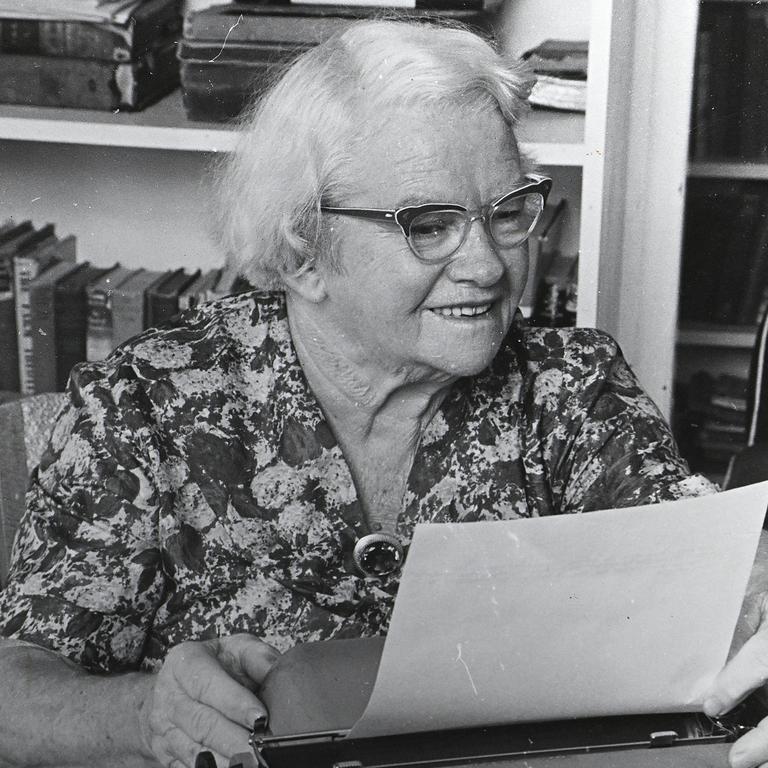



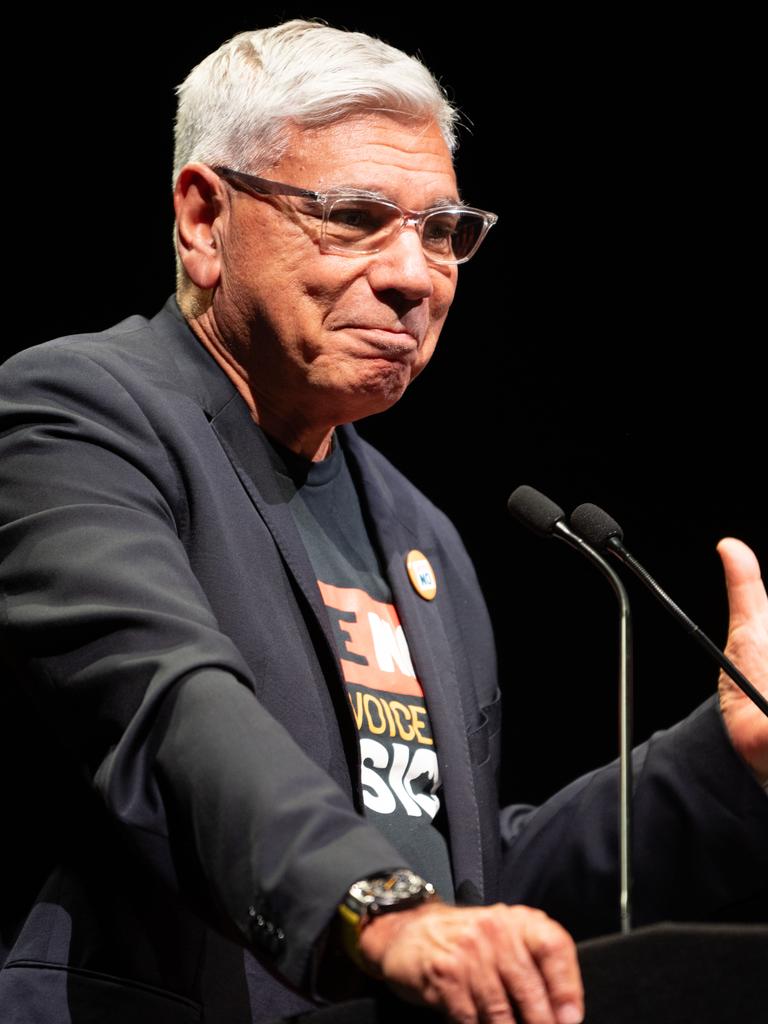

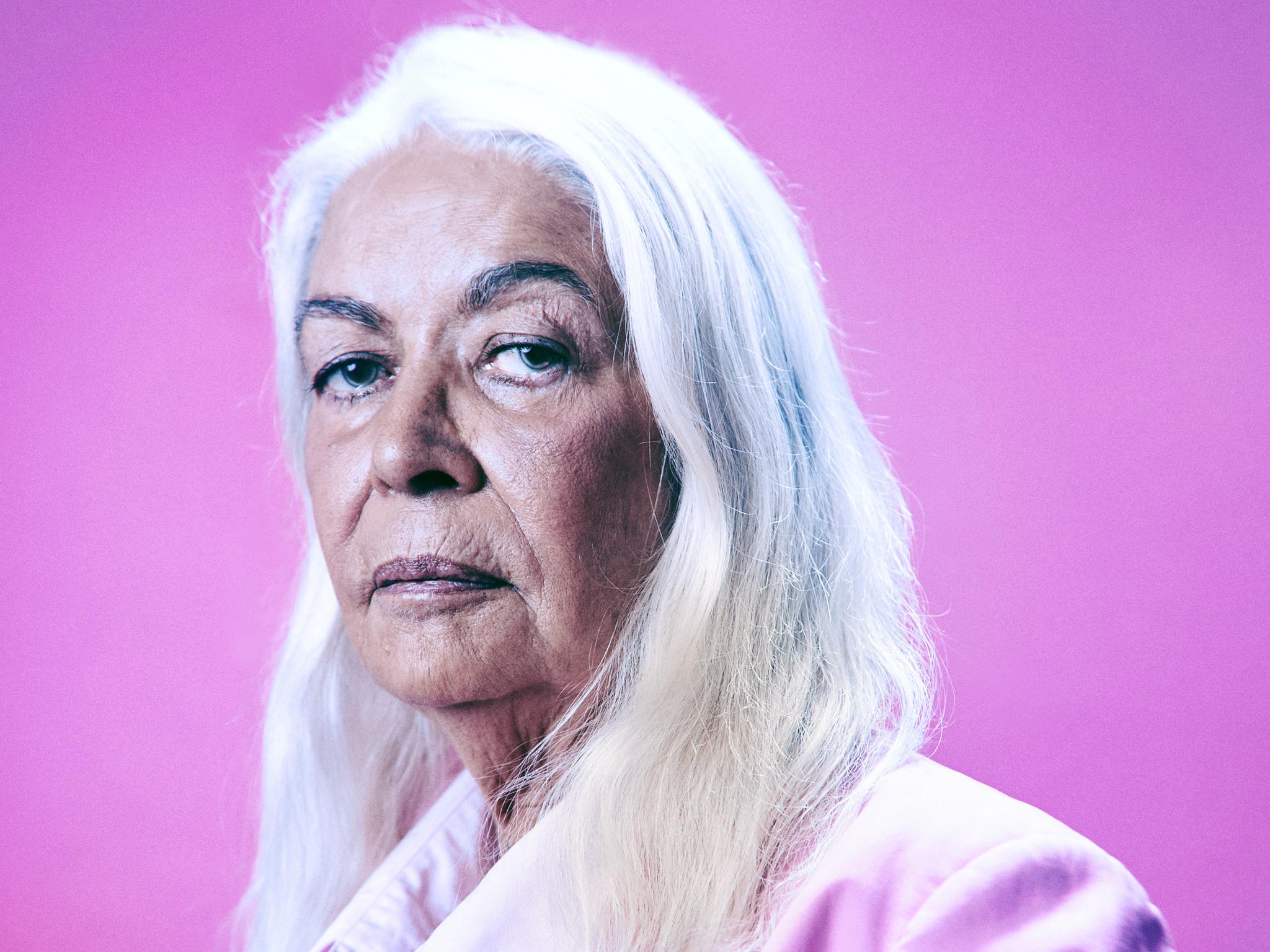
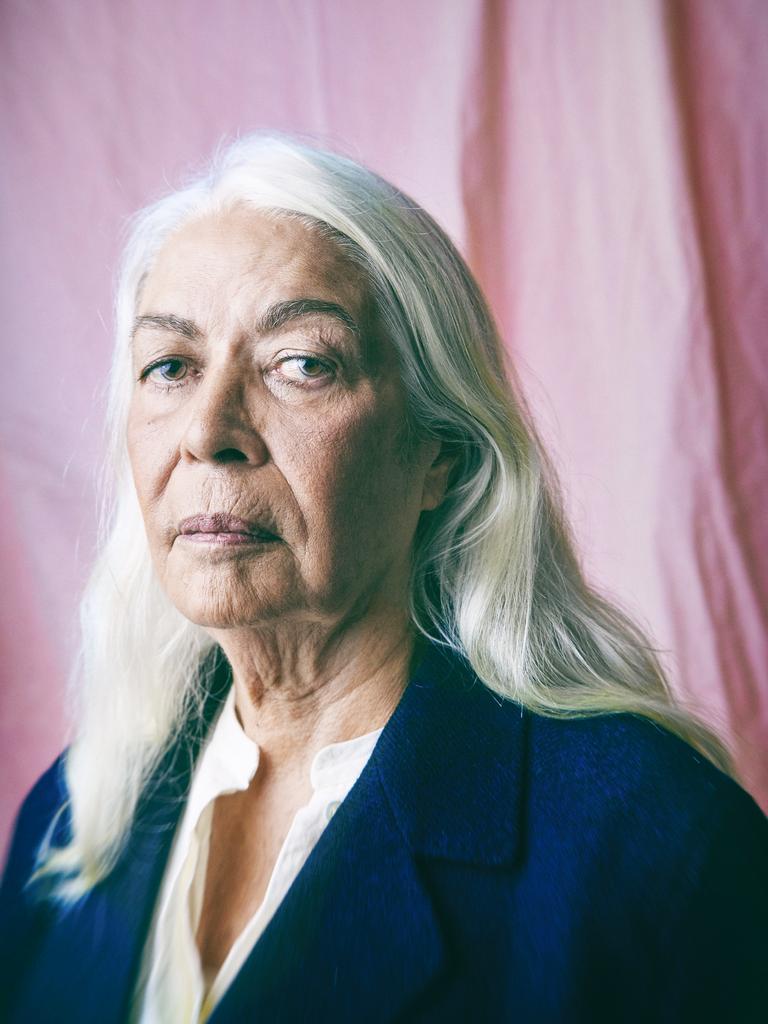
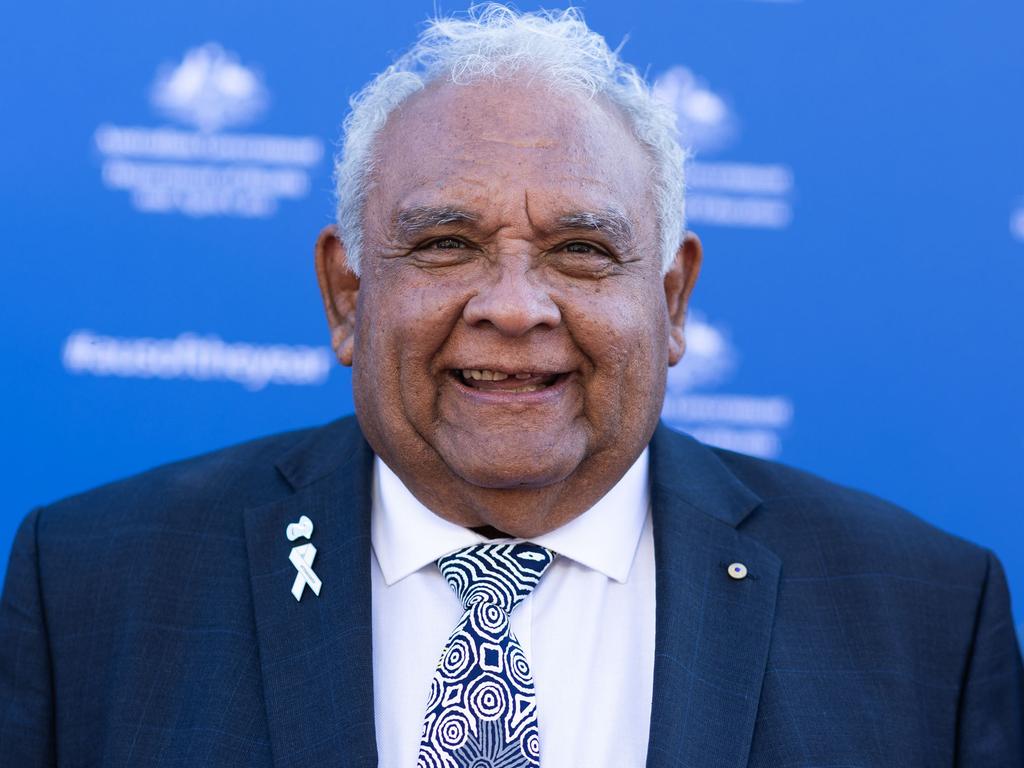
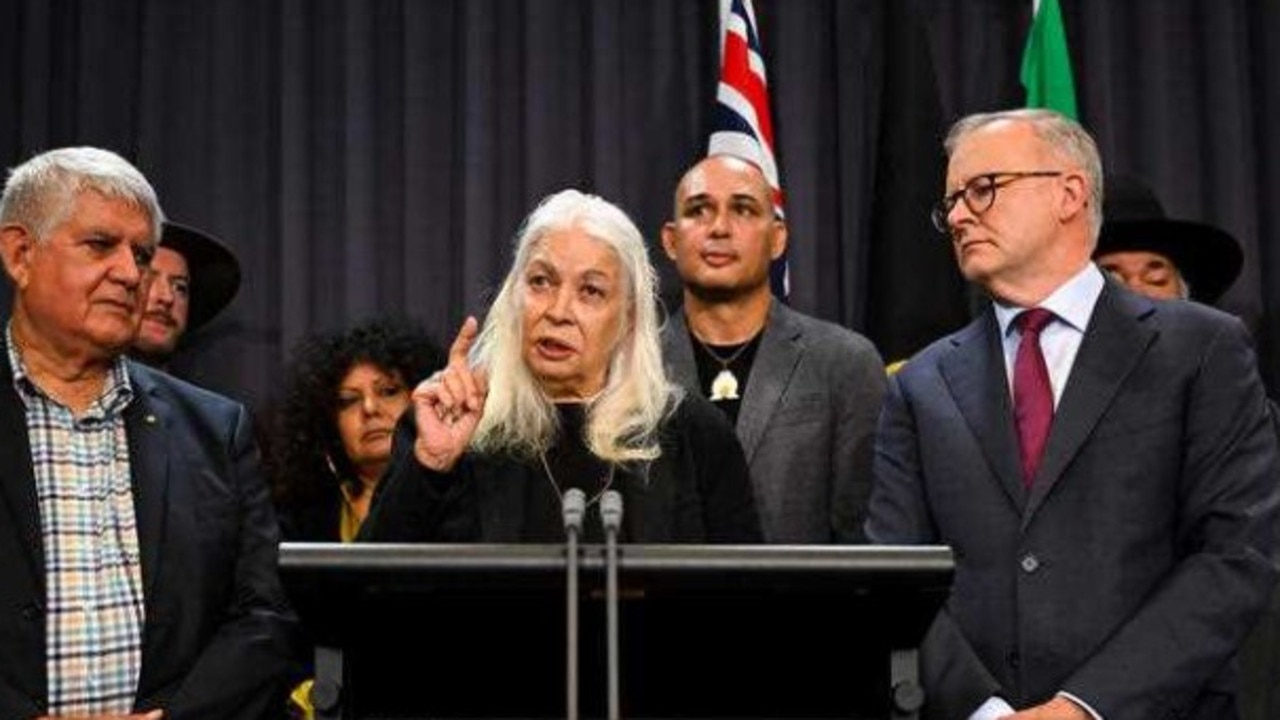
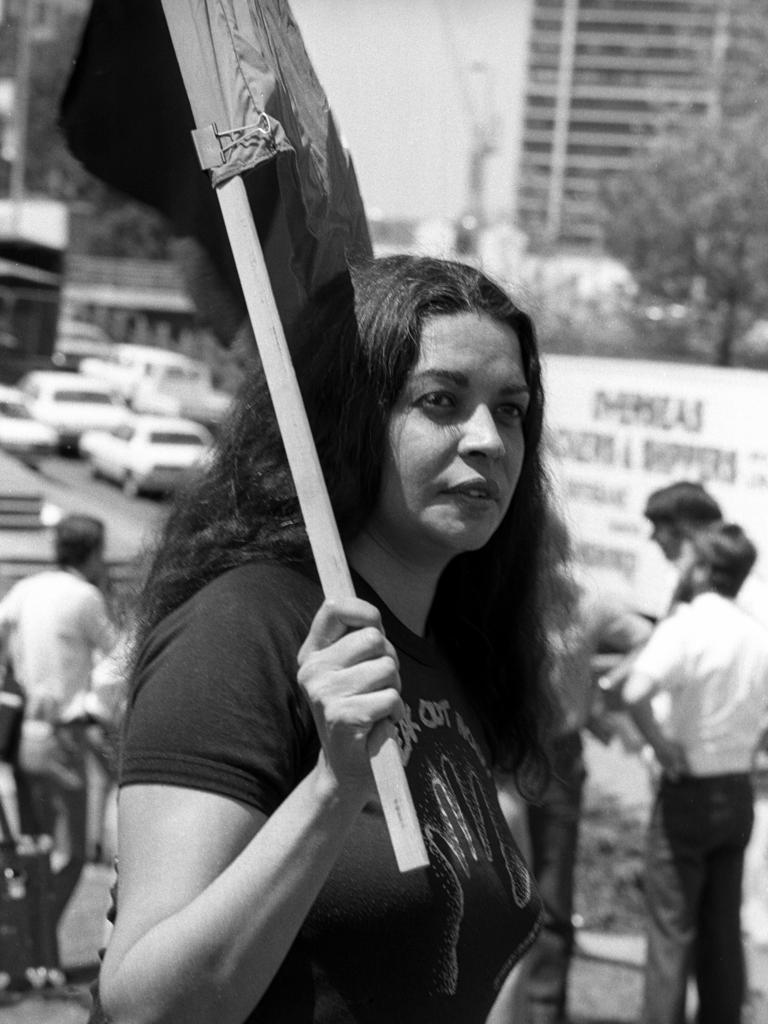

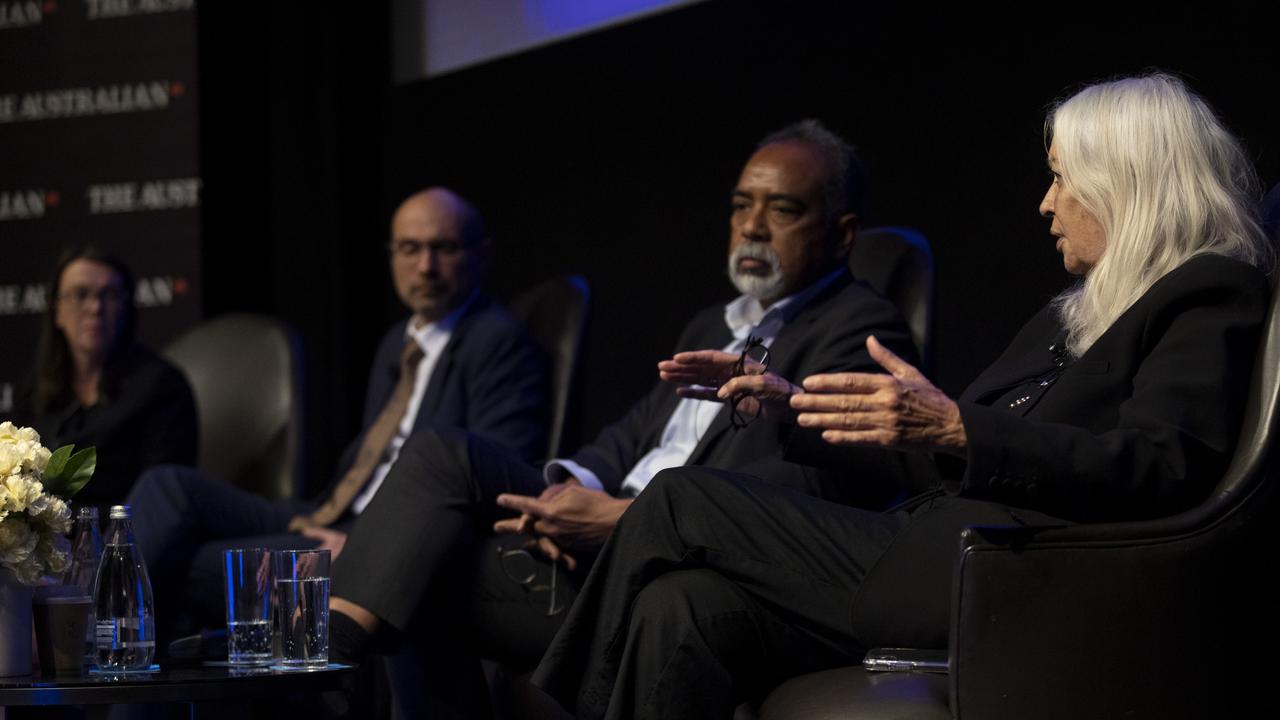
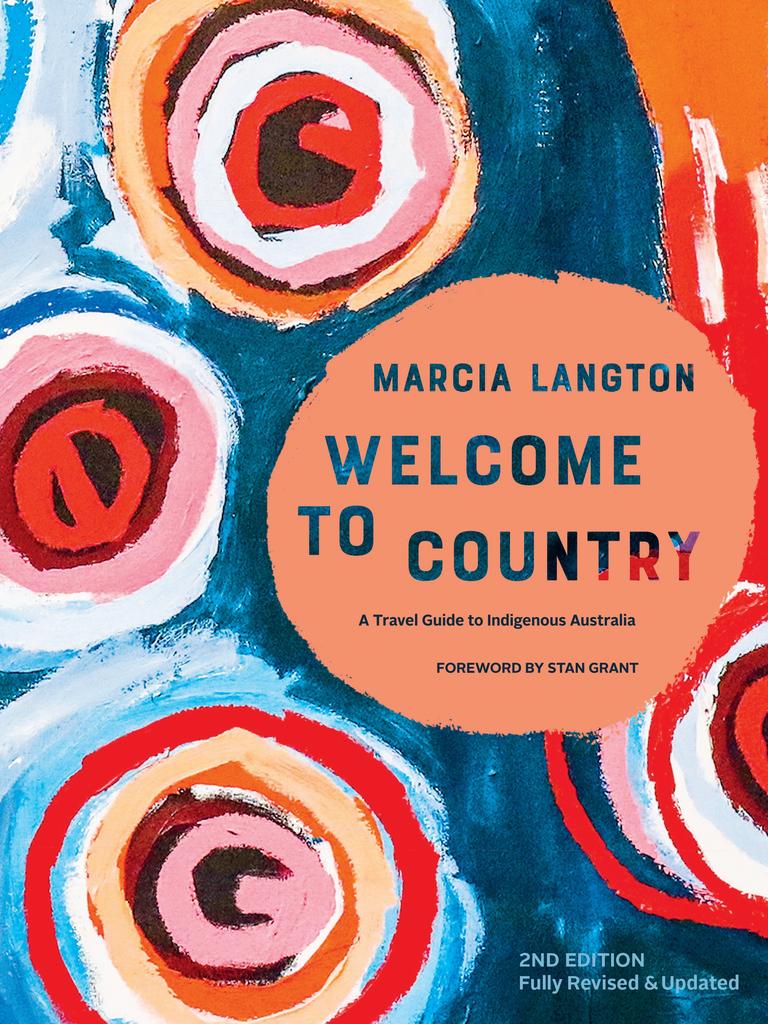



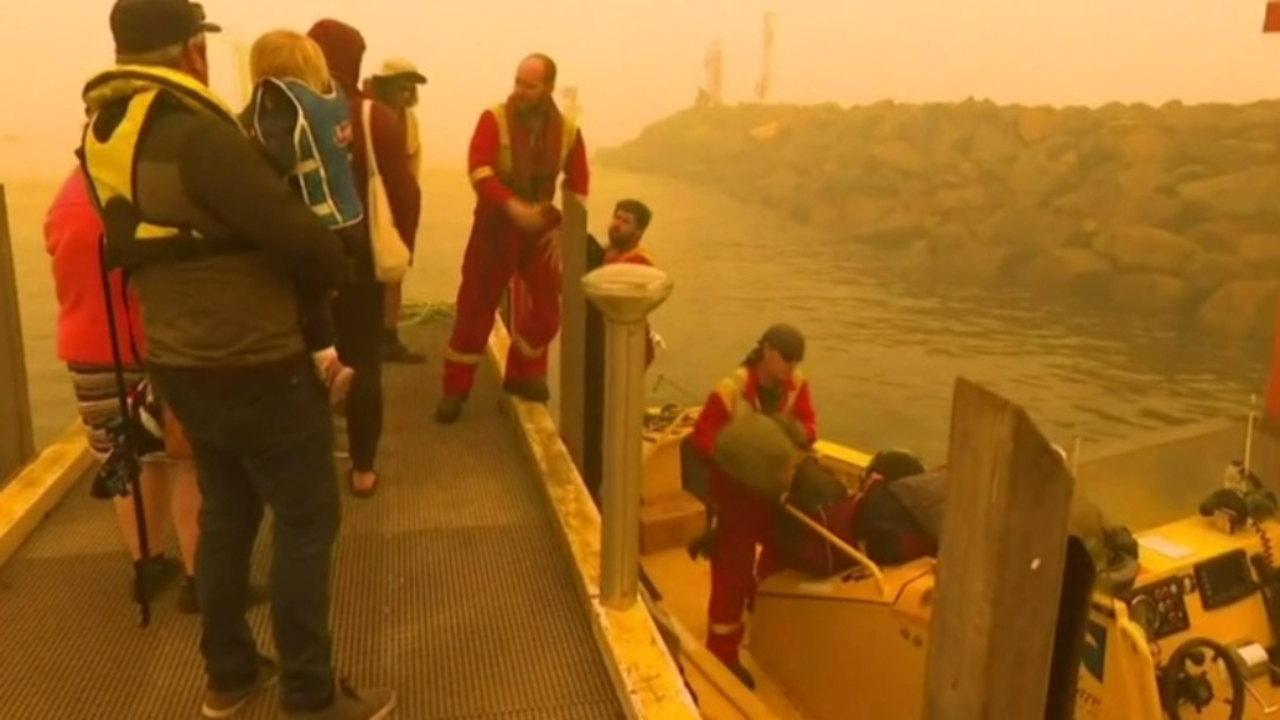
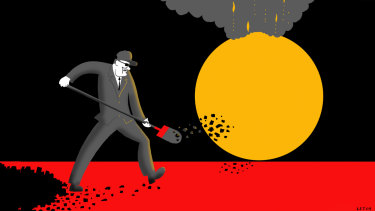

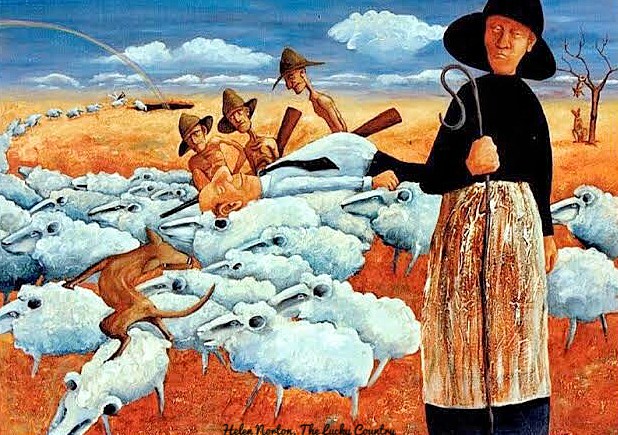
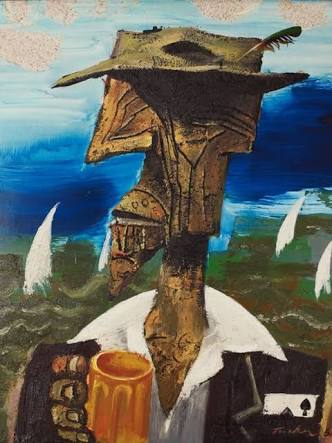

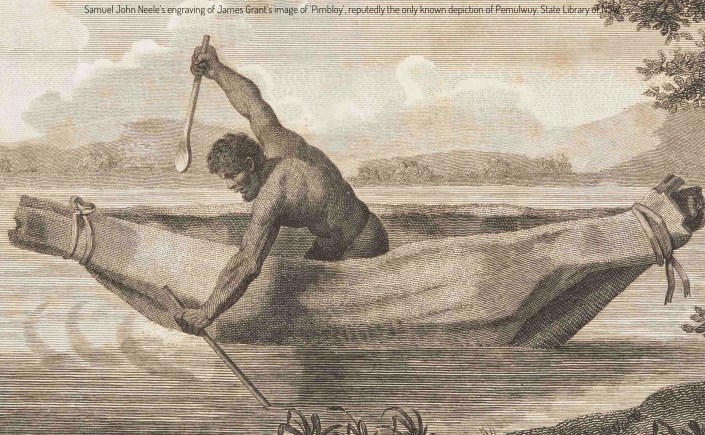

 In That Howling Infinite