In 2005, five years after he was elected Russian president, Vladimir Putin said in a speech that “the demise of the Soviet Union was the greatest geopolitical catastrophe of the century … Tens of millions of our citizens and fellow countrymen found themselves outside the Russian Federation.” For the next seventeen years, he has appeared to become more and more obsessed with righting this historical wrong, particularly regarding Ukraine. Ostensibly pursuing the resurrection of Greater Russia, he denies one country’s existence whilst officially recognizing two others that have never existed. US President Biden remarked: “Who in the Lord’s name does Putin think gives him the right to declare new so-called countries on territory that belonged to his neighbours? To put it simply Russia just announced that it is carving out a big chunk of Ukraine”.
Russia’s massive invasion of its weaker neighbour, evoking analogies of Adolph Hitler’s Operation Barbarossa against the Soviet Union in June 1941, and George W Bush’s “shock and awe” assault on Iraq in March 1943, has led many western observers to question Putin’s rationality, whilst political actors debate his next moves, calibrate their responses short of war with Russia, and speculate about the end game.
Observing Putin’s mystical nationalism, his idea of Ukraine as part of Russia’s “spiritual space”, In a short essay republished below, American historian Victoria Smolkin argues that his imagination of Ukraine is a fantasy of a fallen empire, a fever dream of imperial restoration. “Undoubtedly, many still harbour fantasies of such imperial restoration. But fantasy is not history, and it’s not politics. One can lament – as Putin does – that Soviet politics was not “cleansed” of the “odious” and “Utopian” fancies “inspired by the revolution,” which, in part, made possible the existence of contemporary Ukraine. But that is the burden of History – it is full of laments”.
“Donbas is the heart of Russia”. Soviet poster 1921
Like many countries on the borders of powerful neighbours, Ukraine has long endured the slings and arrows of outrageous history. Its story, like that its neighbours, is long and complex. In competing national narratives, Russians and Ukrainians both claim credit for the creation of the Russian state, though others attribute this, with some credence, to the Vikings. The historical reality of Ukraine is complicated, a thousand-year history of changing religions, borders and peoples. The capital, Kyiv, was established hundreds of years before Moscow, although both Russians and Ukrainians claim Kyiv as a birthplace of their modern cultures, religion and language.
I highly recommend Serhii Plokhy’s The Gates of Europe, a well told and fascinating story of the origins of Ukraine and Belarus, and how their histories were intertwined, and entwined with those of of Poland, Lithuania (which was a large and powerful state once) and Russia. Ukraine has historically been the border between the catholic west and the orthodox east, the division running virtually down the middle. The name Ukraine is Slav for border land. Its geopolitical location and natural resources have led to the land being inflicted by invaders, civil wars, man-made famine and repression.
Eastern European countries, Ukraine included, have with good reason no love for Russia, be it Czarist, Soviet or Putin’s. Hungarians, Czechs, Poles and East Germans have seen Russian “peacekeeping” troops and tanks on their city streets, as have the Baltic countries, Afghans and Chechens. Millions of Ukrainians died under Stalin’s rule (and many, many millions of fellow-Soviet citizens). The 20th Century was not kind to the countries of Central and Eastern Europe. Historian Timothy Snyder called them “the blood lands”.
We should remember that the Soviet Union and the Russian Empire that preceded it were imperialist, colonial projects, a fact ignored by observers untutored in European history. As Smolkin observes:
“Outside the halls of academia, the former Soviet states are rarely referred to as “post-colonial.” Instead, they are usually called “post-Soviet,” a term which suggests that the collapse of the Soviet Union passively gave birth to liberated nations, each with their own unique language, history, literature and traditions. In reality, the former Soviet countries – Estonia, Latvia, Lithuania, Ukraine and Belarus among them – nurtured national movements for hundreds of years before finally getting to experience independence”.
In his remarks two days before the outbreak of war, Ukrainian President Volodymyr Zelensky took pains to emphasize the similarities between Russians and Ukrainians because that is what the moment called for. But for all the historical, cultural and linguistic similarities between Russians and Ukrainians, Ukraine is not Russia. Its people have been fighting Russian imperialism and colonial domination for hundreds of years.
Just as Ukraine is not Russia, Vladimir Putin is not Russia, although his acolytes and cronies argue otherwise. Stalin might have said that democracy fitted Russia like a saddle fitted a cow, and stories of brutal czars and autocrats might corroborate that. But Russia’s history in the modern era is also one of enlightenment, scientific achievement and an incredible cultural efflorescence. It is also a history of struggles for reform, for constitutional institutions, for human rights and for coming to terms with the horrors of Stalinism. Today it is the inheritors of these struggles who are being arrested on Russian streets in anti-war protests.
Ukraine’s national poet, the 19th-century bard Taras Shevchenko, helped build national identity through his verse, which he composed in both Russian and Ukrainian. In one of his most-cited poems, “The Caucasus,” written in 1845, he ridicules Russian expansionism and mourns the immense loss of life it had already wrought. He could have been writing about tyranny, repression and violence all around the world and through the ages:
“We groan beneath the yoke of hangmen while drunken justice sodden sleeps”.
In this sad, bad world, there is nothing new under the sun. 🇺🇦
On February 21, 2022, Vladimir Putin delivered a 56-minute televised national addressthat ended with his announcement that Russia would recognize the independence of eastern Ukraine’s self-declared separatist “republics.” The president spent most of the speech, however, contesting Ukrainian statehood and arguing that the government in Kyiv owes its territory today to the supposed generosity of the Bolsheviks, particularly Vladimir Lenin. To understand the scholarly merits of Ukrainian and Soviet history as presented by Mr. Putin, Meduza turned to Dr. Victoria Smolkin, a historian at Wesleyan University who studies Communism, the Cold War, as well as atheism and religion in the former Soviet Union. She is also the author of the 2018 book “A Sacred Space Is Never Empty: A History of Soviet Atheism.”
As a historian, what struck me most about the historical narrative of Vladimir Putin’s speech was not only what “historical facts” — to borrow his terminology — Putin used, but also what he left out. It is worth noting that the very existence of Ukraine, in Putin’s telling, should be understood against the backdrop of the Russian empire, which the Bolsheviks squandered by making “generous gifts” (щедрые подарки) of Russian territory to aspiring nationalities in general, and Ukrainians in particular. Rather than a sovereign nation-state, contemporary (post-Soviet) Ukraine, in this telling, is the product of Bolshevik nationality policy: “Vladimir Ilyich Lenin’s Ukraine.” But it also owes its existence to Russia’s largesse — its willingness to gift its territorial patrimony to the aspiring nations on Russian lands.
When, in 1922, “the USSR was established on the territory of the former Russian empire,” Ukraine constituted one of Soviet Union’s four original national republics. For some time after, more administrative units were established and dissolved, their borders rearranged, their numbers in flux. Eventually, they settled on fifteen. With the USSR’s dissolution in 1991, Ukraine (like the other republics) inherited these “Soviet” borders.
In Putin’s narrative, the reason for the current crisis is Ukraine’s persistent ingratitude for — and, what’s worse, squandering of — Russia’s “gift.”
Listening to the speech, one might be forgiven for asking, alongside Putin: Why was it necessary to “give such generous gifts”? Why, indeed. That the Bolsheviks would give away Russian lands on the cheap could only be considered “some kind of madness”! One might also be forgiven for thinking that the Bolsheviks were in possession of “Russian” lands and that the lands were theirs to give. In fact, Putin’s history lesson is conspicuously vague on what happened between February 1917 (when the Russian tsar abdicated and, in effect, dissolved the Russian imperial autocracy), and 1922 (when the Soviet Union was constituted on the empire’s remains). In the speech, we don’t really learn what happened to the Russian empire: one moment it’s there; the next, the Bolsheviks are giving away Russian lands to Ukrainians.
However, it was not the Bolshevik revolution in October of 1917 that created the possibility of Ukraine as an independent nation-state, but the collapse of the Russian empire nine months earlier, in February of 1917, under the weight of long-standing contradictions that could not withstand the pressure of the First World War.
In fact, by the time the Bolsheviks established the Soviet Union, the age of empires in Europe was over, and nation-states were the order of the day. Continental Europe’s great empires — Imperial Germany, Austria-Hungary, and the Ottoman empire — had not survived the war, collapsing in 1918, just as the Russian Empire had collapsed a year earlier. Their demise revealed that the administrative arrangements and ideological foundations of territorially vast multi-ethnic and multi-religious empires could not withstand the building pressure of nationalism. New nation-states emerged in their place — to see the radical transformation, just compare maps of Europe in 1914 and 1918 — and, within these new nation-states, new national minorities with their own aspirations to statehood.
Ukraine was part of this great political and geographical transformation. From 1917 until 1921, it was no longer tethered to the Russian empire. But it was also not yet firm in its national form or identity. As the Provisional Government assumed power in Russia following the collapse of the autocracy, a Ukrainian People’s Republic was proclaimed in Ukraine and recognized by Russia’s Provisional Government. Over the next four years, as the territories of the former Russian empire were embroiled in a Civil War, Ukraine’s identity and borders changed several times, until it fell under Bolshevik control in 1921 and was incorporated into the Soviet Union in 1922. Putin ties the existence of independent Ukraine to this final act — its incorporation into the USSR — but if one were to ask Ukrainians, both those who left and those who stayed, one would get numerous different answers.
Interestingly, of the German, Hapsburg, and Russian empires, only the Russian empire managed to survive in any guise. This was, in large part, thanks to the Bolsheviks, who managed to bring the new and aspiring nations of the former Russian empire into a new structure that had territorial unity and coherence. Crucially, to do this, they presented this new structure — the USSR — as an anti-imperialist project, in part to distinguish themselves from their imperial predecessor, the so-called “prison house of nations.” In exchange for recognizing Bolshevik political authority and accepting the centralized administrative structure of the Soviet Union, each new republic — or “administrative unit,” to use Putin’s term — was given “the status and form of a national government.”
That the Bolsheviks managed to reconstitute something that looked like the Russian empire at all is a testament not just to the radical upheavals of the time, but also to their political shrewdness. Perhaps most importantly, it is a testament to their willingness to hold on to power “at any price,” including terror, and to accept any costs, including mass famine. Seen this way, we might consider Russia’s political and territorial claims to Ukraine or any other former Soviet country not as a “generous gift” that Russia can withdraw, but as itself a “gift” of the Bolsheviks, since it was only made possible by the Bolsheviks’ ability to reconstitute, to borrow historian Francine Hirsch’s term, an “empire of nations,” with Russia as the de facto first among equals.
To see the form of this more clearly, imagine the fate of efforts to reconstitute the other empires that fell by the wayside of the long 19th century. What would happen if, for example, someone tried to reconstitute the Austro-Hungarian empire by making claims to present-day Austria, Hungary, the Czech Republic, Slovakia, Slovenia, Romania, Croatia, Bosnia-Herzegovina, as well as parts of Serbia, Montenegro, Romania, Italy, Poland, and even the western parts of Ukraine? Undoubtedly, many still harbor fantasies of such imperial restoration. But fantasy is not history, and it’s not politics. One can lament — as Putin does — that Soviet politics was not “cleansed” of the “odious” and “utopian” fancies “inspired by the revolution,” which, in part, made possible the existence of contemporary Ukraine. But that is the burden of History — it is full of laments.
Soho (needless to say) I’m alone on your streets on a Friday evening I’ve been here all of the day I’m going nowhere with nowhere to go Al Stewart, 1972
… it felt like we had one toe in the Mediterranean, even though it was January and our fingers were numb under our gloves … Deborah Levy, The Man Who Saw Too Much
Sometimes, out of the blue, a message from the old country triggers happy memories and sends us wandering through “the foggy ruins of time”. An old friend from my London days emailed me the other day, recalling how back in the day, I’d frequent a cheap and cheerful Italian café in Soho – what was then “swinging” London’s seedy, sexy and infinitely interesting red-light, hip-boutique and cool restaurant mecca. She’d laid down one wintry English afternoon to relax with a novel, and to her surprise, two pages were dedicated to that very same café.
So, as often happens these days, I was soon flicking through my back pages and disappearing through the smoke rings of my mind.
.“… that motorway from Brum to London was a road well-traveled. In my final year at Moseley Grammar, I’d often hitch down to London for a weekend with pals who’d gone there before. We’d hang out at cheap and cheerful Pollo’s Italian restaurant in Old Compton Street in Soho and the Coach and Horses across the road, and go to Cousins folk and blues joint in a cellar in nearby Greek Street, and the 101 Jazz Club off Oxford Street. Bunjies folk cafè and Ronnie Scott’s jazz club were just around the corner. After a meal or a pint, I’d often catch the last tube to the end of the line closest to the M1. I can’t recall how many times I headed off into the night; and there were always drivers on the road at the witching hour. I guess many folks “get the urge for going”, as Joni sang back then, “and they had to go …” And in those generous times, people were happy to offer a lift to a wayfaring stranger – gentle souls who would not leave strays stranded by the dark wayside; lonesome folks seeking company and conversation in the dark night of the soul; curious people wondering why a young man would hitch the highways in the middle of the English night”.
Yes, Café Pollo was indeed a significant landmark of my London days.
I discovered Café Pollo in the Spring of 1966 when I’d first hitched to London with school friends to take part in a Campaign for Nuclear Disbarment march. From ‘66 through ‘71, I’d go there whenever I was in town, and regularly when I ended up living there – right up to my departure for Australia in 1978. When I was studying at the School of Oriental and African Studies, I’d go there for lunch after Friday classes with my best mate and soul brother Mike (we were born on the same day in the same year in a British city beginning with B).
So, for years and years I’d hung out at Pollo’s. Dined there, boozed there, courted there – almost always on spaghetti bolognese and Chianti with a sticky rum baba to follow. It was crowdy, noisy and smokey, and in winter, steamy and clammy – and “cheap as… “
Though I’d left Old England’s shores, I’d visit Pollo’s whenever I returned and catch up with old pals. When I became vegetarian, the bolognese was replaced with pesto pasta liguria or arrabbiata. When The Evening Standard and Time Out recommended it as an excellent “cheap eats”. I thought its glory days of low-key popularity were over. But it was always there, the same as it always was. The feature picture of this post was taken, I think, when Adèle and I were in England in 1987 – I still have that old Chinese denim jacket and use it for sitting around our bonfires in wintertime.
We continued to go there until 2005, when we were denied service as we just wanted a cup of coffee. The next time I popped by, in September 2008, it was gone. Indeed, it had closed soon after our disappointing coffee quest. Having served the impecunious for generations, it was, in the words of a classic London cafés blog, dismantled and dumped, to be born again as a classier, impersonal, cut-out trattoria – La Porchetta Pollo Bar.
But at least, the name and the memory live on …
Cheap, cheerful and unchanging …
Classic Caféspublished an excellent obituary to this Soho icon. Here are some extracts:
“The Pollo, at 20 Old Compton Street, with its ox-blood booths, lapidus beanpole railings, contemporary ceiling, murals, top notch signage, and perfectly preserved light fittings always had hungry queues waiting outside. It remained the proverbial Soho institution for as long as anyone could remember. A proper bargain Italian with perfect ‘60s decor, friendly banter and a worryingly high turnover of chefs (there always seemed to be a ‘chef wanted’ sign in the window). “Cheap and cheerful” remains the operative term at the long-standing Italian café Pollo …
… The almost endless hand-written choice of pastas has now been typed up for easier interpretation, but otherwise the menu remains much the same as I remember it being 20 years back. The food is still hearty, the prices are laughable for central London, the coffee is rocket fuel – and the waitresses still insist on doubling you up in the booths with complete strangers …
… Plenty has changed in London. Fortunately, Pollo hasn’t … The Pollo often finds its way onto the ‘top cheap London eats’ lists, and it was the Evening Standard listing under budget eating that first nudged me in its direction a few years ago… It isn’t fancy. It is an Italian restaurant. The inside looks something like a truckers’ caff, with formica tables and little booths, and there is more room downstairs if it looks full. There isn’t a lot of space and the tables are packed in, but the food is good. The main courses consist of a variety (unsurprisingly) of pasta and pizza dishes, again the price range for these tends to be between £3 – £5. There are some risottos as well, and some meat dishes, such as chicken with rice or veal which are a bit more expensive”.
One toe in the Mediterranean …
As for the book my London friend was reading, which inspired her email and my jaunt down the rabbit hole (a pleasant one), The Man Who Saw Everything by Deborah Levy, here’s what the protagonist had to sat about about our café de coeur:
“In late January 1989, Jennifer and I were sitting in a cheap Italian restaurant called Pollo in Old Compton Street, Soho. It was always full of students from Saint Martin’s our school around the corner because it offered its loyal impoverished customers three courses for a fiver. Jennifer had introduced me to Pollo when we first met. Once we discover spaghetti vongole and penne arrabbiata, it felt like we had one toe in the Mediterranean, even though it was January and our fingers were numb under our gloves … She devoured a plate of spaghetti bolgnese even though she was supposed to be a vegetarian. While she drank water, I knocked back carafe of red wine and ordered another one …. it was warm inside Pollo. Everyone was smoking and shouting us the waiters thumped plates steaming pasta on the formica table. A young man with a blue mohican was stubbing his cigarette in the avocado that had arrive on a plate. it was stuffed with something pink’.
Al Stewart’s Soho (needless to say …)
Apropos the song quoted at the beginning of this memories, whenever I recall Soho in the sixties, I always think about my bedsitter days in London to the early seventies and also, British singer-songwriter and musician Al Stewart’sover-orchestrated debut album of 1967, Bedsitter Images. I knew Al Stewart’s London ‘ere I first knew London. I bought the album when I first saw him perform at the famous Jug o’ Punch folk club in Digbeth, Birmingham, run by The Ian Campbell Folk Group (I also saw a teenage Joni Mitchell play there – it was love at first sight, and I bought her first album there too, Songs from a Seagull). Al may have autographed his record – I can’t recall. It was stolen from my bedsit room in Reading in 1970 along with many of my favourite discs.
Maybe it’s about what here in Australia that, borrowing from our indigenous compatriots, we might call “spirit of place” – the association with the streets within a hop, skip and an amble from Old Compton Street out into Shaftsbury Avenue and that bookshop in Charing Cross Road, the opening verse of the second track Swiss Cottage Manoeuvres, and that flat in Swiss Cottage, a suburb I used to frequent in the seventies. Maybe it’s the seedy, needy, greedy vibe of the priapic songs on Al’s follow up albums. An old friend and Al Stewart fanboy called them aural masturbation. Although there were many “love chronicles”, the lengthy titles track of his second album, Al also wrote about melancholy middle aged suburban couples and historical events, with the odd foray into poetic mysticism. My flat mates and I were all fans of Al back then, and went to most of his gigs.
In the early seventies, when a girlfriend started going out with him, I actually got to know him for a brief while. Indeed, one time, when he played in Birmingham Town Hall, me and a couple of pals drove up to my old hometown to see him, and after the show, invited him back to my folks’ place for a late night fry up. My mom reckoned he need fattening up. And afterwards, she and Al sat in the kitchen for a couple of hours talking about pop music. “I love Cat Stevens”, mom said. “Oh, I much prefer the Incredible String Band”, said Al. “Oh, they’re very weird, but Paul like them!” She said. Then they got talking about Mick Jagger. And my dad, in the sitting room, said to us others gathered there, and referring to Al’s stature, said “there’s not much to him is there!”. Strange but nice how you recall these little things. The folks have both passed on …
Cheap, cheerful and unchanging, with it garish turquoise neon sign and bold orange awning and signs advertising cushion rooms and belly dancing, Rowda Ya Habibi was a Newtown institution, and one of the first Lebanese restaurants in this cosmopolitan area.
It has been closed these past eighteen months – the pandemic finally closed the doors of this inner west icon, but driving down King Street recently and seeing its fading, sorrowful frontage brought back memories of our Newtown days.
Adèle and I had been coming here for for nigh on thirty five years. We’ve known Antoinette and Asaad Rowda, who ran the restaurant since 1978, and their family for much of that time, and the last time I was there, Antoinette introduced me to the tall handsome man I’d known as a toddler. Whenever I dropped by, we’d chat about Lebanon and Syria – they were Maronite Christians from the north of Lebanon – and I’d practice my Arabic.
I can’t count the number of takeaway felafel rolls we have eaten over the years, an instant and filling meal at a price that satisfied the appetites and wallets of tens of thousands of University of Sydney students, staff from the nearby Royal Prince Alfred Hospital, and locals over the years. And it was the place to go with friends on a budget to enjoy delicious, homemade Lebanese tucker and clap and laugh along to the belly dancer who would sweep in on a Friday night in a flurry of scarves and scimitars and entertain us with her raqs arabiyya dragging unwilling and clumsy customers to their feet to join her in the dance.
And at the risk of upsetting Syrians, Lebanese and Israelis, I’d would declare the house hommus “al ahsin fi al’alim”, the best in all the world.
May the road rise up to meet you. May the wind be always at your back. May the sun shine warm upon your face, The rains fall soft upon your fields And until we meet again, May God hold you in the palm of His hand.
An old Irish blessing
You just picked up a hitcher A prisoner of the white lines on the freeway
Joni Mitchell, Coyote
Whilst hitching has lost much of its allure in the west, it remains very popular in Israel. From my very first visit, There are always young people waiting by the roadside – it has always been so for young conscripts travelling home on leave, and motorists have traditionally been comfortable with picking up soldiers waiting with their rifles and kit bags (all non-Haredi or ultra orthodox Israelis must complete national service when they reach 18, and are required to carry their weapons with them at all times if these can’t be securely stored). It is also a popular mode of travel in the occupied West Bank where settlers regard hitching a ride as a political statement of sovereignty and freedom to travel through all of HaAretz, “the land”, and as an economical means of reaching scattered and often isolated (not to mention illegal under international law) settlements. Many drivers regard picking up fellow-settlers as a political and religious duty.
Hitching in the West Bank
This attachment to hitchhiking harbours a strong sense of community, but also, a delusion of safety – it can and does have deadly consequences.For example, in June 2014, three Israeli teenagers were kidnapped by Hamas operatives at the bus/hitching stop at the Alon Shvut settlements in Gush Etzion and subsequently murdered. The atrocity precipitated Operation Protective Edge, an Israeli bombardment of Gaza which resulted in thousands of civilian deaths, and the kidnap and murder of a Palestinian boy by Jewish extremists. But that is not what this story is about …
In the second decade of the 21st century, hitchhiking is widely viewed as an edgy, even dangerous, activity to be avoided by both a potential hitcher and a prospective motorist contemplating whether to pull over or to drive on. For some, it also carries undertones of bludging and of indigence, although in rural areas like where I live, during these straightened times with high youth unemployment and poor public transport, many young people hitch out of necessity.
But the practice flourished for several decades, particularly during the fifties and sixties when few people owned vehicles and catching a ride with a friendly stranger was means of adventure as well as a mode of travel. Hitchhikers did so for a variety of reasons – a combination of thrift, expedience, and necessity, but also, a sense of romantic adventure – buoyed by what seems in retrospect, a naive sense of invulnerability.
More than just a means of transportation, it was also about social interaction and the opportunity for conversations with strangers. Jack Kerouac, American beat poet and secular patron saint of hitchers. begged to differ. In his seminal On the Road, a book revered more than read, he whinged: “One of the biggest troubles hitchhiking is having to talk to innumerable people, make them feel that they didn’t make a mistake picking you up, even entertain them almost, all of which is a great strain when you are going all the way and don’t plan to stay in hotels”.
In his recent Roadside Americans – the rise and fall of hitchhiking in a changing nation, North Carolina historian Jack Reid writes: “The waning of hitchhiking in the 1980s was a result of social change, but the main reason was related to the economy and to engineering. The highways changed. At the exits from cities, there are now huge interchanges rather than simple junctions, where it was easy to stop a car. Added to that was a sense of alienation, a growing fear of strangers and a loss of intimacy. Another reason was that years of economic prosperity and a significant reduction in car prices enabled many young people to buy their own cars”.
Allons! the road is before us!
Afoot and light-hearted I take to the open road, Healthy, free, the world before me, The long brown path before me leading wherever I choose. Strong and content I travel the open road.
Walt Whitman, Song of the Open Road
I was thumbing lifts before I’d even heard of Jack Kerouac, It seemed like the easiest and cheapest thing to do when cash was scarce and modes of carriage were few, and the open road and the horizon beckoned.
.In the days gone by, when money was tight and adventure beckoned, I hitched all-over England – visiting friends in far-flung towns and villages, attending music festivals and anti-war and anti-nuclear demonstrations, and often, simply for the joy of travelling and exploration.
Looking back, my hitching was destination focused, getting to where I wanted to go and the route that would take me there rather than exploring the highways and byways, the towns and village in between and the folk therein – although I would take in appreciatively the landscapes and cityscapes I would pass through. The roadside and the adjoining nature strip, were, on the other hand, a world of their own. Between rides, standing at a place I’d never been and to which I would not return, I’d note the micro-milieu – the grass and the wildflowers, the flotsam and jetsam, the discarded bottles and butt ends, the empty cigarette packets and the candy bar wrappers. Vehicles whizzed by and I’d observe their type and frequency to calculate when I’d likely be picked up. And then, destination in mind’s eye, like stepping into a cold pool,or breaking into a run, I’d extend my arm and raise a thumb, gingerly at first and then with bravado.
Living on the northeastern edge of Birmingham, close to the motorways heading north and south, I’d simply pack a bag, walk to the nearby roundabout, and put out my thumb. It was, after it own fashion, a kind of commuting between hometown domesticity and the great beyond.
When first I roved out, the M1 started on the outskirts of London at Watford, and ended between Coventry and Rugby. The first section of the M1 Motorway between Watford and Crick, Rugby opened in 1959. Watford Gap Services, known then as The Blue Boar Services, opened on the same day. It was long hailed as the unofficial boundary between the North and South parts of the Britain.
The Coventry Road in south west Birmingham was my launching pad. Watford Gap services was like a transit lounge, as was Newport Pagnell. The large road sign Hatfield and the North was a landmark on the road to home. Daytime, nighttime, the wee small hours, in spring and summer sunshine or winter rain, it didn’t really matter – the M1 never slept.
In time,the road system extendedand the M1-M6 link lay just a hundred metres in front my family home. One summer, I worked on that section of the motorway as an “on the lump” casual navvy. No workers comp,or occupational health and safety in those days. Helmets and gloves were optional. My blood, and that of many others, including some who clocked one fine summer morning and never clocked off, is in that concrete.
As a sixth former, I’d often hitch to “swinging” London for the weekend, to explore the capital and visit folk and jazz clubs, kipping in shop door-ways and underground car parks under cardboard and napping wrapped in newspapers, and eating at Wimpy bars and Lyons teas houses.
A few years later, whilst at Reading University, the M4 began near Maidenhead and finished at Chiswick, and every few weekends, I’d stand opposite the cemetery in eastern Reading and hitch a ride to London and back – for sit-ins, marches, happenings at The Roundhouse, free open-air concerts (including the famous Rolling Stones concert in Hyde Park), and to hang with my London girlfriend.
The Roundhouse, Chalk Farm
When first I roved abroad, I thumbed my way from Budapest to Athens via Yugoslavia and thence back to Blighty, and the following year, on a side-step from the famous hippie trail, from Beirut to Aqaba and back via Petra and Wadi Rum. I slept a night in Petra itself – in those days, a deserted and un-restored hideaway for fugitive Palestinian fedayeen after the Black September intifada. For reasons that I can not fully explain, I took my future first wife down the same road two years later, including sleeping out among Petra’s Nabatean tombs. And this was to be the end of my gypsy ways and hitching days. They lasted eight years. Thereafter, the famous “open road” was replaced by planes and trains, buses and cars – and one agonizingly crippled Ford transit van (to … an old saying, when life gives you a lemon, you’d wish you’d’ve been willing to spend more on a reliable motor).
If you’ve taken all you need from this post already, off you go … What follows now are an assortment of self-indulgent reminiscences of my hitchhiking days.
From this hour I ordain myself loos’d of limits and imaginary lines, Going where I list, my own master total and absolute, Listening to others, considering well what they say, Pausing, searching, receiving, contemplating, Gently,but with undeniable will, divesting myself of the holds that would hold me. I inhale great draughts of space, The east and the west are mine, and the north and the south are mine.
Walt Whitman,Song of the Open Road
Travellers’ Tales
Well I left my happy home To see what I could find out I left my folk and friends With the aim to clear my mind out Well I hit the rowdy road And many kinds I met there And many stories told me on the way to get there So on and on I go, the seconds tick the time out So much left to know, and I’m on the road to find out
Cat Stevens, Tea for the Tillerman
The toad road licked my wheels like a sabre. Marc Bolan
And what should they know of England …
There’s always a first time. We’d all like to daydream that we’d be picked up by Joni Mitchell, like she picked up that scallywag Coyote on her sublime Hejiraalbum. Mine, alas, was as as stocky sixth former with long hair (long for those days) and horn-rims, heading down to London to meet meet up with school chums for the CND Easter March (that was a first too). Standing at the roundabout where the M1 and the world began, having already thumbed from the Coventry Road roundabout opposite the old Swan public house at Yardley, It wasn’t long before a Rolls Royce pulled up. “WTFl!” is what I’d say today A handsome bloke with shades and sideburns who looked like Englebert Humperdinck asked me where I was heading. “London”, I replied. “Of course – where else? Get in”, he said. It was all the way to Marble Arch with pop star Don Fardon – whom I’d never heard of at the time – he later entered the hit parade with a cover of John Loudermilk’s song Indian Reservation. Not a good song, I would say – with many similarly empathetic ballads, it is long on heartstring-pulling and fucked on imagery and lyrics. If you want to listen to a good song, check out Bruce Cockburn’s evocative Indian Wars and the Australian Goanna Band’s anthemic Solid Rock.
Henceforward, that motorway from Brum to London was a road well-traveled. In my final year at Moseley Grammar, I’d often hitch down to London for a weekend with pals who’d gone there before. We’d hang out at cheap and cheerful Pollo’s Italian restaurant in Old Compton Street in Soho and the Coach and Horses right across the road, and go to Cousins folk and blues joint in a cellar in nearby Greek Street and the 101 Jazz Club off Oxford Street. Bunjies folk club and Ronnie Scott’s jazz Club were just around the corner. After a meal or a pint, I’d often catch the last tube to the end of the line closest to the M1. I can’t recall how many times I headed off into the night; and and there were always drivers on the road at the witching hour. I guess many folks “get the urge for going”, as Joni sang back then, “and they had to go …” And in those generous times, folks were willing to offer a lift to a wayfaring stranger – gentle souls who would not leave strays stranded by the dark wayside; lonesome folks seeking company and conversation in the dark night of the soul; curios people wondering why a young man would hitch the highways in the middle of the night.
It is now early spring of 1968. I’d repeated my last year at Grammar School, and with assignments completed, an amenable headmaster let me take a week off to travel. This time, I headed northwest across Brum to Darkaston, near Walsall, and what was then the beginning of the M6 – it ended at Lancaster. Travelling through Lancashire, Cumbria and the Lowlands, I reached the outskirts of Glasgow by nighttime. Hitching across the city, I was picked up by a young couple who insisted that I spend the night at their place – they reckoned the green scarf I’d worn around my hat was a risky proposition in that part of sectarianist Glasgow. I loved that old brown fedora; it traveled with me all over England, to Greece and Yugoslavia, and the Middle East until it was stolen along with my harmonica at Wadi Musa, near Petra. Next morning, I was on the road to Edinburgh, crossed the silvery Tay of bad poet William McGonagall fame, transited the granite city of Aberdeen, and by nightfall, I was on the road into Inverness, where I slept by the roadside and woke up covered in snow. Next morning, I was on Culloden field, and thence, continued on my journey. It took me through the Great Glen where I’d caught a local bus that delivered the mail to isolated homesteads, a journey so slow that I was hallucinating mountains and braes for days, and thence to to Loch Lomond and beyond, southering homewards.
The brown fedora, Giza 1971
During my first year at the University of Reading, I kept on hitching – many more journeys to London and back and day trips to nearby Oxford and Windsor. In a cold and rainy April, with first year exams done, I headed east to London and north to the Humber and the port of Hull, to drop on a good friend who had dropped out of uni and to visit an former school chum. In a student share-house near the university, I took my first mescaline trip to the soundtrack of Roy Harper’s sang McGoohan’s Blues’, a twenty minute digression from the concept if not the plot of an iconic if indecipherable television series. “The Prisoner is taking his shoes off to walk in the rain”. For 1,200 blissful seconds of cosmic consciousness, I found the meaning of life down that wonderful rabbit hole – and had forgotten what I’d found when I’d resurfaced the next morning. Peyote is a very colourful hallucinogenic. I still recall the Fantasia images that passed before my eyes as Roy sang:
Daffodil April petal hiding the game Forests of restless chessmen life is the same Tides in the sand sun lover watching us dream Covered in stars and clover rainbows downstream … Under the toadstool lover down by the dream Everything flowing over rainbows downstream Silver the turning water flying away I’ll come to see you sooner I’m on my way
As I headed back down south, the wet and windy old weather changed and as I rode through rural Oxfordshire, all a sudden, the sun came out for behind dull English clouds and and Springtime came in verdant glory – as doomed young Robert Browning once declaimed
Oh to be in England now that April ’s there And whoever wakes in England sees, some morning, unaware, That the lowest boughs and the brushwood sheaf Round the elm-tree bole are in tiny leaf, While the chaffinch sings on the orchard bough In England—now!
On arrival at my digs in Reading, there was a note from friends telling me that they’d headed off to Devon to spend a weekend with a fellow student’s farming family, and that me and my friend Jean should join them. So within minutes of arriving home, we were off into the west. Navigating Bristol where, I recall for no apparent reason, that on impulse. I’d bought a copy of The Beano comic) and Somerset. Late that night, we arrived in the tiny town Cullompton in the heart of rustic Devon. After some now forgotten but fun times, including a trip to the seaside and getting blotto on local cider, we hitched home. I don’t recall too much of the journey except that it took us through Basingstoke.
Cullompton 1969
One glorious English summer I arranged to meet up with my late pal Dave Shaw in Cambridge, where he was attending a summer school at the University, and go to the celebrated Cambridge Folk Festival. I clocked off from my work on the motorway, got home, just ten minutes away – I said we were close! – showered and packed, and headed to the Clock Garage roundabout and put out my thumb. I took the M1 to London’s North Circular, and cut across to the A10 (there was no M11 in those days) and, And, my stars were alignment on this night ride, arrived at Dave’s digs in time for breakfast.I don’t remember much of the festival bill, but American folk diva Odetta was singing, and also, our idol, Roy Harper, England’s high priest of angst.
I had to leave Cambridge around Sunday lunchtime, after Roy’s last set, to return to Brum for work on Monday. Rather than head back down to London, to save time – a quixotic idea when you are hitching – I decided to cut cross-country to connect with the M1 at Newport Pagnell – in those days before GPS and route planners, a cheap, creased road map from WH Smith was the best we had, plus a good sense of direction, fair weather and loads of luck. And such are the movements of the cosmos, that my one and only only ride took me to, yes, what was then the bucolic village of Newport Pagnell. It was one of those summer evenings in England, when the days are long, the air warm and languorous, and the light, luminous. Birds were singing and church bells were ringing for evensong, and in my mind’s ear, I’d like to imagine that cows were lowing and sheep were bleating. One could almost feel an ode coming on. So there I was, once more, at the services on-ramp, hitching a ride to Birmingham , and hopping aboard an old Land Rover for what was the slowest and noisiest ride ever – which took me almost to my door.
… who only England know
The above header is the second half of Rudyard Kipling’s well known if oft misunderstood poem The English Flag, in which the old Imperialist exhorts his insular countrymen to go forth and conquer … In later and less jingoism times, it has been given a more benign slant, along the lines of the adages like “travel broadens the mind” to which I readily subscribe, or as Cat Stevens was to sing at the time “the road to find out”.
And so it was during the holidays before my final year at Grammar School that I tried my thumb on the Continent. With another school pal, I hopped across La Manche to Belgium with the idea of hitching to Amsterdam. Why we chose Belgium, I can’t recall, but my brother had been there shortly before and he reckoned it was a great place for art and architecture (that was his thing – he scored a rare First in architecture at Uni and went to become the chief architect for Nottingham City Council, designing the international ice rink in partnership with Jane Torvill of of skating icons Torvill and Dean fame). We did a lot of beer and chips and saw a lot of great art and architecture in Bruges, Ghent and Brussels – and we visited the Waterloo battlefield, as one would. As for the Netherlands, we got as far as Antwerp but gave up on Amsterdam after a long day of futile thumbing. We were, however, adopted by a young Belgian lass who took us home to meet her ma and pa. We enjoyed a bucolic Sunday picnic on the banks of a tributary of the Scheldt before heading back to Oostende and England. In retrospect, I regretted that hadn’t turned south south and set a course for Paris, a pleasure which would have to wait several more years.
My next “big hitch” was by happenstance in Eastern Europe. I’ve written of this before in In That Howling Infinite in Tanks for the Memory – how Brezhnev changed my life. Therein, I recalled how I’d flown to Prague on the first anniversary of the Soviet Invasion for Czechoslovakia, only to have the flight diverted to Budapest in Hungary.
“Given the circumstances of our arrival, and the atmosphere prevailing in the Bloc on the anniversary of Prague invasion, the authorities had given me a visa for four days only. I had therefore to depart the country quick-smart. I had effectively two choices of non-Soviet countries – westwards to Austria, or south to what was then Yugoslavia. In a split second decision, I took the road less traveled – south to Szeged and the Serbian border. Wondering through the rural outskirts of Novi Sad, I was taken home by a pair of Serbian boys. I spent my first evening with their most hospitable family and slept that night on a bed of furs. “Novi Sad, Beograd” the lads had chanted, and so, instead of setting my direction home, I hitch-hiked south to the ancient Danube city of Belgrade. In the Yugoslav capital, I resolved to keep going southwards. Over the next two weeks, I transited Yugoslavia to Thessaloniki, where decided to continue with my southern odyssey – to Athens and the Greek Islands. At journeys end, I hitchhiked back the way I’d come, only this time, reaching Austria via the Croatian capital of Zagreb”.
My Balkan and Aegean adventures included that aforesaid sleepover in Novi Sad; sleeping by the highway south of Niš where I was awoken in the middle of the night by military police who reckoned I was a security risk; being propositioned – solicited more like – by a gypsy girl whose favours I forsook as she mustn’t have showered for a week; picked up by a Greek lorry-driver near the famous pass of Thermopylae who insisted we skinny-dip in the aquamarine Adriatic; and heading out of Thessaloniki on the road to Macedonia (the Slav one), I was picked by a bus load of frisky young Greek conscripts – I jumped out quicksmart into the night.
By the time I reached Zagreb, I’d had enough of the road and took the train to Vienna and thence to Calais and Albion. But, as I wrote in Tanks for the Memory, my southwards diversion to the Mediterranean fixed my gaze on other pastures and inspired a lifetime interest in the Middle East. For that is where I roved next: “… the clear Hellenic sky and the cobalt blue of the Mediterranean, the parched hills and pine woods of the Peloponnese, the dazzling light and the warm sun on my body, and the ruins and bones of antiquity sang a siren’s song. As Jack Bruce warbled: You thought the leaden winter would bring you down forever, but you rode upon a steamer to the violence of the sun. And the colours of the sea bind your eyes with trembling mermaids, and you touch the distant beaches with tales of brave Ulysses. My thoughts and dreams no longer ranged eastwards. My next journey took me back to the Mediterranean, and thence, following in the footsteps of Alexander the Great – the golden hero of legend, not the “mad, bad and dangerous to know” destroyer – through the Middle East and on to the famous well-trodden Hippie Trail to India”.
I’d never intended to hit the Hippie Trail back then, in the northern summer of 1971. In fact, I didn’t even know it existed.
I’d just finished my final exams and graduated with a good degree, and after three exciting and formative years, it was as if everything had suddenly ground to a halt. Uni was over; a romantic relationship was on the rocks; I was footloose and free, floating and feeling the urge to escape elsewhere, somewhere, anywhere. I’d no idea at all what I would do next, other than an inchoate plan to undertake post-graduate study – guided by my tutor and mentor exiled Hungarian academic Tibor Szamuely, my academic interest was Eastern Europe and the Soviet Union, but that was to be down the track.
When the finals results came out, I spent the evening at the student union with friends, unwinding and getting pissed; and the very next day, I walked into the Student Travel office and booked a one-way air ticket to Athens, passage by steamer from Piraeus to Alexandria via Limassol, Cyprus, and from Egypt to Piraeus and thence to Tel Aviv, Israel, with no bookings for onward travel.
Seized by the idea of visiting the two principal antagonists of the almost recent Six Day War, I’d a naive and uninformed notion to view both sides of the Arab-Israeli puzzle. Within a few weeks, I’d bought a second-hand rucksack and sleeping bag, converted my savings to traveller’s cheques – there were still currency restrictions in the UK on how much cash you could take out of the country – packed a few things, and in the words of Cat Stevens, I was “on the road to find out”. That road took me through the Middle East, and on and on, until I reached Kolkata in Bengal. What was planned as but a two month holiday to “clear my mind out”, to quote Cat again, extended to over six months as the appetite grew with the eating.
And so I travelled through lands of which I knew little, picking up fragments of history and heritage, parables and politics as onwards I roamed
My final hitching hejiras were played out in the Levant – an Indian traveller I’d met in a Cairo youth hostel had told me that if I thought the slums of Cairo were bad – and to a naive Brummie, they were – I should see those in Kolkata. So that is what I resolved to do. Leaving Egypt, I found my way to Damascus by way of Beirut, with a side-trip to Israel via Cyprus, and on a quixotic notion, I resolved to visit Aqaba, and also Petra, the ancient “rose” city. Back then, I knew next to nothing about the Middle East. I’d recalled Aqaba from the film Lawrence of Arabia; and I’d been told that Petra was a “must see” by a fellow traveller in my Damascus hostel. So, I set off south, to Dara’a, a border town where Lawrence was allegedly captured and buggered by the Turks, and which was, in recent times, the spark that ignited the Syrian civil war.
The Jordanian border lay just beyond Dera’a, but all traffic thereto was forbidden – the Syrian and Jordanian army had just fought a desultory tank battle in one of the many ricochets of the latter’s suppression of the Palestinian Liberation Organisation after the failed Black September intifada the year before. The border checkpoints were still open, however, to traffic from Jordan only. So I walked across a kind of no man’s land, past tank tracks and the occasional military wreck. There was a large concrete marker at the actual borderline, with “welcome to jordan” on one side and “welcome to Syria” on the other. It was a surreal space. It’s was twilight and high summer. The air was hot and still and there was almost total silence. No birdsong, an imperceptible warm wind. And of a sudden, there was a buzzing of flies which which swarmed all about me and the marker. I walked on and before too long, passed through passport control with a tourist visa, and thumbed a ride to Amman, the capital.
I slept that night on the outskirts of Amman and continued on to Ma’an, the jump-off point for the village of Wadi Musa and Petra. Onwards then to Aqaba where, having paddled in the sea and walked about the town, I headed back straightaway the way I’d come, to Ma’an, Amman, Dera’a and Damascus – from whence I took the fabled Nairn Bus across the desert to Baghdad. From there, I traveled by bus through Iran, Afghanistan, and Pakistan, and finally, by train, to Delhi and journey’s end, Kolkata, in the midst of a cholera epidemic and a refugee crisis that was a prelude to the Indo-Pakistan war that led to the birth of Bangladesh.
By the rivers of Babylon, August 1971 Agra September 1971 Srinegar, October 1971 Petra 1973
If you never go, you’ll never grow
With that, I’ll conclude these travellers’ tales, observing in the present how in all my journeying, I never came to harm, whether by accident, misadventure or malignancy.
As noted in opening paragraphs, there was the “combination of thrift, expedience, and necessity, but also, a sense of romantic adventure – buoyed by what seems in retrospect, a naive sense of invulnerability” .
Back in the day, hitchhiking in Britain and on the continent was taken for granted and hitchers were commonplace, even if the practice was frowned upon by the straighteners and the fearful. In the Levant, it was a rare thing. Passers-by would often ask what I was doing, and why I traveled thus. Saving money, I’d reply, I was on a budget and had a long way to go – which was indeed the case in the days when credit cards had yet to be invented and the cash and travellers’ cheques in your body belt were all you had to get your thousands of miles. But you come from a rich country, they’d say, adding that there were cheap service-taxis and buses, and that it was dangerous and there were men out there who would rob you or do you harm. Yes, but I have a long way to go. A policeman in Jerash in northern Jordan served me Arab tea and cakes and sat me down on a bench outside the police station whilst he flagged down a driver he considered to be a decent man.
Like those Israelis hitching between towns and villages in Israel and between settlements in the Occupied Territories, we who traveled the world before jumbo jets and cruise ships understood that bad things could happen and that they sometimes did whether you journeyed by thumb, van, bus or train. In hotels and hostels from Beirut to Baghdad, Kabul to Kolkata, you’d pick up word-of-mouth “travel advisories”, warnings and “war stories”. In India, I’d been told of a chap who’d been robbed and stranded in Afghanistan, and I actually met him when I bunked down in Sultanahmet, Istanbul, on my way back to Britain.
So yes, there always was a risk; but if you think too much about it, you’d never go, and if you never go, you’ll never grow.
Last December, when we wrote our review of the year that was ending, fires were ravaging Eastern Australia, and civil unrest had broken out across the world, from Hong to Chile, Beirut to Bolivia. Calling it The End of the Beginning, we wrote:
“We enter a new decade with an American election that will focus our attention; Britain’s long farewell to Europe; an end, maybe, to Syria’s agony (accompanied by renewed repression and victor’s revenge); the rise and rise of China and the geopolitical challenge it presents to the senescent “Old World”. And that is just a few things we have to look forward to”.
As they say, “be careful what you wish for”, or more prosaically, when men make plans, god laughs.
This was a year unlike any other in my, dare I say it and invite the evil eye, long lifetime. It started so well with the abatement of our smoky, fiery Black Summer, and then the rains came. This was the year optimists hoped would be one of 20/20 vision: progress on tackling climate change, perhaps, and end to the entertaining but scary presidency of Donald Trump, a cure for … well everything.
But it was to be the year of the virus. By year’s end nearly eight million people will have been infected and almost two million will have perished, with the US recording more than any other country – by New Years Day, its death-toll will very likely exceed its dead in World War II. Economies have been shattered, livelihoods threatened or destroyed, borders closed, cities, towns and homes closed, locked-down and isolated.
In its turbulent and divisive election year, the death of George Floyd at the hands of – or more specifically under the knee of a policeman, painted a brutal portrait of the implacable indifference to black life that defines American policing. It reopened America’s long-festering wounds of racial and social injustice, white racism and vigilante violence. Rather than douse the flames with water and retardant, The White House reached for a can of petrol. The Black Lives Matter Movement, like #MeToo in recent years, an incendiary spark ignited protests around the world, showing that police violence, injustice and inequality do not belong to the USA alone.
Armed protesters on the steps of the Michigan State Capitol in Lansing, demanding the reopening of businesses
Whilst most of the world had entered into a kind of limbo, awaiting the vaccine that will end our travails and reopen our countries and indeed, the wide world, others dropped down the rabbit hole of conspiracy theories that alternatively deny that the pandemic exists or that it had been deliberately created and spread by mysterious and malevolent cabal that seeks total control, like some villain from an old James Bond film or an Avengers movie. Social media has enabled a veritable eBay of ideas and explanations where the isolated and excluded who do their own research and follow the breadcrumbs into the Matrix can buy one and get four free.
On a saner but nonetheless destabilizing level, denizens of the so-called “cancel culture” had a field day exercising its democratic right to be easily offended by demanding the deplatforming, defenestration and demolition of persons, ideas, careers, and monuments. Long-dead slavers, imperialists and generals bit the dust; JK Rowling and Nick Cave got a serve, the latter for devaluing that “cancel culture’s refusal to engage with uncomfortable ideas has an asphyxiating effect on the creative soul of a society”; and an episode of Fawlty Towers was temporarily committed to the naughty corner.
In the cold-blooded, brutal real world, there was no abatement in the wars and insurgencies that have been grinding on years now in Africa and the Middle East, whilst an old conflict over blood and soil broke out anew between Armenians and Azerbaijanis. Donald Trump’s much touted “deal of the century” that would reconcile Israelis and Palestinians was revealed to be no more than a shifty and shitty bribe, whilst US-brokered “peace” deals with a bunch of autocracies who had never gone to war against Israel are but smoke and mirrors that like Kushner’s Peace to Prosperity plan throw the unfortunate Palestinians under the bus. It is as if there is, beyond the planets COVID, Conspiracy and Cancel, a parallel universe of misery and carnage, power games and proxy wars.
Meanwhile, China, or more precisely, the Chinese Communist Party, having let loose the virus, has taken advantage of the world’s distraction and confusion by pressing forward in its quest its political, military and economic predominance. Uighurs, Mongolians and Tibetans face cultural extinction whilst in Hong Kong, the flame of freedom flickered and went out. Sooner or later, something is going to give – what some pundits perceive as President Xi’s impatient recklessness will be followed by a reckoning.
Time during 2020 has been elastic and confused. On 21st December, The Guardian asked readers to sum up how they felt about 2020 in one word – and likewise their feelings for 2021. As of Xmas Eve, the standout words were respectively (a) shit, fucked and challenging and (b) hopeful and better. My poll responses were “fascinating” and “unpredictable”.
The year ahead?
Our year in review
And so to our review of what In That Howling Infinite published during the plague year. Curiously, deliberately or by mere circumstances, nothing about the plague.
The year began with the fires and smoke abating here on our Mid North Coast, though raging still in southern New South Wales and eastern Victoria. Inspired by an early Cat Stevens song, we opened with a light, nostalgic history of the firstthe schools of the Tarkeeth, where we live.
Before we knew it, Australian Day was upon us. Normally, the weeks preceding our national day see social and mainstream media, posturing politicians and personalities and cultural warriors of all our tribes caught up in argument and invective about its meaning and significance. This year, however, things are unseasonably quiet. As a nation and a community, we were perhaps too preoccupied with Australia’s unprecedented bush-fire crisis to wage our customary wars of words. Elizabeth Farrelly asked what it means to be Australian: “As the fires rage on, bringing little but anti-green and pro-coal propaganda from our governments, we have a choice. We can go on pretending that exploitation is a sustainable way of life. We can pursue this culture of denial, where truths about nature, climate, women and Indigenous peoples are held in contempt. Or we can smarten up” … It was Australia’s choice – survive by respect or die by stupid.
February saw the first of several cynical and futile attempts by the international community to resolve the morass of the Libyan civil war. In Tangled – a cynic’s guide to alliances in the Middle East, we pointed out that Libya was not the only quagmire of outside powers and their local proxies. Then there the Trump administration’s “deal of the century”. Intended to end half a century of conflict between Israel and Palestine, it was the beginning, dead in the water: Clouded Vision – no peace, no plan, no Palestine, no point.
The ominous drumbeats of the novel coronavirus we now know as COVID19 drew close and closer during January and February, and by mid March, it was all on for young and old. A tiny but loud minority protested that all a cod. It was to misapply Bob Dylan, “just a dream, babe, a vacuum, a scheme babe that sucks you into feeling like this”. With enough being written about the pandemic on mainstream and social media, we took the pasty now very well traveled with The view from the grassy knoll – the resilience of conspiracy theories.
The onward March of the “Conspiratualists” merged by midyear with anti-lockdown protests in otherwise rational western democracies, the violence on America’s streets following the death of George Floyd, and the anticipation of open war between rival militia in the Land of the fearful – home of the heavily armed. As the US descended into a social and political division as contagious as the coronavirus, the calls to right historical wrongs led to the demands that statues of morally dubious long-dead white be torn down led to Arguments of a Monumental Proportions.
In Bad Company – how Britain conquered India, we reviewed The Anarchy, the latest in a long list of excellent histories of the sub-continent by Scottish scholar and longtime resident of India, William Dalrymple – the daunting and depressing story of the rise and fall of the British East India Company, a quasi-military industrial complex that earned the misleading sobriquet The Honourable Company.
Flashman in the Great Game
Just in time for the lock-down, Hilary Mantel gave us the finale of her magisterial and magnificent Wolf Hall trilogy – The Light and the Mirror. In That Howling Infinite took up two themes that threaded through all three books. We know how the story ends, but are fascinated with how Mantel takes us there. Taking as it theme the golden bird-boy flying too close to the sun,Beyond Wolf Hall (2) – Icarus ascending asks the question “could Thomas Cromwell have avoided his doom?” Beyond Wolf Hall (1) – Revolution Road reviews Cromwell’s legacy, the Protestant Reformation that changed the course of English (and British) history.
Mark Rylance and Damian Lewis as Tom and Hal
Fast forward from the life and dangerous times of Henry VIII to the present, and Netflix’ release in November of the third season of The Crown, a sumptuous soap that beguiles even ardent republicans. The latest serve, highlighting the rise and fall of Margaret Thatcher and the salacious pas de trois of Charles, Diana and Camilla, is deliciously seditious. And there was an entertaining Australian interlude, as described in The Crown – the view from Down Under – even if it was actually filmed in Spain.
In August 2020, the largest man-made explosion since Hiroshima and Nagasaki rippled the heart out of Lebanon’s capital. Over two thousand tons of illegal, combustible, unstable, and almost forgotten ammonium nitrate went up in a fireball that resembled an atomic blast. Social media shared memes and messages, hearts and flags, and “we are all Lebanese” profiles. Expatriates and others wrote and spoke about the country’s present turmoil and fears of a return to the bad old days. Many shared videos of songs by Lebanon’s national cultural icon, Fairuz – most particularly, her poignant Li Beirut, which she wrote during the civil war as a tribute to the city’s timeless beauty and the suffering of its people people. O Beirut – songs for a wounded city presents Fairuz’ songs, and also Syrian poet Nizar Qabbani’s famous O Beirut, Mistress of the World, and Khalil Gibran’s iconic Pity the Nation.
And finally, as this strangest of years was ending, we published a frolic that has been several years a’making. A cowboy key – how the west was sung takes us on a leisurely jaunt through some of those grand old songs, films and musicals that have shaped our more pleasant perceptions of America.
It was a frustrating year, an exasperating year, and at year’s end, and DownUnder, a fiery one. We had an election that saw the so-called “quiet Australians” opt for a stultifying, uninspiring and potentially disappointing status quo. The warring houses of the US government drove themselves into an impeachment cul de sac, and we or may not see Donald Trump re-elected next November. The British electorate, exhausted with three years of Brexit convolutions thought “enough already” and, in a Monty Python Meaning of Life capitulation, cried “craven” and surrendered their. All in all, the ordinary folks who so demonstrably rejected the establishment in 2016, had by year’s end 2019, welcomed them back as to the manor born. That which goes around comes around ad Infinitum.
Australia managed a rare moment of national pride when in October, the ban on climbing Uluru was made official. To sweeten the moment, Pauline Hanson – still a racist and a dim-witted menace in the Senate – fell down trying to climb it. And yet we found ourselves unable to advance constitutional recognition of our first People’s and an indigenous voice to parliament.
Climate change concentrated many people’s minds here and elsewhere in the developed world, but talkfests, backsliders and contrarians generated more hot air than action. Young Greta Thunberg was beatified by the young and the environmentally committed but was demonized by powerful grumpy old white men and women. Australia’s nationwide end of year bushfire crisis provided an ironic, powerful and perfect coda.
The media in the Anglosphere and its opinionistas waged their culture wars over disparate and disputed “national values” whilst partisans traded accusations and recriminations that predictably blamed political correctness, identity politics, value signalling, ‘wokeness’, and other slings and arrows of contemporary new-speak.
This weekend, as the media farewelled the old decade and welcomed the new, the message from both the News Corp masthead The Australian, taking its cue from the UK’s conservative Spectator, and its ostensibly opposed Sydney Morning Herald was that despite all the doom and gloom, the talk of dystopia and all, in we’ve never had it so good. In statistical terms, that is. Matt Ridley writes:
“Let nobody tell you that the second decade of the 21st century has been a bad time. We are living through the greatest improvement in human living standards in history. Extreme poverty has fallen below 10 per cent of the world’s population for the first time. It was 60 per cent when I was born. Global inequality has been plunging as Africa and Asia experience faster economic growth than Europe and North America; child mortality has fallen to record low levels; famine virtually went extinct; malaria, polio and heart disease are all in decline. Little of this made the news, because good news is no news”.
A Sydney Morning Herald editorial wrote optimistically of the upcoming twenties: “A great deal of our confidence comes from a belief in the power of science and technology to make people’s lives better. Just look at the past decade. Poverty levels in Asia and Africa have mostly fallen. Life expectancy has risen in most countries, including Australia, where at birth we can expect to live a year longer than a decade ago”. But others, like Nicole Hemmer in the Herald failed to differ.
Some may see the ‘twenteens’ as halcyon day, but outside our occidental comfort zones and our social media bubbles, things were pretty crappy with few signs of improvement in the coming years.,
We can look fondly back upon the forlorn Arab Spring and the re-ascendancy of the autocrats, the destruction of beautiful Syria, Europe’s refugee crisis and its populist backlash, Fukushima, Brexit, Donald Trump, the exposure of child abuse and sexual predation in the affluent, democratic and Christian “west”, the rise and fall of ISIS – and its metastasizing across t weary and war torn parts of our planet, and today, the sound of marching feet and chanting voices in towns and cities as far flung as Paris, London and Sydney, Delhi and Hong Kong, Caracas, La Paz and Santiago, Algiers, Beirut and Baghdad, and many other places in between.
Tarkeeth Sunrise
In the wider world it is business as usual in the scattered killing grounds as a bewildering array of outsiders continue to wage their proxy wars in Syria, Libya and Yemen. Bombs still explode in Afghanistan and Somalia, whilst Islamists terrorize the countries of the Sahel, and even distant Mozambique, Warlords are still raping and pillaging across Africa, The convoys of spanking new Toyota Hi-lux utilities that once used to feature in ISIS propaganda videos are now parading along the dusty highways of Libya in the service of yet another warlord, rogue Field Marshal Khalifa Haftar.
And 2019 was a veritable “year of revolutions”.
For six months, the people of Hong Kong have been telling President Xi Jinping that they don’t want to go to his Party. The youth of Lebanon and Iraq have told the sectarian elites that have misgoverned and misappropriated for years, and the foreign powers that have called the literal and figurative shots to, well, fuck off! Kulkum ya’ni kullkum – all of you means all of you! A similar chant has been taken up in Iraq, Algeria and Sudan, and across the Atlantic in Chile, Bolivia and Colombia. Poeple of all ages, genders, religions and social background are protesting about growing impoverishment and inequality, demanding work and justice, and calling on the self-entitled elites and their foreign masters to hand the country back to its people
The elite, the establishment, the Old Guard – call it what you will – will not let go of their ill-gotten gains without a fight; they possess the final sanction, and there’s a high chance there’ll be tears and bloodshed before bedtime. It’s big boys” rules out there, as Jamal Kashoggi discovered when he went up against thuggish Saudi wunderkind, as did Julian Assange, alone in his Bellmarsh cell, the fall guy for America’s opportunistic, muddled and failed realpolitik.
As a further sign of America’s retreat from glory, it failed to effect regime change in Venezuela, blustered powerlessly at Iran, and be betrayed it’s Kurdish allies in Syria, whilst President Trump continue to kowtow to his favourite autocrats, including Egyptian pharaoh Abdel Fattah al Sisi, rogue Saudi crown prince Mohammad bin Salman, Russian strongman Vladimir Putin, and POTUS’ new bestie wannabe Turkish sultan Recep Tayyip Erdogan. Tens of thousands of unfortunates in Yemen, Egypt, eastern Ukraine, and in the Syrian districts of Afrin, Rojava and Idlib suffer as a consequence.
Meanwhile, from Central America to the Donbas, from Sudan to the Congo, tens of millions are on the road. Never in modern times – since the Second World War – have there been so many refugees. There are over sixty nine million people around the world on the move today – people who have been forcibly displaced from their homes and are fleeing from persecution or conflict. Forty million people have been internally displaced within their own countries – including six million Syrians. Over 25 million are refugees in neighbouring countries and further afield – 25% of them are in Turkey, Lebanon, Iran, Pakistan, and Uganda. five million are Syrians. These figures are of those registered by the UNHCR. The real numbers are much higher. See In That Howling Infinite’s No Going Home.
Syrian refugees wade ashore on Lesbos, 2016
We enter a new decade with an American election that will focus our attention; Britain’s long farewell to Europe; an end, maybe, to Syria’s agony(accompanied by renewed repression and victor’s revenge); the rise and rise of China and the geopolitical challenge it presents to the senescent “Old World”. And that is just a few things we have to look forward to.
I’d very much like to see what happens next. But looking back on the great, the good and the groovy, and my less illustrious nearest and dearest, have slipped off this mortal coil over the last decade. I observed with just a wisp of melancholy how so many had reached three score and ten, and were not to travel much further. I and mine are now in that danger zone.
Happy Birthday Dear Walt!
Our year in review
In That Howling Infinite addressed many of these matters and more in an eclectic swag of messages from the forest.
In retrospect, much of our focus this year has been upon the Middle East, ranging from Cairo to Kashmir. We reviewed the historical and actual travails and betrayals of the Kurds of Syria and Iraq in Rojava and this Kurdish Conundrum, Afghanistan’s ongoing agony in The Ghosts of Gandamak, India’s apparently ham-fisted endeavour to resolve one of the most intractable issues outstanding from its bloody partition in Paradise Lost – Kashmir’s bitter legacy, and The US equally ham-fisted attempt to bring Iran to heel in Messing with the mullahs – America’s phony war.
We dissected the folly of the US taking on a proud but oppressed nation that has seen many empires come and go, and reported from partitioned Hebron and its conflicted Children of Abraham. We asked if Jarred Kushner’s Deal of the Century is designed to fail, and countered that with our own solution to the intractable Israeli-Palestinian Question with Bob Dylan’s 116th Dream – a Jerusalem reverie. As Yasser Arafat once said, it’s not a sin to dream!
2019 saw many anniversaries of significant historical events. We were moved to recall the first days of the Second World War – Germany’s invasion of Poland in 2nd September 1939 – The rape of Poland (1), and the Soviet Union’s reciprocal invasion a fortnight later in 17th September 1939 – The rape of Poland (2). 1939 also saw the end of the bloody Spanish Civil War. This and the impending removal of the body of Generalissimo Francisco Franco from his triumphalist sepulchre inspired Las Trece Rosas – Spain’s Unquiet Graves.
As the Brexit negotiations were deadlocked on the matter of the Irish border, we revisited the dark days of “The Troubles”: Free Derry and the battle of the Bogside. As Britain headed in slo-mo to its decisive December election, the Labour Party was mired in accusations of anti-Semitism. Little Sir Hugh and Old England’s Jewish Question reminds us that in reality, it is the devil that never dies.
In That Howling Infinite did not neglect its own turf.
The Agony of Julian Assange addressed the ongoing trials and tribulations, and the ostensible abandonment by his mother country of our own though expatriate techo wide boy. We discussed the apparent deterioration in our national, political, cultural and moral fabric in How the “Lucky Country” lost its mojo, a modern riff on the old and ironic tag. Back in 1964, Donald Horne put it thus: “Australia is a lucky country run mainly by second rate people who share its luck. It lives on other people’s ideas, and, although its ordinary people are adaptable, most of its leaders (in all fields) so lack curiosity about the events that surround them that they are often taken by surprise”. Nothing, it seems, has really changed. This is also the leitmotif running thought our other posts, dealing with the destruction of our natural environment – the folly of the Bonfire of the Insanities – the biofuel greenwash, the optimism of Paradise Regained – back to nature in Queensland, our immediate and proximate Clear and present danger – Australia’s unfolding bushfire drama – and our apparent unwillingness to take further and meaningful steps towards reconciliation with our original owners: We oughtn’t to fear an Indigenous Voice – but we do, and Frontier Wars – Australia’s heart of darkness.
Last November, The Brisbane Times reported a landmark $3.5 million agreement by a conservation group, Noosa Shire Council and the Queensland government to buy out almost 2400 hectares of koala habitat has been saved from a pine plantation near Tewantin (read the full story below),
The Queensland government is now considering a radical proposal to cease logging pine plantations across 21,000ha of Imbil State Forest on the Sunshine Coast so they can regenerate as rainforest. The plan would restore the first extensive reserves of subtropical lowland rainforest, giving plants and animals that struggle to survive in its dwindling remnants a second chance. It would be the first time in Australia that commercial timber plantations were converted on a large scale to native forest.
From time to time, I republish articles by News Ltd commentators that I believe worth sharing with those who cannot scale the News paywall. This is one such. it reports on a project that state and local government and environment groups ought to take good note of.
Botanists, ecologists and zoologists are backing the proposal. The timber industry is predictably lukewarm, but open to discussion, yet environmentalists are divided.
Some argue that native forest once cleared and reforested as plantation cannot cannot develop a forest ecology and life-cycle that can attract and sustain the flora and flora that once inhabited them. According to conventional wisdom, native wildlife is not supposed to inhabit monoculture plantations, comprising a single tree species. Such places are considered environmental wastelands, not far removed from cotton farms or inner-city suburbia, and that once an area is modified by either farmland or plantation, it has no potential for providing environmental solutions, and therefore, is not worth defending or protecting.
The concept behind the Inbal initiative is not new. In New South Wales, scores of landholders are replanting rainforest in parts of what was known as the Big Scrub; 99 per cent of the 75,000ha rainforest was cleared for dairying at the end of the 19th century. These measures will retain or restore, at best, small patches, mostly less than 100ha.
Converting large areas of the Imbil hoop pine plantation to rainforest, however is a much more ambitious project. and it could set an important precedent . If the rainforest is restored, it could be added to the adjoining 35,658ha Conondale National Park, increasing its size by more than 50 per cent. Furthermore, it could be a model for other areas in other states.
It demonstrates that protecting endangered plants and animals and restoring habitat does not necessarily require locking up vast areas as national park or wilderness.
Hoop pine is particularly suited to such rainforest regeneration. It is a native and one of the dominant trees in natural lowland rainforest. If hoop pine plantations are left unlogged, they are quickly invaded by native vines, palms and other plants from adjoining remnant forest patches. The plantations soon resemble rainforest. Wildlife, such as the masked owl and many mammals and reptiles will inhabit them. In time the plantations would revert to what they once were: subtropical lowland rainforest.
Leading Queensland zoologist Glen Ingram describes the destruction of subtropical lowland rainforest as a being an environmental disaster. “It was a mindless series of mistakes and the impact on our flora and fauna was devastating,. The return of the Imbil forests would be an important step towards rectifying those mistakes.”
Author’s Note
The featured picture shows the famous hoop pines at Twin Pines in the Tarkeeth Forest. There are many small hoop pines close to their parents, and larger ones eastwards along the road towards the new bridge over the Kalang, and on private property on the south side of the Fernmount Range. Nature never sleeps. see A Tale of Twin Pines. Hoop Pines grow well in Bellingen Shire. There is a stand of very large trees at the riverside end of Church Street, the town’s cafe strip, casting their seeds far and wide
See other matters environmental in In That Howling Infinite:
Greg Roberts, The Weekend Australian 17th August 2019
BirdLife Australia Sunshine Coast’s Ken Cross, w James Lee & Alicia France in Imbil State Forest
A still winter night in Queensland’s Sunshine Coast hinterland is shattered by an unearthly, raspy scream. It’s the call of a masked owl as it feasts on a small possum it has caught. A rare and secretive bird, the owl is not in a forest or woodland, as might be expected, but deep inside a plantation of pine trees in Imbil State Forest.
According to conventional wisdom, native wildlife is not supposed to inhabit monocultural plantations, comprising a single tree species. Such places are considered environmental wastelands, not far removed from cotton farms or inner-city suburbia.
Try telling that to the masked owls and a host of native plants and animals that are thriving in the hoop pine plantations of Imbil.
The plantations grow on what was once subtropical lowland rainforest, which in its natural state is unparalleled in Australia as a habitat for its rich biodiversity. The rainforest once occurred across a large area extending from Maryborough in Queensland south to Grafton in NSW.
Most of the forest was bulldozed in the 19th century for agriculture. Large areas in Queensland later were cleared for hoop pine plantations.
Today just tiny fragments of the forest remain; subtropical lowland rainforest was listed federally in 2011 as critically endangered. No other native vegetation type in Australia has been depleted so comprehensively.
That could now change. The Queensland government is considering a radical proposal to stop logging pine plantations across 21,000ha of Imbil State Forest so the plantations can regenerate as rainforest. Similar moves could follow in other areas.
The plan would create the first extensive reserves of subtropical lowland rainforest, giving the many plants and animals that struggle to survive in its dwindling remnants a second chance.
It would be the first time in Australia that commercial timber plantations were converted on a large scale to native forest. Botanists, ecologists and zoologists are backing the proposal.
The timber industry is lukewarm, though open to discussion. Environmentalists are divided, with some arguing that plantations are man-made and therefore not worthy of protection.
The proposal submitted to the Palaszczuk Labor government this week argues that human modification of the landscape should not be a barrier to environmental protection.
Protecting endangered plants and animals does not necessarily require locking up vast areas as national park or wilderness.
Logging hoop pine in Imbil State Forest
The Imbil plan requires a simple change of leasehold tenure in a relatively well-populated part of the country to secure solutions to what ecologists have long described as an environmental catastrophe. A key problem in the country’s environmental decision-making processes is a misplaced view that once natural landscapes have been altered substantially by human intervention, they are beyond redemption.
For some rainforest inhabitants, it is too late. The brightly coloured Coxen’s fig-parrot once nested in the Imbil area; flocks were seen in many parts of southeast Queensland and northeast NSW. The bird has not been recorded reliably since the 1980s and is likely extinct — the second bird species on mainland Australia (the other is the paradise parrot) to meet this fate.
Many endangered plants and animals, such as the giant barred frog and the black-breasted buttonquail, struggle to survive in the small lowland rainforest patches that remain.
In Queensland, land care groups work tirelessly to try to stop the forest remnants being overrun by vines and other weeds introduced from overseas.
In NSW, scores of landholders are replanting rainforest in parts of what was known as the Big Scrub; 99 per cent of the 75,000ha rainforest was cleared for dairying at the end of the 19th century.
These worthy measures will retain or restore, at best, small patches, mostly less than 100ha. Converting large areas of hoop pine plantation to rainforest is a much more ambitious project.
Much of the surviving rainforest in Queensland is on steep slopes or in gullies wedged between hoop pine plantations in places such as Imbil.
Hoop pine is a native plant and one of the dominant trees in natural lowland rainforest. If plantations are left unlogged, they are quickly invaded by native vines, palms and other plants from adjoining remnant forest patches.
The plantations soon resemble rainforest. Wildlife, such as the masked owl and many mammals and reptiles, will inhabit them. In time the plantations would revert to what they once were: subtropical lowland rainforest.
Queensland botanist Michael Olsen has no doubt the plantations would readily regenerate as rainforest if left alone. “The plantations have increasing biodiversity with age after being planted or logged,” says Olsen, an environmental consultant. “This is most apparent where they are located on former rainforest sites embedded in, or contiguous to, remnant rainforest. This is the case with the Imbil plantations … The protection of such a depleted biodiverse community should be a priority.”
Peter Stanton, a highly regarded landscape ecologist, agrees. “This is a great idea and its aims are quite achievable.”
Large areas of rainforest are protected in reserves such as Lamington National Park in Queensland and Border Ranges National Park in NSW. However, this is highland rainforest, quite unlike the threatened lowland forest and with a much less diverse range of plants and animals.
Conservationists have been content to secure these highland rainforest reserves while believing that little can be done to bring back lowland rainforest. Pine plantations, managed intensively as a commercial resource, previously have not been considered as having any potential to provide environmental solutions.
Not far from Imbil, governments did nothing to prevent the Yandina Creek Wetland on the Sunshine Coast being drained in 2015 because it was not considered to be suitably “natural”. The Yandina Creek area was natural wetland before being drained for sugar cane farms in the 1920s. Farming stopped at the start of this century when a sugar mill closed. Cane land was inundated when farm floodgates collapsed and the wetland returned. The restored wetland became a waterbird sanctuary of international significance but was drained again to allow it to be replanted with cane.
The general view was that since the area was modified for farmland, it wasn’t worth protecting. However, following intervention by BirdLife Australia and others, and coverage by The Weekend Australian, the land was acquired by Unitywater, a statutory authority. It is being restored again as a thriving wetland, and surveys this week confirmed that large numbers of waterbirds have returned.
The proposal to stop logging at Imbil involves declaring the state forest a conservation park and scrapping grazing leases, as well as a government buyback or cancellation of logging leases.
Herds of cattle are trampling the remnant rainforest patches as a consequence of a decision by the former Campbell Newman-led Liberal National government to open up state forests to grazing, which Labor has declined to reverse in government.
The Imbil plantations were the first to be established in Queensland, in the early 1900s. They are logged by HQ Plantations, comprising a small proportion of the 330,000ha of pine plantation in Queensland under lease to the company. (Unlike hoop pine, most commercial plantations in Australia consist of introduced pine trees of no environmental value.)
Losing logging access to less than 5 per cent of Queensland’s state forests would have little impact commercially and could be compensated for by enhanced opportunities for eco-tourism.
Imbil State Forest is an important recreational attraction. It includes Charlie Moreland, the most popular bush camping ground in the Sunshine Coast region. The surrounding area is a mosaic of pine plantation, rainforest remnants and eucalypt forest typical of the state forest more broadly.
It has long been regarded as one of eastern Australia’s primary wildlife-viewing hot spots.
David West, group manager stewardships with HQ Plantations, says the company is open to discussion but needs further information. West declines to put a value on the Imbil leases or speculate on whether the company would welcome a buyback of leases. Timber Queensland, the state’s peak timber industry body, declined to comment.
If the rainforest is restored, the area could be added to the adjoining 35,658ha Conondale National Park, increasing its size by more than 50 per cent.
But conservationists are divided, with some believing that only pristine forests should be protected. Several groups are campaigning for another plan that would link Conondale National Park to Wrattens National Park by adding 20,000ha of natural forest patches to create a newly named Yabba National Park; no pine plantations would be included.
Sunshine Coast Hinterland Bush Links co-ordinator Susie Duncan says plantations in Imbil and other state forests were traded off against natural forests that were earmarked to become national park under an agreement disbanded by the former Liberal National government.
“Given the complexity of a buyback of HQ Plantation leases, we don’t want to throw that into the mix of the Yabba proposal and risk losing the traction we have to date,” Duncan says.
But BirdLife Australia Sunshine Coast convener Ken Cross is enthusiastic about the plantation plan. “We have lost too much of this habitat already and it may not be good enough in the long term just to protect the area that is left,” Cross says.
Former Queensland environment minister Pat Comben also backs the proposal. Comben was largely responsible for the doubling of the state’s national park area by the Goss Labor government in the early 1990s. “We protected areas such as the Mitchell Grass Downs and mulga lands,” he says. “Now the challenge is to ensure the biodiversity of southeast Queensland is similarly protected before it is too late.”
Leading Queensland zoologist Glen Ingram describes the destruction of subtropical lowland rainforest as a being an environmental disaster. “It was a mindless series of mistakes and the impact on our flora and fauna was devastating,” Ingram says. “The return of the Imbil forests would be an important step towards rectifying those mistakes.”
Greg Roberts is a Sunshine Coast-based journalist and naturalist who authored a submission to the Queensland government on the Imbil State Forest
Sunshine Coast koala habitat protected in $3.5 million land buy
It is a progressive move in a week where serious questions were asked about the viability of shifting koalas for development. In this move near Tewantin, koalas are invited back to their own forests.
Volunteer conservation group Noosa Parks Association, Noosa Shire Council and the Queensland government each contributed $1.2 million to buy out Hancock’s HQ pine plantation behind Tewantin. Overall, the three groups bought out the pine plantation and remaining forest near Ringtail National Park.
Michael Gloster’s dream of turning pine plantation into park to protect koalas is being realised
When the pine plantation stops in five years and is replanted it will mean a huge corridor of natural forest between Noosa and Cooloola National Park.
The man with the 20-year dream to build a new national park from forestry land is long-serving Noosa Parks Association president Michael Gloster. He first raised his dream with then-Beattie government environment minister Rod Welford in 1998.
Plantation timber near Tewantin
On Wednesday, he signed an agreement marking the start of a five-year wind-up of Hancock’s 99-year lease on the land with current Environment Minister Leeanne Enoch. “In order for us to be able to conserve these pine plantations and turn them into national park, we had to buy out their assets … Hancock’s said if you pay us $3.5 million we will happily leave these forests.”
Mr Gloster said the forests, which were home to 25 threatened and three nearly-threatened species including the Mary River cod, the giant barred frog and the Richmond birdwing butterfly, still contained viable populations of koalas.
“The state government’s research shows that this area from Tewantin through to Coolum was key before it was chopped up for pine plantations … We are confident they will eventually come back into pockets of it. If koalas are going to survive in the south-east Queensland area, this is probably their best bet.”
Noosa mayor Tony Wellington said the move would establish a “scientific sink” for south-east Queensland. “Not just in terms of measuring our conservation efforts, but also in terms of providing a very, very large area which can be used for a range of scientific purposes and research,” he said.
Ms Enoch praised the local conservationists who were “making history” on Wednesday: “We have seen a group of local people absolutely committing themselves to this over decades,”
She said Queensland’s conservation efforts would learn a lot from the Tewantin efforts, before it was used as a readymade model for action. “I think we need to find out how this works first, before others might join in on this new movement across Queensland.”
Ms Enoch said questions posed this week about the survival of koalas relocated to allow for the Coomera Town Centre to be developed were now being investigated. “That is a really good question and an important one today, I expect that the new Koala Council that is developing the new koala conservation strategy will look closely at the issues of koala relocation. We will see some results from that.”
Hancock’s Timber plantation general manager Michael Robinson said there were no jobs lost and natural timber productivity had been boosted at other plantations around Queensland: “We will more than offset the loss of long-term productivity on this land here.”
Flashing for the warriors whose strength is not to fight Flashing for the refugees on the unarmed road of flight An’ for each an’ ev’ry underdog soldier in the night An’ we gazed upon the chimes of freedom flashing
Bob Dylan, Chimes of Freedom
Hear the cry in the tropic night, should be the cry of love but it’s a cry of fright Some people never see the light till it shines through bullet holes
Bruce Cockburn, Tropic Moon
When Freedom Comesis a tribute to Robert Fisk, indomitable, veteran British journalist and longtime resident of Beirut, who could say without exaggeration “I walk among the conquered, I walk among the dead” in “the battlegrounds and graveyards” of “long forgotten armies and long forgotten wars”. It’s all there, in his grim tombstone of a book, The Great War for Civilization (a book I would highly recommend to anyone wanting to know more about the history of the Middle East in the twentieth century – but it takes stamina – at near in 1,300 pages – and a strong stomach – its stories are harrowing).
The theme, alas, is timeless, and the lyrics, applicable to any of what Rudyard called the “savage wars of peace” being waged all across our planet, yesterday, today and tomorrow – and indeed any life-or-death battle in the name of the illusive phantom of liberty and against those intent on either denying it to us or depriving us of it. “When freedom runs through dogs and guns, and broken glass” could describe Paris and Chicago in 1968or Kristallnacht in 1938. If it is about any struggle in particular, it is about the Palestinians and their endless, a fruitless yearning for their lost land. Ironically, should this ever be realized, freedom is probably the last thing they will enjoy. They like others before them will be helpless in the face of vested interest, corruption, and brute force, at the mercy of the ‘powers that be’ and the dead hand of history.
The mercenaries and the robber bands, the warlords and the big men, az zu’ama’, are the ones who successfully “storm the palace, seize the crown”. To the victors go the spoils – the people are but pawns in their game.
There goes the freedom fighter,
There blows the dragon’s breath.
There stands the sole survivor;
The time-worn shibboleth.
The zealots’ creed, the bold shahid,
Give me my daily bread
I walk among the conquered
I walk among the dead
Here comes the rocket launcher,
There runs the bullets path,
The revolution’s father,
The hero psychopath.
The wanting seed, the aching need
Fulfill the devil’s pact,
The incremental balancing
Between the thought and act.
The long-forgotten army
In the long-forgotten war.
Marching to a homeland.
We’ve never seen before.
We feel the wind that blows so cold amidst
The leaves of grass.
When freedom comes to beating drums
She crawls on broken glass
There rides the mercenary,
Here roams the robber band.
In flies the emissary
With claims upon our land.
The lesser breed with savage speed
Is slaughtered where he stands.
His elemental fantasy
Felled by a foreign hand.
The long-forgotten army
In the long-forgotten war.
Marching to a homeland.
We’ve never seen before.
We feel the wind that blows so cold amidst
The leaves of grass.
When freedom comes to beating drums
She crawls on broken glass.
Thy kingdom come, thy will be done
On heaven and on earth,
And each shall make his sacrifice,
And each shall know his worth.
In stockade and on barricade
The song will now be heard
The incandescent energy
Gives substance to the word.
Missionaries, soldiers,
Ambassadors ride through
The battlegrounds and graveyards
And the fields our fathers knew.
Through testament and sacrament,
The prophecy shall pass.
When freedom runs through clubs and guns,
And broken glass.
The long-forgotten army
In the long-forgotten war.
Marching to a homeland.
We’ve never seen before.
We feel the wind that blows so cold amidst
The leaves of grass.
When freedom comes to beating drums
She crawls on broken glass
When freedom comes to beating drums
She crawls on broken glass
We shall not cease from exploration, and the end of all our exploring will be to arrive where we started and know the place for the first time.
TS. Elliot, Little Gidding
“One of those days in England, with a sword in every pond”, sang Roy Harper, the high priest of anglo-angst. And so it was when we looked out on England and imagined a wider world. Our journey took us to this farthest shore on the brink of the mighty Pacific.
This month saw the passing of a fine old friend whom I’d first met fifty years ago this September when we arrived as young freshmen at the provincial red-brick university in Reading, Berkshire, a provincial southern town on the banks of the River Thames, less salubrious than its famous riverine neighbours Oxford and Windsor, and noted mainly for biscuits and beer. Fate determined that a bunch of disparate ingenues from all parts of the island boarded at the same ‘hall of residence’.
It was there that John and I bonded through folk music. I had a battered Spanish guitar that I’d strung with steel strings, and had started writing songs and playing them to our friends. One day, I left my guitar with John and headed to Hull to visit an old school chum and do my first trip (“those were days, yes they were, those were the days”). When I’d landed and hitch-hiked home, John had not only mastered the instrument, but was able to play me a couple of his favourite songs – Ralph McTell’s Streets of London and Michael Chapman’s One Time Thing (see below). Very soon, he could play them note-perfect from just listening to the vinyl. Instead of me showing him chords and finger picking, he was teaching me. And whilst emulating his guitar idols, over time he assembled a fine repertoire of his own songs.
With a bunch of university friends, we later flatted in London whilst they earned enough money to get themselves overland to Australia. There, two of the fellowship settled down, built families and careers, and raised a mob of clever, creative and beautiful children. I was never born to follow; but life seeks out its own highways and byways, and in time these led me also DownUnder.
Those London days inspired my Harperesque, navel-gazing epic London John (see below).
Though his later life rendered him victim to a treasonous DNA, he fostered and followed through a passion for the wide, dry flatlands west of the Great Divide. He would undertake long-distance solo driving tours “beyond the Black Stump” (which is to say “the back of beyond”, or more prosaically, “to buggery”); and would send us dispatches of his journeying, with beautiful photographs and stories of shooting the breeze with the locals and playing his guitar in pubs and by camp fires. When driving was physically no longer an option, he’d catch the train to outback Broken Hill.
Like Banjo Paterson, one of our national bards, and his poetic alter-ego Clancy of the Overflow, he treasured “the vision splendid of the sunlit plains extended, and at night, the wond’rous glory of the everlasting stars.
All those years ago …
Northern lads in a southern town.
Working-class in a middle-class world.
To Reading we’d come and then to London Town.
We are all compadres still.
Lent you my old guitar when I was roved out.
I came home and you’d played like a pro. Streets of London and One Time Thing.
Note perfect played by ear.
And you were teaching me.
In London we busked on the Undergound
Got busted when playing Pavan.
Bow Street Magistrates Court.
“Soliciting reward without license”.
The only record we’d make together.
You took the hippie trail to Asia and beyond.
Bound for Bondi Beach.
Sang of mushrooms and a dog on the shore.
Four amigos washed ashore DownUnder.
Where you found your true home.
I came hither by another road.
Our paths forever criss-crossed.
Like ships passing in the night.
You headed always to the bush
But got to see our forest home.
Once you lent me your Martin guitar.
And I went and lost it.
You probably never forgave me for that.
But maybe you’ll find it again in the valley beyond.
Because old friends always meet again.
There’s a song we’d all sung
When we were all young.
Of when we were no longer so.
Written by an ancient Greek
Over two thousand years ago.
I’d rolled it into a song of my own
As bold songwriters do.
And as years run us down and transfigure us
It echoes through the foggy ruins of time.
I hear it now as clear as the days we sang:
In those days when were men, Ah, you should’ve seen us then. We were noted our for our courage and agility. We carried all before us In battle and in chorus, And no one could’ve doubted our virility. But those days are past and gone And the feathers of the swan Are no whiter than our heads For now we’re old. And yet, as you can see, Thinning relics we may be, In spirit, we’re still Manly, young and bold.
Farewell, old friend,
And flights of angels sing you to your rest.
Vale John Rugg 1949 -2018
Valances
(early in the morning at break of day)
Valance: The capacity of something to unite, react, or interact with something; connections; relationships.
In the afternoon they came upon a land in which it seemed always afternoon.
Lord Alfred Tennyson, The Lotus Eaters
Out of the cradle so restlessly rocking,
Ringing the changes that resonate still,
The rolling momentum of memory sailing
Like some graceful galleon, onwards until
We came in due course to harmonious havens,
Seeking the warmth of another land’s sun –
Such was the feeling, and such was the motion
Of onwards, and upwards, and endlessly on,
Out of those valances, casual, knowing,
Seeking out payments for debts never due,
The curious cadence of melodies flowing,
Gathering vagrants in pastures anew,
Forgotten weekends of such transient yearnings,
The edginess felt as we near a strange land,
Vanishing echoes of strange dreams returning,
Just out of reach of the memory’s hand,
They’re falling like mist through my arms,
Flowing like mist through my arms,
Broken memories, fractured songs
Are flowing like mist,
Flowing like mist through my arms,
Flowing like mist through my arms,
Broken memories, fractured songs
Are flowing like mist, like mist through my arms.
Out of the days of such recklessly wandering,
Seeking sensation and stretching the mind,
Journeying aimlessly, canyons and castles
Pass ageless and ageing and captive in time,
What lies before us and what lies behind us
Are little compared to the treasures we find,
Are nothing compared to what’s lying within us
As secrets unfold and the stories unwind,
And down through the ages, the prophets and sages
Set beacons to guide us both forward and aft,
We rise on the billow, descend to the hollow,’
Climb to the top-mast, or we cling to the raft,
And when all is unravelled, the road that’s less travelled
Winds back to the start, and we know it again
For the first time, and we know that there’s no more to say,
So early in the morning, at breaking of day.
Falling like mist through my arms,
Flowing like mist through my arms,
Broken memories, fractured songs
Are flowing like mist,
Flowing like mist through my arms,
Flowing like mist through my arms,
Broken memories, fractured songs
Are flowing like mist, like mist through my arms.
In those days when men were men,
Ah, you should have seen us then
We were noted for our courage and agility.
How we carried all before us,
Both in battle and in chorus,
And no-one one could have questioned our virility.
But those days are past and gone,
And the feathers of the swan
Are no whiter than our heads, for we are old;
And yet as you may see,
Thinning relics we may be,
In spirit we’re still manly young and bold.
Though we may be phased out crocks,
The whiteness of our locks,
Does the country better credit, I should say,
Than the ringlets and the fashions
And the wild immoral passions
Of the namby-pamby youngsters of today.
But for all our sacrifice for to make a better life,
For those who followed to be proud and free.
Oh, we had to watch you grow
Into some horticultural show.
“Was it thus worth all our toil?” The dead ask me.
We lived like men, we looked the part;
We held our country to our heart;
We always did our best and better still;
But you who came too late to fight,
You’re living off the state alright,
And from our hard exertions, take your fill.
But those days, alas, are gone,
And the feathers of the swan
Are no whiter than our heads for now we’re old.
But if we could have seen
What the fruits of toil would’ve been,
Would we still have been so manly, young and bold?
Part Two
The image of my life is laid out before me:
It shows how well I fate, how hard I fall;
How people curse and jibe, how friends ignore me;
And I scream in a soundless voice, “I don’t care at all”.
You look at the world through different eyes to me:
You see life in a greyer shade of white;
Embrace the past, dictating what is there for me;
Telling me what is wrong and just what is right.
But I tell you I just don’t care.
You can’t change my mind.
And all your stories just won’t wear.
Let se speak my mind.
So i don’t fit your picture of the ideal man,
And if I don’t impress your sight – you say I must.
If I don’t don’t suit your taste like so many others can,
Must I conform to gain your meaningless trust?
I tell you I just don’t care.
You can’t harm my mind.
And all your fictions just won’t wear;
Let me speak my mind.
You say my behaviour’s a disgrace to modern life.
This permissive way of living’s got to stop!
“Why can’t you accept the guidance
Of those who are older and wiser?”
But then I just don’t have a wife to swap,
Or the guns to kill,
Or the power to guide men’s lives,
Or to bend their will,
And I don’t have the blood on my hands,
And I don’t have lies in my mind,
And your explanations won’t wear,
And you won’t change my nine.
And my ears are not deaf to the tears,
And my eyes are not blind to the plight,
And my senses not numb to a world
That has yet to emerge from its night.
Put me on the road to God;
I know it’s the path to Hell;
Ins if I fall, don’t heed my call.
Just say it was just as well.
Michael Chapman: One Time Thing. This was one of John’s early favourites back in the day. He’d borrowed guitar when I’d gone off on a frolic and when I’d got back. he’d not only learned how to play guitar, but he played this note perfect – and sang it much better than Chapman.
Amazing Blondel : Pavan. We got busted when we played this on the London Underground. John used to play the flute riff on his guitar. It was the only record we made together – in Bow Streets Magistrates Court!
Al Stewart. Ivich. Al was a longtime favourite of John’s, from Reading days, and we used to go to see him in Cousins in Soho when we lived in London. John admired his excellent guitar-work. A friend of ours – ex-GF of one of our flatmates, actually – went out with Al for a while. I think John had left for Australia by then, but I got to know him. He even came for supper at my folks’ home in Birmingham when he played there once. And most amusing, that was.
Here’s another Al Stewart song that John liked, In Brooklyn
Roy Harper, the English High Priest of Angst, was another of John’s favourites. Here’s one of his ‘softer’ songs. Very nice. Another Day.
And probably, John’s all time favourite, Ralph McTell’s Streets of London. John played this note perfect too, from the get-go. I hated it, but there’s no accounting for bad taste.
Photo Gallery
Picnic in Whiteknights Park 1969. The M1, Summer 1972. Brendan, John, Eric and Paul Hemphill Family Home, Birmingham, Summer 1972 Bardwell Park, October 1983 Paul, John, Andrew, Damian, Christian and Jean Federal Hotel, Bellingen, December 2013
It refers to Herman Melville’s “Moby Dick”, a magnificent study in mania and obsession:
“But as in landlessness alone resides highest truth, shoreless, indefinite as God – so better is it to perish in that howling infinite, than be ingloriously dashed upon the lee, even if that were safety!” Chapter 23
In a figurative sense, it speaks to me of the themes and schemes that are addressed in the thoughts, ideas, songs, poems and stories that will feature in this blog.
Other memorable quotations follow:
“For long months of days and weeks, Ahab and anguish lay stretched out in one hammock as his torn body and gashed soul bled into one another, and so interfusing, made him mad”. Chapter 41
“Drink, ye harpooneers! drink and swear, ye men that man the deathful whaleboat’s bow — Death to Moby Dick! God hunt us all, if we do not hunt Moby Dick to his death!” Chapter 36
“Now small fowls flew screaming over the yet yawning gulf; a sullen white surf beat against its steep sides; then all collapsed, and the great shroud of the sea rolled on as it rolled five thousand years ago”. Chapter 135
And it’s oh, what a beautiful, Oh, Oh Lord, what a beautiful city Twelve gates to the city, hallelujah!
Reverend Gary Davis
We all have a city or, if we are fortunate, cities of our heart. A place you see for the first time and say “I am home”. It is intangible – a feeling, a sense of you belonging to it, and it belonging to you. You might call it a “spirit of place”. And whenever you return to your city of the heart, you feel that you’ve never been gone, that the years that have passed since your last visit, and the changes time has wrought on it and on yourself mean nought.
I felt this spirit the first time entered London with a bunch of Birmingham school mates on a spree. When I first saw Paris. And when I first crossed the Jebal ash-Sharqi from Lebanon and descended to the oasis that was Damascus.
And so too when first I set eyes on the Old City of Jerusalem, and walked through the Damascus Gate. This ancient gate was the portal to a city that has forever danced on the edge of my consciousness (for that it what these cities do).
I fear that I will not see Damascus again. Back in the day, I was drawn to it again and again. When i spent months in Jordan, I would travel by “service” taxi once a week to Damascus just to BE there. To eat bouza ice cream at Bakdash in the Souk al Hamidiyye. To sit quietly in al Takiyya al-Sulaymaniyya, the most beautiful little mosque I have ever visited. To walk into history along The Street Called Straight. The guards on both sides of the border knew me by name.
Damascus is beyond my reach today. but there is still Jerusalem, Yrushahlahyim, al Quds. the Holy, the Golden, the magical…
Back in the day, I would roll down from Ramallah or Mount Scopus to Jerusalem and stand before it’s faux mediaeval walls. I would walk through the Damascus Gate into the Old City, grab a felafel sandwich, some figs, or a plate of kanafah, depending on the time of day, and amble contentedly through the alleyways and souks down to the Via Dolarosa, and then up Daoud Street to Omar Ibn al Khatab Square and the Jaffa Gate beyond. Traveling back from West Jerusalem, I would retrace my steps, and always with the same sense of wonder and delight.
It was a journey of the senses – the call of the muezzin and the peal of church bells, the cacophony of the hustle and bustle of the marketplace, the colours of the markets and shops, the aromas of spices, sweets, and cooking meats, the infinite variety of dress and custom of the many faiths, tribes and communities that dwelt therein or, like me, were passing through. If I had time on my hands, I would sit for a while in the gardens atop the Haram ash-Sharif, or wander into the Dome of the Rock or al Aqsa to sit and ponder awhile, or else progress through ecstatic clamour of the Escher edifice that is the Church of the Holy Sepulcher.
The Occupation was relatively new then. I was not oblivious to it, but rather, very aware of its manifestations. I had crossed from Jordan, via the famous Allenby Bridge, and had watched my fellow bus passengers, Palestinians, endure the humiliating searches and questions of the border police, whilst armed military patrols were commonplace. None expected it to endure, ossify, and drag on for fifty years. There was bitterness, shame, and anger, for the memory of an-Naksa of 1967 was fresh, and the wounds livid, but not the frustration and hopelessness and the latent and actual violence that prevails today.
But, let’s return to the Damascus Gate.
Damascus Gate Thursday
It has been in the news a a lot of late. The recent and still ongoing Intifada Saki-niyeh – the Knife Intifada – has brought this venerable and famous gate into the world’s focus. It has been the site of many violent confrontations of between Palestinian protesters and Israeli security since October 2015. Many Palestinians have been killed and wounded in the act of attempting to stab Israelis, and several Israeli police men and women and civilians have been killed or injured.
In recent years, whenever the Israeli authorities, fearing unrest, prohibit access to the Haram ash Sharif for men under fifty years of age, the Gate has become a de facto place of worship as scores of Muslims pray in the open spaces in front of a gate that has now acquired nationalist and religious significance – most recently, the stand-offin July 2017.
Nazmi Jubeh, a professor at Birzeit University notes that the gate “has become a symbol for the Palestinian national struggle because of its accessibility to Palestinians and the main connecting point for both worshippers and for markets.” See Daoud Khuttab’s articlein the Middle East newsletter al Monitor – the piece which inspired me to write this post.
Kuttab quotes Azzam Soud, a well-known Palestinian writer whose stories are often set in Jerusalem. The Damascus Gate, he says, is a recurring feature of Palestinian novels and short stories.
It is the Old City’s biggest, oldest, and most important gate, and the beginning of all roads to the north. Today, it stands beside the bus station that services East Jerusalem and the West Bank, and is the most direct access to the al Aqsa Mosque and the Khan Ezzat souk. Before 1948 and the division of Jerusalem, the gate competed with the Jaffa Gate which was the primary entry point for pilgrims. With the partition line running in front of it, the Jaffa Gate was unusable, but since 1967, has been the portal for tourists, pilgrims, and Jewish worshippers visiting the Kotel. The Damascus Gate remains the main entry for Palestinians.
And it will remain, at least for the foreseeable future, a focus and a locus for Palestinian expressions of faith, identity and resistance.
But as with most things in the Holy City, the Gate has a long historical pedigree that is worth recalling.
Damascus Gate in 1856
In antiquity, there were twelve gates to the city. These were destroyed when the Bablylonians razed the walls and the Temple of Solomon.in 587 BCE. Named for the twelve tribes of Israel, these are now best remembered in Revelations and in the Reverend Gary Davis’ song.
The gate we see today was built in 1537 during the reign of the Ottoman Sultan Suleiman the Magnificent. But its existence is very much older than that, as reflected in its Arabic name, Bab al ‘a-mu-d, the Gate of the Column. That refers to a victory column erected by the Romans in honour of the Emperor Hadrian in the second century. It was Hadrian who ordered the rebuilding of Jerusalem as a Roman city in the wake of the city’s destruction by Titus’ legions in 70CE, during the Great Revolt that saw the razing of the temple and the expulsion of most of the Jewish population. The remains of the Roman gates have now been excavated, and we pass under the lintel of that gate, this being inscribed with the name the Romans gave to Jerusalem, Aelia Capitolina.
The gate is situated in the northwest wall where the road leads to Nablus, and thence, in days long past, all the way to Damascus in Syria. Hence its name in Hebrew, Sha’ar Shkhem or Nablus Gate, and in English, Damascus Gate. Imagine, travelers of old on foot or horseback and caravans of traders passing under that Roman lintel. And even before Hadrian, pilgrims like the biblical Jesus and his comrades would have entered Jerusalem the Golden through this gate to sacrifice at Herod’s massive and magnificent new temple, having journeyed from Galilee and places north. Saul of Tarsus would have set out from this portal on the fateful journey to Damascus that was to transform him into Paul of Tarsus, Christianity’s first and most celebrated missionary, and the catalyst who transmuted a breakaway Jewish sect into a world- wide religion.
The Roman gate was preserved and built upon during the Byzantine, Muslim, and Crusader occupations of Jerusalem, and was given its present form when under Suleiman’s orders, the walls of Jerusalem were rebuilt and seven of the eight gates used today were constructed. The eighth, the New Gate, was constructed in the mid nineteenth century to give Christian pilgrims swifter access to their Holy Places.
Imagine also then, Guy de Lausignan and Reynald de Chatilon at the head of twenty thousand crusaders setting out for their doomed rendezvous with Salah ad Din on the parched Horns of Hattin. Or Christian pilgrims and holy men walking the long miles through Anatolia and Syria to the Holy Places. Or Kaiser Wilhelm on his grand tour through the Sultan’s domain from Istanbul to Damascus and Jerusalem. In Jerusalem, the authorities opened the wall next to the Jaffa Gate so that he could ride through in state. In Damascus, he visited the tomb of Salah ad Din and considering it a little shabby, donated a new improved model. It is still there, in all its gaudy emptiness , alongside the real deal.
In an earlier post, I recounted the history of the Jaffa Gate, the westernmost of the Holy City’s eight gates. Over millennia, this was the pilgrims’ gate, the entry point for the faithful – for Jews come to worship and make sacrifice at the Temple of Solomon and later of that of Herod; and for Christians to walk in the footsteps of the Christ, and to worship at the oft-rebuilt Church of the Holy Sepulcher and the many other Holy Places that have drawn pilgrims to Jerusalem over the centuries. It is named for the port at which so many of these pilgrims disembarked. See my posts Amazing Grace: There’s Magic in the Air,The Grand Old New Imperial Hotel,and Messianic Carpet Rides.
Read Israeli Sarah Tuttle Singer’s wonderful tribute to al Wad Street: My Street Has Two Names. It’s a gem.
Here is a brief description of each of the eight gates of Jerusalem, counter-clockwise from south to west:
The Zion Gate: Bearing Jerusalem’s earliest biblical name in Hebrew and English, this gate’s Arabic name is the Gate of the Prophet David, as the Tomb of King David on nearby Mount Zion, is but a short distance away. This gate leads directly to the Armenian and Jewish Quarters. It is also known as “the Hurt Gate”, a reference to the damage it sustained during a vicious firefight in 1948 when Hagannah soldiers fought and failed to lift the Arab Legion’s siege of the Jewish Quarter. The Quarter was razed to the ground and its inhabitants expelled, and was rebuilt when the Old City was taken by Israel in 1967.
The Zion or “Hurt” Gate
The Dung Gate: Its name derives from the refuse dumped here in olden days where the prevailing winds would carry odors away. Nehemiah 2:13 mentions a Dung Gate that was probably near this one. The gate leads directly to the Kotel, the famous Western Wall, and the Southern Wall Archaeological Park.
The Gate of Mercy: This gate, in the eastern wall of the Haram ash Sharif or Temple Mount is also called the Golden Gate or the Eastern Gate, and has been blocked for centuries. It is said that when Christ returns in glory, and the dead are resurrected, this gate will be miraculously opened.
The Golden Gate, viewed from Gethsemene
The Lion’s Gate: This is named for the pair of ferocious looking carvings that flank it. They are tigers, the heraldic sigil of the blonde, blue-eyed, Albanian 13th Century Sultan Beybars. It is also called St. Stephen’s Gate, after the first Christian martyr, who tradition says was stoned nearby. Lion’s Gate, which leads to the Pools of Bethesda and the Via Dolorosa became famous during the Six Day War when the IDF stormed through en route to the Haram.
Herod’s Gate: Notwithstanding the name, the infamous Judean King, builder and all-round bad boy had nothing to do with this gate. In Arabic and Hebrew this north-facing gate, which leads to the Old City markets, is called the Gate of Flowers. It is said that the name derives from a rosette carved over it. The north facing gate leads to the Old City markets, and is at the southern end of Salah ad Din Street, the main shopping strip of Arab east Jerusalem.
And finally, The Damascus, New Gate, and Jaffa Gates all which are described in this post.
Faces in the Street – images of the Damascus Gate and the ancient Muslim Quarter


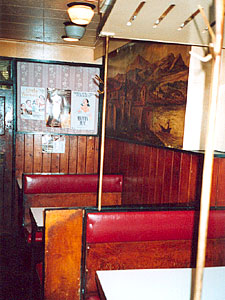


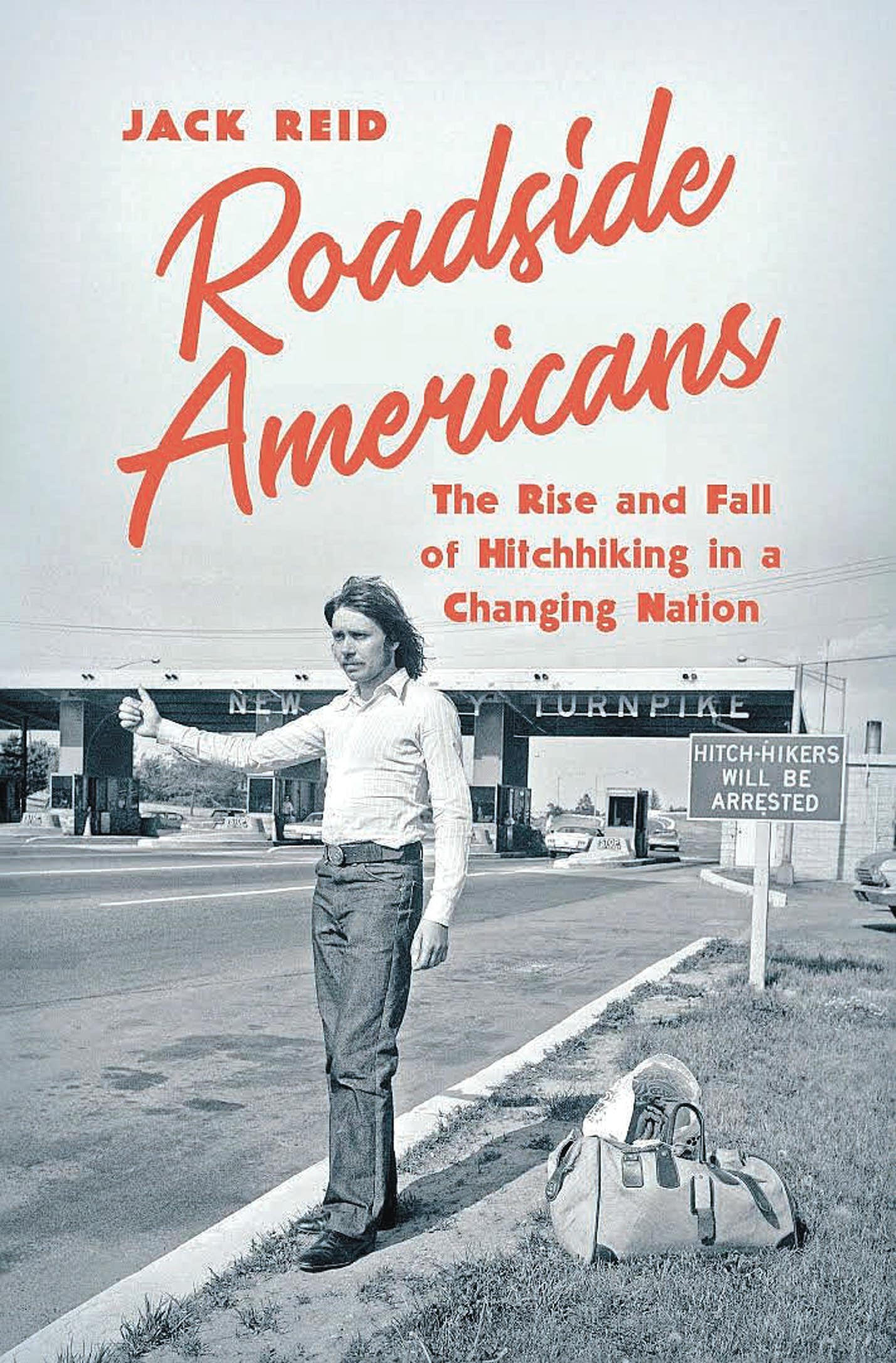





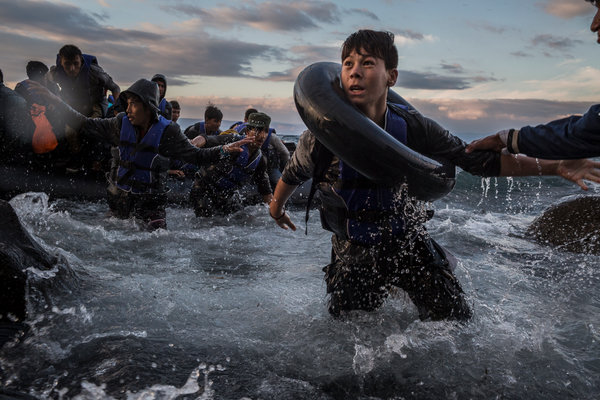


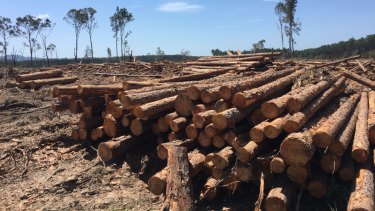
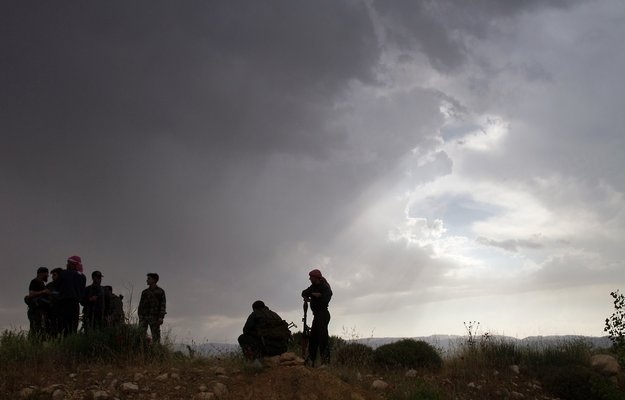


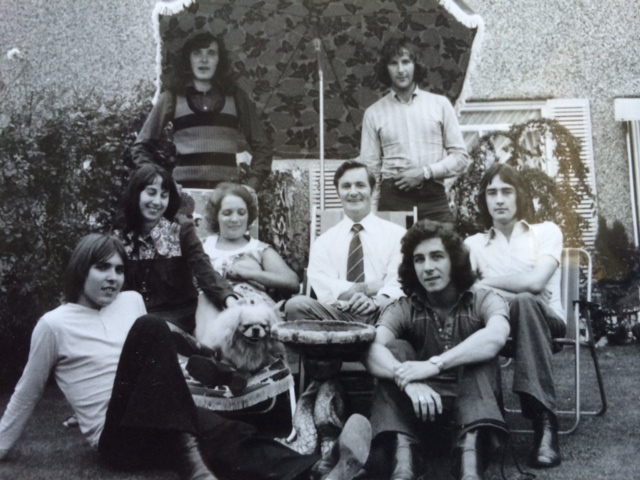
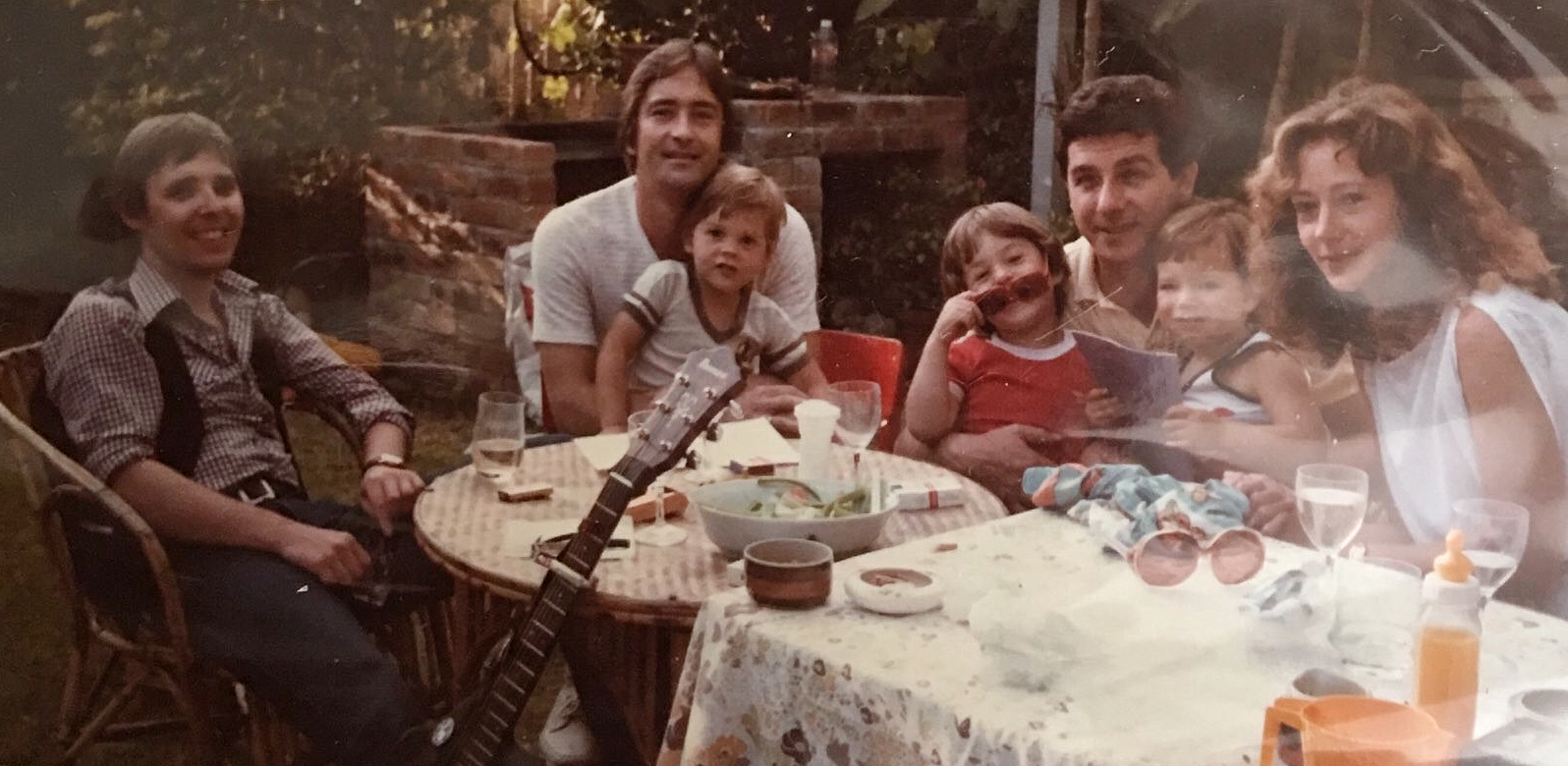







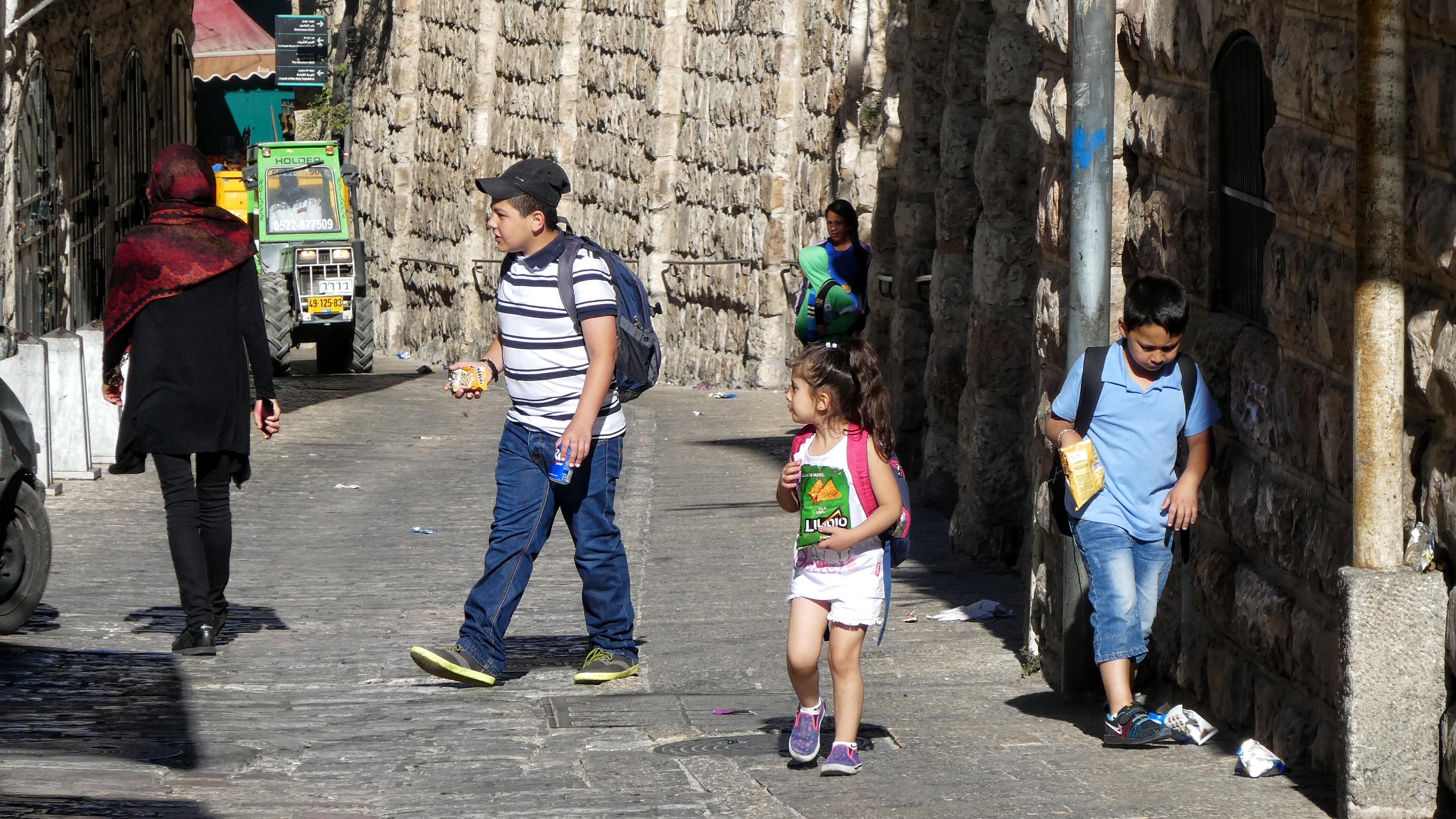
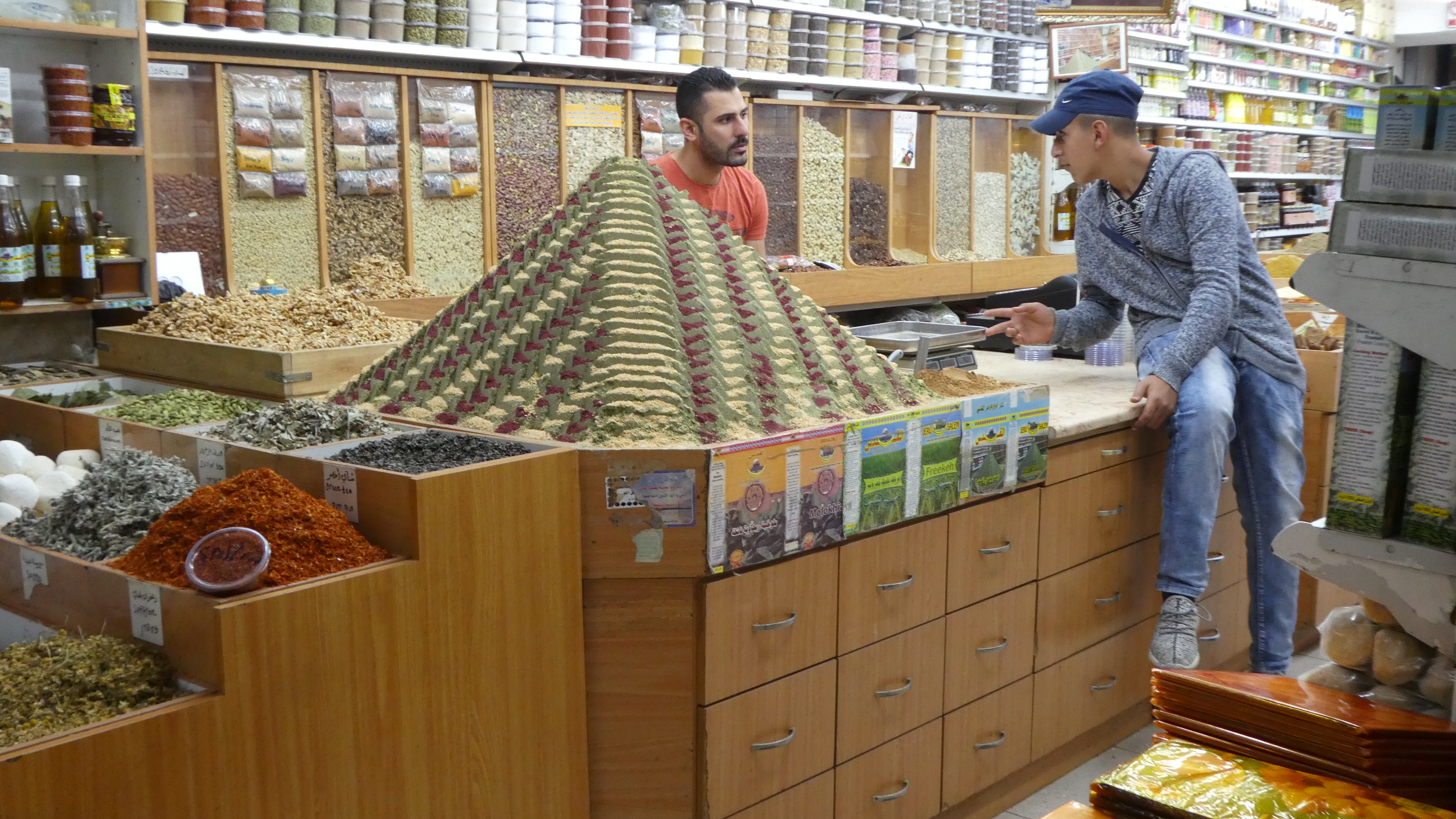
 In That Howling Infinite