Rainer Maria Rilke … three poems

Austrian Rainer Maria Rilke is one of my favourite poets. In 1969, a Christian friend gave me a Penguin Modern Poets edition of his poems. Here are three sublime spiritual pieces from this treasured book, beautifully translated by JB Leishman. No other translations are as lovely as his.

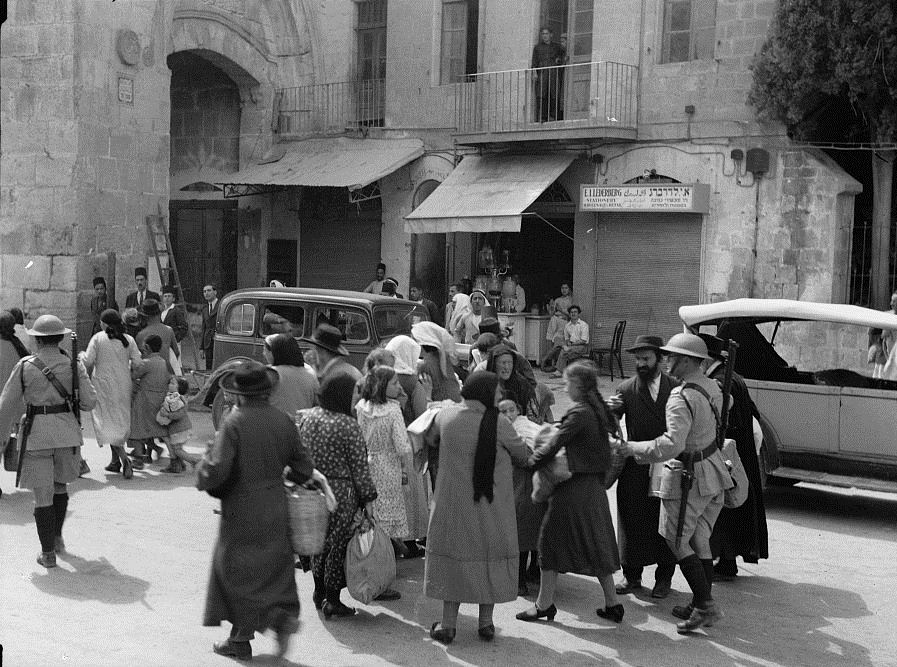
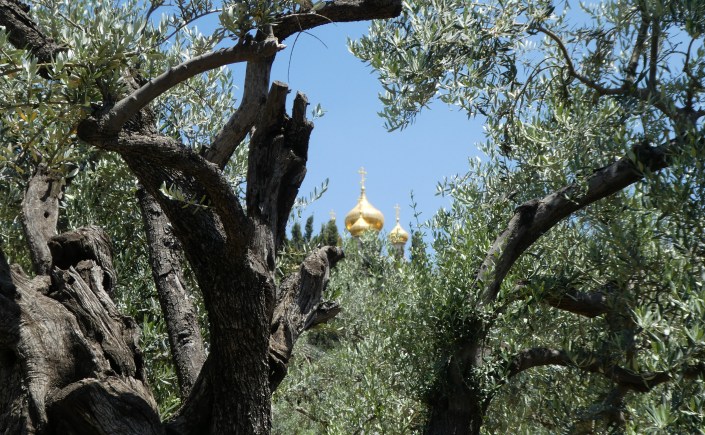
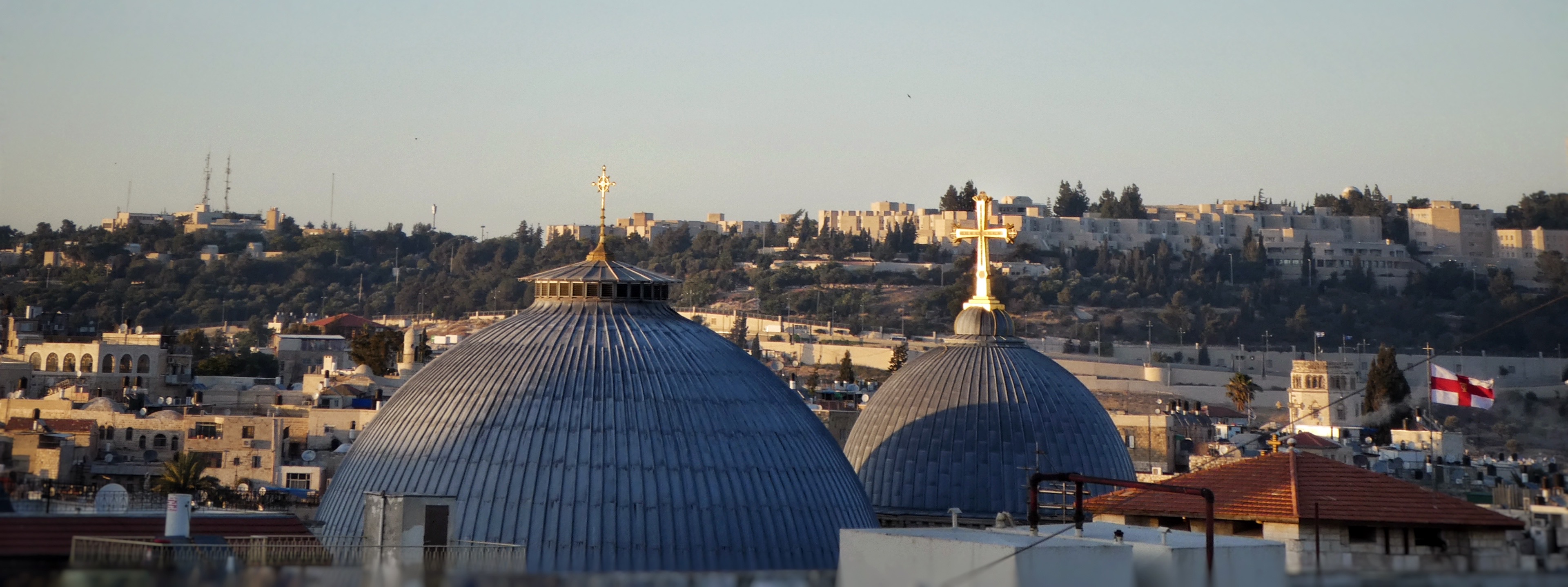
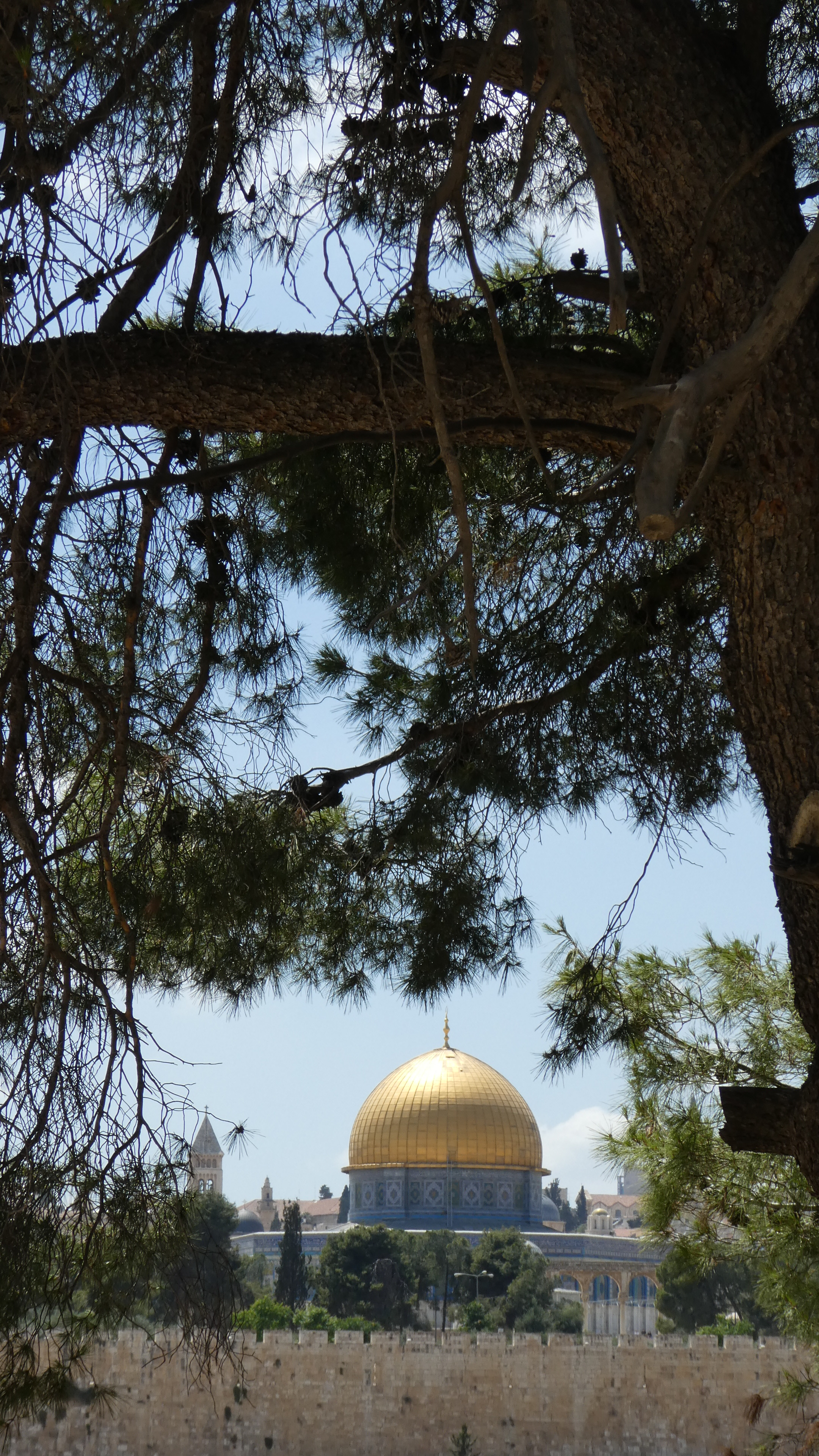
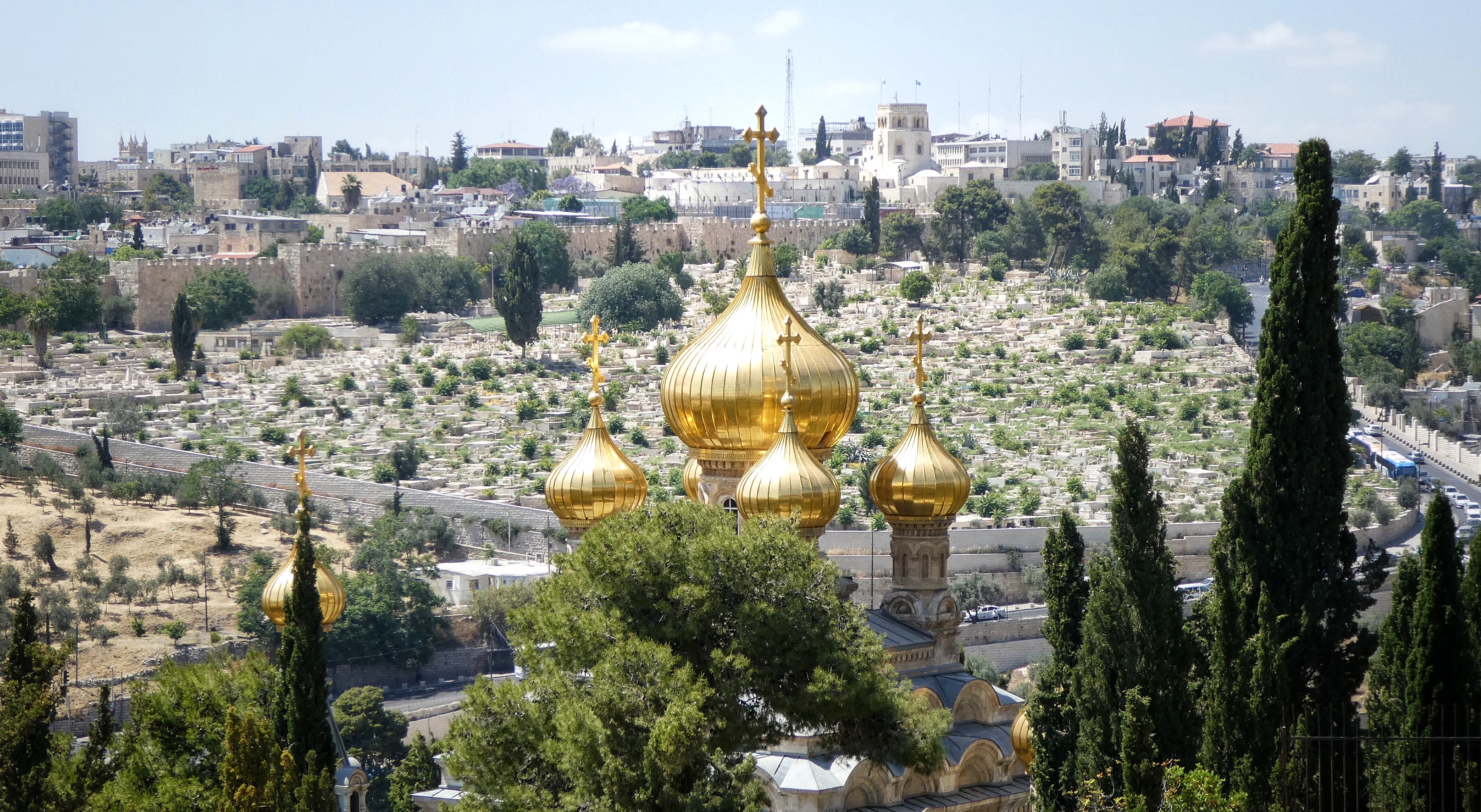
I would always recall these poems when visiting the Holy Land, and since my very first visit in 1971, I have associated them particularly with the Old City of Jerusalem. I took the photographs accompanying this piece in that exquisite place.

The Olive Garden

And still he climbed, and through the grey leaves thrust,
quite grey and lost in the grey olive lands,
and laid his burning forehead full of dust
deep in the dustiness of burning hands.

After all, this.
And this, this, then was the end
Now I’m to go, while I am going blind,
and, oh, why wilt Thou now have me still contend
Thou art, whom I myself no longer find.

No more I find thee. In myself no tone
of Thee; nor in the rest; nor in this stone.
I can find Thee no more. I am alone.

I am alone with all that human fate
I undertook through Thee to mitigate,
Thou who art not. Oh, shame too consummate…

An angel came, those afterwards relate.

Wherefore an angel? Oh, there came the night,
and turned the leaves trees indifferently,
and the disciples stirred uneasily.
Wherefore an angel? Oh, there came the night.

The night that came requires no specifying;
just so a hundred nights and nights go by,
while dogs are sleeping and while stones are lying –
just any melancholy night that, sighing,
lingers till morning mount the sky.

For Angels never never come to such men’s prayers
nor nights for them mix glory with their gloom,
Forsakenness is the self-loser’s doom
and such are absent from their fathers cares
and disincluded from their mothers womb.

The Spectator

I watched the storms in the tree above:
after days of mild decaying
my windows shrink from there assaying,
and the things I hear the distant saying,
without a friend I find dismaying,
without a sister I cannot love.

There goes the storm to urge and alter,
through forest trees and through time’s tree;
and nothing seems to age or falter:
the landscape like an open psalter,
speaks gravely of eternity.

How small the strife that’s occupied us,
how great is all that strives within us!
We might, if, like the things inside us,
we let the great storm over-ride us grow
spacious and anonymous.

We conquer littleness, obtaining
success that only makes a small,
while unconstrained and unconstraining,
The permanent alludes us all:

that angel who, through loath, yet lingers
to wrestle with mortality,
and, when opponents’ sinews settle
in strife and stretch themselves to metal,
can feel it move beneath his fingers
like strings in some deep melody.

The challenger who failed to stand
that trial so constantly rejected
goes forth upright and resurrected
and great from that hard, forming hand
that clasped about him and completed.
Conquests no longer fascinate.
His growth consists in being defeated
by something ever-grandlier great.


The Annunciation

   (Words of the Angel)

You are not nearer God then we;
he’s far from everyone .
And yet, your hands most wonderfully
Reveal his benison.
From woman’s sleeve none ever grew
so ripe, so shimmeringly:
I am the day, I am the dew,
you, Lady, are the tree.

Pardon, now my long journey’s done,
I had forgot to say
what he who sat as in the sun,
grand in his gold array ,
told me to tell you, pensive one
(space has bewildered me)
I am the start of what’s begun,
you, Lady, are the tree.

I spread my wings and wide and rose,
the space around grew less;
your little house quite overflows
with my abundant dress.
But still you keep your solitude
And hardly notice me:
I’m but a breeze within the wood,
you, Lady, are the tree.

The angels tremble in their choir,
grow pale, and separate:
never were longing and desire
so vague and yet, so great.
Something perhaps is going to be
that you perceived in dream.
Hail to you! for my soul can see
that you are ripe and teem.

You lofty gate, that any day
may open for our good:
Your ear my longing songs assay
My word – I know now – lost its way
in you as in a wood.

And thus your last dream was designed
to be fulfilled by me.
God looked at me: he made me blind…
You, Lady, are the tree.

René Karl Wilhelm Johann Josef Maria Rilke (4 December 1875 – 29 December 1926), known as Rainer Maria Rilke,  was an Austrian poet and novelist. Acclaimed as an idiosyncratic and expressive poet, he is widely recognized as a significant writer in the German language. His work is viewed by critics and scholars as possessing undertones of mysticism, exploring themes of subjective experience and disbelief.

See also in In That Howling Infinite, Better read than dead – books, poems and reading  and Paul Hemphill’s Poetry and Verse

John Waterhouse, The Annunciation, 1914

The Annunciation. Dante Gabriel Rossetti

راينر ماريا ريلكه
ترجمه ج ب ليشمان

الشاعر الألماني راينر ماريا ريلكه هو أحد المفضلين لدي .. هذان اثنان من أعماله الروحية السامية ، تمت ترجمتها بشكل جميل من قبل ج ب ليشمان في أول إصدار لي من سلسلة بنجوين الشعراء المعاصري. لا توجد ترجمات أخرى جميلة مثل ترجماته.

حديقة الزيتون

وما زال يتسلق ، ومن خلال الأوراق الرمادية ،
رمادية تمامًا وفقدت في أراضي الزيتون الرمادية ،
ووضع جبهته المشتعلة مملوءة بالتراب
في أعماق غبار الأيدي المحترقة.

بعد كل هذا.
وهذه كانت النهاية
الآن سأذهب ، بينما أنا أعمى ،
و ، أوه ، لماذا تريد الآن أن أجادلني
أنت الذي لم أعد أجده بنفسي.

لا أجدك بعد الآن. في نفسي لا لهجة
منك. ولا في البقية. ولا في هذا الحجر.
لا يمكنني العثور عليك أكثر. انا وحيد.

أنا وحدي مع كل هذا المصير البشري
لقد تعهدت من خلالك بالتخفيف ،
أنت الذي ليس كذلك. أوه ، العار بارع جدا …

جاء ملاك ، فيما بعد.

لماذا ملاك؟ أوه ، جاء الليل ،
وقلبت أوراق الأشجار بلا مبالاة ،
وكان التلاميذ يتقلبون بقلق.
لماذا ملاك؟ أوه ، جاء الليل.

الليلة التي جاءت لا تحتاج إلى تحديد ؛
فقط حتى تمر مائة ليلة وليلة ،
بينما الكلاب نائمة وحجارة الكذب –
فقط أي ليلة حزينة ، تنهد ،
باقية حتى الصباح جبل السماء.

لأن الملائكة لا يأتون أبدًا إلى صلاة مثل هؤلاء الرجال
ولا تخلط الليالي لهم المجد بكآبتهم ،
التهور هو عذاب الخاسر
ومثل هؤلاء غائبون عن اهتمامات آبائهم
واستثنوا من رحم أمهاتهم.

المشاهد

شاهدت العواصف في الشجرة أعلاه:
بعد أيام من التحلل الخفيف
تتقلص نوافذي من هناك ،
والأشياء التي أسمعها تقول من بعيد ،
بدون صديق أجده مخيفًا ،
بدون أخت لا أستطيع أن أحب.

هناك تذهب العاصفة للحث والتغيير ،
من خلال أشجار الغابات وعبر شجرة الزمن ؛
ولا شيء يبدو أنه يتقدم في العمر أو يتعثر:
المناظر الطبيعية مثل سفر المزامير المفتوح ،
يتحدث بجدية عن الخلود.

كم هو صغير الفتن الذي شغلنا ،
ما أعظم كل ما يجتهد فينا!
قد نحب الأشياء التي بداخلنا ،
تركنا العاصفة العظيمة تطوف بنا تنمو
فسيحة ومجهولة.

نحن نتغلب على الصغر ، ونكتسب
النجاح الذي يصنع فقط القليل ،
بينما غير مقيد وغير مقيد ،
الدائم يلمح لنا جميعًا:

ذلك الملاك الذي ، من خلال الكراهية ، باقٍ
تتصارع مع الموت ،
وعندما تستقر أعصاب الخصوم
في الفتنة وتمتد إلى المعدن ،
يمكن أن يشعر أنه يتحرك تحت أصابعه
مثل الأوتار في بعض اللحن العميق.

المتحدي الذي فشل في الوقوف
تلك المحاكمة حتى رفضت باستمرار
يذهب منتصبا ويقوم
وعظيم من تلك اليد الصلبة المشكّلة
التي تشبثت عنه وانتهت.
الفتوحات لم تعد ساحرة.
نموه يتمثل في الهزيمة
بشيء أعظم من أي وقت مضى.

البشارة

(كلمات الملاك)

لستم قريبين من الله منا نحن.
إنه بعيد عن الجميع.
ومع ذلك ، يديك بشكل رائع
تكشف له بنيسون.
من كم المرأة لم ينمو أي شيء
ناضجة جدًا ، ومتألقة جدًا:
انا اليوم انا الندى
أنتِ يا سيدتي الشجرة.

عفوا ، الآن انتهت رحلتي الطويلة ،
لقد نسيت أن أقول
ما هو الذي جلس في الشمس ،
كبير في مجموعته الذهبية ،
أخبرني أن أخبرك ، متأملًا
(الفضاء حيرني)
أنا بداية ما بدأ ،
أنتِ يا سيدتي الشجرة.

بددت أجنحتي واسعة وردية ،
نمت المساحة المحيطة أقل ؛
بيتك الصغير يفيض تمامًا
مع ثوبي الوفير.
لكن ما زلت تحافظ على وحدتك
وبالكاد تلاحظني:
أنا مجرد نسيم داخل الغابة ،
أنتِ يا سيدتي الشجرة.

ترتجف الملائكة في كورالهم ،
تصبح شاحبة ومنفصلة:
لم يكن هناك شوق ورغبة
غامضة جدًا لكنها رائعة جدًا.
ربما شيء ما سيكون
التي تراها في الحلم.
تحية لك! لروحي تستطيع أن ترى
أنك ناضج ومزدحم.

أنت بوابة عالية ، في أي يوم
قد تفتح لمصلحتنا:
أذنك مقايسة أغاني الحنين
كلمتي – أعرف الآن – ضلت طريقها
فيك كما في الخشب.

وهكذا تم تصميم حلمك الأخير
ليحققها لي.
نظر إليّ الله: جعلني أعمى …
أنتِ يا سيدة الشجرة.

This Town … living in the love of the common people

Living on a dream ain’t easy
But the closer the knit the tighter the fit (closer the knit)
And the chills stay away
‘Cause we take ’em in stride for family pride
You know that faith is in your foundation
With a whole lot of love and a warm conversation
But don’t forget to pray (forget to pray)
It’s makin’ it strong, where you belong
And we’re living in the love of the common people
Smiles from the heart of a family man (good to know)
Daddy’s gonna buy you a dream to cling to
Mama’s gonna love you just as much as she can (it’s so cold)
And she can …
John Hurley and Ronnie Wilkins

This Town, set in run down, depressed and depressing Birmingham in 1981, the early years of the Thatcher counterrevolution, is Peaky Blinders Lite meets the old Rooney-Garland “let’s put on a show” genre (it is created by the Peakies’ and Rogue Heroes’ David Knight). But, instead, we get the story of a colourful extended family – broken, defiant, beset by demons, embroiled with the IRA (or “Ra” as it was called in both Northern Ireland and the mainland) and yet for all that, loyal and loving. The band formed by the young protagonists, Fuck the Factory! emerges out of all that.

As a glowing review in The Guardian republished below wrote, “the series is examination of art as an escape, of suffering and despair as a crucible in which talent can become genius”. This is not to say that This Town is perfect. The socialist e-zine Culture Matters exhorts us to doff our rose-tinted spectacles, damning it as “trite, tropey and racist guff” – see below. The writer has a point: “The setting is glorious, and the soundtrack is obviously banging, but these things are being asked to do all the heavy lifting, she writes, admitting however that she’d only seen one episode; “I’m happy to hope that the show will develop in complexity and depth as it progresses”. I’m not too sure she’d have liked the remaining five episodes – the “feel good” factor definitely outweighs any pretence to socialist realism.

We first meet the main character, Dante Williams, in a Birmingham record shop hoping to listen to Leonard Cohen’s 1974 classic New Skin for the Old Ceremony – the one featuring Take This Longing, Who By Fire, and Chelsea Hotel #2, Leonard’s sardonic ode to Janis Joplin. That this would-be, mildly on the spectrum poet (a fairly ordinary one at that) and wannabe pop star of Jamaican and Irish parentage and his ex-British Army brother are named Dante and Virgil are probably lost on most viewers. Virgil is Dante Alighieri’s guide through Hell and Purgatory inThe Divine Comedy].

Dante lives with his dad in a high-rise council flat in what is portrayed as Chelmsley Wood, a sprawling late-sixties council estate on the northeastern edge of Brum. It is not actually Chelmsley Wood – the tower blocks have long gone, like those on the Bromford where I spent my late teens before heading south. It was actually filmed on Druids Heath, just up the road from where my brother still lives. But it looks like Chelmsley Wood back in the day when, as a summertime labourer, I worked on the building sites of the now demolished tower identical tower blocks of the Bromford and the system-built houses of the Chelmsley. You could say that my sweat and blood is in those bricks.

Chelmsley Wood council estate as God would have seen it back in my day

Another God’s eye view of Chelmsley Wood

The sound track of This Town is fabulous, mixing contemporary top twenty hits by Blondie and Brum’s own UB40 with Caribbean reggae and ska so popular in the Birmingham of my youth. Bob Marley, Desmond Dekker, Toots and the Maytells, Jimmy Cliff. I couldn’t help but sing along. It reminded me of just how good a singer and songwriter is Jimmy Cliff – the song list includes The Harder they Come, Many Rivers, Wonderful World Beautiful People, and his covers of Cat Stevens’s Wild World and Johnny Nash’s I Can See Clearly Now. Nicky Thomas’ 1970 cover of Living in the Love of the Common People encapsulates the whole show.

Read more about my Birmingham days in The work, the working, the working life and Better Read Than Dead – the joy of public libraries

© Paul Hemphill 2024. All rights reserved

Trite, tropey, bloodless, racist guff

Written by
'This Town': Trite, tropey, bloodless, racist guff

Bardon Quinn (Ben Rose), Gregory/Virgil Williams (Jordan Bolger), Dante Williams (Levi Brown) (IBBC/Banijay Rights/Kudos)

So far there’s a lot to loathe about this bafflingly feted BBC drama. I need to get it off my chest, so I’m going to start with the biggest and work backwards. Okay? No? Great.

From the moment Bardon Quinn’s (Ben Rose’s) father walks into “The Well Hung Gate” we know he’s a Provo. How do we know? Because he looks like every other Provo in the history of British television. He’s got the stare, the swagger, the unofficial uniform. Of course, every member of the Provisional IRA operating in the 1980s had one of those long, brown leather coats. It’s like a mating display. It’s how they recognised each other. Deep sigh. We also know because of the way he is back-slapped and glad-handed up to the front of the room, where Bardon is completing a vigorous bit of competitive feis. Dad’s late. Bad Dad. But not late enough to prevent him from generating a clunky bit of expository strop to the effect he needn’t have bothered turning up to “play the big Provo” because Bardon would have won the feis anyway without his sinister influence.

And so it begins. Is the basic set-up (if not the details) credible? Sure. But it’s hardly nuanced, and already the show has succumbed to the lazy, racist default of much British television, dividing the Irish into two categories: the “good” Irish, defined by a cute, consumable performance of picturesque traditions, who have nevertheless assimilated the social norms and (a)political aspirations of mainstream British society. And bad “paddies”, a rotating cast of religious zealots, hard-cases, ‘ead-the-balls, terrorists and terrorist sympathisers, living like vipers at the tit of the British state. This was established – hell, this was old – when Shakespeare was writing. And Shakespeare this very much is not. Bardon and his Nan represent the former category, with his Dad (and from the look of things, pretty much the entire Irish community of the West Midlands) firmly in the latter.

There are so many problems with this, it’s hard to know where to start. Perhaps with the implication that to be working-class, Irish, and living in Birmingham in the 1980s was to be uniformly PIRA-adjacent. I think some folk would strongly dispute that. Then there’s the fact that the Provisional IRA itself presents alternately as an elite crew of near-omniscient comic-book baddies, and as the kind of grubby, small-time thugs who interest themselves in putting the fright’ners on little old ladies.

Even Nan’s confessor is a morally compromised conduit between his flock and PIRA Area Commanders. Yeah. Let’s leave the relative shoe-horniness of that particular conceit to one side for a minute, and focus on the massive tap-dancing elephant in the room: if Birmingham in the 1980s was such a hot-bed of PIRA radicalisation, why was this the case? It didn’t take place in a vacuum, did it? Nobody joins the Provos recreationally.

While This Town is happy to depict senseless (and institutional) anti-black racism, with a cop walloping an innocent Dante (Levi Brown) during the opening scene, we get no sense of what it was like to experience anti-Irish racism in Birmingham during the 80s. We get no sense of the police brutality meted out to Irish people in the Midlands. Daily. For generations. You don’t need to take my word for that. For a big, obvious Googleable instance of anti-Irish racism in action, look no further than the arrest, wrongful conviction (and subsequent decades-long imprisonment) of the Birmingham Six in 1974. Seriously, look it up. I’ll wait.

Consider also, the fallout from the 1981 hunger strike in Long Kesh. This had an enormous impact on both the treatment of Irish persons in Britain and on the recruitment of young men and women into PIRA. By June of 1981, all ten of the hunger strikers in Long Kesh – young men between the ages of 23 and 29 – were dead. The media coverage of the strike galvanised support for the Irish Republican cause and generated an equal and opposite quantity anti-Irish sentiment in the UK. The only nod This Town makes to any of this is when the female IRA enforcer threatening Dear Auld Nan sticks a Bobby Sands poster on Bardon’s wall over his more traditional pictures of popstars and footballers.

I have a lot of feelings about this scene, not least the implicit link the show makes between support for the Long Kesh hunger strikers and the ruthless cruelty of this female operative, but I’ll stow that one for a minute. The most germane and troubling issue with this episode is that because This Town is devoid of any political context, the motivations and behaviours of the characters are reduced to two-dimensional stereotypes, stereotypes that paint the Irish as inherently thuggish and violent. Worse, the violence and cruelty of these Irish-at-home becomes a tacit justification for the presence and behaviour of the British armed forces in the North of Ireland. Let’s talk about that, shall we? Because this is the point at which I was swearing volubly at the TV.

We’re introduced to Belfast, and the Falls Road in particular, through the eyes of Dante’s brother Vigil/ Gregory (Jordan Bolger), a somewhat queer-coded eccentric who wishes “both sides” would just “sing to each other”. These scenes raise further questions. Chiefly: what the actual f*ck? Because who is genuinely buying the British armed forces in Belfast as a group of weirdly affable peacekeepers? Christ. Artistic licence is one thing, but this is dangerously (and insultingly) ahistorical. It’s also a strange denial of documented historical reality that Virgil/Gregory, a sensitive, black sergeant in the 1980s, doesn’t appear to be experiencing any racial tension within his unit. Meanwhile, the Irish get to be characterised as a homogenous balaclavaed mob, and the complexities of the civil war are rendered with about as much subtlety and depth as Boney M’s deservedly forgotten, imaginatively, titled disco single, ‘Belfast’.

On the subject of music, I also want to give a special shout out to what has to be one of the stupidest scenes in recent television: the sing-off in a dodgy lock-up between Bardon and his Dad. On the father’s side the haunting rebel standard The Fields of Athenry. On the son’s, Desmond Dekker’s civil rights Trojan banger You Can Get It If You Really Want. Presumably, the latter is a declaration of allegiance to the culture, politics, and social concerns of a forward-facing multicultural Birmingham; the former representing the regressive and parochial nationalism of the Irish past. In which case: did anyone with a hand in this show actually listen to either track?

Both songs are about enduring through injustice and retaining one’s dignity in the face of persecution. Both songs posit a future the speaker themselves might never get to inhabit, but a future nonetheless in which victory over the forces of oppression is assured. The most charitable spin you can put on this scene is that we, the audience, are supposed to understand the common root of these songs in a way the characters do not. But if it’s truly being played for dramatic irony, then that’s not coming across. My take-away here was that there are some minority struggles the BBC deems acceptable, and some it clearly does not.

As a side note: growing up in a PIRA saturated landscape where every third person is either an operative or an informer, does it not seem odd how politically disengaged Bardon is? I mean, not just apolitical, not just apathetic, but almost supernaturally ignorant? Actually, this weirdly disconnected quality filters through the entire episode like an irritating beige mist. Dante is obviously supposed to be disconnected, he’s the dreamy, vaguely spectrum (in a cute, audience-friendly way) wannabe poet, who somnambulates into a riot because he’s pining over a girl who wouldn’t join him for a cup of tea. But it’s not just him. It’s the whole sodding thing. “Birmingham just exploded” says Dante’s Dad. And as audience members that’s all we’re given: spontaneous combustion.

I’d also like to point out that the only people expressing strong political sentiments at all are the aforementioned murderous Irish and Jeannie (Eve Austin), whose poorly defined anarcho-socialism is played for laughs as a front for opportunistic thievery. This character has great potential, but she’s coming across like a bovver girl version of Wolfie Smith, and it’s kind of annoying. My point is that throughout the episode political conviction is depicted as being either risible or dangerous, while to be apolitical or politically ambivalent is coded as a mark of intellectual and spiritual superiority. Hummm.

I know we’re supposed to find Dante relatable, quirky and charming, but because he’s so shut off from the world around him the character can’t help but coming across as self-involved and ultimately kind of unlikeable. None of this is Levi Brown’s fault. He’s clearly doing his best, and in places is compellingly unknowable, but the script is hot dogshit (more anon), and the poems it has Dante write are the worst kind of bunkum. While this kid’s city is burning he’s arse-farting on about having his heart broken with about as much sense of urgency as limestone eroding. He’s not even doing it well. Quite apart from how painful it is for me to listen to bad poetry, if any of us are supposed to believe in Dante as this smouldering enigmatic presence, he needs to be penning something of a like credible intensity.

I’m telling you now, speaking from my position of embodied authority as a formerly pretentious self-involved little feck myself, that a smart kid who listens to Leonard Cohen would be capable of writing something a million times more interesting (I don’t say “better”, but more interesting) than the pallid twaddle Brown is being asked to deliver with such conviction. As a working-class kid who wrote poetry, I actually find the lack of lyric reach, the narrowness of his expressions and concerns, pretty frustrating, pretty insulting. If the logic is that Dante’s poetry needs to be something the average BBC audience can “identify with” or “understand”, than God in heaven, the team behind This Town can’t have a very high opinion of the average BBC audience.

Which brings us neatly back to the dialogue. Oh my God, the dialogue. Which reads like Steve Knight might have seen a working-class person in a field, at a distance, once, although on reflection that might just have been a big cow. There are the moments when the characters discuss how working-class they are and how shit it is in a painfully contrived and unconvincing manner; there are the over-wrought scenes with “broken hearts” flopping about all over the shop. The best/ worst of which is when Nan actually declares “my heart may be bad, but it’s also broken”, dissolving what might have been a fruitfully tense scene into a big gooey bathetic mess.

I also found myself cringing when Dante tells his Dad: “A girl at college said people like me don’t write poetry. I said Joan Armatrading’s lyrics are poetry, and she’s from Wolverhampton.” Clunk. Clunk. Clunk. That’s not a real, organic conversation, that’s a shoe-horned author insert, at best. It’s feeding Dante a line, it’s making a none-too-subtle point. One that didn’t need making in the first place. And no, dialogue doesn’t need to be a perfect simulacrum of real speech, some of the best shows around have played precisely with highly stylised dialogue, but there does need to be a bit of verisimilitude, there does need to be internal consistency. This Town is all over the map, unable to decide between social realism and whimsical melodrama.

Melodrama is a good word in general, I think, for a show that has walking tropes rather than characters. We know from the minute Dante appears on screen in his ugly duffle coat that he’s going to be our nerdy, slightly spectrum, sensitive everyman. From Jeannie’s oxbloods, bomber and bleachers we know she’s going to be the street-smart toughie with the heart of gold. Bardon is obviously the tortured libertine. God, even David Dawson’s thin-lipped sinisterly camp “gangster” is an unconvincing take on Mark Strong’s much meatier portrayal of Harry Starks over twenty years previous. And of course, the straw Provos.

We’ve seen it before, is my point. Ad nauseam. The setting is glorious, and the soundtrack is obviously banging, but these things are being asked to do all the heavy lifting. This is supposed to be a “love letter” to the Midlands, but the Midlands deserves better than a few lines scribbled in biro on a beer mat. While I’m willing to admit that this is only episode one, and happy to hope that the show will develop in complexity and depth as it progresses, having only one unique, precious human life, I don’t propose to waste any more of it on this.

Fran Lock Ph.D. is a writer, activist, and the author of seven poetry collections and numerous chapbooks. She is an Associate Editor of Culture Matters.

All songs in the BBC drama

The soundtrack includes a diverse list of iconic artists that really breathes life into the era, from Bob Marley to Blondie and from Talking Heads to Toots and the Maytals – it really is a stellar line-up.

Alongside the jukebox of timeless hits, This Town has also enlisted several contemporary artists to provide cover versions of popular tracks as well as to lend their vocals to original songs penned by Dan Carey and Kae Tempest.
Read on for a full list of the songs featured in This Town – and everything you need to know about the original soundtrack.

This Town episode 1 

  • Jamaica Ska by Byron Lee & The Dragonaires
  • You Can Get It If You Really Want by Desmond Dekker
  • Food For Thought by UB40
  • Broadway Jungle by Toots & The Maytals
  • Fly Me to the Moon by Tom Jones
  • Don’t Stay Away by Phyllis Dillon
  • Take This Longing by Leonard Cohen
  • The Tide Is High by Blondie
  • I Think It’s Going to Rain Today by UB40
Levi Brown as Dante Williams and Eve Austin as Jeannie Keefe in This Town. They are sat in a truck, she is driving, and in between them is an empty space suit
Levi Brown as Dante Williams and Eve Austin as Jeannie Keefe.
Banijay Rights/Kudos/Robert Viglasky

This Town episode 2

  • Pressure Drop by Toots & The Maytals
  • Chase the Devil/Croaking Lizard (feat Prince Jazzbo) by Max Romeo & The Upsetters
  • Many Rivers to Cross by Jimmy Cliff
  • Somewhere Over the Rainbow by Judy Garland (performed by Michelle Dockery)
  • Enjoy Yourself by Prince Buster
  • Son of a Preacher Man by The Gaylettes
  • I Can See Clearly Now by Ray Charles

This Town episode 3

  • Are ‘Friends’ Electric? by Tubeway Army & Gary Numan
  • Fu Manchu by Desmond Dekker & The Aces
  • The House of the Rising Sun by The Animals
  • A Message to You Rudy (feat Rico Rodriguez) by The Specials
  • Clampdown by The Clash
  • Love of the Common People by Nicky Thomas
  • Cissy Strut by The Meters

This Town episode 4

  • The Foggy Dew by Odetta
  • When You’re in Love with a Beautiful Woman by Dr Hook
  • On My Radio by The Selecter
  • Israelites by Desmond Dekker
  • Sun Is Shining by Bob Marley
  • Hong Kong Garden by Siouxsie and the Banshees
  • Danny Boy by Jackie Wilson
  • Since You’ve Been Gone by Rainbow

This Town episode 5

  • Heart of Glass by Blondie
  • Dream Baby Dream by Suicide
  • 007 (Shanty Town) by Desmond Dekker
  • Take Me to the River by Talking Heads
  • 54-46 Was My Number by Toots & The Maytals

This Town episode 6

  • Papa Was a Rolling Stone by Jackie Robinson, George Agard and Sydney Crooks
  • Stand Down Margaret (Dub) by The Beat
  • Jezahel by Shirley Bassey
  • Three Little Birds by Bob Marley and The Wailers (performed by Michelle Dockery)
  • Rock & Roll by The Velvet Underground

Who composed the soundtrack for This Town?

Ben Rose as Bardon Quinn in This Town, stood in front of a billboard advertising a car and wearing a brown jacket and yellow t-shirt
Ben Rose as Bardon Quinn. BBC/Banijay Rights/Kudos

As well as featuring a host of well-known popular songs from the ’80s and before, This Town also features a number of covers and original songs composed for the series.

Six major artists provided covers for the show, each of whom feature over the credits of the episodes. These artists are: Celeste, Gregory Porter, Olivia Dean, Ray Laurél, Sekou and Self Esteem.

Meanwhile, the original songs for the series have been written by Dan Carey and Kae Tempest, and the show has been co-produced with Mercury Studios (part of the Universal Music Group), which has, according to the BBC, “helped create the musical backdrop for Knight’s incredible story”.

Carey is a producer who has worked with the likes of Kylie Minogue, Lily Allen, Sia and Franz Ferdinand, while Tempest is a poet, recording artist, novelist and playwright.

The show has been described as a “love letter to Birmingham and the Midlands” by star Shyvonne Ahmmad. She added: “And it’s a love letter to that time. So those who grew up during that time, or even children of parents who grew up in that time, it’s so exciting to get to step into it.” She went on to say that “it’s all about self-expression, it’s all about figuring out who you are. So step into it, I’d say for audience members, and remember who you were trying to be at that time and who you thought you were”.

“And if you are still figuring out, like all of us, I think it’s a lifelong endeavour to try and figure out who you are and what you want and who your tribe is,” Ahmmad continued. “Step into it and just enjoy it.”

Her co-star Ben Rose also explained to RadioTimes.com how the show is both similar and different to Peaky Blinders, saying: “It’s just the writing. Steven Knight, the writer, he has a really incredible sort of voice, I think, and he’s able to create really grounded, naturalistic characters who all speak in poetry, and all have a heightened sense of reality within this really gritty, very earthly world.

“His language is sort of otherworldly. And the way Peaky uses contemporary popular music to contrast with the era, our show kind of has the opposite, because it’s using music of the time, of the era, to make you feel even more immersed in that world.”

Lukannon … Rudyard Kipling’s deep sea song

You’ve got to feel sorry for Rudyard Kipling (1865-1936)

This remarkable poet and storyteller is today rarely read and is often vilified and dismissed as a jingoistic and chauvinistic booster of empire and white civilization. When critics reach for their guns, they “bring out the white man’s burden“and “east and west is west, and ne’er the Twain shall meet”. He is definitely guilty as charged, but he was of his time, and voiced what was then the imperial zeitgeist that enraptured his British constituency. The past, as they say, is another country – they thought much differently then.

But, as those who are familiar with his many poems and stories would attest, the poet was so much more than this.

It was Kipling’s habit to preface and bookend his remarkable if, to contemporary readers, politically incorrect stories with short poems of singular quality.

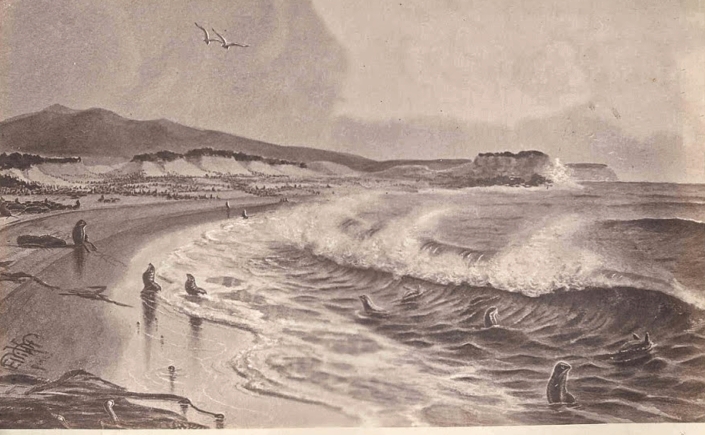
Lukannon is one of these. The story of The White Seal first appeared in print in the August 1893 issue of the London-based magazine National Review and published again in 1894 as part of the anthology The Jungle Book. Yes, that one. Mowgli, Wolf Cubs, Akela, and all. But, exceptionally for a story in The Jungle Book, none of the action in The White Seal  takes place in India. And, presaging the environmental activism and protests against the controversial seal hunts of the late 20th Century, it is remarkably prescient and pertinent.

The story is set on an island in the Aleutians in the Bering Sea between Russia and Alaska. It tells of a unique seal who, by leading his fellow seals to a secret hidden beach, saves his kind from the seal hunters. He referred to his poem as “a kind of national anthem for seals”. The title of the poem is the name of a Russian seal-fur trader, Lukanin, who gave his name to these lonely Aleutian beaches in 1788. Kipling wrote: “This is the great deep-sea song that all the St. Paul seals sing when they are heading back to their beaches in the summer. It is a sort of very sad seal National Anthem”.

Back in the day, I set the poem to music. It is featured on the rare recording HuldreFolk Live in London 1988, featuring Paul Hemphill, Victor Mishalow and Adèle Hemphill. During HuldreFolk’s tour of English folk clubs in the northern summer of 1988, it was recorded on a cheap audio cassette by a dinky, clunky old analogue tape recorder – and it shows. But the natural acoustics of the cellar at Bracknell Arts Centre, and the audience’s participation in the choruses made up for a multitude of sins.

© Paul Hemphill 2024. All rights reserved

Lukannon is such a lyrical poem that it lends itself effortlessly to musical settings. Apart from my own, i have discovered three alone, and I am pretty certain that there are many more out there on the world wide web. There is a version by folk duo William Pint and Felicia Dale set to a tune by American musician Bob Zentz from their 1997 album Round the Corner. There is also a contemporary “prog-rock” version by British band Shadows of the Sun.

In 1947, the eccentric Australian expatriate composer Percy Grainger composed a song cycle of The Jungle Book and chose as his centrepiece the story of The White Seal – and particularly, Lukannon “as a protest against civilization.” For more on Grainger’s opus, see below.

Lukannon

I met my mates in the morning (and oh, but I am old!)
Where roaring on the ledges the summer ground-swell rolled;
I heard them lift the chorus that dropped the breakers’ song –
The beaches of Lukannon – two million voices strong!

The song of pleasant stations beside the salt lagoons,
The song of blowing squadrons that shuffled down the dunes,
The song of midnight dances that churned the sea to flame –
The beaches of Lukannon — before the sealers came!

I met my mates in the morning (I’ll never meet them more!);
They came and went in legions that darkened all the shore.
And through the foam-flecked offing as far as voice could reach
We hailed the landing-parties and we sang them up the beach.

The beaches of Lukannon – the winter-wheat so tall –
The dripping, crinkled lichens, and the sea-fog drenching all!
The platforms of our playground, all shining smooth and worn!
The beaches of Lukannon — the home where we were born!

I meet my mates in the morning, a broken, scattered band.
Men shoot us in the water and club us on the land;
Men drive us to the Salt House like silly sheep and tame,
And still we sing Lukannon – before the sealers came.

Wheel down, wheel down to southward; oh, Gooverooska go!
And tell the Deep-Sea Viceroys! the story of our woe;
Ere, empty as the shark’s egg the tempest flings ashore,
The beaches of Lukannon shall know their sons no more!

Percy Grainger’s Jungle Book Cycle

In 1947, the eccentric Australian expatriate composer dedicated a song cycle of The Jungle Book and chose as his centrepiece the story of The White Seal – and particularly, Lukannon. My Kipling ‘Jungle Book’ Cycle, begun in 1898 and finished in 1947, was composed as a protest against civilization.” (Grainger’s programme note, 1947)

Grainger (1882-1961) studied at the Hoch Conservatory in Frankfurt, Germany from 1895-1901 (aged 13-19). Grainger’s mother Rose wrote to her husband John of her fears that young Percy was becoming “more Germanized every day.” In response to Rose’s concern, and to “tickle up the British Lion in him,” John (who was estranged from Rose) sent Percy, among other things, several books by Rudyard Kipling . Kipling’s writings captivated Percy immediately, and he soon started writing choral settings of the poetry, especially those of Kipling’s Jungle Books.

Grainger’s settings of the poetry of Kipling are as extensive as his settings of British folk music; Kay Freyfus’s catalog of Grainger’s manuscript scores lists 36 settings, though Grainger in a 1926 letter to Kipling mentions “some 40 or 50” settings. Grainger felt a strong kinship for Kipling’s writing, and Kipling appreciated and approved of Grainger’s work at setting his poetry. Grainger played several of his choral settings for Kipling during a meeting at Kipling’s home in 1905. Of Grainger’s settings of his poetry, Kipling said, “Till now I’ve had to reply on black and white, but you do the thing for me in colour.”

The Beaches of Lukannon is the centerpiece of the cycle, and arguably the strongest piece musically and emotionally. It tells us the tale of the tragic slaughter of seals by wicked sealers from the seals’ perspective. The opening section, told from the point of view of a seal elder, recounts what the beaches of the Bering Sea Island of Lukannon originally were for the seals – their annual meeting (and mating) opportunity. The central section, reminiscent of the music of Charles Ives in its shifting chromatics, conveys the beauty of the surroundings “before the sealers came.” The final section musically revisits the opening material, but in a smore somber mode.

For more on Rudyard Kipling in In That Howling Infinite, see A Son Goes To War – the grief of Rudyard Kipling 

Lebensraum Redux – Hamas’ promise of the hereafter

We must differentiate between Jews who should and should not be killed.
The Promise of the Hereafter Post-Liberation Palestine conference September 2021

Mainstream and social media are naturally focused on the plight of Palestinian civilians caught in the crossfire between the IDF and the Hamas terrorists embedded amongst and below them with total disregard for their safety and welfare. Negligible attention is paid to what is not in plain sight.

Hence the widespread denial among pro-Palestinian activists and academics of the atrocities committed by Islamist fighters on October 7th notwithstanding the (belated) corroboration by the United Nations and reputable media outlets. Hence also, reports of the flight to Egypt of tens of thousands on Gazans with the means to cough up the exorbitant fees demanded by Egyptian middlemen.

That such stories are largely disseminated by Israeli media may lead outside observers unsympathetic to Israel to dismiss them as hasbara, derived from the Hebrew for explaining, but interpreted by many, particularly the lazy and the partisan as public diplomacy propaganda, public relations or spin. But to people with a deeper knowledge of Israeli and Palestinian history, politics, and society, and of the Middle East generally, they are potentially quite credible.

The same is true of a conference held in Gaza in September 2021: the Promise of the Hereafter Post-Liberation Palestine conference, sponsored by the Hamas’ leader in Gaza Yahyah al Sinwar and attended by senior officials from Hamas and other Palestinian factions. Whereas much western media commentary discuss what will happen to Gaza and its unfortunate populace “the day after” the war, this gathering discussed preparations for the future administration of the state of Palestine following its “liberation” from Israel after the latter “disappears”.

It is, in essence, a blueprint for expulsion and mass murder, a kind of Lebensraum Redux.

Though reported in October 2021 by the Israel-aligned Middle East Media Research Institute (MEMRI), the conference did not attract mainstream and social media interest at the time. Even after October 7, it has received little coverage, with the exception of Israeli media including Haaretz and Times of Israel – presumably because it might have seemed to some as elaborate hasbara.

The neglect is nonetheless surprising considering its clear exposition of the Islamist, genocidal intent of the Hamas and Islamic Jihad,  and accords with a view held by many knowledgeable and well-informed observers and commentators that the original intent of Operation Al Aqsa Flood was to race en masse across the Negev to the Occupied Territories and spark a general Palestinian rising which would precipitate an invasion of Israel by its Arab neighbours – a repeat of the war of 1948 without its al Nakba outcome.

We’ll probably never really know why this scenario was not followed through, and what may have been the outcome. Some may argue a 100km sprint across the open desert to the nearest Palestinian city, Hebron, was an impossible task. Others might surmise that the militants who descended on the borderland kibbutzim and the Nova Trance Festival to molest, maim and murder were distracted by the easy prey and the release of pent-up rage and brutal vengeance after years of siege in Gaza.

The conference’s concluding statement made clear the Resistance’s understanding of “from the river to the sea” and also its Islamist mission. Its very name originates in Quran 17:104: “And We said thereafter unto the Children of Israel, ‘Dwell in the land. And when the promise of the Hereafter comes to pass, we shall bring you as a mixed assembly”.

It claimed as its historical pedigree Muslim victories in the past – over Christians, not Jews, mind – and proposes what appears to be a “back to the future” plan for “the day after“. The following extract is taken from MEMRI’s report on the event:

“Immediately after the liberation, the liberation forces will issue a Palestinian independence document setting out the Palestinian principles, highlighting the Palestinian national identity and its Arab, Islamic, regional and international depth. The formulation of this document will be overseen by a team of experts in the spheres of politics, law and media, for this will be a historic document on the legal and humanitarian levels, a direct continuation of the Pact of ‘Umar Bin Al-Khattab and of the announcement issued by Salah Al-Din upon his liberation of the Al-Aqsa Mosque [in 1187].”

The conference published a concluding statement listing “ideas and methods of operation [to be implemented] during the liberation of Palestine” after Israel ceases to exist. This list included, inter alia, a call for drafting a document of independence that will be “a direct continuation of the Pact of ‘Umar Bin Al-Khattab” concerning Byzantine Jerusalem’s surrender to the Muslim conquerors which took place apparently in 638; a definition of the leadership of the state until elections are held; recommendations for engagement with the international community and the neighbouring states; a call for preparing in advance appropriate legislation for the transition to the new regime; a call for establishing apparatuses to ensure the continuation of economic activity once the Israeli shekel is no longer in use and to preserve the resources that previously belonged to Israel; and a call for compiling a guide for resettling the Palestinian refugees who wish to return to Palestine.

The conference also recommended that rules be drawn up for dealing with “Jews” in the country, including defining which of them will be killed or subjected to legal prosecution and which will be allowed to leave or to remain and be integrated into the new state. It also called for preventing a brain drain of Jewish professionals, and for the retention of “educated Jews and experts in the areas of medicine, engineering, technology, and civilian and military industry… [who] should not be allowed to leave.” Additionally, it recommended obtaining lists of “the agents of the occupation in Palestine, in the region, and [throughout] the world, and… the names of the recruiters, Jewish and non-Jewish, in the country and abroad” in order to “purge Palestine and the Arab and Islamic homeland of the hypocrite scum”.

Read the complete MEMRI report HERE. It is republished below in full.

A former high-ranking Fatah member from Gaza who was well acquainted with the Hamas leadership recently spoke to Haaretz about another aspect of Hamas’s scheme for the “day after,” namely the administrative division of “liberated Palestine” into cantons. He said he was contacted by a well-known Hamas figure who informed him that Hamas was “preparing a full list of committee heads for the cantons that will be created in Palestine.” In 2021, he was reportedly offered the chairmanship of the “Zarnuqa” committee, named after the Arab village where his family lived before 1948, that was slated to cover the cities of Ramle and Rehovot.

The Fatah official reportedly reacted to the Hamas offer in disbelief: “You’re out of your minds.”

We will do this again and again

Al Aqsa Flood, or Amaliyyat Tufān al Aqsa may have failed, with only the Black Shabbat and the destruction of Gaza to show for it, but without doubt, it ignited a wildfire that has reinvigorated the Palestinian cause in the eyes of the world and severely damaged Israel’s standing on the world stage. The Hamas maintains that the ongoing carnage is justified, with many senior officials, declare in the safety of their sanctuaries in Qatar and Beirut that they’d do it all over again … and again.

One such spokesperson, Ghazi Hamad of the Hamas political bureau, said in an October 24 2023 programme on Lebanon’s LBC TV that the Hamas is prepared to repeat the October 7 “Al Aqsa Flood” Operation time and again until Israel is annihilated. He added that Palestinians are willing to pay the price and that they are “proud to sacrifice martyrs.” Hamad said that Palestinians are the victims of the occupation, therefore no one should blame them for the events of October 7 or anything else, adding: “Everything we do is justified.”

Some extracts:

“We must teach Israel a lesson, and we will do this again and again. The Al-Aqsa Flood is just the first time, and there will be a second, a third, a fourth, because we have the determination, the resolve, and the capabilities to fight. Will we have to pay a price? Yes, and we are ready to pay it. We are called a nation of martyrs, and we are proud to sacrifice martyrs”.

“We did not want to harm civilians, but there were complications on the ground, and there was a party in the area, with [civilian] population… It was a large area, across 40 kilometers”.

“We Are the victims of the Occupation. Therefore, nobody should blame us for the things we do … Everything we do is Justified”

Hamad: “The occupation must come to an end … I am talking about all the Palestinian lands.”

News anchor: “Does that mean the annihilation of Israel?”

Hamad: “Yes, of course”.

“The existence of Israel is illogical. The existence of Israel is what causes all that pain, blood, and tears. It is Israel, not us. We are the victims of the occupation. Period. Therefore, nobody should blame us for the things we do. On October 7, October 10, October 1,000,000 – everything we do is justified”.

Watch the interview HERE.

About MEMRI

The Middle East Media Research Institute is an American non-profit press monitoring and analysis organization that was co-founded by Israeli ex-intelligence officer Yigal Carmon and Israeli-American political scientist Meyrav Wurmser in 1997. It publishes and distributes free copies of media reports that have been translated into English—primarily from Arabic and Persian, but also from Urdu, Turkish, Pashto, and Russian.

Critics describe MEMRI as a strongly pro-Israel advocacy group that, in spite of describing itself as being “independent” and “non-partisan” in nature, aims to portray the Arab world and the Muslim world in a negative light by producing and disseminating incomplete or inaccurate translations of the original versions of the media reports that it re-publishes.[9][10] It has also been accused of selectively focusing on the views of Islamic extremists while de-emphasizing or ignoring mainstream opinions.

For more on Israel and Palestine in In That Howling Infinite, see Middle East Miscellany. See also, Total war in an urban landscape – Israel’s military quandary, Flight into Egypt, and the promise of the hereafter , and The Calculus of Carnage – the mathematics of Muslim on Muslim mortality

‘Promise of the Hereafter’ Conference for the phase following the liberation of Palestine and Israel’s ‘disappearance’: We must differentiate between Jews who should and should not be killed, and prevent a Jewish ‘brain drain’ from Palestine

MEMRI October 4th, 2024

The September 30, 2021 “Promise of the Hereafter[1] – Post-Liberation Palestine” conference, sponsored by Hamas leader in Gaza Yahyah Al-Sinwar and attended by senior officials from Hamas and other Palestinian factions, discussed preparations for the future administration of the state of Palestine following its “liberation” from Israel after the latter “disappears.”

The conference published a concluding statement listing “ideas and methods of operation [to be implemented] during the liberation of Palestine” after Israel ceases to exist. This list included, inter alia, a call for drafting a document of independence that will be “a direct continuation of the Pact of ‘Umar Bin Al-Khattab” concerning Byzantine Jerusalem’s surrender to the Muslim conquerors which took place apparently in 638; a definition of the leadership of the state until elections are held; recommendations for engagement with the international community and the neighboring states; a call for preparing in advance appropriate legislation for the transition to the new regime; a call for establishing apparatuses to ensure the continuation of economic activity once the Israeli shekel is no longer in use and to preserve the resources that previously belonged to Israel; and a call for compiling a guide for resettling the Palestinian refugees who wish to return to Palestine.

The conference also recommended that rules be drawn up for dealing with “Jews” in the country, including defining which of them will be killed or subjected to legal prosecution and which will be allowed to leave or to remain and be integrated into the new state. It also called for preventing a brain drain of Jewish professionals, and for the retention of “educated Jews and experts in the areas of medicine, engineering, technology, and civilian and military industry… [who] should not be allowed to leave.” Additionally, it recommended obtaining lists of “the agents of the occupation in Palestine, in the region, and [throughout] the world, and… the names of the recruiters, Jewish and non-Jewish, in the country and abroad” in order to “purge Palestine and the Arab and Islamic homeland of this hypocrite scum.”

The conference was organized by the Promise of the Hereafter Institute, which was established in 2014; the institute called it “a conference that looks to the future.” Dr. Issam Adwan, chairman of the conference’s preparatory committee and former head of Hamas’s department of refugee affairs, said that the conference’s recommendations would be presented to the Hamas leadership, which also funded the event.[2] The recommendations were also included in the strategies that the Promise of the Hereafter Institute had been drawing up since its establishment to address the phase following the liberation of Palestine.[3]

In his statements for the conference, which were delivered by Hamas political bureau member Kamal Abu Aoun, Hamas leader Al-Sinwar stressed that “we are sponsoring this conference because it is in line with our assessment that victory is nigh” and that “the full liberation of Palestine from the sea to the river” is “the heart of Hamas’s strategic vision.”

This report will review the concluding statement of the September 30, 2021 Promise of the Hereafter conference and statements by several participating officials.

The Concluding Statement Of The “Promise Of The Hereafter” Conference

“Today, on Safar 30, 1443 AH, September 30, 2021, under the generous sponsorship of the leader Yahya Al-Sinwar Abu Ibrahim, head of the Hamas movement in the Gaza Strip, the Promise of the Hereafter Institute held the first strategic vision conference of its kind: the Promise of the Hereafter Conference, which formulated ideas and methods of operation [to be implemented] during the liberation of Palestine in various areas that were discussed at the conference. This complements the strategies that have been formulated by the Promise of the Hereafter Institute since its establishment in 2014, with the aim of providing a clearer vision for those in charge of liberating Palestine. The following are some of the recommendations [formulated at] the conference:

“1. The sovereign body that is to lead the liberation is the Council for the Liberation of Palestine, which is to include all the Palestinian and Arab forces who endorse the idea of liberating Palestine, with the backing of friendly countries.

“2. The liberation of Palestine is the collective duty of the entire [Islamic] nation, first and foremost of the Palestinian people. Its is [therefore] crucial to formulate a plan for utilizing the nation’s resources and dividing the labor among its different components, each according to its abilities. That is the responsibility of the Council for the Liberation of Palestine.

“3. The Council for the Liberation of Palestine will be headed by a general secretariat, led by a steering council, which, upon the liberation of Palestine, will become an executive council headed by an interim presidential council until the holding of presidential and parliamentary elections and the formation of a new government.

“4. Immediately after the liberation, the liberation forces will issue a Palestinian independence document setting out the Palestinian principles, highlighting the Palestinian national identity and its Arab, Islamic, regional and international depth. The formulation of this document will be overseen by a team of experts in the spheres of politics, law and media, for this will be a historic document on the legal and humanitarian levels, a direct continuation of the Pact of ‘Umar Bin Al-Khattab[4] and of the announcement issued by Salah Al-Din upon his liberation of the Al-Aqsa Mosque [in 1187].[5]

“5. Following the liberation, the Palestinian judicial system will be directly regulated by an interim basic law that will allow implementing  the laws from before the establishment of the independent state, each in its area of application, as long as they do not contradict the content of the Palestinian Declaration of Independence or the laws that will be legislated and ratified by the judiciary authorities in Palestine during the interim period or after it, until the unification of the judiciary authorities in Palestine – because the disappearance of states [i.e. Israel] does not mean the disappearance of legal effects, for the law is not abolished but rather amended by another law.

“6. The liberation forces will declare a series of interim laws, to be formulated in advance, including a land and real estate law granting [these forces] control over all state lands and assets, as well as laws [regulating the activity of] the civil service, the interim government, the Palestinian army, the judiciary and security [apparatuses], the return [of the refugees], the [state] comptroller and the municipal authorities.

“7. A [document] will be prepared declaring the application of Palestinian sovereignty over the 1948 territories, setting out a position on various agreements and contracts.

“8. An announcement will be addressed to the UN declaring that the state of Palestine has succeeded the occupation state and will enjoy the rights of the occupation state, based on the articles of the 1978 Vienna Convention on Succession of States.[6]

“9. Upon the liberation, the fate of the national agreements signed by the occupation or the Palestinian Authority will be at the discretion of the Palestinian state, given that the circumstances that prevailed during the occupation of Palestine are not similar to the circumstances that will prevail later. Therefore, it will be possible to consider these agreements from a different perspective, should the [Palestinian] state be inclined to renounce these commitments, born of international agreements that are the basis for the changing circumstances addressed by the 1969 Vienna Convention on the Law of Treaties.[7]

“10. The state of Palestine is likely to inherit from the defunct state of ‘Israel’ the agreements delineating the borders with Egypt and Jordan, as well as the economic zone delimitation agreements with Greece in the eastern Mediterranean, the passage and shipping rights in the Gulf of Aqaba, etc. Wise diplomacy will surely find a way to ensure that no side’s interests in the international agreements will suffer, neither the [interests of] the succeeding state (Palestine) or of the other states.

“11. A committee of legal experts will be established today, to study all the agreements, contracts and organizations that the state of ‘Israel’ has joined, and submit recommendations regarding each of them, determining which agreements the state of Palestine [should] choose to inherit and which it [should] not.

“12. The international community and the peoples of the world will be addressed, in order to clarify Palestine’s foreign policy, based on cooperation and mutual respect; a first diplomatic meeting of the ambassadors and representatives of the [various] states will be held in Palestine, in Jerusalem, the city of peace and freedom, so as to underscore the adherence of the free state of Palestine to the international commitments that promote security, stability and development in the region and the world; letters will be sent to the UN, the ambassadors of the various states and the representatives of the various religions in Palestine.

“13. It is inconceivable that one should lose ownership over one’s land… Therefore, land must be restored to its owners as long as no strategically [important] buildings or facilities have been built on it, in which case the owners will receive fair compensation, in money or land.

“14. A basis for a financial administration must be established, which will be ready to start operating immediately, [even] during the liberation efforts… To this end, the new Palestinian junayh[8] should be circulated at the crucial juncture, in order to prevent a deterioration of the situation, and it should be introduced domestically even now, so that people will become accustomed to it. In addition, we may agree with one of the neighboring Arab countries on the use of its currency on a temporary basis during the interim period. In any case the conference advises the Palestinian people not to keep [Israeli] shekels but to change their savings into gold, dollars or dinars.

“15. In dealing with the Jewish settlers on Palestinian land, there must be a distinction in attitude towards [the following]: a fighter who must be killed; a [Jew] who is fleeing and can be left alone or be prosecuted for his crimes in the judicial arena; and a peaceful individual who gives himself up and can be [either] integrated or given time to leave. This is an issue that requires deep deliberation and a display of the humanism that has always characterized Islam.

“16. Educated Jews and experts in the areas of medicine, engineering, technology, and civilian and military industry should be retained [in Palestine] for some time and should not be allowed to leave and take with them the knowledge and experience that they acquired while living in our land and enjoying its bounty, while we paid the price for all this in humiliation, poverty, sickness, deprivation, killing and arrests.

“17. The return of the refugees must be prepared for gradually, by coordinating in advance with the host countries and establishing temporary absorption centers near the borders with these countries. In this interim period, [the refugees] will register with the census bureau and be issued identity cards, and the Law of Return will be applied to them.

“18. The minute ‘Israel’ collapses, the interim government’s security apparatuses must put their hands on the data regarding the agents of the occupation in Palestine, in the region and [throughout] the world, and [discover] the names of the recruiters, Jewish and non-Jewish, in the country and abroad. This is invaluable information that must not be lost, [for] using this information we can purge Palestine and the Arab and Islamic homeland of the hypocrite scum that spread corruption in the land. This important information will enable us to pursue the fleeing criminals who massacred our people.

“19. A guide book must be compiled explaining the mechanism for repatriating all the refugees who wish to return, and the international community must be charged to do its duty of helping in their repatriation and in realizing the plans for absorbing them in their cities. Wealthy Palestinians must be encouraged to contribute [to the repatriation project] through housing, employment, and investment activity.

“20. When the campaign for the liberation of Palestine begins, the Palestinian fighters will be too busy to secure Palestine’s resources. This means that there will be others not engaged in warfare but possessing physical and mental abilities and the required training who will be recruited to popular committees which can be called ‘guard teams.’ These will comprise men over 40 years of age, as well as women, Palestinians from inside and outside Palestine, whose main job will be to secure the resources of the land and monitor them. They will be trained and then assigned to [different] work teams. Each team will familiarize itself with the institutions and resources it must secure, and record their [status] in an application that will upload [the information] into a central database, part of an administrative system coordinated with the military commander. Preparations for this will begin right now, first of all in the Gaza Strip.

“In sum, the time has come to act. Preparations for the liberation of Palestine began with the spirit of liberation that emanated from this conference, and from the preparations of the fighters whose souls yearn to liberate the land of Palestine and its holy places. We are headed for the victory that Allah promised his servants: ‘O you who have believed, if you support Allah , He will support you and plant firmly your feet [Quran 47:7]’; “They will say, ‘When is that?’ Say, ‘Perhaps it will be soon.’ [Quran 17:51].”

The Promise of the Hereafter conference, sponsored by Al-Sinwar (Source: Palsawa.com, September 30, 2021)

Al-Sinwar’s Statements At The “Promise Of The Hereafter” Conference: Palestine’s Liberation From The Sea To The River Is The Heart Of Hamas’s Strategic Vision

Statements by Yahyah Al-Sinwar, delivered at the Promise of the Hereafter conference by Hamas political bureau member Kamal Abu Aoun, underlined that “the battle for the liberation and the return to Palestine has become closer now than ever before.” Al-Sinwar emphasized the importance of preparing for what was to come, giving as an example the Sword of Jerusalem battle – i.e. the May 2021 Hamas-Israel conflict – which, he said, “did not suddenly break out… rather, the resistance had prepared for it with years of planning, training, and military and intelligence development.” Noting that “the conflict can end only with the implementation of the promise of victory and control that Allah gave us – that our people will live with dignity in its independent state with Jerusalem as its capital. To this end, we are working hard and making many efforts on the ground and in its depths, in the heart of the sea, and in the heights of the heavens… We [can already] see with our eyes the [imminent] liberation and therefore we are preparing for what will come after it…”

He added: “Liberation is the heart of Hamas’s strategic vision, that speaks of the full liberation of Palestine from the sea to the river, the Palestinian refugees’ return to their homeland, and the establishment of a Palestinian state with full sovereignty over its lands, with Jerusalem as its capital… We are sponsoring this conference because it is in line with our assessment that victory is nigh.”[9]

Hamas political bureau member Mahmoud Al-Zahhar referred to the battle of the End of Days, saying in an interview with the Gaza Filastin daily that the Palestinian people and the entire Islamic nation stood at the beginning of a final battle in which Lebanon, Syria, and Jordan must participate. He added that “their participation will finish off the occupation entity in a single day.” The battle of the End of Days will, he said, be a bigger and more intense version of the May 2021 Sword of Jerusalem battle and that “Hamas’s dispute with the plan of [Palestinian Authority President] Mahmoud ‘Abbas and Fatah is that they are settling for the western side of Palestine being for the Jews and the eastern side for the Palestinians – what is known as the two-state solution… We must not relinquish a single inch of our land.”[10]

Palestinian Islamic Jihad Official At The “Promise Of The Hereafter” Conference: The Zionist Entity’s End Is Mentioned In The Quran

In statements on behalf of the National and Islamic Forces, Palestinian Islamic Jihad official Khader Habib said at the conference: “The resistance is engaged in an existential conflict with the Israeli occupation, and it will emerge victorious, as promised by Allah.” He added: “The only conflict which the Quran discusses in detail is the conflict between us and the Zionist enterprise, which is the pinnacle of evil on the global level.” Calling on the Palestinians to be prepared for the ramifications of the divine victory, he noted that the end of the Zionist entity is mentioned in the Quran, and is certain and credible.[11]

Conference Chairman: Israel’s Disappearance Will Be An Historic Event; We Have A Registry Of Israeli Apartments, Institutions, And Resources

Also at the conference, conference chairman Kanaan Obeid explained: “The aim of establishing ‘The Promise of the Hereafter’ institute in 2014 was to act to implement in every way the vision of the phase that will follow liberation – with regard to the economy, politics, security, and society.” Stating that “liberating the Gaza Strip from the occupation in 2005 was an experience of liberation, and we learned a lesson from it – particularly when the resources of the [abandoned Israeli] settlements [in Gaza] were lost,” he added that following this, “we said [to ourselves] that there is no escape from establishing an institution that will be in charge of preparations and of drawing up the plans for the post-liberation stage.”

He added: “We have a registry of the numbers of Israeli apartments and institutions, educational institutions and schools, gas stations, power stations, and sewage systems, and we have no choice but to get ready to manage them… We believe that the liberation [will come] within a few years, [and] that the disappearance of Israel will be an unprecedented historic event on the regional and global levels will have global ramifications.”[12] He also called on the Palestinians “get rid of with the [Israeli] shekel, because it will have zero value – just as the occupation will have zero value.”[13]

[1] The name apparently originates in Quran 17:104: “And We said thereafter unto the Children of Israel, ‘Dwell in the land. And when the promise of the Hereafter comes to pass, We shall bring you as a mixed assembly.'”

[2] Al-Ayyam (Palestinian Authority), September 6, 2021.

[3] Safa.ps, September 30, 2021.

[4] According to Islamic tradition, the Pact of ‘Umar was signed between the Second Caliph ‘Umar Bin Al-Khattab and Sophronius, the Christian patriarch of Jerusalem, upon the Islamic conquest of the city in 638.

[5] Apparently a reference to Salah Al-Din’s decision upon his conquest of Jerusalem to allow Christians and Jews to reside in the city under Islamic rule.

[6] Article 2b of this convention states that “‘succession of states’ means the replacement of one state by another in the responsibility for the international relations of territory.”

[7] Legal.un.org/ilc/texts/instruments/english/conventions/1_1_1969.pdf.

[8] The Palestinian Junayh (also called the Eretz-Israeli funt or lira) was the currency of Mandatory Palestine.

[9] Palinfo.com, Shehabnews.com, September 30, 2021.

[10] Filastin (Gaza), September 30, 2021.

[11] Shehabnews.com, September 30, 2021.

[12] Shehabnews.com, September 30, 2021.

[13] Filastin (Gaza), September 30, 2021.

Mama Mia! The enduring appeal of ᗅᗺᗷᗅ

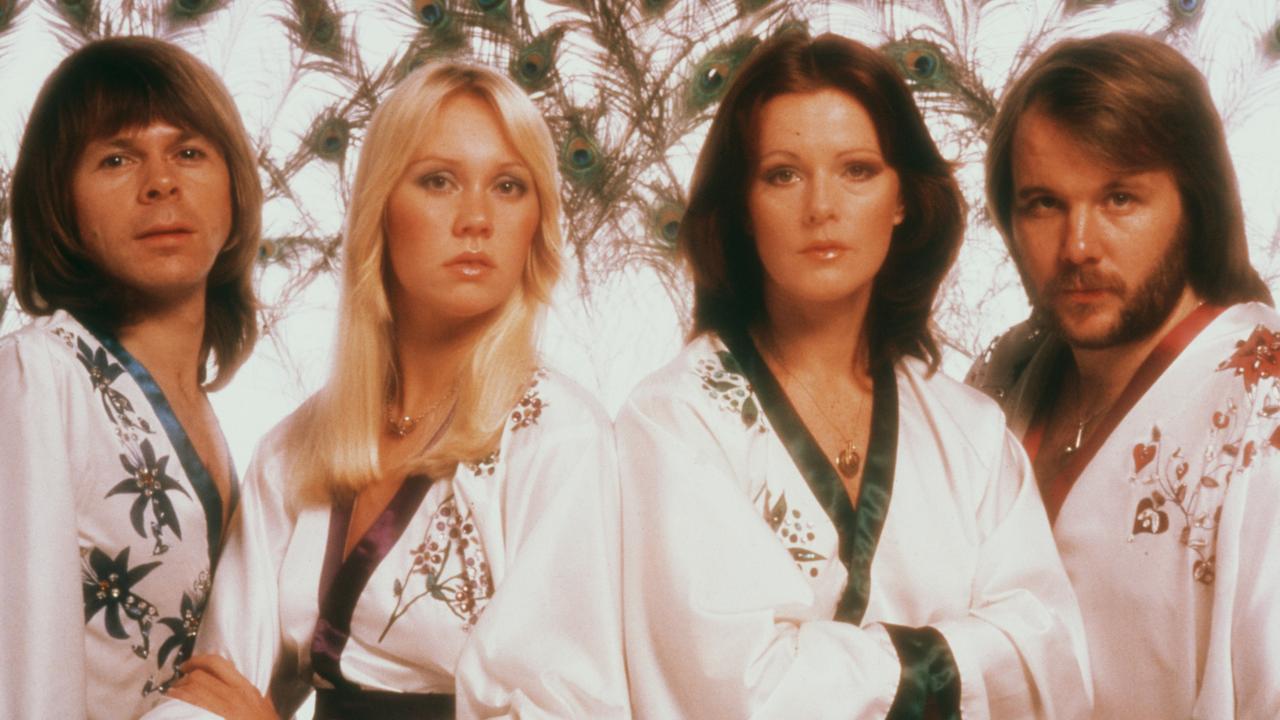
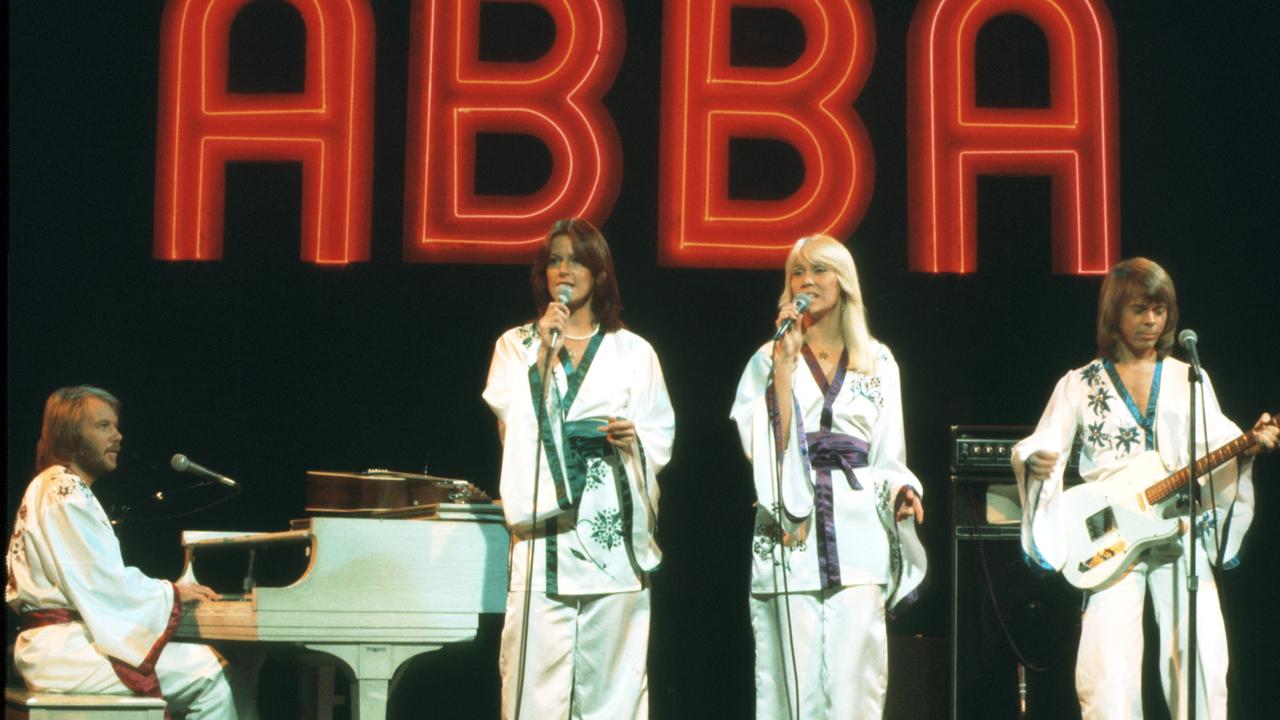
Fifty years ago, in April 1974, a quartet unknown outside its native Sweden – hardly a musical powerhouse in those days – won the celebrated (yet much maligned by “cool” folk and by progressives who view it as the epitome of capitalism and bad taste) Eurovision Song Contest. The rest, as we say, is pop history. In this age of historical illiteracy, most people today equate Waterloo with ABBA rather than with Napoleon Bonaparte.

I’d watched Eurovision since 1959, when Britain won Eurovision for the very first time – the very straight and formally attired Pearl Carr and Teddy Johnson singing the twee and tweeting Sing Sing Sing Little Birdie, in 1959. I watched Britain win again a few years later with Sandy Shaw and Lulu. But during the early seventies, I was without television and therefore missed the televisual feast of melody and harmony and of costumes that David Bowie would not have been seen dead in – it is said that the seventies was the decade that fashion forgot, and most critics would say that much of the blame for that could be dumped on the singing Swedes’ doorstep.

I confess that I was late in coming to ABBA. The late seventies and early eighties were eventful but distracting times for me personally, I’d heard many of the songs, but was had never really taken much notice, until, one in about 1985, whilst contemplating what it was that made a perfect pop song, I bought a CD of ABBA’s greatest hits.

It was a case of “do you hear the songs, Fernando?”

As a tribute to this now enduring but now virtual quartet, but I can’t better a recent article, republished below, by British author Giles Smith. Read on after the music. As an afterthought, if you’d like to use the iconic reversed B, but don’t know how, cut and paste it now: ᗅᗺᗷᗅ

For other posts on music in In That Howling Infinite, see Soul Food – music and musicians

https://www.theaustralian.com.au/weekend-australian-magazine/thank-you-for-the-music-how-abbas-appeal-finally-became-mainstream/news-story/4199e10316fb173ef966293117734a54

When did daggy old ABBA become pop demigods?

Loving ABBA was once a love that dared not speak its name – certainly not among 13-year-old boys in the playground. But 50 years after Eurovision victory ABBA is finally supercool.

By Giles Smith, The Weekend Australian, 11th May 2024

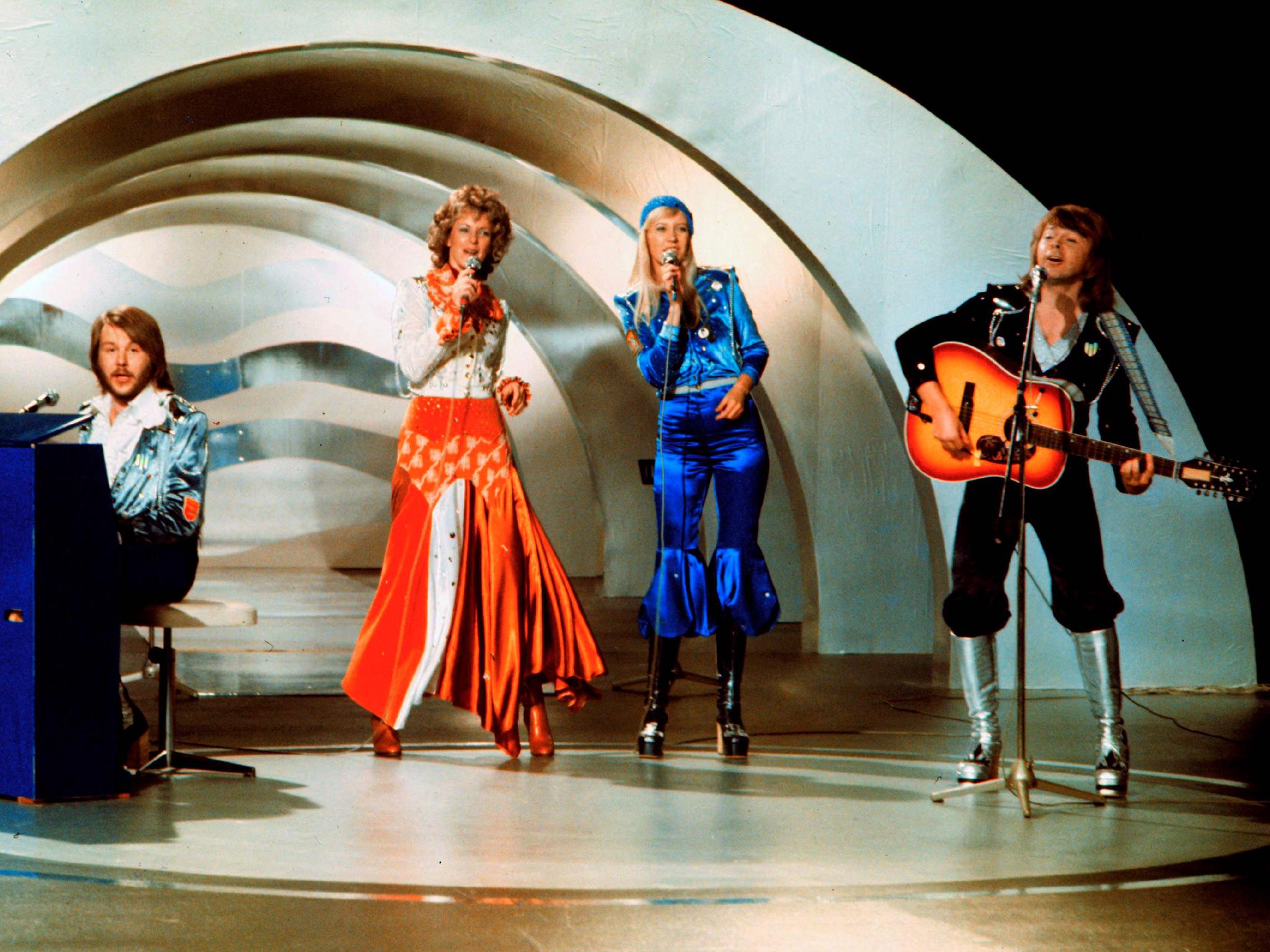
ABBA performs during the Eurovision Song Contest 1974. Giles Smith, at home in England, is watching on with his mum and dad. Picture: Olli Lindeborg
ABBA performs during the Eurovision Song Contest 1974. Picture: Olli LindeborgIt is Britain at the dawn of 1974, and things aren’t looking that great. Energy prices are through the roof. Strikes abound. Production is in decline and people are getting battered by galloping inflation and a soaring cost of living. The governing Conservative Party is badly split over trading arrangements with are through the roof. Strikes abound. Production is in decline and people are getting battered by galloping inflation and a soaring cost of living. The governing Conservative Party is badly split over trading arrangements with Europe, politicians on the far right are enjoying disproportionate levels of media attention, and the country will be asked to vote in two general elections in this single year – a level of political instability unknown in this country since 1910. Familiar? Yes, I know. Plus, extreme weather events are forecast: storms, floods and even tornadoes.

Embattled Prime Minister Edward Heath declares a fuel-saving “Three-Day Work Order” from New Year’s Day, ­restricting industry to three days per week – kind of “working from home”, but without the work. The Order will stay in place until March 7.

Meanwhile, on billboards and in leaflets, an “SOS” campaign is urging people to “Switch Off Something”, there are power cuts, and the national speed limit has been lowered from 70mph to 50mph in order to conserve petrol.

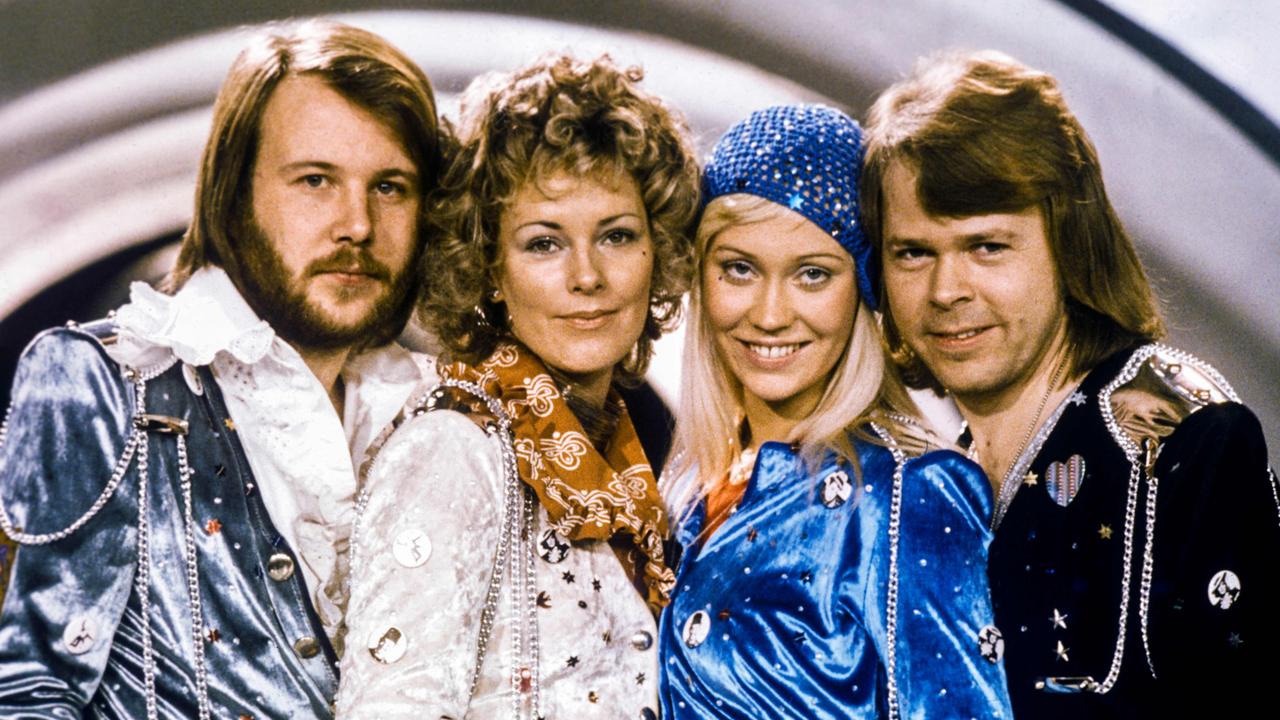
Swedish pop group ABBA in 1974. Picture: Olle Lindeborg
ABBA in 1974. Picture: Olle Lindeborg

Amid this general slide backwards, a feeling is spreading that Britain in general, and England in particular, can’t do anything properly any more – apart, possibly, from football hooliganism, which is about to enter a particularly busy period. So is the Irish Republican Army, whose mainland bombing campaign will, in the coming months, produce explosions at Westminster Hall, the Tower of London, and pubs in Guildford, Woolwich and Birmingham. If the fabric of society holds, the coming summer will at least offer the diversion of a football World Cup in West Germany – but not for England, who have failed to qualify.

It’s not all doom and gloom, though. On Saturday April 6, in Brighton and live on television throughout Europe, the UK will host the 19th Eurovision Song Contest. I am spending this particular Saturday night – like pretty much every other night, actually – watching TV in the company, more or less, of my parents.

I say “more or less” because it’s fairly obvious that the only one who’ll be fully concentrated on the screen throughout tonight’s protracted spectacular (subsequent programs may overrun, cautions our Cliff-Richard-fronted copy of the Radio Times) is going to be me. My mother, typically, with an anglepoise lamp ablaze beside her armchair, will be devoting her energies to creating one of the patchwork quilts that she seems to be producing in industrial quantities in this period. My father, equally typically, will be dividing his attention between the screen, a newspaper, and the backs of his eyelids.

After victory at Eurovision the Swedish quartet stroll hand-in-hand among daffodils in Hyde Park, London. Picture: Anwar Hussein
After victory at Eurovision in Brighton. Picture: Anwar Hussein

I alone in this room will be achieving the state of trancelike engrossment which Eurovision no doubt merits – though not, I should admit, because I am helplessly in thrall to the contest’s allure, but because I learned a long time ago in this sitting room that any discernible lapse in concentration on my part will automatically invite an instruction to go to bed. And at this point in my life, the avoidance of bed is essentially the mission every evening. (The contest, incidentally, is starting enticingly late for the semi-professional bed-avoider: 9.30pm.) Anyway, whether I make it to the end or not, Eurovision is on, which means that I am about to have my first meeting with Björn, Benny, ­Agnetha and Frida.

“And we move now across into Sweden,” says David Vine, the BBC’s voice; he usually commentates on skiing and snooker, but he’s on secondment to the Brighton Dome tonight.

Here they come then – the ABBA group. There’s a couple of bars of galloping guitar, bundled together with a brightly chiming piano, and as it plays, Agnetha and Frida come barrelling down the catwalk from the back of the stage and into our lives, microphone cables paying out behind them.

“My my!” they sing, and it’s as if the show has suddenly shifted a gear and somebody somewhere has stepped on the accelerator.

These days we are entirely comfortable with ABBA’s ubiquity, their presence in the air we breathe. I pluck this randomly from my own experience: in the summer of 2023, wandering around a market in France, I heard a stallholder break briefly into song while looking for change for a customer. “Money, money, money!” he sang. Then I went along the road and had ­coffee in a cafe where Knowing Me, Knowing You came on. Driving back to where we were staying, I stopped in at a supermarket and dropped food into a trolley to a backdrop of Take a Chance on Me.

Three casual encounters with the music of ABBA in the space of about 90 minutes, then. Just occasionally, as you move around Europe at this point in history, you can be forgiven for concluding that it’s ABBA’s world and we only live in it. What gets harder to remember is that it hasn’t always been this way. It would surprise many of the people happily thronging the ABBA Voyage show in London, unselfconsciously browsing the ABBA sweatshirts and ABBA key fobs and ABBA tea trays in the arena’s store, to hear that a love for ABBA was once a love that dared not speak its name – certainly not among 13-year-olds in a school playground. This author – with his carefully concealed copy of the 1975 album ABBA on ­cassette – can personally attest to that.

The fact is, for a long time it seemed that where ABBA had come from – both in the sense of Sweden and of the 1974 Eurovision Song Contest, where they first came to prominence – had placed a tight restriction on what the band and their music could ever be or mean to people. Almost three years after they sang Waterloo in Brighton, a review in the Guardian of a rare ABBA live performance in London described them wanly as “four Euro-persons” who made “elegant Eurorock pop”, and remarked by way of conclusion that it was “nice to be able to put four faces to a pleasant sound”. There is, of course, no term in the critical lexicon more damning than “pleasant”. As for the term “Euro“, it comes up again and again in writing about ABBA in this period and is rarely meant positively either.

Two years after that, in 1979, the American rock critic Robert Christgau, writing in the Village Voice, didn’t even try to gild it: “We have met the enemy,” he wrote, after experiencing ABBA in concert, “and they are them.”

Bjorn Ulvaeus, Agnetha Faltskog, Frida Lyngstad and Benny Andersson wear kimonos in 1976. Picture: RB/Redferns/Getty Images
Bjorn Ulvaeus, Agnetha Faltskog, Frida Lyngstad and Benny Andersson 1976.
Picture: RB/Redferns/Getty Images

As ABBA tried to make their way in the world, it rapidly emerged that the Eurovision Song Contest was a unique kind of springboard that could also function as a trap. Blasted high off that Brighton stage, ABBA would look around for months and years afterwards and discover that somehow all the scenery had tiresomely come with them and was threatening to drag them down again. So: a Swedish act, a Eurovision act … ABBA and their defenders would be a long time struggling to answer the band’s repeated arraignment on these twin charges, both of which, of course, had the disadvantage from the defence’s point of view of being completely undeniable.

“Personally, I hate what they stand for,” a critic wrote in 1979, “and think they are brilliant.” Here at least was evidence of a thaw. But it was also evidence that even defenders of ABBA for a while had to tie themselves in knots of equivocation. So great … and yet so cheesy. Even their most fervent admirers would find themselves acknowledging sometimes that there was something confounding about ABBA, something that was just beyond the grasp.

ABBA are the band you know best that you barely know. Of course, there are ABBA fans and superfans whose commitment to the study of Agnetha, Björn, Benny and Frida in all their manifestations is both clarifying and humbling. But in the slightly less specialised and more ad hoc place where ABBA intersect with the general listener, it’s clear that a certain amount of cloudiness about the band frequently persists.

Somewhat distant even at the blazing height of their fame, the band were only fully and openly embraced by the world some years after they had, to all intents and purposes, ceased to exist. Consequently, today, familiarity with ABBA’s music outstrips familiarity with anything else about them. The band’s members are, by any definition of the term, superstars, yet in 2024, even in circles where ABBA are adored, a confident and unerring ability to know your Benny from your Björn – or even, in some cases, your Agnetha from your Frida – ­betokens ABBA-knowledge at practically PhD levels. We know, perhaps, that they were two couples whose marriages came apart yet who somehow kept the band on the road even after that, channelling the pain of separation in timeless songs such as The Winner Takes It Alland Knowing Me, Knowing You. But Björn wrote the lyric for the second of those songs two years before he separated from Agnetha and when they were together, seemingly happy and enjoying the arrival of their second child. And Benny and Frida didn’t get married until after Björn and Agnetha had decided to split up.

“Personally, I hate what they stand for,” a critic wrote in 1979, “and think they are brilliant.” Picture: Michael Ochs Archives/Getty Images

The truth is, we don’t know much, and most of what we think we know is wrong or ­improvised or conjecture or (most frequently of all) projection. Glory in its fullest form came to ABBA posthumously, when they had stepped down from the stage and out of the studio; and so, with a purity which is rare in the history of pop – and practically impossible in the social media age – Agnetha, Björn, Benny and Frida burn most brightly in our minds as a set of bombproof songs which a very large number of us appear tirelessly happy to hear. The songs, we do know. But how do we know them?

To all intents and purposes, ABBA finished being a band in 1982. They had eight years together as recording and performing artists – about the same as The Beatles. Then, albeit without ever making an official ­announcement that they were done, they withdrew, apparently exhausted or wrung out to some extent, and tired of each other’s company, and moved on to other things – solo albums in the case of Agnetha and Frida, the composition of musicals in the case of Björn and Benny. At that point, ABBA were widely felt to have outlived their purpose and, more than that, were regarded in many quarters as irredeemably naff.

There is no image of the members of the band on the cover of ABBA Gold – the 19-song compilation album put together by the Polydor label in 1992, 11 years after the band’s last set of studio recordings – because the album was carefully market-researched in advance of its release and the feedback from the focus groups was that although people were potentially interested in buying a record of ABBA’s hits, and more than happy and able to nominate the songs they wouldn’t mind hearing on it – Take a Chance on Me, The Name of the Game, Super Trouper – they didn’t especially want to own something with the band’s faces prominently displayed on it. So the label went with simple gold lettering on a black background. Such were the feelings around ABBA in 1992.

Yet it was ABBA Gold which began to change the climate around the band, ushering in what we can now regard as ABBA’s renaissance period, helped along, somewhat randomly, by the Australian films Priscilla, Queen of the Desert and Muriel’s Wedding, both released in 1994 – and in due course by the 1999 jukebox musical Mamma Mia! and, in 2008, the first of the two films that arose from it.

       At that juncture, a decade into the 21st century, ABBA, once presumed dead and buried, were arguably more alive than they had ever been. ABBA Gold has now sold more than 32 million copies worldwide and is behind only Queen’s Greatest Hits as the UK’s best-selling record of all time.

And then, as 2021 ended, almost out of nowhere, the band re-emerged among us – not just with one final, completely unexpected and time-defying burst of new music, but in the form of the magnetically engaging and mysteriously moving Voyage stage show, which was nothing less than a complete re-imagining of the live concert experience and which revealed the band as a set of idealised, computer-generated versions of themselves which were somehow at once entirely them and not them at all.

At this point, approaching 42 years since their last formally ticketed concert and with the band members now well into their seventies and apparently entirely indifferent to the idea of performing together in the flesh, ABBA had probably never been more prominent – and had arguably never been more ABBA.

ABBA in Melbourne, Australia get a rock star welcome from fans.
ABBA  get a rock star welcome from fans in Melbourne, Australia, 1977

“I’ve been reading you all my life,” a gushing fan once told the author Samuel Beckett.

“You must be very tired,” Beckett replied.

Well, here I am, a full half-century after ­Waterloo, and in a position to say much the same to the members of ABBA, were I ever to meet them. “I’ve been hearing you all my life,” I could say, “or for nearly all of it that I can remember. And no, actually, before you ask, I’m not tired. Or not of ABBA, anyway.”

Because what would it even mean, in 2024, to say you were tired of ABBA, except by way of admitting that you had run out of patience with pop music altogether, or that pop music had run out of patience with you?

What’s certainly true is that, over the 50 years since Waterloo, ABBA have been liked by pretty much every kind of person and in pretty much every way that it’s possible to like a pop group. They have been consumed in a hurry as sugary pop stars and appreciated soberly as abiding musical craftspeople of exceptional ­talent. They have been enjoyed ironically and enjoyed entirely sincerely. They have been a guilty pleasure and an utterly unashamed one. Their records have managed to define whole periods and to slip free of history altogether, with the result that, in 2024, their songs are warmly familiar both to 1970s nostalgistes, hungry to revisit their childhoods, and people who weren’t even born when the 20th century ended. They have been feted alike as exuberant gay icons and as the reliable providers of pan-generational dance music for heterosexual wedding receptions. Their music knows the unequivocal love of the very best among us, and yet has also been used to soundtrack lockdown-busting piss-ups in Downing St (the ­notorious “ABBA party” of November 2020, about which Benny Andersson said, with an understandable instinct for dissociation, “You can’t call it an ABBA party. It’s a [Boris] ­Johnson party”).

Souvenir edition the Daily Mirror celebrating of Abba’s arrival in Australia.
My My! ABBA Through the Ages by Giles Smith.

     In this wildly elastic range, they outperform even The Beatles. Certainly, it is given to vanishingly few groups to have been so many things to so many people at so many different times. It is given to even fewer to have been so many things to so many people while the group’s members simply sat in their various houses for four decades doing nothing (or, at least, nothing ABBA-related).

And that, surely, is the most delicious detail in the deeply satisfying narrative of ABBA’s eventual widespread vindication. All of the things for which they were routinely teased and dismissed along the way eventually turned into things for which they could be uncomplicatedly celebrated and loved.

All Björn, Benny, Agnetha and Frida had to do in order to be fully and resoundingly appreciated was … nothing. They just had to stand by until the rest of us came around.

Here I am, 44 years later, at ABBA Voyage, for the second time, watching not even ABBA but a simulation of ABBA sing this song about heartache, scars, grieving and the longed-for release from grieving. I’m also watching a very artfully realised total eclipse of the Sun, which is the backdrop for this number, the room glowing orange and then slowly falling dark as the song plays, which is quite something.

And, you see, the thing is, everyone at ABBA Voyage sings along to the chorus of Chiquitita. That’s the point of it – they all just pile in. They pile in on it like you wouldn’t believe, raising their arms and swaying.

Chiquitita – the power of the singing, the ­defiance of grief in it, the iron nature of its ­consolation, there is stuff in that song that I wouldn’t and couldn’t have got to with any amount of effort in 1979.

Bjorn, Agnetha, Anni-Frid and Benny attend the first performance of ABBA's Voyage in London in 2022. Picture: Nicky J Sims/Getty Images
Bjorn, Agnetha, Anni-Frid and Benny attend the first performance of ABBA’s Voyage, London  2022. Picture: Nicky J Sims/Getty Images

And it is just so extraordinary how this ­manifestly artificial show ends up evoking so much in the way of feelings. In an interview, ­co-producer Ludvig Andersson ­attributed that ostensibly unlikely outcome to the blurring of “the borderline between real and fantasy worlds”, and how the show’s peculiar position between those borders “triggers ­feelings about youth and ageing, mortality and immortality”.

And there seems to me to be a lot of truth in that, and especially at this exact point in the show, when the Sun is disappearing before our eyes and the audience has got hold of that ­chorus, and I mean, really got hold of it, and the whole place is a sea of arms in this gradually darkening room, and two of my brothers are dead and, oh, for god’s sake, now I’m crying in the middle of ABBA’s bloody Chiquitita.

My My! ABBA Through the Ages (Simon & Schuster, $34.99) by Giles Smith

That was the year that was – the age of anxiety

They’re lining up the prisoners
And the guards are taking aim
I struggle with some demons
They were middle-class and tame
I didn’t know I had permission
To murder and to maim
Leonard Cohen, You want it darker?

The title of our retrospective for last, year, 2022, was Don’t Stop (Thinking about Tomorrow), the recently departed Christine McVie’s anthem. That was a drear year, and the song was a hopeful reflection of the year to come. But, as they, say, man proposes, God disposes. This year, a line from the just departed Shane McGowan’s most famous seems more apt: “Happy Christmas your arse. I pray God it’s our last”. We are living in an age of uncertainty, an age, to borrow from WH Auden’s often overlooked masterpiece The Age of Anxiety, a meditation on a world between the wreckage of The Second World War and of foreboding for the impending armed peace that we now look back on as the Cold War, with its oft-repeated mantra: “many have perished, and more most surely will”.

The year in review 

The year began on a high. Albanese’s Labor government was sitting pretty, the opposition in floundrous disarray. I’d written a few months earlier: “The new Labor government is riding high in the polls whilst the Neanderthals of the Opposition bounce along the bottom of the pond, although in Monty Python speak, it’s “just a flesh wound”’. The Tory government in NSW was enroute for a hiding in the upcoming March state election. And there was apparently massive support in all states for the as yet unannounced referendum on an Indigenous Voice to Parliament – Australia’s long-awaited reckoning for its dark history.

Though Labor did win in March, by the barest of margins, by mid-year the Voice was going backwards with Labor’s honeymoon over as the atavistic alliance behind the No campaign landed blow after blow on the government and the electorate, straining under cost of living and housing pressures was deciding that they and the government had more important matters to deal with than what was increasingly perceived as divisive value signaling.

An incumbent who looked like he would end the “here today, gone tomorrow” phase of prime ministerial politics now faces troubling questions of whether he can become the first incumbent since John Howard a quarter-century ago to win a second term – a strong bet back in January. It has been a dramatic turnaround. At the fag-end of 2023, the government has been buffeted by the failure of the Voice, continued hikes in interest rates and seemingly immovable inflation. Year-end caught it unprepared for a controversial High Court refugee detention ruling, baring Labor’s perennial Achilles heel, migration and security, and demonstrating that political good fortune is never a bottomless well.  

It is always worth remembering that we live in an age of binary storylines, where nuance is often the first casualty. In 2022, Albanese was probably the recipient of too much praise. In 2023, he has arguably been the target of too much criticism. In 2024, I suspect we will discover the resting heartbeat of his government. Labor’s problem only disguises the still unresolved dilemma for the Liberal Party: how does it intend to rebrand its policies and its image for the next election? As the 2024 the election draws closer, the focus will not just be on Prime Minister Anthony Albanese but also the possibility of a Prime Minister Peter Dutton.

By year end, there was figurative blood on the Albanese government’s saddle. But there was literal blood and carnage, heaps of it, not only in Ukraine where the much-anticipated Spring Offensive has stalled in a stalemate reminiscent of the Great War’s Western Front. With western enthusiasm for the war waning its aid diminishing, and the Ukrainian electorate weary and disillusioned with last years’ Time magazine’s Person of the Year, there is a distinct possibility that Volodymyr Zelensky might be thrown under the figurative bus. Who’d’ve thunk it? from rooster to feather duster in twelve months.

But October 7th trumped the calculus of carnage, For nine months, Israel was racked by large- protests against an extremist, racists and demonstrably undemocratic government’s push for a wide-ranging judicial reform. But on that day, the protests ceased. The end of the year effectively began with the Hamas terrorist group’s almost perfect act of Taqiyyah (deception and dissimulation in an ostensibly Islamic cause): the violent, deadly and brutal pogrom perpetrated on Israeli men women and children in kibbutzim, IDF bases and the Supernova rave party in the Negev by the “heroes” and shahidin of the Hamas soldiery. If the Black Shabbat attack was medieval in its savagery, Israel’s retaliation was biblical in its rage and its destruction, and as civilian deaths mounted and the bodies piled, exceeding twenty thousand by year’s end, a brief moment of sympathy for Israel receded and a tide of virulent anti-Jewish sentiment rose around the world.

In both Ukraine and in Israel/Palestine. The future is dark and uncertain. The military conflict over Ukraine will determine the credibility of US and European power and whether Russia’s aggression will be rewarded; the Israel-Hamas war means the Middle East hovers at an inflection point, either a deepening polarization on both sides or, somehow, a push to resurrect the two-state, Israel and Palestine. What was it Lenin said? “There are decades where nothing happens; and there are weeks where decades happen.” Hang on – we’re in for a helluva ride.

Of course, many other things happened in 2023, some quite important, but we won’t bore you with recapping the details. But here’s two that are likely to shock and entertain in equal measure in 2024.

Criminal and civil cases proceeded against former US president Donald Trump, even as he maintained a commanding lead in the race for the Republican nomination. The odds of him returning to the White House next November are shortening by the minute. And he is hell bent on revenge – and untrammeled power. It’ll be like some old Roman melodrama.

There will no doubt be legal fireworks here in Australia too. An investigative journalist’s investigation into the powerful, divisive and controversial broadcaster Alan Jones was as early Christmas present. Airing claims of multiple males who allege he indecently assaulted them; this has encouraged even more people to speak out. Predictably, the Parrot has denied all the claims and is threatening legal action. As one would …

The political outlook for 2024?

Australia ended the year as a divided nation. Labor is a culturally progressive party caught in an age dominated by power, patriotism and economic competition; its vulnerability is the progressive mantra of identity politics, group rights and skepticism towards Western liberalism. Elite power and social conscience for the Yes case were on display from corporations, business leaders, philanthropists, universities, celebrities, trade unions, community leaders, public media, remote Indigenous communities, the affluent suburbs and the inner cities while the No vote came from the outer suburbs, the regions, the rural areas, Coalition-held seats, Queensland, South Australia and Western Australia – and reflected both a revolt against and an indifference towards what many saw as elite lecturing and progressive sophistry.

As for the world in general?

Nation­alism, tribalism and authoritarianism are on the march throughout the earth, as are millions of refugees. A veritable “United Nations” of migrants is queuing up at the US’ border with Mexico as migrants from Asia, Africa and the Middle East join those from Central and South America seeking a safer, better life in the land of the increasingly less free and arguably more unstable. Old wars stagger on and new ones break out bringing with them more death, destruction, starvation and displacement. The world faces a travail of great power rivalry, regional war, climate upheaval, population movements, technological disruption and growing inequality. US analyst Fareed Zakaria observed that with wars in Ukraine and the Middle East and China’s challenge to the global order, “if America retreats, in each of these three areas, aggression and disorder will rise”. As L Cohen sang, “I’ve seen the future, brother and it’s murder:

Things are going to slide, slide in all directions
Won’t be nothing (won’t be nothing)
Nothing you can measure anymore
The blizzard, the blizzard of the world
Has crossed the threshold
And it’s overturned
The order of the soul
L Cohen

Gaza

On our block

On our own rural island of tranquilly, unexpected but welcome spring and summer rains appear to have prevented what we feared would be a bushfire season like that the Black Summer of 2019-29. We were, nevertheless, well prepared with our bushfire plan in place. The year was for us The Year of The Forest. Our forest, that is. Aided by a grant from the state government’s Biodiversity Conservation Trust, we undertook a major project to eradicate weeds and vines – and our trees heaved a great big sigh of relief:  Thinking globally, acting locally – how landowners can protect koalasWe had the pleasure of two koala sightings – that’s three in three years, which is more than most in our shire have seen in a lifetime – and the excellent koala detection pooches of Canines for Wildlife discovered joey scats. At year end, we bit the bullet and brought in an arborist A Team to fell sixteen Queensland maple trees that were once recommended as rainforest trees and are now declared weeds and whose progeny have infested our koala habitat. They died to protect the forest.

Stepping back a bit, in September, my old school, Moseley Grammar School, celebrated its 100th year in September. And what a grand day it must’ve been. Wish I could’ve been there. It started life as a theological college, and reopened as Moseley Secondary School in 1923. I spent eight years of the sixties at this grand old place. In my day, it was Moseley Grammar, a boys-only, and in my recollection after six decades, all white school. There were about twenty Catholics including moi, half a dozen Jews, and several hundred nominally C of E. In the early seventies, it merged with the secondary modern over the fence and is now Moseley School and Sixth Form. And my, how things have changed. As an old Greek once said, “Everything Flows, Nothing Stands Still”, as the Bobster put it, “everything passes, everything changes”.

The passing parade

Many of our icons ascended to the choir invisible this year. Why in this sad and demoralising year do I feel that we’re trading time on the downward escalator? We’ve already name checked Shane, but I’ll let the picture tell the story. Special mention to the icons of my youth and later years, particularly Robbie Robertson, Jeff Beck, David Crosby, Tina Turner, Burt Bacharach, Raquel Welsh, Harry Belafonte, Glenda Harris, Rodriguez, Dame Edna, David McGowan, Jimmy and Sinead O’Connor. That old Machiavelli Henry Kissinger lurks in the background. I note in the picture, a barely subtle reference to the dead of Israel and Palestine. The Tree of Life in the centre is a gorgeous touch referencing the pointless felling of the ancient Sycamore Gap tree near Hadrian’s Wall. Farewell also to margarita master Jimmy Buffet, to Shane McGowan (he’s in the picture), the Kentish paddle who can lay claim to one of the most magnificent funerals in Irish history, and to controversial Australian journalist and filmmaker John Pilger who almost made it to ‘24 – probably the only journalist to actually have a word named after him.

Closer to home, people we are acquainted with slip off their mortal perches, including two good friends. My former wife’s longtime partner Robert “Tas” Taylor (Tas as in “fantastic”) took off in March after a long illness. He’d been with Libby as long as we’d been separated, a talented book editor, fellow Neil Young and all-round good bloke. In December, it was ooroo  to our very good mate Trevor Bailey who peacefully departed his bush paradise in the Forest at the End of the Road. His was a life well lived. Traveller, businessman, raconteur, perfect host, partner in booze, longtime Bellingen resident, and forest defender (he played a key role in the creation of the Dunggirr National Park, named for our precious but endangered koala). His death was unexpected – he died in his sleep – but were told that he was “slowing down”. Memento mori, I guess. My doctor tells me I ought to slow down too and act my age.

Trevor and Paul discus the meaning of life

What we wrote in 2023 

The rise and fall of The Voice dominated In That Howling Infinite’s posts from April onwards. There were six in all. The first cautiously optimistic, and as referendum day approached, hopes that the better angels of our nature might overcome the negativity and scaremongering of the Naysayers, gave way to despondency as we fought what we saw as our good fight to the end at market stalls and polling booths.  Warrior woman – the trials and triumphs of Marcia Langton; A Voice crying in the wilderness; If you can bear to hear the truth you’ve spoken … the emptiness of “No”; Hopes and fears – the morning after the referendum for The Voice; The Uluru Statement from the Heart and Silencing The Voice – the Anatomy of a No voter

On the hustings in Dorrrigo

October 7 and the Gaza War has been intellectually and emotionally challenging. I wrote an enormous amount, but published little. In That Howling Infinite did however publish two pieces on the conflict, both emphasising the unprecedented rise in antisemitism: “You want it darker?” …  Gaza and the devil that never went away, and The Calculus of Carnage – the mathematics of Muslim on Muslim mortality. Ironically, we’d addressed antisemitism earlier in the year after watching American filmmaker Ken Burns latest documentary, a searing indictment of America’s response to the catastrophe that was approaching for European Jewry: The Shoah and America’s Shame – Ken Burns’ sorrowful masterpiece.

Prince Charles’ long wait for his apotheosis ended with his archaic and in many ways arcane coronation on May 6th. The passing of Her Maj last year and his ascension reminded me that in my lifetime, I have witnessed three monarchs and eighteen British prime ministers (and incidentally, eighteen Australian prime ministers). I could resist detailing the arcane and archaic ceremonials of Chuck’s Big Day in The Rite Stuff – the coronation’s pomp and circumstance. Most of the baubles used in the coronation were stolen during the age of Empire. Bringing it all back home – the missing mosaic and other ‘stolen’ stuff tells a talk of Britain’s sticky fingers. Bad Brits also cop a serve in Outlander – If I didna hae bad luck, I’d hae no luck at allAfter nearly a decade, we succumbed to the celebrated time-shifting highland fling. The promise of exotic Celtic locations, steamy sex scenes, and graphic violence was too irresistible.

Last year saw many articles on the history and politics of Russia and Ukraine, and whilst the Gaza war has dominated much of the international reportage, the war grinds on ineluctably. The Russian Tradition – Russia, Ukraine and Tibor Szamuely  discussed the work of my deceased university tutor. I managed to transcribe a handwritten paper I’d written for him as an undergraduate before it faded away, Большой террор … Stalin’s Great Terror. In January, I’d read English author and historian Anthony Beevor’s latest foray into Russian and Soviet history. Some books can be unrelentingly bleak and brutal, so grim and graphic in fact that you have to push yourself to finish them. But I persevered, and Red and white terror – the Russian revolution and civil war recorded by thoughts and observations on this tumultuous and terrible time.

The Vietnam War adventures of our recently departed friend Tim Page was said to have been the model for Denis Hopper’s strung-out photojournalist in the 1979 film Apocalypse Now. Rewatching the film, for the first time in decades, I thought Hopper’s over the top, incongruous and unexplained character bears little resemblance to the Tim Page we knew. And yet, as Tim and his partner Mau were later to point out to me, Hopper’s cracked and crazed camera cowboy illustrated exactly what the soldiers at ground zero experienced in America’s war, a war that has since been defined as chaos without compass. The result was my review, The Ride of the psychotic Valkyries – Apocalypse Now Redux

Anzac Day, our national day of remembrance, has always inspired articles in In That Howling Infinite, and this year, we commemorated the Australians who’d volunteered to fight for the republican cause during the Spanish Civil War, So far away from home – the Diggers who fought in Spain ; and we republished two excellent articles on Wilfred Owen and the poets of the First World War: I am the enemy you killed – Wilfred Owen’s solemn testament. An altogether different kind of war story is told in The Seven Moons of Maali Almeida, the 2022 Booker Prize winning novel by Sri Lankan author Shehan Karunatilaka: The dark nights of a restless soul – a Sri Lankan ghost story.

An entertaining, indeed, hilarious episode on my favourite podcast, The Rest is History inspired Rider Haggard and the book that launched a genre, the story behind King Soloman’s mines, the adventure story that inspired a multitude of spin-offs in fiction and in film. The podcast’s hosts, Tom Holland and Dominic Sandbrook, were given a tribute with The Rest is History- a gift that keeps on giving, whilst Getting back to the garden – Tom Holland’s Dominion reviewed his story of how Christianity and its precursors shaped the thinking of the modern world.

I wrote several “memoir” pieces this year: The great outdoors – camping days, Song of the Road (2) – The Accidental Traveller, a sequel to a  a 2021 piece, recalling how I came to take the famous Hippie Trail to India, and a tribute to a particularly favourite record album: McGoohan’s Blues – sunbathing in the rain. But music did not get much of a look in in ‘23, although the Bobster got a gig in Lost in the rain with no direction home – Dylan’s poem for Woody.

By year’s end, events have left me somewhat disillusioned and disconsolate, and in a kind of “slough of despond”, the allegorical bog that entrapped John Bunyan’s pilgrim. This inspired It’s 3am and an hour of existential angst: who hasn’t awoken at 3am and stayed awake into the early hours overthinking everything when random thoughts scatter and shatter? And also, Blue remembered hills – a land of lost contentment, a mostly irrelevant contemplation of nostalgia.

Gaza

And that is that for 2023. Here’s 2024 and whatever it may bring. We’ll leave you with a bit of lighthearted twizz – Time magazine’s Person of the Year, Taylor Swift, and simply the best kitty pic ever. He’s to Tay Tay and Benjamin Button.

For previous annual retrospectives in In That Howling Infinite, see That was the year that was … 

A Voice crying in the wilderness

History is a myth that men agree to believe. Napoleon

Origin stories often contain a good deal of mythology – not the old gods and goddesses stuff, nor the tales folktales of faeries and elves, but rather, the stories we tell ourselves about who and what we are as a nation, it’s origins, character, it’s constitution The pioneer spirit is one, based on the now dismissed concept of terra nullius (there was nobody and nothing here of any worth when we arrived ) and the belief that white settlement established in the face of hardship and adversity made us the proud nation wer are today. Military valour and prowess is another, born of a military débâcle, and our repeated involvement in foreign wars, many but not all on others’ interests rather than our own. Other shibboleths evolved from these – like egalitarianism, mate ship, and the “fair go”. Periodically, we are forced to look at ourselves and out history, and to grapple with our many mythologies – and we discover that we are not really who we think we are. And, to quote American cartoonist Walt Kelly, who borrowed from the early 19th century US naval hero Commodore Perry, “we have met the enemy – and he is us!”

A leap of faith or a leap in the dark?

We have waited 122 years to recognize in our Constitution the privilege that we have of sharing this continent with the oldest continuous culture on earth. I say to Australians, do not miss this opportunity. Australian Prime Minister Anthony Albanese

Anthony Albanese calls the Torres Strait Islander and  Aboriginal Voice to Parliament “the chance to make a positive change that will last for generations”. Peter Dutton says it’s a “reckless roll of the dice” that will “take our country backwards, not forwards”. These are the battle lines drawn around the upcoming referendum on the Voice to parliament, which promises to be a watershed moment in the history of our nation.

If a Yes vote prevails, the Constitution will be amended to formally recognize Aboriginal and Torres Strait Islander peoples with the creation of a new body to represent their interests in the running of this country. 

If established , the Voice will be an advisory body to give indigenous people all around the country a say in government policy and programs that affect the lives of their peoples. Critically, the intention has always been to have its existence and validity enshrined in the Constitution. This would have a dual purpose: to formally recognise First Nations peoples as well as to insulate this new body from the threat of an unsympathetic government later attempting to disband it. But if the referendum fails it will bring to a sudden end years of work and, many believe, strike a devastating blow to the process of reconciliation.  

Although opposition leader Peter Dutton’s anti-Voice campaign is yielding its bitter fruit in the steady rise in the No vote, it has yet to translate into a noticeable drop in support for Albanese and his Labor government. And Dutton’s friends and rivals continue to point out that he might suffer more politically than the prime minister if the referendum fails. “If Yes wins, he loses. If No wins, he loses anyway,” is how a senior Liberal put it. And so do we as a nation. 

The Sydney Morning Herald provides a good explainer of what The Voice is, and how the arguments for and against are playing out. Read it HERE– though you might find the of The First Dog On The Moon more lighthearted: 

Controversial indigenous author and anthropologist Bruce Pascoe advises us to read what Megan Davis, a Cobble Cobble woman of the Barunggam Nation and a renowned constitutional lawyer, authoritative public law expert, has written:  Voice of reason, a document for Quarterly Essay that covers the whole ground of colonial assumptions and Indigenous dispossession.

She calmly paints the picture of Aboriginal disadvantage and the origins of that disadvantage. Importantly, however, she emphasizes that Aboriginal and Torres Strait Islander people never ceded the land and the British never followed the terms of occupation as outlined by their sovereign. But Aboriginal people believed in realpolitik and continued to interact with the invader in order to set out their own sovereignty and claims of attachment to the land. She quotes Fred Maynard and William Cooper, both underrated Aboriginal advocates.

Bret Walker SC has said of this situation: “The basis of settlement of Australia is and always has been, ultimately, the exertion of force by and on behalf of the British arrivals. They did not ask permission to settle. No one consented, no one ceded.” The legal authority is completely absent. And in its absence, Australia was able to build, fig leaf by fig leaf, a myth of legitimacy. In this embarrassing nakedness, the few Australian attempts at some adjustment of this situation asked everything of the people and nothing of the state

When, on June 19th, parliament approved both the final wording of the constitutional amendment and the question that will be put to the Australian people later this year to approve it, or not, it was evident that neither a Yes nor a No result was a foregone conclusion. While support for the change had started out high earlier in the year, polling has shown it slipping as a variety of critics across the political spectrum have made their objections known. Still, the Yes campaign has only just officially begun with a series of events across the country this weekend. Nevertheless, as some commentators have pointed out, the Yes campaign appears to be further behind in advocacy and communication  than the the Same Sex Marriage plebiscite campaign at this point on the campaign clock. 

Like it or not, our civic culture and capacity for community discussion is distressingly thin. Our default setting is to leave it to our politicians to direct public debate. Big proposals like the Voice are inevitably funneled through an argument between a prime minister and a leader of the opposition. Right now, the government’s argument for the Yes case at the political level consists of telling us A: what a good feeling we’ll have if we endorse it, and B: what the Voice isn’t. The political risk for Albanese is that at year’s end, after finally fully devoting himself to the referendum in the vain hope that he can get it over the line, he’s condemned by rising numbers of voters who believe he has treated the burning issues of cost of living and the economy as second-order concerns. That wouldn’t be the future he imagined on election night. Sean Carney, SMH 15 June 2023

In what, alas, is shaping up to be a climactic battle in the Australian culture wars, so much of the rhetoric is exaggerated, inapposite and polarizing. It has the ring of being made in America. What conservative barrister and author Greg Craven describes as “the current wilderness of virulence, the toxic atmosphere now surrounding the Voice”.

Craven wrote in the Weekend Australian on 24th June: “As people of good heart, we should not automatically default to the baser character of our days: to weigh, to calculate, to carp and to critique. We need to ask – intelligently and with proper judgment – not just what conceivably could go wrong if everything went against us but what should go right given pervasive goodwill and even average good fortune … What is the actual opportunity, rather than the determinedly imagined Frankenstein’s monster? … The voice will enable those who have 65,000 years of connection to this country, who are now our most dispossessed, to talk to us, yes, with measured authority, but not with a veto. We are indeed the people of the fair go. How is this not fair?”

Hopes and fears

There exists still a darkness at the heart of our democracy that we struggle to come to terms with; and in these divisive days, it doesn’t take much to reignite our “history wars” as we negotiate competing narratives and debate the “black armband” and “white blindfold” versions of our national story.
In That Howling Infinite, The Frontier Wars – Australia’s Heart of Darkness.

In August 2022, mini-micro-party leader Paul Hanson prematurely appointed herself as the leader of the No Vote (others have since grabbed back that dubious role, but she wears the crown well) in an interview with that millionaire champion of strugglers Alan Jones, declaring “If you believe that this is going to create reconciliation then you’re a bloody fool because it’s not.’

Was this contrived or some strange quirk of history and politics that Pauline Hanson resuscitated the the old bogeyman last seen during the lead up to the landmark Mabo decision of thirty years ago – the scare campaign warning that Aborigines would lay claim to our suburban backyards if Eddie Mabo’s High Court challenge succeeded.

Back at the beginning when the Albanese Labor Government was brand new and we basked in the glow of confidence that in a rerun of the 1967 referendum, Australians would embrace  the  long overdue constitutional recognition of our First Nations people, we believed that such visceral opposition was all bluster, as most scare campaigns tend to be.

Sadly, matters have escalated since then as supporters and opponents have got themselves lost on the woods and weeds of claim and counterclaim, hyperbole and just plain hype, and at times, hysteria. There are reasoned arguments on all sides, and in the middle ground between them, but the malevolent genie is out of the bottle. As Chris Kenny, News Corporation opinionista and Sky After Dark “outsider, but one of the very few amongst his colleagues to actively support the Yes campaign for the Voice to Parliament, wrote in the Australian on 3rd June:

“Here is a sample of the many thousands of messages I have received online: “You’re on the wrong side of history and shame on you, you’re keeping racism alive by supporting the voice.” “The voice is a racist joke.” “No to further division. No to giving up property rights. No to reparations based on lies and skin colour.” “Lockouts from state forests, no hunting if you’re not Indigenous, all would get worse. Why cement the woke mind virus, critical race theory, into the Constitution?” “The voice is racist, divisive, apartheid and undemocratic.” “Voice is nothing but a Trojan horse to impose more communist government on us all. They can’t all truly believe this?”

And by the way, the Voic could also call for changing the date of Australia Day and even, the Australian flag. 

At the heart of the Liberal Party’s opposition to the Indigenous Voice is the notion that it divides Australia rather than uniting it because it gives Aboriginal people rights or privileges that others do not enjoy. Peter Dutton riffed on George Orwell when he declared that with regard to the Voice, some would be are “more equal than others”. But the paradox is that if politicians respond to protracted inequality experienced by different groups by continuing to treat them as equals, they perpetuate that inequality. 

Lawyer Josh Bernstein wrote in the Herald on 4th July: “The reality is that the No campaign encourages Australians to lie to themselves; to deny reality. To pretend that the disturbing inequalities currently suffered by Australia’s Indigenous population – in life expectancy, health, education, income and rates of incarceration – don’t exist. To deny some of the most disturbing parts of our history. To pretend that Aboriginal Australians were not treated as non-citizens for many decades, were not deprived of the vote, were not separated from their families and were not subjected to massacres and violence”.

Then there are those who warn that should Yes prevail, something wicked this way comes. Whilst not indulging in the far-fetched imaginings of the political extremities, some like News Corp’s Madam Défarge Janet Albrechtsen warn of worse to come as the apparent end-game of the Uluru Statement From The Heart comes to pass: “The Uluru statement is the starting point”, she wrote in The Australian, “It calls for a “First Nations Voice enshrined in the Constitution” but acknowledges this is not the culmination of their ambition. As the statement says, “Makarrata is the culmination of our ­agenda … we seek a Makarrata Commission to supervise a process of agreement-making between government and First Nations and truth-telling about our history”. A Yes vote in the referendum, she predicts “is not the end of the process but rather the starting gun to a long and divisive treaty negotiation where the voice has the whip hand. This will likely lead to separatism and bitterness, not ­reconciliation. So if you are worried about the voice, wait until you see the treaty”. 

Paul Hanson argues that Voice would be all-powerful, claims and “would override the supremacy of the elected Parliament and undermine the authority of the elected Australian government”, triggering litigation that would lead to “multiple constitutional crises”. She goes further: it could be a frontrunner for the creation of a new Indigenous state and could also be used as a vehicle for the establishment of racially exclusive seats in parliament held only by Indigenous people, similar to New Zealand’s parliament. Read her Senate speech HERE.

Indigenous independent senator Lidia Thorpe, on the other hand, who opposes the Voice on the basis that it will be powerless and compromise Indigenous sovereignty, has already made clear she wants her “progressive No” arguments included in the No case. Hanson has also demanded a say in the official pamphlet that will outline the Yes and No cases. Senator Jacinta Nampijinpa Price is chairing the Coalition committee that will formulate the No camp’s written case. The document will form the opposing half of the Yes/No referendum pamphlet that the Australian Electoral Commission is required to distribute to every Australian household at least 14 days before the vote. There is no legal requirement for the pamphlet to be truthful or accurate.

It is impossible to argue that an Indigenous representative body legislated under a new constitutional mandate is divisive while such a body legislated under existing constitutional provisions is not. This contradiction gives their ploy away. The No campaigners are effectively saying an advisory group drawn from less than 4% of the population advising only on matters affecting this less than 4% will somehow disrupt harmony in Australia. Am I missing something?

In a letter the editor in the Weekend Australian letter 27th May 2023, Janusz Bonkowski of Sunshine Beach, Queensland voiced something similar:

”Chris Merritt (a News Corp columnist in a recent opinion piece)  crystallized the major objection to the voice when he said that “all Australians should be equal not just before the law, but before those who make the law and those who apply the law” (“Name-calling Noel Pearson misses the point about shifting support”, 26/5). Fair enough. So he means that nobody should have a voice because that means undue influence. So all lobbyists should be kicked out, no more meetings with business leaders by our elected representatives, no more preferential consideration of submissions by pressure groups, and no more freebies for our politicians and senior public servants. The voice has got nothing to do with one man, one vote; it is about joining the table that the business roundtable, the National Farmers Federation, the ACTU and every other special interest group has been sitting at since federation”.

So, as Anne Twomey, professor of constitutional law at the University of Sydney, wrote in 2029, we ought’nt to fear the voice but we do. We do this  “not because of race. It is because of indigeneity. Only indigenous Australians have legal rights that preceded British settlement and continue to apply today. Only indigenous Australians have a history and culture unique to Australia. It is not racist, divisive or a breach of principles of equality to enact laws that deal with native title rights or protect indigenous cultural heritage. Nor is it racist, divisive or in breach of principles of equality to allow the only group about whom special laws are made to be heard about the making of these laws. Indeed, it is only fair, and fairness is a fundamental principle that Australians respect”. There is a link to her article at the end of this piece.

Nuff said …

The good heart or the fearful one?

No more turning away
From the weak and the weary
No more turning away
From the coldness inside
Just a world that we all must share
It’s not enough just to stand and stare
Is it only a dream that there’ll be
No more turning away?

If people were being listened to, they would not need a voice. As Prme Minister Anthony Albanese said, back in those early days, “in the past, governments did things for indigenous Australians – ofttimes with good intentions, ofttimes not, and with mixed results. Now it’s time to do things with them”. Whether thevVoic will close the gap is moot, but this is not the point right now.

As Press Gallery journalist of the year David Crow observed in the Sydney Morning Herald on 19th June, “The Voice is more than recognition because Indigenous leaders wanted practical change. The terrible suffering of First Australians over 235 years gave those leaders good cause to demand a right to consult on federal decisions, even at the risk of a tragic setback for reconciliation if the referendum fails. Practical change is ultimately about power, and the polls suggest many Australians do not want to give Indigenous people more power. It is too soon to be sure”.

Peter Dutton declares that “the Prime Minister is saying to Australians ‘just vote for this on the vibe”. And yet, it is the “vibe” that will get The Voice over the line. Perhaps the good heart will prevail Australia-wide on polling day and those “better angels of our nature” will engender trust in our indigenous and also political leaders to deliver an outcome that dispels the prevailing doubt, distrust and divisiveness, and exorcise the dark heart that endures still in our history, our culture and our society. Because if the referendum goes down, none of us will feel too good the morning after … 

© Paul Hemphill 2023 All rights reserved

See other related stories in In That Howling Infinite: 

Martin Sparrow’s Blues; The Frontier Wars – Australia’s heart of darkness ; Dark Deeds in a Sunny Land – a poet’s memorial to a forgotten crime ; We oughtn’t to fear an Indigenous Voice – but we do; Warrior woman – the trials and triumphs of Marcia Langton 

… they were standin’ on the shore one day
Saw the white sails in the sun
Wasn’t long before they felt the sting
White man, white law, white gun
Solid Rock, Goanna 1982

Indigenous voice to parliament – not merely a good idea but the decent thing

Greg Craven, the Weekend Australian, 24th June 2023
Senator Lidia Thorpe as the Constitution Alteration (Aboriginal and Torres Strait Islander Voice) 2023 is voted on in the Senate. Picture: NCA NewsWire / Martin Ollman
Senator Lidia Thorpe as the Constitution Alteration (Aboriginal and Torres Strait Islander Voice) 2023 is voted on in the Senate. NCA NewsWire / Martin Ollman

No constitutional amendment is easy, and from our current vantage point the Indigenous voicelooks as hard as any. An idea formed in justice and empathy is surrounded by critics, nay-sayers and outright enemies. There are more quibbles and confusions than genuine debates and conversation.

The great challenge with constitutional change is that it becomes – literally – all about words. We forget whatever great good we are aiming for, and rather contend for the perfect adjective or the divinely inspired comma. We are so terrified of the instrumental word-slip that we forget the great imperative the words are meant to serve.

While the constitutional voice was forced in the parliament to duel with dictionaries and thesauruses, the passage of the bill allows us to return to the fundamental truth about successful constitutional amendments. Words are the servants of great constitutional ideas, not the other way around. The heart of those ideas are moral imperatives, not syntax.

Every great constitutional exercise has centred on matters of profound principle. The anti-slavery amendment to the US constitution was not a property law reform or even a realignment of the rights of the states. It was a proposition of humanity.

In Australia, we are famously constitutionally pragmatic, but we need to take a deeper look at the sprawling constitutional project of Federation. Signally imperfect as it was for Indigenous Australians, this was not the administrative reorganisation of the existing colonies. It was the birth of a nation in confidence and hope. The words of the Constitution did not really create Australia. Australia justified them.

As the referendum on the voice goes forward, we need to recapture the notion of constitutional spirit – a concept as familiar to Deakin and Barton as it was to Hamilton and Adams – from the closed fingers of constitutional actuaries. The voice is about the soul of our country, and there is nothing more basic, important and down-right pragmatic as the possession of a soul. Or as our forebears often put it, a good heart.

As people of good heart, we should not automatically default to the baser character of our days: to weigh, to calculate, to carp and to critique. We need to ask – intelligently and with proper judgment – not just what conceivably could go wrong if everything went against us but what should go right given pervasive goodwill and even average good fortune.

We should look at the concept of the voice not through a cracked microscope but a modestly lit window. What is the actual opportunity, rather than the determinedly imagined Frankenstein’s monster? On offer is not a cynical grab for power by a shadowy Aboriginal aristocracy. Frankly, if it were, we would be more than smart and tough enough to frustrate it, before or after referendum.

Nor is this constitutional impetus about “doing something” for Indigenous people. We have tried that for decades, and it has failed, as much for having at its heart a corrosive condescension to helplessness as for any other reason. Indigenous Australians will never rise simply through funding, philanthropy, help, sympathy, compassion or pity.

The only route by which a great people can embrace the indispensable indigeneity of its character, and the people who embody that character, is solidarity.

Solidarity is not some shallow trademark of retro-communists or showy trade unions. It is the sublime concept that people not only live within but within each other. In a Christian context, for example, it means that every person’s humanity is amplified, not qualified, by their commitment to others. The same principle runs through every major religion and most respectable political ideologies.

This is how we must approach our Indigenous brothers and sisters in the referendum. We are not going to give them something, or give up something ourselves, but do something mighty together.

At Federation we created a commonwealth. Now, we advance it.

In fact, Federation is an instructive example in the current wilderness of virulence around the voice. Can anyone doubt that the present No case would have been the No case then? The different states will divide the people. The bureaucracy will run amok. It will all be just too complex and expensive. The risk is just too great.

Listen carefully and you hear the same grudging growls. Those thought leaders who wish to strangle the voice out of contemptuous caution would have throttled the Federation they now flaunt. But the Australian people did not listen. Commonsensical and pragmatic, but still conscious of an irrepressible destiny, they voted Yes. The direct descendant of that vote would be the vote for the voice in October.

One of the great challenges in promoting the voice is that the sort of discussion required is emotionally counterintuitive to Australian public debate, let alone the constitutional politics of our country.

National stereotypes aside, and dismissing the occasional flocks of eccentric fringe protesters, we are not a polity given to the ostentation of public principle. We are not skites of constitutional and public virtue.

Minister for Indigenous Australians Linda Burney during Question Time. Picture: NCA NewsWire / Martin Ollman
Minister Linda Burney during Question Time. Picture: NCA NewsWire / Martin Ollman

Many countries are. The US celebrates its bill of rights and the constitutional bonanza it confers in an unceasing national festival. Its historic failures for numerous racial and other minority groups, and its distortion of representative democracy, are not invited guests. France prosecutes a posterity based on a principle of glory that apparently underlies its numerous failed republics and catastrophic record of lost wars.

Even the British boast and swagger over their timeless constitution. They propound the mother of parliaments, Magna Carta (a parchment for the protection of earls) and the Glorious Revolution, actually a successful bid in aristocratic treason. The stiff upper lip curls in a thin smile of self-congratulation, set to the tune of Rule Britannia and Pomp and Circumstance. It is very hard to imagine constitutionally laconic Australians cavorting for anyone or anything.

But with the voice, a sober enthusiasm has to be achieved if it is to succeed. Australians will never be conned but will need to persuade themselves. The question is how this can happen without an emotionalism and hoopla they will never accept.

One insight is from the sorts of people Australians historically have regarded as being so compelling that they’re heroes: not Ned Kelly-type bunting but genuine figures of public reverence.

From totally different contexts, you might pick our only saint, Mary MacKillop; our most enduring war hero, Jack Simpson (and his donkey Murph); and, particularly in the current context, those two great Indigenous exemplars, senator Neville Bonner and Vincent Lingiari. All of them shared three features.

The first is a predictable lack of “side” or “show”, the true good manners of being Australian.

MacKillop laboured behind a veil. Simpson was shadowed by Murph. Bonner and Lingiari were soft-spoken, humble and self-deprecatory.

The second is that each devoted their lives to a vast project, not national needlework. MacKillop educated and salvaged a desperate Irish-Australian peasantry. Simpson saved multiple lives and gave dignity to hopeless suffering in impossible circumstances. Bonner and Lingiari advanced the justice of their people in the face of the stinging grit of disdain. These were all people who gave a resounding Yes to a truly great work.

The third glaring reality of these lives is that they personified a willingness to embrace risk in the service of good. MacKillop had no business plan, and the chance that she would establish an entire school system was infinitesimal. Simpson threw his life into the dirt of Gallipoli every time he went up some shattered gully. Bonner and Lingiari could never fully know a new Australia each time they fielded insult and injury.

The moral lesson for the voice is that great causes are not won by insurance policies and niggardly doubt. They are achieved by courage and intelligence yoked in the service of profound, national, common principle.

The impetus that prompted a religious sister, a mule driver and two Indigenous men without formal education is the principle that binds Australians as individuals, a nation and a people. That principle also animates the voice.

It is the principle of extravagant fairness.

Many individuals, nations or groups can be fair in the sense that they are not consciously unjust and try not to be too nasty. But extravagant fairness is completely different. This is the fairness that is not only just but generous, joyful, enduring and productive. It is the sort of profound fairness that activated both the Good Samaritan and Weary Dunlop, blessing both receiver and giver.

Senator Jacinta Nampijinpa Price. Picture: NCA NewsWire / Martin Ollman

This is the fairness of MacKillop and Bonner, and it is on this sublime national trait – ourselves at our very best – that the case for an Indigenous voice must be based. The strength in fairness, fairness in strength, that is so powerfully expressed in the notion of a fair go.

Appeals to history may be inspiring and even apt. But Australians usually blush at the suggestion of intergenerational praise and are apt to look at its guarantors as the property developers of posterity. But fairness they instinctively understand, as an imperative and a life choice. Postmodern cynics love to deride the concept of a “fair go”, but in a world of self-actualisation and life coaches it probably is the one purely moral proposition that has explicit everyday currency in contemporary Australian existence. When Australians become convinced that a constitutionally enshrined voice represents a fair go for their Indigenous brothers and sisters, they commit to voting Yes.

Undecided voters will vote for it not because they want to feel good about it, let alone because they like the wording, but because it is the right thing to do.

It is our grandmothers’ injunction about doing the “decent thing”. Decency is not merely rightness. It is a consciousness that our actions not only benefit others but in so doing make ourselves better, more human people. As when, in the creation of the voice, the privileged citizens of a nation reach out to some of the nation’s most powerless, the relationship becomes one of equals. Not merely because the voice is a good idea but because it is in the fullest sense just.

The prevalent tone of Australian history is cynical and sarcastic, but potent instances of national decency are not hard to find, often arising out of previous acts or policies of national shame. The justice meted out to the Myall Creek murderers of Aboriginal people was decent. The refusal of the Australian people to vote at referendum in favour of outlawing of the Communist Party, even at the height of the Cold War, was decent. Our historic welcome to the poor, displaced and fugitive from overseas has been decent.

The great challenge of the voice referendum is to engage the potent Australian sense of fairness with the enabling of our Indigenous people. There is so much story and history here that there is almost too much. In the swirling accounts of suffering and dispossession, we all need at least one story that drags at our soul.

Mine is from a dear Indigenous friend, dating back to his grandfather’s time before the war. His people came from NSW, across the Great Divide. They worked hard in hard jobs, splitting timber, working cattle, the odd factory job. In the town, they were not so much hated as tolerated.

One day the trucks turned up at the school. The kids were loaded up. Then the trucks drove around the streets and the mothers were told they would never see their kids again if they did not climb aboard. They were loaded up. Then the trucks drove to the workplaces and told the fathers they would never see their families again if they did not come too. They were loaded up. They were all driven hundreds of kilometres west, away from their lives and their country.

It is the banal administrative indifference that strikes you. It was not about doing evil but about spiritless efficiency. There is a bizarrely hurtful footnote. By an incredible effort that can barely be imagined, my friend’s grandfather had £200 saved in the bank. He had taken our country at its word, and worked for the betterment of his. He never saw his money again. He was robbed.

This awful story, and all like it, are blasphemies against the fair go. They are libels on the betterness of ourselves and our nation, which must be repudiated, and the notion of giving a voice to the descendants of this great and good man could not be more apt.

One of the truly miserly tunes against the voice is that there are other groups who have suffered, others who have felt the sting of discrimination, so why should we single out Indigenous people? As an Irish-Australian, I have ancestors who suffered starvation, dispossession, bigotry and even massacre. Many Vietnamese citizens remember expulsion and imprisonment, and many of our Indian diaspora have lived the refusal of opportunity and disdain.

A portrait of Aboriginal rights activist and Gurindji elder Vincent Lingiari on Railway Terrace in Katherine. Picture: Katherine Regional Arts
Aboriginal rights activist and Gurindji elder Vincent Lingiari on Railway Terrace in Katherine. Katherine Regional Arts

Yet to expect jealous rejection of Indigenous people by Australia’s great multitude of the previously disadvantaged is a calumny on every Australian Indian, Chinese, Jew, Sudanese or Irishman. On the contrary, the natural feeling that subsists between those who have suffered and those who suffer is a deep empathy. The voice is the occasion for companionship, not contempt.

There also needs to be remembrance. Our richly varied immigrants need to ask themselves which Australians tried their hardest to keep them out, to claim they were dangerous, to say the cost would be too high. It was not Indigenous people.

But when one looks to the bastions of those who are opposed to the voice, there are those same icy sceptics. The lofty who now say the voice will create overpaid Indigenous bureaucrats are the same who said the Chinese would take work, and the Indians never fit in.

It is the same with division, the theme music for the No case. Its proponents claim terror at the fictitious notion of a people divided through the voice by race, but their direct ideological ancestors – some embarrassingly close – inveighed against an Australia divided by the inclusion of coloured ethnic misfits. The Vietnamese would never play cricket and the Chinese would never embrace democracy. Those Catholics breed.

The appalling irony here is that extreme opponents of the voice actually revel in division. Their entire strategy is to ensure that the referendum does indeed divide the Australian electorate so that a majority – however thin – is alienated not only from the voice but from the Indigenous people for whom it would speak.

For these opponents, it will be a good campaign’s work if any burgeoning, institutional alliance between black and white Australians – a work of the left and culture war guerrillas if ever there was one – were to be permanently sidelined. Hence the grotesque language of apartheid to describe the voice. They hijack a monstrous form of racism to impugn a design of national harmony. Whatever is beyond disinformation, this is it.

There are some views that are very hard to rationalise in the voice referendum. Of course, every one of us striving for the voice have friends on the No side, some very active. Other acquaintances are undecided or just plain confused. They may frustrate and even infuriate us. But these are honourable people striving to make sense of their constitutional obligations. No one is entitled to revile them.

Yet there are others, though mercifully few. These are not dissentients of goodwill but hard hearts. For whatever reason, Indigenous people appear an ideological enemy. They dislike any Indigenous cause that doesn’t align with their punitive thinking and deficit ideology. They revel in the language of division and discrimination. Unlike every decent Yes or No voter, they do not contemplate a failed referendum with concern. They savour the thought.

To force these souls of negativity towards alternative reality, what sort of Australia do you actually want? Yes, we understand the rhetoric of radical equality, but what are we going to do with that? Where is the place for co-operation, tolerance and shared commitment in your bleak wasteland of purist liberal theory? What sort of nation are we going to create, rather than prevent?

These ideologues do not represent the bulk of the Australian people. They should not be allowed to con the Australian people. They have no idea of the fairness of the Australian soul. And I hope the Australian public repudiates their ideas by voting Yes.

Over history, many truly awful people have talked about national destiny. Usually this means some great turning point, or new direction. But on the issue of the voice, the great issue of destiny for Australia actually is static in the very best sense: do we remain loyal to ourselves, and our creed of fairness?

The voice will enable those who have 65,000 years of connection to this country, who are now our most dispossessed, to talk to us, yes, with measured authority, but not with a veto. We are indeed the people of the fair go. How is this not fair?


The great outdoors – camping days

And the bush hath friends to meet him, and their kindly voices greet him
In the murmur of the breezes and the river on its bars,
And he sees the vision splendid of the sunlit plains extended,
And at night the wond’rous glory of the everlasting stars.
Clancy of the Overflow, AB (Banjo) Paterson

Sleeping under the stars, close to nature and exposed to the elements has a timeless allure, whether under canvas or on a bedroll or in a swag. It’s almost atavistic – a harking back to simpler and indeed, primeval days, a retreat albeit temporary from the workaday world and the ties that bind us to it, and a genuine pleasure of the open road.

For those with a drop of vagabond blood in their veins, and the echoes of a gypsy soul, it’s a sure cure for those “summertime blues”!

The Travelling People

Countries where the nomadic life has long been consigned to history and where the sedentary lifestyle is regarded as the civilised norm, individuals and authorities have long struggled to decide what camping is, and who is allowed to do it. Over the decades, the act of sleeping outside has served wildly varying ends: as a return to agrarian ideals, a rite of passage, a route to self-improvement. But whilst some camp for leisure and pleasure, for many, it is a economic and social necessity that has often been condemned as uncivilised, unsanitary, indigent, and even criminal – and it has also served as a proxy for disputes about race, class, discrimination and rootlessness.

For centuries, sleeping outside has been embraced or condemned, depending on who’s doing it. A recent book on the history of camping in the US explores what, exactly, camping is, and how the pursuit intersects with protest culture, homelessness, and identity. A excellent review in The New Yorker is republished below.

In some countries that are seeking to modernise rapidly, heavy-handed authorities have endeavoured to curtail the wandering life by regulation and resettlement, at times, by brute force. Recall the sad conclusion to James A Michener’s novel Caravans, set in Afghanistanand the its movie adaptation, and also British historian Vincent Cronin’s The Last Migration (1957), a  account of the Pahlavi shah’s regime’s repression of the Falqani nomads in the name of “progress”. I can’t recommend it enough. It is tragic and beautiful, and authentic in every finely drawn detail, like a Persian miniature on ivory. Closer to our western consciousness and consciences, is the savage repression and dispossession of the Native American and Australian First Nations. It is historically and culturally ironic that a loop-hole in Australian law decreed that camping was permitted on the lawns of Old Parliament House in Canberra, the Australian capital provided no more than twenty tents were erected. So it was that on Australia Day, 26th January 1972, indigenous activists established an Aboriginal Tent Embassy to protest against the the Australian government’s refusal to recognize indigenous land rights. It is there to this day, drawing national attention to unresolved indigenous issues. Read about the Aboriginal Tent Embassy HERE 

The early light is breaking
The morning sun is waiting in the sky
And I think I’m gonna break away
And follow where the birds of freedom fly

Caravans, Mike Batt

Aboriginal Tent Embassy 26th January 1972

The big backyard

As a nipper in Birmingham back in the late fifties, we had a very large backyard, with a lawn, apple and pear trees and a huge veggie garden. And one of our pleasures during the few warm months of school summer holidays was to erect a tent on that lawn. My brothers and I would spend our days outdoors, with a picnic and an old wind-up phonogram record player, until ordered in at sundown. We’d always wanted to spend the night there but our folks wouldn’t let us. We never understand why – we were perfectly safe in our own garden, and in our suburban backyard, there were none of the wild things we encounter in the wild. Looking back, I surmised that it had a lot to do with social norms. The folks grew up in rural Ireland, and probably associated camping out with the peregrinating ‘travellers’ who were regarded very much as unsightly and shady – a prejudice that persevered into their new lives in Birmingham. Back then, we had other names for them, for which I’ve been called to order on many a Facebook post.

In those days, “the travellers” would camp with their caravans and lorries on the “waste land” (yes, that what we called it, for reasons that were never explained – there was a lot that was not explained back the but was just taken for granted) that used to be homes and factories before the Luftwaffe destroyed them over ten years before. They had Irish accents, and this created an affinity with these itinerant folk as our parents and relatives were Irish immigrants, and we lived in an Irish world of Irish history, politics and music – as a young teen, I loved Ewan MacColl’s beautiful song Freeborn Man of the Travelling People, and it was the very first folk song I ever sang in public – in a billet in Southall during an Easter CND march.

As teens, we joined the Boy Scouts – where camping was deemed not only acceptable when under the auspices of the institution, but also, character building, and a means to learning resilience, self-reliance, and of acquiring valuable Baden-Powell bushcraft skills. To my folks, this gave camping the tick of respectability.

I must’ve been eleven or twelve when I first went off to camp, the whole troop   on the back of an open lorry with all our gear and supplies. That was was my first night away from home, in the middle of nowhere, and it was, well, unsettling. Two blankets pinned together, rucksack for a pillow, rubber groundsheet on the cold hard ground. Washing in the freezing country river. Drop latrines that we had first to dig . Tea “brewed” in a huge dixie, fry-ups in a big frying pan, and “spud bashing”. “Bush” walks and “survival” tips, and the famous “wide game”. Cocoa around a roaring camp of a summer evening fire at night singing jolly scouting songs.

The annual summer camp became a permanent fixture of my early adolescence, and off I went every year until I left senior scouts and grew out of “god, queen and country”. But it was an important and enjoyable experience. I still remember those songs, and snatches often pop into my memory unannounced.

We’d see parts of our land that few of us had the means to travel to, and experience a rural England that city folk had long lost touch with. On overnight hikes we’d tote our backpacks along country lanes and byways, compass and ordinance survey map in hand, and set up a flimsy tent in an open field when the sun went down. The following hazy pictures were taken at a combined South Birmingham troop scout camp in Echternach, Luxembourg, on the German border. We were an eclectic crew – it even included a trio of Sea Scouts (incongruous as Birmingham was a long way from the sea). Of its time – nowadays, such a group shot would be so much more cosmopolitan. That’s me, arms folded.

Echternach Scout Camp, August 1963

Echternach Scout Camp, August 1963

As I grew to manhood – and outgrew scouting, I remained accustomed to sleeping out. At music festivals in rural England in the late sixties, it was a given that we would bed down on site come all weather – as the lovely pictures of the retro-medieval fayres provided by my good friend Charles Tyler show (Charles in the lad with the guitar in the featured photograph). I would often sleep on the side of the road when hitchhiking throughout the land. I’ve slept under the stars in England and Scotland, in Greece and Yugoslavia, Syria and Jordan, Iran and Afghanistan, Pakistan and India.

I’ve awoken covered in snow near the Culloden battlefield outside Inverness; been moved on by Yugoslav police when I’d mistakenly turned in for the night next to a military base outside Niš; settled down in a shabby park by the Sea of Galilee, wary of scorpions; slept on a precarious ledge high above the rose city of Petra in Jordan; bedded down in the desert on the border between Iran and Afghanistan; and battled mosquitoes on the banks of the Hawkesbury River. In latter years, on safari in Tanzania, we awoke in the night in our tent by the Rufiji river to see a big eye staring at us through the flimsy window as an old tusker proceeded to do his business right beside our tent; and sat around a fire of acacia sticks in a makeshift bush camp on the Serengeti savanna.

Just the other day, I was browsing through my travel diary for 26th August 1971 and came upon the description of my nighttime arrival in the outskirts of Amman, Jordan, on my way to Petra and Aqaba – a night I had long forgotten: “In my lostness, I came upon a policeman. And soon, three traffic cops were crashing the ash and buying me tea and bread. At last, they took me to a park, where King Hussein had a palace,  and bade me sleep – under their protection. Come morning, I was gently awoken by the coppers who bought me breakfast and commandeered a taxi to take me into the town centre (where) again, police assisted me by asking a taxi driver to take me to the Aqaba road”. We took risks, we travellers of “the Overland” back in the day, and many times we were blessed with the charity and caring of our fellow humans.

My hitching days are now long gone, and so is the urge to set up camp in the great outdoors – apart from that African journey, when there was little alternative. And yet, I still love the great outdoors and being close to nature. Living off-grid on a rural property far from the madding crowd and surrounded by forest, with birdsong by day and frog song by night, I reckon I have have the best of both worlds.

© Paul Hemphill 2023 All rights reserved

Read also in In That Howling Infinite, Song of the Road (1) – my hitchhiking days, and Song of the Road (2) – The Accidental Traveller

Barsham Faire 1973

Meagan Fair, Pembrokeshire, 1975

The Confounding Politics of Camping in America

For centuries, sleeping outside has been embraced or condemned, depending on who’s doing it. A recent book by the historian Phoebe S. K. Young explores what, exactly, camping is, and how the pursuit intersects with protest culture, homelessness, and identity.
Illustration by Sally Deng 

Just a drop would do, though. Early campers didn’t wish to be mistaken for actual vagabonds, and the line between the two was easily smudged. In 1884, Samuel June Barrows, an outdoors enthusiast and, later, a one-term congressman, warned that a traveller carrying a “motley array of bedding, boxes, bags, and bundles” might arouse “suspicions of vagrancy”; to distinguish oneself from the riffraff, it was best to pack a “de luxe” tent and fashionable attire. Barrows’s anxiety underscored the contradictions of recreational camping, which he described as “a luxurious state of privation.” One of its luxuries was that it was temporary. In the name of leisure, well-heeled campers sought out the same conditions that, in other contexts, they condemned as uncivilized, unsanitary, or criminal.

In “Camping Grounds: Public Nature in American Life from the Civil War to the Occupy Movement” (Oxford University Press), the historian Phoebe S. K. Young finds that Americans have long struggled to decide what camping is, and who is allowed to do it. Over the decades, the act of sleeping outside has served wildly varying ends: as a return to agrarian ideals, a means of survival, a rite of passage for the nuclear family, a route to self-improvement, and a form of First Amendment expression. In Young’s account, it becomes a proxy for disputes about race, class, and rootlessness—all the schisms in the American experiment.

As Barrows slept beneath the stars, countless workers were forced to do the same. In the eighteen-seventies, a boom-and-bust economy and a burgeoning network of railroads compelled laborers to crisscross the nation, following the cycles of the market. The “tramp problem” vexed those of means. Allan Pinkerton, the founder of the ruthless, union-busting Pinkerton National Detective Agency, blamed the Civil War for giving men a taste of “the lazy habits of camp-life.” In 1878’s “Strikers, Communists, Tramps and Detectives,” Pinkerton detailed the “grotesque company” tramps kept by moonlight, writing that debauchees would doze “in a stupid sodden way that told of brutish instincts and experiences.” Scarier than the encampments was the fear that some Americans might find them appealing, retreating from society to enjoy “the genuine pleasure of the road.”

The travel industry soon recognized those pleasures by making tramping an aesthetic, something that campers could slip into and shuck off as they pleased. A writer for Outing, a magazine aimed at moneyed outdoorsmen, preferred to “rough it in the most approved ‘tramp’ style—to abjure boiled shirts and feather beds and dainty food, and even good grammar.” As Young points out, the quotation marks around “tramp” raised a barricade between the imitation and the original. Real tramps led a precarious existence, subject to arrest, surveillance, poverty, and ostracism. When élite campers wore their costume, they shrugged at a world in which, as Pinkerton wrote, “a man may be eminent to-day and tomorrow a tramp.”

The double standard was especially glaring in Native communities. White Americans, including Barrows, saw tribal settlements as the epitome of savagery. The U.S. Office of Indian Affairs hoped that Native populations would disavow their “barbarous life” and take up “a distaste for the camp-fire.” Such goals were presented as matters of public health, but the message diverged sharply depending on the audience. Although Native groups “learned that the only way to prevent consumption was to give up camp life,” Young writes, “recreational campers read that exposure to fresh air and sunlight” could cure the illness. The government forced Native children to attend boarding school and subjected adults to dehumanizing reëducation projects. Meanwhile, Outing, as it had with tramps, presented Indianness as an identity to be adopted and discarded on a camper’s whim. One contributor confessed that summer gave him “an irresistible desire” to “live the life of a savage in all of its most primitive simplicity.”

In the early twentieth century, the automobile allowed legions of new drivers to flock to the countryside. Camping shed some of its élitist pretensions, but its popularity exposed new rifts. Eager for traffic, many towns constructed no-frills auto camps at their outskirts, where entry was often free, at least until the camps attracted hordes of families and their Model Ts. These “tin-can” tourists, as Sunset magazine called them, ate canned food heated on the engine—or, more boldly, by a camp stove connected to the exhaust pipe. Camps couldn’t keep such people away; now that the backcountry, or even the frontcountry, was within reach, Americans intended to pitch their tents wherever they could. From 1910 to 1920, national parks and monuments saw a fivefold increase in visitors, reaching a million a year; by 1930, that figure had jumped to more than three million. The deluge was unmanageable. In addition to arresting vistas and pristine forests, campers expected generous amenities—firewood, electric lights, running water, garbage collection—and they were not in the habit of leaving nature as they found it. California’s redwoods, in particular, were so frequently, heedlessly beheld that their roots began to choke underfoot.

To save the trees, Emilio Meinecke, a plant pathologist for the U.S. Forest Service, conceived a template still in use today: a one-way loop road with short “garage-spurs,” each of which functioned as parking for a designated campsite. By presenting campers with private, manicured spaces, Meinecke hoped to spare the surrounding plant life, reminding visitors that they were “guests of the nation.” Intentionally or not, his campsites had the flavor of the suburbs—the land, once for farming, was now to be savored as a consumer, and every family had its plot. The New Deal funded the “Meineckizing” of almost ninety thousand acres of federal campgrounds, about half of which were new, signalling the rise of what Young calls “the campers’ republic.” “Mixing leisure with nature,” she writes, “became a potent way for citizens to demonstrate national belonging.”

But all was not well in the republic. The Great Depression had pushed record numbers of Americans into homelessness: by one estimate, during one day in the spring of 1933, a million and a half people were sleeping outside or in public shelters, and the actual number was likely higher. Because camping was so popular, budget-minded vacationers were sometimes cheek by jowl with the down-and-out. Who could say which was which? Manufacturers of camping trailers went out of their way to disclaim the use of their products as “a permanent address.” Others argued that campgrounds were too affordable or unsupervised. In 1940, J. Edgar Hoover, never one for understatement, alleged that roadside tourist camps had become “dens of vice and corruption” for “gangs of desperados.” Even Meinecke, for all his talk of hospitality, did not look kindly on extended stays at national parks. In an internal report, he complained that some visitors, “evidently camped for a long time,” had given one of his campsites a “ ‘used,’ second-hand look,” spoiling it for “decent people who are not slum-minded.”

If the U.S. has dithered about the basics of camping—who can do it, where, and for how long—it’s been outright bewildered by camping as political speech. Could anyone have a message so urgent that it can be delivered only by sleeping outdoors? The answer is yes, as thousands of protesters have made clear, but the government has seldom taken them at their word, instead casting them as devious freeloaders or closet indigents. Occupy Wall Street, which famously enjoined its participants to bring tents, honed an approach popularized after the Civil War, when the Grand Army of the Republic, a Union veterans’ group, camped near the Washington Monument to raise awareness of their sacrifices. In 1932, the Bonus Army—thousands of out-of-work veterans seeking their service bonuses—followed suit, encamping in plain view of the Capitol. For weeks, the public debated whether the soldiers were heroes or hobos. President Herbert Hoover, deciding on the latter, ordered the clearing of the camps, resulting in a fiery conflict that claimed at least one life.

But a tent makes a forceful statement: someone is here, and that someone intends to stay. When Martin Luther King, Jr., and the Southern Christian Leadership Conference wanted to show Washington the true toll of poverty, they decided that camping was the only suitable action. The Poor People’s Campaign brought more than two thousand people to the Lincoln Memorial Reflecting Pool in May, 1968, a month after King’s assassination. Known as Resurrection City, the encampment lasted for six weeks, drawing support and ire. A concerned citizen wrote to President Lyndon B. Johnson that “a hoard [sic] of locusts” was abusing “hallowed ground.” Calvin Trillin, writing for this magazine, noted the irony: the poor had intended to show America that they were “sick, dirty, disorganized, and powerless—and they are criticized daily for being sick, dirty, disorganized, and powerless.” By June 24th, the camp had dwindled to five hundred, and police fired tear gas to expel those remaining. A demonstration about homelessness, it seemed, was no different than homelessness itself.

Just three years later, Vietnam Veterans Against the War began planning to camp near the Capitol, and the Nixon Administration, fearing a repeat of Resurrection City, refused to give them a permit. The V.V.A.W. requested a stay on the ban, and the case went to court. Determining the legality of protest encampments, Young writes, “required finding an elusive balance between Constitutional freedoms and public safety.” The N.P.S. would allow only a “simulated” camp on federal grounds: no fires, no tents. John Kerry, who argued for the V.V.A.W., maintained that a real campsite was the only way to “tell our story to the people of this country.” The judge hearing the case, meanwhile, felt that to camp was essentially to sleep and was an act that couldn’t “express a single idea”—and that couldn’t claim First Amendment protection. He upheld the camping ban; the Court of Appeals reversed it; the Supreme Court reinstated it. The V.V.A.W. decided to camp anyway, and, not wanting a public-relations disaster, Nixon let them be. The Washington Post quoted a Park Police officer who, looking over a National Mall clotted with sleeping bags, waxed philosophical: “What’s the definition of camping? You tell me. I don’t know.”

The ensuing decades did little to answer that question. By 2012, Congress was holding hearings on the subject, in which Trey Gowdy, a House member from South Carolina, grilled Jonathan Jarvis, the director of the N.P.S at the time. “What is the definition of camping?” Gowdy demanded. Occupy D.C. had been staying in McPherson Square, in downtown Washington, for months, and Jarvis had been reluctant to say that the protesters were camping—their actions were a means to an end, not the end itself, which was reason enough to avoid enforcing the N.P.S. ban. Gowdy seemed to understand the Occupiers as recreational campers in disguise; their politics were a cover story for a good time, and taxpayers were footing the bill. But the Occupiers emphasized that they weren’t camping at all. (“WE ARE NOT CAMPING,” signs on their tents read.) Campers slept outside for the joy of it; Occupiers wanted “a redress of grievances.” Gowdy couldn’t compute how people camping “for fun” were permitted only in certain areas, while those “pitching a camp in protest of fun” were welcomed by the National Park Service. Without a clear distinction between camping and not-camping—the distinction that generations of Americans had tried and failed to make—he felt that “the fabric of this republic” was “going to unravel.”

Song of the Road (2) – The Accidental Traveller

In a highway service station
Over the month of June
Was a photograph of the earth
Taken coming back from the moon
And you couldn’t see a city
On that marbled bowling ball
Or a forest or a highway
Or me here least of all
You couldn’t see these cold water restrooms
Or this baggage overload
Westbound and rolling taking refuge in the roads
From Joni Mitchell’s Hejira

When the Beatles and their partners, with Donovan and Mia Farrow in tow, travelled to India to sit at the well-kissed feet of the Maharishi, they would’ve travelled by BOAC jetliner. But hundreds if not thousands of young people from Europe and North America were already making their own own way, by boats, trains, trucks and automobiles, motorbikes and bicycles, and in extremis, shank’s pony, some ten thousand kilometres and more  to the end of the line, be this Kathmandu, Kolkata (where I ended up), South East Asia (Tim Page, a recently departed friend, ended up there as a war photographer in America’s “crazy Asian war) or Australia (that’s where my uni pals washed up – see below). Other adventurers set out in the opposite direction from conservative Australia and New Zealand-Aotearoa heading for Britain, the “old country” and a wider world. The numbers would swell during the seventies and the “overland” as it was then called became the well-travelled “Hippie Trail” – until the Iranian Revolution and the Afghan wars effectively blocked it to all but a resolute and crazy-brave few.

The Beatles in India

I’d never intended to hit the hippie trail back in the day. In the northern summer of 1971, I didn’t even know it existed.

I’d just finished my final exams, graduating with a good degree, but after three exciting and formative years, it was as if everything had suddenly ground to a halt. Uni was over; a romantic relationship was on the rocks; I was footloose and free, floating and feeling the urge to escape elsewhere, somewhere, anywhere. I’d no idea at all what I would do next, other than an inchoate plan to undertake post-graduate study – guided by my tutor and mentor exiled Hungarian academic Tibor Szamuely, my academic interest was Eastern Europe and the Soviet Union, but that was to be down the track.

When the finals results came out, I spent the evening at the student union with friends, unwinding and getting pissed; and the very next day, I walked into the Student Travel office and booked a one-way air ticket to Athens (only my second time on an aeroplane), passage by steamer from Piraeus, Athen’s port, to Alexandria, Egytpt, via Limassol, Cyprus, and back from Egypt to Piraeus and thence to Tel Aviv, Israel, with no bookings for onward travel.

Seized by the idea of visiting the two principal antagonists of the almost recent Six Day War, I’d a naive and uninformed notion to view both sides of the Arab-Israeli puzzle (and we’re no nearer a solution today, and I’ve spent half a century since watching and waiting – but that is another story). Within a few weeks, I’d bought a second-hand rucksack and sleeping bag, converted my savings to traveler’s cheques – there were still currency restrictions in the UK on how much cash you could take out of the country – packed a few things, and in the words of Cat Stevens, I was “on the road to find out”.

That road took me through the Middle East, and on and on, until I reached Kolkata in Bengal. What was planned as but a two month holiday to “clear my mind out”, to quote that Cat song again, extended to over six months as the appetite grew with the eating.

I traveled through lands of which I knew very little, picking up fragments of history and heritage, parables and politics as eastwards I roamed, through the lands of antiquity and of empire: Greece and Cyprus; Egypt and Israel; the Levant (old French for the lands of the rising sun – Lebanon, Syria, and Jordan); Iraq before Saddam, and Iran under the Shah; Pakistan and India, who went to war with each other as I crossed their frontiers (a story for another time); and then back to Britain by way of Turkey and the fabled Pudding Shop.

I stood beside the great rivers of ancient stories – the Nile and the Jordan, the Orontes and the Yarmouk, the Tigris and Euphrates, the Indus and the Ganges. I traveled though deserts and mountains, the Himalayas and the Hindu Kush. I climbed through the Kyber Pass, immortalised by imperial endeavour and hubris, and the valley of Kashmir, a betrayed and battered paradise. I crossed Lake Van, in the shadow of Mount Ararat, and the Bosphorus, from into Europe. I stood atop ancient stones in Memphis and Masada, Baalbek and Babylon, Jalalabad and Jerusalem.

On my return, my plan to specialize in Soviet Studies evaporated as I resolved to learn more about these lands, their peoples, and their histories, and this I did. The Middle East has long-since captivated and colonized much of my intellectual life, imbuing it with a passion that has found expression in my persona, my politics, my prose, my poetry, and my songs.

See: East – an anthology and Song of the Road (1)  – my hitchhiking days

Broken statues, empty tombs.
Ghosts of commoners and kings
Walk the walls and catacombs,
The castles and the shrines,
Marking lives and story lines,
Lie the ruins and the bones,
The ruins and the bones,
Ruins and bones.

Through the desert to the beyond … 

I was at the end of the beginning. Having travelled through Egypt and Israel, I’d decided, for many reasons, that I wasn’t ready to return to England as planned, and recalling the advice of a fellow traveler I’d met in Cairo, I resolved to head east …

In early 1972, I wrote in an empty1962 diary: “Friday 20th August 1971, a fateful day indeed, when manifold and manifest destinies unfolded, when plans were forgotten and begotten, when the past was shelved and the future postponed. To the desert. Through the desert. To the beyond. To see. To decide. To move forever onwards with no direction home. With no grip of time to defeat me or dictate to me …”

Less prosaically, my actual travel diary recorded on that day:

“Arriving in Nicosia from Tel Aviv at 15.15 after a neglectful and body-shaking El Al flight, I headed straight into town from.an almost deserted airport. How much Anglo, how much Greek, how empty. Hot and boring in my mobile mood. Bought a ticket to Beirut and headed straight out again on the six o’clock Air Liban Boeing 707. A highly hospitable fifty five minute flight and by seven o’clock I was passing through Lebanese customs … “

The following day, I wrote:

Saturday, 21st August 1971, Beirut
“Now for a calculation space … I have £55 in travelers’ cheques and £25 in cash. Eighty quid in all. How far will that go? Syria? Iraq? Jordan? Afghanistan, Iran? Then home? Visas, maybe five quid? Amman to Baghdad, four? Damascus Amman Two? Amman to Baghdad, Teheran, Kabul 10 quid? That’s £21 all up. Kabul to Istanbul, £13, so £34 in all. £3 max in each for contingencies? £15 or £49. Leaving about 30 quid by Istanbul. Cutting Jordan, could save four. India? There is time, but little money … Even if the three quid were cut and Jordan too, that would leave £19 from Kabul to Delhi – but I must eat, I must eat somewhere – hence, no India…this time … “

But the appetite grew with the eating and the road led on and on …

Life on the road …

People will tell you where they’ve gone
They’ll tell you where to go
But till you get there yourself you never really know
Where some have found their paradise
Others just come to harm
Amelia, it was just a false alarm

Joni Mitchell, Amelia

Traveling was sooo different back then in the days before ubiquitous air travel, the Internet and mobile phones. On the road, our destinations were set, but these were fluid in their timeline and attainment. Much of our information came by word of mouth from other travellers on the road. You’d head to places other people had recommended, without having seen pictures and read descriptions on the internet. You couldn’t book a hotel room in advance so we often never knew where we’d sleep. You’d find a bed for the night once we’d arrived in a city, town or village or if you were in the information loop, you’d rock up at well-frequented hostelries like Amir Kabir in central Teheran, Mrs Dunkeley’s Guest House in the heart of New Delhi, and the famed houseboats on Dal Lake in Kashmir. Often, you slept on floors, in railway station waiting rooms, in constant fear of robbery, or beneath the stars. You’d spend long hours waiting in the post office to place a call home, and sometimes the operator didn’t know where that was. Letters would take an age to reach their destination. I wrote letters to England from Amir Kabir, and picked up the replies on my return journey months later. You’d work out how to deal with banks and money changers to convert travelers cheques to the local currency – and  keep a close count of every cent because these were limited, and you were constantly worried about being ripped off.

Hotel Amir Kabir, Teheran

Like many on the road, I travelled on the cheap, crowded onto local buses, struggling to grab a third class seat on packed trains, eating street food. watched every dinar and dollar, rial and rupee. To supplement my diminishing funds, I washed dishes – and sold blood twice, to the Red Crescent in Jerusalem’s Old City (risky) and In New Delhi (in hindsight, potentially suicidal).

I’d only intended to be out of the country for about a month, but had cleaned out my bank account. I’d worked on building sites in Birmingham during the summer breaks from University, and had earned enough to keep me in books and records and other “luxuries” and also for travel. And I got to India and back to Istanbul before I ran out of cash and had to get my folks to wire me enough for a ticket home. My university pals who took The Overland a year later washed up in Darwin stoney broke and had to work their way all the way south to Bondi Beach, where they’d resolved to rent a flat overlooking the Pacific Ocean. Of the five who roved out, three returned to England, but two remained, establishing careers, marrying “sheilas” and raising children and grandchildren – by happy circumstance, I too settled in Australia six years later, and John (RIP) and Christian became my oldest friends in Australia.

Most of us travelled without cameras and so relied on travel diaries and memories. I had a dinky old Kodak and couldn’t afford a lot of film – I sold some for extra cash somewhere along the way – so I had had just a few pictures on a couple of rolls. And I had to wait until my return to England to take them to Boots Chemist for processing. And looking back, perhaps it was easier and also most adventurous in those days to be present, to live in the moment, and to be surprised over things you hadn’t seen before, not even in books and photographs. So many everyday things are now very practical with ATMs and mobile phones and travel advisories to hand, whilst our mobile phones and tablets absorb so much of our attention. In some ways these take away much of the vicarious risks and also, magic. I’m sure glad to have experienced travelling in the old-fashioned way.

If you never go, you’ll never grow 

I’ll conclude this story by observing in the present how in all my journeying, I never came to harm, whether by mishap or misadventure, malice or malignancy.

The accidental journey was driven by a combination of whim, thrift, expedience, and necessity, but also, by a sense of romantic adventure – buoyed by what seems in retrospect, a naive feeling of dare-devil invulnerability.

Passers-by, and local people I’d meet would often ask where I was going and why I traveled thus. They’d tell me it was dangerous, that there were men out there who would rob me or do me harm. When I returned home, folk would ask if I faced danger and if I was  afraid. Yet, we who traveled the world before jumbo jets and cruise ships understood that bad things could happen and that they sometimes did whether you journeyed by thumb, van, bus or train. In hotels and hostels from Beirut to Baghdad, Kabul to Kolkata, you’d pick up word-of-mouth “travel advisories”, warnings and “war stories”. In India, I’d been told of a chap who’d been robbed and stranded in Afghanistan, and I actually met him when I bunked down in a backpackers’ in Sultanahmet, Istanbul, on my way back to Britain.

As I journeyed “there and back again”, I took risks on rickety buses and in reckless cars. I’d walk alone through slums and shanty towns and eat food sold on the streets. I risked typhoid and cholera outbreaks, caught “Cairo belly”, sold blood in “third world” clinics, and ran from thrown stones and the sound of gunfire. I was arrested for spying on the Aswan Dam in upper Egypt (though released soon afterwards) and handcuffed as a “joke” in a Beirut police station. I’d crossed a battle-scarred landscape between Syria and Jordan on foot, and watched the military buildup in Kashmir as the Indo-Pakistan war was breaking out.

So yes, there always was a risk; but if you think too much about it, you’d never go, and if you never go, you’ll never grow.

The Road goes ever on and on
Down from the door where it began.
Now far ahead the Road has gone,
And I must follow, if I can,
Pursuing it with eager feet,
Until it joins some larger way
Where many paths and errands meet.
And whither then? I cannot say.
Walking Song, JRR Tolkien

© Paul Hemphill 2023 All rights reserved

My road in pictures

The brown fedora, Giza 1971

By the rivers of Babylon, August 1971

Srinegar, October 1971

Luxor, Egypt 1971

Me and the gang, Mount Scopus, Jerusalem 1971

Layers, Damascus 2009

Salah ad Din al Ayubi, Damascus 2009

Sun al Hamadiyya, Damascus 2006

Bakdash ice cream parlour, Damascus 2009

Cruising the Golden Horn, Istanbul 2014

The Sulaymaniya Mosque, Istanbul 2014

Jerusalem the Golden

Bondi or Bust

The morning after the night before …
In late summer 1972 we housemates threw an all-night farewell party before going our separate ways. Christian, Brendan, John, Mike and Eric embarked on the hippie trail across Asia and ended up in God’s Own Country. Having recently returned from that same odyssey, I remained in London, but destiny saw me washed up DownUnder five years later. The first picture portrays the laid-back lethargy of that morning in East Finchley. Chris is in the shot so Brendan must’ve taken the photograph. The second is taken when we got it all together for a more formal tableau with Chris behind the camera.


Shortly thereafter, the five pioneers set off for Dover and the East. Many years later, Christian revealed these pictures from their journey. The first is of John and Chris soon after landing in northern Australia. The others are pictures of Chris’ tote bag. He still has it.

From the foggy ruins of time – our favourite history stories

I wear the weave of history like a second skin,
I wake with runes of mystery of how we all begin,
I walk the paths of pioneers who watched the circus start,
The past now beats within me like a second heart.
Paul Hemphill. E Lucivan Le Stelle

Whilst its scope is eclectic and wide ranging in content In That Howling Infinite is especially a history blog. It’s subject matter is diverse. Politics, literature, music, and memoir are featured –  but it is at its most original and informative, a miscellany of matters historical, gathered in Foggy Ruins of Time – from history’s back pages – yes, an appropriation of lyrics from two Bob Dylan Songs.

In compiling the annual retrospective for 2022, I decided I would put together a list of my favourite posts in each of the categories described above, beginning with the history ones. My primary criteria were not so much the subject matter, which is diverse, as can be seen from the ten choices (shown here in alphabetical order) but firstly, what I most enjoyed writing and secondly, those I considered the most original insofar as I referenced and republished few other voices, other than direct quotations from the sources I was consulting and books I was reviewing.

A cowboy key – how the west was sung

Outlaw songs and outlaw gothic are as much apart if the mythic Wild West as cowboys and gunslingers. A nostalgic canter through some of my personal favourites on records and in movies.

Androids Dolores and Teddy enjoy the Westworld view

Al Tariq al Salabiyin – the Crusaders’ Trail 

Western folk, long on romanticism and short on historical knowledge, associate crusades and crusaders with medieval knights, red crosses emblazoned on white surcoats and shields and wielding broadswords battling it out with swarthy scimitar-swinging, be-turbaned Saracens. Here, we widen that orientalist perspective.

The Crusades

A Short History of the Rise and Fall of the West

“… one thing is for certain: we all love a good story. As they say, in Arabic, as indeed in all tongues, times and places, “ka-n ya ma ka-n bil ‘adim izzama-n wa sa-lifi al aSri  wa la-wa-n”‘ or, “once upon an time”. An original,  idiosyncratic and not strictly accurate journey through those foggy ruins of time.

Somewhere in Syria

Beyond Wolf Hall – Icarus ascending 

We know how the story of Thomas Cromwell ends. It’s how Booker prize winner Hilary Mantel gets us there that matters. Our questions here are whether Thomas could sense where it was all headed, and whether he could have quit while he was ahead.

Beyond Wolf Hall – Revolution Road

“A wide-ranging rural road trip through England’s green and pleasant land takes the traveller by antique and desolated abbeys and monasteries, their ageing walls crumbling and lichen covered, their vaulted pediments open to the English elements. The celebrated poets of the romantic era immortalized these relics in poetry, and even today, when one stands in grassy naves, gazing skywards through skeletal pillars, one can almost feel an ode coming on”. A brief dissertation on Thomas Cromwell’s English revolution.

Mark Rylance and Damian Lewis as Tom and Hal

Martin Sparrow’s Blues

It is late summer in 1806, in the colony of New South Wales. After he loses everything he owns in a disastrous flood, former convict, failed farmer, and all-round no-hoper and ne’er-do-well Martin Sparrow heads into the wilderness that is now the Wollemi National Park in the unlikely company of an outlaw gypsy girl and a young wolfhound. Historian Peter Cochrane’s tale of adventure and more often than not, misadventure, set on the middle reaches of the Hawkesbury River at time when two culturally and spiritually disparate peoples collided.

Roman Holiday – the perils of a poet in Nero’s Rome

In the First century, the Roman Empire was a far-ranging and cosmopolitan polity extending from the shores of the Atlantic to the borders of Persia. As far as we can ascertain from the historical record, Meniscus Diabetes was born in Rome in 25 CE. His father was a Greek slave in the Imperial Household of Tiberius Caesar, Emperor of Rome. These were turbulent times for Rome and Romans, but our hero managed to navigate through them.

The Sport of Kings – CE Morgan’s “Great American Novel 

The Sport of Kings’ is not a history book – nor is it an historical novel. But it is most certainly about history. And about identity. As Morgan puts it: “You would never escape the category of your birth”. It is also about memory and myth: “Repeated long enough, stories become memory and memory becomes fact”. It is both a meditation on race, on slavery – America’s “original sin” – and a bitter inversion of the American dream.

The Twilight of the Equine Gods 

An illuminating canter through the story of the “Centaurian Pact” between humans and horses. it is at once a ride andrevelation, and a reminiscence of my short-lived ‘cowboy’ days. The horse” has been man’s most important companion – forget cats and dogs – and the most durable of historical alliances, and yet, over the span of a few decades, a relationship that endured for six millennia went “to the dogs” – excuse my awful pet-food pun. And it happened almost unremarked, unnoticed, and unsung.

Tim Page’s War – a photographer’s Vietnam journey 

Our forest neighbour, recently deceased and internationally acclaimed English photojournalist Tim Page ran away from boring ‘sixties Britain to the exotic East at the age of seventeen, taking the ‘overland’ route that decades later would be called ‘the Hippie Trail’. He washed up in the great war of our generation, and left it critically injured and indeed clinically dead in a medivac chopper. This is the story of a war, and a young man who wandered into that war.