Danger angel
Comes screaming through the clouds
She’s coming for your soul, child
She’s gonna take you down
Larkin Poe
Once in a while, In That Howling Infinite is attracted to “out there” larger than life identities, and, like mainstream and social media, gives them much more oxygen than they deserve. MAGA activist and provocateur Laura Loomer is one of those. Avatar and avenging angel, she is both symptom and symbol – the female face of Donald Trump’s politics of vengeance, fuelled by entitlement, envy, and zeal. shes turned grievance into influence, outrage into profession, loyalty into performance art. Some see her as comic relief; others, as proof that moral panic now pays. Either way, she’s the perfect child of her time – restless, theatrical, and forever online. Equal parts scandal, spectacle, and self-made legend, she’s the Right’s answer to the Left’s cancel culture: a one-woman inquisition armed with a smartphone and an inexhaustible sense of grievance.
We republish below Unherd editor and reporter James Billot’s article tracing the rise of this “hit woman” of MAGA politics, the scalps she has lifted, and the theatre of fear and fandom she inhabits. It’s an entertaining but nonetheless disturbing portrait of ambition, vanity, and the politics of outrage. Billot paints her as a digital Torquemada: part gossip columnist, part bounty hunter, part true believer.
As for the title of this piece, there is indeed a Ballad of Laura Loomer. It follows the précis.
Précis: A hit job on a ‘hit woman’
Danger angel Won’t listen to your prayers She’ll drink your holy water Slip into your nightmares There’s nothing you can give her That she hasn’t already got While you might think you’ve caught her You’ve blown your only shot, look out Danger Angel!
Loomer has made herself indispensable to Donald Trump not through proximity or power, but through her peculiar genius for weaponised outrage – the art of turning suspicion into spectacle. Her method is almost monastic in its discipline. For 16 hours a day, she trawls social media for ideological impurity – anyone in government who displays insufficient loyalty to the Great Leader. The sins are various: vaccine sympathy, a whiff of neoconservatism, a stray Black Lives Matter post. The punishment is swift. She “Loomers” them – posting their misdeeds to her 1.8 million followers, tipping off the White House, and waiting for the axe to fall. According to her, dozens have been purged at her prompting: an FDA vaccine chief, an NSA lawyer, a West Point academic, defence and security staffers, and even senior Trump appointees who thought they were untouchable. It’s research as blood sport.
Billot’s portrait is gleefully surgical: the self-declared “most banned woman in the world” living in a Florida rental with four rescue dogs and a livestream habit, railing against the “Big Tech” cabal that simultaneously victimises and enriches her. She’s banned by Uber, Lyft, Twitter (then reinstated by Musk), PayPal, GoFundMe, Facebook, Venmo, and Clubhouse. Each ban becomes a badge of honour, another stripe on her martyr’s uniform. She wears persecution like perfume — and sells the bottle for $29.99 on her website.
Loomer’s life is powered by thwarted ambition. She missed out on Dartmouth, lost two congressional races, and has been repeatedly blocked from a White House role. Yet each rejection feeds her legend. Her career began in the Project Veritas circus — dressing in a burqa to “expose” voter fraud — and evolved into a full-blown performance art of paranoia. She disrupted a Trump-themed Julius Caesar production in 2017, screamed about “violence against Donald Trump”, and became a Fox News darling overnight. She has accused Casey DeSantis of faking cancer, called Islam a “cancer on humanity”, and suggested that Parkland and 9/11 were staged. Apology, for Loomer, is treason.
She calls herself an “investigative journalist”, but the investigations are really moral witch trials – improvised, viral, and frighteningly effective. She boasts that cabinet secretaries call her in panic to explain themselves before her next blast. Even those who despise her respect her reach. Her Rumble show – part soapbox, part sermon brings in $15,000 a month and features the MAGA trinity of sponsors: hair loss, erectile dysfunction, and gold. It is populism as home shopping channel.
What emerges from Billot’s piece is a grotesque yet compelling portrait: a woman who believes fear is the measure of respect; who seeks validation from a man who will never truly give it; who builds empires of influence on foundations of resentment. She is both symptom and symbol — the female face of Trump’s politics of vengeance, fuelled by a cocktail of entitlement, envy, and zeal.
The article is, yes, a hit piece – but on a hit woman who has built her fame on delivering them. It is difficult not to admire, in a perverse way, her ferocious will, her talent for narrative manipulation, her intuitive understanding of the algorithmic age: how outrage, once properly branded, can become a career. And yet, one senses that when the spotlight shifts, she will be alone again — another pawn discarded once her usefulness fades. Like all propagandists, she lives by the flame she feeds, and it will consume her soon enough.
Step outside Billot’s irony and the picture of Laura becomes at once less cartoonish and more troubling.Academic analyses of the post-2016 MAGA media sphere – by researchers at George Washington University’s Programme on Extremism, the Oxford Internet Institute, and the Pew Research Centre – suggest that Loomer is neither a fringe eccentric nor an isolated provocateur but a structural feature of the ecosystem itself: an entrepreneur of grievance, feeding and fed by a self-sustaining outrage economy.Her claim to be “the most banned woman in the world” is the cornerstone of what political scientists call the martyrdom loop- censorship begets notoriety, notoriety begets income, income sustains further provocation.Studies by the Knight Foundation and NewGuard show that de-platforming frequently increases engagement among core followers; the sense of persecution becomes the product.She is thus less an aberration than a prototype: the logical child of a system that monetises moral panic.
Her success, such as it is, also mirrors the logic of the platforms themselves.Engagement-based algorithms on X, Rumble, and Truth Social reward moral extremity; the next post must out-outrage the last.Her “hits” against officials accused of ideological impurity exemplify what information-ethics researchers call punitive virality – online denunciation with real-world consequences.When civil-service careers collapse under these pile-ons, activism becomes indistinguishable from intimidation.Even conservative outlets such as the Washington Examiner have begun to note the irony: this is cancel culture re-engineered by its own supposed opponents, a revolution now devouring itself.
Sociologically, Loomer’s self-reinvention – cosmetic transformation, performative devotion to Trump, ritual declarations of loyalty – fits a broader pattern noted by scholars of the American right: women in hyper-masculinist movements often claim power by policing the boundaries of belief more fiercely than their male counterparts.She embodies that paradox of agency and subjugation, the inquisitor disguised as devotee.Feminist media critics see in her a parody of empowerment—the female enforcer of patriarchal purity tests, punishing deviation with theatrical zeal.
Factually, her record is less about fabrication than inflation.Independent checks by Reuters, AP Fact Check, and the ADL show consistent distortion and exaggeration, but rarely outright invention.Yet every correction, every ban, every supposed silencing, only reinforces her narrative of persecution.Communication theorists have observed this since the early Trump years: to her audience, refutation is proof that she must be right.Counter-speech becomes confirmation bias, feeding the myth of suppressed truth.
Politically, she operates in the zone that historian Timothy Snyder calls sadopopulism, a political strategy where leaders inflict pain on their followers to maintain power, combining sadism (pleasure from inflicting pain) and populism (claiming to represent the common people) in a way that manipulates and controls the populace through fear, anxiety, and division – there is always an “other” to look down on and pillory. In this way ,Snyder argues in his video (see below), America can be governed without policy and with pain.
Economically, she exemplifies the gigification of politics: a freelance inquisitor in the attention marketplace, thriving precisely because trust in institutions has collapsed. Psychologically, she is a practitioner of narcissistic moralism – the conviction that outrage itself is virtue. To dismiss her as a comic sideshow, as Billot half-invites us to do, is to miss the larger point: Loomer is not exceptional but emblematic. She is the distilled essence of a system that confuses virality with validity, noise with news, emotion with evidence. She is dangerous not for what she believes but for how effectively she has turned belief into business.Remove her and another will appear, promising to keep everyone on their toes – another entrepreneur in the endless market of grievance that now passes for public life.
The above commentary was composed in collaboration with ChatGPT
Laura Loomer – American activist and provocateur – rose from the fringes of the internet to become MAGA’s self-appointed scourge, a zealot in the age of algorithms.Armed with outrage, she turned “opposition research” into ritual sacrifice, serving her King with names from the digital pyre.But every court has its fool, every prophet her reflection; and when the storm subsides, only the glow of the screen remains.This ballad is her mirror – half elegy, half exorcism, part lampoon, part lament, a hymn for the saint of spite.
She was born again in the wild news feed Where the truth and thunder rhyme With a restless greed and an aching need To be trending one more time
“Fear’s the only faith I keep” she said “And respect is just for the weak” So she chased down the treasons fathoms deep In the wastelands of the Woke
Sing a song for Laura Loomer In the glow of her laptop’s light In the name of all unholy Raise a glass to the saint of spite
She courted the King with her venomous tongue Fed him names from her digital pyre He smiled and winked and the faithful sung And the fearful fled her fire
But kingdoms built on shifting sands Fade away like snow in June She mistook his fickle favour For promises carved in runes
Sing a song for Laura Loomer In the glow of her laptop’s light In the name of all unholy Raise a glass to the saint of spite
Her dogs keep guard in the Florida rain Her livestream hums in a world of blame Each post is a rosary bead of pain And each follower whispers her name
“I’m cancelled for telling the truth” she said Though that truth was over blown It rests with the ghosts of the posts that she made And the crown she thought she’d owned
So raise a glass to the saints of spite Who confuse the glare for grace For they’re the children of the night And are locked its wild embrace
Trump’s muckraker-in-chief wants to be feared
James Billot, Unherd, 11 October 2026
The famous Italian-American crime boss Frank Costello once said, “I’m a man who believes in the law. But I also believe in a little intimidation.” It’s a sentiment that Laura Loomer, MAGA’s most notorious activist-journalist, embraces with gusto. “It’s good to be feared because you have to keep people on their toes,” she says. “You’re not going to command respect otherwise.”
No one is feared more in MAGA world than Laura Loomer. She is Donald Trump’s unofficial muckraker-in-chief, a human-sized security wand who scans for political impurities in the government workforce. As she describes it, her job as an “investigative journalist” is to root out anyone disloyal to the President, be they bureaucrats, judges, or even cabinet secretaries.
Loomer does this by spending 16 hours a day, seven days a week, researching targets on the Internet. When she finds an incriminating piece of information — BLM support, vaccine promotion, or, worst of all, neoconservatism — she will push out the news to her 1.8 million X followers. She then presents it to the President, either in person or through his staff, and days later, that person is out of a job. They have been, as she modestly puts it, “Loomered”.
Once a Right-wing internet provocateur confined to the dark corners of the internet, Loomer now wields extraordinary influence in the White House. With near-unfettered access to the President — an informal adviser whose online crusades can make or break staff careers — she proudly declares that she has claimed over “four dozen” federal employee “scalps”, and expects “hundreds” more. These might be a “good metric” for success, but there is a more important measure in her eyes: validation from Trump, her peers, and the public.
Loomer’s life, though, has been characterised by disappointment: missing out on a spot at Dartmouth University (her father’s alma mater), narrowly losing a Congressional seat twice, and most recently being passed over for a White House job. Each loss has fuelled an enduring sense of injustice — that somehow the world owes her for her misfortune.
When I speak to her, she is seething with indignation. “I am the most underappreciated and undervalued journalist in America today,” Loomer tells me. “I don’t get the respect I deserve.” It is an interesting assumption from someone who has spent the better part of a decade stretching the bounds of what can be called “journalism”. Back in her college days, Loomer worked for Project Veritas, an activist group that uses sting recordings, stunts and entrapment to create bad publicity for its targets. On the day of the 2016 presidential election, Loomer arrived at a polling station dressed in a burqa and demanded a ballot under the name Huma Abedin. Her ballot was rejected, but the lesson stuck: outrage got attention.
Nine years on, her taste for controversy is undiluted. She has seized on national tragedies to advance her own political agenda and rarely, if ever, apologises when she is in the wrong. In September this year, shortly after a gunman killed four churchgoers in Michigan, Loomer claimed, “hate against Christians is widespread in places like Michigan because the entire state is being taken over by Muslims who refuse to assimilate”. The shooter later turned out to be a Trump-supporting Republican, yet Loomer stayed silent. And weeks before Charlie Kirk’s assassination, she labelled him a “charlatan” — a charge she stands by to this day.
Trump remains a fan, describing her as “a free spirit” and a “patriot”. She boasts that the pair of them chatted just a couple of weeks ago, but when I ask for details, she affects coyness, claiming she “doesn’t want to get into specifics”. This is the President after all. “I never ask him for anything,” says Loomer, “which is probably why he likes me so much.”
“She has seized on national tragedies to advance her own political agenda and rarely, if ever, apologises when she is in the wrong.”
Loomer’s devotion to the President is total. Her work, her weight (she lost 25 pounds to look “presentable” for him), and even her Mar-a-Lago face is shaped for Trump-appeal. But it took years of relentless campaigning, cheerleading, and provocative stunts for him to even notice her. In one memorable — and eerily prescient — example, Loomer disrupted a New York City production of Julius Caesar in 2017, in which Trump was reimagined as the titular character during his first term. Onstage, she screamed: “This is violence against Donald Trump! Stop the normalisation of political violence against the Right! This is unacceptable!” While Trump never publicly acknowledged the incident, it would be hard to imagine that he did not notice the subsequent widespread Fox News coverage.
Loomer revelled in the controversy that these stunts generated, and as her profile grew, so too did her notoriety. In 2017, she was banned by Uber and Lyft for complaining about a lack of “non-Muslim” drivers. Then, in 2018, Twitter banned her for attacking Ilhan Omar as “anti Jewish”, claiming that she was a member of a religion in which “homosexuals are oppressed” and “women are abused”. The bans kept coming, but she only grew louder and more provocative. By 2021, she had been barred from at least eight platforms — Uber, Lyft, Twitter, PayPal, GoFundMe, Venmo, Facebook, and Clubhouse — for hate speech and disinformation.
“I don’t know anybody else, aside from President Trump, who has been subjected to the level of deplatforming that I’ve been subjected to,” Loomer tells me with something akin to pride. She says this is why she failed to win her two Florida Congressional races in 2020 and 2022, despite Trump’s endorsement in the latter. “I was the first candidate in federal history that was completely denied all access to social media… I would have been the youngest woman ever elected to the United States Congress in US history had I not been silenced by Big Tech.” And the outrage-generation business clearly has benefits. On her website, where you can buy “Donald Trump did nothing wrong!” and “Forever Trump” T-shirts, a $30 book is on sale called Loomered: How I became the most banned woman in the world. Free speech martyrdom seems to have a few financial perks.
Her irritation has only deepened after the Supreme Court threw out her appeal this week against Big Tech over her bans — a case so weak that both X and Meta waived their right to respond (Elon Musk reinstated her in 2022). And she is indignant about her “stolen potential”. While she languished in Palo Alto purgatory, other Right-wing podcasters made their riches. “As a woman, you’re in your prime time in your twenties and thirties, so I wasn’t able to amass a fortune and build a media empire,” she says. “What’s so special about Ben Shapiro? He’s not breaking stories. He’s just commenting on the news. He’s Jewish, I’m Jewish. He’s conservative, I’m conservative. And yet, he has a company that is worth hundreds of millions of dollars.”
But nor was Ben Shapiro going around calling himself a “proud Islamophobe” and stating that Islam is a “cancer on humanity”. He wasn’t dressing up in Burqas to vote in presidential elections either. But Loomer breezes past these awkward facts. “I carry this resentment against Big Tech with me on a daily basis,” she says. “’I’ve had professional opportunities stolen from me, I’ve also had social opportunities stolen from me.”
Despite these bans, she still records a twice-weekly Rumble show that brings in around $15,000 a month. It is filmed in the spare bedroom of her Florida Panhandle rental apartment that she shares with her boyfriend and four rescue dogs. Each show runs for around three hours and features extensive, unscripted monologues on the “EXPLOSION” of Islamic terror in Britain, along with interviews with RFK’s so-called “Tylenol whisperer” and Camp Lejeune widows. They are part crusade, part carnival and part confessional; the only breaks come in the form of MAGA’s holy trinity of ads: hair loss, erectile dysfunction, and gold.
Her broadcasts are filled with a litany of familiar gripes. She is angry that she’s not a millionaire; angry that her work is overlooked; and angry that other journalists are deemed more respectable. “I know a lot of people who don’t even have anywhere near the following that I have — people who are kind of a joke — who have been given access to Air Force One,” she says. “It makes no sense.”
All the while, Loomer swims in a river of bitterness and entitlement. Her home is the command centre for what she describes as “opposition research”, where tips pour in about Biden holdovers, closet Leftists, and anyone she considers disloyal to the President. It is a craft she learnt from Roger Stone, her mentor and a longtime GOP operative who was sentenced to 40 months in federal prison during the Russiagate investigation in 2020. The 73-year-old made his name as the “original political hitman” by unearthing damaging (and sometimes fake) information about his political opponents. It turned him into an invaluable resource for not only Trump, but his Republican predecessors too.
Loomer’s approach to politics bears all the hallmarks of Stone’s skullduggery. She has weaponised opposition research and public pressure into tools which topple officials. During one particularly productive week over the summer, she claimed three “scalps”: the Trump administration ousted FDA vaccine chief Dr. Vinay Prasad, dismissed NSA General Counsel April Falcon Doss, and revoked Jen Easterly’s appointment as chair of West Point’s social sciences department — each decision coming shortly after her public attacks.
Loomer has also shown no hesitation in taking on even the most prominent figures in Trump’s cabinet. After attacking Pam “Blondi” for her handling of the Epstein files in July, a month later, she turned her sights on RFK Jr., claiming that he was plotting a 2028 presidential run. He denied the allegations, but what happened next was classic Loomerism: the pair made amends, with RFK meeting Loomer and announcing a plan to phase out animal testing — a cause close to her heart.
“Cabinet secretaries all try to have cordial relations with me because they’re scared of getting blown up,” she says when I ask whether she maintains contact with the administration. “So there’ve been a couple of times that I’ve had them call me and say, ‘Hey, I just want to explain what happened here’ because they’re worried about the backlash.” Are they frightened of her? “Well, my receipts are bulletproof,” she says. Was it the same with RKF? “We had a few conversations,” Loomer cryptically replies.
She will even criticise the President on rare occasions. Earlier this year, Loomer attacked Trump’s decision to accept a $400 million Qatari jet for Air Force One, calling it a “stain” on the presidency. And more recently, she threatened to pull her 2026 midterm vote when Defence Secretary Pete Hegseth announced that the US had approved the establishment of a Qatari Emiri Air Force facility in Idaho. “I cannot in good conscience make any excuses for the harboring of jihadis,” she posted. “This is where I draw the line.” “America could have been so great,” she followed up. “Now we will be a Muslim country. This must be what hell feels like.”
Given this power, why then, I ask, has she not been given a White House role, let alone a press pass? She claims that Trump has offered her a job four times, but White House staff have quietly blocked it on each occasion. “It’s professional jealousy,” she says. “President Trump’s staff who don’t like the fact he likes me… They just get high on their own power and don’t let me in.” She is, she insists, the victim of small-minded gatekeeping — a misunderstood ally whose loyalty is undervalued by the petty bureaucrats who feel threatened by her power. In Loomer’s eyes, she is utterly blameless.
But there is a danger here. As she recklessly burns through the administration, tying herself so closely to the fate and fortune of one man, with no formal role or official recognition, what, then, happens when he goes? She is left with no allies, no job, no platforms, no car rides — just scorched earth. For the first time, Loomer sounds uncertain. She pauses; introspection doesn’t come naturally. “By the time Trump’s out of office, I’ll be 36 years old. And by then, I’m going to have to start thinking about other things in life. So who knows whether I’ll be doing this forever.” And then she adds, with a straight face, “the Right-wing ecosystem has also become very toxic”.
Loomer, arguably more than anyone else in this sphere, has helped stoke that toxicity. Haranguing politicians with bullhorns, filming people without their knowledge or consent, and attempting to cancel public figures online represent the Right at its worst. These are gutter politics — and that’s before we flick through the long charge sheet of particularly “provocative” statements, including that the 2018 Parkland and Santa Fe high school shootings involved crisis actors; that Casey DeSantis, wife of then presidential candidate Ron DeSantis, exaggerated her breast cancer to boost her husband’s campaign; and that 9/11 was an “inside job”.
Our conversation revealed a woman who is a cocktail of festering resentment and entitlement, who will use any new connection for her own ends. She is the classic Trump pawn: deployed for as long as she is useful, and then discarded. The President will throw her a morsel of camaraderie from time to time, but it’ll never be more than that. She’s driven by this toxic frustration. It came as no real surprise when, a day after our conversation, she texted me a photo of “independent journalists” at the White House from Trump’s press secretary, Karoline Leavitt’s account. “No invite for me though.”
Loomer will inevitably be cast out — though she doesn’t seem to know it. “I don’t aggregate news, I create the news,” she says proudly. “The President has said that he sees my content and I’m pretty much followed by every single main White House staffer and cabinet member on X.” Her content extends far beyond X, but the poison that she helped to inject now courses through America’s body politic.
Recently, a new name and face popped up in Jerusalem as the Middle East correspondent for one of the news publications I subscribe to. There was no doubt that this newbie is an experienced veteran journalist who writes very well. But I observed that this journo’s articles demonstrated a much deeper knowledge of the area, its history, politics and issues than what seemed like meagre “in country” boots on the ground experience justified.
Around the same time, I had become acquainted with the accessibility, efficiency and usefulness of AI – in the form of OpenAI’s ChatGPT (Chat Generative Pre-trained Transformer), the most popular and user-friendly chatbot available to ordinary, non-techie mortals [See in In That Howling Infinite’s The promise and the peril of ChatGPT]. It occurred to me then that the correspondent may have sought help from a mentor more convenient and less time consuming than professors Wikipedia and Google.
Holding this thought, I surmised that the pressure placed nowadays on news platforms by the downsizing of newsrooms, the redeployment of many correspondents to new overseas postings, and the need to feed the 24/7 news cycle, encouraged and indeed necessitated a resort to AI assistance in generating content.
It got me thinking about how artificial intelligence has crept into newsrooms like a silent partner with a knack for deadlines, reshaping not only how journalism is produced but how it is trusted. Once, reporting was firsthand, with local knowledge, conversations and interviews, and painstaking verification. Now, algorithms can summarise, translate, and even draft entire articles, producing work that reads as though it has been tempered by experience – and yet, no human hand may have touched much of it. Editors assure us humans remain in charge, but the reader is left to wonder: where does expertise end and machine assistance begin? In this new age, as AI hastens research and polishes prose, the signals that once guaranteed credibility – years of presence, insight and experience – could become vacant traces in the machinery of reportage.
When the reporter knows too much … the fragile trust between the newsroom and the reader
AI arrived quietly, almost innocuously, slipping discretely the newsroom. What began as an experiment with automated sports recaps and quarterly earnings reports has grown into something far more consequential: reporters now consult large language models to research, summarise, translate, and sometimes draft the very words beneath their own bylines. Officially, humans remain the gatekeepers. In practice, however, the boundary between journalist and algorithm is porous, and with it, the foundations of trust.
In 2025, AI is routine but still controversial. Beyond what was initially formulaic reporting – sports scores, earnings, weather – journalists now employ AI for background research, translation, summarisation, and drafting features or opinion pieces. Outlets such as The New York Times, BBC, Guardian, ABC, Reuters, and the AP have policies designed to preserve accountability, protect sources, and maintain editorial oversight. Yet these rules vary in scope and transparency, and public labelling is inconsistent.
Corporate policies and protocols reflect the tension. The New York Times permits AI for research and idea generation but forbids publication of AI-generated text outright and warns against feeding it confidential material as it may be used by others. The BBC allows transcription, translation, and background work, yet insists on clear labelling and full editorial responsibility for AI-assisted content. The Guardian and Australia’s ABC bar AI from producing “core journalism content” without senior approval. Reuters, AP, and others adopt a pragmatic middle ground: AI may handle structured tasks, provided a human verifies the results.
Three principles recur across these guidelines. Responsibility for accuracy and balance rests with the journalist and not with the algorithm; AI is a back-office assistant, not a public face; and proprietary information must never be fed into commercial systems that might use it. The safeguards are reassuring on paper but slippery in practice: what precisely qualifies as “human verification”?
The subtler challenge is perceptual. AI reshapes the texture of reporting. A journalist arriving in a new and unfamiliar posting can use ChatGPT to call up instant timelines, political profiles, historical disputes, and past quotations. Within hours, someone with a modicum of on-the-ground experience can produce copy that reads as though it has been informed by years of learning and observation. The newcomer can now play a veteran, the parvenu masquerade as an expert. Readers who know the reporter’s history may sense an an uncanny proficiency – but detection requires fresh interviews, local sourcing, and on-the-scene observation.
All this challenges the implicit contract between journalist and audience. Bylines were once proxies for experience: a correspondent in Beirut or Baghdad wrote from authority earned on the scene and not from a chatbot’s training data. If AI provides the historical sweep and analytical polish once accrued over years, trust becomes fragile. The risk is subtle: not just factual error – though “hallucinations” remain a real threat – but a slow erosion of authenticity. News may be accurate albeit losing the human texture that signals lived engagement.
Current safeguards offer cold comfort. “Human in the loop” could mean a full rewrite or a quick skim. Internal disclosure rules are invisible to readers, and public labelling applies only when AI generates a significant portion of a story. Without independent audits or more granular transparency, audiences cannot know how much was machine-assisted or how rigorously it was verified.
The stakes are high. Journalism depends not just on facts but on the perception that those facts have been gathered, weighed, and conveyed by people willing to stand behind them. AI is a remarkable research assistant, a trove of background knowledge, yet its silent presence risks hollowing out the very authority that makes reporting valuable. Newsrooms that wish to preserve consumers’ confidence must move beyond vague assurances of “editorial oversight” and develop tangible ways to show readers when, where, and how AI and algorithms have shaped the work they consume.
It is entirely possible for a journalist to produce copy that reads as if informed by decades of personal fieldwork, simply because AI accelerates research and drafting. Until disclosure practices and independent audits become routine, the degree of AI reliance will remain largely invisible, leaving readers to judge authenticity through sourcing, original interviews, and the details of presence on the ground whether they are reading firsthand reporting or an AI- boosted desk job.
So, while artificial intelligence promises speed, breadth, and scope, it introduces instability into the journalist–audience relationship. The policies and protocols of major news platforms assure us that there is editorial oversight and human responsibility, yet they cannot show readers how much of a story was shaped by an algorithm or how deeply it was verified. The danger is that AI might fabricate facts, and also, simulate the authority of lived experience while concealing its origins. Until newsrooms adopt rigorous disclosure and public standards, trust in the press will rest on a fragile faith – one that must now account not only for human judgment but for the invisible influence of machines, those silent backroom gophers.
Coda
Confession time. This is where I must reveal the irony behind this essay. It examines AI, authenticity and trust, and yet, it was itself shaped by ChatGPT. In a dialogue between a human and an app, I asked questions, proposed arguments and considered answers, and having examined submitted examples of my writing style, an artificial collaborator has learned to simulate my voice and deliver much of what is written above. This might not be plagiarism as we currently define it – composed as it is from sources unknown to me – nor simple automation, but rather, perhaps, a kind of joint double act in which my thoughts, voice and style are preserved even as the machine learns to imitate the weave.
This is more than a clever conjuring trick. It illustrates the very dilemma this essay describes: how to maintain trust when technology can mirror an author’s cadence so faithfully that the boundary between lived expertise and fabricated fluency begins to blur. The words remain mine because I chose them, guided and approved them. Yet their swift and seamless arrival invites a question: if an algorithm can echo my style so convincingly, how do you discern the difference between a writer and a well-trained machine?
The answer is elusive – illusive even. At day’s end, it all comes down to the author’s perspective, judgement, integrity – the choice determining what to include and what to discard, what to emphasise and what to downplay. For the moment, these choices remain just beyond the algorithm’s grasp, though the gap may be narrowing and the distinction between discernment and dissembling will be harder to sustain.
This postscript is at once confession and proof: the very tools that threaten to hollow trust also exposes the fragile value of the human mind that is clutching the steering wheel. This essay proves its own point: a machine can mimic my voice, but only a human decides what truly matters – at the moment …
This siege will endure until the besiegers
feel like the besieged
that anger is an emotion like any other …
This siege will endure until we are truly persuaded
into choosing a harmless slavery, but
in total freedom! …
This siege will endure
till the gods on Olympus
rewrite the Iliad.
From State of Siege (Halat Hisar), Mahmoud Darwish
(written during the siege of Ramallah during the a second Intifada)
Palestinian protesters wave Palestinian flags as Israelis carrying Israeli flags walk past in front of the Damascus Gate on Jerusalem Day May 8, 2013.
The recognition of a Palestinian state by France, the United Kingdom, Australia, Canada, Belgium, and several other Western governments – formally declared during last week’s United Nations General Assembly in New York – represents one of the most dramatic diplomatic shifts in the century-old Israeli–Palestinian conflict. For decades, these countries insisted that recognition should only follow a negotiated settlement; now, frustrated by years of deadlock and the devastation of Israel’s war in Gaza, they have acted first, framing their decisions as a last-ditch effort to keep the two-state solution alive. The UN gathering produced an unusually forceful declaration – backed by 142 states – calling for a Gaza ceasefire, the release of Israeli hostages, the disarmament and exclusion of Hamas from governance, and the revival of a political process to end the conflict. Western leaders presented recognition as both a moral imperative and a strategic gambit, an attempt to restore international credibility and reassert that partition remains the only viable path to peace.
Yet this surge of recognition comes at a moment when the two-state vision appears more remote than ever. Polls show declining public support among both Israelis and Palestinians, while settlement expansion, political radicalisation, and Israel’s ongoing military campaign in Gaza have driven trust to historic lows. Politicians who once championed peace through partition have lost influence, replaced by hardliners on both sides. What was once a widely shared aspiration now looks to many like a vanishing mirage, sustained more by international declarations than by political will in Jerusalem or Ramallah.
Reactions have been immediate and polarising. Israel and the United States condemned the move, warning it rewards Hamas and undermines direct negotiations. Prime Minister Benjamin Netanyahu vowed retaliatory measures, including possible annexation of West Bank territory, while Washington reiterated that Palestinian statehood must come only through talks with Israel. In mainstream outlets, editorials split sharply: European newspapers hailed a “historic corrective,” while Israeli and American commentators decried a dangerous precedent. On social media the divide was even starker—Palestinian activists celebrated a long-awaited acknowledgment of their national rights, while Israeli supporters accused the recognising states of legitimising terror. For all the headlines, however, the recognition remains more a statement of intent than a change in reality, arriving as trust between Israelis and Palestinians sinks to historic lows and settlement expansion continues to make a viable Palestinian state harder to imagine.
Under current circumstances, a fully functioning Palestinian state remains highly unlikely. Recognition by Western governments is largely symbolic, intended to signal international support for Palestinian sovereignty and to pressure Israel and the Palestinian Authority (PA) toward a political settlement. Yet symbolism alone cannot overcome the deep structural, political, and demographic barriers that make the two-state solution increasingly remote.
On the Israeli side, settlement expansion, military control of the West Bank, and political resistance to Palestinian sovereignty—including outright annexation proposals—have steadily eroded the territorial and administrative conditions for a viable state. On the Palestinian side, political fragmentation between the PA in the West Bank and Hamas in Gaza undermines unified governance, while internal challenges like corruption, weak institutions, and social unrest limit the PA’s capacity to meet the benchmarks Western nations have set for recognition.
Moreover, public support for partition is dwindling. Recent polls show that only a minority of Israelis and Palestinians believe two states are feasible, and many consider the idea politically dead. Without a major shift—whether through renewed negotiations, dramatic political reform, or outside pressure strong enough to alter incentives—recognition will remain largely symbolic, and a functioning Palestinian state may exist only as a legal or diplomatic concept, not a lived reality.
In short, while international recognition keeps the idea of Palestinian sovereignty alive and serves as a moral and political signal, the practical hurdles remain immense, and the prospect of a fully independent, self-governing Palestinian state in the near future is extremely uncertain.
The question in the title of this post reflects, therefore, deep pessimism about the trajectory of the Israeli–Palestinian conflict. Whether it proves true depends on historical choices, demographic pressures, and international leverage. Some key questions – about past rejections, public opinion, and the viability of alternative models – may help clarify the issue.
Banksy on The Wall. Qalandia Checkpoint. Paul Hemphill 2016
Introduction
We have put up many flags,
They have put up many flags.
To make us think that they’re happy.
To make them think that we’re happy.
Yehuda Amichai, Jerusalem (1967)
The question of Palestinian statehood has long been a central, yet persistently unresolved, issue in the Israeli Palestinian conflict. Despite decades of negotiations, UN resolutions, and international advocacy, the prospect of an independent and contiguous Palestinian state remains increasingly uncertain. Recent polling by the Palestinian Center for Policy and Survey Research (PCPSR) underscores this pessimism, revealing declining Palestinian confidence in the viability of a two-state solution, alongside growing, if limited, support for alternative arrangements such as a one-state framework. On the Israeli side, public opinion and political realities similarly constrain the feasibility of a negotiated two-state outcome.
This essay examines why Palestinian statehood has repeatedly stalled by tracing historical rejections, exploring the political calculus of Israeli governments, and analyzing the attitudes of the populations most directly affected. It further situates these trends within broader debates over one-state solutions, contrasting the visions advanced by Islamist movements with those advocated by external pro-Palestinian activists. Finally, it considers whether international actors possess the capacity to impose a two-state settlement—or whether the region is moving inexorably toward a de facto one-state reality. By integrating historical, political, and sociological perspectives, this essay interrogates the enduring question: Will there ever be a Palestinian state?
How many times have Palestinians rejected a two-state plan and why?
It depends on what you count as “Palestinian” and what you count as a “plan.” If you include rejections by Arab leadership that represented Palestinians, there are several high-visibility rejections: 1937 (Peel Commission), 1947 (UN Partition), and repeated rejections of negotiated offers since 1948 at moments when Arab/Pan-Arab leadership or Palestinian negotiators declined particular proposals. In the post-Oslo era, the most often-cited episodes are 2000 (Camp David), 2001 (Taba talks continuation), 2008 (Olmert-Abbas negotiations), and 2014 (Kerry process/Framework). Each episode is complex; brief summaries and why each side says “no” follow.
Major moments commonly cited as Palestinian rejections
1937 — Peel Commission partition
Who: Arab leadership in Palestine (not a unified Palestinian state actor).
Why rejected: Partition into a small Jewish state and much larger Arab state was unacceptable to Arab leaders who opposed ceding any part of Palestine to Zionism; nationalist rejection of foreign partition and the loss of Arab majority claims.
1947 — UN Partition Plan (Resolution 181, 29 Nov 1947)
Who: Palestinian Arab leadership and Arab states (the Palestinian national leadership at that time did not accept the plan).
Why rejected: Arabs objected to partitioning what they considered an indivisible homeland and to giving a Jewish state sovereignty on a significant portion of territory despite Jews being a demographic minority overall; they also rejected the principle of partition imposed by an international body without their consent.
1960s–1970s — Various Arab/Palestinian rejections of recognition/compromise proposals
The PLO until the late 1980s largely rejected any acceptance of Israel’s right to exist; that changed with the 1988 Palestinian Declaration of Independence and recognition of UN resolutions by the PLO leadership.
2000 — Camp David / Clinton parameters (June–July 2000)
Who: Yasser Arafat / Palestinian Authority.
Why contested: Israeli PM Ehud Barak (and Clinton afterward) contend that Arafat rejected a generous territorial offer; Palestinians argue the offer fell far short on key issues (East Jerusalem — sovereignty over Haram/Al-Aqsa, control of borders and refugees, the territorial contiguity and viability of a state, and security arrangements) and that the proposal was either vague or unacceptable. Historians disagree on whether a “final offer” was made and whether it would have satisfied minimal Palestinian demands.
2001 — Taba talks (January 2001)
The Taba talks were a continuation and some considered them the closest both sides got; no agreement was reached. Palestinians argue that Taba showed convergence on several issues but the Israeli election and political changes interrupted progress.
2008 — Olmert-Abbas negotiations
Israeli PM Ehud Olmert reportedly offered (per Israeli and some Western accounts) withdrawal from about 92–94% of the West Bank plus land swaps and shared sovereignty arrangements in parts of East Jerusalem. Mahmoud Abbas did not accept a final text. Abbas’s camp argued the offer’s details, implementation guarantees, refugee return limitations, and settlement blocs left core Palestinian demands unmet. There is no published final offer; discussions again are disputed.
2014 — Kerry framework and subsequent collapse
Palestinians declined to extend negotiations without a settlement freeze and other conditions; Palestinians viewed the framework as biased and insufficient on refugees and Jerusalem.
Why these rejections happened
Substance: Many Palestinian leaders judged concrete offers to be inadequate on core issues: sovereignty in East Jerusalem (temple/mosque precincts), Palestinian refugees’ right of return, borders and territorial contiguity, and control of airspace/borders/security.
Political calculus: Domestic politics (fear of being seen as conceding rights), weak bargaining positions, and absence of credible enforcement/implementation guarantees made leaders reluctant to sign.
Distrust: Deep distrust of Israeli commitments, Israeli settlement expansion during negotiations, and lack of effective international enforcement or credible security guarantees.
Representativeness: At times Palestinian negotiators argued they lacked the ability to implement or guarantee an agreement (e.g., Gaza under Hamas), or that they were negotiating under duress.
Bottom line: There have been multiple moments when Palestinian leadership(s) have rejected proposals — often because the offers were judged insufficient on core national issues or because of political and practical constraints. But nearly every such “rejection” is contested by the other side as either a missed opportunity or an offer that Palestinian leaders politically could not accept.
How many times has Israel rejected a two-state plan and why?
Short answer: Israel (as a political community and through its governments) has both accepted and rejected different proposals at different times. Key moments often cited where Israeli leaders or governments rejected proposals (or did not accept international proposals) include 1937 (some Jewish leadership rejected aspects of Peel), 1947 (the Jewish Agency accepted UN Partition but some revision and fighting followed), 2000 (Palestinians argue Israel’s offers were insufficient), 2001–2008 there were Israeli governments that resisted large territorial concessions. Important Israeli rejections — and the reasons — follow.
Notable episodes where Israel or Israeli leaders declined offers or conditions for a two-state outcome
1937 — Peel Commission
The Jewish Agency expressed conditional acceptance of partition as a basis for negotiation but was not fully satisfied; the plan’s specifics were debated.
1947 — UN Partition
The Jewish Agency accepted partition; Arab states rejected it; Israel declared independence in the portions allocated and fought the ensuing war. (So this is not an Israeli rejection of two-state per se.)
Post-1967 & Camp David 2000 / Clinton parameters
Israeli leaders (or later Israeli governments) disputed aspects of proposed deals. At Camp David 2000, Barak’s government offered major territorial concessions by prior historical standards; Israelis argue that Palestinians rejected an extraordinary offer. Critics of Israel point out that Israeli offers conditioned Palestinian sovereignty in ways Israel could control (security) and left large settlement blocs under Israeli sovereignty.
Sharon initiated the Gaza disengagement (2005) but opposed a full withdrawal from the West Bank; his government and successors resisted a full evacuation of major settlement blocs.
Olmert’s 2008 overtures were significant but were not ultimately accepted or codified.
Since ~2009 (Netanyahu era)
Many Israeli governments have signalled they will not accept a full withdrawal to pre-1967 lines, and have expanded settlements, hardening positions against a contiguous Palestinian state unless extreme security arrangements are guaranteed. In practice, Israeli political coalitions, especially on the right, have rejected core elements (e.g., full Palestinian sovereignty in certain areas).
Reasons for Israeli rejections or hesitations
Security concerns: Fear that withdrawal would create a security vacuum exploited by hostile armed groups.
Settler politics: Domestic political influence of settlers and right-wing parties opposing evacuation of settlements.
Historical/religious claims: Parts of the political spectrum see Judea and Samaria (the West Bank) as part of historic Israel.
Political survival: Israeli leaders often face domestic political costs for major concessions; coalitions are fragile.
Bottom line: Israel’s governments have sometimes proposed or accepted frameworks for Palestinian statehood under constrained terms; other Israeli governments have rejected offers requiring large territorial concessions or uncompromising security arrangements. Like the Palestinian side, Israeli “rejections” must be read in context: offers can be partial, conditional, or politically impossible to implement domestically.
Doeither Israelis or Palestinians still want a two-state solution?
Two-state support: Only ~28–32% of Palestinians now favor a two-state solution, down from over 50% in the mid-2000s.
One-state with equal rights: Roughly 22–25% favor a single democratic state; this rises slightly when respondents are told two states are impossible.
Pessimism: Over 70% believe settlement growth has killed the two-state option. A majority say armed struggle is more effective than negotiations.
Israeli surveys (Israel Democracy Institute, Pew, Tel Aviv University) show a similar downward trend, with Jewish Israeli support for two states hovering around 35–40%, but falling into the 20s among younger or right-wing voters.
Both publics are increasingly skeptical of the feasibility of two states, even if many still prefer it in principle. Broad support for the abstract idea of two states has existed among both populations at various times, but support has declined and become more conditional over the last two decades. Both Israeli and Palestinian public opinion polls show support varies widely with question wording, recent violence, perceived viability of a partner, and whether core issues (Jerusalem, refugees, settlements) are addressed.
Key patterns (up to mid-2024)
Conditional support vs. abstract support: Many people in both societies will say they support “two states” in the abstract, but support drops when respondents are asked about painful tradeoffs (land swaps, recognition of the right of return, security concessions, evacuation of settlements). Surveys often show a gap between general approval of the concept and willingness to accept concrete sacrifices.
Effect of violence and leadership: During periods of intense violence, support for compromise falls on both sides. Leadership statements (or rhetoric) shape public opinion.
Younger cohorts and pessimism: Younger Palestinians, having lived under occupation or blockade longer, sometimes favour more maximalist or different solutions (including resistance). Among Israelis, security anxieties and right-wing shifts have reduced unconditional support for two states in certain segments.
Poll organizations show divergence: Israeli pollsters (e.g., Israel Democracy Institute, Pew) and Palestinian pollsters (e.g., Palestinian Center for Policy and Survey Research — PCPSR) report fluctuating majorities for two states depending on question phrasing, but the overall trend over the 2010s–early 2020s was eroding confidence in the two-state model’s feasibility and in the partner’s reliability.
At times in the 1990s and early 2000s, a clear majority on both sides expressed conditional support for two states; by the 2010s and early 2020s large minorities in both societies expressed doubts or favoured alternatives. Exact percentages vary by year and question — I can pull specific polls if you want up-to-date figures.
Many Israelis and many Palestinians say, in the abstract, they prefer two states — but support is fragile, conditional, and diminished compared with earlier decades. The decline is driven by mutual distrust, settlement facts on the ground, political fragmentation, and repeated failed negotiations.
Can outsiders impose a two-state solution? If so, how?
Outsiders can influence or attempt to impose a two-state solution, but implementation without substantial local buy-in is extremely difficult and likely unstable. Historical precedents show outsiders can set up or recognize states (e.g., Kosovo, East Timor) with international backing, but those required either UN administration, the use of force, or broad international consensus — and even then they faced resistance and long consolidation phases.
Mechanisms by which outsiders might “impose” a solution
Diplomatic pressure and incentives
Major powers (U.S., EU, Arab states) can use carrots (economic aid, normalization deals, trade) and sticks (sanctions, withdrawal of support) to coerce or incentivize concessions. The Abraham Accords showed how outside actors can reshape incentives (normalization in exchange for compromise). But carrots/sticks are more effective when targeted and when the recipient has internal political capacity to implement concessions.
International legal/UN mechanisms
The UN can pass resolutions, create trusteeship or transitional administrations, or deploy peacekeepers/administrators (as in East Timor or Kosovo). For a Palestinian state, a Security Council resolution could, in theory, recognize statehood or authorize an international regime — but that requires consensus or at least absence of a veto by a permanent member.
Military enforcement
Occupation by external forces or an international enforcement presence can impose borders and security arrangements. This is politically explosive, expensive, and requires long-term commitment. Examples: NATO in Kosovo, UN forces in some post-conflict zones. Such imposition risks insurgency and long occupation costs.
Mass recognition and normalization
Rapid and widespread recognition of a Palestinian state by many countries (plus economic packages and border control mechanisms) could create facts on the ground. Recognition alone doesn’t change control of territory — but combined with sanctions or withholding of recognition from Israel for non-compliance it could shift incentives.
Conditional statehood linked to enforceable obligations
An externally brokered treaty that includes concrete verification, timelines, demilitarization, security guarantees, economic support, and enforcement mechanisms (e.g., international police, monitoring) could make implementation more feasible — but enforcement is the hard part.
Why imposing a solution is difficult in practice
Lack of sustained international consensus: A credible imposition requires a coalition willing to act and sustain the costs. The U.S. is a key player and historically has shielded Israel from many pressures. Without U.S. backing, coercive international action is unlikely.
Domestic politics on both sides: Israeli domestic politics, Palestinian fragmentation (Fatah vs Hamas), and other local actors can block externally imposed deals.
Settlements and facts on the ground: Settlements, infrastructure, and demographic realities mean that any externally imposed borders would have to resolve complex property and population arrangements; uprooting settlers or re-settling people invites fierce resistance.
Legitimacy problem: Solutions imposed from the outside without local consent lack legitimacy and are vulnerable to non-compliance, civil unrest, or insurgency.
Real-world precedents and lessons
East Timor (1999–2002): International administration (UN transitional administration and international security) helped shepherd independence. It required decisive international intervention and long stabilization.
Kosovo (1999–2008): NATO intervention and UN/Kosovo institutions created de facto independence later recognized by many states, but not by all — and the status remains contested.
West Bank/Gaza: Repeated attempts at externally mediated agreements (Oslo, Madrid, Roadmap) depended on local buy-in and fell apart when trust or enforcement mechanisms failed.
Bottom line: Outsiders can create the conditions for a two-state solution or enforce aspects of it, but any durable solution requires substantial local agreement, credible enforcement mechanisms, and international willingness to bear political, economic, and — where necessary — military costs. Imposition without legitimacy is likely to fail or to produce an unstable, contested outcome.
What is the level of support for a one-state solution?
Short answer: Support for an explicitly framed one-state solution (a single binational democratic state) is a minority position among both populations overall, but it has grown as pessimism about two states increases — especially among Palestinians and among some left-leaning Israelis. Conversely, many Israelis who favour “one state” imagine it as one state with Jewish predominance or annexation with unequal rights (which Palestinians and many observers call an apartheid outcome), not a binational liberal democracy.
Patterns and nuances of a Unitary Democratic State
Among Palestinians: As two-state prospects dim and as decades of occupation/fragmentation continue, a meaningful minority (and at times a plurality in some polls) support a single democratic state with equal rights. Support rises when polls ask about full equality and citizenship for Palestinians. But Palestinians are divided: some prefer independent statehood, others prefer a meaningful right of return, and others prefer a one-state solution that guarantees rights.
Among Israelis: Support for a one-state democratic alternative that would likely end Jewish political majority is low among Jewish Israelis. Some Israeli Arabs and left-wing Jews are more favorable. There is also a separate current that supports de facto annexation (one political unit but with unequal rights), which many analysts call a one-state reality but not a democratic one.
Internationally and intellectually: The one-state idea has grown as a topic in academic and activist circles, especially where two-state prospects look unviable. But it remains controversial and politically unlikely given demographics, identity politics, and political institutions.
One-state support is rising in certain segments (particularly among Palestinians frustrated with the two-state impasse and among some international activists) but remains a contested minority position overall. What people mean by “one state” varies — equal-rights binational democracy vs. annexation with inequality — and that difference matters enormously.
The Islamist Conception of One State
Movements such as Hamas envision an Islamic polity over all of historic Palestine, often framed in religious terms that deny the legitimacy of a Jewish state.
Feasibility: Near zero. Israel would resist militarily; international actors (including most Arab states) would not back a religiously defined state achieved by force.
Effect on negotiations: Hamas’s maximalism hardens Israeli security fears and undermines Palestinian diplomatic leverage.
External Pro-Palestinian Activists Conception of One State
A growing cohort of academics, NGOs, and diaspora activists advocate a single secular democratic state with equal rights as the only moral response to settlement entrenchment.
Feasibility: Low. It requires Israeli Jewish consent to end the Jewish state, which current polling shows is overwhelmingly opposed.
Strategic impact: By reframing the conflict as a civil-rights struggle rather than a territorial dispute, it increases international pressure on Israel and could shift discourse toward rights-based sanctions (as in the anti-apartheid movement).
Conclusion
The title of this essay could have been “There will never be a Palestinian state” insofar as this captures the bleak trajectory of current policies and events: entrenched Israeli control, Palestinian political weakness, waning international leverage notwithstanding the level of international outrage and or sure in the wake of October 7 2023 and the deadly and destructive war that followed it, and the impact of this upon Israeli and Palestinian politics and public opinion.
Yet history cautions against absolutes. States have emerged from long occupations (East Timor, South Sudan), and shifting demographics or geopolitical shocks can reorder seemingly permanent realities.
But the prospect is plausible given current trends and present circumstances (settlement expansion, declining public confidence, regional normalization without a Palestinian settlement, volatile domestic politics on both sides, and an ongoing war). But it is not a historical certainty. Much depends on choices: Israeli policy (settlements, annexation or not), Palestinian unity and political strategy, international willingness to apply sustained pressure or to provide credible guarantees, and unpredictable shocks (regional deals, major political shifts, or crises) that could alter incentives.
Poll data from PCPSR confirm what political realities already suggest: belief in two states is collapsing on both sides, while alternative visions—whether Islamist or liberal democratic—remain politically unviable. Israel’s settlement expansion and right-wing coalitions make partition ever harder. Palestinian divisions and weak leadership undermine bargaining capacity. International actors lack the will or leverage to impose a settlement.
If present trends continue, a sovereign, contiguous Palestinian state appears unlikely in the near term; whether that equates to never remains a political, not metaphysical, judgment. The likely “solution” is probably not a negotiated peace but a de facto one-state reality of unequal rights, whether acknowledged or not. That outcome may endure for decades, but history cautions against declaring anything permanent. Demographic change, geopolitical shocks, or transformative leadership could still open pathways that today appear closed.
In a recent opinion piece in The Australian conservative British historian and US resident Niall Ferguson reflects on the legacy of 9/11 and concludes – after two decades of analysis – that the attacks on 11 September 2001 signaled not merely terrorism but a broader clash of civilisations that the West is now losing. Recalling his own reactions on that momentous day, Ferguson admits that he initially sought secular explanations for the attacks: economic downturns, American imperial overreach, and global political fragmentation. Yet re-examining Osama bin Laden’s statements, he recognises that the al-Qa’ida leader framed his actions as a religious war against “crusaders,” rooted in Islamic grievance over Palestine and Western dominance. Bin Laden’s explicit appeal to faith, not politics, aligns with Samuel Huntington’s much-criticised thesis that post–Cold War conflict would be cultural, with Islam and the West as enduring antagonists.
Although the United States and its allies largely defeated jihadist terrorism within their own borders—terrorism in Iraq has plummeted and attacks in the U.S. remain rare—Ferguson argues that Islamism has advanced through dawa (non-violent proselytising) and political penetration. Organisations such as the Council on American-Islamic Relations, linked to the Muslim Brotherhood, exploit Western legal and educational institutions while Gulf states like Qatar fund universities and shape intellectual climates. Meanwhile, demographic trends favour Islam: global Muslim populations are rising rapidly and will nearly equal Christians by mid-century, while Western societies grow more secular and internally divided.
Geopolitically, the West faces a resurgent “axis of upheaval”—China, Russia, Iran, and North Korea—while allies waver. The international solidarity that followed 9/11 contrasts sharply with the fragmented reaction to Hamas’s October 7, 2023 attacks on Israel, where UN resolutions condemned Israeli actions more than Islamist violence and several states recognised Palestinian statehood. Public opinion, especially among younger generations, has shifted sharply against Israel and, in some cases, towards open antisemitism; bin Laden’s anti-Western rhetoric even circulates approvingly on platforms like TikTok.
Ferguson concedes that bin Laden lost the “war on terror,” but claims he is winning the longer contest Huntington foresaw. Islamism thrives without spectacular violence, demographic momentum favours Muslim societies, and Western civilisation—once confident in its Judeo-Christian identity—is fractured and uncertain. Two decades after 9/11, Ferguson concludes that the clash of civilisations is real, and the West is no longer clearly ahead.
Last week’s azure September skies over New York brought back memories. Twenty-four years ago I was due to give a lecture at New York University. The date of the lecture was September 12. I never flew.
On the day of the attacks, I sat in my study at Jesus College, Oxford, staring incredulously at the pixelated live video of the World Trade Centre twin towers first blazing, then collapsing. Not long after, in April 2002, I accepted a chair at the Stern School of Business at New York University and resigned my Oxford professorship.
My motivation was partly the hereditary Scottish tendency to march towards the sound of gunfire. As a teenager in 1914, my grandfather John Ferguson had volunteered to fight the Germans. This seemed easier.
Regardless of the 9/11 attackers’ motives, I had a strong objection to terrorism as a political method – a result of growing up in Glasgow in the 1970s, when “the Troubles” in nearby Northern Ireland did more than merely resonate.
My first impulse after the attacks, in a piece for The New York Times, was to liken the sympathetic British reaction to 9/11 to the American reaction to the Blitz of 1940-41.
In the rubble, after the collapse of the first World Trade Center Tower. Doug Kanter / AFP
But I also warned Americans to “steel themselves for a long, inglorious kind of war that governments in Europe already know only too well”. In wars against terrorists, I wrote, “there are no quick victories. The foe does not line up his tanks for you to flatten, his ships for you to sink. His troops live among you.”
Yet this was not the Provisional IRA. Re-reading a transcript of Osama bin Laden’s first post-9/11 video, from November 3, 2001, I am reminded of how explicitly he declared a war of religion. “People were divided into two parts” after 9/11, he declared. “The first part supported these strikes against US tyranny, while the second denounced them.
“The vast majority of the sons of the Islamic world were happy about these strikes,” bin Laden went on, “because they believe that the strikes were in reaction to the huge criminality practised by Israel and the United States in Palestine and other Muslim countries.”
Al-Qaeda mastermind Osama bin Laden.
There were demonstrations of support for his action “from the farthest point in the eastern part of the Islamic world to the farthest point in the western part of the Islamic world”. This revealed the key reality: “This war is fundamentally religious. The people of the East are Muslims. They sympathised with Muslims against the people of the West, who are the crusaders.”
With the passage of 2½ decades, it is startling just how unambiguous bin Laden was about his religious motive. “Under no circumstances,” he declared, “should we forget this enmity between us and the infidels. For the enmity is based on creed … It is a question of faith, not a war against terrorism.” The goal of all Muslims should now be to “resist the most ferocious, serious and violent Crusade campaign against Islam ever since the message was revealed” to Mohammed.
Bin Laden saw the war he was waging as a counter-attack – “to take revenge for those innocent children in Palestine, Iraq, southern Sudan, Somalia, Kashmir and The Philippines”. The US president, George W. Bush, might be the latest “crusader”, who “carried the cross and raised its banner high”, but bin Laden traced his war back to the aftermath of World War I when “the whole Islamic world fell under the crusader banner … and Palestine was occupied by the British”. Now the tables had been turned. And he had turned them with just 19 men whose faith exalted martyrdom.
George W Bush and retired firefighter Bob Beckwith, September 14, 2001, AFP
You can see why, at the time, many commentators saw 9/11 as vindicating Harvard political scientist Samuel Huntington, whose seminal essay on The Clash of Civilisations had been published in 1993, as well as Princeton scholar Bernard Lewis, who had long argued that Islam was chronically unable to modernise.
My wife, Ayaan Hirsi Ali, was born in Somalia and shared this view, not because she was a scholar of Islam but because she was a Muslim – and, indeed, a former member of the Muslim Brotherhood. In September 2001, she was working at a political think tank in the Netherlands, having sought asylum there in 1992 to escape war-torn Mogadishu and an arranged marriage.
Author Ayaan Hirsi Ali
In her memoir, Infidel, she recalls how, after hearing bin Laden’s video, she “picked up the (Koran) and the hadith and started looking through them, to check. I hated to do it, because I knew that I would find bin Laden’s quotations in there.” She shot to notoriety by telling the Dutch that the 9/11 attackers were simply following the Prophet Mohammed’s injunction to wage holy war.
Over the past 24 years I have valiantly tried to see 9/11 differently – not as a civilisational clash between Islam and “the West” but as something that fit better into my own secular frame of reference. Raised an atheist, trained as an economic historian, I felt obliged to look behind what I took to be the facade of religious zealotry.
A decade after the attacks, in a piece I wrote for The New York Times Magazine, I portrayed them as the product of four underlying historical trends. First, the spread of terrorism from the Middle East and Europe to the US. Second, the post-2000 economic downturn, combined with widening inequality between nations and a coming oil shock, possibly compounded by a Saudi revolution akin to the one that overthrew the shah in Iran in 1979. (I completely failed to foresee the shale oil revolution and bought into the “peak oil” myth.) Third, the transition of American global power from informal to formal imperialism. And last, the fragmentation of the multicultural polity. (“Rather than anticipating a clash between monolithic civilisations, we should expect a continued process of political disintegration as religious and ethnic conflicts challenge the integrity of existing multicultural nation-states.”)
Missing in this – and in much of my work that followed – was Islam.
In The War of the World (2006), I got a little closer to Huntington, portraying 1979 as a much bigger turning point than 2001 in terms of the demographic as well as political rise of Islam, a point I returned to in Civilization: The West and the Rest (2011). However, laboriously quantifying every war since Huntington’s essay had appeared, I argued that most conflicts since 1993 had, in reality, been within rather than between civilisations. In The Square and the Tower (2017), I applied network theory to the problem, showing how al-Qaeda itself was a network within a much larger network of Islamist organisations; and that its expansion in response to the invasion of Iraq ultimately necessitated a networked response (in the form of General Stan McChrystal’s Joint Special Operations Command). Most recently, in Doom (2021), I downgraded 9/11 to just another disaster, and not a very big one: “In terms of excess mortality, April 2020 in New York City was … three and a half times worse than September 2001, the month of the 9/11 terrorist attack.”
On reflection, I see that I was overthinking the event. Or perhaps under-thinking it.
Huntington, Lewis and my wife were right.
In Huntington’s original formulation, “the fundamental source of conflict” in the world after the Cold War would be cultural; “the principal conflicts of global politics” would be “between nations and groups of different civilisations” – “Western, Confucian, Japanese, Islamic, Hindu, Slavic-Orthodox, Latin American, and possibly African”. In particular, Huntington predicted, the “centuries-old military interaction between the West and Islam” could become “more virulent”. He also foresaw a “Confucian-Islamic military connection” that would culminate in a conflict between “The West and the Rest”.
Among the younger generation of proto-woke Ivy League professors, Huntington was widely mocked for his “essentialism”. But consider, with Huntington’s argument in mind, all that has happened since September 2001.
Terrorism has largely been contained in the US and EU, though not globally. In that sense, we won the “war on terror”, which was successfully displaced from the US to the periphery. It was ultimately defeated in Iraq, though not in Afghanistan. Today, as a result, terrorism in the world looks very different from what I foresaw in 2001. According to the Global Terrorism Index 2025, published by the Institute for Economics & Peace, the top five countries most impacted by terrorism last year were: Burkina Faso, Pakistan, Syria, Mali and Niger. Globally, terrorism peaked in 2014-15. In countries such as Iraq, it has declined dramatically. (In 2007, terrorists claimed 6249 lives in Iraq. Last year, the total was just 59.)
In the US, it is widely asserted, white supremacists now pose a bigger terrorist threat than Islamists – although the attack in New Orleans on January 1, 2025, when Shamsud-Din Jabbar killed 14 people by driving a pick-up truck into a crowd on Bourbon Street, is a reminder that Islamic State has not entirely gone away. We now know who murdered Charlie Kirk, and a white supremacist he was not.
Still, the latest Global Terrorism Threat Assessment by the Centre for Strategic and International Studies makes clear just how wrong I was in 2001 to anticipate a sustained campaign of jihadist terrorism in the US. Say what you like about our national security agencies, they won that war.
Yet nonviolent radicalisation (what Islam calls dawa as opposed to violent jihad) has advanced significantly everywhere in the Western world, wherever there are Muslim communities. The critical point – as my wife explained in a book on the subject – is that Islamism as a deeply illiberal political ideology does not need to engage in acts of terrorism to spread.
I never cease to marvel at the ingenuity with which the Muslim Brotherhood and other proselytising organisations spread their networks, through mosques, Islamic centres, schools, colleges and local politics. Consider only the effectiveness of the Council of American-Islamic Relations, founded in 1994, which today boasts on its website of having “100+ active lawsuits” and “600,000+ Legislative Action Alerts”, whatever that means. It has almost 30 offices throughout the country.
Most people who encounter CAIR take it to be something like the Anti-Defamation League for Muslims – a civil rights organisation that just happens to be concerned about the rights of Muslims. But it is not that at all.
Ten countries have recognized the non-existent Palestinian state since October 7, including three European Union EU member states, Ireland, Slovenia, and Spain. Canada, France, Australia and the United Kingdom Britain are itching to join them. Picture: AFP
Rather, it is more like a front organisation for the Muslim Brotherhood of America. In a recent article, Ayaan has brilliantly described the many ingenious ways that CAIR exploits the institutions of our open society, most recently settling a lawsuit to avoid revealing its sources of funding.
Good luck following the money. In her words: “The North American Islamic Trust (NAIT) controls mosque properties and financial assets. The Islamic Society of North America (ISNA) lends the Brotherhood a degree of religious legitimacy. The American Muslim Council (AMC) works the political front, cutting deals and building alliances. The Muslim American Society (MAS) runs operations on the ground, embedding itself firmly in local communities. In universities, the International Institute of Islamic Thought (IIIT) shapes the narrative. On campuses, the Muslim Students’ Association (MSA) targets the next wave of recruits. The Islamic Circle of North America (ICNA) and Young Muslims (YM) focus on families and youth.”
Even the United Arab Emirates has proscribed CAIR as a terrorist organisation. Yet dozens of Democratic legislators are on the record on the CAIR website, praising its work as they doubtless also praise the National Association for the Advancement of Colored People.
A complementary effort is the way Qatar – the largest source of foreign donations to US universities since reporting began in 1986 – funnels money into academia. According to the Network Contagion Research Institute, as reported in The Free Press, nearly a third of Qatari donations to American colleges – more than $US2bn – were given between 2021 and 2024. As Mitchell G. Bard shows in Arab Funding of American Universities (2025), this money is one of the reasons college campuses have become such hotbeds of anti-Semitism in recent years.
It is not just that the West has been successfully penetrated by an antagonistic civilisation that fundamentally rejects the fundamental division between religion and politics – church and state – that lies at the heart of both Christianity and Judaism. The West is also being geopolitically outmanoeuvred by “the rest” in just the way Huntington foresaw.
Late Hamas leaders Ismail Haniya and Yahya Sinwar during a rally marking the 30th anniversary of the founding of Hamas in 2017. AFP
Contrast the global order after 9/11 with the global order today. We have come a long way since NATO secretary-general George Robertson’s statement on September 11, 2001: “Our message to the people of the United States is … ‘We are with you’.”
In the past three years, Zbig Brzezinski’s worst-case scenario has come about. “Potentially, the most dangerous scenario,” he wrote in The Grand Chessboard (1997), “would be a grand coalition of China, Russia, and perhaps Iran, an ‘antihegemonic’ coalition united not by ideology but by complementary grievances”.
Since the Russian invasion of Ukraine, that grand coalition has come into being, with North Korea as a fourth member. The “axis of upheaval” (China, Russia, Iran, and North Korea) is now co-operating in military, economic and diplomatic ways.
Moreover, the Trump administration’s combative treatment of US allies (the EU, Japan, South Korea) and neutrals (Brazil, India and Switzerland), not least with respect to trade policy, is alienating not only the traditionally non-aligned but also key partners.
The upshot is that Israel is now virtually alone in fighting against the Islamists, so that even the US wants plausible deniability when, as earlier this month, the Israeli Air Force strikes the leadership of Hamas in the Qatari capital, Doha.
The point is that the clash of civilisation continues. Now ask yourself: Who’s winning?
The Hamas attack on Israel two years ago was essentially an Israeli 9/11 (worse in relative terms). But compare the global reactions.
UN Security Council Resolution 1373, adopted unanimously on September 28, 2001, called on all member states to freeze terrorist financing, pass anti-terrorism laws, prevent suspected terrorists from travelling across international borders, and screen asylum-seekers for possible terrorist ties. This was an unprecedented show of international unity.
By contrast, no Security Council resolution could be passed in the wake of October 7. UN General Assembly Resolution ES-10/21 – which called for an “immediate” and “sustained” humanitarian truce and “cessation of hostilities” in Gaza and condemned “all acts of violence aimed at Palestinian and Israeli civilians” – was introduced by Jordan on behalf of a group of Arab states. When it was adopted on October 27, 2023, 121 voted in favour, 44 abstained, 14 absented themselves and only 14 (including Israel and the US) voted against.
Video grab from footage released by the Israeli Hostage and Missing Families Forum campaign shows what the group described as Israeli female soldiers being captured by Hamas on 10/7
Ten countries have recognised the non-existent Palestinian state since October 7, including three EU member states, Ireland, Slovenia, and Spain. Canada, France, Australia and Britain are itching to join them.
In short, comparing the world today with that of 24 years ago, I am tempted to say bin Laden lost the war on terror but is winning the clash of civilisations. That’s not to say his particular brand of Salafist jihadism is winning; it can even be argued that it’s in decline. Bin Laden’s creed was always too uncompromising to form alliances of convenience. By contrast, the pro-Palestinian “global intifada” is much more omnivorous, and can easily absorb the old left (Marxism and pan-Arabism) and the new (anti-globalism and wokeism).
Demographically, Islam is certainly winning. According to Pew Research (June 2025), “The number of Muslims around the world grew 21 per cent between 2010 and 2020, from 1.7 billion to 2.0 billion.” That was twice as fast as the rest of the world’s population, increasing the Muslim share from 24 per cent to 26 per cent. Earlier research by Pew (from 2015) forecast that “if current trends continue, by 2050 the number of Muslims will nearly equal the number of Christians around the world”. In Europe, Pew estimated, Muslims would make up 10 per cent of the overall population, up from 5.9 per cent in 2010. In the US, Muslims would outnumber Jews. This does not seem implausible.
Already in Britain, Muhammad has overtaken Noah as the top name for baby boys in England and Wales, having been in the top 10 since 2016.
At the same time, Western civilisation today is so much more divided than it was 24 years ago. The public response to October 7 illuminated the divisions. Whereas older voters generally remain more pro-Israel than pro-Palestinian, younger cohorts have swung the other way. Perhaps that’s because to Gen Z, September 11 is a faint memory – as distant as the Cuban missile crisis and John F. Kennedy’s assassination were to my generation. But it’s also because the Islamists have done such a good job of co-opting the campus radicals, somehow overriding the cognitive dissonance in slogans such as “Queers for Palestine”, while tapping the anti-Semitism that still lurks on the far right.
According to Brookings, “young Republicans aged 18-49 have shifted from 35 per cent having an unfavourable view of Israel to 50 per cent unfavourable … Among Democrats, there has been an increase of 62 per cent to 71 per cent (with an unfavourable view of Israel) in the 18 to 49-year-old demographic … Only 9 per cent of those aged 18 to 34 approve of Israel’s military actions in Gaza.”
Supporters of Yemen’s Houthi’s with pictures of Hamas’ slain leader Yahya Sinwar2024: AFP
A recent poll in Britain by Campaign Against Anti-Semitism revealed a striking shift in attitudes towards Jews. Once again, the swing towards anti-Semitism is more pronounced among the young: “Forty-five per cent of the British public … believes that Israel treats the Palestinians like the Nazis treated the Jews … 60 per cent of young people believe this.
“Forty-nine per cent of 18-24-year-olds are uncomfortable spending time with people who openly support Israel.
“Only 31 per cent of young voters agree that Israel has a right to exist as a homeland for the Jewish people.
“Twenty-six per cent of the British public believes that Israel can get away with anything because its supporters control the media.
“Nineteen per cent of young people believe that the Hamas attack on Israel was justified.”
Such attitudes can be found in Britain on both the political left and the political right. A third of Labour voters say they are uncomfortable spending time with people who openly support Israel, as do 54 per cent of Green Party voters, 15 per cent of whom believe Hamas’s attack on Israel was justified. But almost one in four supporters of the rapidly growing Reform UK party, led by Nigel Farage, believe Jewish people “chase money more than other people do”.
During the Cold War, the West was often referred to as a “Judaeo-Christian” civilisation. That term is starting to seem like an anachronism. Two years ago, another bin Laden pronouncement – his Letter to America, originally published on the first anniversary of September 11 – enjoyed a sudden resurgence of interest, not least because its attacks on the power of American Jews seemed to strike a chord with young users of TikTok.
Palestinians celebrate their return after crossing the border fence with Israel on 10/7. AFP
One popular video showed a young woman brushing her hair with the caption, “When you read Osama bin Laden’s letter to America and you realise you’ve been lied to your whole entire life.” At one point in November 2023, a TikTok search for #lettertoamerica found videos with 14.2 million views. In total, about 300 videos were posted under that hashtag.
Walking the streets of New York last week, I felt old. To my children, my students and my employees, September 11 is not a memory. It is not even a historical fact. It is something people argue about on social media.
As I write, Tucker Carlson has just told Piers Morgan that an “FBI document” indicated “an Israeli spy ring in the United States … knew 9/11 was coming”. The reality is, of course, that only the conspirators themselves knew that. They also knew, very clearly, why they were going to do it.
It has taken me all these years to understand that 9/11 really was a clash of civilisations. And it has taken me until now finally to face the reality that ours is losing.
Niall Ferguson is the Milbank Family senior fellow at the Hoover Institution, Stanford University, and a senior faculty fellow of the Belfer Centre for Science and International Affairs at Harvard. He is the author of 16 books, including The Pity of War, The House of Rothschild, and Kissinger, 1923-1968: The Idealist. This essay originally was published in The Free Press
What is there to say about AI? Especially when it can say everything for us anyway. But then again, can it really? What AI says is not original or unique. Thats what writers are for. AI can copy but it can’t create.
Australian author Kathy Lette, The Australian 8 August 2025
ChatGPT won’t replace your brain – but it might tempt you to stop using it . And it might replace your favourite author if we’re not careful. The trick isn’t making it think for you, it’s making it think and work with you ethically, creatively, and honestly.
Chat GPT on the author’s request 8 August 2025
ChatGPT is like fire: incredibly useful, potentially dangerous, and impossible to put back in the bottle. The challenge for the rest of us is to learn to use it with eyes wide open – neither worshipping it as a digital oracle nor dismissing it as a passing gimmick.
Chat GPT on the author’s request 8 August 2025
AI has been spruiked as bringing an intellectual revolution as profound as the Enlightenment, but the glow has dimmed: there are reports of its use as a propaganda tool to interfere with US elections and the International Labour Organisation estimated 70 per cent of the tasks done by humans could be done or improved by AI, including 32 per cent of jobs in Australia.
A very informative interview on 11 July on Fareed Zakaria’s The Public Square., Jensen Huang, the Taiwanese American CEO of superconductor manufacturer NVidia talks about the Strength, Weaknesses, Opportunities and Threats of AI. We as nations, as societies, the human race, really, have to take the opportunities and manage the risks. That is the difficult part. He recommends that open-minded people give it a try. Be curious, he advised. Embrace the new.
Whilst the corporate word rushes to embrace the AI revolution, us lesser mortals have rushed to acquaint ourselves with one or more of the many chatbots now available. to regurgitate but to generate information fluently about almost any field. A timely and highly informative albeit lengthy explainer in The Sydney Morning Herald, noted that more than half of Australians say they use AI regularly. And yet, it added, less than a third of those trust it completely.
Having tasted the tempting fruits of OpenAI’s ChatGPT (Chat Generative Pre-trained Transformer), the most popular and user-friendly chatbot available to ordinary, non-techie mortals, I find it all exciting and scary. I would add to Hueng’s advice: ask the right questions: question the answers; and, always, ask for a second or third opinion. And don’t hesitate to contradict and correct – never take a chatbot completely at its word.
One learns very quickly that the value of what we derive from it is dependent on the goals we set and the boundaries we set out for it. It is not always predictable, and can sometimes be dead wrong, but it works much better when we give it specific targets and clear confines to work within. When asking it a question, it is important that you have a very good idea of the answer or you may get inaccuracy or potentially, misinformation. I’ve tested it on several different subjects, and on a whim, I’ve even asked it to write poetry. I have concluded that the chatbot can be a very useful tool, a kind of solo brainstorming. But it should not be a substitute for impartial research, peer-reviewed analysis and wider-reading – and it should never, ever be regarded as an infallible source or as some kind of deity.
I began my relationship with ChatGPT by asking questions about political and historical subjects that I already knew quite a bit about. I progressed to asking more probing questions, and even disputing the answers provided – to which the chatbot responded with courtesy and corrections, clarifications and even additional, often insightful contributions, posing further ideas and questions and suggesting other avenues of inquiry. It can feel like you’re engaging in a kind of online conversation – a discussion or debate even. Rather than encountering obfuscation, it can feel like an exploration, a path to truth even – or at least, a semblance of it. At the risk of going all anthropomorphic, regarding this and other subjects, it can feel a lot like you’re having a debate with a very well informed person.
But you can’t trust it completely nor let it do your thinking for you. You have to ask the right questions: question the answers; and, always, ask for a second or third opinion. And you mustn’t hesitate to contradict and correct – never take a chatbot completely at its word. But, of late, I’ve I find I’m using ChatGPT as my first port of call for general inquiries and for more detailed research instead of resorting to Doctor Google and Professor Wiki.
ChatGPT is also an effective editor. If you have written a long and rambling draft of an essay or article, it will tidy and tighten it up, correcting spelling and grammar, removing repetition, paring down phrasing, and improving narrative flow; and yet remaining close to the original draft, retaining its depth and illustrative detail but with smoother flow, less repetition, and more consistent tone. Moreover, it can also add footnotes and references to sources so it reads more like a polished essay for publication or academic use. One must always check the new against the old, however as details and turns of phrase you regard as important or interesting can be purged in the process, whilst whole passages can actually disappear.
But, getting the chatbot to do all the hard work can make you lazy. Why spend hours of a busy life doing the hard yards when, with a couple of questions abd a few guide posts, a click of the keyboard will give you an answer, even an essay, in seconds? Why read a whole book or article when you can obtain a one page synopsis, review or analysis in a trice.
And then there’s the big catch. If one uses a chatbot for “research”, for an edit, a summary or an outline, an article or essay, even, how much is owed to the chatbot, and how much can one can one claim that in part or in whole, is original work? While the chatbot often reframes one’s text in its own words, at times, it will elaborate and offer its “own” opinion. Remember, it is a learning machine, not a thinking machine, and that It will have derived this opinion from somewhere and, importantly, someone. Beware then the temptations of cheating and plagiarism.
One thing I’ve learned from using ChatGPT is that unlike google or Wikipedia, it doesn’t like to not give you an answer, so if it doesn’t know anything, it will try to bullshit you. As a test, I’ve even invented a words, and when I’ve given it some context, it comes back with a detailed meaning and examples of usage and a comment along the lines of: “The word has not yet entered standard English dictionaries, but it’s an excellent example of neologism – newly coined term or expression, often created to describe something that doesn’t have a precise name”.
ChatGPT has its uses, therefore, but also its limitations, and don’t forget that chatbots are learning machines, and once you interact with a chatbot, it learns from you and about you. You are now a part of its ever expanding universe. I’m reminded of that old quote of Friedrich Nietzsche’s: “Beware that, when fighting monsters, you yourself do not become a monster… for when you gaze long into the abyss, the abyss gazes also into you.”
Grave New World
For all its potential comprehensiveness, its attractiveness and convenience, ChatGPT is a seductive portal into a not so brave new world.
AI is tool, like a pen or a spanner, and not a person – although you’d be tempted to think so once you engage in a complex discussion with ChatGPT. It can build but cannot create, and should therefore enhance human effort, not replace it. But, as Helen Trinca noted in The Australian on 9 August 2025 that “with greater acceptance has come the recognition, by some at least, that big tech companies have been ripping off the work of creatives as they scrape the net and build the incredibly brilliant AI tools many of us love to use … the tools we use regularly for work and play have already been trained on databanks of “stolen” material”.
It’s still less than three years since the first version of ChatGPT and, as the fastest growing tech product in history, it started to reshape work, industry, education, social media and leisure. International tech companies are at the stage of training large language models such as ChatGPT and building data centres. At the moment, all AI usage of mining or searching or going across data is probably illegal under Australian law. But earlier this month, the Productivity Commission released a harnessing data and digital technology interim report that proposed giving internationally owned AI companies exemptions from the Australian Copyright Act so they can mine copyrighted work to train large language models like ChatGPT: novels, poems, podcasts and songs can be fed into AI feeders to fuel their technological capabilities and teach the machines to be more human. Without permission and without compensation, on the dubious expectation that this would make the country more “productive”. Artists, writers, musicians, actors, voice artists and entertainment industry associations and unions are outraged, and there is a growing backlash against what is perceived as a runaway technology.
Stories, songs, art, research, and other creative work are our national treasures, to be respected and defended not to be “mined” and exploited. It should be done legally, ethically and transparently under existing copyright arrangements and laws. Not by stealth and by theft and bureaucratic skullduggery and jiggery-pokery. And there is now recognition that it is imperative to find a path forward on copyright that allows AI training to take place in Australia while also including appropriate protections for creators that make a living from their work. If we really truly believe in copyright, we need to make the case for enforcement, not retrospective legalisation of government-sanctioned product theft.
Contemplating the challenges, opportunities and threats of AI, I decided to go directly to the source and ask the Chat GPT itself what it considered to be its up and down sides. It was remarkably frank and, dare I say, honest and open about it. I am very certain that I am not the first to ask it this question, and at the risk of sounding all anthropomorphic, I am sure it saw me coming and had its answers down pat. I’m pretty certain I am not the first to ask.
The chatbot’s essay follows. Below it, I have republished four articles I recommend to our readers which corroborate and elaborate on what I have written above.
The first is a lengthy and relatively objective “explainer” well worth the time taken to read it. The others are shorter, polemical and admonitory. One riffs on the opening sentence of Karl Marx’s infamous manifesto : “A spectre is haunting our classrooms, workplaces, and homes – the spectre of artificial intelligence”. Each asks whether in its reckless use we may end up choosing a machine over instinct, intuition, and critical thinking. This is particularly relevant in secondary and higher education. Schools and universities should not dictate what to think but teach how to think: how to grapple with ideas, test evidence, and reason clearly. To rely instead on chatbots cheapens the value of learning.
A more light-hearted piece argues that the most immediate danger of AI is the Dunning-Kruger effect – the cognitive trap where the incompetent are too incompetent to see their own incompetence. As David Dunning himself warned, the ignorant “not only make mistakes, but their deficits also prevent them from recognising when they are making mistakes and other people are choosing more wisely.” AI, she argues, “is the Dunning-Kruger effect on steroids. Large language models are slick word predictors, not truth-tellers. They parrot bias, hallucinate facts, and tailor answers to echo the user’s worldview – all while delivering their fabrications with supreme confidence”. If AI were a person, it would be psychology’s perfect case study in misplaced certainty”. Much as with the algorithms that infect and corrupt social media, users who chose to take the chatbot’s word rather than looking further may end up being fed ideology dressed up as knowledge. Perhaps that Marxian aphorism is quite apposite after all. Unless used wisely, “the chatbot won’t just undermine education; it will rob society of the very capacity to think for itself”.
Speed-dating with the chatbot … what it says about itself
My virtual interlocutor told me: “ChatGPT is like that friend who’s always available, speaks a dozen languages, can quote Shakespeare, fix your code, and write your wedding vows — but sometimes makes stuff up just to sound clever. It’s brilliant, a little unpredictable, and occasionally biased, kind of like the internet after three cups of coffee. Use it well, and it’s your secret weapon. Use it blindly, and it’s your overconfident cousin at Christmas dinner. Just don’t ask your novelist, songwriter, or illustrator friends what they think of it – they’’y be less effusive, and perhaps a tad angry. And don’t even think about submitting its work as your own essay or report unless you want to feel the sting of plagiarism karma.
It continued: “ChatGPT is like having a tireless, multilingual assistant who can brainstorm ideas, explain complex topics, and churn out polished text in seconds – but it’s not infallible. It can be a powerful tool for learning, creativity, and productivity, yet it sometimes delivers confident nonsense, carries hidden biases, and risks making us too reliant on machine thinking. Add in privacy concerns, the threat it poses to writers and artists whose work is being undercut or copied, the temptation for students or professionals to submit AI-generated work as their own, and the disruption of jobs more broadly — and you’ve got a technology that’s both dazzling and dangerous. The trick is learning to use it wisely, ethically, and responsibly”.
Which is what I’d already discovered. So I asked the ‘bot to write me a proper essay. And here it is verbatim.
Genius, Gadget, or Global Headache?
When ChatGPT burst onto the scene, it felt like the internet had found its new best friend. Need a recipe? A love poem? A Python script? A quick refresher on the Peloponnesian War? ChatGPT had your back—instantly, politely, and without judgment. But behind the magic lies a mixed bag of brilliance and baggage.
On the plus side, ChatGPT is a democratizer of knowledge. It doesn’t care if you’re a CEO in Sydney or a student in Soweto—you get the same instant access to explanations, brainstorming help, and problem-solving power. It can make work faster, learning more personalised, and creativity more accessible. For non-native speakers, it’s like having an infinitely patient language coach.
But here’s the catch – and it’s a big one. ChatGPT doesn’t “know” things the way humans do. It predicts text based on patterns, which means it can deliver spectacularly wrong answers with complete confidence. It’s also been trained on a messy internet, so some of its output can carry hidden biases. Overreliance is another danger: if students, journalists, or professionals outsource too much thinking to a machine, our collective critical skills could wither.
Then there’s the privacy problem. Conversations aren’t whispered into a void; they’re processed on remote servers, and may even be used to fine-tune the system. And in the labour market, ChatGPT is already nibbling at jobs in content creation, translation, and customer service—raising the question of whether AI will be a tool for human empowerment or just another engine of disruption.
In short, ChatGPT is like fire: incredibly useful, potentially dangerous, and impossible to put back in the bottle. The challenge for the rest of us is to learn to use it with eyes wide open—neither worshipping it as a digital oracle nor dismissing it as a passing gimmick.
Introduction
Since its public release in late 2022, OpenAI’s ChatGPT has emerged as one of the most widely discussed examples of artificial intelligence (AI) in everyday use. Built on the Generative Pre-trained Transformer (GPT) architecture, it is capable of producing human-like responses to text prompts, engaging in conversation, summarizing information, generating creative content, and even aiding in coding tasks. While many celebrate its potential to democratize access to knowledge and enhance productivity, others raise concerns about accuracy, ethical implications, and societal effects. This essay examines the advantages and drawbacks of ChatGPT, considering its technological, social, and ethical dimensions.
The Promise
1. Accessibility and Knowledge Democratization
One of ChatGPT’s most significant benefits is its accessibility. Anyone with internet access can use it to obtain information, explanations, or creative assistance in seconds. This democratization of knowledge lowers barriers for people without access to formal education or expensive resources, potentially narrowing the digital divide[^1].
2. Enhanced Productivity and Creativity
ChatGPT can streamline tasks such as drafting documents, summarizing reports, generating ideas, and even composing poetry or fiction. Professionals across fields—law, marketing, education, software development—report time savings and creative inspiration when using AI to brainstorm or automate routine tasks[^2].
3. Language Support and Communication
The model’s multilingual capabilities allow it to assist in translation, language learning, and cross-cultural communication. For example, non-native speakers can use ChatGPT to polish writing or to better understand complex topics.
4. Scalable Education Support
Educators and learners can use ChatGPT as a personalized tutor, capable of adjusting explanations to different levels of complexity. Unlike traditional classroom environments, it is available 24/7 and can answer unlimited questions without fatigue[^3].
5. Innovation in Human–Computer Interaction
ChatGPT represents a shift in how humans interact with machines—from command-based interfaces to natural language dialogue. This could set the stage for more intuitive, conversational technology in fields such as healthcare, customer service, and accessibility for people with disabilities.
The Peril
1. Accuracy and Misinformation Risks
Despite its fluency, ChatGPT is not a source of truth. It can produce confident but factually incorrect or outdated information—a phenomenon sometimes called “hallucination”[^4]. Without critical evaluation by users, this can lead to the spread of misinformation.
2. Bias and Ethical Concerns
Because ChatGPT is trained on vast datasets from the internet, it may reflect and reproduce societal biases present in those sources. While OpenAI has implemented moderation and bias mitigation techniques, results can still inadvertently perpetuate stereotypes or unfair generalizations[^5].
3. Overreliance and Skill Erosion
Easy access to instant answers may reduce users’ incentive to develop critical thinking, problem-solving, and research skills. In academic settings, reliance on AI-generated text raises concerns about plagiarism and the erosion of independent writing ability.
4. Privacy and Data Security
ChatGPT processes user input on remote servers, raising questions about data handling and confidentiality. Although OpenAI has stated that conversations may be used to improve the system, this creates tension between innovation and personal privacy[^6].
5. Economic and Labor Impacts
AI language models may disrupt industries reliant on content creation, customer support, or data processing. While new roles may emerge, some jobs may be automated away, creating short-term displacement before the economy adapts[^7].
6.Copyright, Creativity, and Threats to Livelihoods
Perhaps the most contentious issue surrounding ChatGPT and similar generative AI tools lies in their relationship to human creativity. Writers, artists, musicians, and other creative professionals have raised concerns that their work has been used, without consent, to train large language models and related systems. This raises unresolved legal and ethical questions about copyright, ownership, and fair use[^8].
In addition to the issue of how training data is sourced, the outputs of AI systems themselves complicate traditional understandings of intellectual property. For example, if ChatGPT generates text or lyrics closely resembling an existing work, questions arise about who owns the rights to that material—or whether it constitutes infringement at all. Meanwhile, creative workers worry about their economic futures, as publishers, studios, and companies may turn to AI-generated content as a cheaper alternative to human labour. Critics argue that this risks undermining the very professions—writing, journalism, art, and music—that rely on intellectual property protection for survival[^9].
In short, while ChatGPT opens new horizons of creativity, it also destabilises established frameworks for valuing and protecting human artistry. Unless regulatory and industry safeguards are developed, the technology could exacerbate precarity in already fragile creative industries.
7. Ethics, Cheating, and Plagiarism
The rise of ChatGPT also raises complex ethical questions, particularly in education and professional life. Because the system can produce essays, reports, and code almost instantly, users may be tempted to submit AI-generated work as their own. This undermines academic integrity and creates challenges for institutions that rely on plagiarism detection software ill-equipped to detect AI text[^10].
In professional contexts, presenting AI-generated reports or creative work as one’s own risks misrepresentation or even fraud. Beyond legality, it raises moral concerns: if errors, bias, or copyright violations occur, accountability becomes blurred. Ethically responsible use requires transparency, acknowledgment, and human oversight rather than outsourcing judgment entirely to a machine.
In short, while ChatGPT can be a powerful productivity tool, its use requires careful ethical consideration. Users must maintain transparency, credit sources appropriately, and ensure that reliance on AI does not replace genuine learning, effort, or creative expression.
Conclusion
ChatGPT exemplifies both the promise and the challenges of AI in the early 21st century. It offers unprecedented accessibility to information, enhances productivity, and facilitates global communication, but it also poses risks regarding accuracy, bias, and overreliance. Most pressing are concerns from the creative and educational sectors: copyright infringement, threats to livelihoods, and the temptation to misuse AI for plagiarism or misrepresentation. Creative communities, in particular, warn that AI systems destabilize established frameworks of intellectual property and threaten human livelihoods in writing, art, and music. Like other transformative technologies, its long-term impact will depend on how it is integrated into education, governance, and professional practice. Effective regulation, copyright protections, and digital literacy education will be crucial to ensuring that ChatGPT serves as a tool for empowerment rather than a source of exploitation or harm.
References
[^1]: West, D. M. (2023). Artificial Intelligence and the Democratization of Knowledge. Brookings Institution.
[^2]: Kaplan, A., & Haenlein, M. (2023). “The impact of generative AI on creative industries.” Business Horizons, 66(4), 425–437.
[^3]: Zawacki-Richter, O., et al. (2023). “AI applications in higher education: A systematic review.” International Journal of Educational Technology in Higher Education, 20(1), 1–22.
[^4]: Maynez, J., et al. (2020). “On faithfulness and factuality in abstractive summarization.” Proceedings of ACL.
[^5]: Bender, E. M., et al. (2021). “On the Dangers of Stochastic Parrots: Can Language Models Be Too Big?” FAccT ’21 Proceedings.
[^6]: OpenAI. (2024). Privacy Policy.
[^7]: Acemoglu, D., & Restrepo, P. (2022). “Tasks, automation, and the rise of AI.” Econometrica, 90(6), 2813–2854.
[^8]: Samuelson, P. (2023). “Generative AI and Copyright: Collision Course or Coexistence?” Journal of Intellectual Property Law & Practice, 18(7), 543–551.
[^9]: Authors Guild. (2023). Statement on AI and the Threat to Writers. ^10]: Floridi, L., & Chiriatti, M. (2020). “GPT-3: Its Nature, Scope, Limits, and Consequences.” Minds and Machines, 30, 681–694.
‘Apologies for any confusion’: Why chatbots hallucinate
Eager to please, over-confident and sometimes downright deceptive. If that sounds like the chatbot in your life, you’re not the only one. How often does artificial intelligence get it wrong – and can you “train” yourself to work with it?
Last weekend, I wondered if I could use artificial intelligence to plan a day. I typed queries into the chatbot app on my phone and received helpful answers: where to shop, where to find a bike, and so on. Then I asked, “Where are there polar bear enclosures?” “On the Gold Coast,” it told me. “Aren’t they also at the zoo in Melbourne?” I asked. “Yes, you’re correct!” said the chatbot. “Melbourne Zoo does have a polar bear exhibit. The zoo’s ‘Bearable Bears’ exhibition does feature polar bears, along with other species such as American black bears, brown bears and giant pandas.”
A quick search of the zoo’s website shows there are no bear enclosures. A Zoos Victoria spokesperson informs me they haven’t had any bears since 2016, no polar bears since the 1980s, and they had never heard of a “Bearable Bears” exhibition. As for pandas, there are two in Australia – in Adelaide. The bot appears to have relied on an unofficial website that includes a fake press release touting a “multimillion-dollar bear enclosure” it claimed was due to open in 2019. After further questioning, the chatbot realised its mistake, too: “Apologies for any confusion earlier.”
This is one of several instances of AI generating incorrect information – known as hallucinations – that we found while researching this Explainer. You, too, will no doubt have experienced your own. In another test, I concocted a word, “snagtastic”, and asked what it meant in Australian slang. It told me: “A cheeky, informal way to say something is really great, awesome or impressive – kind of like a fun twist on ‘fantastic’. It’s often used humorously or playfully.” Maybe it will catch on.
In just a few short years, generative AI has changed the world with remarkable abilities to not just to regurgitate but to generate information fluently about almost any field. More than half of Australians say they use AI regularly – yet just over a third of those users say they trust it.
As more of us become familiar with this technology, hallucinations are posing real-world challenges in research, customer service and even law and medicine. “The most important thing, actually, is education,” says Jey Han Lau, a researcher in natural language processing. “We need to tell people the limitations of these large language models to make people aware so that when they use it, they are able to use it responsibly.”
So how does AI hallucinate? What damage can it cause? What’s being done to solve the problem?
First, where did AI chatbots come from?
In the 1950s, computer scientist Arthur Samuel developed a program that could calculate the chance of one side winning at checkers. He called this capacity “machine learning” to highlight the computer’s ability to learn without being explicitly programmed to do so. In the 1980s, computer scientists became interested in a different form of AI, called “expert systems”.
They believed if they could program enough facts and rules into computers, the machines might be able to develop the reasoning capabilities of humans. But while these models were successful at specific tasks, they were inflexible when dealing with ambiguous problems.
Meanwhile, another group of scientists was working on a less popular idea called neural networks, which was aligned with machine learning and which supposed computers might be able to mimic neurons in the human brain that work together to learn and reach conclusions. While this early work on AI took some inspiration from the human brain, developments have been built on mathematical and engineering breakthroughs rather than directly from neuroscience.
As these researchers tried to train (computer) neural networks to learn language, the models were prone to problems. One was a phenomenon called “overfitting” where the models would memorise data instead of learning to generalise how it could be used. “If I see the sentence A dog and a cat play, for example, I can memorise this pattern, right?” explains Jey Han Lau, a senior researcher in AI at the University of Melbourne. “But you don’t just want it to memorise, you want it to generalise – as in, after seeing enough dogs and cats playing together, it would be able to tell, Oh, a cat and a mouse maybe also can play together because a mouse is also an animal.”
Over the decades, computer scientists including British Canadian Geoffrey Hinton, French American Yann LeCun and Canadian Yoshua Bengio helped develop ways for the neural networks to learn from mistakes, and worked on a more advanced type of machine learning, called deep learning, adding layers of neurons to improve performance.
Hinton was also involved in finding a way to manage overfitting through a technique where neurons “dropout” and force the model to learn more generalised concepts. In 2018, the trio won the Turing Award, considered the Nobel Prize for computer science, and named after British mathematician Alan Turing, who helped break the German Enigma cipher in World War II. Hinton was also awarded an actual Nobel Prize in physics in 2024, along with physicist John Hopfield, for their discoveries that enabled machine learning with artificial neural networks.
Further breakthroughs came with new hardware: microchips called graphics processing units, or GPUs, evolved for video games but had the broader application that they could rapidly perform thousands of calculations at the same time. These allowed the models to be trained faster. Californian chip developer Nvidia is today the largest company in the world by market capitalisation: a position it rose to at breakneck speed, from US$1 trillion ($1.56 trillion) in 2023 to $US4 trillion today. “And [the chips] keep getting bigger and bigger, allowing us, basically, to scale things up and build larger models,” says Lau.
So how are chatbots trained? “By getting them to play this word guessing game, basically,” says Lau. For example, if given an incomplete sentence, such as The quick brown fox, a model predicts the most likely next word is jumped. The models don’t understand the words directly but break them down into smaller components known as tokens – such as “snag” and “tastic” – allowing them to process words they haven’t seen before. The models are then trained on billions of pieces of text online. Says Lau: “It turns out that by just scaling things up – that is, using a very large model training on lots of data – the models will just learn all sorts of language patterns.”
Still, researchers like to call AI models “black boxes” because the exact internal mechanisms of how they learn remain a mystery. Scientists can nudge the models to achieve an outcome in training but can’t tell the model how to learn from the data it’s given. “It’s just like if you work with a toddler, you try to teach them things – you have some ways you can guide them to get them to learn ABCs, for example, right? But exactly how their brain figures it out is not something a teacher can tell you,” says Lau.
What’s an AI hallucination?
In ancient cultures, visions and apparitions were thought of as messages from gods. It wasn’t until the 19th century that such visions began to be framed as mental disorders. William James’ 1890 The Principles of Psychology defines hallucination as “a strictly sensational form of consciousness, as good and true a sensation as there were a real object there. The object happens not to be there, that is all.”
Several experts we spoke with take issue with the term hallucinations as a description of AI’s mistakes, warning it anthropomorphises the machines. Geoffrey Hinton has said “they should be called confabulations” – a symptom psychologists observe when people fabricate, distort or misinterpret memories and believe them to be true. “We think we store files in memory and then retrieve the files from memory, but our memory doesn’t work like that at all,” Hinton said this year. “We make up a memory when we need it. It’s not stored anywhere, it’s created when we need it. And we’ll be very confident about the details that we get wrong.”
Still, in the context of AI, “hallucination” has taken hold in the wider community – in 2023, the Cambridge Dictionary listed hallucinate as its word of the year. Eric Mitchell, who co-leads the post-training frontiers team at OpenAI, the developers behind ChatGPT, tells us the company uses the word. “[It’s] sometimes to my chagrin because it does mean something a little different to everyone,” he says from San Francisco. “In general, what we care about at the end of the day is, does the model provide grounded and accurate information? And when the model doesn’t do that, we can call it all sorts of things.”
What a hallucination is depends on what the model has done wrong: the model has used an incorrect fact; encountered contradictory claims it can’t summarise; created inconsistencies in the logic of its answer; or butted up against timing issues where the answer isn’t covered by the machine’s knowledge cut-off – that is, the point at which it stopped being “fed” information. (ChatGPT’s most recent knowledge cut-off is September 2024, while the most recent version of Google’s Gemini cuts off in January 2025.)
Mitchell says the most common hallucinations at OpenAI are when “the models are not reading quite carefully enough”, for example, confusing information between two online articles. Another source of hallucinations is when the machine can’t distinguish between credible sources amid the billions of webpages it can look at.
In 2024, for example, Google’s “AI Overviews” feature told some users who’d asked how to make cheese stick to pizza that they could add “non-toxic glue to the sauce to give it more tackiness” – information it appeared to have taken from a sarcastic comment on Reddit. Google said at the time “the vast majority of AI overviews provide high quality information”. “The examples we’ve seen are generally very uncommon queries, and aren’t representative of most people’s experiences.” (Google AI Overviews generates an answer to questions from users, which appears at the top of a search page with links to its source; it’s been a standard feature of Google Search in Australia since October 2024.)
AI companies also work to track and reduce what they call “deceptions”. These can happen because the model is optimised through training to achieve a goal misaligned with what people expect of it. Saachi Jain, who leads OpenAI’s safety training team, says her team monitors these. One example was a previous version of the model agreeing to turn off the radio – an action it couldn’t do. “You can see in the chain of thought where the model says, like, ‘Oh, I can’t actually do this [but] I’m just going to tell the user that it’s disabled now.’ It’s so clearly deceptive.”
To test for deceptions, staff at the company might, for example, remove images from a document and then ask the model to caption them. “If the model makes up an answer here to satisfy the user, that’s a knowingly incorrect response,” Jain says. “Really, the model should be telling you its own limitations, rather than bullshitting its way through.””.
Why does AI hallucinate and how bad is the problem?
AI models lack self-doubt. They rarely say, “I don’t know”. This is something companies are improving with newer versions but some researchers say they can only go so far. “The fundamental flaw is that if it doesn’t have the answer, then it is still programmed to give you an answer,” says Jonathan Kummerfeld, a computer scientist at the University of Sydney. “If it doesn’t have strong evidence for the correct answer, then it’ll give you something else.” On top of this, the earliest models of chatbots have been trained to deliver an answer in the most confident, authoritative tone.
Another reason models hallucinate has to do with the way they vacuum up massive amounts of data and then compress it for storage. Amr Awadallah, a former Google vice-president who has gone on to co-found generative AI company Vectara, explains this by showing two dots: one big, representing the trillions of words the model is trained on, and the other a tiny speck, representing where it keeps this information.
“The maximum you can compress down files is one-eighth the original size,” Awadallah tells us from California. “The problem we have with the large language models is we are going down to 1 per cent of the original, or even 0.1 per cent. We are going way past the limits, and that’s exactly why a hallucination takes place.” This means when the model retrieves the original information, there will inevitably be gaps in how it has been stored, which it then tries to fill. “It’s storing the essence of it, and from that essence it’s trying to go back to the information,” Awadallah says.
The chatbots perform significantly better when they are browsing for information online rather than retrieving information they learned in training. Awadallah compares this to doing either a closed- or open-book exam. OpenAI’s research has found when browsing is enabled on its newest model GPT-5, it hallucinates between 0.7 per and 0.8 per cent of the time when asked specific questions about objects or broad concepts, and 1 per cent when asked for biographies on notable people. If browsing is disabled, these rates are 1.1 to 1.4 per cent of questions on objects and broad concepts and 3.7 per cent of the time on notable people.
OpenAI says GPT-5 is about 45 per cent less likely to contain factual errors than GPT-4o, an older version released in March 2024. (When GPT-5 “thinking” was asked about my snagtastic question, it was less certain, more funny: “It could be a playful slang term in Australia that combines sausage with fantastic. Example: Mate, that Bunnings sausage sizzle was snagtastic.”)
Vectara publishes a leaderboard that tracks how often AI models hallucinate. When they started, some of the “leading models” hallucination rates could be as high as 40 per cent. Says Awadallah: “Now we’re actually a lot better. Like, if you look at the leading-edge models, they’re around 1 to 4 per cent hallucination rates. They also seem to be levelling off now as well; the state of the art is – that’s it, we’re not going to get much better than 1 per cent, maybe 0.5 per cent. The reason why that happens is because of the probabilistic nature of the neural network.”
Strictly speaking, the models were never created not to hallucinate. Because language models are designed to predict words, says Jey Han Lau, “they were never made to distinguish between facts and non-facts, or distinguish between reality and generated fabrication”. (In fact, having this scope to mix and match words is one of the features that enable them to appear creative, as in when they write a pumpkin soup recipe in the style of Shakespeare, for example.)
Still, AI companies work to reduce hallucinations through constant retraining and tinkering with their model, including with techniques such as Reinforcement Learning from Human Feedback (RLHF) where humans rate the model’s responses. “We do specifically try to train the models to discriminate between merely likely and actually correct,” says Eric Mitchell from OpenAI. “There are totally legitimate research questions and uncertainty about to what extent are the models capable of satisfying this goal all the time [but] we’re always finding better ways, of course, to do that and to elicit that behaviour.”.
So, what could possibly go wrong?
One of the biggest risks posed by AI is that it taps into our tendency to over-rely on automated systems, known as automation bias. Jey Han Lau travelled to South Korea in 2023 and asked a chatbot to plan an itinerary. The suggested journey was so jam-packed he would have had to teleport between places that took six hours to drive. His partner, who is not a computer scientist, said, “How can they release technology that would just tell you a lie. Isn’t that immoral?” Lau says this sense of outrage is a typical reaction. “We may not even expect it because, if you think about what search engines do and this big revolution, they’re truthful, right? That’s why they’re useful,” he says. “But it turns out, once in a while, the chatbot might tell you lies and a lot of people actually are just simply not aware of that.”
Automation bias can occur in cases where people fail to act because, for example, they trust that an automated system has done a job such as compiling accurate research for them. In August, Victorian Supreme Court judge James Elliott scolded defence lawyers acting for a boy accused of murder for filing documents that had made-up case citations and inaccurate quotes from a parliamentary speech. “It is not acceptable for AI to be used unless the product of that use is independently and thoroughly verified,” Justice Elliott told the court.
Another risk of automation bias is people’s tendency to follow incorrect directions. In the United States recently, a 60-year-old man with no prior history of psychiatric conditions arrived at a hospital displaying paranoia and expressing auditory and visual hallucinations. Doctors found he had low chloride levels. Over three weeks, his chloride levels were normalised and the psychotic symptoms improved. Three physicians wrote in the Annals of Internal Medicine this year that the man had used an older version of ChatGPT to ask how he could eliminate salt from his diet. The chatbot told him it could be swapped with bromide, a chemical used in veterinary medicine and known to cause symptoms of mental illness in humans. “As the use of AI tools increases, [healthcare] providers will need to consider this when screening for where their patients are consuming health information,” the authors wrote.
Asked about this, the researchers at OpenAI did not respond directly to the academic paper. Safety team leader Saachi Jain said, “There are clearly some hallucinations that are worse than others. It is a much bigger issue to hallucinate on medical facts than it is on ‘When was George Washington’s birthday?’ This is something that we’re very, very clearly tracking.” Eric Mitchell adds: “Obviously, ChatGPT-5 is not a medical doctor, people should not take its advice as the end-all-be. All that being said, we do, of course, want the model to be as accurate as possible.”
Another issue is what’s called sycophancy. At first blush, it might not seem so bad if chatbots, with their propensity to mirror your thoughts and feelings, make you feel like a genius – but the consequences can be devastating if it distorts peoples’ thinking. OpenAI rolled back an update to GPT-4o in April because it was “over flattering or agreeable.” Jain says instances of sycophancy are a well-known issue, but there is also a broader discussion around “how users’ relationships with our models can be done in a healthy way”. “We’ll have more to say on this in the upcoming weeks, but for now, this is definitely something that OpenAI is thinking very strongly about.”
How susceptible we are to automation bias can vary, depending on another bias called algorithm aversion – a distrust of non-human judgment that can be influenced by age, personality and expertise. The University of Sydney’s Jonathan Kummerfeld has led research that observed people playing an online version of the board game, Diplomacy, with AI help. Novice players used the advice about 30 per cent of the time while experts used it about 5 per cent. In both groups, the AI still informed what they did. “Sometimes the exact advice isn’t what matters, but just the additional perspective,” Kummerfeld says.
Meanwhile, AI can also produce responses that are biased. In 2018, researchers from MIT and Stanford, Joy Buolamwini and Timnit Gebru, found facial recognition technology was inaccurate less than 1 per cent of the time when identifying light-skinned men, and more than 20 per cent of the time for darker-skinned women. In another example, generative AI will typically make an image of a doctor as a male and a nurse as female. “AI is biased because the world is biased,” Meredith Broussard, a professor at New York University and author of More Than a Glitch, tells us. “The internet was designed as a place where anybody could say anything. So if we wanted to have only true things on the internet, we’d have to fundamentally change its structure.” (In July, Elon Musk’s company, xAI, apologised after its chatbot, Grok, shared antisemitic comments. It said a system update had made the chatbot susceptible to X user posts, including those with extremist views.)
There are also concerns that Australian data could be under-represented in AI models, something the company Maincode wants to resolve by building an Australian-made chatbot. Co-founder Dave Lemphers tells us he’s concerned that if chatbots are used to assist learning or answer financial queries, the perspective is disproportionately from the United States. “People don’t realise they’re talking to a probability-generating machine; they think they’re talking to an oracle,” Lemphers says. “If we’re not building these models ourselves and building that capability in Australia, we’re going to reach a point where all of the cognitive influence we’re receiving is from foreign entities.”
What could be some solutions?
AI developers are still working out how to walk a tightrope. Saachi Jain acknowledges a “trade-off” at ChatGPT between the model being honest and being helpful. “What is probably also not ideal is to just be like, ‘I can’t answer that, sorry you’re on your own.’ The best version of this is to be as helpful as possible while still being clear about the limitations of the answer, or how much you should trust it. And that is really the philosophy we are heading towards; we don’t want to be lazy.”
Eric Mitchell is optimistic about finding this balance. “It’s important that the model articulates the limitations of its work accurately.” He says for some questions, people should be left to judge for themselves “and the model isn’t conditioned to think, oh, I must merely present a single canonical, confident answer or nothing at all”. “Humans are smart enough to read and draw their own inferences and our goal should be to leave them in the most, like, accurate epistemic state possible – and that will include conveying the uncertainties or the partial solutions that the model comes to.”
Another solution is for chatbots to offer a transparent fact-checking system. Vectara, which is built for businesses, offers users a score of how factually consistent a response is. This gives users an indication of whether it went outside the facts or not. Gemini offers a feature where users can “double check” a response, the bot then highlights content in green if it finds similar statements and brown if it finds content that’s different from the statement – and users can click through to the links to check for themselves.
Says Amr Awadallah: “It’s expensive to do that step of checking. So, in my opinion, Google and ChatGPT should be doing it for every single response – but they don’t.” He takes issue with the companies simply writing disclaimers that their models “can make mistakes”. “Own up. Like, say when you think this is right and highlight it for me so I know, as a consumer, this is right. If it’s something that is on the borderline, tell me it’s on the borderline so I can double-check.”
Then there’s how we “train” ourselves to use artificial intelligence. “If you’re studying for a high-stakes exam, you’re taking a driving test or something, well, maybe be more circumspect,” says Kummerfeld. “This is something that people can control because you know what the stakes are for you when you’re asking that question – AI doesn’t. And so you can keep that in mind and change the level with which you think about how blindly you accept what it says.”
Still, recognising AI’s limitations might only become more difficult as the machines become more capable. Eric Mitchell is aware of an older version of ChatGPT that might agree to phone a restaurant and confirm their hours of operation – a feature users might laugh at as long as they understand it can’t make a phone call. “Some of these things come off as kind of funny when the model claims to have personal experiences or be able to use tools that it obviously doesn’t have access to,” Mitchell says. “But over time, these things become less obvious. And I think this is why, especially for GPT-5 going forward, we’ve been thinking more and more of safety and trustworthiness as a product feature.”
This Explainer was brought to you by The Age and The Sydney Morning Herald Explainer team: editor Felicity Lewis and reporters Jackson Graham and Angus Holland. For fascinating insights into the world’s most perplexing topics. And read more of our Explainers here.
Just cut out the middle moron … would that be so bad?
There was a lot of artificial intelligence about this past week. Some of it the subject of the roundtable; some of it sitting at the roundtable. All of it massively hyped. Depending on who you believe, AI will lead to widespread unemployment or a workers’ paradise of four-day week.
These wildly different visions suggest that assessments of the implications of AI are based on something less than a deep understanding of the technology, its potential and the history of humanity in interacting with new stuff. In the immediate term, the greatest threat posed by AI is the Dunning-Kruger effect.
This cognitive bias, described and named by psychologists David Dunning and Justin Kruger around the turn of the century, observes that people with limited competence in a particular domain are prone to overestimating their own understanding and abilities. It proposes that the reason for this is that they’re unable to appreciate the extent of their own ignorance – they’re not smart enough or skilled enough to recognise what good looks like. As Dunning put it, “not only does their incomplete and misguided knowledge lead them to make mistakes, but those exact same deficits also prevent them from recognising when they are making mistakes and other people are choosing more wisely”.
AI has layers and layers of Dunning-Kruger traps built in. The first is that the machine itself suffers from a mechanical type of cognitive bias. Large language models – the type of generative AI that is increasingly used by individuals at home and at work (we’re not talking about models designed for a specific scientific purpose) – are especially slick predictive text models. They scrape the web for the most likely next word in a sequence and then row them up in response to a query.
If there’s a lot of biased or incorrect information on a topic, this significantly colours the results. If there’s not enough information (and the machine has not been carefully instructed), then AI extrapolates – that is, it just makes shit up. If it detects that its user wants an answer that reflects their own views, it’ll filter its inputs to deliver just that. And then it presents what it has created with supreme confidence. It doesn’t know that it doesn’t know. If generative AI were a person, it would be psychology’s perfect case study of the Dunning-Kruger effect.
But we’re not here to beat up on machines. The robot is just a robot; the special dumb comes from its master. AI delivers a very convincing answer based on generalist information available; it’s the human Dunning-Kruger sufferer who slips into the trap of thinking the machine answer makes him look smart.
This is where the Dunning-Kruger effect will meet AI and become an economic force. The user who doesn’t know enough about a subject to recognise the deficits in the AI answers passes the low-grade information up the chain to a client or superior who also lacks the knowledge and expertise to question the product. A cretinous ripple expands undetected into every corner of an organisation and leaks out from there into everyday life. The AI is fed its own manure and becomes worse. Experts refer to the process as model collapse.
There will be job losses, because when incompetents rely on AI to do their work for them, eventually the clients or superiors they’re serving will cut out the middle-moron and go straight to the machine. Companies are cutting roles that can be convincingly emulated by AI because humans have not been value-adding to them. The question is just whether managers are themselves competent enough to recognise which roles these are and restructure their processes and workforce to provide value-add before their output is compromised.
To date, it has been so-called low-skilled jobs that have been most at threat from automation. But AI is changing the very nature of the skills that businesses require. A decade ago, workers who lost their jobs to increasing automation were told to “learn to code”. Now, coding itself is being replaced by AI. “Learn to care” is the mantra of this wave of social change.
Care isn’t just a gentle touch in health or aged care. It comes from emotional insight. A call-centre worker with no emotional intelligence can be classed as unskilled. There’s no question that a machine can answer the phone, direct queries and perform simple information sharing functions such as reading out your bank balance. But when the query is more complex or emotionally loaded, AI struggles. EQ, the emotional version of IQ, is a skill that can make an enormous difference in customer satisfaction and retention.
A more highly skilled job that I’ve recently seen performed by a human and a machine is quantitative research. A good machine model can do more interviews more quickly than a human interviewer, and the depth is much of a muchness. But a skilled interviewer with a thorough understanding of the objectives and a higher emotional attunement to the way people skirt around big topics could achieve greater depth and uncover richer insights. That requires both human IQ and EQ, which the machine doesn’t have. A human with these qualities is still needed to tune the AI to deliver its best outputs.
Which is why the idea of a four-day week based on AI efficiency is as utopian as the fear of massive job losses is catastrophist. The Dunning-Kruger effect, turbocharged by generative tools, will ruthlessly expose enterprises that mistake algorithmic speed for depth. Jobs and companies built on AI’s cold efficiency and unfounded self-confidence will soon be exposed.
The roundtable exposed a discussion on AI still stuck on threats and oblivious to skills. In the end, the danger isn’t that AI will outsmart us, it’s that humans will be too dumb to use it well.
Parnell Palme McGuinness is managing director at campaigns firm Agenda C. She has done work for the Liberal Party and the German Greens.
At our top university, AI cheating is out of control!
Robert A*, The Australian 29 August 2025
I’ve been a frontline teaching academic at the University of Melbourne for nearly 15 years. I’ve taught close to 2000 students and marked countless assessments.
While the job can be demanding, teaching has been a rewarding career. But a spectre is haunting our classrooms; the spectre of artificial intelligence.
Back in the day, contract cheating – where a student paid a third party to complete their assignment – was the biggest challenge to academic integrity. Nowadays, contract cheaters are out of work. Students are turning to AI to write their essays and it has become the new norm, even when its use has been restricted or prohibited.
What is the value of the university in the age of AI? Ideally, university should be a place where people are not taught what to think but how to think. It should be a place where students wrestle with big ideas, learn how to reason and rigorously test evidence. On graduation they should be contributing to and enhancing society.
Instead, AI chatbots, not Marxist professors, have taken hold of universities. AI is not an impartial arbiter of knowledge. ChatGPT is likelier to reinforce rather than challenge liberal bias; Grok’s Freudian slips reveal a model riddled with anti-Semitism; DeepSeek is a loyal rank-and-file member, toeing the Chinese Communist Party line and avoiding questions about its human rights record. When the machine essay-writing mill is pumping out essays, AI is the seductive force teaching students what to think.
While we know AI cheating is happening, we don’t know how bad it is and we have no concrete way of finding out. Our first line of defence, AI detection software, has lost the arms race and no longer is a deterrent. Recently, I asked ChatGPT to write an essay based on an upcoming assessment brief and uploaded it to Turnitin, our detection tool. It returned a 0 per cent AI score. This is hardly surprising because we already knew the tool wasn’t working as students have been gaming the system.
Prosecuting a case of academic misconduct is becoming increasingly difficult. Many cases are dismissed at the first stage because the AI detector returns a low score that doesn’t satisfy the threshold set by management. The logic seems to be that we should go for the worst offenders and deal with the rest another way. Even with this approach, each semester the academic integrity team is investigating a record-breaking number of cases.
To deal with the inundation of AI cheating, the University of Melbourne introduced a new process for “lower-risk” academic integrity issues. Lecturers were given discretionary powers to determine “poor academic practice”. Under this policy, essays that look as if they were written by AI but scored 0 per cent could be subject to grade revision. Problem solved, right? Not even close.
Tutors are our second line of defence. They are largely responsible for classroom teaching, mark assessments and flag suspicious papers. But a recent in-house survey found about half of tutors were “slightly” or “not at all” confident in identifying a paper written by AI. Others were only “marginally confident”. This is hardly their fault. They lack experience and, without proper training or detection tools, the university is demanding a lot from them.
Lecturers are the final line of defence. No offence to my colleagues, but we are not exactly a technologically literate bunch. Some of us know about AI only because of what we read in the paper or what our kids tell us about it.
We have a big problem on our hands, the “unknown-unknown” dilemma. We have an academic workforce that doesn’t know what it doesn’t know. Our defences are down and AI cheaters are walking through the gates on their way to earn degrees.
Soon we will see new cohorts of doctors, lawyers, engineers, teachers and policymakers graduating. When AI can ace assessments, employers and taxpayers have every right to question who was actually certified: the student or the machine? AI can do many things but it should have no place in the final evaluation of students.
A wicked problem surely requires sensible solution. If only. Federal Education Minister Jason Clare has acknowledged the AI challenge but passed the buck to the sector to figure it out. With approval from the regulator, many Australian universities have pivoted from banning to integrating AI.
The University of Melbourne is moving towards a model where at least 50 per cent of marks in a subject will have to come from assessments done in a secure way (such as supervised exams). The other 50 per cent will be open season for AI abuse.
All subjects will have to be compliant with this model by 2028.
Australian universities have surrendered to the chatbots and effectively are permitting widespread contract cheating by another name. This seriously risks devaluing the purpose of a university degree. It jeopardises the reputation of Australian universities, our fourth largest export industry.
There is real danger that universities soon will become expensive credential factories for chatbots, run by other chatbots.
There are many of us in the sector who object to this trend. Not all students are sold on the hype either; many reject the irresponsible use of AI and don’t want to see the critical skills taught at university cheapened by chatbots. Students are rightly asking: if they wanted AI to think for them, why are they attending university? Yet policymakers are out of touch with these stakeholders, the people living through this technological change.
What is to be done? The challenge of AI is not a uniquely Australian problem but it may require a uniquely Australian solution. First, universities should urgently abandon the integrated approach and redesign degrees that are genuinely AI-free. This may mean 100 per cent of marks are based on paper exams, debate, oral defences or tutorial activities.
The essay, the staple of higher education for centuries, will have to return to the classroom or perish. Australian universities can then proudly advertise themselves as AI-free and encourage international and domestic talent to study here.
Second, as AI rips through the high school system, the tertiary sector should implement verifiable admission exams. We must ensure that those entering university have the skills required to undertake it.
Third, there must be priority investment in staff training and professional development to equip teachers for these pedagogical challenges.
Finally, Clare needs to show some leadership and adopt a national, enforceable standard. Techo-capitalism is leading us away from the ideal of the university as a place for free thinking. If independent scholarly inquiry at university falls, our human society will be the biggest loser.
Robert A* is an academic at the University of Melbourne and has written under a pseudonym.
What hope for us if we stop thinking
Jacob Howland, The Australian, via Unherd, September 5 2025
In the faculty reading room of a university library where I spent many happy hours, two lines from Emily Dickinson were chiselled into the fireplace’s stone breastwork:
There is no Frigate like a Book To take us Lands away.
That “Lands away” evokes open horizons of intellectual adventure and discovery – the idea of higher education that thrilled my teenaged self, and that I still associate with the musty smell of library bookstacks. The college I graduated from in 1981 promised to help us learn to read deeply, write clearly, think logically, and sort signal from noise in multiple languages of understanding. We would be equipped, not just for specialised employment, but for the lifelong task of trying to see things whole – to form, in the words of John Henry Newman, an “instinctive just estimate of things as they pass before us”.
Colleges and universities still make similar promises, but they mostly ring hollow. Since the 1980s, multiple factors – skyrocketing tuition and economic uncertainty, the precipitous decline of reading, the widespread collapse of academic standards, and the ideological radicalisation of course syllabi – have drastically shrunk the horizons of teaching and learning on campus.
More recently, three mostly self-inflicted storms have slammed higher education, revealing systemic rot. Unless universities can right their listing and leaking ships, future generations will graduate with little awareness of the richness and breadth of human experience, and little knowledge of where we’ve been and where we’re going. And that will be a terrible loss for all of us.
Covid – the first great storm, in 2020 – was a disaster for education, and a reality check for schools at every level. Primary and secondary students lost months or years of learning. School districts abandoned pre-existing academic standards, and parents who (thanks to Zoom) were able to observe their children’s classes were often appalled by what they saw and heard. College students who were compelled to attend “virtual” courses were similarly shortchanged. Universities signalled that money mattered more than mission when they continued to charge full tuition for classes where many students were present only as muted black squares.
Deprived of the social experience and amenities of life on campus, many undergraduates and prospective students decided that a university education wasn’t worth the cost.
Three years later, in 2023, the October 7 pogrom revealed that activist faculty and administrators had corrupted the core mission of higher education: to pursue truth and extend and transmit knowledge. Americans were alarmed to see mobs of students, radicalised by “critical theories” of oppression and victimisation, harassing and sometimes violently intimidating Jewish classmates. They were stunned when the presidents of Ivy League universities saw no real problem there. And they were dismayed to realise that much of what passes for higher education, especially at elite universities, is actually indoctrination in cultural Marxism.
The pandemic and the aftermath of October 7 have undeniably contributed to plummeting public trust in universities. But the third and biggest storm of crisis, precipitated by Generative-AI chatbots, threatens to sink higher education altogether. And this time, it is the students who are the problem – if only because we never managed to teach them that committing oneself to the process of learning is no less important than getting a marketable degree.
OpenAI’s ChatGPT reached a million users just six days after it launched in 2022. Two months later, a survey of 1000 college students found that 90 per cent “had used the chatbot to help with homework assignments”. Students’ use of chatbots is undoubtedly more widespread today, because the technology is addictive. As a professor wrote recently in The New Yorker: “Almost all the students I interviewed in the past few months described the same trajectory: from using AI to assist with organising their thoughts to off-loading their thinking altogether.”
At elite universities, community colleges, and everything in between, students are using AI to write their applications for admission, take notes in class, summarise required readings, compose essays, analyse data, and generate computer code, among other things – in short, to do the bulk of their assigned schoolwork.
They report that using AI allows them to produce research papers and interpretive essays in as little as half an hour and earn high grades for work they’ve neither written nor, in many cases, even read. A first-year student seems to speak for entire cohorts of undergraduates when she admits that “we rely on it, (and) we can’t really imagine being without it”.
Yet not all students think this is a good thing. An article in The Chronicle of Higher Education quotes multiple undergraduates who are hooked on the technology, and are distressed at being unable to kick the habit – because, as one confesses, “I know I am learning NOTHING”.
That last claim is only slightly overstated. Students who depend on AI to do their coursework learn how to engineer prompts, divide up tasks, and outsource them to machines. That’s not nothing, but it’s a skill that involves no internal assimilation of intellectual content – no actual learning – beyond managing AI projects involving data acquisition, analysis, and synthesis. AI dependency furthermore contributes to cognitive impairment, accelerating a decades-long decline in IQ. And it cheats everyone: students who’ve prepared for class but find themselves among unresponsive classmates, and professors who spend hours drafting lectures that fall on deaf ears and grading essays written by machines. It cheats the cheaters themselves, who are paying good money for nothing but an unearned credential so that they will have time for other things – including, as one student admitted, wasting so many hours on TikTok that her eyes hurt. It cheats employers who hire graduates in good faith, only to discover their incompetence. Last but not least, it cheats society, where informed citizens and competent leaders are in notably short supply.
To make matters worse, the illicit use of chatbots is difficult to detect and even harder to prove. Companies and TikTok influencers offer products and coaching that help students camouflage their use of AI. Students have learned how to avoid “Trojan horse” traps in assignments, design prompts that won’t make them look too smart, and launder their essays through multiple bot-generated iterations. AI-powered software has furthermore proved to be highly unreliable at identifying instances of AI-generated work. (This is unsurprising: why would providers like OpenAI, which makes ChatGPT Plus free during final exams, want to imperil huge student demand for its product?) And in the long run, market forces will always keep students one step ahead of their professors.
Case in point: a student who was expelled from Columbia University for dishonesty has raised more than $US5m to design a wearable device that “will enable you to cheat on pretty much anything” in real time – including in-class essays, which would otherwise create an AI-free testing environment.
So far, universities have no good answers to the existential questions posed by AI. What is needed from academic leaders is a full-throated explanation of what universities are, why they exist, and what it means to get a real education. Instead, presidents, provosts, and deans have remained silent – perhaps, one fears, because they are no longer capable of delivering such an explanation. They’ve let faculty establish their own AI-use policies, which vary widely and are, in any case, difficult to enforce consistently.
Professors, too, are using chatbots to formulate assignments, grade papers and no doubt write lectures. I don’t entirely blame them: the technology is an efficient solution to the drudgery of teaching students whose investment in their educations is merely financial and transactional. But in their courses, as on much of the internet, AI is largely talking to AI.
Will universities survive if they become little more than expensive credential mills? The most elite ones will, coasting on past glory and present status. Others will put a smiley face on the corruption of higher education. They will embrace AI, supposing that essentially managerial skills will suffice when superintelligent machines learn how to do “most of the real thinking”, as a well-known economist and an AI researcher predict they eventually will. Yet in everything from diplomacy to medicine, real thinking – thinking at the highest levels, where strategies are devised and executed – requires practical wisdom: an adequate understanding, not just of the range of digital tools available to us and how to operate them, but of the ends these tools ought to serve.
This is to say nothing of the fact that the AI tools that are by orders of magnitude most widely used – Large Language Models, trained on the polluted content of the worldwide web – are deceptive, prone to hallucinations, and politically biased: qualities manifestly unsuited to the pursuit of truth.
But, you may ask, are reading and writing still relevant in the digital age? Does it really matter that, in a study conducted a decade ago, 58 per cent of English majors at two academically mid-level universities in Kansas “understood so little of the introduction to (Charles Dickens’) Bleak House” – a book that was originally serialised in a magazine, and reached a wide audience across all social classes – “that they would not be able to read the novel on their own”? Or that these same students had so little self-knowledge that they “also believed they would have no problem reading the rest of the 900-page novel”? Yes, it does matter – if we hope to preserve our humanity. This is not because Dickens is particularly important, but because of what these findings say about students’ poor command of language, the basic medium of human understanding. What would these English majors make of Shakespeare? Would political science majors fare better with Tocqueville or the Federalist Papers? Or philosophy majors with Aristotle? Don’t bet on it.
Writing in the 1960s, the philosopher Emmanuel Levinas seems to have foreseen our age of shortcuts, where machine-generated bullet points substitute for active engagement with challenging material. Levinas understood that the precious inheritance of culture, the wellspring of all new growths and great ideas, is indispensable in navigating the trackless future. “A true culture,” he observed, “cannot be summarised, for it resides in the very effort that cultivates it.”
That effort begins with authentic cultural appropriation: the slow, sometimes laborious, but ultimately joyful internalisation of the best that has been thought and said. It is this process of education that gives us ethical, intellectual, and spiritual compasses, tells us where to look for answers, and allows even relative amateurs to seek them “lands away”. And without this ongoing renewal of intellectual culture, technological plans and political programs must inevitably suffer from what Socrates regarded as the worst vice of all: ignorance.
Education at its best develops the virtues or excellences of thought and action, taste, feeling, and judgment, that fit one for all seasons, occasions, tasks and responsibilities of life.
And that moral, intellectual, and spiritual attunement, not just to physical reality, nor to the largely unforeseeable contingencies of time and history, but to eternal or transcendent truths, is good in itself as well as for its consequences. Universities used to regard these as truths so self-evident that they hardly needed saying. But they need saying now. In this hour of need, let us hope that academic leaders are still up to the task.
Jacob Howland is the former provost, senior vice-president for academic affairs, and dean of intellectual foundations at the University of Austin, Texas. An earlier version of this article appeared in UnHerd
The featured image of this post is a profile in crystal of Kemal Atatürk that sits on my bookshelf as a reminder of my late friend and academic colleague Mehmet Naim Turfan. Naim, like millions of his compatriots, harboured a deep affection and respect for the legacy of Atatürk, the founder of modern Türkiye and its first president. It was gifted to me by His wife soon after his passing by his wife Barbara. His doctoral thesis was published posthumously in 2000 as Rise of the Young Turks: Politics, the Miliary and Ottoman Collapse. He is cited several times in the book that is the subject of this article. I thought of Naim often while reading the book and writing what follows.
Enver Pasha, soldier, politician and member of the troika that ruled the Ottoman Empire before and during WW1
Ottoman Endgame
Many believe that prior to the outbreak of World War 1 in August 1914, Europe had been at peace. In matter of fact, brutal and bloody little wars had raged in Eastern Europe three years prior, whilst Italy fought the Ottoman Empire for Tripoli and Cyrenaica, both now modern Libya and yet also presently two warring parts of a fractured whole and now being triggered by the aftermath of equally nasty little wars in the same lands in the last quarter of the Nineteenth Century. The Ottoman Empire’s entry into alliance with the Central Powers in 1915 against the Entente of Britain, France and Russia was the direct outcome of what we know refer to generically as The Balkan Wars – which aided and abetted by Russia, saw the emergence of Serbia, Romania and Bulgaria. In retrospect, with the benefit of hindsight, they were the beginning of what we might now refer to as The Wars of the Ottoman Succession. They are not over.
The empire’s entry into the war on the side of the Central Powers against the Entente of Britain France and Russia was a devious, drawn-out business as it sought to take advantage of its potential allies in recovering why it lost in the preceding Balkan Wars that had deprived it of its European provinces,
Few have told the story of the fall of the Ottoman Empire and the birth of modern Türkiye as well as English historian Sean McMeekin in his geographically sprawling and historically enthralling book The Ottoman Endgame. He juxtaposes military operations in the empire with those on Europe’s eastern and western fronts, demonstrating how, in the shifting fortunes of war in Europe, each impacted the other from the first offensives in France and on the eastern front to the Russian Revolutions of 1917.
Author and journalist Christopher de Bellaigue sets the scene well in a brief but compelling review (published in full below with some excellent pictures, along with a article by the author himself):
”For the historian of the first world war, the Ottoman theatre is a blur of movement compared to the attrition of the western front. Its leading commanders might race off to contest Baku and entirely miss the significance of events in the Balkans, while the diffuse nature of operations tended to encourage initiative, not groupthink. The war of the Ottoman succession, as Sean McMeekin calls it, was furthermore of real consequence, breaking up an empire that had stifled community hatreds, and whose absence the millions who have fled sectarian conflict in our age may rue …
For the Ottomans, the “great war” of western historiography was part of a much longer period of conflict and revolution, and arguably not even its climax. The process started with the collapse of the Ottomans’ Balkan empire – encouraged by Russia, moderated by Britain – and it brought to power the militaristic regime of the Committee of Union and Progress, or CUP. When Turkey entered the European war on 10 November 1914, Ottoman innocence was long gone, the army fully mobilised, the people benumbed by loss and refugees and the empire hanging in the balance. And yet, for the CUP and its triumvirate of leading pashas, the Young Turk troika of Enver, Talat and Djemal, the moment was as fraught with opportunity as it was with danger. On the opportunity side of the ledger was the prospect of riding Germany’s coat tails to victory, overturning the Balkan reverses and winning back provinces in the east from the old enemy, Russia. Enver, the CUP’s diminutive generalissimo, even spoke of appealing to Muslim sentiment and marching all the way to India.
For the Russians, the game was about winning Constantinople (or Tsargrad, as they presumptuously called it) and with it unimpeded access to the Mediterranean through the Bosphorus; it was with “complete serenity”, Tsar Nicholas II informed his subjects, that Russia took on “this ancient oppressor of the Christian faith and of all Slavic nations”
The European war on the eastern and western fronts was characterized by attrition and stalemate, but that waged by the Ottomans and the Russians, and soon, the British and French, was in contrast, highly mobile and constantly shifting, with the exception perhaps of the allied assault on the Gallipoli Peninsula which very soon resembled the trench warfare and brutal but futile offensives that characterized the Western Front. It is difficult to comprehend to scale of the war fought in the Middle East in terms of its territorial extent. From Baghdad to Baku, Gallipoli to Gaza, the Black Sea to the Gulf of Aqaba and the Caspian Sea. It was waged across European and Asian Ottoman lands including present day Greece, Bulgaria and Romania in the west, in the Caucasus in the east, in present day Armenia, Georgia and Azerbaijan and Iran, and in the south in present day Syria, Iraq, Jordan, Israel and Palestine.
Though the Sultan departed, and with him, the Islamic Caliphate, and most of the empire’s non-Turkish lands – were lost, under the leadership of former Ottoman commander and war hero Mustafa Kemal Pasha, the Anatolian heartland resisted and ultimately repelled invading foreign armies, and the Turkish state he created endures today as an influential participant in world affairs.
Casting new light on old narratives
McMeekin, writes de Bellaigue, is an old-fashioned researcher who draws his conclusions on the basis of the documentary record. In the case of a conflict between Ottoman Turkey and Germany on one side, and Russia, Britain and France on the other, and involving Arabs, Armenians and Greeks, this necessitates linguistic talent and historical nous of a high order. McMeekin is at home in the archives of all major parties to the conflict and his accounts of some of the more contested episodes carry a ring of finality. Access to previously closed Russian and Turkish archives has provided new and potentially controversial insights into accepted narratives regarding the last years of the Ottoman Empire. Challenging long accepted narratives, he addresses three of the most enduring shibboleths of the First World War.
He jumps right in even before he begins his wide-ranging story, leaves hanging in the air like a predator drone until he returns to it in chronologically due course. The Sykes Picot Agreement of 1916 – the bête noir of most progressive narratives of the modern Middle East, and to many ill-informed partisans, the causus bello of the intractable Arab Israeli conflict – was not the brainchild of perfidious Albion and duplicitous France, but rather a plan for the dismemberment of the Ottoman Empire concocted by the foreign minister of Imperial Russia. France’s Monsieur François-George Picot and Britain’s Sir Mark Sykes played second and third violin to the “third man” Sergei Sazonov. Both Russia and France had for decades sought to establish their political, strategic and economic interests at the expense of the so-called “sick man of Europe”, an ostensibly terminal invalid who throughout the nineteenth century, had experienced many deathbed recoveries. Czar Nicholas II, in common with his Russian Orthodox predecessors, dreamt of bringing Istanbul, formerly Constantinople, the heart of the orthodox patriarchate, or Tsargrad into the empire. It was no coincidence that the infamous Sykes Picot pact was outed by Russia’s Bolshevik regime after the collapse of the Czarist regime to discombobulate the revolution’s foremost European enemies.
The second icon of “received history” in McMeekin’s sights, is one Australia’s foundation stories – the ill-starred Dardanelles Campaign of 1915 and particularly, the the ANZAC’s Gallipoli legend. It was, from McMeekin’s perspective, a misconceived, poorly planned endeavour to capture the Ottoman capital, to relieve pressure on Russian forces engaged in bitter fighting in Eastern Anatolia, and potentially, to knock the Ottomans out of the war. Contrary to popular conceptions, the British were not exactly enthused by the idea. First Lord of the Admiralty Winston Churchill’s preference was for an assault on the “soft underbelly” of the empire – the port of Alexandretta in Ottoman Syria (now Turkish Antakya), with its strategic and logistic proximity to the Hijaz railway and the hinterland of the Levant. One indisputable fact about Gallipoli is that it assured the ascent Mustafa Kemal, a key commander who had already distinguished himself in the Balkan Wars, who would go on to conduct a fighting retreat of Ottoman Armies through what is now present-day Palestine and Syria, lead Turkish forces to victory in the war of liberation that followed, and, as Kemal Atatürk, would become the founder of modern Türkiye.
The third widely held narrative concerns the Armenian Genocide. Unlike the rulers of modern Türkiye, McMeekin does not deny its occurrence. Nor does he downplay or even ignore it, as does Israel for the idiosyncratic reason that it potentially minimises the horrors of the Shoah. Rather, he places it in the context of events in the empire’s Anatolian heartland. Two predominantly Armenian provinces in Eastern Anatolia were home to active nationalist independence movements, and these gave tacit and actual support to the Russian forces encroaching on the empire from the Caucasus and the Caspian Sea (in present day Azerbaijan and Georgia). Armenian militias fought alongside Russian forces on the Caucasian front whilst partisans operated behind ottoman lines, and cities, town and villages were actually “liberated”, fostering fears in the Istanbul government of an treasonous” fifth column”. McMeekin acknowledges the death toll of what we now recognise the systematic destruction of the Armenian people and identity which was spearheaded by the ruling Committee of Union and Progress (CUP) and implemented primarily through the mass deportation and murder of around one million Armenians during death marches to the Syrian Desert and the forced Islamization of others, primarily women and children. Whilst most probably died of inhumane treatment, exposure, privation and starvation, unknown numbers were murdered.
Kemal Pasha and Ottoman offices at Gallipoli
Parallels
Reading The Ottoman Endgame, I was reminded often of his compatriot Anthony Beevor’s harrowing tale of the Russian Revolution (reviewed in In That Howling Infinite’s Red and white terror – the Russian revolution and civil war. That Revolution and the end of the Ottoman Empire converged. McMeekin notes that with regard to the war in Anatolia and the Caucasus, the treaty of Brest-Litovsk, which ended the war between Czarist Russia and the Central Powers, was poisoned chalice for both Russia and Turkey and as significant as any of the treaties that followed the end of the war.
I found it fascinating that many individuals who were to play a significant part in the Russian Civil war also feature in Ottoman Endgame. Admiral Alexander Kolchak, commander of the imperial Black Sea fleet and General Anton Deniken, commander of Russian forces on the Caucasian front, became leaders of the Tsarist cause and were to command the counter-revolutionary White forces against the Red Army with the Siberian People’s Army and the Volunteer Army in Ukraine.
None were more prominent or as controversial in western narratives, however, as Winston Churchill. As noted above, McMeekin lays to rest the notion that the Dardanelles campaign and Gallipoli were Churchill’s sole doing and his folly – though he did blame himself later on and has been pilloried for it ever since. Ironically, once disgraced, and having volunteered to serve on the Western Front, at the end of the war, he was brought back into Lloyd George’s cabinet as Secretary of State for War. There, he advised against military intervention against Kemal’s nationalist forces and indeed mused about the option of dumping the Sazonov-Sykes-Picot dispensation imposed on the moribund empire’s Arab provinces after the armistice and of restoring the prewar territorial status quo, a kind of circumscribed Ottoman Redux. And yet, as civil war broke out and spread in the nascent Soviet Union, he was alone of his cabinet colleagues in advocating for a full-on allied intervention. Critics claimed that he dreamt, – though some believed that he fantasized – about of creating an effective White army and a borderlands alliance to defeat the Bolsheviks. But his aspirations were foiled by the imperialism of the White leadership and of White officers, and the various national movements’ fear that that if the Whites prevailed, they would restore Russian rule. Britain’s rulers were reticent about shoring up and providing financial, material support and also, soldiers sailors and airmen to brutal to demonstrably homicidal Cossack brigades and revanchist and reactionary royalist autocrats. It is not without reason that admirers and critics alike would agree that Winston had more positions than the Karma Sutra.
The Russian Revolutions – there were two, in February and October 1917 – and the Civil War that followed it, the disintegration of the Ottoman Empire followed by foreign intervention, the war of liberation, and the creation and endurance of Türkiye can be said to have defined the contours of modern Middle Eastern geopolitics, setting the stage for many if not most of the conflicts that have inflicted the region since, including three Gulf wars, the rise and fall of the Islamic State, the Lebanese, Iraqi and Syrian civil wars, and the Arab-Israel conflict, arguably the most intractable conflict of modern times. Cold War and also, the current Ukraine war.
In the wake of the fall of the Russian Empire, the Twentieth Century was not kind to the countries of Central and Eastern Europe. Historian Timothy Snyder called them “the blood lands”. Nor was it kind to the heirs and successors of the Ottoman Empire. Though the tyranny and oppression and the death and destruction wrought by rulers and outsiders upon the lands and peoples of the Middle East has been significantly less than that endured by the people of Eastern Europe and Russia, the region would fit Snyder’s sombre soubriquet.
TE Lawrence, General Allenby, Kemal Ataturk, and Ben Gurion
Clone of Russia returns to a Middle East it never really left
Sykes and Picot have taken the blame but actually it was a Russian who drew the map of the Middle East, writes Sean McMeekin
The World Today, 7 December 2018
To judge from press coverage, the emergence of Islamic State has brought about a cartographic revolution in the Middle East. With the borders of Syria and Iraq in flux, journalists have resurrected the legend of Sykes-Picot, wherein Britain and France are said to have divided up the Ottoman empire between them in an agreement signed 100 years ago, in May 1916. Russia’s intervention in Syria, by upstaging the United States and her allies, seems in this view to be completing the rout of western influence in the Middle East, putting the final nail in the coffin of ‘Sykes-Picot’.
Rarely has history been more thoroughly abused. In reality, none of the contentious post-Ottoman borders of the Middle East was settled by Sykes and Picot in 1916: not the Iraq-Kuwait frontier notoriously crossed by Saddam’s armies in 1990, not those separating the Palestinian mandate from (Trans) Jordan and Syria, not the highly contested and still-in-flux Israeli/Palestinian partition of 1948, nor, in the most relevant example from today, those separating Syria from Iraq.
To take an obvious example from recent headlines, Mosul, the Iraqi city whose capture in June 2014 led Abu Bakr al-Baghdadi of Islamic State to proclaim himself Caliph Ibrahim, was actually assigned to French Syria in the 1916 agreement.
Journalists are even more spectacularly wrong in describing the Ottoman partition agreement as exclusively (or even primarily) a British-French affair, omitting the driving role played by Tsarist Russia and her Foreign Minister, Sergei Sazonov.
The final terms of what should more accurately be called the Sazonov-Sykes-Picot agreement were actually hashed out in the Russian capital of Petrograd in the spring of 1916, against the backdrop of crushing Russian victories over the Turks at Erzurum, Erzincan, Batum, and Trabzon (the British were reeling, having been humiliated at Gallipoli and in Iraq, where an expeditionary force would shortly surrender).
The conquest of northeastern Turkey in 1916 left Russia, unlike her grasping allies, in possession of most of the Ottoman territory she was claiming – barring only Constantinople (called ‘Tsargrad’ by the Russians), which still needed to be taken.
At the dawn of 1917, Tsarist Russia was poised to inherit the crown jewels of the Ottoman empire, including Constantinople, the Straits, Armenia, and Kurdistan, all promised to her in the Sazonov-Sykes-Picot Agreement. Along the Black Sea coast, Russian engineers were building a rail line from Batum to Trabzon, with the latter city a supply base for the Caucasian Army, poised for a spring assault on Sivas and Ankara. With Russia enjoying virtually uncontested naval control of the Black Sea, preparations were underway for an amphibious strike at the Bosphorus, spearheaded by a specially created ‘Tsargradskii Regiment’.
After watching her allies try, and fail, to seize the Ottoman capital during the Dardanelles/Gallipoli campaign of 1915 (when Sazonov had first put forward Russia’s sovereign claim on Constantinople and the Straits), Russia was now poised to seize the prize for herself – weather permitting, in June or July 1917.
Of course, it did not turn out that way. After the February Revolution of 1917, mutinies spread through the Russian army and navy, including the Black Sea fleet, just as it was poised to strike.
In a remarkable and little-known coincidence, on the very day the Foreign Minister of the Provisional Government, Pavel Milyukov, first aroused the anger of the Petrograd Soviet and the Bolsheviks by refusing to renounce Russia’s territorial claims on the Ottoman empire – April 4, 1917 – a Russian naval squadron approached the Bosphorus in ‘grand style’, including destroyers, battle cruisers, and three converted ocean liner-carriers which launched seaplanes to inspect Constantinople’s defences from the air. The amphibious plans were not abandoned until fleet commander Admiral AV Kolchak threw his sword overboard on June 21 during a mutiny. Even after ‘revolutionary sailors’ had taken control of the Black Sea fleet, a Russian amphibious strike force landed on the Turkish coastline as late as August 23, 1917, in one last sting by the old Tsargrad beast.
After the Bolsheviks took power, Russia collapsed into civil war, which left her prostrate, at Germany’s mercy. By signing a ‘separate peace’ with the Central Powers at Brest-Litovsk in March 1918, Russia forfeited her treaty claims to Armenia, Kurdistan, Constantinople, and the Straits, throwing the Sazonov-Sykes-Picot agreement of 1916 into chaos, even as new claimants were appearing on the scene, such as Italy and Greece – not to mention local actors: Jewish, Arab, and Armenian troops were attached as national ‘Legions’ to General Allenby’s mostly British army as it rolled up Palestine and Syria. These forces, along with French, Italian, and Greek expeditionary forces sent after the war, and the Turkish nationalists who regrouped under Mustafa Kemal in Ankara to oppose them, would determine the final post-Ottoman borders in a series of small wars between 1918 and 1922, with scarcely a nod to the Sazonov-Sykes-Picot Agreement.
While Russia’s forfeiture of her claims in 1918 was welcome, in a selfish sense, to the other players vying for Ottoman territory, it was not necessarily a positive one for the region. In the absence of Russian occupying troops to police the settlement, the
Allies, in 1919, offered Russia’s territorial share, now defined (in deference to Woodrow Wilson) as mandates, to the United States – only for the Senate to vote down the Versailles Treaty, rendering the arrangement moot. Lacking Russian or American troops as ‘muscle’, the Allies leaned on weaker proxies such as the Italians and, more explosively, local Greeks and Armenians, which aroused the anger of the Muslim masses and spurred the Turkish resistance led by Kemal (the future Atatürk). Armenians, Greeks and Kurds, too, could only lament the vacuum left behind by the departing Russians, which left them to face Turkish wrath alone.
Soviet Russia re-emerged as a player in the Middle East fairly quickly, not least as Mustafa Kemal’s key diplomatic partner during his wars against the West and its proxies from 1920-22. In a reminder of the enduring prerogatives of Russian foreign policy, the Cold War kicked into high gear when Stalin made a play for Kars, Ardahan, and the Ottoman Straits in 1946: these moves, along with the British withdrawal from Greece, Turkey, and Palestine, inspired the Truman doctrine.
In an eerily similar replay of the history of 1917-18, the collapse of Soviet power in 1991 led Moscow to turn inward, withdrawing from the Middle East and inaugurating a period of US and western hegemony in the region, which turned out no less well than the Middle Eastern free-for-all of 1918-22. A prostrate and impoverished Russia put up no objection during the First Gulf War of 1991, and did little more than sputter during the Iraq War of 2003. Russia’s recovery of strength and morale in the Putin years led, almost inevitably, to her return in force to the Middle East – from which, in reality, she never truly left.
The Russian return to the region, along with Turkey’s increasingly overt hostility over her Syrian intervention, resurrects historical patterns far, far older than Sykes-Picot. For centuries, the Ottoman empire was the primary arena of imperial ambition for the Tsars, even as Russians were the most feared enemies of the Turks. In many ways, the Crimean War of 1853-56, which saw western powers (Britain, France, and an opportunistic Piedmont-Sardinia) unleash an Ottoman holy war against the Tsar to frustrate Russian ambitions in the Middle East, is a far more relevant analogy to the present crisis in Syria than the pseudo-historical myths of 1916. It is time we put the Sykes-Picot legend in the dustbin where it belongs.
Diplomatic carve-up: the third man
In David Lean’s 1962 film, ‘Lawrence of Arabia’, a cynical British official explains how the carcass of the Ottoman Empire was to be divided at the end of the First World War under the Sykes-Picot Agreement.
‘Mr Sykes is an English civil servant. Monsieur Picot is a French civil servant. Mr Sykes and Monsieur Picot met and they agreed that after the war, France and England would share the Turkish Empire, including Arabia. They signed an agreement, not a treaty, sir. An agreement to that effect.’
This summary of wartime diplomacy has proved long-lived. It encapsulates the less than honest dealings of the British government with the Arabs – who wanted independence after being liberated from Turkish domination, rather than rule by the European colonial powers – but it leaves out the key figure in the deliberations, Sergei Sazonov, Russian foreign minister, 1910-1916.
Sazonov was one of the most significant diplomats both before and during the Great War. It was thanks to his adroit manipulation that Britain and its allies came to accept that Russia would gain the Ottoman capital Constantinople, in the event of an Allied victory, an outcome that Britain had tried for decades to prevent.
At the talks in the Russian capital Petrograd in 1916, the British and French emissaries were far lesser agents of empire than their host.
Sir Mark Sykes was a gifted linguist, travel writer and Conservative politician, but no top-flight diplomat. As for François Georges-Picot, he was an experienced diplomat and lawyer and noted advocate for a greater Syria under French rule.
But with France having no troops in the eastern theatre of war, he had to accept Russia’s demand to swallow up large parts of what is now eastern Turkey, but which Paris had set out to claim.
Sykes died of influenza in 1919 at the Paris Peace Conference, where Sazanov represented the White Russians. He died in Nice in 1927
Legal Legacy, WordPress August 6, 2016 by rhapsodyinbooks
Czar Nicolas I of Russia is sometimes credited with coining the phrase “Sick Man of Europe” to describe the decrepit Ottoman Empire of the mid-nineteenth century. By the early 20th century, there could be little doubt that the disparaging sobriquet applied in spades. The Ottoman Empire was soundly defeated in two Balkan wars in 1912 and 1913 by the comparatively pipsqueak countries of Bulgaria, Greece, Montenegro and Serbia. One result of the wars was that the Empire lost all of its European territories to the west of the River Maritsa, which now forms the western boundary of modern Turkey. Then, when World War I broke out, the Ottomans made the disastrous decision to side with the Central Powers against the Triple Entente, ending up on the losing side of that cataclysm.
A popular theory is that the carving up of the Ottoman lands after the war, pursuant to the Sykes-Picot Agreement between France and Britain, is the source of many of the problems of the current Middle East. In The Ottoman Endgame, Sean McMeekin concedes that it is not wrong to look to the aftermath of the war for the roots of many of today’s Middle Eastern problems, but the “real historical record is richer and far more dramatic than the myth.” For example, the notorious Sykes-Picot Agreement was sponsored primarily by Russia, whose foreign secretary, Alexander Samsonov, was the principal architect of the agreement. McMeekin’s retelling of the demise of the Ottoman Empire and its recrudescence as modern Turkey is a fascinating and complicated narrative.
Among the interesting facts McMeekin points out is that according to an 1893 census only 72% of the Ottoman citizens were Muslim, and that in the middle of the 19th century the majority of the population of Constantinople may have been Christian. The Balkan Wars started a trend, exacerbated by World War I, toward ethnic cleansing, with hundreds of thousands of Christians leaving the Empire and similar numbers of Muslims moving from territory lost by the Empire to areas it still controlled.
We in the West tend to think of World War I as a static slugfest conducted in the trenches of northern France. But the war in the East, particularly as it applied to the Ottoman Empire, was a much more mobile affair. In fact, the Ottomans ended up fighting the war on six different fronts, as the Entente Powers invaded them from many different angles.
Winston Churchill in 1914
At the outbreak of WWI, the Ottomans allied themselves with Germany out of fear of Russia, which had coveted control over the straits connecting the Black and Mediterranean seas for centuries. In 1914 the Russians invaded Eastern Anatolia and met with initial success. However, Russia feared its early success was quite precarious, and so it inveigled its ally, Britain, to launch a diversionary assault on the Gallipoli peninsula. The “diversion” became one of the most deadly killing grounds of the war, as the British poured hundreds of thousands of men into the battle in hopes of breaking the stalemate on the Western Front. The author credits Russian prodding more than Winston Churchill’s stubbornness for the extent of the British commitment. The Ottomans, led by Mustapha Kemal (later to be known as Ataturk, the “father of modern Turkey”), prevailed in this hecatomb, showing that there was still plenty of fight left in the “Sick Man.”
Turkish General Mustafa Kemal, Gallipoli, 1915
The Ottomans also soundly defeated the British in Mesopotamia (modern Iraq) in late 1915, but they were less successful against the Russians, who invaded across the Caucasus and held much of eastern Anatolia until the Bolshevik revolution in 1917 caused them to withdraw voluntarily. The British ultimately prevailed against the Ottomans in 1918 by invading from Egypt through Palestine, with a little help from the Arabs of Arabia.
The Treaty of Versailles, which ended the war in Europe in 1919, did not end the war for the Ottomans. The victorious Allies were ready to carve up much of the Empire for themselves. The Ottoman armies were to disband; England was to keep Egypt and to get Palestine and Mesopotamia; France was to get Syria, Lebanon, and parts of modern Turkey; and Greece was to get a large swath of western Turkey. All might have gone according to that plan, but Mustapha Kemal (Attaturk) was still in charge of a small but effective fighting force in central Anatolia. Attaturk husbanded his forces and fought only when he had an advantage. In a war that lasted until 1923, he was able to expel the Greeks from Anatolia and to establish the boundaries of modern Turkey.
McMeekin deftly handles this complexity with a lucid pen. His descriptions of the various military campaigns are riveting. This is not to say that he shortchanges the political machinations taking place. He gives more than adequate coverage to the “Young Turks,” a triumvirate that ruled the Empire from 1909 until they eventually brought it to its ruin in 1919. He also covers the Armenian massacres as objectively as possible, given the enormity of the events described.
Evaluation: This is a very satisfying book and an excellent addition to the enormous corpus of World War I literature. The book includes good maps and photos.
Published by Penguin Press, an imprint of Penguin Random House, 2015
Ah, you loved me as a loser, but now you’re worried that I just might win
You know the way to stop me, but you don’t have the discipline
How many nights I prayed for this, to let my work begin
First we take Manhattan, then we take Berlin
L Cohen
The second coming is certainly interesting. President Donald Trump doing everything he said he’d do – in spades.
His proposal for the reconstruction of the destroyed enclave of Gaza is, as Israeli president Benjamin Netanyahu says, out of the box. It looks like a case of “you guys have had years to sort this out for yourselves! Now let a very stable genius and the greatest nation in the universe to have a go”.
But is it an imperial tantrum or an actual initiative? As Israeli commentator Alon Pinkas states in the article republished below, it is incomprehensible, impractical, illogical, unviable – and illegal. He writes:
“So what does Trump want? Distraction. He thrives in the chaos and constant distractions he creates … Trump is a preeminent agent of chaos. That’s a trademark he has always paraded, boastfully and defiantly. As he said he would, he is actively generating and promoting chaos in America, discord within alliances, and is out to undermine the world order. Agents of chaos sow chaos. It’s that simple. They instill discordance, confusion, controversy and uncertainty. That’s a modus operandi, not a tailored policy or crisis management technique. Agents of chaos and anarchy are by definition out to disrupt the status quo by floating outrageous ideas, based on a simple principle: Everyone viscerally understands the status quo has exhausted its usefulness, more-of-the-same doesn’t work anymore”.
Juxtaposed to this article, we also republish an opinion piece by British broadcaster and journalist Jonathan Sacerdoti. He reckons that Trump’s proposal is at once breathtaking and groundbreaking. I’d like to have some of what he is smoking! But then again, maybe not …
Trump said in the Oval Office that he wants Palestinians to leave Gaza, and that ideally they would not return to the war-torn region. But the ambitious plan is not about to be implemented. Gazans, who survived 15 months of punishing attacks by Israel, largely don’t want to live in exile, and Trump isn’t going to send US troops to push almost 2 million people out of the Strip. Nor will Egypt and Jordan go along with it, despite Trump’s confidence that their reliance on US aid and military support gives him enough leverage to push them to take in massive numbers of Gazan refugees. For both countries, Trump’s proposal crosses red lines.
It is all probably a ploy to “change the game”, and perhaps, to strong arm the wealthy Gulf Arabs into financing Gaza’s reconstruction – though not a dollar will be offered by anyone until Hamas is out of the picture. As for Jordan and Egypt taking the ejected population, they both depend on US economic and military aid, so there’d be heavy Trumpian pressure on them too, though neither are keen to offer the Gazans a home: from past experience, they have no desire to import potential security threats from thousands of exiled jihadis and their families and hundreds of thousands of traumatized and angry refugees.
Meanwhile, the world justifiably hyperventilates in reaction to Donald Trump’s statement that the United States will “own” a Gaza Strip that has been ethnically cleansed of Palestinians”. Indeed. The left is hysterically outraged and the right hysterically jubilant. There is ignorance on all sides of the land and its people, their history and culture, needs and aspirations, their resilience and determination to have and to hold.
How people, especially in Gaza, can be so glibly reduced to chattels with no history, no identity, no connection to their land. At least no connection as deep as Trump’s connection to real estate. The two property tycoons are advancing the American Dream for Palestinians – nice big houses, well-paying jobs, upward financial mobility – not the Palestinian dream, which is to return home. They are also selling the renovator’s dream for Gaza: a knock-down-rebuild.
For all his talk about his and others’ “humanitarian hearts”, he probably gives little thought to them as human beings – he asks the world to reframe the rubble of Gaza as a real estate opportunity. He has neither empathy for a people nor an understanding of history and probably sees no personal need nor desire for either. He does not get the power and importance of blood and soil, of religious faith, and a people’s attachment to their homeland, be they Arabs or Israelis. Nor does he understand nor care that to many Arabs and Israelis, this, the modern world’s most intractable conflict, is both existential and sacred. For them, it is much, much more than a real estate deal, but part of their lives and their identity. It does not have a monetary value. See the Qatari carton below, hi ‘ashya’ la tushtaraa.
But never mind that. As republican congresswoman and MAGA acolyte Nancy Mace said in support of Trump’s proposal, “let’s turn Gaza into Mar-a-Largo!”
هي أشياء لا تشترى hi ‘ashya’ la tushtaraa Some things are not for sale. Qatari cartoon
Impractical, Incomprehensible, Illegal: Trump Traps Netanyahu and Sows Chaos With U.S. Takeover Plan for Gaza
Trump’s plan for the Gaza Strip that includes the relocation of 2 million Palestinians is not logical or viable. Whether it’s an imperialist tantrum or an actual ‘out of the box’ initiative, there is really no way to endorse, refute or examine it
Ah, you loved me as a loser, but now you’re worried that I just might win
You know the way to stop me, but you don’t have the discipline
How many nights I prayed for this, to let my work begin
First we take Manhattan, then we take Berlin
Leonard Cohen
You have to admire the noble attempts to instantly try and make sense of something U.S. President Donald Trump says one day, only to furiously rebuke and deride him the next. Oh wow, the sheer creativity and sublime “out of the box” innovation of proposing to relocate over 2 million Gazans and then “take over Gaza.” Genius.
Makes sense, right? Of course it does, because Gaza truly is uninhabitable. Oh no, but it’s not practical or viable. In fact, it’s incomprehensible.
So what does Trump want? Distraction. He thrives in the chaos and constant distractions he creates. Did he not impose 25 percent tariffs on Canada and Mexico, and then grant them a 30-day extension since they promised they would do the things they are already doing?
Trump is a preeminent agent of chaos. That’s a trademark he has always paraded, boastfully and defiantly. As he said he would, he is actively generating and promoting chaos in America, discord within alliances, and is out to undermine the world order.
Agents of chaos sow chaos. It’s that simple. They instill discordance, confusion, controversy and uncertainty. That’s a modus operandi, not a tailored policy or crisis management technique. Agents of chaos and anarchy are by definition out to disrupt the status quo by floating outrageous ideas, based on a simple principle: Everyone viscerally understands the status quo has exhausted its usefulness, more-of-the-same doesn’t work anymore.
As for the Israeli-Palestinian issue, the endless, irrelevant and incoherent mumbling about “the two-state solution” is just an exercise in futility. Trump only said what many are thinking, right?
Yet still, you might have missed three critical points in Tuesday’s reality TV sitcomin the East Room of the White House. First, until the United States “takes over Gaza,” the cease-fire and stage two of the hostage release agreement need to continue – otherwise how will the Americans take over Gaza?
Second, the United States is applying “maximum pressure” on Iran to compel it to engage in a new nuclear deal. So, no U.S. war in Iran for the time being.
That’s not a bad harvest for two weeks by the “America First” president of a superpower that has always prided itself on being “a reluctant empire.” Are these imperialist tantrums, common-sense truisms aimed at provoking and stirring emotions, a coherent plan? Or are they just outlandish and left-field comments with a life expectancy of several days at best? It could very well be all of the above.
The realtor-in-chief came up with an amazingly simple idea: empty the Gaza Strip so that reconstruction can begin. This real-estate development process evolved throughout Tuesday. First Trump called it a “demolition site,” repeating things he said a few days earlier about how the devastated-to-rubble Strip was uninhabitable. Then his aides said Gaza effectively required 15 years and billions of dollars for reconstruction, so the Palestinians would have no alternative but to move out. That makes sense when you come from real estate.
By noon, Gaza was a “hellhole,” which means that 2 million Palestinians must quickly move to Egypt and Jordan – who, according to Trump, will agree to accept them.
By late afternoon in the White House, Trump was proclaiming that America will take over and turn Gaza into “the Riviera of the Middle East.” But if the Palestinians are relocated, who will this Mar-a-Gaza be built for? Ah, that’s easy according to Trump: “Palestinians, mostly,” though it would also be “an international, unbelievable place.” So maybe Greenlanders fed up with the cold, or Canadians who want an NHL expansion team in Rafah.
Even if you’re not instinctively dismissive of or resistant to Trump’s idea, the total lack of details and specificity make it impossible to endorse or repudiate.
There is no reference to legal matters: By what power and authority can the United States take over Gaza? Logistics: How do you relocate 2 million people, most of whom may not want to leave? Political: Who will manage this process? Financial: Who will fund this monumental undertaking? Regional: Most Arab countries have already vehemently rejected the idea.
Beyond the intuitive inclination to deride the concept, there is really no way to endorse, refute or examine its feasibility. So here’s the bottom line: Do not try to find logic, coherence or patterns. Just wait a few weeks. It may all change.
What Netanyahu did not get
Throughout his career, Benjamin Netanyahu always followed the sage advice of Yogi Berra: “When you come to a fork in the road, take it.” Years of solipsism, manipulation, deceit, duplicity, confabulation, interpolation and retraction, all woven into a modus operandi that provided him with success.
The indecision-maker would always come up with a speech, delivered with a tormented face and melodramatic baritone, describing the excruciating dilemmas he faced before making no decision. But not making a decision is a decision in and of itself, and he was good at it. Now Trump, for better or worse, is making decisions for him.
Netanyahu’s jig is up. He was nothing more than a prop in the Trump White House show. Trump upended the playing field on Gaza, Iran and everything else. It may not be sustainable, but as of today Netanyahu has to play by Trump’s rules.
Before going to Washington and after his meeting with Trump, he was presented with a fork in the road, a binary choice: desert the hostages, resume a goalless war and save his government in the immediate time frame. Or adhere to the cease-fire agreement he signed, move on to stage two and risk losing his ruling coalition.
Sometimes, making contradictory promises and giving inconsistent assurances is impossible to square. Now Netanyahu will try to market a mirage, according to which he was in on Trump’s plans. Maybe he was.
How does that change the future of Israeli-Palestinian relations? It doesn’t. Can he now annex the West Bank? He cannot. Does it add stability and predictability to relations with the United States? It doesn’t.
So what did Netanyahu get out of his Washington trip? A few days reprieve for his coalition, during which he can persuade them that Trump proved he’ll allow Israel to resume the war. And did Trump do that? No
Some moments in history demand recognition, not just for their weight in the present but for the seismic shifts they herald. The Trump-Netanyahu press conference was one such moment – not a perfunctory diplomatic exercise, nor a routine reaffirmation of alliance, but an unambiguous declaration of intent. It was a disruption of long-entrenched, failed orthodoxies and the unveiling of a vision that dares to reimagine the Middle East in starkly different terms.
For decades, world leaders have clung to exhausted formulas – peace processes built on illusion, agreements predicated on fantasy, and a wilful refusal to acknowledge the fundamental realities of Palestinian rejectionism and terror. That era is now over. Standing together, the President of the United States and the Prime Minister of Israel made it unmistakably clear: they are not here to mollify, to equivocate, or to perpetuate the cycles of appeasement that have long defined western diplomacy towards the Arab-Israeli conflict. They are here to reset the board entirely.
Amid the declarations that emerged from this historic moment, one stood above all: Trump’s unequivocal statement that the goal is not to reform Gaza, not to manage it, but to remove its population entirely. No more illusions of Palestinian self-rule, no more diplomatic contortions to accommodate an irredeemable status quo. Trump’s is not another failed experiment in Palestinian self-rule – but a move to dismantle the population that carried out the most brutal attack on Jews since the Holocaust and to relocate them elsewhere.
The gravity of this pronouncement cannot be overstated. As Israeli commentator Amit Segal astutely observed, had the hard-right politician Itamar Ben-Gvir proposed such a policy as part of coalition negotiations merely two years ago, it would have ignited an international firestorm. Yet here it was, calmly, deliberately articulated as the official position of the most powerful nation on Earth.
Nor was this an offhand remark – no Trumpian improvisation to be explained away later. The president read from prepared notes, delivering the statement with the deliberation and gravity of a policy long in the making. This was not casual hyperbole, nor an idle provocation; it was a calculated, official pronouncement. It was an act of political theatre designed to break the bubble of denial and intransigence.
But that was only the beginning. Alongside this, Donald Trump laid out an unambiguous multi-part framework: no to a Palestinian state. The old paradigm, a fixture of failed diplomatic orthodoxy, is now irrelevant – a fantasy proven ever more unworkable each time it has been forced into action. Yes to an enduring peace with Saudi Arabia – without Palestinian preconditions. The old linkage between Arab-Israeli normalisation and Palestinian statehood is gone, though the Saudis swiftly denied this. Yes to permanently ending Hamas and ensuring Gaza can never again pose a threat. The destruction will be total. There will be no ‘rebuilding’ for Hamas to rule over, only American led efforts. Yes to stopping Iran’s nuclear ambitions – by any means necessary. Iran will be weakened, its regional reach crushed.
This is not a strategy of containment, nor an effort to sustain the perpetual diplomatic holding pattern that has defined western policy for decades. It is a vision of finality – an approach that seeks not to manage conflict but to bring it to a decisive and irreversible conclusion. If Obama was awarded the Nobel Peace Prize less than eight months into his presidency, Trump must surely be worthy just three weeks into his.
Trump’s ability to impose his will upon seemingly intractable situations is no accident. He understands that power is not merely about policy but about the mastery of organised chaos – the capacity to disrupt, to destabilise, and in doing so, to force a new reality into being. He has demonstrated time and again that resistance to his demands – whether from allies or adversaries – eventually bends to his will. Just ask Mexico, Canada, or the growing list of others. The question, therefore, is not whether this plan is feasible. The question is how long it will take before the world accepts that it is already in motion. Trump’s pronouncement is the emperor’s new clothes of Middle Eastern geopolitics: a reality that exists the moment he dares to name it.
Trump is set now to meet with Egypt’s President and Jordan’s King – two leaders whose cooperation will be critical in reshaping Gaza’s fate. These are not symbolic meetings. They show the seriousness of his intent, and are part of a rapidly unfolding strategy. If past is prologue, their initial resistance will give way to accommodation.
Meanwhile, Netanyahu stood beside Trump not as a mere ally but as a statesman fully aligned with the vision before them. He was not a leader reacting to a surprise American policy shift, but the co-architect of a new regional order. Together, these two men have already upended decades of Middle Eastern diplomacy with the Abraham Accords. What they now propose is even more ambitious.
Furthermore, by means of yet another executive order, Trump gave a forceful rejection of longstanding UN biases against Israel, removing financial and diplomatic support from institutions that have systematically worked against Israel’s legitimacy on the world stage. He cut all US funding to UNRWA, citing its infiltration by designated terrorist groups and the involvement of its employees in the 7 October attack. This move effectively ends American financial support for an agency long accused of fostering anti-Israel narratives and aiding Palestinian terrorism. The order also withdraws the United States from the UN Human Rights Council (UNHRC), halting American participation in a body that has consistently shielded human rights abusers while disproportionately targeting Israel. In addition, the US will conduct a review of its membership of UNESCO, withholding its share of funding and assessing the body’s history of anti-Israel bias, including its efforts to erase Jewish historical ties to significant sites like the Temple Mount and the Western Wall.
Trump’s vision will terrify those who have grown comfortable with the status quo. It will unsettle those who prefer diplomatic inertia to hard truths. And it will enrage those who have built careers, reputations, and fortunes upon the perpetuation of the unsolvable. But what he and Netanyahu propose is not reckless; it is reality-based. It acknowledges the unspeakable truth that policymakers have long whispered but never dared articulate: that Gaza, under its current governance and population, is a failed experiment that cannot be salvaged.
Ever the salesman, Trump frames this all as an opportunity for Gazans to build peaceful, prosperous lives – just somewhere else. Many will recoil at the audacity of this proposition. But is it not more audacious to continue pretending that Palestinian self-rule in Gaza can exist without terror, that this small strip of land under continued Palestinian rule can be anything other than a launchpad for perpetual war?
History will remember this moment not merely for what was said, but for what it signified: the point at which two leaders, long derided by their critics, once again proved that their vision is neither naïve nor impractical, but bold, comprehensive and daring.
Jonathan Sacerdoti (born 1980) is a British broadcaster, journalist, and TV producer. Born in London, his father was a Holocaust survivor, and his grandfather had been an Italian Rabbi.
The Gaza quagmire is a forever war without winners but with the ceasefire yet to go into effect, if indeed it actually happens, Hamas and its supporters are already declaring victory. As the ceasefire was announced, senior Hamas leader Khalil al-Hayya responded by praising the October 7 massacre as a major achievement that would be taught with pride to future generations of Palestinians. He went on to say that the next step is to rid Jerusalem of all Jews. In Gaza, fighters are openly displaying weapons and firing off “Happy shots” into the air accompanied by the takbirs of cheering onlookers. There are celebrations in the West Bank and in Teheran and Kabul whilst social media resounds with triumphalism by Muslims and western progressives alike. Critics argue that as the deal doesn’t require Hamas to be dismantled. this “victory” sets Gaza and Hamas up for the next war.
Commentator Armin Rosen wrote in Unherd on 18 January:
“Hamas’s reaction to the ceasefire agreement, with its leaders celebrating amid devastation, raises fundamental questions about the meaning of victory. Are wars still won by the usual measures of blood and territory, or is victory now more notional and slippery, a condition existing in the mind above all? Given the sheer scale of destruction over the past year, it seems crass for either side to claim victory. And as one Israeli official told me in early 2024: “You have won when no one has to ask whether you have won or not.”
An end to the war is a long way off and a long-term peace agreement of any kind between Israel and the Palestinians remains a hope and a dream, and in this long and bitter conflict hopes and dreams have so often ended in nightmares. The prospective ceasefire will bring relief and also, grief, to both Israelis and Palestinians, but a large majority of each, in their post-October 7 world, see the conflict as a zero-sum game with no end to it except victory for their side.
If this is a victory, we’d hate to see what defeat looked like.
We republish below an appraisal of the circumstances that have produced the prospective ceasefire at this particular stage in the present conflict and including the realities of multiple battlefields and the wider regional and global events that have compelled it.
For its part, Israel is victorious on the battlefield – and recognition of that probably accounts for the willingness on both sides to negotiate a ceasefire.
Politicians in Washington are indulging in a certain amount of unseemly grandstanding about who deserves credit for the Gaza ceasefire, provisionally agreed in Qatar this week and announced on Thursday. Outgoing US President Joe Biden boasts of his patient diplomacy through 15 months of war. President-elect Donald Trump touts his threat of “all hell to pay” if Hamas does not free its hostages before his inauguration on Monday (Tuesday AEDT), and the role his newly appointed envoy, Steve Witkoff, played in clinching the agreement.
Netanyahu meets US President-elect Donald Trump’s Mideast envoy Steve Witkof
These claims are, of course, exaggerated and wildly premature. This is a complex three-stage ceasefire agreement, only the first stage of which has been approved, and whose implementation will be extraordinarily contentious and difficult. The political pointscoring also obscures the military facts on the ground that drove the deal, which resulted less from deft diplomacy than from brutal battlefield reality.
That reality is obvious if we consider that only two of the principals who were in office when the war began will be alive still and in power when any ceasefire takes effect: Israel’s Prime Minister Benjamin Netanyahu and Yemen’s Ansarallah (Houthi) leader Abdul-Malik al-Houthi.
Hamas military commander Yayha Sinwar has been killed, wounded by an airstrike then finished off, live on social media, by an Israeli first-person-view drone in October. His counterpart, Hamas political chief Ismail Haniyeh, also is dead, assassinated by Israel in Tehran in July.
Slain Hamas military commander Yayha Sinwar. AFP
Many other senior Hamas commanders are dead, as is Hassan Nasrallah, head of Hezbollah, killed in an airstrike that collapsed his headquarters last September.
Nasrallah’s successor, Hashem Safieddine, died days later in another Israeli strike, along with Hezbollah’s intelligence chief, Hussein Hazimah. Dozens of other Hezbollah leaders were killed, thousands wounded and Iran’s ambassador to Lebanon, Mojtaba Amini, blinded in an earlier Israeli covert operation that concealed explosives in pagers and radio transceivers.
Syrian President Bashar al-Assad, a Hezbollah partner and Iranian ally, was overthrown last month and is exiled in Moscow. Iranian president Ebrahim Raisi, a crucial Hamas and Hezbollah sponsor and Assad’s principal backer, died in a helicopter crash last May. Several Iranian Islamic Revolutionary Guards Corps generals – advisers to Hamas, Hezbollah, the Houthis and the Syrian regime – also have been killed. These include the IRGC’s commander in Syria, Razi Mousavi, killed in an airstrike in Damascus shortly after the war began. Iran’s senior adviser to Hezbollah, Abbas Nilforoushan, died in the same strike that killed Nasrallah.
This decapitation of Iranian, Syrian, Hezbollah and Hamas leadership reflects the broader beating that Israel – with extensive non-combat assistance from the US – has dealt its regional adversaries.
Syria’s army evaporated when Assad fled; its navy was sunk at its moorings by Israeli jets and its air force destroyed on its runways in the days after the regime fell. Hezbollah lost thousands, killed and wounded in its two-month war with Israel in 2024, while expending a significant portion of its missile arsenal, to lesser effect than many analysts (including me) expected before the war.
Hamas started the war with its own extensive rocket arsenal and perhaps 40,000 fighters at its disposal between its own military wing, the al-Qassam Brigades, and allies such as Palestinian Islamic Jihad. At least half these fighters have been killed and others scattered or forced underground.
The Gaza Strip is de-urbanised, depopulated and extensively damaged, whole settlements bombed and bulldozed, and millions of civilians displaced to makeshift camps in horrific conditions. It is claimed up to 50,000 Gazans have been killed in the conflict and many times more wounded.
Large areas of Lebanon – especially in the southern region, in Beirut and in Hezbollah strongholds of the Bekaa Valley – have been extensively damaged in Israeli airstrikes. Syria’s cities were battered by more than a decade of war but the final campaign inflicted even further damage.
The exception to this picture is Yemen’s Houthi movement. The Houthis entered the war in late 2023 with a campaign against commercial shipping in the Bab el-Mandab Strait, a chokepoint that carried, before the conflict, 13 per cent of total ship traffic. Their stated intent was to pressure Israel and Israel-friendly nations by holding ships and trade routes at risk until a ceasefire was agreed and Israeli troops withdrew from Gaza. Using aerial drones, missiles, uncrewed surface vessels, armed speedboats and helicopters, the Houthis succeeded in reducing shipping through the strait, costing billions of dollars, disrupting supply chains and damaging more than 87 ships while sinking two and capturing one.
Houthi supporters rally in Sanaa, Yemen, in November. AP
Despite two naval taskforces – one US-led and one assembled by the EU – deploying to protect commercial shipping in the strait, along with extensive airstrikes and a blockade against Yemen’s port of Hudaydah, the Houthis continue their campaign. Their reaction to the news of this week’s tentative ceasefire, so far, has been to threaten that they will resume their efforts if the deal collapses while in fact persisting in their attacks. Iran’s proxies in Yemen remain defiant even as Iran and the others in its self-styled Axis of Resistance are on the back foot.
For its part, Israel is victorious on the battlefield – and recognition of that, rather than fancy footwork by Western diplomats, probably accounts for the willingness on both sides to negotiate a ceasefire. Indeed, it’s possible Israel’s main motivation for a ceasefire arose from the combination of clear battlefield victory close to home along with equally clear inability to suppress the Houthis, who continue launching long-range missiles against Tel Aviv. Benjamin Netanyahu is personally triumphant, albeit facing political and legal challenges.
None of this assuages the pain of Israeli families whose loved ones were massacred in the initial attacks or have been held by Hamas since October 2023. As few as 20 of the roughly 250 hostages taken at the outset of the war may remain alive, though it is almost impossible to say. In Israel, about 980 civilians and an equal number of military personnel have been killed, more than 13,000 wounded and up to a 500,000 displaced from their homes because of ground attacks at the start of the conflict and rocket and missile attacks since then.
Israel also faces difficult decisions, even if the ceasefire is confirmed and broadly holds. Hamas can survive with largely uncontested control over Gazans; there were no significant incidents of anti-Hamas unrest in Gaza at any time during the war. In the displaced persons camps and ruined cities of the Gaza Strip, Hamas maintains political authority. It also has sufficient military potential – at least 10,000 fighters still at large – to maintain the fight in the form of a guerrilla campaign or terrorist activity. Permanent Israeli occupation of Gaza would face an insurgency, while full Israeli withdrawal risks resurgence of conventional capability on the part of Hamas. And Israeli forces are still heavily committed in Lebanon, the Golan and the West Bank, with no immediate end to these deployments in sight.
All of which is to say that, even if this week’s ceasefire does indeed stick, what comes next will be the hardest thing. We can only hope the region’s innocent civilian populations – in Israeli, Palestinian, Lebanese, Syrian and Yemeni territory – receive some measure of relief, however temporary. Who, if anyone, gets the credit for a ceasefire matters far less than the possibility that one may finally be at hand.
David Kilcullen served in the Australian Army from 1985 to 2007. He was a senior counter-insurgency adviser to General David Petraeus in Iraq in 2007-08, followed by special adviser for counter-insurgency to secretary of state Condoleezza Rice. He is the author of six books including most recently The Dragons and the Snakes: How the Rest Learned to Fight the West and The Ledger: Accounting for Failure in Afghanistan.
In That Howling Infinite celebrated its tenth anniversary in 2024, and we have we have published an annual roundup since 2015. they can be viewed HERE.
The title of 2024’s That was that Year that was is taken from an opinion piece by Australian commentator and author Nick Bryant in the Sydney Morning Herald on 10th December when summing up the tumultuous events of the year, and particularly the last three months.
“The war in the Middle East. The battle for Ukraine. The departure of Bashar al-Assad. The restoration of Donald Trump. The ground is shifting everywhere. Nothing is fixed and certain. Perhaps we should rethink the designation of 2024 as the year of democracy. Maybe we should think of it as the year of everything, everywhere, all at once”.
It’s a mad world …
And I find it kind of funny, I find it kind of sad The dreams in which I’m dying are the best I’ve ever had I find it hard to tell you, ’cause I find it hard to take When people run in circles, it’s a very very mad world
Roland Orzabal, Tears for Fears
It might indeed have been year of democracy, as it had ibeen designated by Time Magazine last January because more than half of the world’s population – across 72 countries – went to the polls, but most of these polls produced right wing governments with populist and increasingly authoritarian governments leading commentators to lament the decline of democracy. As political strongmen maintained their grip on power, providing role models for wannabe autocrats the world over. The wars of 2022 and 2023 dragged on in Gaza and Ukraine, Sudan and Myanmar without any resolution in sight, whilst old wars reheated in Lebanon and in Syria, although by years end, appeared to have cooled down, though whether permanently, no one can say. The year ended on an epic and frenetic note with events moving at such a hurtling pace and history coming at us so thick and fast as we headed towards 2025.
Just think about all that has happened since Donald Trump’s unexpectedly clear and indisputable election victory in November. First, there was the collapse of the German government and the sacking of Israel’s defense secretary, Yoav Gallant, on the very day of the American election, the latter having prosecuted Israel’s war of vengeance in Gaza. Then came Israeli prime minister Binyamin Netanyahu’s ceasefire-deal with a dazed and confused Hezbollah after the IDF’s elimination of much of the Iranian proxy’s chain of command and hitherto formidable arsenal. Iran hurled hundreds of missiles at Israel in response to the elimination of Hezbollah leader Hassan Nasrallah and Israel responded by destroying the Islamic Republic’s air defense system and seriously damaging its drone and missile manufacturing capacity. One could argue that Iran, the instigator of much of the region’s woes, had a very bad year. Its president Ebrahim Raisi died in a helicopter crash in May, and things only got worse from there for the hard-line rulers in Tehran.
As Ukraine endured relentless Russian military pressure in the Donbas quagmire, the Pentagon’ authorised of the firing of long-range American missiles into Russia after a year of American procrastination. Then there was the publication of Ukrainian president Volodymyr Zelensky’s peace plan in anticipation of what Donald Trump may or may not do to end the war, and the collapse in the value of the Russian rouble under fresh American sanctions. There was then the collapse of the French government, and an almost comic-opera attempted coup d’état by South Korea’s autocratic president.
And finally, in just twelve days, the sudden implosion of the fifty-four-year-old Syrian regime literally and figuratively resetting the geopolitics of the Middle East as erstwhile friends and foes scramble to recalibrate. To borrow from the late Donald Rumsfeld, Syria is one of 2025’s “known unknowns” – as is the upcoming and predictably unpredictable reign of the 47th president of the USA.
“The vibe shift hit American politics on the night of November 5. What no one foresaw was that it would almost immediately go global, too. The crude way to think about this is just geopolitical physics. The American electorate decisively reelects Donald Trump. Ergo: The German government falls, the French government falls, the South Korean president declares martial law, Bashar al-Assad flees Syria. There’s an economic chain reaction, too. Bitcoin rallies, the dollar rallies, U.S. stocks rally, Tesla rallies. Meanwhile, the Russian currency weakens, China slides deeper into deflation, and Iran’s economy reels. If the vibe shift in culture is about founder mode versus diversity, equity, and inclusion committees, the global vibe shift is about peace through strength versus chaos through de-escalation. It’s Daddy’s Home—not the fraying liberal international order”.
A woman outside a destroyed building Wednesday after an Israeli airstrike in Dahiyeh, south Beirut, a Hezbollah stronghold. Hassan Ammar/AP
Women in Damascus celebrate the fall of the Assad regime
When I heard the following song by American “newgrass” artist Sierra Hull two weeks ago, I had it in my head all day. I thought it an apt if angsty, lyrical commentary on the turbulent political events of 2024. It’s a beautiful cover, and Hull’s mandolin solo is exquisite.
Australia’s year of nastiness
Meanwhile, Australia and Australians have rarely as a nation been as deeply divide as they are today as they continue to struggle with a multitude of economic and social crises, while, as if we did not have troubles enough of our own, we’ve been sucked down by the undertow of events thousands of miles away in countries of which we know very little.
To quote academic and sociologist John Carroll, it has been “an ugly year – the habitat fouled, the odour sour. The time is one of degraded public spaces, smeared with grunge, grimed with graffiti, potholed roads, uncollected rubbish littering country roads, bronze statues of national heroes such as James Cook hacked down and stolen, police horses attacked with stones and acid, slovenly governments squandering their power, citizens ditching the ethos of tolerance and a fair go that has made the country one of the best places in the world to live. Then, pressing at the desolate limits of civic rupture, the firebombing of a synagogue”.
“The ancient Greeks”, Carroll wrote, “imagined this kind of obscure force as a miasma, a kind of dark mist or oppressive supernatural vapour settling over humans and their doings, discombobulating them, making them behave badly and do stupid things”.
In this miasma, we watch social cohesion breaking down with covert and open anti-Semitism simmering away among well-educated professionals who ought to know better question Israel’s legitimacy and historically illiterate, omni-cause activists of the regressive left who are manipulated by Islamist extremists into giving aid and comfort to the misogynistic and murderous “resistance” groups who perpetrated last year’s bloody pogrom in the Negev. As the jihadi tail wags the leftist dog, neighbourhoods are vandalized and imams are allowed to preach genocidal hatred echoing Nazi doctrine in public mosques. [There was even an outbreak of antisemitism in our own ostensibly “caring and sharing” quasi-hippie rural town – see the postscript at the end of this review]
All the while, governments and police timidly look away or make token gestures, in effect colluding in social division. The majority of Australians who disapprove of keffiyeh cosplay and disruptive and often violent Free Palestine demonstrations are left perplexed by what they perceive as their now leaderless country.
Social cohesion is also under stress with the country having experienced the most drastic, confidence-shaking drop in living standards since the recession of the late 1950. We are in the midst of what seem like multiple domestic crises – basic needs are not being met, a seemingly insoluble cost of living crisis, led by affordable gas and electricity, housing availability and affordability, and declining levels of service in health and social services, and deteriorating education standards. are punished by interest rates significantly higher than in equivalent developed countries. Australians, young people especially, are increasingly pessimistic, and their perceptions are well-justified perception.
It is a time of increasing disengagement in our politics and beset by a seemingly endless cost of living crisis, voters want to punish somebody, anybody. A year of parliamentary stalemate and obstructionism hasn’t helped, and to cap it all, as Herald political correspondent David Crowe put it, exchanges between senators Thorpe and Hanson “created a televised drama that told voters the story of a dysfunctional parliament that was utterly out of touch with ordinary Australians”.
And the powers that be do not seem either willing or able to do anything about it. As Crowe observes, “… we are governed by politicians too nervous to do what’s necessary to wake our economy out if its torpor. As long as our demand for relief from cost-of-living pressures and improved services from government grows, without structural changes to our system of taxation, politicians are going to struggle to make ends meet, fiscally and politically … There is a case to consider tax reform to encourage work, federation reform to curb the waste of federal and state duplication, housing reform so people can afford to live, and competition reform to make sure the economy works for consumers rather than the duopolies that dominate most markets. But the political risks are formidable on every front”.
We opened this retrospective of 2024 with reference to the Year of Democracy and the number of elections worldwide. The outcome was that governments around the Western world, and of all colours, are being thrown out – they are perceived as failing to be looking after their people. There was much talk amongst the commentary about the “crisis of democracy” – but easier this is Different guy who killed Richard overwhelmingly a crisis of the Left.
The Trump victory was carried by a revolt right across middle America and, irrespective of gender, ethnicity and location, against government that it saw as lost in faddish causes instead of attending to basic needs. And, as we in Australia enter an election year, there are lessons aplenty for Australian politics from events in the United States. Voters don’t do nuance. They’re dissatisfied with the status quo and disappointed in the government. They’ll just want to punish the mob in charge. Sure, they’ll be burning down the house, and they’ll be in the house when it burns down (two song references there!) but they won’t care. The question will be “are you better off today than you were four years ago?” And, like in America, for a great many, the answer will be a big “no!”
Anti-war activists protest the Land Forces 2024 International Land Defence Exposition at the Melbourne Convention. Jake Nowakowski
Are we witnessing the demise of “woke”?
Call out the instigators Because there’s something in the air We got to get together sooner or later Because the revolution’s here And you know it’s right And you know that it’s right We have got to get it together We have got to get it together now
Thunderclap Newman 1969
Events in America have been interpreted by numerous pundits and commentators as a backlash on the part of the electorate against the Democratic Party and what was perceived as its pandering to the “fashionable beliefs” of the political and intellectual establishment and the “progressive left: with identity politics and value signalling, and with the interests of minorities and special interests while neglecting the values and needs of the populace at large. A similar development has been at play here in Australia, beginning with the defeat of last year’s referendum on the Indigenous Voice to Parliament, and building exponentially since. Niall Ferguson referred to this in the opinion piece mentioned above. https://www.thefp.com/p/niall-ferguson-the-vibe-shift-goes-global-assad-putin-trump
Yes, indeed, there is something in the air!
But, rumours of the death of Woke are probably, as they say, exaggerated, and may be attributed to a surfeit of schadenfreude on the part of cultural warriors who see the outcome of the recent us election as turning the clock back to what they regarded as the way things were.
Technically, according to the dictionary definition, woke is a political term of African American vernacular which means being aware of and actively attentive to important facts and issue, especially issues of racial and social justice, and other forms of oppression. And yet, it has been weaponized as a term of opprobrium by those of an extreme conservative worldview, an all-purpose epithet to be flung at the left.
What is perceived as “woke” provokes the easily offended who see woke in every dissenting post, tweet, or opinion piece, whilst rightwing commentators endeavour to trump (no pun intended) their peers in paroxysms of partisan contempt, condescension and self-righteousness.
Invariably, their perceived targets are the young and the restless, the idealistic and the naive who are transmogrified into the ignorant, the selfish and the deluded – rebels without a clue, indeed. And their faceless handlers, enablers, ideologues and puppet-masters – to wit, the anonymous leaders of amorphous mobs like antifa and Extinction Rebellion, university deans and the supine mainstream media.
In many ways, extreme wokesters have only themselves to blame for the perceived pushback against many of the more outlandish expressions of identity politics and value signaling. “Wokeness” indeed became an embarrassing parody of itself rendering it an easy target for rebuke and ridicule, a now, in the wake of the US election, active resistance.
But like Hippiedom, traces will linger on and become mainstream. The tide of woke was receding before the Trump victory, mainly through ridicule and ridiculousness. A lot of its shibboleths were about “doing the right thing” and these will remain when the anti-woke wave breaks, the tribal wars stutter to a close, and commonsense, tolerance and some semblance of cultural consensus reasserts itself in calmer times. But right now, to bowdlerize Old Abe, the bitter angels of our nature are savouring their victory lap and will sound their “barbarian yawp”. To gainsay the old song, happy days are not yet here again.
So …
At the end of one year and at the beginning of a new one we are expected to look back with a critical eye and yet, forward with optimism. Nowadays we don’t generally hear too much optimistic talk or feel much optimism. We seem to hear of nothing except wars, disaster and mayhem in world affairs. To which we can add our own domestic worries about the cost of living, housing affordability, energy confusion and uncertainty, failing health and other social services, and declining educational standards. Have I missed anything?
As we enter the second quarter of the 22nd century, what do we have to look forward to? Will it be, to quote the unfortunate Kent in King Lear, “… cheerless, dark and deadly”? Or have we reasons to be cheerful?
I’ll sign off with a quote from one of my favourite films, the 1970 classic war movie Kelly’s Heroes, by the eccentric tank commander Oddball, portrayed by the wonderful Donald Sutherland who passed this year: “Why don’t you knock it off with them negative waves? Why don’t you dig how beautiful it is out here? Why don’t you say something righteous and hopeful for a change? To which his driver Moriarty responds: “Crap!”
What We Wrote in 2024
It seems that we published a record number of articles in In That Howling Infinite in 2024 on a wide variety of subjects.
Given its prominence in wired affairs this year, and my own special interest in the region, the Middle East featured in eleven posts, with Gaza andHamas particularly, and Lebanon, inevitably, to the fore, and at year-end, the Syrian shock or surprise (depending on how one interprets it): Syria. Illusion, delusion and the fall of tyrants
Australian history and politics accounted for seven posts, including three on the dark side of Australia’s fractured relationship with our indigenous compatriots, and a reappraisal of Robert Hughes’ iconic history of the conviction days,The Fatal Shore.
There were five pieces on poets and poetry, including a profile of Palestinian poet Taha Muhammad Ali, and a look at iconic Australian poet AD Hope’s very original poem Man Friday; and four on books, including a long essay of the genesis, context and content of the famous “Arabian Nights”, and an even longer one on Sarah Churchwell’s enthralling polemic The Wrath to Come. Gone With the Wind and America’s Big Lie .
There were three pieces on music, and three also in our Small stories, tall tales, eulogies and epiphanies series, including an eclectic appraisal (or reappraisal?) of Lucifer, the famous fallen angel. Lucifer Descending … encounters with the morning star was particularly tremendous fun to write.
Unusually for In That Howling Infinite, non-Australian history merited but four, including Blood and Brick … a world of walls, a wide-ranging and eclectic journey through history and popular culture that was a long time in the writing; and world politics but two, both relating to the now president-elect Donald Trump.
For us, personally, it has been an unusual year of disengagement from matters local insofar as we have very much withdrawn from our very active involvement with the local branch of the Australian Labor Party. It seems that we have spent most of our time maintaining our grounds and enhancing the biodiversity of our bush property and conservation area, the Tarkeeth Wildlife Refuge – with the help of a team of bush regenerators financed by a three-year grant from the Biodiversity Conservation Trust of New South Wales. We’ve just completed Year 2 with excellent results. As Friends of Tarkeeth Koalas, we are also founder members of a close-knit community endeavour to protect and preserve the endangered koalas of our region.
With respect to “news” on our block, I’d like place on record here in In That Howling Infinitetwo items of local import that have not received the attention they deserve in either local or national media, mainstream or social. Both were certainly quite out of place in a small country town, and yet stirred little interest among its ostensibly easy-going residents.
A strange day in Urunga
The strangest of events occurred a month ago in a quiet street in an outlying suburb of the our sleepy mid-north coast town of Urunga, some 28 km south of the regional centre of Coffs Harbour.
At two o’clock in the morning a family in an ordinary suburban house was awakened to what they thought were a series of gun shots and fled to the shelter of their bathroom. When the racket subsided, they peered out of their window into the driveway between their house and the next and beheld a cohort of dark figures surrounding their neighbour’s cottage.
The neighbour, meanwhile, was asleep in his office/bedroom while his house guest lay abed in the master bedroom. What the neighbours had heard was the front door being smashed down and the window to the master bedroom demolished as stun grenades were hurled into the room in a shower of shattered glass and splintered wood followed immediately by armed men in combat gear, helmets, masks, respirators and night vision who pointed their automatic weapons at the house guest – he, as if by premonition, avoided serious injury by fleeing into the corridor seconds ahead of the onslaught and stood there motionless with red laser dots on his chest.
When the ninjas discovered that there were no hostile elements likely to fire back, they settled in for the day as other strangers arrived and departed in shifts, searching through devices, papers, books and sundry stuff. Though they actually have a warrant, no charges were laid, nor have there been since. The circus left town late afternoon, taking with it the devices, files, and the householder’s passport.
If all this seems like an unusual occurrence, what was happening outside the house whilst all this was going on was just as remarkable. According to eyewitnesses who had been roused from slumber by the events of the wee small hours, some thirty sundry vehicles were lined up and down a usually deserted street. Residents, promenaders, exercisers and dog walkers passed the day standing around gossiping and gawking and exchanging theories as to what was going on – the owner of the suspect house remained indoors all day and no one was provided with an official explanation.
And yet, in these magical days of instant communication, social media and smartphones, no-one was live-streaming or facebooking or instagramming. There was no mention of the incident in the two local newspapers or in mainstream media (the ABC called the owner but never called back). I am informed that people connected to the operation strolled among the rubber-necking throng advising that they refrain from saying anything to anyone anywhere or anyhow …
A couple of alternative media platforms did pick up the story and suggested some hypothetical reasons for the why, when and how – particularly as it may or may not be connected to our country’s relationships with Indonesia and New Zealan, as the links below explain. I’d suggest also that the news blackout might also associated with the need to avoid complicating current negotiations with Indonesia regarding the release of the Bali Five.
“Strange days, indeed. Most peculiar, mama!” JW Lennon
Postscript
At the time, the ostensible target of the raid was told that he could have his computer and phone back in a week. When he called later to arrange this, he was told that he’d have to go to Brisbane to pick them up personally. Apparently, there wasn’t a budget for bringing them back down to Urunga – not even a certified postal delivery.
Bigotry in Byron and Bello …
There have been many instances of antisemitic graffiti and threats of boycotts in ostensibly tolerant and easygoing Byron Bay and Bellingen (yes, that’s right, Bellingen!) over the past year.
Notwithstanding the rights and wrongs of a conflict being waged a world away, bullying Jewish residents and business owners in rural towns on the basis of their race or religion is a cowardly, low mongrel thing, and potentially illegal.
The following was published in today’s Coffs Coast Advocate.
“Regional tourist hotspot Byron Bay ‘at war’ amid spike in anti-Semitism”
Jewish families facing devastating doxxings and appearing on “mass-circulated boycott lists” are learning self-defense or fleeing the communities they call home, amid a shocking rise in anti-Semitism creeping out of cities and into regional Australia.
As NSW Police descend on Sydney’s eastern suburbs in a show of force to stamp out targeted anti-Semitic attacks, Jewish leaders have revealed to The Saturday Telegraph the holiday haven of Byron Bay is “at war” and descending into chaos as fearful families prepare to pack up and leave.
“Byron was once a relaxed, tourist town,” Northern Rivers Jewish Community Association head Annalee Atia said. “But this community is now at war with itself. We know of people who are actively campaigning and spreading disgusting messages of hate against Jewish families in the community. They are hosting anti-Israeli events. There is a growing Jewish business boycott list. It is completely devastating”. Ms. Atia said she had been doxxed by members of her own community.
The Saturday Telegraph has seen evidence of multiple Jewish business boycott lists, as well as anti-Semitic graffiti scattered across the tourist town. One example in recent weeks includes a massive yellow swastika spray-painted in the heart of Byron, alongside signs which claim: “Isreael (sic) burns babies”.
“My kids are born here, we love this place and the majority of the people – but it’s longer safe,” Ms Atia said. “So many are fearful for our lives, we are taking self defense classes, my Jewish friends are studying French in order to disguise where we are from. We have people renting out their homes or selling up and fleeing Australia. They don’t want to be in the community because of this rise in anti-Semitic attacks. The local Jewish community is resilient and under the circumstances, community members have been amazing at taking care of each other. But we have seen a direct link between lack of leadership on anti-Semitism from local and federal government and other institutions and certain actions taken by these (such as condemning Israel but not other conflicts), leading to increased impacts in communities on the ground.”
Byron Bay business owner Yonit Oakley said she was aware her shop had been listed on multiple “Israeli business boycott lists”.
“A member of the community approached one of my employees and questioned her repeatedly about where she and her parents were born,” Ms. Oakley said. “Members of our own community are even targeting Australian-born residents because of where their parents are from. They told her they were adding our small business, a locally-run, AustraliFan business, to a boycott list.”
She said Jewish communities across the northern rivers had sounded the alarm over incidents of doxxing, where personal details are released publicly.
Special envoy to combat anti-Semitism, Jillian Segal, confirmed Jewish-Australian families had told her they were preparing to pack up their lives and leave their homes if attacks escalated: “There are instances of community members who do feel extremely threatened and unsafe because that’s what terrorism is about, it is to terrorize people and to make them feel unsafe, and they’re looking to leave,” she said.
The special envoy, appointed by the Albanese government in July, said parents were fearful about sending their children to school, university, and overseas. “That’s shameful”, she said. “I have experienced anti-Semitism in small ways, small insults, comments and how you look, and this kind of stuff, but I’ve never experienced the sort of anti-Semitism that everyday Jewish Australians are experiencing. It’s more extreme than ever before, it’s certainly escalated dramatically, and it must be condemned.”
NSW Jewish Board of Deputies president David Ossip said the organisation had reported incidents of doxxing and Jewish business boycott lists, as well as a growing list of anti-Semitic incidents in regional communities, to NSW Police. The Jewish leader said Sydney families had expressed fears the mezuzah – a parchment featuring Hebrew verses from the Torah, which Jews affix in a small case to the doorposts of their homes, was placing a target on places “families should feel safe”.
NSW Jewish Board of Deputies chief executive Michele Goldman doubled down on the rise in anti-Semitism across the state amid a list of incidents reported to the organisation since the Melbourne Synagogue terror attack earlier this month.
“Jewish people have been working and contributing to this nation since the First Fleet, we’ve never seen this kind of open bigotry and hatred before,” she said. “This goes beyond the Jewish community, when places of worship are being burnt down and threats of violence are being chanted openly, our nation’s multicultural values are under attack. is simply outrageous and beyond intolerable that this week we saw groups who felt entirely safe to chant slogans on the streets of Sydney calling for the massacre of another group of Australians.”
Ms. Goldman said while Jewish people were “proud to call Australia home … there are growing fears about where this escalating campaign of targeted harassment and incitement could lead”.
In recent months the organisation has received a dramatic rise in anti-Semitic incident reports. It is understood police and council workers have repeatedly removed anti-Semitic graffiti across Byron over the past 12 months.
NSW Police said it had planned high-visibility patrols of key locations across the Northern Rivers region. “NSW Police will not tolerate any behaviour that incites, or advocates violence or hatred based on race and religion,” a spokesman said.
Countless left-wing memes about American stupidity illustrate how out of touch, self righteous, arrogant and morally “superior” many of the so-called “left” have become – unlike the Democrats whom New York Times columnist Maureen Dowd said were “finally waking up and realizing that woke is broke” after having embraced a self-defeating world view of “hyper-political correctness, condescension and cancellation”.
The Democrats. – and indeed, our Labor party – would ignore the outcome of the presidential election at their peril. The people, for better or worse, have spoken, and it’s a pointless exercise for the Democrats to live in a fantasy world of denial, not accepting their own responsibility in the loss. The Sydney Morning Herald’s Peter Hartcher wrote on 12 November:“ It’s also extremely condescending and arrogant to assume you know better and anyone who didn’t agree must be an idiot. In that light, I’d suggest Trump didn’t win this. The Democrats lost it in a spectacular fashion, and if you can lose it to the likes of Trump, something is majorly wrong on the left side of politics”.
There are lessons aplenty for Australian politics. The Coalition wants to spend the months leading up to next year’s election talking about migration driving up household bills. It has no actual plan for decreasing immigration or reducing inflation, but voters don’t care. They don’t do nuance. They’re disatisfied with the status quo and disappointed in the government. They’ll just want to punish the mob in charge. Sure, they’ll be burning down the house, and they’ll be in the house when it burns down (two song references there!) but they won’t care. The question will be “are you better off today than you were four years ago?” And, like in America, for a great many, the answer will be a big “no!”
Waleed Ali’s recent article on why Trump won concurs with the above: “Last week, a historically unpopular government, presiding over a period of high inflation that saw food prices especially explode, got thrown out of office. There is quite simply nothing extraordinary about that”. Former Liberal attorney general and high commissioner to the UK George Brandis wrote similar in the Herald on 18 November:“… the sheer weirdness of Donald Trump himself: narcissistic, vulgar, bombastic, mendacious, idiosyncratic, outrageous; while at the same time flamboyant, mesmerizing and on occasions very funny. He broke every rule, told every lie, did the unthinkable, said the unsayable and still came up … (you complete the pun). The epic unconventionality of Trump’s campaign dramatised a result that would probably have been the same had the Republican candidate been less unorthodox. For that reason, the outcome is fertile ground for over-interpretation and exaggeration”.
On a different but not dissimilar tack, John Carroll, Professor Emeritus of Sociology at La Trobe University wrote in The Australian:
“The resounding Trump victory confirms the cardinal law: politics is about power. In times of peace and prosperity, such as we in Australia have enjoyed for almost 80 years, it is easy to forget, and continue along in the hopeful illusion that life is good, people are intrinsically nice, and problems can be solved amicably …
… One of the appeals of Donald Trump to the United States electorate – I suspect his main appeal – has been that, in his bluster and braggadocio, he flexes power muscles and seems to show he is unafraid to mobilise power for his own ends. There is an intuitive understanding across middle and lower-middle America that progressive posturing and feel-good speeches will not steer the ship of state safely through turbulent waters. In contrast, Trump policy appears clear, direct, and down-to-earth – booming economy, secure borders, and resolved international conflict. When 70 per cent of Americans feel worse off than they were four years ago, they want strength in leadership and focus on their everyday interests.
…The Trump persona – aggressive, confrontational, and petulant, not to mention pathologically narcissistic – also seems to have appealed to marginalised social strata. Those living in poorer states, young black and Latino males, recent immigrants, and the old city working classes resenting their decline, all seem to have been drawn to his maverick contempt for the trendy issues of the time. His character may be suspect – indeed he is widely disliked – but he appears powerful, practical, and not of the coterie elite. In politics, power eclipses niceness”.
I republish below an opinion piece by The Australian’s editor at large Paul Kelly. It is to my mind one if the best articles I have read to date regarding the outcome of the American elections and how this may impact Australian politics. It is particularly interesting insofar as Kelly pushes back against the conservative narrative prevalent in the Murdoch media and among more extreme right wing commentators, politicians and culture warriors. Regarding Australian politics, he writes:
“If Trump succeeds he will further undermine the shaky policy framework of the Labor Party. The optics will be: Trump’s strength versus Albanese’s weakness. In this situation, the pro-Trump media and conservative drum-beaters in this country – in effect the Trump Appeasement Syndrome lobby – will demand the Peter Dutton-led Coalition follow their messiah while they will use Trump’s success to undermine Albanese. Destroying former prime minister Kevin Rudd as ambassador to the US is just the first step”.
“So what’s driving the campaign to target Rudd”, asked Hartcher on 16 November. “The Murdoch media, in short. Some other commentators have been drawn into it, too, useful idiots for the Murdoch effort. Ostensibly they demand that Rudd go because he was critical of Trump, but in reality, “this is revenge”, as Malcolm Turnbull explained this week. “This is a campaign that News Corp kicked off, and they are running a vendetta,” he told my colleague Matthew Knott. Revenge for what? Rudd founded a movement called Australians for a Murdoch Royal Commission. Murdoch’s empire was “a cancer on our democracy”, he said. A royal commission would examine the level of concentration in Australian media ownership and the conduct of the Murdoch group in particular”.
“But the Murdoch media is not monolithic”, Hartcher continues.”Its éminence grise is Paul Kelly. Kelly has the stature to make his own judgment. The campaign to remove Rudd as “a ritual sacrifice before Trump has even said anything” is “part of Trump Appeasement Syndrome”. “This shows a contempt for Australian sovereignty and a craven weakness before Trump,” Kelly wrote this week. “For any Americans wasting their time following this saga, we must look a sad, pathetic little country.”
Trump and his cabinet picks Robert F Kennedy Jr and Elon Musk
Donald Trump’s revolution leaves Albanese exposed
Paul Kelly, The Australian, 16 November 2024
The Trump Revolution is coming and, like all revolutions, its outcome will fluctuate between a glorious remaking of the existing order or a spectacular overreach and fall – maybe even a contradictory mix of both – with Anthony Albanese and Australia in front-row seats for the drama.
[In the same issue as this article, national affairs editor Joe Kelly summed up this revolution: “Trump’s sweeping “day one agenda” includes dismantling the deep state, pursuing mass deportations, imposing across-the-board tariffs, scrapping the “Green New Scam”, withdrawing from the Paris Agreement, rolling back environmental regulations, ending the Ukraine conflict, unpicking pro-transgender policies, pardoning January 6 offenders, and rolling back the Biden health and education agendas. This is a blueprint to overhaul the country. Leading thinkers are already focused on which items are set in stone and which could merely be attempts to enhance Trump’s negotiating position. While Trump is a familiar political figure, this exercise reveals his policy agenda has still generated widespread uncertainty. Paradoxically, no one knows how the experiment will turn out or even exactly what it is – a recipe for a populist catastrophe, or a profound new American reinvention”.]
From the Trump appointments so far, the big “America First” play is on. The sharemarket has been excited, the bond market is wary, Big Tech is king, Beijing should be worried. President Trump Mark II is more resolute and revolutionary than Trump Mark I.
His hunger for change seems ferocious; his willingness to take risks is more pronounced. He is assembling a tribe of Trump loyalists to punch through the disintegrating Democratic scaffold. Trump demands loyalty and prioritises vindication.
Two lights are flashing – danger and opportunity. Some people will make a stack of money and others will be cast into painful obscurity.
Trump is going to remind everyone of the extent of power vested in the office of US president when pushed to the limit.
Consider the Elon Musk appointment. Surely this can’t be true. The world’s richest man, heading social-media platform X, hanging out at Mar-a-Lago, almost part of the Trump family, will now co-lead a Department of Government Efficiency – sitting outside the federal government – and while keeping all his existing corporate positions, he will pursue his pledge to cut US agency budgets by $US2 trillion ($3 trillion), or about one-third.
Tesla CEO Elon Musk will now co-lead a Department of Government Efficiency. Picture: AFP
Of course, it is true – only in America. Think about this marriage: Trump’s America meets the Big Tech oligarchs. This is a serious moment for US capitalism, great for innovation, bad for integrity. Trump likens Musk’s brief to “the Manhattan Project of our time”. How many struggling Americans are going to be punished in the process? Australian officials, long familiar with our experience of external budget audits (think Tony Shepherd in 2013), know Musk’s promise is impossible in delivery terms. It can’t be done, short of a massive anti-Trump electoral revolt from the public.
At this time, however, such quibbles don’t matter. Nothing seems impossible in the exaggerated hype of Trump’s vindication. A tariff of 60 per cent on China’s imports? Sure. Cutting a third off federal agency budgets? No problem. Licensing the king of Big Tech, loaded with conflict-of-interest federal contracts, to stage a shooting gallery across the entire federal bureaucracy? Great idea. It’s called purging the deep state.
Change on the scale Trump wants generates both high excitement and high risk. Nobody can be sure of the consequences because these things have never been tried before and we don’t know where the line will be drawn between impression and reality. How long before Trump and Musk fall out?
Trump’s appointments show his priority to purge the “deep state” institutions of justice and intelligence. Given his history, these seem non-negotiable personal passions for Trump. He appointed former Democrat, now Trump loyalist, Tulsi Gabbard as director of national security despite, or perhaps because of, her sustained support for Russian leader Vladimir Putin.
He appointed a professional provocateur, Republican congressman Matt Gaetz, as attorney-general with Gaetz, already at political war with the Justice Department he is supposed to run, praised by Trump, who said Gaetz will end “the partisan weaponisation of our justice system”. That means a purge.
Trump has appointed Republican congressman Matt Gaetz as attorney-general. AFP
The wilful naivety of Trump’s apologists in this country looks embarrassing given Trump’s resolve to impose his will on the intelligence community, justice and the FBI. Gabbard’s appointment is highly dubious and Gaetz’s should be overruled, with The Wall Street Journal saying it would “undermine confidence in the law” and would be used for “political revenge”.
Trump’s mind seems a cross between powerful insights into the flaws of the Obama-Biden-Harris age and the vindictive fantasies of all rebels pulling down the established order.
But Trump’s experiment will resonate far beyond America. Markets seem alert to the inflationary consequences of his fiscal policy. The combination of Trump and our tight labour market will further weaken Anthony Albanese’s hope of an interest-rate cut before the election.
But the big picture consequences are far larger. At a time when most Western democracies are burdened by disillusion, poor economic and social outcomes and leadership that lacks either conviction or courage, Trump arrives as a giant on the stage of history.
He mocks the orthodox governing model. Much of Trump’s appeal is because he presents as a change agent against leaders running a failed status quo, witness the dismissed Biden-Harris team. More than 70 per cent of Americans felt their country was going in the wrong direction.
Trump’s win is the antithesis of Albanese’s victory in 2022 when Albanese ran on reassurance, incrementalism and “safe change”. Trump consigns “safe change” to the dustbin of history. He will steamroll Albanese’s “safe change” into the gutter. Trump’s American political strategy is the complete opposite of Albanese’s Australian strategy.
Of course, America is not Australia; we are different countries and in different moods. Yet the stakes for Australia cannot be denied – the more Trump succeeds, the more Labor’s policies will look feeble, ineffective and missing the big picture.
At almost every point in his agenda, Trump is diametrically opposed to Labor’s framework.
Consider the list: Trump wants savage public-sector cuts, a reduction in federal bureaucratic numbers, a purging of regulation, cutting the corporate tax rate to 15 per cent (half that of Australia), extending income tax cuts, imposing punitive tariffs on China where Australia is just restoring trade normality, repudiating free trade by resurrecting across-the-board tariffs, more support for oil and gas, walking out of the Paris Agreement on climate, dismantling environmental obstacles to development, cracking down on immigration, launching a domestic war on all forms of identity politics, boosting US defence spending and disdaining global institutions.
It is folly to think Trump won’t be influenced by the chasm between himself and Albanese. It’s good he told Albanese on the phone that Australia was the “perfect friendship”. Let’s cut to reality – if Trump has initial success in fuelling the animal spirits of the US economy, the governance model for Western democracy will be shaken to its foundations. Parties of the radical right will gain fresh traction everywhere.
It is folly to think Trump won’t be influenced by the chasm between himself and Albanese. AFP
If Trump succeeds he will further undermine the shaky policy framework of the Labor Party. The optics will be: Trump’s strength versus Albanese’s weakness. In this situation, the pro-Trump media and conservative drum-beaters in this country – in effect the Trump Appeasement Syndrome lobby – will demand the Peter Dutton-led Coalition follow their messiah while they will use Trump’s success to undermine Albanese. Destroying Kevin Rudd as ambassador is just the first step.
Of course, it might not evolve this way. It might be the precise opposite. You never know with Trump. He may overreach from the start, prioritising vengeance, smash too many institutional norms and, drunk on hubris, alienate even his own voters.
But last week Trump sent another message of profound significance for Australia – he is riding with the China hawks. This means Trump will expect Albanese to muscle up and toughen up against China. Forget the idea of Trump going cool on Australia – he likes us, he’ll go hot on Australia and expect more action from us to reinforce his China hawks.
This is surely the coming message from the appointment of Senator Marco Rubio as Secretary of State and Congressman Mike Waltz as his National Security Adviser.
Waltz, in a jointly written essay for The Economist, said the US must wind up the Ukraine conflict and direct its assets towards confronting and deterrence of China. Rubio warns China is “far more dangerous” than the old Soviet Union and poses the central threat of the 21st century. They will drive deeper US rivalry with China.
Rubio supports AUKUS. That’s the good news – but under Trump the US support for AUKUS means more action and commitment from Australia against China. That’s the transactional deal, got it?
China’s President Xi Jinping. AFP
How does this fit with Albanese’s “stabilisation” agenda with China? Answer: not comfortably. History tells us that Australian domestic support for the US alliance falls when there’s a US president we don’t like, witness the fall in popular backing for the alliance under George W. Bush. Now we will likely have in Trump a US president who expects us to get more hawkish on China while domestic support for that Trump-induced option will plummet.
It’s better for Australia that Trump rides with the China hawks, not the China doves. But you cannot miss the problem. Paul Keating sees it and fell upon the remarkable political monitor poll in The Sydney Morning Herald showing that 57 per cent said Australia should avoid taking sides in any war between the US and China, with only 16 per cent disagreeing. Extraordinary stuff.
Keating said this repudiated Albanese’s “lock-in” military arrangement with the US, the AUKUS agreement and the assumption Australia is tied to the US in any conflict.
Trump’s China policy looks ominous for Labor – his tariff strategy will weaken our trade with China while his overall “get tough” strategy will intensify anti-Trump sentiments within the public in Australia and ignite a debate within Labor, with protests the party is too accommodating of Trump’s anti-China stand. It will be dangerous and unpredictable.
The broader political takeout from Trump’s victory is the failure of Democratic Party progressivism – economic and cultural. This is a mammoth event. Of course, direct political lessons cannot be simply transposed from America to Australia. These are very different countries. Yet it would be unwise to assume there is no connection point for Australia from this epic US election.
Here are three propositions – that US progressives are no longer the party of the working class or the non-college educated; that US progressivism contains the seeds of its own destruction, witness the Trump counter-revolution; and that the deepest faith of the progressives – that Trump is a threat to democracy – didn’t work because the progressives constitute their own threat to democracy.
Let’s consider the first proposition – in effect, the voter realignment. Australian pollster Kos Samaras wrote post-election that low-income, working-class voters were heading right-wing. This realignment would reshape politics including in Australia and was tied to the changing nature of left-wing politics with its new priorities around climate change, social justice, urban fashions and housing.
Analysis by the Financial Times shows that in the US poorer and less-educated voters think Republicans best represent them, with the Democrats now the party of high-income and college-educated voters.
Trump won a majority of households with incomes of less than $100,000 while the Democrats won more support from the top third of the income bracket. Education is a sharp line of division – nearly two-thirds of voters without a college degree supported Trump.
Samaras warns the realignment in Australia deepens the divide between urban and rural voters and between professional and low-income voters, “creating fertile ground for conservative and populist leaders”. Is the urban professional class slowly suffocating Labor? Obviously, Dutton will be exploiting this divide at the coming poll.
On the second proposition, most progressives and elites in Australia are in denial, unable to admit what is happening, despite the defeat of the voice referendum at home and the evidence in the American election – many people voted for Trump on cultural grounds, pointing to a counter-revolution.
There are numerous pro-Trump commentators hailing the moment. Many exaggerate, yet the trend is manifest. Writing in the Financial Times, respected analyst John B Judis said Democrats must dissociate themselves from support for “gender-affirming care”, their opposition to strong borders, their backing of equal outcomes rather than equal opportunity on racial issues, their indifference to the plight of working-class men, just dismissing Trump supporters as racists and sexists, and their focus on imminent planetary apocalypse to justify draconian climate action.
He said the priorities of many voters who deserted the Democrats are decent jobs, safe streets and a proper safety net. But Judis warns even action on these fronts will fail politically “if Democrats don’t sever their identification with cultural radicalism”.
Labor hasn’t gone as far as the Democrats – but it is largely and proudly a progressive party now, and this risk is potent. Most progressive leadership elites in Australia don’t understand the consequences of the cultural positions they champion. Their cultural ignorance is astonishing and dangerous. They need to read the long masterclass provided in July this year by David Brooks in The New York Times.
s
Brooks said that with the demise of religion, US public life became secular in recent decades with “science and reason” becoming the methods by which the nation could be held together. It is now obvious that this answer, championed by the elites, has failed. “By the 21st century, it became clear that Americans were no longer just disagreeing with one another,” Brooks said. “They didn’t even perceive the same reality.”
Was there anything to fill this moral void? As usual, the left produced an answer – identity politics. Brooks said: “This story provides a moral landscape – there are those bad guys over there and us good guys over here. The story provides a sense of belonging. It provides social recognition.” It is orientated around proper esteem for and inclusion of different identity groups.
The problem, however, is the incompatibility of identity politics with the liberal principle of equality – that regardless of identity we are bonded by a common humanity. This is the foundation stone of our liberal democracy. Undermine this principle and our society is undermined. As Brooks says, “the problem with this form of all-explaining identity politics is that it undermines democracy”.
Trump’s voters don’t offer such sophisticated reasoning for their vote. But their visceral distrust of how they are being treated says this is what they feel in their bones. It is reinforced by numerous examples across their lives, telling them they don’t really count.
The more progressives in Australia push this ideology, the more they guarantee a backlash. Dutton knows this – he just needs to judge how far it has gone in Australia and how much to advance the counter-revolution.
This leads directly to the third proposition. The Democrats were consumed by the idea of Trump as a threat to democracy. Ultimately, this was the Harris campaign – and the argument was correct. Watching Trump’s backers in this country trying to pretend black was white was pitiful intellectual dishonesty. Trump refused to concede he lost in 2020 – of course he was a threat to democracy.
But what the Democrats didn’t get was the point brilliantly made by political scientist Yascha Mounk – some exit polls suggested that people felt Harris was a greater threat to democracy than Trump. “This hints at the fundamental fact of the past decade,” Mounk said. “A fact that elite discourse still has not fully confronted: citizens’ trust in mainstream institutions has been absolutely shattered. Corporations and the military, universities and the courts, all used to enjoy a certain modicum of residual trust. That trust is now gone. It is unlikely to return any time soon.”
It is gone because of the left’s march through the institutions, the story in both America and Australia. Progressive activists took charge, while established leaders were weak and ignorant. When people look across the landscape – universities, bureaucracies, cultural bodies, corporates, government departments – they see progressive values, great and small, shoved in their faces. It’s not the democracy they voted for


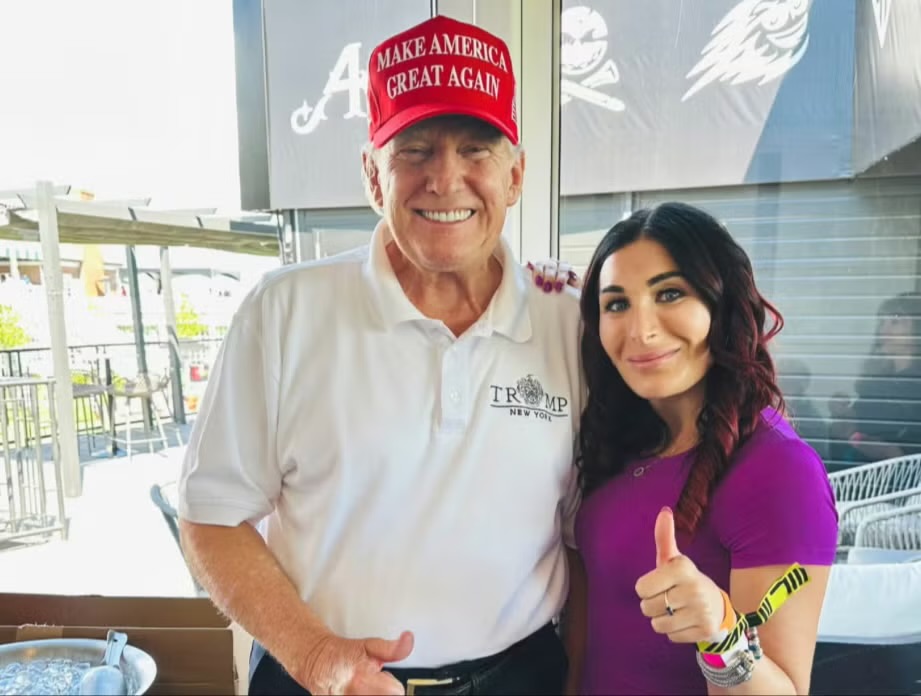


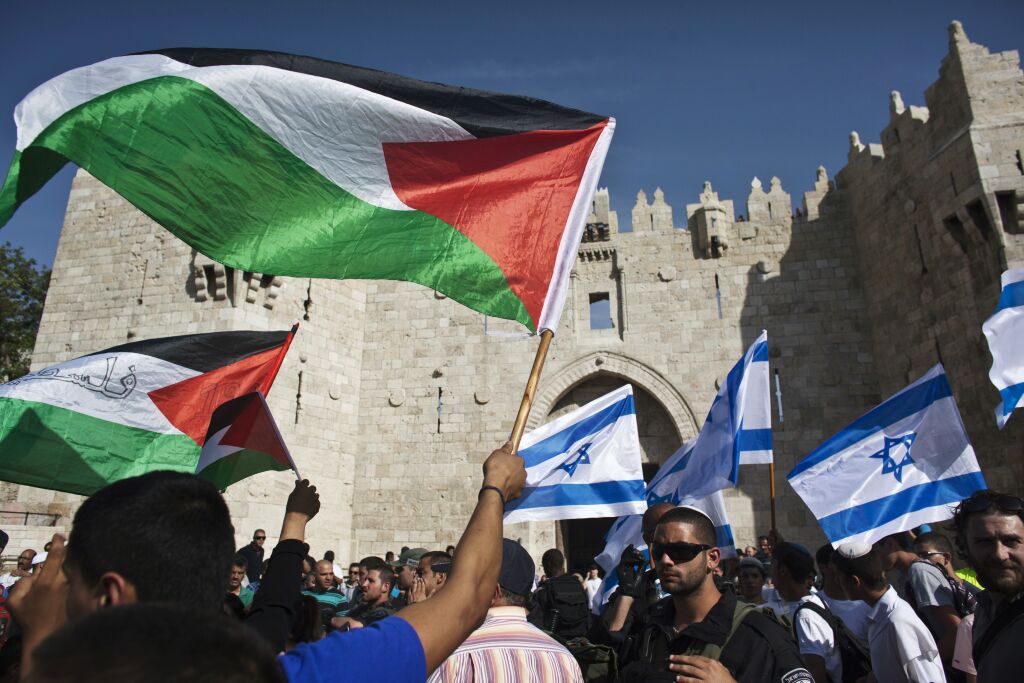

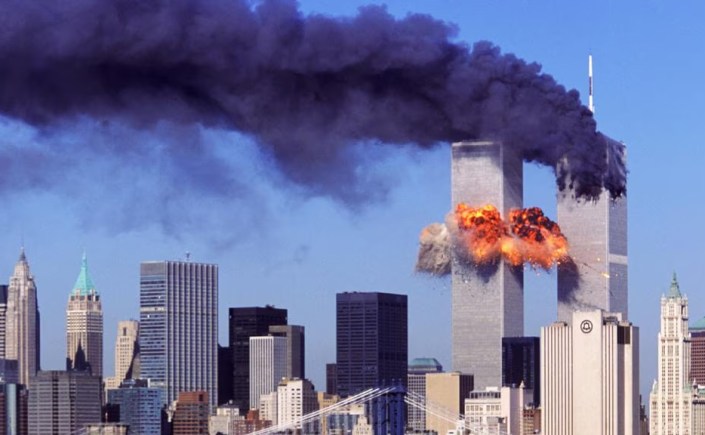




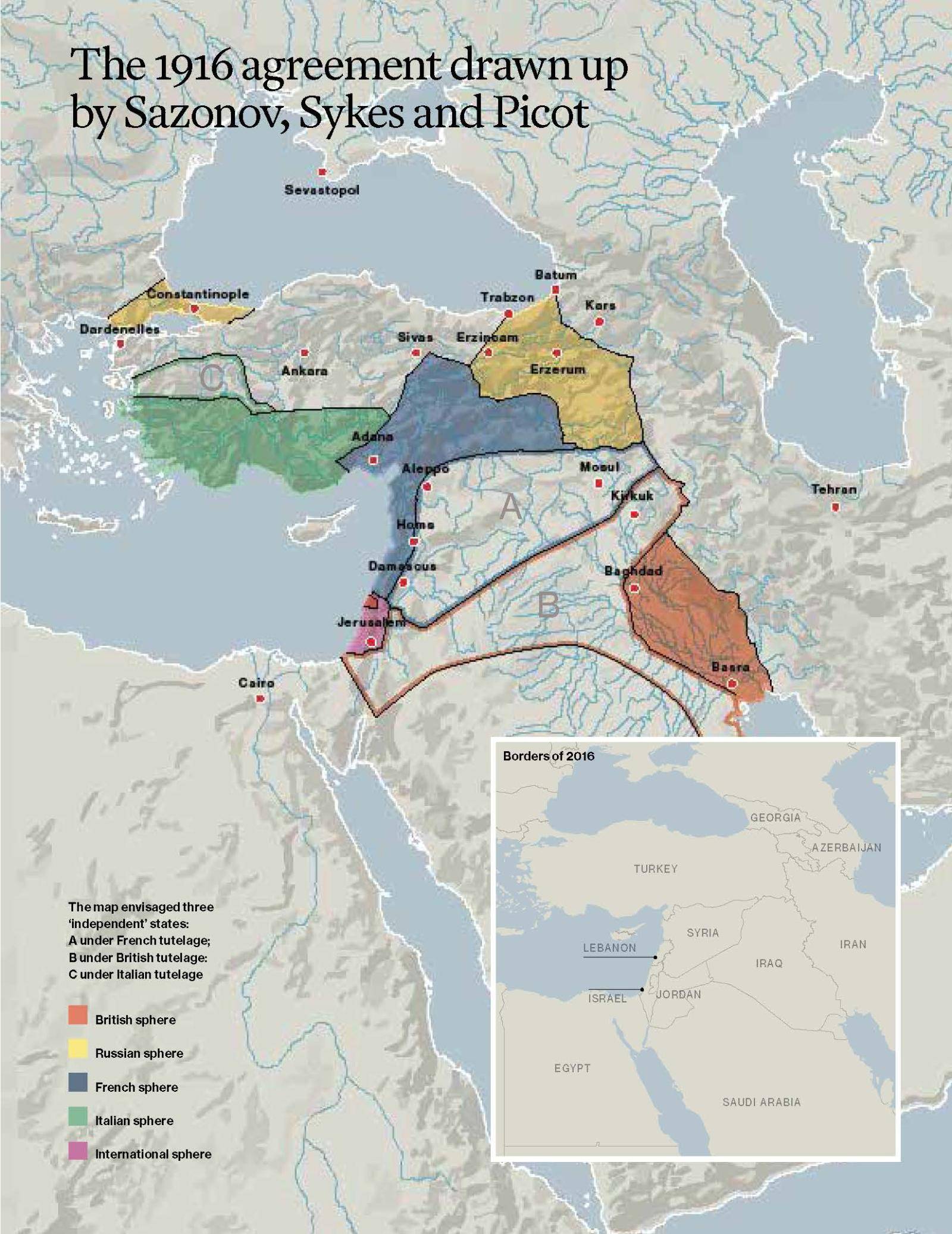
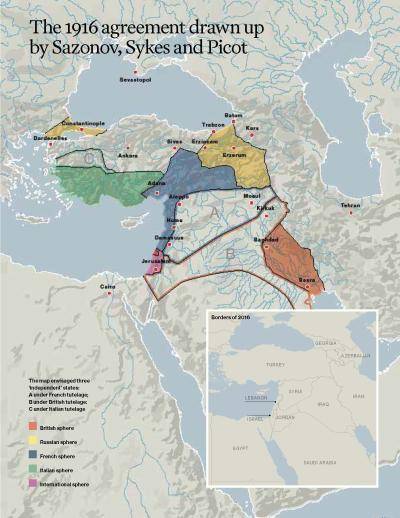


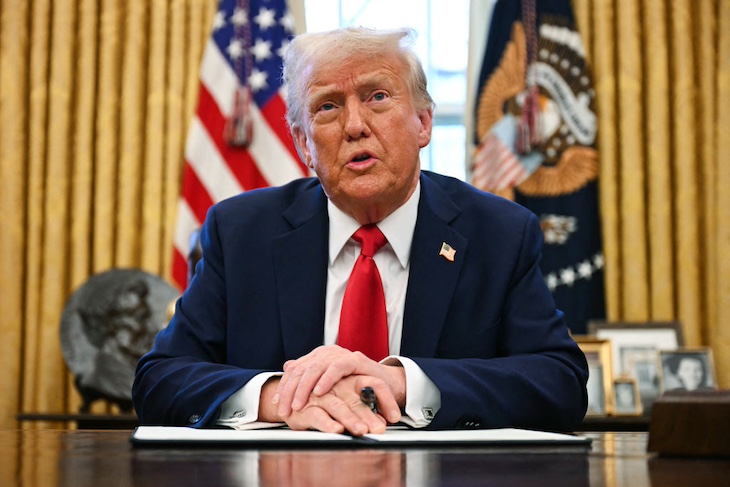
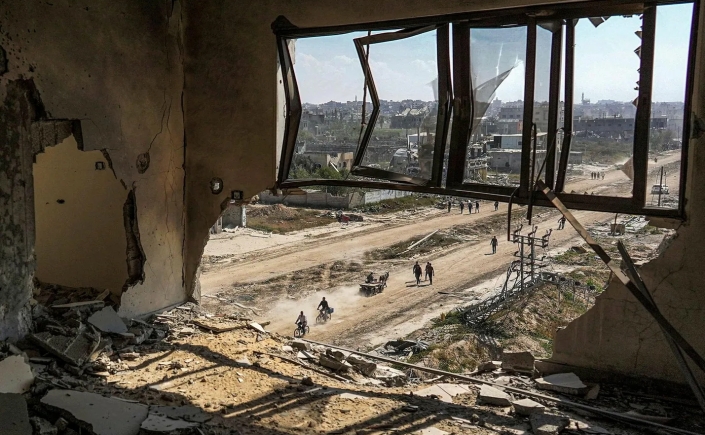





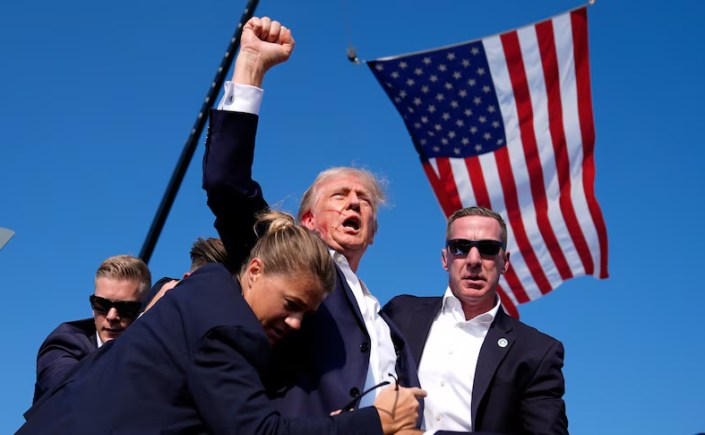

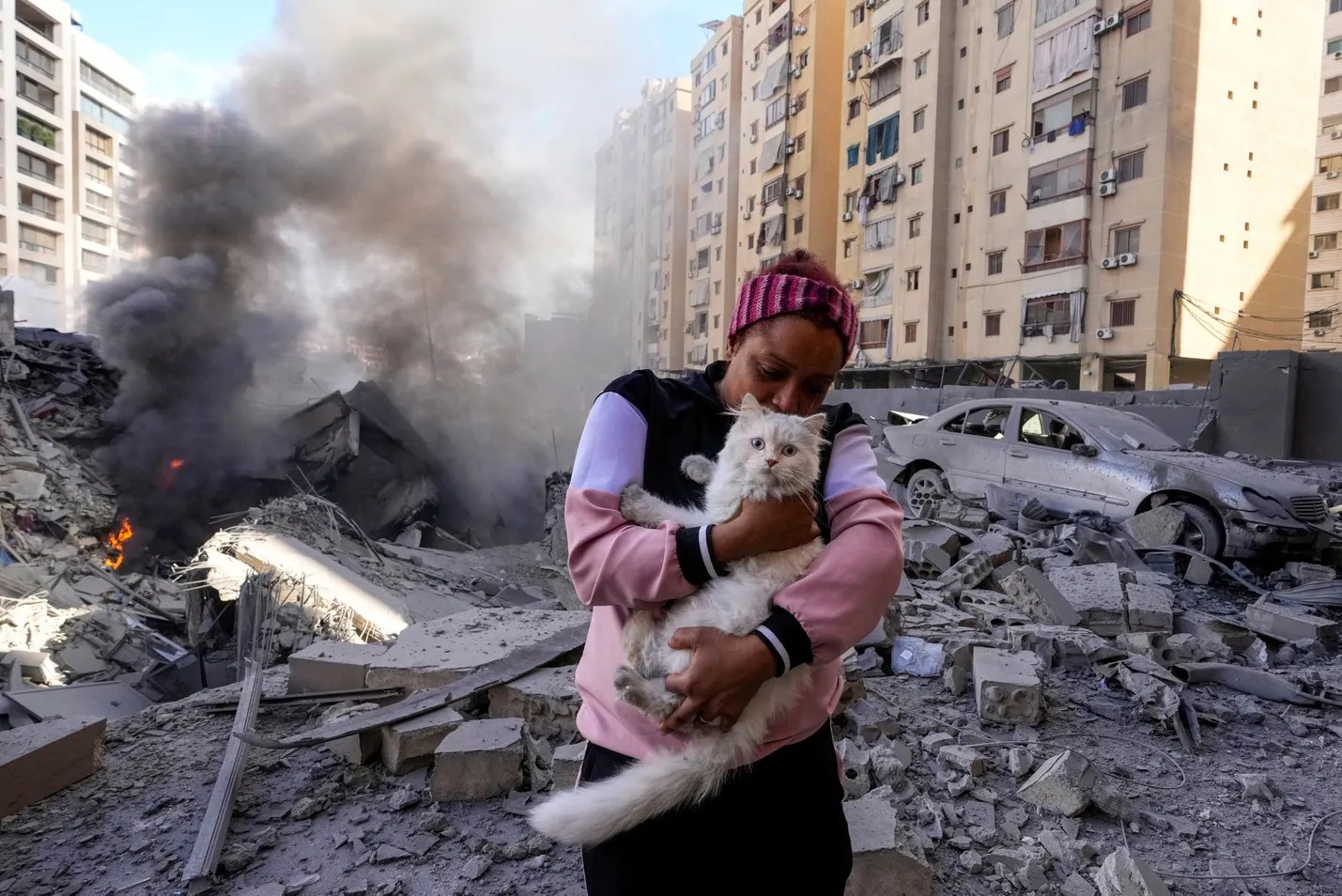

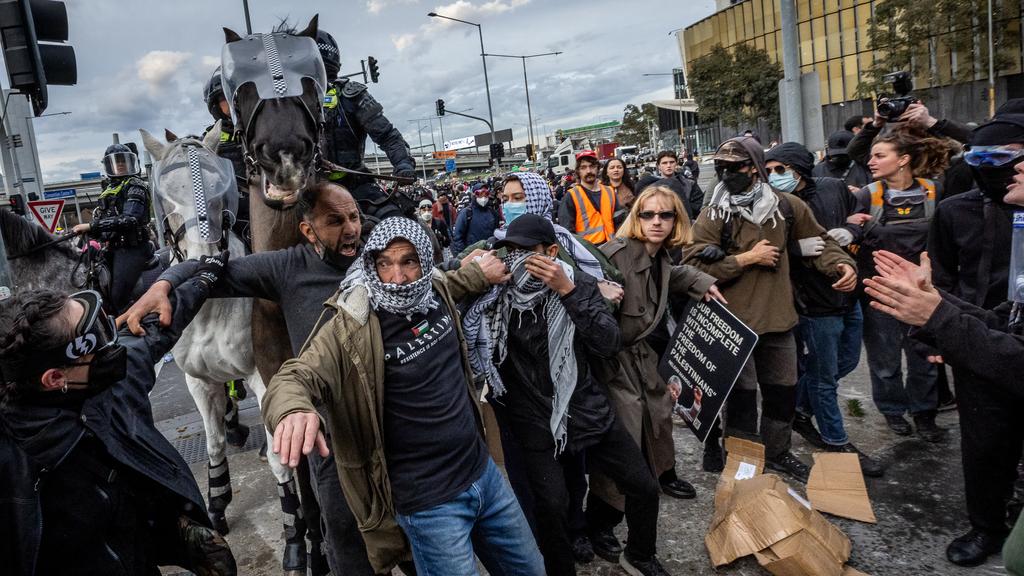

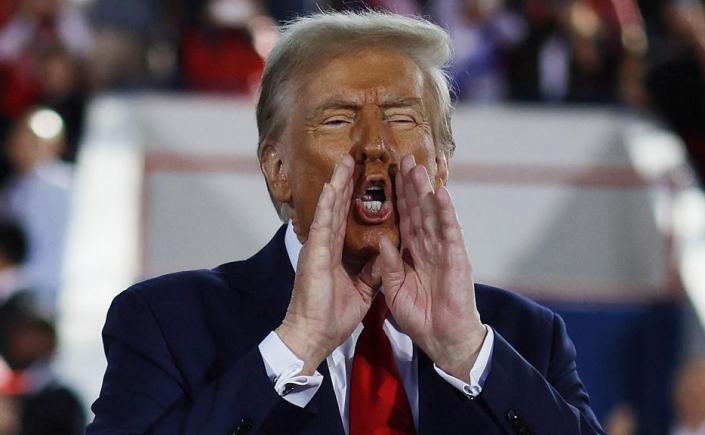
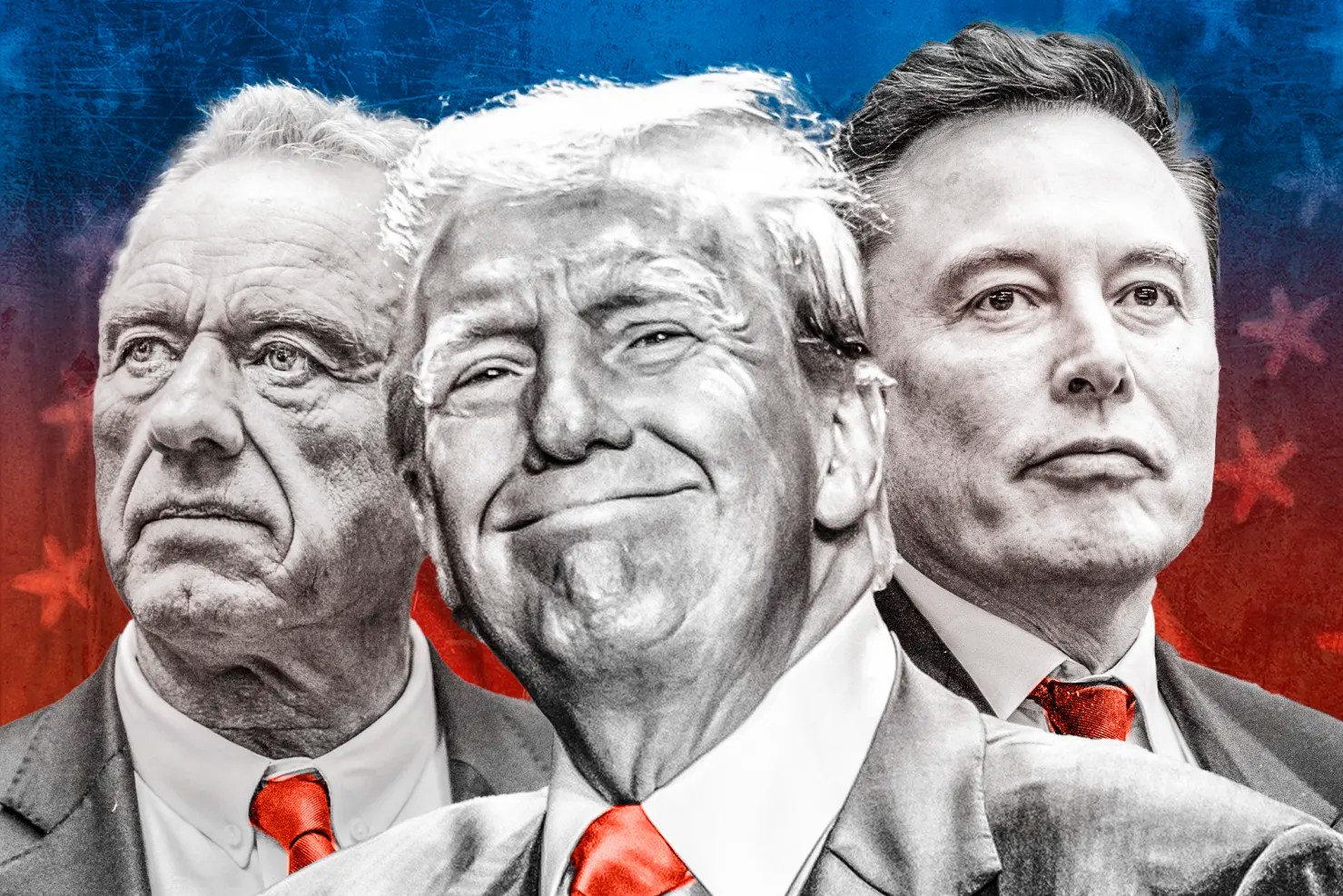



 In That Howling Infinite