Enjoy the collage of photographs from In That Howling Infinite and check out the stories.
And visit us on FaceBook: In That Howling Infinite and HuldreFolk
Visit also:
https://m.facebook.com/HowlingInfinite/
https://m.facebook.com/hf1983/
Enjoy the collage of photographs from In That Howling Infinite and check out the stories.
And visit us on FaceBook: In That Howling Infinite and HuldreFolk
Visit also:
https://m.facebook.com/HowlingInfinite/
https://m.facebook.com/hf1983/
I was inspired to write this post on viewing the video below, a harrowing picture gallery of the Bosnian War, the bloodiest but not the last of the Wars of the Yugoslav Succession. I was reminded of the iconic Lebanese poet Khalil Gibran’s poem, Pity the Nation, a sardonic and incisive take on the politics of his time and his homeland. It is chilling in its prescience with regard to contemporary politics in the Middle East and indeed, much, much closer to home on in our liberal democracies where les mots de jour, and indeed, des temps are ‘populism’ and ‘post-truth’, where allegations of ‘alternative facts’ and ‘fake news are ubiquitous and duplicitous, and where, in a milieu of fear, anger and loathing, intolerance and ignorance appear to be on the rise.
Today, in America, 1984 and The Handmaid’s Tale are best-sellers, and doubtless, as resignation and surrender sink in, Fahrenheit 451 and Catch 22 will catch on with intellectually and numerically inclined. The one is the temperature at which paper burns (“Remember, the firemen are rarely necessary. The public itself stopped reading”), the other, the mother of all vicious circles. The 22 was meant to be 18, but Joseph Heller was gazzumped by Leon Uris’ holocaust melodrama Mila 18 (which I do happen to like).
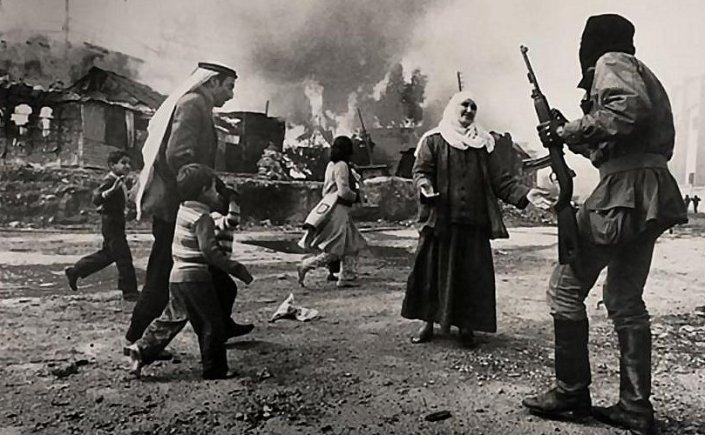
I was also reminded of a book of the same name. In Pity the Nation, his tombstone of a book about Lebanon’s civil war, and Israel’s intervention therein (inspired by Gibran’s poem, and by the fact the he has been a resident of Lebanon for going on half a century), the redoubtable British journalist Robert Fisk writes of a Lebanese doctor, Amal Shamaa: “I had to take the babies and put them in buckets of water to put out the flames. When I took them out half an hour after, they were still burning. Even in the mortuary, they smouldered for hours”. “Next morning”, Fisk continues, “Amal Shamaa took the tiny corpses out of the mortuary for burial. To her horror, they again burst into flames”. Such is the effect of phosphorous shells on mortals. Made in America, used on Arabs, by Jews. But it happens anywhere and everywhere, inflicted by anyone on everyone.
Pity the nation that is full of beliefs and empty of religion.
Pity the nation that wears a cloth it does not weave
and eats a bread it does not harvest.
Pity the nation that acclaims the bully as hero,
and that deems the glittering conqueror bountiful.
Pity a nation that despises a passion in its dream,
yet submits in its awakening.
Pity the nation that raises not its voice
save when it walks in a funeral,
boasts not except among its ruins,
and will rebel not save when its neck is laid
between the sword and the block.
Pity the nation whose statesman is a fox,
whose philosopher is a juggler,
and whose art is the art of patching and mimicking
Pity the nation that welcomes its new ruler with trumpeting,
and farewells him with hooting,
only to welcome another with trumpeting again.
Pity the nation whose sages are dumb with years
and whose strongmen are yet in the cradle.
Pity the nation divided into fragments,
each fragment deeming itself a nation.
Kahlil Gibran, The Garden of The Prophet (1933)
خليل جبران
The following song, E Lucevan Le Stelle, encapsulates all this:
“And time, ’tis said reveals its dead, and we will speak what was unsaid. How he was wrong, and I was led – his song I sing who gives me bread. It wasn’t me! I kept my head – I had my kin and kind to serve. It wasn’t me – I kept the faith. It wasn’t me who lost his nerve”.
It charts the cartography of carnage: Bali, Beslan, Gaza, Grozny, Kabul, Kigali, Sabra, Srebrenica, and other “far-away places with strange sounding names”. ”Many have perished, and more most surely will”. This latter quotation is adapted from Auden’s often overlooked masterpiece The Age of Anxiety, a meditation on a world in pain. “The bane of bad geography, the burden of topography, lines where they’re not meant to be are letters carved in stone”. “Bombs and babies, girls and guns, dollars, drugs and more betides, wash like waves on strangers’ shores: damnation takes no sides”.
Related posts In That Howling Infinite:
A House Divided – the nature of civil war
Pity the Nation
A brief history of the rise and fall of the west
Bombs and Babies
Solitudinem faciunt pacemappellant
Postscript
Lawrence Ferlinghetti, American poet, painter, liberal activist, and co-founder of the legendary City Lights Booksellers & Publishers in San Francisco, wrote the following poem in 2007 as a tribute to Gibran, and as a sad testament to the aphorism “plus ça change, plus c’est la même chose”.
“Pity the nation whose people are sheep and whose shepherds mislead them.
Pity the nation whose leaders are liars, whose sages are silenced, and whose bigots haunt the airwaves.
Pity the nation that raises not its voice except to praise conquerors and acclaim the bully as heroand aims to rule the world with force and by torture.
Pity the nation that knows no other language but its own and no other culture but its own.
Pity the nation whose breath is money and sleeps the sleep of the too well fed.
Pity the nation – oh, pity the people who allow their rights to erode and their freedoms to be washed away.
My country, tears of thee, sweet land of liberty.
Commentator and counterinsurgency expert David Kilcullen is always worth reading. Here is his assessment of the Khan Sheikhoun gas attack and the US’ “laughably symbolic” response. Contrary to the view of many that Assad did not use sarin gas, and to those who praised Trump’s newfound, muscular foreign policy, Kilcullen maintains that it was indeed Assad wot done it, that his reasons were strategically justified, that the US and its allies need much than this one viagra hit to bring the multifarious warring parties to the negotiating table, and that anyhow, the real target of Trump’s martial signalling were Chinese President Xi and The North Korean Fat Controller, Kim Jong Il. And, perhaps, as Beirut-based correspondent for The Independent, Robert Fisk suggests in his own interpretation of the events, Vladimir Putin:
Patrick Cockburn, Fisks’s colleague at at The Imdependent paints a scarier scenario. The folk who brought you the disasters in Iraq and Afghanistan are back, and are keen to attend to unfinished business:
David Kilcullen. The Australian, April 15, 2017
US President Donald Trump’s missile strike against Syria’s Shayrat air base last week, responding to the chemical attack on Khan Sheikhoun in northern Idlib province, garnered cautious praise across the political spectrum. It also highlighted the complex choices facing the US, allies such as Australia, regional players like Turkey and Iraq, and institutions such as the UN.
The key to understanding the strike, though, lies in a question that’s been somewhat overlooked: why did Bashar al-Assad’s regime need to use the nerve agent in the first place?
We should start by noting that praise for the strike can largely be explained by the extraordinarily low expectations Trump and his predecessor set for effective action on Syria. Trump’s alleged Russia ties, praise for strongmen, positive statements about Assad until days before the attack, and expressed disdain for world opinion set the bar so low that he got credit just for upholding an international norm against chemical weapons, and showing he was prepared to go up against Moscow.
His prompt response also contrasted with president Barack Obama’s failure to enforce his own “red line” after the vastly more lethal Ghouta attack of September 2013, which killed 1500 and poisoned thousands (the Khan Sheikhoun attack killed 74). When Obama called his own bluff on the red line, ceded the diplomatic initiative to Moscow and put the Kremlin in the driver’s seat for negotiations on Syria, he enabled a Russian-brokered agreement on Syria’s chemical stockpile that bolstered the regime’s legitimacy.
Far from eliminating Syria’s chemical weapons — as former national security adviser Susan Rice repeatedly claimed — that agreement left Assad’s regime with reduced but still lethal capability, including extensive supplies of chlorine gas and smaller stocks of nerve agent that it used in later attacks. As Syrians told me after Ghouta, they felt the White House was telling Assad he could go ahead and massacre his own people, provided he did it with barrel bombs and artillery rather than chemicals.
The failure to act after Ghouta so appalled some members of Obama’s cabinet that Democratic “Syria hawks” (including former secretary of state John Kerry) came out in support of last week’s Shayrat strike. Given the continued refusal by many on the left to recognise Trump as America’s duly elected President, this speaks volumes for the level of bipartisan support for decisive action on Syria.
It also highlights the comfort of many progressive interventionists (including Kerry, but also Hillary Clinton) with unilateral American use of force — provided it is sanctified by humanitarian principles such as “responsibility to protect”. All this put Trump’s punitive strike in the political mainstream, making him look positively, well, Clintonian.
The Western narrative on Assad — reinforced just this week by presidential spokesman Sean Spicer — has been that his regime is uniquely evil, uses chemical weapons simply because it can, hates its own people and just wants to burn the country to the ground.
But, in fact, Syrian use of chemical weapons in the war so far has been highly calculated and strategic. Assad’s regime, far from being blind to international condemnation, understands the severe political consequences of using chemical weapons, and only does so when its back is against the wall. Assad’s regime has shown no compunction in using nerve agents when its survival is at stake, but otherwise it mostly keeps chemical weapons as a hip-pocket emergency reserve that can be rapidly deployed when manpower is short.
Thus, the real missed opportunity of 2013 lay in a failure to understand the regime’s motive in using chemical weapons: as a last resort, when a victorious coalition of mostly secular rebel groups was threatening the eastern suburbs of Damascus, making significant gains in the regime’s heartland and jeopardising its survival. Decisive action, combining the measured use of force with a strong diplomatic push, could have forced Assad — given the dire pressure he was under — into genuine peace talks.
The Ghouta attack was not an act of unthinking evil but one of calculated desperation, and strikes against regime positions could have not only punished Assad for his use of gas, but enabled a rebel advance into Damascus that would have opened a path to negotiations. The diplomatic price for suspending air strikes would have been regime concessions in UN-led peace talks, while the international community would have retained the ability to restart strikes at any time, or impose no-fly zones to enable humanitarian corridors to protect the people.
This, in fact, was the argument that allied airpower experts made at the time, likening the situation to the NATO-led bombing in the Balkans that ended the Bosnian war, led to the Dayton Accords and halted massacres in Kosovo in 1999.
This isn’t as far-fetched as it seems. Remember, 2013 was before Islamic State emerged, before its blitzkrieg dramatically changed the game in Iraq, before the declaration of the caliphate prompted a spike in world terrorism, before Turkey’s military incursions into Iraq and Syria, and before the European immigration crisis.
In 2013, the dominant Syrian rebel factions still included secular groups, while jihadists were on the back foot. This was also before Russia’s intervention improved Syrian air defences and complicated targeting by putting Russians on to key regime sites, and before the presence of more than 1500 Western ground troops in Syria made it possible for the regime to easily retaliate. And it was before the Iranian nuclear deal of 2015 brought a flood of funds, advisers and troops from Tehran to further bolster the regime.
Against this background, last week’s strike seems almost laughably symbolic: 60-odd Tomahawk cruise missiles, launched from two US navy ships in the Mediterranean, with allied aircraft kept away from Syrian air defences, and the Russians (and thus, presumably, their Syrian proteges) given plenty of warning to get out of the way. The missiles destroyed some obsolete aircraft, killed a few regime troops, and left the airfield at Shayrat so lightly damaged that the regime was using it again within hours, even launching a further strike from Shayrat (with conventional munitions) against Khan Sheikhoun the very next day.
Kosovo 1999 it was not. But again, the key question is why Assad’s forces felt the need to use the nerve agent in the first place.
Khan Sheikhoun is a town of 50,000 on the southern edge of Idlib, a province in northwestern Syria that abuts Turkey to the north, Aleppo to the east, and Hama and Latakia provinces to the south and west. As of mid-April, apart from tiny regime enclaves at Fua and Kefraya, Idlib is almost totally controlled by a jihadist coalition led by al-Qa’ida’s Syrian affiliate Jabhat Fatah al-Sham, still widely known by its former name, the Nusra Front.
Nusra detests Islamic State (a feeling Abubakr al-Baghdadi’s organisation heartily reciprocates). But in many ways it poses a much more severe threat to the regime than Baghdadi’s group. The Nusra-led offensive in Idlib and Hama has been under-reported, but for Syrians it’s the most important event of 2017 so far.
Even as the regime recaptured Aleppo in December 2016 — with heavy support from Russian airstrikes, Russian special forces, Iranian advisers and Hezbollah militia — Nusra and other groups formed an alliance, Hayat Tahrir al-Sham, to recapture ground from Assad’s forces.
After weeks of preparation they launched a major offensive on March 21 with more than 5000 well-armed and well-organised fighters from seven rebel groups operating under Nusra leader Abu Mohammed al-Jolani. Tahrir al-Sham gathered the most capable rebel groups in Syria into a single coalition under al-Qa’ida’s leadership, pointed them directly at the regime’s weakest point and achieved immediate success.
Within days, rebel fighters pushed to within 5km of the Hama suburbs, threatening the regime’s control of a critical city that anchors its northern flank and provides access to Aleppo. They also made significant gains into the al-Ghab plain, Syria’s breadbasket, an area essential to the regime’s ability to feed Syria’s pro-government population.
Nusra’s rapid advance jeopardised Assad’s control of the economically and politically important Hama and Latakia provinces, and posed a risk to Russia’s naval and air bases to the south.
Khan Sheikhoun now sits at the base of a rebel salient that stretches from Idlib south into the outskirts of Hama city, and west into al-Ghab. As I write, this salient is being counter-attacked all along its perimeter by regime forces desperate to stem the Nusra advance, but lacking the manpower or ground-based firepower to roll back the rebels. Knocking out Khan Sheikhoun from the air would immediately collapse the rebel salient, letting the regime stabilise the front line. Unsurprisingly, doing exactly that has become a major priority for Assad.
The town’s importance was underlined by the fact that the pilot who allegedly carried out the sarin attack was Major General Mohammed Hazzouri, a Syrian air force officer commanding the 50th Air Brigade at Shayrat, and whose family name suggests he’s related to Mohammed Abdullah al-Hazzouri, governor of Hama, who was appointed by Assad in November 2016. Obviously, when you launch a gas attack using a fighter jet flown by a two-star general from the same prominent family as the provincial governor, you’re telegraphing that this is a pretty serious priority.
In fact, the town has been heavily attacked by regime forces (including earlier attacks with chemical weapons late last year and again last month) and subjected to multiple air strikes and artillery bombardments as the regime tries to contain the threat to its northern flank. Assad’s reliance on artillery and aircraft underlines his lack of ground assets: despite Russian, Iranian and Hezbollah support, his forces have their hands full consolidating control over Aleppo, trying to relieve the isolated city of Deir Ezzor in eastern Syria, and fighting on the southern front against other rebel groups.
All this indicates that the regime is again under serious pressure, that its position is far shakier than its propaganda narrative after the recapture of Aleppo might suggest, and that firm pressure now might bring renewed progress toward peace talks. But the situation today is vastly more complicated than in 2013. There are real risks to allied aircraft over Syria from Russian and Syrian air defences, and to special forces and conventional troops (there are now, according to media reporting, as many as 1500 rangers, marines and special forces on the ground in Syria) in the event of strikes against the regime.
The rebels opposing Assad today are not the largely secular forces of 2013 but rather are dominated by al-Qa’ida, while Russia has indicated it plans to further improve Syria’s air defences and has vetoed efforts in the UN for further talks on a Syrian peace deal.
To think that, under these circumstances, mere words — Secretary of State Rex Tillerson’s frosty visit to Moscow, Trump’s call for Vladimir Putin to stop covering for Assad, or ambassador Nikki Haley’s fiery confrontation with Russian diplomats at the UN — will force Putin to back away from a critical strategic relationship going back to the 1960s, or force Assad to stop throwing everything at an attack that threatens his survival, is fantasy. If the Shayrat strike is to be more than the latest useless symbolic gesture, it needs to be followed by a fundamental change in strategy.
Until a week ago, Trump’s Syria policy was to downplay any call for regime change, acquiesce in the permanence of Assad’s regime and collaborate with Putin against Islamic State. As recently as April 5, the day after the Khan Sheikhoun attack, Tillerson was asserting that Assad was here to stay.
This was bad policy: not just on moral or political grounds (Assad has killed 10 times as many Syrians as Islamic State, and most US partners both inside Syria and throughout the region see removing Assad and ending the war as the top priority bar none) but also in practical military terms.
Assad lacks the military capacity to stabilise Syria: he’s losing ground in key areas, controls less than 23 per cent of the country, has no prospect of reunifying Syria, presides over a patchwork of local militias and thuggish warlords with purely nominal allegiance to his government, and couldn’t survive six months without external support.
The use of sarin gas underlines how desperate his situation is. Even if it were morally and politically possible to work with his regime for the greater goal of destroying Islamic State, the man simply can’t do the job.
More fundamentally, the goal of destroying Islamic State may not actually be the higher strategic priority, at least not in Syria. Unlike Iraq, where recapturing Mosul and crushing the caliphate is a key first step toward stabilising the country, in Syria the greatest threat to stability is Assad himself.
For most Syrians I’ve spoken to, the idea that anyone engaged in the uprising since 2011 would sit down again under Assad is ludicrous, and many have told me the biggest winner so far isn’t Islamic State but al-Qa’ida, through its Nusra affiliate.
From a wider strategic standpoint, the other key audiences for the Shayrat strike were Chinese leader Xi Jinping (who was dining with Trump as the strike went in) and North Korean leader Kim Jong-un. Using the Syria strike to telegraph a zero-tolerance policy for weapons of mass destruction, administration spokesmen talked of a new joint effort with China to rein in North Korea’s nuclear adventurism. For a President who spoke blithely on the campaign trail about Japan and South Korea acquiring their own nuclear weapons to deal with Pyongyang, this represents a big step forward.
More importantly, the move of the USS Carl Vinson aircraft carrier battle group toward Korean waters to deter further missile launches, and the deployment of US air defence systems and special operators in South Korea, showed this was not just talk.
The choices facing President Trump on Syria today are vastly more complex than those president Obama failed to deal with in 2013. But his change of policy after the Khan Sheikhoun attack — perhaps prompted by the presence in his inner circle of experienced strategists such as Secretary of Defence James Mattis and National Security Adviser HR McMaster — shows he’s at least capable of learning and adapting.
Along with the change on Syria policy and the move to deter North Korea, last week’s strike was rapidly followed by shifts in Trump’s tone on China (evidently no longer a currency manipulator), NATO (apparently no longer obsolete) and Russia (it would have been nice to co-operate, but that’s not possible while Russia continues to back Assad). Don’t look now, but all this seems to be pushing the Trump presidency back toward something resembling relatively mainstream US policy in the tradition of presidents Bush, Clinton and Reagan.
Whether you think that’s good or bad probably depends on your view of America’s role in the world, and the longstanding propensity of US leaders to use unilateral military force. But symbolic as it was, the Shayrat missile strike may also open the door to new thinking on Syria — and after six years, half a million dead, dozens of cities destroyed and millions displaced, that can only be a good thing.
David Kilcullen is a former lieutenant-colonel in the Australian Army and was a senior adviser to US general David Petraeus in 2007-08, when he helped to design the Iraq war coalition troop surge. He also was a special adviser for counterinsurgency to former US secretary of state Condoleezza Rice. He is the author of Blood Year: Islamic State and the Failures of the War on Terror (Black Inc).
See also, a prior post featuring David Kilcullen: One, Two, Three, What Are We Fighting For?
I fought in the old revolution
on the side of the ghost and the King.
Of course I was very young
and I thought that we were winning;
I can’t pretend I still feel very much like singing
as they carry the bodies away.
Leonard Cohen, The Old Revolution
‘Thermidorian’ refers to 9th Thermidor Year II (27 July 1794), the date according to the French Republican Calendar, when Robespierre, Danton and other radical revolutionaries came under concerted attack in the National Convention, resulting in their downfall and execution.
Grim travelers butt each other to establish dominance. One lot plays Danton to another’s Robespierre, with the moderate Manon Roland and her Girondins trampled underfoot in the melee. On the scaffold, Madame Roland is said to have exclaimed “O Liberté! O Liberté! que de crimes on commet en ton nom”. Maximillian Robespierre destroys his erstwhile friends and slaughters thousands, precipitating the Jacobin meltdown as the ascetic and purist Marat is murdered in his bath. Robespierre and Saint-Just are guillotined by those who believe “the Terror” had gone too far, soon to be followed by fellow Jacobins Georges Danton and Camille Desmoulins. [Hilary Mantel’s excellent door-stop of a debut novel, A Place of Greater Safety, tells the story of all these revolutionaries. The bones of most of them rest amongst those of tens of thousands of others in the famously macabre Catecombes de Paris, a “tourist” attraction I highly recommend]
I would argue that this “Thermidorian Reaction” – the ostensibly “better angels of our nature” (Abraham Lincoln said that) reasserting themselves – is a rare bird indeed. Inevitably, things get worse, much worse, before they get better. As WH Auden observes in his sombre eclogue The Age of Anxiety, “many have perished: more will”.
Revolutions are unpredictable. They never run in straight lines. They reverberate, the shockwaves expanding and impacting on their vicinity, and way beyond. The shots ricochet, like drive-bys and crossfires, and you never know who will be hit, where the bullets will come to rest, and who will be damaged or destroyed. Many people will be liberated, and many enslaved. Many peoples will prosper, and many, many will perish. As TS Elliot wrote, “between the idea and the reality falls the shadow”.”
Stalin seizing Lenin’s crown as the father of the revolution lay dying. Trotsky launching the Red Army against the sailors of Kronstadt whose guns had heralded the fall of the Romanovs, and who then fought to last man against their former comrades. Stalin and Trotsky wrestling for control of party and power as the old Bolsheviks disappeared into the gulags and the execution cells. Stalin’s long arm putting an ice pick through his rival’s skull in Mexico decades later. Trotsky knew a thing or two about “permanent revolution. See Red and white terror – the Russian revolution and civil war and Stalin’s Great Terror
Adolf Hitler making his move against the corrupt and sybaritic Rohm and his Brown Shirt bully boys, a threat to his control of party and state, in the “Night of the Long Knives”, and setting the course for a Germany’s slow spiral to damnation with the plausible deniability of the similarly dramatically named Kristalnacht. The German language has surely given the world ominous words of iron, including Nacht und Nebel; Storm und Drang; Weltanschauung, Blitzkrieg and Schadenfreude – none of them boding well for tyranny’s unwelcome attentions.
It is a zero-sum play book well-thumbed by latter-day revolutionists like the Baathists Saddam Hussein and Hafiz Assad in their relentless and merciless accession to power in Iraq and Syria respectively, like the cruel and vengeful but infinitely pragmatic regime that has ruled Iran’s Islamic Republic for these past forty years, and the kleptocratic dictators who lord over much of Sub-Saharan Africa. In the manner of revolutions past and present, each one has “devoured its children”, harrying, jailing, exiling and slaughtering foes and onetime allies alike.
The sad reality in so many countries is that when the going gets tough, the mild get going, and the hard men ride roughshod over their people.
Vengeful, vindictive. Merciless. Unforgiving and never forgetting. Do no deals. Take no prisoners. Give no quarter.
Also in In That Howling Infinite: A Political World – Thoughts and Themes
Danton, Robespierre, Desmoulins, and Manon Roland
Why do countries like ours’ and those of Western Europe appear to have settled into peaceful political processes that manage a degree of continuity and stability, and others do not?
In countries where modern institutions are weak and poorly developed, and a democratic or participatory political culture based on consensus and power sharing has not had the time or the political, social and economic conditions to develop, older loyalties and obligations trump allegiance to the state and nation and respect for, or at least, acceptance of its institutions and processes. Countries like Syria and Iraq, and much of Africa, were in reality modern contrivances superimposed upon the wrecks of old empires. The cartographical design may have been determined by the presence of natural resources in such and such a place, or the location of a port or river, highway or mountain pass. And often, in wide tracts of desert or jungle, mountains or plains, lines were simply on drawn on maps from point to arbitrary point, sometimes with the agreement or collusion of a rival power or friendly local despot.
In lands such as these, loyalty and allegiance to family, clan, tribe, religious sect, and ethnic group held precedence over the fabricated state and its often transplanted institutions and processes. Patronage, nepotism, corruption, and a network of mutual favours and obligations smoothed the paths of people seeking or seizing benefits or appointments. Old ways were tried and true, compared to aspirations or pretensions to fair and open governance. Political parties which emerged on ostensibly western lines were no more than parochial political machines, whilst gerrymandering, branch-stacking, vote-rigging and even violence ensured electoral outcomes that favoured the powers that be.
The culture of dependence and obligation that characterized pre-modern societies in the West is still the norm in much the world. And it is replicated throughout society, from the humble street-vendor to city hall. Need a license? A school scholarship? A better job? A party post? Want to avoid a traffic fine? A law suit? A jail sentence? Money changes hands. Deals are done. Debts are incurred. And social and political relationships are established. And thus, the creaking wheels of bureaucracy and governance turn, driven by patronage and payola, often greased with cash and the threat or actual use of violence encourages the emergence of and tolerance for the zaim, the strong leader. That leader develops a sense of identification with the country – not in the sense of service, but that of ownership. Family, clan, kinship and sect obligations and entitlements cement the zaim – literally “boss” – in place, whist patronage and brutal security forces beholden to the elite ensure that he is not challenged. Hence the mukhabarat (literally, intelligence) keep watch on dissent and protest.
Once in power, it can be difficult for the autocrat to vacate his seat. Family interests, party, sect and ethnic ties, and economic imperatives, and fear of retribution should the patriarch depart, render it dangerous for what amounts to a family business to relinquish the keys to the kingdom, and the levers of power. As they say, he who rides a a tiger never can dismount. Hence in countries as diverse culturally and geographically as Syria, Zimbabwe, the Central African Republic, the central Asian ‘stans of the former Soviet Union, and North Korea, the “dear leader” is strongly encouraged to hang in there by his nearest and dearest.
This is indeed how societies and polities evolved and developed during Europe’s so-called Dark Ages in the wake of the collapse of the western Roman Empire. When authority fails, its place is taken by force. Today, we see it in many places around the world, especially in the Middle East and Africa, where social order is under constant attack from paramilitary thugs and religious fanatics, and violence is endemic. Any large, diverse society includes individuals who do not conform to the law. And it is said that some 10% of us have the potential to become psychopaths. When that society is in a state of breakdown, violence and the resort to force become widespread, these come into into their own as chieftains, warlords, robber barons, and pirate kings rule their parochial roost, commanding mercenaries, militias, and private armies. As the Bard wrote, “Take but order away and hark what discord follows”. Violence breeds violence, requiring a corresponding use of force by the state to maintain order. And if the initial, brutal crackdown fails to stifle dissent and rebellion, to borrow from Shakespeare again, the dogs of civil war are let lose, and all hell breaks loose. The Bard of Avon had his Henry declaim “Cry Havoc”, this being an old English war cry that signaled no quarter, and ensuing rape and pillage.
On the marches of civil wars, the bleeding edges of nations and empires collapse in on themselves like stars to create black holes where roam robber bands, death squads, militias, and drugged and indoctrinated child soldiers deal out death and destruction whilst trading variously in oil, diamonds, heroin, grass, guns, and people, extorting dollars and gold from locals and from foreign donors. Quantrill’s Raiders and Jim Lane’s Red Legs cut a swathe through “bloody Kansas” and Missouri. And other times and places have seen their sad share of jaywalkers and bushwhackers. Swedish and German mercenaries marched back and forth across a devastated Mitteleuropa during the Thirty Years War, just as Reds and Whites ranged and ravaged through Byelorussia and Ukraine during the civil war that followed the Russian Revolution. The dying decades of the Twentieth Century saw this in Bosnia, Chechnya and Afghanistan. And it prevails today in Syria and Iraq, Libya and Yemen, Afghanistan and Africa.
And so, and as clear and present example, to suffering, sad Syria.
Bashar al Assad inherited this patrimony from his father Hafez. He was a reluctant ruler, not expecting to take charge. The heir apparent was his brother, a fast-living hedonist who died in a car crash. He did endeavour to bring about gradualist change in Syria. I saw changes whenever I visited Damascus.
This was not to suggest that Syria was an Arab utopia. There was a large divide between town and country, exacerbated by a a long and ongoing drought that forced many rural folk to migrate to the rundown fringes of the major towns, adding to pressures on resources, housing and employment. Whilst in practice a secular, multi-faith and multi-ethnic society, there was a cultural and spiritual divide between the conservative, Islamic rural communities and a more secular-minded urban middle class. The country was ruled for near on fifty years by a family and elite drawn from a particular, minority sect, which sat atop a pyramid of nepotism, patronage and corruption. And that rule was upheld by a cruel and efficient secret police and military special forces that kept a proactive watch on dissent. There was definitely an air of anxiety and caution amongst those who aspired to a more liberal Syria, with the midnight knock on the door, arbitrary arrest, and detention in one of the regime’s many political prisons being a fact of political life in this secular, socialist country.
But on the other hand, Syria was almost self-sufficient in food and oil products. It had well resourced and efficient health and secular education systems, and a flourishing arts scene. As a nation, Syrians were a tolerant and welcoming people, and within the bounds of religious propriety and political caution, freedom of worship, of expression, of lifestyle, and even of discreet gender preference were given. In the narrow streets of the Old City of Damascus, Thursday night, the eve of the Muslim holy day, was a fairy land of lights and laughter. Courting couples hand in hand, girls in hijab and uncovered alike; families promenading in their “Sunday best”; young goths with spiky hair and black makeup, short skirts and tight jeans. Busy stalls and sweetshops, crowded, street-side cafes – the famous Damascene maqha – or coffee shops.
Foreign observers, friendly and hostile, have noted how well-dressed and cashed-up the refugees flooding into Eastern Europe appear to be. The reality is that these are Syria’s middle class. By local metrics, they were comparatively well-off, and had a strong work ethic and a high wages to savings ratio. These were, and are Syria’s future.
Syrians were genuinely proud of their country, of its status as a centre of Arab culture and Arab nationalism, and of its history. And of its priceless archeological heritage. The Roman cities of Apamea, Palmyra, and Bosra; the Crusader castles of Krak de Chevaliers and Salah ud Din; the Byzantine monastery St.Simeon; the Umayyad mosques of Aleppo and Damascus; the Christian villages of Maaloula and Saidnaya where Aramaic is still spoken; the ancient suqs of Aleppo and Damascus. Syria was a historian’s idea of heaven.
When the revolution broke out, sympathetic commentators wondered whether Bashar would be “Hammersmith Man”, a reference to his former career as a ophthalmologist in London, where he lived for many years with his gorgeous, well connected, merchant banker wife and children, or “Hama Man”, recalling his father’s brutal crackdown on an Islamist revolt in that city in 1981 where in some thirty thousand souls perished at the hands of security forces. In the end, Junior was swept along by the elite’s blinkered but well-tried survival mechanism – force and fear.
Back in the heady days of the Arab Spring, Syrians from all ethic, religious and political groups hoped for a loosening of authoritarian controls. But the regime resorted to form and to repression. Sectarian militias murdered and mutilated initiating a cycle of bloody vengeance as a popular, peaceful and largely secular movement became militarized, polarized, in many areas, Islamized, and as internal and external interests with varying political, religious, and geopolitical motives became involved and embroiled against the regime, against the rebels, against each other. Regular forces, militias, warlords, village defense forces, Kurdish separatists, foreign fighters, mercenaries, foreign air forces, undercover operatives. A war of all against all, as Thomas Hobbes once said. To paraphrase Mark Twain, history might not repeat itself, but it certainly rhymes.
And now, whilst most of the antagonists have been herded by their foreign patrons towards a crowded and reluctant negotiating table, it all seems like a terminal case of “too little too late”. Syria is in ruins, some half a million Syrian are dead, and countless more maimed.and it its population is scattered, weighing heavily on the consciences and economies of neighbours and of the European Union. Syria as a nation state may in fact be no more. There is talk of partition, and a redrawing of the map that emerged from the peace treaties of The Great War. And the odds are that with Russian military support, Bashar al Assad, bete noir, pariah, lame-duck to those governments who wished him gone, and his Iranian and Hizbollah allies, are going to win the civil war.
He may or may not succeed. Right now, his forces are pushing back the rebels, writing himself a pivotal part in the peace. Right now, the parties talk and walk whilst the killing continues, and the diaspora grows. International forums are but talking shops, stages for self-righteous and self-aggrandizing posturing and stotting, acrimonious gatherings that appear to function in a time bubble that is remote from the brutal reality. If and when the guns fall silent, Bashar may or may not be able to put the country back together. He may or may not be able to recreate the multi-faith, modernizing, cosmopolitan society that existed before the war. He may or may not be able to disarm the hundreds of militias and private armies that have proliferated and even prospered during five years of chaos.
He will need billions of dollars and the help and goodwill of many nations to rebuild the towns and cities, and to restore the shattered archeological heritage. He will never bring back the dead, or the skilled and educated exiles who will chose to make new lives in foreign places of greater safety. Nor will he be able to repatriate the thousands of plundered artifacts and treasures that have disappeared into the international black market. He will not be able to heal the wounds, give solace to the bereaved, assuage the grief, counsel and treat the trauma, and divert the desire for vengeance into the promethean labour of reconstruction.
Putting his own words into the mouth of a conquered British chieftain, an old Roman once said, “solitudinem faciunt, pacem appellant” – they make a desert and they call it peace.
See also:
Its been a diverse year In That Howling Infinite. We have traveled, to quote Bob Dylan, “all the way from New Orleans to Jerusalem” – and to many other places in between. Vikings and Roman legionaries; Bob Dylan, Jackson Browne and Bruce Cockburn; Britain in the ‘forties and Paris in the ‘fifties; America, the Levant, and even Wonderland. By Year’s end a million souls will have journeyed to Europe from the war-ravaged lands of the Middle East, and my final posts for the year contemplate what it might mean for refugees who find to safe haven in Australia.
Here is a retrospective.
The year began with a short piece on recent archeological discoveries in Jerusalem that strongly suggested that the Via Dolorosa that Jesus trode on his final journey to Golgotha was the wrong route, and that instead, it began just inside of the Jaffa Gate. I took a light-hearted look at the Jerusalem Syndrome, a mental condition involving the presence of religiously-themed obsessive ideas, delusions and other psychoses triggered by a visit to The Holy City.
I read but one piece of fiction this year – a sad admission from a lifelong bibliophile – but this one book was probably one of the best I have read: The Incorrigible Optimists Club , winner of the prestigious Prix de Goncourt, by Jean Michel Guenassia. It is set in Paris’ Rive Gauche, as the ‘fifties gives way to the ‘sixties; as the crooners makes way for rock n’roll; as the Cold War divides a continent, sending dissidents and refugees fleeing to a safe haven in Paris; as the Algerian war divides and destroys families: and as the seeds of ‘les evenments de Mai 1968’ are sown in the hearts and souls of France’s young people. It is a coming of age book, of young hopes and fears, love and loss, a book about writers and reading, and the magic and power of the written word in prose and poetry.
March saw the passing of my old friend Dermott Ryder, chronicler and luminary of the Folk Music revival in Sydney in the early ‘seventies. Dermott’s Last Ride is my tribute to him. And April was a month of anniversaries and remembrance. Forty years since the outbreak of the Lebanese Civil War, and the centenary of the landings of the ANZACs at Gallipoli. Pity the Nation takes its title from Robert Fisk’s tombstone of a book on the long war; and he had taken it from a poem written in 1934 by Khalil Gibran, Lebanon’s most celebrated poet, a poem that was both a prophetic testament and a testimony of times to come: “Pity the nation divided into fragments, each fragment deeming itself a nation”. The Watchers of the Water is a song about Gallipoli sing by a Turkish solder.
May saw two diverse pieces of social history. The Spirit of 45 takes personal perspective of British filmmaker Ken Loach’s documentary of the excitement and optimism that followed the Labour Party’s election victory at the end of World War II. This laid the foundation stone for the British welfare state. Bob Dylan’s Americana discusses the meaning and significance of the lyrics and the imagery of Dylan’s early ‘eighties masterpiece Blind Willie McTell, a harrowing journey through America’s dark heart.
In June, we visited Yorkshire and in London, conjuring up memories and historical connections. Harald Went A Viking is a saga about the first of two kings to die on English soil in the late summer of 1066, and the adventures that took him from Norway to Constantinople and Jerusalem and finally, to Yorkshire. Roman Wall Blues takes its title from WH Auden’s poem about a homesick and grumpy legionnaire on Hadrian’s Wall, and contemplates the lives of the ethnically polyglot soldiery who defended the Empire’s borders. And June saw another famous anniversary, the Bicentennial of the momentous and bloody Battle of Waterloo. The Long Road to Waterloo prefaces a song for the men who, after twenty six long years of war, never came home.
In July, controversy erupted in the Land of the Free over the flying of the Confederate Flag in states that were once part of Old Dixie. The dead hand of the Civil War reached out and touched the hearts of Americans and their friends throughout the world in the wake of yet another mass shooting. This time, a young man gunned down worshippers at prayer. That the victims were folk of colour, and the shooter, a young white extremist, reopened wounds that have never really healed. Rebel Yell surmises that The South will always be with us, in our thoughts, in our historical memory, in our art and literature, our books and films, and our favourite music.
September marked the one hundred and fiftieth anniversary of the publication of Lewis Carroll’s timeless, fabulist masterpiece Alice In Wonderland. Go Ask Alice, I Think She’ll Know reproduces Australian critic Peter Craven’s masterful celebration of Alice 150. The title belongs to the mesmerizing Grace Slick of Jefferson Airplane who cut through to the rabbit chase channeling the long-gone Lewis in a psychedelic musical masterpiece.
On an infinitely sadder note, Ruins and Bones is a tribute to the memory of Syrian archeologist Khaled Muhammed al Asaad, murdered by ISIS in August 2015, and of Palmyra, the ‘Pearl of the Desert’.
Allende’s Desk and Osama’s Pyjamas is a brief commentary on the extension of American military power and the pathology of demons and demonization. Tales of Yankee Power looks at American foreign policy during the 1980s from the perspective of the songs of Jackson Browne and Bruce Cockburn.
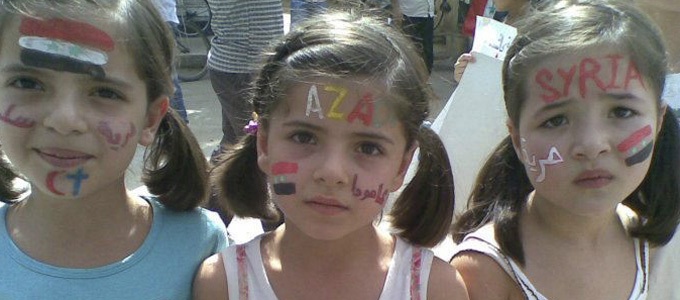
November’s Children of the Revolution looks at the events that led up to the beginning of the Syrian Civil War, and the early days before it became too dangerous to gather on the streets, when men, women and children would parade in public places, waving the flag of the old Syria, the one that flew before the Assad clan seized power in 1966. Canny camera men could take media-friendly shots of photogenic little girls in face makeup looking sad, vulnerable and defiant. Those days of hope are long gone.
A highlight of this past year has been my work as a volunteer with the Humanitarian Settlement Services programme. The HSS’ mission is to assist newly arrived refugees to settle in Australia. In No Going Home, I endeavour to imagine the refugee journey. Hejira is a sequel of sorts and, indeed, a happy ending.
Happy New Year to these prospective New Australians, and to all my readers. May 2016 be fortunate and fulfilling.
I finally broke into the prison,
I found my place in the chain.
Even damnation is poisoned with rainbows,
all the brave young men
they’re waiting now to see a signal
which some killer will be lighting for pay.
Into this furnace I ask you now to venture,
you whom I cannot betray.
Leonard Cohen, The Old Revolution
The Syrian civil war broke lose in March 2011, two months after the events in Tahrir Square, and one month after the fall of Mubarak.
Amidst the tumult and media hype of the Arab Spring, it was as if the distant drums had suddenly hit the volume switch. In the dusty border town of Dara’a, just north of Jordan, local kids wrote on a wall: “The people want the regime to fall”. The words had been repeated from Tunisia to Egypt, from Yemen to Bahrain. It was the cry of the revolution. The local governor decided to come down hard. The young people, all under 17, were thrown in jail. The punishment stunned the town, and suddenly, Syria, progressive, diverse, proud, beautiful, but authoritarian Syria greeted the misnamed Arab Spring.
The young men’s families and friends weren’t having any of it. It is said that in broad daylight, dozens of young men pelted a poster of a smiling President Bashar Assad; a statue of the Bashar’s late father and predecessor Hafiz Assad was demolished; and official buildings, including the HQ of ruling Ba’ath Party’ and the governor’s office, were destroyed. “There is no fear, there is no fear, after today there is no fear!” hundreds of men chanted in shaky mobile-phone footage.
Over that weekend, security forces opened fire on marchers. This was the regime’s well tried negotiating technique. But Assad responded immediately, sending a high-ranking delegation to deliver his condolences to the families of the dead. The governor was sacked, and the boys released.
So far, so “I mentioned the war but I think I got away with it” But the die had been cast. The demonstrators made demands the regime was unwilling or unable to meet. And the rest is tragedy.
I am not about to retell the story of the Syrian revolution. It is still being written, and as yet, there is no ending. Only more blood. As I write, well over three hundred thousand souls have perished (soon, it will overtake the butchers bill of the Spanish and American Civil Wars), and tens of thousands have disappeared into prisons and oubliez. Millions have been displaced within the country; millions have sought shelter in neighbouring countries; and at least eight hundred thousand have taken to the roads of Central Europe.
But I will quixotically hark back to just before events reached the fork in the road, to when there was an outside chance that Syria could avoid the chaos and carnage that was besetting other children of an Arab Spring that was turning into a bitter winter.
To the days before The Fall, before the revolution became weaponized and islamized, and demonstrators danced together in the streets, earning the intifada the short lived sobriquet ‘the Dabke Revolution’, named for the circle folk dance popular throughout the Middle East and the Balkans.
The days before the slaughters began. First by the forces of regime, led by Bashar’s brutal brother Maher and his notorious Fourth Armoured Division. Then by the thuggish Alawi militia – the Shabiha, or “ghosts” or “shadows”, a double-edged meaning alluding to their underworld origin and methods, and also to the fact that they literally turned people into ghosts. And then, in reciprocal ferocity, by opposition militias that grew and proliferated, fought and died, divided, and divided again, and embraced a jihadi creed, sowing the dragon’s teeth that evolved into Jabhat an Nusra and Da’esh.
The days before it became too dangerous to gather on the streets, when men, women and children would parade in public places, waving the flag of the old Syria, the one that flew before the Assad clan seized power in 1966. Canny camera men could take media-friendly shots of photogenic little girls in face makeup looking sad, vulnerable and defiant. When the picture that is the featured image of this blog was first published in Al Jazeera in early 2011, I was both enchanted and inspired. I immediately started using it, with acknowledgements, in my publications and postings. When more and more of these images appeared, I used them too. But I was becoming a tad suspicious. The lasses looked too clean, too cute, and indeed, many actually looked alike. The photographers’ daughters, perhaps, or those of friends. Were they for-real or where they posed? I guess I will never find out.
Needlessly to say, as the rebellion morphed into harrowing civil war, such images disappeared, and in their place, we saw destruction and carnage, and the broken bodies of little girls and boys slain by bomb and bullet, hardship and hunger. Now, as families were forced to abandon their homes and make their way to the borders, and thence, into Jordan, Lebanon, and Turkey, and finally, into Europe, we see children staggering on dusty roads, carried piggy back by exhausted fathers, pushed in strollers, scorched by the sun, soaked by the rain, and frozen by the snow. And we see little Aylan on his golden beach, a Kurdish toddler now a symbol of all the drowned babies of the Mediterranean and the Aegean Sea.
Photogenic children no more. Just victims, survivors, lost souls.
I fought in the old revolution
on the side of the ghost and the King.
Of course I was very young
and I thought that we were winning;
I can’t pretend I still feel very much like singing
as they carry the bodies away.
Into this furnace I ask you now to venture…
you whom I cannot betray.
See also, Bombs and Babies
On a personal note, we were last in Syria in March 2009, and whilst visiting the famed Roman amphitheater at Bosra, just northeast of Dera’a, we had the pleasure of the company of a crowd of Syrian school children. They treated us like visiting celebrities and sang us a song of welcome. It is saddening to look at these pictures now, and wonder where these children are now.
Never in modern times – since the Second World War – have there been so many refugees. There are over sixty nine million people around the world on the move today – people who have been forcibly displaced from their homes and are fleeing from persecution or conflict. Forty million people have been internally displaced within their own countries – including six million Syrians. Over 25 million are refugees in neighbouring countries and further afield -. 25% of them are in Turkey, Lebanon, Iran, Pakistan, and Uganda. five million are Syrians. These figures are of those registered by the UNHCR. The real numbers are much higher. [See below, The World Refugee Crisis in Brief, and The Refugee’s Journey]
Just imagine …
Millions are on the move – , and you are one of them.
Lebanese American BBC Journalist Kim Ghattas says well:
I often get asked why my family never left – or more pointedly, why my parents kept us there, dodging sniper fire on the way to school and back. The answer is this: We stayed because leaving is hard. Becoming refugees meant leaving our lives, our identity, and our dignity behind…No one’s first instinct is to leave. Their first choice is usually to hold on to the comforting familiarity of home; when that becomes impossible, you leave for another safer area within the country. Then you leave for a neighboring country, so you can return as soon as possible or even keep an eye on your property while you’re away. Only when the walls are closing in and the horizon is total darkness do you give up and leave everything you have ever known behind, lock the door to your home, and walk away.
Kim Ghittas, The Sad Fading Away of the Refugee Crisis, Foreign Policy 19th October 2015
no one leaves home until home is a sweaty voice in your ear
saying-
leave,
run away from me now
i don’t know what i’ve become
but i know that anywhere
is safer than here
Somali poet Warsan Shire, Home
A million spaces in the earth to fill, here’s a generation waiting still – we’ve got year after year to kill, but there’s no going home. Steve Knightley, Exile
Oh, the wind, the wind is blowing, through the graves the wind is blowing, freedom soon will come; then we’ll come from the shadows. Leonard Cohen, The Partisan
I pity the poor immigrant whose strength is spent in vain, whose heaven is like ironsides, whose tears are like rain. Bob Dylan, I Pity the Poor Immigrant
Just imagine …
What if you had to leave behind everything that you hold dear. Your identity, culture, language, faith. You job, your school. Your loved ones, your friends, and your play-mates.
What if you have to sleep with your shoes on so you are ready to run if your enemies are approaching your village? And then you have to flee your home and climb the mountain to escape, helping your youngsters and old folk up the rocky slopes in the summer heat, and there is nothing to eat or drink, and nothing you can do except wait for capture or rescue.
What would YOU do if you had but a short while to gather a few things together and run, leaving your whole life behind? What would you try and take with you?
Then you wash up, literally and figuratively, on foreign shores – in border refugee camps, dusty border towns or urban slums. And there you stay, with other tens, hundreds, thousands, maybe hundreds of thousands in like dire straits.
Until one day, you are selected for humanitarian settlement in a strange land at the other end of the earth.
That day may never come; so, impatient, frustrated, desperate, you use your family’s savings to pay smugglers and traffickers who prowl the desert and jungle camps like predators and the port cities of Turkey, Libya and South East Asia.
So you take to the seas in frail boats and brave the the deep and dangerous waters of the Mediterranean, the Adriatic and the Indian Ocean.
You might only have enough money for one passage, so you go on ahead and hope to send for your kin once you have reached safe haven.
You may be one of fortunate ones who make it – not one of those cast ashore, lifeless flotsam and jetsam like baby Aylan on his golden beach.
You are now one of tens of thousands in a river of desperate endeavour.
You walk the long miles of the unwelcoming highways of Eastern Europe to a German or Swedish sanctuary. You might end up in a detention camp in Italy or Spain, stranded in the Calais Jungle, or the harbours of Java and Sumatra.
Or else, you are parked in a hot and hostile makeshift camp somewhere near the Tropic of Capricorn.
Just imagine …
You have fled the terror of the warlords and the militias, the holy warriors and the ethnic cleansers.
You discover that the border camps of Jordan and Lebanon, Turkey and Afghanistan, Thailand and Malaysia, Kenya and Namibia have their own ecology of hardship and handouts, rape and robbery, beatings and bribes, illness and neglect, cursory and desultory treatment by overworked and under-resourced aid workers, and shake-downs by the criminals who thrive in these places and the cops who take a cut and turn a blind eye or else enforce punitive directives from politicians, parliaments and bureaucrats.
There, you and yours’ attempt to rebuild a semblance of a life-before amidst the tents and the shanties, the dust and the sewage, the summer’s heat and the winter’s cold. A mosque to pray in, a school for the children, games of football or backgammon for idle youth and menfolk.
You try to keep the children warm and fed and free of mortal illness; you try to keep the spirit alive in a time of anxiety, fear, threat, loss, and confusion, a time of hopeful emptiness and of empty hopelessness.
Just imagine …
You are one of the lucky few selected for settlement in the fabled, unknown ‘west’.
New lands, under foreign skies, different constellations, so far away it might as well be the moon.
You now dwell among strangers. You neither speak their language nor comprehend their ways or their foreign gods.
You have no friends or family to call on in time of need.
You must rebuild the basic buildings blocks of a normal life – where even the idea of a normal life has now changed utterly.
The houses, the streets, the shops, the money even – are all new.
The things you took for granted are no longer there, and in their place are new ways and means.
New systems and processes – social, welfare, health, education – with new rules and ways of getting things done. Going to the doctor, to the bank, to government offices.
Understanding that policemen and soldiers are not people you have to pay off or flee from.
Learning English.
Finding a home.
Getting the kids into a school.
Finding a job when your qualifications are not recognized, and work-ways are different to what you know.
The laws are new, the language is new, the way people dress and behave, talk, walk and eat is new.
Many new things are fascinating, tempting.
Others, confronting and insulting to your morality and values.
Some are alien, even, beyond your comprehension.
Codes of behaviour, dress, decorum, politeness, are new. Less formality, respect and deference; open displays of sexuality, affection, and rudeness that would not have been tolerated, permitted even, at home.
You don’t understand what makes the locals tick – their mannerisms, their speech, their body language, their concept of time and space, even.
And you are shocked and frightened by their hostility. Not all – just a noisy and troublesome few who talk quietly amongst themselves, or hurl abuse, or march through city streets with signs that scream, “go back to where you came from!”, “go home!”
Home?
There is no home.
Home is far, far away.
So far away, it might as well be on the moon.
Just imagine…
This is the new. And you still bear the cross of the old. The world you left behind is still with you.
You miss your family, your friends, and the comfort and support you all gave each other.
You miss your old life. The streets, the sounds, the smells. The weather and seasons. Your job, your status, your school, your neighbourhood.
You yearn for street and shop signs you could read, voices you understood on the radio and television, on the street, and on the buses.
You hate having to try and make yourself understood to officials and doctors, desk clerks and shop assistants, and even the supportive and ever helpful case workers whose mission is to help you get through all this.
You are homesick, and lonesome; you feel isolated, helpless, dependent.
There is a terrible ache in your heart and a rift in your soul.
And then there are the scars that won’t and perhaps can never heal. The psychological and physical effects of the events and experiences that forced you to flee your homeland.
Conflict and violence, intimidation and discrimination, torture and brutality, even. You have flashbacks, bad dreams, anxiety attacks, and actual physical and mental pain and anguish.
They say that PTSD is endless. There is no cure …
Just imagine…
You are a stranger in a strange land, and there’s no going home …
See also: Hejira
They that go down to the sea in ships, that do business in great waters; these see the works of the LORD, and his wonders in the deep. For he commandeth, and raiseth the stormy wind, which lifteth up the waves thereof. Psalm 107
Warsan Shire
no one leaves home unless
home is the mouth of a shark.
you only run for the border
when you see the whole city
running as well.
your neighbours running faster
than you, the boy you went to school with
who kissed you dizzy behind
the old tin factory is
holding a gun bigger than his body,
you only leave home
when home won’t let you stay.
no one would leave home unless home
chased you, fire under feet,
hot blood in your belly.
it’s not something you ever thought about
doing, and so when you did –
you carried the anthem under your breath,
waiting until the airport toilet
to tear up the passport and swallow,
each mouthful of paper making it clear that
you would not be going back.
you have to understand,
no one puts their children in a boat
unless the water is safer than the land.
who would choose to spend days
and nights in the stomach of a truck
unless the miles travelled
meant something more than journey.
no one would choose to crawl under fences,
be beaten until your shadow leaves you,
raped, then drowned, forced to the bottom of
the boat because you are darker, be sold,
starved, shot at the border like a sick animal,
be pitied, lose your name, lose your family,
make a refugee camp a home for a year or two or ten,
stripped and searched, find prison everywhere
and if you survive
and you are greeted on the other side
with
go home blacks, refugees
dirty immigrants, asylum seekers
sucking our country dry of milk,
dark, with their hands out
smell strange, savage –
look what they’ve done to their own countries,
what will they do to ours?
the dirty looks in the street
softer than a limb torn off,
the indignity of everyday life
more tender than fourteen men who
look like your father, between
your legs, insults easier to swallow
than rubble, than your child’s body
in pieces – for now, forget about pride
your survival is more important.
i want to go home,
but home is the mouth of a shark
home is the barrel of the gun
and no one would leave home
unless home chased you to the shore
unless home tells you to
leave what you could not behind,
even if it was human.
no one leaves home until home
is a damp voice in your ear saying
leave, run now, i don’t know what
i’ve become.
Like death and taxes, the poor and racism, refugees have always been with us. But never in modern times – since the Second World War – have they been so many!
There are over sixty nine million people around the world on the move today – that have been forcibly displaced from their homes – fleeing from persecution or conflict.
This doesn’t count economic migrants who have hit the roads of sub Saharan Africa and Central America fleeing drought and crop failure, economic recession and unemployment, poverty, gangs and cartels, seeking a better life for themselves and the families in Europe or the USA.
Three quarters of a million ‘economic migrants’ are on the move in Central America, whilst the UN estimates that at least four million people have left Venezuela because of its political and economic crisis in what has been described as the biggest refuge crisis ever seen in the Americas. There are refugee camps on the Colombian border. Most are in Columbia but others have entered Brazil and Peru. But these are not by legal definition refugees – see below, The Refugees’ Journey .
Of those sixty nine million people over 11 million or 16% are Syrians. The numbers keep growing Thirty one people at being displaced every minute of the day. In 2018 alone, 16.2 million people were newly displaced.
Forty million people have been internally displaced within their own countries – this includes six million Syrians and off our radars, some two million souls who once lived in the contested regions of eastern Ukraine.
Over 25 million are refugees in neighbouring countries and further afield. 25% of them are in Turkey, Lebanon, Iran, Pakistan, and Uganda. Some 57% of them come from three countries: Syria, 6.3 million, Afghanistan 2.6 million and South Sudan 2.4 million. The top hosting counties are Turkey 3.5 million, Lebanon, 1 million, Pakistan 1.4 million, Uganda 1.4 million and Iran 1 million.
Jordan shelters over three quarters of a million Syrians; during the Iraq wars, this relatively poor country sheltered a similar number of Iraqis, and still hosts tens of thousands of Iraqi Christians who’ve fled persecution at home.
These figures are of those registered by the UNHCR. The real numbers are much higher. The Lebanese government estimates that there are more than 1.5 million Syrian refugees in the country.
Much of the focus these days is on the Middle East – Syria and its neighbours, on Libya and the frail boats crossing the Mediterranean, on the war in Yemen which has killed over thirteen thousand and displaced over two million.
But situation in Africa is as dire.
More than 2 million Somalis are currently displaced by a conflict that has lasted over two decades. An estimated 1.5 million people are internally displaced in Somalia and nearly 900,000 are refugees in the near region, including some 308,700 in Kenya, 255,600 in Yemen and 246,700 in Ethiopia.
By August 2018, the Democratic Republic of the Congo hosted more than 536,000 refugees from Burundi, the Central African Republic and South Sudan. And yet, there are over 4.5 million Congolese people displaced inside their own country and over 826,000 in neighbouring countries, including Namibia, Angola and Kenya.
Should the present situation in Sudan deteriorate into civil war, another tide of humanity will hit the road.
And closer to home, there are millions of refugees in Asia.
As of March 2019, there are over 100, 000 refugees in 9 refugee camps in Thailand (as of March 2019), mainly ethnic Karen and Shan. Refugees in Thailand have been fleeing ethnic conflict and crossing Myanmar’s eastern border jungles for the safety of Thailand for nearly 30 years.
There were an estimated 1 million Rohingya living in Myanmar before the 2016–17 crisis, and since August 2017, an estimated 625,000 refugees from Rakhine, had crossed the border into Bangladesh.
The top-level numbers are stupendous. The detail is scary.
Some 52% of the world’s refugees and displaced are children. And many are unaccompanied. Every hour, around 20 children run for their lives without their parents to protect them.
Children are the most vulnerable to disease and malnutrition and also to exploitation and lose years of schooling. Millions are elderly and are also face health problems.
And the problems facing young people and adults are all enormous. International aid is limited and host countries often unsympathetic. Work opportunities are few, some countries even forbidding refugees to take work, whilst unscrupulous employers exploit the desperate. Migrants are often encouraged, sometimes forcibly, to return to their countries of origin regardless of whether or not it is safe for them to return. There are reports that many have returned to Syria into the unwelcoming hands of the security services.
Refugees have lived in camps and towns in Pakistan and Thailand, Namibia and Kenyan for decades. Most refugee children were not born in their parents’ homelands.
And the camps are by no means safe havens. There may be no shelter or only basic shelter in tents; no privacy; a lack of clean water; meagre food; limited medical care; and the threat of injury, disease and epidemics. They may be poor physical security and armed attacks, and abuse by the authorities and officials. There may be organized crime, shakedowns and extortion, corruption and bribery.
Families may have become separated, exposing women and children without the protection of male family members to more fear and violence. Women are subsequently vulnerable to harsh conditions, including potential sexual and physical and abuse, poor healthcare, and unequal access to food and water. They may be coping with the loss of the head of the family and with the changing roles and responsibilities that come from being the sole parent. They may not know if their male family members will return to them safely and they must deal with the stress and anxiety, the grief and loss arising from their recent experiences. They might be fearful of the future, which in a camp is unknown and unpredictable
Of all displaced peoples, 17% of them are being hosted in Europe. According to recent data published by the UNHCR, Germany is home to the most refugees by far in Europe – 1.4 million in total. By comparison, France and Sweden have 402,000 and 328,000 respectively, and the UK, 122,000.
Australia’s contribution to the world’s refugee problem is but a drop in the ocean. But we have a long established humanitarian refugee settlement programme for people officially recognized as refugees by the UNHCR and selected for third-country settlement in Australia.
Our humanitarian migration intake for 2016 -17 was the highest year on record. The intake of 24,162 was some 10% of our broader migration program which saw 225,941 permanent additions to the Australian population, and included the special intake of Syrian and Iraqi refugees (an estimate 12,000 places over several years).
The figures are 17,500 in 2017-18 and similar in 2018-19, whilst Scott Morrison has pledged to freeze the number of humanitarian arrivals for the next term. Under the policy there will be an overall target of 60 per cent of the offshore component for women, up from 50.8 per cent in 2017-18. The Government will also push to increase the number of refugees and humanitarian entrants being settled in regional Australia from a target of 30 per cent to 40 per cent in 2019-20, whilst insisting that new arrivals will only go to areas where there is strong community support.
Coffs Harbour is one of several refugee intake towns in NSW, along with Armidale, Newcastle, Wollongong and Wagga Wagga. It’s medical and educational facilities have….
Coffs Harbour hosts several organizations dedicated to helping former refugees settle in Australia. They arrive in Australia on specific humanitarian visas and become permanent residents the moment they are admitted into the country. – and hence cease to be refugees.
SSI looks after them when they first arrive in Coffs Harbour. North Coast Settlement Services, a division of Saint Vincent de Paul Society, takes over once SSI’s work is done – after between six and eighteen months depending on a family’s needs, whilst the privately run Sanctuary organization assists settled migrants with such matters as family reunion and employment. An ancillary NSW government agency, the NSW Service for the Treatment and Rehabilitation of Torture and Trauma Survivors (STARTTS), assists new arrivals with psychological support, and particularly, the effects of PTSD. STARTTS services include counseling, group therapy, group activities and outings, camps for children and young people, English classes and physiotherapy
I spend two days a week as a volunteer with Settlement Services International, a Sydney-based community organisation that administers the Humanitarian Settlement Program (HSP) which supports refugees from the moment they arrive at the airport, provides essential support and information to assist refugees settle in Australia and empower them to gain independence and build strong connections in their new communities. SSI helps with the needs of new arrivals and the challenges of settling in a new country. Its aim is to enhance self-reliance with a focus on English language skills, education and job readiness.
SSI administers the Humanitarian Settlement Programme in several centres in regional NSW, including Coffs Harbour, Newcastle and Armidale. In all three areas, SSI has teams of staff on the ground who work with refugees, humanitarian entrants and their local communities to help new arrivals to through their initial settlement. The SSI team includes case managers and volunteers from the local community and from the refuge community itself
SSI’s work includes meeting and greeting, arranging temporary accommodation on arrival; orientation, including familiarization with Australian ways, our services and institutions, and getting around Coffs Harbour; basic official matters like Centrelink, banking, and health services; English classes at TAFE and enrolling children at schools; dealing with real estate agents, rental leases and looking after their rental properties.
When first volunteering, I worked for Anglicare. New arrivals were largely from Myanmar and Congo – mostly Christians – and from Afghanistan. Many of the latter came to Australia under the “woman at risk” programme – mothers and children with no father. Whilst all are Muslim, many were Shia Hazaras, a Turkic people persecuted by the Sunni Taliban. Since SSI took over from Anglicare in September 2017, whilst Burmese and African families continue to arrive, the emphasis has been on Yazidis from Iraq and Syria, and particularly from the Yazidi heartland of Sinjar in northern Iraq, where they endured enormous suffering and hardship at the hands of the Islamic State. Considered infidels by Da’ish, they were targets of a campaign of genocide from 2014. More than five thousand were killed, and some five to seven thousand were abducted and enslaved – mainly women and children. Such was the danger that the UNHCR and the Australian and other governments took whole families straight out of the war zone rather than from camps outside Iraq.
Yazidis are ethnically Kurdish, and their language, Kurmanji, is Kurdish. Their society is hierarchical and endogamous. Their religion, Yazidsm, is a monotheistic religion and has elements of ancient Mesopotamian faiths, including ancient Persian Mithraism, and some similarities to the Abrahamic religions, Judaism, Christianity and Islam. Because Yazidis believe in reincarnation and turn to the direction of the sun when praying, it has been thought – erroneously, that the religion has its origins in ancient Persian Zoroastrianism and Hinduism. They believe in the one god, the creator of all things, who delegated the ongoing management to a heptad of seven holy beings or angels, the chief of whom is Malek Taus – the Peacock Angel.
Malek Taus has in the past been associated, by Muslims and Christians, with Iblis, Satan, and the fall of proud Lucifer. This misinterpretation has led, historically, to Yazidis being perceived as devil worshipers, and thus being subject to persecution and pogrom. The atrocities of Da’ish were only different from past assaults and massacres in their scale and longevity.
Whilst case managers specifically look after the new arrivals, they depend upon a team of volunteers to assist them in a wide variety of tasks that we locals take for granted. for example: taking new arrivals them to medical or bank appointments, showing them how to use the bus network, setting up accommodation prior to arrival, minding children whilst parents attend appointments, and even helping folk to purchase use lawn mowers – there are few lawns in Iraq and Afghanistan.
As a volunteer, past and present tasks have included walkabouts to familiarize new arrivals with Coffs Harbour, accompanying clients to house inspections when seeking new rental accommodation, and assisting with rental application forms; sending important documents like birth, marriage and education certificates to Social Services’ translation service for official translations; helping clients to apply for bus concession cards, school bus cards, and children’s sport vouchers; and assisting with NBN plans and connections. I have fixed broken cupboards, replaced light bulbs, checked out washing machines and kitchen stoves. and taking families to school interviews.
As I can get by with spoken Arabic and can read and write the language, and as i am reasonably proficient with computers, I have helped with online applications and prepared resumes. I have shown clients how to budget their money, and have run a class on how to set up and use smart phone calendars to help them make and keep appointments. On occasions, I am asked to just drop in on clients to see how they are getting on, and sort any basic house problems.
My most rewarding experiences have been: assisting case managers at the airport when the clients first arrive. It’s a very emotional moment for all involved; Taking families who have never seen the sea before to the seaside; helping a clients get a job; and helping STARTTS run a youth group for children and young people by registering the young attendees
Since my twenties, I’ve had an interest and, indeed, a passion for the Middle East, its history and politics, its people and culture, its languages and religions. I’ve travelled often to the region, and have studied it formally and as a hobby. I learned standard Arabic in the seventies and worked in academic and government research. Though I took a very different road for two decades, I returned to Syria in the noughties and got back into Arabic both standard and colloquial (two relatively distinct languages).
On retirement, I wanted to do volunteer work, and by happenstance, Coffs Harbour was a refugees intake town with several organizations dedicated to assisting new arrivals. At first, I used my knowledge of Arabic script to assist Farsi-speaking Afghans, and then the Iraqi and Syrian Yazidis arrived. Though their native tongue is Kurdish Kurmanji, and few could speak English, many spoke Arabic. SSI had several Arabic speaking support-workers, and some new arrivals had good English and now work as Arabic and Kurmanji speaking support staff, I am able to step in when they are already booked. Who’d ever have thought I’d be able to use and grow my Arabic in Coffs Harbour.
Who is a migrant? Who is a refugee? Who is an asylum seeker?
A migrant is a person who makes a conscious choice to leave their country to seek a better life elsewhere. Before they decide to leave their country, migrants can seek information about their new home, study the language and explore employment opportunities. They can plan their travel, take their belongings with them, and say goodbye to the important people in their lives. They can continue to phone friends and family, or write, email or Skype them without fear of adverse consequences. They are free to return home at any time if things don’t work out as they had hoped, if they get homesick or if they wish to visit family members and friends left behind.
People who choose to migrate for economic reasons are sometimes called “economic refugees”, especially if they are trying to escape from poverty. But they are not recognized as refugees under international law. The correct term for people who leave their country or place of residence because they want to seek a better life is “economic migrant”.
However, the displacement of people caused by such economic circumstances, or by natural disasters like flood, drought or extreme weather, can contribute towards political, social and ethnic tensions that can precipitate refugee crises. Effective and timely external assistance from neighbours and donor nations will often help to avert this. Aid is therefore provided in an effort to keep people in their homes or in their home countries.
The 1951 United Nations Convention relating to the Status of Refugees states:
“Any person who owing to a well founded fear of being persecuted for reasons of race, religion, nationality, membership of a particular social group or political opinion, is outside the country of his/her nationality and is unable, or owing to such fear, is unwilling to avail himself/herself of the protection of that country.”
Refugees are forced to leave their country because they are at risk of, or have experienced persecution. Their concerns are human rights and safety, and not economic advantage. They leave behind their homes, most or all of their belongings, family members and friends. Some are forced to flee with no warning, and may not be able to say goodbye to friends and family, and may never be able to contact or see them again.
Many refugees have experienced significant trauma or been tortured or otherwise ill-treated. Their journey to safety is fraught with hazards, many risking their lives in search of protection. They cannot return home unless the situation that forced them to leave improves.
Location is all important. During civil unrest and conflict, people may be forced to leave their homes, but do not leave their country. These internally displaced persons (IDPs) are often referred to as refugees. But, whilst refugees and IDPs may flee for similar reasons, their legal status is very different. Whilst remaining within the borders of their home countries, IDPs are legally under the protection of their own government, even in cases where the government’s actions are the cause of their flight. A person cannot be recognized as a refugee unless they are outside their home country.
These seek protection as refugees, but their claim for refugee status has not yet been assessed. Many refugees have at some point been asylum seekers, that is, they have lodged an individual claim for protection and have had that claim assessed by a government or UNHCR.
Some refugees, however, do not formally seek protection as asylum seekers. During mass influx situations, people may be declared “prima facie” refugees without having undergone an individual assessment of their claims, as conducting individual interviews in these circumstances is generally impracticable (due the large numbers involved) and unnecessary (as the reasons for flight are usually self-evident). In other cases, refugees may be unable to access formal status determination processes or they may simply be unaware that they are entitled to claim protection as a refugee.
It is important to note that refugee status exists regardless of whether it has been formally recognized. People do not “become” refugees at the point when their claims for protection are upheld – they were already refugees, and the assessment process has simply recognized their pre-existing status. People become refugees (and are entitled to international protection and assistance) from the moment they flee their country due to a well-founded fear of persecution, as stipulated in the Refugee Convention.
The most common causes are war and civil unrest, persecution for political or religious beliefs, or ethnic and racial identity, and human rights violations by government authorities or rogue militias. There could be extreme political instability and fighting; assassinations of people associated with certain political or social groups; arbitrary arrest and torture, mutilation and degradation that can happen without warning; routine sexual violence towards women and girls; forced conscription of child soldiers, forcing families to flee to protect their children; and conscription for slave labour. Governments are unable to protect their citizens, and may actively participate in violations, leaving people with no place or person to turn to for protection.
Often people will hang on, hoping things will improve. Flight is the last option because it means leaving everything behind – home, possessions, jobs, education, family and friends, language, culture and identity. People are often forced to flee with very little warning, no time to collect identity documents or precious things, or say farewell to family, friends and neighbours. They may have to travel long distances, often on foot or in small boats, and through dangerous territory or waters. They may go for long periods without food and water. They may become in danger of being intercepted, robbed or recruited, raped or killed, imprisoned or repatriated.
The fortunate might reach a camp or other place of relative safety. In the camp there may be no shelter or only basic shelter in tents; no privacy; a lack of clean water; meagre food; limited medical care; and the threat of injury, disease and epidemics. They may be poor physical security and armed attacks, and abuse by the authorities and officials. There may be organized crime, shakedowns and extortion, corruption and bribery.
Families may have become separated, exposing women and children without the protection of male family members to more fear and violence. Women are subsequently vulnerable to harsh conditions, including potential sexual and physical and abuse, poor healthcare, and unequal access to food and water. They may be coping with the loss of the head of the family and with the changing roles and responsibilities that come from being the sole parent. They may not know if their male family members will return to them safely and they must deal with the stress and anxiety, the grief and loss arising from their recent experiences. They might be fearful of the future, which in a camp is unknown and unpredictable
The office of the United Nations High Commissioner for Refugees (UNHCR) is mandated by the United Nations to protect refugees and help them find solutions to their plight. It has over 4,000 staff in 120 countries and an annual budget of about US$1 billion. In addition to legal protection, UNHCR now also provides material relief in major emergencies either directly or in partnership with other agencies.
Refugee protection is covered by International Human Rights Law, and this sits within a broader framework of international law. The agency responsible for the oversight of international human rights law is the Office of the United Nations High Commissioner for Human Rights (UNHCHR).
Refugees are accorded certain rights under international law, including
The role of the UNHCR is to
Refer: http://www.refugeecouncil.org.au/fact-sheets/international-issues/durable-solutions/
Whilst the UNHCR strives for “durable solutions”, the reality of the global refugee problem is that many countries hosting refugees embrace “non-durable” solutions such as:
Settlement and Arrival
Refugees are selected for settlement in Australia by the Department Immigration and Border Protection, in conjunction with the UNHCR. Before arriving in Australia, humanitarian entrants are required to go through security and health checks.
The Australian Cultural Orientation program (AUSCO) is provided to humanitarian visa holders who are preparing to settle in Australia. The program provides practical advice and the opportunity to ask questions about travel to and life in Australia. It is delivered overseas, before they begin their journey. The International Organization for Migration (IOM) is currently contracted to deliver AUSCO on behalf of the DIBP.
The average length of time spent in a camp or in a place of first refuge is 17 years, and migrants may have little experience beyond this. Children may not even have known their home country. Many will have experiences extreme instability and uncertainty. Being selected for resettlement can be an overwhelming experience, and can include feelings of intense elation on one hand and fear and anxiety on the other.
Under such circumstances, a person may not always be aware of the potential difficulties of resettlement. On arrival, feelings can quickly move from elation and joy to culture shock, resentment, dislocation and confusion. It can take months, years even, for new arrivals to understand aspects of their new country and adapt to it.
Much of above material is taken from:
In memory of Khaled Muhammed al Asaad, murdered by ISIS in August 2015, and of Palmyra, the ‘Pearl of the Desert’.
The past is manifest in stone, in Ruins and Bones © Paul Hemphill 2014.
These are lands of testament and prophecy, of sacrifice and sacrament, of seers and sages, of vision and vicissitude, of warriors and holy men. The spiritual and the temporal have melded here for millennia. We see still the remnants of ancient empires and the echoes of their faiths. We chart their decline and fall in the fortunes of their monuments and their mausoleums, in the “tumbled towers and fallen stones, broken statues, empty tombs” where “ghosts of commoners and kings walk the walls and catacombs of the castles and the shrines”.
The cloud-capp’d tow’rs, the gorgeous palaces,
The solemn temples, the great globe itself,
Yea, all which it inherit, shall dissolve.
Shakespeare, The Tempest, Act 4 Scene 1
Nothing beside remains. Round the decay
Of that colossal wreck, boundless and bare,
The lone and level sands stretch far away.
Percy Bysshe Shelley, Ozymandias
Read also, The Rubble Of Palmyra by Leon Wieseltier, published in The Atlantic, 5th September, 2014
In a piece in this weekend’s Australian, historian David Pryce-Jones wrote: “A nation in which a self-appointed group such as the Taliban sets out to murder the young, and in the process blow some of its own to unrecognisable body parts, is not really a nation at all”.
I am reminded of Chaim Nachman Bialik’s poem, Al haShehita (On the Slaughter), about the Kishinev Pogrom in the spring of 1903: And cursèd be he that saith: avenge this! Such vengeance for blood of babe and maiden Hath yet to be wrought by Satan.
And also, of WH Auden’s Epitaph On A Tyrant : Perfection, of a kind, was what he was after…When he laughed, respectable senators burst with laughter. And when he cried the little children died in the streets.
Read my earlier post on the plight of Syria’s children:
https://howlinginfinite.wordpress.com/2014/02/06/bombs-and-babies/
Massacre in Peshawar reflects disarray across the world of Islam
David Pryce-Jones, The Australian, December 20th 2014
Picture: Women at an anti-terrorist vigil in Lahore, Pakistan, after this week’s massacre in Peshawar. Source: AFP
The murder by Taliban suicide bombers of 132 children in a military school in Pakistan is grim evidence of the crisis destroying settled order in the world of Islam.
Whole populations are no longer willing to submit to the injustice and hypocrisy of their rulers. The Taliban is only one example of those who reject the structure of their state and fall back on primary identities of tribe and sect, oblivious to the even worse injustice and hypocrisy they are putting in place.
Taliban leaders embody the central paradox of Islamism, that they have a religious obligation to indoctrinate their rank and file with murderous rage and contempt. In most of the Middle East, the political process has narrowed to a version of civil war. Power is lying in the street and whoever is able to mobilise people of their own ethnicity or sect may seize it. Pakistan is a case in point.
A nation in which a self-appointed group such as the Taliban sets out to murder the young, and in the process blow some of its own to unrecognisable body parts, is not really a nation at all. The law of the jungle has become the sole moral code in operation. In the absence of social and institutional ties that bind together people of different origins, what can only be called the culture of killing drives everyone apart, brutalises their existence and ends in the delusion that victims are in fact martyrs.
“Those to whom evil is done,” in WH Auden’s much-quoted stanza, “do evil in return.” Sure enough, Taliban spokesmen are claiming that their suicide bombers killed these children only to make the military “feel the pain” for having killed the Taliban’s “loved ones”. In reality, the Taliban and the military are both armed gangs set on having exclusive power. Sponsoring or opposing one another in the permanent search for advantage, they have created a submerged underworld of violence, secret deals and even more secret betrayals.
It’s more or less impossible to judge whether the culture of killing depends more on Islamic faith or ethnic identity. Take the example of the so-called Islamic State, setting up its putative caliphate in what used to be Iraq and Syria.
Its appeal is to the Sunni branch of Islam, and its brutal pursuit of power is very like the Taliban’s. Its main enemy appears to be the Syrian regime of Bashar al-Assad that belongs to the Shia branch of Islam, but what may look primarily like a sectarian divide is also another fight between rival armed gangs for supremacy over the same territory; and going between the two is the usual murky underworld of various supposedly jihadi groups also engaged in secret deals and even more secret betrayals.
Islamic State certainly illustrates with a frightening brutality all its own the Koranic injunction to the faithful to “strike terror into the hearts of the enemies of Allah”. These enemies include all who do not enrol under its black flag. One Sunni tribe in Iraq that was prepared to oppose Islamic State has been almost wiped out in revenge. Kurds are mostly Sunni Muslims but on ethnic grounds Islamic State has been fighting them to a standstill for weeks. Although Yazidis are Arabs, it has driven them into exile because their faith derives from Zoroastrianism.
Christianity and the caliphate are of course incompatible. Islamic State beheaded four Christian children in Iraq because they refused to convert to Islam. Canon Andrew White, the representative in Iraq of the Archbishop of Canterbury, says of the violence done to Christians: “They killed in huge numbers, they chopped their children in half, they chopped their heads off, and they moved north, and it was so terrible …”
Horrific videos show lines of Islamic State executioners shooting prisoners so that their corpses fall into mass graves. Exactly as in similar footage of the SS on the Eastern front in World War II, the murderers appear completely calm, self-possessed, as though gratified by a job well done.
Al-Qa’ida has been the first to declare that terror publicity of this kind is counter-productive and gives infidels knowledge that should be kept from them.
The news from the Middle East bears out the observation made long ago by Job in the Bible and Homer in The Iliad that evil is limitless, mankind is capable of any atrocity that serves his purpose and even divinities can do nothing much to reform this sad building block of human nature.
The vilest crime becomes permissible and even praiseworthy if it is presented as sacrosanct. Civilisation involves creating circumstances in which evil is suppressed or controlled so that evildoers are perceived as outsiders, removed to the margin of society where their capacity for harm is neutralised.
Now and again in history, someone with the necessary force of character has been able to build an ideology strong and coherent enough to persuade others that it is true, and a salvation. Ayatollah Ali Khamenei leading millions of Iranians to chant “death to America, the great Satan”, is replicating Joseph Goebbels whipping up war frenzy at mass meetings in Berlin. A month ago, a preacher by the name of Sheik Omar Abu Sara solemnly promised Jews, in the course of preaching a typical sermon in Jerusalem’s al-Aqsa mosque: “We shall slaughter you without mercy.” The culture of killing has taken hold.
In 1979 the trial took place in Germany of Ernst Heinrichsohn, a Nazi official who supervised the deportation of Jewish children from Paris to their death in Auschwitz. All had been separated from their parents; some were too young to know their names. Witnesses remembered Heinrichsohn hitting the children on the way to their deaths. In the courtroom he was insignificant, a nonentity, stupid, deceived by ideology. World war alone put an end to his evil.
Until such time as the Taliban, Islamic State, al-Qa’ida and the various other jihadi groups are confronted and brought to account, whatever the costs, Muslim civilisation will have to remain a contradiction in terms.
Historian David Pryce-Jones is a senior editor at National Review.