The Bonfire of the Insanities – the biofuel greenwash

Drax!

It sounds like a villain in The Avengers series. 

We first saw it when visiting my niece in Yorkshire a few years back. But we did not know then that this huge, redundant coal-fired power station outside the historic town of Selby had been re-purposed as Britain’s largest biomass plant. But now, it seems, everybody is talking about it. 

Drax has been touted as a pioneer of clean, green, renewable, carbon-neutral and sustainable power, and is one of villains of the documentary BURNED: Are Trees the New Coal?, an excellent but scary film made by North Carolina’s Dogwood Alliance about the burning of wood on an industrial scale for energy. It tells the little-known story of the accelerating destruction of forests for fuel, probing the policy loopholes, huge subsidies, and blatant green-washing of the burgeoning biomass power industry.

BURNED describes how the European Union’s desperation to reduce carbon emissions and dependence on fossil fuels kicked off a demand for wood pellets for burning to generate electricity that in turn created an industry. Promising clean, green, renewable, carbon-neutral and sustainable power, it came for what it called forest waste, and then it came for the forest itself. 

The film exposes a green-wash built on shonky accounting and corporate conjuring, corporate deception and misrepresentation, complicit economists and regulators, and semantic sleight of hand. 

It reveals how an accounting error determined biomass burning to be carbon neutral, whilst a mechanism to prevent counting carbon twice became a rule that carbon wasn’t counted at all. Indeed, it was declared that the burning of biomass was “instant carbon sequestration” whilst emissions exuding from the new-age power stations were actually “biogenic carbon” – green power!

And it exposes the hoodwinking of ordinary folk in economically depressed areas who now suffer the environmental and health consequences of born-again power plants that become, in reality, incinerators. 

PLEASE WATCH THIS IMPORTANT FILM NOW — free-streaming via LinkTV (30-minute concise edition)  HERE 

Coming to a forest near you! 

In Australia and elsewhere, the general public, forest industry nostalgists, conservative politicians, and, even, many environmentalists believe that we are saving forests from destruction by using plantations for jobs and construction timber, when in fact the former are few, supplanted by hi-tech  mechanization, and latter is destined for pulp mills and power plants.

But maybe we are at last wising up.

Since the widespread distribution of BURNED, the true scale of the biofuel greenwash is being given the publicity it needs. The true colours of rebadged, born-again plants like Drax are now revealed for all the world to see. And they are not green! 

The mainstream media is now on the case, as demonstrated by recent pieces in The Australian and The New Yorker. The latter, an informative report reporting on work done by the Dogwood Alliance and the Southern Environmental Law Centre, is republished in full below (But you can read it HERE).

Drax, of course, is held up as public enemy number one.

The Southern Environmental Law Centre reports that the British government, “continues to heavily subsidize biomass electricity generation at the expense of wind and solar. In 2018 alone, Drax Power (which has now converted four of its coal-fired plants to burn biomass) received £789.2 million in U.K. government subsidies under the guise of carbon reductions … These subsidies are being used on an industry that, even under the proclaimed best case scenario, does not reduce carbon emissions in the time-frame necessary for avoiding the worst impacts of climate change. Instead, the UK and European Union must end all subsidies for biomass electricity generation and reallocate existing biomass subsidies to zero-emitting renewables like wind and solar”.

It gets worse. Like some colonizing power (no pun intended), Drax is extending its reach. The SELC reported recently on a carbon lifecycle analysis for three wood pellet mills located in Louisiana and Mississippi and owned by Drax Biomass, a subsidiary of Drax Power …  The analysis demonstrated  that Drax’s plants rely mostly on whole trees sourced from thinnings from non-industrial pine plantations, with the remaining wood coming from sawmill residues, although there is evidence that Drax is using between 5-20 % hardwoods. Rather than reducing carbon emissions, the analysis showed that burning wood pellets from these mills for electricity in the U.K. increases carbon pollution to the atmosphere for more than 40 years”.

Meanwhile, as I write, back in Europe, a cargo ship is approaching Ireland’s green shores laden with timber from faraway foreign forests to be consumed in re-engineered peat-fired plants as part of a “co-fuel” trial. The Irish environmental organisation An Taisce (pronounced An Taysh) – essentially, the country’s national trust – has sounded a clarion call with respect to shipping what is officially designated “sustainably sourced biomass” (of course it is!) in a diesel-powered vessel halfway across the world from a country that is already facing dire environmental problems – and no, we’re not talking about some impoverished third world nation, but economically, technologically, intellectually and socially well-to-do Australia!

Australians too are now on the case.

In a recent article, environmentalist Francis Pike shone a strong light on Australia’s disingenuous complicity in what is indisputably a global greenwash. She writes: “the fairy-tale that burning wood instead of coal is carbon neutral continues to wreak havoc on the world’s extant forests … For a long time, the falsity of carbon emission accounting for forest bio-energy has been apparently invisible to many policymakers”. But, she continues, “the fairy-tale could soon end, taking with it the myth that the industrial logging of the world’s native forests has been and is now “sustainable”. 

She, like the  Dogwood Alliance, calls out the linguistic contortions and the dubious accounting: “Corporatised state forest agencies and helpful state environmental protection agencies have created industry-friendly definitions, definitions of residue that can accommodate whole logs.  They might be called pulp logs – native forest trees of various “unwanted” species not allowed to grow to maturity”.

And whilst we in northern New South Wales might be alarmed about re-tooled plants like Drax and those in Ireland’s Midlands, Pike reminds us that something wicked this way comes: “ … whole log “residues” can be chipped and transported to power stations or transported and then chipped at the power station, as with New South Wales power stations at Vales Point on the Central Coast and Cape Byron in the north. Native forest biomass burnt with or without coal or something else, props up emission intensive enterprises with its “carbon neutral, renewable energy, subsidy attracting” quality. Or the forest biomass is exported, as pellets, chip or whole trees”. (Activists are already protesting at the Condong plant at Cape Byron).

‘Renewable energy’ at Cape Byron, NSW

Australian forests are now being actively marketed as an export commodity for combustion in Asia, most notably China, and to a lesser extent, Japan – not to mention, of course, Saint Patrick’s Fair Isle. 

Queensland Commodity Exports Pty, Ltd, a subsidiary of wood-chip behemoth Midway, a leading supplier of wood-fibre to the Asian markets, is currently sourcing Forest Stewardship Certification (FSC) certified timber (a much-prized but highly suspect ‘green tick of approval’) from northern NSW – including all of Bellingen’s plantation forests, and pulping it on the wharf at Port Brisbane.

So …

BELLINGEN BEWARE — vast areas of our closely surrounding public forests have been reclassified as ‘low quality’ for wood-chip export … the bio-fuel industry will be coming for us next!

As Bob Dylan once sang, “It’s all just a dream, babe, a vacuum, a scheme, babe, that sucks you into feelin’ like this”.

Here is some further the reading on Drax and the Irish trials:

See also in In That Howling Infinite, The Return of the Forest Wars and If You go down to the woods today.

Condong 13/08/2019. David Bradbury

The bonfire of insanity: Woodland shipped 3,800 miles to burn in Drax, emitting more CO2 for a cleaner and greener Britain!

David Rose, The Mail on Sunday, 16th March 2014

On a perfect spring day in the coastal forest of North Carolina I hike along a nature trail – a thread of dry gravel between the pools of the Roanoke river backwaters. A glistening otter dives for lunch just a few feet away.

Majestic trees soar straight and tall, their roots sunk deep in the swampland: maples, sweetgums and several kinds of oak. A pileated woodpecker – the world’s largest species, with a wingspan of almost 2ft – whistles as it flutters across the canopy. There the leaves are starting to bud, 100ft above the ground.  The trees seem to stretch to the horizon: a serene and timeless landscape.

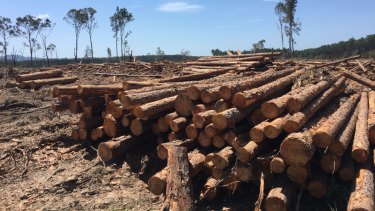
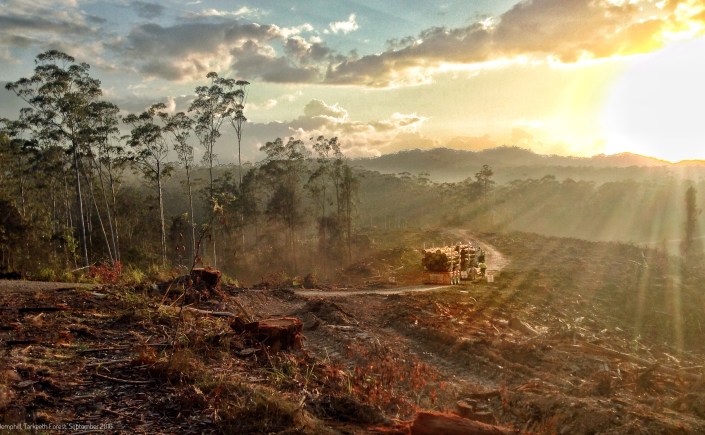
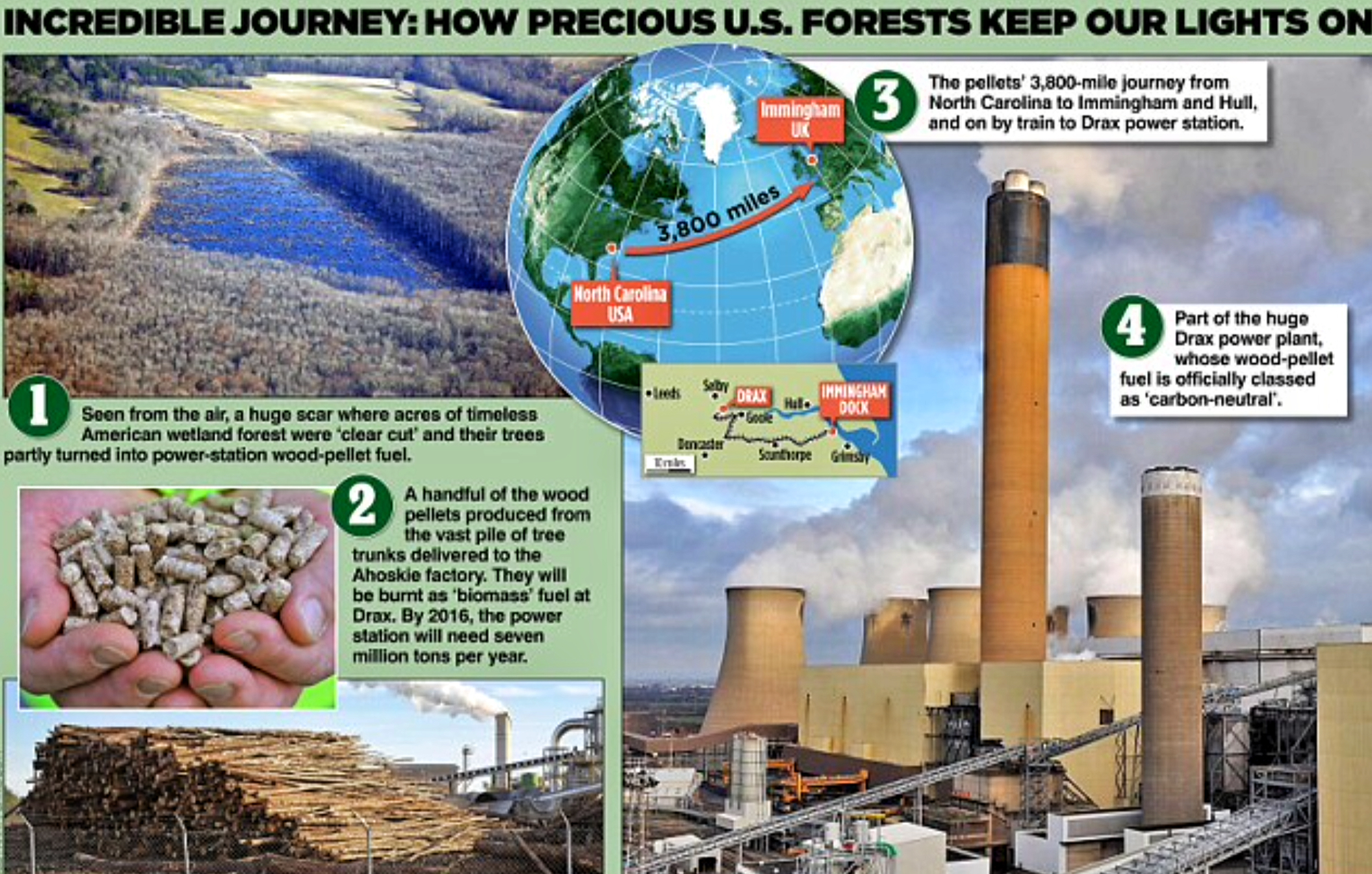
But North Carolina’s ‘bottomland’ forest is being cut down in swathes, and much of it pulped and turned into wood pellets – so Britain can keep its lights on.

The UK is committed by law to a radical shift to renewable energy. By 2020, the proportion of Britain’s electricity generated from ‘renewable’ sources is supposed to almost triple to 30 per cent, with more than a third of that from what is called ‘biomass’.

So our biggest power station, the leviathan Drax plant near Selby in North Yorkshire, is switching from dirty, non-renewable coal. Biomass is far more expensive, but the consumer helps the process by paying subsidies via levies on energy bills.

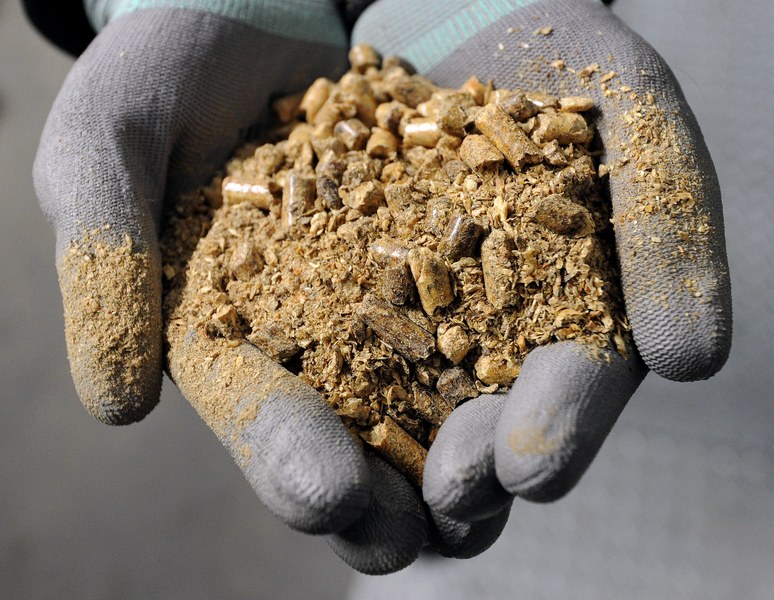
That’s where North Carolina’s forests come in. They are being reduced to pellets in a gargantuan pulping process at local factories, then shipped across the Atlantic from a purpose-built dock at Chesapeake Port, just across the state line in Virginia.

From the States to Selby

Those pellets are burnt by the billion at Drax. Each year, says Drax’s head of environment, Nigel Burdett, Drax buys more than a million metric tons of pellets from US firm Enviva, around two thirds of its total output. Most of them come not from fast-growing pine, but mixed, deciduous hardwood.

Drax and Enviva insist this practice is ‘sustainable’. But though it is entirely driven by the desire to curb greenhouse gas emissions, a broad alliance of US and international environmentalists argue it is increasing, not reducing them.

In fact, Burdett admits, Drax’s wood-fuelled furnaces actually produce three per cent more carbon dioxide (CO2) than coal – and well over twice as much as gas: 870g per megawatt hour (MW/hr) is belched out by wood, compared to just 400g for gas.

Then there’s the extra CO2 produced by manufacturing the pellets and transporting them 3,800 miles. According to Burdett, when all that is taken into account, using biomass for generating power produces 20 per cent more greenhouse gas emissions than coal.

And meanwhile, say the environmentalists, the forest’s precious wildlife habitat is being placed  in jeopardy.

Drax concedes that ‘when biomass is burned, carbon dioxide is released into the atmosphere’. Its defence is that trees – unlike coal or gas – are renewable because they can grow again, and that when they do, they will neutralise the carbon in the atmosphere by ‘breathing’ it in – or in technical parlance, ‘sequestering’ it.

So Drax claims that burning wood ‘significantly reduces greenhouse gas emissions compared with coal-fired generation’ – by as much, Burdett says, as 80 per cent.

These claims are questionable.  For one thing, some trees in the ‘bottomland’ woods can take more than 100 years to regrow. But for Drax, this argument has proven beneficial and lucrative.

Only a few years ago, as a coal-only plant, Drax was Europe’s largest greenhouse gas emitter, and was often targeted by green activists. Now it boasts of its ‘environmental leadership position’, saying it is the biggest renewable energy plant in the world.
It also gets guaranteed profits  from the Government’s green energy subsidies. Last year, these amounted to £62.5 million, paid by levies on consumers’ bills. This is set to triple by 2016 as Drax increases its biomass capacity.

In the longer term, the Government has decreed that customers will pay £105 per MW/hr for Drax’s biomass electricity – £10 more than for onshore wind energy, and £15 more than for power from the controversial new nuclear plant to be built at Hinkley Point in Somerset.  The current ‘normal’ market electricity price is just £50 per MW/hr.

Mr Burdett admitted: ‘Our whole business case is built on subsidy, like the rest of the renewable energy industry. We are simply responding to Government policy.’

Company spokesman Matt Willey added: ‘We’re a power company. We’ve been told to take coal out of the equation. What would you have us do – build a dirty great windfarm?’
Meanwhile, there are other costs, less easily quantifiable.

‘These are some of our most valuable forests,’ said my trail companion, Derb Carter, director of the Southern Environmental Law Centre in Chapel Hill, North Carolina.  ‘Your government’s Department  for Energy and Climate Change claims what’s happening is sustainable,  and carbon neutral. But it’s not. What you’re actually doing is wrecking the environment in the name of saving  the planet.

After our hike through the forest, Mr Carter and I drove to a nearby airfield, where we boarded  a plane. From 2,000ft up, the forest spread beneath us. Soon, however, we reached an oblong wedge, an open wound in the landscape. It was a recent ‘clear cut’ where every tree had been removed, leaving only mud, water and a few stumps. Clear cuts are the standard means of harvesting these forests, and this one covered about 35 acres.

Enviva yesterday confirmed that some of its wood was turned into pellets for Drax.

In the next 10 minutes, we flew over at least a dozen such holes in the tree cover. Finally a looming smokestack appeared up ahead: Enviva’s pellet plant at Ahoskie. To one side lay the material that provides the plant’s input: a huge, circular pile of logs: tens of thousands of them, each perhaps 30 or 40ft long. In the middle was a heavy-duty crane. It swivelled round and grabbed bunches of the logs as if they were matchsticks, to feed them into the plant’s machines.  Later, we inspected the plant on the ground. It’s clear that many of the logs are not branches, but trunks: as Carter observed, they displayed the distinctive flaring which swampland trees often have at their base.

Here the story becomes murky. At Drax, Burdett said that in making pellets, Enviva used only ‘thinnings, branches, bentwood .  .  . we are left with the rubbish, the residue from existing forestry operations. It’s a waste or by-products industry.’ He insisted: ‘We don’t actually chop whole trees down.’ But looking at the plant at Ahoskie, Carter said:  I just don’t get this claim that Drax doesn’t use whole trees. Most of what you’re seeing here is whole trees.’

Pressed by The Mail on Sunday, Enviva yesterday admitted it does use whole trees in its pellet process. But according to spokeswoman Elizabeth Woodworth, it only pulps those deemed ‘unsuitable for saw-milling because of small size, disease or other defects’.

Not so green: By using pellets, Drax produce three per cent more carbon dioxide than coal, not including the CO2 produced by manufacturing the pellets and transporting them 3,800 miles

She claimed such trees, no more than 26 inches in diameter, make up a quarter of the wood processed at Ahoskie. Another 35 per cent comes from limbs and the top parts of trunks whose lower sections went to saw mills. To put it another way: 60 per cent of the wood cut by the loggers who supply Enviva is turned into pellets.

The firm, she added, was ‘committed to sustainable forestry… replacing coal with sustainably produced wood pellets reduces lifecycle emissions of carbon dioxide by 74 to 90 per cent.’

How fast do these forests, once cut, really regrow?

Clear-cut wetlands cannot be replanted. They will start to sprout again naturally quite quickly, but according to Clayton Altizer of the North Carolina forest service: ‘For bottomland sites, these types of forests are typically on a 60 to 100-year cycle of growth depending on the soil fertility.’ Other experts say it could easily take more than 100 years.

That means it will be a long time before all the carbon emitted from Drax can be re-absorbed. For decades, the amount of CO2 in the atmosphere will be higher than it would have been if Drax still burnt only coal.

Drax’s Nigel Burdett yesterday admitted he did not know how long a North Carolina clear-cut bottomland swathe would take to regrow, but insisted this simply doesn’t matter. What counted, he said, was not the areas which had been cut, but the whole region from which the pellets were sourced.

Drax’s website implies unmistakeably that biomass deserves its ‘carbon neutral’ status because the wood cut for pellets regrows. But Mr Burdett said: ‘The rate at which it re-grows is irrelevant. The crucial issue is how much there is across the whole catchment area.’ He said that in North Carolina, as in other southern states, more wood is growing than being cut so the ‘sustainable’ claim is justified.

There is an obvious objection to this: the forests would be growing still faster, and absorbing more CO2, if they weren’t being cut down.

Burdett’s argument gets short shrift from conservationists.

Danna Smith, director of North Carolina’s Dogwood Alliance, said the pellet industry increases the pressure to ‘over-harvest’ forests, as landowners know they have a guaranteed market for material which they could not otherwise sell: ‘It adds to the value they get from clear-cutting.’

The pellets are supposedly a step in reducing CO2 emissions, but have, in fact, made it worse

Moreover, she added, if this incentive did not exist, they would wait until the smaller trees were big enough to cut for furniture and construction – and all that time, they would be absorbing carbon.

A recent study showed that bigger, older trees absorb more CO2 than saplings. As for Drax’s claim that what counts is regrowth across the region, ‘that just doesn’t capture what’s happening around the mills where they’re sourcing the wood’.

According to a study by a team  of academics, published in December by Carter’s law centre, Enviva’s operations in North Carolina ‘pose high risks to wildlife and biodiversity, especially birds’.

The Roanoke wetlands are home to several rare or endangered species: the World Wildlife Fund said in a report that the forests constitute ‘some of the most biologically important habitats in North America’ and constitute a ‘critical/endangered resource’.

Meanwhile, in North Yorkshire, the sheer scale of Drax’s biomass operation is hard to take in at first sight. Wood pellets are so much less dense than coal, so Drax has had to commission the world’s biggest freight wagons to move them by rail from the docks at Hull, Immingham and Port of Tyne. Each car is more than 60ft high, and the 25-car trains are half a mile long. On arrival, the pellets are stored in three of the world’s largest domes, each 300ft high – built by lining colossal inflated polyurethane balloons with concrete. Inside one of them, not  yet in use, the echo is impressive. Light filters in through slits in the roof, like a giant version of the Pantheon church in Rome.

To date, only one of Drax’s six turbine ‘units’ has been converted from coal to biomass: another two are set to follow suit in the next two years. Eventually, the firm says, its 3.6 gigawatt capacity – about five per cent of the UK total – will be ‘predominantly’ biomass, burning seven million tons of pellets a year.

From the domes, the pellets are carried along a 30ft-wide conveyor belt into a milling plant where they are ground to powder. This is burnt in the furnaces, blown down into them by deafening industrial fans.

All this has required an investment of £700 million. Thanks to the green subsidies, this will soon be paid off. Even if all Britain’s forests were devoted to Drax, they could not keep its furnaces going. ‘We need areas with lots of wood, a reliable supply chain,’ Mr Burdett said.

As well as Enviva, Drax buys wood from other firms such as Georgia Biomass, which supplies mainly pine. It is building new pellet-making plants in Mississippi and Louisiana.

Last month, the Department of Energy and Climate Change issued new rules on biomass sourcing, and will insist on strict monitoring to ensure there really is ‘sustainability’.

In North Carolina, this will not be easy: as Carter points out, there is very little local regulation. But wouldn’t a much more effective and cheaper way of cutting emissions be to shut down Drax altogether, and replace it with clean new gas plants – which need no subsidy at all?

Mr Burdett said: ‘We develop  our business plan in light of what the Government wants – not what might be nice.’

https://www.dailymail.co.uk/news/article-2581887/The-bonfire-insanity-Woodland-shipped-3-800-miles-burned-Drax-power-station-It-belches-CO2-coal-huge-cost-YOU-pay-cleaner-greener-Britain.html

Don’t Burn Trees to Fight Climate Change—Let Them Grow

Bill McKibben, The New Yorker, 15th August 2019

Countries and public utilities are trying to reduce carbon emissions by burning wood pellets instead of coal, but recent studies have shown that the practice will have disastrous effects.Photograph by Anna Gowthorpe / PA Wire / AP

Of all the solutions to climate change, ones that involve trees make people the happiest. Earlier this year, when a Swiss study announced that planting 1.2 trillion trees might cancel out a decade’s worth of carbon emissions, people swooned (at least on Twitter). And last month, when Ethiopian officials announced that twenty-three million of their citizens had planted three hundred and fifty million trees in a single day, the swooning intensified. Someone tweeted, “This should be like the ice bucket challenge thing.”

So it may surprise you to learn that, at the moment, the main way in which the world employs trees to fight climate change is by cutting them down and burning them. 

Across much of Europe, countries and utilities are meeting their carbon-reduction targets by importing wood pellets from the southeastern United States and burning them in place of coal: giant ships keep up a steady flow of wood across the Atlantic. 

“Biomass makes up fifty per cent of the renewables mix in the E.U.,” Rita Frost, a campaigner for the Dogwood Alliance, a nonprofit organization based in Asheville, North Carolina, told me. 

And the practice could be on the rise in the United States, where new renewable-energy targets proposed by some Democrats and Republicans in Congress, as well as by the E.P.A., treat “biomass”—fuels derived from plants—as “carbon-neutral,” much to the pleasure of the forestry industry. “Big logging groups are up on Capitol Hill working hard,” Alexandra Wisner, the associate director of the Rachel Carson Council, told me, when I spoke with her recently.

The story of how this happened begins with good intentions. As concern about climate change rose during the nineteen-nineties, back when solar power, for instance, cost ten times what it does now, people casting about for alternatives to fossil fuels looked to trees. 

Trees, of course, are carbon—when you burn them you release carbon dioxide into the atmosphere. But the logic went like this: if you cut down a tree, another will grow in its place. And, as that tree grows, it will suck up carbon from the atmosphere—so, in carbon terms, it should be a wash. 

In 2009, Middlebury College, where I teach, was lauded for replacing its oil-fired boilers with a small biomass plant; I remember how proud the students who first presented the idea to the board of trustees were.

William R. Moomaw, a climate and policy scientist who has published some of the most recent papers on the carbon cycle of forests, told me about the impact of biomass, saying, “back in those days, I thought it could be considered carbon neutral. But I hadn’t done the math. I hadn’t done the physics.” 

Once scientists did that work, they fairly quickly figured out the problem. Burning wood to generate electricity expels a big puff of carbon into the atmosphere now. Eventually, if the forest regrows, that carbon will be sucked back up. 

But eventually will be too long—as the Intergovernmental Panel on Climate Change made clear last fall, we’re going to break the back of the climate system in the next few decades. For all intents and purposes, in the short term, wood is just another fossil fuel, and in climate terms the short term is mostly what matters.

As an M.I.T. study put it last year, while the regrowth of forests, if it happens, can eventually repay the carbon debt created by the burning of wood pellets, that payback time ranges from forty-four years to a hundred and four in forests in the eastern U.S., and, in the meantime, the carbon you’ve emitted can produce “potentially irreversible impacts that may arise before the long-run benefits are realized.”

As the scientific research on this carbon debt emerged, in the past decade, at least a few of us in the environmental movement started voicing opposition to burning trees. The most effective leadership has come from the Southeast, where community activists have pointed out that logging rates are now the highest in the world, and that rural communities—often communities of color—are being disrupted by endless lines of logging trucks and by air pollution from plants where trees are turned into easy-to-ship pellets. 

Earlier this year, a proposal to build the largest pellet mill in the world, in Lucedale, Mississippi, drew opposition from a coalition that included the N.A.A.C.P. and which predicted that the plant would have a “disastrous effect on the people, wildlife, and climate.”

But Mississippi environmental officials approved an air permit for the plant, which would employ ninety full-time workers, and so far European officials have also turned a deaf ear to the opposition: new E.U. regulations will keep treating the cutting down of trees as carbon neutral at least through 2030, meaning that utilities can burn wood in their old plants and receive massive subsidies for theoretically reducing their emissions. The Drax power plant, in the North of England, which burns more wood than any power plant on Earth, gets 2.2 million dollars a day in subsidies. 

But a new study, commissioned by the Southern Environmental Law Center and released on Monday, makes clear that, even under the most conservative estimates, Drax’s burning of wood pellets that it imports from the American South will “increase carbon pollution in the atmosphere for more than forty years, well beyond the time-frame identified by the IPCC as critical for carbon reduction.” 

Biomass fuel at Drax Selby. Anna Gowthorpe / PA Wire / AP

European subsidies treat power plants that burn wood as the equivalent of, say, solar panels, despite the fact that, under even the most generous scenarios, they emit at least ten times as much carbon, when factoring in the energy that it takes to make the panels. “They’re looking for ways to shift their infrastructure without drastically overhauling it,” Bob Musil, a veteran-environmentalist who now runs the Rachel Carson Council, said. “Ways that don’t cause shifts in culture.” 

It’s remarkably similar to what happened in the United States with fracking: political leaders, including some in the Obama Administration, decided that the least-fuss way to replace coal would be with natural gas, only to learn that, as new science emerged, they had in fact replaced carbon emissions with leaking methane, which was making the climate crisis worse.

In this case, the greenwashing is particularly misleading, because burning trees defies the carbon math in another way, too: once they have been cut down, the trees won’t be there to soak up the carbon. “The Southeast U.S. is falsely seen as a sustainable source of wood,” Danna Smith, the executive director of the Dogwood Alliance, told me, because when the trees are cut down they can regrow—unlike, say, in the Amazon, where thin soils usually mean that when trees are cut down the land becomes pasture. She added, “But these forests are vital carbon sinks.”

In fact, the newest research shows just what folly biomass burning really is. 

This summer, William Moomaw was the co-author of a paper that tracked carbon accumulation in trees. Planting all those trees in Ethiopia definitely helps pull carbon from the air, but not as much as letting existing trees keep growing would. Unlike human beings, who gain most of their height in their early years, Moomaw explained to me, “trees grow more rapidly in their middle period, and that extends far longer than most people realize.” 

A stand of white pines, for instance, will take up twenty-two tons of carbon by its fiftieth year, which is about when it would get cut down to make pellets. “But, if you let it grow another fifty years, it adds twenty-five tons,” he said. “And in the next fifty years it adds 28.5 tons. It would be a mistake to cut them down when they’re forty and make plywood. It’s really foolish to cut them down when they’re forty and burn them, especially now that we’ve got cheap solar.” He calls letting trees stand and accumulate carbon “proforestation” – as opposed to reforestation.

Bill McKibben, a former New Yorker staff writer, is a founder of the grassroots climate campaign 350.org and the Schumann Distinguished Scholar in environmental studies at Middlebury College. His latest book is “Falter: Has the Human Game Begun to Play Itself Out?Read more »

Messing with the Mullahs – America’s phoney war?

“The Iranian regime took action today to increase its uranium enrichment.  It was a mistake under the Iran nuclear deal to allow Iran to enrich uranium at any level.  There is little doubt that even before the deal’s existence, Iran was violating its terms”. Statement from the White House Press Secretary 1st July 2019

The White House has not subsequently explained how a country can violate the terms of a deal before that deal existed. But, as New York Times commentator Roger Cohen wrote recently, ”President Donald Trump has been all over the place on Iran, which is what happens when you take a serious subject, treat it with farcical superficiality, believe braggadocio will sway a proud and ancient civilisation, approach foreign policy like a real-estate deal, defer to advisers with Iran Derangement Syndrome, refuse to read any briefing papers and confuse the American national interest with the Saudi or Israeli”.

There is transparent angst and disappointment among many in the US Administration that that Iran’s Islamic Republic has endured for forty years with no sign of collapse (there are parallel palpitations and peregrinations with regard to Cuba and more recently, to Venezuela). Iran ‘hawk’ John Bolton might declare that the Islamic Republic would not celebrate its fortieth anniversary the Iranian Revolution. But the anniversary is upon us already. Iran is not going anywhere else soon.

Presently, it would appear that the administration is backpedaling on its bellicose rhetoric as it responds to Congress’ concerns about what is perceived as a lack of a unified US strategy. The dispatch of an American battle fleet to the Persian Gulf in response to unexplained and indeterminate Iranian threats and provocations has now been re-framed as having successfully deterred Iran’s hardliners from miscellaneous mischiefs and miscalculations. And yet, others in the US and elsewhere are attributing such follies to the US itself?

By ironic synchronicity, I am rereading historian Barbara W Tuchman’s acclaimed The March of Folly – From Troy to Vietnam. Her opening sentence reads: ‘A phenomenon noticeable throughout history regardless of place or or period is the pursuit by governments of policies contrary to their own interests. Mankind, it seems, makes a poorer performance of government than most any other human activity’. Her many definitions of folly include dangerous delusions of grandeur and “and obstinate attachment to unserviceable goals”. History has shown us – I refrain from saying “taught us” because we rarely learn from history – the consequences of single-minded determination amounting to a tunnel vision that is akin to stupidity. Charging ahead regardless only works for those who are stronger than all obstacles. Only those holding all the trump cards can ignore the other players at the table. With the US ratchetting up the pressure on Iran, the law of unintended consequences is in play with many observers perceiving the American leadership as part of the problem and not part of the solution.

In recent moves that recall the US’ lurch into Iraq sixteen years ago on the basis of nonexistent – or at the least very well hidden – weapons of mass destruction, war drums are beating across the Potomac as Iran hawks boost the potential for war with the Islamic Republic. Curiously identical damage to Saudi and Emiratis vessels in the strategically important Persian Gulf point to Iranian sabotage. rather than signally Iran’s provocative intent, it looks more like a clumsy false-flag frolic by the geniuses who gave us thrillers like “how to murder a dissident journalist in plain sight”, “let’s bomb one of the poorest countries on earth back into the Stone Age”.

This can be set against a historical record that the US has not initiated a major war – that is one with congressional approval – without a false flag since the USS Maine blew up in Havana Harbour in 1898, thus taking the US into a war with Spain that resulted in the colonization the Philippines, Puerto Rico and Cuba. This includes the fabricated Gulf of Tonkin incident 1964 escalated an ongoing “skirmish” in Vietnam into an all-out conflict, and those Iraqi weapons of mass destruction that arguably brought us to where we are now.

Most folk who are into history like to draw parallels and identify patterns in the past that reflect upon the present. As I do also, albeit in a more ambivalent way. Cleaving to Mark (Twain, that is) rather than Marx, I am fascinated more by the rhymes than the repetitions. But “remembering’, as Taylor Swift sings. “comes in flashbacks and echoes”. Over to Bob Dylan:

Now the bricks lay on Grand Street
Where the neon madmen climb
They all fall there so perfectly
It all seems so well timed
An’ here I sit so patiently
Waiting to find out what price
You have to pay to get out of
Going through all these things twice
Oh, Mama, can this really be the end
To be stuck inside of Mobile
With the Memphis blues again

The story of the Iranian Revolution is a complex, multidimensional one, and it is difficult for its events and essence to be compressed into brief opinion pieces of any political flavour, no matter how even-handed they endeavour to be.

The revolution began slowly in late 1977 when demonstrations against Shah Reza Pahlevi, developed into a campaign of civil resistance by both secular and religious groups. These intensified through 1978, culminating In strikes and demonstrations that paralyzed the country. Millennia of monarchy in Iran ended in January 1979 when the Shah and his family fled into exile. By April, exiled cleric and  longtime dissident Ayatollah Khomeini returned home to a rapturous welcome. Activist fighters and rebel soldiers overwhelmed troops loyal to the Shah, and Iran voted by national referendum to become an Islamic republic on April 1st 1979. A new constitution saw Khomeini became Supreme Leader in December 1979.

The success and continuing durability of the Iranian Revolution derived from many sources, and many are not touched upon by commentators and pundits. Here are some of my own thoughts on disparate but intrinsic parts of the Islamic Republic’s story.

One can’t ignore the nature of the monarchy that preceded it – modernist on the one hand, and brutally repressive on the other; nor the unwavering and hypocritical support (including infrastructure, weapons, and intelligence) provided to it by western “democracies” since Britain and the US placed Reza Shah Pahlevi on the throne in 1953. And nor should we ignore the nature of the unprecedented regime and state that was established forty years ago – a brutal, theocratic, patriarchal, quasi-totalitarian system that endeavours to control all aspects of its citizens’ lives, its rule enforced by loyal militias like the ruthless Basij and by the Revolutionary Guard, a military-industrial complex more powerful than the regular army.

The support and succour that the US gave to the deposed Shah and his family and entourage, and later, to the opponents of the revolution, served to unite the population around a dogmatic, cruel and vengeful regime, which, in the manner of revolutions past and present, “devoured its children”, harrying, jailing, exiling and slaughtering foes and onetime allies alike. One of the ironies of the early days of the revolution was its heterodox complexion – a loose and unstable alliance between factions of the left, right and divine. History is replete with examples of how a revolution besieged within and without by enemies actual and imagined mobilizes it people for its support, strength and survival. Recall France after 1789 and Russian after 1917.  The outcome in both was foreign intervention and years of war and repression.

I fought in the old revolution 
on the side of the ghost and the King. 
Of course I was very young 
and I thought that we were winning; 
I can’t pretend I still feel very much like singing 
as they carry the bodies away.
Leonard Cohen

Too often, in modern times, the US administration of the day has been called upon by a new and potentially radical regime to take sides, and indeed, to accept a tentative hand of friendship. And too often, for reasons political, ideological, economic, religious even, the US has made what historians of all colours would deduce was the wrong call – with disastrous consequences for the  newly freed nation and, with perfect if partisan hindsight, the world. Think Vietnam, Egypt and Cuba. In each, there was a pivotal moment when the US could have given its support to the new rulers and potentially changed the course of the revolution, and the freshly “liberated” people, and our world, might have been better off for it. And, so it was in 1979, with Iran.

The US’ steadfast support for the Shah during his reign, and its enmity towards Iran’s new rulers, predictably reciprocated by the mullahs and their zealous supporters, created “the Great Satan”, a symbolism sustained by the reality that many in US political circles actively sought to undermine and destroy the revolution (and still do, championing the late Shah’s son as their annointed one.

Time and folly have not softened the fear and the fervour.

Here are but a selection from a sorry catalogue: the long-running embassy hostage drama, and failed and ignominious rescue attempts; the subsequent and continuing economic sanctions; the moral and material support provided to Saddam Hussein during the bloody eight year Iran-Iraq war (1980-88) which cost the lives of over half a million soldiers on both sides; the years of wrestling and wrangling, politicking and posturing over Iran’s quest for a nuclear deterrent against perceived US aggression, and the western powers’ push-back; the expansion of Iranian influence in the Middle East and beyond through proxies and patronage, subterfuge and subversion – often through those latter day sell-swords the Revolutionary Guards – a form of what strategic analysts now call “offshore balancing”, or, simply put, fighting your foes outside rather than within your own borders; and today’s quixotic tango in which a false move or miscalculation could have catastrophic consequences.

There have been moments of what reasonable folk might perceive as farce, such as when in February 1989, Ayatollah Khomeini issued a fatwa calling for the death of Salman Rushdie, author of The Satanic Verses, sparking violence and protests around the world. Or as tragedy, as in July 1988, when the USS Vincennes blew Iranian Flight 655 out of the sky above the Persian Gulf, killing 290 men, women and children. The ship’s captain was exonerated.

In February 2019, a Middle East Security Conference was convened in Warsaw by Secretary of State Mike Pompeo. It brought together sixty countries, including Arab states and Israel, ostensible to discuss a range of issues, including Syria and Palestine, but in reality, it was always about Iran. The Warsaw gathering was a strange beast – its very title was a misnomer, Vice President Pence making it quite clear Iran was the ‘greatest threat’ to peace and stability in Middle East that it’s transgressions be punished. He even implied that it was God’s will.

The conference was most notable for who wasn’t there – Russia, Turkey, China, and the EU leaders British, France and Germany, all of whom are opposed to Trump’s decision to withdraw from the 2015 Joint Comprehensive Plan of Action, the Iran nuclear deal to restrict Iran’s nuclear program. It is indicative of the US’ isolation with regard to Iran, and its inability to call the shots in a Middle East where Russian, Turkey and Iran hold all the cards. Pence and Pompeo meanwhile talk about regime change and democracy in Iran but ignore what is going on in the US’ lacklustre autocratic allies Egypt, Saudi Arabia, and Bahrain – this and international reaction to the US’ alleged complicity a slow-motion, as yet unresolved and unconsummated “coup” in Venezuela only serve to remind the world of Uncle Sam’s not altogether successful track-record of hypocrisy and hubris, interference and inconsistency.

Israeli prime minister Netanyahu had initially tweeted that the conference was convened to discuss what he called the “war with Iran”. Although he amended his tweet soon afterwards, he was not exaggerating. There is indeed a war between Iran on one hand and Israel and the Gulf monarchies on the other with other countries lending their support to one side or the other. America and its Middle East allies have been at war with Iran for forty years, and Iran has reciprocated.

It is said, not without reason, that Iran has long been preparing for a war with the US, and that the US has psyched itself into a martial mindset that justifies Iranian fears. If push did indeed come to shove and the present cold war turned hot, Iran might appear to be at a disadvantage. Compared to the US, its forces are poorly equipped and lacking in battle experience, although they are indeed well-provided for by the sanctions-hit regime, whilst the Revolutionary Guard’s Al Quds brigade has been given real battlefield experience in Syria and Iraq’s civil wars. They would however be defending their homeland, which for Iranians is holy ground regardless of who rules it.

The American people are weary and wary of foreign military commitments, and doubtless confused by the administration’s mix of pullback and push-back. For all it’s manpower and materiel, it’s experience and equipage, after its problematic excursions in Iraq and Afghanistan, the US armed forces cannot be said to be a uniformly committed, effective and high-morale fighting force. It would be dependent on allies of dubious intent and ability, and on free-booting contractors and mercenaries like Erik Prince’s hired guns and sell-swords.

As the Warsaw talk fest demonstrated, the US would have to act very much on its own against Iran, with Israel being its only potential partner of any value. And yet, even Israel appears to be reticent, having of late toned down its bellicose rhetoric.

Despite Bibi’s bark and bluster, Israel does not want anyone to go to war with Iran, and it does not want to be blamed if a conflict does erupt. Nothing focuses the mind more than the thought of thousands of Hezbollah’s Iranian-sourced precision missiles raining down on the Galilee. The Gulf states are tin-pot tyrants with meagre military skill and no desire to throw away their toys when the US (and Israel?) will do the fighting for them. Russia, Turkey, and, potentially, China, would be implacably opposed and would indeed run interference, and provide diplomatic, economic, military and logistical support.

Iran itself is not without the ability and the means to set up a multitude of diversions and distractions, whether it is playing with the US administration’s head, as it has been for forum decades, encouraging Hezbollah and Bashar Assad to make mischief on Israel’s northern border and the Golan, inciting its Palestinian pawn Islamic Jihad in Gaze, providing Yemen’s Houthis with the means to better target Saudi cities, or, perhaps counter-productively, initiating espionage and terrorist incidents on the US mainland and in Western Europe.

The US may opt for measures short of a “hot” war, as it doing right now with limited success, but the hawks are circling over Washington DC and may have the President’s feckless and fickle ear – and, as they say, fools rush in where angels fear to tread.


Here are some recent articles on the latest Iran-US  tango:

For more on the Middle East in in In That Howling Infinite, see A Middle East Miscellany 

Bob Dylan’s 116th Dream – a Jerusalem reverie

The Kushner Peace Plan, the long awaited solution to the seventy year old – no, century old – conflict between Israelis and Palestinians is, so we are informed via leaks and leading articles (see those at the end of this post), is about to finally be plonked down on the rickety and sloping negotiating table.

What President Trump has dubbed “the deal of the century” – presumably the now twenty years gone by 21st Century – has been developed, with varying degrees of involvement and disdain from both Israel and the the Palestinians, and from several significant others, including the US’ exclusively autocratic and repressive Arab allies. But the primary architects have been presidential adviser Jared Kushner, special envoy Jason Greenblatt, and US ambassador to Israel David Friedman.

Whether this bird can fly is a subject for much current discussion and conjecture in mainstream and left of mainstream media; and we really can’t predict what will happen at this point in time.

But, if indeed we did need a person with Jewish genes to nudge the Israelis and the Arabs to realize peace in the Holy Land, then maybe Trump should have dispatched the Bobster to the Middle East instead of his ingenue and arguably disingenuous businessman son-in-law Jared Kushner and JK’s highly partisan, blinkered and thus discredited amigos.

You gotta serve somebody

Bob Dylan once sang “… there’s no success like failure, and failure is no success at all”. He also crooned: “it ain’t dark yet, but it’s getting there”. And to complete a trifecta of wisdom: “you don’t need a weatherman to know which way the wind blows”.

He has even worked out the Palestinians cannot be pushed to the negotiating table by the US and it’s corrupt, brutal Arab allies: “So many roads, so much at stake. So many dead ends, I’m at the edge of the lake. Sometimes I wonder what it’s gonna take to find dignity”.

And few could match Bob’s credentials for the gig. How’s this for resumé:

“I’ve stumbled on the side of twelve misty mountains. I’ve walked and I’ve crawled on six crooked highways. I’ve stepped in the middle of seven sad forests. I’ve been out in front of a dozen dead oceans. I’ve been ten thousand miles in the mouth of a graveyard”.

And what will you do now, Mr Dylan?

“I’ll walk to the depths of the deepest black forest where the people are many and their hands are all empty, where the pellets of poison are flooding their waters, where the home in the valley meets the damp dirty prison, where the executioner’s face is always well-hidden, where hunger is ugly, where souls are forgotten, where black is the color, where none is the number”.

And then?

“… I’ll tell it and think it and speak it and breathe it, and reflect it from the mountain so all souls can see it. And I’ll stand on on the water until I start sinkin’, but I’ll know my song well before I start singin’”.

And so, there’s Bob “flashing for the warriors whose strength is not to fight, flashing for the refugees on the unarmed road of flight, an’ for each an’ ev’ry underdog soldier in the night”.

He’s “tolling for the rebel, tolling for the rake, tolling for the luckless, the abandoned an’ forsaked, tolling for the outcast, burnin’ constantly at stake … tolling for the searching ones, on their speechless, seeking trail, for the lonesome-hearted lovers with too personal a tale, an’ for each unharmful, gentle soul misplaced inside a jail”.

And yes, “he’s tolling for the aching whose wounds cannot be nursed, for the countless confused, accused, misused, strung-out ones an’ worse, an’ for every hung-up person in the whole wide universe” …

But the question remains, will Palestinian youth, wild at heart and wired to the world, be “wishin’ and hopin’, and thinkin’ and prayin’”, to quote another zeitgeist philosopher, that one day they’ll be able to “gaze upon the chimes of freedom flashing”.

And will Israelis, with their weapons, walls and wire, their soldier boys and girls, and two millenia of yearning for for a place of greater safety, no longer be “condemned to drift or else be kept from drifting”.

The answer, my friend, is blowin’ in the wind ….

See also, in In That Howling Infinite, A Middle East Miscellany  

Some FaceBook background

I’m finding The Independent’s Middle East correspondent Bel Trew’s reportst very worthwhile and insightful, alongside those of her colleagues Robert Fisk and Patrick Cockburn. Here is Bel’s take on the long awaited Kushner “Plan”, so succinctly encapsulated by Fisk himself:

‘How many times can you fit a South Sea Bubble into a Bermuda Triangle?’

He continued, in fine form:

“Trump’s fey and vain son-in-law, a supporter of Israel’s colonial expansion on Arab land, set off with Trump’s “special representative to the peace process” Jason Greenblatt (who says “West Bank settlements are not an obstacle to peace”) to work out the economic underpinning of Trump’s “deal of the century” …

… Kushner recently went to visit some Muslim killer-states, some of them with very nasty and tyrannical leaders – Saudi Arabia and Turkey among them – to chat about the “economic dimension” of this mythical deal. Middle East leaders may be murderers with lots of torturers to help them stay in power, but they are not entirely stupid. It’s clear that Kushner and Greenblatt need lots and lots of cash to prop up their plans for the final destruction of Palestinian statehood – we are talking in billions – and the Arab leaders they met did not hear anything about the political “dimension” of Trump’s “deal”. Because presumably there isn’t one …

… This very vagueness is amazing, because the Kushner-Greenblatt fandango was in fact a very historic event. It was unprecedented as well as bizarre, unequalled in recent Arab history for its temerity as well as its outrageous assumption … this was the first time in modern Arab history – indeed modern Muslim history – that America has constructed and prepared a bribe BEFORE the acquiescence of those who are supposed to take the money; before actually telling the Palestinians and other Arabs what they are supposed to do in order to get their hands on the loot”.

Read Bel Trew’s article here; and Robert Fisk’s, here.


The agony of Julian Assange

I walked, with other souls in pain,
Within another ring,
And was wondering if the man had done
A great or little thing,
When a voice behind me whispered low,
That fellow’s got to swing’.

Oscar Wilde, The Ballad of Reading Gaol

News is something somebody doesn’t want printed; all else is advertising
William Randolph Hearst, American newspaper publisher and politician

Julian Assange has served his time. He has effectively been deprived of his liberty for a decade and faces many more years in the US, a sentence that far exceeds a proportionate penalty. His continuing persecution brings only shame upon self-proclaimed paragons of “freedom” like the US, Britain and Australia.

In Hilary Mantel’s Wolf Hall sequel, Bring Up The Bodies, Thomas Cromwell’s son questions his father after the trials of Queen Anne and her alleged lovers: When Gregory says, ‘Are they guilty?’ he means, ‘Did they do it?’ But when Thomas says, ‘Are they guilty?’ he means, ‘Did the court find them so?’ The lawyer’s world is entire unto itself, the human pared away.” The law, sadly, is about justice and retribution”.

Imprisoning journalists as spies and traitors has always been the norm in authoritarian countries, such as Saudi Arabia, Turkey and Egypt, while denouncing the free press as unpatriotic is a more recent hallmark of nationalist populist governments that have taken power all over the world. The US, perennially claiming the high moral ground with regard to freedom of the press, and of human rights generally, rarely raises its voice in condemnation and rarer still in anger its “friendly” autocrats. But plotting to take down Julian Assange mere years after condemning (though yet again, not punishing) the kidnap and murder of Saudi journalist and dissident Adnan Khashoggi takes its perfidy to astral heights.
Author’s note

This opinion piece was first published five years ago and has been updated as events unfolded over time. After having been held without charge in a British high security prison for five years as multiple appeals against his extradition to the United States on multiple espionage charges played out, he was finally released in June 2024 after agreeing to a plea bargain which saw him plead guilty to one charge of espionage. He is now back on Australian soil whilst supporters and detractors in Australia, Britain and the US continue to argue over  his role in the torturous Wikileaks saga. He was, is and will doubtless continue to be a polarising figure.  As commentator David Crowe wrote in the Sydney Morning Herald on 28th June 2024:

”Assange will remain a hero to some and a villain to others, but it is better to see him as neither. The WikiLeaks founder is a publisher who will release any leaks he can find about how the world really works. We do not know if he will continue this work, but it could make him a cyclonic force in Australian politics and media now he has come home … He is, after all, someone the political class cannot control. Assange wants information to be free. Few politicians are likely to agree”.

The Road to Belmarsh Gaol

Julian Assange, the Australian co-founder of online media organization WikiLeaks is in deep shit. He’s pissed off the Yanks, frustrated the Poms, and angered his Ecuadorian hosts, and now the Swedes want to have another bash …

He was arrested on April 11th 2019 by British police at the Ecuadorian Embassy in London, where he had been claiming political asylum for almost seven years having lost a final appeal against his extradition to Sweden to face charges of sexual assault. He was then charged with failing to surrender to the court.

While in the embassy, Assange could not be arrested because of the international legal protection of diplomatic premises, which meant police could not enter without Ecuador’s consent. On April 11, British police were invited into the embassy and made the arrest. On the same day, Assange was found guilty on that charge of failing to surrender, sentenced to fifty weeks for jumping bail. and is serving his time at HM Prison Belmarsh.

The United States government unsealed an indictment made in March 2018 charging Julian Assange with a conspiracy to help whistle-blower Chelsea Manning, former soldier and pardoned felon to crack a password which enabled her to pass on classified documents that were then published by WikiLeaks – in effect, conspiracy to hack US computer systems, a charge which carries a maximum five year sentence. The US has requested that the UK extradite Assange to face these charges before a US court. Assange has now been indicted on seventeen charges under the espionage act, which if proven, could mean life imprisonment. There is no guarantee that once he enters the the legal system he will ever re-emerge.

In 2010, a Swedish prosecutor requested Assange’s transfer to Sweden to face sexual assault allegations, which he denies. Whilst appealing a British High Court decision to extradite him, he spent eighteen months under house arrest at the home of a supporter (in effect, he has been incarcerated for almost a decade). In 2016, Assange was questioned by Swedish authorities by video link while he remained in the Ecuadorian embassy. In 2017, they closed the case against him, but after his arrest, the lawyer for one of the Swedish complainants indicated she’d ask the prosecutor to reopen the case. Sweden’s Prosecution Authority reviewed the case and renewed its request for extradition; but in November 2019, it dropped the matter citing a lack of substantive evidence.

But the British Home Secretary Sajid Javid has signed off on the US’ extradition request. It must now go through the British courts. The process could take years, well beyond Assange’s initial   fifty weeks incarceration, the court’s refusal to free him when it had expired – on the grounds that he was a flight risk (he has form, after all) – and the formal expedition hearing which open in February 2020.

Stay angry, get even

The current US administration cleaves to the maxim “stay angry and get even” – Uncle Sam neither forgets nor forgives. Just wait and see what happens if it can get its hands on exiled hacker and   Now Russian resident Edward Snowden. The British Government, relieved to have restored a corner of Knightsbridge to its sovereignty, and currently knee deep in the Brexit “Big Muddy”, probably won’t lift a finger to help him even though by any standard of much-vaunted British ‘fair play’, his self-imposed punishment hardly fits his alleged crimes, an by any liberal and democratic benchmark, he’s certainly served his time. Former Aussie prime minister Kevin Rudd has declared that  Julian Assange would pay an “unacceptable” and “disproportionate” price if he is extradited to the United States, that no actual harm to individuals has been demonstrated, whilst the WikiLeaks founder should not take the fall for Washington’s failures to secure its own classified documents.

Our leaders here in Australia, lost in our own short-term political preoccupations bleat from the distant sidelines that it’s not our problem – which politically and diplomatically speaking, it isn’t, other than the fact that he is an Australian citizen (albeit a longtime absentee) and therefore warrants consular assistance. Simplistically put, there are no votes in it.

Will our government now help him out? Demand his return to Australia? Oppose the calls from the US to extradite him from the UK?

Our tepid and tardy response to the detention in Thailand of footballer Hakeem al-Araibi on a dodgey Bahraini extradition order and the asylum plea of Saudi teen Rahaf Mohammad – ironically, again from Thailand – does not auger well for a resolute and reasonable response. The way we left erstwhile al Qaida fellow-travelers David Hicks and Mamduh Habib to rot in Gitmo, and the  lack of enthusiasm with which we took up journalist Peter Greste’s case in Egypt – his family and journalists worldwide maintained the struggle for his release – suggest that after what we call “diplomatic representations” (what ordinary folk call “going through the motions”), we will face political realities and bend to the US’ will.

Caught up between our subservient relationship with the US, our slavish pandering to economic and strategic interests, placing these above considerations of human rights, and our government’s susceptibility to the malign influence of shock-jocks and populist politicians, Australia’s official behaviour in such cases is often predictably and reflexively disingenuous.

Nowadays, most governments are desperate to stop leaks, data dumps, whistle-blowers and uncomfortable revelations. Democratic governments have attempted to use ostensibly benign legal and security powers to restrict media oversight and criticism. Witness here in Australian how the Victorian Director of Prosecutions is seeking to put thirty-six media outlets, editors and journalists on trial over allegations that they breached a suppression order in reports published after the prominent and well-connected Cardinal George Pell was convicted of child sex abuse charges. The powerful look after their own.

Less squeamish, more thuggish autocratic regimes have few qualms about consigning journalists and editors to jail and worse whilst their western allies and armourers ‘see no, hear no, speak no evil’. Narrow, national interests as ever trump (an apposite word, indeed) human rights. Witness the hundreds of Egyptian and Turkish journalists jailed without trial, the harassment and even killing of reporters in Eastern Europe and Russia, and, of course, the gruesome murder of Saudi scribbler and stirrer Jamal Khashoggi.

The US, the land of the free and the First Amendment has truly shown its hand, and its true colours, proving that Assange’s fears of extradition were quite justified. The UK, meanwhile, has long ached to nail him for contempt of its bail laws, and just plain contempt, really – and a seriously extravagant waste of already straitened police resources. When Assange had worn out his Ecuadorian welcome, lubricated, it is alleged (by WikiLeaks), a $4.2 billion IMF bailout plus another $6 billion from other financial institutions, the Met was ready to roll. Meanwhile, Australia’s political class, having long regarded his Australian nationality as an embarrassing inconvenience, just hoped that we could be left out of it all.

Rally ‘round the fall guy

The media, mainstream, extreme, any stream really, including social media and sundry supporters and detractors, are rushing to both praise Assange and to bury him. They defend and demonstrate, denounce and demean. So Julian Assange, simultaneously icon and bête noir, is the ideal fall-guy “pour decourager les autres”: for everyone on the left and the right who dig him, there’s another who can’t stand him for reasons political, personal, or perverse.

There’s the role he played in the demise of Hilary Clinton and election of Donald Trump, as if, some believe, he was hoping for some kind of “get out of jail free” card from a Trump administration. There’s his hanging out, in a confined space, with the likes of UKIP’s irritating and arguably obnoxious Nigel Farage. All this has forever tarnished his reputation as a warrior of the left. There’s those problematical charges in Sweden that we now learn have never gone away.

During the Australian Federal election before last, the party running his senate bid in absentia gave its preferences to right-wing libertarian nut-jobs ahead of Labor and the Greens, his erstwhile natural allies – and then put it all down to clerical error.

Sadly, stories about his tantrums, visits by Yoko Ono, Lady Gaga and onetime Baywatch hottie Pamela Anderson (nudge, nudge, wink, wink!) and neglecting to clean up after his cat – lurid tales of his hygiene habits appear have been concocted to dehumanize him in tabloid tittle-tat – have rendered him an object of ridicule. And the images of him being dragged out of the embassy, pale and blinking in the unforgiving daylight, grey-haired, bearded, wide-eyed and disheveled, like some mad old street person, have engendered pathos and pity.

There can be little doubt that his mental and physical health deteriorated during his confinement. For sure he is not the confident man who entered the embassy so many years ago; but the law doesn’t recognise this – it demands a reckoning. And many love to kick a man when he’s down.

In the end, Assange was in so many ways his own worst enemy. It is hypothesized that he could’ve surrendered to the Brits long time passing and took his chances at law instead of hiding, a much diminished figure, in the embassy of a small Latin American republic. The sad irony is that if he’d faced the music all those years ago, he might’ve been a free man by now, either having done his time or been exonerated, or else, a credible and respected political prisoner supported worldwide as a champion of press freedom and free speech.

Lights in dark corners

Amidst all the commentary and partisanship swirling about the Assange’s unfortunate circumstances, there has been remarkably little explanation of what he, Manning, WikiLeaks and Snowden have actually done in a substantive security sense. Robert Fisk and his colleague at The Independent, Patrick Cockburn, address just that.
Fisk wrote on 31st May:  “ … the last few days have convinced me that there is something far more obvious about the incarceration of Assange and the re-jailing of Manning. And it has nothing to do with betrayal or treachery or any supposed catastrophic damage to our security”.
Cockburn succinctly belled the cat with on the same day: “ … the real purpose of state secrecy is to enable governments to establish their own self-interested and often mendacious version of the truth by the careful selection of “facts” to be passed on to the public. They feel enraged by any revelation of what they really know, or by any alternative source of information. Such threats to their control of the news agenda must be suppressed where possible and, where not, those responsible must be pursued and punished.”
Fisk continues: “The worst of this material was secret not because it accidentally slipped into a military administration file marked “confidential” or “for your eyes only”, but because it represented the cover-up of state crime on a massive scale. Those responsible for these atrocities should now be on trial, extradited from wherever they are hiding and imprisoned for their crimes against humanity. But no, we are going to punish the leakers – however pathetic we may regard their motives … Far better we hunt down other truths, equally frightening for authority. Why not find out, for example, what Mike Pompeo said in private to Mohammed bin Salman? What toxic promises Donald Trump may have made to Netanyahu? What relations the US still secretly maintains with Iran, why it has even kept up important contact – desultory, silently and covertly – with elements of the Syrian regime?
Assange was not, in Fisk’s opinion an investigative journalist; he is nevertheless, a scapegoat, and also a salutary warning for all who shine a light into the dark corners of power: “… what we find out through the old conventional journalism of foot-slogging, of history via deep throats or trusted contacts, is going to reveal – if we do our job – just the same vile mendacity of our masters that has led to the clamour of hatred towards Assange and Manning and, indeed, Edward Snowden. We’re not going to be arraigned because the prosecution of these three set a dangerous legal precedent. But we’ll be persecuted for the same reasons: because what we shall disclose will inevitably prove that our governments and those of our allies commit war crimes; and those responsible for these iniquities will try to make us pay for such indiscretion with a life behind bars. Shame and the fear of accountability for what has been done by our “security” authorities, not the law-breaking of leakers, is what this is all about”.

Back to Cockburn who writes that one reason Assange was being persecuted was for WikiLeaks’ revelations about US policy in Yemen: “Revealing important information about the Yemen war – in which at least 70,000 people have been killed – is the reason why the US government is persecuting both Assange and Yemeni journalist Maas al Zikry … (who) says that “one of the key reasons why this land is so impoverished in that tragic condition it has reached today is the US administration’s mass punishment of Yemen”. This is demonstrably true, but doubtless somebody in Washington considers it a secret.”

A nice dilemma

WikiLeaks and Julian Assange has done the world many favours. They’ve exposed war crimes in Iraq, Afghanistan and elsewhere; they’ve shine an unwelcome light on wrongdoing, shabby deals, and hypocritical, incriminating and ofttimes embarrassing goings-on in the corridors of power and diplomacy worldwide. And they’ve passed all this on to reputable media sources throughout the so-called free world to sift, analyse, question, join disparate dots, and disseminate.

Yet, in what may seem in retrospect to be a bad dose of overconfidence and hubris, they aspired to be players in the power games of others rather than remaining a neutral and discerning watchdog. And this was perhaps Assange’s undoing – if undone he indeed becomes. This story has some distance to run …

His faithfully longtime lawyer Jen Robinson declared that his arrest, after seven years of self-imposed internal exile, has “set a dangerous precedent for all media and journalists in Europe and around the world”. His extradition to the US, she said, meant that any journalist could face charges for “publishing truthful information about the United States”. She might have added “published outside the US”, Indeed, US revanchism is a chilling demonstration of imperial overreach and a grim warning to others.

And yet, much of the legal argy-bargy around the charges Assange is likely to face in the US hinge on the question of whether he is actually a journalist and whether WikiLeaks is actually a news organization. He and his supporters have long portrayed him as a champion of a free press, but some experts believe that the US Department of Justice’s decision to charge him with conspiring to hack government computers limits his ability to mount a vigorous free speech defense. Assange has long said WikiLeaks is a journalistic endeavour protected by freedom of the press laws, and in 2017, a UK tribunal recognized WikiLeaks as a “media organisation”.

Political prisoner, maybe, whistle-blower, certainly, but “not a prisoner of conscience”, at least by Amnesty International’s definition. Compared to many prisoners on Amnesty’s books, innocents and activists banged up by oppressive regimes, Assange has been pretty well treated. The consistent reference in many media reports to a potential death sentence in the US is egregious insofar as the UK will not allow extradition if a death sentence is on the cards. Many would also dispute the tag “investigative journalist” that some have bestowed upon him, seeing as he and Chelsea Manning released classified US and other information. They did not ferret it out, sift it and analyse it for publication as investigative journalists generally do. As for making Assange a “working class hero”, as some on the far-left have done, that is drawing a long bow. Friends and foes alike are now dancing around these distinctions.

In a concise recent article in The Sydney Morning Herald, Peter Greste, who got to know very well the inside of a squalid Egyptian prison cell and the Egypt’s kafkaesqe judicial system for allegedly publishing what a government didn’t like, makes a few points that Jennifer, her colleague, the eloquent and famous Geoffrey Robertson, and others have skated lightly over:

“Julian Assange is not a journalist, and WikiLeaks is not a news organisation. There is an argument to be had about the libertarian ideal of radical transparency that underpins its ethos, but that is a separate issue altogether from press freedom … Journalism demands more than simply acquiring confidential information and releasing it unfiltered onto the internet for punters to sort through. It comes with responsibility. To effectively fulfill the role of journalism in a democracy, there is an obligation to seek out what is genuinely in the public interest and a responsibility to remove anything that may compromise the privacy of individuals not directly involved in a story or that might put them at risk. Journalism also requires detailed context and analysis to explain why the information is important, and what it all means”.

Greste nevertheless sounds a warning. On the eve of the first extradition hearing on January 25th 2020, in an opinion piece in the SMH, he wrote of how the Obama administration   “realized that if they prosecuted him, they would then have to prosecute the New York Times, the Washington Post, the Guardian and others for also publishing much of Wikileaks’ material, and in the process do irreparable harm to the constitutional guarantees for press freedom. It is clear that under Trump, Assange is highly unlikely to have his rights respected or get a fair trial, and those, too, are grounds to oppose his extradition. The manner in which US prosecutors are handling his case, and its implications for anybody who believes in democratic accountability, are too serious to let Assange be extradited without a fight”.

Other Australian are not as hostile to Assange as Peter Greste, as a recent article  by Amanda Horton in the Sydney Morning Herald observes, concluding with the not quite rhetorical question of what would Australia do if he was serendipitously returned to our distant shore:

“The Australian government certainly appears singularly unmoved by Julian Assange … Prime Minister Scott Morrison has said the legal processes must “run their course” and Assange should “face the music”. The government position appears to be that f the US wants to extradite him, and extradition proceedings are underway, Australia can’t intervene even if it wanted to … This is total nonsense, says everyone with experience: diplomacy is all about pulling levers behind the scenes … The problem, say sources in government, is that Australia may be reluctant to expend political capital on behalf of Assange … Australia may also be too afraid – “too craven”, according to one – to test its standing with the US; and there may be a sense that the US has gone too far to back down, so a request to do so would be both embarrassing and useless. The US-Australia relationship may be further tested if, eventually, the UK refuses extradition and deports Assange back to Australia. It appears that the US might then be able to request his extradition directly from us. What will we do then?”

Meanwhile people continue to argue over whether Assange is a hero or a ratbag – our ratbag as an equally ratbag conservative Australian member of parliament called him – demanding,  surprisingly that he be brought home).  They debate whether he is a legitimate journalist, publisher, troublemaker or whistleblower, a Trumpista or Putinesca. But sycophantic and pusillanimous politicians aside, most informed people of goodwill believe that there isn’t a case to answer and that he should be repatriated to Australia. It will be interesting to see where Jen Robinson’s last minute (February 2020) witness statement about Trump’s offer of pardon will go, and indeed, what the British Court will decide. One thing’s for sure: The Powers That Be will continue to play dirty.


© Paul Hemphill 2019.  All rights reserved


Yes, Julian is in deep shit. But, you animal lovers and sharers of kitty pics out there in the twitterverse and Facebook world, his cat and companion Michi has gone to a good home …

Read more about politics in In That Howling Infinite here: A Political World – Thoughts and Themes

Children of Abraham

The ancient and holy city of Hebron – al Khalil to Muslims, and named, like Hebron for the Jewish and Islamic patriarch Abraham/Ibrahim – is rarely out of the news; and the news is never good. “There’s this thing that happens here, over the Hell Mouth”, says Buffy the Vampire Slayer, “where the way a thing feels – it kind of starts being that way for real. I’ve seen all these things before – just not all at once”.

In May 2016, we visited Hebron, a fault line of faiths and a front line of an old war still being waged for possession of the Holy Land. It is a hot spot, a flash-point, where tensions between Israelis and Palestinians are usually followed by calamity, and bad things happen. We’ve travelled right through the West Bank, and yet nowhere did we feel exposed to the danger of a sudden flare up of violence and being caught in an indiscriminate crossfire than here in the old heart of the city. It is the seemingly intractable conflict in the raw, a microcosm of the Occupation, and there is no denying the brutality of the place. Most western journalists and commentators give their readers an impression that Israel absolutely dominates this Palestinian city of some 200,000 souls. In reality, the area under military control, immediately surrounding the ancient Ibrahimi mosque, holy to two faiths, is very small. The city, with its high rise apartments, official buildings and shopping malls,  looks down on this pressure cooker of a ghetto, where dwell some 700 settlers and thirty thousand Palestinians, segregated from each other by walls and wire, fear and loathing – and by two soldiers to every settler.

On our return, the e-magazine Muftah published the following article.

Children of Abraham and the Battle for Hebron

You who build these altars now to sacrifice these children, you must not do it anymore.
A scheme is not a vision and you never have been tempted by a demon or a god.
You who stand above them now, your hatchets blunt and bloody – you were not there before,
When I lay upon a mountain and my father’s hand was trembling with the beauty of the word.
Leonard Cohen, The Story of Isaac

I recently returned from Hebron in the occupied West Bank. The city is a fault line of faiths and a front line in the conflict between Israelis and Palestinians. It is a “hot spot,” a flash-point, a place where tensions between Israelis and Palestinians are usually followed by calamity. Hebron has been a key focus of the tension and violence that has characterized the troubled relationship between Palestinians and Israelis. Since October 2015, over 200 Palestinians and thirty Israelis have been killed across the West Bank, East Jerusalem, and Israel, in the latest flare-up in the decades-long conflict.

In March this year, an Israeli soldier was filmed shooting and killing a wounded twenty-one-year-old Palestinian, following a stabbing attack on Israeli soldiers. The soldier, just nineteen years of age, is now facing trial, amidst massive outcry on both sides of the Israeli-Palestinian divide.. In June, not long after we left Israel, a young Palestinian murdered a thirteen-year-old Israeli girl as she slept in nearby Kiryat Arba. Hours later, a Palestinian woman was shot dead by Israeli soldiers outside of the Ibrahimi Mosque. Later that afternoon, Palestinian gunmen ambushed an Israeli car on a road just south of Hebron, killing a father and wounding his family. Local Palestinians gave emergency first aid to the victims and shielded the children from any further attack.

A Holy Land

Hebron has long been sacred to Muslims and Jews as the last resting place of the prophets Abraham and Isaac – the founding father of Judaism, and the son he had resolved to sacrifice until God ordered him to stay his hand. In the first century BC, Herod the Great, famed builder and bad boy, raised a mighty mausoleum above the cave where Abraham was laid to rest. Abraham’s wife Rachel, and his son, Isaac, Isaac’s wife Rebecca, and Isaac’s sons Joseph and Jacob – whose wrestled with an Angel to represent man’s struggle with God –  and Jacob’s wife Leah are also buried there.

As time went by, Christians and then Muslims revered Hebron as a holy place. Abraham was the founding father of both religions and his sons and grandsons, buried in the cave, are considered prophets of Judaism, Christianity and Islam. In time, a mosque was established on Herod’s edifice, and for a short while, during the hundred years of the Crusader kingdom, a basilica too. The well-known story of Isaac and Abraham, told so cryptically by Leonard Cohen is in a way a metaphor for Hebron itself. It is common to Christians, Jews and Muslims (Id al Adha is islam’s Feast of the Sacrifice) but the protagonists in the Qur’an are not Abraham or Isaac or Ishaak, but Ibrahim and Ishmael the son of Hagar, Abraham/Ibrahim’s servant) the genealogical forbears of Muslims. Two faiths, two narratives. [Cohen’s lyrics are reproduced at the end of this article together with my translation into Arabic]

In the thirteenth century, the Mamluk Sultan Baybars expelled the Christians from Hebron. A small community of Jews continued to reside in the town of Hebron, however. In 1929, amidst rising religious and nationalist tension in the British Mandate of Palestine, some seventy Jewish men, women, and children were killed by Palestinians who had been incited to violence by rumours that Jews planned to overrun the Temple Mount in Jerusalem, the third holiest site in Islam. Many local Palestinians also helped save Jewish neighbors from the bloodshed. Following the riots, Hebron’s Jewish community largely ceased to exist, until the an-Naksa, or ‘setback’, of 1967, when Israeli military forces occupied the West Bank, East Jerusalem, Gaza, and the Golan Heights.

In the early days of the occupation, Israeli authorities did not encourage Jews to return to Hebron. One of the first illegal Israeli settlements was established outside Hebron in what is now Kiryat Arba, and thereafter, a small settlement was built around the Mosque of Ibrahim. Beginning in 1979, some Jewish settlers moved from Kiryat Arba to the former Jewish neighborhood near the Abraham Avinu Synagogue which had been destroyed in 1929. Other Jewish enclaves were established with the Israeli army’s support and more homes were subsequently purchased or forcibly taken over from their Palestinian owners.

With the establishment of a Jewish presence in and around Hebron, the religious right-wing demanded that Jews be permitted to pray at the tombs of the patriarchs, and the 700 years old restriction on Jews praying here was lifted. Muslims and Jews were now obliged to share the holy place, although it was formally administered by the Muslim Waqf. Thus, even prayer became a focus of conflict and tension, and sometimes, violence, particularly during each faith’s holy days.

Tensions and Divisions

Since 1979, tensions have continued to increase between the small community of Israeli settlers living in Hebron (several hundred) and the tens of thousands of Palestinians whose lives have been turned upside down by their presence. These tensions reach boiling point in February 1994, when US-born Israeli doctor Baruch Goldstein opened fire on Muslims worshippers during the dawn prayer at the Ibrahimi Mosque. He killed twenty-nine people and wounded another 125 before he was overcome and killed by survivors. Hundreds more Palestinians were killed or injured in the Israeli military’s response to the ensuing violence.

Goldstein had been inspired by a boyhood mentor, the ultranationalist New York Rabbi Meir Kahane, and had belonged Kahane’s militant Jewish Defence League, founded ostensibly to protect Jews from antisemitism, but implicated in numerous acts of violence in the USA  and elsewhere. On emigrating to Israel, he joined Kahane’s right-wing Kach Party.

The Israeli government condemned the massacre and responded by arresting Kahane’s followers, and criminalizing Kach and affiliated organizations as terrorists, forbidding certain settlers from entering Palestinian towns, and demanding that those settlers turn in their army-issued weapons. It rejected a demand by the Palestinian Liberation Organisation that all settlers in the occupied territories be disarmed and that an international force be created to protect Palestinians.

UN observers came to keep the peace, but, after Israeli and Palestinian authorities could not reach agreement on resolving the situation, they departed. The Hebron Protocol was signed in January 1997 by Prime Minister Benjamin Netanyahu and PLO Chairman Yasser Arafat under the supervision of US Secretary of State Warren Christopher. Under its terms, Hebron was divided into in two. H1, 80% of the city, and home to over 120,000 Palestinians, was placed under the Palestinian Authority’s control. H2, which was home to nearly 40,000, was placed under the exclusive control of the Israeli Defense Forces (IDF) in order to protect some 600 Israeli Jewish settlers who lived in the area. 

Jewish Israelis were barred from entering HI, whilst Palestinians found it nearly impossible to Access H2 unless they lived there. Palestinian residents of H2 experienced forcible displacement, restrictions on their movement, the closure of their businesses, IDF checkpoints and searches, and verbal and physical harassment by settlers protected by the IDF. 

In a surreal, sad parody, the mosque too was divided, with a separate mosque and synagogue. The IDF controls access, closing it to Muslims on Jewish holy days and to Jews on Muslim holy days. There are frequent bans on the call to prayer on the grounds that it disturbs the settlers, and likewise on exuberant 

Dual Narrative

We travelled to Hebron on a “dual narrative tour”. It was run by Abraham Tours, which operates out of the Abraham Hostel at Davidka Square in Jerusalem, and caters for independent and mainly young travelers on limited budgets. One half of the tour was conducted by a Palestinian guide and the other by a Jewish guide. They walked us though the streets surrounding the Mosque of Ibrahim, and gave us the opportunity to meet and talk with several members of each of the communities.

We visited the Muslim side of the mosque, which retained the wide prayer hall, the empty catafalques of Isaac and Rebecca, the qibla and minbar, and the beautiful dome; and the larger Jewish side, which was, once upon a time, the open courtyard leading to the mosque. Abraham and Sarah occupy the neutral ground between the two halves.

The area around the divided holy place is a ghost town. On one flank, a deserted street is patrolled by young Israeli soldiers in full battle gear, leading to the settler neighborhood. On the other side, past checkpoints and security screening, is Shuhada (martyrs) Street, an impoverished souq with more shops locked up than open, a small number of Palestinian storeowners, and a bevy of children endeavoring to sell us souvenirs. Above the few shops that are still open, there is a wire mesh to catch rocks, garbage, and various unmentionables thrown at Palestinians from Israeli settler families who have literally occupied the higher ground, abutting and overlooking the souq.

Scapegoating the Other

The Palestinians we met told us that Jewish settlers have been trying to drive them out of H2, to claim it for themselves, and that they will resort to all manner of harassment to do so, including throwing stones, and assaulting Palestinian children on their way home from school. Indeed, the United Nations Office for the Coordination of Humanitarian Affairs recently confirmed that movement restrictions, along with on-gong settler violence, reduced income, and restricted access to services and resources, has led to a reduction in the area’s Palestinian population. 

It is a desperate, hard life for all the Palestinians who live there. They cling on, refusing to leave or sell their ancestral homes. Offers, some very large, have been made in the past, but people will not trade their birthright, even when they are faced with physical threats to their lives. One Palestinian whose home we visited told me that his late wife was shot by Israeli soldiers, while his children were attacked by settlers. Nowadays, he and his few neighbors have no choice but to remain or flee without compensation as the Palestinian Authority has forbidden selling property to the settlers. And so they remain, in poverty and punishment.

The rebuilt and refurbished settler zone is a mix of run-down apartments. waste grounds, new community buildings and playgrounds, and a street of shops that once served the settlers’ needs but are now locked and neglected in a dusty, empty street. Here, the settlers too play the victim card, claiming that they area harassed, insulted, and killed. We met the administrator of the small Jewish museum and library who told us of how her grandfather was killed in 1929, and how her father was killed by an assailant in his own home. 

Today there are two Israeli soldiers for every Jewish settler. They are youngsters, barely out of high school. Heavily armed and nervous. With the power to end or destroy the lives of the Palestinians they occupy, many of them youths just like themselves. 

“You who build these altars then to sacrifice these children, you must not do it any more”.

If only it was that simple on the fault line of faith and nation.

Below is a selection of photographs taken during our visit.

Read more in In That Howling Infinite on the Middle East : A Middle East Miscellany

You can read more about the pain and passion of Hebron here:
http://www.sacred-destinations.com/israel/hebron-tombs-of-the-patriarchs
https://en.m.wikipedia.org/wiki/Israeli%E2%80%93Palestinian_conflict_in_Hebron

Author’s Note: 
Whenever I pen commentaries such as this, people ask why I rarely forward my own opinion on the issues I am presenting or discussing. On the contrary, I would argue that my views are fairly transparent in the subjects I chose to engage with, the words I use, and the vein in which I use them.

With respect to my numerous posts about Israel and Palestine, and the Middle East in general, I  come to my conclusions from a political science and sociology perspective – that’s where my academic experience came from – and a background in conflict resolution, supported by study and travel. If I do on occasions display any particular bias, it. originates in my longtime interest, understanding and affection for the history, politics, culture and language of the region, of its geography and archaeology, and  of its people of all faiths and nationalities that I make my observations.

I am presently working on a piece that encapsulates my thoughts on this complex and controversial subject. But meanwhile, here is a brief exposition.

I do believe that the systematic dispossession of almost a million Palestinians and the destruction of half of their towns and villages in 1948 is Israel’s original sin. It is the primal stain that colours and corrupts all that followed. And yet, if not for the actions, often daring, often brave, often questionable, and often deplorable, of the politicians and soldiers of 1948 – and of the generations that folllowed –  Israel would not exist today. This paradox is addressed sympathetically by Avi Shalit in My Promised Land, referred to above, and scathingly by ‘new history’ scholar Ilan Pappe in The Ethnic Cleansing of Palestine.   

The Occupation, fifty years old this year, which grew out of the unexpectedly total victory of June 1967, has taken on strategic, ideological and indeed messianic dimensions by many in the  Israeli government and political elite. It compounded the original sin, deepened the primal stain, released the demons of messianic fervour, and wounded Israel’s soul. The settlements locked the nation into the the colonialist project. With the close-call of the Yom Kippur War, the violence and murder of the first and second Intifadat, and present Palestinian jaquerie, Israel’s heart has not just hardened, it has become sclerotic.

I admit that I have always been sympathetic towards Israel – from my first visit in 1972. But it is not a blinkered viewpoint. I am deeply critical of Israeli politics and policies, and have no respect for many of its leaders.

Ayelet Shaked, the nationalist’s La Passionaria, and her boss Naftali Bennett do not not represent ALL Israelis! They hold extremist views just like we in UK, US, and Australia have parties and individuals with extremist views. But there are hundreds of thousands of Israelis who oppose the present government and long for justice and peace. And if – a very big “if” – Arab Israelis and the Israeli left could work together, they could obtain a majority in the Knesset and change Israel’s politics.

Yet meanwhile, Binyamin Netanyahu and his nationalist allies call all the shots, the Israelis continue to control and exploit the land, its people, and its resources, whilst varying degrees of annexation are on the cards. The settlements are an abomination, as are the policies and practices of the state and its occupying army, as described by Lyons and others. There’s no escaping these facts.

But I am likewise critical of Palestinian governance, politics and politicians. Hamas and the PA are on the nose in their respective fiefdoms, and if a moderate “third force” were to arise – and survive, because sure as hell, they would risk being murdered – Palestinians who just want a quiet, normal life, adequate services, and opportunities for their children, and Israelis who want likewise, might – just might – reject their extremist, dogmatic, entrenched leaders and reach some form of modus vivendi.

Palestinians themselves have to take control of their own lives, kick out their corrupt leaders, cease inculcating their children with hatred and jihadism, and use all that international good will and dollars to build a viable economy that can provide jobs, opportunities, and security, economic and physical to the people. Only this way will they be inoculated against cronyism, corruption and extremism. And yet, the dead hand of a moribund, patriarchal, conservative and ethnocentric culture holds them back –  but that is the subject of another, future discussion for In That Howling Infinite.

Today, the ‘powers that be’, defenders and beneficiaries of a status quo that looks more like a cul de sac, predominate over a dispiriting array of competing, clamouring factions, left, right, nationalist, secular, tribal, Haredi, and Islamist alike. New, young, brace, local voices in both Israel and Palestine, are not heard.

So what happens next?

I get that question too. And I am perennially reluctant to venture an answer beyond one that runs like “on the one hand…but then on the other”.  I inevitably fall back on Robert Fisk’s response to the same question with regard to the calamitous freezing over of the Arab Spring and the fall and rise again of the same old autocrats and tyrants: “my crystal ball is broken”. It’s a cop out, really, but just as cogent as that famous line in that UK spy drama Spooks: “What’s gong to happen to me?” “Bad things!”

One thing is for sure: as songwriter Warren Zevon sang, “the hurt gets worse, and the heart get harder”.

October 8th 2017

For more posts on Jerusalem, Israel and the Middle East, visit:
https://m.facebook.com/HowlingInfinite/
https://m.facebook.com/hf1983/

See also, my collection of posts about Jerusalem, and A Middle East Miscelany 

 Below, some pictures from our visit to Hebron in May 2016

Hebron May 2016

img_5080

Hebron May 2016

Hebron 2016

Hebron 2016

Hebron 2016

Hebron 2016


The Story Of Isaac

Leonard Cohen

The door it opened slowly,
My father he came in,
I was nine years old.
And he stood so tall above me,
His blue eyes they were shining
And his voice was very cold.
He said, “I’ve had a vision
And you know I’m strong and holy,
I must do what I’ve been told.”
So he started up the mountain,
I was running, he was walking,
And his axe was made of gold.
Well, the trees they got much smaller,
The lake a lady’s mirror,
We stopped to drink some wine.
Then he threw the bottle over.
Broke a minute later
And he put his hand on mine.
Thought I saw an eagle
But it might have been a vulture,
I never could decide.
Then my father built an altar,
He looked once behind his shoulder,
He knew I would not hide.
You who build these altars now
To sacrifice these children,
You must not do it anymore.
A scheme is not a vision
And you never have been tempted
By a demon or a god.
You who stand above them now,
Your hatchets blunt and bloody,
You were not there before,
When I lay upon a mountain
And my father’s hand was trembling
With the beauty of the word.
And if you call me brother now,
Forgive me if I inquire,
“just according to whose plan?”
When it all comes down to dust
I will kill you if I must,
I will help you if I can.
When it all comes down to dust
I will help you if I must,
I will kill you if I can.
And mercy on our uniform,
Man of peace or man of war,
The peacock spreads his fan.

قصة إسحاق
ليونارد كوهن

الباب فتح ببطء ،
أبي دخل ،
أنا في التاسعة من عمري.
ووقف عاليا فوقي ،
كانت عيونه الزرقاء مشرقة
وكان صوته شديد البرودة.
قال: “كان لدي رؤية
وأنت تعرف أنني قوي ومقدس ،
يجب أن أفعل ما قيل لي “.
فبدأ الجبل ،
كنت أركض ، كان يسير ،
وكان فأسه مصنوعا من الذهب.

حسنا ، الأشجار لديهم أصغر بكثير ،
البحيرة مرآة سيدة ،
توقفنا لشرب بعض النبيذ.
ثم ألقى الزجاجة.
انكسر بعد دقيقة
ووضع يده علي.
اعتقدت رأيت نسر
ولكن ربما كانت نسر ،
لم أستطع أن أقرر أبدا.
ثم بنى والدي مذبحًا ،
نظر مرة واحدة خلف كتفه ،
كان يعلم أنني لن أختبئ.

أنت الذي تبني هذه المذابح الآن
للتضحية بهؤلاء الأطفال ،
لا يجب أن تفعل ذلك بعد الآن.
المخطط ليس رؤية
ولم تجرِ ابدا
بواسطة شيطان أو إله.
أنت الذي تقف فوقهم الآن ،
فتاكاتك حادة ودموية ،
لم تكن هناك من قبل ،
عندما استلقيت على جبل
وكانت يد والدي ترتجف
بجمال الكلمة.

وإذا اتصلت بي أخي الآن ،
سامحني إذا سألت ،
“فقط وفقًا لخطة من؟”
عندما يأتي كل شيء إلى الغبار
سأقتلك إذا لزم الأمر ،
سأساعدك إذا استطعت.
عندما يأتي كل شيء إلى الغبار
سأساعدك إذا لزم الأمر ،
سأقتلك إذا استطعت.
ارحم زينا
رجل سلام أو رجل حرب ،
الطاووس ينشر مروحة.

Little Sir Hugh and Old England’s Jewish Question

Out came the thick thick blood, out came the thin
Out came the bonny heart’s blood till there was none within
She threw him in the old draw well fifty fathoms deep
Little Sir Hugh

On a visit to Lincoln Cathedral a few years back, we chanced upon a small memorial in the South Choir Aisle commemorating the long-dead ‘Little Saint Hugh’, the subject, I recalled, of a gothic folk-song resuscitated during the British folk revival and popularized by Steeleye Span back in the seventies. Little Sir Hugh, a tale of the death of a young lad at the hands of a mysterious lady, had been shorn of its true context – a fabricated ‘blood libel’ that led to the trial and execution of nineteen Lincoln Jews. It is believed that high churchmen exploited the incident to lure a profitable flow of pilgrims to the shrine of a martyr and saint. The mystery surrounding the boy’s demise was the first time that the English Crown gave credence to ritual child murder allegations with the direct intervention of Henry III. As a consequence, unlike other English blood libels – and there were many – the story entered the historical record, medieval literature and popular ballads that circulated until the twentieth century as the folk-rock song demonstrated. Read more here. See also below, in the last segment of this blog.

That northern summer, we’d spent a month in the historic northern city of York where we visited Clifford’s Tower, the remnant of a thirteenth century castle on the old city walls, and the site of a medieval pogrom. The English Heritage sign at the gate recalls how in 1190, 150 Jewish men, women and children fled thence to escape townspeople’s wrath, and when the latter had set the tower alight, chose to do a Masada rather than surrender to the bloodthirsty mob (the Masada  analogy is my own – the iconic Jewish narrative was unknown in the twelfth century). The tourist spiel, reluctant to disturb the squeamish, does not call it out as murder – but the stone walls do, as does the city’s historical narrative: English Heritage; History of York.   

In November 2019, the Times Of Israel reported on how after over eight hundred years, a Jewish community has re-established itself in York – it was as if there existed an unspoken herem or boycott on the city on account of what our indigenous people here in Australia would call “sorry business”. The article includes a good account of the deadly pogrom.

In the words of Taylor Swift, history often comes in flashbacks and echoes: an intriguing BBC programme called History Cold Case reveals how seventeen bodies of men, women and children had been discovered at the bottom of a well in Norwich. The findings of the forensic anthropologists were both tragic and terrifying.

Mother mother make my bed
Make for me a winding sheet
Wrap me up in a cloak of gold
See if I can sleep
Little Sir Hugh

The devil that never dies

England has long had an ambivalent, discriminatory, and often deadly relationship with its Jewish people, from medieval days to the present. As illustration, there is an arguably apocryphal story of how in 1290, when Edward 1 ordered the expulsion of all Jews from England, a sea captain taking a boatload of Jews to France, asked them to walk with him on the sand whilst the tide was out. He deliberately deserted them, swiped their stuff, and scarpered back to his ship before the tide came in, leaving them to a watery fate.

Today, we live in a largely post-Christian world, so why does such an ancient prejudice persist?

One clue is to be found in William Shakespeare’s
The Merchant of Venice. At its tragicomic core is a stock caricature of a Jewish moneylender. The Bard paints his Shylock portrait with empathy: “Hath not a Jew hands, organs, affections, passions? … If you prick us do we not bleed?” But any sympathy evoked for Shylock does not wash away the stigma that he is distastefully alien, and to the degree that humiliating him and treating him with unscrupulous dishonesty is seemingly excused, with his own daughter converting to Christianity and robbing him.

There were no practising Jews in Shakespeare’s England; they had been expelled from the country in 1290, 300 years earlier. The only Jews then living in England, from which Jews were officially barred until the mid-17th century, were a small group of semi-clandestine descendants of Marranos who did what they could to conceal their Jewish identity. In other words, the play is tapping into prejudice latent deep in the national psyche, appealing to an audience that had no experience of actual Jews living in the streets of London or even any ancestral memory of them. This astonishing fact should give us pause. It seems that anti-Semitic prejudice endures long underground, dormant like a sleeping troll. And it is swiftly aroused.

But let us give the Bard his due. As Jewish-language columnist Philologos observes, Shylock “is by far the play’s most interesting and complex person. Admittedly, he has stereotypic features. His obsession with money, his legalistic mind, his obduracy: this is not only how most Englishmen, who had no actual experience with Jews, thought of them in Shakespeare’s time, it is also integral to the play’s symbolic structure, which pits the Old Testament against the New, the severity of Judaism against Christian compassion, vengefulness against forgiveness. Yet given this framework, Shakespeare did his best to modulate his characters and keep them from becoming caricatures. Shylock is unmerciful but never unfeeling, hard-hearted but not soft-headed, pitiless but also to be pitied, just as Antonio, Bassanio, Portia, and the Venetian high society they belong to are likable but frivolous, high-minded but hypocritical, loving toward each other but mean to the stranger—especially, of course, to Shylock himself”.

Philologos also argues that the name Shylock was not of Jewish origin, but rather that Shakespeare would have concocted it from a variety of contemporary non-Jewish sources: “It’s hardly a Jewish name, nor was it one in the late 1590s when he wrote the play. In fact, it wasn’t an actual name at all. What gave Shakespeare the idea for it? Nobody, it turns out, really knows.”

Shylock and Jessica, Maurycy Gottlieb (1876), Polish Ministry of Culture via Wikipedia

Oliver Cromwell allowed Jews to return to England in 1657; the Lord Protector saw no difference between Judaism and any other faith of ‘the Book’. But it took another two hundred years for male Jews in Britain to be granted equal civil rights, including the right to enter Oxford and Cambridge Universities, to join the public service, run for municipal office, and eventually, to stand for parliament. Just as catholics had to wait some three hundred years for emancipation, for Jews, it was indeed a slow train coming

But even thereafter, the living wasn’t easy. In the Nineteen Thirties, there were running battles as Oswald Mosley’s Nazi-styled Blackshirts marched through the Jewish neighbourhoods of East London. During the hot, austerity-pinched summer of 1947, there anti-Jewish riots throughout England following the hanging of two British sergeants in Palestine by the Jewish terrorist Irgun in response to the hanging of three of its members by the British Mandate authorities. Manchester witnessed its own mini-Kristalnacht. Ironically, one of the sergeants was Jewish.

I recall walking through London’s cosmopolitan Notting Hill with an Israeli friend in the summer of 1976. There were big swastikas daubed on a wall. “That is why we have Israel”, Miri said. A few weeks later, these very streets became a war zone as racial tensions escalated into violence as the August Bank Holiday Notting Hill Carnival gave way to running street battles.

Today, the British Labour Party is tying itself in literal and figurative Gordian knots with accusations and counter-accusations of antisemitism (whilst the US Democratic Party is likewise tossing and turning over the badly thought-through, naive comments of an ingenue congresswomen). Meanwhile, the transparent xenophobes and antisemites of the alt- and ofttimes mainstream right hide in plain sight in the corridors of power and preen on streets and social media.

It has been said, with reason, that antisemitism is the devil that never dies. And yet, is antisemitism a unique and distinct form of racism, or a subset of a wider fear and loathing insofar as people who dislike Jews rarely dislike only Jews?

Fear of “the other” is a default position of our species wherein preconceptions, prejudice and politics intertwine – often side by side with ignorance and opportunism. it is no coincidence that what is regarded as a dangerous rise in antisemitism in Europe, among the extreme left as much as the extreme right, is being accompanied by an increase in Islamophobia, in racism against Roma people, and indeed, in prejudice in general, with an increase in hate-speech and incitement in the media and online, and hate-crimes.

We are seeing once again the rise of nationalism and populism, of isolationism and protectionism, of atavistic nativism and tribalism, of demagogic leaders, and of political movements wherein supporting your own kind supplants notions of equality and tolerance, and the acceptance of difference – the keystones of multicultural societies. It is as if people atomized, marginalized and disenfranchised by globalization, left behind by technological, social and cultural change, and marginalized by widening economic inequality, are, paradoxically, empowered, energized, and mobilized by social media echo-chambers, opportunistic politicians, and charismatic charlatans who assure them that payback time is at hand. These days, people want to build walls instead of bridges to hold back the perceived barbarians at the gates.

Lately,  I have been working my way through British historian Peter Ackroyd’s six-volume History of England. I’ve enjoyed a re-acquaintance with half-remembered names and places, moments and movements from long-gone school and university history classes. Given his arduous brief – he’d resolved to recount the story of England from its birth in the Neolithic Age to the dawn of the Twentieth Century -it is relatively lightweight but informative, family friendly with the nasty and naughty bits toned down, and inspirational precedents and premises accentuated to illustrate evolution and progress, whether it be of language or lifestyle,  ideologies or institutions. He wears his liberal heart prominently on his sleeve, whether it is in describing the casual cruelty of the slave trade or the plight of children in the “dark satanic mills” of the industrial revolution. A recurring leitmotif is England’s unique and intractable Irish Question, and particularly its responsibility for and response to An Gorta Mór, ‘The Great Hunger’. An he confronts England’s medieval Jewish Question head on, describing a not so happy and glorious period in its history.

Antisemitism, he implies, has always been with us. I have reproduced in full below a short chapter from the very first volume of his history. It is a readable précis of many other sources. Read more in The Jews of Medieval England, and History of the Jews in England (1066-1920)Ost

Postscript

When this article was posted on Facebook, it elicited the following comment. The questions raised will most certainly be checked out and appropriate changes will be made.

“A slightly problematic piece (though I’d had no idea that Peter Ackroyd had read Robert Stacey’s work so carefully). It’s worth noting, however, that the story of how the captain forced the Jews to walk on the sand is anything but apocryphal – said captain spent two years in a Sandwich gaol on Edward I’s explicit order as a result (and probably died at the end of that period). There were to many holes in the Norwich documentary for it to be taken seriously. And, as with the other ritual murder ‘saints’, Little St. Hugh was never a popular attraction – that accolade goes to St. Hugh of Avalon in the case of Lincoln. The small one was, at best a distraction and it’s clear that the Chapter tried to avoid him as much as possible”.

The Hammer 

Peter Ackroyd,  Foundation – The History Of England Volume 1, Chapter 20

King Edward 1 was known as ‘the hammer of the Scots’ but he could more pertinently be known as the hammer of die Jews. He exploited them and harassed them; finally he expelled them. Their crime was to become superfluous to his requirements. The history of the ]ews in medieval England is an unhappy and even bloody one. They had arrived  from Rouen, in the last decades of the eleventh century; they were first only settled in London across a broad band of nine parishes but in the course of the next few decades they also removed to York, Winchester, Bristol and other market towns. The previous rulers of England, in the ninth and tenth centuries, had not welcomed them; Jewish merchants would have provided too much competition for Anglo-Saxon traders.

William the Conqueror brought them to England because he had found that in Normandy they had been good for business; in particular they provided access to the silver of the Rhineland. The Jews of Rouen may also have helped to finance his invasion of England, in return for the chance to work in a country from which they had previously been barred. Another reason can be given for the favour they found with the king. Since Christians were not allowed to lend money at interest, some other group of merchants had to be created. The Jews became moneylenders by default, as it were, and as a result they were abused and despised in equal measure. But they did not only lend money; they were also money-changers and goldsmiths. money; they also exchanged plate for coin. They provided ready money, a commodity often in short supply.

The Norman kings of England, therefore, found them to be very useful. They could borrow from them but, more profitably, they could tax them. They could levy what what were known as ‘tallages’, and succeeding kings were able to take between a third and a quarter of the Jews’ total wealth at any one time. As a result the Jews, in the twelfth century  were afforded royal protection. No Jew was allowed to become a citizen, or to hold land, but the neighbourhood of the Jewry was

like the royal forests exempt from common law; the Jews were simply the kings chattels, who owed life and property wholly to him. They were granted the protection of the royal courts, and thier binds were placed in a special chamber of the royal palace at . Westminster. A Jewish exchequer was established there, with its own clerks and justices.

In return for royal favour the Jews brought energy and prosperity to the business of the realm; their loans helped to make possible the great feats of Norman architecture, and the unique stone houses of Lincoln and Bury St Edmunds are credited to them. Jacob le Toruk had a grand stone house in Cannon Street, in the London parish of St Nicholas Acon. The Jews also introduced the more advanced forms of medical learning, and were able to serve as doctors even to the native community. Roger Bacon himself studied under rabbis at Oxford.

More dubious legal tactics were also enforced. William Rufus decreed, for example, that Jews could not be converted to Christianity; he did not want their number to fall. That may not have If) been a very Christian act but William Rufus was never a very good Christian. He supported the Jews partly because it offended the bishops; he enjoyed causing affront to his churchmen.

That royal protection did not necessarily extend very far. At the time of the coronation of Richard I in 1189, some Jews were beaten back from the front row of spectators; the crowd turned on them, and a riotous assault began upon the London quarters of fresh outrages as the of Jewry. The incident became the cause of fresh outrages as the news of the attack spread; it emboldened native hostility, and gave an excuse for further carnage. 500 Jews, with their families, took refuge in in the  castle at York where they were n besieged by the citizens; in desperation, the men killed their wives and children before killing themselves.

Richard 1 was even then malting preparations for his crusade to the Holy Land; violence and religious bigotry were in in the air. His successor, John, renewed his protection in exchange for large sums of money. In 1201 a formal charter was drawn up, giving the Jews their own court. They were allowed to live ‘freely and honorably’ in England, which meant that they were here to make money for the king. Nine years later John took overall the debts of the Jews, living or dead, and tried to extract the money from the debtors for his own benefit. It was another reason for the barons’ revolt that led to the sealing of the Magna Carta.

Antisemitism was part of the Christian condition throughout Europe. The Jewish people were abused for being the ‘killers of Christ’, with convenient forgetfulness of the fact that Jesus himself was Jew, but other more material reasons account d for the racial hatred. By the middle of the twelfth century, several prominent Jewish moneylenders had extended very large loans to some of the noblest men in the kingdom; men like th famous Aaron of Lincoln were the only ones with resources large enough to meet the obligations of the magnates. If they could be attacked or killed, and their bonds destroyed, then the great ones of the land would benefit. The myth that they were engaged in the ‘ritual murder of Christian infants became common at times of financial crisis when the populace could be incited to take sanguinary vengeance. It is a matter of historical record that England took the lead in the execration of the Jews.

The first rumour of a ritual crucifixion emerged In 1144, with the story of the death of William of Norwich, and thereafter the tales of ritual murder spread through Europe. England was also the first country to condemn all Jews as criminal ‘coin-clippers’, and the iconography of antisemitism is to be found n the west front of Lincoln Cathedral.

In 1239, during the reign of Henry III, a great census of the Jews and their debts was carried out. The representatives of all the Jews in England were then obliged to convene at Worcester and agree to pay over 20,000 marks to the king’s treasury. This measure effectively bankrupted some of them, which meant that their usefulness had come to an end. Fourteen years later, Henry III ordained a Statute of Jewry that enforced a number of disciplinary measures including the compulsory badge of identification, This was or tabula of yellow felt 3 by 6 inches (7.5 by 15 cm) to be worn on an outer garment. it was to be carried  by every Jew over the age of seven years. Two years later Henry investigated the death of a boy, Hugh, in Lincoln; he believed or professed to believe that this was a crime of ritual murder and as a result, 19 Jews from the city were executed and 100 dispatched to prison in the castle.

Edward I was even more ferocious. He ordered that certain Jews, who had been acquitted of the charge of ritual murder, be retried. In November 1278, 600 Jews were imprisoned in the Tower of London on charges of tampering with the currency. 269 of them were hanged six months later. In 1290 he expelled all of the remaining Jews from his kingdom; they were now approximately  2,000. He did not take this step out of misplaced religious zeal; it was the measure demanded by the parliament house before they would agree to fresh taxation. In fact the expulsion was seen

by many chroniclers as one of the most important and enlightened acts of his reign. The antisemitism of the medieval English people is clear enough. Some have argued that in subtly modified forms it has continued to this day.

The tale of Little Saint Hugh

from The National Anglo-Jewish Heritage Trail 

A unique form of religious persecution, the ‘Blood Libel’ or ‘ritual child murder allegation’, arose in England for the first time in Norwich in the 12th century when the body of a boy was found in the depths of Thorpe Woods outside of the city. Periodically, Medieval English Jews were falsely accused of ‘ritual child murder’ by local Christians. It was usually claimed they tortured and killed little Christian boys in a mockery of Christ’s crucifixion, and that they used their blood for magical purposes. The idea of Jews attacking children for blood may have been partly derived and adapted from East Anglian rural folklore, where evil fairies, called ‘Pharisees’, lived underground and sucked the blood of children. The children were probably the victims of accidents or lawless violence, while the accusers’ motives are now generally accepted to have been for financial, political, or religious gain. It set a pattern for future persecution.

In Lincoln, in 1255, ‘Little Hugh’ was found dead near the Lincoln Jewry. The Jews were accused of ritual child murder, not by popular hue and cry, but five weeks later at the instigation of John of Lexington, the brother of Bishop Robert Lexington (1254-58). He had traveled from the North, with the deeply impoverished King, who was desperately raising funds to pay to the Pope for his son Edmund to be crowned King of Sicily, partly by pardoning murderers for cash. Henry III was under threat of excommunication if he did not pay the money to the Pope. Lexington supported by the King secured a forced confession from Copin the Jew, who was then killed despite having been promised a pardon for his confession. In consequence 91 Jews were imprisoned in the Tower of London. Eighteen were summarily executed by the King, for the temerity of requesting a trial by Jury and not trusting the mercy of the King. The rest (including a convert to Judaism called John) were eventually released due to the intervention of the Friars. The boy was then venerated as a local saint (but never canonized) after a miracle was claimed, and he was enshrined in the Cathedral until the Reformation. There is little evidence that the shrine was popular and some doubt that there was ever a proper cult of Hugh. The King was clearly the prime mover in the Blood Libel, aided and abetted by John of Lexington and probably also by the Papal Nuncio. He took the lead in choreographing the rapid events over several days in Lincoln, leading to the confession and condemnation of the Jews. He was the main financial beneficiary. The Papal Nuncio, Rostand Masson, was apparently present with the King throughout the events as part of his retinue. Seven days afterwards he declared Henry’s son, King of Sicily. Therefore it seems that the Jews of Lincoln were sacrificed for the King’s Sicilian business. The motives of the Bishop and the Cathedral cannot be accurately determined, though they played their role in supporting and not resisting the drama. Joe Hillaby asserts that John of Lexington’s actions were extraordinarily timely and fortuitous in assisting his brother the Bishop in his task to magnify the existing cult of Hugh of Avalon and the task of building the Angel Choir, as well as establishing the new cult of the ‘Little Hugh’.

The boy martyr was later celebrated in numerous ballads and songs as well as in Chaucer’s ‘Prioress’s Tale’ (Canterbury Tales). The gruesome lyrics of the ‘Ballad of Little Sir Hugh’ (but usually without mention of any explicit Jewish identity of the alleged perpetrators) are still performed today in folk music circles, frequently without any explanation or apology. As such, ‘Blood Libels’ became one of the most pernicious and enduring of all anti-Semitic fabrications, spreading through Europe and beyond, even up to the present day.

During the 1290s, soon after the general expulsion of the Jews from England by Edward I, the remains of Little Hugh were translated to a new shrine intruded into the South Choir Aisle Screen, but there is little evidence that the cult was ever a success. The architectural evidence (as interpreted by Stocker and Hillaby) suggests that Edward I had a significant role in its construction. Two out of four original coats of arms on the shrine were Edward’s, and we know that he made a gift to the shrine in 1299 / 1300. The style of the shrine seems to be modelled on the architectural tabernacles for the statues on the original 12 Queen Eleanor crosses, erected by Edward I on the path and resting places of his wife’s body, on its way to London from Lincoln, rather than upon usual sepulchral design. It seems entirely likely that the shrine was intended to be linked to the visceral tomb of Queen Eleanor, at the end of the same aisle in the Cathedral. Hillaby asserts that the shrine may have also been intended as a symbol and a piece of royal propaganda, to deflect hostility from Edward and his wife who trafficked in Jewish debts, and to build on the gratitude of the nation in his subsequent action as ‘defender’ of Christianity in expelling the Jews in 1290.

The original plinth and raised back panel of the shrine of the c. 1290s still survive. There are also two broken stumps of the former canopy at the back that made what would have been part of a panel at the side of a small side arch forming the upper structure of the shrine. There are still visible traces of rich green and blue pigment used to decorate parts of the shrine. At the end of the 19th century it was said that there were remnants of gilding as well.

The pierced base of the shrine has gone, along with its ornate canopy, with tall side pinnacles, niches, and the decorative finial with a niche illustrated in Dugdale’s drawing. These were all removed in the Civil War. It seems that there was also a figure of Little Hugh in the shrine. Overall the shrine was a tall monument, reaching at least up to the top of the choir wall, if not higher.

In 1736 the painted, freestone figure of a little boy, about 20 inches high, still existed and was recorded by an antiquarian, Smart Lethieullier. It was by tradition part of the original shrine. The figure was supposed to bear the marks of crucifixion. The head had by that time been broken off and it had been removed from the shrine and was in ‘a by-place just behind the High Altar, where we found it covered with dust and obscurity’.

In 1791, the tomb was opened, when the Cathedral paving was renewed. The remains of Little Hugh were found in a stone coffin just below the paving and seen for the first time since the Middle Ages. The boy was apparently four feet and two inches tall and was thought to have a rather long thin face. No doubt modern forensic work, if available, would have been able to say something about the circumstances of his death. The skeleton provided a refutation of one allegation, as his teeth had not been smashed, as alleged in the blood libel stories.

A careful examination of the surroundings of the shrine shows other significant features. The former upper superstructure of the shrine was skillfully and well integrated into the screen wall of the choir and looks as if it had been carefully planned and positioned so as to be a focus of the aisle in which it stands, even though it was not part of the original design. An impression is gained that the canopy may have been rested, afterwards, above, and onto, an existing tomb, which was itself much more crudely inserted into the Choir wall. It rested on and above the base and back of the tomb (the surviving elements) and was structurally separate, and not built in one piece, which is why the dismantling of the canopy at the Reformation did not destroy the tomb beneath.

The evidence suggests that an original tomb of Little Hugh was significantly embellished to become a major feature of the south side of the Cathedral and in its day represented not only the cult of Little Hugh, but garnered a royal meaning and patronage as well and was quite imposing in its improved state after 1290.

The Cathedral for many years placed a notice by the shrine of Little Hugh to explain its meaning, but it is easy for the casual visitor to completely miss the remains. The notice has its own history and has evolved over the years. Before 1959, a notice largely repeated the traditional libel. But in 1959, it was replaced by the then Dean, the Rev D.C. Dunlop, who was reported by the Daily Telegraph as saying that the Chapter did not wish, ‘to see things that are not true up on the walls of the Cathedral’ and that a new notice would correct the record. This new notice, cancelling the libel, remained in place for a good many years, but recently has been further revised and then improved again, most recently through a collaboration project between the Cathedral and the Jewish community.

Between July 2008 and September 2009, the notice was entirely re-written in an interfaith collaboration, by Professor Brian Winston (for the Lincoln Jewish Community), Carol Bennett (for the Cathedral) and Marcus Roberts (JTrails) as part of the Trails Jewish heritage project in Lincoln, working in the first instance with the Lincoln Jewish Community. The American academic Elisa van Court had criticised the wording of the existing signage in 1997 and again in a publication in 2006. The new plaque refers to ‘Little Hugh’ without referring to him as ‘Saint’ since he was never officially recognised as such by Rome. Calling him a ‘saint’ confers false credibility for the blood libel in Lincoln. The new signage also draws notice to the terrible consequences for the medieval Jewish community (the most notable omission in the original signage as high-lighted by van Court) and the contemporary relevance of the shrine. The new notice is the result of excellent interfaith relations between the communities and a desire to show the real significance of the Lincoln Blood Libel today.

The ghosts of Gandamak

Between the idea
And the reality
Between the motion
And the act
Falls the Shadow
TS Elliot, The Hollow Men

It’s like the Hotel California. You can check out any time you like, but you can never leave.

When in the wake of 9/11 the US and it’s allies invaded Afghanistan, critics and cynics invoked the long arm of history to declare that the venture was a forlorn hope. Many questioned latter day imperial hubris. Others asked what were the long term goals, and what was the exit strategy. Reference was made to the Soviet Union’s destructive, demoralizing and ultimately debilitating invasion and nine year occupation (some 15,000 Soviet soldiers died, and 35,000 were wounded whilst about two million Afghan civilians were killed) which left the land in the tyrannical thrall of competing warlords; and to America’s own Vietnam quagmire. And then there were the British history buffs who reminded the world that Afghanistan was indeed the graveyard of empires, so well illustrated in the famous painting of the last stand of the 44th Foot on the bleak hillside of Gandamak during the disastrous retreat from Kabul in 1842. Inevitably, we dust down Rudyard Kipling’s well worn rhyme:  

When you’re wounded and left on Afghanistan’s plains,
And the women come out to cut up what remains,
Jest roll to your rifle and blow out your brains
An’ go to your Gawd like a soldier.

After more than 17 years, Afghanistan is the longest war in American history, with over two thousand soldiers dead and some twenty three thousand wounded. And yet, US forces are no closer to defeating the Taliban, who ruled most of Afghanistan before 2001 – than they were a decade ago. Indeed, In fact, the proportion of the country under the full control of the elected, American-backed government is humiliatingly small. A war which has caused over 31,000 civilian deaths due to war-related violence and 29,900 wounded (over 111,000 Afghans, including civilians, soldiers and militants, are estimated to have been killed) has staggered to a bloody stalemate.

Whilst a American force that once reached 140,000 soldiers America could not wipe out the Taliban, a mere 13,000 troops bolstering the Afghan army today, seems capable keeping the Taliban more or less in check. Whilst the Taliban appear to control the arid, countryside But 10,000 Afghan police and soldiers, 3,400 civilians and an unknown number of insurgents died in 2017 alone. 

The US is now endeavouring to come to a peace deal with the Taliban, and its efforts are all the more urgent in the wake of President Trumps decision to extricate American troops from this expensive and dangerous entanglement. The Taliban appears happy to deal – and may be willing to accede to the US’ conditions  to rid themselves of the Americans knowing that if they renege on their word, the GIs are unlikely to return. 

Before America toppled the Taliban regime, Afghanistan was a violent theocratic despotism. Women were not allowed out of their homes unless covered head to toe and accompanied by a male relative. Any departure from the Taliban’s barbaric version of Islam, such as dancing or shaving or educating girls, could earn floggings, imprisonment or even death. Ancient statues were dynamited as pagan idols. Keeping such zealots at bay, for as long as they try to impose their beliefs by force, is an incalculable benefit to the two-thirds of Afghans (about 24 million people) who live in government-controlled areas.

Hearts and Minds

A US withdrawal could jeopardize all this If the Taliban were to overthrow the Afghan government after an American withdrawal, it would be a humiliation on a par with Vietnam when Nixon’s administration hung its South Vietnamese allies out to dry (read Max Hastings recently published Vietnam – an American Tragedy for a chilling account of the US’ cynical, cold-blooded duplicity). 

Even if the Afghan government staggered on, a US withdrawal without a solid peace agreement would cause chaos. In a 21st century replay of The Great Game, neighbours India, Iran, and Pakistan, and regional powers China and Russia would be tempted take advantage of the vacuum for their own strategic and economic ends, but to would all struggle to fill it. There could be a surge in fighting, as warlords once again reassert their influence and as ISIS and al Qaeda take advantage of the situation. The whole region could be further destabilized, and America and its allies could be sucked back in – on other’s terms. 

And Afghanistan, at war with itself for 40 years, would be condemned to continuing conflict and carnage. 

Click on the picture below to read the New York Times’ commentary on the negotiations. And below that is a recent piece by David Kilcullen, Australian author, strategist and counterinsurgency expert. He argues that talks between the US and the Taliban are not new. He asks: “What’s different now? A cynic might say that one reason the war has dragged on so long is that most sides have been achieving their objectives by letting it continue”. In essence, he argues, three new factors are driving the latest set of developments. Donald Trump and the shifting, unpredictable nature of US foreign policy; the growth of Chinese influence and engagement in Afghanistan’s political and economic development; and the rise of Islamic State-Khorasan, the Afghan branch of Abubakar al-Baghdadi’s Islamic State terrorist group, and now the Taliban’s is an arch-enemy. Kilcullen is, as ever, well worth reading.

In In That Howling Infinite, read also: The Devil Drives, and  One Two Three what are we fighting for?  

Ghost of a chance in talks with Taliban

David Kilcullen, The Australian, 16th February 2019

Training Wheels

The recent announcement that US and Taliban negotiators had agreed a framework for peace talks was greeted as a breakthrough in the 18-year war. But the twin issues around which those talks will be framed — a withdrawal pledge by Washington in return for a Taliban promise to never again let Afghanistan ­become a threat to any other country — are far from new.

These have been consistent Taliban demands since December 2009, when (as part of the headquarters team in Kabul) I met insurgent leaders who asked for the same deal in almost the same words. Likewise, I have heard these demands from many Taliban-aligned elders in Afghanistan over the years, and Taliban representatives proposed the identical quid pro quo during talks with the Obama administration in 2011-14.

What’s different now? A cynic might say that one reason the war has dragged on so long is that most sides have been achieving their objectives by letting it continue.

Since rebuilding Afghanistan was always recognized as a multi-decade project (akin to the US presence in South Korea, Japan and Germany), Washington was effectively telegraphing an intent to never leave — US forces are still present, after all, in all three of those countries more than 75 years after occupying them.

For coalition partners, and allies including Australia, the aim has been to demonstrate commitment, strengthen ties to Washington and thereby increase access to the political, economic and security benefits these ties offer. This goal, too, was achieved as soon as coalition forces entered Afghanistan: our hypothetical cynic might observe that we gain “alliance points” simply by being there and doing a decent job.

No coalition partner would be fighting in Afghanistan without Washington, and none can win or lose the war on its own. Thus, for the allies, whether the war is won or lost is, strictly speaking, irrelevant: having succeeded in being seen as a valuable ally, the only thing that could now undo that success would be to leave before the US does. Winning the war is, of course, a real objective for coalition capitals as it is for Washington — but it’s a secondary one.

Thus, for the coalition, given the open-ended nature of the Afghan commitment, the focus has been on calibrating troop levels, expenditure and other inputs to make the effort sustainable for the long haul. There are about 14,000 American troops in country (less than half the number stationed in Korea for the past several decades) and US spending on Afghan security forces is tracking at about $US3.7 billion ($5.2bn) a year — a tiny fraction of the overall US ­budget).

On Australia’s part, after peaking during 2010-11 with reconstruction and stabilization forces in Oruzgan province and a special operations task group that ­achieved widespread respect for its ­professionalism, our commitment now stands at about 300 ­personnel.

Most Australians are in headquarters roles in Kabul, at Camp Qargha (the officer academy near Kabul), as advisers to the Afghan Air Force, and at the training, advisory and assistance command for Afghanistan’s southern region in Kandahar. There is no doubt the Australians are performing a valuable role and enhancing our reputation with Afghans and allies — but again, we would achieve this effect whether the war is won or simply drags on; the only thing we could do to undermine ourselves at this point would be to withdraw ahead of the allies.

Coalition casualties are also relatively low — the coalition lost 18 personnel last year, dramatically down from 2010, the worst year of the war, when 711 US and allied troops were killed. Australia has suffered 41 fatalities, with more than half killed in 2010 and 2011 at the peak of our commitment. Our last fatality occurred in July 2014, while our last combat casualty was in June 2013.

While any loss of life is a horrendous tragedy, in the harsh logic of defense planners the US casualty rate is sustainable. In short, at the current level of financial and human cost, there is no strictly military (as distinct from political or humanitarian) reason why the US could not simply continue the war indefinitely. Of course, for the Afghan military and police — which have lost 45,000 killed since September 2014, compared with the coalition’s 72 — the war is far from sustainable, and its impact on civilians is both horrific and increasing. So while the coalition can essentially keep this up forever, the Afghan military and ordinary Afghans can’t.

For the Afghan government, another key stakeholder, our imaginary cynic might say that the main goal is to maintain the benefits of international presence including military aid, funding, donor engagement and reconstruction effort. Again, although winning is a real objective for Kabul, until its capture of Kunduz in October 2015 the Taliban showed no ability to seize provincial cities or do deep damage to the capital, so losing to the Taliban seemed an impossibility. And under those circumstances, winning the war was desirable but continuing it was mandatory, since it was the war that guaranteed international engagement.

This is no longer the case: given rising civilian casualties, the high loss rate of Afghan forces, the deadly string of Taliban bombings now afflicting Afghan cities and the fact that the Taliban are now capturing and briefly holding provincial capitals every few months, the Kabul government wants to reduce the war to a far lower level of intensity.

Containing the Taliban as a remote, rural threat, grave enough to stop the international community abandoning Afghanistan yet able to be gradually overcome as a long-term national project (with international money and help) would be ideal.

On the Taliban side, winning has always been the ultimate goal but, like other stakeholders, the insurgents have been willing to let the war drag on without a resolution. In the first few years after 9/11 the Taliban was in disarray — its senior leadership group, the Quitta Shura, wasn’t even founded until October 2003, two years after the US-led invasion.

Then after a resurgence in 2005-06, it suffered severe setbacks in the south and east of the country and its fighters were forced to bide their time as they rebuilt, recruited and rearmed in Pakistan, and stealthily recaptured territory in remote parts of Afghanistan. Then Barack Oba­ma, in announcing his surge in December 2009, also (very helpfully for the Taliban) announced its end date, later extended by NATO but still resulting in a rigid timetable for withdrawal.

As a result, Taliban leaders wisely decided their best course was to withhold most of their combat troops in Pakistan, do enough to stay in the public eye in Afghanistan, and wait for withdrawal, which duly took place right on schedule. After the International Security Assistance Force departed at the end of 2014, the Taliban immediately began ramping up its activity, and within a year it was gaining ground, taking the fight to Afghan cities, and projecting force into Afghanistan from its haven in Pakistan.

For Pakistan, which has historically seen India as its principal threat and feared encirclement by an India-Afghanistan alliance, keeping Afghanistan unstable is an important means of preventing that encirclement and achieving strategic depth. Pakistani decision-makers have long been extraordinarily open about this.

From their standpoint, the Afghan Taliban (as distinct from the Pakistani Taliban, which Islamabad sees as a real threat and has fought hard to contain) is an insurance policy, to be preserved in case of a need to crank up the pressure on Kabul and New Delhi. A Taliban victory would be problematic for Pakistan, as would an outright Taliban defeat, so keeping the war on a low boil and letting parts of Pakistan become a haven for the Taliban has made sense through much of the war since 2001.

This might be why, during the tentative talks in 2009-10 that I mentioned earlier, Pakistani intelligence officers arrested a key Taliban figure — Mullah Abdul Ghani Baradar, brother-in-law to Taliban founder Mullah Omar, a former deputy defense minister and a highly respected combat leader who had expressed willingness to talk with the coalition.

With Baradar out of the picture, the talks collapsed, but Pakistan now had a controlling hand in the resumption of talks, at a time and in a manner of its choosing. That’s why Baradar’s release by Pakistan last October — and his participation in the most recent talks in Doha last month, by far the most productive to date — was such a big deal. For the first time in years, the Taliban now has a negotiator at the table with the power to deliver on agreements, and the fact that Pakistan released Baradar to participate suggests that Islamabad, too, is serious about finding a path to peace in Afghanistan.

This brings us back to our original question: what’s different now? In essence, three new factors are driving the latest set of developments.

The first is Donald Trump.

I mentioned that two key assumptions have underpinned the enduring international presence, namely the fear of a Taliban takeover if we withdraw, leaving a weak Afghan government behind, and the expectation that such a takeover would result in terrorist attacks from Afghanistan. Trump doesn’t seem to care much about the first issue, and his answer to the second is that if an attack took place, he would order massive retaliation.

Given his generally mercurial approach to foreign policy and the fact that he has indeed ordered strikes in Syria and raids in Yemen and Africa, this threat is probably credible enough to give the Taliban pause — and, more importantly, reassure some in Kabul. The US President — who campaigned on getting out of Afghanistan as part of a broader policy of extricating America from its Middle Eastern wars of occupation — has been remarkably consistent in fulfilling his campaign promises. In his recent State of the Union address he repeatedly emphasized the need for a political solution in Afghanistan.

But while he seems entirely serious about settling (as he calls it) with the Taliban, his attitude is sharply at odds with that of the US foreign policy establishment, the Defense Department (where secretary James Mattis resigned in protest over the Afghan and Syrian withdrawals), the Democratic opposition, and even his own Republican Party in congress, which passed a bipartisan resolution calling on him to maintain forces in Afghanistan and Syria.

So, with a US presidential election next year and its guerrillas gaining ground, Taliban negotiators know that this is the best offer they are likely to get, while by January 2021 there could be a very different occupant in the White House and Washington’s Afghanistan “forever war” project could be back on.

A second factor is also preying on Taliban minds — the rise of Islamic State-Khorasan, the Afghan branch of Abubakar al-Baghdadi’s Islamic State terrorist group. Having lost 98 per cent of its territory in Iraq and Syria, the group is looking for greener pastures in Africa, The Philippines, and particularly Afghanistan. IS-K has been very active since its first appearance in September 2015, launching a series of horrendously violent bombings and massacres, and the Taliban is an arch-enemy of the group.

Still, the group’s reach and influence are growing, leaving the Taliban with the choice to make peace this year under relatively favourable circumstances or face a war on two fronts with an emboldened IS-K in the future. Again, this puts pressure on Taliban negotiators to find a solution.

The final new factor is that Pakistan seems to have finally decided its interests are best served by peace in Afghanistan — hence the release of Baradar and the willingness to support talks.

The reason for this change might partly be the new, tougher line on Pakistan adopted by the Trump administration, or a policy shift by the civilian administration in Islamabad. But for my money, the most plausible explanation has to do with Pakistan’s major ally, China.

Chinese business and political influence in Afghanistan have been growing significantly in recent years through investments in mining and infrastructure, aid money, diplomatic activity and a limited military presence (with troops often disguised as security contractors working for Chinese companies in country).

Afghanistan is also an increasingly important market for Chinese goods. This matters to Pakistan because, if the key factor driving Islamabad’s behaviour has been fear of encirclement by India, then one solution is for a major Pakistani ally, China, to play an important role in Afghanistan and thereby counterbalance Indian influence.

This would reduce the requirement for Pakistan to tolerate the Taliban, since there would no longer be a strategic rationale to destabilise Afghanistan. While many in Washington see Chinese influence in Afghanistan as a threat, in fact a greater Chinese role in the region is probably inevitable in the long term and is likely to be quite constructive.

All this means that — after 18 years in which everybody wanted to end the war, but everybody also wanted some other objective even more and was willing to continue the war rather than risk that other goal — things might finally be changing for Afghanistan. While I am not as cynical about this as my hypothetical observer, I am very sceptical about the prospects for peace anytime soon. This is not the first time that talks have been mooted, it’s not the first time the stars have seemed to align for peace, and it’s clear that the Taliban is both far from defeated and incapable of winning outright.

There is also the not-so-minor matter of the sovereign independent government of Afghanistan, which strongly resents being cut out of negotiations, has defense and interior ministries led by highly competent hard-line adversaries of the Taliban, and is highly unlikely to acquiesce in its own abandonment.

So, time will tell, but at this point, colour me sceptical but not entirely cynical about prospects for peace in Afghanistan.


Rojava and the Kurdish conundrum

“As I have stated strongly before, and just to reiterate, if Turkey does anything that I, in my great and unmatched wisdom, consider to be off limits, I will totally destroy and obliterate the Economy of Turkey (I’ve done before!)”  Donald Trump 7th October 2019

The history of the Kurdish people has long been one of abandonment and betrayal. Recent events (October 2019)  bring to mind American baseball great Yogi Berra’s famous line: “It’s like déjà vu all over again”.

In line the promise to his base to pull American troops out of costly and interminable wars, President Donald Trump has decided to act on his earlier commitment to withdraw the US’ meagre but deterring force in north-eastern Syria, and hand Syrian lands controlled by the largely Kurdish Syrian Democratic Forces to Turkey, the Kurds’ long-time, inveterate enemy.

Already straining at the leash, President and would-be Sultan Recep Tayyib Erdoğan has his troops ready to go. With apparently declining political fortunes, he needs to shore up his nationalist credentials at home, and also eyes this part of Syria as a dumping ground for some two million Syrian refugees that Turkey no longer wishes to look after. Trump has warned Turkey that should it behave badly, like use disproportionate force or indulge in a bit of ethnic cleansing, the US will “destroy and obliterate” its economy.

So far, so … predictable, really. It replays the standard trope of the current US administration: the US is great because it crushes all before it.

Many are questioning POTUS’ “great and unmatched wisdom”. The US’ European allies and the Democratic Part are aghast at Trump’s move. The Pentagon warns that a Turkish invasion – for this is what it is – will further destabilize the region. And many of Trump’s staunchest Republican allies have broken their hitherto closed ranks with their Dear Leader and declared that a US withdrawal would be “catastrophic” – no mincing word here! – not only because it betrays their allies, sending an unfortunate signal to the US’ other friends and dependents, but also that it would be a steroid boost for the scattered, defeated, but not quite demoralized, still active and dangerous cadres of the Islamic State.

This is no rhetorical exaggeration. The SDF bore the brunt of the fight against ISIS in this theatre, and lost thousands of its its soldiers men and women both. Presently, they are guarding rend of thousands of captured ISIS fighters and their wives and children, and continue to combat instances of Islamist resurgence.

Should push come to shove – a likely prospect – Kurdish forces, whilst well-armed, experienced and motivated, are no match for the Turkish Army. Which leaves Syria’s Kurds with few practical options, none of them pleasant. One is to abandon the indefensible plains and withdrawing their traditional mountain heartlands – essentially, back to square one, but living to fight another day. Another is to do a deal with Assad’s regime. That would be a pact with the devil. Assad, backed by his Iranian, Russian and Hezbollah allies and auxiliaries, are bent on reuniting the shattered country and restoring Syrian, Arab dominion.

Things might not go all Turkey’s way, however. As Borzu Deragahi writes in The Independent, “… the risks for Turkey are  many. From the Saudi intervention in Yemen, to the Iranian role in Iraq, to the United Arab Emirates and Egypt’s backing for a warlord in Libya, the region is dotted with open-ended and expensive entanglements that end up backfiring”. . And the last time a country was given a green light to invade its neighbour did not end well – as Saddam Hussein discovered in Kuwait in 1991. It was, indeed the start of all our present nightmares. 

As the following article explains, Syria’s Kurds are are trapped between the Turkish hammer and the Syrian anvil. All is, as Kent lamented in King Lear, “cheerless, dark and deadly”.

Rojava and the Kurdish conundrum

Media coverage of the Syrian Kurds is largely a romantic narrative of brave and plucky soldiers -particularly photogenic female fighters and a selfless cadre of idealistic foreign fighters – in an egalitarian para-socialist, anarchist-lite reimagining of the Paris Commune overcoming poor odds against a resilient and vicious barbarian foe, threatened by traditional enemies to their rear, and about to be betrayed by their fair-weather allies. Some on the left cleave to a narrative that conforms with pro-Assad, Russa-aligned reportage that views any opposition to the legitimate Syrian government and its popularly elected President Bashar al Assad as either criminal or deluded, and a cat’s paw of western interests.

With US policy with regard to its erstwhile Kurdish ally in constant flux – some would describe it as floundering – here is a brief discussion on what or may not happen next. As is often the case in Middle Eastern affairs, and particularly in sad, shattered Syria, it may well be redundant tomorrow. 

But first, how did we get here?

Past

The Kurds are a distinct ethnic and linguistic group spread across northern Syria, southeast Turkey, northern Iraq and northwestern Iran. At the end of World War 1, with the disintegration of the multinational Austro-Hungarian, Russian and Ottoman empires, the Kurd’s representatives joined delegations from many other small nations demanding their own independent states. Unlike those in Eastern Europe, the Kurds were to be disappointed. Britain and France has already determined to divide the Arab provinces of the Ottoman Empire between themselves, and with Treaty of Sèvres of 1922, Kurds were subsumed into the new states of Syria and Iraq. Kemal Ataturk, having ejected Greek and other forces from Anatolia and established a unitary Turkish state, had no intention of allowing the Kurds in the east their own patrimony. And neither did the Persians (the country did not adopt the name Iran until 1935). 

For almost a hundred years, the governments of Iraq and Syria, Turkey and Iran, for reasons  strategic, economic, political and nationalistic, resisted the demands of their Kurdish citizens for autonomy let alone nationhood, and indeed actively discriminated against them. Dissent and rebellion were suppressed, often brutally, well into the 21st Century. 

The Turkish and Iraqi armies have waged war are against their restive Kurdish populations for decades. After the second Guif War (the Kuwait one),Iraq Kurds were able to establish an autonomous statelet aided by a US underwritten no-fly zone. The Kurdish PeshMerga forces sustained the bitter fight against a seemingly unstoppable Da’ish after Iraqi forces had fled the field and extended military and administrative control beyond their own territory. Syria’s Kurds were able to exploit the chaos of the civil war to establish autonomous cantons in the north-west aground the city of Afrin, and in the Syria-Turkey borderlands in the northeast, now known as Rojava. Having borne the brunt of the fight against Da’ish, armed by the US and aided by allied air power and special forces, they earned the ire and suspicion of Turkish prime minister and now president Recep Tayyib Erdogan, who for his own political purposes, had broken a longstanding truce with Turkish Kurds, branding them as terrorists, he maintained, in cahoots with their equally terrorist Syrian confrères. 

Taking advantage of the Syrian Army’s preoccupation with al Qaeda-aligned opposition forces in the northwest and a US policy vacuum with respect to Syria, and with the tacit approval of Syria‘s Russian ally, Turkish forces occupied Afrin and its surroundings. The US reliance on the Kurdish militias who bore the brunt of the fight against Da’ish in northeastern Syria, and the presence of a small US force have deterred Erdogan from moving against Rojava. Until recently, that is, when US President Donald Trump declared that the US would soon withdraw its 2,000 ground troops from Rojava, leaving the Kurds vulnerable to Turkish attack. Erdogan assured him that his forces would not move against Rojava … yet. The outcry among America’s allies was immediate. How could the US treat its allies so? What message would this send to potential allies in the future? The US would be handing Syria to Russia and Iran. Da’ish was not dead yet and would be reinvigorated by a US retreat and a conflict between Kurds and Turks. Backtracking somewhat, Trump has now threatened Turkey with economic destruction should it attack the Kurds. 

This then is the current state of play. 

Present

The Kurds are caught between a Turkish rock and a Syrian hard place, they can fight (they’ve a large, experienced, well trained and well-armed army, an esprit de Corp that few others possess) or they can deal – with Assad, that is, because Erdogan won’t play – for a degree of autonomy within the Syrian fold. The US might offer a no-fly zone which will interdict warplanes and choppers, strafing and barrel bombs, but wouldn’t stop tanks and infantry from manoeuvring with impunity. Kurdish forces would probably hold those off, and meanwhile others might be tempted into the fray. The resulting ground war could see neighbouring armies, Russian mercenaries and western special forces bogged down like the Americans were in Vietnam and the Russians in Afghanistan. 

In their presently autonomous ‘commune’ of Rojava in north eastern Syria, the Kurds are not in the strongest strategical or geopolitical position. It has a sizeable Arab population in, and Turcoman also, and many are not too happy to be governed by Kurds. Divisions are ethic, racial, and tribal as much as political, and there are reports that Kurdish soldiers and administrators have been a tad heavy handed. Arabs and others will no doubt be pining for Assad’s comradely embrace before long. The Kurds themselves are divided amongst themselves, often between families and clan, and rival militias, and have been for generations. In Iraq, for example, two extended families, the Barzanis and Talabanis, have dominated Kurdish politics and have fought  each other since Iraq was created in 1922, often siding with the Iraqi government against their rivals. The provincial capital of Kirkuk in northern Iraq was occupied by Barzani-controlled forces during the successful offensive against Da’ish, but was recently taken by Iraqi forces with the help of pro-Talabani Kurdish soldiery.

Rojava, furthermore, is landlocked, and strategically placed between Turkey, Iraq and western Syria, and there are oil reserves and agricultural land that Syria would want back. Syria, Iraq, Iran and Turkey all loathe the idea of an independent Kurdistan and indeed, could work together to enforce a blockade and ferment discord within.

Russian president Vladimir Putin is backing Assad’s campaign to reconquer all of Syria, and that includes Afrin, now Turkish occupied, and Rojava, which is currently being watched over by the US, and eyed-up by Erdogan. But Assad’s forces are currently preoccupied with retaking Idlib province from al Qaida and other Islamist groups and eliminating Da’ish hold-outs near Hama and in the south, so right now, they are not ready or able to move on either Afrin or Rojava. 

The Turks are quite aware that the Russians are reporting to Putin and also to Assad, and have been kind of warned off by the US, so they might be cautious. The Russians are in effect a tripwire. If the Turks occupy Syrian land, Assad will have to move against them – as will his Russian, Iranian and Hizbollah allies. He is probably already contemplating a move on Afrin, and if the Turks threaten to to occupy Rojava, he will have to move against them there too. And he has a brigade of battle-hardened troops just south east of there at Dier ez Zor. 

When push comes to shove, Turkey has a well-equipped NATO army, but it has limited battle-experience – fighting a historical Kurdish insurgency doesn’t count, and it’s officer corp has been decimated and demoralized in the wake of the failed “coup”. Assad can field a depleted but experienced, Russian-supplied army backed by Hizbollah and Iranian fighters. The Russians know this, the Americans know this, and one would assume that Erdogan knows this – unless he is totally blindsided by his sultanate ambitions.

Future

Academically, this Is all very interesting – but to the Kurds in Rojava, quite scary. They are the small guys and the fall guys in this geopolitical game. They fight hard and well and they fight to win what they can, but they also want to live to fight another day. They are used to betrayal and are probably inured to it. It has been their lot since World War 1 when they turned up at the peace conferences asking for a country of their own just like those other small nations who came into being in Eastern Europe.  

So they will deal with Assad – to save their skins, to save their towns, their homes and their families. They will endeavour to hold out against any Turkish offensive, buying time and perhaps, buying some for Assad too whilst he rolls up the rebels in the west and south. And whilst they hold on, they will bargain for a degree of autonomy, amnesty, and aid. 

This is where Russia can call the shots. There is in reality no good way forward for the Kurds, but there is a possibility that the worst can yet be avoided if Russia, keen to maintain it’s influence in a post-war Syria, can mediate an arrangement between Damascus and Ankara. 

Turkey’s bottom line is a border with Syria not under the control of the YPG/PKK, its erstwhile mortal enemy. Despite Erdogan’s jingoistic drum-beating, he probably does not want to occupy Syrian territory nor provoke confrontation with Assad and his allies. Assad wants a Syria free of Turkish (and, indeed NATO) troops and a return of his mandate and mukhabarat to all parts of the country, including the Kurdish north. He can live with the YPG, but only in its “proper” place: as a vassal, defanged, compliant, and a useful ally against Ankara.

Can and will the Kurds trust Assad? Never! After seventy years as second-class citizens in Syria, who would? One can but hope that the analogy of the Paris Commune is just that – an analogy only. That quixotic intifada ended tragically for the communards

Will all this come to pass? Who knows. The situation, the players, the circumstances change moment by moment. A few days ago, The Independent’s knowledgeable Middle East correspondent Patrick Cockburn wrote: “The only solution in northeast Syria is for the US to withdraw militarily under an agreement whereby Turkey does not invade Syria, in return for the Syrian government backed by Russia absorbing the Kurdish quasi-state so hated by the Turks and giving it some degree of internationally guaranteed autonomy. Any other option is likely to provoke a Turkish invasion and two million Kurds in flight – a very few of whom will one day end up on the pebble beaches of Dungeness”.  As I was saying …

See also in In The Howling Infinite A Middle East Miscellany and East 

For more posts on the Middle East, visit:
https://m.facebook.com/HowlingInfinite/
https://m.facebook.com/hf1983/

That was the year that was – the road to nowhere

Well we know where we’re going
But we don’t know where we’ve been
And we know what we’re knowing
But we can’t say what we’ve seen
And we’re not little children
And we know what we want
And the future is certain
Give us time to work it out
The Talking Heads

To borrow from Boz, these were the worst of times, these were the strangest of times. So disillusioned were we with our politics and our politicians, so dispirited by the sad state of the plant, so fissured and fractured as a society, with our intractable culture wars, we retreated into own private Idahos, pulled up the drawbridge and settled in with our iPads and iPhones and our Foxtel with the vino collapso and watched all the fun of the fair.

The mellifluous but perennially entertaining Donald Trump had a bad year, and a resolute Theresa May likewise. Confounding critics, she endeavours to persevere as she steers her foundering shipm of State towards Brexit and China’s Uighur Muslims. Barbaric Da’ish had a bad year (which was rather a good thing) , as did the unfortunate Rohinga of Myanmar, and the long-suffering people of Gaza.. Resilient Bashar Assad had a good year, with a little help from his Russian, Iranian and Hezbollah friends, but the wars of the Ottoman succession grind on. Vladimir Putin and the fat conductor Kim Jong Un had an excellent year, courtesy of POTUS. Angela Merkel lost her sparkle but royal Markle sparkled, and the luminous Taylor Swift, all legs and lipstick, emerged from her apolitical closet to swing the vote against the Donald in the US midterms. Her trim gluteus maximus starredin a court case that typified a year that saw women stand up strongly against years of aberrant male behaviour.

The Australian parliament devolved into a circus of tantrums and turncoats as the Liberal and National coalition devoured its own in a year book-ended by smutty sexual scandals, whilst canny Labor kept its powder dry for what bodes to be an whopping electoral victory in 2019. We wished that our rulers and representatives would stop behaving like children and start running the country and governing it for all of us.and then the children walked out of school en mass and told us that when they grew up they’d do a better job. The circus clowns huffed and puffed and denigrated the young ones – which only served to embarrass them more for their paucity of vision and partisan division.

And so, to the year in review:

During what was to many observers a dispiriting year of division and destruction, In That Howling Infinite maintained its  watch  with an eclectic mix of commentary, commemoration, culture and comedy. It was a big year – some forty posts in all. So many indeed that decided to reposted my favourite top five – those that I most enjoyed writing – on In That Howling Infinite’s Facebook page. See these at the conclusion of this review.

In a December post, Free Speech, One Each, we expressed disappointment with the ignorance, naivety, and self-absorption of electorates, left and right: their lack of historical knowledge and of curiosity, an unhealthy and self-defeating habit of accepting facts, narratives and theories based upon their preconceptions and prejudices. Nowadays, it often seems as if the reasonable middle has been excised from political discourse, drained out by the shrill voices of the extremes with their identity politics, virtue signalling, and vested interests. Social media has exacerbated the situation as folk lock themselves into their own echo chambers, listening only to those with whom they agree, ignoring or even avoiding contrary opinions and perspectives. It is a self-defeating, delusional, zero-sum form of groupthink that erodes trust and goodwill and prevents the development of consensus and cooperation. Meanwhile, opportunistic politicians and commentators build their constituencies by appealing to the particularistic, even atavistic wants and fears of their followers. Too often this reduces things down to atavistic lowest common denominators. They literally seize the low moral ground. Peoples problems and fears are real enough, and do need to be solved or allayed, but too often they are gulled, manipulated and recruited by modern-day snake-oil salesmen and show-tent shysters.

It was with this in mind that we caste a weary and cynical eye over Australian politics and society, particularly the ongoing history and culture wars, beginning in January with the self-explanatory We’ve Got The Australia Day Blues , and continuing with Conservatism in CrisisMilo Downunder, an alt-right love story, and the ongoing angst about the Ramsay Centre and its proposed university course on western civilization. Never in recent memory have so many words been printed about so little – at least not until the right’s last holy war. And so, there is The long, dark teatime of The Australian’s soul and its sequel The Oz’s lonely crusade. By year’s end, both sides appear to have run out of puff and the course will most likely end up in small regional campuses rather than the prestigious halls of Sydney and Melbourne.

Southern Discomfort.

The year’s leitmotif was the ongoing fiftieth anniversary of 1968, a tumultuous year for the world, and a formative one for myself personally. Stories of the events of that year are interspersed my own recollections – what I was doing at at the time, and what was going through my youthful head.  In Encounters with Enoch, I revisit English politician Enoch Powell’s controversial ‘Rivers of Blood’ speech. Then it’s Springtime in Paris as I recall les Évènements de Mai. And thence to Prague and the Soviet invasion of Czechoslovakia with Tanks for the memory – how Brezhnev changed my life. Finally, there was the year in review with Things fall apart, the centre cannot hold – 1968 revisited.

2018 was also the centenary of the armistice that ended The Great War. November 1918 – the counterfeit peace discussed how for many countries and peoples in Europe and beyond, the conflict and the bloodshed continued. We also shared a poignant, fitting tribute by Gerry Condon  to all the “doomed youth” of all wars with Dulce et ducorem est – the death of war poet Wilfred Owen

There were other anniversaries. The Wild Wood and the Wide World revisited Kenneth Grahame’s riverbank pastorale The Wind in the Willows 110 years after it’s publication. Ghosts of the Gulag, which followed on from an earlier discussion of film The Death of Stalin released earlier in the year, looked at the contribution of Alexander Solzhenitsyn on the fiftieth anniversary of The Gulag Archipelago. The Russian theme continued with Whoar! And Peace – a light look at the BBC’s recent racey adaptation of Tolstoy’s celebrated house-brick.

The fiftieth anniversary of the death of John Steinbeck inspired The last rains came gently – Steinbeck’s dustbowl Blues. This featured the complete first chapter of The Grapes of Wrath, describing the unfolding of an environmental disaster. Two other posts also covered ecological bad news stories: The return of the forest wars in Australia, and Losing Earth – the decade we almost stopped climate change.

As always, the politics and people of the Middle East feature prominently in In That Howling Infinite. January kicked off with Ahed Tamimi – A Family Affair, a discussion about the young Palestinian activist and the first family of the resistance. Out of season, we visited the birthplace of the Christ child with O Little Town of Bethlehem, how still we see thee lie and tell the story of a border town that has existed since the beginning of recorded history. We considered whether an Israeli-Palestinian confederation was possible, and republished Israel author David Grossman’s A Fortess But Not Yet a Homeand a review of author Amos Oz’ Dear Zealots – letters from a divided land. Sadly, Oz passed on 28th December, his death and that of the indomitable Uri Avnery (see last September’s Seeing through the eyes of “the other’) in August saw the passing of two of the most forthright intellectual proponents of the receding ‘two state solution’. We also reviewed  the intimations, imperfections and implications of Donald Trump’s “ultimate deal”, an ostensible end to the intractable Arab-Israeli conflict but which is effectively Throwing Abbas under the bus. The wider Arab and Islamic world features in Islam’s house of many mansions, and, in the wake of the murder of journalist Jamal Khashoggi and the Yemen war, we consider the possibility of Sanctioning Saudi -1973 revisited.

Our history posts were as eclectic as ever. We continued our series of Small Stories with a profile of The Monarch of the Sea, Prince Roy of Sealand, the smallest country in the world, and The Odyssey of Assid Corban from a tiny village in Lebanon to a wine dynasty in Auckland, New Zealand. A video of University College Dublin’s celebrated Choral Scholars inspired a look at an old Jacobite song  Mo Ghile Mear, whilst the anniversary of the Irish rebellion of 1798 recalled another song and a host of personal memories: The Boys of Wexford – memory and memoir. We reviewed two historical novels. In Cuddling up to Caligula, we discovered a soft side to the controversial Roman Emperor; whilst melancholy Martin Sparrow’s Blues shone fresh light on the travails of Australia’s early white settlers. And a review of Ulrich Raulff’s Farewell to the Horse, a history of man’s long relationship with our four-legged friend, galloped away from me as we sang the song of the horse with The Twilight of the Equine Gods  – part history, part memoir, part prose-poem.

And that was the year that was.

And the top five?

Number five was that slap that resounded around the world – the story of young Ahed Tamimi and her family. Four, the tale of melancholy Martin SparrowThree, the Jacobite love song Mo Ghile Mear – Irish myth and melody. Two, the reverie of 1968. And, number one, my very, very favourite and indeed, a labour of love, The Twilight of the Equine Gods

Happy New Year. See you on the other side.

Our reviews of previous years: 20172016 2015

Free Speech, One Each

At the root of all this is freedom of speech. If we wish to preserve and extend our liberties or maintain our democracies, we need to understand this. We must equip ourselves to practice it well, educate our young to understand how unusual such liberty has been in human history and how difficult it is to maintain.  Paul Monk

Every once in a while, The Australian commissions an articulate and respected conservative commentator to pen a piece on a topic dear to its editorial heart. He (these worthy souls are invariably old, white blokes) duly oblige, for kudos or cash or both, and yet are careful not to become ensnared in the NewsCorp echo-chamber that houses the more virulent and predictable of its opinionistas. Historian Geoffrey Blainey recently managed such as arabesque when writing about the controversial Ramsay Centre (see The Oz’s Lonely Crusade). Canadian psychologist Jordan Peterson did likewise in a tribute to Russian author Alexander Solzhenitsyn (see Ghosts of the Gulag).

Australian author Paul Monk has done likewise when invited to ruminate on free speech in western universities. Instead of laying into left-wing uni students and the so-called Green Left, the bêtes noir of columnists like Chris Kenny, Gerard Henderson and Janet Albrechtsen, Monk refused to sing their song. Instead, he reminds us of our history and of our responsibility as democrats and reasonable folk to maintain dialogue with and endeavour to understand the reasoning (or its dearth) of our ideological opponents. History has shown us that once the shouting stops, the shooting often starts.

Often, I am disappointed, saddened even, by the ignorance, naivety, and self-absorption of electorates, left and right: their lack of historical knowledge and of curiosity, an unhealthy and self-defeating habit of accepting facts, narratives and theories based upon their preconceptions and prejudices.

Nowadays, it often seems as if the reasonable middle has been excised from political discourse, drained out by the shrill voices of the extremes with their identity politics, virtue signalling, and vested interests. Social media has exacerbated the situation as folk lock themselves into their own echo chambers, listening only to those with whom they agree, ignoring or even avoiding contrary opinions and perspectives. It is a self-defeating, delusional, zero-sum form of groupthink that erodes trust and goodwill and prevents the development of consensus and cooperation.

Meanwhile, opportunistic politicians and commentators build their constituencies by appealing to the particularistic, even atavistic wants and fears of their followers. Too often this reduces things down to atavistic lowest common denominators. They literally seize the low moral ground. Peoples problems and fears are real enough, and do need to be solved or allayed, but too often they are gulled, manipulated and recruited by modern-day snake-oil salesmen and show-tent shysters.

Monk’s piece is a timely reminder as he enjoins is to teach our children well.

Five Rules for Civil Engagement

Paul Monk, The Australian, 8th December 2018

There seems to be an extraordinary amount of confusion around these days regarding freedom of speech in our universities and more generally. But civil society and constitutional government ­require freedom of speech. And freedom of speech requires sound meta-rules regarding the way it is conducted.

Suppress freedom of speech and you move towards authoritarian government. Without sound meta-rules you move towards ­anarchy and violence.

Around the world right now we can see a disturbing drift in each of these directions.

Ever since the Greek city-states pioneered democratic government and freedom of speech 2500 years ago, there has been a long struggle over the nature of the rules and how to uphold them.

Our present debates about freedom of speech, “hate speech”, censorship and “deplatforming” belong squarely within this tradition. It was, after all, the Athen­ian democracy that condemned Socrates to death for “impiety” and “corrupting the youth”; but we tend to admire him rather than those who condemned him.

The meta-rules we need now, in the interests of science as well as democratic governance and civil peace, are five in number.  1. That there is such a thing as truth and that the whole point of civilised and patient discourse is to elicit the truth. 2. That, since this may prove difficult and time-consuming, we agree to disagree while the inquiry and discourse are pursued, rather than simply insisting on our prior opinion being the truth. 3. That the search for truth itself be conducted according to workable principles of reason and evidence, not dogma or vehement assertion. 4. That we strive to see the distinction between opinion and truth and accept that truth, once grasped, will generally require that we alter our opinions. 5. That we agree to open contentious subjects up to discussion under the above four rules, not shut them down.

These are pretty basic ideas. One would have hoped that they would not be challenged in any 21st-century liberal democracy. Yet, as Michiko Kakutani has written in The Death of Truth, even the first rule — accepting that there is such a thing as truth — is now under challenge from a bewildering variety of sources.

Holding the scientific and philosophical line on this is made more difficult by the fact human beings generally are prone to confirmation bias and other cognitive weaknesses, which ­obstruct the search for truth even in the best and most important cases.

Anarchic social media exacerbates these problems, creating thought bubbles, viral “road rage” and avenues for the rapid dissemination of confused, mendacious or inflammatory claims.

There are also deliberate ­attempts to sabotage the factual and philosophical foundations of truth seeking. Michael Lewis’s latest book, The Fifth Risk, in his ­gentle and lucid manner, exposes the institutional vandalism of the Trump administration in this ­regard. Contempt for or shameless denial of fact and truth is endemic in undemocratic governments around the world in our time: ­Russia, China, Turkey, Iran, Saudi Arabia.

But our liberal democracies should be bastions of the meta-rules. This is especially so in our universities, which are supposed to be the schools of reason and the havens of open exploration of ideas. George Orwell famously wrote: “If liberty means anything at all it means the right to tell people what they do not want to hear.”

But that gets us only to the starting gate. All too often people insist on telling us things that we do not want to hear for the good reason that it is abusive, ignorant, banal, degraded or otherwise ­objectionable.

Are we obliged to listen, much less agree? And if we are not disposed to do so, what happens next?

That’s where the meta-rules have to come in. We must be prepared to uphold them and call our interlocutors on them when they are ­violated. That’s demanding work; but it is the indispensable work of democratic politics and a scientific culture.

It is for this reason and not ­because one has any sympathy for bigoted or harebrained ideas that many of us are dismayed by the rise of “grievance studies”, the ­insistence on “safe places”, “trigger warnings” and the suppression of lines of “hate speech” at all too many of our universities.

There seem to be a growing number of things one cannot be ­allowed to say publicly or teach, or say within teaching, at universities. Is this what the Free Speech Movement of the 1960s has come to at universities? Is this the proving ground for well-informed and articulate practitioners of free speech and democratic principles?

I attended university between 1977 and 1987. My purpose was to learn enough to be able to participate intelligently in public discourse about the forces shaping our world. I didn’t go to university to agitate but to inquire, though I was aware of the student radicalism of the 60s.
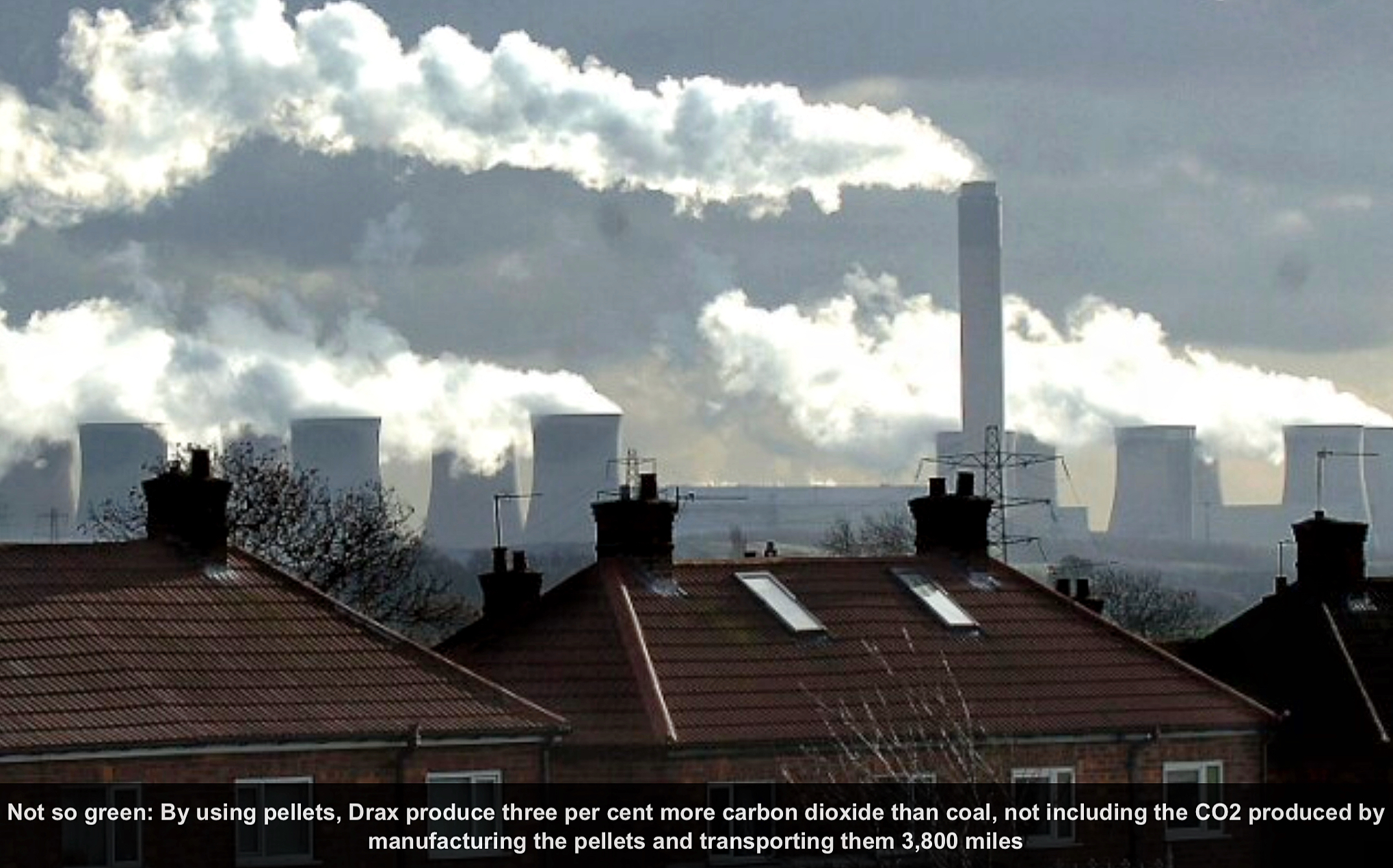
I encountered people, including teachers, of many different opinions and ideological or ­religious persuasions and read as widely and deeply as I could concerning where these different ­beliefs had come from and why anyone would adhere to them. No political correctness or ideological straitjacket was in evidence. That appears to have changed.

I did, however, encounter individuals with strong opinions. I ­recall a tutorial during the 1979 course Classical Social Theory (on Marx, Weber, Durkheim and other modern social theorists) in which a fellow student declared bluntly and humourlessly that “come the revolution” people who thought as individualists like me “will all be shot”.

He didn’t threaten to assault me on the spot, though, and it never occurred to me to insist that he be expelled from the class or the university for saying such a thing. The meta-rules were in place and I disagreed with his politics. I was bemused by what these days one might dub his “hate speech” but not intimidated. I knew perfectly well that my classmate’s attitude was not ­merely some strange fantasy on his part.

Pol Pot had been overthrown in Cambodia only very ­recently, after having huge numbers of his country’s educated elite tortured and shot. Deng Xiaoping had just crushed the Democracy Wall movement in Beijing and had Wei Jingsheng imprisoned for — as the trial judge put it — “using so-called freedom of speech to stir up trouble”. The ruthless practice of Marxist-Leninist tyrannies throughout the 20th century was well known to me.

But being at a university in a liberal democracy, I felt safe enough to absorb such violent language in the tutorial room.

This extended to public lectures. In 1980, I attended a forum in the famous Public Lecture Theatre at the University of Melbourne, at which several well-known speakers addressed an audience of hundreds on the subject of Malcolm Fraser’s economic policies and the problem of relatively high unemployment.

David Kemp (Liberal), Tom Uren (Labor Left), Don Chipp (Australian Democrats) and Albert Langer (Monash University Marxist radical) all spoke. None was shouted down. Langer, however, gave a decidedly inflammatory address. The first three had all advocated various competing approaches to macro-economics and unemployment relief. Langer declared openly: “Those are all bourgeois solutions. If you want to do something useful, go and learn how to use a rifle. What this country needs is a revolution.”

There’s freedom of speech for you: used to advocate violence rather than the deepening of ­inquiry and debate. Langer was not so much a far-right Proud Boy as a Proud Leninist.

Afterwards, I approached him and asked would he care for a coffee. He cheerfully agreed and, as we strolled over to the Student Union, I conducted an exercise in freedom of speech. “Albert,” I said to him, “let’s suppose, for the sake of argument, that you were able to organise the revolution you’ve just called for and seize power in this country. What exactly would you then do?”

“That’s a good question,” ­Albert responded.

“Sure, it’s a good question,” I ­replied, “so what’s your answer?” He remained silent. “OK,” I went on, “let’s assume you pursued a standard policy of nationalisation, state planning and indoctrination, but things got gummed up and the economy hit the skids. What would you do then?”

“Oh,” he said airily, “we’d have to have another revolution … And why not? After all, if things worked out, it’d get boring. Revolutions are fun.”

We proceeded to the Student Union and ordered our coffees. He described himself as a “Marxist-Leninist-Stalinist-Maoist”, which struck me as absurd and ­objec­tionable but not sufficiently so as to derail the conversation. I have never since, however, been able to take Langer seriously. He remained at liberty, carrying on with his ratbaggery for years. Fortunately, though, he wasn’t able to organise an armed revolution and I was able to pursue my studies without being purged or shot.

The year after that public forum, curious about student radicals such as Langer, I undertook an honours thesis on the student ­rebellion and general strike in France in May of 1968. The soixante-huitards (sixty-eighters), as they have been dubbed, had quite ­anarchic ideas about freedom of speech and social change. “All power to the imagination,” was one of their most fetching slogans.

From a conservative point of view, they were assorted imbeciles, suffering from various Castroite or Maoist fantasies and Marcusean delusions. Charles de Gaulle ­derided them as “bed wetters”.

I was interested in the wellsprings of their revolt and how it played out in advanced industrial society. My inquiry was unhindered and I drew my own conclusions, critically evaluating the full spectrum of ideological opinions about les evenements de Mai. It was a valuable learning experience.

The Free Speech Movement as such had arisen at the University of California, Berkeley, in 1964-65 among restive students who had come to believe that learning at university was not enough. Agitation for social change was ­incumbent upon them and should be accommodated by the academic authorities.

There was a struggle over this. The FSM was part of a groundswell of such ­activism in the early 60s, not least through the nationwide American movement called Students for a Democratic Society. As the problems of war in Vietnam and racism heated up, elements of the SDS threw the meta-rules of democratic social order overboard and opted to attempt violent revolution. They formed the Weather Underground Organisation, inspired by the insurrectionism of Che Guevara and Carlos Mari­ghella in Latin America. I studied all of this in the 80s when it was still a matter of recent history; during doctoral studies on American counterinsurgency strategy throughout the Cold War.

I identified to some considerable extent with Tom Hayden and the founders of the SDS and ­empathised with armed rebels in countries such as El Salvador and The Philippines. I was wary of the Marxist-Leninist brand of violent revolution, given its appalling history in the 20th century, but ­appalled by the death squads that plagued Central and South America in those years. My investigation itself, after all, required the meta-rules of liberal democracy.

Robert Redford’s 2012 film The Company You Keep, starring Redford, Susan Sarandon, Julie Christie, Nick Nolte, Stanley Tucci, Sam Elliott, Chris Cooper and Shia LaBeouf, romanticises the Weather Underground and its radical politics. The film’s worth seeing, but it’s not a good ­introduction to what happened back then.

Brian Burrough did a vastly better job in Days of Rage: America’s Radical Underground, the FBI and the Forgotten Age of Revolutionary Violence(2015). Crucially, for our present purposes, he shows how the FSM and SDS struggled with the meta-rules regarding freedom of speech and civil society and how the impatient and “radical” wing threw away those rules and opted for violence of the kind Langer extolled.

Such would-be revolutionaries, like neo-Nazis or violent anarchists or religious fanatics, pose a direct threat to the meta-rules. It’s all very well, after all, to seek truth in congenial, intelligent, well-­informed and professional company. But what do we do when we confront venom, ignorance, hostility, entrenched resistance — when we confront one kind or ­another of what Churchill called “the fanatic”: someone who cannot change his mind and will not change the subject?

Well, that’s exactly when ­defence of the meta-rules, including by police protection if necessary, is most important.

Nadine Strossen, the first female national president of the American Civil Liberties Union and professor of constitutional law at New York University, has just given us a fine reflection on this challenge: Hate: Why We Should Resist it With Free Speech, Not Censorship. She makes a powerful case that when we find ideas objectionable, we need to have the courage to stand up and challenge them, not merely shout them down or try to ban them.

An unimpeachable “liberal” on race, class and gender, she states forthrightly: “On many campuses … students complain that they have been ‘assaulted’ when they are exposed to ideas that offend them, or even if they learn that a provocative speaker has been ­invited to campus. This false ­equation between controversial ideas and physical violence fuels unwarranted calls for outlawing and punishing ideas, along with ­violence.”

For reasoned debate and fruitful inquiry to take place, it is necessary that violence be outlawed, but it is counter-productive for ideas to be outlawed. What’s required is to foster the opportunity for strenuous debate and what may often be painful and difficult learning. If we cannot agree on that, our political and intellectual culture is in trouble.

Unfashionable as it is to state this these days, the ideas of freedom (eleutheria), political equality (isonomia), equality of speech (isegoria), freedom of speech (parrhesia) and democracy (demokratia) derive from classical Greece. They were imperfectly realised in the ancient world and the Greek and Roman republics gave way to autocratic rule. But we derive our key modern ideas about freedom and responsible government from those beginnings.

Plato, Aristotle and the School of Athens

As Josiah Ober wrote in The Athenian Revolution: “Some 2500 years after the revolution that made it possible, democracy is widely regarded as the most ­attractive form of practical (as ­opposed to utopian) political ­organisation yet devised. Among democracy’s virtues is its revisability — the potential of the political regime to rethink and to reform ­itself, while remaining committed to its core values of justice, equality, dignity and freedom.”

At the root of all this is freedom of speech. If we wish to preserve and extend our liberties or maintain our democracies, we need to understand this. We must equip ourselves to practise it well, educate our young to understand how unusual such liberty has been in human history and how difficult it is to maintain. Doing these things itself ­demands that we adhere to the meta-rules that make it possible. And here’s the kicker: so will building any realisable “utopia” be worth striving after? Martin ­Luther King Jr knew that and spoke faithfully to it, calling for the American republic to live up to its founding meta-rules.

Paul Monk (paulmonk.com.au) is the author of 10 books. The most recent is Dictators and Dangerous Ideas: Uncensored Reflections in an Era of Turmoil (Echo Books, 2018).