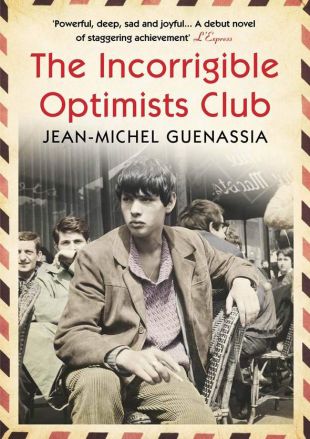
The Incorrigible Optimists Club

A story of exile and of exiles, of revolutions fought and betrayed, of wars and causes lost,  of faith and failure, of shame and regret, tolerance and redemption, of secrets and confidences kept and broken, of untold stories and restless ghosts.

And this winner of France’s prestigous Prix Goncourt is one of the best books I have read in years!
IOC

They say for every boy and girl there’s just one love in all the world and I know I’ve found mine.                                                                                       Carole Joyner and Ric Cartey, Young Love, 1956

Come mothers and fathers throughout the land, don’t criticize what you can’t understand. Your sons and your daughters are beyond your command. Your old road is rapdly agin’ . Please get out of the new one if you can’t lend your hand for your times they are a-changin’ .                                                                             Bob Dylan, 1964

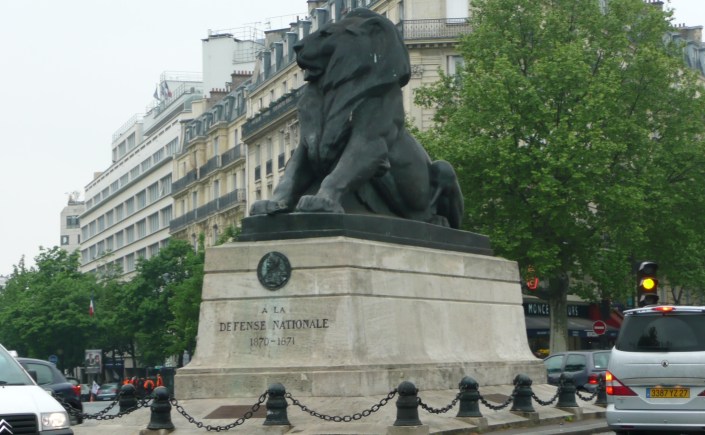
In Montparnasse, a metro station exits onto the wide Place Denfer-Rochereau, the centrepiece of which is a magnificent bronze lion, sculpted by Frédéric Bartholdi, creator of The Statue Of Liberty as a memorial to the heroic defence of Belfort during the Franco-Prussian Way of 1870-1871. Directly opposite is the entrance to the morbidly amazing Catacombes de Paris. On the Boulevard Raspail side of La Place is a big cafe where on a freezing, wet and windy May morning a few years back, Adele and I drank hot espresso whilst waiting for the Catacombs to open. I like to think that in the late fifties, this very cafe was indeed the Balto, where much of this magnificent novel is set:

Le Rive Gauche, as the ‘fifties gives way to the ‘sixties; as the crooners makes way for rock n’roll; as the Cold War divides a continent, sending dissidents and refugees fleeing to a safe haven in Paris; as the Algerian war divides and destroys families: and as the seeds of ‘les evenments de Mai 1968’ are sown in the hearts and souls of France’s young people

It is a coming of age book, of young hopes and fears, love and loss. It is book about writers and reading, and the magic and power of the written word in prose and poetry. Like the games of chess that punctuate the narrative, it is about how life and learning is characterized by strategy and tactics, calculated feints and moves, patience and passion. And the paradox that pervades the story: nothing happens by accident, but never underestimate the power of coincidence.

Michel Marini, our narrator, is a precocious twelve year old when we first meet him, navigating his rocky road through high school, addicted to reading, rock n’roll, playing table football in the local cafes, and his introduction to the club of the title. This gathering of argumentative, chess-playing, smoking and boozing, grumpy old émigrés become in many ways a surrogate family. Michel first encounters these outcasts of Eastern Europe in the back room of a bistro. They are The Incorrigible Optimists Club, where,  despite the ancient discord of its members, the club serves as thier sanctuary. “The Poles hated the Russians, who in turn loathed them; the Bulgarians detested the Hungarians, who ignored them; the Germans abhorred the Czechs, who despised the Romanians, who could not care a damn. Here, they were all stateless and equals in adversity.”

Lost souls, the flotsam Old Europe, hugging their faded and vanished dreams, their language, their culture, their sad and often traumatic memories of their past in a strange land. Men without women, stateless, penniless, jobless, homeless, dispossessed of their wives and children.  Bent, but not broken. These are memorable characters, each with his own colourful and poignant back story. The pilot who defects for love, the doctor who drives cabs because his qualifications are not recognised. The Hungarian movie idol and his enamoured agent. The mysterious photography expert who befriends and mentors the young narrator. They are trapped between worlds and irreconcilable desires: “When a man achieves his dream, there is neither reason, nor failure, nor victory. What is most important in the Promised Land is not the land, but the promise.”

And there is also Michel’s actual family, his mismatched, over-worked and out- of- time parents, each from a different class and station, and their parents and siblings, particularly Michel’s art-loving Italian grandfather, and his dislocated pied-noir uncle and cousins. His chatterbox little sister, and his tortured, intellectual brother Franck. And front and centre in Michel’s adolescent life, Franck’s girlfriend and her would-be-revolutionary brother, beautiful, intelligent, rebellious, orphaned rich kids who become young Michel’s muses: and literally colliding with him through serendipity and synchronicity, his first true love. And behind them all, casting ominous shadows and unleashing sundering storms, lurks the dangerous backdrop of the closing years of the bitter and bloody Algerian independence war.

A knowledge of the Russian Revolution and its dramatis personae, Stalin’s Terror, The Great Patriotic War, the Hungarian Revolution and the building of the Berlin Wall, and of the ‘savage war of peace’ that was Algeria, is not obligatory, but it certainly helps set the scene for the various stories and vignettes that unfold. Cameo roles include philosopher Jean Paul Sartre, novelist Joseph Kessell, and one Rudolf Khametovich Nureyev – and the sinister ghost at the feast, Iosif Vissarionovich Stalin.

Every now and then, your jaw drops and you say to yourself “this is a masterpiece”! Like when I first heard Keith Jarrett’s Koln Concert and Glen Hansard and Markéta Irglová’s The Swell Season. Sultans of Swing and The Boy in the Bubble. When I first read the opening paragraphs of Catch 22, and Chapter 41 of Moby Dick. The Incorrigible Optimists Club cast the same spell.

I leave the last words to the author: “Before you read a book, you can know immediately whether or not you are going to like it, just as with people, you can tell just from looking at them whether or not you’ll be their friend. You smell it, you sniff it, you wonder whether it’s worth spending time in its company. The pages of a book have an invisible alchemy that imprints itself on our brain. A book is a living creature”.

You cannot find a better testimonial for the printed word than that.

© Paul Hemphill 2015,  All rights reserved


The Magic of Dylan Thomas

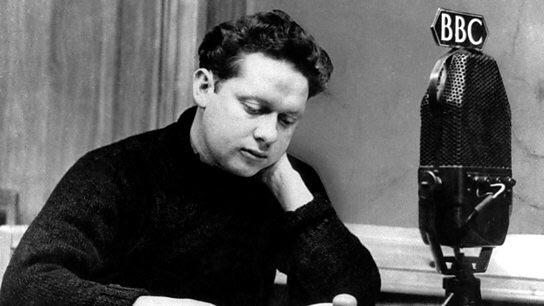
2013 was the sixtieth anniversary of the death peerless Welsh poet Dylan Thomas, one of the many famous artists who departed this planet in New York’s Chelsea Hotel.  The following piece by Peter Craven is a beautiful tribute, illustrating the magic of Dylan Thomas’ poetry. And listen, pray, to the man himself reciting his poems.

Welsh poet Dylan Thomas did not go gentle into that good night
Peter Craven, Weekend Australian, 29 November, 2014

ACCORDING to legend, Bob Dylan took his name from him and he was a kind of rock star: Dylan Thomas, the Welsh poet who gave to the people of Wales — and to that part of the world that reveres what they stand for — a poetry of such reverberating bardic magnificence that he became a popular poet long after the age of popular poetry was over.

Thomas, who died, reportedly of alcohol poisoning, in New York at 39 in 1953, has his centenary this year and for the Welsh there has been no ­tomorrow.

Michael Sheen (the Welsh actor who played Tony Blair and David Frost) has been doing Under Milk Wood, Thomas’s great dreamscape of a radio play, in New York with Kate Burton — daughter of Richard Burton, who first did it on the BBC and even made a film of it with Elizabeth Taylor as Rosie Probert and Peter O’Toole as Captain Cat.

And in Wales they’ve been reading every jot of verse that Thomas ever penned. Distinguished Welsh actors such as Jonathan Pryce have been part of the mass recital and even that northerner, Ian McKellen, old Gandalf himself, has been dragooned into the celebration as if that rhapsodic sense of wizardry could encompass an entire world.

And he was a wizard, Thomas. I remember a lifetime ago lying in the dark of my parents’ bungalow as a young teenager listening to the black graven voice of Burton as he recited:

In my craft or sullen art
Exercised in the still night
When only the moon rages
And the lovers lie abed
With all their griefs in their arms …

It was a poetry made out of mouthfuls of air, as poetry must be, and it was also full of a rich kaleidoscope of imagery, and that seemed to make perfect sense because the emotional thrust was clear from the power of the rhetoric that sustained it.

This was a poetry that was deeply traditional in its sound patterns. It had a romantic grandiloquence and an alliterative richness, a reckless audacity of effects that was a bit like that priestly poet who had anticipated modernism, Gerard Manley Hopkins.

And, of course, it’s that lassoing effect of poetry as a language of the gods that can encompass a universe of feeling and imagining. It can intoxicate itself with language but see the world with a radiant clarity as a consequence of the intoxication. That makes people surrender to Thomas, the way when they are young they surrender to the first stirring of ­desire, that strange sense of body and soul coming together at the prospect of love.

If that sounds a bit much for mere poetry to achieve, listen to the lilting lyricism of Fern Hill:

Now as I was young and easy under the apple boughs
About the lilting house and happy as the grass was green,
The night above the dingle starry,
Time let me hail and climb
Golden in the heydays of his eyes …

It’s poetry of almost total sensuous suggestion and it is saturated with the feeling of sap and possibility. In one way, it’s a poetry that seems to embody the idea of youth even though it is constantly talking about shadows and spectres of mortality. Indeed, Fern Hill ends with a great splash of verbal colour, and an intimation of how the erotic glory of the world, the sense of it as a many-shaped thing of wonder, is inseparable from the pang of transience.

Thomas led an irregular life and before he died in New York’s Chelsea Hotel he told someone he had had 18 consecutive whiskies in a bar. It couldn’t have been quite true but it had a poetic truth because Thomas and his wife Caitlin hit the bottle like a destiny.

Part of Thomas’s fame came from the fact he had a tremendous histrionic gift as a reader of poetry. He read in a very posh-sounding voice with a kind of conscious grandeur that gives a less sinewy sense of his music than Burton does, but has a majestical quality that many people find mesmerising. His reading style tilts towards the preacherly with its Welsh undertone as part of the incantatory quality. But, then, some of his greatest poetry projects a religious vision, which is why Thomas’s poems have become hymns for a modern world that may not know what it believes but has a deep sense of the resonance and the ­afterglow of belief.

Do not go gentle into that good night,
Old age should burn and rave at close of day;
Rage, rage against the dying of the light.

The language is magical in the way it creates, with a fierce flaming elegiac power, the refusal to accept the fact of death. And the fact the perspective is not Christian — we know the darkness does overcome — makes the poem a tremendous affirmation of the heroism of life in the face of death. It’s a poem with a reckless bravery and that urging to “rage” — that impossible, nearly preposterous imperative — sits in such tension with “the dying of the light” that the effect is very poignant.

Some people sneer at Thomas, sometimes in reaction to their own earlier infatuation with him. His poetry enthrals the mind (and heart) long before you know ­exactly what is being said or meant. Is that a disqualification for greatness? Isn’t it a version of what TS Eliot meant when he said that poetry communicates before it’s understood?

If you want the organ notes of elegy, the sombre power that comes from the breath of death on the backs of our necks, and at the same time the sense of the resurrection as always now, try this:

You can, if you like, say the trick is all in the one great line, the line Thomas uses as his refrain, and that he creates a decorative web around it.

And death shall have no dominion.
Dead men naked they shall be one
With the man in the wind and the west moon;
When their bones are picked clean and the clean bones gone,
They shall have stars at elbow and foot;
Though they go mad they shall be sane,
Though they sink through the sea they shall rise again;
Though lovers be lost
love shall not;
And death shall have no dominion.

But that’s not quite the effect of the poem when it is read aloud. If you listen to Burton recite it, for instance, you get a sense of rushing soliloquy, of confusion and conflict and spectacular profusion, resolving itself in the refrain, which becomes like a religious affirmation, a faith in what seems impossible, a refusal to be conquered by something that cannot fail to conquer.

This is compatible with a believer’s position or an atheist’s, because when it comes to poetry we all suspend disbelief. And Thomas’s poetry is such a headlong act of faith in the act of creating poetry that it presents this spectacle — it, in fact, dramatises it — with a sort of breathtaking self-confidence that goes a long way to explain why his poems seem so genuinely bardic, why the Welsh have taken to them like anthems. And also perhaps, commandeering the tragic fact of his early death, why it makes a kind of sense that Thomas died so young.

If your schtick is to give your audience another piece of your heart over and over, you will burn yourself out or you’ll have to change your art.

God knows what Thomas would have done if he had lived. “It was my 30th year to heaven,” he wrote in Poem in October, which with its wonderful sense of the self roaming like a god is one of the greatest lyrical poems of the 20th century.

My birthday began with the water
Birds and the birds of the winged trees flying my name
Above the farms and the white horses And I rose
In a rainy autumn
And walked abroad in shower of all my days.

It was his 30th year to heaven and he already wrote like an angel and he was already talking as if he were in the presence of his own tombstone.

It’s the hugeness of the gift that makes people back away from Thomas and makes them deny his achievement, partly because the mesmerism of his ­manner can create fear of the highest claims.

It makes sense, of course, that there was reaction against the rhetoric of poetry associated with the “New Apocalyptics”, as Thomas’s admirers called themselves and that was partly a reaction against the battering ram of rhetoric the world had suffered with Hitler and Churchill and World War II.

People were sceptical of majesty in poetry. They remembered that the “terrible beauty” of Yeats had been a landing field for a fascist politics. But how unfair to mix Thomas up with this.

Under Milk Wood is the most successful piece of poetic drama of a postwar period haunted by the idea. It has extraordinary brio, and the way Thomas manages to create this surrealist brew of poetic hocus-pocus with choruses of schoolkids and scolding old women and blind, mad Captain Cat and dead lovers, all within a circumambient poetic idiom that is at once rich and grounded in earth, is pretty stunning when you remember that it is also a credible evocation of a village in Wales.

It’s no wonder the Welsh have taken Thomas as their red dragon and their prize dreamer. He was an incomparable poet. He did not go gentle into that good night; he lived hard.

But when it comes to the kingdom of poetry, death shall have no dominion.


Yuri The Storyteller … we’ll sure miss the old bastard!

No man could kill him – but his heart did. Anon

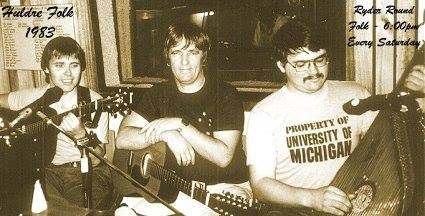
My old friend and Huldrefolk founder member, George Hofsteters, Yuri The Storyteller, passed away peacefully in his sleep yesterday morning, 9th July 2014.

Passing strangest is Yuri’s passing. He had such a life force. He was a force of nature, even, the kind of person you’d think would outlive us all. And it was ironic that he who raged so long against the establishment should go so quietly into the night. I would have expected a contrarian like Yuri to have been lynched by a mob of irate god-botherers.

Yuri’s departure brought me back to the dying decades of the last century, when the shadowy and iconoclastic HuldreFolk appeared out of nowhere with their unique combination of stories and songs, and then almost as suddenly, disappeared into the mists of memory.

I was playing at the celebrated Three Weeds Folk Club in Rozelle in the spring of 1983, performing a cover of Roman poet Meniscus Diabetes‘ popular song Roman Holiday.  I was distracted by a cackling in the front row; and there was Yuri, laughing his head off. After my set, we got together and swapped notes on life, the universe and everything. Fate would have it that celebrated bandurist Victor Mishalow was also on the bill that night. And Yuri and I were enthralled by the magic of the Carlingford Cossack’s grand instrument.

Yuri told us he was a Russian Storyteller, and that he was performing at the Humanist Society the following Tuesday. “Come along and play some songs and tunes”, he said. And so we did. Yuri enthralled us with his spirited rendering of Alfred Noyes’ The Highwayman.  And it was there, in Shepherd Street, Surrey Hills, that HuldreFolk was born. Over the next two years, HuldreFolk, named for the mythical and mystical ‘hidden people’ of Icelandic legend, played throughout Australia.

One such occasion was the very first time I visited Coffs Harbour, a seaside graveyard with lights on the mid north holiday coast of New South Wales, sometimes known as the Costa Geriatrica (as fate would have it, we now live in the forest some forty clicks away from there). Looking for a parking space outside the venue, Yuri cut into a space ahead of a car that had already bagged that spot. A few minutes later, the occupants of the car approached us, looking mean and moody. Tall, broad and hairy, they looked like bad news. Yuri was unperturbed. “My mate Paul is a black belt in karate”, he chirped …

On a return visit to Coffs Harbour, he and Victor Mishalow got a gig performing on the back of a flatbed truck in the mall for a smattering of disinterested passers-by. When they’d finished, the organiser asked Yuri how much they wanted, “Two hundred dollars”, Yuri said. Before the paymaster could reply, Yuri added: “Each!” And they got it.

Yuri could be a proper bastard sometimes.

Although HuldreFolk pursued their own paths and projects, during the following decades, they would pop up in unexpected places, like their namesakes, in ones, twos, threes, and on occasions with guest HuldreFolkies. Their last outing as a trio was in October 2007 at the North By Northwest Poetry And Folk Club. Google the videos on YouTube.

Such was his energy, after a series of concerts, I’d need several months away from him to recover. Whenever we had to do a road trip, Yuri would tell jokes non-stop – it was as if they were on a loop. Once he’d finished his repertoire, he’d automatically start again.

Whenever HuldreFolk worked together, their collaborations were creative and at times, crazy.

Listen to Victor’s haunting bandura arrangements behind many of Yuri’s stories, the bravado of ‘The Ballad of Boreslav’ and the wackiness of ‘The Song Of The Volga Shearers’. Back in the day when I was performing ‘I Still Call Mongolia Home’, ‘Brave Goliath’, and ‘Roman Holiday’, Yuri would say: “There has never been as song about the Spanish Inquisition. Why don’t you write one”. Or, “How about a song about the Vikings?” The rest, of course, is hysterical.

We would always introduce George as “The One And Only Yuri The Storyteller”. Watch him on You Tube reciting the epical ‘McArthur’s Fart’ or the poignant ‘Claudy’, and telling the magical story of ‘The Algonquin Cinderella’ or the faerie ‘Green Lady’, and you will see that he really was.

Goodbye old friend.

Blast from the past

On 28th October 2013, Yuri posted on the HuldreFolk Facebook page:

Hi, Amigo!

You’ve done a great job on the Huldrefolk page, I’m with you 100% and will support at every opportunity. Could not be on your side more if I was Eddie Obeid. Now here comes the ‘but’. It’s only a tiny elephant in a big room.

It’s been quite a while since we’ve trod the boards together. Obviously neither of us will get the applause or the audiences we once had and sensibly, we should be content to let someone else drive the celebrity bus. We once had the opportunity to be bigger than the Kingston Trio and Tiny Tim together, but the choices that were made ensured we would never be plagued by the paparazzi. Yet I do believe we have influenced others with the idea we once spearheaded. Story, song, music are being metamorphosed in countless variations. I’m glad we had something to do with that.

Today, however, I’m puzzled at why one would go to the trouble of going to the ‘Pet Cemetary’ of entertainment to resurrect on social media a tired old dinosaur that is hardly remembered, let alone noticed by all but a small coterie of moth eaten folkies whose perception of “Macarthur’ is deemed akin to ‘high culture’. Traditional folktales, I’m afraid, will always belong in the musty archives and forgotten bookshops. They are a relic. Fossils belong in museums. But then, being the sentimental bastard that my nature dictates me to be, I hope you get something nice and rewarding for your efforts. If it’s sentiment before oblivion, light the fuse. Cheers!

Yuri’s race had less than a year to run when he penned this piece.

In many ways, he was right – a cruel man but fair, as they say.

But what times we had!