When I first visited Israel in the early ‘seventies, it seemed to me a white man’s land with the look and feel of a European colony transplanted in Levantine soil. But first impressions were deceptive. Subsequent visits made it very clear to me that State of Israel is anything but monochrome, but rather, a technicolor cultural melting pot.
Back then, European Ashkenazim (literally, “German” Jews), the returnees of the diaspora, were in the majority. They had dominated politics and culture from the days of the first Zionist immigration, and through the mandate years of the Yishuv when Eastern Europeans predominated in the movement and in the fledgling military. The republic that the Ashkenazim prepared for during the Mandate and then built after 1948 was, in intent and in actuality, a white, secular, socialist outpost of Central and Eastern Europe. But then things changed utterly.
The Sephardim, Jews who had lived in Palestine for centuries, and up to a million Jews expelled from Arab countries after 1948, were, for some forty years of Israel’s existence, a disadvantaged minority. The name itself was misleading. ‘Sephardi’ originally described Jews who had been expelled from Spain in the late fifteenth century. But it came to be applied to anyone who was not Ashkenazi. These Jews of Middle Eastern origin are now generally referred to as Mizrahim – “eastern” or “oriental” Jews. They were discriminated against in many spheres of Israeli life, regarded as primitive, backward, ill-educated, and poor – and more like Arabs than Jews.
And this was indeed the case in many respects. Jewish communities had been an integral part of Arab society for centuries. From Morocco to Iran, they had lived, thrived, and prospered among the their Muslim neigbours. The Jewish communities in Morocco, Algeria, Tunisia, Egypt, Iraq, Lebanon, Syria, Yemen and Iran were old and populous, and indeed often predated Christianity. From high to low, they were entwined in their local politics and economics.The lower classes were as poor and as downtrodden as their Arab neighbours. The professional and mercantile middle class lived very comfortable lives, and under late Ottoman rule, and British and French suzerainty, enjoyed a cosmopolitan lifestyle.
Embedded in the heart and soul of their Arab homelands, they shared the same history, suffered the same depredations, wore the same clothes, ate the same food, made and listened to the same music. Many of their values and cultural norms had more in common with the east than the west.
Oriental Jewish culture was based on three pillars: the community, the synagogue and the father. Faith was the cornerstone and family paramount, and with these, the authority of the rabbi and the head of the household. Piety was respected, chastity honoured, modesty and decorum observed, and marriages arranged. Religion, tradition and patriarchy preserved the community for a millennium. It did not experience European-style secularization, western enlightenment, or a revolt against religion. Even when modernization came, the father and the rabbi remained dominant.
There was harmony between Arab and Jew. Life had order, meaning, and a timeless rhythm. No one imagined that one day, they would have to abandon their lives, their homes and possessions and the graves of their ancestors. Never did they contemplate having to flee, in fear of their lives from the people among whom they had lived for generations, and seek refuge in a fledgling European, secular, modern state on the edge of the Mediterranean.
After 1948, the relatively charmed existence of oriental Jews in North Africa, the Levant, and Mesopotamia ended, and thousand year old communities disintegrated. A million Jewish Arabs were uprooted, their world destroyed, their culture ruined, their homes lost.
In an ironic twist, their Aliyah (literally “ascent” to Eretz Israel) confounded the Zionist model. Israel was created to be the home of European Jewry – until the Shoah brought those Jews to the brink of extinction. Young Israel had to populate or perish, and whilst designed for a European population and culture, it had no choice but to accommodate an oriental one. .
In yet another ironic twist, the creation of the State of Israel doomed the Jews of the Middle East by making mortal enemies of its Arab neighbours. But by giving these exiles refuge, Israel saved them from a life of repression, misery and backwardness in an unstable and violent Middle East. And yet, even as their numbers rose from under ten percent of the population to over fifty today, they were looked down upon, humiliated, discriminated against, neglected, and indeed, ignored by the secular Ashkenazi establishment. They were the Israeli “other”.
Destitute and grieving for their lost world and their old identities, and for the manner in which their longtime Arab compatriots turned on them, they were like flotsam on the shore of a new land. But it was an unfamiliar world, a world made for and ruled by European Zionists with an ethos alien to their own. This was a pioneer society, spartan yet permissive, that valued the individual and his or her contribution to the new state’s collective enterprises above the ties of family, custom and congregation. And for sound if not satisfactory reasons: the ties that bound European Jews to their centuries-old communities had been severed in the killing fields of Mitteleuropa – so many had few or no surviving relatives and friends from the prewar days – and new loyalties forged in the displaced persons camps of Europe, the mass Aliyah into disputed Palestine, and the cauldron on the Independence War.
The immigrant nation of Israel was conceived as a melting pot. The goal of the education system, the exclusive use of a reinvented and modernized Hebrew, and mandatory national service in the IDF, was to assimilate all who made Aliyah as Israelis. To make them Ashkenazis, in fact. The Ashkenazi social engineers encouraged European Jews to get over the Diaspora and the Shoah, and the struggle for independence and national survival, and to get on with the challenges of nation building. These orphans of Europe neither appreciated nor accommodated the eastern Jews’ attachment to their Arab identity, tradition, and culture. And indeed, may have resented, both consciously and subliminally, the fact that these Arab Jews had not come through the Holocaust or fought in the War of Independence
In the national project, the easterners were banished to existential shadow lands. Isolated, marginalized, dispersed, and cut off from their roots and heritage, their rabbis and synagogues, they were consigned to arid development towns in the Negev, to remote villages, and to the impoverished suburbs of the major cities. The state provided refuge, housing, schooling, and jobs. But it took away community, honour and tradition, the social and normative structures that kept Jews together in the eastern diaspora. They were given few tools to deal with the new world of physical and economic hardship, no authority, no bearings, no compass, no meaning. They took low paid, menial jobs, and a lost generation of youngsters drifted into crime and gang culture, drugs and prostitution.
Decades later, these “forgotten people” rose up against the (self)chosen race in a political and cultural revolution that saw “downstairs” gate crash the “upstairs” party. In the political turmoil that followed the Yom Kippur war, they found a political voice and demanded a seat at the top table. They backed Likud against “born to rule”, secular, Ashkenazi Labour, and precipitated a new political dispensation based on faith and values-based political parties and shifting and opportunistic coalitions. They were the working class, the factory hands, the tradies, and the small business owners. They were the parvenus, the usurpers, the nouveau riche, rising about their station, and as such, were scorned and maligned by many Ashkenazim. But they were now the majority. Through immigration and natural increase, their numbers grew, and with it, their political clout. One no longer heard the term ‘Sephardi’ – but rather, ‘Mizrahim’, literally ‘easterners’ – the descendants of Jews from Middle Eastern countries. Their values, interests and expectations were different to those held by the secular, liberal-minded Ashkenazim.
The Garibaldi of this Mizrahim Risorgimento was the charismatic Moroccan Jew Ariyeh Deri who formed the ultra-Orthodox Shas party – Shomrei Sfarad, literally, “(Religious) Guardians of the Sephardim”. Through the late nineties and into the twenty first century, Shas has become a pivotal political player. In the hurly-burly of Israeli coalition politics, its Mizrahi constituency has delivered parliamentary numbers that can make or break governments, and through the torturous wheeling and dealing, it influences policies as diverse and as critical as education and defense.
One of Binyamin Netanyahu’s key people in the current right-wing government is his Minister of Culture Miri Regev, whose family came from Morocco, a former brigadier general in the IDF, where she served as chief spokesperson during the Gaza pullout. She is a member of Likud, not Shas, and Netanyahu needs her backing in order to maintain his support among the Mizrahim. Regev likes to rail against what she calls “the haughty left-wing Ashkenazi elite” and once proudly told an interviewer that she’d never read Chekhov and didn’t like classical music. She has sought to give greater prominence to Mizrahi culture and to deprive “less than patriotic” artists of government subsidies. Many of the government’s recent actions appear designed to address the traditional disenfranchisement of the Mizrahim and of citizens living in the country’s “periphery” (that is, far from the central Tel Aviv–Jerusalem corridor), whilst other measures are aimed at promoting social mobility amongst these “outsiders”.
A changing world
Which brings me back the present and to my return to Israel after an absence of thirty years.
The dazzling sunlight reflected off the limestone brickage was the same. The history literally oozing from the stones was still exhilarating and addictive. The dry heat of summer in Jerusalem was as ever cleansing and enervating. The sociability, conviviality, argumentativeness, and at times obstreperousness of Israelis was the same. But Israel, as a society, had changed – and not just the cosmopolitan cafe and restaurant strips, the vibrant arts scene, the high-tech, wired-to-the-world communication systems, and the ever-present security presence.
Israel’s complexion has changed. Over half of the Israeli population are now Mizrahim (and some twenty percent are Arabs), and Russians and Ethiopians have come in by tens of thousands. There is intermarriage between Jews of all colours and cultures, and the place has taken on a coffee-coloured hue. Israel became the multicultural country it is now.
And it is changing still. As more and more foreign workers come in to work here – one of the consequences of the lock-down and separation that followed the 2002 Intifada, as Chinese and Southeast Asians replaced Palestinian Arabs in many sectors of the booming economy, there will be an increasing number of Israelis taking Filipina, Thai and Indonesian brides..
On our recent visits, we noted the high proportion of Mizrahim, and also, to a lesser degree, Ethiopians – most particularly, among young people. In the street, in the cafes, on the light rail, and especially with respect to the conscript army in which all young Israelis, boys and girls, must serve when they turn eighteen (with the exception of the ultra-orthodox Haredim and Israeli Arabs).
We had been contemplating why in recent years, and particularly, during the last Israeli election, right wing politicians were able to capitalize on an anti-Arab sentiment so incongruent (to liberal-minded outsiders, at any rate) among a people that proclaims itself to be conscious of its history of victimization and oppression. Why Israeli street protests and social media feature virulent tirades and slogans against the country’s Arab citizens and Palestinian neigbours (such inflammatory sentiment is returned with equal if not more vigour on the Arab street, on tabloid television, and from the mana-bir of mosques during Friday sermons). And why, therefore, Bibi Netanyahu’s election dog-whistle was so effective, resulting in a coalition government that is probably the most nationalistic, anti-Arab and anti-Palestinian in memory.
Commentators have suggested that the political shift to the right and to an increasingly authoritarian character has been due in part to the influx during the nineties of tens of thousands of Russian Jews who have no experience, appreciation and empathy for the occidental democratic model established by Israel’s founding fathers. It has also been said that the shift has been propelled by the exigencies of the security state that has perpetuated a pattern of fear and retaliation with respect to internal and external threats, be these Palestinian resistance to the occupation, as in the violent street protests and and bombings the first and second intifadas, and the lone-wolf vehicle attacks and stabbings of recent times, the ongoing rocket attacks and tunnel construction of Gaza, or the calls for the destruction of the Zionist entity by the Iran and its Hizbollah proxy, and by the televangelists and shock-jocks of the Muslim media.
It may well be “all of the above”, but there is also possibly the Mizrahi factor.
Now the majority of voters – this is where I am going out on a polemical limb with an argument that runs counter to what I have written above about the Mizrahim and their oriental legacy – Mizrahim don’t want Arabs – as friends, as neighbours, as fellow-citizens. Although Arabs and eastern Jews are literally ‘brothers under the skin’, although they shared the same lands, cultures and lifestyles for centuries, have they grown so far apart that the chasm has bred contempt?
They have grown up with the stories of their parents’ and grandparents’ own Nakba, the Arabic word for “the Catastrophe” of the 1948 war, when their families were cast out of their oriental Eden, expelled from Arab countries amidst threats and pogroms, murder and plunder. They spend their military service as conscripts and as reservists either serving in the occupied territories, or subject to deployment there or in Gaza when tensions flare, as they do frequently. They are aware of Arab mainstream and social media denigrating Jews and Israelis and calling for the destruction of their country. They know that any time, they and their loved ones, including particularly their soldier children, could be attacked by car, knife or bomb, or worse still, killed or kidnapped. Young – and not so young – Mizrahim have been hearing all their lives from their families and from the Arabs themselves that “they want to kill us”.
Nowadays, in many quarters, the Arab pogroms of the twenties and thirties appear to feature more prominently in Israel’s creation story than they did in earlier decades, providing an historical leitmotif to contemporary acts of violence. Times past, it was always the about the Zionist pioneers and, inevitably and unavoidably, the Shoah (and left-wing, peacenik Jews are predominately Ashkenazi of pioneer or Shoah heritage). Back then, there was also the image of triumphant David fending off five Arab armies and killing and expelling Arab Palestinians to create a contiguous national territory. Over half of Israel’s Jewish population has no connection to the Shoah, and to the secular and socialist Zionist ethos and once-powerful foundation institutions like the Kibbutz and Histradrut. The Israel of today, and the average Israeli, indeed, are very different to those of forty, fifty, sixty years ago, as are their perceptions and prejudices.
Perhaps the “victim” narrative appeals to and exploits atavistic fears of Arab hordes threatening to push the Jews into the sea. Maybe, too, it is a function of Israel’s dysfunctional place in the turbulent and bloody Arab world: a garrison state of citizen soldiers on a permanent, war-footing, the only democratic nation in these parts that nevertheless, paradoxically and immorally, maintains a military occupation of a conquered people, and sustains politically, financially, and among many Israelis, ideologically and spiritually, a neocolonial settler society. But in a sinister twist of fate, it is a narrative that would have been music to the ears of those long-gone Revisionist Zionists who harkened to the call of Zeev Jabotinsky and his Eastern European Ashkenazi crew who had resolved during the Mandate years that there could only be one people in Ha’Aretz, and that The Land would range from the Mediterranean to the Jordan River. Zeev’s vision inspired the vicious Irgun and Stern Gang, and these morphed in time into Likud, which is now effectively the ‘party of government, and the driver of all things intransigent.
One thing’s for sure: the Mizrahi factor adds to the many complications that hinder a just and permanent solution to the intractable conflict between Israelis and Palestinians.
In writing this piece, I am indebted to Israeli journalist and author Avi Shavit and his controversial and enlightening “My Promised Land – The Triumph and Tragedy of Israel” (Scribe 2014). Shavit wrote a brief, sad sequel in March 2015:
Veteran Zionist, humanist, journalist, and fighter for justice Uri Avnery wrote the following in February 2017: “When and how the Ashkenazi and Mizrahi Rift was born”. It is well worth reading:
http://www.haaretz.com/life/1.795156
hthttp://www.haaretz.com/life/1.795156tps://en.m.wikipedia.org/wiki/Mizrahi_Jews https://en.m.wikipedia.org/wiki/Demographics_of_Israel
In the statistics cited herein, there was no distinction made between Sephardim and Mizrachim. (If the Sephardim, Mountain Jews and other non-European groups are included in the Middle East and Asian group, then Middle Eastern and Asian Jews outnumber European and American Jews by a margin of 52 to 48
On a musical note:
From way back, I was particularly familiar with world-famous Israeli singers of eastern origin – Esther Ofarim, of dubious ‘Cinderella Rockefeller’ fame, (with her then-husband Abi, who was, incidentally, of Russian heritage), the late, sublime Ofra Haza, Noa, and latterly, Ladino diva Yasmin Levy].
As far as we know, Meniscus Diabetes was born in Rome in 25 CE, and acquired his poetic licence during the reign of Emperor Claudius. He had an abiding interest in Rome’s eastern provinces, and one of his surviving manuscripts is this epic ballad. See Roman Holiday – The Perils of a Poet in Nero’s Rome.
Lilith is a retelling of the “Legend of the Fall”. The style of Lilith differs markedly from that of other poems attributed to Meniscus – most notably the Hebrew Heroes cycle (again, refer to Roman Holiday), and was evidently written for a different manner of presentation. It was most likely written to be recited rather than sang (as were his other “story songs”). Recitations were a common form of entertainment in the middle Roman period, owing their popularity to the enduring reputations of the “classical” writers of the time, Ovid, Horace and the like. It was not uncommon for such recitations to last several hours. But Meniscus, mindful of the fast moving times, and also of the attention span of his audiences, appears to have honed his pieces down to between ten or fifteen minutes.
If Meniscus’ tale of Adam, Eve, Lilith and Lucifer has not been lost to literature until its very recent discovery, one wonders whether John Milton would have bothered to retell it in such lengthy and verbose detail.
Lilith, however, has been around for thousands of years. In the Talmud, she is described as a winged demoness with a human appearance. She appears in the bible, in the Dead Sea Scrolls, and in Hebrew folklore, and has been mentioned in black magic treatises. The apocryphal story is that Lilith was Adam’s first wife. God made Adam from dirt and clay. Adam bored, requested a companion, and God obliged with Lilith. Legend has it that her dirt was dirtier than Adam’s, but put that down to patriarchal prejudice and propaganda. More likely, she had the dirt on him! But I digress. Apparently, Lilith was not as inferior to Adam as he wanted. She wanted to be her own person, not Adam’s wife-slave. The story is that when Adam insisted on the missionary position, Lilith refused, saying “Why must I lie beneath you? We are both equal. We come from the same earth”. Adam got mad, and Lilith took off.
Because of this, she was banished from Eden and became a spirit associated with the seductive side of a woman. Eve came in her place to stand behind Adam, not beside him. Lilith became the timeless femme fatale, preying on the easily tempted weaker sex, the fabled incubus who comes at night upon men as they sleep. It is not for nothing that she has been hailed the (informal) goddess of wet dreams.
The legends are many and various. If you buy into the Lilith theory, you will see her cropping up throughout history in a variety of guises. In biblical times: Delilah, Salome, and Potophar’s wife. In fact and fable: Sheherazade, Lucrezia Borgia, Mata Hari, Evita Peron. Hollywood’s screen ‘sirens’ like Vivien Leigh, Elizabeth Taylor, and Marilyn Monroe. All of them antitheses to secular saints like Eve, Mary Magdalene, Joan of Arc, Florence Nightingale, Jackie Onassis, Mother Theresa, and Princess Diana.
Long time ago In a time before time,
When man was an atom in primeval slime,
When darkness lay hard on the face of the deep,
God called for his angels to sing him to sleep.
God made these angels from the fire ‘neath his throne,
Gave them existence and thought them his own.
‘Til one fiery angel professed discontent
At the whole pointless purpose to which he’d been sent.
He expressed his dissent towards God’s Constitution,
Fomented unrest and unleashed revolution.
The shackles of God he now deigned to throw off
With his old black beret and his Kalashnikov.
So Lucifer made for celestial hills,
Preaching an end to society’s ills;
Whilst God, declaration of martial law made,
And dispatched forthwith Michael’s Archangel brigade.
They tracked down the rebels to their mountain lair,
And challenged them forth for to give battle there.
Brave Lucifer fought and at terrible cost.
God, Paradise saved; he, Paradise lost!
From fire he came and to fire he descended,
And thus the battle for Paradise ended.
And bold Lucifer from sight of God, now rejected,
Reduced down to basics a mate he selected.
Having fought hard and failed, life just wasn’t the same,
So he sought to continue the family name.
He gathered the girls of his wandering band,
To choose the best and the brightest in his new found land.
He chose Lilith the Fair, he chose Lilith the wild,
Lilith the wonderful archangel child.
The grace and the charm of this heavenly belle
Did brighten the darkness of exile in Hell.
Her beauty brought visions of Heaven so bright;
Her songs fired the furnace of Hell’s fiery night;
Her dancing filled all of the exiles’ desire,
And upstaged the flames of the infernal fire.
But Lilith, a gypsy, quite soon got the shits
With the workaday life of her husband’s hot pits.
She yearned for adventure, she longed for to run
Naked and nimble, ‘neath God’s newborn Sun.
So she ventured to Earth and quite soon did perceive
That a fellow called Adam was fed up with Eve.
He’d never forgiven, he’d let his heart harden
Since she’d let him down badly that day in the Garden.
And Lilith knew well in her womanly way
That Adam was close to going astray.
She took off her wings and right at him, she hurled,
As if he was the only man left in the world.
(Which he was, in a way, in a manner of talking –
His sons, Cain and Abel, had not started walking.
And the Daughters of Eve, were infants at best –
And none had discovered the art of incest).
So Lilith moved in with her serpentine charm.
Poor Eve was pushed out in a state of alarm.
But you don’t press the point, you don’t try to shrug off
The aim of old Lucifer’s Kalashnikov!
She bunked up with Adam for seven score years
and pandered to all of his passions and fears.
But just like a man, he took her for granted
‘Til she said, “No more”! And her cloven feet, planted.
She made his life hell, (well, she knew all about it).
Poor Adam was grieved and rushed outdoors to shout it:
“Oh God, must you let me go through this alone?”
A voice said: “This party is not on the ‘phone!”
Then one day she took off , went to live with her sister
And true to his kind, our pal, Adam, he missed her.
He prayed to the Lord for to fetch his girl back
So the Lord sent three angels to pick up her track.
Now, Lilith went wild, when she found she was followed;
Fled into the night, and in shadows was swallowed.
And from that day to this she has been on the run,
Ne’er more to gaze on the face of the Sun.
Banished forever from Lucifer’s bed,
She wanders the world seeking mortals instead.
And in darkness of night when tired mankind is sleeping,
Out of the shadows, fell Lilith comes creeping.
Taking revenge for old Adam’s conceit,
She searches the land town by town, street by street.
House by House, ’til alone in your bed, you’re discovered;
In the wink of an eyelid, by Lilith you’re covered.
You’re caressed with the touch of a cold, seizing hand;
You’re rocked by a tremor you don’t understand;
You’re fastened upon with a grip of a vice;
And her lips are like coals and her body’s like ice;
And you’re trapped in your bed with no strength to resist,
Yet you feel that this moment’s too good to be missed.
And you wake in the morning, a terrible mess,
And you know then that Lilith has found your address!
Never in modern times – since the Second World War – have there been so many refugees. There are over sixty nine million people around the world on the move today – people who have been forcibly displaced from their homes and are fleeing from persecution or conflict. Forty million people have been internally displaced within their own countries – including six million Syrians. Over 25 million are refugees in neighbouring countries and further afield -. 25% of them are in Turkey, Lebanon, Iran, Pakistan, and Uganda. five million are Syrians. These figures are of those registered by the UNHCR. The real numbers are much higher. [See below, The World Refugee Crisis in Brief, and The Refugee’s Journey]
Just imagine …
Millions are on the move – , and you are one of them.
Lebanese American BBC Journalist Kim Ghattas says well:
I often get asked why my family never left – or more pointedly, why my parents kept us there, dodging sniper fire on the way to school and back. The answer is this: We stayed because leaving is hard. Becoming refugees meant leaving our lives, our identity, and our dignity behind…No one’s first instinct is to leave. Their first choice is usually to hold on to the comforting familiarity of home; when that becomes impossible, you leave for another safer area within the country. Then you leave for a neighboring country, so you can return as soon as possible or even keep an eye on your property while you’re away. Only when the walls are closing in and the horizon is total darkness do you give up and leave everything you have ever known behind, lock the door to your home, and walk away.
no one leaves home until home is a sweaty voice in your ear saying- leave, run away from me now i don’t know what i’ve become but i know that anywhere is safer than here
Somali poet Warsan Shire, Home
A million spaces in the earth to fill, here’s a generation waiting still – we’ve got year after year to kill, but there’s no going home. Steve Knightley, Exile
Oh, the wind, the wind is blowing, through the graves the wind is blowing, freedom soon will come; then we’ll come from the shadows. Leonard Cohen, The Partisan
I pity the poor immigrant whose strength is spent in vain, whose heaven is like ironsides, whose tears are like rain. Bob Dylan, I Pity the Poor Immigrant
Just imagine …
What if you had to leave behind everything that you hold dear. Your identity, culture, language, faith. You job, your school. Your loved ones, your friends, and your play-mates.
What if you have to sleep with your shoes on so you are ready to run if your enemies are approaching your village? And then you have to flee your home and climb the mountain to escape, helping your youngsters and old folk up the rocky slopes in the summer heat, and there is nothing to eat or drink, and nothing you can do except wait for capture or rescue.
What would YOU do if you had but a short while to gather a few things together and run, leaving your whole life behind? What would you try and take with you?
Then you wash up, literally and figuratively, on foreign shores – in border refugee camps, dusty border towns or urban slums. And there you stay, with other tens, hundreds, thousands, maybe hundreds of thousands in like dire straits.
Until one day, you are selected for humanitarian settlement in a strange land at the other end of the earth.
That day may never come; so, impatient, frustrated, desperate, you use your family’s savings to pay smugglers and traffickers who prowl the desert and jungle camps like predators and the port cities of Turkey, Libya and South East Asia.
So you take to the seas in frail boats and brave the the deep and dangerous waters of the Mediterranean, the Adriatic and the Indian Ocean.
You might only have enough money for one passage, so you go on ahead and hope to send for your kin once you have reached safe haven.
You may be one of fortunate ones who make it – not one of those cast ashore, lifeless flotsam and jetsam like baby Aylan on his golden beach.
You are now one of tens of thousands in a river of desperate endeavour.
You walk the long miles of the unwelcoming highways of Eastern Europe to a German or Swedish sanctuary. You might end up in a detention camp in Italy or Spain, stranded in the Calais Jungle, or the harbours of Java and Sumatra.
Or else, you are parked in a hot and hostile makeshift camp somewhere near the Tropic of Capricorn.
Just imagine …
You have fled the terror of the warlords and the militias, the holy warriors and the ethnic cleansers.
You discover that the border camps of Jordan and Lebanon, Turkey and Afghanistan, Thailand and Malaysia, Kenya and Namibia have their own ecology of hardship and handouts, rape and robbery, beatings and bribes, illness and neglect, cursory and desultory treatment by overworked and under-resourced aid workers, and shake-downs by the criminals who thrive in these places and the cops who take a cut and turn a blind eye or else enforce punitive directives from politicians, parliaments and bureaucrats.
There, you and yours’ attempt to rebuild a semblance of a life-before amidst the tents and the shanties, the dust and the sewage, the summer’s heat and the winter’s cold. A mosque to pray in, a school for the children, games of football or backgammon for idle youth and menfolk.
You try to keep the children warm and fed and free of mortal illness; you try to keep the spirit alive in a time of anxiety, fear, threat, loss, and confusion, a time of hopeful emptiness and of empty hopelessness.
Zaatari refugee camp, Jordan July 2013
Just imagine …
You are one of the lucky few selected for settlement in the fabled, unknown ‘west’.
New lands, under foreign skies, different constellations, so far away it might as well be the moon.
You now dwell among strangers. You neither speak their language nor comprehend their ways or their foreign gods.
You have no friends or family to call on in time of need.
You must rebuild the basic buildings blocks of a normal life – where even the idea of a normal life has now changed utterly.
The houses, the streets, the shops, the money even – are all new.
The things you took for granted are no longer there, and in their place are new ways and means.
New systems and processes – social, welfare, health, education – with new rules and ways of getting things done. Going to the doctor, to the bank, to government offices.
Understanding that policemen and soldiers are not people you have to pay off or flee from.
Learning English.
Finding a home.
Getting the kids into a school.
Finding a job when your qualifications are not recognized, and work-ways are different to what you know.
The laws are new, the language is new, the way people dress and behave, talk, walk and eat is new.
Many new things are fascinating, tempting.
Others, confronting and insulting to your morality and values.
Some are alien, even, beyond your comprehension.
Codes of behaviour, dress, decorum, politeness, are new. Less formality, respect and deference; open displays of sexuality, affection, and rudeness that would not have been tolerated, permitted even, at home.
You don’t understand what makes the locals tick – their mannerisms, their speech, their body language, their concept of time and space, even.
And you are shocked and frightened by their hostility. Not all – just a noisy and troublesome few who talk quietly amongst themselves, or hurl abuse, or march through city streets with signs that scream, “go back to where you came from!”, “go home!”
Home?
There is no home.
Home is far, far away.
So far away, it might as well be on the moon.
Just imagine…
This is the new. And you still bear the cross of the old. The world you left behind is still with you.
You miss your family, your friends, and the comfort and support you all gave each other.
You miss your old life. The streets, the sounds, the smells. The weather and seasons. Your job, your status, your school, your neighbourhood.
You yearn for street and shop signs you could read, voices you understood on the radio and television, on the street, and on the buses.
You hate having to try and make yourself understood to officials and doctors, desk clerks and shop assistants, and even the supportive and ever helpful case workers whose mission is to help you get through all this.
You are homesick, and lonesome; you feel isolated, helpless, dependent.
There is a terrible ache in your heart and a rift in your soul.
And then there are the scars that won’t and perhaps can never heal. The psychological and physical effects of the events and experiences that forced you to flee your homeland.
Conflict and violence, intimidation and discrimination, torture and brutality, even. You have flashbacks, bad dreams, anxiety attacks, and actual physical and mental pain and anguish.
They say that PTSD is endless. There is no cure …
Just imagine…
You are a stranger in a strange land, and there’s no going home …
They that go down to the sea in ships, that do business in great waters; these see the works of the LORD, and his wonders in the deep. For he commandeth, and raiseth the stormy wind, which lifteth up the waves thereof. Psalm 107
Home
Warsan Shire
no one leaves home unless
home is the mouth of a shark.
you only run for the border
when you see the whole city
running as well.
your neighbours running faster
than you, the boy you went to school with
who kissed you dizzy behind
the old tin factory is
holding a gun bigger than his body,
you only leave home
when home won’t let you stay.
no one would leave home unless home
chased you, fire under feet,
hot blood in your belly.
it’s not something you ever thought about
doing, and so when you did –
you carried the anthem under your breath,
waiting until the airport toilet
to tear up the passport and swallow,
each mouthful of paper making it clear that
you would not be going back.
you have to understand,
no one puts their children in a boat
unless the water is safer than the land.
who would choose to spend days
and nights in the stomach of a truck
unless the miles travelled
meant something more than journey.
no one would choose to crawl under fences,
be beaten until your shadow leaves you,
raped, then drowned, forced to the bottom of
the boat because you are darker, be sold,
starved, shot at the border like a sick animal,
be pitied, lose your name, lose your family,
make a refugee camp a home for a year or two or ten,
stripped and searched, find prison everywhere
and if you survive
and you are greeted on the other side
with
go home blacks, refugees
dirty immigrants, asylum seekers
sucking our country dry of milk,
dark, with their hands out
smell strange, savage –
look what they’ve done to their own countries,
what will they do to ours?
the dirty looks in the street
softer than a limb torn off,
the indignity of everyday life
more tender than fourteen men who
look like your father, between
your legs, insults easier to swallow
than rubble, than your child’s body
in pieces – for now, forget about pride
your survival is more important.
i want to go home,
but home is the mouth of a shark
home is the barrel of the gun
and no one would leave home
unless home chased you to the shore
unless home tells you to
leave what you could not behind,
even if it was human.
no one leaves home until home
is a damp voice in your ear saying
leave, run now, i don’t know what
i’ve become.
This Syrian mother and her child were rescued by the Greek Coast Guard.
The World Refugee Crisis in Brief
The Melancholy Mathematics
Like death and taxes, the poor and racism, refugees have always been with us. But never in modern times – since the Second World War – have they been so many!
There are over sixty nine million people around the world on the move today – that have been forcibly displaced from their homes – fleeing from persecution or conflict.
This doesn’t count economic migrants who have hit the roads of sub Saharan Africa and Central America fleeing drought and crop failure, economic recession and unemployment, poverty, gangs and cartels, seeking a better life for themselves and the families in Europe or the USA.
Three quarters of a million ‘economic migrants’ are on the move in Central America, whilst the UN estimates that at least four million people have left Venezuela because of its political and economic crisis in what has been described as the biggest refuge crisis ever seen in the Americas. There are refugee camps on the Colombian border. Most are in Columbia but others have entered Brazil and Peru. But these are not by legal definition refugees – see below, The Refugees’ Journey .
Of those sixty nine million people over 11 million or 16% are Syrians. The numbers keep growing Thirty one people at being displaced every minute of the day. In 2018 alone, 16.2 million people were newly displaced.
Forty million people have been internally displaced within their own countries – this includes six million Syrians and off our radars, some two million souls who once lived in the contested regions of eastern Ukraine.
Over 25 million are refugees in neighbouring countries and further afield. 25% of them are in Turkey, Lebanon, Iran, Pakistan, and Uganda. Some 57% of them come from three countries: Syria, 6.3 million, Afghanistan 2.6 million and South Sudan 2.4 million. The top hosting counties are Turkey 3.5 million, Lebanon, 1 million, Pakistan 1.4 million, Uganda 1.4 million and Iran 1 million.
Jordan shelters over three quarters of a million Syrians; during the Iraq wars, this relatively poor country sheltered a similar number of Iraqis, and still hosts tens of thousands of Iraqi Christians who’ve fled persecution at home.
These figures are of those registered by the UNHCR. The real numbers are much higher. The Lebanese government estimates that there are more than 1.5 million Syrian refugees in the country.
Much of the focus these days is on the Middle East – Syria and its neighbours, on Libya and the frail boats crossing the Mediterranean, on the war in Yemen which has killed over thirteen thousand and displaced over two million.
But situation in Africa is as dire.
More than 2 million Somalis are currently displaced by a conflict that has lasted over two decades. An estimated 1.5 million people are internally displaced in Somalia and nearly 900,000 are refugees in the near region, including some 308,700 in Kenya, 255,600 in Yemen and 246,700 in Ethiopia.
By August 2018, the Democratic Republic of the Congo hosted more than 536,000 refugees from Burundi, the Central African Republic and South Sudan. And yet, there are over 4.5 million Congolese people displaced inside their own country and over 826,000 in neighbouring countries, including Namibia, Angola and Kenya.
Should the present situation in Sudan deteriorate into civil war, another tide of humanity will hit the road.
And closer to home, there are millions of refugees in Asia.
As of March 2019, there are over 100, 000 refugees in 9 refugee camps in Thailand (as of March 2019), mainly ethnic Karen and Shan. Refugees in Thailand have been fleeing ethnic conflict and crossing Myanmar’s eastern border jungles for the safety of Thailand for nearly 30 years.
There were an estimated 1 million Rohingya living in Myanmar before the 2016–17 crisis, and since August 2017, an estimated 625,000 refugees from Rakhine, had crossed the border into Bangladesh.
The top-level numbers are stupendous. The detail is scary.
Some 52% of the world’s refugees and displaced are children. And many are unaccompanied. Every hour, around 20 children run for their lives without their parents to protect them.
Children are the most vulnerable to disease and malnutrition and also to exploitation and lose years of schooling. Millions are elderly and are also face health problems.
And the problems facing young people and adults are all enormous. International aid is limited and host countries often unsympathetic. Work opportunities are few, some countries even forbidding refugees to take work, whilst unscrupulous employers exploit the desperate. Migrants are often encouraged, sometimes forcibly, to return to their countries of origin regardless of whether or not it is safe for them to return. There are reports that many have returned to Syria into the unwelcoming hands of the security services.
Refugees have lived in camps and towns in Pakistan and Thailand, Namibia and Kenyan for decades. Most refugee children were not born in their parents’ homelands.
And the camps are by no means safe havens. There may be no shelter or only basic shelter in tents; no privacy; a lack of clean water; meagre food; limited medical care; and the threat of injury, disease and epidemics. They may be poor physical security and armed attacks, and abuse by the authorities and officials. There may be organized crime, shakedowns and extortion, corruption and bribery.
Families may have become separated, exposing women and children without the protection of male family members to more fear and violence. Women are subsequently vulnerable to harsh conditions, including potential sexual and physical and abuse, poor healthcare, and unequal access to food and water. They may be coping with the loss of the head of the family and with the changing roles and responsibilities that come from being the sole parent. They may not know if their male family members will return to them safely and they must deal with the stress and anxiety, the grief and loss arising from their recent experiences. They might be fearful of the future, which in a camp is unknown and unpredictable
Australia and Refugees
Of all displaced peoples, 17% of them are being hosted in Europe. According to recent data published by the UNHCR, Germany is home to the most refugees by far in Europe – 1.4 million in total. By comparison, France and Sweden have 402,000 and 328,000 respectively, and the UK, 122,000.
Australia’s contribution to the world’s refugee problem is but a drop in the ocean. But we have a long established humanitarian refugee settlement programme for people officially recognized as refugees by the UNHCR and selected for third-country settlement in Australia.
Our humanitarian migration intake for 2016 -17 was the highest year on record. The intake of 24,162 was some 10% of our broader migration program which saw 225,941 permanent additions to the Australian population, and included the special intake of Syrian and Iraqi refugees (an estimate 12,000 places over several years).
The figures are 17,500 in 2017-18 and similar in 2018-19, whilst Scott Morrison has pledged to freeze the number of humanitarian arrivals for the next term. Under the policy there will be an overall target of 60 per cent of the offshore component for women, up from 50.8 per cent in 2017-18. The Government will also push to increase the number of refugees and humanitarian entrants being settled in regional Australia from a target of 30 per cent to 40 per cent in 2019-20, whilst insisting that new arrivals will only go to areas where there is strong community support.
Coffs Harbour
Coffs Harbour is one of several refugee intake towns in NSW, along with Armidale, Newcastle, Wollongong and Wagga Wagga. It’s medical and educational facilities have….
Coffs Harbour hosts several organizations dedicated to helping former refugees settle in Australia. They arrive in Australia on specific humanitarian visas and become permanent residents the moment they are admitted into the country. – and hence cease to be refugees.
SSI looks after them when they first arrive in Coffs Harbour. North Coast Settlement Services, a division of Saint Vincent de Paul Society, takes over once SSI’s work is done – after between six and eighteen months depending on a family’s needs, whilst the privately run Sanctuary organization assists settled migrants with such matters as family reunion and employment. An ancillary NSW government agency, the NSW Service for the Treatment and Rehabilitation of Torture and Trauma Survivors (STARTTS), assists new arrivals with psychological support, and particularly, the effects of PTSD. STARTTS services include counseling, group therapy, group activities and outings, camps for children and young people, English classes and physiotherapy
I spend two days a week as a volunteer with Settlement Services International, a Sydney-based community organisation that administers the Humanitarian Settlement Program (HSP) which supports refugees from the moment they arrive at the airport, provides essential support and information to assist refugees settle in Australia and empower them to gain independence and build strong connections in their new communities. SSI helps with the needs of new arrivals and the challenges of settling in a new country. Its aim is to enhance self-reliance with a focus on English language skills, education and job readiness.
SSI administers the Humanitarian Settlement Programme in several centres in regional NSW, including Coffs Harbour, Newcastle and Armidale. In all three areas, SSI has teams of staff on the ground who work with refugees, humanitarian entrants and their local communities to help new arrivals to through their initial settlement. The SSI team includes case managers and volunteers from the local community and from the refuge community itself
SSI’s work includes meeting and greeting, arranging temporary accommodation on arrival; orientation, including familiarization with Australian ways, our services and institutions, and getting around Coffs Harbour; basic official matters like Centrelink, banking, and health services; English classes at TAFE and enrolling children at schools; dealing with real estate agents, rental leases and looking after their rental properties.
Where do our clients come from?
When first volunteering, I worked for Anglicare. New arrivals were largely from Myanmar and Congo – mostly Christians – and from Afghanistan. Many of the latter came to Australia under the “woman at risk” programme – mothers and children with no father. Whilst all are Muslim, many were Shia Hazaras, a Turkic people persecuted by the Sunni Taliban. Since SSI took over from Anglicare in September 2017, whilst Burmese and African families continue to arrive, the emphasis has been on Yazidis from Iraq and Syria, and particularly from the Yazidi heartland of Sinjar in northern Iraq, where they endured enormous suffering and hardship at the hands of the Islamic State. Considered infidels by Da’ish, they were targets of a campaign of genocide from 2014. More than five thousand were killed, and some five to seven thousand were abducted and enslaved – mainly women and children. Such was the danger that the UNHCR and the Australian and other governments took whole families straight out of the war zone rather than from camps outside Iraq.
Yazidis are ethnically Kurdish, and their language, Kurmanji, is Kurdish. Their society is hierarchical and endogamous. Their religion, Yazidsm, is a monotheistic religion and has elements of ancient Mesopotamian faiths, including ancient Persian Mithraism, and some similarities to the Abrahamic religions, Judaism, Christianity and Islam. Because Yazidis believe in reincarnation and turn to the direction of the sun when praying, it has been thought – erroneously, that the religion has its origins in ancient Persian Zoroastrianism and Hinduism. They believe in the one god, the creator of all things, who delegated the ongoing management to a heptad of seven holy beings or angels, the chief of whom is Malek Taus – the Peacock Angel.
Malek Taus has in the past been associated, by Muslims and Christians, with Iblis, Satan, and the fall of proud Lucifer. This misinterpretation has led, historically, to Yazidis being perceived as devil worshipers, and thus being subject to persecution and pogrom. The atrocities of Da’ish were only different from past assaults and massacres in their scale and longevity.
Volunteering
Whilst case managers specifically look after the new arrivals, they depend upon a team of volunteers to assist them in a wide variety of tasks that we locals take for granted. for example: taking new arrivals them to medical or bank appointments, showing them how to use the bus network, setting up accommodation prior to arrival, minding children whilst parents attend appointments, and even helping folk to purchase use lawn mowers – there are few lawns in Iraq and Afghanistan.
As a volunteer, past and present tasks have included walkabouts to familiarize new arrivals with Coffs Harbour, accompanying clients to house inspections when seeking new rental accommodation, and assisting with rental application forms; sending important documents like birth, marriage and education certificates to Social Services’ translation service for official translations; helping clients to apply for bus concession cards, school bus cards, and children’s sport vouchers; and assisting with NBN plans and connections. I have fixed broken cupboards, replaced light bulbs, checked out washing machines and kitchen stoves. and taking families to school interviews.
As I can get by with spoken Arabic and can read and write the language, and as i am reasonably proficient with computers, I have helped with online applications and prepared resumes. I have shown clients how to budget their money, and have run a class on how to set up and use smart phone calendars to help them make and keep appointments. On occasions, I am asked to just drop in on clients to see how they are getting on, and sort any basic house problems.
My most rewarding experiences have been: assisting case managers at the airport when the clients first arrive. It’s a very emotional moment for all involved; Taking families who have never seen the sea before to the seaside; helping a clients get a job; and helping STARTTS run a youth group for children and young people by registering the young attendees
How I got into this
Since my twenties, I’ve had an interest and, indeed, a passion for the Middle East, its history and politics, its people and culture, its languages and religions. I’ve travelled often to the region, and have studied it formally and as a hobby. I learned standard Arabic in the seventies and worked in academic and government research. Though I took a very different road for two decades, I returned to Syria in the noughties and got back into Arabic both standard and colloquial (two relatively distinct languages).
On retirement, I wanted to do volunteer work, and by happenstance, Coffs Harbour was a refugees intake town with several organizations dedicated to assisting new arrivals. At first, I used my knowledge of Arabic script to assist Farsi-speaking Afghans, and then the Iraqi and Syrian Yazidis arrived. Though their native tongue is Kurdish Kurmanji, and few could speak English, many spoke Arabic. SSI had several Arabic speaking support-workers, and some new arrivals had good English and now work as Arabic and Kurmanji speaking support staff, I am able to step in when they are already booked. Who’d ever have thought I’d be able to use and grow my Arabic in Coffs Harbour.
The Refugees’ Journey
Who is a migrant? Who is a refugee? Who is an asylum seeker?
Migrants
A migrant is a person who makes a conscious choice to leave their country to seek a better life elsewhere. Before they decide to leave their country, migrants can seek information about their new home, study the language and explore employment opportunities. They can plan their travel, take their belongings with them, and say goodbye to the important people in their lives. They can continue to phone friends and family, or write, email or Skype them without fear of adverse consequences. They are free to return home at any time if things don’t work out as they had hoped, if they get homesick or if they wish to visit family members and friends left behind.
People who choose to migrate for economic reasons are sometimes called “economic refugees”, especially if they are trying to escape from poverty. But they are not recognized as refugees under international law. The correct term for people who leave their country or place of residence because they want to seek a better life is “economic migrant”.
However, the displacement of people caused by such economic circumstances, or by natural disasters like flood, drought or extreme weather, can contribute towards political, social and ethnic tensions that can precipitate refugee crises. Effective and timely external assistance from neighbours and donor nations will often help to avert this. Aid is therefore provided in an effort to keep people in their homes or in their home countries.
Refugees
The 1951 United Nations Convention relating to the Status of Refugees states:
“Any person who owing to a well founded fear of being persecuted for reasons of race, religion, nationality, membership of a particular social group or political opinion, is outside the country of his/her nationality and is unable, or owing to such fear, is unwilling to avail himself/herself of the protection of that country.”
Refugees are forced to leave their country because they are at risk of, or have experienced persecution. Their concerns are human rights and safety, and not economic advantage. They leave behind their homes, most or all of their belongings, family members and friends. Some are forced to flee with no warning, and may not be able to say goodbye to friends and family, and may never be able to contact or see them again.
Many refugees have experienced significant trauma or been tortured or otherwise ill-treated. Their journey to safety is fraught with hazards, many risking their lives in search of protection. They cannot return home unless the situation that forced them to leave improves.
Location is all important. During civil unrest and conflict, people may be forced to leave their homes, but do not leave their country. These internally displaced persons (IDPs) are often referred to as refugees. But, whilst refugees and IDPs may flee for similar reasons, their legal status is very different. Whilst remaining within the borders of their home countries, IDPs are legally under the protection of their own government, even in cases where the government’s actions are the cause of their flight. A person cannot be recognized as a refugee unless they are outside their home country.
Asylum Seekers
These seek protection as refugees, but their claim for refugee status has not yet been assessed. Many refugees have at some point been asylum seekers, that is, they have lodged an individual claim for protection and have had that claim assessed by a government or UNHCR.
Some refugees, however, do not formally seek protection as asylum seekers. During mass influx situations, people may be declared “prima facie” refugees without having undergone an individual assessment of their claims, as conducting individual interviews in these circumstances is generally impracticable (due the large numbers involved) and unnecessary (as the reasons for flight are usually self-evident). In other cases, refugees may be unable to access formal status determination processes or they may simply be unaware that they are entitled to claim protection as a refugee.
It is important to note that refugee status exists regardless of whether it has been formally recognized. People do not “become” refugees at the point when their claims for protection are upheld – they were already refugees, and the assessment process has simply recognized their pre-existing status. People become refugees (and are entitled to international protection and assistance) from the moment they flee their country due to a well-founded fear of persecution, as stipulated in the Refugee Convention.
What causes a person or a people to flee their home country?
The most common causes are war and civil unrest, persecution for political or religious beliefs, or ethnic and racial identity, and human rights violations by government authorities or rogue militias. There could be extreme political instability and fighting; assassinations of people associated with certain political or social groups; arbitrary arrest and torture, mutilation and degradation that can happen without warning; routine sexual violence towards women and girls; forced conscription of child soldiers, forcing families to flee to protect their children; and conscription for slave labour. Governments are unable to protect their citizens, and may actively participate in violations, leaving people with no place or person to turn to for protection.
Often people will hang on, hoping things will improve. Flight is the last option because it means leaving everything behind – home, possessions, jobs, education, family and friends, language, culture and identity. People are often forced to flee with very little warning, no time to collect identity documents or precious things, or say farewell to family, friends and neighbours. They may have to travel long distances, often on foot or in small boats, and through dangerous territory or waters. They may go for long periods without food and water. They may become in danger of being intercepted, robbed or recruited, raped or killed, imprisoned or repatriated.
Life in the Refugee Camps
The fortunate might reach a camp or other place of relative safety. In the camp there may be no shelter or only basic shelter in tents; no privacy; a lack of clean water; meagre food; limited medical care; and the threat of injury, disease and epidemics. They may be poor physical security and armed attacks, and abuse by the authorities and officials. There may be organized crime, shakedowns and extortion, corruption and bribery.
Families may have become separated, exposing women and children without the protection of male family members to more fear and violence. Women are subsequently vulnerable to harsh conditions, including potential sexual and physical and abuse, poor healthcare, and unequal access to food and water. They may be coping with the loss of the head of the family and with the changing roles and responsibilities that come from being the sole parent. They may not know if their male family members will return to them safely and they must deal with the stress and anxiety, the grief and loss arising from their recent experiences. They might be fearful of the future, which in a camp is unknown and unpredictable
The Role of the UNHCR
The office of the United Nations High Commissioner for Refugees (UNHCR) is mandated by the United Nations to protect refugees and help them find solutions to their plight. It has over 4,000 staff in 120 countries and an annual budget of about US$1 billion. In addition to legal protection, UNHCR now also provides material relief in major emergencies either directly or in partnership with other agencies.
Refugee protection is covered by International Human Rights Law, and this sits within a broader framework of international law. The agency responsible for the oversight of international human rights law is the Office of the United Nations High Commissioner for Human Rights (UNHCHR).
Refugees are accorded certain rights under international law, including
The right not to be sent back to a country where their life or freedom would be in danger
The right to receive public relief and welfare support at the same level as nationals
The right to access education and health care
The right to work
Entitlement to be issued with identity papers and travel documents
The role of the UNHCR is to
Safeguard the rights and wellbeing of refugees
Ensure that every person can exercise the right to seek asylum and find safe refuge in another country
Promote long-term solutions to the refugees’’ plight utilizing the options of voluntary return, local integration in the country of first asylum, or resettlement in a third country
Ensure that refugees are treated appropriately by countries that have signed the UN Convention
Ensure that refuges are given the same rights as nationals of the countries they are accepted into
Protect refuges from being forced to return to their home countries if it is likely they will be persecuted
Promote the reunification of families
Take into account the special needs of particular refuges classes, e.g. women and children
UNHCR’s “durable solutions” for refugees:
Voluntary repatriation, the preferred long-term solution – going back to the country of origin when it is safe for them to return country. Voluntary repatriation is encouraged if it is safe and reintegration is viable. Indeed, most refuges prefer to go home as soon as circumstances permit and a degree of stability has been restored.
Local settlement and integration is the next preferred option – making a home in the country to which they first fled. Such local settlement may e spontaneous with new-comers establishing a new community. Integration is facilitated there are common ethnic groups or co-religionists. However, there may be a political affiliation between the government of their homeland and the country of first asylum which may lead to continued harassment and persecution.
Resettlement in a third country – often as a last resort, when refugees can neither return home nor remain in the country of first asylum, and are then selected by the UNHCR and sent to a third country to start a new life. Some eleven countries offer resettlement on a regular basis: Australia, Canada, Denmark, Finland, Ireland, Netherlands, New Zealand, Norway, Sweden, the UK, and the USA.
Whilst the UNHCR strives for “durable solutions”, the reality of the global refugee problem is that many countries hosting refugees embrace “non-durable” solutions such as:
“Warehousing” – refugees remain indefinitely in a camp where freedom of movement is restricted, basic supplies are scarce and there are few opportunities for any meaningful activity
Involuntary Repatriation – refugees are sent back to their country or origin while it is still unsafe. Sometimes refugees are forced back; sometimes they return because this is the “least bad option”
Secondary Movement – refugees themselves attempt to get to a western country in which they can lodge a claim for refugee status. This often involves clandestine travel using people smugglers and it can be very dangerous.
Settlement and Arrival
Refugees are selected for settlement in Australia by the Department Immigration and Border Protection, in conjunction with the UNHCR. Before arriving in Australia, humanitarian entrants are required to go through security and health checks.
The Australian Cultural Orientation program (AUSCO) is provided to humanitarian visa holders who are preparing to settle in Australia. The program provides practical advice and the opportunity to ask questions about travel to and life in Australia. It is delivered overseas, before they begin their journey. The International Organization for Migration (IOM) is currently contracted to deliver AUSCO on behalf of the DIBP.
The average length of time spent in a camp or in a place of first refuge is 17 years, and migrants may have little experience beyond this. Children may not even have known their home country. Many will have experiences extreme instability and uncertainty. Being selected for resettlement can be an overwhelming experience, and can include feelings of intense elation on one hand and fear and anxiety on the other.
Under such circumstances, a person may not always be aware of the potential difficulties of resettlement. On arrival, feelings can quickly move from elation and joy to culture shock, resentment, dislocation and confusion. It can take months, years even, for new arrivals to understand aspects of their new country and adapt to it.
Lewis Carroll’s fabulist masterpiece is 150 years of age this year.
In June, we had the pleasure visiting Ripon Cathedral in Yorkshire. An enthusiastic verger ushered us to the choir stalls. One carving therein depicts a griffin catching a rabbit who escapes down a hole. Is this where Alice, in pursuit of the White Rabbit, fell “down, down, down “to the centre of the earth, landing “bump, bump, bump?”. “Young Charles Dodgson would have played in these very stalls”, she told us. “Just imagine”. Charles’ dad was canon, and the lad would have hung out here, amidst ornate misericord carvings replete with fabulous creatures. On another misericord, a small character resembles what you would look like if you go eating mushrooms:
“One pill makes you larger and one pill makes you small; and the ones that mother gives you don’t do anything at all. Go ask Alice when she’s ten feet tall. And if you go chasing rabbits, and you know you’re going to fall, Tell ’em a hookah-smoking caterpillar has given you the call. Call Alice. When she was just small”.
The mesmerizing Grace Slick of Jefferson Airplane cut through to the rabbit chase channeling the long-gone Lewis in a psychedelic musical masterpiece. The polymath Anglican deacon may not have approved of the ambiance and the subtext of Grace’s soaring rant, but he would have appreciated where she was at:
“When logic and proportion have fallen sloppy dead, And the White Knight is talking backwards, and the Red Queen’s off with her head. Remember what the dormouse said: Feed your head! Feed your head!”
Which brings me back to Alice’s 150th birthday.
Among the welter of Victorian stories for children, which, however spirited, are always both sentimental and self-conscious, Alice’s entry into a new and nightmare world is unique. And as a tribute to the anniversary of the publication of Alice’s Adventures In Wonderland, I cannot hope to do better than Peter Craven in his masterful tribute in this weekend’s The Australian. Craven traces the bloodline, the DNA even, of Carroll’s creation. Gilbert & Sullivan, Oscar Wilde, Saki, James Joyce, TS Elliot, the Goons, Monty Python, “the great source of nonsense high and low”, he writes, “where language goes nuts and logic goes haywire as well as highwire”. The curiouser and curiouser world down the rabbit hole. An “epic of a nonsense world that absolutely refuses to acknowledge its lunacy”. The Reverend Dodgson, better known, by his pen name, Lewis Carroll, was a man with two profiles: a pious writer, mathematician, photographer, and priest who was not only an artist and a genius but a very odd fellow indeed.
Read Craven’s lovely piece, and celebrate Alice’s 150 by reading Alice’s Adventures in Wonderland again. Here it is, complete with the iconic John Tenniel illustrations.
With Carroll, the high dream and the poetry are in the nonsense and it’s part of his genius to have taken a vision of narrative and language that might, with just a twist, have become modernist and abstract, and given it to the Anglo-Saxon world as a children’s story as old and deep as lullabies and the world of sleep where every dream comes and every burble can seem like babble.
If you want an obvious example of the pure linguistic inventiveness of this world (where language goes nuts and logic goes haywire as well as highwire) take the lines Alice reads early on in Through the Looking-Glass.
“ ’Twas brillig, and the slithy toves / Did gyre and gimble in the wabe: / All mimsy were the borogoves, / And the mome raths outgrabe. // Beware the Jabberwock, my son!”
Anyone who has glanced at James Joyce’s Finnegans Wake, with its multiple puns across languages, all contained within a lilting Irish brogue that highlights the Anglo-Saxon backbone of English, will be reminded of Jabberwocky (“Eins within a space and a wearywide space it wast ere wohned a Mookse; “Latin me that, my trinity scholard, out of eure sanscreed into oure eryan!”).
Anyone who has encountered the sheer melodic strangeness, the luxuriance and defamiliarising effect of the proto-modernist poetry of the greatest poetic innovator of the Victorian age, Gerard Manley Hopkins, will see another kind of parallel. “I caught this morning morning’s minion, king- / dom of daylight’s dauphin, dapple-dawn Falcon …”
Carroll had been there before them. Except that in reducing English — English verse in this case — to pure sonic nonsense and suggestion, he was doing do so facetiously.
In France they had the symbolist movement and the poet Mallarme declaring “Paint not the thing, but the effect it produces”, so that language was being used to give us the rustle and shadow of a world through its ghostly glide, as in the poetry of TS Eliot (who translated these effects back into English) where the yellow fog in The Love Song of J. Alfred Prufrock is like a spectral cat.
But take a step back to the origin of this extraordinary children’s story. Charles Lutwidge Dodgson, a young Oxford don, a brilliant mathematician, is rowing along the river and is telling a story to the 10-year-old Alice Liddell and her two sisters. And for all the pleasure of the rowing and the messing about in boats, the true captivation is the story Dodgson is telling about the wonderland that opens up when a girl like Alice goes down that rabbit hole, into the curiouser and curiouser world where she grows big, grows small, and everything seems animated by some principle of distortion yet still seems gravely itself at every point. His friend in the boat asks the man who will eventually take the nom de plume Lewis Carroll if he’s just extemporising these wacko stories. “Oh yes, I am just making it up as I go along,” the storyteller says.
And then Alice Liddell says would Mr Dodgson write down this story and give it to her as a present. And so 18 months later he wrote it up for her and gave it to her with his illustrations.
Then in 1865 the expanded version appeared from Macmillan with the illustrations by John Tenniel, later supplemented by Through the Looking-Glass, to haunt the world as a romance of the 19th-century dreamworld ever since.
No one has ever known what focus of obsession or wonderment drew Dodgson to Alice Liddell. Simon Winchester has written a book, The Alice Behind Wonderland, about the photographs Dodgson took of Alice from the time she was six. The celibate clergyman obviously took a delight in the young child, but why shouldn’t he? There’s no evidence his feeling for her was anything but chaste.
Still, relations with Alice’s family — her classicist father Henry Liddell was co-author of what’s still the standard dictionary of classical Greek — did not stay close and there’s the suggestive fact that some pages were torn from Carroll’s diary. Alice did not attend Carroll’s funeral in 1898. She married in 1880 and had a long life. She was forced by neediness to sell her Lewis Carroll collection and in 1932 she came to New York to celebrate the centenary of the birth of the author, the man who 70 years earlier had turned her into the heroine of his dream story. She was mobbed, she apologised to the people of America for not signing their books, her own manuscript had been bought by an American.
Before she left on that trip she had signed a copy for the six-year-old Elizabeth, the girl who would become the Queen. At the end of World War II, the librarian of congress brought the manuscript to London and gave it back to the people of Britain. It was accepted on their behalf by the archbishop of Canterbury with appropriate solemnity. This underlined the common inheritance of English-speaking people in this extraordinary and iridescent story that had become the greatest folktale of the age.
It is a remarkable thing to create a modern fairy story that also embodies, through a spirit of comedy and enchantment at its most delirious, the deeper culture of a civilisation. Alice in Wonderland succeeds in doing this partly because Alice is such a credible girl.
Carroll is so good at inhabiting a child’s-eye view of the world without ever making Alice mawkish or mushy or infantile. She is in her own terms shrewd, practical, alert, full of energy and imagination and a desire to know what’s going on, however bizarre and uncanny it may be.
And the style in which Carroll couches his epic of a nonsense world that absolutely refuses to acknowledge its lunacy (and nor should it) is a masterpiece of plain elegance and precision.
She was looking about for some way of escape, and wondering whether she could get away without being seen, when she noticed a curious appearance in the air: it puzzled her very much at first, but, after watching it a minute or two, she made it out to be a grin, and she said to herself ‘‘It’s the Cheshire Cat: now I shall have somebody to talk to.’’
‘‘How are you getting on?’’ said the Cat, as soon as there was mouth enough for it to speak with.
Alice waited till the eyes appeared, and then nodded. ‘‘It’s no use speaking to it,’’ she thought, ‘‘till its ears have come, or at least one of them.’’ In another minute the whole head appeared, and then Alice put down her flamingo, and began an account of the game, feeling very glad she had someone to listen to her. The Cat seemed to think that there was enough of it now in sight, and no more of it appeared.
The removal of the sublime Cheshire Cat is naturally enough — at the axe-happy queen’s instigation — to be by execution. But, of course, the cat starts his fading-away trick and the executioner is mightily unamused: “The executioner’s argument was, that you couldn’t cut off a head unless there was a body to cut it off from: that he had never had to do such a thing before, and he wasn’t going to begin at his time of life.’’
Alice can be read with a fair amount of ease by anybody. It’s in a fresh, idiomatic, racy style that avoids the rich ponderous quality of a lot of grand Victorian prose, so that it can in fact — like Huckleberry Finn and decidedly unlike Moby-Dick (which is no children’s book, whatever they used to imagine) — be read when you’re nine years old. And should be.
But Alice in Wonderland is likely to take every child’s fancy and the main thing is probably to encourage kids — perhaps particularly boys — that they are not too old for it. And the trick there is probably the simple one of convincing them it’s very funny and very weird.
And that’s true. It is bottomlessly funny and sad and wise, and if it’s a kids’ book, even a little kids’ book, it is so with an extraordinary clairvoyant intensity of vision, pitiless and naked to the wildness and poignancy of the world.
Listen to the sublime and solemn description of the Mock Turtle and the Gryphon as they delineate a dance of lobsters with Alice trying not to disclose the fact that she thinks of things from the sea as essentially things to eat:
‘‘You may not have lived much under the sea — ’’ (“I haven’t,’’ said Alice) — ‘‘and perhaps you were never even introduced to a lobster — ’’ (Alice began to say ‘‘I once tasted — ’’ but checked herself hastily, and said ‘‘No, never’’) ‘‘ — so you can have no idea what a delightful thing a Lobster Quadrille is!’’
‘‘No, indeed,’’ said Alice. ‘‘What sort of a dance is it?’’
‘‘Why,’’ said the Gryphon, ‘‘you first form into a line along the sea-shore — ’’
‘‘Two lines!’’ cried the Mock Turtle. ‘‘Seals, turtles, salmon, and so on; then, when you’ve cleared all the jelly-fish out of the way — ’’
“That generally takes some time,’’ interrupted the Gryphon.
‘‘ — you advance twice — ’’
There’s a wonderful understatement that is the medium for releasing the book’s enchantment and delirium. Even though Carroll knows all about the pure suggestiveness of language, as in Jabberwocky, he needs — and effortlessly conjures up — a windowpane prose that has all the necessary clarity and transparency for the wackiness of what is to transpire at every point.
It’s the quality you get in one of the greatest small-scale 20th-century masterpieces about the dreamlike and impossible: Franz Kafka’s Metamorphosis, the story about how Gregor Samsa wakes up to discover that he has turned into a giant insect. It’s the story of Kafka where he is closest to the technique of classic realism, where he is at his sharpest and most Flaubert-like.
Aristotle, the Greek philosopher of literature (and everything else), said that a probable impossibility was to be preferred to an improbable possibility.
This simply means that something like A Midsummer’s Night Dream, with its fairies and asses’ heads, is better, it is more real as writing, than a bad soap opera where something that could happen, but wasn’t likely, takes centrestage with a complete lack of believability.
Alice in Wonderland and Through the Looking-Glass are full of the high logic and precise realism of the impossibility, and what makes the impossibility so real is that the never less than intellectual Carroll gives his narrative the precision of dream. So the grumpy duchess can be nursing an actual pig. And so we can get all the realistic semi-intellectualised dialogue of Tweedledee and Tweedledum.
“I know what you’re thinking about,” said Tweedledum: “but it isn’t so, nohow.”
“Contrariwise,” continued Tweedledee, “ if it was so, it might be; and if it were so, it would be; but as it isn’t, it ain’t. That’s logic.”
“I was thinking,” Alice said very politely, “ which is the best way out of this wood: it’s getting so dark. Would you tell me, please?”
But the fat little men only looked at each other and grinned.
Was there ever a more vivid portrait of two all but interchangeable dumb-arse clever boys?
A close cousin is Humpty Dumpty who knows everything about words and how to jump hoops through them, logically and super logically: “ ‘When I use a word,’’ Humpty Dumpty said, in rather a scornful tone, ‘it means just what I choose it to mean — neither more nor less.’ ”
And this very intellectual idiot gives a very precise impersonation of a literary critic by undertaking to produce an analysis of Jabberwocky.
This aspect of Alice in Wonderland is inexhaustible because its brilliance is in its silliness and vice-versa. The Goons and Monty Python have nothing on it because its wit and its disdain for intelligence are part and parcel of the same thing, and the Wonderland frame is wonderful because it allows the surrealism of what transpires to have an absolutely ordinary rainbow of actuality.
It’s a bit dazzling just how much realism Carroll packs into his evocation of the surreal through the eyes of an innocent and practical child. There’s something so silly and so dazzlingly profound in the fight between the Lion and the Unicorn towards the end of the Looking-Glass section and then the King’s description of his messenger.
“ ‘Not at all,’ said the King. ‘He’s an Anglo-Saxon Messenger — and those are Anglo-Saxon attitudes. He only does them when he’s happy. His name is Haigha.’ (He pronounced it so as to rhyme with ‘mayor’.)’’
Anglo-Saxon attitudes — who but Lewis Carroll could act them out? The whole book is an enchanted circus of Anglo-Saxon attitudes, but it is also the broadest and most panoramic of comic spectacles.
There’s even the apparition of a White Knight who has the poignancy, the tragicomic absurdity of Cervantes’s Don Quixote in miniature. He flits, he flutters, he indicates his great frailty.
So there are even tears in this strange book of the world that is made up of so many animated jokes, yet the walking jokes and paradoxes have human faces and shapes and possibilities, however glancing, of real feeling, and destiny.
Alice in Wonderland is a book of the deepest kind of magic. It is compounded of poetry and logic and it believes in neither. It is a work of wisdom and a work of madness. It is hilarious and there is a sense in which it is a place where all our memories begin, or seem to.
It’s marvellous that it’s turned 150 and everyone has an excuse to read it again.
Peter Craven is one of Australia’s best known critics and cultural commentators.
I was in love with Dusty Springfield. In the drear tea-time of my adolescent soul, I worshiped her truly, madly, deeply. Tiny girl, big hair, panda eyes, hands moving like a beckoning siren. I just had to hear “da da da da da da” and then “I don’t know what it is that makes me love you so…” and I was hers for the next two and a half minutes. Until…
It was one of those beautiful late-spring evenings that you would get in the England of memory. The evening sun poured through the gothic stained glass windows of the school library – it was one of those schools. A group of lower sixth lads, budding intellectuals all, as lower sixth tended to be, gathered for a ‘desert island disks” show-and tell of their favourite records. Mine was ‘Wishin’ and Hopin‘ by you know who. Then it was on to the next. Clunk, hiss, guitar intro, and: “My love she speaks like silence, without ideas or violence, she doesn’t have to say she’s faithful, but she’s true like ice, like fire…” Bob had arrived, and I was gone, far gone. So was Dusty.
I bought a guitar. A clunky, eastern European thing. I tried ‘Blowin’ in the Wind’, but what came out was unrecognisable. My dad said he’d break it over my head. One day, that tipping point was reached. It sounded indeed like ‘Blowin’ in the Wind’, or something similar. I was away, and the rest, as they say, was hearsay.
On a high of hope and hype, so it all began. With a heritage of Irish rebel songs and folksongs, and the ‘sixties folkie canon (but never, ever ‘Streets of London’). Sea shanties, a capella Watersons, Sydney Carter’s faith-anchored chants, ‘The Lord of the Dance’ being the most beloved (a song now and forever burdened with the curse of Michael Flatley). Across the pond, young Bob Dylan, Joan Baez, and Peter, Paul & Mary decanted fine old wine into new bottles, and during the Easter CND march in London in 1966, billeted in an old cinema in Southall, a first public ‘performance’ with Ewan MacColl’s “Freeborn Man of the Traveling People”. The journey had begun, and, as the father of America poetryhad crooned, “Afoot and light-hearted, I take to the open road, healthy, free, the world before me, the long brown path before me, leading wherever I choose”.
And it led beside strange waters. “Marc Bolan warbled “My people were fair, and had sky in their hair, but now they’re content to wear crowns stars on their brows“. But didn’t they all in the days when Tolkien was king, and elves and ents walked amongst us. We thoroughly understood and empathized. And we marveled at the Scottish bard who could pen ‘The Minotaur’s Song‘ and ‘Job’s Tears‘, and then run off with Old Father Hubbard. Then Roy Harper, the high priest of Anglo angst, sang ‘McGoohan’s Blues’, a twenty minute digression from the concept if not the plot of an iconic if indecipherable television series. “The Prisoner is taking his shoes off to walk in the rain”.
These are lands of testament and prophecy, of sacrifice and sacrament, of seers and sages, of vision and vicissitude, of warriors and holy men. The spiritual and the temporal have melded here for millennia. We see still the remnants of ancient empires and the echoes of their faiths. We chart their decline and fall in the fortunes of their monuments and their mausoleums, in the “tumbled towers and fallen stones, broken statues, empty tombs” where “ghosts of commoners and kings walk the walls and catacombs of the castles and the shrines”.
The cloud-capp’d tow’rs, the gorgeous palaces, The solemn temples, the great globe itself, Yea, all which it inherit, shall dissolve. Shakespeare, The Tempest, Act 4 Scene 1
Nothing beside remains. Round the decay Of that colossal wreck, boundless and bare, The lone and level sands stretch far away. Percy Bysshe Shelley, Ozymandias
Read also,The Rubble Of Palmyraby Leon Wieseltier, published in The Atlantic, 5th September, 2014
Over the heather the wet wind blows, I’ve lice in my tunic and a cold in my nose. The rain comes pattering out of the sky, I’m a Wall soldier, I don’t know why. The mist creeps over the hard grey stone, My girl’s in Tungria; I sleep alone. Aulus goes hanging around her place, I don’t like his manners, I don’t like his face. Piso’s a Christian, he worships a fish; There’d be no kissing if he had his wish. She gave me a ring but I diced it away; I want my girl and I want my pay. When I’m a veteran with only one eye I shall do nothing but look at the sky
We’ve marvelled at Roman brickage from Syria to Cirencester, from Bath to Baalbek, but had never ventured to Hadrian’s Wall in Northumbria. WH Auden’s whimsical song, Roman Wall Blues, came to mind as we stood atop the windswept knoll that is Housesteads Roman Fort on a freezing May morning.
In the preface to Pax, the latest volume of his magisterial history of the Roman Empire, English historian Tom Holland notes that the northern bank of the river Tyne was the furthest north that a Roman Emperor ever visited. What was so important about Hadrian’s visit to Tyneside in 122AD was his decision there to mark in stone, for the first time, the official limits of his Empire. North of this great wall, there was paucity and unspeakable barbarism, scarcely worth bothering about; below the wall was civility and abundance and the blessings of Romanitas. To this day, those 73 miles of the Vallum Hadriani across the jugular of Britain still shape the common conception of where England and Scotland begin and end, even though the wall has never delineated the Anglo-Scottish border. For this colossal structure left enduring psychological as well as physical remains. To the Saxons, it was “the work of giants” and was often thought of as a metaphysical frontier with the land of the dead.
George RR Martin, author of The Game of Thrones, the artistic juggernaut, has said that his Ice Wall separating the northern wintry waste with its nomads and its demons from the settled and temperate Seven Kingdoms of Westeros with it castles and cities, it’s palaces and slums, it’s despots, destitute and the depraved, was inspired by a visit to Hadrian’s Wall – only he built it much longer and much, much higher.
“We walked along the top of the wall just as the sun was going down. It was the fall. I stood there and looked out over the hills of Scotland and wondered what it would be like to be a Roman centurion … covered in furs and not knowing what would be coming out of the north at you. George RR Martin has said that his Ice Wall separating the northern wintry waste with its nomads abd its demons from the settled and temperate Westeros with it castles and cities, it’s palaces and slums, and destitute and the depraved, was inspired by a visit to Hadrian’s Wall – only he built it much longer and much, much higher. “We walked along the top of the wall just as the sun was going down. It was the fall. I stood there and looked out over the hills of Scotland and wondered what it would be like to be a Roman centurion … covered in furs and not knowing what would be coming out of the north at you”.
There we were, then, on the edge of empire. The Roman Empire, that is. Among outposts and outcasts. Up on the hills in the nithering wind and the cold rain, the snow and the sleet, and in the valley below with the baths and the brothels. This is where worlds collided. Between the Roman cives and their satraps, and the barbarians of the northlands. Between Britannia and Caledonia. Where solders from Rome and the Italy-yet-to-be that surrounded it, from Gaul, Batavia, Asturias and Tungria, now France, Spain and the Low Countries, from Germania and Sarmatia in Central and Eastern Europe, marched and marauded, drank and dined, foraged and fucked, lived and died.
At the height of Empire, some seven hundred soldiers manned the fort we now call Housesteads, up high on the moors, a windswept outcrop with a vista of 360 degrees and a temperature near zero. Many more legionaries garrisoned the more sheltered Chesters Fort in the nearby-by valley below where the wall crosses the Tyne. These included cavalry, drafted from Sarmatia, in present day Hungary. This was the fanciful premise of King Arthur (2004) starring Clive Owen as a handsome, tortured soul wandering through a flawed film and Keira Knightly as a scantily clad, elfin warrior Guinevere, backed up by a gallant band of photogenic heroes who hailed from the eastern steppes.
When the Romans departed Britain, Hadrian’s Wall fell into disrepair – it was always permeable, and in time, had served its purpose – which was perhaps as much about public relations as protection. Archeologist Terri Madenholme wrote in Haaretz: “Despite itself having a culture of violence, Rome aimed to project an image of a nation of the civilized, and what better way than having it monumentalized in stone? When Hadrian set to build the 73-miles-long wall drawing the border between Roman Britannia and the unconquered Caledonia, the message became even more clear: this is us, and that’s them. Hadrian’s Wall was much more than just a border control, keeping the Scots in check: it was a monument to Roman supremacy, an attempt to separate the civilized world from the savages”.
“He set out for Britain”, Hadrian’s historian tells us, “and there he put right many abuses and was the first to build a wall 80 miles long [Roman miles] to separate the barbarians and the Romans.”
Housesteads Fort
At Vindolanda, to the south, a small town grew up around a large military camp. First of wood and then of stone, constructed by the legionnaires themselves, who included in their number skilled masons and carpenters. Their settlements endure to engage our imaginations today. In times of turmoil, these soldiers fought and fell. In quieter times, they relaxed and recuperated. And the locals gathered about them, built houses and gardens, opened shops and pubs and those aforementioned brothels. And life went on like it does in our time.
During conflict, the Roman auxiliaries guarded the borderlands, deterring the Picts, a dark-skinned painted people who raided from the northern badlands. When peace prevailed, the locals visited, traded, and settled in the viccii or villages that grew organically to the south of the forts that were constructed at intervals along the empire’s perimeter wall. There, they traded, and provided goods, services and entertainment for themselves and for the martial strangers that had come among them from faraway places they’d never heard of.
In the early days, the auxiliaries were not permitted to bring wives and children to the frontier. But folks being folk, they very soon established friendly relations with their neighbours, and legionaries would keep informal wives and families in the vicus. Soviet writer and war-correspondent Vasily Grossman encapsulated all this poignantly and succinctly in An Armenian Sketchbook: “The longer a nation’s history, the more wars, invasions, wanderings, and periods of captivity it has seen – the greater the diversity of its faces .Throughout the centuries and millennia, victors have spent the night in the homes of those whom they have defeated. This diversity is the story of the crazed hearts of women who passed away long ago, of the wild passion of soldiers intoxicated by victory, of the miraculous tenderness of some foreign Romeo towards some Armenian Juliet”.
Officers were allowed to bring their wives and children to their postings, and these endured their provincial, primitive exile by importing the necessities of a comfortable Roman life, including the celebrated Roman plumbing and central heating. Chesters boasts the best preserved military bathhouse in Britain. And so, the accessories of civic consumerism reached the frontier. Food and wine from the warm South were transported to the cold north-lands. Fashions in clothes and jewelry, day-to-day articles and artifacts, from glass and pewter dinnerware to cutlery, tools and sundry hardware. Recently, it has been revealed that these domestic items included what is believed to be the only known Roman dildo. Remnants and reports gathered in the Vindolanda museum open a window into a gone world.
Housesteads Fort
The wonderful Vindolanda tablets have preserved a picture of the oh-so-normal lives of these transplanted souls so far away from home. Amidst accounts and inventories, orders and troop dispositions, a quartermaster reports that supplies of beer are running low. An officer writes to another in a neighboring fort inquiring about the availability of accommodation for visitors and the quality thereof. One tablet reveals that Roman soldiers wore underpants, which, in view of the locale and climate thereabouts, is comforting to know. And another recounts workplace harassment and bullying that would today invoke grievance procedures. The wife of an officer invites another to a birthday party at her house in Vindolanda. There is an undercurrent of “Please come, I am bored shitless”, though a polite Roman matron would not commit such sentiments to a wooden tablet (nor reveal to her friend the existence of that aforementioned sexual comforter). It is probably the oldest surviving document in Latin written by a woman.
So who were these folk so near to us in their needs and desires, their hopes, fears and expectations, and so far from us in time, space and purpose? What did they think and feel? It is a question oft asked by empathetic history tragics. The thinking of another time can be hard to understand. Ideas and ideologies once compelling may become unfathomable. And the tone and sensibility that made those ideas possible is even more mysterious. We read, we ponder, and we endeavour to empathize, to superimpose the template of our value system, our socialization, our sensibilities upon the long-dead. And thence, we try to intuit, read between the lines, draw out understanding from poems, plays, novels, memoirs, pictures, photographs, and films of the past.
We feel we are experiencing another facet of the potential range of human experience. But in reality, we are but skimming the surface, drawing aside a heavy curtain for a momentary glimpse through an opaque window into the past. Yet, we persist nevertheless, because that is what humans do. Over two and a half thousand years ago, the controversial Greek poetess Sappho wrote ”I tell you, someone will remember us; even in another time”.
And in Vindolanda, up there on the wall, on the weather-beaten rim of the long-gone empire, we do …
One of the great unsung saviours of the UK’s heritage is remembered in the museum housing his remarkable collection at Chesters Roman Fort Museum which houses the Clayton Collection of and 5,500 catalogued items from a variety of sites along the central section of the wall.
Few people today have heard of John Clayton, yet he is one of the single most important individuals in the history of Hadrian’s Wall.
A classically educated Victorian gentleman who combined demanding roles running the family law firm and acting as town clerk for the city of Newcastle-upon-Tyne, Clayton had a passion for archaeology and the Roman military legacy in his beloved Northumberland.
Were it not for Clayton, large parts of Hadrian’s Wall would have disappeared as the industrial revolution fuelled the demand for stone to build factories, mines and mills. His role in the preservation and survival of Chesters Roman Fort – the best-preserved Roman cavalry fort in Britain, is now undisputed.
In the early 19th century Clayton lived at Chesters House in the parkland surrounding the Roman fort and from an early age became fascinated by the Roman relics that surrounded him.
By the 1830s he began buying land to preserve the Wall, at a time when what is now a World Heritage Site was little understood, and was being unthinkingly vandalised by quarrying and removal of stones for reuse. Clayton’s enthusiasm helped preserve the central stretch of Hadrian’s Wall that includes Chesters (Cilurnum), Housesteads and Vindolanda. He carried out some of the first archaeological excavations on the Wall and even brought early tourism to the area by displaying some of the finds at Chesters. Clayton managed the estate and its farms successfully, generating cash to fund further preservation and restoration work on the Wall. He never married, and died in 1890
The museum housing the Clayton Collection was opened next to the fort site in 1903, 13 years after his death. It is privately owned but curated by English Heritage on behalf of the Trustees of the Clayton Collection, and has been refurbished to bring it up to 21st century standards of conservation, display and interpretation. Yet, great care has been taken to respect its character and to retain the feel of a 19th century gentleman antiquarian’s collection, and many of the labels and original cases have been retained..
The rebel yell that resounded in Paris in the summer of 1789 reverberated around Europe for 26 years until it sounded for the last time on the fields of Waterloo. On an overcast summer’s morning on Sunday 18th June, two hundred years ago, over one hundred thousand soldiers prepared to face each other in damp Belgian farmland. More gathered during that “longest day”. When darkness fell, up to fifty thousand of them lay dead or seriously wounded. A British rifleman would later recall: “I had never yet heard of a battle in which everybody was killed, but this seemed likely to be an exception, as all were going by turns.”
To historians, Waterloo is one of the great battles of history, a turning point, the beginning of the modern era. It ended the wars that had convulsed Europe – and since the French Revolution, theFirst FrenchEmpire and the career of Napoleon Bonaparte, one of the greatest commanders and statesmen in history. And it ushered in almost half a century of international peace in Europe; no further major conflict occurred until the Crimean War.
This song is for all those men who, after these long years of war, never came home.
Chaos is majestic in its way. I contemplate this vista of destruction and death with pain and helplessness in my soul. Red Army Captain Pavel Kovalenko, in All Hell Let Loose, Max Hastings, 2011
Before him, he carries noise, and behind him, he leaves tears; death, that dark spirit, in’s nervy arm doth lie; which, being advanc’d, declines, and then men die. Volumnia, in Shakespeare’s Corialanus, Act 2, Scene 1.
A new age dawned when the Bastille fell
Twenty six long years ago.
We marched the road of Europe
In the revolution’s glow.
In the floodtide of that revolution,
We bartered our young lives away.
And shoulder to shoulder we stood to arms
And held our foes at bay.
Against the might of empires,
Beyond our wildest dreams,
We fought the professional armies
Of Europe’s old regimes.
And hungry, tired and poorly armed,
We ragged volunteers
Pushed them back in disarray
Far from our own frontiers.
And we talked that time of setting stars
And the twilight of great powers.
And we never once thought that the sun would set
On an empire such as ours’.
But the siren song of liberty
Has lost its golden thrill.
The new age is now stained with blood
And we are marching still.
There came a great adventurer
For whom France was much too small.
As if we’d had not enough of war,
We answered to his call.
He was like a father unto us.
He served his children’s need.
A substitute for politics, for intellect and greed.
But he overreached in pomp and pride
To serve his vanity.
And we, the soldiers of the line,
Paid with our blood his fee.
‘til the whole world turned against us.
It neither forgot nor forgave
We who came to liberate
But stayed on to enslave
And we talked that time of setting stars
And the twilight of great powers.
And we never once thought that the sun would set
On an empire such as ours’.
But the siren song of liberty
Has lost its golden thrill.
The new age is now stained with blood
And we are marching still.
From the dust of Torres Vedras
To the bloodstained Russian snow.
We followed the Eagles loyally.
Never questioned why we go.
‘til the tide of conquest turned abut,
And showed us how it feels
To retrace weary footsteps
With the wolves hard at our heels.
And now we march our final march
On Belgium’s fertile soil.
We see an end to all or pain
And an end to mortal toil.
And the dream which fired us through the years
Has nothing left to yield
But peace that comes from a nameless death
On a confused battlefield.
And we talked that time of setting stars
And the twilight of great powers.
And we never once thought that the sun would set
On an empire such as ours.
But the tyrant song of liberty
Has lost its golden thrill.
The new age is now stained with blood
And we are marching still.
So, when my time it comes and at last I leave this place, I’ll walk out past the charge hand’s gate and never turn my face. Up to the gates and into the sun, and I’ll leave it all behind, with one regret for the lads I’ve left to carry on their grind. Factory Lad, Colin Dryden
Dermott Ryder, poet, writer, collector and chronicler of songs and stories, singer and songwriter, stalwart of the seventies and eighties Sydney folk scene, one-time manager of the legendary ‘‘Liz” Folk Club, and creator and longtime presenter of the iconic weekly folk radio programme Ryder ‘Round Folk, headed off to his big gig at the great folk club in the sky on the night of Tuesday 3rd March.
A retrospective follows, but first, enjoy two minutes of delight with the theme to Ryder Round Folk: a merrie morris, a hornpipe, and a hoot!
Dermott and I go back a long way, though not as long as most.
He arrived in Oz in 1968 as a Ten Pound Pom. Before that, he’d spent five years in the Royal Artillery on a short term commission, seeing service in Germany and in Malaya, avoiding the nasty places that proliferated during the declining decades of the moribund British Empire. Trained in management, accounting and IT, he worked in Papua New Guinea before settling down in Sydney where he became a pillar of the folk music scene. Since his retirement, he has devoted his energies to his music and writing.
It was Victor Mishalow who first introduced me to Dermott in 1983. He was dropping into 2MBS for an interview on Ryder Round Folk, and he brought me and Yuri the Russian Storyteller along too. We had just launched our short and almost illustrious career as HuldreFolk. Dermott, as guru, mentor, and propagandist for the Sydney folk scene, gave us our first radio appearance. There is a famous photograph to commemorate it (Dermott’s archive of folkdoms’ seventies and eighties should be a national treasure. All the wannabes and could’ve beens, the famous and almost famous are celebrated therein).
The live concerts at 2MBS’s Chandos Street studios were a must-listen on the monthly calendar, with the good and the great of Sydney’s folksingers and musicians doing their thing. Guests included Victor, Yuri, Jim Taylor, Robin Connaughton, Penny Davies, Roger Illot, John Broomhall, Gordon McIntyre and Kate Delaney, Phil Lobl, Mary Jane Field, and the Fagans.
This was when Adele and I got to know Dermott and Margaret Ryder for the first time. We then learnt of his history: his part in the famous folk revival of the late sixties and early seventies, the first Port Jackson Folk Festival, the foundation if the NSW Folk Federation, and the famous Liz Folk Club in the Sydney CBD. He was among that first golden generation of folkies, including Colin Dryden, Gary Shearston, Declan Affley, Warren Fahey, John Dengate, Danny Spooner, Mike McClellan, Bernard Bolan, and Judy Small. Many other performers moved in Dermott’s musical orbit, including Andy George, Rhonda Mawer and the Shackistas of Narrabeen, Jim Jarvis, Al Ward, John Summers, and many, many more.
Dermott and I bonded further with our shared origins in the old country. He of Lancashire Irish heritage (Widnes, actually), and me, an Irish Brummie. We had a shared love of traditional Irish and English folk music. We probably even crossed bars in one of the many English folk clubs, in the ‘sixties. Most notably, the celebrated Jug O’Punch in the Birmingham suburb of Digbeth, run by the famous Ian Campbell Folk Group.*
The Parting Glass
Trad. as sung by Liam Clancy and Tommy Makem
Oh all the money that e’er I had
I spent it in good company
And all the harm that e’er I’ve done
alas, it was to none but me
For all I’ve done for want of wit
to memory now I can’t recall
So fill to me the parting glass
good night and joy be with you all
Oh all the comrades that e’er I’ve had
they are sorry for my going away
And all the sweethearts that e’er I’ve had
they would wish me one more day to stay
But since it falls unto my lot that
that I should rise and you should not
I’ll gently rise and I’ll softly call
good night and joy be with you all
Farewell, old friend.
Leaving Can Be Easy
By Dermott Ryder
Leaving can be easy, when the right time comes. Many will have gone before, in a long, long line. When it’s your turn, you look back, and smile, then look forward to your own new, far horizon.
There are people to tell, and books to return, Broken bridges to mend now, better this way, leave no hurt feelings behind at the end of the day. We are all travellers, and we will meet again.
Don’t think of sleep. Keep that for much later. Give and take addresses and phone numbers. Make promises you probably won’t remember. Be pleasantly surprised and strangely grateful.
Welcome the crowd come to see you on your way, and to share this rite of passage, to keep the faith in this next step in the long tradition of the traveller. Shake hands, and know that you cannot return.
* What a club that was. Back in the day, it hosted the cream of British folk music, including the Dubliners, the Furey Brothers, Martin Carthy, Peter Bellamy, and a very young and acoustic Al Stewart. Overseas guests included Tom Rush, an unknown Paul Simon, a young goddess called Joni Mitchell, and on an antipodean note, Trevor Lucas, who went to marry Fairport’s fair maid, Sandy Denny, and later, become a founding member of The Bushwhackers before his untimely demise in 1989.
A story of exile and of exiles, of revolutions fought and betrayed, of wars and causes lost, of faith and failure, of shame and regret, tolerance and redemption, of secrets and confidences kept and broken, of untold stories and restless ghosts.
And this winner of France’s prestigous Prix Goncourt is one of the best books I have read in years!
They say for every boy and girl there’s just one love in all the world and I know I’ve found mine. Carole Joyner and Ric Cartey, Young Love, 1956
Come mothers and fathers throughout the land, don’t criticize what you can’t understand. Your sons and your daughters are beyond your command. Your old road is rapdly agin’ . Please get out of the new one if you can’t lend your hand for your times they are a-changin’ . Bob Dylan, 1964
In Montparnasse, a metro station exits onto the wide Place Denfer-Rochereau, the centrepiece of which is a magnificent bronze lion, sculpted by Frédéric Bartholdi, creator of The Statue Of Liberty as a memorial to the heroic defence of Belfort during the Franco-Prussian Way of 1870-1871. Directly opposite is the entrance to the morbidly amazing Catacombes de Paris. On the Boulevard Raspail side of La Place is a big cafe where on a freezing, wet and windy May morning a few years back, Adele and I drank hot espresso whilst waiting for the Catacombs to open. I like to think that in the late fifties, this very cafe was indeed the Balto, where much of this magnificent novel is set:
Le Rive Gauche, as the ‘fifties gives way to the ‘sixties; as the crooners makes way for rock n’roll; as the Cold War divides a continent, sending dissidents and refugees fleeing to a safe haven in Paris; as the Algerian war divides and destroys families: and as the seeds of ‘les evenments de Mai 1968’ are sown in the hearts and souls of France’s young people
It is a coming of age book, of young hopes and fears, love and loss. It is book about writers and reading, and the magic and power of the written word in prose and poetry. Like the games of chess that punctuate the narrative, it is about how life and learning is characterized by strategy and tactics, calculated feints and moves, patience and passion. And the paradox that pervades the story: nothing happens by accident, but never underestimate the power of coincidence.
Michel Marini, our narrator, is a precocious twelve year old when we first meet him, navigating his rocky road through high school, addicted to reading, rock n’roll, playing table football in the local cafes, and his introduction to the club of the title. This gathering of argumentative, chess-playing, smoking and boozing, grumpy old émigrés become in many ways a surrogate family. Michel first encounters these outcasts of Eastern Europe in the back room of a bistro. They are The Incorrigible Optimists Club, where, despite the ancient discord of its members, the club serves as thier sanctuary. “The Poles hated the Russians, who in turn loathed them; the Bulgarians detested the Hungarians, who ignored them; the Germans abhorred the Czechs, who despised the Romanians, who could not care a damn. Here, they were all stateless and equals in adversity.”
Lost souls, the flotsam Old Europe, hugging their faded and vanished dreams, their language, their culture, their sad and often traumatic memories of their past in a strange land. Men without women, stateless, penniless, jobless, homeless, dispossessed of their wives and children. Bent, but not broken. These are memorable characters, each with his own colourful and poignant back story. The pilot who defects for love, the doctor who drives cabs because his qualifications are not recognised. The Hungarian movie idol and his enamoured agent. The mysterious photography expert who befriends and mentors the young narrator. They are trapped between worlds and irreconcilable desires: “When a man achieves his dream, there is neither reason, nor failure, nor victory. What is most important in the Promised Land is not the land, but the promise.”
And there is also Michel’s actual family, his mismatched, over-worked and out- of- time parents, each from a different class and station, and their parents and siblings, particularly Michel’s art-loving Italian grandfather, and his dislocated pied-noir uncle and cousins. His chatterbox little sister, and his tortured, intellectual brother Franck. And front and centre in Michel’s adolescent life, Franck’s girlfriend and her would-be-revolutionary brother, beautiful, intelligent, rebellious, orphaned rich kids who become young Michel’s muses: and literally colliding with him through serendipity and synchronicity, his first true love. And behind them all, casting ominous shadows and unleashing sundering storms, lurks the dangerous backdrop of the closing years of the bitter and bloody Algerian independence war.
A knowledge of the Russian Revolution and its dramatis personae, Stalin’s Terror, The Great Patriotic War, the Hungarian Revolution and the building of the Berlin Wall, and of the ‘savage war of peace’ that was Algeria, is not obligatory, but it certainly helps set the scene for the various stories and vignettes that unfold. Cameo roles include philosopher Jean Paul Sartre, novelist Joseph Kessell, and one Rudolf Khametovich Nureyev – and the sinister ghost at the feast, Iosif Vissarionovich Stalin.
Every now and then, your jaw drops and you say to yourself “this is a masterpiece”! Like when I first heard Keith Jarrett’s Koln Concert and Glen Hansard and Markéta Irglová’s The Swell Season. Sultans of Swing and The Boy in the Bubble. When I first read the opening paragraphs of Catch 22, and Chapter 41 of Moby Dick. The Incorrigible Optimists Club cast the same spell.
I leave the last words to the author: “Before you read a book, you can know immediately whether or not you are going to like it, just as with people, you can tell just from looking at them whether or not you’ll be their friend. You smell it, you sniff it, you wonder whether it’s worth spending time in its company. The pages of a book have an invisible alchemy that imprints itself on our brain. A book is a living creature”.
You cannot find a better testimonial for the printed word than that.
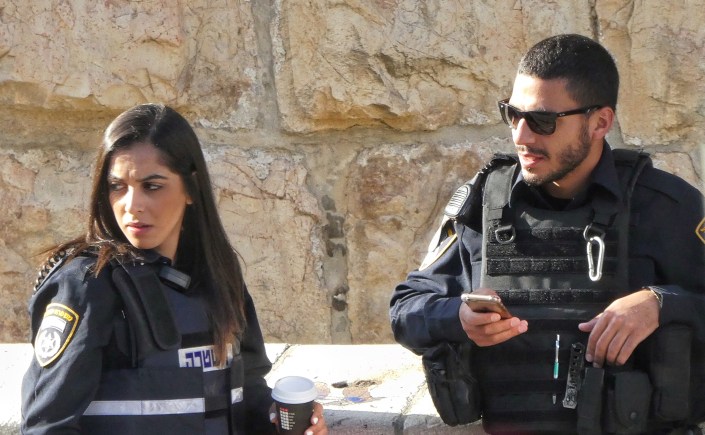

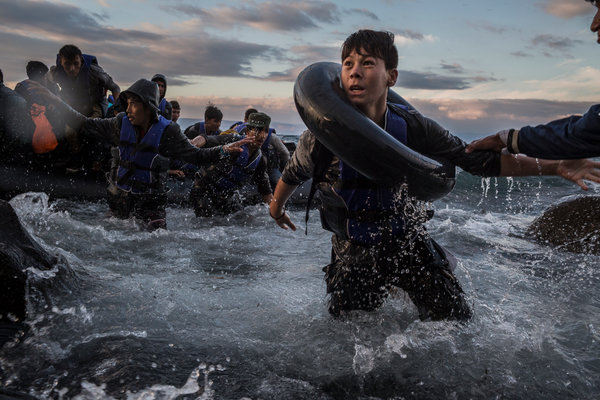


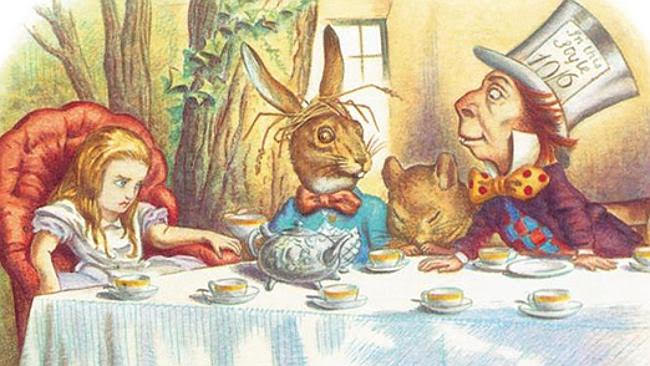

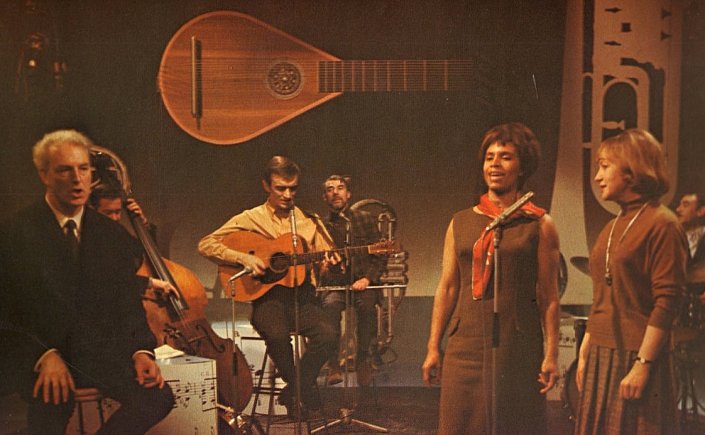




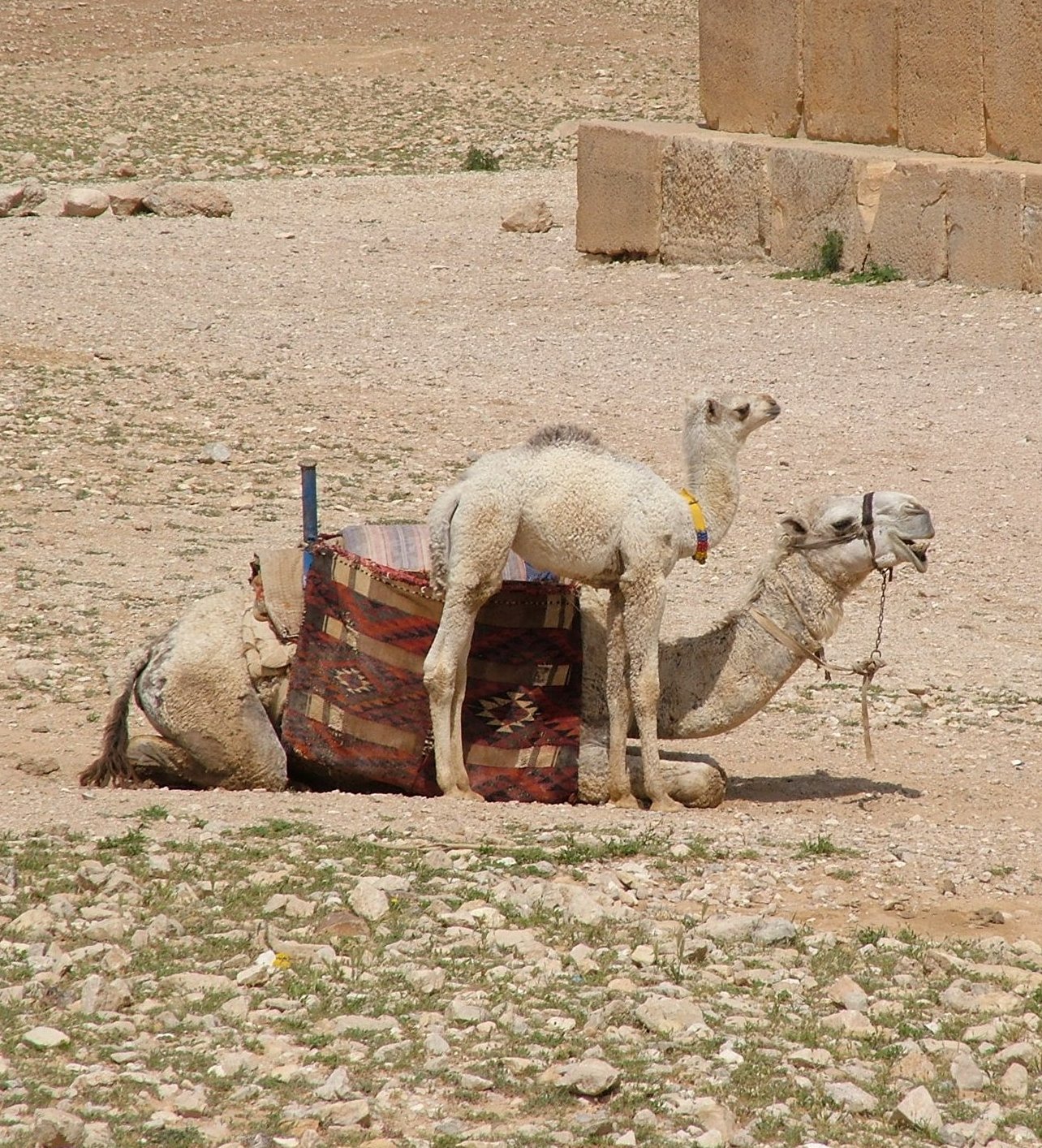


 In That Howling Infinite