“Thirty years ago, we had a chance to save our planet. Almost nothing stood in our way – except ourselves”.
The New York Times recently devoted its weekly magazine to one article only, a lengthy feature by American novelist and essayist Nathaniel Rich.
Losing Earthis a historical narrative of the years 1979 to 1989, a decade when humankind first came to a broad understanding of the causes and dangers of global warming and climate change. Complementing the text is a series of aerial photographs and videos taken over the past year by George Steinmetz. The article is based on 18 months of reporting and well over a hundred interviews. It tracks the efforts of a small group of American scientists, activists and politicians to raise the alarm and stave off catastrophe.
It will come as a revelation to understand how thoroughly they grasped the problem and how close they came to solving it.
As early as the mid ‘sixties, American scientists and intelligence experts were warning how increasing carbon emissions and what Rich describes as “the unwitting weaponisation of the weather” could alter weather patterns and wreak famine, drought and economic collapse. In 1965, President Lyndon Johnson’s Science Advisory Committee was its published its executive report on carbon dioxide warned of the rapid melting of Antarctica, rising seas, increased acidity of fresh waters — changes that would require no less than a coordinated global effort to forestall. In 1974, during Richard Nixon’s presidency, the C.I.A. issued a classified report on the carbon-dioxide problem. It concluded that climate change had begun around 1960 and had “already caused major economic problems throughout the world.” The future economic and political impacts would be “almost beyond comprehension.”
It was recognised that unless coal production and use was phased out and fossil fuel combustion dramatically reduced, the world was careering toward an existential crisis. And the all important questions were asked: Could the global warming trend be reversed? Was there time to act? How would a global commitment to cease burning fossil fuels come about,? And, crucially, who had the power to make such a thing happen?
The ritual repeated itself every few years. Industry scientists, at the behest of their corporate bosses, reviewed the problem and found good reasons for alarm and better excuses to do nothing. Why should they act when almost nobody within the United States government — nor, for that matter, within the environmental movement — seemed worried?
Why take on an intractable problem that would not be detected until this generation of employees was safely retired? Worse, the solutions seemed more punitive than the problem itself. Historically, energy use had correlated to economic growth — the more fossil fuels we burned, the better our lives became. Why mess with that?
In July 1883, National Academy of Sciences commissioned a 500 page report, ‘Changing Clinate’. Things were dire but there should be caution and not panic. Better to wait and see. Better to bet on American ingenuity to save the day. Yes, the climate would change, mostly for the worst, but future generations would be better equipped to change with it. America had solved every existential problem it had confronted over the previous generation; it would not be daunted by an excess of carbon dioxide.
The Washington Post called this “clarion calls to inaction”, loud-sounding nothing’s which the administration and the fossil-fuel industry willingly bought into.
Whilst acknowledging the phenomenon, scientists, politicians and fossil industry executives argued about the urgency and the means. President Reagan indeed appeared determined to reverse the environmental achievements of Jimmy Carter, before undoing those of Richard Nixon, Lyndon Johnson, John F. Kennedy and, if he could get away with it, Theodore Roosevelt.
Because of the lag between cause and effect, it was unlikely that humankind would detect hard evidence of warming until it was too late to reverse it. At a congressional hearing in 1982, Melvin Calvin, a Berkeley chemist who won the Nobel Prize for his work on the carbon cycle, said that it was useless to wait for stronger evidence of warming. The time for action was past … “It is already later than you think.”
Three decades ago, the problem was recognized by scientists, industrial leaders and politicians of all parties. But then, it was if a stupid bomb dropped. As Rich writes in his epilogue, “Everyone knew — and we all still know. We know that the transformations of our planet, which will come gradually and suddenly, will reconfigure the political world order. We know that if we don’t act to reduce emissions, we risk the collapse of civilization. We also know that, without a gargantuan intervention, whatever happens will be worse for our children, worse yet for their children and even worse still for their children’s children, whose lives, our actions have demonstrated, mean nothing to us”.
Can we turn things around? The prognosis is not an optimistic one. It would appear that human beings, whether in global organizations, democracies, industries, political parties or as individuals, are incapable of sacrificing present convenience to forestall a penalty imposed on future generations. “ … we have trained ourselves, whether culturally or evolutionarily, to obsess over the present, worry about the medium term and cast the long term out of our minds, as we might spit out a poison”.
You’re sposed to sit on you ass and nod at stupid things Man that’s hard to do But if you don’t they’ll screw you And if you do they’ll screw you too And I’m standing in the middle of the diamond all alone I always play to win when it comes to skin and bone
Warren Zevon, Bill Lee
The details of US President Donald Trump’s “ultimate deal” for resolving the intractable Israel-Palestine conflict have been leaked, surmised or imagined – no one can be sure at this stage – for a while now. And it is one that the Palestinians would never agree to.
We provide below a selection of articles that discus the intimations, imperfections and implications of the plan that will ostensibly succeed where all other efforts have foundered because as Donald Trump has stated many times, “that is what I do”.
The US has lost its credibility as an “honest broker”, if it ever was one, that is. It is impossible to be a mediator in a conflict or develop a credible peace plan when one side refuses to even talk to you. Palestinian leaders have not met with senior U.S. officials for the past six months, not since Trump announced that he would move the U.S. Embassy in Israel to Jerusalem. Move, it did! And now there are hints that the plan actually takes Jerusalem off the negotiating table.
The Palestinians are in a bind. If they reject the deal, especially one accepted by Israel, the Israeli government could once again argue that it has no partner on the Palestinian side, and move towards annexing large parts of the West Bank, which indeed a number of Israeli openly advocate, rendering the ever-receding prospect of the two-state solution impossible. The end result would push the sides even further apart.
The dice are loaded and the deal is rotten in what is a win-lose game. The nationalists and settlers would would be delighted, and the Palestinians on one hand and the Israeli opposition on the other would be simultaneously cut out and boxed in.
Veteran Middle East correspondent and long time Lebanese resident Robert Fisk pulls no punches. “Is there no humiliation left for the Palestinians?” he asks. Soon to be granted the ultimate deal that, in Jared Kushner’s word, “will give them and their future generations new opportunities, more and better paying jobs and prospects for a better life.” Is Trump’s son-in-law – “adviser” on the Middle East, real estate developer and US investor – delusional? After three Arab-Israeli wars, tens of thousands of Palestinian deaths and millions of refugees, does Jared Kushner really believe that the Palestinians will settle for cash?… How can he humiliate an entire Arab people by suggesting that their freedom, sovereignty, independence, dignity, justice and nationhood are merely “politicians’ talking points”. “ The Palestinians, he states, will not be bought for a fistful of dollars Saudi, US or EU.
Yes they can, and maybe, they will …Maybe the prospect of a quiet, normal life with jobs for young (important given the depressingly high youth unemployment) and old and brass in pocket, might persuade ordinary Palestinians to accept the political and economic normalisation of what would be occupation-lite.
Meanwhile, there are reports that”moderate” Arab countries are supporting the US’s diktat. The current US-Gulf-israel nexus was a work-in-progress during the Obama years and whilst Donald Trump was but a candidate, and now he has delegated carriage of the “ultimate deal” to his neophyte, demonstratively pro-Israeli son-in-law, Jared Kushner. The plan is to remove the Palestinian problem off the table so that they can concentrate on their real enemy, Shiite Iran.
As for those ostensible “Moderates”, the term is an oxymoron. Saudi and the Gulf emirs are tyrants, autocrats and complicit lick-spittles who’d sell out the Palestinians (and the Israelis too, if they could) if they could conscript American blood and treasure in their perennial Sunni grudge match with Shi’a Iran. King Abdullah of Jordan is wise not to trust this shady bunch. With domestic troubles of his own, and over half of his subjects of Palestinian descent, he has good reason to be careful. Dependent on foreign aid, however, he would be vulnerable to US and Saudi pressure. Pressure is also being exerted on Egypt’s dictator al Sissi. Whilst needful of US and Saudi cash, he is probably wary of stirring up further trouble at home with the economic situation still dire, the Islamist threat in the Sinai unabated, and Gaza presenting a clear and present powder-keg on the eastern border. He has enough stuff to deal with without buying into an anti-Iranian alliance and a deal that the Palestinian will not accept. Neither Trump, Israel nor the Gulf plutocrats are popular on the Arab street.
There is talk of Saudi Arabia pumping money into a resurgent, potentially Singaporean Palestine (they do gild this hallucinatory lily). But this doesn’t gel with reports that the kingdom is in financial straits and has enough trouble at the moment at home, with Yemen, and with an ascendant Iran. Overweening crown prince Mohammed bin Salman, however, often ventures where angels fear to tread. That he has peremptorily “summoned” King Abdullah and Abbas to Riyadh with no apparent success (much like that farce with the Lebanese prime minister), might suggest that he has less influence over his fellow Arabs than he or his American pals imagine.
Meanwhile, corrupt, coopted and ailing old Abbas and his very unpopular PA, watching the Kushner caravan bumping over the rocky ground of Middle Eastern politics, would perhaps be wise to hang out for a fairer deal – should that deal ever come along.
Whenever In That Howling Infinite posts commentaries such as this, people ask why I rarely forward my own opinion on the issues I am presenting or discussing. On the contrary, I would argue that my views are fairly transparent in in the subjects I chose to engage with, the words I use, and the vein in which I use them.
With respect to my numerous posts about Israel and Palestine, and the Middle East in general, I come to my conclusions from a political science and sociology perspective – that’s where my academic experience came from – and a background in conflict resolution, supported by study and travel. If I do on occasions display any particular bias, it. originates in my longtime interest, understanding and affection for the history, politics and culture of the region, of its geography and archeology, and of its people of all faiths and nationalities that I make my observations.
I am presently working on a piece that encapsulates my thoughts on this complex and controversial subject. But meanwhile, here is a brief exposition.
I do believe that the systematic dispossession of almost a million Palestinians and the destruction of half of their towns and villages in 1948 is Israel’s original sin. It is the primal stain that colours and corrupts all that followed. And yet, if not for the actions, often daring, often brave, often questionable, and often deplorable, of the politicians and soldiers of 1948 – and of the generations that followed – Israel would not exist today. This paradox is addressed sympathetically by Avi Shalit in My Promised Land, referred to above, and scathingly by ‘new history’ scholar Ilan Pappe in TheEthnic Cleansing of Palestine.
The Occupation, fifty years old this year, which grew out of the unexpectedly total victory of June 1967, has taken on strategic, ideological and indeed messianic dimensions by many in the Israeli government and political elite. It compounded the original sin, deepened the primal stain, released the demons of messianic fervour, and wounded Israel’s soul. The settlements locked the nation into the the colonialist project. With the close-call of the Yom Kippur War, the violence and murder of the first and second Intifadat, and present Palestinian jaquerie, Israel’s heart has not just hardened, it has become sclerotic.
I admit that I have always been sympathetic towards Israel – from my first visit in 1972. But it is not a blinkered viewpoint. I am deeply critical of Israeli politics and policies, and have no respect for many of its leaders.
Ayelet Shaked, the nationalist’s La Passionaria, and her boss Naftali Bennett do not not represent ALL Israelis! They hold extremist views just like we in UK, US, and Australia have parties and individuals with extremist views. But there are hundreds of thousands of Israelis who oppose the present government and long for justice and peace. And if – a very big “if” – Arab Israelis and the Israeli left could work together, they could obtain a majority in the Knesset and change Israel’s politics.
Yet meanwhile, Binyamin Netanyahu and his nationalist allies call all the shots, the Israelis continue to control and exploit the land, its people, and its resources, whilst varying degrees of annexation are on the cards. The settlements are an abomination, as are the policies and practices of the state and its occupying army, as described by Lyons and others. There’s no escaping these facts.
But I am likewise critical of Palestinian governance, politics and politicians. Hamas and the PA are on the nose in their respective fiefdoms, and if a moderate “third force” were to arise – and survive, because sure as hell, they would risk being murdered – Palestinians who just want a quiet, normal life, adequate services, and opportunities for their children, and Israelis who want likewise, might – just might – reject their extremist, dogmatic, entrenched leaders and reach some form of modus vivendi.
Palestinians themselves have to take control of their own lives, kick out their corrupt leaders, cease inculcating their children with hatred and jihadism, and use all that international good will and dollars to build a viable economy that can provide jobs, opportunities, and security, economic and physical to the people. Only this way will they be inoculated against cronyism, corruption and extremism. And yet, the dead hand of a moribund, patriarchal, conservative and ethnocentric culture holds them back – but that is the subject of another, future discussion for In That Howling Infinite.
Today, the ‘powers that be’, defenders and beneficiaries of a status quo that looks more like a cul de sac, predominate over a dispiriting array of competing, clamouring factions, left, right, nationalist, secular, tribal, Haredi, and Islamist alike. New, young, brace, local voices in both Israel and Palestine, are not heard.
So what happens next?
I get that question too. And I am perennially reluctant to venture an answer beyond one that runs like “on the one hand…but then on the other”. I inevitably fall back on Robert Fisk’s response to the same question with regard to the calamitous freezing over of the Arab Spring and the fall and rise again of the same old autocrats and tyrants: “my crystal ball is broken”. It’s a cop out, really, but just as cogent as that famous line in that UK spy drama Spooks: “What’s gong to happen to me?” “Bad things!”
One thing is for sure: as songwriter Warren Zevon sang, “the hurt gets worse, and the heart get harder”.
The serpentine storylines of Nathan Hill’s astonishing debut novel The Nixconverge on the chaos and carnage of the Democratic National Convention in Chicago in August 1968, when Hubert Humphrey was selected as candidate to run against Richard Nixon that fall, and Mayor Daley set the city’s finest upon the thousands who had gathered to protest the Vietnam War, racial injustice, and other social and political ills in what contemporary reports described as a “police riot”.
Hill sets the scene beautifully…
“The day before the riots the weather turned. The grip of the Chicago summer loosened and the air was spring-like and agreeable…In the very early dawn there appeared on the ground a thin, slick dew. The world was alive and lubricated. It felt hopeful, optimistic, and therefore disallowable as the city prepared for battle, as National Guard troops arrived by the thousands on green flatbed trucks, as police cleaned their gas masks and guns, as demonstrators practiced evasion and self-defense techniques and assembled various projectiles to lob at the cops. There was a feeling among them all that so great a conflict deserved an nastier day. Their hatred should ignite the air, they thought. Who could feel revolutionary when the sun shined pleasantly on one’s face. The city instead was full of desire. The day before the greatest, most spectacular, most violent protest of 1968, the city was saturated with want”.
Indeed, for most of that year, the western world was full of unfulfilled desires and unsatisfied wants.
In this, the third in a series of posts recalling the tumultuous events of 1968, we review a year that breathless commentators have dubbed “the year that changed America”, and, drawing an even longer bow, “the year that changed the world”. It was indeed a year of seismic social and political change, from the anti-Vietnam War and civil rights movements in America, to protests and revolutions in Europe, and famine in Africa. And as the year ended, Apollo 8 gave us our first view of our sad, blue planet from space.
It was indeed a great year to be alive, young and engaged – although a very great many endured grief, misery and pain, and met violent deaths. Yet, it is in our nature to imagine and indeed, re-imagine our salad days as the best of times and the worst of times. But looking back through our back pages, the year was perhaps no better or worse, no more significant or seminal than any year fore or aft. Like cars seen through the rear-vision mirror, memories always seem a lot closer and bigger. Recall the last verse of Bobby Goldsboro’s tear-jerker Honey, released that February: “…see the tree how big it’s grown. But friend it hasn’t been too long. It wasn’t big”. But we do, however, enhance our depth of perception, and accordingly, our understanding.
1968 conjures up a kaleidoscope of searing images apart from those of police clubbing demonstrators on the streets of Chicago.
A South Vietnamese general blowing out the brains of a Vietcong prisoner on a Saigon street during the Tet Offensive. The Reverend Andrew Young Jr. and his colleagues, on the balcony of the Lorraine Motel in Memphis standing next to the body of Martin Luther King Jr. and point to where the assassin’s bullet was fired. Students at Columbia University taking over campus buildings, only to be hauled away, battered and bloody by police. Parisian protesters hurling tear gas canisters back at the police. Robert Kennedy felled by Sirhan Sirhan in the basement at the Ambassador Hotel in Los Angeles. Soviet tanks rolling into Prague. Women dumping bras and girdles into a trash can on the boardwalk outside Atlantic City’s Miss America pageant. Protesters facing off against coppers and horses in a violent mêlée in front of the US embassy in London’s Grosvenor Square. Tommy Smith and John Carlos on the Olympic medalists’ platform in Mexico City, raising their black-gloved fists in the Black Panther Salute as second-placed Aussie Peter Norman stands tall and silent in solidarity (a stance which would earn him opprobrium in his still prejudiced and conservative homeland).
As young people in the UK, we viewed these scenes to an exciting and eclectic soundtrack of blues, rock and psychedelia as the pop music cavalcade of the ‘sixties rock ‘n rolled on.
The Beatles sang Hey Jude, and The Rolling Stones, Street Fighting Man, and Jimi Hendrix delivered simply the best-ever cover of a Bob Dylan song with his blistering, sinister All Along the Watchtower. Imagining we were Born To Be Wild, we were invited to get our motors running and head out on the highway, or else to “take the load off, take the load for free”. We could pointlessly ponder the mysterious meaningless of MacArthur Park, or just lay back in a hazy daze with the Hurdy Gurdy Man (a strange ditty that has enjoyed a brief comeback with the recent hippy, trippy Romans-versus-druids soap Britannia). Koo-koo-ka-choo, Mrs. Robinson!
Images and music aside, what was it really like to experience 1968?
Christopher Allen, in a piece in The Australian reviews an exhibition commemorating the events of 1968 at the National Library of Australia in Canberra. His is an original overview, advising caution when seeking signs and patterns in contemporary events. The past, as they say, is a foreign country – they see things differently there. “The signs 50 years ago were alarming, hopeful or dispiriting, depending on your point of view, but above all conflicting, as are the signs today. We will one day know where events on the Korean peninsula or the latest phase of tensions in the Middle East are leading. The shadowy, seemingly fluid future, with its dramatically different possible alternatives, will have become the ossified, unchangeable past.
In an entertaining and upbeat piece in The Guardian, Hendrick Herzberg rebuts that cliched putdown of how people who remember the sixties weren’t really there, recounts his own adventures, and claims that “In a modest way, 1968 was the kind of year that pushes history in some unforeseen, astonishing direction – a gentler little brother to 1492, 1776, 1848, 1914, 1945, and 2001”. I would add 1789, 1939, and 1989 and 2011. Check them out.
I too remember the ‘sixties, and I too was there, albeit not on the political, social or cultural front lines. But I was at Grosvenor Square, occupied the vice-chancellor’s offices, did drugs (soft, mind), dug Cream, read Oz and IT, and totally got into Hair, which opened in London that year. And today, I share Hetzberg’s reverie: “In 1968, the ‘sixties were almost over, but The Sixties have never fully gone away. For me, and no doubt for many others of my vintage, it’s hard to believe that half a century now separates us from that momentous, tumultuous year, and that 1968 is now as distant in time as 1918 – the year of the end of World War I, the consolidation of Bolshevik power in Russia, and the flu pandemic that killed 50 million people – was in 1968. Fifty years from now, it’ll be 2068. The ‘sixties again! I Can’t wait!”
In contrast, Tod Gitlin gazes through a glass darkly in a sober retrospective for The New York Review of Books: “When we fight over the meaning of the past, we are fighting over what, today, we choose to care about. In this way, the 1968 anniversaries stalk 2018, depicting scene after scene of revolt, horror and cruelty, of fervor aroused and things falling apart, and overall, the sense of a gathering storm of apocalypse, even revolution. Inevitably, the “iconic” images of the time feature scenes of brutality, rebellion, and tragedy”.
And indeed, the enduring historical memory of 1968 is one of a succession of seemingly disconnected conflicts and collisions, turmoil and turbulence, not only in the USA but around the world. Yet beneath the apparent chaos, Gitlin seems to suggest, there were patterns that can only be discerned with the benefit of hindsight or as visions from a great height – much like, perhaps, that iconic image of our blue planet.
“Public life seemed to become a sequence of ruptures, shocks, and detonations. Activists felt dazed, then exuberant, then dazed again; authorities felt rattled, panicky, even desperate. The world was in shards. What were for some intimations of a revolution at hand were, for exponents of law and order, eruptions of the intolerable. Whatever was valued appeared breakable, breaking, or broken”.
The pendulum was swinging away from the previous year’s Summer of Love into a darker place. The lyrics of Steppenwolf’s Magic Carpet Ride, released that September, seem, in retrospect, to describe the turning tide: “Last night I held Aladdin’s lamp, so I wished that I could stay, but before the thing could answer me, well, someone took the lamp away. I looked around, and a lousy candle’s all I found”. In November 1968, Jimi Hendrix sang: “Outside in the cold distance, a wildcat did growl. Two riders were approaching, and the wind began to howl”.
There lurked a new narrative, and this was one of backlash and counterrevolution. “What haunted America”, writes Gitlin, “was not the misty spectre of revolution but the solidifying spectre of reaction. As the right consolidated around an alliance of Christian evangelicals, racial backlashers, and plutocrats, the left was unable, or unwilling, to fuse its disparate sectors. The left was maladroit at achieving political power; it wasn’t even sure that was its goal”.
”This country is going so far to the right you won’t recognize it,” Nixon’s attorney general, John Mitchell, said in 1969. He spoke prematurely. And presciently. Fifty years on from this momentous year, all that is old is new again.
Read on and enjoy these articles and the accompanying pictures.
But first, a poignant memento of 1968 from the 1979 film version of the “tribal love-rock musical” (yep, that how it was marketed back in the day) Hair, which i saw in London in the fall of 1968.
Associates of Dr. Martin Luther King Jr., the slain civil rights leader lying on the motel balcony, pointing in the direction of the assassin, Memphis, Tennessee, April 4, 1968
Commemorations are the greeting cards that a sensation-soaked culture sends out to acknowledge that we, the living, were not born yesterday. So it is with this year’s media reassembly of 1968. What is hard to convey is the texture of shock and panic that seized the world a half-century ago. What is even harder to grasp is that the chief political victor of 1968 was the counter-revolution.
When we fight over the meaning of the past, we are fighting over what, today, we choose to care about. In this way, the 1968 anniversaries stalk 2018, depicting scene after scene of revolt, horror and cruelty, of fervor aroused and things falling apart, and overall, the sense of a gathering storm of apocalypse, even revolution. Inevitably, the “iconic” images of the time feature scenes of brutality, rebellion, and tragedy: a South Vietnamese general’s blowing out the brains of a prisoner on a Saigon street during the Tet Offensive; the Reverend Andrew Young Jr. and his colleagues, on the balcony of the Lorraine Motel in Memphis, next to the body of Martin Luther King Jr., pointing at where the assassin’s bullet had come from; demonstrators at Columbia taking over campus buildings, then hauled away, battered bloody by cops; Parisian protesters hurling tear gas canisters back at the police; Robert Kennedy felled by Sirhan Sirhan’s shots at the Ambassador Hotel;Soviet tanks rolling into Prague; police clubbing demonstrators at the Democratic National Convention in Chicago; women’s liberation activists dumping girdles, hair curlers, and bras (unburnt) in a trash can on the boardwalk outside Atlantic City’s Miss America pageant; Tommy Smith and John Carlos on the Olympic medalists’ platform in Mexico City, raising their black-gloved fists in defiance.
Helmeted police blocking antiwar protesters in Grant Park, Democratic National Convention, Chicago, Aug 1
A more thorough survey would take note of social collisions that, however violently repressive, failed to register in America with the same supersaturated significance. For example: the killing of three students in Orangeburg, South Carolina, by highway patrol officers after the students protested segregation at a bowling alley (February 8); the near-deadly shooting of the German radical student leader Rudi Dutschke in Berlin (April 11); Chicago police battering a wholly nonviolent antiwar protest (April 27).
As for less bloody demonstrations, there were so many, so routinely, that TheNew York Times regularly grouped civil rights and antiwar stories on designated pages. Neither does this rundown of calamities take into account images that did not see the light of day until much later, like the color shots of the My Lai massacre (March 16), not published until late 1969—by which time they were almost expected. Or the images that never materialized at all, like the slaughter of hundreds of demonstrating students by troops in Mexico City (October 2).
A feminist protester at the Miss America beauty pageant, Atlantic City, New Jersey, September 7
Images aside, what was it really like to experience 1968? Public life seemed to become a sequence of ruptures, shocks, and detonations. Activists felt dazed, then exuberant, then dazed again; authorities felt rattled, panicky, even desperate. The world was in shards. What were for some intimations of a revolution at hand were, for exponents of law and order, eruptions of the intolerable. Whatever was valued then appeared breakable, breaking, or broken.
The textureof these unceasing shocks was itself integral to what people felt as “the 1968 experience.” The sheer number, pace, volume, and intensity of the shocks, delivered worldwide to living room screens, made the world look and feel as though it was falling apart. It’s fair to say that if you weren’t destabilized, you weren’t paying attention. A sense of unending emergency overcame expectations of order, decorum, procedure. As the radical left dreamed of smashing the state, the radical right attacked the establishment for coddling young radicals and enabling their disorder. One person’s nightmare was another’s epiphany.
The familiar collages of 1968’s collisions do evoke the churning surfaces of events, reproducing the uncanny, off-balance feeling of 1968. But they fail to illuminate the meaning of events. If the texture of 1968 was chaos, underneath was a structure that today can be—and needs to be—seen more clearly.
Two Viet Cong captured during the Tet Offensive, one already dead, the other about to be executed by pistol shot, Vietnam, May 1968
The left was wildly guilty of misrecognition. Although most on the radical left thrilled to the prospect of some kind of revolution, “a new heaven and a new earth” (in the words of the Book of Revelation), the main story line was far closer to the opposite—a thrust toward retrogression that continues, though not on a straight line, into the present emergency. The New Deal era of reform fueled by a confidence that government could work for the common good was running out of gas. The glory years of the civil rights movement were over. The abominable Vietnam War, having put a torch to American ideals, would run for seven more years of indefensible killing.
The main new storyline was backlash. Even as President Nixon assumed a surprising role as environmental reformer, white supremacy regrouped. Frightened by campus uprisings, plutocrats upped their investments in “free market” think tanks, university programs, right-wing magazines, and other forms of propaganda. Oil shocks, inflation, and European and Japanese industrial revival would soon rattle American dominance. What haunted America was not the misty specter of revolution but the solidifying specter of reaction.
Even as established cultural authorities were defrocked, political authorities revived and entrenched themselves. In so many ways, the counterculture, however domesticated or “co-opted” in Herbert Marcuse’s term, became the culture. Within a few years, in public speech and imagery, in popular music and movies, on TV (All in the Family, M*A*S*H, TheMary Tyler Moore Show) and in the theater (Hair, Oh! Calcutta!), profanity and obscenity taboos dissolved. Gays and feminists stepped forward, always resisted but rarely held back for long. It would subsequently be, as the gauchistes of May ’68 in Paris liked to say, forbidden to forbid.
In the realm of political power, though, for all the many subsequent social reforms, 1968 was more an end than a beginning. After les évènements in France in May came June’s parliamentary elections, sweeping General De Gaulle’s rightist party to power in a landslide victory. After the Prague Spring and the promise of “socialism with a human face,” the tanks of the Soviet-run Warsaw Pact overran Czechoslovakia. In Latin America, the Guevarist guerrilla trend was everywhere repulsed, to the benefit of the right. In the US, the “silent majority” roared. As the divided Democratic Party lay in ruins, Richard Nixon’s Southern strategy turned the Party of Lincoln into the heir to the Confederacy. As the right consolidated around an alliance of Christian evangelicals, racial backlashers, and plutocrats, the left was unable, or unwilling, to fuse its disparate sectors. The left was maladroit at achieving political power; it wasn’t even sure that was its goal.
Counter-revolutions, like their revolutionary bêtes noires, suffer reversals and take time to cohere. The post-1968 counter-revolution held the fort against a trinity of bogeymen: unruly dark-skinned people, uppity women, and an arrogant knowledge class. In 1968, it was not yet apparent how impressively the recoil could be parlayed into national power. “This country is going so far to the right you won’t recognize it,” Nixon’s attorney general, John Mitchell, said in 1969. He spoke prematurely.
1968: the year that changed America
Hendrick Herzberg, The Guardian, April 15, 2018
Where were you in the 1960s? And what were you? A toddler, a grade schooler, a teenager? A young adult? Were you already old enough to form your own memories? Or were you old enough but in the “if you can remember The Sixties you really weren’t there” category?
Of course, if you’re like most people, you were nowhere. You hadn’t been born yet. You didn’t exist. But wherever and whatever you were or weren’t, it’s a safe bet that you’ve heard about The Sixties – quite enough, maybe. Ad nauseam, maybe.
There is a continuing theological controversy among sixtiesologists concerning when The Sixties can properly be said to have begun and ended. Tuesday 8 November1960 – the day Senator John F Kennedy was elected president – has a pretty good claim to the beginning. Kennedy’s campaign slogan, which appeared on every campaign poster, had been LEADERSHIP FOR THE 60’s. Out with the dull, conformist, priggish, crewcut, Eisenhowerish Fifties! In with the dashing, exciting, daring, sexy, slightly longer-haired, Kennedyesque Sixties!
A darker view – the view I take – sets the clock of The Sixties ticking three years later. The assassination of President Kennedy was a crack in time. Like Sunday 7 December 1941; and like Tuesday 11 September 2001; Friday 22 November 1963 was “a date that will live in infamy”. And, like them, it was a day that is remembered in vivid detail by those who experienced it.
I was taking a noontime shower in my Harvard dorm room, having been as usual up till dawn getting out the college daily, the Crimson. I heard a faint, muffled radio news bulletin coming through the wall from the neighboring room. As I dried off, I turned on my own radio. I can still see the edge of the shower stall and the little bathroom window next to it. On the grass below, a girl was standing under a tree, weeping. The Crimson put out an extra that afternoon, but without my help. It felt too much like a schoolboy stunt. Rightly or wrongly, I didn’t want to play newspaperman. I didn’t want to be distracted from the communal grief all around me.
So The Sixties, in this conceit, began either in 1960 or, like Philip Larkin’s sexual intercourse, in 1963. And the ending? That too has long been a subject of debate. There are plenty of nominees, two of which may be considered the frontrunners. Like the beginnings, one is light and one is dark. The light one: Friday 9 August 1974, the day Richard Nixon resigned the presidency, freeing the nation from a quarter-century of having had him to kick around. The dark one: Altamont. Sunday 6 December 1969. Google it. Or see the movie.
It is possible to build a narrative around two currents of the year’s events, currents that melded and crisscrossed and fed off each other, to startling effect: the music, mostly a kaleidoscopic, wildly imaginative explosion of rock’n’roll; and the politics, mostly a politics of protest – protest against the Vietnam war, against racial injustice, and, more broadly, against what was experienced as the joyless, stultifying blandness of mainstream American life.
Those two currents, the music and the protests, washed over me as they did over millions of others. In 1966, a year out of college and a newly minted cub reporter for Newsweek, I was lucky enough to land in San Francisco. Something was happening there, and I found myself in a position to absorb it.
Jefferson Airplane San Francisco, 3 August 1968. Photograph: AP
The scene, cultural and political, was quite something. A new kind of music – rooted in blues, rock, and electronica, and supercharged by psychedelia – was drawing motley-dressed weekend crowds to a couple of repurposed old dance halls, the Fillmore Auditorium and the Avalon Ballroom. For $2.50 you could spend hours listening and dancing to bands that were still unknown back east or down south in LA – bands still without record contracts but with wonderful names: Jefferson Airplane, the Grateful Dead, Big Brother and the Holding Company, Quicksilver Messenger Service – often paired with iconic bluesmen like Muddy Waters and James Cotton. The walls were mesmerizingly alive with rhythmically pulsating, ever-changing liquid projections. It was, in the patois of the moment, mind-blowing. For the gentle dreamers that Herb Caen, the San Francisco Chronicle’s gossip columnist, had dubbed hippies, the Fillmore and the Avalon were Carnegie Hall and the Philharmonic.
Like every young man of my generation, I had to reckon with the draft. I was against the war, of course, but I didn’t think I had the stomach to go to jail over it. I had zero desire to go to any more schools, graduate or otherwise. I was unmarried and childless. Canada was not my country, my country was the United States of America. I wasn’t physically or mentally ill and was too proud to fake it. And I wasn’t a conscientious objector. On the other hand, I didn’t want to get killed either. My solution was the US navy.
I got a haircut and reported to the naval base at Newport, Rhode Island, for three months of officer training. From there I asked to be sent to Vietnam, but it wasn’t like it sounds. Unless you were a flier (like John McCain, the future senator), a Seal (like Bob Kerrey, also a future senator) or a member of the Riverine Force (like John Kerry, a future senator, presidential nominee, and secretary of state), being a naval officer in Vietnam, especially a “public affairs” officer like me, posed very little physical risk. Instead, however, the navy, in its wisdom, assigned me to a desk job in lower Manhattan.
As the year rushed on, the pace of events grew ever more frenziedI stole away from the office whenever I could, and devoted the time to salving my conscience. I pitched in at the ramshackle headquarters of the War Resisters League. In March, after Robert Kennedy entered the presidential race, I took to hanging around his Manhattan headquarters, doing layouts and writing headlines for the Kennedy Current, the campaign’s weekly tabloid.
As the year rushed on, the pace of events grew ever more frenzied: the bloody shock of the Tet Offensive; the electoral abdication of President Lyndon Johnson; the assassination of Martin Luther King Jr and the riots that followed; the murder of Robert Kennedy; the chaotic, riotous Democratic convention in Chicago; Nixon’s hairsbreadth victory over Hubert Humphrey in November. And me? Well, at Christmastime I got the orders to Vietnam (as a “recreation officer” at the US base in Da Nang) I’d hoped for two years earlier. Only this time I didn’t want to go. My antiwar sentiments had hardened to the point that I decided I preferred jail to further military service, and I announced my intention to refuse the orders.
Riots in Chicago follow the assassination of Martin Luther King.
Photograph: Lee Balterman/TimePix/Rex Features
But before I could achieve fame as a martyr for peace an unexpected medical difficulty developed: I had a wisdom tooth pulled, the wound bled for days, and when I was diagnosed with a (relatively mild) form of hemophilia, the navy quickly mustered me out. I had managed to have it both ways: veteran (kind of) and resister (in a way).
Why didn’t I think of that?
In 1968 the sixties were almost over, but The Sixties have never fully gone away. For me, and no doubt for many others of my vintage, it’s hard to believe that half a century now separates us from that momentous, tumultuous year, and that 1968 is now as distant in time as 1918 – the year of the end of World War I, the consolidation of Bolshevik power in Russia, and the flu pandemic that killed 50 million people – was in 1968. Fifty years from now, it’ll be 2068.
Many Cheers on the Founding of the Revolution Committee of Hubei Province, papercut poster (1968). All images from 1968: Changing Times exhibition, National Library of Australia
In one of the most famous stories from antiquity, Croesus, the proverbially rich king of sixth-century BC Lydia, in what is now Turkey, was disturbed by the rise of the Medes and the Persians on his eastern borders. Thinking it might be wise to crush these potential rivals before they became a serious threat, he consulted the oracle of Apollo at Delphi, plying it with gifts to ensure a favourable answer. The oracle replied that if he made war on the Persians, a great empire would be destroyed. Croesus accordingly gathered his armies and attacked, but he was defeated and taken prisoner by Cyrus the Great, founder of the Persian Empire.
The oracle had a reputation for accurate yet riddling answers. A half-century after these events, Heraclitus, one of the most brilliant Pre-Socratic thinkers and famous for enigmatic aphorisms, declared: “The lord whose oracle is at Delphi neither reveals nor conceals but signifies.” It is up to us to read the sign he gives, and Croesus had fatally misconstrued that sign in his eagerness to hear what he wanted to hear.
The signs 50 years ago, in 1968, were alarming, hopeful or dispiriting, depending on your point of view, but above all conflicting, as are the signs today. We will one day know where events on the Korean peninsula or the latest phase of tensions in the Middle East are leading. The shadowy, seemingly fluid future, with its dramatically different possible alternatives, will have become the ossified, unchangeable past.
The political protests of May 1968 in Paris were among the most significant events of that year. Although partly emulating earlier student agitation in the US, the French protests were much broader in their implications. The term that the French use for this movement, la contestation, suggests its universal spirit of revolt and its nebulous sense of direction, if not nihilistic disorientation. It was a catastrophic time for many young people caught up in the hysteria and afterwards left to pick up the pieces of interrupted studies and broken careers, in an ambience of cynicism and disenchantment. Ever since the revolution of 1789, the French have been prone to political overexcitement, and throughout much of the 20th century communists continued to believe in their own kind of revolution in the same way Christians believe in the second coming.
The zealots thought 1968 heralded the end of days and the imminence of the dictatorship of the proletariat; but the grassroots movement, spreading from students to workers, was not supported by the Communist Party, which was still committed to a totalitarian and Stalinist model of central control. A few months later, a similar pattern evolved within the communist world: the opening up of Czechoslovakia to greater freedom, democracy and independence — the Prague Spring — was crushed in August when Soviet tanks invaded the country and occupied its capital.
The events of Paris and of Prague dealt a fatal blow to the credibility of communism in the West; the old left began slowly bleeding to death until its collapse with the fall of the Berlin Wall 21 years later. Thus May 1968, as in the story of Croesus, did indeed herald the fall of an empire, but not the one the student rioters thought they were going to bring down.
Much else happened in 1968, including the opening of the new National Library in Canberra, whose anniversary is the occasion for this exhibition. As we enter the exhibition, we are confronted by a wall of 21 tabloid bills, in the centre of which is one announcing the opening of the library. The remaining headlines sum up many other momentous events of the year, starting with the mysterious loss of prime minister Harold Holt, who disappeared, presumed drowned, while spearfishing off Portsea in December 1967.
America was shocked by two political assassinations: that of Martin Luther King in April and Robert Kennedy in June. Both events are covered in the exhibition by photographs, posters and copies of contemporary news magazines. Particularly interesting, especially today, is an article about the revulsion against gun culture that followed the death of Kennedy, whose brother, president John Kennedy, had been assassinated less than five years earlier. There are pictures of individuals willingly giving up guns at police stations: so many were handed in that the police, as we see in another photograph, ended up disposing of them by dumping them in the sea.
John Gorton Visiting Australian Troops in Vietnam, Australian News and Information Bureau (1968)
Meanwhile, the Vietnam War was growing more intense — it was the year of the Tet offensive — and provoking greater opposition at home, mainly because of the draft, of which fatal randomness we are reminded by a set of the wooden balls that were used in the birthday ballots. It was clearly a political mistake to send conscripted soldiers to Vietnam; professional soldiers expect to fight wherever their nation sees fit to send them, but conscripted troops should be reserved for national self-defence.
At the time, however, the spread of communism in Asia looked like a serious menace, which it would be smug to discount with the benefit of hindsight. Communism had only recently been suppressed by the British in the course of the Malayan Emergency (1948-60) and, more recently still, by Suharto in Indonesia, in a far bloodier struggle from 1965 onwards. So the threat of violent totalitarian revolution was real. At the same time, there was a prima facie moral justification in helping South Vietnam defend itself against the north. The way that North Vietnamese aggression was turned into a fight for freedom in the eyes of many in the West was one of the first examples of the self-destructive neurosis that has afflicted the Western intelligentsia for the past couple of generations. A map of Vietnam published in the US in 1968 includes an insert labelled “Freedom’s struggle in Asia”, with a pall of black covering Siberia, Mongolia, China and North Vietnam. It is easy to understand the fear of the domino theory in Southeast Asia, and clear that this had serious consequences for Australia.
And to argue that time was running out for the communist dream, and that even China would, within a generation, be starting to build its own unique model, combining capitalist profiteering with communist authoritarianism, would have seemed mere wishful thinking.
For the time being Mao Zedong, after killing 45 million people by starvation during the Great Leap Forward of 1957-62, had launched the almost equally disastrous Cultural Revolution, which lasted from 1966 until his death in 1976, and posters showed beaming peasants and workers celebrating the foundation of new socialist regional committees.
This is the great difficulty in anticipating the future: we can imagine plausible scenarios but the really important things are often ones that seem entirely implausible until they happen. It would have seemed far-fetched to suggest that Southeast Asian countries racked with poverty and communist insurrection in 1968 would be booming capitalist economies by the early 20th century, but even more unbelievable that one of the most significant threats to security, freedom and human rights would one day be the rise of fanatical Islamic belief among the populations of several regional countries. Religion in general was assumed to be a long-spent political factor, of marginal relevance in the thinking of left and right.
Even in the Middle East, religion was not yet an important factor. Israel had spectacularly crushed its Arab neighbours in the Six-Day War of 1967 and extended its control over buffer territories in the north and east; its neighbours were angry and humiliated, but were all ruled by secular dictators. Iran was a prosperous, secular and modernising nation under the rule of the shah, even though there was growing opposition to his authoritarian rule. But a map of The Daily Telegraph motor marathon from London to Sydney reminds us how essentially peaceful the region still was: it is many years since such a rally could follow an itinerary from London through Europe to Turkey, then on to Tehran, Kabul and Bombay (as Mumbai was then called), before the cars were ferried to Fremantle for the final legs from Perth to Sydney.
Culturally, the period represented a new level of mass consumption of pop music and other media. At the time, pop groups often seemed to give voice to various forms of social and political dissent, but in retrospect their objective role was to channel and neutralise the malaise, turning it into harmless entertainment. Television had more or less completed its takeover of family life by 1968; people who used to play the piano or talk or read a book after dinner now sat glued to serials and talk shows. TV was a new form of addiction, whose damaging effects we now can begin to understand in the age of far more serious addiction to smartphones and other devices.
National Library of Australia at Night from beneath Commonwealth Avenue Bridge near Regatta Point, Canberra, (1968, detail), by Max Dupain
The final part of the exhibition is devoted to the conception, planning and building of the new library. Canberra, only 55 years old in 1968, was still in the process of growing into its ambitious urban design. An area from Capital Hill down to the lake had been designated as a special ceremonial triangle, destined to house not only the new Parliament House but also some of the most significant cultural edifices of the new city. These included the National Library on one side and the National Gallery, which was established in 1967 and opened in 1982. The new library was a favourite project of Robert Menzies as prime minister, and the exhibition includes correspondence and his speech in introducing the National Library bill in 1960. Although he retired in January 1966, his successor Holt invited him to lay the foundation stone in March that year.
In his speech on that occasion, Menzies expressed the hope he would live long enough to see the white marble structure reflected in the waters of the lake: this is exactly how Max Dupain photographed the finished structure in 1968. Seeking grandeur in the depth of distance, he takes a view of the new building from across the lake at night, so the library appears as a small but radiant temple-like form, its reflection shimmering silently on the dark waters.
1968: Changing Times. National Library of Australia, Canberra, Until August 12, 2018
All that was old is new again with the potential re-emergence of the US’ Cold War strategy of “offshore balancing”
Commentator and counterinsurgency expert David Kilcullen is always worth reading. Here is his latest piece for The Australian on this subject.
It is a well-tried and well-documented strategy whereby an offshore power counters a rival by backing opposing coalitions in a region of strategic competition, supporting local allies indirectly (with weapons, money, advisers intelligence or diplomatic cover), and using proxy military muscle, regular and irregular, to prevent any one rival dominating the region.
Maritime powers (including Britain in the 18th and 19th centuries, and the US for much of its history until 1945) historically used offshore balancing to counter land-based rivals while lowering their own costs and avoiding decisive commitment. To succeed, the offshore power does not need to control a region itself, merely to prevent a rival doing so. As such, this is a low-cost approach — something military planners call an “economy of effort” strategy — that reduces exposure and preserves freedom of action.
This comes in the wake of hugely expensive and largely unsuccessful efforts by the US to dominate a region directly through direct military intervention – and subsequent entanglement that left it ‘neck deep in the big muddy’ to quote political activist and balladeer Pete Seeger. It was a maximalist approach that had adverse consequences in terms of lives lost, funds wasted, credibility eroded and loss of freedom of action (particularly after 9/11, as the US became bogged down in self-inflicted wars of occupation).
But, offshore balancing requires a cool nerves, a steady hand and deft footwork.
Bad timing and miscalculation can increase the risk of wars that the US neither wants or is prepared for. And in inexperienced, needful, and impetuous hands, it could render the US vulnerable to being played by its partners. Kilcullen notes that a body of opinion in the US intelligence community, and also, within Israeli intelligence, holds that the threat from Iran has been overstated, that Iran’s ability to dominate the so-called “land bridge” from Afghanistan to the Golan Heights is overblown, and that no regime in Tehran would be suicidal enough to consider a nuclear strike on Israel, Saudi Arabia or any of its other regional rivals.
But it would appear that Israeli Prime Minister Benjamin Netanyahu and the Saudi crown prince Muhammed bib Salem have successfully sold Donald Trump on their expansive vision of the Iranian threat, creating the possibility that Washington may be manipulated into decisions that run counter to its own wider interests.
Moreover, with regard to US foreign policy generally, one size does not necessarily fit all. Taking a strategy like offshore balancing, however successful it might prove to be in the Middle East, and blindly applying it on the Korean peninsula, to Russia or China where conditions are dramatically different, would be full of risk.
Read on…
Donald Trump: The man with the plan
David Kilcullen, Contributing Editor for Military Affairs, The Australian, May
Donald Trump welcomes home three Americans released by North Korea. Picture: AFP
This week, as Donald Trump announced his decision to withdraw from the Iran nuclear deal and start reimposing sanctions on Tehran, a chorus of condemnation broke out on both sides of the Atlantic. European politicians condemned the decision and began working on ways to keep Iran in the deal, while in the US former secretary of state John Kerry engaged in last-minute direct negotiations with Iranian leaders.
Fred Kaplan of Slate penned a piece that was typical of the mainstream media reaction, arguing that Trump withdrew “because of spite, ignorance, or both”.
There is no doubt that the US President’s decision reflected animus toward his predecessor’s signature achievement in foreign policy. It also highlighted president Barack Obama’s self-inflicted vulnerability over the deal, which he approved personally as an executive agreement rather than submitting it to the US Senate for formal ratification as a treaty. His administration also voted for a UN resolution lifting sanctions on Iran before congress had properly begun its review of the agreement. These decisions, over near-unanimous Republican opposition, made the deal a bone of partisan contention from the outset, a problem Obama’s staff exacerbated through a manipulative media campaign that drew harsh criticism when disclosed in 2016. All this made it easier for Trump to leave the deal with just a stroke of the pen.
Yet there’s reason to believe Trump may be acting from more than political spite. Indeed, it’s possible we might be witnessing the early signs of a new approach with the potential to transform America’s overseas military posture, though also carrying enhanced risk of war and other unintended consequences. The new approach may signal the re-emergence of Washington’s former strategy of working through regional coalitions to counter rivals in the Middle East, thereby enabling US military disengagement from the post-9/11 wars.
The decision to dump the deal is far from the only indicator. Other recent signs include statements by Trump to the effect that he seeks to withdraw from Syria while sponsoring an Arab coalition to prevent the re-emergence of Islamic State. Under this scheme, Washington would support allies (including, potentially, Saudi Arabia and the United Arab Emirates, as well as a coalition of local Kurdish militias) but end combat troop deployments.
Last month’s coalition strike on Syria sent a similar message in that it avoided targeting the Assad regime’s leadership or Russian and Iranian assets in Syria. It was also accompanied by clear statements that the US did not seek regime change — effectively acquiescing in Bashar al-Assad’s victory, moving away from Obama’s goal of regime change and further disengaging from involvement in the Syrian conflict.
Iranians burn US flags and makeshift Israeli flags in Tehran. Picture: AFP
Alongside an Arab coalition, Israel seems ready to step into any gap created by US withdrawal, while cheering Trump’s decision to exit the Iran deal. Indeed, an undeclared low-level air battle has been going on between Israel, Hezbollah and Iranian forces in Syria since February. Israel decided to retain its advanced fighter aircraft in-country rather than send them to a scheduled exercise in Alaska last month and this week it raised military forces to their highest alert level, called up air defence and intelligence reservists, and opened air-raid and missile shelters for Israelis living within range of the Syrian border. If anything, Israel’s willingness to directly engage Iranian and Iranian-backed forces in Syria has only increased after since Trump’s withdrawal from the nuclear deal.
At the same time, statements by Saudi Arabia and the UAE indicate that the Sunni monarchies and their Gulf allies would consider participating in an Arab stabilisation force in Syria. Saudi leaders also have expressed a willingness to participate in strikes within Syria (making Saudi Arabia a de facto coalition partner with Israel, a tricky political position for Saudi leaders).
Overtures by the US towards Egypt suggest Washington also is seeking Egyptian support for the same Arab coalition.
All this may be evidence of an emerging post-deal strategy, whereby the US works through Israel and Arab partners in the region to weaken and contain Iran. For political reasons, Israeli and Arab components would operate separately, but Washington would co-ordinate with each and support both to prevent the re-emergence of Islamic State while containing and undermining Iran, Hezbollah and Russia (with the emphasis very much on Iran).
As part of this strategy, US forces may launch periodic operations (missile and drone strikes, air raids or special forces operations) to preserve their preferred balance but would avoid protracted commitments, and troop numbers in Iraq and Syria would be drawn down. Washington would operate with allied support where possible, but strike unilaterally if needed.
Provided Turkey can agree on a demarcation line with US-backed Kurdish groups — probably somewhere near the present line of control along the Euphrates river — the US also might support Turkey’s buffer zone in northern Syria. In that case Turkey, too, would play a role in containing Iran and preventing the re-emergence of Islamic State — the two paramount US objectives.
This approach, if it does emerge, would be a classic instance of offshore balancing, where an offshore power counters a rival by backing opposing coalitions in a region of strategic competition, supporting local allies indirectly (with weapons, money, advisers intelligence or diplomatic cover) to prevent any one rival dominating the region.
Maritime powers (including Britain in the 18th and 19th centuries, and the US for much of its history until 1945) historically used offshore balancing to counter land-based rivals while lowering their own costs and avoiding decisive commitment. To succeed, the offshore power does not need to control a region itself, merely to prevent a rival doing so. As such, this is a low-cost approach — something military planners call an “economy of effort” strategy — that reduces exposure and preserves freedom of action.
One of the strategy’s key attractions would be that it might restore a critical strategic distinction: the difference between hugely expensive (and largely unsuccessful) efforts to dominate a region directly, and the far cheaper and more achievable goal of merely preventing a rival doing so.
In the post-Cold War era of liberal and neo-conservative interventionism, US leaders often conflated the two, as if preventing a hostile power from dominating a region necessarily implied dominating it themselves.
This maximalist approach had obvious adverse consequences in terms of lives lost, funds wasted, credibility eroded and loss of freedom of action (particularly after 9/11, as the US became bogged down in self-inflicted wars of occupation).
Trump has been railing against these overseas commitments for years. Indeed, one of his themes on the campaign trail was the need to get out of overseas commitments, bring troops home, force allies to commit their own resources to their defence, cease putting American lives at risk to provide security guarantees for countries (in Europe, Asia or the Middle East) that were unwilling to pay their fair share, and stop spending money on nation-building that would be better used at home.
An offshore-balancing strategy offers a way to do this while still acting tough and reserving the right to intervene unilaterally (another key Trump theme).
Offshore balancing does not preclude periodic interventions to restore a favourable balance of power in a given region, but it does tend to rule out long-term occupation or decisive commitments of the post-9/11 kind. It also implies holding military power back, over the horizon or outside the region, rather than establishing permanent bases.
As such, naval forces (including warships, expeditionary marine units, carrier-based aircraft and submarines) are the key assets needed for such a strategy — and for now, at least, the US leads the world in these capabilities, giving it a comparative advantage.
The strategy’s other key benefit is its low cost and ability to preserve (or, in this case, restore) strategic freedom of action. Its disadvantage is that interventions, when they do occur, can be extremely costly.
Britain’s approach to Europe from the 1680s to 1945 — periodic interventions to prevent any one power dominating the continent but reluctance to create permanent alliances or bases — is one example of offshore balancing. Another was the US strategy for the Middle East from just before the end of World War II (when Washington first became concerned about the strategic centrality of the region) until the Gulf war in 1991.
From 1944 to 1992, despite periodic interventions (a CIA-backed coup in Iran in 1953, brief engagements in Lebanon in 1958 and 1983, bombing Libya in 1986) the US generally kept its military out of the region, preferring to counter Soviet influence through partners such as Israel, Turkey, the Arab monarchies, the Afghan mujaheddin in the 1980s and, until 1979, the shah of Iran.
After 1991, everything changed: permanent US bases in Saudi Arabia (plus no-fly zones over Iraq, and the Clinton administration’s policy of “dual containment” towards Iraq and Iran) committed the US directly to the Middle East. US bases in Saudi Arabia, in particular, created intense grievances that led in part to the 9/11 attacks. After 2003, the Iraq war mired Americans in a full-scale military occupation. Successive presidents have sought to extricate themselves, but to little avail, proving what advocates of offshore balancing long have argued: hard though it is to avoid being dragged into permanent commitments, it’s far harder to extract yourself once committed.
It’s unclear whether Trump knows any of this history; Harvard international relations professor Stephen Walt argued last month on Foreign Policy’s website that he probably does not.
This may not matter, though, since offshore balancing so closely aligns with Trump’s instinctive preferences. Despite his surface volatility, Trump consistently follows certain patterns of strategic behaviour. His two main (and apparently contradictory) urges — the desire to appear strong, while disengaging from post-9/11 commitments in the Middle East and lopsided (“unfair”) treaty arrangements in Europe and Asia — would be well served by an offshore-balancing strategy, so he may consistently follow it, consciously or otherwise.
A more serious criticism, from the few analysts who have yet commented on the emerging strategy, is that Trump is too mercurial and strategically illiterate, and his administration too incoherent, to enact this kind of strategy. These criticisms, too, are overblown. The sacking of secretary of state Rex Tillerson and national security adviser HR McMaster in March has removed competing power centres in US foreign policy, while former CIA director Mike Pompeo (Tillerson’s replacement as Secretary of State), and Defence Secretary James Mattis appear more than capable of executing an offshore balancing strategy.
New national security adviser John Bolton is from the neo-conservative tradition that led directly to the post-9/11 wars of occupation and to the invasion of Iraq, and he will have to modify his views to be able to support this kind of strategy. Likewise, independent-minded UN ambassador Nikki Haley will need to collaborate more closely with the State Department and the White House than she has done to date.
But neither Bolton nor Haley are likely to oppose the strategy if it appears to be succeeding.
If it does succeed — a big if — offshore balancing may become a de facto Trump doctrine to be applied elsewhere. Opportunities to apply it include the Korean peninsula, where Trump seems willing to agree to partial US withdrawal and a permanent peace treaty in return for North Korean denuclearisation and enhanced sponsorship of Japan and South Korea to balance China.
Another possible opportunity is eastern Europe, where Washington may continue arming Ukraine, and support the Baltics and Scandinavia to balance Russia while stepping back from permanent NATO commitments (or making them more conditional on European defence spending.)
Africa, where efforts to work through regional coalitions against terrorists are already well advanced, naturally lends itself to this strategy, which could be further enhanced through France and its G5 Sahel regional coalition, which is already operating against Islamic State in northwest Africa.
Likewise, in Southeast Asia, enhanced support for Vietnam and The Philippines may combine with existing US relationships with Australia, India and Japan to balance China.
Whatever its possibilities, offshore balancing does carry significant risks. The most important is proxy conflict, which can spiral out of control when more than one external power backs local actors, drawing them into confrontation. This risk is severe in the Middle East, where Iran and Russia are sponsoring their own proxies. Saudi Arabia and the United Arab Emirates are already fighting a proxy war against Iran and its Houthi allies in Yemen, from where conflict is spilling into the Horn of Africa and bringing missile strikes to the heart of Saudi Arabia (most recently, this past week after the nuclear deal announcement).
Internal conflict in Saudi Arabia is also a risk: a recent incident where a drone flew into the royal compound in Riyadh triggered a coup scare and highlighted nervousness within the Saudi royal family about opposition towards Crown Prince Mohammed bin Salman’s reforms. Co-operation between Saudi and Israeli forces (even tacit) would be highly controversial within Saudi Arabia and could prompt sharply increased internal unrest.
For its part, given this week’s series of strikes and the ongoing air campaign, Israel appears to be posturing for imminent war against Hezbollah and Iranian-backed forces in Syria, and possibly Lebanon too. This could draw Israel into more direct conflict with Iran — indeed, one possibility here is that Israel is deliberately escalating conflict with Iran in order to increase its leverage in post-nuclear-deal Washington.
In the same region, a US exit from Syria (a key element of a balancing approach) would remove deterrents on Turkey’s ability to attack Kurdish groups, heightening conflict risk between Ankara and the Kurds.
Besides enhanced war risk, the other important concern of an offshore-balancing strategy is that it leaves Washington vulnerable to being played by its partners. A body of opinion in the US intelligence community (and also, ironically, within Israeli intelligence) holds that the threat from Iran has been overstated, Iran’s ability to dominate the so-called “land bridge” from Afghanistan to the Golan Heights is overblown, and no regime in Tehran would be suicidal enough to consider a nuclear strike on Israel, Saudi Arabia or any of its other regional rivals.
But Israeli Prime Minister Benjamin Netanyahu and the Saudi crown prince seem to have successfully sold Trump on their expansive vision of the Iranian threat, creating the possibility that Washington may be manipulated into decisions that run counter to its own wider interests.
Likewise, taking a strategy such as offshore balancing, however successful it might prove to be in the Middle East, and blindly applying it on the Korean peninsula or in Europe, where conditions are dramatically different, would be full of risk.
Still, despite the ongoing condemnation from the policy establishment and allies alike, Trump’s decision to exit the Iran deal may indicate something deeper than mere ill-informed petulance — and if a strategy of offshore balancing does emerge, it just may point the way to disengagement from the post-9/11 wars, a goal that every president since 2001 (including George W. Bush himself, since about five minutes after his “mission accomplished” speech in May 2003) has sought but failed to achieve.
Years ago, American humorist Tom Lehrer was said to quip: “Political satire became obsolete when Henry Kissinger was awarded the Nobel Peace Prize”. This is most probably apocryphal. But as contemporary American politics (and our own, to a lesser degree) increasingly resembles a political satire, Lehrer’s back catalogue is welcome light relief.
Lehrer is ninety years of age this week. It is sixty years since the release of An Evening Wasted With Tom Lehrer, the first of his three live albums. This one-time mathematician at the Los Alamos nuclear laboratory, was, for a few short years, a concert performer. In his own words: I’m sure you’ll all agree without hesitation that Tom Lehrer is the most brilliant creative genius that America has produced in almost 20 years (and this was forty years ago). But for two years in the United States Army, he was a teacher of mathematics, and indeed until the 21st Century, taught at UC Santa Cruz. Here is an excellent summation of his career: https://www.nature.com/articles/d41586-018-03922-x
For sixty years, Tom Lehrer has had an enduring influence. There were other musical comedians of similar sardonic and satirical mien, Victor Borge and Alan Sherman, for example, but none had Tom Lehrer’s infectious, eternally youthful appeal.
The late ‘fifties and early ‘sixties. They were the best of times, they were the worst of times.
The United States was a culture on the cusp of change. The country still enjoyed postwar economic prosperity. The Cold War, with all its fears and uncertainties, with its sanction of mutually assured destruction , with its chosen enemies and innate hypocrisies, where any dictator opposed to the Soviets was a friend of the “free west” (now there’s a phrase we haven’t heard for years!), had been simmering for over fifteen years with no conclusion in sight. Americans (or more specifically, the Marines and the CIA) were the “cops of the world”. Kennedy had been assassinated, sending shock waves through the American psyche. Thanks to that same JFK, the United States was wading well into the morass that would become Vietnam. Knee deep in the big muddy as Pete Seeger was to put it. Rock ‘n’ Roll and “Popular” Music were elbowing out the crooners. No protest, no rebellion, no drugs (well, not that sort), no race riots (a bit of trouble in Alabama, but), no positive discrimination, no ride-by-shootings, no premarital sex (as far as decent people were concerned, and besides, good girls didn’t), no AIDS, no faxes, no mobile phones, no personal computers, no Internet. And America was relaxed and comfortable.
England, where I was born and grew up, was much the same. The postwar austerity had given way to a new found prosperity and national self-confidence. Working class kids had brass in their pockets and smart clothes. More of these (the kids, that is) were getting an education, and were gate-crashing the cultural establishment. The “Angry Young Men” were breaking down all sorts of barriers with their iconoclasm. And the pop music of America provided anthems for youth to live by.
Robert Zimmerman still lived with his folks back in Hibbing, Minnesota, and the Silver Beetles had yet to play in Hamburg. The times were not a changing just yet.
I can remember the ‘sixties, and I was there! What I can’t remember is listening to Tom Lehrer. That pleasure had to wait until the early ‘eighties when my friend and partner in artistic crime, Yuri the Storyteller, sat me down to listen to The Man. But I do remember the times which created Tom Lehrer, and to listen to his songs and the soliloquies that accompanied them on his live recordings, is to be put aboard a Tardis and sent back to those days.
For Lehrer was a product of his times and his class: the liberal, pinkish intelligentsia that constituted America’s cultural elite. Harvard, Yale, ivy covered professors in ivy covered halls, as Lehrer put it. His audience was an educated and erudite mob, well read, with a wide vocabulary. They understood Lehrer’s jokes and puns and his witty double entendres. They appreciated his droll delivery and his often risque sense of humour. He was theirs’ and they were his. Shared experiences, shared schools, shared professions, shared pastimes, shared politics, and shared prejudices.
There was also a shared condescension to the less cerebrally endowed (or, as we would put it nowadays in the declining years of political correctness, the more intellectually challenged): Rock-n-roll and other children’s records…and: the usual jokes about the army aside, one of the very fine things one has to admit is the way the army has carried out the American democratic ideal to its logical conclusion in the sense that not only do they prohibit discrimination on the grounds of race,creed, and colour, but also on the grounds of ability.
So, Life is like a sewer: what you get out of it depends on what you put in.
Lehrer flirted with the big issues of the day.
Race: “I Wanna Go Back To Dixie”. I wanna talk to Southern gentlemen and put my white sheet on again, I ain’t seen one good lynchin’ for years. “National Brotherhood Week”.I’m sure we all agree that we ought to love one another, and I know there are people in the world that do not love their fellow human beings, and I hate people like that.
Nukes: “We Will All Go Together When We Go”. Down by the old maelstrom, there’ll be a a storm before the calm. “MLF Lullaby”, and “Werner Von Braun”. Don’t say that he’s hypocritical, say rather that he’s apolitical.”Once the rockets go up, who cares where they come down”.
Environment: “Pollution”. Wear a gas mask and a veil. Then you can breathe, long as you don’t inhale (where have I heard that before?).
America’s place in the world: “Send the Marines”. They’ve got to be protected, all their rights respected, ’til somebody we like gets elected.
He sparred affectionately with time-honoured American icons: “Be Prepared”, “Fight Fiercely, Harvard”, The Hunting Song”, “The Wild West Is Where I Want To be”, “It Makes A Fellow Proud To Be A Soldier”. He put culture and those with pretensions to it under a spotlight whilst pushing the boundaries of morality and taste: “Oedipus Rex”, “Masochism Tango”, (the singer exhorts his partner to haunt him and taunt him and, if at all possible, to consume him with a kiss of fire),”I Hold Your Hand In Mine”, “The Old Dope Pedlar”, “Smut”. He poked fun at the nostalgia of the popular music of his day: “She’s My Girl”, “When You Are Old and Grey”. “Bright College Days”, “My Home Town”, “A Christmas Carol”.
He took a swipe at the nascent folk song revival, the particularly fashionable form of idiocy among the self-styled intellectual: “Clementine”, “The Irish Ballad”, “The Folk Song Army”….the theory I have held for some time to the effect that the reason most folk songs are so atrocious is that they were written by the people. And at times, he verged on the manic in a manner that was almost Pythonesque: “Poisoning Pigeons in the Park”, and “Old Mexico”. I hadn’t has so much fun since the day my brother’s dog Rover got run over. And like Python, rather daring and yet safe at the same.
I know it’s very bad form to quote one’s own reviews, but there is something the New York Times said about me [in 1958], that I have always treasured: ‘Mr. Lehrer’s muse [is] not fettered by such inhibiting factors as taste.
Lehrer has said of his musical career, If, after hearing my songs, just one human being is inspired to say something nasty to a friend, or perhaps to strike a loved one, it will all have been worth the while.
So, I’d like to take you now on wings of song as it were, and try and help you forget perhaps for a while your drab, wretched lives. Without further ado, here is a selection of Tom Lehrer sites:
First of all, by way of an entree, there’s The Tom Lehrer Home Page, and wikipedia. Very highly recommended for main course is Jeremy Mazner’s excellent paper, “Tom Lehrer: The Political Musician That Wasn’t“, a detailed analysis of Lehrer’s life, times and music. And for dessert, Paul Lehrman’s conversation with Tom Lehrer, taped in September 1997. Finally, with the coffee and a brandy, the songs of Tom Lehrer, together with the introductions that were often as memorable as the songs themselves. From our own Sydeney Morning Herald, “Stop Clapping – This is Serious“. And in this US Election year, a recent appraisal of Leherer as a political satirist from AV Club.
And here are a few samples of the wit and wonder of Tom Lehrer:
The horse has been man’s most important companion – forget cats and dogs – and the most durable of historical alliances – against which every other covenant has been fragile and ephemeral – not even our relationship with our gods has shown a comparable degree of stability. Our story resonates with an equine leitmotif – in our dreams, our fantasies, our histories, our literature, and our movies; in our aesthetics and our notions of speed, strength, power, courage, fortitude, loyalty and beauty.
Hey and away we go Through the grass, across the snow, Big brown beastie, big brown face, I’d rather be with you than flying through space.
Mike Oldfield, On Horseback
Pastorale
Oh the world is sweet The world is wide And she’s there where The light and the darkness divide And the steam’s coming off her She’s huge and she’s shy And she steps on the moon When she paws at the sky
Leonard Cohen, The Ballad of the Absent Mare
What is there not to love about a horse?
Its big, brown, doe eyes; its earthy, sweaty aroma from a land somewhere between babies and barnyards; the warmth of its neck on your palm; the rough feel of its mane in your fingers; the smell and the squeak of saddle leather; the jingle-bells of the bridle. The strength you sense through your thighs; an exhilaration that is close to fear as you kick his flanks into a trot, a canter, a gallop, and whoa! and you’re never one hundred percent sure she will obey you. And then, when it’s over, the radiated heat, the damp hide, the glow of sweat, almost a mist of equine energy as you dismount after the ride. You feel wired, alive, and at one with the horse, with the land, with nature.
I first rode a horse in the late seventies, on my first visit to Australia with my first wife. Her old man was a doctor on locum in Coolah, New South Wales, beyond of the Black Stump’, which is to say, the back of beyond (and there really WAS a black stump on the outskirts of town, for the infrequent tourist to be photographed by in pre-selfie days). A local farmer had invited us out to ride his large property, and so we rode, in the heat haze of high summer, through wide, dry, open, paddocks, mobs of roos scattering as we approached, flocks of cockatoos roosting riotously in the branches of dead trees, and flies. Yes, I learned about the “Aussie salute” that summer. I fell in love with the Australian bush then and there, the “wide brown land” of Dorothea Mackelllar’s “sunburnt country“. A few years later, as a newly arrived immigrant, I would go riding again, this time with country friends in the Dungog cattle country north of Sydney.
I was not a good rider, but I loved the craic. Not a natural like my future wife. When we first met, she kept four horses and looked after a whole riding school of them, bringing them in bareback riding, stock-whip cracking, a proper jillaroo. ‘Western pleasure’, it was called. No jackets and jodhpurs – it was cowboy hats, boots and blue jeans – before helmets and Occupational Health and Safety. I rode her gorgeous chestnut quarter horse called Twopence, and she, a handsome palomino named Trigger (of course). A riding accident put me in hospital – and I never rode a horse again.
Twopence & Trigger
That was a decades ago, but living in the bush, I still feel pleasure when I see horses in their paddocks. The sight, sound, and smell strike a melodious, atavistic chord that many would recognize as distinctively Australian. How many Aussies of a certain age would not thrill at the Banjo’s ballad of the bushman that is almost our national poem:
He hails from Snowy River, up by Kosciusko’s side, Where the hills are twice as steep and twice as rough, Where a horse’s hoofs strike firelight from the flint stones every stride, The man that holds his own is good enough’.
In this centennial year of the Palestine Campaign of WWI and the gallop of the Australian Light Horse towards the strategic Beersheba wells – praised, inaccurately, as history’s last great cavalry charge, the Light Horseman and his hardy “Waler” (from New South Wales) have achieved iconic status in a media supercharged on “Anzackery”. Calmer voices have argued that on the scale of the carnage on the western front, where Diggers died in their thousands, and indeed the Gaza battle itself, where the Anzacs were a very small part of a very large army, it was really no big thing, But never let the facts get between a politician and a photo-opportunity. During the closing scenes of The Man Who Shot Liberty Valance, the journalist says: “This is the West, sir. When the legend becomes fact, print the legend”.
And it was always thus. As German academic and cultural scientist Ulrich Raulff’s tells us in his captivating “micro-history” Farewell to the Horse: The Final Century of Our Relationship:
“Like love and the stock exchange, our historical memory is a motherland of wishful thinking, sacrificed to our faith and blind to known facts…This is why historical myths are so tenacious. It’s as though the truth even when it’s there for everyone to see, is powerless – it can’t lay a finger on the all powerful myth”.
Farewell to the horse
It is an easy segue from my Australian pastorale to Raulff’s illuminating canter through the story of the “Centaurian Pact” between humans and horses. it is at once a ride, a revelation, and a reminiscence of my short-lived ‘cowboy’ days.
“The horse” Raulff begins, “has been man’s most important companion – forget cats and dogs – and the most durable of historical alliances – against which every other covenant into which we have entered has been fragile and ephemeral – not even our relationship with our gods has shown a comparable degree of stability”.
He then recounts how over the span of a few decades, a relationship that endured for six millennia went “to the dogs” – excuse my awful pet-food pun. And it happened almost unremarked, unnoticed, and unsung. “For a century, the oat-powered engine was the universal and irreplaceable power unit of the forced mechanization of the world”. And then it was gone, replaced by the internal combustion engine. And yet, the term “horsepower” is to this day a measure of the performance of vehicle engines (although now mostly replaced by kilowatts) – a horse was the equivalent of seven men.
“The twilight of the equine gods”, as Raulff describes it, was a long goodbye indeed, and in the realm of myth, memory and metaphor, horses are with us still; or as he so lyrically expresses it: “ghosts of modernity” (echoes of Dylan, in my mind, at least) that “haunt the minds of a humanity that has turned away from them”.
Like its subject, Farewell to the Horse is a handsome, wide-ranging, beast. More elegy than epitaph, eclectic and imaginative in scope, viewing the horse as muse, as mount, and as metaphor, Raulff sings the song of the horse – and if ever there was a ‘horse opera’, this is it.
Eloquently and at times poetically translated, and generously illustrated with pictures from galleries, libraries, and photo archives, Raulff takes the reader through the many worlds of the relationship. On his academic home-turf of sociology and psychology, his references are primarily German, but straying from his academic stable, he ambles into a lush and diverse pastureland of history and mythology, politics and philosophy. economics and geography, industry and commerce, physics and biology, science and medicine, sport and recreation. And art and literature: how artists and writers brought their perspectives, personas and passions onto canvas, photographs and the printed page. In many ways, its infinite variety reminded me of English historian Simon Schama’s fascinating Landscape and Memory.
Raulff has divided his book into four broad thematic sections, each with an evocative title – The Centauran Pact, A Phantom in the Library. The Living Metaphor, and The Forgotten Player – each exploring a particular aspect of the horse’s story. But he allows himself much extempore stream of consciousness as he periodically wanders off-script with childhood reminiscences and collected anecdotes, and dips into favourite paintings, books and films. He time-travels through six thousand years, and traverses the globe too in his long ride – from the Steppes of Eurasia to the Great Plains of America, from the cities of MittelEuropa to those of the Midwest, with side trips to the Middle East and Andalusia.
It was contagious. I too got to thinking beyond the page, recalling and contemplating a miscellany of ideas and images that came to mind whilst reading, and indeed, whilst writing this review, wandering down forgotten bridle-ways (literally, a horse riding path, or trail originally created for use by horses, but often now serving a range of travelers). And is this not what a good book should do?
The Song of the Horse
The horse, the intelligent mammal, the great vegetarian, a prey animal whose strength is in flight, who has no desire or need for confrontation or quarrel. It’s speed, its main asset, enabling it to flee its predators, is also what attracted it to the attention of man, with whom it entered into a long-lived, unequal devil’s bargain. “They were able to turn the inconspicuous potential energy of tough prairie grasses, inedible to almost all other animals into the spectacular energy of a fast endurance runner. Thanks to its natural properties as a converter of energy, the horse could bear kings, knights, female lovers and rural doctors, draw carriages and cannons, transport hordes of workers and employees, and mobilize entire nations”. And indeed, Raulff takes us on a jaunt through these tableaux.
He quotes historian Ann Hyland: “it was a small step, albeit a brave one, for man to mount a horse”, and writes: “The comparison with the moon landing is certainly not exaggerated. The moment when man began, by domestication and breeding, to connect his fate to the horse – not with a nutritional intention, but with a vectorial aim – may have been, before the invention of writing, the narrow gate through which man entered the realm of history”.
And lo, our story resonates with an equine leitmotif.
The horse is in our dreams and our fantasies, in our literature, and our movies, in our aesthetics, and our notions of speed, strength, power, courage, fortitude, loyalty and beauty. In their mythology, the ancient Greeks gave them wings and narwhal horns, whilst centaurs, part human and part horse, were believed to represent the combined forces within human beings – animal instinct and intellect – and the connection between the physical and spiritual realities, symbolizing independence, knowledge, adventure, fertility and spiritual wisdom.
In our western culture their variety is infinite – from the diverse mounts that conveyed Chaucer’s pilgrims to Canterbury to that paragon of American folk culture, the cowboy. From the rambunctious centaurs and cute coloured unicorns of Disney’s’ Beethoven Fantasia to the gaunt quartet bearing the seer of Patmos’ four horsemen of the Apocalypse. From the teenage innocence of National Velvet and Black Beauty to Thomas Hardy and Carey Mulligan’s sensual and photogenic jaunt in the recent remake of Far From the Madding Crowd. From the patriotic jingoism of Alfred J Tennyson’s The Charge of the Light Brigade and Rudyard Kipling’s East is East and West is West to Banjo Patterson’s blokey bush ballad The Man From Snowy River, which I have quoted above (and will reprise below). The horse has even entered into the invented worlds of science fiction, with Joss Whedon’s rollicking space-pirate adventure, Firefly, and more recently, Westworldwith its Wild West theme park populated by lifelike android cowboys and Indians on their robot horses.
Westworld
[If I have one small quibble about Farewell to the Horse, it is in its Eurocentricity. The Land Down Under doesn’t rate a mention even though the horse has played an important role in the evolution of Australia’s perceived national identity – “perceived” because here too, we are captive to that “powerful myth” that Raulff believes subverts fact]. We see horses every time we leave our rural property. They are an intrinsic part of our country life, and many of our friends are riders. Here are a couple of pictures of our good friend Chris riding the National Trail through Guy Fawkes National Park:
Whilst drawing cleverly on the arts – and the book is well-furnished with illustrations that are well spoken to in the text – Raulff does not venture into poetry, where there are to be found many wonderful images. Take but a few examples drawn from just one poem, East is East and West is West, referred to above, and marvel at the metaphors in Rudyard Kipling’s ‘Boys Own’ tale of a young British officer tracking down a daring Pathan bandit:
The Colonel’s son has taken horse, and a raw rough dun was he, With the mouth of a bell and the heart of Hell and the head of a gallows-tree”.
“It’s up and over the Tongue of Jagai, as blown dust-devils go, The dun he fled like a stag of ten, but the mare like a barren doe. The dun he leaned against the bit and slugged his head above, But the red mare played with the snaffle-bars, as a maiden plays with a glove”.
“They have ridden the low moon out of the sky, their hoofs drum up the dawn, The dun he went like a wounded bull, but the mare like a new-roused fawn”.
And, of course, there are the songs. Here’s the doomed Texan troubadour Townes van Zandt’s enigmatic anti-hero:
Pancho was a bandit, boys His horse was fast as polished steel, Wore his gun outside his pants For all the honest world to feel
Pancho and Lefty
And whilst Raulff includes a poignant picture of a lone, pedestrian cowboy carrying his saddle through the scrub like a mariner lost on the land, he doesn’t mention Leonard Cohen’s bereft and distraught cowpoke :
Say a prayer for the cowboy His mare’s run away And he’ll walk til he finds her His darling, his stray
The Ballad of the Absent Mare
But more from St. Leonard of Montreal later…
Frederic Remington’s Bronco
A Phantom Limb
The horse’s glory days may be over, but the echoes of a long and fruitful relationship linger in our lives and in our language – in our idioms and our figures of speech: “getting back in the saddle”, “pulling the reins” and “taking the reins”, “champing at the bit”, “gaining the whip hand”, and the timeless put-down, “get off your high horse!” Phrases such as these are used everyday by people who have never been physically close to a horse let alone ridden one, and whose visual encounters are limited to country outings, circuses, televised equestrian events and westerns (in Australia, as in the US, we can still enjoy country fairs and carnivals that feature rodeos and endurance rides).
Joe Curtin falls from his horse at a combined rodeo, branding, campdraft and gymkhana weekend in Birdsville, Australia. Nick Moir
And note that these usages are somehow connected to power, control, and aggression – and often, casual, almost matter-of-fact violence (the idea of being “horse-whipped”) – violence inflicted not only on humans but on the animals too.
Raulff asks: Why is it that the most powerful visual images of horses are in their warrior role? Does it not say more about ourselves than what was genetically a passive, docile, tame-able (we call it “horse breaking”) grazer?
Equestrian Statues
Salah ud Din al Ayubi, Damascus
The horse has a complex and varied curriculum vitae. For six millennia, it has been our dependable beast of burden, the bearer of people, packages and progress, shrinking distance and opening up new lands. But it has also been the agent of power, politics and pogroms. A bearer of great ideas, and also of great tyrants.
The horse has long been a living metaphor of power – the absolute political metaphor, indeed.
“The combination of horse and rider is a powerful symbol of domination, and one of the oldest in the book”. The caudillo, the martial “man on horseback” so beloved of painters and sculptors – and of putative dictators (although Stalin and Hitler, Raulff reminds us, despised horses). There’s Alexander the Great on Bucephalus, defeating Darius; David’s conquering Napoleon crossing the Alps; bodacious Boudicca reining in her chariot steeds on The Embankment. To be physically and violently unhorsed is to be taken down literally and figuratively. Hence Richard III’s anguished “my kingdom for a horse”, and George Armstrong Custer and the men of the Seventh Cavalry demountd and doomed on Last Stand Hill.
The rise of the horse changes the position of the people and along with it, their view of the world around them – what Raulff calls the ‘cavalier perspective’. It is rooted in an age-old fantasy of the fusion of man and beast, from centaur to chevalier. The unfortunate Aztecs believed the mounted conquistadors to be half man half beast. That dismissive rebuke “get off your high horse” echoes a primal fear of the mounted marauder, be he the Scythian archer, the Mongol warrior, the rogue knight or the Red Indian (“savage” he was called back in the day) of the Great Plains. Recall the Cossacks lining up on the snow-covered square, about to charge the defenseless marchers in David Lean’s Dr Zhivago. Recall, in Game of Thrones, the Dothraki, screaming their war cries, thundering down on the doomed Lannister infantry. “We still see traces of horses’ archaic role as inspirers of terror when required to intimidate picketing workers or to drive rallies of protesters out of shopping precincts”.
Something wicked this way comes – Clive Owen’s Slav King Arthur
During his travels, Raulff visited Israel, where he chanced to observe ultra-orthodox Jews protesting against their youth being conscripted into the Israeli Defense Force. Jerusalem authorities mobilized mounted police officers against the recalcitrant religious. He indulges in pogrom projection, imagining the Haredim being intimated by a Cossack Shtetl flashback. Fanciful, perhaps, but as a young man during the Vietnam demonstrations in London’s Grosvenor Square, I learned that there’s no greater killer of revolutionary passion than the sight of than a wall of fat horse’s arses backing towards you with those nervous hooves a’twitching.
And yet, the use of the horse in this manner forces it to go against its nature, trained to stand its ground in dangerous circumstances when all its instincts are to flee danger. Ostensible police brutality in Grosvenor Square was juxtaposed by the reality that police horses were stabbed by banners and tripped and stoned with glass marbles. Several were so injured that they had to be euthanized.
Horse meets Haredim in Jerusalem
…and meanwhile, in the other side of town
The Wide-Open Spaces
The power bestowed upon men by horses is much more than such authoritarian, martial muscle. The horse enabled landsmen to conquer what Australian historian Geoffrey Blainey called “the tyranny of distance”. For Rudyard Kipling’s “fluttered folk and wild”, it ushered in a tyranny of a malevolent kind.
The horse-led conquests of European and Asian empires during the second millennium BCE by the chariots and later, cavalry of the horse-people disgorging from the steppes like some equestrian blitzkrieg, transformed world history. They brought their political structures, their warfare, their masculine, spiritual character – their “asabiyyeh” or, literally “muscle” as famed Arab historian Ibn Khaldun put it. The Eurasian nomadic warrior, “that ‘natural born’ combatant, who, as tough and austere as his resilient horse, emerged as the terror of the sedentary populations of Europe and the orient”. The same could be said of the warriors of Islam as they erupted out of their Arabian heartland and reached the walls of Constantinople and the frontiers of the Franks.
One powerful factor in these invasions was the horsemen’s speed. “In every contemporary account of the Mongols, great stress is laid on their speed: suddenly they were there, only to vanish and appear somewhere else even more suddenly”. The alliance between man, horse, and the arrow was likewise significant, providing the ability to kill from a distance, whilst moving, on horseback.
“Thanks to the horse, distant territories could be conquered and vast dominions could be established. The horse and its rider made the land they traversed tangible, recognizable, and able to be taken”. The horse became indispensable in terms of control of the land, subduing its inhabitants, and enabling Its exploration. In America, it brought the conquistadors, and in time, ensured that The West was won with catastrophic consequences for the native Americans with the loss their land and hunting grounds.
War Horse
Since it’s domestication, we humans have never resiled from putting our beloved horses in harms way. As an inspirer of terror and as a battering ram of blood and bone, mounted cavalry have been used on battlefields against soldiers and in streets and villages against civilians. Horses and mules have long provided most of the muscle used to move men and machines – the true “horsepower” of any war effort – serving in a wide variety of roles, including being ridden, as draft animals pulling vehicles and heavy weapons, and as pack animals. They, like their human comrades have perished in uncounted numbers by shot and shell, by accident and cruelty, disease and starvation, and during World War I, by poison gas. Sending animals to war seems, today, somehow even more awful than sending people to war, but in the past, there was little room for that sentiment. Animals were absolutely essential to any war effort, and they had to be sent – during WWI, millions of them, Most were horses and mules, but dogs, pigeons, camels, and even water buffalo and elephants were also found in some theatres of the war.
Celebrated English composer Sir Edward Elgar wrote in August 1914: “Concerning the war I say nothing … the only thing that wrings my heart and soul is the thought of the horses … oh! my beloved animals … the men … and armies can go to hell but my horses: I walk round and round this room cursing God for allowing dumb brutes to be tortured … let him kill his human beings but … how can he? Oh my horses.”
Farewell Old Friend by Fortunio Matana
A Day at the Races
Our pact with the horse was much more than the power and the glory, the conquest and the trail-blazing. Horses’ fleetness, stamina and beauty satisfied other, more hedonistic yearnings, and today, their days on the field of battle long over, they serve to give us pleasure – and profit.
And they have always done thus – particularly in the antecedents and descendants of the Ancient Greek hippodrome (named thus for horses and the racing thereof). In the downtime between warring and raiding, hunting and horse and chariot racing attracted many a warrior’s energy and enthusiasm, and provided less martial spectators with, vicarious thrills. We have been racing horses for as long as they have been our companions, and wagering on their speed and stamina. This passion fostered complementary endeavours in breeding, training, thieving, and gambling.
The racing carnival still exerts an atavistic, ofttimes addictive spell over riders, owners and punters alike. “The spectacle of race day echoes times and indeed conflicts past, the jockeys’ bright colours, representing a return of heraldry, a way of distinguishing otherwise indiscernible participants”.
It’s there you’ll see the jockeys and they’re mounted out so stately, The pink, the blue, the orange and green, the emblem of our nation, When the bell was rung for starting, all the horses seemed impatient, I thought they never stood on ground their speed was so amazing
Galway Races (Ireland, traditional)
Wincanton races
In horse racing, nothing and no one is hunted, only the shadows of time”, Raulff notes prosaicly.
American author EC Morgan is similarly lyrical: “Time is a horse you never have to whip”,
In That Howling Infinite recently published a review of Morgan’s masterwork The Sport of Kings, a long and deep story about an old Kentucky horse-breeding family. She displays an unerring instinct for metaphor and music. A horse’s neck shudders under its rider’s hands “like a dreaming dog”. Of the racehorses, she writes: “they exploded out of the gate like doves from a cote”; and, “now the school of horses swung round the turn as if caught in a sweep net”.
Raulff explains why horse racing was indeed ‘the sport of kings: Britain emerged as the world power of thoroughbred racing under the racIng-mad Stuart Kings who transformed the sleepy village of Newmarket into the Mecca of the turf, supplanting hunting with punting as the favourite pastime of the idle rich and the indolent upper classes. When Scots King James wasn’t corralling and coaxing the best minds in the land into producing his beautiful Bible, he was both patron and participant with a keen eye for quality horse-flesh.
Teenage Daydream
Did I mention that horses can be dangerous? They are large, high, broad, and heavy, and for all their tameness in the hands of a seasoned rider, they can also be excitable, unpredictable, and wild. When you take up the reins, you literally put your life in your hands. In My Early Life , his biography of his cavalry days, Winston Churchill wrote: “No hour of life is lost that is spent in the saddle. Young men have often been ruined by owning horses or through backing horses, but never through riding them, unless, of course, they break their necks, which, taken at a gallop, is a very good way to die”.
But danger can come in other guises.
There was probably no way a cultural scientist trained in sociology and psychology could or would avoid how in its variegated pedigree, the horse has also figured as a sexual metaphor, conjuring up thoughts erotic with images of fair maids carried away by amorous riders. Raulff’s copious images include those famous abduction scenes beloved of renaissance painters, but there are many encounters in literature, art, cinema and song that are much less violent. It is as if the rider’s skill with his mount presages his prowess in the sack. There is titillation, there is temptation, and perhaps, surrender. Picture Ross Poldark cantering broodily across the Cornish clifftop, and lifting his Demelza up onto Seamus’ back (that is indeed his name).
True you ride the finest horse I’ve ever seen, Standing sixteen one or two with eyes wild and green, And you ride the horse so well, hands light to the touch. I could never go with you no matter how I wanted to.
Jimmy McCarthy, Ride On (listen to the song at the end end of this post)
Ross Poldark and Seamus
Ulrich gets into his stride, so to speak, when he commits to print his daydreams of the object of many a teenage baby boomers’ longing, the androgynous, pony-tailed cow-girl. He ponders also the puzzle of pubescent girls and horses – that tom-boy world, temporary “islands in the flowing river of time”: “Somewhere between a doll and a real-life partner, the horse is the ultimate sex toy. It’s the largest, most beautiful and final plaything before the transition from home and family to a new relationship with a sexual partner”.
Arwen Evenstar
Having raised the subject of women on horseback, there no ignoring the Amazons. Legend says that they were adept horse-women. As are the heroines of the literary canon who express their subversive sexuality in equestrian interludes – Emma Bovary, Anna Karenina, and Thomas Hardy’s Bathsheba Everdene. Each are subjected to the author’s affectionate attention. When JRR Tolkien wanted to present a strong and wilful heroine in his ostensibly homoerotic epic, he placed Éowyn on a horse, albeit incognito. But she was the exception to JRR’s macho rule. He would never have sent elf princess Arwen Evenstar out like that. But director Peter Jackson, sensing how well it would translate to film, substituted the luminous Liv Tyler for elf lord Glorfindel to confound the Nazgul riders at the ford of Bruinen. Here is a Carey Mulligan in glamorous array as Bathsheba:
The horse, the healer
So what is this spell that horses weave? We’ve talked about power. We’ve talked about prowess. We’ve talked about passion. Raulff doesn’t venture into the imaginative, the mystical, the magical, and, going further, ameliorative power of horses – that inexplicable feeling you sense when you’re in close proximity to a horse. presence, an aura of sentient calmness. Let’s reprise our opening paragraph:
“What is there not to love about a horse? Its big, brown, doe eyes; its earthy, sweaty aroma from a land somewhere between babies and barnyards; the warmth of its neck on your palm; the rough feel of its mane in your fingers; the smell and the squeak of saddle leather; the jingle-bells of the bridle. The strength you sense through your thighs; an exhilaration that is close to fear as you kick his flanks into a trot, a canter, a gallop, and whoa! and you’re never one hundred percent sure she will obey you. And then, when it’s over, the radiated heat, the damp hide, the glow of sweat, almost a mist of equine energy as you dismount after the ride. You feel wired, alive, and at one with the horse, with the land, with nature”.
It is said that there there is more to a horse than its rider and that undeniably physical allure – that if you put your hands on or even near a horse’s body and close your eyes, you can feel a golden thread of energy travelling from your hands to its body, and from that body to your hands. There is a quiet strength to a horse that communicates a state of calm, relation, and peace. Therapists who work with grief and trauma are discovering that an emotional connection can exist between a horse and a human, that being in nature, in the presence of horses, seems to help children, teenagers and adults expand their emotional awareness and enhance their mental health, beginning the work of reconnecting them to the self, and to their environment, and even healing something inside that has been broken, often for years.
Poets might describe it as an opening up the heart – WH Auden’s “healing fountain”. Therapists call it limbic resonance, the capacity for sharing deep emotional states arising from the limbic system of the brain, which can include heightened feelings of empathic harmony. Horses, they believe, are highly sensitive creatures and possess an uncanny ability to read and mirror us because it is a skill that keeps them alive. They are instinctively prey animals, and in order to survive, they had to become excellent interpreters of energy, emotion and intention. Their sensitivity has been bred into their DNA for millions of years. But It is still all about the heart and the emotional states of calm and even joy when we feel positive emotions.
As a coda to this brief commentary on the horse as healer, a friend of mine passed away recently in Bellingen Hospital. The hospice ward is an impressive place in terms of its staff and the care they give. As he lay in declining repose, a horse came to his bedside and lay its head on his chest – a small horse, but a horse nonetheless. I have learned since that this pony is a regular visitor to hospices and aged care homes in the area. Bellingen hospital also allows cats and dogs to visit their owners.
For further reading on the horse as therapist, read this piece on horse heart math and an article by Candida Baker, an equine facilitated learning practitioner who helps people suffering from trauma in the Sydney Morning Herald.
The Unequal Bargain
There are wealth of emotions associated with horses, such as pride and admiration, a desire for power, fear and joy, compassion, and companionship, and a lust for freedom. The pony is the cowboys’ closest pal. Western star and crooner Roy Rogers described it best:
Who carries your burden, who carries your load On tumbleweed land or a long dusty road Who asks you no questions, who tells you no lies That four legged friend with the two honest eyes A four legged friend, a four legged friend He’ll never let you down He’s honest and faithful right up to the end That wonderful four legged friend
Roy Rogers, A Four Legged Friend (listen to the song at the end end of this post)
Over two millennia we have lavished depthless emotion, boundless affection and unlimited treasure upon horses. But we have also been capable of great cruelty both casual and calculated, – from willful neglect and senseless whipping to silent sacrifice as expendable extras on battlefields and motion picture sets. Raulff documents in prose and picture the violence inflicted upon our “four-legged friend”, and also how pathos and sympathy for the horses’ plight evolved into a worldwide movement for the prevention of cruelty to all creatures great and small.
That very same Banjo Paterson who gave us the Snowy Mountain man’s famous ride also glorifying the racetrack – and yet the annual Melbourne Cup, Australia’s ‘race that stops a nation’, sees horses killed every year. we as a nation continue to praise and perpetuate what many see as animal cruelty. In Paterson’s day, horses were valuable and relied upon for transport and pleasure – theft was common – yet they were treated appallingly. Read The Man From Snowy Riverand reflect on the agony the hero inflicts upon his mount, which could barely move by the end of the ride and ‘was blood from hip to shoulder from the spur’. Yet Banjo, like apologists for the deaths on the track today – suggests that the horse was reveling in the chase.
But horses’ iconic place in our hearts and souls are sealed by their status as mobile metaphors of speed, of grace, of the wind in one’s hair, of wild, exhilarating, uninhibited freedom: “Run wild, run free”, like the troubled teen and the wild blue-eyed white colt in the 1969 British film of that name.
As Victorian bush poet James Cayce write in his poem A Magnificent Contradiction, a reminder of a debt that cannot be repaid:
The swirl of your mane alive in the wind, the glow on your flanks in the sun The spirit of freedom you stir in my soul, the rhythm and grace when you run. A whirlwind of power to wield or withhold; each movement made with conviction, A titan at work, a child at play; a magnificent contradiction
And it is with this in mind that Raulff concludes his epic ride, for it is one of the most poignant paradoxes that the idea of freedom and movement associated with horses and being on horseback, the image of the wild mustangs in The Misfits and Banjo Paterson’s Colt from Old Regret, is juxtaposed with the reality that this “creature of the wind”, as the Arabs described him, has surrendered her freedom and free will in the service of man.
Quoting the poet Albrecht Schaefer, Raulff tells of how “the horse knows that it would like to be free … but the burden is never ending, and it is rarely allowed to run and has to stand there even when it is frightened and when it is seized by the urge to return to its nature, to flee … It is trapped in eternal captivity, always overshadowed by an inescapable will to which it resigns itself without ever realizing”.
This magnificent animal, Raulff writes, “held in perpetual captivity, is seen by us as the epitome of all in nature that embodies nobility and magnanimity, stature, pride, and courage”.
Now the clasp of this union Who fastens it tight? Who snaps it asunder The very next night Some say the rider Some say the mare Or that love’s like the smoke Beyond all repair
Leonard Cohen, The Ballad of the Absent Mare
Icelandic horses play at a stud farm in Wehrheim near Frankfurt. M Proust/AP
Epilogue
The Troubled Trail – an equine parable
In primeval times, horses were indigenous to North America, but were long extinct by the time the white man came into the new world. He brought with him his deity and his diseases, his guns and his greed – and his horses. He conquered the land and broke it – its ecology, its pre-Colombian history, and its people.
In the early years, the horses of the conquistadors humbled and harried the Native Americans. In time, many horses scattered and ran wild, and on the open prairie grasslands, they prospered and multiplied. The free people of the plains captured and tamed those feral mustangs, and so mounted, were better able to travel over great distances to fresh pastures and to the wide grazing grounds of the vast herds of buffalo, a rich source of food and fashion.
The horse gave the Native Americans mobility and speed, and an economic asset of value. They began trading horses with their neighbours, and also horse stealing, whilst their mounts gave them the edge in their territorial vendettas with neighbouring tribes. They bought steel axes and knives From the white traders who ventured into their lands from the east, and also, firearms which augmented their already effective mounted archery. This gave them a tactical edge when they first came up against the mounted soldiers of the US Army.
They were a formidable foe, their speed and maneuverability and their skill with bow and rifle, were more than a match for the clumsy, old-school heavy cavalry, and these, indeed, were compelled to adjust their own style and tactics to match their guerrilla adversaries, taking up light weapons – carbines and revolvers – and fighting on foot as circumstances dictated.
An irony of the Battle of Little Big Horn in the summer of 1876 is that George Armstrong Custer and his men rode over-confidently and fatefully onto a battlefield in which they were out-horsed, outgunned, and outmaneuvered by their numerically stronger foe. Another irony is that the only US Army survivors of that famous battle were the cavalry horses. As a contemporary witness of the aftermath wrote:
“As the men looked up and searched the broken terrain with weary, tearful eyes, down by the river a horse was struggling to get to its feet. Several of the men recognized the horse because of its peculiar buckskin-like colour. It was Comanche, the favourite mount of Capt. Myles Keogh, who had valiantly rallied the men of “I” Company right up to the end… He had apparently sustained at least seven wounds, and his coat was matted with dried blood and soil.” Comanche’s wounds were serious, but he recovered and spent his days as a celebrity, taking part in ceremonies and parades as a symbol of Custer’s memory. After his death, he was stuffed and placed on display at the University of Kansas Museum of Natural History. https://www.globetrotting.com.au/comanche-the-horse-that-survived-custers-last-stand/
The US Army exacted a terrible revenge for Little Big Horn. The days of the Plains Indian were numbered as the army and the hunters destroyed the buffalo herds that fed and clothed the tribes, and killed their horses, ending forever their wandering ways. As Neil Young was later to sing in Pocahontas:
They killed us in our tepee And they cut our women down They might have left some babies Cryin’ on the ground But the firesticks and the wagons come And the night falls on the setting sun
Say a prayer for the cowboy
His mare’s run away
And he’ll walk til he finds her
His darling, his stray
But the river’s in flood
And the roads are awash
And the bridges break up
In the panic of loss.
And there’s nothing to follow
There’s nowhere to go
She’s gone like the summer
Gone like the snow
And the crickets are breaking
His heart with their song
As the day caves in
And the night is all wrong
Did he dream, was it she
Who went galloping past
And bent down the fern
Broke open the grass
And printed the mud with
The iron and the gold
That he nailed to her feet
When he was the lord
And although she goes grazing
A minute away
He tracks her all night
He tracks her all day
Oh blind to her presence
Except to compare
His injury here
With her punishment there
Then at home on a branch
In the highest tree
A songbird sings out
So suddenly
Ah the sun is warm
And the soft winds ride
On the willow trees
By the river side
Oh the world is sweet
The world is wide
And she’s there where
The light and the darkness divide
And the steam’s coming off her
She’s huge and she’s shy
And she steps on the moon
When she paws at the sky
And she comes to his hand
But she’s not really tame
She longs to be lost
He longs for the same
And she’ll bolt and she’ll plunge
Through the first open pass
To roll and to feed
In the sweet mountain grass
Or she’ll make a break
For the high plateau
Where there’s nothing above
And there’s nothing below
And it’s time for the burden
It’s time for the whip
Will she walk through the flame
Can he shoot from the hip
So he binds himself
To the galloping mare
And she binds herself
To the rider there
And there is no space
But there’s left and right
And there is no time
But there’s day and night
And he leans on her neck
And he whispers low
“Whither thou goest
I will go”
And they turn as one
And they head for the plain
No need for the whip
Ah, no need for the rein
Now the clasp of this union
Who fastens it tight?
Who snaps it asunder
The very next night
Some say the rider
Some say the mare
Or that love’s like the smoke
Beyond all repair
But my darling says
“Leonard, just let it go by
That old silhouette
On the great western sky”
So I pick out a tune
And they move right along
And they’re gone like the smoke
And they’re gone like this song
This long extract from the best-selling Fire and Fury: Inside the Trump White House by Michael Wolff, dismissed by the White House as “trashy, tabloid fiction”, reads like a novel by Joseph Heller, Thomas Pynchon or Kurt Vonnegut. “This was a real-life version of Mel Brooks’s TheProducers, where the mistaken outcome trusted by everyone in Trump’s inner circle — that they would lose the election – wound up exposing them for who they really were”.
You don’t have to treat it as the truth, the post-truth, or anything except the truth. Just jump on this runaway train and enjoy the ride .
Reading might not necesssarily be believing, and Trumpistas certainly won’t believe, but, whatever! We should get our kicks anyway they come.
Here are just a few of Wolff’s revelations.
Stranger than fiction
The From the moment of victory, the Trump administration became a looking-glass presidency: Every inverse assumption about how to assemble and run a White House was enacted and compounded, many times over. The decisions that Trump and his top advisers made in those first few months – from the slapdash transition to the disarray in the West Wing – set the stage for the chaos and dysfunction that have persisted throughout his first year in office. This was a real-life version of Mel Brooks’s The Producers, where the mistaken outcome trusted by everyone in Trump’s inner circle – that they would lose the election – wound up exposing them for who they really were.
WYSIWYG
Few people who knew Trump had illusions about him. That was his appeal: He was what he was. Twinkle in his eye, larceny in his soul. Everybody in his rich-guy social circle knew about his wide-ranging ignorance.
Palestine
Pivoting from Trump himself, Bannon plunged on with the Trump agenda. “Day one we’re moving the US Embassy to Jerusalem. Netanyahu’s all-in. Sheldon” – Adelson, the casino billionaire and far-right Israel defender – “is all-in. We know where we’re heading on this … Let Jordan take the West Bank, let Egypt take Gaza. Let them deal with it. Or sink trying.”
Bolton
Bannon said he’d tried to push John Bolton, the famously hawkish diplomat, for the job as national-security adviser. Bolton was an Ailes favorite, too. “He’s a bomb thrower,” said Ailes (former head of Fox News). “And a strange little fucker. But you need him. Who else is good on Israel? Flynn is a little nutty on Iran. Tillerson just knows oil”. “Bolton’s mustache is a problem,” snorted Bannon. “Trump doesn’t think he looks the part. You know Bolton is an acquired taste.” “Well, he got in trouble because he got in a fight in a hotel one night and chased some woman.” “If I told Trump that,” Bannon said slyly, “he might have the job.”
Rupert
“In fact,” said Bannon, “I could use your help here.” He then spent several minutes trying to recruit Ailes to help kneecap Murdoch. Since his ouster from Fox over allegations of sexual harassment, Ailes had become only more bitter toward Murdoch. Now Murdoch was frequently jawboning the president-elect and encouraging him toward Establishment moderation. Bannon wanted Ailes to suggest to Trump, a man whose many neuroses included a horror of senility, that Murdoch might be losing it. “I’ll call him,” said Ailes. “But Trump would jump through hoops for Rupert. Like for Putin. Sucks up and shits down. I just worry about who’s jerking whose chain.”
Jarvanka
The First Children were having to navigate Trump’s volatile nature just like everyone else in the White House. And they were willing to do it for the same reason as everyone else – in the hope that Trump’s unexpected victory would catapult them into a heretofore unimagined big time. Balancing risk against reward, both Jared and Ivanka decided to accept roles in the West Wing over the advice of almost everyone they knew. It was a joint decision by the couple, and, in some sense, a joint job. Between themselves, the two had made an earnest deal: If sometime in the future the opportunity arose, she’d be the one to run for president. The first woman president, Ivanka entertained, would not be Hillary Clinton; it would be Ivanka Trump. Bannon, who had coined the term “Jarvanka” that was now in ever greater use in the White House, was horrified when the couple’s deal was reported to him. “They didn’t say that?” he said. “Stop. Oh, come on. They didn’t actually say that? Please don’t tell me that. Oh my God.”
Hair
She treated her father with a degree of detachment, even irony, going so far as to make fun of his comb-over to others. She often described the mechanics behind it to friends: an absolutely clean pate – a contained island after scalp-reduction surgery – surrounded by a furry circle of hair around the sides and front, from which all ends are drawn up to meet in the center and then swept back and secured by a stiffening spray. The color, she would point out to comical effect, was from a product called Just for Men – the longer it was left on, the darker it got. Impatience resulted in Trump’s orange-blond hair colour.
Excerpted from Fire and Fury: Inside the Trump White House by Michael Wolff (Henry Holt and Co., January 9, 2018). This article appears in the January 8, 2018, issue of New York Magazine.
Reviewing 2017, I am reminded of Game of Thrones‘ Mance Rayder’s valedictory: “I wish you good fortune in the wars to come”.
On the international and the domestic front, it appeared as if we were condemned to an infernal and exasperating ‘Groundhog Day’.
Last November, we welcomed Donald Trump to the White House with bated breath and gritted teeth, and his first year as POTUS did not disappoint. From race-relations to healthcare to tax reform to The Middle East, South Asia and North Korea, we view his bizarro administration with a mix of amusement and trepidation. Rhetorical questions just keep coming. Will the Donald be impeached? Are we heading for World War 3? How will declining America make itself “great again” in a multipolar world set to be dominated by Russia Redux and resurgent China. Against the advice of his security gurus, and every apparently sane and sensible government on the globe (including China and Russia, but not King Bibi of Iz), his Trumpfulness recognized Jerusalem as the capital of Jerusalem. Sure, we all know that Jerusalem is the capital of Israel – but we are not supposed to shout it out loud in case it unleashed all manner of mayhem on the easily irritated Muslim street. Hopefully, as with many of Trump’s isolationist initiatives, like climate change, trade, and Iran, less immoderate nations will take no notice and carry on regardless. The year closes in, and so does the Mueller Commission’s investigation into Russia’s meddling in the last presidential election and the Trumpistas’ connivance and complicity – yes, “complicit”, online Dictionary.com’s Word of the Year, introduced to us in her husky breathlessness by the gorgeous Scarlett Johansson in a spoof perfume ad that parodies Ivanka Trump’s merchandizing.
Britain continues to lumber towards the Brexit cliff, its unfortunate and ill-starred prime minister marked down as “dead girl walking”. Negotiations for the divorce settlement stutter on, gridlocked by the humongous cost, the fate of Europeans in Britain and Brits abroad, and the matter of the Irish border, which portends a return to “the troubles” – that quintessentially Irish term for the communal bloodletting that dominated the latter half of the last century. The May Government’s hamfistedness is such that at Year End, many pundits are saying that the public have forgotten the incompetence of Labour leader Jeremy Corbyn, and predict that against all odds, his missus could soon be measuring up for curtains in Number Ten.
Beset by devilish twins of Trump and Brexit, a European Union written-off as a dysfunctional, divided bureaucratic juggernaut, appears to have found hidden reserves of unity and purpose, playing hardball with Britain, dismissing the claims of Catalonia and Kurdistan, rebuking an isolationist America, and seeing-off resurgent extreme right-wing parties that threaten to fracture it with their nationalist and anti-immigration agendas. Yet, whilst Marine Le Pen and Gert Wilders came up short in the French and Dutch elections, and centrists Emmanuel Macron and Angela Merkel hold the moderate middle, atavistic, autocratic and proto-fascist parties have risen to prominence and influence in formerly unfree Eastern Europe, driven by fear of a non-existent flood of refugees from the Middle East and Africa (these are headed for the more pleasant economic climes of Germany, Britain and Scandinavia), and perhaps, their historically authoritarian DNA. Already confronted with the Russian ascendency in the east, and the prospects of the Ukrainian – Donetsk conflict firing up in the near future, the EU’s next big challenge is likely to be reacquainting itself with its original raisin d’etre – the European Project that sought to put an end to a century of European wars – and addressing the potential expulsion of parvenu, opportunistic member states who fail to uphold the union’s democratic values. As a hillbilly villain in that great series Justifed declaimed, “he who is not with is not with us”.
The frail, overcrowded boats still bob dangerously on Mediterranean and Aegean waters, and the hopeful of Africa and Asia die hopelessly and helplessly. Young people, from east and west Africa flee poverty, unemployment, and civil war, to wind up in Calais or in pop-up slave markets in free but failed Libya. In the Middle East the carnage continues. Da’ish might be finished on the battlefields of Iraq and Syria, with the number of civilian casualties far exceeding that of dead jihadis. But its reach has extended to the streets of Western Europe – dominating headlines and filling social media with colourful profile pictures and “I am (insert latest outrage)” slogans. Meanwhile, tens, scores, hundreds die as bombs explode in Iraq, Syria, Yemen, Egypt, Afghanistan and Pakistan, with no such outpourings of empathy – as if it’s all too much, too many, too far away.
Bad as 2017 and years prior were for this sad segment of our planet, next year will probably not be much better. The autocrats are firmly back in the saddle from anarchic Libya and repressed Egypt to Gulf monarchs and Iranian theocrats. There will be the wars of the ISIS succession as regional rivals compete with each other for dominance. Although it’s ship of state is taking in water, Saudi Arabia will continue its quixotic and perverse adventures in the Gulf and the Levant. At play in the fields of his Lord, VP Pence declared to US troops in December that victory was nigh, the Taliban and IS continue to make advances in poor, benighted Afghanistan. Meanwhile, Africa will continue to bleed, with ongoing wars across the Sahel, from West and Central Africa through to South Sudan, ethnic tensions in the fragile nations of the Rift Valley, and further unrest in newly ‘liberated’ Zimbabwe as its people realize that the military coup is yet another case what The Who called “meet the old boss, same as the new boss”.
This Syrian mother and her child were rescued by the Greek Coast Guard.
In our Land Down Under, we endured the longest, most boring election campaign in living memory, and got more of the same: a lacklustre Tory government, and a depressingly dysfunctional and adversarial political system. Politicians of all parties, blinkered by short-termism, and devoid of vision, insist on fiddling whilst the antipodean Rome burns. All this only accentuates Australians’ disenchantment with their representatives, warps their perception of the value and values of “democracy”, and drives the frustrated, disgruntled, fearful and alienated towards the political extremes – and particularly the Right where ambitious but frustrated once, present and future Tory politicians aspire to greatness as big fishes in little ponds of omniphobia.
Conservative Christian politicians imposed upon us an expensive, unnecessary and bitterly divisive plebiscite on same-sex marriage which took forever. And yet, the non-compulsory vote produced a turnout much greater than the U.K. and US elections and the Brexit referendum, and in the end, over sixty percent of registered voters said Yes. Whilst constituencies with a high proportion of Muslims, Hindus, Christians and Chinese cleaved to the concept that marriage was only for man and women, the country, urban and rural, cities and states voted otherwise. The conservatives’ much-touted “silent majority” was not their “moral majority” after all. Our parliamentarians then insisted on dragging the whole sorry business out for a fortnight whilst they passed the legislation through both Houses of Parliament in an agonizingly ponderous pantomime of emotion, self-righteousness and grandstanding. The people might have spoken, but the pollies just had to have the last word. Thanks be to God they are all now off on their summer hols! And same-sex couples can marry in the eyes of God and the state from January 9th 2018.
Meanwhile, in our own rustic backyard, we are still “going up against chaos”, to quote Canadian songster Bruce Cockburn. For much of the year, as the last, we have been engaged in combat with the Forestry Corporation of New South Wales as it continues to lay waste to the state forest that surrounds us. As the year draws to a close, our adversary has withdrawn for the long, hot summer, but will return in 2018, and the struggle will continue – as it will throughout the state and indeed the nation as timber, coal and gas corporations, empowered by legislation, trash the common treasury with the assent of our many governments.
And finally, on a light note, a brief summary of what we were watching during the year. There were the latest seasons of Game of Thrones and The Walking Dead. The former was brilliant, and the latter left us wondering why we are still watching this tedious and messy “Lost in Zombieland”. Westworld was a delight with its fabulous locations and cinematography, a script that kept us backtracking to listen again to what was said and to keep up with its many ethical arcs and literary revenues. and a cavalcade of well cast, well-written and original characters. Westworld scored a post of its own on this blog – see below. The Hand Maid’s Tale wove a dystopian tale all the more rendered all the more harrowing by the dual reality that there are a lot of men in the world who would like to see women in servitude, and that our society has the technology to do it. To celebrate a triumphant return, our festive present to ourselves were tee-shirts proclaiming: “‘ave a merry f@#kin’ Christmas by order of the Peaky Blinders”. And on Boxing Day, Peter Capaldi bade farewell as the twelfth and second-best Doctor Who (David Tennant bears the crown), and we said hello to the first female Doctor, with a brief but chirpy Yorkshire “Aw, brilliant!” sign-on from Jodie Whittaker.
Whilst in Sydney, we made two visits to the cinema (tow more than average) to enjoy the big-screen experience of the prequel to Ridley Scott’s Alien and the long-awaited sequel to our all-time favourite film Blade Runner. Sadly, the former, Alien: Covenant, was a disappointment, incoherent and poorly written. The latter, whilst not as original, eye-catching and exhilarating as its parent, was nevertheless a cinematic masterpiece. It bombed at the box office, just like the original, but Blade Runner 2049 will doubtless become like it a cult classic.
This then was the backdrop to In That Howling Infinite’s 2017 – an electic collection covering politics, history, music, poetry, books, and dispatches from the Shire.
An abiding interest in the Middle East was reflected in several posts about Israel and Palestine, including republishing Rocky Road to Heavens Gate, a tale of Jerusalem’s famous Damascus Gate, and Castles Made of Sand, looking at the property boom taking place in the West Bank. Seeing Through the Eyes of the Other publishes a column by indomitable ninety-four year old Israeli writer and activist Uri Avnery, a reminder that the world looks different from the other side of the wire. The Hand That Signed the Paper examines the divisive legacy of the Balfour Declaration of 1917. The View From a Balcony in Jerusalem reviews journalist John Lyons’ memoir of his posting in divided Jerusalem. There is a Oh, Jerusalem, song about the Jerusalem syndrome, a pathology that inflects many of the faithful who flock to the Holy City, and also a lighter note, New Israeli Matt Adler’s affectionate tribute to Yiddish – the language that won’t go away.
On politics generally, we couldn’t get through the year without featuring Donald Trump. In The Ricochet of Trump’s Counterrevolution, Australian commentator Paul Kelly argues that to a certain degree, Donald Trump’s rise and rise was attributable to what he and other commentators and academics describe as a backlash in the wider electorate against identity and grievance politics. Then there is the reblog of New York author Joseph Suglia’s original comparison between Donald Trump’s White House and Shakespeare’s Julius Caesar. But our particular favourite isDeep in the Heart of Texas, a review of an article in The New Yorker by Lawrence Wright. His piece is a cracker – a must-read for political junkies and all who are fascinated and frightened by the absurdities of recent US politics.
Our continuing forest fight saw us return to Tolkien’s Tarkeeth, focusing this time around on fires that recalled Robert Plant’s lyrics in Ramble On: In the darkest depths of Mordor. The trial in Coffs Harbour ofthe Tarkeeth Three and the acquittal of two of our activists were chronicled on a series of interviews recorded by Bellingen’s Radio 2bbb, whilst other interviews were presented in The Tarkeeth Tapes. On a lighter note, we revisited our tribute to the wildlife on our rural retreat in the bucolic The Country Life.
What happens when the robots, androids, replicants, call them what you will, feel emotion and sentiment, establish relationships, and recall memories, like humans do? When the boss starts disrupting the storylines, the ‘droids go off-script, think their own thoughts, and live their own “lives”. And lo! bad things happen! Before you know it, robots start quoting the Bard of Avon.
Westworld addresses some disturbing concepts. The mechanical and moral arcs of Artificial Intelligence. The ethical implications of an escapist theme park where well-heeled guests indulge in gamer-like fantasies, some of which that would see them jailed in their mainstream, material lives – play poker in a saloon (and cheat), go with a whore (of either sex), ride out with a posse, witness or even participate in a gunfight – and rape and pillage through a simulacrum Wild West, killing and fucking whomever they liked.
And then there are the hosts, the oh-so-realistic (“are you one of them” is a question often asked by a fascinated and impressed guest) robots, androids, cyborgs, replicants – call them what you will depending on your favourite sci-if film – who play out pre-written, sometimes derivative, mostly anodyne, but often perverse storylines, with added code for improvisations to move the guests’ adventures along, and for prohibitions on the use of knives, axes and firearms, because management mandates that whist guests might get injured, by accident or for the thrill of it, none must get themselves killed.
.
The hosts are men, women, and children – cowboys and indians, bar-tenders and whores, soldiers and civilians, bandits and desperados. There cyber horses, cattle, dogs, wolves and snakes, even. They are the entertainers, the surrogates, the fantasy-toys, the extras in the guests’ real-time fables (and yet, you never a tourist raise a camera or a cell-phone on this unforgettable dream holiday). And they are also the victims. Assaulted, bludgeoned, raped, massacred, and brought off-set for repair, maintenance, and software enhancements and updates designed to give the guests improved service. Periodically, their memories are erased, and new roles assigned, and they re-enter the vast, geographically and scenically amazing park with new clothes, new skills, and new storylines.
Until one day…
Most people of a certain age in the western world may recall the violent finale of the 1971 film Westworld starring Yul Brynner as the violent and relentless Man in Black. And yes, this is where Westworld Redux is taking us.
What happens when these robots, androids, replicants, call them what you will, feel emotion, and sentiment, establish relationships , and recall memories, like humans do? When they succumb to thatvold Pinochio syndrome. When the boss, played by that redoubtable chameleon Anthony Hopkins, starts disrupting the storylines, the ‘droids go off-script, think their own thoughts, and live their own “lives”. And lo! bad things happen. Before you know it, robots start quoting the Bard of Avon:
By most mechanical and dirty hand. Rouse up revenge from ebon den… Henry IV Part 1
These violent delights have violent ends. Romeo and Juliet
I shall have such revenges on you. The things I will do, what they are, yet I know not. But they will be the terrors of the earth”. King Lear
When we are born, we cry that we are come. To this great stage of fools. King Lear
For in that sleep of death, what dreams may come. Hamlet
Hell is empty, and all the devils are here! The Tempest
I am bound, upon a wheel of fire, that my own tears do scald like molten lead. King Lear
“Westworld suggests that once these replicants, who yearn like some feral Pinocchio to be real boys and girls start quoting Shakespeare, they can break free from their oppressors’ sadistic games. But Shakespeare’s lines aren’t the antidote to Wild West exploitation. They supplied the script for manifest destiny”.
He continues:
“What these portentous allusions don’t seem to register, however, is the actual role that Shakespeare played in the American West…(Settlers) performed Shakespeare from Missouri to San Francisco in the Wild Frontier. Gold-miners queued up to land a plum part in favorites like the bloodthirsty Macbeth or Richard III. “Traveling through America in the 1830s, Alexis de Tocqueville observed “There is hardly a pioneer’s hut that does not contain a few odd volumes of Shakespeare. I remember that I read the feudal drama of Henry V for the first time in a log cabin.” An army scout in Wyoming traded a yoke of oxen for an edition of Shakespeare; mines named Cordelia, Ophelia, and Desdemona dotted the Colorado mountains. More recent evocations of this period link the Bard to territorial conquest…When the United States prepared to defend the newly annexed state of Texas from Mexico in 1846, Ulysses S. Grant was cast as Desdemona in an army production of Othello in Corpus Christi”.
Daniel’s source for this is an enthralling, very well-researched article in The Smithsonian by American author Jennifer Lee Carrell, which I reproduce in full below. Resident in Tucson Arizona, and a teacher and historical author by trade, she is well placed geographically and well-credentialed academically to tell the tale of How the Bard Won the West.
Westworld references not just Shakespeare, by the way. There are literary, music and art motifs aplenty, and if this alternative universe seems at times to resemble a frontier Alice’s Adventures in Wonderland, that is because it is meant to. One character quotes Alice verbatim: “Dear dear, how queer everything is today and yesterday things went on just as usual. I wonder if I’ve been changed in the night.” And another, the Mad Hatter: “If I had a world of my own everything would be nonsense. Nothing would be what it is, because everything would be what it isn’t”. In Westworld’s vicarious and mechanical dreamland, things are constantly changing. Time Magazine has published a handy guide to Westworld’s many references.
Android Armistice
Westworld is not the first post-modern western to tread the boards, however.
Over a decade ago, there was David Milch’s Deadwood – in my opinion is one of the most enthralling and memorable of historical dramas. Set in the lawless west of the eighteen seventies, it ticks all the parental guidance boxes: substances, sex, strong language, and that ambivalent catch-all “adult themes”. As a bonus, the acting is superb, the characterization likewise, and the script, inspired and inspiring, traversing from the sacred to the (very) profane. It borrows heavily from the raw vernacular and from language that channels Shakespeare, Milton and Melville.
Deadwood offers its myriad gamblers, pimps, whores, miners, cowboys, carpet baggers, and fortune seekers only the lowest forms of entertainment (not counting the inevitable bar-room piano (in Westworld, there is an automatic player-piano (of course). Enter stage east, Brian Cox’s flamboyantly eloquent Jack Langrishe and his disparate troupe of travelling players, seeking both financial opportunity and a chance to bring art and culture to the barbarians. He converts an old schoolhouse recently refurbished as a boutique brothel into a theatre, and opens it with a surreal and surprising amateur night, a come-all-ye music hall that that brings out many of the lights that the townsfolk have been hiding under their bushels. Its an all-singing, all-dancing jamboree with jugglers, plate-spinners, axe-balancers, and a dance of the several veils. Keeping faith with Carrell’s thesis, Jack Langrishe is based on an actual Deadwood historical theatre owner and comic. Langrishe and his sad band of thespians are naturally on intimate terms with the bard.
I’ve recently rewatched Deadwood right through for the umpteenth time – and it’s as captivating as ever. Each viewing reveals new insights and gems of speeches but there are many I’ve missed due to the aural overload of its exquisite script. Like this one from Act 4 Scene 1 of King Lear. Gloucester, blinded by his enemies, encounters his son Edgar, disguised as a mad man, on a barren plain. Not recognizing his lad, he and asks that he guide him to a high place from whence he can leap and end it all. It doesn’t quite come to that in the play – there’s many twist and turn before he meets his maker. Langrishe and dying old friend and mentor Chesterton are at last taking their leave of each other, there is no other outcome.
Chesterton: Hmm. (Chesterton seems to be pretty much out of it. Jack is looking sad)
Jack: Dost thou know Dover? There is a cliff whose high unbending head looks fearfully on the confined deep. Bring me back to the brim of it, and from that place… I shall no leading need. Here’s the fly tower. If you mount up, take firm a rail in each hand. (He pauses and looks at his friend, who is motionless) I’ll boost your bum, darling.
Chesterton: Here’s the place. (he seems to be fading away)
Jack: How fearful and dizzy it is to cast one’s eyes so low.
Chesterton: Set me where you stand. Let go my hand. (Jack slips his hand out of his friend’s grasp.)
Jack: You’re now within a foot.
Chesterton: Line. L-line. (He seems to have died)
Jack: Our father, which art in heaven, hallowed be thy name. (We see motion in the shadows, the other members of the troupe appear) He’s gone. (Bellegarde puts his hand on the old man’s shoulder and slips off his glasses.)
G. Know’st thou the way to Dover?
E. Both stile and gate, horseway and footpath.
Poor Tom hath been scared out of his good wits.
Bless thee, good man’s son, from the foul fiend.
Five fiends have been in Poor Tom at once: of lust,
as Obidicut; Hobbididance, prince of dumbness;
Mahu, of stealing; Modo, of murder; ⌜Flibbertigibbet,⌝
of mopping and mowing, who since possesses
chambermaids and waiting women. So, bless
thee, master …
G. Dost thou know Dover?
E: Ay, master.
G.There is a cliff, whose high and bending head
Looks fearfully in the confinèd deep.
Bring me but to the very brim of it,
And I’ll repair the misery thou dost bear
With something rich about me. From that place
I shall no leading need.
E. Give me thy arm.
Poor Tom shall lead thee.
Milch claims in an interview for American Heritage,The Man Who Made Deadwood, that profanity functioned as a kind of social equalizer, a way for people from all walks of life to communicate with one another. “Many of them might have been illiterate, but they knew the King James Bible and Shakespeare, and that’s what shaped the way they thought and the way they expressed themselves.” Regardless of whether they were familiar with the works of Shakespeare, it is telling that Milch brings up the influence since almost every review of Deadwood compares it to Shakespeare.
By Jennifer Lee Carrell, Smithsonian, August, 1998
Sometime late in 1863, a tall, thin man rode out of an Army camp in the Wyoming territory and headed across the prairie. He was just under 60 years old, one of the greatest scouts and Indian fighters, a man from whom Kit Carson took orders. It was the wild places that Jim Bridger liked best; following strange tales into the unknown, he was probably the first white man to see the Great Salt Lake. At that moment, however, he was headed toward people, not away from them. Not too far off, the Oregon Trail snaked westward across the landscape. Traffic had dwindled by 1863, but this trail still ranked as a highway by the standards of men such as Bridger; you could hardly follow its hard-packed earth so much as a day without running across somebody. That was exactly why Bridger was headed there.
He was looking to do some trading. What he had to offer was a yoke of cattle, then worth about $125, or almost a month of his wages as an Army scout. What Bridger wanted, and what he thought he could get from a wagon train, was a book. And not just any book, but the book that an Army officer had told him was the best ever written. He wanted Shakespeare.
Bridger’s quest might sound unlikely, but all over the American West trappers, cowboys, miners, outlaws, proper ladies, prostitutes and Army officers regarded Shakespeare with a familiar ease and delight that might astonish the average American in the late 20th century. The history of the West, in fact, is a history of playing Shakespeare, of playing with Shakespeare, in what now may seem peculiar places and surprising ways.
The Oregon Trail
Bridger, for instance, got what he wanted: someone, going west in wagons that could hold only the most necessary and precious possessions, had brought along a volume of Shakespeare. Out on the prairie, that someone judged the book not quite so precious as a yoke of cattle. For the additional sum of $40 per month, Bridger hired a German boy to read his new book to him. For though he could speak English, French, Spanish and a dozen Indian languages, and though he could draw, freehand, highly accurate maps of the West, Bridger could not read.
He could listen, however, and listen he did. Bridger was already well known as a storyteller. Because he sometimes embellished the already extraordinary natural marvels of the West, and because writers and others made up wild tales and attributed them to him, he also had a growing though undeserved reputation as a liar. That winter, however, he added to his repertoire: from then on he could quote Shakespeare at length. The prospect of an old mountain man spouting Shakespeare now seems more fantastic than the same man spinning tales about salt lakes, glass mountains and hot- and cold-running rivers. Nonetheless, Bridger came to know Shakespeare’s cadences of speech so well that his own speech could slide through the poet’s rhythms, especially the insults. One of Bridger’s tricks was to insert his own oaths into Shakespeare, so that his audience did not know where the playwright stopped and the mountain man began.
In search of the places that Bridger and others once took Shakespeare, I find myself heading off the main roads, and then off-road altogether. Up in Colorado’s Gunnison County, I wind north through a wide valley filled with quaking aspen and tall trumpet flowers. Passing beneath the mountain whose sky-hungry spires gave the town of Gothic its name, the road bounces up over a pass and creeps into a darker forest of pine and spruce. This is country that in summer is still best covered on horseback.
But I am horseless, so when I give up on the car, I set off on foot. For somewhere up here, say century-old documents that briefly sound more like The Hobbit than legal records, “at the foot of the Treasure Mountain” there lies a mine called Shakespeare.
Treasure Mountain, Colorado
It was not a spectacularly rich mine, but it was respectable. Two years after it was located in 1879, the last of its original owners, John Blewett, sold out for $30,000. Blewett may have revered the Bard, but he didn’t spend all his free time reading. Having sold his rights to the mine, he promptly made his way down to Gothic and won a shooting contest.
The name is scattered all over the West: “Shakespeare” names a town and a canyon in New Mexico, a mountaintop in Nevada, a reservoir in Texas and a glacier in Alaska. But it was the miners who most often staked Shakespeare to the earth. Nineteenth-century claims called Shakespeare dotted the landscape of Colorado and spilled over into Utah. The mines that still scar Western mountains now seem a curious honorific for a great poet. Yet, Shakespeare takes his place among heroes and sweethearts.
In their quest for distinctive names, the miners delved into the Bard’s stories. Colorado sports mines called Ophelia, Cordelia and Desdemona. There is even a “Timon of Athens,” revealing that some prospectors dug into remote corners of Shakespeare as well as remote corners of North America, because Timon is one of Shakespeare’s least-known plays. It is a fitting name for a mine, though, because the play’s hero — a mad, bankrupt misanthrope — accidentally discovers “yellow, glittering, precious gold” while digging in the forest for roots.
I did not, in the end, find the valley where modern survey maps and ancient mining records suggest the remains of Blewett’s mine lie. Far to the south, however, I did find an entire town called Shakespeare. By 1879, Ralston, New Mexico, was short on respectability, having been the site of a diamond-mine hoax that had produced a bank failure, a suicide and substantial losses for investors. In April of that year, therefore, Col. William G. Boyle renamed the town Shakespeare. He already owned the Stratford Hotel, and Main Street was familiarly known as Avon Avenue; soon after, Boyle organized the Shakespeare Gold and Silver Mining and Milling Company. The townsmen joined the trend, organizing the Shakespeare Guards to defend the place against Apache raids.
Shakespeare was more than a name to miners, however. During the gold rush, playgoing had a prominent place among the drinking, gambling and carrying on that was the miners’ usual relief from hard and dangerous work. From Colorado to California, theaters that played Shakespeare more than any other playwright perched just across the street, or sometimes right upstairs, from the saloons and gambling halls that were sometimes brothels as well. All over the West, towns built elaborate gilt-and-plush theaters grandiosely called opera houses. A few of these jewel-box theaters still survive in former boomtowns such as Nevada City, California; Tombstone, Arizona; and Aspen, Central City, and Leadville, Colorado. When theaters weren’t available people gathered in saloons, hotel hallways or even tents to watch actors play on stages made of packing boxes or boards laid across billiard tables and lit by kerosene lanterns; in Calaveras County, California, actors performed on the stump of a giant redwood.
The greatest actors from the Eastern Seaboard played to packed houses on these stages. Edwin Booth (elder brother of John Wilkes Booth) played his first Shakespearean leads on the magnificent and makeshift stages of California.
From left to right: John Wilkes, Edwin, and their father Junius Brutus Booth in Julius Caesar, 1864
That this caliber of actor regularly appeared in such venues might have been for adventure’s sake, but it was also partly because there was fame and wealth to be found among the miners. In the 1850s, top actors could earn up to $3,000 a week in San Francisco; the best theaters in the East were offering only a tenth as much. But it was up in the boisterous camps that the actors struck gold. In places with names like Rattlesnake, Rough and Ready, Git-up-and-Git and Hangtown, theater tickets were bought with gold dust, and cheering miners tossed nuggets and bags of gold dust onto the stage at curtain call.
The first people to carry Shakespeare into the West were trappers, who threaded their way into the Rockies along the rivers on their quest for beaver. Mountain men were legendary for gathering around campfires to tell bear stories both hair-raising and hilarious. According to the recollections of trappers Joe Meek and Bill Hamilton, however, though they might indeed be swapping bear stories, they might just as well be sharing a little Shakespeare. Or they might even be doing both: after all, the Bard’s most infamous stage direction, from The Winter’s Tale, is “Exit pursued by a bear.”
Alfred Jacob Miller, Moonlight — Camp Scene, 1858-60, Watercolor on paper Walters Art Museum, Baltimore
On the frontier, Shakespeare was not “Art” to be adored in silent, solitary reading; Shakespeare was a set of stories to be told aloud, language to be tasted, toyed with, tossed about over a campfire. Bridger is a case in point: after he bought his precious book, it never seems to have occurred to him to learn to read. What he wanted from the book was specifically what was in it. Like Bridger, other Westerners might get their Shakespeare out of books, but in books they did not let him stay. The 19th century was an age of oral storytelling and public speaking; if Shakespeare was taught at all, it was taught as oratory and recitation — then parts of the most basic schooling. Since Shakespeare was seen and heard more than read, no one needed much, if any, formal education to have at least a passing acquaintance with the works. Montana rancher Philip Ashton Rollins said that many ranch owners brought Shakespeare west with them. It was not unusual to see “a bunch of cowboys sitting on their spurs listening with absolute silence and concentration while somebody read aloud.” Further, Shakespeare was popular because of the poetry, not in spite of it. After listening to the blood and thunder “dogs of war” speech in Julius Caesar, one top hand told Rollins, “Gosh! That fellow Shakespeare could sure spill the real stuff. He’s the only poet I ever seen what was fed on raw meat.”
Roundup Camp, Wyoming, 1880s
Among Westerners, the most popular Shakespearean plays were the tragedies and epic histories, with Richard III, Hamlet, Othello, Macbeth and Romeo and Juliet heading the list. Westerners, however, were not silenced into tongue-tied awe by high tragedy. Like Bridger — who was once heard to say that Falstaff (or “Mr. Full-stuff”) liked beer a little too much for his own good and might have been better off with bourbon — cowboys, outlaws, miners and trappers embraced Shakespeare. They brought it to life, retelling it in a mix of remembered poetry and the teller’s own salty language.
Along with the enthusiasm came irreverence. It was common in 19th-century American theater to follow the main play, no matter how profound, with a comic song, a dance, and finally a farce in which the principal actors often reappeared. In Denver in 1859, a troupe followed Richard III with a polka and a farce called Luck in a Name; in San Francisco, King Lear was once followed by a dancing horse named Adonis. Sometimes the kind of mischief that led Bridger to alter Shakespeare’s oaths took over the stage completely. Audiences loved farces with titles like Hamlet and Egglet and Julius Sneezer, and burlesque Shakespeare was popular minstrel fare.
Westerners also delighted in creative casting. In Army camps, all-male performances were not uncommon. In Texas on the eve of the Mexican War, Lieut. Ulysses S. Grant was drafted into the role of Desdemona because he supposedly looked the part. Before opening night, however, his superiors had to send off to New Orleans for a real woman, because Grant failed to show “the proper sentiment.” Great actresses playing Shakespearean heroes in serious productions were ticket-selling curiosities. The women’s success led to the brief vogue of having little girls play the major tragic roles; thus did Anna Maria Quinn, age 6, play Hamlet to a mostly adult male audience at San Francisco’s Metropolitan Theatre in 1854. In Deer Lodge, Montana, on the other hand, miners and cowboys were treated to the spectacle of an actress playing Juliet with an imitation Romeo: a “blockhead in every respect” reported one witness delighted by the wooden dummy outfitted with wig and red cambric gown, and even more by the parodic performance that followed.
Because Shakespeare — as story or poetry or theater — was shared by so many people, it became a kind of imaginative meeting place. The readings organized by Bridger, for example, brought together an illiterate mountain man, a German boy and the well-educated Army officer who had first recommended the Bard. In the theater, there was no assumption that Shakespeare should be delivered in the plummy tones of the British upper class; audiences flocked to hear their favorite actors play Shakespeare in English heavily laden with German, Polish, French and Italian accents in addition to regional British, American and Australian inflections.
For all the intensity of their love affair with Shakespeare, Westerners had no monopoly on it. In 1849, what is still one of the bloodiest riots in American history broke out in New York City — over styles of acting Shakespeare. A vigorous style was said to be democratic and American while more cerebral acting was said to be aristocratic and English. Enraged by a supposedly elitist performance of Macbeth, a crowd of 10,000 surged outside the Astor Place Opera House (Smithsonian, October 1985). When the mob turned from hurling insults to hurling paving stones, the New York militia opened fire, shooting directly into the crowd at least 22 people died and 150 others were wounded.
The Astor Place Riot, New York City, 1849
As the frontier straggled westward, the differences that had chafed in crowded New York were stretched out across the continent; Westerners favored flamboyant acting while disdaining polished elegance as snobbish and Eastern. Less than a year after the Astor Place Riot, Shakespeare arrived along with the forty-niners in the California goldfields, and by 1856, the Californians, too, were brawling over Shakespeare. In the West, though, it was not politics but the combination of characters acting badly and actors acting badly that provoked riots.
At a Sacramento performance of Richard III, the audience began to get restive in the face of Richard’s mounting evil and the actor’s obvious incompetence. When at last Richard stabbed one of his victims in the back, the audience began tossing any and all handy garbage onto the stage: bags of flour and soot, old vegetables, a dead goose. At the request of the stage manager, the audience allowed Richard to reappear, but when he placed his sword in the hands of Lady Anne during the wooing scene, “one half the house, at least, asked that [the sword] might be plunged in his body,” the Sacramento Unionreported. The actor was finally driven from the stage by a “well directed pumpkin… with still truer aim, a potato relieved him of his cap, which was left upon the field of glory, among the cabbages.”
In their noisy displays of pleasure and displeasure, Western audiences preserved and even heightened an exuberant tradition of theatergoing dating back to the Elizabethan audiences that Shakespeare knew. They expected to enter into the spirit of play, and the same enthusiasm that could produce showers of either rotten vegetables or gold dust also provoked, at less frenzied moments, stamping, cheering, whistling and hooting, as well as quips and running commentary on the play, the players and the production.
This freewheeling audience participation had once been common all over America, but in the late 19th century Shakespearean theater was fast becoming an elite and stately affair in the East and in Europe. Western audiences preserved longer their right to play during the play. Appearing as Othello in 1886, Tommaso Salvini was so disturbed by the laughter and popping of champagne corks coming from “Silver King” Horace Tabor’s personal box in Denver’s Tabor Grand Opera House that he sent a note up during intermission threatening to stop the play if things in Box A did not quiet down. “My theater is a playhouse as much for the audience as for the actors,” Tabor reportedly bellowed back. “If that Eyetalian wants to pray,” Tabor fumed, “let him go to church.”
The Tabor Grand Opera House, Denver, Colorado. Photo by J. Collier
Nonetheless, changing attitudes eventually traveled westward; Lawrence Levine of George Mason University, in Fairfax, Virginia, has speculated that Shakespeare’s fall from popularity in America was caused by large-scale shifts in ideas about what is entertainment and what is art. When Shakespeare stopped being story and began to be art, it began to seem distant; when accuracy became more important than entertainment, it became boring; and when the language of Shakespeare ceased to be commonly heard aloud, it began to seem difficult. Beyond doubt, however, changing attitudes toward Shakespeare have resulted in what now looks like a paradox: Shakespeare’s popularity in the American West dwindled as the West was settled and ceased to be wild.
Shakespeare has not, however, disappeared from the West without a trace: it still shapes the myth of what we think the West was, or ought to have been. The novel that established the genre of the western, Owen Wister’s The Virginian (published in 1902), features an aloof hero who is a dead shot and a deeply honorable man. He is also prone to quoting Shakespeare; the poet’s lyricism captivates him. “The singing masons building roofs of gold,” he says at one point, quoting from King Henry V. “Ain’t that a fine description of bees a-workin’?…Puts ’em right before yu’, and is poetry without bein’ foolish.” Following the novelists, Hollywood, too, has borrowed from Shakespeare in shaping our idea of the West that was. The film Broken Lance (1954), for instance, tells King Lear in the guise of a western, while Jubal (1956) reshapes Othello.
Today up in Leadville, you can, as I did, climb onto the stage of the Tabor Opera House and stand in front of the painted scenery that once backed Romeo and Juliet. Facing the plush seats that curve toward you, you can let your voice roll out into the hushed and waiting darkness on the cadences of Shakespeare. In the ghost town of Shakespeare, you can, as I did, duck out of the New Mexico sun into the shade of the Stratford Hotel’s long narrow dining room, where the desert wind will send the fine silt of crumbling adobe drifting over your skin and through your hair; there you can listen to the stories that the town’s present owners, Janaloo Hill and Manny Hough, have spent a lifetime collecting from old-timers.
The Stratford Hotel in Shakespeare, New Mexico. Photo by Jennifer Lee Carrell
Yet Shakespeare is more than a ghost in the West. After the Bard ceased to be part of their everyday life, Westerners began to pioneer the Shakespeare festival. Every summer tourists descend upon the towns of Ashland, Oregon, and Cedar City, Utah, to gorge themselves on Shakespeare brilliantly brought to life in faux Elizabethan theaters set down among the forests of the Pacific Northwest and the red rock canyons of the Southwest. Scattered over the West as well are productions aimed more at local audiences, such as the Colorado Shakespeare Festival in Boulder and the Grand Canyon Shakespeare Festival in Flagstaff, Arizona. In Boulder, you can spend a summer’s evening picnicking on a wide lawn and then wander into a Greek-style amphitheater hewn out of local red stone. As the sky deepens to sapphire edged by the strange, stark shapes of the Flatiron Mountains that loom behind the set, you can be swept away to some far country on the tide of Shakespeare, sharing the laughter of a thousand Coloradans as Beatrice baits Benedick, or shivering with the hiss of indrawn breath as Romeo forever drinks poison a scant moment to early to see that Juliet still breathes.
Colorado Shakespeare Festival, Boulder
But here, as I listen to the crowds dispersing downhill through the trees, the laughter and the sorrow are tinged with surprise: that Shakespeare is here, that it is so good, that they have enjoyed it so much. In the frontier West, the fact that Shakespeare tells good stories, and that those stories should be told well in the West, was no surprise at all — at least not to Westerners. From Jim Bridger, to the forty-niners, to the cowboys, the old wanderers would hardly recognize anything in the modern cities that rise on the plains and mountains, strung out like glittering beads along the Interstate freeways. Yet they might recognize and be glad of one thing on such a summer night: Shakespeare still plays well under Western skies.
One might be surprised to hear this, but Yiddish lives in Israel- and not just among Hasidim. Yiddish is the traditional language of Ashkenazi Jews like me. Before someone says something stupid, let me clarify something- Yiddish is NOT a “mixture of German and Hebrew”. It is also not only a Hasidic language- it has existed for at least a thousand years as a distinct language, whereas Hasidism has been around for about 400. On the eve of the Holocaust, 13 million Jews- socialists, communists, Zionists, anti-Zionists, Hasidim, secularists- spoke the language.
Yiddish is an archaeology of the Jewish people and linguistic proof of our ties to the Land of Israel. About 2000 years ago, Romans expelled Jews from Israel and destroyed the Temple in Jerusalem. The Jews who weren’t executed were expelled or enslaved. Many eventually made their way to other parts of the Roman Empire, where their Aramaic…


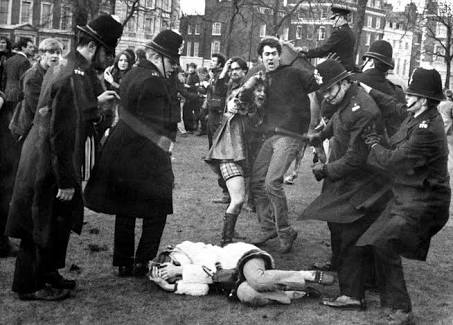
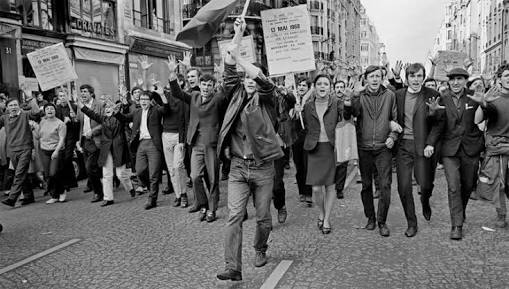


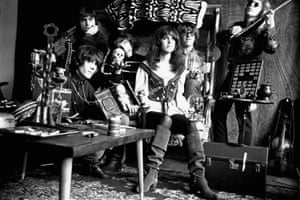

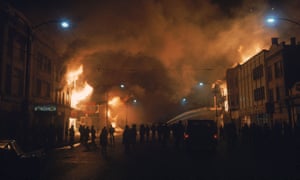


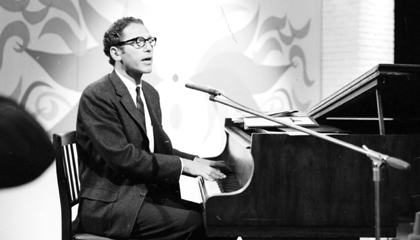









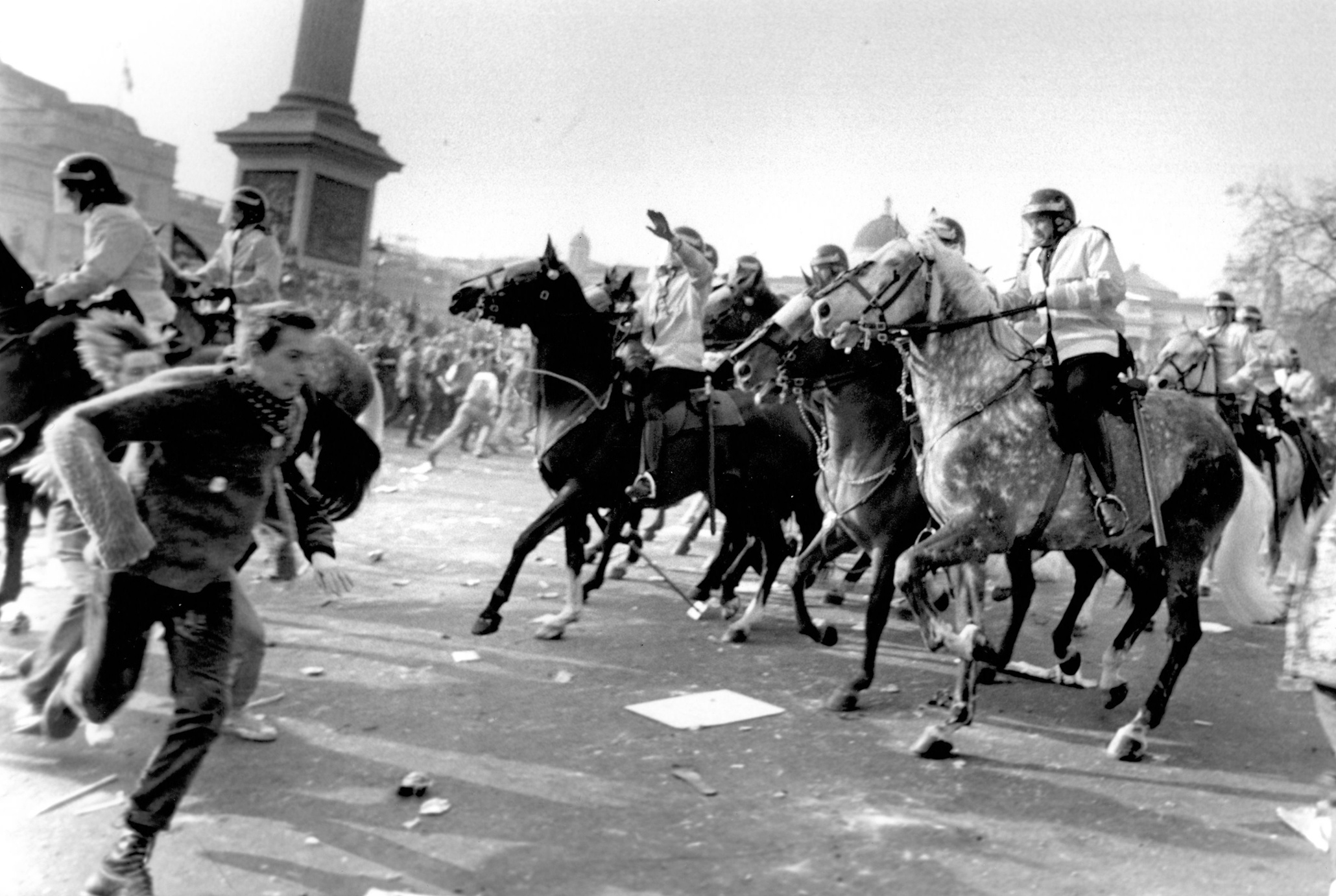








 In That Howling Infinite