
Soho feeds the needs and hides the deeds, the mind that bleeds
Disenchanted, downstream in the night
Soho hears the lies, the twisted cries, the lonely sighs
Till she seems lost in dreams
Al Stewart, Soho (needless to say) (1973)
Whenever I recall London’s Soho in the sixties, I always think about my bedsitter days in the city in the early seventies and also, British singer-songwriter Al Stewart’s over-orchestrated but quite excellent debut album of 1967, Bedsitter Images.

My bedsitter images

My bedsitter images
You could say that I knew Al Stewart’s London ‘ere I first knew London. I bought the album when, as a sixth former, I first saw him perform at the famous Jug o’ Punch folk club in Digbeth, Birmingham, run by The Ian Campbell Folk Group. I’d go there regularly with my schoolmates – we saw some great singers, including a young Joni Mitchell in the summer of 1968 – it was love at first sight, and I bought her first album there too: Songs from a Seagull). Al may have autographed his record – I can’t recall. It was stolen from my bedsit room in Reading in 1970 along with many of my favourite discs – including that one of Joni’s.
Maybe it’s about what here in Australia – borrowing from our indigenous compatriots – we might call “spirit of place”: the association with the streets within a hop, skip and an amble from Old Compton Street out into Shaftsbury Avenue and that bookshop in Charing Cross Road, the opening verse of the second track Swiss Cottage Manoeuvres, and that flat in Swiss Cottage, a suburb I used to frequent in the seventies when several of my friends lived there. You can listen to the whole of album below.
In a trawl through my back pages (OK! Enough with the Bob Dylan already!), wrote of my early encounters with Soho:
”As a sixth former, I’d often hitch to “swinging” London for the weekend, to explore the capital and visit folk and jazz clubs, kipping in shop door-ways and underground car parks under cardboard and napping wrapped in newspapers, and eating at Wimpy bars and Lyons teas houses”.
And naturally, I discovered Soho, a bright, colourful and disreputable warren of narrow streets behind the theatre-strip of Shaftesbury Avenue, with its mix of cafés, trattorias, delicatessen, book shops and strip clubs – and Carnaby Street, internationally famous by then as the fashion mecca and the “place to be” of “Swinging London”.
“… the motorway from Birmingham to London was a road well-traveled. In my final year at Moseley Grammar, I’d often hitch down to London for a weekend with pals who’d gone there before. We’d hang out at cheap and cheerful Pollo’s Italian restaurant in Old Compton Street in Soho and the Coach and Horses across the road, and go to Cousins folk and blues joint in a cellar in nearby Greek Street, and the 101 Jazz Club off Oxford Street. Bunjies folk cafè and Ronnie Scott’s jazz club were just around the corner. After a meal or a pint, I’d often catch the last tube to the end of the line closest to the M1. I can’t recall how many times I headed off into the night; and there were always drivers on the road at the witching hour. I guess many folks “get the urge for going”, as Joni sang back then, “and they had to go …” And in those generous times, people were happy to offer a lift to a wayfaring stranger – gentle souls who would not leave strays stranded by the dark wayside; lonesome folks seeking company and conversation in the dark night of the soul; curious people wondering why a young man would hitch the highways in the middle of the English night”. There’s more in Ciao Pollo di Soho – the café at the end of the M1.
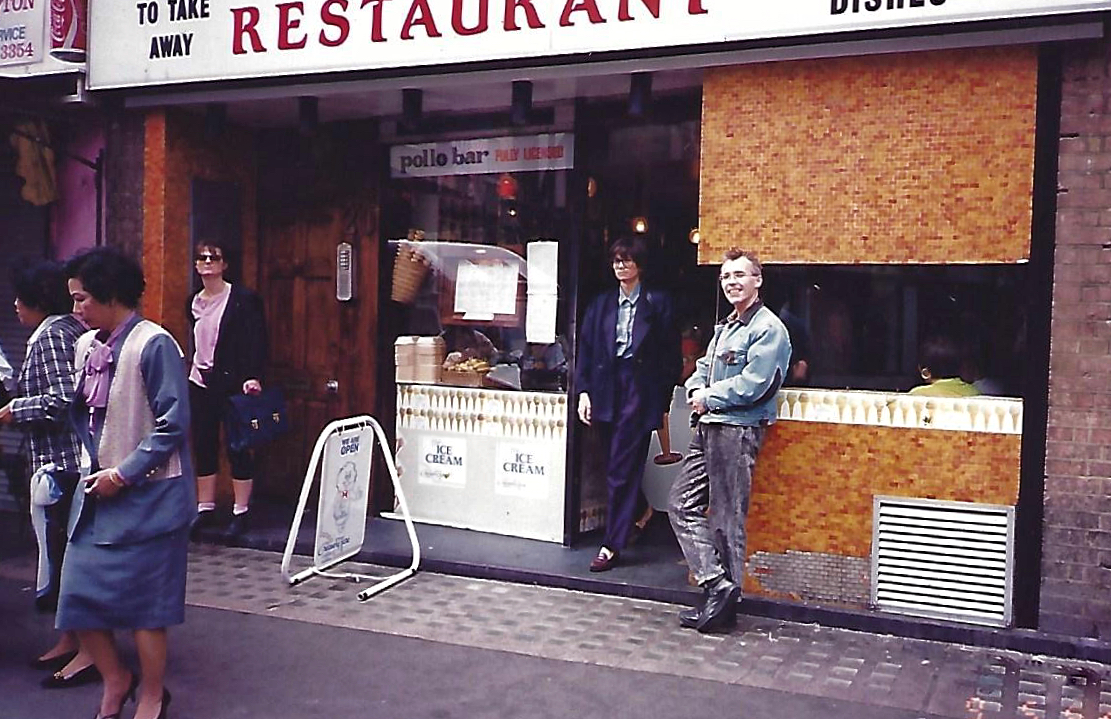
Pollo. The café at the end of the motorway

I saw a werewolf with a Chinese menu in his hand, walking the streets of Soho in the rain. Warren Zevon
There was something vicarious in ithe seedy, needy, greedy vibe of the priapic songs on Al’s follow up albums. An old friend and Al Stewart fanboy who has now passed on called them aural masturbation. Although there were many “love chronicles”, the title track of his second album, Al also wrote about melancholy middle aged suburban couples, historical events and more, with the odd foray into poetic mysticism, self-reflection, and also, nonsense. And some excellent instrumentals – he is an imaginative and flamboyant guitarist. My flat mates and I were all fans of Al back then, and went to most of his gigs when he played in London. Here’s one of our favourite ‘history’ songs:
In the early seventies, when a girlfriend started going out with Al, I actually got to know him for a brief while. Indeed, once, when he played in Birmingham Town Hall, me and a couple of pals drove up to my old hometown to see him, and after the show, invited him back to my folks’ place for a late night fry up. My mom reckoned he need fattening up. And afterwards, she and Al sat in the kitchen for a couple of hours talking about pop music. “I love Cat Stevens”, mom said. “Oh, I much prefer the Incredible String Band”, said Al. “Oh, they’re very weird, but Paul like them!” She said. Then they got talking about Mick Jagger. And my dad, in the sitting room, said to us others gathered there, and referring to Al’s stature, said “there’s not much to him is there!”. Strange but nice how you recall these little things. The folks have passed on a long time ago …
Afterthought – Clifton in the Rain
Whilst I always associate Al Stewart with London and Soho, my favourite song is set in a Bristol suburb. Released in 1970, it is gentle, lyrical, and paints a beautiful picture of English weather – and it features the gorgeous Jaqueline Bisset.
The rain came down like beads
Bouncing on the noses of the
People from the train
A flock of salty ears
Sparkled in the traffic lights
Feet squelched soggy leaves across the grain
I took my love to Clifton in the rain
And all along the way
Wanderers in overcoats with
Collars on parade
And steaming in the night
The listeners in the Troubadour
Guitar player weaves a willow strain
I took my love to Clifton in the rain
Jacqueline Bisset
I saw your movie
Wondered if you really felt that way
Do you ever fear
The images of Hollywood
Have you felt a shadow of its pain
I thought of you in Clifton in the rain
There’s a nice retrospective on the Troubadour Folk Club in Bristol here:

English actress Jaqueline Bisset
 In That Howling Infinite
[…] Al Stewart’s Soho (needless to say …) […]