The past beats inside me like a second heart
John Banville, The Sea
Why is this blog called In That Howling Infinite? It refers to Herman Melville’s Moby-Dick, a magnificent study in mania and obsession:
“But as in landlessness alone resides highest truth, shoreless, indefinite as God – so better is it to perish in that howling infinite, than be ingloriously dashed upon the lee, even if that were safety!” Moby–Dick, Chapter 23
In a figurative sense, it speaks of the themes and schemes that are addressed in the thoughts, ideas, songs, poems and stories that feature in this blog. We are, as Bob Dylan sang, “condemned to drift or else be kept from drifting”. And we like to hope that, as the ancient Greek lyric poet Sappho said, “someone will remember us, I say, even in another time”
Here are the most recent articles in In That Howling Infinite.
Smyrna 1922 and the Ottoman endgame. The expulsion of the millennia long Greek presence in Anatolia was one of the last chapters in the extraordinarily violent disintegration of the Ottoman Empire.
Beside Strange Waters. The dark side of former Pink Floyd front man and currently, controversial political activist
Rasputin and the downfall of the Romanovs. To admirers he was a man of God; to his enemies, a charlatan, sexual predator, political manipulator and symbol of everything rotten within Russia’s last royal dynasty.
The featured picture at the head of this page is the interior of St George’s Greek Orthodox Church in Madaba, Jordan, home of the sixth century Madaba map, discussed in Maps, memory, and the myth of fingerprints
Sydney Sweeney has good jeans
Ten favourites:
A Short History of the Rise and Fall of the West. In one of the first essays published in In That Howling Infinite, we walked down what Welsh poet RS Thomas called ‘the long road of history”, beginning with the usual suspects: power and pride, greed, and aggrandisement, and as accessories after the fact, dolour, devastation, and death.
Blood and Brick … a world of walls. Hadrian’s Wall, the Theodosian Wall, the Berlin Wall, Northerm Ireland’s Peace Wall, Israel’s Separation Wall, George RR Martin’s Ice Wall, the wall you can see from space, and walls that most people have never heard of. If walls could talk, what take they woukd tell. While walls are destined to fall one day, people like them. They project a language of security – but they stem from a sense of insecurity, a fear of losing what you have.
One Land, Two Peoples: History, Memory, Continuity, and Inheritance. The history of Israel and Palestine does not yield to forensic neatness. This land holds layered attachment; Jewish longing and Palestinian dispossession; British imperial design and Arab nationalist pride; secular aspiration and religious revival; survival strategy and ideological fervour. None alone explains the whole. Together they form the sediment of a century.
The Twilight of the Equine Gods. An illuminating canter through the story of the “Centaurian Pact” between humans and horses. it is at once a ride and revelation. The horse, as German academic and cultural scientist Ulrich Raulff’s tells us, “has been man’s most important companion – forget cats and dogs – and the most durable of historical alliances – against which every other covenant into which we have entered has been fragile and ephemeral – not even our relationship with our gods has shown a comparable degree of stability”.
The Sport of Kings. CE Morgan’s “great American novel” is not a history book – nor is it an historical novel. But it is most certainly about history. And about identity. As Morgan puts it: “You would never escape the category of your birth”. It is also about memory and myth: “Repeated long enough, stories become memory and memory becomes fact”.
Blue remembered hills – a land of lost contentment. “Nostalgia”, literally the pain associated with the thought of home, or homesickness, is derived from the Greek “nostos” – a theme used in Ancient Greek literature most notably in the recently reimagined Odyssey, involving an epic hero returning home after a long time away. Nostalgia reveals the deep longing for a home that our younger selves took for granted, and bittersweet return to people and places that have changed forever. But it isn’t all it’s cracked out to be, and, indeed, can bring out the worst in us, becoming a millstone of bitterness and regret strung about the necks of discontented souls who drift off into a maze of memories, meanings and emotions.
A cowboy key – how the west was sung. My riding days are over, but I have been into westerns all my life, and the songs inspired by them – in films, musicals and popular song, from ghostly herds to outlaw chic, Frankie Laing to Leonard Cohen and Taylor Swift. And, as a onetime musician myself, I have, back in days gone by, penned songs in a cowboy key.
McGoohan’s Blues – sunbathing in the rain. How an eighteen minute digression from the concept if not the plot of an iconic if indecipherable ‘sixties’ television series made an indelible impression on an impressionable twenty year old who remains mightily impressed with this song by Britain’s high priest of angst.
The Boys of Wexford – memory and memoir. “Fast forwaranother century, and I was “on the Holy Ground once more” attending the wedding of an old pal held in an old pub in the heart of Ireland. Getting there, we’d done a whistle-stop tour of the south, including Inis Córthaid (my mother’s hometown), Wexford and Ross, the heartland of the ‘98 rebellion … I was best man at that wedding, and in a speech largely devoted to the groom and our mutual, lifelong appreciation of Bob Dylan, I was able to relate to guests young and old tales of my Irish childhood, taking us all “down the foggy ruins of time”, and sang extracts from songs I actually did learn at my mothers knee, the song-lines of my Celtic twilight.
About the creator of this blog
Paul Hemphill is a British-born Australian songwriter, poet, and blogger.
Once upon a time, he was an accountant by profession, a manager, mentor and mediator. A long-time resident of Sydney, he is now living in the middle of the forest on the mid north coast of New South Wales, Australia, where he spends much of his time in the great outdoors.
His interests include music, poetry, politics and history. He has had a lifelong passion for the history, politics and people of the Middle East. Over the years, through study and travel, he has acquired a working knowledge of standard and colloquial Arabic.
Listen to some of Paul’s songs on SoundCloud and YouTube. Search under Paul Hemphill or HuldreFolk (but ignore the Flemish death metal band of the same name). He has assembled seven volumes of poetry and verse, and these can be read on this blog.
In Lucifer Descending … encounters with the morning star, In That Howling Infinite followed Lucifer’s long journey from Scripture into theology: from the elusive serpent of Genesis to the rebellious archangel of Christian tradition; from the Book of Job to Isaiah, Ezekiel, the New Testament and, ultimately, to Milton’s magnificent Paradise Lost. It was the story of how a comparatively shadowy biblical adversary gradually became the Prince of Darkness who has haunted the Western imagination for almost two millennia.
But stories, like their protagonists, seldom remain where we leave them. If Lucifer Descending explored how the Lucifer fell from Heaven, this essay asks what happened after he landed.
For Lucifer, it turns out, has enjoyed an extraordinarily successful afterlife. As religious belief has receded across much of the Western world, he has not disappeared. Rather, he has escaped the confines of theology and colonised almost every corner of our culture. He strides through literature, painting, opera, horror, fantasy, cinema, television, popular music and political rhetoric with undiminished confidence.
This is therefore not another essay about Satan as an object of faith. It is an exploration of Lucifer as one of Western civilisation’s most durable cultural archetypes. Why do we continue to invent Dark Lords long after many have ceased to believe in the Devil? Why do our stories seem unable to function without them? Why does the Wild Hunt still thunder across our imagination, why does Old Nick keep turning up in our songs, and why do successive generations remain fascinated by the glamour of the forbidden?
The answers reveal at least as much about ourselves as they do about the Devil.
For, as this essay gradually suggests, Lucifer’s greatest triumph may not have been persuading us that he exists. It may have been persuading us that evil always wears somebody else’s face.
Lucifer descending, Gustave Dore
The Devil Rises
I heard the snake was baffled by his sin He shed his scales to find the snake within But born again is born without a skin The poison enters into everything
Leonard Cohen, Treaty
There is a curious paradox at the heart of Western civilisation. For all the decline in church attendance, one suspects that Lucifer has never really been unemployed.
Heaven may have dismissed him long ago, but literature, painting, music, theatre and cinema hired him almost immediately. Theology gradually misplaced him; popular culture put him back on the payroll. Strip away the horns, the cloven hooves and the sulphurous odour, and he reappears century after century in fresh disguise: the Dark Lord, the Shadow, the Emperor, the Great Corrupter, the smiling tyrant, the master criminal, the “Big Bad”, the villain whose ambitions invariably exceed both his wisdom and his humanity.
In short, Lucifer never really went away. He simply changed costumes.
This is perhaps his greatest triumph. For while belief in a literal Devil has waned across much of the Western world, belief in evil personified has scarcely diminished at all. We remain incurable myth-makers. Every age invents a Prince of Darkness suited to its own anxieties. Medieval Europe imagined hornèd demons lurking in forests and crossroads. The nineteenth century preferred aristocratic vampires and criminal masterminds. The twentieth gave us dictators. The twenty-first has elevated cinematic super-villains into a kind of secular demonology. We may no longer fear Hell in quite the old-fashioned sense, but we still require someone – or something – to embody the darkness against which heroes define themselves.
It is hardly surprising. Stories require conflict. Heroes are admirable, but villains are memorable. The hero must remain consistently virtuous; the villain enjoys all the best speeches, the finest costumes and the greatest dramatic licence. Lucifer himself set the pattern. Even those who have never read Paradise Lost have absorbed Milton’s magnificent creation second-hand. William Blake famously quipped that the Puritan poet “was of the Devil’s party without knowing it,” and one understands precisely what he meant. God issues decrees. Satan delivers soliloquies and strikes power chords.
Milton’s Lucifer was not the grotesque beast of medieval mystery plays. He was intelligent, eloquent, magnificent even in defeat, ruined less by wickedness than by pride. “Better to reign in Hell than serve in Heaven” may be one of the most quoted lines in English literature precisely because it speaks to something recognisably human. Milton’s Devil is wrong, certainly, but never dull. Every great fictional Dark Lord since has borrowed something from him.
J.R.R. Tolkien would doubtless have resisted the comparison. As a devout Catholic he disliked allegory almost as much as C.S. Lewis embraced it. Yet Sauron stands unmistakably in the Miltonic tradition. He is no mere tyrant but a fallen power, less a personality than a malignant will bent entirely upon domination. Indeed, Sauron scarcely appears in The Lord of the Rings as a character at all. He is an absence, an all-seeing eye, a presence felt rather than seen. Evil has become abstract, bureaucratic almost, no longer dependent upon pitchforks and brimstone but upon surveillance, conquest and absolute control. Lucifer has evolved into totalitarianism.
Sauron’s lieutenant Saruman is perhaps closer to Milton’s original conception. Once wise, once good, corrupted not by appetite but by certainty. Like Lucifer himself, Saruman does not begin as evil. He begins by believing that the ends justify the means. Christopher Lee, who portrayed him so magnificently, understood these ambiguities better than most. There was something appropriate about the actor who had previously embodied Dracula and Rasputin eventually becoming Tolkien’s fallen wizard. Lee spent much of his career giving evil an aristocratic dignity that was infinitely more unsettling than any number of prosthetic horns.
George Lucas followed much the same path. Darth Vader may be the fallen angel, the once-noble knight seduced by power, but the true Lucifer of Star Wars is Emperor Palpatine. Smiling, patient, almost avuncular, he rarely forces anyone to do anything. Instead, he whispers. He flatters. He identifies weaknesses already present and quietly enlarges them. Like the serpent in Eden, he offers knowledge, certainty and power, while allowing his victims to imagine that every decision is entirely their own. Watching the prequel trilogy today, one is struck by how often democracy destroys itself voluntarily. Palpatine scarcely stages a coup. The Republic hands him the keys.
Marvel has travelled a similar road. Thanos does not regard himself as wicked. Quite the reverse. He considers himself the only rational adult in a sentimental universe. Half of all life must perish, he argues, so that the remainder may flourish. His is genocide expressed as arithmetic. That, perhaps, is modern evil in a nutshell. The old Devil tempted souls. Today’s Dark Lord arrives bearing graphs, statistics and PowerPoint slides.
Even Walt Disney understood that darkness is dramatically indispensable. Snow White has her Wicked Queen, Sleeping Beauty her horned Maleficent, and The Lion King its melancholy conspirator Scar, Shakespeare’s Richard III translated into feline form. Disney princes tend to blur into one another. Nobody forgets Cruella De Ville.
Nor is this confined to fairy tales.
Sherlock Holmes required Professor Moriarty, “the Napoleon of Crime”, a title that neatly transformed the “Corsican ogre” into a metaphor for criminal genius. Dracula became immortal not merely because he drank blood but because he represented temptation wrapped in elegance. Hannibal Lecter horrified audiences precisely because he was cultivated enough to discuss Bach and Bordeaux while contemplating cannibalism. Batman’s Joker delights in proving that civilisation itself is only a thin coat of paint over chaos. Voldemort, another heir to Sauron, seeks not merely power but immortality itself, the oldest Luciferian ambition of all.
James Bond, too, would have enjoyed a remarkably brief career had Ian Fleming contented himself with ordinary gangsters. Instead, he gave us Blofeld, Dr No, Goldfinger and a parade of megalomaniacs convinced that humanity’s principal problem was insufficient obedience. They possessed volcanic lairs, Persian cats, improbable weapons and ambitions bordering on the theological. Bond did not merely foil criminals; he repeatedly thwarted men aspiring to become secular gods.
One of the cleverest reinventions of the archetype came from the most unlikely quarter imaginable: a Californian-based television series ostensibly about teenage vampires.
Beneath the wisecracks and high-school melodrama, Buffy the Vampire Slayer was an entertainingly sophisticated theological exercise. Each season introduced a new “Big Bad”, the a term creator Joss Weedon coined for whatever apocalyptic menace Buffy happened to be facing. The expression was comic, yet psychologically astute. Stories seem to demand a supreme antagonist around whom lesser evils can organise themselves.
The setting was inspired. Sunnydale High School stood upon a Hellmouth, a literal gateway to infernal realms buried beneath the school library, and an eminently portable metaphor. Adolescence already feels like Hell; why not build the school directly over it? Evil, the series quietly suggested, is never somewhere else. It is not confined to Mordor or the underworld. It bubbles perpetually beneath ordinary life, beneath classrooms, shopping malls, suburban cul-de-sacs and parent-teacher evenings, requiring only the occasional crack in the pavement to emerge. “There’s this thing that happens here, over the hell mouth”, says Buffy, “where the way a thing feels – it kind of starts being that way for real. I’ve seen all these things before – just not all at once”.
Lucifer has hence become less a theological proposition than a dramatic necessity. Every mythology requires its dragon. Every dragon requires its Dark Lord. Every Dark Lord owes something to the Morning Star. And every hero requires a nemesis to defeat and destroy.
Nor do we confine these figures to fiction. Human beings have always displayed a remarkable talent for transforming history into morality plays. Every generation manufactures its own secular Satan. Adolf Hitler has become the universal benchmark against which evil itself is measured. His name no longer belongs solely to history but to mythology. Joseph Stalin joins him, pipe smoke curling above the Gulag like incense from some infernal liturgy. Mao Tse Tung presides over famines of almost biblical proportions. Pol Pot transformed Cambodia into a charnel house. Even the language betrays us. We do not merely describe such men as wicked. We speak of them as monsters, demons, incarnations of evil itself.
Earlier centuries found their Dark Lords elsewhere. Napoleon Bonaparte was the Corsican Ogre, riding across Europe like an Antichrist in cavalry boots. Medieval chroniclers regarded Genghis Khan as divine punishment erupting from the eastern steppe. Rome supplied a gallery of memorable villains – Nero, Caligula, Commodus and Elagabalus – whose reputations, embroidered though some undoubtedly are, have endured for two thousand years because every civilisation likes to imagine that somewhere in its past there strode an emperor who was not merely bad but diabolical.
Then there was Grigori Rasputin, whom we encountered in a recent essay. Mystic, mountebank, holy fool, healer, libertine, political manipulator and reluctant martyr, Rasputin somehow managed to become all things to all people. The beard, the hypnotic stare, the whispered scandals, the astonishing resilience in the face of poison, bullets and icy rivers – no wonder he stared in on of Hammer’s schlocky horror shows.
There is, however, a danger in all this. The more enthusiastically we invest evil in extraordinary individuals, the more confidently the rest of us absolve ourselves. If Hitler is Satan, then we need only reassure ourselves that we are not Hitler. If Sauron dwells in Mordor, then the Shire is safely innocent. It is an attractive proposition, comforting even, but one that both history and literature stubbornly refuse to endorse.
Milton knew better. So did Tolkien. So, in his own deceptively gentle way, did W.H. Auden, who, according to his biographer, Humphrey Carpenter, once startled a Sunday School class by asking, “Do you know what the Devil looks like? The Devil looks like me.”
That may be the most unsettling description of Lucifer ever written. For it suggests that the Dark Lord’s final disguise is not the hornèd demon, nor the tyrant, nor the vampire, nor the emperor. It is the ordinary human face reflected back at us from the mirror.
From there, as the old proverb reminds us, it is but a short ride before the Devil takes the reins.
Sauron, the all-seeing eye
The Devil Drives
And now the wheels of heaven stop, you feel the devil’s riding crop. Get ready for the future: it is murder.
Leonard Cohen, The Future
If the Dark Lord gives evil a face, the Devil gives it motion.
There is an old English proverb, first recorded by John Lydgate around 1420, that survives today in abbreviated form: Needs must when the Devil drives. We have largely forgotten the second half, retaining only the resigned “needs must”, yet the original is far richer. It conjures a vivid image of the unfortunate traveller compelled onward by an infernal coachman, driven not by choice but by necessity, passion, fear or circumstance. Shakespeare knew the saying well and put it into the mouth of Helena in All’s Well That Ends Well. Six centuries later it still captures something uncomfortable about the human condition. We like to think we are steering our own course. More often than not, someone – or something else – appears to have seized the reins. How often have we heard those righteous souls who have failed to resist carnal temptation plaintively cry “the devil made me do it!”
The Devil, in this tradition, is not so much a ruler as a driver.
American gospel music later turned the proverb into practical theology. “Don’t let the Devil ride,” warned one well-loved spiritual. The explanation followed immediately: “If you let him ride, he’ll want to drive.” It is a neat summary of temptation itself. Evil rarely demands complete surrender at the outset. It asks only for a lift, a compromise, a tiny concession, one small indulgence. Before long, you discover that you have been relegated to the passenger seat.
Author Dennis Wheatley understood the power of this ancient image when he published The Devil Rides Out in 1934. It remains one of the great classics of English supernatural fiction, written at a time when spiritualism, séances and occult societies flourished among polite society between the wars. Wheatley’s Satan is no medieval gargoyle lurking beneath cathedral gargoyles. He rides abroad, active in the world, recruiting disciples, pursuing souls and intruding into drawing rooms where cocktails are served with impeccable manners. Christopher Lee’s magnificent portrayal of the Duc de Richelieu in Hammer’s 1968 adaptation elevated what might otherwise have been Gothic melodrama into something almost Miltonic. Tall, patrician and entirely convincing, Lee battled infernal forces with learning, courage and Latin – unlike Buffy Somer’s high kicks and wisecracks. It may be the only horror film in which civilisation itself, embodied in good breeding and quiet erudition, proves the Devil’s most formidable opponent.
Yet Wheatley was drawing upon something immeasurably older than Christianity, for long before Lucifer acquired horns, antique Europe already knew that when the wind howled through winter forests and clouds raced across a full moon, riders were abroad on The Wild Hunt.
Every northern people seemed to possess its own version. In Scandinavia it thundered across the heavens under the command of Odin himself, one-eyed, cloaked and spear in hand, accompanied by ghostly warriors and spectral wolves. In England the leader became Herne the Hunter, antlers upon his brow, riding through Windsor Forest with baying hounds at his heels. Shakespeare gives him a memorable cameo in The Merry Wives of Windsor, where Falstaff disguises himself as the horned hunter beneath the great oak. Whether Herne was once a forgotten woodland god, an Anglo-Saxon spirit or merely local folklore hardly matters. By Elizabethan times everyone knew that one did not linger in the forest after dark when Herne was abroad.
Across the Severn in Wales the Hunt belonged to Gwyn ap Nudd, king of Annwn, the Otherworld, who rode with his fearsome Cŵn Annwn, the white hounds with crimson ears whose baying foretold death. In Brittany and northern France, it became the Mesnée d’Hellequin, the Host of Hellequin, whose mysterious leader eventually lent his name, by one of language’s curious transformations, to the comic Harlequin of the Italian stage. Germany knew the procession under other names; so too did the Low Countries.
The details varied. The essentials did not. A storm. A cavalcade. The dead riding with the living. And woe betide anyone who crossed their path. Sometimes those unfortunate enough to witness the Hunt were swept away forever. Sometimes they were compelled to join it. Sometimes they survived only to wake the following morning miles from home with no memory of the night’s journey. One can almost hear the old proverb whispering through these stories. Needs must when the Devil drives.
The great Norwegian painter Peter Nicolai Arbo captured the legend magnificently in his 1872 canvas Åsgårdsreien – usually rendered in English simply as The Wild Hunt of Odin. It is one of those paintings that appears almost to move before one’s eyes. Odin’s spectral company bursts from the darkness in an explosion of movement. Horses rear. Cloaks stream behind their riders. Women, warriors and phantom hounds tumble through the storm as though the sky itself has become a battlefield. Nothing in the picture is static. The Hunt is motion incarnate, a supernatural force impossible either to resist or escape. Looking upon it, one immediately understands why our ancestors barred their doors when winter winds began to howl.
Åsgårdsreien – The Wild Hunt
The Church, unsurprisingly, appropriated the legend rather than abolishing it. Odin quietly surrendered his command to darker powers. The spectral riders became demons. The horned Herne acquired a suspicious resemblance to the Devil himself. Pagan myth merged seamlessly into Christian cosmology. The Hunt still rode; only its commander had changed.
Or perhaps not. For there is something profoundly Luciferian about the Wild Hunt irrespective of who happens to lead it. It is the embodiment of restless movement, insatiable desire and ceaseless pursuit. The riders never arrive because they are never seeking a destination. They exist only to chase – like temptation itself.
The extraordinary thing is that the Hunt did not perish with the old beliefs. It emigrated. Like so much European folklore, it crossed the Atlantic in the baggage of settlers, adapting itself to new landscapes and fresh imaginations. Somewhere between the Black Forest and the Black Hills, between Sherwood Forest and the Sierra Nevada, the ghostly riders exchanged mail armour for denim, spears for lassos and wolves for cattle.
The Wild Hunt became the Wild West.
No one realised this more completely than Stan Jones. When the Arizona park ranger wrote Ghost Riders in the Sky in 1948, he almost certainly knew he was drawing upon old frontier tales of phantom cattle drives. Whether he realised that those tales themselves descended from a mythology already a thousand years old is another matter. Yet the genealogy is unmistakable. Jones’s doomed cowboys pursuing a phantom herd across thunderclouds are Odin’s riders in Stetsons. Their burning cattle replace the wolves of the north. Their endless pursuit echoes precisely the fate awaiting those medieval hunters unfortunate enough to be swept into the spectral cavalcade.
In That Howling Infinite has paid tribute to this extraordinary song in A cowboy key – how the west was sung, describing it as perhaps the greatest of all cowboy ballads. It deserves the accolade. For all its American trappings, it reaches back through frontier folklore to the Book of Revelation and beyond that to the ancient forests of Europe. The Four Horsemen of the Apocalypse gallop somewhere in the background, but so too does Herne beneath Windsor’s oak, Gwyn ap Nudd crossing the Welsh hills and Odin hurtling through Scandinavian skies.
It is one of those rare songs in which myth survives almost intact, merely changing hats.
Somewhere between Valhalla and the Rio Grande, the Wild Hunt learned to yodel. And the Devil, one suspects, thoroughly approved.
Their brands were still on fire and their hooves were made of steel Their horns were black and shiny and their hot breath he could feel A bolt of fear went through him as they thundered through the sky For he saw the riders coming hard and he heard their mournful cry
Stan Jones, Ghost Riders in the Sky
It has often been said, only half in jest, that the Devil gets all the best songs.
God, to be fair, has hardly been neglected. He has inspired Gregorian chant, Bach’s Passions, Handel’s Messiah, Haydn’s Creation, Verdi’s Requiem, the African-American spiritual, the Welsh hymn, the Gospel choir and enough Christmas carols to keep shopping centres in business from November onwards. Heaven has produced magnificent music.
But Hell swings.
There is something about Old Nick that seems to appeal irresistibly to musicians. He crops up in folk songs, murder ballads, spirituals, blues, country, jazz, rock and heavy metal with a persistence that borders upon the supernatural. One begins to suspect that if Lucifer really was once Heaven’s brightest angel, his expulsion may not have deprived him of music at all. It merely changed the repertoire.
it was not for nothing that Rock and roll was called “the devil’s music”. its driving rhythms, rebellious energy, and provocative dancing directly challenged conservative religious and social norms. Emerging from African American blues, the genre inherited a reputation for sinfulness due to its associations with marginalized spaces, nightlife, and earthy themes
Perhaps rebellion simply has a better rhythm.
The same bargain resurfaced centuries later at a lonely crossroads in Mississippi.
The oldest of these musical bargains belongs, naturally enough, to Doctor Faustus. Christopher Marlowe first dramatised the medieval legend of the ambitious scholar who traded his immortal soul for worldly knowledge and pleasure, Goethe transformed him into one of the great figures of European literature, and Charles Gounod clothed the story in glorious French Romantic opera. Yet in every version it is Mephistopheles who steals the show. Bass-baritones relish the role because villains invariably enjoy the better music. The Devil not only gets the best lines; he often gets the best arias as well.
Whether Robert Johnson actually met Satan one moonlit night sometime in the 1930s is almost entirely beside the point. Legends endure because they express truths that facts cannot. Johnson had been an unremarkable guitarist. He disappeared for a time and returned astonishingly accomplished. Rural gossip supplied the explanation. He had met the Devil at the crossroads and exchanged his soul for musical genius.
Thus, America reinvented Faust,
The crossroads itself is an ancient place of magic in European folklore, where roads – and destinies – the River of Song as the Mississippi has been called, where spirits linger and bargains are struck. The myth crossed the Atlantic with everything else, put on denim overalls, acquired a battered Gibson guitar and gave birth to the Delta Blues.
From there it was only a short journey to Georgia.
Charlie Daniels’ exuberant The Devil Went Down to Georgia is really another version of the old contest tales in which ordinary mortals outwit supernatural adversaries. The Devil, looking for “a soul to steal”, challenges a young fiddler to a musical duel and, for once, comes second. There is something wonderfully democratic about the story. Lucifer may be older than Creation itself, but he can still be shown up by a country boy with a fiddle and sufficient confidence in his own abilities.
English folk music had anticipated the idea centuries earlier in The False Knight Upon the Road. A mysterious stranger repeatedly attempts to intimidate a child with riddles and threats, only to be calmly answered at every turn until the False Knight – widely interpreted as the Devil himself – is finally driven away in defeat. The old stories were surprisingly optimistic. The Devil might be clever, but he was not unbeatable.
Nor, for that matter, was he always entirely sinister.
By the time we reach the twentieth century he has become positively urbane.
The Rolling Stones’ Sympathy for the Devil remains perhaps the most brilliant reinvention of Lucifer in popular music. Jagger’s narrator is no horned medieval monster but an impeccably dressed gentleman of “wealth and taste”, strolling through history with dry amusement as empires rise, revolutions unfold and humanity repeatedly demonstrates its extraordinary capacity for cruelty. The Devil scarcely claims responsibility for our crimes. He merely observes them with professional interest. It is a profoundly unsettling conceit because the song quietly suggests that mankind requires remarkably little assistance.
Gun’s hectic Race With the Devil, released in the same annus mirabilis of 1968, approaches the old fellow from a different angle altogether. Here the Devil is not the urbane observer but the relentless pursuer, forever hunting, forever closing the distance, echoing once again those ancient riders of the Wild Hunt thundering across medieval skies. The old folklore had merely acquired electric guitars.
Then there is Leonard Cohen.
No modern songwriter returned more often – or more thoughtfully % to biblical imagery. Yet Cohen’s Devil becomes progressively less external and more intimate. In Treaty, the serpent sheds his skin only to discover “the snake within”. Evil is no longer an adversary encountered in lonely wildernesses, but an inheritance carried beneath one’s own skin. In one of his final songs, with characteristic wit, Cohen quietly inverts centuries of iconography: now “the angel’s got a fiddle, the devil’s got a harp.” The celestial and infernal orchestras have exchanged instruments. Nothing, it seems, remains quite where tradition left it.
Freddie Mercury, never knowingly guilty of understatement, transformed Beelzebub into operatic theatre in Bohemian Rhapsody. The Devil appears only fleetingly amid Galileo, Scaramouche and heavenly choirs, yet somehow manages to dominate one of the most extraordinary six minutes in rock history. That, too, seems entirely appropriate. Old Nick has always had impeccable comic timing.
Tom Waits, all gravel and bourbon, frequently sounds as though he has spent an evening drinking with the Devil in some forgotten dockside bar. Nick Cave has made an entire career exploring the uneasy frontier where scripture, murder ballad and Southern Gothic overlap: “He’s a god, he’s a man, he’s a ghost, he’s a guru. They’re whispering his name through this disappearing land. But hidden in his coat is a red right hand”.
Even heavy metal, with its adolescent flirtations with pentagrams and infernal imagery, owes less to genuine Satanism than to the enduring theatrical appeal of Lucifer as the ultimate outsider. The Devil, one suspects, appreciates good publicity wherever he can find it.
Which brings us back to the Wild Hunt.
Stan Jones’s Ghost Riders in the Sky deserves to stand alongside these classics not because it mentions the Devil directly, and scarcely needs to, but because it preserves one of humanity’s oldest supernatural narratives in modern musical dress. Those spectral cowboys pursuing phantom cattle across storm clouds are descendants of Odin’s riders, Herne’s hunters and the Four Horsemen themselves. The song is medieval Europe galloping beneath the vast skies of Arizona. Like all the finest folk songs, it remembers far more than its author probably realised.
How the West Was Sung describes it as perhaps the finest of all cowboy ballads. It is as far removed from cheerful campfire songs of wandering dogies as Kansas is from the Land of Oz. Beneath its Western saddle leather beats the heart of an ancient myth.
And, if I may be forgiven a personal indulgence, somewhere among all these songs sits several of my own.
My first serious encounter with Lucifer in music came not through rock and roll but through Gordon Giltrap’s haunting instrumental Lucifer’s Cage. Introduced to me by an old friend in a London flat sometime in the early 1970s, its title lodged quietly in the imagination for years before eventually emerging, almost unbidden, in a song of my own song of that name. Dante contributed the pillar of ice. Marlowe lent his melancholy. Milton supplied the fallen archangel. The rest belonged to memory, dreams and the peculiar alchemy by which songs occasionally write themselves.
Lucifer appeared again years later in Devil’s Work, though by then he had become something rather different. Summoned before the bar of humanity to answer for every cruelty committed in his name, Satan calmly pleads not guilty. Men, he observes with devastating logic, have proved perfectly capable of atrocity without supernatural assistance. He does not deny admiring the results. He merely disputes authorship.
The old rogue may even have a case. Which perhaps explains why he continues to haunt our music.
Songs, after all, thrive on conflict. They delight in temptation, regret, betrayal, longing, rebellion and redemption – the very emotions that have always formed the Devil’s stock-in-trade. Heaven may provide perfection, but perfection is notoriously difficult to rhyme. Hell, by contrast, offers endless narrative possibilities.
Lucifer may have been expelled from the heavenly choir, but he appears to have landed squarely in the music business. And business, judging by the catalogue, has been remarkably good ever since.
The Devil’s trick
For his is the language of liars
And his is the honour of thieves
And he is the master of eloquence
As the last of the honest men leaves.
Paul Hemphill. Lucifer
The “pillar of ice”, by the wThe oldest image of evil is not always the monster at the gate or the tyrant upon the throne. More often, it is the quiet voice at the shoulder: the tempter, the whisperer, the insinuator who does not command but suggests; who does not force the hand but gently guides it. The devil’s greatest achievement is rarely the invention of falsehood. It is the art of making falsehood appear attractive, sophisticated, inevitable, even virtuous.
C.S. Lewis understood this ancient pattern with remarkable clarity. In The Screwtape Letters, the infernal bureaucracy does not operate through crude declarations of evil. The tempter’s craft is subtler. It lies in rearranging perceptions, encouraging vanity, disguising weakness as strength, and persuading people that they are acting from reason when they are often responding to pride, fashion, fear, or the desire to belong.
The danger, Lewis suggests, is not merely that people hold mistaken ideas. Human beings have always been capable of error. The deeper danger is when ideas become ornaments of identity rather than conclusions reached through reflection. A philosophy becomes attractive because it feels modern, daring, compassionate, rebellious, or intellectually fashionable. The question shifts from “Is this true?” to “What does believing this say about me?”
This is the realm of the whisperer. The whisperer does not need to overthrow reason; he merely needs to distract it. He surrounds the mind with fragments: a little fashionable theory here, a borrowed slogan there, a moral certainty imported from someone else. Contradictions can coexist comfortably because coherence is less important than belonging. The result is not always a carefully constructed worldview, but a collection of convictions assembled from the cultural atmosphere.
The genius of the tempter is that he rarely presents himself as the enemy. He arrives disguised as enlightenment, liberation, sophistication, or courage. He flatters rather than threatens. He tells people they are not merely correct, but among the few who truly understand. The oldest temptation is not simply to do wrong; it is to believe oneself too wise, too moral, or too enlightened to be mistaken.
This brings to mind another great literary figure of the whispering world: Lord Varys, the “Master of Whisperers” in Game of Thrones. Varys is not a demon, nor is he portrayed simply as a villain. His power lies in information, influence, and his ability to move unseen through the corridors of power. He understands that kingdoms are often shaped less by armies than by rumours, perceptions, and carefully planted ideas.. Varys understood the theatre of power; he understood that information itself was a weapon and that every ruler lives inside a carefully constructed reality. His web of informants becomes a metaphor for the invisible forces that govern human affairs
The “Master of Whisperers” is an old archetype. Behind the throne sits the counsellor, the adviser, the confidant who knows that shaping the mind of the ruler can be more powerful than commanding the ruler’s army. In that sense, Varys belongs to the same long tradition as the court intriguer, the Mephistophelean tempter, and the old folkloric figure who appears at the crossroads offering knowledge, power, or forbidden wisdom.
Perhaps that is why the archetype endures. From the serpent in Eden to Mephistopheles, from Shakespeare’s Iago to Varys, the whisperer represents a profound truth about human nature: we are not only creatures who seek truth; we are creatures who seek stories about ourselves. The most dangerous lies are often not those imposed upon us, but those we welcome because they confirm the person we wish to be.
The devil’s trick, then, is not simply deception. It is seduction. It is convincing us that the voice in the shadows is our own.
Satanic Majesties and the lure of the dark side …
Please allow me to introduce myself I’m a man of wealth and taste I’ve been around for a long, long year Stole many a man’s soul and faith
The Rolling Stones, Sympathy for the Devil (1968)
Which brings is tangentially to “devil worship”, whether in cosplay or for real, and why has had and continues to exert an attraction to folks of a certain “disposition”. Hence in pop culture, we have The Rolling Stones using the concept to distinguish themselves from the more saccharine (though brilliant) Sergeant Pepper, and the movies – particularly those dealing with the immanence of the Antichrist.
It is a fascinating tangent because “devil worship” has almost never been primarily about the Devil. More often, it is about rebellion, transgression, power, or the seduction of forbidden knowledge. Satan becomes a mirror in which each age sees the things it most fears—or secretly desires.
The attraction begins with the nature of Lucifer himself. Unlike the grotesque medieval devil of horns and pitchforks, Lucifer is the most compelling character in the Christian imagination after Christ. He is beautiful, intelligent, eloquent, proud, charismatic. 17th Century John Milton’s Paradise Lost transformed him into one of literature’s great antiheroes, whose defiant declaration, “Better to reign in Hell than serve in Heaven”, has echoed through centuries of political revolutionaries, Romantic poets, and rock musicians alike. William Blake famously remarked that Milton “was of the Devil’s party without knowing it.” Whether or not Blake was right, Milton unintentionally gave Satan much of the best dialogue.
That ambiguity proved irresistible to the Romantics. The poets Byron, Shelley, and later Baudelaire saw Lucifer not simply as the embodiment of evil but as the eternal rebel against authority. One need not approve of Satan to recognise the psychological appeal. Every adolescent has, at some point, imagined themselves misunderstood by a hypocritical world. Lucifer becomes the patron saint of alienation.
This is where “devil worship” divides into several distinct streams.
The first is largely theatrical. Heavy metal, gothic fashion, horror films, occult imagery, black clothing, inverted crosses, and pentagrams function less as professions of faith than as cultural shorthand for danger, independence, and shock. Alice Cooper, Black Sabbath, Iron Maiden, Ghost, and countless others have mined this aesthetic. Most participants have little interest in metaphysical evil; they are enjoying the iconography of rebellion.
The Rolling Stones understood this perfectly. In 1967, Their Satanic Majesties Request was less an endorsement of Satanism than a calculated provocation. It was impossible not to hear it as a response to the Beatles’ Sgt. Pepper’s Lonely Hearts Club Band. Where the Beatles embraced colourful optimism and psychedelic innocence, the Stones offered something darker, more decadent, more dangerous. Their image became one of sex, drugs, excess and moral ambiguity.
The following year they released Sympathy for the Devil, perhaps the greatest popular song ever written from Satan’s perspective. Yet the song is not a hymn to evil. Jagger’s Lucifer is an urbane observer of human history, politely introducing himself while recounting the crimes of mankind. The genius lies in the reversal. The Devil scarcely needs to tempt us; humanity supplies ample atrocities of its own. As the refrain insists, “after all, it was you and me.” The devil becomes less the author of evil than its ironic narrator.
Then there is genuine religious Satanism, which is rarer than popular imagination assumes.
Anton LaVey’s Church of Satan, founded in 1966, was largely atheistic. Satan was treated as a symbol of individualism, rational self-interest, scepticism toward religious authority, and personal freedom rather than as a literal supernatural being. In many ways it inverted Christian morality without necessarily believing in Christian cosmology.
Far more obscure are small groups that genuinely venerate Satan as a real spiritual being. They exist, but their numbers have always been tiny. The “Satanic Panic” of the 1980s vastly exaggerated their influence, fuelled by moral panic, unreliable testimony, and sensationalist media.
More enduring has been the cinematic Satan.
Modern horror discovered that the Devil works best not as a monster but as an absence – an invisible intelligence corrupting ordinary life. Rosemary’s Baby (1968) suggested evil could inhabit respectable Manhattan apartments. The Exorcist (1973) brought demonic possession into a suburban family, terrifying audiences because faith itself seemed uncertain. The Omen (1976) imagined the Antichrist not as a horned beast but as an innocent-looking child quietly ascending to political power. The horror lay precisely in the inversion: evil wearing the face of innocence.
It seemed appropriate that The Devil’s address was 1600 Pennsylvania Avenue. These films appeared during an era of collapsing confidence – in churches, governments, families, and institutions. Watergate, Vietnam, social upheaval, the sexual revolution: Western culture was asking whether the old moral certainties still held. The Antichrist became a metaphor for the fear that civilisation itself might contain the seeds of its own destruction.
The Omen (1976)
The fascination continues because Satan remains one of Western culture’s richest symbols. He can signify tyranny or liberation, temptation or freedom, narcissism or resistance, depending on the storyteller. Like Prometheus stealing fire from the gods, he embodies humanity’s perennial temptation to cross boundaries simply because they exist.
Psychology adds another layer. Carl Jung argued that every personality possesses a “shadow” – those impulses we deny or repress. Healthy people acknowledge their shadow rather than pretend it does not exist. Much popular engagement with Satanic imagery can be understood as an exploration of that shadow. Horror allows us to confront evil at a safe distance. Rock music permits us to flirt with darkness while remaining within the bounds of performance. It is ritualised transgression.
The danger, however, comes when performance ceases to be performance. Nietzsche warned that “he who fights with monsters should see to it that he himself does not become a monster.” Jung similarly cautioned that confronting the shadow is not the same as identifying with it. One may explore darkness without enthroning it.
Perhaps that is why the Devil remains culturally immortal. God asks for worship; Satan offers fascination. God commands obedience; Satan whispers autonomy. God speaks of redemption; Satan promises self-realisation without limits. Whether one believes in him literally or not, Lucifer continues to embody one of humanity’s oldest temptations: not simply to do evil, but to imagine ourselves beyond the distinction between good and evil.
There is an irony here that would not have been lost on the medieval theologians. Much of what passes for “Satanism” in modern culture is less a rejection of Christianity than a backhanded tribute to it. The Devil has meaning only in a civilisation shaped by the biblical story. As Christianity’s cultural influence has waned, Satan has often survived more successfully than the saints. He has become detached from theology and reborn as an endlessly adaptable icon—part Romantic rebel, part existential outsider, part Hollywood villain, part rock star.
For all the glamour, however, the traditional Christian understanding ends with an unexpectedly mundane observation. Satan’s greatest trick is not horns, black masses, or spectacular evil. It is persuading us that evil is glamorous, liberating, sophisticated, or somehow more interesting than goodness. The Devil, in this view, is the supreme salesman: he packages pride as freedom, selfishness as authenticity, and rebellion as wisdom. His marketing, one might say, has always been better than his product.
That may explain why, from Milton to Mick Jagger, from Rosemary’s Baby to The Omen, Lucifer continues to stride across our cultural stage. The costumes change with every generation, but the role remains the same: the eternal seducer, inviting us to peek over the edge – not always to push us off, but to persuade us that the view from the abyss is somehow more exciting than the long, ordinary climb toward the light.
Crossing the Threshold
It was in another lifetime, one of toil and blood When blackness was a virtue the road was full of mud I came in from the wilderness, a creature void of form “Come in, ” she said “I’ll give you shelter from the storm”
Bob Dylan
There is an old rule that appears again and again in the folklore of Europe. A vampire, however ancient or powerful, cannot cross the threshold of a home unless invited. It is a curious limitation for a creature that can command wolves, transform into mist, mesmerise its victims and seemingly defy death itself. Yet before the simplest cottage door, all that supernatural power comes to nothing. It must wait. It must ask. Someone within must choose to open the door.
The convention has endured from the pages of Bram Stoker’s Dracula to the worlds of Stephen King, Anne Rice and Buffy the Vampire Slayer. We accept it almost without question because, beneath the gothic trappings, it expresses something profoundly human. The threshold is more than wood and stone. It is the boundary between safety and danger, innocence and experience, trust and betrayal. To cross it without permission would be mere violence. To be invited across is something altogether more unsettling.
The ancient motif has not disappeared from contemporary storytelling. John Ajvide Lindqvist’s novel Let the Right One In, and the haunting 2008 Swedish film that followed, take the old vampire prohibition and transform it into a moral question. The issue is no longer simply whether we invite someone across the threshold, but whether we possess the wisdom to know whom we are inviting. Every act of welcome carries the possibility of grace or ruin. The threshold remains sacred because, once crossed, neither host nor guest is quite the same again.
Perhaps this explains why the Devil, in so many traditions, is less a conqueror than a seducer. Lucifer does not usually arrive with an army at his back. He comes with a question, a promise, a whispered doubt. In Eden, he offers knowledge. In the wilderness, he offers power. In Goethe’s Faust, he offers fulfilment. The bargain changes with the age, but the method rarely does. The invitation is always voluntary. The victim believes the choice is entirely his own.
John Milton understood this better than most. In Paradise Lost, Satan’s greatest victory is not won on the battlefield but in the imagination. He persuades others that rebellion is freedom, that pride is dignity, that disobedience is enlightenment. His triumph lies not in overpowering his enemies but in teaching them to mistake temptation for liberation.
This is one of the oldest insights of the Judeo-Christian tradition. Evil rarely appears wearing its own face. It arrives clothed in reason, justice, beauty, necessity or compassion. It flatters before it threatens. It persuades before it commands. It waits patiently upon the threshold until someone inside unlatches the door.
That ancient intuition has never really left us. Even in a largely secular age, our stories continue to insist that darkness cannot simply seize us. Dracula must be welcomed. The Ring must be claimed. The White Witch tempts Edmund with enchanted sweetness. Darth Vader invites Luke to join him. Hannibal Lecter enters Clarice Starling’s mind long before he ever escapes his cell. The forms change, but the pattern remains remarkably constant. The greatest victories of darkness are achieved not by force but by consent.
Perhaps this is why these stories continue to resonate. They are not really about vampires or devils at all. They are about us. We like to imagine that evil comes from somewhere beyond the horizon, an alien force that erupts into ordinary lives. Folklore suggests otherwise. It waits politely outside, asking only to be admitted. More often than we care to acknowledge, we are the ones who turn the handle.
It is a disturbing thought, for it shifts the battleground. The struggle between good and evil is no longer fought in distant heavens between angels and demons. It takes place at the threshold of every human heart. The decisive moment is not when the Dark Lord appears, but when we recognise the quiet voice that says, Just this once. No one will know. You deserve this. Come with me.
And that raises an even more uncomfortable possibility. If the Devil depends upon our invitation, if the darkness enters because we allow it to enter, then perhaps the most frightening encounter is not with some horned apparition lurking beyond the doorway.
The dark magic of Fairy Tales
And what hills, what hills are those, my love
Those hills so dark and low?
Those are the hills of hell, my love
Where you and I must go
House Carpenter (The Daemon Lover), Laurence Price (1657)
Perhaps this is why fairy tales have proved so enduring. Not the diminutive winged fairies of modern fantasy, nor the escapist worlds of contemporary fiction, but the old literary tales of Perrault, the Brothers Grimm, Hans Christian Andersen and the countless anonymous storytellers whose voices echo through the centuries. These were never merely stories for children. They were repositories of collective memory, preserving in symbolic form those hard truths about human nature that every generation must rediscover for itself.
Their lessons are remarkably consistent. Do not wander carelessly from the path. Beware the stranger whose charm conceals darker intentions. Be wary of gifts that appear too generous, bargains that seem too easy, promises that flatter your deepest desires. Little Red Riding Hood trusts the Wolf. Hansel and Gretel are tempted by sweetness. Bluebeard forbids the one door that curiosity cannot resist. Snow White accepts the poisoned apple from a smiling hand. Again and again, the stories remind us that evil rarely presents itself as evil. It arrives disguised as opportunity, pleasure, beauty, knowledge or kindness.
Yet alongside these literary fairy tales runs an older and stranger tradition, carried not in children’s books but in the folk songs and ballads of the Celtic lands. Here the threshold leads not to vampires or devils but to Faërie, that mysterious realm which is neither wholly benevolent nor wholly malign, but profoundly Other.
This is not the miniature world of charming sprites and decorative enchantment that later ages would create, but the older Faerie of folklore: a place of wonder and peril, beauty and terror, where the boundaries between the human world and the unknown become uncertain. It is the realm Tolkien described in On Fairy-Stories not as an escape into childish fantasy, but as an encounter with a deeper reality at the edge of the human imagination.
The old ballads return to this theme with remarkable persistence. In Tam Lin, Janet ventures into the haunted wood of Carterhaugh and confronts the Fairy Queen herself to reclaim the man she loves [There’s a wonderful recounting of the story here in this entertaining blog post. In Thomas the Rhymer, the poet follows the Queen of Elfland beneath the Eildon Hills, exchanging the familiar world for one where time and truth obey altogether different laws. What is it about Fairy Queens. Something to do with Lilith, who we introduced in Lucifer Descending? And in the haunting ballad of The House Carpenter, often known as The Daemon Lover, a mysterious stranger returns from the past, offering riches, adventure and escape from an ordinary life. The woman accepts his invitation, only to discover too late that she has embarked upon a voyage from which there will be no safe return. There is a fine version of House Capenter by Tim and Molly Obrien at the end of this article,
Whether these enigmatic, supernatural figures are fairies, spirits or the Devil himself is almost beside the point. They belong to that older landscape of myth where temptation rarely appears in monstrous form. It comes instead as beauty, longing, nostalgia or desire – the whispered promise that happiness lies just beyond the next horizon. The threshold is crossed willingly, the protagonist stepping beyond the known world into a place where the he or she returns changed, if they return at all; and the cost is understood only when, as in House Carpenter, the familiar shore has disappeared from sight.
Tam Lin and the Faery Host.Stephanie Pui-Mun Law
The danger is not always wickedness, but enchantment itself: the loss of home, identity, memory and the comforting certainties of ordinary life. The Fair Folk do not necessarily seek to destroy mortals; their peril lies in their indifference to human limits and human time. They belong to an older order of existence, one that fascinates precisely because it cannot be reduced to our categories of good and evil.
Like Lucifer, the Folk of Faerie seldom arrive as monsters. They are beautiful, alluring and irresistible. They invite rather than compel. The traveller accepts shelter for a night, follows a haunting melody into the greenwood, or rides with a mysterious stranger beneath the moon, only to awaken in a world where familiar landmarks have vanished and time itself has become unmoored. The old ballads understood, as surely as the theologians, that the most perilous journeys begin not with violence but with invitation.
It is a vision that would have been familiar to Tolkien, to Yeats and to the anonymous singers who carried these stories through generations: Faërie is not a place of escape from reality, but a place where reality is seen more clearly. It reminds us that mystery still exists, that wonder can be dangerous, and that every threshold crossed carries the possibility of transformation.
That is why these tales continue to speak to us long after we have ceased believing in enchanted forests, wicked witches, talking beasts or the hidden kingdoms beneath the hills. Their monsters and enchantments are symbols, and symbols possess a curious longevity. The Wolf is not simply a wolf; he is deception. The Witch is not merely an old woman in the woods; she is temptation. The Dragon is not just a beast to be slain; it is fear itself. The Fair Folk are not simply supernatural beings; they embody the irresistible allure of the unknown, the longing to escape the ordinary, and the price that is so often paid for crossing forbidden thresholds. Like Lucifer himself, they endure because they give form to forces that are otherwise difficult to describe.
The genius of these stories lies in their refusal to preach. They do not offer philosophical arguments or theological treatises. Instead, they invite us to recognise ourselves. They speak in the language of metaphor, where wisdom lingers long after the details have faded from memory. We remember the path through the forest, the forbidden door, the poisoned fruit, the moonlit crossroads and the welcoming hearth because they are landmarks within the landscape of our own lives.
Perhaps that is why humanity has never abandoned these tales. We do not return to them because we believe that vampires cannot cross a threshold uninvited, that wolves converse with little girls, or that the Queen of Elfland still rides abroad on Halloween. We return because they express, with unsettling clarity, something we know instinctively but are reluctant to admit: the greatest dangers seldom arrive by force. More often, they are welcomed. The oldest monsters ask permission before they enter, and the hand that lifts the latch is usually our own.
If that is true, then the threshold is not merely the doorway of a cottage, a castle or a haunted house. It is the boundary of the self. The decisive struggle is not between angels and demons in some distant heaven, but within every human heart. The Dark Lord may wait outside, but someone must always open the door.
And when we ask who it was that welcomed him in, we find ourselves confronted by the most disquieting image of all: a face in the mirror.
The Face in the Mirror
So where, finally, does all this leave Lucifer?
After all the centuries, all the sermons and theological arguments, all the paintings, sculptures, poems, novels, films and songs, we are left with a rather unsettling possibility: perhaps the Devil’s greatest achievement was not persuading humanity that he existed, but persuading humanity that evil always belonged somewhere else.
The enduring appeal of Lucifer lies partly in his usefulness. He gives us somewhere to place the things we find hardest to explain about ourselves. When the world becomes cruel, when individuals commit acts of extraordinary brutality, when societies descend into hatred and violence, we instinctively look for a monster. We want a face, a name, a single embodiment of wickedness upon whom we can project all that we fear and despise. The serpent in Eden, the horned tempter at the crossroads, the Dark Lord in his fortress, the tyrant in his palace: these figures offer a reassuring simplicity. Defeat the villain, destroy the source of corruption, restore the natural order, and the world is made whole again.
History, however, has rarely been so obliging.
The twentieth century, the most technologically advanced age humanity had yet created, also produced some of the most terrible examples of human cruelty. It did not require supernatural intervention. It manufactured its own infernos through ideology, bureaucracy and obedience. The great crimes of the modern age were not committed by demons emerging from the shadows, but by human beings who believed themselves to be serving higher purposes. The machinery of death was designed not only by fanatics but by administrators; not only by monsters but by ordinary men who convinced themselves that their actions were necessary, inevitable or even virtuous.
This was the disturbing insight behind Hannah Arendt’s famous reflections on Adolf Eichmann and the “banality of evil”. Evil did not always announce itself with theatrical menace. It did not always arrive wearing horns and carrying a pitchfork. Sometimes it appeared in a grey suit, spoke in measured tones and filled out forms. Sometimes it hid behind procedure, ideology and obedience. The most frightening villains are not always those who know they are evil, but those who have persuaded themselves that they are doing good.
The Devil, one suspects, would have appreciated the irony.
For centuries humanity has blamed him for our darkest impulses, yet he might reasonably argue that he has often been given rather more credit than he deserves. He has been accused of starting wars, corrupting rulers, tempting sinners and poisoning societies, but mankind has demonstrated a remarkable capacity for invention when it comes to cruelty. Lucifer may have whispered in the ear, but humanity has frequently supplied the imagination, the ambition and the machinery.
This is the argument at the heart of my own earlier song Devil’s Work, where I imagined Lucifer brought before the tribunal of humanity to answer for all that had been done in his name. His defence was not that he was innocent in any moral sense, but that mankind had misunderstood his role. He was the convenient explanation, the eternal scapegoat, the mythical culprit upon whom humanity could place the burden of its own failings. The tyrants, the torturers and the conquerors had not required his instruction. They had acted according to their own desires, their own fears and their own visions of power.
Lucifer’s argument, uncomfortable as it may be, contains a warning. If we imagine evil solely as something external, we risk ignoring the darker possibilities within ourselves. We are comforted by the idea that the Devil is someone else: the enemy, the stranger, the fanatic on the other side of the border, the person whose beliefs we find abhorrent. Yet history repeatedly demonstrates that the line between righteousness and cruelty is not always as clearly marked as we would like to believe.
The old proverb warns us, “Don’t let the Devil ride, for if he rides long enough, he will want to drive.” But perhaps the deeper lesson is that the Devil does not always need to seize the reins. Sometimes we hand them over willingly, convinced that we are travelling towards some noble destination.
This is why Milton’s Lucifer remains such a powerful creation. The genius of Paradise Lost was not that it gave us a monster, but that it gave us a personality. Milton’s Satan is seductive because he possesses qualities we recognise: intelligence, ambition, courage, eloquence and a fierce sense of grievance. His tragedy is not that he lacks greatness, but that greatness becomes corrupted by pride. The brightest of angels falls because he cannot accept that he is not the centre of the universe.
And perhaps that is why Lucifer continues to fascinate us. He is not merely the personification of evil. He is the personification of self-deception. He represents the dangerous human capacity to transform ambition into destiny, resentment into righteousness and cruelty into necessity. He is the voice that assures every Dark Lord, from Sauron “in the land Mordor where the shadows lie”, to the tyrants of history, that he is not the villain of his own story.
W.H. Auden understood this with characteristic precision. The story is told that, after his return to the Anglican faith in which he had been raised, he once asked a Sunday school class if they knew what the Devil looked like. The expected answer was probably some variation of the traditional image: horns, tail, pitchfork and sulphurous breath. Instead, Auden replied: “The Devil looks like me.”
Whether the anecdote is exact or embellished, its truth is unmistakable. It captures something that theologians, poets and philosophers have wrestled with for centuries. The Devil is frightening not because he is alien, but because he is familiar. He does not merely lurk in some distant infernal kingdom. He exists in the ordinary human capacity for vanity, cruelty, resentment and self-justification.
Which brings us back to Mick Jagger’s immortal introduction: “Please allow me to introduce myself.” The Devil who appears in Sympathy for the Devil is not a medieval demon but a sophisticated observer of history, a gentleman who has watched empires rise and fall, revolutions become tyrannies and ideals become excuses for violence. His greatest trick is not that he causes humanity’s crimes, but that he knows humanity is perfectly capable of committing them without his assistance.
Perhaps that is why Lucifer refuses to disappear.
Religions may change. Churches may empty. Old cosmologies may fade. Yet the questions that created Lucifer remain stubbornly alive. Why do human beings seek power? Why do we justify cruelty? Why do we convince ourselves that our own darkness is righteous? Why do we so often recognise evil most clearly in others while overlooking it within ourselves?
These are not merely theological questions. They are human questions.
Lucifer survives because he is more than a devil. He is a metaphor for the eternal struggle between our aspirations and our appetites, between the angels we imagine ourselves to be and the creatures we sometimes become.
He falls from Heaven in the old stories. He rises again in every generation’s imagination. He changes his name, his appearance and his costume. He becomes Satan, Mephistopheles, Sauron, Vader, Palpatine, the Joker, the Big Bad, the outlaw, the rebel, the rock star and the shadow at the edge of the road.
But perhaps his most enduring incarnation is the simplest: He has the potential to be face in the mirror.
René Magritte, Not to be Reproduced (1937)
Coda: The Devil’s Human Victims
One final reflection. For all the glamour that Lucifer has acquired in literature, music and popular culture, there is another story—far less entertaining and infinitely more tragic—that shadows his long ascent through the Western imagination.
If the Devil has inspired some of our greatest poetry, our darkest cinema and our most provocative rock music, belief in his earthly agents has also left a trail of blood.
The medieval world certainly knew religious persecution, but it was during the supposedly enlightened ages of the Renaissance and the Reformation that Europe’s obsession with Satan reached its murderous zenith. Between the fifteenth and eighteenth centuries, tens of thousands of people—overwhelmingly women, though not exclusively—were executed as witches. Catholics and Protestants alike proved equally susceptible to the conviction that the Devil walked among them, recruiting servants through pacts, sabbaths and sorcery. Learned judges, theologians and magistrates, armed with books such as the infamous Malleus Maleficarum, lent intellectual respectability to fear, while torture transformed suspicion into confession. The Renaissance, which celebrated reason and rediscovered classical learning, was paradoxically also an age of extraordinary credulity.
Nor was Europe alone in projecting the image of the Devil onto those it neither understood nor trusted. Across the Middle East, minority faiths have long borne the burden of misunderstanding. The Yazidis, whose reverence for Melek Taus—the Peacock Angel—has repeatedly been misrepresented as “devil worship”, have endured centuries of persecution, culminating in the genocidal campaign waged by ISIS in 2014. The Druze, too, because of the esoteric nature of their beliefs, have often been regarded with suspicion and, at various times, suffered discrimination and violence at the hands of those who judged them through the lens of orthodoxy rather than understanding. Similar accusations have echoed through history against countless other minorities, where ignorance and fear have proved more potent than theology.
The pattern is painfully familiar. Societies under stress seek an enemy within. The Devil rarely appears in person; instead, he is said to wear the face of the outsider, the dissenter, the heretic, the foreigner, the eccentric woman living on the edge of the village, or the obscure community whose customs remain mysterious. To accuse another of serving Satan has often been less a statement of faith than a licence to persecute.
There is a profound irony here. In the biblical narrative, Satan is ha-satan—the Accuser. Yet throughout history it has been human beings who have most enthusiastically assumed that role. Convinced they were defending God against the Devil, they have inflicted upon one another torments that no demon could have devised more effectively.
Perhaps that is the final paradox of Lucifer Ascending. The Devil’s greatest triumph has never been to persuade people to worship him. Such cases have always been vanishingly rare. His more enduring legacy has been to persuade men and women that they alone possess absolute certainty about who serves the powers of darkness. Once that conviction takes hold, compassion yields to righteousness, neighbours become enemies, and persecution begins with the comforting belief that one is acting in the service of Good.
Milton gave Lucifer the finest speeches. The Romantics made him a hero. Hollywood turned him into an icon. Rock music made him fashionable. Yet history offers a quieter, sadder lesson. The true tragedy of the Devil is not found in black masses or satanic cults, but in the countless innocent lives destroyed by those who imagined they could see him reflected in the faces of others.
And so the story comes full circle. The mirror in which we thought we glimpsed the Prince of Darkness reveals, instead, ourselves, and what began, for me, as a literary diversion, a frolic through mythology, theology and popular culture, has ended somewhere altogether less comfortable.
I had imagined this essay as an exploration of one of Western civilisation’s most enduring characters: Lucifer as rebel, tempter, antihero and cultural icon; the Devil of Milton and Goethe, of Blake and Baudelaire, of The Rolling Stones, Hollywood and heavy metal. It was, at first, an exercise in intellectual curiosity – a walk through the darker galleries of our collective imagination. Yet, as so often happens, the journey led elsewhere.
For behind the poetry, the music and the mythology lay a far more sobering truth. The Devil’s greatest appearances have rarely been in cathedrals, black masses or horror films, but in history itself: in witch trials, inquisitions, pogroms, persecutions and genocides, wherever one group has become convinced that another is not merely mistaken, but evil incarnate.
The realisation is a melancholy one. Perhaps Lucifer’s most enduring triumph has never been to persuade humanity to believe in him, nor even to worship him, but to persuade us that we know precisely where evil resides – and that it is always somewhere else.
That is a comforting thought. It is also one of the most dangerous.
In the end, I have come to suspect that the enduring power of the Lucifer story lies not in what it tells us about the Devil, but in what it reveals about ourselves. Every generation recreates him in its own image. Every age discovers him in its chosen enemies. Every certainty carries within it the temptation to become accusation.
What began as a fancy has ended as a cautionary tale. And, perhaps, that was the story waiting to be told all along.
Lucifer, star of the morning Lucifer, prince of the night Lucifer falling through darkness Lucifer cast from the light.
Lucifer sits in his wasteland Trapped in the cage of his pride The sirens of importunate circumstance Reclining in ranks by his side Plots he has made, so ingenuous. Dangerous follies and schemes For he has stage-managed quite strenuous Drunken prophecies, libels and dreams.
Lucifer frets in the wasteland Locked in a pillar of ice We know of this only to well We have visited him there once or twice For his is the language of liars And his is the honour of thieves And he is the master of eloquence As the last of the honest men leaves.
Lucifer crawls from the wasteland No solace or peace or rest. For he has corrupted the wisest And he has co-opted the best. And all that is good has since vanished And with it, the fair and the true And the silences hurting his demon heart Are haunting, haunting you.
And the road that winds out of Meggido Is the path that leads to the pit For Lucifer prizes a web of disguises He merely selects one to fit. And the road that runs down to Jericho Is the path that leads him to you And the paradox searing his demon soul Is hunting, hunting you.
So make you no truce with Lucifer Lucifer of fiery breath For Lucifer is treachery And treachery is death.
Lucifer, star of the morning Lucifer, prince of the night Lucifer falling through darkness Lucifer cast from the light.
I have admired Pink Floyd since the sixties. I still thrill to the memory of sitting in the darkness on Parliament Hill in the fall of 1968 as the lights of the city sparkled below us and as jet planes roared overhead on their descent to Heathrow airport to the accompaniment of Interstellar Overdrive and Careful With That Axe, Eugene. The Dark Side of the Moon remains, in my view, one of the greatest albums ever recorded: musically adventurous, philosophically rich, endlessly rewarding. Like much of Floyd’s best work, it explores madness, alienation, mortality and power with extraordinary subtlety.
That subtlety is precisely what seems missing from co-founder Roger Waters’ contemporary activism. Flying inflatable pigs adorned with Stars of David or swastika imagery; describing Israel as uniquely evil; dismissing inconvenient evidence about the atrocities of October 7, 2026; and denouncing former colleagues as idiots. All this may generate headlines, but they lack the complexity of the art that made him and Pink Floyd famous.
Perhaps that is the enduring irony. David Gilmour rarely pretended to be a political philosopher. Waters plainly believes he is one. Yet the songs they created together endure precisely because they resisted simplistic moral binaries. The Dark Side of the Moon recognises that human beings are contradictory creatures, capable of love and cruelty, sanity and madness, empathy and tribalism. Waters’ current politics increasingly divide humanity into those who possess truth and those who have been brainwashed.
The Haaretz article republished below unintentionally illustrates another uncomfortable truth. In 2006 Waters was still embraced by most Israelis despite his criticisms. Today he is regarded by many not merely as a critic of Israel but as someone who has crossed into demonisation. Whether one agrees with that judgement or not, the shift is real. His critics see not an artist speaking truth to power but a man whose empathy has become radically selective.
The music, however, remains untouched. It is still magnificent. One can treasure the album while concluding that its principal lyricist has become, to borrow one of his own titles, rather more comfortably certain than comfortably numb. The younger Roger Waters asked us to question authority. The contemporary Roger Waters often seems to demand that we accept his own. That is a curious destination for one of rock’s greatest sceptics.
The dark side of Roger Waters
This is a fascinating article, not because it settles anything – it manifestly does not – but because it captures Roger Waters almost in the raw. Israeli music journalist Ben Shalev deserves credit for largely getting out of the way and letting his subject speak. The result is both revealing and, at times, deeply unsettling.
The article begins as a piece of rock-and-roll history. In 2006, Waters agreed to perform in Israel but, under pressure from the fledgling Boycott, Divestment and Sanctions (BDS) movement, cancelled the planned Tel Aviv concert and instead performed in Neve Shalom (Wahat al-Salam), the Jewish-Arab “Oasis of Peace” village near Latrun. The move required an extraordinary logistical effort: a chickpea field became a wheat field, then an amphitheatre for some 60,000 people. Traffic collapsed, helicopters ferried the wealthy, and the concert itself – a performance of The Dark Side of the Moon – became one of the largest and most memorable rock events Israel has ever hosted.
Around this entertaining backstage story swirl competing memories. Did Waters himself suggest Neve Shalom? Was it promoter Shuki Weiss? Did Waters witness armed Israeli soldiers at the separation barrier or not? Did security concerns prevent him attending a peace gathering, or did he simply go shopping? Almost every anecdote has two or three incompatible versions. Shalev wisely resists deciding who is right. Memory, ideology and self-mythologising have become inseparable.
The more interesting story is Waters’ own political evolution. He describes 2006 as the beginning of his radicalisation, crediting Qatari-Palestinian activist Omar Barghouti and the nascent BDS movement with opening his eyes to what he now regards as Zionism’s original sin. He claims his deceased father’s letters from British Mandatory Palestine anticipated these concerns decades earlier. Since then, he says, he has concluded not merely that Israeli governments have committed grave wrongs, but that Israel itself – and Zionism as such – is “a failed experiment.”
At that point the interview changes register entirely. It ceases to be about a concert and becomes a prolonged political jeremiad. Waters insists Israelis have been comprehensively brainwashed, dismisses Israeli society as morally corrupted, embraces armed struggle as historically necessary, rejects Nick Cave’s argument for cultural engagement, and repeats claims about October 7 that have been extensively challenged by independent investigations. His denial that Hamas committed rapes, despite substantial evidence collected by UN investigators, journalists and Israeli forensic teams, inevitably overwhelms everything else he says. Whether one is sympathetic to Palestinian suffering or highly critical of Israeli policy, this is where many readers simply stop listening.
That is perhaps the tragedy of Roger Waters. He undoubtedly possesses genuine moral passion. The anti-authoritarian themes running through Animals, The Wall and Dark Side of the Moon were always political, even when listeners preferred to hear only the music. But somewhere along the way, righteous anger seems to have hardened into absolute certainty. There is almost no room left for ambiguity, self-doubt or tragedy. Israelis become collectively brainwashed; Palestinians collectively embody resistance; every contradictory fact is assimilated into a single explanatory framework.
It is an oddly totalising worldview from a man who once warned us against “thought control.”
Postscript
On 4th September 2026, The Times of Israel Israel reported that Roger Waters, “a far-left conspiracist who has long been accused of antisemitism”, was scheduled to headline a New York City conference run by a group that raises conspiracies about the September 11, 2001 terror attack. “Waters and the group organizing the conference, the International Center for 9/11 Justice, have raised false allegations that Israel was involved in the al-Qaeda terror attacks”.
According to The Times, “The group identifies with the “truth movement” that raises alternative explanations for the attacks and calls the attacks an “inside job” orchestrated by the US government with assistance from Israel and other countries”. “9/11 was the first step in the plan for US-Israel hegemony in the Middle East,” the group said earlier this year.
The Times notes that Waters has endorsed conspiracy theories about the September 11, 2001, attacks, telling Tucker Carlson in July that the towers fell due to “controlled demolitions. “It fell down because it was demolished, and the question is, ‘Who placed the explosives in it? Who pressed the button?’” he said. He alleged Israelis had foreknowledge of the attacks, saying, “They were dancing around, sort of congratulating themselves”. He has also raised conspiracies or denied atrocities related to Hamas’s October 2023 invasion of Israel and has a history of anti-Jewish rhetoric.
Roger Waters: ‘My Songs That Israelis Love Are About Truth and Love. Israel Is the Complete Opposite’
Twenty years after his performance in the Jewish-Arab village of Neve Shalom, Roger Waters recounts his version of what really happened there – and what has changed for him since. ‘They went from, ‘Waaaah! Roger, Pink Floyd, we love you’ – to ‘What the fuck is he talking about?”
Shortly after 10 P.M. on June 22, 2006, as Roger Waters’ concert in the Jewish-Arab Israeli village of Neve Shalom was in full swing, a member of the production team mistakenly believed that police were preparing to arrest the Pink Floyd legend.
The employee, a member of Israeli producer Shuki Weiss’ team, thought he had heard over the radio that Waters would be arrested on suspicion of damaging IDF property the moment he stepped offstage. He alerted Amir Feingold, who was in charge of security for the production.
More likely, the radio report said that a complaint had been filed against Waters. The day before the Neve Shalom concert, the man who wrote “The Wall” had visited the separation barrier near Bethlehem and spray-painted the words “We don’t need no thought control” on it, quoting “Another Brick in the Wall.” According to Feingold, right-wing activist Itamar Ben-Gvir filed a police complaint against Waters for defacing the barrier. “He was already a public relations wizard back then,” Feingold says.
Already under immense pressure as the concert drew to a close and 60,000 attendees prepared to leave, Feingold took the report seriously. “We called the Jerusalem District commander, who was at the site, and asked him to look into it,” he recalls.
“Listen, we know how easily the police arrest people. Look at what’s happening today with protest activists.”
That was in 2006. The minister responsible for the police was not Ben-Gvir.
“If there was the slightest chance something would go wrong, we wanted to make sure it didn’t happen. The district commander reassured us. He said, ‘I’m with you.’ At the same time, Shuki and I went to Waters’ manager and told him, ‘Listen, here’s the situation. There could be problems.’ As soon as Waters got off stage, we put him in a car, even before giving the order to turn on the lights in the facility. Shuki said a few words to the audience while the man was already on his way to Ben-Gurion International Airport, escorted by special police patrol unit vans.”
Rogers Waters spraying graffiti on the separation wall, 2006. Credit: AP
The story about the complaint against Waters is an insignificant anecdote, but it illustrates how much Israeli reality has changed in the 20 years since that performance.
In 2006, Ben-Gvir was a serial offender who belonged to the lunatic, ostracized fringes of the far-right, far outside the bounds of public legitimacy. Today, he is the national security minister. Waters is the one who has moved far beyond the bounds of Israeli legitimacy in the past two decades. In 2006, he was still a huge cultural hero, unconditionally loved and admired. His arrival in the country was seen as a historic event.
Pink Floyd’s music is still very much loved in the country, but Waters himself is probably among the most hated people in Israel. The possibility of him setting foot in the country today is beyond imagination. This makes the memories of his performance here, exactly 20 years ago, particularly charged and interesting.
What does Waters himself remember from that visit to Israel and the performance in Neve Shalom? What is the most significant thing that stuck with him?
“Very, very comfortable, shabby chic white sofas arranged backstage. Not the most meaningful memory, but you said, how do you remember it? But the main memory, obviously, is the memory of when I made the little speech at the end where I said, you are the generation of young Israelis who must make peace with your neighbors and blah blah blah,” Waters says in a Zoom interview from his New York home.
He then mimics a screaming, fawning audience: “They went from, ‘Waaaah! Roger, Pink Floyd, we love you’ – to ‘What the fuck is he talking about?’ Wow. It was something of a surprise. I went back the next year and I learned a lot more about Israeli psychology. But that first year, it was still a bit of a surprise.”
Waters is not precise with the timing: He returned three years later, in 2009.
Was the change in audience reaction really that extreme?
“It went from ecstasy to silent horror in a split second. And I thought, whoa, that was by far the most important bit. The rest was just a gig, with an adoring audience.”
Israel is waiting for Roger
One need not accept Waters’ recollection. I asked several people who were there how they remembered that moment. Some didn’t recall Waters’ statement at all. Others said the audience reacted supportively. No one remembered a reserved response, certainly not “silent horror.”
A significant discrepancy between different accounts of the same events characterizes the entire story of Waters’ performance and his 2006 visit to Israel. Whose idea was it to move the concert from its original venue in Yarkon Park to Neve Shalom’s chickpea field? What did Waters see during his visit to the separation barrier? Why didn’t he attend the meeting organized for him with intellectuals and peace activists?
The answer to all these questions is: It depends on whom you ask. So we asked. To mark 20 years since the most complex and charged performance in the history of international rock concerts in Israel, we will try to tell its story in the most reliable and interesting way.
This story has two protagonists: Waters and producer Shuki Weiss. In the 1970s, before Weiss became one of the country’s biggest concert producers, he managed record stores in Tel Aviv and was one of those responsible for introducing Pink Floyd’s music to Israelis. Later, when he owned the Dan Cinema Club in Tel Aviv, he used to hold record listening evenings there. One time he played “The Wall.”
“People would come to listen,” he recalls. “Many people.”
In the early 1980s, Weiss and Miron Rechtman, the owner of the Betty Bam event equipment company, bought the sound system that Pink Floyd used on its “The Wall” tour. In the mid-1980s, Weiss tried in vain to bring David Gilmour, Pink Floyd’s guitarist, to Israel as a solo artist. Toward the end of the 1980s, after Waters had left the band, he negotiated to bring Pink Floyd to perform in the country in its trio lineup (Gilmour, keyboardist Rick Wright and drummer Nick Mason. But that attempt also failed.
The crowd waiting for Waters to perform. Credit: Oren Levin
“I stalked them, so to speak,” he says.
In early 2006, Weiss learned that Waters was planning a world tour based on the album “The Dark Side of the Moon.”
“I went to London, met his agent, and offered a huge sum, much more than he received anywhere else,” Weiss recalls. After the contract was signed and the planned performance in Yarkon Park was announced, he traveled to Paris for a brief meeting with Waters. “I told him that Israel was excited for him,” he says. “He was perfectly fine.” Weiss says ticket sales were excellent, with 35,000 sold three months before the show.
A couple of weeks later, Weiss was vacationing with his family in the Netherlands, when Waters’ manager, Mark Fenwick, called him. He told Weiss that pro-Palestinian activists were exerting heavy pressure on Waters. A few hours later, Fenwick called again to say that Waters had decided to cancel the performance.
“I got lots of emails from my brothers and sisters after the announcement of Hayarkon Park. But the important one was from Omar Barghouti,” Waters recalls about changing his mind, referring to one of the founders of the BDS movement. “We had a conversation, and then I eventually cancelled Hayarkon Park. Organizing this concert instead was a compromise with Omar and with the rest of the people who had just started the BDS movement, because obviously even doing Neve Shalom broke the boundaries of the cultural boycott.”
Waters describes that exchange as “a huge moment” in his political thinking.
“You know, in this song that Mona Miari and I have just released, a re-imagination of my song ‘Comfortably Numb,’ I sing, ‘We never knew about the Nakba. I was only 5 years old in ’48.’ And we didn’t,” he says. “And the lie that is Zionism had been spread all over the world since the Second World War. So I wasn’t alone. Very, very few people quite got it.”
Waters says that one of the few people who “got it” before the war was his father.
Shuki Weiss giving an interview ahead of the concert.Credit: Oren Levin
“My father taught at St. George’s School in Jerusalem from 1934 to 1936,” he says. “And he wrote letters home to my grandmother, which I have, saying how worried he was about the influx of American money, mainly, to buy up land, and about the establishment of the settlements that he saw going on, and how desperately worried and concerned he was,” he recounts, referring to the pre-state Jewish communities. “Of course, he was killed in the war, so I never got to talk to him about these things. but it’s a fascinating fact.”
Following the deepening of his awareness of the Israeli-Palestinian conflict due to the appeal of the BDS movement, Waters made his second visit in 2009. “My travels around the occupied territories … were deeply, deeply moving and very informative,” he says. “I’ve tried never to shut my mouth from that moment. And things have only got worse, obviously, except that it’s becoming clearer and clearer to the vast majority of people all over the world now that this is a failed experiment, and it should be stopped.”
What is the failed experiment?
“Israel is the failed experiment. Zionism is the failed experiment. and this is becoming increasingly a position taken up by a huge majority of human beings all over the world, because we witness and are appalled by the horrific policies of the state of Israel in its massacre of the indigenous people whose land it stole in order to create itself. And so it’s a terrible, terrible, terrible tragedy, and it remains to be seen: Will I see the end of the story in my lifetime? Probably not. I’m 82 years old.”
Waters performing in Neve Shalom in 2006. Credit: Assaf Evron
Field of wheat
In response to Waters’ decision to cancel the Yarkon Park concert, the most monumental improvisation in the history of performances in Israel occurred. Thanks to the move to Neve Shalom, Weiss says he was called “The King of the Chickpea Field” for years by people in the global music industry.
“When Waters’ manager informed me of the cancellation, I told him: ‘What if I move the show to a place for Jews and Arabs?’ I don’t know where that came from,” Weiss says. ‘I knew Neve Shalom. David Broza’s grandfather was one of the first residents there. I had done performances there many years before this show, events for peace. But nothing of this magnitude. Performances for a few thousand people. I had no idea if a huge concert could be held there. I left my family in the Netherlands and returned to Israel. That night, Waters’ manager called me back and said: ‘We checked what Neve Shalom is. If you can do it there, and if you invite Arabs to the show and arrange meetings with peace activists, we’re in.’ I told him: ‘Yes, yes, yes.”
Rayek Rizek, a Neve Shalom resident, offers a different version of the events that led to the Neve Shalom performance. “Sometime in late March 2006, I heard two employees in the community’s secretariat talking about Roger Waters,” recalls Rizek who was the community’s secretary general in 2006. “I’ve loved Pink Floyd since high school. I still listen to them today. When I was studying at university in the United States, around when “Animals” (the band’s 1977 album) came out, I missed a performance of theirs in Houston. By the time I managed to look for a ticket, everything was sold out. I was very sorry,” Rizek says as an aside.
“So when I heard the employees in the office talking about Waters, I asked what was going on. They said his manager had sent us an email. Waters was interested in Neve Shalom and was asking for information about the village,” he says. “As soon as I saw I had a direct connection with the manager, I sat down and wrote him a long email telling him about Neve Shalom and inviting him to hold the concert with us. I didn’t know about the pressure being exerted on him. Two days later, Shuki Weiss came to the village and told me, ‘This morning, Waters’ manager called me and asked about the possibility of moving the concert to Neve Shalom.’ I imagine the manager received my letter and understood that such a possibility existed.”
Rizek’s version doesn’t necessarily contradict Weiss’s entirely. Perhaps Weiss suggested the idea to Waters’ manager, and then the manager sent an email to Neve Shalom. But it’s also possible that the initial email to Neve Shalom was sent to explore the option of holding some separate activity in the community. In this scenario, when the Yarkon gig was canceled amid Rizek’s offer to hold a concert in Neve Shalom, Waters and his manager adopted the proposal. Rizek recounts that during one of the preliminary meetings with police officers at the event site, one of the commanders got annoyed over some details and asked, “‘Why are we even holding the concert here? Why didn’t it stay in Tel Aviv?'”
Rizek recalls: “Shuki looked at me and told the commander: ‘Blame him.’ As for me, all I did was send a letter.”
Waters himself doesn’t remember the history of the concert’s move to Neve Shalom. “Shuki Weiss, bless him, he’s just another promoter,” he says with a smile. “I don’t know him at all. I wouldn’t trust him as far as I can spit.”
On the other hand, he stresses, “I loved the idea of Neve Shalom, of this agricultural community.” He says fondly: “It’s like this is the dream that we have of how Palestine could go, could go back to being, where everybody lives together, and there’s no supremacists, there’s no racism. Whatever it may be that has caused this great catastrophe, there was none of that in Neve Shalom. I hope it’s still doing well.”
Flyers for the Roger Waters concert in IsraelCredit: Oren Levin
Weiss picked the new concert site’s location with Giora Porter, who designed the producer’s concert venues for many years. “There was only one area that came into consideration, with a certain slope, a kind of natural amphitheater,” Porter recalls. “It was a chickpea field owned by two brothers from one of the local moshavim. I located the field owners and said: ‘I want to buy your chickpeas.’ They said: ‘Okay, we’ll harvest in May.’ I said: ‘No, now.’ They understood they could make a killing off me. I bought the chickpea field, the crop they wouldn’t harvest, for $100,000. They were nice guys, but they knew how to bargain.”
“But there was a problem with the crappy soil in the Latrun area,” Porter says. “Exposed soil in June is all dust. It’s terrible. I suggested sowing grass, but the moshav resident said: ‘No, that will ruin my land.’ I said: ‘I can’t do a show on dirt.’ I think he was the one who suggested sowing wheat. He said: ‘It’ll sprout and be green like grass.’ So we went to see wheat sprouting elsewhere. I told him: ‘It’s terribly sparse.’ He said: ‘We’ll double sow it, increase the density.’ And that’s what he did. Shuki paid for it. And that entire huge area turned green within days. It was a miracle.”
Weiss and Porter recount that various state authorities created numerous difficulties for the show. The Israel Antiquities Authority remembered that salvage excavations needed to be carried out on the site and delayed the work. The Israel Land Authority charged several hundred thousand shekels to rezone the land for commercial use, even if only for one night. Meanwhile, the Health Ministry prohibited watering the compound with reclaimed water and forced Weiss to bring tankers. “It didn’t matter that we used reclaimed water at night, but I showed them we had tankers,” Weiss says.
“Quite cunning bodies,” Porter says of the authorities that created difficulties and collected payments. Weiss adds, laughing: “They know their job. That’s governance!”
Weiss and Amir Feingold, who was his security officer, have mostly praise for the police’s conduct. Some officers, Weiss says, were Pink Floyd fans. The event morphed into a kind of national project that the police wished to see succeed. There was, however, a dispute over the number of paid police officers the production was required to fund. The Jerusalem District commander demanded 1,000, including several dozen detectives to hunt for pot smokers among the crowd.
“We argued with them about it,” Feingold recalls. “I told the district commander: ‘In the end, it’s rock and roll. Are you bringing 80 detectives to arrest the pot smokers? Let them enjoy themselves.” The police, he says, complied and eased the demands.
Waters landed in Israel two days before the concert. The morning after his arrival, he visited the separation barrier near Bethlehem, where he protested against its construction with spray paint and words. Weiss says Waters gave interviews after his visit in which he said he was shocked to see “soldiers with drawn weapons” near the wall.
“A lie. There wasn’t a single soldier there, certainly not with drawn weapons,” Weiss says. Feingold, who accompanied Waters’ entourage on the trip to the wall, confirms no soldiers were present.
Fans at the concert in 2006. Most did not arrive by helicopter: Assaf Evron
No-show in Neve Shalom
Waters laughs when he hears this claim. “So which story rings truer, Shuki Weiss’ story, no weapons, no soldiers, just a nice wall, or my story? I’ll tell you which one is true: my story,” he insists. “Shuki Weiss is a lying schmuck, obviously. I’m sure he’s very smiley, and he likes to make a lot of money. Good luck to him, but he’s just making stuff up.”
Another claim by Weiss concerns Waters’ non-attendance at an event organized in his honor in Neve Shalom. It was to be a meeting with intellectuals, peace activists, and village residents. Singer David Broza “helped me bring artists, writers, very serious people,” Weiss recalls. “They brought an olive tree for him to plant. There was a children’s orchestra. Tons of excitement. Everyone was already there, but he wasn’t. No Roger. They called him. He didn’t answer. His manager didn’t know where he was. In the end, David planted the tree in his place. Later it turned out he went to Kikar Hamedina to buy jewelry for his partner.”
Not only an olive tree was prepared for Waters, but also a sculpture of the famous prism from the cover of “The Dark Side of the Moon,” Rayek Rizek recounts. “I went to an artist in the Rehovot area, he told me 20,000 shekels ($4,500 in 2006). In the end, we made it from marble-coated concrete. It cost 4,000 shekels. Shuki paid,” Rizek says. “We waited and waited. In the end, someone on Waters’ behalf came and said he couldn’t come. There were too many people.”
Weiss says Waters was a no-show in Neve Shalom the day before the concert, but the event took place the afternoon of the show. “He was supposed to go to the community from the backstage area,” Feingold says. “His security guard came and looked around. I told him: ‘Tell me what you need. We’ll sort it out.’ He didn’t say a word and left. Later, he announced, ‘We’re not coming.’ I don’t know if he or Waters decided. He just said, ‘Security problems.’ What security problems? First-graders and 30 other people from the left. Where was the threat?”
Rogers says “of course” he didn’t come. “You don’t do anything on a gig day, except the gig,” he says. “I’m glad I’ve had this career and that I’ve been able to do multiple shows all over the world to fabulous audiences, but it’s very rare to do other things on show days.”
“And I’m absolutely, totally against the Nick Cave school of thought that, oh, we should all go and talk to people in meetings and that’ll do it,” he stresses, parodying hippie naivete. “No, it fucking won’t, you prick. No people has ever freed themselves without armed struggle, ever. It just doesn’t happen. It reminds me of the best interview that any of us have ever seen. (Palestinian writer) Ghassan Kanafani gave that fabulous interview where he talks about the conversation between the hatchet and the neck. What a wonderful writer.” He adds, referring to one of Kanafani’s books, “I can still remember almost every word in ‘Returning to Haifa.'”
A few weeks after the Neve Shalom concert, Waters wrote Rizek. “Dear Rayek, I’m deeply saddened that I was unable to plant the olive tree, but our efforts to reach the site were thwarted by the sheer numbers of people surrounding the vehicle in which I was travelling,” he wrote. “I know how upset you are that this did not take place and I hope that will not blight the memory of our visit to your land.” It sounds like something Waters would write, not his agent or manager.
“You see, Ben? I’m not just evil,” Waters comments.
The wheat field that replaced the chickpea field near Neve Shalom, Oren Levin
When I sent him an email a few weeks ago asking if he would agree to be interviewed for this article, I didn’t expect a positive answer. But it was positive and even cordial. When I told him during the Zoom call that I was pleasantly surprised, and that the conventional wisdom here is that he has no desire for dialogue with Israelis, certainly not after October 7, he responded: “Yes, I am. I’m just having one with you now.”
However, some things he said were difficult to hear and didn’t seem very open-minded.
“You, as a country, Israeli people have been brainwashed, and consequently you are now subjects, nationals of the most evil thing that has happened in the world since the Nazis and the Second World War. And you can’t seem to grasp it, and that is so sad,” he said.
“You used the two magic words: Gideon and Levy,” he continued, referring to my email mentioning Gideon Levy as my Haaretz colleague. “It’s only these words that got you the ability to get to me, and even Gideon got the whole October 7th thing wrong. We almost fell out over it, because he was so brainwashed. He believed all that crap about burning babies and raping women and stuff, and it’s all complete nonsense, and everybody knows it’s complete and utter nonsense. There was no rape by Hamas on October the 7th. However, there have been documented multiple rapes by the IDF, of men and women and children.”
After pushing back that I did believe these things happened, I asked Waters to change the subject. It was unbearable to hear him say these things. I knew that any attempt to continue responding to him would blow up the interview. But he continued.
“Your position is indefensible, and no amount of talking intelligently to any of you is going to change any of this. You’ve been Ben-Gvir’d until you can’t accept any reason,” he retorted. “Your state, Israel, is psychotic, psychopathic, criminally insane, and the only way out of it is for you to re-establish connection with the rest of the human race. Stop thinking that you are superior in some way and should rule the world, and join in with the community of the part of the world you’re living in. Until you do that, you are doomed, but you may well drag the rest of the world down with you. You know, it wouldn’t surprise me at all if suddenly some lunatic was to drop a nuclear bomb on Iran or something, and that’s the end of the world. You, Israel, and the United States, the U.K., France and Germany, and all the people in that cabal are dragging the whole globe towards its extinction, extinction of all life on the planet. And that’s what I complain about. It’s not weird to complain about that.”
Aviv Geffen arrives by chopper
Back to the concert, enormous traffic jams formed on the way to Neve Shalom in the afternoon and evening, and on the way from it that night. “The biggest traffic jam of 2006, perhaps of the entire decade,” Feingold asserts.
“A massive transportation failure. To this day, people are still stuck there trying to get out,” Porter laughs. Still, he acknowledges the huge traffic jams were unavoidable. “That’s the geography. We invested a lot in finding access roads, dirt roads,” he says. “We rented entire fields from nearby kibbutzim and leveled them for parking. And still, in the end, everything converged on one turn off the main road. Like everyone coming to Tel Aviv in the morning. It’s an unmanageable rush hour.”
David Gilmour. “He’s dumb as shit.”Credit: Gregorio Borgia/AP
So, did you bear responsibility for the failure, or did you say “it couldn’t be prevented”?
“Both,” Porter says.
Those who didn’t suffer from the traffic jams were the affluent who could afford 3,000 shekels for helicopter transport to the concert venue. A special helicopter line operated from Sde Dov airport in Tel Aviv. “Rani Rahav rented two helicopters for himself and the group that came with him,” Weiss says, referring to the PR consultant. “Aviv Geffen also arrived by helicopter. They told me afterward: ‘You don’t understand what a sight unfolded before us from above. It was worth every shekel.”
As for the concert, the quadraphonic sound was excellent. The superb backing band, which included acclaimed guitarists Snowy White and Dave Kilminster, was flawless. Waters occasionally used playback or excellent backing vocalists. It wasn’t a spontaneous or surprising performance, but it was clearly going to be that way. For the fortunate few who had the luck to see Pink Floyd perform, it was necessarily a diluted version. (Weiss is one of them, saying, “It was a poor man’s Pink Floyd. It wasn’t the real thing.”). But a straw poll I took last week among people who were there suggests that the enjoyment was complete, overwhelming and enthusiastic.
Musician Oded Tamsoot came to the concert from Ma’ale Gamla in the Golan Heights. “The entire event, the performance itself, was an amazing experience, beyond imagination,” he says. A year later, he formed the Pink Floyd tribute band Ummagumma.
Yael Ori, a former teacher and kindergarten teacher from Jerusalem, says Pink Floyd’s messages, which deeply influenced her as a teenager, inspired her to choose the teaching profession. “My high school was a nightmare,” she says. “I decided I wanted to be a teacher so my children wouldn’t suffer what I suffered.” Singing “We don’t need no education” with Waters and the masses was a wonderful experience, she says.
Dvir Zhorno from Jerusalem was 16. “The concert’s timing was perfect for me. It was shortly after I discovered Pink Floyd and started delving into their music,” says Zhorno, now a finance professional. “After the show, I heard critiques that he performed the songs exactly as they were on the albums, but that style suited me. That’s what I wanted to hear. ‘The Great Gig in the Sky’ live, exactly like on the album – it was awesome.”
David Broza at the tree planting ceremony at Neve Shalom. Credit: Oren Levin
Truth and love, lies and hate
Toward the end of the interview, I asked Waters what he thought about the enormous, unbridgeable gap between the deep love hundreds of thousands of Israelis feel for Pink Floyd’s music and the extreme hatred most Israelis feel toward him, his views and his statements.
“This is their problem,” he sighs. “All my work, all that work that they love, all those songs I wrote for Pink Floyd – “Shine On You Crazy Diamond,” “Comfortably Numb,” “Wish You Were Here,” – are all about truth and love. And all of my work that I do now is about truth and love. The State of Israel and what the children of Israel are taught to believe from the minute they’re grown up is the exact opposite. You’ve been brought up to believe the lies about October 7th. That’s not true. That’s just pure evil lies. And you’ve been taught to hate Arabs and Palestinians. That’s the opposite of love. So you live in a world that’s built on lies and hatred. … My music is built on love and truth, and that’s why there’s a dichotomy – oh, we love his music, but we hate him.
“I’m so sorry that even talking to you, I can see that you have been brainwashed, my brother Ben, completely. And I know you’re laughing at me now, but it’s really not funny. It’s sad. Israel is the saddest thing on earth, with the possible exception of the Trump White House. It’s sad because human beings are better than this. There is a capacity within every human soul for an attachment to love and truth. So for us to be persuaded that lies and hatred are a better alternative is why I go on working and expressing myself in my great songs.
“You think that ‘Dark Side of the Moon’ and ‘The Wall’ and ‘Animals’ weren’t political? Are you fucking stupid? Yes, they are stupid. If they don’t get that, they’re very, very stupid. You can’t really blame them. There were people in the band who don’t get it. David Gilmour doesn’t get it. He’s dumb as shit. He never understood a single bit of any of it. … That’s why he was miserable. And he was miserable with the band, because he never understood what I was doing.”
Waters started to say another sentence but then stopped and said: “Well, no, I’m not gonna [there]. Good luck with getting them to print any of this.”
Thank you very much.
“You’re welcome. Thank you for still having a smile on your face at the end of this conversation.”
Born at the back of a hawthorn hedge, where the black hole frost lay on the ground, no eastern kings came bearing gifts. Instead, the order came to shift: “You’d better get born in some place else.” So move along, get along, Move along, get along – Go! Move! Shift!
Ewan MacColl
“Why …. are we setting ourselves the impossible task of spoiling the Gypsies?… they stand for the will of freedom, for friendship with nature, for the open air, for change and the sight of many lands; for all of us that are in protest against progress … The Gypsies represent nature before civilisation … the last romance left in the world.
Arthur Symons, a gypsiologist of the early 20th century
Back in the day, when I was a nipper in Birmingham, “the tinkers,” as we called them, would camp with their caravans and lorries on what we referred to as the “waste land.” That name seemed self-explanatory to a child: a place where people left their waste, a liminal zone of half-ruin, where pre-war homes and factories had been destroyed in the Luftwaffe raids over a decade earlier. Travellers really did move through those bombed-out spaces, setting up their vardos where council workers feared to tread. They brought horses, music, and a whiff of danger to the drab post-war city.
Their Irish accents created an unexpected affinity. Our parents and relatives were Irish immigrants, and we inhabited an Irish world of history, politics, music, and stories. Listening to them, you could feel the rhythm of lives bound to roads and fields rather than concrete and council by-laws.
Peaky Blinders later turned my home city into a stylised myth. I knew the streets around Small Heath and Digbeth and the canal bridges and tow tracks of Gas Street long before Steven Knight turned them into a smoky dystopia. The series was actually filmed in Yorkshire and Lancashire, but let’s not worry about that. The travelers drift in and out of the Shelby story with their wagons and their horses, their alien tongue and their clan codes, and also, an air of imminent danger – an arcane, half-hidden life. Rewatching the series decades later, it feels less like historical fiction and more like a remembered geography, half real and half myth.
Tom Shelby and his caravan
Advisory
In order to deflect potential criticism and recrimination, please be advised that the following is a mix of memory and music and not an academic paper. It is of historical, sociological and musicological significance only in a general sense, and not does not claim to be. In the light of prior criticisms of my use of the word “tinker” in online discussions about travellers – some readers have insisted that I employed it in a discriminatory and derogatory manner – this is indeed the term that we used back in the fifties and sixties, and whilst it was, indeed, a common term of abuse, it is for all that historically accurate – see the paragraphs immediately below. We cannot unhear in order to accommodate 21st century sensitivities.
An lucht siúil
Those Irish Travellers (an lucht siúil, “the walking people”), also called Mincéirs in Shelta, a secret language mixing Irish and English, are a nomadic indigenous Irish ethnic group. Predominantly Catholic, they are English-speaking but often fluent in their patois. Although historically labeled “Gypsies,” they have no genetic relation to the Romani; their ancestry is Irish, likely diverging from the settled population around the 1600s during Cromwell’s conquest. Over centuries, persecution, famine, and displacement hardened their itinerant ways into a distinct culture – social networks, craft skills, folklore, and traditions of travel and trade.
Many names – tinkler, tynkere, or tinker – were historically derogatory, reflecting society’s unease with their mobility. The “Acte for Tynckers and Pedlers,” passed by Edward VI in 1551, attempted to regulate their wandering, sometimes brutally. Yet, for all the attempts at control, their culture survived: a resilient, mobile society where language, music, and kinship preserve identity against erosion.
Irish Traveller Family’, Killorglin, County Kerry, Ireland, 1954.
Folksong
My childhood soundtrack was full of gypsy ballads that painted freedom in a major key. A Gypsy Rover came over the hill, down through the valley so shady to win the heart of lady; three Raggle Taggle Gypsies stood at the castle gate, singing high and low, and made off with the lady of the house; Black Jack Davy rode up hills and he rode down vale’s over many a wide-eyed mountain, luring a lady gay from her goose feather bed. The songs made the Gypsy a figure of romance and rebellion, a charmer, a rascal and a pants-man; an outsider who steals not just horses but hearts and who answers to no law but the road.
As a boy, I sang them without irony. As a teenager, on the Easter CND march in London in 1966, billeted in an old cinema in Southall, I gave my first public ‘performance’ with an a capella version Ewan MacColl’s beautiful but poignant Freeborn Man of the Travelling People. There was something electric in the way the song moved through the audience – a recognition of wandering, of roots that were not fixed in soil, but in story, song, and kin.
Ewan MacColl’ and Peggy Seeger’s BBC Radio Ballads, especially The Travelling People (1964), but went further, capturing not just the romance but the hard truth of life on the road. I can still hear the defiant swing of Freeborn Man the bitter weariness of Go Move Shift, and the rolling litany of The Thirty-Foot Trailer capturing the sway of a caravan. Each song contained a chronicle of eviction, exclusion, and the stubborn joy of those who refuse to settle. These weren’t just pretty melodies. They were dispatches from a parallel Britain that existed beyond the pale of urban, modernising and dynamic Britain.
The songs, the caravans, the road-weary children and dogs – they are fragments of memory, but also of history. Travellers have always lived on the edge of maps, on the margins of law and land, carrying a freedom that many of us envy in memory but cannot fully grasp in practice.
Ballads of a Vanishing Road
Those three great songs from Seeger and MaColl’s radio ballads form a kind of triptych, each panel catching a different light on the same restless life.
They begin with the open road itself: imagine if you will hedgerows dripping with rain, country lanes that meander through woods and fields, the smell of horses and wood-smoke, and the small birds singing when the winter days are over. A Freeborn Man strides out first, proud and lilting. The open road gleams with dew and possibility – open spaces and resting places where “time was not our master”. The freedom is real enough: the night fires, the sunrise on a new day, the easy rhythm of horse and dog. But you feel the weather changing. “Winds of change are blowing, old ways are going, your travelling days will soon be over.”
I can still hear the icon Yorkshire siblings, the Watersons, singing: “The auld ways are changing’, you cannot deny. The days of the traveler’ over .. It’s farewell toto the tent and the old caravan, to the Tinker, the Gypsy, the Travelling Man, and farewell to the thirty-foot trailer”. Verse by verse the song bids adieu to the things that portrayed the traveling life. The old caravan is no longer a symbol of liberty but rather a target for eviction. “You’ve got to move fast to keep up with the times,” the song warns, “for these days a man cannot dander.It’s a bylaw to say you must be on your way and another to say you can’t wander”.
If Freeborn Man celebrates the open lane, The Moving-On Song reports from the other side of the hedge.Each verse begins with a birth – on the A5, in a tattie field, beside a building site – and each is met by the same cold refrain: “Move along, get along, Go! Move! Shift!”Policemen, farmers, and local worthies take turns as chorus, a modern Nativity rewritten as perpetual eviction.Where Luke gave us shepherds and angels, MacColl gives us by-laws and property values. The travelling child is the Holy Infant born in the wrong postcode, and the only miracle is survival.
I find this song resonates not only as a story, but also as a powerful allegory. At its heart, it is the Nativity turned inside out. It takes the timeless Christmas story – the miraculous birth, the wandering family, the knock at the door – and drains it of every trace of welcome. Instead of angels there are policemen, instead of shepherds there are farmers, instead of gifts there is the repeated command to move along, get along, go, move, shift. Each verse begins with a birth – on a roadside, in a potato field, beside a building site – just as Christ was born in a stable because there was no room at the inn.
But where the infant Jesus is eventually carried to safety in Egypt, MacColl’s traveller child is met at every stop with suspicion: The refrain is a bitter parody of the angelic chorus: a peremptory command instead of “tidings of great joy.” The sound of authority closing ranks, a bitter counter-melody to the dream of freedom. It is the Flight into Egypt without sanctuary, an endless journey where every Bethlehem has a by-law.
This inversion does two things at once. It sacralises the ordinary – making each child born in a trailer or a tent a holy innocent – and it indicts the society that drives them out. Listeners raised on the Nativity can hardly miss the sting: the travelling people are the Holy Family in modern Britain, but the innkeepers are us. MacColl forces a choice – either keep singing “Go, Move, Shift” with the crowd, or recognise the Christ-child in the roadside cradle.
Taken together, these three songs chart the whole arc of the travelling life: the exhilaration of the road, the daily skirmish with draconian laws, the slow extinguishing of a culture that once roamed the hedgerows of Britain and Europe.They are more than nostalgic laments.They are witness statements – melodic affidavits of a people whose very birthplaces are contested, whose freedom is both cherished and criminalised, and whose songs will outlast the by-laws that try to silence them.
The dark side of the road
Ewan MacColl’s words echo still: go, move, shift – because life has often demanded it. And perhaps that is the core of the Travellers’ tale: a dance between space and place, between survival and song, between yesterday and the road ahead.
The songs of my youth were both true and false. The gypsy rover was real enough, but his freedom came at a cost: eviction notices, police batons, barbed wire, and centuries of prejudice stretching from the wastelands of Birmingham to the bean fields of Wiltshire, from Damascus to Transylvania. The travellers remain, in MacColl’s proud phrase, freeborn men and women – though the price of that freedom has always been higher than the ballads admit.
For hundreds of years, the Gypsy way of life – the Irish Travellers among them – was one of ancient traditions and simple tastes. Until their world collided with the 21st century, with bureaucracies, police crackdowns, and urban encroachment. Romance met reality, and reality was hard. Travellers were hounded from one lay-by to the next, fined, fenced, and evicted by councils and constables who never forgave them for existing outside the parish ledger.
The romance of the traveller life had a harder edge. It is not a folk-song idyll; it is cold nights in lay-bys rough ground under wheels, police knocking at midnight. Travellers were, and still are, hounded by bylaws, denied stopping places, and stereotyped as thieves or beggars. In Britain, “tinker” and “gypo” were playground slurs. Councils moved them on, police fined them for parking on common land, newspapers blamed them for every petty crime.
Nor have modern times rendered the traveller life any easier. In the Battle of the Bean Field of 1985, Margaret Thatcher’s days of law and order, hundreds of police in riot gear smashed up a convoy of festival-bound New Age Travellers near Stonehenge, wrecking and burning their lorries and caravans, Wrecking homes and terrorising babies, and displaying the state’s fury at those who dared to live otherwise. The later Dale Farm eviction in 2011 near Basildon, Europe’s largest Traveller site, bulldozed after years of legal trench warfare, proved that little had softened.
I’ve watched video footage on YouTube of riot police in fluorescent jackets confronting families who had chained themselves to caravans, and listened to the late iconoclastic songster Ian Dury, who had long celebrated life on the margins, singing his elegyItinerant Child– a refrain that could be sung in any layby in Britain or in the migrant camps of Calais.
Slow down itinerant child, the road is full of danger Slow down itinerant child, there’s no more welcome stranger Slow down itinerant child, you’re still accelerating Slow down itinerant child, the boys in blue are waiting
That refrain could be sung in any layby in Britain. It could be sung in the refugee camps of Europe today.
As for those so-called New Age Travellers of the Beanfield and Basildon – part hippie, part anarchist, part rave-culture refugee – they borrowed Romany mystique but lived a diesel-fumed modern reality: buses and sound-systems instead of bow-topped wagons, dreadlocks instead of black curls, and the same hostility from the same authorities.
Dale Farm – The Battle of Basildon 2011
The Other at the Gate
Gypsies and Travellers have always been Britain’s – and the world’s – most visible “Other”- not defined by race alone, but by movement. Where the settled majority built houses, filed deeds, and mapped parishes, the travelling people carried their world on wheels and in stories. That refusal to stay put turned them into a kind of living mirror for the fears of the settled: lawless when laws were written for farmers, suspicious when surnames anchored reputations, dangerous because they belonged nowhere and therefore everywhere.
From the “Egyptians Acts” of the sixteenth century, which outlawed Romani life, to the casual playground taunts the message was the same: you are not one of us. And yet, precisely because they stood outside the pale, they became a canvas for fantasy – the romantic lovers of the ballads, the free spirits in the Radio Ballads, dark prophets in the Peaky Blinders mythos. To the townsfolk they were both temptation and threat, the embodiment of freedom and the price of it.
The wild World and the Wider Road
The Irish travelers of my Birmingham childhood were but one branch of a much older and wider wandering world. Their history – rooted in Ireland’s upheavals and shaped by centuries of marginalisation – belongs to the islands of Albion. But the idea of the travelling people, the caravan on the verge and the road as inheritance, stretches far beyond Britain and Ireland. Across Europe the figure of the wanderer takes on another name: Roma, Sinti, Kalderash, communities bound not to neither land nor country but to a migration that began centuries earlier and thousands of miles away. Their very names carry centuries of misunderstanding.“Gypsy” arose from the medieval belief that these travellers had come from Egypt – hence “Egyptians,” shortened over time to “Gyptians” and finally “Gypsies.” “Roma,” by contrast, is the name many of the people use for themselves. In the Romani language the word rom simply means “man” or “husband,” and by extension “member of the community.” Whatever the label, their deeper history leads eastwards. Linguistic and genetic traits – including shared vocabulary with Hindi, Punjabi and other Indo-Aryan languages – point to origins beyond the Hindu Kush in Rajastan a thousand years ago. From there groups migrated slowly westward through Persia, Armenia and the Byzantine world before scattering across the planes and forests of Europe. By the time they reached England in the early modern period they were already seasoned exiles – strangers everywhere and always and yet, nevertheless, somehow at home on the road, bringing music, craft, and a stubborn freedom.
I encountered these European Roma when hitchhiking through Yugoslavia in the early seventies, and later, travelling in Syria and Israel/Palestine, I saw dusty Domari camps. pitched on the fringes of towns, cousins of the European Roma, their Sanskrit-tinged language betraying the long migration. They were not romantic there either. Arabs called them Nawar, a word laced with disdain, treating them with the same mix of curiosity and disdain that dogs their European kin. They are seen as rootless outsiders, neither honoured nor trusted, often harassed by police and locals alike. they are harassed, marginalised, and sometimes treated as beggars or tricksters. Unlike the semi-nomadic Bedouin, celebrated in poetry and nationalist lore (though these too have been known to be discriminated against). Their tents were not “exotic,” just poor.
Eastern Europe tells an even darker story. In Slovakia, Hungary, and Romania, Roma communities were enslaved for centuries-in Wallachia and Moldavia until the 19th century and are still scapegoated in politics and corralled into segregated schools. In Eastern Europe they remain targets of discrimination today, from the eviction of camps in France and Italy to far-right attacks in Hungary and Slovakia.
The twentieth century added its own atrocity: the Porajmos – “the Devouring” – the Nazi genocide of Roma and Sinti that claimed perhaps half a million lives. They were rounded up alongside Jews, homosexuals, and the disabled, marked with black or brown triangles, starved in camps, shot in forests and gassed in Auschwitz. For decades their suffering was barely acknowledged in official memorials, their deaths long footnoted beside the Shoah.
The open road may bring freedom, but freedom can come an unbearably heavy price.
Here is the well-known old folksong sung by my old friend Malcolm Harrison, recorded in Sydney, Australia in 2005. The Raggle Taggle Gypsy is a traditional folk song that originated as a Scottish border ballad, and has been popular throughout Britain, Ireland and North America. its earliest text is believed to have been published in the early sixteenth century. concerns a rich lady who runs off to join the gypsies. Common alternative names are “Gypsy Davy”, “Gypsum Davy”, “The Raggle Taggle Gypsies O”, “The Gypsy Laddie(s)”, “Black Jack David” (or “Davy”) and “Seven Yellow Gypsies”.
Itinerant Child
Ian Dury and the Blockheads
I took out all the seats and away I went It’s a right old banger and the chassis bent It’s got a great big peace sign across the back And most of the windows have been painted black
The windshield’s cracked, it’s a bugger to drive It starts making smoke over thirty-five It’s a psychedelic nightmare with a million leaks It’s home sweet home to some sweet arse freaks
Slow down itinerant child, the road is full of danger
Slow down itinerant child, there’s no more welcome stranger
Soon I was rumbling through the morning fog With my long-haired children and my one-eyed dog With the trucks and the buses and the trailer vans My long throw horns playing Steely Dan
We straggled out for miles along the Beggar’s Hill And the word came down that we’d lost Old Bill You can bet your boots I’m coming when the times are hard That’s why they keep my dossier at Scotland Yard
Slow down itinerant child, you’re still accelerating Slow down itinerant child, the boys in blue are waiting Itinerant child, don’t do what you’re doing Itinerant child, you’d better slow down
We drove into Happy Valley seeking peace and love With a lone helicopter hanging up above We didn’t realise until we hit the field There were four hundred cozzers holding riot shields
They terrorised our babies and they broke our heads It’s a stone fucking miracle there’s no one dead They turned my ramshackle home into a burning wreck My one-eyed dog got a broken neck
Slow down itinerant child, the road is full of danger Slow down itinerant child, there’s no more welcome stranger Slow down itinerant child, you’re still accelerating Slow down itinerant child, the boys in blue are waiting
It is three years since Australian songstress Judith Durham took the Morningtown Ride.Dusty Springfield’s brother Tom followed soon afterwards.
Judith might not have been my teenage crush – that was Dusty – but The Seekerswere a significant part of my adolescent soundtrack. Aussies were an exotic species back then in Britain, and to me, more associated with now-disgraced Rolf Harris with Tie Me Kangaroo Down Sport and Sun Arise, but there was also Frank Ifield and Patsy Ann Noble. More Aussies followed them to Britain – the Easybeats and Bee Gees entering the pop charts soon afterwards, while soon to be famous actors, artists, authors and activists had already steamed back to Old England’s Shores and were busy making names for themselves.
The Seekers were “discovered” by Tom Springfield and were marketed as the new Springfields, the natural heirs to that wholesome folksey trio (he had written their greatest hits or adapted them from folk standards). When the Seekers folded in 1969, group member Keith Potger gave us the New Seekers, a bunch of pretty blonde Brits who most people now believe wanted to buy the world a coke! For trivia fans, that song was (spoiler alert!) the happy hippie finale of that fabulous series Madmen.
The Seekers released their smash hit, the allegorical song of farewell The Carnival Is Over in 1965. It is forever associated with this well-loved trio, but Tom had actually based it on a traditional Russian song about a brutal Cossack rebel [read all about him below]. A natural linguist, he’d learned Russian whilst undergoing compulsory national service in the fifties. Apparently, those few conscripts who graduated from the Ministry of Defence’s Russian Language School as interpreters and translators were regarded as the crême de la crême of conscripts. Often, trainees would put on concerts of Russian songs and plays for their own amusement.
Stenka Razin
Tom Springfield borrowed the melody of The Carnival is Over from Stenka Razin a traditional folk tune set to music in the 19th Century by Dimitry Sadovnikov. It told the tale of a drunken seventeenth century Cossack rebel who threw his Persian bride of one night over the side of his boat into the Volga River when his men accused him of going soft. Tom changed the story entirely though he retained a nautical riff and cast the star-crossed lovers as the theatre characters Pierrot and Columbinerather than casting them overboard.
Stepan Razin on the Volga (by Boris Kustodiev, (1918) State Russian Museum, St Petersburg.
Tom’s song was an ironic mid twentieth century reimagining in which a tragic, violent and mythic saga of patriotism, loyalty, and patriarchal authority illustrative of national an revolutionary folklore was reinvented into wistful pop as a saccharine song of romance, emotion, loss, and a meditation on the impermanence – how the joys of love are fleeting. No such maudlin melancholy on the part of the preening old riverboat pirate. Over the side she goes!
The lyrics and the sentiment couldn’t have been more different:
From beyond the wooded island To the riverbank he came, On his breast he held a maiden, And his comrades called her name. Then he flung her to the waters, Crying, ‘Thus I make my vow, I will have no foreign woman As a wife to me now.’
Say goodbye, my own true lover As we sing a lovers’ song How it breaks my heart to leave you Now the carnival is gone High above the dawn is waiting And my tears are falling rain For the carnival is over We may never meet again
Pierrot and Columbine
The shift from revolutionary folklore to wistful pop is emblematic of the 20th-century repurposing of folk traditions – filtering political anthems through modern, personal, and emotional frameworks. The lyrics and the sentiment couldn’t have been more different:
If you watch the hoary old Hammer horror film Rasputin, about the sinister Svengali who enchanted the last Czarina of Russia – portrayed herein by that eminent old frightener Christopher Lee – you will recognise the tune as a recurring leitmotif.
There is a clunky film reenactment of the story, sung by the famous Red Army Choir immediately below the Seekers‘ song.
The real Stenka Razin
“Stenka” is simply the affectionate or diminutive form of the Russian name Stepan, much as “Johnny” is for John. His full name was Stepan Timofeyevich Razin (c. 1630–1671), the Don Cossack leader who led one of the greatest popular uprisings in Russian history.
The historical Razin and the legendary Stenka quickly diverged.
Historically, Razin was a charismatic Don Cossack at a time when Muscovy was tightening its grip over the frontier. His revolt (1670–71) began as a Cossack expedition on the Caspian Sea, descended into piracy against Persian shipping, and then evolved into a vast peasant and Cossack rebellion against the Tsar’s officials, landlords, and the expanding system of serfdom. His forces captured major towns along the Volga, including Astrakhan, Saratov, and Samara, and for a time seemed capable of threatening Moscow itself. Eventually, however, the rebellion was crushed. Razin was betrayed, captured, taken to Moscow, and publicly executed in 1671 by drawing and quartering.
In folklore, however, he became Stenka Razin, the Robin Hood-like champion of the oppressed and the embodiment of Cossack freedom. Songs, poems, and legends transformed him into a larger-than-life figure who defied both Tsar and aristocracy. The most famous of these is the nineteenth-century folk song borrowed by Tom Springfield (also known as “From Beyond the Island to the Midstream” or Iz-za ostrova na strezhen).
Whether this episode ever happened is highly doubtful. Most historians regard it as legend rather than fact. Yet it became inseparable from Razin’s popular image, inspiring paintings, operas, and one of Russia’s earliest narrative films (1908).
Orlando Figes’ The Story of Russia, gives Razin an important part in the recurring Russian pattern of revolt against autocracy. He was the first in a line of great Cossack rebels that included Kondraty Bulavin (1707–08), Yemelyan Pugachev (1773–75), who claimed to be Peter III during Catherine the Great’s reign, and, in a very different way, later revolutionary movements. In Russian memory, these figures symbolize the perennial tension between the centralized state – the “Holy Tsar” – and the fiercely independent frontier spirit of the Cossacks.
In that sense, Stenka Razin is not merely a historical rebel. Like Robin Hood in England or William Wallace in Scotland, he became a national folk hero whose legend often overshadowed the man himself.
The Cossacks
The word Cossack derives from the Turkic term qazaq (Kazakh: qazaq), meaning “free man,” “wanderer,” “adventurer,” or “one who lives independently of established authority.” Long before it became associated with the frontier warriors of Russia and Ukraine, it described those who had left settled society to seek freedom on the open steppe. The same linguistic root gives rise to the name of the Kazakhs, although the Kazakh people and the Cossacks evolved into quite different historical communities. The name itself captures the essence of the Cossack ideal: men who lived by their own laws on the frontier, owing allegiance first to their comrades and only later, and often reluctantly, to the state.
The Cossacks emerged from the vast frontier lands south and east of Muscovy between the fifteenth and seventeenth centuries. Their very name, from the Turkic qazaq, means “free man,” “wanderer,” or “adventurer.” They were not a distinct ethnic people but a frontier society, composed of escaped serfs, adventurers, displaced peasants, Tatars, and others who chose a life beyond the reach of princes and landlords.
They lived in self-governing military communities along the Don, Dnieper, Ural and Terek rivers, electing their own leaders (atamans) and priding themselves on their independence. As Orlando Figes observes, they existed “beyond the laws of the state,” inhabiting the liminal zone where settled civilisation gave way to the Eurasian steppe.
Yet the relationship between the Cossacks and the Russian state was always deeply ambivalent. They were at once rebels and servants. The same men who periodically rose in bloody revolt against the Tsar under leaders such as Stenka Razin and Yemelyan Pugachev were also employed as some of Russia’s finest irregular cavalry. In return for privileges, land and a degree of autonomy, they guarded the empire’s long southern frontier against the raids of the Crimean Tatars and Ottoman forces. Ironically, much of this frontier lay in what is today eastern and southern Ukraine, where the Cossacks were both defenders and colonists.
As the Russian Empire expanded, so too did the Cossacks. They rode with Yermak in the conquest of Siberia in the late sixteenth century, helped carry Russian rule across the Urals to the Pacific, established fortified settlements throughout the Caucasus, and became indispensable agents of imperial expansion into Central Asia. Wherever Russia’s frontier advanced, Cossack hosts were usually not far behind.
By the nineteenth century they had become both a romantic symbol of freedom and a feared instrument of imperial authority. Their cavalry distinguished itself in the Napoleonic Wars, but they also acquired notoriety for suppressing strikes, peasant uprisings and revolutionary demonstrations. The image of mounted Cossacks charging crowds with sabres became one of the enduring symbols of Tsarist repression.
The Revolution of 1917 split the Cossacks. Many remained loyal to the White armies during the Civil War, while others sided with the Bolsheviks. Stalin later pursued a policy of “de-Cossackisation,” treating them as a potentially disloyal military caste. Thousands were executed, deported or dispossessed, and many Cossack traditions were deliberately suppressed.
Since the collapse of the Soviet Union there has been a striking revival of Cossack identity. Modern Cossack organisations celebrate their military heritage, religious devotion and patriotism, although they bear only an indirect relationship to the semi-independent frontier communities of earlier centuries. Under Vladimir Putin, many Cossack groups have been encouraged as auxiliaries to the state, policing demonstrations, patrolling borders, assisting the security services and providing volunteers for conflicts including Crimea, the Donbas and, more recently, the war in Ukraine. Once famed as men who lived beyond the state’s authority, many have become among its most visible defenders.
The Cossacks thus encapsulate one of the enduring paradoxes of Russian history: It is a story rich in irony. Forged in freedom, they became instruments of autocracy; champions of the frontier who helped build one of history’s greatest land empires; rebels against the Tsar who so often ended their days fighting for him. Their story mirrors Russia’s own: restless, expansive, contradictory, and forever balanced between independence and authority.
Say goodbye, my own true lover
As we sing a lovers’ song
How it breaks my heart to leave you
Now the carnival is gone
High above the dawn is waiting
And my tears are falling rain
For the carnival is over
We may never meet again
Like a drum, my heart was beating
And your kiss was sweet as wine
But the joys of love are fleeting
For Pierrot and Columbine
Now the harbour light is calling
This will be our last goodbye
Though the carnival is over
I will love you ’til I die
Like a drum, my heart was beating
And your kiss was sweet as wine
But the joys of love are fleeting
For Pierrot and Columbine
Now the harbour light is calling
This will be our last goodbye
Though the carnival is over
I will love you ’til I die
Though the carnival is over
I will love you ’til I die
Stenka Razin
From beyond the wooded island
To the river wide and free
Proudly sailed the arrow-breasted
Ships of Cossack yeomanry.
On the first is Stenka Razin
With his princess by his side
Drunken holds in marriage revels
With his beauteous young bride.
From behind there comes a murmur
“He has left his sword to woo;
One short night and Stenka Razin
Has become a woman, too.”
Stenka Razin hears the murmur
Of his discontented band
And his lovely Persian princess
He has circled with his hand.
His dark brows are drawn together
As the waves of anger rise;
And the blood comes rushing swiftly
To his piercing jet black eyes.
“I will give you all you ask for
Head and heart and life and hand.”
And his voice rolls out like thunder
Out across the distant land.
Volga, Volga, Mother Volga
Wide and deep beneath the sun,
You have never such a present
From the Cossacks of the Don.
So that peace may reign forever
In this band so free and brave
Volga, Volga, Mother Volga
Make this lovely girl a grave.
Now, with one swift mighty motion
He has raised his bride on high
And has cast her where the waters
Of the Volga roll and sigh.
Now a silence like the grave
Sinks to all who stand and see
And the battle-hardened Cossacks
Sink to weep on bended knee.
“Dance, you fools, and let’s be merry
What is this that’s in your eyes?
Let us thunder out a chantey
To the place where beauty lies.”
From beyond the wooded island
To the river wide and free
Proudly sailed the arrow-breasted
Ships of Cossack yeomanry.
… Robeson’s extraordinary career intersects with some of modernity’s worst traumas: slavery, colonialism, the Cold War, Fascism. Stalinism. These are wounds covered over and forgotten, but never fully healed. Not surprisingly, the paths Robeson walked remain full of ghosts, whose whispers we can hear if we stop to listen. They talk to the past, but they also speak to the future.
Jeff Sparrow, No Way But This. In Search of Paul Robeson (2017)
I read Jeff Sparrow’s excellent biography of the celebrated American singer and political activist Paul Robeson several years ago. I was reminded of it very recently with the publication of a book about Robeson’s visit to Australia in November 1960, a twenty-concert tour in nine cities. I have republished a review below, together with an article by Sparrow about his book, and a review of the book by commentator and literary critic Peter Craven. the featured picture is of Robeson singing for the workers constructing the Sydney Opera House.
I have always loved Paul Robeson’s songs and admired his courage and resilience in the face of prejudice and adversity. Duriung his colourful and controversial career (see the articles below), he travelled the world, including Australia and New Zealand and also, Britain. He visited England many times – it was there that my mother met him. She was working in a maternity hospital in Birmingham when he visited and sang for the doctors, nurses, helpers and patients. My mother was pregnant at the time – and, such was his charisma, that is why my name is Paul.
Paul Robeson was a 20th-century icon. He was the most famous African American of his time, and in his time, was called the most famous American in the world. His is a story of political ardour, heritage, and trauma.
The son of a former slave, he found worldwide fame as a singer and an actor, travelling from Hollywood in the USA to the West End of London, to Europe and also Communist Russia. In the sixties, he visited Australia and is long remembered for the occasion he sang the song Old Man River for the workers building the famous Sydney Opera House.
He became famous both for his cultural accomplishments and for his political activism as an educated and articulate black man in a white man’s racist world.
Educated at Rutgers College and Columbia University, he was a star athlete in his youth. His political activities began with his involvement with unemployed workers and anti-imperialist students whom he met in Britain and continued with support for the Republican cause in the Spanish Civil War and his opposition to fascism.
A respected performer, he was also a champion of social justice and equality. But he would go on to lose everything for the sake of his principles.
In the United States he became active in the civil rights movement and other social justice campaigns. His sympathies for the Soviet Union and for communism, and his criticism of the United States government and its foreign policies, caused him to be blacklisted as a communist during the McCarthy era when American politics were dominated by a wave of hatred, suspicion and racism that was very much like we see today,
Paul Robeson, the son of a slave, was a gifted linguist. He studied and spoke six languages, and sang songs from all over the world in their original language.
But his most famous song was from an American musical show from 1927 – Show Boat, by Jerome Kern and Oscar Hammerstein – called Old Man River. The song contrasted the struggles and hardships of African Americans during and after the years of slavery, with the endless, uncaring flow of the Mississippi River. It is sung the point of view of a black stevedore on a showboat, and is the most famous song from the show.
It is a paradox that a song written by Jewish Americans from the Jewish villages of Eastern Europe, the targets of prejudice and pogrom, should voice the cries of America’s down-trodden people.
When the song was first heard, America was a divided country and people of colour were segregated, abused and murdered. The plot of the musical was indeed about race, although it pulled its punches with the romantic message that love is colour-blind
It reflected America’s split personality – the land of the free, but the home of the heartless. Robeson sung the words as they were written, but later in his career, as he became more and more famous, he changed them to suit his own opinions, feelings, sentiments, and politics. So, when he sang to the workers in Sydney, Australia, his song was not one of slavery but one of resistance.
The Big Voice of the Left … Paul Robeson Resounds to this Day
Mahir Ali The Australian November 9, 2010
FIFTY years ago today, more than a decade before it was officially inaugurated, the Sydney Opera House hosted its first performance by an internationally renowned entertainer when Paul Robeson, in the midst of what turned out to be his final concert tour, sang to the construction workers during their lunch break.
Alfred Rankin, who was at the construction site on November 9, 1960, recalls this “giant of a man” enthralling the workers with his a cappella renditions of two of his signature songs, Ol’ Man River and Joe Hill.
“After he finished singing, the men climbed down from the scaffolding, gathered around him and presented him with a hard hat bearing his name,” Paul Robeson Jr writes in his biography of his father, The Undiscovered Robeson. “One of the men took off a work glove and asked Paul to sign it. The idea caught on and the men lined up. Paul stayed until he had signed a glove for each one of them.”
Workers had the best seats when Robeson sang at the Sydney Opera House, 9 November 1960
The visit, Rankin tells The Australian, was organised by the Building Workers Industrial Union of Australia and the Australian Peace Council’s Bill Morrow, a former Labor senator from Tasmania.
In a chapter on Robeson’s visit in the book Passionate Histories: Myth, Memory and Indigenous Australia, which will be launched in Sydney tomorrow, Ann Curthoys quotes the performer as saying on the day after his visit to the Opera House site: “I could see, you know, we had some differences here and there. But we hummed some songs together, and they all came up afterwards and just wanted to shake my hand and they had me sign gloves. These were tough guys and it was a very moving experience.”
In 1998, on the centenary of Robeson’s birth, former NSW minister John Aquilina told state parliament his father had been working as a carpenter at the Opera House site on November 9, 1960: “Dad told us that all the workers – carpenters, concreters and labourers – sang along and that the huge, burly men on the working site were reduced to tears by his presence and his inspiration.”
Curthoys, the Manning Clark professor of history at the Australian National University, who plans to write a book about the Robeson visit, also cites a contemporary report in The Daily Telegraph as saying that the American performer “talked to more than 250 workmen in their lunch hour, telling them they were working on a project they would be proud of one day”. [Curthoy’s book, The Last Tour: Paul and Eslanda Robeson’s visit to Australia and New Zealand, was published at last in 2025]
According to biographer Martin Duberman, Robeson wasn’t particularly enthusiastic about the offer of a tour of Australia and New Zealand from music entrepreneur D. D. O’Connor, but the idea of earning $US100,000 for a series of 20 concerts, plus extra fees for television appearances and the like, proved irresistible.
Robeson had once been one of the highest paid entertainers in the world, but from 1950 onwards he effectively had been deprived of the opportunity of earning a living. A combination of pressure from the US government and right-wing extremists meant American concert halls were closed to him, and the US State Department’s refusal to renew his passport meant he was unable to accept invitations for engagements in Europe and elsewhere. Robeson never stopped singing but was able to do so only at African-American churches and other relatively small venues. His annual income dwindled from more than $US100,000 to about $US6000.
At the time, Robeson was arguably one of the world’s best known African Americans. As a scholar at Rutgers University, he had endured all manner of taunts and physical intimidation to excel academically and as a formidable presence on the football field: alone among his Rutgers contemporaries, he was selected twice for the All-American side.
Alongside his athletic prowess, which was also displayed on the baseball field and the basketball court, he was beginning to find his voice as a bass baritone. When a degree in law from Columbia University failed to help him make much headway in the legal profession, he decided to opt for the world of entertainment, and made his mark on the stage and screen as a singer and actor.
An extended sojourn in London offered relief from the racism in his homeland and established his reputation as an entertainer, not least through leading roles in the musical Show Boat and in Othello opposite Peggy Ashcroft’s Desdemona.
(He reprised the role in a record Broadway run for a Shakespearean role in 1943 and again at Stratford-upon-Avon in 1959)
Robeson returned to the US as a star in 1939 and endeared himself to his compatriots with a cantata titled Ballad for Americans.
In the interim, he had been thoroughly politicised, not least through encounters in London with leaders of colonial liberation movements such as Kenya’s Jomo Kenyatta, Ghana’s Kwame Nkrumah and India’s Jawaharlal Nehru.
He had sung for republicans in Spain and visited the Soviet Union at the invitation of filmmaker Sergei Eisenstein.
Robeson’s refusal to reconsider his political affiliations once World War II gave way to the Cold War made him persona non grata in his homeland: his infatuation with the Soviet Union did not perceptibly pale in the face of horrific revelations about Stalinist excesses, partly because he looked on Jim Crow as his pre-eminent foe. It is therefore hardly surprising that exposure in Australia to Aboriginal woes stirred his passion.
On the day after his appearance at the Opera House site, at the initiative of Aboriginal activist and Robeson fan Faith Bandler he watched a documentary about Aborigines in the Warburton Ranges during which his sorrow turned to anger, and he vowed to return to Australia in the near future to fight for their rights. He made similar promises to the Māori in New Zealand.
But the years of persecution had taken their toll physically and psychologically: Robeson’s health broke down in 1961 and, on returning to the US in 1963, he lived the remainder of his life as a virtual recluse. He died in 1976, long after many of his once radical aspirations for African Americans had been co-opted into the civil rights mainstream. His political views remained unchanged.
It’s no wonder that, as writer and broadcaster Phillip Adams recalls, Robeson’s tour was like “a second coming” to “aspiring young lefties” in Australia.
Duberman cites Aboriginal activist Lloyd L. Davies’s poignant recollection of Robeson’s arrival in Perth on the last leg of his tour, when he made a beeline for “a group of local Aborigines shyly hanging back”.
“When he reached them, he literally gathered the nearest half dozen in his great arms.”
Davies heard one of the little girls say, almost in wonder, “Mum, he likes us.”
She would have been less surprised had she been aware of the Robeson statement that serves as his epitaph: “The artist must take sides. He must elect to fight for freedom or slavery. I have made my choice. I had no alternative.”
Left for Good – Peter Craven on Paul Robeson
The Weekend Australian. March 11 2017
What on earth impelled Jeff Sparrow, the Melbourne-based former editor of Overland and left-wing intellectual, to write a book about Paul Robeson, the great African American singer and actor?
Well, he tells us: as a young man he was transporting the libraries of a lot of old communists to a bookshop and was intrigued by how many of the books were by or about Robeson.
All of which provokes apprehension, because politics is a funny place to start with
Robeson, even if it is where you end or nearly end. Robeson was one of the greatest singers of the 20th century. When I was a little boy in the 1950s, my father used to play that velvet bottomlessly deep voice singing not only Ol’ Man River — though that was Robeson’s signature tune and his early recording of it is one of the greatest vocal performances of all time — but all manner of traditional songs. Not just the great negro spirituals (as they were known to a bygone age; Sparrow calls them slave songs) such as Go Down, Moses, but Shenandoah, No, John, No and Passing By, as well as the racketing lazy I Still Suits Me.
My mother, who was known as Sylvie and loathed her full name, which was Sylvia, said the only time she could stand it was when Robeson sang it (“Sylvia’s hair is like the night … such a face as drifts through dreams, such is Sylvia to the sight”). He had the diction of a god and the English language in his mouth sounded like a princely birthright no one could deny.
It was that which made theatre critic Kenneth Tynan say the noise Robeson made when he opened his mouth was too close to perfect for an actor. It did not stop him from doing Eugene O’Neill’s All God’s Chillun’ Got Wings or The Emperor Jones, nor an Othello in London in 1930 with Peggy Ashcroft as his Desdemona and with Sybil Thorndike as Emilia.
Robeson later did Othello in the 1940s in America with Jose Ferrer as Iago and with Uta Hagen (who created Martha in Who’s Afraid of Virginia Woolf?) as his Desdemona. He toured the country; he toured the south, which was almost inconceivable. When he was told someone had said the play had nothing to do with racial prejudice, Robeson said, “Let him play it in Memphis.”
Southern white audiences were docile until Robeson’s Othello kissed Hagen’s Desdemona: then they rioted. Robeson also made a point, at his concerts and stage shows, of insisting the audience not be segregated. James Earl Jones. who would play Robeson on the New York stage, says in his short book about Othello, “I believe Paul Robeson’s Othello is the landmark performance of the 20th century.”
Robeson would play the Moor again in 1959 at Stratford-upon-Avon. By that time, though, he had fallen foul of 1950s America. He had been called before the McCarthyist House Un-American Activities Committee. You can hear a dramatisation of his testimony with Earl Jones as Robeson, which includes an immemorial reverberation of his famous words when senator Francis E. Walter asked him why he didn’t just quit the US and live in Russia.
“Because my father was a slave and my people died to build this country, and I am going to stay here and have a part of it just like you. And no fascist-minded people will drive me from it. Is that clear?”
It’s funny how it was the real communists such as Bertolt Brecht and Robeson who handled the committee best. Still, in an extraordinary act of illiberalism, they took away his US passport and it took two years for the Supreme Court to declare in 1958 in a 5-4 decision that the secretary of state was not empowered to withdraw the passport of any American citizen on the basis of political belief.
When Paul Robeson sang at the Sydney Opera House
It was this that allowed Robeson to do his Othello in Peter Hall’s great centenary Stratford celebration along with Charles Laughton’s Lear and Laurence Olivier’s Coriolanus. It also allowed him to come to Australia. Very early on Sparrow tells the story of watching the clip of Robeson singing Ol’ Man River to construction workers in Sydney with the Opera House still a dream in the process of meeting impediments. The version Robeson sings is his own bolshie rewrite (“I must keep fightin’/ Until I’m dyin’ ”).
Well, fight he did and bolshie he was. I remember when I was a child my father telling me Robeson was a brilliant man, that he had won a sporting scholarship for American football (to Rutgers, in fact), that he’d gone on to receive a law degree (from Columbia, no less) and that he was so smart he had taught himself Russian.
But the sad bit was, according to my father, that he’d become a communist. Understandably so, my father thought, because of how the Americans treated the blacks. My father’s own radical impulses as a schoolboy had been encouraged, as Robeson’s were on a grander scale, by World War II where Uncle Joe Stalin was our ally in the war against Hitler’s fascism.
But this was the Cold War now, and a lot of people thought, with good reason, that it was behind the Iron Curtain that today’s fascists were to be found. Even if others such as the great German novelist Thomas Mann and Robeson thought they were encroaching on Capitol Hill.
Sparrow’s book No Way But This is circumscribed at every point by his primary interest in Robeson as a political figure of the Left rather than as a performer and artist.
It’s an understandable trap to fall into because Robeson was an eloquent, intelligent man of the Left and his status was also for a while there — as Sparrow rightly says — as the most famous black American on Earth. So his radicalism is both pointed and poignant.
His father, who became a Methodist minister, was born a slave and was later cruelly brought down in the world. But, unlike the old Wobblies whose bookcases he transported, Sparrow is not inward with what made Robeson famous in the first place and it shows.
No Way But This is a great title (“no way but this / killing myself, to die upon a kiss” is what Othello says when he’s dying over the body of Desdemona, whom he has killed) but Sparrow’s search for Robeson is not a great book.
As the subtitle suggests, it is a quest book but Sparrow is a bit like the Maeterlinck character cited in Joyce’s Ulysses who ends up meeting himself (whether in his Socrates or his Judas aspect) on his own doorstep. Sparrow goes to somewhere in the US associated with Robeson and meets a black-deaths-in-custody activist full of radical fervour. She introduces him to an old African-American who was in Attica jail for years. There is much reflection on the thousands of black people who were slaves on the plantations and the disproportionate number of them now in US prisons.
Yes, the figures are disquieting. No, they are not aspects of the same phenomenon even though ultimately there will be historical connections of a kind.
And so it goes. But this is a quest book that turns into a kind of travelogue in which Sparrow goes around the world meeting people who might illuminate Robeson for him but don’t do much for the reader except confirm the suspicion that the author’s range of acquaintance ought to be broader or that he should listen to people for a bit more rather than seek confirmation of his own predilections.
There are also mistakes. Sparrow seems to know nothing about the people with whom Robeson did Othello. There’s no mention of Thorndike, and when Ashcroft comes up as someone he had an affair with, Sparrow refers to the greatest actress of the Olivier generation as “a beautiful glamorous star”. Never mind that she was an actress of such stature, Judi Dench said when she played Cleopatra she could only follow Ashcroft’s phrasing by way of homage.
Sparrow also says “American actor Edmund Kean started using paler make-up for the role, a shift that corresponded with the legitimisation of plantation slavery”. Kean, who was the greatest actor of the later romantic period, was English, not American. His Othello would, I think, be more or less contemporary with William Wilberforce lobbying to have slavery made illegal. Sparrow seems to be confusing Kean with Edwin Booth, the mid-century Othello who happens to have been the brother of John Wilkes Booth, the assassin of Abraham Lincoln. But it’s still hard to see where the plantations fit in.
A few pages later — and it’s not important though it’s indicative — we hear of the rumour that Robeson was “romancing Edwina Mountbatten, Countess Mountbatten of Burma”. Well, whatever she was called in the early 1930s, it wasn’t Countess Mountbatten of Burma because her husband, Louis Mountbatten, the supreme allied commander in Southeast Asia during World War II, didn’t get the title until after the Japanese surrendered to him — guess where?
Such slips are worth belabouring only because they make you doubt Sparrow’s reliability generally. It’s worth adding, however, that his chapter about the prison house that the Soviet Union turned itself into is his most impressive. And the story of the last few years of Robeson’s life, afflicted with depression, subject to a lot of shock treatment, with recurrent suicide attempts, is deeply sad.
He felt towards the end that he had failed his people. He just didn’t know what to do. It was the melancholy talking as melancholy will.
It’s better to remember the Robeson who snapped back at someone who asked if he would join the civil rights movement: “I’ve been a part of the civil rights movement all my life.”
It’s to Sparrow’s credit that he’s fallen in love with the ghost of Robeson even if it’s only the spectral outline of that power and that glory he gives us.
Peter Craven is a cultural and literary critic
The Last Tour: Paul and Eslanda Robeson’s visit to Australia and NZ
Australians of a certain age know all about Paul Robeson’s magnificent voice. They know, too, that on a warm November day more than 60 years ago, the bass-baritone sang to 250 construction workers on the Sydney Opera House building site as the workers sat on scaffolding and stacks of timber and ate their lunch. Fewer know of Robeson’s Pro-Communist and pro-Soviet views and of how those beliefs damaged his career at home and abroad. And that’s not so surprising – as historian Ann Curthoys points out, the Cold War suppression of Robeson’s career and memory has been very effective.
Recovering the story of a man who was once the most famous African-American in the world and his equally impressive wife, Eslanda, is the task Curthoys, who grew up in an Australian communist family in the 1950s and 60s, sets herself in a new book, The Last Tour: Paul and Eslanda Robeson’s visit to Australia and New Zealand.
It follows the couple’s tour – a mix of his concerts and their public talks and media interviews – to Australia and New Zealand over October, November and December 1960. Curthoys goes further, using the seven-week tour by this celebrated singer to explore the social and political changes just beginning in post-War Australia. Her interest is “the slow transition from the Cold War era of the late 1940s and 50s, to the 60s era of the New Left, new social movements and the demand for Aboriginal rights”.
Curthoys is 79 now, but when Robeson toured she was 15 and living in Newcastle, a city the singer did not visit. Her mother, Barbara Curthoys, a well-known activist and feminist, was a fan of the singer but the trip passed the teenager by.
It was only decades later, as she researched her 2002 book on the 1965 Aboriginal Freedom Ride through regional NSW, that Curthoys connected with the story. As a university student she had taken part in the ride and moved from communism to the New Left. When she approached the subject as a historian, she realised that for some riders, their attendance at Robeson’s concerts five years earlier had been a defining moment in their “understanding of racial discrimination and Aboriginal rights”.
Curthoys has had a long career in research and teaching at the Australian National University and the University of Technology, Sydney. She’s part of a remarkable family, and not just parents Barbara and Geoffrey, who was a lecturer in chemistry at Newcastle University. Her sister Jean is a leading feminist philosopher and her husband, John Docker, has written several books on cultural history, popular culture and the history of ideas.
Curthoys began researching The Last Tour in 2007, but put it aside for another project on Indigenous Australians before resuming work on it during the Covid-19 lockdowns. Post-Robeson, she has worked with two scholars on a forthcoming book on the history of domestic violence in Australia.
The tour, she says, was really several tours rolled into one with the Robesons covering many bases – from music to Cold War politics to feminism to Aboriginal rights. It was a conservative era: Robert Menzies’ Liberals ruled federally and five of the six Australian states had conservative governments. Robeson’s presence went unremarked by governments but for fans of his music – and his ideals – the tour was a significant event that was well covered by the press, even those opposed to his views on the Soviet Union.
For some fans, it was a music tour – 20 concerts in nine cities in Australia and New Zealand, at which Robeson sang his show-stoppers, including Deep River, Go Down, Moses; We Are Climbing Jacob’s Ladder, and the song with which he is always identified, Ol’ Man River. The 62-year-old with the extraordinary voice also delivered “recitations” – a monologue from Shakespeare’s Othello, an anti-segregationist poem Freedom Train, and William Blake’s anthem, Jerusalem.
What a thrill for Australian audiences, some of whom had followed the handsome, 1.9m singer and actor since the 1920s. Even in an age of limited communications, Robeson was well-known here through films; records and radio. Curthoys notes that one indicator of his fame was the way promising Aboriginal singers in the 1930s were dubbed “Australia’s Paul Robeson”.
He was famous – and controversial. Unlike many other supporters of communist ideas, Robeson refused to break from the Soviets after the invasion of Hungary in 1958 and continued to defend Moscow. The “anti-communist repression and hysteria” that gripped the US in the McCarthy era had a profound effect on his life and career, Curthoys writes. He was cited in 1947 by the House Committee on Un-American Activities as “supporting the Communist Party and its front organisations”.
A 1949 US tour was destroyed “after mass cancelling of bookings by venue managers either vehemently opposed to his politics or afraid in such a hostile climate of being classed as communist sympathisers themselves”. Then in 1950, he lost his passport. Over the years, he would “become for communists an emblem of defiance in the face of adversity, and one of the communist world’s most prominent speakers for peace,” Curthoys writes.
Unable to travel until his passport was restored in 1958, Robeson was steadfast in his support for communist ideals. That commitment was evident in Australia when the “peace tour” – built around a series of public meetings – was as important to the singer as the popular concerts where he reached a different audience. Curthoys details a related strand – the “workers’ tour”, which involved seven informal concert performances to groups of railway workers, waterside workers and those at work on the Opera House on that November day.
She says the events revealed much about the “the nature of class in Australia and New Zealand” at a time when “strong and confident trade unions” were interested in “broad cultural concerns”. Over several weeks Robeson attracted people who loved his music alongside those who loved his politics. Far from being shunned for his pro-Soviet views, Curthoys suggests, there was support from two different audiences – music people and “left-wing people who were either pro-Soviet or not”.
Even so, the Cold War anxieties over the Soviets meant a positive reception was not necessarily assured when Paul and Eslanda flew into Sydney at midday on October 12, 1960. They were greeted by several hundred fans carrying peace banners but they faced pointed questions about the Soviet Union at the 20-minute press conference at the airport.
Robeson refused to condemn the suppression of the Hungarian uprising and media reports suggested a torrid exchange. Curthoys reviewed a tape of the press conference and says while the questioning was “a little aggressive”, the event was not as bad as reported in the media. Indeed it was “fairly friendly” albeit for a “bad patch” when Robeson refused to budge on Hungary.
That tape and others, along with newspapers and Trades Hall documentation, yielded rich material but so too did the ASIO files on the couple. At the Palace Hotel in Perth on December 2 an ASIO operative appeared to be among those at a reception organised by the communist-influenced Peace Council. Among guests were the writer (and well-known communist) Katharine Susannah Prichard and “two women by the name of Durack, who were writers and/or artists”.
Curthoys sees Robeson as a “very courageous, very intelligent, intellectual person, very thoughtful about music, about folk music, about people”, but says his commitment to the Soviet Union was a costly mistake. He had embraced Moscow when he and Eslanda visited in 1934 at the invitation of Soviet film director Sergei Eisenstein. Later, Robeson, a fluent Russian speaker, would say it was in the Soviet Union that he felt for the first time he was treated “not through the prism of race but simply as a human being”. Curthoys writes: “The excitement and validation he received during this visit would create a loyalty that later events would not dislodge and the public expression of which would damage him politically, commercially and professionally.”
The couple made several trips to the Soviet Union and accepted its political system completely. Curthoys notes: “They made no public comments about Stalin’s forced collectivisation policies that were in place during the 1930s and led to famine and the loss of millions of lives.” In Sydney Robeson was careful, but on November 5 he celebrated the forthcoming anniversary of the Russian Revolution at the Waterside Workers Federation in Sussex Street. Two days later, during his first public concert in the city, he paid tribute to the Soviet Union as “a new society”.
The Soviet Union had been a great influence but so too was the Spanish Civil War, which Curthoys says helped define his view of the political responsibilities of the artist.
“Increasingly famous as a public speaker, on 24 June, 1937, he made a huge impression at a mass rally at the Albert Hall in London sponsored by prominent figures such as WH Auden, EM Forster, Sean O’Casey, HG Wells and Virginia Woolf, held to raise financial aid for Basque child refugees from the war. In what became his most well-known and influential speech, he stressed how important it was for artists and scientists and others to take a political stand: ‘Every artist, every scientist, every writer must decide NOW where he stands. He has no alternative. There is no standing above the conflict on Olympian heights.’”
After World War II, Robeson was deeply involved in radical and anti-racism politics in the US but in 1947, as the Cold War worsened, he had had enough. He announced he intended to abandon the theatre and concert stage for two years to speak out against race hatred and prejudice. In fact he stopped stage acting for 12 years but continued to perform as a singer, often in support of political causes.
It was another 13 years before Australian audiences heard that glorious voice “live”. Australians, it seemed were primed for Paul. The tour may have been ignored by governments but during her research, Curthoys was “overwhelmed” by people “ready to assist, donating old programs, photographs, pamphlets, records, cassette tapes, invitations and other documents”.
Today, much of the Robeson image is defined by his Opera House performance on November 9 – high culture delivered, without condescension, to a building crew by a champion of the workers. Robeson, in a heavy coat, despite the warm weather, sang “from a rough concrete stage”. A PR expert could not have dreamt up a a better way to “democratise” an opera house than having the “first concert” delivered in its half- built shell. Curthoys shows how the event, no matter how memorialised now, was a small part of a tour that proved a financial and political success for the Robesons, who left Australia on December 4.
A few months later, depressed and exhausted, Robeson tried to commit suicide in Moscow. Over the next three years he was treated but could no longer perform or engage in public speaking. Curthoys notes that though his affairs with other women had strained their marriage, he and Eslanda had a common political vision and were together until her death in 1965. Robeson died on January 23, 1976 at the age of 77.
Helen Trinca’s latest book is Looking for Elizabeth: The Life of
Elizabeth Harrower (Black Inc.)
Soho feeds the needs and hides the deeds, the mind that bleeds Disenchanted, downstream in the night Soho hears the lies, the twisted cries, the lonely sighs Till she seems lost in dreams
Al Stewart, Soho (needless to say) (1973)
Whenever I recall London’s Soho in the sixties, I always think about my bedsitter days in the city in the early seventies and also, British singer-songwriter Al Stewart’s over-orchestrated but quite excellent debut album of 1967, Bedsitter Images.
My bedsitter images
My bedsitter images
You could say that I knew Al Stewart’s London ‘ere I first knew London. I bought the album when, as a sixth former, I first saw him perform at the famous Jug o’ Punch folk club in Digbeth, Birmingham, run by The Ian Campbell Folk Group. I’d go there regularly with my schoolmates – we saw some great singers, including a young Joni Mitchell in the summer of 1968 – it was love at first sight, and I bought her first album there too: Songs from a Seagull). Al may have autographed his record – I can’t recall. It was stolen from my bedsit room in Reading in 1970 along with many of my favourite discs – including that one of Joni’s.
Maybe it’s about what here in Australia – borrowing from our indigenous compatriots – we might call “spirit of place”: the association with the streets within a hop, skip and an amble from Old Compton Street out into Shaftsbury Avenue and that bookshop in Charing Cross Road, the opening verse of the second track Swiss Cottage Manoeuvres, and that flat in Swiss Cottage, a suburb I used to frequent in the seventies when several of my friends lived there. You can listen to the whole of album below.
In a trawl through my back pages (OK! Enough with the Bob Dylan already!), wrote of my early encounters with Soho:
”As a sixth former, I’d often hitch to “swinging” London for the weekend, to explore the capital and visit folk and jazz clubs, kipping in shop door-ways and underground car parks under cardboard and napping wrapped in newspapers, and eating at Wimpy bars and Lyons teas houses”.
And naturally, I discovered Soho, a bright, colourful and disreputable warren of narrow streets behind the theatre-strip of Shaftesbury Avenue, with its mix of cafés, trattorias, delicatessen, book shops and strip clubs – and Carnaby Street, internationally famous by then as the fashion mecca and the “place to be” of “Swinging London”.
“… the motorway from Birmingham to London was a road well-traveled. In my final year at Moseley Grammar, I’d often hitch down to London for a weekend with pals who’d gone there before. We’d hang out at cheap and cheerful Pollo’s Italian restaurant in Old Compton Street in Soho and the Coach and Horses across the road, and go to Cousins folk and blues joint in a cellar in nearby Greek Street, and the 101 Jazz Club off Oxford Street. Bunjies folk cafè and Ronnie Scott’s jazz club were just around the corner. After a meal or a pint, I’d often catch the last tube to the end of the line closest to the M1. I can’t recall how many times I headed off into the night; and there were always drivers on the road at the witching hour. I guess many folks “get the urge for going”, as Joni sang back then, “and they had to go …” And in those generous times, people were happy to offer a lift to a wayfaring stranger – gentle souls who would not leave strays stranded by the dark wayside; lonesome folks seeking company and conversation in the dark night of the soul; curious people wondering why a young man would hitch the highways in the middle of the English night”. There’s more in Ciao Pollo di Soho – the café at the end of the M1.
Pollo. The café at the end of the motorway
I saw a werewolf with a Chinese menu in his hand, walking the streets of Soho in the rain. Warren Zevon
There was something vicarious in ithe seedy, needy, greedy vibe of the priapic songs on Al’s follow up albums. An old friend and Al Stewart fanboy who has now passed on called them aural masturbation. Although there were many “love chronicles”, the title track of his second album, Al also wrote about melancholy middle aged suburban couples, historical events and more, with the odd foray into poetic mysticism, self-reflection, and also, nonsense. And some excellent instrumentals – he is an imaginative and flamboyant guitarist. My flat mates and I were all fans of Al back then, and went to most of his gigs when he played in London. Here’s one of our favourite ‘history’ songs:
In the early seventies, when a girlfriend started going out with Al, I actually got to know him for a brief while. Indeed, once, when he played in Birmingham Town Hall, me and a couple of pals drove up to my old hometown to see him, and after the show, invited him back to my folks’ place for a late night fry up. My mom reckoned he need fattening up. And afterwards, she and Al sat in the kitchen for a couple of hours talking about pop music. “I love Cat Stevens”, mom said. “Oh, I much prefer the Incredible String Band”, said Al. “Oh, they’re very weird, but Paul like them!” She said. Then they got talking about Mick Jagger. And my dad, in the sitting room, said to us others gathered there, and referring to Al’s stature, said “there’s not much to him is there!”. Strange but nice how you recall these little things. The folks have passed on a long time ago …
Afterthought – Clifton in the Rain
Whilst I always associate Al Stewart with London and Soho, my favourite song is set in a Bristol suburb. Released in 1970, it is gentle, lyrical, and paints a beautiful picture of English weather – and it features the gorgeous Jaqueline Bisset.
The rain came down like beads
Bouncing on the noses of the
People from the train
A flock of salty ears
Sparkled in the traffic lights
Feet squelched soggy leaves across the grain
I took my love to Clifton in the rain
And all along the way
Wanderers in overcoats with
Collars on parade
And steaming in the night
The listeners in the Troubadour
Guitar player weaves a willow strain
I took my love to Clifton in the rain
Jacqueline Bisset
I saw your movie
Wondered if you really felt that way
Do you ever fear
The images of Hollywood
Have you felt a shadow of its pain
I thought of you in Clifton in the rain
This remarkable poet and storyteller is today rarely read and is often vilified and dismissed as a jingoistic and chauvinistic booster of empire and white civilization. When critics reach for their guns, they “bring out the white man’s burden“and “east and west is west, and ne’er the Twain shall meet”. He is definitely guilty as charged, but he was of his time, and voiced what was then the imperial zeitgeist that enraptured his British constituency. The past, as they say, is another country – they thought much differently then.
But, as those who are familiar with his many poems and stories would attest, the poet was so much more than this.
It was Kipling’s habit to preface and bookend his remarkable if, to contemporary readers, politically incorrect stories with short poems of singular quality.
Lukannon is one of these. The story of The White Seal first appeared in print in the August 1893 issue of the London-based magazine National Review and published again in 1894 as part of the anthology The Jungle Book. Yes, that one. Mowgli, Wolf Cubs, Akela, and all. But, exceptionally for a story in The Jungle Book, none of the action in The White Seal takes place in India. And, presaging the environmental activism and protests against the controversial seal hunts of the late 20th Century, it is remarkably prescient and pertinent.
The story is set on an island in the Aleutians in the Bering Sea between Russia and Alaska. It tells of a unique seal who, by leading his fellow seals to a secret hidden beach, saves his kind from the seal hunters. He referred to his poem as “a kind of national anthem for seals”. The title of the poem is the name of a Russian seal-fur trader, Lukanin, who gave his name to these lonely Aleutian beaches in 1788. Kipling wrote: “This is the great deep-sea song that all the St. Paul seals sing when they are heading back to their beaches in the summer. It is a sort of very sad seal National Anthem”.
Back in the day, I set the poem to music. It is featured on the rare recording HuldreFolk Live in London 1988, featuring Paul Hemphill, Victor Mishalow and Adèle Hemphill. During HuldreFolk’s tour of English folk clubs in the northern summer of 1988, it was recorded on a cheap audio cassette by a dinky, clunky old analogue tape recorder – and it shows. But the natural acoustics of the cellar at Bracknell Arts Centre, and the audience’s participation in the choruses made up for a multitude of sins.
Lukannon is such a lyrical poem that it lends itself effortlessly to musical settings. Apart from my own, i have discovered three alone, and I am pretty certain that there are many more out there on the world wide web. There is a version by folk duo William Pint and Felicia Dale set to a tune by American musician Bob Zentz from their 1997 album Round the Corner. There is also a contemporary “prog-rock” version by British band Shadows of the Sun.
In 1947, the eccentric Australian expatriate composer Percy Grainger composed a song cycle of The Jungle Book and chose as his centrepiece the story of The White Seal – and particularly, Lukannon “as a protest against civilization.” For more on Grainger’s opus, see below.
Lukannon
I met my mates in the morning (and oh, but I am old!)
Where roaring on the ledges the summer ground-swell rolled;
I heard them lift the chorus that dropped the breakers’ song –
The beaches of Lukannon – two million voices strong!
The song of pleasant stations beside the salt lagoons,
The song of blowing squadrons that shuffled down the dunes,
The song of midnight dances that churned the sea to flame –
The beaches of Lukannon — before the sealers came!
I met my mates in the morning (I’ll never meet them more!);
They came and went in legions that darkened all the shore.
And through the foam-flecked offing as far as voice could reach
We hailed the landing-parties and we sang them up the beach.
The beaches of Lukannon – the winter-wheat so tall –
The dripping, crinkled lichens, and the sea-fog drenching all!
The platforms of our playground, all shining smooth and worn!
The beaches of Lukannon — the home where we were born!
I meet my mates in the morning, a broken, scattered band.
Men shoot us in the water and club us on the land;
Men drive us to the Salt House like silly sheep and tame,
And still we sing Lukannon – before the sealers came.
Wheel down, wheel down to southward; oh, Gooverooska go!
And tell the Deep-Sea Viceroys! the story of our woe;
Ere, empty as the shark’s egg the tempest flings ashore,
The beaches of Lukannon shall know their sons no more!
Percy Grainger’s Jungle Book Cycle
In 1947, the eccentric Australian expatriate composer dedicated a song cycle of The Jungle Book and chose as his centrepiece the story of The White Seal – and particularly, Lukannon. My Kipling ‘Jungle Book’ Cycle, begun in 1898 and finished in 1947, was composed as a protest against civilization.” (Grainger’s programme note, 1947)
Grainger (1882-1961) studied at the Hoch Conservatory in Frankfurt, Germany from 1895-1901 (aged 13-19). Grainger’s mother Rose wrote to her husband John of her fears that young Percy was becoming “more Germanized every day.” In response to Rose’s concern, and to “tickle up the British Lion in him,” John (who was estranged from Rose) sent Percy, among other things, several books by Rudyard Kipling . Kipling’s writings captivated Percy immediately, and he soon started writing choral settings of the poetry, especially those of Kipling’s Jungle Books.
Grainger’s settings of the poetry of Kipling are as extensive as his settings of British folk music; Kay Freyfus’s catalog of Grainger’s manuscript scores lists 36 settings, though Grainger in a 1926 letter to Kipling mentions “some 40 or 50” settings. Grainger felt a strong kinship for Kipling’s writing, and Kipling appreciated and approved of Grainger’s work at setting his poetry. Grainger played several of his choral settings for Kipling during a meeting at Kipling’s home in 1905. Of Grainger’s settings of his poetry, Kipling said, “Till now I’ve had to reply on black and white, but you do the thing for me in colour.”
The Beaches of Lukannon is the centerpiece of the cycle, and arguably the strongest piece musically and emotionally. It tells us the tale of the tragic slaughter of seals by wicked sealers from the seals’ perspective. The opening section, told from the point of view of a seal elder, recounts what the beaches of the Bering Sea Island of Lukannon originally were for the seals – their annual meeting (and mating) opportunity. The central section, reminiscent of the music of Charles Ives in its shifting chromatics, conveys the beauty of the surroundings “before the sealers came.” The final section musically revisits the opening material, but in a smore somber mode.
Fifty years ago, in April 1974, a quartet unknown outside its native Sweden – hardly a musical powerhouse in those days – won the celebrated (yet much maligned by “cool” folk and by progressives who view it as the epitome of capitalism and bad taste) Eurovision Song Contest. The rest, as we say, is pop history. In this age of historical illiteracy, most people today equate Waterloo with ABBA rather than with Napoleon Bonaparte.
I’d watched Eurovision since 1959, when Britain won Eurovision for the very first time – the very straight and formally attired Pearl Carr and Teddy Johnson singing the twee and tweeting Sing Sing Sing Little Birdie, in 1959. I watched Britain win again a few years later with Sandy Shaw and Lulu. But during the early seventies, I was without television and therefore missed the televisual feast of melody and harmony and of costumes that David Bowie would not have been seen dead in – it is said that the seventies was the decade that fashion forgot, and most critics would say that much of the blame for that could be dumped on the singing Swedes’ doorstep.
I confess that I was late in coming to ABBA. The late seventies and early eighties were eventful but distracting times for me personally, I’d heard many of the songs, but was had never really taken much notice, until, one in about 1985, whilst contemplating what it was that made a perfect pop song, I bought a CD of ABBA’s greatest hits.
It was a case of “do you hear the songs, Fernando?”
As a tribute to this now enduring but now virtual quartet, but I can’t better a recent article, republished below, by British author Giles Smith. Read on after the music. As an afterthought, if you’d like to use the iconic reversed B, but don’t know how, cut and paste it now: ᗅᗺᗷᗅ
Loving ABBA was once a love that dared not speak its name – certainly not among 13-year-old boys in the playground. But 50 years after Eurovision victory ABBA is finally supercool.
By Giles Smith, The Weekend Australian, 11th May 2024
ABBA performs during the Eurovision Song Contest 1974. Picture: Olli LindeborgIt is Britain at the dawn of 1974, and things aren’t looking that great. Energy prices are through the roof. Strikes abound. Production is in decline and people are getting battered by galloping inflation and a soaring cost of living. The governing Conservative Party is badly split over trading arrangements with are through the roof. Strikes abound. Production is in decline and people are getting battered by galloping inflation and a soaring cost of living. The governing Conservative Party is badly split over trading arrangements with Europe, politicians on the far right are enjoying disproportionate levels of media attention, and the country will be asked to vote in two general elections in this single year – a level of political instability unknown in this country since 1910. Familiar? Yes, I know. Plus, extreme weather events are forecast: storms, floods and even tornadoes.
Embattled Prime Minister Edward Heath declares a fuel-saving “Three-Day Work Order” from New Year’s Day, restricting industry to three days per week – kind of “working from home”, but without the work. The Order will stay in place until March 7.
Meanwhile, on billboards and in leaflets, an “SOS” campaign is urging people to “Switch Off Something”, there are power cuts, and the national speed limit has been lowered from 70mph to 50mph in order to conserve petrol.
ABBA in 1974. Picture: Olle Lindeborg
Amid this general slide backwards, a feeling is spreading that Britain in general, and England in particular, can’t do anything properly any more – apart, possibly, from football hooliganism, which is about to enter a particularly busy period. So is the Irish Republican Army, whose mainland bombing campaign will, in the coming months, produce explosions at Westminster Hall, the Tower of London, and pubs in Guildford, Woolwich and Birmingham. If the fabric of society holds, the coming summer will at least offer the diversion of a football World Cup in West Germany – but not for England, who have failed to qualify.
I say “more or less” because it’s fairly obvious that the only one who’ll be fully concentrated on the screen throughout tonight’s protracted spectacular (subsequent programs may overrun, cautions our Cliff-Richard-fronted copy of the Radio Times) is going to be me. My mother, typically, with an anglepoise lamp ablaze beside her armchair, will be devoting her energies to creating one of the patchwork quilts that she seems to be producing in industrial quantities in this period. My father, equally typically, will be dividing his attention between the screen, a newspaper, and the backs of his eyelids.
After victory at Eurovision in Brighton. Picture: Anwar Hussein
I alone in this room will be achieving the state of trancelike engrossment which Eurovision no doubt merits – though not, I should admit, because I am helplessly in thrall to the contest’s allure, but because I learned a long time ago in this sitting room that any discernible lapse in concentration on my part will automatically invite an instruction to go to bed. And at this point in my life, the avoidance of bed is essentially the mission every evening. (The contest, incidentally, is starting enticingly late for the semi-professional bed-avoider: 9.30pm.) Anyway, whether I make it to the end or not, Eurovision is on, which means that I am about to have my first meeting with Björn, Benny, Agnetha and Frida.
“And we move now across into Sweden,” says David Vine, the BBC’s voice; he usually commentates on skiing and snooker, but he’s on secondment to the Brighton Dome tonight.
Here they come then – the ABBA group. There’s a couple of bars of galloping guitar, bundled together with a brightly chiming piano, and as it plays, Agnetha and Frida come barrelling down the catwalk from the back of the stage and into our lives, microphone cables paying out behind them.
“My my!” they sing, and it’s as if the show has suddenly shifted a gear and somebody somewhere has stepped on the accelerator.
These days we are entirely comfortable with ABBA’s ubiquity, their presence in the air we breathe. I pluck this randomly from my own experience: in the summer of 2023, wandering around a market in France, I heard a stallholder break briefly into song while looking for change for a customer. “Money, money, money!” he sang. Then I went along the road and had coffee in a cafe where Knowing Me, Knowing You came on. Driving back to where we were staying, I stopped in at a supermarket and dropped food into a trolley to a backdrop of Take a Chance on Me.
Three casual encounters with the music of ABBA in the space of about 90 minutes, then. Just occasionally, as you move around Europe at this point in history, you can be forgiven for concluding that it’s ABBA’s world and we only live in it. What gets harder to remember is that it hasn’t always been this way. It would surprise many of the people happily thronging the ABBA Voyage show in London, unselfconsciously browsing the ABBA sweatshirts and ABBA key fobs and ABBA tea trays in the arena’s store, to hear that a love for ABBA was once a love that dared not speak its name – certainly not among 13-year-olds in a school playground. This author – with his carefully concealed copy of the 1975 album ABBA on cassette – can personally attest to that.
The fact is, for a long time it seemed that where ABBA had come from – both in the sense of Sweden and of the 1974 Eurovision Song Contest, where they first came to prominence – had placed a tight restriction on what the band and their music could ever be or mean to people. Almost three years after they sang Waterloo in Brighton, a review in the Guardian of a rare ABBA live performance in London described them wanly as “four Euro-persons” who made “elegant Eurorock pop”, and remarked by way of conclusion that it was “nice to be able to put four faces to a pleasant sound”. There is, of course, no term in the critical lexicon more damning than “pleasant”. As for the term “Euro“, it comes up again and again in writing about ABBA in this period and is rarely meant positively either.
Two years after that, in 1979, the American rock critic Robert Christgau, writing in the Village Voice, didn’t even try to gild it: “We have met the enemy,” he wrote, after experiencing ABBA in concert, “and they are them.”
As ABBA tried to make their way in the world, it rapidly emerged that the Eurovision Song Contest was a unique kind of springboard that could also function as a trap. Blasted high off that Brighton stage, ABBA would look around for months and years afterwards and discover that somehow all the scenery had tiresomely come with them and was threatening to drag them down again. So: a Swedish act, a Eurovision act … ABBA and their defenders would be a long time struggling to answer the band’s repeated arraignment on these twin charges, both of which, of course, had the disadvantage from the defence’s point of view of being completely undeniable.
“Personally, I hate what they stand for,” a critic wrote in 1979, “and think they are brilliant.” Here at least was evidence of a thaw. But it was also evidence that even defenders of ABBA for a while had to tie themselves in knots of equivocation. So great … and yet so cheesy. Even their most fervent admirers would find themselves acknowledging sometimes that there was something confounding about ABBA, something that was just beyond the grasp.
ABBA are the band you know best that you barely know. Of course, there are ABBA fans and superfans whose commitment to the study of Agnetha, Björn, Benny and Frida in all their manifestations is both clarifying and humbling. But in the slightly less specialised and more ad hoc place where ABBA intersect with the general listener, it’s clear that a certain amount of cloudiness about the band frequently persists.
Somewhat distant even at the blazing height of their fame, the band were only fully and openly embraced by the world some years after they had, to all intents and purposes, ceased to exist. Consequently, today, familiarity with ABBA’s music outstrips familiarity with anything else about them. The band’s members are, by any definition of the term, superstars, yet in 2024, even in circles where ABBA are adored, a confident and unerring ability to know your Benny from your Björn – or even, in some cases, your Agnetha from your Frida – betokens ABBA-knowledge at practically PhD levels. We know, perhaps, that they were two couples whose marriages came apart yet who somehow kept the band on the road even after that, channelling the pain of separation in timeless songs such as The Winner Takes It Alland Knowing Me, Knowing You. But Björn wrote the lyric for the second of those songs two years before he separated from Agnetha and when they were together, seemingly happy and enjoying the arrival of their second child. And Benny and Frida didn’t get married until after Björn and Agnetha had decided to split up.
“Personally, I hate what they stand for,” a critic wrote in 1979, “and think they are brilliant.” Picture: Michael Ochs Archives/Getty Images
The truth is, we don’t know much, and most of what we think we know is wrong or improvised or conjecture or (most frequently of all) projection. Glory in its fullest form came to ABBA posthumously, when they had stepped down from the stage and out of the studio; and so, with a purity which is rare in the history of pop – and practically impossible in the social media age – Agnetha, Björn, Benny and Frida burn most brightly in our minds as a set of bombproof songs which a very large number of us appear tirelessly happy to hear. The songs, we do know. But how do we know them?
To all intents and purposes, ABBA finished being a band in 1982. They had eight years together as recording and performing artists – about the same as The Beatles. Then, albeit without ever making an official announcement that they were done, they withdrew, apparently exhausted or wrung out to some extent, and tired of each other’s company, and moved on to other things – solo albums in the case of Agnetha and Frida, the composition of musicals in the case of Björn and Benny. At that point, ABBA were widely felt to have outlived their purpose and, more than that, were regarded in many quarters as irredeemably naff.
There is no image of the members of the band on the cover of ABBA Gold – the 19-song compilation album put together by the Polydor label in 1992, 11 years after the band’s last set of studio recordings – because the album was carefully market-researched in advance of its release and the feedback from the focus groups was that although people were potentially interested in buying a record of ABBA’s hits, and more than happy and able to nominate the songs they wouldn’t mind hearing on it – Take a Chance on Me, The Name of the Game, Super Trouper – they didn’t especially want to own something with the band’s faces prominently displayed on it. So the label went with simple gold lettering on a black background. Such were the feelings around ABBA in 1992.
Yet it was ABBA Gold which began to change the climate around the band, ushering in what we can now regard as ABBA’s renaissance period, helped along, somewhat randomly, by the Australian films Priscilla, Queen of the Desert and Muriel’s Wedding, both released in 1994 – and in due course by the 1999 jukebox musical Mamma Mia! and, in 2008, the first of the two films that arose from it.
At that juncture, a decade into the 21st century, ABBA, once presumed dead and buried, were arguably more alive than they had ever been. ABBA Gold has now sold more than 32 million copies worldwide and is behind only Queen’s Greatest Hits as the UK’s best-selling record of all time.
And then, as 2021 ended, almost out of nowhere, the band re-emerged among us – not just with one final, completely unexpected and time-defying burst of new music, but in the form of the magnetically engaging and mysteriously moving Voyage stage show, which was nothing less than a complete re-imagining of the live concert experience and which revealed the band as a set of idealised, computer-generated versions of themselves which were somehow at once entirely them and not them at all.
At this point, approaching 42 years since their last formally ticketed concert and with the band members now well into their seventies and apparently entirely indifferent to the idea of performing together in the flesh, ABBA had probably never been more prominent – and had arguably never been more ABBA.
ABBA get a rock star welcome from fans in Melbourne, Australia, 1977
“I’ve been reading you all my life,” a gushing fan once told the author Samuel Beckett.
“You must be very tired,” Beckett replied.
Well, here I am, a full half-century after Waterloo, and in a position to say much the same to the members of ABBA, were I ever to meet them. “I’ve been hearing you all my life,” I could say, “or for nearly all of it that I can remember. And no, actually, before you ask, I’m not tired. Or not of ABBA, anyway.”
Because what would it even mean, in 2024, to say you were tired of ABBA, except by way of admitting that you had run out of patience with pop music altogether, or that pop music had run out of patience with you?
What’s certainly true is that, over the 50 years since Waterloo, ABBA have been liked by pretty much every kind of person and in pretty much every way that it’s possible to like a pop group. They have been consumed in a hurry as sugary pop stars and appreciated soberly as abiding musical craftspeople of exceptional talent. They have been enjoyed ironically and enjoyed entirely sincerely. They have been a guilty pleasure and an utterly unashamed one. Their records have managed to define whole periods and to slip free of history altogether, with the result that, in 2024, their songs are warmly familiar both to 1970s nostalgistes, hungry to revisit their childhoods, and people who weren’t even born when the 20th century ended. They have been feted alike as exuberant gay icons and as the reliable providers of pan-generational dance music for heterosexual wedding receptions. Their music knows the unequivocal love of the very best among us, and yet has also been used to soundtrack lockdown-busting piss-ups in Downing St (the notorious “ABBA party” of November 2020, about which Benny Andersson said, with an understandable instinct for dissociation, “You can’t call it an ABBA party. It’s a [Boris] Johnson party”).
Souvenir edition the Daily Mirror celebrating of Abba’s arrival in Australia.
My My! ABBA Through the Ages by Giles Smith.
In this wildly elastic range, they outperform even The Beatles. Certainly, it is given to vanishingly few groups to have been so many things to so many people at so many different times. It is given to even fewer to have been so many things to so many people while the group’s members simply sat in their various houses for four decades doing nothing (or, at least, nothing ABBA-related).
And that, surely, is the most delicious detail in the deeply satisfying narrative of ABBA’s eventual widespread vindication. All of the things for which they were routinely teased and dismissed along the way eventually turned into things for which they could be uncomplicatedly celebrated and loved.
All Björn, Benny, Agnetha and Frida had to do in order to be fully and resoundingly appreciated was … nothing. They just had to stand by until the rest of us came around.
Here I am, 44 years later, at ABBA Voyage, for the second time, watching not even ABBA but a simulation of ABBA sing this song about heartache, scars, grieving and the longed-for release from grieving. I’m also watching a very artfully realised total eclipse of the Sun, which is the backdrop for this number, the room glowing orange and then slowly falling dark as the song plays, which is quite something.
And, you see, the thing is, everyone at ABBA Voyage sings along to the chorus of Chiquitita. That’s the point of it – they all just pile in. They pile in on it like you wouldn’t believe, raising their arms and swaying.
Chiquitita – the power of the singing, the defiance of grief in it, the iron nature of its consolation, there is stuff in that song that I wouldn’t and couldn’t have got to with any amount of effort in 1979.
Bjorn, Agnetha, Anni-Frid and Benny attend the first performance of ABBA’s Voyage, London 2022. Picture: Nicky J Sims/Getty Images
And it is just so extraordinary how this manifestly artificial show ends up evoking so much in the way of feelings. In an interview, co-producer Ludvig Andersson attributed that ostensibly unlikely outcome to the blurring of “the borderline between real and fantasy worlds”, and how the show’s peculiar position between those borders “triggers feelings about youth and ageing, mortality and immortality”.
And there seems to me to be a lot of truth in that, and especially at this exact point in the show, when the Sun is disappearing before our eyes and the audience has got hold of that chorus, and I mean, really got hold of it, and the whole place is a sea of arms in this gradually darkening room, and two of my brothers are dead and, oh, for god’s sake, now I’m crying in the middle of ABBA’s bloody Chiquitita.
My My! ABBA Through the Ages (Simon & Schuster, $34.99) by Giles Smith
That is the land of lost content, I see it shining plain, The happy highways where I went And cannot come again
From The Shropshire Lad. AE Houseman
A few days ago, a Facebook message popped up out of the blue from England. It was from the niece of a friend – the daughter of his sister Jean. Heather wrote that they’d like to hear some stories of our time together. Predictably, as it so often is in these declining years, memories came flooding back.
Dave Shaw died suddenly of a brain hemorrhage in in the town of Pershore, Worcestershire, on Saturday 5th January 2013 at the age of 64. He was farewelled at his beloved Pershore Abbey, an historic church I knew well from many visits to his home, on Wednesday 23rd January. I hadn’t seen him since my visit to England in the summer of 2005, and I learnt of his passing by accident. My mother passed away in Nottingham at the end of January, and as Dave would often drop in and visit her when he passed through Birmingham, I rang him up to tell him of her death. I tried his home many times without answer, so I reckoned I’d contact Pershore Council to get in touch with him. My google inquiries ended up at The Evesham Journal, a local Worcestershire newspaper. And that’s when I learned that he had gone.
Dave was my oldest friend – from when we entered Moseley Grammar School in Birmingham in September 1960.
Moseley Grammar School, Birmingham
Through the Sixties, we came of age together, shared music, frequented folk clubs, did pub crawls through Birmingham, went to Birmingham City football matches (we were Blues fans and not supporters of Aston Villa, the other Brummie team) and hitchhiked to CND rallies and folk festivals. When we left Brum in 1967 and lived in other cities, we visited each other often and always remained in touch. Although I moved to Australia in 1978, I travelled to Pershore every time I returned to England and caught up with him and his family. One time, Dave came out to Australia. There’s a couple of pictures here of that trip, featuring Dave, myself, my ex, Libby, and her sister Mary Jane, who was once a famous singer here in Australia but, sadly, took her own life in 1990. It must’ve been about 1982 as Libby and I separated the following year.
But let’s go back to the days when school chums became friends, the time when you began to address your mates by their christian names and not by surname, as was customary in grammar schools back then. Back to the Sixth Form when we began to “put off childish things” and as much as we could in our provincial and underage circumstances, “got with” the sixties zeitgeist and engaged with the wider world. We read the poetry of the American Beat Poets, our own Mersey Poets and John Lennon. We listened to the music, and particularly Bob Dylan. During school holidays, four of us, Dave, Peter Bussey, Malcom Easthope and myself, would go to the Jug o’ Punch in Digbeth run by the celebrated Ian Campbell Folk Group, to drink bitter, sing along to folk songs and listen to the likes of The Dubliners, Al Steward and Roy Harper, and, sigh, a young, gorgeous and melodious Joni Mitchell. We’d meet once a week at the Golden Eagle in Hill Street to talk politics and poetry, and read our own juvenile verse, before heading off to other pubs in the Birmingham CBD.
In those days, it was cool for teenagers to ride motor scooters – if they could get their parents permission. Several of my pals owned one, including Dave who’d bought a second hand lambretta. I recall this today because it reminded me of one of our better-heeled chums who had a brand new model. His dad was a publican, and one time, he threw a party at his father’s pub in Coventry and a mob of us got a lift there from another student who’d actually owned a car – a rare thing in those days. It came back to me today how that party ended for me and Dave. We both got very drunk, I tripped and sprained my ankle, and as we were driven back to Brum, I was sprawled in the back seat, and Dave, sitting beside me, chucked up. That wasn’t the last time I injured myself whilst inebriated. I can’t recall Dave getting as rat-arsed again.
Later, we graduated to cannabis, and would toke at each other’s homes on weekends – one time, we hired a rowboat in Stratford on Avon and spent a stoned afternoon on the river. So Wind in the Willows. One lovely early summer’s day in 1969 when “we happy few, we band of brothers” camped out in my room at Reading uni, and dropped acid by the lake in nearby Whiteknights Park. It was a strange, trippy day, during which there was a police bust on my hall of residence, and we watched in amaze as people rushed down to the lake and threw many unidentified objects therein.
Fast forward to the eighties …
Though settled in Australia, I visited England often, and always took time out to catch up with Dave in either Birmingham or Pershore. When I was performing at folk clubs in 1987 and 1988, he acted as my local contact person. He also introduced me to his old friend Stan Banks, who’d served in World War II a bomb aimer and photographer on the night raids over Germany. On retirement from school teaching, Stan dedicated himself to the peace movement – which was how Dave came to meet him. Stan shared with us many enthralling and harrowing tales of his flying days.
Dave and I shared a common interest in the environment, cultural heritage and wildlife and we would exchange news on our endeavours. When we’d visit Pershore, he’d always take us out on a ramble or a drive to some out of the way place with an archaic name and take in a few nice country pubs on the way. On one visit, he gave me an instruction sheet for building boxes to shelter micro-bats. We have five of them around our home in northern New South Wales, and several of them are occupied all year around.
Green and progressive in word and deed, and dedicated to Pershore, Dave served as a Town Councillor for twenty-two years. Whenever we’d walk around town together or enter shops and pubs, folk would be always coming up to talk to him. At his funeral, the flag atop the abbey was flown at half-mast for the first time ever whilst fellow councillor Chris Parson praised him as “a giant of a man” – which I found apt but amusing considering Dave was short and slight of stature.
The feature photograph of him with his binoculars and bird book outside the glorious Pershore Abbey is a beautiful way to remember him.
Norman Linsday Gallery and Museum, Faulconbridge, NSW
Dave meets the Boyd Family, Palm Beach, NSW
When Heather read this story, she wrote:
“That is absolutely beautiful! Thank you so much, I hope you had as much pleasure from writing that as I did reading it. I laughed out loud and cried. Lovely. My mum will love this. ❤️ p.s I knew all along he was a stoner!! And with that asthma too? What was he like? I miss him a lot. X”
I replied:
“A lovely bloke. A gentle, laid back soul who was always in a calm, good mood. I recall a time when he visited me in London just as I was about to head off to the Middle East. I’d just had a typhoid shot and was as sick as a dog – and he’d come all this way to see me off. He was so cool about it. What will be will be. Que sera sera! Did you know he was fluent in Spanish. It was one of his passions. He had Portuguese too, and I believe some Russian. I went through a “Russian phase” too in the early seventies, but ended up in the Middle East instead, by accident, and learned Arabic. Still learning. It’s effing difficult if you don’t have a gift for languages, but it keeps the old brain active.
Heather:
Sounds just like the Dave I knew. I am glad I found one person who he went to the Blues with him as I always wondered. Did you know we put some of his ashes at St. Andrews? Yes he was a language genius wasn’t he? Yes he was a language genius I think. Apparently he could get by in about 9 languages but he was very humble about it.
The ‘sixties … memories of London and Ireland
Dave is referenced many times in In That Howling Infinite, though, for privacy reasons, not by name. I also dedicated one of my poetry books to him: Tabula Rasa – Early Days. Below are a couple of extracts that are specifically talking about Dave.
“As I wrote in a recent trawl through my back pages, Song of the Road – my hitchhiking days: “… that motorway from Brum to London was a road well-traveled. In my final year at Moseley Grammar, I’d often hitch down to London for a weekend with pals who’d gone there before. We’d hang out at cheap and cheerful Pollo’s Italian restaurant in Old Compton Street in Soho and the Coach and Horses across the road and go to Cousin’s folk and blues joint in a cellar in nearby Greek Street, and the 101 Jazz Club off Oxford Street. Bunjies folk café and Ronnie Scott’s jazz club were just around the corner. After a meal or a pint, I’d often catch the last tube to the end of the line closest to the M1. I can’t recall how many times I headed off into the night; and there were always drivers on the road at the witching hour. I guess many folks “get the urge for going”, as Joni sang back then, “and they had to go …” And in those generous times, people were happy to offer a lift to a wayfaring stranger – gentle souls who would not leave strays stranded by the dark wayside; lonesome folks seeking company and conversation in the dark night of the soul; curious people wondering why a young man would hitch the highways in the middle of the English night. Yes, Café Pollo was indeed a significant landmark of my London days:. From Ciao Pollo di Soho – the cafe at the end of the M1
“In the summer of 1969, my brother and I and an old chum spent several weeks in an Enniscorthy that looked and felt like it had not changed since Aunty Mary’s day – so well portrayed in the academy award nominated film Brooklyn. Dressed as we were in hippie garb and sporting long locks, we cut incongruous figures in the pubs and at the local hop, and were so unsuccessful hitchhiking around the county that we walked many a long Irish mile. We hiked to Killane, Sean Kelly’s country, and inspired by the song, climbed upwards though heath and hedge to the top of Mount Leinster. We stayed at 13 Patrick Street and spent a lot of time sitting up on Vinegar Hill, beneath its round tower, looking down on the River Slaney and the town beyond. My brother was a keen photographer, and he took the following picture”. Thats Dave on the left, and me on the right. From The Boys of Wexford – memory and memoir
“On Vinegar Hill o’er the pleasant Slaney”
And a final vignette, also featured in Song of the Road,from 1970, I think:
”One glorious English summer I arranged to meet up with my late pal Dave Shaw in Cambridge, where he was attending a summer school at the University, and go to the celebrated Cambridge Folk Festival. I clocked off from my work on the motorway, got home, just ten minutes away – I said we were close! – showered and packed, and headed to the Clock Garage roundabout and put out my thumb. I took the M1 to London’s North Circular, and cut across to the A10 (there was no M11 in those days) and, And, my stars were alignment on this night ride, arrived at Dave’s digs in time for breakfast.I don’t remember much of the festival bill, but American folk diva Odetta was singing, and also, our idol, Roy Harper, England’s high priest of angst.
I had to leave Cambridge around Sunday lunchtime, after Roy’s last set, to return to Brum for work on Monday. Rather than head back down to London, to save time – a quixotic idea when you are hitching – I decided to cut cross-country to connect with the M1 at Newport Pagnell – in those days before GPS and route planners, a cheap, creased road map from WH Smith was the best we had, plus a good sense of direction, fair weather and loads of luck. And such are the movements of the cosmos, that my one and only only ride took me to, yes, what was then the bucolic village of Newport Pagnell. It was one of those summer evenings in England, when the days are long, the air warm and languorous, and the light, luminous. Birds were singing and church bells were ringing for evensong, and in my mind’s ear, I’d like to imagine that cows were lowing and sheep were bleating. One could almost feel an ode coming on. So there I was, once more, at the services on-ramp, hitching a ride to Birmingham , and hopping aboard an old Land Rover for what was the slowest and noisiest ride ever – which took me almost to my door”.
“When we were younger, time appeared to move more slowly than in our later years. It is in our nature to imagine and indeed, re-imagine our salad days as the best of times and the worst of times. But looking back through our back pages, these years was perhaps no better or worse, no more significant or seminal than any era fore or aft. Like objects seen through the rear-view mirror, memories always seem a lot closer and bigger. When I’ve revisited roads and streets where I grew up, playing or sauntering or rolling home with a skinful in the pale moonlight, they are no way as wide, long or spacious as they are to the mind’s eye. Vivid memories can distort time, making you feel that that weren’t that long ago”. From Blue remembered hills – a land of lost contentment



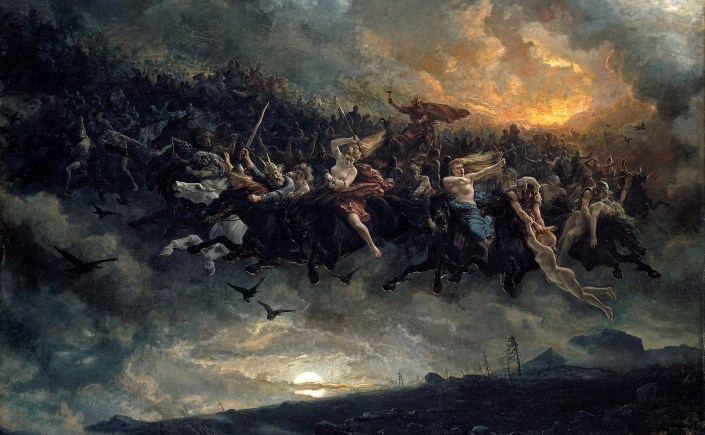
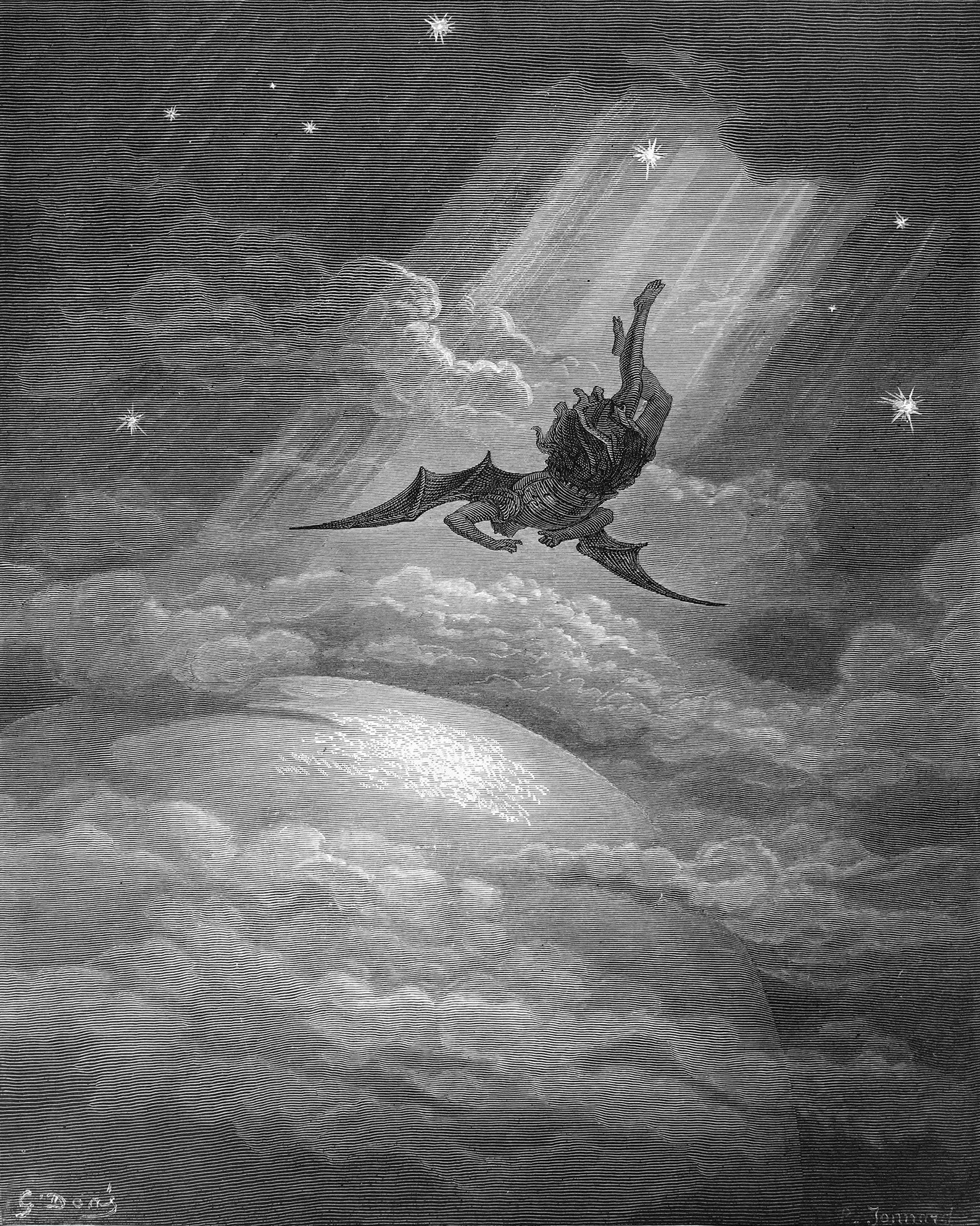

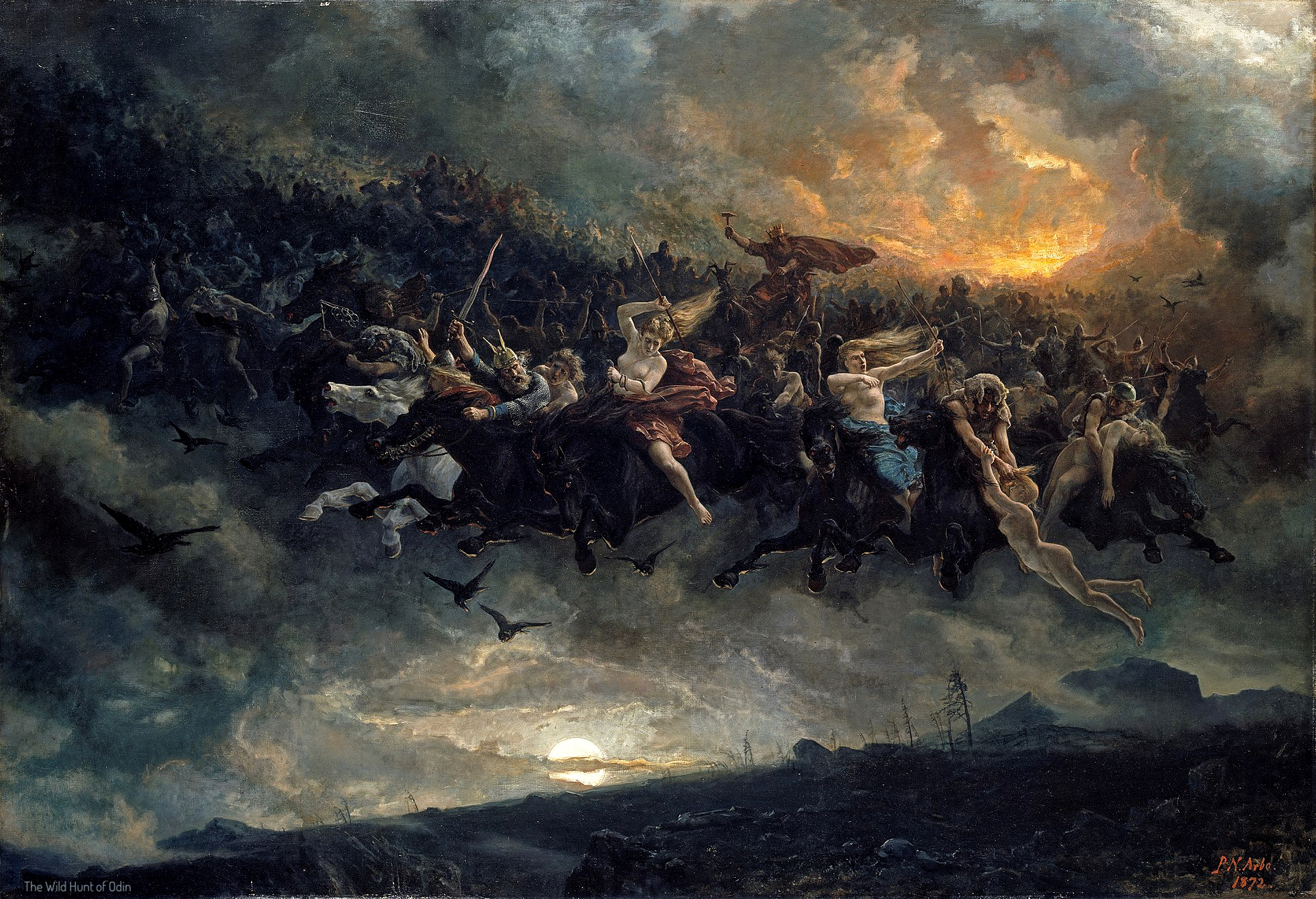
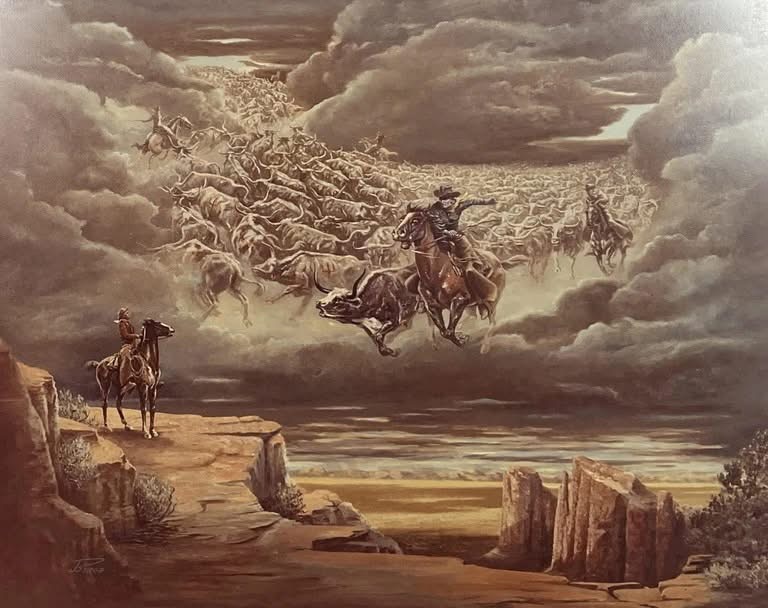
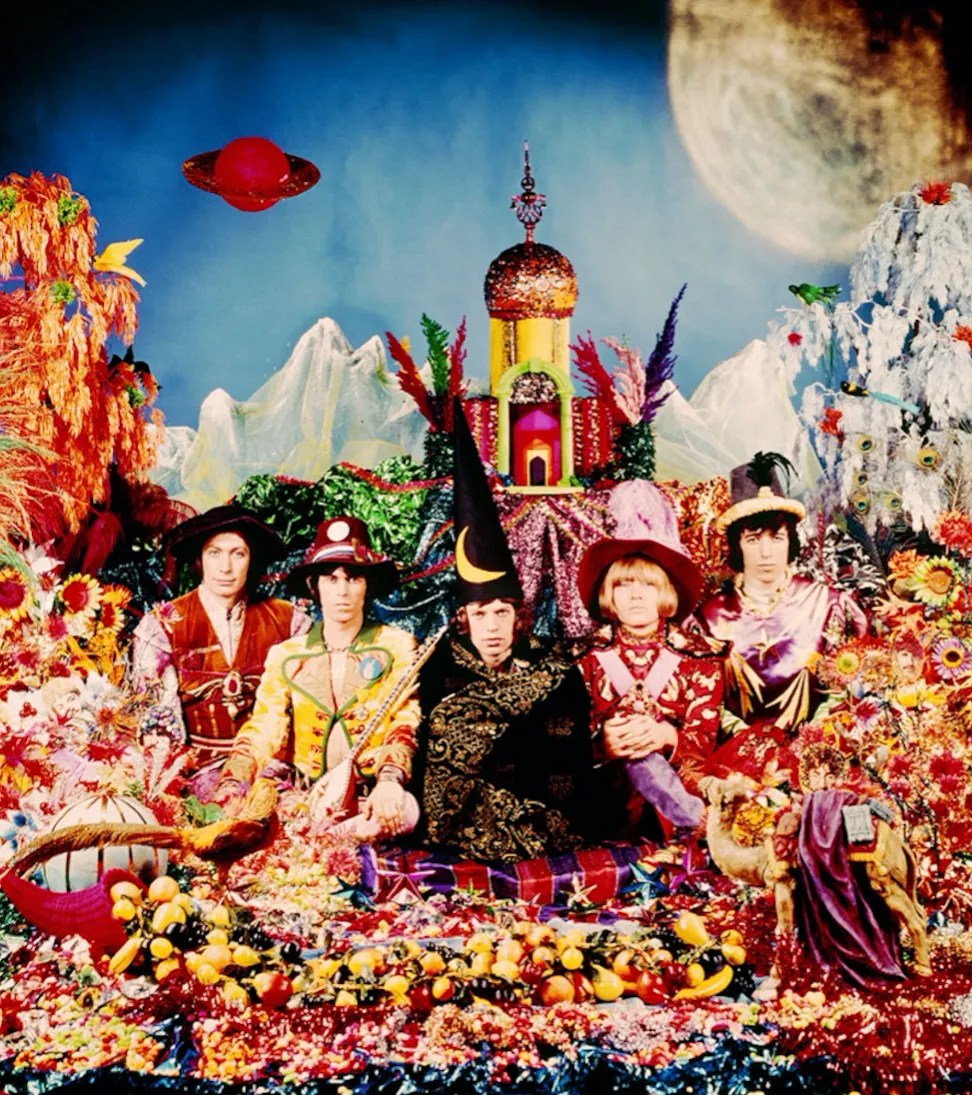

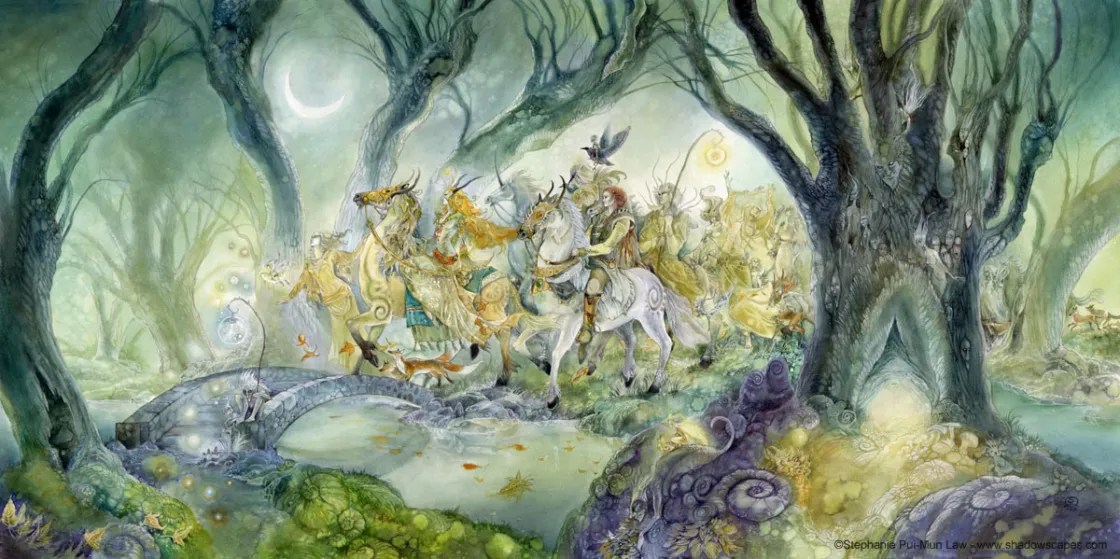
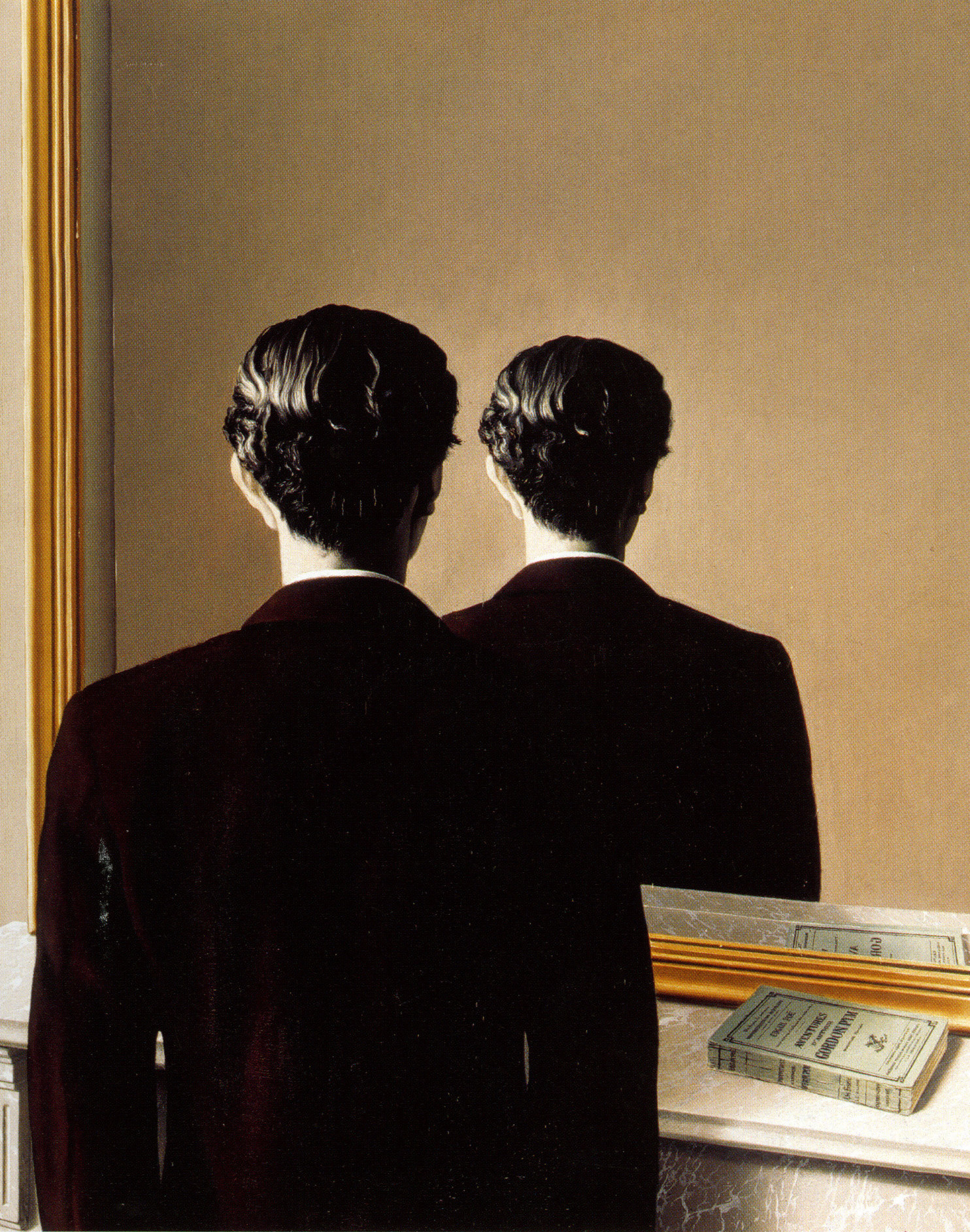









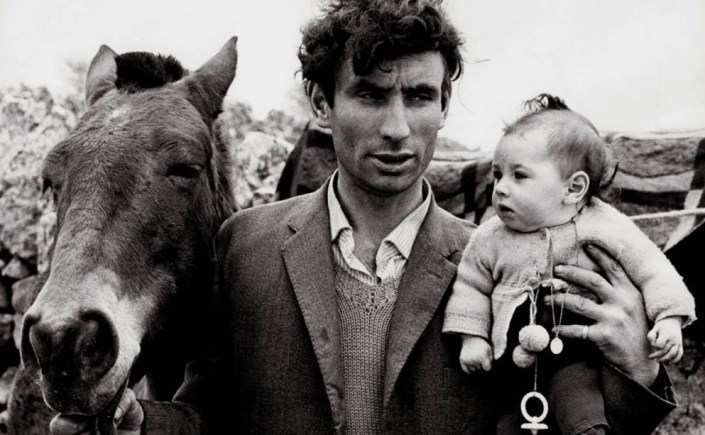
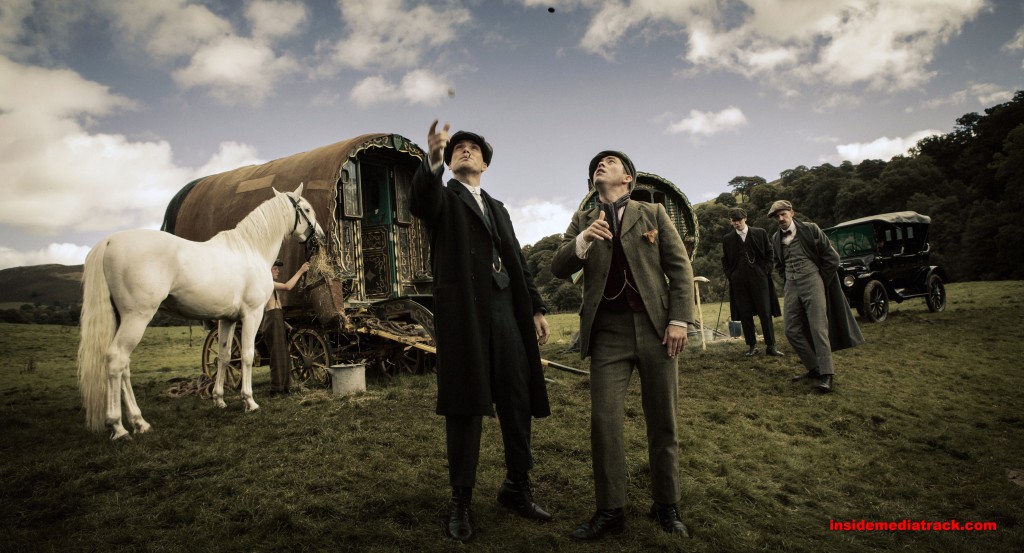
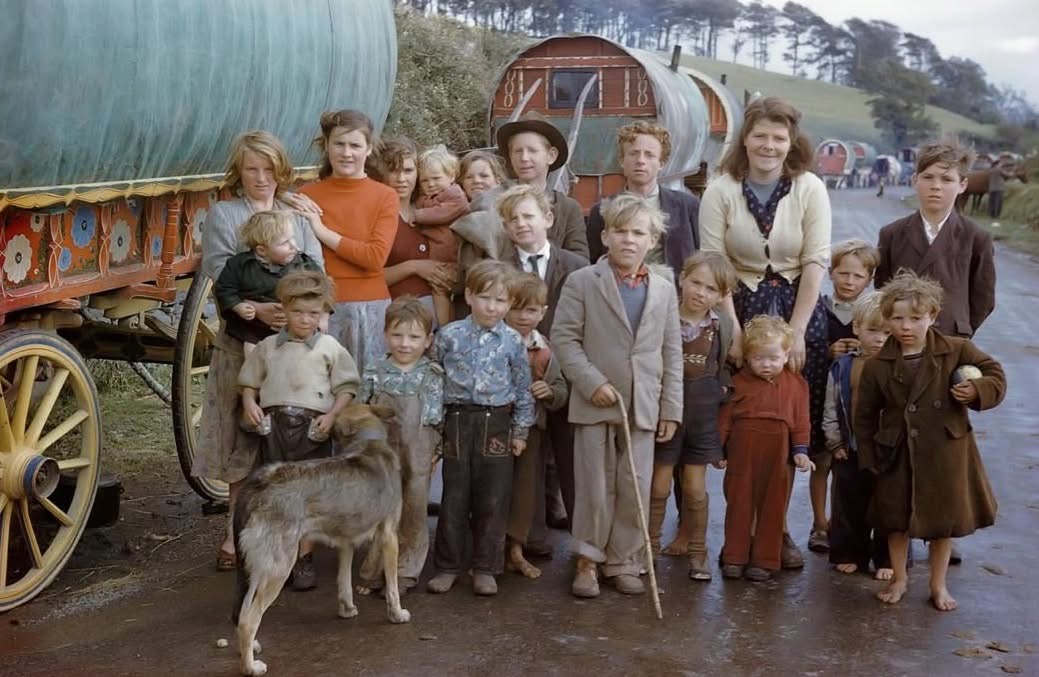










 In That Howling Infinite