A forgotten Anzac story in Greece’s bloody history

A king sate on the rocky brow
Which looks o’er sea-born Salamis;
And ships, by thousands, lay below,
And men in nations—all were his!
He counted them at break of day – 
And when the sun set, where were they?
Lord Byron, Don Juan

Christopher Allen, The Australian’s art critic, writes of how Greece’s antiquity presses in on the present. It is a lightweight piece, surveying as it does three millennia of history, from the days of the Greeks, Alexander, the Great and the Romans to those of the Ottomans and their successor states –  but it is elucidating nonetheless.

It is a brief reminder of the veracity of the phrase “history is always with us”, and of how the past continues to shape the present through its influence on culture, human nature, and ongoing events – a constant guide, providing both cautionary tales and inspiration for the future, as we carry our history with us in our identities, cultures, societies and recurring patterns of behaviour. As author and activist James Baldwin is attributed to have said, “History is not the past. It is the present. We carry our history with us. We are our history”.

Greece has always lived a double life. To the casual visitor, it is a sun-splashed idyll of sea and sky, but its history tells a darker story – a long, hard ledger of heroes and horrors, and the stubborn will to survive wedged between warring empires. The last two and a half millennia have been less a tranquil Mediterranean tableau than a parade of conquerors, liberators, and the occasional poet-adventurer.

Over time, Greece has drawn to its shores soldiers and adventurers, poets and dreamers – and naive youths like myself. I hitch-hiked down from what was then Yugoslav in the summer of 1970, a young man with a second-hand rucksack and followed the looping Adriatic highway from Thessaloniki and Athens. I knew enough history to feel the charge of passing near Thermopylae, where Spartans once made their famous last stand against the might of Xerxes. But I wasn’t to learn until over half a century later that an army of ANZACs battled overwhelming odds just a valley away.

The past, in Greece, as in the Middle East, always stands just offstage, awaiting its cue and refusing to stay politely within its own century. It is not merely one of the world’s most benevolent postcards; it is a crossroads of empires, a battleground of ambitions, a cavalcade of famous names and places, where East and West have met, mingled, clashed, and sometimes embraced in the long swirl of history, where the mythic and the modern travel together.

One particular reference also reminds me of how history sends out roots, twigs and branches throughout the settled and hence recorded world.

Tempe, on Sydney’s Cooks River, wears its classical inheritance more openly than most Sydney suburbs. When Alexander Brodie Spark built Tempe House in the 1830s, he christened the estate after the Vale of Tempe in northern Greece – a narrow, ten-kilometre gorge carved by the Pineiós River as it threads between Olympus and Ossa. The poets imagined Poseidon’s trident had cleft the mountains to make it; Apollo and the Muses strolled beneath its laurels; sacred branches were cut there for Delphi. Spark, standing between his own modest “Mount Olympus” and the river, saw a faint echo of the Greek idyll and gave the place its name.

But the Vale of Tempe was never entirely pastoral. Armies have squeezed through that narrow defile for millennia. The Persians marched through it on their way south – Tempe lies just north of the iconic pass of Thermopylae, part of the same chain of passes that determined so much of Greek military history. And in the twentieth century it would again become a stage for outsiders in uniform.

In April 1941 Australian and New Zealand troops, together with British units, were thrown into Greece as Lustre Force – outnumbered, outgunned, and facing a German army with air superiority and modern communications. One of the hardest-fought delaying actions took place – inevitably, given the geography – at Tempe Gorge on 18 April (the featured image of this post, from the collection of the Australian War Museum). The Australian brigade was commanded by Brigadier A.S. Allen, who had formed the first battalion of the new AIF. His “Anzac Force” (apparently the last operational use of that designation) held the gorge long enough to impede the German advance and allow wider Allied withdrawals. The serene valley Spark had sentimentalised became, for a few violent hours, an Anzac bottleneck: those same narrow walls that once sheltered shrines now channelling rifle fire and Stuka attacks. Many of those men would soon find themselves on Crete, resisting the first large-scale parachute assault in military history.

And then – because Australia never resists a touch of Mediterranean whimsy—the Hellenic (and Hellenistic) echoes continue in our own neighbourhood on the Midnorth Coast. Halfway along the road from Bellingen to Coffs Harbour lies the township of Toormina, home to our closest shopping centre and to the Toormi pub. Its name began its life on the slopes of Mount Tauro in Sicily, in the ancient town of Taormina, the site of a famous amphitheater. In the 1980s local Italian residents of who were clients of developer Patrick Hargraves (the late father of a good friend of ours) suggested the name “Taormina” for the new subdivision. He liked the idea but clipped the opening “a” to make it more easily pronounceable- and Toormina entered the Gregory’s and thelocal vernacular.

So in our small corner of New South Wales, Greek myth, Persian marches, Anzac rearguards, and Sicilian nostalgia all whisper from the signposts. Tempe and Toormina: unlikely twins, proof that even the quietest suburb can carry the long shadows of the ancient world.

See also in In That Howling Infinite, Ottoman Redux – an alternative history and The fall of the Ottoman Empire and the birth of Türkiye 

Uncovering a forgotten Anzac story in Greece’s bloody history

From ancient battles to World War II, a visit to Athens’ War Museum exposes the dramatic military history that shaped modern Greece. Christopher Allen’s deeply personal connection unravelled in the process.

Christopher Allen, The Australian, 21 November 2025
James Stuart, View of the Erechtheion, Athens, October 1787. Photo: Royal Academy of Arts, London. Photographer: Prudence Cuming Associates Limited.

James Stuart, View of the Erechtheion, Athens, October 1787. Royal Academy of Arts, London. Photographer. Prudence Cuming Associates Limited.

A little over 200 years ago, the Greeks began their war of independence from the Ottoman Empire, which had conquered most of the Byzantine world in the 15th century; the renaissance in Western Europe thus coincided with the beginning of a new dark age for the Greeks under Turkish oppression. Some islands held out for longer: Rhodes, home of the Knights of St John, was taken in 1522, forcing them to withdraw to Malta; Cyprus, ruled by the French Lusignan dynasty from the time of the Crusades and then by Venice, was brutally conquered in 1571, and Crete, held by Venice since 1205, finally fell after a generation-long siege in 1669.

The Ottoman Empire reached the apogee of its power in the early 18th century, but then began a slow decline, one of whose incidental effects was to make the Greek world more accessible to Western travellers: James Stuart and Nicholas Revett spent time in Athens from 1751 and published their Antiquities of Athens in several volumes in 1762. By the early 19th century, Greece had become part of the itinerary of the Grand Tour; by 1816, the Parthenon Frieze was in the British Museum and profoundly transformed modern understanding of Ancient Greek art.

Meanwhile the Greek War of Independence began with revolts in the Peloponnese in 1821 and a Declaration of Independence in 1822, eliciting a savage response from the Turks and sympathy from intellectuals and the educated public in Western European countries. The slaughter of the population of the island of Chios in 1822 led Eugène Delacroix to paint his famous Massacre at Chios, exhibited in the Salon of 1824 and purchased in the same year for the national collection; it is today in the Louvre. In 1823, the most famous poet of his day, Lord Byron, who had already demonstrated his sympathy for Armenian culture and independence from the Ottomans, went to Greece to help in the fight, both personally and financially.

This 1813 portrait by Phillips depicts Lord Byron, the famous English poet, wearing traditional Albanian attire. It captures his fascination with the Balkans and his travels, marking a moment of cultural exchange in his life. Picture: Alamy

This 1813 portrait by Phillips depicts Lord Byron in traditional Albanian attire. Alamy

Byron’s death in 1824 at Missolonghi only attracted more attention and sympathy to the cause of Greek freedom, and the great powers – Britain, France and Russia – warned the Turks about further repression, even though they were also committed, for different reasons, to maintaining the integrity of the crumbling Ottoman Empire. In 1827, at the Battle of Navarino, an international fleet led by the British and commanded by Sir Edward Codrington destroyed the Turkish and Egyptian navies. After further interventions on land by Russian and French forces, the Ottoman Empire was compelled, by the Treaty of Constantinople in 1832, to accept the independence of mainland Greece, although initially only as far north as the so-called Arta-Volos Line. The north, including Thessaly, Macedonia and Thrace, remained in Ottoman hands and Mustafa Kemal Ataturk was born in the former Byzantine city of Salonika in 1881.

Instability in the Balkan provinces of the Ottoman Empire in the 1870s gave the new Greek nation the opportunity to annex the central region of Thessaly in 1881 (while Britain incidentally acquired Cyprus in 1878). Further important gains were made during the two Balkan Wars (1912-13): much of Epirus in the northwest as well as Salonika and most of southern Macedonia, most of the Aegean Islands and Crete; the British had already ceded the Ionian Islands in 1863 and the Italians would relinquish the Dodecanese after World War II in 1947. Meanwhile, in the aftermath of World War I, Greece had briefly seized eastern Thrace and territories in Anatolia, soon to be retaken by the Turks with immense loss of life in the Great Fire of Smyrna in 1922.

Model of Byzantine warship from the War Museum

Model of Byzantine warship from the War Museum

This is of course a very much simplified version of the extraordinarily complicated story of Balkan politics from the mid-19th century, which forms such an important part of the lead-up to World War I. All of these events were accompanied not only by terrible military casualties on all sides, but by massive disruption to the population of lands where people of different ethnicities and faiths had lived side-by-side for centuries as part of a multiethnic empire, including war crimes and atrocities against civilians and non-combatants. And Greeks who had previously enjoyed political and economic prominence throughout the Ottoman world, including the Phanariots of Constantinople, were first stripped of their privileges, then persecuted and finally expelled in the tragic population exchange of 1923.

All of these events and many more are covered in the exhibits at the Athens War Museum, which I had never visited until a few weeks ago, but which gives a vivid idea of the almost continuous warfare that has been carried on over the past couple of centuries in a land most tourists imagine as a paradise of sea, sun and waterside taverns. The events of the war of liberation, especially as we pass through so many bicentenaries in the current decade, are naturally well represented: there is, for example, a new and interactive display devoted to the sea battle of Navarino and events surrounding this decisive moment in the war.

There are portraits of the many famous leaders of the independence movement in their picturesque costumes, as well as dramatic reimaginings of heroic battles, and of course weapons and equipment of the time. The resonance of the Greek struggle in Western Europe is recalled in a copy of Delacroix’s Massacre at Chios, as well as a version of Thomas Phillips’s portrait of Lord Byron in exotic Albanian costume (1813), of which the original hangs in the British embassy at Athens; another replica by the artist himself, but only of the head and shoulders, is in the National Portrait Gallery in London.

Eugène Delacroix, The Massacre at Chios

But there is much more about the history of Greece in Antiquity, and the chronological arrangement of the displays makes this an effective way to follow the sequence of events, especially the main episodes of the Persian Wars – with the great battles of Marathon in 490BC and Salamis in 480 – as well as the subsequent conflict between Athens and her quasi-subject states on one side and Sparta and her Peloponnesian allies on the other, known as the Peloponnesian War.

This disastrous war (431-404 BC) was followed in the second half of the fourth century by the rise of Philip of Macedon to hegemony, for the first time, over almost all of mainland Greece. After his assassination in 336, his young son, who became Alexander the Great, embarked on a spectacular campaign that led to the conquest of the whole of the vast Persian empire, from Egypt to what are now Afghanistan and Pakistan. Alexander’s conquests led to the extension of Greek language and civilisation deep into Asia, creating the international culture of the Hellenistic period, characterised among other things by a rich and complex exchange of ideas and forms between East and West.

He left an indelible impression on all the lands he conquered and is, for example, the first historical figure in the Persian national epic, the Shahname. By the time of Ferdowsi, who composed this masterpiece a millennium ago, the Persians had forgotten about the Achaemenid dynasty that first created the Persian empire in the sixth century BC; even the great site of Persepolis was and still is called Takht-e Jamshid, the throne of Jamshid, one of the mythical rulers from the great epic.

Each of Alexander’s battles – he is one of the handful of great generals never to have been defeated – is illustrated in clear diagrams, but they are also recalled in later images, in this case particularly in a series of 17th-century engravings whose story is probably unknown to almost all visitors to the museum. These are reproductions of gigantic paintings made as cartoons for tapestries commissioned by the young Louis XIV in the 1660s from Charles Le Brun, who was to become his court painter and who was later responsible for the decorations at Versailles, including the Hall of Mirrors. The series illustrates the valour but also the magnanimity of Alexander, as is clear from the moralising inscriptions attached in the engraved versions. For a long time, the huge canvases were not displayed at the Louvre, but for the last few decades have had their own room upstairs in the Sully wing.

Following the chronological sequence from antiquity we eventually get back to the war of independence and its sequels already mentioned above; but the story continues, after what the Greeks call the Asia Minor Catastrophe of the early 1920s, with a new calamity two decades later. For Mussolini invaded Greece in October 1940 expecting, like Putin in Ukraine, to achieve an easy victory and utterly underestimating the strength and resolve of the Greek army. By the following spring, it was clear that he was getting nowhere, and Hitler decided to come to his rescue by invading Greece in April 1941.

A. Bormans, engraving after Charles Le Brun Alexander and King Porus

A. Bormans, engraving after Charles Le Brun Alexander and King Porus

An Allied army, mostly consisting of Australian and New Zealand troops as well as some British units, was hastily put together and sent from Egypt to Greece as Lustre Force. It was heavily outnumbered by the Germans, who were also massively better equipped and had the benefit of air cover and wireless radio communication. Nonetheless, the Allied army put up a determined resistance in a series of battles including one notable action on April 18, 1941 at Tempe Gorge commanded by my grandfather, then Brigadier AS Allen, who had formed the first battalion of the new AIF and taken our first troops to World War II. The brigade he commanded at Tempe was known as “Anzac Force”, apparently the last use of the term, after the designation Anzac Corps for the whole Australian and NZ component of Lustre Force.

After the evacuation of mainland Greece, my grandfather was sent to fight the Vichy French in Syria, but many of our troops were taken to Crete, where in May 1941 they were faced with the first and only large-scale parachute assault in military history, in which the Germans suffered appalling casualties but ultimately prevailed. Next year will be the 85th anniversary of these dramatic events in Greece and Crete, and among other things will be commemorated by an exhibition of Australian and NZ artists whom I accompanied on a two-week tour of these battlefields in the second half of October.

It was a moving experience to visit what are today the peaceful sites of such desperate battles almost three generations ago, aware at the same time of the long history of warfare in the same lands: the Persians marched through Tempe, which is just north of Thermopylae; Caesar defeated Pompey at Pharsalus (now Farasala), which you pass on the train from Athens to Salonika (now Thessaloniki), and; Cassius and Brutus died at Philippi in Macedonia, defeated by the Caesarian forces of Octavian and Mark Antony.

Christopher Allen is the national art critic for Culture and has been writing in The Australian since 2008. He is an art historian and educator, teaching classical Greek and Latin. He has written an edited several books including Art in Australia and believes that the history of art in this country is often underestimated.

Continue reading

100 years of Mein Kampf … the book that ravaged a continent

Perfection, of a kind, was what he was after,
And the poetry he invented was easy to understand;
He knew human folly like the back of his hand,
And was greatly interested in armies and fleets;
When he laughed, respectable senators burst with laughter,
And when he cried the little children died in the streets.
W H Auden, Epitaph On A Tyrant (1939)

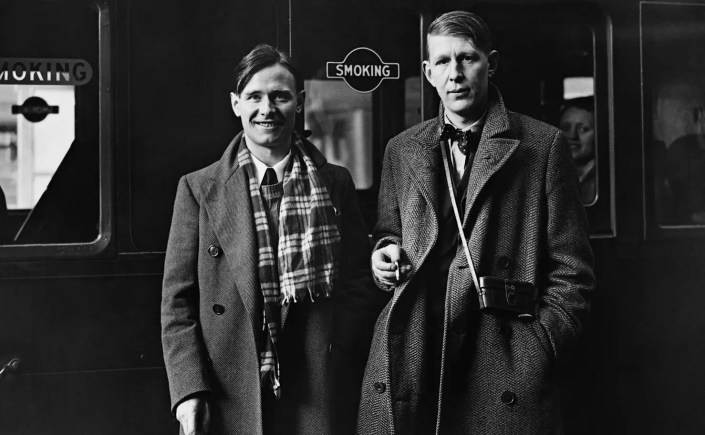
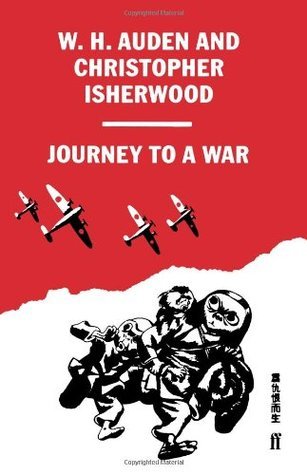
The English poet W. H. Auden spent some time in Berlin during the early 1930s – the last years of the Weimar Republic prior to the Nazi ascendency –Some commentators suggest that Auden actually wrote Epitaph on a Tyrant in Berlin. But It was published in 1939, the year that the Second World War broke out – and Auden had departed the city before the end of Weimar in 1933. But he was full aware of where the world was heading – during the mid-thirties, he’d briefly journeyed to Republican Spain in the midst of the Civil War and to Kuomintang China during its war with Japan – see In That Howling Infinite’s Journey to a war – Wystan and Christopher’s excellent adventure.

The poem has been interpreted as a very brief study in tyranny, but few could doubt whom Auden had in mind. In this very short poem, Auden turns a familiar phrase from the New Testament in upon itself   evoking and then evicting ‘But Jesus said, Suffer little children, and forbid them not, to come unto me: for of such is the kingdom of heaven’ (Matthew 19:14). There is nothing Christlike about this tyrant: he will not suffer the little children to come unto him. The little children, instead, will be the ones to suffer. he also inverts a specific phrase by the nineteenth-century writer John Lothrop Motley, in The Rise of the Dutch Republic (1859), citing a report of 1584 about the death of the Dutch ruler William the Silent: ‘As long as he lived, he was the guiding star of a whole brave nation, and when he died the little children cried in the streets.’

I recalled the poem, one of the very first of Auden’s poems I encountered nearly sixty years ago, as I was reading the essay republished below written by the most erudite economist and academic Henry Ergas on the occasion  of the centenary of the publication on 16 August 1925, of Mein Kampf  (lit.My Struggle), Nazi Party founder and leader Adolf Hitler‘s combined autobiographical reflections and political manifesto, encompassing an uncompromising ideological programme of antisemitism, racial supremacy, and expansionist ambitions.

A century later, the impact of Mein Kampf on the world remains both undeniable and deeply troubling. Initially dismissed by some as the ramblings of a failed revolutionary, the book became the ideological blueprint for the Nazi regime, legitimising policies that culminated in the Holocaust and a world war that claimed tens of millions of lives. Beyond the destruction of the mid-twentieth century, Mein Kampf has endured as a symbol of hate literature, resurfacing periodically in extremist movements, political propaganda, and debates over free speech and censorship. Its centenary compels reflection not only on the book’s historical role in shaping one of the darkest chapters of human history, but also on the persistence of the prejudices and authoritarian impulses it so virulently expressed.

Mein Kampf‘s bitter harvest

The Second World War began on 2nd September 1939 with Germany’s sudden and unprovoked invasion of Poland on 2nd September, and Britain and France’s declaration of war on Germany the day after. On 17 September, the Soviet Union invaded the country from the east in accordance with the Treaty of Non-aggression between Germany and the Union of Soviet Socialist Republics,  ,forever known as the Molotov-Ribbentrop Pact. a neutrality pact between Nazi Germany and the Soviet Union signed in Moscow on August 23, 1939, by foreign ministers Joachim von Ribbentrop and Vyacheslav Molotov, respectively.

Japan formally entered the war on September 22, 1940 with the invasion of French Indochina, having been at war with China since 1931, and officially formed an alliance with Germany and Italy five days later. The United Kingdom declared war on the Empire of Japan  on 8 December 1941, following the Japanese attacks on British Malaya, Singapore and Hong Kong on the previous day, as well as in response to the bombing of the American fleet at Pearl Harbour on December 7. The United States to enter World War II the following day.

World War II ended in Europe on May 8, 1945, with Germany’s unconditional surrender, known as Victory in Europe Day (V-E Day). The war in the Asia Pacific concluded on September 2, 1945, with Japan’s formal surrender aboard the USS Missouri, designated Victory over Japan Day (V-J Day). This followed the atomic bombings of Hiroshima and Nagasaki and the Soviet Union’s declaration of war on Japan

The Nazis, with a little help from their allies and collaborators, murdered (there is no other word) an estimated six million Jews and 11 million others In camps and jails, reprisals and roundups, on the streets of cities, towns and villages, in fields and in forests, and in prison cells and torture chambers. And in the fog of war, the dearth of accurate records, and the vagaries of historical memory, the actual number is doubtless higher – much higher.

The term ‘Holocaust’ generally refers to the systematic and industrialized mass murder of the Jewish people in German-occupied Europe – called the Shoah or ‘catastrophe’ by Jews. But the Nazis also murdered unimaginable numbers of non-Jewish people considered subhuman – Untermenschen (the Nazis had a way with words!) – or undesirable.

Non-Jewish victims of Nazism included Slavs who occupied the Reich’s ostensible lebensraum – living space, or more bluntly, land grab (Russians – some seven million – Poles, another two – Ukrainians, Serbs and others in Eastern Europe caught in the Wehrmacht mincer; Roma (gypsies); homosexuals; the mentally or physically disabled, and mentally ill; Soviet POWs who died in their tens of thousands; Roman Catholics, Protestants, and Orthodox Christians who defied the regime; Jehovah’s Witnesses and Freemasons; Muslims; Spanish Republicans who had fled to France after the civil war; people of colour, especially the Afro-German Mischlinge, called “Rhineland Bastards” by Hitler and the Nazi regime; leftists, including communists, trade unionists, social democrats, socialists, and anarchists; capitalists, even, who antagonized the regime; and indeed every minority or dissident not considered Aryan (‘herrenvolk’ or part of the “master race”); French, Belgians, Luxemburgers, Dutch, Danes, Norwegians, Albanians, Yugoslavs, Albanians, and, after 1943, Italians, men, women and young people alike, involved with the resistance movements or simply caught up in reprisals; and anyone else who opposed or disagreed with the Nazi regime. See below, Ina Friedman’s The Other Victims of the Nazis and also, Wikipedia’s Victims of the Holocaust

Worldwide, over seventy million souls perished during World War II. We’ll never know just how many …

Lest we forget …

From In That Howling Infinite’s  2nd September 1939 – the rape of Poland (1)

The immoral mathematics of World War II – Deaths by Country 

COUNTRY MILITARY DEATHS TOTAL CIVILIAN AND MILITARY DEATHS
Albania 30,000 30,200
Australia 39,800 40,500
Austria 261,000 384,700
Belgium 12,100 86,100
Brazil 1,000 2,000
Bulgaria 22,000 25,000
Canada 45,400 45,400
China 3-4,000,000 20,000,000
Czechoslovakia 25,000 345,000
Denmark 2,100 3,200
Dutch East Indies 3-4,000,000
Estonia 51,000
Ethiopia 5,000 100,000
Finland 95,000 97,000
France 217,600 567,600
French Indochina 1-1,500,000
Germany 5,533,000 6,600,000-8,800,000
Greece 20,000-35,000 300,000-800,000
Hungary 300,000 580,000
India 87,000 1,500,000-2,500,000
Italy 301,400 457,000
Japan 2,120,000 2,600,000-3,100,000
Korea 378,000-473,000
Latvia 227,000
Lithuania 353,000
Luxembourg 2,000
Malaya 100,000
Netherlands 17,000 301,000
New Zealand 11,900 11,900
Norway 3,000 9,500
Papua New Guinea 15,000
Philippines 57,000 500,000-1,000,000
Poland 240,000 5,600,000
Rumania 300,000 833,000
Singapore 50,000
South Africa 11,900 11,900
Soviet Union 8,800,000-10,700,000 24,000,000
United Kingdom 383,600 450,700
United States 416,800 418,500
Yugoslavia 446,000 1,000,000

WORLDWIDE CASUALTIES*

Battle Deaths 15,000,000
Battle Wounded 25,000,000
Civilian Deaths 45,000,000

*Worldwide casualty estimates vary widely in several sources. The number of civilian deaths in China alone might well be more than 50,000,000.

Read also, in In That Howling Infinite: Righteous Among the Nations and Las Treces Rosas – Spain’s Unquiet Graves 

Mein Kampf made depravity the highest form of morality: Hitler’s ‘Nazi bible’ a playbook for hate

A picture-illustration showing Adolf Hitler in Munich in 1932 and his book, Mein Kampf. During WWII Hitler wore a simple uniform rather than the elaborate costume of a supreme commander, highlighting his affinity with the ‘grunts’ on the line. Picture: Heinrich Hoffmann/Archive Photos/Getty Images

A picture-illustration showing Adolf Hitler in Munich in 1932 and his book, Mein Kampf. During WWII Hitler wore a simple uniform rather than the elaborate costume of a supreme commander, highlighting his affinity with the ‘grunts’ on the line. Picture: Heinrich Hoffmann/Archive Photos/Getty Images


W
hen Adolf Hitler’s Mein Kampf (My Struggle) was published exact­ly 100 years ago, the reviews were scathing. The reader, proclaimed the Frankfurter Zeitung, could draw from the book one conclusion and one conclusion only: that Hitler was finished. The influential Neue Zurcher Zeitung was no kinder, lambasting “the sterile rumination of an agitator who is incapable of rational thought and has lost his grip on reality”. As for Karl Kraus, the great Austrian essayist and critic, he famously dismissed it, quipping: “When I think of Hitler, nothing comes to mind.”

But while the book that would become known as “the Nazi bible” was hardly an immediate bestseller, it was far from being a dismal flop. By the end of 1925, nearly 10,000 copies had been sold, necessitating a second print run, and monthly sales seemed to be trending up. Even more consequentially, Mein Kampf, with its comprehensive elaboration of the Nazi world view, proved instrumental in consolidating Hitler’s until then tenuous position as the leader of the Nationalsozialistische Deutsche Arbeiterpartei  (National Socialist German Workers’ Party) or NSDAP. Both Hitler and Max Amann, who ran the Nazis’ publishing house, had good reason to be pleased.

After all, the initial circumstances of the book’s production were scarcely promising. When Hitler arrived at Landsberg prison in November 1923, following the failure of a farcically mismanaged putsch, he was assessed by the staff psychologist as “hysterical” and suicidal. However, having determined to end it all by embarking on a hunger strike, he sat down to write his valedictory statement – and with the full support of the prison’s director, a Nazi sympathiser who was happy to accommodate his every need, the project soon expanded, until the writing came to consume Hitler’s days.

Once Emil Georg, a director of the powerful Deutsche Bank and generous funder of the NSDAP, provided the aspiring writer with a top-of-the-line Remington typewriter, a writing table and all the stationery he required, Hitler’s new career as an author – the profession he proudly declared on his 1925 tax return – was well and truly under way.

The difficulty, however, was that Hitler wrote very much as he spoke. Page after page required substantial editing, if not complete revision. Some of it was undertaken by Rudolf Hess, who had a university degree, and Ernst Hanfstaengl, a German-American Harvard graduate. But many of the most difficult sections were eventually worked over by the unlikely duo of a music critic, Josef Stolzing-Cerny, and Bernhard Stempfle, a priest.

The greatest tensions arose in settling the title. Hitler, with his habitual grandiloquence, had called it Four and a Half Years of Battling Lies, Stupidity and Betrayal. Convinced that title would doom it to failure, Amann adamantly insisted on, and seems to have devised, a shorter alternative. Thus was Mein Kampf, the name that would go down in history, born.

Mein Kampf’s singular lack of focus proved tobe a strength.

Mein Kampf’s singular lack of focus proved to
be a strength.

Viewed superficially, the text, despite its editors’ best efforts, seems inchoate, veering across a bewildering range of grievances, pseudo-historical accounts and exhortations. Yet its singular lack of focus proved to be a strength. It meant there was something in it for each of the social groups the Nazis were attempting to mobilise, with every one of those groups finding the real or imagined harms that afflicted it covered in its pages. And whenever they were discussed, each group’s darkest nightmares were portrayed in striking, often lurid terms.

Hitler himself explained his approach in the book’s discussion of propaganda.

“Most people,” Hitler said, “are neither professors nor university graduates. They find abstract ideas hard to understand. As a result, any successful propaganda must limit itself to a very few points and to stereotypical formulations that appeal to instincts and feelings, making those abstract ideas vividly comprehensible.”

That is exactly what Mein Kampf set out to do – and it did so by hammering three basic themes: that the Germans were victims; that the culprit for the wrongs they had suffered were the Jews; and that only a fight to the death against “world Jewry” could bring Germany’s redemption and return it to the pre-eminence that was its birthright and historic destiny.

What gave the book its resonance was that each of those themes was well and truly in the air. Nowhere was that clearer than in respect of victimhood.

Thus, the end of World War I had not been viewed in Germany as a military defeat. Rather, the widespread perception, vigorously propagated by General Erich Ludendorff, was that had the German army, which retained undisputed mastery over its home soil, not been “sabotaged” by liberals, freemasons, social democrats and communists, it would have held out, forcing the Allies to a settlement.

Key themes in Mein Kampf was that the Germans were victims and the culprit for the wrongs they had suffered were the Jews.

Key themes in Mein Kampf was that the Germans were victims and the culprit for the wrongs they had suffered were the Jews.

The capitulation was, in other words, the result of a “stab in the back” that treacherously delivered the nation to the harsh, grotesquely unjust, treatment eventually meted out at Versailles by the war’s victors.

Closely associated with the resulting sense of unfairness, and of an undeserved defeat, was the smouldering resentment felt by returning soldiers.

World War I had ushered in the glorification of the rank and file, expressed in countries such as France, Britain and Australia by the erection of national memorials for the Unknown Soldier. Here was a figure that represented both the individual and the mass: sanctified by the nation, the Unknown Soldier also stood for the multitudes sent out to die and too quickly forgotten.

That was the case almost everywhere – but not in the newly established Weimar Republic. Unlike its counterparts, the republic erected no national monument, created no worthy memorial: the ghosts of the dead were left unburied.

Moreover, unable to deal with the trauma of the war, the republic accorded veterans no special status: even when their wounds made them entirely disabled, they were entitled only to the paltry benefits accorded to others suffering from similar levels of disability.

With the country’s new leaders abandoning those who had borne so many risks and so much pain on Germany’s behalf, an unbridgeable cleavage opened up between “those who had been there” – with all of their rage and frustration, fury and disillusionment – and those who had not. It is therefore no accident that both for innumerable forgotten soldiers and for the families who had lost their sons and fathers, Hitler, who had lived through the carnage, came to symbolise the unknown soldier of World War I.

Nor is it an accident that during World War II he always donned a simple uniform rather than the elaborate costume of a supreme commander, thereby highlighting his unshakeable affinity with the “grunts” on the line.

Hitler, chancellor of Germany in 1933, is welcomed by supporters at Nuremberg. Picture: Hulton Archive/Getty Images

Hitler, chancellor of Germany in 1933, is welcomed by supporters at Nuremberg. Picture: Hulton Archive/Getty Images

The last, but perhaps most broadly felt, source of the sense of victimhood was the devastation wreaked by the “great inflation”.

The immediate effect of the price hikes, which began in 1921, accelerated in late 1922 and became a hyperinflation (that is, one involving monthly price increases of more than 50 per cent) in 1923 was to obliterate the savings of skilled workers, pensioners and the middle class. No less important, however, it also shattered those groups’ social standing which, in a society still geared to honour and respectability, relied on the ability to conspicuously maintain a dignified lifestyle appropriate for one’s status. Instead, for the first time in their lives, previously comfortable professionals, foremen and highly trained workers were reduced to a struggle of all against all, as they vainly attempted to sell once prized, often hard-earned assets that had suddenly – and mysteriously – become utterly valueless.

And as well as leaving a legacy of trauma, that experience created an enduring sense of unpredictability, casting the new republic as incapable of maintaining intact even the elementary foundations of daily life.

Stefan Zweig was therefore not exaggerating when he wrote, in his The World of Yesterday, that “nothing ever embittered the German people so much, nothing made them so furious with hate as the inflation. For the war, murderous as it was, had yet yielded hours of jubilation, with ringing of bells and fanfares of victory. And, being an incurably militaristic nation, Germany felt lifted in her pride by her temporary victories. But the inflation served only to make it feel soiled, cheated, and humiliated. A whole, scarred, generation could never forget or forgive.”

But where there are victims there must be victimisers – and Hitler delivered those too. Towering among them were the Jews.

Mein Kampf’s obsession with Jews is readily demonstrated: including cognate terms, such as Jewry, the 466 references to Jews in the book outnumber those to every other substantive term, including race (mentioned 323 times), Germany (306), war (305) and Marxism, which gets a paltry 194 – still ahead of national socialism and national socialists which, taken together, are referenced only 65 times.

It is certainly true that there is, in those obsessive references, virtually nothing original. Hitler’s tir­ades largely reassemble the anti-Semitic tropes that had emerged in the late 19th century and that were widely disseminated in a notorious forgery, The Protocols of the Elders of Zion.

But Hitler’s formulation, while substantively irrational, was arguably more logical than most in the way it combined and superimposed elements from conventional anti-Semitism, pseudo-biology and social Darwinism.

Mein Kampf’s promise of redemption was crucial … from the midst of despair, a new notion of German glory and greatness began to emerge. Hitler with Nazi officials in Munich in the summer of 1939, just before the start of WWII.

Mein Kampf’s promise of redemption was crucial … from the midst of despair, a new notion of German glory and greatness began to emerge. Hitler with Nazi officials in Munich in the summer of 1939, just before the start of WWII.

Thus, relying on a loose biological metaphor, it defined Jews as a parasite – but as one that had deliberate agency and that consciously (and collectively) sought to infect its victims, notably the “purer”, more advanced “races”.

Second, it asserted that the resulting infection was not only fatal to its victims but ultimately to their entire “race”.

Third, it projected on to that account the image of a Darwinian struggle that had been fought across recorded history’s entire course, between Jews on the one hand and the superior races on the other: a struggle that could end only with the extinction of the Jews or their adversaries.

And finally, it argued that, unless anti-Semites learnt to display the same degree of ruthlessness, the same insistence on ethnic loyalty, the same stealth and the same forms of manipulation of media and the public sphere, the Jews stood every chance of triumphing because they entirely lacked ethical standards, were exceptionally cunning, ambitious, aggressive and vindictive and – last but not least – had a natural bond to each other, combined with a murderous hatred of others.

The resulting portrayal of Jews was as terrifying as it was bizarre. Jews, it seemed, were chameleons, who were both subhuman yet extraordinarily capable, both fanatical Bolsheviks and natural capitalists, both physically repulsive yet immensely able to seduce and “infect” innocent Aryan maidens.

Moreover, they could shift effortlessly and surreptitiously from any one of those myriad shapes into any another, choosing whatever form was most likely to succeed in destroying their opponent.

As the great German philosopher Ernst Cassirer later recalled, he and his other Jewish friends found those claims “so absurd, so ridiculous, and so crazy, that we had trouble taking them seriously”. But others did not have any difficulty in doing so.

Many forces were at work. Some resulted from the war years. For example, the terrible food shortages caused by the British blockade (which was lifted only two years after the war ended) had resulted in spiralling prices for basics on the black market – with the finger being readily, although entirely incorrectly, pointed at alleged hoarding by Jews.

And more indirectly, but no less potently, the horrific second wave of the 1919 influenza pandemic, in which 400,000 Germans died, had given enormous prominence to notions of infection and contagion. As careful statistical studies subsequently showed, that prominence had enduring effects, as the Nazis secured significantly greater electoral support in the worst affected areas than in those where the death toll was lower.

But by far the greatest factor was the profound disruption of the post-war years, when everything Germans had taken as solid melted into thin air, leaving a pervasive feeling of bewilderment.

For all of its myriad flaws, the Kaiserreich, as the German Empire was known, had exuded a stability that made the future predictable. Now, with one seemingly incomprehensible event piling up on top of another, the desperate search to make sense of the world triggered an equally desperate search for someone to blame.

That was precisely what Hitler’s vast Jewish conspiracy offered. Mein Kampf, Heinrich Himmler pithily noted, was “a book that explains everything”. If it was so effective, Hannah Arendt later reflected, it was because its playing on tropes and stereotypes that were relatively familiar could, at least superficially, “fulfil this longing for a completely consistent, comprehensible, and predictable world without seriously conflicting with common sense”. All of a sudden, things fell into place – with consequences for Europe’s Jews that would forever sully Germany’s name.

Sign erected by British forces at the entrance to the Bergen-Belsen camp. Picture: Imperial War Museum

Sign erected by British forces at the entrance to the Bergen-Belsen camp. Picture: Imperial War Museum

Bodies being flung into a mass grave at Belsen. Picture from the book Children's House of Belsen, by camp survivor Hetty Verolme

Bodies being flung into a mass grave at Belsen. Picture from the book Children’s House of Belsen, by camp survivor Hetty Verolme

If those horrendous conse­quences eventuated, it was because Mein Kampf did not only identify an alleged disease; it also set out a path to national redemption. In that respect, too, its main points were entirely unoriginal.

However, what was relatively new, and especially important, was the unadulterated celebration of death and violence in which they were couched.

Whether Hitler called for Jews to be massacred is a matter of interpretation. What is beyond any doubt is that he came as close to it as one possibly could. The Jews, he claimed, would “accentuate the struggle to the point of the hated adversary’s bloody extermination”. As that happened, it would be absolutely impossible to defeat them “without spilling their blood”. And when it came to that, their opponents, locked “in a titanic struggle”, would have to “send to Lucifer” – that is, to hell – “those who had mounted an assault on the skies”: that is, the Jews.

There would be, in the process, countless victims; but the Aryans who perished would be martyrs, “acting in accordance with the will of the Almighty Creator”, and like Hitler himself “fighting for the work of the Lord”.

As with so much of Mein Kampf, the sheer violence of those calls, and of the text more generally, fell on fertile ground, again especially among veterans.

If those veterans had one thing in common it was the experience of “total war”, characterised by the ever-growing porousness of the boundaries between soldiers and civilians both as combatants and as targets of destruction.

Once they got to the front, it did not take long for ordinary soldiers to discard the fantasies of splendid bayonet charges across fields of flowers. Instead, burrowed underground in trenches filled with slime and excrement, rats and rotting body parts, what many learnt was that life was war, and war was life.

And at least for some, the sacrifice and devotion of their comrades also taught that violence brought out the best qualities in man.

Winifred Williams, a Welsh woman who became a friend and supporter, provided the paper on which Hitler wrote Mein Kampf while he was in jail.

Winifred Williams, a Welsh woman who became a friend and supporter, provided the paper on which Hitler wrote Mein Kampf while he was in jail.

Rendering that habituation to violence even more extreme was the experience of the 5 per cent or so of German soldiers who volunteered for Freikorps (Free Corps) units that fought, from 1918 to 1923, against the wave of revolutionary movements throughout central and eastern Europe.

Particularly in the Baltic states, those struggles were brutally uncompromising, with mass executions not only of adversaries but also of entire villages of helpless Jews. It was in those struggles that many ingredients of Nazism were forged – its symbols, like the death’s head and the swastika; its core staff, who later largely comprised the leading personnel first of the Nazi’s paramilitary units and then of the SS; and the unbridled anti-Semitic savagery of its killing squads. To all those who lived through those struggles, Mein Kampf seemed to perfectly capture their world view.

But Mein Kampf’s promise of redemption was crucial, too. Yes, Germany experienced the aftermath of World War I as an unmitigated disaster. Yet, from the midst of despair, a new notion of German glory and greatness began to emerge. When the war finally ended, the survivors could not but feel an urge to endow it with meaning – with the hope that the countless deaths would be redeemed by creating a better future, not only for themselves but also for the nation, a future shorn of the causes of everything that had gone wrong.

And no one, in the chaos and misery of post-World War I Germany, painted the path to that national salvation as starkly, and as effectively, as Hitler.

Death and destruction follow delirium as surely as dust and ashes follow fire. Two long decades, punctuated by Hitler’s accession to power in 1933, separated, almost precisely, the publication of Mein Kampf from the “Zero Hour”, as it became widely known, on May 7, 1945, when Germany, reduced to rubble, surrendered and officially ceased to exist. The vision – or hallucinations – Hitler had produced in Landsberg’s ja

Death and destruction follow delirium as surely as dust and ashes follow fire. Two long decades, punctuated by Hitler’s accession to power in 1933, separated, almost precisely, the publication of Mein Kampf from the “Zero Hour”, as it became widely known, on May 7, 1945, when Germany, reduced to rubble, surrendered and officially ceased to exist. The vision – or hallucinations – Hitler had produced in Landsberg’s jail ensured that the 20th century’s fields of glory would be sown with the corpses of innocent victims and the distorted fragments of shattered ideals.

Between those dates, the book’s fortunes closely tracked those of its author. After the crash of 1929, and the onset of the Depression, sales boomed; and once the Nazi regime was in place it became ubiquitous. A second volume had appeared in December 1926; it was added to the 400 pages of the first in 1930.

To cope with the length, the combined book was printed on extremely fine paper, exactly like a bible. Soon after that, an ever-wider range of formats – going from cheap paperback versions to extremely luxurious versions bound in leather – was offered to readers.

The regime recommended that municipalities give a good quality copy to newly married couples as they stepped out of the wedding ceremony; estimates vary but it seems two million couples benefited (if that is the right word). The book also became the standard prize in schools, workplaces and party organisations, bestowed on recipients with all the pomp the Fuhrer’s great work demanded. Altogether, by the “Zero Hour”, 12.5 million copies had found their way into the hands of potential readers – yielding Hitler copyright payments, partly deposited in a Swiss bank account, that made him an extremely wealthy man.

How many Germans actually read it is hard to say; the answers given to immediate post-war surveys were understandably evasive. What seems likely, however, is that its influence came less from the scrupulous consumption of the “Nazi bible” than from short excerpts, read out at meetings and over the radio or printed near the mastheads of major papers, as well as from the million or so copies of “reader’s digest”-like variants sold during the Reich’s golden years.

In the chaos and misery of post-WWI Germany, no one painted the path to that national salvation as starkly, and as effectively, as Hitler

In the chaos and misery of post-WWI Germany, no one painted the path to that national salvation as starkly, and as effectively, as Hitler

But its greatest impact was almost certainly indirect. Regardless of what ordinary Germans may or may not have done, abundant evidence shows it was carefully studied and frequently consulted by the Nazi leadership. The regime’s core principle, the so-called Fuhrerprinzip, specified that “what the Fuhrer says is law”: but what the Fuhrer had actually said, and even more so, what he wanted, was almost always hopelessly unclear – yet entire careers depended on guessing it accurately.

As a result, the everyday life of the Nazi hierarchy’s upper echelons was consumed in a competi­tion to “work towards the Fuhrer”, as Hitler’s great biographer, Ian Kershaw, called it: that is, in trying to anticipate the Fuhrer’s will and show that no one could be more ruthless or determined in putting it into effect. It was in that process that Mein Kampf was absolutely fundamental, invariably referred to and systematically used.

And it was through that process that Hitler’s words made depravity the highest form of morality, atrocity the surest sign of heroism, and genocide the key to redemption.

Outside Germany, very few grasped that those horrors would unfold. Winston Churchill, Franklin Delano Roosevelt, Charles de Gaulle and David Ben-Gurion were among those few, carefully annotating early versions and gasping at the book’s implications.

But their warnings were ignored because Mein Kampf was plainly the work of a madman. As the British Labour Party’s leading intellectual, Harold Laski, said, when he was asked why he dismissed it, rational men and women “could not bring themselves to contemplate such a world”, much less believe that “any child of the twentieth century” would regard it as a realistic possibility.

But the Nazi art of politics, as Joseph Goebbels concisely defined it, consisted precisely in making the impossible possible and the absolutely inconceivable a practical reality. That art did not disappear with Nazism’s demise, nor did the murderous anti-Semitism whose seeds Hitler sowed a century ago.

As we mark Mein Kampf’s grim anniversary, we must, this time, take them seriously.

Modern history is built upon exodus and displacement

“We are cursed to live in a time of great historical significance: when future historians look back at 2023, the distinguishing feature of this year will likely be the recurrence of ethnic cleansing on a vast scale”.

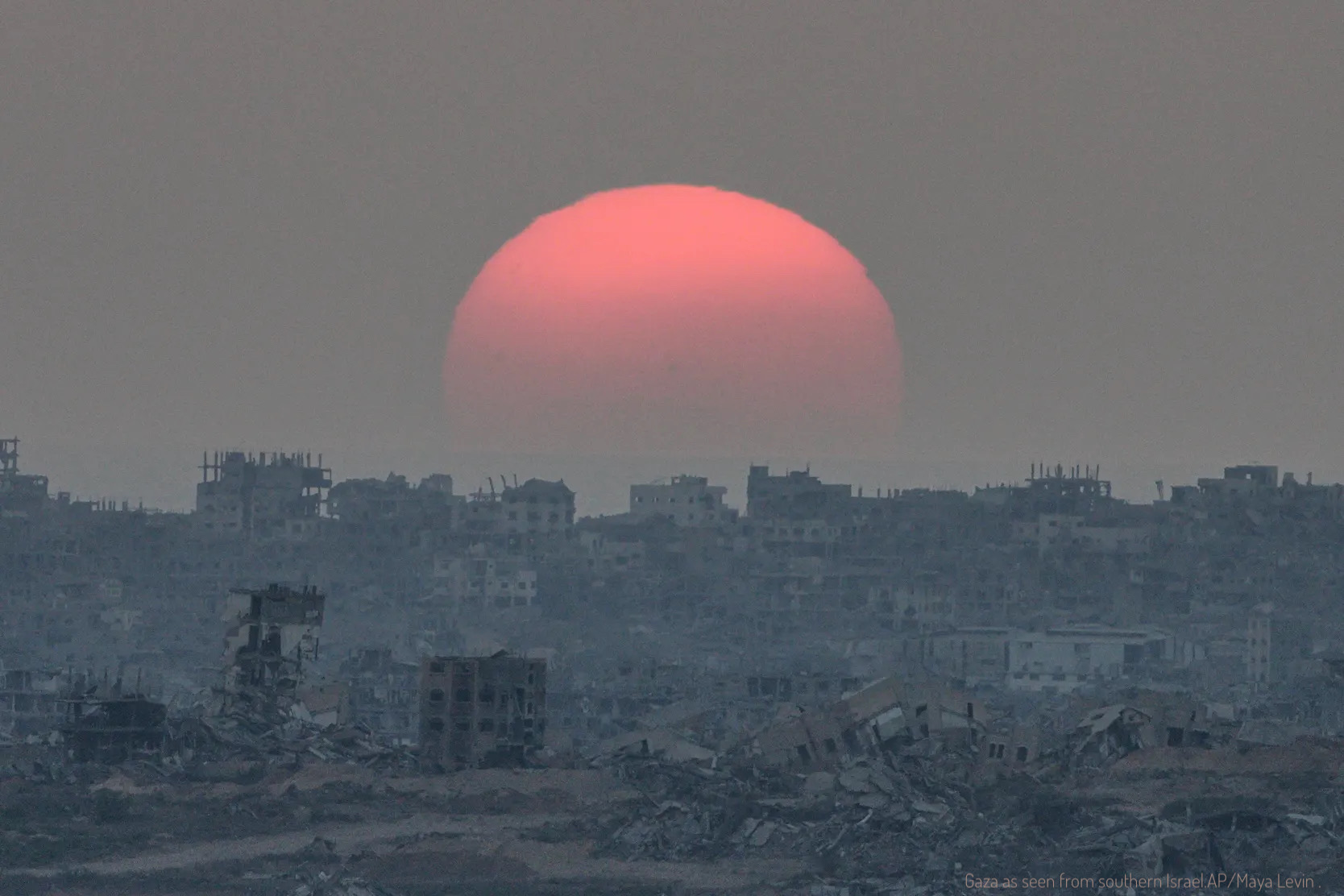
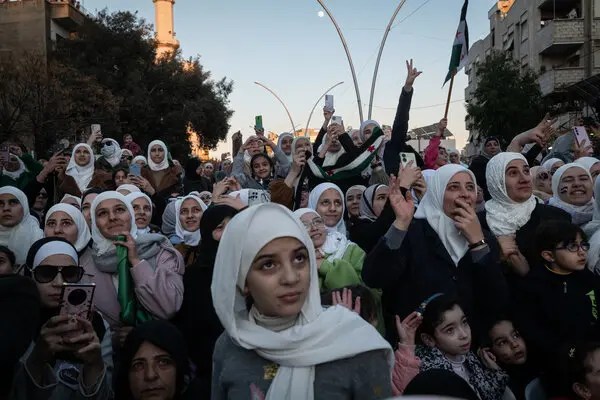
Thus wrote Unherd columnist and former war correspondent Aris Roussinos in December. 2023, but he would draw the same conclusion in 2024 and in 2025. He notes that ethnic cleansing is taking place on a vast scale in many parts of the world. Yet, apart from the current outrage at Israel’s war on Hamas in Gaza, turbocharged as it is by unprecedented and arguably one-sided mainstream and social media coverage, international reaction has been muted to the point of indifference. Roussinos’ article is republished below, and the following overview is inspired by and draws on his observations.

The term ethnic cleansing is elusive and politically charged. In an age of endemic conflict, identity politics and competing narratives, it has become a contested and often diluted concept invoked with increasing frequency. Yet, it remains undefined in law. Unlike genocide or war crimes, it has never been codified as a distinct offence under international law, and so its use is contested.

A United Nations Commission of Experts investigating violations during the wars in the former Yugoslavia offered the most widely cited descriptions. In its interim report it defined ethnic cleansing as “rendering an area ethnically homogeneous by using force or intimidation to remove persons of given groups from the area.” In its final report the following year, the Commission elaborated: it is “a purposeful policy designed by one ethnic or religious group to remove by violent and terror-inspiring means the civilian population of another ethnic or religious group from certain geographic areas.” What is clear in these descriptions is that ethnic cleansing is deliberate, systematic, and political in nature.

The Commission also catalogued the methods through which such policies are carried out. They include murder, torture, arbitrary arrest and detention, extrajudicial executions, rape and sexual violence, severe injury to civilians, confinement of populations in ghettos, forcible deportation and displacement, deliberate military attacks or threats of attacks on civilian areas, the use of human shields, the destruction and looting of property, and assaults on hospitals, medical staff and humanitarian organisations such as the Red Cross and Red Crescent. The Commission concluded that these acts could amount to crimes against humanity, war crimes, and in some instances, fall within the meaning of the Genocide Convention.

Many people today use the term ethnic cleansing interchangeably with genocide, since both involve the violent removal and destruction of communities and often lead to similar outcomes of death, displacement, and cultural erasure. Ethnic cleansing, which refers to the forced expulsion of a group from a territory through intimidation, violence, or coercion, frequently overlaps with acts that fall under the 1948 UN Genocide Convention, such as mass killings and the destruction of cultural or religious life. This blurring of concepts reflects not only the moral outrage provoked by such crimes but also frustration at the narrowness of legal categories, which can leave survivors feeling their suffering has been minimized by technical distinctions. Historical cases illustrate how the line between the two has often been perilously thin: the mass deportations and killings of Armenians in 1915, which many scholars and states regard as genocide and even describe as a holocaust – though Türkiye denies it and Israel avoids official recognition for fear of diluting the unique status of the Shoah – the expulsions and massacres of Bosnian Muslims in the 1990s, and the flight of the Rohingya from Myanmar all show how ethnic cleansing has so often carried genocidal dimensions – as is particularly the case today with the war in Gaza which has polarized and politicized ordinary people and activists alike worldwide who have through lack of knowledge or opportunism conflated the two.

Yet it is important to recognize that genocide and ethnic cleansing are not strictly interchangeable. Genocide requires proof of an intent to destroy, in whole or in part, a national, ethnic, racial, or religious group, whereas ethnic cleansing focuses primarily on expulsion, which may or may not involve that deeper intent to annihilate. Ethnic cleansing can amount to genocide when the purpose is to eradicate a group, but not all instances meet this threshold. In public discourse, however, people motivated more by empathy and emotion than by detailed knowledge of history or law are often inclined to conflate the two, since the lived experience of the victims—violence, displacement, and cultural obliteration – appears indistinguishable from destruction itself. More informed observers, by contrast, emphasize legal precision and historical context, recognizing that while the outcomes often overlap, preserving the distinction remains vital for accurate analysis and accountability.

The moral revulsion ethnic cleansing excites is the natural and humane reaction, but historically and also presently, it is not an uncommon phenomenon. For the American sociologist and academic Michael Mann, ethnic cleansing is the natural consequence of modernity, “the dark side of democracy”: a recurring temptation of the modern nation-state. The following sections provided examples from the last thirty years, followed by a survey of instances of ethnic cleansing during the early to mid Twentieth Century. They describe how ethnic cleansing is not only a crime of forced removal and murder but also an assault on identity, memory, and the very visibility of a people.

[The featured picture at the head of this blog post is one of Palestinian artist Ismail Shammout’s striking illustrations of Al Nakba, the dispossession of tens of thousands of Palestinian Arabs during Israel’s war of independence, from In That Howling Infinite’s Visualizing the Palestinian Return – the art of Ismail Shammout]. More of his art is included below]

Expulsion, eradication and exile

The Wars of the Yugoslav Succession in the 1990s – encompassing Croatia, Bosnia, and Kosovo – offer a clear illustration of ethnic cleansing in a modern European context. As Yugoslavia disintegrated, political and military leaders pursued campaigns aimed at creating ethnically homogeneous territories, often through the systematic targeting of civilians. In Bosnia, Serb forces carried out mass killings, forced deportations, rape, and the deliberate destruction of homes, schools, and cultural heritage sites, culminating in the Srebrenica massacre of 1995, in which more than 8,000 Muslim men and boys were killed. In Croatia and Kosovo, similar tactics were deployed: ethnic minorities were expelled, villages razed, and communities terrorised into flight. The International Criminal Tribunal for the former Yugoslavia (ICTY) documented and prosecuted these actions as crimes against humanity and war crimes, establishing that the campaigns were not chaotic consequences of war, but deliberate, coordinated policies of ethnic removal. The tribunal’s rulings provide a legal benchmark for understanding ethnic cleansing as the purposeful removal of populations through violence, intimidation, and coercion, a pattern that recurs across history and geography—from the forced expulsions of Armenians in 1915, to the population exchanges of Greece and Turkey in 1923, to the contemporary displacement of Rohingya, Palestinians, Ukrainians, and Afghans. These cases demonstrate that ethnic cleansing combines physical violence, forced migration, and cultural erasure, often leaving long-term social, political, and demographic scars that endure generations after the immediate conflict.

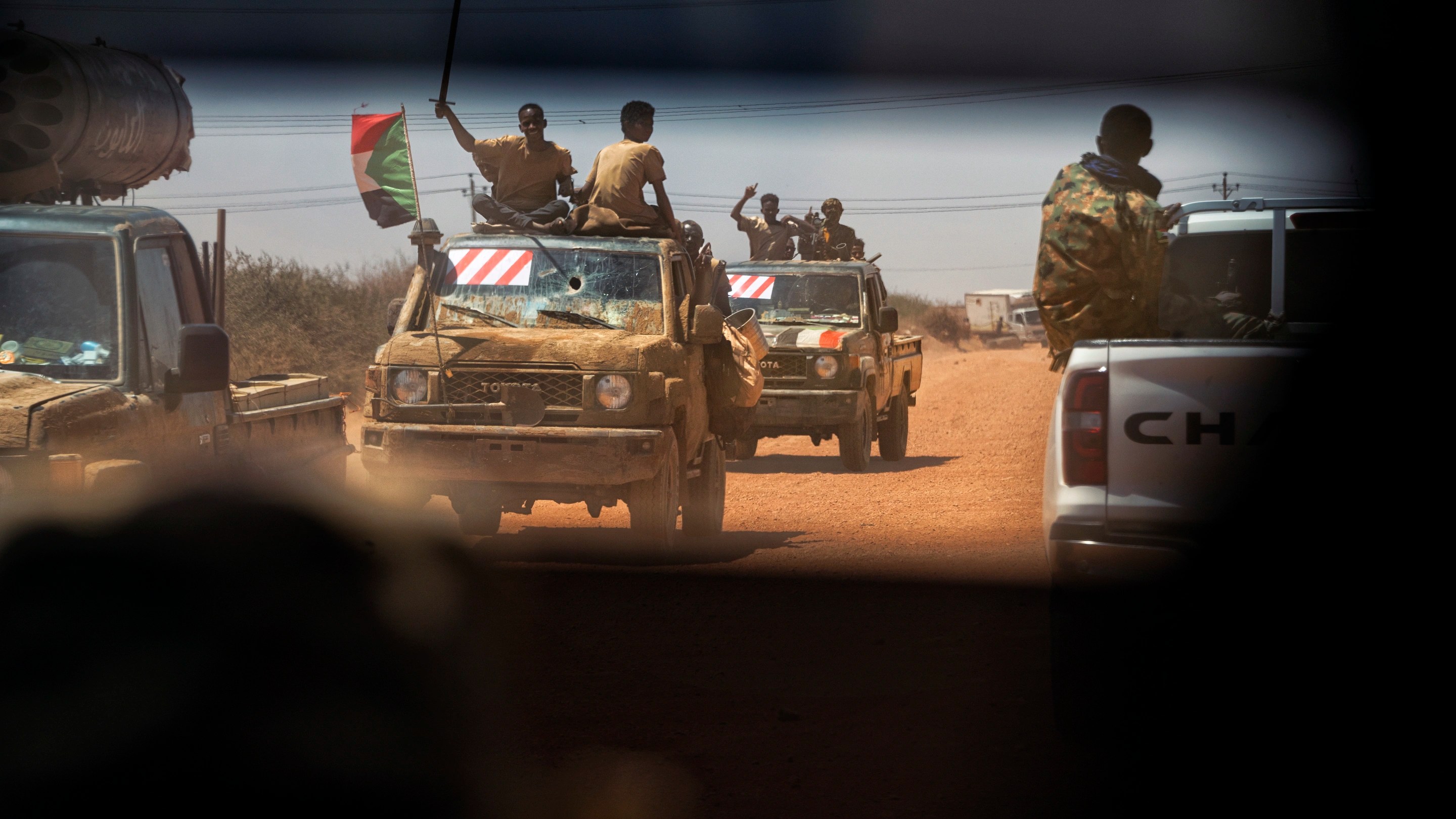
Sudan has witnessed repeated waves of ethnic cleansing over recent decades, most infamously in Darfur in the early 2000s, when government-backed Arab Janjaweed militias targeted non-Arab communities with systematic violence. Villages were burned, civilians massacred, women subjected to mass rape, and more than 2.5 million people displaced, in what the International Criminal Court later described as crimes against humanity, war crimes, and genocide. The displacement and destruction in Darfur followed earlier campaigns of forced removal during Sudan’s long north–south civil war, where entire communities in the south and Nuba Mountains were uprooted by aerial bombardment, scorched earth tactics, and starvation sieges. Today, ethnic cleansing has returned with devastating intensity: since April 2023, renewed fighting between the Sudanese Armed Forces and the Rapid Support Forces (successors to the Janjaweed) has triggered mass atrocities, including the killing of thousands and the flight of more than 7 million civilians, many across borders into Chad, South Sudan, and Egypt. Reports of targeted massacres against non-Arab groups in West Darfur suggest continuity with earlier campaigns, underscoring how ethnic cleansing in Sudan is not an isolated event but a recurring feature of its violent political landscape.

The Rohingya expulsions in Myanmar provide a stark contemporary example of ethnic cleansing. Since 2017, Myanmar’s military has carried out systematic campaigns of violence, including mass killings, sexual violence, arson, and the destruction of villages, aimed at driving the Rohingya Muslim population from Rakhine State. More than 700,000 Rohingya have fled to neighbouring Bangladesh, creating one of the world’s largest refugee crises. The violence has been accompanied by measures of cultural and social exclusion: denial of citizenship, restrictions on movement, and the erasure of Rohingya identity from official records. The United Nations and international observers have described these actions as ethnic cleansing, noting the deliberate intent to remove an entire ethnic group from a geographic area, while some investigators have determined that elements of the campaign meet the criteria for genocide.

Armenia and its surrounding regions have been scarred by cycles of ethnic cleansing for more than a century. The Armenian genocide of 1915–1916, carried out by the Ottoman Empire, combined forced deportations, massacres, and cultural destruction with the intent of removing Armenians from their ancestral lands in Anatolia. More than a million were killed or died on death marches, and countless others were scattered into diaspora communities across the Middle East, Europe, and the Americas. Later, in the Soviet period, Armenians and Azerbaijanis experienced repeated forced movements, with pogroms and expulsions erupting during times of political instability. Most recently, the 2023 offensive by Azerbaijan in Nagorno-Karabakh resulted in the flight of almost the entire Armenian population of the enclave—around 120,000 people—into Armenia proper, effectively erasing a centuries-old community. These waves of displacement illustrate how ethnic cleansing in Armenia is not confined to the past but has recurred across generations, leaving lasting demographic, cultural, and political consequences for the region.

During the past two years, mass expulsions from neighbouring countries returned large numbers of Afghans to Taliban-run Afghanistan. Pakistan has deported nearly half a million Afghans; Iran has driven out hundreds of thousands more. What is packaged as “repatriation” is, in many cases, forced displacement: exiles who had tenuous livelihoods, access to education, or limited civil freedoms in exile are now returned to a polity where the rights — especially the rights of women and girls — are ruthlessly curtailed. The Taliban’s record on gender is well known: it controls a society where women are barred from education and work, forced into early marriages, and denied even minimal public freedoms. Public-life prohibitions and systematic punishments disproportionately harm women and girls. Returning families are therefore being pushed into what many observers describe as among the worst possible places in the world for women — a profoundly gendered and life-threatening form of displacement.

The erasure of culture and historical memory

Like genocide, ethnic cleansing may not be limited the physical expulsion or eradication of people. It can be political, cultural and geographical, and often works through more insidious forms of erasure.

China’s policies in Xinjiang are an example. It has renamed at least 630 villages in Xinjiang, erasing references to Uyghur culture in what human rights advocates say is a systematic propaganda rebrand designed to stamp out the Muslim minority group’s identity. Human Rights Watch has documented a campaign of renaming thousands of villages across the region, stripping out references to Uyghur religion, history and culture. At least 3,600 names have been altered since 2009, replaced by bland slogans such as “Happiness,” “Unity” and “Harmony.” Such bureaucratic changes appear mundane, but they are part of a systematic project to erase Uyghur identity from the landscape itself.

Ukraine illustrates another, more violent dimension of contemporary ethnic cleansing. Russia is coercively integrating five annexed Ukrainian regions — an area the size of South Korea — into its state and culture. Ukrainian identity is being wiped out through the imposition of Russian schooling and media, while more than a million Russian citizens have been settled illegally into the occupied zones. At the same time, some three million Ukrainians have fled or been forced out. Torture centres have been established, with one UN expert describing their use as “state war policy.” Russian forces have employed sexual violence, disappearances and arbitrary detentions, and carried out massacres. Civilian deaths officially stand at around 10,000, but independent estimates suggest a figure closer to 100,000. Homes and businesses have been seized and redistributed to the cronies of Russian officials and officers. On top of these abuses, thousands of Ukrainian children have been taken from their families and deported into Russia for adoption and assimilation, with the threat that when they reach 18 they will be conscripted into the Russian military. This programme of child transfers has been declared a war crime by international courts, and represents perhaps the most chilling element of the campaign to erase Ukrainian identity across generations. Russian propagandists, including ideologues such as Alexander Dugin, routinely describe Ukrainians as “vermin” to be eliminated — language that many experts say is consistent with genocidal intent.

The long arm of history

Historical precedent is sobering, underscoring how entrenched practices definable as ethnic cleansing are. Some examples follow.

The Armenian genocide of 1915–1916 is a historical example where the term “ethnic cleansing” can be applied alongside, though not identical to, the legal concept of genocide. Ottoman authorities systematically deported, massacred, and starved Armenians from their ancestral homelands in Anatolia, often under the guise of military necessity. Entire villages were emptied, survivors forced on death marches into the Syrian desert, and cultural and religious heritage deliberately destroyed. These actions aimed to remove the Armenian population from the territory of the Ottoman Empire, making the region ethnically and religiously homogeneous, which aligns closely with contemporary definitions of ethnic cleansing. The genocide combined mass killing with forced displacement and cultural erasure, illustrating how ethnic cleansing and genocide can overlap in both intent and method. (See The Fall of the Ottoman Empire and the birth of Türkiye)

The Armenian case also illustrates how recognition of genocide is often bound up not only with history but with contemporary politics. Türkiye continues to deny that the mass deportations and killings of Armenians in 1915 amounted to genocide, framing them instead as wartime relocations within the collapsing Ottoman Empire. Israel, despite wide acknowledgment among its own scholars of the genocidal character of the events, has avoided official recognition, partly out of diplomatic considerations toward Türkiye, once a key regional ally, but also out of concern that equating the Armenian tragedy with the Shoah might dilute the unique historical and moral status attached to the Holocaust in Jewish memory and international discourse. This reluctance is not unique to Israel: several states have long hesitated to employ the term “genocide” for fear of straining relations with Ankara or complicating their own foreign policy priorities. Such debates demonstrate how the line between ethnic cleansing and genocide is not only a matter of legal precision but also of political narrative, with governments and institutions sometimes reluctant to apply the most condemnatory labels even where evidence overwhelmingly supports them.

As the Northern Irish writer Bruce Clark observed in his excellent book Twice A Stranger on the euphemistically termed “population exchanges” between Greece and Turkey exactly a century ago, “Whether we like it or not, those of us who live in Europe or in places influenced by European ideas remain the children of Lausanne,” the 1923 peace treaty, finalizing the dismemberment of the Ottoman Empire after the First World War, which decreed a massive, forced population movement between Turkey and Greece”, and in effect, One and a quarter million Greek Orthodox Christians were removed from Anatolia, the heartland of the new republic of Türkiye, and nearly 400,000 Muslims from Greece, in a process overseen by the Norwegian diplomat Fridtjof Nansen leading a branch of the League of the Nations which would later – perhaps ironically – evolve into today’s UNHCR.

During the Second World War, Soviet Union alone deported half a million Crimean Tatars and tens of thousands of Volga Germans to Siberia. In 1945, the victorious Allied powers oversaw the removal of some 30 million people across Central and Eastern Europe to create ethnically homogeneous states. At Yalta and Potsdam, Britain, the US, and the Soviet Union endorsed the expulsion of 12 million Germans, over 2 million Poles, and hundreds of thousands of Ukrainians, Hungarians, and Finns.

The partition of British India in 1947 produced one of the largest and bloodiest forced migrations in modern history. As the new states of India and Pakistan were created, an estimated 12 to 15 million people crossed borders in both directions – Muslims moving into Pakistan, Hindus and Sikhs into India – in a desperate effort to reach what they hoped would be safer ground. The upheaval was marked by extreme communal violence, massacres, abductions, and sexual assaults. Between 500,000 and 1 million people are thought to have been killed, and millions more were uprooted from ancestral homes they would never see again. The trauma of Partition continues to shape Indian and Pakistani national identities, as well as the politics of South Asia to this day. (See Freedom at Midnight (2): the legacy of partition) and Freedom at Midnight (1): the birth of India and Pakistan

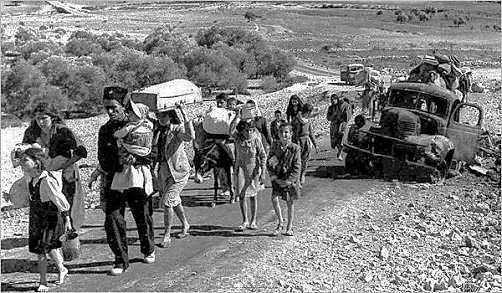
The dismemberment of Mandate Palestine by the new state of Israel, Jordan and Egypt in 1948 brought two simultaneous mass displacements that remain unresolved. During the first Arab–Israeli war more than 700,000 Palestinians fled or were expelled from their homes in what became Israel. Known as the Nakba or “catastrophe,” this created a vast refugee population now numbering in the millions, many still stateless. Jews living in what is now the Old City and East Jerusalem, and the West Bank seized by Jordan were expelled. Jews living across the Arab world in Iraq, Yemen, Egypt, Libya, Syria and elsewhere – faced growing hostility, persecution, and expulsion. Between 1948 and the 1970s, an estimated 800,000 to 1,000,000 Jews left or were forced out, many stripped of property and citizenship. Most resettled in Israel, where their presence profoundly altered the country’s politics and culture. Palestinians and Jews alike endured dispossession, trauma and exile, and both experiences fuel competing narratives of grievance that continue to define the conflict.

Israelis are themselves, for the most part, the product of 20th-century ethnic cleansings, in the Middle East as well as Europe: indeed the descendants of Middle Eastern Jews, like the Security Minister Itamar Ben-Gvir, are the country’s most radical voices on the Palestinian Question. But unlike the Mizrahim,  and displaced of Eastern and south-eastern Europe, the Palestinians have no Israel to go to. There is no Palestinian state waiting to absorb them. Indeed, for Gaza’s population, the vast majority of whom descend from refugees from what is today Israel, Gaza was their place of refuge, and the 1948 Nakba the foundational event in their sense of Palestinian nationhood. For all that ethnic cleansing punctuates modern history, there is no precedent for such a process of double displacement, and the political consequences cannot at this stage be determined. We may assume they will not be good, and an analogue to Europe’s post-war neighbourly relations will not be found.

Conclusion: The Age of Dispossession 

In many historical cases, expulsions, however brutal, were stabilized by the existence of ethnic homelands ready to absorb the displaced. Refugees were incorporated into nationalist projects in Greece and Türkiye, or into newly homogenized states such as Poland and Ukraine, where they became central to the shaping of modern politics. The Karabakh Armenians driven into Armenia may follow this precedent, potentially reshaping the political order of a small and embattled state.

Ethnic cleansing in the twenty-first century, however, combines these older methods with new techniques. Violence, rape, deportation, and massacre continue, but are now accompanied by cultural erasure, bureaucratic renaming, engineered resettlement, propaganda, and the deliberate targeting of children for assimilation. Unlike many twentieth-century precedents, today’s displaced populations often have nowhere safe to go, forced into territories with no protective homeland or into environments of repression, creating open-ended cycles of dispossession. The erasure of identities in Xinjiang, the coercive integration of Ukrainian territories, the expulsion of Rohingyas and Afghans, the depopulation of Karabakh, and the looming threat of Gaza – where Palestinians face the looming threat of another mass displacement, echoing the 1948 Nakba – collectively demonstrate that ethnic cleansing is not a relic of the past.

It remains a recurring feature of our age – modern history is indeed built upon exodus and displacement – and its human cost is profound and incalculable.

© Paul Hemphill 2024,2025. All rights reserved

Nagoorno Karabakh

Postscript … Al Nakba, a case study in dispossesion

In the late nineteenth and early twentieth centuries, European Jews came to a land that was already inhabited by another, different people. Over two decades, they forced the guarantor power out by terrorism and took the land by conquest, expelling most of  its original inhabitants by force. They have sowed their share of wind, too. Both sides want all the land for themselves.

Al Nakba, is the Arabic name for the “catastrophe” that befell the Arab inhabitants of Mandate Palestine during the war that was fought between Arabs and Jews in 1947-1948, resulting in the expulsion of upwards of 700,000 Arab Palestinians. That it happened is incontrovertible. But the facts, even those that are attested to by all reputable politicians and academic authorities, including Israelis, have long been subject to doubt and distortion by all sides of what has since been called “The Middle East Conflict” – notwithstanding that there have been conflicts in the Middle East more devastating and bloodier in terms of destruction and mortality including in Lebanon, Iraq, Syria, Algeria, Libya, and Sudan.

I do not to intend here to retell the history of Al Nakba. There many accounts available in print including those by Arab and Israeli authors, and in film, particularly an excellent documentary broadcast by Al Jazeera in May 2013 and repeated often?

June 17th, 2018, I wrote about it in a Facebook post:

Al Nakba did not begin in 1948. Its origins lie over two centuries ago….


So begins this award-winning series from Al Jazeera, a detailed and comprehensive account of al Nakba, the establishment of the State of Israel in 1948 and the dispossession and expulsion of the Palestinians who lived within its borders.

It is a well-balanced narrative, with remarkable footage, that will not please the ardent partisans of both sides who prefer their story of 1948 to be black and white.

Revisionist Israeli historians Ilan Pappe, Avi Shlaim, and Teddy Katz describe the ruthless and relentless military operations to clear and cleanse “Ha’aretz”, the land, of its Arab inhabitants and their history, whilst Palestinian historians tell the story from the Palestinian perspective, describing the critical failings of Palestinian’s political leaders and neighbouring Arab governments. Elderly Palestinians who were forced into exile and to camps in Jordan and Lebanon tell their sad stories of starvation and poverty, violence and death, and of terrible sadness, homesickness and longing that the passing years and old age have never diminished.

“When I left my homeland, I was a child. Now, I’m an old man. So are my children. But did we move forward? Where is our patriotism? Patriotism is about the pockets of our current leaders. They build high buildings and go to fancy banquets. They pay thousands for their children’s weddings”. Refugee Hosni Samadaa.

“We’re repeating the same mistakes. Before 1948 the Palestinian National Movement was split on the basis of rival families. Today, it is split into different parties over ideology, jurisdiction and self-interests. We didn’t learn our lesson. We were led by large, feudal landowners. Today, we are led by the bourgeoisie. Before 1948, we were incapable of facing reality. Today, we are just as inept. Before 1948, people chose the wrong leadership. And today, we are following the wrong leaders”. Researcher Yusuf Hijazi.

https://www.aljazeera.com/program/featured-documentaries/2013/5/29/al-nakba

I republish below Roussinos’ article in full, also a brief but comprehensive account about Al Nakba by economist and commentator Henry Ergas.

al Nakba, Ismail Shammout

al Nakba, Ismail Shammout

The truth about the ethnic cleansing in Gaza – modern Europe was built on exodus and displacement

Aris Roussinos, Unherd, December 18 2023

We are cursed to live in a time of great historical significance: when future historians look back at 2023, the distinguishing feature of this year will likely be the recurrence of ethnic cleansing on a vast scale. In just the past few months, Pakistan has deported nearly half a million Afghan migrants, while Azerbaijan has forced 120,000 Armenians — the statelet’s entire population — from newly-conquered Karabakh, both to broad international indifference. As the UNHCR has warned, the forced expulsion — that is, the ethnic cleansing — of Gaza’s Palestinian population is now the most likely outcome of the current war.

With no prospect of Palestinians and Israelis living together peaceably, anything short of absolute military victory unacceptable to both the Israeli government and its voters, but no meaningful plan for who will rule the uninhabitable ruins of post-war Gaza, the only realistic solution to the Palestinian problem, for Israel, is the total removal of the Palestinians. As Israel’s former Interior Minister has declared: “We need to take advantage of the destruction to tell the countries that each of them should take a quota, it can be 20,000 or 50,000. We need all two million to leave. That’s the solution for Gaza.”

Israeli officials have not been shy in promoting this outcome to a war, according to the President Isaac Herzog, for which “an entire nation… is responsible”. Israel’s agriculture minister Avi Dichter has asserted that “We are now rolling out the Gaza Nakba,” adding for emphasis that the result of the war will be “Gaza Nakba 2023. That’s how it’ll end.”Israel’s Intelligence Ministry has published a “concept paper” proposing the expulsion of Gaza’s entire population to the Sinai desert, and Israeli diplomats have been trying to win international support for this idea. According to the Israeli press, Israeli officials have sought American backing for a different plan to distribute Gaza’s population between Egypt, Turkey, Iraq and Yemen, tying American aid to these countries’ willingness to accept the refugees. In a Wall Street Journal opinion piece, two Israeli lawmakers have instead urged Western countries — particularly Europe — to host Gaza’s population, asserting that: “The international community has a moral imperative—and an opportunity—to demonstrate compassion [and] help the people of Gaza move toward a more prosperous future.” The outcome for Gaza’s Palestinians does not appear to be in doubt: what remains to be haggled over is their final location.

The only actor that can prevent the ethnic cleansing of Gaza is the United States, and for domestic political reasons it is disinclined to do so. While the Biden administration declaresit does not support “any forced relocation of Palestinians outside of the Gaza Strip”, it is not taking any action to prevent it. If the expulsion of Gaza’s 2.3 million population comes to pass, the result will be the most significant instance of ethnic cleansing in a generation, which will define Biden’s presidency for future historians. Yet outrage over such events is selective. It is not entirely true, as some Middle Eastern commentators claim, that Western complicity in the looming ethnic cleansing of Gaza highlights a lesser interest in Arab or Muslim lives: the Armenian case highlights that eastern Christians also barely flicker on the world’s moral radar.

This week’s awarding of the right to host next year’s COP29 climate conference to Azerbaijan, just a few months after its ethnic cleansing of Karabakh, reminds us that the supposed international taboo on the practice does not, in reality, exist. When ethnic cleansing is permissible, and when it is a war crime, depends, it seems, on who is doing it, and to whom. Azerbaijan is oil-rich, useful to Europe, and able to buy favourable Western coverage; Armenia is poor, weak and friendless in the world. Similarly, the extinction of much of the Christian population of the Middle East as a result of the chaos following the Iraq War won very little international attention or sympathy: communities which survived in their ancient homelands from Late Antiquity, riding out the passage of Arab, Mamluk, Ottoman and European imperial rule, did not survive the American empire.

Yet while the moral revulsion such events excite is the natural and humane reaction, ethnic cleansing is less rare an event than the crusading military response to its Nineties occurrence in the Balkans may make us think. For the sociologist Michael Mann, ethnic cleansing is the natural consequence of modernity, “the dark side of democracy”. As the Northern Irish writer Bruce Clark observed in his excellent book Twice A Stranger on the euphemistically termed “population exchanges” between Greece and Turkey exactly a century ago, “Whether we like it or not, those of us who live in Europe or in places influenced by European ideas remain the children of Lausanne,” the 1923 peace treaty “which decreed a massive, forced population movement between Turkey and Greece”. One and a quarter million Greek Orthodox Christians were removed from Anatolia, and nearly 400,000 Muslims from Greece, in a process overseen by the Norwegian diplomat Fridtjof Nansen leading a branch of the League of the Nations which would later — perhaps ironically — evolve into today’s UNHCR.

It was a cruel process, wrenching peoples from ancestral homelands in which they had lived for centuries, even millennia— and by the end of it half a million people were unaccounted for, presumably dead. Yet it was viewed as a great diplomatic triumph of the age, perhaps with good reason: without meaningful minorities on each side of each others’ borders to stoke tensions, Greece and Turkey have not fought a war in a century. Indeed, as late as 1993, the Realist IR scholar John Mearsheimer could propose a “Balkan Population Exchange commission” for the former Yugoslavia explicitly modelled on the 1923 precedent, asserting that “populations would have to be moved in order to create homogeneous states” and “the international community should oversee and subsidize this population exchange”. For the younger Mearsheimer, ethnic cleansing was the only viable solution to Yugoslavia’s bloody and overlapping ethnic map: “Transfer is a fact. The only question is whether it will be organized, as envisioned by partition, or left to the murderous methods of the ethnic cleansers.” Thirty years later, however, Mearsheimercondemns Israel’s planned expulsions from Gaza outright.

There is a dark irony here: the forced expulsion of peoples is an affront to liberal European values, yet it is rarely acknowledged that our modern, hitherto peaceful and prosperous Europe is built on the foundation of ethnic cleansing. Perhaps the ramifications of such a truth are too stark to bear, yet it is nevertheless the case that the peaceable post-1945 order depended on mass expulsions for its stability. Using the 1923 exchange as their explicit model, the victorious allies oversaw the forced removal of 30 million people from their homes in Central and Eastern Europe towards newly homogeneous ethnic homelands they had never seen. At the Yalta and Potsdam conferences, Britain, the United States and the Soviet Union settled upon the expulsion of 12 million Germans, more than 2 million Poles and hundreds of thousands of Ukrainians, Hungarians and Finns from their ancestral homes.

As Churchill declared in Parliament in 1944, “expulsion is the method that, so far as we have been able to see, will be the most satisfactory and lasting. There will be no mixture of populations to cause endless trouble, as has been in the case of Alsace-Lorraine. A clean sweep will be made.” Only two years later, once the Cold War had begun and the Soviet Union and its vassal Poland become a rival, did Churchill fulminate against the “enormous and wrongful inroads upon Germany, and mass expulsions of millions of Germans on a scale grievous and undreamed of” by “the Russian-dominated Polish Government”. In ethnic cleansing, as in so many other things, political context is the final arbiter of morality.

But as a result, Germany has never since unsettled Europe with revanchist dreams; both Poland and Western Ukraine became, for the first time in their histories, ethnically homogenous entities. As the Ukrainian-Canadian historian Orest Subtelny has observed, the forced separation of Poles and Ukrainians, once locked in bitter ethnic conflict against each other, has led to today’s amicable relationship: “It seems that the segregation of the two peoples was a necessary precondition for the development of a mutually beneficial relationship between them. Apparently the old adage that ‘good fences make for good neighbors’ has been proven true once more.” That we have forgotten the vast scale of the forced expulsions which established Europe’s peaceful post-war order is, in a strange way, a testament to their success.

Yet what made the mass expulsions following the First and Second World Wars broadly successful was that those expelled at least had ethnic homelands to receive them. In Greece and Turkey, the refugees fully adopted the ethnic nationalism of their new countries, in Greece providing the bedrock of later republican sympathies, and in Turkey the core support for both secular Kemalist nationalism and occasional bouts of military rule. In the newly-homogenous Poland and Ukraine, refugees shorn of their previous local roots and at times ambiguous ethnic identities fully adopted in recompense a self-identification with their new nation-states which has helped define these countries’ modern politics. The 120,000 Karabakh refugees will likely become a political bloc in tiny Armenia, affecting the country’s future political order in ways yet hard to discern.

Israelis are themselves, for the most part, the product of 20th-century ethnic cleansings, in the Middle East as well as Europe: indeed the descendants of Middle Eastern Jews, like the Security Minister Itamar Ben-Gvir, are the country’s most radical voices on the Palestinian Question. But the Palestinians, like the ethnic French narrator of Houellebecq’s Submission, have no Israel to go to. Unlike the 20th century displaced of Eastern and south-eastern Europe, there is no Palestinian state waiting to absorb them. Indeed, for Gaza’s population, the vast majority of whom descend from refugees from what is today Israel, Gaza was their place of refuge, and the 1948 Nakba the foundational event in their sense of Palestinian nationhood. For all that ethnic cleansing punctuates modern history, there is no precedent for such a process of double displacement, and the political consequences can not at this stage be determined. We may assume they will not be good, and an analogue to Europe’s post-war neighbourly relations will not be found.

Egypt’s disinclination to host two million Gazan refugees is not merely a matter of solidarity, but also self-preservation: flows of embittered Palestinian refugees helped destabilise both Lebanon, where their presence set off the country’s bloody ethnic civil war, and Jordan, where they make up the demographic majority. It is doubtful too, given the recent tenor of its politics, that Europe will be eager to receive them, no matter how humanitarian the language with which Israeli officials couch their planned expulsion. Rendered stateless, driven from their homes and brutalised by war, Gaza’s refugees remain unwanted by the world, perhaps destined to become, as the Jews once were, a diaspora people forever at the mercy of suspicious hosts.

A terrible injustice for the Palestinians, their ethnic cleansing may yet provide Israel with a measure of security, even as it erodes the American sympathy on which the country’s existence depends. The broader question, perhaps, is whether or not the looming extinction of Palestinian life in Gaza, like the expulsion of Karabakh’s Armenians, heralds the beginning of a new era of ethnic cleansing, or merely the settling of the West’s unfinished accounts. Like the movements which bloodily reshaped Central Europe, Israel’s very existence is after all a product of the same nationalist intellectual ferment of fin-de-siècle Vienna. In 1923, while acknowledging its necessity, the British Foreign Secretary Lord Curzon called the Greco-Turkish population exchange “a thoroughly bad and vicious [idea] for which the world would pay a heavy penalty for a hundred years to come”. Exactly a century later, Gaza’s Palestinians look destined to become the final victims of Europe’s long and painful 20th century

Nakba, where Palestinian victim mythology began

‘Nakba Day’ was commemorated this week with even more vehemence than usual. The greatest tragedy is that the Palestinian people who fled remain frozen in time.

The Australian, 18th May 2024

Pro-Palestinian protesters hold banners and flags as they listen to speakers at a rally held to mark the anniversary of the ‘Nakba’ or ‘catastrophe’ of 1948, in Sydney on Wednesday. Picture: David Gray/AFP

Protestors at a Sydney rally to mark the anniversary of the ‘Nakba’. David Gray/AFP

On Wednesday, “Nakba Day” was commemorated around the world with even more vehemence than usual as outpourings of hatred against Israel, sprinkled with ample doses of anti-Semitism, issued from screaming crowds.

What was entirely missing was any historical perspective on the Nakba – that is, the displacement, mainly through voluntary flight, of Palestinians from mandatory Palestine. Stripped out of its broader context, the event was invested with a uniqueness that distorts the processes that caused it and its contemporary significance.

It is, to begin with, important to understand that the displacement of Palestinians was only one facet of the sweeping population movements caused by the collapse of the great European land empires. At the heart of that process was the unravelling of the Ottoman Empire, which started with the Greek war of independence in 1821 and accelerated during subsequent decades.

As the empire teetered, religious conflicts exploded, forcing entire communities to leave. Following the Crimean War of 1854-56, earlier flows of Muslims out of Russia and its border territories became a flood, with as many as 900,000 people fleeing the Caucasus and Crimea regions for Ottoman territory. The successive Balkan wars and then World War I gave that flood torrential force as more than two million people left or were expelled from their ancestral homes and sought refuge among their co-religionists.

The transfers reshaped the population geography of the entire Middle East, with domino effects that affected virtually every one of the region’s ethnic and religious groups.

The formation of new nation-states out of what had been the Ottoman Empire then led to further rearrangements, with many of those states passing highly restrictive nationality laws in an attempt to secure ethnic and religious homogeneity.

Nothing more starkly symbolised that quest for homogeneity than the Convention Concerning the Exchange of Greek and Turkish Populations signed on January 30, 1923. This was the first agreement that made movement mandatory: with only a few exceptions, all the Christians living in the newly established Turkish state were to be deported to Greece, while all of Greece’s Muslims were to be deported to Turkey. The agreement, reached under the auspices of the League of Nations, also specified that the populations being transferred would lose their original nationality along with any right to return, instead being resettled in the new homeland.

Underlying the transfer was the conviction, articulated by French prime minister (and foreign minister) Raymond Poincare, that “the mixture of populations of different races and religions has been the main cause of troubles and of war”, and that the “unmixing of peoples” would “remove one of the greatest menaces to peace”.

That the forced population transfers, which affected about 1.5 million people, imposed enormous suffering is beyond doubt. But they were generally viewed as a success. Despite considerable difficulties, the transferred populations became integrated into the fabric of the recipient communities – at least partly because they had no other option. At the same time, relations between Turkey and Greece improved immensely, with the Ankara Agreements of 1930 inaugurating a long period of relative stability.

The result was to give large-scale, permanent population movements, planned or unplanned, a marked degree of legitimacy.

Thus, the formation of what became the Irish Republic was accompanied by the flight of Protestants to England and Northern Ireland, eventually more than halving, into an insignificant minority, the Protestant share of the Irish state’s population; that was viewed as easing the tensions that had so embittered the Irish civil war.

It is therefore unsurprising that further “unmixing” was seen by the allies in World War II as vital to ensuring peace in the post-war world. In a statement later echoed by Franklin Roosevelt, Winston Churchill made this explicit in 1944, telling the House of Commons he was “not alarmed by the prospect of the disentanglement of populations, nor even by these large transferences, which are more possible in modern conditions than they ever were before”.

The immediate effect, endorsed as part of the Potsdam Agreements and implemented as soon as the war ended, was the brutal expulsion from central and eastern Europe of 12 million ethnic Germans whose families had lived in those regions for centuries. Stripped of their nationality and possessions, then forcibly deported to a war-devastated Germany, the refugees – who received very little by way of assistance – gradually merged into German society, though the scars took decades to heal.

Even more traumatic was the movement in 1947 of 18 million people between India and the newly formed state of Pakistan.

As Indian novelist Alok Bhalla put it, India’s declaration of independence triggered the subcontinent’s sudden descent into “a bestial world of hatred, rage, self-interest and frenzy”, with Lord Ismay, who witnessed the process, later writing that “the frontier between India and Pakistan was to see more tragedy than any frontier conceived before or since”. Yet in the subcontinent too, and especially in India, the integration of refugees proceeded to the point where little now separates their descendants from those of the native born.

All that formed the context in which the planned partition of Palestine was to occur. The 1937 Peel Commission, which initially proposed partition, had recommended a mandatory population exchange but the entire issue was ignored in UN Resolution 181 that was supposed to govern the creation of the two new states.

When a majority of the UN General Assembly endorsed that resolution on November 29, 1947, the major Zionist forces reluctantly accepted the proposed partition, despite it being vastly unfavourable to them. But the Arab states not only rejected the plan, they launched what the Arab League described as “a war of extermination” whose aim was to “erase (Palestine’s Jewish population) from the face of the earth”. Nor did the fighting give any reason to doubt that was the Arabs’ goal.

At least until late May 1948, Jewish prisoners were invariably slaughtered. In one instance, 77 Jewish civilians were burned alive after a medical convey was captured; in another, soldiers who had surrendered were castrated before being shot; in yet another, death came by public decapitation. And even after the Arab armies declared they would abide by the Geneva Convention, Jewish prisoners were regularly murdered on the spot.

While those atrocities continued a longstanding pattern of barbarism, they also reflected the conviction that unrestrained terror would “push the Jews into the sea”, as Izzedin Shawa, who represented the Arab High Committee, put it.

Arabs flee in 1948 ahead of the ‘war of extermination’ against Israel. Picture: History/Universal Images Group via Getty Images
Arabs flee in 1948 ahead of the ‘war of extermination’ against Israel.
History/Universal Images Group via Getty Images

A crucial element of that strategy was to use civilian militias in the territory’s 450 Arab villages to ambush, encircle and destroy Jewish forces, as they did in the conflict’s first three months.

It was to reduce that risk that the Haganah – the predecessor of the Israel Defence Force – adopted the Dalet plan in March 1948 that ordered the evacuation of those “hostile” Arab villages, notably in the surrounds of Jerusalem, that posed a direct threat of encirclement. The implementation of its criteria for clearing villages was inevitably imperfect, but the Dalet plan neither sought nor was the primary cause of the massive outflow of Arab refugees that was well under way before it came into effect.

Nor was the scale of the outflow much influenced by the massacres committed by Irgun and Lehi – small Jewish militias that had broken away from the Haganah – which did not loom large in a prolonged, extremely violent, conflict that also displaced a very high proportion of the Jewish population.

Rather, three factors were mainly involved. First, the Muslim authorities, led by the rector of Cairo’s Al Azhar Mosque, instructed the faithful to “temporarily leave the territory, so that our warriors can freely undertake their task of extermination”.

Second, believing that the war would be short-lived and that they could soon return without having to incur its risks, the Arab elites fled immediately, leaving the Arab population leaderless, disoriented and demoralised, especially once the Jewish forces gained the upper hand.

Third and last, as Benny Morris, a harsh critic of Israel, stresses in his widely cited study of the Palestinian exodus, “knowing what the Arabs had done to the Jews, the Arabs were terrified the Jews would, once they could, do it to them”.

Seen in that perspective, the exodus was little different from the fear-ridden flights of civilians discussed above. There was, however, one immensely significant difference: having precipitated the creation of a pool of 700,000 Palestinian refugees, the Arab states refused to absorb them.

Rather, they used their clout in the UN to establish the UN Relief and Works Agency for Palestine Refugees, which became a bloated, grant-funded bureaucracy whose survival depended on endlessly perpetuating the Palestinians’ refugee status.

In entrenching the problem, the UN was merely doing the bidding of the Arab states, which increasingly relied on the issue of Palestine to convert popular anger at their abject failures into rage against Israel and the West. Terminally corrupt, manifestly incapable of economic and social development, the Arab kleptocracies elevated Jew-hatred into the opium of the people – and empowered the Islamist fanaticism that has wreaked so much harm worldwide.

Nor did it end there. Fanning the flames of anti-Semitism, the Arab states proceeded to expel, or force the departure of, 800,000 Jews who had lived in the Arab lands for millennia, taking away their nationality, expropriating their assets and forbidding them from ever returning to the place of their birth. Those Jews were, however painfully, integrated into Israel; the Palestinian refugees, in contrast, remained isolated, subsisting mainly on welfare, rejected by countries that claimed to be their greatest friends. Thus was born the myth of the Nakba.

That vast population movements have inflicted enormous costs on those who have been ousted from their homes is undeniable. Nor have the tragedies ended: without a murmur from the Arab states, 400,000 Palestinians were expelled from Kuwait after the first Gulf War, in retaliation for the Palestine Liberation Organisation’s support of Saddam Hussein. More recently, Myanmar has expelled 1.2 million Rohingya.

But the greatest tragedy associated with the plight of the Palestinians is not the loss of a homeland; over the past century, that has been the fate of tens of millions. Rather, it is the refusal to look forward rather than always looking back, an attitude encapsulated in the slogan “from the river to the sea”.

That has suited the Arab leaders, but it has condemned ordinary Palestinians to endless misery and perpetual war. Until that changes, the future will be a constant repetition of a blood-soaked past

Wystan and Christopher’s excellent adventure

As evening fell the day’s oppression lifted
Far peaks came into focus, it had rained.
Across wide lawns and cultured flowers drifted
The conversation of the highly trained.
Two gardeners watched them pass and priced their shoes
A chauffeur waited, reading in the drive
For them to finish their exchange of views.
It seemed a picture of the private life.
Far off, no matter what good they intended
The armies waited for a verbal error
With all the instruments for causing pain
And on the issue of their charm depended
A land laid waste, its towns in terror
And all its young men slain.
Embassy, WH Auden, from Journey to a War

In 1938, English writers WH Auden and  Christopher Isherwood were commissioned by their publishers to write a travel book about the East. Auden was already established as one of Britain’s foremost poets whilst his friend and onetime lover Isherwood was acclaimed as an author and dramatist. His Berlin Stories, two novels set in the last days of the Weimar Republic and today acclaimed as classics of modern fiction; the semi autobiographical Goodbye to Berlin (1939) inspired the remarkable musical Cabaret (1966).

By adventurous choice they went to China for six months, their journey coinciding with Imperial Japan’s brutal invasion. American poet and educator Mildred Boie, reviewing the book for Atlantic in November 1939, takes up the story:  

“With the good fortune of famous and attractive young men they were helped and shown about by everybody from coolies to ambassadors, journalists to generals. They behaved, as they observed and wrote (to judge from the diary), with the engaging frankness and immaturity of English schoolboys, with the ingenious confidence and casual incompleteness of amateurs. But these qualities are inadequate for reporting war, for evaluating life and death in so desperate and disastrously complicated a country as China. The authors were not only amateurs as foreign correspondents, they were also dilettantes: they played at getting to the front, at taking notes on slums, at dashing from formal garden parties to meetings with intellectuals and busy military and diplomatic leaders. They suffered almost as much, certainly as consciously, from blisters, constipation, boredom, sleeplessness, and hangovers as from the shape of poverty, the taste of fear, the sight and smell of death. They were always safe, always outside.” 

Collectively, perhaps, we most resemble a group of characters in one of Jules Verne’s stories about lunatic English explorers. 

War is bombing an already disused arsenal, missing it and killing a few old women. War is lying in a stable with a gangrenous leg. War is drinking hot water in a barn and worrying about one’s wife. War is a handful of lost and terrified men in the mountains, shooting at something moving in the undergrowth. War is waiting for days with nothing to do; shouting down a dead telephone; going without sleep, or sex, or a wash. War is untidy, inefficient, obscure, and largely a matter of chance. 

On their safe return, the pair put together Journey to a War, travel book in prose and verse that was published in 1939. The book is in three parts: a series of poems by Auden describing his and Isherwood’s journey to China in 1938; a “Travel-Diary” by Isherwood (including material first drafted by Auden) about their travels in China itself, and their observations of the Sino-Japanese War; and “In Time of War: A Sonnet Sequence with a Verse Commentary” by Auden, with reflections on the contemporary world and their experiences in China. The book also contains a selection of photographs by Auden.

I am never much good at defending the British Empire, even when drunk
Christopher Isherwood

I republish below an excellent article in the blog Books and Boots – Reflections on Books and Art. It provides a more detailed background to the genesis of the book, setting the geopolitical scene, describing  Auden’s  anticlimactic and, it would seem, personally disappointing visit to Spain during its civil war, and the poetry within.

See also in In That Howling Infinite, Better read than dead … books, poetry and reading


WH Auden and Christopher Isherwood

Journey To A War by W.H. Auden and Christopher Isherwood (1939)

When we awoke early next morning the train was crossing a wide valley of paddy fields. The rising sun struck its beams across the surfaces of innumerable miniature lakes; in the middle distance farmhouses seemed actually to be floating on water. Here and there a low mound rose a few feet above the level of the plain, with a weed-grown, ruinous pagoda, standing upon it, visible for miles around. Peasants with water-buffaloes were industriously ploughing their arable liquid into a thick, brown soup.
(Journey To A War, p.191)

Collectively, perhaps, we most resemble a group of characters in one of Jules Verne’s stories about lunatic English explorers. (p.104)

The Sino-Japanese War

In July 1937 – exactly a year after the start of the Spanish Civil War – Japan attacked China. It was hardly a surprise. In 1931 the so-called ‘Mukden Incident’ had helped spark the Japanese invasion of Manchuria (the large area to the north east of China, just above Beijing). The Chinese were defeated and Japan created a new puppet state, Manchukuo (setting up the last Qing emperor as its puppet ruler) through which to rule Manchuria.

Going further back, in 1894–1895 China, then still under the rule of the Qing dynasty, was defeated by Japan in what came to be called the First Sino-Japanese War. China had been forced to cede Taiwan to Japan and to recognise the independence of Korea which had, in classical times, been under Chinese domination.

In other words, for 40 years the rising power of militaristic, modernising Japan had been slowly nibbling away at rotten China, seizing Taiwan, Korea and Manchuria. Now the military junta in Tokyo decided the time was right to take another bite, engineered an ‘incident’ at the Marco Polo bridge on the trade route to Beijing, and used this as a pretext to attack Beijing in the north and Shanghai in the south.

Thus there was quite a lot of military and political history to get to grips with in order to understand the situation in China, but what made it even more confusing was the fact that China itself was a divided nation. First, the nominal government – the Chinese Nationalist Party or Kuomintang under its leader Chiang Kai-shek – had only with difficulty put down or paid off the powerful warlords who for decades had ruled local regions of China after the collapse of the Qing Dynasty in 1911.

But second, Chiang faced stiff competition from the Chinese Communist Party. The two parties had lived in uneasy alliance until Chiang staged a massacre of communists in Shanghai in 1927 which brought the tension between Chinese nationalists and communists into the open.

It was the three-way destabilisation of China during this period – warlords v. Nationalists v. Communists – which had helped Japan invade and take over Manchuria. Prompted by the 1937 Japanese attack the Nationalists and Communists formed an uneasy alliance.

Auden in Spain

Meanwhile, back in Europe, the great political issue of the age was the Spanish Civil War which began when General Franco led a military uprising against the democratically elected government in July 1936. Like many high-minded, middle class liberals, Auden and Isherwood both felt the time had come to put their money where their mouths were. Auden did actually travel to Spain in January 1937 and was there till March, apparently trying to volunteer to drive an ambulance in the medical service. Instead, red tape and the communists who were increasingly running the Republican forces apparently blocked him from getting a useful job. He tried to help out at the radio station but discovered its broadcasts were weak and there were no vacancies.

Frustrated and embarrassed, Auden was back in England by mid-March 1937. The long-term impact of the trip was his own surprise at how much it upset him to see the churches of Barcelona which had all been torched and gutted by a furious radical populace as symbols of oppression. Auden was shocked, and then shocked at his reaction. Wasn’t he meant to be a socialist, a communist even, like lots of other writers of his generation? The Spain trip was the start of the slow process of realisation which was to lead him back to overt Christian faith in the 1940s.

Also Auden saw at first hand the infighting on the Republican side between the communist party slavishly obeying Stalin’s orders, and the more radical Trotskyite and Anarchist parties who, later in 1937, it would crush. Later he paid credit to George Orwell’s book Homage To Catalonia for explaining the complex political manoeuvring far better than he could have. But watching the Republicans fight among themselves made him realise it was far from being a simple case of black and white, of Democracy against Fascism.

So by March 1938 Auden had returned to Britain, where he was uncharacteristically silent about his experiences, and got on with writing, editing new works for publication (not least an edition of his play The Ascent of F6 and Letters From Iceland).

Meanwhile, Christopher Isherwood was living in Paris managing his on-again, off-again relationship with his German boyfriend Heinz. And although he had accommodated Auden on an overnight stop in the French capital and waved him off on the train south to Spain, Isherwood hadn’t lifted a finger for the Great Cause.

Then, in June 1937, Auden’s American publisher, Bennet Cerf of Random House, had suggested that after the reasonable sales of his travel book about Iceland, maybe Auden would be interested in writing another travel book, this time travelling to the East. Isherwood was a good suggestion as collaborator because they had just worked closely on the stage play, The Ascent of F6 and had begun work on a successor, which was to end up becoming the pay On The Frontier. The pair were considering the travel idea when the Japanese attacked China, quickly took Beijing and besieged Shanghai.

At once they seized on this as the subject of the journey and the book. Neither had really engaged with the war in Spain; travelling east would be a way to make amends and to report on what many people considered to be the Eastern Front of what was developing into a worldwide war between Fascism (in this case Japan) and Democracy (in this case the Chinese Nationalists).

China also had the attraction that, unlike Spain, it wouldn’t be stuffed full of eminent literary figures falling over themselves to write poems and plays and novels and speeches. Spain had been a very competitive environment for a writer. Far fewer people knew or cared about China: it would be their own little war.

And so Auden and Isherwood left England in January 1938, boat from Dover then training it across France, then taking a boat from Marseilles to Hong Kong, via Egypt, Colombo and Singapore.

Journey to a War

Journey To A War is not as good as Letter From Iceland, it’s less high spirited and funny. There isn’t a big linking poem like Letter To Lord Byron to pull it together, and there isn’t the variety of all the different prose and verse forms Auden and MacNeice cooked up for the earlier book.

Instead it overwhelmingly consists of Isherwood’s very long prose diary of what happened to them and what they saw in their three months journey around unoccupied China.

The book opens with a series of sonnets and this was the form Auden chose to give the book poetic unity – sonnets, after all, lend themselves to sequences which develop themes and ideas, notably the Sonnets of Shakespeare, or his contemporaries Spencer and Sidney. There’s a collection of half a dozen of them right at the start, which give quick impressions of places they visited en route to China (Macau, Hong Kong). Then, 250 pages of Isherwood prose later, there’s the sonnet sequence titled In Time of War.

But instead of the bright and extrovert tone of Letters From Iceland, Auden’s sonnets are often obscure. They are clearly addressing some kind of important issues but it’s not always clear what. This is because they are very personal and inward-looking. Auden is clearly wrestling with his sense of liberal guilt. The results are rather gloomy. Spain had disillusioned him immensely. He went to Spain thinking the forces of Evil were objective and external. But his first-hand experience of the internecine bickering on the Republican side quickly showed him there is no Good Side, there are no Heroes. History is made by all of us and so – all of us are to blame for what happens. Travel as far as you want, you’re only running away from the truth. If we want to cure the world, it is we ourselves that we need to cure first.

Where does this journey look which the watcher upon the quay,
Standing under his evil star, so bitterly envies,
As the mountains swim away with slow calm strokes
And the gulls abandon their vow? Does it promise a juster life?

Alone with his heart at last, does the fortunate traveler find
In the vague touch of a breeze, the fickle flash of a wave,
Proofs that somewhere exists, really, the Good Place,
Convincing as those that children find in stones and holes?

No, he discovers nothing: he does not want to arrive.
His journey is false, his unreal excitement really an illness
On a false island where the heart cannot act and will not suffer:
He condones his fever; he is weaker than he thought; his weakness is real…

(from The Voyage by W.H. Auden)

‘An illness on a false island’ which is clearly England, a place ‘where the heart cannot act’. The traveller is trying to escape himself but cannot and glumly realises ‘he is weaker than he thought’. Or the thumping final couplet of the sonnet about Hong Kong:

We cannot postulate a General Will;
For what we are, we have ourselves to blame.

Isherwood’s diary

Luckily, the prose sections of the book are written by Isherwood and these are much more fun. He keeps up the giggling schoolboy persona of the novel he’d recently published, Mr Norris Changes Trains (1935), he notes the way the Chinese pronounce their names Au Dung and Y Hsaio Wu, he sounds wide-eyed and optimistic. He hadn’t seen what Auden had seen in Spain, wasn’t struggling with the same doubts.

On February 28 1938 they leave Hong Kong by steamer for Canton and Isherwood finds everyone and everything hilarious. Look a Japanese gunboat! Listen, the sound of bombs falling! He has same facility for the disarmingly blunt image which he deploys in the Berlin stories. The mayor of Canton (Mr Tsang Yan-fu) is always beaming, has a face like a melon with a slice cut out of it. After dinner the Chinese general entertains them by singing Chinese opera, showing how different characters are given different tones and registers (‘the romantic hero emits a sound like a midnight cat’).

He refers to the whole trip as a dream and as a landscape from Alice in Wonderland – they expected Chinese people to behave as in a Gilbert & Sullivan opera and had rehearsed elaborate compliments, and are disarmed when they’re much more down to earth. The train journey on through Hunan province is boring, the tea tastes of fish, they amuse themselves by reading out an Anthony Trollope novel or singing in mock operatic voices.

But this sense of unreality which dogs them is simply because both of them didn’t have a clue what was going on, what was at stake, the military situation,  had never seen fighting or battle and weren’t proper journalists. They were privileged dilettantes, ‘mere trippers’, as Isherwood shamefacedly explains when they meet real war correspondents at a press conference (p.53).

In Hankow the Consul gives them Chiang, a middle-aged man with the manners of a perfect butler to be their guide. They attend the official war briefings alongside American and Australian journalists, they meet Mr Donald, Chiang Kai-shek’s military adviser, the German adviser General von Falkenhausen, Agnes Smedley, Madame Chiang Kai-shek herself, and with delight are reunited with Robert Capa, the soon-to-be legendary American war photographer who’d they’d met on the boat out. They attend traditional Chinese opera, which Isherwood observes with the eye of a professional playwright.

They catch the train to Cheng-chow which has been repeatedly bombed by the Japanese, capably looked after by their ‘boy’, Chiang. They are heading north on the train when they learn that Kwei-teh has fallen, nonetheless they decide to press on to Kai-feng. With them is an exuberant and seasoned American doctor, McClure, who takes them to watch some operations. They walk round the stinking foetid town. They go to the public baths which stink of urine. Then they catch a train to Sü-chow. And then onto Li Kwo Yi where they argue with Chinese commanding officers (General Chang Tschen) to allow them to go right up to the front line, a town divided by the Great Canal.

If you’ve no idea where any of these places are, join the club. I was reading an old edition but, even so, it had no map at all of any part of the journey. Which is ludicrous. The only map anywhere appears to have been on the front cover of the hardback edition, replaced (uselessly) by an anti-war cartoon on the paperback editions, and even this doesn’t show their actual route.

First US edition (publ. Random House)

With no indication where any of these places are, unless you are prepared to read it with an atlas open at your side, Isherwood’s long prose text becomes a stream of clever observations largely divorced from their context. Even an atlas is not that useful given that Isherwood uses the old form of the placenames, all of which, along with most people’s names, have changed. Thus Sian, capital of Shen-si province, is now Xian, capital of Shaanxi Province, Sü-chow is now Suzhou, and so on.

We are intended to enjoy the surreal aspects of travelling in a deeply foreign land – the village restaurant which was papered entirely with pages of American tabloid magazines, and so covered with photos of gangsters and revelations about fashionable divorcees (p.126); or the expensive hotel in Sian whose menu included ‘Hat cake’ and ‘FF potatoes’ (p.141). Beheading is a common punishment because the Chinese believe a body needs to be complete to enter the afterlife. They meet lots of tough and brave American missionaries, mostly from the American south.

Finally, back in Hankow (Hankou) they become part of polite society again, are invited to a party of Chinese intellectuals, a party given by the British admiral and consul, where they meet the legendary travel writer Peter Fleming and his actress wife Celia Johnson, the British ambassador Archibald Kerr, the American communist-supporting journalist, Agnes Smedley (p.156). Fleming pops up a lot later at their hotel in Tunki, and is too suave, handsome and self-assured to possibly be real.

Militarily, Journey To A War confirms the opinions of the modern histories of the war I’ve read, namely that the Nationalist side was hampered by corruption, bad leadership and, above all, lack of arms & ammunition. When they retook cities which had been under communist influence the Chiang’s Nationalists realised they needed some kind of ideology which matched the communists’ emphasis on a pure life and so, in 1934, invented the New Life Movement i.e. stricter morals, which Madame Chiang politely explains.

Isherwood notices the large number of White Russian exiles, often running shops, come down in the world. This reminds me of the Russian nanny J.G. Ballard had during his boyhood in 1930s Shanghai, as described in his autobiography Miracles of Life.

From pages 100 to 150 or so our intrepid duo had hoped to approach the front line in the north and had crept up to it in a few places, but ultimately refused permission to go further, to visit the Eighth Route Army, and so have come by boat back down the Yangtze River to Hankou. Now they plan to travel south-east towards the other main front, where the Japanese have taken Shanghai and Nanjing.

On the Emperor of Japan’s birthday there is a particularly large air-raid on Hankow and they make themselves comfortable on the hotel lawn to watch it. The Arsenal across the river takes a pasting and they go to see the corpses. 500 were killed. Nice Emperor of Japan.

They take a river steamer to Kiukiang and stay at the extraordinary luxury hotel named Journey’s End and run by the wonderfully eccentric Mr Charleton. They catch the train from Kiukiang to Nanchang, stay there a few days, then the train on to Kin-hwa (modern Jinhua). Here they are horrified to discover their arrival has been anticipated and they are treated like minor royalty, including a trip to the best restaurant in town with 12 of the city’s top dignitaries.

Auden and I developed a private game: it was a point of honour to praise most warmly the dishes you liked least. ‘Delicious,’ Auden murmured, as he munched what was, apparently, a small sponge soaked in glue. I replied by devouring, with smiles of exquisite pleasure, an orange which taste of bitter aloes and contained, at its centre, a large weevil. (p.195)

They are taken by car to the town of Tunki. They try to get permission to push on to see the front near the Tai Lake, They have to cope with the officious newspaperman, A.W. Kao. This man gives a brisk confident explanation of what’s happening at the front. Neither Auden nor Isherwood believe it. Isherwood’s explanation describes scenes they’ve seen on their visit, but also hints at what Auden might have seen on his (mysterious) trip to civil war Spain. Auden is given a speech defining the nature of modern war:

War is bombing an already disused arsenal, missing it and killing a few old women. War is lying in a stable with a gangrenous leg. War is drinking hot water in a barn and worrying about one’s wife. War is a handful of lost and terrified men in the mountains, shooting at something moving in the undergrowth. War is waiting for days with nothing to do; shouting down a dead telephone; going without sleep, or sex, or a wash. War is untidy, inefficient, obscure, and largely a matter of chance. (p.202)

Peter Fleming turns up looking gorgeous, professional, highly motivated, speaking good Chinese. He attends briefings, manages the locals with perfect manners. They organise an outing towards the front, with sedan chairs, bearers, two or three local notables (T.Y. Liu, A.W. Kao, Mr Ching, Major Yang, Shien), Fleming is indefatigable. On they plod to Siaofeng, Ti-pu and Meiki. Here the atmosphere is very restless, the miltary authorities are visibly unhappy to see them, half their own Chinese want to get away. The spend a troubled night, with people coming and going at the military headquarters where they’ve bivouaced and, after breakfast, they give in to the Chinese badgering, turn about, and retrace their steps. Twelve hours later the town of Meiki fell to the Japanese. On they plod up a steep hillside, carried by coolies, and down the precipitous other side, down to Tien-mu-shan and then by car to Yu-tsien (p.229).

We stopped to get petrol near a restaurant where they were cooking bamboo in all its forms – including the strips used for making chairs. That, I thought, is so typical of this country. Nothing is specifically either eatable or uneatable. You could being munching a hat, or bite a mouthful out of a wall; equally, you could build a hut with the food provided at lunch. Everything is everything. (p.230)

Isherwood hates Chinese food and, eventually, Auden agrees. At Kin-hwa Fleming leaves them. It’s a shame they’ve ended up getting on famously. It’s interesting that both Auden and Isherwood initially were against him because he went to Eton. The narcissism of minor differences knows no limits.

They say goodbye to all the people they’ve met in Kin-hwa and set off by bus for Wenchow. They take a river steamer from Wenchow to Shanghai.

Arrival in Shanghai on 25 May signals the end of their adventures. They stay in the chaotic, colourful, corrupt city till 12 June. Fascinating to think that over in his house in the International Settlement, young James Graham Ballard was playing with his toy soldiers, dreaming about flying and laying the grounds for one of the most distinctive and bizarre voices in post-war fiction.

And Isherwood confirms the strange, deliriously surreal atmosphere of a Chinese city which had been invaded and conquered by the Japanese, who had destroyed a good deal of the Chinese city but left the International and the French Settlements intact. They attend receptions at the British Embassy, are the guest of a British businessman hosting high-level Japs.

There is no doubt Auden and Isherwood hate the Japanese, can’t see the flag hanging everywhere without thinking about all the times in the past four months when they’ve ducked into cover as Japanese bombers rumbled overhead and fighters swooped to strafe the roads.

This is the only section of this long book with real bite. Isherwood interviews a British factory inspector who describes the appalling conditions Chinese workers endure and notes that they’ll all be made much worse by the Japanese conquerors.

Schoolboys

It’s a truism to point out that the Auden Generation was deeply marked by its experience of English public schools, but it is still striking to see how often the first analogy they reach for is from their jolly public schools, endless comparisons with school speeches and prize days and headmasters.

  • Under the camera’s eye [Chiang kai-shek] stiffened visibly like a schoolboy who is warned to hold himself upright (p.68)
  • Mission-doctors [we were told] were obliged to smoke in secret, like schoolboys (p.88)
  • They scattered over the fields, shouting to each other, laughing, turning somersaults, like schoolboys arriving at the scene of a Sunday school picnic (p.142)
  • The admiral, with his great thrusting naked chin… and the Consul-General, looking like a white-haired schoolboy, receive their guests. (p.156)
  • [Mr A.O. Kao] has a smooth, adolescent face, whose natural charm is spoiled by a perpetual pout and by his fussy school-prefect’s air of authority (p.201)
  • Producing a pencil, postulating our interest as a matter of course, he drew highroads, shaded in towns, arrowed troop movements; lecturing us like the brilliant sixth-form boy who takes the juniors in history while the headmaster is away. (p.200)
  • The cling and huddle in the new disaster
    Like children sent to school (p.278)
  • With those whose brains are empty as a school in August (p.291)

The photos

At the end of the huge slab of 250 pages of solid text, the book then had 31 pages of badly reproduced black and white photos taken by Auden. In fact there are 2 per page, so that’s 62 snaps in all.

I don’t think there’s any getting round the fact that they’re average to poor. Some are portraits of people they met, notably Chiang kai-shek and Madame Chiang, Chou en-lai of the communists, and celebrities such as Peter Fleming the dashing travel writer and Robert Capa the handsome war photographer. A dozen or more named people, Chinese, missionaries and so on. And then lots of anonymous soldiers and scenes, the dead from an air raid, the derailed steam train, coolies in poverty, a Japanese prisoner of war, a Japanese soldier keeping guard in Shanghai, Auden with soldiers in a trench and so on.

Remarkably, few if any of these seem to be online. I can’t imagine they’re particularly valuable and their only purpose would be to publicise the book and promote Auden and Isherwood’s writings generally, so I can’t imagine why the copyright holders have banned them. If I owned them, I’d create a proper annotated online gallery for students and fans to refer to.

In Time of War

The book then contains a sequence of 27 sonnets by Auden titled In Time of War. In later collections he retitled them Sonnets from China. They are, on the whole, tiresomely oracular, allegorical and obscure. The earlier ones seem to be retelling elements of the Bible, Genesis etc as if recapitulating the early history of mankind. These then somehow morph into the ills of modern society with its bombers.

But one of them stands out from the rest because it reports real details and rises to real angry eloquence.

Here war is simple like a monument:
A telephone is speaking to a man;
Flags on a map assert that troops were sent;
A boy brings milk in bowls. There is a plan

For living men in terror of their lives,
Who thirst at nine who were to thirst at noon,
And can be lost and are, and miss their wives,
And, unlike an idea, can die too soon.

But ideas can be true although men die,
And we can watch a thousand faces
Made active by one lie:

And maps can really point to places
Where life is evil now:
Nanking; Dachau.

(Sonnet XVI from In Time of War)

Those last lines have stayed with me all my life. Nanking. Dachau. The darkness at the heart of the twentieth century.

Commentary

The last thing in the book is a long poem in triplets, from pages 289 to 301 and titled simply Commentary.

It’s a sort of rewrite of Spain, again giving a hawk’s eye view of history and society, the world and human evolution. It starts off describing what they’ve seen in Auden’s characteristic sweeping style, leaping from one brightly described detail to another, before wandering off to give snapshots of great thinkers from Plato to Hegel.

But at quite a few points voices emerge to deliver speeches. Then, on the last page, the Commentary becomes extremely didactic, ending with a speech by the Voice of Man, no less, the kind of speech he turned out by the score for his plays and choruses and earlier 1930s poems.

But in this context it seems inadequate to the vast and catastrophic war in China which they have just glimpsed, and which was to last for another seven years (till Japan’s defeat in 1945) and was itself followed by the bitter civil war (1945-48) which was only ended by the triumph of Mao Zedong’s communist party early in 1949.

The Japanese invasion of 1937 turned out to be just the start of a decade of terror and atrocity, and Auden’s response is to have the ‘Voice of Man’ preach:

O teach me to outgrow my madness.

It’s better to be sane than mad, or liked than dreaded;
It’s better to sit down to nice meals than nasty;
It’s better to sleep two than single; it’s better to be happy.

Ruffle the perfect manners of the frozen heart,
And once again compel it to be awkward and alive,
To all it suffered once a silent witness.

Clear from the head the masses of impressive rubble;
Rally the lost and trembling forces of the will,
Gather them up and let them loose upon the earth,

Till they construct at last a human justice,
The contribution of our star, within a shadow
Of which uplifting, loving, and constraining power
All other reasons may rejoice and operate.

It yet another of his prayers, deliberately personal in scale, addressed mostly to chums from public school, fellow poets, friendly dons and reviewers. It is calling on people who are already well-fed, well-educated and mostly decent chaps to be a bit more decent, if that’s alright. But ‘ruffling up your perfect manners’ wasn’t going to stop Franco or the Japs, Hitler or Stalin.

It is ironic of Auden to ask people to remove from their heads ‘impressive rubble’, which I take to mean the luggage of an expensive education in the arts – as that is precisely what he was going to use to make a living out of for the next 35 years and which was to underpin and inform all his later works.

And there are numerous small but characteristic examples of learnèd wit it here, such as when they light a fire which is so smokey that it forces them out of the room and Auden wittily remarks, ‘Better to die like Zola than Captain Scott’ (i.e. of smoke asphyxiation rather than from freezing).

In this respect the Commentary is another grand speech which, like the grand speeches in the plays he’d just written with Isherwood, was, in the end, addressed to himself. Once again, as with Spain, Auden has used a huge historical event to conduct a lengthy self-analysis.

Auden’s contemporary readers were impressed, as ever, by his style and fluency but, as ever, critical of his strange inability to engage with anything outside himself and, specifically, to rise to the occasion of such a massive historical event.

Half way through the text Isherwood tells a story about Auden’s complete conviction that the train they’re on won’t be shot at by the Japanese, whose lines they are going to travel very close to. Sure enough the train emerges on to a stretch of line where it is clearly visible from the forward Japanese lines, which they know to contain heavy artillery, and so they pass a few minutes of terror, petrified that the Japanese might start shelling any second. In the event, there is no shelling, and the train veers away to safety. ‘See. I told you so,’ says Auden, and Isherwood reflects that there’s no arguing with ‘the complacency of a mystic’.

It’s a joke at his old mate’s expense and yet I thought, yes – complacency – in Auden’s case complacency means undeviating confidence in his own mind and art to hold off, inspect and analyse. He creates a rhetoric of concern but it is nothing more than that, a poet’s rhetoric, fine to admire but which changes nothing.

And he knew this, had realised it during the trip to Spain, and had lost heart in the political verse of the 1930s. The pair returned from China via America, where all mod cons were laid on by his American publishers and Auden realised that here was a much bigger, richer, more relaxed, open, friendly and less politically pressurised environment in which to think and write.

He returned to England just long enough to wind up his affairs, pack his bags, then in January 1939 he and Isherwood sailed back to the States which would become his home for the next 30 years, and set about rewriting or suppressing many of his most striking poems from the troubled Thirties, trying to rewrite and then censor what he came to think of as his own dishonesty, pursuing a quest for his own personal version of The Truth.


Related links

1930s reviews

Journey To A War by W.H. Auden and Christopher Isherwood (1939)

So far away from home – the Diggers who fought in Spain

The Spanish Civil War was long, brutal and bloody, and medieval in its savagery. It was a war of armies and of militias, of men and women, of skirmishes and set-piece battles, of massacres and reprisals, and of wars within wars. It saw cities besieged and starved into surrender and towns destroyed by bombers and heavy artillery. It cut a swathe across the country leaving scars that endure to this day.

It became a proxy war for three dictators – Hitler, Mussolini and Stalin – who dispatched men and machines to fight under false flags in what would appear in retrospect to be a rehearsal for wars to come. It was a magnet for idealists and activists of disparate political creeds and from many lands who were to fight and die on both sides, including the celebrated International Brigades. It lured writers and poets who were to chronicle its confusion and carnage, including Ernest Hemingway, George Orwell, WH Auden, André Malraux and Arthur Koastler. Many perished, the most famous being the Spanish poet Federico García Lorca, murdered by Nationalist militia and buried in an unmarked grave, one of many unquiet graves scattered throughout the land.

We republish below a remarkable story of that long forgotten army in a long-forgotten war, and also, an article about the International Brigades.

See also, in In That Howling Infinite, Las Treces Rosas – Spain’s Unquiet Graves

17th September 1939 – the rape of Poland (2)

On 17 September 1939, sixteen days after Germany invaded Poland from the west in an sudden and unprovoked assault [see our post 2nd September 1939 – the rape of Poland (1)], the Soviet Union invaded the country from the east in accordance with the Treaty of Non-aggression between Germany and the Union of Soviet Socialist Republics,  ,forever know as the Molotov-Ribbentrop Pact. a neutrality pact between Nazi Germany and the Soviet Union signed in Moscow on August 23, 1939, by foreign ministers Joachim von Ribbentrop and Vyacheslav Molotov, respectively.

The Red Army vastly outnumbered the Polish army and the undeclared war lasted 20 days and ended on 6 October 1939 with division and annexation of the entire country territory by Nazi Germany and the Soviet Union. Some 320,000 Polish soldiers became prisoners of war and a campaign of mass persecution in the newly-acquired territory began immediately with a wave of arrests and summary executions targeting Polish figures of authority such as military officers, police and priests. In May and June 1949 alone, some 22.000 polish officers, politicians, intellectuals and professionals were murdered in the Katyn Forest.There were other such massacres as the NKVD endeavoured to eliminate the Polish elite. Hundreds of thousands of Poles were transported from eastern Poland to Siberia and other remote parts of the Soviet Union in four major waves of deportation between 1939 and 1941. 

In November 1939 the Soviets annexed the eternity under its control and some 13.5 million Polish citizens became Soviet subjects following  sham elections. Soviet forces occupied eastern Poland until the summer of 1941, when they were expelled by the German army in the course of Operation Barbarossa, and the area was under German occupation until the Red Army reconquered it in the summer of 1944.

This was but the beginning.

Around six million Polish citizens perished during the Second World War about – one fifth of the pre-war population. Most were civilian victims of the war crimes and crimes against humanity during the occupation by Nazi Germany and the Soviet Union, and half of them were Jews.

An estimated 26 million Soviet citizens died during The Great Patriotic War that was to come, including as many as 11 million soldiers. Some seven million were killed in action and another 3.6 million perished in German POW camps.

And then there were the deportations. Some 2 million people were transported to Siberia and the Central Asian republics – ostensibly for treasonous collaboration with the invading Germans and anti-Soviet rebellion. Mere suspicion was sufficient to attract collective punishment.  The Crimean Tartars were deported en masse, whilst Volga Germans, settled in Russia for centuries, and other non-Slavic nationalities of the strategic Crimea, Black Sea coast lands and northern Caucasus were also dispatched eastwards. Whilst many were permitted to return to their homelands in the years and sometimes decades after the war, we’ll never know how many perished in exile from violence or privation.

On the other side of the ledger, the Wehrmacht suffered three-quarters of its wartime losses fighting the Red Army.  Some four million died in action and another 370,000 in the Soviet camp system. Some 600,000 soldiers of Germany allies, mostly Eastern Europeans, died also. In Stalingrad alone, the total Axis casualties (Germans, Romanians, Italians, and Hungarians) are believed to have been more than 800,000 dead, wounded, missing, or captured.

Having sowed the wind, Nazi Germany reaped the whirlwind when the tides of war changed and the Red Army retreated, recouped, stood firm and finally advanced, pushing onwards ever onwards until it reached Berlin. As the Soviets exacted revenge for the carnage and devastation wrought by the Wehrmacht, German citizens paid a heavy price. Civilian deaths, due to the flight and expulsion of Germans, Soviet atrocities and the transportation Germans for forced labour in the Soviet Union range from 500,000 to over 2 million.

These melancholy statistics are but a portion of the millions of lives lost or changed utterly by the events of September 1939.

Lest we forget …

They crossed over the border, the hour before dawn
Moving in lines through the day
Most of our planes were destroyed on the ground where they lay
Waiting for orders we held in the wood
Word from the front never came
By evening the sound of the gunfire was miles away
Ah, softly we move through the shadows, slip away through the trees
Crossing their lines in the mists in the fields on our hands and on our knees
And all that I ever was able to see
The fire in the air glowing red
Silhouetting the smoke on the breeze
Al Stewart, Roads to Moscow

Worldwide, over seventy million souls perished during World War II. We’ll never know just how many …

DEATHS BY COUNTRY  

COUNTRY MILITARY DEATHS TOTAL CIVILIAN AND MILITARY DEATHS
Albania 30,000 30,200
Australia 39,800 40,500
Austria 261,000 384,700
Belgium 12,100 86,100
Brazil 1,000 2,000
Bulgaria 22,000 25,000
Canada 45,400 45,400
China 3-4,000,000 20,000,000
Czechoslovakia 25,000 345,000
Denmark 2,100 3,200
Dutch East Indies 3-4,000,000
Estonia 51,000
Ethiopia 5,000 100,000
Finland 95,000 97,000
France 217,600 567,600
French Indochina 1-1,500,000
Germany 5,533,000 6,600,000-8,800,000
Greece 20,000-35,000 300,000-800,000
Hungary 300,000 580,000
India 87,000 1,500,000-2,500,000
Italy 301,400 457,000
Japan 2,120,000 2,600,000-3,100,000
Korea 378,000-473,000
Latvia 227,000
Lithuania 353,000
Luxembourg 2,000
Malaya 100,000
Netherlands 17,000 301,000
New Zealand 11,900 11,900
Norway 3,000 9,500
Papua New Guinea 15,000
Philippines 57,000 500,000-1,000,000
Poland 240,000 5,600,000
Rumania 300,000 833,000
Singapore 50,000
South Africa 11,900 11,900
Soviet Union 8,800,000-10,700,000 24,000,000
United Kingdom 383,600 450,700
United States 416,800 418,500
Yugoslavia 446,000 1,000,000

WORLDWIDE CASUALTIES*

Battle Deaths 15,000,000
Battle Wounded 25,000,000
Civilian Deaths 45,000,000

*Worldwide casualty estimates vary widely in several sources. The number of civilian deaths in China alone might well be more than 50,000,000.

Postscript

Former Soviet spy, former Ukrainian government minister and author Viktor Suvorov kick-started a historiographical battle royal in the early eighties when he presented controversial evidence that contrary to long-held opinion, Stalin had planned to actually attack Germany in 1941, only to be preempted by Operation Barbarossa.  Read more about it here.

See also, in In That Howling Infinite: Ghosts of the Gulag, The Death of Stalin is no laughing matter, and Thermidorian Thinking


2nd September 1939 – the rape of Poland (1)

As we commemorate the 80th anniversary of the beginning of the Second World War, with Germany’s unprovoked invasion of Poland on 2nd September, and Britain and France’s declaration of war on Germany the day after, let us bow our heads for the victims of Nazism.

The term ‘Holocaust’ generally refers to the systematic and industrialized mass murder of the Jewish people in German-occupied Europe – called the Shoah or ‘catastrophe’ by Jews. But the Nazis also murdered unimaginable numbers of non-Jewish people considered subhuman – Untermenschen (the Nazis had a way with words!) – or undesirable.

Non-Jewish victims of Nazism included Slavs who occupied the Reich’s ostensible lebensraum – living space, or more bluntly, land grab (Russians – some seven million – Poles, another two – Ukrainians, Serbs and others in Eastern Europe caught in the Wehrmacht mincer; Roma (gypsies); homosexuals; the mentally or physically disabled, and mentally ill; Soviet POWs who died in their tens of thousands; Roman Catholics, Protestants, and Orthodox Christians who defied the regime; Jehovah’s Witnesses and Freemasons; Muslims; Spanish Republicans who had fled to France after the civil war; people of colour, especially the Afro-German Mischlinge, called “Rhineland Bastards” by Hitler and the Nazi regime; leftists, including communists, trade unionists, social democrats, socialists, and anarchists; capitalists, even, who antagonized the regime; and indeed every minority or dissident not considered Aryan (‘herrenvolk’ or part of the “master race”); French, Belgians, Luxemburgers, Dutch, Danes, Norwegians, Albanians, Yugoslavs, Albanians, and, after 1943, Italians, men, women and young people alike, involved with the resistance movements or simply caught up in reprisals; and anyone else who opposed or disagreed with the Nazi regime. See below, Ina Friedman’s The Other Victims of the Nazis and also, Wikipedia’s Victims of the Holocaust

The Nazis, with a little help from their allies and collaborators, murdered (there is no other word) an estimated six million Jews and 11 million others In camps and jails, reprisals and roundups, on the streets of cities, towns and villages, in fields and in forests, and in prison cells and torture chambers. And in the fog of war, the dearth of accurate records, and the vagaries of historical memory, the actual number is doubtless higher – much higher.
Lest we forget …

Worldwide, over seventy million souls perished during World War II. We’ll never know just how many …

DEATHS BY COUNTRY  

Country Military Deaths Total Civilian and Military Deaths
Albania 30,000 30,200
Australia 39,800 40,500
Austria 261,000 384,700
Belgium 12,100 86,100
Brazil 1,000 2,000
Bulgaria 22,000 25,000
Canada 45,400 45,400
China 3-4,000,000 20,000,000
Czechoslovakia 25,000 345,000
Denmark 2,100 3,200
Dutch East Indies 3-4,000,000
Estonia 51,000
Ethiopia 5,000 100,000
Finland 95,000 97,000
France 217,600 567,600
French Indochina 1-1,500,000
Germany 5,533,000 6,600,000-8,800,000
Greece 20,000-35,000 300,000-800,000
Hungary 300,000 580,000
India 87,000 1,500,000-2,500,000
Italy 301,400 457,000
Japan 2,120,000 2,600,000-3,100,000
Korea 378,000-473,000
Latvia 227,000
Lithuania 353,000
Luxembourg 2,000
Malaya 100,000
Netherlands 17,000 301,000
New Zealand 11,900 11,900
Norway 3,000 9,500
Papua New Guinea 15,000
Philippines 57,000 500,000-1,000,000
Poland 240,000 5,600,000
Rumania 300,000 833,000
Singapore 50,000
South Africa 11,900 11,900
Soviet Union 8,800,000-10,700,000 24,000,000
United Kingdom 383,600 450,700
United States 416,800 418,500
Yugoslavia 446,000 1,000,000

WORLDWIDE CASUALTIES*

Battle Deaths 15,000,000
Battle Wounded 25,000,000
Civilian Deaths 45,000,000

*Worldwide casualty estimates vary widely in several sources. The number of civilian deaths in China alone might well be more than 50,000,000.

Read also, in In That Howling Infinite: Righteous Among the Nations and Las Treces Rosas – Spain’s Unquiet Graves 

The Other Victims of the Nazis

Ina R. Friedman

Fifty years after the end of World War II, few people are aware that Jews were not the only victims of the Nazis. In addition to six million Jews, more than five million non-Jews were murdered under the Nazi regime. Among them were Gypsies, Jehovah’s Witnesses, homosexuals, blacks, the physically and mentally disabled, political opponents of the Nazis, including Communists and Social Democrats, dissenting clergy, resistance fighters, prisoners of war, Slavic peoples, and many individuals from the artistic communities whose opinions and works Hitler condemned.1
The Nazis’ justification for genocide was the ancient claim, passed down through Nordic legends, that Germans were superior to all other groups and constituted a “master race.”

Who constituted this “master race?” Blue-eyed, blond-haired people of Nordic stock, or “Aryans.” As such, they had the right to declare who was worthy of life and who was not, who was to be maimed by sterilization or experimented upon in the interest of attaining racial purity, and who was to be used as slave labor to further the Nazi empire.

In the world the Nazis wished to create, Jews and Gypsies were to be eliminated as racially, socially, and physically defective. The deaf, the blind, the physically disabled, homosexuals, the mentally ill, and alcoholics were either to be sterilized or killed simply because they were viewed as “genetically defective.” Slavic people, though labeled racially inferior by the Germans, would be allowed to exist as slaves in order to supply the Nazis with free labor. Criminals, political enemies of the state, and homosexuals were pronounced socially undesirable and subject to the will of the Nazis.

Barely two months after attaining power, the Nazis laid the constitutional foundation for Hitler’s dictatorship with the passage of the Enabling Act on March 24, 1933. This legislation was subtitled “The Law to Remove Stress from the People and State.” It gave Hitler the right to pass any law without the approval of the Reichstag. In effect, the implementation of this law allowed the Nazis to completely ignore the civil and human rights previously guaranteed by the German constitution.

In addition to passing laws legalizing their denial of human rights, the Nazis began a press and radio propaganda campaign to portray their intended victims as rats, vermin, and Untermenschen (subhumans). Inmates of concentration camps were listed as Stuecks (pieces), with assigned numbers, rather than being permitted the dignity of a name. If a German gave these victims a thought, he was to think of them as animals.

Although belief in the theory that one race was superior to others was not unique to Hitler and the Nazis, the enthusiastic support given to Nazis by all facets of German society, particularly the scientific community, was unique.2 Geneticists, scientists, doctors, and anthropologists from the internationally acclaimed Kaiser Wilhelm Institute cooperated in the process of experimenting on human beings to prove the theory of a master race. Spurious experiments to “show” the inferiority of non-Nordic groups such as blacks, Jews, Gypsies, Poles, and others were conducted. Teachers embarrassed Jewish and Gypsy children by directing so-called scientific efforts that included measuring the sizes of their heads in order to prove so-called “mental deficiencies.” Other efforts by the scientific community included certifying that sterilization or annihilation was necessary for “undesirable groups.”

In 1943, Professor Eugen Fischer, director of the Kaiser Wilhelm Institute for Anthropology, Human Genetics, and Eugenics, wrote to a German newspaper: “It is a rare and special good fortune for a theoretical scientist to flourish at a time when the prevailing ideology welcomes it, and its findings immediately serve the policy of the state.”3 Professor Fischer’s “good fortune” included creating an environment that allowed Dr. Mengele and others who took the Hippocratic oath the right to experiment on human beings and to murder them in the “interest” of science. This included the experiments Mengele performed on Jewish and Gypsy twins in Auschwitz, injecting them with chemicals and germs. If one twin died, the other twin was murdered to compare their physiognomy.

In efforts to breed a master race, more than 300,000 German Aryans were sterilized and countless numbers were gassed, under a law passed on July 14, 1933, the “Law for the Prevention of Genetically Diseased Offspring.” In his book Murderous Science, Dr. Benno Mueller-Hill notes that the aforementioned statute provided for compulsory sterilization in cases of “congenital mental defects, schizophrenia, manic-depressive psychosis, hereditary epilepsy . . . and severe alcoholism.”4 This included the blind and the deaf, even those who became deaf or blind from illnesses such as scarlet fever or from accidents.

A few years ago, on a trip to Germany, I interviewed deaf people who had been sterilized by the Nazis. In one case, a nine year-old girl had been removed from her school and taken to a hospital by the principal for sterilization. “When I came to,” she said, “I found my parents by my bed weeping.” To prevent them from protesting, the state had not notified them beforehand.

The Nazis also had a significant impact on the lives of black children, who were the offspring of German women and African soldiers stationed in the Rhineland after World War I. Many of these so-called “Rhineland Bastards” were picked up from the streets or from classrooms and sterilized, often without anesthesia. Due to the application of the “Law for the Prevention of Off-spring with Hereditary Defects,” which was passed in 1933, approximately 400 of these children were deprived of their right to reproduce.

Homosexuals were often given the choice of sterilization, castration, or incarceration in a concentration camp. This treatment was “legaquot; because of a law passed in 1871, under paragraph 175 of the German penal code, making homosexuality a criminal offense.5 Under the Nazis, thousands of persons were persecuted and punished on the charge of homosexuality. Many were sent to concentration camps, where they had to wear a pink triangle (rosa Windel).

When the war broke out in 1939, Hitler ordered the elimination of the severely retarded because they were “useless eaters.”6 Operating from headquarters at Tiergartenstrasse 4 in Berlin, the “T-4” program took the retarded to extermination centers and gassed them with carbon monoxide. In two years, from 1939 to 1941, more than 50,000 persons were killed in this program. In 1941, the Bishop of Muenster protested these gassings, and they were stopped. However, the victims had served their purpose as guinea pigs in the refinement of the use of gas for the mass killing of Jews and Gypsies. The lessons learned in these earlier executions were used in the death camps.

In Mein Kampf, Hitler had made known his antipathy toward Christianity. Reverence would be shown to Hitler and not to the traditional symbols of Christianity. Statues of Jesus Christ and the Virgin Mary would be banished and, in their place, the Fuehrer’s photographs would be displayed. The Old Testament was to be discarded as “a Jew book full of lies,” and Mein Kampf would supersede the New Testament. In place of the banished cross would stand the swastika.

Both the priests and ministers who spoke out against the Nazis were labeled “political opponents,” and “enemies of the state.” Many of these dissenters were sent to Dachau concentration camp, where a special barracks was set aside for religious leaders. This isolation was to keep the clergy from giving solace or rites to the rest of the prisoners. In the camps, the clergy, like other inmates, were used as slave laborers and in medical experiments.7 Of the 2,270 priests and ministers from nineteen occupied countries who were interned in Dachau, 1,034 perished.

The handful of Catholic priests in Germany who protested the actions of the Nazis was also punished. For example, Provost Bernard Lichtenberg of St. Hedwig’s Cathedral in Berlin was arrested, imprisoned for two years, rearrested at the end of his sentence, and shipped to Dachau. He died en route.

In 1938, when Cardinal Michael von Faulhaber of Munich, a leader of the Catholic hierarchy, protested the persecution of Jews, the Nazis attempted to burn down his house.

Most clergymen either did not read Mein Kampf or ignored its foreshadowing of things to come, and thus the majority of Germany’s religious leaders supported Hitler’s nationalistic ambitions. Yet there were those among the religious community who did challenge the Nazis. Out of 17,000 Protestant clergy, three thousand were Evangelical Lutherans who opposed the Nazis. Some of the members of the group were arrested and sent to concentration camps-never to return. Others worked quietly in their opposition. Some spoke out because of Hitler’s attacks on the church, and a few because of his actions against the Jews.

Jehovah’s Witnesses, though few in number, also were seen as a threat to the Nazis. Not only did they oppose war and refuse to fight, but they also urged others not to serve. In addition, Witnesses refused to salute the flag or to say “Heil Hitler.” To a Jehovah’s Witness, saluting the flag or any authority other than Jehovah God is the same as worshipping idols.

Along these lines, my book The Other Victims: First Person Stories of Non-Jews Persecuted by the Nazis relates the story of the Kusserow family. Not only the parents, but also their eleven children, were punished for being Jehovah’s Witnesses. In 1936, when the father, Franz Kusserow, refused to renounce his religion, he was put in jail until the end of the war. Two sons were executed because they refused induction into the army. Another son was incarcerated in Dachau, where he contracted tuberculosis and died shortly after the war. The three youngest children were sent to reform school for “re-education.” Mrs. Kusserow and the older girls were taken either to prison or to concentration camps.

The Gypsies, like the Jews, were condemned by the Nazis to complete annihilation for being racially impure, socially undesirable, and “mentally defective.”8 The persecution of Gypsies was not new in Germany. A “Central Office for the Fighting of the Gypsy Menace” had been established in 1899. In 1933, a plan to put thirty thousand Gypsies aboard ships and sink the ships in the middle of the Atlantic Ocean was abandoned, but many Gypsies were sterilized under a law that permitted the sterilization of “mental defectives.” In Dachau, Gypsies were used in experiments to test the amount of salt water an individual could drink before death occurred. At least half a million Gypsies were murdered by the Germans in the gas chambers, in experiments, or in general round-ups.

Although the Nazis declared Polish people Untermenschen, or subhumans, thousands of Polish children who were blond haired and blue eyed were separated from their families and sent to Germany to be raised in German homes as Aryans. The dark-haired, dark-eyed sisters and brothers remaining in Poland were to be taught only simple arithmetic, to sign their names, and to offer obedience to their German masters. Their purpose in life was to serve as slaves for the German empire. Anyone caught trying to give further instruction to Polish children was to be punished. Despite the ban on education, secret schools flourished in attics and basements.

Because of the ideological and racial antipathy toward Russian Communism, between two and three million Russian prisoners of war were purposely starved to death by the Nazis. Others were shipped in cattle cars to concentration or extermination camps. Most died of disease, exhaustion, or starvation.

No article on the non-Jewish victims would be complete without mentioning the first opponents of the Nazis: Germans who happened to be Communists or Social Democrats, judges and lawyers, or editors and journalists who had opposed the Nazis. They were the first to be arrested.

As soon as the Nazis came to power, the goal of eliminating all opposition took primacy. Trucks and police vans raced up and down the streets arresting any threat to Nazi rule, including those members of the artistic community who demanded cultural freedom. Books were burned. Authors and artists were either imprisoned or purposely denied the ability to earn a livelihood.

Even telling a joke about Hitler could lead to a death sentence. The evening before he was to give a concert, pianist Robert Kreitin remarked to the woman with whom he was staying, “You won’t have to keep Hitler’s picture over your mantle much longer. Germany’s losing the war.” The woman reported him to the Gestapo. The day of the concert, he was arrested and executed.

A few years ago, I conducted interviews in Germany for a biography, Flying Against The Wind: The Story of a Young Woman Who Defied the Nazis. The young woman, Cato Bontjes van Beek, was one of the few Germans to resist the Nazis. While she opposed the regime, her favorite cousin, Ulrich, supported Hitler and joined the Storm Troopers. Everyone I talked to described her blond-haired, blue-eyed cousin as “a sweet and sensitive person, an artist and a poet.”

“How was it possible,” I asked Cato’s mother, “that Ulrich was so fanatical about Hitler? He came from the same background as Cato.”

“When Ulrich looked in the mirror,” she said, “he saw the Master Race.”

It was people like Ulrich, along with the scientists and the judges who administered Nazi “justice,” who gave Hitler the manpower and the consent to murder six million Jews and five million non-Jews.

Although Hitler is dead, the theories that he espoused remain alive. With the modern tools being developed by biologists and other scientists, it is important for young people to be made aware that knowledge can be manipulated and turned into tools of destruction.

In every generation, educating the young is an awesome task. Today, with new scientific advances, the rapid spread of knowledge through computer networks, and the ability to alter the material being transmitted, it is more important than ever that students learn to think for themselves. Part of that learning process should include the devastating effects of prejudice. A true understanding of the history of the Holocaust would make that lesson clear.

Notes
1Susan Bachrach, Tell Them We Remember: The Story of the Holocaust (Boston: Little Brown, 1995), 20.

2 Nora Levin, The Holocaust. (New York: Thomas Y. Crowell, 1968), 11-15

3 Eugen Fischer, Deutsche Allgemeine Zeitung (Germany) March 28, 1943.

4 Benno Mueller-Hill, Murderous Science (New York: Oxford University Press, 1984), 28.

5 Richard Plant, The Pink Triangle: The Nazi War Against Homosexuals (New York: Holt, 1986), 211-19.

6 Robert Jay Lifton, The Nazi Doctors: Medical Killing and the Psychology of Genocide (New York: Basic Books, 1986), 46.

7 Barbara Distel, Dachau (Bruxelles: Comité International de Dachau, 1985), 11.

8 Ian Hancock, The Pariah Syndrome (Ann Arbor, Michigan: Karoma Publishers, 1987), 63-6

9. BibliographyBethge, Eberhard. Costly Grace: An Illustrated Biography of Dietrich Bonhoeffer. New York: Harper & Row, 1979.Forman, James. The Traitor. New York: Hawthorn Books, 1970.Friedman, Ina. The Other Victims: First Person Stories of Non-Jews Persecuted by the Nazis. Boston: Houghton Mifflin, 1990.—–. Flying Against the Wind: The Story of a Young Woman Who Defied the Nazis. Brookline: Lodgepole Press, 1995.Hancock, Ian. The Pariah Syndrome: An Account of Gypsy Slavery and Persecution. Ann Arbor: Karoma, Inc., 1986.Hanser, Richard. A Noble Treason: The Revolt of the Munich Students Against Hitler. New York: Putnam, 1979.Kanfer, Stefan. The Eighth Sin. New York: Random House, 1978.Lukas, Richard C., ed. Out of the Inferno: Poles Remember the Holocaust. Lexington: The University Press of Kentucky, 1989.Mueller-Hill, Benno. Murderous Science: Elimination by Scientific Selection of Jews, Gypsies, and Others. Germany 1933-1945. New York: Oxford University Press, 1988.Plant, Richard. The Pink Triangle: The Nazi War Against Homosexuals. New York: Holt, 1986.Ramati, Alexander. And the Violins Stopped Playing: A Story of the Gypsy Holocaust. New York: Watts, 1986.Snyder, L. Louis. Hitler’s German Enemies: Portraits of Heroes Who Fought the Nazis. New York: Hippocrene Press, 1990.Wise, Robert. The Pastors’ Barracks. Wheaton, Illinois: Victor Books, 1986.

Ina R. Friedman is the author of The Other Victims: First Person Stories of Non-Jews Persecuted by the Nazis (Boston: Houghton Mifflin, 1990), which was cited in 1991 as one of the “Best Books” of the American Library Association-Young Adult Division. Her latest book, Flying Against the Wind: The Story of a Young Woman Who Defied the Nazis, is a biography of a German Christian who resisted the Nazis (Brookline, Massachusetts: Lodgepole Press, 1995).

Howlinginfinite.com