In the wake of controversial production of Shakespeare’s play in New York’s Central Park, here is an excellent exposition of the politics of this play by American screenwriter, novelist and producer Joseph Suglia. One forgets just how politically sophisticated and daring William Shakespeare was – potentially dangerous and, indeed, deadly during the unsettled and bloody times of the Tudor monarchs.
“Nackt kann die Wahrheit vor dem Volke nicht erscheinen.”
—Arthur Schopenhauer, Die Welt als Wille und Vorstellung, Zweiter Band, Kapitel 17
The election of Donald Trump to the presidency of the United States of America gives further evidence, if needed, that Americans wish to be led by cartoon characters. It was not Trump the human being who acceded to the presidency. It was his screen double, which is all the American electorate has ever known of him. It was Trump the Rich Man of Home Alone 2: Lost in New York (1992). It was Trump the Boss of The Apprentice (2004-2015). It was Trump the Billionaire of Wrestlemania 23 (2007). Donald Trump is every bit as unreal as Flo the Progressive Insurance Girl or Colonel Sanders—all three of these characters are strategic unrealities. All are holograms, shadows of living beings rather than living…
“Byzantium, Byzantium, Constantinople, Kostaniniyye, Istanbul – The City has tangled with or represented an “idea” for so many, its influence has spun so far that her story, whether imperial, spiritual, cultural or political, frequently ends up being played out anywhere and everywhere other than in the city itself”. Bethany Hughes , Istanbul – A Tale of Three Cities
As we observe Turkish president Recep Tayyib Erdogan’s apparent drive to reestablish Ottoman autocracy, those who take a longer view of history will assert that there is nothing new under the sun. There is nothing unprecedented about Erdogan’s apparent urge to don the imperial purple, and join the long cavalcade of colourful emperors and sultans that ruled the land that now constitute modern Turkey.
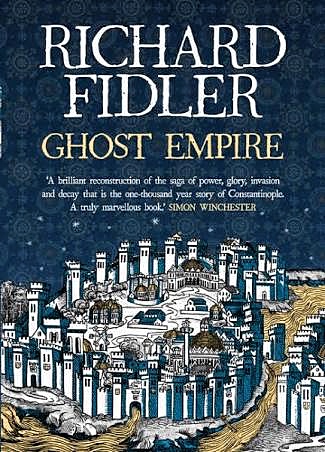
Richard Fidler reminds of this as he literally walks us through the streets of Istanbul.
Part father-son quest, part travel story, ‘Ghost Empire’ is at once a history, and a treasury of tales both true and far-fetched. The Australian author and broadcaster, and onetime member of the comedy trio, the Doug Anthony Allstars, has written a blend of popular history and meditation on the significance of history.
Although ‘Ghost Empire’ might in seem in parts overly breezy and lightweight, as an introduction to the ancient and wondrous city of Byzantium, Constantinople or Istanbul, it is an highly informative portal to weightier albeit less entertaining books. This is not to say it is without its more harrowing moments. Fidler dwells as much on the gory as on the glory. And indeed, for many, particularly the sons of emperors and sultans, confidants and conspirators, life could indeed be nasty, brutish and short.
Whilst Fidler’s primary focus is the story of the Byzantines, concluding with the fall of Constantinople in 1453, he travels back and forth in Istanbul’s long and storied history, between the violent past and the tumultuous present, from Julius Caesar and Constantine the Great, and the power couple Justinian and Theodosia, through Mehmet the Conqueror and Suleiman the Magnificent, to Ataturk and Erdogan, and captures the magic and at times, mayhem of the fabled metropolis that inspired WB Yeats to write:
“Once out of nature I shall never take
My bodily form from any natural thing,
But such a form as Grecian goldsmiths make
Of hammered gold and gold enamelling
To keep a drowsy Emperor awake;
Or set upon a golden bough to sing
To lords and ladies of Byzantium
Of what is past, or passing, or to come”
If Ghost Empire has whetted you appetite, i would recommend Bethany Hughes’ more substantial – “encyclopedic ” would a better description – Istanbul – A Tale of Three Cities (Orion 2017). It is a lengthy, comprehensive and fascinating journey from the prehistoric past to the polarizing present. There is also Simon Sebag Montefiore’s documentary, which personally, I found disappointing after his Jerusalem – The Biography.
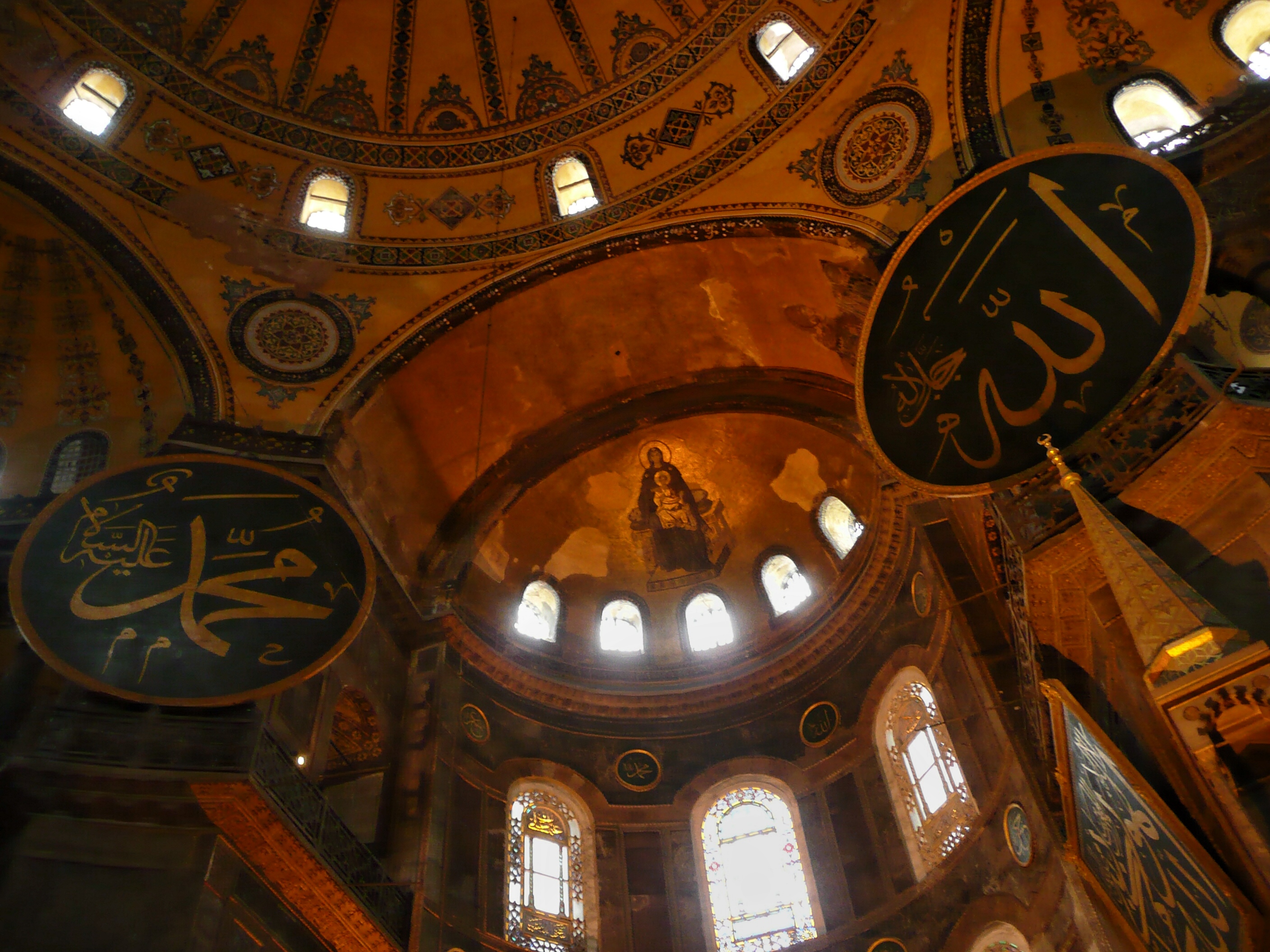
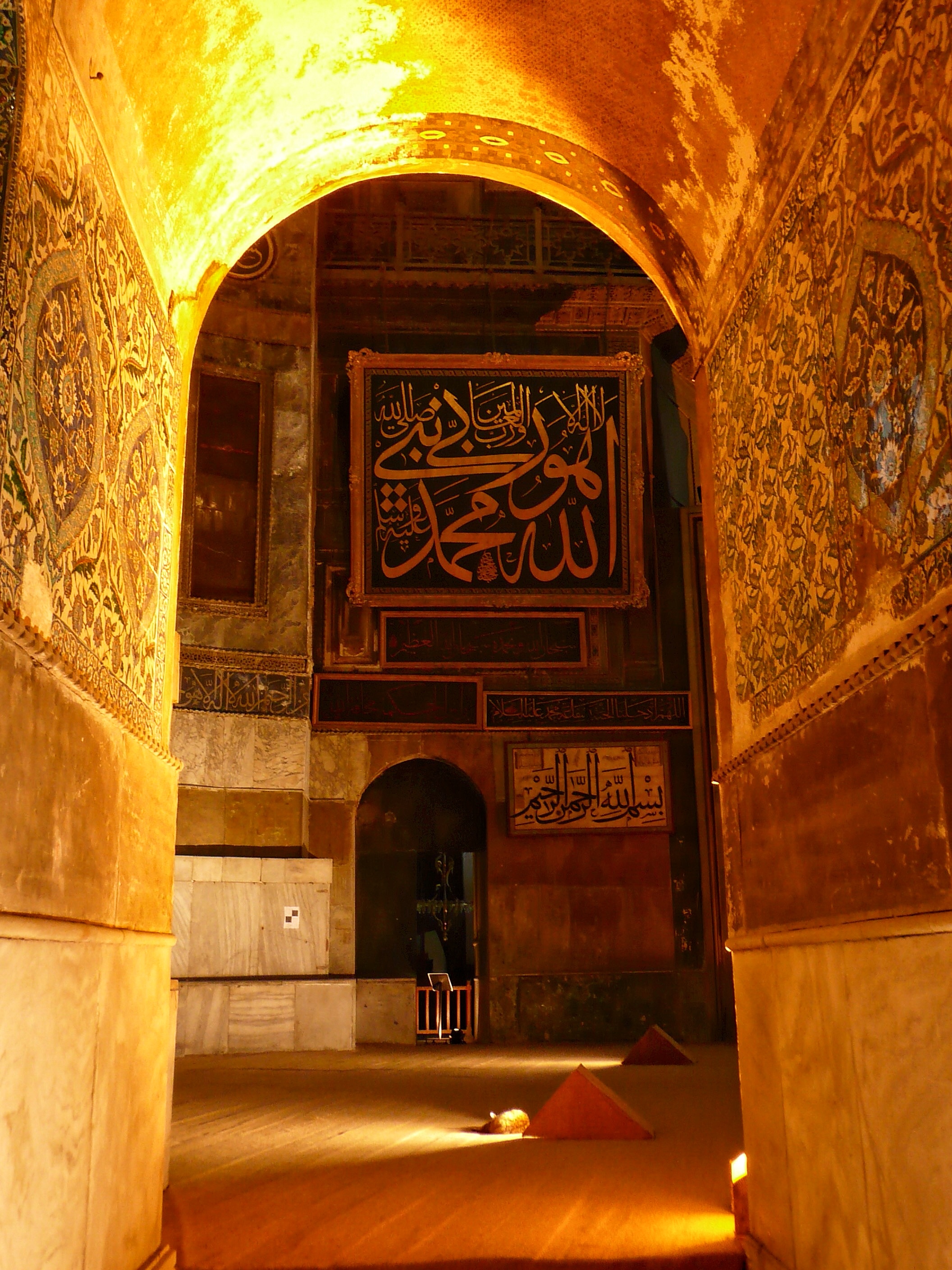
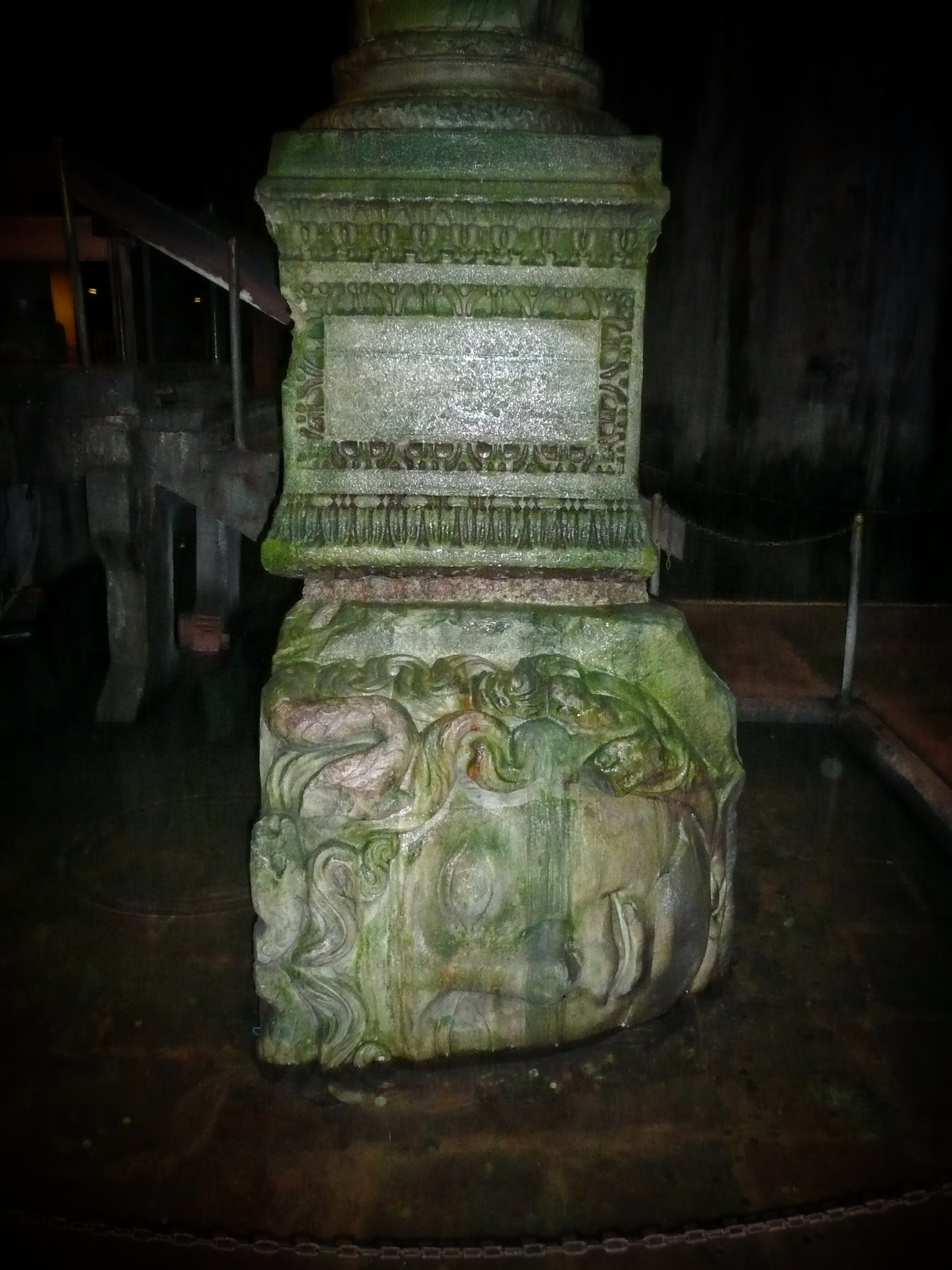
Some photographs of Istanbul from our visit to Türkiye in 2014 follow …
Istanbul, from Galata Tower Cruising the Golden Horn The Sulaymaniya Mosque Aya Sofya The Hippodrome and the Blue Mosque The Fortress of Europe Valen’s Aqueduct Galata Tower Aya Sofya Aya Sofya Aya Sofya Aya Sofya Halfden the Viking’s Grafitti in Aya Sofya Aya Sofya Aya Sofya Sulaymaniya Justinian’s Cistern
As I contemplate my annual review of In That Howling Infinite, I am reminded, with clichéd predictability, of that well-worn Chinese curse: “may you live in interesting times”.
A torturous and seemingly endless US election campaign defied all the pundits by producing an colourful and unpredictable POTUS. In the UK, the unthinkable Brexit came to pass, dividing the polity and discombobulating the establishment. Next year is certainly going to be worth watching.
The slow and tragic death of Syria continued unabated with Russian and Turkey wading into the quagmire alongside Americans, British, French, Australians, Iran, Lebanon, Gulf tyrants, and Uncle Tom Cobley and all. Da’esh might be on the the ropes in Iraq, but the long term survival of the unitary state is doubtful. And the proxy wars of the Ottoman Succession have spread to Yemen, the poorest country in the Middle Eas as Gulf tyrants face off against Shia Iran’s alleged puppets, and, armed and abetted by British and American weaponry, South American mercenaries, and Australian officers, bomb the shit out of the place.
Whilst the grim reaper scythed through the world from Baghdad to Berlin, from Aleppo to Ankara, the Year saw the passing of a record number of icons of the seventies and eighties, two of whom who have provided a continuing soundtrack for my life, Leonard Cohen and David Bowie. We shall not see the like of them again.
In our little corner of the cosmos, we endured the longest and most boring election campaign in living memory, resulting in an outcome that only accentuates Australians’ disenchantment with a lacklustre Tory government, a depressingly dysfunctional political system, and politicians of all stripes who, blinkered by short-termism, and devoid of vision, insist on fiddling whilst the antipodean Roman burns.
Meanwhile, in our own rustic backyard, we find that we too are “going up against chaos”, to quote that wonderful Canadian songster Bruce Cockburn. For much of the year, we have been engaged in combat with the Forestry Corporation of New South Wales as it proceeds to lay waste to the state forest that surrounds us. As the year draws to a close, our adversary has withdrawn with only half of its proposed harvest completed. But it will return in 2017, and the struggle will continue – as it will throughout the state and indeed the nation as timber, coal and gas corporations, empowered by legislation, trash the common treasury with the assent of our many governments.
And yet, life on the farm remains pleasant and delightful, though dams are low and rain would be most welcome. The bird and reptilian life continues to amaze us, and an ironic corollary to the clear felling of the Tarkeeth Forest is that “refugees” are seeking shelter here. Wallabies rarely seen on our land are now quite common, whilst echidnas, and, we suspect, endangered spotted quolls have been sighted hereabouts
We took time out mid-year to revisit Israel and Palestine, and road-trip through the two countries was much an education as a holiday. We certainly got our history and archeology fix, and in travelling through the Golan and the Negev, we found respite in a stunning natural environment. But the answers to our many political questions merely threw up more questions. We have unfinished business in this divine but divided land, and will return.
In That Howling Infinite addressed all these concerns during 2016, and matters more eclectic and exotic.
And so, to the year in review:
The new year commenced with a reprise of our memorable journey to Hadrians Wall, and of the Victorian lawyer who helped preserve it for posterity, the saga of the viking Harald Hardraga and also, my subjective overview of world history. In a more lighthearted vein, I indulged in an unscholarly discussion of how film and fiction have portrayed or distorted history, and in a review of Mary Beard’s superlative history of Rome, I asked the immortal question “what have the Romans done for us?”
In April, in response to a discussion with a Facebook friend in Oklahoma, I wrote a trilogy of exotically-titled posts examining the nature of rebellion, revolution, and repression: Thermidorian Thinking, Solitudinem Faciunt Pacem Appellant, andSic Semper Tyrannis. The origin of these Latin aphorisms is explained, by the way, in the aforementioned Roman review.
Our travels through Israel and Palestine inspired numerous real-time posts, and a several retrospectives as we contemplated what we had experienced during what was as much an educational tour as a holiday. Historical vignettes included a tribute to bad-boy and builder King Herod the Great, a brief history of the famous Damascus Gate, and its place in Palestinian national consciousness, and a contemplation on the story of King David’s Citadel which overlooked our home-away-from home, the New Imperial Hotel. Thorny contemporary issues were covered with an optimistic piece on theJerusalem Light Rail, a brief if controversial post about Jewish settlers in the Old City, the story of Israel’s ‘Eastern’ Jews, the Mizrahim, and what appears to be a potentially problematic Palestinian property boom. Th e-magazine Muftah published an article I wroteabout the conflicting claims to the city of Hebron. And finally, there is a poem recalling our visit to the Shrine of Remembrance at Yad Vashem and honouring the Righteous Gentiles who saved thousand of Jewish lives during the Shoah.
Wintertime passed with our minds on the Tarkeeth Forest. I had the pleasure discovering the history of our locality, and connecting via Facebook with the relatives of the Fells family of Twin Pines. But the latter half of the year was very much taken up with enduring and bearing witness to the clear- felling of the forest to our east. “If you go down to the woods today, you’re in for a big surprise. If you go down to the woods today, you’ll never believe your eyes”. And you’d ask “what would JRR Tolkien have thought?”
The UK And US paroxysms fascinated and exasperated the mainstream and social media in equal measure, whilst the outcome of the Brexit referendum and the presidential election has initiated an a veritable orgy of punditry. Never have so many column inches and kilobytes been spent on loud sounding nothings as the sifting through the entrails of such events as Brexit, the US election, and the Australian senate! With half a dozen elections coming up in Europe, Trump’s inauguration and the triggering of Article 50 to take Britain out the European Union, we’re gonna have to endure a lot more. I confined my posts to two insightful pieces by respected right-wing Australian commentators, Paul Kelly’s Living in Interesting Times, and Greg Sheridan’s The Loss of American Virtue, and my own reflection on the right-wing media’s strange fascination with “insiders” and “outsiders”.
Finally, in comparison to last year, this year was very light on music and poetry. But American satirist Tom Lehrer got a retrospective, and murdered Pakistani qawwali singer Madhaf Sabri, an obituary, whilst an abridged and vernacular version of John Milton’s Paradise Lost told the tale of Lilith, the first and greatest femme fatale. In the words of the gloriously-named jockey Rueben Bedford Walker III says in EC Morgan’s magnificent The Sport of Kings, the subject of my first post for 2017, “Malt does more than Milton can to justify God’s ways to man”.
On that wise note, I wish the world a Happy New Year – and may it be less interesting than this one.
In That Howling Infinite is now on FaceBook. Check it out. And just for the fun of it, here’s my review of 2015.
As far as we know, Meniscus Diabetes was born in Rome in 25 CE, and acquired his poetic licence during the reign of Emperor Claudius. He had an abiding interest in Rome’s eastern provinces, and one of his surviving manuscripts is this epic ballad. See Roman Holiday – The Perils of a Poet in Nero’s Rome.
Lilith is a retelling of the “Legend of the Fall”. The style of Lilith differs markedly from that of other poems attributed to Meniscus – most notably the Hebrew Heroes cycle (again, refer to Roman Holiday), and was evidently written for a different manner of presentation. It was most likely written to be recited rather than sang (as were his other “story songs”). Recitations were a common form of entertainment in the middle Roman period, owing their popularity to the enduring reputations of the “classical” writers of the time, Ovid, Horace and the like. It was not uncommon for such recitations to last several hours. But Meniscus, mindful of the fast moving times, and also of the attention span of his audiences, appears to have honed his pieces down to between ten or fifteen minutes.
If Meniscus’ tale of Adam, Eve, Lilith and Lucifer has not been lost to literature until its very recent discovery, one wonders whether John Milton would have bothered to retell it in such lengthy and verbose detail.
Lilith, however, has been around for thousands of years. In the Talmud, she is described as a winged demoness with a human appearance. She appears in the bible, in the Dead Sea Scrolls, and in Hebrew folklore, and has been mentioned in black magic treatises. The apocryphal story is that Lilith was Adam’s first wife. God made Adam from dirt and clay. Adam bored, requested a companion, and God obliged with Lilith. Legend has it that her dirt was dirtier than Adam’s, but put that down to patriarchal prejudice and propaganda. More likely, she had the dirt on him! But I digress. Apparently, Lilith was not as inferior to Adam as he wanted. She wanted to be her own person, not Adam’s wife-slave. The story is that when Adam insisted on the missionary position, Lilith refused, saying “Why must I lie beneath you? We are both equal. We come from the same earth”. Adam got mad, and Lilith took off.
Because of this, she was banished from Eden and became a spirit associated with the seductive side of a woman. Eve came in her place to stand behind Adam, not beside him. Lilith became the timeless femme fatale, preying on the easily tempted weaker sex, the fabled incubus who comes at night upon men as they sleep. It is not for nothing that she has been hailed the (informal) goddess of wet dreams.
The legends are many and various. If you buy into the Lilith theory, you will see her cropping up throughout history in a variety of guises. In biblical times: Delilah, Salome, and Potophar’s wife. In fact and fable: Sheherazade, Lucrezia Borgia, Mata Hari, Evita Peron. Hollywood’s screen ‘sirens’ like Vivien Leigh, Elizabeth Taylor, and Marilyn Monroe. All of them antitheses to secular saints like Eve, Mary Magdalene, Joan of Arc, Florence Nightingale, Jackie Onassis, Mother Theresa, and Princess Diana.
Long time ago In a time before time,
When man was an atom in primeval slime,
When darkness lay hard on the face of the deep,
God called for his angels to sing him to sleep.
God made these angels from the fire ‘neath his throne,
Gave them existence and thought them his own.
‘Til one fiery angel professed discontent
At the whole pointless purpose to which he’d been sent.
He expressed his dissent towards God’s Constitution,
Fomented unrest and unleashed revolution.
The shackles of God he now deigned to throw off
With his old black beret and his Kalashnikov.
So Lucifer made for celestial hills,
Preaching an end to society’s ills;
Whilst God, declaration of martial law made,
And dispatched forthwith Michael’s Archangel brigade.
They tracked down the rebels to their mountain lair,
And challenged them forth for to give battle there.
Brave Lucifer fought and at terrible cost.
God, Paradise saved; he, Paradise lost!
From fire he came and to fire he descended,
And thus the battle for Paradise ended.
And bold Lucifer from sight of God, now rejected,
Reduced down to basics a mate he selected.
Having fought hard and failed, life just wasn’t the same,
So he sought to continue the family name.
He gathered the girls of his wandering band,
To choose the best and the brightest in his new found land.
He chose Lilith the Fair, he chose Lilith the wild,
Lilith the wonderful archangel child.
The grace and the charm of this heavenly belle
Did brighten the darkness of exile in Hell.
Her beauty brought visions of Heaven so bright;
Her songs fired the furnace of Hell’s fiery night;
Her dancing filled all of the exiles’ desire,
And upstaged the flames of the infernal fire.
But Lilith, a gypsy, quite soon got the shits
With the workaday life of her husband’s hot pits.
She yearned for adventure, she longed for to run
Naked and nimble, ‘neath God’s newborn Sun.
So she ventured to Earth and quite soon did perceive
That a fellow called Adam was fed up with Eve.
He’d never forgiven, he’d let his heart harden
Since she’d let him down badly that day in the Garden.
And Lilith knew well in her womanly way
That Adam was close to going astray.
She took off her wings and right at him, she hurled,
As if he was the only man left in the world.
(Which he was, in a way, in a manner of talking –
His sons, Cain and Abel, had not started walking.
And the Daughters of Eve, were infants at best –
And none had discovered the art of incest).
So Lilith moved in with her serpentine charm.
Poor Eve was pushed out in a state of alarm.
But you don’t press the point, you don’t try to shrug off
The aim of old Lucifer’s Kalashnikov!
She bunked up with Adam for seven score years
and pandered to all of his passions and fears.
But just like a man, he took her for granted
‘Til she said, “No more”! And her cloven feet, planted.
She made his life hell, (well, she knew all about it).
Poor Adam was grieved and rushed outdoors to shout it:
“Oh God, must you let me go through this alone?”
A voice said: “This party is not on the ‘phone!”
Then one day she took off , went to live with her sister
And true to his kind, our pal, Adam, he missed her.
He prayed to the Lord for to fetch his girl back
So the Lord sent three angels to pick up her track.
Now, Lilith went wild, when she found she was followed;
Fled into the night, and in shadows was swallowed.
And from that day to this she has been on the run,
Ne’er more to gaze on the face of the Sun.
Banished forever from Lucifer’s bed,
She wanders the world seeking mortals instead.
And in darkness of night when tired mankind is sleeping,
Out of the shadows, fell Lilith comes creeping.
Taking revenge for old Adam’s conceit,
She searches the land town by town, street by street.
House by House, ’til alone in your bed, you’re discovered;
In the wink of an eyelid, by Lilith you’re covered.
You’re caressed with the touch of a cold, seizing hand;
You’re rocked by a tremor you don’t understand;
You’re fastened upon with a grip of a vice;
And her lips are like coals and her body’s like ice;
And you’re trapped in your bed with no strength to resist,
Yet you feel that this moment’s too good to be missed.
And you wake in the morning, a terrible mess,
And you know then that Lilith has found your address!
What? Caligula didn’t really put his horse Incitatus into the Senate, order his legionaires to gather seashells for his combat with Neptune, God of the Sea, or sleep with his sister and later kill her? Nero didn’t fiddle whilst Rome burned, or attempt to drown his mother in a collapsible boat? And kicking his pregnant wife to death may have been domestic violence carried too far.
What? Julius Caesar didn’t cry “Et tu Brute?” to the leader of his assassins? Augustus’ second wife Livia was not the arch-poisoner portrayed by Robert Graves in “I Claudius”?. Tiberius wasn’t won’t to swim with naked little boys nibbling at his naughty bits? Claudius wasn’t a gentle old duffer who wouldn’t hurt a fly?
In her highly readable, popular history of Royal, Republican and Imperial Rome, acclaimed British historian Mary Beard consigns these and other popular Roman apocrypha to the Urban Legend file. Which may cause a certain degree of distress for those of who like their history garnished with a few saucy anecdotes (click on Roman Holidayin the menu above this post).
She attributes these highly entertaining stories to prurient scandal-mongering, sensationalism, and the vicarious pleasure of folks with dirty minds, and, significantly, to political spin and perception-management on the part of the kings, tyrants and emperors, and of heirs and successors responsible for creating, embellishing, and sustaining the public record. At one point, she states matter-of-factly that those who were assassinated were portrayed post-mortem as tyrants, sadists or perverts – or in a case of “the worse the better” “all of the above”! No wonder Roman emperors portrayed in “sword and sandal” movies from ‘The Robe’ and ‘Barrabas’ to ‘Gladiator’, are, like Lord Byron, “mad, bad, and dangerous to know”.
Caligula may or may not have been the bad lad we know so well, via Bob Guccione and John Hurt. Beard insists on calling him by his proper name, Gaius, rather than his childhood nickname, the horrorshow-sounding Caligula. The amiable, bookish Claudius was as ruthless and as brutal an autocrat as any of his predecessors and successors, dispatching scores of recalcitrant or lecherous senators to Hades (incidentally, it was Domitian who liked hurting flies). So too was Marcus Aurelius, the “philosopher king”, author of wise sayings and aphorisms, and beloved of adolescent philosophers.
Nero might not have been any worse or better than the others. Indeed, Beard argues, the fact that several Nero pretenders popped up, lyre and all, in various places after his death, demonstrates that he mightn’t have been all that unpopular, particularly in the provinces. Indeed, Beard suggests, Rome’s subjects in far-flung provinces would have had very little knowledge of or interest in the political shenanigans and sexual peccadillos of their rulers. Their only acquaintance with their emperor would have been with statues and the royal visage on the change in their pockets.
With Rome’s tabloid icons falling like flies (Domitian liked to torture them, by the way), thank Zeus Mary kept her revisionist hands of my all-time favourite classical baddie, King Herod the Great.
SPQR – Senatus Populusque Romanus, the Senate and People of Rome – challenges assumptions and preconceptions about the history of Rome, about the expansion of its empire, and about its citizens. For example, the accepted belief that the Romans were more rapacious and war-like, and much better organized than their neighbours – in early days, those who lived near the city state, neighbouring lands in Italy, and after a very short time, kingdoms, states, and chiefdoms as far apart as Caledonia in the west and Armenia in the east.
Rome’s neighbours and rivals were indeed just as aggressive, territorial, and acquisitive as the early kings who expanded their territories throughout Italy, the republican consuls and imperial generals who pushed the frontiers into Western Europe, the Balkans, Asia Minor, and the Middle East. Rome’s rivals, peers and enemies included formidable leaders and war lords with names like early contemporaries like Alexander and Artaxerxes. Enemies like Hannibal Barca, Spartacus, Vercingetorix, Armenius, and Boudica.
But SPQR isn’t all just about personalities and geopolitics. Beard delves into the dynamics of power in the state itself. How Rome, the city state and later, the empire were actually run. How powerful and influential individuals collaborated and collided in their quest for wealth and influence. And how rewarding and also how tenuous and dangerous life at the top could be. Whilst Beard would question Robert Graves’ portrayal of the Augustine emperors, she would not quibble with his take on the tension, uncertainty and risk endured by ambitious Romans who gambled for high stakes rather than going with the flow and keeping their heads down.
Most, indeed, did choose to keep their heads down, and endeavour to live a quite normal life. A life which, for those at the top of the social and economic ladder, could be very comfortable indeed. For those further down the socio-economic staircase, all was not so pleasant and delightful. Rather, for both free man and slave it was a life of toil and hardship literally from the cradle to the grave. Child Labour, long hours, unsafe working conditions, seven days a week. No weekend rest, no retirement benefits, no insurance cover. Ordinary people worked as soon as they could hold a pick or shovel, until injury, age or infirmity rendered them unproductive and expendable. But there was time for leisure, and contrary to modern preconceptions, it was not always bread and circuses. As in our own day and age, folk were more likely to have sought solace in the bottle and good fortune in the dice.
Using the limited archeological sources available – whilst the lives of important Romans are well examined, those of ordinary people are rare indeed – Beard illuminates her narrative with snapshots of the everyday lives of regula Antonys and Antonias. Although bits and pieces have been unearthed in settlements from North Africa to the Balkans, Pompeii and Herculaneum are a particularly rich source, as are the forts along Hadrian’s Walls, on the northern edge of empire. The wonderful Vindolanda tablets have preserved a picture of the oh-so-normal lives of transplanted souls so far away from home. See my earlier post, Roman Wall Blues.
The vignettes of Pompeii and Vindolanda illustrate one of Beard’s leitmotifs – the fact that Rome and Romans were much, much more than the city founded by the wolf-raised twins Romulus and Remus. Roman-ness and Romanization were as much a state of mind as a temporal, political imperium. People of all races, tribes, nations, and faiths from Spain to Syria, from Caerleon to Carthage, adopted Roman ways, institutions, commodities, food and beverages, artifacts, and even Latin names, to a greater or lesser degree depending on their proximity to Roman camps and towns, to Roman trade routes, and ultimately, to Roman authority. And many acquired Roman citizenship. And they entered Rome’s service, as soldiers, scholars, public servants, and politicians. By the end of the second century, some fifty percent of the senators were provincials.
Other histories of Rome have ended with the conversion of Constantine to Christianity in 337 CE signaling the end of pagan antiquity, or with the sack of Rome by the Visigoths 410. Beard closes instead with the “culminating moment,” in 212 when the emperor Caracalla declared every free inhabitant of the empire a full Roman citizen – almost thirty million provincials became Roman overnight in one of the the biggest grants of citizenship in the history of the world. Beard comes to no definitive conclusion as to why the underwhelming Caracalla made this move, but it’s effect was momentous insofar as it eroded the distinction between the Romans and the people they had conquered, colonized, and ruled – the culmination of a process that had been going on for almost a millennium.
The final pages describe how in form, function, and faith, the Rome that departed the Third Century was not the one that Augustus built and Caracalla bequeathed to the many, short lived emperors who followed him in rapid succession during a time of political and social instability, rebellion and civil war, barbarian invasion and plague – until Constantine established his capital in the east and built the Roman world anew. And this new Rome, the Byzantine Empire, with its capital Constantinople, was to endure until it fell to the Ottoman sultan Mehmet the Conqueror in 1453. The Holy Roman Empire, in Central Europe, was brought down by Napoleon in 1806, but as Voltaire observed, it was “neither holy, nor Roman, nor an empire”. Take that!
Unexpectedly, Beard does not conclude her thought-provoking, and entertaining survey of Rome’s first millennium with a catalogue of the many ways we have benefitted or suffered from our Roman heritage. We do not have much to learn directly from the Romans, she writes, but we have much to learn about ourselves and the past by engaging with the history of the Romans, their poetry and prose, their controversies and arguments. “We do the Romans a disservice if heroize them, as much as we if we demonize them. But we do ourselves a disservice if we fail to take them seriously – and if we close our long conversation with them”.
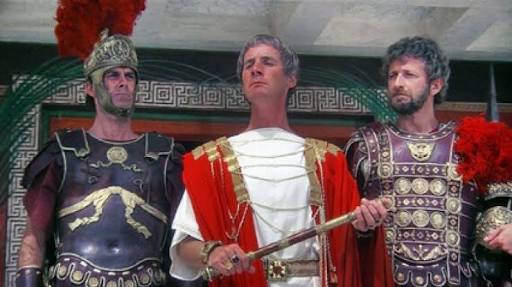
On that note, concluding an invigorating walk down what Welsh poet RS Thomas called ‘the long road of history”, I will leave the last word to Monty Python.
Postscript
This post is my own take-out of an entertaining and educational ride through Roman history. Every published review approaches it from different angle according to the perspectives and passions of the writer. And I have done likewise.
During its long history, Jerusalem has been destroyed at least twice, besieged 23 times, attacked 52 times, and captured and recaptured 44 times.
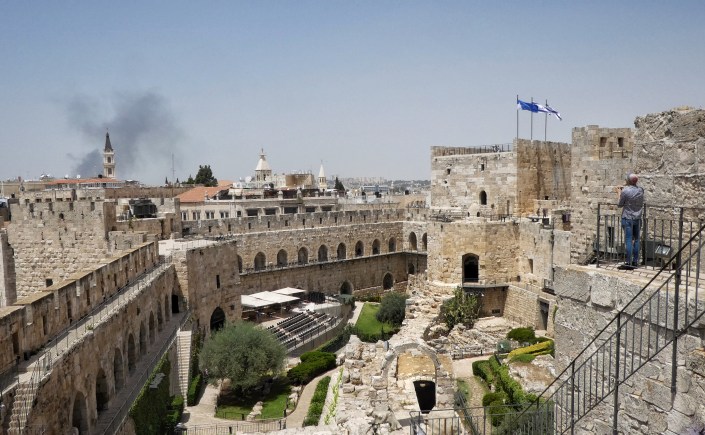
The Citadel or Tower Museum at the Jaffa Gate, the westernmost entrance to the city, is all the history you can eat in a four hour sitting. It’s a four thousand year old story: from the Canaanites and the Hebrews to the end of the Mandate and the establishment of the State of Israel, via Egyptians, Assyrians, Persians, Greeks, Hasmoneans, Romans, Byzantines, Umayyads, Abbasids, Fatamids, Crusaders, Ayyubids, Tartars, Mongols, Mamluks, Ottomans, British, and even Australians. Each left their mark on Jerusalem, and most planted their brickage upon and within the Citadel.
There is a long roll-call of famous names who may or may have not resided in the place.
King David didn’t, despite his name being given to the place and the apocryphal story that he once spied on the bathing Bathsheba from its ramparts – indeed, her bathroom is said to be underneath the New Imperial Hotel, just across the way. Nor did his son and heir, Solomon, builder of the First Temple. Conquerors Nebuchadnezzar and Cyrus did not. They just wrecked the joint. Judah Maccabee might have, and those other famous Jewish rebels, the Zealots didn’t, but during Great Revolt, they retreated there and trashed the place. Herod the Great, a psycho with an serious edifice complex, resided here. As did also Procurator Pontius Pilate when he was in town (he preferred the luxuries of Caesaea Maritimus (Latin for “on Sea). Historians now believe that the Citdel was where he actually cast judgement on Jesus, and not in the Antonine Fortress which overlooked the Temple (where the Haram al Sharif now stands) throwing into question the whole basis for the existence of the Via Dolorosa.
Roman general and future emperor Titus would have taken up residence therein after he destroyed the city in 70CE, leaving only the citadel standing. His troops needed somewhere to crash. Constantine didn’t, but his mom Helena most likely did when she “discovered” The True Cross, commissioned the construction of the Church of the Holy Sepulcher, and single-handedly invented the Holy Land pilgrim industry that endures to this day. The Muslim conquerors Omar Ibn Khattab, Salah ud-Din, and Baybars may have, but Ottoman Sultan Suleiman the magnificent, who built the city walls we see today, never set foot in Jerusalem, and nor did his successors.
Ottoman troops occupied it, and General Djemal Pasha would hang Arab Nationalists in the Square before it. General Allenby declared Jerusalem and Palestine liberated on the steps leading to the citadel in 1917, but most likely stayed across the square at our wonderful East New Imperial Hotel (the Kaiser stayed there too when he visited Jerusalem in 1898). British troops garrisoned it during the Mandate years – like the Roman legionaries before them, they’d’ve needed a place to lay their heads. The British-commanded Arab Legion of then Transjordan took control of it in during the the battle for Jerusalem in 1948 and defended it successfully against the new IDF. They did so again in 1967 only to lose it and the Old City.
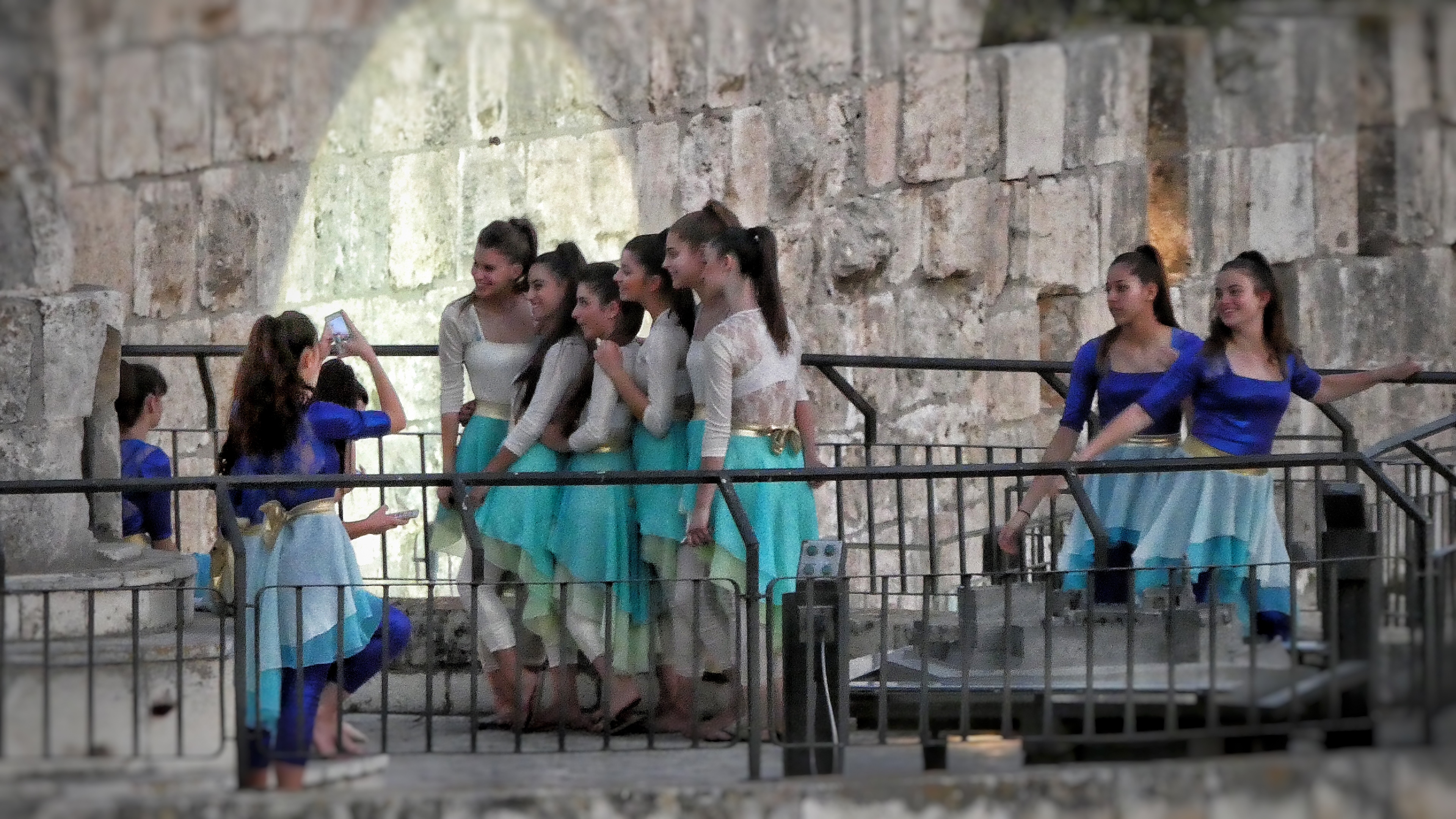
If the stones could talk, what a tale they would tell. And indeed, the museum now does just that, in content and in form. We sit on the roof garden of our hotel, directly across the street on Omar Ibn Al Khattab Square, and look across at its towers, ramparts and gardens, and sense it’s story in our souls. We watch present generations passing beneath its walls, and the young folk dancing on the ramparts, all part of the passing parade of humanity that has lingered by and upon these ancient walls.
For further reading, you can’t beat Simon Sebag-Montefiore’s Jerusalem : The Biography (Phoenix 2011).
Like Lord Byron, he was mad, bad, and dangerous to know. He may or may not have been a psychopath – he killed his way to the top, murdering his relatives, and also, his wife Mariamne, whom loved truly, madly, deeply – but he suspected her of plotting to depose him, so she had to go too. He regretted it instantly and embalmed her in honey so he could spend quality time with her by her open catafalque.
Herod did a lot of questionable things, but he has gone down in Christian demonology for an atrocity he did NOT commit – he didn’t massacre the Innocents to ensure that baby Jesus would not live to supplant himself as King of the Jews! The slaughter of the babies was an invention of later Christian propagandists. Also, he was not the Herod who’s daughter Salome invented lap dancing and in payment, demanded the head of John the Baptist. Nor was he the Herod who told the imprisoned Jesus “I’m the King of the Jews!” That was Andrew Lloyd Webber’s camp caricature. Herod was a common name amongst the later (and last) Hasmoneans.
To his Jewish subjects, he was not a Kosher King, being only half Jewish, and then, only through this dad (even today, opinions about him are mixed for the same reason). Accordingly, he felt that he had to prove himself, like similarly half-Jewish, and much wiser King Solomon. So he built things. And man! Could he build! His stuff was not large – it was Monumental.
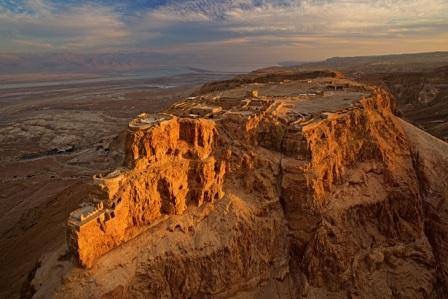
At Caesarea, on the Mediterranean coast, he build a port, a seaside palace and a city. In Jericho, another magnificent palace. At Herodium, he built a fortress-palace-mausoleum, but first, he built a hill high enough that he could see Jerusalem from the summit. Across the River Jordan, in present day Jordan, he rebuilt a fortress-palace at Machaerus which was said to be location of the imprisonment and execution of John the Baptist, and the venue for Salome’s notorious dance, The ancient town of Sebastia, on a hill with panoramic views across the West Bank, is another location of Herodian brickage; its Nabi Yahya Mosque is said to be the burial site of the Baptist – although his head is believed to rest in an ornate catafalque in Damascus’s splendid Umayyad Mosque. And he a fortress and summer palace on the Masada massif overlooking the Dead Sea, and the site of one of history’s most famous “last stands”.
He obviously liked palaces. When he died – and he died horribly as befits a bad boy – he was laid to rest in a bespoke tomb in his Herodium eyrie.
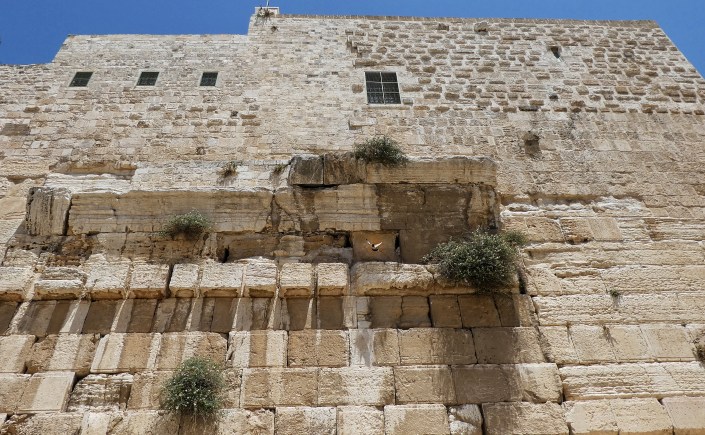
But his crowning glory was his breathtaking refurbishment of the Second Temple, rendering it a wonder of the contemporary world. Too bad that a “wabble of woudy webels”, to quote Bickus Dickus in “The Life of Brian”, had to rise up against Rome in 66CE, precipitating the destruction of Jerusalem, the death of thousands, and the razing of temple to the ground. All that impressive Herodian brickage was sent crashing to the ground, and all that remains is the Kotel, the hallowed Western or Wailing Wall.
(The featured image shows signature Herodian ashlar blocks in the Kotel, the Western or “Wailing” Wall)
Apart from building things, was Herod really that “great”? I reckon he gave himself that soubriquet – or else the Romans did, probably in sardonic irony (which Herod, narcissistic and paranoid, probably didn’t get). His subjects didn’t think so and were happy when he died. Some accounts suggest that he’d ordered his bodyguard to slaughter the heads of prominent Hebrew families on the event of his death so that the people would not feel like rejoicing when he passed.
Herodian brickage thrown down by the Romans
Herodium
Masada
The largest house brick in the world. The Western Stone of the Kotel 13.6m
You come at the king, you best not miss.
Omar Little, The Wire (after RW Emerson)
The phrase “one man’s freedom fighter is another man’s terrorist” is at once apt, correct, and yet often oversimplified to the point of disingenuousness. The word “terrorist” itself describes its goal. To instill fear in the heart of the enemy. In the past, the target would have been the king, the dictator, the ruling class, and those who served them and upheld their rule. Politicians, officials, solders and policemen. Today, terrorists indiscriminately target whole societies. Irish bombers blasted communities of the rival faith, murdered shoppers, office workers, and pub patrons, as well as soldiers and policemen. Palestinian suicide bombers hit malls and pizza bars in city centres. ISIS, al Qa’ida and the Taliban detonate cars in busy city streets and publicly execute prisoners in callous and calculating “lectures in flesh” (the phrase is civil rights lawyer Geoffrey Robertson’s, from his chilling account of the trials and execution of King Charles I of England and those who sentenced him, The Tyrannicide Brief.).
But targeted and random terrorism has a long historical pedigree. For centuries, it has been the desperate and nihilistic weapon of last resort of resistance and rebellion against perceived oppression and injustice, and against invaders and occupiers.
In the second century BCE Palestine, the Maccabees used assassination in their resistance to the Seleucid Greeks, and a century later, the Jewish zealots, the Sicarii, named for the easily concealed small daggers, paid the Romans in like coin, and ultimately in an insurrection that culminated in the destruction of Jerusalem in 70CE and the scattering of the Jewish race (giving history the emotive and symbolic last exit that was Masada). In an etymological irony that Mark Twain would have been proud of, the present unrest in Jerusalem, a large number of young Palestinians have perished in attempting to stab jewish soldiers and civilians. Their jaquerie is called the “Intifada Sakni-in”, the ‘Knife Uprising – an echo of those long-dead Sicarii “dagger men”.
Nowadays, one would be excused for thinking that “terrorism” and “terrorist” are synonymous with Arabs and Muslims. And a historical precedent reinforces this erroneous assumption. The Hashishan or “Assassins” of Middle East fame (yes, that is where that noxious noun originated) were Muslim men and boys mesmerized and mentored by Rashid ad Din as Sina-n, the “Old Man of the Mountain” (and all this, before Osama in the caves of Tora Bora), and were Twelfth Century hit-men contracted out to rival Muslim princes in the internecine conflicts that plagued the Levant in the wake of the Crusades and the demise of the great Arab Caliphates.
But the assassin’s knife (and in modern times, the gun and bomb, and latterly cars and trucks) predates these medieval hoods and links the Hebrew rebels of old to the Irgun and Stern Gang who encouraged Britain and the UN to abandon Palestine in 1948, bequeathing most of it to the new state of Israel, and triggering the Palestinian diaspora. European anarchists and Irish rebels and loyalists were adept at shootings and ambushes. In Algeria, during the ‘fifties, the nationalist FLN and the “colon” OAS shot and bombed each other and those unfortunates caught in the crossfire. The IRA perfected the improvised explosive device that today has crippled thousands of American, Canadian, and Australian soldiers in Iraq abd in Afghanistan. Hindu Tamil separatists of Sri Lanka introduced the suicide bomber, an economical and efficient weapon against soft (civilian, that is) targets, deployed today by Islamist killers in the streets of London and Lahore, Damascus and Dar es Salaam, Jerusalem and Jakarta. Whilst Arabs – and particularly Palestinians may have given the world the hijacking of aircraft – a tactic that fell into disuse due to diminishing political returns and rapid response forces – other Arabs showed us how to fly them into public buildings as the whole world watched in horror and disbelief. The shockwaves of this one are still reverberating through the deserts of the east and the capitals of the western world.
In going up up against their occupiers, the Palestinians have an old heritage. In my old country, Boudicca and Caractacus fought a losing battle against the Romans in Britain during the First CE. The Roman historian Tacitus ascribed to a vanquished chieftain the memorable words “solitudinem faciunt, pacem appellant” – they make a desert and they call it peace. After the battle of Hastings in 1066, the defeated Saxons pushed back against the Normans and brought the genocidal wrath of William the Conqueror down on their heads with the devastating “Harrying of the North”. The Green Man and Robin Hood legends are said to be a retrospective and romanticised remembering of the Saxon resistance. Warrior fugitives from that failed guerilla war fled as far as Constantinple, where many joined the Emperor’s acclaimed Varangarian Guard, (see When Harald Went A Viking)
In the streets and the countryside of Ireland, my parents’ birthplace, the United Irishmen, Fenians, Free Staters, IRA and Unionists fought against the redcoats, tommies, and black and tans of the British Army. Fought amongst themselves, fought against each other, and killed and were killed in their centuries long war of liberation. And in my adopted country, indigenous Australians fought a futile frontier war against settlers and soldiers just as native Americans did, albeit on a much smaller scale, and paid the price in hangings, massacres, poisoned wells, dispossession, marginalization, and “stolen children”. The legacy of those times lingers still – see The Frontier Wars – Australia’s heart of darkness.
In Central America, Juarez led the Mexicans against the French, and Sandino, Nicaraguans against US marines. Spaniards rose up against Napoleon’s forces, giving the world the word “guerilla”, or “little war”. Russian partisans ambushed the Grande Armé and the Wehrmacht. Throughout occupied Europe, the very term “resistance” became synonymous with the heroic unequal struggle against tyranny. In another of history’s ironies, muqa-wamat, Arabic word for resistance, unites sectarian rivals Hamas and Hizbollah against Israel.
And not just resistance to invasion and occupation, but also against oppression by one’s own rulers. Religious tracts tie themselves in knots reconciling the obligation to obey our rulers with the right to resist and overthrow those that rule badly. The unequal struggle against tyranny – or what is perceived by the perpetrators as tyranny – is the cause that inspires men and women to desperate acts.
The most celebrated in fact, film and fiction is the death of Julius Caesar at the hands of peers who feared that he intended to usurp the ostensibly democratic Republic (ostensible because democratic it was not) and institute one-man rule. That ended badly for the conspirators, and for Rome, as it precipitated years of civil war and ultimately, half a century of empire).
In 1880 the reforming Czar Alexander II of Russia, discovered the hard way that liberating the serfs did not inoculate himself against the bomb that took his legs and his life. His fearful and unimaginative successors hardened their hearts and closed their minds against further reform. setting in train the crackdown on dissent and democratic expression that led eventually to the storming of the Winter Palace on Petrograd in 1917. Narodnaya Volya, the killers called themselves – the People’s Will. And that is what terrorists do. They appeal and owe fealty to a higher court, a greater good, a savage God.
So it was when student and Serbian nationalist Gavril Princip assassinated Archduke Ferdinand of Austria-Hungary in June 1914 and ignited the spark that lit the conflagration of World War 1 which precipitated the demise of the old European empires.
So too when John Brown and his sons brought their broadswords to bear on slavers and their sympathizers and made a date with destiny at Harpers Ferry. Their famous raid may or may not have accelerated the downward slide to the secession and civil war that erupted the following year, but it provided a moral and symbolic prelude and also, the resonating battle hymn of the republic. John Wilkes Booth bookended this bloody era with his histrionic and public murder of Abraham Lincoln, shouting “sic semper tyrannis”, “thus always to tyrants,” attributed to Brutus at Caesar’s assassination – today, it’s the Virginia state motto. Brown and Booth were quite clear in their motives. As was were the segregationalist shooters who did for African Americans Medgar Evers and Martin Luther King. Less so were the killers of the Kennedy brothers in the sixties.
To conclude, sometimes that savage, rebel God is one of faith, sometimes, of blood and soil. In some instances, it is revenge for wrongs real and imagined – the reasons at times lost or forgotten through the passage of time and fading memories. And often, “the cause” is corrupted by the immoral economics of illicit commerce, including contraband, kidnapping, blackmail and extortion. Sometimes all merge in an incongruous hybrid of religious passion, ethic identity, libertarian or anarchistic fervour, and protection racket. As was the case in Northern Ireland, in Lebanon, in sub-Saharan Africa, and currently so in Syria and Iraq.
But most times, terror and turmoil is simply a political weapon planned, targeted and executed as a mechanism of regime change. Rebellion, revolt and revolution. Resisting, opposing, challenging, confronting and defeating the central authority. The seizing, holding, consolidation and keeping of political power.
And one thing is for sure. The outcome is unpredictable. History does not move in straight lines, but often follows a bitter and twisted path. Cliched as it is, the phrase “be careful what you wish for” is an apt one. And when, as Bob Dylan sang, “the line it is drawn, the curse it is cast”, there is no going back. To quote WB Yeats’ famous lines, “all is changed, changed utterly”.
Terrorism, then, can shift the course of history. If we were to stumble into the swamp of alternative histories, imagine what might of happened
If Caesar had walked home from the senate on the Ides of March
If Lincoln had been able to guide the Reconstruction
If the reforming Czar had introduced democratic government to Russia
If Gavril Princip’s shot had missed the archduke
If Kennedy had returned from Dallas
If John Lennon outlived George Harrison
If Yitzak Rabin had left the peace concert in Tel Aviv
If the Twin Towers stood still
To quote “Stairway to Heaven”, a curiously apposite title given the millenarian mindset of many terrorists, “Oh, it makes you wonder!”
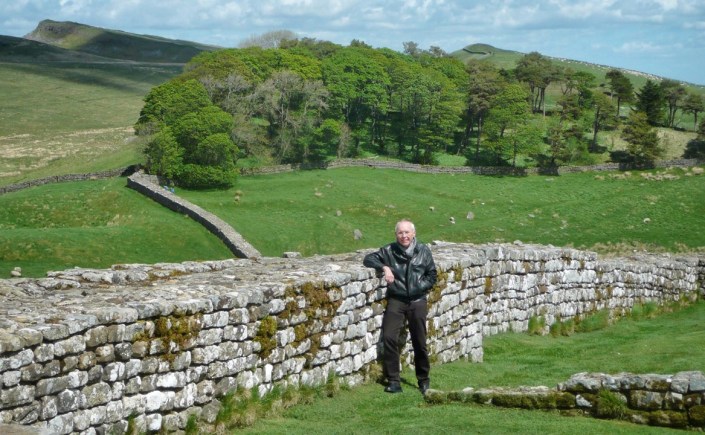
One of the highlights of last years’ travel in northern England was our visit to Hadrian’s Wall. In Roman Wall Blues, I wrote of the magical museum at Vindolanda, the Roman town just south of the wall, and contemplated the lives of those memorialized within. Earlier that day, we had walked through Chesters Fort, where the wall crosses the Tyne, the best preserved Roman cavalry fort in Britain.
Adjacent to the fort is a small but significant museum. It was here that we learned that what we are able to walk through and and wonder at today, we owe to the dedication, foresight, and finance of one man: John Clayton, one of the great unsung saviours of Britain’s historical heritage. His monument is the Chesters Roman Fort Museum which houses the Clayton Collection of 5,500 catalogued items from many sites on the central section of the wall.
A classically educated Victorian gentleman who combined demanding roles running the family law firm and acting as town clerk for the city of Newcastle-upon-Tyne, Clayton had a passion for archaeology and the Roman military legacy in his beloved Northumberland.
Were it not for Clayton, large parts of Hadrian’s Wall would have disappeared as the industrial revolution fuelled the demand for stone to build factories, mines and mills. His role in the preservation and survival of Chesters Roman Fort is undisputed.
During the early 19th century, Clayton lived at Chesters House in the parkland surrounding the Roman fort, and from an early age he was fascinated by the Roman relics surrounding him. By the 1830s, he began buying land to preserve the Wall. This was at a time when what is now a World Heritage Site was little understood, and indeed, was being unthinkingly destroyed through the quarrying and removal of its stones for reuse in industrial and urban development.
Clayton’s enthusiasm helped preserve the central stretch of Hadrian’s Wall that includes Chesters (Cilurnum), Housesteads and Vindolanda. He carried out some of the first archaeological excavations on the Wall, carried out restoration work, and brought early tourism to the area by displaying some of the finds at Chesters. Clayton managed the estate and its farms for sixty years, generating the funds to finance to fund further preservation and restoration work on the Wall. He never married, and died in 1890.
The museum housing the Clayton Collection was opened adjacent to the fort site in 1903, 13 years after his death. Today, it is privately owned, but is curated by English Heritage on behalf of the Trustees of the Clayton Collection, and it has been refurbished to brin to contemprary standards of conservation, display, and interpretation. And yet, great care has been taken to respect its period character, and to retain the feel of a 19th century gentleman antiquarian’s collection, with many of the labels and original cases having been retained.
Click his name to read more about John Clayton and his museum.
























 In That Howling Infinite