Laugh Out Loud! What are “the funniest books ever”?

The listing and rating of comedy books – any books, really, and indeed, “best of” lists of anything, be it music or movies, holiday choices or cheeses, is a highly selective and subjective exercise that says more about the compilers of the lists than about the quality of the books themselves. A demonstration of their erudition, perhaps, and their eclectic tastes? Or is it pomposity and pretentiousness, or worse, that put-down so beloved nowadays of shock-jocks, populists and self-styled”outsiders”: elitism.

Huffington Post published a list entitled “46 Hilarious Books Guaranteed To Make You Laugh Out Loud”. Now, how presumptuous is that? “Hilarious”. “Guaranteed”. “Make you laugh”. Says who? Esquire listed “the funniest books ever“, and The Telegraph presented “the fifteen best comedy books of all time“. And recently, there was he worthy Guardian wrangling famous authors into the paddock: “I fell out of bed laughing‘. “Funniest”. “Best”. Oh well!

I must confess that whilst I have heard of most of the books in these lists, I have read only a handful. And with the exception of Catch 22, The Hitchhikers Guide to The Galaxy, I would not rank these in a list of my own – which I will get to shortly.

Humour, comedy, call it what you will, is a funny business. Sorry. Bad pun.

There is a wide gap between a wry grin and a guffaw. One man’s cringe is another man’s belly laugh. And whilst whoopee cushions are anachronisms, remembered only by over-sixties, some folk actually DO like fart jokes. And age is no barrier – last week in Big W, I marveled (I think “winced with incredulity” is more apt) at a “fart blaster”, a promotional spin-off from the Despicable Me film franchise.

Humour works in many ways and on many levels. Sometimes, it doesn’t work at all. I recall my schooldays back in England, and being obliged to write essays explaining and analyzing the humour in Henry IV Part One (a title that doesn’t suggest a lot of laughs, although this is the play that gave  world that lovable old rogue Sir John Falstaff and his motley crew) , The Pickwick Papers, and the plays of George Bernard Shaw (I can still sing all the songs from My Fair Lady). Like numberless students before me, I tried unsuccessfully to explain to “Sir” that I just didn’t find them “funny”. As did most of my classmates. So we settled for memorizing the different “types” of “humour” (as if being “funny” was not really a part of it). These were usually words of Greek and Latin origin (these old folk invented it, you see – the classical “commedia” that is ), and classifying the Bard, Boz and GBS according to this scholarly taxonomy. Which, incidentally, is summarized beautifully in Monty Python’s classic Piranha Brothers sketch as an a witness describes the negotiating techniques of the demented and dangerous Douglas Dinsdale:

“Well, I was terrified. Everyone was terrified of Doug. I’ve seen grown men pull their own heads off rather than see Doug. Even Dinsdale was frightened of Doug…He used… sarcasm. He knew all the tricks, dramatic irony, metaphor, pathos, puns, parody, litotes and… satire. He was vicious”.

Some may find the concept and realization of this ice-thinly disguised and ridiculous send-up of the notorious and seriously brutal Kray Brothers to be in dubious taste (it would never get up today, what with political correctness and defamation laws). But that was the way the Python crew worked. You really had to “get” it. The same could be said of its predecessors, The Goon Show, Beyond the Fringe, That Was The Week That Was, and Pete and Dud’s Not Only But Also. And it’s successors, The Young Ones, Bottom, Black Adder, and Ab Fab. What is hilarious to some is puerile to others. What is deep and meaningful to serious aficionados is lightweight, trite and pointless to high and low-brow grumps alike – who “just don’t get it”.

And “getting it” too is selective and subjective. Some people “get” Woody Allen, and see all his stuff (and believe me, it can be patchy, and as he gets older, you do have to kiss a lot of frogs before you find the prince of the Annie Hall and Manhattan days), and others just don’t see the point (quite apart from expressing discomfort with his private life). So you can see how subjective it all is.

Humour in radio, film and television is in the eye, ear and imagination of the beholder. It is audiovisual as well as textual, the one often illustrating and enhancing the other. Expressing humour on the printed page is an altogether different and difficult endeavour.

Which brings me back to books, and to those lists.

I could never get into the lightweight upper-class comedies of manners so beloved of many English people, the Jeeveses and the Woosters and the Three Men in a Boat, or the precocious, neurotic memories of New York Jewish writers and intellectuals (although I do “get” Woody, as   I  mentioned earlier, I couldn’t abide Portnoy’s Complaint), nor the chatty, revelatory memoirs and faux-memoirs of celebrities of stage, screen and standup  (I did however enjoy David Niven’s Bring on the Empty Horses, back in the day, and Clive James’ Unreliable Memoirs). Yet these and their ilk would appear to dominate the “best comedy books” lists. And I wondered why classics like Cervante’s Don Quixote and Lewis Carroll’s Alice’s Adventures in Wonderland, surreal and eccentric as they are, didn’t make the team – nor old George Bernard or the now rehabilitated Oscar Wilde. But then again, these worthies were so weighed down with social and political comment that the humour often got side-tracked. I mean, who wants to hear about madness and despair, class prejudice, the privileged few and the downtrodden masses? Who needs to read about what happens when “the white knight is talking backwards and the Red Queen’s off her head”. Sorry about that, but I couldn’t resist bringing Grace Slick into this.. “Remember! What te dormouse said”:

Back to those lists. Compiled several years apart, they contain quite a few of the same titles. Which might suggest one of several things: that intelligent, well-read, journalists and reviewers  are into much the same kind of books as their peers; that their literary tastes are not at all like mine – I am very much a “I like what I like” person, are many other readers; and that people who put together such lists google others’ lists in order to draw up their own – so perhaps there are some lazy compilers out there who have not even read the books that they are listing.

Anyhow, in no particular order, here are my top five:

1. Jospeh Heller, Catch 22
The adventures of an American airman who maintains his sanity in an insane WW2 by endeavouring by fair means or foul to get discharged from the forces on grounds of insanity, and gives the world an iconic catchphrase for paradoxical double-binds and vicious circles. It was mean to be “Catch 18”, but Heller was gazzumped by Leon Uris’ Warsaw Ghetto soap opera Mila 18.

2. Thomas Pynchon, The Crying of Lot 49
Oedipa Maas returns home from a Tupperware party to discover that she has been appointed executrix of a former lover’s estate, and embarks on a strangely strange quest in which she encounters an exotic bunch of people with equally exotic names, like fascist Mike Fallopian, philatelist Ghengis Cohen, and a shrink named Doctor Hilarius.

3. Michael Chabon, The Yiddish Policemen’s Union
An alternative history set in the Yishuv of Sitka, Alaska where the Jews of Palestine were settled after being expelled by the victorious Arabs in 1948, as alcoholic detective Meyer Landsmen struggles with his personal demons, broken relationships, Hassidic gangsters, Jewish-Inuit mixed-bloods, and timeless  Jewish customs and traditions whilst investigating a gruesome mob murder.

4. David Barret’s Penguin Books translation of Aristophanes’ The Frogs and Other Plays Written by an Old Greek in the Fourth Century BC, these camp and corny, political satires, replete with cross-dressing, bawdy repartee, catchy choruses, and yes, fart jokes, are sharp and acerbic, and readily applicable to the politics of today. “Not my circus”, his over-the-top characters seem to say, “not my monkeys”.

5. Fyodor Mikhailovich Dostoyevsky, Crime and Punishment.
Impoverished, arrogant, misanthropic, know-it-all Russian student plots the perfect murder. And, doesn’t get away with it.  Just kidding.

Seriously though, here is number five:

5. George McDonald Fraser, The General Danced at Dawn
GMF Is better know for his Flashman books, in which the unreconstructed villain of Thomas Hughes’ Victorian yarn “Tom Brown’s Schooldays” roves and rogers his way through the late nineteenth century, managing to escape by the skin of his teeth from one military disaster after another. But Fraser’s semi-autographical memoir as a young officer in Egypt during WW2, recounted in a series of short stories, is an absolute delight. The title story of The General Danced At Dawn contains one of my unforgettable “almost pissed myself laughing” moments. It goes like this:

The inspecting General MacCrimmon is unimpressed with the Battalion until he watches a display of the regiment’s officers performing Highland dancing. He joins in, becoming more and more excited, and recruiting more and more soldiers and passers-by to join in, by dawn the next morning, a mob of Highlanders, Fusiliers who share their base, military policemen, Egyptian locals, an Italian cafe proprietor, a some Senussi Arabs from the west in burnouses, and three German prisoners of war make history by dancing ‘a one hundred and twenty-eightsome reel’. The General’s inspection report “congratulated the battalion, and highly commended the pipe-sergeant on the standard of the officers’ dancing.” The pipey’s opinion was that as a dancer, the General was “no’ bad … for a Campbell.

I “got it”. And still smile whenever recall that strange ceilidh.

Didn’t I say that lists can be selective and subjective.

Visit:
https://m.facebook.com/HowlingInfinite/
https://m.facebook.com/hf1983/


Oh, Jerusalem – a song

“Bear me up on angels’ wings, and other transcendental things. Where the golden walls still glow, let my people go to Jerusalem”. 

Jerusalem is all about faith and passion, and there is no city on Earth that people get more passionate about. The light is luminous. In high summer it almost shimmers. The very air is full of prayer and politics, passion and pain, and the rocks and stones virtually sing a hallelujah chorus of history. I am not a religious person, but I cannot help getting excited by the place – although I do not transcend to transports of delight and delirium. Some folk love Jerusalem so much, they go mad.

Recorded by Charles Tyler at Susan Street, Annandale, 14th May 2017. © Paul Hemphill 2014 All rights reserved

Messianic Carpet Rides

Amazing Grace : There’s Magic In The Air

Tolkien’s Tarkeeth – In the Darkest Depths of Mordor

‘Twas was in the darkest depths of Mordor, I met a girl so fair, ’til Gollum and the evil  one crept up and slipped away with her, her, her…yeah!   Led Zepellin, Ramble On

And the embers of Eden burn. You can even see it from space.  Bruce Cockburn

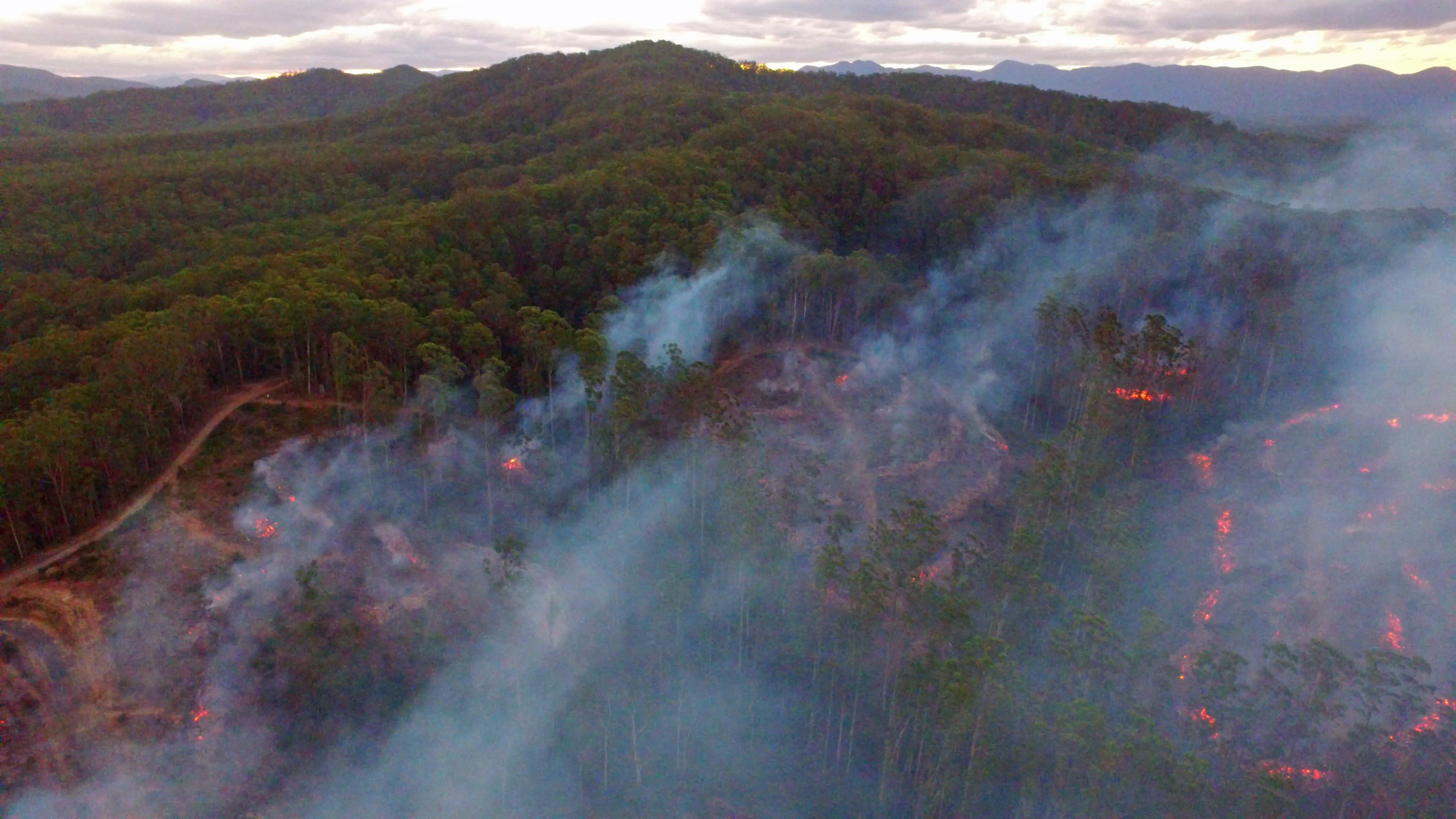
In September 2016, as the Tarkeeth drama unfolded, I published Tolkien”s Tarkeeth – Images of Isengard. The aggressive forestry harvesting practices employed by Forestry Corporation New South Wales conjured up images of the sorcerer Saruman’s devastation of the forests of Isengard.

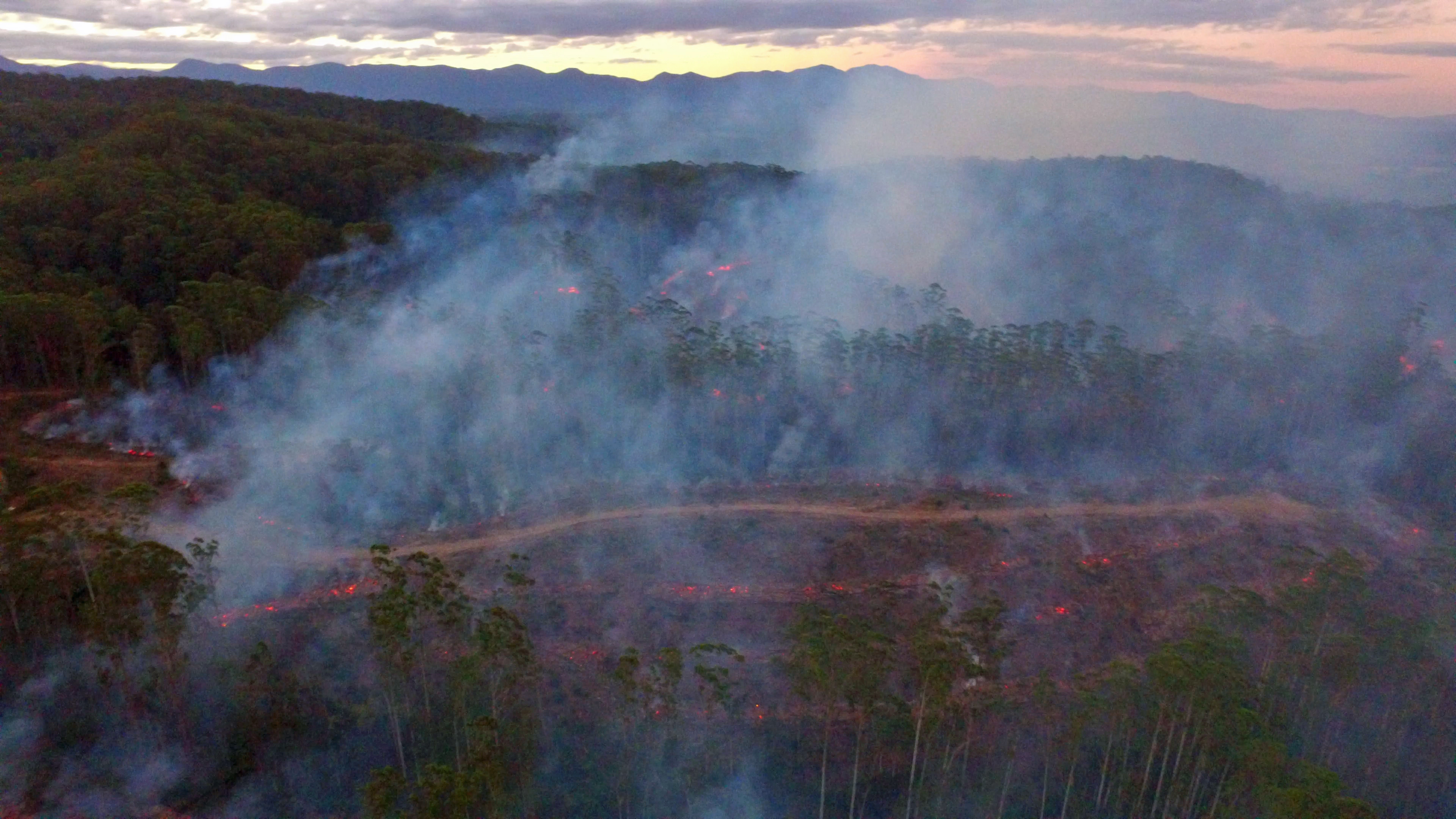
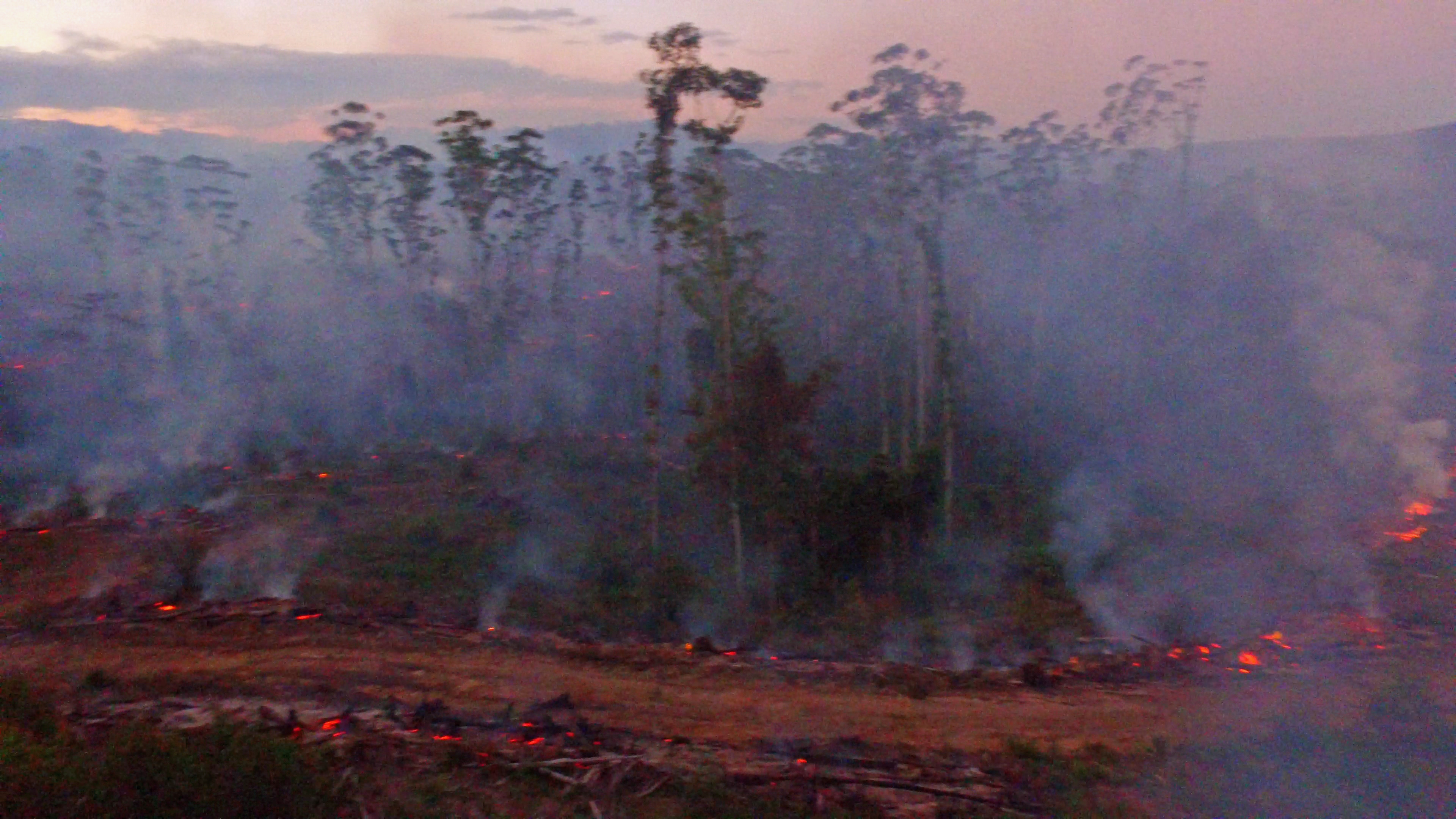
On Tuesday 11th April 2017,  Forestry Corporation  NSW set ablaze the debris left over from its clear-felling. That evening, Gwaihir, the Lord of the Eagles, flew over the burning hills of Bellingen Shire. This is what he saw:

Here is what the local newspaper reported:

https://www.coffscoastadvocate.com.au/news/like-a-scene-from-a-doomsday-sci-fi-movie-flames-b/3169934/
That November, FCNSW set the northside of the Fernmount Range escarpment ablaze in that they describe as routine hazard reduction to enhance our safety from bushfires. Forest defenders called it the Inferno.

https://m.facebook.com/groups/656451855903800/permalink/837814767767507/

And here is what I wrote the previous September:

JRR had never heard of the Tarkeeth Forest, but if he had, I am certain he would have had some harsh words for the clear-felling and burning big that is razing our forest even as I write.

In 1962, he wrote:

“Every tree has its enemy, few have an advocate. In all my works I take the part of trees against all their enemies”.

In 1972, just over a year before his death, he wrote:

“Dear Sir,

With reference to the Daily Telegraph of June 29th, I feel that it is unfair to use my name as an adjective qualifying ‘gloom’, especially in a context dealing with trees. In all my works I take the part of trees as against all their enemies. Lothlorien is beautiful because there the trees were loved; elsewhere forests are represented as awakening to consciousness of themselves. The Old Forest was hostile to two legged creatures because of the memory of many injuries. Fangorn Forest was old and beautiful, but at the time of the story tense with hostility because it was threatened by a machine-loving enemy. Mirkwood had fallen under the domination of a Power that hated all living things but was restored to beauty and became Greenwood the Great before the end of the story.

It would be unfair to compare the Forestry Commission with Sauron because as you observe it is capable of repentance; but nothing it has done that is stupid compares with the destruction, torture and murder of trees perpetrated by private individuals and minor official bodies. The savage sound of the electric saw is never silent wherever trees are still found growing.”

JRR Tolkien Letters 241 and 339

Yes, he really did say “Forestry Commission” – an old British statutory authority that bears no relation to our own government-owned Forestry Corporation, but keep Sauron and also Saruman in mind as you read the following.

As I survey the desolation of the Tarkeeth, I remember the words of poets long-departed.

Thomas Hardy, in his poignantly uplifting ‘The Darkling Thrush’:

The land’s sharp features seemed to be
The Century’s corpse outleant,
His crypt the cloudy canopy,
The wind his death-lament.
The ancient pulse of germ and birth
Was shrunken hard and dry,
And every spirit upon earth
Seemed fervourless as I.

And TS Elliot, in ‘The Wasteland’, a title so prophetically apt when I view the impact of clear-felling on what was until barely a week ago was a diverse ecosystem that had prospered in a failed monoculture plantation (See: my post ‘If You Go Down To the Woods Today‘):

What are the roots that clutch, what branches grow
Out of this stony rubbish? Son of man,
You cannot say, or guess, for you know only
A heap of broken images, where the sun beats,
And the dead tree gives no shelter, the cricket no relief,
And the dry stone no sound of water.

And then, there’s Bruce…


Sailing to Byzantium

“Byzantium, Byzantium, Constantinople, Kostaniniyye, Istanbul – The City has tangled with or represented an “idea” for so many, its influence has spun so far that her story, whether imperial, spiritual, cultural or political, frequently ends up being played out anywhere and everywhere other than in the city itself”.  Bethany Hughes , Istanbul – A Tale of Three Cities

As we observe Turkish president Recep Tayyib Erdogan’s apparent drive to reestablish Ottoman autocracy, those who take a longer view of history will assert that there is nothing new under the sun. There is nothing unprecedented about Erdogan’s apparent urge to don the imperial purple, and join the long cavalcade of colourful emperors and sultans that ruled the land that now constitute modern Turkey.

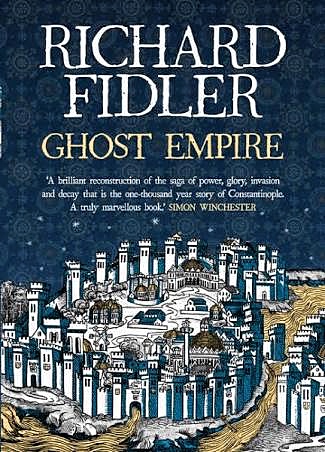
Richard Fidler reminds of this as he literally walks us through the streets of Istanbul.

Part father-son quest, part travel story, ‘Ghost Empire’ is at once a history, and a treasury of tales both true and far-fetched. The Australian author and broadcaster, and onetime member of the comedy trio, the Doug Anthony Allstars, has written a blend of popular history and meditation on the significance of history.

image

Although ‘Ghost Empire’ might in seem in parts overly breezy and lightweight, as an introduction to the ancient and wondrous city of Byzantium, Constantinople or Istanbul, it is an highly informative portal to weightier albeit less entertaining books. This is not to say it is without its more harrowing moments. Fidler dwells as much on the gory as on the glory. And indeed, for many, particularly the sons of emperors and sultans, confidants and conspirators, life could indeed be nasty, brutish and short.

Whilst Fidler’s primary focus is the story of the Byzantines, concluding with the fall of Constantinople in 1453, he travels back and forth in Istanbul’s long and storied history, between the violent past and the tumultuous present, from Julius Caesar and Constantine the Great, and the power couple Justinian and Theodosia, through Mehmet the Conqueror and Suleiman the Magnificent, to Ataturk and Erdogan, and captures the magic and at times, mayhem of the fabled metropolis that inspired WB Yeats to write:

“Once out of nature I shall never take
My bodily form from any natural thing,
But such a form as Grecian goldsmiths make
Of hammered gold and gold enamelling
To keep a drowsy Emperor awake;
Or set upon a golden bough to sing
To lords and ladies of Byzantium
Of what is past, or passing, or to come”

© Paul Hemphill 2017.  All rights reserved

If Ghost Empire has whetted you appetite, i would recommend Bethany Hughes’ more substantial – “encyclopedic ” would a better description – IstanbulA Tale of Three Cities (Orion 2017). It is a lengthy, comprehensive and fascinating journey from the prehistoric past to the polarizing present. There is also Simon Sebag Montefiore’s documentary, which personally, I found disappointing after his Jerusalem – The Biography.

Some photographs of Istanbul from our visit to Türkiye in 2014 follow …

For other posts about Türkiye in In That Howling Infinite, see: People watching in Sultanahmet, Ottoman Redux – an alternative history and The Watchers of the Water  

Here are some reviews of Ghost Empire: 

http://www.smh.com.au/entertainment/books/ghost-empire-review-richard-fidler-journeys-back-to-the-glory-of-constantinople-20160811-gqq6xo.html

http://www.canberratimes.com.au/act-news/canberra-life/richard-fidler-blends-the-historical-and-contemporary-in-his-new-book-ghost-empire-20160720-gq9js6.html

Istanbul, from Galata Tower Istanbul, from Galata Tower
Cruising the Golden Horn Cruising the Golden Horn
The Sulaymaniya Mosque The Sulaymaniya Mosque
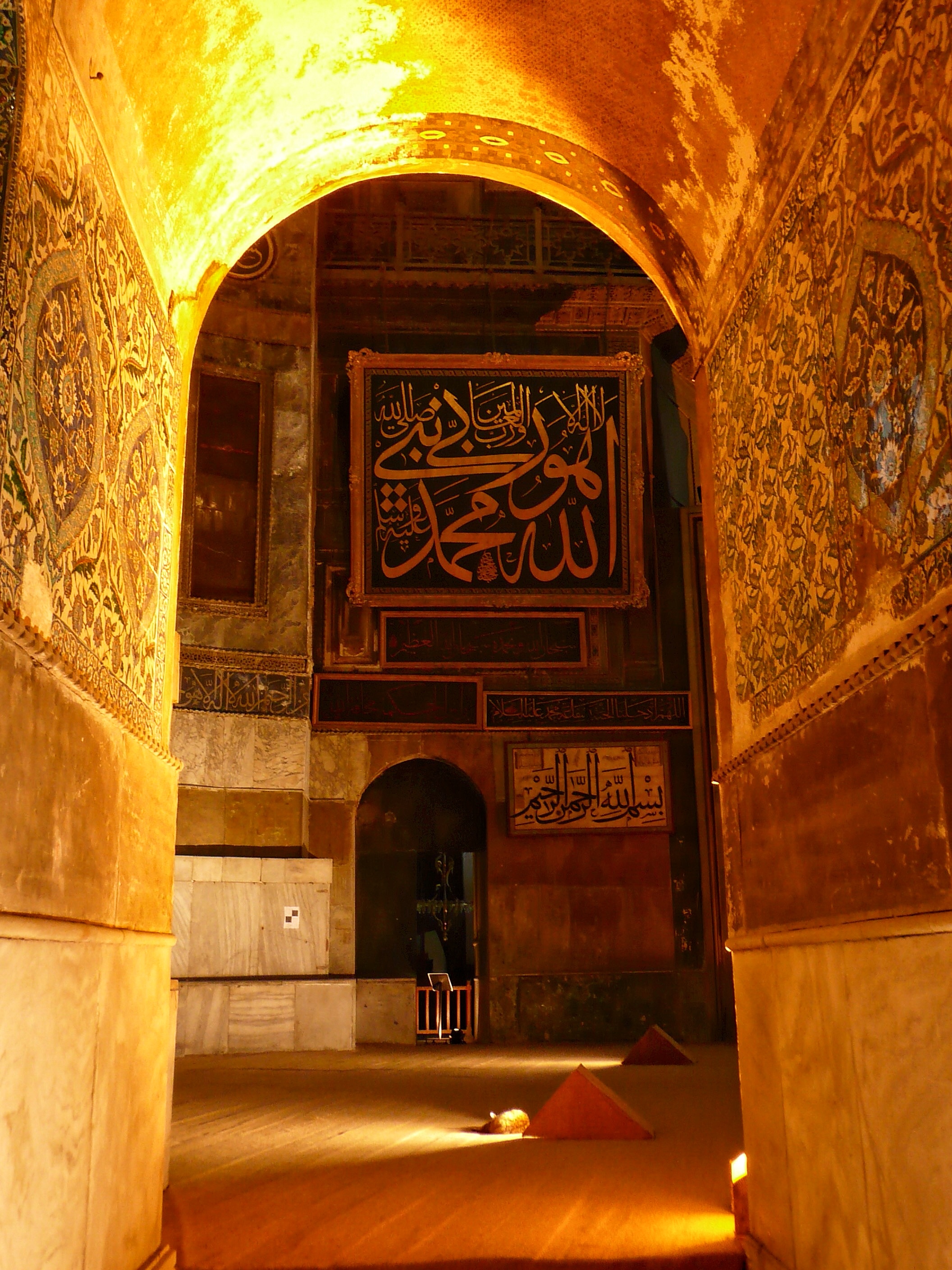
Aya Sofya Aya Sofya
The Hippodrome and the Blue Mosque The Hippodrome and the Blue Mosque
The Fortress of Europe The Fortress of Europe
Valen's Aqueduct Valen’s Aqueduct
Galata Tower Galata Tower
Aya Sofya Aya Sofya
Aya Sofya Aya Sofya
Aya Sofya Aya Sofya
Aya Sofya Aya Sofya
Halfden the Viking's Grafitti in Hagia Sofia Halfden the Viking’s Grafitti in Aya Sofya
Aya Sofya Aya Sofya
The Blue Mosque Aya Sofya
Sulaymaniya Sulaymaniya
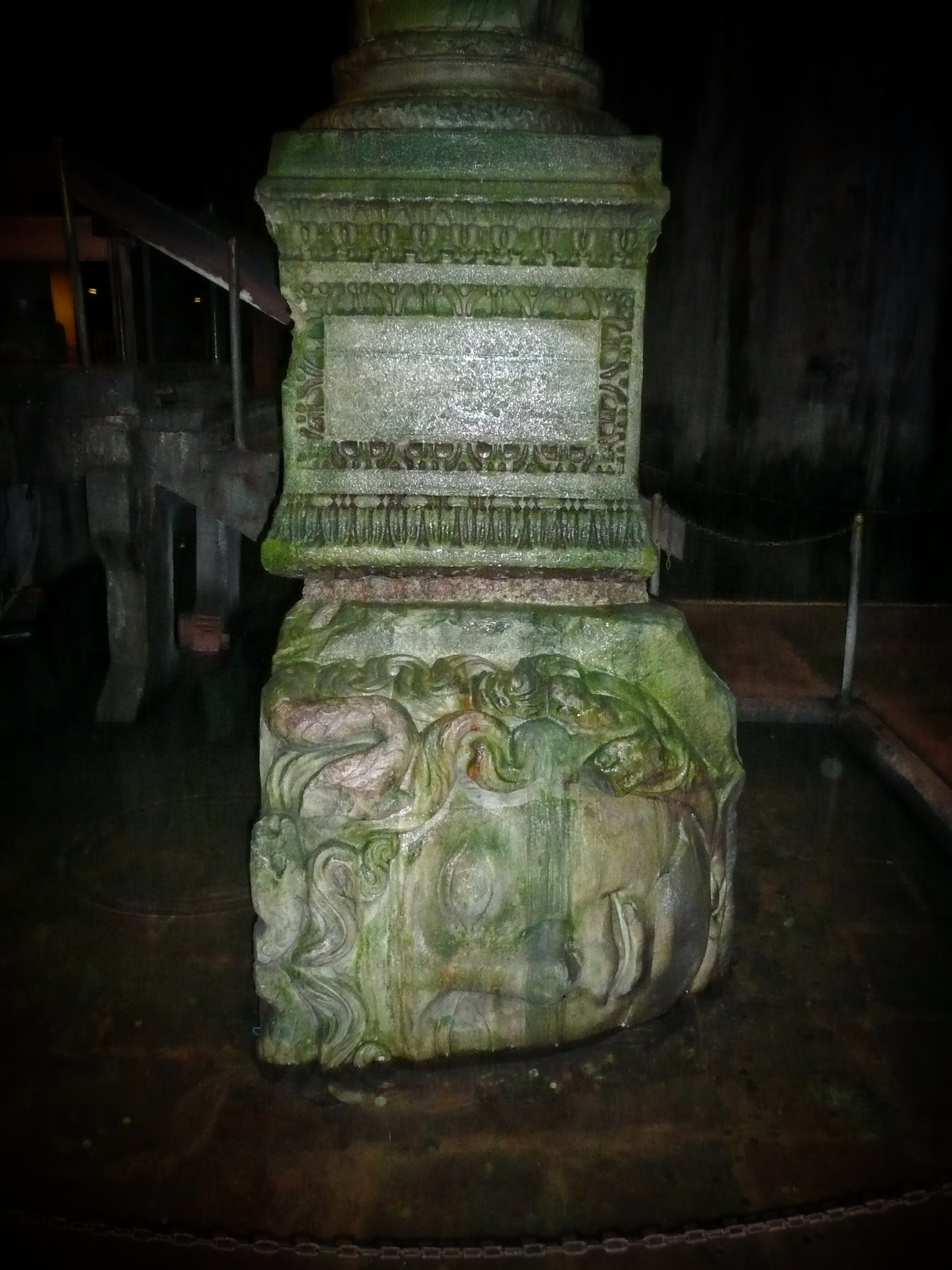
Justinian's Cistern Justinian’s Cistern

image

Apollo and MedusaApollo and Medusa


That was the year that was – may you live in interesting times

As I contemplate my annual review of In That Howling Infinite, I am reminded, with clichéd predictability, of that well-worn Chinese curse: “may you live in interesting times”.

A torturous and seemingly endless US election campaign defied all the pundits by producing an colourful and unpredictable POTUS. In the UK, the unthinkable Brexit came to pass, dividing the polity and discombobulating the establishment. Next year is certainly going to be worth watching.

The slow and tragic death of Syria continued unabated with Russian and Turkey wading into the quagmire alongside Americans, British, French, Australians, Iran, Lebanon, Gulf tyrants, and Uncle Tom Cobley and all. Da’esh might be on the the ropes in Iraq, but the long term survival of the unitary state is doubtful. And the proxy wars of the Ottoman Succession have spread to Yemen, the poorest country in the Middle Eas as Gulf tyrants face off against Shia Iran’s alleged puppets, and, armed and abetted by British and American weaponry, South American mercenaries, and Australian officers, bomb the shit out of the place.

Whilst the grim reaper scythed through the world from Baghdad to Berlin, from Aleppo to Ankara, the Year saw the passing of a record number of icons of the seventies and eighties, two of whom who have provided a continuing soundtrack for my life, Leonard Cohen and David Bowie. We shall not see the like of them again.

In our little corner of the cosmos, we endured the longest and most boring election campaign in living memory, resulting in an outcome that only accentuates Australians’ disenchantment with a lacklustre Tory government, a depressingly dysfunctional political system, and politicians of all stripes who, blinkered by short-termism, and devoid of vision, insist on fiddling whilst the antipodean Roman burns.

Meanwhile, in our own rustic backyard, we find that we too are “going up against chaos”, to quote that wonderful Canadian songster Bruce Cockburn. For much of the year, we have been engaged in combat with the Forestry Corporation of New South Wales as it proceeds to lay waste to the state forest that surrounds us. As the year draws to a close, our adversary has withdrawn with only half of its proposed harvest completed. But it will return in 2017, and the struggle will continue – as it will throughout the state and indeed the nation as timber, coal and gas corporations, empowered by legislation, trash the common treasury with the assent of our many governments.

And yet, life on the farm remains pleasant and delightful, though dams are low and rain would be most welcome. The bird and reptilian life continues to amaze us, and an ironic corollary to the clear felling of the Tarkeeth Forest is that “refugees” are seeking shelter here. Wallabies rarely seen on our land are now quite common, whilst echidnas, and, we suspect, endangered spotted quolls have been sighted hereabouts

We took time out mid-year to revisit Israel and Palestine, and road-trip through the two countries was much an education as a holiday. We certainly got our history and archeology fix, and in travelling through the Golan and the Negev, we found respite in a stunning natural environment. But the answers to our many political questions merely threw up more questions. We have unfinished business in this divine but divided land, and will return.

In That Howling Infinite addressed all these concerns during 2016, and matters more eclectic and exotic.

And so, to the year in review:

The new year commenced with a reprise of our memorable journey to Hadrians Wall, and of the Victorian lawyer who helped preserve it for posterity, the saga of the viking Harald Hardraga and also, my subjective overview of world history. In a more lighthearted vein, I indulged in an unscholarly discussion of how film and fiction have portrayed or distorted history, and in a review of Mary Beard’s superlative history of Rome, I asked the immortal question “what have the Romans done for us?”

The Life of Brian

In April, in response to a discussion with a Facebook friend in Oklahoma, I wrote a trilogy of exotically-titled posts examining the nature of rebellion, revolution, and repression: Thermidorian ThinkingSolitudinem Faciunt Pacem Appellant, and Sic Semper TyrannisThe origin of these Latin aphorisms is explained, by the way, in the aforementioned Roman review.

Nightwatch

Our travels through Israel and Palestine inspired numerous real-time posts, and a several retrospectives as we contemplated what we had experienced during what was as much an educational tour as a holiday. Historical vignettes included a tribute to bad-boy and builder King Herod the Great, a brief history of the famous Damascus Gate, and its place in Palestinian national consciousness, and a contemplation on the story of King David’s Citadel which overlooked our home-away-from home, the New Imperial Hotel. Thorny contemporary issues were covered with an optimistic piece on the Jerusalem Light Rail, a brief if controversial post about  Jewish settlers in the Old City, the story of Israel’s ‘Eastern’ Jews, the Mizrahim, and what appears to be a potentially problematic Palestinian property boom. Th e-magazine Muftah published an article I wrote about the conflicting claims to the city of Hebron. And finally, there is a poem recalling our visit to the Shrine of Remembrance at Yad Vashem and honouring the Righteous Gentiles who saved thousand of Jewish lives during the Shoah.

Carnivale

Wintertime passed with our minds on the Tarkeeth Forest. I had the pleasure discovering the history of our locality, and connecting via Facebook with the relatives of the Fells family of Twin Pines. But the latter half of the year was very much taken up with enduring and bearing witness to the clear- felling of the forest to our east. “If you go down to the woods today, you’re in for a big surprise.  If you go down to the woods today, you’ll never believe your eyes”. And you’d ask “what would JRR Tolkien have thought?”

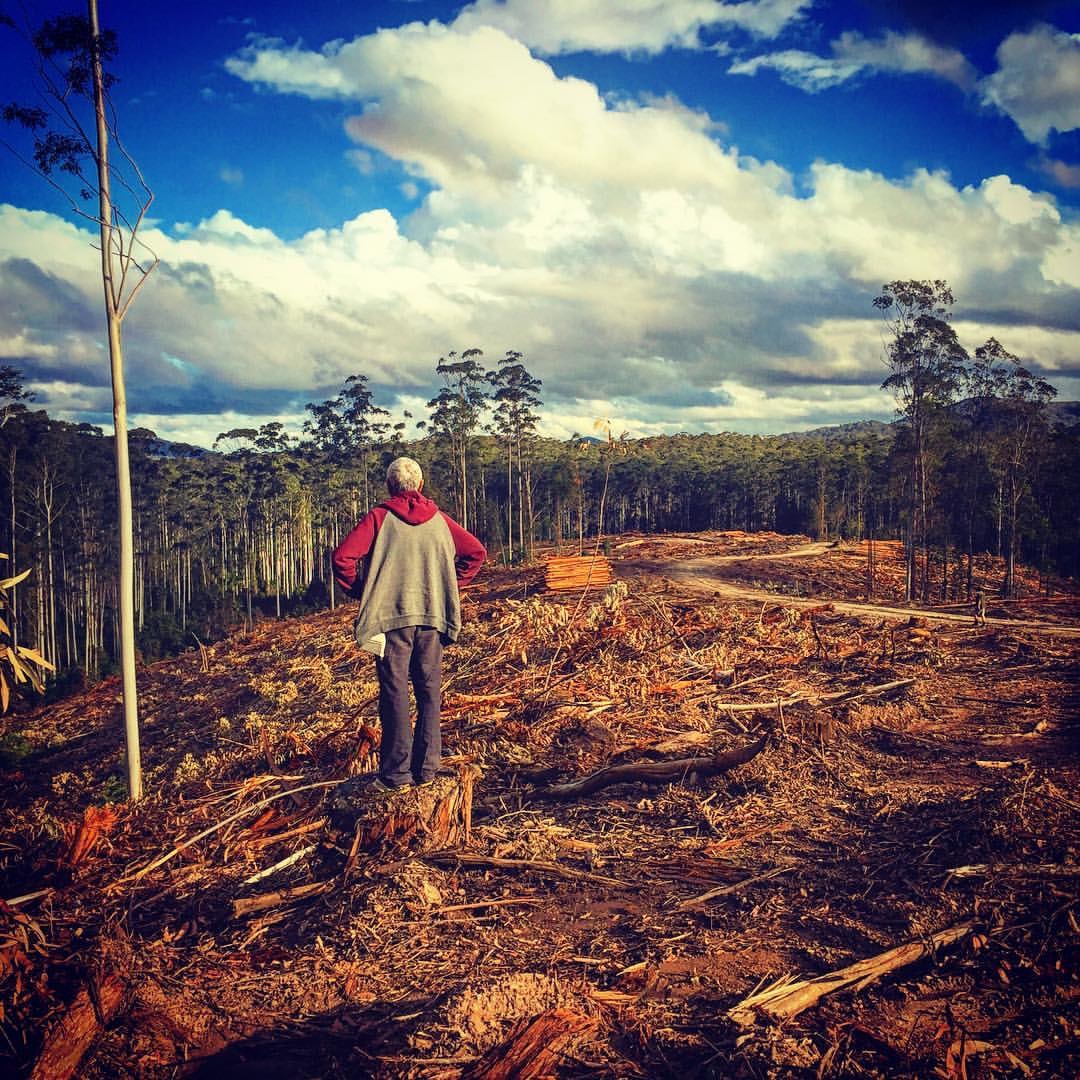
Nothing quite prepares you for the devastation of clear felling. Joby, a Gumbaynggirr elder, surveys the Tarkeeth

The UK And US paroxysms fascinated and exasperated the mainstream and social media in equal measure, whilst the outcome of the Brexit referendum and the presidential election has initiated an a veritable orgy of punditry. Never have so many column inches and kilobytes been spent on loud sounding nothings as the sifting through the entrails of such events as Brexit, the US election, and the Australian senate! With half a dozen elections coming up in Europe, Trump’s inauguration and the triggering of Article 50 to take Britain out the European Union, we’re gonna have to endure a lot more. I confined my posts to two insightful pieces by respected right-wing Australian commentators, Paul Kelly’s Living in Interesting Times, and Greg Sheridan’s The Loss of American Virtue, and my own reflection on the right-wing media’s strange fascination with “insiders” and “outsiders”.

Finally, in comparison to last year, this year was very light on music and poetry. But American satirist Tom Lehrer got a retrospective, and murdered Pakistani qawwali singer Madhaf Sabri, an obituary, whilst an abridged and vernacular version of John Milton’s Paradise Lost told the tale of Lilith, the first and greatest femme fatale. In the words of the gloriously-named jockey Rueben Bedford Walker III says in EC Morgan’s magnificent The Sport of Kings, the subject of my first post for 2017, “Malt does more than Milton can to justify God’s ways to man”.

On that wise note,  I wish the world a Happy New Year – and may it be less interesting than this one.

In That Howling Infinite  is now on FaceBook. Check it out.  And just for the fun of it, here’s my review of 2015.

The Sabri Brothers

Dore Luciifer

The Mizrahi Factor

Strangers in a strange land

When I first visited Israel in the early ‘seventies, it seemed to me a white man’s land with the look and feel of a European colony transplanted in Levantine soil. But first impressions were deceptive. Subsequent visits made it very clear to me that State of Israel is anything but monochrome, but rather, a technicolor cultural melting pot.

Back then, European Ashkenazim (literally, “German” Jews), the returnees of the diaspora, were in the majority. They had dominated politics and culture from the days of the first Zionist immigration, and through the mandate years of the Yishuv when Eastern Europeans predominated in the movement and in the fledgling military. The republic that the Ashkenazim prepared for during the Mandate and then built after 1948 was, in intent and in actuality, a white, secular, socialist outpost of Central and Eastern Europe. But then things changed  utterly.

The Sephardim, Jews who had lived in Palestine for centuries, and up to a million Jews expelled from Arab countries after 1948, were, for some forty years of Israel’s existence, a disadvantaged minority. The name itself was misleading. ‘Sephardi’ originally described Jews who had been expelled from Spain in the late fifteenth century. But it came to be applied to anyone who was not Ashkenazi. These Jews of Middle Eastern origin are now generally referred to as Mizrahim – “eastern” or “oriental” Jews. They were discriminated against in many spheres of Israeli life, regarded as primitive, backward, ill-educated, and poor – and more like Arabs than Jews.

And this was indeed the case in many respects. Jewish communities had been an integral part of Arab society for centuries. From Morocco to Iran, they had lived, thrived, and prospered among the their Muslim neigbours. The Jewish communities in Morocco, Algeria, Tunisia, Egypt, Iraq, Lebanon, Syria, Yemen and Iran were old and populous, and indeed often predated Christianity. From high to low, they were entwined in their local politics and economics.The lower classes were as poor and as downtrodden as their Arab neighbours. The professional and mercantile middle class lived very comfortable lives, and under late Ottoman rule, and British and French suzerainty, enjoyed a cosmopolitan lifestyle.

Embedded in the heart and soul of their Arab homelands, they shared the same history, suffered the same depredations, wore the same clothes, ate the same food, made and listened to the same music. Many of their values and cultural norms had more in common with the east than the west.

Oriental Jewish culture was based on three pillars: the community, the synagogue and the father. Faith was the cornerstone and family paramount, and with these, the authority of the rabbi and the head of the household. Piety was respected, chastity honoured, modesty and decorum observed, and marriages arranged. Religion, tradition and patriarchy preserved the community for a millennium. It did not experience European-style secularization, western enlightenment, or a revolt against religion. Even when modernization came, the father and the rabbi remained dominant.

There was harmony between Arab and Jew. Life had order, meaning, and a timeless rhythm. No one imagined that one day, they would have to abandon their lives, their homes and possessions and the graves of their ancestors. Never did they contemplate having to flee, in fear of their lives from the people among whom they had lived for generations, and seek refuge in a fledgling European, secular, modern state on the edge of the Mediterranean.

After 1948, the relatively charmed existence of oriental Jews in North Africa, the Levant, and Mesopotamia ended, and thousand year old communities disintegrated. A million Jewish Arabs were uprooted, their world destroyed, their culture ruined, their homes lost.

In an ironic twist, their Aliyah (literally “ascent” to Eretz Israel) confounded the Zionist model. Israel was created to be the home of European Jewry – until the Shoah brought those Jews to the brink of extinction. Young Israel had to populate or perish, and whilst designed for a European population and culture, it had no choice but to accommodate an oriental one. .

In yet another ironic twist, the creation of the State of Israel doomed the Jews of the Middle East by making mortal enemies of its Arab neighbours. But by giving these exiles refuge, Israel saved them from a life of repression, misery and backwardness in an unstable and violent Middle East. And yet, even as their numbers rose from under ten percent of the population to over fifty today, they were looked down upon, humiliated, discriminated against, neglected, and indeed, ignored by the secular Ashkenazi establishment. They were the Israeli “other”.

Destitute and grieving for their lost world and their old identities, and for the manner in which their longtime Arab compatriots turned on them, they were like flotsam on the shore of a new land. But it was an unfamiliar world, a world made for and ruled by European Zionists with an ethos alien to their own. This was a pioneer society, spartan yet permissive, that valued the individual and his or her contribution to the new state’s collective enterprises above the ties of family, custom and congregation. And for sound if not satisfactory reasons: the ties that bound European Jews to their centuries-old communities had been severed in the killing fields of Mitteleuropa – so many had few or no surviving relatives and friends from the prewar days – and new loyalties forged in the displaced persons camps of Europe, the mass Aliyah into disputed Palestine, and the cauldron on the Independence War.

The immigrant nation of Israel was conceived as a melting pot. The goal of the education system, the exclusive use of a reinvented and modernized Hebrew, and mandatory national service in the IDF, was to assimilate all who made Aliyah as Israelis. To make them Ashkenazis, in fact. The Ashkenazi social engineers encouraged European Jews to get over the Diaspora and the Shoah, and the struggle for independence and national survival, and to get on with the challenges of nation building. These orphans of Europe neither appreciated nor accommodated the eastern Jews’ attachment to their Arab identity, tradition, and culture. And indeed, may have resented, both consciously and subliminally, the fact that these Arab Jews had not come through the Holocaust or fought in the War of Independence

In the national project, the easterners were banished to existential shadow lands. Isolated, marginalized, dispersed, and cut off from their roots and heritage, their rabbis and synagogues, they were consigned to arid development towns in the Negev, to remote villages, and to the impoverished suburbs of the major cities. The state provided refuge, housing, schooling, and jobs. But it took away community, honour and tradition, the social and normative structures that kept Jews together in the eastern diaspora. They were given few tools to deal with the new world of physical and economic hardship, no authority, no bearings, no compass, no meaning. They took low paid, menial jobs, and a lost generation of youngsters drifted into crime and gang culture, drugs and prostitution.

Decades later, these “forgotten people” rose up against the (self)chosen race in a political and cultural revolution that saw “downstairs” gate crash the “upstairs” party. In the political turmoil that followed the Yom Kippur war, they found a political voice and demanded a seat at the top table. They backed Likud against “born to rule”, secular, Ashkenazi Labour, and precipitated a new political dispensation based on faith and values-based political parties and shifting and opportunistic coalitions. They were the working class, the factory hands, the tradies, and the small business owners. They were the parvenus, the usurpers, the nouveau riche, rising about their station, and as such, were scorned and maligned by many Ashkenazim. But they were now the majority. Through immigration and natural increase, their numbers grew, and with it, their political clout. One no longer heard the term ‘Sephardi’ – but rather, ‘Mizrahim’, literally ‘easterners’ – the descendants of Jews from Middle Eastern countries. Their values, interests and expectations were different to those held by the secular, liberal-minded Ashkenazim.

The Garibaldi of this Mizrahim Risorgimento was the charismatic Moroccan Jew Ariyeh Deri who formed the ultra-Orthodox Shas party – Shomrei Sfarad, literally, “(Religious) Guardians of the Sephardim”. Through the late nineties and into the twenty first century, Shas has become a pivotal political player. In the hurly-burly of Israeli coalition politics, its Mizrahi constituency has delivered parliamentary numbers that can make or break governments, and through the torturous wheeling and dealing, it influences policies as diverse and as critical as education and defense.

One of Binyamin Netanyahu’s key people in the current right-wing government is his Minister of Culture Miri Regev, whose family came from Morocco, a former brigadier general in the IDF, where she served as chief spokesperson during the Gaza pullout. She is a member of Likud, not Shas, and Netanyahu needs her backing in order to maintain his support among the Mizrahim. Regev likes to rail against what she calls “the haughty left-wing Ashkenazi elite” and once proudly told an interviewer that she’d never read Chekhov and didn’t like classical music. She has sought to give greater prominence to Mizrahi culture and to deprive “less than patriotic” artists of government subsidies. Many of the government’s recent actions appear designed to address the traditional disenfranchisement of the Mizrahim and of citizens living in the country’s “periphery” (that is, far from the central Tel Aviv–Jerusalem corridor), whilst other measures are aimed at promoting social mobility amongst these “outsiders”.

A changing world

Which brings me back the present and to my return to Israel after an absence of thirty years.

The dazzling sunlight reflected off the limestone brickage was the same. The history literally oozing from the stones was still exhilarating and addictive. The dry heat of summer in Jerusalem was as ever cleansing and enervating. The sociability, conviviality, argumentativeness, and at times obstreperousness of Israelis was the same. But Israel, as a society, had changed – and not just the cosmopolitan cafe and restaurant strips, the vibrant arts scene, the high-tech, wired-to-the-world communication systems, and the ever-present security presence.

Israel’s complexion has changed. Over half of the Israeli population are now Mizrahim (and some twenty percent are Arabs), and Russians and Ethiopians have come in by tens of thousands. There is intermarriage between Jews of all colours and cultures, and the place has taken on a coffee-coloured hue. Israel became the multicultural country it is now.

And it is changing still. As more and more foreign workers come in to work here – one of the consequences of the lock-down and separation that followed the 2002 Intifada, as Chinese and Southeast Asians replaced Palestinian Arabs in many sectors of the booming economy, there will be an increasing number of Israelis taking Filipina, Thai and Indonesian brides..

On our recent visits, we noted the high proportion of Mizrahim, and also, to a lesser degree, Ethiopians – most particularly, among young people. In the street, in the cafes, on the light rail, and especially with respect to the conscript army in which all young Israelis, boys and girls, must serve when they turn eighteen (with the exception of the ultra-orthodox Haredim and Israeli Arabs).

We had been contemplating why in recent years, and particularly, during the last Israeli election, right wing politicians were able to capitalize on an anti-Arab sentiment so incongruent (to liberal-minded outsiders, at any rate) among a people that proclaims itself to be conscious of its history of victimization and oppression. Why Israeli street protests and social media feature virulent tirades and slogans against the country’s Arab citizens and Palestinian neigbours (such inflammatory sentiment is returned with equal if not more vigour on the Arab street, on tabloid television, and from the mana-bir of mosques during Friday sermons). And why, therefore, Bibi Netanyahu’s election dog-whistle was so effective, resulting in a coalition government that is probably the most nationalistic, anti-Arab and anti-Palestinian in memory.

Commentators have suggested that the political shift to the right and to an increasingly authoritarian character has been due in part to the influx during the nineties of tens of thousands of Russian Jews who have no experience, appreciation and empathy for the occidental democratic model established by Israel’s founding fathers. It has also been said that the shift has been propelled by the exigencies of the security state that has perpetuated a pattern of fear and retaliation with respect to internal and external threats, be these Palestinian resistance to the occupation, as in the violent street protests and and bombings the first and second intifadas, and the lone-wolf vehicle attacks and stabbings of recent times, the ongoing rocket attacks and tunnel construction of Gaza, or the calls for the destruction of the Zionist entity by the Iran and its Hizbollah proxy, and by the televangelists and shock-jocks of the Muslim media.

It may well be “all of the above”, but there is also possibly the Mizrahi factor.

Now the majority of voters – this is where I am going out on a polemical limb with an argument that runs counter to what I have written above about the Mizrahim and their oriental legacy – Mizrahim don’t want Arabs – as friends, as neighbours, as fellow-citizens. Although Arabs and eastern Jews are literally ‘brothers under the skin’, although they shared the same lands, cultures and lifestyles for centuries, have they grown so far apart that the chasm has bred contempt?

They have grown up with the stories of their parents’ and grandparents’ own Nakba, the Arabic word for “the Catastrophe” of the 1948 war, when their families were cast out of their oriental Eden, expelled from Arab countries amidst threats and pogroms, murder and plunder. They spend their military service as conscripts and as reservists either serving in the occupied territories, or subject to deployment there or in Gaza when tensions flare, as they do frequently. They are aware of Arab mainstream and social media denigrating Jews and Israelis and calling for the destruction of their country. They know that any time, they and their loved ones, including particularly their soldier children, could be attacked by car, knife or bomb, or worse still, killed or kidnapped. Young – and not so young – Mizrahim have been hearing all their lives from their families and from the Arabs themselves that “they want to kill us”.

Nowadays, in many quarters, the Arab pogroms of the twenties and thirties appear to feature more prominently in Israel’s creation story than they did in earlier decades, providing an historical leitmotif to contemporary acts of violence. Times past, it was always the about the Zionist pioneers and, inevitably and unavoidably, the Shoah (and left-wing, peacenik Jews are predominately Ashkenazi of pioneer or Shoah heritage). Back then, there was also the image of triumphant David fending off five Arab armies and killing and expelling Arab Palestinians to create a contiguous national territory. Over half of Israel’s Jewish population has no connection to the Shoah, and to the secular and socialist Zionist ethos and once-powerful foundation institutions like the Kibbutz and Histradrut. The Israel of today, and the average Israeli, indeed, are very different to those of forty, fifty, sixty years ago, as are their perceptions and prejudices.

Perhaps the “victim” narrative appeals to and exploits atavistic fears of Arab hordes threatening to push the Jews into the sea. Maybe, too, it is a function of Israel’s dysfunctional place in the turbulent and bloody Arab world: a garrison state of citizen soldiers on a permanent,  war-footing, the only democratic nation in these parts that nevertheless, paradoxically and immorally, maintains a military occupation of a conquered people, and sustains politically, financially, and among many Israelis, ideologically and spiritually, a neocolonial settler society. But in a sinister twist of fate, it is a narrative that would have been music to the ears of those long-gone Revisionist Zionists who harkened to the call of Zeev Jabotinsky and his Eastern European Ashkenazi crew who had resolved during the Mandate years that there could only be one people in Ha’Aretz, and that The Land would range from the Mediterranean to the Jordan River. Zeev’s vision inspired the vicious Irgun and Stern Gang, and these morphed in time into Likud, which is now effectively the ‘party of government, and the driver of all things intransigent.

One thing’s for sure: the Mizrahi factor adds to the many complications that hinder a just and permanent solution to the intractable conflict between Israelis and Palestinians.

__________________________________________________________________________________________________________

In writing this piece, I am indebted to Israeli journalist and author Avi Shavit and his controversial and enlightening “My Promised Land – The Triumph and Tragedy of Israel” (Scribe 2014). Shavit wrote a brief, sad sequel in March 2015:

http://www.politico.com/magazine/story/2015/03/israeli-elections-israel-future-116266

Veteran Zionist, humanist, journalist, and fighter for justice Uri Avnery wrote the following in February 2017: “When and how the Ashkenazi and Mizrahi Rift was born”. It is well worth reading:

http://zope.gush-shalom.org/home/en/channels/avnery/1487945729

See also:

http://www.haaretz.com/life/1.795156
hthttp://www.haaretz.com/life/1.795156tps://en.m.wikipedia.org/wiki/Mizrahi_Jews
https://en.m.wikipedia.org/wiki/Demographics_of_Israel
In the statistics cited herein, there was no distinction made between Sephardim and Mizrachim. (If the Sephardim, Mountain Jews and other non-European groups are included in the Middle East and Asian group, then Middle Eastern and Asian Jews outnumber European and American Jews by a margin of 52 to 48

On a musical note:
From way back, I was particularly familiar with world-famous Israeli singers of eastern origin – Esther Ofarim, of dubious ‘Cinderella Rockefeller’ fame, (with her then-husband Abi, who was, incidentally, of Russian heritage), the late, sublime Ofra Haza, Noa, and latterly, Ladino diva Yasmin Levy].

Lilith – a poem of ‘the Fall’ by Meniscus Diabetes

As far as we know, Meniscus Diabetes was born in Rome in 25 CE, and acquired his poetic licence during the reign of Emperor Claudius. He had an abiding interest in Rome’s eastern provinces, and one of his surviving manuscripts is this epic ballad. See Roman Holiday – The Perils of a Poet  in Nero’s Rome.

Lilith is a retelling of the “Legend of the Fall”. The style of Lilith differs markedly from that of other poems attributed to Meniscus – most notably the Hebrew Heroes cycle (again, refer to Roman Holiday), and was evidently written for a different manner of presentation. It was most likely written to be recited rather than sang (as were his other “story songs”). Recitations were a common form of entertainment in the middle Roman period, owing their popularity to the enduring reputations of the “classical” writers of the time, Ovid, Horace and the like. It was not uncommon for such recitations to last several hours. But Meniscus, mindful of the fast moving times, and also of the attention span of his audiences, appears to have honed his pieces down to between ten or fifteen minutes.

If Meniscus’ tale of Adam, Eve, Lilith and Lucifer has not been lost to literature until its very recent discovery, one wonders whether John Milton would have bothered to retell it in such lengthy and verbose detail.

Lilith, however, has been around for thousands of years. In the Talmud, she is described as a winged demoness with a human appearance. She appears in the bible, in the Dead Sea Scrolls, and in Hebrew folklore, and has been mentioned in black magic treatises. The apocryphal story is that Lilith was Adam’s first wife. God made Adam from dirt and clay. Adam bored, requested a companion, and God obliged with Lilith. Legend has it that her dirt was dirtier than Adam’s, but put that down to patriarchal prejudice and propaganda. More likely, she had the dirt on him! But I digress. Apparently, Lilith was not as inferior to Adam as he wanted. She wanted to be her own person, not Adam’s wife-slave. The story is that when Adam insisted on the missionary position, Lilith refused, saying “Why must I lie beneath you? We are both equal. We come from the same earth”. Adam got mad, and Lilith took off.

Because of this, she was banished from Eden and became a spirit associated with the seductive side of a woman. Eve came in her place to stand behind Adam, not beside him. Lilith became the timeless femme fatale, preying on the easily tempted weaker sex, the fabled incubus who comes at night upon men as they sleep. It is not for nothing that she has been hailed the (informal) goddess of wet dreams.

The legends are many and various. If you buy into the Lilith theory, you will see her cropping up throughout history in a variety of guises. In biblical times: Delilah, Salome, and Potophar’s wife. In fact and fable: Sheherazade, Lucrezia Borgia, Mata Hari, Evita Peron. Hollywood’s screen ‘sirens’ like Vivien Leigh, Elizabeth Taylor, and Marilyn Monroe. All of them antitheses to secular saints like Eve, Mary Magdalene, Joan of Arc, Florence Nightingale, Jackie Onassis, Mother Theresa, and Princess Diana.

Long time ago In a time before time,
When man was an atom in primeval slime,
When darkness lay hard on the face of the deep,
God called for his angels to sing him to sleep.

God made these angels from the fire ‘neath his throne,
Gave them existence and thought them his own.
‘Til one fiery angel professed discontent
At the whole pointless purpose to which he’d been sent.

He expressed his dissent towards God’s Constitution,
Fomented unrest and unleashed revolution.
The shackles of God he now deigned to throw off
With his old black beret and his Kalashnikov.

So Lucifer made for celestial hills,
Preaching an end to society’s ills;
Whilst God, declaration of martial law made,
And dispatched forthwith Michael’s Archangel brigade.

They tracked down the rebels to their mountain lair,
And challenged them forth for to give battle there.
Brave Lucifer fought and at terrible cost.
God, Paradise saved; he, Paradise lost!

From fire he came and to fire he descended,
And thus the battle for Paradise ended.
And bold Lucifer from sight of God, now rejected,
Reduced down to basics a mate he selected.

Having fought hard and failed, life just wasn’t the same,
So he sought to continue the family name.
He gathered the girls of his wandering band,
To choose the best and the brightest in his new found land.

He chose Lilith the Fair, he chose Lilith the wild,
Lilith the wonderful archangel child.
The grace and the charm of this heavenly belle
Did brighten the darkness of exile in Hell.

Her beauty brought visions of Heaven so bright;
Her songs fired the furnace of Hell’s fiery night;
Her dancing filled all of the exiles’ desire,
And upstaged the flames of the infernal fire.

But Lilith, a gypsy, quite soon got the shits
With the workaday life of her husband’s hot pits.
She yearned for adventure, she longed for to run
Naked and nimble, ‘neath God’s newborn Sun.

So she ventured to Earth and quite soon did perceive
That a fellow called Adam was fed up with Eve.
He’d never forgiven, he’d let his heart harden
Since she’d let him down badly that day in the Garden.

And Lilith knew well in her womanly way
That Adam was close to going astray.
She took off her wings and right at him, she hurled,
As if he was the only man left in the world.

(Which he was, in a way, in a manner of talking –
His sons, Cain and Abel, had not started walking.
And the Daughters of Eve, were infants at best –
And none had discovered the art of incest).

So Lilith moved in with her serpentine charm.
Poor Eve was pushed out in a state of alarm.
But you don’t press the point, you don’t try to shrug off
The aim of old Lucifer’s Kalashnikov!

She bunked up with Adam for seven score years
and pandered to all of his passions and fears.
But just like a man, he took her for granted
‘Til she said, “No more”! And her cloven feet, planted.

She made his life hell, (well, she knew all about it).
Poor Adam was grieved and rushed outdoors to shout it:
“Oh God, must you let me go through this alone?”
A voice said: “This party is not on the ‘phone!”

Then one day she took off , went to live with her sister
And true to his kind, our pal, Adam, he missed her.
He prayed to the Lord for to fetch his girl back
So the Lord sent three angels to pick up her track.

Now, Lilith went wild, when she found she was followed;
Fled into the night, and in shadows was swallowed.
And from that day to this she has been on the run,
Ne’er more to gaze on the face of the Sun.

Banished forever from Lucifer’s bed,
She wanders the world seeking mortals instead.
And in darkness of night when tired mankind is sleeping,
Out of the shadows, fell Lilith comes creeping.

Taking revenge for old Adam’s conceit,
She searches the land town by town, street by street.
House by House, ’til alone in your bed, you’re discovered;
In the wink of an eyelid, by Lilith you’re covered.

You’re caressed with the touch of a cold, seizing hand;
You’re rocked by a tremor you don’t understand;
You’re fastened upon with a grip of a vice;
And her lips are like coals and her body’s like ice;

And you’re trapped in your bed with no strength to resist,
Yet you feel that this moment’s too good to be missed.
And you wake in the morning, a terrible mess,
And you know then that Lilith has found your address!

    Illustration by Gustave Doré, from Paradise Lost

Tolkien’s Tarkeeth – Images of Isengard

JRR had never heard of the Tarkeeth Forest, but if he had, I am certain he would have had some harsh words for the clear-felling that is razing our forest even as I write.

In 1962, he wrote:

“Every tree has its enemy, few have an advocate. In all my works I take the part of trees against all their enemies”.

In 1972, just over a year before his death, he wrote:

“Dear Sir,

With reference to the Daily Telegraph of June 29th, I feel that it is unfair to use my name as an adjective qualifying ‘gloom’, especially in a context dealing with trees. In all my works I take the part of trees as against all their enemies. Lothlorien is beautiful because there the trees were loved; elsewhere forests are represented as awakening to consciousness of themselves. The Old Forest was hostile to two legged creatures because of the memory of many injuries. Fangorn Forest was old and beautiful, but at the time of the story tense with hostility because it was threatened by a machine-loving enemy. Mirkwood had fallen under the domination of a Power that hated all living things but was restored to beauty and became Greenwood the Great before the end of the story.

It would be unfair to compare the Forestry Commission with Sauron because as you observe it is capable of repentance; but nothing it has done that is stupid compares with the destruction, torture and murder of trees perpetrated by private individuals and minor official bodies. The savage sound of the electric saw is never silent wherever trees are still found growing.”

( JRR Tolkien Letters 241 and 339)

Yes, he really did say “Forestry Commission” – an old British statutory authority that bears no relation to our own government-owned Forestry Corporation, but keep Sauron and also Saruman in mind as you read the following.

Images of Isengard

Images of Isengard

As I survey the desolation of the Tarkeeth, I remember the words of poets long-departed.

Thomas Hardy, in his poignantly uplifting ‘The Darkling Thrush’:

The land’s sharp features seemed to be
The Century’s corpse outleant,
His crypt the cloudy canopy,
The wind his death-lament.
The ancient pulse of germ and birth
Was shrunken hard and dry,
And every spirit upon earth
Seemed fervourless as I.

And TS Elliot, in ‘The Wasteland’, a title so prophetically apt when I view the impact of clear-felling on what was until barely a week ago was a diverse ecosystem that had prospered in a failed monoculture plantation (See: my post ‘If You Go Down To the Woods Today):

What are the roots that clutch, what branches grow
Out of this stony rubbish? Son of man,
You cannot say, or guess, for you know only
A heap of broken images, where the sun beats,
And the dead tree gives no shelter, the cricket no relief,
And the dry stone no sound of water.

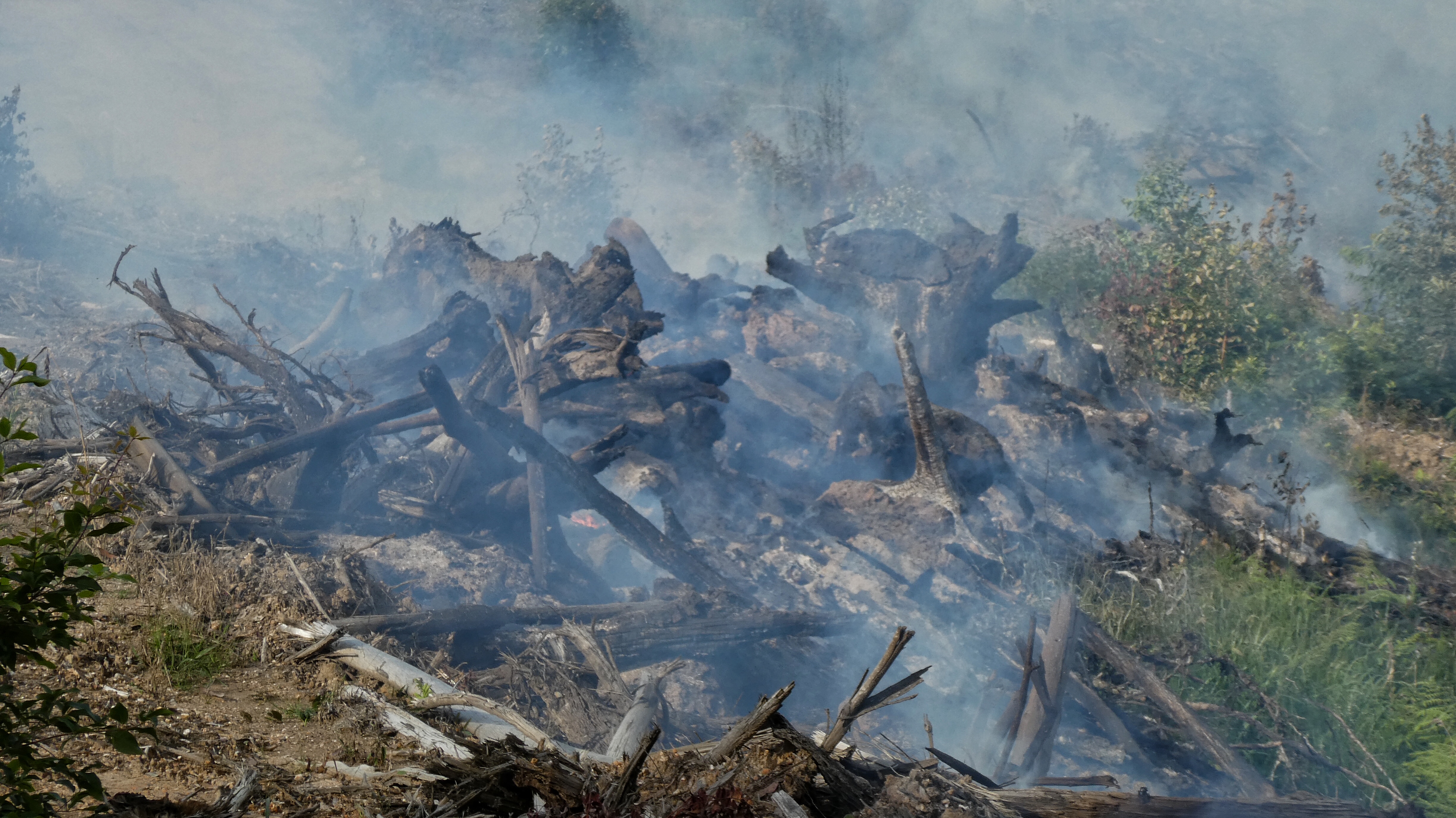
Tarkeeth Burning

Tarkeeth Burning

In posts to this blog, I endeavour as much as I can to maintain balance, and to avoid overly partisan positions. Today, please forgive me as I break my rule, and reproduce an open letter to the people of Bellingen Shire, the place I call my home, by local farmer, counsellor, forest protector, and mother, Susan Weil. It is a detailed but succinct explanation of what is happening right now in the Tarkeeth Forest.

Read on…

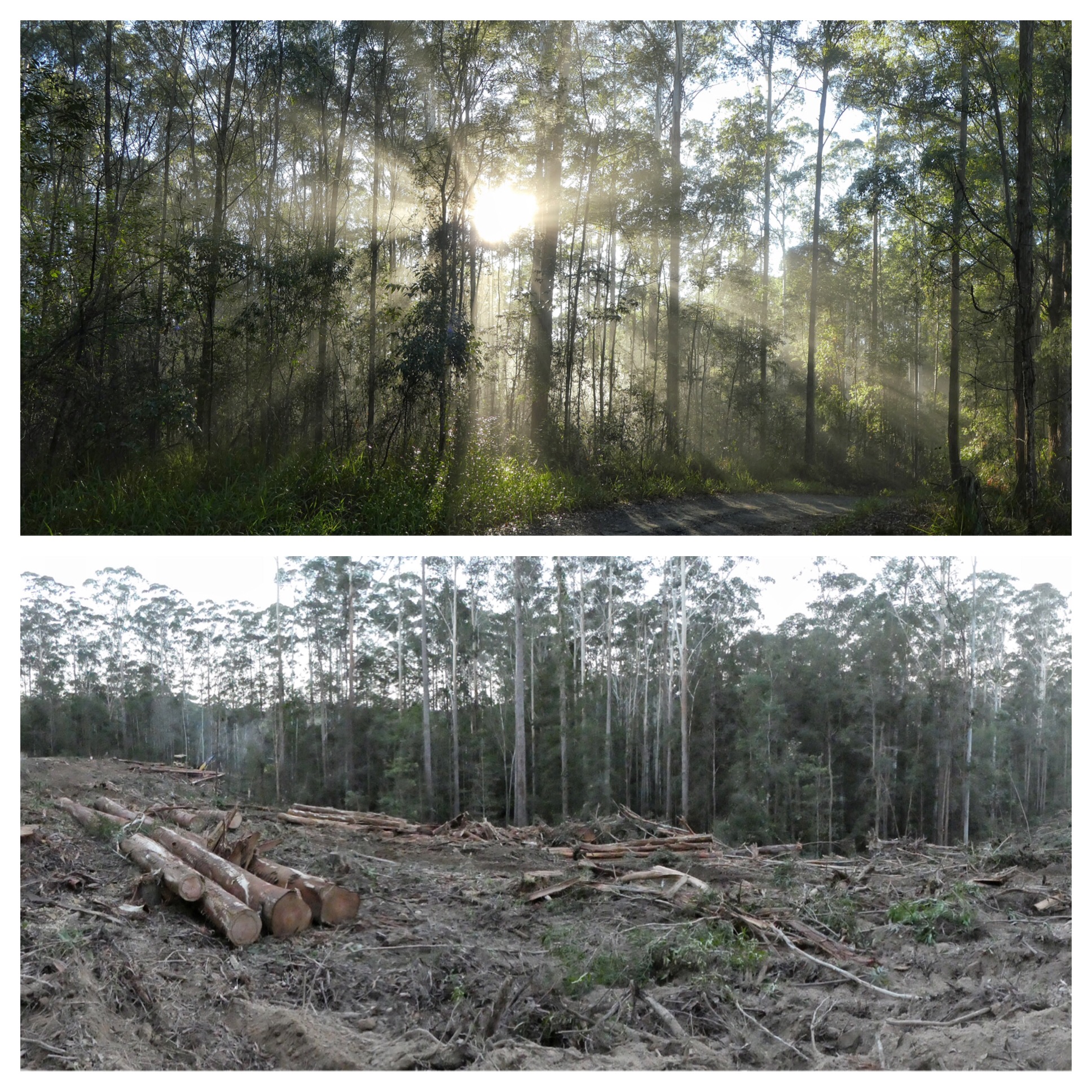
Tarkeeth morning, And Tarkeeth evening. What a difference a day makes

Tarkeeth morning, Tarkeeth evening
What a difference a day makes

The Birds are screaming!  Listen!

Tarkeeth Forest – Wrong Method, Wrong Place

There are consistent misconceptions in our community about the Tarkeeth State Forest. One of them is that we (forest community & concerned peoples) don’t want a single tree cut down (a bit silly for anyone to claim this given our appetite for timber products) and that we are making a big fuss about a plantation whose sole purpose for being there is to provide a consistent supply of quality hardwood products for our community, generating jobs and boosting our local economy.

Some facts: There are between two to three harvesting machines on site ( that translates to three employees) the rest of the jobs are for the haulage truck drivers and a few onsite operation managers. If we are talking about jobs perhaps we should be asking many of the out of work loggers that have been here for generations, many of whom would consider themselves conservationists. Perhaps if we have a conversation with any of these men they would take pride in telling you how well they managed our forests for many years prior to mechanisation and without the environmental fallout associated with clear felling.

They logged selectively and if they did their job properly their methodology would actually help stimulate forest re growth, preserve habitat and support forest diversity. None of these men are being employed by forestry, in fact many of them have been replaced by mechanised corporations like forestry and their livelihoods have been made redundant. So if you’re jumping up and down about job security perhaps you’re just talking about haulage drivers and a small handful of operators not the actual loggers themselves, because I can assure you their not benefitting from clear felling. In fact if we stop clear felling and work with best practise which is selective logging and revert back to more traditional methods then our haulage contractors would be employed far more regularly and consistently then they are currently.

If you’re talking about good quality timber, again you’re mistaken, the majority of all of these forests are flooded gum and as such there will be no profits made from this project. Forestry corporation have admitted that our “Jewel in the crown” as they keep referring to our valley is going to be an assett to them in 40 years time, thats an asset for them not us.

Forestry is currently clear felling the Tarkeeth, Kallang, Tuckers Nob, Newry and Pine creek. That’s a massive cumulative effect of aggressive clear felling in a small valley that sits between the Bellingen river, the Kalang and the Never Never Rivers. You don’t need a science degree to understand the effect that cumulative clear felling will have on our waterways and environment long term as the near extinction of our river turtles showed last year.

I’m hard pressed to find a boost to our local economy (Bellingen itself) bar a few employees for a limited period of time. This operation will end in a few years and provide minimal employment for another 40-50 years. Responsibly managed, selective logging would provide far more jobs far more consistently for this community.

In theory, plantations are an excellent idea in helping to preserve our native forests, but like all good theories in the wrong hands and with poor foundations it doesn’t always translate that well into reality. For instance, the current Plantations and Reafforestation Act 1999 was created by the very same governmnet that currently owns Forestry Corporation. The current Act allows Forestry Corporation to conduct their business with minimal community opposition and one has to wonder about the integrity of any business that can operate in whatever manner they choose without any accountability.

Forestry Corporation claims they have consulted closely with local residents to balance the needs of all stakeholders. The true translation of this means they sat down with the community and told them what they were going to do and ignored and rejected all of the residents requests that would impede their project. Thus grossly betraying the community consultation process. But it’s true they did consult with the community.

They told us they worked closely with the local indigenous community to balance their needs. Whilst I can’t and won’t speak for our indigenous community, suffice to say I think this has been grossly miscommunicated and very poorly managed on all fronts.

The Plantation and Reafforestation Act hasn’t been amended since 1999 (other then to change the name to a Corporation in 2012) and as such lacks current environmental and social standards that are being upheld in the private plantation act and native forest act, both of which are far more stringent in their assessment processes. Why hasn’t the Act been updated in 17 years to reflect current world views and environmental standards?

Forestry Corporations Plantation and Reafforestation Act works on a state wide minimum standard, which means that if there is a plantation in an area of high risk such as all of those found in Bellingen ( steep slopes and high rainfall) they do not have to make any special provisions for these deviations to the standard. They can continue to operate under the same standards regardless of the location. How can this be considered best practise?

One of these standard states a 20m buffer zone for riparian zones. This is hardly ample given the amount of chemicals they plan to use and our high rainfall and steep slopes. You don’t need to be a genius to do the math to see the shortfall and the consequences of that insufficient standard.

The harvest and haulage plan stipulates that Forestry Corporation will commence replanting their new seedlings between 12-18 mths after harvesting, now I’m a farmer, and no decent farmer would ever leave 128 hectares fallow with our heavy rainfall, it would be over run by a myriad of fast growing weeds hence their need to use a chemical cocktail of thousands of litres of glyphosate,metsulfurin, liase and pulse penetrant to manage the weed problem. If a methodology adopted creates another environmental problem such as this how can we accept this as best practise when clearly it is in breach of this? This happened in Gladstone State forest two years ago when as a result of the leaving the forest fallow in excess of 18 months they wanted to deal with the weed infestation (they created ) by aerial spraying. Have Forestry Corporation learned nothing from their previous mistakes? Yet the Tarkeeth harvest plans show no amendment to previous errors, which is obviously very concerning for us. Best practise would demand they replant immediately after harvesting thus mitigating the need for the use of any chemicals in the first place.

Forestry Corporation continues to talk about sustainability when it comes to their forest management plan, but in actual fact, they are only referring to the fact that they will be replacing the existing crop with another. That’s not sustainability that’s just called succession cropping. Sustainability should infer methodology.

One of the definitions of sustainability is “The endurance of systems and processes which includes the four interconnected domains: ecology, economics, politics and culture.”

Sustainability should relate to Forestry Corporations capacity to preserve and look after the environment (soils, habitat, wildlife, waterways and communities) to engage in meaningful dialogues with local community members and adopt their ideas and concerns into their plans, to provide long lasting and consistent employment for local community members and to show respect and care for indigenous sacred sites and artefacts.

Forestry Corporation should be using “best sustainable ” practises such as selective logging to minimise soil disturbance and erosion, to promote biodiversity within the forest and to do away with the need to manage weeds via chemical applications which would not be a problem if the earth were not disturbed in the first place.

Sustainability should include ongoing jobs for ethical logging practises and should include a meaningful dialogue with residents that provides outcomes for everyone’s interests not just the agenda of the corporation itself. We call that best practise.

According to the Forestry haulage and harvest plan they are replanting a chemical dependent monoculture plantation of Blackbutt (90%) and tallowood (10%). This is an interesting point. Forestry has claimed there were no koalas residing in this forest despite statutory declarations provided by residents sighting them and including an independent field study conducted by an ecologist for a Tarkeeth resident. Yet forestry plan to plant tallowood for the same koalas they believe aren’t there and then they plan to destroy the habitat and food source in 40 years.

A research study conducted by forestry commission stated that Tallowwood was slow growing and failed to thrive in this region that white mahogany and Black Butt were the preferred species. Given that, why would Forestry choose to plant this species given its poor performance and in doing so attract a threatened species only to have its habitat and food source removed? It doesn’t seem to add up, whichever way you look at it.

Under the inadequate Plantaction and Reafforestation Act Forestry Corporation can legally behave as corporate vandals, their not breaking any laws because they created a document to protect themselves from any community backlash. Why?

Well we now know the answer to all of our concerns. In 1999 when the Act was created on the back of an environmental push from activists to protect native forests and move towards plantations (a move we support) the government did not want to allow any room for communities and environmentalists to challenge or impede their business. They knew that a plantation if left for 40-50 years to mature would build its own ecosystem, that the native forest would compete and a native understory would develop attracting native wildlife making it hard to tell if indeed it was just a plantation or a diverse forest.

So, to ensure there was no opposition they created a guaranteed harvest plan, to ensure that nothing and no one could impede or prevent a harvest from being carried out. Hence the current Plantation and Reafforestation Act 1999. They created an Act that makes it impossible for anyone to legally challenge their methodologies or practises and it prevents them from being sued as the Act is so lax that it’s impossible to hold them accountable as their not breaking any laws. They wrote their own law.

As a community we have the right to say NO this is not okay, this is not best practise and this is not good for our town long term. We understand their running a business but we want them run it better. Is that unreasonable of us to ask for that?

As a community we have a right to protect our “Jewel in the Crown,” we are in fact protecting Gumbaynggirr land, always was always will be. I believe we can do so for the benefit of all the stakeholders involved. I don’t believe that we need to compromise for the sake of a Corporation that legally manages this land on OUR behalf and is not following best practise and is simply serving their own agenda.

This community would support a well run, responsibly managed selective logging business that balances the needs of all. Why would we not demand that they manage OUR land better? Why is this community squabbling over a plantation when what we are really talking about is ending clear felling and adopting better methodologies and best practise that allows us to have our cake and eat it too. What’s not to support here? Am I missing something ?

To remedy this situation we need accountability and responsible governance – but therein lies the root of this problem. To do that we need to change the laws and amend the Act. That is not an easy process in itself and to do that we need community support.

It’s easy to sit on the sidelines and commentate on this issue, it’s clearly divided opinions in our community and that’s always challenging to deal with. But for those whose lives are being directly impacted by this it’s hard to really understand the anxiety, sadness and fear they face on a daily basis. We rarely act on something unless it affects us directly, I guess that’s human nature but please try and have some compassion for the people who are dealing with this day in and day out as they watch a place they love and cherish being torn apart by a corporation that really doesn’t give a damn.

To feel powerless to affect change is a horrible place to live and whilst it’s easy to get caught up in the semantics of this campaign try and remember that people we care about are hurting over this. I don’t know if the community will ever see eye to eye on this for a myriad of reasons but I hope that within this process we can still hang on to our humanity and see beyond the story.

Susan Weil, Bellingen, 17th August 2016.

image

Nothing quite prepares you for the devastation of clear felling. Joby, a Gumbaynggirr elder, surveys the Tarkeeth

Nothing quite prepares you for the devastation of clear felling.                                                                 Joby, a Gumbaynggirr elder, surveys the Tarkeeth