Time, time again, it is said
We will hear, we will see
See it all-in his wisdom-hear
His truth will abound the land
This truth will abound the land
This state of independence shall be
Evanghelos Papathanassiou & Jon Anderson
We live in a time of anxiety – yet we long for certainty.
Not certainty born of wisdom, experience or careful reflection, but certainty manufactured and amplified by technologies, institutions and cultures that reward simplicity over complexity, outrage over understanding, and tribal loyalty over independent thought. Never before have we had access to so much information, yet rarely has there seemed so little patience for ambiguity. Every issue arrives pre-packaged with approved opinions. Every controversy demands allegiance. Every debate is framed as a struggle between competing moral absolutes.
The pressure to choose a side is relentless.
Whether the issue is climate change, immigration, Indigenous recognition, Israel and Palestine, Donald Trump, nationalism, globalisation, identity politics or any number of the controversies that dominate contemporary discourse, citizens in countries like ours are increasingly expected to sort themselves into camps and remain there. To question one’s own side is often viewed as disloyalty. To acknowledge complexity is mistaken for weakness. To recognise competing truths can invite accusations of moral cowardice. Nuance, once regarded as evidence of maturity, is frequently condemned as equivocation.
Yet there is a deeper paradox at work. We often confuse certainty with conviction and conviction with wisdom. We mistake confidence for competence, consistency for truth and, increasingly, certainty for authenticity itself. In an age of institutional distrust and social fragmentation, those who sound most certain are often assumed to be the most honest. The politician who never wavers appears authentic; the citizen who hesitates appears weak. Doubt becomes suspect. Reflection begins to look like indecision.
At the centre of this lies a curious development. The word independent has itself become strangely contested.
Traditionally, independence implied a particular intellectual virtue. It suggested someone who weighed evidence, resisted fashion, distrusted slogans and arrived at conclusions through reflection rather than tribal loyalty. The independent thinker might be right or wrong, but their independence lay in their willingness to examine competing arguments, question prevailing orthodoxies and tolerate ambiguity. Independence was not a destination but a habit of mind.
Today, however, independence is viewed through very different lenses.
For some, it has become shorthand for conspiracy, contrarianism or the performative scepticism of the “do your own research” cohort. The independent thinker is recast as someone marinating in YouTube rabbit holes, Facebook memes and endless distrust of expertise. Independence becomes less a mark of judgement than a rejection of established knowledge.
For others, independence has become suspect for an entirely different reason. In an age defined by existential moral struggles – Trumpism, Gaza, Ukraine, climate change, racism, antisemitism, Islamophobia, democratic decline and a host of other causes that demand urgent attention – the person who refuses to choose a side can appear not thoughtful but evasive. Independence comes to look less like intellectual courage than moral cowardice, a refusal to commit when commitment is required.
Yet both assumptions are flawed. The first mistakes independence for reflexive distrust. The second mistakes uncertainty for indifference.
There is a profound difference between refusing to think and refusing to join a tribe. There is an equally important difference between acknowledging complexity and lacking conviction. The independent mind is neither conspiratorial nor apathetic. It is not defined by permanent scepticism, nor by a determination to stand in the middle of every argument. Rather, it is characterised by a willingness to follow evidence wherever it leads, to question assumptions – one’s own particularly- and to resist the comforting certainties offered by political, ideological and cultural tribes.
The tragedy of our age is that such independence is increasingly difficult to sustain. The incentives run in the opposite direction. Algorithms reward outrage. Social media rewards certainty. Activist movements reward loyalty. Political parties reward conformity. Every institution, it seems, encourages us to choose a side and remain there. The space for doubt, reflection and intellectual humility narrows a little more each year.
Yet life rarely conforms to such neat divisions.
History certainly does not. Human beings are complicated creatures. Nations are complicated creations. Political problems are rarely solved by slogans and almost never by certainties. The ability to hold two truths in tension at the same time – to recognise that a cause may be just yet imperfect, that opponents may sometimes be right, that allies may sometimes be wrong, and that competing moral claims can coexist- is becoming one of the most valuable and least celebrated civic virtues.
This essay is, in part, a reflection on that disappearing virtue. It draws upon a lifetime spent marching, protesting, arguing, campaigning, reading, writing and observing. It traces a journey from the certainties of youth to a greater appreciation of complexity; from the exhilaration of causes to a deeper awareness of unintended consequences; from the satisfactions of belonging to the more demanding discipline of independent judgement. Along the way it explores the distinction between moral clarity and moral certainty, the phenomenon of moral capture, the seductive appeal of authenticity, the dangers of passionate intensity, and the democratic necessity of intellectual honesty.
Above all, it is a defence of the independent mind – not as a posture of detachment or superiority, but as a commitment to judgement, humility and the difficult task of remaining intellectually free in an age that increasingly rewards certainty and punishes doubt.
Certainty, conviction and the curse of complexity
One of the curiosities of life is discovering that certainty becomes less attractive just as complexity becomes more apparent. When I was young, certainty seemed abundant. The world appeared neatly divided into camps. There were causes to join, banners to carry, songs to sing, villains to oppose, journeys to be made and futures to build. The moral landscape looked reasonably well ordered. There was right and wrong, justice and injustice, progress and reaction. The task, it seemed, was simply to determine which side one was on and then commit oneself accordingly. It was an age of grand narratives and great causes, and like many of my generation I threw myself into them with enthusiasm.
I marched against the Hydrogen Bomb and I marched against America’s war in Vietnam. I sat down, occupied buildings, disrupted meetings and occasionally found myself caught up in the odd mêlée when passions overflowed into something more physical. Later in life, I marched for East Timor and Bougainville and against French nuclear testing in the Pacific. I marched for forests, gun laws and airport noise. I confronted politicians, ambushed ministers and once helped surprise a Prime Minister at an election campaign launch. Looking back, I regret very little of it. There is something admirable about citizens who care enough to leave the comfort of their homes and enter the public square. Democracies require dissent. They need people willing to challenge power, question orthodoxies and occasionally make nuisances of themselves.
What I have learned, however, is that participation and wisdom are not the same thing.
That may sound obvious, but it is a lesson often forgotten. One of the enduring pleasures of activism is the feeling that one is participating in history. There is camaraderie in a march, solidarity in a crowd, a sense of shared purpose that can be intoxicating. One feels part of something larger than oneself. There is also a certain vicarious satisfaction in having “done something”, a sense of moral exoneration that comes simply from having turned up. If the cause succeeds, one can share in the triumph. If it fails, one can at least claim to have been on the right side.
Yet causes and solutions are often very different things. It is relatively easy to identify a grievance. It is much harder to resolve it. It is relatively easy to denounce injustice. It is much harder to construct a better alternative. It is relatively easy to carry a placard demanding perfection. It is much harder to govern a society of imperfect human beings.
This is not cynicism. It is simply an observation born of watching decades of politics unfold.
In recent years I have often found myself asking a question that rarely receives much attention. When people tell us that Australia is a racist country, that we live on stolen land, that our prosperity was built on dispossession and suffering, what exactly follows from that? If those propositions are accepted, what practical obligations arise from them? What policies should be adopted? What institutions reformed? What outcomes are being sought? Likewise, when people demand sanctions against one country, boycotts against another, the cancellation of this person or that organisation, do they imagine governments can simply comply? Do they believe that governments, with all their responsibilities, alliances, competing obligations and access to information unavailable to the rest of us, can simply act on moral impulse alone?
These are not dismissive questions. They are political questions. Indeed, they are the questions politics exists to answer.
There is often a significant gap between diagnosis and prescription. Many activists are extremely good at identifying injustices, hypocrisies and failures. Sometimes they perform a valuable service in doing so. Every society needs its critics. Every society needs people willing to point at uncomfortable truths that others would rather ignore. Yet identifying a problem is only the beginning. The harder question is what comes next. What is the proposed destination? How do we get there from here? What are the costs, the risks and the unintended consequences? These are the questions that confront governments every day. The activist’s role is often to pull society’s attention towards an issue. The government’s role is to balance competing goods, competing interests and competing risks. The activist can demand the impossible. The government must live with the consequences.
It is here that I find myself increasingly preoccupied by the distinction between moral clarity and moral certainty. The two are frequently confused, but they are not the same thing. Moral clarity involves recognising that some things are plainly wrong. The deliberate murder of civilians is wrong. Racism is wrong. Antisemitism is wrong. Corruption is wrong. Authoritarianism is wrong. Human suffering matters regardless of who experiences it. These are moral judgements that do not require ideological membership cards. They do not depend on tribal affiliation.
Moral certainty is something different. It is the conviction that one’s own side possesses not merely some truth but all of it. It is the belief that complexity is merely an inconvenience, that ambiguity is weakness and that every disagreement can be explained by malice, ignorance or bad faith. Moral certainty seeks to simplify the world into a contest between heroes and villains. It transforms politics into a morality play. It demands allegiance. It leaves little room for contradiction.
The difficulty is that reality is full of contradictions.
One of the most important lessons I have learned is that citizenship requires the ability to hold two truths in tension simultaneously. This is becoming increasingly difficult in a culture that rewards certainty and punishes complexity. Yet many of the most contentious issues of our age demand precisely this capacity. It is possible to believe that October 7 was an atrocity and that Gaza has suffered terribly. It is possible to oppose antisemitism while criticising aspects of Israeli government policy. It is possible to support Palestinian self-determination while condemning Hamas. It is possible to acknowledge the dispossession of Indigenous Australians while also recognising the achievements of modern Australia. It is possible to support immigration while discussing its challenges. It is possible to care deeply about the environment while recognising economic realities. None of these positions should be controversial. Yet increasingly they are treated as evidence of indecision, weakness or insufficient commitment.
The pressure today is not merely to possess moral clarity but to display moral certainty.
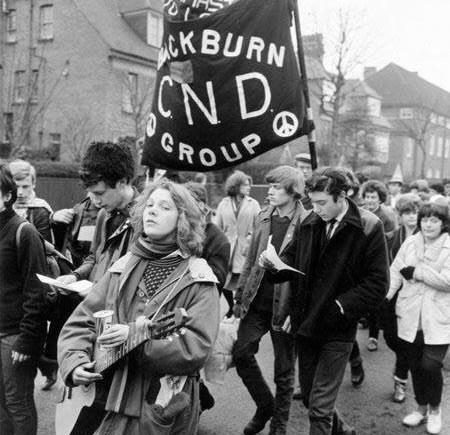
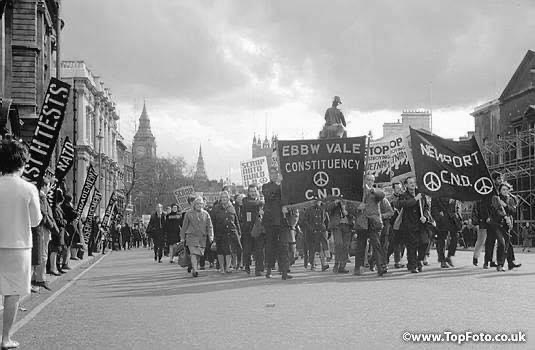
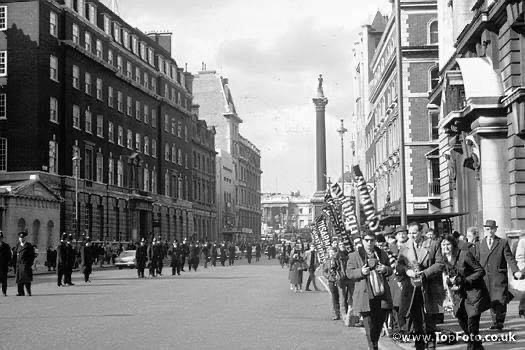
The photograph at the head of this essay and those below are of the 1966 Campaign for Nuclear Disarmament Aldermaston March reaching central London. The writer was somewhere in its ranks.
Moral capture and the discomfort of doubt
This pressure is reinforced by a phenomenon I have come to think of as moral capture. Moral capture occurs when a cause becomes so central to a person’s identity that every question must be filtered through it. Facts cease to be facts in their own right. Instead they become assets, liabilities, weapons or threats depending on whether they support the cause. The question is no longer whether something is true. The question becomes whether acknowledging it helps or hinders the narrative.
At that point intellectual honesty begins to erode.
Intellectual honesty is one of the most demanding virtues because it requires us to acknowledge facts we would rather avoid. It requires us to recognise when our opponents are correct and when our allies are mistaken. It demands that we apply the same standards to friends and enemies alike. It obliges us to distinguish between evidence and preference, between analysis and advocacy. Most importantly, it requires us to accept that reality does not rearrange itself to accommodate our politics.
This is remarkably difficult. Human beings are tribal creatures. We enjoy belonging. We like certainty. We prefer the comfort of the crowd to the discomfort of doubt. The tribe offers affirmation. The slogan offers simplicity. The crowd offers solidarity. Complexity offers none of these things. Complexity is untidy. It frustrates neat conclusions. It introduces caveats where certainty seeks absolutes.
Modern technology has made this problem worse. The algorithms that increasingly shape our information environment are not designed to cultivate wisdom. They are designed to cultivate engagement. Outrage is engaging. Certainty is engaging. Nuance is not. A meme travels further than a history lesson. A slogan spreads faster than an argument. A false analogy often possesses more emotional power than a careful comparison. Every issue is compressed into a binary choice. Every debate becomes a loyalty test. The first question is no longer whether a statement is true but which side it helps.
The result is a culture increasingly dominated by assumptions, preconceptions and caricatures.
I think back sometimes to those old marches through London in the 1960s. As we walked along singing earnest and often dreadful protest songs, members of the public would call out from the footpaths. “Get a haircut!” they would shout. “Have a wash!” “Get a job!” The implication was always the same. Protesters were outsiders. Troublemakers. Layabouts. Dreamers disconnected from reality.
Years later, in Australia, at that Liberal Party campaign launch I mentioned above, a young Liberal supporter deployed exactly the same line. “Get a job!” she called to me. I reached into my pocket and handed her my business card – back then, I was chief accountant with a small “c” conservative publishing firm. The look on her face was priceless. For a brief moment the stereotype collapsed as an assumption collided with reality. The protester turned out not to be the caricature she had imagined.
The incident was trivial, but the lesson was not. Much of political discourse today consists of people arguing with caricatures rather than engaging with reality. We sort one another into categories and then proceed as though the categories explain everything. Activist. Conservative. Progressive. Populist. Elite. Nationalist. Globalist. Zionist. Anti-Zionist. The labels become substitutes for thought. The person disappears behind the category.
Yet reality stubbornly refuses to cooperate. Human beings are more complicated than their labels. Nations are more complicated than their histories. Political problems are more complicated than their slogans.
The perils of passionate intensity
As I reread these reflections, I find myself returning to two observations that have echoed through much of my adult life. The first is Yeats’s famous warning from The Second Coming: “The best lack all conviction, while the worst are full of passionate intensity.” Like many celebrated quotations, it is often invoked more than it is examined. It is frequently used to lament the supposed timidity of moderates or to argue that our age requires more conviction, more certainty and greater willingness to fight for what we believe. Yet that was not Yeats’ point. He was not celebrating passionate intensity. He was warning about it.
Writing amid the upheavals of the early twentieth century, Yeats was observing a world in which restraint, balance and judgement appeared to be collapsing while fanaticism, absolutism and ideological fervour were on the rise. The “passionate intensity” belonged not to wise statesmen or thoughtful citizens but to those who possessed an unshakeable belief in their own righteousness. It was a description of certainty untethered from humility.
History would soon provide abundant examples.
The twentieth century was not a century that suffered from a shortage of conviction. Fascists possessed conviction. Communists possessed conviction. Religious extremists possessed conviction. Nationalists, revolutionaries and racial supremacists possessed conviction. None lacked certainty about the correctness of their cause. None doubted that history, morality or destiny stood firmly on their side.
The problem was never too little certainty. The problem was too much of it.
That is why Yeats’ warning speaks so powerfully to our own age. We live once again in a time of passionate intensity. Political tribes, activist movements, media ecosystems and online communities all encourage us to embrace certainty. The incentives are obvious. Certainty is emotionally satisfying. It creates solidarity. It simplifies complexity. It identifies heroes and villains. It provides meaning, belonging and purpose. Above all, it relieves us of the burden of doubt.
Yet doubt, properly understood, is not a weakness. It is one of the disciplines that protects us from ourselves.
The second observation, one we have touched upon above, comes from F. Scott Fitzgerald’s essay collection, The Crack-Up, who wrote that “the test of a first-rate intelligence is the ability to hold two opposed ideas in mind at the same time and still retain the ability to function.” Whether Fitzgerald consistently met his own standard is perhaps beside the point. The insight itself remains profound.
One might see Fitzgerald’s observation as a kind of antidote to Yeats’ warning. Where Yeats alerts us to the dangers of passionate intensity, Fitzgerald reminds us of the intellectual discipline required to resist it. The capacity to hold competing truths in tension, to acknowledge complexity without succumbing to paralysis, to recognise ambiguity without abandoning judgement—these are among the most important habits of mind a democratic citizen can possess.
Indeed, the independent mind is simply the refusal to surrender that capacity.
Not because all sides are equally right. Not because truth is unknowable. Not because every question has two equally valid answers. But because reality is usually larger, stranger and more contradictory than our tribes permit. Human beings are complicated. Nations are complicated. History is complicated. The slogans painted on our banners and the memes shared across our screens rarely capture more than a fragment of the truth.
Certainty and the attraction of authenticity
One of the reasons certainty remains such a powerful force in politics is that people often confuse it with authenticity.
A recent observation about populist Australian politician Pauline Hanson captured something important. Her views have not substantially changed in thirty years, and that certainty about what she stands for forms part of her appeal to voters who feel alienated, anxious or ignored. Whether one agrees with Hanson or not is almost beside the point. The observation reveals something larger about the political culture in which we now live.
In times of uncertainty, certainty itself becomes politically valuable.
When people are struggling with rising costs, housing pressures, declining trust in institutions, geopolitical instability and the bewildering complexity of modern life, they are naturally drawn towards voices that appear confident and consistent. Human beings have always preferred clarity to ambiguity and confidence to hesitation. We are pattern-seeking creatures. Faced with confusion, we look for certainty. Faced with complexity, we look for simplicity.
The attraction is understandable.
What is often misunderstood, however, is that certainty and wisdom are not the same thing. Nor are certainty and conviction.
A politician may possess strong convictions while remaining open to evidence, criticism and changing circumstances. Indeed, that is probably what we should hope for in a democratic leader. Conviction involves knowing what one believes and being prepared to defend it. Certainty goes a step further. It is the belief that one cannot be wrong. Conviction allows room for learning. Certainty often does not.
Yet from a distance the two can look remarkably similar.
This is particularly true in an era when so much mainstream politics appears managerial, cautious and focus-grouped. Many contemporary politicians sound as though every sentence has been tested, refined and stripped of anything resembling genuine belief. They speak in carefully calibrated formulations designed not to offend any particular constituency. Such caution may be politically prudent, but it often creates an impression of evasiveness. Voters may not always agree with a politician who speaks plainly, but they often appreciate knowing where that politician stands.
People forgive a surprising amount in leaders they regard as authentic. What they struggle to forgive is the suspicion that their leaders believe one thing and say another.
This helps explain why figures as different as Pauline Hanson, Donald Trump, Bernie Sanders and Nigel Farage have attracted passionate followings. Their supporters frequently describe them not as wise, sophisticated or nuanced, but as “authentic”. What supporters often mean by authenticity is consistency. They know what these figures believe. The message may be right or wrong, attractive or repellent, but it is recognisable.
That consistency becomes especially attractive when the political centre appears uncertain of itself.
The irony is that certainty often flourishes precisely when trust is declining. When institutions command confidence, when living standards are improving and when mainstream parties appear competent, certainty on the political fringes tends to have less appeal. When trust collapses, however, certainty becomes a scarce commodity. Voters begin searching for leaders who seem sure of themselves, even if the proposed solutions are simplistic or unrealistic.
This is where the independent mind must exercise caution.
The temptation is to mistake certainty for competence, confidence for wisdom and consistency for truth. History repeatedly warns against such assumptions. The twentieth century did not suffer from a shortage of certainty. Some of its greatest disasters were fuelled by people who were utterly convinced of their own righteousness. Fanatics are rarely troubled by doubt. Ideologues seldom lack confidence.
Yet there is an equal danger in the opposite direction. A politics devoid of conviction quickly descends into managerial drift. Citizens want leaders who possess principles. They want to know where their leaders stand. They want evidence that there is something beneath the polling, the slogans and the spin.
The challenge, therefore, is not to choose between conviction and uncertainty, but to distinguish conviction from certainty. Conviction says, “This is what I believe, based on the evidence and experience available to me.” Certainty says, “This is what I believe, and no evidence could persuade me otherwise.”
The difference may seem subtle, but it is profound.
After decades of marching, arguing, protesting, campaigning and often, tilting at windmills, I have not lost faith in causes. Nor have I become indifferent to injustice. If anything, experience has reinforced the importance of civic engagement and public participation. Democracies need citizens who care. They need people willing to stand up, speak out and occasionally make nuisances of themselves.
What experience has changed is my relationship with certainty.
I have become more wary of movements that claim exclusive possession of truth. More alert to false analogies, seductive slogans and the temptations of moral capture. More conscious of unintended consequences. More appreciative of intellectual honesty, especially when honesty requires acknowledging facts that complicate one’s preferred narrative. More willing to question my own side as rigorously as I question its opponents.
In short, I have become less impressed by passionate intensity and more interested in judgement.
The challenge of democratic citizenship is not to choose between conviction and doubt. It is to possess enough conviction to act and enough doubt to remain honest. It is to seek moral clarity without succumbing to moral certainty. It is to care deeply about injustice while resisting the temptation to reduce every issue to a morality play. It is to recognise that one’s opponents may occasionally possess a fragment of truth and that one’s allies may occasionally be mistaken.
That is not fence-sitting. It is not moral relativism. It is not indifference.
It is the difficult and often uncomfortable work of remaining intellectually free.
And perhaps that is the final lesson. The independent mind is not characterised by the absence of belief but by the refusal to surrender judgement. It is not a rejection of commitment but a resistance to dogma. It is conviction disciplined by humility, passion tempered by experience, and certainty held in check by the recognition that the world is almost always more complicated than it first appears.
A healthy democracy requires leaders with convictions strong enough to act and citizens thoughtful enough to question them. It requires moral clarity without moral absolutism, confidence without arrogance, and principle without dogma. Above all, it requires the capacity to recognise that knowing what one stands for is a virtue, but believing that one possesses all the answers is not.
That distinction lies at the heart of the independent mind. It is not an argument against commitment. It is an argument against the seductive comfort of certainty. For while certainty may be politically attractive, judgement remains the rarer and more valuable quality. Yeats warned us about passionate intensity. Fitzgerald reminded us of the discipline required to resist it. Between them lies a space that democratic societies desperately need to preserve: a place where conviction and humility coexist, where competing truths can be held in tension, where citizens remain free to think for themselves, and where wisdom begins not with certainty but with the humility to recognise that reality is usually far more complicated than the slogans painted on our banners. In an age increasingly defined by certainty, that may be the most radical act of all.
Judgement and the Limits of Certainty
At this point an obvious question arises. If certainty is so dangerous, why place such faith in judgement? Are we not equally vulnerable to error there as well?
After all, our judgement is shaped by the very things that make us human. It is influenced by our experiences, upbringing, education, culture, temperament, loyalties, fears, aspirations and prejudices. None of us approaches the world as a detached observer. We all carry assumptions into every argument. We all inhabit particular histories. We all see some things more clearly than other.
A former refugee may view immigration differently from someone whose family has lived in the same town for generations. A soldier may understand war differently from a pacifist. An Indigenous Australian may experience Australian history differently from a recent migrant. A Jew may hear echoes in antisemitism that others fail to recognise. A Palestinian may understand displacement in ways others cannot. These perspectives do not necessarily cancel one another out. Nor does any single perspective possess a monopoly on truth. Each illuminates part of the landscape while leaving other parts in shadow.
The independent mind does not somehow escape these influences. It merely becomes conscious of them.
Indeed, one of the defining characteristics of intellectual maturity is recognising that our own perspective is necessarily incomplete. We are all standing somewhere. We are all looking from a particular vantage point. The challenge is not to eliminate subjectivity – an impossible task – but to understand its influence upon us.
This is why judgement differs from certainty.
Certainty assumes that because we have reached a conclusion, the matter is settled. Judgement recognises that conclusions are always provisional, always vulnerable to new evidence, new experiences and new insights. Certainty seeks finality. Judgement remains open to revision.
In this sense, judgement is less about arriving at the right answer than about cultivating habits that reduce the likelihood of arriving at the wrong one. It requires a willingness to ask uncomfortable questions of ourselves. Why do I believe this? What assumptions am I bringing to the issue? What evidence would change my mind? Am I applying the same standards to friends and enemies alike? What facts am I tempted to ignore because they complicate my preferred narrative?
These questions rarely provide certainty. They do, however, encourage honesty.
That honesty is particularly important because many of the most important questions confronting democratic societies involve genuine tensions rather than simple choices. Liberty and equality, security and freedom, justice and mercy, order and compassion, national interest and universal values – these are not problems to be solved once and for all. They are competing goods that must be balanced, negotiated and continually reassessed.
Politics, at its best, is not the elimination of such tensions but the management of them.
History offers countless reminders of the dangers of forgetting this. Time and again, the greatest political disasters have emerged not from excessive doubt but from excessive certainty. The fanatic, the ideologue and the zealot are rarely troubled by ambiguity. They know exactly where they stand. They possess answers for everything. They are convinced that history, morality and truth march in step behind them.
Yet history is littered with the wreckage left by people who were absolutely certain they were right.
This is where the independent mind returns to the insights of Yeats and Fitzgerald.
Yeats warned of those who are “full of passionate intensity,” not because conviction itself is dangerous, but because conviction unrestrained by humility can become fanaticism. Fitzgerald, meanwhile, celebrated the ability to hold two opposed ideas in mind at the same time and still retain the ability to function. Between those two observations lies a profound truth. Mature judgement is not confidence in one’s own infallibility. It is awareness of one’s own limitations.
The paradox is that the people with the best judgement are often those most conscious of how easily judgement can fail.
The more one learns about history, politics and human nature, the harder it becomes to believe that complex questions have simple answers. Good intentions can produce disastrous outcomes. Bad policies can emerge from noble motives. Opponents can occasionally be right. Allies can occasionally be wrong. Causes that deserve support can still produce unintended consequences. Human affairs are untidy in ways that slogans rarely acknowledge.
Yet none of this absolves us of responsibility. Citizens must still make choices. Governments must still govern. Voters must still vote. We cannot escape the necessity of judgement simply because certainty is unattainable.
The alternative to imperfect judgement is not objectivity. It is paralysis.
The challenge, therefore, is not to become certain of our judgement but to hold it provisionally: firmly enough to act, yet lightly enough to revise. To possess convictions without becoming imprisoned by them. To care deeply without succumbing to moral capture. To remain committed to principles while accepting that our understanding of them may always be incomplete.
Perhaps that is the most difficult discipline of all. Certainty says, “I know.” Judgement says, “This is my conclusion based upon the evidence and experience available to me, but I remain open to the possibility that I have missed something.”
The difference may appear subtle, yet it is immense. Certainty seeks closure. Judgement remains in conversation with reality.
And reality, unlike ideology, always has the last word.
In conclusion
Perhaps the independent mind has become one of the last unfashionable virtues.
It lacks the emotional satisfactions of certainty, the camaraderie of tribal belonging and the reassuring simplicity of slogans. It offers no guarantee of popularity and few opportunities for self-righteousness. More often than not, it leaves its advocate stranded between opposing camps, criticised by all sides for refusing to embrace the approved orthodoxy of any one of them. Yet it remains indispensable to the health of a democratic society because it asks something increasingly rare of us: that we think before we choose, question before we condemn, and understand before we judge.
A lifetime of political engagement has convinced me that neither protest nor power possesses a monopoly on wisdom. Activists can identify genuine injustices while proposing unworkable solutions; governments can understand practical realities while losing sight of moral obligations. Both require scrutiny. Both require criticism. Both require citizens willing to think beyond inherited narratives, ideological loyalties and partisan certainties. But this is not really an essay about protest, nor is it ultimately about independents in the electoral sense. It is about a disposition of mind: the determination to remain intellectually free in a culture that increasingly rewards conformity.
When we are young, we often imagine that the opposite of commitment is apathy. We assume that doubt is the enemy of conviction and that certainty is evidence of moral seriousness. Yet a lifetime of politics, protests, campaigns, victories, defeats, enthusiasms and disillusionments suggests something rather different. The real opposite of commitment is not apathy but dogma.
It is entirely possible to care passionately about injustice while resisting moral capture. It is possible to hold strong convictions while remaining open to evidence, criticism and changing circumstances. It is possible to stand for something without believing that one’s own side possesses a monopoly on virtue, wisdom or truth. Indeed, that may be what genuine conviction looks like. Conviction says, “This is what I believe.” Certainty says, “Nothing could persuade me otherwise.” The person who never questions themselves has ceased to serve a cause and has instead begun to worship it.
That, ultimately, is the thread running through this essay: a defence of judgement over certainty.
The phrase that recurs most often in my mind – and has featured prominently in this essay – is that notion of holding two truths at once. It sounds simple enough, yet it runs directly against the grain of contemporary political culture. Our public life increasingly rewards simplification. Algorithms prefer one truth. Activists often prefer one truth. Partisans almost always prefer one truth. The pressure is constant: choose a side, embrace a narrative, identify the villains and remain loyal to the script. Yet reality stubbornly resists such neat arrangements. Mature citizenship frequently requires us to live with competing realities, overlapping truths and unresolved tensions.
It is possible for a nation to be both admirable and flawed, for a people to be both victims and agents of their own history, for a cause to be just and yet produce harmful consequences, for an opponent to be right about one thing and wrong about another. As we have written, it is possible to condemn the atrocities of October 7 and mourn the suffering of Gaza. It is possible to oppose antisemitism while criticising Israeli policy, to support Palestinian aspirations while rejecting Hamas, to acknowledge the dispossession of Indigenous Australians while recognising the achievements of modern Australia. These are not contradictions to be eliminated but tensions to be navigated. They require judgement rather than certainty, humility rather than righteousness.
I find myself returning, too, to WB Yeats and Scott F Fitzgerald, writers who have hovered over these reflections. Between them lies the intellectual territory occupied by the independent mind: conviction tempered by doubt, clarity balanced by complexity, belief disciplined by self-examination.
This is not because all sides are equally right, nor because truth is unknowable, nor because every argument lies somewhere in a comfortable middle ground. Rather, it is because reality is usually larger, stranger and more contradictory than our tribes permit. Human affairs do not fit neatly into ideological categories. History rarely conforms to our preferred narratives. Good intentions do not guarantee good outcomes. Sincerity does not confer correctness. Authenticity does not guarantee wisdom. The world is full of competing goals, unintended consequences and moral ambiguities that cannot be resolved by slogans alone.
Perhaps that is the final irony. After decades of marching, arguing, protesting, campaigning, reading, writing and, more than occasionally, tilting at windmills, one does not necessarily end up believing in fewer causes. One does not become indifferent to injustice, retreat from public life or cease caring about the future. Rather, one becomes more wary of certainty, more conscious of unintended consequences, more alert to false analogies and seductive slogans, and more appreciative of the rare virtue of intellectual honesty.
One becomes more aware of the distinction between the high moral ground and the low moral ground disguised as the high moral ground. One becomes more sensitive to the dangers of moral capture, more sceptical of movements that demand conformity of thought, and more willing to question one’s own assumptions as rigorously as those of one’s opponents.
That is not a retreat from conviction. It is conviction disciplined by humility. It is passion tempered by experience. And experience, unlike ideology, has a habit of teaching modesty about what we know and caution about what we merely think we know.
In the end, that may be the independent mind’s greatest contribution to a democratic society. Not certainty, but judgement; not tribal loyalty, but intellectual honesty; not the comforting illusion of possessing all the answers, but the willingness to ask difficult questions, follow evidence wherever it leads, and hold competing truths in tension without surrendering either one’s principles or one’s capacity for doubt.
There is, however, one final irony. A defence of judgement over certainty should not be mistaken for confidence in one’s own judgement. We are all prisoners, to some degree, of our experiences, our histories, our loyalties and our blind spots. None of us sees the whole landscape. The independent mind is not distinguished by superior wisdom so much as by an awareness of its own limitations. It understands that every perspective illuminates some truths while obscuring others. Its task is therefore not to eliminate doubt but to live productively with it; not to achieve perfect objectivity but to remain open to correction. If certainty begins with the belief that one cannot be wrong, judgement begins with the recognition that one might be.
It is in that uneasy space between certainty and cynicism, between conviction and humility, between passion and judgement, that citizenship is at its most demanding and, perhaps, at its most valuable. Democracy ultimately depends not upon the certainty of its partisans but upon the wisdom of its citizens. Wisdom begins with the recognition that reality is usually more complicated than our slogans, larger than our causes, and far too important to be entrusted to those who claim to possess all the answers. In an age that increasingly rewards certainty, the independent mind remains one of the few places where freedom, judgement and humility can still coexist.
In That Howling Infinite, June 2026
This essay was written in conversation with an AI language model, which contributed to drafting, phrasing, and conceptual articulation. What appears here is not unmediated thought, but considered thought: selected, tested, revised and revised again, and owned.
See also in In That Howling Infinite, A Political World – Thoughts and Themes, including: Moral capture, conditional empathy and the failure of shock, Standing on the high moral ground is hard work and Shaping facts to feelings – debating intellectual dishonesty
Author’s Note
The essays published in In That Howling Infinite reflect a lifelong engagement with politics, history, culture and public affairs. They are not intended as manifestos, nor do they seek to recruit readers to a particular ideological camp. Rather, they represent an ongoing attempt to understand a complex world while resisting the temptations of certainty, tribalism and intellectual complacency.
The views expressed in this essay are not therefore confined to these pages. Rather, they form part of a broader body of work that range from Australian history and politic, the Middle East, and Russian history to contemporary activism, political discourse, identity, memory and public morality. They are connected by a number of recurring themes.
Among these is the belief that genuine understanding requires intellectual honesty: the willingness to follow evidence even when it challenges our assumptions, complicates our preferred narratives or discomforts our own side. Another is the conviction that moral clarity and moral certainty are not the same thing. One may recognise injustice, condemn cruelty and defend human dignity without imagining that any individual, movement or ideology possesses a monopoly on truth.
These essays also reflect a persistent concern with what I have elsewhere called moral capture: the process by which a cause becomes so central to personal identity that facts are no longer evaluated on their merits but according to whether they support or undermine the cause itself. Closely related is the phenomenon of conditional empathy, where compassion is extended selectively—depending on the identity of victims or perpetrators—rather than consistently across human suffering. Both tendencies, I would argue, diminish our capacity for honest inquiry and weaken our ability to navigate complex moral questions.
Readers familiar with One Land, Two Peoples: History, Memory, Continuity, and Inheritance will recognise another recurring principle: the necessity of holding two truths in tension at the same time. The Israeli–Palestinian conflict is perhaps one of the clearest examples of a subject that resists simplistic narratives, demanding that we acknowledge competing histories, competing grievances and competing aspirations without reducing either side to caricature. Yet the same principle applies far beyond the Middle East. It applies equally to debates about national identity, immigration, colonial history, religion, social justice, populism and democratic governance.
Throughout these essays runs a scepticism towards slogans, false analogies and the seductive simplicity of binary thinking. The modern information environment rewards certainty, outrage and performative moral confidence. It is less hospitable to ambiguity, nuance and self-questioning. Yet history repeatedly suggests that the greatest errors are often committed not by those troubled by doubt but by those convinced they possess exclusive access to truth.
For that reason, the essays collected in In That Howling Infinite should be read not as declarations of certainty but as exercises in inquiry. They are attempts to ask difficult questions rather than provide final answers; to explore tensions rather than dissolve them; and to defend the increasingly unfashionable proposition that intellectual independence remains both possible and necessary.
If there is a single thread connecting them all, it is the belief that democratic citizenship requires more than passion and more than conviction. It requires judgement. It requires humility. It requires the capacity to hold competing truths in tension without surrendering either one’s principles or one’s willingness to question them.
In an age increasingly organised around tribes, narratives and certainties, that may be one of the most important responsibilities a citizen can undertake. The essays are offered in that spirit. They do not ask the reader to agree with every conclusion. They ask only that the questions remain open, the evidence be examined honestly, and the conversation continue. After all, the purpose of independent thought is not to win arguments, but to understand the world a little better than we did before.

 In That Howling Infinite