This remarkable poet and storyteller is today rarely read and is often vilified and dismissed as a jingoistic and chauvinistic booster of empire and white civilization. When critics reach for their guns, they “bring out the white man’s burden“and “east and west is west, and ne’er the Twain shall meet”. He is definitely guilty as charged, but he was of his time, and voiced what was then the imperial zeitgeist that enraptured his British constituency. The past, as they say, is another country – they thought much differently then.
But, as those who are familiar with his many poems and stories would attest, the poet was so much more than this.
It was Kipling’s habit to preface and bookend his remarkable if, to contemporary readers, politically incorrect stories with short poems of singular quality.
Lukannon is one of these. The story of The White Seal first appeared in print in the August 1893 issue of the London-based magazine National Review and published again in 1894 as part of the anthology The Jungle Book. Yes, that one. Mowgli, Wolf Cubs, Akela, and all. But, exceptionally for a story in The Jungle Book, none of the action in The White Seal takes place in India. And, presaging the environmental activism and protests against the controversial seal hunts of the late 20th Century, it is remarkably prescient and pertinent.
The story is set on an island in the Aleutians in the Bering Sea between Russia and Alaska. It tells of a unique seal who, by leading his fellow seals to a secret hidden beach, saves his kind from the seal hunters. He referred to his poem as “a kind of national anthem for seals”. The title of the poem is the name of a Russian seal-fur trader, Lukanin, who gave his name to these lonely Aleutian beaches in 1788. Kipling wrote: “This is the great deep-sea song that all the St. Paul seals sing when they are heading back to their beaches in the summer. It is a sort of very sad seal National Anthem”.
Back in the day, I set the poem to music. It is featured on the rare recording HuldreFolk Live in London 1988, featuring Paul Hemphill, Victor Mishalow and Adèle Hemphill. During HuldreFolk’s tour of English folk clubs in the northern summer of 1988, it was recorded on a cheap audio cassette by a dinky, clunky old analogue tape recorder – and it shows. But the natural acoustics of the cellar at Bracknell Arts Centre, and the audience’s participation in the choruses made up for a multitude of sins.
Lukannon is such a lyrical poem that it lends itself effortlessly to musical settings. Apart from my own, i have discovered three alone, and I am pretty certain that there are many more out there on the world wide web. There is a version by folk duo William Pint and Felicia Dale set to a tune by American musician Bob Zentz from their 1997 album Round the Corner. There is also a contemporary “prog-rock” version by British band Shadows of the Sun.
In 1947, the eccentric Australian expatriate composer Percy Grainger composed a song cycle of The Jungle Book and chose as his centrepiece the story of The White Seal – and particularly, Lukannon “as a protest against civilization.” For more on Grainger’s opus, see below.
Lukannon
I met my mates in the morning (and oh, but I am old!)
Where roaring on the ledges the summer ground-swell rolled;
I heard them lift the chorus that dropped the breakers’ song –
The beaches of Lukannon – two million voices strong!
The song of pleasant stations beside the salt lagoons,
The song of blowing squadrons that shuffled down the dunes,
The song of midnight dances that churned the sea to flame –
The beaches of Lukannon — before the sealers came!
I met my mates in the morning (I’ll never meet them more!);
They came and went in legions that darkened all the shore.
And through the foam-flecked offing as far as voice could reach
We hailed the landing-parties and we sang them up the beach.
The beaches of Lukannon – the winter-wheat so tall –
The dripping, crinkled lichens, and the sea-fog drenching all!
The platforms of our playground, all shining smooth and worn!
The beaches of Lukannon — the home where we were born!
I meet my mates in the morning, a broken, scattered band.
Men shoot us in the water and club us on the land;
Men drive us to the Salt House like silly sheep and tame,
And still we sing Lukannon – before the sealers came.
Wheel down, wheel down to southward; oh, Gooverooska go!
And tell the Deep-Sea Viceroys! the story of our woe;
Ere, empty as the shark’s egg the tempest flings ashore,
The beaches of Lukannon shall know their sons no more!
Percy Grainger’s Jungle Book Cycle
In 1947, the eccentric Australian expatriate composer dedicated a song cycle of The Jungle Book and chose as his centrepiece the story of The White Seal – and particularly, Lukannon. My Kipling ‘Jungle Book’ Cycle, begun in 1898 and finished in 1947, was composed as a protest against civilization.” (Grainger’s programme note, 1947)
Grainger (1882-1961) studied at the Hoch Conservatory in Frankfurt, Germany from 1895-1901 (aged 13-19). Grainger’s mother Rose wrote to her husband John of her fears that young Percy was becoming “more Germanized every day.” In response to Rose’s concern, and to “tickle up the British Lion in him,” John (who was estranged from Rose) sent Percy, among other things, several books by Rudyard Kipling . Kipling’s writings captivated Percy immediately, and he soon started writing choral settings of the poetry, especially those of Kipling’s Jungle Books.
Grainger’s settings of the poetry of Kipling are as extensive as his settings of British folk music; Kay Freyfus’s catalog of Grainger’s manuscript scores lists 36 settings, though Grainger in a 1926 letter to Kipling mentions “some 40 or 50” settings. Grainger felt a strong kinship for Kipling’s writing, and Kipling appreciated and approved of Grainger’s work at setting his poetry. Grainger played several of his choral settings for Kipling during a meeting at Kipling’s home in 1905. Of Grainger’s settings of his poetry, Kipling said, “Till now I’ve had to reply on black and white, but you do the thing for me in colour.”
The Beaches of Lukannon is the centerpiece of the cycle, and arguably the strongest piece musically and emotionally. It tells us the tale of the tragic slaughter of seals by wicked sealers from the seals’ perspective. The opening section, told from the point of view of a seal elder, recounts what the beaches of the Bering Sea Island of Lukannon originally were for the seals – their annual meeting (and mating) opportunity. The central section, reminiscent of the music of Charles Ives in its shifting chromatics, conveys the beauty of the surroundings “before the sealers came.” The final section musically revisits the opening material, but in a smore somber mode.
Please allow me to introduce myself I’m a man of wealth and taste I’ve been around for a long, long year Stole many a man’s soul and faith
The Rolling Stones, Sympathy for the Devil (1968)
Strange things happen If you stay The devil will catch you anyway He’ll seek you here he’ll seek you there The devil will seek you everywhere.
Gun. Race with the Devil (1968)
My words appear to leave you cold; Poor babes, I will not be your scolder: Reflect, the Devil, he is old, To understand him, best grow older.
Goethe, Faust
Say what you like about The Devil, he does at least give a fair price for souls. Faust got twenty four years of worldly knowledge and pleasure in exchange for his (more about him later). When Robert Johnson met him at the crossroads, he mastered the blues overnight. When it comes to music, he’s a hot fiddler – though when he came down to Georgia “lookin’ for a soul to steal”, young Johnny whupped him good. Leonard Cohen reversed this analogy when in one of his last songs, he sang “now the angel’s got a fiddle and the devil’s got a harp”. So, a warning to all: “Beelzebub has a devil put aside for me” and thee.
It is said the Devil “gets all the best songs”. He also gets a good few stories, in the form of “biographies” both scholarly and light-hearted and novels and movies that range from allegory to fantasy, depicting him the personification of evil or as a clever and entertaining trickster. In some, he is the ageless hornèdone, and in others, he is just plain horny – I’m thinking here of Jack Nicholson’s scene-stealing performance in the 1987 adaptation of John Updike’s The Witches of Eastwick, all wicked grins, lecherous asides and comedic menace. That’s actually one of the better films in a catalogue of cinematic corn that features Satan, to use another of his many names, in person, through a proxy or in psychic proximity to an endangered mortal soul.
Closer to home, my friend and budding author John Rosley, published a novella called A Touch of Sulphur before he passed on in 2022. Its narrator, an incarnated Satan, boasts about his achievements on earth. He has strong and politically incorrect views, particularly regarding the Catholic Church and its clergy whom he regards as his bitterest enemies, ripe for degradation in ways only a devil may invent. I hope that his story, available on Kindle via Amazon, didn’t cause him too many problems when he arrived at Saint Peter’s Gate and knocked on Heaven’s Door.
In the interest of balance, I must note that there been plenty of books written about the old fellow’s nemesis and arch-adversary – including those claimed to have been written by or on behalf of himself. The Almighty, Our Lord, Yahweh, Jehovah, Allah, Big Hughie, and more. There are, as Muslims rightly aver, a thousand names for God. Many contemporary scholars have penned biographies, and so has another friend of mine. This I actually proof-read, but it remains to this day unpublished.
The following, however, is a contemplation of Lucifer, biblical bête noir and literary anti-hero (he, like God goes by a multitude of soubriquets; but I like Lucifer best). It leans more to light-hearted than to outer darkness and neither scholarly nor theological, it is slightly iconoclastic, and, I hope, informative and entertaining. It describes my long and enduring artistic relationship with the “great tempter”, a literary fancy rather than some kind of weird bond with the evil one – neither amoral, immoral nor menacing, but more like a muse.
And …
It all began with Christopher Marlowe
Dr Faustus. Was not that Lucifer an angel once? Mephistopheles. Yes, Faustus, and most dearly loved of God. Faust. How comes it then that he is Prince of Devils? Meph. O, by aspiring pride and insolence, For which God threw him from the face of heaven. Faust. And what are you that live with Lucifer? Meph. Unhappy spirits that live with Lucifer, Conspired against our God with Lucifer, And are for ever damned with Lucifer. Faust. Where are you damned? Meph. In hell. Faust. How comes it then that thou art out of hell? Meph. Why this is hell, nor am I out of it. Think’st thou that I that saw the face of God And tasted the eternal joys of heaven Am not tormented with ten thousand hells, In being deprived of everlasting bliss? O, Faustus, leave these frivolous demands, Which strike a terror to my fainting soul.
Christopher Marlowe, The Tragicall History of D. Faustus
That was Kit Marlowe, the Elizabethan playwright who gave us the story of Doctor Faust, the ambitious alchemist who “sold his soul to the Devil” – a salty tale taken up centuries later by German poet Friedrich Goethe and French composer Charles Gounod. His play is best known for his description of the legendary Helen of Troy as “the face that launched a thousand ships”: Marlowe may not have been the first to give us Faust, and nor was he to be the last. German polymath and write Johann Wolfgang Von Goethe took him in the early nineteenth century as did French composer Charles Gounod in 1859: a wonderful opera with a fabulous “soldiers’ chorus”. German author Thomas Mann published Doctor Faustus in 1947 wherein a gifted composer strikes a “Faustian bargain” for creative genius. These tales always end badly, their protagonists forgetting the maxim that those who sup with the devil should use a long spoon.
As for Marlowe, this sixteenth century “rake and rambling boy”, alleged bisexual and also government secret agent, was also an accomplished playwright, recognized as one of the most accomplished in a crowded Elizabethan field, and a master of blank verse – it’s still called “Marlowe’s mighty line”. In the perennial debate about whether or the Bard of Avon wrote the plays attributed to him, Marlowe’s name pops up as one of the prime candidates. A bit of a cruiser, a bit of a bruiser, he died in a tavern brawl in Deptford, southeast London.
It was through Marlowe that I first made a literary acquaintance with Lucifer – back in Moseley Grammar School in the mid-sixties when Kit got himself on to our A Level syllabus, and though one of our set plays was Edward II, the sad tale of a conflicted and controversial king, we were encouraged to read some of his plays. And I’ve always remembered the following exquisite demonstration of his “mighty line” as the medieval Mongol conqueror Amir Tamburlane grieves for his dying wife:
Black is the beauty of the brightest day; The golden ball of heaven’s eternal fire, That danc’d with glory on the silver waves, Now wants the fuel that inflam’d his beams; And all with faintness, and for foul disgrace, He binds his temples with a frowning cloud, Ready to darken earth with endless night.
Zenocrate, that gave him light and life, Whose eyes shot fire from their ivory brows, And temper’d every soul with lively heat, Now by the malice of the angry skies, Whose jealousy admits no second mate, Draws in the comfort of her latest breath, All dazzled with the hellish mists of death. Now walk the angels on the walls of heaven, As sentinels to warn th’ immortal souls To entertain divine Zenocrate …
The crystal springs, whose taste illuminates Refined eyes with an eternal sight, Like tried silver run through Paradise To entertain divine Zenocrate:
The cherubins and holy seraphins, That sing and play before the King of Kings, Use all their voices and their instruments To entertain divine Zenocrate;
And, in this sweet and curious harmony, The god that tunes this music to our souls Holds out his hand in highest majesty To entertain divine Zenocrate.
Then let some holy trance convey my thoughts Up to the palace of th’ empyreal heaven, That this my life may be as short to me As are the days of sweet Zenocrate.
But back to Lucifer …
Lucifer and me
I heard the snake was baffled by his sin He shed his scales to find the snake within But born again is born without a skin The poison enters into everything
Leonard Cohen, Treaty
As a nipper, I was well aware of his bad reputation. Brought up Irish catholic in Birmingham, there was no way that I could’ve missed him – it was always a “him” back then and never “her”, though our childhood was replete with biblical archetypes of amorally lapsed ladies with exotic names like Salome, Delilah, and Jezebel who often had songs, plays or movies written about them. Often, they too were portrayed as “the devil incarnate”. Elvis Presley sang about The devil in Disguise. Cliff Richard whinged about his Devil Woman. Fifties crooner Frankie Laine of High Noon and Rawhide fame sang about his unfaithful girlfriend: “if ever a devil was born without a pair of horns, it was you, Jezebel, it was you!”
That business in the Garden of Eden assured us that it was a woman who had committed the “original sin” and that all women were per se “the root of all evil”. This was when Satan earned his reputation as a tempter (nice apple), deceiver (Adam needn’t know) and liar (God won’t mind), and with it, the tag “Prince of Lies”. The implication was, that, if you fucked up, like evangelist preachers today who are caught with their pants down, “the devil made me do it”.
We were taught that Old Nick, as he was called, was forever lying in wait to divert us from the straight and narrow, and that the holier you were, indefinable though that was, the greater the effort he put into suborning you and the greater the rejoicing in the infernal realms should you stumble and fall. He isn’t alone, mind; look at the vicarious pleasure we take in seeing the high and mighty brought low by human failings, particularly politicians and clerics who lecture us on old values like family, neighbourliness, decency, courtesy, and self-control. The internet preys upon everything vile in the human spirit and can corrupt what is good into that vileness, which would certainly be the work of Satan.
A comment in the e-zine Unherd recently described this well: “… what is evil within humanity is only there because of Satan in the first place, having been the one who tempted Adam and Eve into eating the fruit of the Tree of the Knowledge of Good and Evil that placed within us the seeds of his own evil and the root of our corruption. The knowledge of Evil is what spurs us to such negative and destructive impulses, but the knowledge of Good would pull us towards something higher. This of course would be abhorrent to the Dark Prince, thus necessitating the construction of such and infernal mechanism as this to further debase and erode God’s creation, to ‘finish the job’ as it were.”
By coincidence, I was only just listening to The Rest is History podcast about Martin Luther, and Dom and Tom recounted how the Reformation’s progenitor believed the evil one to be intensely real, a clear and present danger. Rantings about Satan were virulent and often quite alimentary, featuring lots of bodily fluids. There is an apocryphal story of how one time, assailed by Satan, Luther threw an inkwell at him. another time, when during an hallucinatory episode, Lucifer appeared to him as a little dog, though an avowed dog-lover, Martin flung unlucky Rover out of the window. A sad case of being in the wrong place at the wrong time.
But I’d never encountered him represented as an actual person. Until I met Christopher Marlowe in Lower Sixth. Along with Kit, I also met Mephistopheles, a demonic go-between tasked by Lucifer to purchase the soul of the ambitious Dr Faustus. Admittedly, M was merely the middleman, but he gave his crew a bad name and literary fame.
About the same time, I happened to bump into him at the amazing Birmingham Museum and Art Gallery – the magnificent statue of Lucifer that stood imperiously in the centre of the central hall. The winged bronze oversized figure (11 feet tall, weighing in at 2,000kg) is Jacob Epstein’s depiction of the Archangel Lucifer, inspired by the renowned sculptor’s fascination with John Milton’s epic poem Paradise Lost (1667). It has stood at the heart of the museum, tall, stern and perhaps androgynous, a custodian of the gallery’s collection, an affirmation of the artist’s genius, and its value to the museum.
And so it was that at Moseley Grammar we learned through the unfortunate Faustus that Lucifer was an actual person, and an untrustworthy one at that. A fellow student, whom I did not know too well, and who was in fact one of the few Jewish students, wrote a poem for our school magazine (of which I was one of the editors). I remember but the last stanza (and later in life, used it as the last verse of a song).
But my literary liaison with Lucifer did not end there. Flatting in London in the early seventies, a friend introduced be to Lucifer’s Cage, a fiery instrumental by English guitarist Gordon Giltrap (who, incidentally, grew up in Deptford, the place of Kit Marlowe’s demise). The tune and its title, and that one verse slept in my imagination for decades, until they crystallized in a song.
Lucifer, star of the morning Lucifer, prince of the night Lucifer falling through darkness Lucifer cast from the light.
Lucifer sits in his wasteland Trapped in the cage of his pride The sirens of importunate circumstance Reclining in ranks by his side Plots he has made, so ingenuous. Dangerous follies and schemes For he has stage-managed quite strenuous Drunken prophecies, libels and dreams.
Lucifer frets in the wasteland Locked in a pillar of ice We know of this only to well We have visited him there once or twice For his is the language of liars And his is the honour of thieves And he is the master of eloquence As the last of the honest men leaves.
Lucifer crawls from the wasteland No solace or peace or rest. For he has corrupted the wisest And he has co-opted the best. And all that is good has since vanished And with it, the fair and the true And the silences hurting his demon heart Are haunting, haunting you.
And the road that winds out of Meggido Is the path that leads to the pit For Lucifer prizes a web of disguises He merely selects one to fit. And the road that runs down to Jericho Is the path that leads him to you And the paradox searing his demon soul Is hunting, hunting you.
So make you no truce with Lucifer Lucifer of fiery breath For Lucifer is treachery And treachery is death.
Lucifer, star of the morning Lucifer, prince of the night Lucifer falling through darkness Lucifer cast from the light.
The “pillar of ice”, by the way, is borrowed from the fourteenth century Italian poet Dante Alighiari’s Inferno. In his account of life after death, the ninth and last of the concentric spheres of hell, is where betrayers and traitors languish. It is presided over by the man himself, the greatest betrayer of all, though now impotent, encased up to chest in ice, a giant, bat-winged demon with with one head and three faces. Each weeps as it chews on a notorious sinner: Jesus’ betrayer Judas Iscariot, and Julius Caesar’s backstabbers Brutus and Cassius. His wing-beats raise a chill wind that continues to freeze the ice surrounding himself and the other sinners in the Ninth Circle, a wind that is felt throughout the other circles of Hell. In contrast to depictions of the devil in Dante’s day as a cunning foe ever ready to prey on human weakness, his Lucifer is strikingly modern, a metaphor for nothingness. Dribbling and speechless, he is all hat and no horse, or more apposite, all horns and no hellfire.
The Emperor of the kingdom dolorous From his mid-breast forth issued from the ice … Consider now how great must be that whole, Which unto such a part conforms itself. Were he as fair once, as he now is foul.
Doré’s Dante – Satan in Hell
Jacob Epstein’s Lucifer
Fallen Angels
So who exactly was this Lucifer, the biblical sum of all our fears?
Many Christians, whom I do not profess to be (I gave up practicing when I was good enough), believe that Satan, or “the devil” as he is commonly known, was once upon an eon ago a gorgeous angel much loved by God and named Lucifer – which means “star (or ‘son’) of the morning” – on account of his exemplary luminescence. No wonder early marketing folk got the idea of naming a brand of matches “Lucifers” – a tag memorialized in the First World War song It’s a long way to Tipperary and the soldiers’ trench superstition from the Crimean War to World War II of “Three on a match”.
He’d got tickets on himself, defied the boss and fell from grace. “Cast out into the Outer Darkness”, in fact. Hence French illustrator Gustave Doré’s striking image of him descending to Earth to fracture a cozy de facto relationship between Adam and Eve, the first human beings, a perfect pair “created in God’s image”, and thereafter to inflict mayhem upon mankind, including, as we have noted above, the concept of “original sin” which broadly defined all humanity as damned until it accepted the dominion of an almighty creator and condemned womankind to an eternity of subjugation to the patriarchy.
This assumption that he is a fallen angel is, scripturally, based the Book of Isaiah in the Old Testament of The Bible: “How art thou fallen from heaven, O Lucifer, son of the morning! How art thou cut down to the ground, which didst weaken the nations” (14:12).
But the tabloid story that has been handed down to us through the ages arguably originated in the apocryphal Book of Enoch, written sometime between 300-100 BCE and quite popular around the time of Jesus. It was widely circulated although it was considered a heretical text by the religious authorities on account of its opposition to mainstream Rabbinical Judaism. Whilst referenced a few times in the New Testament, it was rejected by the ecclesiastical canon, (though not, apparently, in Ethiopia – to this day, a unique African outlier to Christianity, and indeed, Judaism). But it’s from Enoch that we’ve inherited most of our mythology of the fallen angels, and also, a lot of apocalyptic imagery and millenarian or “end times” belief.
The apocalyptic Book of Enoch gave names to the Sons of God – Lucifer and his comrades, and also, a mob called the Nephilim. The eponymous Enoch understood them to be fallen angels who, having fallen to Earth, had sex with human women – beautifully portrayed in Daniel Chester French’s sculpture, which has been described as the sexiest statue in Washington DC. God, naturally, punished them, and, their behaviour, it is said, in Noah’s flood. So, it would seem, the fall of the angels related more to sexual sin than to Lucifer’s pride.
The Sons of God Saw the Daughters of Men That They Were Fair.
An artist made a sculpture of Lucifer that was too hot for the church so it commissioned his brother. He made an even hotter one!
Regarding the above picture, a Facebook comment read: “The depiction of Lucifer on the right looks exactly like the one in my dream. I dreamt that I was in very dark hallway or corridor and suddenly the room lit up, not a very divine bright light but more like a very dim light, lit enough to see what was going on. There was this huge very tall, partially robed angel in crimson red. He raised his hands in the air, and when he did, blood exploded out of the walls. It scared the shit out of me. I jumped up out of bed and didn’t go back sleep until the next day. Satan is definitely real, and he isn’t a red goat with horns – he’s a very tall, nice-looking angel with wavy blonde hair – and very very powerful he has wavy blonde hair sort of like Logan Paul’s (an American social media influencer, professional wrestler, YouTuber, entrepreneur, and actor). Though this may sound silly or fun, I’m not joking. I’ve I seen this m…..f…..r in my dream! It was Lucifer!”
And with regard to artistic depictions, there is the amazing sculpture The Fall of the Rebel Angels” created by sculptor Agostino Fasolato in the eighteenth-century. Almost two meters high and carved from a single block of Carrara marble, it is a pyramid of sixty contorted figures. At the top, wielding his sword of fire, is the archangel Michael who, according to religious tradition, led to forces of light in the tumultuous battle that saw Lucifer and his rebel angels consigned to hell. It an extraordinary intertwining of bodies, depicting the falling angels at the moment of their transformation into demons. So, there they are, agonised faces, hornèd heads, and serpents’ tails, rocking and rolling, tossing and turning, tumbling down, down, down into the infernal pit.
Paradise lost
The story of the fall of Lucifer is actually underpinned by not one but two works of fiction: Enoch’s, and the English puritan poet and pamphleteer John Milton’s imaginative and lyrical masterpiece Paradise Lost (1667) which has dominated our perspective of the story ever since.
Milton gave us the first lyrically and psychologically compelling portrait of Lucifer. He was not the sly predator of myth and menace but rather, (initially, at least) an edgy seductive hero. With his fine words, theatricality and swagger, the only ostensible sign of evil within, a lightning scar on his face: “He above the rest, in shape and gesture proudly eminent, stood like a tow’r”. And yet, he winds up as a washed out up idealist and revanchist cynic, “dismay mixt with obdurate pride and steadfast hate”.
Although I was familiar with Paradise Lost, I did not read Milton’s prose opus until the late seventies, encouraged by the the work of nineteenth century French lithographer Gustave Doré who rendered the poet’s words into pictorial flesh. That’s his iconic image of Lucifer descending to Earth at the head of this story.
Sometime in the early eighties, 83 or 84 I think, my old pal and provocateur Yuri the Storyteller introduced me to Lilith.
Lilith has been around for thousands of years. In the Talmud, she is described as a winged demoness with a human appearance. She appears in the bible, in the Dead Sea Scrolls, and in Hebrew folklore, and has been mentioned in black magic treatises. The apocryphal story is that Lilith was Adam’s first wife. God made Adam from dirt and clay. Adam bored, requested a companion, and God obliged with Lilith. Legend has it that her dirt was dirtier than Adam’s, but put that down to patriarchal prejudice and propaganda. More likely, she had the dirt on him! But I digress. Apparently, Lilith was not as inferior to Adam as he wanted. She wanted to be her own person, not Adam’s wife-slave. The story is that when Adam insisted on the missionary position, Lilith refused, saying “Why must I lie beneath you? We are both equal. We come from the same earth”. Adam got mad, and Lilith took off.
Because of this, she was banished from Eden and became a spirit associated with the seductive side of a woman. Eve came in her place to stand behind Adam, not beside him. Lilith became the timeless femme fatale, preying on the easily tempted weaker sex, the fabled incubus who comes at night upon men as they sleep. It is not for nothing that she has been hailed the (informal) goddess of wet dreams.
The legends are many and various. If you buy into the Lilith theory, you will see her cropping up throughout history in a variety of guises. In biblical times: Delilah, Salome, and Potophar’s wife. In fact and fable: Sheherazade, Lucrezia Borgia, Mata Hari, Evita Peron. Hollywood’s screen ‘sirens’ like Vivien Leigh, Elizabeth Taylor, and Marilyn Monroe. All of them antitheses to secular saints like Eve, Mary Magdalene, Joan of Arc, Florence Nightingale, Jackie Onassis, Mother Theresa, and Princess Diana.
Lilith’s story deserved an epic poem, so borrowing from Milton and the opening chapter of JRR Tolkien’s Silmarillion, I duly wrote Lilith – a poem of the fall. It was attributed to a Roman poet celebrated during the reigns of emperors Claudius and Nero. It’s forward read:
“The style of Lilith differs markedly from that of other poems attributed to Meniscus – most notably the Hebrew Heroes cycle and was evidently written for a different manner of presentation. It was most likely written to be recited rather than sang (as were his other “story songs”). Recitations were a common form of entertainment in the middle Roman period, owing their popularity to the enduring reputations of the “classical” writers of the time, Ovid, Horace and the like. It was not uncommon for such recitations to last several hours. But Meniscus, mindful of the fast-moving times, and also of the attention span of his audiences, appears to have honed his pieces down to between ten or fifteen minutes”.
It debuted at Victoria’s Port Fairy Folk Festival in about 1986 in a shambolic busy poetry competition – it came first, I recall, but the event was so poorly organized that I received neither award or recognition.
It began in suitably histrionic Genesis style:
Long time ago In a time before time, When man was an atom in primeval slime, When darkness lay hard on the face of the deep, God called for his angels to sing him to sleep.
I hadn’t finished with Lucifer, however. He reappeared as metaphor in a gloomy commentary of the state of humanity in Devil’s Work, published in full at the end of this article. The narrative actually came to me in a dream – though this was not the nightmarish image of the sleepless Facebook commenter quoted above:
For what you’ve done to you own kind, you’ve done of your own will. If I went away on a holiday, you’d be malignant still. For all you’ve done unto yourselves, you’ve done because you must – A self-destructive legacy to bring yourselves to dust. To render you to dust.
The implication here is that we actually know Lucifer, Satan, the Devil, because, to use a an enduring aphorisms, “we have seen the enemy and he is us!”. Many writers have implied this. In 1942, not long after his return to the Anglican faith in which he’d been raised, my favourite poet WH Auden asked a Sunday School class: “Do you know what the Devil looks like? The Devil looks like me.” As an informative piece in The Daily Beast observed, “his sensitivity and acuity as a poet made him aware that the pathologies of ideology are first manifest in the pathologies of individuals, including and especially himself, a character he never shied from satirizing or indeed using as a template for the doomed romantic or cruel authoritarian he took as the protagonist of so many of his poems”.
And finally,Lucifer is also name checked in a sprawling ballad about Herman Melville’s Captain Ahab and his obsessive hunt for Moby-Dick, the famous white whale:
Down, down, deep down we dove
In a tangle of rigging and rage –
Down to the deep where the dead sailors sleep
In the darkness of Lucifer’s cage.
From Chapter Forty One – In That Howling Infinite
‘Satanic’ implies the old God-Satan contradiction – and yet it is a paradox. You can’t really have the idea of a universal, omnipotent a God AND a universal, quite potent black hat opposing both Him and Man.
Indeed, we tend to anthropomorphize Old Nick more than we do his rival and nemesis God, although Jesus and Satan often have their own Fight Club going in the New Testament – the ostensibly “evil one” doesn’t get much of a gig in the Old Testament, which is not to say that Jewish folklore didn’t quite ignore him, as I will explain in eccentric detail below. The Essenes of old, who left us a heap of important written material in caves overlooking the Dead Sea, bought into the idea of a conflict between the spirit Princes of Light (God, and in time, Jesus) and of Darkness (Satan – which might’ve come from the ancient Persian Zoroastrian spirit of light and wisdom, Ahura Mazda (remember the light bulbs back in the day?) the Zoroastrian present day heirs are the persecuted Baha’i of Iran (though their HQ is in Haifa, Israel. Ironic, eh?) and the Parsi in India and Pakistan, a name derived from Farsi, now the language Iran and much of Afghanistan.
Then we have the old Parthian prophet Mani who, according to Wikipedia, sought to synthesize the teachings of most of the faiths in vogue from Europe to China and all places betwixt during the third century CE. He gave us Manichaeism, which teaches an elaborate dualistic cosmology that describes a struggle between a good, spiritual world of light, and an evil, material world of darkness. It’s not an optimistic one – through an ongoing historical process, light is gradually removed from the world of matter and returned to the world of light, whence it came. The Manicheans believed that God was just, and kind, and loving. He was forgiving God who would forgive us our trespasses. It was the Devil, therefore, who had to be propitiated with prayers and amulets and so on – averting “the Evil Eye”. The Manicheans were accordingly persecuted as heretics at best, and as devil-worshipers at worst.
Lucifer, of course, derived from the Latin, meant “light”. He was, of course, an angel. In angelology – yes, there is indeed such a field of study, angels were, or are, because quite a few folk believe that they are real, God’s bodyguards (assuming he was corporeal) and cops before the Jesuits took over. They are categorised by power, authority and also, light. Lucifer was “top gun”, the bee’s knees, dog’s balls, the primus inter pares. Until he got to big for his wings and staged a rebellion.
There is a downside to doing deals with the devil, unless you’re Robert Johnson at the famous Crossroads, or successfully challenging him to a duel like the young fiddler in The Devil Came Down to Georgia or the likely lad in the old English folk song False Knight on the Road. Look what happened to the ambitious Marlowevian sybarite Doctor Faustus.
The unfortunate Yazidi people of Iraqi Kurdistan and northern Syria, ethnically Kurdish, but an ancient religion in an intolerant sea of Islam, were long accused of being “devil worshippers” because they believe that whilst God is benevolent and will not do us intentional harm, the Devil can be quite malevolent and hence needs propitiating. This was how others perceived it back in the dark day, although more enlightened times have emphasized that the Yezidi Peacock Angel is a beautiful and as benign and benevolent a deity as any other in the deities beloved of the world’s believers.
The Peacock Angel, Deviant Art
There was no diabolical god in the Roman and Greek pantheon – or amongst the Norse Gods for that matter. There were gods who did nasty things, but that was because they are annoyed, or angered, or moved to vengeance or malice, or even, envy and lust. These, one placated to restore them to a better humour. Nor is the Satan, the principle of evil personified, actually in the bible. This was a later construct that was read back into it. In the bible according to the poet John in Milton, the devil, whilst not exactly pleasant and delightful, is either on the side of the heavenly authorities at the least, or at the least, not destructively opposed to them. In the words of that great song out of the Brill Building, NYC, “I’m just a boy whose intentions are good. Please don’t let me be misunderstood”.
I dreamt I fought the Devil and I bound him in strong chains To answer for our consciences, to blame for mankind’s stains; For all pain and perversion, crime and atrocity, I brought the criminal to trial in the name of humanity. This bane of humanity.
In judgement of the power man who makes us fight his fights, And the holy men in uniform who trample on our rights; To exact compensation for his prey alive and dead. But when I brought him to the dock, this is what he said… He said: “I had no part on what you say I’ve done to hapless man. He’s master of his destiny – he does the worst he can. I did not set the fires that burn – I only tend the flames. Men forged the swords and lit the brands, wrought carnage my name. They conquered in my name.
“The tyrants and oppressors who jockey for control, Are of mankind’s own substance, the product of his soul. The torturers and murderers – in these, I had no part. They spring from man’s perverse desires and his infernal heart. Damn his eternal heart.
“The tyrant is not guilty and the killer has clean hands. They are but pawns of the soul of man and the fruits of his demands. One half of mankind does not think, the other does not care – And the sheep go to the slaughter when the wolf pack leaves the lair. The wolf has left his lair.
“And I am but an image, a figment of your mind; I am but the whipping boy your hide your sins behind. I was here before you came to Earth, I’ll be here when you’re gone. I don’t ask your forgiveness when you’re deserving none! My undeserving son.
“For what you’ve done to you own kind, you’ve done of your own will. If I went away on a holiday, you’d be malignant still. For all you’ve done unto yourselves, you’ve done because you must – A self-destructive legacy to bring yourselves to dust. To render you to dust.
So when you say I want to rule a realm of ash and bones, Let he who is devoid of sin go cast self-righteous stones. I stand upon the sidelines, contemptuous, aloof. I won’t condemn all that you’ve done. I may condone all that you’ve done. I’m quite content with what you’ve done. But cause it? Give me proof!”
Last week, in sheeplike conformity with diplomatic niceties, Australia, together with the US, the EU and NATO offered condolences for Iran’s vicious hanging judge President Ebrahim Raisi.
A year ago, the International Criminal Court issued a warrant for the arrest of Russian President Vladimir Putin for crimes against humanity. It would deepen Russia’s international isolation, pundits pronounced. The announcement did not receive the breathless coverage of the recent news that the court was considering similar warrants with respect to Israeli and Hamas leaders with repeat to the atrocities of October 7th and the bloody war that has followed.
A year on, and Vlad’s star still shines as Russia makes gains on the Ukrainian battlefield.
But the ICC is only one part of the malaise that has contaminated international institutions.
I have long believed that the United Nations has long passed its usefulness – if it ever had any purpose at all having been strangled at birth by the veto wielded in the Security Council by the US and Russia.
It has indeed gotten worse. As Greg Sheridan wrote in The Australian on 25th May
“The ethos of institutional liberal internationalism, especially when associated with the UN, has become an inverted parody of what it was once meant to be. The UN culture is a result of a combination of activism from dictatorships, especially China and Russia; plus the in-built voting power of the Arab, North African and Muslim blocs, none of which is sympathetic to democracy, and the ideological leftism of the activist and NGO class in Western societies themselves. Thus. the UN frequently produces abominations with a kind of PG Wodehouse comic quality – committees on women’s rights headed by Saudi Arabia, human rights bodies chaired by China, non-proliferation committees headed by Pakistan and the like”.
On Ebrahim Raisi in particular, Sheridan wrote:
“Before becoming president Raisi was most famous for his role on the Tehran Death Committee in 1988. Across the Islamic Republic of Iran at that time many thousands of political prisoners were tortured and killed. No jurist was a more enthusiastic deliverer of death than Raisi. Later, when president, he looked back on those days with fondness and claimed the executions as a particular achievement for Iran.
Raisi ran unsuccessfully for president a couple of times. He was neither popular nor in the first rank of Iranian leaders, or of Islamic theologians, though he gave himself the title of Ayatollah. In 2021 Iran’s Supreme Leader, Ayatollah Ali Khameini, decided, with the Islamic Revolutionary Guard Corps, they would make Raisi president. He was a reliable hardliner and someone the IRGC in particular thought they could control”.
That UN agencies mourn the Butcher of Tehran as they seek to arrest democratic Israel’s leaders presents the morally inverted, politically corrupted nature of what passes for liberal internationalism today.
Greg Sheridan, The Weekend Australian, 26th May 2024
The contrasting treatment, especially at the UN, of Israel’s Prime Minister, Benjamin Netanyahu, and Iran’s president, Ebrahim Raisi, who died in a helicopter crash on May 19, starkly presents the morally inverted, politically corrupted and more than half insane nature of what passes for liberal internationalism today.
Netanyahu is the duly elected Prime Minister of the Middle East’s only democracy. OnOctober 7 his country was attacked, while a ceasefire was in place, by the terrorist group Hamas, which is sponsored by Iran. In the attack the most savage, sadistic and sexually depraved terror was unleashed as 1200 people were exuberantly tortured and butchered, and some 250 taken hostage. Hamas then retreated into its tunnels below the civilians of Gaza.
The ICC has formally requested arrest warrants for Benjamin Netanyahu, and Yoav Gallant
Netanyahu’s government retaliated, with a few clear objectives – to end Hamas rule in Gaza, to destroy Hamas and to ensure October 7 wouldn’t happen again. Hamas vowed it would repeat October 7 over and over. Meanwhile it killed some of the hostages, tortured others, even small children (there’s video) and subjected women and girls to sexual assault, sexual terror.
Raisi, unlike Netanyahu, didn’t have a background in politics, certainly not democratic politics, more the legal system, specifically as a prosecutor. In a totalitarian theocracy such as Iran, prosecutors are always busy. Before becoming president Raisi was most famous for his role on the Tehran Death Committee in 1988. Across the Islamic Republic of Iran at that time many thousands of political prisoners were tortured and killed. No jurist was a more enthusiastic deliverer of death than Raisi. Later, when president, he looked back on those days with fondness and claimed the executions as a particular achievement for Iran.
Raisi ran unsuccessfully for president a couple of times. He was neither popular nor in the first rank of Iranian leaders, or of Islamic theologians, though he gave himself the title of Ayatollah. In 2021 Iran’s Supreme Leader, Ayatollah Ali Khameini, decided, with the Islamic Revolutionary Guard Corps, they would make Raisi president. He was a reliable hardliner and someone the IRGC in particular thought they could control.
Ayatollah Ali Khameini.
Iranian elections used to have some limited meaning. Elected officials never really had power and Iranian voters several times elected notionally moderate presidents to no avail. The real powers, the IRGC and the office of the Supreme Leader, decided who could run. But much more than
Iranian elections used to have some limited meaning. Elected officials never really had power and Iranian voters several times elected notionally moderate presidents to no avail. The real powers, the IRGC and the office of the Supreme Leader, decided who could run. But much more than the president, they wielded state power.
Consequently, Iranians stopped bothering to vote. When Raisi won, the turnout was claimed to be 49 per cent, though even this is regarded as an exaggeration.
Since Raisi became president in 2021, Iran has been energetic. It redoubled the vice police. Iranian women and girls are routinely arrested, sexually assaulted and beaten to death for offences such as not wearing their hijabs properly. One such case, of a young woman named Mahsa Amini, who died in 2022, set off a round of riots and protests that were savagely repressed, with hundreds dead and more than 20,000 imprisoned.
Internationally, Raisi’s government became famous for murdering Iranian dissidents in Europe and the US. Western governments regard Iran as the chief state sponsor of terrorism. Apart from Hamas, Iran has built Hezbollah, in southern Lebanon, into a powerful non-state military force, with perhaps 150,000 missiles and tens of thousands of soldiers.
Mourners hold posters of Ebrahim Raisi during a funeral ceremony in Tehran. AFP
Tehran funds and provides weapons to Shi’ite militias in Iraq and Syria. All these groups deal out death fairly indiscriminately to their opponents and internal critics. Iran also backs the Houthi rebels, whom Australia has just declared a terrorist organisation under our law. They fire missiles at Israel but the Houthis’ great significance has been to massively disrupt shipping in the Red Sea. They exempt Chinese and Russian shipping, which is as sure a sign of Iranian control of their activities.
Many of the deaths Iran caused under Raisi occurred on the soil of nations over which the International Criminal Court claims jurisdiction. Yet the ICC never produced a warrant for Raisi’s arrest. Indeed, the UN lowered its flag to half-mast to honour Raisi after his death. The EU, not quite as otiose as the UN but surely its first cousin in the fatuousness of much that it says and does, used its most senior officials to send heartfelt and sincere condolences over Raisi’s death.
A former immigration minister of Belgium, Theo Francken, chided the EU for praising a “butcher and a mass murderer”. A Swedish member of the European parliament, David Lega, asked the EU leaders: “Can you ever look the brave women and freedom fighters of Iran in the eye again?”
You’ve never heard of Francken or Lega and you never will. Voices like theirs are marginal now.
The ethos of institutional liberal internationalism, especially when associated with the UN, has become an inverted parody of what it was once meant to be. The UN culture is a result of a combination of activism from dictatorships, especially China and Russia; plus the in-built voting power of the Arab, North African and Muslim blocs, none of which is sympathetic to democracy, and the ideological leftism of the activist and NGO class in Western societies themselves.
Thus the UN frequently produces abominations with a kind of PG Wodehouse comic quality – committees on women’s rights headed by Saudi Arabia, human rights bodies chaired by China, non-proliferation committees headed by Pakistan and the like.
Feeding into that are two other dynamics. One is that most nations are concerned, understandably but dismally, only to avoid getting themselves criticized in any UN committee. So they go along to get along. And they like to get their little share of UN goodies. So they don’t object to some moral grotesquerie to secure the position of deputy rotating chairperson of the Pots and Pans Committee of the Under Secretary’s eminent Consultative Group.
Far more toxic is the sick obsession in this fetid culture with Israel and Jews. This is a kind of reverse intersectionality. Modern demented left-wing activism absurdly defines Israel as a colonist state. Demented right-wing activism draws on centuries of Western anti-Semitism. Most Arab nations, though many have recently made good accommodations with Israel, would nonetheless rather not have any non-Muslim state in the Middle East, while the tradition of Arab anti-Semitism roars. China, Russia and all their friends will routinely seek to hurt Israel in order to hurt America.
All of this comes together in a witch’s brew of anti-Semitism cloaked in the faux high-minded verbiage of liberal internationalism. Very frequently, specialist UN human rights bodies pass more resolutions criticising Israel than they do concerning the rest of the world combined. Don’t worry about Uighurs or Tibetans or Christians in China; never mind about labour camps in North Korea; leave the Arab world’s treatment of women or indeed of gays to one side – all the human rights evil in the world is insanely attributed to Israel.
By the way, the only nation in the Middle East that has big gay pride days is Israel. I’ve seen the gay pride days in Jerusalem and Tel Aviv. But somehow you never see a protest march with a sign: Queers for Israel.
That the UN and its institutions have become so morally corrupted is partly the fault of the West, as it has lost power, cohesion, self-confidence and the ability to believe in and argue for the values it once regarded as universal.
The UN has been a politically corrupt body for a long time. Our response was not always this feeble. In 1975, only 30 years after the Holocaust, the UN General Assembly passed a resolution equating Zionism with racism. At the time, under Gerald Ford’s presidency, the US seemed all astray, after Watergate and the failures in Vietnam. Its ambassador to the UN was the professorial, slightly dishevelled-looking Daniel Patrick Moynihan, a cloud of stray hairs and half-dropped papers but a whirlwind of moral force. He went on, this most untelegenic of figures, to be a long-term Democrat senator for New York.
He strode, this ungainly figure, to the lectern and thundered forth a modern Gettysburg Address, in its way the finest speech ever delivered at the UN. Moynihan began: “The United States rises to declare before the General Assembly of the United Nations and the world that it does not acknowledge, it will not abide by and it will never acquiesce in this infamous act.” This was not bluster. The US stirred itself to get what was in fact a racist motion reversed, and it succeeded.
Back then Australia voted with the US, unlike now. Joe Biden denounced the ICC action as an outrage. His Secretary of State, Antony Blinken, said he’d work with Republican senators, notably Lindsey Graham, to consider imposing US sanctions on officials of the ICC who enacted such infamy. Biden, in my view a generally weak president, on this has been strong. Perhaps the issue called to an earlier version of Biden, when America itself was stronger.
Of course, Netanyahu deserves great criticism. He has become an increasingly counter-productive Prime Minister for Israel. This is despite past mighty achievements – liberalising and growing the Israeli economy, pioneering new relationships in Asia, welcoming millions of immigrants into the country, creating a good life for Jewish and Arab Israelis alike, and then, during Donald Trump’s presidency, achieving the Abraham Accords in which Israel exchanged diplomatic recognition with the United Arab Emirates, Bahrain, Sudan and Morocco.
But he became too arrogant, too self-obsessed, too complacent. The October 7 attacks are wholly the moral responsibility of Hamas, but they also reflect a shocking intelligence failure, and simple preparedness failure, on Israel’s part. Similarly, Netanyahu has not been able, or perhaps not willing to try, in recent years to control the lawlessness of some of the Israelis who live in the West Bank.
Netanyahu must bear responsibility for these matters. Now, he faces intense criticism from his cabinet colleagues for refusing to address governance in the Gaza Strip once Israel is finished its military operation. None of this remotely makes Netanyahu a war criminal. Israel has not starved Gaza. Hamas itself has made it difficult to get aid convoys safely into Gaza. Egypt has shut its border with Gaza because it doesn’t like Israel controlling the other side. But this means no aid from that quarter. Hamas and its allies have attacked aid shipments coming through the pier the US built to provide a sea route for aid to Gaza.
Similarly, Hamas’s casualty figures are greatly exaggerated. There has been terrible death and destruction in Gaza and this is entirely Hamas’s responsibility. Even today, Hamas could end all the suffering by releasing some Israeli hostages and accepting the ceasefire Israel has been offering for months. Hamas attacked Israel in the most sickening manner possible, then hid among and underneath Palestinian civilians. The ICC seems to be of the view that this means Israel is forbidden from waging a military campaign against Hamas. The UN itself recently halved its estimate of the number of women and children killed in Gaza, which suggests Israel’s efforts to keep civilian casualties as low as it can have been meaningful.
The ICC has no jurisdiction as Palestine is not a state and Israel is not a signatory to the Rome Statute that established the ICC. And finally, the ICC is meant to act only where national governments can’t or won’t act. Israel has a strong judicial system and will certainly have a plenitude of inquiries once the military action in Gaza is complete. The odious ICC action therefore has to be seen as a political expression of the cultural collapse and degradation of the old liberal international ideals.
It’s up to the nations that believe in those ideals, most importantly the US but, you would expect, also its allies and like-minded nations, to vigorously reform or, if this is impossible, simply walk away from those institutions.
Instead, Ireland, Spain and Norway extended formal diplomatic recognition to the state of Palestine. This is a common but bizarre conceit of our day. There is no state of Palestine. Hopefully one day there will be, but this can come about, as the US argues, only through negotiation between Israel and Palestinian representatives.
But, as everyone knows, any Palestinian leader who makes any kind of peace with Israel will surely be assassinated by extremists in his own camp. Some Palestinian groups, such as Hamas, are utterly transparent in their anti-Semitism and vow never to recognise any Jewish state. Others theoretically recognise Israel’s right to exist but have erected a whole lot of preconditions and red lines they know Israel can never possibly meet. Therefore, they won’t ever have to face the hard compromises and choices a Palestinian state would necessitate.
Instead, all the Western gestures of solidarity with the Palestinians have amply and warmly justified Hamas’s terror. The Albanese government rewarded Hamas when it declared, through a very confused and poor speech by Wong, it would recognise Palestine before an agreement was reached with Israel.
Israeli legal scholar and commentator Eugene Kontorovich surely calls out a gruesome truth when he writes: “Hamas’ grisly terror raid on October 7 has proved to be the single most stunningly successful act in gaining support for the Palestinian cause … The bloodier the terror attacks, the more stark the eliminationist rhetoric, the more support for a Palestinian state.”
Kontorovich identifies a crippling syndrome. The more savage the terror, the more entranced Western elite opinion becomes. If Israel responds that same elite instantly reverts to the rhetoric and operating principle of de-escalation.
When Biden was backing Israel most strongly early in the campaign, Hamas released hostages and agreed to a ceasefire. Washington’s efforts more recently have caused Israel delay, and this delay itself prolonged Palestinian suffering and helped Hamas. As Hamas has seen Biden come under political pressure, and therefore put Israel under pressure, it has been effectively rewarded for its barbarism and encouraged to make no compromise.
The ICC is not a court but a sign of the deep sickness at the heart of the international system. Don’t think that sickness cannot kill us here in Australia in time.
Fifty years ago, in April 1974, a quartet unknown outside its native Sweden – hardly a musical powerhouse in those days – won the celebrated (yet much maligned by “cool” folk and by progressives who view it as the epitome of capitalism and bad taste) Eurovision Song Contest. The rest, as we say, is pop history. In this age of historical illiteracy, most people today equate Waterloo with ABBA rather than with Napoleon Bonaparte.
I’d watched Eurovision since 1959, when Britain won Eurovision for the very first time – the very straight and formally attired Pearl Carr and Teddy Johnson singing the twee and tweeting Sing Sing Sing Little Birdie, in 1959. I watched Britain win again a few years later with Sandy Shaw and Lulu. But during the early seventies, I was without television and therefore missed the televisual feast of melody and harmony and of costumes that David Bowie would not have been seen dead in – it is said that the seventies was the decade that fashion forgot, and most critics would say that much of the blame for that could be dumped on the singing Swedes’ doorstep.
I confess that I was late in coming to ABBA. The late seventies and early eighties were eventful but distracting times for me personally, I’d heard many of the songs, but was had never really taken much notice, until, one in about 1985, whilst contemplating what it was that made a perfect pop song, I bought a CD of ABBA’s greatest hits.
It was a case of “do you hear the songs, Fernando?”
As a tribute to this now enduring but now virtual quartet, but I can’t better a recent article, republished below, by British author Giles Smith. Read on after the music. As an afterthought, if you’d like to use the iconic reversed B, but don’t know how, cut and paste it now: ᗅᗺᗷᗅ
Loving ABBA was once a love that dared not speak its name – certainly not among 13-year-old boys in the playground. But 50 years after Eurovision victory ABBA is finally supercool.
By Giles Smith, The Weekend Australian, 11th May 2024
ABBA performs during the Eurovision Song Contest 1974. Picture: Olli LindeborgIt is Britain at the dawn of 1974, and things aren’t looking that great. Energy prices are through the roof. Strikes abound. Production is in decline and people are getting battered by galloping inflation and a soaring cost of living. The governing Conservative Party is badly split over trading arrangements with are through the roof. Strikes abound. Production is in decline and people are getting battered by galloping inflation and a soaring cost of living. The governing Conservative Party is badly split over trading arrangements with Europe, politicians on the far right are enjoying disproportionate levels of media attention, and the country will be asked to vote in two general elections in this single year – a level of political instability unknown in this country since 1910. Familiar? Yes, I know. Plus, extreme weather events are forecast: storms, floods and even tornadoes.
Embattled Prime Minister Edward Heath declares a fuel-saving “Three-Day Work Order” from New Year’s Day, restricting industry to three days per week – kind of “working from home”, but without the work. The Order will stay in place until March 7.
Meanwhile, on billboards and in leaflets, an “SOS” campaign is urging people to “Switch Off Something”, there are power cuts, and the national speed limit has been lowered from 70mph to 50mph in order to conserve petrol.
ABBA in 1974. Picture: Olle Lindeborg
Amid this general slide backwards, a feeling is spreading that Britain in general, and England in particular, can’t do anything properly any more – apart, possibly, from football hooliganism, which is about to enter a particularly busy period. So is the Irish Republican Army, whose mainland bombing campaign will, in the coming months, produce explosions at Westminster Hall, the Tower of London, and pubs in Guildford, Woolwich and Birmingham. If the fabric of society holds, the coming summer will at least offer the diversion of a football World Cup in West Germany – but not for England, who have failed to qualify.
I say “more or less” because it’s fairly obvious that the only one who’ll be fully concentrated on the screen throughout tonight’s protracted spectacular (subsequent programs may overrun, cautions our Cliff-Richard-fronted copy of the Radio Times) is going to be me. My mother, typically, with an anglepoise lamp ablaze beside her armchair, will be devoting her energies to creating one of the patchwork quilts that she seems to be producing in industrial quantities in this period. My father, equally typically, will be dividing his attention between the screen, a newspaper, and the backs of his eyelids.
After victory at Eurovision in Brighton. Picture: Anwar Hussein
I alone in this room will be achieving the state of trancelike engrossment which Eurovision no doubt merits – though not, I should admit, because I am helplessly in thrall to the contest’s allure, but because I learned a long time ago in this sitting room that any discernible lapse in concentration on my part will automatically invite an instruction to go to bed. And at this point in my life, the avoidance of bed is essentially the mission every evening. (The contest, incidentally, is starting enticingly late for the semi-professional bed-avoider: 9.30pm.) Anyway, whether I make it to the end or not, Eurovision is on, which means that I am about to have my first meeting with Björn, Benny, Agnetha and Frida.
“And we move now across into Sweden,” says David Vine, the BBC’s voice; he usually commentates on skiing and snooker, but he’s on secondment to the Brighton Dome tonight.
Here they come then – the ABBA group. There’s a couple of bars of galloping guitar, bundled together with a brightly chiming piano, and as it plays, Agnetha and Frida come barrelling down the catwalk from the back of the stage and into our lives, microphone cables paying out behind them.
“My my!” they sing, and it’s as if the show has suddenly shifted a gear and somebody somewhere has stepped on the accelerator.
These days we are entirely comfortable with ABBA’s ubiquity, their presence in the air we breathe. I pluck this randomly from my own experience: in the summer of 2023, wandering around a market in France, I heard a stallholder break briefly into song while looking for change for a customer. “Money, money, money!” he sang. Then I went along the road and had coffee in a cafe where Knowing Me, Knowing You came on. Driving back to where we were staying, I stopped in at a supermarket and dropped food into a trolley to a backdrop of Take a Chance on Me.
Three casual encounters with the music of ABBA in the space of about 90 minutes, then. Just occasionally, as you move around Europe at this point in history, you can be forgiven for concluding that it’s ABBA’s world and we only live in it. What gets harder to remember is that it hasn’t always been this way. It would surprise many of the people happily thronging the ABBA Voyage show in London, unselfconsciously browsing the ABBA sweatshirts and ABBA key fobs and ABBA tea trays in the arena’s store, to hear that a love for ABBA was once a love that dared not speak its name – certainly not among 13-year-olds in a school playground. This author – with his carefully concealed copy of the 1975 album ABBA on cassette – can personally attest to that.
The fact is, for a long time it seemed that where ABBA had come from – both in the sense of Sweden and of the 1974 Eurovision Song Contest, where they first came to prominence – had placed a tight restriction on what the band and their music could ever be or mean to people. Almost three years after they sang Waterloo in Brighton, a review in the Guardian of a rare ABBA live performance in London described them wanly as “four Euro-persons” who made “elegant Eurorock pop”, and remarked by way of conclusion that it was “nice to be able to put four faces to a pleasant sound”. There is, of course, no term in the critical lexicon more damning than “pleasant”. As for the term “Euro“, it comes up again and again in writing about ABBA in this period and is rarely meant positively either.
Two years after that, in 1979, the American rock critic Robert Christgau, writing in the Village Voice, didn’t even try to gild it: “We have met the enemy,” he wrote, after experiencing ABBA in concert, “and they are them.”
As ABBA tried to make their way in the world, it rapidly emerged that the Eurovision Song Contest was a unique kind of springboard that could also function as a trap. Blasted high off that Brighton stage, ABBA would look around for months and years afterwards and discover that somehow all the scenery had tiresomely come with them and was threatening to drag them down again. So: a Swedish act, a Eurovision act … ABBA and their defenders would be a long time struggling to answer the band’s repeated arraignment on these twin charges, both of which, of course, had the disadvantage from the defence’s point of view of being completely undeniable.
“Personally, I hate what they stand for,” a critic wrote in 1979, “and think they are brilliant.” Here at least was evidence of a thaw. But it was also evidence that even defenders of ABBA for a while had to tie themselves in knots of equivocation. So great … and yet so cheesy. Even their most fervent admirers would find themselves acknowledging sometimes that there was something confounding about ABBA, something that was just beyond the grasp.
ABBA are the band you know best that you barely know. Of course, there are ABBA fans and superfans whose commitment to the study of Agnetha, Björn, Benny and Frida in all their manifestations is both clarifying and humbling. But in the slightly less specialised and more ad hoc place where ABBA intersect with the general listener, it’s clear that a certain amount of cloudiness about the band frequently persists.
Somewhat distant even at the blazing height of their fame, the band were only fully and openly embraced by the world some years after they had, to all intents and purposes, ceased to exist. Consequently, today, familiarity with ABBA’s music outstrips familiarity with anything else about them. The band’s members are, by any definition of the term, superstars, yet in 2024, even in circles where ABBA are adored, a confident and unerring ability to know your Benny from your Björn – or even, in some cases, your Agnetha from your Frida – betokens ABBA-knowledge at practically PhD levels. We know, perhaps, that they were two couples whose marriages came apart yet who somehow kept the band on the road even after that, channelling the pain of separation in timeless songs such as The Winner Takes It Alland Knowing Me, Knowing You. But Björn wrote the lyric for the second of those songs two years before he separated from Agnetha and when they were together, seemingly happy and enjoying the arrival of their second child. And Benny and Frida didn’t get married until after Björn and Agnetha had decided to split up.
“Personally, I hate what they stand for,” a critic wrote in 1979, “and think they are brilliant.” Picture: Michael Ochs Archives/Getty Images
The truth is, we don’t know much, and most of what we think we know is wrong or improvised or conjecture or (most frequently of all) projection. Glory in its fullest form came to ABBA posthumously, when they had stepped down from the stage and out of the studio; and so, with a purity which is rare in the history of pop – and practically impossible in the social media age – Agnetha, Björn, Benny and Frida burn most brightly in our minds as a set of bombproof songs which a very large number of us appear tirelessly happy to hear. The songs, we do know. But how do we know them?
To all intents and purposes, ABBA finished being a band in 1982. They had eight years together as recording and performing artists – about the same as The Beatles. Then, albeit without ever making an official announcement that they were done, they withdrew, apparently exhausted or wrung out to some extent, and tired of each other’s company, and moved on to other things – solo albums in the case of Agnetha and Frida, the composition of musicals in the case of Björn and Benny. At that point, ABBA were widely felt to have outlived their purpose and, more than that, were regarded in many quarters as irredeemably naff.
There is no image of the members of the band on the cover of ABBA Gold – the 19-song compilation album put together by the Polydor label in 1992, 11 years after the band’s last set of studio recordings – because the album was carefully market-researched in advance of its release and the feedback from the focus groups was that although people were potentially interested in buying a record of ABBA’s hits, and more than happy and able to nominate the songs they wouldn’t mind hearing on it – Take a Chance on Me, The Name of the Game, Super Trouper – they didn’t especially want to own something with the band’s faces prominently displayed on it. So the label went with simple gold lettering on a black background. Such were the feelings around ABBA in 1992.
Yet it was ABBA Gold which began to change the climate around the band, ushering in what we can now regard as ABBA’s renaissance period, helped along, somewhat randomly, by the Australian films Priscilla, Queen of the Desert and Muriel’s Wedding, both released in 1994 – and in due course by the 1999 jukebox musical Mamma Mia! and, in 2008, the first of the two films that arose from it.
At that juncture, a decade into the 21st century, ABBA, once presumed dead and buried, were arguably more alive than they had ever been. ABBA Gold has now sold more than 32 million copies worldwide and is behind only Queen’s Greatest Hits as the UK’s best-selling record of all time.
And then, as 2021 ended, almost out of nowhere, the band re-emerged among us – not just with one final, completely unexpected and time-defying burst of new music, but in the form of the magnetically engaging and mysteriously moving Voyage stage show, which was nothing less than a complete re-imagining of the live concert experience and which revealed the band as a set of idealised, computer-generated versions of themselves which were somehow at once entirely them and not them at all.
At this point, approaching 42 years since their last formally ticketed concert and with the band members now well into their seventies and apparently entirely indifferent to the idea of performing together in the flesh, ABBA had probably never been more prominent – and had arguably never been more ABBA.
ABBA get a rock star welcome from fans in Melbourne, Australia, 1977
“I’ve been reading you all my life,” a gushing fan once told the author Samuel Beckett.
“You must be very tired,” Beckett replied.
Well, here I am, a full half-century after Waterloo, and in a position to say much the same to the members of ABBA, were I ever to meet them. “I’ve been hearing you all my life,” I could say, “or for nearly all of it that I can remember. And no, actually, before you ask, I’m not tired. Or not of ABBA, anyway.”
Because what would it even mean, in 2024, to say you were tired of ABBA, except by way of admitting that you had run out of patience with pop music altogether, or that pop music had run out of patience with you?
What’s certainly true is that, over the 50 years since Waterloo, ABBA have been liked by pretty much every kind of person and in pretty much every way that it’s possible to like a pop group. They have been consumed in a hurry as sugary pop stars and appreciated soberly as abiding musical craftspeople of exceptional talent. They have been enjoyed ironically and enjoyed entirely sincerely. They have been a guilty pleasure and an utterly unashamed one. Their records have managed to define whole periods and to slip free of history altogether, with the result that, in 2024, their songs are warmly familiar both to 1970s nostalgistes, hungry to revisit their childhoods, and people who weren’t even born when the 20th century ended. They have been feted alike as exuberant gay icons and as the reliable providers of pan-generational dance music for heterosexual wedding receptions. Their music knows the unequivocal love of the very best among us, and yet has also been used to soundtrack lockdown-busting piss-ups in Downing St (the notorious “ABBA party” of November 2020, about which Benny Andersson said, with an understandable instinct for dissociation, “You can’t call it an ABBA party. It’s a [Boris] Johnson party”).
Souvenir edition the Daily Mirror celebrating of Abba’s arrival in Australia.
My My! ABBA Through the Ages by Giles Smith.
In this wildly elastic range, they outperform even The Beatles. Certainly, it is given to vanishingly few groups to have been so many things to so many people at so many different times. It is given to even fewer to have been so many things to so many people while the group’s members simply sat in their various houses for four decades doing nothing (or, at least, nothing ABBA-related).
And that, surely, is the most delicious detail in the deeply satisfying narrative of ABBA’s eventual widespread vindication. All of the things for which they were routinely teased and dismissed along the way eventually turned into things for which they could be uncomplicatedly celebrated and loved.
All Björn, Benny, Agnetha and Frida had to do in order to be fully and resoundingly appreciated was … nothing. They just had to stand by until the rest of us came around.
Here I am, 44 years later, at ABBA Voyage, for the second time, watching not even ABBA but a simulation of ABBA sing this song about heartache, scars, grieving and the longed-for release from grieving. I’m also watching a very artfully realised total eclipse of the Sun, which is the backdrop for this number, the room glowing orange and then slowly falling dark as the song plays, which is quite something.
And, you see, the thing is, everyone at ABBA Voyage sings along to the chorus of Chiquitita. That’s the point of it – they all just pile in. They pile in on it like you wouldn’t believe, raising their arms and swaying.
Chiquitita – the power of the singing, the defiance of grief in it, the iron nature of its consolation, there is stuff in that song that I wouldn’t and couldn’t have got to with any amount of effort in 1979.
Bjorn, Agnetha, Anni-Frid and Benny attend the first performance of ABBA’s Voyage, London 2022. Picture: Nicky J Sims/Getty Images
And it is just so extraordinary how this manifestly artificial show ends up evoking so much in the way of feelings. In an interview, co-producer Ludvig Andersson attributed that ostensibly unlikely outcome to the blurring of “the borderline between real and fantasy worlds”, and how the show’s peculiar position between those borders “triggers feelings about youth and ageing, mortality and immortality”.
And there seems to me to be a lot of truth in that, and especially at this exact point in the show, when the Sun is disappearing before our eyes and the audience has got hold of that chorus, and I mean, really got hold of it, and the whole place is a sea of arms in this gradually darkening room, and two of my brothers are dead and, oh, for god’s sake, now I’m crying in the middle of ABBA’s bloody Chiquitita.
My My! ABBA Through the Ages (Simon & Schuster, $34.99) by Giles Smith
That is the land of lost content, I see it shining plain, The happy highways where I went And cannot come again
From The Shropshire Lad. AE Houseman
A few days ago, a Facebook message popped up out of the blue from England. It was from the niece of a friend – the daughter of his sister Jean. Heather wrote that they’d like to hear some stories of our time together. Predictably, as it so often is in these declining years, memories came flooding back.
Dave Shaw died suddenly of a brain hemorrhage in in the town of Pershore, Worcestershire, on Saturday 5th January 2013 at the age of 64. He was farewelled at his beloved Pershore Abbey, an historic church I knew well from many visits to his home, on Wednesday 23rd January. I hadn’t seen him since my visit to England in the summer of 2005, and I learnt of his passing by accident. My mother passed away in Nottingham at the end of January, and as Dave would often drop in and visit her when he passed through Birmingham, I rang him up to tell him of her death. I tried his home many times without answer, so I reckoned I’d contact Pershore Council to get in touch with him. My google inquiries ended up at The Evesham Journal, a local Worcestershire newspaper. And that’s when I learned that he had gone.
Dave was my oldest friend – from when we entered Moseley Grammar School in Birmingham in September 1960.
Moseley Grammar School, Birmingham
Through the Sixties, we came of age together, shared music, frequented folk clubs, did pub crawls through Birmingham, went to Birmingham City football matches (we were Blues fans and not supporters of Aston Villa, the other Brummie team) and hitchhiked to CND rallies and folk festivals. When we left Brum in 1967 and lived in other cities, we visited each other often and always remained in touch. Although I moved to Australia in 1978, I travelled to Pershore every time I returned to England and caught up with him and his family. One time, Dave came out to Australia. There’s a couple of pictures here of that trip, featuring Dave, myself, my ex, Libby, and her sister Mary Jane, who was once a famous singer here in Australia but, sadly, took her own life in 1990. It must’ve been about 1982 as Libby and I separated the following year.
But let’s go back to the days when school chums became friends, the time when you began to address your mates by their christian names and not by surname, as was customary in grammar schools back then. Back to the Sixth Form when we began to “put off childish things” and as much as we could in our provincial and underage circumstances, “got with” the sixties zeitgeist and engaged with the wider world. We read the poetry of the American Beat Poets, our own Mersey Poets and John Lennon. We listened to the music, and particularly Bob Dylan. During school holidays, four of us, Dave, Peter Bussey, Malcom Easthope and myself, would go to the Jug o’ Punch in Digbeth run by the celebrated Ian Campbell Folk Group, to drink bitter, sing along to folk songs and listen to the likes of The Dubliners, Al Steward and Roy Harper, and, sigh, a young, gorgeous and melodious Joni Mitchell. We’d meet once a week at the Golden Eagle in Hill Street to talk politics and poetry, and read our own juvenile verse, before heading off to other pubs in the Birmingham CBD.
In those days, it was cool for teenagers to ride motor scooters – if they could get their parents permission. Several of my pals owned one, including Dave who’d bought a second hand lambretta. I recall this today because it reminded me of one of our better-heeled chums who had a brand new model. His dad was a publican, and one time, he threw a party at his father’s pub in Coventry and a mob of us got a lift there from another student who’d actually owned a car – a rare thing in those days. It came back to me today how that party ended for me and Dave. We both got very drunk, I tripped and sprained my ankle, and as we were driven back to Brum, I was sprawled in the back seat, and Dave, sitting beside me, chucked up. That wasn’t the last time I injured myself whilst inebriated. I can’t recall Dave getting as rat-arsed again.
Later, we graduated to cannabis, and would toke at each other’s homes on weekends – one time, we hired a rowboat in Stratford on Avon and spent a stoned afternoon on the river. So Wind in the Willows. One lovely early summer’s day in 1969 when “we happy few, we band of brothers” camped out in my room at Reading uni, and dropped acid by the lake in nearby Whiteknights Park. It was a strange, trippy day, during which there was a police bust on my hall of residence, and we watched in amaze as people rushed down to the lake and threw many unidentified objects therein.
Fast forward to the eighties …
Though settled in Australia, I visited England often, and always took time out to catch up with Dave in either Birmingham or Pershore. When I was performing at folk clubs in 1987 and 1988, he acted as my local contact person. He also introduced me to his old friend Stan Banks, who’d served in World War II a bomb aimer and photographer on the night raids over Germany. On retirement from school teaching, Stan dedicated himself to the peace movement – which was how Dave came to meet him. Stan shared with us many enthralling and harrowing tales of his flying days.
Dave and I shared a common interest in the environment, cultural heritage and wildlife and we would exchange news on our endeavours. When we’d visit Pershore, he’d always take us out on a ramble or a drive to some out of the way place with an archaic name and take in a few nice country pubs on the way. On one visit, he gave me an instruction sheet for building boxes to shelter micro-bats. We have five of them around our home in northern New South Wales, and several of them are occupied all year around.
Green and progressive in word and deed, and dedicated to Pershore, Dave served as a Town Councillor for twenty-two years. Whenever we’d walk around town together or enter shops and pubs, folk would be always coming up to talk to him. At his funeral, the flag atop the abbey was flown at half-mast for the first time ever whilst fellow councillor Chris Parson praised him as “a giant of a man” – which I found apt but amusing considering Dave was short and slight of stature.
The feature photograph of him with his binoculars and bird book outside the glorious Pershore Abbey is a beautiful way to remember him.
Norman Linsday Gallery and Museum, Faulconbridge, NSW
Dave meets the Boyd Family, Palm Beach, NSW
When Heather read this story, she wrote:
“That is absolutely beautiful! Thank you so much, I hope you had as much pleasure from writing that as I did reading it. I laughed out loud and cried. Lovely. My mum will love this. ❤️ p.s I knew all along he was a stoner!! And with that asthma too? What was he like? I miss him a lot. X”
I replied:
“A lovely bloke. A gentle, laid back soul who was always in a calm, good mood. I recall a time when he visited me in London just as I was about to head off to the Middle East. I’d just had a typhoid shot and was as sick as a dog – and he’d come all this way to see me off. He was so cool about it. What will be will be. Que sera sera! Did you know he was fluent in Spanish. It was one of his passions. He had Portuguese too, and I believe some Russian. I went through a “Russian phase” too in the early seventies, but ended up in the Middle East instead, by accident, and learned Arabic. Still learning. It’s effing difficult if you don’t have a gift for languages, but it keeps the old brain active.
Heather:
Sounds just like the Dave I knew. I am glad I found one person who he went to the Blues with him as I always wondered. Did you know we put some of his ashes at St. Andrews? Yes he was a language genius wasn’t he? Yes he was a language genius I think. Apparently he could get by in about 9 languages but he was very humble about it.
The ‘sixties … memories of London and Ireland
Dave is referenced many times in In That Howling Infinite, though, for privacy reasons, not by name. I also dedicated one of my poetry books to him: Tabula Rasa – Early Days. Below are a couple of extracts that are specifically talking about Dave.
“As I wrote in a recent trawl through my back pages, Song of the Road – my hitchhiking days: “… that motorway from Brum to London was a road well-traveled. In my final year at Moseley Grammar, I’d often hitch down to London for a weekend with pals who’d gone there before. We’d hang out at cheap and cheerful Pollo’s Italian restaurant in Old Compton Street in Soho and the Coach and Horses across the road and go to Cousin’s folk and blues joint in a cellar in nearby Greek Street, and the 101 Jazz Club off Oxford Street. Bunjies folk café and Ronnie Scott’s jazz club were just around the corner. After a meal or a pint, I’d often catch the last tube to the end of the line closest to the M1. I can’t recall how many times I headed off into the night; and there were always drivers on the road at the witching hour. I guess many folks “get the urge for going”, as Joni sang back then, “and they had to go …” And in those generous times, people were happy to offer a lift to a wayfaring stranger – gentle souls who would not leave strays stranded by the dark wayside; lonesome folks seeking company and conversation in the dark night of the soul; curious people wondering why a young man would hitch the highways in the middle of the English night. Yes, Café Pollo was indeed a significant landmark of my London days:. From Ciao Pollo di Soho – the cafe at the end of the M1
“In the summer of 1969, my brother and I and an old chum spent several weeks in an Enniscorthy that looked and felt like it had not changed since Aunty Mary’s day – so well portrayed in the academy award nominated film Brooklyn. Dressed as we were in hippie garb and sporting long locks, we cut incongruous figures in the pubs and at the local hop, and were so unsuccessful hitchhiking around the county that we walked many a long Irish mile. We hiked to Killane, Sean Kelly’s country, and inspired by the song, climbed upwards though heath and hedge to the top of Mount Leinster. We stayed at 13 Patrick Street and spent a lot of time sitting up on Vinegar Hill, beneath its round tower, looking down on the River Slaney and the town beyond. My brother was a keen photographer, and he took the following picture”. Thats Dave on the left, and me on the right. From The Boys of Wexford – memory and memoir
“On Vinegar Hill o’er the pleasant Slaney”
And a final vignette, also featured in Song of the Road,from 1970, I think:
”One glorious English summer I arranged to meet up with my late pal Dave Shaw in Cambridge, where he was attending a summer school at the University, and go to the celebrated Cambridge Folk Festival. I clocked off from my work on the motorway, got home, just ten minutes away – I said we were close! – showered and packed, and headed to the Clock Garage roundabout and put out my thumb. I took the M1 to London’s North Circular, and cut across to the A10 (there was no M11 in those days) and, And, my stars were alignment on this night ride, arrived at Dave’s digs in time for breakfast.I don’t remember much of the festival bill, but American folk diva Odetta was singing, and also, our idol, Roy Harper, England’s high priest of angst.
I had to leave Cambridge around Sunday lunchtime, after Roy’s last set, to return to Brum for work on Monday. Rather than head back down to London, to save time – a quixotic idea when you are hitching – I decided to cut cross-country to connect with the M1 at Newport Pagnell – in those days before GPS and route planners, a cheap, creased road map from WH Smith was the best we had, plus a good sense of direction, fair weather and loads of luck. And such are the movements of the cosmos, that my one and only only ride took me to, yes, what was then the bucolic village of Newport Pagnell. It was one of those summer evenings in England, when the days are long, the air warm and languorous, and the light, luminous. Birds were singing and church bells were ringing for evensong, and in my mind’s ear, I’d like to imagine that cows were lowing and sheep were bleating. One could almost feel an ode coming on. So there I was, once more, at the services on-ramp, hitching a ride to Birmingham , and hopping aboard an old Land Rover for what was the slowest and noisiest ride ever – which took me almost to my door”.
“When we were younger, time appeared to move more slowly than in our later years. It is in our nature to imagine and indeed, re-imagine our salad days as the best of times and the worst of times. But looking back through our back pages, these years was perhaps no better or worse, no more significant or seminal than any era fore or aft. Like objects seen through the rear-view mirror, memories always seem a lot closer and bigger. When I’ve revisited roads and streets where I grew up, playing or sauntering or rolling home with a skinful in the pale moonlight, they are no way as wide, long or spacious as they are to the mind’s eye. Vivid memories can distort time, making you feel that that weren’t that long ago”. From Blue remembered hills – a land of lost contentment
Thursday July 15, 1948, began as another ordinary day for the Ali family in the Palestinian village of Saffuriyya in the Lower Galilee. It was during Ramadan and Umm Taha was busy preparing mulukhiyah for the iftar meal to break the daily fast at sundown. The eldest son, Taha – who was also the family breadwinner – returned after a busy day at the shop. After finishing his meal, he washed his hands and went out to the field to graze two goats he had recently bought. Taha found them to be restless, but couldn’t understand their strange behavior. Suddenly, he heard a strange whirring sound. This sound intensified and then he saw two planes approaching his village. I heard a terrifying boom. I fell to the ground, my knees shaking. Then another boom, and another boom,” he would later recall. Then he heard wailing and saw smoke in the distance, and parents and children scattering in terror. He left the goats and ran toward home to find his family, but found no one there.
Sheren Falah Saab, Haaretz
Taha Muhammad Ali was born in 1931 in the village of Saffuriyya in the Galilee, then in the British Mandate of Palestine, and now, northern Israel. He fled to Lebanon with his family after their village came under heavy bombardment during the 1948 Arab-Israeli War, part of Operation Dekel (the 10-day Israeli military campaign that captured the Lower Galilee),
They were among more than 700,000 Palestinian Arabs – about half of prewar Mandatory Palestine‘s Arab population – who from their homes or were expelled by Jewish militias and, later, the Israeli army.
We did not weep when we were leaving – for we had neither time nor tears and there was no farewell. We did not know at the moment of parting that it was a parting so where would our weeping have come from?”
Unlike most who fled, he returned the following year – to Nazareth, where he lived until his death in 2011. During the 1950s and 1960s, he sold religious souvenirs to pilgrims and tourists during the day to Christian pilgrims, and studied poetry at night. Self-taught, through his readings of classical Arabic literature, including Despite ending his formal studies, Ali continued to be interested in reading and writing. He was self-taught and learned the Quran and Arabic grammar and adored classical Arabic poetry. He read American fiction, and English poetry in translation. He began his poetry career in his forties. His shop in Nazareth, near the Church of the Annunciation, became a meeting place for local and visiting writers. his family settled in Nazareth and he opened a souvenir shop.
In fact, his door was always open to intellectuals and cultural figures of that era. “My shop turned into a literary salon,” he told his biographer. Prominent intellectuals and authors like Rashid Hussein, Emile Habiby and Hanna Abu Hanna visited him regularly. He mentioned that even Mahmoud Darwish, the most celebrated of Palestinian poets, and Samih Al-Qasim, who were high school students at the time, visited him and conversed with him about current events.
The Saffuriya of his youth and the political and social upheavals he endured served as inspiration poetry and fiction that is grounded in everyday experience and driven by a storyteller’s vivid imagination.
“Taha Muhammad Ali writes in a forceful and direct style, with disarming humor and an unflinching, at times painfully honest approach; his poetry’s apparent simplicity and homespun truths conceal the subtle grafting of classical Arabic onto colloquial forms of expression. In Israel, in the West Bank and Gaza, and in Europe and in America, audiences have been powerfully moved his poems of political complexity and humanity. He has published several collections of poetry and is also a short story writer.
In a direct, sometimes humorous, and often devastating style, He combines the personal and political as he details both village life and the upheaval of conflict. Comparing Muhammad Ali to his contemporaries, John Palattella commented in a review in The Nation: “Whereas Darwish and al-Qasim, like most Palestinian poets, have favoured the elevated and ornate rhetoric of fus’ha, or classical Arabic, Muhammad Ali writes non-metrical, unrhymed poems that blend classical fus’ha with colloquial Arabic’.”
Amongst contemporary Palestinian poets, Taha was an atypical. His aversion to performing poems that referred to intifada and resistance raised numerous questions in the hothouse atmosphere Israeli and Palestinian politics and conflict. When asked his opinion on what he called “placard like-poetry”, he declared: “The poetry of the stones is fleeting, and the true poetry that lasts is that which depicts what’s behind the stones and what’s behind the intifada, which shows life brimming with feeling and sensation and pain.”
His collections in English include Never Mind: Twenty Poems and a Story (2000) and So What: New and Selected Poems, 1971–2005 (2006), both translated by Gabriel Levin, Yahya Hijazi, and Peter Cole. He traveled to read his work in Europe and the United States, including at the Geraldine R. Dodge Poetry Festival. In 2009, the writer Adina Hoffman published a biography, My Happiness Bears No Relation to Happiness: A Poet’s Life in the Palestinian Century, which won the 2010 Jewish Quarterly Wingate Prize.
Meeting at an airport
I made my first acquaintance with the poetry of Taha Muhammad Ali with a poem about a chance meeting at an airport. Aware of his background, and the tumultuous times he lived through, it spoke to me on many levels.
In common with much contemporary Palestinian poetry, it portrays thepain of separation and of leaving home – and of exile. It recounts a chance meeting four decades after an event which we are to assume is al Nakba.
Two friends are taking their customary walk to a village spring. The language suggests that they are more than friends – he recalls how is his companion surprises with him questions that send his blood rushing. He answers and she laughs – her laughter startles the starlings into flight,
They part or are parted – we do not know which – and do not see each other again until forty years later when they just chance to bump into each other at a foreign airport in what we assume from the Arabic title of the poem, liqa’ fi matar mahayid , is a “neutral” or “friendly” airport. Are they just travelers or is his old friend an exile? Again we are not told – although Taha did not leave what became Israel, living in Nazareth all his life, so we assume it was the latter.
He is absolutely shocked to encounter his old friend. “Ya lalmuhal min al muhali!” he exclaims, using the a high Arabic idiom equivalent to “Oh my god!
“ or “wow!” He doesn’t think she recognizes him – but it is not so. She asks the very same questions she asked all those years ago. Again his blood rushes. He gives the very same answer. But this time, she does not laugh – instead, she weeps, and there no birds to sing, but invisible, heartbroken doves.
And so, two people meet at last and harbour the same feelings for each other as the first time they met long, long ago. But in life as in art, reconnecting with a loved one does not just bring joy – it can also bring sorrow and regret. It is a timeless theme – think Rick and Lisa reunited unexpectedly and ultimately temporarily in the “gin joint” in Casablanca.
I could go out on a limb and suggest that the lost love encountered at the airport could also be construed as a metaphor for the lost Palestine.
The Israeli newspaper Haaretz provides some further insight into the poem:
“He was in love with his cousin Amira, who would later become a central figure in his poems. He wanted to ask for her hand in marriage, but decided to wait until he was financially stable and had the dowry to offer her family.
On that fateful night when Saffuriyya was bombed as, his hopes of marrying Amira were shattered. He continued to carry her in his heart after his family fled to Lebanon, and he got to meet her again in the refugee camp. However, after a year, Ali’s father decided to try his luck and returned to Israel with his children. Thus, Ali’s love for Amira was buried on the day the family left the Ein el-Hilweh refugee camp.
We were not awake, and we did not fall asleep
on the night we left, that night was not a night for us
No fire was lit, no moon rose
He is not crying over the ruins. Rather, he writes about parting from his beloved Amira. There’s room for sorrow over lives that were cut short, but he always roots it in the personal, without assimilating it into the collective pain.”
Meeting at an Airport follows, in English and in Arabic, together with a selection of Taha Muhammed Ali’s poems – all translated by Peter Cole, Yahya Hijazi and Gabriel Levin
Arab poets and exile
A million spaces in the earth to fill, here’s a generation waiting still – we’ve got year after year to kill, but there’s no going home. Steve Knightley, Exile
Historical and social memory, and indeed, remembrance and commemoration, and their opposites, forgetfulness and letting go, are intrinsic to our human story … For the exile, the refugee, the involuntary migrant, theirs’ is a yearning, a longing, an absence of belonging – an existential homelessness and rootlessness, that is almost like a phantom limb. It is a bereavement, a loss, a spiritual and cultural death that could qualifies for descriptors drawn from Elisabeth Kübler-Ross’ Five Stages of Grief: (Shock and disbelief), denial, anger, bargaining, depression, (testing) and acceptance.
One way the refugee can assuage his or her anguish is through writing. Chicago librarian and writer Leslie Williams notes: “The literature of exile encompasses bitter, impassioned indictments of unjust, inhumane regimes, but also includes wrenching melancholy for lost homes, lost families, and a lost sense of belonging. The pervasive feeling of rootlessness, of never being quite at home echoes across centuries of exile writing” (read here her The Literature of Exile).
See also, No Going Home – the refugee’s journey (1) and Hejira – the refugee’s journey (2)
You asked me once,
on our way back
from the midmorning
trip to the spring:
“What do you hate,
and who do you love?”
And I answered,
from behind the eyelashes
of my surprise,
my blood rushing
like the shadow
cast by a cloud of starlings:
“I hate departure . . .
I love the spring
and the path to the spring,
and I worship the middle
hours of morning.”
And you laughed . . .
and the almond tree blossomed
and the thicket grew loud with nightingales.
. . . A question
now four decades old:
I salute that question’s answer;
and an answer
as old as your departure;
I salute that answer’s question . . .
And today,
it’s preposterous,
here we are at a friendly airport
by the slimmest of chances,
and we meet.
Ah, Lord!
we meet.
And here you are
asking—again,
it’s absolutely preposterous—
I recognized you
but you didn’t recognize me.
“Is it you?!”
But you wouldn’t believe it.
And suddenly
you burst out and asked:
“If you’re really you,
What do you hate
and who do you love?!”
And I answered—
my blood
fleeing the hall,
rushing in me
like the shadow
cast by a cloud of starlings:
“I hate departure,
and I love the spring,
and the path to the spring,
and I worship the middle
hours of morning.”
And you wept,
and flowers bowed their heads,
and doves in the silk of their sorrow stumbled.
From So What New & Selected Poems, 1971-2005
لقاء في مطار محايد
طه محمد علي
سألتني
وكنا من ضُحى النبعِ
مرة
عائديْْنْ
‘ماذا تكره
ومن تُحِب؟
سؤآلٌ
عُمرُه الآن عقودٌ أربعةْ
يا للْجواب من السؤالْ
وجوابٌ
عُمرُه عُمرُ رحيلك
يا لَلْسؤآلِ من الجوابْ
واليومَ
يا للْمُحالْ
ها نحن في مطارٍ مُحايِِدْ
على شفا صُدفةٍ
نَلتَقي
وّيحيْ…؟
نلتقي…؟
وها أنتِ
تُعيدين السؤالْ؟
يا لَلْمُحالِ من المُحالِْ
عَرَفْتُكِ
ولم تعرفيني
‘أهذا أنتَ؟
ولم تُصَدِّقي
وفجأة
انفجرتِ تسألين
‘إن كنتَ أنتَ أنتَ
فماذا تكره
ومن تُحبْ؟
At times … I wish
I could meet in a duel
the man who killed my father
and razed our home,
expelling me
into
a narrow country.
And if he killed me,
I’d rest at last,
and if I were ready—
I would take my revenge!
But if it came to light,
when my rival appeared,
that he had a mother
waiting for him,
or a father who’d put
his right hand over
the heart’s place in his chest
whenever his son was late
even by just a quarter-hour
for a meeting they’d set—
then I would not kill him,
even if I could.
Likewise … I
would not murder him
if it were soon made clear
that he had a brother or sisters
who loved him and constantly longed to see him.
Or if he had a wife to greet him
and children who
couldn’t bear his absence
and whom his gifts would thrill.
Or if he had
friends or companions,
neighbors he knew
or allies from prison
or a hospital room,
or classmates from his school …
asking about him
and sending him regards.
But if he turned
out to be on his own—
cut off like a branch from a tree—
without a mother or father,
with neither a brother nor sister,
wifeless, without a child,
and without kin or neighbors or friends,
colleagues or companions,
then I’d add not a thing to his pain
within that aloneness—
not the torment of death,
and not the sorrow of passing away.
Instead I’d be content
to ignore him when I passed him by
on the street—as I
convinced myself
that paying him no attention
in itself was a kind of revenge.
Poetry hides
somewhere
behind the night of words
behind the clouds of hearing,
across the dark of sight,
and beyond the dusk of music
that’s hidden and revealed.
But where is it concealed?
And how could I
possibly know
when I am
barely able,
by the light of day,
to find my pencil?
from SO WHAT New & Selected Poems, 1971-2005, Copper Canyon Press, 2006,
Empty Words
Ah, little notebook,
yellow as a spike of wheat
and still as a face,
I’ve protected you
from dampness and rodents
and entrusted you with
my sadness and fear,
and my dreams—
though in exchange I’ve gotten from you
only disobedience and betrayal…
For otherwise where are the words
that would have me saying:
If only I were a rock on a hill…
unable to see or hear,
be sad or suffer!
And where is the passage
whose tenor is this:
I wish I could be
a rock on a hill
which the young men
from Hebron explode
and offer as a gift to Jerusalem’s children,
ammunition for their palms and slings!
And where is the passage
in which I wanted
to be a rock on a hill
gazing. out from on high
hundreds of years from now
over hordes ,.
of masked liberators!
And where is what belongs
to my dream of being
a rock on a hill
along the Carmel—
where I call on the source of my sadness,
gazing out over the waves
and thinking of her
to whom I bade
farewell at the harbor pier
in Haifa forty years ago
and still…
I await her return
one evening
with the doves of the sea.
Is it fair, little notebook,
yellow as a spike of wheat
and still as a face,
that you conceal
what you cancel and erase,
simply because it consists of empty words—
which frighten no enemy
and offer no hope to a friend?
From Never Mind – Twenty Poems and a Story,
Twigs
Neither music,
fame, nor wealth,
not even poetry itself,
could provide consolation
for life’s brevity,
or the fact that King Lear
is a mere eighty pages long and comes to an end,
and for the thought that one might suffer greatly
on account of a rebellious child.
My love for you
is what’s magnificent,
but I, you, and the others,
most likely,
are ordinary people.
My poem
goes beyond poetry
because you
exist
Abd al Hadi Fights a Superpower
In his life
he neither wrote nor read.
In his life he
didn’t cut down a single tree,
didn’t slit the throat
of a single calf.
In his life he did not speak
of the New York Times
behind its back,
didn’t raise
his voice to a soul
except in his saying:
“Come in, please,
by God, you can’t refuse.”
Nevertheless—
his case is hopeless,
his situation
desperate.
His God-given rights are a grain of salt
tossed into the sea.
Ladies and gentlemen of the jury:
about his enemies
my client knows not a thing.
And I can assure you,
were he to encounter
the entire crew
of the aircraft carrier Enterprise,
he’d serve them eggs
sunny-side up,
and labneh
fresh from the bag.
The Palestinian poet who never lamented the occupied land
The play ‘Taha’ offers a glimpse into the life of a poet who eschewed politics, preferring to write about personal pain and lost masculinity
The late poet Taha Muhammad Ali. Nina Subin
Thursday July 15, 1948, began as another ordinary day for the Ali family in the Palestinian village of Saffuriyya in the Lower Galilee. It was during Ramadan and Umm Taha was busy preparing mulukhiyah for the iftar meal to break the daily fast at sundown.
The eldest son, Taha – who was also the family breadwinner – returned after a busy day at the shop. After finishing his meal, he washed his hands and went out to the field to graze two goats he had recently bought. Taha found them to be restless, but couldn’t understand their strange behavior. Suddenly, he heard a strange whirring sound. This sound intensified and then he saw two planes approaching his village.
“I heard a terrifying boom. I fell to the ground, my knees shaking. Then another boom, and another boom,” he would later recall. Then he heard wailing and saw smoke in the distance, and parents and children scattering in terror. He left the goats and ran toward home to find his family, but found no one there.
The story of Taha, from an eponymous play that was recently published in Hebrew (as part of the Maktoob project that translates Arabic literature into Hebrew), is based on the life of the Palestinian poet Taha Muhammad Ali, who died in 2011 at age 80.
The village of Saffuriyya in the lower Galilee in 1948. נדב מן, ביתמונה. מ?
Amer Hlehel, the actor and playwright who wrote the play, takes the reader on a reflective journey through the poet’s personal life: from his escape from Saffuriyya as a teenager in 1948 following the occupation of the village, through his adaptation to life in a Lebanese refugee camp, to his return to Israel, which was fraught with dangers.
The play was first produced in 2014 and performed in Arabic at the Al-Midan Theater in Haifa. It was subsequently staged in Nazareth, Jerusalem and Ramallah, and was well-received by Palestinians on both sides of the Green Line. In the play, Hlehel incorporates quotes from things Ali said in interviews and in his meetings with him, as well as excerpts from his poetry.
Writing about leaving their Galilee village, Ali writes: “We did not weep / when we were leaving – for we had neither / time nor tears / and there was no farewell. / We did not know / at the moment of parting / that it was a parting / so where would our weeping / have come from?”
In the play, just as in real life, Ali does not manage to overcome the personal pain, but confronts it by writing poetry. He does not weep for the stones of the house that were destroyed, nor for the land that was occupied, but for the love that he lost and the life that ceased to exist.
Taha Muhammad Ali. ‘He is not crying over the ruins. Rather, he writes about parting from his beloved Amira. There’s room for sorrow over lives that were cut short, but he always roots it in the personal, without assimilating it into the collective pain. Alex Levac
Taha Muhammad Ali was born in Saffuriyya in 1931. At age 10, he stopped his formal education in order to help his father support the family. Later, he opened a grocery store in the village, as described by Hlehel in the play: “I opened the diwan [central room] in our house, which overlooked the main road. I filled the shelves with cigarettes and chocolate and halvah and chewing gum and pens, and the crown jewel was a block of ice inside a bowl with bottles of orange-, apple- and lemon-flavored soda.”
Despite ending his formal studies, Ali continued to be interested in reading and writing. He was self-taught and learned the Quran and Arabic grammar thanks to his neighbor, il-Hajj Taher. “He had a shelf of books and called it a library: the people of the village would read and return them,” he recounted in an interview with Adina Hoffman, who wrote the biography of Ali’s life, “My Happiness Bears No Relation to Happiness: A Poet’s Life in the Palestinian Century.”
It was through Taher’s books that Ali learned about the poets of the Umayyad and Abbasid dynasties (between the seventh and eighth centuries, and eighth and 13th centuries, respectively), and fell in love with classical Arabic poetry.
The sacrifices Ali made on behalf of his family reveal a generous and reserved personality. He was in love with his cousin Amira, who would later become a central figure in his poems. He wanted to ask for her hand in marriage, but decided to wait until he was financially stable and had the dowry to offer her family.
Dr. Daniel Behar. ‘Taha Muhammad Ali had a talent to separate himself from the bitterness and political performance that surrounded Palestinian poetry.’runo Charbit/The Hebrew Universe
On that fateful night when Saffuriyya was bombed as part of Operation Dekel (the 10-day Israeli military operation that captured the Lower Galilee), his hopes of marrying Amira were shattered. He continued to carry her in his heart after his family fled to Lebanon, and he got to meet her again in the refugee camp. However, after a year, Ali’s father decided to try his luck and returned to Israel with his children. Thus, Ali’s love for Amira was buried on the day the family left the Ein el-Hilweh refugee camp.
In an interview with Hoffman, Ali described that moment as really tough. He immortalized this moment in a poem that is quoted in the play: “We were not awake, and we did not fall asleep / on the night we left, that night was not a night for us / No fire was lit, no moon rose.”
“Taha Muhammad Ali dedicates space to personal sadness in his poetry,”says Daniel Behar, a lecturer in modern Arabic literature at the Hebrew University who translated Ali’s poems for the play. He stresses that Ali’s poems distance themselves from performative-collective lamentation. “He is not crying over the ruins. Rather, he writes about parting from his beloved Amira. There’s room for sorrow over lives that were cut short, but he always roots it in the personal, without assimilating it into the collective pain.”
According to Behar, Ali decided to write in such a personal style as he was not writing with a specific audience in mind.
Ali confirmed these observations while speaking with Hoffman, when he said he would throw his writing “in the drawer and forget about it.” He said he had never thought of becoming a poet or publishing his poems, even though he was interested in culture and literature. After his return from Lebanon in the fall of 1949, his family settled in Nazareth and he opened a souvenir shop. In fact, his door was always open to intellectuals and cultural figures of that era.
‘As I read his poems, I felt it was important for the Hebrew audience to get to know him,’ says Guy Elhanan, a theater director, actor and translator of the play ‘Taha.Noa Elhannan
“My shop turned into a literary salon,” he told Hoffman. Prominent intellectuals and authors like Rashid Hussein, Emile Habiby and Hanna Abu Hanna visited him regularly. He mentioned that even Mahmoud Darwish and Samih Al-Qasim, who were high school students at the time, visited him and conversed with him about current events.
But, adds Behar, Ali’s poetry was different from the works of well-known Palestinian poets like Darwish, Tawfiq Zayyad and Al-Qasim, who often focused on Palestinian heroism. “Taha Muhammad Ali had a talent to separate himself from the bitterness and political performance that surrounded Palestinian poetry,” he notes. According to Behar, “his writing was intended to fill the silence of the archive for marginalized forms of life and nameless experiences, and whose voices were absent from written history.”
In 1983, Ali published his first collection of poems, “The Fourth Qasida [ode] and Ten More Poems.” This happened only after his friends urged him to publish his work. He later published a collection of stories, “Fooling the Killers” (1989), and three more collections of poetry: “Fire in the Convent Garden” (1992), “God, Caliph and the Boy with Colorful Butterflies” (2002) and “No More” (2005). A collection of his poems was published in Hebrew in 2006, translated by the author and poet Anton Shammas (published by Andalus).
The cover of Hebrew translation of the play ‘Taha.Maktub / Fares Shehada
“As I read his poems, I felt it was important for the Hebrew audience to get to know him,” says Guy Elhanan, a theater director, actor and translator of the play “Taha.”
One of the key motifs in Ali’s poetry was his native village. “Saffuriyya was dear to his heart and his love for it stood out in all his poems,” says Behar. Taha’s brother, Amin Muhammad Ali, said in an interview with the Al-Raed channel in 2016 that “the village never left him.” He added that his brother documented the small and large details in Saffuriyya throughout his life – in conversations with people, in his poetry, both day and night. The Palestinian poet Naji Daher from Nazareth added in an interview with the same Arab channel that “Ali carried Saffuriyya in his heart everywhere, and he also succeeded in conveying it to the world at large.”
The poem “Abd el-Hadi Fights a Superpower,” written by Ali in 1973 and published in Hebrew in 2006, embodies his approach as a poet. He does not write about Palestinian heroes seeking revenge against the Jews, nor does he try to conceal the sense of defeat and lost masculinity. In the poem, he portrays the character of the village fool Abd el-Hadi as an illiterate person who does not even know what The New York Times is. Between the lines, Ali reveals parts of himself, drawing the reader closer to him. “You can see aspects of Taha Muhammad Ali in the character of Abd el-Hadi – he has a joy and love of life that punctures the sadness and gives value to human love,” says Behar.
Ali concludes the poem with a description of Abd el-Hadi’s forgiving behavior: “Ladies and gentlemen of the jury / about his enemies my client knows not a thing / And I can assure you / were he to encounter the entire crew of the aircraft carrier Enterprise / he’d serve them eggs sunny-side up / and labneh fresh from the bag.”
According to Behar, in this poem (and others), Ali plays with words and sounds that were not customary in Palestinian poetry, offering sharp transitions between dialect and a high literary language.
In 2007, in an interview with the U.S. television program “PBS NewsHour,” Ali talked about his attempts to write poetry in the years after he left school. “This went together, reading and trying to write,” he said. “You have to take the pen and to take a paper, and to be ready to wait for it – otherwise it will come and you are not there. As a writer, you have to train yourself to write. Write anything, but everyday.”
Eight months after the outbreak of the second intifada at the start of the 2000s, Ali was published in London. He and Al-Qasim gave poetry readings to audiences in the British capital. Al-Qasim read his “Poem of the Intifada,” an indictment of those he called “Occupiers Who Do Not Read.” Ali, on the other hand, read distinctly different poems. “None of the poems he read contained a single direct reference to the uprising, to the ‘struggle,’ to children or to stones,” Hoffman wrote in her book.
His aversion to performing poems that referred to the intifada raised numerous questions. Hoffman noted in her book that he was indeed asked his opinion on what she called “placard like poetry.”
“The poetry of the stones is fleeting,” he declared, “and the true poetry that lasts is that which depicts what’s behind the stones and what’s behind the intifada, which shows life brimming with feeling and sensation and pain.”
Mainstream and social media are perennially focused on the plight of Palestinian civilians caught in the crossfire between the IDF and the Hamas terrorists embedded amongst and below them with total disregard for their safety and welfare. Negligible attention is paid to what is not in plain sight.
There have recently been reports of Israel endeavouring to recruit influential families and clans in Gaza who traditionally wield social and economic authority at the grassroots level and are often unaligned with groups such as Hamas and Islamic Jihad, to manage the distribution of humanitarian aid and ostensibly to form the nucleus of a future administration once the present hostilities cease. There have also been reports of Hamas operatives reacting violently against those believed to be assisting and indeed organizing the distribution of aid – including attacks on convoys that they are guarding, and the murder of such collaborators and of members of the Palestinian Authority who have also been co-opted to assist. Many may not recall in this febrile political environment that the Hamas and the PA have been mortal enemies for
There are also reports of members of elite families and the well-off paying their way out of Gaza into Egypt via the Rafah crossing, transits that are believed to cost many thousands of dollars to fixers with the appropriate connections.
Left-wing Israeli platform Haaretz reports that one of the recurring stories of the Israel-Gaza war has been the exorbitant fees being charged by Egyptian fixers to get Palestinians through the Rafah border crossing into Sinai. A report last month claimed that one Egyptian travel company has generated nearly $90 million in a few weeksby charging the desperate over $5,000 to leave the Strip. Gazans on social media have grown increasingly critical of the practice, which shows no sign of abating for those able to raise the hefty fees required to leave the war behind.
Many less well-off Palestinians have resorted to trying to raise money with desperate appeals on digital platforms such as GoFundMe. Over the past eight months, an estimated 100,000 people have left Gaza, Diab al-Louh, the Palestinian ambassador to Egypt, said in an interview. Though some got out through connections to foreign organisations or governments, for many Palestinians, exiting Gaza is possible only by way of Hala, a firm that appears to be closely connected to the Egyptian government. Hala charges $US5000 to co-ordinate the exits of most people 16 and older and $US2500 for most who are below that age, according to seven people who have gone through this process or tried to do so.
Other pathways out of Gaza exist, but many of them require large payments, too. One route is to pay unofficial middlemen in the enclave or in Egypt, who demand $US8000 ($12,000) to $US15,000 per person in exchange for arranging their departure within days, according to four Palestinians who had either made the payments or had tried to.
Palestinians connected to international organisations and governments, holders of foreign passports or visas, wounded people and some students enrolled in universities outside Gaza have been able to leave without paying large fees, but most of the more than 2 million people in the enclave do not fall into those categories.
Now the future of that avenue is uncertain, especially after the Israeli military launched an offensive against Hamas in Rafah and took over the crossing there, leading to its closure in May. No Palestinians have been allowed to pass through it since, and it is unclear when it will reopen.
That such stories are largely disseminated by Israeli media may lead outside observers unsympathetic to Israel to dismiss them as hasbara, derived from the Hebrew for explaining, but interpreted by many, particularly the lazy, as public diplomacy propaganda, public relations or spin. But to people with a deeper knowledge of Israeli and Palestinian history, politics, and society, and of the Middle East generally, they are potentially quite credible.
I personally surmised as much when the Australian authorities recently cancelled the visas of several Gaza residents whilst they were in transit from Cairo to Australia – much to the outrage of pro-Palestinian activists and NGOs down under. Our Department of Home Affairs intimated that the rushed visa assessment process raised questions of how the travelers in question had exited Gaza, not just through Egyptian and Hamas controlled checkpoints, but also underneath the border via the so-cheeked Gaza “metro”. These families were clearly well-turned out and well-nourished, looking nothing like the bloodied, hungry and traumatized souls we are seeing daily on our television and social media feeds. Straddling the fence between support for and condemnation of Israel, and running scared of pro-Palestinian public opinion, the Australian government let this matter go.
Haaretz reports that one of the recurring stories of the Israel-Gaza war has been the exorbitant fees being charged by Egyptian fixers to get Palestinians through the Rafah border crossing into Sinai. A report last month claimed that one Egyptian travel company has generated nearly $90 million in a few weeksby charging the desperate over $5,000 to leave the Strip. Gazans on social media have grown increasingly critical of the practice, which shows no sign of abating for those able to raise the hefty fees required to leave the war behind.
The “flight into Egypt” is actually the primary story of the long Haaretz article published below despite its catchy, sensationalist and potentially contentious title which refers to the “Promise of the Hereafter Post-Liberation Palestine” conference, held in Gaza on September 20, 2021, a gathering that has only now, in the wake of the Shabbat pogrom on October 7, received a modicum of media attention.
The promise of the hereafter
This conference was sponsored by the Hamas’ leader in Gaza Yahyah Al-Sinwar and attended by senior officials from Hamas and other Palestinian factions. It discussed preparations for the future administration of the state of Palestine following its “liberation” from Israel after the latter “disappears”.
It is, in essence, a kind of Lebensraum Redux.
Though reported in October 2021 by the Israel-aligned Middle East Media Research Institute (MEMRI), the conference did not attract mainstream and social media interest at the time. Even after October 7, it has received little coverage, with the exception of Israeli media including Haaretz and Times of Israel – presumably because it might have seemed to some as elaborate hasbara. The neglect is nonetheless surprising considering its clear exposition of the Islamist, genocidal intent of the Hamas and Islamic Jihad, and accords with view held by many knowledgeable and well-informed observers and commentators that the original intent of Operation Al Aqsa Flood was to race en masse across the Negev to the Occupied Territories and spark a general Palestinian rising which would precipitate an invasion of Israel by its Arab neighbours – a repeat of 1948 without its al Nakba outcome.
We’ll probably never really know why this scenario was not followed through, and what may have been the outcome. Some may argue that the militants who descended on the borderland kibbutzes and the Nova Trance Festival were distracted by the release of pent-up rage and brutal vengeance after years of siege in Gaza.
The conference’s concluding statement made clear the Resistance’s understanding of “from the river to the sea” and also its Islamist mission. Its very name originates in Quran 17:104: “And We said thereafter unto the Children of Israel, ‘Dwell in the land. And when the promise of the Hereafter comes to pass, We shall bring you as a mixed assembly”.
It claimed as its historical pedigree Muslim victories in the past – over Christians, not Jews, mind – and proposes what appears to be a “back to the future” plan for “the day after“. The following extract is taken from MEMRI’s report on the event:
“Immediately after the liberation, the liberation forces will issue a Palestinian independence document setting out the Palestinian principles, highlighting the Palestinian national identity and its Arab, Islamic, regional and international depth. The formulation of this document will be overseen by a team of experts in the spheres of politics, law and media, for this will be a historic document on the legal and humanitarian levels, a direct continuation of the Pact of ‘Umar Bin Al-Khattab and of the announcement issued by Salah Al-Din upon his liberation of the Al-Aqsa Mosque [in 1187].
The conference published a concluding statement listing “ideas and methods of operation [to be implemented] during the liberation of Palestine” after Israel ceases to exist. This list included, inter alia, a call for drafting a document of independence that will be “a direct continuation of the Pact of ‘Umar Bin Al-Khattab” concerning Byzantine Jerusalem’s surrender to the Muslim conquerors which took place apparently in 638; a definition of the leadership of the state until elections are held; recommendations for engagement with the international community and the neighboring states; a call for preparing in advance appropriate legislation for the transition to the new regime; a call for establishing apparatuses to ensure the continuation of economic activity once the Israeli shekel is no longer in use and to preserve the resources that previously belonged to Israel; and a call for compiling a guide for resettling the Palestinian refugees who wish to return to Palestine.
The conference also recommended that rules be drawn up for dealing with “Jews” in the country, including defining which of them will be killed or subjected to legal prosecution and which will be allowed to leave or to remain and be integrated into the new state. It also called for preventing a brain drain of Jewish professionals, and for the retention of “educated Jews and experts in the areas of medicine, engineering, technology, and civilian and military industry… [who] should not be allowed to leave.” Additionally, it recommended obtaining lists of “the agents of the occupation in Palestine, in the region, and [throughout] the world, and… the names of the recruiters, Jewish and non-Jewish, in the country and abroad” in order to “purge Palestine and the Arab and Islamic homeland of the hypocrite scum”.
Read the complete MEMRI report HERE. It is republished in full after the following Haaretz article.
A former high-ranking Fatah member from Gaza who was well acquainted with the Hamas leadership recently spoke to Haaretz about another aspect of Hamas’s scheme for the “day after,” namely the administrative division of “liberated Palestine” into cantons. He said he was contacted by a well-known Hamas figure who informed him that Hamas was “preparing a full list of committee heads for the cantons that will be created in Palestine.” In 2021, he was reportedly offered the chairmanship of the “Zarnuqa” committee, named after the Arab village where his family lived before 1948, that was slated to cover the cities of Ramle and Rehovot.
The Fatah official reportedly reacted to the Hamas offer in disbelief: “You’re out of your minds.”
The Middle East Media Research Institute (MEMRI), officially the Middle East Media and Research Institute, is an American non-profit press monitoring and analysis organization that was co-founded by Israeli ex-intelligence officer Yigal Carmon and Israeli-American political scientist Meyrav Wurmser in 1997. It publishes and distributes free copies of media reports that have been translated into English—primarily from Arabic and Persian, but also from Urdu, Turkish, Pashto, and Russian.
Critics describe MEMRI as a strongly pro-Israel advocacy group that, in spite of describing itself as being “independent” and “non-partisan” in nature, aims to portray the Arab world and the Muslim world in a negative light by producing and disseminating incomplete or inaccurate translations of the original versions of the media reports that it re-publishes.[9][10] It has also been accused of selectively focusing on the views of Islamic extremists while de-emphasizing or ignoring mainstream opinions.
Hamas believed it would conquer Israel. In preparation, it divided it into cantons
Tens of thousands of Gazans have fled to Egypt since the war broke out, many of them members of the elite who are able to pay the enormous costs. I met old friends in Cairo who were still astonished at the messianic insanity that seized Hamas’ leadership.
CAIRO – In Gaza, they’re known as the “new Jews.” They’re the rich merchants of the Gaza Strip who were the first to flee for their lives after October 7, managed to save themselves and their families, and are continuing to run their businesses safely by remote. While enjoying the good life in Cairo’s luxury hotels, they’re selling the Strip to the highest bidders. When a kilogram of sugar costs 70 shekels (almost $19) and a liter of gas 150 shekels, it’s only natural for the 1.5 million internal refugees in Gaza to add the profiteers to their list of enemies, after Israel and Hamas. Not necessarily in that order.
Escaping the inferno costs around $10,000 per person. It entails finding a wakil (Arabic for “macher”) who can organize entry to Egypt via the Rafah crossing, and getting there safely, hoping that you don’t run into the Israeli army on the way. Having done that, there’s a chance that the gates of paradise to the Land of the Nile will open wide for you. But that doesn’t yet ensure tranquility and security. Cairo is very cheap, by almost any measure, but it’s still expensive in terms of the Gaza Strip. And with no income, and your home in ruins, your property lost, your savings depleted from paying for the exit permits – what future, exactly, is there to dream about? Only a successful Gaza merchant who is adept at maneuvering and surviving between Hamas and Israel will be able to live in Cairo and enjoy its delights. And the city has plenty to offer.
The last time I was in Cairo was after the removal from power of Hosni Mubarak, in 2011. The city was turbulent and frightening. The millions of angry demonstrators who flooded the streets were a third way, beyond the corruption of the Mubarak regime and the fundamentalist takeover of the Muslim Brotherhood led by Mohammed Morsi. That ended with the Egyptian army taking matters into its hands and stifling the breezes of the Arab Spring. Today, photographs of President Abdel Fattah al-Sissi are ubiquitous in Cairo, but they are smaller and more modest than the likenesses of the ousted omnipotent president, who died a pariah.
Cairo has gone back to being a city that never stops, even during Ramadan. The appalling poverty and ostentatious wealth fuse into a bustling urban patchwork of vast shopping malls, narrow alleys, bicyclers precariously carrying sacks of food on their head as they ride, dangerously overloaded pickup trucks swaying to and fro, and packed minibuses carrying the dwellers of this dense city of 10 million through the congested streets.
It’s easy to get lost and disappear here, and that is exactly what thousands of Gazans who fled from the war are trying to do. Their hope is to stay under the radar until they can start a new life in some corner of the world that will agree to accept them. It’s clear to them that they will not be able to stay in Egypt indefinitely. Egypt is hosting them, legally, until things settle down, but it’s not an easy place for foreigners, certainly not for Palestinians.
I flew to Cairo to meet Gazans who fled from the war, some of them old friends from the years when I worked in the Gaza Strip – though not all of them were willing to meet with me. I began by calling S., the brother of my former late cameraman, who died of cancer a year and a half ago. S. was evasive and I couldn’t understand why. After all, I had often stayed in the family home when I was covering the second intifada for Israeli television. On the day of the coup led by Hamas in the Strip in 2007, when armed militants from the Iz al-Din al-Qassam Brigades tried to apprehend my colleague, I saved his life by getting him out of Gaza to Ramallah, in the West Bank. S.’s nephew Amjad explained to me now that S.’s daughter had been killed by an Israeli bomb; besides which, he didn’t want problems with the Egyptians. “It wouldn’t have been easy for him to tell you,” Amjad said apologetically and asked me to forgive S. I understood.
Arriving in Cairo around midday on a Friday, I made my way to the area around the Intercontinental Hotel where many of Gaza’s leading merchants are staying. It’s an extensive complex of structures that include luxury hotels and an immense mall – 10 floors of outlets carrying the world’s top labels and brands. Many young Gazans can be seen here riding the escalators up and down, some carrying bags stuffed with purchases, others just feasting their eyes on the shop windows and trying to digest the disparity between Gaza and Cairo, between a place where death lurks around every corner, and the place that signifies, perhaps, what Gaza could be if its leaders implemented just a fraction of the fantasies that they promised would materialize after the Oslo Accords were signed.
One of the big dreamers from the Oslo period is Sufyan Abu Zaydeh. How ironic it is that the man who dreamed that a Palestinian state would be established alongside Israel is now living in a gated neighborhood called Dreamland, which is about an hour’s drive from the center of Cairo and generations from Palestine Square in Gaza City.
Abu Zaydeh, who’s 64, was one of the first Palestinians to be released from Israeli incarceration following the White House ceremony in 1993. In short order he became something of a Palestinian media star among Israelis, analyzing on local television, in his fluent Hebrew, the complex situation that characterized the period after Oslo. Now, too, he quickly became something of a star on Egyptian TV. Back then he provided a running commentary on a collapsing peace process; today he’s doing the same for a war.
In a taxi on the way to meet him, I passed Ain Shams University, where Sheikh Ahmed Yassin was a student in the mid-1960s and where he hooked up with the Muslim Brotherhood, two decades before he founded Hamas. Along the way we also went by Al-Azhar University, the Muslim world’s most important academic center, which to this day turns out the religious sages shaping modern Islam, and which drove a wedge between the moderate Muslim world and fundamentalist Islam.
Not far from there is the stadium in which President Anwar Sadat was assassinated on October 6, 1981. Indeed, the month of October shouts from every corner of Cairo. For an Israeli, that shout resonates even more powerfully. The debacle and trauma of the Yom Kippur War blend into the trauma of a new, accursed October.
Sufyan Abu Zaydeh, at home in Cairo. His house in Gaza became the Israel Defense Forces’ headquarters in the Jabalya area.Credit: Shlomi Eldar
Wearing slippers, Abu Zaydeh was waiting for me on the shoulder of a side road in his neighborhood, a gated and guarded community of tall, desert-hued buildings. We hadn’t met in person since 2001, the period of the second intifada, and even then the encounter had been in England, where he was a doctoral student. As I stepped out of the cab, we both burst into liberating laughter at the vagaries of fate that have brought us together in different regions of the world.
“When I was released from your [Israel’s] prison in 1993, I was certain that the suffering and pain were over, that – enough – we were starting a life of quiet, peace and hope,” he said with a smile. “But since then I have known only wars. All the time, wars.”
Abu Zaydeh spent time studying Israeli history at Sapir College in Sderot, obtained a doctoral degree in England, and in 2005 was appointed minister of prisoner affairs in the Palestinian Authority. In 2006, he was abducted from his home by the Iz al-Din al-Qassam Brigades, and afterward was persecuted by Palestinian President Mahmoud Abbas, because he was considered loyal to Abbas’ rival, Mohammed Dahlan. Abbas deprived him of his salary and seized his pension and his house in Ramallah. In 2019, Abu Zaydeh was compelled to return to the Gaza Strip, from which he had fled after Hamas’ coup. He lived in Jabalya refugee camp in a closed enclave ruled by Yahya Sinwar‘s gang. “And when I thought I’d already endured everything,” he said, “the war broke out and I became a refugee again.”
He met with Sinwar on many occasions. Their talks, he says, dealt mainly with the economic aid, consisting of funds from the United Arab Emirates, that Dahlan – who himself went into exile in Abu Dhabi in 2011, where he became close to the ruler, Mohammed bin Zayed al Nahyan – sent to the inhabitants of Gaza, principally for projects in the Jabalya and Khan Yunis refugee camps. “We founded many projects and awarded study scholarships totaling millions of dollars to young people,” Abu Zaydeh says. “Hamas had a vested interest in this, because in practice we made things easier for them. That’s the reason they didn’t harass us.”
Not able to hold back, I said, “In other words, you were like [Israeli Prime Minister Benjamin] Netanyahu, who channeled Qatari money to Hamas that helped them build tunnels and establish an army? You also wanted quiet and got smacked in the face.”
But unlike Netanyahu, Abu Zaydeh does not shrink from taking responsibility. He admits his mistake and explains that the Dahlan group wanted to alleviate the distress in Gaza, because they saw themselves as being responsible for their people. They too believed that Hamas was aiming to arrive at a modus vivendi with Israel, and their ambition was to have as many Gazans as possible work in Israel.
On the morning of October 7, when he saw dozens of rockets being fired from the Strip, he thought that Israel had assassinated a top figure in Hamas and that this was the response. But when he saw a military jeep go by his home, and understood that it was carrying a woman abducted from Israel, and saw how dozens of jubilant local residents surrounded – he grasped the intensity of the storm that was about to engulf all of the Gaza Strip. “I knew that Gaza was finished. Gaza was on the road to perdition.”
A compulsive consumer of the Israeli media, Abu Zaydeh is well acquainted with the outlook of the public and the leadership. “I told my wife that the Israelis were going to run over us with tanks and that they would destroy everything. ‘All these tall buildings that you see around you,’ I told her, ‘the Israelis will topple them. One after the other. They will level all of Gaza.'”
Which is indeed what happened. The buildings are gone. Abu Zaydeh’s house became the Israel Defense Forces’ headquarters in the Jabalya area.
On the basis of his experience, observing previous IDF operations, he expected the army to split the Strip into two parts, and that if he did not move fast to leave the north, he would not make it to the Rafah crossing and get his family out. His primary concern was for the life of his daughter and her infant son: They had arrived from Boston for a visit a few days earlier and now were caught on the battlefield.
Only holders of Palestinian passports were being allowed to leave via Rafah, but his American-born grandson didn’t have a local passport. By the time his exit was arranged, the crossing to the south had been closed. But the Abu Zaydeh family hadn’t waited, having arrived at Rafah before the IDF blocked the passage from north to south.
“I had tears in my eyes,” Abu Zaydeh recalls. “I knew I would never return to that place.”
Sufyan Abu Zaydeh in his prison cell in 1993. He was one of the first Palestinians to be released from Israeli incarceration following the signing of the Oslo Accords.Credit: Courtesy of Kan
He was born in Jabalya, as were his children. At the beginning of the 1980s, he was imprisoned in Israel for his membership in Fatah. After his release, he returned to the alleyways of the refugee camp, determined to be a Palestinian leader who would change the world. And when he fled to Ramallah for fear of Hamas, the home in Jabalya remained the object of his longing.
“I didn’t cry only for the house,” he says. “I cried for the dreams that had vanished. For the state that would not be established, for the children who would die for no reason. I had many dreams and hopes – and nothing remains of them. Everything collapsed, together with my house.”
He took a few items, some clothes, photographs and keepsakes, all in one small suitcase for the family. As they entered the car, they still saw happy people around them. “I saw that they were pleased. I saw them and I told my wife that we were headed for perdition.”
I asked him whether he understood the jubilant shouts of many Palestinians when they saw the captives who were brought triumphantly into Gaza.
Not for a moment did he try to defend their reaction. “You can write it in capital letters,” he said. “From my point of view, it’s a disgrace.” He raised his voice so I would not miss his determination. “I, as a Palestinian, say to you in a loud voice: It is a disgrace. I am ashamed that they murdered and abducted people – children, women, old people. I am ashamed. That is not heroism. Absolutely not heroism.”
In the first two days of the war, he recalls, he heard even Hamas figures say that the civilians should be released. “If there was a little sense, the Israelis could have got back the women, the elderly and the children for free. I tell you this with certainty. From knowledge. But Israel thought that pressure would lead to the release of the captives. They didn’t understand what Hamas is.
“But again I say, and I am not afraid to say it: To kill civilians and to abduct women, old people and children is not heroism. And I tell you this as a Palestinian who knows that there are now 32,000 killed and at least 10,000 buried under the rubble. Ten people were killed in my family alone. Nine had nothing to do with Hamas, including a cousin and a nephew. They went to look for food and a missile was fired at them.”
Abu Zaydeh has never been one who feared to utter what he thinks, and from the time we first met, in 1993, I found that he could be unsparingly critical of both the Israelis and the Palestinians. He sometimes paid a price for that attitude. In 1996, after Israel assassinated Yahya Ayyash, the Hamas bombmaker nicknamed “The Engineer,” Abu Zaydeh told Israeli state television that the timing was wrong – not the act itself. (During the two months that followed the killing of Ayyash, Hamas carried out four suicide bombings in Israel, killing a total of 78 people.)
“I understand the Israeli response,” he says about the current, unprecedented round of violence. “I knew there would be a response. But I didn’t believe there would be a response of this cruelty. To kill Ahmed Andor you destroy a whole neighborhood? Have you gone mad?”
Andor was Hamas’ northern Gaza brigade commander, and the man in charge of developing the military wing’s rocket arsenal. On November 16, the IDF bombed the site where he was hiding along with other ranking personnel. IDF Spokesperson Daniel Hagari said afterward, “Two powerful attacks were carried out against two underground compounds.”
According to Abu Zaydeh, the IDF used tons of explosives in the attack, wiping out an entire neighborhood and killing about 250 Palestinians. It was later reported in Israel that three captives – Sgt. Ron Sherman, Cpl. Nick Beizer and civilian Elia Toledano – were killed in a nearby tunnel, apparently as a result of the attack.
“For one person whom you wanted to assassinate, you killed hundreds of people. Does that make sense to you?” Abu Zaydeh says accusingly. “Even if the goal was justified from your viewpoint, and you are fighting against Hamas, do you not have any limits? No red lines? Afterward you are amazed that the whole would comes out against you. Because from your perspective, there are no innocent people in Gaza. As you see it, compassion died and therefore you are shutting your eyes to what is happening in Gaza.”
Destruction in Rafah following the operation to rescue two Israeli captives, during which more than 100 people were killed, according to Palestinian reports .Credit: Ibrahim Abu Mustafa/Reuters
True, I reply. Many Israelis lost the little compassion they still had after seeing the atrocities that Hamas perpetrated in the communities adjacent to the Gaza Strip, and the shouts of joy in the Strip. Those who exulted are now crying, Abu Zaydeh says. “But you can’t undertake an angry response and revenge that go on for six months. Shlomi, for us every day has been an October 7 – every day, for half a year already.”
What riles him no less is the attitude of the Israeli media toward the events in Gaza. As an example, he cites the rescue of two Israeli captives, Fernando Merman and Luis Har, from a refugee camp in Rafah on February 11, in the course of which more than 100 people were killed, according to Palestinian reports.
“You undertook a heroic action to liberate captives who never should have been abducted,” Abu Zaydeh says. “But you also killed 100 civilians, [including] women and children, in order to provide cover for the Israeli force. Is that an act of heroism by the Israelis? To liberate two captives and to kill 100 innocent people?” Abu Zaydeh pounds the table with his fist. “And that doesn’t even merit a mention of one second in the Israeli media?”
I checked his allegation. With the notable exception of Jack Khoury in Haaretz, there was hardly any mention of the circumstances surrounding that rescue in the Israeli media. “So then you say that these are Hamas numbers, and they’re lying,” Abu Zaydeh continues. “Well, no. They are not Hamas numbers. We see it with our eyes. Watch television. Forget Al Jazeera; every other television channel in the world showed the images from Rafah – except for you. And then you say that the Israeli army is the most moral in the world. They are so trigger-happy, Shlomi. It’s wrong. You must not lose compassion.”
In fact, contrary to what is going on today in Gaza, Israel was careful for many years to avoid mass attacks on civilians. If civilians were hurt, Israel was quick to explain, express remorse and learn from the event. The Israeli media took a critical stance and asked questions. The best example is the response to the decision to assassinate Salah Shehadeh, the head of Hamas’ military wing, at the height of the second intifada, in July 2002. The missile that struck his home also killed another 14 civilians. The event caused a public furor in Israel, and 27 Israel Air Force pilots famously sent a letter to protest the action. The then-commander of the IAF, Maj. Gen. Dan Halutz, who defended the assassination, was asked about the event in an interview in Haaretz, and replied that in a situation of that kind, a pilot feels “a light tremor in the wing.” The phrase entered the language as a synonym for a loss of compassion and morality.
I asked Abu Zaydeh whether he had ever thought that Hamas was capable of perpetrating horrors like those of October 7. “If you had asked me,” he replied, “I would have answered like any Israeli intelligence officer: It’s inconceivable that this is what they’re planning. I would not have believed that they would not take into account what would happen to them on the day after.”
He adds, “There were many statements by Hamas before October 7, and we in Fatah would laugh. For example, someone from Hamas wrote on Facebook: ‘Remember, in another few months the al-Qassam men will get to Ashkelon, enter the jail and free all the prisoners.’ That was the atmosphere. It was hard for us to grasp that they believed that with 3,000, 5,000 or even 10,000 armed militants they would conquer Israel. That’s insane. But when you believe that God is sending you to do his bidding, there’s no one to argue with. The signs were out there the whole time.”
Indeed, Abu Zaydeh is well aware that for the past two years the Hamas leadership had been talking about implementing “the last promise” (alwaed al’akhir) – a divine promise regarding the end of days, when all human beings will accept Islam. Sinwar and his circle ascribed an extreme and literal meaning to the notion of “the promise,” a belief that pervaded all their messages: in speeches, sermons, lectures in schools and universities. The cardinal theme was the implementation of the last promise, which included the forced conversion of all heretics to Islam, or their killing.
In a militant speech Sinwar delivered in 2021, after the IDF’s Guardian of the Walls operation in Gaza, he made it clear that he was preparing for a broad war. “We stand before an open confrontation with the enemy, who is stubbornly insisting on transforming the battle into a religious war,” he screamed into the microphone. “We must be ready to defend Al-Aqsa. Our whole nation needs to be ready to march in a ‘raging flood’ in order to uproot this occupation from our land.”
But outside the hard core of the Hamas leadership, talk of an apocalyptic showdown was considered no more than a pipe dream in Gaza, nonsensical prattle that was intended to serve the PR purposes of Sinwar and his group, in order to divert public discussion away from the distress of Gazans. The group’s madness was apparent to many. In fact, anyone who watched the Hamas television channel, heard Sinwar’s speeches or followed his colleagues on Twitter, could have understood that a process was underway in Gaza of preparing people for a large-scale military operation. Yet only a few realized that these were not just fantasies, but a concrete ambition that would be translated into a concrete plan.
An Israeli tank captured near the Gaza border. Those who exulted are now crying”, Abu Zaydeh Credit: Yousef Masoud / AP
Another friend whom I met in Cairo made it clear to me just how operative the plan was.
“We’ve known each other for exactly 30 years and three months,” the friend said, and sat down next to me. Yes, we met in days of hope, when he was released from prison and I spent a night at home shooting a story for Israel TV. He’s 60, a former high-ranking figure in Fatah, who remained in Gaza even after the Hamas takeover. He arrived in Cairo with his family exactly a month ago, still looking for a direction and at pains to keep under the radar. As such, he agreed to speak freely but under an assumed name. I’ll call him “Iyad.”
He’s a well-known figure in Gaza. Despite the hardships there, he never aspired to leave. Not even now. But he had to save his family, he says. After being released from Israeli imprisonment during the Oslo period, he formally renounced the path of violence, and connected with many Israeli peace activists, who to this day call him “brother.” In the past, his son was wounded by an IDF missile, and his Israeli friends raised money to help pay for his medical treatment within Israel. That’s something he will never forget.
Over the years, in all the struggles between Hamas and Fatah, he tried to calm the situation and mediate between the sides, efforts that earned him the confidence of the moderate leaders in Hamas. They didn’t see him as one of theirs, but treated him with respect.
Iyad is well acquainted with Hamas and its leadership, and they with him. A few years ago, during a meeting with Sinwar, the latter crowed about Hamas’ achievements and showed him and a few others their vast tunnels project in Gaza. “He said they had invested $250 million in order to put Gaza under the ground,” Iyad relates. “I told him he was crazy.”
Already then, he says, he knew that Hamas had gone off the deep end. When they started talking about “the last promise,” he too didn’t think it was serious. But in 2021, his opinion changed. By then Iyad realized that this wasn’t some off-the-wall idea propounded by a coterie of “wild weeds,” but that the entire leadership had been taken captive by the Sinwar group’s deranged idea of an all-out battle. They had an orderly plan and they believed they were fulfilling a divinely ordained mission.
“So strongly did they believe in the idea that Allah was with them, and that they were going to bring Israel down, that they started dividing Israel into cantons, for the day after the conquest.”
Iyad describes an astonishing event, which demonstrates the scale of the madness in Hamas. “One day, a well-known Hamas figure calls and tells me with pride and joy that they are preparing a full list of committee heads for the cantons that will be created in Palestine. He offers me the chairmanship of the Zarnuqa committee, where my family lived before 1948.”
The Arab village of Zarnuqa lay about 10 kilometers southwest of Ramle; today the Kiryat Moshe neighborhood of Rehovot stands on its land. Iyad was being informed that he would lead the group that would be in charge of rehabilitating the Ramle-Rehovot area on the day after the realization of “the last promise.”
Iyad says he was flabbergasted. “You’re out of your minds,” he told the Hamas person, and asked him not to call him again.
Iyad’s account may sound wacky, but it will not surprise those who know what went on in “The Promise of the Hereafter Conference,” which was held on September 30, 2021, a few months after the end of Operation Guardian of the Walls. The event, which was held in the Commodore Hotel on the Gaza seashore, discussed in great detail the deployment ahead of the future management of the State of Palestine, following its “liberation” from Israel.
The conference was funded by Hamas and organized by the organization’s Kanaan Obeid. Obeid, who is not a member of the military wing and seems to be a bland, unthreatening administrator, is considered the progenitor of the idea that prepared the hearts of the Hamas leaders and the residents of Gaza for the “Judgment Day” takeover of Israel. He is currently imprisoned in Israel, having been captured as he tried to flee to the south of the Gaza Strip.
Kanaan Obeid at “The Promise of the Hereafter” conference. “We have a registry of the numbers of Israeli apartments and institutions … and we have no choice but to get ready to manage them,” Obeid told the conference.Credit: The Muthana Press’ Youtube account
In a written speech that Sinwar sent to the conference, the organization’s leader hinted that the campaign for the complete conquest of “the state of the Zionists” was “closer now than ever before.” He averred that “victory is nigh” and that the “full liberation of Palestine from the sea to the river” is “the heart of Hamas’ strategic vision… To this end, we are working hard and making many efforts on the ground and deep below it, in the heart of the sea, and in the heights of the heavens… We [can already] see with our eyes the [imminent] liberation and therefore we are preparing for what will come after it…”
Following a lengthy day of discussions, conclusions were reached – which were published at length on the website of MEMRI (the Middle East Media Research Institute), headed by Col. (res.) Yigal Carmon. They dealt with the question of how Hamas should prepare for the day after Israel’s conquest and destruction, and with the establishment of a different state on its ruins. (All quotes from the conference were translated by the institute.)
So detailed were the plans that participants in the conference began to draw up list of all the properties in Israel and appointed representatives to deal with the assets that would be seized by Hamas. “We have a registry of the numbers of Israeli apartments and institutions, educational institutions and schools, gas stations, power stations and sewage systems, and we have no choice but to get ready to manage them,” Obeid told the conference.
One issue was how to treat the Israelis. “In dealing with the Jewish settlers on Palestinian land, there must be a distinction in attitudes toward [the following]: a fighter, who must be killed; a [Jew] who is fleeing and can be left alone or be prosecuted for his crimes in the judicial arena; and a peaceful individual who gives himself up and can be [either] integrated or given time to leave.” They agreed that, “This is an issue that requires deep deliberation and a display of the humanism that has always characterized Islam.”
More specifically, the issue of a brain drain was discussed. “Educated Jews and experts in the areas of medicine, engineering, technology and civilian and military industry should be retained [in Palestine] for some time and should not be allowed to leave and take with them the knowledge and experience that they acquired while living in our land and enjoying its bounty, while we paid the price for all this in humiliation, poverty, sickness, deprivation, killing and arrests,” the conference’s concluding statement asserted.
The participants discussed the establishment of political apparatuses and decided that, “An announcement will be addressed to the United Nations declaring that the State of Palestine has succeeded the occupation state and will enjoy the rights of the occupation state.” They also assumed that the new state would inherit the border agreements with Egypt and Jordan, “as well as the economic zone delimitation agreements with Greece in the eastern Mediterranean, the passage and shipping rights in the Gulf of Aqaba, etc.” Because the shekel’s value was likely to be reduced to “zero,” they would recommend to Palestinians that they to convert all their savings “into gold, dollars or dinars.”
One day, a well-known Hamas figure calls and tells me they are preparing a full list of committee heads for the cantons that will be created in Palestine. He offers me the chairmanship of the Zarnuqa committee, where my family lived before 1948.
Iyad
The conference dealt with the need to recruit personnel for popular committees that would “secure the resources of the land… They will be trained and then assigned to [different] work teams,” the statement declared, adding, “Preparations for this will begin right now, first of all in the Gaza Strip.”
“We are headed for the victory that Allah promised his servants,” the summarizing statement asserted. “The time has come to act.”
“Everyone laughed when Kanaan organized that big show in Gaza,” I was told by a leading Fatah figure from Ramallah with whom I spoke after October 7. “But I didn’t laugh. I knew that the head [behind it] was the head of Sinwar.”
He also added details about the conference. “They invited refugees from 1948 [survivors or their descendants] who are considered to have high status, and gave them tasks in all seriousness. Not only as committee heads, but more than that, genuinely professional roles: handling of land, education, even transportation and communications.”
Because of this, the senior figure says, he was not in the least surprised by Hamas’ attack last October. “I knew where it was going, once Sinwar seized power and removed all his opponents,” he says. “If you’re talking about a blunder, the release of Sinwar from prison in Israel [in 2011] is the forefather of your blunder. You [in Israel] talk about Hamas all the time, and don’t understand that it’s Sinwar. As long as he’s breathing, he manages things, and he is an insane fanatic.” He notes that while Sinwar was “in prison in Israel, he only became more extreme, to the point where he believes truly and sincerely that he is ‘the helper of the prophet Mohammed.'”
The senior figure relates that on one occasion he met a ranking Israeli figure in a Jerusalem hotel and warned him about Sinwar’s character. Israel, he said, doesn’t know who it’s messing with.
Everything was out in the open, but Israel didn’t hear and didn’t see. The Hatzav group in Unit 8200, the signals intelligence division of IDF Military Intelligence, whose personnel collected open intelligence material, was shut down in 2021. Israeli intelligence completely missed the picture that was taking shape.
Volunteers pack food that is slated to be shipped to Gaza, in Cairo this week. Egypt isn’t promising security for those who fled Gaza.Credit: Shokry Hussien/Reuters
It didn’t have to be this way, Iyad relates sorrowfully. From his acquaintanceship with the people involved in Hamas, he notes that Sinwar actually lost the election for the top position that was held on March 10, 2021, half a year before the conference. Nizar Awadallah, from Hamas’ political wing, won the secretly held election by a narrow margin, but Marwan Issa, the No. 2 figure in the military wing, who was killed recently, and his personnel threatened the local members of the Shura Committee, who supervised the polling places, to induce them to change the results. That was done and Sinwar was declared the leader of Hamas for the second time, having previously won an election in 2017.
Reports published around that time contain clear hints about what was to come. In Haaretz, Jack Khoury noted on March 10, 2021, that according to unofficial reports, Sinwar lost to Awadallah in the first round of voting by a few votes. Hamas denied this, claiming that the vote was indecisive and therefore a second round had been declared, which was won by Sinwar. In the second round the fix was in. Awadallah, who was forced to concede defeat, fled from Gaza while he still could.
Nor was he the only one who left. Iyad relates that after Sinwar and his aides seized power, some of the pragmatic figures in the leadership realized that they were heading for a fall and abandoned the Gaza Strip. Although Hamas is a movement that sanctifies death, its leaders turn out to want to keep on living. Ismail Haniyeh, for example, the leader of the organization’s political bureau, settled in Qatar, as did his deputy, Khalil al-Haya. “They didn’t know the date. But they definitely knew where things were heading,” Iyad says.
Others fled from the Strip days before October 7. Dr. Razi Hamad, who was in charge of the negotiations for the release of the abducted soldier Gilad Shalit (held captive for five years, beginning in 2006), left Gaza a week before the invasion and has been in Beirut since then.
Haniyeh’s eldest son took a similar course of action. Around midday on October 2, Abed Haniyeh chaired a meeting of the Palestinian sports committee, which is headed by the minister of sports, Jibril Rajoub. Suddenly he received a phone call, left the room for a few minutes and then returned, pale and confused. He immediately informed the committee – whose members were in a Zoom conference with counterparts in the West Bank – that he had to leave for the Rafah crossing straightaway, as he had just learned that his wife had to undergo fertility treatment in the United Arab Emirates. (He was lying.) He granted full power of attorney to his deputy and left the Gaza Strip hurriedly.
“When the war broke out,” Iyad relates, “two of the committee members who had been at that meeting called me. ‘Look at that bastard,’ they said. ‘If he had told us, we would have run, too.'” Another person who called him said sadly, “Wallah, if we had known that they were going to implement their insane ‘promise,’ we wouldn’t have bought homes, wouldn’t have married, wouldn’t have had children. Now they are in Qatar and we are eating shit.”
This information casts doubt on the view that has prevailed since October 7, to the effect that the Qatar-based political leadership of Hamas wasn’t in on the attack. Even if Haniyeh and his staff weren’t part of the planning, they had advance information about the date of the attack. “Everyone knew the attack was coming,” Iyad says. “But they weren’t sure about the date. It was only on Monday, five days beforehand, that there was apparently a leak.”
“Tell me,” I asked him, “it is possible that everything you’re recounting wasn’t seen or heard by Israeli intelligence?”
Iyad paused for a minute and replied, “They didn’t take heed of the data. They knew about the conference at the Commodore Hotel, which was even reported in the Israeli media. But they didn’t attach any importance to it. It sounded so crazy, they thought it was nothing.”
On October 7, Iyad went to pick dates from the tree that grew in his backyard in Jabalya. When he grasped the scale of the invasion, and saw that abducted civilians and soldiers were being transported into the Strip, he drove his wife and relatives to his home in Sheikh Redwan, which was far from the border with Israel. He remained in the house for the time being. On Tuesday, when the din of the artillery, the tanks and the planes became unbearable, he tried to get into his car and flee, but then the ceiling of his house collapsed, with him inside. He was barely able to pull himself out.
As soon as I reached my daughter’s house, I saw that the house next door had been destroyed and had collapsed on its occupants. So I realized I had to start looking for a way to leave Gaza.”
He reached Cairo a month ago, and he too is troubled by a harsh feeling of defeat and discomfort for having left the people of Gaza to fend for themselves. “I had no choice,” he says. “My wife and my relatives had breakdowns. I couldn’t let that happen.”
Now he’s in Egypt. It’s not clear how and from what he will earn a living, or how he will pay for the house he’s rented on the outskirts of a neighborhood in the vast metropolis of Cairo.
It’s hard to estimate just how many Palestinians have been able to leave the Gaza Strip since the start of the war. Palestinians I spoke to think it’s between 30,000 and 50,000. Naturally, those who managed to get out are those with status and families who had the wherewithal “to buy” an exit ticket to Egypt. But there are also young people whose parents scraped together every dollar they could to send their children out of the Gaza inferno. I met two of them by chance.
When I got to Cairo, I promised myself that I would not approach Palestinians I didn’t already know. Even when I saw dozens of Gazans wandering about the mall in packs, and when I gazed from afar at Palestinian families who were strolling in Tahrir Square or along the Nile promenade, I was very tempted to approach them, but I overcame that journalistic instinct. Who knows? What if they had lost their homes or had people in their family who were killed? How could I introduce myself to them as an Israeli journalist? I was also very meticulous about upholding the terms of my entry visa to Egypt and not to do anything to irk my hosts. I tried to walk the streets of Cairo as though I were transparent.
One day I went for a walk in Tahrir Square. The place where the great revolution of the Arab Spring was launched has changed unrecognizably in the past 13 years. These days it’s neat and quiet. The Egyptians “planted” large concrete pots in which trees are now growing, so that the square will no longer be able to be accommodated large masses of people.
The issue of a brain drain was discussed. ‘Educated Jews and experts in medicine, engineering, technology and industry should be retained [in Palestine] for some time not be allowed to leave.’
Thousands of people come to the historic square every evening, and it wasn’t difficult for me to spot Palestinian families among them, with babies and small children. They didn’t mix with the Egyptians, but sat by the side, in the corners of the square, speaking among themselves.
I saw a group of young Egyptians who were repeatedly photographing their thumbs. I asked them, in English, what they were doing. Two inquisitive young people nearby the side listened to the conversation and laughed. They too thought it was a bizarre trend. Then we started to speak. They spoke fluent English, better than mine. We talked about Egypt. About the square, and they said enviously: If only we could have “Freedom” one day, like the Egyptians. That’s when the penny dropped for me.
They were brothers – Imad and Husam. Their family is from the Rimal neighborhood of Gaza City, their father worked in the Arab Bank, but the whole neighborhood had been destroyed. Their friends and neighbors had been killed. Their parents used all their savings to send them away from the battlefields of Gaza.
Before they could finish their story, I told them that I too had something to say. I told them that I was an Israeli, a Jew, a journalist by profession. The silence didn’t last long, and to my surprise they weren’t alarmed by my revelation. Imad, the older of the two, said he had suspected me from the start, because of the interest I showed in them. “What else do you want to hear?” he asked. I said I’d like to hear the whole story.
They suggested that we go to the bank of the river. So, two young Palestinians and an Israeli who had already seen a lot in Gaza went for an evening stroll to talk about war.
Imad, who’s 21, said that he had completed electrical engineering studies but hadn’t been able to find work and had taken odd jobs. His brother, Husam, 19, is studying computers. Now they have to rebuild their lives from the bottom up.
I asked whether their home is a “total loss.” They laughed at the expression, which of course generally refers to cars. “Why are you laughing?” I asked.
They replied that they were laughing on the outside, but crying inside. I couldn’t possibly know, they told me, how much crying they had accumulated over the years.”
They told me about the day when their mother decided that she had to part from her two older sons. By then, they were staying with an aunt in Dir al-Balah, in the south of the Strip. “We have two sisters and a 7-year-old brother who remained In Gaza, but we couldn’t get them out,” Imad said. To which his brother added, “Mom said that it was her duty to get out whomever she could. Dad was against it at first – he said everyone had to stay together. But when we heard that Israel had destroyed the whole Rimal neighborhood, Dad relented.”
They managed to leave three weeks ago. “Dad was silent, didn’t say a word. Mom cried. I asked her why – told her we’ll return and build a new house.” But their mother was determined. She brought a Quran and had them swear on it that they will never return to Gaza. “Don’t come back here,” she told them. “Look for somewhere else to work, to marry, to build, to live.”
And what did your father say?
“Nothing. Dad was silent. Maybe he knew that he would never see us again.”
Is there any chance of their getting out?
“No. Dad is looking after his mother. She’s 85. And our mother is tired. Where would they go? To Egypt? What’s for them here?”
Do they have food? Money? What will they do?
“What all the Gazans do. Live, die, it’s fate.”
And what about you two?
They referred the question back to me: “And what about you [Israelis]? How long will you go on killing us, huh?”
Their dream is to find a university that will award them a scholarship in Europe or in America. Or, as Husam said, laughing, even in the Congo – as long as there’s no shelling going on.
It was 1:30 A.M. when I got back to the hotel. Two Gazan merchants were sitting in the lobby. I didn’t approach them. Thy were busy selling Gaza to the highest bidder, and I didn’t want to disturb them. Let them go about their business, and I’ll tend to mine
‘Promise Of The Hereafter’ Conference For The Phase Following The Liberation Of Palestine And Israel’s ‘Disappearance’: We Must Differentiate Between Jews Who Should And Should Not Be Killed, And Prevent A Jewish ‘Brain Drain’ From Palestine
MEMRI October 4th 2024
The September 30, 2021 “Promise of the Hereafter[1] – Post-Liberation Palestine” conference, sponsored by Hamas leader in Gaza Yahyah Al-Sinwar and attended by senior officials from Hamas and other Palestinian factions, discussed preparations for the future administration of the state of Palestine following its “liberation” from Israel after the latter “disappears.”
The conference published a concluding statement listing “ideas and methods of operation [to be implemented] during the liberation of Palestine” after Israel ceases to exist. This list included, inter alia, a call for drafting a document of independence that will be “a direct continuation of the Pact of ‘Umar Bin Al-Khattab” concerning Byzantine Jerusalem’s surrender to the Muslim conquerors which took place apparently in 638; a definition of the leadership of the state until elections are held; recommendations for engagement with the international community and the neighboring states; a call for preparing in advance appropriate legislation for the transition to the new regime; a call for establishing apparatuses to ensure the continuation of economic activity once the Israeli shekel is no longer in use and to preserve the resources that previously belonged to Israel; and a call for compiling a guide for resettling the Palestinian refugees who wish to return to Palestine.
The conference also recommended that rules be drawn up for dealing with “Jews” in the country, including defining which of them will be killed or subjected to legal prosecution and which will be allowed to leave or to remain and be integrated into the new state. It also called for preventing a brain drain of Jewish professionals, and for the retention of “educated Jews and experts in the areas of medicine, engineering, technology, and civilian and military industry… [who] should not be allowed to leave.” Additionally, it recommended obtaining lists of “the agents of the occupation in Palestine, in the region, and [throughout] the world, and… the names of the recruiters, Jewish and non-Jewish, in the country and abroad” in order to “purge Palestine and the Arab and Islamic homeland of this hypocrite scum.”
The conference was organized by the Promise of the Hereafter Institute, which was established in 2014; the institute called it “a conference that looks to the future.” Dr. Issam Adwan, chairman of the conference’s preparatory committee and former head of Hamas’s department of refugee affairs, said that the conference’s recommendations would be presented to the Hamas leadership, which also funded the event.[2] The recommendations were also included in the strategies that the Promise of the Hereafter Institute had been drawing up since its establishment to address the phase following the liberation of Palestine.[3]
In his statements for the conference, which were delivered by Hamas political bureau member Kamal Abu Aoun, Hamas leader Al-Sinwar stressed that “we are sponsoring this conference because it is in line with our assessment that victory is nigh” and that “the full liberation of Palestine from the sea to the river” is “the heart of Hamas’s strategic vision.”
This report will review the concluding statement of the September 30, 2021 Promise of the Hereafter conference and statements by several participating officials.
The Concluding Statement Of The “Promise Of The Hereafter” Conference
“Today, on Safar 30, 1443 AH, September 30, 2021, under the generous sponsorship of the leader Yahya Al-Sinwar Abu Ibrahim, head of the Hamas movement in the Gaza Strip, the Promise of the Hereafter Institute held the first strategic vision conference of its kind: the Promise of the Hereafter Conference, which formulated ideas and methods of operation [to be implemented] during the liberation of Palestine in various areas that were discussed at the conference. This complements the strategies that have been formulated by the Promise of the Hereafter Institute since its establishmentin 2014, with the aim of providing a clearer vision for those in charge of liberating Palestine. The following are some of the recommendations [formulated at] the conference:
“1. The sovereign body that is to lead the liberation is the Council for the Liberation of Palestine, which is to include all the Palestinian and Arab forces who endorse the idea of liberating Palestine, with the backing of friendly countries.
“2. The liberation of Palestine is the collective duty of the entire [Islamic] nation, first and foremost of the Palestinian people. Its is [therefore] crucial to formulate a plan for utilizing the nation’s resources and dividing the labor among its different components, each according to its abilities. That is the responsibility of the Council for the Liberation of Palestine.
“3. The Council for the Liberation of Palestine will be headed by a general secretariat, led by a steering council, which, upon the liberation of Palestine, will become an executive council headed by an interim presidential council until the holding of presidential and parliamentary elections and the formation of a new government.
“4. Immediately after the liberation, the liberation forces will issue a Palestinian independence document setting out the Palestinian principles, highlighting the Palestinian national identity and its Arab, Islamic, regional and international depth. The formulation of this document will be overseen by a team of experts in the spheres of politics, law and media, for this will be a historic document on the legal and humanitarian levels, a direct continuation of the Pact of ‘Umar Bin Al-Khattab[4] and of the announcement issued by Salah Al-Din upon his liberation of the Al-Aqsa Mosque [in 1187].[5]
“5. Following the liberation, the Palestinian judicial system will be directly regulated by an interim basic law that will allow implementing the laws from before the establishment of the independent state, each in its area of application, as long as they do not contradict the content of the Palestinian Declaration of Independence or the laws that will be legislated and ratified by the judiciary authorities in Palestine during the interim period or after it, until the unification of the judiciary authorities in Palestine – because the disappearance of states [i.e. Israel] does not mean the disappearance of legal effects, for the law is not abolished but rather amended by another law.
“6. The liberation forces will declare a series of interim laws, to be formulated in advance, including a land and real estate law granting [these forces] control over all state lands and assets, as well as laws [regulating the activity of] the civil service, the interim government, the Palestinian army, the judiciary and security [apparatuses], the return [of the refugees], the [state] comptroller and the municipal authorities.
“7. A [document] will be prepared declaring the application of Palestinian sovereignty over the 1948 territories, setting out a position on various agreements and contracts.
“8. An announcement will be addressed to the UN declaring that the state of Palestine has succeeded the occupation state and will enjoy the rights of the occupation state, based on the articles of the 1978 Vienna Convention on Succession of States.[6]
“9. Upon the liberation, the fate of the national agreements signed by the occupation or the Palestinian Authority will be at the discretion of the Palestinian state, given that the circumstances that prevailed during the occupation of Palestine are not similar to the circumstances that will prevail later. Therefore, it will be possible to consider these agreements from a different perspective, should the [Palestinian] state be inclined to renounce these commitments, born of international agreements that are the basis for the changing circumstances addressed by the 1969 Vienna Convention on the Law of Treaties.[7]
“10. The state of Palestine is likely to inherit from the defunct state of ‘Israel’ the agreements delineating the borders with Egypt and Jordan, as well as the economic zone delimitation agreements with Greece in the eastern Mediterranean, the passage and shipping rights in the Gulf of Aqaba, etc. Wise diplomacy will surely find a way to ensure that no side’s interests in the international agreements will suffer, neither the [interests of] the succeeding state (Palestine) or of the other states.
“11. A committee of legal experts will be established today, to study all the agreements, contracts and organizations that the state of ‘Israel’ has joined, and submit recommendations regarding each of them, determining which agreements the state of Palestine [should] choose to inherit and which it [should] not.
“12. The international community and the peoples of the world will be addressed, in order to clarify Palestine’s foreign policy, based on cooperation and mutual respect; a first diplomatic meeting of the ambassadors and representatives of the [various] states will be held in Palestine, in Jerusalem, the city of peace and freedom, so as to underscore the adherence of the free state of Palestine to the international commitments that promote security, stability and development in the region and the world; letters will be sent to the UN, the ambassadors of the various states and the representatives of the various religions in Palestine.
“13. It is inconceivable that one should lose ownership over one’s land… Therefore, land must be restored to its owners as long as no strategically [important] buildings or facilities have been built on it, in which case the owners will receive fair compensation, in money or land.
“14. A basis for a financial administration must be established, which will be ready to start operating immediately, [even] during the liberation efforts… To this end, the new Palestinian junayh[8] should be circulated at the crucial juncture, in order to prevent a deterioration of the situation, and it should be introduced domestically even now, so that people will become accustomed to it. In addition, we may agree with one of the neighboring Arab countries on the use of its currency on a temporary basis during the interim period. In any case the conference advises the Palestinian people not to keep [Israeli] shekels but to change their savings into gold, dollars or dinars.
“15. In dealing with the Jewish settlers on Palestinian land, there must be a distinction in attitude towards [the following]: a fighter who must be killed; a [Jew] who is fleeing and can be left alone or be prosecuted for his crimes in the judicial arena; and a peaceful individual who gives himself up and can be [either] integrated or given time to leave. This is an issue that requires deep deliberation and a display of the humanism that has always characterized Islam.
“16. Educated Jews and experts in the areas of medicine, engineering, technology, and civilian and military industry should be retained [in Palestine] for some time and should not be allowed to leave and take with them the knowledge and experience that they acquired while living in our land and enjoying its bounty, while we paid the price for all this in humiliation, poverty, sickness, deprivation, killing and arrests.
“17. The return of the refugees must be prepared for gradually, by coordinating in advance with the host countries and establishing temporary absorption centers near the borders with these countries. In this interim period, [the refugees] will register with the census bureau and be issued identity cards, and the Law of Return will be applied to them.
“18. The minute ‘Israel’ collapses, the interim government’s security apparatuses must put their hands on the data regarding the agents of the occupation in Palestine, in the region and [throughout] the world, and [discover] the names of the recruiters, Jewish and non-Jewish, in the country and abroad. This is invaluable information that must not be lost, [for] using this information we can purge Palestine and the Arab and Islamic homeland of the hypocrite scum that spread corruption in the land. This important information will enable us to pursue the fleeing criminals who massacred our people.
“19. A guide book must be compiled explaining the mechanism for repatriating all the refugees who wish to return, and the international community must be charged to do its duty of helping in their repatriation and in realizing the plans for absorbing them in their cities. Wealthy Palestinians must be encouraged to contribute [to the repatriation project] through housing, employment, and investment activity.
“20. When the campaign for the liberation of Palestine begins, the Palestinian fighters will be too busy to secure Palestine’s resources. This means that there will be others not engaged in warfare but possessing physical and mental abilities and the required training who will be recruited to popular committees which can be called ‘guard teams.’ These will comprise men over 40 years of age, as well as women, Palestinians from inside and outside Palestine, whose main job will be to secure the resources of the land and monitor them. They will be trained and then assigned to [different] work teams. Each team will familiarize itself with the institutions and resources it must secure, and record their [status] in an application that will upload [the information] into a central database, part of an administrative system coordinated with the military commander. Preparations for this will begin right now, first of all in the Gaza Strip.
“In sum, the time has come to act. Preparations for the liberation of Palestine began with the spirit of liberation that emanated from this conference, and from the preparations of the fighters whose souls yearn to liberate the land of Palestine and its holy places. We are headed for the victory that Allah promised his servants: ‘O you who have believed, if you support Allah , He will support you and plant firmly your feet [Quran 47:7]’; “They will say, ‘When is that?’ Say, ‘Perhaps it will be soon.’ [Quran 17:51].”
The Promise of the Hereafter conference, sponsored by Al-Sinwar (Source: Palsawa.com, September 30, 2021)
Al-Sinwar’s Statements At The “Promise Of The Hereafter” Conference: Palestine’s Liberation From The Sea To The River Is The Heart Of Hamas’s Strategic Vision
Statements by Yahyah Al-Sinwar, delivered at the Promise of the Hereafter conference by Hamas political bureau member Kamal Abu Aoun, underlined that “the battle for the liberation and the return to Palestine has become closer now than ever before.” Al-Sinwar emphasized the importance of preparing for what was to come, giving as an example the Sword of Jerusalem battle – i.e. the May 2021 Hamas-Israel conflict – which, he said, “did not suddenly break out… rather, the resistance had prepared for it with years of planning, training, and military and intelligence development.” Noting that “the conflict can end only with the implementation of the promise of victory and control that Allah gave us – that our people will live with dignity in its independent state with Jerusalem as its capital. To this end, we are working hard and making many efforts on the ground and in its depths, in the heart of the sea, and in the heights of the heavens… We [can already] see with our eyes the [imminent] liberation and therefore we are preparing for what will come after it…”
He added: “Liberation is the heart of Hamas’s strategic vision, that speaks of the full liberation of Palestine from the sea to the river, the Palestinian refugees’ return to their homeland, and the establishment of a Palestinian state with full sovereignty over its lands, with Jerusalem as its capital… We are sponsoring this conference because it is in line with our assessment that victory is nigh.”[9]
Hamas political bureau member Mahmoud Al-Zahhar referred to the battle of the End of Days, saying in an interview with the Gaza Filastin daily that the Palestinian people and the entire Islamic nationstood at the beginning of a final battle in which Lebanon, Syria, and Jordan must participate. He added that “their participation will finish off the occupation entity in a single day.” The battle of the End of Days will, he said, be a bigger and more intense version of the May 2021 Sword of Jerusalem battle and that “Hamas’s dispute with the plan of [Palestinian Authority President] Mahmoud ‘Abbas and Fatah is that they are settling for the western side of Palestine being for the Jews and the eastern side for the Palestinians – what is known as the two-state solution… We must not relinquish a single inch of our land.”[10]
Palestinian Islamic Jihad Official At The “Promise Of The Hereafter” Conference: The Zionist Entity’s End Is Mentioned In The Quran
In statements on behalf of the National and Islamic Forces, Palestinian Islamic Jihad official Khader Habib said at the conference: “The resistance is engaged in an existential conflict with the Israeli occupation, and it will emerge victorious, as promised by Allah.” He added: “The only conflict which the Quran discusses in detail is the conflict between us and the Zionist enterprise, which is the pinnacle of evil on the global level.” Calling on the Palestinians to be prepared for the ramifications of the divine victory, he noted that the end of the Zionist entity is mentioned in the Quran, and is certain and credible.[11]
ConferenceChairman: Israel’s Disappearance Will Be An Historic Event; We Have A Registry Of Israeli Apartments, Institutions, And Resources
Also at the conference, conference chairman Kanaan Obeid explained: “The aim of establishing ‘The Promise of the Hereafter’ institute in 2014 was to act to implement in every way the vision of the phase that will follow liberation – with regard to the economy, politics, security, and society.” Stating that “liberating the Gaza Strip from the occupation in 2005 was an experience of liberation, and we learned a lesson from it – particularly when the resources of the [abandoned Israeli] settlements [in Gaza] were lost,” he added that following this, “we said [to ourselves] that there is no escape from establishing an institution that will be in charge of preparations and of drawing up the plans for the post-liberation stage.”
He added: “We have a registry of the numbers of Israeli apartments and institutions, educational institutions and schools, gas stations, power stations, and sewage systems, and we have no choice but to get ready to manage them… We believe that the liberation [will come] within a few years, [and] that the disappearance of Israel will be an unprecedented historic event on the regional and global levels will have global ramifications.”[12] He also called on the Palestinians “get rid of with the [Israeli] shekel, because it will have zero value – just as the occupation will have zero value.”[13]
[1] The name apparently originates in Quran 17:104: “And We said thereafter unto the Children of Israel, ‘Dwell in the land. And when the promise of the Hereafter comes to pass, We shall bring you as a mixed assembly.'”
[2]Al-Ayyam (Palestinian Authority), September 6, 2021.
[4] According to Islamic tradition, the Pact of ‘Umar was signed between the Second Caliph ‘Umar Bin Al-Khattab and Sophronius, the Christian patriarch of Jerusalem, upon the Islamic conquest of the city in 638.
[5] Apparently a reference to Salah Al-Din’s decision upon his conquest of Jerusalem to allow Christians and Jews to reside in the city under Islamic rule.
[6] Article 2b of this convention states that “‘succession of states’ means the replacement of one state by another in the responsibility for the international relations of territory.”
Commentator and counterinsurgency expert David Kilcullen is always worth reading – and below is his latest piece for The Australian. In my opinion, he is one of the most articulate and knowledgeable analysts of political and military affairs in the contemporary Middle East.
In the following analysis of Israel’s invasion of the Palestinian enclave of Gaza, in response to the Hamas’ murderous assault on October 7th last year, he argues that despite calls from the US and others to “fight a different war”, the realities on the ground and the torturous dynamics of Israeli and Palestinian politics – which few outside observers are aware of or are even interested – dictate that is that the present carnage and destruction is unavoidable when you conduct large-scale combat operations in a heavily populated city in which a committed and unscrupulous enemy has spent years and millions of dollars constructing an elaborate and powerful attack base within and below a crowded and built-up urban landscape unmindful of the human consequences of its actions. The Hamas and its Islamist allies have taken Mao Zedong’s dictum that “the guerrilla must move amongst the people as fish swim in the sea” to extreme lengths, not only embedded within civilian population, but denying it protection and shelter whilst exploiting its vulnerability.
UN and world opinion is demanding Israel cease its brutal operations, and the Arab street and western progressives, if not expressing support for the Hamas, are justifying its actions, including downplaying or even denying the atrocities of October 7. Israeli military planners are therefore in a moral and tactical quandary. With the Hamas and its Islamist allies and enablers posing a real and long-proclaimed existential threat to the Jewish state, what would a rational, reasonable person have Israel do to defend itself? If the current approach is inhumane, what is the alternative?
Kilcullen concludes that the only way Israel could have avoided the present outcome would have been to not go into Gaza at all – or for October 7 never to have happened. Short of a permanent ceasefire, which seems highly unlikely, or the Hamas surrenders and releases the remaining hostages living and dead, which also seems improbable – or a fundamental transformation of the conflict through direct intervention by Hezbollah in the north – “things seem set to continue as they are for the immediate future”.
“There is much discussion in the mainstream media about what comes next if the Hamas is destroyed or effectively neutered and Gaza is “liberated” from its thrall. Should the IDF reinstate the occupation it ended two decades ago? Should Israel hand the enclave over to the Palestinian Authority, to use a decidedly un-Muslim analogy, organize a piss up in a brewery? Or should the UN, or at a stretch, the Arab League, a club of autocrats and tyrants, assume military and political administration until it can be reincorporated into a reformed and workable Palestine? And even then, should any of these scenarios work out, would Israel be in the mood to make nice? The Hamas pogrom has not helped Palestinians in besieged Gaza, nor will it help those in the occupied West Bank who have been subjected to IDF incursions and vigilante violence by angry settlers. Nor will it encourage Israel to moderate its draconian policies and end the occupation”.
I concluded then, and believe still that “the whole thing is a bloody mess (literally and figuratively) and the implications for Israel, Palestine and others unpredictable”.
David Kilcullen, Weekend Australian March 24, 2024
Bulldozers deployed near the Gaza border. Menahem Kahana/AFP
You can tell a lot about a military force, and the conditions under which it operates, by watching how it prefers to fight. Americans, for example, prefer stand-off strikes with laser-guided bombs and long-range rockets: they seek the illusion of distance, precision and cleanness, avoiding the bloody, complex reality of ground combat. Russians, by contrast, are famous for massing enormous weights of artillery against a single point, then flinging “disposable infantry” into meat-grinder assaults.
A central tool of Israeli tactics is the armoured bulldozer: slow, implacable, destroying obstacle after obstacle as it grinds forward. Israel’s ground campaign in Gaza has relied heavily on these bulldozers, which weigh more than an Abrams tank and can demolish buildings, clear rubble, destroy strong points or build berms under heavy fire.
US criticism of Israel’s approach reflects the preference for precision. Council on Foreign Relations president emeritus Richard Haass, one of America’s most distinguished foreign policy thinkers, wrote recently that Israel could have fought a different war. Its approach, Haass wrote, “should have been more precise, giving priority to eliminating Hamas’s leadership and key fighters as intelligence allowed. Israel should have relied more on small-unit operations rather than aerial bombardment.”
Armoured bulldozer.Menahem Kahana/AFP
While acknowledging that this might have taken months or years, and “some Hamas fighters who embedded themselves in schools and hospitals would have escaped punishment”, he argued that “this would have been preferable to killing thousands of civilians, further radicalising the Palestinian population and alienating the region and the world”.
It might indeed have been preferable, but would it have been possible? Could Israel really have adopted a stand-off approach, using small-team raids and surgical strikes to target Hamas leadership, do minimal damage to Gaza and its population, and still achieve its objectives? Answering these questions starts by understanding why the armoured bulldozer has become so central to Israeli tactics in the first place.
We are talking here of what is, rather than what ought to be. In an ideal world, October 7 would not have happened, Israel would never have needed to mount a full-scale ground invasion of the Gaza Strip, and thousands of civilians – Israeli and Palestinian, men, women and children – would be alive and well today instead of dead, wounded or held hostage.
But those things did happen, and any attempt to make sense of the war needs to take that fact as its starting point.
Richard Haass. Alex Wong/Getty Images
For reasons we will explore, destruction of the urban environment itself, rather than merely defeating an opponent within it, has become a key part of how the Israel Defence Forces fight in cities.
This, in turn, reflects the reality that, in a multi-generational struggle for territorial and demographic dominance, across a tiny area – all of Israel is only about twice the size of Greater Melbourne – it’s often simply impossible to disentangle opponents such as Hamas from the populations and landscapes in which they hide. Under these conditions, military commanders sometimes see destroying an urban area outright (or flattening parts of it) as the only way to achieve their missions. Some analysts (including several Israelis) condemn this as “urbicide” – killing entire cities rather than just fighting within them – but many IDF commanders, tasked by Israeli politicians with clearing a deeply embedded enemy from a densely urbanised, heavily populated area, see few other options.
On the ground in Gaza, infantry and armour move together in integrated combat teams with dismounted troops, tanks and armoured personnel carriers co-operating to support the manoeuvre of bulldozers as they push forward, clearing rubble, destroying Hamas positions and knocking down houses. Demolition teams, equipped with explosives and moving on foot, systematically blow up structures that could pose a threat. Tunnels and bunkers are blown up or bulldozed, their entrances sealed, with explosions often caught on video and disseminated on social media by the troops themselves. These videos have prompted criticism and some were cited as evidence in the genocide case against Israel in the International Court of Justice. But the videos also encourage civilians to evacuate ahead of advancing troops, reinforcing official IDF calls for the population to leave, and arguably reducing their exposure to combat.
Palestinians flee after Israeli bombardment in central Gaza City. AFP
Much of the Gaza Strip is now not only uninhabitable but uninhabited. The IDF advance has pushed the population ahead of it, with civilians fleeing along evacuation corridors such as Salah al-Din Road, the main thoroughfare that runs down the middle of the strip and connects Gaza City with Khan Younis farther south. Both are depopulated, with 1.5 million civilians now crowded into Rafah in the far south. Only about 300,000 civilians now remain in northern Gaza. (Before the war, the entire strip had a population slightly less than 2.2 million people.)
As the advance pauses each evening, rather than withdraw and thereby cede territory that would then have to be recaptured, the bulldozers build berms and defensive positions for the assault troops, allowing them to encamp in the ruins and restart the advance after resting. Most camps are used for one or two nights, then abandoned as the advance moves on, but some are semi-permanent forward operating bases. Attack helicopters provide fire support and air cover.
By January, entire neighbourhoods in Gaza had been razed using these methods.
Israeli forces also are constructing a buffer zone along Gaza’s landward border. Described before the current war as the “world’s largest open-air prison”, Gaza already had a 300m-wide exclusion zone that separated residential areas from the border fence. Israeli observation posts covered that zone and could shoot anyone approaching the fence.
But October 7 showed that a determined enemy could cut the fence at numerous places, so bulldozers and combat engineers have been widening the buffer since. Israeli officials say this is a critical security measure to allow civilians to return to the settlements that Hamas attacked on October 7. IDF engineers also are bulldozing buildings to construct an east-west road across the northern third of the strip, cutting Gaza in two and creating a field of fire 300m wide.
IDF D9 Israeli bulldozer in Gaza. IDF Spokesperson’s Unit
The bulldozer (or perhaps the steamroller) is an apt metaphor for the campaign itself – the IDF is, in effect, bulldozing its way across Gaza, slowly but implacably pushing the population ahead of it, destroying Hamas as it goes, while removing much of the urban area itself. This represents a brutally terrain-centric approach to battle. But it also reflects the reality of deep entanglement among armed enemies, civilian populations and dense urban areas, in a zero-sum territorial conflict fought explicitly for control of living space. It embodies decades of tit-for-tat adaptation by both sides.
One battle – the Battle of Jenin, fought in a West Bank refugee camp in April 2002 – was an inflection point. The term refugee camp is technically accurate but gives the wrong impression: the Jenin camp was not a temporary collection of huts but a densely built-up area with multi-storey concrete structures. The IDF entered the camp to clear it of Hamas and other militants who were using it as a base for suicide bombings against Israeli civilians. Nine days into the battle, after severe losses in an ambush, the IDF pulled back, reorganised, then re-entered using new tactics based on small combined-arms combat teams centred on armoured bulldozers. The bulldozers cleared improvised explosive devices and booby traps, destroyed fighting positions, then flattened a 200m-by-200m area in the centre of the camp, which became an IDF base, effectively ending that round of fighting.
The IDF approach in Jenin was studied by US and Australian commanders during the Iraq war. They concluded its impact on civilians – and its physical destructiveness – made it a last resort at best. US forces tried (often unsuccessfully) to protect Iraqi civilians and avoid urban incursions. They built kilometres of concrete T-wall in Baghdad, for example, to keep hostile populations apart, separate them from insurgents and stop militants moving around the city, precisely so as to avoid destructive armoured forays into inhabited areas.
But Iraq – where the US-led coalition saw itself (and was seen by locals) as a purely temporary presence, trying to defeat an enemy with minimal damage, then stabilise things enough to leave – was far different from Israel, where both sides claim much of the same territory as their own. This is a demographic and territorial conflict between populations with irreconcilable claims to the same tiny area of land, a zero-sum contest where destruction of settlements and denial of access helps cement control at the expense of the adversary.
A more apt analogy for today’s fighting would be the battle against Islamic State in the northern Iraqi city of Mosul during 2016-17. This was an enormous battle, about the same size and duration as the current Gaza campaign. It did massive damage to Mosul, which before the battle had a population of 1.2 million people, and lasted nine months.
Islamic State had just over two years to put Mosul into a state of defence – from June 2014, when it captured the city, until October 2016, when the Iraqi-led offensive to retake it began. In that short period, Islamic State fighters developed dense belts of booby traps, dug deep defensive positions, and embedded themselves in the human and physical fabric of the city, thereby making it impossible for an opponent to attack them without also damaging the city and killing civilians.
Ultimately, Mosul soaked up more than 90,000 Iraqi troops and hundreds of foreign advisers, against 6000 to 12,000 Islamic State fighters. The battle displaced at least a million people, destroyed large parts of the city and may have killed as many as 40,000 civilians, according to the Asayish, the Kurdish Regional government’s intelligence service.
Hamas, by contrast, had almost two decades in complete control of Gaza (from 2006 to 2023). It used that time to develop a fearsome defensive complex, with numerous strong points and hundreds of kilometres of underground passages, embedding itself thoroughly into the physical environment of the strip and its population. The organisation had 30,000 fighters in total before the Gaza campaign began, far more than the Islamic State garrison defending Mosul.
Any ground invasion of Gaza was therefore bound to be bloody, protracted and destructive, on the scale of Mosul or larger. This is exactly what we are seeing, and what most military analysts expected.
Palestinians gather as humanitarian aid is airdropped: AFP
The notion of a clean, surgical, stand-off campaign, using precision strikes and small-team raids to destroy Hamas without damaging Gaza or harming civilians – as attractive as it sounds in theory – is simply not practicable, as our own recent history in places such as Mosul shows. Again, we are talking about what is rather than what ought to be. But reality is reality: the only way for Israel to avoid the kind of campaign that is happening now would have been not to go in at all, leaving Hamas in control of Gaza, which was politically unacceptable after October 7. To understand why that was so, we need to return briefly to Jenin.
Jenin was designated in the 1995 Oslo II Accord as part of “Area A”, putting it under the control of the Palestinian Authority, but the IDF repeatedly raided the camp before and after the 2002 battle.
From March 2022, incursions increased to an almost nightly tempo under Operation Breakwater, a counterterrorism effort targeting Jenin and the town of Nablus, 35km farther south.
The IDF said in mid-2023 that at least 50 attacks against Israeli civilians had originated from Jenin in the preceding two years. In late July, weeks before the October 7 attacks, Israeli tanks, bulldozers and infantry launched their largest incursion into Jenin since the 2002 battle. Since the IDF launched its full-scale ground invasion of Gaza, raids into Jenin, Nablus and other West Bank towns have continued.
This is what some Israelis call “mowing the grass” – repeated raids into an area to disrupt terrorist groups and reduce the threat.
IDF commanders historically knew that such incursions were only a temporary measure, doing little more than managing the threat until it inevitably regenerated. They recognised the destruction and enduring hatred that the raids caused among local populations but accepted that the intractable politics behind the conflict precluded any permanent solution.
Prime Minister Benjamin Netanyahu. Leo Correa/AFP
This attitude – resignedly mowing the grass, forever, with no hope of any permanent settlement given the underlying politics – changed radically for many Israelis on the morning of October 7. After that assault, public pressure for a final defeat of Hamas built up inexorably on the Netanyahu government, from a population stunned by the audacity, scale and suddenness of the attacks, infuriated by the intelligence failure that allowed them to happen, horrified at their brutality, and demanding Hamas be destroyed once and for all.
Mowing the grass was no longer acceptable.
Tactics are downstream from politics, and this fundamental change in the underlying politics of the conflict is why, despite escalating criticism from the Biden administration and a genocide accusation in The Hague, Israel’s campaign has unfolded in such an implacable, bulldozer-like manner.
Since October 7, opinion has hardened even further on both sides: in polls last month a large majority of Israeli respondents expressed opposition to a Palestinian state “under any circumstances” and opposed a ceasefire until all hostages are released. Likewise, in November last year, 59 per cent of Palestinians surveyed said they “extremely supported” the October 7 attacks, while 16 per cent “somewhat supported” them.
The IDF’s campaign, successful though it has been in achieving the goals laid down by Israeli political leaders, has reached the point where politicians themselves have to take it to the next stage. This is all that any military operation can deliver. But given the hardening of Israeli and Palestinian public opinion – and the fact Hamas still holds 130 hostages and has refused to guarantee their safety – it’s hard to see any space for a political solution.
The pre-October 7 political conditions, of uneasy coexistence and periodic mowing of the grass, have been overtaken by events, suggesting that the campaign (with or without a temporary ceasefire) will end only with a complete Israeli tactical victory in Gaza. Whether such a victory would meet Israel’s broader strategic goals – and whether the country could then rebuild relationships that have been tested by the conflict – is a more complex question.
Israeli soldiers near a roadblock of burning tires placed by Jewish settlers. Sven Nackstrand/AFP
The next military objective is Rafah, where vast numbers of civilians are now crowded, under horrific conditions, into one of the last remaining Hamas-controlled areas. The more the advance squeezes civilians into this southwestern corner of the strip, the greater the pressure on Israel for a ceasefire or evacuation of non-combatants. That pressure has been growing from the US congress and the Biden administration, with stop-start negotiations periodically raising hopes of a temporary ceasefire but offering little likelihood of an enduring end to the fighting.
But even as the campaign inside Gaza itself comes to a crisis, two other crises threaten to expand the conflict. Roughly 1900 km south of Gaza, in the Bab al-Mandab, the narrowest point of the Red Sea, forces loyal to Ansarallah – the so-called Houthi movement that controls much of Yemen – have mounted a successful campaign to interdict shipping, using drones and missiles, in support of Hamas and probably at the behest of Iran, which sponsors both the Houthis and Hamas.
Targeting Western and Israeli-connected ships, the Houthis have managed to reduce regional shipping by more than 90 per cent since last November. Perhaps more important, the cost to ship a 40-foot container from China to Europe has almost tripled since the start of December, putting significant pressure on global trade. This brings other players – including several European powers and, most important, China – into the equation. China’s approach has been characteristically cautious, but the Red Sea crisis is increasing pressure on Tel Aviv to end the conflict, even as the IDF nears its last major objective.
A second problem is Hezbollah, another Iranian proxy whose forces sit just across Israel’s northern border and are vastly more militarily capable than those of Hamas. Indeed, it is hard to overstate how much more powerful Hezbollah is than Hamas: it possesses an enormous inventory of rockets, drones and missiles, exercises functional control of Lebanon’s government, and has barely used its most capable assets since the start of the Gaza conflict. Hassan Nasrallah, head of Hezbollah, repeatedly has called for an end to the war, and Hezbollah is intensifying its artillery and rocket attacks against northern Israel but is yet to mount a ground offensive or unleash its full force. If it were to do so, Israel’s strategic position would worsen catastrophically, overnight.
All this is true, but also perhaps irrelevant. In war, military action is driven by political decisions, and political decisions are shaped by public opinion.
In Israel’s case, public pressure for a permanent defeat of Hamas is now overwhelming, and this in turn drives political decisions that have resulted in the Gaza ground campaign. In turn, the evolution of Israeli (and Hamas) tactics and tools over decades of conflict have shaped the way that campaign is being conducted. To imagine that Israel could or should have fought the campaign using a surgical, precision, stand-off, small-team approach would be a fundamental misunderstanding of urban warfare and of how the underlying politics driving the conflict have shifted since October 7.
While many Australians are rightly watching the Gaza war with horror, the harsh reality – as Mosul shows – is that this is what happens when you do large-scale combat operations in a heavily populated city. The only way to avoid this would have been for Israel not to go in at all or for October 7 never to have happened. Short of a ceasefire (which seems highly unlikely) or a fundamental transformation of the conflict via direct Hezbollah intervention, things seem set to continue as they are for the immediate future.
David Kilcullen served in the Australian Army from 1985 to 2007 and was a senior counter-insurgency adviser to General David Petraeus in 2007 and 2008, when he helped design and monitor the Iraq War troop surge. His 2015 essay Blood Year: Terror and the Islamic State won the 2015 Walkley award for long-form writing and was published as a full-length book in 2016 by Oxford University
I’m not the martial type and have no temperament, time nor tolerance for militarism as a political creed, but one of my favourite folk music records is a 1970, long out of print vinyl album called Songs and Music of the Redcoats. Never re-issued on CD, it is hard to find – but English folksinger Martyn Wyndham-Read kindly sent me a copy a decade or two ago. Its sequel, The Valiant Sailor: Songs & Ballads of Nelson’s Navy, followed in 1973.
The songs range from the English Civil War to the Boer War, in which the red coat was replaced by khaki, and all the wars between. The War of the Spanish Succession, the Seven Years War (in America, the French and Indian War), the American War of Independence, the French Revolutionary War, the Crimean and Afghan Wars, the Indian Mutiny, the Sudan wars, and the South African War. Standouts for me are The Girl I Left Behind Me, which dates back to 1758, The British Soldier, with its ominous line, “we marched into Kabul and we took the Balar Hizar”, Soldiers of the Queen, which enjoyed immense popularity during the South African War, and in latter days, in the film Breaker Morant, and Stand to Your Glasses Steady, a memento mori of the prevalence of death, most often from disease, in the service of the East India Company. The featured image is from Stanley Kubrick’s 1975 film Barry Lyndon, set during the Seven Years War.
This traditional English marching song has been around for four centuries, probably originating during the War of the Spanish Succession. It was published in Thomas D’Urfey’s Wit and Mirth, or Pills to Purge Melancholy in 1706 and appeared in The Recruiting Officer in 1706, a comedy by George Farquhar, and in John Gay’s The Beggar’s Opera in 1728. The lyrics refer to the War of the Spanish Succession (1701-1714), the Duke of Marlborough, and Queen Anne of England (1665 -1714).
It recalls a time when poor men joined the army out of need and the rich for glory, and when many a young man “took the king’s shilling” or bought an officer’s commission to fight in foreign wars for king or queen and country and to perish far away from home in “far away places with strange sounding names”.
So far away from home: the last stand of the 44th Foot at Gandamak during the disastrous First Afghan War of 1842.
It was very popular in Colonial and Revolutionary America, with both sides singing their own versions. The song remained popular throughout the British Empire although nowadays, its melody serving as an orchestral leitmotif in many movies, including the 1940 Hollywood classic, Northwest Passage which starred Spencer Tracy as Major Robert Rogers, leading is Rangers through French lines during the Seven Years War (1756-1763) to attack an Indian village allied to the French. But it largely faded from public consciousness, until its use in the television adaptation of Bernard Cornwell’s Sharpe series of the 1990s about the green-jacketed Rifles soldiers. I’ve heard the tune is also used in Morris dancing.
Winter Soldier 1702, Robert Payton
Batlle scene from Waterloo, 1970
The song may have actually originated in a nursery rhyme. Tom, Tom, the Piper’s Son” mentions a piper who knows only one tune, this one, although the children’s rhyme may have itself may have started actually started its life on the stagy, written for but not included) in Thomas D’Urfey’s 1698 play The Campaigners. This is the version we sang in primary school in late fifties Birmingham:
Tom, Tom, the piper’s son, He learnt to play when he was young, The only tune that he could play Was ‘over the hills and far away’; Over the hills and a great way off, The wind shall blow my top-knot off.
The words have changed over the years, the only consistent element in early versions being the title line and the tune. D’Urfey’s and Gay’s versions both refer to lovers, while Farquhar’s version refers to fleeing overseas to join the army, whilst Gay’s lyrics reference transportation and indentured labour in the American colonies – which is an altogether different and largely untold story.
MacHeath: Were I laid on Greenland’s coast, And in my arms embrac’d my lass; Warm amidst eternal frost, Too soon the half year’s night would pass. And I would love you all the day. Ev’ry night would kiss and play, If with me you’d fondly stray Over the hills and far away.
Polly: Were I sold on Indian soil, Soon as the burning day was clos’d, I could mock the sultry toil When on my charmer’s breast repos’d. I would love you all the day. Ev’ry night would kiss and play, If with me you’d fondly stray Over the hills and far away.
My favourite version is by English folksinger Martin Wyndham-Read. Based on Farquar’s song, it is well sung with a melodic and measured martial fife or flute accompaniments. Wyndham-Read renders it wistful, poignant, nostalgic, romantic even. It is in itself a perfect recruitment advertisement, part patriotic, part propaganda – the two often operate in unison – promising not only financial reward to folk in straightened circumstances, but camaraderie in a noble purpose, and to riff the Bard of Avon, a “happy few”, a “band of brothers”.
Hark now the drums beat up again For all true soldier gentlemen, Then let us list and march, I say, Over the Hills and far away.
(Chorus) Over the hills and o’er the main To Flanders, Portugal and Spain, Queen Anne commands and we’ll obey, Over the hills and far away.
All gentlemen that have a mind, To serve the queen that’s good and kind, Come list and enter into pay, Then over the hills and far away.
No more from sound of drum retreat, While Marlborough and Galway beat The French and Spaniards every day, When over the hills and far away.
The song is at 5.18 on the YouTube video below. It is a recording of the full album, so indulge yourselves and listen to it in its entirety. The Sharpe version, below, is also based on Farquhar’s, acquiring new lyrics for successive episodes. It was recorded by John Tams who played Dan Hagman in the series.
If I should fall to rise no more As many comrades did before Then ask the fifes and drums to play Over the Hills and Far Away
Postscript- Irish soldiers
By happenstance, as I was completing this post, I was reading The Great Hunger, published in 1962, by English historian Cecil Woodham-Smith (well known back in the day for The Reason Why, her acclaimed story of the Charge of the Light Brigade). It is, she wrote, “a curious contradiction, not very often remembered by England, that for many generations, the private soldiers of the British Army were largely Irish. The Irish have natural endowments for war, courage, daring, love of excitement and conflict; McCauley described Ireland as “an exhaustible nursery of the finest soldiers”. Poverty and lack of opportunity at home made the soldier’s shilling a day, and the chance of foreign Service, attractive to the Irishman; and the armies of which England is proud, the troops who broke the power of Napoleon in the Peninsula and defeated him at Waterloo, which fought on the scorching plains of India, stormed the heights of the Alma in the Crimean campaign, and planted the British flag in every quarter of the globe in a hundred forgotten engagements, were largely, indeed in many cases, mainly Irish”.
It has been estimated that during the American War of Independence, 16% of the rank and file in the British Army, and 31% of the commissioned officers, were Irishmen. There were indeed Irishmen fighting on both sides (Scots too, as portrayed in the final few series of that entertaining Highland fling, Outlander). In following years, the Irish would swell the ranks to the extent that by 1813 the British Army’s total manpower was estimated to be half English, a sixth Scottish and a third Irish.
In addition to Songs and Music of the Redcoats andThe Valiant Sailor: Songs & Ballads of Nelson’s Navy, I would also highly recommend Strawhead’s 1987 album Law Lies Bleeding (see below). My own marching song, The Marching Song of the New Republic is also included below.
We lost so much when the old people went. No one else wrote down what they had to say and the chance to preserve their knowledge and wisdom died with them. Without Alice’s passion, without her parents being open to our culture all those years ago, we would know a lot less today about our language and traditions. For us, she is a bridge to both the past and present. Mithaka elder Lorraine McKellar
“The seed of my knowledge, of that corner of sand-hills, was implanted within me as a mere babe straddling Mary Ann’s hip, or toddling with little black mates after the billy-cart. In later youth the seed grew and fruited. The secret lay in a profound respect for the aborigines (sic) and their customs. In return, these trusty folk taught me to read, with wonder and pleasure, in Nature’s Infinite Book of Secrecy, the reading of which was as simple as ABC to them”.
These are quotations from an illuminating feature article in The Weekend Australian on the forgotten memoirs of Alice Duncan-Kemp, describing her childhood on a remote station in south west Queensland almost a century ago, in which she vividly describes her first contact with indigenous Australians.
Whether it is the stories she tells, or the manner in which she tells them – or even the language and syntax she uses, her work dividing today’s experts.
Predictably, the shadow of Bruce Pascoe’s Dark Emu looms large. The debate over who the First Australians were and how they lived prior to contact was picked up in the Voice campaign – prominent No advocate Jacinta Nampijinpa Price bitingly referred to the “Pascoisation” of Australia’s pre-settlement history when arguing that the intergenerational effects of colonisation had been overstated. Pascoe says that Duncan-Kemp deserves all the belated attention and more. “She suffered from being a woman outside the academy,” he tells The Weekend Australian Magazine. “Her work was judged with unnecessary harshness by white male ethnographers. There are flaws in her work but compared to most ethnographic work of the time it is enlightened.”
But, veteran anthropologist Peter Sutton, co-author of a searing 2021 book rebutting Dark Emu, “insists Nash is right to raise questions about Duncan-Kemp’s reliability when she “mixed memory with plagiarism from works about quite different regions”. Sutton is critical of the weight being placed on her books by researchers who claim to be “testing Pascoe’s theories” on the ground. “Archaeologists and others who rely on those works for Mithaka traditions, in the absence of proper investigation of them, are in danger of mistaking Duncan-Kemp’s descriptions for Mithaka traditions when they may in fact not be,” he says”.
Notwithstanding these academic polemics, the story as described in the article is a beautiful one. It is republished below. The reader may take whatever he or she wants from it. Austrian novelist and Nobel laureate Peter Handke Has written, “if a nation loses its storytellers, it loses its childhood.“ One thing is for certain in this uncertain world : we all love a good story. As they say, in Arabic, as indeed in all tongues, times and places, “ka-n ya ma ka-n bil ‘adim izzama-n wa sa-lifi al aSri wa la-wa-n”‘ or, “once upon an time”.
Storytelling has played an important role in the evolution of society. Storytellers were the keepers of our memories, our culture, our history. Indeed, are a storytelling species. We think in story, talk in story, and admire those who keep and spread our stories.
Most of the familiar faces have gone, gone to Malkuri, their god – into shadow time … The homesteads seem so utterly dead without old-time familiar sounds, corroborees, and the merry laughing chatter … To walk or ride about the sand-hills and swamps today is like entering a house suddenly emptied of children. Silence, where before there had been laughter and the merry pitter-patter of baby feet; a desperate loneliness which can be felt but is hard to describe.
I’ll leave the last word to none other than Tyrion Lannister:
What unites people? Armies? Gold? Flags? Stories. There’s nothing in the world more powerful than a good story. Nothing can stop it. No enemy can defeat it.
Author’s note
I’ve written often about the indigenous history of our country. The following passage from my piece on Australia’s The Frontier Wars.This passage therefrom encapsulates my perspective:
”There is a darkness at the heart of democracy in the new world “settler colonial” countries like Australia and New Zealand, America and Canada that we struggle to come to terms with. For almost all of our history, we’ve confronted the gulf between the ideal of political equality and the reality of indigenous dispossession and exclusion. To a greater or lesser extent, with greater or lesser success, we’ve laboured to close the gap. It’s a slow train coming, and in Australia in these divisive days, it doesn’t take much to reignite our “history wars” as we negotiate competing narratives and debate the “black armband” and “white blindfold” versions of our national story”.
Read more In That Howling Infinite on Indigenous history:
‘Improbable tales’: trailblazing historian’s Dark Emu moment
The forgotten memoirs of Alice Duncan-Kemp vividly describe first contact with indigenous Australians almost 100 years ago. So why is her work dividing today’s experts?
Copies of Alice Duncan-Kemp’s memoirs. Lyndon Mechielsen
It’s hard not to be enchanted by the lost books of Alice Duncan-Kemp when they resonate so deeply with the nation Australia would become. A photograph of her, on a winter’s day 90 years ago, shows her tapping out her childhood on Mooraberrie station, a speck in the red dirt of southwest Queensland’s far-flung Channel Country. The story of boom and bust in the bush, of hope given over to despair, of cattle dying of thirst one day and drowning the next in a frothing flood, is as old as the Outback itself. We know it by heart.
What sets Duncan-Kemp apart – and why the rediscovery of her work is causing a stir in academe and out in the field where scientists use it like a “road map” to unlock the secrets of how the First Australians lived – is the detailed and partly disputed account she provides of the contact era. A voice like hers was rarely heard at the time: admiring of the tribal Aborigines she grew up with, heavy of heart for a way of life in its death throes. Recalling the Aboriginal nanny who helped raise her on the family beef run, 1200km west of Brisbane, she wrote in 1933:
The seed of my knowledge, of that corner of sand-hills, was implanted within me as a mere babe straddling Mary Ann’s hip, or toddling with little black mates after the billy-cart. In later youth the seed grew and fruited. The secret lay in a profound respect for the aborigines (sic) and their customs. In return, these trusty folk taught me to read, with wonder and pleasure, in Nature’s Infinite Book of Secrecy, the reading of which was as simple as ABC to them.
Duncan-Kemp’s name and oeuvre – running to five out-of-print volumes and many more unpublished manuscripts – was forgotten by all but her family until a new generation of Australian historians dusted them off. Tom Griffiths, of the Australian National University, was 14 when he chanced across her second book, Where Strange Paths Go Down. He loved it, inspiring a lifelong passion for her work. Decades later the W.K. Hancock Professor of History would extol “the exciting truthfulness of her memoir – one tinged by innocence and nostalgia and prey to the glitches of memory, but faithfully told. A precious possibility emerges that Alice’s books comprise one of the richest ethnographic sources Australia possesses”.
University of Queensland archaeologist Michael Westaway began tracking down the scenes and places she described. There were dead-ends, of course. (“Alice was a bit airy-fairy on distances,” her grandson Will explains.) But in instance after instance, 21st-century technology and old-fashioned legwork confirmed her observations. Traces of sizeable Indigenous villages were found where she said they had been; a thriving trade in the narcotic pituri leaf did indeed span the length of the great inland rivers, from northwest Queensland to Kati Thanda-Lake Eyre, just as she described it; the jarra-jarra millstones she saw Aboriginal women sweat over to grind grass seed and other bush “grains” came from vast quarries dotted across the nearby desert; rare medicine plants continued to flourish in the out-of-the-way spots she had documented.
“It’s a bit like following the Iliad to find Troy,” says Westaway, referring to Heinrich Schliemann’s 1870 feat to unearth the ruins of the fabled city in Turkey through clues in Homer’s text. “You know … we’ve been able to go through what she wrote and test it as a hypothesis: here’s a site or activity or plant she mentions, so let’s go and find proof of it.”
But some things haven’t changed. The critics are still at it, chipping away at Duncan-Kemp’s credibility. Take this 1961 review of book three, Our Channel Country. “Mrs Duncan-Kemp proceeds to unfold improbable tales of her childhood which dwarf most previous ‘tall stories’ of the outback,” the Sydney Morning Herald’s man sniffed. “It is impossible to take many of them seriously.”
These days, the carping is couched in more academic terms. The revival of interest in Duncan-Kemp engaged serious people in serious research that underpinned a successful Native Title claim by the Mithaka people of southwest Queensland in 2015. At the same time she was quoted approvingly by Bruce Pascoe in his polemic Dark Emu, which challenged the orthodoxy that Aborigines were “hapless” hunter-gatherers prior to European settlement and argued that they had developed the makings of an agricultural society. That willing skirmish, as we will see, has spilled into the reappraisal of Alice Duncan-Kemp’s work and legacy and in turn the national debate over the Voice, with its denouement at today’s referendum.
Linguist Dr David Nash has picked apart her writing phrase by phrase. An honorary senior lecturer at the Australian National University’s School of Literature, Language and Linguistics, Nash compiled dozens of examples of her appropriating Aboriginal vernacular and plagiarising text from other writers. “Users” of her work need to be wary, he cautions.
Cooper Creek in Queensland’s Channel Country unexplored by Europeans until the 1860s
Will Duncan-Kemp is a keeper of the flame, carefully tended in a two-bedroom cottage in Toowoomba cluttered with his grandmother’s manuscripts, papers and family memorabilia. Bearded and full-bellied, the retired geologist, 66, wouldn’t look out of place in the sepia-tinged photos we’re looking through. He points to a faded image of Alice and her sister, Laura, as young women, standing beside a flooded river, backs to the camera, about the time she started on her debut book, Our Sandhill Country. “It was a hard life out there,” he says quietly.
Then as now, the vast chameleonic landscape on the edge of the Simpson Desert defied the efforts of mere mortals to tame it. The region, cut by intermittently-running rivers such as the Diamantina, Thomson, Barcoo and Cooper Creek, wasn’t even explored by Europeans until the 1860s; Burke and Wills would have approached the western boundary of Mooraberrie on their ill-fated trek through the interior. The pioneering Durack family settled there before embarking on a cross-continental cattle drive to open up the Kimberley in 1883. When Alice’s father, William Duncan, arrived eight years later to manage the 93,000ha station, violence with the Mithaka clans was still an ever-present threat. Native Mounted Police detachments – death squads in all but name, according to the ANU’s Griffiths, made up of Aborigines from outside tribal groups under the command of a white sergeant – would roam the Channel Country terrorising the black population.
Occasionally the young warriors would strike back and spear an unlucky squatter, unleashing a fresh round of bloodletting. The Mithaka refused to lie down. In her celebrated memoir Kings in Grass Castles, Mary Durack captured the raw brutality of late colonisation, citing the settlers’ belief that far southwest Queensland would only be made safe when the last of the Indigenous inhabitants had been killed off, “by bullet or by bait”.
Still, some graziers were sympathetic. What became known as the Debney Peace was brokered by a friend of William Duncan in 1889, ending the vicious frontier war. Scottish-born Duncan was himself an enlightened figure among the hard-nosed settlers, well-read and deeply interested in the emerging science of ethnography. After securing the leasehold to Mooraberrie, he would refer to the Aborigines as his “landlords”, making them welcome on the property. Alice, the second of the couple’s four children, became “twice born” at the age of two during a midwinter drama on a raging Bulloo River. Negotiating the flood in 1903, her father had slammed their horse-drawn buggy into a semi-submerged tree, nearly overturning the carriage. Then a heavy bough crashed down on where the infant lay swaddled, gravely injuring a harnessed colt. Somehow, Alice emerged unscathed. The astonished black stockmen accompanying them, Wooragai and Bogie, lit a ceremonial fire and started up a chant: from then on, she would be the reincarnation of a spirit sacred to the Aborigines.
Moorabberrie in 1939, courtesy of William Duncan Kemp.
In due course, she was initiated and given the name Pinningarra, or leaf spirit. But there were limits even for her open-minded parents. Duncan put his foot down after the red-hot stone tip of a naming spear was drawn across the little girl’s chest, leaving a welt. There would be no more ritual scarring, he insisted. But for the rest of her life, Alice wore the faded mark above her heart with immense pride, a visible link to the Mithaka.
The death of her father in a riding fall when she was six reinforced their role as her second family. Between showering her with affection, Mary Ann Coomindah – Bogie’s wife and the sisters’ nanny, who possibly breastfed them as infants – taught her to see the world through different eyes. Years later, Duncan-Kemp would write of the day Mary Ann took her on a long walk through the bush with Laura and little Beatrice. (Their older brother, David, had died of diphtheria aged four.) They were hours from the homestead when the sky clouded over. Mary Ann sniffed the air and told the children a wildfire was bearing down on them. Hurry! Their only chance was to get to Teeta Lake, 2km away. Running through the reed beds, they were overtaken by Indigenous families and wildlife fleeing to the shallow water. Mary Ann ushered the frightened girls into the deepest part of the lake, leaving only their heads exposed, shielded from the radiant heat and falling ash with strips of wet bark and sacking – and when that failed, with her own body. Leading the children home, testing every step to make sure the scorched ground was safe, the selfless woman said nothing of the second-degree burns she had incurred. Instead, she whispered to Alice: “This is our country, missee.”
You can only shake your head at how the settlers clung to their heavy British clothes and customs that were as out of place as could be in this remote corner of the Outback. One summer, Duncan-Kemp would write, the thermometer hovered between 123F and 125F (50.5-51.6C) for three endless days and nights. Her mother, now managing Mooraberrie on her own, hung blankets set in tubs of water across the doorways and windows in an attempt to cool the place down.
The homestead was built of pale anthill clay, the 60cm thick walls paired with 3.6m high ceilings. Drinking water was hand-drawn from an outside tank; what was needed for cooking, laundry and personal care came from the waterhole at the back, past the open-sided kitchen shack that was washed away the year Farrar’s Creek erupted. Regardless of the outside temperature, meals were prepared in enervating proximity to the wood-fired range; well into the 20th Century, carbide-powered lamps lit the living spaces after dark.
Alice Duncan-Kemp’s wedding pictures taken in 1922.
Young Alice would sit on the canegrass veranda listening to the stockmen talk of epic cattle drives and the characters they met along the way; for the women, life was a drudgery of caring for children, cooking and housework. The nearest town, Windorah, lay 210km away across the empty blacksoil plains. Yet where other Europeans saw arid desolation, Alice perceived beauty and the promise of renewal; when they complained about the heat and the interminable, all-consuming waiting for rain, she enthused about “one of the healthiest climates” going, dry and clear unlike the “clammy” coast, in the “great heart of Australia stretching away for hundreds of lonely miles beyond the Cooper, Diamantina, beyond Birdsville, Bedourie and Alice Springs; destined yet, with the advent of railways and population, to pour out through countless channels a hidden wealth that will command wonder and envy”.
Yet to the Mithaka, the world was held in Yamma-coona’s net, tethering every living thing by invisible silken threads to a mythical witch. Yamma-coona held court with the spirits of the trees and the air beneath a needle bush, while her left hand spun the lives of people. Those who strayed too far felt a tug at the heart that made them ache for home. Her net, the blue sky, was set in the morning; at night, the spirits drew it in and gathered the souls of the dead, Alice recounted.
At first the bush frightens and repels; the loneliness of the open spaces, lack of companionship, the hardships, dangers and privations, seem too big a price for so little a gain. Then by degrees the bush awakens interest; the open spaces begin to have a magnetic charm all of their own; the ‘bush sense’ develops. At last, it holds men’s souls in an iron clasp that relaxes only with death. The woman wizard makes magic and entangles them … spinning, spinning, always spinning her net until the strands of her captives’ lives run out.
Along with her sisters, she spent most of World War I at boarding school and then worked on another station as a governess. On returning home, she married a bank clerk, Fred Kemp, but was adamant she would preserve the family name to become Alice Duncan-Kemp. They moved from post to post in southwest Queensland with Fred’s bank, raising cattle and sheep on the side. But Duncan-Kemp, by now a softly-spoken woman in her thirties, busy with her own family, never let go of her childhood with the Mithaka. As a girl, she had always jotted her thoughts down in a notebook and now she began writing her memoir in longhand, typing and retyping drafts until she felt ready to approach a publisher, Griffiths discovered.
Our Sandhill Country, completed while she was staying at Mooraberrie with Laura, who’d taken over from their mother, was released in 1933 by Angus & Robertson and did well enough to be reprinted. But Duncan-Kemp wasn’t finished yet, not by a long way.
Scattered over the river-flats and highlands maybe seen the remains of humpies, circular impressions where a one-time humpy stood with earth scooped out and piled around the back and sides to form a moat or drain for river waters; yerndoos, or cracking stones, where they cracked their shell food before or after cooking; jara-jaras, or large sandstone grinding slabs, some with elaborate hieroglyphics and carvings upon them; stone chisels and bluestone tomahawks; burnt-out clay ovens; charcoal ridges in the soil that denote middens and the dead ashes of many campfires; a few battered wooden or flint weapons; old wooden coolamons and smaller pitches corroded by age and sands; mounds of red and yellow ochre, in chalky slices of lumps mixed ready for some long forgotten corroboree; glittering mounds of crab and mussel shells bleached white by sun and winds – are all that remain to record the passing of the original owners of this bushland. To anyone who troubles to read them, these mute records unfold a poignant story.
Michael Westaway made it his business to absorb just about every word Duncan-Kemp had published. The 52-year-old archaeologist reached out to Griffiths in 2017, keen to recruit him to what would become a multifaceted exploration of the region’s pre-colonial history. Supported and guided by Mithaka elders, field teams comprising dozens of scientists and support staff from three universities have been busy excavating sites and cataloguing native plants identified through her writings. What they found partly vindicates the Dark Emu theory that Aborigines developed village-like settlements and technology beyond that of nomadic hunter-gatherers. Westaway, however, stops short of Bruce Pascoe’s contentious conclusion that they were early agriculturalists who behaved much like subsistence farmers the world over to till the soil, sow crops, irrigate, and build dams and permanent stone homes, their lives rooted to a single spot.
Associate Professor Michael Westaway. Picture: Lyndon Mechielsen
Jennifer Silcock holds a specimen of trichodesma zeylanicum (
(camel bush) at the Mooraberrie-Morney Plains boundary
y.
The reality, he believes, was more nuanced. An ever-changing landscape, never far from those extremes of feast or famine, demanded mobility and quick-stepping adaptability for these people to survive, let alone thrive. In the absence of written records – rock art and artefacts such as stone tools or weapons can only say so much when there was no textual language, Westaway says – the observations of the explorers and first settlers are critical. Sadly, detailing their experiences, if any, with Indigenous populations wasn’t a priority for most of them. This is where Duncan-Kemp comes in. She grew up only a generation removed from the fraught contact period in the Channel Country, schooled by Mithaka teachers still steeped in the ancient ways. “She provided a diverse social history of these communities at a time when they were basically disintegrating, when all of this accumulated knowledge of the country, traditional practice and lore was being lost,” Westaway says. “You would never see any record of that in the archaeology alone; we could never hope to reconstruct it from the archaeology. So what we’ve done is go, ‘OK, Alice says people did this or that at a given place we can identify from her books’. We treat that as a hypothesis we can test – we go out on country and look for the proof. We’ve been doing this for seven years now and I feel we’re very much in the early stages. But … there’s nothing really that we’ve been able to detect to say that she was bullshitting. Nothing substantial at all.”
One eye-opening finding was that the Mithaka practised “industrial-scale mining” – Westaway’s words – for millstone. The quarry fields contained tens of thousands of pits, so vast their scope could only be seen with satellite imagery. The scale of the enterprise suggests the completed grindstones, typically weighing 6kg-7kg, and often elaborately carved, would have been traded up and down an Indigenous silk road tracking the great inland rivers. Nicotine-laced pituri leaf, prized for ceremonial use and as an everyday pick-me-up, was carried on human backs to destinations as far north as Arnhem Land and south to the red-rock Flinders Ranges. The footsore porters returned with rock axes, red ochre and razor-sharp stone knives.
Duncan-Kemp’s account of the Debney Peace is the only known record of the 1889 agreement to end the frontier war in the Channel Country. A ceremony to seal the deal brokered by George Debney, manager of Monkira station, was attended by more than 500 people from the local clans. ANU’s Tom Griffiths, who is writing a biography of Duncan-Kemp, says the colonial authorities kept the accord secret, probably to avoid having to acknowledge the standing it conferred on the Indigenous parties to the peace.
Clearly, Duncan-Kemp could not have been writing from first-hand knowledge. But her father kept a meticulous journal, which she had access to. (Griffiths believes the Debney Peace might have been one of the factors that drew William Duncan to Mooraberrie, after which he married Laura, the daughter of a Sydney solicitor. Her sister also wed a local grazier.) Duncan owned an impressive library filled with the books and journal articles of early Aboriginal anthropologists such as Walter Roth, one of the many unattributed sources Duncan-Kemp would later use and, in some cases, appropriate. This brings us to the thorny new question that hangs over her writing: how much of it was the work of others?
After the release of Our Sandhill Country, she struggled to find a publisher for the planned follow-up. In the event, life would have intruded on the busy young mother’s time: while she juggled family responsibilities with managing the cattle properties that she and Fred acquired, the 1930s devolved into the Great Depression and a Second World War. Her next book, Where Strange Paths Go Down, building on her experience of growing up with the Mithaka, didn’t come out until 1952, almost 20 years later. It was followed by Our Channel Country in 1961, Where Strange Gods Call in 1968 and People of the Grey Wind, published privately by the family after her death in 1988, a few months short of her 87th birthday.
The dismissive reviews continued. The commissioned historians of western Queensland’s Barcoo Shire scoffed that she had been “only a child or a very young woman” during the period she was writing of, and couldn’t possibly be taken seriously. It must have hurt. Yet Duncan-Kemp kept at it, typing and retyping drafts on her old Remington Rand
By her own admission she was “no scientist”. For all their whimsical charm, her books are unstructured, the narrative ebbing and flowing like a sleepy conversation around the campfire. You have to keep up as she meanders through a childhood filled with memories of her beloved Indigenous mentors. The story of her life – and theirs – emerges episodically, and there are gaps that the family and researchers such as Griffiths have had to fill in. “Alice wrote like a blackfella,” Will says. “She gets sidetracked, she doesn’t necessarily go in a straight line or in the direction you’re expecting. You’ve got to wander around a bit before you get to where you’re going with her.”
For Jen Silcock, an ethnobotanist at the University of Queensland who works alongside Westaway, Duncan-Kemp’s reproduction of traditional language marked out another page of road map for the field teams to explore. After poring through the books, correspondence and manuscripts in the family archive, Silcock identified 900 references to 100 different plants and set out to track them down. “She goes into what the Mithaka called these plants, what they were used for in terms of food or medicine or other applications and in some cases where they could be found,” the 38-year-old explains. “It’s a pretty extensive botanical record … and we can match her landscape descriptions and the vegetation descriptions with what’s there today.”
As with Westaway’s investigation, the results have been mixed. “But when she’s accurate, she’s mind-blowingly accurate,” Silcock continues, pointing to the discovery of an unusual form of native camel bush growing on an inaccessible cliff-edge, exactly as described. The fleshy taproot was used by medicine women such as Mary Ann to ease the pain of childbirth, Duncan-Kemp wrote. “Alice couldn’t have made that up,” Silcock says. “There’s just no other record of that plant being used in that way.”
Trouble is, many of the Aboriginal words peppering the books turned out not to have derived from the Mithaka, but from different traditional languages spoken as far away as the Pilbara in WA. The title of David Nash’s draft paper, Where Strange Words Fit: Channelling Alice Duncan-Kemp, pithily sums up the problem. Although a “sizeable” number of the vernacular terms matched other records of the Channel Country lexicon, “another portion must have been copied from further afield”, sometimes with a “varied sense”, he says.
For example, she copied the spelling of Pitta-Pitta words recorded by Walter Roth near today’s Boulia, 270km away, down to the conventions and phonetic detail he used; Roth published an 1897 monograph that was relevant to the Mooraberrie area and Nash says Duncan-Kemp’s father may well have acquired this, explaining how the identical language turned up under her name.
Mithaka Country. Picture: Peter McRae
More damagingly, she duplicated entire passages from Daisy Bates’ best-selling 1938 book The Passing of the Aborigines, and lifted terms from a 1951 Women’s Weekly article to describe a gathering of Aborigines she professed to have seen. Her plagiarism of a 1954 piece published in the popular Walkabout magazine was even more blatant, Nash found. His conclusion: “As a witness of events her work would be valuable, especially since the other historical records of that time and place are so meagre. But once it is shown that some supposed events can’t have been quite as stated, a shadow is surely cast over any uncorroborated recountings.”
Is Duncan-Kemp being held to too high a standard? After all, she made no claim to have penned anything other than her memoirs, with all the limitations that decades-long endeavour entailed. Griffiths, who knows more than anyone about her life and work, argues that she stands as a uniquely important Australian writer. “I think Alice felt a sacred responsibility to record the stories of her Mithaka teachers as she heard them,” he says. “It’s possible that even where she is drawing on other published sources, she is elaborating her own experience and trying to make sense of it.” To his credit, Will Duncan-Kemp supports Nash’s hard-driving approach. “It’s fair enough, what he’s doing,” he says. “I just don’t necessarily agree with some of his conclusions.”
The shadow of Dark Emu looms large. The debate over who the First Australians were and how they lived prior to contact was picked up in the Voice campaign – prominent No advocate Jacinta Nampijinpa Price bitingly referred to the “Pascoisation” of Australia’s pre-settlement history when arguing that the intergenerational effects of colonisation had been overstated – but author Bruce Pascoe says Duncan-Kemp deserves all the belated attention and more. “She suffered from being a woman outside the academy,” he tells The Weekend Australian Magazine. “Her work was judged with unnecessary harshness by white male ethnographers. There are flaws in her work but compared to most ethnographic work of the time it is enlightened.”
But veteran anthropologist Peter Sutton, co-author of a searing 2021 book rebutting Dark Emu, insists Nash is right to raise questions about Duncan-Kemp’s reliability when she “mixed memory with plagiarism from works about quite different regions”. Sutton is critical of the weight being placed on her books by researchers who claim to be “testing Pascoe’s theories” on the ground. “Archaeologists and others who rely on those works for Mithaka traditions, in the absence of proper investigation of them, are in danger of mistaking Duncan-Kemp’s descriptions for Mithaka traditions when they may in fact not be,” he says.
Most of the familiar faces have gone, gone to Malkuri, their god – into shadow time … The homesteads seem so utterly dead without old-time familiar sounds, corroborees, and the merry laughing chatter … To walk or ride about the sand-hills and swamps today is like entering a house suddenly emptied of children. Silence, where before there had been laughter and the merry pitter-patter of baby feet; a desperate loneliness which can be felt but is hard to describe.
Duncan-Kemp was clear-eyed about the changes she saw around her. The world she grew up in had faded away, so too the old people she adored – Mary Ann, dependable Bogie and Mary Ann’s tribal brother, Moses Yoolpee. Perhaps the most intriguing of her Mithaka family, Moses spoke English with a clipped, drawing-room accent and enjoyed quoting scripture, Griffiths recounts, sometimes in Latin; as a boy, he had been taken to Victoria by a white family and likely attended Melbourne’s elite Scotch College. But he could never escape Yamma-coona’s net and made his way back to the Channel Country on foot sometime in the 1890s where he took charge of instructing Alice and her sisters in the ways of the bush and the Mithaka. “A word to the wise, miss,” he would say, gently admonishing the girls when they erred.
Towards the end of his life, the proud old fellow refused to speak the white man’s tongue in silent protest at the misfortune that had befallen his people.
Will Duncan-Kemp at home in Toowoomba. Picture: Lyndon Mechielsen
The ultimate tragedy was that countless generations of knowledge would die with Moses, Mary Ann, Bogie and their like. Duncan-Kemp saw it coming. As early as the 1930s, she complained that the missions had contrived to break up the murdu or totem organisation of the tribes, marrying young Arunta men to Dieri women, and vice versa, something that would never have happened in the old times. There was no longer black company on the cattle stations for the few Myall people left on the Diamantina, so they had stopped coming. Traditional customs, totemic restrictions on food, the stringent sexual laws governing circumcision and subincision and mores that once prevented young unwed men and women from sharing a campfire had been discarded, one by one. “The semi-civilised product is, in nine cases out of ten, pretty awful,” Duncan-Kemp wrote.
Will wishes his grandmother had lived to see her books being read again, if only by feuding academics. The few copies that remain are tightly held in university and state libraries or by private collectors. But the family is open to a publishing offer to get them in front of a wider audience. His 62-year-old sister, Heather, retains the copyright. She remembers their gran being a quiet woman, thoughtful and clever, who didn’t smoke at a time when most people did and rarely drank anything stronger than black tea. “What really fascinates me is how progressive she was in her thinking about Indigenous people,” Heather says. “I think a lot of that came from her father, our great-grandfather. He understood that they were only custodians of the land, and that the tribes had a special relationship with the land.”
On this bracing Toowoomba afternoon – it’s chilly atop the range west of Brisbane – Will has been joined by Mithaka elder Lorraine McKellar to sort another stack of yellowed papers. The prolific Duncan-Kemp left a mountain of material, including several near-complete manuscripts. Will hopes there might be an opportunity one of these days to add volume six to the canon.
McKellar, 73, says the Mithaka’s 55,000 sqkm native title claim fired her interest in Duncan-Kemp after the Federal Court accepted the books as evidence of their enduring ties to the lands. More than that, it has helped her people understand who they were. “We lost so much when the old people went,” she explains. “No one else wrote down what they had to say and the chance to preserve their knowledge and wisdom died with them. Without Alice’s passion, without her parents being open to our culture all those years ago, we would know a lot less today about our language and traditions. For us, she is a bridge to both the past and present.”
Will Duncan-Kemp smiles at those words. Gran would be so pleased. “She was ahead of her time, wasn’t she?” he says, before returning to his reading
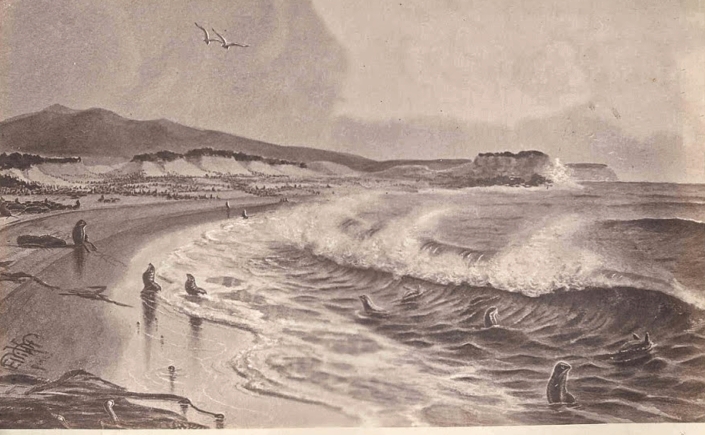
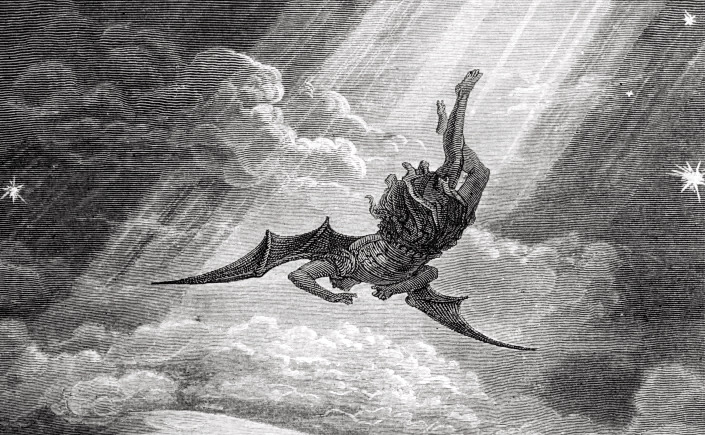


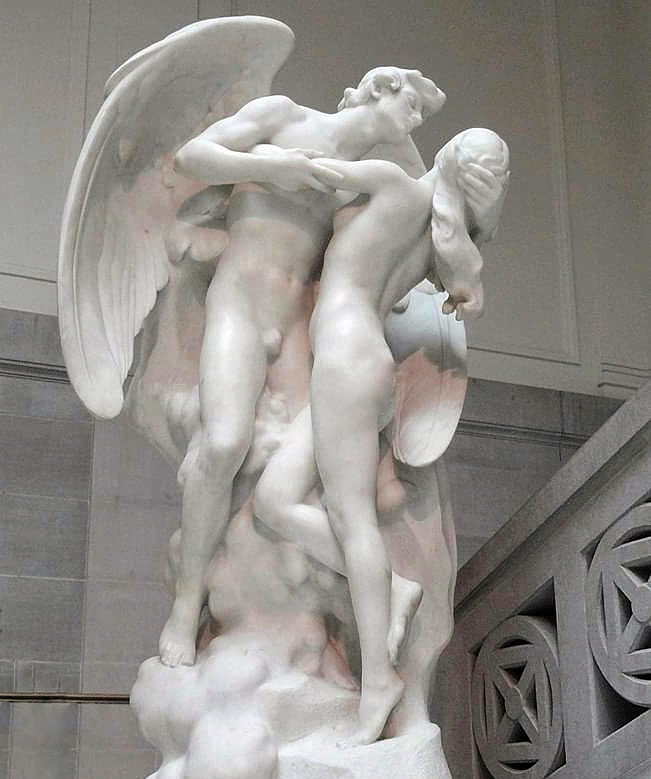
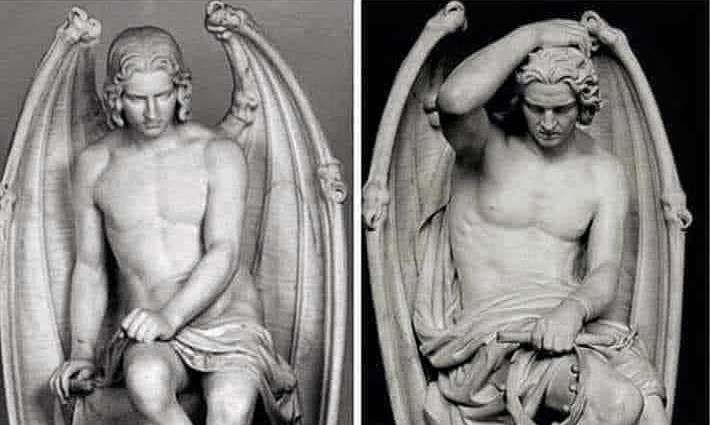

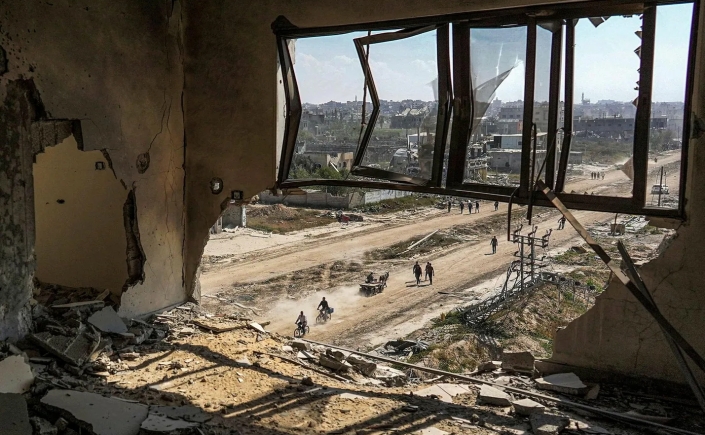

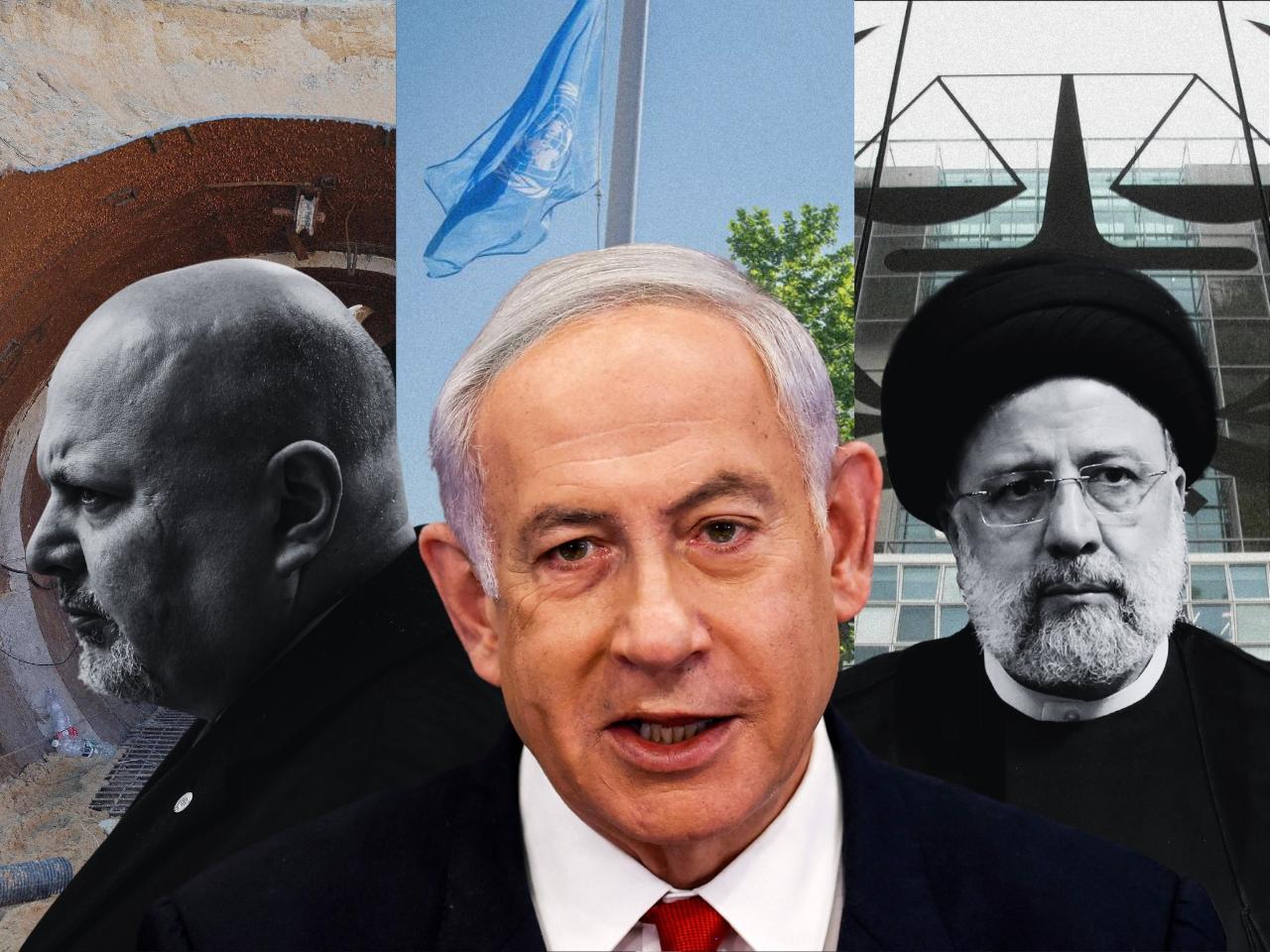


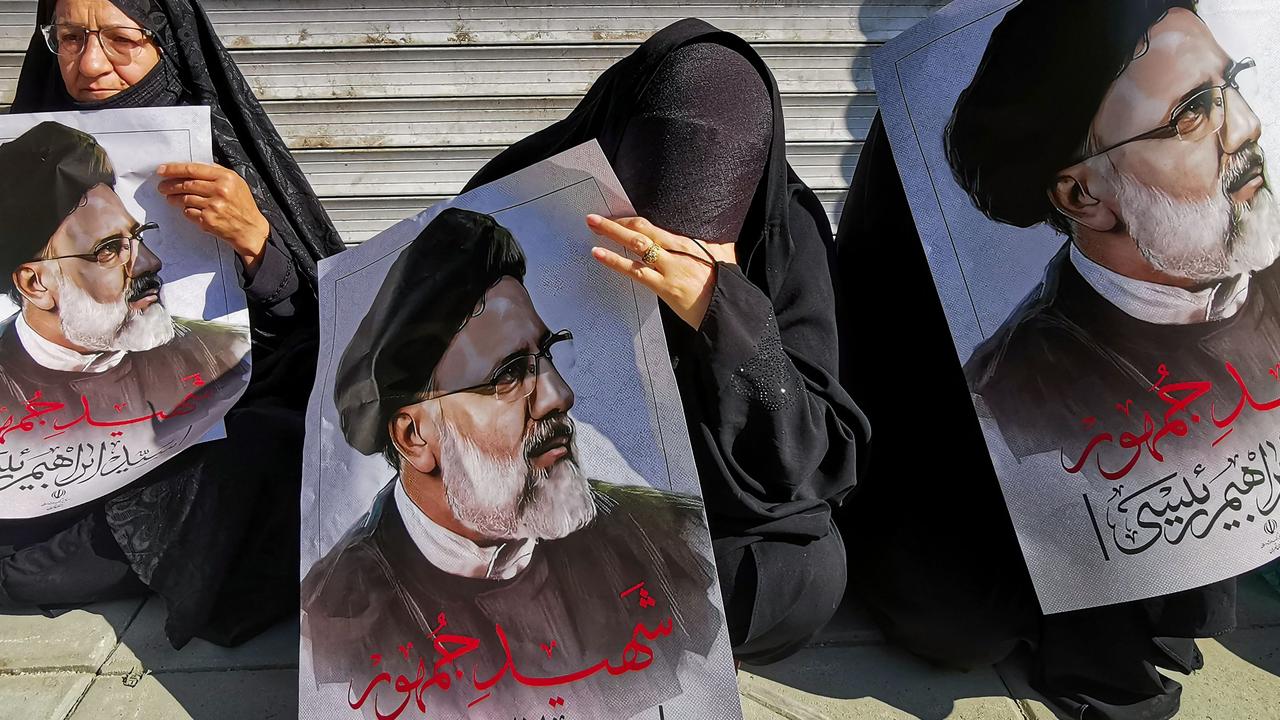








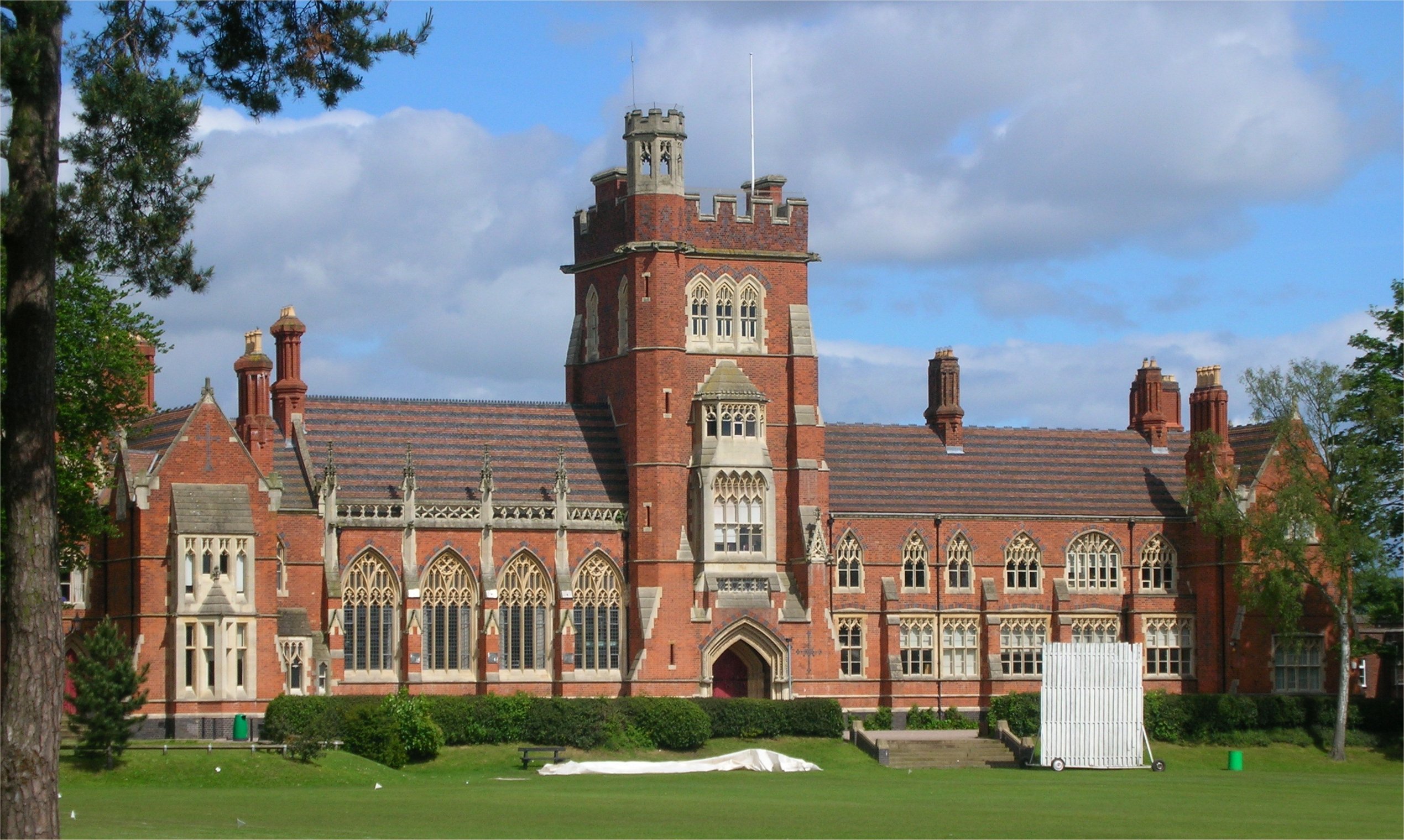
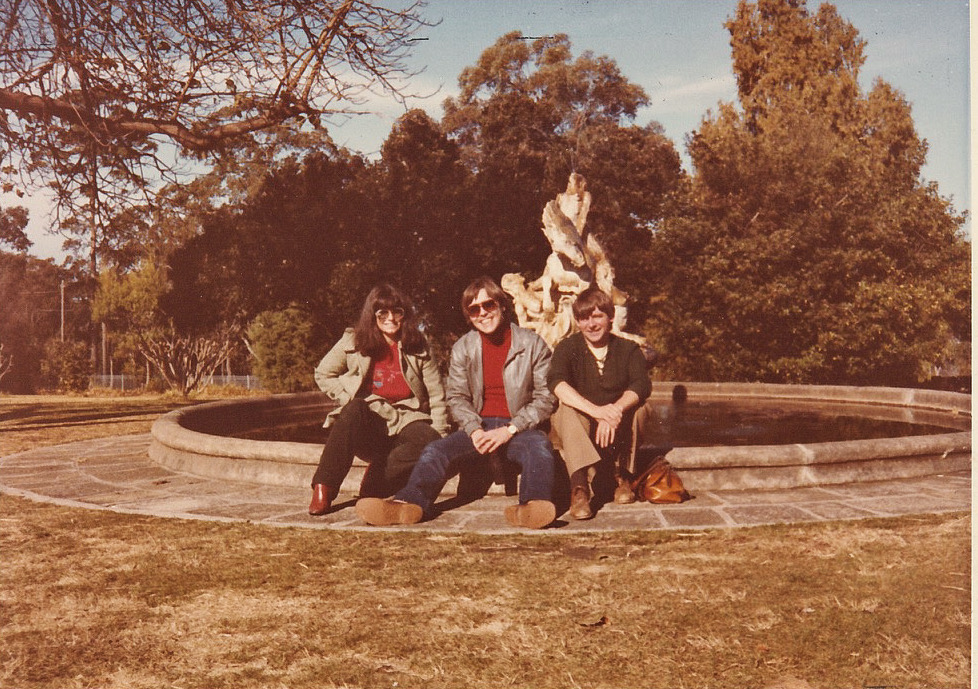
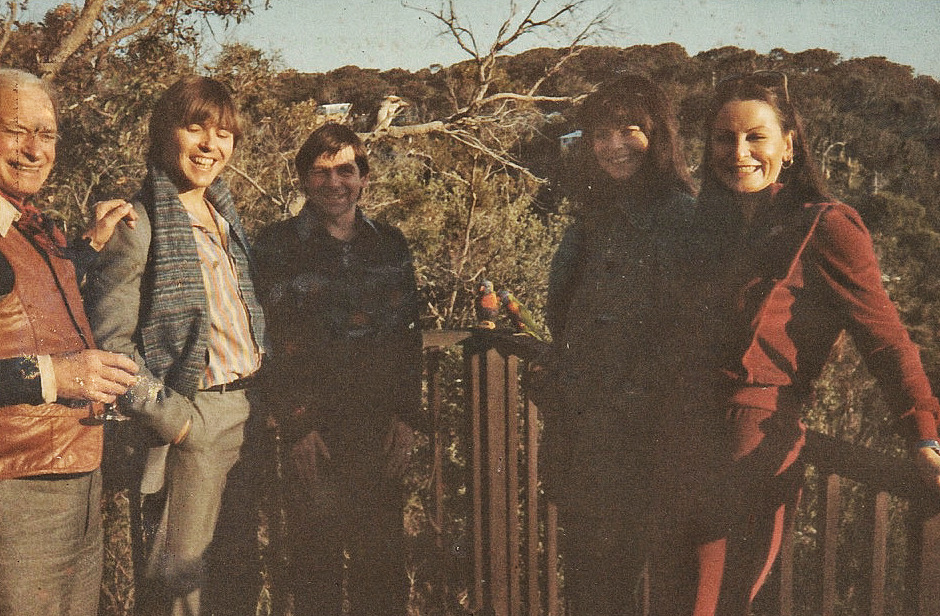
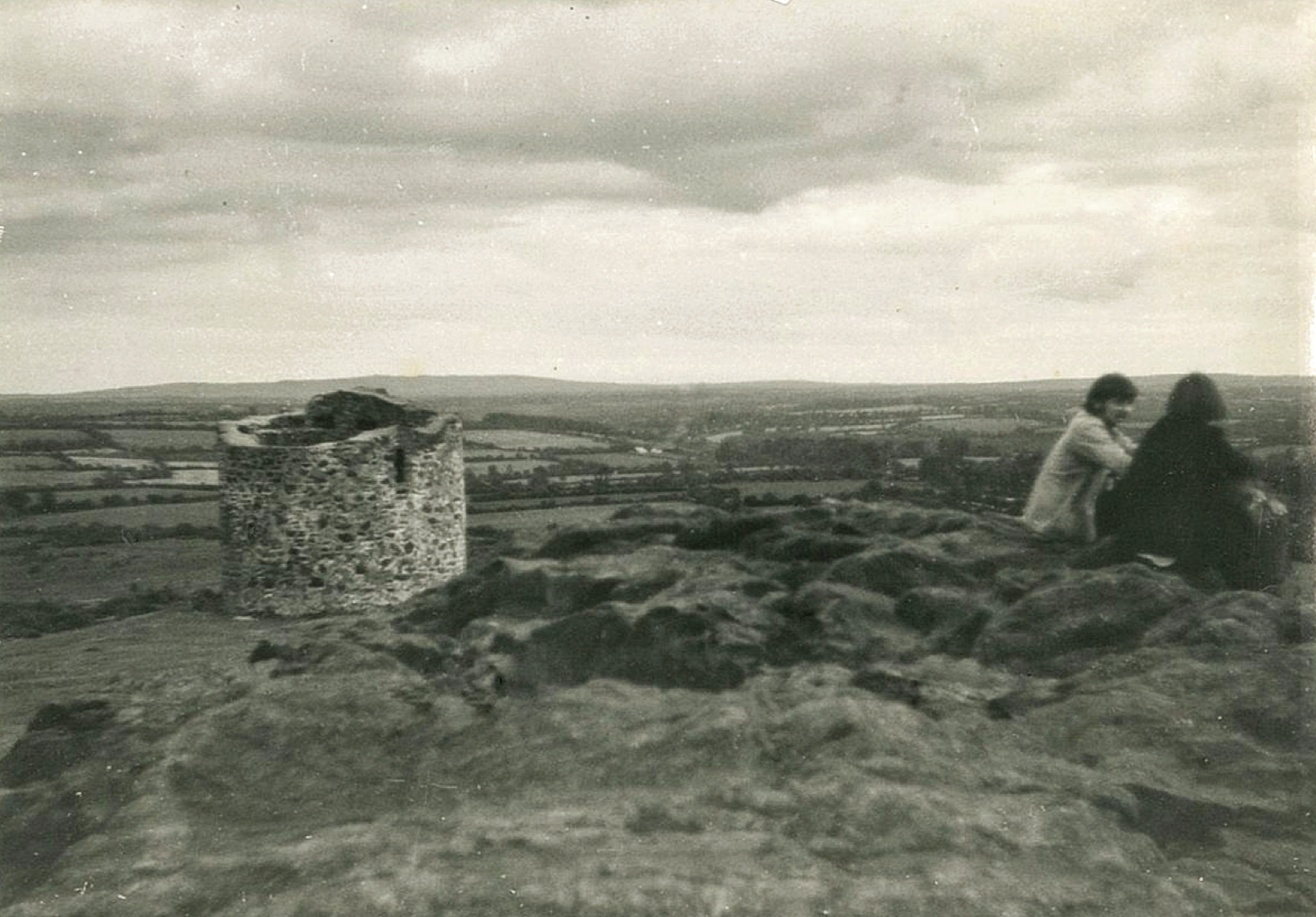


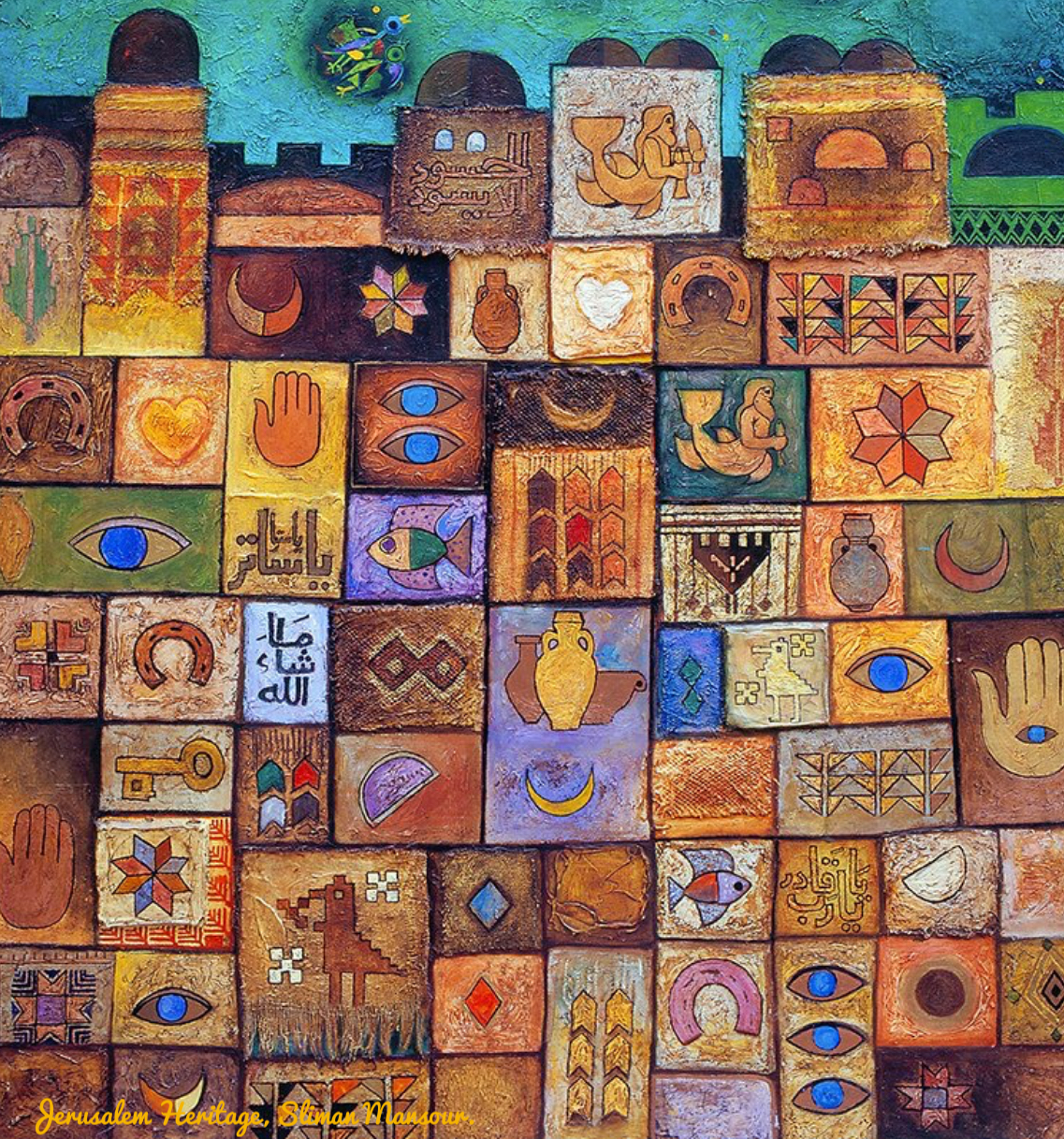
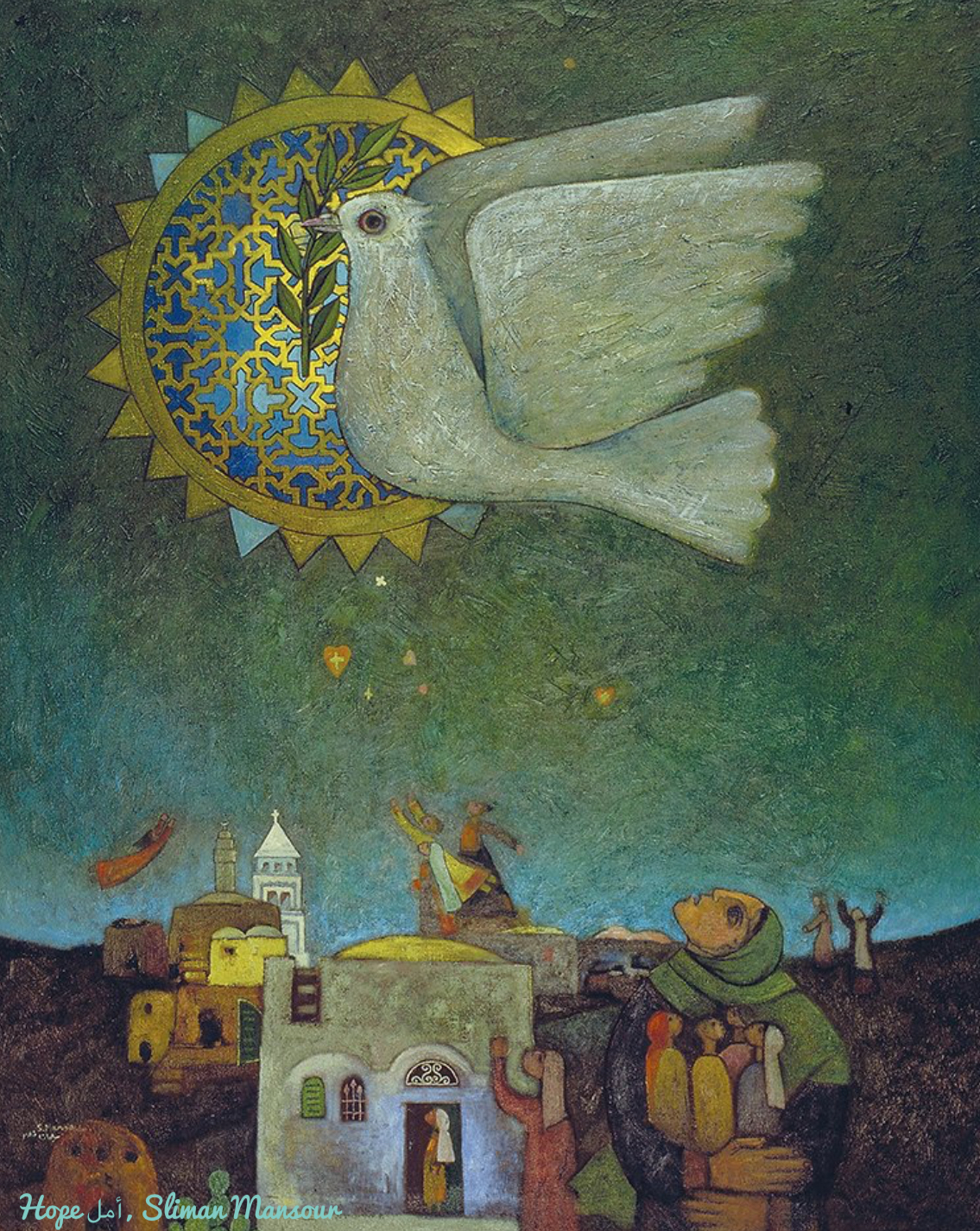


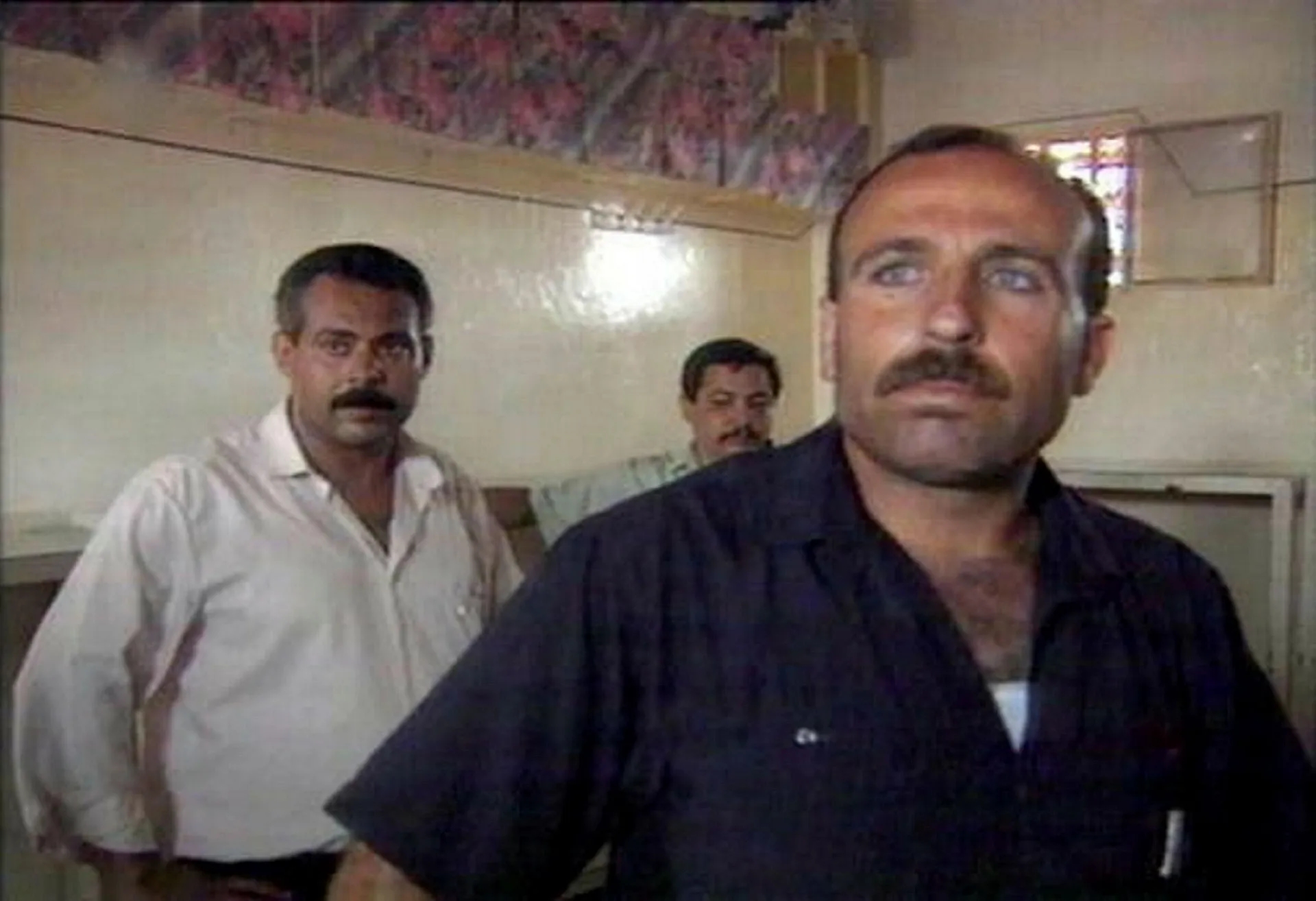
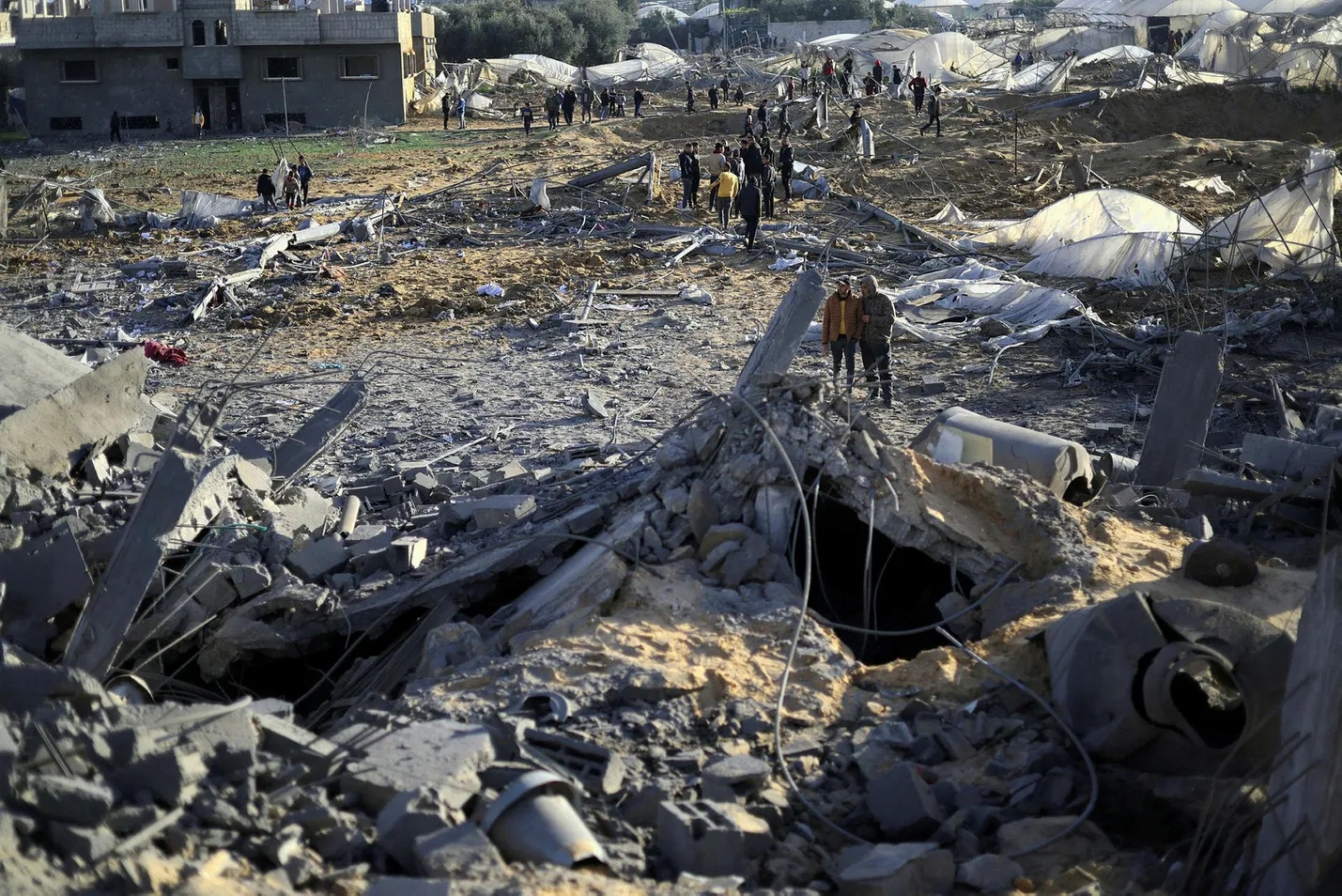













 In That Howling Infinite