Echo of the Steppes … history’s long shadow

Fingerprints, ghosts and the long arm of History

In an illuminating essay in the e-zine Unherd, republished below, former war-correspondent Aris Roussinos’ begins an extensive and expansive review of  Australian archeologist Warwick Ball’s The Eurasian Steppe with three mute stone figures – Cuman balbals standing beside the road between Sloviansk and Bakhmut in Donetsk – watching the endless movement of armies a across what is now Ukraine’s disputed and devastated Donbas. They are ancient witnesses in a landscape where Russians and Ukrainians now fight over ground that, for most of human history, belonged to neither.

This is history as I like it: the historian as storyteller, where landscapes become characters and the past refuses to remain buried.

Long before Slavic speech reached these plains, the steppe was the domain of nomadic peoples: Scythians, Sarmatians, Alans, Huns, Turks, Mongols and many others whose empires rose and vanished like storms over the grasslands. They left few cities and fewer written records, but their fingerprints are everywhere: in languages, military traditions, political institutions, myths and identities. The grass remembers what libraries often forget.

Roussinos’ central argument is that we have misunderstood Europe by looking too exclusively westward, towards Rome. The steppe was never merely a barbarian wilderness beyond civilisation, waiting to burst through the gates. It was one of the great engines of European history. Europe was shaped not only by the legacy of Rome and Christianity but also by repeated encounters with the peoples of Inner Asia. The old frontier between “Europe” and “Asia” dissolves under closer inspection. What appears on a modern atlas as a dividing line was, for centuries, a vast zone of movement, exchange, conquest and adaptation.

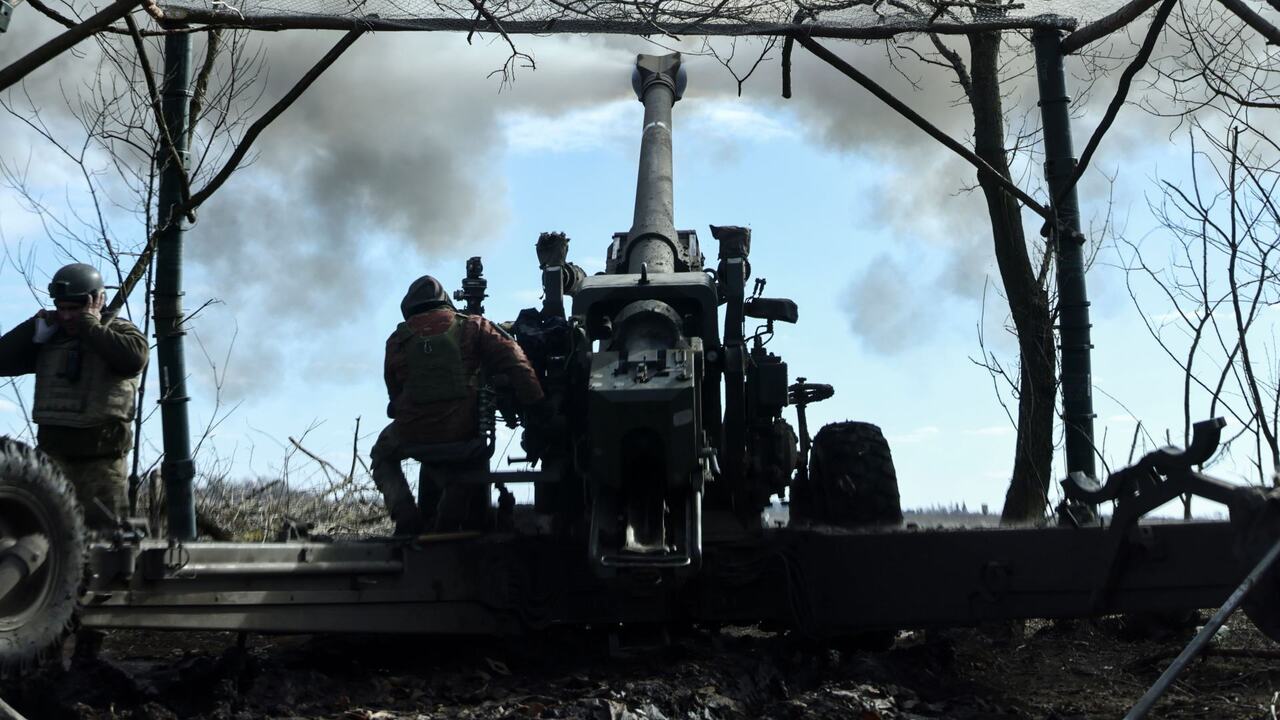
The present war in Ukraine unfolds across precisely this ancient geography. The early Russian thrust towards Kyiv moved through forests and marshes that belonged historically to the old Slavic world. The grinding war of attrition in the east is being fought across the open “Wild Fields”, the immense Eurasian grasslands where mounted nomads once travelled with astonishing speed and where empires repeatedly collided. Roussinos draws parallels with the mechanised battles of the twentieth century – Kursk, Kharkiv, Stalingrad – where tanks replaced horses, but the strategic significance of the landscape remained unchanged. Geography, as Napoleon is said to have observed, is often the most enduring ally in war.

It is an enticing argument because it encourages us to look beneath the familiar surface of European history. Perhaps Europe itself carries far more of the steppe within it than we usually acknowledge. Hungary and Bulgaria were founded by peoples of the steppe. The Polish nobility cultivated a proud Sarmatian ancestry. The Magyars’ memory of their eastern origins helped shape nineteenth-century nationalism. Even the nation state, so often presented as an entirely European invention, may owe something to political traditions carried westward across the grasslands by mounted confederations whose influence extended far beyond the horizon they inhabited.

There are historical echoes scattered throughout this story. The Sarmatians and Alans revolutionised warfare with armoured cavalry, heavy lances and mounted tactics that would eventually blossom into the chivalric traditions of medieval Europe. Even the Arthurian legend may preserve a distant resonance of the steppe in the enduring image of the sword planted in the earth, waiting for the rightful king to draw it forth.

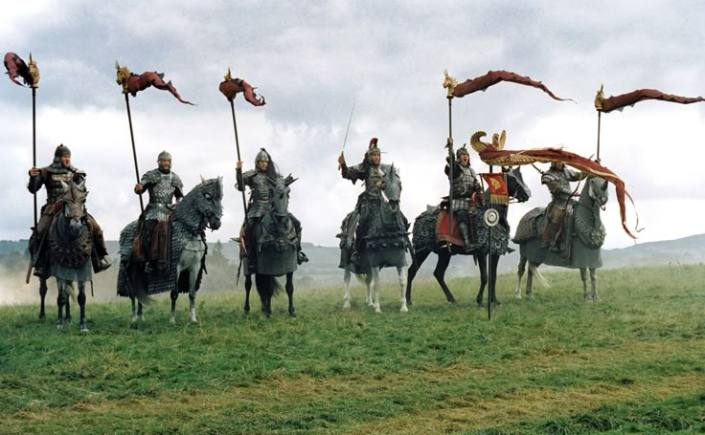
Filmmakers, naturally, could not resist. The 2004 film King Arthur, for example, stitched together Romans, Celts, Sarmatians, Picts and enough historical liberties to make any medievalist wince. Clive Owen wandered through a fictional Northumbria Britain as a brooding half-Roman, half-Sarmatian Arthur, while Keira Knightley appeared as an improbably glamorous and scantily clad Guinevere whose Pictish origins seemed less convincing than her plummy English accent. It was glorious nonsense, but enjoyable, nonetheless. The Irish landscapes were striking, the horses magnificent, the ‘Knights’ (the picture at the head of this essay) with their “Rus! Rus!” war cry (and they actually do sit at a round table) improbably photogenic. A battle fought across a frozen lake owed as much to Eisenstein’s Alexander Nevsky as it did to any surviving historical source. Ridley Scott later recycled much the same visual conceit in his disappointing Napoleon. History often survives in cinema not because the facts are accurate but because certain images possess extraordinary emotional truth.

The Cossacks offer a far more convincing example of the cultural blending that characterised the frontier. They emerged not from ethnic purity but from mixture. Runaway serfs, adventurers, escaped peasants and soldiers settled the borderlands, adopting the customs, military practices and vocabulary of the Turkic peoples who had occupied the steppe before them. Even the word “Cossack” derives from a Turkic root meaning “to roam”. The frontier was never a wall separating civilisations. It was a workshop in which entirely new identities were forged.

It is here that Roussinos, following Warwick Ball, arrives at his most provocative claim. Muscovite Russia, he argues, cannot be understood without recognising the formative influence of the Mongol world. Moscow’s rise was anything but inevitable. The Golden Horde required dependable tributaries capable of collecting taxes, maintaining order and supplying troops. The princes of Moscow proved remarkably efficient servants of the khans and, in doing so, transformed what had once been a relatively insignificant Rus’ principality into the nucleus of a future empire. The irony is delicious. Mongol domination helped create the very Russian state that would eventually conquer the steppe itself.

The fingerprints remain visible today. Administrative practices, institutions of government, systems of taxation and even elements of the Russian language bear traces of Mongol influence. Yet fingerprints are curious things. They tell us that contact occurred; they do not tell us everything that followed.

That question lies at the heart not only of Ball’s thesis but also of historian Orlando Figes’ The Story of Russia, which, by happenstance, I am reading at the moment. It is one of those literary coincidences in which two writers, approaching the same landscape from different directions, find themselves asking precisely the same question. What made Russia, Russia?

Figes is, in many respects, the perfect companion to Roussinos because he shifts our attention from inheritance to interpretation. He readily acknowledges that the Mongol conquest of the Rus’ principalities in the thirteenth century was one of the defining ruptures in Russian history. It destroyed Kyiv’s political centrality, subordinated the northern principalities to the Golden Horde and created the circumstances in which Moscow could eventually emerge as the dominant power. Like Roussinos, he recognises the profound irony that Mongol domination did not simply interrupt Russian state formation but helped shape its eventual character.

Yet Figes is ultimately less interested in what Russia inherited than in what Russia chose to become. The Mongols bequeathed methods of rule: taxation, military organisation, communications and a conception of authority that differed markedly from Western feudalism. Russia’s imagination, however, was nourished elsewhere. Orthodox Christianity, Byzantine political theology, the doctrine of Moscow as the “Third Rome” and the almost mystical conception of the Tsar as God’s anointed gave Russia a vocabulary through which it understood itself. Its civilisation emerged not from a single source but from the convergence of many.

This distinction is important because it rescues history from determinism. Fingerprints reveal contact; they do not reveal intention. They cannot tell us why someone picked up the knife, wrote the letter or opened the door. Likewise, cultural inheritance explains possibilities, not inevitabilities.

Figes presents Russia as a civilisation assembled from multiple traditions: Slavic, Byzantine, Mongol, European and imperial. The country’s enduring paradox is that it has persistently imagined itself as both European and somehow apart from Europe. Peter the Great attempted to drag Russia westward, shaving beards, importing European science, founding St Petersburg (a German name, which was changed to Petrograd during World War I for the same reasons the British royal house changed its German name to Windsor) embracing Enlightenment ideas. Yet beneath these reforms older structures of autocracy survived. Later generations reversed the argument entirely. Slavophiles celebrated Russia’s uniqueness while Westernisers lamented its failure to become sufficiently European. The debate has never really ended. It merely changes its vocabulary.

Maps have always encouraged these arguments. A glance at any atlas suggests that Russia occupies an almost impossible position: a European power that expanded across Asia until it became the largest contiguous empire on earth. The geography itself tempts us into historical mythology. Is Russia European? Asian? Eurasian? The answer has varied according to who was asking and what political purpose the answer was intended to serve. Geography creates opportunities, constraints and temptations. It does not dictate outcomes.

Figes’ also explores of recurring Russian archetypes: the Holy Tsar, the Holy Fool, the suffering nation, the belief that Russia possesses a unique historical destiny. These are not immutable characteristics embedded in some mystical national DNA. They are stories Russians have told about themselves across the centuries – including Vladimir Putin’s house ideologue, philosopher Aleksandr Dugin. Stories matter because people act upon them. Nations, no less than individuals, become attached to narratives that explain who they are and why they exist.

Juxtaposed against Ball, Roussinos and Figues is a comment on Roussinos’ essay by Alexander Morrison, a historian of Russian history at Oxford University. Every grand historical narrative requires its sceptic. Elegant theories are seductive precisely because they reduce complexity to a single organising principle. Morrison accepts much of Ball’s argument while quietly resisting its more deterministic conclusions. It is an exemplary piece of historical criticism because it neither dismisses nor genuflects. Instead, it refines.

He readily acknowledges that Muscovy inherited important administrative practices from the Mongol world and points out that Russia was far from unique. The Ottomans, Safavids, Mughals and Qing all incorporated Chinggisid or Timurid political traditions alongside older local institutions. Borrowing across Eurasia was commonplace. Civilisations have always learned from their neighbours, even while claiming absolute originality.

Where Morrison parts company with Ball is over the temptation to confuse influence with destiny. Muscovy borrowed bureaucratic structures connected with taxation, communications and administration. Indeed, the Russian language still preserves Mongol echoes in words such as kazna for treasury, den’gi for money and yam for the postal relay system. Yet the ideological foundations of the state remained overwhelmingly Byzantine and Orthodox. Ivan IV became Tsar by invoking the legacy of Caesar and the vision of Moscow as the Third Rome, not by presenting himself as the heir of Genghis Khan. Administrative inheritance did not erase cultural identity.

That distinction becomes even more important when considering the modern world. It is tempting to explain Putin’s Russia by reaching back to the Mongols, Ivan the Terrible or some timeless Russian soul. Such explanations possess an undeniable elegance because they transform political choices into historical inevitabilities. Morrison rejects this outright. Contemporary Russia, he argues, is shaped above all by decisions made by particular elites drawing upon nineteenth-century nationalism, memories of the Soviet collapse, selective readings of Russian history and modern political ideology. The past provides the vocabulary; it does not dictate the speech.

His discussion of Ukraine is equally persuasive. Southern and eastern Ukraine were settled comparatively recently by a remarkable mosaic of peoples: Ukrainians, Russians, Greeks, Jews, Armenians, Bulgarians and many others. The region’s history is therefore extraordinarily layered. Yet historical complexity does not undermine modern sovereignty. Ancient settlement patterns explain why memories remain contested, but they do not invalidate internationally recognised borders. History illuminates’ claims; it does not automatically legitimise them.

This strikes me as one of the most important lessons historians can offer our own age. We are living through a period in which politicians, nationalists and activists increasingly seek legitimacy by reaching deeper into the past. Ancient kingdoms, medieval battles, archaeological discoveries, linguistic survivals and genetic studies are all recruited into contemporary arguments about identity and territory. History becomes less an investigation than a courtroom brief.

Yet the past is a notoriously unreliable witness.

Landscapes accumulate memories without issuing verdicts. The Donbas bears the fingerprints of Scythians, Greeks, Sarmatians, Goths, Huns, Khazars, Mongols, Tatars, Cossacks, Russians, Ukrainians, Jews, Armenians and countless others. None of those fingerprints constitutes a title deed. They testify to presence, movement and encounter. They remind us that almost every place we imagine possessing an eternal identity has, in reality, been shaped by successive waves of migration, conquest, adaptation and coexistence.

Perhaps that is why I find Roussinos’ essay so compelling. Like the best historical writing, it restores movement to landscapes that modern maps often freeze into static national colours. It reminds us that frontiers have rarely been fixed and that civilisations have always been more entangled than their later myths would admit. Europe did not simply civilise the steppe. The steppe helped create Europe.

Equally, Morrison reminds us that historical explanation should never become historical imprisonment. Institutions endure, languages preserve old borrowings, myths outlive empires and landscapes retain astonishingly long memories. But people still make choices. Nations inherit the consequences of the past without becoming its captives.

The three weathered balbals still stand beside the road to Bakhmut. They have watched Scythians ride westward, Huns descend upon Europe, Mongol tumens disappear into the distance, Cossacks patrol the frontier, imperial armies march beneath Romanov eagles, Wehrmacht panzers advance across the wheatfields, Soviet tanks return in triumph and, today, drones circle silently above the same ground. Every generation has believed its struggle to be unique, its empire enduring, its victories permanent. The stones know otherwise.

History leaves fingerprints everywhere. It leaves them in words, in institutions, in ruined cities, in forgotten roads, in songs, in legends and in the memories of peoples who continue to argue about what happened centuries before they were born. Those fingerprints deserve to be studied because they tell us where we have come from and how our worlds were made. But fingerprints are not destiny. They record contact, not ownership; inheritance, not inevitability; memory, not command. The ghosts of the steppe still whisper across Eurasia, but they do not write the future. That task, as it always has been, belongs to the living.

Coda. The myth of fingerprints.

History leaves fingerprints.

That may seem an odd metaphor, but I have found myself returning to it again and again. Archaeologists brush them from shards of pottery, linguists discover them buried inside forgotten words, historians recognise them in institutions, laws, customs and myths. They are the traces left behind whenever peoples encounter one another, whenever empires rise and fall, whenever civilisations borrow, conquer, imitate or remember.

Fingerprints fascinate us because they appear to promise certainty. In a criminal investigation they identify who touched the weapon. Yet they tell us remarkably little about what actually happened. A fingerprint cannot reveal motive, explain intention or determine guilt. It records contact, not consequence.

History is much the same.

Every landscape is covered with fingerprints. They survive in place names and languages, in ruined cities and forgotten roads, in religions, legal systems, songs, frontiers and collective memory. The three ancient balbals still standing beside the road to Bakhmut are surrounded by them. For nearly a thousand years they have watched Scythians ride westward, Huns descend upon Europe, Mongol tumens disappear into the distance, Cossacks patrol the frontier, imperial armies march beneath Romanov eagles, Wehrmacht panzers cross the wheatfields, Soviet tanks return in triumph and, today, drones circle silently overhead. Every empire believed its moment would endure. Every generation imagined itself to be the culmination of history. The stones know otherwise.

And this is where I arrive at what I have come to think of as the Myth of Fingerprints.

The fingerprints themselves are not mythical. They are real. History leaves them everywhere. The myth begins when we misunderstand what they are telling us.

A fingerprint is evidence that someone was here. It cannot tell us why they came, whether they belonged, whether they acted justly or what rights their descendants may possess centuries later. In a court of law, a fingerprint may place someone at the scene; it cannot, by itself, decide the case. History works in much the same way. It explains how we arrived here, but it cannot by itself determine who ought to possess the future.

Too often we ask it to do precisely that.

Ancient maps become modern borders. Archaeological discoveries become political manifestos. Genetic inheritance becomes moral entitlement. Historical suffering becomes an enduring licence for vengeance. We confuse explanation with justification, inheritance with ownership, memory with legitimacy. That confusion – the transformation of historical evidence into historical entitlement—is what I mean by the Myth of Fingerprints.

It is a myth because it is one of the oldest stories nations tell themselves. Every people constructs narratives from the traces left by earlier generations. Sometimes those stories preserve genuine memory; sometimes they simplify; sometimes they become propaganda. But they all begin with the same temptation: to believe that because history explains the present, it therefore authorises it.

This question lies beneath far more than the current war in Ukraine. It echoes through the history of Palestine and Israel, through Australia’s History Wars, through debates over monuments, migration, frontiers and national identity. Again and again we encounter the same temptation: to search the past not for understanding, but for permission.

That is why Aris Roussinos’ essay on Warwick Ball’s The Eurasian Steppe struck me so forcefully. Ball demonstrates how profoundly the Eurasian steppe shaped Europe. Orlando Figes traces the inheritance of Byzantium, the Mongol world and the frontier in the making of Russia. Alexander Morrison reminds us that inheritances are never destinies. Together they illuminate a larger truth. Geography creates opportunities. Culture bequeaths inheritances. Myths provide meaning. Only human beings make choices.

The ghosts of the steppe still whisper across Eurasia, just as the ghosts of every civilisation whisper through the landscapes they once inhabited. Historians should listen carefully to those whispers, for they reveal how the world came to be. But they should resist the temptation to mistake echoes for commands. The past deserves understanding rather than obedience.

History leaves fingerprints everywhere. They are among our most valuable clues to the human story. They reveal connections, influences, migrations and memories that would otherwise be forgotten. Yet they are not title deeds, nor verdicts, nor chains binding the living to the ambitions of the dead. They explain inheritance without dictating destiny.

That is the real lesson of the Myth of Fingerprints.

Paul Hemphill and In That Howling Infinite, August 2026

This essay was written in conversation with books I’ve read, ideas formed and half-formed, and, more recently, in sustained dialogue with an AI language model, which contributed to drafting, phrasing, and conceptual articulation. What appears here is not unmediated thought, but considered thought: selected, tested, revised and revised again, and owned.

The concept of the Myth of Fingerprints originated in a long essay with regard to what is probably the most intractable conflict in modern times: One Land, Two Peoples: History, Memory, Continuity, and Inheritance. In That Howling Infinite has published many articles regarding the historical movement of peoples. For example: Modern history is built upon exodus and displacement. 

For more on Russia, Ukraine and the Soviet Union, see Russky Mir – Russian history’s long shadow. 

I highly recommend Ukrainian scholar Serhii Plokhy’s The Gates of Europe, a well told and fascinating story of the origins of Ukraine and Belarus, and how their histories were intertwined, and entwined with those of of Poland, Lithuania (which was a large and powerful state once) and Russia. Ukraine has historically been the border between the catholic west and the orthodox east, the division running virtually down the middle. The name Ukraine is Slav for border land. Its geopolitical location and natural resources have led to the land being inflicted by invaders, civil wars, man-made famine and repression. See, in In That Howling Infinite, Borderlands – Ukraine and the curse of mystical nationalism

Roussinos’ essay follows, and also, for readers with time on their hands, more on Figes’The Stiry of Russia and on Morrison’s critique.

The fate of Europe lies in the steppes Warwick Ball: ‘The Eurasian Steppe’

Aris Roussinos, Unherd 28 July 2022
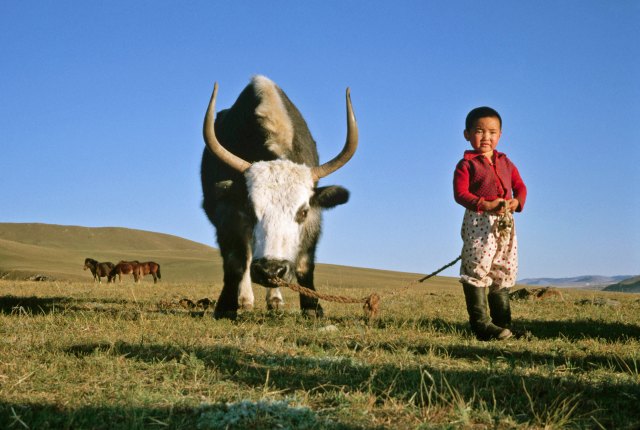
The fate of Europe lies in the steppes

Genghis has won (Dean Conger/Corbis via Getty

On the road between the frontline cities of Sloviansk and Bakhmut, in Ukraine’s eastern Donbas region, three stone statues stand mutely by the side of the road, observing the coming and going of military traffic with impassive detachment. Known as balbals, they are funerary monuments erected by the Cuman Turks, known in Russian archaeology as the Polovtsians, who once ruled this vast sea of grass, long before Russian or Ukrainian speech was ever heard in this region.

For thousands of years, the empty, spreading steppe, stretching from Hungary to Mongolia, was the home of nomadic peoples, speakers of Iranic, Turkic and Mongolic languages, who drove their herds across the vast plains in search of fresh pastures. They founded great empires, which time and the steppe grasses would soon swallow up, leaving barely a trace. Their constant irruptions into Europe sounded the death knell in turn for other, settled civilisations, part of the endless cycle of growth, invasion and collapse that has shaped our continent’s history.

The war in Ukraine has taken place in two very different climatic and cultural zones: its initial phases saw Russian armour wend its way through the dark forests and marshes of northern Ukraine, the ancient homeland of the first Slavic peoples, to be destroyed in close fighting on the narrow wooded roads in a stunning and unexpected Ukrainian victory. Yet the gruelling war of attrition in the country’s east is taking part in a very different landscape, in the open steppe that was once the home of nomadic peoples.

The expansion of Slavic peoples, both Ukrainians and Russians, into the open steppe was a very recent historic event, broadly contemporaneous with the European settlement of the Americas, its fertile plains, now the breadbasket of the developing world, Europe’s equivalent of America’s Midwest. These open plains, the “Wild Fields” of local historiography have always been a contested space, where great empires wrestled for control: in the great Second World War battles of Kursk, Kharkiv and Stalingrad, Europe’s entire fate hinged on the battle between the two great tank armies wheeling and clashing like nomad hordes.

But then, as The Eurasian Steppe by the archaeologist Warwick Ball makes clear, rather than a semi-wild anteroom to the continent, “the history, languages, ideas, art forms, peoples, nations and identities of the steppe have shaped almost every aspect of the life of Europe”. Europeans from further west have for centuries been prone to viewing the steppe as the haunt of wild tribes, and the source of occasional, fearsome destruction.

But what if the Europe of today is in fact the product of steppe dynamics? As Ball argues, rather than being a product of 19th century nationalism, some historians trace the origin of Europe’s oldest nation states to the steppe, observing that “Peoples newly arriving from the east were also among the first to create nationally defined states, such as kingdoms of the Bulgars or Magyars”. “In some ways,” Ball argues, “the incipient idea of a nation state might have been stronger with the nomadic groups from the steppe, who were bound more closely by tribal loyalties” than among the polyglot peoples of the imperial Roman successor states they conquered.

Did the steppe peoples then create the fractious patchwork quilt of nationalities that we understand as Europe? Ball cites the archaeologist Hyun Jin Kim who claims that: “The political and cultural traditions of Inner Asia brought to Europe by Central Asian immigrants, the Huns and the Alans, were just as fundamental to the formation of western Europe as the rich legacy left behind by the Roman Empire. The political and cultural landscape of early medieval Europe was shaped by the fusion of Roman and Inner Asian influences.”

While Hungary and Bulgaria were directly founded by steppe nomads, the influence of steppe rulers also helped shape the political forms taken by Poland (whose szlachtanobles claimed Sarmatian descent well into the 19th century), Bohemia, Denmark and even, it is claimed, France. Even into the 19th century, as Ball notes, it was the Hungarian awareness of their steppe Magyar ancestry that helped bring about the rise of nationalism which shook apart the great Austro-Hungarian empire. “In the long evolution of the idea of the nation state,” then “from their beginnings in late-antique Europe to their emergence in the nineteenth century, we must look east as well as west”.

Viewed in this light, the war in Ukraine, a battle between a European nation-state and a vast Eurasian empire, is resonant with all manner of strange echoes of the steppe’s dimly-understood history. The colossal earthern ramparts of the “serpent walls” outside Kyiv, erected by early Slavic kingdoms to guard against invasion by steppe nomads from the Huns to the Mongols, fulfilled their ancient role admirably earlier this year when they prevented the movement of Russian armour towards the capital’s suburbs, corralling the latest wave of invaders into killing zones to be picked off at leisure by guided missiles.

The Cossack heritage both sides claim is the result of earlier Slavic peoples, runaway Ukrainian and Russian serfs, claiming the freedom of the open steppe and adopting the customs, lifestyle and much of the vocabulary of their nomadic Turkic predecessors. The very word Cossack, Ball notes, “derives from the Turk root qaz, ‘to roam’”, and is cognate with the ethnonym Kazakh further east, as the Cossacks “comprised mainly Russians — usually renegades, escaped serfs or criminals — but they also included Turks, Tatars and remnant Polovtsi.” Even now, Ukrainian is sprinkled with Turkic words, a legacy of the two cultures’ long history of interaction and competition. One Ukrainian commander I met went by the nom de guerre “Duman, or fog, deriving from the Turkic word for smoke or mist. Even now, Ukrainians refer to Russians with the dismissive Turkic epithet Katsab, or butcher.

On the Russian side, the war effort has been marked by the use of steppe peoples as infantry, with many of the heaviest casualties borne — and apparently some of the worst war crimes committed by — the Buryat Mongols of the Russian steppe, along with the Kalmyks of the lower Volga, Europe’s only Buddhist nation, who once watered their horses as far west as Paris following the defeat of Napoleon. Similarly, among the many subject peoples of the Russian empire deployed to Ukraine are Ossetians from the Caucasus, a tiny Iranic-speaking nation who are all that remain of the Alans, who once fought the Romans across Central Europe, settling as far west as France and Spain: some of their descendants, now Magyarised, still live in Hungary as the Jasz people. Their Iranic speech is now heard in Ukraine’s steppe for the first time in a thousand years, dragged along into a war of European conquest by another great Eurasian empire.

The very concept of chivalry which defined Europe’s medieval history was the product of Iranian-speaking steppe peoples like the Sarmatians and the Alans, whose innovations in the use of cavalry — stirrups, lances and long chainmail coats — changed the face of late Roman warfare and set the stage for the knights of the High Middle Ages. Even our own medieval romances may owe something to their distant steppe traditions, after the border forts of what is now northern England became the garrison home of Sarmatian levies in Roman service. As Ball notes: “Sarmatian warrior worship of a sword fixed in the ground has been suggested as furnishing the origin of the Excalibur legend. This appears to have been a long steppe warrior tradition: Ibn Rusta in the tenth century, for example, describes how the Viking Rus ruler — whom he calls by the steppe title of Khagan or khāqān — would plant a naked sword in the earth pointing towards his newborn son.” Perhaps it is not mere coincidence, then, that the Azov Regiment’s torchlit ceremonies in the southern steppe city of Mariupol took place beneath three giant swords embedded in the ground, a striking symbol that has now become the group’s emblem.

Again and again, these strange resonances between the steppe’s ancient nomad past and its bloody present swim to the surface like long-forgotten memories. The great statue to Mother Russia, sword in hand, that rises above Stalingrad’s Hill 102, where tens of thousands of Soviet and German soldiers were ground into the soil by artillery possesses the grim grandeur of some ancient steppe monument. And indeed, Hill 102, the crucial position of the battle that decided the war’s outcome, is perhaps better viewed by its alternate name as the Mamayev Kurgan, the burial tumulus of a long-forgotten Tatar khagan. From the ancient past to now, Russia’s history was written on the steppe, and without the steppe Russia’s imperial past and present is simply impossible to understand. Indeed, as Ball observes, without the historic domination of steppe nomads, there would be no Russia as we understand it.

As Ball observes: “The future of Russian greatness was both a response to and a legacy of the Mongols… Indeed, to a large extent Muscovite power was a creation of the Golden Horde: the khans required a stable central authority as a client state which could be relied upon to raise auxiliaries for the khan’s armies and to collect and deliver taxes and tribute. Moscow fitted the bill, so the Golden Horde deliberately strengthened it against the other Russian cities and appointed its prince as their chief tax collector.” Without the Mongol-enforced primacy of Muscovy, the land that is now Russia may well have remained a series of disunited kingdoms and city states, just like medieval Italy or Germany: “The Mongols, in other words, brought about the emergence of Russia.”

Even the great king Sviatoslav of Kyivan Rus, whose legacy is claimed by both Ukraine and Russia, extended his rule across the steppe by defeating the great Jewish Khazar kingdom and in doing so, “adopted the techniques and warfare of the steppe nomad: in other words, Kievan Rus was at first simply another steppe nomad state, albeit with a Scandinavian element. Sviatoslav never decisively defeated the Pechenegs and was killed by them in 963, and his skull was made into a cup in steppe tradition.” Medieval Russia was, then, as much a steppe polity as a European state, perhaps more so. After all, “up until 1480 Muscovite coins still carried inscriptions in Arabic. As late as 1531 Vasili III of Moscow was still paying tribute to the successors of the Golden Horde: Crimea, Kazan and Astrakhan”, and the eternal symbol of Russian power, Moscow’s St Basil’s Cathedral, was modelled on Kazan’s Great Mosque, in thanks for the conquest of the great Tatar capital.

Tracing Muscovy’s traditions of governance, and then those of imperial Russia, to the Mongol and Tatar customs of the inner steppe, Ball observes that “Even by the fourteenth century the civil and military institutions of Muscovy ‘were overwhelmingly Mongol in origin’… Ivan IV, the first Russian to proclaim himself Tsar (in Russian the title is actually Tsezar), added Ulugh Khan, ‘Great Khan’, to his titles.” Though he dismisses the “Mongol Yoke” hypothesis of Russian historiography, Ball nevertheless traces Russia’s unique and terrible form of autocratic rule to steppe customs, deep into the modern period: “Ivan also adopted the Mongol policy of ‘collective guilt’ where all male relatives and retainers of a guilty man would be executed, a policy even extended to entire communities. Stalin’s similar policy was a continuation of this.” The steppe’s long influence stretches deep into the cultural DNA of our modern world: even such a giant 20th century figure as Lenin, destroyer of one great Eurasian empire and founder of another, was of part-Kalmyk descent, after all.

Imperial Russia’s second largest minority after the Ukrainians, whose post-independence relationship with their giant neighbour is today a source of such bloodshed, was the Muslim Tatars, from whose Russified nomad aristocracy some of the greatest names in Russian culture — Rachmaninoff, Turgenev, Nureyev and Akhmatova — claimed descent. “The list [of Tatar surnames] covers all walks of Russian life: artistic, religious, scientific, literary, military, political and royal. The list is virtually endless,” Ball notes, and even today “the descendants of the Mongol ‘hordes’ — the Tatars — are the second-largest minority in Russia after the Russians themselves, and the Republic of Tatarstan is the second-largest republic in European Russia.”

Written for a general audience, Ball’s book nevertheless synthesises the latest archaeological research and historical debate on the steppe’s ancient and modern peoples, archaeological research on the steppe’s history, delving back into the deepest mists of time. The burgeoning community of esoteric archaeology and anthropology posters on Twitter will surely appreciate his summarising of the latest research on the origins of the Indo-Europeans, the fate of the Khazars and the birth and decline of the great Scythian kingdoms, who’s exquisite goldwork was the highlight of the British Museum’s recent blockbuster exhibition.

Noting that St Petersburg’s great Hermitage Museum was founded primarily as a place to store the newfound Scythian treasures unearthed by Russian colonists in Crimea, Mariupol and the rest what is now Ukraine’s contested southern steppe, and alert to the theft of Scythian treasures from Ukrainian museums by their new-old Russian conquerors, we realise that the relentless cycle of history has brought a new relevance to Ball’s book, even since its publication last winter. Just as in the Middle Ages and in the bloodiest battles of the Second World War, the fate of Europe is once again being written on the endless, grassy steppe.

Aris Roussinos is an UnHerd columnist and a former war reporter.

Orlando Figes’ The Story of Russia

That is a very happy coincidence, because Roussinos’ essay and Figes’ The Story of Russia are really circling the same enormous question from different directions: what made Russia Russia?

Figes is, in many ways, the antidote to the more sweeping “fingerprints of the steppe” argument. He certainly does not deny the Mongol inheritance  – quite the opposite. The Mongol conquest of the Rus principalities in the thirteenth century was one of the decisive ruptures in Russian history. It destroyed Kyiv’s old political centrality, subordinated the northern principalities to the Golden Horde, and created the conditions in which Moscow could eventually rise. The irony, as both Roussinos and Figes emphasise, is that the Mongols did not simply delay Russian state formation; they helped create the particular form of state that emerged.

But Figes is interested less in what Russia inherited than in what Russia made of those inheritances. The Mongols supplied mechanisms of rule – taxation, military organisation, hierarchy, a relationship between ruler and subject that was very different from Western feudalism. Yet Russia’s self-understanding was built around other ideas: Orthodox Christianity, Byzantium, the idea of Moscow as the “Third Rome”, and the notion that the Tsar was not merely a monarch but a sacred figure.

This is where it links beautifully with Morrison’s critique. The danger is that we see the Mongol “fingerprints” and assume they explain everything. But fingerprints do not tell you why the person picked up the knife, wrote the letter or opened the door. They tell you something about contact and inheritance; they do not reveal intention.

Figes’ Russia is a civilisation built from multiple inheritances: Byzantine, Slavic, steppe, European and imperial. The great Russian paradox is that it has often defined itself simultaneously as both European and apart from Europe. Peter the Great famously tried to drag Russia westward — shaving beards, building St Petersburg, importing European science and manners — yet the deeper structures of autocracy, hierarchy and imperial expansion remained. Later Slavophiles rejected the West and celebrated a distinct Russian path, while Westernisers argued that Russia’s tragedy was precisely its failure to become sufficiently European.

This also connects with our earlier discussion of maps and historical memory. Russia is, geographically, an extraordinary historical anomaly: a European state that expanded across Asia until it became a continental empire. The map itself creates the tension. Is Russia Europe? Asia? Eurasia? The answer has shifted depending on who was asking and what political argument they wanted to make.

One of the things I suspect you will appreciate in Figes is his attention to recurring Russian archetypes: the Holy Tsar, the Holy Fool, the tension between obedience and rebellion, the recurring belief that Russia has a unique destiny. These are not “genes” or immutable cultural DNA; they are traditions — stories Russians told about themselves. And stories matter enormously because people act upon them.

That brings us back to Roussinos’ evocative phrase, “the echo of the steppes”. Echoes are fascinating precisely because they are not the original sound. They are altered, refracted and carried forward. The Mongol conquest echoed through Muscovy; Byzantium echoed through the Tsars; Soviet power echoed through Putin’s Kremlin. But each generation chooses which echoes to amplify.

There is also a pleasing connection with your earlier fascination with maps and atlases. A physical map of Russia looks almost inevitable: the enormous landmass stretching from Europe to the Pacific. But Figes and Morrison both remind us that geography creates possibilities, not destinies. The Russian Empire was not simply “there” waiting to happen. It was built by choices — by princes, tsars, revolutionaries and commissars who made decisions within particular historical circumstances.

So perhaps the combined lesson of Figes, Roussinos and Morrison is this:

Russia is not merely a European country contaminated by Asia, nor an Asian empire wearing European clothes. It is a civilisation formed in the meeting place of worlds. The tragedy is not that it has a complicated past; all great civilisations do. The tragedy comes when a complicated past is reduced to a single myth of inevitable destiny.

Which, interestingly, brings us back to your recurring theme: the power  – and danger –  of maps. Every map is an argument about the past. Every empire is a story it tells about itself. And every story leaves fingerprints. The historian’s job is to work out which ones are real, which ones are imagined, and which ones have been deliberately placed there.

Alexander Morrison’s critique

Alexander Morrison, a historian of Russian history at Oxford University, specialising in the Russian conquest of Central Asia, commented on Roussinos’ essay in Unherd. Here it is in full.

Roussinos, seems to have made good use of Ball’s research. Some of these arguments are completely uncontroversial when applied to the Asian neighbours of the Eurasian steppe in the early modern period: the Ottomans, the Safavids of Iran and the Qing all made use of Chinggisid and TImurid political repertoires in building their states alongside other elements (Byzantine heritage for the Ottomans, the existing Chinese imperial tradition in the Qing case, Sufi religious charisma for the Safavids). The Mughals were of course actually of Timurid (and in the female line of Chinggisid) descent, and it was at the core of their dynastic ideology in India.

However the steppe political tradition seems to have produced ever larger polities in Asia, which makes it hard to explain why it would instead produce political fragmentation in western and Central Europe – I think that part of Ball’s argument is a bit overstretched.

The Muscovite example seems to fit the Asian pattern better, and Roussinos is spot on in saying that it was the willingness of the Princes of Moscow to act as particularly loyal and effective satraps and tax collectors for the Golden Horde that allowed what had previously been a minor Rus’ princedom to rise to pre-eminence.

However we need to be clear about what it was that Muscovy took from the Mongols: it was largely bureaucratic structures linked to taxation or communication. This why key Russian words such as kazna (treasury), den’gi (money) and yam (postal service) are of Mongol origin. On the cultural side the ruling ideologies of the state were all to do with Orthodox Christianity and the semi-mythical link to Byzantium (the ‘Third Rome’), which was what Ivan IV (the Terrible) was evoking when he took the title of Tsar (Caesar) – he may have added the title of khan for good measure but this was largely for the purposes of communication with steppe peoples.

Many Tatar nobles of Chinggisid descent did become incorporated into the Muscovite aristocracy after the fall of Kazan in 1552, but you need to be careful about 19th and 20th-century claims to this ancestry, which are often bogus (it was fashionable at the time). In the case of Akhmatova it was her nom de plume (she was born Anna Gorenko – in fact a Ukrainian name). In any case Chinggisid descent did not give you any kind of claim to the throne of Muscovy, which had its own dynastic legend in the Rurikids. A better guide to the relationship between Muscovy and the Mongols than Ball is Donald Ostrowski.

There is also a bit too much cultural determinism in all of this to my liking – it suggests that neither Russia nor Ukraine can ever shake off this bloody past etc. etc. Nowhere in the world is simply a prisoner of its past. What is happening now is a result of very specific political choices made by Vladimir Putin and Russia’s ruling elite. Their thinking is rooted partly in their reading of 19th-century Russian historians (who first came up with the idea that Russians and Ukrainians were the same people), vicious forms of anti-semitic Russian nationalism of the early 20th century and the emigration (the Black Hundreds, Ivan Il’in), a particular, tendentious interpretation of both Soviet history and their own memories of the Soviet collapse.

What is perhaps more relevant is that this steppe past means that most of southern and eastern Ukraine was only relatively recently settled – not just by Russians and Ukrainians, but by the whole range of peoples of the empire (Greeks, Jews, Bulgarians, Armenians…probably also some Ossetians). They are certainly not ‘ancient Russian lands’ as Putin has claimed, but they are part of Ukrainian territory under international law and the Budapest memorandum assuring the country’s territorial integrity which Russia signed.

A couple of other corrections – the Buryats are not a steppe people, they live East of Lake Baikal. I am a bit queasy about the implication that they and the Kalmyks are disproportionately represented in the ranks of the Russian army because of their ‘savage’ steppe nature – it is simply because these are some of the poorest parts of the Russian Federation, and because the Russian regime is very deliberately trying to avoid recruiting troops from metropolitan regions of European Russia whose families might cause political trouble or have ties to Ukraine.

The ethnic Russians who are fighting are also disproportionately from Siberia or the Altai. The regiment which committed the atrocities at Bucha was from Khabarovsk in the Russian Far East, and its commander appears to have been originally from Karakalpakstan. Most Ossetians speak Russian these days, and have long identified with Russian rule. A good piece though – not many outlets would allow as thorough and as thoughtful a review of a work on Eurasian History.

Morrison’s comment stands apart from most of the thread because it does what the best scholarly criticism should do: it accepts the broad thesis where the evidence supports it, corrects errors where necessary, and resists the temptation to replace one grand narrative with another.

The essence of Morrison’s critique is this:

He accepts the central proposition that Muscovy inherited important features from the Mongol world. Indeed, he strengthens it by pointing out that similar borrowing occurred across Eurasia. The Ottomans, Safavids, Mughals and Qing all incorporated Chinggisid or Timurid political traditions into their own states. Russia was therefore not unique in absorbing institutions from the steppe.

Where he parts company with Ball is over determinism. Ball appears to argue that steppe political culture explains not only Muscovy’s rise but much of Russia’s subsequent history and perhaps even Putin’s Russia today. Morrison thinks this stretches the evidence too far. Administrative institutions can endure for centuries; they do not imprison nations forever. Modern Russia, he argues, is the product of choices made by a particular elite, drawing on nineteenth-century nationalism, Soviet memories and contemporary ideology, rather than the inevitable flowering of Mongol political culture.

He also introduces some valuable nuance. Muscovy borrowed bureaucratic techniques—taxation, communications, administration – from the Golden Horde, but its ideological heart remained Orthodox and Byzantine. Ivan IV’s claim to be Tsar rested on the idea of Moscow as the “Third Rome”, not the successor of Genghis Khan. Even the Russian language preserves this administrative inheritance in words such as kazna (also in Arabic,treasury), den’gi (money) and yam (postal relay), all of Mongol origin, illustrating that institutional borrowing need not imply cultural subordination.

Morrison is equally careful about ethnicity. He rejects romanticised claims of Chinggisid ancestry, notes that many were fashionable nineteenth-century inventions, and cautions against portraying Buryats or Kalmyks as somehow naturally warlike. Their prominence in today’s Russian army is explained far more convincingly by economics and recruitment policy than by any inherited “steppe mentality”. That is a useful reminder that socio-economic factors often explain what cultural stereotypes merely decorate.

His discussion of Ukraine is similarly restrained. Southern and eastern Ukraine were indeed settled comparatively recently by a mosaic of peoples across the imperial period, making simplistic claims of ancient ethnic ownership difficult to sustain. Yet that historical complexity does not undermine Ukraine’s internationally recognised borders or Russia’s commitments under the Budapest Memorandum. History explains; it does not necessarily justify.

Finally, Morrison performs the historian’s essential task of distinguishing influence from destiny. States inherit institutions, myths and habits, but they are not condemned to repeat them. This is perhaps his strongest point. It is tempting to explain Putin’s Russia by reaching back to the Mongols, Ivan the Terrible or the “Russian soul”, just as earlier generations invoked “ancient Balkan hatreds” to explain Yugoslavia. Such narratives are elegant because they reduce contingency to inevitability. Historians, however, are generally suspicious of elegant explanations.

His recommendation of Donald Ostrowski is also telling. Ostrowski’s work has long argued that Muscovy’s relationship with the Mongol world was one of selective adaptation rather than wholesale inheritance. That is a subtler – and probably more persuasive – account than one that sees Russia as simply Europe’s most successful steppe empire.

In short, Morrison doesn’t demolish Ball’s thesis. He refines it. He accepts that the steppe mattered enormously, but insists that institutions are not destiny, that cultures borrow selectively, and that political choices remain more important than historical determinism. It is precisely the kind of intervention that lifts an online discussion from polemic into genuine historical

What  Unherd Readers had to say about Roussinos’ essay

The comments divide into several broad themes rather than converging on a single interpretation, and in many ways become a debate about contemporary Russia as much as about history.

Many readers found the article fascinating and praised it for opening an unfamiliar chapter of Eurasian history. Several immediately ordered Christopher Ball’s book, while others supplemented the discussion with examples ranging from the Kalmyks’ influence on Austrian costume to the chess capital of Elista, the legacy of the Mongols in Central Europe, and the wider political traditions of the Eurasian steppe. A number of contributors recommended additional works, notably Peter Frankopan’s The Silk Roads and Donald Ostrowski’s scholarship on Muscovy.

A second group challenged aspects of the historical argument. Critics argued that the article overstated the influence of steppe culture on later European political development, confused mythology with history in discussing Poland and Hungary, and oversimplified the origins of the Cossacks and the Azov Regiment’s symbolism. Others objected to what they saw as cultural determinism: the suggestion that Russia’s present behaviour is somehow an inevitable product of its Mongol inheritance. Several historians in the discussion -Morrison particularly, stressed that Muscovy certainly inherited administrative and fiscal practices from the Golden Horde, but that its religious ideology and dynastic legitimacy remained fundamentally Byzantine and Orthodox. They argued that modern Russian policy reflects political choices by Vladimir Putin and his circle, not an inescapable historical destiny.

As often happens, the historical discussion quickly became a proxy for arguments over the war in Ukraine. One camp maintained that Ukraine is an artificial state whose disputed regions deserve internationally supervised referendums, criticising NATO expansion and Western military support while advocating diplomacy. The opposing view rejected these claims as Russian propaganda, pointing to Ukraine’s overwhelming vote for independence in 1991, insisting that no genuine referendum is possible under military occupation, and arguing that Russian aggression – not Western policy – is the central issue. A more extreme minority advanced familiar pro-Kremlin narratives, portraying NATO as the true aggressor and Russia as a defensive victim, provoking vigorous rebuttals from other commenters.

There was also a meta-debate about free speech. An inflammatory remark describing Russians in derogatory terms prompted accusations of hate speech and counter-accusations of “crybullying”, illustrating how discussions of Russia often slide into arguments over acceptable language as readily as they do over history.

The most substantial contribution came from historian Alexander Morrison, whose lengthy critique was widely praised by other readers. Morrison broadly accepted the article’s central insight – that Muscovy’s rise owed much to its role within the Mongol imperial system – but argued that the thesis was pushed too far. He emphasised the distinction between administrative inheritance and cultural identity, corrected numerous historical inaccuracies, warned against deterministic readings of history, and reminded readers that modern events stem from contemporary political decisions rather than immutable civilisational characteristics. His intervention effectively became the intellectual centre of the comment thread, with several readers declaring that it improved upon the article itself.

Overall, the discussion reveals both the appeal and the risks of grand historical narratives. Most readers accepted that the Eurasian steppe profoundly shaped Russia’s development. Where they diverged was over the extent to which that past explains the present, and whether history should be read as a story of enduring civilisational patterns or of contingent political choices. The resulting debate ranges from thoughtful historiography to contemporary geopolitics, with occasional excursions into conspiracy theory and internet polemics.
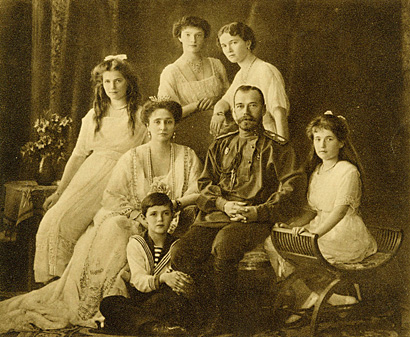
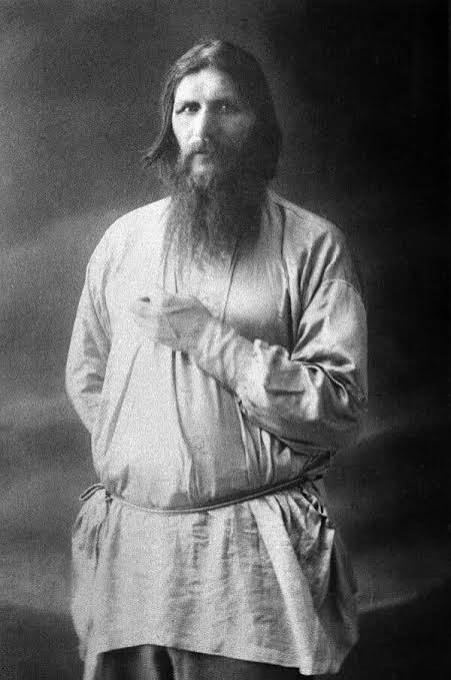
Rasputin and the downfall of the Romanovs

the protagonists of 1914 were sleepwalkers, watchful but unseeing, haunted by dreams, yet blind to the reality of the horror they were about to bring into the world
Christopher Clark, The Sleepwalkers: How Europe Went to War in 1914

The mystique of the mesmerising muzhik

For readers unfamiliar with him, Grigori Rasputin was a Siberian peasant, self-styled holy man and wandering mystic who somehow found his way into the innermost circle of the last Russian imperial family. Born in 1869 in the remote village of Pokrovskoye, he possessed no formal religious training yet acquired a reputation as a healer and spiritual adviser. His influence grew largely because Tsarita Alexandra became convinced that he could alleviate the suffering of her hemophiliac son, Tsarevich Alexei, whose illness threatened both the family and the succession itself. From that point onward, Rasputin became a lightning rod for public anger, rumour and scandal. To his admirers he was a man of God; to his enemies a charlatan, sexual predator, political manipulator and symbol of everything rotten within the late Romanov regime.

History has rarely been kind to him. The very name “Rasputin” conjures images of dark-eyed depravity, hypnotic influence and imperial decadence, making him one of those figures who seem destined to play the villain in the historical imagination.

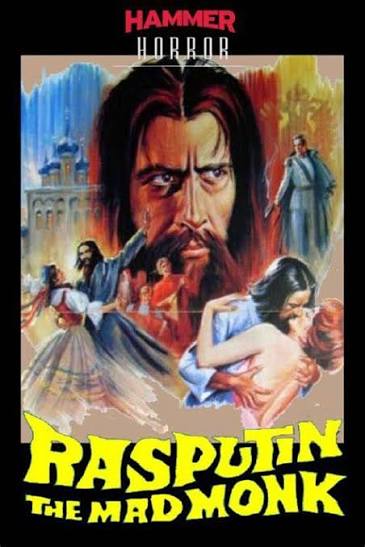
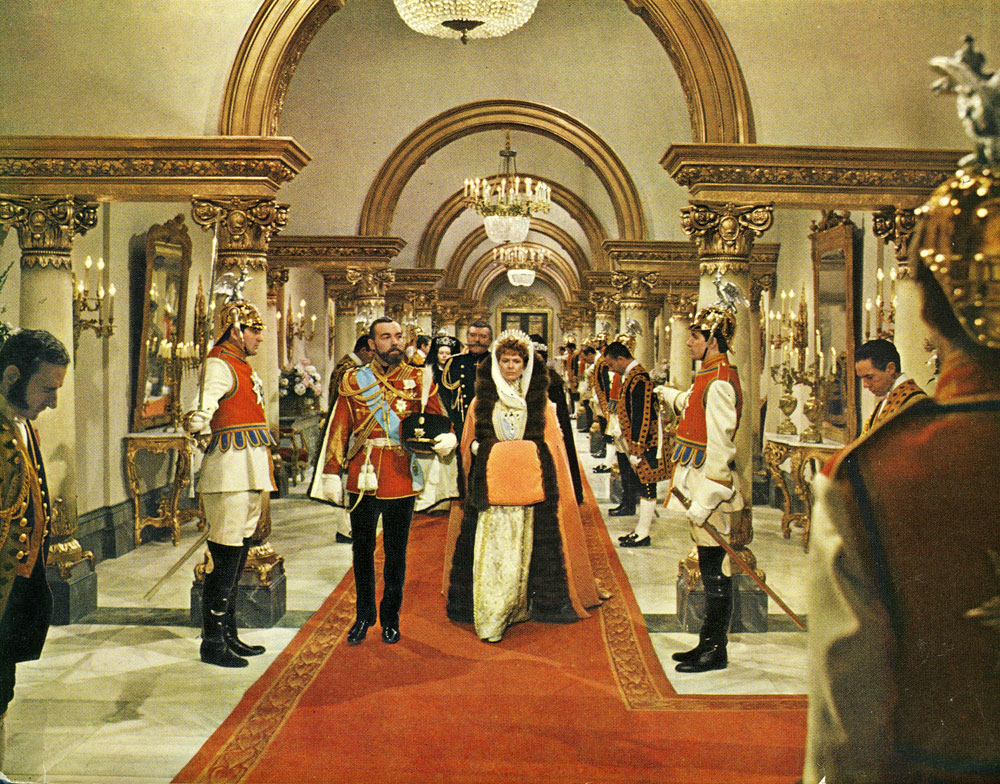
My own first encounter with him came not through history but through Hammer Horror’s gloriously lurid Rasputin: The Mad Monk (1966), in which Christopher Lee – already such a vampire icon that he’d earned the epithet “Draculee”. He played Rasputin with such operatic menace that it was not difficult to assume he must have personally engineered the fall of the Romanov dynasty between bouts of hypnotism, partying and priapic indulgence. The reality, as is so often the case, was both less theatrical and considerably more complicated. Like Boney M’s disco hit  a decade later (more on that at the end if this essay), it was great entertainment, if not necessarily great history. [In later life, Christopher Lee played a suitably malevolent Saruman in Peter Jackson’s The Lord of the Rings, resembling very much what Rasputin might have looked like had he reached old age. Lee really wanted to play Gandalf, but he was doomed to be typecast]

The mystical muzhik

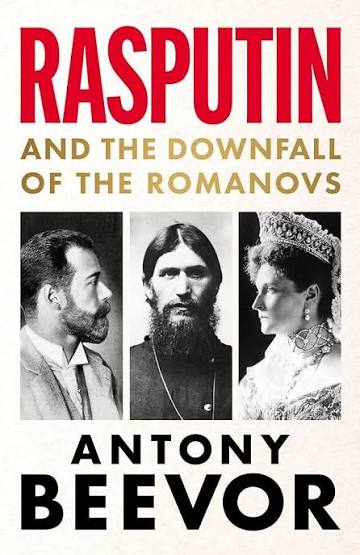
Which brings us to acclaimed British historian Anthony Beevor’s latest book Rasputin and the Downfall of the Romanovs.

As happens often In That Howling Infinite, what begins as a review  ultimately becomes something larger than that. The book is the point of departure, but the essay then widens into a meditation on Russia itself and on historical continuity; and in this case, on the recurring problem of elites mistaking symptoms for causes, and on the peculiar human inability to recognise catastrophe even when its scent is already in the air.

I have read most of Anthony Beevor’s books and, on the whole, found them riveting, informative and refreshingly free of sensationalism. Stalingrad, Berlin, The Ardennes, Arnhem, Russia: Revolution and Civil War. Beevor is one of those rare historians who combines scholarship with narrative flair, making vast and complicated events accessible without sacrificing seriousness. Which is why I came to Rasputin with high expectations, and why I finished it feeling vaguely disappointed.

Not because it is a bad book. It is not. It is readable, entertaining, meticulously researched and full of fascinating material. But compared with Beevor’s finest work, it feels curiously slight: overextended and underdeveloped at the same time. There is enough material here for a long magazine essay, a television documentary; but not quite enough analytical depth to sustain a truly great work of history.

The title itself is slightly misleading. This is not really a biography of Rasputin. The so-called Mad Monk looms over the narrative like a spectral presence, but remains oddly elusive. Readers expecting a deep exploration of his Siberian origins, religious beliefs, charisma, psychology, sexuality, or the mythology that has accumulated around him often come away unsatisfied. Rasputin functions less as a subject than as a lens through which Beevor examines the final years of the Romanov court. What the book actually delivers is the story of imperial collapse between 1914 and 1917.

And what a royal court it was. Beevor presents a world populated by sycophants, grifters, mystics, opportunists, flatterers, courtiers and assorted aristocratic parasites orbiting an increasingly dysfunctional monarchy. Ministers come and go with bewildering speed. Rumours swirl through Petrograd salons. Schemes flourish and collapse. Rasputin dispenses advice, Tsarita Alexandra dispenses influence, Tsar Nicholas retreats ever further into passivity, and meanwhile the empire bleeds. All of this makes for compelling reading. Yet one gradually begins to suspect that the court is being asked to carry more explanatory weight than it can reasonably bear.

Certainly Nicholas II was an inadequate ruler and often dominated by his spouse. Certainly Alexandra was politically naïve – though that didn’t deter her from meddling: “Lovey”, she wrote to him in August 1915 while he away with his army, “I am your wall in the rear. I am here, don’t laugh at old wifey, but she has ‘trousers’ on unseen.” And both were catastrophically dependent upon Rasputin.

Certainly, the dynasty had become detached from the realities of modern Russia. But the Russian Revolution was not simply the consequence of a dysfunctional royal family making poor decisions in a palace. Russia’s problems ran far deeper than the imperial nursery. By 1917 the empire faced enormous peasant land hunger, rapid but uneven industrialisation, militant labour unrest, revolutionary traditions stretching back decades, ethnic tensions across a vast multi-national state, a fragile constitutional settlement after the failed revolution of 1905, catastrophic military losses on what we call the Eastern Front to distinguish it from the brutal stalemate on the Western one, economic breakdown, logistical paralysis and food shortages. Above all, it faced the immense pressures of total war. Even a far more capable monarch would have struggled. The Romanovs were undoubtedly part of the problem. They were not the whole problem.

Indeed, one of the ironies of Beevor’s narrative is that the closer he gets to Nicholas and Alexandra, the less convincing they become as the sole explanation for the catastrophe unfolding around them. The real story increasingly lies beyond the palace walls.

And then there is the nursery talk. The surviving correspondence between Nicholas and Alexandra is authentic, and Beevor quotes it extensively – perhaps too much. Endless references to “Sunny,” “Hubby,” “Wifey,” “baby” (the sickly heir apparent), pet names, sentimental endearments and emotional dependency reveal a couple inhabiting a private emotional universe increasingly disconnected from the realities of the empire they ruled. The first few examples are illuminating. The next fifty plus merely reinforce the point. One understands quickly enough what Beevor wishes to demonstrate: that the Tsar and Tsarina had retreated into a cocoon of domestic intimacy and religious certainty while the state around them was disintegrating. Yet repetition eventually diminishes rather than strengthens the effect.

I found myself feeling less contempt than pity, particularly for Alexandra. Beevor’s portrait is harsh, and not without justification. She was deeply unpopular even before the arrival of Rasputin. Her German origins became politically disastrous during wartime. Her interventions in ministerial appointments were often disastrous. Her faith in Rasputin was politically suicidal. Yet behind the political incompetence stood a tragic figure: a woman consumed by anxiety over a hemophiliac son whose death seemed perpetually imminent, a husband she believed had been divinely appointed, and a political system she scarcely understood. Her mistakes were enormous. Her burdens were equally profound.

The children, meanwhile, are perhaps the saddest figures in the entire story. OTMA, the Grand Duchesses Olga, Tatiana, Maria and Anastasia. The family acronym itself has become strangely poignant, a small domestic joke preserved in history. Throughout the narrative I wondered how much they understood. Did they recognise that the dynasty was already doomed? Did they understand that the empire around them was beginning to crack apart? Olga especially emerges as a fascinating figure. Many contemporaries remarked upon her intelligence and seriousness. She often appears more politically aware than either parent. Had Russia permitted female succession, might she have made a better sovereign than Nicholas? It is impossible to know, but it is difficult to avoid the conclusion that several members of the younger generation among a myriad of dukes and duchesses possessed more common sense than the adults steering the ship of state.

As for Alexei, history has wrapped him in the melancholy glow reserved for doomed children. Understandably so. Yet had he survived to inherit the throne, one suspects he would have faced the same impossible contradictions that destroyed his father: autocracy confronting modernity, privilege confronting reform, dynasty confronting history itself.

The last of the Romanovs – Tsar Nicholas and his family, murdered by the Bolsheviks in July 1918

The road to Ekaterinburg

Let papa (Nicholas II) not plan war. It will be the end of Russia and
all of us. We shall be destroyed to the last man

Grigori Rasputin July 30, 1914

But if there is a deeper weakness in Beevor’s account, it lies not with the Romanovs, but with what overshadows them. The giant elephant in the room is the First World War. Without the war, Rasputin remains an eccentric holy man from Siberia. Alexandra remains unpopular. Nicholas remains mediocre. The Romanov dynasty perhaps limps on for another decade or two. With the war, every weakness becomes fatal.

Russia entered the conflict militarily, economically, politically and socially ill-equipped for the demands of modern industrial warfare. It possessed manpower but lacked organisation. It could mobilise millions of peasants but struggled to arm, supply and transport them. Railways buckled. Food shortages worsened. Casualties mounted on a staggering scale. Most importantly, the largely peasant army itself became fertile ground for revolution. The officer corps remained socially distant from the rank-and-file. Military disasters shattered confidence. Discipline deteriorated. Radical ideas spread. By 1917 the army was not merely losing battles. It was losing faith in the system it served. When revolution finally arrived that February, not with a bang but a slow-mo disintegration, it was little wonder that, encouraged by agitators in its ranks, the Russian Army did what we like to imagine most soldiers would like to do: lay down their arms and head for home – often first shooting their officers.

This, surely, was the real story. The gossip in Petrograd salons and restaurants drawing mattered. But millions of armed peasants questioning the legitimacy of the state mattered rather more. One occasionally wishes Beevor had spent less time recounting the latest court scandal and more time examining the immense structural forces pulling the empire apart.

Because by 1916 some observers could already smell danger. The writer Mikhail Lemke, serving at Stavka, the army headquarters, captured the mood perfectly: “Oh, the holy stupidity of the Romanovs. We are moving at full speed towards some terrible abyss, a dreadful end that is not clear to anyone but is inevitable… It is clear that the finale is going to be terrifying and in its haphazard nature.” It is a remarkable observation insofar as it captures something larger than the Romanovs themselves.

History is full of such moments. Barbara Tuchman encountered them repeatedly. Christopher Clark found them among the sleepwalkers of 1914. One finds them before the collapse of Austria-Hungary, before the fall of the Ottoman Empire, before Yugoslavia’s descent into war. People sense that disaster is approaching. The clouds gather, the pressure changes, the atmosphere becomes electric, even if the precise lightning strike remains unseen.

Beevor quotes Russian poet Alexander Blok expressing something similar when he wrote of the “peculiar merry horror that sits in the Russian soul.” It is one of those observations that sounds simultaneously profound, unfair, insightful and impossible to verify. Yet it evokes a Russia that appears repeatedly in its literature and history: exuberant and despairing, mystical and brutal, comic and tragic, capable of extraordinary creativity and extraordinary destruction, often simultaneously.

Reading these passages, I found myself thinking not only of Beevor but of my university tutor Tibor Szamuely who has featured often in In That Howling Infinite. Szamuely believed that Russia punished simplification. Its history moved in circles rather than straight lines. Revolutions proclaimed liberation only to rediscover autocracy in new forms. The Romanovs fell; the Bolsheviks inherited the imperial reflexes. The Soviet Union collapsed; empire returned draped in Orthodoxy, nationalism and Eurasian destiny. Beneath the turbulence remained what he called The Russian Tradition – the title of his one and only book, now out of print: centralised power, messianic consciousness, siege mentality and the recurring sanctification of suffering.

Szamuely believed that the bloodstained drama of 1917  and beyond – the February Revolution, the Bolshevik seizure of power in November, the Civil War, the creation of the USSR and Stalinism – often obscured the deeper continuities of Russian history. He did not live to see the collapse of the Soviet Union, the rise of Vladimir Putin or the war in Ukraine, but his argument remains strikingly relevant. The frequent upheavals that have overtaken this vast continent have often produced changes that were, at bottom, superficial, leading ultimately to the intensification of old authoritarian structures under new names.

One of the more revealing moments in Beevor’s narrative comes when Alexandra writes to Nicholas on December 14, 1916: “Be firm. Russia loves to feel the whip – it’s their nature – tender love and then the iron hand to punish and guide”. The observation is deeply revealing. It suggests a view of governance fundamentally at odds with constitutional politics. Whether one accepts Szamuely’s thesis or not, one cannot help noticing the irony. The Romanovs fell. Liberal democracy survived only briefly. The whip did not disappear. It merely changed hands. Lenin’s whip proved heavier. Stalin’s heavier still. Perhaps Alexandra was disastrously wrong about her own era and yet, in some darker sense, glimpsed something enduring about Russia’s future.

And that reminded me, oddly enough, of Deadwood. One of the reasons David Milch’s masterpiece remains such extraordinary television is that it understands something many historians understand and many politicians do not: catastrophe is usually visible before it arrives. Not in its precise form, certainly. Nobody sees the exact bullet, the exact revolution, the exact market crash. But the atmosphere changes. The clouds gather. The animals become restless. And somebody, somewhere, notices. Viewers who are paying attention notice too because the background music becomes jangly and minor key.

In the episode ominously titled Suffer the Little Children, world-weary Madame Joanie Stubbs asks  the young opportunist Flora a simple question: “Can you smell danger?” Joanie, from experience, can. The fey and feckless Flora cannot. She sees only opportunity and the immediate game she is playing and fails to recognise the larger forces closing around her. The result is one of the most violent conclusions in a series notorious for its displays of wanton brutality.

The same pattern appears repeatedly in history. People like Lemke could smell danger. Alexander Blok could smell danger. Many officers, politicians, intellectuals and ordinary Russians could smell danger. But did Nicholas and Alexandra? The evidence suggests not. Or perhaps they did but convinced themselves otherwise. In that sense they resemble the tragic Flora. Not wicked. Not entirely foolish. Simply trapped within assumptions that prevented them from recognising reality. Every warning became another irritation. Every crisis was temporary. Every setback could somehow be managed through faith, loyalty and persistence. Meanwhile the empire was bleeding to death.

The Romanovs spent years mistaking symptoms for causes. Rasputin was a symptom. Ministerial instability was a symptom. Court gossip and innuendo was a symptom. The disease lay much deeper: a political system incapable of reforming itself, a society under immense strain, and a war exposing every weakness simultaneously. By 1916 the smell of danger was everywhere. The tragedy is that those best placed to act either could not smell it or convinced themselves that the storm would somehow pass.

Tsar Nicholas in captivity

Which brings us to where Beevor’s book ends. Rasputin is assassinated by nobles determined to save the dynasty itself – treating a  symptom, not the disease (see below); the Tsar abdicates in March 1917; and the last of the Romanovs and his family disappear down the melancholy railway line to Ekaterinburg and death. The curtain falls. The reader must supply the rest. And the rest matters enormously. For all their failings, Nicholas and Alexandra were not succeeded by enlightened constitutional reformers. They were succeeded by the Bolsheviks. The road that began with Rasputin’s influence at court led through revolution, civil war, famine, terror, collectivisation, purges and the Gulag.

One leaves the book with an uncomfortable thought. The Romanovs were unquestionably part of the problem. But history’s eventual solution proved vastly more destructive.

Perhaps that is the most haunting aspect of the entire story. The downfall of the Romanovs solved one set of problems and unleashed others on an unimaginable scale. The train that Lemke saw hurtling toward the abyss did indeed reach its destination. But beyond the bend in the track lay not merely revolution, but decades of violence, repression and suffering.

In the end, Rasputin and the Downfall of the Romanovs is worth reading. The story itself remains compelling. Yet it is a lesser Beevor work: repetitive where his best books are incisive, narrowly focused where his best books are panoramic, occasionally so absorbed by court intrigue that it loses sight of the immense forces gathering beyond the palace gates. Like the dynasty it describes, it becomes most interesting when viewed as part of a larger story.

And perhaps that is the final irony. Rasputin, Nicholas, Alexandra, the four princesses, poor Alexei, the plotting dukes, ambitious ministers and aristocratic parasites all occupy centre stage for a time. Yet beyond them looms the true protagonist of the drama: Russia itself – vast, restless, wounded, contradictory, moving, as it has so often moved, between reform and reaction, idealism and coercion, hope and catastrophe.

The revolution was coming regardless. The tragedy of the Romanovs was not merely that they failed to stop it. It was that, like Flora ignoring Joanie Stubbs’ warning, they scarcely seemed to understand it was happening at all. The smell of danger was everywhere. The locomotive was already gathering speed. And somewhere ahead, beyond the next bend in the track, lay Ekaterinburg, the Civil War, Stalin, the Gulag, the Soviet century and perhaps even the long shadows that still stretch across Russia today.

The passengers continued gossiping, plotting, arguing and reassuring one another. A few looked nervously out the windows. A few could smell the storm. But by then it was already too late.

Bolshevik recruiting poster 1917

Explaining Rasputin’s power – Russia’s peasant complex

Rasputin arrived in St Petersburg trailing not merely Siberian mud on his boots but centuries of Russian argument about the peasantry.

For much of the nineteenth century, Russia’s educated classes had romanticised “the people” from a respectful distance. The peasant was imagined as the keeper of Holy Russia’s soul: patient, devout, long-suffering, close to the land and somehow morally superior to the fashionable, French-speaking aristocracy that governed him. Tolstoy found wisdom amongst peasants. Dostoevsky found redemption there. Intellectuals went “to the people” in search of authenticity, only to discover that actual peasants could be suspicious, conservative, superstitious and decidedly unimpressed by visiting idealists from St Petersburg.

Out of this tension emerged the Narodniks, the great “to the people” movement of the later nineteenth century. Young idealists abandoned universities and cities and went into the countryside to live amongst the peasants, educate them, organise them and, in some cases, save them. The peasants frequently responded by assuming they were spies and reporting them to the police.

Russia has always possessed an unusual talent for disappointing its romantics

Rasputin landed squarely in this contradiction. To admirers, he was the authentic Russia that the salons had spent generations searching for: a wandering pilgrim, a holy fool, a man of the soil with the smell of birch forests and woodsmoke still clinging to him. To his enemies, he represented everything that modern Russia was supposed to leave behind: ignorance, mysticism, obscurantism and the triumph of superstition over reason.

The aristocracy had always liked peasants rather in the way that modern urbanites like farmers’ markets — as long as the mud remained somebody else’s problem. Then one of them walked into the Winter Palace and sat down with the Tsarita.

Even popular culture recognised the type. At one point, Christopher Lee’s wonderfully excessive and inebriated Rasputin, breaks into an exuberant Russian dance to Stenka Razin, the great folk lament about the rebel Cossack who throws his Persian princess into the Volga to prove his loyalty to his comrades. Watching it as a teenager, I remember thinking not of Cossacks and river pirates but: “Hang on! That’s The Carnival Is Over.”

Tom Springfield had indeed borrowed one of Russia’s most famous melodies and transformed it into a global hit for The Seekers. Russia has always had a habit of turning up unexpectedly in other people’s stories. [See, in In That Howling Infinite,“High above the dawn is waiting” … the unlikely Russian origin of an English pop song]

Rather like Rasputin himself.

The resurrection of the Romanovs

One of the enduring ironies of Russian history – and indeed of history generally- is how often “all that is old is new again.” Revolutions announce themselves as clean breaks with the past, yet the past has a habit of returning through side doors and forgotten corridors. The symbols change, the slogans change, the uniforms change, but old habits, assumptions and institutions frequently re-emerge in unexpected forms.

Russia provides perhaps the most spectacular examples.

Much attention is paid to the persistence of the autocratic state: the succession from Tsarist secret police to Cheka, NKVD, KGB and FSB; the recurring preference for centralised authority over pluralism; the enduring suspicion of foreign influence; the tendency to frame political life as an existential struggle between order and chaos. These continuities are real enough.

Yet the return of older Russia extends well beyond the machinery of coercion. One of the most remarkable developments of the post-Soviet era has been the resurrection of the Russian Orthodox Church. The institution that survived persecution, marginalisation and attempted eradication under Soviet rule has re-emerged as one of the central pillars of contemporary Russian identity. Cathedrals demolished by the Bolsheviks have been rebuilt. Religious symbolism once dismissed as superstition now appears alongside state ceremonies and military rituals. Patriarchs once monitored by the Party have become influential public figures. Patriarch Kyril , the current head of the Russian Orthodox Church is a close political and ideological ally of Putin. Orthodoxy, once pushed to the margins, has returned to the centre of Russian public life.

And with Orthodoxy has come a reconsideration of the Romanovs, murdered along with their servants (and pet dogs) by bullet and bayonet by local Bolsheviks, on Lenin’s orders it is claimed, on the night of 16th and 17th July 1918 – ostensibly to prevent their rescue by Kolchak’s White forces who were closing in on Ekaterinburg. Many of their family and friends were executed in the days and months afterwards.

For much of the Soviet period, Nicholas II occupied a relatively simple role in the official story: a weak ruler whose incompetence justified the Revolution that swept him away. Post-Soviet Russia complicated that narrative. The Romanovs gradually ceased to be merely the defeated rulers of a vanished age and became, for many Russians, symbols of national martyrdom. Nicholas and Alexandra, together with their children, were canonised as Passion Bearers. Pilgrimages developed around sites associated with their imprisonment and murder. Their deaths came to be viewed not simply as a political execution but as a spiritual tragedy and a national wound.

The process was aided by the gradual revelation of what actually happened in the cellar of the Ipatiev House in Ekaterinburg. Soviet accounts had long been evasive. The fuller story proved profoundly unsettling. The murder of Nicholas and Alexandra is one thing. The murder of Olga, Tatiana, Maria, Anastasia and the sickly Alexei is quite another. Whatever one’s judgement of the Romanov regime, if the witness statements gathered after the slaughter are reliable, it is difficult not to recoil from the sheer brutality of what occurred that night. The image of frightened young women surviving the first fusillade because jewels sewn into their clothing deflected bullets, only to be finished off with bayonets and revolvers in a chaotic mess of panic and gun-smoke possesses a dreadful power.

That sympathy has done much to reshape public memory. The Romanovs who emerge in popular imagination are often not the rulers of a vast empire but a doomed family. The focus shifts from Nicholas the inadequate monarch to Nicholas the husband and father; from Alexandra the politically disastrous empress to Alexandra the anxious mother. Martyrdom eclipses governance.

There was to be, however, no martyr’s crown for Grigori Rasputin, whom we had lost sight of when we widened the scope of our review of Beevor’s historical pot-boiler.

The death of Rasputin

To borrow from the Bard of Avon (Macbeth, that is), “nothing in his life became him like the leaving it”. Rasputin’s demise has passed into legend largely because it seems to belong less to history than to black comedy.

In December 1916 a group of aristocratic conspirators, led by Prince Felix Yusupov and Grand Duke Dmitri Pavlovich, decided that the self-styled holy man had become a mortal threat to the monarchy and must be removed. What followed has often been retold as a Gothic horror story in which Rasputin was poisoned, shot, beaten, drowned and somehow kept coming back for more.

Beevor, however, strips away much of the mythology and reveals something closer to a tragic farce. The conspirators were astonishingly amateurish, repeatedly losing control of events, contradicting one another, panicking and improvising as their carefully laid plan unravelled. Reading Beevor’s account, one is reminded less of a sinister political assassination than of a darkly comic Ealing caper performed by nervous aristocrats hopelessly out of their depth. Yet the absurdity only heightens the symbolism. Here was the Russian elite, convinced it was saving the Empire, bungling even a murder. Rasputin’s chaotic end became a grotesque metaphor for the regime itself: confused, incompetent, riddled with fantasy, and staggering towards disaster while imagining it was still in control.

No wonder it provided such irresistible material for a shonky Hammer Horror melodrama. Rasputin’s life already contained all the necessary ingredients: a mysterious peasant mystic, aristocratic decadence, rumours of hypnotic powers, political intrigue, sexual scandal and a violent death wrapped in myth and exaggeration. His assassination only added to the legend. Poison that apparently failed to work, bullets that seemed unable to stop him, panicked noblemen stumbling through a murder plot and a corpse eventually dumped into the icy Neva – it all reads less like sober history than a fever dream concocted by a screenwriter after too many vodkas.

Hammer simply leaned into the absurdity. With Christopher Lee glowering, glaring and generally chewing the scenery as only Christopher Lee could, Rasputin became less a historical figure than a gothic supervillain, somewhere between Dracula and a mad prophet. The remarkable thing is that the real story, stripped of its embellishments, remains almost as bizarre as the cinematic version. Indeed, one suspects that if a screenwriter had invented the entire affair from scratch, critics would have dismissed it as implausibly over-the-top.

History, as usual, had other ideas. And therein lies the enduring fascination of Rasputin: not merely the man himself, but the way his life and death seem perpetually suspended between fact and folklore, political history and popular mythology.


The book of the film?

Whilst reading Beevor’s account, I wondered if he had recently watched the 1971 British film Nicholas and Alexandra. It is an appealing fancy, and not an entirely implausible one.

Anthony Beevor is a serious historian, of course, and his account of the Romanovs, Rasputin, and the revolutionary years rests on decades of scholarship rather than any cinematic influence. Yet historians are also human beings, and good historians often have a keen sense of narrative, character, and scene. Reading some passages in Russia: Revolution and Civil War, one occasionally gets the feeling that Beevor can see the events unfolding before him in almost cinematic fashion.

The 1971 film Nicholas and Alexandra remains one of the most ambitious attempts ever made to dramatise the collapse of Imperial Russia. Although it was something of a commercial disappointment, it assembled a remarkable cast of British acting royalty. Michael Jayston’s Nicholas II and Janet Suzman’s Alexandra are perhaps best remembered, but the supporting cast reads like a roll-call of twentieth-century British theatre and film: Laurence Olivier as Count Witte, Michael Redgrave as Sazonov, Jack Hawkins, Harry Andrews, Timothy West, Ian Holm, and a young Brian Cox in one of his earliest screen appearances as Leon Trotsky.

Then there is Tom Baker as Rasputin: wild-eyed, bearded, charismatic, unsettling, simultaneously ridiculous and strangely compelling. It remains one of the screen’s most memorable Rasputins, capturing something of the paradox that has fascinated generations- the peasant mystic who became confidant to an empress, faith healer, political liability, and eventually a figure of near-mythic notoriety. [Tom Baker reincarnated in 1974 as the Fourth Doctor, to become the longest serving time lord in that venerable television series, and, to hark back to our opening paragraphs, like Christopher Lee, he also pitched unsuccessfully to play Gandalf in The Lord of The Rings]

As for Ian Holm, His role is actually an interesting footnote. In Nicholas and Alexandra, he played Vasily Yakovlev, the Bolshevik commander who supervised the execution of the imperial family in Ekaterinburg in July 1918. Yakovlev survived the civil war and perished during Stalin’s Great Terror in 1938 while Holm morphed into the devious cyborg Ash in Ridley Scott’s Alien (1979).

Whether Beevor recently watched the film is impossible to know. But if one were writing about the twilight of the Romanovs, it would be hard not to have the film somewhere in the back of one’s mind. For all its historical simplifications, it remains one of those grand old epics that lodged themselves in the cultural imagination.

And perhaps that is one reason the movie endures despite its reputation as a flop. It was not merely recounting history. It was staging the last act of an entire civilisation – the chandeliers still glittering, the uniforms still immaculate, the orchestra still playing, even as the floorboards beneath the Russian Empire were already beginning to crack.

When Josef met Vladimir

There is a scene in Nicholas and Alexandra that takes us down one of history’s intriguing rabbit holes where fact, folklore and political mythology sit together at the same table – perhaps even, over a pint.

It depicts the First Conference of the Russian Social Democratic Labour Party in Tampere (then part of the Grand Duchy of Finland) in December 1905. That conference is generally accepted by historians as the first documented meeting between Lenin and Stalin. Stalin himself later recalled it as their first encounter, describing how the younger Georgian revolutionary was somewhat disappointed to discover that the legendary Lenin was not the towering, commanding figure he had imagined, but rather a relatively ordinary-looking man who blended easily into the crowd.

And yet, according to a London tradition, the two had met earlier at the Crown Tavern on Clerkenwell Green, a pub situated opposite what became the headquarters of the Twentieth Century Press, where Lenin worked while editing Iskra during his London exile. The tale has enormous appeal. One can easily picture the scene: two future dictators of the twentieth century sharing a beer in a smoky London pub while discussing the fate of the Russian Empire, utterly unknown to the drinkers around them.

The problem, though, is evidence. Lenin certainly spent considerable time in Clerkenwell. Stalin certainly visited London in 1907 for the Fifth Congress of the RSDLP. Both men undoubtedly walked the same streets. The Crown Tavern proudly embraces the connection. Yet hard documentary proof that they actually sat down together there before the 1905 Finnish conference is elusive. Soviet historians, who were often eager to document Lenin’s revolutionary activities in minute detail, generally treated the Tampere meeting as the first confirmed encounter. Modern historians tend to do the same.

That does not necessarily make the pub story false. Revolutionary underground movements were not renowned for maintaining meticulous attendance records. Absence of evidence is not evidence of absence. But it does leave the tale in that charming grey zone occupied by so much historical folklore.

There is also a delicious irony in the setting. Clerkenwell Green was one of the great centres of radical politics in Victorian and Edwardian London – a place where exiles, anarchists, socialists, trade unionists and political dreamers gathered. The British Empire, then at the height of its power, provided refuge to revolutionaries who were plotting the overthrow of other empires. London was simultaneously the capital of global capitalism and a sanctuary for those dedicated to its destruction.

If Lenin and Stalin really did share a pint at the Crown Tavern, neither man could have known that within two decades one would have created the Soviet state and the other would inherit it. Nor could the Londoners around them have guessed that two obscure Russian exiles would become among the most consequential figures of the twentieth century.

That, perhaps, is why the story survives. Whether true or not, it captures the peculiar magic of history: the possibility that world-changing events sometimes begin not in palaces, parliaments or battlefields, but in an ordinary corner pub on an ordinary London afternoon.

And, finally, from the surreal to the ridiculous …When it comes to exuberant absurdity, one cannot match that of German reggae, funk and disco group Boney M.

Ra- ra-ra Rasputin

For an entire generation, Boney M’s 1978 disco hit Rasputin probably did more to shape popular perceptions of the man than any serious work of history.

It is, of course, ridiculously inaccurate. Rasputin was not literally the “lover of the Russian Queen”; there is no credible evidence that he and Alexandra were lovers, despite endless rumours at the time. Nor did he “rule the Russian land and never mind the Tsar.” Even at the height of his influence he remained more symbolic than omnipotent, a trusted adviser whose access to the imperial family far exceeded his actual political competence.

Yet the song captures something important about how Rasputin entered popular mythology. He became less a historical figure than a larger-than-life archetype: part holy man, part conman, part libertine, part political puppet-master, wrapped in an aura of sex, mystery and impending catastrophe.

It compresses a complicated story into a memorable caricature. The real Rasputin was almost certainly less powerful, less sinister and less glamorous than legend suggests. But legends endure because they tell us something about the fears and fantasies of their age. To Russians watching their empire stagger towards collapse, Rasputin became a convenient embodiment of everything that seemed wrong with the Romanov regime. To the wider world, he became the bearded mystic with hypnotic eyes, impossible appetites and nine lives.

Boney M simply took that mythology, added a disco beat with a Russian flavour, Euro-pop chorus and a dash of Cold War exoticism, and produced one of the strangest historical stories ever to hit the dance floor.

Indeed, there is a curious progression in the way many of us first encountered Rasputin. First came Christopher Lee’s wild-eyed Hammer Horror incarnation in the 1960s; then Boney M’s improbable disco supervillain in 1978; and only much later the actual historical figure lurking behind both performances. By that stage, poor old Grigori scarcely stood a chance. History had already handed him over to popular culture, where villains, mystics and monsters invariably enjoy a much longer shelf life than ordinary men.

Paul Hemphill, June 2025

For more on Russia, Ukraine and the Soviet Union in In That Howling Infinite, see Russky Mir – Russian history’s long shadow

Rasputin, Bony M (1978)

There lived a certain man in Russia long ago
He was big and strong, in his eyes a flaming glow
Most people look at him with terror and with fear
But to Moscow chicks, he was such a lovely dear
He could preach the Bible like a preacher
Full of ecstasy and fire
But he also was the kind of teacher
Women would desire

Ra-Ra-Rasputin, lover of the Russian Queen
There was a cat that really was gone
Ra-Ra-Rasputin, Russia′s greatest love machine
It was a shame how he carried on

He ruled the Russian land and never mind the Tsar
But the kazachok, he danced really wunderbar
In all affairs of state, he was the man to please
But he was real great when he had a girl to squeeze
For the Queen, he was no wheeler-dealer
Though she’d heard the things he′d done
She believed he was a holy healer
Who would heal her son

Ra-Ra-Rasputin, lover of the Russian Queen
There was a cat that really was gone
Ra-Ra-Rasputin, Russia’s greatest love machine
It was a shame how he carried on

But when his drinking, and lusting and his hunger for power
Became known to more and more people
The demands to do something about this outrageous man became louder and louder

“This man’s just gotta go,” declared his enemies
But the ladies begged, “Don′t you try to do it, please”
No doubt this Rasputin had lots of hidden charms
Though he was a brute, they just fell into his arms
Then one night some men of higher standing
Set a trap, they′re not to blame
“Come to visit us,” they kept demanding
And he really came

Ra-Ra-Rasputin, lover of the Russian Queen
They put some poison into his wine
Ra-Ra-Rasputin, Russia’s greatest love machine
He drank it all, and he said, “I feel fine”
Ra-Ra-Rasputin, lover of the Russian Queen
They didn′t quit, they wanted his head
Ra-Ra-Rasputin, Russia’s greatest love machine
And so they shot him ′til he was dead

Oh, those Russians

Writer(s): Frank Farian, Fred Jay, George Reyam

Afterword

Being a longtime student of the Middle East, and having visited Jerusalem many times, whilst assembling this essay, I was surprised to discover a direct connection between the murdered Romanovs and the Holy City. Tsarita Alexandra’s sister, the Grand Duchess Elisabeth, who was executed along with other nobility on the sane night as The Tsar and his family, and later, interred in the incongruous and ostentatiously Muscovite Church of Saint Mary Magdalene in the Garden of Gethsemane on Mount Olive – which she and her husband had helped build – and in 1982, canonised as “new martyr” of the Russian Orthodox Church Outside Russia.

The Church of St. Mary Magdalene, viewed from the walls of Jerusalem. P.Hemphill, May 2014

The Great Unravelling – modern history is built on exodus and displacement 

And who will live in the house after us, my father?
The house, my son, will remain as it was!
Why did you leave the horse alone?
To keep the house company, my son.
When their residents go, the houses will die.
Together we will hold on
until we return.
When, my father?
Tomorrow, my son, and perhaps in another day or two!
That tomorrow trailed behind them, chewing the wind
in the endless winter nights.
Mahmoud Darwish

Two years ago, in an essay in In That Howling Infinite published entitled Modern history is built upon exodus and displacement we wrote: “The term ethnic cleansing is elusive and politically charged. In an age of endemic conflict, identity politics and competing narratives, it has become a contested and often diluted concept invoked with increasing frequency. Yet, it remains undefined in law. Unlike genocide or war crimes, it has never been codified as a distinct offence under international law, and so its use is contested.”

Henry Ergas’s essay begins from a premise that is not wrong in itself: the Palestinian Nakba did not occur in isolation from the twentieth century’s wider history of mass displacement. Modernity proved remarkably adept at producing refugees. The collapse of empires, the rise of nation-states, world wars, partitions and revolutions uprooted tens of millions of people. Greeks and Turks, Armenians, Germans, Poles, Indians and Pakistanis, Jews from Arab lands, and many others found themselves swept into movements of population that often combined violence, dispossession and the attempt to create more homogeneous states.

This broader historical context matters because contemporary discussion of Israel–Palestine often proceeds as though 1948 emerged from a vacuum. It did not. The creation of Israel, the Palestinian exodus, and the simultaneous flight and expulsion of Jews from Arab countries all unfolded in a world where population transfer – while morally disturbing to modern sensibilities – was often treated by governments as regrettable but practical statecraft.

Yet Ergas then moves beyond historical context into a stronger argument: that the Palestinians constitute a unique exception because their refugee status became institutionalised rather than resolved. Here too there is a substantial point beneath the rhetoric. Unlike most post-war refugee populations, Palestinian refugee status passed across generations through UNRWA rather than being handled under the broader UNHCR framework. The expectation of return became central to Palestinian national identity and politics. The refugee camps in Lebanon, Syria, Gaza and elsewhere became not simply humanitarian spaces but political spaces.

But this is where the argument narrows and history becomes more selective.

The essay tends to compress a complex chain of causes into a single line of responsibility. The 1948 refugee crisis did not arise simply because Arab leaders invaded and then refused to absorb the consequences. As discussed previously, historians describe a more tangled picture: military collapse, fear, local expulsions, battlefield conditions, psychological warfare, direct expulsions in some areas, and decisions by Arab authorities all played roles that varied from place to place.

Nor does the proposition that Arab states “created” the refugee crisis command broad historical consensus. What is more broadly accepted is that many Arab states subsequently chose policies that preserved refugee distinctiveness rather than encouraging full integration, often because permanent absorption was seen as abandoning claims of return or acquiescing in Israel’s legitimacy.

There is also a danger in drawing too neat a lesson from other twentieth-century displacements. Many of those “successful” examples came after immense suffering and often under conditions we would now regard as profoundly unjust. The Greek–Turkish exchange, the expulsions of Germans from Eastern Europe, and Partition in India all left deep scars that continue to shape politics generations later. Stability eventually emerged, but stability and justice are not identical things.

This recalls themes from that earlier essay of ours. There,  the argument was not that ethnic cleansing or forced population movements are unique, nor that Israel–Palestine should be detached from wider historical patterns. Rather, the point was almost the opposite: modern history itself appears built on recurring acts of uprooting and demographic engineering. Michael Mann called this “the dark side of democracy”: the tendency of modern states toward homogeneity, where political belonging becomes increasingly tied to identity.

The distinction matters because Ergas implicitly suggests that history eventually tidies itself up – that refugees are absorbed, wounds heal, and life moves on, except in the Palestinian case. The historical record appears less orderly. Displacement rarely disappears; it becomes memory, and memory becomes politics.

The Armenian diaspora still carries the memory of 1915. Partition remains embedded in Indian and Pakistani consciousness. The descendants of expelled Germans preserved memory of lost homelands for decades. Jewish memory of exile persisted for two millennia and became central to Zionism itself. Human beings have shown little inclination simply to reconcile themselves to history and forget.

Which brings us back to a previous discussion about stories and belonging in our Blue remembered hills (2) – the history we hold within us – Tolkien’s sub-creation, Scruton’s observations on home, Tyrion Lannister’s line that “there is nothing more powerful than a good story.” Nations are, among other things, stories people tell about themselves. Refugees do not merely lose houses or land; they lose continuity – the narrative linking memory, place and identity.

Palestinians constructed such a narrative around the Nakba. Israelis constructed one around return after exile and persecution. Both narratives contain truths; both contain mythologies; both can harden into absolutes.

That perhaps is the deeper tragedy. The problem was never simply refugee camps or UN agencies or demographic statistics. It was that two peoples built foundational stories around dispossession and return in the same small strip of land – your earlier “TARDIS nation”: a place physically tiny but historically and emotionally vast, where centuries of memory somehow occupy the same ground at the same time.

The twentieth century produced many displaced peoples. Most eventually found states, borders or political settlements that transformed exile into citizenship. Palestinians remain suspended between memory and statehood, between return and permanence. Whether this makes their situation unique is debatable. That it makes it unusually enduring is harder to deny.

The unravelling, then, may not be the Nakba itself, nor UNRWA, nor even 1948. It may be the wider unraveling of an older assumption: that history’s brutal rearrangements eventually settle into stable endings. History has shown a disconcerting habit of reopening what people believed was closed. And memory, unlike borders, seldom remains where states draw the lines.

What about ‘Whataboutism’?

When one widens the frame as we have dine here, an accusation appears sooner or later, often delivered with a certain weary certainty: whataboutism. The implication is not merely that one has made a weak argument but that one has committed a kind of moral sleight of hand- that by widening the frame one is really narrowing the conscience; that by speaking of Greeks and Armenians, Germans and Jews, Indians and Pakistanis, Bosnians and Rohingya, one is attempting to diminish Palestinians by dissolving them into statistics.

The charge deserves attention because there is such a thing as genuine whataboutism. The old Soviet formulation – and what about your own crimes? – was never an attempt at understanding. It was an escape hatch, a manoeuvre for changing the subject rather than addressing it. One suffering became a shield against discussing another. The object was evasion.

But comparison and evasion are not the same thing.

History itself is an exercise in comparison. Historians are forever placing one event beside another, not because they believe suffering can be ranked on some grotesque league table of misery, but because isolated events often become clearer when seen against a wider landscape. The Nakba did not occur on another planet. It unfolded amid a twentieth century that seemed to possess a grim talent for uprooting people from ancestral homes and redistributing them across maps with ruler-straight borders and bureaucratic efficiency. The century moved populations around with astonishing confidence, as though nations were puzzles whose pieces merely needed rearranging.

To note this is not to say that Palestinian suffering was unimportant, or unreal, or somehow cancelled out by the suffering of others. Human beings do not experience tragedy comparatively. Nobody standing beside a burning village pauses to think, yes, but larger displacements occurred elsewhere. People experience loss in the singular. The family home is not less mourned because millions of others lost theirs too.

And yet memory and history often operate differently. Memory looks inward. History looks outward. Memory says: this happened to us. History asks: where else has this happened, and why?

Perhaps the tension lies there.

Because the Holy Land –  a curious, poorly understood TARDIS territory, tiny on a map and infinite in emotional and historical dimensions – contains overlapping stories of exile and return. Palestinians built a national memory around dispossession; Israelis built one around return after exile and persecution. Both stories contain truth. Both contain myth. Both contain wounds carried across generations.

To place one beside wider human experience is not necessarily to belittle it. Sometimes it is the opposite. Sometimes it is an attempt to recognise that the Palestinian tragedy was not an aberration committed by monsters from another species, but part of a recurring and deeply human pattern – our alarming capacity to convince ourselves that peace, security or national redemption can be achieved by separating peoples and remaking maps.

The question, then, is not whether comparison itself is suspect. It is whether comparison is being used to illuminate or to dismiss.

The former enlarges understanding. The latter shrinks it.

And perhaps that distinction matters, because if modern history teaches anything, it is that human beings have shown little talent for forgetting and remarkable talent for carrying stories — stories of homes left behind, keys kept in drawers, vanished streets and remembered landscapes — across decades and across oceans.

Borders may eventually settle.

Memory seldom does.

Keys, homelands and the stories we carry within us

We did not weep
when we were leaving –
for we had neither
time nor tears
and there was no farewell.
We did not know
at the moment of parting
that it was a parting
so where would our weeping 
have come from?”
Taha Muhammad Ali

There is perhaps a further answer to the question of whether widening the frame becomes a form of whataboutism, and it lies in something written years earlier in In That Howling Infinite, in an essay on Mahmoud Darwish, Ismail Shammout and the symbolism of al-’awda –  return: Visualizing the Palestinian Return – the art of Ismail Shammout]

That essay did not begin with demographic tables, refugee agencies, diplomatic resolutions or arguments about international law. It began instead with Darwish’s father and son, with a house left behind and a horse kept company in the absence of those who had gone. It entered history through memory rather than politics. The language was intimate and domestic because exile is experienced first not through abstractions but through ordinary things: streets once walked, kitchens once occupied, olive trees, neighbourhoods and names. Long before displacement becomes a political problem, it is a human one.

Darwish understood Palestine not merely as territory but as metaphor: a homeland certainly, but also a language of longing, absence and dispossession. Palestine became not simply a place on a map but a way of expressing exile itself. Around that idea grew al-’awda, the dream of return, symbolised by al-muftah, the key that appears throughout refugee camps, paintings and political iconography. The key became more than metal. It became continuity –  evidence that interrupted lives had not entirely ended. Villages might disappear, maps be redrawn, and landscapes altered beyond recognition, but the key remained as a quiet refusal to surrender memory.

The earlier essay eventually moved into more contested territory, discussing UNRWA, inherited refugee status and the possibility that institutions established to preserve refugee welfare had also preserved expectation itself, transforming temporary exile into a political condition transmitted across generations. Yet the order in which those arguments appeared matters. The essay did not begin by reducing Palestinians to a demographic question or a bureaucratic problem. It first sought to understand what loss meant to those who carried it.

Perhaps that touches upon the larger issue raised here. Comparative history and lived memory often ask different questions and operate at different scales. History asks about patterns, causes and precedents. It seeks connections and broader landscapes, comparing one experience with another to understand how societies and states behave across time. Memory is more particular and less interested in patterns. It concerns itself with the singular experience of those who lost something and who continue to carry the memory of that loss.

The two perspectives are not necessarily opposed, but neither are they interchangeable. Statistics without memory can become sterile and detached. Memory without wider historical context can harden into myth, becoming a self-contained narrative resistant to complication.

This has been a recurring theme across earlier discussions – from Tolkien’s idea of sub-creation and Scruton’s reflections on belonging to Tyrion Lannister’s observation that there is nothing in the world more powerful than a good story. Stories are not merely embellishments laid over identity; they often become identity itself. They explain where people came from, who they are, and where they imagine themselves to be going.

Palestinians built such a story around the Nakba and the hope of return. Jews built one around exile and return as well: Jerusalem remembered across centuries, prayers ending with Next Year in Jerusalem, memory transformed into national aspiration. Both peoples, in different ways, carried keys. Some were literal objects passed through generations; others existed in memory and imagination.

Perhaps this explains why the accusation of whataboutism can feel misplaced in such discussions. Comparison does not necessarily diminish suffering by placing it alongside other suffering. Sometimes it attempts the opposite. Sometimes it seeks to recognise that exile, loss and the desire for return are among the oldest and most enduring of human experiences.

The danger lies not in telling stories but in mistaking stories for complete maps of reality. A key can indeed open a door, but after enough years –  after generations have passed, after landscapes have changed and houses have disappeared – it may become something else entirely. It becomes not a practical instrument but a memory carried in the hand, a reminder that home is not always a physical place waiting patiently at the end of a road. Sometimes it survives most completely in the minds of those still searching for it.

In That Howling Infinite, May 2026

In That Howling Infinite  has recently published a long essay explaining its position with regard to what is probably the most intractable conflict in modern times: One Land, Two Peoples: History, Memory, Continuity, and Inheritance 

See also in In That Howling Infinite, Modern history is built upon exodus and displacement, Visualizing the Palestinian Return – the art of Ismail Shammout , We did not weep when we were leaving – the poet of Nazareth 

The featured picture at the head of this blog post is one of Palestinian artist Ismail Shammout’s striking illustrations of Al Nakba, the dispossession of tens of thousands of Palestinian Arabs during Israel’s war of independence, from In That Howling Infinite’s Visualizing the Palestinian Return – the art of Ismail Shammout]

Al Miftah

How the Arab world recast the Nakba

Every May, Nakba Day, with its noisy demonstrations on our streets, brings the same charge against Israel: that the displacement of some 700,000 Palestinians in 1948 was a unique crime in modern history. The reverse is closer to the truth. Almost nothing about the Palestinian exodus was singular. What was singular – and which still disfigures the lives of Palestinians, Israelis and the wider world – is what was done with it ­afterwards.

For two centuries, modern states have been built on the unmixing of peoples. The idea is older than the romantic nationalists who weaponised it. Ferdinand and Isabella expelled the Jews from Spain in 1492, and Philip III the Moriscos a century later, precisely because they could no longer imagine a unified crown ruling a religiously mixed people. France’s revolutionary Jacobins, alarmed at Breton, Provencal and Alsatian, declared linguistic uniformity the price of citizenship; Mazzini and his epigoni said much the same for Italy.

Even that arch-liberal John Stuart Mill argued in 1861 that ­representative institutions could scarcely function in countries divided among “different nationalities” speaking different languages.

Bismarck drew the operational conclusion, expelling tens of thousands of Polish and Jewish “foreigners” from Prussia’s eastern provinces in 1885-86 – a program regarded at the time as enlightened statecraft and applauded throughout the liberal press of central Europe.

The unmixing accelerated as the great land empires – Ottoman, Habsburg, Romanov – gave way to nation-states. The Crimean War alone drove 900,000 Muslims from the Caucasus and Crimea into Ottoman territory; the Balkan Wars and the First World War uprooted two million more.

By 1923, the movements were no longer an incidental consequence of war; they were being designed. The burning of Smyrna in September 1922, which destroyed one of the great cosmopolitan cities of the eastern Mediterranean and drove 200,000 Greeks and Armenians into the harbour while Allied warships looked on, made any continued Greek presence in Anatolia impossible – and the world’s diplomats simply codified the new reality.

The Lausanne Convention of January 1923 compelled roughly 1.3 million Greek Orthodox to leave Anatolia for Greece and 400,000 Muslims to leave Greece for Turkey, stripping each of nationality, their possessions and any right of return. Cretan Muslims who had never seen Anatolia and knew only Greek were shipped to Anatolia; Cappadocian Greeks who knew only Turkish were shipped to Greece.

Set against the Armenian genocide of 1915, the exchange was hailed as humane and progressive, and Athens and Ankara settled into the longest peace they had ever known. Raymond Poincare spoke for the age when he concluded that “the mixture of populations of different races and religions has been the main cause of troubles and of war”.

That lesson governed what came next. In 1944, with Hitler’s empire collapsing, Churchill told the Commons he was “not alarmed by the prospect of the ­disentanglement of populations”. The Potsdam Agreement formalised it, providing for the expulsion of 12 million ethnic Germans from Eastern Europe.

The 1948 Palestinian exodus, known in Arabic as the Nakba. Picture: via Getty Images

The 1948 Palestinian exodus, known in Arabic as the Nakba. Picture: via Getty Images

The German share of Czechoslovakia’s population fell from 23 per cent to less than 2 within five years, under Benes’ decrees that stripped ethnic Germans of citizenship and property overnight. Equally, Poland’s minorities, 30 per cent of its inter-war population, were reduced to under 5 per cent; in 1947, the Ukrainian remnant was forcibly scattered across the new western territories to prevent any cohesive ethnic block reforming.

Meanwhile, the dismantling of Japan’s empire moved another five million Japanese back from Manchuria, Korea, Taiwan and Sakhalin, often after long internment, while Koreans and Chinese were marched in the opposite direction. And in 1947, Partition uprooted between 12 and 20 million people on the subcontinent; Pakistani Punjab’s Hindus and Sikhs went from 20 per cent of the population to 0.2 per cent in four years, amid massacres on the Lahore-Delhi railway that nobody who lived through them ever forgot.

Shortly afterwards it was the turn of the Jewish communities of Iraq, Egypt, Libya, Syria, Yemen and Morocco.

Some 800,000 people, whose ancestors had lived in those lands for two millennia, were evicted, forced to flee or statutorily expelled, losing their nationality and all their assets in the process. Iraq’s Jews, once 40 per cent of Baghdad’s population and producers of the country’s first finance minister, were down to under 1 per cent within five years.

In each case the expectation was the same: the receiving state would absorb its co-religionists or co-ethnics and prevent revanchism. Ataturk’s Turkey did exactly that – any attempts by the Muslims expelled from Greece to organise politically were firmly ­repressed.

So did the Allied occupiers, and then Adenauer’s Federal Republic, banning refugee parties in Germany and shutting down any attempt at creating new ones. Forced to accommodate to their new country, West Germany’s 12 million expellees – many of whom either spoke no German or antique forms of German locals could barely understand – powered the Wirtschaftswunder (economic miracle) and helped ­rebuild Germany’s fabled network of small firms.

Nor were they alone in proving a source of flexibility and innovation. In West Bengal, Hindus expelled from East Bengal transformed the jute industry, making it a pillar of India’s economy. The million-odd North Koreans who fled south during and after the Korean War, Chung Ju-yung of Hyundai prominent among them, supplied the entrepreneurial core of what became the South Korean miracle.

Israel, for its part, absorbed almost the entirety of the displaced Jews of the Arab lands: Operation Ezra and Nehemiah airlifted some 120,000 Iraqi Jews in 1950-51; Operation Magic Carpet flew 49,000 Yemenite Jews to Israel in 1949-50; Operation Moses, in 1984, collected the Beta Israel from the Sudanese desert, every wave transforming the country and yielding generations of military heroes and entrepreneurs.

Palestinian fighters beside a burned-out Israeli Haganah supply truck near Jerusalem in 1948. Picture: via Getty Images

Palestinian fighters beside a Haganah supply truck near Jerusalem in 1948. Picture: Getty Images

The pain was always immense; the absorption, almost everywhere, successful. Almost everywhere. For the Palestinians were the single, decisive exception.

In 1948, the Arab states had launched a war the Arab League’s Secretary-General announced would be “a war of extermination and a memorable massacre comparable to the Mongol massacres and the Crusades”, urged on by the rector of Cairo’s Al-Azhar Mosque, who told Muslims resident in Mandatory Palestine to “leave the territory temporarily so that our warriors can freely undertake their task of extermination”.

But unlike every other immediate historical precedent, the Arab states, having lost the war, refused to absorb the refugees their own actions had created. King Abdullah I of Jordan, who alone among Arab leaders had been prepared to come to terms with Israel and absorb the Palestinians, was assassinated at al-Aqsa in 1951 – a warning that subsequent Arab rulers heeded, until Anwar Sadat repeated the gesture in 1981 and met the same fate.

Predictably, the UN played a major role in the tragedy. Of the roughly 50 million people displaced by the Second World War and its aftermath, only two groups – Koreans and Palestinians – were given country-specific UN refugee agencies, and both were meant to be temporary. The UN Korean Reconstruction Agency wound up in 1958. UNRWA’s own founding report warned that “sustained relief operations inevitably contain the germ of human deterioration” and committed to speedily shut down.

Seven decades later, UNRWA still exists. It employs roughly 31,000 staff to serve almost six ­million registered “refugees”, the overwhelming majority of whom were born decades after 1948 and have never set foot in Mandatory Palestine. A fifth-generation Gazan whose ancestors left Jaffa remains classified as a refugee in a way that would be inconceivable anywhere else on earth.

The result was not merely administrative absurdity but political radicalisation. From the Cairo Agreement of 1969 onwards, the Palestinian camps in Lebanon became autonomous political and military zones. There and elsewhere, UNRWA facilities rapidly evolved into an integral part of the terrorist infrastructure.

Refugeehood ceased to be a temporary humanitarian condition and became an institutionalised political identity organised around the goal of destroying Israel, in an illusion that has instead destroyed generation after generation of Palestinians.

The Nakba charade

Those, in short, are the historical realities. But they do nothing to prevent the annual Nakba charade from insisting that Israel committed a uniquely monstrous act of “ethnic cleansing” in 1948.

Well, if ethnic homogenisation was truly the goal, Israel pursued it with startling incompetence. Arab citizens of Israel today are roughly a fifth of the population, a share slightly larger than at independence. And far from being “ethnically cleansed”, Israel is by far the most plural state in its region with its population Jewish (Ashkenazi, Mizrahi, Ethiopian, Russian), Arab Muslim, Christian, Druze, Circassian and Baha’i.

Compare that with northern Cyprus, where Greek Cypriots went from 82 per cent of the population in 1973 to zero within two years of the Turkish invasion.

Erdogan nevertheless stands among the loudest voices accusing Israel of practising precisely what Turkey has long excelled at – the expulsion and displacement of unwanted peoples, most recently the Kurds of northern Syria. Nor is Turkey alone. Saudi Arabia expelled 800,000 Yemeni workers in 1990 in retaliation for Sana’a’s tilt towards Saddam Hussein, while Kuwait expelled every single one of its 400,000 Palestinians in 1991 for the same offence.

These were not isolated episodes of political vengeance or wartime coercion. They formed part of a much broader regional trajectory: the ongoing, largely forced displacement and disappearance of the Muslim Middle East’s non-Muslim and minority populations.

Albert Hourani’s Minorities in the Arab World (1947) brilliantly mapped a region whose Christians, Jews, Yazidis, Druze, Alawites and countless smaller communities sustained a dense and intricate civic fabric. It was, unfortunately, a world on the cusp of extinction.

Today, the Christian share of Egypt, Syria, Iraq and Lebanon combined – around 11 per cent in 1945 – has fallen to 3 per cent, and the decline is accelerating. Syria’s Christians have declined from 9.7 per cent of its population in 1970 to under 2 per cent today; Iraq’s, once above 6 per cent, are well under 1 per cent; Egypt’s Copts continue their long erosion, from 8 per cent to no more than 3 per cent. Lebanon’s Christians, who made up over half of the population in 1970, are now below a third.

Nor is it a question of Christians alone. The Zoroastrians, whose religion once shaped an empire from the Indus to the Nile, have vanished from the Arab Middle East.

The Yazidis were enslaved and slaughtered in their thousands at Sinjar by Islamic State in 2014, in what was unquestionably a genocide. The Man­daeans of southern Iraq, who numbered 60,000 a generation ago, are now a remnant of perhaps 4,000. Almost everywhere, the Baha’is and Ahmadis have fled.

Stark contrast

As for the Jews, they are entirely gone, a population of close to a million across the Arab world reduced to a few thousand, almost all elderly; Egypt’s once 80,000-strong community now numbers in the low hundreds, and Yemen’s 50,000-strong Jewry, planted there in antiquity, was essentially lifted out by Operation Magic Carpet, with the Houthi takeover erasing the few that remained.

The trend is unmistakeable, the contrast stark. While the West accommodates ever more Muslims, the Arab world accommodates ever fewer non-Muslims. Its activists and their Western fellow travellers demand multiculturalism elsewhere; they ruthlessly deny it at home. They denounce Israel; but they are the ones engaged in the systematic destruction of ethnic and religious variety.

That is the historical fact the Nakba charade cannot accommodate. The 20th century normalised population transfer on a colossal scale, and the suffering it caused was sustained, widespread and ­immense.

But no international movement emerged demanding the restoration of Breslau to Germany, the ethnic reconstitution of the Sudetenland, a right of return for the Jews thrown out of the Arab lands, or hereditary refugee status for the descendants of the enormous population movements that swept across what had been British India. The displaced were expected to rebuild their lives where they arrived. However ­brutal the process, however bitter the pain, the governing assumption was clear: refugeehood was to disappear, not reproduce itself across generations.

The Palestinians alone were taught a different lesson – and that is the true Palestinian uniqueness. They were told not to end refugeehood but to preserve and reify it; not to build a future where they were, but to await the destruction of the state beside them; not to reconcile themselves to history, but to believe that history itself could be reversed.

For 75 years, generation after generation has been raised on that promise. It has brought not return but ruin, not recovery but repeated catastrophe. And as Gaza now demonstrates once again, it is the Palestinians themselves who pay the highest price for the post-war world’s longest and costliest political fraud.

A forgotten Anzac story in Greece’s bloody history

A king sate on the rocky brow
Which looks o’er sea-born Salamis;
And ships, by thousands, lay below,
And men in nations—all were his!
He counted them at break of day – 
And when the sun set, where were they?
Lord Byron, Don Juan

Christopher Allen, The Australian’s art critic, writes of how Greece’s antiquity presses in on the present. It is a lightweight piece, surveying as it does three millennia of history, from the days of the Greeks, Alexander, the Great and the Romans to those of the Ottomans and their successor states –  but it is elucidating nonetheless.

It is a brief reminder of the veracity of the phrase “history is always with us”, and of how the past continues to shape the present through its influence on culture, human nature, and ongoing events – a constant guide, providing both cautionary tales and inspiration for the future, as we carry our history with us in our identities, cultures, societies and recurring patterns of behaviour. As author and activist James Baldwin is attributed to have said, “History is not the past. It is the present. We carry our history with us. We are our history”.

Greece has always lived a double life. To the casual visitor, it is a sun-splashed idyll of sea and sky, but its history tells a darker story – a long, hard ledger of heroes and horrors, and the stubborn will to survive wedged between warring empires. The last two and a half millennia have been less a tranquil Mediterranean tableau than a parade of conquerors, liberators, and the occasional poet-adventurer.

Over time, Greece has drawn to its shores soldiers and adventurers, poets and dreamers – and naive youths like myself. I hitch-hiked down from what was then Yugoslav in the summer of 1970, a young man with a second-hand rucksack and followed the looping Adriatic highway from Thessaloniki and Athens. I knew enough history to feel the charge of passing near Thermopylae, where Spartans once made their famous last stand against the might of Xerxes. But I wasn’t to learn until over half a century later that an army of ANZACs battled overwhelming odds just a valley away.

The past, in Greece, as in the Middle East, always stands just offstage, awaiting its cue and refusing to stay politely within its own century. It is not merely one of the world’s most benevolent postcards; it is a crossroads of empires, a battleground of ambitions, a cavalcade of famous names and places, where East and West have met, mingled, clashed, and sometimes embraced in the long swirl of history, where the mythic and the modern travel together.

One particular reference also reminds me of how history sends out roots, twigs and branches throughout the settled and hence recorded world.

Tempe, on Sydney’s Cooks River, wears its classical inheritance more openly than most Sydney suburbs. When Alexander Brodie Spark built Tempe House in the 1830s, he christened the estate after the Vale of Tempe in northern Greece – a narrow, ten-kilometre gorge carved by the Pineiós River as it threads between Olympus and Ossa. The poets imagined Poseidon’s trident had cleft the mountains to make it; Apollo and the Muses strolled beneath its laurels; sacred branches were cut there for Delphi. Spark, standing between his own modest “Mount Olympus” and the river, saw a faint echo of the Greek idyll and gave the place its name.

But the Vale of Tempe was never entirely pastoral. Armies have squeezed through that narrow defile for millennia. The Persians marched through it on their way south – Tempe lies just north of the iconic pass of Thermopylae, part of the same chain of passes that determined so much of Greek military history. And in the twentieth century it would again become a stage for outsiders in uniform.

In April 1941 Australian and New Zealand troops, together with British units, were thrown into Greece as Lustre Force – outnumbered, outgunned, and facing a German army with air superiority and modern communications. One of the hardest-fought delaying actions took place – inevitably, given the geography – at Tempe Gorge on 18 April (the featured image of this post, from the collection of the Australian War Museum). The Australian brigade was commanded by Brigadier A.S. Allen, who had formed the first battalion of the new AIF. His “Anzac Force” (apparently the last operational use of that designation) held the gorge long enough to impede the German advance and allow wider Allied withdrawals. The serene valley Spark had sentimentalised became, for a few violent hours, an Anzac bottleneck: those same narrow walls that once sheltered shrines now channelling rifle fire and Stuka attacks. Many of those men would soon find themselves on Crete, resisting the first large-scale parachute assault in military history.

And then – because Australia never resists a touch of Mediterranean whimsy—the Hellenic (and Hellenistic) echoes continue in our own neighbourhood on the Midnorth Coast. Halfway along the road from Bellingen to Coffs Harbour lies the township of Toormina, home to our closest shopping centre and to the Toormi pub. Its name began its life on the slopes of Mount Tauro in Sicily, in the ancient town of Taormina, the site of a famous amphitheater. In the 1980s local Italian residents of who were clients of developer Patrick Hargraves (the late father of a good friend of ours) suggested the name “Taormina” for the new subdivision. He liked the idea but clipped the opening “a” to make it more easily pronounceable- and Toormina entered the Gregory’s and thelocal vernacular.

So in our small corner of New South Wales, Greek myth, Persian marches, Anzac rearguards, and Sicilian nostalgia all whisper from the signposts. Tempe and Toormina: unlikely twins, proof that even the quietest suburb can carry the long shadows of the ancient world.

See also in In That Howling Infinite, Ottoman Redux – an alternative history and The fall of the Ottoman Empire and the birth of Türkiye 

Uncovering a forgotten Anzac story in Greece’s bloody history

From ancient battles to World War II, a visit to Athens’ War Museum exposes the dramatic military history that shaped modern Greece. Christopher Allen’s deeply personal connection unravelled in the process.

Christopher Allen, The Australian, 21 November 2025
James Stuart, View of the Erechtheion, Athens, October 1787. Photo: Royal Academy of Arts, London. Photographer: Prudence Cuming Associates Limited.

James Stuart, View of the Erechtheion, Athens, October 1787. Royal Academy of Arts, London. Photographer. Prudence Cuming Associates Limited.

A little over 200 years ago, the Greeks began their war of independence from the Ottoman Empire, which had conquered most of the Byzantine world in the 15th century; the renaissance in Western Europe thus coincided with the beginning of a new dark age for the Greeks under Turkish oppression. Some islands held out for longer: Rhodes, home of the Knights of St John, was taken in 1522, forcing them to withdraw to Malta; Cyprus, ruled by the French Lusignan dynasty from the time of the Crusades and then by Venice, was brutally conquered in 1571, and Crete, held by Venice since 1205, finally fell after a generation-long siege in 1669.

The Ottoman Empire reached the apogee of its power in the early 18th century, but then began a slow decline, one of whose incidental effects was to make the Greek world more accessible to Western travellers: James Stuart and Nicholas Revett spent time in Athens from 1751 and published their Antiquities of Athens in several volumes in 1762. By the early 19th century, Greece had become part of the itinerary of the Grand Tour; by 1816, the Parthenon Frieze was in the British Museum and profoundly transformed modern understanding of Ancient Greek art.

Meanwhile the Greek War of Independence began with revolts in the Peloponnese in 1821 and a Declaration of Independence in 1822, eliciting a savage response from the Turks and sympathy from intellectuals and the educated public in Western European countries. The slaughter of the population of the island of Chios in 1822 led Eugène Delacroix to paint his famous Massacre at Chios, exhibited in the Salon of 1824 and purchased in the same year for the national collection; it is today in the Louvre. In 1823, the most famous poet of his day, Lord Byron, who had already demonstrated his sympathy for Armenian culture and independence from the Ottomans, went to Greece to help in the fight, both personally and financially.

This 1813 portrait by Phillips depicts Lord Byron, the famous English poet, wearing traditional Albanian attire. It captures his fascination with the Balkans and his travels, marking a moment of cultural exchange in his life. Picture: Alamy

This 1813 portrait by Phillips depicts Lord Byron in traditional Albanian attire. Alamy

Byron’s death in 1824 at Missolonghi only attracted more attention and sympathy to the cause of Greek freedom, and the great powers – Britain, France and Russia – warned the Turks about further repression, even though they were also committed, for different reasons, to maintaining the integrity of the crumbling Ottoman Empire. In 1827, at the Battle of Navarino, an international fleet led by the British and commanded by Sir Edward Codrington destroyed the Turkish and Egyptian navies. After further interventions on land by Russian and French forces, the Ottoman Empire was compelled, by the Treaty of Constantinople in 1832, to accept the independence of mainland Greece, although initially only as far north as the so-called Arta-Volos Line. The north, including Thessaly, Macedonia and Thrace, remained in Ottoman hands and Mustafa Kemal Ataturk was born in the former Byzantine city of Salonika in 1881.

Instability in the Balkan provinces of the Ottoman Empire in the 1870s gave the new Greek nation the opportunity to annex the central region of Thessaly in 1881 (while Britain incidentally acquired Cyprus in 1878). Further important gains were made during the two Balkan Wars (1912-13): much of Epirus in the northwest as well as Salonika and most of southern Macedonia, most of the Aegean Islands and Crete; the British had already ceded the Ionian Islands in 1863 and the Italians would relinquish the Dodecanese after World War II in 1947. Meanwhile, in the aftermath of World War I, Greece had briefly seized eastern Thrace and territories in Anatolia, soon to be retaken by the Turks with immense loss of life in the Great Fire of Smyrna in 1922.

Model of Byzantine warship from the War Museum

Model of Byzantine warship from the War Museum

This is of course a very much simplified version of the extraordinarily complicated story of Balkan politics from the mid-19th century, which forms such an important part of the lead-up to World War I. All of these events were accompanied not only by terrible military casualties on all sides, but by massive disruption to the population of lands where people of different ethnicities and faiths had lived side-by-side for centuries as part of a multiethnic empire, including war crimes and atrocities against civilians and non-combatants. And Greeks who had previously enjoyed political and economic prominence throughout the Ottoman world, including the Phanariots of Constantinople, were first stripped of their privileges, then persecuted and finally expelled in the tragic population exchange of 1923.

All of these events and many more are covered in the exhibits at the Athens War Museum, which I had never visited until a few weeks ago, but which gives a vivid idea of the almost continuous warfare that has been carried on over the past couple of centuries in a land most tourists imagine as a paradise of sea, sun and waterside taverns. The events of the war of liberation, especially as we pass through so many bicentenaries in the current decade, are naturally well represented: there is, for example, a new and interactive display devoted to the sea battle of Navarino and events surrounding this decisive moment in the war.

There are portraits of the many famous leaders of the independence movement in their picturesque costumes, as well as dramatic reimaginings of heroic battles, and of course weapons and equipment of the time. The resonance of the Greek struggle in Western Europe is recalled in a copy of Delacroix’s Massacre at Chios, as well as a version of Thomas Phillips’s portrait of Lord Byron in exotic Albanian costume (1813), of which the original hangs in the British embassy at Athens; another replica by the artist himself, but only of the head and shoulders, is in the National Portrait Gallery in London.

Eugène Delacroix, The Massacre at Chios

But there is much more about the history of Greece in Antiquity, and the chronological arrangement of the displays makes this an effective way to follow the sequence of events, especially the main episodes of the Persian Wars – with the great battles of Marathon in 490BC and Salamis in 480 – as well as the subsequent conflict between Athens and her quasi-subject states on one side and Sparta and her Peloponnesian allies on the other, known as the Peloponnesian War.

This disastrous war (431-404 BC) was followed in the second half of the fourth century by the rise of Philip of Macedon to hegemony, for the first time, over almost all of mainland Greece. After his assassination in 336, his young son, who became Alexander the Great, embarked on a spectacular campaign that led to the conquest of the whole of the vast Persian empire, from Egypt to what are now Afghanistan and Pakistan. Alexander’s conquests led to the extension of Greek language and civilisation deep into Asia, creating the international culture of the Hellenistic period, characterised among other things by a rich and complex exchange of ideas and forms between East and West.

He left an indelible impression on all the lands he conquered and is, for example, the first historical figure in the Persian national epic, the Shahname. By the time of Ferdowsi, who composed this masterpiece a millennium ago, the Persians had forgotten about the Achaemenid dynasty that first created the Persian empire in the sixth century BC; even the great site of Persepolis was and still is called Takht-e Jamshid, the throne of Jamshid, one of the mythical rulers from the great epic.

Each of Alexander’s battles – he is one of the handful of great generals never to have been defeated – is illustrated in clear diagrams, but they are also recalled in later images, in this case particularly in a series of 17th-century engravings whose story is probably unknown to almost all visitors to the museum. These are reproductions of gigantic paintings made as cartoons for tapestries commissioned by the young Louis XIV in the 1660s from Charles Le Brun, who was to become his court painter and who was later responsible for the decorations at Versailles, including the Hall of Mirrors. The series illustrates the valour but also the magnanimity of Alexander, as is clear from the moralising inscriptions attached in the engraved versions. For a long time, the huge canvases were not displayed at the Louvre, but for the last few decades have had their own room upstairs in the Sully wing.

Following the chronological sequence from antiquity we eventually get back to the war of independence and its sequels already mentioned above; but the story continues, after what the Greeks call the Asia Minor Catastrophe of the early 1920s, with a new calamity two decades later. For Mussolini invaded Greece in October 1940 expecting, like Putin in Ukraine, to achieve an easy victory and utterly underestimating the strength and resolve of the Greek army. By the following spring, it was clear that he was getting nowhere, and Hitler decided to come to his rescue by invading Greece in April 1941.

A. Bormans, engraving after Charles Le Brun Alexander and King Porus

A. Bormans, engraving after Charles Le Brun Alexander and King Porus

An Allied army, mostly consisting of Australian and New Zealand troops as well as some British units, was hastily put together and sent from Egypt to Greece as Lustre Force. It was heavily outnumbered by the Germans, who were also massively better equipped and had the benefit of air cover and wireless radio communication. Nonetheless, the Allied army put up a determined resistance in a series of battles including one notable action on April 18, 1941 at Tempe Gorge commanded by my grandfather, then Brigadier AS Allen, who had formed the first battalion of the new AIF and taken our first troops to World War II. The brigade he commanded at Tempe was known as “Anzac Force”, apparently the last use of the term, after the designation Anzac Corps for the whole Australian and NZ component of Lustre Force.

After the evacuation of mainland Greece, my grandfather was sent to fight the Vichy French in Syria, but many of our troops were taken to Crete, where in May 1941 they were faced with the first and only large-scale parachute assault in military history, in which the Germans suffered appalling casualties but ultimately prevailed. Next year will be the 85th anniversary of these dramatic events in Greece and Crete, and among other things will be commemorated by an exhibition of Australian and NZ artists whom I accompanied on a two-week tour of these battlefields in the second half of October.

It was a moving experience to visit what are today the peaceful sites of such desperate battles almost three generations ago, aware at the same time of the long history of warfare in the same lands: the Persians marched through Tempe, which is just north of Thermopylae; Caesar defeated Pompey at Pharsalus (now Farasala), which you pass on the train from Athens to Salonika (now Thessaloniki), and; Cassius and Brutus died at Philippi in Macedonia, defeated by the Caesarian forces of Octavian and Mark Antony.

Christopher Allen is the national art critic for Culture and has been writing in The Australian since 2008. He is an art historian and educator, teaching classical Greek and Latin. He has written an edited several books including Art in Australia and believes that the history of art in this country is often underestimated.

Continue reading

100 years of Mein Kampf … the book that ravaged a continent

Perfection, of a kind, was what he was after,
And the poetry he invented was easy to understand;
He knew human folly like the back of his hand,
And was greatly interested in armies and fleets;
When he laughed, respectable senators burst with laughter,
And when he cried the little children died in the streets.
W H Auden, Epitaph On A Tyrant (1939)

The English poet W. H. Auden spent some time in Berlin during the early 1930s – the last years of the Weimar Republic prior to the Nazi ascendency –Some commentators suggest that Auden actually wrote Epitaph on a Tyrant in Berlin. But It was published in 1939, the year that the Second World War broke out – and Auden had departed the city before the end of Weimar in 1933. But he was full aware of where the world was heading – during the mid-thirties, he’d briefly journeyed to Republican Spain in the midst of the Civil War and to Kuomintang China during its war with Japan – see In That Howling Infinite’s Journey to a war – Wystan and Christopher’s excellent adventure.

The poem has been interpreted as a very brief study in tyranny, but few could doubt whom Auden had in mind. In this very short poem, Auden turns a familiar phrase from the New Testament in upon itself   evoking and then evicting ‘But Jesus said, Suffer little children, and forbid them not, to come unto me: for of such is the kingdom of heaven’ (Matthew 19:14). There is nothing Christlike about this tyrant: he will not suffer the little children to come unto him. The little children, instead, will be the ones to suffer. he also inverts a specific phrase by the nineteenth-century writer John Lothrop Motley, in The Rise of the Dutch Republic (1859), citing a report of 1584 about the death of the Dutch ruler William the Silent: ‘As long as he lived, he was the guiding star of a whole brave nation, and when he died the little children cried in the streets.’

I recalled the poem, one of the very first of Auden’s poems I encountered nearly sixty years ago, as I was reading the essay republished below written by the most erudite economist and academic Henry Ergas on the occasion  of the centenary of the publication on 16 August 1925, of Mein Kampf  (lit.My Struggle), Nazi Party founder and leader Adolf Hitler‘s combined autobiographical reflections and political manifesto, encompassing an uncompromising ideological programme of antisemitism, racial supremacy, and expansionist ambitions.

A century later, the impact of Mein Kampf on the world remains both undeniable and deeply troubling. Initially dismissed by some as the ramblings of a failed revolutionary, the book became the ideological blueprint for the Nazi regime, legitimising policies that culminated in the Holocaust and a world war that claimed tens of millions of lives. Beyond the destruction of the mid-twentieth century, Mein Kampf has endured as a symbol of hate literature, resurfacing periodically in extremist movements, political propaganda, and debates over free speech and censorship. Its centenary compels reflection not only on the book’s historical role in shaping one of the darkest chapters of human history, but also on the persistence of the prejudices and authoritarian impulses it so virulently expressed.

Mein Kampf‘s bitter harvest

The Second World War began on 2nd September 1939 with Germany’s sudden and unprovoked invasion of Poland on 2nd September, and Britain and France’s declaration of war on Germany the day after. On 17 September, the Soviet Union invaded the country from the east in accordance with the Treaty of Non-aggression between Germany and the Union of Soviet Socialist Republics,  ,forever known as the Molotov-Ribbentrop Pact. a neutrality pact between Nazi Germany and the Soviet Union signed in Moscow on August 23, 1939, by foreign ministers Joachim von Ribbentrop and Vyacheslav Molotov, respectively.

Japan formally entered the war on September 22, 1940 with the invasion of French Indochina, having been at war with China since 1931, and officially formed an alliance with Germany and Italy five days later. The United Kingdom declared war on the Empire of Japan  on 8 December 1941, following the Japanese attacks on British Malaya, Singapore and Hong Kong on the previous day, as well as in response to the bombing of the American fleet at Pearl Harbour on December 7. The United States to enter World War II the following day.

World War II ended in Europe on May 8, 1945, with Germany’s unconditional surrender, known as Victory in Europe Day (V-E Day). The war in the Asia Pacific concluded on September 2, 1945, with Japan’s formal surrender aboard the USS Missouri, designated Victory over Japan Day (V-J Day). This followed the atomic bombings of Hiroshima and Nagasaki and the Soviet Union’s declaration of war on Japan

The Nazis, with a little help from their allies and collaborators, murdered (there is no other word) an estimated six million Jews and 11 million others In camps and jails, reprisals and roundups, on the streets of cities, towns and villages, in fields and in forests, and in prison cells and torture chambers. And in the fog of war, the dearth of accurate records, and the vagaries of historical memory, the actual number is doubtless higher – much higher.

The term ‘Holocaust’ generally refers to the systematic and industrialized mass murder of the Jewish people in German-occupied Europe – called the Shoah or ‘catastrophe’ by Jews. But the Nazis also murdered unimaginable numbers of non-Jewish people considered subhuman – Untermenschen (the Nazis had a way with words!) – or undesirable.

Non-Jewish victims of Nazism included Slavs who occupied the Reich’s ostensible lebensraum – living space, or more bluntly, land grab (Russians – some seven million – Poles, another two – Ukrainians, Serbs and others in Eastern Europe caught in the Wehrmacht mincer; Roma (gypsies); homosexuals; the mentally or physically disabled, and mentally ill; Soviet POWs who died in their tens of thousands; Roman Catholics, Protestants, and Orthodox Christians who defied the regime; Jehovah’s Witnesses and Freemasons; Muslims; Spanish Republicans who had fled to France after the civil war; people of colour, especially the Afro-German Mischlinge, called “Rhineland Bastards” by Hitler and the Nazi regime; leftists, including communists, trade unionists, social democrats, socialists, and anarchists; capitalists, even, who antagonized the regime; and indeed every minority or dissident not considered Aryan (‘herrenvolk’ or part of the “master race”); French, Belgians, Luxemburgers, Dutch, Danes, Norwegians, Albanians, Yugoslavs, Albanians, and, after 1943, Italians, men, women and young people alike, involved with the resistance movements or simply caught up in reprisals; and anyone else who opposed or disagreed with the Nazi regime. See below, Ina Friedman’s The Other Victims of the Nazis and also, Wikipedia’s Victims of the Holocaust

Worldwide, over seventy million souls perished during World War II. We’ll never know just how many …

Lest we forget …

From In That Howling Infinite’s  2nd September 1939 – the rape of Poland (1)

The immoral mathematics of World War II – Deaths by Country 

COUNTRY MILITARY DEATHS TOTAL CIVILIAN AND MILITARY DEATHS
Albania 30,000 30,200
Australia 39,800 40,500
Austria 261,000 384,700
Belgium 12,100 86,100
Brazil 1,000 2,000
Bulgaria 22,000 25,000
Canada 45,400 45,400
China 3-4,000,000 20,000,000
Czechoslovakia 25,000 345,000
Denmark 2,100 3,200
Dutch East Indies 3-4,000,000
Estonia 51,000
Ethiopia 5,000 100,000
Finland 95,000 97,000
France 217,600 567,600
French Indochina 1-1,500,000
Germany 5,533,000 6,600,000-8,800,000
Greece 20,000-35,000 300,000-800,000
Hungary 300,000 580,000
India 87,000 1,500,000-2,500,000
Italy 301,400 457,000
Japan 2,120,000 2,600,000-3,100,000
Korea 378,000-473,000
Latvia 227,000
Lithuania 353,000
Luxembourg 2,000
Malaya 100,000
Netherlands 17,000 301,000
New Zealand 11,900 11,900
Norway 3,000 9,500
Papua New Guinea 15,000
Philippines 57,000 500,000-1,000,000
Poland 240,000 5,600,000
Rumania 300,000 833,000
Singapore 50,000
South Africa 11,900 11,900
Soviet Union 8,800,000-10,700,000 24,000,000
United Kingdom 383,600 450,700
United States 416,800 418,500
Yugoslavia 446,000 1,000,000

WORLDWIDE CASUALTIES*

Battle Deaths 15,000,000
Battle Wounded 25,000,000
Civilian Deaths 45,000,000

*Worldwide casualty estimates vary widely in several sources. The number of civilian deaths in China alone might well be more than 50,000,000.

Read also, in In That Howling Infinite: Righteous Among the Nations and Las Treces Rosas – Spain’s Unquiet Graves 

Mein Kampf made depravity the highest form of morality: Hitler’s ‘Nazi bible’ a playbook for hate

A picture-illustration showing Adolf Hitler in Munich in 1932 and his book, Mein Kampf. During WWII Hitler wore a simple uniform rather than the elaborate costume of a supreme commander, highlighting his affinity with the ‘grunts’ on the line. Picture: Heinrich Hoffmann/Archive Photos/Getty Images

A picture-illustration showing Adolf Hitler in Munich in 1932 and his book, Mein Kampf. During WWII Hitler wore a simple uniform rather than the elaborate costume of a supreme commander, highlighting his affinity with the ‘grunts’ on the line. Picture: Heinrich Hoffmann/Archive Photos/Getty Images


W
hen Adolf Hitler’s Mein Kampf (My Struggle) was published exact­ly 100 years ago, the reviews were scathing. The reader, proclaimed the Frankfurter Zeitung, could draw from the book one conclusion and one conclusion only: that Hitler was finished. The influential Neue Zurcher Zeitung was no kinder, lambasting “the sterile rumination of an agitator who is incapable of rational thought and has lost his grip on reality”. As for Karl Kraus, the great Austrian essayist and critic, he famously dismissed it, quipping: “When I think of Hitler, nothing comes to mind.”

But while the book that would become known as “the Nazi bible” was hardly an immediate bestseller, it was far from being a dismal flop. By the end of 1925, nearly 10,000 copies had been sold, necessitating a second print run, and monthly sales seemed to be trending up. Even more consequentially, Mein Kampf, with its comprehensive elaboration of the Nazi world view, proved instrumental in consolidating Hitler’s until then tenuous position as the leader of the Nationalsozialistische Deutsche Arbeiterpartei  (National Socialist German Workers’ Party) or NSDAP. Both Hitler and Max Amann, who ran the Nazis’ publishing house, had good reason to be pleased.

After all, the initial circumstances of the book’s production were scarcely promising. When Hitler arrived at Landsberg prison in November 1923, following the failure of a farcically mismanaged putsch, he was assessed by the staff psychologist as “hysterical” and suicidal. However, having determined to end it all by embarking on a hunger strike, he sat down to write his valedictory statement – and with the full support of the prison’s director, a Nazi sympathiser who was happy to accommodate his every need, the project soon expanded, until the writing came to consume Hitler’s days.

Once Emil Georg, a director of the powerful Deutsche Bank and generous funder of the NSDAP, provided the aspiring writer with a top-of-the-line Remington typewriter, a writing table and all the stationery he required, Hitler’s new career as an author – the profession he proudly declared on his 1925 tax return – was well and truly under way.

The difficulty, however, was that Hitler wrote very much as he spoke. Page after page required substantial editing, if not complete revision. Some of it was undertaken by Rudolf Hess, who had a university degree, and Ernst Hanfstaengl, a German-American Harvard graduate. But many of the most difficult sections were eventually worked over by the unlikely duo of a music critic, Josef Stolzing-Cerny, and Bernhard Stempfle, a priest.

The greatest tensions arose in settling the title. Hitler, with his habitual grandiloquence, had called it Four and a Half Years of Battling Lies, Stupidity and Betrayal. Convinced that title would doom it to failure, Amann adamantly insisted on, and seems to have devised, a shorter alternative. Thus was Mein Kampf, the name that would go down in history, born.

Mein Kampf’s singular lack of focus proved tobe a strength.

Mein Kampf’s singular lack of focus proved to
be a strength.

Viewed superficially, the text, despite its editors’ best efforts, seems inchoate, veering across a bewildering range of grievances, pseudo-historical accounts and exhortations. Yet its singular lack of focus proved to be a strength. It meant there was something in it for each of the social groups the Nazis were attempting to mobilise, with every one of those groups finding the real or imagined harms that afflicted it covered in its pages. And whenever they were discussed, each group’s darkest nightmares were portrayed in striking, often lurid terms.

Hitler himself explained his approach in the book’s discussion of propaganda.

“Most people,” Hitler said, “are neither professors nor university graduates. They find abstract ideas hard to understand. As a result, any successful propaganda must limit itself to a very few points and to stereotypical formulations that appeal to instincts and feelings, making those abstract ideas vividly comprehensible.”

That is exactly what Mein Kampf set out to do – and it did so by hammering three basic themes: that the Germans were victims; that the culprit for the wrongs they had suffered were the Jews; and that only a fight to the death against “world Jewry” could bring Germany’s redemption and return it to the pre-eminence that was its birthright and historic destiny.

What gave the book its resonance was that each of those themes was well and truly in the air. Nowhere was that clearer than in respect of victimhood.

Thus, the end of World War I had not been viewed in Germany as a military defeat. Rather, the widespread perception, vigorously propagated by General Erich Ludendorff, was that had the German army, which retained undisputed mastery over its home soil, not been “sabotaged” by liberals, freemasons, social democrats and communists, it would have held out, forcing the Allies to a settlement.

Key themes in Mein Kampf was that the Germans were victims and the culprit for the wrongs they had suffered were the Jews.

Key themes in Mein Kampf was that the Germans were victims and the culprit for the wrongs they had suffered were the Jews.

The capitulation was, in other words, the result of a “stab in the back” that treacherously delivered the nation to the harsh, grotesquely unjust, treatment eventually meted out at Versailles by the war’s victors.

Closely associated with the resulting sense of unfairness, and of an undeserved defeat, was the smouldering resentment felt by returning soldiers.

World War I had ushered in the glorification of the rank and file, expressed in countries such as France, Britain and Australia by the erection of national memorials for the Unknown Soldier. Here was a figure that represented both the individual and the mass: sanctified by the nation, the Unknown Soldier also stood for the multitudes sent out to die and too quickly forgotten.

That was the case almost everywhere – but not in the newly established Weimar Republic. Unlike its counterparts, the republic erected no national monument, created no worthy memorial: the ghosts of the dead were left unburied.

Moreover, unable to deal with the trauma of the war, the republic accorded veterans no special status: even when their wounds made them entirely disabled, they were entitled only to the paltry benefits accorded to others suffering from similar levels of disability.

With the country’s new leaders abandoning those who had borne so many risks and so much pain on Germany’s behalf, an unbridgeable cleavage opened up between “those who had been there” – with all of their rage and frustration, fury and disillusionment – and those who had not. It is therefore no accident that both for innumerable forgotten soldiers and for the families who had lost their sons and fathers, Hitler, who had lived through the carnage, came to symbolise the unknown soldier of World War I.

Nor is it an accident that during World War II he always donned a simple uniform rather than the elaborate costume of a supreme commander, thereby highlighting his unshakeable affinity with the “grunts” on the line.

Hitler, chancellor of Germany in 1933, is welcomed by supporters at Nuremberg. Picture: Hulton Archive/Getty Images

Hitler, chancellor of Germany in 1933, is welcomed by supporters at Nuremberg. Picture: Hulton Archive/Getty Images

The last, but perhaps most broadly felt, source of the sense of victimhood was the devastation wreaked by the “great inflation”.

The immediate effect of the price hikes, which began in 1921, accelerated in late 1922 and became a hyperinflation (that is, one involving monthly price increases of more than 50 per cent) in 1923 was to obliterate the savings of skilled workers, pensioners and the middle class. No less important, however, it also shattered those groups’ social standing which, in a society still geared to honour and respectability, relied on the ability to conspicuously maintain a dignified lifestyle appropriate for one’s status. Instead, for the first time in their lives, previously comfortable professionals, foremen and highly trained workers were reduced to a struggle of all against all, as they vainly attempted to sell once prized, often hard-earned assets that had suddenly – and mysteriously – become utterly valueless.

And as well as leaving a legacy of trauma, that experience created an enduring sense of unpredictability, casting the new republic as incapable of maintaining intact even the elementary foundations of daily life.

Stefan Zweig was therefore not exaggerating when he wrote, in his The World of Yesterday, that “nothing ever embittered the German people so much, nothing made them so furious with hate as the inflation. For the war, murderous as it was, had yet yielded hours of jubilation, with ringing of bells and fanfares of victory. And, being an incurably militaristic nation, Germany felt lifted in her pride by her temporary victories. But the inflation served only to make it feel soiled, cheated, and humiliated. A whole, scarred, generation could never forget or forgive.”

But where there are victims there must be victimisers – and Hitler delivered those too. Towering among them were the Jews.

Mein Kampf’s obsession with Jews is readily demonstrated: including cognate terms, such as Jewry, the 466 references to Jews in the book outnumber those to every other substantive term, including race (mentioned 323 times), Germany (306), war (305) and Marxism, which gets a paltry 194 – still ahead of national socialism and national socialists which, taken together, are referenced only 65 times.

It is certainly true that there is, in those obsessive references, virtually nothing original. Hitler’s tir­ades largely reassemble the anti-Semitic tropes that had emerged in the late 19th century and that were widely disseminated in a notorious forgery, The Protocols of the Elders of Zion.

But Hitler’s formulation, while substantively irrational, was arguably more logical than most in the way it combined and superimposed elements from conventional anti-Semitism, pseudo-biology and social Darwinism.

Mein Kampf’s promise of redemption was crucial … from the midst of despair, a new notion of German glory and greatness began to emerge. Hitler with Nazi officials in Munich in the summer of 1939, just before the start of WWII.

Mein Kampf’s promise of redemption was crucial … from the midst of despair, a new notion of German glory and greatness began to emerge. Hitler with Nazi officials in Munich in the summer of 1939, just before the start of WWII.

Thus, relying on a loose biological metaphor, it defined Jews as a parasite – but as one that had deliberate agency and that consciously (and collectively) sought to infect its victims, notably the “purer”, more advanced “races”.

Second, it asserted that the resulting infection was not only fatal to its victims but ultimately to their entire “race”.

Third, it projected on to that account the image of a Darwinian struggle that had been fought across recorded history’s entire course, between Jews on the one hand and the superior races on the other: a struggle that could end only with the extinction of the Jews or their adversaries.

And finally, it argued that, unless anti-Semites learnt to display the same degree of ruthlessness, the same insistence on ethnic loyalty, the same stealth and the same forms of manipulation of media and the public sphere, the Jews stood every chance of triumphing because they entirely lacked ethical standards, were exceptionally cunning, ambitious, aggressive and vindictive and – last but not least – had a natural bond to each other, combined with a murderous hatred of others.

The resulting portrayal of Jews was as terrifying as it was bizarre. Jews, it seemed, were chameleons, who were both subhuman yet extraordinarily capable, both fanatical Bolsheviks and natural capitalists, both physically repulsive yet immensely able to seduce and “infect” innocent Aryan maidens.

Moreover, they could shift effortlessly and surreptitiously from any one of those myriad shapes into any another, choosing whatever form was most likely to succeed in destroying their opponent.

As the great German philosopher Ernst Cassirer later recalled, he and his other Jewish friends found those claims “so absurd, so ridiculous, and so crazy, that we had trouble taking them seriously”. But others did not have any difficulty in doing so.

Many forces were at work. Some resulted from the war years. For example, the terrible food shortages caused by the British blockade (which was lifted only two years after the war ended) had resulted in spiralling prices for basics on the black market – with the finger being readily, although entirely incorrectly, pointed at alleged hoarding by Jews.

And more indirectly, but no less potently, the horrific second wave of the 1919 influenza pandemic, in which 400,000 Germans died, had given enormous prominence to notions of infection and contagion. As careful statistical studies subsequently showed, that prominence had enduring effects, as the Nazis secured significantly greater electoral support in the worst affected areas than in those where the death toll was lower.

But by far the greatest factor was the profound disruption of the post-war years, when everything Germans had taken as solid melted into thin air, leaving a pervasive feeling of bewilderment.

For all of its myriad flaws, the Kaiserreich, as the German Empire was known, had exuded a stability that made the future predictable. Now, with one seemingly incomprehensible event piling up on top of another, the desperate search to make sense of the world triggered an equally desperate search for someone to blame.

That was precisely what Hitler’s vast Jewish conspiracy offered. Mein Kampf, Heinrich Himmler pithily noted, was “a book that explains everything”. If it was so effective, Hannah Arendt later reflected, it was because its playing on tropes and stereotypes that were relatively familiar could, at least superficially, “fulfil this longing for a completely consistent, comprehensible, and predictable world without seriously conflicting with common sense”. All of a sudden, things fell into place – with consequences for Europe’s Jews that would forever sully Germany’s name.

Sign erected by British forces at the entrance to the Bergen-Belsen camp. Picture: Imperial War Museum

Sign erected by British forces at the entrance to the Bergen-Belsen camp. Picture: Imperial War Museum

Bodies being flung into a mass grave at Belsen. Picture from the book Children's House of Belsen, by camp survivor Hetty Verolme

Bodies being flung into a mass grave at Belsen. Picture from the book Children’s House of Belsen, by camp survivor Hetty Verolme

If those horrendous conse­quences eventuated, it was because Mein Kampf did not only identify an alleged disease; it also set out a path to national redemption. In that respect, too, its main points were entirely unoriginal.

However, what was relatively new, and especially important, was the unadulterated celebration of death and violence in which they were couched.

Whether Hitler called for Jews to be massacred is a matter of interpretation. What is beyond any doubt is that he came as close to it as one possibly could. The Jews, he claimed, would “accentuate the struggle to the point of the hated adversary’s bloody extermination”. As that happened, it would be absolutely impossible to defeat them “without spilling their blood”. And when it came to that, their opponents, locked “in a titanic struggle”, would have to “send to Lucifer” – that is, to hell – “those who had mounted an assault on the skies”: that is, the Jews.

There would be, in the process, countless victims; but the Aryans who perished would be martyrs, “acting in accordance with the will of the Almighty Creator”, and like Hitler himself “fighting for the work of the Lord”.

As with so much of Mein Kampf, the sheer violence of those calls, and of the text more generally, fell on fertile ground, again especially among veterans.

If those veterans had one thing in common it was the experience of “total war”, characterised by the ever-growing porousness of the boundaries between soldiers and civilians both as combatants and as targets of destruction.

Once they got to the front, it did not take long for ordinary soldiers to discard the fantasies of splendid bayonet charges across fields of flowers. Instead, burrowed underground in trenches filled with slime and excrement, rats and rotting body parts, what many learnt was that life was war, and war was life.

And at least for some, the sacrifice and devotion of their comrades also taught that violence brought out the best qualities in man.

Winifred Williams, a Welsh woman who became a friend and supporter, provided the paper on which Hitler wrote Mein Kampf while he was in jail.

Winifred Williams, a Welsh woman who became a friend and supporter, provided the paper on which Hitler wrote Mein Kampf while he was in jail.

Rendering that habituation to violence even more extreme was the experience of the 5 per cent or so of German soldiers who volunteered for Freikorps (Free Corps) units that fought, from 1918 to 1923, against the wave of revolutionary movements throughout central and eastern Europe.

Particularly in the Baltic states, those struggles were brutally uncompromising, with mass executions not only of adversaries but also of entire villages of helpless Jews. It was in those struggles that many ingredients of Nazism were forged – its symbols, like the death’s head and the swastika; its core staff, who later largely comprised the leading personnel first of the Nazi’s paramilitary units and then of the SS; and the unbridled anti-Semitic savagery of its killing squads. To all those who lived through those struggles, Mein Kampf seemed to perfectly capture their world view.

But Mein Kampf’s promise of redemption was crucial, too. Yes, Germany experienced the aftermath of World War I as an unmitigated disaster. Yet, from the midst of despair, a new notion of German glory and greatness began to emerge. When the war finally ended, the survivors could not but feel an urge to endow it with meaning – with the hope that the countless deaths would be redeemed by creating a better future, not only for themselves but also for the nation, a future shorn of the causes of everything that had gone wrong.

And no one, in the chaos and misery of post-World War I Germany, painted the path to that national salvation as starkly, and as effectively, as Hitler.

Death and destruction follow delirium as surely as dust and ashes follow fire. Two long decades, punctuated by Hitler’s accession to power in 1933, separated, almost precisely, the publication of Mein Kampf from the “Zero Hour”, as it became widely known, on May 7, 1945, when Germany, reduced to rubble, surrendered and officially ceased to exist. The vision – or hallucinations – Hitler had produced in Landsberg’s ja

Death and destruction follow delirium as surely as dust and ashes follow fire. Two long decades, punctuated by Hitler’s accession to power in 1933, separated, almost precisely, the publication of Mein Kampf from the “Zero Hour”, as it became widely known, on May 7, 1945, when Germany, reduced to rubble, surrendered and officially ceased to exist. The vision – or hallucinations – Hitler had produced in Landsberg’s jail ensured that the 20th century’s fields of glory would be sown with the corpses of innocent victims and the distorted fragments of shattered ideals.

Between those dates, the book’s fortunes closely tracked those of its author. After the crash of 1929, and the onset of the Depression, sales boomed; and once the Nazi regime was in place it became ubiquitous. A second volume had appeared in December 1926; it was added to the 400 pages of the first in 1930.

To cope with the length, the combined book was printed on extremely fine paper, exactly like a bible. Soon after that, an ever-wider range of formats – going from cheap paperback versions to extremely luxurious versions bound in leather – was offered to readers.

The regime recommended that municipalities give a good quality copy to newly married couples as they stepped out of the wedding ceremony; estimates vary but it seems two million couples benefited (if that is the right word). The book also became the standard prize in schools, workplaces and party organisations, bestowed on recipients with all the pomp the Fuhrer’s great work demanded. Altogether, by the “Zero Hour”, 12.5 million copies had found their way into the hands of potential readers – yielding Hitler copyright payments, partly deposited in a Swiss bank account, that made him an extremely wealthy man.

How many Germans actually read it is hard to say; the answers given to immediate post-war surveys were understandably evasive. What seems likely, however, is that its influence came less from the scrupulous consumption of the “Nazi bible” than from short excerpts, read out at meetings and over the radio or printed near the mastheads of major papers, as well as from the million or so copies of “reader’s digest”-like variants sold during the Reich’s golden years.

In the chaos and misery of post-WWI Germany, no one painted the path to that national salvation as starkly, and as effectively, as Hitler

In the chaos and misery of post-WWI Germany, no one painted the path to that national salvation as starkly, and as effectively, as Hitler

But its greatest impact was almost certainly indirect. Regardless of what ordinary Germans may or may not have done, abundant evidence shows it was carefully studied and frequently consulted by the Nazi leadership. The regime’s core principle, the so-called Fuhrerprinzip, specified that “what the Fuhrer says is law”: but what the Fuhrer had actually said, and even more so, what he wanted, was almost always hopelessly unclear – yet entire careers depended on guessing it accurately.

As a result, the everyday life of the Nazi hierarchy’s upper echelons was consumed in a competi­tion to “work towards the Fuhrer”, as Hitler’s great biographer, Ian Kershaw, called it: that is, in trying to anticipate the Fuhrer’s will and show that no one could be more ruthless or determined in putting it into effect. It was in that process that Mein Kampf was absolutely fundamental, invariably referred to and systematically used.

And it was through that process that Hitler’s words made depravity the highest form of morality, atrocity the surest sign of heroism, and genocide the key to redemption.

Outside Germany, very few grasped that those horrors would unfold. Winston Churchill, Franklin Delano Roosevelt, Charles de Gaulle and David Ben-Gurion were among those few, carefully annotating early versions and gasping at the book’s implications.

But their warnings were ignored because Mein Kampf was plainly the work of a madman. As the British Labour Party’s leading intellectual, Harold Laski, said, when he was asked why he dismissed it, rational men and women “could not bring themselves to contemplate such a world”, much less believe that “any child of the twentieth century” would regard it as a realistic possibility.

But the Nazi art of politics, as Joseph Goebbels concisely defined it, consisted precisely in making the impossible possible and the absolutely inconceivable a practical reality. That art did not disappear with Nazism’s demise, nor did the murderous anti-Semitism whose seeds Hitler sowed a century ago.

As we mark Mein Kampf’s grim anniversary, we must, this time, take them seriously.

Putin’s war … an ageing autocrat seeks his place in history

In That Howling Infinite’ has written often about Russian and Ukrainian history, not only because personally it has been of long-term academic interest, but also, because of the ongoing Russia-Ukraine war.

In In That Howling Infinite’s post, Borderlands – Ukraine and the curse of mystical nationalism, we wrote:

“Like many countries on the borders of powerful neighbours, Ukraine has long endured the slings and arrows of outrageous history. Its story, like that its neighbours, is long and complex. In competing national narratives, Russians and Ukrainians both claim credit for the creation of the Russian state, though others attribute this, with some credence, to the Vikings. The historical reality of Ukraine is complicated, a thousand-year history of changing religions, borders and peoples. The capital, Kyiv, was established hundreds of years before Moscow, although both Russians and Ukrainians claim Kyiv as a birthplace of their modern cultures, religion and language.

I highly recommend Serhii Plokhy’s The Gates of Europe, a well told and fascinating story of the origins of Ukraine and Belarus, and how their histories were intertwined, and entwined with those of of Poland, Lithuania (which was a large and powerful state once) and Russia. Ukraine has historically been the border between the catholic west and the orthodox east, the division running virtually down the middle. The name Ukraine is Slav for border land. Its geopolitical location and natural resources have led to the land being inflicted by invaders, civil wars, man-made famine and repression.

Eastern European countries, Ukraine included, have with good reason no love for Russia, be it Czarist, Soviet or Putin’s. Hungarians, Czechs, Poles and East Germans have seen Russian “peacekeeping” troops and tanks on their city streets, as have the Baltic countries, Afghans and Chechens. Millions of Ukrainians died under Stalin’s rule (and many, many millions of fellow-Soviet citizens). The 20th Century was not kind to the countries of Central and Eastern Europe. Historian Timothy Snyder called them “the blood lands”.

We republish below a recent article in The Australian by Melbourne historian and academic Mark Edele. It gives the uninformed but interested reader a short but comprehensive history of the relationship between Russia and Ukraine from the ninth century to the present day.

Here are posts in In That Howling Infinite, about Russia, Ukraine and Eastern Europe:

Putin’s puppet sells out Ukraine

Donald Trump’s bullying ‘peace plans’ to end the Ukraine war will only embolden Vladimir Putin, who fancies himself a leading a great power with historical rights beyond his borders.

Mark Edele, The Australian, 8 March 2025

Last weekend, the United States vacated the post of leader of the free world. Supporters of democracy the world over watching in disbelief as the US President and Vice-President berated, belittled, and bullied the leader of a democracy at war. On Monday, then, followed what this “great television”, as Donald Trump called it, was all about: a pretext to halt military aid to Ukraine, followed soon by the end of intelligence-sharing. The end goal: force Ukraine to the negotiation table with no security guarantees included in a “deal” with Vladimir Putin.

Four things will come out of an emboldened Russia now: more air raids on Ukraine’s civilians; a renewed push at the frontline; praise for the US administration and its visionary leader; and a disinformation campaign to convince the democratic world that black is white, up is down, left is right, Ukraine the aggressor and Russia the victim in this war. Astonishingly, we can also expect the White House to parrot such propaganda. Welcome to the era of strategic chaos.

Kremlin spokesman Dmitry Peskov noted the obvious: The US’s shift from supporting its allies to courting Moscow “largely coincides with our vision”. Foreign Ministry spokeswoman Maria Zakharova ladled on now familiar Russian propaganda. Volodymyr Zelensky, she claimed, was the head of a “neo-Nazi regime”, a “corrupt individual who lost his grip on reality”, whose “outrageously rude behaviour during his stay in Washington … reaffirmed his status of the most dangerous threat to the international community”. Zelensky was an “irresponsible figure”, a “terrorist leader” who had “built a totalitarian state” and is “ruthlessly sending millions of his fellow citizens to their deaths”.

Sigmund Freud would have classified these statements as “projection”: they are true, but apply to Zakharova’s boss, Vladimir Vladimirovich Putin. Born in 1952, Putin grew up in St Petersburg, then called Leningrad. Surrounded with stories of World War II, in which his father served and his brother perished, he came of age on the rough streets of Leningrad during the heydays of Soviet superpower. In 1975 he joined the KGB, an organisation that deeply formed his world view and behaviour. His sport is judo, a deeply tactical martial art focused on exploiting the opponent’s weaknesses and redirecting the adversary’s momentum.

Putin came of age on the rough streets of Leningrad during the heydays of Soviet superpower. Picture: AFP

After the breakdown of the Soviet empire in 1991, he served in the city administration of St Petersburg. Later he moved to Moscow to make a career in the administration of the first president of post-Soviet Russia. When Boris Yeltsin looked for a successor who would guarantee his own and his family’s safety, Putin’s name came up. He was seen as competent but unthreatening to the oligarchs running Russia at the time. In 1999, Putin became premier. Later the same year, he was appointed acting president. His tenure was defined by the brutal second Chechen War, which he prosecuted with utter ruthlessness. In 2000, he was elected President. He remained in this post until today, with a stint stepping back to the prime ministership in 2008-12, to get around term limitations in the constitution (subsequently changed).

In the quarter-century he ruled Russia, Putin broke the power of the oligarchs, rebuilt the state as a security organisation run by former KGB officers, suffocated free speech, pluralism and the opposition, and built one of the most unpleasant electoral dictatorships of the post-Soviet space. Despite an economy still only a quarter of that of the EU or the US (to say nothing of China’s), Putin fancies himself as leading a great power with a right to a sphere of influence and a major say in shaping the international order.

By the end of the second decade of his rule, however, the ageing dictator in the Kremlin began to worry about his legacy. His track record was mixed. The Russian population had been declining steadily until the 2010s. The following uptick was mostly undone again during and after the Covid pandemic, fuelling longstanding apocalyptic fears that the Russians would be dying out. The economy had grown significantly, but social inequality had exploded alongside, while political liberties continually atrophied. The Covid crisis was handled extremely poorly. Great-power status remained an aspiration. Putin worried what the history books would say about him. The answers respectable historians gave him when asked were evasive. And he was turning 70 in 2022.

History, and his place in it, obsessed Vladimir Vladimirovich. During his, quite extreme, Covid isolation, he read history books, immersing himself in the Russian imperialist tradition. Such historians had long denied that Ukraine was anything but a part of Russia. He summarised this traditional Russian view “on the historical unity of Russians and Ukrainians” in an essay of that title, published on July 12, 2021. It read like the musings of an ageing Russian imperialist. A bit over seven months later, it revealed itself as the ideological justification of a full-scale invasion of Ukraine.

Ukraine and Russia: histories entangled but separate

At the heart of Putin’s worldview is that Russia continues to be a great power with historical rights on Ukraine. It thus bears repeating that Russia and Ukraine are separate nations, which trace their heritage back to a common origin: a collection of principalities centred on Kyiv, known as the Rus of the ninth to 13th centuries. After the Mongol invasions of the 1220s and 1230s, however, the southwestern and the northeastern parts of this civilisation developed in different and quite separate ways, eventually leading to Russia and Ukraine as we know them today. As a result of such divergence, Russian and Ukrainian have developed as separate, if related, languages.

Vladimir Putin attends the Victory Day military parade in central Moscow on May 9, 2024. Picture: AFP

Putin attends the Victory Day military parade in Moscow on May 9, 2024. AFP

Overlapping histories and linguistic similarities are not unique among nations. Both Germany and France claim the Frankish empire under Charlemagne (French) or Karl (German) as part of their deeper history. Yet nobody would suggest (any more) that therefore France should be part of Germany or vice-versa. Likewise, French and Portuguese have related grammatical structures and some overlap in vocabulary. And yet nobody would argue that Portuguese is a French dialect.

Ukrainians formed a state twice: once in 1649, the Cossack-led “Hetmanate” fighting for its independence from Poland; the second time in 1917-21, after both the Russian and Austro-Hungarian empires had collapsed in World War I. Both were defeated militarily, but both were important inspirations for a democratically minded national movement.

Ukraine’s lands and peoples came into the Russian orbit in stages. First was the disastrous Treaty of Periaslav of 1654, when the Hetmanate joined a temporary military alliance with Muscovy against Poland, which the Muscovites read as a subjugation under the autocrat instead. After much fighting and diplomatic manoeuvring, Poland and Russia agreed in 1667 that Moscow could control the lands east of the Dnipro (“left bank Ukraine”) as well as Kyiv on the “right bank”. When Poland was partitioned at the end of the 18th century, what was left of Ukraine came partially under Habsburg and partially under Romanov rule. At the end of World War I, Ukraine emerged as one of the successor states of the Romanov empire, alongside Latvia, Lithuania, Estonia, Finland, Poland and Bolshevik Russia. In contrast to these states, however, it did not survive the wars and civil wars that followed the disintegration of the empire in 1917.

In 1921, it was divided between the newly resurrected state of Poland and the emergent successor of the vast majority of the lands of the Romanov empire: Bolshevik Russia. Within the latter, Ukraine was granted a pseudo independence as one of the Union republics making up the newly formed “Union of Soviet Socialist Republics”, or USSR.

The Ukrainian SSR was a Bolshevik ploy to disarm national sentiment while reasserting imperial, and increasingly totalitarian, control by Moscow. In the long run, however, it allowed not just the maintenance but even the growth of national culture and national self-awareness. Ukraine also grew geographically. During World War II, the Soviets gobbled up the rest of Ukraine from Poland and Romania. In 1954, the government transferred Crimea to Ukraine, to ease the economic development of a region with no geographic connection to Russia. Thus Ukraine acquired its current, internationally recognised borders. Eventually, they provided a ready-made demarcation of post-imperial Ukraine, once the Soviet empire collapsed in 1989-91.

After the Soviet Union

Of the 15 successor states of the Soviet Union, Russia is the largest in terms of territory (17.1 million square kilometres). Ukraine, with 0.6 million square kilometres, comes third after Kazakhstan (2.7 million square kilometres). In a comparison of population sizes, Ukraine occupies the second position, with 37.7 million in 2023, according to the World Bank, quite a way behind Russia with 143.8 million. By comparison, the most populous country of the EU, Germany, has 83.3 million, while the EU as a whole counts 448.8 million.

Of the 15 successor states of the Soviet Union, Russia is the largest in terms of territory. Picture: istock

As the largest country in the post-Soviet region, in 2023 Russia had the largest GDP adjusted for purchasing power ($US6.5 trillion), followed by Kazakhstan ($US0.8 trillion) and Ukraine ($US0.6 trillion). Again, compare this to Germany ($US5.7 trillion) or Australia ($US1.9 trillion), to say nothing of the EU ($US26.4 trillion), the US ($US27.7 trillion) or China ($US34.7 trillion).

As far as the political system is concerned, between the breakdown of the Soviet empire and today Russia has been on a steady downwards slope, from some early democratic promises to ever darker authoritarianism. Ukraine, meanwhile, evolved in three waves of democratic surges followed by counter movements: the 1990s, the second half of the 2000s, and from the middle of the 2010s. While not the freest country in the post-Soviet space (that privilege belongs to the three Baltic republics of Latvia, Lithuania, and Estonia, all members of EU and NATO), it is in no way comparable to Russia. Zelensky was elected President in 2019 with 73 per cent of the vote. As of late February 2025, he had an approval rating of 52 per cent.

Zelensky was elected Ukraine President in 2019 with 73 per cent of the vote. Picture: AFP

Zelensky was elected president in 2019 with 73 per cent of the vote. AFP

The latest report on Ukraine from a Washington-based independent watchdog, Freedom House, notes that both the President and the current legislative were elected in free, competitive, and fair elections. Since 2022, there was some deterioration of political freedoms because of the war, including the suspension of elections due to martial law, new restrictions against parties that support Russia’s aggression, and greater control of the reporting in the main news channels. However, opposition parties continue to sit in parliament and their political activities “are generally not impeded by administrative restrictions or legal harassment”. Communication channels outside the official network, such as social media platforms, remain available and used freely.

All of this contrasts sharply to the repressive nature of Russian rule, not just in the occupied territories of Ukraine, but also in Russia itself. For 2025, Freedom House categorised Ukraine as a “transitional or hybrid regime”, while Russia was a “consolidated authoritarian regime”.

The war

Russia invaded Ukraine in 2014 after a popular revolution in Kyiv had ousted pro-Russian president Viktor Yanukovych. Russia illegally annexed Crimea and fostered a proxy war in Ukraine’s east, the Donbas, at times fought with regular Russian troops; at others by Russia-sponsored rebels. Most observers at the time assumed that this was the endgame: taking over Crimea was popular among Russians who saw it as their own Riviera; the frozen conflict in Ukraine’s east served as a festering wound keeping the recalcitrant democracy down.

Ukrainian firefighters push out a fire after a strike in Zaporizhzhia in 2022, amid the Russian invasion of Ukraine. Picture: AFP

Ukrainian firefighters putout a fire after a strike in Zaporizhzhia in 2022. AFP

Two ceasefire agreements, Minsk I (September 5, 2014) and Minsk II (February 12, 2015), failed. After the first, Russia sent troops across the border to defeat Ukraine’s armed forces in the Second Battle of Donetsk Airport (September 2014 to January 2015) and the Battle of Debaltseve (January to February 2015). After the second, the frontlines remained frozen, but shelling and sporadic fighting continued. No part of the agreement was ever fully implemented and soldiers kept dying. The world, however, moved on.

Who had not moved on was Putin, dreaming of great power and empire. While convincing himself of the righteousness of his position by reading Russian imperial historiography, he observed “the West” move from crisis to crisis. In Europe, the liberal consensus was challenged by new-right populist movements. The UK was in political chaos. The US could not even execute an orderly withdrawal from Afghanistan, unlike the Soviet army in 1988. And that army, now Russia’s, had been modernised significantly under Putin’s watch. It was time to strike.

Preparations for the invasion started shortly after the fall of Kabul in August 2021. By October, the US had conclusive evidence that Russia planned an assault with the goal of controlling all of Ukraine and eliminating its President. Between then and the start of the war, the US tried repeatedly to create diplomatic off-ramps for the Kremlin. Putin was not interested.

On February 24, 2022, Putin unleashed his war of conquest. Within 10 days, Ukraine’s military was supposed to be disabled, the country’s leaders arrested or executed, pro-Russian popular support mobilised, and resisters detained. By mid-August, all of Ukraine would be occupied, the plan went. Then, it could be either annexed or given over to a puppet regime.

The plan failed. There were few collaborators and much resistance. The battle for Hostomel airport was lost by the Russian airborne forces sent in at short notice; two groups of assassins sent to kill Zelensky were hunted down and eliminated; the columns advancing towards Kyiv were stopped by the fire of artillery and main battle tanks, both of Ukrainian origin. While social media was obsessed by the David-versus-Goliath spectacle of US-made shoulder-launched missiles taking out Russian tanks, the real damage was done using Ukraine’s own resources. Victory in the battle of Kyiv was achieved by late March 2022.

Over the next three years, the war changed from a battle of movement to position warfare and a war of attrition. Russia began to rely on massed use of artillery and the liberal sacrifice of manpower. This looked like WWII: the frontal assaults, the artillery barrages, the utter disregard for human resources. But there was a new element as well: terror attacks on civilians and their infrastructure. This was not a Soviet tradition: during WWII, it was British and US air forces that had flattened German and Japanese cities. Such bombing was not part of the Red Army’s military repertoire. Its air forces were geared towards support of ground troops, not “strategic” bombing of civilians.

In its changed focus on hurting civilians from the air, Putin’s army drew on the neo-imperial wars he had overseen: Chechnya and Syria. It was here that the Russian air force first flattened cities (Grozny in 1999-2000 and Aleppo in 2015-16) and it was this experience that now came to bear on the war in Ukraine. Except that here they did not control the airspace and did not face defenceless civilians they could simply “de-house” at will. Instead, they had to deal with an enemy capable of shooting down not just bombers, which as a result were not sent into Ukraine’s airspace, but also many of the missiles and drones sent from a safe distance.

While air assaults on civilian targets became part of the normalcy of Russia’s changing way of war, tactics on the ground also evolved: rather than mass assaults after preliminary artillery preparation, increasingly Russia used surprise attacks by small groups of storm troopers to conduct reconnaissance by force. If they encountered major resistance, they would then call in airstrikes or artillery barrages. They also stopped frontal assaults on fortified positions, bypassing and encircling them instead.

But none of this led to major breakthroughs. The war bogged down.

Russia was better prepared than Ukraine for a war of attrition. It had long built a food system that could withstand international isolation, demonstrating that a major war had been on the minds of the planners in the Kremlin for a very long time. The discrepancy in the size of both the economy and the population also meant Russia had the edge in the long run. And while the militarisation of the economy came with increasingly serious economic imbalances, they were not serious enough to force Putin’s dictatorship to back down. Instead, military salaries and the growing investments in military industries led to economic mini-booms in several of the regions that supplied the volunteers and the weapons to fight in Ukraine. To many Russians, this continues to be a profitable war.

Putin’s overall strategy thus shifted from a lightning war of conquest to outlasting the democratic world. Having the Soviet experience of extreme suffering and endurance in mind, and construing “the West” as weak, effeminate and degenerate, he had every confidence that Russia would be successful in the long run. With Trump’s election victory, this confidence grew. With his behaviour in the first six weeks in office, it must have soared. Putin has less reason than ever to compromise. And he can achieve much by playing Trump diplomatically.

What now?

After the spectacular dust-up in the Oval Office a week ago, doom and gloom have descended over Ukraine and its supporters. A pouting US President seems to assume that if he pulls the plug on Ukraine, the war will simply end: “Zelensky better move fast or is not going to have a Country left,” he wrote a week before he ambushed him in front of the cameras.

The withdrawal of US support is a serious setback for Ukraine. The US and Europe have provided about equal amounts of money to Ukraine. If Europe were to try to replace US contributions, it thus would have to double its financial commitments at a time when the economy is not exactly booming and will soon be further hit by Trump’s trade wars.

The withdrawal of US support is a serious setback for Ukraine. Picture: AFP

The withdrawal of US support is a serious setback for Ukraine. AFP

The major victims of Trump’s retreat will be Ukraine’s civilians. The US air defence systems currently protecting cities cannot be replaced easily. An increase in civilian deaths is the inevitable result. The withdrawal of intelligence is also a serious blow and difficult to substitute.

However, the EU’s economy is big enough to replace US contributions. An increase equal to 0.12 per cent of Europe’s GDP would suffice. Germany’s taxpayers spend three times more on domestic subsidies for diesel fuel than they devote to military aid to Ukraine. And production capacity is growing. At the start of the war, most military aid came from quickly depleting stockpiles. By 2024, the vast majority of materiel fuelling Ukraine’s war effort are newly produced weapons and equipment.

More than half of Ukraine’s weaponry is produced in Ukraine, a further 25 per cent comes from Europe. The 20 per cent the United States contributes is particularly valuable and high-quality, but it is not the backbone of Ukraine’s capacity. In a war of attrition heavily dependent on artillery, Europe will produce some two million artillery shells for Ukraine this year. The US, before Trump pulled the plug, was expected to deliver less than one million. Elon Musk’s Starlink, providing communications at the frontline, can be replaced with alternatives.

Thus, Ukraine’s defences are unlikely to collapse. Russia has been advancing recently, but progress was slow. By the third anniversary of the invasion, Russia controlled about 20 per cent of Ukraine’s territory, including some 4000 square kilometres gained in 2024. However, Ukraine is a big country. Russia’s 2024 gains represent a mere 0.6 per cent of Ukraine’s territory. Russia has not taken major cities in 2024 and urban life continues everywhere.

Meanwhile, Russia lost parts of the Kursk region to a counteroffensive the Russian military was unable to reverse. Russia has likely enough materiel for at least another year of fighting, but not enough for a major breakthrough.

In an assessment of the war written at the end of 2024, one of the most perceptive analysts of the military side of the war in Ukraine, exiled Russian historian and former civil rights activist Nikolai Mitrokhin, developed four possible scenarios for what could happen in 2025. None of them included a complete breakdown. His “catastrophic” scenario was a “partial collapse of the front due to the reduction of Ukrainian forward units”, leading to a “rapid advance of Russian units to the left bank of the Dnipro”. He predicted that this might lead to a leadership change, but also a further rallying around the flag and a continuation of the fight.

Less catastrophic would be a return to a grinding Russian offensive, as in 2024. “At the current rate of advance,” wrote the Institute for the Study of War in its Ukraine Fact Sheet of February 21, 2025, “it would take Russian forces over 83 years to capture the remaining 80 per cent of Ukraine, assuming that they can sustain massive personnel losses indefinitely”.

This outlook explains why Putin is so enthusiastic about Trump’s “peace plans”. They might achieve diplomatically what he cannot achieve on the battlefield: the subjugation of Russia’s democratic neighbour to neo-imperial domination.

Mark Edele is a historian of the Soviet Union and its successor states, in particular Russia. He is Hansen Professor in History at the University of Melbourne. His latest book is Russia’s War Against Ukraine: The Whole Story (Melbourne University Press, 2023

Trump and Vance ambush Zelensky at the White House

Modern history is built upon exodus and displacement

“We are cursed to live in a time of great historical significance: when future historians look back at 2023, the distinguishing feature of this year will likely be the recurrence of ethnic cleansing on a vast scale”.

Thus wrote Unherd columnist and former war correspondent Aris Roussinos in December. 2023, but he would draw the same conclusion in 2024 and in 2025. He notes that ethnic cleansing is taking place on a vast scale in many parts of the world. Yet, apart from the current outrage at Israel’s war on Hamas in Gaza, turbocharged as it is by unprecedented and arguably one-sided mainstream and social media coverage, international reaction has been muted to the point of indifference. Roussinos’ article is republished below, and the following overview is inspired by and draws on his observations.

The term ethnic cleansing is elusive and politically charged. In an age of endemic conflict, identity politics and competing narratives, it has become a contested and often diluted concept invoked with increasing frequency. Yet, it remains undefined in law. Unlike genocide or war crimes, it has never been codified as a distinct offence under international law, and so its use is contested.

A United Nations Commission of Experts investigating violations during the wars in the former Yugoslavia offered the most widely cited descriptions. In its interim report it defined ethnic cleansing as “rendering an area ethnically homogeneous by using force or intimidation to remove persons of given groups from the area.” In its final report the following year, the Commission elaborated: it is “a purposeful policy designed by one ethnic or religious group to remove by violent and terror-inspiring means the civilian population of another ethnic or religious group from certain geographic areas.” What is clear in these descriptions is that ethnic cleansing is deliberate, systematic, and political in nature.

The Commission also catalogued the methods through which such policies are carried out. They include murder, torture, arbitrary arrest and detention, extrajudicial executions, rape and sexual violence, severe injury to civilians, confinement of populations in ghettos, forcible deportation and displacement, deliberate military attacks or threats of attacks on civilian areas, the use of human shields, the destruction and looting of property, and assaults on hospitals, medical staff and humanitarian organisations such as the Red Cross and Red Crescent. The Commission concluded that these acts could amount to crimes against humanity, war crimes, and in some instances, fall within the meaning of the Genocide Convention.

Many people today use the term ethnic cleansing interchangeably with genocide, since both involve the violent removal and destruction of communities and often lead to similar outcomes of death, displacement, and cultural erasure. Ethnic cleansing, which refers to the forced expulsion of a group from a territory through intimidation, violence, or coercion, frequently overlaps with acts that fall under the 1948 UN Genocide Convention, such as mass killings and the destruction of cultural or religious life. This blurring of concepts reflects not only the moral outrage provoked by such crimes but also frustration at the narrowness of legal categories, which can leave survivors feeling their suffering has been minimized by technical distinctions. Historical cases illustrate how the line between the two has often been perilously thin: the mass deportations and killings of Armenians in 1915, which many scholars and states regard as genocide and even describe as a holocaust – though Türkiye denies it and Israel avoids official recognition for fear of diluting the unique status of the Shoah – the expulsions and massacres of Bosnian Muslims in the 1990s, and the flight of the Rohingya from Myanmar all show how ethnic cleansing has so often carried genocidal dimensions – as is particularly the case today with the war in Gaza which has polarized and politicized ordinary people and activists alike worldwide who have through lack of knowledge or opportunism conflated the two.

Yet it is important to recognize that genocide and ethnic cleansing are not strictly interchangeable. Genocide requires proof of an intent to destroy, in whole or in part, a national, ethnic, racial, or religious group, whereas ethnic cleansing focuses primarily on expulsion, which may or may not involve that deeper intent to annihilate. Ethnic cleansing can amount to genocide when the purpose is to eradicate a group, but not all instances meet this threshold. In public discourse, however, people motivated more by empathy and emotion than by detailed knowledge of history or law are often inclined to conflate the two, since the lived experience of the victims—violence, displacement, and cultural obliteration – appears indistinguishable from destruction itself. More informed observers, by contrast, emphasize legal precision and historical context, recognizing that while the outcomes often overlap, preserving the distinction remains vital for accurate analysis and accountability.

The moral revulsion ethnic cleansing excites is the natural and humane reaction, but historically and also presently, it is not an uncommon phenomenon. For the American sociologist and academic Michael Mann, ethnic cleansing is the natural consequence of modernity, “the dark side of democracy”: a recurring temptation of the modern nation-state. The following sections provided examples from the last thirty years, followed by a survey of instances of ethnic cleansing during the early to mid Twentieth Century. They describe how ethnic cleansing is not only a crime of forced removal and murder but also an assault on identity, memory, and the very visibility of a people.

[The featured picture at the head of this blog post is one of Palestinian artist Ismail Shammout’s striking illustrations of Al Nakba, the dispossession of tens of thousands of Palestinian Arabs during Israel’s war of independence, from In That Howling Infinite’s Visualizing the Palestinian Return – the art of Ismail Shammout]. More of his art is included below]

Expulsion, eradication and exile

The Wars of the Yugoslav Succession in the 1990s – encompassing Croatia, Bosnia, and Kosovo – offer a clear illustration of ethnic cleansing in a modern European context. As Yugoslavia disintegrated, political and military leaders pursued campaigns aimed at creating ethnically homogeneous territories, often through the systematic targeting of civilians. In Bosnia, Serb forces carried out mass killings, forced deportations, rape, and the deliberate destruction of homes, schools, and cultural heritage sites, culminating in the Srebrenica massacre of 1995, in which more than 8,000 Muslim men and boys were killed. In Croatia and Kosovo, similar tactics were deployed: ethnic minorities were expelled, villages razed, and communities terrorised into flight. The International Criminal Tribunal for the former Yugoslavia (ICTY) documented and prosecuted these actions as crimes against humanity and war crimes, establishing that the campaigns were not chaotic consequences of war, but deliberate, coordinated policies of ethnic removal. The tribunal’s rulings provide a legal benchmark for understanding ethnic cleansing as the purposeful removal of populations through violence, intimidation, and coercion, a pattern that recurs across history and geography—from the forced expulsions of Armenians in 1915, to the population exchanges of Greece and Turkey in 1923, to the contemporary displacement of Rohingya, Palestinians, Ukrainians, and Afghans. These cases demonstrate that ethnic cleansing combines physical violence, forced migration, and cultural erasure, often leaving long-term social, political, and demographic scars that endure generations after the immediate conflict.

Sudan has witnessed repeated waves of ethnic cleansing over recent decades, most infamously in Darfur in the early 2000s, when government-backed Arab Janjaweed militias targeted non-Arab communities with systematic violence. Villages were burned, civilians massacred, women subjected to mass rape, and more than 2.5 million people displaced, in what the International Criminal Court later described as crimes against humanity, war crimes, and genocide. The displacement and destruction in Darfur followed earlier campaigns of forced removal during Sudan’s long north–south civil war, where entire communities in the south and Nuba Mountains were uprooted by aerial bombardment, scorched earth tactics, and starvation sieges. Today, ethnic cleansing has returned with devastating intensity: since April 2023, renewed fighting between the Sudanese Armed Forces and the Rapid Support Forces (successors to the Janjaweed) has triggered mass atrocities, including the killing of thousands and the flight of more than 7 million civilians, many across borders into Chad, South Sudan, and Egypt. Reports of targeted massacres against non-Arab groups in West Darfur suggest continuity with earlier campaigns, underscoring how ethnic cleansing in Sudan is not an isolated event but a recurring feature of its violent political landscape.

The Rohingya expulsions in Myanmar provide a stark contemporary example of ethnic cleansing. Since 2017, Myanmar’s military has carried out systematic campaigns of violence, including mass killings, sexual violence, arson, and the destruction of villages, aimed at driving the Rohingya Muslim population from Rakhine State. More than 700,000 Rohingya have fled to neighbouring Bangladesh, creating one of the world’s largest refugee crises. The violence has been accompanied by measures of cultural and social exclusion: denial of citizenship, restrictions on movement, and the erasure of Rohingya identity from official records. The United Nations and international observers have described these actions as ethnic cleansing, noting the deliberate intent to remove an entire ethnic group from a geographic area, while some investigators have determined that elements of the campaign meet the criteria for genocide.

Armenia and its surrounding regions have been scarred by cycles of ethnic cleansing for more than a century. The Armenian genocide of 1915–1916, carried out by the Ottoman Empire, combined forced deportations, massacres, and cultural destruction with the intent of removing Armenians from their ancestral lands in Anatolia. More than a million were killed or died on death marches, and countless others were scattered into diaspora communities across the Middle East, Europe, and the Americas. Later, in the Soviet period, Armenians and Azerbaijanis experienced repeated forced movements, with pogroms and expulsions erupting during times of political instability. Most recently, the 2023 offensive by Azerbaijan in Nagorno-Karabakh resulted in the flight of almost the entire Armenian population of the enclave—around 120,000 people—into Armenia proper, effectively erasing a centuries-old community. These waves of displacement illustrate how ethnic cleansing in Armenia is not confined to the past but has recurred across generations, leaving lasting demographic, cultural, and political consequences for the region.

During the past two years, mass expulsions from neighbouring countries returned large numbers of Afghans to Taliban-run Afghanistan. Pakistan has deported nearly half a million Afghans; Iran has driven out hundreds of thousands more. What is packaged as “repatriation” is, in many cases, forced displacement: exiles who had tenuous livelihoods, access to education, or limited civil freedoms in exile are now returned to a polity where the rights — especially the rights of women and girls — are ruthlessly curtailed. The Taliban’s record on gender is well known: it controls a society where women are barred from education and work, forced into early marriages, and denied even minimal public freedoms. Public-life prohibitions and systematic punishments disproportionately harm women and girls. Returning families are therefore being pushed into what many observers describe as among the worst possible places in the world for women — a profoundly gendered and life-threatening form of displacement.

The erasure of culture and historical memory

Like genocide, ethnic cleansing may not be limited the physical expulsion or eradication of people. It can be political, cultural and geographical, and often works through more insidious forms of erasure.

China’s policies in Xinjiang are an example. It has renamed at least 630 villages in Xinjiang, erasing references to Uyghur culture in what human rights advocates say is a systematic propaganda rebrand designed to stamp out the Muslim minority group’s identity. Human Rights Watch has documented a campaign of renaming thousands of villages across the region, stripping out references to Uyghur religion, history and culture. At least 3,600 names have been altered since 2009, replaced by bland slogans such as “Happiness,” “Unity” and “Harmony.” Such bureaucratic changes appear mundane, but they are part of a systematic project to erase Uyghur identity from the landscape itself.

Ukraine illustrates another, more violent dimension of contemporary ethnic cleansing. Russia is coercively integrating five annexed Ukrainian regions — an area the size of South Korea — into its state and culture. Ukrainian identity is being wiped out through the imposition of Russian schooling and media, while more than a million Russian citizens have been settled illegally into the occupied zones. At the same time, some three million Ukrainians have fled or been forced out. Torture centres have been established, with one UN expert describing their use as “state war policy.” Russian forces have employed sexual violence, disappearances and arbitrary detentions, and carried out massacres. Civilian deaths officially stand at around 10,000, but independent estimates suggest a figure closer to 100,000. Homes and businesses have been seized and redistributed to the cronies of Russian officials and officers. On top of these abuses, thousands of Ukrainian children have been taken from their families and deported into Russia for adoption and assimilation, with the threat that when they reach 18 they will be conscripted into the Russian military. This programme of child transfers has been declared a war crime by international courts, and represents perhaps the most chilling element of the campaign to erase Ukrainian identity across generations. Russian propagandists, including ideologues such as Alexander Dugin, routinely describe Ukrainians as “vermin” to be eliminated — language that many experts say is consistent with genocidal intent.

The long arm of history

Historical precedent is sobering, underscoring how entrenched practices definable as ethnic cleansing are. Some examples follow.

The Armenian genocide of 1915–1916 is a historical example where the term “ethnic cleansing” can be applied alongside, though not identical to, the legal concept of genocide. Ottoman authorities systematically deported, massacred, and starved Armenians from their ancestral homelands in Anatolia, often under the guise of military necessity. Entire villages were emptied, survivors forced on death marches into the Syrian desert, and cultural and religious heritage deliberately destroyed. These actions aimed to remove the Armenian population from the territory of the Ottoman Empire, making the region ethnically and religiously homogeneous, which aligns closely with contemporary definitions of ethnic cleansing. The genocide combined mass killing with forced displacement and cultural erasure, illustrating how ethnic cleansing and genocide can overlap in both intent and method. (See The Fall of the Ottoman Empire and the birth of Türkiye)

The Armenian case also illustrates how recognition of genocide is often bound up not only with history but with contemporary politics. Türkiye continues to deny that the mass deportations and killings of Armenians in 1915 amounted to genocide, framing them instead as wartime relocations within the collapsing Ottoman Empire. Israel, despite wide acknowledgment among its own scholars of the genocidal character of the events, has avoided official recognition, partly out of diplomatic considerations toward Türkiye, once a key regional ally, but also out of concern that equating the Armenian tragedy with the Shoah might dilute the unique historical and moral status attached to the Holocaust in Jewish memory and international discourse. This reluctance is not unique to Israel: several states have long hesitated to employ the term “genocide” for fear of straining relations with Ankara or complicating their own foreign policy priorities. Such debates demonstrate how the line between ethnic cleansing and genocide is not only a matter of legal precision but also of political narrative, with governments and institutions sometimes reluctant to apply the most condemnatory labels even where evidence overwhelmingly supports them.

As the Northern Irish writer Bruce Clark observed in his excellent book Twice A Stranger on the euphemistically termed “population exchanges” between Greece and Turkey exactly a century ago, “Whether we like it or not, those of us who live in Europe or in places influenced by European ideas remain the children of Lausanne,” the 1923 peace treaty, finalizing the dismemberment of the Ottoman Empire after the First World War, which decreed a massive, forced population movement between Turkey and Greece”, and in effect, One and a quarter million Greek Orthodox Christians were removed from Anatolia, the heartland of the new republic of Türkiye, and nearly 400,000 Muslims from Greece, in a process overseen by the Norwegian diplomat Fridtjof Nansen leading a branch of the League of the Nations which would later – perhaps ironically – evolve into today’s UNHCR.

During the Second World War, Soviet Union alone deported half a million Crimean Tatars and tens of thousands of Volga Germans to Siberia. In 1945, the victorious Allied powers oversaw the removal of some 30 million people across Central and Eastern Europe to create ethnically homogeneous states. At Yalta and Potsdam, Britain, the US, and the Soviet Union endorsed the expulsion of 12 million Germans, over 2 million Poles, and hundreds of thousands of Ukrainians, Hungarians, and Finns.

The partition of British India in 1947 produced one of the largest and bloodiest forced migrations in modern history. As the new states of India and Pakistan were created, an estimated 12 to 15 million people crossed borders in both directions – Muslims moving into Pakistan, Hindus and Sikhs into India – in a desperate effort to reach what they hoped would be safer ground. The upheaval was marked by extreme communal violence, massacres, abductions, and sexual assaults. Between 500,000 and 1 million people are thought to have been killed, and millions more were uprooted from ancestral homes they would never see again. The trauma of Partition continues to shape Indian and Pakistani national identities, as well as the politics of South Asia to this day. (See Freedom at Midnight (2): the legacy of partition) and Freedom at Midnight (1): the birth of India and Pakistan

The dismemberment of Mandate Palestine by the new state of Israel, Jordan and Egypt in 1948 brought two simultaneous mass displacements that remain unresolved. During the first Arab–Israeli war more than 700,000 Palestinians fled or were expelled from their homes in what became Israel. Known as the Nakba or “catastrophe,” this created a vast refugee population now numbering in the millions, many still stateless. Jews living in what is now the Old City and East Jerusalem, and the West Bank seized by Jordan were expelled. Jews living across the Arab world in Iraq, Yemen, Egypt, Libya, Syria and elsewhere – faced growing hostility, persecution, and expulsion. Between 1948 and the 1970s, an estimated 800,000 to 1,000,000 Jews left or were forced out, many stripped of property and citizenship. Most resettled in Israel, where their presence profoundly altered the country’s politics and culture. Palestinians and Jews alike endured dispossession, trauma and exile, and both experiences fuel competing narratives of grievance that continue to define the conflict.

Israelis are themselves, for the most part, the product of 20th-century ethnic cleansings, in the Middle East as well as Europe: indeed the descendants of Middle Eastern Jews, like the Security Minister Itamar Ben-Gvir, are the country’s most radical voices on the Palestinian Question. But unlike the Mizrahim,  and displaced of Eastern and south-eastern Europe, the Palestinians have no Israel to go to. There is no Palestinian state waiting to absorb them. Indeed, for Gaza’s population, the vast majority of whom descend from refugees from what is today Israel, Gaza was their place of refuge, and the 1948 Nakba the foundational event in their sense of Palestinian nationhood. For all that ethnic cleansing punctuates modern history, there is no precedent for such a process of double displacement, and the political consequences cannot at this stage be determined. We may assume they will not be good, and an analogue to Europe’s post-war neighbourly relations will not be found.

Conclusion: The Age of Dispossession 

In many historical cases, expulsions, however brutal, were stabilized by the existence of ethnic homelands ready to absorb the displaced. Refugees were incorporated into nationalist projects in Greece and Türkiye, or into newly homogenized states such as Poland and Ukraine, where they became central to the shaping of modern politics. The Karabakh Armenians driven into Armenia may follow this precedent, potentially reshaping the political order of a small and embattled state.

Ethnic cleansing in the twenty-first century, however, combines these older methods with new techniques. Violence, rape, deportation, and massacre continue, but are now accompanied by cultural erasure, bureaucratic renaming, engineered resettlement, propaganda, and the deliberate targeting of children for assimilation. Unlike many twentieth-century precedents, today’s displaced populations often have nowhere safe to go, forced into territories with no protective homeland or into environments of repression, creating open-ended cycles of dispossession. The erasure of identities in Xinjiang, the coercive integration of Ukrainian territories, the expulsion of Rohingyas and Afghans, the depopulation of Karabakh, and the looming threat of Gaza – where Palestinians face the looming threat of another mass displacement, echoing the 1948 Nakba – collectively demonstrate that ethnic cleansing is not a relic of the past.

It remains a recurring feature of our age – modern history is indeed built upon exodus and displacement – and its human cost is profound and incalculable.

© Paul Hemphill 2024,2025. All rights reserved

Nagoorno Karabakh

Postscript … Al Nakba, a case study in dispossesion

In the late nineteenth and early twentieth centuries, European Jews came to a land that was already inhabited by another, different people. Over two decades, they forced the guarantor power out by terrorism and took the land by conquest, expelling most of  its original inhabitants by force. They have sowed their share of wind, too. Both sides want all the land for themselves.

Al Nakba, is the Arabic name for the “catastrophe” that befell the Arab inhabitants of Mandate Palestine during the war that was fought between Arabs and Jews in 1947-1948, resulting in the expulsion of upwards of 700,000 Arab Palestinians. That it happened is incontrovertible. But the facts, even those that are attested to by all reputable politicians and academic authorities, including Israelis, have long been subject to doubt and distortion by all sides of what has since been called “The Middle East Conflict” – notwithstanding that there have been conflicts in the Middle East more devastating and bloodier in terms of destruction and mortality including in Lebanon, Iraq, Syria, Algeria, Libya, and Sudan.

I do not to intend here to retell the history of Al Nakba. There many accounts available in print including those by Arab and Israeli authors, and in film, particularly an excellent documentary broadcast by Al Jazeera in May 2013 and repeated often?

June 17th, 2018, I wrote about it in a Facebook post:

Al Nakba did not begin in 1948. Its origins lie over two centuries ago….


So begins this award-winning series from Al Jazeera, a detailed and comprehensive account of al Nakba, the establishment of the State of Israel in 1948 and the dispossession and expulsion of the Palestinians who lived within its borders.

It is a well-balanced narrative, with remarkable footage, that will not please the ardent partisans of both sides who prefer their story of 1948 to be black and white.

Revisionist Israeli historians Ilan Pappe, Avi Shlaim, and Teddy Katz describe the ruthless and relentless military operations to clear and cleanse “Ha’aretz”, the land, of its Arab inhabitants and their history, whilst Palestinian historians tell the story from the Palestinian perspective, describing the critical failings of Palestinian’s political leaders and neighbouring Arab governments. Elderly Palestinians who were forced into exile and to camps in Jordan and Lebanon tell their sad stories of starvation and poverty, violence and death, and of terrible sadness, homesickness and longing that the passing years and old age have never diminished.

“When I left my homeland, I was a child. Now, I’m an old man. So are my children. But did we move forward? Where is our patriotism? Patriotism is about the pockets of our current leaders. They build high buildings and go to fancy banquets. They pay thousands for their children’s weddings”. Refugee Hosni Samadaa.

“We’re repeating the same mistakes. Before 1948 the Palestinian National Movement was split on the basis of rival families. Today, it is split into different parties over ideology, jurisdiction and self-interests. We didn’t learn our lesson. We were led by large, feudal landowners. Today, we are led by the bourgeoisie. Before 1948, we were incapable of facing reality. Today, we are just as inept. Before 1948, people chose the wrong leadership. And today, we are following the wrong leaders”. Researcher Yusuf Hijazi.

https://www.aljazeera.com/program/featured-documentaries/2013/5/29/al-nakba

I republish below Roussinos’ article in full, also a brief but comprehensive account about Al Nakba by economist and commentator Henry Ergas.

al Nakba, Ismail Shammout

al Nakba, Ismail Shammout

The truth about the ethnic cleansing in Gaza – modern Europe was built on exodus and displacement

Aris Roussinos, Unherd, December 18 2023

We are cursed to live in a time of great historical significance: when future historians look back at 2023, the distinguishing feature of this year will likely be the recurrence of ethnic cleansing on a vast scale. In just the past few months, Pakistan has deported nearly half a million Afghan migrants, while Azerbaijan has forced 120,000 Armenians — the statelet’s entire population — from newly-conquered Karabakh, both to broad international indifference. As the UNHCR has warned, the forced expulsion — that is, the ethnic cleansing — of Gaza’s Palestinian population is now the most likely outcome of the current war.

With no prospect of Palestinians and Israelis living together peaceably, anything short of absolute military victory unacceptable to both the Israeli government and its voters, but no meaningful plan for who will rule the uninhabitable ruins of post-war Gaza, the only realistic solution to the Palestinian problem, for Israel, is the total removal of the Palestinians. As Israel’s former Interior Minister has declared: “We need to take advantage of the destruction to tell the countries that each of them should take a quota, it can be 20,000 or 50,000. We need all two million to leave. That’s the solution for Gaza.”

Israeli officials have not been shy in promoting this outcome to a war, according to the President Isaac Herzog, for which “an entire nation… is responsible”. Israel’s agriculture minister Avi Dichter has asserted that “We are now rolling out the Gaza Nakba,” adding for emphasis that the result of the war will be “Gaza Nakba 2023. That’s how it’ll end.”Israel’s Intelligence Ministry has published a “concept paper” proposing the expulsion of Gaza’s entire population to the Sinai desert, and Israeli diplomats have been trying to win international support for this idea. According to the Israeli press, Israeli officials have sought American backing for a different plan to distribute Gaza’s population between Egypt, Turkey, Iraq and Yemen, tying American aid to these countries’ willingness to accept the refugees. In a Wall Street Journal opinion piece, two Israeli lawmakers have instead urged Western countries — particularly Europe — to host Gaza’s population, asserting that: “The international community has a moral imperative—and an opportunity—to demonstrate compassion [and] help the people of Gaza move toward a more prosperous future.” The outcome for Gaza’s Palestinians does not appear to be in doubt: what remains to be haggled over is their final location.

The only actor that can prevent the ethnic cleansing of Gaza is the United States, and for domestic political reasons it is disinclined to do so. While the Biden administration declaresit does not support “any forced relocation of Palestinians outside of the Gaza Strip”, it is not taking any action to prevent it. If the expulsion of Gaza’s 2.3 million population comes to pass, the result will be the most significant instance of ethnic cleansing in a generation, which will define Biden’s presidency for future historians. Yet outrage over such events is selective. It is not entirely true, as some Middle Eastern commentators claim, that Western complicity in the looming ethnic cleansing of Gaza highlights a lesser interest in Arab or Muslim lives: the Armenian case highlights that eastern Christians also barely flicker on the world’s moral radar.

This week’s awarding of the right to host next year’s COP29 climate conference to Azerbaijan, just a few months after its ethnic cleansing of Karabakh, reminds us that the supposed international taboo on the practice does not, in reality, exist. When ethnic cleansing is permissible, and when it is a war crime, depends, it seems, on who is doing it, and to whom. Azerbaijan is oil-rich, useful to Europe, and able to buy favourable Western coverage; Armenia is poor, weak and friendless in the world. Similarly, the extinction of much of the Christian population of the Middle East as a result of the chaos following the Iraq War won very little international attention or sympathy: communities which survived in their ancient homelands from Late Antiquity, riding out the passage of Arab, Mamluk, Ottoman and European imperial rule, did not survive the American empire.

Yet while the moral revulsion such events excite is the natural and humane reaction, ethnic cleansing is less rare an event than the crusading military response to its Nineties occurrence in the Balkans may make us think. For the sociologist Michael Mann, ethnic cleansing is the natural consequence of modernity, “the dark side of democracy”. As the Northern Irish writer Bruce Clark observed in his excellent book Twice A Stranger on the euphemistically termed “population exchanges” between Greece and Turkey exactly a century ago, “Whether we like it or not, those of us who live in Europe or in places influenced by European ideas remain the children of Lausanne,” the 1923 peace treaty “which decreed a massive, forced population movement between Turkey and Greece”. One and a quarter million Greek Orthodox Christians were removed from Anatolia, and nearly 400,000 Muslims from Greece, in a process overseen by the Norwegian diplomat Fridtjof Nansen leading a branch of the League of the Nations which would later — perhaps ironically — evolve into today’s UNHCR.

It was a cruel process, wrenching peoples from ancestral homelands in which they had lived for centuries, even millennia— and by the end of it half a million people were unaccounted for, presumably dead. Yet it was viewed as a great diplomatic triumph of the age, perhaps with good reason: without meaningful minorities on each side of each others’ borders to stoke tensions, Greece and Turkey have not fought a war in a century. Indeed, as late as 1993, the Realist IR scholar John Mearsheimer could propose a “Balkan Population Exchange commission” for the former Yugoslavia explicitly modelled on the 1923 precedent, asserting that “populations would have to be moved in order to create homogeneous states” and “the international community should oversee and subsidize this population exchange”. For the younger Mearsheimer, ethnic cleansing was the only viable solution to Yugoslavia’s bloody and overlapping ethnic map: “Transfer is a fact. The only question is whether it will be organized, as envisioned by partition, or left to the murderous methods of the ethnic cleansers.” Thirty years later, however, Mearsheimercondemns Israel’s planned expulsions from Gaza outright.

There is a dark irony here: the forced expulsion of peoples is an affront to liberal European values, yet it is rarely acknowledged that our modern, hitherto peaceful and prosperous Europe is built on the foundation of ethnic cleansing. Perhaps the ramifications of such a truth are too stark to bear, yet it is nevertheless the case that the peaceable post-1945 order depended on mass expulsions for its stability. Using the 1923 exchange as their explicit model, the victorious allies oversaw the forced removal of 30 million people from their homes in Central and Eastern Europe towards newly homogeneous ethnic homelands they had never seen. At the Yalta and Potsdam conferences, Britain, the United States and the Soviet Union settled upon the expulsion of 12 million Germans, more than 2 million Poles and hundreds of thousands of Ukrainians, Hungarians and Finns from their ancestral homes.

As Churchill declared in Parliament in 1944, “expulsion is the method that, so far as we have been able to see, will be the most satisfactory and lasting. There will be no mixture of populations to cause endless trouble, as has been in the case of Alsace-Lorraine. A clean sweep will be made.” Only two years later, once the Cold War had begun and the Soviet Union and its vassal Poland become a rival, did Churchill fulminate against the “enormous and wrongful inroads upon Germany, and mass expulsions of millions of Germans on a scale grievous and undreamed of” by “the Russian-dominated Polish Government”. In ethnic cleansing, as in so many other things, political context is the final arbiter of morality.

But as a result, Germany has never since unsettled Europe with revanchist dreams; both Poland and Western Ukraine became, for the first time in their histories, ethnically homogenous entities. As the Ukrainian-Canadian historian Orest Subtelny has observed, the forced separation of Poles and Ukrainians, once locked in bitter ethnic conflict against each other, has led to today’s amicable relationship: “It seems that the segregation of the two peoples was a necessary precondition for the development of a mutually beneficial relationship between them. Apparently the old adage that ‘good fences make for good neighbors’ has been proven true once more.” That we have forgotten the vast scale of the forced expulsions which established Europe’s peaceful post-war order is, in a strange way, a testament to their success.

Yet what made the mass expulsions following the First and Second World Wars broadly successful was that those expelled at least had ethnic homelands to receive them. In Greece and Turkey, the refugees fully adopted the ethnic nationalism of their new countries, in Greece providing the bedrock of later republican sympathies, and in Turkey the core support for both secular Kemalist nationalism and occasional bouts of military rule. In the newly-homogenous Poland and Ukraine, refugees shorn of their previous local roots and at times ambiguous ethnic identities fully adopted in recompense a self-identification with their new nation-states which has helped define these countries’ modern politics. The 120,000 Karabakh refugees will likely become a political bloc in tiny Armenia, affecting the country’s future political order in ways yet hard to discern.

Israelis are themselves, for the most part, the product of 20th-century ethnic cleansings, in the Middle East as well as Europe: indeed the descendants of Middle Eastern Jews, like the Security Minister Itamar Ben-Gvir, are the country’s most radical voices on the Palestinian Question. But the Palestinians, like the ethnic French narrator of Houellebecq’s Submission, have no Israel to go to. Unlike the 20th century displaced of Eastern and south-eastern Europe, there is no Palestinian state waiting to absorb them. Indeed, for Gaza’s population, the vast majority of whom descend from refugees from what is today Israel, Gaza was their place of refuge, and the 1948 Nakba the foundational event in their sense of Palestinian nationhood. For all that ethnic cleansing punctuates modern history, there is no precedent for such a process of double displacement, and the political consequences can not at this stage be determined. We may assume they will not be good, and an analogue to Europe’s post-war neighbourly relations will not be found.

Egypt’s disinclination to host two million Gazan refugees is not merely a matter of solidarity, but also self-preservation: flows of embittered Palestinian refugees helped destabilise both Lebanon, where their presence set off the country’s bloody ethnic civil war, and Jordan, where they make up the demographic majority. It is doubtful too, given the recent tenor of its politics, that Europe will be eager to receive them, no matter how humanitarian the language with which Israeli officials couch their planned expulsion. Rendered stateless, driven from their homes and brutalised by war, Gaza’s refugees remain unwanted by the world, perhaps destined to become, as the Jews once were, a diaspora people forever at the mercy of suspicious hosts.

A terrible injustice for the Palestinians, their ethnic cleansing may yet provide Israel with a measure of security, even as it erodes the American sympathy on which the country’s existence depends. The broader question, perhaps, is whether or not the looming extinction of Palestinian life in Gaza, like the expulsion of Karabakh’s Armenians, heralds the beginning of a new era of ethnic cleansing, or merely the settling of the West’s unfinished accounts. Like the movements which bloodily reshaped Central Europe, Israel’s very existence is after all a product of the same nationalist intellectual ferment of fin-de-siècle Vienna. In 1923, while acknowledging its necessity, the British Foreign Secretary Lord Curzon called the Greco-Turkish population exchange “a thoroughly bad and vicious [idea] for which the world would pay a heavy penalty for a hundred years to come”. Exactly a century later, Gaza’s Palestinians look destined to become the final victims of Europe’s long and painful 20th century

Nakba, where Palestinian victim mythology began

‘Nakba Day’ was commemorated this week with even more vehemence than usual. The greatest tragedy is that the Palestinian people who fled remain frozen in time.

The Australian, 18th May 2024

Pro-Palestinian protesters hold banners and flags as they listen to speakers at a rally held to mark the anniversary of the ‘Nakba’ or ‘catastrophe’ of 1948, in Sydney on Wednesday. Picture: David Gray/AFP

Protestors at a Sydney rally to mark the anniversary of the ‘Nakba’. David Gray/AFP

On Wednesday, “Nakba Day” was commemorated around the world with even more vehemence than usual as outpourings of hatred against Israel, sprinkled with ample doses of anti-Semitism, issued from screaming crowds.

What was entirely missing was any historical perspective on the Nakba – that is, the displacement, mainly through voluntary flight, of Palestinians from mandatory Palestine. Stripped out of its broader context, the event was invested with a uniqueness that distorts the processes that caused it and its contemporary significance.

It is, to begin with, important to understand that the displacement of Palestinians was only one facet of the sweeping population movements caused by the collapse of the great European land empires. At the heart of that process was the unravelling of the Ottoman Empire, which started with the Greek war of independence in 1821 and accelerated during subsequent decades.

As the empire teetered, religious conflicts exploded, forcing entire communities to leave. Following the Crimean War of 1854-56, earlier flows of Muslims out of Russia and its border territories became a flood, with as many as 900,000 people fleeing the Caucasus and Crimea regions for Ottoman territory. The successive Balkan wars and then World War I gave that flood torrential force as more than two million people left or were expelled from their ancestral homes and sought refuge among their co-religionists.

The transfers reshaped the population geography of the entire Middle East, with domino effects that affected virtually every one of the region’s ethnic and religious groups.

The formation of new nation-states out of what had been the Ottoman Empire then led to further rearrangements, with many of those states passing highly restrictive nationality laws in an attempt to secure ethnic and religious homogeneity.

Nothing more starkly symbolised that quest for homogeneity than the Convention Concerning the Exchange of Greek and Turkish Populations signed on January 30, 1923. This was the first agreement that made movement mandatory: with only a few exceptions, all the Christians living in the newly established Turkish state were to be deported to Greece, while all of Greece’s Muslims were to be deported to Turkey. The agreement, reached under the auspices of the League of Nations, also specified that the populations being transferred would lose their original nationality along with any right to return, instead being resettled in the new homeland.

Underlying the transfer was the conviction, articulated by French prime minister (and foreign minister) Raymond Poincare, that “the mixture of populations of different races and religions has been the main cause of troubles and of war”, and that the “unmixing of peoples” would “remove one of the greatest menaces to peace”.

That the forced population transfers, which affected about 1.5 million people, imposed enormous suffering is beyond doubt. But they were generally viewed as a success. Despite considerable difficulties, the transferred populations became integrated into the fabric of the recipient communities – at least partly because they had no other option. At the same time, relations between Turkey and Greece improved immensely, with the Ankara Agreements of 1930 inaugurating a long period of relative stability.

The result was to give large-scale, permanent population movements, planned or unplanned, a marked degree of legitimacy.

Thus, the formation of what became the Irish Republic was accompanied by the flight of Protestants to England and Northern Ireland, eventually more than halving, into an insignificant minority, the Protestant share of the Irish state’s population; that was viewed as easing the tensions that had so embittered the Irish civil war.

It is therefore unsurprising that further “unmixing” was seen by the allies in World War II as vital to ensuring peace in the post-war world. In a statement later echoed by Franklin Roosevelt, Winston Churchill made this explicit in 1944, telling the House of Commons he was “not alarmed by the prospect of the disentanglement of populations, nor even by these large transferences, which are more possible in modern conditions than they ever were before”.

The immediate effect, endorsed as part of the Potsdam Agreements and implemented as soon as the war ended, was the brutal expulsion from central and eastern Europe of 12 million ethnic Germans whose families had lived in those regions for centuries. Stripped of their nationality and possessions, then forcibly deported to a war-devastated Germany, the refugees – who received very little by way of assistance – gradually merged into German society, though the scars took decades to heal.

Even more traumatic was the movement in 1947 of 18 million people between India and the newly formed state of Pakistan.

As Indian novelist Alok Bhalla put it, India’s declaration of independence triggered the subcontinent’s sudden descent into “a bestial world of hatred, rage, self-interest and frenzy”, with Lord Ismay, who witnessed the process, later writing that “the frontier between India and Pakistan was to see more tragedy than any frontier conceived before or since”. Yet in the subcontinent too, and especially in India, the integration of refugees proceeded to the point where little now separates their descendants from those of the native born.

All that formed the context in which the planned partition of Palestine was to occur. The 1937 Peel Commission, which initially proposed partition, had recommended a mandatory population exchange but the entire issue was ignored in UN Resolution 181 that was supposed to govern the creation of the two new states.

When a majority of the UN General Assembly endorsed that resolution on November 29, 1947, the major Zionist forces reluctantly accepted the proposed partition, despite it being vastly unfavourable to them. But the Arab states not only rejected the plan, they launched what the Arab League described as “a war of extermination” whose aim was to “erase (Palestine’s Jewish population) from the face of the earth”. Nor did the fighting give any reason to doubt that was the Arabs’ goal.

At least until late May 1948, Jewish prisoners were invariably slaughtered. In one instance, 77 Jewish civilians were burned alive after a medical convey was captured; in another, soldiers who had surrendered were castrated before being shot; in yet another, death came by public decapitation. And even after the Arab armies declared they would abide by the Geneva Convention, Jewish prisoners were regularly murdered on the spot.

While those atrocities continued a longstanding pattern of barbarism, they also reflected the conviction that unrestrained terror would “push the Jews into the sea”, as Izzedin Shawa, who represented the Arab High Committee, put it.

Arabs flee in 1948 ahead of the ‘war of extermination’ against Israel. Picture: History/Universal Images Group via Getty Images
Arabs flee in 1948 ahead of the ‘war of extermination’ against Israel.
History/Universal Images Group via Getty Images

A crucial element of that strategy was to use civilian militias in the territory’s 450 Arab villages to ambush, encircle and destroy Jewish forces, as they did in the conflict’s first three months.

It was to reduce that risk that the Haganah – the predecessor of the Israel Defence Force – adopted the Dalet plan in March 1948 that ordered the evacuation of those “hostile” Arab villages, notably in the surrounds of Jerusalem, that posed a direct threat of encirclement. The implementation of its criteria for clearing villages was inevitably imperfect, but the Dalet plan neither sought nor was the primary cause of the massive outflow of Arab refugees that was well under way before it came into effect.

Nor was the scale of the outflow much influenced by the massacres committed by Irgun and Lehi – small Jewish militias that had broken away from the Haganah – which did not loom large in a prolonged, extremely violent, conflict that also displaced a very high proportion of the Jewish population.

Rather, three factors were mainly involved. First, the Muslim authorities, led by the rector of Cairo’s Al Azhar Mosque, instructed the faithful to “temporarily leave the territory, so that our warriors can freely undertake their task of extermination”.

Second, believing that the war would be short-lived and that they could soon return without having to incur its risks, the Arab elites fled immediately, leaving the Arab population leaderless, disoriented and demoralised, especially once the Jewish forces gained the upper hand.

Third and last, as Benny Morris, a harsh critic of Israel, stresses in his widely cited study of the Palestinian exodus, “knowing what the Arabs had done to the Jews, the Arabs were terrified the Jews would, once they could, do it to them”.

Seen in that perspective, the exodus was little different from the fear-ridden flights of civilians discussed above. There was, however, one immensely significant difference: having precipitated the creation of a pool of 700,000 Palestinian refugees, the Arab states refused to absorb them.

Rather, they used their clout in the UN to establish the UN Relief and Works Agency for Palestine Refugees, which became a bloated, grant-funded bureaucracy whose survival depended on endlessly perpetuating the Palestinians’ refugee status.

In entrenching the problem, the UN was merely doing the bidding of the Arab states, which increasingly relied on the issue of Palestine to convert popular anger at their abject failures into rage against Israel and the West. Terminally corrupt, manifestly incapable of economic and social development, the Arab kleptocracies elevated Jew-hatred into the opium of the people – and empowered the Islamist fanaticism that has wreaked so much harm worldwide.

Nor did it end there. Fanning the flames of anti-Semitism, the Arab states proceeded to expel, or force the departure of, 800,000 Jews who had lived in the Arab lands for millennia, taking away their nationality, expropriating their assets and forbidding them from ever returning to the place of their birth. Those Jews were, however painfully, integrated into Israel; the Palestinian refugees, in contrast, remained isolated, subsisting mainly on welfare, rejected by countries that claimed to be their greatest friends. Thus was born the myth of the Nakba.

That vast population movements have inflicted enormous costs on those who have been ousted from their homes is undeniable. Nor have the tragedies ended: without a murmur from the Arab states, 400,000 Palestinians were expelled from Kuwait after the first Gulf War, in retaliation for the Palestine Liberation Organisation’s support of Saddam Hussein. More recently, Myanmar has expelled 1.2 million Rohingya.

But the greatest tragedy associated with the plight of the Palestinians is not the loss of a homeland; over the past century, that has been the fate of tens of millions. Rather, it is the refusal to look forward rather than always looking back, an attitude encapsulated in the slogan “from the river to the sea”.

That has suited the Arab leaders, but it has condemned ordinary Palestinians to endless misery and perpetual war. Until that changes, the future will be a constant repetition of a blood-soaked past

The Russian Tradition – Russia, Ukraine and Tibor Szamuely

In a televised address on September 30th last year, Vladimir Putin said: Russia is a great, 1000-year-old power, a whole civilisation, and it is not going to live by such makeshift, false rules … What, if not racism, is the West’s dogmatic conviction that its civilisation and neoliberal culture is an indisputable model for the entire world to follow?”

Now, one might not agree with Putin, and today, he is certainly persona non grata in Western forums, but one thing is for sure: Russian history mines its own unique seamWe republish below an article by American author, journalist and editor Christopher Caldwell. He advocates that we adopt a cautious and open minded perspective on historical memory, contemporary perceptions, lexicological differences, the dangers of making assumptions, and coming to conclusions and adopting opposing positions on the basis of incomplete and inadequate knowledge of other countries than our own with their distinct but not hermetically sealed histories and cultures.

Caldwell’s central focus is the colourful life and legacy of exiled Hungarian academic Tibor Szamuely.

Like many refugees from Communism, Szamuely was descended from both perpetrators and victims. An uncle of the same name served in the Hungarian Soviet Republic that took power for six months under Béla Kun in 1919, and died violently that year when the revolution failed. He was among that government’s most bloodthirsty ministers, and was called “Butcher Szamuely”. Szamuely’s family wound up in Moscow, where Tibor was born, and where his father was executed in Stalin’s purges. Young Tibor served in the Red Army, and he too was arrested and sent to a Labour camp. Rehabilitated, he served as Chancellor of Budapest University. In 1964, then nearing 40, he was teaching in the “ideological institute” of Ghana’s Marxist president Kwame Nkrumah when he defected to England.

He taught at the University of Reading in England and befriended Kingsley Amis, Robert Conquest, and Anthony Powell, among other literary anti-Communists. His book, unfinished when he died of cancer in 1972, was edited into its final form by Conquest and published two years later.

Szamuely taught me Russian and Soviet history and politics at Reading University. Back then, I was a political ingenue and a naive communist sympathizer and fellow-traveler, although my evolving perspectives were transforming and expanding. As my tutor, he advised me to study with an open mind and to put off juvenile thinking. He hadn’t been well when I knew him and he died a year after I graduated. Under his tuition, I’d resolved to specialize in Soviet Studies – but events intervened and I ended up in the Middle East (and that is another story. see: Tanks for the Memory – how Brezhnev changed my life).

He he would always impress upon me the historical and political continuity of what he called The Russian Tradition – the title of his one and only book, published shortly before his death, and now, regrettably, out of print. I purchased a first edition when it was published and it is on my bookshelf still.

Szamuely believed that the bloodstained drama of the revolutions of 1917 – there were two, the social democratic one in the February, the Bolshevik one in November – and the years that followed, including civil war, the establishment of the USSR and Stalinism largely obscured the underlying consistency of Russian history. He did not live to see the decline and fall of the Soviet Union, and the advent of Putin and Russia Redux, but the basic pattern persists, circular and repetitive. The frequent turmoils that have overtaken this vast continent have in their various ways made changes that were essentially superficial, leading in the end to the intensification, under new forms, of the old authoritarian structure.

From medieval times, autocracy has coexisted with a revolutionary traditionalism – a contradiction in terms as only Russia could sustain, a unique Russian capacity to seek revolution and discover regression, to invoke liberty merely to reinforce repression. if he were with us today, Szamuely would explain that the Soviet Union under Lenin and his successors and the Russia of Vladimir Putin bears so disconcertingly close a resemblance to Russia under the most savage of its tsars. His people, it turned out, had wanted freedom but wanted to retain the idea of their old Russian empire more. They ended up with the would-be czar, Vladimir Putin. And so the world turns.

© Paul Hemphill 2023 All rights reserved

Posts in In That Howling Infinite, about Eastern Europe: The Roots and fruits of Putin’s irridentism; Borderlands – Ukraine and the curse of mystical nationalism; Ghosts of the Gulag, The Death of Stalin is no laughing matter, Tanks for the memory – how Brezhnev changed my life, 2nd September 1939 – the rape of Poland (1), 17th September 1939 – the rape of Poland (2)  

You – Bolshevik recruiting poster 1918

You Are Needed In Kiev 2014

Churchill, Roosevelt and Stalin divide Europe at the Yalta Conference in Crimea, 1945

Why is Russia obsessed with slavery?

Tibor Szamuely: ‘The Russian Tradition’

Christopher Caldwell, UnHerd, 23rd august 2022

There’s nothing wrong with being cautious. Since 1709, when Peter the Great routed the troops of Swedish King Charles XII at Poltava, smack-dab in the middle of modern-day Ukraine, Europeans have understood Russia as a military threat. Never has this required us to close our minds to the glories of Russian culture or to forget that Russia’s strategic posture always has an explanation — and sometimes even a rationale.

But what was intellectually possible for Westerners in the winter of 1943, when Hitler’s troops and Stalin’s were killing each other by the millions on the Eastern front, is apparently beyond our powers today. In the wake of Russia’s February invasion of Ukraine, many Europeans will not be content with anything less than wiping Russia and its culture off the map. In April, novelist Oksana Zabuzhko, writing in the TLS  that it was the morality of Tolstoy and other Russian writers that “wove the camouflage net for Russia’s tanks”, urged us to “take a long, hard look at our bookshelves”. In early August, the Russian-language novelist Wolodymyr Rafejenko declared he now felt a “revulsion” when he conversed in Russian, and vowed never again to write in it.

These are Ukrainians — one can understand their anguish and rage. But Western Europeans, who are not even at war, have been even more zealous. A Milan university cancelled its Dostoevsky class last spring. The EU and UK have blacked out the Russian internet channel RT. Russians have been declared unwelcome at venues from Wimbledon to Estonia.

Back in the middle of the 20th century, when Russia was capable of far worse, the Russian-born historian Tibor Szamuely wrote an extraordinary book. The Russian Tradition explained how Russian political behaviour (about which Szamuely was wary to the point of hostility) arose from Russian history and culture (about which Szamuely was respectful to the point of reverence). This is the right balance. It has not been struck so well since. Too bad the book is out of print, because it is strangely relevant to a lot of this decade’s preoccupations: slavery, political correctness and Ukraine, for starters.

Like many refugees from Communism, Szamuely was descended from both perpetrators and victims. An uncle of the same name served in the Hungarian Soviet Republic that took power for six months under Béla Kun in 1919, and died violently that year when the revolution failed. He was among that government’s most bloodthirsty ministers, which is really saying something. Szamuely’s family wound up in Moscow, where his father was executed in Stalin’s purges. In 1964, Szamuely, then nearing 40, was teaching in the “ideological institute” of Ghana’s Marxist president Kwame Nkrumah when he defected to England. He taught at Reading and befriended Kingsley Amis, Robert Conquest, and Anthony Powell, among other literary anti-Communists. His book, unfinished when he died of cancer in 1972, was edited into its final form by Conquest and published two years later.

The simple question that animates it is how Russia came to be the centre of Marxist revolution and late 20th-century totalitarianism. Did aggressive Communism subvert blameless Russia? Or was aggressive Russia using blameless Communism as a pretext?

The beginnings of an answer lie in geography. Lacking frontiers, Szamuely writes, Russia has faced “a history of armed struggle against invaders that, for length, intensity and ferocity has no parallel in the annals of any other nation”. That is a large claim. Russia is always vulnerable someplace — at least for as long as it takes to gather and concentrate its killing power. And it is always fighting for its life, which tends — at least in domestic Russian debates — to empty of meaning our concepts of just and unjust war. “Despotic government,” Szamuely writes, “was the instrument she shaped to cope with the everlasting emergency.”

For Szamuely, the central problem in Russian history is slavery. Yes, slavery. Using the word “serf” to describe its put-upon agricultural workers leads us to think of the society as merely backward, quaint, feudal. But this is wrong. Russian slavery was a creation of modernity. Once-free agricultural labourers somehow got buried under debt about 500 years ago, and in the mid-16th century the government bound them to the land, the better to tax them. The owner of the serfs was the state, not the notables on whose land they toiled. There was an equality in this, for the notables were beholden to the state, too. The upper crust owed the tsar military service. Until recent centuries, Russia was one of the rare countries where nobles could be publicly flogged.

But this changed, as Peter the Great tried to modernise the system — Russia got rum, minuets, a navy and of course St. Petersburg. For aristocrats it meant Western connections and new opportunities, for serfs an overload of labour and hard discipline. That was an end to society’s old “mystic unity” and the mumbo-jumbo that had surrounded it. Serfs could now be sold or lost at cards. Russia now had not one people, Szamuely writes, but two: “the Westernised upper classes, and the masses, whose way of life became ever less distinguishable from that of the population of the great Asian empires.” As middle classes in America and France were forging republics, aristocrats were living a Golden Age under Catherine the Great (1762-95). “The most striking feature of 18th-century Russian social history,” Szamuely writes, “was the great expansion and intensification of peasant bondage at the precise moment when, with the emancipation of the nobility, it finally lost any vestige of moral, political or legal justification.”

Szamuely’s preoccupation with slavery anticipates a lot of the “woke” discussion of our own time. If slavery warped the development of the United States (which was one-eighth slave at the start of its civil war in 1861), Szamuely asks, then why has there been so much less soul searching about Russia (which was seven-eighths slave at the time of emancipation that same year)? He may misunderstand the parallel: The difference lies not in the size of the enslavement but in the identity of the rememberer. Progressive white America is wracked by guilt over what it did to “them”. Russia feels no such guilt because the misdeeds were done to “us”. The moral tenor of its soul-searching is more like that of Sicily, or Ireland, or black America.

But it is not as if Russia had no reckoning with serfdom. As access to higher education and newsprint spread, “gradually the idea began to sink in that every Russian of education and leisure was an accomplice in a crime unparalleled in its enormity”. This was the cause around which a revolutionary and often violent intelligentsia arose in the late 19th century, a class unique in Europe until the rise of political correctness. “The Russian intelligentsia was an instrument of destruction,” Szamuely writes. “Unlike the European bourgeoisie it had no constructive purposes, neither was it equipped to fulfil any such tasks.”

There was something Messianic in the intelligentsia’s role. Szamuely recognises that it used others’ suffering as a rationale for autocracy. But he never entertains the idea that the intelligentsia was an outright racket. He even praises the “intellectual honesty” of the critic Nikolay Chernyshevsky, who saw that equality would be won only at a very steep price in liberty: “What a contrast he provides to certain Western ‘progressive’ intellectuals, who worship at the altar of egalitarianism yet refuse to recognise that their dream… can only be realised by an arbitrary dictatorial government. Chernyshevsky and his followers, down to the present day, have never harboured any illusions about this.”

He is nonetheless struck that the great 19th-century Russian novelists (“men of sensibility, compassion and humanity”) were almost unanimously contemptuous of the intelligentsia (“with their joyless utilitarianism, their dogmatic intolerance, their fanatical devotion to a messianic vision”).

The modern enslavement of Russia’s peasantry was not, strictly speaking, a capitalist project. But it felt like one. More than the exploitation undergone in advanced industrial countries, it resonated with the exploitation Marx described. In the end, the Russian revolution was a matter of adjusting Marx’s teaching to powerful Russian folk-institutions, above all the autonomous peasant cooperative known as the obshchina. Marx himself wound up backing peasant “populists” against his own more orthodox followers. It actually turned out to be a piece of good fortune for the revolutionaries that the Marxist spark caught in what Szamuely considers the most conservative country on earth.

That is where Szamuely’s book ends. It is a shame he was never able to write at book-length about the 20th century, of which he was a passionate chronicler. He considered Lenin “the supreme political genius of the century”, and was impressed with the way he and his followers allied Russia’s interests abroad to Asian and African nationalism, not Communism. It was, in a way, the same judgment Marx had made in backing the populists.

Szamuely was fascinated with Ukraine. “Perhaps no other historical experience,” he writes in The Russian Tradition, “has left as lasting an impression on the folk-memory of the Russian people as the horrors of [the] interminable struggle against the slavers and killers of the south. For centuries the steppe remained a source of constant menace, a land of terror, death, destruction and degradation. It was called the Wild Plain, or, as we would say today, the Frontier; the greater part of this region is now called the Ukraine…”

He was highly sympathetic to Ukraine’s modern struggles. In 1968 he wrote a fascinating and well-informed account of the nationalist protests and ensuing prosecutions that had then been going on in Ukraine for much of the decade. While granting that the Ukrainians welcomed the Nazis as liberators in June 1941, he wasn’t surprised by this nationalist sentiment, given the decade of famine and purges they had endured. He noted, too, the “methodological dilution” of Ukraine’s ethnic composition by Russia, insisting that Russian dominance of the country’s high culture was a recent and unnatural phenomenon. Only 41% of books published in Ukraine were in Ukrainian, it is true, but in 1930, before Russification and famine, that figure had been 84%.

Szamuely never let justified fear of Russia drive out justified fascination. Vastly well read in the country’s history, he still found it ambiguous, describing the policies of Ivan the Terrible at one point as “a strange mixture of farsightedness and paranoia — a combination frequently reproduced by his successors through the centuries”. Few historians have been better equipped than Szamuely to understand the paradoxes of Russia, where the novelists are sublime and the politics are unendurable, and often for the same reasons.

Tsar Nicholas the Last

The last of the Romanovs – Tsar Nicholas and his family, murdered by the Bolsheviks in July 1918


A Son Goes To War – the grief of Rudyard Kipling

These were our children who died for our lands: they were dear in our sight.
We have only the memory left of their home-treasured sayings and laughter.
The price of our loss shall be paid to our hands, not another’s hereafter.
Neither the Alien nor Priest shall decide on it. That is our right.
But who shall return us the children?

In an excellent article commissioned by Vanity Fair in 1997, and republished below, the late author and celebrated contrarian Christopher Hitchens told a poignant story of the British poet Rudyard Kipling and the death in battle of his son John in France in 1915.

 He prefaced his tale with a scene-setting prelude:

“A ghost is something that is dead but won’t lie down. Those who were slaughtered between 1914 and 1918 are still in our midst to an astonishing degree. On the first day of the Battle of the Somme, in July 1916, the British alone posted more killed and wounded than appear on the whole of the Vietnam memorial. In the Battle of Verdun, which began the preceding February, 675,000 lives were lost. Between them, Britain, France, the United States, Germany, Turkey, and Russia sacrificed at least 10 million soldiers. And this is to say nothing of civilian losses. Out of the resulting chaos and misery came the avenging forces of Fascism and Stalinism”.

Hitchens referred to many of Kipling’s poems in his article, particularly those relating to the First World War, the jingoistic ones that greeted, indeed welcomed the beginning of hostilities, and the melancholy ones that marked their end, reflecting his personal loss and also that of tens of thousands of other parents and partners and siblings.

He does not mention however, Kipling’s post war short story, The Gardener, which directly addresses the grief and the loss felt by so many. John Kipling’s body was never found, but the poet and his wife made fruitless inquiries as to his fate and his whereabouts and, as patrons of the War Graves Commission, made many visits to the military cemeteries of Flanders.

British War Cemetery in Flanders

The Gardener tells the tale of a woman’s search for a loved one who fell. It is told from the woman’s point of view. Is the missing solder her her nephew or or son? Kipling is deliberately ambiguous, reflecting perhaps the morality of his times. It is up to the reader to draw his or her own conclusion. The ending is likewise opaque. Unlike the author, she does indeed find her lost soldier, but only with the the help of a kind, anonymous stranger. Again it is for the reader to judge – although Kipling himself left little room for ambiguity. The story ends in some editions with an asterisk in the text that links to a line from the Bible, John 20:15: “Jesus saith unto her, ‘Woman, why weepest thou; whom seekest thou?’ She, supposing him to be the gardener, saith unto him, ‘Sir, if thou has borne him hence, tell me where thou has laid him.’”

The Gardener is is republished below, following Hitchens’ article.

In 1992 the Commonwealth War Graves Commission announced that it had identified an Irish Guards lieutenant’s body in St Mary’s Advanced Dressing Station (ADS) near Loos as that of John Kipling. Seven years later authors Tonie and Valmai Holt published a book My Boy Jack, named for Kipling’s poemwhich disputed that the body in St Mary’s ADS is that of John Kipling. They based their case on two separate arguments: John Kipling was a 2nd lieutenant not a lieutenant when he died, and his body was found six kilometres away from where he fell. My Boy Jack is the story of a father in pursuit oh his son whose body was never found. Although Kipling’s poem, quoted by Hitchens in his piece, was a tribute to a 16 year old sailor, Jack Cornwell, who perished at his post during the Battle of Jutland in 1915, becoming the youngest recipient of the Victoria Cross, the book and the play and film adapted from it tell the story of Kipling and his son.

For all their money, fame and connections, the Kiplings were just another one of the 415,325 British and Irish families whose sons were killed during the first World War and were left with no place to grieve. It was Kipling who gave us the headstone words “known unto God”.

The Death of Son

American novelist Scott Spencer wrote about The Gardener in an opinion piece in The Atlantic in June 2017. He wrote:

“It’s hard to talk about a Kipling story without talking about Kipling, a shameless apologist for English imperialism who coined the phrase “the white man’s burden” and who was the first person to refer to the Germans as Huns. He was a man who glorified war without ever having fought in one—and that’s where you get into the intense mix of grief and shame that Kipling surely brought to this story. Like so many young men at the time, Kipling’s son John was frantic to get into the war, but was at first turned down for duty because of weak eyes. His father, a person of almost unimaginable influence for a writer—the youngest Nobel prize winner, a darling of the English military and the British aristocracy—intervened, greasing the wheels and getting his son into the war, with the result that the younger Kipling was killed almost instantly.

When all hope of finding his son alive or dead was at last abandoned, Kipling, in his famous “Epitaphs of the War,” wrote: “If any question why we died / tell them, because our fathers lied.” You sense this same self-implication in “The Gardener.” After all, why were those boys clamoring to go over and get themselves blown up like that? Because a culture had been created that glorified that military sacrifice, and encouraged you to feel that your life was incomplete if you hadn’t fought for your country. Millions of English boys like John Kipling (and like the fictional Michael) were raised in this atmosphere of almost rabid patriotism, an atmosphere that Rudyard Kipling had not only exploited in his writing but also helped to create. And when war was declared, some six million Englishmen, many of them little more than boys, were put to battle; nearly one million were killed, and still more were grievously injured.

The Gardener gets to the grief and futility Kipling must have felt by the end of it all.

In Kipling’s case, he never found that grave. But in Helen’s case, Jesus leads her right to it. Was Kipling himself looking for an expiation of the shame he felt for his share of the responsibility for the loss of his son in such a useless and meaningless way—and all the other hundreds of thousands of wartime deaths? It could be said that all armed conflicts are a ludicrous and shameful waste of lives, but World War I has a special place in the history of futility—a war without clear purpose, a war whose resolution would ultimately make the world a far worse place. What moves me in “The Gardener” is the way Kipling so artfully seeks relief from his own complicity in the myths that led to war

On his 18th birthday, Michael enlists in the British Army, and is slaughtered shortly after, his body covered over by debris and unable to be located. Much, much later Michael’s body is discovered and finally Helen is able to travel to his grave in a military cemetery in France to pay her last respects. The story, which is not very long, moves with the efficiency of a fable—years go by in a half sentence. The tone is almost matter-of-fact, but we are being set up by a master craftsman for the story’s devastating climactic scene. Helen wanders through a vast expanse of graves, all of them marked with a number, not a name, each individual soldier located only through a painstaking process of record-keeping. (It was Kipling who lifted the phrase “known unto God,” out of the Bible and into the cemeteries and the monuments for unknown soldiers.) Then, while searching the endless sea of crosses, helpless, Helen comes upon a gardener. Kipling describes the exchange this way:

[The gardener] rose at her approach and without prelude or salutation asked: “Who are you looking for?”

“Lieutenant Michael Turrell—my nephew,” said Helen slowly and word for word, as she had many thousands of times in her life.
The man lifted his eyes and looked at her with infinite compassion before he turned from the fresh-sown grass toward the naked black crosses.

“Come with me,” he said, “and I will show you where your son lies.”

“The man lifted his eyes and looked at her with infinite compassion before he turned from the fresh-sown grass toward the naked black crosses.
“Come with me”, he said, “and I will show you where your son lies.”

The story ends in some editions with an asterisk in the text that links to a line from the Bible, John 20:15: “Jesus saith unto her, ‘Woman, why weepest thou; whom seekest thou?’ She, supposing him to be the gardener, saith unto him, ‘Sir, if thou has borne him hence, tell me where thou has laid him.’”

See also in In That Howling Infinite, November 1918 – the counterfeit peace and  Dulce et ducorem est – the death of Wilfred Owen

Rudyard Kipling

Kipling and the Great War

© Paul Hemphill 2022. All rights reserved

Young Men and War

Christopher Hitchens, Vanity Fair, February 1997

Recently, amid the legions of anonymous W.W.I grave sites that cover northern France, the body of Rudyard Kipling’s son, John, was identified, almost 80 years after he died in the Battle of Loos. His tragic story explains the guilt and rage that consumed his father, England’s immortal Bard of Empire

Fin de Siècle

In Regeneration, the opening book of Pat Barker’s “Ghost Road” trilogy, about the First World War, one of the characters summons the waking nightmare of the trenches: “I was going up with the rations one night and I saw the limbers against the skyline, and the flares going up. What you see every night. Only I seemed to be seeing it from the future. A hundred years from now they’ll still be ploughing up skulls. And I seemed to be in that time and looking back. I think I saw our ghosts.”

A ghost is something that is dead but won’t lie down. Those who were slaughtered between 1914 and 1918 are still in our midst to an astonishing degree. On the first day of the Battle of the Somme, in July 1916, the British alone posted more killed and wounded than appear on the whole of the Vietnam memorial. In the Battle of Verdun, which began the preceding February, 675,000 lives were lost. Between them, Britain, France, the United States, Germany, Turkey, and Russia sacrificed at least 10 million soldiers. And this is to say nothing of civilian losses. Out of the resulting chaos and misery came the avenging forces of Fascism and Stalinism.

One reason for the enduring and persistent influence of the Great War (as they had to call it at the time, not knowing that it would lead to a second and even worse one) is that it shaped the literature of the Anglo-American world. Think of the titles that remain on the shelves: Good-Bye to All That, by Robert Graves, Anthem for Doomed Youth, by Wilfred Owen. The poetry of Rupert Brooke and Siegfried Sassoon. Translations from German and French, such as Erich Maria Remarque’s All Quiet on the Western Front and Under Fire, by Henri Barbusse. By enlisting in the Great War, a whole generation of Americans, including William Faulkner, Ernest Hemingway, e. e. cummings, and John Dos Passos, made the leap from small-town U.S.A. to 20th-century modernism. Loss of moral virginity and innocence is the burden of Sebastian Faulks’s elegiac novel, Birdsong, written in this decade, but as full of pain and poetry as if composed in his grandfather’s time. We owe the term “shell shock” to this period, and it sometimes feels as if the shock has never worn off.

I’ve been passing much of my time, over the past year or so, in trying to raise just one of these ghosts. On September 27, 1915, during the Battle of Loos, a young lieutenant of the Irish Guards was posted “wounded and missing.” His name was John Kipling, and he was the only son of the great Bard of Empire, Rudyard Kipling. Kipling never goes out of print, because he not only captured the spirit of imperialism and the white man’s burden but also wrote imperishable stories and poems—many of them to the boy John—about the magic and lore of childhood. And on that shell-shocked September day, the creator of Mowgli and Kim had to face the fact that he had sacrificed one of his great loves—his son, whom he called his “man-child”—to another of his great loves: the British Empire. You can trace the influence of this tragedy through almost every line that he subsequently wrote.

Go to the small towns of northern France today if you want to discover that the words “haunted landscape” are no cliche. Around the city of Arras, scattered along any road that you may take, are cemeteries. Kipling called them “silent cities.” (I came across an article in a French tourist magazine that recommended Arras to those who wished to pursue “de tourisme de necropole”—mass-grave tourism. Indeed, there isn’t much else to see.) This used to be the coal-bearing region of France, and great slag heaps and abandoned mine works add an additional layer of melancholy to the scenery. But otherwise it’s graveyards, graveyards all the way. Some of them are huge and orderly, with seemingly endless ranks and files of white markers stretching away in regimental patterns. But many are small and isolated, off in the middle of fields where French farmers have learned to plow around them. These represent heaps of bodies that simply couldn’t be moved and were interred where they lay. Huge land grants have been made by the government and people of France, in perpetuity, to Britain and Canada and India and the United States, just to consecrate the fallen.

His is one of the few parts of France where the locals are patient with Anglo-Saxon visitors trying to ask directions in French. And those French plowmen know what to do when, as so often happens, they turn up a mass of barbed wire or a batch of shells and mortars or a skeleton. (“A hundred years from now they’ll still be ploughing up skulls.”) They call the police, who alert the Commonwealth War Graves Commission. And then the guesswork can begin. There’s a good deal of latitude. Of the 531,000 or so British Empire dead whose remains have been fertilizing the region for most of the century, about 212,000 are still unidentified.

“Every now and then we have a bit of luck,” I was told by Peter Rolland of the commission, which runs a large and quiet office just outside Arras and which is charged with keeping all the graves clean. “Last year we dug up 12 corpses. Most of their dog tags and uniforms were eroded or decayed hopelessly. But we did manage to identify one Australian chap called Sergeant J. J. White. We even found his daughter, who was two years old when he was killed, and she came over for the funeral.”

And a few years ago, almost eight decades after he went missing, they found Kipling’s son, John. His body had lain in no-man’sland for three years and then been hastily shoveled into an unmarked grave. Kipling and his wife made several desperate visits to the area in the hope of identifying him, touring battlefield after battlefield. But this was in the days before proper dental records and DNA, and they gradually gave up. In 1992, thanks to painstaking record-keeping and the amateur interest taken by a member of the commission staff, one anonymous grave in one small cemetery was finally commemorated as John’s.

This means that a new marker has been erected. The old one read, A LIEUTENANT OF THE GREAT WAR. KNOWN UNTO GOD. The wording is actually that of Kipling Sr., who in order to atone for John’s disappearance became a founding member of what was then called the Imperial War Graves Commission, and helped design its monuments and rituals. As another atonement, he took on the unpaid job of writing the wartime history of the Irish Guards. In that work, he coldly summed up the regiment’s toll of 324 casualties in a single battle and noted that “of their officers, 2nd Lieutenant PakenhamLaw had died of wounds; 2nd Lieutenants Clifford and Kipling were missing. … It was a fair average for the day of a debut.”

John Kipling’s body had lain in no-man’s-land for three years and then been hastily shoveled into an unmarked grave.

Kipling’s autobiography, Something of Myself, is even more eerily detached. “My son John arrived on a warm August night of ’97, under what seemed every good omen.” That’s the only mention of the boy in the entire book. Kipling had already lost a beloved daughter to influenza. He seems to have felt that if he wrote any more he wouldn’t be able to trust himself.

For a father to mourn or to bury his son is an offense to the natural order of things. Yet another reason for the endless fascination of the Great War is the reverse-Oedipal fashion in which, for several lunatic years, the sight of old men burying young men was the natural order. And this in a civilized Europe bred to the expansive optimism of the late 19th century.

John Kipling was only 16 when the war broke out. Pressed, by his father to volunteer, he was rejected on the grounds of poor eyesight. (Those who have read “Baa Baa, Black Sheep,” Rudyard’s chilling story derived from his own childhood at the mercy of sadistic guardians, will remember the horror of the small boy being punished for clumsiness and poor scholarship when actually he has an undiagnosed myopia.) The proud and jingoistic father used his influence with the high command to get young John commissioned anyway. His mother’s diary recorded that “John leaves at noon. . . . He looks very straight and smart and young, as he turned [sic] at the top of the stairs to say: ‘Send my love to Dad-o.’ “

He didn’t last more than a few weeks. The village of Loos, where he disappeared, was also where the British found out about modern warfare; it was at Loos that they first tried to use poison gas as a weapon of combat. (It blew back into their own trenches, with unimaginable results.) In a neighboring sector a short while later, the British became the first to deploy a tank. But in late 1915, war was mainly blood, mud, bayonets, and high explosives.

Accounts of the boy’s last moments differ, but Kipling’s friend H. Rider Haggard (creator of King Solomon’s Mines and She) took a lot of trouble interviewing witnesses. He recorded in his diary that one of them, a man named Bowe, “saw an officer who he could swear was Mr Kipling leaving the wood on his way to the rear and trying to fasten a field dressing round his mouth which was badly shattered by a piece of shell. Bowe would have helped him but for the fact that the officer was crying with the pain of the wound and he did not want to humiliate him by offering assistance. I shall not send this on to Rudyard Kipling—it is too painful.”

Indeed it would have been: a halfblind kid making his retreat under fire and in tears, with a devastating wound. No definition of stiff upper lip would have covered it. And almost the last of John’s letters home had said, “By the way, the next time would you get me an Identification Disc as I have gone and lost mine. . . . Just an aluminum Disc with a string through it.” Probably it’s a good thing that the poet of the Raj never knew his boy died weeping. At one point he wrote, in a cynical attempt to brace himself, “My son was killed while laughing at some jest. I would I knew / What it was, and it might serve me in a time when jests are few.”

To a friend he wrote, “I don’t suppose there is much hope for my boy and the little that is left doesn’t bear thinking of. However, I hear that he finished well. . . . It was a short life. I’m sorry that all the years’ work ended in one afternoon, but lots of people are in our position, and it’s something to have bred a man.” His wife, Caroline, wrote more feelingly to her mother, “If one could but know he was dead …”

Haggard may have wished to spare Kipling pain, but one has to say that Kipling did not try to spare himself. His whole personality as an author underwent a deep change. At different stages, one can see the influence of parental anguish, of patriotic rage, of chauvinistic hatred, and of personal guilt. A single couplet almost contrives to compress all four emotions into one: “If any question why we died, / Tell them, because our fathers lied.”

These Spartan lines are anti-war and pro-war to almost the same extent. The fathers had lied, not just by encouraging their sons to take lethal risks, but by not preparing enough for war and therefore letting the young people pay for their complacency. Kipling’s longer poem “The Children” possesses the same ambiguity:

These were our children who died for our lands: they were dear in our sight.

    We have only the memory left of their home-treasured sayings and laughter.
    The price of our loss shall be paid to our hands, not another’s hereafter.
Neither the Alien nor Priest shall decide on it.    That is our right.
        But who shall return us the children?
At the hour the Barbarian chose to disclose his pretences,
    And raged against Man, they engaged, on the breasts that they bared for us,
    The first felon-stroke of the sword he had long-time prepared for us—
Their bodies were all our defence while we wrought our defences.
They bought us anew with their blood, forbearing to blame us,
Those hours which we had not made good when the Judgment o’ercame us.
They believed us and perished for it.    Our statecraft, our learning
Delivered them bound to the Pit and alive to the burning
Whither they mirthfully hastened as jostling for honour—
Nor since her birth has our Earth seen such worth loosed upon her.
Nor was their agony brief, or once only imposed on them.
    The wounded, the war-spent, the sick received no exemption:
    Being cured they returned and endured and achieved our redemption,
Hopeless themselves of relief, till Death, marveling, closed on them.
That flesh we had nursed from the first in all cleanness was given
To corruption unveiled and assailed by the malice of Heaven—
By the heart-shaking jests of Decay where it lolled in the wires—
To be blanched or gay-painted by fumes— to be cindered by fires—
To be senselessly tossed and retossed in stale mutilation
From crater to crater.    For that we shall take expiation.
        But who shall return us our children?

After a few lines of expressive loathing about the German foe, Kipling returns to the idea that the massacre of the innocents has an element of domestic responsibility to it:

(Chalk Pit Wood was the last place his son was seen alive.) And then, giving vent to all the ghastly rumors he and his wife had heard about what happened to bodies caught in no-man’sland, he continues:

Uncertainty was torturing Kipling here into imagining the worst and most obscene fate for his son. At other times he was more resigned and more wistful, as in the short poem “My Boy Jack” (1915):

“Have you news of my boy Jack? ”
Not this tide.
“When d’you think that he’ll come back?”
Not with this wind blowing, and this tide.

“Has any one else had word of him?”
Not this tide.
For what is sunk will hardly swim,
Not with this wind blowing, and this tide.

“Oh, dear, what comfort can I find?”
None this tide,
Nor any tide,
Except he did not shame his kind—
Not even with that wind blowing, and that tide.

Then hold your head up all the more,
This tide,
And every tide;
Because he was the son you bore,
And gave to that wind blowing and that tide!

The impression that the seeker in the poem is a woman. Odd to think of Kipling as having a feminine aspect, but perhaps the verse is meant as a tribute to his American wife, who was driven almost out of her mind with grief. On the other hand, one might throw sentiment to one side and remember that Kipling famously wrote (in a poem designed to tease a daughter who favored female suffrage) that “the female of the species is more deadly than the male.” And this is most certainly true of the main character in a subsequent short story of Kipling’s entitled “Mary Postgate.” Angus Wilson once described it as evil; at all events it is a paean of hatred and cruelty and shows Kipling banishing all his doubts and guilts in favor of one cathartic burst of sickening revenge.

Mary Postgate is a wartime spinster who looks after an elderly lady in an English village. One day, a German airman crashes in her garden and lies crippled in the laurel bushes. Mary Postgate decides to see how long it will take him to die. She tells nobody about the intruder and makes no effort to summon help. She waits and watches “while an increasing rapture laid hold on her.” As the young man finally expires, she “drew her breath short between her teeth and shivered from head to foot.” Then she takes a “luxurious hot bath before tea” and, “lying all relaxed on the other sofa,” startles her employer by looking, for once, “quite handsome!”

It’s really seriously creepy to find Kipling—normally rather reticent in such matters—writing a caricature of a female orgasm and wallowing in the voluptuousness of sadism. The justification for it all is that a child has been killed by a bomb in the village. “I have seen the dead child,” says Mary Postgate to the dying airman. So the link is unmistakable. And the story—published in 1917—is closed by one of the worst sets of verses that this splendid poet ever composed. Its refrain is the line “When the English began to hate.” Omitted from most anthologies, it is a vulgar and bullying rant, which promises that “Time shall count from the date / That the English began to hate.”

I first became aware of the poem when it was dished out as a leaflet by a British Nazi organization in the 1970s. (David Edgar makes use of it in Destiny, his incisive play about the mentality of Fascism.) I have often thought it very fortunate that Kipling died in 1936. He had already begun to praise Mussolini by then, and God knows what he might have said about the manly new Germany-even though his visceral dislike of all Germans would perhaps have kept him in check. He certainly disliked Germans (whom he habitually called “Huns”) even more than he did Jews (whom he generally called “Hebrews”).

His letters are fiercer than his poems and short stories, and like them they took a turn for the worse after John’s disappearance. To his old friend L. C. Dunsterville he wrote, at the height of the bloodletting in September 1916, that things seemed to be going jolly well on the Western Front. “It’s a scientific-cumsporting murder proposition with enough guns at last to account for the birds, and the Hun is having a very sickly time of it. He has the erroneous idea that he is being hurt, whereas he won’t know what real pain means for a long time. I almost begin to hope that when we have done with him there will be very little Hun left.”

The word for this, in or out of context, is “unseemly.”

Most interesting, though, was his extensive wartime correspondence with Theodore Roosevelt. One has to remember that Kipling at that time was the best-known living writer in the English language. His following in the United States was immense. His famous poem “The White Man’s Burden,” more often quoted than read, had actually been written for Roosevelt in 1898 and was addressed to the U.S. Congress. It urged that body (successfully) to “take up the white man’s burden” by annexing the newly conquered Philippines. Such was Kipling’s ability to sway public opinion on both sides of the Atlantic that in 1914, when the Liberal British foreign secretary, Sir Edward Grey, heard that Kipling was planning a trip to America, Grey told the Cabinet that unless he was assured that this dangerous Tory poet was going in an unofficial capacity he would resign at once.

Teddy Roosevelt, of course, favored American entry into the Great War, and Kipling made a point of supplying him with ammunition. The poet didn’t hesitate to make very emotional appeals, and as a result gave a few hostages to fortune. In December 1914 he wrote to T.R. telling him encouragingly that the Germans “have been sending up their younger men and boys lately on our front. This is valuable because these are prospective fathers, and they come up to the trenches with superb bravery. Then they are removed.”

The letter goes on, “Suppose my only son dies, I for one should not View with equanimity’ Mr Wilson (however unswayed by martial prejudice) advising or recommending my country how to behave at the end of this War.” Kipling really despised Woodrow Wilson and his hypocritical neutrality, and after John’s death he gave his contempt free rein, describing Wilson as equivalent to an ape looking down from a tree. “My grief,” he wrote, “is that the head of the country is a man unconnected by knowledge or experience with the facts of the world in which we live. All of which must be paid for in the lives of good men.”

This relentless drumbeat, which also urged T.R. in menacing tones to beware of the millions of potentially disloyal German-Americans, helped breed a prowar atmosphere in the United States. Many of the Americans who went to fight in Europe did so as volunteers, preparing the ground for later, full-scale intervention. And when the American Expeditionary Force got going, it took heavy casualties. Among these was Quentin Roosevelt, son of Teddy, who was killed while serving as a pilot. T.R.’s response was almost Kiplingesque in its gruffness. “My only regret is that I could not give myself,” he said. But of course he could not have given himself, any more than Kipling could. This was an opportunity open strictly to sons.

The creator of Mowgli and Kim sacrificed one of his great loves-his son-to another of his great loves: the British Empire.

The current tenant of Headstone Two I in Row D of Plot Seven in St. Mary’s I Advanced Dressing Station Cemetery never had any idea of what a titanic conflict had snuffed out his life. Nor had he any notion of the role his death would play in his father’s poetry or his father’s propaganda. His is just one of 1,768 British and 19 Canadian graves in St. Mary’s ADS, 1,592 of which are unidentified and likely to remain so forever.

The gardener, Ian Nelson, met me at the gate and took me around. He was a working-class type from my hometown in Hampshire, just one of the many hundreds of people who live and work in northern France, stranded in time, preserving a moment and observing the decencies. He wasn’t the garrulous type, preferring to roll his own cigarettes and to say briefly that he was “old-fashioned” and “felt we owed something” to the fallen. His main enemies were the moles, which spoil the flower beds and lawns. He explained to me how certain alpine and herbaceous plantings protect the headstones from mud splashes in the winter and mowing machines in the summer. Floribunda roses were in profusion, and baby maple trees, and there was the odd Flanders poppy.

The register and the visitors’ book were kept in a metal-and-stone safe in a corner of the cemetery, and as we got there we found an old metal button in the dirt. It was a standard-issue Great War soldier’s button, with a faded lion-and-unicorn motif, and Mr. Nelson let me keep it with a look that said, Plenty more where that came from. Most of the names in the register are printed and have been for decades, and it is reprinted every few years. But a handwritten addition had just been made, showing that John, only son of Mr. and Mrs. Rudyard Kipling of Bateman’s, Burwash, Sussex, England, had made the supreme sacrifice while serving as a lieutenant in the Irish Guards. The visitors’ book had a space for remarks, and many visitors had done their best to say something. I didn’t want to let down the side, so I put in the last few lines of Wilfred Owen’s “The Parable of the Old Man and the Young.”

Owen was killed in a futile canal crossing skirmish just a few days before the end of the war, in November 1918 (his mother got the telegram just as the church bells were pealing for victory and a general rejoicing was getting under way), but before he died he composed the most wrenching and lyrical poetry of the entire conflict. Nearly 50 years later, it furnished the libretto for Benjamin Britten’s War Requiem. In Owen’s rewriting of the story of Abraham and Isaac, the old man is about to press the knife to the throat of his firstborn:

When lo! an angel called him out of heaven, Saying, Lay not thy hand upon the lad, Neither do anything to him. Behold,

A ram, caught in a thicket by its horns; Offer the Ram of Pride instead of him.

But the old man would not so, but slew his son,

And half the seed of Europe, one by one. □

British women tending war graves, Abbeville

The Gardener

By Rudyard Kipling

Every one in the village knew that Helen Turrell did her duty by all her world, and by none more honourably than by her only brother’s unfortunate child. The village knew, too, that George Turrell had tried his family severely since early youth, and were not surprised to be told that, after many fresh starts given and thrown away he, an Inspector of Indian Police, had entangled himself with the daughter of a retired non-commissioned officer, and had died of a fall from a horse a few weeks before his child was born.

Mercifully, George’s father and mother were both dead, and though Helen, thirtyfive and independent, might well have washed her hands of the whole disgraceful affair, she most nobly took charge, though she was, at the time, under threat of lung trouble which had driven her to the south of France. She arranged for the passage of the child and a nurse from Bombay, met them at Marseilles, nursed the baby through an attack of infantile dysentery due the carelessness of the nurse, whom she had had to dismiss, and at last, thin and worn but triumphant, brought the boy late in the autumn, wholly restored, to her Hampshire home.

All these details were public property, for Helen was as open as the day, and held that scandals are only increased by hushing then up. She admitted that George had always been rather a black sheep, but things might have been much worse if the mother had insisted on her right to keep the boy. Luckily, it seemed that people of that class would do almost anything for money, and, as George had always turned to her in his scrapes, she felt herself justified – her friends agreed with her – in cutting the whole non-commissioned officer connection, and giving the child every advantage. A christening, by the Rector, under the name of Michael, was the first step. So far as she knew herself, she was not, she said, a child-lover, but, for all her faults, she had been very fond of George, and she pointed out that little Michael had his father’s mouth to a line; which made something to build upon.

As a matter of fact, it was the Turrell forehead, broad, low, and well-shaped, with the widely spaces eyes beneath it, that Michael had most faithfully reproduced. His mouth was somewhat better cut than the family type. But Helen, who would concede nothing good to his mother’s side, vowed he was a Turrell all over, and, there being no one to contradict, the likeness was established.

In a few years Michael took his place, as accepted as Helen had always been – fearless, philosophical, and fairly good-looking. At six, he wished to know why he could not call her ‘Mummy’, as other boys called their mothers. She explained that she was only his auntie, and that aunties were not quite the same as mummies, but that, if it gave him pleasure, he might call her ‘Mummy’ at bedtime, for a pet-name between themselves.

Michael kept his secret most loyally, but Helen, as usual, explained the fact to her friends; which when Michael heard, he raged.

“Why did you tell? Why did you tell?” came at the end of the storm.

“Because it’s always best to tell the truth”, Helen answered, her arm round him as he shook in his cot.

“All right, but when the troof’s ugly I don’t think it’s nice.”

“Don’t you, dear?”

“No, I don’t and” – she felt the small body stiffen – “now you’ve told, I won’t call you ‘Mummy’ any more – not even at bedtimes.”

“But isn’t that rather unkind?” said Helen softly.

“I don’t care! I don’t care! You have hurted me in my insides and I’ll hurt you back. I’ll hurt you as long as I live!”

“Don’t, oh, don’t talk like that, dear! You don’t know what – “

“I will! And when I’m dead I’ll hurt you worse!”

“Thank goodness, I shall be dead long before you, darling.”

“Huh! Emma says, ‘Never know your luck’.” (Michael had been talking to Helen’s elderly, flat-faces maid.) “Lots of little boys die quite soon. So’ll I. Then you’ll see!”

Helen caught her breath and moved towards the door, but the wail of ‘Mummy! Mummy!’ drew her back again, and the two wept together.

At ten years old, after two terms at a prep. school, something or somebody gave him the idea that his civil status was not quite regular. He attacked Helen on the subject, breaking down her stammered defences with the family directness.

“Don’t believe a word of it”, he said, cheerily, at the end. “People wouldn’t have talked like they did if my people had been married. But don’t you bother, Auntie. I’ve found out all about my sort in English Hist’ry and the Shakespeare bits. There was William the Conqueror to begin with, and – oh, heaps more, and they all got on first-rate. ‘Twon’t make any difference to you, by being that – will it?”

“As if anything could – ” she began.

“All right. We won’t talk about it any more if it makes you cry”. He never mentioned the thing again of his own will, but when, two years later, he skilfully managed to have measles in the holidays, as his temperature went up tot the appointed one hundred and four he muttered of nothing else, till Helen’s voice, piercing at last his delirium, reached him with assurance that nothing on earth or beyond could make any difference between them.

The terms at his public school and the wonderful Christmas, Easter, and Summer holidays followed each other, variegated and glorious as jewels on a string; and as jewels Helen treasured them. In due time Michael developed his own interests, which ran their courses and gave way to others; but his interest in Helen was constant and increasing throughout. She repaid it with all that she had of affection or could command of counsel and money; and since Michael was no fool, the War took him just before what was like to have been a most promising career.

He was to have gone up to Oxford, with a scholarship, in October. At the end of August he was on the edge of joining the first holocaust of public-school boys who threw themselves into the Line; but the captain of his O.T.C., where he had been sergeant for nearly a year, headed him off and steered him directly to a commission in a battalion so new that half of it still wore the old Army red, and the other half was breeding meningitis through living overcrowdedly in damp tents. Helen had been shocked at the idea of direct enlistment.

“But it’s in the family”, Michael laughed.

“You don’t mean to tell me that you believed that story all this time?” said Helen. (Emma, her maid, had been dead now several years.) “I gave you my word of honour – and I give it again – that – that it’s all right. It is indeed.”

“Oh, that doesn’t worry me. It never did”, he replied valiantly. “What I meant was, I should have got into the show earlier if I’d enlisted – like my grandfather.”

“Don’t talk like that! Are you afraid of its ending so soon, then?”

“No such luck. You know what K. says.”

“Yes. But my banker told me last Monday it couldn’t possibly last beyond Christmas – for financial reasons.”

“I hope he’s right, but our Colonel – and he’s a Regular – say it’s going to be a long job.”

Michael’s battalion was fortunate in that, by some chance which meant several ‘leaves’, it was used for coast-defence among shallow trenches on the Norfolk coast; thence sent north to watch the mouth of a Scotch estuary, and, lastly, held for weeks on a baseless rumour of distant service. But, the very day that Michael was to have met Helen for four whole hours at a railway-junction up the line, it was hurled out, to help make good the wastage of Loos, and he had only just time to send her a wire of farewell.

In France luck again helped the battalion. It was put down near the Salient, where it led a meritorious and unexacting life, while the Somme was being manufactured; and enjoyed the peace of the Armentières and Laventie sectors when that battle began. Finding that it had sound views on protecting its own flanks and could dig, a prudent Commander stole it out of its own Division, under pretence of helping to lay telegraphs, and used it round Ypres at large.

A month later, and just after Michael had written Helen that there was noting special doing and therefore no need to worry, a shell-splinter dropping out of a wet dawn killed him at once. The next shell uprooted and laid down over the body what had been the foundation of a barn wall, so neatly that none but an expert would have guessed that anything unpleasant had happened.

By this time the village was old in experience of war, and, English fashion, had evolved a ritual to meet it. When the postmistress handed her seven-year-old daughter the official telegram to take to Miss Turrell, she observed to the Rector’s gardener: “It’s Miss Helen’s turn now”. He replied, thinking of his own son: “Well, he’s lasted longer than some”. The child herself came to the front-door weeping aloud, because Master Michael had often given her sweets. Helen, presently, found herself pulling down the house-blinds one after one with great care, and saying earnestly to each: “Missing always means dead.” Then she took her place in the dreary procession that was impelled to go through an inevitable series of unprofitable emotions. The Rector, of course, preached hope end prophesied word, very soon, from a prison camp. Several friends, too, told her perfectly truthful tales, but always about other women, to whom, after months and months of silence, their missing had been miraculously restored. Other people urged her to communicate with infallible Secretaries of organizations who could communicate with benevolent neutrals, who could extract accurate information from the most secretive of Hun commandants. Helen did and wrote and signed everything that was suggested or put before her.

Once, on one of Michael’s leaves, he had taken her over a munition factory, where she saw the progress of a shell from blank-iron to the all but finished article. It struck her at the time that the wretched thing was never left alone for a single second; and “I’m being manufactured into a bereaved next of kin”, she told herself, as she prepared her documents.

In due course, when all the organizations had deeply or sincerely regretted their inability to trace, etc, something gave way within her and all sensations – save of thankfulness for the release – came to an end in blessed passivity. Michael had died and her world had stood still and she had been one with the full shock of that arrest. Now she was standing still and the world was going forward, but it did not concern her – in no way or relation did it touch her. She knew this by the ease with which she could slip Michael’s name into talk and incline her head to the proper angle, at the proper murmur of sympathy.

In the blessed realization of that relief, the Armistice with all its bells broke over her and passed unheeded. At the end of another year she had overcome her physical loathing of the living and returned young, so that she could take them by the hand and almost sincerely wish them well. She had no interest in any aftermath, national or personal, of the war, but, moving at an immense distance, she sat on various relief committees and held strong views – she heard herself delivering them – about the site of the proposed village War Memorial.

Then there came to her, as next of kin, an official intimation, backed by a page of a letter to her in indelible pencil, a silver identity-disc and a watch, to the effect that the body of Lieutenant Michael Turrell had been found, identified, and re-interred in Hagenzeele Third Military Cemetery – the letter of the row and the grave’s number in that row duly given.

So Helen found herself moved on to another process of the manufacture – to a world full of exultant or broken relatives, now strong in the certainty that there was an altar upon earth where they might lay their love. These soon told her, and by means of time-tables made clear, how easy it was and how little it interfered with life’s affairs to go and see one’s grave.

So different”, as the Rector’s wife said, “if he’d been killed in Mesopotamia, or even Gallipoli.”

The agony of being waked up to some sort of second life drove Helen across the Channel, where, in a new world of abbreviated titles, she learnt that Hagenzeele Third could be comfortably reached by an afternoon train which fitted in with the morning boat, and that there was a comfortable little hotel not three kilometres from Hagenzeele itself, where one could spend quite a comfortable night and see one’s grave next morning. All this she had from a Central Authority who lived in a board and tar-paper shed on the skirts of a razed city of whirling lime-dust and blown papers.

“By the way”, said he, “you know your grave, of course?”

“Yes, thank you”, said Helen, and showed its row and number typed on Michael’s own little typewriter. The officer would have checked it, out of one of his many books; but a large Lancashire woman thrust between them and bade him tell her where she might find her son, who had been corporal in the A.S.C. His proper name, she sobbed, was Anderson, but, coming of respectable folk, he had of course enlisted under the name of Smith; and had been killed at Dickiebush, in early ‘Fifteen. She had not his number nor did she know which of his two Christian names she might have used with his alias; but her Cook’s tourist ticket expired at the end of Easter week, and if by then she could not find her child she should go mad. Whereupon she fell forward on Helen’s breast; but the officer’s wife came out quickly from a little bedroom behind the office, and the three of them lifted the woman on to the cot.

“They are often like this”, said the officer’s wife, loosening the tight bonnet-strings. “Yesterday she said he’d been killed at Hooge. Are you sure you know your grave? It makes such a difference.”

“Yes, thank you”, said Helen, and hurried out before the woman on the bed should begin to lament again.

Tea in a crowded mauve and blue striped wooden structure, with a false front, carried her still further into the nightmare. She paid her bill beside a stolid, plain-featured Englishwoman, who, hearing her inquire about the train to Hagenzeele, volunteered to come with her.

“I’m going to Hagenzeele myself”, she explained. “Not to Hagenzeele Third; mine is Sugar Factory, but they call it La Rosière now. It’s just south of Hagenzeele Three. Have you got your room at the hotel there?”

“Oh yes, thank you, I’ve wired.”

“That’s better. Sometimes the place is quite full, and at others there’s hardly a soul. But they’ve put bathrooms into the old Lion d’Or – that’s the hotel on the west side of Sugar Factory – and it draws off a lot of people, luckily.”

“It’s all new to me. This is the first time I’ve been over.”

“Indeed! This is my ninth time since the Armistice. Not on my own account. I haven’t lost anyone, thank God – but, like everyone else, I’ve lot of friends at home who have. Coming over as often as I do, I find it helps them to have someone just look at the – place and tell them about it afterwards. And one can take photos for them, too. I get quite a list of commissions to execute.” She laughed nervously and tapped her slung Kodak. “There are two or three to see at Sugar Factory this time, and plenty of others in the cemeteries all about. My system is to save them up, and arrange them, you know. And when I’ve got enough commissions for one area to make it worth while, I pop over and execute them. It does comfort people.”

“I suppose so”, Helen answered, shivering as they entered the little train.

“Of course it does. (Isn’t lucky we’ve got windows-seats?) It must do or they wouldn’t ask one to do it, would they? I’ve a list of quite twelve or fifteen commissions here” – she tapped the Kodak again – “I must sort them out tonight. Oh, I forgot to ask you. What’s yours?”

“My nephew”, said Helen. “But I was very fond of him”.

“Ah, yes! I sometimes wonder whether they know after death? What do you think?”

“Oh, I don’t – I haven’t dared to think much about that sort of thing”, said Helen, almost lifting her hands to keep her off.

“Perhaps that’s better”, the woman answered. “The sense of loss must be enough, I expect. Well I won’t worry you any more.”

Helen was grateful, but when they reached the hotel Mrs Scarsworth (they had exchanged names) insisted on dining at the same table with her, and after the meal, in the little, hideous salon full of low-voiced relatives, took Helen through her ‘commissions’ with biographies of the dead, where she happened to know them, and sketches of their next of kin. Helen endured till nearly half-past nine, ere she fled to her room.

Almost at one there was a knock at her door and Mrs Scarsworth entered; her hands, holding the dreadful list, clasped before her.

“Yes – yes – I know”, she began. “You’re sick of me, but I want to tell you something. You – you aren’t married, are you? Then perhaps you won’t… But it doesn’t matter. I’ve got to tell someone. I can’t go on any longer like this.”

“But please -” Mrs Scarsworth had backed against the shut door, and her mouth worked dryly.

“In a minute”, she said. “You – you know about these graves of mine I was telling you about downstairs, just now? They really are commissions. At least several of them are.” Here eye wandered round the room. “What extraordinary wall-papers they have in Belgium, don’t you think? … Yes. I swear they are commissions. But there’s one, d’you see, and – and he was more to me than anything else in the world. Do you understand?”

Helen nodded.

“More than anyone else. And, of course, he oughtn’t to have been. He ought to have been nothing to me. But he was. He is. That’s why I do the commissions, you see. That’s all.”

“But why do you tell me?” Helen asked desperately.

“Because I’m so tired of lying. Tired of lying – always lying – year in and year out. When I don’t tell lies I’ve got to act ’em and I’ve got to think ’em, always. You don’t know what that means. He was everything to me that he oughtn’t to have been – the real thing – the only thing that ever happened to me in all my life; and I’ve had to pretend he wasn’t. I’ve had to watch every word I said, and think out what lie I’d tell next, for years and years!”

“How many years?” Helen asked.

“Six years and four months before, and two and three-quarters after. I’ve gone to him eight times, since. Tomorrow I’ll make the ninth, and – and I can’t – I can’t go to him again with nobody in the world knowing. I want to be honest with someone before I go. Do you understand? It doesn’t matter about me. I was never truthful, even as a girl. But it isn’t worthy of him. So – so I – I had to tell you. I can’t keep it up any longer. Oh, I can’t!”

Next morning Mrs Scarsworth left early on her round of commissions, and Helen walked alone to Hagenzeele Third. The place was still in the making, and stood some five or six feet above the metalled road, which it flanked for hundreds of yards. Culverts across a deep ditch served for entrances through the unfinished boundary wall. She climbed a few woodenfaced earthen steps and then met the entire crowded level of the thing in one held breath. She did not know that Hagenzeele Third counted twenty-one thousand dead already. All she saw was a merciless sea of black crosses, bearing little strips of stamped tin at all angles across their faces. She could distinguish no order or arrangement in their mass; nothing but a waist-high wilderness as of weeds stricken dead, rushing at her. She went forward, moved to the left and the right hopelessly, wondering by what guidance she should ever come to her own. A great distance away there was a line of whiteness. It proved to be a block of some two or three hundred graves whose headstones had already been set, whose flowers were planted out, and whose new-sown grass showed green. Here she could see clear-cut letters at the ends of the rows, and, referring to her slip, realized that it was not here she must look.

A man knelt behind a line of headstones – evidently a gardener, for he was firming a young plant in the soft earth. She went towards him, her paper in her hand. He rose at her approach and without prelude or salutation asked: “Who are you looking for?”

“Lieutenant Michael Turrell – my nephew”, said Helen slowly and word for word, as she had many thousands of times in her life.

The man lifted his eyes and looked at her with infinite compassion before he turned from the fresh-sown grass toward the naked black crosses.

“Come with me”, he said, “and I will show you where your son lies.”

When Helen left the Cemetery she turned for a last look. In the distance she saw the man bending over his young plants; and she went away, supposing him to be the gardener.

The Roots and Fruits of Putin’s Irridentism

Prologue

The Soviet invasion of Czechoslovakia in August 1968 was in many ways a seminal event in my own journeying. Until then, I was a political ingenue and a naive communist sympathizer and fellow-traveler, although my evolving perspectives were transforming and expanding as I studied the history and politics of Russia and the Soviet Union, under the tutelage of exiled Hungarian academic Tibor Szamuely. Born in Moscow to a prominent communist family, his father disappeared into the Gulag. Young Tibor served in the Red Army, and he too was arrested and sent to a Labour camp. Rehabilitated, he served as Chancellor of Budapest University encore finally settling in the UK he taught me Russian politics at Reading University. He advised my to study with an open mind and to put off juvenile thinking. He hadn’t been well when I knew him and he died in 1972, a year after I graduated. Under his tuition, I’d resolved to specialize in Soviet Studies – but events intervened and I ended up in the Middle East (see: Tanks for the Memory – how Brezhnev changed my life).

I am recalling Tibor Szamuely today because he would always impress upon me the historical and political continuity of what he called The Russian Tradition – the title of his one and only book, published shortly before his death. He believed that the bloodstained drama of 1917 and the years that followed largely obscured the underlying consistency of Russian history. It is this basic pattern, circular and repetitive, that has seen the frequent turmoils that have overtaken this vast continent have in their various ways made changes that were essentially superficial, leading in the end to the intensification, under new forms, of the old authoritarian structure. From medieval times, autocracy has coexisted with a revolutionary traditionalism – a contradiction in terms as only Russia could sustain, a unique Russian capacity to seek revolution and discover regression, to invoke liberty merely to reinforce repression. if he were with us today, Szamuely would explain that the Soviet Union under Lenin and his successors and the Russia of Vladimir Putin bears so disconcertingly close  a resemblance to Russia under the most savage of its tsars.

It is a theme echoed recently by Russian scholar and historian Simon Sebag Montefiore who wrote recently about how on 17th March, Putin appeared to threaten his people with a revival of Stalin’s Great Terror that began in 1937 and in which 1 million people were shot over two-and-a-half years:

“He’s dog-whistling 1937, so that’s pretty scary and the reason he’s doing it is because he realises there’s opposition in the elite and among the populace.He used all these keywords: ‘traitors,’ ‘enemy of the people,’ ‘scum,’ ‘bastards,’ all of which were from the thirties, which a Russian would know he’s threatening massive repression in Russia. He’s literally putting the fear, an ancestral, terrifying fear into these people. People who would have heard of these stories from their old parents, and grandparents and great-grandparents about the time when people didn’t sleep at night, they kept a bag packed in case they were deported. People were never seen again. It was a terrifying speech in only a way the Russians would know.”

One nation under an Orthodox god

In That Howling Infinite’s last post, Borderlands – Ukraine and the curse of mystical nationalism, we wrote:

‘Observing Putin’s mystical nationalism, his idea of Ukraine as part of Russia’s “spiritual space” … American historian Victoria Smolkin argues that his imagination of Ukraine is a fantasy of a fallen empire, a fever dream of imperial restoration. “Undoubtedly, many still harbour fantasies of such imperial restoration. But fantasy is not history, and it’s not politics. One can lament – as Putin does – that Soviet politics was not “cleansed” of the “odious” and “Utopian” fancies “inspired by the revolution,” which, in part, made possible the existence of contemporary Ukraine. But that is the burden of History –  it is full of laments”.’

By his own account, Putin sees himself not as the heir to the Soviets but as a champion of Russian civilization and Moscow’s Eurasian empire, whose roots extend back to a much earlier Vladimir—St. Vladimir, the Grand Prince of Kyiv from about 980 to 1015. St. Vladimir was ruler of what the Russians consider their first empire, the Slavic state known as Kievan Rus—based, of course, in Kyiv, the capital of what is now Ukraine. St. Vladimir’s conversion to Christianity in 988 later gave rise to the idea that Russia would be the “third Rome”—the heir to the fallen Roman and Byzantine Empires following the surrender of Constantinople to the Ottomans. It is why, like Putin, many Russians refer to Kievan Rus as “the cradle of Russian civilization” and Kyiv as “the mother of Russian cities.”

He didn’t realize that even most of the Russian-language speakers in eastern Ukraine see themselves now as Ukrainian—that over the past 30 years, the Ukrainians had formed their own country. He didn’t realize that their sense of identity had changed,”

Fortress Russia This attitude also has profound roots in Russian history, especially the Russian belief that Orthodox Christianity is superior to the West’s liberalized Christianity, which Putin and other conservative Russians view as corrupted by Enlightenment ideas. In the early 19th century, the Russian answer to the French Revolution’s Enlightenment creed, “Liberté, Égalité, Fraternité (Freedom, Equality, Fraternity), was “Orthodoxy, Autocracy, and Nationality”—which Sergey Uvarov, minister of public education to Tsar Nikolai I, formulated as the conceptual foundation of the Russian Empire. This tripartite credo isn’t mentioned in Putin’s speeches and writings—he still likes to pretend Russia is a democracy—but it has been invoked by the far-right thinkers said to influence Putin, including Aleksandr Dugin, Lev Gumilev, Ivan Ilyin, Konstantin Leontiev, Sergei Petrovich Trubetskoy, and others dating back 200 years.

It is a sense that goes back centuries: In order to survive, you need strategic depth, so you need to push borders out as far away from the heartland as possible—not so much physical as geopolitical barriers. You just push until you meet something that can resist you.”

It is little understood by many Westerners that Russian literary figures they revere, such as Leo Tolstoy, Fyodor Dostoevsky and Aleksandr Solzhenitsyn, were also devotees of this idea of a “greater Russia” under an absolute autocrat. Solzhenitsyn, the Nobel Prize-winning author best known for writings that exposed the horrors of the Soviet gulag, later became one of Putin’s favorite intellectuals. Before his 2008 death, Solzhenitsyn wrote in an essay: “All the talk of a separate Ukrainian people existing since something like the ninth century and possessing its own non-Russian language is recently invented falsehood.” Shortly before his death in 1881, Dostoevsky wrote: “To the people the Czar is the incarnation of themselves, their whole ideology, their hopes and beliefs.”

Many commentators on left and right are now pondering what they see as the inevitability of what is happening today in Ukraine, and several of them point to the malign influence of the man people are calling “Putin’s brain”, the nationalist ideologue Aleksandr Dugin -a latter day Rasputin, indeed, although  Vladimir Putin is not as naive and dependent as the doomed Tsar Nikolai II, he is seemingly appearing to be as isolated – he is nobody’s puppet. David von Drehle wrote recently in the Washington Post: “A product of late-period Soviet decline, Dugin belongs to the long, dismal line of political theorists who invent a strong and glorious past — infused with mysticism and obedient to authority — to explain a failed present. The future lies in reclaiming this past from the liberal, commercial, cosmopolitan present (often represented by the Jewish people). Such thinkers had a heyday a century ago, in the European wreckage of World War I: Julius Evola, the mad monk of Italian fascism; Charles Maurras, the reactionary French nationalist; Charles Coughlin, the American radio ranter; and even the author of a German book called “Mein Kampf.”

Greg Sheridan, Foreign Editor of The Australian and a committed Roman Catholic, wrote a very good piece not just discussing Dugin, but also, the long arm of Russian history and the depth of Russian culture, including not only those icons of the Russian literary cannon, but also, what he describes as the “self-obsessed and self-regarding Russian Orthodox Christianity”. It is, he says, “ a treasure of spiritual depth and theological insight. But it’s view if the rest if Christianity is tied up in its tangles relationship with Russian nationalism”. Russia, he writes, considers itself as the third Rome, the true heir and successor to Rome and Byzantium, and the chaplain to the tsars.

I republish Sheridan’s article below, along with a piece from the eZine Foreign Policy by Michael Hersh, Putins Thousand Year War, which follows a similar historical track although with more emphasis on its present day geopolitical implications.

Both lead us back to Tibor Szamuely’s perspective that in Russia, there is indeed nothing new under the sun.

© Paul Hemphill 2021. All rights reserved

Posts in In That Howling Infinite, about Eastern Europe: Borderlands – Ukraine and the curse of mystical nationalism; Ghosts of the Gulag, The Death of Stalin is no laughing matter, Tanks for the memory – how Brezhnev changed my life, 2nd September 1939 – the rape of Poland (1), 17th September 1939 – the rape of Poland (2)  

Inside the twisted mind of Vladimir Putin

Greg Sheridan, Foreign Editor, The Australian, 12th March 2022

Putin sees Ukraine and Belarus as the absolute minimum he must reclaim for Russia.

Ukraine and Belarus are the absolute minimum Putin must reclaim for Russia

Is Vladimir Putin out of his mind? As their savage invasion of Ukraine began a third week, Russian forces deliberately bombed a maternity and children’s hospital in the southern city of Mariupol. Last week, they attacked a nuclear power plant. The Ukrainian government accuses Moscow of using illegal thermobaric bombs, vacuum bombs, which suck the oxygen even out of people’s lungs.

Evacuation routes for civilians fleeing the heavy fighting in Mariupol have been repeatedly agreed, then shelled when terrified women and children try to escape.

International sanctions have crippled the Russian economy, crashed the rouble, caused a flight of capital. Russian oligarchs have lost tens of billions of dollars. Civilised nations won’t let Russian planes enter their air space. Moscow has created the biggest European refugee crisis since World War II. US intelligence thinks Putin might be about to use chemical weapons.

On the battlefield, Russia’s forces have been humiliated by a much smaller, less well-equipped Ukrainian military enjoying overwhelming civilian support.

But Putin cannot afford to lose. In Russian history, losing a war normally leads to government collapse and often the ruler’s assassination. The Russian govern­ment is now a one-man show. All power resides in Putin, the most comprehensive personal dictatorship since Josef Stalin. Only Xi ­Jinping of China wields a similar degree of absolute control in a big nation.

Putin has re-established not the Cold War, but the pre-Cold War norm that major powers invade other nations for conquest and territory, and population. Putin has even threatened the use of nuclear weapons.

US senator Marco Rubio thinks Putin is deranged. Former secretary of state Condoleezza Rice, who met him many times, thinks he has changed. Previously, Putin was cool and calculated; now he’s erratic and delusional.

The televised kabuki performance Putin had his national security council put on, in which they all advised him to be tougher, from across a vast room (like Xi and ­Donald Trump, Putin is a germaphobe), not only looked weird but seemed false and clumsy, unlike most of Putin’s theatricality.

But this analysis is surely overdone. Putin has miscalculated in Ukraine. He thought his military stronger, Ukraine weaker, and the West more divided. But these are mistakes leaders, especially dictators who seldom get disagreeable advice, sometimes make. There is no reason to think Putin mad, even unbalanced. He’s always been a gambler. The next few weeks could be terrible, as the main military tactic left is simply to bomb and shell Ukrainian cities, repeatedly if not relentlessly, to cut off food, water and power, and effectively starve and murder the population into submission.

While Putin cannot afford to lose, perhaps he can compromise, using that word loosely, to describe a situation where he keeps a chunk of Ukraine but stops fighting. Putin is intensely unpredictable but he is not irrational and the Ukraine campaign lies at the very heart of his long-held ideological world view. It was predictable, and he himself often predicted it.

That world view is very particular and sees Russia as the centre of a Eurasian empire. It relies on a theory called Traditionalism, which rejects modernism and every aspect of Western liberalism, especially the West itself. This ideology is most clearly expressed in the writings of Aleksandr Dugin, who has prospered as a public sage under Putin. Dugin’s exotic views have earned him the label of Putin’s Rasputin (a mad mystic whose influence on the family of the last tsar, Nicholas II, was wholly baleful).

More of Dugin below, but Putin of course is nobody’s puppet and embodies many distinctive influences. Putin, now 69, was born in St Petersburg, studied law and went into the KGB. He rose to lieutenant-colonel and served in East Germany.

After the collapse of the Soviet Union, Putin became active in St Petersburg politics. He has said the chief lesson he learnt there was that if there’s going to be a fight, make sure you hit first.

Russian ultra-nationalist philosopher Aleksandr Dugin.

Russian ultra-nationalist philosopher Aleksandr Dugin.

He was briefly in charge of intelligence services, then rose like a rocket to become prime minister, then president. He has been the boss of Russia for 20 years. That brings its own psychological baggage. Democratic leaders have told me they think people go a bit mad if they stay in the top job too long. That’s particularly so for dictators. As they grow older they seek a special place in history and become ever more paranoid. Numerous tsars were killed by ambitious rivals. Putin has no obvious succession plan. He has two daughters and may have a couple of sons, but none is involved in Russian politics or public life.

Putin is careful to look after his personal security detail. A number have become very wealthy. But the isolation, the gnawing paranoia, the eschatological date with history, these are the dark and lonely reaches of absolute power, which no human being is meant for.

Putin has said the collapse of the Soviet Union was the greatest tragedy of the 20th century. He was an orthodox communist, but this expresses nostalgia not for communism, which Putin routinely criticises or dismisses these days, but rather for the Russian empire embodied in the Soviet Union.

Dugin is an important expression of the dominant ideology of the Putin era, but Putin emerges out of a much broader tradition. That is the long history, the dark forest, of Russian nationalism and cultural hubris.

Russia is a paradox because it is indeed one of the greatest cultures. Fyodor Dostoevsky and Leo Tolstoy were perhaps the supreme novelists in any language. Life could not be complete without the melancholy sweetness of Tchaikovsky’s music. The Thief, a film made in Russia’s brief post-­communist freedom, surely rates among the finest of all films.

But this culture is also self-­obsessed and self-regarding. Russian Orthodox Christianity is a treasure of spiritual depth and theological insight. But its view of the rest of Christianity is tied up in its tangled relationship with Russian nationalism.

It considers itself the third Rome, and the true Rome. After the fall of Rome, in this view, Christianity was carried on in the Byzantine Empire. Constantinople (Istanbul) was the second Rome. Now Moscow is Byzantine’s rightful heir, the third Rome, the true Rome. Yet the Russian Orthodox Church has also always been the tsar’s chaplain.

Putin is much more a modern tsar than a modern communist like China’s Xi.

The tsars themselves, both the occasional liberal reformers and the aloof autocrats, resided at the heart of Russian cultural self-obsession and hostility to the West.

Dostoevsky was the supreme Christian novelist of the 19th century. His Christian vision was transcendent, at times sublime. The most Christ-like character in all Dostoevsky’s novels, Prince Myshkin, surely gives expression to Dostoevsky’s own views when he declares: “Our Christ must shine forth in opposition to the West … Catholicism is no more than an unchristian faith, it is not a faith but a continuation of the Holy Roman Empire.”

That last is an astonishing comment, given that the Holy Roman Empire hadn’t by then (1869) been powerful for hundreds of years. But that paranoid style, retaining grievance over hundreds of years, seeing enemies where none exist, that is characteristic of Russian culture both at the elite and the popular levels.

These qualities animate the mind of Vladimir Putin. He must have espoused atheism when a KGB colonel, but since ruling ­Russia he funds the Russian Orthodox Church and is happy to be filmed participating in its services on feast days.

Putin is said to own luxury yachts and enjoy living very well. But the Russian population never sees any debauchery from him. He is proud of his physical fitness and his private life is entirely private.

Putin may or may not hold any religious belief himself but he is in many ways a traditional tsarist leader. This tradition pays no lip service to Western liberalism.

I attended a lunch with Putin at the Sydney APEC summit in 2007. He told a long, and it must be said very funny, joke about what a fool Alexander Kerensky was. Kerensky was the social democrat leader the Russian communists deposed in 1917. Kerensky lived for a time in Brisbane in the 1940s. What Putin thought bizarre was that he formed a romantic liaison with a journalist. Putin thought this contemptible, grotesque, in any political leader. Putin went on and on about it. At the time it seemed funny enough, but odd. Looking back, I can’t imagine any other leader behaving that way.

Most dictators would ignore the press, democrats would celebrate it or josh it or whinge about it. Dictators pretending to be democrats would pretend to tolerate the media. Putin was none of those things. In expressing contempt for the press, in this case humorously, he was giving an early sign of the contempt in which he held all the norms of Western liberalism.

There is no better insight into the strategic mind of Putin than the book (which admittedly has a pretty wordy title): The American Empire Should be Destroyed – ­Aleksandr Dugin and the Perils of Immanentized Eschatology, by James Heiser, a Lutheran bishop in the US.

Dugin is a Russian political activist, university professor, prolific author and public commentator of great note. He has been a formal and informal adviser to several figures in the Russian leadership. Some of the things he says are truly bizarre and Putin doesn’t repeat those. But there is a deep continuity and overlap between Dugin’s writings and Putin’s recent long essay on why Russia and Ukraine are the one people, the one “spiritual space”.

There is no way Dugin could be as prominent as he is if Putin didn’t approve, and there is ample evidence that Putin, whom Dugin supports with wild enthusiasm, takes Dugin very seriously.

Dugin has written many books, but changed his fundamental views little over the years. A typical Dugin passage reads: “When there is only one power which decides who is right and who is wrong, and who should be punished and who not, we have a form of global dictatorship. This is not acceptable. Therefore, we should fight against it. If someone deprives us of our freedom, we have to react. And we will react. The American Empire should be destroyed. And at one point, it will be. Spiritually, globalisation is the creation of a grand parody, the kingdom of the Antichrist. And the United States is the centre of its expansion.”

For a time, Dugin was an anti-communist but he came to support the Soviet Union not long before it collapsed. He also sees good in Nazism, especially its paganism and its rejection of modernity, though of course he condemns its wildest excesses and certainly its war against Russia. Like many Nazis, he is obsessed with the occult.

People walk past a stencil painting depicting Ukraine's President Volodymyr Zelensky on a building in downtown Podgorica. Picture: AFP

People walk past a stencil painting of President Volodymyr Zelensky in Podgorica. AFP

He believes Russia is protected by a specific good angel, that every nation has its assigned angel. Russia’s angel is at war with the West’s angel.

Dugin is a member of the Russian Orthodox Church but has a very eccentric view of Christianity. He embraces Traditionalism, which he holds shows that traditional human life, which is decent and good, comes from primordial traditions which pre-date modernism, which is evil. He has a pretty arbitrary selection of some religions as OK – Russian Orthodox Christianity, Islam, Buddhism and a few others – and some as fraudulent and twisted, especially Catholicism and Protestantism.

He believes the good religions can all live side-by-side. More than that, he thinks all Russians are automatically Russian Orthodox. It doesn’t matter whether they go to church or not. The church is a kind of accompanying minor theme in the symphony of Russian nationalism. This ideology is immensely chauvinist, but not exactly racist. A nation is defined by cultural unity rather than race.

One of the things Dugin hates most about the West is its stress on individual rights. Peoples have rights, in Dugin’s view, but individual people do not. The society has rights; individuals do not have rights.

Dugin glorifies violence and the violent assertion of culture and national destiny.

Dugin also espouses the long-held Russian doctrine of Eurasianism. He sees the Eurasian culture as land-based, wholesome and good, and the Atlantic culture as sea-based, decadent and corrupt. He erects an enormous theological and philosophical sub-structure behind all this, but the bottom line is that Moscow should rule a Eurasian empire running from Western Europe all the way through central Asia and beyond.

The aftermath of Russian army bombardment on a children hospital in Mariupol, southeastern Ukraine.

The aftermath of Russian  bombardment on a children hospital in Mariupol

Putin, following Dugin but also of course interpreting him freely, sees Ukraine and Belarus as the absolute minimum he must reclaim for Russia. Their addition would make Russia a nation of 200 million, and an even more vast geographical behemoth. Putin sometimes calls his opponents Nazis, as he grotesquely labels the Jewish President of Ukraine, but Putin has himself become a hero for the far right in the West. The right is always inclined to fall for a strongman leader. Putin funds, and thereby compromises and corrupts, the Russian Orthodox Church. He despises Western liberalism, the failings of which also distress Western conservatives. Putin promotes traditional values, as Dugin also claims to do within his bizarre world view. So before invading Ukraine, Putin had a lot of fans on the far right.

Dugin’s writings are a rich and weird compendium of often frightening conspiracies and speculations and they certainly exist at the extremes of Russian nationalism. There are countless milder versions than Dugin.

But the final element of Dugin’s theories which ought to give concern is his conviction that these are the “end days” and that a mighty battle between Russian Eurasia and the vile West is at hand. Putin is much smarter and more practical than Dugin. But this ideological impulse – to hate the West, to see anti-Russian conspiracies everywhere, to reclaim territory for Russia and favour violence – are all evident in the mind and actions of the Russian leader.

As Dugin says, chaos can think.

Putin’s Thousand-Year War

Michael Hersh, Foreign Policy, March 12th 2022

Whether or not Vladimir Putin’s invasion of Ukraine ends any time soon, what is certain to continue is the Russian president’s abiding hatred and mistrust of the United States and other Western powers, which he believes left him no choice but to launch an unprovoked war.

It’s not just Putin. These views are shared by the many Russian elites who have supported him for two decades. They have also been a chief reason for Putin’s domestic popularity—at least until recently, when his invasion ran into fierce resistance—even as he has turned himself into a dictator and Russia into a nearly totalitarian state reminiscent of the Soviet Union at its worst. It is an enmity worth probing in depth, if only to understand why Washington and the West almost certainly face another “long twilight struggle” with Moscow—in former U.S. President John F. Kennedy’s words—rivaling the 45-year Cold War.

The Russian president’s enduring antagonism toward the West is a complex tale, one compounded of Putin’s 69-year-old personal history as a child of World War II and career Soviet spy as well as the tangled, thousand-year history of Russia itself—or at least Putin’s reading of it. At the bottom, Putin and the many right-leaning Russian officials, elites, and scholars who support him not only don’t want to be part of the West and its postwar liberal value system but believe their country’s destiny is to be a great-power bulwark against it.

Even if Putin is somehow ousted from power, the generals and security mandarins who surround him are just as vested in his aggression as he is. And already, Russia is almost as isolated economically as it was during the Soviet era.

Indeed, Putin may have been preparing for this moment longer than people realize: After the Russian leader annexed Crimea in 2014, the Kremlin’s longtime ideologist, Vladislav Surkov, wrote that it would mark “the end of Russia’s epic journey to the West, the cessation of repeated and fruitless attempts to become a part of Western civilization.” Surkov predicted that Russia would exist in geopolitical solitude for at least the next hundred years.

“Putin has no path back,” said Anna Ohanyan, a political scientist at Stonehill College and the author of several books on Russia. Like other Russia experts, Ohanyan believed at one point during Putin’s 20 years in power that he was seeking a way to wield Russian influence within the institutions of the international system while trying to build new, countervailing ones, such as the Shanghai Cooperation Organization. Now most of those initiatives have turned to ashes. “By challenging territorial norms, he’s throwing out the prospect of the path he’s been building,” she said.

Biden administration officials are still grappling with the implications of the new long-term struggle. To do so, they have already delayed publishing their new national security strategy slated for the spring. While the administration expects to maintain its Indo-Pacific focus, officials say Putin’s aggression is leading to much more intensive effort to pursue what was already one of U.S. President Joe Biden’s key goals: the revitalization of NATO and the Western alliance, especially the new militarization of major European Union nations such as Germany, which hitherto had been reluctant to play a leading defense role.

Ukraine became the touchstone of Putin’s anti-Western attitudes in large part because the Russian leader and his supporters saw their historical brother nation as the last red line in a long series of Western humiliations. Putin, in his speeches, has repeatedly called this the West’s “anti-Russia project.” These perceived humiliations go back a long, long way—not just in the 30 years since the Cold War ended, nor even in the 100 years since the Soviet Union was formed in 1922. They reach all the way back to the European Enlightenment of more than three centuries ago, which gave rise to liberty, democracy, and human rights. To Russian nationalists like Putin, these developments have gradually come to eclipse Russia’s distinct character as a civilization.

By his own account, Putin sees himself not as the heir to the Soviets but as a champion of Russian civilization and Moscow’s Eurasian empire, whose roots extend back to a much earlier Vladimir—St. Vladimir, the Grand Prince of Kyiv from about 980 to 1015. St. Vladimir was ruler of what the Russians consider their first empire, the Slavic state known as Kievan Rus—based, of course, in Kyiv, the capital of what is now Ukraine. St. Vladimir’s conversion to Christianity in 988 later gave rise to the idea that Russia would be the “third Rome”—the heir to the fallen Roman and Byzantine Empires following the surrender of Constantinople to the Ottomans. It is why, like Putin, many Russians refer to Kievan Rus as “the cradle of Russian civilization” and Kyiv as “the mother of Russian cities.”

Some scholars believe this obsession with long-ago history is why Putin, who during his two decades in power was often thought to be a wily and restrained tactician, made the biggest miscalculation of his career in invading Ukraine. In doing so, he united, in one reckless move, the Ukrainians and the Europeans as well as the rest of the world against him. “He didn’t realize that even most of the Russian-language speakers in eastern Ukraine see themselves now as Ukrainian—that over the past 30 years, the Ukrainians had formed their own country. He didn’t realize that their sense of identity had changed,” said Peter Eltsov, a professor at National Defense University and author of the new book The Long Telegram 2.0: A Neo-Kennanite Approach to Russia. “He also killed all the progress he was making in dividing Europe. Even Finland and Sweden, which had been neutral, are now talking about joining NATO. He achieved the 100 percent opposite result of what he wanted.”

Statue of Archangel Michael on the Lach Gates at Kyiv’s Independence Square