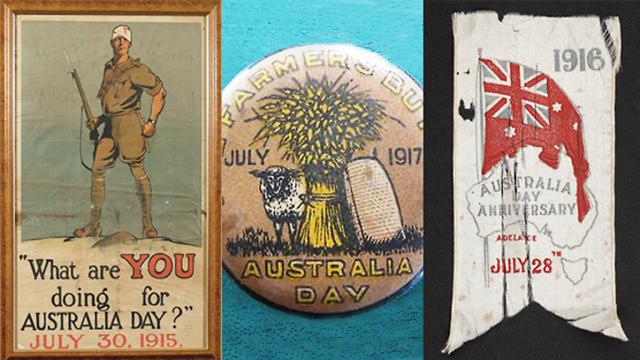
Killing for Country … dark deeds in a sunny land

… they were standin’ on the shore one day
Saw the white sails in the sun
Wasn’t long before they felt the sting
White man, white law, white gun
Solid Rock, Goanna 1982

As indigenous author and academic Victoria Grieves-Williams writes below in her essay regarding journalist David Marr’s recently published family history: “We live in a time of reckoning over the colonisation of the land mass that we now know as Australia. While British officials carefully avoided acknowledging that people existed on this continent prior to their arrival by adopting the infamous doctrine of terra nullius, many Australians are now re-examining the historical basis of their presence here. They know that they enjoy the material wealth and lifestyle of the lands they have come to call home and until recently there was no need to doubt, or be self-conscious, about Australia being “home”. Yet there clearly were people here, and it was only the idea of an empty country that made it possible for agents of Empire, such as the Uhr brothers, ancestors of the journalist David Marr, to go about attempting to empty it”.

I’ve written often about the indigenous history of our country. The following passage from my piece on Australia’s The Frontier Wars. This passage therefrom encapsulates my perspective:

”There is a darkness at the heart of democracy in the new world “settler colonial” countries like Australia and New Zealand, America and Canada that we struggle to come to terms with. For almost all of our history, we’ve confronted the gulf between the ideal of political equality and the reality of indigenous dispossession and exclusion. To a greater or lesser extent, with greater or lesser success, we’ve laboured to close the gap. It’s a slow train coming, and in Australia in these divisive days, it doesn’t take much to reignite our “history wars” as we negotiate competing narratives and debate the “black armband” and “white blindfold” versions of our national story”.

Below are pieces published in In That Howling Infinite in regard to Australian history and politics as these relate to Indigenous Australians:

Healing country key in David Marr’s awful family history of murder and mayhem

Victoria Grieves Williams, The Weekend Australian. 16th March 2024

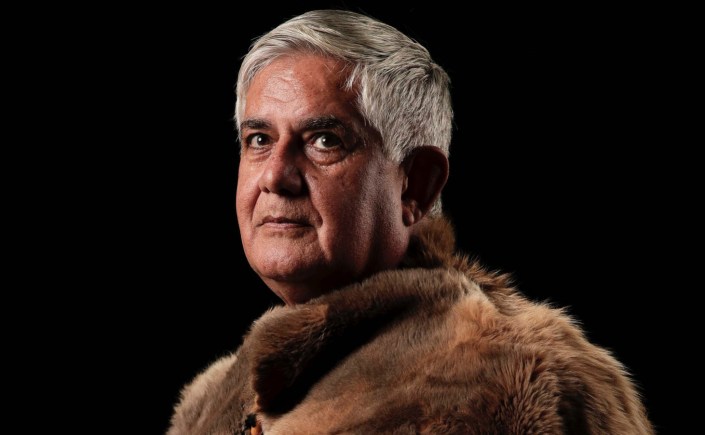
Journalist and biographer David Marr with Indigenous leader Noel Pearson in 1997.
                      David Marr with Indigenous leader Noel Pearson in 1997

We live in a time of reckoning over the colonisation of the land mass that we now know as Australia. While British officials carefully avoided acknowledging that people existed on this continent prior to their arrival by adopting the infamous doctrine of terra nullius, many Australians are now re-examining the historical basis of their presence here. They know that they enjoy the material wealth and lifestyle of the lands they have come to call home and until recently there was no need to doubt, or be self-conscious, about Australia being “home”.

Yet there clearly were people here, and it was only the idea of an empty country that made it possible for agents of Empire, such as the Uhr brothers, ancestors of the journalist David Marr, to go about attempting to empty it.

Thus, settler colonials are having to come to terms with the fact that their ancestors were often murderous, criminal and racist, to what we may now understand as absurd and totally unnecessary lengths. And if they were not actually involved in these dirty deeds they were condoning them and even cheering them on. There were voices of dissent, but few are in the historical record. It is a ghastly story.

It is hardly surprising that Marr is now at the forefront, telling a family story about one of his great great grandparents and siblings that truly angers him. He has said that researching and writing this history is “partly an act of atonement and partly an act of rage”.

Marr is palpably angry. The book is written with an urgent passion, brave in what it reveals and unforgiving in the light it casts on bloody deeds.

I can only echo all that reviewers and commentators have said about this book. As Richard King said in his review (The Australian, October 13, 2023, republished below)this is “a magnificent achievement and a necessary intervention, on a subject that still divides Australia: the violent dispossession of its native peoples”.

It is what we have come to expect from a master journalist and storyteller who has a brilliant track record in publishing. The research is thorough and in this Marr was assisted by his partner Sebastian Tesoriero who connected with the joys of Trove, the online historical newspaper database. The search for the deeds of the Uhr brothers and the bloody swathe they and the Black Troopers cut through northern NSW and up through Queensland and into The Gulf country during the 19th century is satisfyingly forensic.

The aim of my essay is to place the book Killing for Country: A Family Story in the context of a process of truth telling. There is no doubt about the truth and veracity of this argument, that the frontier was a place of bloody mayhem and murder. Many Aboriginal people have always known this; the more naive of us have known at least since the early 1980s, with the publication of Geoffrey Blomfield’s groundbreaking Baal Belbora: The End of the Dancing and Henry Reynold’s important work, The Other Side of the Frontier.

What is left is to find a way to deal with this history in the best way possible, so as not to exacerbate social tensions and negatively impact race relations. My contention is that this is indeed a family story, to be resolved at that level.

On finishing reading the book I was left with the question: “What now?” What do we do with this awful history of murder and mayhem, the rage and need for atonement?

The first thing is to understand these events as history in a deeper sense, that is within a larger historical frame. Perhaps then we can understand what it is telling us of the true nature of human beings. This is the approach evident in Aboriginal cultural understandings of time and the ways in which conflicts are resolved.
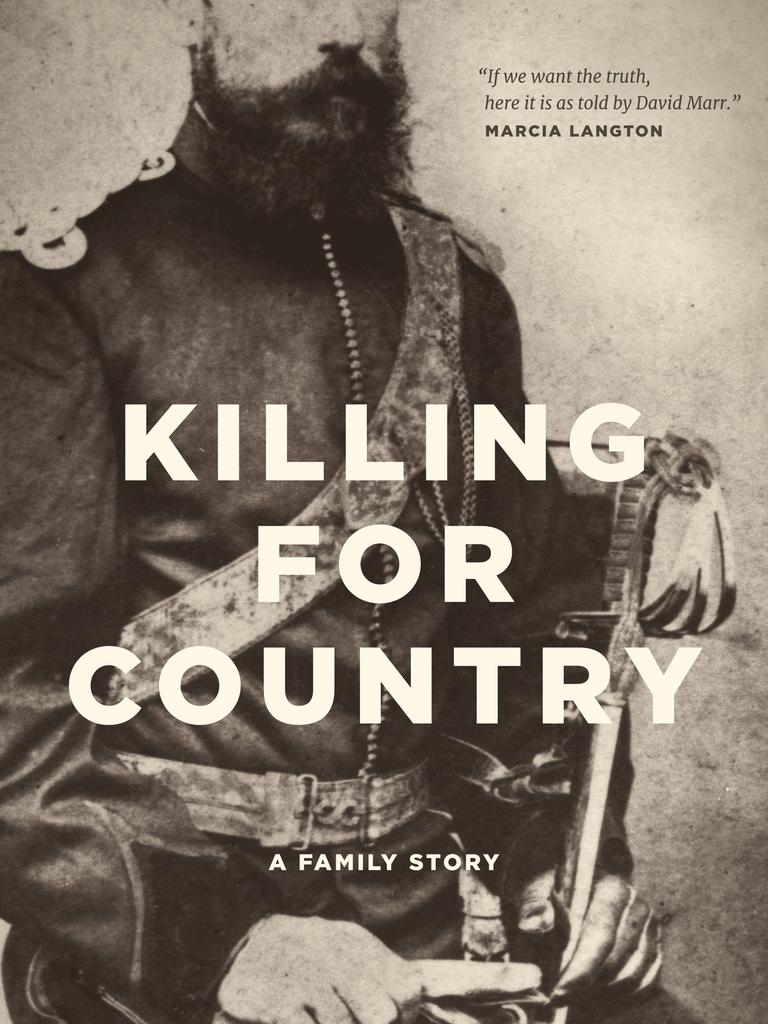
Killing for Country, by David Marr


Victoria Grieves Williams is an Indigenous academic based in New York.
                                          Victoria Grieves Williams 

Historians are now recognising that the colonial wars unleashed from the 16th century onwards are the first of the Great Wars. The death toll was immense: the Spanish conquest of the Americas from the 16th-18th centuries has an estimated death toll of 28 million. The British Empire, which held 24 per cent of the Earth’s total land area by 1920, wrought an estimated death toll of 100 million people. It was by far the largest empire in history and a source of great pride for those who tied their fortunes to it.

One could say that it was the fashion. Colonial wars were fought by European powers over the Indigenous people of the global south, not only in Australia but in Africa, Asia, South America and Mexico, India and China. The aim was to dispossess, enslave, destroy and claim all of what these people had of value, for the Empire. They were enormously successful.

No small part of this success is due to the specific kind of white masculinity that enabled the bloody conquest, that seemed to relish the lawless frontier and the opportunity to prove oneself.

This specific masculine ideal of violence as normative was nurtured and fostered as a part of the imperial ambitions of Britain, and thus built into colonial culture and politics. The workings of what the anthropologist Rita Laura Segato refers to as the masculine mandate whereby the libido is conscripted into providing constant proof that one truly is a man was the order of the day. Subservience to the masculine mandate is for both men and women the only way to exercise any power “power is expressed … exhibited and consolidated, as virile potency in a brutal form”.

Thus arises the pedagogy of cruelty through which Segato names all of what is manifest on human bodies to reduce them to things – violence, terror and cruelty.

In interviews, Marr has been emphatic that the people of the killing times are the same as those of today. It is my view that they are separated by huge social, cultural and political gaps and contexts that shape them. This has been a long debate in sociology, is it nature or nurture that produces certain kinds of people? In the case of settler colonial masculinist ideology, the society back in Britain was often shocked by the excessive violence of the frontier. They sought ways to curb them. Perhaps some realised they were a necessary evil and continued to fund and support them.

An Invasion Day ceremony held in Kings Domain park in Melbourne. Invasion Day ceremony held in Kings Domain park in Melbourne

However, Marr has a point about the unchanged nature of people over time when you consider the murdered and missing Aboriginal women and children in Australia. For example, the crimes of the serial murderer Richard Dorrough against Aboriginal and Pacifica women. He, who perversely wanted his crimes to be known, can be seen as subservient to the masculinist mandate. There are many other perpetrators. The phenomenon of murdered and missing Aboriginal women and children is evidence of the continuation of the gendered conquest and pedagogy of cruelty in contemporary Australian society.

To enlarge on the macro view, the huge death toll in all of the worldwide wars since the 16th century has not seemed to make a dent on the continuing overpopulation of the Earth. We need to consider that huge hordes of Europeans moved out to the global south because they could not continue to live in home countries that were already overpopulated. The 18th century saw famines and food riots in Britain and France.

The colonial wars and subsequent mass migrations were a result of the very pressing need to find other lands on which to grow food and be able to live, as well as the search for the bounty that these lands could offer in timber, animal and mineral resources. While the idea of Manifest Destiny propelled settlers in North America, settlers in Australia were not untouched by this and also had the idea of an empty continent – therefore those who were there beforehand were not legitimate, had no rights, were not truly human.

And still yet – what now?

It’s important to understand that the way people see history, utilise it or deal with it varies according to cultural approaches. Aboriginal cultural understanding has it that our ancestors beyond the last two generations (that are usually in living memory) go back into eternal time where they are part of the paradigms for the proper human behaviour on Earth, also known as the Law. These paradigms are accessed through stories that are often attached to constellations and landforms. Eternal time is ever-present, it is here “running along beside us” enabling a connection through eruptions of eternal time into the present.

Eternal time then is connected to normal time in which we live, this is the “everywhen” that is often used to describe Aboriginal understandings of time. It is more than that, it is known as tjukurpa by Central Australian Anangu, and by other names elsewhere. Altogether it is the sacred, that is more easily accessed when in the state between dreaming and wakefulness. Hence the misnomer, the Dreaming.

David Marr.
David Marr.

If the Law is transgressed then people have to be held to account for their actions and the aim of a full and frank hearing is for people to be able to continue to live together in a good way. All involved are given an opportunity to speak their truth and an appropriate punishment is decided on and meted out. Once resolved, settled, these matters are never spoken of again. It is considered that the business is finished.

So, what now? The Yoorrook Commission in Victoria defines truth telling as the act of telling true history by listening to the experiences of First Peoples.

Marr has written this book as a contribution to the truth-telling process and this is, as he says, a family story. It holds the key to the important connections and relationships that can grow out of meeting with the “other” side. There are many descendants of the survivors of the killing times in north Queensland who have their own stories to tell. In some places the notorious Darcy Uhr is still in living memory.

What remains is for the Uhr family descendants to reach out and begin to make connections across the divide of a brutal history, for which no-one alive today is responsible or culpable, but for which we can feel deep regret and seek to heal the bonds that bind us as human beings. Our lives will all be so much better for it.

Victoria Grieves Williams is an historian and Warraimaay woman whose mother worked as a cook and housemaid at sheep stations at Brewarrina. She is based in New York

Killing for Country book review: examining the Native Police’s violent dispossession of Indigenous Australians

Richard King, The Australian. October 13th 2023

Young guns: journalist David Marr listens to lawyer Noel Pearson speak during 1997 National Law Week Forum meeting. Marr has this week released his latest book on his own family’s links to Indigenous massacres.

Running to almost half a thousand pages, prodigiously researched and immaculately written, David Marr’s Killing for Country: A Family Story is surely one of the books of the year. Modestly described as a “family story”, it is in fact as solid a work of history as one could hope to find on the shelves. Clearly, the book holds enormous significance – enormous personal significance – for its author. But Marr brings the same forensic approach to this narrative of the frontier wars as he did to his celebrated biography of Patrick White, to his monographs of Tony Abbott and George Pell, and to his indispensable account of the Tampa/Children Overboard affair and Pacific Solution, Dark Victory.

It is a magnificent achievement, and a necessary intervention, on a subject that still divides Australia: the violent dispossession of its native peoples.

It was the discovery that his great-great-grandfather had served with the Native Police that set Marr off on this bold endeavour. The son of Edmund Blucher Uhr, scion of a poorly connected family with pretensions to Irish nobility, Reginald Uhr and his brother D’arcy were both officers in this notorious outfit, which cleared land of its Aboriginal owners at the behest of the squattocracy, avenging attacks on farmers’ livestock and “dispersing” troublesome gatherings. “Dispersing” was a euphemism, of course, but so too was “police”: as even contemporaries understood, the NP was a quasi-military unit, not a tool of law enforcement. It’s estimated that over 60 years it murdered more than 10,000 people (Marr says a “cautious interpretation” of these figures has seen estimates rise from 10,000 to 20,000 and now to more than 40,000).

The NP began its campaign of killing in the Darling Downs in 1848, but its brutality reached its feverish peak as it moved north in the 1860s, in the wake of Queensland’s break from New South Wales. Its campaigns were characterised by a basic asymmetry, as the belligerents in the frontier wars operated according to different principles: the Indigenous peoples saw themselves as redressing grievances through evening up the score, while white retaliation was inordinate. A pattern quickly established itself. Colonial expansion led to Indigenous resistance, which led in turn to further dispersals. Notwithstanding that these acts of violence were often met with disapproval by the colonial authorities, the indulgence shown towards them was baked in, in a way that gives the lie to the idea that the NP was dispensing justice. The reality is that it was clearing the land of black bodies.

Killing for Country by David Marr is about the author’s great-great-grandfather, who served with the Native Police, which cleared land of its Aboriginal owners, often by murdering them.

This picture is complicated by the fact that the NP comprised units of eight to ten such bodies under the command of a single white one. But in Marr’s telling, this organisational structure was something of a genius-stroke, in that it drew on the multinational nature of the Indigenous population and on the profound connection to place – to country – that characterises Indigenous society in general. As he puts it:

“What made them strange and dangerous to each other was being away from their own country, the country that made them who they were. Here was a deadly conundrum. While officially denying their attachment to land, colonial authorities would rely on that profound attachment – and the divisions it provoked – to raise a black force that would strip them of their country.”

Such an arrangement also allowed the NP to characterise the murdering as what a US Republican might call “black on black” violence. The recruitment of Aboriginal men gave white officers a handy alibi when questioned by their superiors.

Why would the killers need an alibi? The question may sound ridiculous, but conservative history warriors who criticise histories such as these, will often suggest that their authors are guilty of projecting modern values backwards (this is the so-called “black armband” charge). But what emerges from these grisly pages, and from the accounts of the contemporary outrage directed against the clearances, is a picture of a system of “justice” founded on a gargantuan hypocrisy – hypocrisy being the compliment that vice implicitly pays to virtue. In other words, many of the men in this “story” knew full well that they were involved in an immoral undertaking, and commentary that attempts to downplay this reality is, itself, unhistorical. This is not to say that the picture is simple: history is a tragedy, not a morality play. It is simply to agree with the author that if it is possible to feel pride in one’s country, it should be possible to feel ashamed of it too.

Author and journalist David Marr adopts an even, controlled tone for his devastating new book. (Picture: Lorrie Graham)

Marr does not make a show of such feelings. In his television appearances, he will often adopt the sort of demeanour that (I imagine) sends conservatives round the bend: the more-in-sorrow-than-in-anger eyes; the casual, cruising exasperation at the politics he doesn’t share, and is, therefore, self-evidently preposterous. But here the tone is even and controlled. One notes the slightly ironic adjectives and the occasionally sardonic descriptions. (“He recruited blacks as guides. He also shot blacks who stood in his way. Somerville was a genial and unscrupulous gentleman of the warrior class.”) But in general he lets the material speak for itself. Goodness knows, there’s plenty of it. As Marr notes – again, a little sardonically – one good thing about the colonists is that they wrote plenty of fine letters home.

The attitudes evinced in those letters, or the language in which those attitudes are couched, will no doubt distress most contemporary readers, and it would be vacuously polemical to assert that nothing’s changed. It has. Nevertheless, it is the achievement of this book to invite us to reflect on the many connections between contemporary Australia and its bloody past. That past is not a foreign country. It just speaks in thicker accents than we are used to.

Richard King is an author and critic. His most recent book is Here Be Monsters: Is Technology Reducing Our Humanity? (Monash University Press)

Killing for Country: A Family Story
By David Marr
Black Inc, Nonfiction
$39.99; 468pp

Hopes and fears – the morning after the referendum for The Voice

“We remember emotions … long after the details have faded. For the potency of emotion is barnacled on memory … and I know I’ll remember forever how I will feel when the vote for an Indigenous voice to parliament is declared. Win or lose”. Nikki Gemmell, The Weekend Australian, 23rd September 2023

“At a time when surveys tell us our sense of national pride is falling to alarming levels, we need to ask whether rejecting a voice would help us feel proud of our nation or fuel the growing sense of disconnection”. Chris Kenny, The Weekend Australian, 23rd September 2023

In July, I wrote in A Voice crying in the wilderness:

“Peter Dutton declared  that “the Prime Minister is saying to Australians ‘just vote for this on the vibe”. And yet, it is the “vibe” that will get The Voice over the line. Perhaps the good heart will prevail Australia-wide on polling day and those “better angels of our nature” will engender trust in our indigenous and also political leaders to deliver an outcome that dispels the prevailing doubt, distrust and divisiveness, and exorcise the dark heart that endures still in our history, our culture and our society. Because if the referendum goes down, none of us will feel too good the morning after …

The divisiveness of this referendum will probably be felt for years to come. The polarization it has brought into the open (for some would argue that it has already been there as illustrated by our perennialcukrure and history wars) is a path from which it is notoriously hard to turn back. Whether you were  “Yes” or  “No” may well will be a key marker of political identity? Will it also some to symbolize Australia’s great continental divide?

Sky after Dark and News Corp opinionista Chris Kenny, who is almost alone among his colleagues in speaking out in support of the Indigenous and Torres Strait Islander Voice to Parliament, wrote today of the daunting prospect of a No vote on October 14th, and what it might mean for our country and how we feel about it, and also, about ourselves as Australians. To help readers scale The Australian’s pay-wall, I republish it below.

Here are some cogent points from his article:

“When we wake on Sunday, October 15, it will be too late to reconsider …

First and foremost, a No victory would have repudiated Indigenous aspiration, rejecting a proposal for constitutional recognition and non-binding representation formulated after decades of consideration and consultation. This would not so much be a setback for reconciliation but a roadblock that will take many years to get around …

Would a No vote resolve a single issue or merely delay our attempts to resolve them? Would it make us a better nation, or anchor us to unflattering elements of our past?

Would a Yes victory give us a sense of accomplishment and set us on a course for improvement? Would a Yes vote rejuvenate reconciliation and wrap our arms around Indigenous Australians and their challenges?

Would a Yes victory display a bigger, more optimistic and accepting country? Would a No vote confirm us as a frightened, insular and small-minded nation?

While the No leadership would presumably counsel against celebrations in favour of making sober pronouncements about preventing a constitutional mistake, there would likely be outbreaks of triumphalism from many No supporters if they defeat the referendum proposal.

This would create a harrowing contrast with a mournful Yes camp and the reality of Indigenous Australians feeling rejected in their own country.

Where Yes would have provided a path forward, with immediate work to be done to legislate, construct and implement the voice, defeat will lead to nothing. The task ahead will be simply a return to the status quo, the failed status quo.

Indigenous people, communities and organisations understandably would feel dispirited. Whatever the merits of the respective campaigns, negative politics again would have proven more effective than positive advocacy – a misleading scare campaign would have thwarted a carefully devised and constitutionally conservative reform.

A nation that has been talking the talk on reconciliation would have been revealed as too timid to walk the walk.

We would have spent decades of consideration and consultation to come up with the desired constitutional amendment, and then strangely rejected it.

A country in which all sides of politics say they want reconciliation, representation and recognition would have deliberately refused to give Indigenous people a guaranteed say on matters affecting them. We would have become, for a time at least, the scared weird little country”.

Read the full article below, but first, Back to Gemmell:

“Once upon a time I was tremendously naive. I assumed the Voice would bring Australia together, in joy and healing; that it would mark a new waypoint of maturity in the evolution of our nation. In simpler times I dreamed that the vision of an advisory body on Indigenous affairs, painstakingly devised over 15 long years, would be agreed to, and a new era of nationhood would be ushered in.

The proposal felt necessary, suturing, for all of us. It felt like a proposal that went some way towards lifting the corrosive weight of past wrongs. Considered and careful, it seemed a simple request: for an Indigenous committee to be able to advise parliament on Indigenous issues, without being able to make laws or control funding. Yet what a sour-spirited campaign we’ve seen from the forces determined to scupper this vision …

More than 80 per cent of Indigenous people support this voice proposal. The idea came directly from Aboriginal communities, not politicians. I cannot imagine the broken hearts among many of them if this proposal isn’t carried; it would feel like a soul blow, along with all the other soul blows over generations, that would reverberate for years to come.

Once I dreamt of a feeling of great national pride, and relief, following a successful vote for the Voice. Now I worry there’ll be despair and disbelief among many, that in the end it came to this. And anger. Towards one of its scupperers-in-chief most of all. I feel certain Mr Dutton will never become prime minister if the No vote prevails. Be careful what you wish for, sir. The feeling towards you will linger, long after the specifics have faded”.

Press Gallery journalist of the year David Crow observed in the Sydney Morning Herald on 19th June, “The Voice is more than recognition because Indigenous leaders wanted practical change. The terrible suffering of First Australians over 235 years gave those leaders good cause to demand a right to consult on federal decisions, even at the risk of a tragic setback for reconciliation if the referendum fails. Practical change is ultimately about power, and the polls suggest many Australians do not want to give Indigenous people more power. It is too soon to be sure”.

A gloomy prospect, eh?

See other related stories in In That Howling Infinite: 

No vote would confirm us as a frightened, insular nation

The Weekend Australian, 23rd September 2023
If Australia votes No, the task ahead will be simply a return to the status quo, the failed status quo, writes Chris Kenny. Picture: NCA NewsWire / Morgan Sette

A morning is looming for this nation, just three weeks away, that warrants attention from all voters entrusted with a historic choice.

My worry is that, instead of Ron­ald Reagan’s Morning in America, the dawn after the voice referendum will herald Kris Kristofferson’s Sunday Morning Coming Down. We owe it to ourselves to think carefully about what a No vote would say and do in this country. When we wake on Sunday, October 15, it will be too late to reconsider.

First and foremost, a No victory would have repudiated Indigenous aspiration, rejecting a proposal for constitutional recognition and non-binding representation formulated after decades of consideration and consultation. This would not so much be a setback for reconciliation but a roadblock that will take many years to get around.

Similar to how the same-sex marriage plebiscite overwhelmed the gay and lesbian communities with a sense of acceptance and inclusion, a No victory would represent a fend-off to our Indigenous population. They were promised recognition, engaged in good faith to find a suitable path, made their considered request to the nation, and their fellow citizens will have slammed a door in their face.

And why? To save the nation from the risk of entrenched racial division? Or to deliver an ephemeral partisan win?

After a No victory (the phrase seems like an oxymoron) we would face a vacuum, with Labor, Greens and Liberal voice supporters left defeated and impotent, and the Coalition leadership promising more of the same – although weirdly, a vague promise of some kind of legislated voice in the future. If the referendum is defeated, we would be a discombobulated, dispirited and divided federation for some time to come.

Offers of a second referendum would be seen as a cruel joke. The option of bipartisan support for purely symbolic recognition in the preamble would be the epitome of condescension – telling Indigenous Australians we have rejected their voice but propose, instead, something less, something we are prepared to give, not because it is worthy but because it is easy.

Beads and trinkets.

This strikes to the heart of the reconciliation bargain. Reconciliation is about making good and restoring friendly relations – it is about compromise. Just as apologies require acceptance, reconciliation demands concession from all sides.

Indigenous people have provided a road map to put the sins and trauma of the past behind us and forge a future together. The No campaign rejects this because they believe they will lose something, or risk losing something. This seems selfish and paranoid given we are talking about only a constitutional guarantee to have some kind of body giving Indigenous people a non-binding say on issues that affect them.

What the No campaign is saying is that they want reconciliation without compromise or cost. They want reconciliation where the aggrieved party is given nothing, not even a constitutional protection that injustices cannot easily be perpetrated against them again.

This represents a shrivelled view of this nation’s history and future. The No campaign wants our political architecture to curl up like an echidna under attack, remaining defensive and prickly until the Indigenous issues go away.

If we put aside the deceptive scare campaigns from the No side, which pretends the voice will have real power rather than merely an advisory platform, there is an even uglier aspect to the voice opposition. The campaign has increasingly morphed into an opportunity to vent grievances against any aspect of Indigenous people’s place in our society.

The No advocates now argue that if you do not like welcomes to country, you should vote No to a voice. If you think a lot of money is wasted on Indigenous programs, vote No. If you think Indigenous people should not be given additional opportunities for university, jobs or contracts, vote No. If you think we hear too much about Indigenous culture and history, vote No. If you oppose treaties, Vote No. And if you do not want to shift the date of Australia Day, vote No.

This has become a grab-bag of anti-Indigenous grievance, which makes it the worst manifestation of politics this nation has seen in living memory.

But it is also a collection of issues that will continue to be debated and tackled, whether we have an Indigenous voice or not – which makes the argument inane.

There is a harsh, resentful and divisive element in the debate. And we must be able to call it out without the shrill cries that we are accusing others of racism or demonising people for their views.

It is clear many voters do not want to be troubled by Indigenous issues or aspirations. They might have little or no contact with Indigenous people or problems and want it all to go away. That is a benign and plausible interpretation of what seems to be a visceral rejection of the voice proposition.

These sentiments are not reason enough to vote No. And it should be beneath the No campaign to attempt to exploit them.

Voting No will not make anything go away, except a voice.

Nyunggai Warren Mundine. Picture: NCA NewsWire / Morgan Sette

Prominent No campaigner Nyunggai Warren Mundine, for instance, wants to shift the date of Australia Day and supports treaties and other agreements between Indigenous groups and governments. And state governments are negotiating treaties and establishing voices regardless.

Yet the No campaign creates irrational fear about treaties and Australia Day. If the No case wins, Mundine and others still will advocate for treaties and shifting Australia Day. So, what is the scare campaign about?

The lead No campaigner, opposition Indigenous Australians spokeswoman Jacinta Nampijinpa Price, is a brave advocate. I have helped to platform her determined efforts to give voice to grassroots Indigenous people for many years, helping her to become a national voice.

Price began speaking up for Indigenous Australians, for her community, as an Alice Springs councillor and entered federal politics to become a voice for the “silent victims” in Indigenous communities. So it is paradoxical that her robust politicking is probably the most influential factor in threatening a permanent Indigenous voice.

Her good intentions are beyond question; Price, her family and supporters believe a voice will amplify the views of the wrong people – the same Indigenous leadership she and her family have battled for years.

This novice senator and rising political star is campaigning against the possibility of a bad voice – yet the Coalition promises to legislate a voice, go figure.

The alternative was for the Coalition to throw in their lot with the voice and ensure it is effective and driven by grassroots concerns – practical rather than ideological. We will never know what might have been.

Taken to its logical conclusion, this fear of the voice running astray is a surrender that would have thwarted the creation of our Federation in the 1890s. Any representative or governance model requires constant engagement and vigilance to protect the complacent mainstream from the activism of the ideologues.

The Coalition decided instead to make this a partisan contest. While Anthony Albanese must wear his share of blame for the failure of bipartisanship, it is rich indeed for the Coalition to blame Labor for the division when it deliberately chose to make this a defining debate between the major parties.

If it is successful, the No campaigners would have done nothing but preserve a situation that the entire nation knows is grossly unsatisfactory. How would history judge them?

We should consider what this does to our sense of worth as a nation. At a time when surveys tell us our sense of national pride is falling to alarming levels, we need to ask whether rejecting a voice would help us feel proud of our nation or fuel the growing sense of disconnection.

Would a No vote resolve a single issue or merely delay our attempts to resolve them? Would it make us a better nation, or anchor us to unflattering elements of our past?

Would a Yes victory give us a sense of accomplishment and set us on a course for improvement? Would a Yes vote rejuvenate reconciliation and wrap our arms around Indigenous Australians and their challenges?

Would a Yes victory display a bigger, more optimistic and accepting country? Would a No vote confirm us as a frightened, insular and small-minded nation?

While the No leadership would presumably counsel against celebrations in favour of making sober pronouncements about preventing a constitutional mistake, there would likely be outbreaks of triumphalism from many No supporters if they defeat the referendum proposal.

This would create a harrowing contrast with a mournful Yes camp and the reality of Indigenous Australians feeling rejected in their own country.

Where Yes would have provided a path forward, with immediate work to be done to legislate, construct and implement the voice, defeat will lead to nothing. The task ahead will be simply a return to the status quo, the failed status quo.

Indigenous people, communities and organisations understandably would feel dispirited. Whatever the merits of the respective campaigns, negative politics again would have proven more effective than positive advocacy – a misleading scare campaign would have thwarted a carefully devised and constitutionally conservative reform.

A nation that has been talking the talk on reconciliation would have been revealed as too timid to walk the walk.

We would have spent decades of consideration and consultation to come up with the desired constitutional amendment, and then strangely rejected it.

A country in which all sides of politics say they want reconciliation, representation and recognition would have deliberately refused to give Indigenous people a guaranteed say on matters affecting them. We would have become, for a time at least, the scared weird little country.

بيان أولورو من القلب – أساس الصوت في البرلمان

إن بيان أولورو من القلب هو وثيقة جميلة، وهي نتيجة مداولات ٢٥٠ مندوبًا إلى المؤتمر الدستوري الوطني للأمم الأولى لزعماء السكان
الأصليين في أستراليا وسكان جزر مضيق توريس الذي عقد على مدى أربعة أيام بالقرب من أولورو في وسط أستراليا في مايو ٢٠١٧.
وبعد عقود من الإعداد، كانت هذه دعوة من هذه المجموعة من شعوب الأمم الأولى إلى الأستراليين من غير السكان الأصليين للدعوة إلى إصلاح جوهري للمساعدة في تحقيق حقوق السكان الأصليين، من خلال إنشاء صوت للسكان الأصليين في البرلمان ولجنة ماكاراتا. “ماكاراتا” هي كلمة يلنو متعددة الطبقات تُفهم على أنها الالتقاء بعد صراع. وينص البيان على أن لجنة ماكاراتا ستتولى عمليات صنع الاتفاق (المعاهدة) وقول الحقيقة بين الحكومات والأمم الأولى.
وتدعو إلى إجراء إصلاحات هيكلية، سواء اعترافًا بالسيادة المستمرة للشعوب الأصلية أو لمعالجة “العجز” الهيكلي الذي أدى إلى تفاوتات حادة بين الأستراليين الأصليين وغير الأصليين. ويدعو إلى إنشاء مؤسستين جديدتين؛ صوت الأمم الأولى المحمي دستوريًا ولجنة ماكاراتا، للإشراف على صنع الاتفاقات وقول الحقيقة بين الحكومات والأمم الأولى.
ويمكن تلخيص هذه الإصلاحات في الصوت والمعاهدة والحقيقة.
الصوت – آلية تمثيلية منصوص عليها دستوريًا لتقديم مشورة الخبراء إلى البرلمان حول القوانين والسياسات التي تؤثر على السكان الأصليين وسكان جزر مضيق توريس.
المعاهدة – عملية صنع اتفاق بين الحكومات وشعوب الأمم الأولى تعترف بالحقوق والمصالح الثقافية التاريخية والمعاصرة للشعوب الأولى من خلال الاعتراف رسميًا بالسيادة، ولم يتم التنازل عن تلك الأرض أبدًا.
الحقيقة – عملية شاملة لكشف المدى الكامل للظلم الذي يعاني منه السكان الأصليون وسكان جزر مضيق توريس، لتمكين الفهم المشترك لتاريخ أستراليا الاستعماري وتأثيراته المعاصرة.

بيان أولورو من القلب

لقد اجتمعنا في المؤتمر الوطني الدستوري ٢٠١٧، قادمين من كل سماء الجنوب، لنصدر هذا البيان من القلب:

كانت قبائلنا من السكان الأصليين وسكان جزر مضيق توريس هي أولى الدول ذات السيادة في القارة الأسترالية والجزر المجاورة لها، وقد امتلكتها بموجب قوانيننا وعاداتنا. لقد فعل أسلافنا ذلك، وفقًا لتقدير ثقافتنا، منذ الخلق، ووفقًا للقانون العام منذ “الأزل”، ووفقًا للعلم منذ أكثر من ٦٠ ألف عام.

هذه السيادة هي فكرة روحية: وبالتالي فإن رابطة الأجداد بين الأرض، أو “الطبيعة الأم”، والسكان الأصليين وسكان جزر مضيق توريس المولودين تظل مرتبطة بها، ويجب أن تعود إلى هناك يومًا ما لتتحد مع أسلافنا. وهذا الارتباط هو أساس ملكية الأرض، أو بالأحرى السيادة. ولا يتم التخلي عنه أو إخماده، ويتعايش مع سيادة التاج.

كيف يمكن أن يكون خلاف ذلك؟ أن الشعوب امتلكت الأرض منذ ستين ألف سنة، وهذا الرابط المقدس اختفى من تاريخ العالم في مائتي عام فقط؟

ومع التغيير الدستوري الأساسي والإصلاح الهيكلي، نعتقد أن هذه السيادة القديمة يمكن أن تتألق كتعبير أكمل عن القومية الأسترالية.

وبالمقارنة، نحن أكثر الناس سجنا على هذا الكوكب. نحن لسنا شعبًا إجراميًا بالفطرة. يتم عزل أطفالنا عن عائلاتهم بمعدل غير مسبوق. لا يمكن أن يكون هذا لأننا لا نحبهم. شبابنا يقبعون في المعتقلات بأعداد فاحشة. ويجب أن يكونوا أملنا في المستقبل.

إن هذه الأبعاد لأزمتنا توضح الطبيعة الهيكلية لمشكلتنا. هذا هو عذاب كوننا بلا قوة

ونسعى إلى إجراء إصلاحات دستورية لتمكين شعبنا واحتلال مكانه الصحيح في بلدنا. عندما يكون لدينا القدرة على تحديد مصيرنا، سوف يزدهر أطفالنا. سيسيرون في عالمين وستكون ثقافتهم هدية لبلدهم.

نحن ندعو إلى إنشاء صوت للأمم الأولى المنصوص عليه في الدستور.

المكاراتا تتويج لأجندتنا: التقارب بعد النضال. إنه يجسد تطلعاتنا لعلاقة عادلة وصادقة مع شعب أستراليا ومستقبل أفضل لأطفالنا على أساس العدالة وتقرير المصير.

نسعى إلى تشكيل لجنة ماكاراتا للإشراف على إبرام الاتفاقات بين الحكومات والأمم الأولى وقول الحقيقة حول تاريخنا.

في عام ١٩٦٧ تم إحصائنا، وفي عام ٢٠١٧ نسعى إلى أن يُسمع صوتنا. نترك المعسكر الأساسي ونبدأ رحلتنا عبر هذا البلد الشاسع. ندعوكم للسير معنا في حركة الشعب الأسترالي من أجل مستقبل أفضل

Read the original English version of The Uluru Statement from the Heart:   https://howlinginfinite.com/2023/09/04/the-uluru-statement-from-the-heart/

See other related stories in In That Howling Infinite: 

Continue reading

Warrior woman – the trials and triumphs of Marcia Langton

We have waited 122 years to recognize in our Constitution the privilege that we have of sharing this continent with the oldest continuous culture on earth. I say to Australians, do not miss this opportunity.

Australian Prime Minister Anthony Albanese


People will forget what you said. people will forget what you did. but people will never forget how you made them feel. people want to be treated justly. perceived injustices can create enmity, and enmity is the beginning of the slide towards intractable conflict.  

 Colin Tatz Reflections on the Politics of Remembering and Forgetting


What is going on in the mind of opposition Peter Dutton that in the belief that he’s taking the fight to the Prime Minister, he picks a fight with this most formidable woman?

This excellent profile of longtime indigenous academic and activist Marcia Langton should be required reading for all supporters of the Aboriginal and Torres Strait Islander Voice to Parliament and the recognition of indigenous Australians in our constitution – and for all people of goodwill who may be wavering under the weight of conservative misinformation and disingenuousness. We’ve republished it here in In That Howling Infinite for folk who cannot scale the News Corp pay-wall.

When Dutton committed the Liberal Party to a ‘resounding no”, Langton was not backward in coming forward. she pulled no punches when she declared:

“This is the Australia we live in; it is racist. So this could be the political making of a whole lot of people who want to help us get this over the line and create a permanent system of empowerment for Indigenous people. If we want to mute racism, we have to raise our own voices. We have to make sure that we win this campaign, because if we don’t, then the racists will feel emboldened. We have to have a constitutionally enshrined voice that empowers our people, regionally and nationally, to make bureaucrats accountable, and respond to representations on all policy matters and legislative matters that affect us. If we can have a constitutionally enshrined voice that’s permanent, that makes us a formal part of the democratic architecture of Australia, that’s how we fight racism. That’s how we fight our disempowerment”. The Guardian, 7th April 2023.

See also in In That Howling Infinite, We oughtn’t to fear an Indigenous Voice – but we do ;The Frontier Wars – Australia’s heart of darknessand Dark Deeds in a Sunny Land – a poet’s memorial to a forgotten crime  

[Author’s note: At Bellingen’s 2019 Readers and Writers Festival, it was our pleasure and privilege to attend a powerful “conversation” between acclaimed historian Henry ReynoldsMarcia Langton – and, by fortunate serendipity, to share a meal with them at the Federal Hotel afterwards].

‘Vote ‘No’ and you won’t get a welcome to country again’

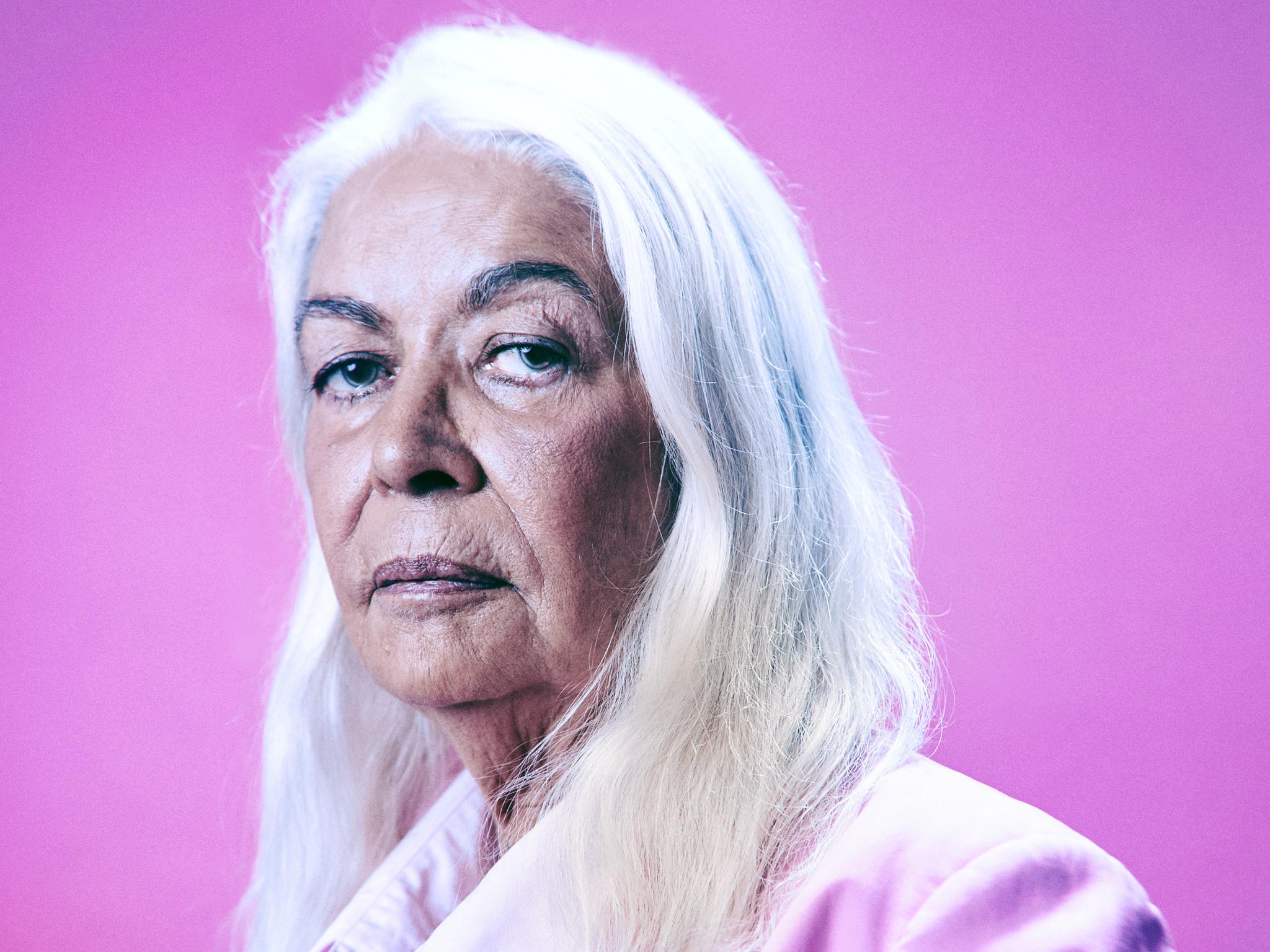
Marcia Langton doesn’t mince words and now she’s really had enough. When Australians vote on the voice, she wants them to think hard about what’s at stake.

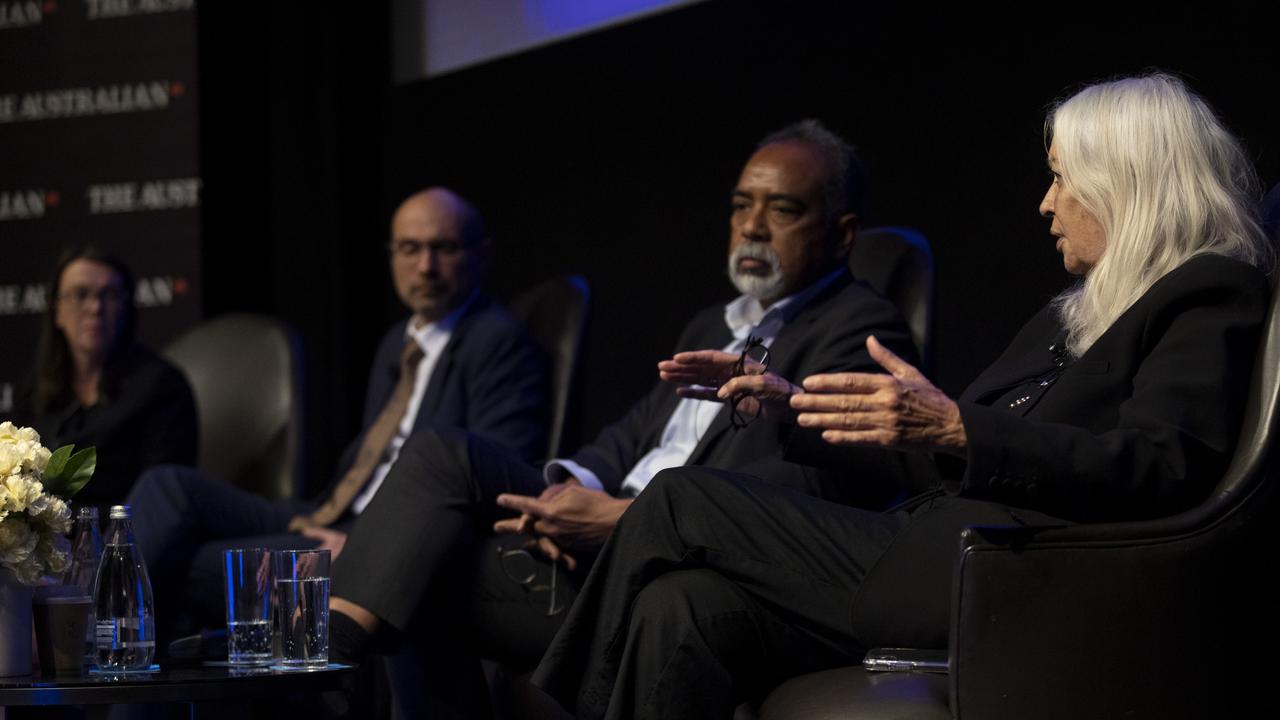
‘I imagine that most Australians who are non-Indigenous, if we lose the ­referendum, will not be able to look me in the eye,’ Marcia Langton says. Picture: Nic Walker
Marcia Langton.  Picture: Nic Walker

Over more than 50 years as an academic and activist, Marcia Langton has never been known to mince her words. But now the Melbourne University professor, Boyer lecturer, public intellectual and co-author of a landmark report on the Indigenous Voice to parliament and government has really had enough. When Australians go to the polls to vote on the Voice later this year, Langton wants them to think hard about what’s at stake. “I imagine that most Australians who are non-Indigenous, if we lose the ­referendum, will not be able to look me in the eye,” she says. “How are they going to ever ask an Indigenous person, a Traditional Owner, for a welcome to country? How are they ever going to be able to ask me to come and speak at their conference? If they have the temerity to do it, of course the answer is going to be no.”

This is classic Langton – unanswerable in its logic; intimidating in its ferocity. She has always been known for her intellectual clarity and lack of compromise and at 71, has lost none of that edge. But Langton is conscious that in some ways the referendum is the last throw of the dice for her ­generation of leaders. She is in demand to talk about the Voice but will pace herself in the campaign, in part because her job as Associate Provost and Redmond Barry Distinguished Professor at the University of ­Melbourne is time-consuming, in part because there’s a new group of Indigenous leaders snapping at her heels. “I want to be a less dominant voice because the younger generation must be given an opportunity to be heard on these matters,” she says. “I’m not an Indigenous leader and lots of young ­people hate the concept of ­Indigenous leader because they feel cut out, they feel like they’re not ­valued.” She says she can understand their point of view, and then pauses before adding: “They just need to learn a ­little bit about earning ­respect for one’s work.”

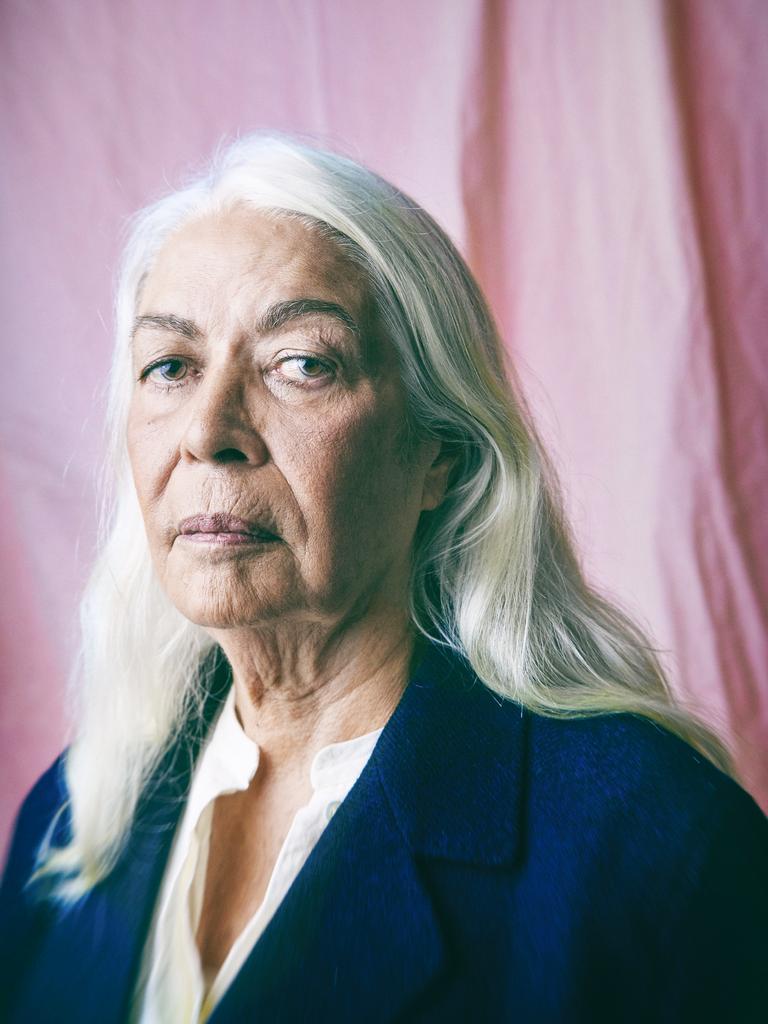
‘The younger generation must be given an opportunity to be heard.’ Picture: Nic Walker

Marcia Langston. Picture: Nic Walker

Respect for her work is what Langton has earnt in spades since those decades when Indigenous people who spoke up were so easily dismissed by white Australia. One observer notes she had to “bulldoze” her way to influence. Film director and producer Rachel Perkins quips that Langton is like the Beyoncé of Indigenous ­Australia: “You say Marcia, and everyone in black Australia knows who you are talking about.” To TV anchor and author Stan Grant, Langton is the “broken-hearted warrior” who, like Martin Luther King, Nelson Mandela and Rosa Parks, are “people who know the world can break you and still stand up”.

Revered and feared, this mother of two and grandmother of three is criticised at times from within her own community. An example: her commitment to constitutional recognition goes back decades and has never wavered. But when she decided in 2017 to work with human rights and social justice campaigner Tom Calma to produce a report to the federal Coalition on a Voice that could be a legislated advisory body to parliament and government, it was seen by some as letting government off the hook on constitutional reform. Langton, pragmatic, persisted and produced a 272-page document that proposed local and regional voices feeding into a National Voice of 24 members. They would have the “responsibility and the right” to give advice to the parliament and government. The final ­report of the Indigenous Voice Co-design Process, commonly known as the Calma-Langton ­report, was submitted to the Coalition Federal Government in July 2021. It is now seen as the blueprint for the Voice, which under the Labor Government’s policy will be ­enshrined in the constitution if the ­nation votes “yes” in the ­referendum expected later this year. Says Langton: “We want the ­principle voted on first. So that then there’s time for everybody, including all the parliamentarians in the House and in the Senate, and the public to debate the model.”

Human rights and social justice campaigner Tom Calma AO. Photo: NCA

On March 23, when Prime Minister Anthony Albanese announced the referendum wording, Langton was present in the Blue Room of Parliament House. When she stepped up to answer a ­reporter’s question it was with the gravitas that comes from a lifetime of reflection, research and ­advocacy. And defiance. And anger. And frustration. And sadness. “Each one of us here has been ­involved in a major initiative. The royal commission into Aboriginal deaths in custody. The inquiry into the forced removal of Aboriginal children from their families. The Don Dale royal commission,” she told journalists. “I could go on and on. And in each case we have doggedly recommended changes to stop the deaths, the incarceration, the early deaths, and the miserable lives and it is so ­infrequently that our recommendations are adopted.” She added: “And each year, people like you come along to listen to that misery-fest. And each year, people go away wringing their hands. We’re here to draw a line in the sand and say this has to change.”

There were tears that day, as Langton, the sophisticated political player, revealed a glimpse of the pressure she has been under since the PM used his election night victory speech in May last year to commit to the Voice.

Growing up in Queensland amid 1950s racism, the young Marcia learnt to step back and let the whites be served first in the local shop; she learnt to step aside and walk on the other side of the street from white Aussies. In her new book Law: The Way of the Ancestors, co-authored with Aaron Corn, Langton recalls attending a conference in Townsville in 1981 where she met the Torres Strait Islander intellectual, teacher and ­litigant Eddie Koiki Mabo. “He was the first person I had met who clearly articulated the fact that ­Indigenous laws exist”. She writes that “by day in school I was forced to ­listen to a fantasy about Australian history and ­Indigenous ­people in ­particular”. The young girl with Yiman and Bidjara heritage on her ­mother’s side figured these were ­“elaborate lies”. None of the people she grew up with resembled the ­“supposed ‘savages’ who rampaged through the pages of my school books”. Queensland was a state, she writes, “where no civil or ­humans rights were accorded my people.”

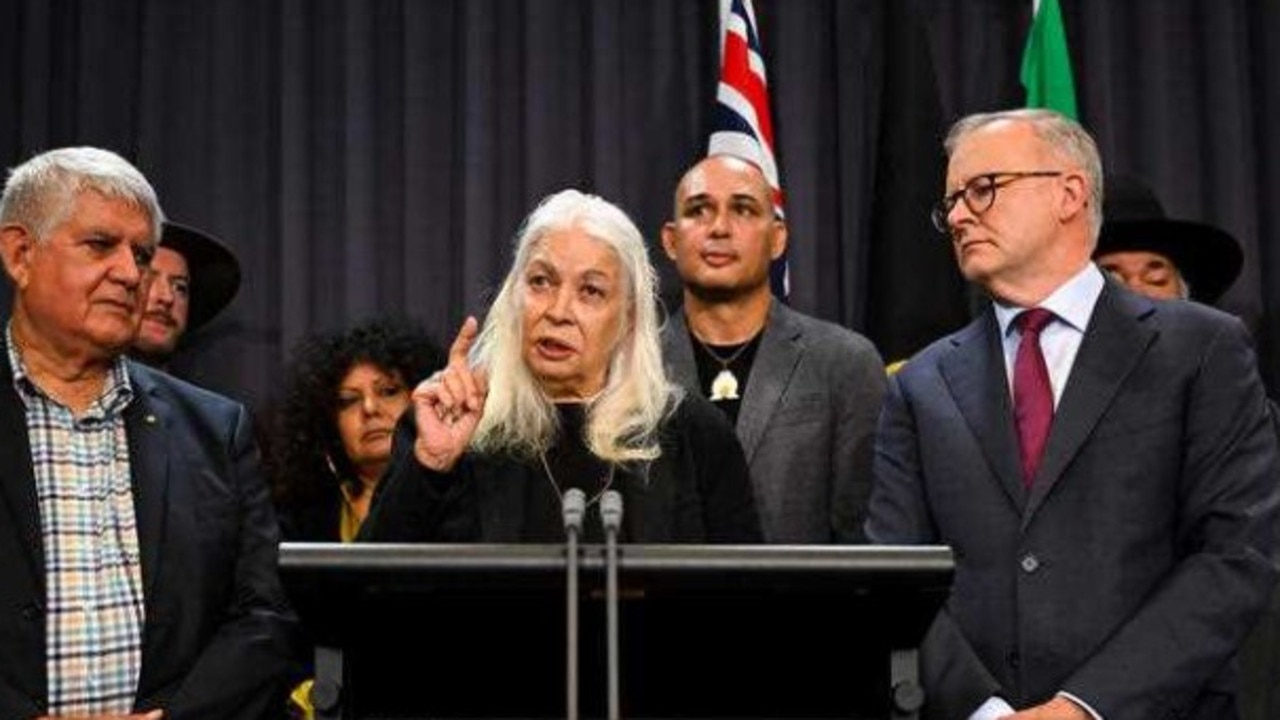
Langton at the press conference on March 23 after Prime Minister Anthony Albanese announced the referendum wording.
Press conference March 23 after Anthony Albanese announced the referendum wording.

It was an experience of racism that fired a lifetime of work on land claims, native title, field work, right campaigns, lobbying parliament, ­sitting on inquiries and commissions, working in government and in universities. “I don’t know of anyone else with her breadth of knowledge of Indigenous issues,” Perkins says. “She can write about deep culture, she can write about contemporary art and film, she can write about mining and economics, about women’s issues, about history, native title, treaty and of course constitutional law. She has an incredible mind.”

Prominent Indigenous academic Marcia Langton says there was “no evidence” to show previous bodies aimed at improving Indigenous outcomes did not work, arguing past consultative groups and councils made “dogged”

Over more than three hours of interview and a photoshoot in Sydney, Langton’s mind is on full display. She is in turn sharp-witted and ­sharp-tongued, resigned and optimistic, warm and angry. At one point her ­energy ebbs and she takes a break, walking outside for a smoke and a chat with photographer Nic Walker. She submits courteously to a makeup artist but her distinctive grey hair is largely untouched and her handsome face needs little attention. Langton has the classy dress sense of a Melburnian and is far from the stereotypical image of either activist or academic.

Indeed, the media has never been able to decide between the two ­labels, and she has long mixed academic smarts with activism, stepping between both worlds with ease. “My view as an academic has always been that my work must have a beneficial impact, so if I can find a ­solution to a problem, then I will advocate for that solution,” she says. “Unfortunately, there’s no word for an academic like me and so the ­Australian media call me an activist. Most people don’t even know that I am an academic.” She adds, without embarrassment: “I much preferred in my public work to be referred to as a public intellectual, and I think that’s the correct term.”

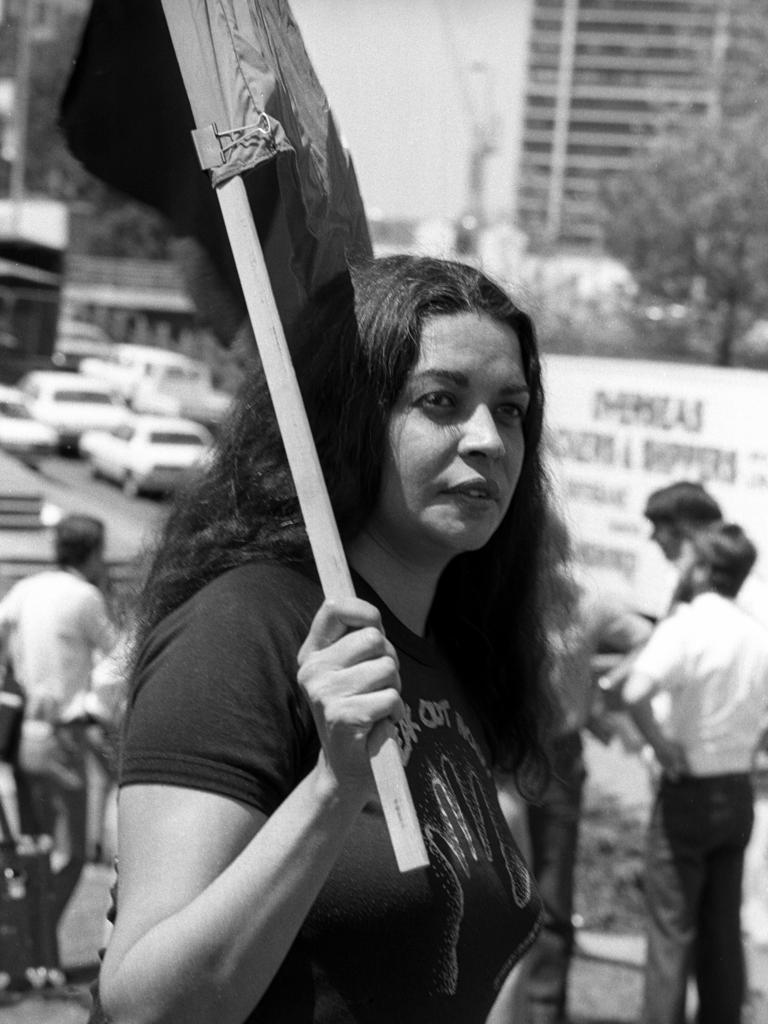
Langton in 1982.
Marcia Langton in 1982.

Last November, at the annual Outlook conference organised by The Australian and the Melbourne Institute, Langton’s sophisticated ­presence underlined the “incredible journey” she has made from a childhood of multiple schools and homes in ­regional Queensland and outer Brisbane to this crucial moment in her life and the life of the ­nation. Off stage, talk was of the brutal death of West Australian teenager ­Cassius Turvey just three weeks earlier and the alleged details of an ­attack that would later result in four people charged with the 15-year-old’s murder. For a moment Langton seemed overwhelmed. She was ­unwell and had been given only a few hours’ notice as a replacement speaker, but she gathered herself, put on her public face and had the audience in her thrall as she spoke of the ­desperate need for the Voice in ­regional areas; of how the green economy – specifically massive solar panels on Aboriginal land – was potentially damaging to communities; and of the challenges for many Indigenous people ever “closing the gap”. With a mixture of stoicism and sadness she told the room that only one third ­of Indigenous people had truly been able to close that gap. She had done so, as part of a cohort of Indigenous women who had done postgraduate study. Langton has a PhD.

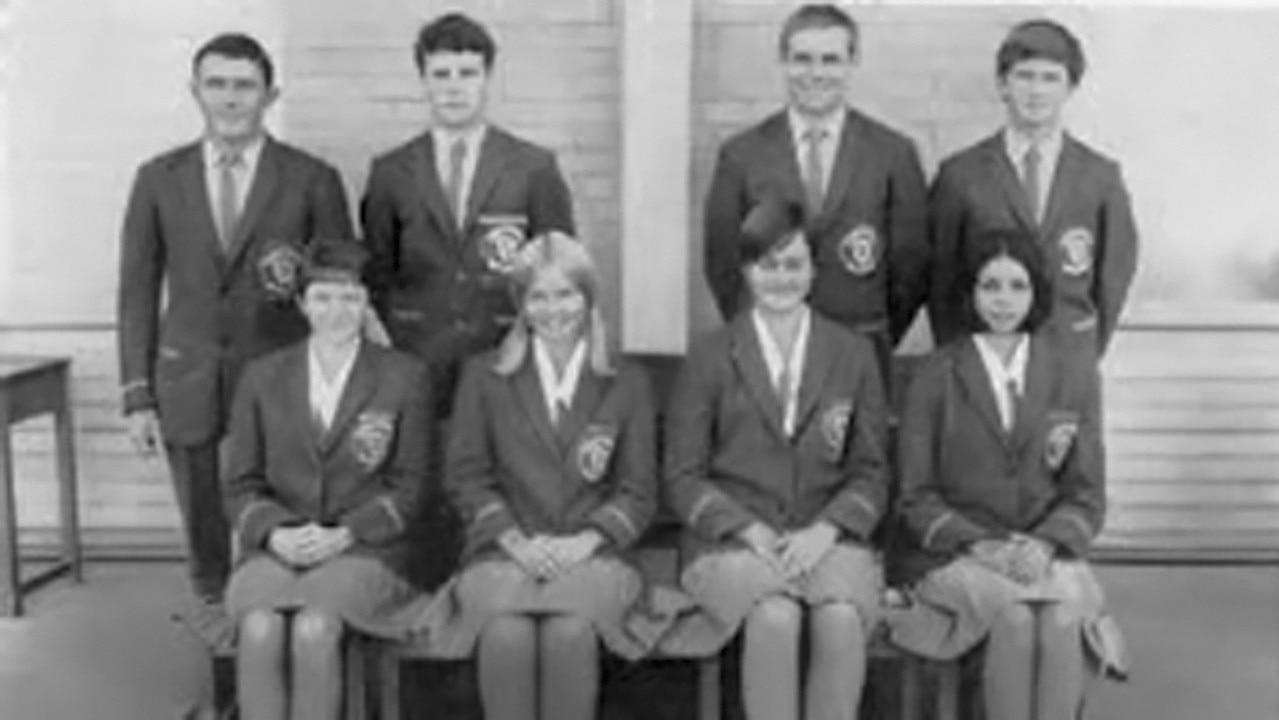
Langton was very young when she realised there was a world she could access beyond her own. “Many of my ­childhood circumstances were ­unsafe and scary, so I would often go to the ­library. I learnt that I could ­borrow books from a very young age, and I would take my books to my ­secret places.” She was fascinated by Douglas Mawson and the journals of other adventurers and explorers that provided escape in those early years. By the time she arrived at Aspley High School in outer Brisbane her talent for leadership was apparent. In one of the few photographs from her ­childhood, the young Marcia is lined up with the other house captains, calm and serious as she faces the camera. It was a time of expanding ­university access but at the University of Queensland in 1969 she was one of only two Aboriginal students and among the first to attend the institution. “It was apartheid Queensland, where you were either Aboriginal or not, there was no in between,” she says.

Langton, front row, right, at Aspley State High School, Brisbane. Picture: Supplied
Langton, front row, right, at Aspley State High School, Brisbane

She began to study anthropology, the discipline, along with human ­geography, she would eventually pursue for doctorate. But it was not easy: “There were some wonderful ­people and then there was a very nasty ­racist. I handed in a major essay and she failed me and her written comment on it was that I couldn’t have ­written it because I was Aboriginal. I should have stopped studying ­anthropology.” It still rankles. “To this day there are many anthropologists who say that I don’t write my own work because I couldn’t possibly as an Aboriginal,” she says. “They don’t regard me as Aboriginal. The only real Aborigines – quote, unquote – are the full bloods they worked with in the 1970s. So people like me aren’t real Aborigines. That’s still pervasive in the discipline of anthropology in Australia.”

After a year at UQ and already a mother, she postponed her studies ­because, she says, of racism, and went overseas with her then ­partner and their son, escaping from a state police force she calls ­“extremely brutal and terrifying, far worse than they are today”. It was the early 1970s and in the US and Asia she was exposed to new black narratives. “Despite all the ­terrible things I saw, it became very clear to me what ­Martin Luther King Jr, James Baldwin, Malcolm X were talking about in a very visceral way, and that is that we people of colour, we’re not regarded as human animals,” she says. Five years later, back in Australia and now a single mother, she went back to UQ, “stupidly” enrolling in Australian literature. “I was the lone Aborigine again in the class … and it was just so ­racist. I couldn’t cope. So then I came down to Sydney, I worked for the ­Aboriginal Medical Service, I worked for the Federal Council for the Advancement of Aboriginal and Torres Strait Islanders …”

Langton was elected general secretary, becoming increasingly involved in Aboriginal ­politics, working with several people including Roberta “Bobbi” Sykes in the Black Women’s Action group. Later, in Canberra she resumed her study of anthropology at the ­Australian National Univer­sity, becoming the first Indigenous person to take honours in the subject. It would be another couple of decades before she completed her doctorate in human geography and anthropology at Macquarie University, carrying out field work in the east Cape York Peninsula. In 2000 she was appointed foundation chair of ­Australian ­Indigenous Studies at the University of Melbourne.

Langton, right, speaking during The Australian Outlook Conference. Picture: Arsineh Houspian
Langton speaking during The Australian Outlook Conference. Picture: Arsineh Houspian

It was in the 1980s, while working part-time as a history­ researcher at the Australian Institute of Aboriginal Studies in Canberra, that she sat the 18-year-old Stan Grant down one day and quizzed him about his ambition. Says Grant: “I was a young kid out of school, pushing a trolley around, ­delivering mail, and doing photocopying … She basically said, ‘What do you want to do with your life?’ She said, ‘My parents and my people have not struggled and ­sacrificed for me to be pushing a trolley around delivering mail’.” It changed Grant’s life. “I’m not here without her, it’s as simple as that. I knew what I had to do. Marcia is not someone you say no to easily.”

Indeed. Langton has a national reputation as intellectually intimidating to media and politicians alike and at the same time is always prepared to step up, to speak or write or debate the big issues. Her scope and influence is so broad that it has led inevitably to criticism within Indigenous communities, but Perkins says: ­“People are very deferential to her great knowledge”. Grant adds: “One of the great strengths in ­Marcia is that she’s been able to challenge herself, she’s found new ways to fight and she’s constantly questioning herself.”

That flexibility has made it hard to predict which side she will come down on in the issues that regularly inflame debate about her people. Fifteen years ago, in an essay in this newspaper, Nicolas Rothwell identified Langton and Noel Pearson as the former “radical activists” who had developed a deep understanding of the root causes of the crisis in remote ­Indigenous communities. Rothwell wrote that both believed alcohol and passive welfare were at the heart of destructive behaviour in these communities, and that both had to be addressed by contentious policy change.

Langton has not backed off, arguing that Indigenous people must receive funding on the basis of need, not identity; and supporting restrictions on the sale of alcohol in some cases. She has done years of research into the issue, published widely and advised the federal government, but she steps cautiously into a debate she says is “almost impossible” to enter. “If I say one thing, Aboriginal leaders are going to go ballistic, and at the very same time [conservative columnist] ­Andrew Bolt’s going to go ballistic, right?” she says. There is no silver bullet in this area, she says, but alcohol management plans are the best way forward.

Langton is fearless on funding, prepared to upset other Aboriginal ­advocates by saying identity should not be the criterion for assistance ­because “many middle-class ­Indigenous people … are not more disadvantaged than other Australians”. There is one exception: the children of Indigenous people who leap from social security to well-paid jobs, for example in mining, and who suddenly appear to be “closing the gap” but find it hard to break free of intergenerational disadvantage, ­will continue to need support. Her uncompromising ­approach can upset both left and right in white and black Australia: “I have been humiliated and insulted by all sides.”

Another example: When Langton delivered the Boyer Lectures on Radio National in 2012 she focused on mining and its potential to enrich Indigenous economies but quickly found herself the target of environmentalists, blasted for not declaring that a research project with which she had been associated had been partly funded by the mining sector. “Most of the left-wingers who attacked my lectures did not read them and they ­viciously attacked me on the basis of what they thought I was saying, not what I actually said,” she says. “They let the industry off the hook because they tried to humiliate me and diminish my arguments. I blame the left for so much of the damage caused to us because of their ­arrogant racism, and particularly many of the environmentalists who do not take us seriously as the First Peoples of this land.”

There’s that word again – racism. Langton uses it often. “Racists don’t understand the horrible impact they have,” she says. “They don’t realise the wear and tear of constant racism is a huge factor in the ­suicide of young Indigenous Australians. So don’t say to an Aboriginal ­person ‘you’re too fair to be Aboriginal’, or ‘you’re too pretty to be Aboriginal’, or, ‘did you write that?’” Langton is astonished at the “mischievous” demands for a definition of ­Aboriginality that have emerged in the Voice debate. Being Aboriginal, she says, has nothing to do with race, but is “a cultural link, a claim of descent, an assertion or claim of identity, and ­acceptance by the community; it’s about being a member of a community by descent and culture”. She references the High Court decision in the 1983 Tas­manian dam case, which defined an ­Aboriginal or Torres Strait Islander person as one of “Aboriginal or Torres Strait Islander descent who identifies as an Aboriginal or Torres Strait ­Islander and is accepted as such by the community in which he or she lives”.

She says the “terrible history” of the stolen generations continues for their descendants, some of whom are “as white as the driven snow”. “What they cop is, ‘you’re not dark enough to be Aboriginal’,” says Langton. “It’s a different kind of racism that they have to wear but it’s far removed from the racism you experience when you walk down the street in this country if you have dark skin. They might suffer occasional racism, they might not get the job, the promotion to professor that they wanted, they might not get an Australian Research Council grant. [But] there are a lot of Aboriginal ­people who will never be able to get a taxi. These young, fair-skinned ­people, they’ll get a taxi OK. They suffer a very ­different kind of racism, and it’s more in the zone of the typical … identity attacks of, ‘you’re doing it so you can get money’.”

To Langton, there’s a certain irony in columnists questioning the ­authenticity of those who don’t “look” Aboriginal: after all, she says, if there are fraudsters, they are ipso facto white, not Aboriginal. She has never felt confusion about her own identity, although she is still asked by some why she doesn’t “pass” as a white person. Overseas she’s often ­mistaken for Palestinan, Moroccan, ­Algerian, Puerto Rican, Indian or Anglo-Indian or even ­Brazilian Portuguese. Langton almost snorts her ­answer: “As if I wanted to do that [pass as white]. I used to say to them when I was younger, ‘Are you saying to me that I should disown my mother and my grandmother and all my family? They think I would ­prefer their life but actually, I don’t. I love being ­Aboriginal, I have never been anything else.”

Langton has stood out in the past as one of the few Indigenous women with a ­national profile in a world of ­Indigenous male leaders including Noel Pearson, Pat Dodson and others. ­Perkins ­recalls a ­corporate women ­leaders’ event at Sydney’s Barangaroo a few years ago at which Pearson was asked to name the woman who had the biggest ­influence on him. Says Perkins: “Noel thought for a while, then he said it had been Marcia.”

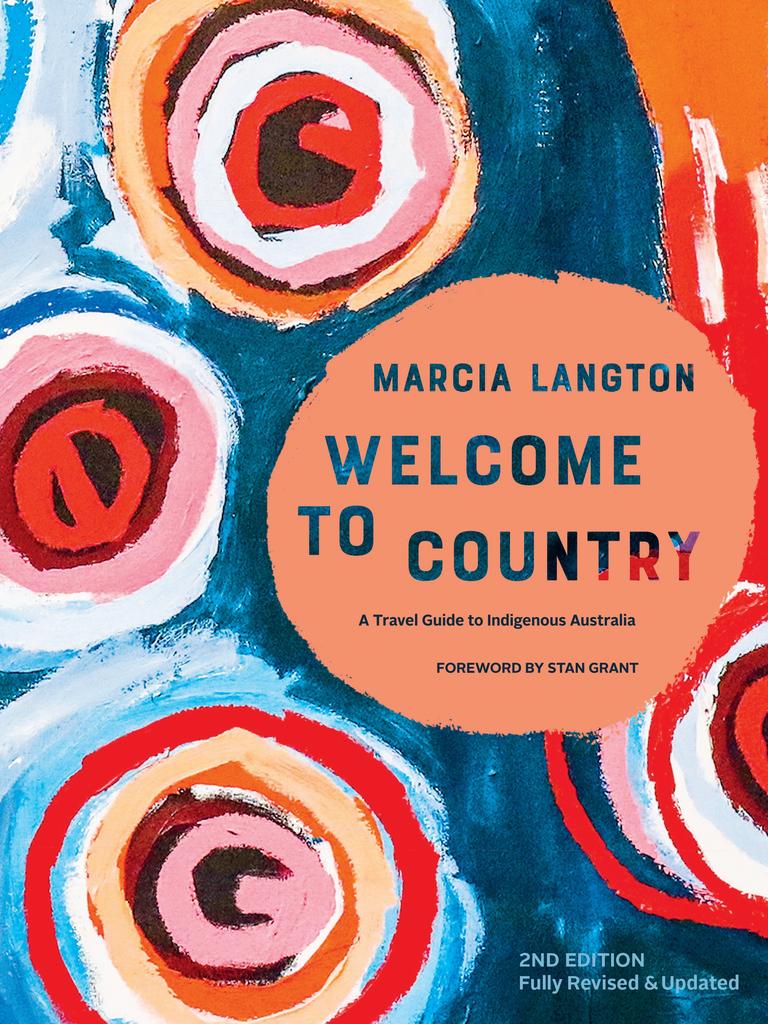
Welcome to Country by Marcia Langton.
Welcome to Country by Marcia Langton

Perkins worries about her friend’s vulnerability and the physical and emotional pressure she has absorbed: “I don’t know what I would do, I don’t know what we would do without Marcia, because she is so fearless, she has such depth. I don’t know of any other person who has had her ­staying power, she continues to give to the movement endlessly. It has ­absorbed her entire existence.”

As the referendum on the Voice nears, Langton appears almost fatalistic. If it’s a no, she will largely blame Opposition Leader Peter Dutton, who has “waged a very successful campaign to undermine the Voice”. As for those Indigenous leaders opposed to the Voice: “They have no better ideas. They say that the Voice won’t solve particular problems. So where are their ­solutions? We’ve put 30 years of work into our proposition, 30 years of work. There are countless reports, we’ve done the homework, we’ve done the hard yards, we’ve done the research, we’ve tested everything.”

If the referendum fails, it will be a staggering setback for Langton and others of her generation, but she readily acknowledges how far we have come. “Fifty years ago, I wouldn’t have been invited to give the Boyer ­Lectures; I wouldn’t have been invited by [publishers] Hardie Grant to write [her travel book] Welcome to Country; I wouldn’t be a professor at the ­University of Melbourne. Of course things changed.”

First Knowledges: Law, The Way of the Ancestors by Marcia Langton and Aaron Corn (Thames & Hudson Australia, $24.99), is out on April 25

Helen Trinca is a highly experienced reporter, commentator and editor with a special interest in workplace and broad cultural issues. She has held senior positions at The Australian

Australia’s choice – survive by respect or die by stupid

Normally, the weeks preceding our national day see social and mainstream media, posturing politicians and personalities and cultural warriors of all our tribes caught up in argument and invective about its meaning and significance. And then, it’s all over. Calm is restored as summer winds down, the kids return to school, and the working year starts in earnest – until the next national shibboleth lumbers into view – Anzac Day in late April. 

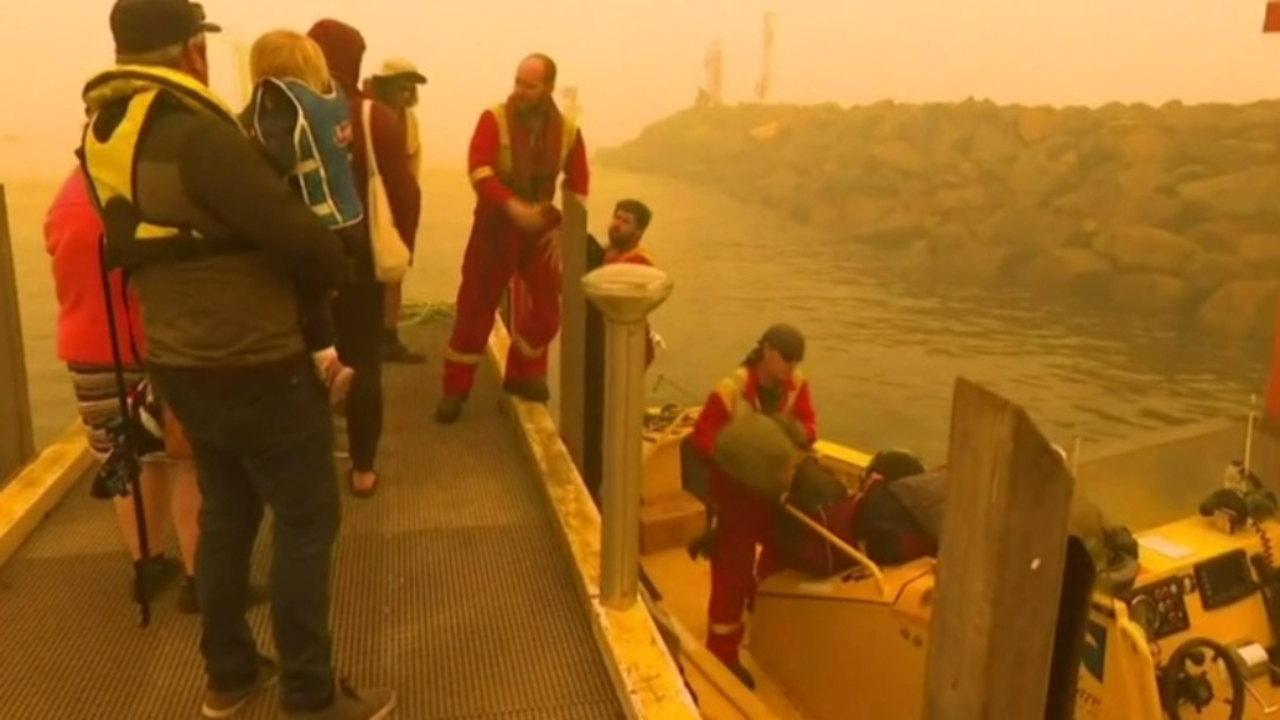
This year, however, things are unseasonably quiet. As a nation and a community, we are too preoccupied with Australia’s unprecedented bush-fire crisis to wage our customary wars of words.

The fires have dominated the media space, with harrowing photographs and video footage of their impact on people, property, and wildlife, stories of heroism and resilience, and circular debates and divisions, political posturing and finger-pointing. They have crowded out others news and reportage from around Australia and overseas where much is happening, be it the US’ assassination of Iran’s foremost general, ongoing protests in Beirut and Baghdad, the continued pounding on tons and villages in Syria’s beleaguered Idlib province, devastating floods in Indonesia, and volcano eruptions in the Philippines and and Zealand – and, less catastrophic but infinitely entertaining, Britain’s imminent retreat from Europe, and Harry and Meghan’s divorce from the royal family.

The fires have also crowded out the predictable argy-bargy over our national identity. It’s as if the partisans and opinionistas right across our political spectrum have holstered their weapons in deference to our collective pyro-purgatory.

There is one piece, however, that I deem worthy of republishing in In That Howling Infinite insofar as it encapsulates perfectly a cognitive and cultural dissonance at the heart of our national identity that I touched upon recently in How the ‘Lucky Country’ lost its mojo.

Sydney journalist Elizabeth Farrelly is always worth reading for her perspective on our identity, our culture and our natural and built environment. On this Australia Day 2020, she asks the perennial rhetorical question: what does it mean to be Australian? Her observations are illuminating. Here is my summary – you can read it in full below.

“As the fires rage on, bringing little but anti-green and pro-coal propaganda from our governments, we have a choice. We can go on pretending that exploitation is a sustainable way of life. We can pursue this culture of denial, where truths about nature, climate, women and Indigenous peoples are held in contempt. Or we can smarten up …

Australian culture has always relied on easy exploitation. From the moment white people arrived, we’ve been kidding ourselves that arrogance and theft add up to a lifestyle with a future. We dig stuff up and flog it, no value added, no questions asked. We grow food in the most destructive possible manner – clear-felling, mono-culturing, irrigating and overgrazing; destroying soil, desertifying land and belching carbon. We crowd to the edge of the continent, gazing out to sea, chucking our trash over our shoulders, pretending it won’t come back to bite.

Even now, our Indigenous peoples are being displaced three and four times over. Last year we extinguished native title for Adani’s foreign coal-mining interests, making the Wangan and Jagalingou people trespassers on their own land. We relentlessly export such coal, helping drive temperatures in central Australia beyond the habitable, exiling people for a second time from their ancestral homelands. Then, should anyone dare critique this mindlessness, as Bruce Pascoe obliquely has, we label them non-Indigenous and  set the federal police onto determining their ancestry.

And we apply this domineering denialism, this refusal to listen, across the board. In agriculture it says, we don’t care what naturally grows here. We’re going to poison the insects, suck the water from ancient caverns and nuke the living daylights out of the soil with petroleum-based fertilizers. We’re going to burn oil and coal, and if we get fires that destroy our townships, we’ll clear the forests too. 

In politics and at home it says, if our women are troublesome, we’ll ridicule, intimidate and beat them into submission (with one woman murdered every week by her current or former partner and our political sphere internationally recognized for its misogyny).

In sport, it says it’s fine if our cricketers – so long as they don’t get caught. And in social relations, if people insist on different hierarchies – if they demand gender fluidity, or optional pronouns, or same-sex marriage or voluntary race-identity or anything else that questions our superiority we’ll come down on them like a ton of bricks.

It’s the arrogance we came with, two centuries back, but it’s getting worse, not better … God gave us white guys dominion and we’ve weaponized it. We’ll show this country who’s boss. 

Forget the Aussie flag, the flag of dominion. 

This we should carve on our hearts: there is no economy without ecology”.

See also: We got them Australia Day Blues;  and Down Under – Australian History and Politics

Survival-by-respect or death-by-stupid: your choice Straya

Elizabeth Farrrelly, Sydney Morning Herald 26th January 2020

It’s invasion day again only, this time, the eyes of the world are upon us. Under headlines like “Australia shows us the road to hell“, the world is wondering if our economy isn’t every bit as fragile as the landscape it routinely exploits. It’s wondering about our tourism, with massive cancellations already from China and a US travel warning putting Australia on par with Gaza and PNG. It’s asking how long Australia will be habitable. But beneath those questions lies another. What, at this crossroads, does it mean to be Australian?

The first three are questions of both fact and perception. As such they may be partly addressed by Scott Morrison’s $76m commitment to beef-up Australia as a brand. But the last is a question for us. Who are we, as a nation, and who do we wish to be going forward? 

Australia Bushfires: Tourism fire effects

The tourism industry has lost some $4.5 billion as overseas visitors cancel trips over bushfires.

As the fires rage on, bringing little but anti-green and pro-coal propaganda from our governments, we have a choice. We can go on pretending that exploitation is a sustainable way of life. We can pursue this culture of denial, where truths about nature, climate, women and Indigenous peoples are held in contempt. Or we can dust off our angel wings and smarten up.

Australian culture has always relied on easy exploitation. From the moment white people arrived, we’ve been kidding ourselves that arrogance and theft add up to a lifestyle with a future. We dig stuff up and flog it, no value added, no questions asked. We grow food in the most destructive possible manner – clear-felling, mono-culturing, irrigating and overgrazing; destroying soil, desertifying land and belching carbon. We crowd to the edge of the continent, gazing out to sea, chucking our trash over our shoulders, pretending it won’t come back to bite. 


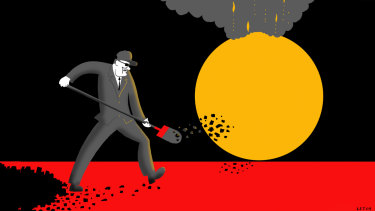
Illustration: Simon Letch

Illustration: Simon Letch

And sure, to some extent, that’s just colonialism. Colonialism is inherently macho, and inherently denialist. But it should be transitional. Now, as the NY Times argues, our political denialism is “scarier than the fires”. Smarten up? It’s time we grew up.

This is Australia’s moment of reckoning. It’s time we lost the attitude. Time we made a clear, rational and collective choice between survival-by-respect and death-by-stupid.

On top of Auckland’s Maungakiekie, the volcanic Māori pa also known as One Tree Hill, stands an obelisk. The land was bequeathed to the city in the mid-19th century by the beloved Scot Sir John Logan Campbell, who designed the obelisk as a permanent record “of his admiration for the achievements and character of the great Maori people”. That was then – now, New Zealand has Jacinda. And yes, these dots are connected.

Australia has shown no such reverence. Indeed, unable even to express genuine remorse for our repeated attempts at genocide and erasure-by-other-means, we’re still doing arrogant displacement. And we, as a result, have Scott Morrison, who must live with the disparaging epithet concocted by the lads at the Betoota Advocate – Scotty from marketing – because many Australians believe there is a ring of truth to it.

Morrison who responds to bushfires by wanting to clear more land. Who thinks hazard reduction is climate action and more advertising can persuade them back to a charred continent. Death by stupid.

It’s the arrogance we came with, two centuries back, but it’s getting worse, not better. Even now, our Indigenous peoples are being displaced three and four times over.

Last year we extinguished native title for Adani’s filthy foreign coal-mining interests, making the Wangan and Jagalingou people trespassers on their own land. We relentlessly export such coal, helping drive temperatures in central Australia beyond the habitable (Alice had 55 days above 40 degrees last yearand recorded street-surface temperatures between 61 and 68 degrees celsius), exiling people for a second time from their ancestral homelands. Then, should anyone dare critique this mindlessness, as Bruce Pascoe obliquely has, we label them non-Indigenous and set the federal police onto determining their ancestry.  

As if that very ancestry, those very records, hadn’t been, for two centuries, the subject of our energetic erasure. As if being Indigenous had always yielded some special right to speak, instead of the precise opposite. As if the speaker’s genetic makeup validated or invalidated his speech. What?

And we apply this domineering denialism, this refusal to listen, across the board. In agriculture it says, we don’t care what naturally grows here. We’re going to poison the insects, suck the water from ancient caverns and nuke the living daylights out of the soil with petroleum-based fertilisers. We’re going to burn oil and coal, and if we get fires that destroy our townships, we’ll clear the forests too. That’ll show them. 

In politics and at home it says, if our women are troublesome, we’ll ridicule, intimidate and beat them into submission (with one woman murdered every week by her current or former partner and our political sphere internationally recognised for its misogyny).

In sport, it says it’s fine if our cricketers cheat – so long as they don’t get caught. And in social relations, if people insist on different hierarchies – if they demand gender fluidity, or optional pronouns, or same-sex marriage or voluntary race-identity or anything else that questions our superiority we’ll come down on them like a ton of bricks. 

God gave us white guys dominion and we’ve weaponised it. By golly we’ll show this country who’s boss. Then if things get really rough, we’ll pop to heaven. Let’s hear it. A recent street poster picturing Morrison declaring Pentecostals for a Warmer Planet! may seem extreme, but Meritus Professor of Religious Thought, Philip C. Almond, explains why Morrison’s faith meansreducing carbon emissions … may have little intellectual purchase with the PM” – because world’s end means the second coming and, for the chosen, salvation. It’s also why Morrison’s beloved Hillsong church can happily advertise its coming conference, called Breathe Again, with Bishop T D Jakes saying “it’s amazing how God can strike a match in Australia and the whole world catches on fire”. As if the fires were God given.

That’s choice A, Scott Morrison’s choice. Business as usual but with extra cheesy advertising. Choice B, survival-by-respect, recognizes that even cheese can’t sell a pile of ash.

Survival-by-respect means just that: respect for Indigenous peoples, for nature and for women. It means knowing that listening is no weakness, but a path to greater strength.

On the ground, the shift would be dramatic but not impossible. Zero carbon cities would become an immediate priority: solar vehicles, green roads, every surface productive of food or energy. It would mean ending coal production. Investing in renewables. Creating whole new industries. 

This would mean listening to people who’ve spent 60,000 years here. Not copying, necessarily, listening. And listening, above all, to nature, heeding the fires’ overwhelming lesson. Forget the Aussie flag, the flag of dominion. This we should carve on our hearts: there is no economy without ecology. 

Sure, we can stick with lazy old Plan A. We can bow to Brand Australia and trust our grandchildren’s futures to the Rapture Hypothesis. Good luck with that, and happy Straya Day!

Bare Dinkum

Elizabeth Farrelly is a Sydney-based columnist and author who holds a PhD in architecture and several international writing awards. She is a former editor and Sydney City Councilor. Her books include ‘Glenn Murcutt: Three Houses’, ‘Blubberland; the dangers of happiness’ and ‘Caro Was Here’, crime fiction for children (2014).

We oughtn’t fear an Indigenous Voice – but we do

They were standing on the shore one day
Saw the white sails in the sun
Wasn’t long before they felt the sting
White man, white law, white gun
Don’t tell me that it’s justified
‘cause somewhere, someone had lied
And now you’re standing on solid rock
Standing on sacred ground
Living on borrowed time
And the winds of change are blowin’ down the line
Goanna

Journalist Jacqueline Maley wrote in The Sydney Morning Herald , 17th November 2019:

“The Uluru Statement From the Heart, with its reasoned call for constitutional recognition, has become such a politicised issue that it is easy to forget what a beautiful piece of writing it is. It is not even 500 words, but within it is a world: the struggle, tragedy and dignity of one of the world’s oldest living cultures. It discusses the ancestral ties of First Nations peoples to the land, unextinguished by colonisation. It talks about children stolen and incarcerated. “This is the torment of our powerlessness,” it reads “.

You’d have thought that the recognition of Indigenous Australians in our constitution would be a no-brainer, and that their participation as stakeholders and advisers in matters of government policy affecting them, much as many other bodies and institutions do, would be a reasonable and worthwhile proposition. It would, one might’ve thought, be simply the right thing to do.

But you’d be disappointed. Not in today’s Australia, it would seem. The things that divide us are greater than those which unite us.

Anne Twomey, Professor of Constitutional Law at the University of Sydney has written a clear and concise response to the naysayers, fear-mongers and purveyors of misinformation. It ought to be required reading, but as it is behind News Ltd’s paywall, I republish it here.

It is followed by an opinion piece by one time journalist and now academic, Stan Grant, on why the plan for a referendum proposed by our new Minister for Indigenous Australians, Ken Wyatt, may be a forlorn hope (both Grant and Wyatt are indigenous Australians); and after this, an informative article by conservative columnist Chris Kenny.

Kenny is normally a caustic and predictable member of News Corp’s right wing  commentariat, but here, he provides a good analysis of the obstacles facing Wyatt and the ambivalent PM Scott Morrison.

“There appears to be no sphere of our national political debate – indigenous groups, conservatives, progressives, media, business, sport­ing organisations – mature enough to deal with this issue in a meaningful, pragmatic or generous fashion. Perhaps unsurprisingly given the toxicity, shallowness and incompetence of our past decade of national politics, we seemed to have learned nothing about how to conduct this discussion. Instead of reasoned negotiations we have positions shouted and rejected across the airwaves, exaggerations and scare campaigns run against various options … (for) constitutional change that is neither detailed, settled or easily understood. Everyone wants to parade their view … but are less prepared to do the hard work of grinding out a workable compromise. The nation’s first indigenous Minister for Indigenous Australians must despair at the kneejerk responses since he reopened this debate”.

Malcolm Harrison, an old friend of mine, makes the following observations”:

”The liberal, progressive left, identity politics movement seems to have met some severe headwinds of late, and the growing apprehension about some of its more extreme aspects may halt it for the forseeable future. Various forms of conservatism are definitely gaining ground at least in the short term. The voices of oppressed indigenous peoples, and those colonised like India, are growing louder, and demands for financial compensation are becoming more common. It’s only a matter of time before this becomes a very real issue. If I were the government of Australia, I would be making secure deals with what’s left of the indigenous peoples, while I still could. Excluding them from the constitution only strengthens their future case. From the perspective of identity politics, if I were an aboriginal I would be righteously aware that from a human rights perspective, I had a lot to complain about. And sooner or later, the conscience of my society might be forced to acknowledge this in practical ways that at present it is not prepared to countenance or even consider. But, as I imply in the first paragraph, we may not get there in the short term, and indeed we may never get there at all. Indeed, if some of the extreme ideas being privately discussed among our present neoliberal aristocratic elites come to fruition, many more of us might be joining our indigenous brothers on the fringes, beyond the pale”.

There is a darkness at the heart of democracy in the new world “settler colonial” countries like Australia and New Zealand, America and Canada, where for almost all of our history, we’ve confronted the gulf between the ideal of political equality and the reality of indigenous dispossession and exclusion. To a greater or lesser extent, with greater or lessers success, we’ve laboured to close the gap. It’s a slow train coming.

Also, in In That Howling Infinite: Down Under – Australian History and Politics

Postscript

two month’s on, and it would appear that positions have hardened. More like ossified, I would say.

Delivering the 19th Vincent Lingiari Memorial Lecture in early August, Ken Wyatt made explicit, in the strongest terms since becoming Minister for Indigenous Australians, that the Morrison government has decided to dismiss the call for a First Nations Voice enshrined in the constitution.

“I want to be very clear,” he said. “The question we put to the Australian people will not result in what some desire, and that is an enshrined voice to the Parliament –  these two matters [constitutional recognition and a Voice to parliament], whilst related, need to be treated separately.”

Whilst carefully choosing how it tackles the Uluru Statement from the Heart, the government’s tactic may be to appear to be doing something, while doing nothing at all.

If the government legislates the Voice without constitutionally enshrining it, it will not only ignore the Uluru Statement and the unprecedented consensus that made it, ii will be setting it up to fail. A First Nations Voice established by an act of parliament alone and not protected by the constitution will one day be diminished or repealed at the whim of a future parliament as has been the fate of all national Indigenous representative bodies. Moreover, Indigenous people do not support mere symbolic constitutional recognition and have dismissed it in regional constitutional dialogues. Those who are to be recognised need to be able determine how they are recognised.

22nd August 2019

See also in In That Howling Infinite:

Fright-monsters keen to deny voice a fair go

Anne Twomey, The Australian, 13th July 2019

The most remarkable thing about a proposal for an indigenous voice to parliament is how moderate and reasonable it is. It is not a demand to dictate laws. There is no insistence upon a power of veto. There is simply a cry to be recognized — to be listened to with respect.

It means no more than that indigenous views can be channeled into the parliament by a formal mechanism so that they can be taken into account and parliament can be better informed when making laws that affect indigenous Australians.

How many people would prefer that the parliament be poorly informed? Who thinks it is a good idea for parliament to waste money on ineffective programs that achieve nothing?

The proposal is so very reasonable that it has shocked people into imagining hidden conspiracies and conjuring up fright-monsters, because they cannot bring themselves to believe that a proposed change could actually be good.

The best way to dispel fright-monsters is to expose them. The first is the claim that any indigenous voice that could channel its views and advice into the parliament would be a “third house of parliament”.

To state the obvious, it would be a third house only if it was given the power to initiate bills, pass and veto them, and be defined as a constituent part of the parliament in section 1 of the Constitution.

The only people suggesting this are those who are opposing it, so we can strike this off the list of problems.

If the suggestion is that any person or body that formally advises parliament in relation to bills or policies is a third house, then we would have a parliament of very many houses indeed.

Take, for example, the Independent National Security Legislation Monitor, whose role is to provide independent oversight of national security legislation and make recommendations about it, which are tabled in parliament. The monitor is currently conducting an inquiry into laws that terminate the citizenship of people involved with terrorism. Does this make the monitor a “third house of parliament”?

If so, the monitor would join the Auditor-General, the Productivity Commission, the Australian Law Reform Commission, the Australian Human Rights Commission and the many other bodies and people whose job it is to ensure that the parliament is better informed about particular subject matters.

All of these bodies and officers have influence, and should be listened to with respect because of their experience and expertise, but that does not mean they dictate legislation and government policies.

Governments have to take into account broader issues as well, such as the budgetary position and the general wellbeing of the entire country.

There is no greater threat in having an indigenous body advise and influence the parliament than there is in relation to any of these other bodies. Instead, there is a benefit in having a better informed parliament and hopefully better targeted laws and policies.

The next argument is that if this indigenous voice is enshrined in the Constitution, the High Court will get involved and every time indigenous advice is not followed there will be litigation and the High Court will force the parliament to give effect to that advice. This view is misguided. It is part of the principle of the separation of powers that the courts do not intervene in the internal deliberations of the parliament.

The High Court has held that it will not enforce constitutional provisions, such as sections 53 and 54 regarding money bills, because they concern the internal proceedings of the houses. As long as the constitutional provisions concerning an indigenous voice were drafted to make it clear that consideration of its advice was part of the internal proceedings of the houses, the matter would not be one that could be brought before, or enforced by, the courts.

The third argument concerns equality. Some have argued that there is a fundamental principle of equality in the Constitution and that division on the basis of race should not be brought into the Constitution.

First, there is no general provision of equality in the Constitution. For example, Tasmanians have, per head of population, far greater representation in the federal parliament than voters from NSW.

Members of parliament might also be aware by now that section 44 disqualifies them if they are dual nationals.

Second, the Constitution has always provided for distinctions based upon race. From 1901 to 1967 section 127 provided that for certain purposes “aboriginal natives” were not counted in the population.

This did not mean that they weren’t counted in the census. Every census, from the very first, has included detailed information about indigenous Australians. But it did mean that when determining the population for the purpose of calculating how many seats a state had in parliament, indigenous Australians were excluded from the statistics until this provision was repealed in the 1967 referendum.

Section 25 continues to provide that if a state excludes people from voting on the basis of race, it is punished by having its population reduced for the purposes of its representation in the federal parliament. Section 51 (xxvi) continues to allow the federal parliament to make laws with respect to the “people of any race for whom it is deemed necessary to make special laws”.

There are good reasons today to remove sections 25 and 51 (xxvi) from the Constitution, but there will still be a need to include some kind of power to make laws with respect to indigenous Australians.

This is not because of race. It is because of indigeneity.

Only indigenous Australians have legal rights that preceded British settlement and continue to apply today.

Only indigenous Australians have a history and culture unique to Australia.

It is not racist, divisive or a breach of principles of equality to enact laws that deal with native title rights or protect indigenous cultural heritage.

Nor is it racist, divisive or in breach of principles of equality to allow the only group about whom special laws are made to be heard about the making of these laws. Indeed, it is only fair, and fairness is a fundamental principle that Australians respect.

Anne Twomey is a professor of constitutional law at the University of Sydney.

Ken Wyatt, a man in the cross-hairs of history

Stan Grant, Sydney Morning Herald, 13th July 2019

Ken Wyatt is a man of history. He has defied a history of Indigenous children stolen from their families. He has defied a history that locked Indigenous people out of Australian political life, that for too many years denied Aboriginal people full citizenship. This week he made history, speaking at the National Press Club as the first Aboriginal person to be a cabinet minister in a federal government – an Aboriginal person leading the portfolio for Indigenous Australians.

His moment in history ... Ken Wyatt, the Miniser for Indigenous Australians.                        Ken Wyatt, the Minister for Indigenous Australians (Alex Ellinghaussen)

But when it comes to constitutional recognition of Indigenous people, history is against him. There have been 44 referendums put to the Australian people and only eight carried. It has been more than 40 years since the last yes vote. We set a high bar: change requires a majority of voters in a majority of states. Fifty per cent of the national population plus one is not enough.

The numbers are against him: Indigenous people are fewer than 3 per cent of the Australian population seeking to win over 97 per cent. Politics is against him: he is in the wrong party; more than half of all referendums have been put by the ALP. Right now, Ken Wyatt cannot even count on the full support of his own side of politics.

If a referendum won’t succeed, there will be no vote, he says. He’s hoping for consensus, bringing together political opposition including influential politicians such as Pauline Hanson. He wants a conversation with the Australian people around barbecues and dinner tables. His hardest conversation will be with Indigenous people.

Black Australia has already spoken. The Uluru Statement from the Heart remains the clearest expression of the aspirations of Indigenous people, emerging out of an exhaustive and emotional process of negotiation and consultation. It is itself a compromise, a conservative position, achieved in spite of understandable hostility from some Indigenous people who have no faith in Australian politics. Now they are being asked to compromise again.

What was all of that for? Where is the trust? The previous Turnbull government rejected the key recommendation of the Uluru Statement, that there be a constitutionally enshrined “voice” – a representative body allowing Indigenous people to advise and inform government policy. Prime Minister Scott Morrison was among many who called it a “third chamber” of Parliament. He reportedly has not shifted from that view.

Wyatt has already framed future negotiations by indicating that he may prefer some symbolic words of recognition in the constitution and a legislated statutory voice. He is testing the resolve and agility of Indigenous leadership. Will they walk back their demand for a constitutional voice? Can they accept symbolism? He’s already sought to recast constitutional recognition as the preserve of urban Indigenous elites, disconnected from impoverished remote black communities.

Ken Wyatt is also on a collision course with the Labor opposition. Senior Indigenous ALP figures Linda Burney and Patrick Dodson have reasserted their commitment to the spirit of the Uluru Statement and full constitutional recognition. It sets up a divisive political battle, which would scuttle any hope of a successful referendum.

Constitutional lawyer George Williams knows how difficult referendums are. He has previously laid out a roadmap to a yes vote. It requires political bipartisanship and popular ownership.  It cannot be perceived as political self-interest. The public must know what they are voting for, so it requires popular education. Referendums, Williams warns, are a minefield of misinformation.

And there must be a sound and sensible proposal.

Professor Williams has cautioned that the referendum process itself may be out of date – not suited to contemporary Australia. He says referendums should be expected to fail if there is political opposition or if the people feel confused or left out of the process.

On that basis, as it stands right now, an Indigenous constitutional voice looks a forlorn prospect.

But there is a glimmer of hope and it comes from our history. In 1967, Australians voted in overwhelming numbers – more than 90 per cent, the most resounding yes vote ever – to count Aboriginal people in the census and allow the Parliament to make laws for First Peoples.

Ken Wyatt is invoking the spirit of ’67, but he also knows its lesson: it was a victory of fairness over difference. Australians are wary of difference, suspicious of questions of rights. Australia has no bill of rights; our constitution is a rule book, not a rights manifesto. Australia is a triumph of liberalism where people are not defined by their race, religion, ethnicity or culture. Australia is a place where migrants are encouraged to leave their histories and old enmities behind. Nationally we are more comfortable mythologizing our own history than probing its darkest corners.

Indigenous people live with their history; they carry its scars; it defines them. In a country founded on terra nullius – empty land – where the rights of the First Peoples were extinguished, where no treaties have been signed, this – as the Uluru Statement says – is the torment of their powerlessness.

When it comes to Indigenous recognition – symbolism or substance – black and white Australia speak with a very different voice.

Ken Wyatt, a man of history, is now in the cross-hairs of history.

Stan Grant is professor of Global Affairs at Griffith University. He is a Wiradjuri and Kamilaroi man.

The key to an indigenous voice’s success – it must be practical

Chris Kenny, The Australian, 13th July 2019

For all their best intentions, it might have been a mistake for Ken Wyatt and Scott Morrison to put indigenous constitutional recognition back on the agenda and commit to getting it done in this term of government. There appears to be no sphere of our national political debate — indigenous groups, conservatives, progressives, media, business, sport­ing organisations — mature enough to deal with this issue in a meaningful, pragmatic or generous fashion.

Perhaps unsurprisingly given the toxicity, shallowness and incompetence of our past decade of national politics, we seemed to have learned nothing about how to conduct this discussion. Instead of reasoned negotiations we have positions shouted and rejected across the airwaves, exaggerations and scare campaigns run against various options, and groups as diverse and seemingly irrelevant as national sporting organisations and major businesses running jingoistic campaigns supporting constitutional change that is neither detailed, settled or easily understood.

Everyone wants to parade their view and, yes, signal their virtue, but they are less prepared to do the hard work of grinding out a workable compromise. The nation’s first indigenous Minister for Indigenous Australians must despair at the kneejerk responses since he reopened this debate.

Completely lost in the debate is the genesis of the “voice” proposal as a compromise proffered by conservative thinkers looking to deliver a meaningful outcome for indigenous Australians while preserving the integrity of the Constitution. This concept, first devised by indigenous leader Noel Pearson building on work by now Liberal MP Julian Leeser, conser­vative philosopher Damien Free­man and others, was assiduously workshopped and then explained and promoted to politicians, commentators and activists.

At the heart of this proposal, and a key to understanding this debate, is the desire to ensure constitutional recognition provides more than a cursory or symbolic mention of Aboriginal people in our nation’s founding document but delivers a practical outcome for indigenous advancement. This would be done by guaranteeing indigenous input into decision-making over their affairs — something that happens informally now but under the plan would be genuinely representative and underpinned in the Constitution.

In return, the Constitution would be protected from more radical change and a statement of national values would make more poetic exclamations about the shared indigenous, British and immigrant strands of our national bounty, outside of the Constitution. Incredibly, all the work devising this approach occurred outside the official channels such as the expert panel and select committee inquiries.

Initially its prospects seemed likely to match those of a snowflake at Uluru. It was attacked as a sop by the activists on the left who argued for a racial non-discrimination clause to be inserted into the Constitution as well as an indigenous affairs power and recognition clause that looked like a broad-ranging, de facto bill of rights. The right branded this voice approach as a divisive attempt to give additional rights and representation to indigenous Australians — an attempt to inject race into the Constitution.

Never mind that race is already embedded in our Constitution and that whatever happens on recognition the detailed constitutional changes are likely to remove those redundant race-based clauses. Never mind that by dint of legislation such as the Native Title Act there already are very specific measures that fall under the constitutional responsibility of the federal government that demand special consideration for indigenous people. And never mind that successive governments, Labor and Liberal, have had informal bodies to provide advice from Aboriginal people on these issues.

Somehow, mainly because of the power of the ideas but also thanks to the persuasiveness of Pearson and his team, the thrust of these ideas was embraced by a summit of indigenous community leaders at Uluru in May 2017. It was a monumental achievement but the grandiloquence of the “Statement from the Heart” would always frighten many horses.

Talk of “first sovereign nations” and spiritual links to the land was anathema to calculated, clinical constitutional change. Having invested some time in comprehending this process, I recall being immediately dismayed by the emotive words of the Uluru statement because I foresaw the political resistance they would trigger. It is a beautiful statement in many ways, and certainly encapsulates a wise position, but constitutional change is no place for emotionalism. Still, at its core are two proposals: “the establishment of a First Nations Voice enshrined in the Constitution” and “a Maka­rrata Commission to supervise a process of agreement-making between governments and First Nations and truth-telling about our history”.

This is now characterized as indigenous people asking too much of their non-indigenous compatriots. It is actually the opposite; these proposals can be seen as a generous offer of compromise from Aboriginal Australia to try to advance reconciliation in a practical but meaningful way.

Instead of demanding a racial non-discrimination clause and direct recognition of their rights in the Constitution, indigenous Australia is merely looking to have a guaranteed, advisory and non-binding input into legislation that affects them. And instead of demanding a treaty, they have come up with a regionally based process of agreements and truth-telling under the Yolngu (Arnhem Land) word of Makarrata, which encompasses conflict resolution but helps to avoid divisive arguments over treaties.

Conservative politicians as different as Malcolm Turnbull and Tony Abbott have dismissed the entire voice proposal as a “third chamber” that is too radical to contemplate. This has made the voice a third rail in the debate.

This is disappointing and ultimately dishonest because there are so many options available to arrange the representation and functions of a voice that if anyone has concerns it might be directly elected and wield some kind of informal veto power over parliament then a way to deal with the issue is to propose an acceptable format rather than just create fears over a third chamber. Otherwise, are they really suggesting the Aboriginal advisory councils reporting to Labor and Liberal governments over past decades have operated as third chambers of parliament?

Not all the blame for the emptiness of this debate rests with the conservatives — let me remind you, conservative thinkers were at the genesis of this proposal. The sloganeering on the progressive side has probably created more concern in the community than the scare campaigns from the Right.

People like Marcia Langton have been so aggressive towards their perceived ideological enemies that they burn goodwill faster than others can create it. And when big business and big sport start pushing loosely formed ideas about Recognition or a Voice onto customers and supporters — out of context and without formal proposals even being in existence — they raise the suspicions of voters, if not their hackles.

The most likely avenue for compromise now is for Morrison to prevail, as hinted at in Wyatt’s speech, and have a voice formalised through legislation but not mandated in the Constitution. This will disappoint many indigenous people but might fly.

Another idea worth consideration to assuage the doubters might be some sort of sunset provision. There is a legitimate argument to be made that one race-based grouping should not have separate consideration in our political processes. For reasons I have outlined previously (mainly recognizing historical disadvantage and accepting special status under native title rights), I think an exception should be made for indigenous Australians. But perhaps in the spirit of the Closing the Gap initiative, any changes could recognize that once those crucial gaps in social outcomes between indigenous and non-indigenous are closed, then special representation might no longer be required.

That will be a long way off. But it might provide extra emphasis on the need to focus on practical outcomes rather than mere symbolism. Let us see where the debate takes us in coming months. Success for Wyatt would be success for the nation. But he and Morrison need to be wise enough to walk away from their self-imposed time frame if necessary.

This will be worthwhile only if it delivers something practical that can help indigenous advancement and provide closure to decades of debate. A trite phrase dropped into a preamble to make the majority feel good about themselves won’t be worth the effort and could create more trouble than it is worth.

Read also: Walk with me, Australia: Ken Wyatt’s historic pledge for Indigenous recognition

We’ve got them Australia Day blues … again

We Acknowledge the Gumbaynggirr People, the traditional custodians of the Land we live upon, and the Land from the Tablelands to the sea. We also pay respect to Elders past, present and emerging of the Gumbaynggirr nation  

Australia Day has always been celebrated on 26th January – except when it wasn’t …

On this day, we celebrate the first settlement of white settlers on Australian shores. Captain Cook had been here a decade before, and Dutch, Portuguese and English mariners had touched land at various point earlier in the century, but didn’t find the amenities attractive enough to stick around.

People, particularly right wing politicians and opinionistas, and white Anglo-Celtic nationalists regards this seminal moment as “a good thing” to borrow a phrase from “1066 and All That”. After all, it brought the benefits of European civilization to those whom Rudyard Kipling might later have referred to as “fluttered folk and wild, half demon and half child”. After two centuries of dispossession, enslavement, massacre, and, in recent times, gradual steps towards recognition and restitution, many descendants of the first peoples think otherwise and regard 26th January as Invasion Day, a time of mourning, as do an ever increasing proportion of the population generally, particularly the younger generations.

The day is celebrated throughout the land with ceremonies and performances by representatives of our many cultures. But indigenous artists, dancers, and musicians face a profoundly deep dilemma when asked to perform. By participating in official commemorations, are they helping to sanction and even sanitize a day they associate with deep historical pain and trauma? Conversely, by boycotting the event, would they be giving up an important opportunity to celebrate and promote indigenous culture, helping non-indigenous Australians to understand that Australia has an indigenous history as well as a white one, and that this is a living culture and that over two hundred years, it is still with us today.

Australia Day January 26th 1988

The days and weeks leading up to Australia Day have become a time for debating our history, and also, our  identity. Author and commentator Henry Ergas as wrote in The Australian on 18 January 2025: “Historical events need to be faced, not defaced. We can celebrate foundational events such as Australia Day without reducing them to a Manichean choice between good and evil, sin and virtue: as John Stuart Mill aptly put it, “Ages are no more infallible than individuals”, our own included. Rather, the point is that foundational events are foundational: they set a beginning whose course always remains to be shaped. And by maturely commemorating those events we can find, as others have, the enduring values to steer us along that course and make our common future one all Australians consider well worth having”.

Australia Day is also very much about memory and myth. As American author CE Morgan has written, “Repeated long enough, stories become memory and memory becomes fact”. German academic Ulrich Raulff put it this: “ … our historical memory is a motherland of wishful thinking, sacrificed to our faith and blind to known facts … This is why historical myths are so tenacious. It’s as though the truth even when it’s there for everyone to see, is powerless – it can’t lay a finger on the all powerful myth”.

And so  around this time every year, people argue about moving the date to one that is less divisive, and indeed, to one that more realistically commemorates the founding of the Commonwealth of Australia. January 1st for example. is put forward as the day six states came together as one Commonwealth under a federal government. The problem with January 1st is of course that being New Year’s Day, and already a fireworks and hoopla day off, no one would notice. The British monarch’s official birthday weekend in June (it’s actually George III’s, but never mind) is also mooted. But that’s wintertime And not good for the beach and a cold beer. Moreover, January 26th is ideally placed as the last long-weekend before the kids go back to school.

As if responding to Pavlov’s bell, folk of a conservative persuasion evoke the irrevocable sanctity of January 26th as a commemoration of how we became who we are – that is, a mainly white and Christian but increasingly multi-hued and multi-faith democracy at the fag-end of the earth. The conservative media seize upon it as an opportunity to serve up overblown, meretricious flimflam not withstanding the fact that the story of the First Fleet is thrilling enough without over-leavening it with patriotic flag-waving, triumphalism, and a big serve of manifest destiny.

The idea of celebrating the acknowledged virtues of our country – its tolerance and openness, its acceptance of immigrants of all colours, cultures, and religious beliefs, its mythical values of “mateship” and a “fair go” are sound. In citizenship ceremonies across our island continent, migrants from all over swear allegiance to our nation and it’s English monarch (but we won’t go there). And yet, the day itself has evolved into a shibboleth, a caricature, a bombastic, jingoistic carnival of flags and fireworks, partying and posturing. It’s as if we forget that on January 26 1788, Captain Arthur Phillip established a penal colony – not a nation. Of the 1336 souls who landed, over half of them were in chains, and most of the others were guarding them.

Ironically, the day is not at all sacrosanct. For most of the century of our existence as a nation, most Australian states did not see a reason to celebrate this Sydney-centric beano with such gusto. Indeed, as the picture below shows, the date itself was quite portable. the It was only on the occasion of our bicentenary in 1988 that it officially donned the aura of a secular holy day of obligation – and, of course a public holiday conveniently placed between the hot and lazy Xmas holidays and the commencement of the school year.

Recent polls have show that a majority of Australians wouldn’t be too fussed if the date was moved, although since the failure of the referendum for an Indigenous Voice to Parliament in October 2024, more Australians appear to favour sticking to the holiday we know (though a significant proportion are hard pressed to say what it is we are actually commemorating). Commentators on the right attribute the poll results to what they see as “the end of woke” (and emboldened by the failure of the referendum, they also advocate a winding back of Welcome to Country ceremonies and acknowledgements like the one at the head of this piece).

But has support for changing the date we celebrate Australia Day really fallen away, or was it never really there in the first place (“Australia Day roars back into favour: poll”, January 24, 2025)? The media megaphone has been magnifying the issue for some years, stoking controversy to create something of a self-fulfilling prophecy. Some Australians may be eager for change, but probably most of us Australians have always been content with 26th January, and besides, we have more pressing matters to think about.

“For now”, wrote Stan Grant, author, commentator, and Wiradjuri man, “26 January is all that we are. It is all that we are not. Australia lives in that tension”. We have yet to come to terms with it, and no matter what date we chose, it will continue to be challenged: Indigenous leader and Voice advocate Megan Davis said she was not a “change the date” person because the shift would only move rather than resolve a toxic argument.

Perhaps one good reason we ought to abolish Australia Day is that we are not grown up enough as a nation to deserve it.

And so, enjoy our national day, as the “black armband” and “white armband” tribes leave off their month-long cage-fight that has dominated the media during the Xmas holiday doldrums, and just enjoy a day off.

And we can have a break from self righteous patriotics until our next official day off: Anzac Day, when we celebrate our defeat the hands of Johnny Turk at Gallipoli, and when, of course, The Australian and it’s hired hacks will get carried away by all the Anzacery bluster, and express their indignation with all who criticize that shibboleth. The irony of Anzac Day is that whilst it rightfully remembers the cost and futility of war, its commercialization has meant that more money is spent on political and patriotic posturing than on our serving soldiers and on those who return home injured and traumatized. As Samuel Johnson quite rightly (is said to have) said, “patriotism is the last refuge of the scoundrel”.

© Paul Hemphill 2018, 2025. All rights reserved

We republish below a bit of Australia Day history, and. also, what I consider a reasonably well-nuanced appraisal of the culture wars being fought out over Australia Day. Paul Kelly of The Australian  is a conservative commentator, and is obliged to recite form the News Corp song sheet when it comes to repeating the cliched mantras of his mother-ship – or is it ‘fathership’?) but he weighs well the tired arguments of left and right and argues for what would, could or should pass for the ‘reasonable middle’.

See also, The Frontier Wars – Australia’s heart of darkness, and We oughtn’t  fear an indigenous voice – but we do.

For more in In That Howling Infinite on Australian history and politics, see Down Under


We’ve had those Australia Day blues for a long time as this report from the ABC demonstrates:

We thought they were going to be massacred’ 

ABC Broken Hill. Aimee Volkofsky, 25 January 2018

Watch the  video here:  Eighty years since forced First Fleet re-enactment (ABC News)

WARNING: This story contains images of deceased Indigenous people.

Aboriginal men perform a dance at a 1938 re-enactment of the landing and proclamation of Captain Arthur Phillip at the 150th Australia Day celebrations.    (State Library of NSW)

On January 26, 1938, as the first rally against Australia Day was held, 25 Indigenous men were told if they did not perform the role of ‘retreating Aborigines’ in a re-enactment of the First Fleet, their families would starve.

Government officials had selected the best dancers and singers from Menindee mission in far-west New South Wales and told them they were required to perform cultural dances in Sydney. What they were sent to take part in was a re-enactment of the landing and proclamation of Captain Arthur Phillip at the 150th Australia Day celebrations.

Ngiyaampaa elder Dr Beryl (Yunghadhu) Philp Carmichael, born and raised on the mission, was only three at the time, but her memory of the fear in the community never left her.

Ngiyaampaa elder Dr Beryl (Yunghadhu) Philp Carmichael,

My grandfather protested Australia Day in 1938

The inescapable reality is that Australia’s current national day excludes and alienates Indigenous people — 80 years after my grandfather marched the streets in a fight for equality, writes Ngarra Murray. “All I can remember is the crying, all the women were crying,” she said.  “Whether they were taking them away to be massacred or what, no-one knew. The community went into mourning once they were put on the mission truck.”

The men returned a week later, but Dr Carmichael said it was many years until they would talk about their experience. ‘They came back very quiet,” she said. “It was only in the late 70s they started saying something about what it was like down there. We knew whatever happened down there really hurt them and we didn’t question them.”

Hidden from friends and family

It is speculated that part of the reason for bringing Indigenous people all the way from Menindee was because those in Sydney refused to take part. In Sydney plans were afoot to hold a rally on Australia Day; the Aborigines Progressive Association would declare it a ‘day of mourning’.

Aboriginal rights leaders William Ferguson and John Patten published the Aborigines Claim Citizen Rights! pamphlet on January 12, 1938. In it they declared, “We do not ask you to study us as scientific freaks … the superstition that we are a naturally backward and low race … shows a jaundiced view of anthropologists’ motives”.

Those in power at the time seemed eager to keep the Menindee men well away from activists, keeping them locked away in police barracks.

The incident was detailed in a biography on William Ferguson, written by Jack B Horner in 1974. “The Secretary of the Protection Board had a shrewd idea that Ferguson would try to prevent the Menindee men from taking part in this re-enactment. The Board was taking no chances. Nobody could meet the Aborigines in the coming week in Sydney, without … obtaining personal permission.” — from Vote Ferguson for Aboriginal freedom: a biography by Jack B Horner
Dr Carmichael said there had been whisperings of the movement on the mission, and a direct link to Mr Ferguson.

“Most people on missions couldn’t read and write; that made it really hard for them to understand the government documents they were throwing around,” she said. “Old Bill [Ferguson], because he knew his brother Duncan was back on the mission, he used to send messages back to him. But in the end the mission manager found that out, picked the old fella [Duncan] up in a truck and dumped him over the hill [outside the mission boundary].”

Mr Ferguson attempted to get word to the Menindee men while they were in Sydney but, as elaborate as they were, his efforts were unsuccessful.  “Then followed in the week before the celebrations an amusing battle of tactics between the Protection Board officers and the executive of the Aborigines’ Progressive Association….Some Sydney relatives of a Peter Johnson from Menindee tried to see him at the barracks.  The relatives had been sent by Ferguson, of course, in order to pass to Hero Black (the leader of the Menindee party) a message not to take part in the mortifying ‘retreat’ from the ‘first party of Englishmen’.” (From Vote Ferguson for Aboriginal freedom: a biography by Jack B Horner) . They were eventually allowed a closely supervised visit from two female relatives.

The men soon discovered their duties would include playing the part of Aboriginal people fleeing British soldiers.

Threatened with ration cuts

While the activists may have gotten their message through to the performers, discouraging them from taking part in the re-enactment, the men were left with little choice.

Dr Carmichael said when it came to performing traditional dance, the men were troubled to find they would be led by an Aboriginal actor who did not speak their language or know their culture.

“The government unknowingly or knowingly put up a big Aboriginal, good looking fella as the leader of the dancers and they didn’t even know him. He wasn’t from Ngiyaempaa,” she said. “That really devastated the people and they refused to dance. [The government] threatened them and threatened them; if they didn’t perform they’d cut off the rations to their people on the mission. It was the toughest time of their lives, I think.  I’m just happy we survived’

Eighty years on, as debate continues around whether January 26 is celebrated or mourned, Dr Carmichael said she was happy to have survived, even though she was sad about the past. “We were brought up to tolerate a lot of things and to give thanks for being alive,” she said. “I’m just glad I survived with my culture intact and am alive to teach and pass it on. We should strive for peace, between all nations. We need to come together as people.”

Australia Day: we must face the two truths about January 26

Paul Kelly, Editor-At-Large, The Australian,  
Illustration: Eric Lobbecke

Australia Day is getting bigger, brighter, more celebratory and stained by the rising tide of culture war hostility. The transformation of January 26 from a sleepy public holiday two generations ago into a boisterous party and civic commemoration has provoked a political backlash conceived in two different sentiments — grievance and exploitation.

The debate is not just about our national day. It’s really about who we are, what symbols we honour and, ultimately, the legitimacy of our civilisation. This debate can break one of two ways: robust differences can generate a better understanding of Australia and its national day or the upshot can be a destructive orgy of self-interested identity politics leading to a diminished and divided country.

The progressive crusade to ­remove January 26 as Australia Day has won fresh momentum for a movement bent upon imposing its views on the nation. Nobody should be surprised.

The volatility of social media, the power of negative politics and the emotional manipulation around “invasion day” constitutes sufficient warning that things could go badly wrong.

A nation ignorant of its history or simply unable to handle its history is heading for trouble in the present age of populist and cheapjack disruption.

Those pledged to “change the day” underestimate the popularity of the late January public holiday before the kids return to school, when barbecues abound in parks and backyards, fireworks make a spectacular night, the Australian flag adorns cars and front verandas, the sense of community is tangible, and civic and citizenship ceremonies at the local level testify to a beating patriotism.

In every such event there are tributes to the first Australians. This is embedded in our civic ­culture. More indigenous peoples are participating and being recognised on Australia Day, with its ­official emphasis on multi­culturalism and diversity. Since governor Lachlan Macquarie nominated the public holiday in 1818, the day has seen enormous and essential reinterpretation.

Beware, however, the emerging malaise — a culture war between the green-identity, politics-progressive left determined to destroy the current day and the hopelessly unpersuasive conservatives who defend the status quo, speak and listen only to one another and lose every battle because they cannot find a language to appeal to a ­diverse mainstream.

There are two truths about January 26, 1788. It was the threshold moment for one of the most audacious experiments of the ­Age of Enlightenment seeding a British settlement and society on the continent most distant from Britain under the practical yet visionary leadership of Arthur Phillip, in many ways the true founder of Australia who, against almost every prospect, had the ­insight to believe this convict ­colony at the ends of the earth would one day be “the most valuable ­acquisition Great Britain ever made”.

Those who say the story of the First Fleet and settlement are boring and uninspiring are dead in their imagination and blind in their vision.

The associated truth is that the oldest civilisation on earth, isolated for thousands of years from the rest of the globe and hence ­extremely vulnerable, was unable to defend ­itself and suffered dis­possession of its lands, ravage from disease, loss of life in conflict and loss of its way of life.

Despite the ­initial good ­intentions towards the Aborigines displayed by Phillip, the great moral failure in Australian polity was the belief there was no place, no dignity and, indeed, no life for the original Australians.

Both truths are authentic. Neither can, nor should, be denied. This is our inheritance and, in its soaring achievement and murderous squalor, it constitutes the unique meaning of Australia. One of the central purposes of our existence is to find a way of living with these truths and ensuring the peoples who embody such different traditions can live together and thrive together. There is simply no alternative.

We should exist neither in perpetual grievance nursed by the ­indigenous peoples and those, like the Greens, who recklessly exploit their grievances, nor in the complacency of those Europeans who still pretend there was no dark side to the civilisation we enjoy.

The issue is whether we have the maturity to hold together conflicting truths and sort things through, or whether we choose ideological indulgence and cynical zero-sum politics.

Australia Day needs to stand because the nation cannot run or hide from either the glory or ­tragedy in its duality. The answer to indigenous feelings about January 26 is to construct, not destroy — if there is sufficient agreement, then construct a new day of indigenous commemoration, suffering, survival and triumph. That will take time but over time it may emerge as one of the constructive solutions for Australia.

Declaring that January 26 must be shut down as a day of shame, genocide and mourning offers no solution to anyone. Telling the ­descendants of Arthur Phillip that the origin of the British civilisation and prosperous multicultural democracy they have built lacks sufficient legitimacy to be honoured as the national day is dishonest and destructive. How could it not be?

In this paper today, indigenous leader Noel Pearson says the blackfellas were here 65,000 years before whites arrived and it is vital we “recognise and honour this”. Pearson also says the whitefellas aren’t going away, they created something and it is also vital to “recognise and honour this”.

Tearing one truth down in the cause of another is the road to ruin for Australia. Both truths need to be confronted and engaged. “Trying to erase January 26 is denying the very history we want Australians to face up to,” Pearson says. “There is no other relevant time or date other than those 24-48 hours when ancient Australia passed into the new Australia.” It is this transition the nation must face.

The enemies of this obligation are thick on the ground as radicals and conservatives, often peddling phony mantras. The self-interested cynicism in the stand of Greens leader Richard Di Natale is gobsmacking. With his eye on stealing future votes in inner-city Melbourne, Di Natale announces changing Australia Day will be a priority for the Greens during the rest of the year since the day is about theft and genocide.

What will replace January 26? Why should Di Natale bother with such trifles when there are ideological axes to be swung and votes to be purchased through cultivating national self-abasement under the fraudulent cover of morality?

In response, Labor leader Bill Shorten was just pathetic: he won’t defend Australia Day, he won’t abandon Australia Day and he doesn’t like another day of ­Aboriginal commemoration. In the end he says the day itself is not what really counts. Yes, this is the alternative PM on our national day. Perhaps we should be grateful he didn’t line up with Di ­Natale’s view that the flag should be flown at half mast on the national day.

Malcolm Turnbull, unsurprisingly, said he’d like to hear Shorten speak “proudly and passionately” about Australia Day. But Shorten has a problem, given the embrace by much of the Labor rank and file of a progressive orthodoxy ­towards changing the national day anyway and at odds with majority public opinion.

Indigenous ALP frontbencher Linda Burney stepped into this confusion, criticising the Greens, saying Australia Day won’t be changing any time soon, but highlighting the difficulty it poses for Aborigines as a day of celebration. Aware that NSW ALP policy calls for consultation about a new and separate public holiday devoted to indigenous commemoration, Burney put this idea on the table. It is not ALP policy but Burney was being constructive and her proposal merits serious consideration.

Turnbull preaches an Australia Day that brings people together and celebrates our multicultural diversity. The government has properly removed the right of local councils to hold citizenship ceremonies if they refuse to recognise Australia Day and hold citizenship ceremonies on that day. But the ­reality cannot be avoided: division over Australia Day will mount in the future and this will require astute leadership and management.

For many Aborigines, January 26 will remain invasion day, and that is understandable. But any alternative national day that commemorates British settlement or the foundation of Australia has a similar problem. The logical ­alternative of January 1 — the ­inauguration of the Commonwealth of Australia — would honour an event that denied any role or existence for Aboriginals and assumed they were a dying race.

In truth there is no escape from the history — yet the historical story must be authentic, not convenient mythology. Australia was always destined to be settled by a European power. The force of the Enlightenment and the Industrial Revolution would never be denied from the great southern land. There are few inevitabilities in history and this was inevitable.

We are fortunate the European power was Britain, not France or Spain. This was an 18th-century blessing. We are fortunate the British came not just to establish a convict colony but to bring their values and institutional ethos.

Phillip had an 18th-century faith in improvement, a belief he was founding a new British society and serving the cause of humanity. With slavery still not abolished in the empire, Phillip declared from the inception of Australia that “there can be no slavery in a free land and consequently no slaves”.

The Aborigines he encountered were not a nation state. They were a collection of hundreds of tribes speaking different lan­guages, devoid of collective political purpose or leadership, often at war with each other and without the structures to allow sovereign negotiations or dealings.

To say the British should not have come is a ludicrous denial of reality and makes as much sense as saying the early explorers should not have advanced inland to ­discover the continent. To pretend the Aborigines could or should have retained their possession of the continent forever is delusional and is a device to avoid historical reality.

The encounter between the British and the Aborigines was without precedent in human history. The idea that good intentions were enough for success is absurd. Historian Geoffrey Blainey says in first volume of his The Story of Australia’s People: “The racial conflict in Australia — nearly all would agree today — should have been handled more wisely and firmly but the British leaders lacked the political and cultural experience needed to handle a ­dilemma that was exceptional in world history. Furthermore, London at one end of the globe and Sydney and Hobart at the other end viewed the dilemma and their duties and powers, differently.”

The idea that the British ­arrivals should have negotiated a treaty is nonsense. With whom and on what basis? There is no ­answer. During the 70 years after settlement many thousands of ­Aborigines were killed by Europeans — though far more died from diseases — creating a moral legacy the nation cannot deny and must confront.

Efforts to do this have been substantial while incomplete. Witness the Reconciliation process, the Mabo case and granting of native title rights, huge though flawed public funding, and the continuing process of constitutional ­recognition.

The first Australians lost much from the events of 1788 yet they also gained much, eventually — proving that indigenous peoples could live and thrive in a modern urban society. Aborigines are poised to become more prominent in every facet of Australian life.

The related truth, however, is that as a nation we cannot pretend there is full atonement for the ­dispossession. We cannot say: “Sorry, let’s leave.” We could not do this in 1808, let alone 1901, let alone 2018. There can be no full rendering of justice, no full recompense after dispossession. History cannot be reversed.

We must honour and reflect on the history, restore Aboriginal rights, and strive for justice as much as practicable. But it cannot serve indigenous Australians to engage in perpetual grievance, to magnify the sins of the past in an endless demand for atonement and more atonement still, part of a futile quest to deny any legitimacy to January 26. That is the road to a self-defeating misery.

The bulk of the Australian population, including the millions of post-World War II immigrants and their descendants, will neither accept nor tolerate the idea that the British founding of this country was a shameful and illegitimate event. When the Greens and other progressives promote this sentiment — exploiting indigenous ­resentment for their own ideo­logical and electoral gains — there is no upside for our polity, just ­counterproductive bitterness with the risk of violence.

Where is the legitimacy in January 26? It lies in the society that evolved and continues to evolve, a nation that, for all its faults, is democratic, egalitarian, tolerant and, in per capita terms, has opened its door to immigrants on a more sustained basis than ­virtually any other developed country. This constitutes a powerful legitimacy.

It was Noel Pearson more than a decade ago, in a famous letter to John Howard, who offered the most honest and enduring framework for presenting and understanding contemporary Australia. For Pearson, the nation embodies three traditions: the indigenous peoples, the first Australians, who roamed this continent for 65,000 years, long before the ages of Babylon, Athens and Rome, finding a way to live and thrive in this environment; the British inheritance dating first from the voyages of James Cook and then from the ­initial colony under Phillip, followed eventually by Lachlan Macquarie and more settlements across the continent that led to a polity of British-derived laws, values and institutions that still operate today; and the immigrant tradition, the ethnic input from so many nations that broadened and deepened the culture and led to a multicultural nation, one of the most successful on earth.

These three traditions need formal embodiment. Pearson’s vision was adopted by Tony Abbott as PM. But it needs a more declaratory form authorised by the parliament or the people. This is a critical step in finding a national identity that is shared and inclusive and can win wide support ­because of its validity.

The issue of constitutional recognition of indigenous peoples needs to be reopened with a new process. This time there needs to be greater realism on all sides. The Turnbull cabinet rejected the final recommendation for an indigenous advisory body to be inserted into the Constitution because it believed such a referendum had no prospect of success. Those ­attacking this decision have singularly failed to offer any explanation or strategy of how such a referendum could be passed.

There have been some suggestions that the Australia Day issue can be postponed pending the ­inauguration of an Australian ­republic. That is a tempting but most unwise proposition. The ­republic will not provide the ­answer and, moreover, it is probably many years or decades away.

While the republic is a necessary step in Australia’s evolution, its cause is currently weak and devoid of energy. This is because of the ­destructive transformation in progressive politics to embrace change based on individual and group rights around sex, gender and race, a combination of tribal and narcissistic imperatives.

The republic has no voice or ­appeal in this world. It won’t change your personal life, it won’t relate to how you live, it won’t speak to your gender, sexual or ­racial identity. Paul Keating once lamented the republic had been consigned to an after-dinner conversation; these days it doesn’t even win that rating. When was the last dinner party you attended where the republic got anything more than the briefest mention?

Shorten pledges that in office he will launch a path to the republic. But that will prove immensely difficult in today’s Australia. The republic is now a token of progressive politics, nothing more. The emotions, energy and priorities of progressive politics lie ­elsewhere.

The nation must face the Australia Day issue and competing historical truths as a constitutional monarchy or not at all.