Rocky Road to Heaven’s Gate

And it’s oh, what a beautiful,        
Oh, Oh Lord, what a beautiful city
Twelve gates to the city, hallelujah!
Reverend Gary Davis

We all have a city or, if we are fortunate, cities of our heart. A place you see for the first time and say “I am home”.  It is intangible – a feeling, a sense of you belonging to it, and it belonging to you. You might call it a “spirit of place”. And whenever you return to your city of the heart, you feel that you’ve never been gone, that the years that have passed since your last visit, and the changes time has wrought on it and on yourself mean nought.

I felt this spirit the first time entered London with a bunch of Birmingham school mates on a spree. When I first saw Paris. And when I first crossed the Jebal ash-Sharqi from Lebanon and descended to the oasis that was Damascus.

And so too when first I set eyes on the Old City of Jerusalem, and walked through the Damascus Gate. This ancient gate was the portal to a city that has forever danced on the edge of my consciousness (for that it what these cities do).

I fear that I will not see Damascus again. Back in the day, I was drawn to it again and again. When i spent months in Jordan, I would travel by “service” taxi once a week to Damascus just to BE there. To eat bouza ice cream at Bakdash in the Souk al Hamidiyye. To sit quietly in al Takiyya al-Sulaymaniyya, the most beautiful little mosque I have ever visited. To walk into history along The Street Called Straight. The guards on both sides of the border knew me by name.

Damascus is beyond my reach today. but there is still Jerusalem, Yrushahlahyim, al Quds. the Holy, the Golden, the magical…

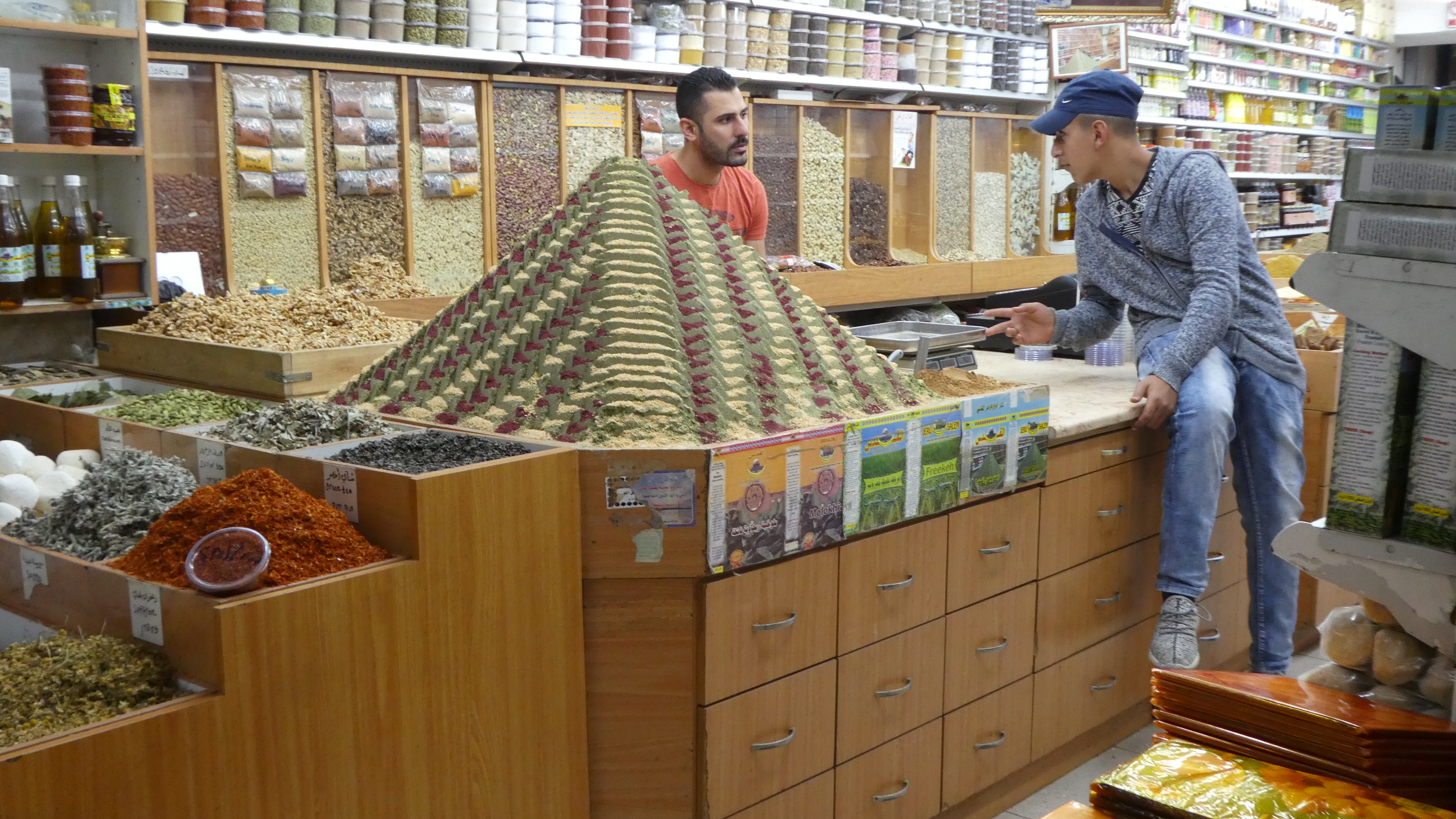
Back in the day, I would roll down from Ramallah or Mount Scopus to Jerusalem and stand before it’s faux mediaeval walls. I would walk through the Damascus Gate into the Old City, grab a felafel sandwich, some figs, or a plate of kanafah, depending on the time of day, and amble contentedly through the alleyways and souks down to the Via Dolarosa, and then up Daoud Street to Omar Ibn al Khatab Square and the Jaffa Gate beyond. Traveling back from West Jerusalem, I would retrace my steps, and always with the same sense of wonder and delight.

It was a journey of the senses – the call of the muezzin and the peal of church bells, the cacophony of the hustle and bustle of the marketplace, the colours of the markets and shops, the aromas of spices, sweets, and cooking meats, the infinite variety of dress and custom of the many faiths, tribes and communities that dwelt therein or, like me, were passing through. If I had time on my hands, I would sit for a while in the gardens atop the Haram ash-Sharif, or wander into the Dome of the Rock or al Aqsa to sit and ponder awhile, or else progress through ecstatic clamour of the Escher edifice that is the Church of the Holy Sepulcher.

The Occupation was relatively new then. I was not oblivious to it, but rather, very aware of its manifestations. I had crossed from Jordan, via the famous Allenby Bridge, and had watched my fellow bus passengers, Palestinians, endure the humiliating searches and questions  of the border police, whilst armed military patrols were commonplace. None expected it to endure, ossify, and drag on for fifty years. There was bitterness, shame, and anger, for the memory of an-Naksa of 1967 was fresh, and the wounds livid, but not the frustration and  hopelessness and the latent and actual violence that prevails today.

But, let’s return to the Damascus Gate.

Damascus Gate Thursday

Damascus Gate Thursday

It has been in the news a a lot of late. The recent and still ongoing Intifada Saki-niyeh – the Knife Intifada – has brought this venerable and famous gate into the world’s focus. It has been the site of many violent confrontations of between Palestinian protesters and Israeli security since  October 2015. Many Palestinians have been killed and wounded in the act of attempting to stab Israelis, and several  Israeli police men and women and civilians have been killed or injured.

In recent years, whenever the Israeli authorities, fearing unrest, prohibit access to the Haram ash Sharif for men under fifty years of age, the Gate has become a de facto place of worship as scores of Muslims pray in the open spaces in front of a gate that has now acquired nationalist and religious significance – most recently, the stand-off in July 2017.

Nazmi Jubeh, a professor at Birzeit University notes that the gate “has become a symbol for the Palestinian national struggle because of its accessibility to Palestinians and the main connecting point for both worshippers and for markets.” See Daoud Khuttab’s article in the Middle East newsletter al Monitor – the piece which inspired me to write this post.

Kuttab quotes Azzam Soud, a well-known Palestinian writer whose stories are often set in Jerusalem. The Damascus Gate, he says, is a recurring feature of Palestinian novels and short stories.

It is the Old City’s biggest, oldest, and most important gate, and the beginning of all roads to the north. Today, it stands beside the bus station that services East Jerusalem and the West Bank, and is the most direct access to the al Aqsa Mosque and the Khan Ezzat souk. Before 1948 and the division of Jerusalem, the gate competed with the Jaffa Gate which was the primary entry point for pilgrims. With the partition line running in front of it, the Jaffa Gate was unusable, but since 1967, has been the portal for tourists, pilgrims, and Jewish worshippers visiting the Kotel. The Damascus Gate remains the main entry for Palestinians.

And it will remain, at least for the foreseeable future, a focus and a locus for Palestinian expressions of faith, identity and resistance.

But as with most things in the Holy City, the Gate has a long historical pedigree that is worth recalling.

Damascus Gate in 1856

Damascus Gate in 1856

In antiquity, there were twelve gates to the city. These were destroyed when the Bablylonians razed the walls and the Temple of Solomon.in 587 BCE. Named for the twelve tribes of Israel, these are now best remembered in Revelations and in the Reverend Gary Davis’ song.

The gate we see today was built in 1537 during the reign of the Ottoman Sultan Suleiman the Magnificent. But its existence is very much older than that, as reflected in its Arabic name, Bab al ‘a-mu-d, the Gate of the Column. That refers to a victory column erected by the Romans in honour of the Emperor Hadrian in the second century. It was Hadrian who ordered the rebuilding of Jerusalem as a Roman city in the wake of the city’s destruction by Titus’ legions in 70CE, during the Great Revolt that saw the razing of the temple and the expulsion of most of the Jewish population. The remains of the Roman gates have now been excavated, and we pass under the lintel of that gate, this being inscribed with the name the Romans gave to Jerusalem, Aelia Capitolina.

The gate is situated in the northwest wall where the road leads to Nablus, and thence, in days long past, all the way to Damascus in Syria. Hence its name in Hebrew, Sha’ar Shkhem  or Nablus Gate, and in English, Damascus Gate. Imagine, travelers of old on foot or horseback and caravans of traders passing under that Roman lintel. And even before Hadrian, pilgrims like the biblical Jesus and his comrades would have entered Jerusalem the Golden through this gate to sacrifice at Herod’s massive and magnificent new temple, having journeyed from Galilee and places north. Saul of Tarsus would have set out from this portal on the fateful journey to Damascus that was to transform him into Paul of Tarsus, Christianity’s first and most celebrated missionary, and the catalyst who transmuted a breakaway Jewish sect into a world- wide religion.

The Roman gate was preserved and built upon during the Byzantine, Muslim, and Crusader occupations of Jerusalem, and was given its present form when under Suleiman’s orders, the walls of Jerusalem were rebuilt and seven of the eight gates used today were constructed. The eighth, the New Gate, was constructed in the mid nineteenth century to give Christian pilgrims swifter access to their Holy Places.

Imagine also then, Guy de Lausignan and Reynald de Chatilon at the head of twenty thousand crusaders setting out for their doomed rendezvous with Salah ad Din on the parched Horns of Hattin. Or Christian pilgrims and holy men walking the long miles through Anatolia and Syria to the Holy Places. Or Kaiser Wilhelm on his grand tour through the Sultan’s domain from Istanbul to Damascus and Jerusalem. In Jerusalem, the authorities opened the wall next to the Jaffa Gate so that he could ride through in state. In Damascus, he visited the tomb of Salah ad Din and considering it a little shabby, donated a new improved model. It is still there, in all its gaudy emptiness , alongside the real deal.

In an earlier post, I recounted the history of the Jaffa Gate, the westernmost of the Holy City’s eight gates. Over millennia, this was the pilgrims’ gate, the entry point for the faithful – for Jews come to worship and make sacrifice at the Temple of Solomon and later of that of Herod; and for Christians to walk in the footsteps of the Christ, and to worship at the oft-rebuilt Church of the Holy Sepulcher and the many other Holy Places that have drawn pilgrims to Jerusalem over the centuries. It is named for the port at which so many of these pilgrims disembarked. See my posts Amazing Grace: There’s Magic in the Air, The Grand Old New Imperial Hotel,  and Messianic Carpet Rides.

Read Israeli Sarah Tuttle Singer’s wonderful  tribute to al Wad Street: My Street Has Two Names. It’s a gem.

© Paul Hemphill  March 2016

Postscript

Here is a brief description of each of the eight gates of Jerusalem, counter-clockwise from south to west:

The Zion Gate: Bearing Jerusalem’s earliest biblical name in Hebrew and English, this gate’s  Arabic name is the Gate of the Prophet David, as the Tomb of King David on nearby Mount Zion, is but a short distance away. This gate leads directly to the Armenian and Jewish Quarters. It is also known as “the Hurt Gate”, a reference to the damage it sustained during a vicious firefight in 1948 when Hagannah soldiers fought and failed to lift the Arab Legion’s siege of the Jewish Quarter. The Quarter was razed to the ground and its inhabitants expelled, and was rebuilt when the Old City was taken by Israel in 1967.


The Zion or “Hurt” Gate

The Dung Gate: Its name derives from the refuse dumped here in olden days where the prevailing winds would carry odors away. Nehemiah 2:13 mentions a Dung Gate that was probably near this one. The gate leads directly to the Kotel, the famous Western Wall, and the Southern Wall Archaeological Park.

The Gate of Mercy: This gate, in the eastern wall of the Haram ash Sharif or Temple Mount is also called the Golden Gate or the Eastern Gate, and has been blocked for centuries.  It is said that when Christ returns in glory, and the dead are resurrected, this gate will be miraculously opened.

The Golden Gate, viewed from Gethsemene

The Lion’s Gate: This is named for the pair of ferocious looking carvings that flank it. They are tigers, the heraldic sigil of the blonde, blue-eyed, Albanian 13th Century Sultan Beybars. It is also called St. Stephen’s Gate, after the first Christian martyr, who tradition says was stoned nearby. Lion’s Gate, which leads to the Pools of Bethesda and the Via Dolorosa became famous during the Six Day War when the IDF stormed through en route to the Haram.

Herod’s Gate: Notwithstanding the name, the infamous Judean King, builder and all-round bad boy had nothing to do with this gate. In Arabic and Hebrew this north-facing gate, which leads to the Old City markets, is called the Gate of Flowers. It is said that the name derives from a rosette carved over it. The north facing gate leads to the Old City markets, and is at the southern end of Salah ad Din Street, the main shopping strip of Arab east Jerusalem.

And finally, The Damascus, New Gate, and Jaffa Gates all which are described in this post.

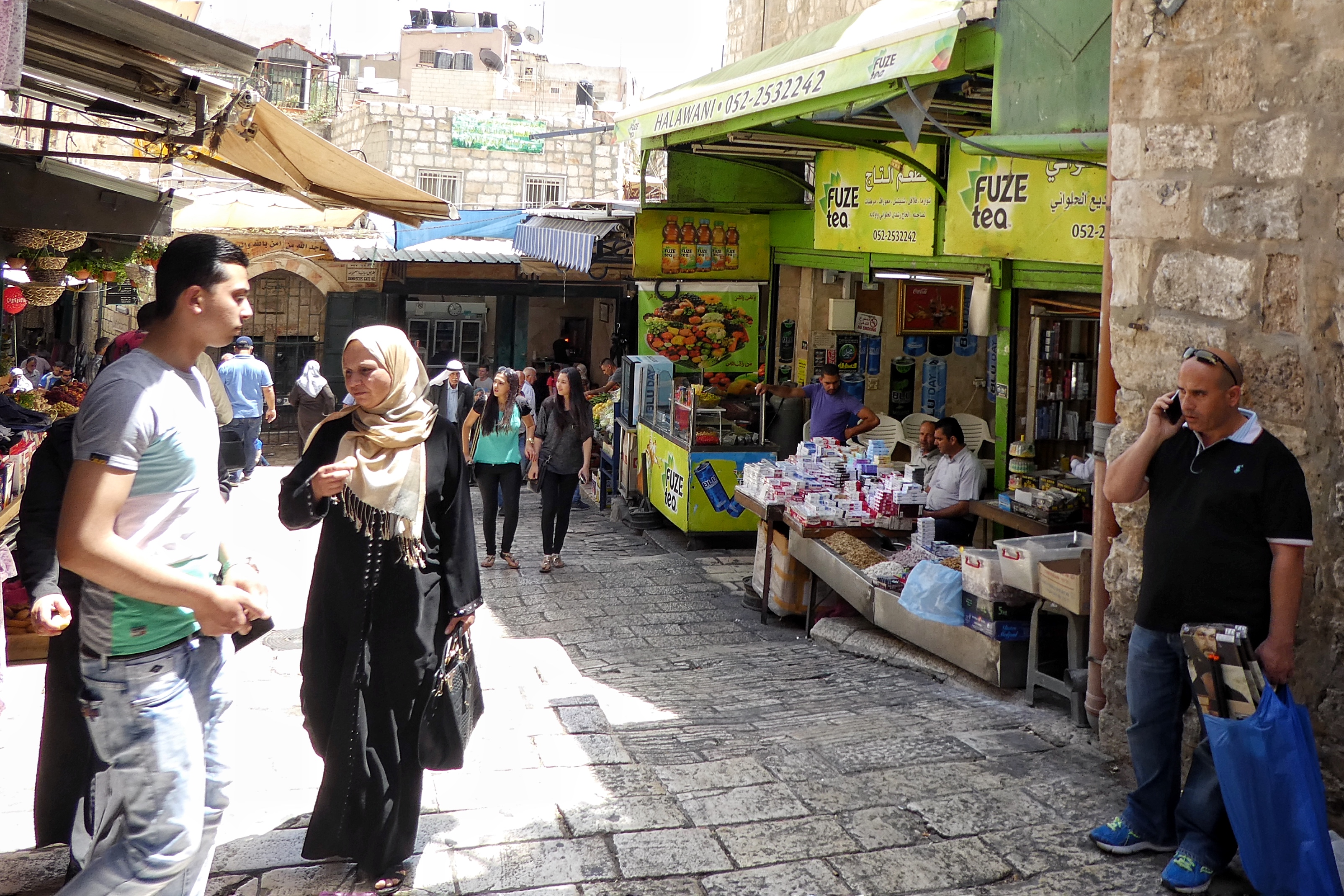
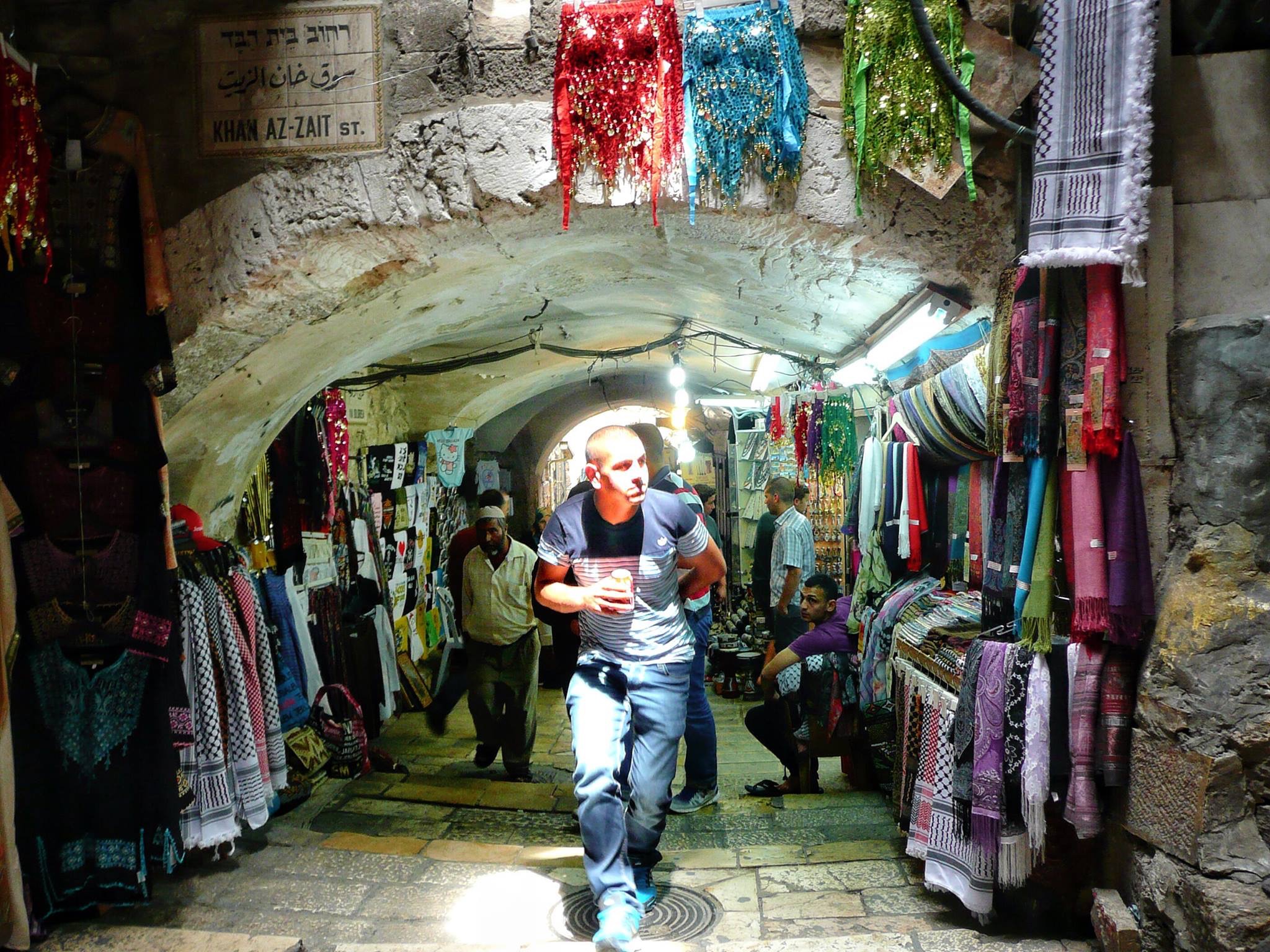
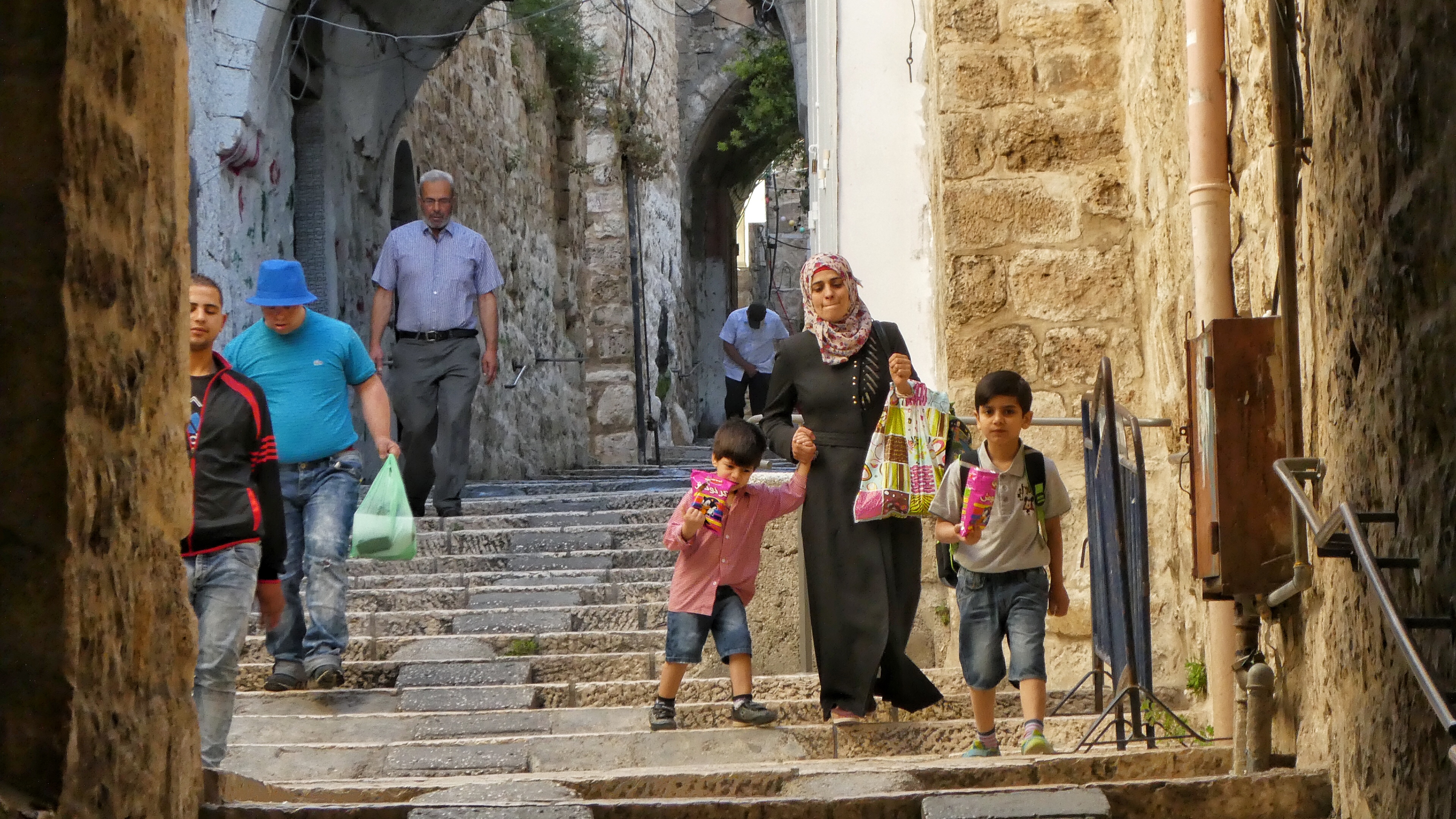
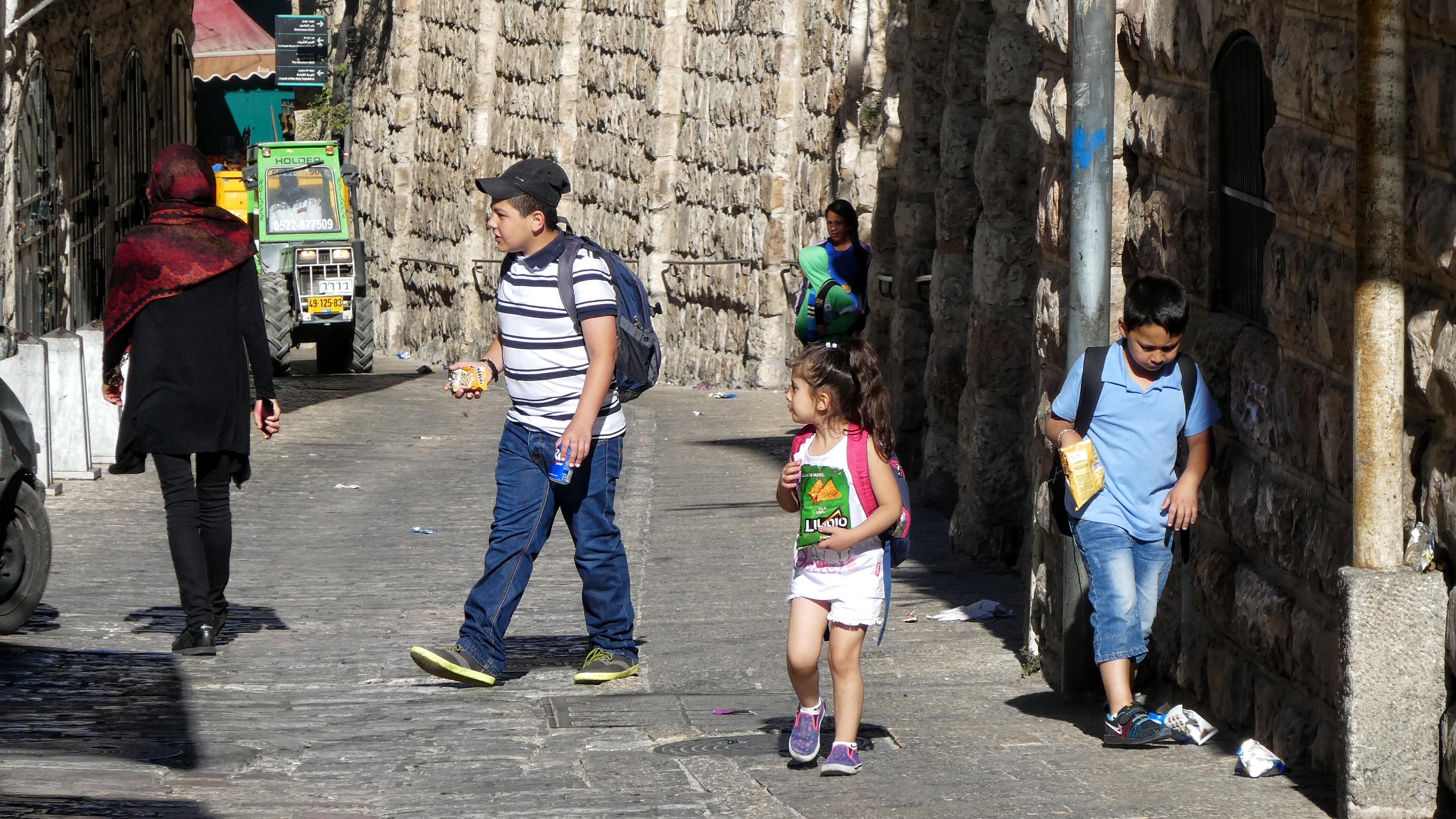
Faces in the Street – images of the Damascus Gate and the ancient Muslim Quarter

Sultan Suleiman Street

Damascus Gate

Damascus Gate

Al Wad Street


Al Wad Street

Khan al Zait


Al Zait Street

Al Wad Street

Via Dolorosa

Via Dolorosa

Al Daud Street

Allah ud Din Street

Allah ud Din Street

Khan al Zait

Khan al Zait


Sic semper tyrannis

You come at the king, you best not miss.
Omar Little, The Wire (after RW Emerson)

The phrase “one man’s freedom fighter is another man’s terrorist” is at once apt, correct, and yet often oversimplified to the point of disingenuousness. The word “terrorist” itself describes its goal. To instill fear in the heart of the enemy. In the past, the target would have been the king, the dictator, the ruling class, and those who served them and upheld their rule. Politicians, officials, solders and policemen. Today, terrorists indiscriminately target whole societies. Irish bombers blasted communities of the rival faith, murdered shoppers, office workers, and pub patrons, as well as soldiers and policemen. Palestinian suicide bombers hit malls and pizza bars in city centres. ISIS, al Qa’ida and the Taliban detonate cars in busy city streets and publicly execute prisoners in callous and calculating “lectures in flesh” (the phrase is civil rights lawyer Geoffrey Robertson’s, from his chilling account of the trials and execution of King Charles I of England and those who sentenced him, The Tyrannicide Brief.).

But targeted and random terrorism has a long historical pedigree. For centuries, it has been the desperate and nihilistic weapon of last resort of resistance and rebellion against perceived oppression and injustice, and against invaders and occupiers.

In the second century BCE Palestine, the Maccabees used assassination in their resistance to the Seleucid Greeks, and a century later, the Jewish zealots, the Sicarii, named for the easily concealed small daggers, paid the Romans in like coin, and ultimately in an insurrection that culminated in the destruction of Jerusalem in 70CE and the scattering of the Jewish race (giving history the emotive and symbolic last exit that was Masada). In an etymological irony that Mark Twain would have been proud of, the present unrest in Jerusalem, a large number of young Palestinians have perished in attempting to stab jewish soldiers and civilians. Their jaquerie is called the “Intifada Sakni-in”, the ‘Knife Uprising – an echo of those long-dead Sicarii “dagger men”.

Nowadays, one would be excused for thinking that “terrorism” and “terrorist” are synonymous with Arabs and Muslims. And a historical precedent reinforces this erroneous assumption. The Hashishan or “Assassins” of Middle East fame (yes, that is where that noxious noun originated) were Muslim men and boys mesmerized and mentored by Rashid ad Din as Sina-n, the “Old Man of the Mountain” (and all this, before Osama in the caves of Tora Bora), and were Twelfth Century  hit-men contracted out to rival Muslim princes in the internecine conflicts that plagued the Levant in the wake of the Crusades and the demise of the great Arab Caliphates.

But the assassin’s knife (and in modern times, the gun and bomb, and latterly cars and trucks) predates these medieval hoods and links the Hebrew rebels of old to the Irgun and Stern Gang who encouraged Britain and the UN to abandon Palestine in 1948, bequeathing most of it to the new state of Israel, and triggering the Palestinian diaspora. European anarchists and Irish rebels and loyalists were adept at shootings and ambushes. In Algeria, during the ‘fifties, the nationalist FLN and the “colon” OAS shot and bombed each other and those unfortunates caught in the crossfire. The IRA perfected the improvised explosive device that today has crippled thousands of American, Canadian, and Australian soldiers in Iraq abd in Afghanistan. Hindu Tamil separatists of Sri Lanka introduced the suicide bomber, an economical and efficient weapon against soft (civilian, that is) targets, deployed today by Islamist killers in the streets of London and Lahore, Damascus and Dar es Salaam, Jerusalem and Jakarta. Whilst Arabs – and particularly Palestinians may have given the world the hijacking of aircraft – a tactic that fell into disuse due to diminishing political returns and rapid response forces – other Arabs showed us how to fly them into public buildings as the whole world watched in horror and disbelief. The shockwaves of this one are still reverberating through the deserts of the east and the capitals of the western world.

In going up up against their occupiers, the Palestinians have an old heritage. In my old country, Boudicca and Caractacus fought a losing battle against the Romans in Britain during the First CE. The Roman historian Tacitus ascribed to a vanquished chieftain the memorable words  “solitudinem faciunt, pacem appellant” – they make a desert and they call it peace. After the battle of Hastings in 1066, the defeated Saxons pushed back against the Normans and brought the genocidal wrath of William the Conqueror down on their heads with the devastating “Harrying of the North”. The Green Man and Robin Hood legends are said to be a retrospective and romanticised remembering of the Saxon resistance. Warrior fugitives from that failed guerilla war fled as far as Constantinple, where many joined the Emperor’s acclaimed Varangarian Guard, (see When Harald Went A Viking) 

In the streets and the countryside of Ireland, my parents’ birthplace, the United Irishmen, Fenians, Free Staters, IRA and Unionists fought against the redcoats, tommies, and black and tans of the British Army. Fought amongst themselves, fought against each other, and killed and were killed in their centuries long war of liberation. And in my adopted country, indigenous Australians fought a futile frontier war against settlers and soldiers just as native Americans did, albeit on a much smaller scale, and paid the price in hangings, massacres, poisoned wells, dispossession, marginalization, and “stolen children”. The legacy of those times lingers still – see The Frontier Wars – Australia’s heart of darkness.

In Central America, Juarez led the Mexicans against the French, and Sandino, Nicaraguans against US marines. Spaniards rose up against Napoleon’s forces, giving the world the word “guerilla”, or “little war”. Russian partisans ambushed the Grande Armé and the Wehrmacht. Throughout occupied Europe, the very term “resistance” became synonymous with the heroic unequal struggle against tyranny. In another of history’s ironies, muqa-wamat, Arabic word for resistance, unites sectarian rivals Hamas and Hizbollah against Israel.

And not just resistance to invasion and occupation, but also against oppression by one’s own rulers. Religious tracts tie themselves in knots reconciling the obligation to obey our rulers with the right to resist and overthrow those that rule badly. The unequal struggle against tyranny – or what is perceived by the perpetrators as tyranny – is the cause that inspires men and women to desperate acts.

The most celebrated in fact, film and fiction is the death of Julius Caesar at the hands of peers who feared that he intended to usurp the ostensibly democratic Republic (ostensible because democratic it was not) and institute one-man rule. That ended badly for the conspirators, and for Rome, as it precipitated years of civil war and ultimately, half a century of empire).

In 1880 the reforming Czar Alexander II of Russia, discovered the hard way that liberating the serfs did not inoculate himself against the bomb that took his legs and his life. His fearful and unimaginative successors hardened their hearts and closed their minds against further reform. setting in train the crackdown on dissent and democratic expression that led eventually to the storming of the Winter Palace on Petrograd in 1917. Narodnaya Volya, the killers called themselves – the People’s Will. And that is what terrorists do. They appeal and owe fealty to a higher court, a greater good, a savage God.

So it was when student and Serbian nationalist Gavril Princip assassinated Archduke Ferdinand of Austria-Hungary in June 1914 and ignited the spark that lit the conflagration of World War 1 which precipitated the demise of the old European empires.

So too when John Brown and his sons brought their broadswords to bear on slavers and their sympathizers and made a date with destiny at Harpers Ferry. Their famous raid may or may not have accelerated the downward slide to the secession and civil war that erupted the following year, but it provided a moral and symbolic prelude and also, the resonating battle hymn of the republic. John Wilkes Booth bookended this bloody era with his histrionic and public murder of Abraham Lincoln, shouting “sic semper tyrannis”, “thus always to tyrants,” attributed to Brutus at Caesar’s assassination – today, it’s the Virginia state motto. Brown and Booth were quite clear in their motives. As was were the segregationalist shooters who did for African Americans Medgar Evers and Martin Luther King. Less so were the killers of the Kennedy brothers in the sixties.

To conclude, sometimes that savage, rebel God is one of faith, sometimes, of blood and soil. In some instances, it is revenge for wrongs real and imagined – the reasons at times lost or forgotten through the passage of time and fading memories. And often, “the cause” is corrupted by the immoral economics of illicit commerce, including contraband, kidnapping, blackmail and extortion. Sometimes all merge in an incongruous hybrid of religious passion, ethic identity, libertarian or anarchistic fervour, and protection racket. As was the case in Northern Ireland, in Lebanon, in sub-Saharan Africa, and currently so in Syria and Iraq.

But most times, terror and turmoil is simply a political weapon planned, targeted and executed as a mechanism of regime change. Rebellion, revolt and revolution. Resisting, opposing, challenging, confronting and defeating the central authority. The seizing, holding, consolidation and keeping of political power.

And one thing is for sure. The outcome is unpredictable. History does not move in straight lines, but often follows a bitter and twisted path. Cliched as it is, the phrase “be careful what you wish for” is an apt one. And when, as Bob Dylan sang, “the line it is drawn, the curse it is cast”, there is no going back. To quote WB Yeats’ famous lines, “all is changed, changed utterly”.

Terrorism, then, can shift the course of history. If we were to stumble into the swamp of alternative histories, imagine what might of happened

If Caesar had walked home from the senate on the Ides of March
If Lincoln had been able to guide the Reconstruction
If the reforming Czar had introduced democratic government to Russia
If Gavril Princip’s shot had missed the archduke
If Kennedy had returned from Dallas
If John Lennon outlived George Harrison
If Yitzak Rabin had left the peace concert in Tel Aviv
If the Twin Towers stood still

To quote “Stairway to Heaven”, a curiously apposite title given the millenarian mindset of many terrorists, “Oh, it makes you wonder!”

Amazing Grace : There’s Magic In The Air

“If I forget thee, Oh Jerusalem!”

Jerusalem, The Golden. The Arabs call the city ‘Al Quds’, “The Holy’. It was deemed sacred from pre-history. Iconoclast scholars suggest that Jerusalem was actually the holiest place in Islam, and that like Islam itself and the Prophet, Mecca and Medina were retrofitted to suit the conqueror’s narrative. A city of the mind as much as of this earth, it haunts the prayers and dreams of three faiths, and to this this day, it is coveted and contested. “The air above Jerusalem”, wrote Israeli poet Yehuda Amichai, “is filled with prayers and dreams, like the air above cities with heavy industry. Hard to breath”. Arthur Koestler wrote: “The angry face of Yahweh is brooding over the hot rocks which have seen more holy murder, rape and plunder than any other place on earth”. Perhaps it is because Jerusalem is mankind’s number one hot spot! “There’s this thing that happens here, over the hell mouth”, says Buffy, “where the way a thing feels – it kind of starts being that way for real. I’ve seen all these things before – just not all at once”. More Jews have probably died violently in Jerusalem than in the Holocaust. And countless folk of other faiths have likewise perished.

Paul Hemphill, A Brief History Of The Rise And Fall Of The West

Jerusalem is all about faith and passion, and there is no city on Earth that people get more passionate about. The light is luminous. In high summer it almost shimmers. The very air is full of prayer and politics, passion and pain, and the rocks and stones virtually sing a hallelujah chorus of history. I am not a religious person, but I cannot help getting excited by the place –  although I do not transcend to transports of delight and delirium.

These include a group of mental phenomena involving the presence of either religiously themed obsessive ideas, delusions or other psychosis-like experiences that are triggered by a visit to the city of Jerusalem. It is not exclusive to one particular religion or denomination, having affected Jews, Christians and Muslims from many different countries and backgrounds. In The Simpsons episode The Greatest Story Ever D’ohed, the Simpsons travel to Israel where Homer is afflicted with the syndrome, the illness and its effect on Homer being one of the plot’s central themes. In The X-Files episode Revelations, agents Scully and Mulder try to subdue a man afflicted with a form of the syndrome.  read all about in Messianic Carpet Rides

It is Shabbat in Jerusalem, and there’s magic in the air.

This morning, Enya wafting across the square in front of the Imperial Hotel. This afternoon, a Gregorian Chant rendering of REM’s “Losing my religion”. This evening, Haredim hustle through Omar Ibn Al-Khatab Square just inside the Jaffa Gate on the way to the Kotel, and the walls in Royal David’s Citadel are alive with Son et Lumiere, a weird blend of classical and faux movie music, retelling the ageless story of this ageless old town.

The Kotel, or Western Wall, is open to all, twenty four seven. Women now have their own section – a hard-fought for innovation. And Jews of all courts and communities share the space without rancour, each tribe differentiated by their interpretation of the Holy Torah, and by their garb, as determined by the fashion codes of 18th Century forebears in Eastern Europe and Mitteleuropa, heedless of the Mediterranean climate.

This, the only variable remnant of the Herodian Great Temple, is Judaism’s Holiest Place. And down below, in the tunnel, one can now actually walk the wall’s fundament (and view the biggest house-brick in history). This too is now a sacred site, the more holy the closer one gets to the location of the long-destroyed Holy of Holies. Tucked away in in a courtyard in the heart of the Arab Quarter is yet another, tiny remnant called appropriately The Little Wailing Wall. It’s location, up a narrow deserted alleyway is one Jews where do not venture. We had the space all to ourselves.

Immediately above the Kotel, on Temple Mount, is the Islam’s third holiest, Al Haram ash Sharif, the “noble sanctuary “. It is said that the Prophet alighted here on his night journey to Jerusalem on Borak, the winged horse with a human face, conversed with Abraham, the father of the three faiths, and thence, ascended to Paradise. Revisionist historians suggest that Jerusalem may indeed have been the primary Islamic city, sacred from times long forgotten, until Mecca and Medina were retrofitted to suit the conquering Muslims’ desert narrative.

Non-Muslims can enter the Haram for strictly limited times (three hours a day, on five days of the week), and then, only through the Maghrebi (or Western) Gate, which ascends like an unsightly concertina from the right of the Kotel Plaza. Admittedly, the Haram custodians are wary of would-be desecrators and of Jewish religious elements seeking to pray on the Mount (haram!), and set precedents for the rebuilding of The Temple. But they do themselves and Islam no favours when the other People Of The Book permit pilgrims of all persuasions and passions to enter their precincts.

And passion is the name of the game.

On the Church Of All The Nations, at the foot of The Mount Of Olives, pious of all nations prostrate hysterically across the stone where Jesus wept and prayed in the Garden of Gethsemene. There is bliss in the Filipino pilgrims choraling ‘Amazing Grace’ in the Basilica of St. Anne. There is ecstasy In The Church of the Holy Sepulcher, an Escher jumble of chapels and chalices. Russian pilgrims, most of them babushkas, led by a priest in black, and looking like they have just come in from their villages on the steppe, clutch their many wooden crosses and clamour at the penultimate Station Of The Cross. A young man dressed like Jesus sits in a terry-towel habit of white, beard and hair looking for all the world like the Jesuses in ‘GodSpell’ and ‘Super Star’. Groups gather in clumps, cabals, and covens and read the Word to each other. A kind of ecclesiastical book club with only one book.

Over the centuries, The Church, as it is called, has seen much biffo and bloodshed as three faiths butted each other for dominance. At times, knives and guns have been drawn. The Ottomans sent in troops at one time to restore order, and they didn’t pussyfoot around. They used their weapons and scores of faithful were killed. Nowadays, there is the occasional dust up with monks from the opposing teams going at each other with baskets and brooms. There is a ladder below the middle window that has not been moved for three hundred years because no one can agree as to which faith can remove it. The right hand door was sealed up several hundred years ago to control (and charge for) pilgrim access. Nowadays, entry is free.

It’s that centuries old conflict between the three custodian faiths, the Roman Catholics, the Greek Orthodox, and the Armenians. They each have their own chapels within the church. The Greek’s have the glitziest. Historically, the first two have always been the strongest, backed by the French and the Russians respectively! It was one of the many causes of the bloody and arguably unnecessary Crimean War. Russian influence prevails still with state-supported legions of pilgrims who throng the Via Dolorosa. The Ethiopians now have a small presence. They have be given a tiny little chapel ON THE ROOF!  And there is a rival Tomb of Christ just outside the Old City walls in Arab East Jerusalem , patronized mainly by Protestants. But that is another story.

You know you are near the the Church of The Holy Sepulcher because the aroma of frankincense and candle wax hits you before you reach the it. The Pope arrives for a flying visit next week, so there are banners and all manner of preparations taking place to greet His Holiness. Outside the church of churches, still the basilica that the crusaders restored to Christendom in a welter of blood and violence, shops hawk kaffiyehs, kippas and headscarves, icons, crucifixes and menorahs. Jerusalem is economically ecumenical. And the patronage of pilgrims unites the divided sects of the Old City in a common purpose that prevails regardless of the political impasse, positions, and non-negotiables that divide their political and pastoral leaders.

At the Jaffa Gate, we look out from our balcony in The grand old New Imperial Hotel, a late 19th Century mix of trash & treasure, five-star history, and ten-star views. The Kaiser slept here in the days when Germany had an emperor. His bust sits in the entrance hall (on the floor, strangely enough, but nothing is surprising in this Fawlty Towers of a hotel). The old gate was demolished to let him and his entourage pass through. He didn’t want to walk like Omar al Khatib did when he first entered al Quds and claimed the city for Islam. British General Allenby walked too, and may have even stood on this same balcony in 1918 when he addressed Jerusalem and declared it liberated from Turkish rule. He left the the best news for the politicians to reveal a while later, and for the world to agonize over ever since.

And meanwhile, back in the now: Jaffa Gate, Shabbat.

The pilgrims are still flowing though like schools of fish, with matching hats, and happy, awestruck faces. Filipinos and Brazilians, Indians and Americans. And in a poignant sort of irony, Germans. Gloria in excelsis Deo! Tourists and backpackers amble through in daggy dress, maps and cameras in hand, all mini-back-packs and sun hats. Why do tourists dress so badly? And why in bright reds and blues that make them stand out so in photographs! Thank god for Photoshop!

Jews of all sects walk by all day and all night, in a myriad of hats and coats, the men in their devotional array, their ladies in plain garb. Young men walk out in groups of black, locked in serious discourse, young women, in many shades of sober fashion, yet all striving somehow for an individual voice. Young folk don bright plumage regardless of the chains of faith. Young soldiers ramble by, a hotchpotch in khaki and beige, half with handbags and sandals, clutching their mobile phones, and half with weapons and in army boots. A reminder that this is at once a land of fable and also one on constant alert. And just to prove this, on occasions, noisy groups of stotting teens with Israeli flags gallivant through the Old City, and one time, semi-automatics, “trying it on” with the ever vigilant Border Police who endeavour to keep the peace on this here frontier. Unmarked white vans, and incongruously, horse floats, are never far behind to foil these attempts to mark territory.

Yes, Jerusalem is all about faith and passion, and there is no city on Earth that people get more passionate about.

© Paul Hemphill 2014.  All rights reserved

image

Read more about Jerusalem in In That Howling Infinite: Oh, Jerusalem, A Middle East Miscellany, and A Short History of The Rise and Fall of The West