Ah, you loved me as a loser, but now you’re worried that I just might win
You know the way to stop me, but you don’t have the discipline
How many nights I prayed for this, to let my work begin
First we take Manhattan, then we take Berlin
L Cohen
The second coming is certainly interesting. President Donald Trump doing everything he said he’d do – in spades.
His proposal for the reconstruction of the destroyed enclave of Gaza is, as Israeli president Benjamin Netanyahu says, out of the box. It looks like a case of “you guys have had years to sort this out for yourselves! Now let a very stable genius and the greatest nation in the universe to have a go”.
But is it an imperial tantrum or an actual initiative? As Israeli commentator Alon Pinkas states in the article republished below, it is incomprehensible, impractical, illogical, unviable – and illegal. He writes:
“So what does Trump want? Distraction. He thrives in the chaos and constant distractions he creates … Trump is a preeminent agent of chaos. That’s a trademark he has always paraded, boastfully and defiantly. As he said he would, he is actively generating and promoting chaos in America, discord within alliances, and is out to undermine the world order. Agents of chaos sow chaos. It’s that simple. They instill discordance, confusion, controversy and uncertainty. That’s a modus operandi, not a tailored policy or crisis management technique. Agents of chaos and anarchy are by definition out to disrupt the status quo by floating outrageous ideas, based on a simple principle: Everyone viscerally understands the status quo has exhausted its usefulness, more-of-the-same doesn’t work anymore”.
Juxtaposed to this article, we also republish an opinion piece by British broadcaster and journalist Jonathan Sacerdoti. He reckons that Trump’s proposal is at once breathtaking and groundbreaking. I’d like to have some of what he is smoking! But then again, maybe not …
Trump said in the Oval Office that he wants Palestinians to leave Gaza, and that ideally they would not return to the war-torn region. But the ambitious plan is not about to be implemented. Gazans, who survived 15 months of punishing attacks by Israel, largely don’t want to live in exile, and Trump isn’t going to send US troops to push almost 2 million people out of the Strip. Nor will Egypt and Jordan go along with it, despite Trump’s confidence that their reliance on US aid and military support gives him enough leverage to push them to take in massive numbers of Gazan refugees. For both countries, Trump’s proposal crosses red lines.
It is all probably a ploy to “change the game”, and perhaps, to strong arm the wealthy Gulf Arabs into financing Gaza’s reconstruction – though not a dollar will be offered by anyone until Hamas is out of the picture. As for Jordan and Egypt taking the ejected population, they both depend on US economic and military aid, so there’d be heavy Trumpian pressure on them too, though neither are keen to offer the Gazans a home: from past experience, they have no desire to import potential security threats from thousands of exiled jihadis and their families and hundreds of thousands of traumatized and angry refugees.
Meanwhile, the world justifiably hyperventilates in reaction to Donald Trump’s statement that the United States will “own” a Gaza Strip that has been ethnically cleansed of Palestinians”. Indeed. The left is hysterically outraged and the right hysterically jubilant. There is ignorance on all sides of the land and its people, their history and culture, needs and aspirations, their resilience and determination to have and to hold.
How people, especially in Gaza, can be so glibly reduced to chattels with no history, no identity, no connection to their land. At least no connection as deep as Trump’s connection to real estate. The two property tycoons are advancing the American Dream for Palestinians – nice big houses, well-paying jobs, upward financial mobility – not the Palestinian dream, which is to return home. They are also selling the renovator’s dream for Gaza: a knock-down-rebuild.
For all his talk about his and others’ “humanitarian hearts”, he probably gives little thought to them as human beings – he asks the world to reframe the rubble of Gaza as a real estate opportunity. He has neither empathy for a people nor an understanding of history and probably sees no personal need nor desire for either. He does not get the power and importance of blood and soil, of religious faith, and a people’s attachment to their homeland, be they Arabs or Israelis. Nor does he understand nor care that to many Arabs and Israelis, this, the modern world’s most intractable conflict, is both existential and sacred. For them, it is much, much more than a real estate deal, but part of their lives and their identity. It does not have a monetary value. See the Qatari carton below, hi ‘ashya’ la tushtaraa.
But never mind that. As republican congresswoman and MAGA acolyte Nancy Mace said in support of Trump’s proposal, “let’s turn Gaza into Mar-a-Largo!”
هي أشياء لا تشترى hi ‘ashya’ la tushtaraa Some things are not for sale. Qatari cartoon
Impractical, Incomprehensible, Illegal: Trump Traps Netanyahu and Sows Chaos With U.S. Takeover Plan for Gaza
Trump’s plan for the Gaza Strip that includes the relocation of 2 million Palestinians is not logical or viable. Whether it’s an imperialist tantrum or an actual ‘out of the box’ initiative, there is really no way to endorse, refute or examine it
Ah, you loved me as a loser, but now you’re worried that I just might win
You know the way to stop me, but you don’t have the discipline
How many nights I prayed for this, to let my work begin
First we take Manhattan, then we take Berlin
Leonard Cohen
You have to admire the noble attempts to instantly try and make sense of something U.S. President Donald Trump says one day, only to furiously rebuke and deride him the next. Oh wow, the sheer creativity and sublime “out of the box” innovation of proposing to relocate over 2 million Gazans and then “take over Gaza.” Genius.
Makes sense, right? Of course it does, because Gaza truly is uninhabitable. Oh no, but it’s not practical or viable. In fact, it’s incomprehensible.
So what does Trump want? Distraction. He thrives in the chaos and constant distractions he creates. Did he not impose 25 percent tariffs on Canada and Mexico, and then grant them a 30-day extension since they promised they would do the things they are already doing?
Trump is a preeminent agent of chaos. That’s a trademark he has always paraded, boastfully and defiantly. As he said he would, he is actively generating and promoting chaos in America, discord within alliances, and is out to undermine the world order.
Agents of chaos sow chaos. It’s that simple. They instill discordance, confusion, controversy and uncertainty. That’s a modus operandi, not a tailored policy or crisis management technique. Agents of chaos and anarchy are by definition out to disrupt the status quo by floating outrageous ideas, based on a simple principle: Everyone viscerally understands the status quo has exhausted its usefulness, more-of-the-same doesn’t work anymore.
As for the Israeli-Palestinian issue, the endless, irrelevant and incoherent mumbling about “the two-state solution” is just an exercise in futility. Trump only said what many are thinking, right?
Yet still, you might have missed three critical points in Tuesday’s reality TV sitcomin the East Room of the White House. First, until the United States “takes over Gaza,” the cease-fire and stage two of the hostage release agreement need to continue – otherwise how will the Americans take over Gaza?
Second, the United States is applying “maximum pressure” on Iran to compel it to engage in a new nuclear deal. So, no U.S. war in Iran for the time being.
That’s not a bad harvest for two weeks by the “America First” president of a superpower that has always prided itself on being “a reluctant empire.” Are these imperialist tantrums, common-sense truisms aimed at provoking and stirring emotions, a coherent plan? Or are they just outlandish and left-field comments with a life expectancy of several days at best? It could very well be all of the above.
The realtor-in-chief came up with an amazingly simple idea: empty the Gaza Strip so that reconstruction can begin. This real-estate development process evolved throughout Tuesday. First Trump called it a “demolition site,” repeating things he said a few days earlier about how the devastated-to-rubble Strip was uninhabitable. Then his aides said Gaza effectively required 15 years and billions of dollars for reconstruction, so the Palestinians would have no alternative but to move out. That makes sense when you come from real estate.
By noon, Gaza was a “hellhole,” which means that 2 million Palestinians must quickly move to Egypt and Jordan – who, according to Trump, will agree to accept them.
By late afternoon in the White House, Trump was proclaiming that America will take over and turn Gaza into “the Riviera of the Middle East.” But if the Palestinians are relocated, who will this Mar-a-Gaza be built for? Ah, that’s easy according to Trump: “Palestinians, mostly,” though it would also be “an international, unbelievable place.” So maybe Greenlanders fed up with the cold, or Canadians who want an NHL expansion team in Rafah.
Even if you’re not instinctively dismissive of or resistant to Trump’s idea, the total lack of details and specificity make it impossible to endorse or repudiate.
There is no reference to legal matters: By what power and authority can the United States take over Gaza? Logistics: How do you relocate 2 million people, most of whom may not want to leave? Political: Who will manage this process? Financial: Who will fund this monumental undertaking? Regional: Most Arab countries have already vehemently rejected the idea.
Beyond the intuitive inclination to deride the concept, there is really no way to endorse, refute or examine its feasibility. So here’s the bottom line: Do not try to find logic, coherence or patterns. Just wait a few weeks. It may all change.
What Netanyahu did not get
Throughout his career, Benjamin Netanyahu always followed the sage advice of Yogi Berra: “When you come to a fork in the road, take it.” Years of solipsism, manipulation, deceit, duplicity, confabulation, interpolation and retraction, all woven into a modus operandi that provided him with success.
The indecision-maker would always come up with a speech, delivered with a tormented face and melodramatic baritone, describing the excruciating dilemmas he faced before making no decision. But not making a decision is a decision in and of itself, and he was good at it. Now Trump, for better or worse, is making decisions for him.
Netanyahu’s jig is up. He was nothing more than a prop in the Trump White House show. Trump upended the playing field on Gaza, Iran and everything else. It may not be sustainable, but as of today Netanyahu has to play by Trump’s rules.
Before going to Washington and after his meeting with Trump, he was presented with a fork in the road, a binary choice: desert the hostages, resume a goalless war and save his government in the immediate time frame. Or adhere to the cease-fire agreement he signed, move on to stage two and risk losing his ruling coalition.
Sometimes, making contradictory promises and giving inconsistent assurances is impossible to square. Now Netanyahu will try to market a mirage, according to which he was in on Trump’s plans. Maybe he was.
How does that change the future of Israeli-Palestinian relations? It doesn’t. Can he now annex the West Bank? He cannot. Does it add stability and predictability to relations with the United States? It doesn’t.
So what did Netanyahu get out of his Washington trip? A few days reprieve for his coalition, during which he can persuade them that Trump proved he’ll allow Israel to resume the war. And did Trump do that? No
Some moments in history demand recognition, not just for their weight in the present but for the seismic shifts they herald. The Trump-Netanyahu press conference was one such moment – not a perfunctory diplomatic exercise, nor a routine reaffirmation of alliance, but an unambiguous declaration of intent. It was a disruption of long-entrenched, failed orthodoxies and the unveiling of a vision that dares to reimagine the Middle East in starkly different terms.
For decades, world leaders have clung to exhausted formulas – peace processes built on illusion, agreements predicated on fantasy, and a wilful refusal to acknowledge the fundamental realities of Palestinian rejectionism and terror. That era is now over. Standing together, the President of the United States and the Prime Minister of Israel made it unmistakably clear: they are not here to mollify, to equivocate, or to perpetuate the cycles of appeasement that have long defined western diplomacy towards the Arab-Israeli conflict. They are here to reset the board entirely.
Amid the declarations that emerged from this historic moment, one stood above all: Trump’s unequivocal statement that the goal is not to reform Gaza, not to manage it, but to remove its population entirely. No more illusions of Palestinian self-rule, no more diplomatic contortions to accommodate an irredeemable status quo. Trump’s is not another failed experiment in Palestinian self-rule – but a move to dismantle the population that carried out the most brutal attack on Jews since the Holocaust and to relocate them elsewhere.
The gravity of this pronouncement cannot be overstated. As Israeli commentator Amit Segal astutely observed, had the hard-right politician Itamar Ben-Gvir proposed such a policy as part of coalition negotiations merely two years ago, it would have ignited an international firestorm. Yet here it was, calmly, deliberately articulated as the official position of the most powerful nation on Earth.
Nor was this an offhand remark – no Trumpian improvisation to be explained away later. The president read from prepared notes, delivering the statement with the deliberation and gravity of a policy long in the making. This was not casual hyperbole, nor an idle provocation; it was a calculated, official pronouncement. It was an act of political theatre designed to break the bubble of denial and intransigence.
But that was only the beginning. Alongside this, Donald Trump laid out an unambiguous multi-part framework: no to a Palestinian state. The old paradigm, a fixture of failed diplomatic orthodoxy, is now irrelevant – a fantasy proven ever more unworkable each time it has been forced into action. Yes to an enduring peace with Saudi Arabia – without Palestinian preconditions. The old linkage between Arab-Israeli normalisation and Palestinian statehood is gone, though the Saudis swiftly denied this. Yes to permanently ending Hamas and ensuring Gaza can never again pose a threat. The destruction will be total. There will be no ‘rebuilding’ for Hamas to rule over, only American led efforts. Yes to stopping Iran’s nuclear ambitions – by any means necessary. Iran will be weakened, its regional reach crushed.
This is not a strategy of containment, nor an effort to sustain the perpetual diplomatic holding pattern that has defined western policy for decades. It is a vision of finality – an approach that seeks not to manage conflict but to bring it to a decisive and irreversible conclusion. If Obama was awarded the Nobel Peace Prize less than eight months into his presidency, Trump must surely be worthy just three weeks into his.
Trump’s ability to impose his will upon seemingly intractable situations is no accident. He understands that power is not merely about policy but about the mastery of organised chaos – the capacity to disrupt, to destabilise, and in doing so, to force a new reality into being. He has demonstrated time and again that resistance to his demands – whether from allies or adversaries – eventually bends to his will. Just ask Mexico, Canada, or the growing list of others. The question, therefore, is not whether this plan is feasible. The question is how long it will take before the world accepts that it is already in motion. Trump’s pronouncement is the emperor’s new clothes of Middle Eastern geopolitics: a reality that exists the moment he dares to name it.
Trump is set now to meet with Egypt’s President and Jordan’s King – two leaders whose cooperation will be critical in reshaping Gaza’s fate. These are not symbolic meetings. They show the seriousness of his intent, and are part of a rapidly unfolding strategy. If past is prologue, their initial resistance will give way to accommodation.
Meanwhile, Netanyahu stood beside Trump not as a mere ally but as a statesman fully aligned with the vision before them. He was not a leader reacting to a surprise American policy shift, but the co-architect of a new regional order. Together, these two men have already upended decades of Middle Eastern diplomacy with the Abraham Accords. What they now propose is even more ambitious.
Furthermore, by means of yet another executive order, Trump gave a forceful rejection of longstanding UN biases against Israel, removing financial and diplomatic support from institutions that have systematically worked against Israel’s legitimacy on the world stage. He cut all US funding to UNRWA, citing its infiltration by designated terrorist groups and the involvement of its employees in the 7 October attack. This move effectively ends American financial support for an agency long accused of fostering anti-Israel narratives and aiding Palestinian terrorism. The order also withdraws the United States from the UN Human Rights Council (UNHRC), halting American participation in a body that has consistently shielded human rights abusers while disproportionately targeting Israel. In addition, the US will conduct a review of its membership of UNESCO, withholding its share of funding and assessing the body’s history of anti-Israel bias, including its efforts to erase Jewish historical ties to significant sites like the Temple Mount and the Western Wall.
Trump’s vision will terrify those who have grown comfortable with the status quo. It will unsettle those who prefer diplomatic inertia to hard truths. And it will enrage those who have built careers, reputations, and fortunes upon the perpetuation of the unsolvable. But what he and Netanyahu propose is not reckless; it is reality-based. It acknowledges the unspeakable truth that policymakers have long whispered but never dared articulate: that Gaza, under its current governance and population, is a failed experiment that cannot be salvaged.
Ever the salesman, Trump frames this all as an opportunity for Gazans to build peaceful, prosperous lives – just somewhere else. Many will recoil at the audacity of this proposition. But is it not more audacious to continue pretending that Palestinian self-rule in Gaza can exist without terror, that this small strip of land under continued Palestinian rule can be anything other than a launchpad for perpetual war?
History will remember this moment not merely for what was said, but for what it signified: the point at which two leaders, long derided by their critics, once again proved that their vision is neither naïve nor impractical, but bold, comprehensive and daring.
Jonathan Sacerdoti (born 1980) is a British broadcaster, journalist, and TV producer. Born in London, his father was a Holocaust survivor, and his grandfather had been an Italian Rabbi.
The Gaza quagmire is a forever war without winners but with the ceasefire yet to go into effect, if indeed it actually happens, Hamas and its supporters are already declaring victory. As the ceasefire was announced, senior Hamas leader Khalil al-Hayya responded by praising the October 7 massacre as a major achievement that would be taught with pride to future generations of Palestinians. He went on to say that the next step is to rid Jerusalem of all Jews. In Gaza, fighters are openly displaying weapons and firing off “Happy shots” into the air accompanied by the takbirs of cheering onlookers. There are celebrations in the West Bank and in Teheran and Kabul whilst social media resounds with triumphalism by Muslims and western progressives alike. Critics argue that as the deal doesn’t require Hamas to be dismantled. this “victory” sets Gaza and Hamas up for the next war.
Commentator Armin Rosen wrote in Unherd on 18 January:
“Hamas’s reaction to the ceasefire agreement, with its leaders celebrating amid devastation, raises fundamental questions about the meaning of victory. Are wars still won by the usual measures of blood and territory, or is victory now more notional and slippery, a condition existing in the mind above all? Given the sheer scale of destruction over the past year, it seems crass for either side to claim victory. And as one Israeli official told me in early 2024: “You have won when no one has to ask whether you have won or not.”
An end to the war is a long way off and a long-term peace agreement of any kind between Israel and the Palestinians remains a hope and a dream, and in this long and bitter conflict hopes and dreams have so often ended in nightmares. The prospective ceasefire will bring relief and also, grief, to both Israelis and Palestinians, but a large majority of each, in their post-October 7 world, see the conflict as a zero-sum game with no end to it except victory for their side.
If this is a victory, we’d hate to see what defeat looked like.
We republish below an appraisal of the circumstances that have produced the prospective ceasefire at this particular stage in the present conflict and including the realities of multiple battlefields and the wider regional and global events that have compelled it.
For its part, Israel is victorious on the battlefield – and recognition of that probably accounts for the willingness on both sides to negotiate a ceasefire.
Politicians in Washington are indulging in a certain amount of unseemly grandstanding about who deserves credit for the Gaza ceasefire, provisionally agreed in Qatar this week and announced on Thursday. Outgoing US President Joe Biden boasts of his patient diplomacy through 15 months of war. President-elect Donald Trump touts his threat of “all hell to pay” if Hamas does not free its hostages before his inauguration on Monday (Tuesday AEDT), and the role his newly appointed envoy, Steve Witkoff, played in clinching the agreement.
Netanyahu meets US President-elect Donald Trump’s Mideast envoy Steve Witkof
These claims are, of course, exaggerated and wildly premature. This is a complex three-stage ceasefire agreement, only the first stage of which has been approved, and whose implementation will be extraordinarily contentious and difficult. The political pointscoring also obscures the military facts on the ground that drove the deal, which resulted less from deft diplomacy than from brutal battlefield reality.
That reality is obvious if we consider that only two of the principals who were in office when the war began will be alive still and in power when any ceasefire takes effect: Israel’s Prime Minister Benjamin Netanyahu and Yemen’s Ansarallah (Houthi) leader Abdul-Malik al-Houthi.
Hamas military commander Yayha Sinwar has been killed, wounded by an airstrike then finished off, live on social media, by an Israeli first-person-view drone in October. His counterpart, Hamas political chief Ismail Haniyeh, also is dead, assassinated by Israel in Tehran in July.
Slain Hamas military commander Yayha Sinwar. AFP
Many other senior Hamas commanders are dead, as is Hassan Nasrallah, head of Hezbollah, killed in an airstrike that collapsed his headquarters last September.
Nasrallah’s successor, Hashem Safieddine, died days later in another Israeli strike, along with Hezbollah’s intelligence chief, Hussein Hazimah. Dozens of other Hezbollah leaders were killed, thousands wounded and Iran’s ambassador to Lebanon, Mojtaba Amini, blinded in an earlier Israeli covert operation that concealed explosives in pagers and radio transceivers.
Syrian President Bashar al-Assad, a Hezbollah partner and Iranian ally, was overthrown last month and is exiled in Moscow. Iranian president Ebrahim Raisi, a crucial Hamas and Hezbollah sponsor and Assad’s principal backer, died in a helicopter crash last May. Several Iranian Islamic Revolutionary Guards Corps generals – advisers to Hamas, Hezbollah, the Houthis and the Syrian regime – also have been killed. These include the IRGC’s commander in Syria, Razi Mousavi, killed in an airstrike in Damascus shortly after the war began. Iran’s senior adviser to Hezbollah, Abbas Nilforoushan, died in the same strike that killed Nasrallah.
This decapitation of Iranian, Syrian, Hezbollah and Hamas leadership reflects the broader beating that Israel – with extensive non-combat assistance from the US – has dealt its regional adversaries.
Syria’s army evaporated when Assad fled; its navy was sunk at its moorings by Israeli jets and its air force destroyed on its runways in the days after the regime fell. Hezbollah lost thousands, killed and wounded in its two-month war with Israel in 2024, while expending a significant portion of its missile arsenal, to lesser effect than many analysts (including me) expected before the war.
Hamas started the war with its own extensive rocket arsenal and perhaps 40,000 fighters at its disposal between its own military wing, the al-Qassam Brigades, and allies such as Palestinian Islamic Jihad. At least half these fighters have been killed and others scattered or forced underground.
The Gaza Strip is de-urbanised, depopulated and extensively damaged, whole settlements bombed and bulldozed, and millions of civilians displaced to makeshift camps in horrific conditions. It is claimed up to 50,000 Gazans have been killed in the conflict and many times more wounded.
Large areas of Lebanon – especially in the southern region, in Beirut and in Hezbollah strongholds of the Bekaa Valley – have been extensively damaged in Israeli airstrikes. Syria’s cities were battered by more than a decade of war but the final campaign inflicted even further damage.
The exception to this picture is Yemen’s Houthi movement. The Houthis entered the war in late 2023 with a campaign against commercial shipping in the Bab el-Mandab Strait, a chokepoint that carried, before the conflict, 13 per cent of total ship traffic. Their stated intent was to pressure Israel and Israel-friendly nations by holding ships and trade routes at risk until a ceasefire was agreed and Israeli troops withdrew from Gaza. Using aerial drones, missiles, uncrewed surface vessels, armed speedboats and helicopters, the Houthis succeeded in reducing shipping through the strait, costing billions of dollars, disrupting supply chains and damaging more than 87 ships while sinking two and capturing one.
Houthi supporters rally in Sanaa, Yemen, in November. AP
Despite two naval taskforces – one US-led and one assembled by the EU – deploying to protect commercial shipping in the strait, along with extensive airstrikes and a blockade against Yemen’s port of Hudaydah, the Houthis continue their campaign. Their reaction to the news of this week’s tentative ceasefire, so far, has been to threaten that they will resume their efforts if the deal collapses while in fact persisting in their attacks. Iran’s proxies in Yemen remain defiant even as Iran and the others in its self-styled Axis of Resistance are on the back foot.
For its part, Israel is victorious on the battlefield – and recognition of that, rather than fancy footwork by Western diplomats, probably accounts for the willingness on both sides to negotiate a ceasefire. Indeed, it’s possible Israel’s main motivation for a ceasefire arose from the combination of clear battlefield victory close to home along with equally clear inability to suppress the Houthis, who continue launching long-range missiles against Tel Aviv. Benjamin Netanyahu is personally triumphant, albeit facing political and legal challenges.
None of this assuages the pain of Israeli families whose loved ones were massacred in the initial attacks or have been held by Hamas since October 2023. As few as 20 of the roughly 250 hostages taken at the outset of the war may remain alive, though it is almost impossible to say. In Israel, about 980 civilians and an equal number of military personnel have been killed, more than 13,000 wounded and up to a 500,000 displaced from their homes because of ground attacks at the start of the conflict and rocket and missile attacks since then.
Israel also faces difficult decisions, even if the ceasefire is confirmed and broadly holds. Hamas can survive with largely uncontested control over Gazans; there were no significant incidents of anti-Hamas unrest in Gaza at any time during the war. In the displaced persons camps and ruined cities of the Gaza Strip, Hamas maintains political authority. It also has sufficient military potential – at least 10,000 fighters still at large – to maintain the fight in the form of a guerrilla campaign or terrorist activity. Permanent Israeli occupation of Gaza would face an insurgency, while full Israeli withdrawal risks resurgence of conventional capability on the part of Hamas. And Israeli forces are still heavily committed in Lebanon, the Golan and the West Bank, with no immediate end to these deployments in sight.
All of which is to say that, even if this week’s ceasefire does indeed stick, what comes next will be the hardest thing. We can only hope the region’s innocent civilian populations – in Israeli, Palestinian, Lebanese, Syrian and Yemeni territory – receive some measure of relief, however temporary. Who, if anyone, gets the credit for a ceasefire matters far less than the possibility that one may finally be at hand.
David Kilcullen served in the Australian Army from 1985 to 2007. He was a senior counter-insurgency adviser to General David Petraeus in Iraq in 2007-08, followed by special adviser for counter-insurgency to secretary of state Condoleezza Rice. He is the author of six books including most recently The Dragons and the Snakes: How the Rest Learned to Fight the West and The Ledger: Accounting for Failure in Afghanistan.
In That Howling Infinite celebrated its tenth anniversary in 2024, and we have we have published an annual roundup since 2015. they can be viewed HERE.
The title of 2024’s That was that Year that was is taken from an opinion piece by Australian commentator and author Nick Bryant in the Sydney Morning Herald on 10th December when summing up the tumultuous events of the year, and particularly the last three months.
“The war in the Middle East. The battle for Ukraine. The departure of Bashar al-Assad. The restoration of Donald Trump. The ground is shifting everywhere. Nothing is fixed and certain. Perhaps we should rethink the designation of 2024 as the year of democracy. Maybe we should think of it as the year of everything, everywhere, all at once”.
It’s a mad world …
And I find it kind of funny, I find it kind of sad The dreams in which I’m dying are the best I’ve ever had I find it hard to tell you, ’cause I find it hard to take When people run in circles, it’s a very very mad world
Roland Orzabal, Tears for Fears
It might indeed have been year of democracy, as it had ibeen designated by Time Magazine last January because more than half of the world’s population – across 72 countries – went to the polls, but most of these polls produced right wing governments with populist and increasingly authoritarian governments leading commentators to lament the decline of democracy. As political strongmen maintained their grip on power, providing role models for wannabe autocrats the world over. The wars of 2022 and 2023 dragged on in Gaza and Ukraine, Sudan and Myanmar without any resolution in sight, whilst old wars reheated in Lebanon and in Syria, although by years end, appeared to have cooled down, though whether permanently, no one can say. The year ended on an epic and frenetic note with events moving at such a hurtling pace and history coming at us so thick and fast as we headed towards 2025.
Just think about all that has happened since Donald Trump’s unexpectedly clear and indisputable election victory in November. First, there was the collapse of the German government and the sacking of Israel’s defense secretary, Yoav Gallant, on the very day of the American election, the latter having prosecuted Israel’s war of vengeance in Gaza. Then came Israeli prime minister Binyamin Netanyahu’s ceasefire-deal with a dazed and confused Hezbollah after the IDF’s elimination of much of the Iranian proxy’s chain of command and hitherto formidable arsenal. Iran hurled hundreds of missiles at Israel in response to the elimination of Hezbollah leader Hassan Nasrallah and Israel responded by destroying the Islamic Republic’s air defense system and seriously damaging its drone and missile manufacturing capacity. One could argue that Iran, the instigator of much of the region’s woes, had a very bad year. Its president Ebrahim Raisi died in a helicopter crash in May, and things only got worse from there for the hard-line rulers in Tehran.
As Ukraine endured relentless Russian military pressure in the Donbas quagmire, the Pentagon’ authorised of the firing of long-range American missiles into Russia after a year of American procrastination. Then there was the publication of Ukrainian president Volodymyr Zelensky’s peace plan in anticipation of what Donald Trump may or may not do to end the war, and the collapse in the value of the Russian rouble under fresh American sanctions. There was then the collapse of the French government, and an almost comic-opera attempted coup d’état by South Korea’s autocratic president.
And finally, in just twelve days, the sudden implosion of the fifty-four-year-old Syrian regime literally and figuratively resetting the geopolitics of the Middle East as erstwhile friends and foes scramble to recalibrate. To borrow from the late Donald Rumsfeld, Syria is one of 2025’s “known unknowns” – as is the upcoming and predictably unpredictable reign of the 47th president of the USA.
“The vibe shift hit American politics on the night of November 5. What no one foresaw was that it would almost immediately go global, too. The crude way to think about this is just geopolitical physics. The American electorate decisively reelects Donald Trump. Ergo: The German government falls, the French government falls, the South Korean president declares martial law, Bashar al-Assad flees Syria. There’s an economic chain reaction, too. Bitcoin rallies, the dollar rallies, U.S. stocks rally, Tesla rallies. Meanwhile, the Russian currency weakens, China slides deeper into deflation, and Iran’s economy reels. If the vibe shift in culture is about founder mode versus diversity, equity, and inclusion committees, the global vibe shift is about peace through strength versus chaos through de-escalation. It’s Daddy’s Home—not the fraying liberal international order”.
A woman outside a destroyed building Wednesday after an Israeli airstrike in Dahiyeh, south Beirut, a Hezbollah stronghold. Hassan Ammar/AP
Women in Damascus celebrate the fall of the Assad regime
When I heard the following song by American “newgrass” artist Sierra Hull two weeks ago, I had it in my head all day. I thought it an apt if angsty, lyrical commentary on the turbulent political events of 2024. It’s a beautiful cover, and Hull’s mandolin solo is exquisite.
Australia’s year of nastiness
Meanwhile, Australia and Australians have rarely as a nation been as deeply divide as they are today as they continue to struggle with a multitude of economic and social crises, while, as if we did not have troubles enough of our own, we’ve been sucked down by the undertow of events thousands of miles away in countries of which we know very little.
To quote academic and sociologist John Carroll, it has been “an ugly year – the habitat fouled, the odour sour. The time is one of degraded public spaces, smeared with grunge, grimed with graffiti, potholed roads, uncollected rubbish littering country roads, bronze statues of national heroes such as James Cook hacked down and stolen, police horses attacked with stones and acid, slovenly governments squandering their power, citizens ditching the ethos of tolerance and a fair go that has made the country one of the best places in the world to live. Then, pressing at the desolate limits of civic rupture, the firebombing of a synagogue”.
“The ancient Greeks”, Carroll wrote, “imagined this kind of obscure force as a miasma, a kind of dark mist or oppressive supernatural vapour settling over humans and their doings, discombobulating them, making them behave badly and do stupid things”.
In this miasma, we watch social cohesion breaking down with covert and open anti-Semitism simmering away among well-educated professionals who ought to know better question Israel’s legitimacy and historically illiterate, omni-cause activists of the regressive left who are manipulated by Islamist extremists into giving aid and comfort to the misogynistic and murderous “resistance” groups who perpetrated last year’s bloody pogrom in the Negev. As the jihadi tail wags the leftist dog, neighbourhoods are vandalized and imams are allowed to preach genocidal hatred echoing Nazi doctrine in public mosques. [There was even an outbreak of antisemitism in our own ostensibly “caring and sharing” quasi-hippie rural town – see the postscript at the end of this review]
All the while, governments and police timidly look away or make token gestures, in effect colluding in social division. The majority of Australians who disapprove of keffiyeh cosplay and disruptive and often violent Free Palestine demonstrations are left perplexed by what they perceive as their now leaderless country.
Social cohesion is also under stress with the country having experienced the most drastic, confidence-shaking drop in living standards since the recession of the late 1950. We are in the midst of what seem like multiple domestic crises – basic needs are not being met, a seemingly insoluble cost of living crisis, led by affordable gas and electricity, housing availability and affordability, and declining levels of service in health and social services, and deteriorating education standards. are punished by interest rates significantly higher than in equivalent developed countries. Australians, young people especially, are increasingly pessimistic, and their perceptions are well-justified perception.
It is a time of increasing disengagement in our politics and beset by a seemingly endless cost of living crisis, voters want to punish somebody, anybody. A year of parliamentary stalemate and obstructionism hasn’t helped, and to cap it all, as Herald political correspondent David Crowe put it, exchanges between senators Thorpe and Hanson “created a televised drama that told voters the story of a dysfunctional parliament that was utterly out of touch with ordinary Australians”.
And the powers that be do not seem either willing or able to do anything about it. As Crowe observes, “… we are governed by politicians too nervous to do what’s necessary to wake our economy out if its torpor. As long as our demand for relief from cost-of-living pressures and improved services from government grows, without structural changes to our system of taxation, politicians are going to struggle to make ends meet, fiscally and politically … There is a case to consider tax reform to encourage work, federation reform to curb the waste of federal and state duplication, housing reform so people can afford to live, and competition reform to make sure the economy works for consumers rather than the duopolies that dominate most markets. But the political risks are formidable on every front”.
We opened this retrospective of 2024 with reference to the Year of Democracy and the number of elections worldwide. The outcome was that governments around the Western world, and of all colours, are being thrown out – they are perceived as failing to be looking after their people. There was much talk amongst the commentary about the “crisis of democracy” – but easier this is Different guy who killed Richard overwhelmingly a crisis of the Left.
The Trump victory was carried by a revolt right across middle America and, irrespective of gender, ethnicity and location, against government that it saw as lost in faddish causes instead of attending to basic needs. And, as we in Australia enter an election year, there are lessons aplenty for Australian politics from events in the United States. Voters don’t do nuance. They’re dissatisfied with the status quo and disappointed in the government. They’ll just want to punish the mob in charge. Sure, they’ll be burning down the house, and they’ll be in the house when it burns down (two song references there!) but they won’t care. The question will be “are you better off today than you were four years ago?” And, like in America, for a great many, the answer will be a big “no!”
Anti-war activists protest the Land Forces 2024 International Land Defence Exposition at the Melbourne Convention. Jake Nowakowski
Are we witnessing the demise of “woke”?
Call out the instigators Because there’s something in the air We got to get together sooner or later Because the revolution’s here And you know it’s right And you know that it’s right We have got to get it together We have got to get it together now
Thunderclap Newman 1969
Events in America have been interpreted by numerous pundits and commentators as a backlash on the part of the electorate against the Democratic Party and what was perceived as its pandering to the “fashionable beliefs” of the political and intellectual establishment and the “progressive left: with identity politics and value signalling, and with the interests of minorities and special interests while neglecting the values and needs of the populace at large. A similar development has been at play here in Australia, beginning with the defeat of last year’s referendum on the Indigenous Voice to Parliament, and building exponentially since. Niall Ferguson referred to this in the opinion piece mentioned above. https://www.thefp.com/p/niall-ferguson-the-vibe-shift-goes-global-assad-putin-trump
Yes, indeed, there is something in the air!
But, rumours of the death of Woke are probably, as they say, exaggerated, and may be attributed to a surfeit of schadenfreude on the part of cultural warriors who see the outcome of the recent us election as turning the clock back to what they regarded as the way things were.
Technically, according to the dictionary definition, woke is a political term of African American vernacular which means being aware of and actively attentive to important facts and issue, especially issues of racial and social justice, and other forms of oppression. And yet, it has been weaponized as a term of opprobrium by those of an extreme conservative worldview, an all-purpose epithet to be flung at the left.
What is perceived as “woke” provokes the easily offended who see woke in every dissenting post, tweet, or opinion piece, whilst rightwing commentators endeavour to trump (no pun intended) their peers in paroxysms of partisan contempt, condescension and self-righteousness.
Invariably, their perceived targets are the young and the restless, the idealistic and the naive who are transmogrified into the ignorant, the selfish and the deluded – rebels without a clue, indeed. And their faceless handlers, enablers, ideologues and puppet-masters – to wit, the anonymous leaders of amorphous mobs like antifa and Extinction Rebellion, university deans and the supine mainstream media.
In many ways, extreme wokesters have only themselves to blame for the perceived pushback against many of the more outlandish expressions of identity politics and value signaling. “Wokeness” indeed became an embarrassing parody of itself rendering it an easy target for rebuke and ridicule, a now, in the wake of the US election, active resistance.
But like Hippiedom, traces will linger on and become mainstream. The tide of woke was receding before the Trump victory, mainly through ridicule and ridiculousness. A lot of its shibboleths were about “doing the right thing” and these will remain when the anti-woke wave breaks, the tribal wars stutter to a close, and commonsense, tolerance and some semblance of cultural consensus reasserts itself in calmer times. But right now, to bowdlerize Old Abe, the bitter angels of our nature are savouring their victory lap and will sound their “barbarian yawp”. To gainsay the old song, happy days are not yet here again.
So …
At the end of one year and at the beginning of a new one we are expected to look back with a critical eye and yet, forward with optimism. Nowadays we don’t generally hear too much optimistic talk or feel much optimism. We seem to hear of nothing except wars, disaster and mayhem in world affairs. To which we can add our own domestic worries about the cost of living, housing affordability, energy confusion and uncertainty, failing health and other social services, and declining educational standards. Have I missed anything?
As we enter the second quarter of the 22nd century, what do we have to look forward to? Will it be, to quote the unfortunate Kent in King Lear, “… cheerless, dark and deadly”? Or have we reasons to be cheerful?
I’ll sign off with a quote from one of my favourite films, the 1970 classic war movie Kelly’s Heroes, by the eccentric tank commander Oddball, portrayed by the wonderful Donald Sutherland who passed this year: “Why don’t you knock it off with them negative waves? Why don’t you dig how beautiful it is out here? Why don’t you say something righteous and hopeful for a change? To which his driver Moriarty responds: “Crap!”
What We Wrote in 2024
It seems that we published a record number of articles in In That Howling Infinite in 2024 on a wide variety of subjects.
Given its prominence in wired affairs this year, and my own special interest in the region, the Middle East featured in eleven posts, with Gaza andHamas particularly, and Lebanon, inevitably, to the fore, and at year-end, the Syrian shock or surprise (depending on how one interprets it): Syria. Illusion, delusion and the fall of tyrants
Australian history and politics accounted for seven posts, including three on the dark side of Australia’s fractured relationship with our indigenous compatriots, and a reappraisal of Robert Hughes’ iconic history of the conviction days,The Fatal Shore.
There were five pieces on poets and poetry, including a profile of Palestinian poet Taha Muhammad Ali, and a look at iconic Australian poet AD Hope’s very original poem Man Friday; and four on books, including a long essay of the genesis, context and content of the famous “Arabian Nights”, and an even longer one on Sarah Churchwell’s enthralling polemic The Wrath to Come. Gone With the Wind and America’s Big Lie .
There were three pieces on music, and three also in our Small stories, tall tales, eulogies and epiphanies series, including an eclectic appraisal (or reappraisal?) of Lucifer, the famous fallen angel. Lucifer Descending … encounters with the morning star was particularly tremendous fun to write.
Unusually for In That Howling Infinite, non-Australian history merited but four, including Blood and Brick … a world of walls, a wide-ranging and eclectic journey through history and popular culture that was a long time in the writing; and world politics but two, both relating to the now president-elect Donald Trump.
For us, personally, it has been an unusual year of disengagement from matters local insofar as we have very much withdrawn from our very active involvement with the local branch of the Australian Labor Party. It seems that we have spent most of our time maintaining our grounds and enhancing the biodiversity of our bush property and conservation area, the Tarkeeth Wildlife Refuge – with the help of a team of bush regenerators financed by a three-year grant from the Biodiversity Conservation Trust of New South Wales. We’ve just completed Year 2 with excellent results. As Friends of Tarkeeth Koalas, we are also founder members of a close-knit community endeavour to protect and preserve the endangered koalas of our region.
With respect to “news” on our block, I’d like place on record here in In That Howling Infinitetwo items of local import that have not received the attention they deserve in either local or national media, mainstream or social. Both were certainly quite out of place in a small country town, and yet stirred little interest among its ostensibly easy-going residents.
A strange day in Urunga
The strangest of events occurred a month ago in a quiet street in an outlying suburb of the our sleepy mid-north coast town of Urunga, some 28 km south of the regional centre of Coffs Harbour.
At two o’clock in the morning a family in an ordinary suburban house was awakened to what they thought were a series of gun shots and fled to the shelter of their bathroom. When the racket subsided, they peered out of their window into the driveway between their house and the next and beheld a cohort of dark figures surrounding their neighbour’s cottage.
The neighbour, meanwhile, was asleep in his office/bedroom while his house guest lay abed in the master bedroom. What the neighbours had heard was the front door being smashed down and the window to the master bedroom demolished as stun grenades were hurled into the room in a shower of shattered glass and splintered wood followed immediately by armed men in combat gear, helmets, masks, respirators and night vision who pointed their automatic weapons at the house guest – he, as if by premonition, avoided serious injury by fleeing into the corridor seconds ahead of the onslaught and stood there motionless with red laser dots on his chest.
When the ninjas discovered that there were no hostile elements likely to fire back, they settled in for the day as other strangers arrived and departed in shifts, searching through devices, papers, books and sundry stuff. Though they actually have a warrant, no charges were laid, nor have there been since. The circus left town late afternoon, taking with it the devices, files, and the householder’s passport.
If all this seems like an unusual occurrence, what was happening outside the house whilst all this was going on was just as remarkable. According to eyewitnesses who had been roused from slumber by the events of the wee small hours, some thirty sundry vehicles were lined up and down a usually deserted street. Residents, promenaders, exercisers and dog walkers passed the day standing around gossiping and gawking and exchanging theories as to what was going on – the owner of the suspect house remained indoors all day and no one was provided with an official explanation.
And yet, in these magical days of instant communication, social media and smartphones, no-one was live-streaming or facebooking or instagramming. There was no mention of the incident in the two local newspapers or in mainstream media (the ABC called the owner but never called back). I am informed that people connected to the operation strolled among the rubber-necking throng advising that they refrain from saying anything to anyone anywhere or anyhow …
A couple of alternative media platforms did pick up the story and suggested some hypothetical reasons for the why, when and how – particularly as it may or may not be connected to our country’s relationships with Indonesia and New Zealan, as the links below explain. I’d suggest also that the news blackout might also associated with the need to avoid complicating current negotiations with Indonesia regarding the release of the Bali Five.
“Strange days, indeed. Most peculiar, mama!” JW Lennon
Postscript
At the time, the ostensible target of the raid was told that he could have his computer and phone back in a week. When he called later to arrange this, he was told that he’d have to go to Brisbane to pick them up personally. Apparently, there wasn’t a budget for bringing them back down to Urunga – not even a certified postal delivery.
Bigotry in Byron and Bello …
There have been many instances of antisemitic graffiti and threats of boycotts in ostensibly tolerant and easygoing Byron Bay and Bellingen (yes, that’s right, Bellingen!) over the past year.
Notwithstanding the rights and wrongs of a conflict being waged a world away, bullying Jewish residents and business owners in rural towns on the basis of their race or religion is a cowardly, low mongrel thing, and potentially illegal.
The following was published in today’s Coffs Coast Advocate.
“Regional tourist hotspot Byron Bay ‘at war’ amid spike in anti-Semitism”
Jewish families facing devastating doxxings and appearing on “mass-circulated boycott lists” are learning self-defense or fleeing the communities they call home, amid a shocking rise in anti-Semitism creeping out of cities and into regional Australia.
As NSW Police descend on Sydney’s eastern suburbs in a show of force to stamp out targeted anti-Semitic attacks, Jewish leaders have revealed to The Saturday Telegraph the holiday haven of Byron Bay is “at war” and descending into chaos as fearful families prepare to pack up and leave.
“Byron was once a relaxed, tourist town,” Northern Rivers Jewish Community Association head Annalee Atia said. “But this community is now at war with itself. We know of people who are actively campaigning and spreading disgusting messages of hate against Jewish families in the community. They are hosting anti-Israeli events. There is a growing Jewish business boycott list. It is completely devastating”. Ms. Atia said she had been doxxed by members of her own community.
The Saturday Telegraph has seen evidence of multiple Jewish business boycott lists, as well as anti-Semitic graffiti scattered across the tourist town. One example in recent weeks includes a massive yellow swastika spray-painted in the heart of Byron, alongside signs which claim: “Isreael (sic) burns babies”.
“My kids are born here, we love this place and the majority of the people – but it’s longer safe,” Ms Atia said. “So many are fearful for our lives, we are taking self defense classes, my Jewish friends are studying French in order to disguise where we are from. We have people renting out their homes or selling up and fleeing Australia. They don’t want to be in the community because of this rise in anti-Semitic attacks. The local Jewish community is resilient and under the circumstances, community members have been amazing at taking care of each other. But we have seen a direct link between lack of leadership on anti-Semitism from local and federal government and other institutions and certain actions taken by these (such as condemning Israel but not other conflicts), leading to increased impacts in communities on the ground.”
Byron Bay business owner Yonit Oakley said she was aware her shop had been listed on multiple “Israeli business boycott lists”.
“A member of the community approached one of my employees and questioned her repeatedly about where she and her parents were born,” Ms. Oakley said. “Members of our own community are even targeting Australian-born residents because of where their parents are from. They told her they were adding our small business, a locally-run, AustraliFan business, to a boycott list.”
She said Jewish communities across the northern rivers had sounded the alarm over incidents of doxxing, where personal details are released publicly.
Special envoy to combat anti-Semitism, Jillian Segal, confirmed Jewish-Australian families had told her they were preparing to pack up their lives and leave their homes if attacks escalated: “There are instances of community members who do feel extremely threatened and unsafe because that’s what terrorism is about, it is to terrorize people and to make them feel unsafe, and they’re looking to leave,” she said.
The special envoy, appointed by the Albanese government in July, said parents were fearful about sending their children to school, university, and overseas. “That’s shameful”, she said. “I have experienced anti-Semitism in small ways, small insults, comments and how you look, and this kind of stuff, but I’ve never experienced the sort of anti-Semitism that everyday Jewish Australians are experiencing. It’s more extreme than ever before, it’s certainly escalated dramatically, and it must be condemned.”
NSW Jewish Board of Deputies president David Ossip said the organisation had reported incidents of doxxing and Jewish business boycott lists, as well as a growing list of anti-Semitic incidents in regional communities, to NSW Police. The Jewish leader said Sydney families had expressed fears the mezuzah – a parchment featuring Hebrew verses from the Torah, which Jews affix in a small case to the doorposts of their homes, was placing a target on places “families should feel safe”.
NSW Jewish Board of Deputies chief executive Michele Goldman doubled down on the rise in anti-Semitism across the state amid a list of incidents reported to the organisation since the Melbourne Synagogue terror attack earlier this month.
“Jewish people have been working and contributing to this nation since the First Fleet, we’ve never seen this kind of open bigotry and hatred before,” she said. “This goes beyond the Jewish community, when places of worship are being burnt down and threats of violence are being chanted openly, our nation’s multicultural values are under attack. is simply outrageous and beyond intolerable that this week we saw groups who felt entirely safe to chant slogans on the streets of Sydney calling for the massacre of another group of Australians.”
Ms. Goldman said while Jewish people were “proud to call Australia home … there are growing fears about where this escalating campaign of targeted harassment and incitement could lead”.
In recent months the organisation has received a dramatic rise in anti-Semitic incident reports. It is understood police and council workers have repeatedly removed anti-Semitic graffiti across Byron over the past 12 months.
NSW Police said it had planned high-visibility patrols of key locations across the Northern Rivers region. “NSW Police will not tolerate any behaviour that incites, or advocates violence or hatred based on race and religion,” a spokesman said.
Countless left-wing memes about American stupidity illustrate how out of touch, self righteous, arrogant and morally “superior” many of the so-called “left” have become – unlike the Democrats whom New York Times columnist Maureen Dowd said were “finally waking up and realizing that woke is broke” after having embraced a self-defeating world view of “hyper-political correctness, condescension and cancellation”.
The Democrats. – and indeed, our Labor party – would ignore the outcome of the presidential election at their peril. The people, for better or worse, have spoken, and it’s a pointless exercise for the Democrats to live in a fantasy world of denial, not accepting their own responsibility in the loss. The Sydney Morning Herald’s Peter Hartcher wrote on 12 November:“ It’s also extremely condescending and arrogant to assume you know better and anyone who didn’t agree must be an idiot. In that light, I’d suggest Trump didn’t win this. The Democrats lost it in a spectacular fashion, and if you can lose it to the likes of Trump, something is majorly wrong on the left side of politics”.
There are lessons aplenty for Australian politics. The Coalition wants to spend the months leading up to next year’s election talking about migration driving up household bills. It has no actual plan for decreasing immigration or reducing inflation, but voters don’t care. They don’t do nuance. They’re disatisfied with the status quo and disappointed in the government. They’ll just want to punish the mob in charge. Sure, they’ll be burning down the house, and they’ll be in the house when it burns down (two song references there!) but they won’t care. The question will be “are you better off today than you were four years ago?” And, like in America, for a great many, the answer will be a big “no!”
Waleed Ali’s recent article on why Trump won concurs with the above: “Last week, a historically unpopular government, presiding over a period of high inflation that saw food prices especially explode, got thrown out of office. There is quite simply nothing extraordinary about that”. Former Liberal attorney general and high commissioner to the UK George Brandis wrote similar in the Herald on 18 November:“… the sheer weirdness of Donald Trump himself: narcissistic, vulgar, bombastic, mendacious, idiosyncratic, outrageous; while at the same time flamboyant, mesmerizing and on occasions very funny. He broke every rule, told every lie, did the unthinkable, said the unsayable and still came up … (you complete the pun). The epic unconventionality of Trump’s campaign dramatised a result that would probably have been the same had the Republican candidate been less unorthodox. For that reason, the outcome is fertile ground for over-interpretation and exaggeration”.
On a different but not dissimilar tack, John Carroll, Professor Emeritus of Sociology at La Trobe University wrote in The Australian:
“The resounding Trump victory confirms the cardinal law: politics is about power. In times of peace and prosperity, such as we in Australia have enjoyed for almost 80 years, it is easy to forget, and continue along in the hopeful illusion that life is good, people are intrinsically nice, and problems can be solved amicably …
… One of the appeals of Donald Trump to the United States electorate – I suspect his main appeal – has been that, in his bluster and braggadocio, he flexes power muscles and seems to show he is unafraid to mobilise power for his own ends. There is an intuitive understanding across middle and lower-middle America that progressive posturing and feel-good speeches will not steer the ship of state safely through turbulent waters. In contrast, Trump policy appears clear, direct, and down-to-earth – booming economy, secure borders, and resolved international conflict. When 70 per cent of Americans feel worse off than they were four years ago, they want strength in leadership and focus on their everyday interests.
…The Trump persona – aggressive, confrontational, and petulant, not to mention pathologically narcissistic – also seems to have appealed to marginalised social strata. Those living in poorer states, young black and Latino males, recent immigrants, and the old city working classes resenting their decline, all seem to have been drawn to his maverick contempt for the trendy issues of the time. His character may be suspect – indeed he is widely disliked – but he appears powerful, practical, and not of the coterie elite. In politics, power eclipses niceness”.
I republish below an opinion piece by The Australian’s editor at large Paul Kelly. It is to my mind one if the best articles I have read to date regarding the outcome of the American elections and how this may impact Australian politics. It is particularly interesting insofar as Kelly pushes back against the conservative narrative prevalent in the Murdoch media and among more extreme right wing commentators, politicians and culture warriors. Regarding Australian politics, he writes:
“If Trump succeeds he will further undermine the shaky policy framework of the Labor Party. The optics will be: Trump’s strength versus Albanese’s weakness. In this situation, the pro-Trump media and conservative drum-beaters in this country – in effect the Trump Appeasement Syndrome lobby – will demand the Peter Dutton-led Coalition follow their messiah while they will use Trump’s success to undermine Albanese. Destroying former prime minister Kevin Rudd as ambassador to the US is just the first step”.
“So what’s driving the campaign to target Rudd”, asked Hartcher on 16 November. “The Murdoch media, in short. Some other commentators have been drawn into it, too, useful idiots for the Murdoch effort. Ostensibly they demand that Rudd go because he was critical of Trump, but in reality, “this is revenge”, as Malcolm Turnbull explained this week. “This is a campaign that News Corp kicked off, and they are running a vendetta,” he told my colleague Matthew Knott. Revenge for what? Rudd founded a movement called Australians for a Murdoch Royal Commission. Murdoch’s empire was “a cancer on our democracy”, he said. A royal commission would examine the level of concentration in Australian media ownership and the conduct of the Murdoch group in particular”.
“But the Murdoch media is not monolithic”, Hartcher continues.”Its éminence grise is Paul Kelly. Kelly has the stature to make his own judgment. The campaign to remove Rudd as “a ritual sacrifice before Trump has even said anything” is “part of Trump Appeasement Syndrome”. “This shows a contempt for Australian sovereignty and a craven weakness before Trump,” Kelly wrote this week. “For any Americans wasting their time following this saga, we must look a sad, pathetic little country.”
Trump and his cabinet picks Robert F Kennedy Jr and Elon Musk
Donald Trump’s revolution leaves Albanese exposed
Paul Kelly, The Australian, 16 November 2024
The Trump Revolution is coming and, like all revolutions, its outcome will fluctuate between a glorious remaking of the existing order or a spectacular overreach and fall – maybe even a contradictory mix of both – with Anthony Albanese and Australia in front-row seats for the drama.
[In the same issue as this article, national affairs editor Joe Kelly summed up this revolution: “Trump’s sweeping “day one agenda” includes dismantling the deep state, pursuing mass deportations, imposing across-the-board tariffs, scrapping the “Green New Scam”, withdrawing from the Paris Agreement, rolling back environmental regulations, ending the Ukraine conflict, unpicking pro-transgender policies, pardoning January 6 offenders, and rolling back the Biden health and education agendas. This is a blueprint to overhaul the country. Leading thinkers are already focused on which items are set in stone and which could merely be attempts to enhance Trump’s negotiating position. While Trump is a familiar political figure, this exercise reveals his policy agenda has still generated widespread uncertainty. Paradoxically, no one knows how the experiment will turn out or even exactly what it is – a recipe for a populist catastrophe, or a profound new American reinvention”.]
From the Trump appointments so far, the big “America First” play is on. The sharemarket has been excited, the bond market is wary, Big Tech is king, Beijing should be worried. President Trump Mark II is more resolute and revolutionary than Trump Mark I.
His hunger for change seems ferocious; his willingness to take risks is more pronounced. He is assembling a tribe of Trump loyalists to punch through the disintegrating Democratic scaffold. Trump demands loyalty and prioritises vindication.
Two lights are flashing – danger and opportunity. Some people will make a stack of money and others will be cast into painful obscurity.
Trump is going to remind everyone of the extent of power vested in the office of US president when pushed to the limit.
Consider the Elon Musk appointment. Surely this can’t be true. The world’s richest man, heading social-media platform X, hanging out at Mar-a-Lago, almost part of the Trump family, will now co-lead a Department of Government Efficiency – sitting outside the federal government – and while keeping all his existing corporate positions, he will pursue his pledge to cut US agency budgets by $US2 trillion ($3 trillion), or about one-third.
Tesla CEO Elon Musk will now co-lead a Department of Government Efficiency. Picture: AFP
Of course, it is true – only in America. Think about this marriage: Trump’s America meets the Big Tech oligarchs. This is a serious moment for US capitalism, great for innovation, bad for integrity. Trump likens Musk’s brief to “the Manhattan Project of our time”. How many struggling Americans are going to be punished in the process? Australian officials, long familiar with our experience of external budget audits (think Tony Shepherd in 2013), know Musk’s promise is impossible in delivery terms. It can’t be done, short of a massive anti-Trump electoral revolt from the public.
At this time, however, such quibbles don’t matter. Nothing seems impossible in the exaggerated hype of Trump’s vindication. A tariff of 60 per cent on China’s imports? Sure. Cutting a third off federal agency budgets? No problem. Licensing the king of Big Tech, loaded with conflict-of-interest federal contracts, to stage a shooting gallery across the entire federal bureaucracy? Great idea. It’s called purging the deep state.
Change on the scale Trump wants generates both high excitement and high risk. Nobody can be sure of the consequences because these things have never been tried before and we don’t know where the line will be drawn between impression and reality. How long before Trump and Musk fall out?
Trump’s appointments show his priority to purge the “deep state” institutions of justice and intelligence. Given his history, these seem non-negotiable personal passions for Trump. He appointed former Democrat, now Trump loyalist, Tulsi Gabbard as director of national security despite, or perhaps because of, her sustained support for Russian leader Vladimir Putin.
He appointed a professional provocateur, Republican congressman Matt Gaetz, as attorney-general with Gaetz, already at political war with the Justice Department he is supposed to run, praised by Trump, who said Gaetz will end “the partisan weaponisation of our justice system”. That means a purge.
Trump has appointed Republican congressman Matt Gaetz as attorney-general. AFP
The wilful naivety of Trump’s apologists in this country looks embarrassing given Trump’s resolve to impose his will on the intelligence community, justice and the FBI. Gabbard’s appointment is highly dubious and Gaetz’s should be overruled, with The Wall Street Journal saying it would “undermine confidence in the law” and would be used for “political revenge”.
Trump’s mind seems a cross between powerful insights into the flaws of the Obama-Biden-Harris age and the vindictive fantasies of all rebels pulling down the established order.
But Trump’s experiment will resonate far beyond America. Markets seem alert to the inflationary consequences of his fiscal policy. The combination of Trump and our tight labour market will further weaken Anthony Albanese’s hope of an interest-rate cut before the election.
But the big picture consequences are far larger. At a time when most Western democracies are burdened by disillusion, poor economic and social outcomes and leadership that lacks either conviction or courage, Trump arrives as a giant on the stage of history.
He mocks the orthodox governing model. Much of Trump’s appeal is because he presents as a change agent against leaders running a failed status quo, witness the dismissed Biden-Harris team. More than 70 per cent of Americans felt their country was going in the wrong direction.
Trump’s win is the antithesis of Albanese’s victory in 2022 when Albanese ran on reassurance, incrementalism and “safe change”. Trump consigns “safe change” to the dustbin of history. He will steamroll Albanese’s “safe change” into the gutter. Trump’s American political strategy is the complete opposite of Albanese’s Australian strategy.
Of course, America is not Australia; we are different countries and in different moods. Yet the stakes for Australia cannot be denied – the more Trump succeeds, the more Labor’s policies will look feeble, ineffective and missing the big picture.
At almost every point in his agenda, Trump is diametrically opposed to Labor’s framework.
Consider the list: Trump wants savage public-sector cuts, a reduction in federal bureaucratic numbers, a purging of regulation, cutting the corporate tax rate to 15 per cent (half that of Australia), extending income tax cuts, imposing punitive tariffs on China where Australia is just restoring trade normality, repudiating free trade by resurrecting across-the-board tariffs, more support for oil and gas, walking out of the Paris Agreement on climate, dismantling environmental obstacles to development, cracking down on immigration, launching a domestic war on all forms of identity politics, boosting US defence spending and disdaining global institutions.
It is folly to think Trump won’t be influenced by the chasm between himself and Albanese. It’s good he told Albanese on the phone that Australia was the “perfect friendship”. Let’s cut to reality – if Trump has initial success in fuelling the animal spirits of the US economy, the governance model for Western democracy will be shaken to its foundations. Parties of the radical right will gain fresh traction everywhere.
It is folly to think Trump won’t be influenced by the chasm between himself and Albanese. AFP
If Trump succeeds he will further undermine the shaky policy framework of the Labor Party. The optics will be: Trump’s strength versus Albanese’s weakness. In this situation, the pro-Trump media and conservative drum-beaters in this country – in effect the Trump Appeasement Syndrome lobby – will demand the Peter Dutton-led Coalition follow their messiah while they will use Trump’s success to undermine Albanese. Destroying Kevin Rudd as ambassador is just the first step.
Of course, it might not evolve this way. It might be the precise opposite. You never know with Trump. He may overreach from the start, prioritising vengeance, smash too many institutional norms and, drunk on hubris, alienate even his own voters.
But last week Trump sent another message of profound significance for Australia – he is riding with the China hawks. This means Trump will expect Albanese to muscle up and toughen up against China. Forget the idea of Trump going cool on Australia – he likes us, he’ll go hot on Australia and expect more action from us to reinforce his China hawks.
This is surely the coming message from the appointment of Senator Marco Rubio as Secretary of State and Congressman Mike Waltz as his National Security Adviser.
Waltz, in a jointly written essay for The Economist, said the US must wind up the Ukraine conflict and direct its assets towards confronting and deterrence of China. Rubio warns China is “far more dangerous” than the old Soviet Union and poses the central threat of the 21st century. They will drive deeper US rivalry with China.
Rubio supports AUKUS. That’s the good news – but under Trump the US support for AUKUS means more action and commitment from Australia against China. That’s the transactional deal, got it?
China’s President Xi Jinping. AFP
How does this fit with Albanese’s “stabilisation” agenda with China? Answer: not comfortably. History tells us that Australian domestic support for the US alliance falls when there’s a US president we don’t like, witness the fall in popular backing for the alliance under George W. Bush. Now we will likely have in Trump a US president who expects us to get more hawkish on China while domestic support for that Trump-induced option will plummet.
It’s better for Australia that Trump rides with the China hawks, not the China doves. But you cannot miss the problem. Paul Keating sees it and fell upon the remarkable political monitor poll in The Sydney Morning Herald showing that 57 per cent said Australia should avoid taking sides in any war between the US and China, with only 16 per cent disagreeing. Extraordinary stuff.
Keating said this repudiated Albanese’s “lock-in” military arrangement with the US, the AUKUS agreement and the assumption Australia is tied to the US in any conflict.
Trump’s China policy looks ominous for Labor – his tariff strategy will weaken our trade with China while his overall “get tough” strategy will intensify anti-Trump sentiments within the public in Australia and ignite a debate within Labor, with protests the party is too accommodating of Trump’s anti-China stand. It will be dangerous and unpredictable.
The broader political takeout from Trump’s victory is the failure of Democratic Party progressivism – economic and cultural. This is a mammoth event. Of course, direct political lessons cannot be simply transposed from America to Australia. These are very different countries. Yet it would be unwise to assume there is no connection point for Australia from this epic US election.
Here are three propositions – that US progressives are no longer the party of the working class or the non-college educated; that US progressivism contains the seeds of its own destruction, witness the Trump counter-revolution; and that the deepest faith of the progressives – that Trump is a threat to democracy – didn’t work because the progressives constitute their own threat to democracy.
Let’s consider the first proposition – in effect, the voter realignment. Australian pollster Kos Samaras wrote post-election that low-income, working-class voters were heading right-wing. This realignment would reshape politics including in Australia and was tied to the changing nature of left-wing politics with its new priorities around climate change, social justice, urban fashions and housing.
Analysis by the Financial Times shows that in the US poorer and less-educated voters think Republicans best represent them, with the Democrats now the party of high-income and college-educated voters.
Trump won a majority of households with incomes of less than $100,000 while the Democrats won more support from the top third of the income bracket. Education is a sharp line of division – nearly two-thirds of voters without a college degree supported Trump.
Samaras warns the realignment in Australia deepens the divide between urban and rural voters and between professional and low-income voters, “creating fertile ground for conservative and populist leaders”. Is the urban professional class slowly suffocating Labor? Obviously, Dutton will be exploiting this divide at the coming poll.
On the second proposition, most progressives and elites in Australia are in denial, unable to admit what is happening, despite the defeat of the voice referendum at home and the evidence in the American election – many people voted for Trump on cultural grounds, pointing to a counter-revolution.
There are numerous pro-Trump commentators hailing the moment. Many exaggerate, yet the trend is manifest. Writing in the Financial Times, respected analyst John B Judis said Democrats must dissociate themselves from support for “gender-affirming care”, their opposition to strong borders, their backing of equal outcomes rather than equal opportunity on racial issues, their indifference to the plight of working-class men, just dismissing Trump supporters as racists and sexists, and their focus on imminent planetary apocalypse to justify draconian climate action.
He said the priorities of many voters who deserted the Democrats are decent jobs, safe streets and a proper safety net. But Judis warns even action on these fronts will fail politically “if Democrats don’t sever their identification with cultural radicalism”.
Labor hasn’t gone as far as the Democrats – but it is largely and proudly a progressive party now, and this risk is potent. Most progressive leadership elites in Australia don’t understand the consequences of the cultural positions they champion. Their cultural ignorance is astonishing and dangerous. They need to read the long masterclass provided in July this year by David Brooks in The New York Times.
s
Brooks said that with the demise of religion, US public life became secular in recent decades with “science and reason” becoming the methods by which the nation could be held together. It is now obvious that this answer, championed by the elites, has failed. “By the 21st century, it became clear that Americans were no longer just disagreeing with one another,” Brooks said. “They didn’t even perceive the same reality.”
Was there anything to fill this moral void? As usual, the left produced an answer – identity politics. Brooks said: “This story provides a moral landscape – there are those bad guys over there and us good guys over here. The story provides a sense of belonging. It provides social recognition.” It is orientated around proper esteem for and inclusion of different identity groups.
The problem, however, is the incompatibility of identity politics with the liberal principle of equality – that regardless of identity we are bonded by a common humanity. This is the foundation stone of our liberal democracy. Undermine this principle and our society is undermined. As Brooks says, “the problem with this form of all-explaining identity politics is that it undermines democracy”.
Trump’s voters don’t offer such sophisticated reasoning for their vote. But their visceral distrust of how they are being treated says this is what they feel in their bones. It is reinforced by numerous examples across their lives, telling them they don’t really count.
The more progressives in Australia push this ideology, the more they guarantee a backlash. Dutton knows this – he just needs to judge how far it has gone in Australia and how much to advance the counter-revolution.
This leads directly to the third proposition. The Democrats were consumed by the idea of Trump as a threat to democracy. Ultimately, this was the Harris campaign – and the argument was correct. Watching Trump’s backers in this country trying to pretend black was white was pitiful intellectual dishonesty. Trump refused to concede he lost in 2020 – of course he was a threat to democracy.
But what the Democrats didn’t get was the point brilliantly made by political scientist Yascha Mounk – some exit polls suggested that people felt Harris was a greater threat to democracy than Trump. “This hints at the fundamental fact of the past decade,” Mounk said. “A fact that elite discourse still has not fully confronted: citizens’ trust in mainstream institutions has been absolutely shattered. Corporations and the military, universities and the courts, all used to enjoy a certain modicum of residual trust. That trust is now gone. It is unlikely to return any time soon.”
It is gone because of the left’s march through the institutions, the story in both America and Australia. Progressive activists took charge, while established leaders were weak and ignorant. When people look across the landscape – universities, bureaucracies, cultural bodies, corporates, government departments – they see progressive values, great and small, shoved in their faces. It’s not the democracy they voted for
In 1929, there is violence at the Western Wall in Jerusalem – then a narrow alley named for Buraq, the steed with a human face that bore the Prophet Mohammed on his midnight journey to Jerusalem, and not the Kotel Plaza of today. The event, which was actually called the Buraq rising was incited by rumours that Jews planned to overrun the Haram al Sharif, the third holiest site in Islam. A massacre of Jews in Hebron in the south followed. These were a bleak precursor of the wars to come.
Fast forward to mid-April 1936. Following two incidents of killing carried out in by both Arabs and Jews, an Arab National Committee declared a strike in the city of Jaffa. National Committees were formed in other Palestinian cities and representatives of Arab parties formed the “Arab Higher Committee” led by Haj Amin al-Husseini. A general strike spread throughout Palestine, accompanied by the formation of Palestinian armed groups that started attacking British forces and Jewish settlements. Thus began the “Great Palestinian Revolt. It lasted for three years.
British troops run through Jerusalem’s’ Old City during the Great Revolt
Roots and fruits
The ongoing struggle with regard to the existence Israel and Palestine is justifiably regarded the most intractable conflict of modern times. Whilst most agree that its origins lie in the political and historical claims of two people, the Jewish Israelis and the predominantly Muslim Palestinians for control over a tiny wedge of one-time Ottoman territory between Lebanon and Syria in the north, Jordan in the east, and Egypt to the south, hemmed in by the Mediterranean Sea. There is less consensus as to when the Middle East Conflict as it has become known because of its longevity and its impact on its neighbours and the world in general, actually began.
Was it the infamous Balfour Declaration of 1917 promising a national home for Jews in an Ottoman governate already populated by Arabs, or the secretive Sykes Picot Agreement that preceded it in 1916, staking imperial Britain’ and France’s claim to political and economic influence (and oil pipelines) in the Levant? Was it the establishment of the British Mandate of Palestine after the Treaty of Sèvres of 1922 which determined the dissolution of the defeated Ottoman Empire. Or was it the end of that British mandate and the unilateral declaration of Israeli independence in 1948 and the war that immediately followed?
In his book Palestine 1936: The Great Revolt and the Roots of the Middle East Conflict (Rowman & Littlefield, 2023) Israeli journalist and author Oren Kesslerargues powerfully that the events in Mandatory Palestine between 1936 and 1939 shaped the subsequent history of the conflict for Israelis and Palestinians. The book identifies what was known at the time as The Great Revolt as the first Intifada, a popular uprising which actually sowed the seeds of the Arab military defeat of 1947-48 and the dispossession and displacement of over seven hundred thousand Palestinian Arabs, which has set the tone of the conflict for almost a century.
It is a tragic history shared with knowledge in hindsight of the decades of violence and bloodshed in the region that followed. It begins in the time before Palestine became political entity, when mainly Eastern European Jews began settling in progressively larger numbers to the consternation of the Arab populace.
The 1936 conflict stemmed from questions of how to divide the land and how to deal with the influx of Jewish people – questions that remain relevant today. In an extensive interview coinciding with the book’s publication (republished below) Kessler notes that, for the Arab residents, the problem was one of immigration and economics; for the Zionists, it was about finding a home. These two positions soon became irreconcilable issues, leading to sporadic violence and then to continual confrontation.
He believes that the Revolt is the point when both sides really came to see the conflict as zero sum. insofar that whichever community had the demographic majority in Palestine would be the one that would determine its fate. However, in the 1920s, the Jews were so far from that majority that both sides were able to postpone the final reckoning. In the 1930s, the Jews threatened to become a majority, and this was the immediate precursor to the rising. There was no way that the objective of bringing as many Jews to the land as possible could be achieved without bringing about some serious Arab pushback.
It is Kessler’s view that it was during revolt that a strong sense of Arab nationalism in Palestine extended beyond the urban elites to all corners of the country. All segments of Arab society – urban and rural, rich and poor, rival families, and even to a large extent Muslim and Christian – united in the same cause against Zionism and against its perceived enabler, the British Empire. The Arab public in Palestine was becoming increasingly politically aware and consciously perceiving itself as a distinct entity – distinct from its brethren in Syria, in large part because it has a different foe: not simply European imperialism but this very specific threat presented by Zionism.
The British government made early efforts at keeping the peace, but these proved fruitless. And when the revolt erupted in 1936, it sent a royal commission to Palestine, known to history as the Peel Commission, to examine the causes of the revolt. It proposed in effect the first ‘two state solution.’ The Emir Abdullah of Transjordan publicly accepted this plan. The main rival clan to the Husseinis, the Nashashibis, privately signaled that they were amenable – not thrilled, but amenable. And their allies held the mayorships of many important cities – Jaffa, Haifa, and even Nablus, Jenin and Tulkarem, which today are centres of militancy. And yet the Mufti makes very clear that he regards this plan as a degradation and a humiliation, and all of these erstwhile supporters of partition suddenly realise that they are against partition.
Kessler believes that this is the point at which a certain uncompromising line became the default position amongst the Arab leadership of Palestine, with dire consequences for the Palestinians themselves, and when Yishuv leader David Ben Gurion saw an opportunity to achieve his long-standing objective of creating a self-sufficient Jewish polity, one that could feed itself, house itself, defend itself, employ itself, without any help from anyone – neither British or Arabs. When the Arabs called a general strike and boycott, cut all contacts with the Jewish and British economies and closed the port of Jaffa in Spring 1936, he lobbied successfully with the British to allow the Jews to open their own port in Tel Aviv, ultimately causing a lot of economic pain to the Arabs and helping the Jews in their state-building enterprise.
This is a mosaic history, capturing the chaotic events on the ground through snippets of action. And also, the people involved.
There are heroes and villains aplenty in this relatively untold story. The urbane and erudite nationalists Muhammed Amal and George Antonius who strive for middle ground against increasingly insurmountable odds, and who died alone and exiled having failed to head off the final showdown that is today known as Al Nakba. The farseeing, resolute, and humourless Ben Gurion and the affable, optimistic Chaim Weizmann, who became Israel’s first prime minister and president respectively. The New York born Golda Meyerson, more of a realist than either leader, who would also one day become prime minister. The irascible revisionist Vladimir Ze’ev Jabotinski, the forebear of today’s virulent rightwing nationalists
The hardliner Mufti Haj Amin al Husseini, whose uncompromising stance, malign political influence, and conspiratorial association with the Nazis set the stage for a long general strike, the Great Revolt, and ultimately, the débâcle of 1948. The flamboyant rebel leaders, Syrian Izz al Din al Qassam, who is memorialized in the name of the Hamas military wing and a Gaza-made rocket, and Fawzi al Qawuqji. Qassam was gunned down by British soldiers during the revolt whilst Qawuqji lived on to become one of the most effective militia leaders in the war of 1948, and to perish therein. Both are remembered today as Palestinian martyrs whilst the Mufti is an arguably embarrassing footnote of history. There’s an article about his relatively unremarked death at the end of this post.
Amin al-Husseini in 1929
And in the British corner, the well-intentioned high commissioners who vainly endeavoured to reconcile the claims of two aspirant nations in one tiny land, and quixotic figures like the unorthodox soldier Ord Wingate who believed he was fulfilling prophecy by establishing the nucleus of what would become the IDF (like many charismatic British military heroes, and particularly General Gordon and Baden-Powell, both admirers and detractors regarded him a potential nut-case); and the Australian-born ex-soldier Lelland Andrews, assistant district commissioner for Galilee, who also conceived of his mission as divinely ordained. Lewis was murdered by Arab gunmen and Wingate went down in an aeroplane over Burma during WW2.
There are appearances from among many others, Lloyd George, Winton Churchill and Neville Chamberlain, Adolph Hitler and Benito Mussolini, Franklin D Eisenhower and Joseph Kennedy.
The book highlights the work of powerful British functionaries in handling early confrontations: they are memorialized for starting commissions to study the matter and to generate ideas, though many of their ideas weren’t followed or were followed to ill effect. None solved the problem, making this account of the earliest days of the conflict all the more heartbreaking.
All under the shadow of the impending Shoah, and the inevitable showdown that would culminate in al Nakba.
The road to Al Nakba
Kessler argues that the Arab social fabric and economy are completely torn and shattered by the end of this revolt that in many ways the final reckoning for Palestine between Jews and Arabs – the civil war that erupts in 1947 – is actually won by one side and lost by the other nearly a decade earlier.
The final paragraphs of Kessler’s enthralling book are worth quoting because they draw a clear line between the events of the Great Revolt and the catastrophe, al Nakba, of 1948:
“For the Jews, perhaps the greatest shift was psychological. they had withstood of powerful sustained assault and lived to tell about it. One book on Zionist leaders” thinking in this era is titled Abandonment of Illusions. The belief of material gains would bring Arab consent now naïve and, worse, dangerous. Instead, by the end of the revolt and the start of the world war, much of Palestine’s Jewish mainstream had accepted the fact that the country’s fate would ultimately be determined and maintained by force.
“By 1939, the Yishuv had achieved the demographic weight, control of strategic areas of land, and much of the weaponry and military organization that would be needed as a springboard for taking over the country within less than a decade”, writes the Palestinian American historian Rasheed Khalidi.
Khalid argues that the Palestinian catastrophe of 1947 -1949 was predicated on a series of previous failures: “a deeply divided leadership, exceedingly limited finances, no centrally organized military forces or centralized administrative organs, and no reliable allies. They faced a Jewish society in Palestine which although small relative to theirs, was political unified, had centralized para-state institutions, and was increasingly well-led and extremely highly motivated”.
For Palestinians, he maintains, the Nakba – the catastrophe of their military drubbing, dispossession and dispersal – was but a forgone conclusion. For them, the terrible events that bookended the year 1948 “were no more than a postlude, a tragic epilogue to the shattering defeat of 1936- 39”.
The Great Revolt, Kessler says, has cast its shadow over the Israeli-Palestinian conflict ever since – for the Arabs, for the Jews, and for attempts to resolve the conflict. It is still remembered by Palestinians and Israelis alike. Palestinian folk songs still celebrate the revolt, and in my he regards the. BDS movement as direct descendant of the general strike that preceded the revolt. The two-state solution that is still the international community’s favoured solution to the conflict is but a variation of that original partition plan of 1937.
In so many ways, for both Israelis and Palestinians, this revolt rages on.
The picture at the head of this post shows British troops marching through Ibn Khatib Square in 1936 past King David’s Citadel and towards the Jaffa Gate
British policemen disperse an Arab mob during the Jaffa riots in April 1936 (The Illustrated London News)
Jews evacuate the Old City of Jerusalem after Arab riots in 1936.
Oren Kessler’s new book Palestine 1936: The Great Revolt and the Roots of the Middle East Conflict (Rowman & Littlefield, 2023) argues powerfully that events in Mandatory Palestine between 1936 and 1939 have shaped the subsequent history of the conflict for Israelis and Palestinians. Called ‘the definitive study’ by Michael Oren, Kessler’s book identifies the revolt as the true first intifada, an uprising which laid the ground for the Arab defeat in 1947-48 and which has set the tone of the conflict for almost a century. He sat down with Fathom deputy editor Jack Omer-Jackaman to discuss the book, recently released in the UK.
Jack Omer-Jackaman: The general reader, in English at least, has lacked a history of the Great Revolt and its repercussions. What have they been missing and with what consequences for our understanding of the conflict?
Oren Kessler: I argue that although this is an Arab revolt, it is as much a Jewish story as an Arab story. From the Arab perspective it’s an extremely formative event – it’s the crucible in which Palestinian Arab identity coalesced as virtually all strands of Arab society came together in a common purpose against a common foe. But on the Jewish side this is an equally seminal and decisive event. It’s often forgotten but this is the period in which the words ‘Jewish State’ first appear on the international agenda – not just the ‘national home’ promised in the Balfour Declaration, but a Jewish state to all intents and purposes, as part of a ‘two-state solution.’ It’s also the period in which the British Empire sows the seeds for a Jewish army. So, in all of these ways this is a hugely formative chapter in the history in the Land of Israel/Palestine, for the conflict itself, and for attempts to resolve it. The degree to which this chapter hasn’t gotten its due is actually quite startling. It’s not entirely clear to me why such a pivotal event right before the Second World War hasn’t gotten its due in English outside of a handful of academic works.
JOJ: And why has the 1936-1939 Revolt been relatively ignored?
OK: It’s a very good question. In the book I quote Professor Mustafa Kabha of the Open University of Israel, who argues that in the Palestinian narrative and consciousness, the revolt has been side-lined, marginalised by the overwhelming primacy of the Nakba. The Nakba is much ‘easier’ to fit into the narrative because, from the Palestinian perspective, it’s the moment at which they are betrayed and unjustly treated by Zionism, by British Imperialism, even by their fellow Arabs who fail to rescue them from the Zionist menace. Whereas dealing with 1936-39 requires a lot more soul-searching. There is a huge convulsion of Arab infighting in this period – there is much Arab bloodshed at the hands of fellow Arabs. That is a lot more difficult for a national narrative to rationalise.
Every national movement has its narrative and its storyline, and the Jewish national narrative tends to be quite forward moving: from the first wave of immigration in the late 19th Century, on to the Balfour Declaration, the start of the British Mandate and the Jewish state-building of the 1920s and 30s, then the agony of the Holocaust and finally the redemption of statehood. That’s essentially the Zionist story, and I think a large-scale, concerted nationalist uprising against that story is a somewhat unwelcome blip in the narrative arc.
JOJ: Let’s set the geopolitical scene at that time: talk to us about the connections between European and local events.
OK: Throughout the book, I bounce back and forth between the situations in Palestine and Europe, because they’re inseparable – certainly from a British perspective, and equally from a Jewish one. The revolt begins only three years after Hitler comes to power in Germany in 1933. There are also other antisemitic movements ascendent across Europe, in places like Poland, Hungary and Romania, and very many Jews are desperate to leave. But almost all potential sanctuaries in the world have been closed; the US has been almost closed to immigration since the Immigration Act of 1924. In many ways, Palestine is the only significant possible refuge left for the Jews of Europe. So Jewish immigration into Palestine is skyrocketing in these years – the Jewish population there doubles in the first half of the 1930s. In 1935, 60,000 Jews come into Palestine, which is nearly double that of the year before, so the Jews are approaching 30 per cent of the population by the time the revolt erupts. The revolt is thus a direct result of the European situation, since it’s very clear to the Arabs of Palestine that if things continue this way, Palestine will have a Jewish majority before long.
From a British perspective, the war clouds looming over Europe make it very difficult for the British army to quash the revolt. They simply don’t have the manpower for it, at least until the Munich Agreement of 1938, granting Hitler the Sudetenland. With the appeasement of Hitler, Britain and all of Europe breathe a sigh of relief and buy some time (at least that’s how it felt at the time). After Munich the British are able to send two divisions to Palestine, which constitutes the largest British army deployment in the interwar period. This is another reason it’s startling that this era has been so overlooked.
JOJ: That leads us neatly onto the next topic, which looks at the balance of power post and ante the revolt. How does each side – and let’s include the British – go into the period and how do they emerge?
OK: Until Munich, the British are severely undermanned in Palestine, and this directly benefits the Jews because this is the period in which the British finally accede to a long-standing demand by the Haganah – the Jewish self-defence group that is technically illegal but tolerated by the British – to arm and train Jews in large numbers. And that’s what happens: 15,000-20,000 Jews join the Palestine Police as Jewish Supernumerary Police. And though they receive their weapons, training and part of their salary from the British government, it’s clear to everyone that they’re ultimately answerable to the Haganah. So the Jews, led by David Ben-Gurion – already in this era the clear leader of Palestine’s Jews – are able to turn adversity to advantage and make tremendous gains, militarily and otherwise, throughout the Arab revolt.
it’s the mirror image for the Arab side. The revolt to crush Zionism crushes the Arabs instead. The initial unity of the revolt’s first phase under the leadership of Grand Mufti Hajj Amin al Husseini – which includes a six-month general strike – gives way in the second phase (from Autumn 1937) to a convulsion of infighting and score settling. Several thousand Arabs are killed by their fellow Arabs, and the Arab leadership – namely the mufti and his associates – is driven into exile. And of course the British begin taking very heavy-handed measures – including a number of incidents that qualify as atrocities – to quash the revolt. Huge numbers of Arab men are put in prison or killed by the British, and thousands of homes demolished. The Arab social fabric and economy are completely torn and shattered by the end of this revolt. I argue in the book, and this is an argument that has also been made by the Palestinian-American professor Rashid Khalidi, that in many ways the final reckoning for Palestine between Jews and Arabs – the civil war that erupts in 1947 – is actually won by one side and lost by the other nearly a decade earlier.
JOJ: The popular narrative is that Palestinian nationalism – as distinct from wider Arab or Syrian nationalism – was a product of the 1930s. What did your study of the period tell you about this?
OK: I think Palestine is sui generis in many ways, including the development of nationalism there. In my view it is during the Arab revolt that a strong sense of Arab nationalism in Palestine extends beyond the urban elites to all corners of the country. All segments of Arab society – urban and rural, rich and poor, rival families, and even to a large extent Muslim and Christian – unite in the same mission against Zionism and against its perceived handmaiden: the British Empire.
The Arab public in Palestine is growing increasingly politically aware and consciously perceiving itself as a distinct entity – distinct from its brethren in Syria, in large part because it has a different foe: not simply European imperialism but this very specific threat presented by Zionism.
JOJ: So was the 1936-1939 Revolt the crucial event in the origins of the modern Israeli-Palestinian conflict? Was this the point at which it became zero sum for both sides? Or was it just the first time there was a wider realisation of this?
OK: I’ve lost track of how many people who, when I start telling them about my book, assume I’m referring to the Hebron massacre of 1929. In my view the Hebron riots were just that: they were riots, they were an outburst of terrorism, but not a sustained nationalist uprising in the way that the Great Revolt of 1936 is – not an intifada in the parlance of today. I think in many ways, the Revolt is when both sides really come to see this conflict as zero sum. But it was always in a way zero sum in that whichever community has the demographic majority in Palestine would be the one that would determine its fate. This is an age in which the world is moving, however haltingly, from imperialism towards self-determination, and it is clear to both Jews and Arabs alike that having a majority would be absolutely key. However, in the 1920s, the Jews were so far from that majority that both sides were able to postpone the final reckoning. In the 1930s, the Jews are threatening to become a majority, and that’s the immediate precursor to this revolt erupting.
JOJ: Is it fair to say that the tone was set at this time, on the Palestinian side, for this being a conflict that demands hardliners? That the tone was set of leadership by extremists like Qassam and Hajj Amin[1] and not more moderate figures like Faisal or the Nashashibis?
OK: Yes, I do think that this is the period in which the intransigent line taken by Hajj Amin becomes not just mainstream but one from which it is very dangerous to deviate. Hajj Amin, even after fleeing the country in Autumn of 1937, manages to exert his will over the revolt from afar, and anyone who dares step out of line or contemplate reaching some sort of modus vivendi with the Zionist movement tends to find himself dead or in some other serious trouble. A prime example of that is the reaction among prominent Arabs to the partition plan. In late 1936, the British government sends a royal commission to Palestine, known to history as the Peel Commission, to examine the causes of the revolt, and famously it proposes the first ‘two state solution.’ The Emir Abdullah of Transjordan publicly accepts this plan. The main rival clan to the Husseinis, the Nashashibis, privately signal that they are amenable; not thrilled, but amenable. And their allies hold the mayorships of quite a few important cities – Jaffa, Haifa, and even Nablus, Jenin and Tulkarem, which today are centres of militancy. And yet the Mufti makes very clear that he regards this plan as a degradation and a humiliation, and all of these erstwhile supporters of partition suddenly realise that they are against partition. So yes, I do think that this is the point at which a certain uncompromising line becomes the default one amongst the Arab leadership of Palestine, with really devastating results for the Palestinians themselves.
JOJ: Let’s look to the Jewish side. Is it the first, or at least a formative, time when differing approaches to state-building and self-defence within the Zionist movement are clearly exposed?
OK: Absolutely. During the Arab Revolt the Haganah adheres to a policy called havlagah, meaning self-restraint, despite the revolt’s very high toll in Jewish blood. Some 500 Jews are killed in this revolt; these are huge numbers, comparable to those in the Second Intifada in much more recent times. The logic is to convince the British that they can be trusted with weapons and, as mentioned earlier, that’s exactly what happens. The Irgun – the Revisionist, right-wing dissident Zionist group, whose ideological leader is Vladimir Jabotinsky – has a very different view, much more in line with ‘an eye for an eye’. They believe that it has to be made very clear to the Arabs that Jewish blood could not be shed unanswered, and that taking the fight to the Arabs, including civilians, would have a deterrent effect. We see dozens of Irgun attacks targeting Arab civilians during the revolt. I don’t think there’s any other way to describe this than terrorism – this isn’t ‘collateral damage’ in an attempt to target militants, but a mentality in which ‘If the Arabs target our civilians, we’ll target theirs’. So, there’s a real schism between these two Zionist movements, but the Haganah are able to convince the British that they are in control and are the mainstream, and that the Irgun is merely a fringe group. And that’s how this crucial British-Jewish military cooperation begins.
JOJ: Could the Yishuv leadership have acted any differently in the years prior to the revolt and forestalled it? Or not without sacrificing immigration?
OK: A very good question, and one which gets back to this question of whether it’s a zero sum conflict. I don’t agree with the rose-tinted analyses of history that I sometimes hear, which claim that in the Ottoman and early Mandate eras the two communities were able to get along in peace and it is somehow British mismanagement that prompted the conflict. Rather it seems to me that when the Jews were a minority, they didn’t present too much of a disruption to the status quo, but as soon as they began to threaten to reach a majority, there is almost no alternative to this conflict breaking out. That’s how Ben-Gurion looks at this situation throughout, and he never agrees to even slowimmigration. By contrast, Chaim Weizmann, head of the world Zionist Organisation, is willing to slow immigration to try to cultivate Arab goodwill and cooperation. I don’t see how that objective of bringing as many Jews to the land as possible could be achieved without bringing about some serious Arab pushback.
JOJ: To what extent was the Arab general strike self-defeating in allowing Ben-Gurion unprecedented opportunities for a key Zionist priority: the conquest of labour?[2]
The general strike starts almost at the very beginning of the revolt and lasts six months – still one of the longest general strikes anywhere in history. It is a source of great Arab pride. As I mentioned, Ben-Gurion really is an expert in turning adversity into advantage. He sees a tremendous opportunity to achieve his long-standing objective of creating a self-sufficient Jewish polity, one that could feed itself, house itself, defend itself, employ itself, without any help from anyone – not the British or the Arabs. In the strike, the Arabs cut all contacts with the Jewish and British economies, and when Jaffa port closed in Spring of 1936, Ben-Gurion pleads successfully with the British to allow the Jews to open their own port in Tel Aviv. The British agree and Ben Gurion is euphoric, hailing the fact that the Jews now have an outlet to the world as a second Balfour Declaration. That’s just one example of how the Arab strike and boycott ultimately cause a lot of economic pain to the Arabs and help the Jews in their state-building enterprise.
JOJ: You benefited tremendously from the declassification of the Peel Commission’s secret testimonies, which threw up some fascinating revelations. What did we learn about the origins of the Balfour Declaration, for example?
This was one of the most interesting troves of archival documents that I found in my research. The British Government kept the Peel Commission documents classified for 80 years, and they were very quietly declassified only in 2017. I wrote an article in Fathom in 2020 about the 1937 secret testimony of David Lloyd George, the Prime Minister at the time of the Balfour Declaration, on why the government had issued that historic and controversial document. Explaining his decision of two decades earlier, he says the Jews ‘are a dangerous people to quarrel with, but they are a very helpful people if you can get them on your side.’ He says that he and his ministry were very concerned, in the midst of the First World War, that the Jews of America and Russia might not support the allies but go over to the German side. There were even murmurings that the Germans were thinking of a ‘Balfour Declaration’ of their own. Lloyd George makes very clear in this testimony that that was a primary reason that the Declaration was given at that time. And he says that, in his opinion, the declaration more than paid for itself by the help that the Jews of America and Russia gave in various ways during the war.
JOJ: Herbert Samuel’s testimony was interesting, too.
OK: Samuel was the first High Commissioner for Palestine, as well as a Jew and a Zionist. In his testimony he is asked why he appointed Hajj Amin as Grand Mufti in the first place in the early 1920s – this is the only occasion I’ve ever seen him asked about this decision, which is one of the most fateful taken in the entire history of the Israeli-Arab conflict. He basically says, and I’m paraphrasing: ‘look, I had no choice. We had to appoint someone from the Husseini family because we had already given the other great Arab families various other perks, and so the Husseinis needed to get the muftiship. And Amin was the only Husseini with the requisite religious education having studied at al Azhar in Egypt.’ Samuel doesn’t admit it was a mistake but defends the decision and says that Hajj Amin had more or less behaved well until that point. (That is not quite true: the British had sentenced him in absentia for rabble rousing in 1920.) These are fascinating documents that were originally slated for destruction; the witnesses who give testimony do so on that understanding. But one very forward-looking British official has the foresight to stow them away,scribbling in the marginsthat they chronicle ‘an important chapter in the history of Palestine and the Jewish people, and will, no doubt, be of considerable value to the historians of the remote future.’
JOJ: Let’s look at Peel’s partition proposals a little deeper. We tend, optimistically, to think that decisions taken by high level politicians and civil servants are subject to forensic detail and informed by expert knowledge. How does the British process for proposing the first two-state solution correct us on this?
OK: That is one of the most fascinating discoveries contained in the secret testimonies: just how this two-state solution is arrived at. One of the commission members is an Oxford don by the name of Professor Reginald Coupland, an Africa-focused historian not particularly well-versed in the Middle East. He arrives at the idea that just as the Greeks and Turks were separated after World War One, in what he referred to as a ‘clean cut’, so Jews and Arabs need to be separated in that same way. It is really Coupland, with the help of a few British colonial servants in Palestine, who pushes through this idea of a two-state solution. And they do so quite hastily – when you look at the minutes of these secret testimonies, it’s just a few pages in which they discuss the practicability and the details of such a solution. It’s Coupland, an irrigation advisor by the name of Douglas Harris, and the assistant district commissioner for Galilee, Lewis Andrews (who shortly thereafter is assassinated) who draft the first two-state solution, which becomes the ideological template for every subsequent attempted solution to the conflict, from the UN’s exactly a decade later onto the various subsequent iterations until our time.
JOJ: Let’s talk about another piece of Mandate administration,the 1939 MacDonald White Paper, which barred Jews entry to Palestine just months before the outbreak of World War Two. Does your book have anything to say on this that is new?
OK: There’s a general familiarity, at least among Jews, with the White Paper and that it is a bad an unjust thing. But the genesis of the White Paper has not been researched to the degree it deserves, and in the book I devote a whole chapter to it. The Colonial Secretary at the time is Malcolm MacDonald, who is only 37 years old (he is the son of the first Labour Prime Minister, Ramsay MacDonald). This is the Chamberlain government, which is dedicated to appeasement, not just in Europe but in the Middle East. Even though MacDonald is a member of the National Labour Party, he is a loyal member of the ministry and determines, with the advice of senior officials in the army and the government, that some drastic changes need to be made to Britain’s Palestine policy in such a crucial period. There is a feeling that world war would break out at any point and that Muslim opinion, particularly in India, has to be appeased, lest Muslim subjects of the empire side with Hitler.
When you look at the discussion, you see that the British policy makers plan to go far in the direction of Arab demands when they call the St James’s Conference in 1939. And yet, throughout these negotiations, they go quite a bit farther even than they originally intend. So, where 60,000 Jews immigrated to Palestine in 1935, the 1939 White Paper limits Jewish immigration to a total of 75,000 over five years, after which Palestine would become an independent state. The White Paper doesn’t say an independent Arab state, but of course if Jewish immigration is limited to keep the Jews under 35 or 40 per cent of the population, it’s clear to everyone that this would be a de facto Arab state. This is mid-1939, when the Jews of Europe are most desperate to find sanctuary outside of Europe, and the White Paper is seen by the Jews and their supporters as a tremendous betrayal, and a reneging not just on the Peel Commission plan of two years previous, but on the Balfour Declaration itself.
This is one of the tremendous ‘what ifs’ of history: what would have happened had the White Paper not been passed, or had the Peel partition plan of 1937 gone through? Ben-Gurion, after the Holocaust, said that had the Jews had the small state promised to them in 1937, six million could have been saved. I think that’s perhaps an overstatement: I’m not sure that the very small state offered to them was developed enough to absorb six million people. It was Golda Meir who said that had the Jewish state been established (and the White Paper not implemented), hundreds of thousands could have been saved: I think that’s a plausible reading of history. The White Paper is what finally turns Ben-Gurion against the British. It’s when he decides that the British-Zionist partnership is essentially over and when he starts to look across the ocean to America as the great potential supporter of Zionism.
JOJ: Finally, it’s fascinating to see how the 1936-1939 Revolt and this period lives in the iconography of both Israelis and Palestinians. You don’t have to look too hard to see it referenced or deployed in the present day. It occupies a place of glory for Palestinians, which is rather ironic given its role in the catastrophe of 1948. And on the Israeli side, it was referenced not too long ago by Finance Minister Bezalel Smotrich.
OK: I argue that the revolt has cast its shadow over the Israeli-Palestinian conflict ever since – for the Arabs, for the Jews, and for attempts to resolve the conflict. Just recently, for example, in the Gaza conflict of May 2021, you may remember that the war extended to the battlefield of social media. When the Arabs of Israel and the West Bank joined together in a one-day strike, Twitter was abuzz with comparisons to 1936. And, as you mention, Bezalel Smotrich tweeted: ‘the riots of the Arab enemy take us back many years to the great Arab revolt. Back then a hostile British government protected rioters. Today a worthless, weak Jewish government, a contaminated judiciary and a law enforcement system emasculated by dangerous post-national and post-modern notions…’ Palestinian folk songs still celebrate the revolt, and in my view the BDS movement is a direct descendant of the general strike. Finally, as I mentioned earlier, the two-state solution that is still the international community’s the favoured solution to the conflict is simply a variation of the original partition plan of 1937. In so many ways, for both Israelis and Palestinians, this revolt rages on.
[1] Editor’s note: Hajj Amin al Husseini, appointed by the British Mandate as Grand Mufti in 1921, would become a determined supporter of Nazi Germany. At his 1941 meeting with Hitler, Hajj Amin declared himself ‘fully reassured and satisfied’ with Hitler’s reassurance that once having achieved the ‘total destruction of the Judeo-Communist empire in Europe… Germany’s objective would then be solely the destruction of the Jewish element residing in the Arab sphere’. In 1943, the SS enlisted Hajj Amin to lead a recruitment drive among Bosnian Muslims, SS Main Office Chief Berger noting the ‘extraordinarily successful impact’ of the Mufti’s activities.
[2] Editor’s note: The concept of Kibbush Haavoda, the conquest of labour, was a key plank in Labour Zionism. Its priorities were the encouraging of manual and agricultural labour amongst Jewish immigrants to Palestine and a reliance on Jewish labour for the Jewish economy
In 1936, widespread Palestinian dissatisfaction with Britain’s governance erupted into open rebellion. Several key dynamics and events can be seen as setting the stage for this uprising. In Palestine, as elsewhere, the 1930s had been a time of intense economic disruption. Rural Palestinians were hit hard by debt and dispossession, and such pressures were only exacerbated by British policies and Zionist imperatives of land purchases and “Hebrew labor.” Rural to urban migration swelled Haifa and Jaffa with poor Palestinians in search of work, and new attendant forms of political organizing emerged that emphasized youth, religion, class, and ideology over older elite-based structures. Meanwhile, rising anti-Semitism—especially its state-supported variant—in Europe led to an increase of Jewish immigration, legal and illegal, in Palestine.
Unsurprisingly, the combination of these various trends produced periodic upheavals, from the 1929 al-Buraq Uprising to multicity demonstrations in 1933 against the British Mandate. In October 1935, the discovery of a shipment of arms in the Jaffa port destined for the Haganah fueled Palestinian concerns that the Zionist movement was introducing the human and military resources necessary for its state-building project under the nose of the British. Meanwhile, the popular and populist Syrian Shaykh Izzeddin al-Qassam , who preached to the slum-dwelling rural transplants near Haifa’s rail yards and who had spent the early 1930s building a cell-based paramilitary network, was killed in a firefight with British forces in November 1935. Qassam’s funeral in Haifa elicited a mass outpouring of public outrage. These events are often seen as direct predecessors of the mass Palestinian uprising that took place in 1936.
The Great Palestinian Rebellion , or the Great Arab Revolt, as this uprising came to be known, lasted for three years and can be generally divided into three phases. Thefirst phase lasted from the spring of 1936 to July 1937. With tensions throughout Palestine running high since the fall of 1935, the revolt was ignited in mid-April 1936 when followers of Qassam attacked a convoy of trucks between Nablus and Tulkarm , killing two Jewish drivers. The next day, the Irgun killed two Palestinian workers near Petah Tikva , and in the following days, deadly disturbances ensued in Tel Aviv and Jaffa. In Nablus, an Arab National Committee was formed and a strike was called on 19 April. National Committees in other cities echoed the call to strike, and on 25 April the Arab Higher Committee (Lajna) (AHC) was formed, chaired by Haj Amin al-Husseini , to coordinate and support a nationwide general strike, which was launched on 8 May.
The strike was widely observed and brought commercial and economic activity in the Palestinian sector to a standstill. Meanwhile, Palestinians throughout the countryside came together in armed groups to attack—at first sporadically, but with increasing organization— British and Zionist targets. Some Arab volunteers joined the rebels from outside Palestine, though their numbers remained small in this period. The British employed various tactics in an attempt to break the strike and to quell the rural insurrection. The ranks of British and Jewish policemen swelled and Palestinians were subjected to house searches, night raids, beatings, imprisonment, torture, and deportation. Large areas of Jaffa’s Old City were demolished, and the British called in military reinforcements.
Concurrent with military operations and repressive measures, the British government dispatched a commission of inquiry headed by Lord Peel to investigate the root causes of the revolt. In October 1936, under the combined pressure of British policies, other Arab heads of state, and the effects of a six-month general strike on the Palestinian population, the AHC called off the strike and agreed to appear before the Peel Commission . A period of lower intensity conflict prevailed as the Peel Commission toured the country, but tensions continued to build in anticipation of the commission’s report. In July 1937, the Peel Commission published its report, recommending Palestine’s partition into Jewish and Arab states. Dismayed by this negation of their desires and demands, the Palestinian population relaunched their armed insurgency with renewed intensity, initiating the second phase of the revolt.
This second phase, lasting from July 1937 until the fall of 1938, witnessed significant gains by the Palestinian rebels. Large swaths of the hilly Palestinian interior, including for a time the Old City of Jerusalem , fell fully under rebel control. Rebels established institutions, most significantly courts and a postal service, to replace the British Mandate structures they sought to dismantle. The British, meanwhile, imposed even harsher measures to try to quash the revolt. The AHC and all Palestinian political parties were outlawed, political and community leaders were arrested, and a number of high-profile public figures exiled. The military aspects of counterinsurgency intensified, and British tanks, airplanes, and heavy artillery were deployed throughout Palestine. The British also meted out collective punishment: thousands of Palestinians were relegated to “detention camps”; residential quarters were destroyed; schools were closed; villages were collectively fined and forced to billet British troops and police. Zionist military institutions took advantage of the situation to build up their capacities with British support. By early 1939, members of the Jewish Settlement Police (about 14,000) were subsidized, uniformed, and armed by the British government as a thinly veiled front for the Haganah, and so-called Special Night Squads comprising Jewish and British members launched “special operations” against Palestinian villages.
Thethird phaseof the rebellion lasted roughly from the fall of 1938 to the summer of 1939. The British dispatched another commission of inquiry, this one headed by Sir John Woodhead , to examine the technical aspects of implementing partition. In November 1938, the Woodhead Commission report concluded that partition was not practicable, marking a certain British retreat from the Peel recommendation. At the same time, however, the British launched an all-out offensive: in 1939 more Palestinians were killed, more were executed (by hanging), and nearly twice as many were detained than in 1938. Such brutality placed immense pressure on the rebels, exacerbating rifts between the political leadership of the AHC exiled in Damascus and local leadership on the ground, between rebel bands and village populations that were expected to support and supply them, and ultimately between Palestinians who remained committed to the revolt and those willing to reach a compromise with the British. British-supported Palestinian “Peace Bands” were dispatched to battle their compatriots.
In May 1939, the British government published a new White Paperthat proposed the following: Britain’s obligations to the Jewish national home had been substantially fulfilled; indefinite mass Jewish immigration to and land acquisition in Palestine would contradict Britain’s obligations to the Palestinians; within the next five years, no more than 75,000 Jews would be allowed into the country, after which Jewish immigration would be subject to “Arab acquiescence”; land transfers would be permitted in certain areas, but restricted and prohibited in others, to protect Palestinians from landlessness; and an independent unitary state would be established after ten years, conditional on favorable Palestinian-Jewish relations.
The combined impact of Britain’s military and diplomatic efforts brought the rebellion to an end in the late summer of 1939. Over the revolt’s three years, some 5,000 Palestinians had been killed and nearly 15,000 wounded. The Palestinian leadership had been exiled, assassinated, imprisoned, and made to turn against one another. At the same time, the White Paper—despite its limitations—offered certain concessions to the rebels’ demands. Whatever gains Palestinians might have made through the revolt, however, were quickly overtaken by the larger geopolitical processes of World War II , and the combined British-Zionist assault on Palestinian political and social life during the revolt had a long-lasting impact.
“VISIT OF H.R.H. PRINCESS MARY AND THE EARL OF HARWOOD. MARCH 1934. PRINCESS MARY, THE EARL OF HARWOOD, AND THE GRAND MUFTI, ETC. AT THE MOSQUE EL-AKSA [I.E., AL-AQSA IN JERUSALEM].” LIBRARY OF CONGRESS, LC-M33- 4221.
A two-part archive, labeled “Activities of the Grand Mufti of Jerusalem” and dated 1940-1941, sits in Britain’s National Archives in Kew. This writer successfully had the first part declassified in 2014. The second part remains sealed. My 2018 attempt to have these ten pages declassified was refused on the grounds that the archive might “undermine the security of the country [Britain] and its citizens.”[1] None of its secrets are to be available until January, 2042; and if the paired file is any precedent, even in 2042 it will be released only in redacted form.
The ‘Grand Mufti’ in the archive’s heading is Haj Amin al-Husseini, the Palestinian leader whom posterity best remembers for his alignment with the Italian and German fascists; and the years 1940-1941 place him not in Palestine, but in Iraq — and if the second archive extends to late 1941, in Europe. What could possibly be hidden in a World War II document about a long-dead Nazi sympathizer that would present such a risk to British national security eight decades later, that none of it can be revealed? At present, only the UK government censors know; but the answer may have less to do with the fascists and al-Husseini than with British misdeeds in Iraq, and less to do with Britain’s national security than with its historical embarrassment.
When in 1921 votes were cast for the new Mufti of Jerusalem, Amin al-Husseini came in last among the four candidates. But votes in Palestine mattered as little then as they do now, and the British, Palestine’s novice replacement occupiers for the Ottomans, handed the post to al-Husseini. At first, he proved to be an asset to the British. But as the years passed, his opposition to Zionism, support for Palestinian nationalism, and ultimately his involvement in the 1936 Palestinian uprising, led to calls for his arrest.
“ARAB DEMONSTRATIONS ON OCT. 13 AND 27, 1933. IN JERUSALEM AND JAFFA. RETURN OF GRAND MUFTI FROM INDIA. MET BY HUNDREDS OF CARS AT GETHSEMANE, NOV. 17, 1933.” LIBRARY OF CONGRESS, LC-M33- 4218.
In mid-October of 1937, he fled from hiding in Palestine to Beirut. Two years later and six weeks after the outbreak of World War II, in mid-October of 1939, he slipped to Baghdad, where his sympathies for the Italian fascists further alarmed the British. Fast-forward another two years to late 1941, and al-Husseini is in Europe, meeting with Benito Mussolini on the 27th of October, and on the 28th of November meeting with the Führer himself at the Reich Chancellery in Berlin.
Al-Husseini’s motivation for embracing the Axis was likely a combination of selfish political opportunism and the belief that the alignment would help safeguard against the takeover of Palestine by the Zionists. The reasoning, however grotesque, was the same used by Lehi (the ‘Stern Gang’) in its own attempted collaboration with the fascists: Britain was the obstacle both to Palestinian liberation, and to unbridled Zionism, and for both the Mufti and Lehi, defeating that obstacle meant embracing its enemies. Even the ‘mainstream’ David Ben-Gurion had no moral qualms about taking advantage of Britain’s struggle against the Nazis — a struggle for which his Jewish Agency was already conspicuously unhelpful — by exploiting Britain’s post-war vulnerabilities.[2]
Posterity has treated Lehi’s and the Mufti’s flirtations with the fascists quite differently. Lehi, the most fanatical of the major Zionist terror organizations, was transformed into freedom fighters, and ex-Lehi leader Yitzhak Shamir was twice elected as Israeli Prime Minister. In contrast, Zionist leaders quickly seized on al-Husseini’s past to smear not just him, but the Palestinians as a people, as Nazis.
The use of al-Husseini’s unsavory history to ‘justify’ anti-Palestinian racism continues to the present day. Most bizarrely, in 2015 Israeli Prime Minister Benjamin Netanyahu claimed that Hitler had not intended to exterminate the Jews — that is, not until al-Husseini planted the words in his ear — which translates as “got the idea from the Palestinians”. A private citizen would likely have been arrested under German law for this attempt to rewrite the Holocaust.
THE MUFTI OF JERUSALEM, SAYID AMIN AL HUSSEINI, MEETS WITH HITLER, NOVEMBER 1941.
Iraq won limited independence in 1932, just before the Nazis came to power. When the Mufti ensconced himself in Iraq seven years later, the country was under nominally ‘pro-British’ Prime Ministers, and Regent ‘Abd al-Ilah for the four-year-old king, Faisal II. This uneasy British-Iraqi equilibrium ended on first day of April 1941, when four Iraqi officers known as the Golden Square, wanting full independence (and similarly aligning themselves with the fascists in the foolish belief that doing so would help them get it), staged a coup d’état. It lasted two months. British troops ousted the coup on the first day of June — and as they did, anti-Jewish riots rocked Baghdad. An estimated 180 Jewish Iraqis were killed and 240 wounded in this pogrom known as the Farhud.
Why would the momentary power vacuum of the British takeover lead to anti-Jewish terror? While doing research for my 2016 book, State of Terror, I was intrigued by the claim of one Iraqi Jewish witness, Naeim Giladi, that these ‘Arab’ riots were orchestrated by the British to justify their return to power.[3] Indeed, the riots seemed unnatural in a society where Jews had lived for two and a half millennia, and the “pro-Axis” Golden Square takeover two months earlier had not precipitated any such pogrom. Yet it was also true that Zionism had created ethnic resentment, and Giladi did not question that junior officers of the Iraqi army were involved in the violence. The evidence provided by Giladi was compelling enough to seek out clues among British source documents that were not available to him.
And that, along with the hope of shedding new light on the Mufti’s pro-fascist activities, brought me to the archive at issue and my qualified (redacted) success in getting the first part declassified– officially titled, CO 733/420/19. Not surprisingly, much of the file focused on legitimate worry over the Mufti’s dealings with the Italian fascists. Some of the British voices recorded considered him to be a serious threat to the war effort, and a report entitled “Inside Information” spoke of the Mufti’s place in an alleged “German shadow government in Arabia”. Others dismissed this as “typical of the sort of stuff which literary refugees put into their memoirs in order to make them dramatic” and suggested that the Mufti’s influence was overstated.
Whatever the case, by October 1940, the Foreign Office was considering various methods for “putting an end to the Mufti’s intrigues with the Italians”, and by mid-November,
it was decided that the only really effective means of securing a control over him [the Mufti] would be a military occupation of Iraq.
British plans of a coup were no longer mere discussion, but a plan already in progress:
We may be able to clip the Mufti’s wings when we can get a new Government in Iraq. F.O. [Foreign Office] are working on this”.
So, the British were already working on re-occupying Iraq five months before the April 1941 ‘Golden Square’ coup.
A prominent thread of the archive was: How to effect a British coup without further alienating ‘the Arab world’ in the midst of the war, beyond what the empowering of Zionism had already done? Harold MacMichael, High Commissioner for Palestine, suggested the idea “that documents incriminating the Mufti have been found in Libya” that can be used to embarrass him among his followers; but others “felt some hesitation … knowing, as we should, there was no truth in the statement.”
But frustratingly, the trail stops in late 1940; to know anything conclusive we need the second part’s forbidden ten pages: CO 733/420/19/1.
The redacted first part partially supports, or at least does not challenge, Giladi’s claim. It proves that Britain was planning regime change and sought a pretext, but gives no hint as to whether ethnic violence was to be that pretext. Interestingly, Lehi had at the time reached the same conclusion as Giladi: its Communique claimed that “Churchill’s Government is responsible for the pogrom in Baghdad”.[4]
Does the public have the right to see still-secret archives such as CO 733/420/19/1? In this case, the gatekeepers claimed to be protecting us from the Forbidden Fruit of “curiosity”: They claimed to be distinguishing between “information that would benefit the public good”, and “information that would meet public curiosity”, and decided on our behalf that this archive fit the latter.[1] We are to believe that an eight-decade-old archive on an important issue remains sealed because it would merely satisfy our lust for salacious gossip.
Perhaps no assessment of past British manipulation in Iraq would have given pause to the Blair government before signing on to the US’s vastly more catastrophic Iraqi ‘regime change’ of 2003, promoted with none of 1940’s hesitation about using forged ‘African’ documents — this time around Niger, instead of Libya. But history has not even a chance of teaching us, if its lessons are kept hidden from the people themselves.
Note: According to Giladi, the riots of 1941 “gave the Zionists in Palestine a pretext to set up a Zionist underground in Iraq” that would culminate with the (proven) Israeli false-flag ‘terrorism’ that emptied most of Iraq’s Jewish population a decade later. Documents in Kew seen by the author support this. But to be sure, the Zionists were not connected with the alleged British maneuvers of 1941.
1. Correspondence from the UK government, explaining its refusal to allow me access to CO 733/420/19/1:
Section 23(1) (security bodies and security matters): We have considered whether the balance of the public interest favours releasing or withholding this information. After careful consideration, we have determined that the public interest in releasing the information you have requested is outweighed by the public interest in maintaining the exemption. It is in the public interest that our security agencies can operate effectively in the interests of the United Kingdom, without disclosing information that would assist those determined to undermine the security of the country and its citizens.
The judiciary differentiates between information that would benefit the public good and information that would meet public curiosity. It does not consider the latter to be a ‘public interest’ in favour of disclosure. In this case, disclosure would neither meaningfully improve transparency nor assist public debate, and disclosure would not therefore benefit the public good.
2. Ben-Gurion looked ahead to when the end of the war would leave Britain militarily weakened and geographically dispersed, and economically ruined. He cited the occupation of Vilna by the Poles after World War I as a precedent for the tactic. For him, the end of WWII only presented an opportunity for the takeover of Palestine with less physical resistance; it also left Britain at the mercy of the United States for economic relief, which the Jewish Agency exploited by pressuring US politicians to make that assistance contingent on supporting Zionist claims to Palestine. At a mid-December 1945 secret meeting of the Jewish Agency Executive, Ben-Gurion stressed that “our activities should be directed from Washington and not from London”, noting that “Jewish influence in America is powerful and able to cause damage to the interests of Great Britain”, as it “depends to a great extent on America economically” and would “not be able to ignore American pressure if we succeed in bringing this pressure to bear”. He lauded Rabbi Abba Silver in the US for his aggressiveness on the issue, while noting that he was nonetheless “a little fanatical and may go too far”. (TNA, FO 1093/508). The Irgun was more direct in 1946, stating that Britain’s commuting of two terrorists’ death sentences and other accommodations to the Zionists “has been done with the sole purpose to calm American opposition against the American loan to Britain”. (TNA, KV 5-36). Meanwhile, in the US that year Rabbi Silver’s bluntness on the tactic worried Moshe Shertok (a future prime minister). Although like Ben-Gurion, Shertok said that “we shall exploit to the maximum the American pressure on the British Government”, in particular the pre-election period (and in particular New York), but urged “care and wisdom in this” so as not to give ammunition to “anti-Zionists and the anti-semites in general”. Shertok criticized Silver for saying publicly that “he and his supporters opposed the loan to be granted to the British Government”. (TNA, CO 537/1715)
3. Suárez, Thomas, State of Terror: How Terrorism Created Modern Israel[Skyscraper, 2016, and Interlink, 2017]; In Arabic, هكذا أقيمت المستعمرة [Kuwait, 2018]; in French, Comment le terrorisme a créé Israël[Investig’Action, 2019] Giladi, Naeim, Ben-Gurion’s Scandals: How the Haganah and the Mossad Eliminated Jews [Dandelion, 2006]
4. Lehi, Communique, No. 21/41, dated 1st of August 1941
Update: This post originally referred to the “four-year-old Prime Minister, ‘Abd al-Ilah,” not the four-year-old King Faisal under Regent ‘Abd al-Ilah. Commenter Jon S. corrected us, and the post has been changed.
The day the Mufti died
Yes, Hajj Amin al-Husayni collaborated with the Nazis, but that’s not why he was dropped from the Palestinian narrative
Martin Kramer, Times of Israel Blogs, July 5, 202
Please note that the posts on The Blogs are contributed by third parties. The opinions, facts and any media content in them are presented solely by the authors, and neither The Times of Israel nor its partners assume any responsibility for them. Please contact us in case of abuse. In case of abuse,
“To His Eminence the Grand Mufti as a memento. H. Himmler. July 4, 1943.” Israel State Archives.
Fifty years ago, on July 4, 1974, Hajj Amin al-Husayni, the “Grand Mufti” of Jerusalem, passed away in Beirut, Lebanon, at the American University Hospital. At age 79, he died of natural causes. The Mufti had faded from the headlines a decade earlier. In 1961, his name had resurfaced numerous times during the Jerusalem trial of Adolf Eichmann. But a couple of years later, the Palestinian cause gained a new face in Yasser Arafat. With that, the Mufti entered his final eclipse.
When he died, the Supreme Muslim Council in Jerusalem asked the Israeli authorities for permission to bury him in the city. Israel refused the request. Any Palestinian who wanted to attend the funeral in Lebanon would be allowed to do so, but the Mufti of Jerusalem would not be buried in Jerusalem. Instead, the Mufti was laid to rest in the Palestinian “Martyrs’ Cemetery” in Beirut.
The Mufti was appointed to his position by the British in 1921. Within the British Empire, authorities preferred to work through “native” institutions, even if they had to create them on the fly. So they established a supreme council for Palestine’s Muslims and placed the Mufti at its helm. Although he lacked religious qualifications, he came from a leading family and appeared capable of striking deals.
In fact, he used his position to oppose the Jewish “National Home” policy of the Mandate. The “Arab Revolt” of 1936 finally convinced the British that he had to go, and in 1937 he fled the country.
After a period in Lebanon, he ended up in Iraq, where he helped foment a coup against the pro-British regime. When British forces suppressed the coup, he fled again, making his way through Tehran and Rome to Berlin. There, the Nazi regime used him to stir up Arabs and Muslims against the Allies. He was photographed with Hitler and Himmler, recruited Muslims to fight for the Axis, and attempted to secure promises of independence for colonized Arabs and Muslims. None of his efforts met with much success. His role, if any, in the Holocaust is a contested matter. Hitler and his henchmen hardly needed any prompting to execute their genocidal plans. Clearly, though, the Mufti rooted for Jewish destruction from the fifty-yard line.
After the Nazi collapse, he fell into French hands and spent a year in comfortable house detention near Paris. Later, he fled to Egypt and subsequently moved in and out of Syria and Lebanon. Following the Arab debacle of 1948, Egypt established an “All Palestine Government” in the refugee-choked Gaza Strip, leaving the presidency open for the Mufti. It didn’t last long. He continued to maneuver through Arab politics, but he was yesterday’s man to a new generation of Palestinians born in exile. During the Eichmann trial, the prosecution sought to implicate the Mufti as an accomplice. Yet the Mossad never came after him, and he didn’t die a martyr’s death.
Man without a country
The Mufti was a formidable politician. In 1951, a State Department-CIA profile of him opened with this evocative enumeration of his many talents, which is worth quoting at length:
King of no country, having no army, exiled, forever poised for flight from one country to another in disguise, he has survived because of his remarkable ability to play the British against the French, the French against the British, and the Americans against both; and also because he has become a symbol among the Arabs for defending them against the Zionists. His suave penchant for intrigue, his delicate manipulation of one Arab faction against another, combined with the popularity of his slogan of a united Muslim world, has made him a symbol and a force in the Middle East that is difficult to cope with and well nigh impossible to destroy. The names of Machiavelli, Richelieu, and Metternich come to mind to describe him, yet none of these apply. Alone, without a state, he plays an international game on behalf of his fellow Muslims. That they are ungrateful, unprepared, and divided by complex and innumerable schisms, does not deter him from his dream.
Profilers would later write similar things about Arafat, but the Mufti had none of Arafat’s cultivated dishevelment. He was manicured, even chic:
The Mufti is a man of striking appearance. Vigorous, erect, and proud, like a number of Palestinian Arabs he has pink-white skin and blue eyes. His hair and beard, formerly a foxy red, is now grey. He always wears an ankle length black robe and a tarbush wound with a spotless turban. Part of his charm lies in his deep Oriental courtesy; he sees a visitor not only to the door, but to the gate as well, and speeds him on his way with blessings. Another of his assets is his well-modulated voice and his cultured Arabic vocabulary. He can both preach and argue effectively, and is well versed in all the problems of Islam and Arab nationalism. His mystical devotion to his cause, which is indivisibly bound up with his personal and family aggrandizement, has been unflagging, and he has never deviated from his theme. For his numerous illiterate followers, such political consistency and simplicity has its advantages. The Mufti has always known well how to exploit Muslim hatred of ‘infidel’ rule.
So why did the Mufti fade into obscurity? (By 1951, he was on his way out.) Many mistakenly believe his collaboration with Hitler and the Nazis discredited him. It didn’t. Not only did the Arabs not care, but Western governments eyed the Mufti with self-interest. The general view in foreign ministries held that he had picked the wrong side in the war, but not more than that.
The above-quoted American report expressed this view perfectly: “While the Zionists consider him slightly worse than Mephistopheles and have used him as a symbol of Nazism, this is false. He cared nothing about Nazism and did not work well with Germans. He regarded them merely as instruments to be used for his own aims.” If so, why not open a discreet line to him and let him roam the world unimpeded?
Nakba stigma
What finally discredited the Mufti in Arab opinion, where it mattered most, was his role in the 1948 war. It was a war he wanted and believed his side would win. In late 1947, the British sent someone to see if there might be some behind-the-scenes flexibility in his stance on partition, which he had completely rejected. There wasn’t. He explained:
As regards the withdrawal of British troops from Palestine, we would not mind. We do not fear the Jews, their Stern, Irgun, Haganah. We might lose at first. We would have many losses, but in the end we must win. Remember Mussolini, who talked of 8,000,000 bayonets, who bluffed the world that he had turned the macaronis back into Romans. For 21 years he made this bluff, and what happened when his Romans were put to the test? They crumbled into nothing. So with the Zionists. They will eventually crumble into nothing, and we do not fear the result, unless of course Britain or America or some other Great Power intervenes. Even then we shall fight and the Arab world will be perpetually hostile. Nor do we want you to substitute American or United Nations troops for the British. That would be even worse. We want no foreign troops. Leave us to fight it out ourselves.
This underestimation of the Zionists proved disastrous, even more so than his overestimation of the Axis. He later wrote his memoirs, blaming “imperialist” intervention, Arab internal divisions, and world Zionist mind-control for the 1948 defeat. To no avail: his name became inseparable from the Nakba, the loss of Arab Palestine to the Jews. His reputation hit rock bottom, along with that of the other failed Arab rulers of 1948.
Upon his death in 1974, he received a grand sendoff in Beirut from the PLO. In 1970, Arafat had transferred the PLO headquarters from Jordan to Lebanon, and the funeral finalized his status as the sole leader of the Palestinian people. Four months later, Arafat addressed the world from the podium of the UN General Assembly, achieving an international legitimacy that the Mufti could never have imagined.
The PLO then dropped the Mufti from the Palestinian narrative; nothing bears his name. Even Hamas, which inherited his uncompromising rigidity and Jew-hatred, doesn’t include him in their pantheon. (Their man is Izz al-Din al-Qassam, a firebrand “martyr” killed by the British in 1935.)
If anyone still dwells on the Mufti, it’s the Israelis, including their current prime minister, who find him useful as a supposed link between the Palestinian cause and Nazism. One can understand Palestinians who push back on this; the Mufti was no Eichmann. But that doesn’t excuse Palestinian reluctance to wrestle candidly with the Mufti’s legacy. He personified the refusal to see Israel as it is and an unwillingness to imagine a compromise. Until Palestinians exorcise his ghost, it will continue to haunt them.
Contrary to what many of the historically uniformed opponents of Israel and the US and its allies might think as they rush to judgement on the streets of western cities, the current Israeli Lebanese war (the third of that name) did not begin with the wired pagers and walkie talkies and the killing of much of Hezbollah’s leadership, including its chief, Hasan Nasrallah. It started the day after the Hamas’ murderous assault on Israel’s border communities on October 7th last year, when, ostensibly as a show of solidarity for Hamas and Gaza and with theocratic Iran’s tacit approval, the Lebanese Hezbollah began launching drones and missiles at northern Israel – some 9,000 to date – forcing the evacuation of probably up to 100, 000 citizens to safer areas to the south – where they remain to this day.
Yet, it is only now, a year later, that there are calls internationally for a ceasefire. I’ve seen glaciers move faster! Not that messianic jihadis are much into ceasefires, let alone surrender. It’s not in their doomsday DNA – they’d sooner burn down the house with themselves and their co-religionists inside, as they have done in Gaza.
There is no question that Hezbollah had it coming and that Israel’s strikes have been perfectly justifiable. Hezbollah committed a series of gross miscalculations and grievous strategic blunders. Nasrallah’s delusions of power were his undoing. Now it remains to be seen if Hezbollah can survive the devastation it has suffered in the last two weeks, and more critical for the rest of the world, if the conflict escalated into a regional war in which Israel and Its allies have to confront Iran’s “Ring of Fire”, its “Axis of Resistance” – a war that is actually now being waged on seven fronts: Gaza, the West Bank, Lebanon, Syria, Iraq, Iran – and world opinion.
Anyone who is willing to bet for or against an escalation between Israel and Iran should quit gambling. While the United States’ involvement endeavours to avert further escalation, this is like trying to put toothpaste back in the tube: theoretically possible, practically impossible. Remember the ludicrous American and Israeli concept of “escalate to de-escalate” from merely a week ago. Unpredictable developments and spiraling escalation obviously outpace analysis
Hezbollah members carry the coffins of two commanders during a funeral procession in Beirut’s southern suburbs on September 25. AP
Slouching towards Beirut
The Sydney Morning Herald provided an excellent summary of how the Shia Hezbollah came to create a parasitic state within a state and to dominate Lebanon’s politics, economy and society, outman and outgun the meagre Lebanese army, and to potentially threaten the country’s survival. Like Hamas, its Sunni counterpart in Gaza, it is an Iran-funded messianic, fundamentalist organization dedicated to the elimination of Israel, and the theocratic Islamic Republic of Iran’s most important proxy in the “Axis of Resistance” to the Jewish state and the United States and its allies, a keystone in its Ring of Fire strategy. And also like Hamas, its jihadi ideology, evident in its name, The Party of God, does not permit compromise let alone surrender.
On 27th September, Tom McTague, the political editor of the UK e-zine Unherd wrote in an article called Why Lebanon can’t be saved:
“Today, Lebanon is a dead state, eaten alive by Hezbollah’s parasitic power. The scale of the catastrophe in the country is hard to comprehend, much of it caused by the disruptive nature of Syria’s civil war. Since its neighbour’s descent into anarchic hell, some 1.5 million Syrians have sought refuge in Lebanon — a tiny country with a population of just 5 million. But, more fundamentally, with Hezbollah fighting to protect Bashar al Assad, the opposing countries — led by Saudi Arabia — began withdrawing funds from Lebanese banks. This sparked a financial crisis that left Lebanon with no money for fuel.
By spring 2020, the country had defaulted on its debts, sending it into a downward spiral which the World Bank in 2021 described as among “the top 10, possibly top three, most severe crises globally since the mid-nineteenth century”. Lebanon’s GDP plummeted by around a third, with poverty doubling from 42% to 82% in two years. At the same time, the country’s capital, Beirut, was hit by an extraordinary explosion at its port, leaving more than 300,000 homeless. By 2023 the IMF described the situation as “very dangerous” and the US was warning that the collapse of the Lebanese state was “a real possibility”.
With Iranian support, however, Hezbollah created a shadow economy almost entirely separate from this wider collapse. It could escape the energy shortages, while creating its own banks, supermarkets and electricity network. Hezbollah isn’t just a terrorist group. It is a state within a state, complete with a far more advanced army. “They may have plunged Lebanon into complete chaos, but they themselves are not chaotic at all,” as Carmit Valensi, from the Institute for National Security Studies at Tel Aviv University, told the Jerusalem Post.
Then came 7 October, after which Hezbollah tied its fate to that of the Palestinians, promising to bombard Israel with rockets until the war in Gaza was brought to a close. We have witnessed the frightening scale of its power over the past year, its bombardment forcing some 100,000 Israelis from their homes in Galilee to the safety of the Israeli heartlands around Tel Aviv. For the first time since modern Israel’s creation, the land where Jews are able to live in their own state has shrunk; the rockets are a daily reminder of the country’s extraordinary vulnerability, threatened on all sides by states who actively want it removed from the map – even from history itself. The pretense (in the walk of the Abraham Accords brokered by the US between Israel and a number of ‘friends’ Arab autocracies that the Palestinian and Lebanese questions could be contained, ignored or bypassed as part of a wider grand strategy to contain Iran has been shattered”.
The day after
Some commentators are more upbeat than McTague about Lebanon’s prospects in the event of the weakening if not outright removal of Hezbollah’s stranglehold on Lebanese life. I republish two such below. Both acknowledge that this would not be easy.
Hezbollah’s command-and-control infrastructure is in tatters. But the Iranian control of Syria gives Hezbollah significant strategic depth, and, despite the recent losses, Hezbollah is a very large organization that is deeply woven into Lebanon’s Shia population, the largest sect in the country. But the events of the past two have seen the mystique around Hezbollah broken. Its prestige, built on “resistance” to Israel, has been irreparably damaged – not least by the revelation of how extensively Israeli spies have infiltrated its ranks. Hezbollah’s ability to dominate Lebanon is open to challenge in a way it has not been for decades. The end could well be nigh for the terrorist group.
As Israeli commentator Zvi Bar’el,wrote in Haaretz on 28 September:
“Even if Israel succeeds in destroying the entire stock of Hezbollah missiles that threaten it, the arms that remain in the organization’s hand will continue to serve as a whip threatening Lebanon’s domestic front so long as the country has no effective, equipped and trained army that can contend with Hezbollah. Iran fears that this lever is now liable to lose its power in the face of the heavy blows suffered by Hezbollah, which may lead to the Lebanese public to rear its head, considering the very heavy price it has had to pay for the war that is not its own, whose rationale has not been defense of the homeland, but assisting Hamas.
The Lebanese public and in particular the political rivals to Hezbollah, despite the sharp criticism that has intensified during the war, and in particular over the past two weeks, has still not taken to the streets to confront the organization. The political harmony between Hezbollah’s rivals has not yet ripened, their internecine revulsion and hate rivals what they feel toward Hezbollah, and there is no certainty that even in the face of the destruction of Lebanon will they be able to close ranks. Hezbollah is still demonstrating fighting ability despite the loss of its senior commanders, and the political road map that now appears optimal may disappear if a regional confrontation begins following the expected Israeli strike against Iran.
But the Lebanese have already demonstrated their power several times in the country’s recent history. In 2005, they drove the Syrian forces out of the country following the assassination of Prime Minister Rafik al-Hariri,and in 2008, they violently confronted Hezbollah in a clash that killed dozens. They have toppled governments and forced the replacement of ministers, and most of all, in contrast to Gaza, they have a country that offers a collective national structure that they believe has been undermined by Iran, by way of Hezbollah.
With more than a million Lebanese uprooted from their homes, and Hezbollah’s social and health services no longer capable of responding to the needs of the homeless and wounded, forcing the group to rely on the services of the government it aspired to replace – Iran’s strategic challenge is to prevent a situation in which the country and its people will reject, or at least erode, Hezbollah’s status as the party that determines the nation’s policy and character.’
But the way ahead is daunting. Lebanon was in dire straits even before October 7th.
An economic crisis that began in 2019 and a massive 2020 port explosionfor which Hezbollah was partly responsible, have left Lebanon struggling to provide basic services such as electricity and medical care. Political divisions have left the country of 6 million without a president or functioning government for more than two years, deepening a national sense of abandonment. Reeling from years of economic dysfunction brought on by corruption and the presence of perhaps over a million refugees. A comprehensive international effort is needed to rebuild its political, economic, and military institutions. Yet critical aid and reconstruction money has been withheld precisely because of exasperation with Hezbollah’s corrupting presence in the country.
Lebanon must be freed of Hezbollah and Iran, and it should not be left up to Israel and its highly problematic Netanyahu government. The international community needs to take an active role in supporting Lebanon’s recovery and resisting Iranian interference. The UN Security Council can start the process by demanding the implementation of the United Nations Security Council resolution 1701 which was intended to resolve the2006 Lebanon War. It was unanimously approved by the Security Council and the Lebanese cabinet.
That resolution called for a full cessation of hostilities between Israel and Hezbollah; the withdrawal of Israeli forces from Lebanon to be replaced by Lebanese and United Nations Interim Force in Lebanon (UNIFIL) forces deploying to southern Lebanon; and the disarmament of armed groups including Hezbollah, with no armed forces other than UNIFIL and Lebanese military south of the Litani River which flows about 29 km north of the border. As of 2024, the resolution was not fully implemented. Hezbollah and other armed groups in southern Lebanon have not withdrawn at all; in particular, Hezbollah has since significantly increased their weapons capabilities
The Day After Nasrallah: Lebanon’s Government Is Unsure How to Handle the ‘Historic Opportunity’ Ahead
With Nasrallah gone, Lebanon has a unique opportunity to envision a post-Hezbollah reality, yet the militant organization still maintains a tight grip on the country. They will not permit the government to secure a diplomatic solution acceptable to Israel.
A little more than 20 years after the execution of Saddam Hussein and the end of his reign of terror, and about 13 years after the Arab Spring overthrew a number of dictators, a show of euphoria is resolutely predicting that Hezbollah Secretary General Hassan Nasrallah’s death will “change the map of the Middle East,” accompanied by proposals and work plans meant to take advantage of the opportunity to redraw that “dream map.”
The obvious starting point for this imagined renaissance is Lebanon, whose most significant political, economic and military center since the civil war ended in 1989 with the signing of the Taif Agreement, has now been damaged. The uniqueness and importance of the Taif Agreement was that it sought to shatter the confessional structure of the government that gave Christians a majority in the government and its institutions, as well as in the companies affiliated to it and in the army.
The agreement stipulated that Christians would no longer have an automatic majority in parliament, based on a population census conducted in 1932. Instead, its 128 seats would be divided equally between Christians (and other non-Muslim minorities) and Muslims, a definition that also included the Druze and the Alawite. In the important secondary division of the Muslim sects, 27 seats were allocated to Sunnis and 27 seats to Shi’ites.
At the base of this division was the aspiration that no single sect would ever be able to rule the country exclusively; for a government to be established, each sect would have to form a coalition with other sects that would share the political and economic spoils.
At the time, this structure was seen as an appropriate solution to ending the 15-year civil war. It did not build better politics in the country, but it did give Lebanon years of stability. This structure has not changed and it is not expected to change even after the removal of Nasrallah and Hezbollah’s military leaders; it is anchored in the Lebanese constitution, which no one currently intends to change.
The Taif agreement has led to the formation of trans-confessional coalitions, but they brought the country to economic collapse and to the brink of bankruptcy and political paralysis: In this situation, the rival parties cannot agree on a president, and since it is the president who appoints the prime minister it is then impossible to form a permanent government to make the critical decisions necessary to rescue the state from the crisis.
In an interview with Yossi Melman, former Mossad chief Tamir Pardosaid, “The Israeli government should announce loudly and clearly that Lebanon is a single entity, and that the Lebanese government bears sole responsibility for every act of aggression that comes out of Lebanon. That the territory known to the world as Lebanon has one government, one flag and one army. That any negotiations to end the war and determine security arrangements will only take place with the Lebanese government. This war could be ended within hours from the moment Israel makes this clear and the international community acknowledges the fact that there is only one single legal entity in Lebanon.”
This is a statement that rests on admirable theoretical foundations, but they are detached from the reality of Lebanon and above all from the reality of the torn, crazy patchwork quilt known as the “Lebanese government.” It is true that any negotiations must be conducted with the Lebanese government, and that the country has “one government,” but it is a government with cabinet members who serve on behalf of Hezbollah who, together with their coalition partners from the Amal movement and, until recently, Gebran Bassil’s Christian party the Free Patriotic Movement, hold the government and the country by the throat, with or without Nasrallah. To bring about the “historic change,” Lebanon will have to hold a new general election, which at the present is about as likely as appointing a president or implementing economic reforms.
Lebanon has “one flag and one army,” but in practice it has two armies: the official one, headed by the Christian general Joseph Aoun, who has been mentioned as a candidate for the presidency; and the “Hezbollah army.” Even after all of the latter’s long- and medium-range missilesare destroyed and it no longer poses a threat to Israel, it will still have enough weapons to threaten Lebanon’s internal security and its own political rivals.
The Lebanese Army, on the other hand, is a ghost army. On paper, it has an estimated 80,000 or so soldiers, as well as a token navy and air force, lacking air defenses that could protect Lebanon’s skies from hostile attacks. Above all, it is a bankrupt army, that relies on Qatar and America for the wherewithal that allows the force to pay its soldiers their monthly wages of about $100. Many soldiers on the army’s payroll take on odd jobs in order to support their families.
Hezbollah’s fighters have no such problems. Their salaries are much higher, with a funding pipeline that relies on tremendous assistance from Iran and on the organization’s resources outside of Lebanon, without forgoing their share from the state budget.
During and before the war, Jean-Yves Le Drian, French President Emmanuel Macron’s special envoy to Lebanon, and U.S. President Joe Biden’s envoy Amos Hochstein have presented an operating plan to implement UN Security Council Resolution 1701, in particular the section that prescribes that the Lebanese Army and UNIFIL will deploy in southern Lebanon and prevent the establishment of Hezbollah forces up to the Litani River.
The plan includes recruiting, training, equipping, and arming 15,000 more men for the Lebanese Army and it even has the consent of Prime Minister Najib Mikati’s government, which announced an initial plan to recruit 5,000 “volunteers”. Paralleling the deployment of these forces, when their recruitment and training is completed, Lebanon and Israel will negotiate to mark their land border, which is supposed to neutralize Hezbollah’s grounds for pursuing the conflict with Israel.
Only one element was missing in the plan to complete its implementation: Hezbollah’s agreement. Although Nasrallah hinted that he would not oppose any decision that the Lebanese government would make on the issue of demarcating the border, he stressed that he was only prepared to discuss it after a cease-fire in Gaza. Even after his death, Hezbollah MPs and ministers will continue to be committed to this position.
It may be assumed that if the Lebanese government decides to initiate the plan with Hezbollah’s consent, the Lebanese Army or any international body that goes to Lebanon to help implement the settlement will encounter violent resistance by Hezbollah, for which they will not need long-range missiles. Assault rifles, machine guns, grenades, and IEDs will suffice.
Nonetheless, there is a chance for a turnaround and implementation of the diplomatic action plan, and it lies in establishing a strong political coalition that will adopt the French-American action plan. The key figure for this measure is the Speaker of Parliament Nabih Berri, who, until now, served as Nasrallah’s representative in all negotiating issues on settlements, a cease-fire, and contact with the West.
Berri, 86, is a veteran and sophisticated political battle fox, who has made a fortune estimated at tens of millions of dollars (other estimates mention a billion dollars), and enjoys broad support in the Shi’ite community. In the last elections, in 2022, his party won 15 seats, compared to Hezbollah’s 12.
Nasrallah’s removal may give Berri a major political edge, which if he can exploit to build a supporting coalition, he will be able to navigate Lebanon toward a diplomatic and military settlement or even finally bring about the appointment of the country’s president. And yet, even with his new position of political power, Berri cannot ignore or bypass Hezbollah’s position if he wants to implement a settlement that will satisfy Israel.
To help Berri and the Lebanese government make the “right” decision, it is possible to try and mobilize international pressure, offer financial rewards for Lebanon or threaten sanctions, but it should also be remembered that they have all been applied to Lebanon, before and during the war, without leaving their stamp on Lebanese politics.
It seems that the map of the new Middle East that will begin in post-Nasrallah Lebanon will have to find a different cartography department to draw it.
Without Hezbollah, Lebanon’s Economy Could Rise Out of the Ashes
It’s a long shot, but even amid financial crisis, dysfunctional government and brain drain, Lebanon has many of the raw materials to start over
Back in 2021, it was hard to see how Lebanon could fall any further. The economy had been shrinking since 2011. It fell off a cliff in 2019, with gross domestic product falling by more than half over two years after the national Ponzi scheme that had kept the economy afloat collapsed. The country defaulted on its foreign debt in 2019, its financial system was paralyzed and its main port was decimated in an explosion in 2020. Elections in 2021 resulted in a political stalemate that left the country without a permanent government or president.
As it turns out, things could get a lot worse. As Israelis hail a decisive victory over Hezbollah, Lebanon is being pummeled by Israeli bombs. Hundreds of thousands of residents in the south have fled for fear of Israeli airstrikes. The government – three years later, still a caretaker without a president – not only can’t defend the country, it has done nothing to help the refugees or care for the wounded. “They have no money and they have no control over what’s happening on the ground,” Mark Daou, a lawmaker, told The New York Times.
The old chestnut about Lebanon being the Switzerland of the Middle East is nothing more than a fun fact out of the distant past for the history books. The last time Beirut could boast of being a major banking center was before its civil war erupted in 1975. Today, it would be better described as the Somalia of the Middle East, with warlord No. 1 being Hezbollah.
Yet the Somalia comparison isn’t entirely fair. Amid all the dysfunction and chaos in Lebanon, there remains considerable latent potential to return to the glory days.
In the short term, the economy may be even worse off without Hezbollah, which the hundreds of millions of dollars a year it received in Iranian funding was spent on local goods and services. Lebanon also stands to lose the export receipts from Hezbollah’s drug smuggling, arms and cigarette smuggling, and currency counterfeiting mainly in Latin America.
There is also a risk that Israel’s successful assault on Hezbollah over the past two weeks could set off a new round of sectarian fighting in Lebanon and destroy the last remnant of political stability and a functioning economy. “The demolition of Hezbollah’s capabilities will likely embolden its opponents and anti-Iranian forces within Lebanon,” Imad Salamey, an expert on Lebanon at the Lebanese American University, told Al-Jazeera television.
But the reverse could also happen: the elimination, or at least the significant weakening, of Hezbollah could remove its baleful influence and enable Lebanon to begin rebuilding its decimated economy.
Silver lining
Among other things, Lebanon would have to contend with far fewer Western sanctions, most of which are directed at Hezbollah and affiliated institutions. It is just possible that freed of Hezbollah interference, a government can finally be formed. Aid and investment from the Gulf and the West may be forthcoming for the first time in years.
Perhaps a more intense effort to find natural gas off Lebanon’s Mediterranean coastwill get underway. Lebanon’s enormous diaspora – estimated at 15.4 million, almost three times the domestic population – could be a source of capital and for opening up foreign markets, just as the Jewish diaspora was for Israel in the past. There is even a silver lining to Lebanon’s feckless government, namely less government red tape and low taxes.
But in the end, Lebanon’s economic fate will depend on its people, or more precisely its human capital. Without significant natural resources or a domestic market to support industry, the future will depend on its becoming a knowledge economy, one based on technology and sophisticated services, as Tarek Ben Hassen, a Qatar University economist, proposed in a recent article.
Not surprisingly, even in 2019, before the roof caved in, Lebanon had long ceased to be a globally competitive economy. The World Economic Foundation’s Global Competitiveness Report that year ranked Lebanon 88th of 141 countries, one notch below Tunisia and one above Algeria – not the kind of neighbors a self-respecting country would want on this league table.
But on a few critical metrics, Lebanon came out looking much better. It placed 24th on graduates’ skill sets, 23rd on digital skills and 26th for imparting critical thinking in primary school teaching. And, these rankings probably understate Lebanon’s talent base: Like many countries, they are an average between a highly skilled elite and a less skilled majority. But a knowledge economy can get started with a small elite, if it is sufficiently capable.
Lebanon has another knowledge economy asset in its system of higher education. Despite all the economic and political vicissitudes of the last few years, six Lebanese universities are ranked among the world’s top 1,000 (top-ranking American University of Beirut comes in at 250), according to the QS World University Rankings for 2025.
And although it is not much in evidence these days amid economic collapse (the WEF ranked Lebanon 74th in 2019 for entrepreneurial culture), Lebanon has a long history of entrepreneurship stretching back to the days of the Phoenicians. Lebanese labor costs for engineers and the like are low. These kinds of numbers are a good foundation for a knowledge economy. The catch is that they reflect the situation as it was in 2019; since then, the collapse of the economy caused the country’s traditionally high rate ofemigration to balloon 4.5-fold in 2020 and 2021. Many of those who fled were Lebanon’s best and brightest, and the young who contend with a youth unemployment rate of nearly 50 percent.
If Lebanon can get its act together, it may be able to lure many of these expatriates back. The knowledge that Hezbollah is no longer casting its shadow over the country will certainly be an incentive. The wreckage that Lebanon is today may be seen by the most ambitious and entrepreneurial as an opportunity.
With or without Hezbollah, establishing relations with Israel is unlikely. But if Lebanon were to do that and establish a warm peace involving trade, tourism and business deals, like the one between Israel and the other Abraham Accord countries, the road to a thriving economy would be that much shorter.
In our more secular, rational times, we condemn those who maim and murder in the name of their god. But do not for a moment dismiss the power of religious fervour … The promise of a full remission of all sins and a place in paradise was a powerful motivator (and among some faithful, it still is). Al Tariq al Salabiyin – the Crusaders’ Trail, In That Howling Infinite
… it would be a mistake to assume that the pattern of apocalyptic thought exists only within the framework of religious belief. Its fingerprint can also be found in secular revolutionary movements and in modern ideological worldviews
Amit Vershinsky, Israeli historian and author
Messianism, the belief in the advent of a “promised one”, a Messiah or Mahdi, who emerges as the saviour of a people and who will bring about a better world, has never gone out of fashion, particularly in the Middle East, its theological birthplace. It originated as a Zoroastrian religious belief and flowed into the Abrahamic religions, Judaism, Christianity and Islam, but other faiths also harbour messianistic proclivities. And yet, messianism can be temporal as much as spiritual, as illustrated by the ideological movements which determined the course of twentieth century history.
The yearning for an ideal leader has long been ingrained in our collective psyche: a hero, mortal or divine, who would appear at the darkest hour and lead his people through the struggle to ultimate triumph. Even though we may not personally subscribe to a spiritual belief in the end of days, it is there in our historical memory and in the myths that are often shaped by it, as the following lines, referencing Alexander the Great, Genghis Khan and King Arthur, these “once and future” kings, illustrate:
We sing such songs as we might hear In dreams before day breaking, As ancient echoes hide between The slumber and the waking. We remember, Yes, we remember
Iskander marched this way and back Across these battlefields of old. Persepolis he burned and in Babylon he died, And now, embalmed in gold, He lies waiting.
The killer khan in death reclines Amidst his guards and concubines, Who died so none would ever see The final resting place where he Lies waiting.
And in our own imagining The fabled, once and future king Upon an island in a lake, He slumbers still but will awake One day.
World-renowned Critical Theorist, activist, psychoanalyst, and public Marxist intellectual, Erich Fromm(1900-1980) distinguished two kinds of messianism. One he saw as radical and progressive, the other as regressive and potentially reactionary: “prophetic messianism” and “catastrophic or apocalyptic” messianism.
Prophetic messianism, Fromm argued, conceives the messianic event as occurring within history and time and not arriving through a rupture from history and time. Regressive catastrophic messianism on the other hand sees the messianic event entering history from outside, a force majeure, and not as an outcome of human activity. He saw “prophetic messianism” as a “horizontal” longing, a longing for human-made change, and “catastrophic messianism” as a vertical” longing, a longing for an external, transcendent “saviour” (perhaps a human leader or a deterministic law governing history) that will enter history from a realm outside of human affairs.
Because prophetic messianism views the messianic event as the outcome of human progress, it encourages productive and revolutionary action, and it makes planning or “anticipatory change” possible. By contrast, because catastrophic messianism views the messianic event as the outcome of the transcendent entering history to rescue a fallen humanity, catastrophic messianism encourages passive waiting or even destructive or unnecessarily violent action aimed at speeding the coming of the apocalypse. Like the types of false hope that Fromm warns against, catastrophic messianism risks becoming quietism on the one hand or actively destructive nihilism on the other.
[These two previous paragraphs are an edited extract of a review by Dutch publishing house Brill of Erich Fromm’s Revolutionary Hope by Joan Braune, 1st January 2014}
Today, catastrophic messianism is active and influential in our world’s most enduring conflicts – the clear and present danger facing the non-Muslim world by Islamic extremism, and the current war between the predominantly Jewish State of Israel and the Islamic fundamentalist Hamas and its allies
In islamic eschatology, the end of times will portend Malhama Al-Kubra, the “last battle between the forces of light and of darkness, an apocalyptic struggle so intense that according to some Hadith narrations, were a bird to pass their flanks, it would fall down dead before reaching the end of them. Many texts say that this will take place at Dabiq in northern Syria. As testament to its relevance in contemporary Islamist thinking, the brutally fundamentalist Islamic State adopted the name for its magazine.
The irony is that increasingly in the Jewish state, the existential crisis emanating from the catastrophe of October 7 and the encirclement of the tiny country by enemies determined to wipe it off the map, has arguably fostered a messianic fervour in Israel too.
In an informative article in Haaretz, writer and historian Amit Varshizky contemplates the connections between conflict and catastrophe on the one hand and an emerging messianism on the other among both religious and non-religious Jews.
This article reminded me of British historian Norman Cohn‘s influential book The Pursuit of the Millenium which I first read in ‘seventies. Indeed, Varshinsky refers to him. Cohn’s work as a historian focused on the problem of the roots of a persecutorial fanaticism which became resurgent in modern Europe at a time when industrial progress and the spread of democracy had convinced many that modern civilization had stepped out forever from the savageries of earlier historical societies. In ThePursuit, he traced back to the distant past the pattern ofchiliasticupheaval that marred the revolutionary movements of the 20th century. He had described all his workas studies on the phenomena that sought “to purify the world through the annihilation.
Vershinsky writes:
“The origins of this craving for destruction and strife reside in the belief that the coming of the Messiah will be preceded by a period of “pangs of the Messiah,” characterized by suffering and ordeals; in short, there is no redemption that is not acquired without torments. This is a basic element of political messianism, which interprets historical events in a mythic light, as the embodiment of sanctity in concrete reality … the power of this redemptive mysticism derives from the fact that it does not talk about far-reaching cosmic transformations in the order of creation, as predicted by the Prophets. It refers, rather, to messianic fulfillment within the realm of historical, concrete time, and as such it is tightly linked to human deeds … History demonstrates how apocalyptic interpretations can be created from the experience of an existential crisis, which brings to a head the everlasting tension between deficiency and the striving for fulfillment – a tension that characterizes the human condition in general. Since the start of recorded history, periods that were marked by political crises, plagues, social anxieties and collective despair have been accompanied by the rise of apocalyptic interpretations that have vested history with a new and sanctified significance and have charged the events of the hour with redemptive meaning. As Norman Cohn showed, marking a low point as a formative moment of spiritual renascence that leads to redemption is part of a recurring pattern that appears in all apocalyptic interpretations of events throughout Western history. Cosmic disorder is a precursory and necessary stage for the coming of the Messiah and the establishment of the Kingdom of God … But it would be a mistake to assume that the pattern of apocalyptic thought exists only within the framework of religious belief. Its fingerprint can also be found in secular revolutionary movements and in modern ideological worldviews”.
Disasters are a fertile ground for purveyors of apocalyptic prophecies
Oil-storage facility in Hםuthi-held Hodeida, Yemen after the port was hit by Israeli planes July 20. “War advances “the purification, refining and galvanizing of the Jewish people” Rav Kook.”: AFP
Social media is flooded with clips of rabbis calculating the end times and intoxicated with salvation as they declare that we are poised at the onset of the flowering of our redemption. Rabbi Naftali Nissim, a YouTube star in-the-making, waxed poetic: “There has never been a beautiful period like this… What happened on Simhat Torah [October 7] is a prelude to redemption.” Rabbi Yaakov Maor explained that “Rafah [in Gaza] refers to ‘288 sparks’ [the numerological value of the word ‘RFH,” and a concept in kabbalistic literature]. The redemption is near!” And Rabbi Eliezer Berland, head of the Shuvu Banim group in the Breslav Hasidic sect, promised: “This is the last war before the Messiah. After this war, Messiah Son of David will come.”
But such talk is not confined to the yeshivas and the kollels (yeshivas for married men), it’s even voiced on commercial television. Dana Varon, a presenter and commentator on the right-wing Channel 14, stated, “It’s written in the Mishna: The Galilee will be destroyed and the Golan shall be emptied, and the people of the border wander from city to city, that’s the Mishna coming to realization within us literally, I’m happy about this.”
Her colleague Yinon Magal went even farther in a radio broadcast. “The feeling is that we are approaching great days. We are in a redemptive process, and prophecies are happening.” And on another occasion: “Only the Messiah [can] supplant Bibi.” Magal is a demagogue and the embodiment of narcissism, but his remarks reflect a prevailing sentiment among broad circles of the settler and Hardali(nationalist ultra-Orthodox) right, and one that has also been adopted by broad segments of the ruling party.
The sentiment itself is not new. Since the advent of religious Zionism, it has greased the movement’s ideological wheels and been the driving force of the settlement project and the vision of Greater Israel. What is new is the popularity these ideas enjoy in the present-day political and public discourse, and how they have traveled from the margins of right-wing politics into the Likud center. Prime Minister Benjamin Netanyahu, who is captive by choice of power-hungry Kahanists and other extremists, is dragging Israel into the grip of an apocalyptic ecstasy that is deepening the existing crisis and creating new conditions for realizing the messianic fantasy of conquering all the territories of the Land of Israel, replacing Israeli democracy with the kingdom of the House of David and building the Third Temple.
This accounts for the enthusiastic spirit that has gripped the messianic camp since October 7, as well as the repeated provocations on the part of individuals and groups in an attempt to ignite a conflagration in the West Bank and pull the Arabs in Israel into the blaze.
War of Gog and Magog
The origins of this craving for destruction and strife reside in the belief that the coming of the Messiah will be preceded by a period of “pangs of the Messiah,” characterized by suffering and ordeals; in short, there is no redemption that is not acquired without torments. This is a basic element of political messianism, which interprets historical events in a mythic light, as the embodiment of sanctity in concrete reality. According to this approach, the birth of Israel and the Zionist enterprise, particularly since the victory in the 1967 Six-Day War, are manifestations of emerging redemptive reality. This reading of events is based in part on tractate Berakhot in the Talmud, according to which between this world and the time of the Messiah there is only “servitude to the [foreign] kingdoms.”
Indeed, the power of this redemptive mysticism derives from the fact that it does not talk about far-reaching cosmic transformations in the order of creation, as predicted by the Prophets. It refers, rather, to messianic fulfillment within the realm of historical, concrete time, and as such it is tightly linked to human deeds. Rabbi Shlomo Aviner, the dean of Ateret Yerushalayim Yeshiva and the former rabbi of the settlement of Beit El, put it succinctly: “We assert the absolute certainty of the appearance of our redemption now. There is no barrier here of secret and hidden.”
The same applies to the present war; it needs to be seen in its biblical dimension and perceived through a messianic prism. In this sense, the history of our generation is not much different from the chronicles of the Exodus from Egypt and the conquests of Joshua. At that time, too, the events occurred by natural means and the military victories opened the age of redemption.
The Gaza war, from this perspective, is bringing closer the Jewish people’s collective redemption. Light and dark are intertwined here, destruction and revival are interlocked like revealed and concealed, and as material and spiritual reality. Accordingly, the greater the dimensions of the destruction and the devastation, so too will the spiritual transformation brought by the campaign in its wake be augmented. The war is the purgatory that will steel the spirit of the Jewish people, which is already at the stage of incipient redemption. Anyone seeking a foundation for this idea will find it in the thought of Rabbi Zvi Yehuda Kook (the son of Abraham Isaac Kook): “What is the reason for the War of Gog and Magog? Following the establishment of Israel’s sovereignty, war can possess only one purpose: the purification, refining and galvanizing of Knesset Israel [the Jewish people].”
What is the conclusion? The more that suffering increases, the more good there will be; and “the more they were oppressed, the more they increased and spread out” (Exodus 2:12). They will multiply and burst forth, for like the measure of justice, so too is the measure of mercy. And as Dana Varon noted in replying to her critics, “It’s a good sign. Because if all the bad and the wicked materialize, that is a sign that the good is also guaranteed and is arriving.”
Sanctified victims
The designation of catastrophe as a condition for salvation is not new in human history. History demonstrates how apocalyptic interpretations can be created from the experience of an existential crisis, which brings to a head the everlasting tension between deficiency and the striving for fulfillment – a tension that characterizes the human condition in general. Since the start of recorded history, periods that were marked by political crises, plagues, social anxieties and collective despair have been accompanied by the rise of apocalyptic interpretations that have vested history with a new and sanctified significance and have charged the events of the hour with redemptive meaning.
As the British historian Norman Cohn showed, marking a low point as a formative moment of spiritual renascence that leads to redemption is part of a recurring pattern that appears in all apocalyptic interpretations of events throughout Western history. Cosmic disorder is a precursory and necessary stage for the coming of the Messiah and the establishment of the Kingdom of God.
But it would be a mistake to assume that the pattern of apocalyptic thought exists only within the framework of religious belief. Its fingerprint can also be found in secular revolutionary movements and in modern ideological worldviews. Marxism, for example, is based on the assumption that history is progressing toward a final end, after which there will be no more oppression, injustice or wars. The realization of the Marxist utopia sees extreme aggravation in the living conditions of the working class as a necessary condition for world revolution, and for the formation of a classless society that will bring about the end of history.
Fascism, and German fascism in particular, preserves a central place for apocalyptic patterns of thought. In Hitler’s Third Reich, whose followers adopted the Christian eschatological concept of the “Thousand Year Reich,” extensive use was made of the narrative of fall and redemption as a means to consolidate the Nazi movement’s ideological hold on the German public. The Nazi ideologues and propagandists were successful in evoking the deepest fears of their contemporaries, and in depicting Germany’s military defeat in World War I and the national nadir as a formative moment of illumination, resurrection and renewal.
As the Nazis conceived it, the catastrophe of the war marked the watershed – it was a rupture that exposed the subversive activity of the Jews, awakened the German people to recognize its inner strength and accelerated a process of national renewal. It was precisely the destruction and the mass killing of the Great War that made it possible to formulate a new worldview and philosophy of life that was based on recognition of the vital powers of the race and the organic essence of the people (the Volk). As such, the sacrifice of the war’s fallen was vested with sanctified validity.
The totalitarian movements thus secularized the apocalyptic pattern of thought and implanted it in their worldview. They offered their believers a utopian vision that was based not on divine redemption but on scientific progress, naturalism and the sovereignty of humanity. Their followers were driven by a sense of moral eclipse and existential dread, accompanied by a call to eradicate the old world and to build on its ruins a new, orderly world. The total war, in the Nazi case, or the total revolution, in the communist case, were perceived as a necessary stage to realize the secular utopia, and made it possible to normalize the most horrific crimes and sanctify every form of violence. The historical lesson is thus clear: Every attempt to establish the Kingdom of God on earth is destined to ignite the first of in the abode of man.
Here lies the danger in striving for a politics of “total solutions,” whether on the right or on the left. That form of politics entrenches a false picture of reality and paves the way for demagogues and populist false messiahs who are adept at exploiting social distress and anxiety by appealing to the urge for redemption and the human need for absoluteness.
Not only does political messianism cast on its leaders a sanctity of religious mission that is insusceptible to doubt; it also requires the marking of enemies (or political rivals) as foes that are delaying redemption, in the spirit of the Latin phrase, “Nullus diabolus, nullus redemptor” (No devil, no redeemer). In this sense, the more powerful the messianic idea is, the greater the violence and the destruction it sows when the demand for absoluteness shatters on the rocks of reality; the height of the sublimity toward which it thrusts is matched only by the depth of the abyss into which it is liable to slide. For the more that reality declines to acquiesce to the absolutist demands of the advocates of political messianism, the greater the strength they wield to shape it in the image of their utopian visions; and the more untenable this becomes, the more they attribute their failure to an internal enemy and to the power of abstract conspiracies.
David Ben Gurion: “The Messiah has not yet come, and I do not long for the Messiah to come. The moment the Messiah will come, he will cease to be the Messiah”. Fritz Cohen / GPO
Between the absurd and the meaningful
It’s only natural for people to seek to inform their lives with meaning that transcends their temporary, ephemeral existence. It’s also natural that in periods of mourning and distress they should wish to console themselves and imbue their sacrifice and loss with cosmic meaning. Crisis and catastrophe can indeed serve as an opportunity for renewal, and there is also nothing intrinsically wrong with the longing for redemption or for the absolute that is innate in the human psyche. The danger lies in the attempt to transform redemption into a political program, and the ambition to bring the heavenly kingdom into being in this world. The demand for absolute justice always ends in injustice. Moreover, a cause that relies on unjust means can never be a just cause.
In a meeting with intellectuals and writers in October 1949, David Ben-Gurion said, “The Messiah has not yet come, and I do not long for the Messiah to come. The moment the Messiah will come, he will cease to be the Messiah. When you find the Messiah’s address in the phone book, he is no longer the Messiah. The greatness of the Messiah is that his address is unknown and it is impossible to get to him and we don’t know what kind of car he drives and whether he drives a car at all, or rides a donkey or flies on eagles’ wings. But the Messiah is needed – so that he will not come. Because the days of the Messiah are more important than the Messiah, and the Jewish people is living in the days of the Messiah, expects the days of the Messiah, believes in the days of the Messiah, and that is one of the cardinal reasons for the existence of the Jewish people.”
Those remarks can be taken at face value, but it’s desirable to understand them as a message that encapsulates universal human requirements: People need belief, vision and a guiding ideal, but as is the way with ideals, it’s certain that this too will never materialize but will remain on the utopian horizon toward which one must strive but to which one will never arrive. Humanity, thus, is fated to exist in the constant tension between want and fullness, between the absurdity and futility of life and our need for meaning, purpose and significance. That tension can be a millstone around our necks and enhance the attraction of political messianism in its diverse forms.
Accordingly, it’s a mistake to assume that the allure of messianism can be fought only with rational tools. Myth cannot be suppressed by reason, and the yearning for the absolute cannot be moderated by means of learned, logical arguments. It was Friedrich Nietzsche, of all people, the philosopher who perhaps more than any other is associated with modern atheism and the “death of God,” who maintained that the death of God does not necessarily herald the death of faith, and that the rejection of religion and a consciousness of God’s absence do not mean that the craving for the absolute has ceased to exist.
On the contrary, it is precisely the death of God, precisely his nonexistence, that keeps alive more forcefully the longing for him, and spurs man to find substitutes. Hence Nietzsche’s famous cry: “Two thousand years have come and gone – and not a single new god!” The secular individual who has been orphaned of God is fated to give birth from within to new gods that will provide a response to one’s unfulfilled religious longing. God is dead, but his shadow continues to pursue humanity and to drive people to act in numberless forms and ways.
The denial of God’s shadow and of the unrequited longing of the human psyche for the absolute are the root of the blindness of secular culture in our time, and the source of its weakness in the light of the messianic sentiment. Under the guise of post-ideological pragmatism and economical rationalism, secular liberalism has completely forsaken the psycho-religious needs of the current generation in favor of material utilitarianism, narcissistic individualism and consumerist escapism, and has abandoned the possibility of bringing into being a life of a spiritual and cultural character capable of providing a response to the basic need for meaning and self-transcendence. Secular culture may perhaps allow freedom of choice (and that’s not a little), but in itself it does not offer another positive meta-narrative, guiding idea or existential meaning in an era of consumer and technological alienation. Into this vacuum political messianism has penetrated, as it offers an answer for spiritual longings and existential anxieties.
The formulators of state-oriented Zionism, head by Ben-Gurion, understood this well. They sought to harness the religious impulse to nation building and to the formation of a new Hebrew (Jewish) identity that draws on the messianic sources but does not attach itself to their religious content and instead secularizes it. In this way the messianic tension served Ben-Gurion to forge an ideal vision of a Jewish state that would be a moral paragon and a light unto the nations.
Is a return to the fold of Ben-Gurion-style Zionism the answer? Probably not. One thing, however, is certain: besides the urgent need to separate religion and state, and to anchor Israel’s secular-liberal character in a constitution, a deep transformation is also necessary in secular culture, in education, in artistic creation and in the intellectual-spiritual life. Because in order to do battle against the messianic myth, a counter-myth is needed, one that does not lie within the realms of religion and meta-earthly redemption, but in the imperfect world of humankind. It alone is capable of providing a substitute for the temptations of the diverse types of political messianism and of providing human beings with a horizon free of all supernatural, theistic, utopian or redemptive qualities.
Austrian Rainer Maria Rilke is one of my favourite poets. In 1969, a Christian friend gave me a Penguin Modern Poets edition of his poems. Here are three sublime spiritual pieces from this treasured book, beautifully translated by JB Leishman. No other translations are as lovely as his.
I would always recall these poems when visiting the Holy Land, and since my very first visit in 1971, I have associated them particularly with the Old City of Jerusalem. I took the photographs accompanying this piece in that exquisite place.
The Olive Garden
And still he climbed, and through the grey leaves thrust,
quite grey and lost in the grey olive lands,
and laid his burning forehead full of dust
deep in the dustiness of burning hands.
After all, this.
And this, this, then was the end
Now I’m to go, while I am going blind,
and, oh, why wilt Thou now have me still contend
Thou art, whom I myself no longer find.
No more I find thee. In myself no tone
of Thee; nor in the rest; nor in this stone.
I can find Thee no more. I am alone.
I am alone with all that human fate
I undertook through Thee to mitigate,
Thou who art not. Oh, shame too consummate…
An angel came, those afterwards relate.
Wherefore an angel? Oh, there came the night,
and turned the leaves trees indifferently,
and the disciples stirred uneasily.
Wherefore an angel? Oh, there came the night.
The night that came requires no specifying;
just so a hundred nights and nights go by,
while dogs are sleeping and while stones are lying –
just any melancholy night that, sighing,
lingers till morning mount the sky.
For Angels never never come to such men’s prayers
nor nights for them mix glory with their gloom,
Forsakenness is the self-loser’s doom
and such are absent from their fathers cares
and disincluded from their mothers womb.
The Spectator
I watched the storms in the tree above:
after days of mild decaying
my windows shrink from there assaying,
and the things I hear the distant saying,
without a friend I find dismaying,
without a sister I cannot love.
There goes the storm to urge and alter,
through forest trees and through time’s tree;
and nothing seems to age or falter:
the landscape like an open psalter,
speaks gravely of eternity.
How small the strife that’s occupied us,
how great is all that strives within us!
We might, if, like the things inside us,
we let the great storm over-ride us grow
spacious and anonymous.
We conquer littleness, obtaining
success that only makes a small,
while unconstrained and unconstraining,
The permanent alludes us all:
that angel who, through loath, yet lingers
to wrestle with mortality,
and, when opponents’ sinews settle
in strife and stretch themselves to metal,
can feel it move beneath his fingers
like strings in some deep melody.
The challenger who failed to stand
that trial so constantly rejected
goes forth upright and resurrected
and great from that hard, forming hand
that clasped about him and completed.
Conquests no longer fascinate.
His growth consists in being defeated
by something ever-grandlier great.
The Annunciation
(Words of the Angel)
You are not nearer God then we;
he’s far from everyone .
And yet, your hands most wonderfully
Reveal his benison.
From woman’s sleeve none ever grew
so ripe, so shimmeringly:
I am the day, I am the dew,
you, Lady, are the tree.
Pardon, now my long journey’s done,
I had forgot to say
what he who sat as in the sun,
grand in his gold array ,
told me to tell you, pensive one
(space has bewildered me)
I am the start of what’s begun,
you, Lady, are the tree.
I spread my wings and wide and rose,
the space around grew less;
your little house quite overflows
with my abundant dress.
But still you keep your solitude
And hardly notice me:
I’m but a breeze within the wood,
you, Lady, are the tree.
The angels tremble in their choir,
grow pale, and separate:
never were longing and desire
so vague and yet, so great.
Something perhaps is going to be
that you perceived in dream.
Hail to you! for my soul can see
that you are ripe and teem.
You lofty gate, that any day
may open for our good:
Your ear my longing songs assay
My word – I know now – lost its way
in you as in a wood.
And thus your last dream was designed
to be fulfilled by me.
God looked at me: he made me blind…
You, Lady, are the tree.
René Karl Wilhelm Johann Josef Maria Rilke (4 December 1875 – 29 December 1926), known as Rainer Maria Rilke, was an Austrian poet and novelist. Acclaimed as an idiosyncratic and expressive poet, he is widely recognized as a significant writer in the German language. His work is viewed by critics and scholars as possessing undertones of mysticism, exploring themes of subjective experience and disbelief.
الشاعر الألماني راينر ماريا ريلكه هو أحد المفضلين لدي .. هذان اثنان من أعماله الروحية السامية ، تمت ترجمتها بشكل جميل من قبل ج ب ليشمان في أول إصدار لي من سلسلة بنجوين الشعراء المعاصري. لا توجد ترجمات أخرى جميلة مثل ترجماته.
حديقة الزيتون
وما زال يتسلق ، ومن خلال الأوراق الرمادية ،
رمادية تمامًا وفقدت في أراضي الزيتون الرمادية ،
ووضع جبهته المشتعلة مملوءة بالتراب
في أعماق غبار الأيدي المحترقة.
بعد كل هذا.
وهذه كانت النهاية
الآن سأذهب ، بينما أنا أعمى ،
و ، أوه ، لماذا تريد الآن أن أجادلني
أنت الذي لم أعد أجده بنفسي.
لا أجدك بعد الآن. في نفسي لا لهجة
منك. ولا في البقية. ولا في هذا الحجر.
لا يمكنني العثور عليك أكثر. انا وحيد.
أنا وحدي مع كل هذا المصير البشري
لقد تعهدت من خلالك بالتخفيف ،
أنت الذي ليس كذلك. أوه ، العار بارع جدا …
جاء ملاك ، فيما بعد.
لماذا ملاك؟ أوه ، جاء الليل ،
وقلبت أوراق الأشجار بلا مبالاة ،
وكان التلاميذ يتقلبون بقلق.
لماذا ملاك؟ أوه ، جاء الليل.
الليلة التي جاءت لا تحتاج إلى تحديد ؛
فقط حتى تمر مائة ليلة وليلة ،
بينما الكلاب نائمة وحجارة الكذب –
فقط أي ليلة حزينة ، تنهد ،
باقية حتى الصباح جبل السماء.
لأن الملائكة لا يأتون أبدًا إلى صلاة مثل هؤلاء الرجال
ولا تخلط الليالي لهم المجد بكآبتهم ،
التهور هو عذاب الخاسر
ومثل هؤلاء غائبون عن اهتمامات آبائهم
واستثنوا من رحم أمهاتهم.
المشاهد
شاهدت العواصف في الشجرة أعلاه:
بعد أيام من التحلل الخفيف
تتقلص نوافذي من هناك ،
والأشياء التي أسمعها تقول من بعيد ،
بدون صديق أجده مخيفًا ،
بدون أخت لا أستطيع أن أحب.
هناك تذهب العاصفة للحث والتغيير ،
من خلال أشجار الغابات وعبر شجرة الزمن ؛
ولا شيء يبدو أنه يتقدم في العمر أو يتعثر:
المناظر الطبيعية مثل سفر المزامير المفتوح ،
يتحدث بجدية عن الخلود.
كم هو صغير الفتن الذي شغلنا ،
ما أعظم كل ما يجتهد فينا!
قد نحب الأشياء التي بداخلنا ،
تركنا العاصفة العظيمة تطوف بنا تنمو
فسيحة ومجهولة.
نحن نتغلب على الصغر ، ونكتسب
النجاح الذي يصنع فقط القليل ،
بينما غير مقيد وغير مقيد ،
الدائم يلمح لنا جميعًا:
ذلك الملاك الذي ، من خلال الكراهية ، باقٍ
تتصارع مع الموت ،
وعندما تستقر أعصاب الخصوم
في الفتنة وتمتد إلى المعدن ،
يمكن أن يشعر أنه يتحرك تحت أصابعه
مثل الأوتار في بعض اللحن العميق.
المتحدي الذي فشل في الوقوف
تلك المحاكمة حتى رفضت باستمرار
يذهب منتصبا ويقوم
وعظيم من تلك اليد الصلبة المشكّلة
التي تشبثت عنه وانتهت.
الفتوحات لم تعد ساحرة.
نموه يتمثل في الهزيمة
بشيء أعظم من أي وقت مضى.
البشارة
(كلمات الملاك)
لستم قريبين من الله منا نحن.
إنه بعيد عن الجميع.
ومع ذلك ، يديك بشكل رائع
تكشف له بنيسون.
من كم المرأة لم ينمو أي شيء
ناضجة جدًا ، ومتألقة جدًا:
انا اليوم انا الندى
أنتِ يا سيدتي الشجرة.
عفوا ، الآن انتهت رحلتي الطويلة ،
لقد نسيت أن أقول
ما هو الذي جلس في الشمس ،
كبير في مجموعته الذهبية ،
أخبرني أن أخبرك ، متأملًا
(الفضاء حيرني)
أنا بداية ما بدأ ،
أنتِ يا سيدتي الشجرة.
بددت أجنحتي واسعة وردية ،
نمت المساحة المحيطة أقل ؛
بيتك الصغير يفيض تمامًا
مع ثوبي الوفير.
لكن ما زلت تحافظ على وحدتك
وبالكاد تلاحظني:
أنا مجرد نسيم داخل الغابة ،
أنتِ يا سيدتي الشجرة.
ترتجف الملائكة في كورالهم ،
تصبح شاحبة ومنفصلة:
لم يكن هناك شوق ورغبة
غامضة جدًا لكنها رائعة جدًا.
ربما شيء ما سيكون
التي تراها في الحلم.
تحية لك! لروحي تستطيع أن ترى
أنك ناضج ومزدحم.
أنت بوابة عالية ، في أي يوم
قد تفتح لمصلحتنا:
أذنك مقايسة أغاني الحنين
كلمتي – أعرف الآن – ضلت طريقها
فيك كما في الخشب.
وهكذا تم تصميم حلمك الأخير
ليحققها لي.
نظر إليّ الله: جعلني أعمى …
أنتِ يا سيدة الشجرة.
Living on a dream ain’t easy But the closer the knit the tighter the fit (closer the knit) And the chills stay away ‘Cause we take ’em in stride for family pride You know that faith is in your foundation With a whole lot of love and a warm conversation But don’t forget to pray (forget to pray) It’s makin’ it strong, where you belong And we’re living in the love of the common people Smiles from the heart of a family man (good to know) Daddy’s gonna buy you a dream to cling to Mama’s gonna love you just as much as she can (it’s so cold) And she can …
John Hurley and Ronnie Wilkins
This Town, set in run down, depressed and depressing Birmingham in 1981, the early years of the Thatcher counterrevolution, is Peaky Blinders Lite meets the old Rooney-Garland “let’s put on a show” genre (it is created by the Peakies’ and Rogue Heroes’ David Knight). But, instead, we get the story of a colourful extended family – broken, defiant, beset by demons, embroiled with the IRA (or “Ra” as it was called in both Northern Ireland and the mainland) and yet for all that, loyal and loving. The band formed by the young protagonists, Fuck the Factory! emerges out of all that.
As a glowing review in The Guardian republished below wrote, “the series is examination of art as an escape, of suffering and despair as a crucible in which talent can become genius”. This is not to say that This Town is perfect. The socialist e-zine Culture Mattersexhorts us to doff our rose-tinted spectacles, damning it as “trite, tropey and racist guff” – see below. The writer has a point: “The setting is glorious, and the soundtrack is obviously banging, but these things are being asked to do all the heavy lifting, she writes, admitting however that she’d only seen one episode; “I’m happy to hope that the show will develop in complexity and depth as it progresses”. I’m not too sure she’d have liked the remaining five episodes – the “feel good” factor definitely outweighs any pretence to socialist realism.
We first meet the main character, Dante Williams, in a Birmingham record shop hoping to listen to Leonard Cohen’s 1974 classic New Skin for the Old Ceremony – the one featuring Take This Longing, Who By Fire, and Chelsea Hotel #2, Leonard’s sardonic ode to Janis Joplin. That this would-be, mildly on the spectrum poet (a fairly ordinary one at that) and wannabe pop star of Jamaican and Irish parentage and his ex-British Army brother are named Dante and Virgil are probably lost on most viewers. Virgil is Dante Alighieri’s guide through Hell and Purgatory inThe DivineComedy].
Dante lives with his dad in a high-rise council flat in what is portrayed as Chelmsley Wood, a sprawling late-sixties council estate on the northeastern edge of Brum. It is not actually Chelmsley Wood – the tower blocks have long gone, like those on the Bromford where I spent my late teens before heading south. It was actually filmed on Druids Heath, just up the road from where my brother still lives. But it looks like Chelmsley Wood back in the day when, as a summertime labourer, I worked on the building sites of the now demolished tower identical tower blocks of the Bromford and the system-built houses of the Chelmsley. You could say that my sweat and blood is in those bricks.
Chelmsley Wood council estate as God would have seen it back in my day
Another God’s eye view of Chelmsley Wood
The sound track of This Town is fabulous, mixing contemporary top twenty hits by Blondie and Brum’s own UB40 with Caribbean reggae and ska so popular in the Birmingham of my youth. Bob Marley, Desmond Dekker, Toots and the Maytells, Jimmy Cliff. I couldn’t help but sing along. It reminded me of just how good a singer and songwriter is Jimmy Cliff – the song list includes The Harder they Come, Many Rivers, Wonderful World Beautiful People, and his covers of Cat Stevens’s Wild World and Johnny Nash’s I Can See Clearly Now. Nicky Thomas’ 1970 cover of Living in the Love of the Common People encapsulates the whole show.
Bardon Quinn (Ben Rose), Gregory/Virgil Williams (Jordan Bolger), Dante Williams (Levi Brown) (IBBC/Banijay Rights/Kudos)
So far there’s a lot to loathe about this bafflingly feted BBC drama. I need to get it off my chest, so I’m going to start with the biggest and work backwards. Okay? No? Great.
From the moment Bardon Quinn’s (Ben Rose’s) father walks into “The Well Hung Gate” we know he’s a Provo. How do we know? Because he looks like every other Provo in the history of British television. He’s got the stare, the swagger, the unofficial uniform. Of course, every member of the Provisional IRA operating in the 1980s had one of those long, brown leather coats. It’s like a mating display. It’s how they recognised each other. Deep sigh. We also know because of the way he is back-slapped and glad-handed up to the front of the room, where Bardon is completing a vigorous bit of competitive feis. Dad’s late. Bad Dad. But not late enough to prevent him from generating a clunky bit of expository strop to the effect he needn’t have bothered turning up to “play the big Provo” because Bardon would have won the feis anyway without his sinister influence.
And so it begins. Is the basic set-up (if not the details) credible? Sure. But it’s hardly nuanced, and already the show has succumbed to the lazy, racist default of much British television, dividing the Irish into two categories: the “good” Irish, defined by a cute, consumable performance of picturesque traditions, who have nevertheless assimilated the social norms and (a)political aspirations of mainstream British society. And bad “paddies”, a rotating cast of religious zealots, hard-cases, ‘ead-the-balls, terrorists and terrorist sympathisers, living like vipers at the tit of the British state. This was established – hell, this was old – when Shakespeare was writing. And Shakespeare this very much is not. Bardon and his Nan represent the former category, with his Dad (and from the look of things, pretty much the entire Irish community of the West Midlands) firmly in the latter.
There are so many problems with this, it’s hard to know where to start. Perhaps with the implication that to be working-class, Irish, and living in Birmingham in the 1980s was to be uniformly PIRA-adjacent. I think some folk would strongly dispute that. Then there’s the fact that the Provisional IRA itself presents alternately as an elite crew of near-omniscient comic-book baddies, and as the kind of grubby, small-time thugs who interest themselves in putting the fright’ners on little old ladies.
Even Nan’s confessor is a morally compromised conduit between his flock and PIRA Area Commanders. Yeah. Let’s leave the relative shoe-horniness of that particular conceit to one side for a minute, and focus on the massive tap-dancing elephant in the room: if Birmingham in the 1980s was such a hot-bed of PIRA radicalisation, why was this the case? It didn’t take place in a vacuum, did it? Nobody joins the Provos recreationally.
While This Town is happy to depict senseless (and institutional) anti-black racism, with a cop walloping an innocent Dante (Levi Brown) during the opening scene, we get no sense of what it was like to experience anti-Irish racism in Birmingham during the 80s. We get no sense of the police brutality meted out to Irish people in the Midlands. Daily. For generations. You don’t need to take my word for that. For a big, obvious Googleable instance of anti-Irish racism in action, look no further than the arrest, wrongful conviction (and subsequent decades-long imprisonment) of the Birmingham Six in 1974. Seriously, look it up. I’ll wait.
Consider also, the fallout from the 1981 hunger strike in Long Kesh. This had an enormous impact on both the treatment of Irish persons in Britain and on the recruitment of young men and women into PIRA. By June of 1981, all ten of the hunger strikers in Long Kesh – young men between the ages of 23 and 29 – were dead. The media coverage of the strike galvanised support for the Irish Republican cause and generated an equal and opposite quantity anti-Irish sentiment in the UK. The only nod This Town makes to any of this is when the female IRA enforcer threatening Dear Auld Nan sticks a Bobby Sands poster on Bardon’s wall over his more traditional pictures of popstars and footballers.
I have a lot of feelings about this scene, not least the implicit link the show makes between support for the Long Kesh hunger strikers and the ruthless cruelty of this female operative, but I’ll stow that one for a minute. The most germane and troubling issue with this episode is that because This Town is devoid of any political context, the motivations and behaviours of the characters are reduced to two-dimensional stereotypes, stereotypes that paint the Irish as inherently thuggish and violent. Worse, the violence and cruelty of these Irish-at-home becomes a tacit justification for the presence and behaviour of the British armed forces in the North of Ireland. Let’s talk about that, shall we? Because this is the point at which I was swearing volubly at the TV.
We’re introduced to Belfast, and the Falls Road in particular, through the eyes of Dante’s brother Vigil/ Gregory (Jordan Bolger), a somewhat queer-coded eccentric who wishes “both sides” would just “sing to each other”. These scenes raise further questions. Chiefly: what the actual f*ck? Because who is genuinely buying the British armed forces in Belfast as a group of weirdly affable peacekeepers? Christ. Artistic licence is one thing, but this is dangerously (and insultingly) ahistorical. It’s also a strange denial of documented historical reality that Virgil/Gregory, a sensitive, black sergeant in the 1980s, doesn’t appear to be experiencing any racial tension within his unit. Meanwhile, the Irish get to be characterised as a homogenous balaclavaed mob, and the complexities of the civil war are rendered with about as much subtlety and depth as Boney M’s deservedly forgotten, imaginatively, titled disco single, ‘Belfast’.
On the subject of music, I also want to give a special shout out to what has to be one of the stupidest scenes in recent television: the sing-off in a dodgy lock-up between Bardon and his Dad. On the father’s side the haunting rebel standard The Fields of Athenry. On the son’s, Desmond Dekker’s civil rights Trojan banger You Can Get It If You Really Want. Presumably, the latter is a declaration of allegiance to the culture, politics, and social concerns of a forward-facing multicultural Birmingham; the former representing the regressive and parochial nationalism of the Irish past. In which case: did anyone with a hand in this show actually listen to either track?
Both songs are about enduring through injustice and retaining one’s dignity in the face of persecution. Both songs posit a future the speaker themselves might never get to inhabit, but a future nonetheless in which victory over the forces of oppression is assured. The most charitable spin you can put on this scene is that we, the audience, are supposed to understand the common root of these songs in a way the characters do not. But if it’s truly being played for dramatic irony, then that’s not coming across. My take-away here was that there are some minority struggles the BBC deems acceptable, and some it clearly does not.
As a side note: growing up in a PIRA saturated landscape where every third person is either an operative or an informer, does it not seem odd how politically disengaged Bardon is? I mean, not just apolitical, not just apathetic, but almost supernaturally ignorant? Actually, this weirdly disconnected quality filters through the entire episode like an irritating beige mist. Dante is obviously supposed to be disconnected, he’s the dreamy, vaguely spectrum (in a cute, audience-friendly way) wannabe poet, who somnambulates into a riot because he’s pining over a girl who wouldn’t join him for a cup of tea. But it’s not just him. It’s the whole sodding thing. “Birmingham just exploded” says Dante’s Dad. And as audience members that’s all we’re given: spontaneous combustion.
I’d also like to point out that the only people expressing strong political sentiments at all are the aforementioned murderous Irish and Jeannie (Eve Austin), whose poorly defined anarcho-socialism is played for laughs as a front for opportunistic thievery. This character has great potential, but she’s coming across like a bovver girl version of Wolfie Smith, and it’s kind of annoying. My point is that throughout the episode political conviction is depicted as being either risible or dangerous, while to be apolitical or politically ambivalent is coded as a mark of intellectual and spiritual superiority. Hummm.
I know we’re supposed to find Dante relatable, quirky and charming, but because he’s so shut off from the world around him the character can’t help but coming across as self-involved and ultimately kind of unlikeable. None of this is Levi Brown’s fault. He’s clearly doing his best, and in places is compellingly unknowable, but the script is hot dogshit (more anon), and the poems it has Dante write are the worst kind of bunkum. While this kid’s city is burning he’s arse-farting on about having his heart broken with about as much sense of urgency as limestone eroding. He’s not even doing it well. Quite apart from how painful it is for me to listen to bad poetry, if any of us are supposed to believe in Dante as this smouldering enigmatic presence, he needs to be penning something of a like credible intensity.
I’m telling you now, speaking from my position of embodied authority as a formerly pretentious self-involved little feck myself, that a smart kid who listens to Leonard Cohen would be capable of writing something a million times more interesting (I don’t say “better”, but more interesting) than the pallid twaddle Brown is being asked to deliver with such conviction. As a working-class kid who wrote poetry, I actually find the lack of lyric reach, the narrowness of his expressions and concerns, pretty frustrating, pretty insulting. If the logic is that Dante’s poetry needs to be something the average BBC audience can “identify with” or “understand”, than God in heaven, the team behind This Town can’t have a very high opinion of the average BBC audience.
Which brings us neatly back to the dialogue. Oh my God, the dialogue. Which reads like Steve Knight might have seen a working-class person in a field, at a distance, once, although on reflection that might just have been a big cow. There are the moments when the characters discuss how working-class they are and how shit it is in a painfully contrived and unconvincing manner; there are the over-wrought scenes with “broken hearts” flopping about all over the shop. The best/ worst of which is when Nan actually declares “my heart may be bad, but it’s also broken”, dissolving what might have been a fruitfully tense scene into a big gooey bathetic mess.
I also found myself cringing when Dante tells his Dad: “A girl at college said people like me don’t write poetry. I said Joan Armatrading’s lyrics are poetry, and she’s from Wolverhampton.” Clunk. Clunk. Clunk. That’s not a real, organic conversation, that’s a shoe-horned author insert, at best. It’s feeding Dante a line, it’s making a none-too-subtle point. One that didn’t need making in the first place. And no, dialogue doesn’t need to be a perfect simulacrum of real speech, some of the best shows around have played precisely with highly stylised dialogue, but there does need to be a bit of verisimilitude, there does need to be internal consistency. This Town is all over the map, unable to decide between social realism and whimsical melodrama.
Melodrama is a good word in general, I think, for a show that has walking tropes rather than characters. We know from the minute Dante appears on screen in his ugly duffle coat that he’s going to be our nerdy, slightly spectrum, sensitive everyman. From Jeannie’s oxbloods, bomber and bleachers we know she’s going to be the street-smart toughie with the heart of gold. Bardon is obviously the tortured libertine. God, even David Dawson’s thin-lipped sinisterly camp “gangster” is an unconvincing take on Mark Strong’s much meatier portrayal of Harry Starks over twenty years previous. And of course, the straw Provos.
We’ve seen it before, is my point. Ad nauseam. The setting is glorious, and the soundtrack is obviously banging, but these things are being asked to do all the heavy lifting. This is supposed to be a “love letter” to the Midlands, but the Midlands deserves better than a few lines scribbled in biro on a beer mat. While I’m willing to admit that this is only episode one, and happy to hope that the show will develop in complexity and depth as it progresses, having only one unique, precious human life, I don’t propose to waste any more of it on this.
Fran Lock Ph.D. is a writer, activist, and the author of seven poetry collections and numerous chapbooks. She is an Associate Editor of Culture Matters.
All songs in the BBC drama
The soundtrack features songs from artists including Bob Marley, Ray Charles and UB40.
Prolific screenwriter Steven Knight has always known how to utilise a strong soundtrack in his projects, but This Town is a particularly noteworthy example as music plays a “central” role in the story.
Set in the 1980s across Birmingham and the Midlands, the story follows a young poet named Dante (Levi Brown), who forms a band that quickly finds itself at the centre of a growing yet volatile music scene.
The soundtrack includes a diverse list of iconic artists that really breathes life into the era, from Bob Marley to Blondie and from Talking Heads to Toots and the Maytals – it really is a stellar line-up.
Alongside the jukebox of timeless hits, This Town has also enlisted several contemporary artists to provide cover versions of popular tracks as well as to lend their vocals to original songs penned by Dan Carey and Kae Tempest.
Read on for a full list of the songs featured in This Town – and everything you need to know about the original soundtrack.
This Town episode 1
Jamaica Ska by Byron Lee & The Dragonaires
You Can Get It If You Really Want by Desmond Dekker
Food For Thought by UB40
Broadway Jungle by Toots & The Maytals
Fly Me to the Moon by Tom Jones
Don’t Stay Away by Phyllis Dillon
Take This Longing by Leonard Cohen
The Tide Is High by Blondie
I Think It’s Going to Rain Today by UB40
Levi Brown as Dante Williams and Eve Austin as Jeannie Keefe. Banijay Rights/Kudos/Robert Viglasky
This Town episode 2
Pressure Drop by Toots & The Maytals
Chase the Devil/Croaking Lizard (feat Prince Jazzbo) by Max Romeo & The Upsetters
Many Rivers to Cross by Jimmy Cliff
Somewhere Over the Rainbow by Judy Garland (performed by Michelle Dockery)
Enjoy Yourself by Prince Buster
Son of a Preacher Man by The Gaylettes
I Can See Clearly Now by Ray Charles
This Town episode 3
Are ‘Friends’ Electric? by Tubeway Army & Gary Numan
Fu Manchu by Desmond Dekker & The Aces
The House of the Rising Sun by The Animals
A Message to You Rudy (feat Rico Rodriguez) by The Specials
Clampdown by The Clash
Love of the Common People by Nicky Thomas
Cissy Strut by The Meters
This Town episode 4
The Foggy Dew by Odetta
When You’re in Love with a Beautiful Woman by Dr Hook
On My Radio by The Selecter
Israelites by Desmond Dekker
Sun Is Shining by Bob Marley
Hong Kong Garden by Siouxsie and the Banshees
Danny Boy by Jackie Wilson
Since You’ve Been Gone by Rainbow
This Town episode 5
Heart of Glass by Blondie
Dream Baby Dream by Suicide
007 (Shanty Town) by Desmond Dekker
Take Me to the River by Talking Heads
54-46 Was My Number by Toots & The Maytals
This Town episode 6
Papa Was a Rolling Stone by Jackie Robinson, George Agard and Sydney Crooks
Stand Down Margaret (Dub) by The Beat
Jezahel by Shirley Bassey
Three Little Birds by Bob Marley and The Wailers (performed by Michelle Dockery)
Rock & Roll by The Velvet Underground
Who composed the soundtrack for This Town?
Ben Rose as Bardon Quinn. BBC/Banijay Rights/Kudos
As well as featuring a host of well-known popular songs from the ’80s and before, This Town also features a number of covers and original songs composed for the series.
Six major artists provided covers for the show, each of whom feature over the credits of the episodes. These artists are: Celeste, Gregory Porter, Olivia Dean, Ray Laurél, Sekou and Self Esteem.
Meanwhile, the original songs for the series have been written by Dan Carey and Kae Tempest, and the show has been co-produced with Mercury Studios (part of the Universal Music Group), which has, according to the BBC, “helped create the musical backdrop for Knight’s incredible story”.
Carey is a producer who has worked with the likes of Kylie Minogue, Lily Allen, Sia and Franz Ferdinand, while Tempest is a poet, recording artist, novelist and playwright.
The show has been described as a “love letter to Birmingham and the Midlands” by star Shyvonne Ahmmad. She added: “And it’s a love letter to that time. So those who grew up during that time, or even children of parents who grew up in that time, it’s so exciting to get to step into it.” She went on to say that “it’s all about self-expression, it’s all about figuring out who you are. So step into it, I’d say for audience members, and remember who you were trying to be at that time and who you thought you were”.
“And if you are still figuring out, like all of us, I think it’s a lifelong endeavour to try and figure out who you are and what you want and who your tribe is,” Ahmmad continued. “Step into it and just enjoy it.”
Her co-star Ben Rose also explained to RadioTimes.com how the show is bothsimilar and different to Peaky Blinders, saying: “It’s just the writing. Steven Knight, the writer, he has a really incredible sort of voice, I think, and he’s able to create really grounded, naturalistic characters who all speak in poetry, and all have a heightened sense of reality within this really gritty, very earthly world.
“His language is sort of otherworldly. And the way Peaky uses contemporary popular music to contrast with the era, our show kind of has the opposite, because it’s using music of the time, of the era, to make you feel even more immersed in that world.”
This remarkable poet and storyteller is today rarely read and is often vilified and dismissed as a jingoistic and chauvinistic booster of empire and white civilization. When critics reach for their guns, they “bring out the white man’s burden“and “east and west is west, and ne’er the Twain shall meet”. He is definitely guilty as charged, but he was of his time, and voiced what was then the imperial zeitgeist that enraptured his British constituency. The past, as they say, is another country – they thought much differently then.
But, as those who are familiar with his many poems and stories would attest, the poet was so much more than this.
It was Kipling’s habit to preface and bookend his remarkable if, to contemporary readers, politically incorrect stories with short poems of singular quality.
Lukannon is one of these. The story of The White Seal first appeared in print in the August 1893 issue of the London-based magazine National Review and published again in 1894 as part of the anthology The Jungle Book. Yes, that one. Mowgli, Wolf Cubs, Akela, and all. But, exceptionally for a story in The Jungle Book, none of the action in The White Seal takes place in India. And, presaging the environmental activism and protests against the controversial seal hunts of the late 20th Century, it is remarkably prescient and pertinent.
The story is set on an island in the Aleutians in the Bering Sea between Russia and Alaska. It tells of a unique seal who, by leading his fellow seals to a secret hidden beach, saves his kind from the seal hunters. He referred to his poem as “a kind of national anthem for seals”. The title of the poem is the name of a Russian seal-fur trader, Lukanin, who gave his name to these lonely Aleutian beaches in 1788. Kipling wrote: “This is the great deep-sea song that all the St. Paul seals sing when they are heading back to their beaches in the summer. It is a sort of very sad seal National Anthem”.
Back in the day, I set the poem to music. It is featured on the rare recording HuldreFolk Live in London 1988, featuring Paul Hemphill, Victor Mishalow and Adèle Hemphill. During HuldreFolk’s tour of English folk clubs in the northern summer of 1988, it was recorded on a cheap audio cassette by a dinky, clunky old analogue tape recorder – and it shows. But the natural acoustics of the cellar at Bracknell Arts Centre, and the audience’s participation in the choruses made up for a multitude of sins.
Lukannon is such a lyrical poem that it lends itself effortlessly to musical settings. Apart from my own, i have discovered three alone, and I am pretty certain that there are many more out there on the world wide web. There is a version by folk duo William Pint and Felicia Dale set to a tune by American musician Bob Zentz from their 1997 album Round the Corner. There is also a contemporary “prog-rock” version by British band Shadows of the Sun.
In 1947, the eccentric Australian expatriate composer Percy Grainger composed a song cycle of The Jungle Book and chose as his centrepiece the story of The White Seal – and particularly, Lukannon “as a protest against civilization.” For more on Grainger’s opus, see below.
Lukannon
I met my mates in the morning (and oh, but I am old!)
Where roaring on the ledges the summer ground-swell rolled;
I heard them lift the chorus that dropped the breakers’ song –
The beaches of Lukannon – two million voices strong!
The song of pleasant stations beside the salt lagoons,
The song of blowing squadrons that shuffled down the dunes,
The song of midnight dances that churned the sea to flame –
The beaches of Lukannon — before the sealers came!
I met my mates in the morning (I’ll never meet them more!);
They came and went in legions that darkened all the shore.
And through the foam-flecked offing as far as voice could reach
We hailed the landing-parties and we sang them up the beach.
The beaches of Lukannon – the winter-wheat so tall –
The dripping, crinkled lichens, and the sea-fog drenching all!
The platforms of our playground, all shining smooth and worn!
The beaches of Lukannon — the home where we were born!
I meet my mates in the morning, a broken, scattered band.
Men shoot us in the water and club us on the land;
Men drive us to the Salt House like silly sheep and tame,
And still we sing Lukannon – before the sealers came.
Wheel down, wheel down to southward; oh, Gooverooska go!
And tell the Deep-Sea Viceroys! the story of our woe;
Ere, empty as the shark’s egg the tempest flings ashore,
The beaches of Lukannon shall know their sons no more!
Percy Grainger’s Jungle Book Cycle
In 1947, the eccentric Australian expatriate composer dedicated a song cycle of The Jungle Book and chose as his centrepiece the story of The White Seal – and particularly, Lukannon. My Kipling ‘Jungle Book’ Cycle, begun in 1898 and finished in 1947, was composed as a protest against civilization.” (Grainger’s programme note, 1947)
Grainger (1882-1961) studied at the Hoch Conservatory in Frankfurt, Germany from 1895-1901 (aged 13-19). Grainger’s mother Rose wrote to her husband John of her fears that young Percy was becoming “more Germanized every day.” In response to Rose’s concern, and to “tickle up the British Lion in him,” John (who was estranged from Rose) sent Percy, among other things, several books by Rudyard Kipling . Kipling’s writings captivated Percy immediately, and he soon started writing choral settings of the poetry, especially those of Kipling’s Jungle Books.
Grainger’s settings of the poetry of Kipling are as extensive as his settings of British folk music; Kay Freyfus’s catalog of Grainger’s manuscript scores lists 36 settings, though Grainger in a 1926 letter to Kipling mentions “some 40 or 50” settings. Grainger felt a strong kinship for Kipling’s writing, and Kipling appreciated and approved of Grainger’s work at setting his poetry. Grainger played several of his choral settings for Kipling during a meeting at Kipling’s home in 1905. Of Grainger’s settings of his poetry, Kipling said, “Till now I’ve had to reply on black and white, but you do the thing for me in colour.”
The Beaches of Lukannon is the centerpiece of the cycle, and arguably the strongest piece musically and emotionally. It tells us the tale of the tragic slaughter of seals by wicked sealers from the seals’ perspective. The opening section, told from the point of view of a seal elder, recounts what the beaches of the Bering Sea Island of Lukannon originally were for the seals – their annual meeting (and mating) opportunity. The central section, reminiscent of the music of Charles Ives in its shifting chromatics, conveys the beauty of the surroundings “before the sealers came.” The final section musically revisits the opening material, but in a smore somber mode.



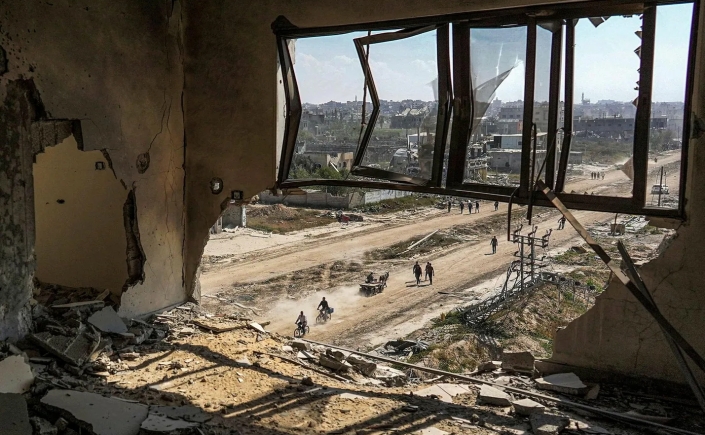


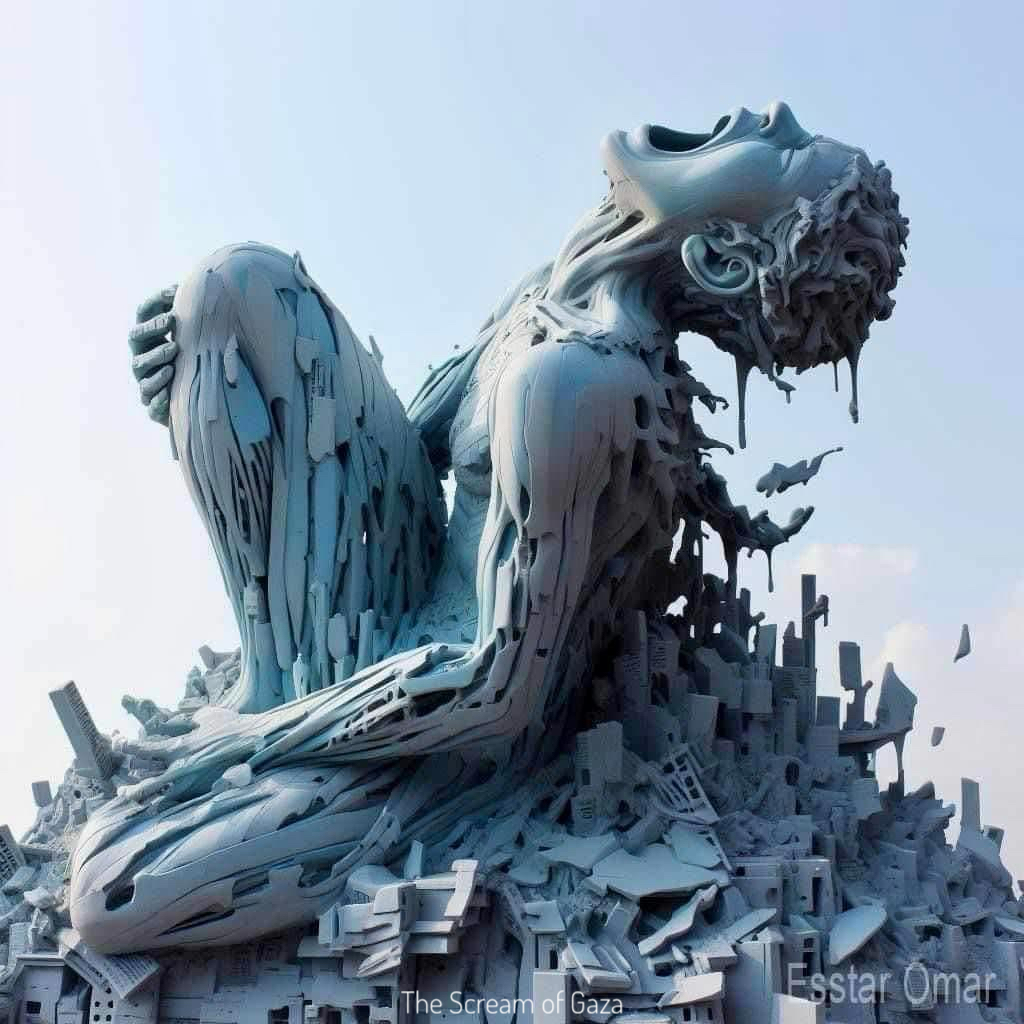




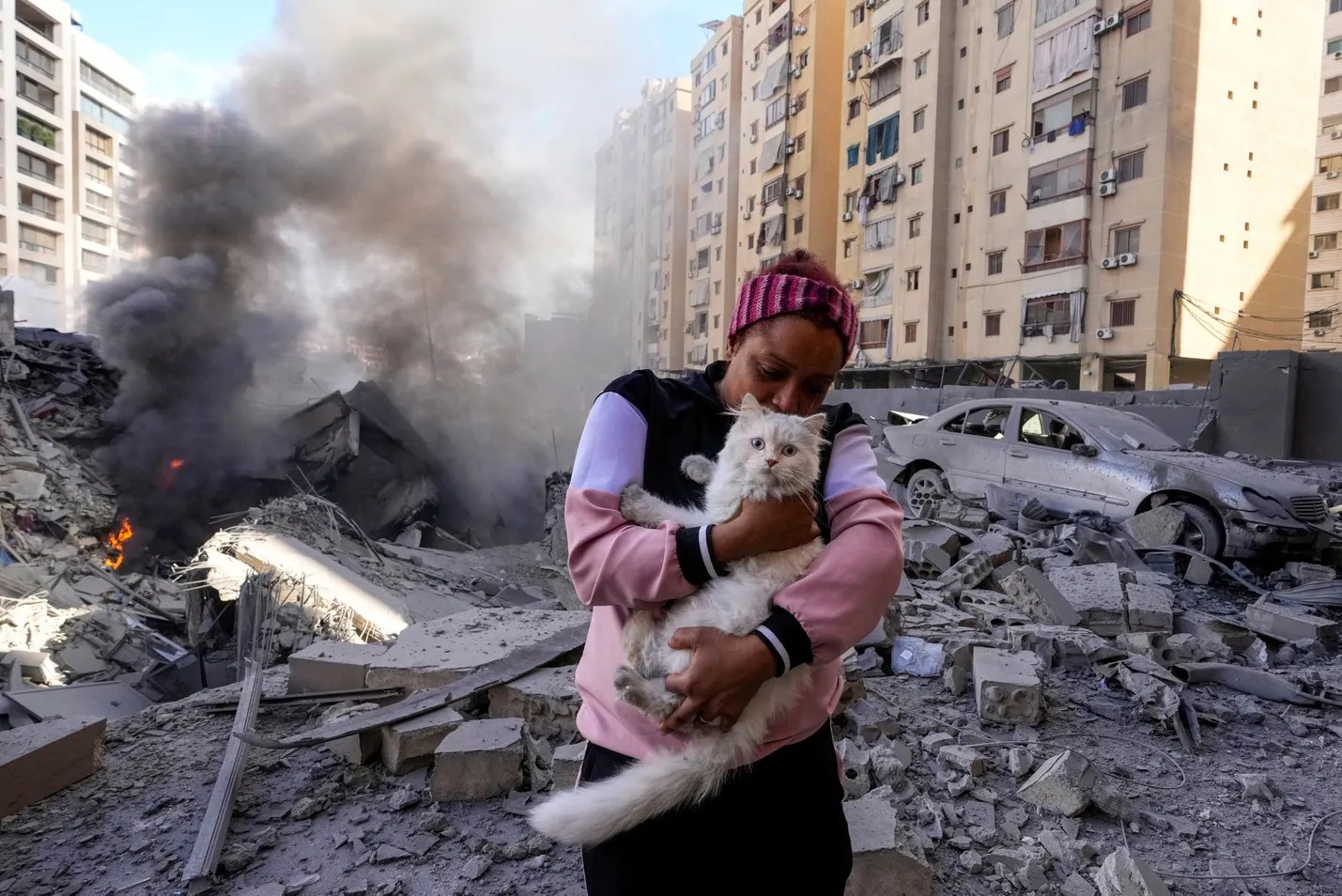
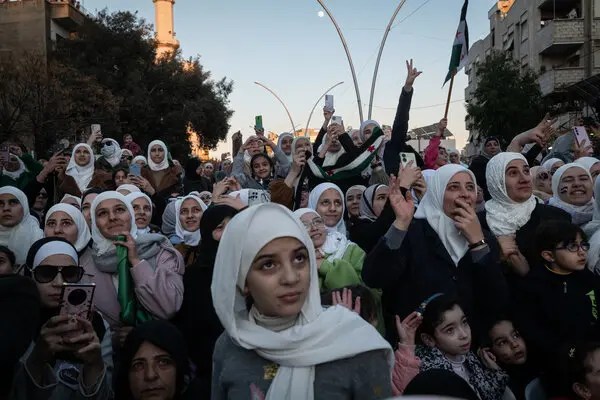
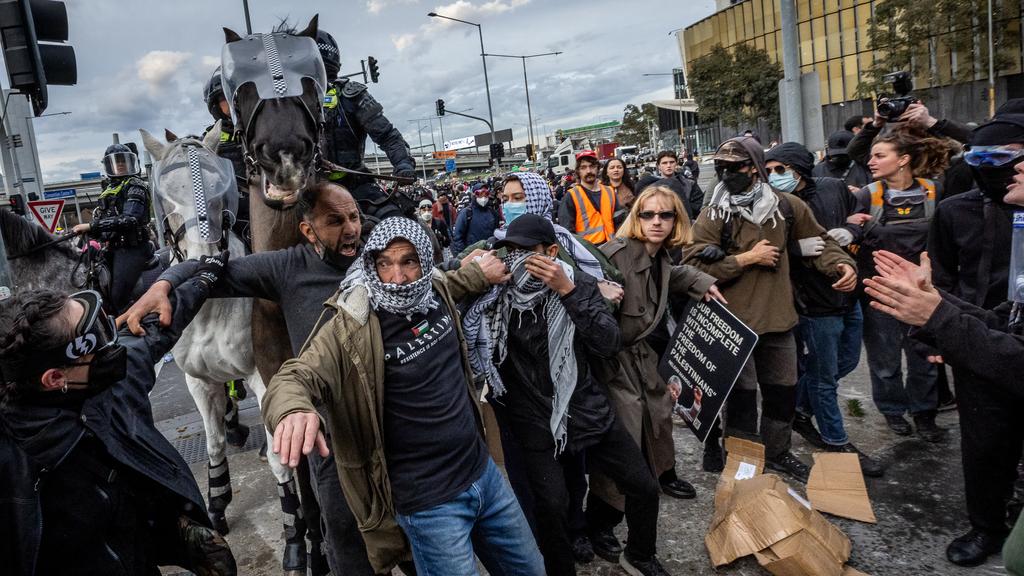





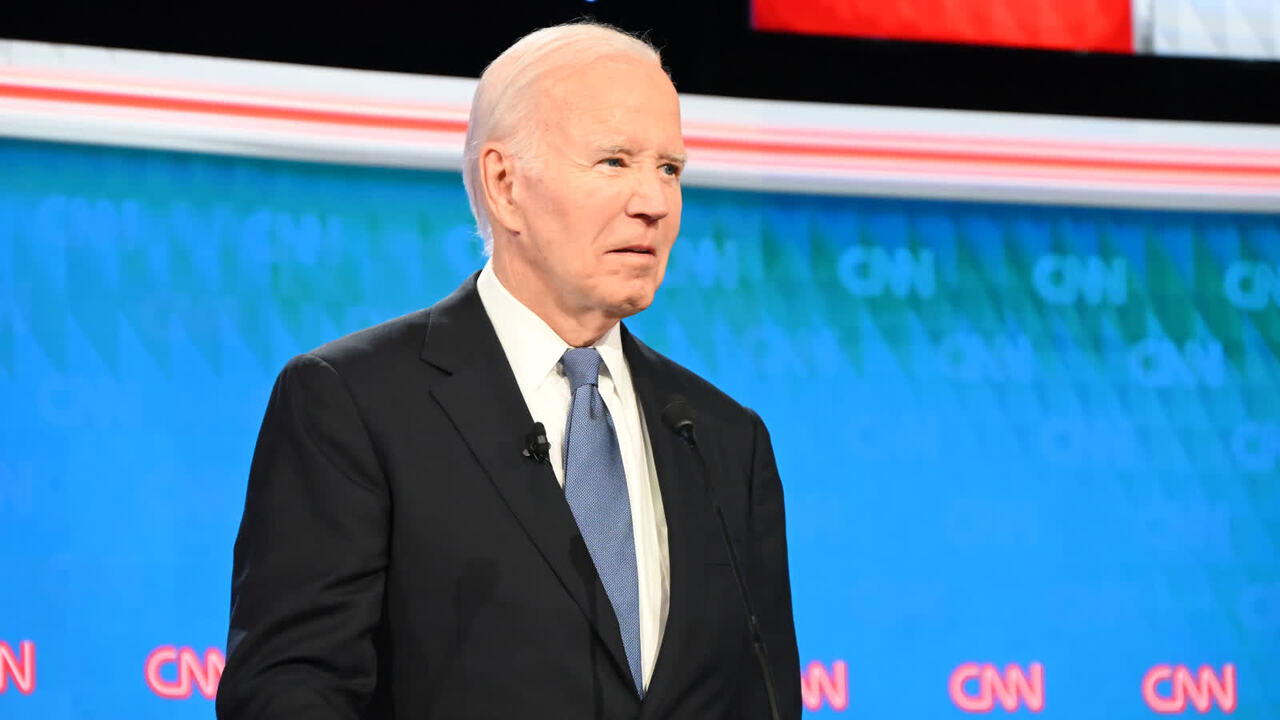


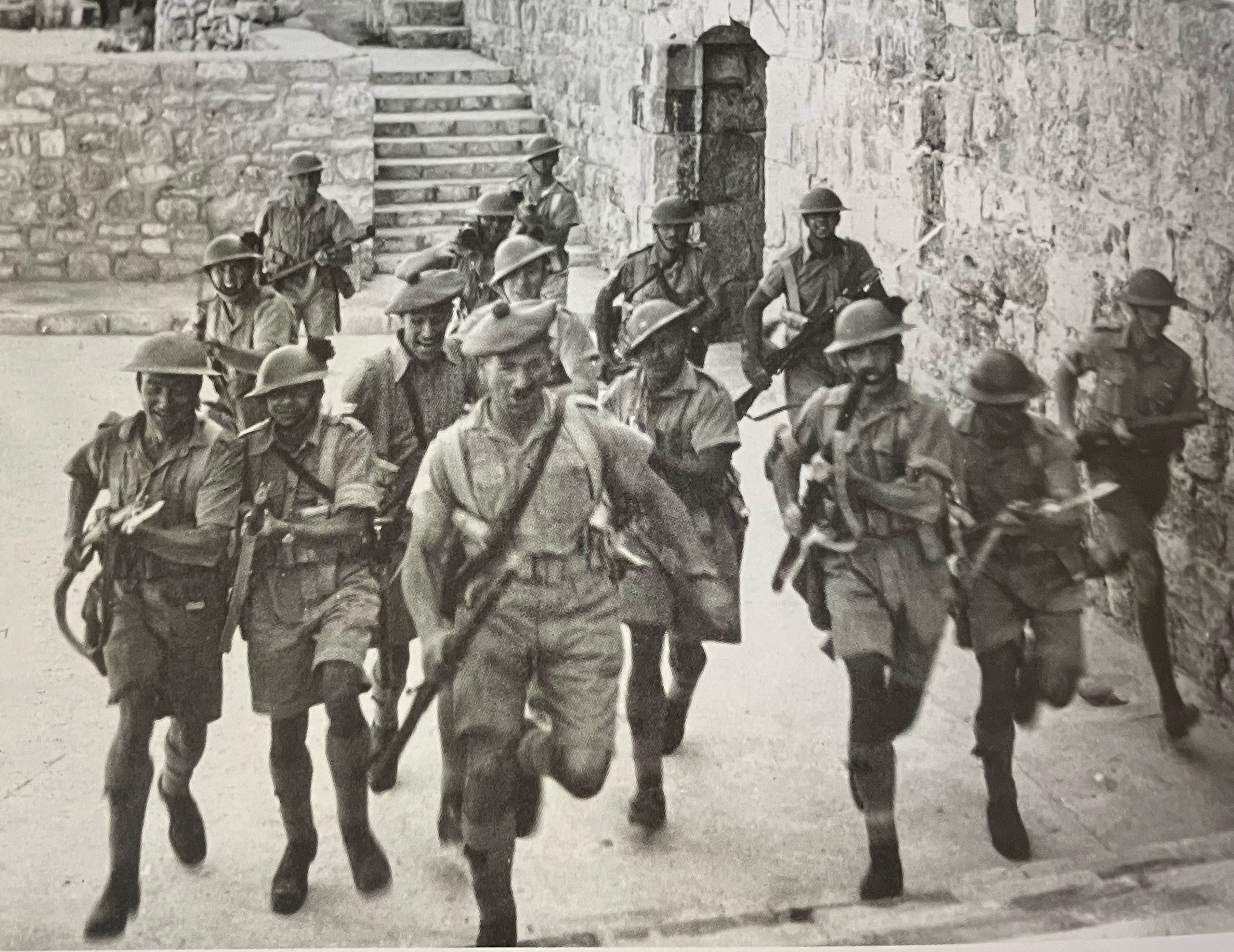

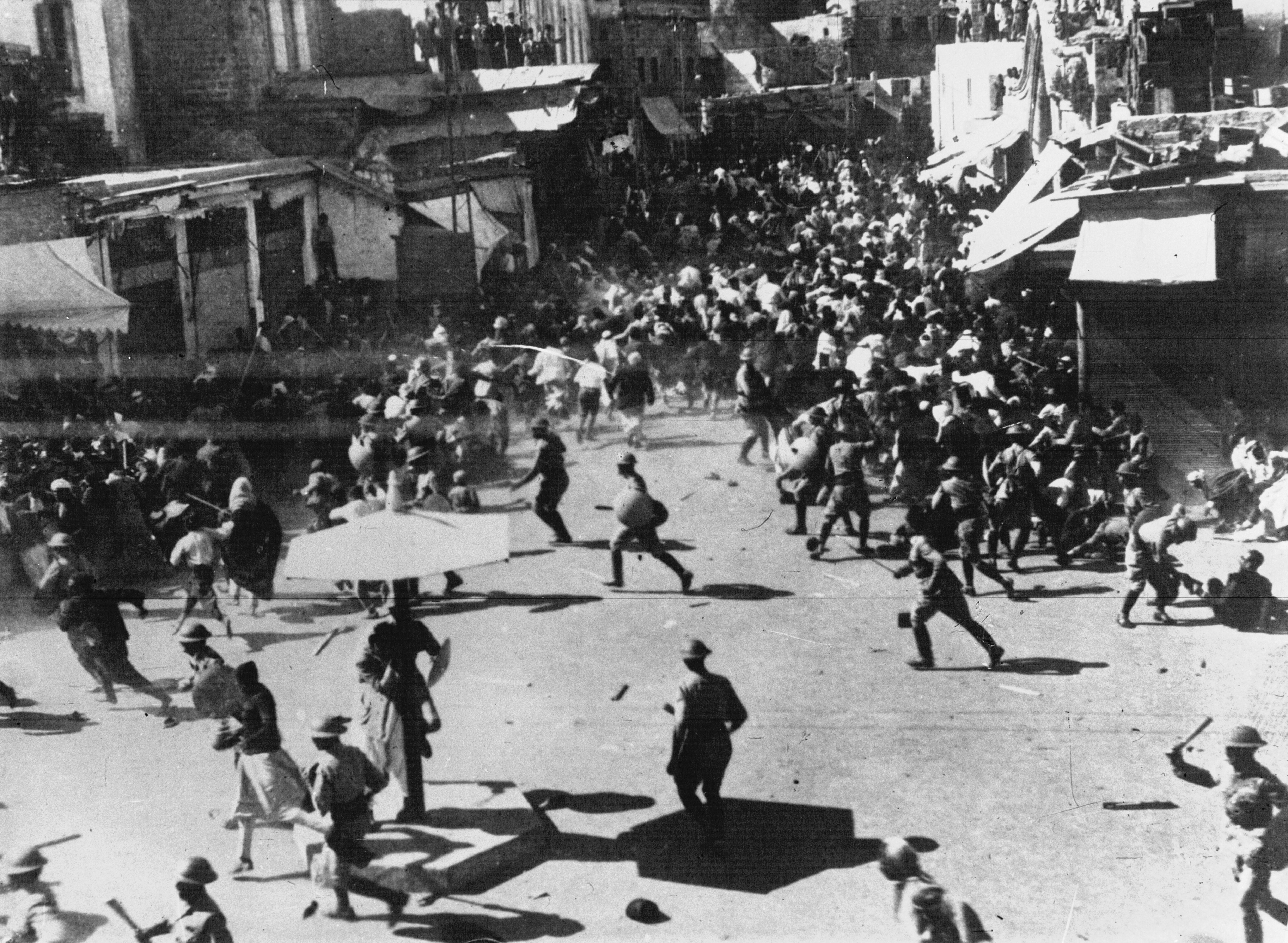
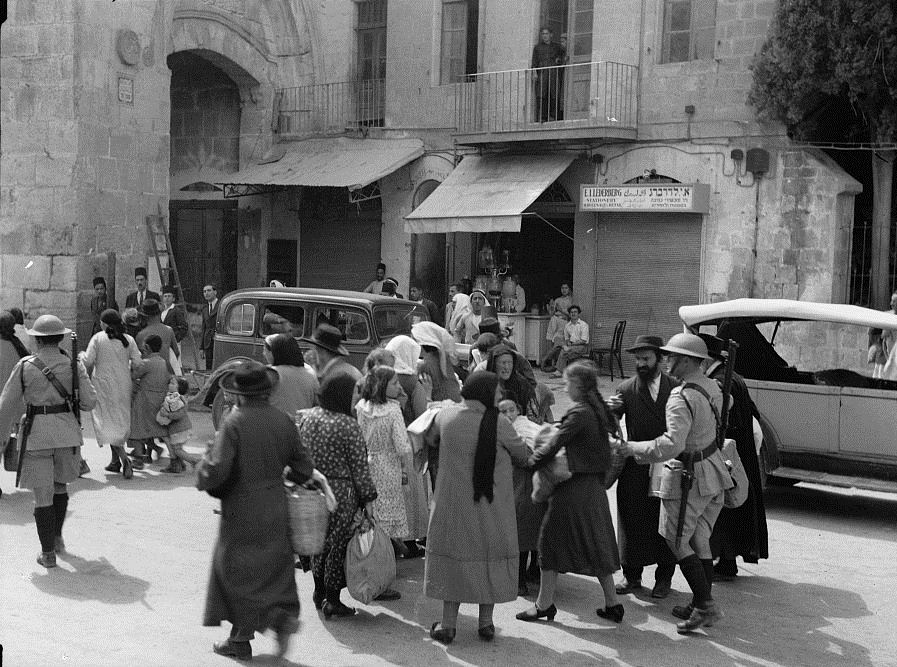
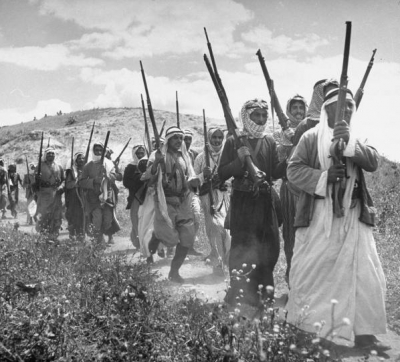

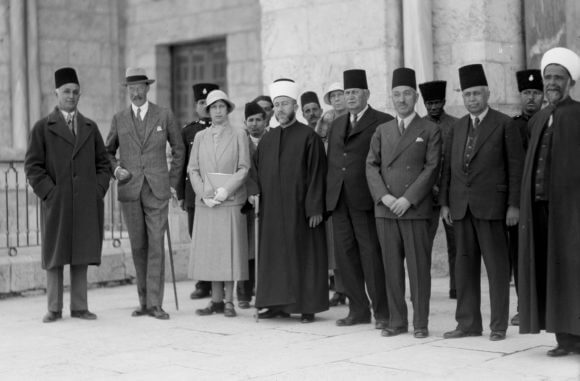 “VISIT OF H.R.H. PRINCESS MARY AND THE EARL OF HARWOOD. MARCH 1934. PRINCESS MARY, THE EARL OF HARWOOD, AND THE GRAND MUFTI, ETC. AT THE MOSQUE EL-AKSA [I.E., AL-AQSA IN JERUSALEM].” LIBRARY OF CONGRESS, LC-M33- 4221.
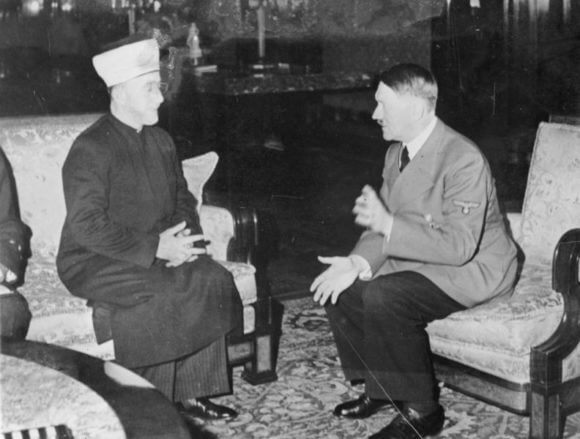
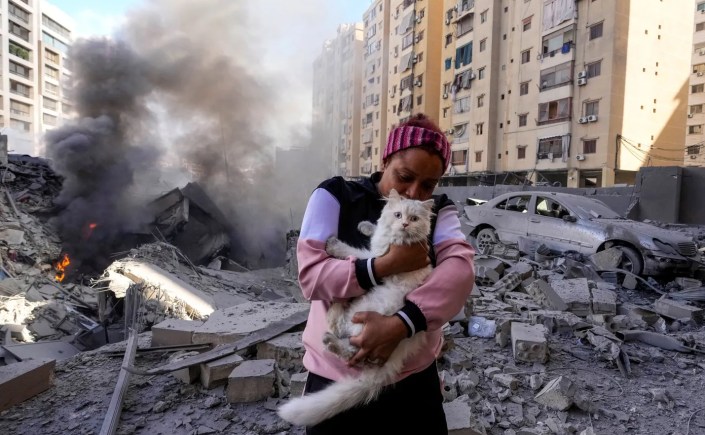



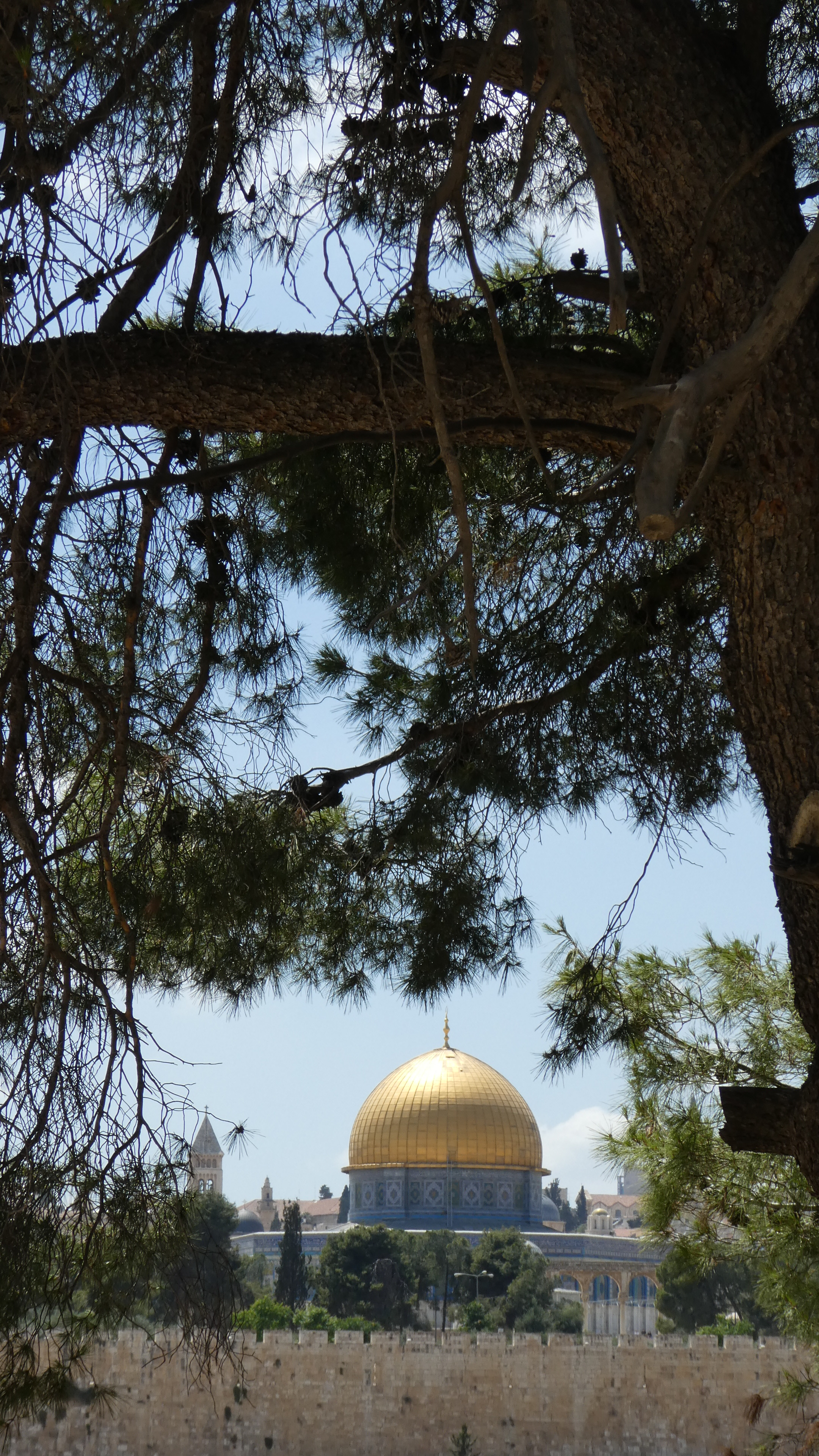

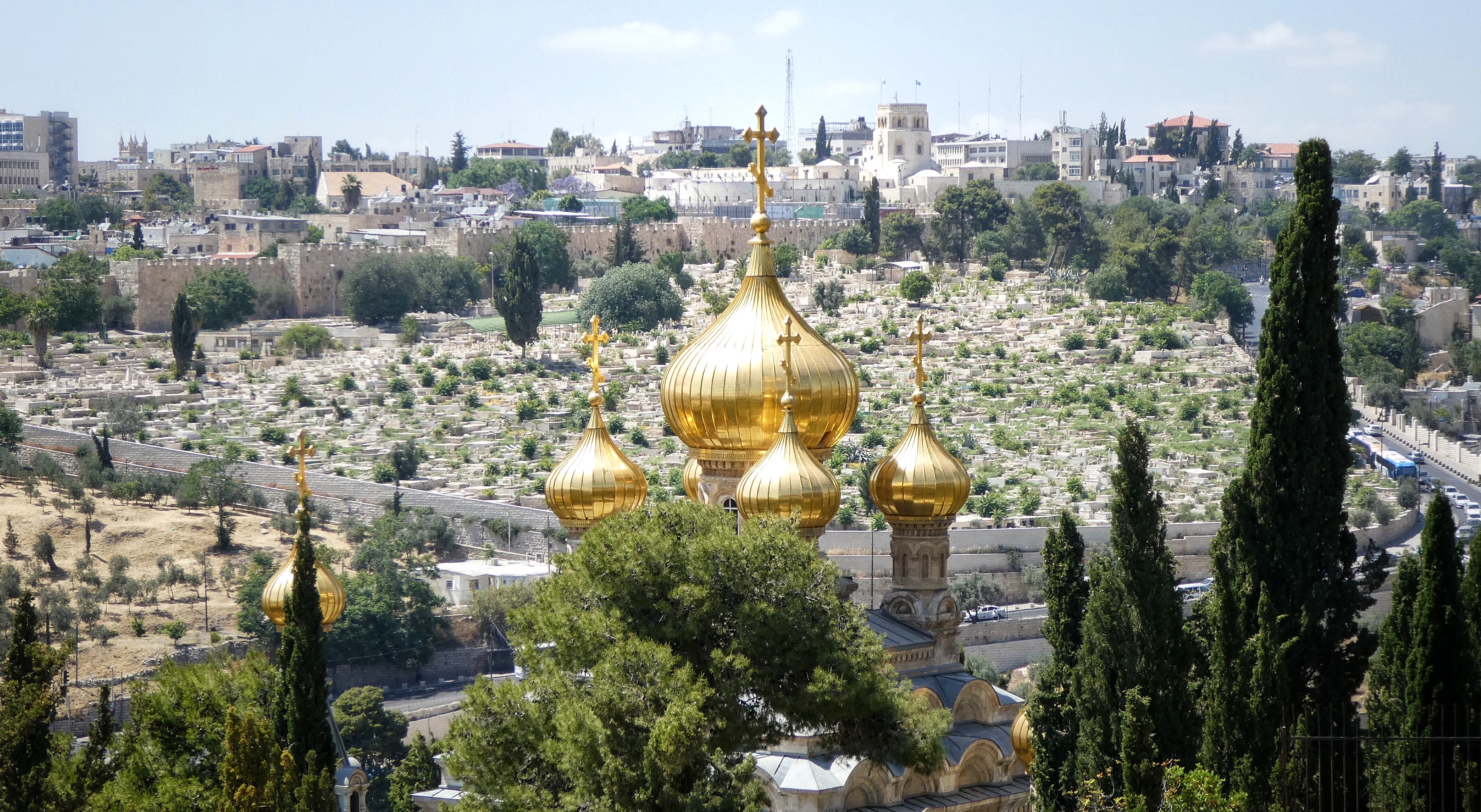


 In That Howling Infinite