Flashing for the warriors whose strength is not to fight Flashing for the refugees on the unarmed road of flight An’ for each an’ ev’ry underdog soldier in the night An’ we gazed upon the chimes of freedom flashing
Bob Dylan, Chimes of Freedom
Hear the cry in the tropic night, should be the cry of love but it’s a cry of fright Some people never see the light till it shines through bullet holes
Bruce Cockburn, Tropic Moon
When Freedom Comesis a tribute to Robert Fisk, indomitable, veteran British journalist and longtime resident of Beirut, who could say without exaggeration “I walk among the conquered, I walk among the dead” in “the battlegrounds and graveyards” of “long forgotten armies and long forgotten wars”. It’s all there, in his grim tombstone of a book, The Great War for Civilization (a book I would highly recommend to anyone wanting to know more about the history of the Middle East in the twentieth century – but it takes stamina – at near in 1,300 pages – and a strong stomach – its stories are harrowing).
The theme, alas, is timeless, and the lyrics, applicable to any of what Rudyard called the “savage wars of peace” being waged all across our planet, yesterday, today and tomorrow – and indeed any life-or-death battle in the name of the illusive phantom of liberty and against those intent on either denying it to us or depriving us of it. “When freedom runs through dogs and guns, and broken glass” could describe Paris and Chicago in 1968or Kristallnacht in 1938. If it is about any struggle in particular, it is about the Palestinians and their endless, a fruitless yearning for their lost land. Ironically, should this ever be realized, freedom is probably the last thing they will enjoy. They like others before them will be helpless in the face of vested interest, corruption, and brute force, at the mercy of the ‘powers that be’ and the dead hand of history.
The mercenaries and the robber bands, the warlords and the big men, az zu’ama’, are the ones who successfully “storm the palace, seize the crown”. To the victors go the spoils – the people are but pawns in their game.
There goes the freedom fighter,
There blows the dragon’s breath.
There stands the sole survivor;
The time-worn shibboleth.
The zealots’ creed, the bold shahid,
Give me my daily bread
I walk among the conquered
I walk among the dead
Here comes the rocket launcher,
There runs the bullets path,
The revolution’s father,
The hero psychopath.
The wanting seed, the aching need
Fulfill the devil’s pact,
The incremental balancing
Between the thought and act.
The long-forgotten army
In the long-forgotten war.
Marching to a homeland.
We’ve never seen before.
We feel the wind that blows so cold amidst
The leaves of grass.
When freedom comes to beating drums
She crawls on broken glass
There rides the mercenary,
Here roams the robber band.
In flies the emissary
With claims upon our land.
The lesser breed with savage speed
Is slaughtered where he stands.
His elemental fantasy
Felled by a foreign hand.
The long-forgotten army
In the long-forgotten war.
Marching to a homeland.
We’ve never seen before.
We feel the wind that blows so cold amidst
The leaves of grass.
When freedom comes to beating drums
She crawls on broken glass.
Thy kingdom come, thy will be done
On heaven and on earth,
And each shall make his sacrifice,
And each shall know his worth.
In stockade and on barricade
The song will now be heard
The incandescent energy
Gives substance to the word.
Missionaries, soldiers,
Ambassadors ride through
The battlegrounds and graveyards
And the fields our fathers knew.
Through testament and sacrament,
The prophecy shall pass.
When freedom runs through clubs and guns,
And broken glass.
The long-forgotten army
In the long-forgotten war.
Marching to a homeland.
We’ve never seen before.
We feel the wind that blows so cold amidst
The leaves of grass.
When freedom comes to beating drums
She crawls on broken glass
When freedom comes to beating drums
She crawls on broken glass
Fifty years ago this month, on August 20, 1968, troops from the Warsaw Pact, a military alliance formed in 1955 between the Soviet Union and seven Eastern European nations in its thrall invaded Czechoslovakia to crush liberal reforms enacted by communist leader Alexander Dubçek in the brief era known as the Prague Spring. In ex post factum justification, the following month, LeonidBrezhnev, General Secretary if the Communist Party of the Soviet Union, expounded what became known as The Brezhnev Doctrine: “When forces that are hostile to socialism try to turn the development of some socialist country towards capitalism, it becomes not only a problem of the country concerned, but a common problem and concern of all socialist countries”.
The Brezhnev Doctrine was meant to counter liberalization efforts and uprisings that had that challenged Soviet hegemony inside the Eastern Bloc, considered by Moscow as an essential defensive and strategic buffer in the event hostilities were to break out with NATO, the western alliance. In practice, it meant thatbloc members enjoyed but limited independence. Any challenge to the cohesiveness of the Eastern Bloc, whether, by either threatening the communist parties’ grip on power, or Lenin forbid, actually attempt to secede, the Soviet Union assumed the authority and the power to define “socialism” and “capitalism“, and to act militarily to defend the status quo.
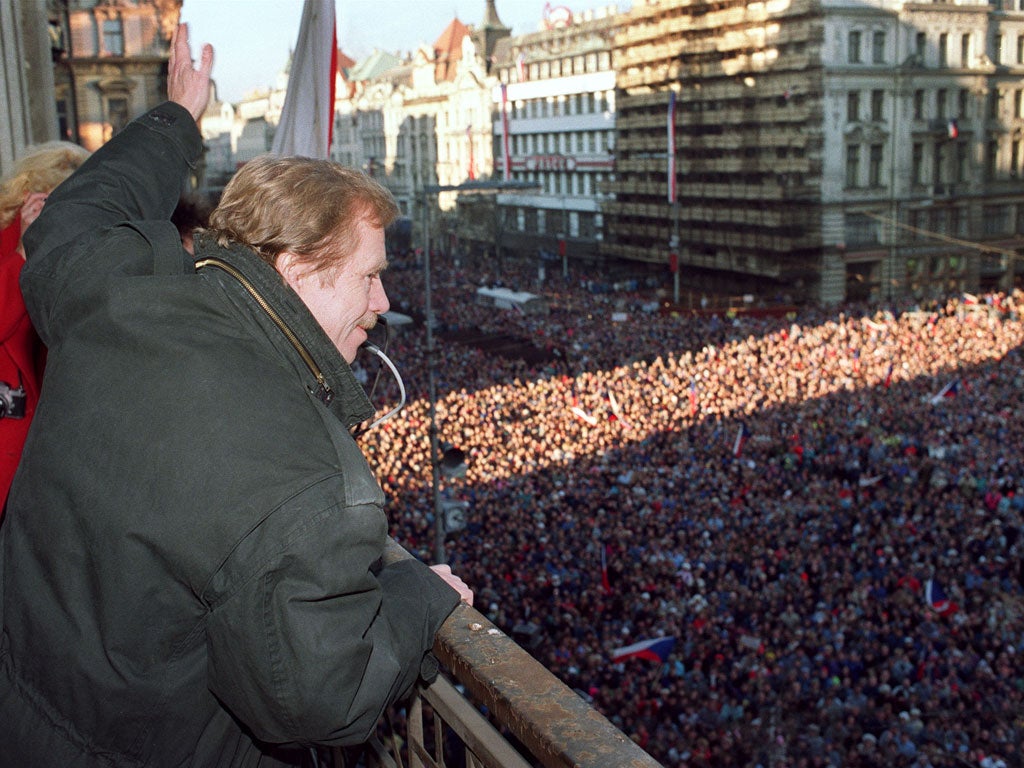
With Dubçek detained and Prague occupied, the country was subsequently taken over by a hard-line Communist regime subservient to Moscow. In 1968 alone, 137 people were killed by Warsaw Pact soldiers, and a total of more than 400 died during an ccupation of that ended only after the 1989 Velvet Revolution, following the fall of the Berlin Wall and the collapse of the Soviet Union, when veteran dissident poet Vacláv Havel became the first and last democratically elected president of Czechoslovakia – he served from 1989 until the dissolution of Czechoslovakia in 1992 when he became the first President of the Czech Republic.
The events in Prague in August 1968 are described and appraised in an recent, informative ‘long read’ in The Independent, republished below.
With friends like these…
But first, as part of a continuing chronicle of the events of 1968 in Into That Howling Infinite (see below), here are some recollections of my own.
The Soviet invasion of Czechoslovakia was in many ways a seminal event in my own journeying. Until then, I was a political ingenue and a naive communist (yes, a member – the only party I have ever joined!) fellow-traveler, although my evolving perspectives were transforming and expanding as I studied the history and politics of Russia and the Soviet Union, under the tutelage of exiled Hungarian academic Tibor Szamuely.
The summer’s events in what is now-bisected Czechoslovakia occurred against a backdrop of anti-war demonstrations in the US, including the Kent State shootings (“four dead in Ohio”), the assassinations of Martin Luther King and Robert Kennedy, and the tumultuous evenementsde Mai ‘68 in Paris. These came as I was writing a dissertation on the Hungarian Rising of 1956 – a tragic precursor to Prague and to Brezhnev’s doctrine – and provided a pertinent background narrative and also, a coda for my story.
The shock-waves of the Prague pogrom rippled through my own world in 1970 when I was contemplating how to spend my summer vacation once I had earned enough money on the motorway construction site to pay for my travels.
I had a Czech friend – self-exiled Camille –who encouraged me to visit his country that summer and to drop in on his folks in Prague. Having completed my dissertation, I was pretty keen to visit such a historical and controversial city. So I booked a one-way ticket to Prague on British Caledonia – my first-ever aeroplane flight! It was my intention to visit the place where “Good King Wenceslas last looked out” and then head home to England via Austria and Germany.
But, as they say, man proposes, God disposes. Or life is what happens when you are busy making other plans. The date I’d chosen to travel just happened to fall two years to the day of the Soviet invasion. Our turboprop plane headed east into what was still the Soviet Bloc – that had twenty yeqrs to run – and flew OVER Prague! The first we happy travellers – students mostly – knew was that we were circling to land in the Hungarian capital of Budapest.
So there we were, in passport control, without visas and accommodation, our itineraries awry, amidst border officials who were wondering who the hell we were and what the f@$£ we were doing there in their portal to the Iron Curtain. Eventually, things were sorted, visas issued, money exchanged (exorbitantly, as was the way in those days), and a bus provided to take us to a Communist Party Youth hostel, bleak, spartan, and crowded with enthusiastic, gorgeous Young Communist lads and lasses.
So there I was, in my first communist country. And, you know what, “they who know only England, who only England know”. I walked through old Buda and Pest, strolled by the Danube and the Sejm, the famous parliament building, walked the boulevards of my dissertation, and saw the scars of battle still there in the brickwork twelve years after the doomed Intifada of 1956.
I’d heard and read about how the affluent and decadent west was an altogether different and better world than the drab, depressed and depressing cities of the workers’ paradises to our east. And yet, to my ingenue eyes, the look, life and life-style of Budapest appeared no better or worse than my Birmingham and Berkshire backwaters.
Maybe it was because of my youth, inexperience, and background – maybe I hadn’t traveled enough to interpret and to judge. Apart from brief Boy Scout and schoolboy excursions into Europe-lite, Brit-friendly Belgium and Luxembourg, this was my first foray into distinctly ‘foreign’ lands with histories, cultures, governance, and world views quite different to the fields that I had known.
I’d like to think that perhaps it is something intrinsically part of my software – an ability to adapt, accept, empathize, and, as far as it is indeed possible for a stranger, to become one with the scenery and slip into the machinery, and, to put it bluntly, take it all at face value. As a “stranger in a strange land”, I accepted what I saw, observed, heard and learned, moved on – to quote American beat poet Lawrence Ferlinghetti – like “a mirror walking down a strange street’. For this is how I traveled in thise roving years, leaving very little by way of words and pictures of my travelling. All I saw, heard, observed, felt and learned was mostly stashed away on my hard-drive to be accessed in latter years – waiting, perhaps, for the advent of social media, blogs and highly portable electronic devices.
Given the circumstances of our arrival, and the atmosphere prevailing in the Bloc on the anniversary of Prague invasion, the authorities had given me a visa for four days only. I had therefore to depart the country quick-smart. I had effectively two choices of non-Soviet countries –westwards to Austria, or south to what was then Yugoslavia. In a split second decision, I took the road less traveled – south to Szeged and the Serbian border. Wondering through the rural outskirts of Novi Sad, I was taken home by a pair of Serbian boys. I spent my first evening with their most hospitable family and slept that night on a bed of furs. “Novi Sad, Beograd” the lads had chanted, and so, instead of setting my direction home, I hitch-hiked south to the ancient Danube city of Belgrade.
In the Yugoslav capital, I resolved to keep going southwards. Over the next two weeks, I transited Yugoslavia to Thessaloniki, where decided to continue with my southern odyssey – to Athens and the Greek Islands. At journeys end, I hitchhiked back the way I’d come, only this time, reaching Austria via the Croatian capital of Zagreb.
That impulsive decision in Budapest led me into new pastures. Back in Britain, an Indian summer gave way to bleak autumn and dark and damp winter, and my compass re-calibrated. I had been focused on Eastern Europe and the Soviet Union, on deep history and the Russian ‘soul’ (whatever that might be), on ideologies, betrayals, and Cold War skulduggery. But the clear Hellenic sky and the cobalt blue of the Mediterranean, the parched hills and pine woods of the Peloponnese, the dazzling light and the warm sun on my body, and the ruins and bones of antiquity sang a siren’s song. As Jack Bruce warbled:
You thought the leaden winter would bring you down forever, but you rode upon a steamer to the violence of the sun. And the colours of the sea bind your eyes with trembling mermaids, and you touch the distant beaches with tales of brave Ulysses.
My thoughts and dreams no longer ranged eastwards. My next journey took me back to the Mediterranean, and thence, following in the footsteps of Alexander the Great – the golden hero of legend, not the “mad, bad and dangerous to know” destroyer – through the Middle East and on to the Hippy Trail to India. There and back again, to quote JRR Tolkien, so fresh in my undergraduate canon. I traveled through lands of which I knew little, picking up fragments of history and heritage, parables and politics as onwards I roamed.
Through the lands of antiquity and of empire: Greece and Cyprus; Egypt and Israel; the Levant (old French for the lands of the rising sun – Lebanon, Syria, and Jordan; Iraq before Saddam, and Iran under the Shah; Pakistan and India, who went to war with each other whilst I crossed their frontiers (a story for another time); and then back to Britain by way of Turkey and the fabled Pudding Shop.
I stood beside the great rivers of ancient stories – the Nile, the Jordan and the Orontes, the Tigris and Euphrates, the Indus and the Ganges. I traveled though deserts and mountains, the Himalayas and the Hindu Kush. I climbed through the Kyber Pass, immortalised by imperialendeavour and hubris, and the valley of Kashmir, a betrayed and battered paradise. I stood atop ancient stones in Memphis and Masada, Baalbek and Babylon, Jalalabadand Jerusalem.
On my return, I resolved to learn more about these lands, their peoples, and their histories, and this I did. The Middle East has long-since captivated and colonized much of my intellectual life, Imbuing it with a passion that has found expression in my persona. my politics, my prose, my poetry, and my songs.
In these troubled times, much of the world I once traveled is closed to the casual and the curious. I mourn for those dear, dead days when the map of the world was a signpost and not a warning. But today, I go wherever and whenever I can go, and I feel a wonderful sense of homecoming when I touch down in the bright sunlight. I get the thrill of fresh adventure when I arrive in new places with their sights, sounds and aromas. I reclaim and revel in the curiosity and wonder, knowledge and understanding, awareness and wisdom that was born back there in Budapest.
And that is how Leonid Brezhnev changed my life!
These are the lands of testament and prophecy, of sacrifice and sacrament, of seers and sages, of vision and vicissitude, of warriors and holy men. The spiritual and the temporal have melded here since time immemorial. We still see the remnants of ancient empires and the echoes of their faiths. We can chart their decline and fall in the fortunes of their monuments and their mausoleums, in the “tumbled towers and fallen stones, broken statues, empty tombs” where “ghosts of commoners and kings walk the walls and catacombs of the castles and the shrines”. Histories carved in stone,mysteries locked in stone, as “canyons and castles pass ageless and ageing and captive in time”.Forward to East – An Arab Anthology.
The Prague Spring: 50 years on what can we learn from Czechoslovakia’s failed attempt to reform communism?
Mick O’Hare, The Independent, 19 August 2018
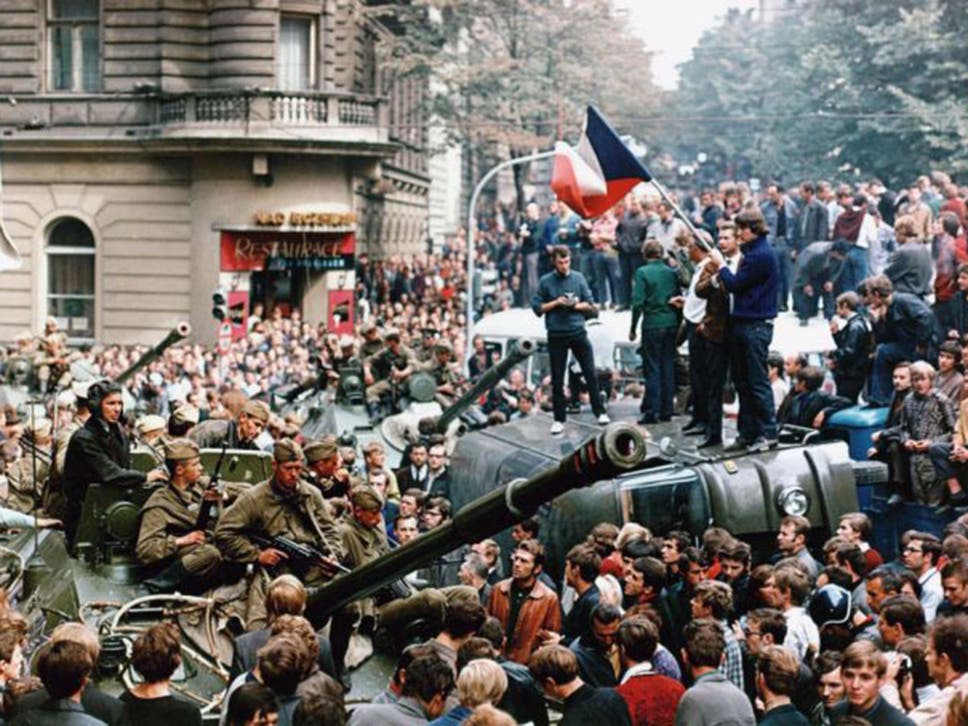
Soviet tanks arrive to crush the ‘Prague Spring’ ( AFP/Getty )
Fifty years ago this week, on 21 August 1968, the citizens of Prague awoke to find tanks on their streets. For some it came as no surprise. Student activist Pavel Kamenicky was sleeping. “At first I thought it was the university bus trying to find the right gear,” he says. “But I realised it was way too loud. I jumped up thinking, ‘they’ve come’.”
Czechoslovakia had dominated news bulletins throughout the summer after its premier, First Secretary Alexander Dubcek, had begun reforming his communist government’s structures earlier that year. But now, what had become known as the Prague Spring, or Dubcek’s “socialism with a human face”, was lying crushed beneath the tank tracks in Wenceslas Square.
The Soviet Union feared its grip on the satellite states of eastern Europe was loosening and its patience had finally run out. Czechoslovakia and Dubcek had fallen foul of USSR leaderLeonid Brezhnev’s eponymous doctrine, espoused retroactively in justification the month after Warsaw Pact troops took to Prague’s streets: “When forces that are hostile to socialism try to turn the development of some socialist country towards capitalism, it becomes not only a problem of the country concerned, but a common problem and concern of all socialist countries,” Brezhnev said.
Soviet forces, alongside those of Poland, Hungary and Bulgaria, crossed the Czechoslovakian border at 11pm on the evening of 20 August. East Germany withdrew at the last minute when it was realised that, just over two decades after the end of the Second World War, the presence of German troops on Czech and Slovak soil could lead to unintended repercussions. The following morning, the foreign soldiers were in the capital, offering fraternal support to loyal comrades in Czechoslovakia.
Soviet tanks had intervened in post-war eastern Europe before. Towards the end of October in 1956, Hungarians revolted against their Marxist-Leninist governmentand declared a new administration, withdrawing from the Warsaw Pact and disbanding the communist-run state security apparatus. But barely two and half weeks later the western world watched aghast, but impotent, as Soviet forces entered Budapest to restore one-party rule.
Yet there had been real hope that Czechoslovakia could be different. 1968 was, of course, a year of revolution and political protest across the planet. But the Czechoslovak version was in many ways a rather gentler form of dissent. Dubcek had never set out to overthrow communism, merely to reform it.
The nation’s planned economy had been in decline throughout the 1960s. Dubcek had replaced previous first secretary, Antonín Novotný, in January 1968 and had attempted to liberalise communist party rule by tolerating political institutions and organisations not directly controlled by the party. Even multi-party government was mooted. More repressive laws were loosened, travel was made easier and freedom of expression, especially in media, accepted.
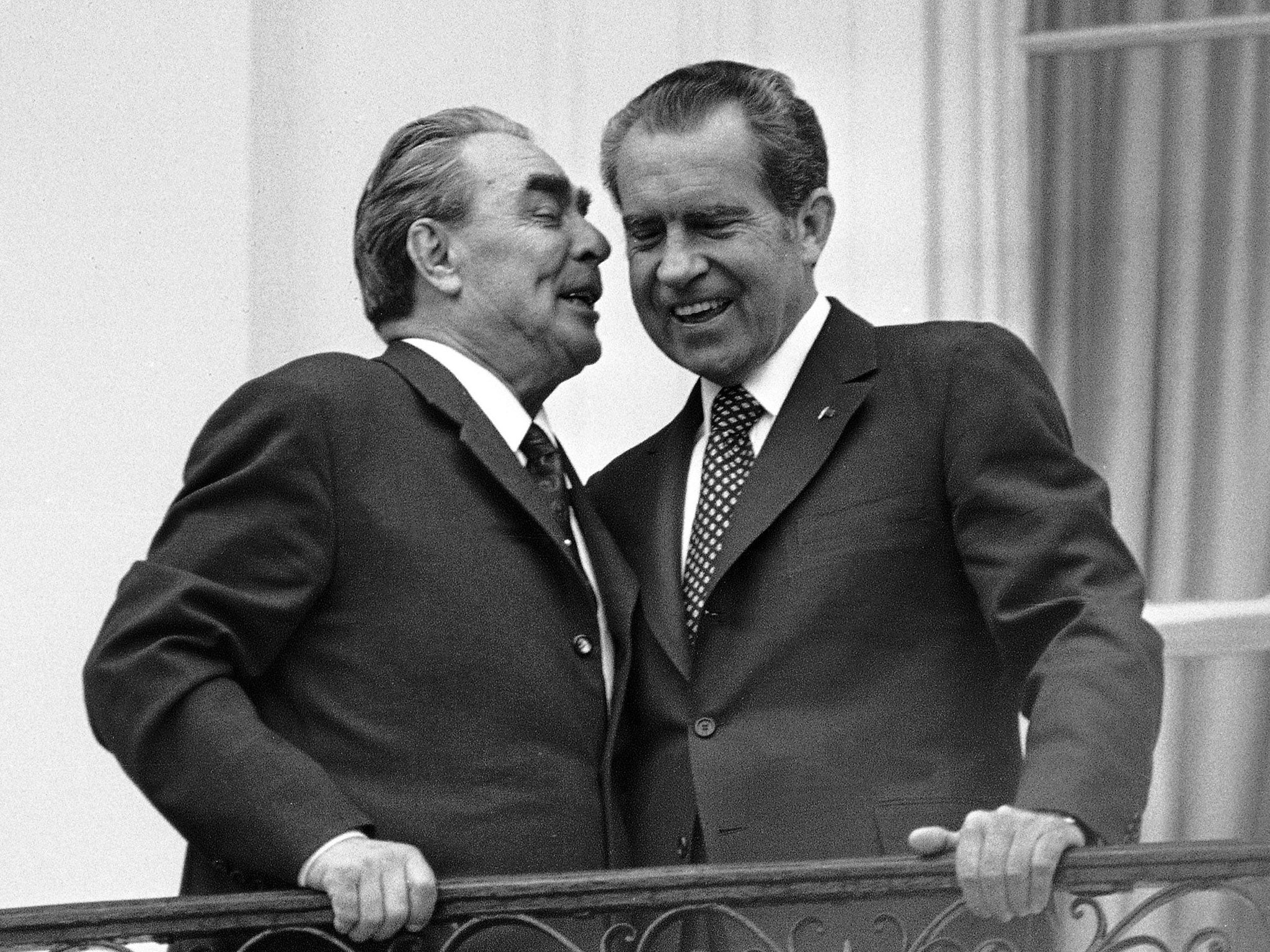
Leonid Brezhnev shares a joke with US president Richard Nixon in 1973 (AP)
Unwittingly though, Dubcek had created either a vicious or a virtuous circle, depending on one’s political viewpoint. Reform emboldened progressives and led to demand for further liberalisation. Dissidents, especially students, but also the wider population in numerous Soviet satellite nations, began to push for similar freedoms.
He was wrong: 2,000 tanks and a 250,000-strong Soviet-led force of men invaded on Brezhnev’s orders; 137 Czechoslovak civilians were killed resisting; and, pleading with his citizens not to fight back, Dubcek was flown to Moscow.
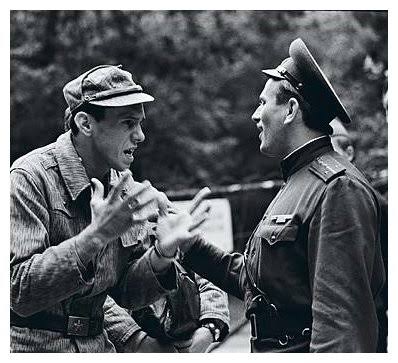
Some citizens used the power of argument to voice their opposition, engaging troops in discussion to make their point – until photographs were used in Soviet propaganda to suggest the locals were making friends with the invaders. Dubcek returned as little more than a puppet of the Soviet regime and was replaced early in 1969. Half a million of his supporters were expelled from the Communist Party.
Leaders of communist countries meeting in Poland in 1955 to sign the mutual defence treaty commonly known as the Warsaw Pact (AFP/Getty)
The members of Nato, especially the United States – already involved in conflict in Vietnam and aiming to broker a disarmament agreement with the Soviet Union – condemned the invasion but had no intention of intervening. In the aftermath, 300,000 Czechoslovaks, many highly qualified, emigrated to the west, although the authorities soon clamped down on their ability to leave.
The period between 1969 and 1971 is known in Czechoslovak history as the era of “normalisation”. The country returned to the Soviet fold; opposition both within and without the country faded; and the Communist Party returned to the hardline position it had held before the onset of the Prague Spring.
So, 50 years later, what does the anniversary offer today’s Europeans still struggling with political upheaval and, certainly in the east of the continent, getting to grips with increasingly nationalistic, repressive governments? Apart from the sense of betrayal felt by Czechs and Slovaks, both towards their own government and their supposed allies, and the reminder that totalitarianism brooks no dissent, are there lessons to be learned from the Prague Spring; and what became of Dubcek, its architect? Unsurprisingly the legacy is complex – as legacies are wont to be.
Perhaps the key to understanding Czechoslovakia in 1968 is that, unlike similar uprisings against the establishment, both in communist Europe but also elsewhere around the world – witness the Arab Spring of 2010 and 2011 – the Prague Spring was not a movement of only liberals, students (among other young people) and political intellectuals fighting a conservative establishment. It had wider cross-generational support drawing on the strong traditions of democracy that had developed in Czechoslovakia between the two world wars, after its formation in 1918.
Czech-born writer Milan Kundera, author of the Unbearable Lightness of Being, who lived in exile in France from 1975, argued that it was a movement falling back on the “best traditions” of Czechoslovakia’s brief history: a “higher quality of democracy not based on the ills associated with capitalism”. By contrast, the later revolutions that would finally overthrow communism in Europe at the end of the 1980s were driven as much by the “victory” of Reaganism, free-market economics and monetarism as they were by the right to vote freely and express opinions openly.
It has become fashionable, with hindsight, to blame the suppression of the Prague Spring on “communism”. But let it not be forgotten that it was fervent communists who were carrying out Czechoslovakia’s reforms. Whether the Prague Spring was a “purer” revolution than those that followed is probably an argument for political ideologues alone, but a glance across the border towards Viktor Orban’s Hungary shows that the spoils of the “freedom” won in 1989 might not always manifest themselves with good intent.
Two decades after Dubcek’s attempt to reform communism from within, the then premier of the Soviet Union, Mikhail Gorbachev, issued an apology on behalf of all Warsaw Pact nations, stating that the invasion of Czechoslovakia was a mistake, and that the USSR should never have interfered in the internal affairs of another sovereign state. (It should be noted that both Romania and Albania had refused to participate in the 1968 intervention; and Albania ultimately withdrew from the Warsaw Pact in the aftermath.)
It was the culmination of a number of apologies from Warsaw Pact nations throughout 1989 and it seems reasonable to argue that there was a direct link between these acknowledgements and the overthrow of communist governments in East Germany, Poland, Romania and, most poignantly, Czechoslovakia, that same year. Protesters realised that their actions would no longer lead to Red Army interference, and the Soviet bloc of eastern European nations had replaced their communist rulers within months of one another.
VaclavHavel,was elected first president of Czechoslovakia (Getty)
Perhaps 1968 showed us, if 1956 had not already, that the post-war façade of communist interdependence, internationalism and fraternal allegiance was broken, if indeed it had ever been more than a charade at all. The alliance was built on flimsy foundations and maintained by suppression. Czech historical novelist and writer Ivan Klíma has said that – for good or ill – the most important legacy of the Prague Spring was the delayed but ultimate destruction of the international communist movement.
But warnings must still be heeded. In a world where a nationalistically invigorated Russia under Vladimir Putin increasingly looks beyond its borders for a bulwark against Nato and the EU, the demise of communism and the Warsaw Pact does not mean a concurrent diminishing of militarism: the annexation of Crimea by Russia has shown us that very clearly. And – even putting aside the Brexit debate – illiberal governments in Slovakia, Poland and Hungary threaten to overturn the European Union’s free-market liberal consensus. The threat, while changed in ideology, still lurks.
And what of Dubcek? After he was ousted as first secretary he worked for the forestry service near Bratislava, in his native Slovakia. And after the final overthrow of communist rule in Czechoslovakia’s Velvet Revolution of 1989 he briefly returned to political prominence as chairman of the Czechoslovak Federal Assembly, and later as leader of the Slovak Social Democrats.
Pavel Kamenicky, now 70, says: “We were idealistic. But Dubcek should have realised what was going to happen. Did he really think Brezhnev would shrug and say ‘carry on’?” On the other hand, Dubcek’s son Pavol has defended his father’s position, once saying: “I don’t know if people really understand what it meant to have your fate in Brezhnev’s hands.”
For right or wrong, however, Dubcek had in truth become more or less a political irrelevance by the time of the Velvet Revolution. Václav Havel, the poet and statesman who played a prominent role in the events of 1989 and became Czechoslovakia’s first post-Soviet era president, said: “Dubcek is a symbol of our nice memories, but nobody thinks he can influence the situation now.” Dubcek himself rarely spoke of 1968.
Although a Slovak, Dubcek was opposed to the 1993 split between the Czech Republic and Slovakia and maintained his belief in the idea of a single, united nation. He was killed in a car crash in 1992, declared in an official investigation to be an accident. Conspiracy theories abound and even today 50 per cent of those Slovaks who know of him believe his death was almost certainly not an accident.
The crushing of the Prague Spring continues to echo down the ages, its eventual legacy yet to be determined.
When we were in Istanbul in 2014, we were particular keen to see the famous Viking graffiti on a rail of the gallery of the beautiful Aya Sofya basilica. And there indeed it was, carved by Halvden, a 9th Century soldier of the Emperor’s Varangian Guard, an elite force of Viking mercenaries. The name Varangian derives from the Greek via Old Norse væringi or ‘pledge’.
This year, we visited York, successively a Roman, Saxon, and Viking city.
I have an intense interest in connections, in the valences that link people, times, and places. And in York, there were many. Constantine, the creator of the Byzantine Empire, and founder of Constantinople, was declared emperor here on the death in York of his father. His statue sits (literally) outside York Minster. The Roman brickage we saw in Ephesus, Palmyra, and Jerusalem was replicated here in York, and in the forts of Hadrian’s Wall. And it was exciting to discover another connection to Istanbul, and that long-departed Viking warrior.
Viking graffiti in the Hagia Sophia, Istanbul
My story recalls one the most famous dates in English history, the the Battle of Hastings. But I shall not retell the story of that battle, nor of the battle at Stamford Bridge which preceded it. Rather, I will describe one particular Viking’s adventurous journeying before he met his doom near York in September 1066.
Harald Sigurdsson, named Hardrada (“Stern Counsel” or “Hard Ruler”), was born about 1015, and he was the first King to perish in 1066. King of Norway, his appetite grew with the eating, and he made unsuccessful plays for the thrones of Denmark and England. Failing the first, he invaded and raided east of what was then Eoforic (formerly Roman Eboracum, Viking Jorvik, and today, York – and there is an isolated hamlet on the plateau to our west in northern New South Wales called Ebor). His protagonist that day was one Harold Godwinson of Wessex, otherwise known as Harold II, King of England. Harold marched his army all the way up to Eoforic to confront his almost-namesake and Harald’s ally, one Tostig Goodwinson, Saxon turncoat and also, Harold’s embittered brother. In four days, Harold marched his army 180 miles from London, meeting and defeating Harald and Tostig at Stamford Bridge, just east of York. Hearing that William the Bastard, Duke of Normandy had landed near Hastings to challenge his claim to the English throne, King Harold then marched his army south again. 241 miles this time. The rest, as they say, is history.
King Harald is not hard to find on the Internet. There are websites, histories, and even novels that tell his story in lesser and greater detail – I republish a review of Don Hollway’s imaginative The Last Viking below. And, rumour has it, Leonardo DiCaprio is pondering the prospect of making a movie about him, and possibly starring in it. There are also many resources dealing with the Varangian Guard. I recommend Frank Westenfelder’s succinct blog history of mercenaries, Soldiers of Misfortune. So what follows is my own sensationalist synopsis, written as much for entertainment as for education.
As a teen Harald was caught up in internecine warfare between battling Viking eorls. Brothers and half-brothers, rebels and pretenders fought for lands and crowns in the realms that now constitute Scandinavia. Young Harald often fought and failed, and on failing, he fled. He washed up in Kyivan Rus on Lake Ladoga, east of present day Petersburg, and then entered the service of Grand Prince Jaroslav or (Yaroslavl) the Wise in Novgorod. The principality of Kyivan Rus, by the by, was the predecessor of today’s Ukraine, Russia, and Belorussia, and was established and ruled for over a century by Viking warriors. Harald captained the Grand Prince’s soldiery and, so the sagas sing, paid court to Jaroslav’s beautiful daughter Elesiv (Elisabeth). Ukrainian historians maintain that Yaroslavl actually ruled in raked in Kyiv and that his daughter was called Yelizaveta; but they tell the same story.
In Jaroslav’s service, Harold fought Poles, Estonians, Turkic nomads, and Byzantines. He eventually took five hundred Viking warriors to Constantinople – the Norsemen called it Mickelgard, or Great City – where his martial reputation saw him rise to head the Varangian Guard, that same mob that our Istanbul graffitist served in. Whilst this was specifically the emperors’s bodyguard, as an elite force, it fought on the empire’s frontiers against Arab pirates and raiders, marauding nomads from the steppes, Saracens, Normans and Bulgarians. The sagas say that Harald even traveled to Jerusalem – the Vikings called it Jorsalberg – protecting caravans of Christian pilgrims. Just picture it. A brigade of Norseman slashing and bashing their way through the wadis and wastelands of Syria, fifty years before the first crusaders put Jerusalem to the sword.
Harald passed twelve years in Byzantium departing a wealthy warrior. Not that his leaving was without complications. Implicated in murky financial dealings (including a fair amount of looting and blackmail), Byzantine power struggles, and, possibly, an illicit love affair with the Empress Zoe, he fled with his men in two ships. One was trapped by the famous chain that was strung across the Bosporus (see below for more details). but his boat reached the Black Sea and sailed thence to Rus’ once more, and the lovely Princess.
Elisef’s father, the renowned Jaroslav ‘the law giver’, was in fact the son of a Viking Varangian, and this may have been a reason he gave Harald sanctuary and employment in the first place, and encouraged him to seek service in Constantinople. Whilst there, Harald had secured sufficient funds to finance a bid for the Norwegian throne. After much battling and bargaining, he succeeded, and indeed, ruled Norway for twenty years until he made the fateful decision to try his hand in England.
Tostig was angry that Harold has taken the earldom of Northumbria away from him, and so encouraged Harald to challenge his brother’s disputed claim to the English throne. It is mooted that Viking Harald and French William each believed that he had been promised said crown by the dying English king, Edward the Confessor. Both therefore came ashore with their forces to claim what they reckoned was their inheritance. Which was why the unfortunate Harold did his exhausting round-trip in September and October of 1066.
At Stamford Bridge, Harald’s long run of good fortune ran out. the Norns, having long ignored him, decided to cut his thread. The Viking army was heavily beaten, and Harald himself was struck in the throat by an arrow and killed early on in the battle in a state of “berserkergang” or “battle rage”. He wore no body armour nor carried a shield, fighting fiercely with both hands clutching his heavy sword. Dying thus, sword in his hand, he was assured entry into Valhalla.
And so our story ends. Scholars have considered Harald’s death in battle as the end of The Viking Age. He is also reckoned to have been the last great Viking king, indeed, the last great Viking.
There is a song for every occasion, and with our our sojourn in York, and Viking fact and fiction echoing along its ersatz City Walls, I would like to share my very own Viking saga:
Further Reading
The Saga of Harald Hardrada
The original source for much of what we know of Harald is The Heimskringia Saga. therein is much more fascinating detail of his adventures, including the full story of his escape from Constantinople. All of Harald’s Varangians piled onto two ships and rowed like crazy for the chain. As they approached, he had every man who wasn’t rowing pick up any baggage he had and run to the back of the boat, so that the prow of was raised and the stern lay low in the water. Thus, the ships managed to run themselves halfway up onto the chain, whereupon all the vikings at the stern ran to the front with their gear, so that the ships tilted forward and came down on the other side. At least, that was the plan. Harald’s ship made it but the other broke its keel and sank, along with half of his men. The Saga is available in the online Gutenberg Library. Go to Saga 8, The Saga of Harald Hardrade.
Anglo Saxon Varangians
An exciting addition to the saga of the Varangian Guard is recent evidence that in the wake of they Norman Conquest, Saxon exiles emigrated from conquered England and joined the Emperor’s bodyguard. They acquired quite a reputation for martial prowess, and were believed to have established a city in what is today the Crimean Peninsula. Read Caitlin Green’s well-written post:New England on the Black Sea
The Vikings of Rus
The principality of Kyivan Rus, with its capital at Kyiv, was established and ruled for over a century by Viking warriors who ventured south down the great rivers of today’s Ukraine, Russia, and Belorussia. The Viking age lasted from the end of the eighth century to the latter half of the eleventh.
The vikings raided and traded, subjugated and ruled whole countries or parts thereof, transforming existing politics and creating new ones. In so doing, they butted up against the Byzantine Empire, even reaching the gates of Constantinople itself. Envoys of the king of Rus first came to the city in 838, offering peace, friendship and trade. But there was also conflict. In 860, Vikings besieged the city and passing through the Bosporus into the Mediterranean, plundered Byzantine-controlled islands. This was repeated in 959.
Over time, relations became much more cordial. Prince Volodymyr the Great of Kyiv converted to Christianity in 988, a purely political move to secure the goodwill of the Byzantine empire, his most powerful and dangerous neighbour. He adopted the Byzantine orthodoxy, thus drawing him closer to the empire, and proceeded to convert his subjects. Alliances of mutual benefit were formed, with Vikings fighting Byzantium’s border wars, and were often sealed with marriages between Viking lords and Byzantine princesses.
Constantinople was like a lode star to the Vikings. The princes of Kyivan Rus were attracted to its wealth and commerce, and also to the power, prestige and high culture. Indeed, they endeavoured to replicate it on the Dnieper. Voldymyr’s grandson Yaroslav/Jaroslav (he’s acclaimed by both Ukraine and Russia) rebuilt Kyiv in Byzantium’s image, in brick and stone, built a magnificent cathedral modeled on Theodosius’ Aya Sofia, naming it Saint Sofia, and a raised a Golden Gate like that in the Great City. Princes in other cities followed Kyiv’s example.
Everything was violently undone in 1238 when the Mongols invaded Kyivan Rus, and Kyiv itself was devastated in 1240, and did not recover its former importance and prosperity for centuries. Yet, the cathedral of St Sophia still stands in the heart of Kiev, as it has done for almost a millennium, its golden domes a symbol of the advent of Christianity in eastern Europe.
There’s a fascinating account of Kyivan Rus See Serhii Plokhy’s history of Ukraine,The Gates of Europe.
If you love heroic fantasy a la George R.R. Martin, you’ll love ‘The Last Viking’
Michael Dirda, Washington Post September 22, 2021
Harald Hardrada, the 11th-century Norse adventurer of Don Hollway’s “The Last Viking,” led an iron-hammered life of struggle, travel, scheming and violence. Especially that last. As Tom Shippey observed in his history of Viking culture, “Laughing Shall I Die,” everything the ax-wielding warriors of the North did “was based on violence. That is what Vikings were good at, especially good at, spectacularly good at.”
And none more so than Harald Hardrada, Harald the Hard-Ruler or Tyrant, whose marauding ways came to an end in England at the Battle of Stamford Bridge, near York, in the pivotal year of 1066. In effect, the 51-year-old invader, by then the king of Norway, was caught by surprise. The Anglo-Saxon King Harold Godwinson unexpectedly quick-marched his army north, covering 200 miles in four or five days instead of the usual two weeks. Hollway calls this “one of the greatest feats of military tactics in medieval history.” Yet even though Harald, the “thunderbolt of the North,” was defeated and killed, he unknowingly exacted a cold revenge. Immediately after this costly, hard-fought victory, the Anglo-Saxon king and his remaining, exhausted troops were compelled to hurry back south to face William of Normandy — soon to be William the Conqueror — at the Battle of Hastings. A fresher, bigger army might have changed English history. As it was, in just three weeks both the age of the Vikings and the reign of the Anglo-Saxons reached a blood-drenched close.
When we think of Vikings, we generally picture dragon ships raiding the coasts of England and Scotland or intrepidly sailing westward across the Atlantic to Iceland and, quite probably, North America. Yet Harald passed much of his young manhood in the wild, wild East, where this “almost legendary Norse hero”— as John Julius Norwich calls him in “Byzantium: The Apogee”— served as a mercenary in the Byzantine Empire’s elite Varangian Guard, eventually becoming its de facto commander. He also participated in diplomatic missions and military actions in the Holy Land, Sicily and Constantinople itself. Beyond that, matters grow somewhat hazy.
Much of what we know about Harald derives from Icelandic sagas, poems and histories, supplemented by Byzantine sources, such as Michael Psellus’s “Chronographia.” In “The Last Viking,” Hollway, a journalist specializing in military history, dramatically weaves together all the facts and most of what is conjectured about the Viking, the result being at once a biography and “a melding, comparison and recounting of the old tales.” Was the handsome blond warrior a favorite of the aging, lustful Empress Zoe? Did he gouge out the eyes of the pusillanimous Emperor Michael V? Was he the secret lover of the Emperor Constantine IX’s mistress? Might the imperial throne have actually been within reach of his sword-arm? Though it’s impossible to be sure, all of these questions could plausibly be answered “yes.” That’s what the skalds and chroniclers believed and that’s the riveting story Hollway tells.
In the year 1030 Harald was 15 years old when he joined his much older half brother Olaf, the deposed king of Norway, in the latter’s attempt to regain his throne. Just before the climactic battle of Stiklestad, Olaf told Harald he was too young for the upcoming clash of arms, to which the teenager reportedly countered, “I will certainly be in this battle. I’m not too weak to handle a sword. If necessary my hand can be strapped to the hilt.” During the fighting, Olaf was killed and Harald left for dead. But the boy survived, recovered from his wounds, and with a small company headed for Russia, traveled up the Neva River to Lake Ladoga and then on to Kiev, where his kinsman Prince Yaroslav ruled. Three years later, only 18, Harald captained that prince’s household guard. Recognizing that he could rise no higher in Kiev, this ambitious, natural-born commander sailed and portaged down the river Dnieper, then crossed the Black Sea to Miklagard, the Big City, as the Scandinavians called Constantinople.
“The Last Viking” author Don Hollway
Hollway devotes half his book to Harald’s adventures and machinations during the decade he spent with the Varangian Guard. Toward the end of those years, the Viking and his closest lieutenants were cast into a lightless dungeon, yet nonetheless managed to break out, kidnap the emperor’s mistress and commandeer two galleys. But so what? Escape by sea was blocked by a heavy barrier chain stretched across the estuary known as the Golden Horn. Ever resourceful, Harald ordered his men to row toward it with all their might just as he and the others on board all rushed to the ship’s stern. This raised its bow high enough so that the vessel rode halfway over the chain, at which point everyone immediately raced forward to elevate the galley’s back half, allowing the ship to slide down into open water.
Once back in Kiev, Harald married Yaroslav’s pretty daughter Elisaveta, then journeyed homeward to seize power in Norway and attempt to subjugate Sweden and Denmark. Up to this point, the Viking could be construed a hero or at least a brilliantly audacious and quick-witted soldier of fortune, but in his unrelenting drive to be ruler of all Scandinavia he soon grew treacherous and cruel, looting and burning Danish cities, murdering any nobles who stood against him. His battle standard, white silk bearing the image of a black raven, became known as Land-Waster. The chance to bring England under its sway ultimately led to Harald’s last stand at Stamford Bridge.
A fencer and historical reenactor, Don Hollway excels at describing medieval weaponry, shield walls and battle tactics. Yet this isn’t just a book for military history buffs. If you love Frans Bengtsson’s picaresque masterpiece, “The Long Ships,” Robert Graves’s intrigue-suffused “I, Claudius,” or heroic fantasy in the mold of Robert E. Howard, George R.R. Martin and Howard Andrew Jones, you owe it to yourself to pick up “The Last Viking.” It’s that exciting, that good.
Michael Dirda reviews books for Style every Thursday.
The Last Viking – the True Story of King Harald Hardrada, Don Hollway, Osprey.
During its long history, Jerusalem has been destroyed at least twice, besieged 23 times, attacked 52 times, and captured and recaptured 44 times.
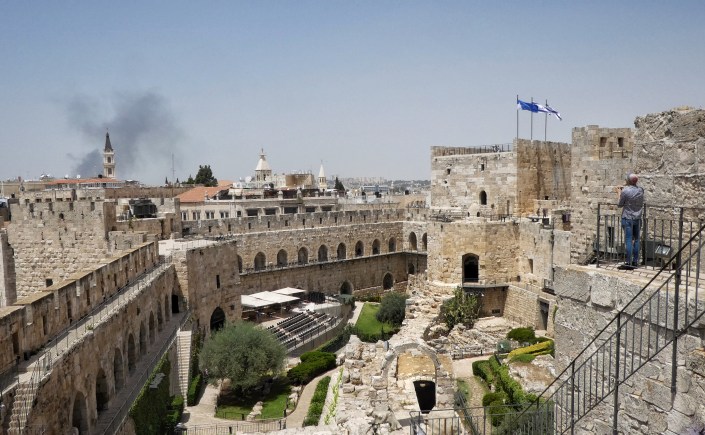
The Citadel or Tower Museum at the Jaffa Gate, the westernmost entrance to the city, is all the history you can eat in a four hour sitting. It’s a four thousand year old story: from the Canaanites and the Hebrews to the end of the Mandate and the establishment of the State of Israel, via Egyptians, Assyrians, Persians, Greeks, Hasmoneans, Romans, Byzantines, Umayyads, Abbasids, Fatamids, Crusaders, Ayyubids, Tartars, Mongols, Mamluks, Ottomans, British, and even Australians. Each left their mark on Jerusalem, and most planted their brickage upon and within the Citadel.
There is a long roll-call of famous names who may or may have not resided in the place.
King David didn’t, despite his name being given to the place and the apocryphal story that he once spied on the bathing Bathsheba from its ramparts – indeed, her bathroom is said to be underneath the New Imperial Hotel, just across the way. Nor did his son and heir, Solomon, builder of the First Temple. Conquerors Nebuchadnezzar and Cyrus did not. They just wrecked the joint. Judah Maccabee might have, and those other famous Jewish rebels, the Zealots didn’t, but during Great Revolt, they retreated there and trashed the place. Herod the Great, a psycho with an serious edifice complex, resided here. As did also Procurator Pontius Pilate when he was in town (he preferred the luxuries of Caesaea Maritimus (Latin for “on Sea). Historians now believe that the Citdel was where he actually cast judgement on Jesus, and not in the Antonine Fortress which overlooked the Temple (where the Haram al Sharif now stands) throwing into question the whole basis for the existence of the Via Dolorosa.
Roman general and future emperor Titus would have taken up residence therein after he destroyed the city in 70CE, leaving only the citadel standing. His troops needed somewhere to crash. Constantine didn’t, but his mom Helena most likely did when she “discovered” The True Cross, commissioned the construction of the Church of the Holy Sepulcher, and single-handedly invented the Holy Land pilgrim industry that endures to this day. The Muslim conquerors Omar Ibn Khattab, Salah ud-Din, and Baybars may have, but Ottoman Sultan Suleiman the magnificent, who built the city walls we see today, never set foot in Jerusalem, and nor did his successors.
Ottoman troops occupied it, and General Djemal Pasha would hang Arab Nationalists in the Square before it. General Allenby declared Jerusalem and Palestine liberated on the steps leading to the citadel in 1917, but most likely stayed across the square at our wonderful East New Imperial Hotel (the Kaiser stayed there too when he visited Jerusalem in 1898). British troops garrisoned it during the Mandate years – like the Roman legionaries before them, they’d’ve needed a place to lay their heads. The British-commanded Arab Legion of then Transjordan took control of it in during the the battle for Jerusalem in 1948 and defended it successfully against the new IDF. They did so again in 1967 only to lose it and the Old City.
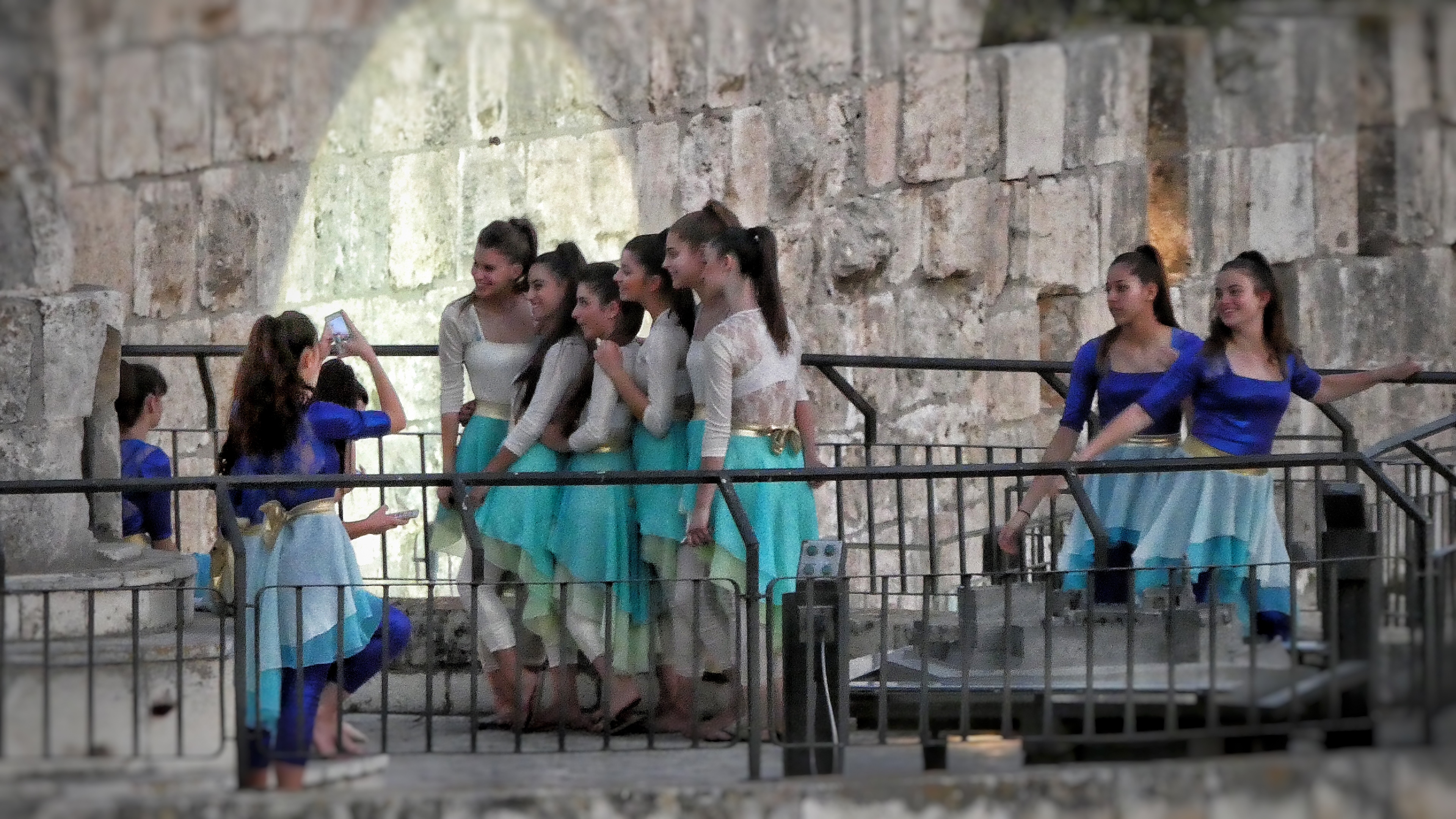
If the stones could talk, what a tale they would tell. And indeed, the museum now does just that, in content and in form. We sit on the roof garden of our hotel, directly across the street on Omar Ibn Al Khattab Square, and look across at its towers, ramparts and gardens, and sense it’s story in our souls. We watch present generations passing beneath its walls, and the young folk dancing on the ramparts, all part of the passing parade of humanity that has lingered by and upon these ancient walls.
For further reading, you can’t beat Simon Sebag-Montefiore’s Jerusalem : The Biography (Phoenix 2011).
You come at the king, you best not miss.
Omar Little, The Wire (after RW Emerson)
The phrase “one man’s freedom fighter is another man’s terrorist” is at once apt, correct, and yet often oversimplified to the point of disingenuousness. The word “terrorist” itself describes its goal. To instill fear in the heart of the enemy. In the past, the target would have been the king, the dictator, the ruling class, and those who served them and upheld their rule. Politicians, officials, solders and policemen. Today, terrorists indiscriminately target whole societies. Irish bombers blasted communities of the rival faith, murdered shoppers, office workers, and pub patrons, as well as soldiers and policemen. Palestinian suicide bombers hit malls and pizza bars in city centres. ISIS, al Qa’ida and the Taliban detonate cars in busy city streets and publicly execute prisoners in callous and calculating “lectures in flesh” (the phrase is civil rights lawyer Geoffrey Robertson’s, from his chilling account of the trials and execution of King Charles I of England and those who sentenced him, The Tyrannicide Brief.).
But targeted and random terrorism has a long historical pedigree. For centuries, it has been the desperate and nihilistic weapon of last resort of resistance and rebellion against perceived oppression and injustice, and against invaders and occupiers.
In the second century BCE Palestine, the Maccabees used assassination in their resistance to the Seleucid Greeks, and a century later, the Jewish zealots, the Sicarii, named for the easily concealed small daggers, paid the Romans in like coin, and ultimately in an insurrection that culminated in the destruction of Jerusalem in 70CE and the scattering of the Jewish race (giving history the emotive and symbolic last exit that was Masada). In an etymological irony that Mark Twain would have been proud of, the present unrest in Jerusalem, a large number of young Palestinians have perished in attempting to stab jewish soldiers and civilians. Their jaquerie is called the “Intifada Sakni-in”, the ‘Knife Uprising – an echo of those long-dead Sicarii “dagger men”.
Nowadays, one would be excused for thinking that “terrorism” and “terrorist” are synonymous with Arabs and Muslims. And a historical precedent reinforces this erroneous assumption. The Hashishan or “Assassins” of Middle East fame (yes, that is where that noxious noun originated) were Muslim men and boys mesmerized and mentored by Rashid ad Din as Sina-n, the “Old Man of the Mountain” (and all this, before Osama in the caves of Tora Bora), and were Twelfth Century hit-men contracted out to rival Muslim princes in the internecine conflicts that plagued the Levant in the wake of the Crusades and the demise of the great Arab Caliphates.
But the assassin’s knife (and in modern times, the gun and bomb, and latterly cars and trucks) predates these medieval hoods and links the Hebrew rebels of old to the Irgun and Stern Gang who encouraged Britain and the UN to abandon Palestine in 1948, bequeathing most of it to the new state of Israel, and triggering the Palestinian diaspora. European anarchists and Irish rebels and loyalists were adept at shootings and ambushes. In Algeria, during the ‘fifties, the nationalist FLN and the “colon” OAS shot and bombed each other and those unfortunates caught in the crossfire. The IRA perfected the improvised explosive device that today has crippled thousands of American, Canadian, and Australian soldiers in Iraq abd in Afghanistan. Hindu Tamil separatists of Sri Lanka introduced the suicide bomber, an economical and efficient weapon against soft (civilian, that is) targets, deployed today by Islamist killers in the streets of London and Lahore, Damascus and Dar es Salaam, Jerusalem and Jakarta. Whilst Arabs – and particularly Palestinians may have given the world the hijacking of aircraft – a tactic that fell into disuse due to diminishing political returns and rapid response forces – other Arabs showed us how to fly them into public buildings as the whole world watched in horror and disbelief. The shockwaves of this one are still reverberating through the deserts of the east and the capitals of the western world.
In going up up against their occupiers, the Palestinians have an old heritage. In my old country, Boudicca and Caractacus fought a losing battle against the Romans in Britain during the First CE. The Roman historian Tacitus ascribed to a vanquished chieftain the memorable words “solitudinem faciunt, pacem appellant” – they make a desert and they call it peace. After the battle of Hastings in 1066, the defeated Saxons pushed back against the Normans and brought the genocidal wrath of William the Conqueror down on their heads with the devastating “Harrying of the North”. The Green Man and Robin Hood legends are said to be a retrospective and romanticised remembering of the Saxon resistance. Warrior fugitives from that failed guerilla war fled as far as Constantinple, where many joined the Emperor’s acclaimed Varangarian Guard, (see When Harald Went A Viking)
In the streets and the countryside of Ireland, my parents’ birthplace, the United Irishmen, Fenians, Free Staters, IRA and Unionists fought against the redcoats, tommies, and black and tans of the British Army. Fought amongst themselves, fought against each other, and killed and were killed in their centuries long war of liberation. And in my adopted country, indigenous Australians fought a futile frontier war against settlers and soldiers just as native Americans did, albeit on a much smaller scale, and paid the price in hangings, massacres, poisoned wells, dispossession, marginalization, and “stolen children”. The legacy of those times lingers still – see The Frontier Wars – Australia’s heart of darkness.
In Central America, Juarez led the Mexicans against the French, and Sandino, Nicaraguans against US marines. Spaniards rose up against Napoleon’s forces, giving the world the word “guerilla”, or “little war”. Russian partisans ambushed the Grande Armé and the Wehrmacht. Throughout occupied Europe, the very term “resistance” became synonymous with the heroic unequal struggle against tyranny. In another of history’s ironies, muqa-wamat, Arabic word for resistance, unites sectarian rivals Hamas and Hizbollah against Israel.
And not just resistance to invasion and occupation, but also against oppression by one’s own rulers. Religious tracts tie themselves in knots reconciling the obligation to obey our rulers with the right to resist and overthrow those that rule badly. The unequal struggle against tyranny – or what is perceived by the perpetrators as tyranny – is the cause that inspires men and women to desperate acts.
The most celebrated in fact, film and fiction is the death of Julius Caesar at the hands of peers who feared that he intended to usurp the ostensibly democratic Republic (ostensible because democratic it was not) and institute one-man rule. That ended badly for the conspirators, and for Rome, as it precipitated years of civil war and ultimately, half a century of empire).
In 1880 the reforming Czar Alexander II of Russia, discovered the hard way that liberating the serfs did not inoculate himself against the bomb that took his legs and his life. His fearful and unimaginative successors hardened their hearts and closed their minds against further reform. setting in train the crackdown on dissent and democratic expression that led eventually to the storming of the Winter Palace on Petrograd in 1917. Narodnaya Volya, the killers called themselves – the People’s Will. And that is what terrorists do. They appeal and owe fealty to a higher court, a greater good, a savage God.
So it was when student and Serbian nationalist Gavril Princip assassinated Archduke Ferdinand of Austria-Hungary in June 1914 and ignited the spark that lit the conflagration of World War 1 which precipitated the demise of the old European empires.
So too when John Brown and his sons brought their broadswords to bear on slavers and their sympathizers and made a date with destiny at Harpers Ferry. Their famous raid may or may not have accelerated the downward slide to the secession and civil war that erupted the following year, but it provided a moral and symbolic prelude and also, the resonating battle hymn of the republic. John Wilkes Booth bookended this bloody era with his histrionic and public murder of Abraham Lincoln, shouting “sic semper tyrannis”, “thus always to tyrants,” attributed to Brutus at Caesar’s assassination – today, it’s the Virginia state motto. Brown and Booth were quite clear in their motives. As was were the segregationalist shooters who did for African Americans Medgar Evers and Martin Luther King. Less so were the killers of the Kennedy brothers in the sixties.
To conclude, sometimes that savage, rebel God is one of faith, sometimes, of blood and soil. In some instances, it is revenge for wrongs real and imagined – the reasons at times lost or forgotten through the passage of time and fading memories. And often, “the cause” is corrupted by the immoral economics of illicit commerce, including contraband, kidnapping, blackmail and extortion. Sometimes all merge in an incongruous hybrid of religious passion, ethic identity, libertarian or anarchistic fervour, and protection racket. As was the case in Northern Ireland, in Lebanon, in sub-Saharan Africa, and currently so in Syria and Iraq.
But most times, terror and turmoil is simply a political weapon planned, targeted and executed as a mechanism of regime change. Rebellion, revolt and revolution. Resisting, opposing, challenging, confronting and defeating the central authority. The seizing, holding, consolidation and keeping of political power.
And one thing is for sure. The outcome is unpredictable. History does not move in straight lines, but often follows a bitter and twisted path. Cliched as it is, the phrase “be careful what you wish for” is an apt one. And when, as Bob Dylan sang, “the line it is drawn, the curse it is cast”, there is no going back. To quote WB Yeats’ famous lines, “all is changed, changed utterly”.
Terrorism, then, can shift the course of history. If we were to stumble into the swamp of alternative histories, imagine what might of happened
If Caesar had walked home from the senate on the Ides of March
If Lincoln had been able to guide the Reconstruction
If the reforming Czar had introduced democratic government to Russia
If Gavril Princip’s shot had missed the archduke
If Kennedy had returned from Dallas
If John Lennon outlived George Harrison
If Yitzak Rabin had left the peace concert in Tel Aviv
If the Twin Towers stood still
To quote “Stairway to Heaven”, a curiously apposite title given the millenarian mindset of many terrorists, “Oh, it makes you wonder!”
I fought in the old revolution on the side of the ghost and the King. Of course I was very young and I thought that we were winning; I can’t pretend I still feel very much like singing as they carry the bodies away. Leonard Cohen, The Old Revolution
‘Thermidorian’ refers to 9th Thermidor Year II (27 July 1794), the date according to the French Republican Calendar, when Robespierre, Danton and other radical revolutionaries came under concerted attack in the National Convention, resulting in their downfall and execution.
Grim travelers butt each other to establish dominance. One lot plays Danton to another’s Robespierre, with the moderate Manon Roland and her Girondins trampled underfoot in the melee. On the scaffold, Madame Roland is said to have exclaimed “O Liberté! O Liberté! que de crimes on commet en ton nom”. Maximillian Robespierre destroys his erstwhile friends and slaughters thousands, precipitating the Jacobin meltdown as the ascetic and purist Marat is murdered in his bath. Robespierre and Saint-Just are guillotined by those who believe “the Terror” had gone too far, soon to be followed by fellow Jacobins Georges Danton and Camille Desmoulins. [Hilary Mantel’s excellent door-stop of a debut novel, A Place of Greater Safety, tells the story of all these revolutionaries. The bones of most of them rest amongst those of tens of thousands of others in the famously macabre Catecombes de Paris, a “tourist” attraction I highly recommend]
I would argue that this “Thermidorian Reaction” – the ostensibly “better angels of our nature” (Abraham Lincoln said that) reasserting themselves – is a rare bird indeed. Inevitably, things get worse, much worse, before they get better. As WH Auden observes in his sombre eclogue The Age of Anxiety, “many have perished: more will”.
Revolutions are unpredictable. They never run in straight lines. They reverberate, the shockwaves expanding and impacting on their vicinity, and way beyond. The shots ricochet, like drive-bys and crossfires, and you never know who will be hit, where the bullets will come to rest, and who will be damaged or destroyed. Many people will be liberated, and many enslaved. Many peoples will prosper, and many, many will perish. As TS Elliot wrote, “between the idea and the reality falls the shadow”.”
Stalin seizing Lenin’s crown as the father of the revolution lay dying. Trotsky launching the Red Army against the sailors of Kronstadt whose guns had heralded the fall of the Romanovs, and who then fought to last man against their former comrades. Stalin and Trotsky wrestling for control of party and power as the old Bolsheviks disappeared into the gulags and the execution cells. Stalin’s long arm putting an ice pick through his rival’s skull in Mexico decades later. Trotsky knew a thing or two about “permanent revolution. See Red and white terror – the Russian revolution and civil warand Stalin’s Great Terror
Adolf Hitler making his move against the corrupt and sybaritic Rohm and his Brown Shirt bully boys, a threat to his control of party and state, in the “Night of the Long Knives”, and setting the course for a Germany’s slow spiral to damnation with the plausible deniability of the similarly dramatically named Kristalnacht. The German language has surely given the world ominous words of iron, including Nacht und Nebel; Storm und Drang; Weltanschauung, Blitzkrieg and Schadenfreude – none of them boding well for tyranny’s unwelcome attentions.
It is a zero-sum play book well-thumbed by latter-day revolutionists like the Baathists Saddam Hussein and Hafiz Assad in their relentless and merciless accession to power in Iraq and Syria respectively, like the cruel and vengeful but infinitely pragmatic regime that has ruled Iran’s Islamic Republic for these past forty years, and the kleptocratic dictators who lord over much of Sub-Saharan Africa. In the manner of revolutions past and present, each one has “devoured its children”, harrying, jailing, exiling and slaughtering foes and onetime allies alike.
The sad reality in so many countries is that when the going gets tough, the mild get going, and the hard men ride roughshod over their people.
Vengeful, vindictive. Merciless. Unforgiving and never forgetting. Do no deals. Take no prisoners. Give no quarter.
The Lebanese Civil War broke loose forty years ago this month. A cold war fuelled, by aggregating hostility between the Palestinian refugee community, a militarized state within a state, and their reluctant Lebanese hosts, became hot with deadly clashes between Palestinian and Maronite militias. Sects, clans, families, and the political parties and militias that gathered about them, went for their guns, the hounds of hell were loosed, and the massacres began.
In a Levantine echo of the Thirty Years War that raged through Western Europe from 1618, cities were destroyed and the countryside ravaged as armies, militias and gangsters fought over the fallen body of a divided and devastated land. Muslims fought Christians, Sunni fought Shi’a, Maronites fought Orthodox, Druze fought Muslims and Christians, Syrians fought Lebanese and Palestinians, communists fought nationalists, and Palestinians, at one time or other, fought everyone, including other Palestinians. And all changed partners and enemies in a bloody danse macabre that was at once mediaeval and mid-20th Century in its savagery.
This Hobbesian “war of all against all” drew in outsiders. Syrians, who during the course of their intervention, changed allies and adversaries as their political and strategic aims and interests mutated, and ruled the country until, implicated in the assassination of popular former prime Minister Rafik Hariri in 2005, beat an undignified retreat (whilst never quite relinquishing the levers of power). Israelis, threatened by guerrilla attacks in the Fatah land of southern Lebanon, ostensibly invaded Lebanon to destroy the Palestinian military machine, and as the midwife in the birth of the Shi’a Hezbollah, waded with eyes wide shut into a quagmire that many have viewed as their Vietnam. Americans and French, who intervened with the aim of separating the warring sides and pushing them towards a ceasefire, departed in the aftershock of Hezbollah bombs that killed hundreds of their servicemen. And United Nations Blue Berets who serve and die still in the hostile borderlands.
The war raged for the next fifteen years, staggering to an end in 1990 after claiming over 150,000 lives and destroying the lives of tens of thousands of others, including over 100,000 permanently handicapped. Nearly a million souls fled their homes, and some 76, 000 remain displaced to this day, now forgotten in the midst of the new and greater Syrian diaspora, whilst tens of thousands emigrated permanently. There are still some 17,000 “disappeared” who may be either still in Syrian or Lebanese jails, or more likely, in one of hundreds of unmarked graves scattered across this tiny country.
There are no memorials, no cenotaphs, no national commission to trace the missing, and no Madiba to gather and reconcile the sundered tribes. Just memories of what those who endured call “the events”, and for some, a selective amnesia. A harrowing half-life endures, sleeping embers constantly being fanned to life by the ill winds that blow across the porous frontier with Syria and the iron curtain that separates Hezbollah from Israel. It said that old wars beget future wars. And in no land can this be more of a self-fulfilling prophecy if the Gods Of War have their way.
As well they might as the legacy lives on in the rise and rise of Hezbollah, a non-state that is stronger than the state. In the use of car bombs, suicide bombers, foreign hostages, and human shields as canny weapons in what we now call asymmetrical urban warfare. In the destruction of the Palestinians’ once formidable military muscle, now quarantined in the Gaza ghetto and the impotent Palestinian Authority. In remembrance of the massacres of Sabra and Shatilla that still haunt Israeli and Palestinian dreams, when Yasser Arafat decamped for Libya with his army and left his people at the mercy of the Phalange militia. The Palestinians are still in Lebanon, still yearning for their terra irredenta in the south.
And in Lebanon redux, some say the old hatreds linger still and could rekindle the fires of war. Others hope that a younger generation do not take the road to perdition travelled by their elders. Armed young men in Sunni Tripoli and in Beirut’s Shi’a suburbs, and fighting in Syria may disagree. Calmer countries chart their fortunes with the rise and fall of their financial indices, whilst Lebanese can check the political weather by watching the market price of hand-guns and Kalashnikovs. They may have buried the hatchets, but many know where they are buried.
The roots and fruits of the Lebanese civil war are myriad and complex. The redoubtable journalist Robert Fisk unravels them best in his tombstone of book, Pity The Nation. Read it and weep. For it is a bloody saga of trial and treachery, of enmity and endurance, of courage and cravenness, but most of all, of infinite sadness. And none more so than when he writes of a Lebanese doctor, Amal Shamaa: “I had to take the babies and put them in buckets of water to put out the flames. When I took them out half an hour after, they were still burning. Even in the mortuary, they smouldered for hours”. “Next morning”, Fisk continues, “Amal Shamaa took the tiny corpses out of the mortuary for burial. To her horror, they again burst into flames”. Such is the effect of phosphorous shells on mortal flesh.
The title of Fisk’s book is that of a poem written in 1931 by Khalil Gibran, Lebanon’s most celebrated poet, a poem that was both a prophetic testament and a testimony of times to come: “Pity the nation divided into fragments, each fragment deeming itself a nation”.
Pity the nation that is full of beliefs and empty of religion. Pity the nation that wears a cloth it does not weave and eats a bread it does not harvest.
Pity the nation that acclaims the bully as hero, and that deems the glittering conqueror bountiful.
Pity a nation that despises a passion in its dream, yet submits in its awakening.
Pity the nation that raises not its voice save when it walks in a funeral, boasts not except among its ruins, and will rebel not save when its neck is laid between the sword and the block.
Pity the nation whose statesman is a fox, whose philosopher is a juggler, and whose art is the art of patching and mimicking
Pity the nation that welcomes its new ruler with trumpeting, and farewells him with hooting, only to welcome another with trumpeting again.
Pity the nation whose sages are dumb with years and whose strongmen are yet in the cradle.
Pity the nation divided into fragments, each fragment deeming itself a nation.
Kahlil Gibran, The Garden of The Prophet (1933)
ارحم على الامة
ارحم على الأمة المليئة بالمعتقدات والخالية من الدين.
ارحم على الأمة التي تلبس ثوبا لا يحاك.
وتأكل خبزا لا تحصد.
أشفق على الأمة التي تعتبر المتنمر بطلاً ،
ويعتبر منتصرها رائعا.
ارحم أمة تحتقر الشغف في أحلامها
لكنه يخضع لها عندما تستيقظ.
ارحم على الأمة التي لا ترفع صوتها
إلا عندما تمشي في جنازة ،
وتفتخر فقط بين أطلالها ،
ولن تنقذ نفسها عندما توضع رقبتها
بين السيف والكتلة.
ارحم على الأمة التي فيها رجل الدولة وهو ثعلب ،
والفيلسوف مشعوذ
فنه من الترقيع والتقليد
ارحم على الأمة التي تستقبل حاكمها الجديد بصوت عالٍ ،
ويقول وداعا له بسخرية ،
فقط للترحيب بآخر من خلال الاحتفال الصاخب مرة أخرى
ارحم على أمة حكماؤها أغبياء السنين ،
وأولئك الذين لا يزال رجالهم الأقوياء في المهد.
ارحموا الأمة منقسمة ،
وكل قطعة تعتبر نفسها أمة.
خليل جبران
Muslim gunmen clash with right-wing Phalange militiamen outside the Phoenicia Intercontinental hotel in Beirut, December, 1975.
There would be later times (1965, 67, 69…) but I remember the first time. 1962. Having hitched through Europe and arriving in Istanbul. That special feeling. From Sultan Ahmed looking across the Bosporus towards the East, unknown roads and places and in the far distance a very vague idea of India…. Istanbul as a gateway to other worlds and new adventures….I was a young man drifting and dreaming, there were no guidebooks and I had not met anybody who had done the journey or heard stories from the road ahead….. The world was open, and I was ready…. Torben Huss, photographer
Haydarpasha Gan, late November 1972.
The last station on the line, and the end of Asia, after a twenty four hour train journey across Anatolia, from Teheran, including a wintry ferry ride across Lake Van, in the East, in the company of an idiosyncratic and proselytizing German pastor and a Pakistani student. The student and I quickly converted to Lutheranism just to shut him up.
There were no bridges across the Bosphorus in those days. Just the ferry that met the train to take us across to the Golden Horn to Eminou. And thence, a walk up to Sultanahmet, with the address of a doss house given to me by someone I’d met in Meshad near the Persian-Afghani border. A space on a floor for a few lira a night.
And then several weeks in Istanbul on two dollars a day, sleeping on the floor at what today would be called a backpacker’s hostel, broke and waiting for money to be sent from England. Weeks spent wandering the streets, wondering at the mosques and markets, getting stoned (dangerously in those days – remember ‘Midnight Express’?) in the Hippodrome, and dining cheaply morning, noon and night at the Pudding Shop.
Forty years on, and naturally, things have changed in many ways. Haydarpasha is closed for renovations and a rail link crosses the Bosphorus by undersea tunnel. There are now are two impressive suspension bridges.
Asian Istanbul, more of a sleepy suburb then, with some fine buildings scattered along the shore, is now a metropolis in its own right. And Istanbul is a city of thirteen million people.
The Pudding Shop is now world-famous on account of its hippie credentials and sells all kinds of good Turkish tucker, but a shadow of its former simplicity. Where once there thronged ragged and rangey adventurers on their journey east or west, tourists of all nations gather en masse.
The Pudding Shop 1969
Turkey in general, and Istanbul in particular, is now the place to be and the town to see – in these troubles times, it is a safe ‘Middle Eastern’ holiday destination, and a big cross on the cruise map. Almost every day, a fleet of giant liners ties up on the Yesilkoy quay. And their cargo soon materializes in Sultanahmet to view the BIg Four: the Blue Mosque, Aya Sofya, Topkapi Seray, and the Grand Bazaar. No time for the simple grandeur of the Sulaymaniyah Mosque, the other-worldliness of Byzantine Emperor Justinian’s vast underground cistern, or the aromatic gorgeousness of the Spice Bazaar down by the quays of Eminou.
Though no longer the exotic, half-east-half-west departure lounge for the old hippie trail, Istanbul is still a contradiction of past and present, trash and treasure, modernity and medaevilism. The dialectic is still evident, and maybe more so, between the ever changing now and the ever-present then, in the forever magical monuments and mosques, in the contrast between the modern young Turks in their western gaberdine and the many muhajibiin and well-covered conservatives.
Scratch Istanbul’s surface, and you will find a tangle of medieval streets and 21st Century traffic jams, bad drivers, and worse pavements. Walkers watch out!
And there is a poorer, working class, and even rural Istanbul. Suburbs just off the tourist map, where old men gather outside chai shops smoking, chatting and playing cards, and where women are rarely seen – when they do, most are covered.
Many Turks have come in from rural areas, and are still clad in traditional garb. There are now hundreds, maybe thousands of Syrian refugees in Istanbul now, seeking shelter from the storm in their sad and devastated homeland, and other Arabs fleeing the bitter winter that has followed the Arab Spring. Some rent apartments for their families, others beg in the streets.
As we walked along the highway that boarders the ancient walls and the Bosphorus, a speeding car hit an elderly Syria as he was crossing the dangerous road. We and his distraught family rushed to his aid, and mercifully he was unharmed but in shock, and did not want an ambulance. We placed him in a the comfortable position and I advised the young men with him in Arabic to keep a watch over him and to watch his eyes.
In contrast to these wandering souls, well-heeled Gulf Arabs arrive with too much money and too little taste. Istanbul is viewed as more stable, cosmopolitan, and naughty than tense and tenuous Beirut, and these wealthy visitors often seek to buy property here.
All the contrasts and contradictions are presently being played out in the politics and economics of this modern Turkey, and in the street protests, tear gas, and riot gear across the Golden Horn, up the hill around Taksim and Gezi Park, and across the suspension bridge. Partisans of Prime Minister (now presiden) Erdogan bump up against the Gulenists, followers of an exiled but influential dissident, and against the ever-ardent bearers of Kemal Ataturk’s torch. Folks still revere him as the Father of The Turks, but times change, some say, and so then must Ataturk, although the old man must spin some in his revered grave.
People say that Turkey is a divided nation right now. And this is manifested in accusations of creeping Islamization, counter-accusations of occidental decadence and depravity, allegations of corruption and cronyism, and street violence and police brutality. Back into November 1972, Military Rule was the norm, and dissent was silenced. Turkey was Asian, and Middle Eastern. Now the country still straddles east and west, coughing the European Union with much leas enthusiasms than hitherto or and presenting as the go-between ‘twixt The West and and Iran, and with the volatile lands to the south.