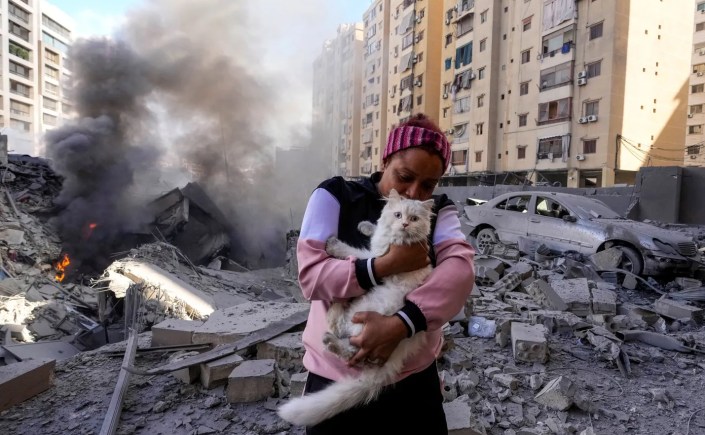
Can Lebanon free itself from Hezbollah’s grip?

Contrary to what many of the historically uniformed opponents of Israel and the US and its allies might think as they rush to judgement on the streets of western cities, the current Israeli Lebanese war (the third of that name) did not begin with the wired pagers and walkie talkies and the killing of much of Hezbollah’s leadership, including its chief, Hasan Nasrallah. It started the day after the Hamas’ murderous assault on Israel’s border communities on October 7th last year, when, ostensibly as a show of solidarity for Hamas and Gaza and with theocratic Iran’s tacit approval, the Lebanese Hezbollah began launching drones and missiles at northern Israel – some 9,000 to date – forcing the evacuation of probably up to 100, 000 citizens to safer areas to the south – where they remain to this day.

Yet, it is only now, a year later, that there are calls internationally for a ceasefire. I’ve seen glaciers move faster! Not that messianic jihadis are much into ceasefires, let alone surrender. It’s not in their doomsday DNA – they’d sooner burn down the house with themselves and their co-religionists inside, as they have done in Gaza.

There is no question that Hezbollah had it coming and that Israel’s strikes have been perfectly justifiable. Hezbollah committed a series of gross miscalculations and grievous strategic blunders. Nasrallah’s delusions of power were his undoing. Now it remains to be seen if Hezbollah can survive the devastation it has suffered in the last two weeks, and more critical for the rest of the world, if the conflict escalated into a regional war in which Israel and Its allies have to confront Iran’s “Ring of Fire”, its “Axis of Resistance” – a war that is actually now being waged on seven fronts: Gaza, the West Bank, Lebanon, Syria, Iraq, Iran – and world opinion.

Anyone who is willing to bet for or against an escalation between Israel and Iran should quit gambling. While the United States’ involvement endeavours to avert further escalation, this is like trying to put toothpaste back in the tube: theoretically possible, practically impossible. Remember the ludicrous American and Israeli concept of “escalate to de-escalate” from merely a week ago. Unpredictable developments and spiraling escalation obviously outpace analysis

Hezbollah members carry the coffins of two commanders during a funeral procession in Beirut’s southern suburbs on September 25. AP

Slouching towards Beirut

The Sydney Morning Herald provided an excellent summary of how the Shia Hezbollah came to create a parasitic state within a state and to dominate Lebanon’s politics, economy and society, outman and outgun the meagre Lebanese army, and to potentially threaten the country’s survival. Like Hamas, its Sunni counterpart in Gaza, it is an Iran-funded messianic, fundamentalist organization dedicated to the elimination of Israel, and the theocratic Islamic Republic of Iran’s most important proxy in the “Axis of Resistance” to the Jewish state and the United States and its allies, a keystone in its Ring of Fire strategy. And also like Hamas, its jihadi ideology, evident in its name, The Party of God, does not permit compromise let alone surrender.

On 27th September, Tom McTague, the political editor of the UK e-zine Unherd wrote in an article called Why Lebanon can’t be saved:

“Today, Lebanon is a dead state, eaten alive by Hezbollah’s parasitic power. The scale of the catastrophe in the country is hard to comprehend, much of it caused by the disruptive nature of Syria’s civil war. Since its neighbour’s descent into anarchic hell, some 1.5 million Syrians have sought refuge in Lebanon — a tiny country with a population of just 5 million. But, more fundamentally, with Hezbollah fighting to protect Bashar al Assad, the opposing countries — led by Saudi Arabia — began withdrawing funds from Lebanese banks. This sparked a financial crisis that left Lebanon with no money for fuel.

By spring 2020, the country had defaulted on its debts, sending it into a downward spiral which the World Bank in 2021 described as among “the top 10, possibly top three, most severe crises globally since the mid-nineteenth century”. Lebanon’s GDP plummeted by around a third, with poverty doubling from 42% to 82% in two years. At the same time, the country’s capital, Beirut, was hit by an extraordinary explosion at its port, leaving more than 300,000 homeless. By 2023 the IMF described the situation as “very dangerous” and the US was warning that the collapse of the Lebanese state was “a real possibility”.

With Iranian support, however, Hezbollah created a shadow economy almost entirely separate from this wider collapse. It could escape the energy shortages, while creating its own banks, supermarkets and electricity network. Hezbollah isn’t just a terrorist group. It is a state within a state, complete with a far more advanced army. “They may have plunged Lebanon into complete chaos, but they themselves are not chaotic at all,” as Carmit Valensi, from the Institute for National Security Studies at Tel Aviv University, told the Jerusalem Post.

Then came 7 October, after which Hezbollah tied its fate to that of the Palestinians, promising to bombard Israel with rockets until the war in Gaza was brought to a close. We have witnessed the frightening scale of its power over the past year, its bombardment forcing some 100,000 Israelis from their homes in Galilee to the safety of the Israeli heartlands around Tel Aviv. For the first time since modern Israel’s creation, the land where Jews are able to live in their own state has shrunk; the rockets are a daily reminder of the country’s extraordinary vulnerability, threatened on all sides by states who actively want it removed from the map – even from history itself. The pretense (in the walk of the Abraham Accords brokered by the US between Israel and a number of ‘friends’ Arab autocracies that the Palestinian and Lebanese questions could be contained, ignored or bypassed as part of a wider grand strategy to contain Iran has been shattered”.

The day after

Some commentators are more upbeat than McTague about Lebanon’s prospects in the event of the weakening if not outright removal of Hezbollah’s stranglehold on Lebanese life. I republish two such below.  Both acknowledge that this would not be easy.

Hezbollah’s command-and-control infrastructure is in tatters. But the Iranian control of Syria gives Hezbollah significant strategic depth, and, despite the recent losses, Hezbollah is a very large organization that is deeply woven into Lebanon’s Shia population, the largest sect in the country. But the events of the past two have seen the mystique around Hezbollah broken. Its prestige, built on “resistance” to Israel, has been irreparably damaged – not least by the revelation of how extensively Israeli spies have infiltrated its ranks. Hezbollah’s ability to dominate Lebanon is open to challenge in a way it has not been for decades. The end could well be nigh for the terrorist group.

As Israeli commentator Zvi Bar’el, wrote in Haaretz on 28 September:

“Even if Israel succeeds in destroying the entire stock of Hezbollah missiles that threaten it, the arms that remain in the organization’s hand will continue to serve as a whip threatening Lebanon’s domestic front so long as the country has no effective, equipped and trained army that can contend with Hezbollah. Iran fears that this lever is now liable to lose its power in the face of the heavy blows suffered by Hezbollah, which may lead to the Lebanese public to rear its head, considering the very heavy price it has had to pay for the war that is not its own, whose rationale has not been defense of the homeland, but assisting Hamas.

The Lebanese public and in particular the political rivals to Hezbollah, despite the sharp criticism that has intensified during the war, and in particular over the past two weeks, has still not taken to the streets to confront the organization. The political harmony between Hezbollah’s rivals has not yet ripened, their internecine revulsion and hate rivals what they feel toward Hezbollah, and there is no certainty that even in the face of the destruction of Lebanon will they be able to close ranks. Hezbollah is still demonstrating fighting ability despite the loss of its senior commanders, and the political road map that now appears optimal may disappear if a regional confrontation begins following the expected Israeli strike against Iran.

But the Lebanese have already demonstrated their power several times in the country’s recent history. In 2005, they drove the Syrian forces out of the country following the assassination of Prime Minister Rafik al-Hariri, and in 2008, they violently confronted Hezbollah in a clash that killed dozens. They have toppled governments and forced the replacement of ministers, and most of all, in contrast to Gaza, they have a country that offers a collective national structure that they believe has been undermined by Iran, by way of Hezbollah.

With more than a million Lebanese uprooted from their homes, and Hezbollah’s social and health services no longer capable of responding to the needs of the homeless and wounded, forcing the group to rely on the services of the government it aspired to replace – Iran’s strategic challenge is to prevent a situation in which the country and its people will reject, or at least erode, Hezbollah’s status as the party that determines the nation’s policy and character.’

But the way ahead is daunting. Lebanon was in dire straits even before October 7th.

An economic crisis that began in 2019 and a massive 2020 port explosion for which Hezbollah was partly responsible, have left Lebanon struggling to provide basic services such as electricity and medical care. Political divisions have left the country of 6 million without a president or functioning government for more than two years, deepening a national sense of abandonment. Reeling from years of economic dysfunction brought on by corruption and the presence of perhaps over a million refugees. A comprehensive international effort is needed to rebuild its political, economic, and military institutions. Yet critical aid and reconstruction money has been withheld precisely because of exasperation with Hezbollah’s corrupting presence in the country.

Lebanon must be freed of Hezbollah and Iran, and it should not be left up to Israel and its highly problematic Netanyahu government. The international community needs to take an active role in supporting Lebanon’s recovery and resisting Iranian interference. The UN Security Council can start the process by demanding the implementation of the United Nations Security Council resolution 1701 which was intended to resolve the 2006 Lebanon War. It was unanimously approved by the Security Council  and the Lebanese cabinet.

That resolution called for a full cessation of hostilities between Israel and Hezbollah; the withdrawal of Israeli forces from Lebanon to be replaced by Lebanese and United Nations Interim Force in Lebanon (UNIFIL) forces deploying to southern Lebanon; and the disarmament of armed groups including Hezbollah, with no armed forces other than UNIFIL and Lebanese military south of the Litani River which flows about 29 km north of the border. As of 2024, the resolution was not fully implemented. Hezbollah and other armed groups in southern Lebanon have not withdrawn at all; in particular, Hezbollah has since significantly increased their weapons capabilities

For more on Lebanon in In That Howling Infinite, see Lebanon’s WhatsAPP intifada, Pity the Nation and O Beirut – songs for a wounded city 

Hezbollah leader Hasan Nasrullah

The Day After Nasrallah: Lebanon’s Government Is Unsure How to Handle the ‘Historic Opportunity’ Ahead

With Nasrallah gone, Lebanon has a unique opportunity to envision a post-Hezbollah reality, yet the militant organization still maintains a tight grip on the country. They will not permit the government to secure a diplomatic solution acceptable to Israel.

Zvi Bar’el H

A little more than 20 years after the execution of Saddam Hussein and the end of his reign of terror, and about 13 years after the Arab Spring overthrew a number of dictators, a show of euphoria is resolutely predicting that Hezbollah Secretary General Hassan Nasrallah’s death will “change the map of the Middle East,” accompanied by proposals and work plans meant to take advantage of the opportunity to redraw that “dream map.”

The obvious starting point for this imagined renaissance is Lebanon, whose most significant political, economic and military center since the civil war ended in 1989 with the signing of the Taif Agreement, has now been damaged. The uniqueness and importance of the Taif Agreement was that it sought to shatter the confessional structure of the government that gave Christians a majority in the government and its institutions, as well as in the companies affiliated to it and in the army.

The agreement stipulated that Christians would no longer have an automatic majority in parliament, based on a population census conducted in 1932. Instead, its 128 seats would be divided equally between Christians (and other non-Muslim minorities) and Muslims, a definition that also included the Druze and the Alawite. In the important secondary division of the Muslim sects, 27 seats were allocated to Sunnis and 27 seats to Shi’ites.

At the base of this division was the aspiration that no single sect would ever be able to rule the country exclusively; for a government to be established, each sect would have to form a coalition with other sects that would share the political and economic spoils.

At the time, this structure was seen as an appropriate solution to ending the 15-year civil war. It did not build better politics in the country, but it did give Lebanon years of stability. This structure has not changed and it is not expected to change even after the removal of Nasrallah and Hezbollah’s military leaders; it is anchored in the Lebanese constitution, which no one currently intends to change.

The Taif agreement has led to the formation of trans-confessional coalitions, but they brought the country to economic collapse and to the brink of bankruptcy and political paralysis: In this situation, the rival parties cannot agree on a president, and since it is the president who appoints the prime minister it is then impossible to form a permanent government to make the critical decisions necessary to rescue the state from the crisis.

In an interview with Yossi Melman, former Mossad chief Tamir Pardo said, “The Israeli government should announce loudly and clearly that Lebanon is a single entity, and that the Lebanese government bears sole responsibility for every act of aggression that comes out of Lebanon. That the territory known to the world as Lebanon has one government, one flag and one army. That any negotiations to end the war and determine security arrangements will only take place with the Lebanese government. This war could be ended within hours from the moment Israel makes this clear and the international community acknowledges the fact that there is only one single legal entity in Lebanon.”

This is a statement that rests on admirable theoretical foundations, but they are detached from the reality of Lebanon and above all from the reality of the torn, crazy patchwork quilt known as the “Lebanese government.” It is true that any negotiations must be conducted with the Lebanese government, and that the country has “one government,” but it is a government with cabinet members who serve on behalf of Hezbollah who, together with their coalition partners from the Amal movement and, until recently, Gebran Bassil’s Christian party the Free Patriotic Movement, hold the government and the country by the throat, with or without Nasrallah. To bring about the “historic change,” Lebanon will have to hold a new general election, which at the present is about as likely as appointing a president or implementing economic reforms.
Lebanon has “one flag and one army,” but in practice it has two armies: the official one, headed by the Christian general Joseph Aoun, who has been mentioned as a candidate for the presidency; and the “Hezbollah army.” Even after all of the latter’s long- and medium-range missiles are destroyed and it no longer poses a threat to Israel, it will still have enough weapons to threaten Lebanon’s internal security and its own political rivals.
The Lebanese Army, on the other hand, is a ghost army. On paper, it has an estimated 80,000 or so soldiers, as well as a token navy and air force, lacking air defenses that could protect Lebanon’s skies from hostile attacks. Above all, it is a bankrupt army, that relies on Qatar and America for the wherewithal that allows the force to pay its soldiers their monthly wages of about $100. Many soldiers on the army’s payroll take on odd jobs in order to support their families.
Hezbollah’s fighters have no such problems. Their salaries are much higher, with a funding pipeline that relies on tremendous assistance from Iran and on the organization’s resources outside of Lebanon, without forgoing their share from the state budget.
During and before the war, Jean-Yves Le Drian, French President Emmanuel Macron’s special envoy to Lebanon, and U.S. President Joe Biden’s envoy Amos Hochstein have presented an operating plan to implement UN Security Council Resolution 1701, in particular the section that prescribes that the Lebanese Army and UNIFIL will deploy in southern Lebanon and prevent the establishment of Hezbollah forces up to the Litani River.

The plan includes recruiting, training, equipping, and arming 15,000 more men for the Lebanese Army and it even has the consent of Prime Minister Najib Mikati’s government, which announced an initial plan to recruit 5,000 “volunteers”. Paralleling the deployment of these forces, when their recruitment and training is completed, Lebanon and Israel will negotiate to mark their land border, which is supposed to neutralize Hezbollah’s grounds for pursuing the conflict with Israel.

Only one element was missing in the plan to complete its implementation: Hezbollah’s agreement. Although Nasrallah hinted that he would not oppose any decision that the Lebanese government would make on the issue of demarcating the border, he stressed that he was only prepared to discuss it after a cease-fire in Gaza. Even after his death, Hezbollah MPs and ministers will continue to be committed to this position.

It may be assumed that if the Lebanese government decides to initiate the plan with Hezbollah’s consent, the Lebanese Army or any international body that goes to Lebanon to help implement the settlement will encounter violent resistance by Hezbollah, for which they will not need long-range missiles. Assault rifles, machine guns, grenades, and IEDs will suffice.

Nonetheless, there is a chance for a turnaround and implementation of the diplomatic action plan, and it lies in establishing a strong political coalition that will adopt the French-American action plan. The key figure for this measure is the Speaker of Parliament Nabih Berri, who, until now, served as Nasrallah’s representative in all negotiating issues on settlements, a cease-fire, and contact with the West.
Berri, 86, is a veteran and sophisticated political battle fox, who has made a fortune estimated at tens of millions of dollars (other estimates mention a billion dollars), and enjoys broad support in the Shi’ite community. In the last elections, in 2022, his party won 15 seats, compared to Hezbollah’s 12.
Nasrallah’s removal may give Berri a major political edge, which if he can exploit to build a supporting coalition, he will be able to navigate Lebanon toward a diplomatic and military settlement or even finally bring about the appointment of the country’s president. And yet, even with his new position of political power, Berri cannot ignore or bypass Hezbollah’s position if he wants to implement a settlement that will satisfy Israel.
To help Berri and the Lebanese government make the “right” decision, it is possible to try and mobilize international pressure, offer financial rewards for Lebanon or threaten sanctions, but it should also be remembered that they have all been applied to Lebanon, before and during the war, without leaving their stamp on Lebanese politics.
It seems that the map of the new Middle East that will begin in post-Nasrallah Lebanon will have to find a different cartography department to draw it.

Without Hezbollah, Lebanon’s Economy Could Rise Out of the Ashes

It’s a long shot, but even amid financial crisis, dysfunctional government and brain drain, Lebanon has many of the raw materials to start over

David Rosenberg., Haaretz, Oct 1, 2024
As it turns out, things could get a lot worse. As Israelis hail a decisive victory over Hezbollah, Lebanon is being pummeled by Israeli bombs. Hundreds of thousands of residents in the south have fled for fear of Israeli airstrikes. The government – three years later, still a caretaker without a president – not only can’t defend the country, it has done nothing to help the refugees or care for the wounded. “They have no money and they have no control over what’s happening on the ground,” Mark Daou, a lawmaker, told The New York Times.
The old chestnut about Lebanon being the Switzerland of the Middle East is nothing more than a fun fact out of the distant past for the history books. The last time Beirut could boast of being a major banking center was before its civil war erupted in 1975. Today, it would be better described as the Somalia of the Middle East, with warlord No. 1 being Hezbollah.
Yet the Somalia comparison isn’t entirely fair. Amid all the dysfunction and chaos in Lebanon, there remains considerable latent potential to return to the glory days.
Rebuilding the economy will not be easy. The government is hopelessly corrupt and ineffectual, as evidenced by the fact that five years into the biggest peace-time economic collapse since the 19th century, it has not even proposed a recovery plan. It is heavily in debt and since it defaulted, can no longer tap the international financial market for funds. Infrastructure is in shambles. The state power company doesn’t come close to meeting electricity demand, leaving Lebanese to rely on private generators. The only way an ordinary Lebanese can get his or her money out of the bank is by robbing it.
In the short term, the economy may be even worse off without Hezbollah, which the hundreds of millions of dollars a year it received in Iranian funding was spent on local goods and services. Lebanon also stands to lose the export receipts from Hezbollah’s drug smuggling, arms and cigarette smuggling, and currency counterfeiting mainly in Latin America.
There is also a risk that Israel’s successful assault on Hezbollah over the past two weeks could set off a new round of sectarian fighting in Lebanon and destroy the last remnant of political stability and a functioning economy. “The demolition of Hezbollah’s capabilities will likely embolden its opponents and anti-Iranian forces within Lebanon,” Imad Salamey, an expert on Lebanon at the Lebanese American University, told Al-Jazeera television.
But the reverse could also happen: the elimination, or at least the significant weakening, of Hezbollah could remove its baleful influence and enable Lebanon to begin rebuilding its decimated economy.
Silver lining
Among other things, Lebanon would have to contend with far fewer Western sanctions, most of which are directed at Hezbollah and affiliated institutions. It is just possible that freed of Hezbollah interference, a government can finally be formed. Aid and investment from the Gulf and the West may be forthcoming for the first time in years.
Perhaps a more intense effort to find natural gas off Lebanon’s Mediterranean coast will get underway. Lebanon’s enormous diaspora – estimated at 15.4 million, almost three times the domestic population – could be a source of capital and for opening up foreign markets, just as the Jewish diaspora was for Israel in the past. There is even a silver lining to Lebanon’s feckless government, namely less government red tape and low taxes.
But in the end, Lebanon’s economic fate will depend on its people, or more precisely its human capital. Without significant natural resources or a domestic market to support industry, the future will depend on its becoming a knowledge economy, one based on technology and sophisticated services, as Tarek Ben Hassen, a Qatar University economist, proposed in a recent article.
Not surprisingly, even in 2019, before the roof caved in, Lebanon had long ceased to be a globally competitive economy. The World Economic Foundation’s Global Competitiveness Report that year ranked Lebanon 88th of 141 countries, one notch below Tunisia and one above Algeria – not the kind of neighbors a self-respecting country would want on this league table.
But on a few critical metrics, Lebanon came out looking much better. It placed 24th on graduates’ skill sets, 23rd on digital skills and 26th for imparting critical thinking in primary school teaching. And, these rankings probably understate Lebanon’s talent base: Like many countries, they are an average between a highly skilled elite and a less skilled majority. But a knowledge economy can get started with a small elite, if it is sufficiently capable.
Lebanon has another knowledge economy asset in its system of higher education. Despite all the economic and political vicissitudes of the last few years, six Lebanese universities are ranked among the world’s top 1,000 (top-ranking American University of Beirut comes in at 250), according to the QS World University Rankings for 2025.
And although it is not much in evidence these days amid economic collapse (the WEF ranked Lebanon 74th in 2019 for entrepreneurial culture), Lebanon has a long history of entrepreneurship stretching back to the days of the Phoenicians. Lebanese labor costs for engineers and the like are low. These kinds of numbers are a good foundation for a knowledge economy. The catch is that they reflect the situation as it was in 2019; since then, the collapse of the economy caused the country’s traditionally high rate of emigration to balloon 4.5-fold in 2020 and 2021. Many of those who fled were Lebanon’s best and brightest, and the young who contend with a youth unemployment rate of nearly 50 percent.
If Lebanon can get its act together, it may be able to lure many of these expatriates back. The knowledge that Hezbollah is no longer casting its shadow over the country will certainly be an incentive. The wreckage that Lebanon is today may be seen by the most ambitious and entrepreneurial as an opportunity.
With or without Hezbollah, establishing relations with Israel is unlikely. But if Lebanon were to do that and establish a warm peace involving trade, tourism and business deals, like the one between Israel and the other Abraham Accord countries, the road to a thriving economy would be that much shorter.

“You want it darker?” … Gaza and the devil that never went away …

They’re lining up the prisoners
And the guards are taking aim
I struggle with some demons
They were middle-class and tame
I didn’t know I had permission
To murder and to maim
Leonard Cohen, You want it darker?

There is no decent place to stand in a massacre”.
Leonard Cohen, The Captain

The events of the past four weeks in Israel should make us all question our previous assessments and assumptions. One assumption is that antisemitism is no longer a major threat to Diaspora Jews, and that much of the talk about it was an obsession and distraction from much weightier issues that Jews should be focusing on.

The Hamas’ assault was almost perfect act of Taqiyyah, deception and dissimulation in an ostensibly Islamic cause. The term تقیة taqiyyah is derived from the trilateral root wāw-qāf-yā, literally denoting caution, fear, prudence, guarding against a danger), carefulness and wariness. It used unprecedented intelligence tactics to mislead Israel over past last months, by giving a public impression that it was not willing to go into a fight or confrontation with Israel while preparing for this massive operation. As part of its subterfuge over the past two years, Hamas refrained from military operations against Israel even as another Gaza-based armed group known as Islamic Jihad launched a series of its own assaults or rocket attacks.

One of the reasons Israel was caught unaware was because its security apparatus believed Hamas had changed its ways. Contrary to all the evidence afforded by a long history and a painful present, a belief emerged that its leaders are at least somewhat “like us” – they want the same things, they act the same way. Israel watched Hamas train for October 7 believing that the training for the real thing was itself the deception. All of the country’s formidable military technology meant nothing for the simple reason that — despite decades filled with thousands upon thousands of Hamas-directed attacks and kidnappings — they believed there was nothing on the other side of that fence to be overly alert to.

The audacity and brutality of the attack were as astonishing as its secrecy. The images of fear and bloodletting, of ecstatic attack and capture, guarantee that October 7, 2023, will become an indelible tragedy in Jewish history. Hamas probably succeeded beyond their expectation. Now they are having to deal with an Israel determined to decimate them

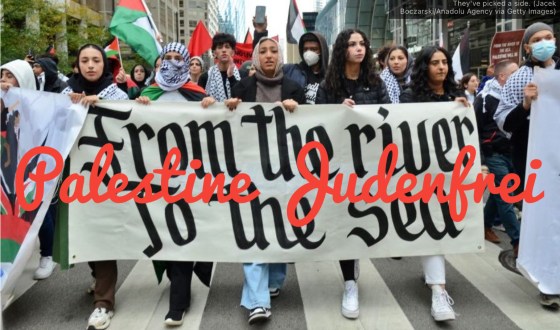
Since the Simhat Torah massacre, which mirrored in so many ways the pogroms inflicted upon Jewish communities in Eastern Europe in the late nineteenth and early twentieth centuries, what we’ve been seeing in cities around the world is that antisemitism is the devil that never goes away. One could also ask whether anti-Zionism is but an old hatred clad in new clothes. One phenomenon of anti-Semitism is its ­ability to mutate over history: from religious hatred to ethnic hatred to hatred of Israel in any form. If the marchers want a two-state ­solution, a pathway to peace, they do not say so. They chant “From the river to the sea”, which is a call for ethnic cleansing at best, and genocide at worst, though many do not know the name of the river, or the name of the sea.

Hamas recorded and broadcast the images of its atrocities on October 7 to make sure Israel and the world knew exactly what it had done. Israel has struck back hard on Gaza, killing many civilians in the densely populated region to reach Hamas targets. The Palestinian authorities say over 10,000 civilians have been killed, over a third of them children, and about two-thirds of Gaza’s 2.3 million people have been made homeless, unable to escape the territory. As tens of thousands flee and the bodies pile up, the brief moment of sympathy for Israel has receded and a tide of anti-Jewish sentiment is rising around the world.

International political theorist Arta Moeini wrote in Unherd on 4th November: “The moment Hamas carried out its heinous terror attacks against Israel, the war in Gaza was instantly globalised, reverberating in the hearts and minds of people oceans away who were neither Israeli nor Gazan. Millions on social media picked a side, proudly displaying their solidarity flags and condemning their opponents as either evil terrorists or genocidal oppressors. Both foreign states and populations assumed reflexive positions, railing against antisemitism or settler-colonialism and identifying with the “victims” in a Manichaean struggle that cares little for historical context, nuance or open debate. They became virtual participants in the conflict, as if their own lives and futures depended on it, cancelling and dehumanizing their opposition other just as the most extreme Hamasi Islamist or Israeli Zionist would do”.

In western, Liberal-democratic countries with some of the largest Jewish communities there are mass marches with open calls to kill Jews; there is the defacement and removal of posters of hostages being held in Gaza; and Israel is being held responsible by mainstream politicians and media figures for war crimes committed by Hamas; and there’s a flood of antisemitic poison on social media. It appears to have given permission for progressive activists to clothe antisemitism as anti-colonialism, and indeed, an alibi to say the most racist of things, and yet to retain all innocence in their own minds. And the more morally certain people are that they are right, the easier it is for them to miss their own complicity.

Rare is the criticism of the less savoury aspects of Muslim religion and society, like its patriarchal authoritarianism, its latent misogyny, and its antisemitism and homophobia. The intersectional narrative inhaled by activists, giving comfort to the “oppressed” legitimizes unspeakable cruelty against the “oppressor”. Hence, we have the sublimation of antisemitism into support and justification for the atrocities of the Hamas. [Pogrom, by the way, is a Russian-Yiddish word derived from “to destroy by violence]

Many people, particularly on the left, have forgotten or just ignore what triggered the latest bloody episode in the long running bloody saga. If you deliberately target civilians, regardless of your ideology, religion or ethnicity, you have lost all moral authority whatsoever. There are no excuses, no mitigations and no explanations. You have become the very thing you purport to hate.

For sure, an almost sixty year long occupation of the West Bank and the ongoing blockade of Gaza are criminal, and Israel’s behaviour thereby, is inexcusable. We can argue forever whether it is justifiable or necessary. But remember that in Gaza, the Hamas is a quasi-government, and a reactionary, exclusivist outfit with a “post-Israel” vision that will produce an ethnically cleansed theocratic dictatorship. And when it launched its troops on the kibbutzs of the Negev twith orders to behave like Da’ish, murdering kids at a music festival killing, raping, mutilating, and abducting unarmed men, women, children and babies, the opprobrium inevitably and unfortunately attaches to all Palestinians.

It is not helped when in the West Bank and elsewhere, such “bravery” is celebrated with sweets, ululation and “happy shots”, when people in a crowd in the forecourt of the iconic Sydney Opera House chant from the river to the sea” and “gas the Jews”, and social media is awash with memes that display but limited knowledge of the history and politics of the Middle East.

The Hamas now holds some 250 Israeli men, women and children captive in Gaza, adding to over two million Palestinians that are serving as human shields against what it knew would be inevitable Israeli vengeance. It has reportedly three months of supplies in its tunnels whilst above them, the Gazans run out of gas, food and water and medical facilities are brought to a standstill. Hundreds of thousands of civilians are now caught in a crossfire of Hamas’ making. There are reports that the Hamas is preventing Gazans from leaving, determined to use them as human shields, and has actually fired on fleeing convoys. They need to be protected, but how? We need to seek justice for Palestinians without glorifying unspeakable violence.

Luxury beliefs and historical illiteracy 

The term “luxury beliefs” was coined to describe how privileged progressives like to traffic in a kind of unhinged extremist rhetoric. Partly, it’s a byproduct of their insulation from ever having to experience the practical impact of what they advocate. When people in Australia chant “from the river to the sea”, and “gas the Jews”, relatively few are saying this because they have a material interest in obliterating the real Israel and rendering the land “Judenfrei” (remember that word!) More have no particular animus toward Jewish people – they just don’t care about them. But most are moved by a desire to weaken what Israel symbolizes: the US.

Many left-wing impressions are coloured by a an antipathy for the policies of the United States, an antipathy that for many was born of the Vietnam War and was perpetuated by America’s interference in the affairs of nations large and small since then – and of course, America’s strong ideological and military support for Israel. Uncle Sam certainly does have a case to answer. There’s no denying the hundreds of thousands, millions maybe, of bodies of men, women and children that could be laid at the foot of Abe Lincoln’s huge statue in Washington DC. But giving aid and comfort to a regime that is antithetical to your beliefs and also your lifestyle does not compute. It is an ideological stance uninformed by knowledge and awareness of the nature of the Israeli and Palestinian entities, their peoples, and their cultures in the 21st Century. None of these are what they were in the nineteen seventies and eighties.

Writing in The Australian on 29th October, commentator Gemma Tognini wrote: “As I watched mainly white, middle-class privileged (in the truest sense of that word, not the co-opted, cheapened version) people parade themselves around as soft apologists for a declared terror organization, I felt despair. How? How did we get here? … What’s been on display on university campuses since October 7 has been terrifying in its historical illiteracy, lack of humanity and ideological zealotry”.

It’s worthwhile quoting what else she had to say about such “luxury beliefs”:

“… This is the soft generation. Their grandparents fought type 2 diabetes, not Nazism. It was reported that (perhaps unsurprisingly) the University of Sydney Student Representative Council urged students to “stand against oppression … until Palestine is free”. Let me tell you one thing I’m willing to bet on. Not one of them would volunteer to go help the cause. Not one of them would give up their Uber eats, days at the pub and total freedom to go live in a place where being gay is an offence punishable by death, fewer than 20 per cent of women are allowed to work and more than 20 per cent of women are married under the age of 17. Good luck wearing a bikini or your active wear in downtown Gaza.

And then, there’s a punchline: “… this conflict in the Middle East, this visceral, existential attack on Israel, and on Jewish people the world over, seems to have ripped something open to reveal an ideological hatred that I don’t understand. It’s a good impetus to raise the voting age, to be honest. If your response to the fact that the Arab states are refusing to take refugees, that Egypt won’t open its northern border for the same reason, is “Israel’s committing genocide”, then sorry, you’re not intellectually agile enough to be in the conversation … If it were 1400 young people barbarically slaughtered anywhere else in the world, if it were any other ethnic cohort, these same junior cowards, and the universities they attend, would be condemning the act and the actors”

I couldn’t say it better, particularly her allusion to “historical illiteracy, lack of humanity and ideological zealotry”. Many people out there in the world of university politics, social media, and reflex virtue signalling, have, for a variety of reasons a limited, even cursory knowledge of the roots and fruits of intractable conflicts that originated decades, centuries, millennia ago. As the late Israeli Amos Oz explained in his excellent book, How to Cure a Fanatic, Arabs and Jews typically understand each other far better than westerners understand either of them. Cost-free wisdom from western liberals is so often pathetically ill-informed and bathing in self-righteousness.

Russia’s invasion of Ukraine did not originate in 2022 or 2014 or even 1991 when Ukraine departed the defunct Soviet Union. The wars of the Yugoslav secession did not begin when Serbia attacked the newly independent states of Slovenia, Croatia, Bosnia and Kosovo from 1991. The seeds of the Syrian civil war were sown well before 2011. So too with the story of Israel and Palestine, one of the world’s most intractable conflicts, did not begin on October 7th.

A war of words 

Understanding is not enhanced when a conflict morphs into a battle of words as well as weapons, the words invariably loaded with emotional and ideological weight. Enter the old adage “one person’s terrorist in another’s freedom fighter. The Hamas calls itself al muqawamah, resistance – it’s the “m” in its acronymic name – see below) as also does Hezbollah, which means literally Party of God (though the deity him/herself has no say in the matter). Türkiye’s opportunistic president calls Hamas fighters mujahidin, holy warriors, a name that recalls Afghanistan resistance to Russia’s invasion in the eighties. Whilst some refer to a terrorist attack, many pro-Palestinian groups have called it an intifada, as have memes and posters put up by “progressives” recalling the two earlier risings against the occupation, implying that it was the work of freedom fighters resisting colonialism. Some have even called for a “global intifada”, though against what and whom is unclear.

Then there’s the sad semantics around other descriptors, each loaded with partisanship and emotion. Self-defense. Proportionate or disproportionate response. Collective punishment. Moral equivalence. Human shields. Hostages. Refugees. Collateral damage. Just war. War crimes. Genocide. Justice, Revenge. Warriors. Executioners. Shahidiin (or martyrs). Thugs. Pick a side, pick your vocabulary to suit. It makes you wish for the now depleted ammo of syntax like “shock and awe” and “war on terror” – though we’re getting plenty of both right now as “we sit back and watch while the death count gets higher”.

Only two things are certain: antisemitism is the devil that has never gone away, and everything is broken.

As Leonard Cohen sang, “There is no decent place to stand in a massacre”.

Meanwhile, in the corridors of power

On 24th October, Antonio Gutierrez, the perennially exasperated and disappointed secretary general of the United Nations, told the Security Council that “it is important to also recognize the attacks by Hamas did not happen in a vacuum. The Palestinian people have been subjected to 56 years of suffocating occupation. They have seen their land steadily devoured by settlements and plagued by violence; their economy stifled; their people displaced, and their homes demolished.

Truth be told, it has indeed been the past that has brought us to this. Lost in the miasma of violence is the fact that Israel has occupied the West Bank for 56 years and, along with Egypt, maintained  a cordon sanitaire around the Gaza Strip. Prominent features of life for Palestinians in these areas are violence, dispossession, and dehumanization. Under these circumstances, there are few Palestinians who regard resistance as illegitimate. The ‘Hamas attack was a reaction to many things, including settler attacks on and evictions of Palestinians in the West Bank; attacks on Muslim and Christian holy sites by Israeli extremists; and Israel’s normalization with Arab countries, that is seen as an attempt by Israeli Prime Minister Benjamin Netanyahu to “liquidate” Palestinian rights and the Palestinian cause.

“But” as Guterres then stressed, “the grievances of the Palestinian people cannot justify the appalling attacks by Hamas.  And those appalling attacks cannot justify the collective punishment of the Palestinian people”. Their hopes for a political solution to their plight have been vanishing”.

Israel’s delegate was predictably enraged. But Guterres’ statement at least condemned the Hamas – unlike a UN General Assembly resolution a few days later which condemned Israel for its collective punishment of defenseless Gazans whilst completely ignoring the direct causus bellum. Making no reference to the barbarous attack by the Hamas was an absurdist denial of reality, as if Israel had decided to bomb Gaza on a whim, unprovoked.

Like Guterres, politicians across the western world endeavour to straddle the barbed wire fence, calling almost out of habit for the elusive “two state solution” as a panacea for the Palestinians’ plight. But in reality, there can be no two-state solution when an immovable and irredentist Hamas remains as a powerful if beleaguered “third state”. As Australian prime minister Anthony Albanese stated, “we have picked a side against Hamas. And we did that very clearly and unequivocally because the actions of Hamas are against the interests of both the Israeli population, clearly, but also against the interests of Palestinians”.

Calls for a ceasefire by world leaders and humanitarian organization’s go unheeded in the stark reality that a ceasefire would effectively give the Hamas the justification to declare victory whist permitting the mortal threat it poses to Israel to continue. Israel knows that if its response to the terrorists is unconvincing, the attacks on it on all sides will redouble. The sharp rise in global antisemitism reminds Jewish people that they may never be truly safe anywhere., and this intensifies, rather than weakens, the desire for a defendable homeland.

The Hamas and together with the ineffectual, corrupt and discredited Palestinian Authority which ostensibly governs the West Bank, and Hezbollah, the Lebanese paramilitary force on Israel’s northern border, most Arab states, Iran, and their western and southern sympathizers blame the situation on the historical behaviour and present policies of Israel and the US, implying that really, Israel had it coming.

There is much discussion in the mainstream media about what comes next if the Hamas is destroyed or effectively neutered and Gaza is “liberated” from its thrall. Should the IDF reinstate the occupation it ended two decades ago? Should Israel hand the enclave over to the Palestinian Authority, to use a decidedly un-Muslim analogy, organize a piss up in a brewery? Or should the UN, or at a stretch, the Arab League, a club of autocrats and tyrants, assume military and political administration until it can be reincorporated into a reformed and workable Palestine?

And even then, should any of these scenarios work out, would Israel be in the mood to make nice? The Hamas pogrom has not helped Palestinians in besieged Gaza, nor will it help those in the occupied West Bank who have been subjected to IDF incursions and vigilante violence by angry settlers. Nor will it encourage Israel to moderate its draconian policies and end the occupation.

Little mention has been made, both before and after outbreak of war of what may have been going on in the PA’s domain. The old, ineffectual and rejected Mahmoud Abbas, “emir” of Palestine, in the eighteenth year of his four-year term, is ill and probably dying, so there is a power struggle already underway in what are in fact three Palestines, Gaza, the West Bank, and the Diaspora (principally Syria, Lebanon and Jordan) over the succession. Meanwhile, Iran and its proxy, Hezbollah are stirring the pot, whilst even the Yemeni Houthis, who you’d think were busy with their own nasty civil war, the third strand, with Hezbollah and the Hamas of Iran’s “Axis of Resistance”, are lobbying missiles Israel’s way up the Red Sea.

The whole thing is a bloody mess (literally and figuratively) and the implications for Israel, Palestine and others unpredictable. The violence reminded me of the Lebanese civil war, and particularly, of Maronite Christian militia’s massacre of Palestinians in Sabra and Chatila (ironically, with Israeli connivance) in 1982. I am reminded also of Chaim Nachman Bialik’s poem, Al haShehita (On the Slaughter), about the Kishinev Pogrom in present day Moldova in the spring of 1903:

And cursèd be he that saith: avenge this! Such vengeance for blood of babe and maiden Hath yet to be wrought by Satan.

Whosoever sows the wind reaps the whirlwind.

Rafah, Gaza

From the river to the sea, Palestine will be free 

It is much more than a snappy chant. The Hamas’ stated goal is the “liberation” of what is presently Israel and the expulsion annihilation of its people, and it pays little heed for the suffering of the people of Gaza – Hamas leader Moussa Abu Marzouk, for example, in a recent interview on Russia Today’s Arabic channel, told an interviewer that his movement had not built bomb shelters in Gaza for its population because it was the job of the UN and the “occupation” – that is, Israel – to look after the civilians of the Strip.

In an interview on October 24, 2 on Lebanon’s LBC TV. Ghazi Hamad of the Hamas political bureau declared that the Hamas, was prepared to repeat the October 7 “Al-Aqsa Flood” Operation time and again until Israel is annihilated. He added that Palestinians are willing to pay the price and that they are “proud to sacrifice martyrs.” He said that Palestinians are the victims of the occupation, therefore no one should blame them for the events of October 7 or anything else, adding: “Everything we do is justified.”

Some extracts:

“We must teach Israel a lesson, and we will do this again and again. The Al-Aqsa Flood is just the first time, and there will be a second, a third, a fourth, because we have the determination, the resolve, and the capabilities to fight. Will we have to pay a price? Yes, and we are ready to pay it. We are called a nation of martyrs, and we are proud to sacrifice martyrs”.

“We did not want to harm civilians, but there were complications on the ground, and there was a party in the area, with [civilian] population … It was a large area, across 40 kilometres”.

“The existence of Israel is illogical. The existence of Israel is what causes all that pain, blood, and tears. It is Israel, not us. We are the victims of the occupation. Period. Therefore, nobody should blame us for the things we do. On October 7, October 10, October the millionth – everything we do is justified”.

Hamad: “The occupation must come to an end … I am talking about all the Palestinian lands”
News anchor: “Does that mean the annihilation of Israel?”
Hamad: “Yes, of course”.

If the Arabs put down their weapons today, there would be no more violence. If the Jews put down their weapons today, there would be no more Israel.
Golda Meir, Israeli prime minister, 1973

© Paul Hemphill 2023 All rights reserved

Note: al Hamas is the Arabic word for ‘zeal’ and also, an acronym for Ḥarakah al-Muqāwamah al-ʾIslāmiyyah, the “Islamic Resistance Movement”; Hezbollah means ‘Party of God’.

For more on antisemitism in In That Howling Infinite, see: Little Sir Hugh – Old England’s Jewish Question; and The Shoah and America’s Shame – Ken Burns’ sorrowful masterpiece 

For more on Palestine and Israel in In That Howling Infinite, see: A Middle East Miscellany
Addendum – poster wars

Why are Americans tearing down posters of children held hostage by Hamas?

Linda Dayan wrote in Haaretz on 26th October:

Those removing flyers may not be ready to look into the eyes of ‘the other side’ and acknowledge that they are people. But the consequences of this lack of introspection go far beyond posters

If you’re a Jew on Instagram, you’ve probably seen a particular genre of video going around: a shaky phone camera follows a person, either in a big city or on a college campus, as they tear down posters bearing the names and faces of Israeli civilians kidnapped by Hamas.

Sometimes they’re smiling, sometimes they’re defiant, sometimes they hide their faces from the person filming them. In one, the person says “kalba” (the Arabic word for bitch) while tearing down a flyer. In another, a man holding a wad of posters says he is doing so because “Jews in Israel – I mean, the Israeli government – are bombing Gaza.” When the cameraman asks, in a thick Israeli accent, why Hamas killed babies and even pets, he responds: “I can’t explain what people filled with rage do.”

Channel 12’s Yuna Leibzon tweeted photos from New York of posters that had been defaced – instead of “kidnapped,” they now read “occupier.” (If the person who did this is not Algonquian, I have unfortunate news for them about their own status.)

It is clear that the posters rouse discomfort in these people, and not in the “this could have been me” way that many Jews view them. Some, like the aforementioned man, look into the faces of abducted children and see the airstrikes that followed. Others have mentally transformed them into human embodiments of the occupation. A few accounts state that the people tearing down the posters do not believe that Hamas took hostages at all.

The people kidnapped by Hamas, much like the October 7 atrocities, represent a kink in a very clear narrative thread. The people holding tight to this thread might not be ready to face the realization that not all acts are justified so long as they bear the banner of “resistance.” They might not be ready to hold the idea that it’s okay to say out loud that the occupation is wrong, but so is holding an infant hostage. They might not be ready to look into the eyes of “the other side,” and acknowledge that they are people.

But the consequences of this lack of introspection go far beyond posters and posing. After a silent vigil in which they held photos of the kidnapping victims, Jewish students at the Cooper Union had to barricade themselves into the library as anti-Israel protesters stormed the building. The Anti-Defamation League reported 193 antisemitic incidents since October 7 – a 21 percent spike in the United States. A University of California, Davis, professor posted online against “all these Zionist journalists who spread propaganda and misinformation,” and noted that their children are vulnerable.

It is good, correct and just to stand up for Palestinians, to make the plight of Gazan civilians known, to mourn for the innocent lives lost. None of that demands erasing the reality of Hamas’ campaign of kidnapping and murder. And none of that demands harassing, threatening and attacking Jewish institutions and individuals, wherever they may be.

Of course, this may not be about Palestinians at all: Alawi and Shi’ite students in America did not have to barricade themselves in after Bashar Assad’s airstrikes on the Yarmouk Palestinian refugee camp. And in that case, perhaps these people can leave the Palestinians out of such campaigns, and be open about the narratives and ideologies that drive them to erase the faces of our children.

A defaced poster depicting a woman held captive by Hamas is seen as people attend a pro-Palestinian rally as part of a walkout by New York University students

Authors Note

Whenever In That Howling Infinite posts commentaries such as this, people ask why I rarely forward my own opinion on the issues I am presenting or discussing. On the contrary, I would argue that my views are fairly transparent in in the subjects I chose to engage with, the words I use, and the vein in which I use them. 

The following is an updated version of a postscript I wrote six years ago after I’d last visited Israel. It does not mention in detail the events since then, including the Israel’s rapprochement with its autocratic neighbours, the political paralysis that has afflicted Israeli politics for several years, and the war now being wages in the besieged enclave of Gaza. The rest still holds true.

With respect to my numerous posts about Israel and Palestine, and the Middle East in general, I  come to my conclusions from a political science and sociology perspective – that’s where my academic experience came from – and a background in conflict resolution, supported by study and travel. If I do on occasions display any particular bias, it originates in my longtime interest, understanding and affection for the history, politics, and culture of the region, of its geography and archeology, and of its people of all faiths and nationalities.

I believe that the systematic dispossession of almost a million Palestinians and the destruction of half of their towns and villages in 1948 is Israel’s original sin. It is the primal stain that colours and corrupts all that followed. And yet, if not for the actions, often daring, often brave, often questionable, and often deplorable, of the politicians and soldiers of 1948 – and of the generations that followed –  Israel would not exist today. This paradox is addressed sympathetically by Avi Shalit In My Promised Land, referred to above, and scathingly by ‘new history’ scholar Ilan Pappe in The Ethnic Cleansing of Palestine.   

The Occupation, fifty-six years old this year, which grew out of the unexpectedly total victory of June 1967, has taken on strategic, ideological and indeed messianic dimensions by many in the  Israeli government and political elite. It compounded the original sin, deepened the primal stain, released the demons of messianic fervour, and wounded Israel’s soul. The settlements locked the nation into the colonialist project. With the close call of the Yom Kippur War, the violence and murder of the first and second Intifadat, and present Palestinian jacquerie, Israel’s heart has not just hardened, it has become sclerotic.

I admit that I have always been sympathetic towards Israel – from my first visit in 1972. I’ve travelled its length and breadth and also visited the major Palestinian cities of the West Bank. But mine is not a blinkered viewpoint. I am deeply critical of Israeli politics and policies and have no respect for many of its leaders. Yet there are hundreds of thousands of Israelis who oppose the present government and long for justice and peace. And if – a very big “if” – Arab Israelis and the Israeli left could work together, they could obtain a majority in the Knesset and change Israel’s politics.

Meanwhile, Binyamin Netanyahu and his nationalist coalition allies call all the shots, the Israelis continue to control and exploit the land, its people, and its resources, whilst varying degrees of annexation are on the cards. The settlements are an abomination, as are the policies and practices of the state and its occupying army. There’s no escaping these facts.

But I am likewise critical of Palestinian governance, politics and politicians. The Hamas and the PA are on the nose in their respective fiefdoms, and if a moderate “third force” were to arise – and survive, because sure as hell, they would risk being murdered – Palestinians who just want a quiet, normal life, adequate services, and opportunities for their children, and Israelis who want likewise, might – just might – reject their extremist, dogmatic, entrenched leaders and reach some form of modus vivendi.

Palestinians themselves have to take control of their own lives, kick out their corrupt leaders, cease inculcating their children with hatred and jihadism, and use all that international good will and dollars to build a viable economy that can provide jobs, opportunities, and security, economic and physical to the people. Only this way will they be inoculated against cronyism, corruption and extremism. And yet, the dead hand of a moribund, patriarchal, conservative and ethnocentric culture holds them back – but that is the subject of another, future discussion for In That Howling Infinite.

Today, the ‘powers that be’, defenders and beneficiaries of a status quo that looks more like a cul de sac, predominate over a dispiriting array of competing, clamouring factions, left, right, nationalist, secular, tribal, Haredi, and Islamist alike. New, young, brace, local voices in both Israel and Palestine, are not heard.

So what happens next?

I get that question too. And I am perennially reluctant to venture an answer beyond one that runs like “on the one hand…but then on the other”.  I inevitably fall back on Robert Fisk’s response to the same question with regard to the calamitous freezing over of the Arab Spring and the fall and rise again of the same old autocrats and tyrants: “my crystal ball is broken”. It’s a cop out, really, but just as cogent as that famous line in that UK spy drama Spooks: “What’s going to happen to me?” “Bad things!”

One thing is for sure: as songwriter Warren Zevon sang, “the hurt gets worse, and the heart get harder”.

October 8th, 2017, and 6th November 2023

The new anti-Semitism looks a lot like the old hatred

The current wave of anti-Jewish hostility did not originate with the Gaza war, and its horrors. It has been building for decades.

Anti-Israel signs are held at a Palestine rally in Melbourne’s CBD. Picture: NCA NewsWire / David Crosling

Anti-Israel signs are held at a Palestine rally in Melbourne’s CBD. Picture: NCA NewsWire / David Crosling

Since the Hamas mass terrorist attack on October 7 and Israel’s military response, we have witnessed an explosion of anti-Jewish hatred. It is frequently mixed in with legitimate expressions of support for Palestinian civilians suffering the terrible violence of a protracted conflict. The Netanyahu government’s conduct of the war is certainly a reasonable target for trenchant criticism, including by Israel’s own citizens.

The combination of these themes makes the public response to the Gaza war complex and difficult to process. For most Jews it is nothing short of a continuing nightmare.

Deep anti-Semitism has been on vivid display in certain parts of the movement leading the anti-Israel protests. This has been explicit in celebrations of Hamas and its terrorist massacre of Israeli civilians as a heroic act of resistance, together with calls for such attacks to be repeated. This has been paired with simultaneous insistence, in some quarters, that no atrocities were committed. The dual response is reminiscent of a certain type of Holocaust denial. On one hand the mass violence that the Nazis committed against European Jewry is justified as a response to the odious behaviour of the Jews, and the threat that they posed to their host societies. On the other the historical reality of the Nazi genocide is questioned, or it is denied entirely.

Shalom Lappin.

Shalom Lappin.

The New Antisemitism by Shalom Lappin

The New Antisemitism by Shalom Lappin

Some anti-Israel demonstrations have skidded into violent assaults on local Jewish communities, and harassment of Jewish students on campuses around the world. Boycotts, exclusions, and “political” acceptability tests in the academic, publishing and entertainment worlds are now common phenomena. They recall darker periods of Jewish history. No other diaspora ethnic group associated with a country run by a widely censured regime is subject to this sort of marginalisation.

When racists target Muslims, or other immigrant groups after terrorist attacks, or the misdeeds of a foreign government, broad segments of public opinion, particularly on the liberal left, defend the victims of prejudice, precisely as they should. By contrast, attacks on Jews are explained away as possibly misguided expressions of fully comprehensible outrage at Israel’s egregious behaviour.

The current wave of anti-Jewish hostility did not originate with the Gaza war, and its horrors. It has been building for decades, as indicated by the steady annual increase in anti-Semitic incidents across the globe, at least since 2000. This has now become a flood. It is the result of deeper economic and political forces that have undermined the social contract that once defined the post-war era. A sharp rise in economic inequality within countries across the world is a major factor driving the unravelling of the post-war era. The unconstrained globalisation of financial markets and trade has been largely responsible for the skewed within-country (as opposed to between-country) distribution of wealth. It is creating a cleavage of populations into a comparatively small group of wealthy beneficiaries of economic growth, and increasingly large groups of people who endure a declining standard of living and jarring social dislocation. This disaffection has provided the basis for a variety of extremist anti-globalisation movements that exploit identity politics as the focus of their reaction to the chaos and instability that is attending the collapse of the post-war order.

A pro-Palestine activist in New York. Picture: AFP

A pro-Palestine activist in New York. Picture: AFP

These movements thrive on the sense of powerlessness among electorates. This is feeding a breakdown of mainstream political institutions, which are increasingly perceived as unable to respond effectively to the pressing problems that people are contending with in their daily lives. Polarisation between far-right and far-left anti-globalisation movements has now become a defining feature in the political life of many countries, with traditional centrist parties fading into irrelevance in a variety of places. The alliance of much of the far left with radical Islamist movements (also a form of anti-globalist, identity-focused reaction) has accentuated this clash. The nature of the alliance has come sharply into view in the course of the ongoing anti-Israel protests over the past 10 months.

The far-right threat has emerged in recent European elections, in Trump’s current presidential campaign, and in the current riots sweeping the UK. It is also apparent in the authoritarian regimes that control Russia, Hungary and Turkey, as well as in Modi’s Hindu nationalist government.

Anti-Semitism is a central feature of the anti-globalisation movements of the far right, the far left and radical Islamism. This is due to the fact that it is deeply entrenched within both Western and Middle Eastern cultures. It encodes myths of power and conspiracy that provide simple, satisfying answers to complex problems in times of severe crisis. It turns on the notion that the Jews are an illicit collectivity whose continued existence as a group obstructs the realisation of the respective (and mutually incompatible) utopian programs to which each of these movements is dedicated.

Anti-Semitism was marginalised in the West during the post-war period. It has now flooded back into mainstream discourse as a potent factor in mobilising support for totalising ideologies across the political spectrum. In its capacity to cross political boundaries from right to left, anti-Semitism is a unique form of racism. To identify it properly, it is necessary to understand its history throughout the millennia that it has plagued the societies where it has taken root. It is essential to recognise its very specific expression as a reaction to the current political and social crisis. It is also important to combat it in its current manifestation, rather than through the backward-looking ideologies of the past.

For the most part the gate keepers of liberal opinion and the custodians of public discourse have simply stepped aside while anti-Jewish campaigns, often packaged as “anti-Zionism”, have been raging in their institutions. They issue pious incantations of their commitment to banishing racism, gender discrimination, anti-Semitism and Islamophobia, while doing nothing to implement this commitment in the current crisis. They take strong action against assaults on other embattled ethnic minorities and gender groups, as ought to be the case. They assume the role of neutral moderators when such attacks are launched against Jews. They frequently sanitise these attacks as an exercise of the right to free speech, even when this speech crosses into active incitement to hatred and violence.

The current wave of anti-Jewish racism is not only a threat to Jews. It is a challenge to the survival of democracy and the viability of liberal values. Political leaders are singularly failing to address this threat, and the forces that have produced it. They are largely content to step back and allow the manifestations of anti-Semitism to multiply, as long as the appearance of public peace is maintained. In fact, this peace is increasingly frayed. The extremist movements that converge on the Jews as the source of their problems have much larger agendas. They seek to transform the social order in their own image, overturning the foundations of liberal democracy.

In treating anti-Semitism as a parochial development, threatening only Jews, current political and cultural leaders are allowing large swathes of public life to be taken over by movements that are determined to overturn democracy. Recent history is littered with precedents that warn of the dangers involved in ignoring the larger threat that anti-Semitism presages. By failing to address these movements, and the deeper causes of the crisis that generated them, political and cultural leaders in the West risk repeating past historical errors that have led to disastrous consequences. It is long past time to address this issue honestly and effectively. To start to do so requires that we acknowledge the extent of the problem, and that we describe it accurately. Most people who shape mainstream opinion in the West have yet to take this initial step.

Shalom Lappin’s The New Antisemitism (Polity Books, 1 September) investigates the upsurge of anti-Jewish racism now manifest across the world

.
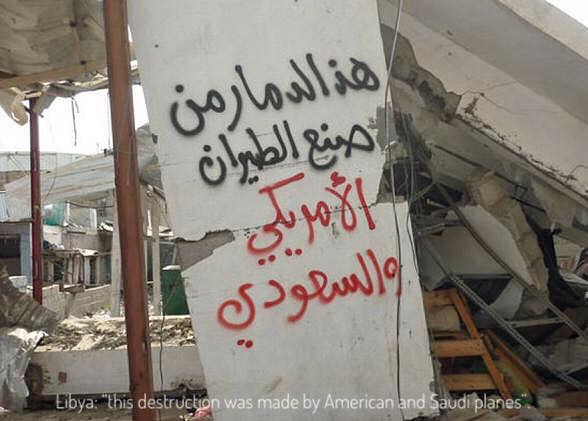
Tangled 2 – Libya’s bloody circus rolls on

UN-sponsored talks have produced a new interim government for Libya aimed at resolving a decade of chaos, division and violence by holding national elections later this year. But with myriad factions loathe to surrender influence they already hold, and with foreign powers invested in local allies, the new government may rapidly come under pressure. The appointment of a new government may also do little to change the balance of military power on the ground, where armed groups rule the streets and factions remain split between east and west along a fortified front-line.  

Some Libyans have been critical of a process which they view as being managed from abroad and which they fear will allow existing power-brokers to cling to their influence. “It’s just a painkiller to portray Libya as stable for a while. But war and tension will certainly come back sooner or later so long as militias have power,” said Abdulatif al-Zorgani, a 45-year-old state employee in Tripoli.

“Déjà vu all over again”

A year ago, In That Howling Infinite published Tangled – a cynic’s guide to alliances in the Middle East Back then, Libya held poll position for its multitude of active players and, to use that Shakespearean script note, “voices off”. A year on, borrowing again from the Bard, there are continuing “alarums and excursions”. 

Libya has long been a jigsaw puzzle of competing interests –  tribal versus urban, Islamist versus secularist, revolutionary versus old-regime, localist and regional players, Middle Eastern and European – all prepared to tear the country apart for in pursuit of their own political and economic interests – which include, as is often the case, oil and gas. Their contortions get more and more torturous. 

It was reported year last year that that more than 1400 Russian mercenaries had been were deployed in 2019 by the Wagner company, a Russian military outfit headed by a confidant of Russian President Vladimir Putin, had deployed in Libya to assist warlord Khalifa Haftar’s self-styled Libyan National Army in its push against Libya ostensibly internationally recognized government. It was joining troops hired by Haftar’s backers, Egypt and the United Arab Emirates, and included mercenaries from Sudan’s brutal Jamjaweed militia – aided and abetted by several EU members and French, Italian and sundry other arms suppliers. 

Wagner’s sell-swords included a good number of Syrians – sundry rebels and jihadis left high, dry and unemployed by the Syrian regime’s ongoing ‘reconquista’ – which is, as we know, bolstered by the Russian military – including Wagner’s fighting men, who include in their number many Muslim Chechens from Russia’s subservient neighbour. 

When Haftar’s offensive stalled outside Tripoli, Libya’s capitol, last June, it was reported that more than a thousand of the Russian and Syrian mercenaries had been  pulled back from the front lines and taken planes to who knows where. This “retreat” was precipitated by a Turkish military intervention that has helped block an assault on the capital. 

The Turkish contingent is comprised of numerous specialists and advisers, artillery and aircraft, and a contingent of, surprise surprise, hirelings drawn from the same battered battlefields of northern Syria. Those same jihadis and rebels in Wagner’s pay. 

Many Syrians sell their services because it is the only way they can feed their families in the war-battered economy of the regime’s Syria, and the besieged enclaves of the disparate rebel forces. It reported that these mercenaries, zealous and reluctant alike, have also been deployed in the disputed enclave of Nagorno-Karabakh during the recent brief but bloody war between Russian-backed Armenia and Turkish-supported Azerbaijan. Recruits on both sides in both conflicts are reportedly complaining that they are not being paid what they were promised nor on time. 

Haftar spend time late last year in Egypt conferring with his patron and mentor, Egyptian president Abdel Fattah el-Sisi, over possible next moves. There is speculation now that whilst Haftar’s backers are becoming increasingly disillusioned with his martial abilities, they are reluctant to relinquish their influence in this politically and economically strategically area leaving the field to an ambitious Erdogan. They may, indeed, be surreptitiously looking around for a new dance-partner. 

As COVID-19 infections continued to rise, and as Turkey and Russia vied for influence in this strategically important corner of the Mediterranean, there were incoherent mumblings that the that the USA might be about to throw its MAGA cap into the crowded ring, This did not however eventuate, and there are indications that the new administration may be reluctant to involve itself in torturous proxy wars involving disreputable Arab and other despots. 

Nevertheless, Libya’s nightmare continues. As American baseball wizz Yogi Berra once said, “It feels like déjà vu all over again”.

In That Howling Infinite, see also; Tangled – a cynic’s guide to alliances in the Middle East and A Middle East Miscellany

Here is a good  analysis of this unwinnable civil war:  The citizens of Libya are suffering – All sides have to take the blame for this bloody stalemate

© Paul Hemphill 2021.  All rights reserved

Tales of Yankee Power

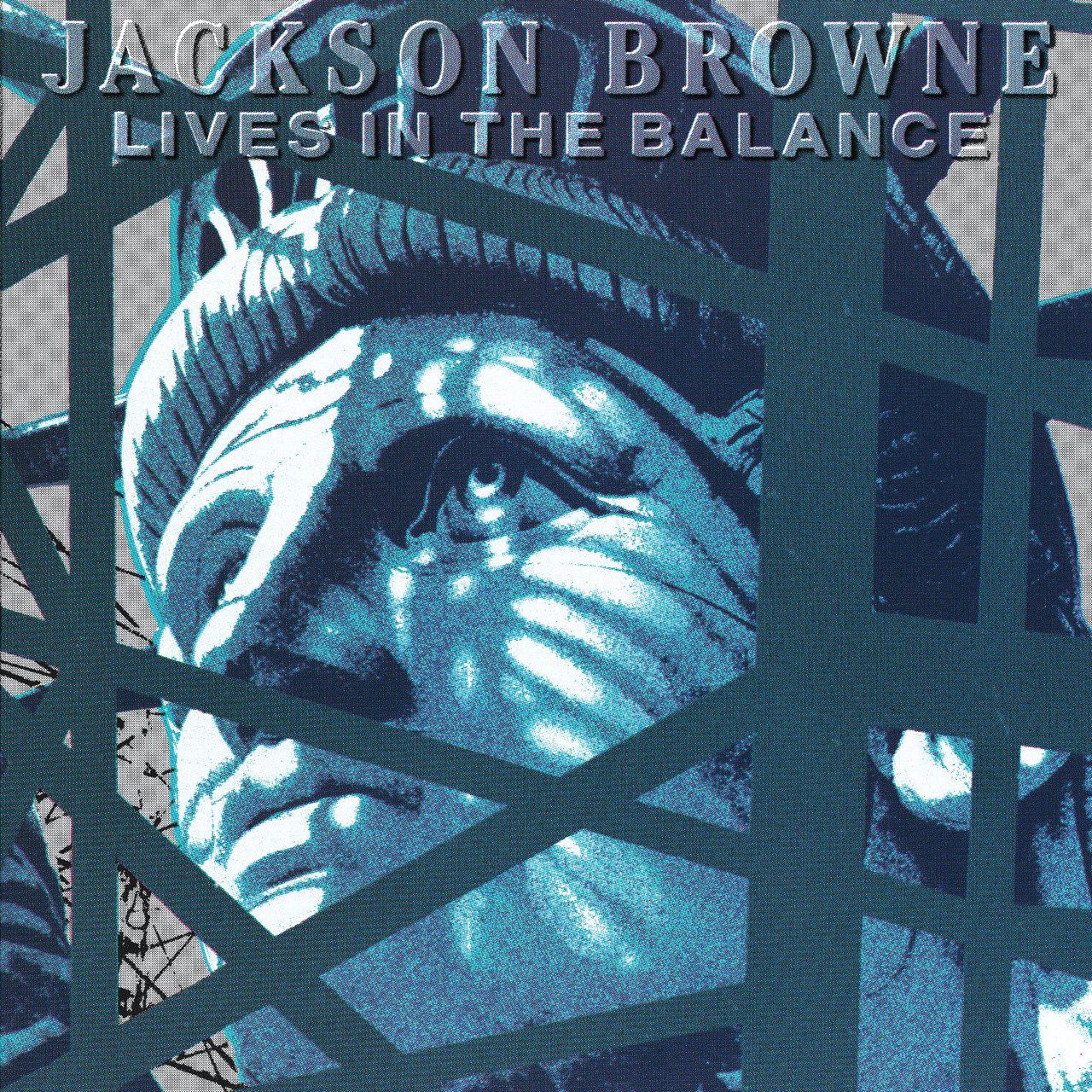
When Jackson Browne released Lives in the Balance in 1986, critics reckoned that its contemporary content, the USA’s bloody meddling in Central America, limited its appeal and long-term significance. And yet, here in the early twentieth first century, with the wars of the Arab Dissolution dragging the world into its vortex, the Great Power politics and proxy wars that taxed intellectual and actual imaginations in that seemingly distant decade jump back into the frame like some dystopian jack in the box. As Mark Twain noted, “history doesn’t repeat itself, but it does rhyme”.

Lives in the Balance was certainly a record for and of its times. Months before the Iran-contra scandal broke, Browne sang “I want to know who the men in the shadows are, I want to hear somebody asking them why. They can be counted on to tell us who our enemies are but they’re never the ones to fight or to die”. After the “arms for hostages” deals hit the news, increased public awareness of the US’ secret and dirty war in Nicaragua inspired him to produce a video for the title track well after the album had passed its sales peak.

Lives in the Balance

The album’s other songs sustained the assault. Soldier of Plenty condemns America’s paternalism towards its poor Latin neighbours. Lawless Avenues, with poignant Spanish lyrics by Browne and Warren Zevon’s old friend and collaborator, Jorge Calderón, takes us down the mean streets of Latino Los Angeles before sending its young anti-hero off to die in America’s wars. In the driving and ironic For America, Browne regrets his prior indifference and qualifies his conflicted patriotism: “I have prayed for America; I was made for America; it’s in my blood and in my bones. By the dawn’s early light! by all I know is right, we’re going to reap what we have sown”. in Til I Go Down, he sings “I’m not gonna shut my eyes, I’ve already seen the lies on the faces of the men of war leading people to the killing floor”. This song aptly plays out the end credits of the harrowing academy award winning The Panama Deception  which documents the US’ invasion of that unfortunate country.

Browne was not the first mainstream singer and songwriter to address America’s long and troublesome relationship with its Latin American neighbours. In his 1983 Stealing Fire and 1984 World of Wonders, Canadian Bruce Cockburn gave us the tragically beautiful Nicaragua and Santiago Dawn and the visceral If I Had a Rocket Launcher. On The Trouble With Normal (1983), there is Tropic Moon, with its cinematic imagery, and the lyrically deceptive Waiting For The Moon. The theme is the same as Browne’s – the North’s intervention in the politics of the South – particularly when comes to financing and arming rogue militias and warlords, and pliable, vicious and corrupt dictators: “Yanqui wake up, don’t you see what you’re doing, trying to be the Pharoah of the West bringing nothing but ruin…You’re my friend but I say Yanqui go home!”

World of Wonders

In this sad world, whenever Uncle Sam (or Uncle Ivan for that matter) plays his hand, something wicked this ways comes: “Little spots on the horizon into gunboats grow – waiting for the moon to show. Might be a party, might be a war when those faceless sailors come ashore. Whatever’s coming, there’s no place else to go, waiting for the moon to show”.

Cockburn’s poetic muse trumps Browne’s agit-prop. These lines from Tropic Moon are nonpareil: “Away from the river, away from the smoke of the burning, fearful survivors, subject of government directives. One sad guitar note echoes off the wall of the jungle. Seen from the air they’re just targets with nowhere to run to”. And: “the light through the wire mesh plays on the president’s pistol like the gleam of bead of sweat in the flow of a candle”.

Very little has changed since Browne and Cockburn sang their Tales of Yankee Power. “But who are the ones that we call our friends? These governments killing their own? Or the people who finally can’t take anymore, and they pick up a gun or a brick or a stone. And there are lives in the balance; there are people under fire; there are children at the cannons; and there is blood on the wire”. And if you were one of those people, why wouldn’t you say “If I had a rocket launcher, I would retaliate!“  As Cockburn sings in Santiago Dawn, “military thugs with their dogs and clubs spreading through the poblacion, hunting whoever has a voice, sure that everyone will run. They come in strong but its not that long before they know its not that easy to leave. To keep a million homeless down takes more than a strong arm up your sleeve”.

From Petrograd to Palestine, the story-line endures. The eighties were also the years of Russia’s Afghan quagmire, which led, ideologically if not geographically to the Chechen pogroms; and of a decade of bloodletting in Lebanon and in what in reality was the First Gulf War, that between Iran and Iraq. The Berlin Wall fell a few years before the events that drove these records, inspiring an outpouring of optimism as the countries of Eastern Europe broke free of the Soviet thrall. But this was not the Kumbaya moment that dreamers yearn for. Ensuing decades have seen a cartography of carnage: Bali and Beslan, Gaza and Grozny, Kabul and Kigali, Manhattan and Mogadishu, Sarajevo and Srebrenica.

We witness the anatomy of the new world economy in which millions of souls are on the move and everything can be traded for value. Bombs and babies, girls and guns, dollars, drugs and more besides. False prophets and bad dreams, broken promises and forlorn hopes, obscured visions and false horizons. “Many have perished, and more most surely will” – a line taken from WH Auden’s often overlooked masterpiece The Age of Anxiety, a meditation on a world in transition between the wreckage of The Second World War and foreboding for the impending armed peace that was itself to endure for another forty five years.

It is sadly ironic that our present world is passing through another time of uneasy transition, between the fixed certainties of great power rivalry and the intractable and bloody asymmetrical conflicts of today.

Paul Hemphill, November 2015 © All rights reserved

Postscript

The other day, I was listening to Dire Straits’ excellent 1985 album Brothers in Arms, and was reminded that several of the songs thereon refer, albeit obliquely, to the “bush wars” of Central America, and possibly also, to the US and Soviet Union’s proxy wars in Southern Africa and Afghanistan. There is Ride Across the River, with its Latino mood, and the beautiful and haunting title track. And there is The Man’s Too Strong, a powerful indictment of the cult of “the big man” that plagues countries all over the world. How often have these tyrants “re-written history with my armies and my crooks. Invented memories. I did burn all the books”. And how often too have they been tolerated, supported and bankrolled by Uncle Sam and Comrade Ivan.

Somewhere In Syria

Author’s Note:

This post is very much a companion piece to my recent post, Allende’s Desk and Osama’s Pyjamas, another tale of Yankee power, and its subject matter echoes that of A Brief History of the Rise and the Fall of the Westand my poem  E Lucevan le Stelle.

Its story does not relate to Bob Dylan’s cryptic and nihilistic Señor (Tales of Yankee Power), from Street Legal (1978), played here by bluegrass wiz Tim O’Brien. As for the meaning of the Bobster’s song, well, that’s pretty hard to fathom. A cowboy fever dream, perhaps; one of those strange illusions you channel in the early morning between sleeping and waking, more about mood than meaning. Perhaps it deserves a post of its own one find day.

Listen to Lives in the Balance in full be clicking on the blue text. Amid the its hard-hitting political commentary sits In the Shape of a Heart, considered to be one of Browne’s finest love songs. Yet this too might be regarded as controversial with regard to what it may or may not imply about the doomed relationship it describes. But like “the ruby she wore on the chain around her neck”, it is a finely cut gem.


Thermidorian Thinking … a revolutionary reverie

I fought in the old revolution
on the side of the ghost and the King.
Of course I was very young
and I thought that we were winning;
I can’t pretend I still feel very much like singing
as they carry the bodies away.
Leonard Cohen, The Old Revolution

‘Thermidorian’ refers to 9th Thermidor Year II (27 July 1794), the date according to the French Republican Calendar, when Robespierre, Danton and other radical revolutionaries came under concerted attack in the National Convention, resulting in their downfall and execution.

Grim travelers butt each other to establish dominance. One lot plays Danton to another’s Robespierre, with the moderate Manon Roland and her Girondins trampled underfoot in the melee. On the scaffold, Madame Roland is said to have exclaimed “O Liberté! O Liberté! que de crimes on commet en ton nom”. Maximillian Robespierre destroys his erstwhile friends and slaughters thousands, precipitating the Jacobin meltdown as the ascetic and purist Marat is murdered in his bath. Robespierre and Saint-Just are guillotined by those who believe “the Terror” had gone too far, soon to be followed by fellow Jacobins Georges Danton and Camille Desmoulins. [Hilary Mantel’s excellent door-stop of a debut novel, A Place of Greater Safety, tells the story of all these revolutionaries. The bones of most of them rest amongst those of tens of thousands of others in the famously macabre Catecombes de Paris, a “tourist” attraction I highly recommend]

I would argue that this “Thermidorian Reaction” – the ostensibly “better angels of our nature” (Abraham Lincoln said that) reasserting themselves – is a rare bird indeed. Inevitably, things get worse, much worse, before they get better. As WH Auden observes in his sombre eclogue The Age  of Anxiety, “many have perished: more will”. 

Revolutions are unpredictable. They never run in straight lines. They reverberate, the shockwaves expanding and impacting on their vicinity, and way beyond. The shots ricochet, like drive-bys and crossfires, and you never know who will be hit, where the bullets will come to rest, and who will be damaged or destroyed. Many people will be liberated, and many enslaved. Many peoples will prosper, and many, many will perish. As TS Elliot wrote, “between the idea and the reality falls the shadow”.”

Stalin seizing Lenin’s crown as the father of the revolution lay dying. Trotsky launching the Red Army against the sailors of Kronstadt whose guns had heralded the fall of the Romanovs, and who then fought to last man against their former comrades. Stalin and Trotsky wrestling for control of party and power as the old Bolsheviks disappeared into the gulags and the execution cells. Stalin’s long arm putting an ice pick through his rival’s skull in Mexico decades later. Trotsky knew a thing or two about “permanent revolution. See Red and white terror – the Russian revolution and civil war and Stalin’s Great Terror

Adolf Hitler making his move against the corrupt and sybaritic Rohm and his Brown Shirt bully boys, a threat to his control of party and state, in the “Night of the Long Knives”, and setting the course for a Germany’s slow spiral to damnation with the plausible deniability of the similarly dramatically named Kristalnacht. The German language has surely given the world ominous words of iron, including Nacht und Nebel; Storm und Drang; Weltanschauung, Blitzkrieg and Schadenfreude – none of them boding well for tyranny’s unwelcome attentions.

It is a zero-sum play book well-thumbed by latter-day revolutionists like the Baathists Saddam Hussein and Hafiz Assad in their relentless and merciless accession to power in Iraq and Syria respectively, like the cruel and vengeful but infinitely pragmatic regime that has ruled Iran’s Islamic Republic for these past forty years, and the kleptocratic dictators who lord over much of Sub-Saharan Africa. In the manner of revolutions past and present, each one has “devoured its children”, harrying, jailing, exiling and slaughtering foes and onetime allies alike.

The sad reality in so many countries is that when the going gets tough, the mild get going, and the hard men ride roughshod over their people.

Vengeful, vindictive. Merciless. Unforgiving and never forgetting. Do no deals. Take no prisoners. Give no quarter.

Also in In That Howling InfiniteA Political World – Thoughts and Themes

Bolshevik recruiting poster 1917

Danton, Robespierre, Desmoulin, and Manon Roland

Danton, Robespierre, Desmoulins, and Manon Roland