It is three years since Australian songstress Judith Durham took the Morningtown Ride.Dusty Springfield’s brother Tom followed soon afterwards.
Judith might not have been my teenage crush – that was Dusty – but The Seekerswere a significant part of my adolescent soundtrack. Aussies were an exotic species back then in Britain, and to me, more associated with now-disgraced Rolf Harris with Tie Me Kangaroo Down Sport and Sun Arise, but there was also Frank Ifield and Patsy Ann Noble. More Aussies followed them to Britain – the Easybeats and Bee Gees entering the pop charts soon afterwards, while soon to be famous actors, artists, authors and activists had already steamed back to Old England’s Shores and were busy making names for themselves.
The Seekers were “discovered” by Tom Springfield and were marketed as the new Springfields, the natural heirs to that wholesome folksey trio (he had written their greatest hits or adapted them from folk standards). When the Seekers folded in 1969, group member Keith Potger gave us the New Seekers, a bunch of pretty blonde Brits who most people now believe wanted to buy the world a coke! For trivia fans, that song was (spoiler alert!) the happy hippie finale of that fabulous series Madmen.
The Seekers released their smash hit, the allegorical song of farewell The Carnival Is Over in 1965. Tom based it on a traditional Russian song about a brutal Cossack rebel [read all about him below]. A natural linguist, he’d learned Russian whilst undergoing compulsory national service in the fifties. Apparently, those few conscripts who graduated from the Ministry of Defence’s Russian Language School as interpreters and translators were regarded as the crême de la crême of conscripts. Often, trainees would put on concerts of Russian songs and plays for their own amusement.
Tom Springfield borrowed the melody of The Carnival is Over from Stenka Razin a traditional folk tune set to music in the 19th Century by Dimitry Sadovnikov. It told the tale of a drunken seventeenth century Cossack rebel who threw his Persian bride of one night over the side of his boat into the Volga River when his men accused him of going soft. Tom changed the story entirely though he retained a nautical riff and cast the star-crossed lovers as the theatre characters Pierrot and Columbinerather than casting them overboard.
Stepan Razin on the Volga (by Boris Kustodiev, (1918) State Russian Museum, St Petersburg.
Tom’s song was an ironic mid twentieth century reimagining in which a tragic, violent and mythic saga of patriotism, loyalty, and patriarchal authority illustrative of national an revolutionary folklore was reinvented into wistful pop as a saccharine song of romance, emotion, loss, and a meditation on the impermanence – how the joys of love are fleeting. No such maudlin melancholy on the part of the preening old riverboat pirate. Over the side she goes!
The lyrics and the sentiment couldn’t have been more different:
From beyond the wooded island To the riverbank he came, On his breast he held a maiden, And his comrades called her name. Then he flung her to the waters, Crying, ‘Thus I make my vow, I will have no foreign woman As a wife to me now.’
Say goodbye, my own true lover As we sing a lovers’ song How it breaks my heart to leave you Now the carnival is gone High above the dawn is waiting And my tears are falling rain For the carnival is over We may never meet again
Pierrot and Columbine
The shift from revolutionary folklore to wistful pop is emblematic of the 20th-century repurposing of folk traditions – filtering political anthems through modern, personal, and emotional frameworks. The lyrics and the sentiment couldn’t have been more different:
If you watch the hoary old Hammer horror film Rasputin, about the sinister Svengali who enchanted the last Czarina of Russia – portrayed herein by that eminent old frightener Christopher Lee – you will recognise the tune as a recurring leitmotif.
There is a clunky film reenactment of the story, sung by the famous Red Army Choir immediately below the Seekers‘ song.
Say goodbye, my own true lover
As we sing a lovers’ song
How it breaks my heart to leave you
Now the carnival is gone
High above the dawn is waiting
And my tears are falling rain
For the carnival is over
We may never meet again
Like a drum, my heart was beating
And your kiss was sweet as wine
But the joys of love are fleeting
For Pierrot and Columbine
Now the harbour light is calling
This will be our last goodbye
Though the carnival is over
I will love you ’til I die
Like a drum, my heart was beating
And your kiss was sweet as wine
But the joys of love are fleeting
For Pierrot and Columbine
Now the harbour light is calling
This will be our last goodbye
Though the carnival is over
I will love you ’til I die
Though the carnival is over
I will love you ’til I die
Stenka Razin
From beyond the wooded island
To the river wide and free
Proudly sailed the arrow-breasted
Ships of Cossack yeomanry.
On the first is Stenka Razin
With his princess by his side
Drunken holds in marriage revels
With his beauteous young bride.
From behind there comes a murmur
“He has left his sword to woo;
One short night and Stenka Razin
Has become a woman, too.”
Stenka Razin hears the murmur
Of his discontented band
And his lovely Persian princess
He has circled with his hand.
His dark brows are drawn together
As the waves of anger rise;
And the blood comes rushing swiftly
To his piercing jet black eyes.
“I will give you all you ask for
Head and heart and life and hand.”
And his voice rolls out like thunder
Out across the distant land.
Volga, Volga, Mother Volga
Wide and deep beneath the sun,
You have never such a present
From the Cossacks of the Don.
So that peace may reign forever
In this band so free and brave
Volga, Volga, Mother Volga
Make this lovely girl a grave.
Now, with one swift mighty motion
He has raised his bride on high
And has cast her where the waters
Of the Volga roll and sigh.
Now a silence like the grave
Sinks to all who stand and see
And the battle-hardened Cossacks
Sink to weep on bended knee.
“Dance, you fools, and let’s be merry
What is this that’s in your eyes?
Let us thunder out a chantey
To the place where beauty lies.”
From beyond the wooded island
To the river wide and free
Proudly sailed the arrow-breasted
Ships of Cossack yeomanry.
Twas in another lifetime, one of toil and blood When blackness was a virtue the road was full of mud
B Dylan, Shelter from the Storm
It is fifty years since the end of the 21 yearlong Vietnam War, the great war of my generation. Our friends Marianne Harris, partner of acclaimed photographer the late Tim Page and photo-journalist Ben Bohane have been in Cambodia and Vietnam along with many photographers and journalists who covered the conflict on all sides of the lines.
In reality, the conflict in Indochina began in 1946 when British forces handed the former French colony back to France, and the nationalist Viet Minh forced the French to surrender and withdraw in 1954. The Americans call it the Vietnam War but to the Vietnamese, it is The American War because it was the USA that came, saw and failed to conquer. No one really knows how many people perished. Civilian deaths range from 1.3 to 4.5 million, of which over 80% were Vietnamese and 7% Cambodian. American soldiers dead numbered 58,220 and wounded,153,303. The number of Vietnamese and Cambodian wounded is inestimable. An account of the war from Tim Page’s War – a photographer’s Vietnam journey is republished after the following poem.
On this anniversary, one which has been almost ignored in mainstream media, we remember all those lives lost, and the devastation inflicted on countries that were once “faraway places with strange sounding names”, as the old song goes.
A silent wall shouting for peace
The anniversary reminded me of an almost forgotten book that was published in the US back in mid ‘eighties as one of an excellent series entitled “A Day In The Life of … “ which chronicled in pictures the lives of ordinary people in major cities around the world. Uniquely, one of these was dedicated exclusively a monument, The Wall, the Vietnam Veterans’ Memorial in Washington DC – two black granite walls completed in 1982 engraved with the names of American service members who died or remain missing as a result of their service in Vietnam and Southeast Asia during the war. The book is poignant gallery of images and messages left at the memorial by loved ones and comrades, the emotional debris of that almost forgotten war that although long gone, reaches out through history with an admonishing finger: “Shadows in search of a name for victims we’ve left far behind”.
One of many anonymous notes left on the memorial pierced my heart and inspired the following poem and song:
“I shut my eyes and wouldn’t listen when they came with morning and told me that you had slipped away. I closed my mind against my thoughts, not wanting t believe you’d gone. Not dragged off, captured in the bright day’s savage madness, not overwhelmed by the dark blind angers of night, but here within the sight and sound and smell of the sea, and salty spray on gentle winds so near”.
When I read it, I thought immediately of the 19th century English poet Matthew Arnold’s On Dover Beach: “We are here as on a darkling plain, swept with confused alarms of struggle and flight, where ignorant armies clash by night”.
Shadows in Search of a Name
Echoes of honour and shame,
Phantoms of glory and fame,
Shadows in search of a name
For victims we’ve left far behind.
And all is not quite as it seems
In the dark corridors of his dreams,
In the silence of his senses,
The violence of his mind.
Storms that thunder and rain,
Lights that waver and wane,
Winds that howl out in pain,
Visions from a great height.
Time for the turmoil to cease,
A silent wall shouting for peace –
From the bright day’s savage madness,
Blind angers of night
You are the ice in my veins,
You are the age in my bones.
You are the flames in my heart
Raging out of control.
You are the blood on my hands,
You are the lies on my tongue.
You are the cries in my ears
And the eyes of my soul.
Echoes of honour and shame,
Phantoms of glory and fame.
Shadows in search of a name
For victims we’ve left far behind.
A ship is waiting for us at the dock America has trouble to be stopped We must stop Communism in that land Or freedom will start slipping through our hands. I hope and pray someday the world will learn That fires we don’t put out, will bigger burn We must save freedom now, at any cost Or someday, our own freedom will be lost.
Johnny Wright, Hello Vietnam
The Twentieth Century’s “Thirty Years War” was waged in South East Asia initially by the colonialist France, and then by neo-imperialist America. France’s war ended in defeat and ignominy for French arms and prestige, and a partition that was but a prelude to America’s Vietnam quagmire.
in his masterful documentary, The Vietnam War, acclaimed filmmaker Ken Burns narrator intoned: “America’s involvement in Vietnam began in secrecy. It ended, thirty years later, in failure, witnessed by the entire world. It was begun in good faith, by decent people, out of fateful misunderstandings, American overconfidence, and Cold War miscalculation. And it was prolonged because it seemed easier to muddle through than admit that it had been caused by tragic decisions, made by five American Presidents, belonging to both political parties”.
America’s War has since been defined as chaos without compass. It was inevitable that acclaimed historian Barbara Tuchman would chose it as one of her vignettes in The March of Folly, her celebrated study of débacles through the ages characterised by what would appear to be a single-minded determination amounting to tunnel vision that is akin to stupidity.
As Tuchman saw it, exceptionalism and manifest destiny are historically proven folly. Self-belief in American power and righteousness has historically created delusions of grandeur, obstinate attachment to unserviceable goals, stubbornness, and an inability to learn from past mistakes or even admitting error – a wooden-headedness that often sees the US persisting on erroneous paths that lead to loss of blood, treasure, reputation and moral standing.
Why did the US’ experience of backing the wrong horse in China in the forties not provide an analogy and warning in Vietnam in the fifties? Why did the experience in Vietnam not inform the it with respect to Iran right up to the fall of the Shah in 1978? And why hadn’t it learned anything when it stumbled into Salvador in the eighties? And then, of course, we arrive in the 21st century with no-exit, never-ending wars in Afghanistan and Middle East that end in retreat and betrayal with the ‘freedom-loving’ USA still backing the wrong horses by supporting autocrats and tyrants against their own people.
But, back to Vietnam …
As historian Per Yule noted in The Long Shadow: Australia’s Vietnam Veterans Since The War, the Vietnam War was based on an assortment of unproven assumptions and half truths. It wrongly identified a dictatorship as a democracy a civil war as an international conflict. Our armed forces were sent to fight in support of a corrupt military regime which received solid support only from the catholic minority and the small landowning class. Few willingly fought for the regime.
Many in the US military reckoned that if given a free hand by the administration of President Johnson, they could have prevailed against North Vietnam – by destroying it utterly with overwhelming firepower. But the US had backed the wrong side and no amount of support could make the South Vietnamese fight and die hard enough for their corrupt, incompetent, puppet government. We hear a similar rationale with regard to the the Afghan army’s rapid collapse and the US’ shambolic withdrawal from Afghanistan
The US wanted to convince the North Vietnamese that they couldn’t win on the battlefield. The North Vietnamese wanted to convince the American people that the cost in blood and treasure was too high. Both sides continued to believe that they could improve their positions through escalation and both continued to focus on military rather than political means to end the conflict. And so we were left with an almost certainly unwinnable strategy of bombing the enemy to the negotiating table when that enemy shows no willingness to negotiate under duress. The bombing campaign, code name Rolling Thunder, was described by a commentator in Ken Burns’ documentary The Vietnam War as “the dumbest campaign ever designed by a human being”.
The many names for a war lost before it began
All we need is a little determination; Men, follow me, I’ll lead on. We’re waist deep in the big muddy And the big fool says to push on.
Pete Seeger, Waist Deep in the Big Muddy
Vietnam has been called the pointless war and the needless war. In a scene in Apocalypse Now Redux, Francis Ford Coppola’s recut of his seventies epic, Having denounced his country’s folly in being surrounded and defeated in the battle of Dien Bien Phu in 1954, which precipitated the end of French colonial rule and the beginning of US involvement in Indochina, expatriate patriarch Hubert de Marais declares to his American guests: “You are fighting for the biggest nothing in history”.
It was certainly a costly war. The butchers bill was horrendous. No one really knows how many people perished. Civilian deaths range from 1.3 to 4.5 million.of which over 80% were Vietnamese and 7% Cambodian. American soldiers dead numbered 58,220 and wounded,153,303. The number of Vietnamese and Cambodian wounded is inestimable.
As for the American forces, it most certainly “the poor man’s war” – most who were perished or were maimed were not rich folks, and a disproportionate number were black. Amd the more who died, the more were sent to replace them. And like here in Australia, thecdraft caught mainly the poor and unconnected. Even as soldiers started going home, actual or attempted murder by enlisted men of their superiors increased alarmingly.
As to the monetary cost: an estimated $1 trillion in today’s dollars. But that is doubtlessly an understatement – what about the rebuilding, the rehabilitation, the recompense? Vietnam was the most heavily bombed country in history. More than 6.1 million tons of bombs were dropped, compared to 2.1 million tons in WW2. U.S. planes dumped 20 million gallons of herbicides to defoliate VietCong hiding places. It decimated 5 million acres of frostbite and 500,000 acres of farmland.
It has been called “the helicopter war” because choppers were the primary mode of ground combat and transport, and also “the television war – it’s triumphs (few) and tragedies (many) were beamed Into American homes nightly, fuelling the public’s confusion and unease about this Asian war, and eventually, the anger that forced the US government to eventually withdraw over half a million soldiers, marines, airmen and sailors and abandoning South Vietnam’s puppet government, its demoralised and abandoned army, and its unfortunate, battered and bloodied people to the tender mercies of the hardline and heartless ideologues in Hanoi.
Vietnam was also, notoriously, a pharmaceutical war. In its final year’s, as raw and reluctant draftees made up an increasing proportion of the US forces, indiscipline and substance abuse transformed, in the words of one professional soldier, an officer, a fine army into a rotten one. Alcohol, marijuana, acid, coke, heroin, and a cornucopia of pills were freely available on base, on leave in Saigon, and often, in the field, and many soldiers actually made it a business. The press too were sucked into the machinery.
And, it was a promiscuous war. So far away from home and loved ones, like warriors in all wars since time immoral, US solders took comfort and solace where they could find it. Historians, memoirists, veterans of both the French and American wars in Indochina write and talk of the beauty of the Vietnamese women. Economic deprivation and social dislocation create a flesh market supplying lonely, frightened strangers in a strange land.
It was chemical warfare – not the mustard gas of older wars, and the Zyklon B of the Nazi death camps, nor the recent wars in the Middle East, in the first Gulf War, between Iraq and Iran, and in Syria – but the broad-acre use of chemical defoliants designed to deny the enemy of jungle and forest concealment that left behind a bitter harvest, a legacy of disease, deformity and death that ricochets to this day.
And, in the United States, it was a war that divided a nation. The protest movement emerged during 1965. It grew and grew, and by the Moratorium of October 1969, it became the largest outpouring of public dissent in American history. The moratorium movement was massive and unprecedented – and peaceful. Nationwide, hundreds and hundreds of thousands of people across the US were marching. The children of politicians and officials and soldiers were also marching. They were marching not about winning or losing the war but demanding an end to the war.
It was a journalists war too, and the photographers’ War. The military had a relaxed and tolerant attitude towards the press that would seem profligate and foolhardy in today’s tightly managed and manipulated combat media. Journalists and photographers would be permitted and indeed invited along on patrols and sweeps, carrier landings, on helicopter “dust offs” (a euphemism for evacuating the wounded and the dead), and the controversial “search and destroy” operations that destroyed so many fields, villages and lives. Needless to say, the coopted fourth estate were often in harm’s way. They were taught how to use weapons and often actually did use them in self defence and, sometimes in anger. And like the officers and men with whom they worked, many were wounded and slain. More than two hundred would die covering the fighting in South East Asia.
And English photojournalist Tim Page, who ran away from boring ‘sixties Britain to the exotic East at the age of seventeen, taking the ‘overland’ route that decades later would be called ‘the Hippie Trail’, washed up in the war of our generation, and left it critically injured and indeed clinically dead in a medivac chopper.
The Vietnam War’s echoes reverberate to this day. In the United States, it has taken more than 50 years for such a traumatic defeat to fade. The deepest scars, inevitably, belong to those who suffered most. Author and Vietnam veteran Philip Caputo in the preface to his memoir A Rumor of War wrote:
“I came home from the war with the curious feeling that I had grown older than my father, who was then 51,” writes. “A man saw the heights and depths of human behaviour in Vietnam, all manner of violence and horrors so grotesque that they evoked more fascination than disgust. Once I had seen pigs eating napalm-charred corpses – a memorable sight, pigs eating roast people.”
The scars on Vietnam itself were much deeper and long lasting – on its politics, still a authoritarian communist regime; its people – millions died, were wounded or suffered long term psychological and genetic damage; and its environment – the effects of broad-acre defoliants and the damage and debris of war.
When I first arrived in Australia in April 1978, I was keen to know more about the country I had unexpectedly migrated to – as a matter of fact, apart from what I’d learned from my then-wife, who was a Sydneysider, I knew very little. Donald Horne’s The Lucky Country was highly recommended. And yet, the Australia Horne described therein did not seem like the country I was about to call home. It was a critique of “the way we were” – the somnolent fifties and sixties that preceded its publication – a society and a culture that ceased to be relevant in the decades that followed. As author and columnist Nick Bryant writes in a reevaluation republished below: “Just as the title has been misappropriated – it was meant sardonically. its subtitle has been mislaid: Australia in the Sixties. Though many insights proved prescient and perennial, Horne was describing a different land”.
Indeed, the book had appeared as the Australia Horne described and condemned had already begun to change. An imperceptible social revolution had already been pushing against the rigid morality of the war-time generation. The comforting but constraining ties of the traditional family, religious observance and community obligation which were regarded as unreasonably oppressive by his generation and many in the one before it, were breaking down, to be replaced in the seventies by a more open, more travelled and and inquisitive society and a paternal and benevolent social welfare state which provided free healthcare and for a generation of Australians, free tertiary education – from which I, once naturalised, benefitted. Much if this change was not all that recognisable at the time – transformations of this kind are mostly visible only with the benefit of hindsight.
The Lucky Country nevertheless continues to dominate the intellectual landscape; but 60 years after its publication, and as Bryant notes, it’s one that Australia mistakenly takes too seriously.
“Many who use the terms “lucky country” or “tyranny of distance” have probably not even read the books or understand their original context or meaning. If they read the books today, they might see that almost every form of our personal, community, national and global interests still involve “distance” as much as ever, and that notions of “the lucky country” remain ironic. ” The result, he laments, is a re-run of issues revisited but not resolved, opportunities not seized, and challenges not confronted … it is no surprise that the distance between word and deed on so many fronts, and so often, has created its own climate change, one of a collective vacuum or vacuousness. An environment where it is too easy to become disinterested, or be distracted by, or attracted to, those offering an “answer”, even if it is often more volume, ideology, self-interest, simplicity, hype and nonsense than validity, ideas, public interest, substance, hope and common sense. A 24/7 connected world where we drown in words and information but thirst for bona fide truth, knowledge and understanding, and more disconnectedness and disengagement”.
We republish below two retrospectives we’ll worth reading, one written from a conservative perspective, the other, by Bryant, from a relatively progressive viewpoint (there are some great pictures too). Both agree however that it is a book that can be read in a slightly or very different way by each generation, always having something new to say. As columnist Henry Ergas notes therein: “For all of its shortcuts and grievous errors, its insights still dazzle, no matter how often they are read or reread. So does its freshness, its sense of humour and perhaps most of all, its eager hopefulness and sense of aspiration”.
“Join the Lucky Ones” ran the front-page headline of The Australian on Tuesday, December 1, 1964. Starting the next day, readers could enjoy “the first big instalment of Donald Horne’s controversial new book The Lucky Country”, which was being published that week.
Horne had a long association with Frank Packer and Australian Consolidated Press, but in a publishing coup Rupert Murdoch’s new national newspaper had secured exclusive rights for “the most candid, controversial book of the year”.
The Australian had begun life less than six months previously as a daring experiment, the first nationally circulated newspaper in a country beginning to fizz with a sense of expanding possibilities yet faced with new, sometimes daunting prospects in a dramatically changing world.
Horne’s much-anticipated “witty and irreverent study of Australians and their way of life” couldn’t have found a stage better suited to its bold approach or for the questions it was firing, at point-blank range, into the national conversation.
Australians were reintroduced to themselves in the weeks that followed as a people who “hate discussion and ‘theory’ but can step quickly out of the way if events are about to smack them in the face”.
The Australian newspaper on December 2, 1964 featured an extract of ‘The Lucky Country’
They found out that “to understand Australian concepts of enjoyment one must understand that in Australia there is a battle between puritanism and a kind of paganism and that the latter is beginning to win”. Competitive sport, they were now given to understand, had all the qualities of “a ruthless, quasi-military operation”, making it “one of the disciplinary sides of Australian life”.
As for mateship, it reflected “a socially homosexual side to Australian male life” that involved “prolonged displays of toughness” in pubs, where men “stand around bars asserting their masculinity with such intensity that you half expect them to unzip their flies”.
Perhaps most arresting was the argument that went with the title’s assertion. Australian life, combining scepticism and “delight in improvisation”, had resulted in dependence on a type of gambler’s luck.
As circumstances shifted, Australians’ “saving characteristic, ‘the gambler’s coolness’ ”, had helped them to “change course quickly, even at the last moment”.
But the aim of those swerves had always been to “seek a quick easy way out”. Now that strategy needed to be reconsidered.
Abrupt changes
The Lucky Country packed many punches – and they landed at the perfect moment.
The tremendous post-war growth of an educated and engaged public had been evident since the mid-1950s as new magazines proliferated and the market for Australian books expanded more prodigiously than at any other time in the century.
Coupled with that were global shifts even more dramatic and described in The Australian’s first editorial, which spelled out both the paper’s vision and the challenges the nation faced.
Since the end of World War II all the major European empires had ceded or lost control of the lands and people to Australia’s immediate north. As British, Dutch and French imperial power in Southeast Asia collapsed, new nations – including Indonesia, Malaysia and Vietnam – were born and ancient ones, such as Burma and Thailand, reshaped. Behind them lay “the brooding power and intelligence of the new China, a land with whose people’s desires and plans our own future is deeply entwined”.
The first Australian visit by a US President. United States President Lyndon B Johnson greets the crowd in Swanston Street, Melbourne. Ken Wheeler
These abrupt changes coincided with Britain trying to join the European Common Market, making it clear that wherever the United Kingdom saw its future, it was not primarily with the Commonwealth.
Losing the blanket of certainty that Australia’s close relationship with Britain had long provided was a blow. But, The Australian insisted, it could prove “a salutary shock”, as it helped us realise “that now, as never before in our history, we stand alone”.
Collection of snapshots
The Lucky Country’s impact was immediate and all-pervasive. Despite some scathing reviews (one confidently predicted the book would have been forgotten by the next football season), it flew off the shelves. Its initial print run of 18,000 sold out in nine days and the pace showed no sign of flagging.
In 1965 it sold another 40,000 copies before repeating the feat in 1966, a staying power beyond its publisher’s wildest dreams.
One of the books that truly defined the decade, it entrenched itself in the national consciousness in a way similar to Geoffrey Blainey’s The Tyranny of Distance, published two years later, another title that instantly entered the national lexicon.
Blainey’s deeply researched work, which reflected his training as a historian, was tightly argued. In contrast, even Horne admitted that his book was “a collection of snapshots of Australia”. An assemblage of ideas and insights that had been amassing for a decade, Horne thought it was part of the book’s success, handing readers a host of opinionated pages of observation and commentary.
Donald Horne at home
More than the loose structure, though, the book’s style was crucial to its impact. That style came from Horne’s long spell as a journalist, editor and advertising man.
Horne had a keen understanding of what readers wanted to know and talk about. He had spent years honing his approach, addressing Australia’s burgeoning magazine and newspaper readers, and recognised their hunger for a new type of journalism that The Australian sought to embody: urbane, expository, intelligent, sparky, informed.
And if it worked for magazines and papers, why not for a serious – if chronically irreverent – book about who we were and how we now lived?
The Lucky Country introduced this sharp change in tone to Australia in the 1960s, marking it as ineradicably as David Williamson’s plays would do. The content matched the tone, too, aggressively insisting that the way we lived had changed so abruptly that the nation could no longer be served by the standard-issue ideas.
The national mythology, populated by bush legend figures (shearers, bushrangers, drovers) and grizzled Anzacs, had no relevance to daily reality.
Australians were urbanites and suburbanites, and increasingly so: from 1947 to 1966 the percentage of Australian living in cities leapt from 68 per cent to 83 per cent.
Misappropriated and misunderstood
Horne’s coup was to bridge this gap between myth and reality. Certainly to his mind The Lucky Country’s success came from the fact it captured Australia as Australians experienced it, not through the fake lenses of a glorified past.
It was, Horne claimed, the first book to reflect “the suburban nature of the lives of most Australians without jeering at them”. What really cut through, however, was the book’s underlying thesis.
Despite its gadfly-like style, the book worked off a set of powerful assumptions that constituted a strong, even startling, argument.
Horne would complain ever after that its title had been misappropriated and misunderstood. But it is hard to deny that the title itself made the argument palpably clear.
Earlier exercises in self-reflection generally portrayed Australia’s journey to nationhood as a process of maturation. Nurtured under the shelter of Britain’s wing, foresight, hard work and inspired guidance had allowed the infant nation to grow into a strapping adult, capable of standing on its own feet.
Horne knocked that narrative for six. Australia’s prosperity and stability were not, he argued, the result of increasing national maturity, much less diligence and determination. They were due to sheer good fortune. To make things worse, it was a good fortune the country didn’t deserve – or know how to use.
The problem wasn’t the bulk of ordinary Australians, who weren’t a bad lot. It was “the people on top”. Our leaders and elites were second-rate provincial mediocrities who had got stuck in a groove some 50 or 60 years earlier and never budged out of it, even as one generation passed to another and still another.
Premature senility
Thanks to them, the nation was in a time warp, living out a fantasy that bore no relation to its realities – or its challenges.
The proper national metaphor, in Horne’s eyes, was not a maturational shift from boisterous youth to fully fledged adulthood; it was a leap from childhood to premature senility. Without “a radical overthrow and destruction of the prevailing attitudes of most of the nation’s masters” the decades to come would likely witness “a general demoralisation; the nation may become run down, old-fashioned, puzzled, and resentful”.
The radical overthrow and destruction of Australia’s outmoded approach, and the subsequent renewal, could, Horne speculated, possibly come through the rising generation. He was drawn to generational explanations of change, citing Walter Bagehot’s comment that “generally one generation succeeds another almost silently.
But sometimes there is an abrupt change. In that case the affairs of the country are apt to alter much, for good or for evil; sometimes it is ruined, sometimes it becomes more successful, but it hardly ever stays as it was.”
The Lucky Country, featuring the painting of the same title by Albert Tucker
Generational change had salvaged the national project before. The great Australian initiative, when Britain and other outside models of development had been energetically rejected, had emerged in the decades at the turn of the 20th century. This was when a nationalism of mateship represented “the general egalitarian position” that, flecked with Irish anti-English hostility, had formed an explicit contrast to an England of wealth and privilege. To those who had experienced that earlier time, “this present pause would be unbelievable”.
Robert Menzies epitomised everything that had gone wrong. He had absorbed too much of the pro-British obsequiousness of the post-World War I world, notably “the ceremonial clinging to Britain” that was “part of the delusional structure of the people who were running Australia”.
Unable to escape that delusional structure’s grip, subsequent generations had fallen into Menzies’ stride rather than broken it. And while Menzies’ leading rival, Arthur Calwell, could not be accused of being unduly pro-British, he was no better able “to recognise and dramatise the new strategic environment of Australia”.
Fresh start
As a result, “the nation that saw itself in terms of unique hope for a better way of life is becoming reactionary – or its masters are – addicted to the old, conformist” ways of doing things. The inability to cope with change meant the “momentum towards concepts of independent nationhood has slowed down, or stopped”.
There were, however, inklings of a fresh start. Although “still full of mystery”, the generation born during and immediately after the war “seems fresher”. Who knew, “it may be the generation that changes Australia”.
Expressing the egalitarian pragmatism that Horne identified as the quintessential philosophy of the national consciousness, the baby boomers would be socially progressive, tertiary-educated, technocratic pagans and managerially gifted hedonists. As they gained control, the better qualities of the Australian people, sprawling and sunburnt on the nation’s beaches, would finally be able to express themselves unencumbered by the tired leftovers of a bygone era.
Exactly how this revolution would occur was left unclear.
Bathers at Bronte Beach, Sydney, 1964, John William’s Line Zero: Photo-reportage 1958-2003
Horne’s career had to this point been on the political right. He was still editor of Quadrant whenThe Lucky Country came out, a vigorous anti-communist who had run as a Conservative in an English election while living there in the 1950s.
In some ways, he might still have been a conservative – for example, in his identification of the ideals of egalitarianism and fraternity as the essence of a national culture that needed to be preserved.
What is certain, however, is that by the time of The Lucky Country, Horne was no conservator. His conservativism was what he now described as being of the “radical”, even “anarchist”, variety. Enormous social and political renovation was the order of the day and the book’s task, Horne said, was “to produce ideas that may prompt action at some later time” – but that would need a change agent only the future would disclose.
Whitlam the messiah
Given that sense of anticipation, it is unsurprising that Horne drank the Gough Whitlam Kool-Aid deeply and early. When Whitlam replaced Calwell as ALP leader, Horne declared that he “seemed to understand that not only the Labor Party but Australia as a whole needed a psychological reorientation, a new tone and style to make it adaptable in the modern world”.
In April 1973, less than six months after the federal election that brought “the ludicrous Menzies era” to a close, Horne predicted that Whitlam could easily become Australia’s greatest prime minister. Until then, it had begun to seem “as if our sense of nationality was going to remain rather grisly: a fairly second-rate European-type society cutting itself off from its environment and from the mainstreams of the age, trying to keep up its spirits by boasting about its material success, its mines and its quarries”.
Now he predicted a new national anthem within 12 months and a republic within 10 years. The eternal “tomorrow” of utopian political vision had suddenly become, as it were, Monday morning – and Whitlam was its messiah.
Inevitably, having soared to such heights, the deflation when the curtains fell on the new dawn was all the more traumatic. It exploded into visceral anger in the book Horne wrote immediately after the 1975 dismissal.
Whitlam, Horne said in Death of the Lucky Country, had been doubly “assassinated” – once by the governor-general, then again “by his defeat in an illegitimately called election, done in by strong and powerful enemies”.
Gough and singer Little Pattie. Sunday Telegraph
Donald Horne, centre, with union leader John Halfpenny, left, and authors Patrick White (right) and Frank Hardy in the background, leading the singing of Advance Australia Fair at Sydney Town Hall in 1976. They were “maintaining the rage” over the dismissal of prime minister Gough Whitlam one year earlier.. Kevin Berry
The elites had had their revenge. Public violence, Horne suggested, would be an entirely understandable response. Horne’s own response was unending, incandescent, outrage.
Mingled with bitterness, that outrage pervades everything Horne wrote after Whitlam’s ignominious end: largely second-rate works that have faded from memory. He had, it turned out, only one book in him – but it was, nonetheless, a book of immense importance, not least because of its tough-minded approach to Asia and its adamant rejection of non-alignment as a bastardised form of neutralism.
To say that is not to ignore the paradox that underpins the book. Horne’s discussion in The Lucky Country of Australia’s British inheritance was rich and nuanced. But as the years passed Britishness became a birth flaw to be denounced with ever greater ferocity.
Yet for all of Horne’s strident nationalism, The Lucky Country is redolent, if not derivative, of the Britain of the mid to late ’50s.
During his stint in Britain, Horne had fully absorbed the new concept of “the establishment”, coined by London columnist Henry Fairlie in 1955 to describe not simply the individuals who held and exerted political power but the whole network of institutions, practices and attitudes through which those in or near power maintained their ascendancy.
By 1960, denouncing the dead hand and crippling impact of a musty, hidebound elite had become the stock in trade of an emerging class of British commentators.
Horne brilliantly transposed that leitmotiv to Australia, just as he transposed those commentators’ biting tone and the advertising-influenced writing style of the new American journalism.
A front-page story pointing readers to an extract ‘The Lucky Country’ published in the Australian; the next day, on December 2, 1964.
But jingles are no substitute for deep analysis – and The Lucky Country’s marvellous hits come amid some disastrous misses.
No miss weighs more greatly, or has had more deleterious consequences, than Horne’s easy, airy dismissal of the extraordinary economic advance Australia had experienced since the ’40s. To describe that achievement as due to blind luck is simply absurd.
It was, in fact, achieved in the face of a world economy profoundly and increasingly adverse to primary exporters, who had to deal with plunging commodity prices, as well as the relatively slow growth, and chronic balance of payments problems, of Britain, which was still Australia’s crucial export market.
That Australia managed to not merely cope with that environment but grow rapidly was no gift of nature: it reflected the remarkable adjustment capability of its primary exporters, who, as well as turning to Asia’s emerging markets, reduced their costs more rapidly than prices were falling.
And it was the adaptiveness of its primary exporters, along with the entrepreneurship of towering giants such as Lang Hancock and Arvi Parbo, that set the foundations for the mining booms Horne derided as just due to luck.
Party’s over: Bronte Beach, Boxing Day 2024. Picture: NewsWire / Flavio Brancaleone
The belief that Australia’s prosperity was the result of good fortune rather than entrepreneurship and aspiration became one of the left’s key illusions. It framed Whitlam’s disastrous economic policies, which assumed the Australian economy was “indestructible”; it has recurred in recent years as successive Labor governments have dismissed mining, low-cost energy and agriculture as mere residues of earlier ages. The blind luck thesis had a natural appeal to the new elites who, in the decades after Whitlam’s fall, committed themselves to the fundamental remaking of Australia.
So did the overestimate of the merits of technocratic bureaucracy and the underestimate of the merits of Australian traditions that permeates Horne’s work. In that respect, Horne was right: the baby boomer generation changed Australia. And it was armed with the Whitlam-Horne vision that its leading scions became the new establishment.
By the late ’80s this new order had almost entirely replaced Horne’s reviled old second-rate elites, taking the commanding heights of cultural institutions and regulatory bodies, as well as dominating acceptable political discourse.
Undoubtedly a classic
Under first the boomers, and then their children’s generation, the longstanding policies, practices, norms and pronouns that had framed Australian life were upended, reversed, junked, repudiated.
In 1964, Horne declared that ordinary Australian people were not the problem: the elites were. Sixty years later that seems truer than at any other time in Australian history, but the elites in question are those whom Horne heralded and championed.
The great irony, though, is that the ordinary suburban Australians Horne brought to the forefront of national conversation have proven the immovable bulwark against which those new elites have collided, as they repeatedly rejected the new establishment’s wishes and projects.
Horne himself may not have appreciated this irony. But he can claim the credit for foretelling the two great protagonists in the national drama that continues to play itself out in the public square.
In the end, it is the hallmark of a classic that it is a book that can be read in a slightly or very different way by each generation, always having something new to say. Set against that test, The Lucky Country is undoubtedly a classic.
For all of its shortcuts and grievous errors, its insights still dazzle, no matter how often they are read or reread. So does its freshness, its sense of humour and perhaps most of all, its eager hopefulness and sense of aspiration.
On this joint birthday of The Lucky Country and of the newspaper that, 60 years ago, launched its career, renewing that spirit remains a task worthy of giants.
Henry Ergas is a columnist with The Australian. Alex McDermott is an independent historian.
Australia’s fortune was never dumb luck
Nick Bryant, Sydney Morning Herald, 20 December 2024
Sixty summers ago, thousands of Australians were devouring a book published in the lead-up to Christmas which became an instant Aussie classic. Unveiled in December 1964, Donald Horne’s masterwork, The Lucky Country, soon became postwar Australia’s most intellectually influential book. When I first came to live here almost 20 years ago, I consumed it in one gulp, flying, fittingly enough, from Sydney to Perth. Nothing I had ever read so brilliantly encapsulated the vast and confounding continent down below.
Not only did his polemic meet the moment – its first print run sold out in less than a fortnight – in many ways it stood the test of time. Just consider the opening riff, which finds Horne, whisky in hand, on the terrace of a hotel in Hong Kong, considering the regional implications of China: “Australia’s problem is that it now exists in a new and dangerous power situation and its people and policies are not properly re-oriented towards the fact.” He could be describing this very instant.
If Horne had received royalties for every time his most quotable line was re-quoted – “Australia is a lucky country run mainly by second-rate people who share its luck” – his bank balance would have rivalled his analytical clout. But other Horneian bon mots were also worthy of repetition. “Many of the nation’s affairs are conducted by racketeers of the mediocre,” he wrote, in another skewering putdown. No wonder the book remains such a literary landmark.
Yet while the prose was scintillating and the thinking of the highest order, Horne had not produced a biblical text: sacred words by which we should continue to live our national intellectual life, a work that was doctrinal and everlasting.
Just as the title has been misappropriated – The Lucky Country was meant sardonically, of course – its subtitle has been mislaid: Australia in the Sixties. Though many insights proved prescient and perennial, Horne was describing a different land. Just consider that superlative line about second-rate politicians, by which Horne meant the then-prime minister Robert Menzies and the then-Labor leader Arthur Calwell. Though it continued to resonate strongly in the ’60s, as Menzies was followed by a succession of unremarkable prime ministers – Harold Holt, John McEwen, John Gorton and William McMahon – this blanket condemnation did not apply to the ’70s, ‘80s or ’90s. Whatever you think of their politics, Gough Whitlam, Malcolm Fraser, Bob Hawke, Paul Keating and John Howard were not second-rate leaders.
Like his long-forgotten subtitle, the words Horne penned after his famous political sledge also need rescuing from obscurity. Not only were politicians second-rate, he said, but the country “lives on other people’s ideas”. In other words, it was second-hand. As he explained in the mid-1970s, “I had in my mind the idea of Australia as a derived society … In the lucky style, we have never ‘earned’ our democracy. We simply went along with some British habits”.
At first glance, Canberra seemed to prove this aphorism. The chambers of the old Parliament House looked like a loving recreation of the Palace of Westminster. But study more closely the history of Australian democracy, and a different story emerges. Rather than being slavishly imitative, Australia has a long history of democratic innovation. It pioneered the secret ballot, female enfranchisement, preferential voting and another essential safeguard against modern-day polarisation: compulsory voting. The history of Australia’s democracy is as much singular as derivative. It speaks of Australian exceptionalism and subverts Horne’s overarching thesis that the country was lazily derivative.
Even more problematic than Horne’s original thesis is the bastardised version of his thesis, which sees Australia as being unusually lucky because it was essentially a mine and paddock with glorious views. “I didn’t mean that it had a lot of material resources,” Horne was at pains to point out in the mid-70s. Yet, it’s precisely this interpretation that continues to exert such a vice-like grip on national thinking. What makes this false rendition so crippling and self-belittling is that it underestimates the extent to which Australia has made its own luck.
For much of the past half-century, however, that is precisely what has happened. The reform era of the Hawke, Keating and Howard years created an Australian model, blending government regulation, free enterprise and social welfare provisions such as Medicare, which underpinned decades of uninterpreted economic growth. Australia survived both the 1997 Asian financial crisis and the dot com recession at the turn of the century before the resources boom kicked in. Other countries have tried to decipher the success of the “wonder Down Under” economy, which is based as much on smart policy settings, such as the Four Pillar banking structure, as coal and iron ore.
In a complete upending of Horne’s thesis, Britain has regularly pilfered Australian ideas – from Tony Blair mimicking Hawke and Keating’s “Third Way” to the Conservatives replicating Howard’s “Pacific Solution”. The Albanese government’s social media ban for children below the age of 16 is being closely monitored by other countries. Whether it’s bans on cigarette advertising or forcing tech giants to pay news organisations for access to their journalism, Australia is looked upon globally as a laboratory of reform. The historian Geoffrey Blainey was onto something when he described Australia as “one of the most experimental, and one of the most exceptionalist, countries in the history of the modern world”.
For sure, Australia can too easily succumb to the influence of others. The Trumpification of Australian conservative politics offers a timely case in point. But this is not a country, as Horne put it 60 years ago, that simply “lives off other people’s ideas”. Far from it. Indeed, as well as the 60th anniversary of Horne’s opus, this month marks the 50th anniversary of the groundbreaking work that made solar a viable source of renewable energy. It was pioneered at the University of NSW by one of Australia’s unsung heroes, Professor Martin Green.
The Lucky Country is not the only book from that era that has shaped Australia’s modern-day sense of itself. Published two years later, Geoffrey Blainey’s The Tyranny of Distance reinforced the sense of geographic remoteness and geopolitical irrelevance. These two precepts have become increasingly obsolete, as the locus of the world has shifted from the Atlantic to the Indo-Pacific, but also proven surprisingly obdurate.
Cultural-cringe thinking, that “disease of the Australian mind” identified by A. A. Phillips in his 1950 Meanjin essay, also feels redundant. Far more significant a force is Australia’s cultural clout, as demonstrated this year by the First Nations artist Archie Moore, who became the first Australian to win the coveted Golden Lion award at the Venice Biennale.
Another overly influential work, Robin Boyd’s The Australian Ugliness, which was published in 1960, also feels outdated at a time when local architects are winning such global acclaim with their emphatically Australian aesthetic. The 2024 World Building of the Year, for example, is a public school in Sydney’s inner city designed by the local firm FJC Studio.
Too much of Australia’s postwar intellectual architecture relies on design work from a bygone age. The problem, moreover, is compounded by mutual reinforcement. Lucky Country thinking, Tyranny of Distance thinking and Cultural Cringe thinking have created a superstructure of national self-deprecation.
The good news is that applying a wrecking ball to this kind of antique thinking creates a knock-on effect. Pillars start collapsing on each other. Edifices crumble. Consider this passage penned 20 years ago by Clive James: “When my generation of expatriates went sailing to adventure, most of us believed that what we were leaving behind was a political backwater. In fact, it was one of the most highly developed liberal democracies on Earth, a fitting framework for the cultural expansion that has since made it the envy of nations many times its size.”
As James shows here, when you demolish one shibboleth – the idea that the polity is second rate – others come tumbling down.
Australia’s self-belittling streak has its uses. It requires a leap of imagination to see a Trump-like demagogue ever emerging here, given the enduring power of the tall-poppy syndrome and the scything down of puffed-up poseurs who take themselves too seriously.
The problem is that tall-poppy thinking is too often applied to the country as a whole. That, I would suggest, is a product of how Horne’s The Lucky Country still dominates the intellectual landscape. It is a brilliant book, but 60 years after its publication, it’s one that Australia mistakenly takes too seriously.
Donald Horne, centre, with union leader John Halfpenny, left, and authors Patrick White (right) and Frank Hardy in the background, leading the singing of Advance Australia Fair at Sydney Town Hall in 1976. They were “maintaining the rage” over the dismissal of prime minister Gough Whitlam one year earlier.Kevin Berry
Nick Bryant, a former BBC Washington correspondent, is the author of The Forever War: America’s Unending Conflict with Itself.
Soho feeds the needs and hides the deeds, the mind that bleeds Disenchanted, downstream in the night Soho hears the lies, the twisted cries, the lonely sighs Till she seems lost in dreams
Al Stewart, Soho (needless to say) (1973)
Whenever I recall London’s Soho in the sixties, I always think about my bedsitter days in the city in the early seventies and also, British singer-songwriter Al Stewart’s over-orchestrated but quite excellent debut album of 1967, Bedsitter Images.
My bedsitter images
My bedsitter images
You could say that I knew Al Stewart’s London ‘ere I first knew London. I bought the album when, as a sixth former, I first saw him perform at the famous Jug o’ Punch folk club in Digbeth, Birmingham, run by The Ian Campbell Folk Group. I’d go there regularly with my schoolmates – we saw some great singers, including a young Joni Mitchell in the summer of 1968 – it was love at first sight, and I bought her first album there too: Songs from a Seagull). Al may have autographed his record – I can’t recall. It was stolen from my bedsit room in Reading in 1970 along with many of my favourite discs – including that one of Joni’s.
Maybe it’s about what here in Australia – borrowing from our indigenous compatriots – we might call “spirit of place”: the association with the streets within a hop, skip and an amble from Old Compton Street out into Shaftsbury Avenue and that bookshop in Charing Cross Road, the opening verse of the second track Swiss Cottage Manoeuvres, and that flat in Swiss Cottage, a suburb I used to frequent in the seventies when several of my friends lived there. You can listen to the whole of album below.
In a trawl through my back pages (OK! Enough with the Bob Dylan already!), wrote of my early encounters with Soho:
”As a sixth former, I’d often hitch to “swinging” London for the weekend, to explore the capital and visit folk and jazz clubs, kipping in shop door-ways and underground car parks under cardboard and napping wrapped in newspapers, and eating at Wimpy bars and Lyons teas houses”.
And naturally, I discovered Soho, a bright, colourful and disreputable warren of narrow streets behind the theatre-strip of Shaftesbury Avenue, with its mix of cafés, trattorias, delicatessen, book shops and strip clubs – and Carnaby Street, internationally famous by then as the fashion mecca and the “place to be” of “Swinging London”.
“… the motorway from Birmingham to London was a road well-traveled. In my final year at Moseley Grammar, I’d often hitch down to London for a weekend with pals who’d gone there before. We’d hang out at cheap and cheerful Pollo’s Italian restaurant in Old Compton Street in Soho and the Coach and Horses across the road, and go to Cousins folk and blues joint in a cellar in nearby Greek Street, and the 101 Jazz Club off Oxford Street. Bunjies folk cafè and Ronnie Scott’s jazz club were just around the corner. After a meal or a pint, I’d often catch the last tube to the end of the line closest to the M1. I can’t recall how many times I headed off into the night; and there were always drivers on the road at the witching hour. I guess many folks “get the urge for going”, as Joni sang back then, “and they had to go …” And in those generous times, people were happy to offer a lift to a wayfaring stranger – gentle souls who would not leave strays stranded by the dark wayside; lonesome folks seeking company and conversation in the dark night of the soul; curious people wondering why a young man would hitch the highways in the middle of the English night”. There’s more in Ciao Pollo di Soho – the café at the end of the M1.
Pollo. The café at the end of the motorway
I saw a werewolf with a Chinese menu in his hand, walking the streets of Soho in the rain. Warren Zevon
There was something vicarious in ithe seedy, needy, greedy vibe of the priapic songs on Al’s follow up albums. An old friend and Al Stewart fanboy who has now passed on called them aural masturbation. Although there were many “love chronicles”, the title track of his second album, Al also wrote about melancholy middle aged suburban couples, historical events and more, with the odd foray into poetic mysticism, self-reflection, and also, nonsense. And some excellent instrumentals – he is an imaginative and flamboyant guitarist. My flat mates and I were all fans of Al back then, and went to most of his gigs when he played in London. Here’s one of our favourite ‘history’ songs:
In the early seventies, when a girlfriend started going out with Al, I actually got to know him for a brief while. Indeed, once, when he played in Birmingham Town Hall, me and a couple of pals drove up to my old hometown to see him, and after the show, invited him back to my folks’ place for a late night fry up. My mom reckoned he need fattening up. And afterwards, she and Al sat in the kitchen for a couple of hours talking about pop music. “I love Cat Stevens”, mom said. “Oh, I much prefer the Incredible String Band”, said Al. “Oh, they’re very weird, but Paul like them!” She said. Then they got talking about Mick Jagger. And my dad, in the sitting room, said to us others gathered there, and referring to Al’s stature, said “there’s not much to him is there!”. Strange but nice how you recall these little things. The folks have passed on a long time ago …
Afterthought – Clifton in the Rain
Whilst I always associate Al Stewart with London and Soho, my favourite song is set in a Bristol suburb. Released in 1970, it is gentle, lyrical, and paints a beautiful picture of English weather – and it features the gorgeous Jaqueline Bisset.
The rain came down like beads
Bouncing on the noses of the
People from the train
A flock of salty ears
Sparkled in the traffic lights
Feet squelched soggy leaves across the grain
I took my love to Clifton in the rain
And all along the way
Wanderers in overcoats with
Collars on parade
And steaming in the night
The listeners in the Troubadour
Guitar player weaves a willow strain
I took my love to Clifton in the rain
Jacqueline Bisset
I saw your movie
Wondered if you really felt that way
Do you ever fear
The images of Hollywood
Have you felt a shadow of its pain
I thought of you in Clifton in the rain
Stop this day and night with me and you shall possess the origin of all poems.
Walt Whitman, Song of Myself.
The words of America’s national bard came to me as I read for the first time this very morning Last Thoughts on Woody Guthrie, written by Bob Dylan in honour of his idol Woody Guthrie, who at the time was dying from Huntington’s disease.
I hear America singing, the varied carols I hear, wrote Walt Whitman, setting song lines for a young nation, and what was seen at the time as its promise and its bold, independent identity. He reflected his country’s growing up and coming of age to his own personal awakening and awareness, in his seeing and being enlightened. Dylan was to become the young voice of an older but not wiser nation that seemed very much like it was not busy being born, but, rather, under the weight of its myriad contradictions – of the old and the new, the youth and their elders, of war and peace, black and white. Dylan heard the his country’s song in the turbulent, transformed and transforming sixties declaiming that he’d know my song well before I start singing.
In 1855, when Whitman published his first incarnation of Leaves of Grass, no one had yet heard anything like the raw, declamatory, and jubilant voice of this self- proclaimed “American”. And the same could be said of the young Bob Dylan when he broke out from the pack that had gathered in the folk cafés and clubs of New York City in the early years of the nineteen sixties, an enigmatic poetic figure whose songs spotlighted the chaos and division that have long defined what it meant to be an American. It is no wonder that in later years, Dylan would acknowledge his debt to Whitman in I Contain Multitudes – unoriginal and some would argue, pretentious, but then Bob has always borrowed, be it from the Anthology of American Folk Music, the British folk tradition, the avant guard poets of Europe, and the great books of the western literary canon.
Dylan read his poem for Woody aloud once only, reciting it at New York City’s Town Hall on April 12th 1963.
Introducing the poem, he told the audience he’d been asked to “write something about Woody … what does Woody Guthrie mean to you in twenty-five words,” for an upcoming book on the icon left wing singer-songwriter. He explained that he “couldn’t do it – I wrote out five pages, and, I have it here, have it here by accident, actually.” What followed was not a simple eulogy, but a lengthy, 1705 word stream of consciousness treatise on the importance of hope.
Dylan sets the scene by describing the stresses and strains of everyday life and challenging choices we have to make as we navigate it. He describes how these can cause us to feel alone, lost, and without direction. He then explains the need for hope and how we need something to give our lives meaning. He concludes by suggesting that, for him, Woody Guthrie is as much a source of hope and beauty in the world as God or religion.
Reading it for the first time ever this morning, I could hear words, lines and themes from songs that were yet to be written, songs that have followed me down these past sixty years, from those early albums of anger and introspection, protest and perception, through to My Rough And Rowdy Ways.
The recitation was recorded, but was not officially released until 1991, on The Bootleg Series Volumes 1-3 (Rare & Unreleased) 1961-1991, after circulating on bootleg releases for years. The poem is published in full below. The images in the video that follows it are clichéd and distracting; just shut your eyes and listen to the words. I prefer just reading and recalling all those uncounted ballads, songs and snatches and the improbable ‘echoes’ of things to come. I have added a gallery of favourite pictures of the man himself. Enjoy.
The prophet’s lantern is out And gone the boundary stone Cold the heart and cold the stove Ice condenses on the bone Winter completes an age
WH Auden, For the Time Being – a Christmas Oratorio, 1941
I considered using a line from the above as the title of this retrospective of 2022. It was written during 1941 and 1942, though published in 1947, when the poet was in self-exile in the United States and viewing the war in Europe from afar – although the long poem from which it has been extracted does not in itself reflect such pessimism. A more fitting title could be taken from another long poem that was published in another (very) long poem published in 1947 – Auden’s often overlooked masterpiece The Age of Anxiety, a meditation on a world between the wreckage of The Second World War and of foreboding for the impending armed peace that we now look back on as the Cold War, with its oft-repeated mantra: “many have perished, and more most surely will”.
The year just gone was indeed a gloomy one, meriting a dismal heading. There are few indications of where it might take us in ‘23 and beyond, and my crystal ball is broken. Pundits reached for convenient comparisons. Some propounded that it was like the 1930s all over again when Europe constantly teetered on the brink of war. Others recalled 1989 with the fall of the aneroid Wall and the collapse of the Soviet Union. But, beware of false analogies. In 2022, things were more confused. The tides of history have often resembled swirling cross-currents.
Things, of course, might have been worse. There are, as I’ve noted in successive posts on my own Facebook page, many qualified “reasons to be cheerful”. The year could have ended with Ukraine under Russian control. An emboldened China might have been encouraged to launch an assault on Taiwan. A red wave in the midterms would have buoyed Trump. And here in Australia, Scott Morrison might have secured another “miracle” election victory. The West could have retreated on all fronts.
Instead, therefore, I have selected a title that hedges its bets, because, to paraphrase the old Chinese adage, and the title of an earlier retrospective, we certainly live in interesting times and in 2023, and a lot of energy will be spent endeavouring to make sense of them – or, to borrow from Bob:
Pointed threats, they bluff with scorn
Suicide remarks are torn
From the fool’s gold mouthpiece
The hollow horn plays wasted words
Proves to warn that he not busy being born
Is busy dying
B Dylan
The year in review
Christine McVie, longtime and founder member of Fleetwood Mac departed the planet on 30th November this year. And contemplating this year’s posts in In That Howling Infinite, I could not help thinking about one her most famous songs. I recalled that it featured on newsreels of the revolution that ousted the Shah of Iran in 1979.
Why not think about times to come?
And not about the things that you’ve done
If your life was bad to you
Just think what tomorrow will do
Don’t stop thinking about tomorrow
Don’t stop, it’ll soon be here
It’ll be better than before
Yesterday’s gone, yesterday’s gone
The song seemed quite apposite as the soundtrack of a revolution that had overthrown one of America’s many friendly autocrats. At the time, no one could predict what would happen, but, as with the fall of the Berlin Wall in 1989, it was a time optimistic expectation. And yet its shock waves have reverberated and ricocheted in ways unimagined at the time.
As 2022 ends, with blood flowing on the streets of Iran and in the mullahs’s torture cells as young people rise up against a hypocritically brutal theocratic tyranny, we see again and again how that which goes around comes around.
Women, Freedom, Life
If the malign hand of history has literally reached out and gripped Iran’s young women and girls by their hair, it has also endeavoured to strangle the thousand year old Ukrainian nation in the name of an atavistic irredentism. Russian troops invaded the Ukraineon February 24, causing what has since become the largest conflict in Europe since World War II. Out if the spotlight of the world’s easily distracted attention. intractable conflicts lumbered mercilessly on – in Syria, Yemen, Ethiopia, the Congo and many other “far away places with strange sounding names”.
On the far side of the world, the USA continued to struggle with the reverberations of January 6th 2021. Donald Trump, like Dracula, has not gone away, and whilst his 2024 presidential run is looking increasingly shaky, he continues to poison the atmosphere like radioactive dust. The unfortunate folk of the United Kingdom endured three prime ministers during the year, including the shortest ever in the history of the office, and after two years of pandemic, are facing a bleak economic winter as well as a frigid actual one.
In Australia, it was the year of the teal – at least according to those who study the evolution of language, the year we lost a queen, our long-serving foreign head of state, and a king of spin, the down-fallen and disgraced Scott Morrison. And a sodden La Nina saw incessant rain drown large swathes of eastern Australia, visiting misery on thousands. COVID-19 mutated, the Omicron variant surging from beginning of the year, ensuring no end to the pandemic – today, it seems like everyone we know has had it, including ourselves (and we were soooo careful for a full two years!). As restrictions were cautiously lifted, we as a nation are learning to live with it.
Politically, it’s been a grand year for the Australian Labor Party. With our stunning Federal election win in May and in Victoria in November, the Albanese government’s star is on the ascendant and it’s legislative record in six months has out run nine years of Tory stagnation on climate, integrity and equality – a neglect that saw the rise of a new political force in the shape of a proto-party, the aforementioned “teal”, named for the colour of the candidates’ tee shirts. The opposition has been reduced to a bickering and carping crew, and whilst Labor continues to ride high in the polls, the Coalition bounces along the bottom of the pond.
Lismore, northern NSW, March 2023
Flooded house aflame, Lismore March 2022
Christine McVie was just one of many music icons who checked out this past year. The coal miner’s daughter, Loretta Lynn, crooned her last, as did rock ‘n roll bad boy Jerry Lee Lewis and Ronnie “the Hawk” Hawkins, who gave the boys in The Band their big break. Rock heavyweight (literally) Meatloaf took off like his bat out of hell and keyboard evangelist Vangelis boarded his chariot of fire.
One could argue that the most significant departure was that of Britain’s longest serving monarch. Queen Elizabeth II had been on the throne for almost all of my life, as has the now King Charles III who was born four months before me, and of whom, as a nipper, I was jealous. I recall how I watched the queen’s coronation on a tiny black and white television in the crowded and smokey parlour of the boarding house run by a friend of our family. By happenstance, Netflix served up two over the top regal sagas to binge on: the penultimate season of The Crown, which whilst entertaining, was a disappointment in comparison with earlier seasons, and Harry and Meghan which was whilst excruciatingly cringe-worthy, was nevertheless addictive viewing. The passing of Her Maj reminded me that in my lifetime, I have witnessed three monarchs and eighteen British prime ministers (and incidentally, eighteen Australian prime ministers). The public outpouring of grief for the Queen’s ascent to the choir invisible was unprecedented – the picture below demonstrates what the Poms do best …
The Queue along the Thames to pay respect to Her Maj
There were farewells much closer to home. My mediation colleague, aspiring author and friend John Rosley, and Beau Tindall, the son of my oldest Bellingen friend Warren, took off on the same day in May. Peter Setterington, my oldest friend in England – we first met in 1972 – died suddenly in London in March, and our friend and forest neighbour, the world-famous war photographer Tim Page, in August, after a short but nasty illness. Pete is memorialized in When an Old Cricketer Leave His Crease whilst Journey’s end – Tim Page’s wild ride,is an adaptation of the eulogy I gave for Tim in September, one of many on that sunny afternoon day in Fernmount. It is a coda toTim Page’s War – a photographer’s Vietnam journey, a story we published a year ago.
Tim Page by Joanne Booker
What we wrote in 2022
The ongoing Ukraine War has dominated our perception of 2022, from the morning (Australian time) we watched it begin on CNN as the first Russian missiles struck Kyiv, to the aerial assault on infrastructure that has left Ukrainians sheltering through a cold, dark winter. Two posts in In That Howling Infinite examinedthe historical origins of the conflict: Borderlands – Ukraine and the curse of mystical nationalism and The Roots and Fruits of Putin’s Irridentism. “Because of …” Iran’s voice of freedom looks at the song that has become the rising’s anthem. None can predict the outcome – whether it will be a doomed intifada, the Arabic word that literally means a shaking off – historically of oppression – and figuratively, a rising up, like that in Ireland in 1798 and 1916, Warsaw in 1943 and 1945, and Hungary in 1956, or an Inqilab, another Arabic word meaning literally change or transformation, overturning or revolution.
More distant history featured in Menzie’s Excellent Suez Adventure, the story of the Suezcrisis of 1956 that historians argue augured the end of the British imperium, and the role played therein by longtime Australian prime minister Sir Robert Menzies. Johnny Clegg and the Washing of the Spears is a tribute to the late South African singer, dancer and songwriter, and a brief history of the war that destroyed the great Zulu nation, setting the scene for the modern history of South Africa. And journeying further back in time to sixteenth century Ireland, there is O’Donnell Abú – the Red Earl and history in a song, a discussion of the origins of a famous and favorite rebel song.
We cannot pass a year without something literary. We celebrated the centenary of three iconic literary classics in The year that changed literature, and with the release of TheRings of Power, the controversial prequel to The Lord of the Rings, we published a retrospective on the influence of JRR Tolkien. One ring to rule us all – does Tolkien matter? – a personal perspective with an opinion piece by English historian Dominic Sandbrook, an informative and entertaining chronicler of postwar British history and society which featured, in Unherd, an online e-zine that became a “must read” in 2022. A Son Goes To War – the grief of Rudyard Kipling recalls the death in battle on the Western Front in 1917 of the poet’s only son, it’s influence upon his subsequent work, whilst Muzaffar al Nawab, poet of revolutions and sorrowis an obituary for another poet, who seen a lifetime speaking truth to power.
And that was that for what was in so man ways a sad year. Meanwhile, In That Howling Infinite already has several works in progress, including a review of historian Anthony Beevor’s Russia – Revolution and Civil War, what King Herod really thought about the birth of baby Jesus, and the story of a famous and favourite British army marching song.
Photographs of guns and flame Scarlet skull and distant game Bayonet and jungle grin Nightmares dreamed by bleeding men Lookouts tremble on the shore But no man can find the war Tim Buckley 1976
Tim Page had already been two years “in country” when as an undergraduate I’d participated in the violent melees in front of the US embassy in London’s Grosvenor Square protesting what Kenny Rodgers would call “that crazy Asian war”. Our undergraduate passions were inflamed by the fear that our government would answer US President Lyndon B Johnson’s call to join him and his forces in Vietnam – our Antipodean kin in Australia and New Zealand has already committed troops, and Johnson was applying the economic screws. But Labour Prime Minister Harold Wilson held firm and Britain avoided the débacle that has haunted the US for half a century.
This is the story of a war, and a young man who wandered into that war.
A ship is waiting for us at the dock America has trouble to be stopped We must stop Communism in that land Or freedom will start slipping through our hands. I hope and pray someday the world will learn That fires we don’t put out, will bigger burn We must save freedom now, at any cost Or someday, our own freedom will be lost. Johnny Wright, Hello Vietnam
The Twentieth Century’s “Thirty Years War” was waged in South East Asia initially by the colonialist France, and then by neo-imperialist America. France’s war ended in defeat and ignominy for French arms and prestige, and a partition that was but a prelude to America’s Vietnam quagmire.
America’s War has since been defined as chaos without compass. It was inevitable that acclaimed historian Barbara Tuchman would chose it as one of her vignettes in The March of Folly, her celebrated study of débacles through the ages characterised by what would appear to be a single-minded determination amounting to tunnel vision that is akin to stupidity.
As Tuchman saw it, exceptionalism and manifest destiny are historically proven folly. Self-belief in American power and righteousness has historically created delusions of grandeur, obstinate attachment to unserviceable goals, stubbornness, and an inability to learn from past mistakes or even admitting error – a wooden-headedness that often sees the US persisting on erroneous paths that lead to loss of blood, treasure, reputation and moral standing.
Why did the US’ experience of backing the wrong horse in China in the forties not provide an analogy and warning in Vietnam in the fifties? Why did the experience in Vietnam not inform the it with respect to Iran right up to the fall of the Shah in 1978? And why hadn’t it learned anything when it stumbled into Salvador in the eighties? And then, of course, we arrive in the 21st century with no-exit, never-ending wars in Afghanistan and Middle East that end in retreat and betrayal with the ‘freedom-loving’ USA still backing the wrong horses by supporting autocrats and tyrants against their own people.
But, back to Vietnam …
As historian Per Yule noted in The Long Shadow: Australia’s Vietnam Veterans Since The War, the Vietnam War was based on an assortment of unproven assumptions and half truths. It wrongly identified a dictatorship as a democracy a civil war as an international conflict. Our armed forces were sent to fight in support of a corrupt military regime which received solid support only from the catholic minority and the small landowning class. Few willingly fought for the regime.
Many in the US military reckoned that if given a free hand by the administration of President Johnson, they could have prevailed against North Vietnam – by destroying it utterly with overwhelming firepower. But the US had backed the wrong side and no amount of support could make the South Vietnamese fight and die hard enough for their corrupt, incompetent, puppet government. We hear a similar rationale with regard to the the Afghan army’s rapid collapse and the US’ shambolic withdrawal from Afghanistan
The US wanted to convince the North Vietnamese that they couldn’t win on the battlefield. The North Vietnamese wanted to convince the American people that the cost in blood and treasure was too high. Both sides continued to believe that they could improve their positions through escalation and both continued to focus on military rather than political means to end the conflict. And so we were left with an almost certainly unwinnable strategy of bombing the enemy to the negotiating table when that enemy shows no willingness to negotiate under duress. The bombing campaign, code name Rolling Thunder, was described by a commentator in Ken Burns’ documentary The Vietnam War as “the dumbest campaign ever designed by a human being”.
All we need is a little determination; Men, follow me, I’ll lead on. We’re waist deep in the big muddy And the big fool says to push on. Pete Seeger, Waist Deep in the Big Muddy
Vietnam has been called the pointless war and the needless war. Vietnam has been called the pointless war and the needless war. In a scene in Apocalypse Now Redux, Francis Ford Coppola’s recut of his seventies epic, Having denounced his country’s folly in being surrounded and defeated in the battle of Dien Bien Phu in 1954, which precipitated the end of French colonial rule and the beginning of US involvement in Indochina, expatriate patriarch Hubert de Marais declares to his American guests: “You are fighting for the biggest nothing in history”.
It was certainly a costly war. The butchers bill was horrendous. No one really knows how many people perished. Civilian deaths range from 1.3 to 4.5 million.of which over 80% were Vietnamese and 7% Cambodian. American soldiers dead numbered 58,220 and wounded,153,303. The number of Vietnamese and Cambodian wounded is inestimable.
As for the American forces, it most certainly “the poor man’s war” – most who were perished or were maimed were not rich folks, and a disproportionate number were black. Amd the more who died, the more were sent to replace them. And like here in Australia, thecdraft caught mainly the poor and unconnected. Even as soldiers started going home, actual or attempted murder by enlisted men of their superiors increased alarmingly.
As to the monetary cost: an estimated $1 trillion in today’s dollars. But that is doubtlessly an understatement – what about the rebuilding, the rehabilitation, the recompense? Vietnam was the most heavily bombed country in history. More than 6.1 million tons of bombs were dropped, compared to 2.1 million tons in WW2. U.S. planes dumped 20 million gallons of herbicides to defoliate VietCong hiding places. It decimated 5 million acres of frostbite and 500,000 acres of farmland.
It has been called “the helicopter war” because choppers were the primary mode of ground combat and transport, and also “the television war – it’s triumphs (few) and tragedies (many) were beamed Into American homes nightly, fuelling the public’s confusion and unease about this Asian war, and eventually, the anger that forced the US government to eventually withdraw over half a million soldiers, marines, airmen and sailors and abandoning South Vietnam’s puppet government, its demoralised and abandoned army, and its unfortunate, battered and bloodied people to the tender mercies of the hardline and heartless ideologues in Hanoi.
Vietnam was also, notoriously, a pharmaceutical war. In its final year’s, as raw and reluctant draftees made up an increasing proportion of the US forces, indiscipline and substance abuse transformed, in the words of one professional soldier, an officer, a fine army into a rotten one. Alcohol, marijuana, acid, coke, heroin, and a cornucopia of pills were freely available on base, on leave in Saigon, and often, in the field, and many soldiers actually made it a business. The press too were sucked into the machinery.
And, it was a promiscuous war. So far away from home and loved ones, like warriors in all wars since time immoral, US solders took comfort and solace where they could find it. Historians, memoirists, veterans of both the French and American wars in Indochina write and talk of the beauty of the Vietnamese women. Economic deprivation and social dislocation create a flesh market supplying lonely, frightened strangers in a strange land.
It was chemical warfare – not the mustard gas of older wars, and the Zyklon B of the Nazi death camps, nor the recent wars in the Middle East, in the first Gulf War, between Iraq and Iran, and in Syria – but the broad-acre use of chemical defoliants designed to deny the enemy of jungle and forest concealment that left behind a bitter harvest, a legacy of disease, deformity and death that ricochets to this day.
And, in the United States, it was a war that divided a nation. The protest movement emerged during 1965. It grew and grew, and by the Moratorium of October 1969, it became the largest outpouring of public dissent in American history. The moratorium movement was massive and unprecedented – and peaceful. Nationwide, hundreds and hundreds of thousands of people across the US were marching. The children of politicians and officials and soldiers were also marching. They were marching not about winning or losing the war but demanding an end to the war.
It was a journalists war too, and the photographers’ War. The military had a relaxed and tolerant attitude towards the press that would seem profligate and foolhardy in today’s tightly managed and manipulated combat media. Journalists and photographers would be permitted and indeed invited along on patrols and sweeps, carrier landings, on helicopter “dust offs” (a euphemism for evacuating the wounded and the dead), and the controversial “search and destroy” operations that destroyed so many fields, villages and lives. Needless to say, the coopted fourth estate were often in harm’s way. They were taught how to use weapons and often actually did use them in self defence and, sometimes in anger. And like the officers and men with whom they worked, many were wounded and slain. More than two hundred would die covering the fighting in South East Asia.
And English photojournalist Tim Page, who ran away from boring ‘sixties Britain to the exotic East at the age of seventeen, taking the ‘overland’ route that decades later would be called ‘the Hippie Trail’, washed up in the war of our generation, and left it critically injured and indeed clinically dead in a medivac chopper.
There is no decent place to stand in a massacre But if some women takes you’re hand You go and stand with her. I left a wife in Tennessee and a baby in Saigon I risked my life but not to hear A country-western song Leonard Cohen, The Captain
Tim Pageliterally and figuratively ambled into the last of the “great” wars of the Twentieth Century; and reading Tim’s autobiography, you wonder whether this peregrinating, ever-restless bloke had more lives than a cat!
Page ran off to join the circus. Leaving England in 1962, it was to be twenty years until he saw his folks again. A restless soul, he split for Europe with his girl friend, and when she baled, headed ever-eastwards, an early pioneer of that famed trail in a succession of secondhand vehicles and a caravan of colourful comrades. The further east he wandered, the more drugs he savoured, sampling the local toke through Afghanistan, Pakistan, India, Nepal and Burma. Many a time, he was flat broke and broken down, and laid low with a variety of exotic, intimate and excruciating ailments. But we needn’t go there.
Though photography was a teenage hobby, he drifted into the profession almost by accident, and virtually ambled into the Vietnam War, the Great War of our generation – a road -trip to Vientiane, the sleepy capital of the Kingdom of Laos to renew his expired Thai visa saw him hanging out there just as the the US’ fateful foray into Indochina was escalating into the quagmire that it was to become.
The lure of sex, drugs, and excitement – and paid work for a major news agency saw him wash up in Saigon and the celebrated, inebriated Frankie’s House, a kind of home-away-from home and party house for transiting bao chi – ‘round-eye’ newsmen – a decadent, dissolute, de facto foreign correspondents club. From here, they would fan out though war-wracked South Vietnam under the often dodgy and dangerous protection of Uncle Sam. In the 1992 series of Frankie’s House, based on Tim’s Vietnam days, he was portrayed by the Scottish actor Iain Glen, famous nowadays for his role as Ser Jorah Mormont in Game of Thrones.
Like the soldiers they accompanied, many came back in body bags or on stretchers. Many just disappeared @and it has been Tim’s mission in life to trace these lost souls. They include his best buddy Sean Flynn, the son of famous actor and pants man Errol Flynn.
Tim’s number almost came up in a blood-soaked friendly fire debacle on a navy river boat. Patched up and R&R in the US, he photographed the burgeoning antiwar demonstrations wracking the nation and ‘fesses up in his chronicle that he didn’t quite get the rage of the protesters – to Tim and his Saigon peers, the war might’ve been hell, but it was also a helluva buzz, and he was itching to return to the maelstrom.
But his intoxicating and intoxicated Nam days came to an explosive end in a dry paddy field when he and his helicopter crew landed to help an injured GI and walked into a minefield. Dead on arrival and resuscitated three times, he was medivacced stateside minus part of his skull and with injuries that hamper him still half a century later. Photographs of that almost fatal encounter turned up out of the blue just a few years ago.
Post-op and recuperating in the US, Tim took himself off to Woodstock, New York State. where it was being said that there was going be a cool scene – which indeed there was, as we all remember: the famous music festival held over three days in August 1969 on Max Yasgur’s dairy farm in Bethel, New York (65 km) southwest of the town of Woodstock. But Tim never got to hear any of the great music – complications from his injuries meant that he had to be medivacced out of Woodstock, probably on the same chopper that had just brought in the legendary Crosby, Stills and Nash.
Of our elaborate plans, the end Of everything that stands, the end No safety or surprise, the end Jim Morrison 1967
Internationally acclaimed photographer Tim Pagehas been the subject of many documentaries, two films and the author of ten books, including his latest opus Nam Contact. He has been recognized as one of the ‘100 Most Influential Photographers of All Time’ and is the recipient of many awards. After a career spanning sixty years, world renowned photographer Tim Page has settled quietly into the Bellingen Shire, where he and his wife Marianne live what Tim describes as “a peaceful life. The choice of the word Peaceful’ is pertinent considering that his photographic assignments during the of the Laos Civil War, the Vietnam War and the Six Day War in the Middle East in 1967 brought him directly into the firing line. He still carries the injuries to prove it.
The story opens with Bob Dylan singing With God on Our Side…”Oh my name it ain’t nothin’, my age it means less; country I come from is called the Midwest”.
Denton’s family nickname is “Mogie”. “He’s a right little mogul, the way he rules our lives”, says dad of his infant son. Young Denton loves history, is proud of America and its heroes, and hates “Reds”.
It is 1964 and Mogie is restless. He wants to do his bit. So he runs away from home for four months returning only when until his folks consent to him joining up before he turned 18.
He enlists in March 1965.
Eager for combat, he wants to be a paratrooper and is delighted when he is able to join the celebrated 101 Airborne, the famous “screaming eagles” who had led the way on D Day back in another war.
Posted to a support unit, he is disappointed, writing home that he “felt no sense of accomplishment whilst one’s friends are facing all the dangers”.
He finally gets reassigned to a combat unit at Qan Duc on the Cambodian border.
Denton’s buddy is mortally wounded beside him. He carries his dying friend from the battlefield, earning an Army Commendation Medal.
He’s in the field and at the sharp end, hoping he’ll be taken off the line. He writes home: “I was religious for a while, sending out various and sundry prayers mainly concerned with staying alive. But I am once again an atheist – until the shooting starts”.
Hopes of withdrawal are an idle dream.
It is his 19th birthday, June 3rd 1966, nighttime, “in country”, on the Cambodian border, and yet another operation.
His unit is ordered to climb to the crest of a hill overlooking a besieged ARVN (South Vietnam Army) outpost to organise artillery support for the morning’s offensive.
Mogie is the point man. Out of the darkness, a Vietcong machine gun opens up.
Denton Crocker Junior never made it to the top the hill.
Back home, officers come to the door. His mother recalls: “it was just lovely day to be out in our garden”, in Saratoga Springs, New Jersey.
“Our children are really only on loan to us”, says his mother, who by the end of 1965 was already having doubts about what America was doing in Vietnam – she was well aware of the politics and the protests in South Vietnam and in the US.
But she never let on, least of all to Mogie.
At the going down of the sun, and in the morning. we will remember them.
Authors Note:
This piece was collated from Ken Burn’s chronological account of the Vietnam War and retold as one narrative.
The photograph heading this post is by internationally acclaimed photographer Tim Page who spent three years “in country” in Vietnam from 1965. But his intoxicating and intoxicated Nam days came to an explosive end in a dry paddy field when he and his helo crew landed to help an injured GI and walked into a minefield. Dead on arrival and resuscitated three times, he was medivacced stateside minus part of his skull and with injuries that hamper him still half a century later. Photographs of that almost fatal encounter turned up out of the blue just a few years ago. Hes come through, despite multiple surgeries, PTSD, and suicidal impulses, and is still shooting pictures , revisiting Laos, Cambodia and Vietnam, and hanging with those of his ‘bia chi’ who have also survived the journey. He’s now a neighbour of ours, over the hill, across the Torest, four thousand miles and a lifetime away from his Asian war.
For more in In That Howling Infinite with regard to the ‘sixties:
Things fall apart. The centre cannot hold.
WB Yeats, The Second Coming
Recently, I’ve been enjoying very much the Definitely Dylanpodcasts produced and narrated by broadcaster Laura Tenschert, a board member at the Institute of Bob Dylan Studies at the University of Tulsa, Oklahoma (and yes, you’ve read it right – the Bobster is now a legitimate focus for the academy). With an enchanting Celtic lilt, she brings a fresh, and indeed very original perspective in her exploration of Dylan’s work. Listen, do!
This week, the New York Review of Books published an essay by one of Laura’s Institute colleagues, addressing Bob Dylan’s lyrical narratives of American history. Across the six decades of his career, Bob Dylan has mined America’s past for images, characters, and events that speak to the nation’s turbulent present. And Sean Wilenz discusses in some detail the chronological development of Dylan’s historical songs from With God on Our Side, to Bob Dylan’s 115th Dream, to Blind Willie McTell, to Tempest, and the to the history overload of his latest album of original songs Rough and Rowdy Ways, and most specifically in Murder Most Foul. But what caught my attention, was Cross the Green Mountain.
Now, I’ve been tangled up in Bob Dylan for near on sixty years. Neither a fanatic nor a completist, I bob (yes, I know – bad pun!) out and back in. And sometimes I miss stuff. I missed Blind Willie McTelI, and it is now one of my Dylan favourites. I missed Love and Theft, but caught up with great pleasure – Mississippi is a gem! And I deliberately ignored his take on The Great American Songbook. Diana Krall does it better and she’s also a hot pianist and gorgeous.
And I missed Cross the Green Mountain, which he wrote for the soundtrack of Ted Turner’s American Civil War film Gods and Generals. Though based on a successful book, the film sank without trace. Ted was a Civil War aficionado – he joined the serried ranks of Civil War recreationalists in the epic, hours-long Gettysburg – in the forlorn hope that was Pickett’s Charge, the denouement of that harrowing two day battle. Bob’s song ended up in one of his many Bootleg releases. Here is a truncated version featuring footage from Turner’s film. You can listen to the the complete song together wit Sean’s essay, below.
It is a remarkable song, drawing on a multitude of theological, literary, and historical sources. Sonic ally, it seems to me to reflect the mood and ambiance of the 1997 album Time Out Of Mind, and specifically It’s Not Dark Yet, and also, 2001’s Love and Theft. A blog called Waxing Lyrical describes it thus.
“Cross the Green Mountain is truly one of Dylan’s finest creations. It is astonishing and maddening that such a towering achievement was initially hidden away on a soundtrack, and even despite it’s release on “Tell Tale Signs: The Bootleg Series Volume Eight” is yet to receive anywhere near the attention a lyric of this calibre deserves. In twelve remarkable verses, Dylan essays a civil war history, a visionary history of humanity and a grimly insightful summation of the likely path ahead for us all. It’s a strange, sad species that would choose maintaining a grip on destructive reality, but it is our world; and in Dylan’s hands it is brought into stark focus, and seems all the more revealing of our true nature because of it, as in charting our dreams, our strife and our struggles, he shows that the best and worst of who we are, who we were and who we can be are all strands of a single thread. An elegy, a tribute and a lament, this song is beautifully hewn tale of tragedy that reaches far beyond its overt themes and into the hearts and minds of all who seek to walk a clearer path in a confusing world.
“Not a shot gets fired; no bugles blare; you can’t tell one army from the other. The song dwells upon soldiers in a ravaged land just before the fog of war descends or just after it’s started to lift. Walt Whitman, who spent three years in Washington hospitals tending to mutilated, sick, and dying troops, wrote in his notebook, shortly after Robert E. Lee’s surrender at Appomattox, that “the real war will never get into books.” Dylan tries to get some of that real war into his song”.
And he concludes his review of Bob Dylan as a historian thus:
“It’s hard not to tremble in these dystopic days in American history—days when everywhere you look, the center seems undone—peering out from East Thirty-Eighth Street and Chicago Ave in Minneapolis, or from wherever you happen to have spent the plague year, all the way to the US Capitol, desecrated and bloody. These are days of schism, of evil for evil, when it’s unclear whether we’ll ever reverse the long decay diagnosed in “Murder Most Foul,” or whether, as may be the fate of life on Earth itself, it’s just too late: desire and destiny have already been dismembered, and it feels as though America is back on the cross, with only the slimmest chance that wisdom or redemption will follow. As much as to the past, Bob Dylan’s historical vision speaks to this, our moment.”
Don’t even hear the murmur of a prayer It’s not dark yet but it’s gettin’ there
It’s a gloomy conclusion. For many, however, the glass is half full rather than half empty. As Paul Simon sang In American Tune, “we come in the age’s most uncertain hour and sing an American tune”. But he also added: “you can’t be forever blessed”.
The United States of America is more than North and South, Red and Blue. There are probably more than two Americas: North, South, Black, White, East and West Coast, and the Mid West; the heirs of the Mid 19th Century Know Nothings, nativists and immigrants, and indigenous, and more. It is the country of Trump and his carpetbaggers and of the tele-evangelists, the bitter and twisted, revanchist and retro America, the dangerously blinkered and overconfident America driven by its creation myths of manifest destiny and American exceptionalism. But it is also, the America of Martin Luther King, the Freedom Riders, Barack Obama and Alexandria Ocasio-Cortez and her Quad compadres. It is Walt Whitman’s America and the America of Herman Melville and John Steinbeck. It is the America of Clint Eastwood, Martin Scorsese and Woody Allen. It is Leonard Bernstein’s America, Paul Simon’s America, Woody Guthrie and Bob Dylan’s America.
As Leonard Cohen said, America is “the cradle of the best and the worst”.
But outsiders do indeed look at America today and shake their heads in wonder.
I have prayed for America I was made for America It’s in my blood and in my bones By the dawn’s early light By all I know is right We’re going to reap what we have sown
Jackson Brown, from Lives in The Balance
Both the NYRB and Waxing Lyrical articles are republished in fill below.
This essay is adapted from a keynote lecture delivered at a conference to honor Bob Dylan’s eightieth birthday, “Dylan @ 80,” convened by the Bob Dylan Institute at the University of Tulsa, Oklahoma, May 24, 2021.
Bob Dylan performing at a SNCC voter registration drive, Mississippi, 1963
Two American presidents, William McKinley and John F. Kennedy, bite the dust on Rough and Rowdy Ways, Bob Dylan’s latest record (his thirty-ninth studio album, released last year), and a third, Harry S. Truman, pops up on the next-to-last track, on Mystery Street off Mallory Square in Key West, where Truman had his winter White House. Elsewhere on the album, we cross the Rubicon with Julius Caesar; and on the beautiful song “Mother of Muses,” three Union senior officers from the Civil War as well as two great commanders from World War II (one American, one Soviet), clear the way for Elvis Presley and Martin Luther King Jr. This is not the same phenomenon as the appearance of Ma Rainey and Beethoven, emblems as much as people, in “Tombstone Blues” on his 1965 album Highway 61 Revisited: Bob Dylan brings a different kind of history to bear on this album, though hardly for the first time in his writing. Mystery Street doesn’t actually exist—it’s the one spot in the Key West song that’s imagined—but it is at the center of everything in that liminal paradise, just on Dylan’s horizon line. Once you get to the Mystery, it seems, you’ll find History dwelling there.
This in itself is highly unusual, as few songwriters if any have exhibited Dylan’s historical knowledge, let alone his historical consciousness. In Dylan’s case, though, history is only one branch of knowledge and creativity that absorbs him: whether it’s a Juvenal satire or a picture at an exhibition or a recording of Robert Johnson, Dylan responds by breaking things down, trying to understand how they work and what makes them different from everything else. As the critic Greil Marcus recently noted, it’s helpful to think of Dylan as a scholar, as well as craftsman. Do so and we might better understand how his art works.
But what difference does history—and more specifically, American history—make to Dylan’s work? Dylan has long populated his songs with historical characters, as well as characters from the territory where history shades into legend, and his work is never too far from the larger American mythos emanating from its rough and rowdy past, with its gamblers, prophets, false prophets, and outlaws, from Billy the Kid to Lenny Bruce. In his 2004 memoir Chronicles, Dylan writes, convincingly, of reading deeply in history books once he’d reached Greenwich Village, and of how figures such as the antislavery and civil rights congressman Thaddeus Stevens, who had “a clubfoot like Byron,” made a deep and lasting impression on him.
Dylan has also often seemed to depart from the mental clatter of the present, by living according to a time-warped calendar, in which the Galveston flood or the great Mississippi flood or the sinking of the Titanic have only just happened. Long ago, he has said, he discovered in folk songs a parallel universe of old-fashioned virtues and actions; and in time, that universe became real, so that if someone asked what was happening, the answer was (to take another assassination) that President Garfield had been shot down and there was nothing anybody could do, just as Bascom Lamar Lunsford sang it. “All of this was current, played out and in the open,” Dylan writes, of his Village days. “This was the news that I considered, followed and kept tabs on.” It’s hard to listen to the last two decades of Dylan’s compositions especially and not hear him living in some version of that time warp and pulling his listeners into it, too.
How does he go about it? Well, for one thing, he studies. For a historian, it was fascinating, even thrilling to read, in Dylan’s memoir, of the young rising artist’s visiting the New York Public Library and researching in American newspapers from the Civil War era on microfilm to help calm his mind. Of course, it may never have happened: although I can attest to the book’s spiritual accuracy about the Village in the early Sixties, the author of Chronicles also fabricates, which tells you something about Dylan and his relationship with history. (Indeed, I’m not entirely certain whether he really first encountered Thaddeus Stevens in the early Sixties, when most historians portrayed Stevens as a deformed, vindictive radical, or if he only discovered him later.)
Still, Dylan builds his fantasies from facts, and it was exciting to read of his carefully studying primary historical sources, as assuredly he does. Such was the routine until the Internet made microfilm largely obsolete—and the thought of an ambitious Bob Dylan’s seeking inspiration by threading one of those strips of film into one of those plastic or metal reels on one of those archaic machines, then turning a knob or pressing a lever, trying to keep everything in focus, just as we once did, felt like a kind of validation of his work and, I suppose, of mine. That Dylan remains fascinated with documents from the nineteenth century was affirmed recently by the historian Douglas Brinkley, reporting on Dylan’s research into the details of the gruesome Sand Creek Massacre of Cheyenne and Arapaho in 1864.
What Dylan takes from the past obviously isn’t the same as what the average historian does; the differences and the similarities are equally important. Dylan is no stickler for the kind of factual accuracy that the historian’s craft demands but that the songwriter’s safely ignores. When someone asked E. L. Doctorow if Emma Goldman and Evelyn Nesbit ever met, as they do in his novel Ragtime, Doctorow replied, “They have now.” That’s the spirit Dylan works into his songs.
“A songwriter doesn’t care about what’s truthful,” he told an interviewer in 2012. “What he cares about is what should’ve happened, what could’ve happened. That’s its own kind of truth.” Yet to discover and express that kind of truth requires knowing as much as you can about what actually happened, as much as any historian might hope to. This is surely the reason, I imagine, why Dylan pressed Brinkley for all that he knows about what happened at Sand Creek (which turns out to have been be much less than Dylan had already learned from his studies.).
A trained historian commonly dives into sources with a particular topic or line of narrative in mind and can block out the rest. Dylan, though, can get disoriented and nearly overwhelmed by the unexpected. “The issue of slavery wasn’t the only concern,” he writes in Chronicles of the 1850s. “There were news items about reform movements, antigambling leagues, rising crime, child labor, temperance, slave-wage factories, loyalty oaths and religious revivals. You get the feeling the newspapers themselves could explode and lightning will burn and everyone will perish.”
Once over his bewilderment, though, Dylan soon surpasses most historians in quickly building a syncretic sense of the whole. For example, Civil War–era America, as he says he discovered it a century later, was an unrealistic, grandiose, immensely suffering land, riven by clashing comprehensions of time itself. Enlightenment ideas of liberty and equality, the Declaration of Independence, checks and balances, everything Americans supposedly prided themselves on—indeed, reason itself—could carry you only so far. “After a while,” he continues, “you become aware of nothing but a culture of feeling, of black days, of schism, evil for evil, the common destiny of the human being getting thrown off course.” Shine a light on that America, he writes, and “you could see the full complexity of human nature,” in a place that did not at all resemble the America of the Sixties, “but yet it did in some mysterious and traditional way. Not just a little bit, but a lot.” A reasonable man tracking unreason, Dylan offers a summary metaphor, more pithy and powerful than any historian would ordinarily use: “Back there, America was put on the cross, died and was resurrected.” As important is where Dylan later claimed that perception took him: “The godawful truth of that would be the all-encompassing template behind everything I would write.”
That shows how seriously Dylan takes history. And looking back at some of his major efforts at historical perception, from his early songwriting through Rough and Rowdy Ways, it’s plain that his use of history has matured and become more sophisticated and nuanced over the decades.
A mural by Brazilian muralist Eduardo Kobra in downtown Minneapolis, Minnesota, 2020 Brian Peterson/Star Tribune via Getty Images
Dylan debuted his first obviously historical song, “With God on Our Side,” written when he was twenty-one years old, at Town Hall in April 1963. Although it became something of a favorite over the next couple of years, most famously as performed with Joan Baez, it fell out of his repertoire in 1965, and has remained largely untouched ever since. A sanctimonious lecture about American sanctimony—a counternarrative to what he portrays as the false one the history books tell us—the song is in keeping with an easy iconoclasm, asserting that the American history you’ve been fed is a pack of lies designed to glorify war and conquest. That easy iconoclasm is very much with us amid today’s social and political turmoil, but many of the feelings, as well as observations, inside that song are long out-of-date, stuck inside the high cold war, ban-the-bomb period of American antiwar protest, when every day felt as if human existence was on the brink of superpower thermonuclear annihilation. (In 1989, just as the Berlin Wall was falling, the Neville Brothers recorded an updated version of the song that substituted a new verse about Vietnam for the original one about World War II and the Holocaust. It didn’t catch on.)
As a songwriter’s history lesson, “With God on Our Side” is barely coherent. It has a point to make about the US military’s slaughter of the Indians, and maybe another about the futility of World War I. About the Spanish–American War, though, all it can is say is that the war had its day, whatever that means. It doesn’t know what to make of the Civil War, by which, a historian might point out, the US Army and Navy, with upward of 200,000 Black recruits, nearly half of them formerly enslaved, killing and dying to the strains of “Glory, Glory, Hallelujah,” effectively brought about slavery’s abolition—something the emancipated reasonably regarded as a godly outcome. The song’s most graphic, unsettling line concerns not American war crimes but Nazi Germany’s eradication of the Jews. The song’s final betrayal, of Jesus by Judas Iscariot, though assuredly timeless, invokes absolute evil in ways that reduce American history into foreshortened fable.
What can be said on behalf of the song is that it expresses an outrage, utterly innocent of tragedy, which encapsulates the first two critical lessons anyone needs to learn about American history alongside its achievements and promise: first, that the deadly gap between reality and the nation’s proud, sometimes messianic professions has, at its worst, been real and too often wide; and second, that America the beautiful also has some twisted roots planted in dark and bloody ground. “With God on Our Side” is a preachy song that Dylan had to outgrow, but without its historical foundation, there would have been much less for him to grow on.
“Bob Dylan’s 115th Dream,” written less than two years later and released on his fifth album, Bringing It All Back Home, is no less a protest song than “With God on Our Side,” but the similarities end there. One of the first efforts in Dylan’s shift from folk to rock, it is seemingly a song about what used to be called the discovery of America, and it is as rollickingly uplifting and zany as its predecessor was sententious and leaden. The recorded version opens with a carefully edited false start, but the musicians regroup for a six-and-a-half-minute roller-coaster ride, more joyful than scary, a display of clackety exuberance that brushes the guardrails yet stays on course. Dylan has written of how much, in his early New York years, he came to admire the frenzied comic work of the downtown artist Red Grooms, and “Bob Dylan’s 115th Dream” sounds like a Red Grooms composition put to music. That Dylan has thought to perform it publicly only six more times since that recording session fifty-odd years ago might signal that, unusually for him, he’s decided he likes the recorded version well enough that there’s little to be gained from revisiting it.
Unlike “With God on Our Side,” “Bob Dylan’s 115th Dream” puts us in a real, if also fantasized, historical place—“I think I’ll call it America,” Captain Ahab/A-rab announces early on from his ship as the place comes into view. The song gives us a couple of actual historical names and events—but, as in a dream, the names slip: A-rab’s ship starts out as the Mayflower then morphs into the Pequod; and at the end, when A-rab and the crew prepare to shove off back to sea, they spot the Niña, the Pinta, and the Santa Maria sailing their way, to discover an America that’s already been discovered. And so, as the names slip, time does, too.
The song’s protagonist, one of A-rab’s men, was already familiar to Dylan listeners from an earlier song, the Chaplinesque figure, assumed to be a traveling salesman, forever getting in and out of jams in “Motorpsycho Nitemare” (of which “Bob Dylan’s 115th Dream” is a rewrite, with the identical melody). But this time, the maybe salesman is a hipster sailor traveling across a historical landscape where it’s sometimes 1620, sometimes 1851, sometimes 1492, but always 1965 as well—and could just as easily be America today, which is really the point. From the start, when A-rab, momentarily transformed into Peter Minuit on Manhattan, sets about writing deeds, building a fort, and buying the place with wampum, America’s history collapses into stories of sharp dealers and confidence men, with a handsome ambiguous male waitress dressed in a powder-blue cape, and an undertaker who’s only interested if you’re dead, and people demanding not “Ban the Bomb” but “Ban the Bums” along what Peter Stuyvesant knew as the Bouwerie—an America that always has been and always will be: a newfound land that is frantic, exasperating, jumbled, and irrational beyond the point of absurdity.
Eighteen years later, in 1983, Dylan wrote what some have considered a historical masterpiece.“Blind Willie McTell” is as allusive as “With God on Our Side” is didactic, and as spare and exact as “115th Dream” is rambunctiously ramshackle. It’s another traveling song, but this time, the road is time, starting in a condemned Southland soaked with martyrs’ blood, moving back to the closing-down of a nighttime country tent show, then further back to slavery days and the Civil War, then up to the present via a chain gang and rebel yells, ending with the traveler on the road, his mind on the recurring, punctuating presence of Blind Willie McTell, the Georgia songwriter and bluesman who made his name recording in the 1920s and 1930s. The song offers a lesson about human greed and corruption, envisaged inside Southern history, born of slavery’s whips, the Middle Passage, and Sherman’s March to the Sea, yet with a trace of redemption, or, at any rate, of enduring beauty, and heard as sung and played in a blind black man’s blues.
I’ve sometimes seen “Blind Willie McTell” described as an updated protest song, intended to chart the continuing tragedy and suffering of Blacks in the American new world, and that’s there to be heard in the version recorded nearly forty years ago. But Dylan famously had doubts about the song in 1983 because he didn’t think it was finished, which is why it didn’t appear on Infidels, and, although it’s now esteemed, even beloved among Dylan’s songs, he’s struggling with it still. In contrast to “With God on Our Side” and “115th Dream,” he’s performed it frequently in concert (more than two hundred times since 1997), but over the years, the song has changed and continues to. None of Dylan’s work is fixed, but some songs are less fixed than others, and “Blind Willie McTell” is one of those—though even so, as with every song he alters, the original version never disappears. It is a matter of multiplication, not substitution.
Dylan’s current version of “Blind Willie McTell” eliminates the verse about burning plantations and slavery’s ships; and the chain gang and the rebel yells are gone, too. The song now confines itself historically more or less to McTell’s own time, or maybe as far back as the 1880s; and the verse that is now one of the two remaining historical verses, involving a woman and a fine young handsome man, notes that “Some of them died in the battle/Some of them survived as well,” leaving both “them” and the battle they fought to the listener’s imagination.
I can’t say why Bob Dylan has struggled with the song or why the struggle has led him here, but just as history seriously rendered has ironies and ambiguities as well as certainties, so a master of ambiguity has made this historical song more ambiguous, the suffering less specific, less singular, and less explicit, yet leaving nothing easy about it; while the “power and greed and corruptible seed” that the singer sees everywhere taint us all.
Ironies, more than ambiguities, mark what was, until recently, Dylan’s most ambitious and dedicated work of history: “’Cross the Green Mountain,” written nearly twenty years after “Blind Willie McTell” as part of a film soundtrack, one bright spot in an otherwise abysmal Ted Turner movie about the Civil War. In a mournful arrangement notable for Larry Campbell’s keening fiddle, and written in the style Dylan showcased two years earlier on Love and Theft (released, as luck had it, on September 11, 2001), it is a song of war that the precocious author of “With God on Our Side” could scarcely have imagined writing, yet with a curious possible connection to that older song.
Not a shot gets fired; no bugles blare; you can’t tell one army from the other. The song dwells upon soldiers in a ravaged land just before the fog of war descends or just after it’s started to lift. Walt Whitman, who spent three years in Washington hospitals tending to mutilated, sick, and dying troops, wrote in his notebook, shortly after Robert E. Lee’s surrender at Appomattox, that “the real war will never get into books.” Dylan tries to get some of that real war into his song.
Two striking verses, both reworkings of relatively obscure Civil War poems, spring cruel ironic traps, with a touch of Ambrose Bierce’s spirit, as well as Whitman’s. The first, containing a line lifted from an Ohio-born Confederate poet, relates the moment of the death of “our Captain,” “killed outright he was by his own men.” The second, a condensed rewrite of one of Whitman’s lesser-known poems, relates a mother’s initial shock at receiving a letter that her son has been severely wounded, shock relieved by the letter’s assurance that he has survived and is recovering in a hospital bed—“but,” the narrator encroaches, “he’ll never be better, he’s already dead.”
The living God’s presence pervades “’Cross the Green Mountain,” as something real and not an instrument for warmongering propaganda. But as the song’s cruel ironies dramatize, God’s ways are as inscrutable as His purposes. In that inscrutability, there is an important restatement of “With God on Our Side,” with a twist and a much deeper resonance. There is no godly side in “’Cross the Green Mountain”—Dylan certainly chooses no sides, either in the poetry borrowed or the stories related. And while we know that both Northerners and Southerners prayed to the same God and proclaimed He was on their side, in the song, at least, the Almighty picks neither.
Instead, Dylan writes of “an avenging God,” to whom all must yield—but whom or what, exactly, is God avenging? Abraham Lincoln, in his second inaugural address, began at one point to indict blasphemous Southern justifications of slavery—slavery, which he called the fundamental cause of the war—but he stopped short, lest he turn pharisaical, remarking, “Let us judge not that we be not judged.” Lincoln ventured, rather, that God had inflicted terrible carnage on both the North and the South, as both sides had shared in “the wealth piled by the bond-man’s two hundred and fifty years of unrequited toil.” Dylan, who has certainly read Lincoln’s address, is chiefly interested in other aspects of the war, but his invocation of God the Avenger, smiting “the land of the rich and the free,” squares with Lincoln’s.
Just past sixty years old when he recorded “’Cross the Green Mountain,” Dylan has, over the two decades since, seen the world in which he started out crumble to dust, and watched fiercely urgent events he wrote about in traditional forms pass into history. He was drawn, early on, to the ballad form, not simply as the source of mythic archetypes like John Henry and Stagolee but also as a means of rendering deadly incidents of injustice that touched him. He has lived long enough now for his once-current ballads to become as ancient-seeming as the original ones that inspired him. Give or take a few years, today we stand as distant in time from the killings of Emmett Till, Medgar Evers, and Hattie Carroll as Dylan stood, in 1963, from the killings of William “Billy” Lyons in “Stagolee,” Albert Britt in “Frankie and Albert,” and Delia Green in “Delia.” Longevity has similarly shaped Dylan’s most recent approaches to history, as he has inhabited old ballads about monumental catastrophes from well before his time and invented new ones about catastrophes he remembers well.
Other songwriters’ ballads about the sinking of the Titanic, in 1912, form a subgenre all their own, with a dozen or more different compositions, of which Lead Belly’s “The Titanic” and the campfire favorite “It Was Sad When That Great Ship Went Down” are among the best known. Of all these, Dylan’s “Tempest” (from the album of the same name, released in 2012) is by far the longest, its melody and some of the lyrics lifted from the Carter Family’s “The Titanic,” recorded in 1956. Dylan must have thought the Carters’ version unfinished, and he supplied the missing material, including a couple of time-warp cameos by Leonardo DiCaprio, borrowed, in turn, from James Cameron’s overblown movie. There is a recurring tragic note of a sleeping watchman, but otherwise, the song is a plain yet progressively riveting account that turns to horror: a chaos of floating dead bodies, flooded cabins, and exploding engine rooms, at times resembling a Civil War battle in which, as Dylan sings of the sinking ship, “Brother rose up against brother/In every circumstance/They fought and slaughtered each other/In a deadly dance.” The song offers vignettes of unreflective heroism alongside vignettes of betrayal, human nature in all its complexity amid the disaster.
And so, finally, eight years after that song—that is, in the plague year of 2020—Dylan’s historical quest brought him to the venerable presidential assassination genre with the song “Murder Most Foul” on Rough and Rowdy Ways. He would have known the traditional songs “Charles Guiteau” (about James Garfield’s assassin) and “White House Blues” (about William McKinley’s death) no later than when he first listened to Harry Smith’s Anthology of American Folk Music, released in 1952, in which both appear. Around the same time, he would also have heard Bascom Lamar Lunsford performing “Mr. Garfield” on Lunsford’s Smoky Mountain Ballads album, which had been released by Folkways in 1953.
Long-mislaid manuscripts from late 1963, rediscovered and later obtained by Graham Nash of Crosby, Stills, and Nash in 1989, show that Dylan was deeply affected by John F. Kennedy’s assassination, scribbling lines that included what would become the central image in “Chimes of Freedom.” His only public reaction at the time of that event consisted of his notorious, bungled, confrontational remarks three weeks later, upon receiving a civil liberties award, about seeing something of Lee Harvey Oswald in his own alienated self. He later denied that Kennedy’s killing had stunned him: If it had so affected him, he asked, why hadn’t he written a song about it? Today, just at the point when his songs from 1963 are passing from memory into history, he has written “Murder Most Foul” as a kind of incantatory ballad.
Kennedy’s murder inspired an important song in 1966, perhaps Phil Ochs’s finest, “Crucifixion,” even if its starry imagery, recalling Whitman’s elegy to President Lincoln, at times whirls a little grandly. (Ochs suggested his song was not only about JFK but about Dylan himself, also.) Like Ochs, Dylan presents Kennedy as a lamb led to ritual slaughter. Dylan, however, wishes for little imagery: although the song warps time and constructs its own truth, “Murder Most Foul” is as literal as can be, as literal as the Zapruder film (the footage that is described by the song’s narrator as ugly, vile, and deceitful, but which he has watched thirty-three times or more, trying and failing to make sense of what happened). Unlike the older assassination songs, which focus on the assassin or the deed’s aftermath, “Murder Most Foul” dwells on the actual killing, one cold fact after another feeding the tale, to the point at which Kennedy himself—though, in reality, his head would have just been shattered by the assassin’s bullet—describes falling into his wife’s lap, realizing in a flash he’s been caught in a trap.
The song begins by describing the assassination as a coolly calculated conspiracy, with Kennedy, like Julius Caesar, murdered shamelessly, mockingly, in the broad light of day. The singer then calls upon a mysterious wolfman to howl about the evil deed, when suddenly the song jumps from 1963 to 1964 and the Beatles’ arrival in the US, and then moves ahead in time to the rise and fall of the hippies’ Aquarian Age. Yet the irrepressible evil deed just as suddenly intrudes, uncontained; time slips, bits and pieces from the assassination story swirling around and piling up and blotting out the rest.
The Who’s Acid Queen flashes but swiftly disappears into the song’s most horrible couplets, placing us inside the presidential Lincoln at the fatal instant. We then encounter what seems like an odd reference to Patsy Cline, which in turn refers to Lee Harvey Oswald as a “patsy,” no longer a fellow alienated young man as Dylan had pegged him in 1963 but a fall guy.
Then, out of nowhere, the mysterious wolfman reappears, and he’s none other than the famous rock-and-roll disc jockey Wolfman Jack, crazed, shouting, speaking in tongues, just maybe a prophet, and it’s radio request time, and thence begins the better part of the entire second half of Dylan’s longest song ever, a six-hundred-word cascade of callouts, from Nat King Cole to On the Waterfront’s Terry Malloy to Etta James to Charlie Parker, some of the best of what America has had to offer the world (plus Beethoven’s Moonlight Sonata), tilting to the years since World War II. As in “Blind Willie McTell,” redemption or at least beauty glimmers out of a monstrousness that one of the song’s characters suggests has marked the arrival of the Antichrist. Yet nothing seems to work, and as the requests rampage, the fatal day returns to the song like a revenant, one more time. The perfectly timed bullet left the nation forever changed, forever conflicted, forever haunted: “Play ‘Love Me or Leave Me’ by the great Bud Powell,” the song concludes, Dylan’s voice combining elements of fear, resignation, and menace, “Play ‘The Blood-Stained Banner’—play ‘Murder Most Foul.’” The song becomes a part of the mercurial history it has just related, a history from which there seems to be no escape.
Dylan has studied the events closely, right down to the minute when Lyndon B. Johnson got sworn in. He connects Dealey Plaza with different layers of American culture, from the horror franchise Nightmare on Elm Street to the legendary Dallas barrelhouse and red-light district from which the traditional song “Deep Ellum Blues” takes its name, two miles from the old Texas School Book Depository sitting at 411 Elm Street. He sees the assassination as a ripping point, not a tipping point, when the three Graces died and when the nation, its soul torn away, began “to go into a slow decay.” With the full story unknowable, never to come out—“What is the truth, where did it go/Ask Oswald and Ruby—they oughta know”—“Murder Most Foul” is in part about the nation’s calamitous failure to come to terms with what happened. You don’t need to buy into the song’s conspiratorial set-up, reminiscent of Oliver Stone’s paranoid fantasy film JFK—which might even appear to be a symptom of the cynical nihilism that the assassination unleashed and that has poisoned the nation—in order to find its larger point deeply moving, the point about reckoning and failing to reckon with the dreadful moment in November 1963, when the fall of America began.
More history appears in the songs that precede “Murder Most Foul” on Rough and Rowdy Ways. In “Mother of Muses,” which sounds inspired by something he’d seen in the Nobel Prize medal that he finally picked up in 2017, Dylan looks back in honor to the military he’d denigrated in his 1963 song, when he sang about “the names of the heroes/l’s made to memorize/With guns in their hands/And God on their side.” “Goodbye Jimmy Reed” weaves subtle references to the dead bluesman into a juxtaposition of holiness and sex that is at least as old as the tent show in “Blind Willie McTell.” The awful killing of President McKinley as rendered by Charlie Poole’s slightly macabre 1926 recording of “White House Blues”—not the shooting itself, which the song barely mentions, but McKinley’s unexpected death from gangrene eight days later—is the entryway to Dylan’s “Key West (Philosopher Pirate),” a dreamlike song about a divine paradise, way down at the end of the line.
Bob Dylan performing in Hyde Park, London, England, July 12, 2019 Dave J Hogan/Getty Images for ABA
Thus, then nearing eighty, Dylan concluded his latest meditations, with American history all over the place. It turns out that Dylan was being straight in Chronicles, if not necessarily about every detail of what happened in 1961, then about a deeper truth in all that followed: if the songs have been, as he has said, his lexicon and prayer book, the American past has come to serve as his template for viewing, in a multitude of ways, an explosive culture of feeling, a place where human nature is visible in its full complexity. In his historical view, this is an America utterly different from our own and yet, in some mysterious and traditional way, not so different at all.
Along with the raging mayhem of history, there has been, also, a powerful elegiac quality to Dylan’s recent songwriting in this vein: a backward glance over traveled roads that appears elsewhere in his recent output, especially in the paintings of American cityscapes and byways in his “The Beaten Path Series,” first exhibited in 2016. That quality, which pervades Rough and Rowdy Ways, actually dates back many years, before Chronicles, and is tied to a feeling that a time is soon coming, if not already here, when truth will be erased and, with it, traditional songs and even history itself. Then, he intimates, anything that came before the here-and-now will be time out of mind. “Look out! there wont be songs like this anymore, factually there arent any now,” he wrote in his liner notes to World Gone Wrong, back in 1993. It’s become a late autumnal feeling in his work—call it November-ish, while recalling that November 22, 1963, was a hot, sunny day in Dallas—a feeling that speaks to a wider condition that has built to this very moment.
It’s hard not to tremble in these dystopic days in American history—days when everywhere you look, the center seems undone—peering out from East Thirty-Eighth Street and Chicago Ave in Minneapolis, or from wherever you happen to have spent the plague year, all the way to the US Capitol, desecrated and bloody. These are days of schism, of evil for evil, when it’s unclear whether we’ll ever reverse the long decay diagnosed in “Murder Most Foul,” or whether, as may be the fate of life on Earth itself, it’s just too late: desire and destiny have already been dismembered, and it feels as though America is back on the cross, with only the slimmest chance that wisdom or redemption will follow. As much as to the past, Bob Dylan’s historical vision speaks to this, our moment.
Sean Wilentz is the George Henry Davis 1886 Professor of American History at Princeton. His most recent book is Richard Hofstadter: Anti-Intellectualism in American Life, The Paranoid Style in American Politics, Uncollected Essays, 1956–1965, the first in a multivolume edition of Hofstadter’s work that he is editing for the Library of America. (July 2021)
In a lifetime of writing and performing music, Bob Dylan has constructed a considerable body of work comprised of innumerable songs that speak to individual listeners in distinct yet profound ways. It is my belief that Dylan’s song writing abilities have only increased with the passing years, and that the some of the songs he has composed since his creative “rebirth” in the late 1980’s are equal – if not superior – to anything he wrote in the halcyon days of his youth. I think that whilst his earlier lyrics captured the desired spirit of a generation – which ultimately catapulted Dylan to the forefront of public consciousness – in a more powerful and immediately persuasive manner, I think that in reaching maturity, Dylan has even more to say; and his breadth of understanding of history, contemporary society and his craft has allows him to articulate lyrics that are considerably more controlled than the lyrics of youth, but that don’t compromise the extent to which evocative imagery and alluring ambiguity operate as key components of his style.
Songs such as “Dignity”, “Series of Dreams”, “Ain’t Talkin” and “Not Dark Yet” are magnificent songs that contain lyrics of the highest calibre. It is the depth and complexity of ideas and feeling that render them works of such stark beauty. They also typify Dylan’s current style of ambiguous and resonant simplicity, as opposed to the unrestrained, passionate imagery of earlier times. Each of these songs deserves fulsome analysis, if only to ensure time is actually given over to enjoying them. But it is “’Cross the Green Mountain – Dylan’s contribution to the largely unwatched civil war film, “Gods and Generals” – that in my opinion sits on par with his finest ever lyrics. It is a bold, rich, evocative and ultimately redemptive exploration of conflict on earth. It may take the American Civil War as an inspiration, but the implications of the themes it contains transcend historical connections. It certainly seems to have been designed to encourage listeners to forge meaningful connections between events, peoples and concepts; the very kinds of connections that I would argue that Dylan views as necessary to avoid the kind of bloodshed that he evokes so poignantly.
The song opens with a multilayered invitation to an experience grounded in reality and reflection, via the allusion to dreams and flood. The framing of the ensuing narrative with the context of “monstrous” dream lends the entire lyric a reflective and meditative air. The image of something rising out of the sea seems an image readily associated with the Boxing Day Tsunami of 2005; an event contemporaneous with the song’s origins.
The final lines of the opening stanza attain a level of authoritative ambiguity that Dylan sustains throughout the lyric; the ominous notion of something rising Leviathan-like out of the sea – a kind of vengeful force. But what is interesting is why a vengeful force would strike a land rich and free; intriguingly, the “otherness” of ‘something’ obscures motive, and Dylan’s selection of “rich” as opposed to brave suggests some uncomfortable possibilities.
The image of a “merciful friend” in the song’s second verse conjures an image of death as saviour or one capable of offering release from struggle or strife; but Dylan blurs this redemptive distinction through the placing the image within a question, and then transfers the narrative from the present to the future tense in a manner that accentuates doubt and emotive resonance, rather an any kind of reassuring certainty.
The concluding lines of the second verse are amongst Dylan’s very best. He twists the Shakespearean sentiment of parting as sweet sorrow into a subversive rejoinder, where in death, the departed meet. In the context of a lyric penned as an accompaniment to a civil war dramatisation, one wonders of whom Dylan is thinking when he “thinks of the souls in heaven who will meet”, as the notion of those on opposing sides meeting and accepting each other in death is a tragic counterpoint from which to consider lives lived and lost in brutal conflict.
The apocalyptic imagery of burning altars in the first couplet of the song’s third verse acts an horrific counterpoint to the battleground imagery of advancing troops in its second. Significantly, Dylan moves fluidly, if mysteriously, from either side of the rather abstract conflict that he recounts, so that listeners cannot easily align themselves to the conflict’s heroes. His shifting, elegiac and compassionate narrative dissolves the hero-villain dichotomy into something far more human, and more tragic.
The notion of a foe having crossed over from the other side is mordant and obtuse, an image that, in the context of far-reaching flames most strongly evokes the notion of the devil walking amongst man. It’s a disconcerting image, as is the notion of those soldiers with “more brave blood to spill”, whose sacrifice is simultaneously poignant and pointless, driven both by honour, desperation, and bloodlust. No wonder the flames fall wide, and that the foe has crossed over; it is as though the actions of man have enlarged hell itself.
The shift from foe to God in the fifth verse is startling; suggesting perhaps that an “avenging God” and the foe could be one and the same. The wide streets and dim lines seem oddly redolent of the chartered world of Blake’s “London”; a comparably savage mediation on troubled times. It segues poignantly into one of those eminently quotable Dylan lines sagely reminding us that “lessons of life can’t be learned in a day”. In this context, the grey world seems a neglected pot of wisdom, unwisely discarded.
It’s here that again the boundaries between historical account and contemporary reflection blur darkly. And the fact that our narrator listens while he “stands” is a fascinating detail. Within lies the possibly that this is an act of remembrance, and that the music from a far better land is that of the past, or of Heaven. It’s curious that the natural tendency is to extrapolate forward or backwards in order to locate the better land, even though it may be a lateral leap that is required. Perhaps inevitably, Dylan has drawn upon the innate ethnocentrism inherent in all cultural examinations. The important question that remains all but unanswered is the source of the superiority of the better land; but the return to conflict and loss in the following verse gives a world-weary clue.
The death of the Captain seems drawn with the broad brush-strokes of an oil painting; the lament for what horridly would be termed today a “friendly fire” death seems a poetic tragedy, reclaimed in this context from the self-serving euphemism of the ‘friendly fire’ cliché. There is also, buried within these lines subtle allusion to rebellion and to mutiny; and the “great” is as much an affectation as it is affection. Again, Dylan has selected imagery that is readily interpretable, but with multiple, frequently contradictory possibilities.
In the following stanza, where a seeming time of judgement draws inexorably closer, the “unknown world’s” nature can be simultaneously seen from opposing sides: one on hand it is the hellish uncertainty subsequent to an annihilated world, but on another, it is the world beyond the vicious vices of mankind, where even virtue – perhaps no longer needed in Dylan’s utopia – exists only as memory. The “happy year” images makes the former more plausible than the latter, but both readings exist on an implicit level, and it is the latter interpretation’s presence that shades the deathly imagery of the lyric with such profound melancholy.
The assertive declarative tone of the lyric’s eighth verse is fascinating yet elusively troubling. The notions of blasphemy are disturbing, as is the persona’s exhortation of loyalty to truth and right, in spite of blasphemy being on “every tongue”, which logically must include its own. The irony is resolved only through an embracing of the kind of pluralism that accusations of blasphemy logically preclude through their very existence.
The hectoring self-righteousness of the persona at this point seems satirically designed to induce a knowing inscrutability, one that ultimately coheres with the lyric’s weary blend of compassion and indifference to those involved in the central conflict, albeit in a rather opaque manner. The stated fealty to “truth and to right” seems to be advocating a kind of declarative autonomy fused with an ambiguous incarnation of faith or
fidelity, whereby the writer has simply conveyed things as they are, which serves, bewilderingly, to obfuscate the meaning and message of the lyric still further, behind yet another layer of possible interpretations.
The next verse is one of Dylan’s finest ever creations. It delves further into an exploration of the relationship between purpose, perspective and meaning, with the command to “serve God and be cheerful” seeming both logical and ludicrous in equal measure, in that it may be the only sane choice, in spite of an insane context of war. The choice to link the instruction to serve with being cheerful is fascinating, in that being cheerful can be read as either the end product of serving God, or a second (necessary or tautological) instruction. Depending on how this enigmatic half-line is read, it is either comforting, cynical or something else again. And yet, the concluding, tense-defying “look upward beyond” with its otherworldly overtones seems to yolk together an existence both earthly and spiritual into a single decree, startling in its fusion of futility and its lack of stated alternatives.
These words connect with the following line via one of Dylan’s better employments of the technique of enjambment, as two distinct meanings emerge from within lines that are distinctly (and rhythmically) complete. The notion of looking upward “beyond/the darkness that masks the surprises of dawn” is a surreal subversion of night and day imagery, as the song (and particularly the music)’s somnambulant creep staggers through a world of dark, disturbing visions; and, rather than emerge into a clear, comforting world, it is the night that becomes the place of certainty – underscoring its allure – thereby reinforcing the notion that our day’s actions are little more than an illusory defence against the true darkness and the empty anxieties of each new day.
In this context, the men’s position within the “green grasses of the bloodstained world” seems strangely logical; as though our day’s delusion will inevitably hold sway over other possibilities. At a stroke, Dylan gently, implicitly endorses the notion that reality is little more than smoke and mirrors, but to set it aside is akin to abandoning consciousness, which is as unfathomable in war time as it is in peace time.
The tenth verse is almost unbearably poignant, with its evocation of a world where ghosts permeate every pore of existence. With a deft shift in emphasis, Dylan’s directs the reader/listener’s gaze from the stars above – and their heavenly associations – to a world where the living are “walking in dreams, whoever you are”. Walking in the dreams of the living, including one’s own. And even more powerfully, walking in the dreams of the dead. It’s a startling image of the spirit world; one that simultaneously decries the futility of war, whilst painting the entirety of existence as a sacred place. The final couplet is tightly focused, suffused with sense of stifled grief that comes in acknowledgement of all that must needs be unspoken in times of tragedy and loss, both in terms of the loss of human lives in conflict and in the loss of human possibility that inevitably comes from clinging to the coldly familiar and shunning the bright unknown.
The lyric’s penultimate verse is its most personal, with the tantalising personal touch of a wounded soldier and his mother, where the solider lives on – if only for a fleeting, tragic moment – in the illusion of a letter that lists him as wounded, rather than deceased. It’s a deftly cutting dramatic touch, positioning the reader/listener to feel – apart from sympathy for the mother and her son – that the real tragedy is the delusion.
It’s at this point that the narrator detaches from his worldly reportage, signified initially by notions of being “lifted away”, but ultimately realised in its shift to a collective first-person point of view. Here, Dylan pulls off the astonishing narrative trick of rendering the present and future into the past tense, and acts as the conscience and consciousness of the entirety of humanity. In it, two key understandings are offered: that the fate of humanity rests of the surrendering of fear – or perhaps the fear of fear – and the embracing of the uncertainty and weakness inherent in change and growth; and secondly, that the past, present and future are tangible, malleable and extant, and that the world we inhabit is a stranger, darker, more beautiful and more tragic reality than our limited perspectives allow us to see.
“’Cross the Green Mountain” is truly one of Dylan’s finest creations. It is astonishing and maddening that such a towering achievement was initially hidden away on a soundtrack, and even despite it’s release on “Tell Tale Signs: The Bootleg Series Volume Eight” is yet to receive anywhere near the attention a lyric of this calibre deserves. In twelve remarkable verses, Dylan essays a civil war history, a visionary history of humanity and a grimly insightful summation of the likely path ahead for us all. It’s a strange, sad species that would choose maintaining a grip on destructive reality, but it is our world; and in Dylan’s hands it is brought into stark focus, and seems all the more revealing of our true nature because of it, as in charting our dreams, our strife and our struggles, he shows that the best and worst of who we are, who we were and who we can be are all strands of a single thread. An elegy, a tribute and a lament, this song is beautifully hewn tale of tragedy that reaches far beyond its overt themes and into the hearts and minds of all who seek to walk a clearer path in a confusing world.
They say artists hold a candle to the world so we all can see it a little more clearly. On this occasion Dylan’s light is searing, and we can see just how rocky are our surroundings, and just our precarious our footing. But certainty – however daunting – must eventually hold sway over delusion. It’s just that reality might be a little more complex – and considerably less tangible – than we would like it to be.
Bob Dylan – ‘Cross the Green Mountain
I crossed the green mountain, I slept by the stream
Heaven blazing in my head, I dreamt a monstrous dream
Something came up out of the sea
Swept through the land of the rich and the free.
I look into the eyes of my merciful friend
And then I ask myself, is this the end?
Memories linger sad yet sweet
And I think of the souls in heaven who will meet.
Altars are burning with flames falling wide
The foe has crossed over from the other side
They tip their caps from the top of the hill
You can feel them come; more brave blood to spill.
Along the dim Atlantic line
The ravaged land lies for miles behind
The light’s coming forward and the streets are broad
All must yield to the avenging God…
The world is older, the world is grey;
Lessons of life can’t be learned in a day.
I watch and I wait and I listen while I stand
To the music that comes from a far better land.
Close the eyes of our Captain; peace may he know.
His long night is done; the great leader is laid low.
He was ready to fall; he was quick to defend;
Killed outright he was, by his own men.
It’s the last day’s last hour, of the last happy year
I feel that the unknown world is so near
Pride will vanish and glory will rot,
But virtue lives and cannot be forgot.
The bells of evening have rung
There’s blasphemy on every tongue;
Let them say that I walked in fair nature’s light,
And that I was loyal to truth and to right.
Serve god and be cheerful, look upward beyond
Beyond the darkness that masks the surprises of dawn
In the deep green grasses of the bloodstained world
They never dreamed of surrendering; they fell where they stood.
Stars fell over Alabama, I saw each star;
You’re walking in dreams, whoever you are.
Chilled are the skies, keen in the frost
The grounds froze hard, and the morning is lost.
A letter to Mother came today;
Gunshot wound to the breast is what it did say.
But he’ll be better soon; he’s in a hospital bed.
But he’ll never be better. He’s already dead.
I’m ten miles outside the city and I’m lifted away
In an ancient light at the start of day
They were calm, they were blunt we know them all too well,
We loved each other more than we ever dared to tell.
Plots he has made, so ingenuous. Dangerous follies and schemes For he has stage-managed quite strenuous Drunken prophecies, libels and dreams. Lucifer, Paul Hemphill, after Shakespeare’s Richard II
Everybody who was alive when JF Kennedy was assassinated remembers where they were, just as we remember where we were when Neil Armstrong made that “great step for mankind”, and when we’d heard that the Twin Towers had been hit. And there is an almost universal consensus as to how, why and when these events occurred.
But many beg to differ, and cynical or suspicious, curious or just plan mischievous, they say “Ah, but …” and ascribe ulterior motives, describe oblique patterns, and maintain that they possess clear sight whilst the rest of us sport white sticks and dark glasses.
So, it was inevitable that some folk would some how find a link between COVID19, atmospheric chemtrails and the roll-out of the 5G telecommunications network. Before the coronavirus outbreak even began, 5G was being blamed for everything from cancer to infertility. Now, there are hints of deep state” plots and Illuminati plans to control population growth.
Many of the people spreading such theories are the same that share unfounded warnings about the dangers of vaccinations. indeed, folk who grasp conspiracy theories tend to go for the buy one, get five free deal – and the rest! Antivax, chem trails, JFK, 9/11, Apollo II, climate change, Illuminati, deep state, white replacement, the Rothschilds, George Soros, Satanic cults, black helicopters, Freemasons, Jews … Yes, it always come back to the Jews …
Although many common conspiracy theories flourished – some would say festered – in back streets and bedsits, the advent of social media has energized and amplified them. Facebook groups that act as petri dishes for new viral rumours to spread can be easily found by searching for ‘5G’ or ‘coronavirus’ on the social network.
Opportunistic political groups stir the pot, often for subversive and strategic ends. For example, RT, the Kremlin-backed broadcaster, has given a platform for 5G conspiracy theories long before coronavirus existed. The New York Timesrecentlysuggested that consistently reporting the “5G apocalypse” through its foreign media channels could all be part of a ploy to slow the roll-out of the technology so that Russia won’t be left behind.
Fear, suspicion, insecurity, resentment, powerlessness and a feeling that things are out of our control have much to do with it, rendering people of a bitter, misanthropic or nihilistic disposition – or a compendium of such traits – susceptible to unproven facts, untethered rumours, and in some cases, outright fantasy, and subscribing to alternative narratives, histories and universes.
In Contagion, a 2011 film about a deadly worldwide pandemic that has killed seventy million, a public health official retorts to a conspiracy theorist: “In order to get scared, all you have to do is come into contact with a rumour”.
Below, In That Howling Infinite provides links to three recent articles that endeavour to cast a light into the shadowy world of conspiracy theories and its inhabitants. But first, the irrepressible Sybil Fawlty’s excruciating exposition on fear and loathing:
“Old people are wonderful when they have so much life, aren’t they? Gives us all hope, doesn’t it? My mother on the other hand is a little bit of a trial, really. You know, it’s alright when they have the life force but Mother – well she’s got more of the death force really. She’s a worrier. She has these, well, morbid fears they are, really. Vans is one. Rats. Doorknobs. Birds. Heights. Open spaces. Confined spaces. It’s very difficult getting the space right for her really, you know. Footballs. Bicycles. Cows. And she’s always on about men following her, I don’t know what she thinks they’re going to do to her. Vomit on her, Basil says”.
Lies travel faster than facts
“Lies travel faster than facts and, perversely, efforts to debunk a conspiracy theory can end up reinforcing it … Increasingly, authorities treat such misinformation contagion like their biological equivalent – proactively pushing out the right facts to inoculate people against unfounded theories or encouraging good information hygiene (such as checking sources) … such theories more as symptoms of a bigger problem, whether it be lack of transparency or a failure of communication … For most people, the more consistent and clear the messaging is from the people higher up, the better – even if that information is “we don’t know yet”.
Never let the facts get in the way of a good story
“Conspiracy theories aren’t fueled by facts; they are fueled by attention. Twitter in particular, as the platform of choice for many national journalists as well as Trump, has become the perfect vehicle for conspiracy theories, misinformation and racist screeds to find massive audiences; messages grow from a few viral tweets, to a trending topic, to news coverage … When you ask experts about ways to limit the reach of racism and conspiracy theories on platforms such as Twitter, they’ll tell you to watch how it’s amplified: Sharing a meme to condemn it is still a share. Retweeting a racist tweet to shame its writer still gives the tweet more eyeballs … Even though many journalists and media organisations have gotten better at realizing that trending hashtags are often more representative of the weaponization of attention rather than a reflection of popular opinion, trending hashtags are still an effective tactic for courting news coverage of fringe ideas – even if that coverage is intended to debunk it”.
Christopher French, a professor of psychology at Goldsmiths, University of London explains in a Scientific American article. “As a species, one of our greatest strengths is our ability to find meaningful patterns in the world around us and to make causal inferences. We sometimes, however, see patterns and causal connections that are not there, especially when we feel that events are beyond our control.”
Voting for Brexit and Trump was found to be associated with a wide range of conspiratorial beliefs, with researchers uncovering that these groups are more likely to believe climate change is a hoax, vaccines are harmful, and that Illuminati-style groups rule the world. They also found that 33 percent of British and French people believe their governments are obscuring the truth about immigration and that many also supported a theory known as “the great replacement” which posits that Muslim immigration is part of a plan to make Muslims the global majority …
… As is the case with the Holocaust and the Second World War, as time passes, truth and fact often become distorted and replaced with myth and alternative stories to support new, disruptive thought. Although many common conspiracy theories flourished – some would say festered – in back streets and bedsits, the advent of social media has energized and amplified them. In the dark recesses of the Internet, all amplified by the likes of QAnon and 8chan which are only loosely tethered to reality, and para-State organs like RT which have more subversive and strategic motives.


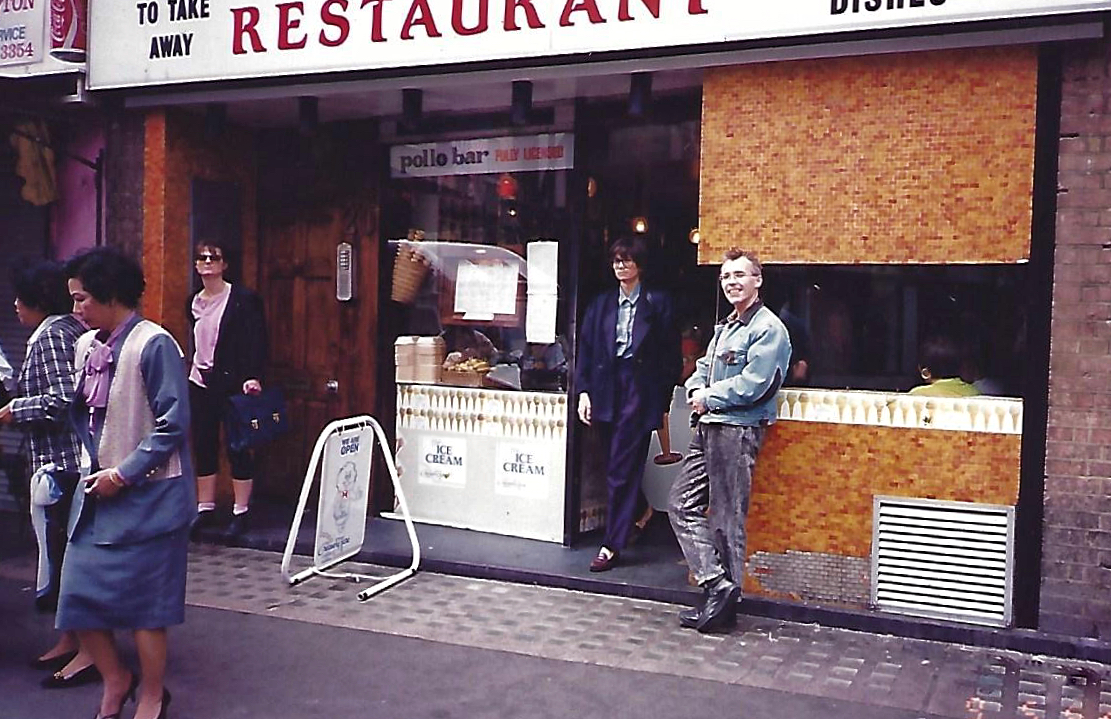


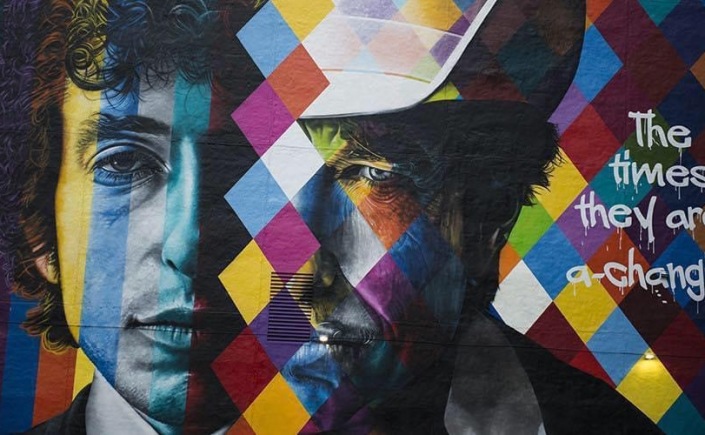
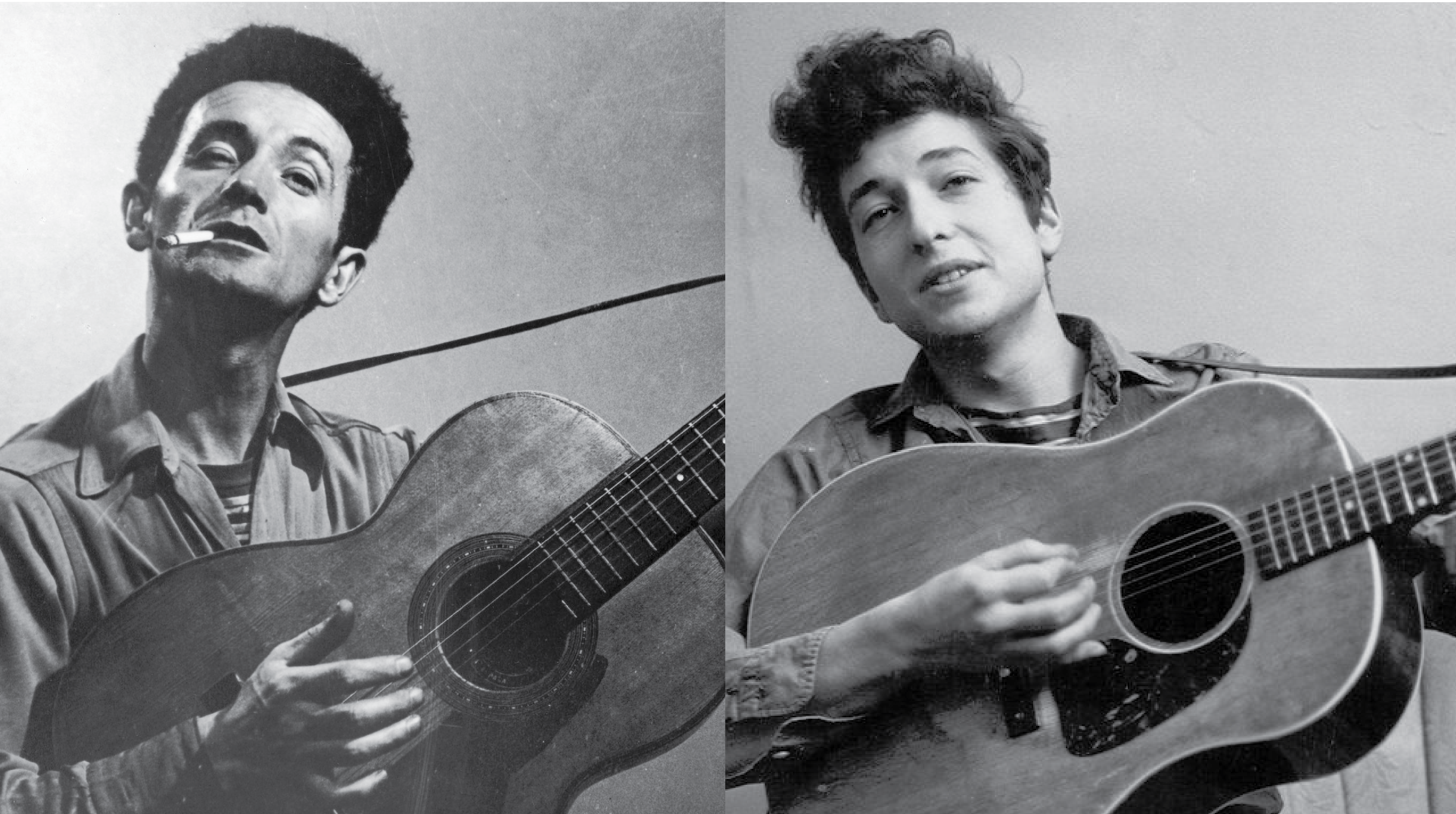
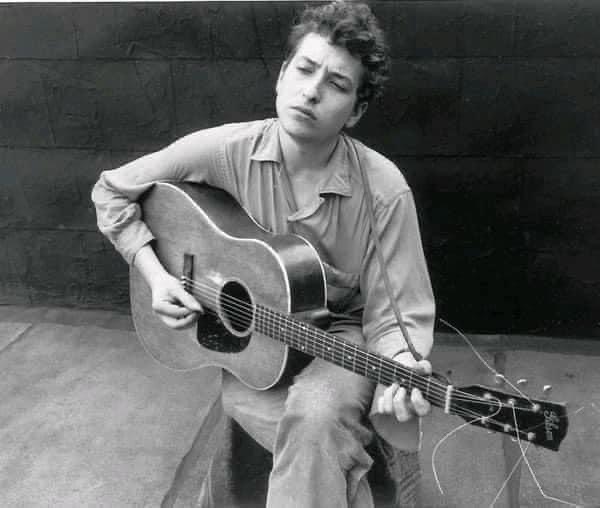


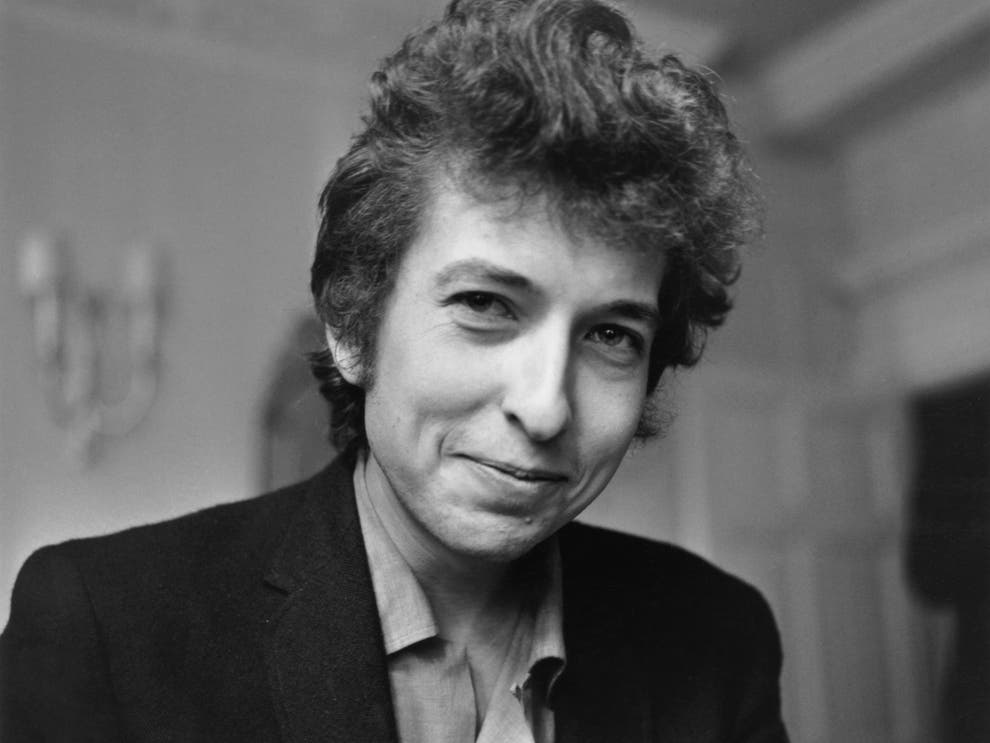


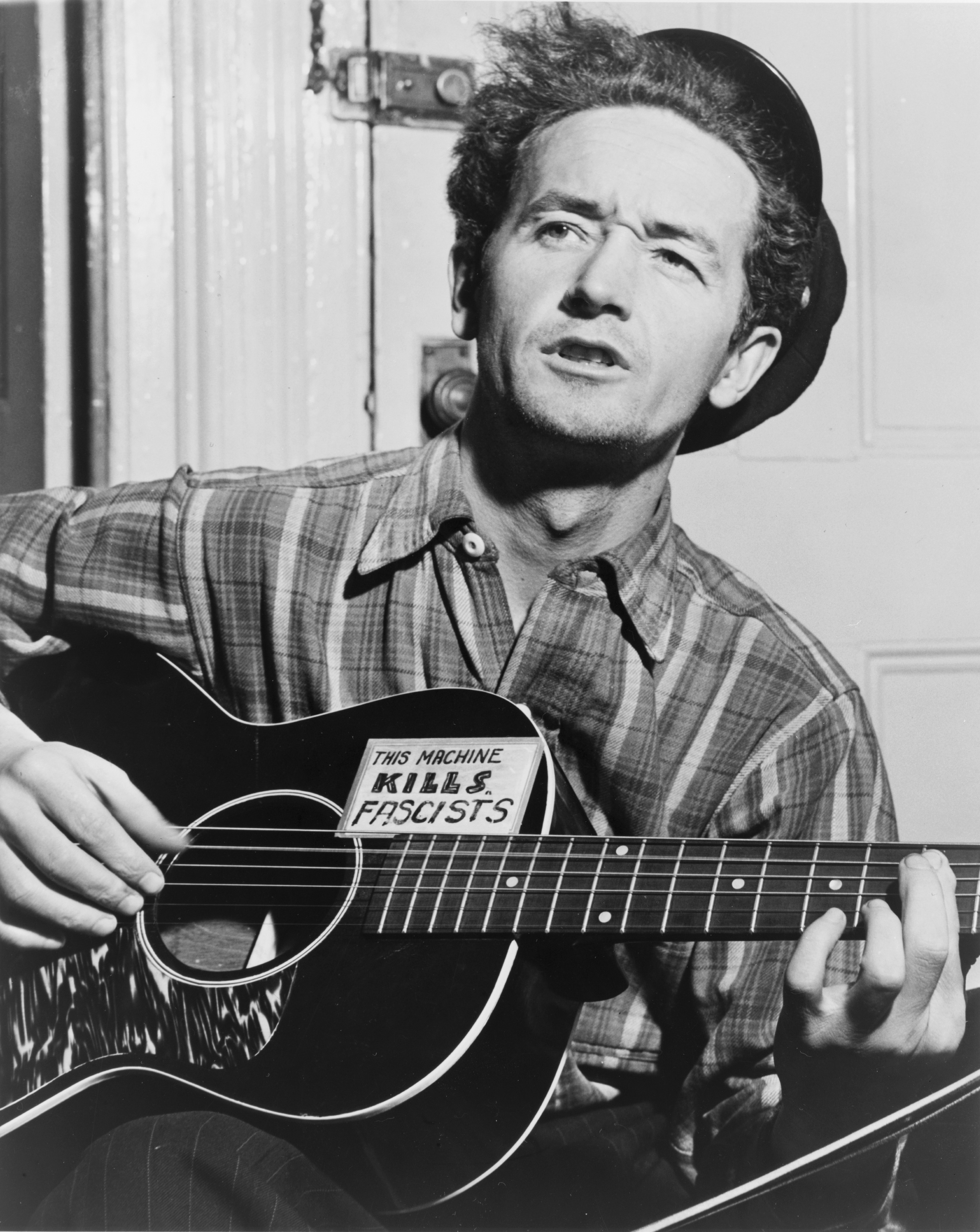


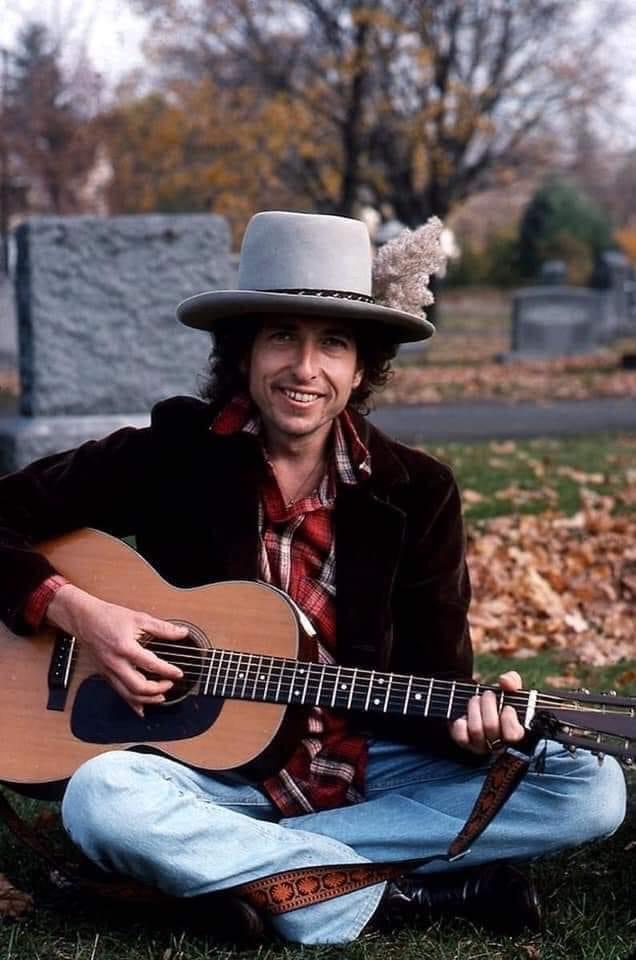



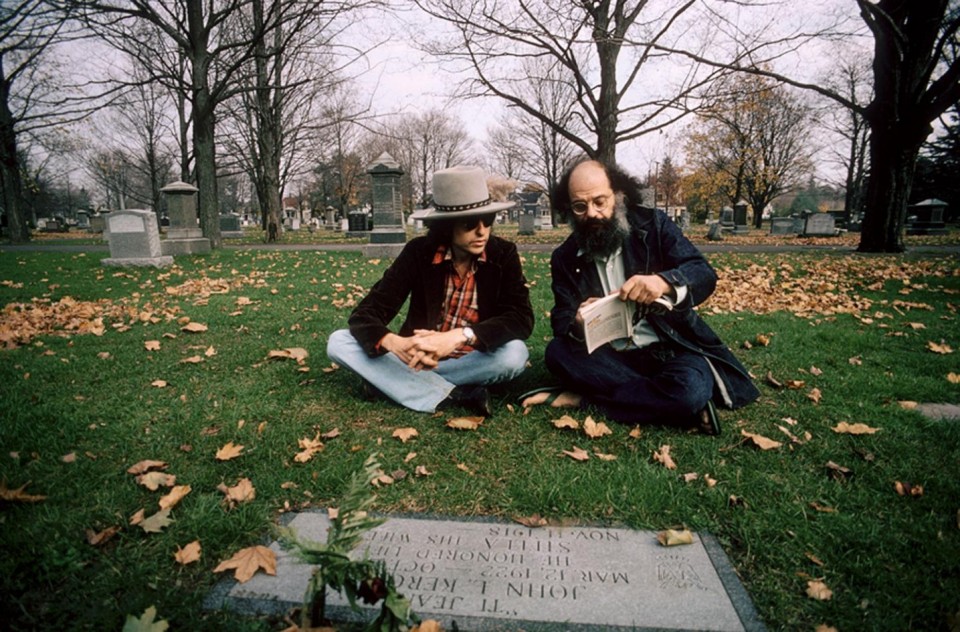
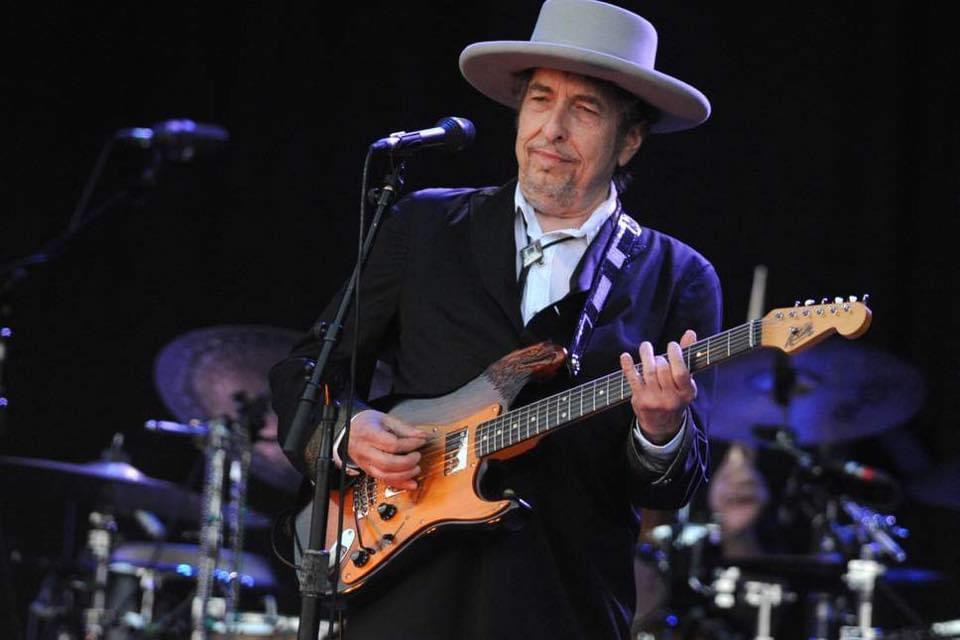
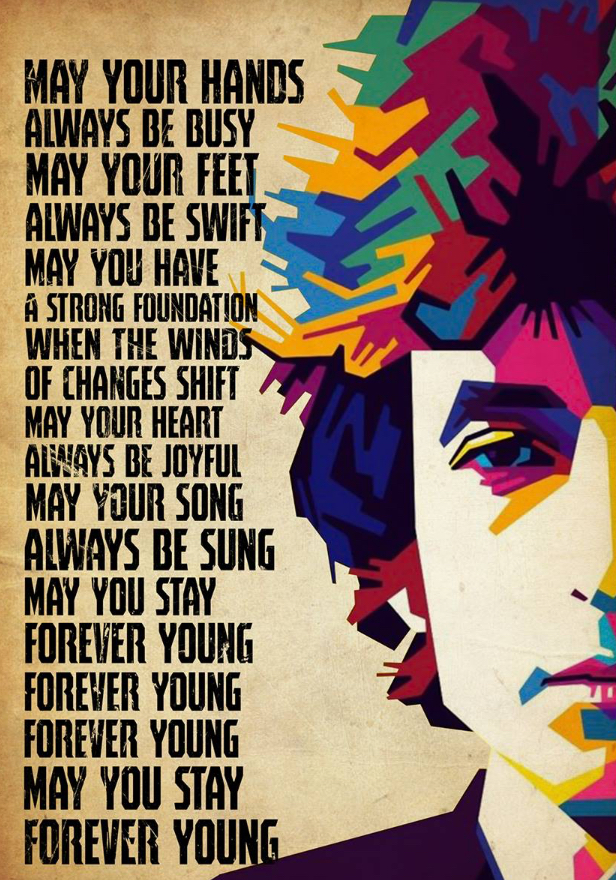

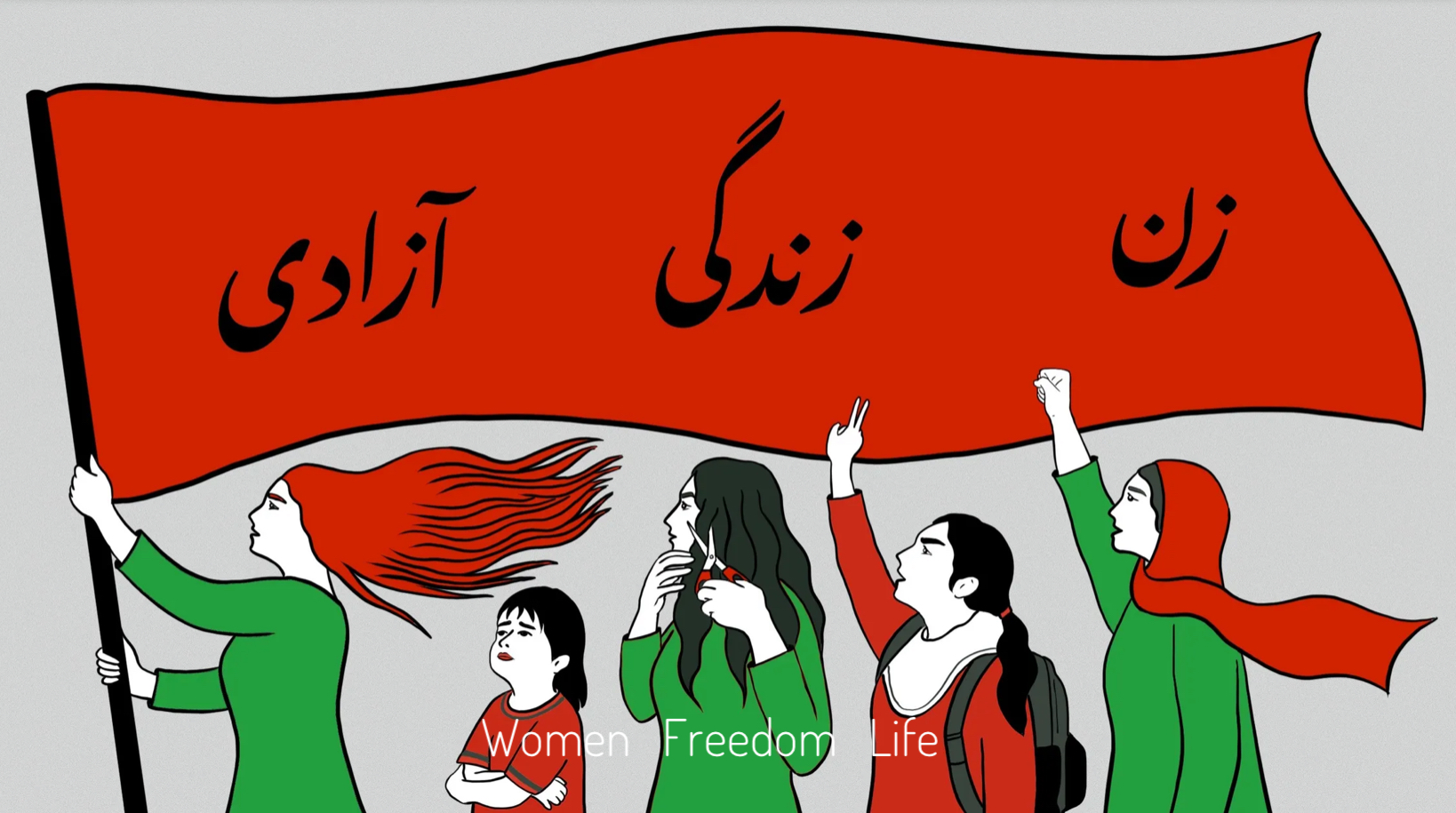


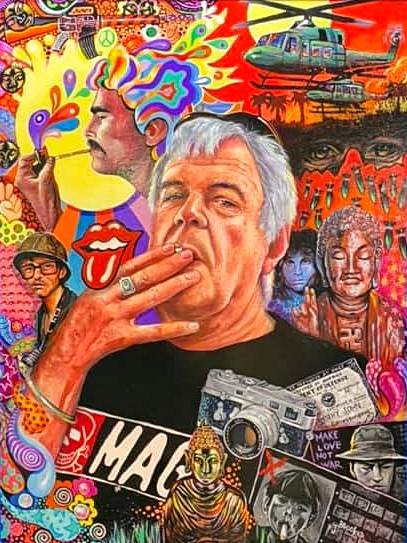

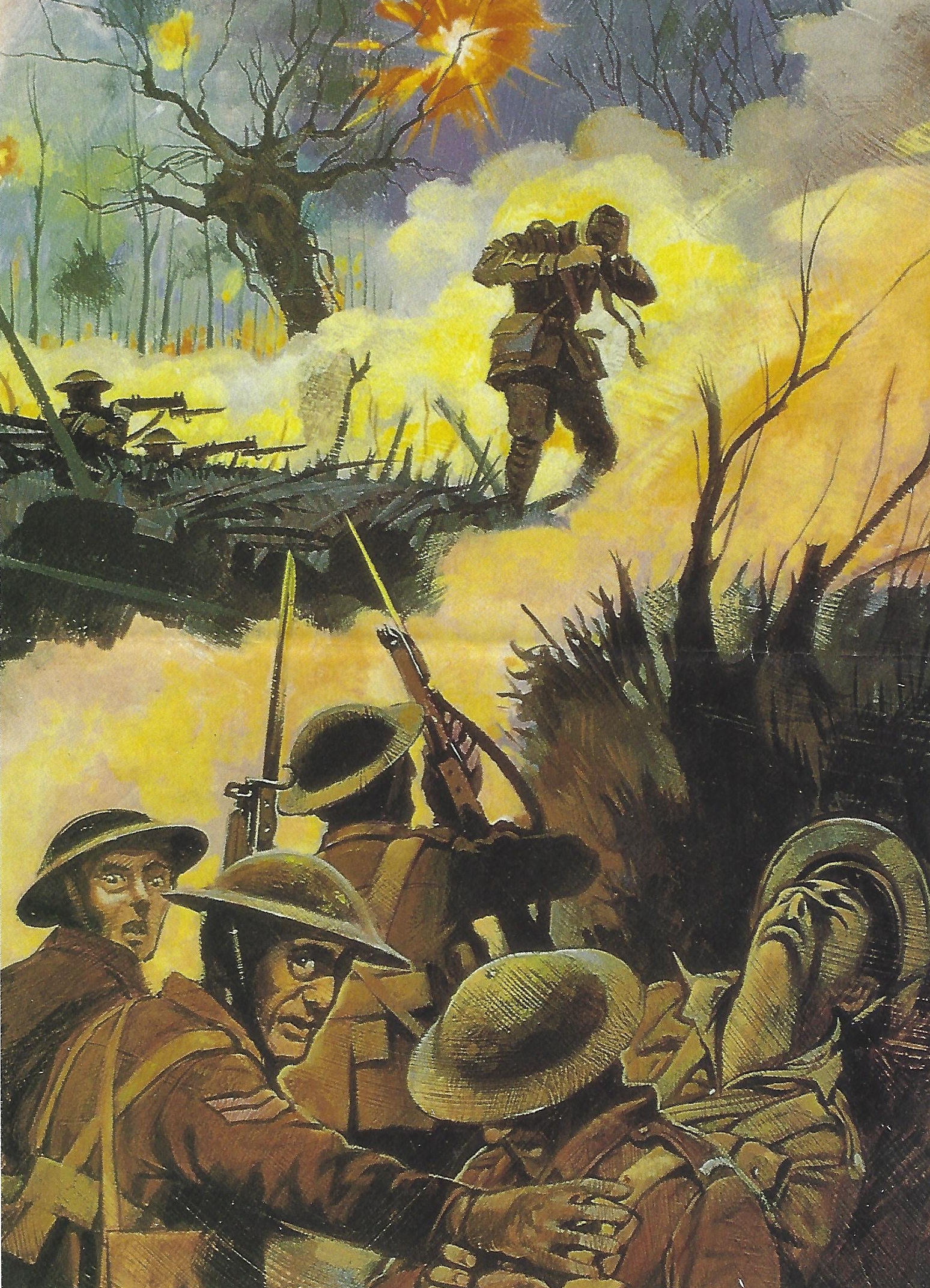


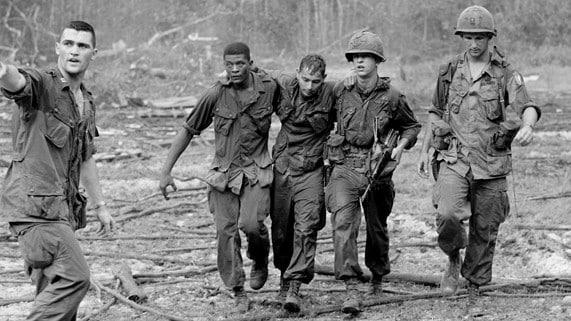


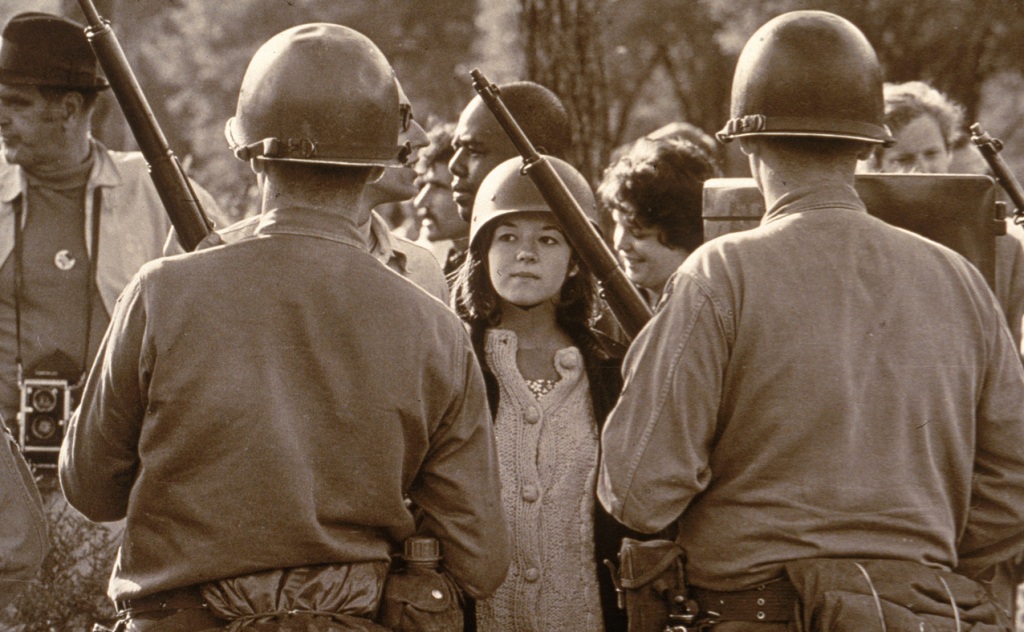


 In That Howling Infinite