Beside Strange Waters

I have admired Pink Floyd since the sixties. I still thrill to the memory of sitting in the darkness on Parliament Hill in the fall of 1968 as the  lights of the city sparkled below us and as jet planes roared overhead on their descent to Heathrow airport to the accompaniment of Interstellar Overdrive and Careful With That Axe, Eugene. The Dark Side of the Moon remains, in my view, one of the greatest albums ever recorded: musically adventurous, philosophically rich, endlessly rewarding. Like much of Floyd’s best work, it explores madness, alienation, mortality and power with extraordinary subtlety.

That subtlety is precisely what seems missing from co-founder Roger Waters’ contemporary activism. Flying inflatable pigs adorned with Stars of David or swastika imagery; describing Israel as uniquely evil; dismissing inconvenient evidence about the atrocities of October 7, 2026; and denouncing former colleagues as idiots. All this may generate headlines, but they lack the complexity of the art that made him and Pink Floyd famous.

Perhaps that is the enduring irony. David Gilmour rarely pretended to be a political philosopher. Waters plainly believes he is one. Yet the songs they created together endure precisely because they resisted simplistic moral binaries. The Dark Side of the Moon recognises that human beings are contradictory creatures, capable of love and cruelty, sanity and madness, empathy and tribalism. Waters’ current politics increasingly divide humanity into those who possess truth and those who have been brainwashed.

The Haaretz article republished below unintentionally illustrates another uncomfortable truth. In 2006 Waters was still embraced by most Israelis despite his criticisms. Today he is regarded by many not merely as a critic of Israel but as someone who has crossed into demonisation. Whether one agrees with that judgement or not, the shift is real. His critics see not an artist speaking truth to power but a man whose empathy has become radically selective.

The music, however, remains untouched. It is still magnificent. One can treasure the album while concluding that its principal lyricist has become, to borrow one of his own titles, rather more comfortably certain than comfortably numb. The  younger Roger Waters asked us to question authority. The contemporary Roger Waters often seems to demand that we accept his own. That is a curious destination for one of rock’s greatest sceptics.

One might attribute all this to a Momentary Lapse of Reason – the title of Pink Floyd’s 1987 album. Ther is a double irony here in tha, a song thereon, On The Turning Away, is a longtime favourite of mine – what is there to object to in the lyrics of what is a powerful, anthemic song: – and yet, the song was not written by Waters, who left the band in 1985, but by cofounder David Gilmour and Floyd collaborator Anthony Moore.

No more turning away
From the weak and the weary
No more turning away
From the coldness inside
Just a world that we all must share
It’s not enough just to stand and stare
Is it only a dream that there’ll be
No more turning away?


The dark side of Roger Waters

This is a fascinating article, not because it settles anything – it manifestly does not – but because it captures Roger Waters almost in the raw.  Israeli music journalist Ben Shalev deserves credit for largely getting out of the way and letting his subject speak. The result is both revealing and, at times, deeply unsettling.

The article begins as a piece of rock-and-roll history. In 2006, Waters agreed to perform in Israel but, under pressure from the fledgling Boycott, Divestment and Sanctions (BDS) movement, cancelled the planned Tel Aviv concert and instead performed in Neve Shalom (Wahat al-Salam), the Jewish-Arab “Oasis of Peace” village near Latrun. The move required an extraordinary logistical effort: a chickpea field became a wheat field, then an amphitheatre for some 60,000 people. Traffic collapsed, helicopters ferried the wealthy, and the concert itself – a performance of The Dark Side of the Moon – became one of the largest and most memorable rock events Israel has ever hosted.

Around this entertaining backstage story swirl competing memories. Did Waters himself suggest Neve Shalom? Was it promoter Shuki Weiss? Did Waters witness armed Israeli soldiers at the separation barrier or not? Did security concerns prevent him attending a peace gathering, or did he simply go shopping? Almost every anecdote has two or three incompatible versions. Shalev wisely resists deciding who is right. Memory, ideology and self-mythologising have become inseparable.

The more interesting story is Waters’ own political evolution. He describes 2006 as the beginning of his radicalisation, crediting Qatari-Palestinian activist Omar Barghouti and the nascent BDS movement with opening his eyes to what he now regards as Zionism’s original sin. He claims his deceased father’s letters from British Mandatory Palestine anticipated these concerns decades earlier. Since then, he says, he has concluded not merely that Israeli governments have committed grave wrongs, but that Israel itself – and Zionism as such – is “a failed experiment.”

At that point the interview changes register entirely. It ceases to be about a concert and becomes a prolonged political jeremiad. Waters insists Israelis have been comprehensively brainwashed, dismisses Israeli society as morally corrupted, embraces armed struggle as historically necessary, rejects Nick Cave’s argument for cultural engagement, and repeats claims about October 7 that have been extensively challenged by independent investigations. His denial that Hamas committed rapes, despite substantial evidence collected by UN investigators, journalists and Israeli forensic teams, inevitably overwhelms everything else he says. Whether one is sympathetic to Palestinian suffering or highly critical of Israeli policy, this is where many readers simply stop listening.

That is perhaps the tragedy of Roger Waters. He undoubtedly possesses genuine moral passion. The anti-authoritarian themes running through Animals, The Wall and Dark Side of the Moon were always political, even when listeners preferred to hear only the music. But somewhere along the way, righteous anger seems to have hardened into absolute certainty. There is almost no room left for ambiguity, self-doubt or tragedy. Israelis become collectively brainwashed; Palestinians collectively embody resistance; every contradictory fact is assimilated into a single explanatory framework.

It is an oddly totalising worldview from a man who once warned us against “thought control.”

Postscript

On 4th September 2026, The Times of Israel Israel reported that Roger Waters, “a far-left conspiracist who has long been accused of antisemitism”, was scheduled to headline a New York City conference run by a group that raises conspiracies about the September 11, 2001 terror attack. “Waters and the group organizing the conference, the International Center for 9/11 Justice, have raised false allegations that Israel was involved in the al-Qaeda terror attacks”.

According to The Times, “The group identifies with the “truth movement” that raises alternative explanations for the attacks and calls the attacks an “inside job” orchestrated by the US government with assistance from Israel and other countries”. “9/11 was the first step in the plan for US-Israel hegemony in the Middle East,” the group said earlier this year.

The Times notes that Waters has endorsed conspiracy theories about the September 11, 2001, attacks, telling Tucker Carlson in July that the towers fell due to “controlled demolitions. “It fell down because it was demolished, and the question is, ‘Who placed the explosives in it? Who pressed the button?’” he said. He alleged Israelis had foreknowledge of the attacks, saying, “They were dancing around, sort of congratulating themselves”. He has also raised conspiracies or denied atrocities related to Hamas’s October 2023 invasion of Israel and has a history of anti-Jewish rhetoric.

Paul Hemphill, August 2026

For more on the Middle East in in That Howling Infinite, see A Middle East Miscellany.

Roger Waters: ‘My Songs That Israelis Love Are About Truth and Love. Israel Is the Complete Opposite’

Twenty years after his performance in the Jewish-Arab village of Neve Shalom, Roger Waters recounts his version of what really happened there – and what has changed for him since. ‘They went from, ‘Waaaah! Roger, Pink Floyd, we love you’ – to ‘What the fuck is he talking about?”

June 18, 2026

Roger Waters: "Israel is a failed experiment."
Shortly after 10 P.M. on June 22, 2006, as Roger Waters’ concert in the Jewish-Arab Israeli village of Neve Shalom was in full swing, a member of the production team mistakenly believed that police were preparing to arrest the Pink Floyd legend.

The employee, a member of Israeli producer Shuki Weiss’ team, thought he had heard over the radio that Waters would be arrested on suspicion of damaging IDF property the moment he stepped offstage. He alerted Amir Feingold, who was in charge of security for the production.

Already under immense pressure as the concert drew to a close and 60,000 attendees prepared to leave, Feingold took the report seriously. “We called the Jerusalem District commander, who was at the site, and asked him to look into it,” he recalls.

“Listen, we know how easily the police arrest people. Look at what’s happening today with protest activists.”

That was in 2006. The minister responsible for the police was not Ben-Gvir.

“If there was the slightest chance something would go wrong, we wanted to make sure it didn’t happen. The district commander reassured us. He said, ‘I’m with you.’ At the same time, Shuki and I went to Waters’ manager and told him, ‘Listen, here’s the situation. There could be problems.’ As soon as Waters got off stage, we put him in a car, even before giving the order to turn on the lights in the facility. Shuki said a few words to the audience while the man was already on his way to Ben-Gurion International Airport, escorted by special police patrol unit vans.”
רוג'ר ווטרס גרפיטי
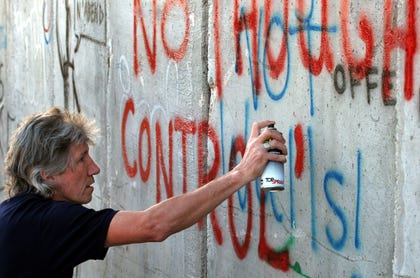
Rogers Waters spraying graffiti on the separation wall, 2006.  Credit: AP

The story about the complaint against Waters is an insignificant anecdote, but it illustrates how much Israeli reality has changed in the 20 years since that performance.

In 2006, Ben-Gvir was a serial offender who belonged to the lunatic, ostracized fringes of the far-right, far outside the bounds of public legitimacy. Today, he is the national security minister. Waters is the one who has moved far beyond the bounds of Israeli legitimacy in the past two decades. In 2006, he was still a huge cultural hero, unconditionally loved and admired. His arrival in the country was seen as a historic event.

Israelis’ attitude toward Waters has, as is well known, totally changed since then. First, he has been a vocal and tireless advocate for the cultural boycott against Israel, as part of the boycott, divestment and sanctions movement. Then, he denied the scale of the Hamas massacre on October 7.

Pink Floyd’s music is still very much loved in the country, but Waters himself is probably among the most hated people in Israel. The possibility of him setting foot in the country today is beyond imagination. This makes the memories of his performance here, exactly 20 years ago, particularly charged and interesting.

What does Waters himself remember from that visit to Israel and the performance in Neve Shalom? What is the most significant thing that stuck with him?

“Very, very comfortable, shabby chic white sofas arranged backstage. Not the most meaningful memory, but you said, how do you remember it? But the main memory, obviously, is the memory of when I made the little speech at the end where I said, you are the generation of young Israelis who must make peace with your neighbors and blah blah blah,” Waters says in a Zoom interview from his New York home.

He then mimics a screaming, fawning audience: “They went from, ‘Waaaah! Roger, Pink Floyd, we love you’ – to ‘What the fuck is he talking about?’ Wow. It was something of a surprise. I went back the next year and I learned a lot more about Israeli psychology. But that first year, it was still a bit of a surprise.”

Waters is not precise with the timing: He returned three years later, in 2009.

Was the change in audience reaction really that extreme?

“It went from ecstasy to silent horror in a split second. And I thought, whoa, that was by far the most important bit. The rest was just a gig, with an adoring audience.”

Israel is waiting for Roger

One need not accept Waters’ recollection. I asked several people who were there how they remembered that moment. Some didn’t recall Waters’ statement at all. Others said the audience reacted supportively. No one remembered a reserved response, certainly not “silent horror.”

A significant discrepancy between different accounts of the same events characterizes the entire story of Waters’ performance and his 2006 visit to Israel. Whose idea was it to move the concert from its original venue in Yarkon Park to Neve Shalom’s chickpea field? What did Waters see during his visit to the separation barrier? Why didn’t he attend the meeting organized for him with intellectuals and peace activists?

The answer to all these questions is: It depends on whom you ask. So we asked. To mark 20 years since the most complex and charged performance in the history of international rock concerts in Israel, we will try to tell its story in the most reliable and interesting way.

This story has two protagonists: Waters and producer Shuki Weiss. In the 1970s, before Weiss became one of the country’s biggest concert producers, he managed record stores in Tel Aviv and was one of those responsible for introducing Pink Floyd’s music to Israelis. Later, when he owned the Dan Cinema Club in Tel Aviv, he used to hold record listening evenings there. One time he played “The Wall.”

“People would come to listen,” he recalls. “Many people.”

In the early 1980s, Weiss and Miron Rechtman, the owner of the Betty Bam event equipment company, bought the sound system that Pink Floyd used on its “The Wall” tour. In the mid-1980s, Weiss tried in vain to bring David Gilmour, Pink Floyd’s guitarist, to Israel as a solo artist. Toward the end of the 1980s, after Waters had left the band, he negotiated to bring Pink Floyd to perform in the country in its trio lineup (Gilmour, keyboardist Rick Wright and drummer Nick Mason. But that attempt also failed.
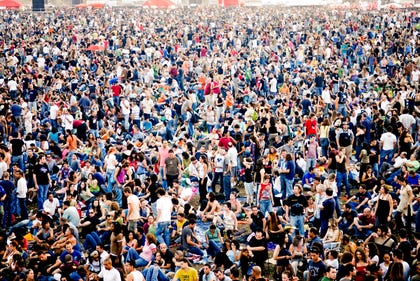
The crowd waiting for Waters to perform. The concert caused a traffic nightmare.

The crowd waiting for Waters to perform. Credit: Oren Levin

“I stalked them, so to speak,” he says.

In early 2006, Weiss learned that Waters was planning a world tour based on the album “The Dark Side of the Moon.”

“I went to London, met his agent, and offered a huge sum, much more than he received anywhere else,” Weiss recalls. After the contract was signed and the planned performance in Yarkon Park was announced, he traveled to Paris for a brief meeting with Waters. “I told him that Israel was excited for him,” he says. “He was perfectly fine.” Weiss says ticket sales were excellent, with 35,000 sold three months before the show.

A couple of weeks later, Weiss was vacationing with his family in the Netherlands, when Waters’ manager, Mark Fenwick, called him. He told Weiss that pro-Palestinian activists were exerting heavy pressure on Waters. A few hours later, Fenwick called again to say that Waters had decided to cancel the performance.

“I got lots of emails from my brothers and sisters after the announcement of Hayarkon Park. But the important one was from Omar Barghouti,” Waters recalls about changing his mind, referring to one of the founders of the BDS movement. “We had a conversation, and then I eventually cancelled Hayarkon Park. Organizing this concert instead was a compromise with Omar and with the rest of the people who had just started the BDS movement, because obviously even doing Neve Shalom broke the boundaries of the cultural boycott.”

Waters describes that exchange as “a huge moment” in his political thinking.

“You know, in this song that Mona Miari and I have just released, a re-imagination of my song ‘Comfortably Numb,’ I sing, ‘We never knew about the Nakba. I was only 5 years old in ’48.’ And we didn’t,” he says. “And the lie that is Zionism had been spread all over the world since the Second World War. So I wasn’t alone. Very, very few people quite got it.”

Waters says that one of the few people who “got it” before the war was his father.

Shuki Weiss giving an interview ahead of the Rogers Water concert in 2006.
Shuki Weiss giving an interview ahead of the concert. Credit: Oren Levin

“My father taught at St. George’s School in Jerusalem from 1934 to 1936,” he says. “And he wrote letters home to my grandmother, which I have, saying how worried he was about the influx of American money, mainly, to buy up land, and about the establishment of the settlements that he saw going on, and how desperately worried and concerned he was,” he recounts, referring to the pre-state Jewish communities. “Of course, he was killed in the war, so I never got to talk to him about these things. but it’s a fascinating fact.”

Following the deepening of his awareness of the Israeli-Palestinian conflict due to the appeal of the BDS movement, Waters made his second visit in 2009. “My travels around the occupied territories … were deeply, deeply moving and very informative,” he says. “I’ve tried never to shut my mouth from that moment. And things have only got worse, obviously, except that it’s becoming clearer and clearer to the vast majority of people all over the world now that this is a failed experiment, and it should be stopped.”

What is the failed experiment?

“Israel is the failed experiment. Zionism is the failed experiment. and this is becoming increasingly a position taken up by a huge majority of human beings all over the world, because we witness and are appalled by the horrific policies of the state of Israel in its massacre of the indigenous people whose land it stole in order to create itself. And so it’s a terrible, terrible, terrible tragedy, and it remains to be seen: Will I see the end of the story in my lifetime? Probably not. I’m 82 years old.”
פותחת
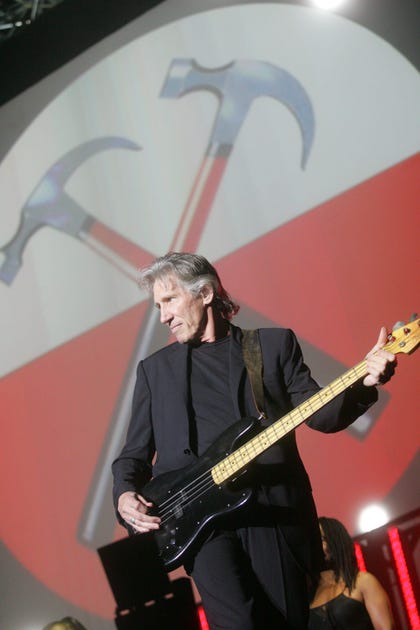
Waters performing in Neve Shalom in 2006.  Credit: Assaf Evron

Field of wheat

In response to Waters’ decision to cancel the Yarkon Park concert, the most monumental improvisation in the history of performances in Israel occurred. Thanks to the move to Neve Shalom, Weiss says he was called “The King of the Chickpea Field” for years by people in the global music industry.

“When Waters’ manager informed me of the cancellation, I told him: ‘What if I move the show to a place for Jews and Arabs?’ I don’t know where that came from,” Weiss says. ‘I knew Neve Shalom. David Broza’s grandfather was one of the first residents there. I had done performances there many years before this show, events for peace. But nothing of this magnitude. Performances for a few thousand people. I had no idea if a huge concert could be held there. I left my family in the Netherlands and returned to Israel. That night, Waters’ manager called me back and said: ‘We checked what Neve Shalom is. If you can do it there, and if you invite Arabs to the show and arrange meetings with peace activists, we’re in.’ I told him: ‘Yes, yes, yes.”

Rayek Rizek, a Neve Shalom resident, offers a different version of the events that led to the Neve Shalom performance. “Sometime in late March 2006, I heard two employees in the community’s secretariat talking about Roger Waters,” recalls Rizek who was the community’s secretary general in 2006. “I’ve loved Pink Floyd since high school. I still listen to them today. When I was studying at university in the United States, around when “Animals” (the band’s 1977 album) came out, I missed a performance of theirs in Houston. By the time I managed to look for a ticket, everything was sold out. I was very sorry,” Rizek says as an aside.

“So when I heard the employees in the office talking about Waters, I asked what was going on. They said his manager had sent us an email. Waters was interested in Neve Shalom and was asking for information about the village,” he says. “As soon as I saw I had a direct connection with the manager, I sat down and wrote him a long email telling him about Neve Shalom and inviting him to hold the concert with us. I didn’t know about the pressure being exerted on him. Two days later, Shuki Weiss came to the village and told me, ‘This morning, Waters’ manager called me and asked about the possibility of moving the concert to Neve Shalom.’ I imagine the manager received my letter and understood that such a possibility existed.”

Rizek’s version doesn’t necessarily contradict Weiss’s entirely. Perhaps Weiss suggested the idea to Waters’ manager, and then the manager sent an email to Neve Shalom. But it’s also possible that the initial email to Neve Shalom was sent to explore the option of holding some separate activity in the community. In this scenario, when the Yarkon gig was canceled amid Rizek’s offer to hold a concert in Neve Shalom, Waters and his manager adopted the proposal. Rizek recounts that during one of the preliminary meetings with police officers at the event site, one of the commanders got annoyed over some details and asked, “‘Why are we even holding the concert here? Why didn’t it stay in Tel Aviv?'”

Rizek recalls: “Shuki looked at me and told the commander: ‘Blame him.’ As for me, all I did was send a letter.”

Waters himself doesn’t remember the history of the concert’s move to Neve Shalom. “Shuki Weiss, bless him, he’s just another promoter,” he says with a smile. “I don’t know him at all. I wouldn’t trust him as far as I can spit.”

On the other hand, he stresses, “I loved the idea of Neve Shalom, of this agricultural community.” He says fondly: “It’s like this is the dream that we have of how Palestine could go, could go back to being, where everybody lives together, and there’s no supremacists, there’s no racism. Whatever it may be that has caused this great catastrophe, there was none of that in Neve Shalom. I hope it’s still doing well.”
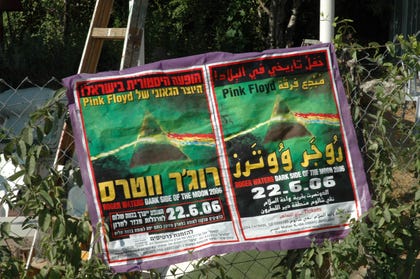
Flyers for the Roger Waters concert in Israel

Flyers for the Roger Waters concert in Israel Credit: Oren Levin

Weiss picked the new concert site’s location with Giora Porter, who designed the producer’s concert venues for many years. “There was only one area that came into consideration, with a certain slope, a kind of natural amphitheater,” Porter recalls. “It was a chickpea field owned by two brothers from one of the local moshavim. I located the field owners and said: ‘I want to buy your chickpeas.’ They said: ‘Okay, we’ll harvest in May.’ I said: ‘No, now.’ They understood they could make a killing off me. I bought the chickpea field, the crop they wouldn’t harvest, for $100,000. They were nice guys, but they knew how to bargain.”

“But there was a problem with the crappy soil in the Latrun area,” Porter says. “Exposed soil in June is all dust. It’s terrible. I suggested sowing grass, but the moshav resident said: ‘No, that will ruin my land.’ I said: ‘I can’t do a show on dirt.’ I think he was the one who suggested sowing wheat. He said: ‘It’ll sprout and be green like grass.’ So we went to see wheat sprouting elsewhere. I told him: ‘It’s terribly sparse.’ He said: ‘We’ll double sow it, increase the density.’ And that’s what he did. Shuki paid for it. And that entire huge area turned green within days. It was a miracle.”

Weiss and Porter recount that various state authorities created numerous difficulties for the show. The Israel Antiquities Authority remembered that salvage excavations needed to be carried out on the site and delayed the work. The Israel Land Authority charged several hundred thousand shekels to rezone the land for commercial use, even if only for one night. Meanwhile, the Health Ministry prohibited watering the compound with reclaimed water and forced Weiss to bring tankers. “It didn’t matter that we used reclaimed water at night, but I showed them we had tankers,” Weiss says.

“Quite cunning bodies,” Porter says of the authorities that created difficulties and collected payments. Weiss adds, laughing: “They know their job. That’s governance!”

Weiss and Amir Feingold, who was his security officer, have mostly praise for the police’s conduct. Some officers, Weiss says, were Pink Floyd fans. The event morphed into a kind of national project that the police wished to see succeed. There was, however, a dispute over the number of paid police officers the production was required to fund. The Jerusalem District commander demanded 1,000, including several dozen detectives to hunt for pot smokers among the crowd.

“We argued with them about it,” Feingold recalls. “I told the district commander: ‘In the end, it’s rock and roll. Are you bringing 80 detectives to arrest the pot smokers? Let them enjoy themselves.” The police, he says, complied and eased the demands.

Waters landed in Israel two days before the concert. The morning after his arrival, he visited the separation barrier near Bethlehem, where he protested against its construction with spray paint and words. Weiss says Waters gave interviews after his visit in which he said he was shocked to see “soldiers with drawn weapons” near the wall.

“A lie. There wasn’t a single soldier there, certainly not with drawn weapons,” Weiss says. Feingold, who accompanied Waters’ entourage on the trip to the wall, confirms no soldiers were present.
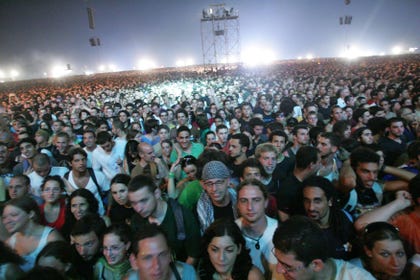
קהל אנשים צופים רוג'ר ווטרז ווטרס

Fans at the concert in 2006. Most did not arrive by helicopter: Assaf Evron

No-show in Neve Shalom

Waters laughs when he hears this claim. “So which story rings truer, Shuki Weiss’ story, no weapons, no soldiers, just a nice wall, or my story? I’ll tell you which one is true: my story,” he insists. “Shuki Weiss is a lying schmuck, obviously. I’m sure he’s very smiley, and he likes to make a lot of money. Good luck to him, but he’s just making stuff up.”

Another claim by Weiss concerns Waters’ non-attendance at an event organized in his honor in Neve Shalom. It was to be a meeting with intellectuals, peace activists, and village residents. Singer David Broza “helped me bring artists, writers, very serious people,” Weiss recalls. “They brought an olive tree for him to plant. There was a children’s orchestra. Tons of excitement. Everyone was already there, but he wasn’t. No Roger. They called him. He didn’t answer. His manager didn’t know where he was. In the end, David planted the tree in his place. Later it turned out he went to Kikar Hamedina to buy jewelry for his partner.”

Not only an olive tree was prepared for Waters, but also a sculpture of the famous prism from the cover of “The Dark Side of the Moon,” Rayek Rizek recounts. “I went to an artist in the Rehovot area, he told me 20,000 shekels ($4,500 in 2006). In the end, we made it from marble-coated concrete. It cost 4,000 shekels. Shuki paid,” Rizek says. “We waited and waited. In the end, someone on Waters’ behalf came and said he couldn’t come. There were too many people.”

Weiss says Waters was a no-show in Neve Shalom the day before the concert, but the event took place the afternoon of the show. “He was supposed to go to the community from the backstage area,” Feingold says. “His security guard came and looked around. I told him: ‘Tell me what you need. We’ll sort it out.’ He didn’t say a word and left. Later, he announced, ‘We’re not coming.’ I don’t know if he or Waters decided. He just said, ‘Security problems.’ What security problems? First-graders and 30 other people from the left. Where was the threat?”

Rogers says “of course” he didn’t come. “You don’t do anything on a gig day, except the gig,” he says. “I’m glad I’ve had this career and that I’ve been able to do multiple shows all over the world to fabulous audiences, but it’s very rare to do other things on show days.”

“And I’m absolutely, totally against the Nick Cave school of thought that, oh, we should all go and talk to people in meetings and that’ll do it,” he stresses, parodying hippie naivete. “No, it fucking won’t, you prick. No people has ever freed themselves without armed struggle, ever. It just doesn’t happen. It reminds me of the best interview that any of us have ever seen. (Palestinian writer) Ghassan Kanafani gave that fabulous interview where he talks about the conversation between the hatchet and the neck. What a wonderful writer.” He adds, referring to one of Kanafani’s books, “I can still remember almost every word in ‘Returning to Haifa.'”

A few weeks after the Neve Shalom concert, Waters wrote Rizek. “Dear Rayek, I’m deeply saddened that I was unable to plant the olive tree, but our efforts to reach the site were thwarted by the sheer numbers of people surrounding the vehicle in which I was travelling,” he wrote. “I know how upset you are that this did not take place and I hope that will not blight the memory of our visit to your land.” It sounds like something Waters would write, not his agent or manager.

“You see, Ben? I’m not just evil,” Waters comments.
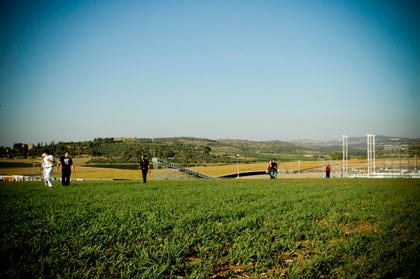
The wheat field that replaced the chickpea field near Neve Shalom, 2006.
The wheat field that replaced the chickpea field near Neve Shalom, Oren Levin

When I sent him an email a few weeks ago asking if he would agree to be interviewed for this article, I didn’t expect a positive answer. But it was positive and even cordial. When I told him during the Zoom call that I was pleasantly surprised, and that the conventional wisdom here is that he has no desire for dialogue with Israelis, certainly not after October 7, he responded: “Yes, I am. I’m just having one with you now.”

However, some things he said were difficult to hear and didn’t seem very open-minded.

“You, as a country, Israeli people have been brainwashed, and consequently you are now subjects, nationals of the most evil thing that has happened in the world since the Nazis and the Second World War. And you can’t seem to grasp it, and that is so sad,” he said.

“You used the two magic words: Gideon and Levy,” he continued, referring to my email mentioning Gideon Levy as my Haaretz colleague. “It’s only these words that got you the ability to get to me, and even Gideon got the whole October 7th thing wrong. We almost fell out over it, because he was so brainwashed. He believed all that crap about burning babies and raping women and stuff, and it’s all complete nonsense, and everybody knows it’s complete and utter nonsense. There was no rape by Hamas on October the 7th. However, there have been documented multiple rapes by the IDF, of men and women and children.”

After pushing back that I did believe these things happened, I asked Waters to change the subject. It was unbearable to hear him say these things. I knew that any attempt to continue responding to him would blow up the interview. But he continued.

“Your position is indefensible, and no amount of talking intelligently to any of you is going to change any of this. You’ve been Ben-Gvir’d until you can’t accept any reason,” he retorted. “Your state, Israel, is psychotic, psychopathic, criminally insane, and the only way out of it is for you to re-establish connection with the rest of the human race. Stop thinking that you are superior in some way and should rule the world, and join in with the community of the part of the world you’re living in. Until you do that, you are doomed, but you may well drag the rest of the world down with you. You know, it wouldn’t surprise me at all if suddenly some lunatic was to drop a nuclear bomb on Iran or something, and that’s the end of the world. You, Israel, and the United States, the U.K., France and Germany, and all the people in that cabal are dragging the whole globe towards its extinction, extinction of all life on the planet. And that’s what I complain about. It’s not weird to complain about that.”

Aviv Geffen arrives by chopper

Back to the concert, enormous traffic jams formed on the way to Neve Shalom in the afternoon and evening, and on the way from it that night. “The biggest traffic jam of 2006, perhaps of the entire decade,” Feingold asserts.

“A massive transportation failure. To this day, people are still stuck there trying to get out,” Porter laughs. Still, he acknowledges the huge traffic jams were unavoidable. “That’s the geography. We invested a lot in finding access roads, dirt roads,” he says. “We rented entire fields from nearby kibbutzim and leveled them for parking. And still, in the end, everything converged on one turn off the main road. Like everyone coming to Tel Aviv in the morning. It’s an unmanageable rush hour.”
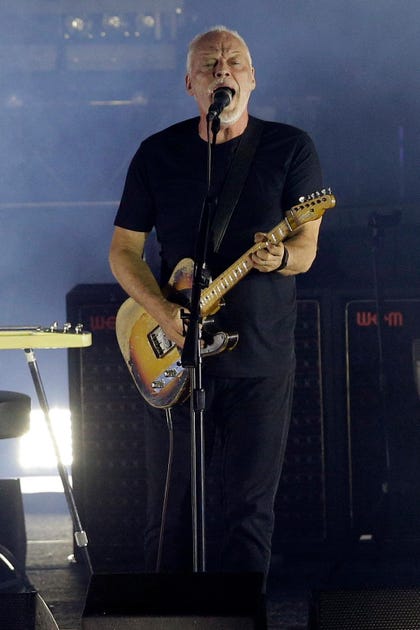
דיויד גילמור

David Gilmour. “He’s dumb as shit.” Credit: Gregorio Borgia/AP

So, did you bear responsibility for the failure, or did you say “it couldn’t be prevented”?

“Both,” Porter says.

Those who didn’t suffer from the traffic jams were the affluent who could afford 3,000 shekels for helicopter transport to the concert venue. A special helicopter line operated from Sde Dov airport in Tel Aviv. “Rani Rahav rented two helicopters for himself and the group that came with him,” Weiss says, referring to the PR consultant. “Aviv Geffen also arrived by helicopter. They told me afterward: ‘You don’t understand what a sight unfolded before us from above. It was worth every shekel.”

As for the concert, the quadraphonic sound was excellent. The superb backing band, which included acclaimed guitarists Snowy White and Dave Kilminster, was flawless. Waters occasionally used playback or excellent backing vocalists. It wasn’t a spontaneous or surprising performance, but it was clearly going to be that way. For the fortunate few who had the luck to see Pink Floyd perform, it was necessarily a diluted version. (Weiss is one of them, saying, “It was a poor man’s Pink Floyd. It wasn’t the real thing.”). But a straw poll I took last week among people who were there suggests that the enjoyment was complete, overwhelming and enthusiastic.

Musician Oded Tamsoot came to the concert from Ma’ale Gamla in the Golan Heights. “The entire event, the performance itself, was an amazing experience, beyond imagination,” he says. A year later, he formed the Pink Floyd tribute band Ummagumma.

Yael Ori, a former teacher and kindergarten teacher from Jerusalem, says Pink Floyd’s messages, which deeply influenced her as a teenager, inspired her to choose the teaching profession. “My high school was a nightmare,” she says. “I decided I wanted to be a teacher so my children wouldn’t suffer what I suffered.” Singing “We don’t need no education” with Waters and the masses was a wonderful experience, she says.

Dvir Zhorno from Jerusalem was 16. “The concert’s timing was perfect for me. It was shortly after I discovered Pink Floyd and started delving into their music,” says Zhorno, now a finance professional. “After the show, I heard critiques that he performed the songs exactly as they were on the albums, but that style suited me. That’s what I wanted to hear. ‘The Great Gig in the Sky’ live, exactly like on the album – it was awesome.”

David Broza at the tree planting ceremony at Neve Shalom. He was the default replacement for Waters.
David Broza at the tree planting ceremony at Neve Shalom. Credit: Oren Levin

Truth and love, lies and hate

Toward the end of the interview, I asked Waters what he thought about the enormous, unbridgeable gap between the deep love hundreds of thousands of Israelis feel for Pink Floyd’s music and the extreme hatred most Israelis feel toward him, his views and his statements.

“This is their problem,” he sighs. “All my work, all that work that they love, all those songs I wrote for Pink Floyd – “Shine On You Crazy Diamond,” “Comfortably Numb,” “Wish You Were Here,” – are all about truth and love. And all of my work that I do now is about truth and love. The State of Israel and what the children of Israel are taught to believe from the minute they’re grown up is the exact opposite. You’ve been brought up to believe the lies about October 7th. That’s not true. That’s just pure evil lies. And you’ve been taught to hate Arabs and Palestinians. That’s the opposite of love. So you live in a world that’s built on lies and hatred. … My music is built on love and truth, and that’s why there’s a dichotomy – oh, we love his music, but we hate him.

“I’m so sorry that even talking to you, I can see that you have been brainwashed, my brother Ben, completely. And I know you’re laughing at me now, but it’s really not funny. It’s sad. Israel is the saddest thing on earth, with the possible exception of the Trump White House. It’s sad because human beings are better than this. There is a capacity within every human soul for an attachment to love and truth. So for us to be persuaded that lies and hatred are a better alternative is why I go on working and expressing myself in my great songs.

“You think that ‘Dark Side of the Moon’ and ‘The Wall’ and ‘Animals’ weren’t political? Are you fucking stupid? Yes, they are stupid. If they don’t get that, they’re very, very stupid. You can’t really blame them. There were people in the band who don’t get it. David Gilmour doesn’t get it. He’s dumb as shit. He never understood a single bit of any of it. … That’s why he was miserable. And he was miserable with the band, because he never understood what I was doing.”

Waters started to say another sentence but then stopped and said: “Well, no, I’m not gonna [there]. Good luck with getting them to print any of this.”

Thank you very much.

“You’re welcome. Thank you for still having a smile on your face at the end of this conversation.”

“High above the dawn is waiting” … the unlikely origin of a pop song

It is three years since Australian songstress Judith Durham took the Morningtown Ride. Dusty Springfield’s brother Tom followed soon afterwards.

Judith might not have been my teenage crush – that was Dusty – but The Seekers were a significant part of my adolescent soundtrack. Aussies were an exotic species back then in Britain, and to me, more associated with now-disgraced Rolf Harris with Tie Me Kangaroo Down Sport and Sun Arise, but there was also Frank Ifield and Patsy Ann Noble. More Aussies followed them to Britain – the Easybeats and Bee Gees entering the pop charts soon afterwards, while soon to be famous actors, artists, authors and activists had already steamed back to Old England’s Shores and were busy making names for themselves.

The Seekers were “discovered” by Tom Springfield and were marketed as the new Springfields, the natural heirs to that wholesome folksey trio (he had written their greatest hits or adapted them from folk standards). When the Seekers folded in 1969, group member Keith Potger gave us the New Seekers, a bunch of pretty blonde Brits who most people now believe wanted to buy the world a coke! For trivia fans, that song was (spoiler alert!) the happy hippie  finale of that fabulous series Madmen.

The Seekers released their smash hit, the allegorical song of farewell The Carnival Is Over in 1965. It is forever associated with this well-loved trio, but Tom had actually based it on a traditional Russian song about a brutal Cossack rebel [read all about him below]. A natural linguist, he’d learned Russian whilst undergoing compulsory national service in the fifties. Apparently, those few conscripts who graduated from the Ministry of Defence’s Russian Language School as interpreters and translators were regarded as the crême de la crême of conscripts. Often, trainees would put on concerts of Russian songs and plays for their own amusement.

Stenka Razin

Tom Springfield borrowed the melody of The Carnival is Over from Stenka Razin a traditional folk tune set to music in the 19th Century by Dimitry Sadovnikov. It told the tale of a drunken seventeenth century Cossack rebel who threw his Persian bride of one night over the side of his boat into the Volga River when his men accused him of going soft. Tom changed the story entirely though he retained a nautical riff and cast the star-crossed lovers as the theatre characters Pierrot and Columbine rather than casting them overboard.

Stepan Razin on the Volga (by Boris Kustodiev, (1918) State Russian Museum, St Petersburg.

Tom’s song was an ironic mid twentieth century reimagining in which a tragic, violent and mythic saga of patriotism, loyalty, and patriarchal authority illustrative of national an revolutionary folklore was reinvented into wistful pop as a saccharine song of romance, emotion, loss, and a meditation on the impermanence – how the joys of love are fleeting. No such maudlin melancholy on the part of the preening old riverboat pirate. Over the side she goes!

The lyrics and the sentiment couldn’t have been more different:

From beyond the wooded island
To the riverbank he came,
On his breast he held a maiden,
And his comrades called her name.
Then he flung her to the waters,
Crying, ‘Thus I make my vow,
I will have no foreign woman
As a wife to me now.’

Say goodbye, my own true lover
As we sing a lovers’ song
How it breaks my heart to leave you
Now the carnival is gone
High above the dawn is waiting
And my tears are falling rain
For the carnival is over
We may never meet again

Pierrot and Columbine

The shift from revolutionary folklore to wistful pop is emblematic of the 20th-century repurposing of folk traditions – filtering political anthems through modern, personal, and emotional frameworks. The lyrics and the sentiment couldn’t have been more different:

If you watch the hoary old Hammer horror film Rasputin, about the sinister Svengali who enchanted the last Czarina of Russia – portrayed herein by that eminent old frightener Christopher Lee – you will recognise the tune as a recurring leitmotif.

There is a clunky film reenactment of the story, sung by the famous Red Army Choir immediately below the Seekers‘ song.

The real Stenka Razin

“Stenka” is simply the affectionate or diminutive form of the Russian name Stepan, much as “Johnny” is for John. His full name was Stepan Timofeyevich Razin (c. 1630–1671), the Don Cossack leader who led one of the greatest popular uprisings in Russian history.

The historical Razin and the legendary Stenka quickly diverged.

Historically, Razin was a charismatic Don Cossack at a time when Muscovy was tightening its grip over the frontier. His revolt (1670–71) began as a Cossack expedition on the Caspian Sea, descended into piracy against Persian shipping, and then evolved into a vast peasant and Cossack rebellion against the Tsar’s officials, landlords, and the expanding system of serfdom. His forces captured major towns along the Volga, including Astrakhan, Saratov, and Samara, and for a time seemed capable of threatening Moscow itself. Eventually, however, the rebellion was crushed. Razin was betrayed, captured, taken to Moscow, and publicly executed in 1671 by drawing and quartering.

In folklore, however, he became Stenka Razin, the Robin Hood-like champion of the oppressed and the embodiment of Cossack freedom. Songs, poems, and legends transformed him into a larger-than-life figure who defied both Tsar and aristocracy. The most famous of these is the nineteenth-century folk song borrowed by Tom Springfield (also known as “From Beyond the Island to the Midstream” or Iz-za ostrova na strezhen).

Whether this episode ever happened is highly doubtful. Most historians regard it as legend rather than fact. Yet it became inseparable from Razin’s popular image, inspiring paintings, operas, and one of Russia’s earliest narrative films (1908).

Orlando Figes’ The Story of Russia, gives Razin an important part in the recurring Russian pattern of revolt against autocracy. He was the first in a line of great Cossack rebels that included Kondraty Bulavin (1707–08), Yemelyan Pugachev (1773–75), who claimed to be Peter III during Catherine the Great’s reign, and, in a very different way, later revolutionary movements. In Russian memory, these figures symbolize the perennial tension between the centralized state – the “Holy Tsar” – and the fiercely independent frontier spirit of the Cossacks.

In that sense, Stenka Razin is not merely a historical rebel. Like Robin Hood in England or William Wallace in Scotland, he became a national folk hero whose legend often overshadowed the man himself.

The Cossacks

The word Cossack derives from the Turkic term qazaq (Kazakh: qazaq), meaning “free man,” “wanderer,” “adventurer,” or “one who lives independently of established authority.” Long before it became associated with the frontier warriors of Russia and Ukraine, it described those who had left settled society to seek freedom on the open steppe. The same linguistic root gives rise to the name of the Kazakhs, although the Kazakh people and the Cossacks evolved into quite different historical communities. The name itself captures the essence of the Cossack ideal: men who lived by their own laws on the frontier, owing allegiance first to their comrades and only later, and often reluctantly, to the state.

The Cossacks emerged from the vast frontier lands south and east of Muscovy between the fifteenth and seventeenth centuries. Their very name, from the Turkic qazaq, means “free man,” “wanderer,” or “adventurer.” They were not a distinct ethnic people but a frontier society, composed of escaped serfs, adventurers, displaced peasants, Tatars, and others who chose a life beyond the reach of princes and landlords.

They lived in self-governing military communities along the Don, Dnieper, Ural and Terek rivers, electing their own leaders (atamans) and priding themselves on their independence. As Orlando Figes observes, they existed “beyond the laws of the state,” inhabiting the liminal zone where settled civilisation gave way to the Eurasian steppe.

Yet the relationship between the Cossacks and the Russian state was always deeply ambivalent. They were at once rebels and servants. The same men who periodically rose in bloody revolt against the Tsar under leaders such as Stenka Razin and Yemelyan Pugachev were also employed as some of Russia’s finest irregular cavalry. In return for privileges, land and a degree of autonomy, they guarded the empire’s long southern frontier against the raids of the Crimean Tatars and Ottoman forces. Ironically, much of this frontier lay in what is today eastern and southern Ukraine, where the Cossacks were both defenders and colonists.

As the Russian Empire expanded, so too did the Cossacks. They rode with Yermak in the conquest of Siberia in the late sixteenth century, helped carry Russian rule across the Urals to the Pacific, established fortified settlements throughout the Caucasus, and became indispensable agents of imperial expansion into Central Asia. Wherever Russia’s frontier advanced, Cossack hosts were usually not far behind.

By the nineteenth century they had become both a romantic symbol of freedom and a feared instrument of imperial authority. Their cavalry distinguished itself in the Napoleonic Wars, but they also acquired notoriety for suppressing strikes, peasant uprisings and revolutionary demonstrations. The image of mounted Cossacks charging crowds with sabres became one of the enduring symbols of Tsarist repression.

The Revolution of 1917 split the Cossacks. Many remained loyal to the White armies during the Civil War, while others sided with the Bolsheviks. Stalin later pursued a policy of “de-Cossackisation,” treating them as a potentially disloyal military caste. Thousands were executed, deported or dispossessed, and many Cossack traditions were deliberately suppressed.

Since the collapse of the Soviet Union there has been a striking revival of Cossack identity. Modern Cossack organisations celebrate their military heritage, religious devotion and patriotism, although they bear only an indirect relationship to the semi-independent frontier communities of earlier centuries. Under Vladimir Putin, many Cossack groups have been encouraged as auxiliaries to the state, policing demonstrations, patrolling borders, assisting the security services and providing volunteers for conflicts including Crimea, the Donbas and, more recently, the war in Ukraine. Once famed as men who lived beyond the state’s authority, many have become among its most visible defenders.

The Cossacks thus encapsulate one of the enduring paradoxes of Russian history: It is a story rich in irony. Forged in freedom, they became instruments of autocracy; champions of the frontier who helped build one of history’s greatest land empires; rebels against the Tsar who so often ended their days fighting for him. Their story mirrors Russia’s own: restless, expansive, contradictory, and forever balanced between independence and authority.

Read more about music in In That Howling Infinite in Soul Food – Music and Musicians, and for more about  Russia, Ukraine and the Soviet Union, see Russky Mir – Russian history’s long shadow

Stenka Razin – A Cossack who scared the tsar

Old Seekers and New


The Carnival is Over 

Say goodbye, my own true lover
As we sing a lovers’ song
How it breaks my heart to leave you
Now the carnival is gone

High above the dawn is waiting
And my tears are falling rain
For the carnival is over
We may never meet again

Like a drum, my heart was beating
And your kiss was sweet as wine
But the joys of love are fleeting
For Pierrot and Columbine

Now the harbour light is calling
This will be our last goodbye
Though the carnival is over
I will love you ’til I die

Like a drum, my heart was beating
And your kiss was sweet as wine
But the joys of love are fleeting
For Pierrot and Columbine
Now the harbour light is calling

This will be our last goodbye
Though the carnival is over
I will love you ’til I die
Though the carnival is over
I will love you ’til I die

Stenka Razin

From beyond the wooded island
To the river wide and free
Proudly sailed the arrow-breasted
Ships of Cossack yeomanry.

On the first is Stenka Razin
With his princess by his side
Drunken holds in marriage revels
With his beauteous young bride.

From behind there comes a murmur
“He has left his sword to woo;
One short night and Stenka Razin
Has become a woman, too.”

Stenka Razin hears the murmur
Of his discontented band
And his lovely Persian princess
He has circled with his hand.

His dark brows are drawn together
As the waves of anger rise;
And the blood comes rushing swiftly
To his piercing jet black eyes.

“I will give you all you ask for
Head and heart and life and hand.”
And his voice rolls out like thunder
Out across the distant land.

Volga, Volga, Mother Volga
Wide and deep beneath the sun,
You have never such a present
From the Cossacks of the Don.

So that peace may reign forever
In this band so free and brave
Volga, Volga, Mother Volga
Make this lovely girl a grave.

Now, with one swift mighty motion
He has raised his bride on high
And has cast her where the waters
Of the Volga roll and sigh.

Now a silence like the grave
Sinks to all who stand and see
And the battle-hardened Cossacks
Sink to weep on bended knee.

“Dance, you fools, and let’s be merry
What is this that’s in your eyes?
Let us thunder out a chantey
To the place where beauty lies.”

From beyond the wooded island
To the river wide and free
Proudly sailed the arrow-breasted
Ships of Cossack yeomanry.

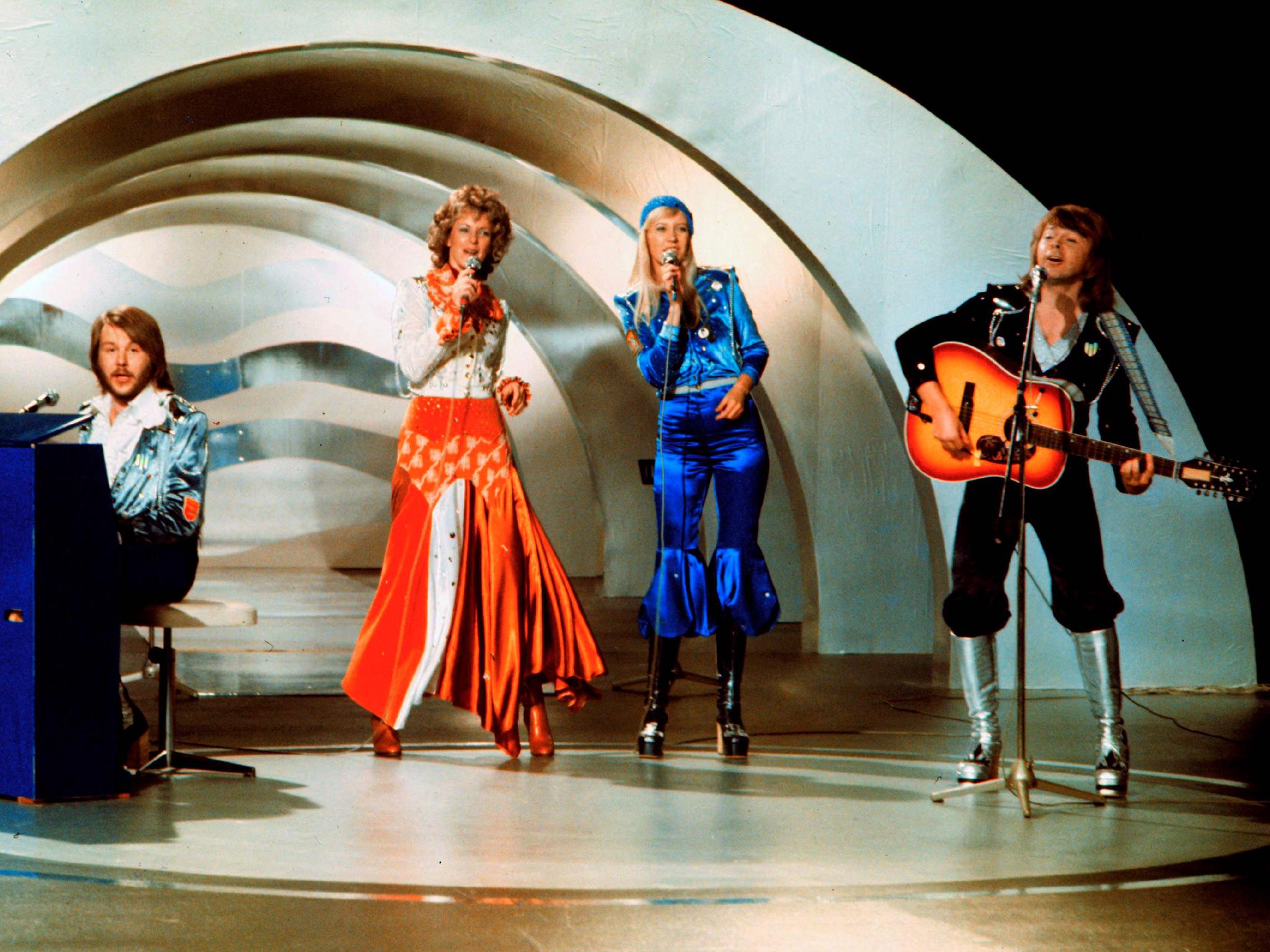
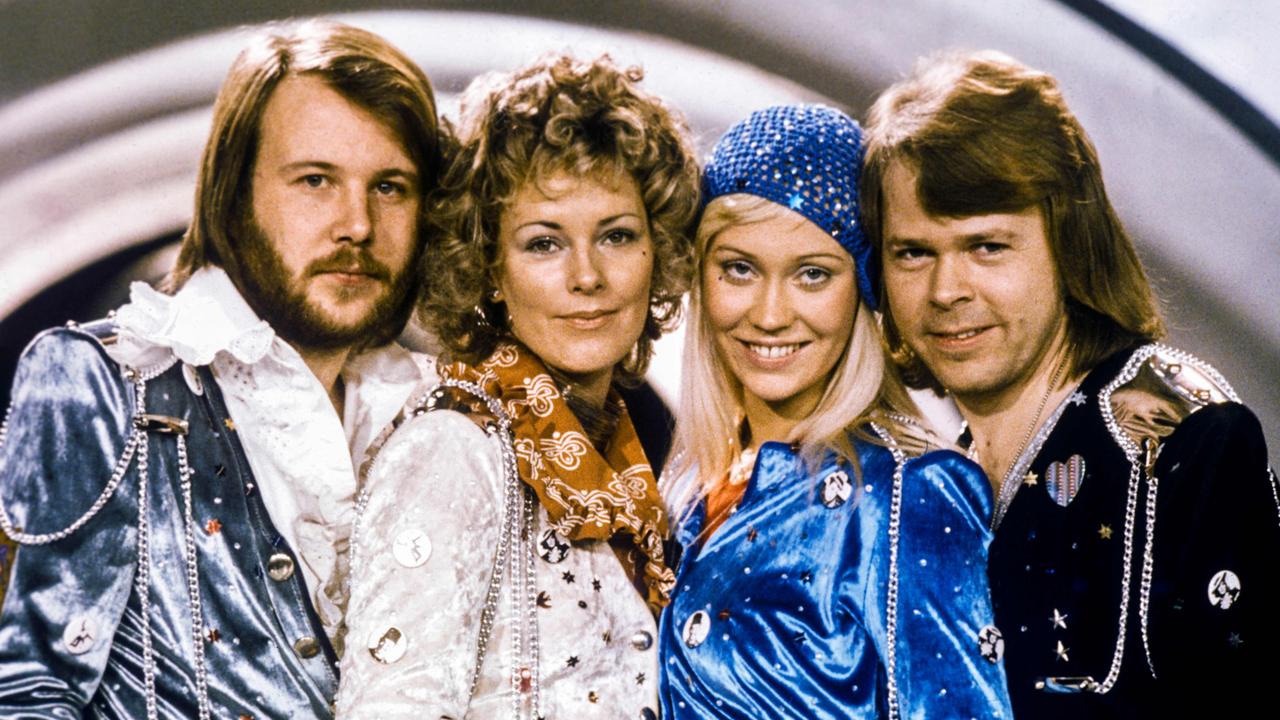
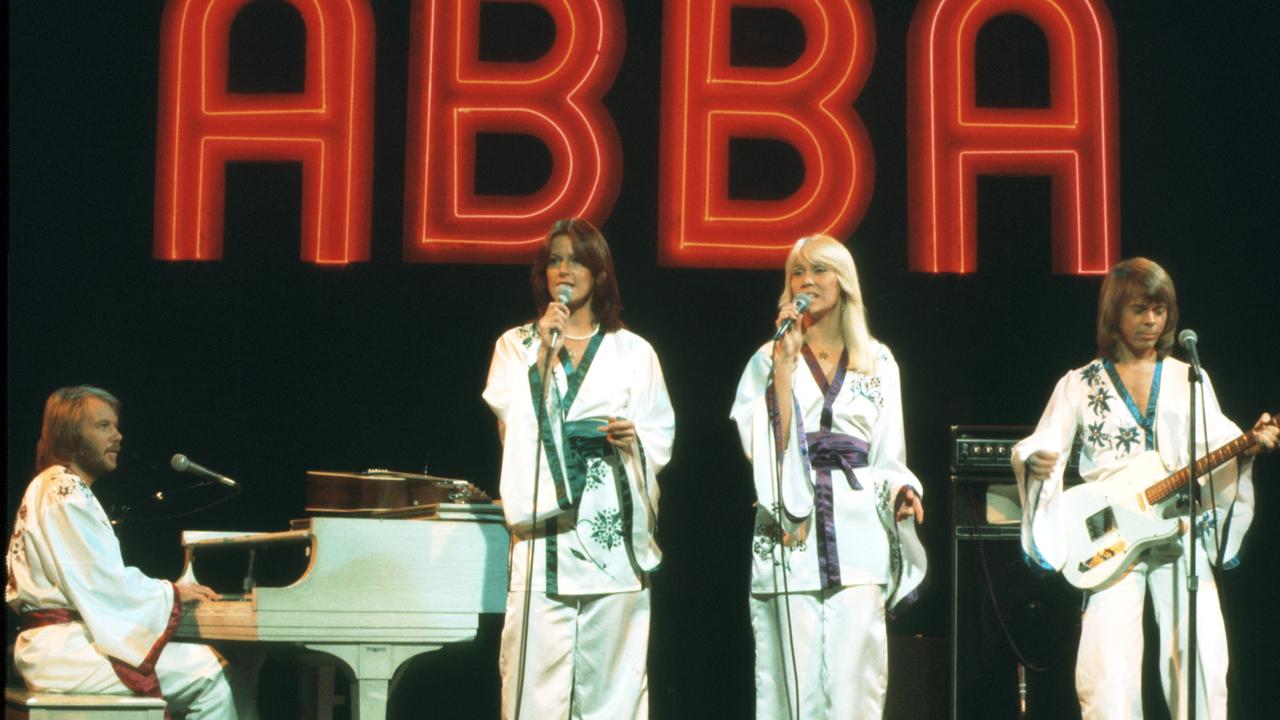
Mama Mia! The enduring appeal of ᗅᗺᗷᗅ

Fifty years ago, in April 1974, a quartet unknown outside its native Sweden – hardly a musical powerhouse in those days – won the celebrated (yet much maligned by “cool” folk and by progressives who view it as the epitome of capitalism and bad taste) Eurovision Song Contest. The rest, as we say, is pop history. In this age of historical illiteracy, most people today equate Waterloo with ABBA rather than with Napoleon Bonaparte.

I’d watched Eurovision since 1959, when Britain won Eurovision for the very first time – the very straight and formally attired Pearl Carr and Teddy Johnson singing the twee and tweeting Sing Sing Sing Little Birdie, in 1959. I watched Britain win again a few years later with Sandy Shaw and Lulu. But during the early seventies, I was without television and therefore missed the televisual feast of melody and harmony and of costumes that David Bowie would not have been seen dead in – it is said that the seventies was the decade that fashion forgot, and most critics would say that much of the blame for that could be dumped on the singing Swedes’ doorstep.

I confess that I was late in coming to ABBA. The late seventies and early eighties were eventful but distracting times for me personally, I’d heard many of the songs, but was had never really taken much notice, until, one in about 1985, whilst contemplating what it was that made a perfect pop song, I bought a CD of ABBA’s greatest hits.

It was a case of “do you hear the songs, Fernando?”

As a tribute to this now enduring but now virtual quartet, but I can’t better a recent article, republished below, by British author Giles Smith. Read on after the music. As an afterthought, if you’d like to use the iconic reversed B, but don’t know how, cut and paste it now: ᗅᗺᗷᗅ

For other posts on music in In That Howling Infinite, see Soul Food – music and musicians

https://www.theaustralian.com.au/weekend-australian-magazine/thank-you-for-the-music-how-abbas-appeal-finally-became-mainstream/news-story/4199e10316fb173ef966293117734a54

When did daggy old ABBA become pop demigods?

Loving ABBA was once a love that dared not speak its name – certainly not among 13-year-old boys in the playground. But 50 years after Eurovision victory ABBA is finally supercool.

By Giles Smith, The Weekend Australian, 11th May 2024

ABBA performs during the Eurovision Song Contest 1974. Giles Smith, at home in England, is watching on with his mum and dad. Picture: Olli Lindeborg
ABBA performs during the Eurovision Song Contest 1974. Picture: Olli LindeborgIt is Britain at the dawn of 1974, and things aren’t looking that great. Energy prices are through the roof. Strikes abound. Production is in decline and people are getting battered by galloping inflation and a soaring cost of living. The governing Conservative Party is badly split over trading arrangements with are through the roof. Strikes abound. Production is in decline and people are getting battered by galloping inflation and a soaring cost of living. The governing Conservative Party is badly split over trading arrangements with Europe, politicians on the far right are enjoying disproportionate levels of media attention, and the country will be asked to vote in two general elections in this single year – a level of political instability unknown in this country since 1910. Familiar? Yes, I know. Plus, extreme weather events are forecast: storms, floods and even tornadoes.

Embattled Prime Minister Edward Heath declares a fuel-saving “Three-Day Work Order” from New Year’s Day, ­restricting industry to three days per week – kind of “working from home”, but without the work. The Order will stay in place until March 7.

Meanwhile, on billboards and in leaflets, an “SOS” campaign is urging people to “Switch Off Something”, there are power cuts, and the national speed limit has been lowered from 70mph to 50mph in order to conserve petrol.

Swedish pop group ABBA in 1974. Picture: Olle Lindeborg
ABBA in 1974. Picture: Olle Lindeborg

Amid this general slide backwards, a feeling is spreading that Britain in general, and England in particular, can’t do anything properly any more – apart, possibly, from football hooliganism, which is about to enter a particularly busy period. So is the Irish Republican Army, whose mainland bombing campaign will, in the coming months, produce explosions at Westminster Hall, the Tower of London, and pubs in Guildford, Woolwich and Birmingham. If the fabric of society holds, the coming summer will at least offer the diversion of a football World Cup in West Germany – but not for England, who have failed to qualify.

It’s not all doom and gloom, though. On Saturday April 6, in Brighton and live on television throughout Europe, the UK will host the 19th Eurovision Song Contest. I am spending this particular Saturday night – like pretty much every other night, actually – watching TV in the company, more or less, of my parents.

I say “more or less” because it’s fairly obvious that the only one who’ll be fully concentrated on the screen throughout tonight’s protracted spectacular (subsequent programs may overrun, cautions our Cliff-Richard-fronted copy of the Radio Times) is going to be me. My mother, typically, with an anglepoise lamp ablaze beside her armchair, will be devoting her energies to creating one of the patchwork quilts that she seems to be producing in industrial quantities in this period. My father, equally typically, will be dividing his attention between the screen, a newspaper, and the backs of his eyelids.

After victory at Eurovision the Swedish quartet stroll hand-in-hand among daffodils in Hyde Park, London. Picture: Anwar Hussein
After victory at Eurovision in Brighton. Picture: Anwar Hussein

I alone in this room will be achieving the state of trancelike engrossment which Eurovision no doubt merits – though not, I should admit, because I am helplessly in thrall to the contest’s allure, but because I learned a long time ago in this sitting room that any discernible lapse in concentration on my part will automatically invite an instruction to go to bed. And at this point in my life, the avoidance of bed is essentially the mission every evening. (The contest, incidentally, is starting enticingly late for the semi-professional bed-avoider: 9.30pm.) Anyway, whether I make it to the end or not, Eurovision is on, which means that I am about to have my first meeting with Björn, Benny, ­Agnetha and Frida.

“And we move now across into Sweden,” says David Vine, the BBC’s voice; he usually commentates on skiing and snooker, but he’s on secondment to the Brighton Dome tonight.

Here they come then – the ABBA group. There’s a couple of bars of galloping guitar, bundled together with a brightly chiming piano, and as it plays, Agnetha and Frida come barrelling down the catwalk from the back of the stage and into our lives, microphone cables paying out behind them.

“My my!” they sing, and it’s as if the show has suddenly shifted a gear and somebody somewhere has stepped on the accelerator.

These days we are entirely comfortable with ABBA’s ubiquity, their presence in the air we breathe. I pluck this randomly from my own experience: in the summer of 2023, wandering around a market in France, I heard a stallholder break briefly into song while looking for change for a customer. “Money, money, money!” he sang. Then I went along the road and had ­coffee in a cafe where Knowing Me, Knowing You came on. Driving back to where we were staying, I stopped in at a supermarket and dropped food into a trolley to a backdrop of Take a Chance on Me.

Three casual encounters with the music of ABBA in the space of about 90 minutes, then. Just occasionally, as you move around Europe at this point in history, you can be forgiven for concluding that it’s ABBA’s world and we only live in it. What gets harder to remember is that it hasn’t always been this way. It would surprise many of the people happily thronging the ABBA Voyage show in London, unselfconsciously browsing the ABBA sweatshirts and ABBA key fobs and ABBA tea trays in the arena’s store, to hear that a love for ABBA was once a love that dared not speak its name – certainly not among 13-year-olds in a school playground. This author – with his carefully concealed copy of the 1975 album ABBA on ­cassette – can personally attest to that.

The fact is, for a long time it seemed that where ABBA had come from – both in the sense of Sweden and of the 1974 Eurovision Song Contest, where they first came to prominence – had placed a tight restriction on what the band and their music could ever be or mean to people. Almost three years after they sang Waterloo in Brighton, a review in the Guardian of a rare ABBA live performance in London described them wanly as “four Euro-persons” who made “elegant Eurorock pop”, and remarked by way of conclusion that it was “nice to be able to put four faces to a pleasant sound”. There is, of course, no term in the critical lexicon more damning than “pleasant”. As for the term “Euro“, it comes up again and again in writing about ABBA in this period and is rarely meant positively either.

Two years after that, in 1979, the American rock critic Robert Christgau, writing in the Village Voice, didn’t even try to gild it: “We have met the enemy,” he wrote, after experiencing ABBA in concert, “and they are them.”

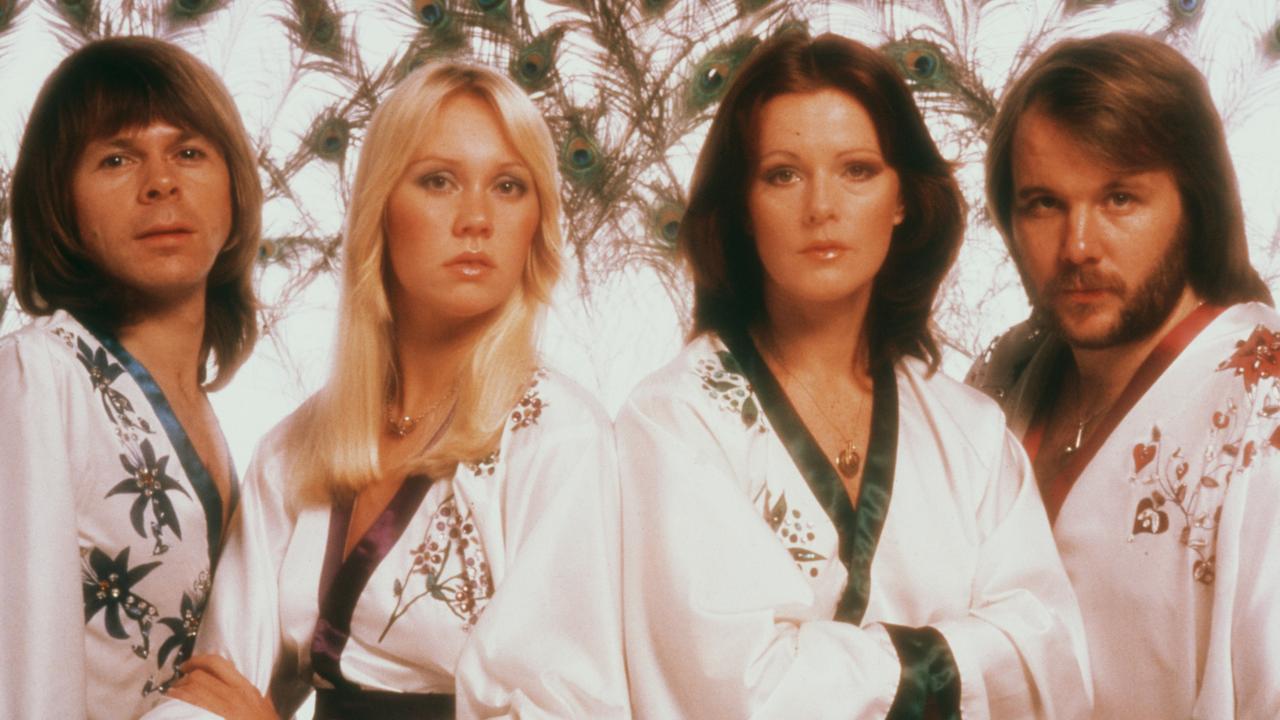
Bjorn Ulvaeus, Agnetha Faltskog, Frida Lyngstad and Benny Andersson wear kimonos in 1976. Picture: RB/Redferns/Getty Images
Bjorn Ulvaeus, Agnetha Faltskog, Frida Lyngstad and Benny Andersson 1976.
Picture: RB/Redferns/Getty Images

As ABBA tried to make their way in the world, it rapidly emerged that the Eurovision Song Contest was a unique kind of springboard that could also function as a trap. Blasted high off that Brighton stage, ABBA would look around for months and years afterwards and discover that somehow all the scenery had tiresomely come with them and was threatening to drag them down again. So: a Swedish act, a Eurovision act … ABBA and their defenders would be a long time struggling to answer the band’s repeated arraignment on these twin charges, both of which, of course, had the disadvantage from the defence’s point of view of being completely undeniable.

“Personally, I hate what they stand for,” a critic wrote in 1979, “and think they are brilliant.” Here at least was evidence of a thaw. But it was also evidence that even defenders of ABBA for a while had to tie themselves in knots of equivocation. So great … and yet so cheesy. Even their most fervent admirers would find themselves acknowledging sometimes that there was something confounding about ABBA, something that was just beyond the grasp.

ABBA are the band you know best that you barely know. Of course, there are ABBA fans and superfans whose commitment to the study of Agnetha, Björn, Benny and Frida in all their manifestations is both clarifying and humbling. But in the slightly less specialised and more ad hoc place where ABBA intersect with the general listener, it’s clear that a certain amount of cloudiness about the band frequently persists.

Somewhat distant even at the blazing height of their fame, the band were only fully and openly embraced by the world some years after they had, to all intents and purposes, ceased to exist. Consequently, today, familiarity with ABBA’s music outstrips familiarity with anything else about them. The band’s members are, by any definition of the term, superstars, yet in 2024, even in circles where ABBA are adored, a confident and unerring ability to know your Benny from your Björn – or even, in some cases, your Agnetha from your Frida – ­betokens ABBA-knowledge at practically PhD levels. We know, perhaps, that they were two couples whose marriages came apart yet who somehow kept the band on the road even after that, channelling the pain of separation in timeless songs such as The Winner Takes It Alland Knowing Me, Knowing You. But Björn wrote the lyric for the second of those songs two years before he separated from Agnetha and when they were together, seemingly happy and enjoying the arrival of their second child. And Benny and Frida didn’t get married until after Björn and Agnetha had decided to split up.

“Personally, I hate what they stand for,” a critic wrote in 1979, “and think they are brilliant.” Picture: Michael Ochs Archives/Getty Images

The truth is, we don’t know much, and most of what we think we know is wrong or ­improvised or conjecture or (most frequently of all) projection. Glory in its fullest form came to ABBA posthumously, when they had stepped down from the stage and out of the studio; and so, with a purity which is rare in the history of pop – and practically impossible in the social media age – Agnetha, Björn, Benny and Frida burn most brightly in our minds as a set of bombproof songs which a very large number of us appear tirelessly happy to hear. The songs, we do know. But how do we know them?

To all intents and purposes, ABBA finished being a band in 1982. They had eight years together as recording and performing artists – about the same as The Beatles. Then, albeit without ever making an official ­announcement that they were done, they withdrew, apparently exhausted or wrung out to some extent, and tired of each other’s company, and moved on to other things – solo albums in the case of Agnetha and Frida, the composition of musicals in the case of Björn and Benny. At that point, ABBA were widely felt to have outlived their purpose and, more than that, were regarded in many quarters as irredeemably naff.

There is no image of the members of the band on the cover of ABBA Gold – the 19-song compilation album put together by the Polydor label in 1992, 11 years after the band’s last set of studio recordings – because the album was carefully market-researched in advance of its release and the feedback from the focus groups was that although people were potentially interested in buying a record of ABBA’s hits, and more than happy and able to nominate the songs they wouldn’t mind hearing on it – Take a Chance on Me, The Name of the Game, Super Trouper – they didn’t especially want to own something with the band’s faces prominently displayed on it. So the label went with simple gold lettering on a black background. Such were the feelings around ABBA in 1992.

Yet it was ABBA Gold which began to change the climate around the band, ushering in what we can now regard as ABBA’s renaissance period, helped along, somewhat randomly, by the Australian films Priscilla, Queen of the Desert and Muriel’s Wedding, both released in 1994 – and in due course by the 1999 jukebox musical Mamma Mia! and, in 2008, the first of the two films that arose from it.

       At that juncture, a decade into the 21st century, ABBA, once presumed dead and buried, were arguably more alive than they had ever been. ABBA Gold has now sold more than 32 million copies worldwide and is behind only Queen’s Greatest Hits as the UK’s best-selling record of all time.

And then, as 2021 ended, almost out of nowhere, the band re-emerged among us – not just with one final, completely unexpected and time-defying burst of new music, but in the form of the magnetically engaging and mysteriously moving Voyage stage show, which was nothing less than a complete re-imagining of the live concert experience and which revealed the band as a set of idealised, computer-generated versions of themselves which were somehow at once entirely them and not them at all.

At this point, approaching 42 years since their last formally ticketed concert and with the band members now well into their seventies and apparently entirely indifferent to the idea of performing together in the flesh, ABBA had probably never been more prominent – and had arguably never been more ABBA.

ABBA in Melbourne, Australia get a rock star welcome from fans.
ABBA  get a rock star welcome from fans in Melbourne, Australia, 1977

“I’ve been reading you all my life,” a gushing fan once told the author Samuel Beckett.

“You must be very tired,” Beckett replied.

Well, here I am, a full half-century after ­Waterloo, and in a position to say much the same to the members of ABBA, were I ever to meet them. “I’ve been hearing you all my life,” I could say, “or for nearly all of it that I can remember. And no, actually, before you ask, I’m not tired. Or not of ABBA, anyway.”

Because what would it even mean, in 2024, to say you were tired of ABBA, except by way of admitting that you had run out of patience with pop music altogether, or that pop music had run out of patience with you?

What’s certainly true is that, over the 50 years since Waterloo, ABBA have been liked by pretty much every kind of person and in pretty much every way that it’s possible to like a pop group. They have been consumed in a hurry as sugary pop stars and appreciated soberly as abiding musical craftspeople of exceptional ­talent. They have been enjoyed ironically and enjoyed entirely sincerely. They have been a guilty pleasure and an utterly unashamed one. Their records have managed to define whole periods and to slip free of history altogether, with the result that, in 2024, their songs are warmly familiar both to 1970s nostalgistes, hungry to revisit their childhoods, and people who weren’t even born when the 20th century ended. They have been feted alike as exuberant gay icons and as the reliable providers of pan-generational dance music for heterosexual wedding receptions. Their music knows the unequivocal love of the very best among us, and yet has also been used to soundtrack lockdown-busting piss-ups in Downing St (the ­notorious “ABBA party” of November 2020, about which Benny Andersson said, with an understandable instinct for dissociation, “You can’t call it an ABBA party. It’s a [Boris] ­Johnson party”).

Souvenir edition the Daily Mirror celebrating of Abba’s arrival in Australia.
My My! ABBA Through the Ages by Giles Smith.

     In this wildly elastic range, they outperform even The Beatles. Certainly, it is given to vanishingly few groups to have been so many things to so many people at so many different times. It is given to even fewer to have been so many things to so many people while the group’s members simply sat in their various houses for four decades doing nothing (or, at least, nothing ABBA-related).

And that, surely, is the most delicious detail in the deeply satisfying narrative of ABBA’s eventual widespread vindication. All of the things for which they were routinely teased and dismissed along the way eventually turned into things for which they could be uncomplicatedly celebrated and loved.

All Björn, Benny, Agnetha and Frida had to do in order to be fully and resoundingly appreciated was … nothing. They just had to stand by until the rest of us came around.

Here I am, 44 years later, at ABBA Voyage, for the second time, watching not even ABBA but a simulation of ABBA sing this song about heartache, scars, grieving and the longed-for release from grieving. I’m also watching a very artfully realised total eclipse of the Sun, which is the backdrop for this number, the room glowing orange and then slowly falling dark as the song plays, which is quite something.

And, you see, the thing is, everyone at ABBA Voyage sings along to the chorus of Chiquitita. That’s the point of it – they all just pile in. They pile in on it like you wouldn’t believe, raising their arms and swaying.

Chiquitita – the power of the singing, the ­defiance of grief in it, the iron nature of its ­consolation, there is stuff in that song that I wouldn’t and couldn’t have got to with any amount of effort in 1979.

Bjorn, Agnetha, Anni-Frid and Benny attend the first performance of ABBA's Voyage in London in 2022. Picture: Nicky J Sims/Getty Images
Bjorn, Agnetha, Anni-Frid and Benny attend the first performance of ABBA’s Voyage, London  2022. Picture: Nicky J Sims/Getty Images

And it is just so extraordinary how this ­manifestly artificial show ends up evoking so much in the way of feelings. In an interview, ­co-producer Ludvig Andersson ­attributed that ostensibly unlikely outcome to the blurring of “the borderline between real and fantasy worlds”, and how the show’s peculiar position between those borders “triggers ­feelings about youth and ageing, mortality and immortality”.

And there seems to me to be a lot of truth in that, and especially at this exact point in the show, when the Sun is disappearing before our eyes and the audience has got hold of that ­chorus, and I mean, really got hold of it, and the whole place is a sea of arms in this gradually darkening room, and two of my brothers are dead and, oh, for god’s sake, now I’m crying in the middle of ABBA’s bloody Chiquitita.

My My! ABBA Through the Ages (Simon & Schuster, $34.99) by Giles Smith

Still tangled up in Bob

Bob Dylan is currently criss-crossing Australia on yet another circuit of his globe-trotting, decades-long Never Ending Tour. He played Sydney’s gorgeous art deco State Theatre the other night, at oure one-time local venu, the small but venerable Enmore Theatre in Newtown, to acclaim from fans young and old.

Veteran Australian folk music critic Bruce Elder wrote somewhat underwhelmingly: “… given the inevitable limitations (his voice is an ageing, husky, adenoidal instrument; he doesn’t talk to the audience; he always offers new interpretations of his old material; every song was delivered from behind his piano; he never tries to establish a rapport with his audience) this was a fascinating stroll through the “great American songbook” via an eclectic reinterpretation of twenty of his songs”. But friends of mine were much more enthusiastic. Stephane wrote me: “I thought of you last night. The show was great, it was fantastic to see him (he is still in good shape at 77!!).  We even saw him smiling and dancing a bit at some stage on a fantastic version of “Gotta serve somebody”. Charles messaged: “It was really, really good. He was in top form. His voice sounded better than it has for quite a while. He played only piano but that with gusto and energy – and sometimes tenderness – throughout. The band cooked and arrangements were brilliantly re-imagined bringing new focus to the lyrics “. And this from Llew: “Started with It Aint Me Babe and Ballad of a Thin Man, so I was happy no matter what else happened. He did an encore of Blowin’ in the Wind and Don’t Think Twice. Not the old versions of course. He never said a word to the crowd”.

At a Bob Dylan concert – and I’ve been to many – we hear what we wish to hear, filtered through the memory of how we heard him all those years ago when we were young and idealistic and our world was new. To this day, I can never get enough of Bob – in all of his many guises. I listen to at least one or two of his songs every week and always discover something I hadn’t heard before. He has been a constant soundtrack to my ever-evolving, often revolving sense and sensibility. I wish that I’d been there in Newtown on Sunday night.

Bob in Newtown

Meanwhile, I have recently read classics professor Richard F Thomas’ scholarly frolic Why Dylan Matters. It is an entertaining and informative if ponderous and overwrought exegesis of the Bobster’s interaction with and intertextualizing (there’s a nice, fresh word for us all) of the old Greek and Roman poets and playwrights, and also poems, plays and folk songs of later vintage, including Rimbaud, of course, and Robbie Burns, and the hunter-collectors Cecil Sharp, Alan Lomax and the eccentric Harry Smith’s encyclopedic Anthology of American Folk Music so well analyzed in Greil Marcus’ insightfull Invisible Republic – Bob Dylan’s Basement Tapes.

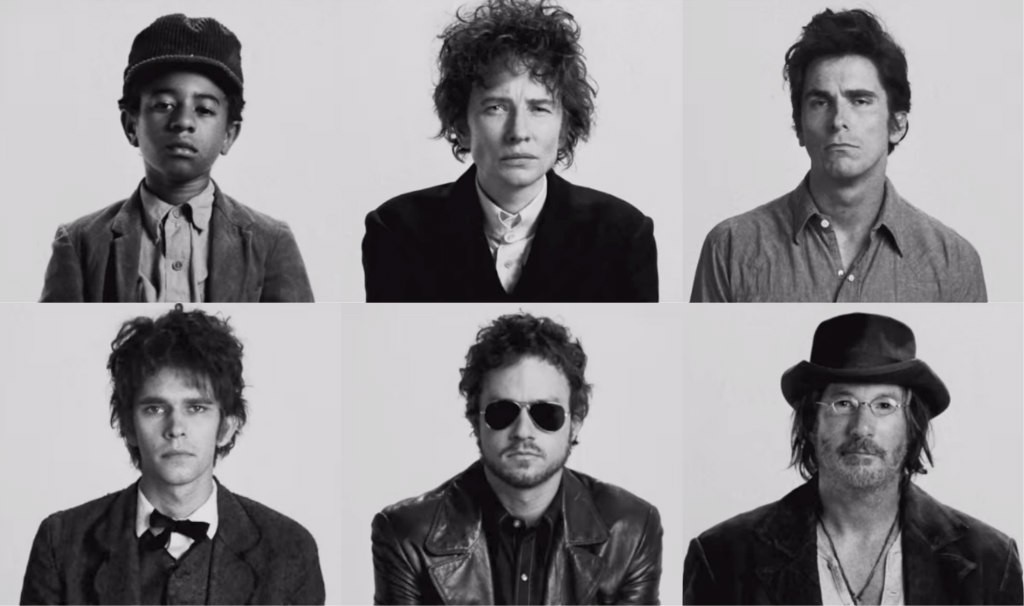
And then, last night, by chance I watched the Todd Hayes’s 2007 film I’m Not There, an imaginative and at times surreal biopic inspired by Bob Dylan’s life and music, in which six actors depict different facets of Dylan’s public persona. I first saw the film when it was release and recall being a tad disappointed at the time and unsatisfied – although I did  think that Cate Blanchett was fabulous as electric Bob.

Second time around, however, thought it a marvelous film full of allusions and illusions, facts and fictions, follies and fantasies. The selection of songs was superb, particularly Memphis Blues Again during the many railroad sequences, Ballad of a Thin Man in a smokey Blonde on Blonde cabaret, and The Man in the Dark Black Coat as the leitmotif for the Billy the Kid parable. The mix of extracts from interviews, chronicles, and other stuff was fascinating, and with the lyrics of the songs, demonstrate just what a gifted poet and songwriter Dylan was and is – which is the message Thomas gives in his professorial take on the man.

Cate was, as before, peerless. A great choice if a daring one on the producer’s part.  She has the voice, the gestures, the body language down to a tee. She got a global globe award for that, and an Oscar nomination. Ben Whishaw as French poet Arthur Rimbaud is also very good, as is gorgeous Frenchie Charlotte Gainsbourg as Susie/Sara. And, much to my surprise, Richard Gere was good as the aging Billy the Kid (he got away after Pat Garrett done him in).

The weirdest thing is that just that morning, I was reading the lyrics to Tombstone Blues. And the second song up in I’m Not There was Tombstone Blues, sung by the late Richie Havens and a  little Marcus Carl Franklin who goes by the name of Woody. They didn’t sing the best verses, but there is a cut, later on, to a  Vietnam era President Johnson saying “the sun is not yellow, it’s chicken”. How about that?

With Bob Dylan once more on our fair shores, critic and author Peter Craven explains how Dylan’s “way with words helped change our times”.

It is reproduced below to surmount News Corp’s paywall.


Bob Dylan: rock poet’s way with words helped to change our times

Peter Craven, The Australian, 11th August 2018

For a lot of people who were young in the 1960s and starting to think of themselves as adults, Bob Dylan was a kind of god. And the funny thing is that this image of him as a sort of dynamised genius, a cross between Shakespeare and Marlon Brando, has never really gone away. We thought of him as a great songwriter who was also a great performer and, in a thrilling way, a great poet. And somehow this atmosphere of awe remains.

Dylan released what is probably his greatest album, Blonde on Blonde, in mid-1966 — 52 years ago — yet on his present Australian tour (his first was, you guessed it, in 1966) a lot of bright young kids, millennials aged 22 or so, who are a bit bored with Shakespeare and a bit vague about Brando, will be there along with contingents of their parents or grandparents.

Rock music is partly a domain of classic fashion and no one is going to shift Dylan’s status because, in its contemporary aspect, Dylan created it. As he said to Keith Richards, that old villain of the Rolling Stones, “I could’ve written Satisfaction but you couldn’t have written Desolation Row.” Is that why they gave him the Nobel Prize in Literature two years ago? The fact he could write a 12-minute rock song that could include lines such as:

And Ezra Pound and TS Eliot
Fighting in the captain’s tower
While calypso singers laugh at them
And fishermen hold flowers
Between the windows of the sea
Where lovely mermaids flow
And nobody has to think too much
About Desolation Row

Is it that with Dylan, and especially the Dylan of those great records when the singer went electric (though Desolation Row is plucked out on an acoustic guitar with only the lamentation of the harmonica by way of accompaniment), rock music had thrown up a figure with the courage to trail the greatest artistic pretensions like a cloak?

Think of those mermaids in this long, deliberate monstrosity of a song, so lame with the limitations of musical talent and so grand and sepulchral in the way it overcomes them. Do the mermaids deliberately invoke TS Eliot’s Prufrock (“I have heard the mermaids singing, each to each. / I do not think that they will sing to me.”)?

Who knows? You could almost say who cares, as the logic of Desolation Row is annihilating because — whether by design or accident — it’s a pop-art replica of Eliot’s The Waste Land. It’s as if Dylan has revised and rewritten Eliot’s poem and turned it into his own.

All of which is weird beyond belief. Dylan is the singer-songwriter with the highest reputation in the history of rock music, if not the whole of popular music, yet this reputation depends pretty absolutely on a few hours of music that he wrote in the 60s — between his second LP, The Freewheelin’ Bob Dylan, in 1963 and John Wesley Harding in 1967, where he is already tending towards lean meditations on the bare bones of country music.

The only other album for which the very highest claims continue to be made is Blood on the Tracks,which dates from 1975 and is venerated by many enthusiasts, but which to the diehards sounds a bit like Dylan imitating himself, whatever claims you make for songs such as Tangled Up in Blue and Idiot Wind, and however endearing it is to hear Dylan throw off lines like “Relationships have all been bad / Mine’ve been like Verlaine’s and Rimbaud”.

You can make a case that Dylan is very like Rimbaud — the French teenager who wrote some of the greatest poetry of the later 19th century — not in his relationships but in his relation to language. Like the French adolescent prodigy he took the poetic diction of our tradition — in its further reach, Western civilisation — and remade it in his own image.

So, in one way he’s like Rimbaud because he blazed so young, so briefly and so brilliantly, and lived to outlive his genius. Though it’s odd in a way to think that with Dylan, as with the casualties of rock 50 years ago (such as Jim Morrison, Janis Joplin and Jimi Hendrix), the reputation depends on the early work.

Then again, that’s some kind of norm, isn’t it? Think of how much the Rolling Stones trade on the vigour of what they wrote 50 or more years ago.

The 60s were when popular music upped its ante. Philosopher Raimond Gaita said to me once that before Dylan, anyone at a university was expected to educate themselves in classical music, according to their limits, but afterwards not. It helped of course that Dylan burst on the world in the early 60s with songs such as Blowin’ in the Wind, so that he’s still sometimes thought of as a folk singer and a protest singer.

Poet Robert Lowell, who thought Dylan wrote some great lines though not sustained poems, said he had “a Caruso voice”, and it’s true that he had a voice — and in some sense still does — of such overpowering individuality that it haunts or harrows the soul.

He created his early music by sounding the depths of what he could learn from Woody Guthrie and the blues, but he gave it a grave monumentality that was at the same time radically individual — it sounded like nothing on earth, it didn’t sound like anything that was ordinarily called singing — yet it seemed, too, to speak for the folk, so that when he says in With God on Our Side “The country I come from / Is called the Midwest”, you believe him.

In fact, as “the unwashed phenomenon, the original vagabond” — as Joan Baez, his one-time lover and very beautiful vocal interpreter once called him — Dylan crisscrosses the US. But in his work from the mid-60s — in particular in the great songs on Blonde on Blonde such as Visions of Johanna (“Ain’t it just like the night to play tricks when you’re tryin’ to be so quiet? / We sit here stranded, though we’re all doin’ our best to deny it”) — he sings in a New York accent.

It’s the voice of the greatest of urban metropolises that enunciates that great line from Just Like a Woman — “I was hungry and it was your world”.

How could he dare to write with that kind of plainness and that kind of grandeur? And how could he create such an opalescent, allusive and elusive thing as the side-long, 11-minute Sad-Eyed Lady of the Lowlands? Perhaps it’s an image of the eternally mourning woman, widowed by life: “And your magazine-husband who one day just had to go” — as much a transcendence of the popular culture it plays on as the very greatest of Warhol.

And that’s the trick with Dylan: he inhabits the form of an idiom he is re-creating. He sounds grounded in the deepest folk tradition yet the inimitable voice is the voice of something that a lifetime ago was a form of rock ’n’ roll. Think of the stately ravaged opening of Just Like Tom Thumb’s Blues:“When you’re lost in the rain in Juarez / And it’s Easter time, too / And your gravity fails / And negativity don’t pull you through …” It sounds pretentious to say this sounds like Baudelaire, but it does.

Dylan’s idiom — a language that was at once streetwise and capable of literary reference — also had extraordinary emotional range. Think of the blistering invective of Positively 4th Street and then place it against the lyricism of Love Minus Zero/No Limit (“My love she speaks like silence / Without ideals or violence / She doesn’t have to say she’s faithful / Yet she’s true, like ice, like fire …”) There’s a dazzling simplicity in that but the juxtaposition of “ideals” and “violence” is completely new in the world of popular music.

The times were a-changing and there’s a symbolic sense in which Dylan changed them. Quite early on he could write a song such as The Lonesome Death of Hattie Carroll that had as its refrain “But you who philosophise disgrace and criticise all fears” where “philosophise” is used in the sense of rationalise but the upshot has a Shakespearean effect; it’s as if Dylan bypasses ordinary literary language to create a kind of sung poetry shorn of artifice.

And it’s there in the most lushly romantic and dreamy of Dylan’s songs, Mr Tambourine Man, perhaps the clearest example of why he is such a great songwriter, why he was once such a dazzling singer and why he is a poet.

In Ballad of a Thin Man Dylan derides someone who has been through all of F. Scott Fitzgerald’s books and is described as having discussed lepers and crooks with great lawyers.

I once discussed Dylan with one of the world’s great literary critics, Christopher Ricks — the man who did the knockout edition of Laurence Sterne’s Tristram Shandy and who wrote the knockdown defence of Milton against his modernist critics. Ricks is one of Dylan’s most formidable admirers. He believes that when you put Dylan’s words together with music, he is an extraordinary maker of worlds out of words.

Dylan created for the rock music of the baby boomer generation a poetic language equal to its hubris in thinking it could discover a new heaven and a new earth, that it could encompass a radical new politics and some kind of derangement of the senses that might open up a new spirituality.

It may be that all these things were delusions or potential traps, but the language he used to shape and shade them has outlasted its occasion. That’s why it speaks to the millennials. That’s why they’ll be there in droves to see the grand old man of rock who is also so much more.

Dylan changed the language in which we think and feel.

Decades ago I gave up rock music and tried my way with classical music. But Dylan’s words and music have never left my mind.

When we shore up the ruins of what we have made Western civilisation, how could he not have a high and mighty place? Who do we think could compare with him?

I’ve read a lot about Dylan, and Peter Craven’s article is excellent, but the thing is, no words seem aver to come anywhere near accurately describing what seems to be a very personal and unique relationship / interpretation each fan of Dylan has with his work.


Here are some of the comments posted in respnse to Craven’s piece:

You make sweeping statements of Dylan’s relevance and output in the context of “decades ago I gave up rock music”. Making your critique of the greatest singer/songwriter’s career output rather shallow. “Tried my way with classical music” – good for you! In my experience, and in my own case, Dylan goes deep and has produced extraordinary work over decades, because of his singing and phrasing. The emotion, uniqueness and genius of his singing. Unfortunately his live voice has been off badly, imo, for about a decade now. The man is genius but it isn’t because of the songwriting. He should never have received a Nobel for Lit, that’s says more about the self important (why do we give it so much attention?) Nobel Academy than anything else. Dylan is rock n rolls greatest and most influential singer songwriter by a million miles. He is steep in rock, country, blues, folk and Americana. How predictable we get another tired article in a broadsheet newspaper misunderstandings & representing Dylan and from someone who “gave up Rock decades ago”. Why give up rock? And gave it up for classical, how worthy!!

He also wrote two of the most vicious put- down songs ever: “Like a Rolling Stone” and “Positively Fourth Street”.

Have seen him three times – each time was different. Would see him again. Love the fact that he constantly reinvents his classics and always has a sensational group of musicians with him. This concert is no exception – his piano playing is standout.

Dylan, in centuries to come, will not be so much seen as a singer song writer, but a written history of humans of the western world of the 20th century. Sent from the future to document and capture a deep understanding of the soul of humanity.

You get the impression of Dylan as an almost unsurpassed songwriter but reluctant performer, due to the brilliant cover versions of his songs. Think of Hendrix with All Along the Watchtower, Peter Paul and Mary with Too Much of Nothing (and Blowin’ in the Wind), Manfred Mann with Just Like a Woman and You Angel You, Bryan Ferry with A Hard Rain’s Gonna Fall, and UB40 with I’ll Be Your Baby Tonight.

l And you might add Simon and Garfunkel’s repertoire…The Sounds of Silence, Bridge Over Troubled Waters, and more thought-generating songs.

@Peter “reluctant performer”!!. No one in the history of rock n roll anywhere near is level of fame and influence has performed as many times. He is engaged in the “Never Ending Tour” that has been going essentially non-stop for two decades! Performance is the absolute essence of who and what Dylan is.

At 76 years of age I loved the good music of the 60s, 70s, and 80s. Occasionally I would hear the radio commentator, mention the name Bob Dylan but that was it. Never knew his songs or was ever interested in them.

He’s my favourite songwriter of all time and undoubtedly a genius, but I gave up on his concerts years ago. There seemed little point when he’d be half way into a song before I could actually (sort of) recognise it. I’ll stick to my record collection – and there are quite a few stinkers in there too – and memories of the great concerts.

I don’t agree with much that Peter Fitzsimmons says, but he called Dylan an impressionist and I think that is the best description of him.

No mention of “Lay lady Lay”. my favourite love song. ” whatever colours you have in your mind, I’ll show them to you, you’ll see them shine” Of course ” lay across my big brass bed” is not too shabby either.

His concerts have been unattendable for 30 years. Still a genius.

He may well be a good poet and songwriter. I agree with Bob Rogers, he should leave performing to others.

f only van Gogh painted like da Vinci, imagine how much better his paintings would be!


Otis Redding – an unfinished life

Fifty years after his untimely death, a fabulous retrospective of the life, times, and musical greatness of Otis Redding:

Five magnificent years of an unfinished life. 

Singer-songwriter Otis Redding was born on September 9, 1941, in Dawson, Georgia. He became known the voice of soul music. Just as his career was taking off, he died in a plane crash on December 10, 1967. “(Sittin’ on) The Dock of the Bay” became posthumously his first and only Number One hit in January 1968.

Also, In That Howling Infinite, read:  The Strange Death of Sam Cooke


Recalling The Mersey Poets


for we had love and each other and the moon for company
when I spent summer with Monica and Monica spent summer with me

June this year saw the fiftieth anniversary the publication of Roger McGough’s wistful verse-memoir “Summer With Monika”, and in October, we celebrate the publication in 1967 of that great anthology The Mersey Sound which showcased the poetry of Liverpudlians McGough, Brian Patten and Adrian Henry.

Named for the musical revolution that originated in the northern English port city of Liverpool, it became one of the best-selling poetry anthologies of all time, exerting an influence on British poetry well beyond the decade. I bought the slim volume as soon as it came out, and back in the day, guitar in hand, I would set many of its poems to music as it nurtured my nascent song-writing and poetry skills. I recall now Patten’s “Somewhere Between Heaven and Woolworths’, and “Delicate John’ and the tunes I set to them. I still sing McGough’s Great War country-and-western-noir ‘Square Dance’: “Swing your partners dos-y-doed, all around the shells explode”

The poems had an immediacy, a relevance to those breakout times when a young man’s hopes and fears seemed to centre of the availability or otherwise (mostly not) of casual sex with gorgeous dolly birds, the American quagmire in Vietnam, and the imminent threat of a nuclear Armageddon. They spoke in a familiar vernacular, everyday English that we understood and related to about ordinary events and workaday artifacts that acquired a totemic significance upon the printed page. Toasters, teapots and fish ‘n chips. Kardomah cafes and Star of India restaurants. Bus-conductors, postmen, and milk bottles on the doorstep. Schoolyards and superheroes. Miniskirts and monarchy. The northern English weather.

And all this against the soundtrack of some of the greatest popular music that ever was spilling out of radios and record players in the suburban bedrooms and inner city bedsits of teenagers across the land. There wasn’t a great lyrical leap from the songs of the Beatles with their particular Liverpudlian spirit of place to the words, worries and wonderings of our very own British ‘Beat Poets’.

I have visited those days often in these pages. In A Window on a Gone World I wrote:

“This was indeed a decade of change and ferment. Values changed, morals changed, habits changed, clothes changed, music changed (the best music ever). The way people looked at the world and thought about it. We often look back and remark that a supernova of creativity burst over the western world during those years, the likes of which was not seen before and has never been seen again. And nowhere more so than in decadent, decaying, depressing, old England, trapped in tradition, class, and prejudice”.

I browsed through the whole book the other day, and in a way, it was like a reunion party, a meeting and greeting of old friends, a pleasant, nostalgic journey to a gone time. As that well-worn saying goes, the past is indeed another country – we certainly did things different then. The places and the people, the perceptions and perspectives, the preoccupations and the passions. As I read, I’d recognize words, phrases, images, ideas that osmosised into my own verse, particularly poetry I penned in the late sixties and early seventies, and which are gathered up in my Tabula Rasa collection.

It was my habit in those days to scribble little notes in the margins. And there they were now, for me to ponder fifty years on, and to wonder how the world looked when I wore a young man’s skin, and thought with the mind of a raw, inquiring, idealistic youth who had yet to break loose of the ties that bound, of family, school, and town. But the adventure had obviously begun – if only in the imagination, as I read and rehearsed, pondered and prepared for the great escape. An upper sixth, adolescent eclecticism well-illustrated by the picture below of my additions to Adrian Henri’s stream of consciousness nomenklatura:

Like Adrian Henri’s name-dropping, my neatly-written notes list a host of folk living and dead, mostly white and mostly male. Actors, authors and autocrats. Poets, painters, and philosophers. Popstars, policians and television personalities. Most are, even today, remembered and commemorated. Some are long forgotten. There are few on my list that I failed to recognize after  all these years. But praise be to Google! I soon rediscovered that Sean Lemass was Taoiseach of Ireland in 1967; that Frank Mitchell was a notorious ax-murderer killed that year on the orders of the infamous Kray twins; that Manny Shinwell was an MP and trade unionist, and Jack Dash, a communist trade union leader. Bartle Frere was governor of Cape Colony at the time of the Zulu wars, and Dudley Stamp, a celebrated geographer of the British landscape, both included, I believe, because I was doing A Levels in History and Geography at the time, and their names struck a chord of sorts. In the light of my later life DownUnder, one name was particularly prescient: Harold Holt’s short tenure as prime minister of Australia ended in 1967 with a ill-fated swim off the coast of Melbourne. There are now Harold Holt swimming clubs and annual swimathons all over the country.

I will conclude this personal retrospective with a some quotations, poems and recordings:

Brian Patten:

She walks across the room and opens the skylight
thinking, perhaps a bird will drop in
for and teach her to sing

The children who grow old
to who squabble and grow thin
who lick their lips at disaster .
and quietly whisper of sin

Adrian Henri:

I remember
walking in empty squares in winter rain
kissing in darkened hallways
walking in empty suburban streets
saying goodnight in deserted alleyways
in the midnight hour

The Independent recently published an affectionate tribute to Roger McGough on the occasion of this fiftieth anniversary. It includes Roger’s revisiting of one of his iconic poems:

Not for me a youngman’s death
Not a car crash, whiplash
One more for the road, kind of death.
Not a gun in hand, in a far off land
IED hidden in the sand death

Not a slow-fade, razor blade
bloodbath in the bath, death.
Jump under a train, Kurt Cobain
bullet in the brain, death

Not a horse-riding, paragliding
mountain climbing fall, death.
Motorcycle into an old stone wall
you know the kind of death, death

My nights are rarely unruly.
My days of all-night parties
are over, well and truly.
No mistresses no red sports cars
no shady deals no gangland bars
no drugs no fags no rock ‘n roll
Time alone has taken its toll

Let me die an old man’s death
Not a domestic brawl, blood in the hall
knife in the chest, death.
Not a drunken binge, dirty syringe
‘What a waste of a life’ death.

And here is one of my favourites from the Summer of Love:

Summer With Monika

They say the sun shone now and again
but it was generally cloudy
with far too much rain

they say babies were born
married couples made love,
often with each other
and people died
sometimes violently.

they say it was an average ordinary moderate
run-of-the-mill common or garden summer
but it wasn’t

for I locked a yellow door
and I threw away the key.
and I spent summer with Monica
and she spent summer with me

unlike everybody else we made friends with the weather
most days the sun called and sprawled all over the place
or the wind blew in as breezily as ever
and ran his fingers through our hair
but usually it was the moon that kept us company

some days we thought about the seaside
and built sand castles on the blankets
and paddled in the pillows
or swam in the sink and played with shoals of dishes

other days we went for long walks around the table
and picnicked on the banks of the settee
or just sunbathed lazily in front of the fire
until the shilling set on the horizon.

we danced a lot that summer
bossanovaed by the bookcase
or maddisoned instead,
hulligullied by the oven
or twisted round the bed

at first we kept birds in a transistor box
to sing for us but sadly they died
we being to embrace in each other to feed them.
but it didn’t really matter because
we made love songs with our bodies
I became the words
and she put me to music

they say it was just like any other summer
but it wasn’t
for we had love and each other
and the moon for company
when I spent summer with Monica
and Monica spent summer with me.

The Strange Death of Sam Cooke

Listening to my good friend Demitri and his King Street Blues combo inspired me to revisit the early soul standards of the late fifties and early sixties. Inevitably the journey took me to Sam Cooke.

Sam Cooke

Sam Cooke (January 22, 1931 – December 11, 1964), born Samuel Cook, was an African-American recording artist, singer-songwriter and entrepreneur. He is commonly known as the King of Soul for his distinctive vocal abilities and influence on the modern world of music. His pioneering contributions to soul music led to the rise of Aretha Franklin, Bobby Womack, Al Green, Curtis Mayfield, Stevie Wonder, Marvin Gaye, and Billy Preston and popularized the likes of Otis Redding and James Brown.

Cooke had 30 U.S. top 40 hits between 1957 and 1964, and a further three after his death. Major hits included “You Send Me”, “A Change Is Gonna Come”, “Cupid”, “Chain Gang”,  and “Twistin’ the Night Away”. And few remember that Herman’s Hermits “Wonderful World” was written and first recorded by Cooke.

He was also among the first modern black performers and composers to attend to the business side of his musical career. He founded both a record label and a publishing company as an extension of his careers as a singer and composer. He also took an active part in the African-American Civil Rights Movement.

On December 11, 1964, Cooke was fatally shot by the manager of the Hacienda Motel in Los Angeles, California, at the age of 33. At the time, the courts ruled that Cooke was drunk and distressed, and that the manager had killed Cooke in what was later ruled a justifiable homicide. Since that time, the circumstances of his death have been widely questioned.  Wiki tells the story: http://en.wikipedia.org/wiki/Sam_Cooke

Here are some of Sam Cooke’s timeless hits:

And check out King Street Blues at:  https://www.facebook.com/KingStreetBlues