Things fall apart; the centre cannot hold; Mere anarchy is loosed upon the world, The blood-dimmed tide is loosed, and everywhere The ceremony of innocence is drowned; The best lack all conviction, while the worst Are full of passionate intensity.
WB Yeats, Easter 1916
On the morning of August 5th 1939 thirteen young women were put against the walls of Madrid’s La Almudena Cemetery and shot…
They were: Carmen Barrero Aguado (age 24), Martina Barroso García (age 22), Blanca Brissac Vázquez (age 29), Pilar Bueno Ibáñez (age 27), Julia Conesa Conesa (age 19), Adelina García Casillas (age 19), Elena Gil Olaya (age 20), Virtudes González García (age 18), Ana López Gallego (age 21), Joaquina López Laffite (age 23), Dionisia Manzanero Salas (age 20), Victoria Muñoz García (age 19), and Luisa Rodríguez de la Fuente (age 18).
They sang the “Youthful Guardsmen,” the anthem of the JSU, as they were taken from the prison they shared with other members of the organization to the cemetery.
Eighty years ago this month, the Spanish cities of Madrid and Valencia fell to the nationalist forces of Francisco Franco. Victory was proclaimed as Franco placed his sword to rest upon the altar of a church declaring that he wouldn’t raise the blade again until Spain was in peril. The Spanish Civil War that had claimed hundreds of thousands of lives (upwards of half a million, possibly up to two) was at an end; the long march of the generalissimo was over and the reign of the Caudillo had begun. It endured until his death in 1975.
The Spanish Civil War was long, brutal and bloody, and medieval in its savagery. It was a war of armies and of militias, of men and women, of skirmishes and set-piece battles, of massacres and reprisals, and of wars within wars. It saw cities besieged and starved into surrender and towns destroyed by bombers and heavy artillery. It cut a swathe across the country leaving scars that endure to this day.
It became a proxy war for three dictators – Hitler, Mussolini and Stalin – who dispatched men and machines to fight under false flags in what would appear in retrospect to be a rehearsal for wars to come. It was a magnet for idealists and activists of disparate political creeds and from many lands who were to fight and die on both sides, including the celebrated International Brigades. It lured writers and poets who were to chronicle its confusion and carnage, including Ernest Hemingway, George Orwell, WH Auden, André Malraux and Arthur Koastler. Many perished, the most famous being the Spanish poet Federico García Lorca, murdered by Nationalist militia and buried in an unmarked grave, one of many unquiet graves scattered throughout the land.
Since Franco’s death, successive Spanish governments have endeavoured to heal the wounds of the war and the dictatorship by condoning what could be described as historical amnesia. And yet, such official forgetfulness, well-intentioned as it might be, is often suborned by our species’ instinctive need to remember and to memorialize our dearly departed.
Valle de los Caidos, the Valley of the Fallen, in the Sierra de Guadarrama mountains near Madrid, is one such monument. This grandiose necropolis hosts a mass grave of some 34,000 war dead of all sides, as well as the tombs of an embalmed Franco and of José Antonio Primo de Rivera, the founder of the fascist Falange Española. It is a shrine and a place of pilgrimage for nationalists andFalangists old and young, and a bitter reminder for the families and friends of the vanquished.
The current socialist government has shattered the deafening silence. it is determined to move Franco’s remains out the basilica and to make the Valley of the Fallen a more neutral place to honour the victims of the war and its vengeful aftermath.
The mass graves of Spain’s civil war victims is a live issue as the nation comes to terms with its history. Even the weather compels the soil to give up its dead, revealingthe scale and the savagery of the slaughter that followed the victory of Franco’s Nationalists. Recent storms have swept away soil in an area of Madrid’s La Almudena public cemetery, exposing the bones of three thousand people executed on the orders of Francoist military courts in the five years after Spain’s civil war ended in 1939. They include, it is believed, the remains of Las Treces Rosas, the Thirteen Roses.
Outside the history books and the stories, songs and folk memories of ageing socialists and anarchists, there is but limited interest, knowledge and understanding of the causes, chronology and consequences of the civil war – and I am not about to rectify that in this post. Click here to and hereto read reasonable synopses.
Rather, I will take the opportunity to publish a story about the war – one tragedy among so many – that illustrates its systematic ruthlessness. Here is the story of those thirteen young victims.
By Rafael Narbona. Translation by Diarmuid Breatnach; original version published in Spanish in Rafael Narbona’s blog August 2013, also republished by kind permission in Rebel Breeze.
On the morning of August 5th 1939 thirteen women were shot dead against the walls of Madrid’s La Almudena Cemetery.
Nine were minors, because at that time the age of majority was not reached until twenty-one. Ranging in age from 18 to 29, all had been brought from the Sales women’s prison, a prison that was designed for 450 people and in 1939 contained 4,000. Apart from Brisac Blanca Vazquez, all belonged to the Unified Socialist Youth (JSU) or PCE (Communist Party of Spain). Although they had not participated in the attack that killed Isaac Gabaldon, commander of the Civil Guard, they were charged with being involved and conspiring against the “social and legal order of the new Spain”.
The trial was held on August 3rd and 56 death sentences were issued, including the perpetrators of the attack. The Thirteen Roses went to their execution hoping to be reunited with their JSU comrades. In some cases it would have meant a boyfriend or husband but their hopes crumbled upon learning that the men had been shot already.
The brick wall clearly showed the bullet holes and the earth had been turned dark by blood. Some days, the death toll exceeded two hundred and machine guns were used to facilitate the work. Between 1939 and 1945, four thousand people were shot in the Eastern Cemetery, including Julián Zugazagoitia, Minister of the Interior with Juan Negrín and remarkable writer and socialist politician.
According to Maria Teresa Igual, prison officer and eyewitness, the Thirteen Roses died with fortitude. There were no screams or pleas. In an eerie half-silence, only the steps of the firing squad were heard, the sound of the guns striking the straps and the voice of the commanding officer. Lined up shoulder to shoulder, after the shooting all received the coup de grace, which was clearly heard in the Sales women’s prison. Apparently, one of the condemned (whether Anita or Blanca is not known), did not die immediately and had shouted, “Am I not to be killed?”
Antonia Torre Yela was spared execution by a typing error. In transcribing her name, the letters danced and became Antonio Torres Yera. The error only postponed death for Antonia, a member of the JSU and only 18. She was shot on February 19th, 1940, becoming the 14th Rose. In her farewell letter, Julia Conesa, nineteen and member of the JSU, wrote: “Let my name not be erased from history.” Her name and that of her comrades has not been forgotten, unlike those of their tormentors, who enjoyed impunity for 38 years of dictatorship and a shameful amnesty which only helped to deepen the hurt suffered by all victims of Francoism.
The PSOE (main social-democratic party — DB) tried to appropriate the Thirteen Roses, concealing that at the time of the executions the PSOE had split from the JSU to found the Socialist Youth of Spain (JSE), with the purpose of clearly distancing themselves from the Communist Party of Spain (PCE). In fact, the Law of Historical Memory of Zapatero’s government (the first PSOE government after Franco — DB) did not even consider overturning the dictatorship’s judicial verdicts. It should be remembered that nearly fifty men were also shot dead that sad August 5th, the “43 Carnations”. Franco showed the same ruthlessness to men and women.
A hell
Sales jail was a hell, with children, elderly and mothers with children huddled in hallways, stairs, patios and bathrooms. Manuela and Teresa Basanta Guerra were the first women executed against the walls of the Eastern Cemetery. They shot them on June 29th 1939 along with a hundred men. Some historians claim that other women preceded them but their names were not recorded in the cemetery’s files. Like others on death row, the Thirteen Roses could only write to their families after receiving confession. If they did not take confession, they gave up the opportunity to say goodbye to their loved ones.
Brisac Blanca was the eldest of the thirteen and active in no political organization. Catholic and one who voted for the Right, she nevertheless fell in love with a musician who belonged to the PCE, Enrique Garcia Mazas. They married and had a son. Both were arrested and sentenced to death in the same trial. In fact, Enrique was in Porlier prison and would be shot a few hours before her. Blanca wrote a letter to her son Enrique, asking him not to harbour ill-will towards those responsible for her death and to become a good and hardworking man.
In postwar Madrid there was vicious persecution and resentment of any citizen suspected of “joining the rebellion”, the technicality that was used to reverse the law, accusing supporters of the Second Republic of violating the law in force. Only the military, the clergy, the Falange and the Carlists could breathe easily. No one dared to walk around in workers’ overalls or wearing the traditional local bandanna (worn by men around the neck and by women as a kerchief around the head, it is still worn today at festival in Madrid — DB).
The city was a huge prison where “hunt the red” was taking place. The earlier militia-women aroused particular animosity. The Arriba newspaper edition of May 16th 1939, featured an article by José Vicente Puente in which his contempt does not mince words: “One of the greatest tortures of the hot and drunk Madrid were the militia-women parading openly in overalls, lank-haired, with sour voice and rifle ready to shoot down and end lives upon a whim to satiate her sadism. With their shameless gestures, the primitive and wild, dirty and dishevelled militiawomen had something of atavism, mental and educational. … …. They were ugly, low, knock-kneed, lacking the great treasure of an inner life, without the shelter of religion, within them femininity was all at once extinguished.”
In this climate of hatred and revenge, denunciations proliferated — they were the best means of demonstrating loyalty to the fascist Movement.
The interrogations …. copied Gestapo tortures
The interrogations in police stations copied Gestapo tortures: electric shock on the eyes and genitals, the “bathtub”, removing fingernails with pliers, mock executions. Women suffered especially because the torture was compounded by sexual abuse, castor oil and hair cut down to the scalp. In some cases they even shaved eyebrows to further depersonalize. Rapes were commonplace. The testimony of Antonia Garcia, sixteen, “Antoñita” is particularly chilling: “They wanted to put electric currents on my nipples but since I had no chest they just put them in my ears and burst my eardrums. I knew no more. When I came to I was in jail. I spent a month in madness”.
Among those responsible for the interrogations was General Gutierrez Mellado, hero of the Transition and Captain in the Information Service of the Military Police (CPIS ) during the toughest years following the war. He regularly attended executions, seeking last-minute confessions. On August 6th 1939 he pulled Cavada Sinesio Guisado, nicknamed “Pioneer”, military chief of the JSU after the war, out of the execution line. “Pioneer” had been lined up against the Eastern Cemetery wall and was awaiting the discharge of lead along with the rest of his comrades. Gutiérrez Mellado stepped forward and ordered his release. He forced him to witness the executions and asked for more information about PCE clandestine activity. Although he was cooperative and diligent, he was shot in the end on September 15th. Some claim that Gutierrez Mellado witnessed the execution of the Thirteen Roses but I was not able to verify the data.
The women’s prison in Sales was run by Carmen Castro. Her inflexibility and lack of humanity found expression in the conditions of life of the children in prison with their mothers. No soap or hygienic facilities — almost all had ringworm, lice and scabies. Many died and were placed in a room where the rats were trying to devour the remains. Adelaida Abarca, JSU activist, said the bodies were only skin and bones, almost skeletons, for hunger had consumed them slowly. Another prisoner said: “The situation of the children was maddening. They were also dying and dying with dreadful suffering. Their glances, their sunken eyes, their continuous moans and stench are branded on my memory.” (Testimony given to Giuliana Di Febo in Resistance and the Women’s Movement in Spain [1936-1976] , Barcelona 1979).
The prisoners lived within the shadow of the “pit”, the death penalty. Since the execution of the Basanta Guerra sisters, they knew that the regime would have no mercy on women. On the morning when the Thirteen Roses were shot, Virtudes Gonzalez ‘s mother was at the jail doorway. When she saw her daughter climbing into the truck that was carrying prisoners to the cemetery walls, she began shouting: “Bastards ! Murderers ! Leave my daughter alone!” She chased the truck and fell. Alerted by the commotion, the Sales jail officers went outside and picked her off the ground, taking her into the prison. She was kept inside as yet another prisoner.
“If I had been sixteen they would have shot me too”
No less dramatic were Enrique’s repeated attempts to find out the whereabouts of his parents, Blanca and Enrique Garcia Brisac Mazas. In an interview with journalist Carlos Fonseca , author of the historical essay Thirteen Red Roses ( Madrid, 2005 ), Enrique gave his bitter account: “I was eleven years old when they shot my parents and my relatives tried to conceal it. They said they had been transferred to another prison and therefore we could not go to see them, until one day I decided to go to Salesas and there a Civil Guard Brigadier told me they had been shot and that if I had been sixteen they would have shot me too, because weeds had to be pulled up by the roots.
My grandmother and my aunts, my mother’s sisters, who had fallen out with my mother, ended up telling me that if Franco had killed my parents it would be because they were criminals. They even concealed my mother’s farewell letter for nearly twenty years.”
I will not end this article by invoking reconciliation, because the Transition was not based on repairing the pain of the victims, but rather on the acquittal of the executioners. In fact, the reform of the criminal dictatorship was designed by those as low as Manuel Fraga, Rodolfo Martín Villa and José María de Areilza. Martín Villa concealed and destroyed documents to bury the crimes of Francoism and the dirty war he organized against anarchist and pro-independence activists of the Basque, Catalan and Canaries areas, from his post as Minister of the Interior between 1976 and 1979. Among his achievements one should list the Scala case (an attack that killed four workers, which was blamed on the CNT), the attempted assassination of Canaries independence leader Antonio Cubillo, the machine-gunning of Juan Jose Etxabe, historic leader of ETA and his wife Rosario Arregui (who died from eleven bullet wounds), also the murder of José Miguel Beñaran Ordeñana, “Argala”.
The impunity of the perpetrators
He is now a successful businessman, who gets excited talking about his role in the Transition. He lives quietly and no one has called for his prosecution. His example is an eloquent one of the impunity of the perpetrators, who continue to write the narrative while demonizing those who dared to stand against the miseries of the dictatorship and false democratic normalization.
No justice has been done. So it is absurd to talk of reconciliation, because nobody has apologized and repaired the damage. Franco committed genocide but today Manuel Gonzalez Capón, Mayor of Baralla (Lugo), of the Partido Popular (the main right-wing party), dares to declare that “those who were sentenced to death by Franco deserved it.” The Biographical Dictionary of the Royal Academy of History, funded with nearly seven billion euros of public funds, says Franco “set up an authoritarian but not totalitarian regime”, although in his speech in Vitoria/ Gastheiz, Franco himself said that “a totalitarian state in Spain harmonises the functioning of all abilities and energies of the country …”. The current scenario is not a reconciliation but instead is a humiliation of the victims and society, obscenely manipulated by a media (ABC, El País , El Mundo, La Razón), playing a similar role to newspapers of the dictatorship (ABC, Arriba, Ya, Pueblo, Informaciones, El Alcázar), covering up and justifying torture cases and applauding antisocial measures that continue reducing working class rights.
Let us not remember the Thirteen Roses as passive and submissive but instead for their courage and determination. With the exception of Blanca, trapped by circumstances, all chose to fight for the socialist revolution and the liberation of women. I think that if they were able to speak out today, they would not talk of indignation and peaceful disobedience, but would ask for a rifle to stand in the vanguard of a new anti-fascist front, able to stop the crimes of neo-liberalism. Let us not betray their example, forgetting their revolutionary status, they who sacrificed their lives for another world, one less unjust and unequal.
Postscript
Just as the Civil War stirs Spain’s historical memory, so the spectre of the Paris Commune of 1870 haunts still the French soul. One can walk through the centre of modern Paris from the Louvre to the celebrated Père Lachaise cemetary Père Lachaise retracing the steps of defeated communardes as retreated to to last stand among the tombstones. It was there, in front of laMurdes Fédérés that the bloodied and ragged survivors were lined up and shot.
The beautiful church of Sacre Coeur was built as a penance for, and a solemn reminder of the bloodletting of what is aptly called la semaine sanglante – in much the same way as Justinian raised the glorious Hagia Sophia in Constantinople as a form of contrition after the Nika Riots when his soldiers slaughtered tens of thousands of his rebellious citizens and buried their bodies under the Hippodrome.
80 years ago today in 1939, as the world waited with bated breathon Hitler’s next move in Central Europe, in Spain, with the help of allies within the city, Madrid fell to the Nationalist forces of Generalissimo Francisco Franco. The next day, beleaguered Valencia would also fall and a few days after that victory was proclaimed as Franco placed his sword to rest upon the altar of a church declaring not to raise the blade again until Spain was imperiled. The Spanish Civil War that had claimed hundreds of thousands of lives was thus at an end, and the reign of the Caudillo had begun in earnest that was to last until his death in 1975.
Born in 1892 in Galicia, Franco belonged to a devoutly Catholic upper class family with a long tradition of serving in the Spanish navy. Unable to follow in the footsteps of his forefathers, Franco had chosen the army instead at the age of 14 and conducted himself with disciplined excellence from the outset, swiftly gaining a reputation as a highly professional and trusted leader of fighting men at a time when the Royal Spanish army was characterized by a general sloppiness and lack of discipline. A severe and austere man who placed his faith in tradition, Catholicism, and the monarchy, Franco had risen up through the ranks as the youngest officer in the army in Spain’s colonial wars in Morocco as an example to them all. When the Spanish monarchy was abolished in 1931 Franco was disgusted, not least because shortly afterwards the new republic laid him off and placed him on the inactive list. Franco accepted his fate like a soldier and patiently waited until a conservative government came to power and he was called back to service, jumping back into military life with alacrity as Spain’s political system steadily disintegrated. By 1936 however he could stand by no longer and watch his country fall apart, after much hesitation he joined with his fellow officers and rebelled against the Republic, marching an army into Spain from North Africa and starting the long and bloody struggle against the Republicans supported by the USSR and the International Brigades whilst Franco received aid from Fascist Italy and Nazi Germany. With the death of all the other major military leaders by late 1936, Franco was chosen as the man to lead the Nationalists to victory and as the war drew to a close his government was recognised by the British and French governments.
Despite popular depictions of him as a Fascist dictator akin to Hitler and Mussolini, Franco in truth had little time for Fascism. While he certainly presided over a one-party state, unlike in Italy and Germany, the party firstly was not on a par with the state and secondly only a component of it, the Phalange, were Fascists, the rest were Carlist monarchists, traditionalists and conservatives. As a committed Catholic and monarchist, Franco had no time for the esotericism and mysticism of National Socialism and Fascism. While Hitler and Mussolini both had experience of war along with much of their inner circle, they were not of the upper officer echelons as Franco was. He was a military dictator, not a messianic god-like figure of a mass movement. The characterization of his regime as totalitarian is also problematic too since totalitarian would imply that he ruled through terror, annihilating segments of the population beyond those who were openly opposed to his regime. Tens of thousands did indeed perish under his regime with summary executions in the White Terror that followed his Civil War victory coupled with the brutal campaigns against sporadic rebellions and expressions of dissent in subsequent years, however he did not go beyond crushing those he did not need to to stay in power, he did not seek out a helpless ‘objective enemy’ that was to be continuously exterminated as was the case in Nazi Germany and Stalinist Russia. His interest was not a radical reshaping of the world but as might be expected of a man of his background and career, order, stability, and a restoration of traditional norms.
That all being said he was undoubtedly predisposed towards the Axis powers due to his hatred of Communism and no doubt a certain degree of debt he owed to them after their help in the Civil War. Despite his country having gone through three hellish years of war he was more than eager to join the Axis after the Fall of France in 1940. He envisioned the formation of a Latin Bloc to dominate the Mediterranean consisting of Spain, Italy, the Vatican, Vichy France, and Portugal. That year he met Hitler in Hendaye to discuss this possibility. At this meeting between the Caudillo and the Führer, Franco laid down his conditions: he wanted food, fuel and supplies for his country in the event of an Allied naval blockade, in expectation of Britain’s defeat he wanted Gibraltar along with French Morocco, a portion of Algeria and the colony of Cameroon. This proved too high a price to pay, the demand on Cameroon was especially jarring to Hitler since this had been a German colony prior to 1919. Mussolini moreover had his eye on Algeria. In the end the three dictators could not reconcile themselves to one another and Spain remained neutral though volunteers were sent to aid the Axis against the USSR in the form of the Blue Division. Franco likewise refused any prospect of the Wehrmacht being allowed to march through Spain to take Gibraltar themselves, a move which had it been made could have crippled the British position in the Mediterranean and altered the course of the war completely. Spain remained independent, remaining friendly with the Axis but not so much as to be roped into their ungodly self-destruction. During the war he was credited by having given sanctuary to tens of thousands of Jews fleeing the Nazi Empire.
Spain found itself isolated in the immediate aftermath of the war and was excluded from the Marshall Plan. With the mounting tensions of the Cold War however the Western powers slowly started to align themselves with the conservative anti-communist military dictator. In 1953 President Eisenhower visited the country and concluded the Pact of Madrid which brought Spain out of isolation and eventually led to the country joining NATO. Many of the old guard in charge of the economy were replaced by technocrats who brought in a free market economy. By the 1960s economic growth rocketed upwards, resulting in the Spanish Miracle, giving rise to a new middle class. The colonial empire moreover which Franco had so passionately fought for in the past was steadily let go of with both Morocco and Equatorial Guinea let go of by the end of the 1960s. Behind this economic prosperity however the regime remained as traditional as ever, with strict Catholic morality on abortion, divorce, homosexuality and prostitution holding sway in both law and society. Women were confined to the home and had practically no rights, their financial affairs managed by their fathers and husbands. Any languages or traditions not considered Spanish enough were systemically suppressed. When university students protested in the 1960s and the 1970s against the regime, Franco resorted to his old ways and crushed them.
The Caudillo was an old man now though and by the early 1970s he recognised that death was moving upon him. Before death could claim him he decided to restore the monarchy – even though the country had always officially been a monarchy since he had taken power. Though he initially offered the throne to Otto von Habsburg, the last Crown Prince of Austria-Hungary, in a bid to restore Spain to her Habsburg Golden Age and to avoid another Carlist War of succession. In the end however he gave it to the Carlist pretender, Juan Carlos of the House of Bourbon. Franco died in late 1975. His regime was swiftly converted to a democracy with the help of the new king.l
The ancient and holy city of Hebron – al Khalil to Muslims, and named, like Hebron for the Jewish and Islamic patriarch Abraham/Ibrahim – is rarely out of the news; and the news is never good. “There’s this thing that happens here, over the Hell Mouth”, says Buffy the Vampire Slayer, “where the way a thing feels – it kind of starts being that way for real. I’ve seen all these things before – just not all at once”.
In May 2016, we visited Hebron, a fault line of faiths and a front line of an old war still being waged for possession of the Holy Land. It is a hot spot, a flash-point, where tensions between Israelis and Palestinians are usually followed by calamity, and bad things happen. We’ve travelled right through the West Bank, and yet nowhere did we feel exposed to the danger of a sudden flare up of violence and being caught in an indiscriminate crossfire than here in the old heart of the city. It is the seemingly intractable conflict in the raw, a microcosm of the Occupation, and there is no denying the brutality of the place. Most western journalists and commentators give their readers an impression that Israel absolutely dominates this Palestinian city of some 200,000 souls. In reality, the area under military control, immediately surrounding the ancient Ibrahimi mosque, holy to two faiths, is very small. The city, with its high rise apartments, official buildings and shopping malls, looks down on this pressure cooker of a ghetto, where dwell some 700 settlers and thirty thousand Palestinians, segregated from each other by walls and wire, fear and loathing – and by two soldiers to every settler.
On our return, the e-magazine Muftahpublished the following article.
You who build these altars now to sacrifice these children, you must not do it anymore. A scheme is not a vision and you never have been tempted by a demon or a god. You who stand above them now, your hatchets blunt and bloody – you were not there before, When I lay upon a mountain and my father’s hand was trembling with the beauty of the word.
Leonard Cohen, The Story of Isaac
I recently returned from Hebron in the occupied West Bank. The city is a fault line of faiths and a front line in the conflict between Israelis and Palestinians. It is a “hot spot,” a flash-point, a place where tensions between Israelis and Palestinians are usually followed by calamity. Hebron has been a key focus of the tension and violence that has characterized the troubled relationship between Palestinians and Israelis. Since October 2015, over 200 Palestinians and thirty Israelis have been killed across the West Bank, East Jerusalem, and Israel, in the latest flare-up in the decades-long conflict.
In March this year, an Israeli soldier was filmed shooting and killinga wounded twenty-one-year-old Palestinian, following a stabbing attack on Israeli soldiers. The soldier, just nineteen years of age, is now facing trial, amidst massive outcry on both sides of the Israeli-Palestinian divide.. In June, not long after we left Israel, a young Palestinian murdered a thirteen-year-old Israeli girl as she slept in nearby Kiryat Arba. Hours later, a Palestinian woman was shot dead by Israeli soldiers outside of the Ibrahimi Mosque. Later that afternoon, Palestinian gunmen ambushed an Israeli car on a road just south of Hebron, killing a father and wounding his family. Local Palestinians gave emergency first aid to the victims and shielded the children from any further attack.
A Holy Land
Hebron has long been sacred to Muslims and Jews as the last resting place of the prophets Abraham and Isaac – the founding father of Judaism, and the son he had resolved to sacrifice until God ordered him to stay his hand. In the first century BC, Herod the Great, famed builder and bad boy, raised a mighty mausoleum above the cave where Abraham was laid to rest. Abraham’s wife Rachel, and his son, Isaac, Isaac’s wife Rebecca, and Isaac’s sons Joseph and Jacob – whose wrestled with an Angel to represent man’s struggle with God – and Jacob’s wife Leah are also buried there.
As time went by, Christians and then Muslims revered Hebron as a holy place. Abraham was the founding father of both religions and his sons and grandsons, buried in the cave, are considered prophets of Judaism, Christianity and Islam. In time, a mosque was established on Herod’s edifice, and for a short while, during the hundred years of the Crusader kingdom, a basilica too. The well-known story of Isaac and Abraham, told so cryptically by Leonard Cohen is in a way a metaphor for Hebron itself. It is common to Christians, Jews and Muslims (Id al Adha is islam’s Feast of the Sacrifice) but the protagonists in the Qur’an are not Abraham or Isaac or Ishaak, but Ibrahim and Ishmael the son of Hagar, Abraham/Ibrahim’s servant) the genealogical forbears of Muslims. Two faiths, two narratives. [Cohen’s lyrics are reproduced at the end of this article together with my translation into Arabic]
In the thirteenth century, the Mamluk Sultan Baybars expelled the Christians from Hebron. A small community of Jews continued to reside in the town of Hebron, however. In 1929, amidst rising religious and nationalist tension in the British Mandate of Palestine, some seventy Jewish men, women, and children were killed by Palestinians who had been incited to violence by rumours that Jews planned to overrun the Temple Mount in Jerusalem, the third holiest site in Islam. Many local Palestinians also helped save Jewish neighbors from the bloodshed. Following the riots, Hebron’s Jewish community largely ceased to exist, until the an-Naksa, or ‘setback’, of 1967, when Israeli military forces occupied the West Bank, East Jerusalem, Gaza, and the Golan Heights.
In the early days of the occupation, Israeli authorities did not encourage Jews to return to Hebron. One of the first illegal Israeli settlements was established outside Hebron in what is now Kiryat Arba, and thereafter, a small settlement was built around the Mosque of Ibrahim. Beginning in 1979, some Jewish settlers moved from Kiryat Arba to the former Jewish neighborhood near the Abraham Avinu Synagogue which had been destroyed in 1929. Other Jewish enclaves were established with the Israeli army’s support and more homes were subsequently purchased or forcibly taken over from their Palestinian owners.
With the establishment of a Jewish presence in and around Hebron, the religious right-wing demanded that Jews be permitted to pray at the tombs of the patriarchs, and the 700 years old restriction on Jews praying here was lifted. Muslims and Jews were now obliged to share the holy place, although it was formally administered by the Muslim Waqf. Thus, even prayer became a focus of conflict and tension, and sometimes, violence, particularly during each faith’s holy days.
Tensions and Divisions
Since 1979, tensions have continued to increase between the small community of Israeli settlers living in Hebron (several hundred) and the tens of thousands of Palestinians whose lives have been turned upside down by their presence. These tensions reach boiling point in February 1994, when US-born Israeli doctor Baruch Goldstein opened fire on Muslims worshippers during the dawn prayer at the Ibrahimi Mosque. He killed twenty-nine people and wounded another 125 before he was overcome and killed by survivors. Hundreds more Palestinians were killed or injured in the Israeli military’s response to the ensuing violence.
Goldstein had been inspired by a boyhood mentor, the ultranationalist New York Rabbi Meir Kahane, and had belonged Kahane’s militant Jewish Defence League, founded ostensibly to protect Jews from antisemitism, but implicated in numerous acts of violence in the USAand elsewhere. On emigrating to Israel, he joined Kahane’s right-wing Kach Party.
The Israeli government condemned the massacre and responded by arresting Kahane’s followers, and criminalizing Kach and affiliated organizations as terrorists, forbidding certain settlers from entering Palestinian towns, and demanding that those settlers turn in their army-issued weapons. It rejected a demand by the Palestinian Liberation Organisation that all settlers in the occupied territories be disarmed and that an international force be created to protect Palestinians.
UN observers came to keep the peace, but, after Israeli and Palestinian authorities could not reach agreement on resolving the situation, they departed. The Hebron Protocol was signed in January 1997 by Prime Minister Benjamin Netanyahu and PLO Chairman Yasser Arafat under the supervision of US Secretary of State Warren Christopher. Under its terms, Hebron was divided into in two. H1, 80% of the city, and home to over 120,000 Palestinians, was placed under the Palestinian Authority’s control. H2, which was home to nearly 40,000, was placed under the exclusive control of the Israeli Defense Forces (IDF) in order to protect some 600 Israeli Jewish settlers who lived in the area.
Jewish Israelis were barred from entering HI, whilst Palestinians found it nearly impossible to Access H2 unless they lived there. Palestinian residents of H2 experienced forcible displacement, restrictions on their movement, the closure of their businesses, IDF checkpoints and searches, and verbal and physical harassment by settlers protected by the IDF.
In a surreal, sad parody, the mosque too was divided, with a separate mosque and synagogue. The IDF controls access, closing it to Muslims on Jewish holy days and to Jews on Muslim holy days. There are frequent bans on the call to prayer on the grounds that it disturbs the settlers, and likewise on exuberant
Dual Narrative
We travelled to Hebron on a “dual narrative tour”. It was run by Abraham Tours, which operates out of the Abraham Hostel at Davidka Square in Jerusalem, and caters for independent and mainly young travelers on limited budgets. One half of the tour was conducted by a Palestinian guide and the other by a Jewish guide. They walked us though the streets surrounding the Mosque of Ibrahim, and gave us the opportunity to meet and talk with several members of each of the communities.
We visited the Muslim side of the mosque, which retained the wide prayer hall, the empty catafalques of Isaac and Rebecca, the qibla and minbar, and the beautiful dome; and the larger Jewish side, which was, once upon a time, the open courtyard leading to the mosque. Abraham and Sarah occupy the neutral ground between the two halves.
The area around the divided holy place is a ghost town. On one flank, a deserted street is patrolled by young Israeli soldiers in full battle gear, leading to the settler neighborhood. On the other side, past checkpoints and security screening, is Shuhada(martyrs) Street, an impoverished souq with more shops locked up than open, a small number of Palestinian storeowners, and a bevy of children endeavoring to sell us souvenirs. Above the few shops that are still open, there is a wire mesh to catch rocks, garbage, and various unmentionables thrown at Palestinians from Israeli settler families who have literally occupied the higher ground, abutting and overlooking the souq.
Scapegoating the Other
The Palestinians we met told us that Jewish settlers have been trying to drive them out of H2, to claim it for themselves, and that they will resort to all manner of harassment to do so, including throwing stones, and assaulting Palestinian children on their way home from school. Indeed, the United Nations Office for the Coordination of Humanitarian Affairs recently confirmed that movement restrictions, along with on-gong settler violence, reduced income, and restricted access to services and resources, has led to a reduction in the area’s Palestinian population.
It is a desperate, hard life for all the Palestinians who live there. They cling on, refusing to leave or sell their ancestral homes. Offers, some very large, have been made in the past, but people will not trade their birthright, even when they are faced with physical threats to their lives. One Palestinian whose home we visited told me that his late wife was shot by Israeli soldiers, while his children were attacked by settlers. Nowadays, he and his few neighbors have no choice but to remain or flee without compensation as the Palestinian Authority has forbidden selling property to the settlers. And so they remain, in poverty and punishment.
The rebuilt and refurbished settler zone is a mix of run-down apartments. waste grounds, new community buildings and playgrounds, and a street of shops that once served the settlers’ needs but are now locked and neglected in a dusty, empty street. Here, the settlers too play the victim card, claiming that they area harassed, insulted, and killed. We met the administrator of the small Jewish museum and library who told us of how her grandfather was killed in 1929, and how her father was killed by an assailant in his own home.
Today there are two Israeli soldiers for every Jewish settler. They are youngsters, barely out of high school. Heavily armed and nervous. With the power to end or destroy the lives of the Palestinians they occupy, many of them youths just like themselves.
“You who build these altars then to sacrifice these children, you must not do it any more”.
If only it was that simple on the fault line of faith and nation.
Below is a selection of photographs taken during our visit.
Whenever I pen commentaries such as this, people ask why I rarely forward my own opinion on the issues I am presenting or discussing. On the contrary, I would argue that my views are fairly transparent in the subjects I chose to engage with, the words I use, and the vein in which I use them.
With respect to my numerous posts about Israel and Palestine, and the Middle East in general, I come to my conclusions from a political science and sociology perspective – that’s where my academic experience came from – and a background in conflict resolution, supported by study and travel. If I do on occasions display any particular bias, it. originates in my longtime interest, understanding and affection for the history, politics, culture and language of the region, of its geography and archaeology, and of its people of all faiths and nationalities that I make my observations.
I am presently working on a piece that encapsulates my thoughts on this complex and controversial subject. But meanwhile, here is a brief exposition.
I do believe that the systematic dispossession of almost a million Palestinians and the destruction of half of their towns and villages in 1948 is Israel’s original sin. It is the primal stain that colours and corrupts all that followed. And yet, if not for the actions, often daring, often brave, often questionable, and often deplorable, of the politicians and soldiers of 1948 – and of the generations that folllowed – Israel would not exist today. This paradox is addressed sympathetically by Avi Shalit in My Promised Land, referred to above, and scathingly by ‘new history’ scholar Ilan Pappe inTheEthnic Cleansing of Palestine.
The Occupation, fifty years old this year, which grew out of the unexpectedly total victory of June 1967, has taken on strategic, ideological and indeed messianic dimensions by many in the Israeli government and political elite. It compounded the original sin, deepened the primal stain, released the demons of messianic fervour, and wounded Israel’s soul. The settlements locked the nation into the the colonialist project. With the close-call of the Yom Kippur War, the violence and murder of the first and second Intifadat, and present Palestinian jaquerie, Israel’s heart has not just hardened, it has become sclerotic.
I admit that I have always been sympathetic towards Israel – from my first visit in 1972. But it is not a blinkered viewpoint. I am deeply critical of Israeli politics and policies, and have no respect for many of its leaders.
Ayelet Shaked, the nationalist’s La Passionaria, and her boss Naftali Bennett do not not represent ALL Israelis! They hold extremist views just like we in UK, US, and Australia have parties and individuals with extremist views. But there are hundreds of thousands of Israelis who oppose the present government and long for justice and peace. And if – a very big “if” – Arab Israelis and the Israeli left could work together, they could obtain a majority in the Knesset and change Israel’s politics.
Yet meanwhile, Binyamin Netanyahu and his nationalist allies call all the shots, the Israelis continue to control and exploit the land, its people, and its resources, whilst varying degrees of annexation are on the cards. The settlements are an abomination, as are the policies and practices of the state and its occupying army, as described by Lyons and others. There’s no escaping these facts.
But I am likewise critical of Palestinian governance, politics and politicians. Hamas and the PA are on the nose in their respective fiefdoms, and if a moderate “third force” were to arise – and survive, because sure as hell, they would risk being murdered – Palestinians who just want a quiet, normal life, adequate services, and opportunities for their children, and Israelis who want likewise, might – just might – reject their extremist, dogmatic, entrenched leaders and reach some form of modus vivendi.
Palestinians themselves have to take control of their own lives, kick out their corrupt leaders, cease inculcating their children with hatred and jihadism, and use all that international good will and dollars to build a viable economy that can provide jobs, opportunities, and security, economic and physical to the people. Only this way will they be inoculated against cronyism, corruption and extremism. And yet, the dead hand of a moribund, patriarchal, conservative and ethnocentric culture holds them back – but that is the subject of another, future discussion for In That Howling Infinite.
Today, the ‘powers that be’, defenders and beneficiaries of a status quo that looks more like a cul de sac, predominate over a dispiriting array of competing, clamouring factions, left, right, nationalist, secular, tribal, Haredi, and Islamist alike. New, young, brace, local voices in both Israel and Palestine, are not heard.
So what happens next?
I get that question too. And I am perennially reluctant to venture an answer beyond one that runs like “on the one hand…but then on the other”. I inevitably fall back on Robert Fisk’s response to the same question with regard to the calamitous freezing over of the Arab Spring and the fall and rise again of the same old autocrats and tyrants: “my crystal ball is broken”. It’s a cop out, really, but just as cogent as that famous line in that UK spy drama Spooks: “What’s gong to happen to me?” “Bad things!”
One thing is for sure: as songwriter Warren Zevon sang, “the hurt gets worse, and the heart get harder”.
Below, some pictures from our visit to Hebron in May 2016
The Story Of Isaac
Leonard Cohen
The door it opened slowly,
My father he came in,
I was nine years old.
And he stood so tall above me,
His blue eyes they were shining
And his voice was very cold.
He said, “I’ve had a vision
And you know I’m strong and holy,
I must do what I’ve been told.”
So he started up the mountain,
I was running, he was walking,
And his axe was made of gold.
Well, the trees they got much smaller,
The lake a lady’s mirror,
We stopped to drink some wine.
Then he threw the bottle over.
Broke a minute later
And he put his hand on mine.
Thought I saw an eagle
But it might have been a vulture,
I never could decide.
Then my father built an altar,
He looked once behind his shoulder,
He knew I would not hide.
You who build these altars now
To sacrifice these children,
You must not do it anymore.
A scheme is not a vision
And you never have been tempted
By a demon or a god.
You who stand above them now,
Your hatchets blunt and bloody,
You were not there before,
When I lay upon a mountain
And my father’s hand was trembling
With the beauty of the word.
And if you call me brother now,
Forgive me if I inquire,
“just according to whose plan?”
When it all comes down to dust
I will kill you if I must,
I will help you if I can.
When it all comes down to dust
I will help you if I must,
I will kill you if I can.
And mercy on our uniform,
Man of peace or man of war,
The peacock spreads his fan.
قصة إسحاق
ليونارد كوهن
الباب فتح ببطء ،
أبي دخل ،
أنا في التاسعة من عمري.
ووقف عاليا فوقي ،
كانت عيونه الزرقاء مشرقة
وكان صوته شديد البرودة.
قال: “كان لدي رؤية
وأنت تعرف أنني قوي ومقدس ،
يجب أن أفعل ما قيل لي “.
فبدأ الجبل ،
كنت أركض ، كان يسير ،
وكان فأسه مصنوعا من الذهب.
حسنا ، الأشجار لديهم أصغر بكثير ،
البحيرة مرآة سيدة ،
توقفنا لشرب بعض النبيذ.
ثم ألقى الزجاجة.
انكسر بعد دقيقة
ووضع يده علي.
اعتقدت رأيت نسر
ولكن ربما كانت نسر ،
لم أستطع أن أقرر أبدا.
ثم بنى والدي مذبحًا ،
نظر مرة واحدة خلف كتفه ،
كان يعلم أنني لن أختبئ.
أنت الذي تبني هذه المذابح الآن
للتضحية بهؤلاء الأطفال ،
لا يجب أن تفعل ذلك بعد الآن.
المخطط ليس رؤية
ولم تجرِ ابدا
بواسطة شيطان أو إله.
أنت الذي تقف فوقهم الآن ،
فتاكاتك حادة ودموية ،
لم تكن هناك من قبل ،
عندما استلقيت على جبل
وكانت يد والدي ترتجف
بجمال الكلمة.
وإذا اتصلت بي أخي الآن ،
سامحني إذا سألت ،
“فقط وفقًا لخطة من؟”
عندما يأتي كل شيء إلى الغبار
سأقتلك إذا لزم الأمر ،
سأساعدك إذا استطعت.
عندما يأتي كل شيء إلى الغبار
سأساعدك إذا لزم الأمر ،
سأقتلك إذا استطعت.
ارحم زينا
رجل سلام أو رجل حرب ،
الطاووس ينشر مروحة.
Out came the thick thick blood, out came the thin Out came the bonny heart’s blood till there was none within She threw him in the old draw well fifty fathoms deep
Little Sir Hugh
On a visit to Lincoln Cathedral a few years back, we chanced upon a small memorial in the South Choir Aisle commemorating the long-dead ‘Little Saint Hugh’, the subject, I recalled, of a gothic folk-song resuscitated during the British folk revival and popularized by Steeleye Span back in the seventies. Little Sir Hugh, a tale of the death of a young lad at the hands of a mysterious lady, had been shorn of its true context – a fabricated ‘blood libel’ that led to the trial and execution of nineteen Lincoln Jews. It is believed that high churchmen exploited the incident to lure a profitable flow of pilgrims to the shrine of a martyr and saint. The mystery surrounding the boy’s demise was the first time that the English Crown gave credence to ritual child murder allegations with the direct intervention of Henry III. As a consequence, unlike other English blood libels – and there were many – the story entered the historical record, medieval literature and popular ballads that circulated until the twentieth century as the folk-rock song demonstrated. Read more here. See also below, in the last segment of this blog.
That northern summer, we’d spent a month in the historic northern city of York where we visited Clifford’s Tower, the remnant of a thirteenth century castle on the old city walls, and the site of a medieval pogrom. The English Heritage sign at the gate recalls how in 1190, 150 Jewish men, women and children fled thence to escape townspeople’s wrath, and when the latter had set the tower alight, chose to do a Masada rather than surrender to the bloodthirsty mob (the Masada analogy is my own – the iconic Jewish narrative was unknown in the twelfth century). The tourist spiel, reluctant to disturb the squeamish, does not call it out as murder – but the stone walls do, as does the city’s historical narrative: English Heritage; History of York.
In November 2019, the Times Of Israel reported on how after over eight hundred years, a Jewish community has re-established itself in York – it was as if there existed an unspoken herem or boycott on the city on account of what our indigenous people here in Australia would call “sorry business”. The article includes a good account of the deadly pogrom.
In the words of Taylor Swift, history often comes in flashbacks and echoes: an intriguing BBC programme called History Cold Case reveals how seventeen bodies of men, women and children had been discovered at the bottom of a well in Norwich. The findings of the forensic anthropologists were both tragic and terrifying.
Mother mother make my bed Make for me a winding sheet Wrap me up in a cloak of gold See if I can sleep
Little Sir Hugh
The devil that never dies
England has long had an ambivalent, discriminatory, and often deadly relationship with its Jewish people, from medieval days to the present. As illustration, there is an arguably apocryphal story of how in 1290, when Edward 1 ordered the expulsion of all Jews from England, a sea captain taking a boatload of Jews to France, asked them to walk with him on the sand whilst the tide was out. He deliberately deserted them, swiped their stuff, and scarpered back to his ship before the tide came in, leaving them to a watery fate.
Today, we live in a largely post-Christian world, so why does such an ancient prejudice persist?
One clue is to be found in William Shakespeare’s The Merchant of Venice. At its tragicomic core is a stock caricature of a Jewish moneylender. The Bard paints his Shylock portrait with empathy: “Hath not a Jew hands, organs, affections, passions? … If you prick us do we not bleed?” But any sympathy evoked for Shylock does not wash away the stigma that he is distastefully alien, and to the degree that humiliating him and treating him with unscrupulous dishonesty is seemingly excused, with his own daughter converting to Christianity and robbing him.
There were no practising Jews in Shakespeare’s England; they had been expelled from the country in 1290, 300 years earlier. The only Jews then living in England, from which Jews were officially barred until the mid-17th century, were a small group of semi-clandestine descendants of Marranos who did what they could to conceal their Jewish identity. In other words, the play is tapping into prejudice latent deep in the national psyche, appealing to an audience that had no experience of actual Jews living in the streets of London or even any ancestral memory of them. This astonishing fact should give us pause. It seems that anti-Semitic prejudice endures long underground, dormant like a sleeping troll. And it is swiftly aroused.
But let us give the Bard his due. As Jewish-language columnist Philologos observes, Shylock “is by far the play’s most interesting and complex person. Admittedly, he has stereotypic features. His obsession with money, his legalistic mind, his obduracy: this is not only how most Englishmen, who had no actual experience with Jews, thought of them in Shakespeare’s time, it is also integral to the play’s symbolic structure, which pits the Old Testament against the New, the severity of Judaism against Christian compassion, vengefulness against forgiveness. Yet given this framework, Shakespeare did his best to modulate his characters and keep them from becoming caricatures. Shylock is unmerciful but never unfeeling, hard-hearted but not soft-headed, pitiless but also to be pitied, just as Antonio, Bassanio, Portia, and the Venetian high society they belong to are likable but frivolous, high-minded but hypocritical, loving toward each other but mean to the stranger—especially, of course, to Shylock himself”.
Philologos also argues that the name Shylock was not of Jewish origin, but rather that Shakespeare would have concocted it from a variety of contemporary non-Jewish sources: “It’s hardly a Jewish name, nor was it one in the late 1590s when he wrote the play. In fact, it wasn’t an actual name at all. What gave Shakespeare the idea for it? Nobody, it turns out, really knows.”
Shylock and Jessica, Maurycy Gottlieb (1876), Polish Ministry of Culture via Wikipedia
Oliver Cromwell allowed Jews to return to England in 1657; the Lord Protector saw no difference between Judaism and any other faith of ‘the Book’. But it took another two hundred years for male Jews in Britain to be granted equal civil rights, including the right to enter Oxford and Cambridge Universities, to join the public service, run for municipal office, and eventually, to stand for parliament. Just as catholics had to wait some three hundred years for emancipation, for Jews, it was indeed a slow train coming …
But even thereafter, the living wasn’t easy. In the Nineteen Thirties, there were running battles as Oswald Mosley’s Nazi-styled Blackshirts marched through the Jewish neighbourhoods of East London. During the hot, austerity-pinched summer of 1947, there anti-Jewish riots throughout England following the hanging of two British sergeants in Palestine by the Jewish terrorist Irgun in response to the hanging of three of its members by the British Mandate authorities. Manchester witnessed its own mini-Kristalnacht. Ironically, one of the sergeants was Jewish.
I recall walking through London’s cosmopolitan Notting Hill with an Israeli friend in the summer of 1976. There were big swastikas daubed on a wall. “That is why we have Israel”, Miri said. A few weeks later, these very streets became a war zone as racial tensions escalated into violence as the August Bank Holiday Notting Hill Carnival gave way to running street battles.
Today, the British Labour Party is tying itself in literal and figurative Gordian knots with accusations and counter-accusations of antisemitism (whilst the US Democratic Party is likewise tossing and turning over the badly thought-through, naive comments of an ingenue congresswomen). Meanwhile, the transparent xenophobes and antisemites of the alt- and ofttimes mainstream right hide in plain sight in the corridors of power and preen on streets and social media.
It has been said, with reason, that antisemitism is the devil that never dies. And yet, is antisemitism a unique and distinct form of racism, or a subset of a wider fear and loathing insofar as people who dislike Jews rarely dislike only Jews?
Fear of “the other” is a default position of our species wherein preconceptions, prejudice and politics intertwine – often side by side with ignorance and opportunism. it is no coincidence that what is regarded as a dangerous rise in antisemitism in Europe, among the extreme left as much as the extreme right, is being accompanied by an increase in Islamophobia, in racism against Roma people, and indeed, in prejudice in general, with an increase in hate-speech and incitement in the media and online, and hate-crimes.
We are seeing once again the rise of nationalism and populism, of isolationism and protectionism, of atavistic nativism and tribalism, of demagogic leaders, and of political movements wherein supporting your own kind supplants notions of equality and tolerance, and the acceptance of difference – the keystones of multicultural societies. It is as if people atomized, marginalized and disenfranchised by globalization, left behind by technological, social and cultural change, and marginalized by widening economic inequality, are, paradoxically, empowered, energized, and mobilized by social media echo-chambers, opportunistic politicians, and charismatic charlatans who assure them that payback time is at hand. These days, people want to build walls instead of bridges to hold back the perceived barbarians at the gates.
Lately, I have been working my way through British historian Peter Ackroyd’s six-volume History of England. I’ve enjoyed a re-acquaintance with half-remembered names and places, moments and movements from long-gone school and university history classes. Given his arduous brief – he’d resolved to recount the story of England from its birth in the Neolithic Age to the dawn of the Twentieth Century -it is relatively lightweight but informative, family friendly with the nasty and naughty bits toned down, and inspirational precedents and premises accentuated to illustrate evolution and progress, whether it be of language or lifestyle,ideologies or institutions. He wears his liberal heart prominently on his sleeve, whether it is in describing the casual cruelty of the slave trade or the plight of children in the “dark satanic mills” of the industrial revolution. A recurring leitmotif is England’s unique and intractable Irish Question, and particularly its responsibility for and response to An Gorta Mór, ‘The Great Hunger’. An he confronts England’s medieval Jewish Question head on, describing a not so happy and glorious period in its history.
When this article was posted on Facebook, it elicited the following comment. The questions raised will most certainly be checked out and appropriate changes will be made.
“A slightly problematic piece (though I’d had no idea that Peter Ackroyd had read Robert Stacey’s work so carefully). It’s worth noting, however, that the story of how the captain forced the Jews to walk on the sand is anything but apocryphal – said captain spent two years in a Sandwich gaol on Edward I’s explicit order as a result (and probably died at the end of that period). There were to many holes in the Norwich documentary for it to be taken seriously. And, as with the other ritual murder ‘saints’, Little St. Hugh was never a popular attraction – that accolade goes to St. Hugh of Avalon in the case of Lincoln. The small one was, at best a distraction and it’s clear that the Chapter tried to avoid him as much as possible”.
The Hammer
Peter Ackroyd, Foundation – The History Of England Volume 1, Chapter 20
King Edward 1 was known as ‘the hammer of the Scots’ but he could more pertinently be known as the hammer of die Jews. He exploited them and harassed them; finally he expelled them. Their crime was to become superfluous to his requirements. The history of the ]ews in medieval England is an unhappy and even bloody one. They had arrivedfrom Rouen, in the last decades of the eleventh century; they were first only settled in London across a broad band of nine parishes but in the course of the next few decades they also removed to York, Winchester, Bristol and other market towns. The previous rulers of England, in the ninth and tenth centuries, had not welcomed them; Jewish merchants would have provided too much competition for Anglo-Saxon traders.
William the Conqueror brought them to England because he had found that in Normandy they had been good for business; in particular they provided access to the silver of the Rhineland. The Jews of Rouen may also have helped to finance his invasion of England, in return for the chance to work in a country from which they had previously been barred. Another reason can be given for the favour they found with the king. Since Christians were not allowed to lend money at interest, some other group of merchants had to be created. The Jews became moneylenders by default, as it were, and as a result they were abused and despised in equal measure. But they did not only lend money; they were also money-changers and goldsmiths. money; they also exchanged plate for coin. They provided ready money, a commodity often in short supply.
The Norman kings of England, therefore, found them to be very useful. They could borrow from them but, more profitably, they could tax them. They could levy what what were known as ‘tallages’, and succeeding kings were able to take between a third and a quarter of the Jews’ total wealth at any one time. As a result the Jews, in the twelfth centurywere afforded royal protection. No Jew was allowed to become a citizen, or to hold land, but the neighbourhood of the Jewry was
like the royal forests exempt from common law; the Jews were simply the kings chattels, who owed life and property wholly to him. They were granted the protection of the royal courts, and thier binds were placed in a special chamber of the royal palace at . Westminster. A Jewish exchequer was established there, with its own clerks and justices.
In return for royal favour the Jews brought energy and prosperity to the business of the realm; their loans helped to make possible the great feats of Norman architecture, and the unique stone houses of Lincoln and Bury St Edmunds are credited to them. Jacob le Toruk had a grand stone house in Cannon Street, in the London parish of St Nicholas Acon. The Jews also introduced the more advanced forms of medical learning, and were able to serve as doctors even to the native community. Roger Bacon himself studied under rabbis at Oxford.
More dubious legal tactics were also enforced. William Rufus decreed, for example, that Jews could not be converted to Christianity; he did not want their number to fall. That may not have If) been a very Christian act but William Rufus was never a very good Christian. He supported the Jews partly because it offended the bishops; he enjoyed causing affront to his churchmen.
That royal protection did not necessarily extend very far. At the time of the coronation of Richard I in 1189, some Jews were beaten back from the front row of spectators; the crowd turned on them, and a riotous assault began upon the London quarters of fresh outrages as the of Jewry. The incident became the cause of fresh outrages as the news of the attack spread; it emboldened native hostility, and gave an excuse for further carnage. 500 Jews, with their families, took refuge in in thecastle at York where they were n besieged by the citizens; in desperation, the men killed their wives and children before killing themselves.
Richard 1 was even then malting preparations for his crusade to the Holy Land; violence and religious bigotry were in in the air. His successor, John, renewed his protection in exchange for large sums of money. In 1201 a formal charter was drawn up, giving the Jews their own court. They were allowed to live ‘freely and honorably’ in England, which meant that they were here to make money for the king. Nine years later John took overall the debts of the Jews, living or dead, and tried to extract the money from the debtors for his own benefit. It was another reason for the barons’ revolt that led to the sealing of the Magna Carta.
Antisemitism was part of the Christian condition throughout Europe. The Jewish people were abused for being the ‘killers of Christ’, with convenient forgetfulness of the fact that Jesus himself was Jew, but other more material reasons account d for the racial hatred. By the middle of the twelfth century, several prominent Jewish moneylenders had extended very large loans to some of the noblest men in the kingdom; men like th famous Aaron of Lincoln were the only ones with resources large enough to meet the obligations of the magnates. If they could be attacked or killed, and their bonds destroyed, then the great ones of the land would benefit. The myth that they were engaged in the ‘ritual murder of Christian infants became common at times of financial crisis when the populace could be incited to take sanguinary vengeance. It is a matter of historical record that England took the lead in the execration of the Jews.
The first rumour of a ritual crucifixion emerged In 1144, with the story of the death of William of Norwich, and thereafter the tales of ritual murder spread through Europe. England was also the first country to condemn all Jews as criminal ‘coin-clippers’, and the iconography of antisemitism is to be found n the west front of Lincoln Cathedral.
In 1239, during the reign of Henry III, a great census of the Jews and their debts was carried out. The representatives of all the Jews in England were then obliged to convene at Worcester and agree to pay over 20,000 marks to the king’s treasury. This measure effectively bankrupted some of them, which meant that their usefulness had come to an end. Fourteen years later, Henry III ordained a Statute of Jewry that enforced a number of disciplinary measures including the compulsory badge of identification, This was or tabula of yellow felt 3 by 6 inches (7.5 by 15 cm) to be worn on an outer garment. it was to be carriedby every Jew over the age of seven years. Two years later Henry investigated the death of a boy, Hugh, in Lincoln; he believed or professed to believe that this was a crime of ritual murder and as a result, 19 Jews from the city were executed and 100 dispatched to prison in the castle.
Edward I was even more ferocious. He ordered that certain Jews, who had been acquitted of the charge of ritual murder, be retried. In November 1278, 600 Jews were imprisoned in the Tower of London on charges of tampering with the currency. 269 of them were hanged six months later. In 1290 he expelled all of the remaining Jews from his kingdom; they were now approximately2,000. He did not take this step out of misplaced religious zeal; it was the measure demanded by the parliament house before they would agree to fresh taxation. In fact the expulsion was seen
by many chroniclers as one of the most important and enlightened acts of his reign. The antisemitism of the medieval English people is clear enough. Some have argued that in subtly modified forms it has continued to this day.
A unique form of religious persecution, the ‘Blood Libel’ or ‘ritual child murder allegation’, arose in England for the first time in Norwich in the 12th century when the body of a boy was found in the depths of Thorpe Woods outside of the city. Periodically, Medieval English Jews were falsely accused of ‘ritual child murder’ by local Christians. It was usually claimed they tortured and killed little Christian boys in a mockery of Christ’s crucifixion, and that they used their blood for magical purposes. The idea of Jews attacking children for blood may have been partly derived and adapted from East Anglian rural folklore, where evil fairies, called ‘Pharisees’, lived underground and sucked the blood of children. The children were probably the victims of accidents or lawless violence, while the accusers’ motives are now generally accepted to have been for financial, political, or religious gain. It set a pattern for future persecution.
In Lincoln, in 1255, ‘Little Hugh’ was found dead near the Lincoln Jewry. The Jews were accused of ritual child murder, not by popular hue and cry, but five weeks later at the instigation of John of Lexington, the brother of Bishop Robert Lexington (1254-58). He had traveled from the North, with the deeply impoverished King, who was desperately raising funds to pay to the Pope for his son Edmund to be crowned King of Sicily, partly by pardoning murderers for cash. Henry III was under threat of excommunication if he did not pay the money to the Pope. Lexington supported by the King secured a forced confession from Copin the Jew, who was then killed despite having been promised a pardon for his confession. In consequence 91 Jews were imprisoned in the Tower of London. Eighteen were summarily executed by the King, for the temerity of requesting a trial by Jury and not trusting the mercy of the King. The rest (including a convert to Judaism called John) were eventually released due to the intervention of the Friars. The boy was then venerated as a local saint (but never canonized) after a miracle was claimed, and he was enshrined in the Cathedral until the Reformation. There is little evidence that the shrine was popular and some doubt that there was ever a proper cult of Hugh. The King was clearly the prime mover in the Blood Libel, aided and abetted by John of Lexington and probably also by the Papal Nuncio. He took the lead in choreographing the rapid events over several days in Lincoln, leading to the confession and condemnation of the Jews. He was the main financial beneficiary. The Papal Nuncio, Rostand Masson, was apparently present with the King throughout the events as part of his retinue. Seven days afterwards he declared Henry’s son, King of Sicily. Therefore it seems that the Jews of Lincoln were sacrificed for the King’s Sicilian business. The motives of the Bishop and the Cathedral cannot be accurately determined, though they played their role in supporting and not resisting the drama. Joe Hillaby asserts that John of Lexington’s actions were extraordinarily timely and fortuitous in assisting his brother the Bishop in his task to magnify the existing cult of Hugh of Avalon and the task of building the Angel Choir, as well as establishing the new cult of the ‘Little Hugh’.
The boy martyr was later celebrated in numerous ballads and songs as well as in Chaucer’s ‘Prioress’s Tale’ (Canterbury Tales). The gruesome lyrics of the ‘Ballad of Little Sir Hugh’ (but usually without mention of any explicit Jewish identity of the alleged perpetrators) are still performed today in folk music circles, frequently without any explanation or apology. As such, ‘Blood Libels’ became one of the most pernicious and enduring of all anti-Semitic fabrications, spreading through Europe and beyond, even up to the present day.
During the 1290s, soon after the general expulsion of the Jews from England by Edward I, the remains of Little Hugh were translated to a new shrine intruded into the South Choir Aisle Screen, but there is little evidence that the cult was ever a success. The architectural evidence (as interpreted by Stocker and Hillaby) suggests that Edward I had a significant role in its construction. Two out of four original coats of arms on the shrine were Edward’s, and we know that he made a gift to the shrine in 1299 / 1300. The style of the shrine seems to be modelled on the architectural tabernacles for the statues on the original 12 Queen Eleanor crosses, erected by Edward I on the path and resting places of his wife’s body, on its way to London from Lincoln, rather than upon usual sepulchral design. It seems entirely likely that the shrine was intended to be linked to the visceral tomb of Queen Eleanor, at the end of the same aisle in the Cathedral. Hillaby asserts that the shrine may have also been intended as a symbol and a piece of royal propaganda, to deflect hostility from Edward and his wife who trafficked in Jewish debts, and to build on the gratitude of the nation in his subsequent action as ‘defender’ of Christianity in expelling the Jews in 1290.
The original plinth and raised back panel of the shrine of the c. 1290s still survive. There are also two broken stumps of the former canopy at the back that made what would have been part of a panel at the side of a small side arch forming the upper structure of the shrine. There are still visible traces of rich green and blue pigment used to decorate parts of the shrine. At the end of the 19th century it was said that there were remnants of gilding as well.
The pierced base of the shrine has gone, along with its ornate canopy, with tall side pinnacles, niches, and the decorative finial with a niche illustrated in Dugdale’s drawing. These were all removed in the Civil War. It seems that there was also a figure of Little Hugh in the shrine. Overall the shrine was a tall monument, reaching at least up to the top of the choir wall, if not higher.
In 1736 the painted, freestone figure of a little boy, about 20 inches high, still existed and was recorded by an antiquarian, Smart Lethieullier. It was by tradition part of the original shrine. The figure was supposed to bear the marks of crucifixion. The head had by that time been broken off and it had been removed from the shrine and was in ‘a by-place just behind the High Altar, where we found it covered with dust and obscurity’.
In 1791, the tomb was opened, when the Cathedral paving was renewed. The remains of Little Hugh were found in a stone coffin just below the paving and seen for the first time since the Middle Ages. The boy was apparently four feet and two inches tall and was thought to have a rather long thin face. No doubt modern forensic work, if available, would have been able to say something about the circumstances of his death. The skeleton provided a refutation of one allegation, as his teeth had not been smashed, as alleged in the blood libel stories.
A careful examination of the surroundings of the shrine shows other significant features. The former upper superstructure of the shrine was skillfully and well integrated into the screen wall of the choir and looks as if it had been carefully planned and positioned so as to be a focus of the aisle in which it stands, even though it was not part of the original design. An impression is gained that the canopy may have been rested, afterwards, above, and onto, an existing tomb, which was itself much more crudely inserted into the Choir wall. It rested on and above the base and back of the tomb (the surviving elements) and was structurally separate, and not built in one piece, which is why the dismantling of the canopy at the Reformation did not destroy the tomb beneath.
The evidence suggests that an original tomb of Little Hugh was significantly embellished to become a major feature of the south side of the Cathedral and in its day represented not only the cult of Little Hugh, but garnered a royal meaning and patronage as well and was quite imposing in its improved state after 1290.
The Cathedral for many years placed a notice by the shrine of Little Hugh to explain its meaning, but it is easy for the casual visitor to completely miss the remains. The notice has its own history and has evolved over the years. Before 1959, a notice largely repeated the traditional libel. But in 1959, it was replaced by the then Dean, the Rev D.C. Dunlop, who was reported by the Daily Telegraph as saying that the Chapter did not wish, ‘to see things that are not true up on the walls of the Cathedral’ and that a new notice would correct the record. This new notice, cancelling the libel, remained in place for a good many years, but recently has been further revised and then improved again, most recently through a collaboration project between the Cathedral and the Jewish community.
Between July 2008 and September 2009, the notice was entirely re-written in an interfaith collaboration, by Professor Brian Winston (for the Lincoln Jewish Community), Carol Bennett (for the Cathedral) and Marcus Roberts (JTrails) as part of the Trails Jewish heritage project in Lincoln, working in the first instance with the Lincoln Jewish Community. The American academic Elisa van Court had criticised the wording of the existing signage in 1997 and again in a publication in 2006. The new plaque refers to ‘Little Hugh’ without referring to him as ‘Saint’ since he was never officially recognised as such by Rome. Calling him a ‘saint’ confers false credibility for the blood libel in Lincoln. The new signage also draws notice to the terrible consequences for the medieval Jewish community (the most notable omission in the original signage as high-lighted by van Court) and the contemporary relevance of the shrine. The new notice is the result of excellent interfaith relations between the communities and a desire to show the real significance of the Lincoln Blood Libel today.
Between the idea And the reality Between the motion And the act Falls the Shadow
TS Elliot, The Hollow Men
It’s like the Hotel California. You can check out any time you like, but you can never leave.
When in the wake of 9/11 the US and it’s allies invaded Afghanistan, critics and cynics invoked the long arm of history to declare that the venture was a forlorn hope. Many questioned latter day imperial hubris. Others asked what were the long term goals, and what was the exit strategy. Reference was made to the Soviet Union’s destructive, demoralizing and ultimately debilitating invasion and nine year occupation (some 15,000 Soviet soldiers died, and 35,000 were wounded whilst about two million Afghan civilians were killed) which left the land in the tyrannical thrall of competing warlords; and to America’s own Vietnam quagmire. And then there were the British history buffs who reminded the world that Afghanistan was indeed the graveyard of empires, so well illustrated in the famous painting of the last stand of the 44th Foot on the bleak hillside of Gandamak during the disastrous retreat from Kabul in 1842. Inevitably, we dust down Rudyard Kipling’s well worn rhyme:
When you’re wounded and left on Afghanistan’s plains, And the women come out to cut up what remains, Jest roll to your rifle and blow out your brains An’ go to your Gawd like a soldier.
After more than 17 years, Afghanistan is the longest war in American history, with over two thousand soldiers dead and some twenty three thousand wounded. And yet, USforces are no closer to defeating the Taliban, who ruled most of Afghanistan before 2001 – than they were a decade ago. Indeed, In fact, the proportion of the country under the full control of the elected, American-backed government is humiliatingly small. A war which has caused over 31,000 civilian deaths due to war-related violence and 29,900 wounded (over 111,000 Afghans, including civilians, soldiers and militants, are estimated to have been killed) has staggered to a bloody stalemate.
Whilst a American force that once reached 140,000 soldiers America could not wipe out the Taliban, a mere 13,000 troops bolstering the Afghan army today, seems capable keeping the Taliban more or less in check. Whilst the Taliban appear to control the arid, countryside But 10,000 Afghan police and soldiers, 3,400 civilians and an unknown number of insurgents died in 2017 alone.
The US is now endeavouring to come to a peace deal with the Taliban, and its efforts are all the more urgent in the wake of President Trumps decision to extricate American troops from this expensive and dangerous entanglement. The Taliban appears happy to deal – and may be willing to accede to the US’ conditionsto rid themselves of the Americans knowing that if they renege on their word, the GIs are unlikely to return.
Before America toppled the Taliban regime, Afghanistan was a violent theocratic despotism. Women were not allowed out of their homes unless covered head to toe and accompanied by a male relative. Any departure from the Taliban’s barbaric version of Islam, such as dancing or shaving or educating girls, could earn floggings, imprisonment or even death. Ancient statues were dynamited as pagan idols. Keeping such zealots at bay, for as long as they try to impose their beliefs by force, is an incalculable benefit to the two-thirds of Afghans (about 24 million people) who live in government-controlled areas.
Hearts and Minds
A US withdrawal could jeopardize all this If the Taliban were to overthrow the Afghan government after an American withdrawal, it would be a humiliation on a par with Vietnam when Nixon’s administration hung its South Vietnamese allies out to dry (read Max Hastings recently published Vietnam – an American Tragedy for a chilling account of the US’ cynical, cold-blooded duplicity).
Even if the Afghan government staggered on, a US withdrawal without a solid peace agreement would cause chaos. In a 21st century replay of The Great Game, neighbours India, Iran, and Pakistan, and regional powers China and Russia would be tempted take advantage of the vacuum for their own strategic and economic ends, but to would all struggle to fill it. There could be a surge in fighting, as warlords once again reassert their influence and as ISIS and al Qaeda take advantage of the situation. The whole region could be further destabilized, and America and its allies could be sucked back in – on other’s terms.
And Afghanistan, at war with itself for 40 years, would be condemned to continuing conflict and carnage.
Click on the picture below to read the New York Times’ commentary on the negotiations. And below that is a recent piece by David Kilcullen, Australian author, strategist and counterinsurgency expert. He argues that talks between the US and the Taliban are not new. He asks: “What’s different now? A cynic might say that one reason the war has dragged on so long is that most sides have been achieving their objectives by letting it continue”. In essence, he argues, three new factors are driving the latest set of developments. Donald Trump and the shifting, unpredictable nature of US foreign policy; the growth of Chinese influence and engagement in Afghanistan’s political and economic development; and the rise of Islamic State-Khorasan, the Afghan branch of Abubakar al-Baghdadi’s Islamic State terrorist group, and now the Taliban’s is an arch-enemy. Kilcullen is, as ever, well worth reading.
David Kilcullen, The Australian, 16th February 2019
Training Wheels
The recent announcement that US and Taliban negotiators had agreed a framework for peace talks was greeted as a breakthrough in the 18-year war. But the twin issues around which those talks will be framed — a withdrawal pledge by Washington in return for a Taliban promise to never again let Afghanistan become a threat to any other country — are far from new.
These have been consistent Taliban demands since December 2009, when (as part of the headquarters team in Kabul) I met insurgent leaders who asked for the same deal in almost the same words. Likewise, I have heard these demands from many Taliban-aligned elders in Afghanistan over the years, and Taliban representatives proposed the identical quid pro quo during talks with the Obama administration in 2011-14.
What’s different now? A cynic might say that one reason the war has dragged on so long is that most sides have been achieving their objectives by letting it continue.
Washington’s original war aims — destroy al-Qa’ida’s Afghan base in retaliation for 9/11 and overthrow the Taliban as punishment for protecting Osama bin Laden’s outfit — had already been achieved by mid-December 2001, less than eight weeks after the war began. All the effort since then has been about rebuilding Afghanistan, and that effort is founded on two assumptions: that leaving without first standing up a stable pro-Western government would trigger a Taliban return, and that a Taliban return would mean terrorist attacks emanating from Afghanistan.
Since rebuilding Afghanistan was always recognized as a multi-decade project (akin to the US presence in South Korea, Japan and Germany), Washington was effectively telegraphing an intent to never leave — US forces are still present, after all, in all three of those countries more than 75 years after occupying them.
For coalition partners, and allies including Australia, the aim has been to demonstrate commitment, strengthen ties to Washington and thereby increase access to the political, economic and security benefits these ties offer. This goal, too, was achieved as soon as coalition forces entered Afghanistan: our hypothetical cynic might observe that we gain “alliance points” simply by being there and doing a decent job.
No coalition partner would be fighting in Afghanistan without Washington, and none can win or lose the war on its own. Thus, for the allies, whether the war is won or lost is, strictly speaking, irrelevant: having succeeded in being seen as a valuable ally, the only thing that could now undo that success would be to leave before the US does. Winning the war is, of course, a real objective for coalition capitals as it is for Washington — but it’s a secondary one.
Thus, for the coalition, given the open-ended nature of the Afghan commitment, the focus has been on calibrating troop levels, expenditure and other inputs to make the effort sustainable for the long haul. There are about 14,000 American troops in country (less than half the number stationed in Korea for the past several decades) and US spending on Afghan security forces is tracking at about $US3.7 billion ($5.2bn) a year — a tiny fraction of the overall US budget).
On Australia’s part, after peaking during 2010-11 with reconstruction and stabilization forces in Oruzgan province and a special operations task group that achieved widespread respect for its professionalism, our commitment now stands at about 300 personnel.
Most Australians are in headquarters roles in Kabul, at Camp Qargha (the officer academy near Kabul), as advisers to the Afghan Air Force, and at the training, advisory and assistance command for Afghanistan’s southern region in Kandahar. There is no doubt the Australians are performing a valuable role and enhancing our reputation with Afghans and allies — but again, we would achieve this effect whether the war is won or simply drags on; the only thing we could do to undermine ourselves at this point would be to withdraw ahead of the allies.
Coalition casualties are also relatively low — the coalition lost 18 personnel last year, dramatically down from 2010, the worst year of the war, when 711 US and allied troops were killed. Australia has suffered 41 fatalities, with more than half killed in 2010 and 2011 at the peak of our commitment. Our last fatality occurred in July 2014, while our last combat casualty was in June 2013.
While any loss of life is a horrendous tragedy, in the harsh logic of defense planners the US casualty rate is sustainable. In short, at the current level of financial and human cost, there is no strictly military (as distinct from political or humanitarian) reason why the US could not simply continue the war indefinitely. Of course, for the Afghan military and police — which have lost 45,000 killed since September 2014, compared with the coalition’s 72 — the war is far from sustainable, and its impact on civilians is both horrific and increasing. So while the coalition can essentially keep this up forever, the Afghan military and ordinary Afghans can’t.
For the Afghan government, another key stakeholder, our imaginary cynic might say that the main goal is to maintain the benefits of international presence including military aid, funding, donor engagement and reconstruction effort. Again, although winning is a real objective for Kabul, until its capture of Kunduz in October 2015 the Taliban showed no ability to seize provincial cities or do deep damage to the capital, so losing to the Taliban seemed an impossibility. And under those circumstances, winning the war was desirable but continuing it was mandatory, since it was the war that guaranteed international engagement.
This is no longer the case: given rising civilian casualties, the high loss rate of Afghan forces, the deadly string of Taliban bombings now afflicting Afghan cities and the fact that the Taliban are now capturing and briefly holding provincial capitals every few months, the Kabul government wants to reduce the war to a far lower level of intensity.
Containing the Taliban as a remote, rural threat, grave enough to stop the international community abandoning Afghanistan yet able to be gradually overcome as a long-term national project (with international money and help) would be ideal.
On the Taliban side, winning has always been the ultimate goal but, like other stakeholders, the insurgents have been willing to let the war drag on without a resolution. In the first few years after 9/11 the Taliban was in disarray — its senior leadership group, the Quitta Shura, wasn’t even founded until October 2003, two years after the US-led invasion.
Then after a resurgence in 2005-06, it suffered severe setbacks in the south and east of the country and its fighters were forced to bide their time as they rebuilt, recruited and rearmed in Pakistan, and stealthily recaptured territory in remote parts of Afghanistan. Then Barack Obama, in announcing his surge in December 2009, also (very helpfully for the Taliban) announced its end date, later extended by NATO but still resulting in a rigid timetable for withdrawal.
As a result, Taliban leaders wisely decided their best course was to withhold most of their combat troops in Pakistan, do enough to stay in the public eye in Afghanistan, and wait for withdrawal, which duly took place right on schedule. After the International Security Assistance Force departed at the end of 2014, the Taliban immediately began ramping up its activity, and within a year it was gaining ground, taking the fight to Afghan cities, and projecting force into Afghanistan from its haven in Pakistan.
For Pakistan, which has historically seen India as its principal threat and feared encirclement by an India-Afghanistan alliance, keeping Afghanistan unstable is an important means of preventing that encirclement and achieving strategic depth. Pakistani decision-makers have long been extraordinarily open about this.
From their standpoint, the Afghan Taliban (as distinct from the Pakistani Taliban, which Islamabad sees as a real threat and has fought hard to contain) is an insurance policy, to be preserved in case of a need to crank up the pressure on Kabul and New Delhi. A Taliban victory would be problematic for Pakistan, as would an outright Taliban defeat, so keeping the war on a low boil and letting parts of Pakistan become a haven for the Taliban has made sense through much of the war since 2001.
This might be why, during the tentative talks in 2009-10 that I mentioned earlier, Pakistani intelligence officers arrested a key Taliban figure — Mullah Abdul Ghani Baradar, brother-in-law to Taliban founder Mullah Omar, a former deputy defense minister and a highly respected combat leader who had expressed willingness to talk with the coalition.
With Baradar out of the picture, the talks collapsed, but Pakistan now had a controlling hand in the resumption of talks, at a time and in a manner of its choosing. That’s why Baradar’s release by Pakistan last October — and his participation in the most recent talks in Doha last month, by far the most productive to date — was such a big deal. For the first time in years, the Taliban now has a negotiator at the table with the power to deliver on agreements, and the fact that Pakistan released Baradar to participate suggests that Islamabad, too, is serious about finding a path to peace in Afghanistan.
This brings us back to our original question: what’s different now? In essence, three new factors are driving the latest set of developments.
The first is Donald Trump.
I mentioned that two key assumptions have underpinned the enduring international presence, namely the fear of a Taliban takeover if we withdraw, leaving a weak Afghan government behind, and the expectation that such a takeover would result in terrorist attacks from Afghanistan. Trump doesn’t seem to care much about the first issue, and his answer to the second is that if an attack took place, he would order massive retaliation.
Given his generally mercurial approach to foreign policy and the fact that he has indeed ordered strikes in Syria and raids in Yemen and Africa, this threat is probably credible enough to give the Taliban pause — and, more importantly, reassure some in Kabul. The US President — who campaigned on getting out of Afghanistan as part of a broader policy of extricating America from its Middle Eastern wars of occupation — has been remarkably consistent in fulfilling his campaign promises. In his recent State of the Union address he repeatedly emphasized the need for a political solution in Afghanistan.
But while he seems entirely serious about settling (as he calls it) with the Taliban, his attitude is sharply at odds with that of the US foreign policy establishment, the Defense Department (where secretary James Mattis resigned in protest over the Afghan and Syrian withdrawals), the Democratic opposition, and even his own Republican Party in congress, which passed a bipartisan resolution calling on him to maintain forces in Afghanistan and Syria.
So, with a US presidential election next year and its guerrillas gaining ground, Taliban negotiators know that this is the best offer they are likely to get, while by January 2021 there could be a very different occupant in the White House and Washington’s Afghanistan “forever war” project could be back on.
A second factor is also preying on Taliban minds — the rise of Islamic State-Khorasan, the Afghan branch of Abubakar al-Baghdadi’s Islamic State terrorist group. Having lost 98 per cent of its territory in Iraq and Syria, the group is looking for greener pastures in Africa, The Philippines, and particularly Afghanistan. IS-K has been very active since its first appearance in September 2015, launching a series of horrendously violent bombings and massacres, and the Taliban is an arch-enemy of the group.
Still, the group’s reach and influence are growing, leaving the Taliban with the choice to make peace this year under relatively favourable circumstances or face a war on two fronts with an emboldened IS-K in the future. Again, this puts pressure on Taliban negotiators to find a solution.
The final new factor is that Pakistan seems to have finally decided its interests are best served by peace in Afghanistan — hence the release of Baradar and the willingness to support talks.
The reason for this change might partly be the new, tougher line on Pakistan adopted by the Trump administration, or a policy shift by the civilian administration in Islamabad. But for my money, the most plausible explanation has to do with Pakistan’s major ally, China.
Chinese business and political influence in Afghanistan have been growing significantly in recent years through investments in mining and infrastructure, aid money, diplomatic activity and a limited military presence (with troops often disguised as security contractors working for Chinese companies in country).
Afghanistan is also an increasingly important market for Chinese goods. This matters to Pakistan because, if the key factor driving Islamabad’s behaviour has been fear of encirclement by India, then one solution is for a major Pakistani ally, China, to play an important role in Afghanistan and thereby counterbalance Indian influence.
This would reduce the requirement for Pakistan to tolerate the Taliban, since there would no longer be a strategic rationale to destabilise Afghanistan. While many in Washington see Chinese influence in Afghanistan as a threat, in fact a greater Chinese role in the region is probably inevitable in the long term and is likely to be quite constructive.
All this means that — after 18 years in which everybody wanted to end the war, but everybody also wanted some other objective even more and was willing to continue the war rather than risk that other goal — things might finally be changing for Afghanistan. While I am not as cynical about this as my hypothetical observer, I am very sceptical about the prospects for peace anytime soon. This is not the first time that talks have been mooted, it’s not the first time the stars have seemed to align for peace, and it’s clear that the Taliban is both far from defeated and incapable of winning outright.
There is also the not-so-minor matter of the sovereign independent government of Afghanistan, which strongly resents being cut out of negotiations, has defense and interior ministries led by highly competent hard-line adversaries of the Taliban, and is highly unlikely to acquiesce in its own abandonment.
So, time will tell, but at this point, colour me sceptical but not entirely cynical about prospects for peace in Afghanistan.
“As I have stated strongly before, and just to reiterate, if Turkey does anything that I, in my great and unmatched wisdom, consider to be off limits, I will totally destroy and obliterate the Economy of Turkey (I’ve done before!)” Donald Trump 7th October 2019
The history of the Kurdish people has long been one of abandonment and betrayal. Recent events (October 2019) bring to mind American baseball great Yogi Berra’s famous line: “It’s like déjà vu all over again”.
In line the promise to his base to pull American troops out of costly and interminable wars, President Donald Trump has decided to act on his earlier commitment to withdraw the US’ meagre but deterring force in north-eastern Syria, and hand Syrian lands controlled by the largely Kurdish Syrian Democratic Forces to Turkey, the Kurds’ long-time, inveterate enemy.
Already straining at the leash, President and would-be Sultan Recep Tayyib Erdoğan has his troops ready to go. With apparently declining political fortunes, he needs to shore up his nationalist credentials at home, and also eyes this part of Syria as a dumping ground for some two million Syrian refugees that Turkey no longer wishes to look after. Trump has warned Turkey that should it behave badly, like use disproportionate force or indulge in a bit of ethnic cleansing, the US will “destroy and obliterate” its economy.
So far, so … predictable, really. It replays the standard trope of the current US administration: the US is great because it crushes all before it.
Many are questioning POTUS’ “great and unmatched wisdom”. The US’ European allies and the Democratic Part are aghast at Trump’s move. The Pentagon warns that a Turkish invasion – for this is what it is – will further destabilize the region. And many of Trump’s staunchest Republican allies have broken their hitherto closed ranks with their Dear Leader and declared that a US withdrawal would be “catastrophic” – no mincing word here! – not only because it betrays their allies, sending an unfortunate signal to the US’ other friends and dependents, but also that it would be a steroid boost for the scattered, defeated, but not quite demoralized, still active and dangerous cadres of the Islamic State.
This is no rhetorical exaggeration. The SDF bore the brunt of the fight against ISIS in this theatre, and lost thousands of its its soldiers men and women both. Presently, they are guarding rend of thousands of captured ISIS fighters and their wives and children, and continue to combat instances of Islamist resurgence.
Should push come to shove – a likely prospect – Kurdish forces, whilst well-armed, experienced and motivated, are no match for the Turkish Army. Which leaves Syria’s Kurds with few practical options, none of them pleasant. One is to abandon the indefensible plains and withdrawing their traditional mountain heartlands – essentially, back to square one, but living to fight another day. Another is to do a deal with Assad’s regime. That would be a pact with the devil. Assad, backed by his Iranian, Russian and Hezbollah allies and auxiliaries, are bent on reuniting the shattered country and restoring Syrian, Arab dominion.
Things might not go all Turkey’s way, however. As Borzu Deragahi writes in The Independent, “… the risks for Turkey aremany. From the Saudi intervention in Yemen, to the Iranian role in Iraq, to the United Arab Emirates and Egypt’s backing for a warlord in Libya, the region is dotted with open-ended and expensive entanglements that end up backfiring”. . And the last time a country was given a green light to invade its neighbour did not end well – as Saddam Hussein discovered in Kuwait in 1991. It was, indeed the start of all our present nightmares.
As the following article explains, Syria’s Kurds are are trapped between the Turkish hammer and the Syrian anvil. All is, as Kent lamented in King Lear, “cheerless, dark and deadly”.
Rojava and the Kurdish conundrum
Media coverage of the Syrian Kurds is largely a romantic narrative of brave and plucky soldiers -particularly photogenic female fighters and a selfless cadre of idealistic foreign fighters – in an egalitarian para-socialist, anarchist-lite reimagining of the Paris Commune overcoming poor odds against a resilient and vicious barbarian foe, threatened by traditional enemies to their rear, and about to be betrayed by their fair-weather allies. Some on the left cleave to a narrative that conforms with pro-Assad, Russa-aligned reportage that views any opposition to the legitimate Syrian government and its popularly elected President Bashar al Assad as either criminal or deluded, and a cat’s paw of western interests.
With US policy with regard to its erstwhile Kurdish ally in constant flux – some would describe it as floundering – here is a brief discussion on what or may not happen next. As is often the case in Middle Eastern affairs, and particularly in sad, shattered Syria, it may well be redundant tomorrow.
But first, how did we get here?
Past
The Kurds are a distinct ethnic and linguistic group spread across northern Syria, southeast Turkey, northern Iraq and northwestern Iran. At the end of World War 1, with the disintegration of the multinational Austro-Hungarian, Russian and Ottoman empires, the Kurd’s representatives joined delegations from many other small nations demanding their own independent states. Unlike those in Eastern Europe, the Kurds were to be disappointed. Britain and France has already determined to divide the Arab provinces of the Ottoman Empire between themselves, and with Treaty of Sèvres of 1922, Kurds were subsumed into the new states of Syria and Iraq. Kemal Ataturk, having ejected Greek and other forces from Anatolia and established a unitary Turkish state, had no intention of allowing the Kurds in the east their own patrimony. And neither did the Persians (the country did not adopt the name Iran until 1935).
For almost a hundred years, the governments of Iraq and Syria, Turkey and Iran, for reasons strategic, economic, political and nationalistic, resisted the demands of their Kurdish citizens for autonomy let alone nationhood, and indeed actively discriminated against them. Dissent and rebellion were suppressed, often brutally, well into the 21st Century.
The Turkish and Iraqi armies have waged war are against their restive Kurdish populations for decades. After the second Guif War (the Kuwait one),Iraq Kurds were able to establish an autonomous statelet aided by a US underwritten no-fly zone. The Kurdish PeshMerga forces sustained the bitter fight against a seemingly unstoppable Da’ish after Iraqi forces had fled the field and extended military and administrative control beyond their own territory. Syria’s Kurds were able to exploit the chaos of the civil war to establish autonomous cantons in the north-west aground the city of Afrin, and in the Syria-Turkey borderlands in the northeast, now known as Rojava. Having borne the brunt of the fight against Da’ish, armed by the US and aided by allied air power and special forces, they earned the ire and suspicion of Turkish prime minister and now president Recep Tayyib Erdogan, who for his own political purposes, had broken a longstanding truce with Turkish Kurds, branding them as terrorists, he maintained, in cahoots with their equally terrorist Syrian confrères.
Taking advantage of the Syrian Army’s preoccupation with al Qaeda-aligned opposition forces in the northwest and a US policy vacuum with respect to Syria, and with the tacit approval of Syria‘s Russian ally, Turkish forces occupied Afrin and its surroundings. The US reliance on the Kurdish militias who bore the brunt of the fight against Da’ish in northeastern Syria, and the presence of a small US force have deterred Erdogan from moving against Rojava. Until recently, that is, when US President Donald Trump declared that the US would soon withdraw its 2,000 ground troops from Rojava, leaving the Kurds vulnerable to Turkish attack. Erdogan assured him that his forces would not move against Rojava … yet. The outcry among America’s allies was immediate. How could the US treat its allies so? What message would this send to potential allies in the future? The US would be handing Syria to Russia and Iran. Da’ish was not dead yet and would be reinvigorated by a US retreat and a conflict between Kurds and Turks. Backtracking somewhat, Trump has now threatened Turkey with economic destruction should it attack the Kurds.
This then is the current state of play.
Present
The Kurds are caught between a Turkish rock and a Syrian hard place, they can fight (they’ve a large, experienced, well trained and well-armed army, an esprit de Corp that few others possess) or they can deal – with Assad, that is, becauseErdogan won’t play – for a degree of autonomy within the Syrian fold. The US might offer a no-fly zone which will interdict warplanes and choppers, strafing and barrel bombs, but wouldn’t stop tanks and infantry from manoeuvring with impunity. Kurdish forces would probably hold those off, and meanwhile others might be tempted into the fray. The resulting ground war could see neighbouring armies, Russian mercenaries and western special forces bogged down like the Americans were in Vietnam and the Russians in Afghanistan.
In their presently autonomous ‘commune’ of Rojava in north eastern Syria, the Kurds are not in the strongest strategical or geopolitical position. It has a sizeable Arab population in, and Turcoman also, and many are not too happy to be governed by Kurds. Divisions are ethic, racial, and tribal as much as political, and there are reports that Kurdish soldiers and administrators have been a tad heavy handed. Arabs and others will no doubt be pining for Assad’s comradely embrace before long. The Kurds themselves are divided amongst themselves, often between families and clan, and rival militias, and have been for generations. In Iraq, for example, two extended families, the Barzanis and Talabanis, have dominated Kurdish politics and have foughteach other since Iraq was created in 1922, often siding with the Iraqi government against their rivals. The provincial capital of Kirkuk in northern Iraq was occupied by Barzani-controlled forces during the successful offensive against Da’ish, but was recently taken by Iraqi forces with the help of pro-Talabani Kurdish soldiery.
Rojava, furthermore, is landlocked, and strategically placed between Turkey, Iraq and western Syria, and there are oil reserves and agricultural land that Syria would want back. Syria, Iraq, Iran and Turkey all loathe the idea of an independent Kurdistan and indeed, could work together to enforce a blockade and ferment discord within.
Russian president Vladimir Putin is backing Assad’s campaign to reconquer all of Syria, and that includes Afrin, now Turkish occupied, and Rojava, which is currently being watched over by the US, and eyed-up by Erdogan. But Assad’s forces are currently preoccupied with retaking Idlib province from al Qaida and other Islamist groups and eliminating Da’ish hold-outs near Hama and in the south, so right now, they are not ready or able to move on either Afrin or Rojava.
The Turks are quite aware that the Russians are reporting to Putin and also to Assad, and have been kind of warned off by the US, so they might be cautious. The Russians are in effect a tripwire. If the Turks occupy Syrian land, Assad will have to move against them – as will his Russian, Iranian and Hizbollah allies. He is probably already contemplating a move on Afrin, and if the Turks threaten to to occupy Rojava, he will have to move against them there too. And he has a brigade of battle-hardened troops just south east of there at Dier ez Zor.
When push comes to shove, Turkey has a well-equipped NATO army, but it has limited battle-experience – fighting a historical Kurdish insurgency doesn’t count, and it’s officer corp has been decimated and demoralized in the wake of the failed “coup”. Assad can field a depleted but experienced, Russian-supplied army backed by Hizbollah and Iranian fighters. The Russians know this, the Americans know this, and one would assume that Erdogan knows this – unless he is totally blindsided by his sultanate ambitions.
Future
Academically, this Is all very interesting – but to the Kurds in Rojava, quite scary. They are the small guys and the fall guys in this geopolitical game. They fight hard and well and they fight to win what they can, but they also want to live to fight another day. They are used to betrayal and are probably inured to it. It has been their lot since World War 1 when they turned up at the peace conferences asking for a country of their own just like those other small nations who came into being in Eastern Europe.
So they will deal with Assad – to save their skins, to save their towns, their homes and their families. They will endeavour to hold out against any Turkish offensive, buying time and perhaps, buying some for Assad too whilst he rolls up the rebels in the west and south. And whilst they hold on, they will bargain for a degree of autonomy, amnesty, and aid.
This is where Russia can call the shots. There is in reality no good way forward for the Kurds, but there is a possibility that the worst can yet be avoided if Russia, keen to maintain it’s influence in a post-war Syria, can mediate an arrangement between Damascus and Ankara.
Turkey’s bottom line is a border with Syria not under the control of the YPG/PKK, its erstwhile mortal enemy. Despite Erdogan’s jingoistic drum-beating, he probably does not want to occupy Syrian territory nor provoke confrontation with Assad and his allies. Assad wants a Syria free of Turkish (and, indeed NATO) troops and a return of his mandate and mukhabarat to all parts of the country, including the Kurdish north. He can live with the YPG, but only in its “proper” place: as a vassal, defanged, compliant, and a useful ally against Ankara.
Can and will the Kurds trust Assad? Never! After seventy years as second-class citizens in Syria, who would? One can but hope that the analogy of the Paris Commune is just that – an analogy only. That quixotic intifada ended tragically for the communards.
Will all this come to pass? Who knows. The situation, the players, the circumstances change moment by moment. A few days ago, The Independent’s knowledgeable Middle East correspondent Patrick Cockburn wrote: “The only solution in northeast Syria is for the US to withdraw militarily under an agreement whereby Turkey does not invade Syria, in return for the Syrian government backed by Russia absorbing the Kurdish quasi-state so hated by the Turks and giving it some degree of internationally guaranteed autonomy. Any other option is likely to provoke a Turkish invasion and two million Kurds in flight – a very few of whom will one day end up on the pebble beaches of Dungeness”. As I was saying …
Well we know where we’re going But we don’t know where we’ve been And we know what we’re knowing But we can’t say what we’ve seen And we’re not little children And we know what we want And the future is certain Give us time to work it out
The Talking Heads
To borrow from Boz, these were the worst of times, these were the strangest of times. So disillusioned were we with our politics and our politicians, so dispirited by the sad state of the plant, so fissured and fractured as a society, with our intractable culture wars, we retreated into own private Idahos, pulled up the drawbridge and settled in with our iPads and iPhones and our Foxtel with the vino collapso and watched all the fun of the fair.
The mellifluous but perennially entertaining Donald Trump had a bad year, and a resolute Theresa May likewise. Confounding critics, she endeavours to persevere as she steers her foundering shipm of State towards Brexit and China’s Uighur Muslims. Barbaric Da’ish had a bad year (which was rather a good thing) , as did the unfortunate Rohinga of Myanmar, and the long-suffering people of Gaza.. Resilient Bashar Assad had a good year, with a little help from his Russian, Iranian and Hezbollah friends, but the wars of the Ottoman succession grind on. Vladimir Putin and the fat conductor Kim Jong Un had an excellent year, courtesy of POTUS. Angela Merkel lost her sparkle but royal Markle sparkled, and the luminous Taylor Swift, all legs and lipstick, emerged from her apolitical closet to swing the vote against the Donald in the US midterms. Her trim gluteus maximus starredin a court case that typified a year that saw women stand up strongly against years of aberrant male behaviour.
The Australian parliament devolved into a circus of tantrums and turncoats as the Liberal and National coalition devoured its own in a year book-ended by smutty sexual scandals, whilst canny Labor kept its powder dry for what bodes to be an whopping electoral victory in 2019. We wished that our rulers and representatives would stop behaving like children and start running the country and governing it for all of us.and then the children walked out of school en mass and told us that when they grew up they’d do a better job. The circus clowns huffed and puffed and denigrated the young ones – which only served to embarrass them more for their paucity of vision and partisan division.
And so, to the year in review:
During what was to many observers a dispiriting year of division and destruction, In That Howling Infinite maintained its watch with an eclectic mix of commentary, commemoration, culture and comedy. It was a big year – some forty posts in all. So many indeed that decided to reposted my favourite top five – those that I most enjoyed writing – on In That Howling Infinite’s Facebook page. See these at the conclusion of this review.
In a December post, Free Speech, One Each, we expressed disappointment with the ignorance, naivety, and self-absorption of electorates, left and right: their lack of historical knowledge and of curiosity, an unhealthy and self-defeating habit of accepting facts, narratives and theories based upon their preconceptions and prejudices. Nowadays, it often seems as if the reasonable middle has been excised from political discourse, drained out by the shrill voices of the extremes with their identity politics, virtue signalling, and vested interests. Social media has exacerbated the situation as folk lock themselves into their own echo chambers, listening only to those with whom they agree, ignoring or even avoiding contrary opinions and perspectives. It is a self-defeating, delusional, zero-sum form of groupthink that erodes trust and goodwill and prevents the development of consensus and cooperation. Meanwhile, opportunistic politicians and commentators build their constituencies by appealing to the particularistic, even atavistic wants and fears of their followers. Too often this reduces things down to atavistic lowest common denominators. They literally seize the low moral ground. Peoples problems and fears are real enough, and do need to be solved or allayed, but too often they are gulled, manipulated and recruited by modern-day snake-oil salesmen and show-tent shysters.
It was with this in mind that we caste a weary and cynical eye over Australian politics and society, particularly the ongoing history and culture wars, beginning in January with the self-explanatory We’ve Got The Australia Day Blues , and continuing with Conservatism in Crisis, Milo Downunder, an alt-right love story, and the ongoing angst about the Ramsay Centre and its proposed university course on western civilization. Never in recent memory have so many words been printed about so little – at least not until the right’s last holy war. And so, there is The long, dark teatime of The Australian’s soul and its sequel The Oz’s lonely crusade. By year’s end, both sides appear to have run out of puff and the course will most likely end up in small regional campuses rather than the prestigious halls of Sydney and Melbourne.
Southern Discomfort.
The year’s leitmotif was the ongoing fiftieth anniversary of 1968, a tumultuous year for the world, and a formative one for myself personally. Stories of the events of that year are interspersed my own recollections – what I was doing at at the time, and what was going through my youthful head. In Encounters with Enoch, I revisit English politician Enoch Powell’s controversial ‘Rivers of Blood’ speech. Then it’s Springtime in Parisas I recall les Évènements de Mai. And thence to Prague and the Soviet invasion of Czechoslovakia with Tanks for the memory – how Brezhnev changed my life. Finally, there was the year in review with Things fall apart, the centre cannot hold – 1968 revisited.
2018 was also the centenary of the armistice that ended The Great War. November 1918 – the counterfeit peace discussed how for many countries and peoples in Europe and beyond, the conflict and the bloodshed continued. We also shared a poignant, fitting tribute by Gerry Condon to all the “doomed youth” of all wars withDulce et ducorem est – the death of war poet Wilfred Owen
There were other anniversaries. The Wild Wood and the Wide World revisited Kenneth Grahame’s riverbank pastorale The Wind in the Willows 110 years after it’s publication. Ghosts of the Gulag, which followed on from an earlier discussion of film The Death ofStalin released earlier in the year, looked at the contribution of Alexander Solzhenitsyn on the fiftieth anniversary of The Gulag Archipelago. The Russian theme continued with Whoar! And Peace – a light look at the BBC’s recent racey adaptation of Tolstoy’s celebrated house-brick.
As always, the politics and people of the Middle East feature prominently in In That Howling Infinite. January kicked off with Ahed Tamimi – A Family Affair, a discussion about the young Palestinian activist and the first family of the resistance. Out of season, we visited the birthplace of the Christ child with O Little Town of Bethlehem, how still we see thee lie and tell the story of a border town that has existed since the beginning of recorded history. We considered whether an Israeli-Palestinian confederation was possible, and republished Israel author David Grossman’s A Fortess But Not Yet a Home, and a review of author Amos Oz’ Dear Zealots – letters from a divided land. Sadly, Oz passed on 28th December, his death and that of the indomitable Uri Avnery (see last September’s Seeing through the eyes of “the other’) in August saw the passing of two of the most forthright intellectual proponents of the receding ‘two state solution’. We also reviewed the intimations, imperfections and implications of Donald Trump’s “ultimate deal”, an ostensible end to the intractable Arab-Israeli conflict but which is effectively Throwing Abbas under the bus. The wider Arab and Islamic world features in Islam’s house of many mansions, and, in the wake of the murder of journalist Jamal Khashoggi and the Yemen war, we consider the possibility of Sanctioning Saudi -1973 revisited.
Our history posts were as eclectic as ever. We continued our series of Small Stories with a profile of The Monarch of the Sea, Prince Roy of Sealand, the smallest country in the world, and The Odyssey of Assid Corban from a tiny village in Lebanon to a wine dynasty in Auckland, New Zealand. A video of University College Dublin’s celebrated Choral Scholars inspired a look at an old Jacobite song Mo Ghile Mear, whilst the anniversary of the Irish rebellion of 1798 recalled another song and a host of personal memories: The Boys of Wexford – memory and memoir. We reviewed two historical novels. In Cuddling up to Caligula, we discovered a soft side to the controversial Roman Emperor; whilst melancholy Martin Sparrow’s Bluesshone fresh light on the travails of Australia’s early white settlers. And a review of Ulrich Raulff’s Farewell to the Horse, a history of man’s long relationship with our four-legged friend, galloped away from me as we sang the song of the horse with The Twilight of the Equine Gods – part history, part memoir, part prose-poem.
At the root of all this is freedom of speech. If we wish to preserve and extend our liberties or maintain our democracies, we need to understand this. We must equip ourselves to practice it well, educate our young to understand how unusual such liberty has been in human history and how difficult it is to maintain. Paul Monk
Every once in a while, The Australian commissions an articulate and respected conservative commentator to pen a piece on a topic dear to its editorial heart. He (these worthy souls are invariably old, white blokes) duly oblige, for kudos or cash or both, and yet are careful not to become ensnared in the NewsCorp echo-chamber that houses the more virulent and predictable of its opinionistas. Historian Geoffrey Blainey recently managed such as arabesque when writing about the controversial Ramsay Centre (see The Oz’s Lonely Crusade). Canadian psychologist Jordan Peterson did likewise in a tribute to Russian author Alexander Solzhenitsyn (see Ghosts of the Gulag).
Australian author Paul Monk has done likewise when invited to ruminate on free speech in western universities. Instead of laying into left-wing uni students and the so-called Green Left, the bêtes noir of columnists like Chris Kenny, Gerard Henderson and Janet Albrechtsen, Monk refused to sing their song. Instead, he reminds us of our history and of our responsibility as democrats and reasonable folk to maintain dialogue with and endeavour to understand the reasoning (or its dearth) of our ideological opponents. History has shown us that once the shouting stops, the shooting often starts.
Often, I am disappointed, saddened even, by the ignorance, naivety, and self-absorption of electorates, left and right: their lack of historical knowledge and of curiosity, an unhealthy and self-defeating habit of accepting facts, narratives and theories based upon their preconceptions and prejudices.
Nowadays, it often seems as if the reasonable middle has been excised from political discourse, drained out by the shrill voices of the extremes with their identity politics, virtue signalling, and vested interests. Social media has exacerbated the situation as folk lock themselves into their own echo chambers, listening only to those with whom they agree, ignoring or even avoiding contrary opinions and perspectives. It is a self-defeating, delusional, zero-sum form of groupthink that erodes trust and goodwill and prevents the development of consensus and cooperation.
Meanwhile, opportunistic politicians and commentators build their constituencies by appealing to the particularistic, even atavistic wants and fears of their followers. Too often this reduces things down to atavistic lowest common denominators. They literally seize the low moral ground. Peoples problems and fears are real enough, and do need to be solved or allayed, but too often they are gulled, manipulated and recruited by modern-day snake-oil salesmen and show-tent shysters.
Monk’s piece is a timely reminder as he enjoins is to teach our children well.
Five Rules for Civil Engagement
Paul Monk, The Australian, 8th December 2018
There seems to be an extraordinary amount of confusion around these days regarding freedom of speech in our universities and more generally. But civil society and constitutional government require freedom of speech. And freedom of speech requires sound meta-rules regarding the way it is conducted.
Suppress freedom of speech and you move towards authoritarian government. Without sound meta-rules you move towards anarchy and violence.
Around the world right now we can see a disturbing drift in each of these directions.
What do I mean here by “meta-rules”? I mean the overarching political and civil rules that govern the conditions under which debates are conducted and dissent or protest permitted.
Ever since the Greek city-states pioneered democratic government and freedom of speech 2500 years ago, there has been a long struggle over the nature of the rules and how to uphold them.
Our present debates about freedom of speech, “hate speech”, censorship and “deplatforming” belong squarely within this tradition. It was, after all, the Athenian democracy that condemned Socrates to death for “impiety” and “corrupting the youth”; but we tend to admire him rather than those who condemned him.
The meta-rules we need now, in the interests of science as well as democratic governance and civil peace, are five in number. 1. That there is such a thing as truth and that the whole point of civilised and patient discourse is to elicit the truth. 2. That, since this may prove difficult and time-consuming, we agree to disagree while the inquiry and discourse are pursued, rather than simply insisting on our prior opinion being the truth. 3. That the search for truth itself be conducted according to workable principles of reason and evidence, not dogma or vehement assertion. 4. That we strive to see the distinction between opinion and truth and accept that truth, once grasped, will generally require that we alter our opinions. 5. That we agree to open contentious subjects up to discussion under the above four rules, not shut them down.
These are pretty basic ideas. One would have hoped that they would not be challenged in any 21st-century liberal democracy. Yet, as Michiko Kakutani has written in The Death of Truth, even the first rule — accepting that there is such a thing as truth — is now under challenge from a bewildering variety of sources.
Holding the scientific and philosophical line on this is made more difficult by the fact human beings generally are prone to confirmation bias and other cognitive weaknesses, which obstruct the search for truth even in the best and most important cases.
Anarchic social media exacerbates these problems, creating thought bubbles, viral “road rage” and avenues for the rapid dissemination of confused, mendacious or inflammatory claims.
There are also deliberate attempts to sabotage the factual and philosophical foundations of truth seeking. Michael Lewis’s latest book, The Fifth Risk, in his gentle and lucid manner, exposes the institutional vandalism of the Trump administration in this regard. Contempt for or shameless denial of fact and truth is endemic in undemocratic governments around the world in our time: Russia, China, Turkey, Iran, Saudi Arabia.
But our liberal democracies should be bastions of the meta-rules. This is especially so in our universities, which are supposed to be the schools of reason and the havens of open exploration of ideas. George Orwell famously wrote: “If liberty means anything at all it means the right to tell people what they do not want to hear.”
But that gets us only to the starting gate. All too often people insist on telling us things that we do not want to hear for the good reason that it is abusive, ignorant, banal, degraded or otherwise objectionable.
Are we obliged to listen, much less agree? And if we are not disposed to do so, what happens next?
That’s where the meta-rules have to come in. We must be prepared to uphold them and call our interlocutors on them when they are violated. That’s demanding work; but it is the indispensable work of democratic politics and a scientific culture.
It is for this reason and not because one has any sympathy for bigoted or harebrained ideas that many of us are dismayed by the rise of “grievance studies”, the insistence on “safe places”, “trigger warnings” and the suppression of lines of “hate speech” at all too many of our universities.
There seem to be a growing number of things one cannot be allowed to say publicly or teach, or say within teaching, at universities. Is this what the Free Speech Movement of the 1960s has come to at universities? Is this the proving ground for well-informed and articulate practitioners of free speech and democratic principles?
I attended university between 1977 and 1987. My purpose was to learn enough to be able to participate intelligently in public discourse about the forces shaping our world. I didn’t go to university to agitate but to inquire, though I was aware of the student radicalism of the 60s.
I encountered people, including teachers, of many different opinions and ideological or religious persuasions and read as widely and deeply as I could concerning where these different beliefs had come from and why anyone would adhere to them. No political correctness or ideological straitjacket was in evidence. That appears to have changed.
I did, however, encounter individuals with strong opinions. I recall a tutorial during the 1979 course Classical Social Theory (on Marx, Weber, Durkheim and other modern social theorists) in which a fellow student declared bluntly and humourlessly that “come the revolution” people who thought as individualists like me “will all be shot”.
He didn’t threaten to assault me on the spot, though, and it never occurred to me to insist that he be expelled from the class or the university for saying such a thing. The meta-rules were in place and I disagreed with his politics. I was bemused by what these days one might dub his “hate speech” but not intimidated. I knew perfectly well that my classmate’s attitude was not merely some strange fantasy on his part.
Pol Pot had been overthrown in Cambodia only very recently, after having huge numbers of his country’s educated elite tortured and shot. Deng Xiaoping had just crushed the Democracy Wall movement in Beijing and had Wei Jingsheng imprisoned for — as the trial judge put it — “using so-called freedom of speech to stir up trouble”. The ruthless practice of Marxist-Leninist tyrannies throughout the 20th century was well known to me.
But being at a university in a liberal democracy, I felt safe enough to absorb such violent language in the tutorial room.
This extended to public lectures. In 1980, I attended a forum in the famous Public Lecture Theatre at the University of Melbourne, at which several well-known speakers addressed an audience of hundreds on the subject of Malcolm Fraser’s economic policies and the problem of relatively high unemployment.
David Kemp (Liberal), Tom Uren (Labor Left), Don Chipp (Australian Democrats) and Albert Langer (Monash University Marxist radical) all spoke. None was shouted down. Langer, however, gave a decidedly inflammatory address. The first three had all advocated various competing approaches to macro-economics and unemployment relief. Langer declared openly: “Those are all bourgeois solutions. If you want to do something useful, go and learn how to use a rifle. What this country needs is a revolution.”
There’s freedom of speech for you: used to advocate violence rather than the deepening of inquiry and debate. Langer was not so much a far-right Proud Boy as a Proud Leninist.
Afterwards, I approached him and asked would he care for a coffee. He cheerfully agreed and, as we strolled over to the Student Union, I conducted an exercise in freedom of speech. “Albert,” I said to him, “let’s suppose, for the sake of argument, that you were able to organise the revolution you’ve just called for and seize power in this country. What exactly would you then do?”
“That’s a good question,” Albert responded.
“Sure, it’s a good question,” I replied, “so what’s your answer?” He remained silent. “OK,” I went on, “let’s assume you pursued a standard policy of nationalisation, state planning and indoctrination, but things got gummed up and the economy hit the skids. What would you do then?”
“Oh,” he said airily, “we’d have to have another revolution … And why not? After all, if things worked out, it’d get boring. Revolutions are fun.”
We proceeded to the Student Union and ordered our coffees. He described himself as a “Marxist-Leninist-Stalinist-Maoist”, which struck me as absurd and objectionable but not sufficiently so as to derail the conversation. I have never since, however, been able to take Langer seriously. He remained at liberty, carrying on with his ratbaggery for years. Fortunately, though, he wasn’t able to organise an armed revolution and I was able to pursue my studies without being purged or shot.
The year after that public forum, curious about student radicals such as Langer, I undertook an honours thesis on the student rebellion and general strike in France in May of 1968. The soixante-huitards (sixty-eighters), as they have been dubbed, had quite anarchic ideas about freedom of speech and social change. “All power to the imagination,” was one of their most fetching slogans.
From a conservative point of view, they were assorted imbeciles, suffering from various Castroite or Maoist fantasies and Marcusean delusions. Charles de Gaulle derided them as “bed wetters”.
I was interested in the wellsprings of their revolt and how it played out in advanced industrial society. My inquiry was unhindered and I drew my own conclusions, critically evaluating the full spectrum of ideological opinions about les evenements de Mai. It was a valuable learning experience.
The Free Speech Movement as such had arisen at the University of California, Berkeley, in 1964-65 among restive students who had come to believe that learning at university was not enough. Agitation for social change was incumbent upon them and should be accommodated by the academic authorities.
There was a struggle over this. The FSM was part of a groundswell of such activism in the early 60s, not least through the nationwide American movement called Students for a Democratic Society. As the problems of war in Vietnam and racism heated up, elements of the SDS threw the meta-rules of democratic social order overboard and opted to attempt violent revolution. They formed the Weather Underground Organisation, inspired by the insurrectionism of Che Guevara and Carlos Marighella in Latin America. I studied all of this in the 80s when it was still a matter of recent history; during doctoral studies on American counterinsurgency strategy throughout the Cold War.
I identified to some considerable extent with Tom Hayden and the founders of the SDS and empathised with armed rebels in countries such as El Salvador and The Philippines. I was wary of the Marxist-Leninist brand of violent revolution, given its appalling history in the 20th century, but appalled by the death squads that plagued Central and South America in those years. My investigation itself, after all, required the meta-rules of liberal democracy.
Robert Redford’s 2012 film The Company You Keep, starring Redford, Susan Sarandon, Julie Christie, Nick Nolte, Stanley Tucci, Sam Elliott, Chris Cooper and Shia LaBeouf, romanticises the Weather Underground and its radical politics. The film’s worth seeing, but it’s not a good introduction to what happened back then.
Brian Burrough did a vastly better job in Days of Rage: America’s Radical Underground, the FBI and the Forgotten Age of Revolutionary Violence(2015). Crucially, for our present purposes, he shows how the FSM and SDS struggled with the meta-rules regarding freedom of speech and civil society and how the impatient and “radical” wing threw away those rules and opted for violence of the kind Langer extolled.
Such would-be revolutionaries, like neo-Nazis or violent anarchists or religious fanatics, pose a direct threat to the meta-rules. It’s all very well, after all, to seek truth in congenial, intelligent, well-informed and professional company. But what do we do when we confront venom, ignorance, hostility, entrenched resistance — when we confront one kind or another of what Churchill called “the fanatic”: someone who cannot change his mind and will not change the subject?
Well, that’s exactly when defence of the meta-rules, including by police protection if necessary, is most important.
Nadine Strossen, the first female national president of the American Civil Liberties Union and professor of constitutional law at New York University, has just given us a fine reflection on this challenge: Hate: Why We Should Resist it With Free Speech, Not Censorship. She makes a powerful case that when we find ideas objectionable, we need to have the courage to stand up and challenge them, not merely shout them down or try to ban them.
An unimpeachable “liberal” on race, class and gender, she states forthrightly: “On many campuses … students complain that they have been ‘assaulted’ when they are exposed to ideas that offend them, or even if they learn that a provocative speaker has been invited to campus. This false equation between controversial ideas and physical violence fuels unwarranted calls for outlawing and punishing ideas, along with violence.”
For reasoned debate and fruitful inquiry to take place, it is necessary that violence be outlawed, but it is counter-productive for ideas to be outlawed. What’s required is to foster the opportunity for strenuous debate and what may often be painful and difficult learning. If we cannot agree on that, our political and intellectual culture is in trouble.
Unfashionable as it is to state this these days, the ideas of freedom (eleutheria), political equality (isonomia), equality of speech (isegoria), freedom of speech (parrhesia) and democracy (demokratia) derive from classical Greece. They were imperfectly realised in the ancient world and the Greek and Roman republics gave way to autocratic rule. But we derive our key modern ideas about freedom and responsible government from those beginnings.
Plato, Aristotle and the School of Athens
As Josiah Ober wrote in The Athenian Revolution: “Some 2500 years after the revolution that made it possible, democracy is widely regarded as the most attractive form of practical (as opposed to utopian) political organisation yet devised. Among democracy’s virtues is its revisability — the potential of the political regime to rethink and to reform itself, while remaining committed to its core values of justice, equality, dignity and freedom.”
At the root of all this is freedom of speech. If we wish to preserve and extend our liberties or maintain our democracies, we need to understand this. We must equip ourselves to practise it well, educate our young to understand how unusual such liberty has been in human history and how difficult it is to maintain. Doing these things itself demands that we adhere to the meta-rules that make it possible. And here’s the kicker: so will building any realisable “utopia” be worth striving after? Martin Luther King Jr knew that and spoke faithfully to it, calling for the American republic to live up to its founding meta-rules.
Paul Monk (paulmonk.com.au) is the author of 10 books. The most recent is Dictators and Dangerous Ideas: Uncensored Reflections in an Era of Turmoil (Echo Books, 2018).
You were taken away at dawn. I followed you As one does when a corpse is being removed. Children were crying in the darkened house. A candle flared, illuminating the Mother of God… The cold of an icon was on your lips A death-cold sweat on your brow – I will never forget this; I will gather To wail with the wives of the murdered streltsy Inconsolably, beneath the Kremlin towers.
Anna Akhmatova, Moscow 1935
Russian author and historian Aleksandr Solzhenitsyn‘s three volume The Gulag Archipelagowas completed fifty years ago. It was published five years later, with an English translation the following year. It covered life in the gulag, the Sovietforced labour campsystem, in a narrative constructed from a variety sources – reports, interviews, statements, diaries, legal documents – and Solzhenitsyn’s own experience as a zek, a gulag prisoner – famously if excruciatingly retold in his chilling, literally and figuratively, and yet brief, autobiographical OneDayInTheLifeofIvanDenisovich.
Following its publication in the west, the book circulated in underground samizdat publication in the Soviet Union until its appearance in the literary journal Novy Mir in 1989. Since the dissolution of the Soviet Union, The Gulag Archipelago has been officially published in Solzhenitsyn’s own country, and since 2009, it has been mandatory reading in Russian school curricula.
A 50th anniversary edition was released on November 1st, 2018 with a forward by Jordan Petersen, the Canadian psychologist, author, and poster-boy – a kind of thinking person’s Milo Yiannopoulos – for many on the conservative side of politics who rant and rave about the existential threat to western civilization and Judeo-Christan values posed by the triple headed Cerberus of political correctness, identity politics and value signaling that has ensorcelled the hearts and minds of the youthful, radical, emotional, university left and their mentors and their sinister svengalis in academe and media. There is almost a “Reds under the beds” paranoia at play here in which is that communism and all it’s works are a kind of secular succubus, and that impressionable youngsters and deluded oldsters must be exorcised of false and failed promises.
Petersen’s forward is actually a good read, if somewhat overblown, slanted, jumbled and repetitive, long on opinion and short on historical memory. For example, whilst Karl Marx, Josef Stalin and Mao Zedong, and also Cuba, Cambodia and Venezuela come in for a predictable and justified bollocking, there is no mention at all of their ideological opposites, the equally repugnant and brutal authoritarian regimes of Hitler, Mussolini and Franco, and numerous right wing tyrants the world over – although admittedly, these in no way matched the rigour and discipline and the pervasive and pernicious social and psychological control of the ‘peoples’ republics’. Nor, apart from an acknowledgement that brutal excesses are common to all regimes, is there a balanced recognition that capitalism can be as corrupt and exploitative and as red in tooth and claw as communism.
I’ve republished an edited extract of the forward below as it is worth reminding readers of Solzhenitsyn’s significant contribution to our understanding of recent history and of the resilience of the human spirit and the courage of the flesh and blood “souls in torment” who run the gauntlet of man’s inhumanity to man and emerge at the far end bloodied but unbowed. But Bob Dylan said it better in his shimmering anthem Chimes of Freedom;
Tolling for the aching whose wounds cannot be nursed For the countless confused, accused, misused, strung-out ones an’ worse An’ for every hung-up person in the whole wide universe An’ we gazed upon the chimes of freedom flashing
I have included the online comments on Petersen’s piece as these encapsulate the good, the bad and the ugly of ostensibly informed opinion among the readership of Rupert Murdoch’s redoubtable and often cogent flagship, The Australian. Some display binary groupthink and an almost Pavlovian approbation replete with predictable, tired epithets about left-wingers and Labor/Labour politicians. Others are more nuanced and better informed. Most surprising and indeed disturbing is that few readers appear to know much about the subject matter – namely the history of the Soviet Union and of Solzhenitsyn’s journey, including the story of the Bolshevik revolution, of Lenin and Stalin, the purges of the ‘thirties and ‘forties, and the gulag itself – an institution that was actually initiated by the Czars. Few appear to have heard of let alone read any of Solzhenitsyn’s novels, nor indeed any of the many published accounts of the Stalin years. I would wager that this dearth of knowledge and perspective is a reflection of the weakening of historical memory among the wider populace as such momentous events and eras recede further and further into the past.
By strange symmetry, I have recently reread historian Robert Conquest’s tombstone of a book, The Great Terror, a relentless narrative of arrests, trials, fabricated confessions, hostage-taking, deportations, torture and executions as Stalin consolidated his rule, eliminated enemies real and imagined, and created his own model of a socialist state.
It commenced with the elimination of the Old Bolsheviks, his former comrades in arms, and then expanded to embrace all in the party and society at large who may or may not have shared his vision. Intellectuals, philosophers, writers, poets, musicians, priests, scientists, academics, teachers, civil servants, workers and peasants, and the Red Army’s Officer Corps – a contributing factor to the Soviet Union’s need to make a pact with Nazi Germany in 1939 and its disastrously slow response to Hitlers invasion in June 1941.
An estimated death toll is difficult to determine. In those dark days, people simply disappeared, and the NKVD covered its tracks well. The official number for the “Great Purge” of 1936 to 1938 stands at 1,548,366 detained persons, of whom 681,692 were shot – an average of 1,000 executions a day. Various historians claim that the real number of victims could be twice as much.
But the the arrests, executions, and deportations commenced as early as 1930 and continued right up until Stalin’s death in 1953. Conquest, in his The Great Terror: A Reassessment does the gloomy math: 1930-36, 7 million; 1937-1938, 3 million; 1039-53, 10 million. The number of deaths in the Soviet Union that were explicitly ordered by someone – in other words, the number of executions – is actually relatively low at around 1.5 million. The majority of the deaths were caused by neglect or repressive policies – for example, those who died in the Soviet gulags, those who died while being deported, and German civilians and Prisoners of War are believed to have perished while under Soviet guard.
The numbers who were transported, exiled, displaced, and scattered to concentration camps or far-eastern towns and villages were likewise incalculable. as the brother of Boris Pasternak’s Doctor Zhivago comments in the final scenes of David Lean’s beautiful but flawed movie)
There is a myriad of books and films about these events. Wikipedia is as good a place as any to start. Robert Conquest’s is the most acclaimed – and rightly so. Then there is Arthur Koestler’s chilling novel, Darkness at Noon, published in 1940, which recounts the thoughts of an Old Bolshevik as he awaits death in the execution cells:
A shapeless figure bent over him, he smelt the fresh lrather of the revolver belt: but what insignia did the figure wear on the sleeves and shoulder-straps of its uniform – and in whose name did it raised the dark pistol barrel?
As for movies, there’s always David Lean’s DoctorZhivago, which realistically albeit melodramatically portrays the choices and compromises confronting ordinary, intellectual Russians in the years of revolution and civil war. But I would highly recommend the poignant but powerful Burnt by the Sun, a 1994 film by Russian director and screenwriter Nikita Mikhailkov and Azerbaijani screenwriter Rustam Ibragimbekov. The film depicts the story of a senior officer (played by Mikhalkov) and his family during the purge of the Red Army.
And there was the poet Anna Akhmatova, whose words open this piece, bearing sad witness to the imprisoned, the deported, the disappeared and the dead – including in their number, two husbands and her only son – memorializing the suffering of herself, her family and millions of her compatriots in her tortured testament, Requiem.
Russia’s Stations of the Cross did not cease with the end of the Terror. Three years latrer came Operation Barbarossa and the German invasion of the Soviet Union, the rapid blitzkreig that took the Wehrmacht to the gates of Leningrad, Moscow and Stalingrad, and the bloody clawback that brought the Red Army to Berlin and to take captive the peoples of Eastern Europe.
Over twenty five million Soviet citizens died during the Great Patriotic War, of which just under ten million were military. Most died as a direct result of the military conflict that ranged from the Baltic to the Caucasus. But miilions also perished at the hands of the NKVD and in the forced mass deportations of “suspect” peoples, including the Volga Germans and the Crimean Tartars.
At wars’ end, the Terror rolled on, albeit at a lower setting. Josef Stalin remained suspicious, vengeful and paranoid, and the purges continued right up until the moment he departed this mortal coil (as depicted in dubious slapstick in Armando Iannucci‘s recent TheDeath ofStalin).
Many, many Red Army soldiers who had been taken captive by the Nazis were arrested on their return from captivity. Many were shot for ‘desertion’, and thousands sent to the Gulags. Whether they had surrendered or had been subdued and taken captive, often as fast-moving battle fronts left them stranded, abandoned and entrapped behind enemy lines, they were deemed cowards, traitors and enemies of the Soviet Union and its people. They were moreover doubly damned. Whether from behind the wire of concentration camps or as slave labourers in German mines, fields and factories, they had witnessed, come into contact with, and had been contaminated by the world outside.
Which is where Solzhenitsyn came in.
But but first, English songwriter Al Stewart’s tribute to Solzhenitsyn and those like him who were ill-paid for their service and sacrifice.
I’m coming home, I’m coming home, now you can taste it in the wind, the war is over And I listen to the clicking of the train-wheels as we roll across the border And now they ask me of the time that I was caught behind their lines and taken prisoner “They only held me for a day, a lucky break, ” I say they turn and listen closer I’ll never know, I’ll never know why I was taken from the line and all the others To board a special train and journey deep into the heart of holy Russia And it’s cold and damp in the transit camp, and the air is still and sullen And the pale sun of October whispers the snow will soon be coming And I wonder when I’ll be home again and the morning answers “Never” And the evening sighs, and the steely Russian skies go on forever
The Gulag Archipelago confirmed the horrors of the Soviet Union
Jordan Petersen, The Australian 17th November 2018
First, you defend your homeland against the Nazis, serving as a twice-decorated soldier on the Eastern front in the criminally ill-prepared Soviet Red Army. Then you’re arrested, humiliated, stripped of your military rank, charged under the auspices of the all-purpose Article 58 with the dissemination of “anti-Soviet propaganda”, and dragged off to Moscow’s infamous Lubyanka prison. There, through the bars of your cell, you watch your beloved country celebrating its victory in the Great Patriotic War. Then you’re sentenced, in absentia, to eight years of hard labour (but you got away easy; it wasn’t so long afterwards that people in your position were awarded a “tenner” — and then a quarter of a century!). And fate isn’t finished with you yet — not by any means. You develop a deadly cancer in the camp, endure the exile imposed on you after your imprisonment ends, and pass very close to death.
Despite all this, you hold your head high. You refuse to turn against man or God, although you have every reason to do so. You write, instead, secretly, at night, documenting your terrible experiences. You craft a personal memoir — a single day in the labour camps — and, miracle of miracles! The clouds part! The sun shines through! Your book is published, and in your own country! It meets with unparalleled acclaim, nationally and internationally. But the sky darkens, once again, and the sun disappears. The repression returns. You become (once again) a “non-person”. The secret police — the dread KGB — seize the manuscript of your next book. It sees the light of day, nonetheless; but only in the West. There your reputation grows beyond the wildest of imaginings. The Nobel committee itself bestows upon you its highest literary honour.
The Soviet authorities, stripped of their camouflage, are enraged. They order the secret police to poison you. You pass (once again) near death. But you continue to write: driven, solitary, intolerably inspired. Your The Gulag Archipelago documents the absolute and utter corruption of the dogmas and doctrines of your state, your empire, your leaders — and yourself. And then: that is printed, too! Not in your own country but in the West — once again — from copies oh-so-dangerously hidden and smuggled across the borders. And your great book bursts with unparalleled and dreadful force into the still naive and unexpecting literary and intellectual world. You are expelled from the Soviet Union, stripped of your citizenship, forced to take residency in a society both strange to you and resistant, in its own way, to your prophetic words. But the power of your stories and the strength of your morals demolish any remaining claims to ethical and philosophical credibility still made by the defenders of the collectivist system that gave rise to all that you witnessed.
Years pass (but not so many, from the perspective of history). Then? Another miracle! The Soviet Union collapses! You return home. Your citizenship is restored. You write and speak in your reclaimed homeland until death claims you, in 2008. A year later The Gulag Archipelago is deemed mandatory reading by those responsible for establishing the national school curriculum of your home country. Your impossible victory is complete.
The three volumes of The Gulag Archipelago — one continuous, extended scream of outrage — are, paradoxically, brilliant, bitter, disbelieving and infused with awe: awe at the strength characterising the best among us, in the worst of all situations. In that monumental text, published in 1973, Aleksandr Solzhenitsyn conducted “an experiment in literary investigation” — a hybrid of journalism, history and biography, unlike anything written before or since. In 1985 the author bestowed his approval upon Edward E. Ericson Jr’s single-volume abridgment — republished here on the 50th anniversary of the completion of the full three-volume edition and centenary of the author’s birth — and sold 30 million copies in 35 languages. Between the pages of Solzhenitsyn’s book — apart from the documentation of the horrors of the legions of the dead, counted and uncounted, and the masses whose lives were torn asunder — are the innumerable soul-chilling personal stories, carefully preserved, making the tragedy of mass betrayal, torture and death not the mere statistic Stalin so disdainfully described but individual, real and terrible.
It is a matter of pure historical fact that The Gulag Archipelago played a primary role in bringing the Soviet Empire to its knees. Although economically unsustainable, ruled in the most corrupt manner imaginable, and reliant on the slavery and enforced deceit of its citizens, the Soviet system managed to stumble forward through far too many decades before being cut to the quick. The courageous leaders of the labour unions in Poland, the great Pope John Paul II and the American president Ronald Reagan, with his blunt insistence that the West faced an evil empire, all played their role in its defeat and collapse. It was Solzhenitsyn, however, whose revelations made it positively shameful to defend not just the Soviet state but the very system of thought that made that state what it was. It was Solzhenitsyn who most crucially made the case that the terrible excesses of communism could not be conveniently blamed on the corruption of the Soviet leadership, the “cult of personality” surrounding Stalin or the failure to put the otherwise stellar and admirable utopian principles of Marxism into proper practice. It was Solzhenitsyn who demonstrated that the death of millions and the devastation of many more were, instead, a direct causal consequence of the philosophy (worse, perhaps: the theology) driving the communist system. The hypothetically egalitarian, universalist doctrines of Karl Marx contained hidden within them sufficient hatred, resentment, envy and denial of individual culpability and responsibility to produce nothing but poison and death when manifested in the world.
Solzhenitsyn, the day of his release in 1953 after 8 years in prison.
For Marx, man was a member of a class, an economic class, a group — that, and little more — and history nothing but the battleground of classes, of groups. His admirers regarded (continue to regard) Marx’s doctrine as one of compassion — moral by definition, virtuous by fiat: “consider the working classes, in all their oppression, and work forthrightly to free them”. But hate may well be a stronger and more compelling motivator than love. In consequence, it took no time, in the aftermath of the Russian Revolution, for solidarity with the common man and the apparently laudable demand for universal equality to manifest its unarticulated and ever-darkening shadow. First came the most brutal indictment of the “class enemy”. Then came the ever-expanding definition of that enemy, until every single person in the entirety of the state found him or herself at risk of encapsulation within that insatiable and devouring net. The verdict, delivered to those deemed at fault, by those who elevated themselves to the simultaneously held positions of judge, jury and executioner? The necessity to eradicate the victimisers, the oppressors, in toto, without any consideration whatsoever for reactionary niceties — such as individual innocence.
What can be concluded in the deepest, most permanent sense, from Solzhenitsyn’s anguished Gulag narrative? First, we learn what is indisputable — what we all should have learned by now (what we have nonetheless failed to learn): that the Left, like the Right, can go too far; that the Left has, in the past, gone much too far. Second, we learn what is far more subtle and difficult — how and why that going too far occurs. We learn, as Solzhenitsyn so profoundly insists, that the line dividing good and evil cuts through the heart of every human being. And we learn as well that we all are, each of us, simultaneously oppressor and oppressed. Thus, we come to realise that the twin categories of “guilty oppressor” and “justice-seeking victim” can be made endlessly inclusive. This is not least because we all benefit unfairly (and are equally victimised) by our thrownness, our arbitrary placement in the flow of time. We all accrue undeserved and somewhat random privilege from the vagaries of our place of birth, our inequitably distributed talents, our ethnicity, race, culture and sex. We all belong to a group — some group — that has been elevated in comparative status, through no effort of our own. This is true in some manner, along some dimension of group category, for every solitary individual, except for the single most lowly of all. At some time and in some manner we all may in consequence be justly targeted as oppressors, and may all, equally, seek justice — or revenge — as victims. Even if the initiators of the revolution had, therefore, in their most pure moments, been driven by a holy desire to lift up the downtrodden, was it not guaranteed that they would be overtaken by those motivated primarily by envy, hate and the desire to destroy as the revolution progressed?
Thus the doctrine of group identity inevitably ends with everyone identified as a class enemy, an oppressor; with everyone uncleansibly contaminated by bourgeois privilege, unfairly enjoying the benefits bequeathed by the vagaries of history; with everyone prosecuted, without respite, for that corruption and injustice. “No mercy for the oppressor!” And no punishment too severe for the crime of exploitation! Expiation becomes impossible because there is no individual guilt, no individual responsibility, and therefore no manner in which the crime of arbitrary birth can be individually accounted for. And all the misery that can be generated as a consequence of such an accusation is the true reason for the accusation. When everyone is guilty, all that serves justice is the punishment of everyone; when the guilt extends to the existence of the world’s misery itself, only the fatal punishment will suffice.
It is much more preferable instead — and much more likely to preserve us all from metastasising hells — to state forthrightly: “I am indeed thrown arbitrarily into history. I therefore choose to voluntarily shoulder the responsibility of my advantages and the burden of my disadvantages — like every other individual. I am morally bound to pay for my advantages with my responsibility. I am morally bound to accept my disadvantages as the price I pay for being. I will therefore strive not to descend into bitterness and then seek vengeance because I have less to my credit and a greater burden to stumble forward with than others.”
Is this not a, or even the, essential point of difference between the West, for all its faults, and the brutal, terrible “egalitarian” systems generated by the pathological communist doctrine? The great and good framers of the American republic were, for example, anything but utopian. They took full stock and full measure of ineradicable human imperfection. They held modest goals, derived not least from the profoundly cautious common-law tradition of England. They endeavoured to establish a system the corrupt and ignorant fools we all are could not damage too fatally. That’s humility. That’s clear-headed knowledge of the limitations of human machination and good intention.
But the communists, the revolutionaries? They aimed, grandly and admirably, at least in theory, at a much more heavenly vision — and they began their pursuit with the hypothetically straightforward and oh-so-morally-justifiable enforcement of economic equality.
Wealth, however, was not so easily generated. The poor could not so simply become rich. But the riches of those who had anything more than the greatest pauper (no matter how pitiful that “more” was)? That could be “redistributed” — or, at least, destroyed. That’s equality, too. That’s sacrifice, in the name of heaven on earth. And redistribution was not enough — with all its theft, betrayal and death. Mere economic engineering was insufficient. What emerged as well was the overarching and truly totalitarian desire to remake man and woman, as such — the longing to restructure the human spirit in the very image of the communist preconceptions. Attributing to themselves this divine ability, this transcendent wisdom — and with unshakeable belief in the glowing but ever-receding future — the newly minted Soviets tortured, thieved, imprisoned, lied and betrayed, all the while masking their great evil with virtue. It was Solzhenitsyn and The Gulag Archipelago that tore off the mask, and exposed the feral cowardice, envy, deceit, resentment and hatred for the individual and for existence itself that pulsed beneath.
Others had made the attempt. Malcolm Muggeridge reported on the horrors of “dekulakization” — the forced collectivisation of the all-too-recently successful peasantry of the Ukraine and elsewhere that preceded the horrifying famines of the 1930s. In the same decade, and in the following years, George Orwell risked his ideological commitments and his reputation to tell us all what was truly occurring in the Soviet Union in the name of egalitarianism and brotherhood. But it was Solzhenitsyn who truly shamed the radical leftists, forcing them underground (where they have festered and plotted for the last 40 years, failing unforgivably to have learned what all reasonable people should have learned from the cataclysm of the 20th century and its egalitarian utopianism). And today, despite everything, and under their sway — almost three decades since the fall of the Berlin Wall and the apparent collapse of communism — we are doing everything we can to forget what Solzhenitsyn so clearly demonstrated, to our great and richly deserved peril. Why don’t all our children read The Gulag Archipelago in our high schools, as they now do in Russia? Why don’t our teachers feel compelled to read the book aloud? Did we not win the Cold War? Were the bodies not piled high enough? (How high, then, would be enough?)
Why, for example, is it still acceptable — and in polite company — to profess the philosophy of a communist or, if not that, to at least admire the work of Marx? Why is it still acceptable to regard the Marxist doctrine as essentially accurate in its diagnosis of the hypothetical evils of the free-market, democratic West; to still consider that doctrine “progressive” and fit for the compassionate and proper thinking person? Twenty-five million dead through internal repression in the Soviet Union (according to The Black Book of Communism). Sixty million dead in Mao’s China (and an all-too-likely return to autocratic oppression in that country in the near future). The horrors of Cambodia’s killing fields, with their two million corpses. The barely animate body politic of Cuba, where people struggle even now to feed themselves. Venezuela, where it has now been made illegal to attribute a child’s death in hospital to starvation. No political experiment has ever been tried so widely, with so many disparate people, in so many different countries (with such different histories) and failed so absolutely and so catastrophically. Is it mere ignorance (albeit of the most inexcusable kind) that allows today’s Marxists to flaunt their continued allegiance — to present it as compassion and care? Or is it, instead, envy of the successful, in near-infinite proportions? Or something akin to hatred for mankind itself? How much proof do we need? Why do we still avert our eyes from the truth?
Perhaps we simply lack sophistication. Perhaps we just can’t understand. Perhaps our tendency towards compassion is so powerfully necessary in the intimacy of our families and friendships that we cannot contemplate its limitations, its inability to scale and its propensity to mutate into hatred of the oppressor, rather than allegiance with the oppressed. Perhaps we cannot comprehend the limitations and dangers of the utopian vision given our definite need to contemplate and to strive for a better tomorrow. We certainly don’t seem to imagine, for example, that the hypothesis of some state of future perfection — for example, the truly egalitarian and permanent brotherhood of man — can be used to justify any and all sacrifices whatsoever (the pristine and heavenly end making all conceivable means not only acceptable but morally required). There is simply no price too great to pay in pursuit of the ultimate utopia. (This is particularly true if it is someone else who foots the bill.) And it is clearly the case that we require a future towards which to orient ourselves — to provide meaning in our life, psychologically speaking. It is for that reason we see the same need expressed collectively, on a much larger scale, in the Judeo-Christian vision of the Promised Land, and the kingdom of heaven on earth. And it is also clearly the case that sacrifice is necessary to bring that desired end state into being. That’s the discovery of the future itself: the necessity to forgo instantaneous gratification in the present, to delay, to bargain with fate so that the future can be better; twinned with the necessity to let go, to burn off, to separate wheat from chaff, and to sacrifice what is presently unworthy, so that tomorrow can be better than today. But limits need to be placed around who or what is deemed dispensable.
Here’s some thoughts — no, some facts. Every social system produces inequality, at present, and every social system has done so, since the beginning of time. The poor have been with us — and will be with us — always. Analysis of the content of individual Paleolithic gravesites provides evidence for the existence of substantive variance in the distribution of ability, privilege and wealth, even in our distant past. The more illustrious of our ancestors were buried with great possessions, hoards of precious metals, weaponry, jewellery and costuming. The majority, however, struggled through their lives and were buried with nothing. Inequality is the iron rule, even among animals, with their intense competition for quality living space and reproductive opportunity — even among plants, and cities — even among the stellar lights that dot the cosmos themselves, where a minority of privileged and oppressive heavenly bodies contain the mass of thousands, millions or even billions of average, dispossessed planets. In equality is the deepest of problems, built into the structure of reality itself, and will not be solved by the presumptuous, ideology-inspired retooling of the rare free, stable and productive democracies of the world. The only systems that have produced some modicum of wealth, along with the inevitable inequality and its attendant suffering, are those that evolved in the West, with their roots in the Judeo-Christian tradition; precisely those systems that emphasise above all the essential dignity, divinity and ultimate responsibility of the individual. In consequence, any attempt to attribute the existence of inequality to the functioning of the productive institutions we have managed to create and protect so recently in what is still accurately regarded as the free world will hurt those who are weakest and most vulnerable first. The radicals who conflate the activities of the West with the oppression of the downtrodden therefore do nothing to aid those whom they purport to prize and plenty to harm them. The claims they make to act under the inspiration of pure compassion must therefore come to be regarded with the deepest suspicion — not least by those who dare to make such claims themselves.
The dangers of the utopian vision have been laid bare, even if the reasons those dangers exist have not yet been fully and acceptably articulated. If there was any excuse to be a Marxist in 1917 (and both Dostoevsky and Nietzsche prophesied well before then that there would be hell to pay for that doctrine) there is absolutely and finally no excuse now. And we know that mostly because of Aleksandr Solzhenitsyn and The Gulag Archipelago. Thank heaven for that great author’s outrage, courage and unquenchable thirst for justice and truth. It was Solzhenitsyn who warned us that the catastrophes of the Soviet state were inextricably and causally linked to the deceitful blandishments of the Marxist utopian vision. It was Solzhenitsyn who carefully documented the price paid in suffering for the dreadful communist experiment and who distilled from that suffering the wisdom we must all heed so that such catastrophe does not visit us again. Perhaps we could take from his writing the humility that would allow us to understand that our mere good intentions are not sufficient to make us good men and women. Perhaps we could come to understand that such intentions are instead all too often the consequence of our unpardonable historical ignorance, our utter wilful blindness and our voracious hidden appetite for vengeance, terror and destruction. Perhaps we could come to remember and to learn from the intolerable trials endured by all those who passed through the fiery chambers of the Marxist collectivist ideology. Perhaps we could derive from that remembering and learning the wisdom necessary to take personal responsibility for the suffering and malevolence that still so terribly and unforgivably characterises the world. We have been provided with the means to transform ourselves in due humility by the literary and moral genius of this great Russian author. We should all pray most devoutly to whatever deity guides us implicitly or explicitly for the desire and the will to learn from what we have been offered. May God himself eternally fail to forgive us if in the painstakingly revealed aftermath of such bloodshed, torture and anguish we remain stiff-necked, incautious, and unchanged.
Jordan Peterson is a professor of psychology at the University of Toronto and author of the bestseller 12 Rules for Life: An Antidote to Chaos. This is an edited extract from the foreword to the new edition of The Gulag Archipelago by Aleksandr Solzhenitsyn, published by Vintage Classics.
As I have noted above,the online comments reflect on the range of opinions among the ostensibly informed opinion among the readership of The Australian. One entertaining characteristic is how often commenters lay into each other.
t’s much easier and more comforting to accept the narrative of the Left that you are oppressed, the victim of others. But I’m wondering where is this Oppression today in Australia? There are so so many helping hands out there for those who want to have a go. But then, to many, nothing beats being told you are oppressed and getting paid for it (Centrelink).
A powerful and thought-provoking read, this. I’ll be reading it over again and again to be sure I’ve got it right. If any man alive within the last hundred years deserves the title of ‘prophet’, it must be Solzhenitsyn and yet most ‘ordinary’ people have hardly heard of him let alone read his prophetic words.
This week the Greens have announced they want to jail anyone exporting coal (Currently or biggest export). Who else will be sent to the Greens gulag under the new left regime?
Word salad from a master of over oily pre-packaged 1000 Island dressing drenched word salads, Last week it was how Raskolnikov somehow proved the existence of objective morality or something like that. This time another false literary allusion to bolster the illusions of those right wingers who like to pretend they have read a book that doesn’t have pictures. One Day in the Life of Ivan Denisovich was very good, the rest was self serving attempts to get money from Yank publishers hoping to reinforce Yank prejudices during the Cold War.
The Canadian Peterson is part of the same racket.
Fantastic article by a man whose work should be studied and viewed in Unis worldwide. A totally brilliant mind whose moniker of Psychologist merely understates the depth and breadth of his anyalysis of humanity. Please keep his stuff coming in the MSM. The world really needs more like this.
One is so used to having a full page advertisement on the back page of the Weekend Australian Inquirer hardcopy, that it took me sometime to wake up that here was an article for the ages. It wasn’t until I retired to my bed that I was able to read it.
So much to think about and reflect on of our past for many of us.
What is so terrifying is that there is now a generation who do not know and understand.
Yet, this time next week, Victorians will have just gifted a further four year reign to the most Socialist Government this state has ever seen.
Marxism is essentially evil but democracy is not a Christian invention
The Greeks were the mothers of democracy but the Christians modernised it to what we have today.
It’s modern application certainly is. Bearing in mind there were well over a thousand years (two thousand, perhaps) between its origins in ancient Greece (but only for the elites) to its widespread adoption in what we now call the West, in what were all Christian nations at the time of its adoptions, it’s not drawing a long bow to describe democracy as a christian construct.
Wow excellent article and still today left winger activists are trying to stifle his voice and ban him from universities
Jesus spoke straightforwardly of the devil or Satan as a real spiritual personality, not a metaphor. And he knew and demonstrated practical authority over him.
Richard Wurmbrand makes a reasonable case that the envy and and desire to destroy that characterise communism historically already had a spiritual presence in Marx’s personal life following a souring of his early Christian faith.
A kindred visceral hatred, routinely transcending the rational, has manifested time and again in the world against Christians, Jews and Israel, through a variety of agencies. There’s no coincidence nor natural justice in the fact that Christians are statistically far and away the most persecuted group on earth (not least in communist China today).
Yet the same malice manifests less obviously in the neo-Marxism much closer to home. Activists are aggressively pushing an agenda to erode biblical morality, destroy Judaeo-Christian institutions and subvert godly authority structures and even the natural order, including the sexes and natural family. This is no less dangerous in the long run than the communism of Solzhenitsyn’s era.
While I agree with much that you have said, reality is Christian Institutions have been doing as much of those you accuse, to destroy the Judeao Christian place in the world through their own immoral behaviour and confusion about what they now stand for.
I see that Jesus/ Christianity would have been Marxist in ideology. However experiments in Marxism have failed usually ending up with totalitarian leadership living the high life while the peasants work their guts out. China is a little different in that they have a free market economy whilst pursuing socialism and totalitarianism. No one knows how it will end. The US with its plutocracy (not really democracy) pursuing a military state is hardly an ideal. We are mere corks bobbing on the ocean!
In the seventies Alexandre S was taught in Victorian schools as was Orwell. Suspicion lies on leftist leanings for their demise. Be sure they outnumber the democrates. You have to overcome that hurdle first. In other words Daniel Andrews has to go before you get any voice about recommending AS to be on the mainstream English curriculum which it was. Makes his meeting with the Chinese recently and keeping the supposed agreement secrete revealing about his leftist agenda. Daniel Andrews wouldn’t know about AS and less about George Orwell. Andrews is the biggest treat to our sovereignty and human rights than any leftist labour premier in recent history.
The elite who govern us now is an unhealhy blend of unions, public servants and big business. The next elite will be the same eccept worse.
Public servants are the most unionised of employees (I nearly said workers!), so no need to distinguish.
Great article JP. Best discussion for some time.
My thoughts: I have always seen Russia as a corrupt society run by an elite 1 to 2 million rich, with 150m poor. Given the hit Russia took defending against Nazi Germany I think it’s a bit simplistic to say Marxism failed, when given circumstances it never had a chance. Western Europe had the Marshall Plan to revive war torn economies, Russia didn’t. Regardless 60 years on, the Communist system, the leaders paranoia with the West, and the over expenditure on military does largely explain Russia’s ongoing underperformance. JP is right to call them out as a failure. Totalarian leadership doesn’t have a good record.
Right on, JP! In my experience, having had close association with members of the Labor Party in the early 70s, many immediately previously having graduated from university, and they having toasted “the revolution!” at joint dinners/lunches which appeared to be possible at that time, the prevailing thought was “why should we miss out?” I know from personal experience that there was not a scintilla of idealism present, and that they were craven opportunists (Labor lawyers, MPs, Ministers and union officials). They were the true entrepreneurs of our time, and have become rich beyond the most hopeful dreams of their conservative counterparts.
Also read “One day in the life of Ivan Denisovich”. A classic. And Bulgakov’s “The Master and Margarita”. Bravo Jordan Petterson, bravo.
And this is supposed to be original? Where’s this guy been. Robert Conquest laid it out in 1968 in The Great Terror. And Marx doesn’t have a lot to do with it. He was just a pretext for neo-Tsarist dictatorship, particularly under the Red Tsar Stalin. Stick to psychology,
Peterson has informed my secularly enforced ignorance of history, has framed for me the importance of understanding our cultural/political errors. Given your right to express complete knowledge on this topic, will you now meet your responsibility to individually do something about it. We wouldn’t be in this mess if you had in 1968.
There was nothing miraculous about the collapse of the Soviet Union. It was inevitable, at a predictable time It is a fundamental fact of human nature that first hand information takes precedence over second hand information. The hatred that drove government in the USSR depended on first hand memory of how bad things were before the revolution. Only that memory could suppress recognition of how bad things were after the revolution. Once the old guard faded from influence that veil would be lifted, and sanity would start to get a look in. And so it was lifted, Thirty years on, it’s a good time to be republishing The Gulag Archipelago.
The “evil empire” and its underpinning Marxist ideology, would not have gained traction without the wide spread acceptance of Darwin’s (atheistic) Evolution Theory. Without God their is no moral authority or compass; life really is all about the “survival of the fittest”. Stalin embraced communism after he read Darwin book on Evolution. He even went so far as to try to create “Ape Warriors” to populate his depleted army. Moreover “racism” is intrinsically linked to evolution theory. The historical and scientific evidence is overwhelming that God created this earth and mankind, but the lefty intelligentsia have turned their backs on truth to promote their own dark & dangerous agenda. Its ugly manifestation has been Marxism. (b47)
Communists are merely a political gang of very well organised criminals who want to kill the rich so that they can replace them.
Essential reading for all. And a clear reason why we need to abolish both the Labor and Greens Party’s.
Brilliant if not a long read, well worth it mind you. How do you dare abbreviate the piece to a comment, to my simple mind it is do not ignore the past, do not forget, do not think there is a magic solution. The extremists left and right have left a trail. Neither is correct, but we must be able to discuss the issues that matter without being branded.
Orwell and Aleksandr Solzhenitsyn should be mandatory reading in every High School and in every Arts course. I read Animal Farm at school, then 1984 after graduating and finally The Gulag. Unfortunately I didn’t read the latter two until after twice voting for EG Whitlam and his ALP disaster team. But never again. If you don’t like Peterson’s introduction to TGA then read those 3 books. Read then before voting for BS and his bs.
I see the ‘usual suspects’ are absent from this discussion.
Who?
No. All the moderator’s favourites appear to be here, as usual. Ray.
What astonishing writing by Jordan Peterson. Astonishing because nothing like it has graced the pages of newspapers in my memory. He puts truth to the reasons why the Soviet’s mass murdered millions upon millions of Russians during its 74 year rule. As he says, it had nothing to do with egalitarianism and everything to do with pure hatred for fellow human beings. Stalin’s deliberate starvation of Ukrainians in 1930’s because he did not like them is a hard fact for committed socialists to compute. Such people have debated me on this topic in these Comments columns in the past accusing me of fabricating a story. Jordan Peterson has I hope begun a long overdue conversation into the real history of Soviet rule as written by a man who experienced the worst of it. Luckily for the West, Aleksandr Solzhenitsyn escaped death more than once to write The Gulag Archipelago and many other books after that. My thanks to Jordan Peterson for unmasking and highlighting the truth of the Communist rule of the USSR 1917-1991.
Socialism – yet shorten and his receycled gillard government still believe this is the height of wisdom
It should be a compulsary in school history curriculum of what happened to millions who suffered and died in pursuit of communistic utopia.
I’m a teacher in public schools and I hand a copy of that book (the cut down version) to any thoughtful but naive student who seriously considers Communism to be a legitimate political system.
The author talks about the Stalinist period in USSR but fails to compare it to the historical periods both before and after it (e.g., the Hrushev ‘ottepel’ period, etc.). He also talks about a few examples of bad things happening in a few other countries. He then uses this selective evidence to come to his conclusions. He mentions, briefly, that extremes on either right or left are bad, but that is the only mention of any alternative views or any facts that do not accord with his opinion. After mentioning that both left and right extremes are bad, he still illogically concludes that left-wing views are bad based on what he is saying (but not the right-wing views). Furthermore, he somehow extrapolates what was happening during the Stalinist period and in a few other countries during certain historical periods into claims that the left-wing views are bad in general even if they are not extreme. The author ignored what was happening in right-wing Spain during the same period (where people were killed rather than sent to hard labour camps). The author also ignored examples of other right-wing states similar to Spain in the 20th century in South America, Asia, and other parts of the world. I understand the article can at the most support that certain manifestation of ideological extremes, either on the right or left are bad but clearly that is not what the author is trying to convey. The author is biased in a sense that he provides examples of bad governments in certain left-wing communist/socialist states in particular historical periods (ignoring other periods of these states and other communist/socialist countries) but does not provide examples of bad governments of extreme right-wing capitalist states in corresponding or other historical periods of the 20th century. This comment is not meant to support left or right, communism, socialism or capitalism. However, if the author meant to support capitalism he could have done a better job.
The author wrote the forward to The Gulag Archipelago, not an analysis of comparative political systems. One of his central points is that there is no excuse for continuing to believe and teach that Marxism is a legitimate and desirable system of social organisation. It has been, is and always will be a miserable, murderous failure. The books of Solzhenitsyn and the background to those books, along with works on democratic theory and practice, must, in future, be foundational texts in every Australian high school.
You are obviously confused and need to read more carefully. “A few examples of bad things happening….”? Do you not understand the momentous nature of those few ‘bad things’, the horrific death toll, the economic devastation, the extermination of intellectual capacity, the depravity of the slaughter? Sorry, anyone who claims that the socialist record can be discounted as ‘a few bad things’ is grossly ignorant or just an apologist!
The Marxist/communist doctrine begins with the rejection of the God of the Bible & His authority over us. Then it proceeds to put the State in the place of God. It uses the theory of evolution as its excuse for the rejection of God. The results of this Marxist belief are seen in the working out of this belief in Russia & all other communist countries. The Marxist philosophy put into practice actually proved the truth of the Bible where God reveals that every person has a depraved, sinful nature & is under the just condemnation of a Righteous & Holy God. the Lord Jesus came into this world & died in the place of sinful men & women so that they could be forgiven & cleansed from their guilt & condemnation & so receive eternal life. That in turn leads to a Christian living according to the precepts laid out in the Bible. Our way of life in the Western World & the freedoms, the system of law & order are based on that Judeo/Christian foundation. Those who follow Marxist/Communist doctrine destroy that Christian foundation & the end result is seen in the terrible consequences that took place in Communist Russia, China etc. One can only hope that Australians see this before it is too late & latter day Marxists (as seen in the Labor party & Greens etc) destroy what we have here.
Marxist indoctrination and oppression has succeeded in nations which are not Christian, China being the most obvious example. The theological and philosophical underpinnings of the society are forcefully removed by Marxism and replaced by it. People don’t throw away their religion to embrace Marxism! As for evolutionary theory, this is not an essential part of Marxism and many Christians and adherents of other faiths accept its validity without abandoning their religion.
I happen to agree with the content of what you say, but you shoot yourself in the foot with your stilted and pompous ‘elevated’ language. It makes your comment read as being all about yourself, rather than anything you might be trying to express.
God’s got nothing to do with it. Fairy tales.
How wonderful it would be if we had academics/professors with the wisdom of Professsor Peterson resident in our universities instead of the virtue signalling do gooders we seem to have in some universities in this country.
You make an error here, Bruce. The word should have been “all” universities here. Given time, our universities will destroy everything that Australia stands for and, sadly, most people don’t even realise it’s happening. Evil by stealth is the worst kind of evil.
As George Orwell said “There are some ideas so absurd that only an intellectual could believe them.”
This should be mandatory reading for all voting citizens. Wonderfully articulated.
You can’t even get them to read ‘1984’ or ‘Animal Farm’
But long winded!
I read those books in 1973 and it opened my eyes to the evil of Communism. Jordan is the new Alexsandr in shining the light back on Totalitarian terror.
This was a good article from Peterson due to the content but he’s not a very good writer for this format. Peterson favours a “tossed salad” of words. He is verbose, well meaning but not a clear thinker, writer or talker (three kinds of clarity that go together).
Peterson’s ideas tumble. He is not able to make them coherent, to give them shape and purpose. His heart is in the right place but his expression lets him down.
Ok, so show us how it’s done. I find his clarity appealing but am ready to be awestruck by yours.
If only we can secede to the Taxpayers Republic of Australia and let the Progressive Republic of Australia have its own future! I am even happy to let the PRA have first pick of the best 3 States of their own choosing. The only condition of living in the TRA is that you pay more tax than you get from the Government or if you don’t then you forego your vote, and the only rule for leaving to the PRA is that once gone you may never come back. The PRA people can create their Utopia in whatever image they fit! Imagine how awesome life would be for you to let go of your hate and negativity in being freed from the burden of us oppressive and uncaring conservatives??! Surely it would be absolute heaven for you?? I wonder what people would choose? Ultimately it wouldn’t matter though – I guarantee that we would have war inside 20 years as the embittered and envy-ridden swill of the PRA seek to batter down the gates and overrun the TRA to escape the barren and destitute world that they will create for themselves and need to get their hands on other people’s money yet again. Where are you out there you compassionate and perfect Progressives who want to take me up on my ridiculously generous offer?? You can even have Queensland or wherever else you want as first pick??! Please I am begging you to come forward – no price is too big to be rid of you so that once gone we can concentrate on real nation building for the good of all once again….but I am sure that it will be sadly the case that pigs might fly first. ;-(
A free one way ticket to Venezuela would sufice:
For me, First Circle was better. Solzhenitsyn did indeed issue the warning. All of the frenetic “socialism must be tried again” fan club should read it before they condemn their own societies to such outrages against humanity. Wrong Mr Peterson the Left constantly reminds us that Russia, Venezuela, Cuba etc got socialism wrong, but they’ll get it right this time. Now for the facts. If you think socialism is the answer to your problem, you’ve never lived under socialism to know better. Equality of poorness, corruption when you’ve run out of other people’s money, war crimes. No innovation, no choices, basically one state produced brand of chocolate, oil, clothing etc. West Germany produced the BMW, East Germany just forget that lemon write-off. I’m in a rare position to witness this from an Aussie perspective, having grown up in Sydney’s inner west and then moving to the Socialist Federal Republic of Yugoslavia for 3 years with my father, the differences could not have been so stark. I opened my wallet with candy money to buy some, but such a display of wealth was considered offensive. You had to look equally poor. Landline phones mostly non-existent, roads unsealed. Corruption paying off police and bribing teachers at schools for favours was rife. Bread rations for students, we had to pick it up from the UN several km’s away from school. Then modern day Croatia was born. The transition to capitalism gave them sealed roads, women discovered gossiping when landline phones first came. Mercs and BMWs started replacing those flimsy Yugo state produced socialist lemon cars. Now back in Sydney’s inner west, what do they want? Posters are rife with “kill capitalism”, “Turn Left”, socialist conferences etc. The “progressive” Left here obviously have never lived under socialism, and clearly they know no better.
A typically erudite rebuttal from a socialist. An individual so limited in thinking, he is incapable of comprehending he has conclusively proved his own cretiny.
It seems when people have freedom of speech, so many of them just want to ignore the lessons of history (or simply don’t read history) and dream of yet another socialist utopia. And whinge! How they like to whinge.
Solzhenitsyn’s work (which deserves more respect) is treated by Professor Peterson as a convenient peg on which to hang another of his long-winded, rambling statements about Jordan Peterson saving the world.
Did you bother actually reading the entire article?
Have you read the book Tom ?
This was written as a forward to the book. Do you not understand the context?
The rambling is the “edited extract”?
Despite a globalist agenda to segregate & secularise humanity into groups for identity processing, there is a profound thankfulness that we not only have Peterson as a instrument of forewarning the mass indoctrination techniques of past political regimes, but a national masthead that vigilantly advocates our right to individualism and freedom of speech, even whilst postmodern tendrils of the communist seed continue to attempt to strangle our western democratic way of life.
He’s totally opposite to identity politics but that’s cool.
Communism might be possible with lots and lots of God’s grace, an abundance of it to make it work. Unfortunately those who impose communism are atheists.
A one legged man could convert to Christianity, tomorrow. He’d still have to hop to the church on Sunday, same as he hopped to the pub, yesterday.
You need to ask Nick Vujicic, who was born with no arms or legs, whether having Christ in his life makes a difference.
Thank you. An academic who can communicate with reason. An educator that inspires us to think for ourselves not just about ourselves.
“Australia’s national broadsheet (that is, published nationally rather than in a particular state) The Australian, owned by expatriate Rupert Murdoch’s News Corporation, is indulging in a mighty bout of shadow boxing on the subject of whether or not western civilization is or isn’t in decline in our antipodean Elysium. Shadow boxing in the sense that it preaches largely to the converted on a subject that is close to the heart of its opinionistas, and of little consequence to the public at large. Its adversary is that will ‘o the wisp otherwise know as the ‘green-left’ that has set up a virtual red commune in the our universities and the soviet that is our national broadcaster. Take the question of whether the Australian National University should have accepted money from a private body to establish a course in Western civilization aimed at educating a new generation of potential movers and shakers in the cultural foundations of our society. This argument has swept the pages of the conservative media like a wildfire with, it must be said, more heat than light. In the outrage industry it is hard to recall an episode that has generated, well, more outrage”.
As an hour of reckoning draws closer with respect to the Ramsay Centre’s intellectual monument to the virtues of Western Civilization, TheAustralian is still battling its demons with its staunch defense of this noblest of causes. None more resolutely than its latter-day Madame Défarge Janet Albrechtsen whose succinct summary of the academic left’s opposition to the course is : “White: bad. West: evil. No learning, no debate but lots of unshakable victim-hood”.
Since the phoney “culture war’ erupted six months ago, clearer heads have outed the motives of the opposing teams. The left thinks members of the Ramsay board, such as former prime minister Tony Abbott, are using it as an ideological Trojan horse, a nag that is Anglo-centric, Christian, white, and, predominately, male. The right considers the the opponents’ outrage is yet more more evidence that left-wing group think has overtaken our university campuses. And yet, even without the controversy sparked by the Ramsay board’s perceived politics, there is nevertheless unease among some academics about creating a new course focusing on Western and mainly antique works whilst Australia’s community becomes increasingly multicultural and socially polyglot.
This piece takes up where the last left off …
When negotiations between the Ramsay Centre an the Australian National University down last May, the prestigious University of Sydney entered the ring. In June, one of The Australian’sInquirer’s editors must have thought, “perhaps we ought to get someone with intellectual heft to have a shot at this”, to which another replied, “Hey, why don’t we get the professor to write something?” So they call ‘national treasure’ historian Geoffrey Blainey and ask him to put his epaulette-laden shoulder to the conservative wheel. The good professors thinks, “Blimey! I don’t have much to say about this storm in a tea cup, but to keep The Oz happy and earn some beer money, I’d better rustle something up”.
And so we got another couple of thousand word in defense of the, well, by now tired old debate, as the acclaimed conservative historian weighed in with a longish piece that actually added very little to this bonfire of the inanities. He did, however, make a few interesting but with regard to the subject at hand, irrelevant observations.
“Nothing has done so much to transform the world in the past 400 years as Western civilisation. It is a main cause of the rise of democracy, the spread of education, the dissemination of Christianity to new continents and the flowering of various fine arts. Yet another gift — thanks to Western medicine — is that billions of human lives are enhanced and prolonged. These gains are part of what we call Western civilization. Yet this is the civilization that most Australian universities are ceasing to study in depth or, if they do study it, often reach hostile or unsympathetic conclusions.
“Much of (the ANU’s) income is from Asian parents who attach invisible strings to their financial support. Chinese citizens might not send their sons and daughters to the ANU if it preached worrying messages about China and its history, and various other overseas citizens would be offended if Islam were heavily criticized in ANU lectures … It was little known until this month that one ANU department received large sums from Turkey, Iran and Dubai. Would the same money arrive next year if Israel suddenly became the more favoured nation in ANU books and articles?”
“But Western civilisation is not Eurocentric. Even in origins it owes a heavy debt to the Old and New Testaments — and they are Asian, not European, books in origin…The fact is that science and technology dominate the mainstream of Western civilisation, and they are the dynamic, not conservative, fields of knowledge. A … course in Western civilisation cannot be confined to Europe. Printing as an infant technology came from East Asia to Europe, where it was improved, with dynamic effects. The Protestant Reformation of the 16th century, one of the ultimate mainsprings of democracy, owed much to the printing press. The slow rise of democracy and the rise of mass education owed much to the printing press and cheap paper.
“There are few grounds…for the idea that a Ramsay-type course simply would be preaching the benefits of Western civilisation. It will gain legitimacy only if it weighs on the same scales the defects as well as merits of the changing civilisation in which we live”.
A week later, the cauldron was bubbling stilll. This time, it was the turn of Greg Sheridan, Cardinal Pell admirer, Tony Abbot aficionado, devout Catholic nostalgist, but otherwise competent and cogent veteran writer of foreign affairs. And former NSW premier, ex-foreign minister, American Civil War tragic, and longtime bush-walker Bob Carr, a self-confessed interrogator of “the canon” who surrendered the premiership out of ennui. We publish Sheridan’s artiucle below, after that of the good professor.
But first, welcome reality checks by the Herald’s Jacqueline Maley and Jordan Baker. In short, our hyperventilating culture warriors ought to get out more often and hang out with the oipolloi.
If negotiations succeed, the first of the University of Sydney’s Ramsay scholars will file into their classrooms in February 2020. There will be six to eight of them in each class, mostly fresh-faced 18- and 19-year-olds armed with sky-high ATARs, big dreams, and dog-eared copies of Homer’s Iliad, which is usually the first text dissected in a course on Western tradition.
They’ll chat about their selection interviews, their scholarships – up to 40 of them will get about $30,000 a year – and the other subjects they are studying. They may well talk about the outcry over their course, too, which probably intensified as their first day drew near; everyone they know would have had an opinion on their controversial choice of major.
They will graduate three years later with what the chief executive of the Ramsay Centre for Western Civilisation, Simon Haines, believes will be an education “in the old and important sense. What this course is supposed to be teaching you is to be a more thoughtful, more reflective, more articulate, more authentic, more self-possessed citizen, parent, friend, or member of the community.”
Negotiations may not succeed. The University of Sydneylast week revealed the termson which it would accept the Ramsay Centre’s millions, but there’s no guarantee the centre’s board, led by former prime minister John Howard, will agree to them. If it does, the university will begin drawing up a curriculum for the first significant Great Books course in Australia.
Such courses are an American creation, established in the 1920s to revive the concept of a broad education amid increasingly narrow focus on disciplines. Many have survived; there’s Columbia’s Core Curriculum, Yale’s Directed Studies, and Reed College’s Humanities 110. “The great book model was founded on the idea of independent thinking,” says Salvatore Babones, a US-born assistant professor in sociology at Sydney University.
Students discuss the themes that have recurred in great works of literature from “Plato to NATO” across philosophy, history and literature. They might discuss the concept of duty as argued by Aristotle, Cicero and Immanuel Kant; or revenge across The Iliad, Othello and Milton’s Paradise Lost.
Their teachers use the Socratic method. “Students are encouraged to disagree with each other with the gentle mediation of an experienced teacher,” says Haines. The classes are intellectually intense and so small that they leave nowhere for students to hide.
Some Great Books courses don’t want specialists teaching texts, and might enlist a philosopher to teach Thucydides’ History of the Peloponnesian War, for example, instead of a Greek historian. “A specialist wants to get into discipline-specific debates,” says Babones. “But the idea is not to get the ‘right’ understanding of the book, it’s to explore the book.” St John’s College in Annapolis in the US, which teaches only Great Books, believes that providing historical and social context is ideological, and unnecessarily distorts students’ independent thought.
But like Ramsay’s proposed course, US liberal arts courses have faced controversy. In the late 1980s, protesters argued that Stanford’s Western civilisation courses perpetuated European and male biases. Civil rights activist Reverend Jesse Jackson joined protesters chanting, ‘Hey hey, ho ho, Western civ has got to go.” Stanford cut the course, and an attempt by conservative students to reinstate it two years ago failed. More recently, students at Reed University protested in Humanities 101 lectures, arguing the course is too white, too male, too Euro-centric, and ignored how the texts might been used to perpetuate violence against people of colour.
Great Books courses are not entirely new in Australia; Sydney University already has one. But it is open only to Dalyell Scholars, elite students who’ve achieved an ATAR of 98 or above. Students can study it for two semesters, reading 12 texts over the year. A Ramsay-funded course would be far more ambitious, says Professor Peter Anstey, a senior advisor to the university during negotiations with the Ramsay Centre
Instead of 12 texts over one year, there would be 30 over three, with the option of an honours year. “What we are proposing is an undergraduate major that is six times the size of that [existing] course,” he says. “If we did get funding, our course in Western tradition would not just be a Great Books course. We would also teach students the skills for analysis and interpretation and so on. It’s a quantum leap from what we are currently doing.” The university would use subject specialists, some of them inter-disciplinary, to run the courses’ tutorials. “However, it might all fall over,” Anstey says. “We don’t know.”
When the Ramsay Centre first invited Australian universities to apply for two or three Western civilisation degrees late last year, funded from part of a $3 billion bequest from late healthcare magnate Paul Ramsay, it posted an example of a potential curriculum on its website. The University Sydney would draw up its own, but Ramsay’s is indicative. Students would begin with Homer, Sappho and Euripides, then move through the classical historians to Chaucer, Augustine and Machiavelli. In later years they would study Marx, W.E. Du Bois, and Patrick White. They would study female writers, but only a handful including Virginia Woolf and Jane Austen.
Some Sydney University academics don’t think much of that curriculum. “It’s largely about the conversation between modern English and German writers about the Graeco-Roman classics,” says Bruce Gardiner, a senior lecturer in the Department of English. “However much the university may massage the syllabus, its version would still be measured by the centre against its own version, which is neither cogent nor disinterested.”
Details of a Sydney University-Ramsay partnership are yet to be nutted out and hang on the Ramsay board’s decision, which could be weeks away. But an initial agreement with the Australian National University – before the negotiations broke down in May amid claims from ANU that Ramsay’s demands would interfere with academic independence (a claim denied by the centre) – illustrates what it might look like
Ramsay scholars would need ATARs of 97 or above and be selected by application and interview, the ANU agreement said. Some 12 academic staff would be paid for by Ramsay, and about 30 students would receive scholarships of about $30,000 a year so they could focus on their studies, a benefit some believe has been lost in the debate. “The opportunities for students in terms of scholarships are tremendous,” says Professor Matthew Hindson, a composer at the university’s Conservatorium of Music who supports Ramsay’s proposal at Sydney. “Students do it really tough these days.”
Not everyone agrees. Gardiner believes the scholarships are iniquitous. “The fundamental educational principle of equal opportunity would be entirely undermined were some to be treated, in this way, as more equal than others,” he says.
Partly because of the ANU scandal, the proposed partnership between Sydney and Ramsay has become mired in a culture war. The left thinks members of the Ramsay board, such as former prime minister Tony Abbott, are using it as an ideological Trojan horse; the right considers their outrage more evidence that left-wing group think has overtaken campuses. But even without the controversy sparked by the Ramsay board’s politics, there is still unease among some academics about creating a new course focusing on Western works while Australia’s community becomes increasingly multicultural.
Ahead of a speech on Australian education in China next week, Dr Nicholas Jose, professor of English at the University of Adelaide, has been thinking about the texts he would include in a Great Books course that reflects the ethnically diverse Australian community of 2018. He would begin with Aboriginal song poetry. “That raises the question of ‘what is a book?'” he says. “This is literature that was oral literature for many centuries before being written down and translated”. He would include texts from the Indian Sanskrit tradition, China’s Confucius, and the world’s first novel, the ancient Japanese Tale of Genji by Murasaki Shikibu. “Then there’s the literature of the southern hemisphere more broadly, whether it’s J.M. Coetzee’s Waiting for the Barbarians or great writers of Latin America,” he says.
An Australian Great Books course should be more ambitious than those on offer in the US, but “also specific to the questions of Australian civilisation in the 21st century,” says Jose. “Of course, the same themes apply in the thinking and literature of these other cultures – ambition, revenge, power, politics, greed, passion, love.”
Sydney’s deal with the Ramsay Centre might never come to pass. Even if the board accepts the university’s conditions – changing the name ‘Western civilisation’ to ‘Western tradition’, and giving Ramsay fewer rights on scholarship and academic appointment committees than other donors to reassure staff of the university’s academic independence – there is no guarantee the arts faculty and academic boards would approve the university’s proposed curriculum.
Professor Haines believes part of the resistance to Ramsay’s proposal is unease about introducing a concept that is unfamiliar to Australia’s academic landscape. But he believes it’s necessary. “We need more diversity, and more variety, and more different approaches in the university sector, as many in the humanities say themselves,” he says. “[We need] to reintroduce this kind of concept of a rounded education at a time when the pressure is ever stronger to make university e
Academic freedom, freedom of speech, the right to be a bigot that former Attorney-General George Brandis so famously advocated – the fight for such liberties is a luxurious hobby for people who have all their basic needs covered.
I have a hunch that the people who have enjoyed the greatest personal freedom the modern world can offer – those with money, freedom of career choice, and few caring responsibilities at home – are the ones most pre-occupied with freedom-based culture wars.
That doesn’t mean these freedoms are unimportant, on the contrary. It just means we need to be hyper-aware that the people with time on their hands to fight for them are highly unlikely to be representative of the mainstream.
Meanwhile, most Australians, preoccupied with paying mortgages, raising children, worrying about looming HECS debts or laughing with incredulity at the impossibility of buying a home have their views consistently misrepresented by people with an ideological agenda.
Recently we have seen this dynamic play out over a few very important issues.
The Ramsay Centre/Australian National University debacle is perhaps the most infuriating example of the gaping chasm between mainstream values and the agenda pushed by cultural warriors. The Ramsay Centre for Western Civilisation, funded by a bequest from the late billionaire Paul Ramsay, had been in talks to finance a Western Civilization degree at the Australian National University.
Then Tony Abbottwrote an article for Quadrantmagazine. The piece is well argued and worth looking up, if only because it reads like Abbott had been binge-watching Dead Poets Society before he wrote it. In it, Abbott explains the Ramsay Centre is not simply “about” Western civilisation but “in favour” of it, and asserts that “respect for our heritage has largely been absent for at least a generation in our premier teaching and academic institutions”. This statement is as false as it is sweeping, and proof, if it was needed, that Abbott is out of touch with what is being taught in iversities.
Crucially, Abbott also wrote that “a management committee including the Ramsay CEO and also its academic director will make staffing and curriculum decisions” for the new degree, which was wrong, insomuch as it had not been agreed upon. Abbott’s article helped cripple the negotiations, which were at a delicate stage when it was published.
But what truly killed the deal was the imposition that the centre wanted to make on the academic freedom of the university. ANU chancellor Gareth Evans and vice-chancellor Brian Schmidt wrote this week that: “We took our decision for no other reason than the centre’s continued demands for control over the program that were inconsistent with the university’s academic autonomy.” They said the Ramsay Centre had “an extraordinarily prescriptive micro-management approach to the proposed program” and most extraordinary of all: “the centre has gone so far as to insist on the removal of ‘academic freedom’ as a shared objective for the program”.
In his Quadrant piece, Abbott quoted a Tennyson poem on Britain as a land where “freedom slowly broadens down from precedent to precedent”. Such freedom stops when you have the culture police sitting in on tutorials to make sure the professor stays on message.
Similarly, Abbott and his small band of supporters in the Coalition party room are out of touch with mainstream Australia on the issue of reducing Australia’s carbon emissions. Their continued opposition to the National Energy Guarantee, which Energy Minister Josh Frydenberg is trying desperately to wrestle into legislation, shows zero regard for the majority of Australians who support renewable energy.
The 2018 Lowy Institute Pollshowed 84 per centof people agree that “the government should focus on renewables, even if this means we may need to invest more in infrastructure to make the system more reliable”. This is up from 81 per cent last year.
Likewise, the vote of the federal Liberal Party executive to “privatise the ABC”, the latest step in an anti-ABC campaign based on criticisms the broadcaster is a swamp of left-wing bias, only shows how out-of-step the executive is with average Australians.
The Roy Morgan MEDIA Net Trust Survey, published this week, shows the ABC is Australians’ most trusted media brand, followed by fellow public broadcaster SBS, with Fairfax Media, the only commercial publisher in the top three, coming third.
Finally, the campaign to change section 18C of the Racial Discrimination Act, which occupied the culture warriors for half a decade, was one of the most marginal of their un-Australian causes. A Fairfax-Ipsos poll taken in March 2017, amid the second round of debate over the section, showed78 per cent of Australiansopposed legalising speech that “offends, insults or humiliates” on the basis of race. Most trusted Brandis; 84 per cent; 78 per cent – they are the kinds of polling results politicians can only dream of.
Australian values, mainstream values, the values of Western civilisation that we have been hearing so much about lately: they are too important to be hijacked by men (for it is mostly men) who have too much time on their hands and little care for what most Australians actually believe in.
Let the culture warriors play their Boy’s Own war games over academia, free speech or even climate policy. But not for a minute can they tell us, with a straight face, that their views represent “mainstream Australian values”.
Australia’s universities are themselves creatures of Western civilisation. But many of their leaders refuse to teach or debate the history and the essence of their civilisation.
When some reply that they are independent and cannot possibly handicap themselves by accepting a big sum of Ramsay Centre money, then maybe they should devise their own courses.
Several vice-chancellors convey the strong impression that they are less interested in the vast sweep of Western civilization than in being the king of their own impressive castle. We must have academic autonomy, they say.
Australian National University vice-chancellor Brian Schmidt seems to be doubting his own civilisation. He is a great scientist, and our nation is lucky to have enticed him away from his fast-moving Arizona-Harvard escalator of fame.
His field is astronomy and astrophysics, and if this year in Canberra his university had been offered a huge Chinese grant for that domain of research, he would have turned on all lights and telescopes to accept it. Obstacles would have been swept aside. But when offered a new course in the humanities and social sciences, and especially in history, he says no.
He is backed so far by several academic heads who say they display already in the ANU a wonderful smorgasbord of courses. But why is there no room for one more plate, a larger plate that tries to fit into one piece many fragments of knowledge?
Nothing has done so much to transform the world in the past 400 years as Western civilization. It is a main cause of the rise of democracy, the spread of education, the dissemination of Christianity to new continents and the flowering of various fine arts. Yet another gift — thanks to Western medicine — is that billions of human lives are enhanced and prolonged.
These gains are part of what we call Western civilization. Yet this is the civilization that most Australian universities are ceasing to study in depth or, if they do study it, often reach hostile or unsympathetic conclusions.
The ANU is said to possess one of the best humanities and social sciences faculties in Australia. Why are its leaders not guiding the debate?
Although they respond enthusiastically to a few media queries, their answers raise fresh questions and doubts.
Where is a thorough academic statement that covers each of the key issues? Does the university already have a wide course that covers Western civilisation and much more? Of course the university has dozens of minor history courses, but is there one that covers the wider world?
Schmidt has been frugal in his public appearances. Interviewed expertly and politely by Stan Grant on ABC television, he cheerfully played a straight bat while giving away scant information. In the end he gave the impression, mistaken of course, that he knew less about the topic than did Grant. He relied almost solely on the argument that the university must be autonomous.
Why does he think the ANU has held such a high reputation in the world? He says it is “based on that academic autonomy we have”. With all respect, this seems slightly far-fetched. There is no evidence that the other 40 or so Australian universities have less academic autonomy than the ANU.
Academic autonomy, while important, can be illusory. Much of a university’s income is from the federal government, with strings sometimes attached.
Much of its income also is from Asian parents who attach invisible strings to their financial support. Chinese citizens might not send their sons and daughters to the ANU if it preached worrying messages about China and its history, and various other overseas citizens would be offended if Islam were heavily criticised in ANU lectures.
It was little known until this month that one ANU department received large sums from Turkey, Iran and Dubai. Would the same money arrive next year if Israel suddenly became the more favoured nation in ANU books and articles? In light of these facts the Ramsay Centre cannot be seen as a unique threat to academic autonomy. It is easy to toss around the hallowed phrase “academic autonomy” because it implies that academics preside over that autonomy. But the council that governs the typical Australian university — and appoints the vice-chancellor, and often has a hand in appointing other high officials and even professors — includes lay members.
Traditionally citizens of some distinction, many have not attended a university but still have a welcome say in its affairs. These council members sometimes prove much superior to certain professors in judging human nature.
The chancellor — the chairman of the governing body — of a new university is appointed usually by the state government and reflects its sympathies. Some of the best known leaders of the oldest universities were retired prime ministers. Sir Robert Menzies was chancellor of the University of Melbourne and EG Whitlam was prominent on the senate of the University of Sydney.
Gareth Evans has been chancellor of the ANU since 2010 and presumably was chairman of the committee that appointed Schmidt. Before beginning his long career as a federal Labor politician and prominent cabinet minister, Evans was an excellent law lecturer at the University of Melbourne, but it was not that area of expertise that won him the honoured post of chancellor of the ANU.
There is indignation that two former Liberal prime ministers, John Howard and Tony Abbott, were on the board of the Ramsay Centre and trying to influence the university’s autonomy. But Kim Beazley, former leader of the Labor opposition in the federal parliament, also was on the board during nearly all the months of negotiation. And on the other side of the debate, Evans was perfectly entitled to his say. It is unlikely Schmidt would have made a decision about academic autonomy without close consultation with his chancellor. As I was once the chancellor of a new university, I glimpse the unwritten rules and conventions.
Evans, being overseas, remained out of sight in this debate but his views were briefly and eloquently quoted in The Australian Financial Review: “Great universities are fiercely defensive of their autonomy, and alarm bells properly ring when potential donors refuse, for example, to accept ‘academic freedom’ as a shared objective, as was the case here.”
Do alarm bells sometimes ring in your head when you hear the phrase “academic freedom”? A noble phrase and worthy goal, it is sometimes scorned or misused by universities.
Should scholars retain academic freedom (and the high salary and superannuation that goes with it) when their performance as teachers and researchers fails to meet normal academic standards by a large margin? When freedom is venerated but incompetence is tolerated, the university has really lost its autonomy. Moreover, its paying students have been robbed.
The forces so vigorously opposing a new course in Western civilisation have not yet found persuasive arguments. About 100 academics at the University of Sydney, uneasy that their campus might be landed with the course, called the concept “conservative” and “Eurocentric”. Here was “European supremacism writ large”. But Western civilisation is not Eurocentric. Even in origins it owes a heavy debt to the Old and New Testaments — and they are Asian, not European, books in origin.
The Sydney 100 attach the word conservative without thinking. The fact is that science and technology dominate the mainstream of Western civilisation, and they are the dynamic, not conservative, fields of knowledge. A Ramsay Centre course in Western civilisation cannot be confined to Europe. Printing as an infant technology came from East Asia to Europe, where it was improved, with dynamic effects. The Protestant Reformation of the 16th century, one of the ultimate mainsprings of democracy, owed much to the printing press. The slow rise of democracy and the rise of mass education owed much to the printing press and cheap paper.
How can the Sydney 100 view Western civilisation as simply a European phenomenon or a woeful example of white supremacy?
There are few grounds, in any case, for the idea that a Ramsay-type course simply would be preaching the benefits of Western civilisation. It will gain legitimacy only if it weighs on the same scales the defects as well as merits of the changing civilisation in which we live.
I agree that universities have to be cautious. With much to be proud of, they have much to defend. Major earners of export income and supermarkets of knowledge, they closely watch their competitors at home and overseas. Every year they must woo a new procession of customers, from Shanghai to Gundagai.
Like huge corporations, they have to steer clear of the more damaging kinds of controversy. A harsh headline in the morning paper, an exposure on evening television news, the threat of a parliamentary inquiry, all have to be avoided.
Big decisions that were once made by a variety of specialist scholars, after much debate, are now made quickly and defensively on high.
You can bet your life that if this inflammable topic had come up for discussion in the late 1940s, in the small universities of that era, the debate would have been intense in tea rooms and lecture theatres. A surprising facet of the Schmidt debate is that it is taking place less in the ANU than in the media. And the university is not yet winning this debate.
If I understand the contents of the proposed course in Western civilisation, I would suggest that it does not go far enough. Many critics see the proposed course (which they mostly have not read) as a hostile invasion of Canberra on a wide front. But the teaching course proposed by the Ramsay Centre and rejected by the ANU is notable for its modesty. Perhaps that was the wisest path when approaching a university that ultimately has proved to be sceptical.
So many of those who reject Western civilisation are cultural offspring of the 1960s. They deplore the recent history of the environment and they rejoice in the rise of feminism, the campaign against racism and the crusade for civil rights. Especially in the 60s and later decades, they rediscovered the Aborigines and their lost history.
No university in the nation can equal the role of the ANU — and its celebrated researchers such as John Mulvaney, Jim Bowler, Rhys Jones and others — in unveiling the long and often ingenious story of Aborigines.
Without doubt these new teachings revealed weaknesses in Western civilisation, but many present-day scholars exaggerate. They minimise the benefits of Western civilisation and forget the gains.
They forget to report that Australia was sometimes a trailblazer globally. This was the first nation in the world to allow women not only the right to stand for parliament but also the right to vote.
These critics actually enjoy the fruits of the Western civilisation that they deride. Unlike their great-grandparents, they had the chance to study at secondary school and university, largely through dramatic improvements in the standard of living. It was Western civilisation and its genius in multiplying wealth and leisure that gave them this opportunity.
In the 90s I coined the phrase “the black armband view of history”. The phrase is still valid. Too many educated Australians feel guilty or ashamed about their nation’s past. Admittedly there is much to regret but there is far more to be praised.
If the ANU were defending a majority ideology and viewpoint, we might have to pay more attention to its arguments. But an opinion poll conducted this week shows that most Australians, whether Labor or Coalition voters, appreciate Western civilisation. The only major political viewpoint that is often opposed to Western civilisation is that of the Greens.
Until recently, John Warhurst was a professor of political science at the ANU. Discussing the Schmidt affair on the basis of his wide experience of universities and their politics, he concludes pragmatically: “Universities should be left to make their own decisions so long as they are consistent, pluralist, transparent and willing to explain themselves in the public square.”
This is the problem facing the leading university in Canberra. Its leaders have so far been unable “to explain themselves in the public square”.
Australian philanthropists, anyone who has accumulated a little extra money and would like to donate it generously to make a difference, should no longer consider giving any gift to an Australian public university in the field of humanities.
In the physical sciences, and mostly in the learned professions, our public universities are still good. But if you have any interest in or concern for Western civilisation, and all the treasures of human wisdom and insight involved in that vast, sprawling, critical and magnificent tradition, stay away altogether from our public universities.
If this tradition is to be creatively explored, renewed and understood, indeed intelligently criticised, it will happen outside our public universities. Pockets of excellence remain in the humanities in public universities but overall they are on an ideological path of narrowness and anti-intellectualism, and they are getting worse. Their university administrations will certainly never reform them.
This is the inescapable conclusion from the extraordinary opinion piece penned by Australian National University vice-chancellor Brian Schmidt and chancellor Gareth Evans to explain why they suddenly ended negotiations with the Ramsay Centre for Western Civilisation, which had offered huge donations to set up a degree based on the great books.
Such courses are common in the US. But in Australia only the small Campion College runs such a great-books-based program to an accredited degree level. (Full disclosure: I have been a visiting fellow at Campion, as I have been at sandstone universities.)
Schmidt and Evans made various allegations about Ramsay seeking improper control that were rebutted the next day by the centre’s chief executive, Simon Haines. Haines was at the meetings. Schmidt and Evans were not. Haines, and Ramsay board members John Howard and Tony Abbott, quoted ANU documents on its website to support their case that these disagreements were not serious until ideological political opposition emerged at the ANU. Schmidt and Evans have now offered a counter-narrative that also seems plausible.
However, it is not important to adjudicate who is giving the more accurate account. Schmidt and Evans make one crucial statement: “The Ramsay Centre for Western Civilisation simply did not trust the ANU to deliver a program acceptable to it.” If it is to succeed with other public universities, Schmidt and Evans argue, “it will have to change its approach”.
I don’t know if the Ramsay people agree with those propositions but I think Schmidt and Evans are right. No vice-chancellor in recent decades has stood up to on-campus far-left pressure. Ramsay is in negotiations with the University of Sydney. I have no doubt that if it embarks on a program there it will effectively be flushing its money down the toilet.
More than 100 Sydney University academics signed a protest letter against the prospect of Ramsay coming to their campus that declared: “The Ramsay programme represents, quite simply, European supremacism writ large.”
If a Ramsay Centre is established at Sydney it will be at best an embattled outpost surrounded by hostility and controversy. It will be at any moment subject to crippling demonstrations. It will wilt and die in the hostility or, more likely, be taken over in time by the educational left, the normal fate of any such conservative effort.
The grotesque inversion of normal standards in allowing the department of peace and conflict studies to be a throbbing principle of political activism, but expressing horror that someone in academe might have some genuine appreciation of Western civilisation, reveals the deep reality of Sydney Uni today.
The educational left is also politically left, but the bigger problem is the pedagogic and epistemological nature of the dominant view in humanities departments. This is not a distinctively Australian phenomenon. As is normal, our left-wing intellectual revolutionaries are completely derivative of US and British trends. Nor is this something conservatives made up to scare innocent children.
Let me offer you three random examples. The Economist, a socially liberal magazine, in its Bagehot column last week commented, entirely in passing, that an Oxbridge education “disposes people to despise their own country”.
Niall Ferguson, one of the great contemporary historians, recently lamented the systematic way the educational and political left have moved through mainstream Western university departments and taken over every new position. They are ruthless about appointing like-minded people who sign up to broadly sympathetic ideological approaches.
Mark Bauerlein, professor of English at Emory University in Atlanta, in a recent Australian interview suggested the effective suppression of the great books has become so ubiquitous and entrenched, yet their appeal is so timeless and magnificent, that they will survive now only through new courses springing up outside traditional departments.
Confronting the stark reality that you can no longer enjoy the prestige of the traditional institutions, no longer rely on them to do the job, that you must support the newer private institutions or undertake the herculean task of creating new institutions, can be bitter, especially if you like the quiet life. But you will never reach your destination if you don’t start your journey from reality.
The ANU says it has more than 150 courses concerned with Western civilisation. Yet as my colleague Rebecca Urban has reported, many of them approach their subject through the cliched lenses of class, race and gender as rendered by contemporary cultural theories.
The Institute of Public Affairs did a simple word search of the course description material and found that none of them mentions Dante Alighieri or Thomas Aquinas. It is not possible to understand the development of Western civilisation without understanding such figures. And of course there is no sense of a coherent integrated exposure to the development of Western civilisation.
There are two fundamental problems with humanities departments in many Western universities now — their content and their intellectual methods. Both have been overwhelmed by critical theory and postmodernism.
Postmodernism regards all traditional historical narrative as false, while critical theory denies the very reality of objective facts. Both are mired in a series of interlocking cliches and dogmatic assertions about gender, class and race. These approaches, far from being radical, hip and relevant, have resulted in massive decline across the Western world of enrolments in humanities.
Partly this is because these approaches render even beautiful texts horrible to read. When your analysis is fixated on a frequently fictional and highly tendentious a priori evaluation of class, gender and race, you don’t really read the books at all. It doesn’t matter whether you’re analysing Shakespeare or a restaurant menu, you can come up with the same theoretical analysis games.
Much that passes for humanities study in Western universities now routinely convicts the West — both Western societies today and the West more broadly throughout all its history — of five capital offences.
One, chronic, structural, irredeemable injustice in the economic order.
Two, always and forever being sexist, patriarchal and, most recently, destructively and oppressively heteronormative.
Three, pervasive racism in every aspect of their power structures.
Four, inherent and intrinsic militarism.
Five, false consciousness, imprisoning a supine public in unjust and wickedly untrue meta-narratives, which are themselves instruments of oppression.
Naturally, in the history of Western civilisation all kinds of crimes and injustices were committed, as in the history of every other civilisation. That is the nature of the human condition. The intellectual dialogue that students would engage in by studying a traditional great books course would be a thrilling journey of humanity trying to come to grips with questions of meaning and justice.
The idea that such a course is inherently triumphalist or all about European supremacism is a grotesque parody, a kind of kindergarten argument of stupefying misrepresentation of the contents of the Western canon itself.
It is not necessary to subject the great books of Western civilisation to the depravity of critical theory to imbue students with critical thinking. The great books do that themselves.
For example, Dante wrote his Divine Comedy in the early 14th century. During the Middle Ages there was a robust dialogue between popes and princes about the limits of political power and spiritual power. Pope Boniface VIII claimed a rather excessive degree of spiritual and temporal authority over all rulers. Partly as a result, Dante rather unkindly puts him in the eighth circle of hell.
If you actually engage with the great books, and read them before consigning them to a sterile theoretical subcategory of mind-numbing tediousness, you will find every critical faculty exercised and challenged. Human rights did not begin with the UN declaration after World War II but were at the centre of a great rolling theological and political dialogue. From the start, the Western tradition, profoundly influenced by Christianity, grappled with the evil of slavery. Many Christians stand rightly accused before the bar of history as slave owners. But many Christians denounced slavery.
Gregory of Nyssa, a 4th-century bishop, delivered a sermon in response to a rich man’s boast that he had bought slaves. Gregory asked: “For what price, tell me? What did you find in existence worth as much as this human nature? What price did you put on rationality … If he is in the likeness of God and … has been granted authority over everything from God, who is his buyer, tell me? To God alone belongs this power; or rather, not even to God himself. For His gifts are irrevocable.”
One of the worst ways to teach Western civilisation is as isolated bits and pieces without ever seeing the integrated, connected nature of Western thought. The West, uniquely, developed experimental science because of its theological views of nature. God was sacred and nature was natural. Nature didn’t embody warring or capricious demons. It was good, as Genesis had proclaimed. And it embodied order, as a reflection of divine order. The desire to discover the secrets of that order led to experimental science.
In an act of vandalism and cruelty, of neglect and foolishness, we are hiding from our young people all the fun and adventure of the great books, all the grandeur and excitement, all the drama and passion of the Western canon.
We will never recover it at our public universities. Better to recognise that, and make a start somewhere else.
A good article and perhaps Mr Sheridan can eventually grasp why Donald Trump is now President. Many millions of ordinary people in America have figured out just what was happening to western democracies and decided to do something about it. Unfortunately most journalists are so caught up in the institutionalised doctrines of the ‘new’ thinking at Universities because most of them are the products of it.
Yes. And Ramsay should walk away from the Public Unis and leave them to wallow in their ideological sewers. The left is nothing if it is not railing against something. Leave the academics to rail against themselves as is happening in the feminist movement and amongst the gender warriors where now all men are rapists and all women are victims. Normal people regard this as tiresome and are keen to see it unravel. At Unis before too long the public will demand that the students get an education, not an indoctrination. The Lomberg nonsense was a good start. Now it is Ramsay. Soon it will just unravel when miserable self loathing old lefties like Evans and a few thousand other 60’s and 70’s “revolutionaries” leave the trough.
It is difficult to see what we have understood as ‘western’ civilization lasting for many more decades, for both ideological and demographic reasons. We are now ideologically committed to multi culturalism, by which we mean, not having a plurality of cultures, but equating all cultures as of similar value, therefore forbidding critique. That’s hate speech. The exception is being super critical of our own past, and of the Christian influence within it. This leveling of cultures, is, in my view, non sustainable and illusory. Whilst secularism predominates, it lacks coherence and fails to satisfy deeper human needs. What will rise to the top? Whatever it is, it will be totalitarian in nature.
I am more optimistic. I dont think even the disillusioned millennials want totalitarianism. They are just disappointed with the pathetic leaders recently thrown up by democracy. But I think it is a cycle. There is evidence of the people in the west demanding values based leadership. Some of their choices are experimental and enigmatic and flawed, like Trump, but they presage change. The tired old mixed up sexual revolution generation (like Evans) is dying out literally, and that is great.
Universities should be redefined as “insular institutions for the social conditioning of young people, the propagation of ideas that don’t work and the defence of values-less stupidity.”
The bottom line is that publicly funded institutions HAVE to be accountable to the various Acts that require Universities to have open discussions. They are not there for themselves but for the people of Australia.
An audit to measure compliance is overdue. Funding will have to hinge on whether these institutions are fulfilling their PUBLIC duties and obligations full stop! We pay the taxes that fund these places.
Simply replace ‘Univesities’ with ‘ABC’ and it explains why nothing will change.
What has really annoyed me over the last week or so in reading all the articles & opinion pieces here is the way that the perpetually outraged have reduced this matter to a bomb throwing exercise between the “We love Tony fan club” and “everybody else”. The whole thing has been hijacked by the Abbott fans as another weapon in their war on the Liberal Party. Now I am not a supporter of Abbott as a politician although I freely admit being an admirer of (most of) his religious and family values and I am not sure if in fact he had anything to do with the material content of this course of study. I just wish that the Editor of The Australian had not allowed this matter to be hijacked as a populist political issue for the sake of clickbait, rather that the Editor had encouraged a far more nuanced academic debate such as this article by Mr Sheridan. I don’t pretend that I would have understood the arguments from either side but I would have enjoyed reading and trying to understand them.
Yes Conrad, “it’s time to move on”. When I see that phrase I know its NOT time to move on, unless you like to join the other leemings heading for the cliff of great social equality and diversity utopia. Prepare for the mass destruction mate, you’ll be the first to suffer.
If the post that I have just made is actually posted Barbara, your post is a perfect example of what I have just said.
Perhaps the 100 Sydney academics ensconced in their insular monastic universities would have preferred that Japanese supremacism had dominated in the Second World War rather than European.
I wonder exactly what these academics contribute to our society. I mean they don’t seem to produce anything of quantifiable value as do those engaged in the hard university areas such as medicine, engineering , sciences etc (although recent revelations indicate that some have been infected with the humanities plague and have rejected the scientific method). The 5 capital offences listed: economic injustice in the economic order, sexist, patriarchal and heteronormative, racist, inherent and intrinsic militarism and false consciousness, imprisoning a supine public in unjust and wickedly untrue meta-narratives, which are themselves instruments of oppression; all of these define Middle Eastern Islamic culture, not Western civilisation.
There are other ways of framing this. Let’s assume that HECs is a way of framing Western Civilization.
Here we have the consumers deciding what they want to buy. Here we have consumers making choices. Here we have the market, distorted as all markets are, operating as it ought to operate.
Here we have a University protecting its extremely valuable brand.
Here we have the purchaser unable to debase the that brand by piggybacking on it, replete with a bit of ambush marketing.
Where do all these points come together?
Southern Cross University.
Craven wants the money and would let the Ramsay Centre do what it wants because it would do what he wants.
Abbott could have a sort of St Patrick’s Seminary with some additional ‘canon’ texts added but without the gays, the feminists, the Marxists, the post-modernists, without Indigenous people and without global warming.
Howard could set the seal on a couple of decades of setting back the fight against global warming and a couple of decades of utter denial about the way in which Western Civilization utterly smashed the Indigenous population. Legitimacy at last!
But why will this not happen? Because, as it says in the canon of another domain, ‘Money can’t buy me love’.
Virtue signalling and rank hypocrisy does not buy you a loaf of bread either Pat .
If you and your ilk were in charge long enough , bread would be something only your “ elite “ would know anything about .
The logic of those who view western civilization through the prism of the five points Greg highlights totally escapes me.You could apply those same five prisms totally or in part to all civilizations.Surely an open mind should be maintained in examining all history and placing it in the context of the prevailing views of the time.Same applies to the recent phenomenon of apologizing for past what are now seen as injustices.Being over seventy I lived at the time when these perceived injustices were the prevailing world view and although I won’t be around to see it I will guarantee in fifty years society will look back in horror to the things that we now see as mainstream, and particularly the current post modernists philosophies.
Students doing such Western civilisation courses can learn what others have thought about the West’s 2,500 years of civilisation, and apply to the current age what they’ve learned from the past.
Negotiations have not ended – just mere sabre-rattling.
A very good article. Maybe the most optimistic point is that enrolements in humanities are falling. These remaining students will be the left wing politicians of the future.
Spot on Greg. We need to commence the redesign and new build of all our institutions. The West can do it. We have been in this type of instability before and our young are waiting for new leadership and ‘to go’.
It seems that many are unaware of the fondness for teaching ‘Critical Theory’ amongst left wing academics these days. From Wikipedia:
“Critical theory is a school of thought that stresses the reflective assessment and critique of society and culture by applying knowledge from the social sciences and the humanities. As a term, critical theory has two meanings with different origins and histories: the first originated in sociology and the second originated in literary criticism, whereby it is used and applied as an umbrella term that can describe a theory founded upon critique; thus, the theorist Max Horkheimer described a theory as critical insofar as it seeks “to liberate human beings from the circumstances that enslave them”.
In sociology and political philosophy, the term critical theory describes the neo-Marxist philosophy of the Frankfurt School, which was developed in Germany in the 1930s.”
Most often, what left-wing academics mean by “critical” is *not* critical reasoning, but merely criticising anything that runs counter to Marxist dogmas.
Well said Greg. Schmidt is a great scientist. He should have stuck to that and left university admin to someone who knows about it. As for Evans, well, he is just being his Biggles best.
A very tactful exclusion of your colleague, PVO, who supports the ANU narrow mindedness. You are right, the ANU is beyond redemption until the lefty thinkers see the error of their ways.
Both Schmidt and Evans are men of towering intellect and monumental achievement. But should they be running a university? Surely it is obvious that universities should be run by people who have established their credentials as leaders in tertiary education? Presumably people like Schmidt and Evans are appointed as bridges to the wider world. But part of the problem surely is that people of stature do not rise up through the ranks of tertiary education. Something is rotten in the state of Denmark.
Well one of them is. Wouldn’t rank Grovelling Gareth anywhere near this term.
Just on the Question of Slavery. A classic example of Revisionist Christian History. Christian England was only Second to Christian Portugal in transporting millions of slaves into the New World. Rather than some great moral epiphany, the only reason (not withstanding some isolated moral souls) England abandoned the Slave trade was the colonies had decimated her sugar trade and she sort to economically cripple them. Meanwhile England moved from the slave trade to direct oppression and plundering in India destroying a thriving economy and nation.
Slavery existed long before Western Civilisation (ask how the pyramids were built) and during & by Western Civilisation (as you point out)and finally ended by Western Civilisation (as Peter states).
But the modern Arts student at ANU will of course never hear the full story, courtesy of Evans and Schmidt. Only the Left viewpoint, as you kindly outline, allowed.
Um Oh Russ. Suggest you read up on the history of muslim slave traders before you start ranking societies. But of course that doesn’t fit with your mindset does it.
The Liberal Party has been blind to the decades-long leftist indoctrination going on in our universities. As a student in the 1970s, we truly were taught to despise our culture and civilisation, usually through snide references and cheap mockery. To our juvenile minds, we thought that was the ‘right’ attitude–ie to be unthinkingly left. It’s a training ground for the leftists, who then vote Greens or Labor. Why do the Liberals tolerate it? Surely not on ‘free speech’ grounds? Free speech at universities is only the ‘freedom’ to preach leftist, or worse, Marxist, doctrine.
This is why history is not being pursued. If students were taught real history they would be extremely scared of what is being preached to them by the marxists
I think, however, that there is a serious problem within the Ramsay vision of Western civilisation. Ramsay has a ‘great texts’ focus. This is too limited. It puts (for example) John Locke on the same level as the Bible. The latter is the fundamental ‘great text’ of the West. The truth is that Western civilisation cannot be taught or understood from a position wholly external to the Christian worldview. It cannot in principle be secularised.
What we are seeing today is many advocates of Western civilisation courses, including Simon Haines from Ramsay, but extending into the general public, who are thinking in terms of the Enlightenment. They are progressives, in other words, who see the West as having evolved via John Locke and other ‘greats’, from a benighted religious culture into the wonderful secular culture we have today. This is not going to communicate to students what Western civilisation – the real civilisation – is all about.
I would be disappointed if the Ramsay trust were to renegotiate with ANU. This worthy benefactor has really dodged a bullet. The ANU have been outed as a shameful bunch of left wing politicians that are not interested in anything academic- what is worse, is that we the tax payer fund this garbage institution that purports to be our national university
Yes. Being rejected by ANU is what my mother used to call a “blessing in disguise”.
Every builder knows when termites have infested a building, you knock it down, destroy the infestation, and rebuild with strong defences. The infested structure is irredeemable. Metaphorically, universities and their academies are the same.
Well said Greg. The Ramsay Centre should focus on either private universities or establish its own, or perhaps spend money on public awareness campaigns to counter the biased rubbish being taught in our slipping Education System. Perhaps it should also donate to political parties that strongly defend Western culture and values; Australian Conservatives springs to mind!
Postmodernism projects present grievances onto the past. The objective is to undermine and destroy western civilisation. It has been fueled by the environmentalism that developed in the 60s and the scare mongering that came with global warming catastrophism. Maurice Strong who chaired the 1992 Earth Summit was a Marxist and stated: “Isn’t the only hope of the planet that the industrialized civilizations collapse? Isn’t it our responsibility to bring that about?” The survival of Western civilisation faces challenges not only in the social sciences and humanities but in the natural sciences where scientists who question global warming alarmism are sacked or ostracized. Look what happened to Peter Ridd at James Cook.
Unfortunately, in the 1960s/70s, when our children were in primary school, all of this was flushed away. The readers wre replaced by a series about two modern children in the uninspiring series of “Dick and Dora”, intended to make children read about things with which they were already familiar and hence, it was argued, could learn to read more efficiently. This was rubbish of course and did not cause children to become avid readers. (fortunately in our case, their mother did that for them) (John, Nancy’s husband is writing!).
I don’t want to get bogged down in the merits of Western civilisation but to identify why one inherently cannot trust an academic culture that does not recognise the benefits of intellectual diversity. Ideas should be tested from a variety of viewpoints to find truth and bad ideas changed or rejected. Karl Popper said that a theory that cannot be falsified cannot be valid. Yet vast swaths of Left orthodoxy are not allowed to be challenged because they throw up all these alleged principles that are more important than truth. On the Ramsay issue 170 Sydney University academics have now signed a protest letter that Ramsay is at odds with “promoting a society of diversity, inclusiveness, and mutual respect.” Those words are not harmless motherhood statements but the Left’s Trojan horses for Marxism, and they are apparently of a higher order priority to the pursuit of truth. They promote identity diversity at the expense of ideas diversity. The Left has cleverly arranged their ideology and strategies in such a way that all pathways leads back to privileging their ideology irrespective of common sense observations that they are wrong. The Left insists that they know all and that challenging them is evil because the Left also claim to monopolise all lofty morals. This arrogant, unchallenged outlook means for example that social researchers should be suspected of corruption because they are not intellectually curious but merely inventing or massaging ‘facts’ to fit their ideological prejudices. There is nothing new to learn, just a plan to implement. It mocks the core functions of a university. With challenge impossible academic life becomes a virtue signalling contest to be the most extreme and other-worldly. The university becomes a place of ritual like an Islamic Madrassa where they chant dogma and rock back and forth, except at the centre of this religion is worship of oneself for transcending the earthly limits of pesky obstacles like facts and reason to become creatures of pure moral essence. John Stuart Mill said, “he who only knows his side of the case knows little of that.” Antipostmodernism Stephen
Excellent comment on an excellent article. I particularly liked: “With challenge impossible academic life becomes a virtue signalling contest to be the most extreme and other-worldly. The university becomes a place of ritual like an Islamic Madrassa where they chant dogma and rock back and forth, except at the centre of this religion is worship of oneself…”
In October 1973, Gulf states led by Saudi Arabia cut off oil sales to western states in retaliation for their support of Israel during the Yom Kippur War. It was one of the most significant economic shocks to the global economy since the end of the Second World War.
The Saudi embargo quadrupled world oil prices, pushed consumer inflation into double digits and tipped the US and states across Europe into painful recessions. Some argue that it even helped wreck the credibility of centre-left governments in the 1970s, ushering in the neoliberal revolution of the following decade.
The extrajudicial murder of exiled Saudi journalist Jamal Khashoggi by perpetrators allegedly linked to the Saudi ruling family, and particularly the ambitious and overweening crown prince Muhammad bin Salman, has introduced discussion of possible sanctions against Saudi Arabia – a scenario that Saudi’s brutal war in Yemen has not to date precipitated. I empathize “discussion” because there is a many a slip twixt the cup and the lip – Saudi’s western allies have long been complacent about and at times complicit in the kingdom’s many misdeeds in the interests of intelligence, security, and contracts; and also, in opposition to their mutual Iranian enemy, and the ambivalent, and in practical terms, tepid support for the US’ quixotic ‘war on terror” (in conflicts that Saudi Arabia has in many instances fermented with its export and funding of fundamentalist Islam and its support for Islamist groups worldwide.
The kingdom has threatened retaliation in the (unlikely) prospect that sanctions are indeed implemented – the USA and its western allies are reluctant to take such a big stick to this strategically important ‘partner in freedom”.
Predictably, commentators, and presumably policy-makers, are asking whether therefore we’ll see repeat of 1973. Many observers of a certain age recall the pain of what was to become a great economic and political re-calibration – of kowtowing to Gulf tyrants, and of endeavours to reduce dependence upon the old producers of the Middle East. But few tend to focus on the gains to economies and corporate bottom lines during the years that followed.
The massive increase in oil revenues flowing into Gulf coffers kick-started a veritable “gold rush” as westerners beat a congested path to the open doors and chequebooks of the kings and emirs who now sought to “modernize” their medieval backwaters with industrial plants, high rises and condos, conspicuous consumption of luxury goods, and more weapons than countries of their size and population could ever require or use.
For over four decades, it was party-time for consultants, fixers and arms manufacturers as democratic governments turned a blind eye to the repression, intolerance and inequity that prevailed among these valued customers. As was said about Catherine the Great and the partition of Poland, they weep as they take.
Visitors and expats sing the praises of these “miracles in the desert”, with their highways and shopping malls, but the kingdoms and emirates are still governed by medieval mindsets in which autocracy, patronage, patriarchy and misogyny, and religious intolerance and obscurantism contradict the values of the western nations who regard them as indispensable allies in their quixotic defense of democracy and freedom.
So, how much economic and political disruption would a Saudi oil embargo actually do today?
The global energy market has evolved significantly over the past half century. Western countries have strategic reserves of oil and a wider range of suppliers. Recent years have highlighted the market’s resilience in the face of handbrake supply and demand turns. The “West” is not as dependent on Gulf oil as it was in the ‘seventies. A surge in domestic and non-Mid East sourced oil and gas, and in renewables has reduced Saudi Arabia’s economic clout.
Meanwhile, the autocratic kingdom is feeling the pinch of diminishing revenues, royal drones, growing populations, youth unemployment, and economic recession. An act of economic warfare as hinted by Saudi insiders, like an extreme oil production cut, would have but a limited impact upon the global economy, and would destroy Mohammed bin Salman’s “Vision 2030” economic reforms. His signature $500 billion dream of a high-tech city in the desert will never materialize without tapping western expertise and materièl, implying a free flow of knowledge, people and investment. And Saudi will not become a tourist destination, as the current leadership fervently hopes, if relations with the west utterly disintegrate. Saudi Arabia itself has the most to lose economically, politically and diplomatically in any standoff.
For other articles on the Middle East in Into That Howling Infinite, see: A Middle East Miscellany
The 1973 Saudi embargo quadrupled world oil prices, pushed consumer inflation into double digits and caused painful recessions, but the global energy market has evolved significantly over the past half century, writes Ben Chu in The Independent, 29 October 2018
How important is the kingdom of Saudi Arabia to the global economy? Does Riyadh hold the world’s economic destiny in its hands?
These questions are not academic given the profound uncertainty over how the Jamal Khashoggicase will play out in the coming days and over how western governments could respond if credible evidence emerges that the dissident Saudi journalist’s killing was not a “mistake” made by “rogue” operatives but was, in fact, explicitly ordered by the all-powerful crown prince Mohammed bin Salman himself.
Donald Trump has threatened“very severe” consequencesunder those circumstances. And, for their part, the Saudi government also last week made it clear they would not passively soak up western sanctions or other forms of punishment.
“The kingdom emphasises that it will respond to any measure against it with an even stronger measure,” its Foreign Ministry said in a defiant statement. “The kingdom’s economy has an influential and vital role in the global economy.”
Oil was not specifically mentioned. But then it doesn’t really need to be.
The Saudi-led oil embargo of 1973, when Gulf states stopped sales to the likes of the US, the UK, Canada and Japan in retaliation for western support of Israel, was one of the most significant economic shocks to the global economy since the end of the Second World War.
It is branded in the memory of politicians and civil servants of a certain age, but also on the inherited folk memory of the current generation. The Saudi embargo quadrupled world oil prices, pushed consumer inflation into double digits and tipped the US and states across Europe into painful recessions. Some argue that it even helped wreck the credibility of centre-left governments in the 1970s, clearing the way for the neoliberal revolution of the following decade.
So would we be going back to the 1970s? How much economic and political disruption would a Saudi oil embargo actually do today?
It would certainly be painful, but far less so than in the past, is the best guess.
The global energy market has evolved significantly over the past half century.Western countries have strategic reserves of oil and a wider range of suppliers. Recent years have highlighted the market’s resilience in the face of handbrake supply and demand turns.
The recent spike in oil prices in 2010, when prices hit $125 a barrel, stimulated the domestic US shale oil and gas production sector. The industry grew so fast that domestic energy production today is almost 90 per cent of US consumption. A decade ago the US had net daily imports of 10 million barrels of oil and petroleum products. In 1973 it was 6.4 million. Today that is down to just 2.3 million.
Indeed, the US this year, thanks to shale, overtook Saudi Arabia as the world’s largest daily crude oil producer.
It’s true that the UK and western Europe are still heavily reliant on imported energy and therefore appear particularly vulnerable to a sudden jump in global oil prices. But the European share of renewables as a source of final energy consumption has also been rising rapidly, hitting 17 per cent in 2016.A spike in oil prices would be likely to accelerate this switch away from fossil fuels (just as the 1973 embargo encouraged western energy conservation measures such as the Nixon administration’s 50mph US highway speed limit). Again, while this could actually be beneficial in the medium term for the west, it would hardly be in the Saudi economic interest.
The oil price has been rising since the middle of last year and is now close to a four-year high at $80. One Saudi newspaper columnist has suggested that, if faced with severe western sanctions, Riyadh could slash its roughly 10-million-barrel-a-day production by two-thirds, sending the global price back to $100, or perhaps even on to a record $400 a barrel.
Yet there was little of that kind of sabre waving at the Saudi “Davos in the Desert” business investment event in Riyadh last week. The Saudi business folk to whom I spoke were, instead, keen to see western alliances preserved and almost desperate for the present crisis to dissipate.
It’s clear why. An act of economic warfare like an extreme oil production cut would destroy Mohammed bin Salman’s “Vision 2030” economic reforms. The crown prince’s $500bn dream of a high-tech city in the desert will never materialize without tapping western expertise, implying a free flow of knowledge, people and investment. And Saudi will not become a tourist destination, as the current leadership fervently hopes, if relations with the west utterly disintegrate. Saudi Arabia itself has the most to lose economically in any standoff.
There are certainly reasons why the west should tread carefully with Saudi Arabia, from state-to-state co-operation on terror intelligence, to considerations of geopolitical stability. But fears of a repeat of the 1970s oil embargo should not, whatever folk memory holds, be high on the list.


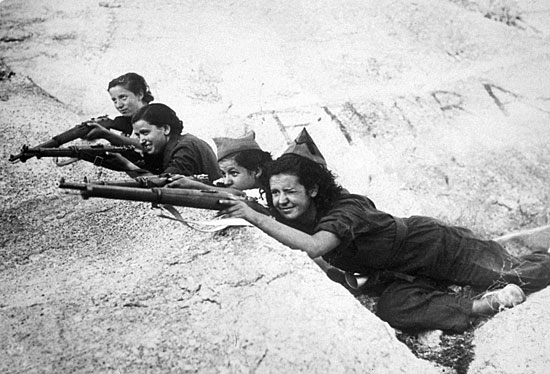
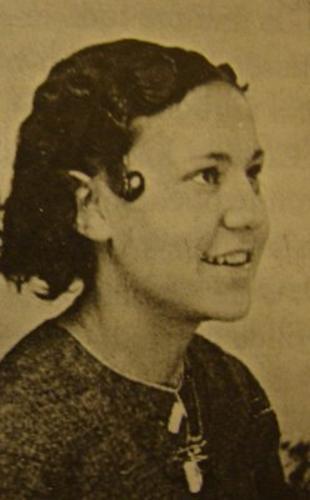
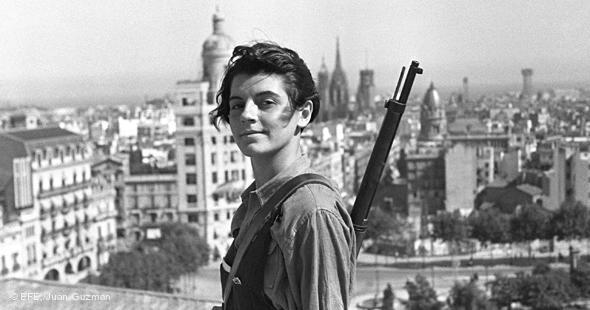
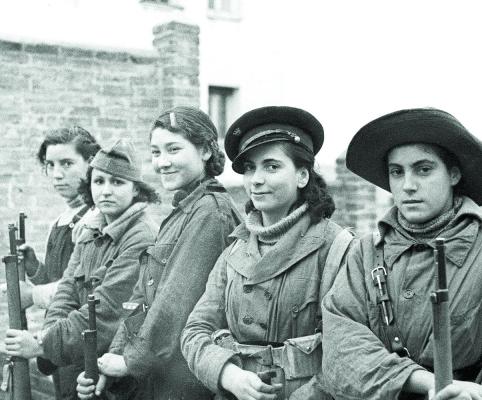
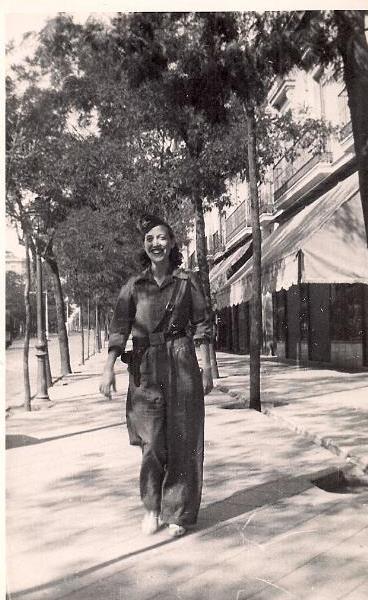
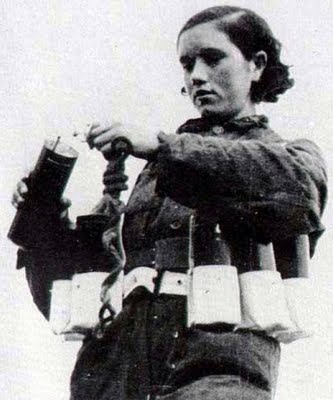

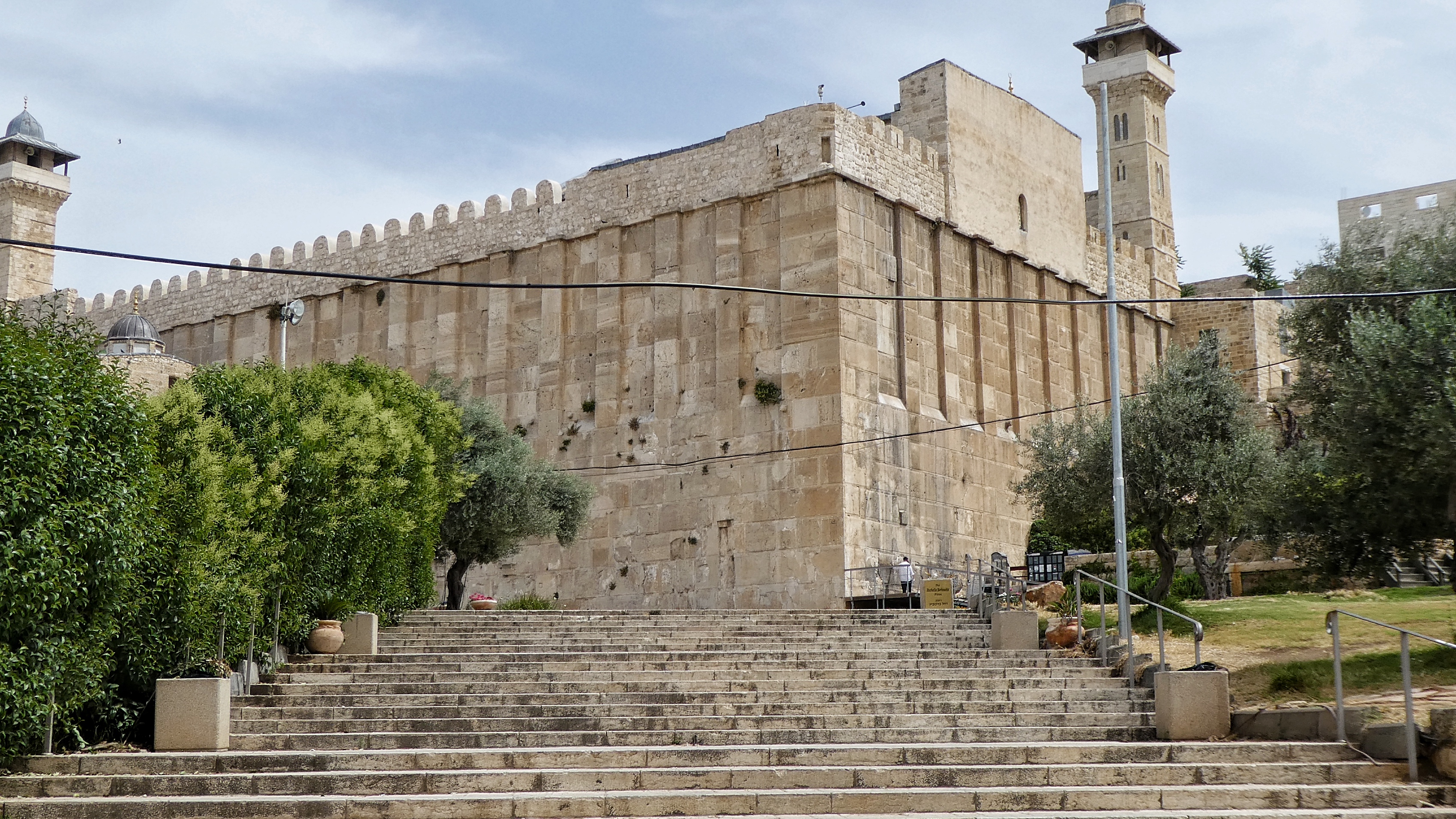


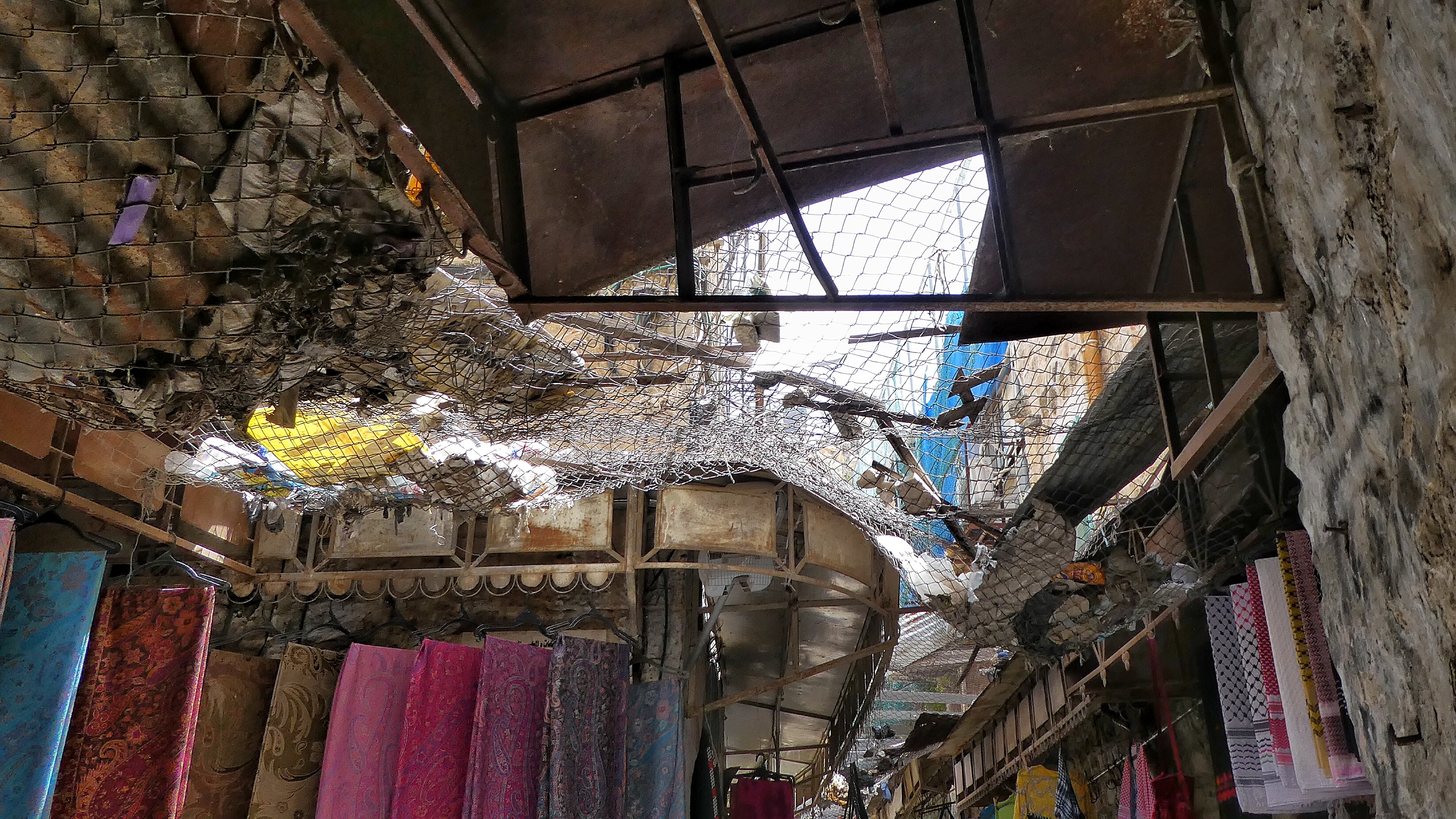


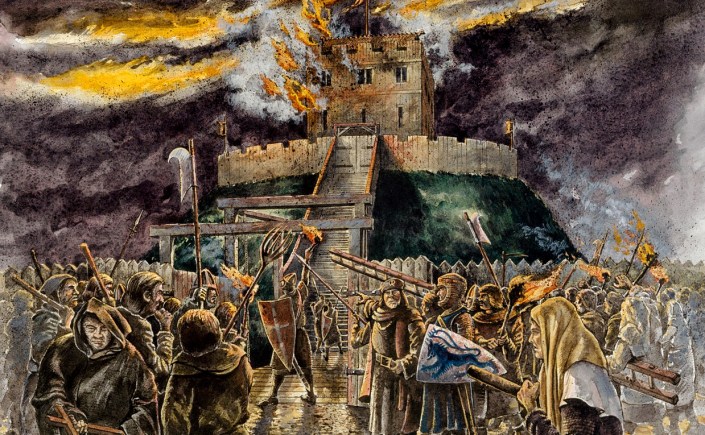


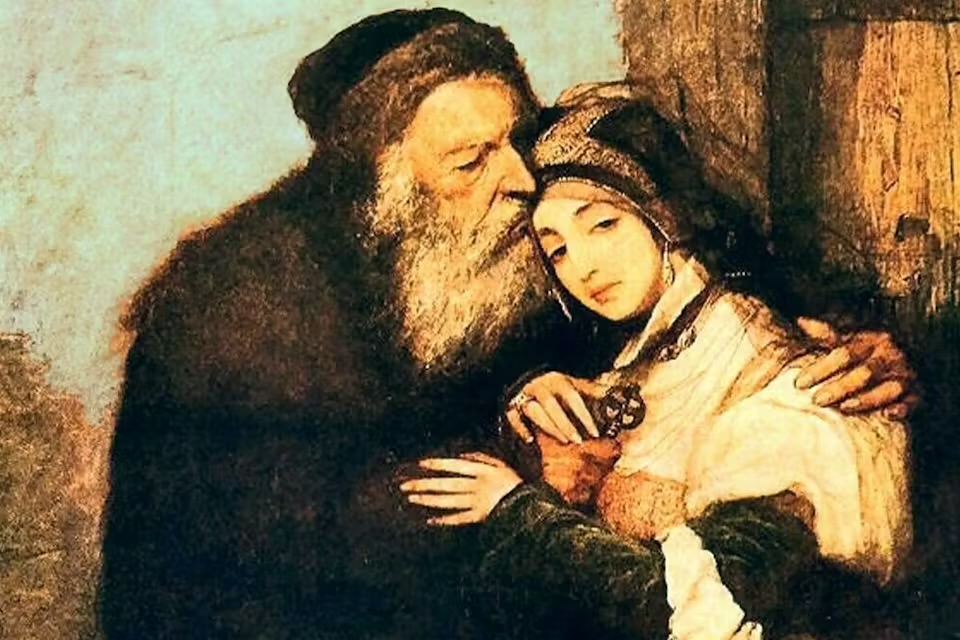



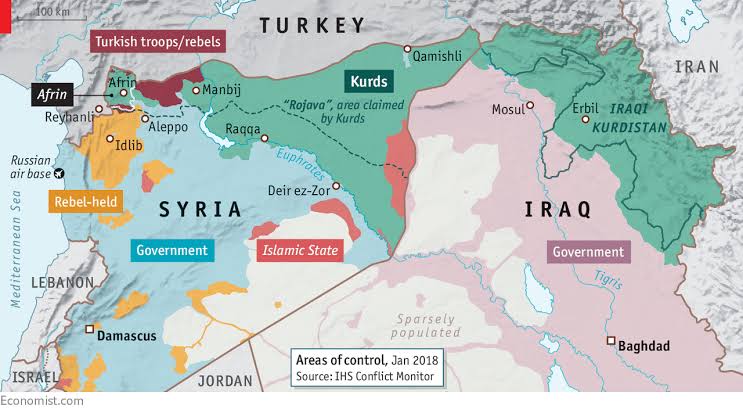




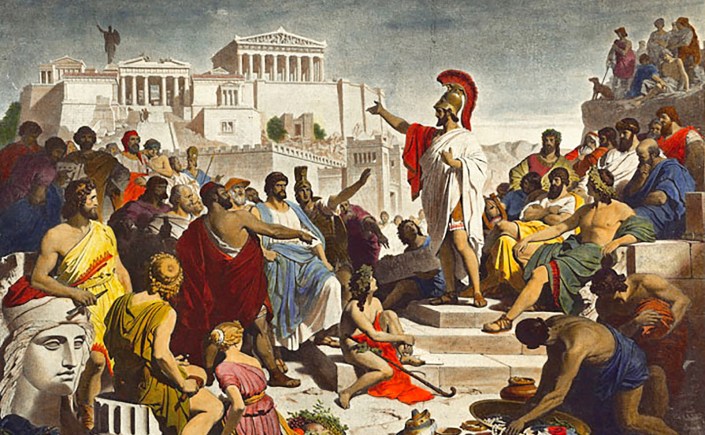

 In That Howling Infinite