Qatar’s caliphate – taqiyyah or hasbara?

Two Islamic terms and one Hebrew have been making the media rounds of late.

Taqiyyah is the employment of deception and dissimulation in an ostensibly Islamic cause. The term تقیة taqiyyah is derived from the trilateral root wāw-qāf-yā, literally denoting caution, fear, prudence, guarding against a danger), carefulness and wariness. It is related to kitmān (كتمان), the act of covering or dissimulation.  While the terms taqiyya and kitmān may be used synonymously, kitmān refers specifically to the concealment of one’s convictions by silence or omission. Kitmān derives from Arabic katama “to conceal, to hide”.

The Hebrew word ishasbara. It has no direct English translation, but roughly means “explaining”, a communicative strategy that seeks to explain actions, whether or not they are justified). It is often interpreted by critics of Israel as public relations or propaganda. It has even been described as the fool’s gold version of diplomacy.

The Hamas’ assault of October 7 2023 was an almost perfect act of Taqiyyah, It used unprecedented intelligence tactics to mislead Israel over months, by giving a public impression that it was not willing to go into a fight or confrontation with Israel while preparing for this massive operation. As part of its subterfuge over the past two years, Hamas refrained from military operations against Israel even as another Gaza-based armed group known as Islamic Jihad launched a series of its own assaults or rocket attacks.

It has been said before and often, that the Qatari-owned news platform Al Jazeera presents the non-Arabic speaking world with a markedly different narrative of to what it relays to its Arabic readers – it is the most popular news source in the Arab world, particularly among Palestinians. Viewing or reading Al Jazeera English, you would think that Israel’s ongoing onslaught in Gaza is directed entirely against the defenceless and helpless civilians of the unfortunate enclave. There are very rarely images of the militants who are engaged on a daily basis in fierce battles and deadly firefights with the IDF. Al Jazeera Arabic on the other hand, posts pictures and videos of the fighters, illustrating their courage, their resilience in the face of overwhelming odds, and their successes in the face of overwhelming military odds. In that Howling Infinite recently covered the issue of divergent narratives in Al Aqsa Flood and the Hamas holy war.

The following opinion piece published this week in Haaretz suggests that the gas-rich and influential emirate of Qatar, erstwhile mediator in many contemporary of conflicts has indeed need playing a much more subtle long game of taqiyyah and kitmān.

I leave it to the reader to determine whether there is some truth in the author’s case or whether this is part of some deceptive hasbara.It would indeed be in Israel’s interests to propagate a narrative that emphasises the existential threat posed by its Muslim neighbours.

Personally, I am inclined to take this opinion piece with a large pinch of salt. For a start, it is badly written and many of its historical references are inaccurate. And then there is the matter of ascribing caliphate ambitions to  the Gulf emirate of Qatar, a tiny autocracy, albeit one of the richest, and until recently at odds with its equally autocratic Gulf neighbours with regard to it’s having given support and succour to the Islamist Muslim Brotherhood – from which Hamas evolved in Palestine – which is similarly reviled and repressed by the rulers of Egypt, Syria and Jordan, who have dealt brutally with the organisation in the past. Other Sunni Muslim regimes were, moreover, unimpressed by Qatar’s cordial relationship, political and economic, with The Shia Islamic Republic of Iran – although the Gulf regimes have of late been increasingly conducive to improving their relationships with the hardline theocracy. Indeed, it was not so long ago that Qatar’s neighbours endeavoured to impose a blockade on the recalcitrant emirate. They would be hardly inclined to countenance Qatar as the leader of an Islamic Caliphate – even if the Muslim street in most Arab states were enthusiastic about the idea.

In a brief article in Haaretz the following week, also republished below, a former Israeli diplomat took issue with Ronit Marzan’s “one-dimensional approach” to Qatar: “…Israel’s tendency to divide the world into “good” and “bad” is not a good approach to intelligent foreign policy. Skillful diplomacy identifies common interests shared by diverse and often opposing players – partners in one area who are adversaries in another. That is precisely why the term “frenemies” exists. Qatar is a classic example”.

For more on Israel and Palestine in In That Howling Infinite, see: A Middle East Miscellany

Qatar Is Preparing a ‘Ring of Fire’ Around Israel to Supplant Iran’s

Ronit Marzan Haaretz, Oct 15, 2024

On October 7, 2023, the idee fixe that Hamas was deterred was shattered. But Israel is still mired in another idee fixe – that Qatar is a friendly country that helps resolve conflicts.

Israel is ignoring the hearts-and-minds campaign Qatar is waging against it and against the entire Western world by arguing that liberating all of Palestine will liberate the Middle East from colonialism, liberate the world from the unipolar order of American hegemony and liberate the human psyche from Western culture.

The hashtags “Spain,” “Andalusia,” “Palestine” and “history and culture,” which Qatar’s online influencers regularly use, are not understood by either Israel or Spain.These hashtags are part of a historical, cultural and psychological campaign that links two central narratives. It seeks to convince Muslims worldwide that the medieval Islamic empire in Andalusia fell as a result of jealousy and rivalry among Muslim kings. Additionally, historical Palestine isn’t being liberated because of the rivalry among Arab countries and their cooperation with the Israeli enemy against Palestinian resistance organizations.

Tweets posted online by Qatari influencers such as “Haifa is beautiful, but it will be more beautiful when it burns down,” “Don’t dream about a happy world as long as Israel exists” and “Liberating all of Palestine is possible, and it has begun” have also not been met with any effective response by Israel’s official public diplomacy network.

And Qatar’s threats that it is considering deporting Hamas leaders from the country should not be taken seriously so long as senior Hamas leader Khaled Meshal, who lives there, keeps telling Muslims around the world that the Al-Aqsa Mosque is “the explosive that sets off intifadas”; inciting residents of the West Bank and “the 1948 Arabs” (i.e. Israeli Arabs) to resume suicide bombings; urging the Arab nation to embark on both a jihad of the soul and an armed jihad against the Zionist enemy, which isn’t a natural part of the region; encouraging the Arab masses to take to the streets and pressure their leaders to sever ties with Israel; and urging student leaders worldwide to renew street protests to put an end to Zionist and American hegemony.

It’s not only Israel that has fallen asleep while on guard duty. European and American leaders also don’t understand that Qatar is working via its agents of change to bring about a clash between the global north and the global south by exploiting the distress of failed states and the woke movement in the West. They are failing to recognize that it is undermining the Western model of the modern nation-state whose borders were drawn in the past.

Its goal is to replace this Western model with that of a traditional Arab state, meaning one where the regime’s legitimacy would come from its willingness to put the interests of the Arab-Islamic nation above those of its own country, first and foremost in the battle against Israel.

Tawakkol Karman, an Islamic activist from Yemen, received aid from Qatar to promote a revolutionary discourse in her country during the Arab Spring and was awarded a Nobel Peace Prize for it.

Now, she is helping Qatar incite a revolt against Western governments among young people and indigenous peoples. At the One Young World Summit in Canada, she argued that democracy, human rights and the rule of law are in retreat in the United States, Canada, Britain and France and urged action against powerful companies and governments that had stolen the resources of indigenous peoples.

In an edited Al Jazeera video of a speech by UN Secretary-General Antonio Guterres at an Arab League summit, the following chyrons were prominently displayed: “Guterres urged the Arab states to unite and not let outside parties manipulate them,” “Guterres highlighted the golden age of Islamic culture and praised the Arab contribution over the course of hundreds of years, from the Andalusian renaissance in the Iberian peninsula to Baghdad, which was a global center of culture and civilization,” “The secretary-general blamed the Arab states’ backwardness on colonialism and the war of liberation that the Arab nation had to wage.”

All of the above show that Guterres, like many former UN employees who are today employed at Azmi Bishara’s research institute in Doha, don’t represent the values in whose name the United Nations was established. Instead, they have become Qatar’s water carriers.

Israel and the United States erred when they let Qatar send aid to the Gaza Strip.And they are erring now by allowing it to send aid to Lebanon. Now that Gaza has been devastated, and the chances of Hamas returning to power are low, Qatar is racing ahead towards Lebanon.

It is part of the five-member committee that was established to help resolve Lebanon’s political crisis, along with Egypt, Saudi Arabia, America and France.

Qatar is embracing veteran Druze politician Walid Jumblatt, the former head of Lebanon’s Progressive Socialist Party, in the hopes that the Druze community will provide help in the future to topple Bashar Assad’s regime in Syria.

It is giving millions of dollars to the Lebanese army to help pay soldiers’ salaries ($100 a month per soldier). And it is cooperating more closely with Lebanese government ministries – for instance, the internal security ministry, which is responsible for training police officers – while moving forward on agreements in the field of solar energy.
Israel’s ground operation in Lebanonis giving Qatar an opportunity to settle itself in the hearts of the Lebanese people. After Israel dismantles Shi’ite Hezbollah for it, along with the ring of fire Iran has for years nurtured in the region, Qatar will appear in the role of the “savior” and repeat what it did with Sunni Hamas in Gaza.
But this time, it will do so with the Sunni Muslim Brotherhood in Lebanon, Syria, Iraq and Jordan. And Iran’s Shi’ite ring of firewill be replaced with Qatar’s Sunni ring, which will be no less dangerous, and might well lead Israel to new versions of the October 7 attacks, just as Meshal has been promising.

Saladin liberated Palestine, Jerusalem and Al-Aqsa after securing geographic and demographic depth for himself in Turkey, Syria, Iraq, Egypt and Jordan. That’s what Meshal and Mohamed El-Shinqiti, a faculty member at Qatar University, have been saying, and presumably not by chance.

Lolwah Al-Khater, the country’s minister for international cooperation, landed in Beirut a few days ago with a generous supply of aid and promises of “plans for the medium and long term.” We should believe what she says, because Qatar is a long-distance runner, and patience is a key value in the Muslim Brotherhood’s ideology.

Ronit Marzan is a researcher of Palestinian society and politics at the Tamrur-Politography

Qatar Can Be Part of the Solution, and Not Just Part of the Problem

Nadav Tamir Haaretz, Oct 21, 2024

In her article “Qatar is preparing a ‘ring of fire’ around Israel to supplant Iran’s,” (Haaretz, October 15), Dr. Ronit Marzan takes a one-dimensional approach toward Qatar. However, Israel’s tendency to divide the world into “good” and “bad” is not a good approach to intelligent foreign policy. Skillful diplomacy identifies common interests shared by diverse and often opposing players – partners in one area who are adversaries in another. That is precisely why the term “frenemies” exists.

Qatar is a classic example. It does indeed support the Muslim Brotherhood, but the conclusion that it therefore supports terrorism is mistaken and misleading. The Muslim Brotherhood spans a wide spectrum. Anyone who understands the dramatic difference between MK Mansour Abbas and Hamas, or Raed Salah and the late Mohammed Morsi, the former Egyptian president who, during his presidency, upheld the peace agreement with Israel, realizes this. Unlike Iran, Qatar has never sought to promote terrorism, even though it has not avoided connections with those involved in it.

The transfer of Qatari aid to Hamas was carried out in response to an Israeli-American request to create Western leverage over Hamas and mechanisms for ending the fighting in Gaza. Hosting the political leadership of Hamas in Qatar was part of a broader approach, aimed at distancing the movement from Iran.

Qatar’s assistance is highly valued by Israeli and American negotiators in the efforts to release hostages held by Hamas and this is a good example of the importance of working with Qatar. But even after the war, we will still need the Qataris as mediators and stabilizers, because Hamas will not disappear from Gaza and other Palestinian territories.

Qatar hosts the largest U.S. airbase in the Middle East, Al-Udeid Air Base. It is also home to branches of some of the most important American universities. Qatar and Iran are partners in a large offshore gas field, which allows it to influence and moderate Iran. Being the richest country per capita in the world enables Qatar to invest significant resources in rebuilding countries like Syria and Lebanon, and in Gaza – a capability that may be critical to any political settlement following the war.

Qatar’s soft power diplomacy could serve as an alternative to the ongoing military conflicts, which is perhaps a strategy Israel should also consider adopting. We should also learn from the U.S., which utilizes Qatar for diplomatic moves with hostile countries and organizations. For example, Qatar helped release American citizens from Iranian prisons and facilitated the agreement that allowed U.S. forces to exit Afghanistan.

After the Oslo Accords, Israel opened an Israeli interest office in Doha, Qatar’s capital. From this and other actions, we learned that Qatar is interested in helping create processes that promote peace and stability in the region through soft power. While Prime Minister Benjamin Netanyahu used Qatar to fund Hamas with the declared goal of weakening the Palestinian Authority and the chances of a political settlement, I propose using Qatar to help advance a settlement with the Palestinians as part of a regional agreement. Similarly, it is important to leverage Qatar, one of the five key countries assisting governance in Lebanon, to help weaken Hezbollah domination in Lebanon.

A country does not choose its surroundings and Qatar is not a friendly state, but it is a state that can serve as a counterforce to Iran’s rise. Qatar is an actor with economic and political interests in both the Western and Arab-Muslim worlds. It should be approached with caution but utilized rather than kept away.

Therefore, instead of denigrating Qatar’s significant influence in the region, we should consider how to leverage its skills in navigating among different regional alliances, which give Qatar unique capabilities – not as a sole player or even central one but as a country with influence that even much larger nations, such as Egypt and Saudi Arabia, don’t posses

Al Aqsa Flood and the Hamas holy war

It has been said before and often, that Qatari owned Al Jazeera presents the non-Arabic speaking world with a markedly different narrative of the Gaza war to what it relays to its Arabic readers – it is the most popular news source in the Arab world, particularly among Palestinians.

Viewing or reading Al Jazeera English, you would think that Israel’s onslaught is directed entirely against the defenceless and helpless civilians of the unfortunate enclave. There are very rarely images of the militants who are engaged on a daily basis in fierce battles and deadly firefights with the IDF. Al Jazeera Arabic on the other hand, posts pictures and videos of the fighters, illustrating their courage, their resilience in the face of overwhelming odds, and their successes in the face of overwhelming military odds. 

On 13 August 2024, Al Jazeera Arabic published a series of seven articles under a forward titled The Al-Aqsa Flood and Religiosity… A New Islamic Awakening

The title refers to the pogrom of October 7 in which Islamic militants slaughtered some 1,200 Israeli men, woman and children and kidnapped over 200. It was given the name  Amaliyyat Tufān al Aqsa – Al Aqsa Flood, insofar as its purpose was to  preempt a Jewish takeover of Al Aqsa Mosque in Jerusalem, the third holiest Islamic shrine – notwithstanding the fact that nothing of the kind was happening. Israel’s angry response has been biblical in its brutality, with nine months of air and ground assault that has devastated the enclave of Gaza and, according to health officials killed more than 40,000 people (uncorroborated figures provided by the Hamas-run health authorities that include thousands of militants killed in the fighting, and persons who would have died under normal circumstances had war not broken out).

An earlier piece in In That Howling Infinite, Lebensraum Redux – Hamas’ promise of the hereafter revealed the Hamas master plan for the destruction of the state of Israel and the dispersion and disposal of its Jewish inhabitants. Statements like this and the longstanding foundational Hamas Covenant, which also calls for the eradication of Israel do not generally attract mainstream and social media interest, even after October 7.

Few have actually read the 1988 Hamas Covenant or the revised charter that was issued in 2017. The neglect is nonetheless surprising considering the clear exposition of the Islamist, genocidal intent of the Hamas and Islamic Jihad. This accords with a view held by many knowledgeable and well-informed observers and commentators that the original intent of Operation Al Aqsa Flood was to race en-masse across the Negev to the Occupied Territories and spark a general Palestinian rising which would precipitate an invasion of Israel by its Arab neighbours – a repeat of the war of 1948 without its outcome, but rather, al Nakba in reverse.  

We’ll probably never really know why this scenario was not followed through, and what may have been the outcome. Some may argue a 100km sprint across the open desert to the nearest Palestinian city, Hebron, was an impossible task. Others might surmise that the militants who descended on the borderland kibbutzim and the Nova Trance Festival to molest, maim and murder were distracted by the easy prey and the release of pent-up rage and brutal vengeance.

Al Aqsa Flood  may have failed, with only the Black Shabbat and the destruction of Gaza to show for it, but without doubt, it ignited a wildfire that has reinvigorated the Palestinian cause in the eyes of the world and severely damaged Israel’s standing on the world stage. The Hamas maintains that the ongoing carnage is justified, with many senior officials, declare in the safety of their sanctuaries in Qatar and Beirut that they’d do it all over again … and again.

The Al Jazeera series is enlightening in several respects, particularly insofar as it does not recognise the events of October 7 for what they were; and whilst acknowledging that there is a battle raging in the enclave but eschewing any reference to the carnage it is causing among the Gazan population, it presents the moral and humanitarian disaster of the Gaza war as the beginning of an Islamic enlightenment:

“Outside the military battlefield, there was another battle raging alongside the flood, which is the battle of conflicting identities that the world witnessed with the flood, and the accompanying signs of a noticeable religious awakening among young people around the world, and the restoration of the centrality of the role of religion in Arab public affairs”.

By happenstance, I read this series not long after In That Howling Infinite published A Messiah is needed – so that he will not come, which discussed the phenomenon of messianism with particular reference to the connections between the conflict and catastrophe of the Gaza war on the one hand and an emerging messianism on the other among both religious and non-religious Jew. It noted:

In the eyes of Israel’s principal foes, the so-called “Axis of Resistance”, Iran and its Islamist proxies in Palestine, Lebanon, Syria, Iraq and Yemen, the current Arab Israeli conflict is in reality a holy war with inseparable and uncompromising religious, political and military dimensions that take on a messianic character.

The irony is that increasingly in the Jewish state, the existential crisis emanating from the catastrophe of October 7 and the encirclement of the tiny country by enemies determined to wipe it off the map, has arguably fostered a messianic fervour in Israel too.

We republish the foreword to the Al Jazeera series below in both English and Arabic.

See also in In That Howling Infinite, A Middle East Miscellany:  

Al-Aqsa Flood and Religiosity …  A New Islamic Awakening?

“Outside the military battlefield, there was another battle raging alongside the flood, which is the battle of conflicting identities that the world witnessed with the flood, and the accompanying signs of a noticeable religious awakening among young people around the world, and the restoration of the centrality of the role of religion in Arab public affairs”.

What is the religious symbolism of the red cows that the Zionist settlers brought before the flood? Why did the spokesman for the Qassam Brigades denounce them in a speech? And what is the meaning of the concept of the nation in the speeches of the resistance leaders? Why did the Zionist Prime Minister invoke the story of the “Amalekites” from the Old Testament to justify the Israeli brutality in the Gaza Strip? And why do we only receive clips of resistance fighters accompanied by glorification and praise and mention of the virtue of martyrdom?

Many questions about religion and religiosity and their relationship to the flood have imposed themselves since the outbreak of the flood on October 7, 2023. From the first moments of the flood, and with the resistance members crossing the security fence of the Gaza Strip, the sounds of glorification and praise of the resistance fighters preceded the sounds of the Kalashnikovs. During the battle, the leaders of each team did not limit themselves to the military and strategic mention of the battle, but they loaded the battle itself with many religious symbols, which are no less present and important than the importance of the security, intelligence and military machine. Outside the military battlefield, there was another battle raging alongside the flood, which is the battle of conflicting identities that the world witnessed with the flood, and the accompanying signs of a noticeable religious awakening among young people around the world, and the restoration of the centrality of the role of religion in Arab public affairs.

All of this prompted us to ask the question: What is the position of religion and religiosity in the battle of the flood? This was the file titled “The Flood of Al-Aqsa and Religiosity… A New Islamic Awakening?!” which consisted of 7 articles.

The first article was an extensive article titled “From the Tortured of the Earth to the Beloved of God… How did Arab Youth Return to the Questions of Faith and Religiosity after the Events of October 7?” The work on the article took 8 months, during which we met with dozens of young people around the world between the ages of 20 and 40 to monitor the transformations of Arab youth after the flood, and the transformation of many of them from “indifference” to a state of sweeping religiosity, and sometimes even readiness to engage in the broad Islamic state, and support the Islamic resistance. All of this was monitored by the article, and their testimonies recorded the impact of the flood on them and its effect on the transformations they went through.

As for the second article, it was a conceptual article entitled “Cultural Wars and the War on Gaza… How did October 7 formulate the concept of the nation?” The article followed the conflict of identities that accompanied the flood, and how the speeches of the resistance spokesman restored the concept of “nation” and made it the heart of the battle of the flood, and how the Zionists and their allies tried to redraw the concept of the term “nation” in the past decades!

Then we delved into the third article into a forward-looking article entitled “The Flood, Prophecy, and the Hour… Welcome to the Exceptional Times!” to tell us how prophecy can have its effect on military reality? And how faith becomes a refuge for salvation for the resistance fighters when all roads are narrow, moments of foresight are absent, and work becomes based on the sites of destiny.

As for the fourth article, it was about the presence of the Zionist religious narrative on social media platforms, especially TikTok. The article “Religious Zionism on TikTok… This is how genocide was legitimized in Gaza” attempted to monitor the religious presence of Zionist figures and those influenced by them on TikTok, and how this presence helped justify the genocide with a clear conscience! The article placed this Zionist religious narrative in a comparative case with the role of Arab influencers and the religious narrative they carried during the war.

From TikTok to psychology, in the fifth article we went to reconsider Western psychology and the problem of Western standards on religion and religiosity in the article “What is faith? About Gaza and the Istisqa prayer in the summer”, which monitored the academic deficiency in Western standards of religiosity when trying to apply them to Muslim peoples. The article revealed that the case of “Gaza” remains a unique case that is difficult to frame within the material framework of the psychology of religiosity in its Western perspective.

Then we reinforced it with the sixth article, in which we returned to the impact of religion on the battlefield, which is the article “Psychology of Religiosity… The Infrastructure of Resistance in Gaza”, which attempted to draw the line between religious motivation and mental health in crises, and monitored the religious beliefs of the people of Gaza that created meaning from the womb of suffering, and concluded the article by talking about the uniqueness of Islam in drawing the path of salvation for its followers in the two cases of life or martyrdom.

Finally, we concluded with the seventh article, which tells the expansion of the circle of influence to the ends of the world by reviewing the story of an evangelical Christian Islam, and how the Gazan model of religiosity was transformed into a beacon of global guidance.

طوفان الأقصى والتدين … يقظة إسلامية جديدة؟!

مقدمة الملف ما الرمزية الدينية للبقرات الحُمر التي استجلبها المستوطنون الصهاينة قبيل الطوفان؟ ولمَ ندد بها المتحدث باسم كتائب القسام في خطاب له؟ وبأي مدلولٍ حضر مفهوم الأمة في خطابات قادة المقاومة؟ ولماذا استدعى رئيس الوزراء الصهيوني قصة “العماليق” من العهد القديم تبريرًا للوحشية الإسرائيلية على قطاع غزة؟ ولماذا لا تصلنا مقاطع مقاتلي المقاومة إلا مصحوبة بالتكبير والتهليل وذكر فضل الشهادة؟

أسئلة كثيرة حول الدين والتدين وعلاقتهما بالطوفان فرضت نفسها منذ اندلاع الطوفان في السابع من أكتوبر ٢٠٢٣. فمنذ اللحظات الأولى للطوفان، ومع عبور أفراد المقاومة السياج الأمني لغُلاف غزة كان أصوات التكبير والتهليل للمقاومين تسبق أصوات الكلاشنكوف. وفي أثناء المعركة لم يكتف قادة كل فريق بالذكر العسكري والإستراتيجي للمعركة، وإنما شحنوا المعركة ذاتها بكثير من الرمزيات الدينية، التي لا تقل في حضورها وأهميتها عن أهمية الآلة الأمنية والإستخباراتية والعسكرية. أما خارج ميدان المعركة العسكري، فكان ثمة معركة أخرى تدور رحاها إلى جوار الطوفان، وهي معركة الهويات المتصارعة التي شهدها العالم مع الطوفان، وما صاحب ذلك من بوادر استفاقة دينية ملحوظة في أوساط الشباب حول العالم، واستعادة محورية دور الدين في الشأن العام العربي.

كل ذلك دفعنا إلى طرح سؤال: ما هو موقع الدين والتدين في معركة الطوفان؟ فكان هذا الملف الذي حمل عنوان “طوفان الأقصى والتدين … يقظة إسلامية جديدة؟!” والذي تكون من 7 مواد.

كانت المادة الأولى مادة مستفيضة بعنوان “من معذبي الأرض إلى أحباب الله … كيف عاد الشباب العربي إلى سؤالي الإيمان والتديّن بعد أحداث السابع من أكتوبر” وقد استغرق العمل على المادة 8 أشهر، التقينا فيها بعشرات الشباب حول العالم من الفئة العمرية ما بين 20 إلى 40 لرصد تحولات الشباب العربي بعد الطوفان، وتحول كثير منهم من “اللامبالاة” إلى حالة التدين الجارف، بل وأحيانا التأهب للانخراط في الحالة الإسلامية الواسعة، ومناصرة المقاومة الإسلامية. كل ذلك رصدته المادة، وسجلت بشهاداتهم وقع الطوفان عليهم وأثره في التحولات التي خاضوها.

أما المادة الثانية كانت مادة مفاهيمية بعنوان “الحروب الثقافية والحرب على غزة.. كيف صاغ 7 أكتوبر مفهوم الأمة؟” تتبعت المادة صراع الهويات التي صاحب الطوفان، وكيف استعادات خطابات المتحدث باسم المقاومة مفهوم “الأمة” وجعلته في القلب من معركة الطوفان، وكيف حاول الصهاينة وحلفائهم إعادة رسم مفهوم مفردة “الأمة” في العقود الماضية!

ثم دلفنا في المادة الثالثة إلى مادة استشرافية بعنوان “الطوفان والنبوءة والساعة … مرحبًا بك في الأزمنة الاستثنائية!” لتخبرنا كيف يمكن للنبوءة أن يكون لها أثرها في الواقع العسكري؟ وكيف يصبح الإيمان ملاذ الخلاص للمقاومين عندما تضيق جميع الطرق، وتنعدم لحظات الاستشراف، ويصبح العمل على مواقع القدر.

أما المادة الرابعة فكانت عن حضور السردية الدينية الصهيونية على منصات التواصل الاجتماعي، وخاصة التيك توك. فكانت مادة “الصهيونية الدينية على “تيك توك”.. هكذا شُرّعت الإبادة في غزّة” حاولت هذه المادة رصد الحضور الديني للخامات الصهاينة والمتأثريين بهم على التيك توك، وكيف ساعد هذا الحضور على تبرير الإبادة بضمير مرتاح! ووضعت المادة هذه السردية الدينية الصهيونية ضمن حالة مقارنة مع دور المؤثريين العرب والسردية الدينية التي حملوها أثناء الحرب.

ومن التيك توك إلى علم النفس، فقد ذهبنا في المادة الخامسة إلى إعادة النظر في علم النفس الغربي وإشكالية المقايس الغربية حول الدين والتدين في مادة “ما الإيمان؟ عن غزة وصلاة الاستسقاء في الصيف” والتي رصدت النقص الأكاديمي في مقاييس التدين الغربية عند محاولة تطبيقها على الشعوب المسلمة. وكشفت المادة أن حالة “غزة” تظل حالة فريدة ومستعصية على التأطير ضمن الإطار المادي لعلم نفس التدين في منظوره الغربي.

وثم عززنا بالمادة السادسة التي عُدنا فيها إلى أثر الدين في أرض المعركة، وهي مادة “سيكولوجية التديّن.. البنية التحتيّة للمقاومة في غزة” والتي حاولت رسم الخط بين الدافع الديني والصحة النفسية في الأزمات، ورصدت المسلمات الدينية لأهل غزة والتي خَلّقَت المعنى من رحم المعاناة، وختمت المادة بالحديث عن فرادة الإسلام في رسم مسار الخلاص لأتباعه في حالتي الحياة أو الشهادة.

وأخيرًا ختمنا بالمادة السابعة، التي تحكي اتساع دائرة التأثير إلى أطراف المعمورة باستعراضنا لقصة إسلام مسيحيّ إنجيليّ، وكيف تحول نموذج التديّن الغزيّ إلى منار هداية عالميّة.

من معذبي الأرض – 1

الحروب الثقافية والحرب – 2

الطوفان والنبوءة والساعة

الصهيونية الدينية على تيك توك – 4

ما الإيمان؟ عن غزة – 5

سيكولوجية التديّن -6

قصة إسلام إنجيلي أميركي


Children of Abraham

The ancient and holy city of Hebron – al Khalil to Muslims, and named, like Hebron for the Jewish and Islamic patriarch Abraham/Ibrahim – is rarely out of the news; and the news is never good. “There’s this thing that happens here, over the Hell Mouth”, says Buffy the Vampire Slayer, “where the way a thing feels – it kind of starts being that way for real. I’ve seen all these things before – just not all at once”.

In May 2016, we visited Hebron, a fault line of faiths and a front line of an old war still being waged for possession of the Holy Land. It is a hot spot, a flash-point, where tensions between Israelis and Palestinians are usually followed by calamity, and bad things happen. We’ve travelled right through the West Bank, and yet nowhere did we feel exposed to the danger of a sudden flare up of violence and being caught in an indiscriminate crossfire than here in the old heart of the city. It is the seemingly intractable conflict in the raw, a microcosm of the Occupation, and there is no denying the brutality of the place. Most western journalists and commentators give their readers an impression that Israel absolutely dominates this Palestinian city of some 200,000 souls. In reality, the area under military control, immediately surrounding the ancient Ibrahimi mosque, holy to two faiths, is very small. The city, with its high rise apartments, official buildings and shopping malls,  looks down on this pressure cooker of a ghetto, where dwell some 700 settlers and thirty thousand Palestinians, segregated from each other by walls and wire, fear and loathing – and by two soldiers to every settler.

On our return, the e-magazine Muftah published the following article.

Children of Abraham and the Battle for Hebron

You who build these altars now to sacrifice these children, you must not do it anymore.
A scheme is not a vision and you never have been tempted by a demon or a god.
You who stand above them now, your hatchets blunt and bloody – you were not there before,
When I lay upon a mountain and my father’s hand was trembling with the beauty of the word.
Leonard Cohen, The Story of Isaac

I recently returned from Hebron in the occupied West Bank. The city is a fault line of faiths and a front line in the conflict between Israelis and Palestinians. It is a “hot spot,” a flash-point, a place where tensions between Israelis and Palestinians are usually followed by calamity. Hebron has been a key focus of the tension and violence that has characterized the troubled relationship between Palestinians and Israelis. Since October 2015, over 200 Palestinians and thirty Israelis have been killed across the West Bank, East Jerusalem, and Israel, in the latest flare-up in the decades-long conflict.

In March this year, an Israeli soldier was filmed shooting and killing a wounded twenty-one-year-old Palestinian, following a stabbing attack on Israeli soldiers. The soldier, just nineteen years of age, is now facing trial, amidst massive outcry on both sides of the Israeli-Palestinian divide.. In June, not long after we left Israel, a young Palestinian murdered a thirteen-year-old Israeli girl as she slept in nearby Kiryat Arba. Hours later, a Palestinian woman was shot dead by Israeli soldiers outside of the Ibrahimi Mosque. Later that afternoon, Palestinian gunmen ambushed an Israeli car on a road just south of Hebron, killing a father and wounding his family. Local Palestinians gave emergency first aid to the victims and shielded the children from any further attack.

A Holy Land

Hebron has long been sacred to Muslims and Jews as the last resting place of the prophets Abraham and Isaac – the founding father of Judaism, and the son he had resolved to sacrifice until God ordered him to stay his hand. In the first century BC, Herod the Great, famed builder and bad boy, raised a mighty mausoleum above the cave where Abraham was laid to rest. Abraham’s wife Rachel, and his son, Isaac, Isaac’s wife Rebecca, and Isaac’s sons Joseph and Jacob – whose wrestled with an Angel to represent man’s struggle with God –  and Jacob’s wife Leah are also buried there.

As time went by, Christians and then Muslims revered Hebron as a holy place. Abraham was the founding father of both religions and his sons and grandsons, buried in the cave, are considered prophets of Judaism, Christianity and Islam. In time, a mosque was established on Herod’s edifice, and for a short while, during the hundred years of the Crusader kingdom, a basilica too. The well-known story of Isaac and Abraham, told so cryptically by Leonard Cohen is in a way a metaphor for Hebron itself. It is common to Christians, Jews and Muslims (Id al Adha is islam’s Feast of the Sacrifice) but the protagonists in the Qur’an are not Abraham or Isaac or Ishaak, but Ibrahim and Ishmael the son of Hagar, Abraham/Ibrahim’s servant) the genealogical forbears of Muslims. Two faiths, two narratives. [Cohen’s lyrics are reproduced at the end of this article together with my translation into Arabic]

In the thirteenth century, the Mamluk Sultan Baybars expelled the Christians from Hebron. A small community of Jews continued to reside in the town of Hebron, however. In 1929, amidst rising religious and nationalist tension in the British Mandate of Palestine, some seventy Jewish men, women, and children were killed by Palestinians who had been incited to violence by rumours that Jews planned to overrun the Temple Mount in Jerusalem, the third holiest site in Islam. Many local Palestinians also helped save Jewish neighbors from the bloodshed. Following the riots, Hebron’s Jewish community largely ceased to exist, until the an-Naksa, or ‘setback’, of 1967, when Israeli military forces occupied the West Bank, East Jerusalem, Gaza, and the Golan Heights.

In the early days of the occupation, Israeli authorities did not encourage Jews to return to Hebron. One of the first illegal Israeli settlements was established outside Hebron in what is now Kiryat Arba, and thereafter, a small settlement was built around the Mosque of Ibrahim. Beginning in 1979, some Jewish settlers moved from Kiryat Arba to the former Jewish neighborhood near the Abraham Avinu Synagogue which had been destroyed in 1929. Other Jewish enclaves were established with the Israeli army’s support and more homes were subsequently purchased or forcibly taken over from their Palestinian owners.

With the establishment of a Jewish presence in and around Hebron, the religious right-wing demanded that Jews be permitted to pray at the tombs of the patriarchs, and the 700 years old restriction on Jews praying here was lifted. Muslims and Jews were now obliged to share the holy place, although it was formally administered by the Muslim Waqf. Thus, even prayer became a focus of conflict and tension, and sometimes, violence, particularly during each faith’s holy days.

Tensions and Divisions

Since 1979, tensions have continued to increase between the small community of Israeli settlers living in Hebron (several hundred) and the tens of thousands of Palestinians whose lives have been turned upside down by their presence. These tensions reach boiling point in February 1994, when US-born Israeli doctor Baruch Goldstein opened fire on Muslims worshippers during the dawn prayer at the Ibrahimi Mosque. He killed twenty-nine people and wounded another 125 before he was overcome and killed by survivors. Hundreds more Palestinians were killed or injured in the Israeli military’s response to the ensuing violence.

Goldstein had been inspired by a boyhood mentor, the ultranationalist New York Rabbi Meir Kahane, and had belonged Kahane’s militant Jewish Defence League, founded ostensibly to protect Jews from antisemitism, but implicated in numerous acts of violence in the USA  and elsewhere. On emigrating to Israel, he joined Kahane’s right-wing Kach Party.

The Israeli government condemned the massacre and responded by arresting Kahane’s followers, and criminalizing Kach and affiliated organizations as terrorists, forbidding certain settlers from entering Palestinian towns, and demanding that those settlers turn in their army-issued weapons. It rejected a demand by the Palestinian Liberation Organisation that all settlers in the occupied territories be disarmed and that an international force be created to protect Palestinians.

UN observers came to keep the peace, but, after Israeli and Palestinian authorities could not reach agreement on resolving the situation, they departed. The Hebron Protocol was signed in January 1997 by Prime Minister Benjamin Netanyahu and PLO Chairman Yasser Arafat under the supervision of US Secretary of State Warren Christopher. Under its terms, Hebron was divided into in two. H1, 80% of the city, and home to over 120,000 Palestinians, was placed under the Palestinian Authority’s control. H2, which was home to nearly 40,000, was placed under the exclusive control of the Israeli Defense Forces (IDF) in order to protect some 600 Israeli Jewish settlers who lived in the area. 

Jewish Israelis were barred from entering HI, whilst Palestinians found it nearly impossible to Access H2 unless they lived there. Palestinian residents of H2 experienced forcible displacement, restrictions on their movement, the closure of their businesses, IDF checkpoints and searches, and verbal and physical harassment by settlers protected by the IDF. 

In a surreal, sad parody, the mosque too was divided, with a separate mosque and synagogue. The IDF controls access, closing it to Muslims on Jewish holy days and to Jews on Muslim holy days. There are frequent bans on the call to prayer on the grounds that it disturbs the settlers, and likewise on exuberant 

Dual Narrative

We travelled to Hebron on a “dual narrative tour”. It was run by Abraham Tours, which operates out of the Abraham Hostel at Davidka Square in Jerusalem, and caters for independent and mainly young travelers on limited budgets. One half of the tour was conducted by a Palestinian guide and the other by a Jewish guide. They walked us though the streets surrounding the Mosque of Ibrahim, and gave us the opportunity to meet and talk with several members of each of the communities.

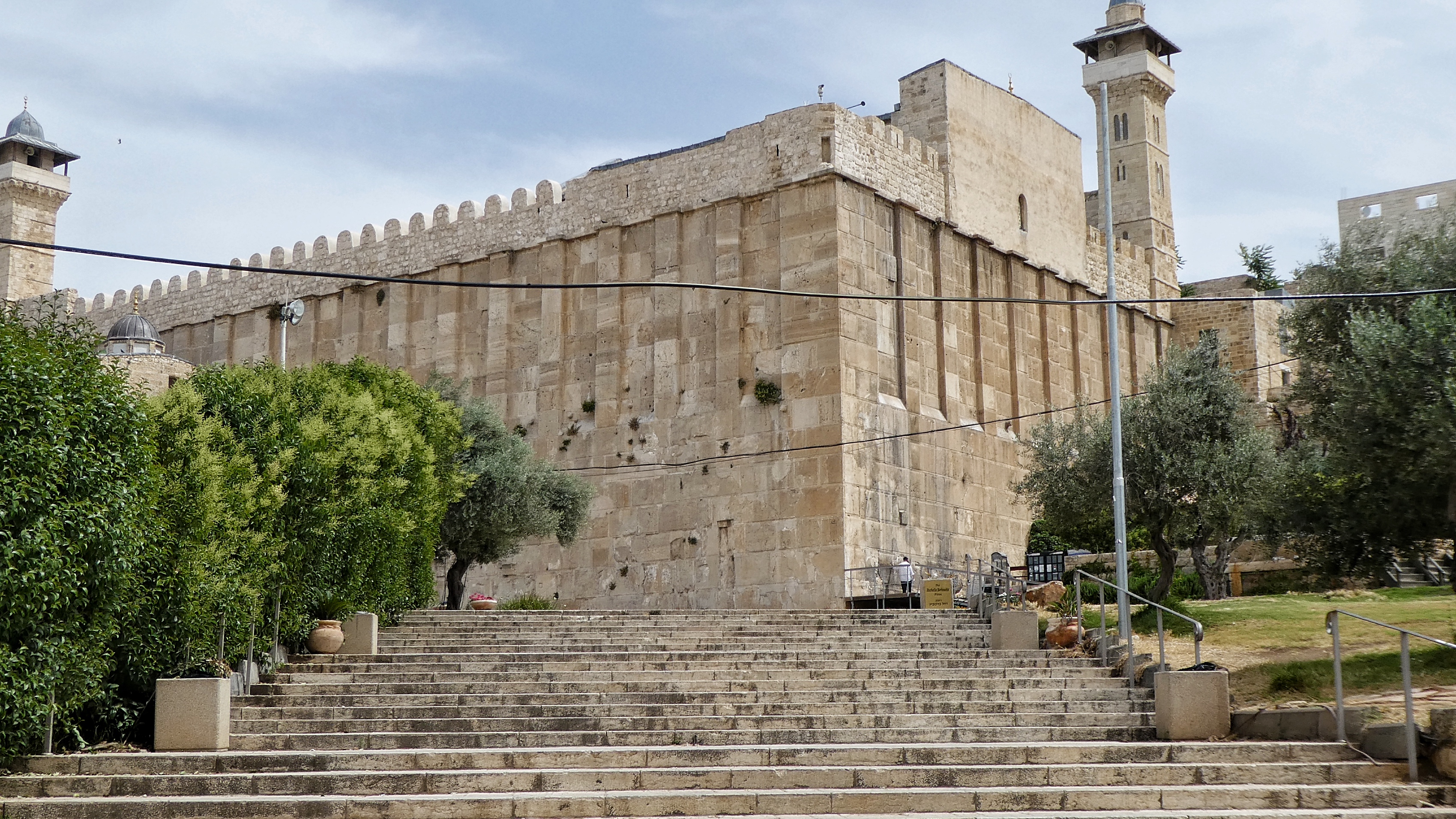
We visited the Muslim side of the mosque, which retained the wide prayer hall, the empty catafalques of Isaac and Rebecca, the qibla and minbar, and the beautiful dome; and the larger Jewish side, which was, once upon a time, the open courtyard leading to the mosque. Abraham and Sarah occupy the neutral ground between the two halves.

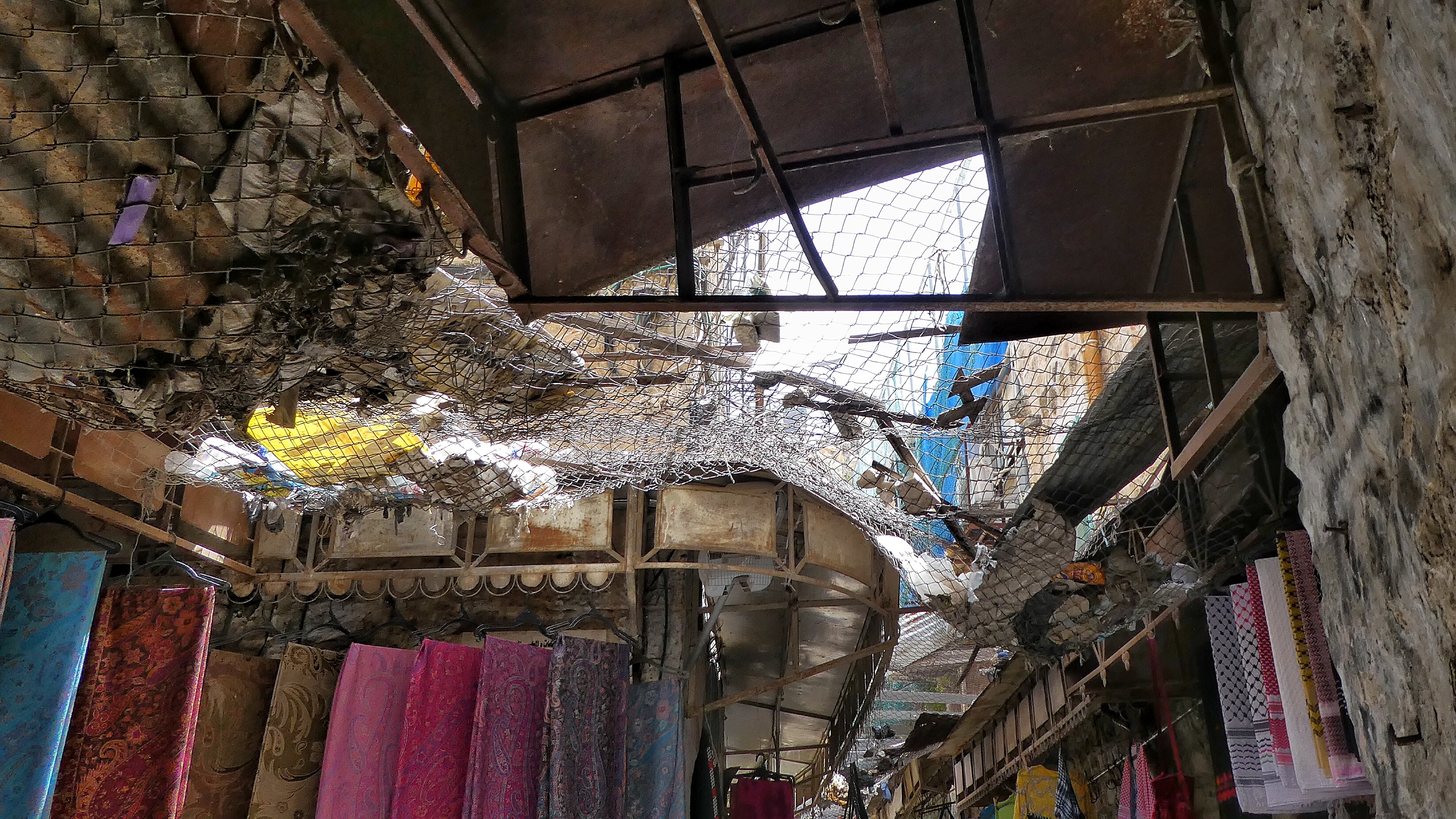
The area around the divided holy place is a ghost town. On one flank, a deserted street is patrolled by young Israeli soldiers in full battle gear, leading to the settler neighborhood. On the other side, past checkpoints and security screening, is Shuhada (martyrs) Street, an impoverished souq with more shops locked up than open, a small number of Palestinian storeowners, and a bevy of children endeavoring to sell us souvenirs. Above the few shops that are still open, there is a wire mesh to catch rocks, garbage, and various unmentionables thrown at Palestinians from Israeli settler families who have literally occupied the higher ground, abutting and overlooking the souq.

Scapegoating the Other

The Palestinians we met told us that Jewish settlers have been trying to drive them out of H2, to claim it for themselves, and that they will resort to all manner of harassment to do so, including throwing stones, and assaulting Palestinian children on their way home from school. Indeed, the United Nations Office for the Coordination of Humanitarian Affairs recently confirmed that movement restrictions, along with on-gong settler violence, reduced income, and restricted access to services and resources, has led to a reduction in the area’s Palestinian population. 

It is a desperate, hard life for all the Palestinians who live there. They cling on, refusing to leave or sell their ancestral homes. Offers, some very large, have been made in the past, but people will not trade their birthright, even when they are faced with physical threats to their lives. One Palestinian whose home we visited told me that his late wife was shot by Israeli soldiers, while his children were attacked by settlers. Nowadays, he and his few neighbors have no choice but to remain or flee without compensation as the Palestinian Authority has forbidden selling property to the settlers. And so they remain, in poverty and punishment.

The rebuilt and refurbished settler zone is a mix of run-down apartments. waste grounds, new community buildings and playgrounds, and a street of shops that once served the settlers’ needs but are now locked and neglected in a dusty, empty street. Here, the settlers too play the victim card, claiming that they area harassed, insulted, and killed. We met the administrator of the small Jewish museum and library who told us of how her grandfather was killed in 1929, and how her father was killed by an assailant in his own home. 

Today there are two Israeli soldiers for every Jewish settler. They are youngsters, barely out of high school. Heavily armed and nervous. With the power to end or destroy the lives of the Palestinians they occupy, many of them youths just like themselves. 

“You who build these altars then to sacrifice these children, you must not do it any more”.

If only it was that simple on the fault line of faith and nation.

Below is a selection of photographs taken during our visit.

Read more in In That Howling Infinite on the Middle East : A Middle East Miscellany

You can read more about the pain and passion of Hebron here:
http://www.sacred-destinations.com/israel/hebron-tombs-of-the-patriarchs
https://en.m.wikipedia.org/wiki/Israeli%E2%80%93Palestinian_conflict_in_Hebron

Author’s Note: 
Whenever I pen commentaries such as this, people ask why I rarely forward my own opinion on the issues I am presenting or discussing. On the contrary, I would argue that my views are fairly transparent in the subjects I chose to engage with, the words I use, and the vein in which I use them.

With respect to my numerous posts about Israel and Palestine, and the Middle East in general, I  come to my conclusions from a political science and sociology perspective – that’s where my academic experience came from – and a background in conflict resolution, supported by study and travel. If I do on occasions display any particular bias, it. originates in my longtime interest, understanding and affection for the history, politics, culture and language of the region, of its geography and archaeology, and  of its people of all faiths and nationalities that I make my observations.

I am presently working on a piece that encapsulates my thoughts on this complex and controversial subject. But meanwhile, here is a brief exposition.

I do believe that the systematic dispossession of almost a million Palestinians and the destruction of half of their towns and villages in 1948 is Israel’s original sin. It is the primal stain that colours and corrupts all that followed. And yet, if not for the actions, often daring, often brave, often questionable, and often deplorable, of the politicians and soldiers of 1948 – and of the generations that folllowed –  Israel would not exist today. This paradox is addressed sympathetically by Avi Shalit in My Promised Land, referred to above, and scathingly by ‘new history’ scholar Ilan Pappe in The Ethnic Cleansing of Palestine.   

The Occupation, fifty years old this year, which grew out of the unexpectedly total victory of June 1967, has taken on strategic, ideological and indeed messianic dimensions by many in the  Israeli government and political elite. It compounded the original sin, deepened the primal stain, released the demons of messianic fervour, and wounded Israel’s soul. The settlements locked the nation into the the colonialist project. With the close-call of the Yom Kippur War, the violence and murder of the first and second Intifadat, and present Palestinian jaquerie, Israel’s heart has not just hardened, it has become sclerotic.

I admit that I have always been sympathetic towards Israel – from my first visit in 1972. But it is not a blinkered viewpoint. I am deeply critical of Israeli politics and policies, and have no respect for many of its leaders.

Ayelet Shaked, the nationalist’s La Passionaria, and her boss Naftali Bennett do not not represent ALL Israelis! They hold extremist views just like we in UK, US, and Australia have parties and individuals with extremist views. But there are hundreds of thousands of Israelis who oppose the present government and long for justice and peace. And if – a very big “if” – Arab Israelis and the Israeli left could work together, they could obtain a majority in the Knesset and change Israel’s politics.

Yet meanwhile, Binyamin Netanyahu and his nationalist allies call all the shots, the Israelis continue to control and exploit the land, its people, and its resources, whilst varying degrees of annexation are on the cards. The settlements are an abomination, as are the policies and practices of the state and its occupying army, as described by Lyons and others. There’s no escaping these facts.

But I am likewise critical of Palestinian governance, politics and politicians. Hamas and the PA are on the nose in their respective fiefdoms, and if a moderate “third force” were to arise – and survive, because sure as hell, they would risk being murdered – Palestinians who just want a quiet, normal life, adequate services, and opportunities for their children, and Israelis who want likewise, might – just might – reject their extremist, dogmatic, entrenched leaders and reach some form of modus vivendi.

Palestinians themselves have to take control of their own lives, kick out their corrupt leaders, cease inculcating their children with hatred and jihadism, and use all that international good will and dollars to build a viable economy that can provide jobs, opportunities, and security, economic and physical to the people. Only this way will they be inoculated against cronyism, corruption and extremism. And yet, the dead hand of a moribund, patriarchal, conservative and ethnocentric culture holds them back –  but that is the subject of another, future discussion for In That Howling Infinite.

Today, the ‘powers that be’, defenders and beneficiaries of a status quo that looks more like a cul de sac, predominate over a dispiriting array of competing, clamouring factions, left, right, nationalist, secular, tribal, Haredi, and Islamist alike. New, young, brace, local voices in both Israel and Palestine, are not heard.

So what happens next?

I get that question too. And I am perennially reluctant to venture an answer beyond one that runs like “on the one hand…but then on the other”.  I inevitably fall back on Robert Fisk’s response to the same question with regard to the calamitous freezing over of the Arab Spring and the fall and rise again of the same old autocrats and tyrants: “my crystal ball is broken”. It’s a cop out, really, but just as cogent as that famous line in that UK spy drama Spooks: “What’s gong to happen to me?” “Bad things!”
One thing is for sure: as songwriter Warren Zevon sang, “the hurt gets worse, and the heart get harder”.

October 8th 2017

For more posts on Jerusalem, Israel and the Middle East, visit:
https://m.facebook.com/HowlingInfinite/
https://m.facebook.com/hf1983/

See also, my collection of posts about Jerusalem, and A Middle East Miscelany 

 Below, some pictures from our visit to Hebron in May 2016

Hebron May 2016

img_5080

Hebron May 2016

Hebron 2016

Hebron 2016

Hebron 2016

Hebron 2016


The Story Of Isaac

Leonard Cohen

The door it opened slowly,
My father he came in,
I was nine years old.
And he stood so tall above me,
His blue eyes they were shining
And his voice was very cold.
He said, “I’ve had a vision
And you know I’m strong and holy,
I must do what I’ve been told.”
So he started up the mountain,
I was running, he was walking,
And his axe was made of gold.
Well, the trees they got much smaller,
The lake a lady’s mirror,
We stopped to drink some wine.
Then he threw the bottle over.
Broke a minute later
And he put his hand on mine.
Thought I saw an eagle
But it might have been a vulture,
I never could decide.
Then my father built an altar,
He looked once behind his shoulder,
He knew I would not hide.
You who build these altars now
To sacrifice these children,
You must not do it anymore.
A scheme is not a vision
And you never have been tempted
By a demon or a god.
You who stand above them now,
Your hatchets blunt and bloody,
You were not there before,
When I lay upon a mountain
And my father’s hand was trembling
With the beauty of the word.
And if you call me brother now,
Forgive me if I inquire,
“just according to whose plan?”
When it all comes down to dust
I will kill you if I must,
I will help you if I can.
When it all comes down to dust
I will help you if I must,
I will kill you if I can.
And mercy on our uniform,
Man of peace or man of war,
The peacock spreads his fan.

قصة إسحاق
ليونارد كوهن

الباب فتح ببطء ،
أبي دخل ،
أنا في التاسعة من عمري.
ووقف عاليا فوقي ،
كانت عيونه الزرقاء مشرقة
وكان صوته شديد البرودة.
قال: “كان لدي رؤية
وأنت تعرف أنني قوي ومقدس ،
يجب أن أفعل ما قيل لي “.
فبدأ الجبل ،
كنت أركض ، كان يسير ،
وكان فأسه مصنوعا من الذهب.

حسنا ، الأشجار لديهم أصغر بكثير ،
البحيرة مرآة سيدة ،
توقفنا لشرب بعض النبيذ.
ثم ألقى الزجاجة.
انكسر بعد دقيقة
ووضع يده علي.
اعتقدت رأيت نسر
ولكن ربما كانت نسر ،
لم أستطع أن أقرر أبدا.
ثم بنى والدي مذبحًا ،
نظر مرة واحدة خلف كتفه ،
كان يعلم أنني لن أختبئ.

أنت الذي تبني هذه المذابح الآن
للتضحية بهؤلاء الأطفال ،
لا يجب أن تفعل ذلك بعد الآن.
المخطط ليس رؤية
ولم تجرِ ابدا
بواسطة شيطان أو إله.
أنت الذي تقف فوقهم الآن ،
فتاكاتك حادة ودموية ،
لم تكن هناك من قبل ،
عندما استلقيت على جبل
وكانت يد والدي ترتجف
بجمال الكلمة.

وإذا اتصلت بي أخي الآن ،
سامحني إذا سألت ،
“فقط وفقًا لخطة من؟”
عندما يأتي كل شيء إلى الغبار
سأقتلك إذا لزم الأمر ،
سأساعدك إذا استطعت.
عندما يأتي كل شيء إلى الغبار
سأساعدك إذا لزم الأمر ،
سأقتلك إذا استطعت.
ارحم زينا
رجل سلام أو رجل حرب ،
الطاووس ينشر مروحة.

Islam’s house of many mansions

Islam, the faith of some two hundred million souls, has a long and well-documented history of pluralism and tolerance, and indeed, learning. But in recent decades, the faith has been hijacked by the punitive and literalist proclivities of the Salafis, condoned, coopted and championed by the conservative, corrupt, brutal, patriarchal and misogynistic autocracies of Saudi Arab and other Gulf States and ostensibly Islamic states like Iran. If ever there were exemplars for the “religion of peace”, and followers of a “merciful and compassionate” God, these are certainly not. To borrow another faith’s noun, theirs’ is in so many ways a gospel of bondage. [read Alastair Crooke’s excellent article on the history of Wahhabism]

[This, by the way, is a book review and not a theological critique. I neither profess nor profane, although my personal opinions might occasionally intrude. I admit to a sound but not specialist familiarity with and knowledge of Islam and Muslims, and a wide but not expert knowledge of the Middle East]

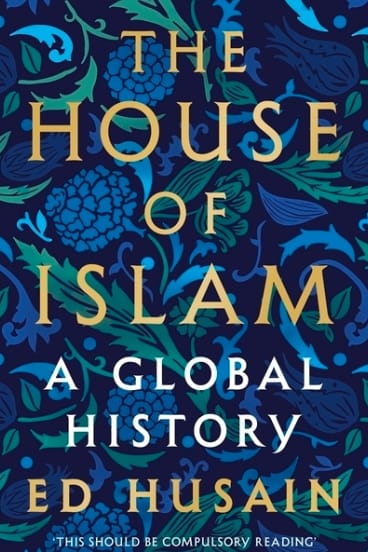
In The House of Islam – a global history  offers the potential for a softer, kinder, spiritual  Islam.  Author Ed Husain, British-born of Indian heritage, wears his Sufi heart on his sleeve.  “Preoccupied with spiritual awareness and depth, Sufi Islam transcends the performative trappings of superficial appearances such as beards and head-coverings, fixation with the simplistic binaries of haram and halal (what is forbidden and not forbidden in Islam) and the state’s imposition of sharia law.”

Little wonder that in many rooms in the House of Islam, Sufis are suspect, sanctioned and silenced – often brutally. As are many “heterogeneous” offshoots of this one true faith, including for many,  more than two hundred million Shiah.

It is the authoritarian, mediaeval Salafi-Wahhabi Arabian Peninsula theology and culture that has become commonly adopted as a marker of Muslim authenticity and has assumed the status of the ideal religious identity – notwithstanding the historical preeminence of Cairo, Damascus and Baghdad as centres of Muslim learning – and even though Arabs constitute a numerical minority in the Muslim world.

This “Arabization” and indeed, “Saudification” of Islam has colonized, distorted and, indeed, contorted and corrupted the spiritual message of Islam, and with the concurrent attractions and challenges of westernization, has, in Husain’s words, “disoriented the traditional Muslim equilibrium”, and brought forth jihadi abominations like al-Qaeda and Da’ish.

With the spread of ultra-conservative Salafi theology in many parts of the Arab and non-Arab Muslim world, Muslims are expected to dress in accordance with “modest” traditional Arabic attire and women are under pressure to wear the headscarf and other more extreme coverings – the latter never sanctioned by either Qur’an or Hadith writ. The writ runs deeper than outward appearance, as exemplified by the subordinate status of women in most Muslim societies. Moreover,  Arab and non-Arab Muslims are also expected to abandon their pre-Islamic history and culture – derided as remnants from pre-Islamic ignorance. In its most extreme manifestation, this saw the destruction of humanity’s priceless heritage at Palmyra and Nineveh. Some salafis call for the razing of Egypt’s pyramids.

Muslims in their glory days would refer to what went before as al Jahiliyya, the age of ignorance. But in so many ways, multitudes have returned there, helped in no small part by their more atavistic coreligionists who see salvation, wisdom and benefit to all in reverting to a medieval ethos and lifestyle of some golden age of faith which most scholars maintain never existed.

Islamists are intolerant of anything resembling a free exchange of ideas and information – the very concept of democracy is haram as the Prophet and his successors never thought of it – and possess a cultural antipathy, and iconoclastic rage for all things western, including, in some places,  western education (the derivation of the name ’Boko Haram’  for Nigeria’s ISIS franchise). The fundamentalist mindset in all its patriarchal intolerance, prejudice and misogyny is itself often embraced by the ignorant and the uneducated, the downcast and dispossessed, the bitter and the bigoted.

Husain points out that “not every Salafi is a jihadi, but every jihadi is a Salafi. Today’s jihadism, violating all the ethics of Islam, is nothing more than the continuation of the puritanism of the Salafi-Wahhabis“, which originated from the Saudi kingdom – guardian of Mecca and Medina, Islam’s most revered cities. There is no space for plurality and doubt in Salafi theology, rooted as it is in the discourse of yaqeen (certainty) and the propagation of an authoritarian one-dimensional piety.

This said, there are many more Muslim-majority states such as Turkey, Indonesia, Malaysia and Tunisia – countries that were conceived as secular states, and have largely remained secular or quasi-secular) , and indeed, have and made considerable democratic breakthroughs via the ballot box. Indonesia (the most populous Muslim-majority country) and Malaysia (one of the most industrialised Muslim-majority countries) are not located in the Arab Middle East. And yet, as events in Turkey and Indonesia have shown, the lure of radical Islam and its cultural and moral strictures is an attractive one to would-be authoritarians and to governments fearful of rising populist and nationalist tides.

And herein lies another portend. Just as the Muslim world has its share of religious and political extremists, so do an alarming number of Western democracies that are dominated by populists and ethno-nationalists who often do not hesitate to use religion as a blunt instrument of groupthink. I am thinking here of Russia and its Othodox Church, and of Polish Catholicism, but even ostensibly democratic USA and Israel are subject to the overweening influence of powerful evangelical and Haredim interest groups that endeavour to stamp their moral code on the more temporal majority. As radical British playwright Dennis Potter once remarked, “religion is the wound, not the bandage”.

Academic Lily Rahim notes in he review, published below, that this calls for a systematic analysis of the economic, socio-political, structural and institutional factors that have fueled the ascendancy of all forms of extremism, intolerance and exclusion, often rooted in authoritarian beliefs and systems. And that is a huge, multifaceted project, taking in the economic and social inequality that persists in countries rich and poor, the gap between the few ‘haves’ and the many ‘have-nots’, the power imbalances between the ‘North’ and the ‘South’, the pernicious rise of sectarianism and ethnocentrism, the mirage of ‘manifest destiny’, and the historical habit of the strong to bomb the weak and the poor to blazes.

Civil war and economic desperation have propelled millions of refugees across the Mediterranean and the Aegean Sea into Europe, threatening the unity and stability of the European Union. Islamic fundamentalism has filled the vacuum created by crumbling dictatorships and vanishing borders, unleashing atavistic, uncompromising and vicious Jihadis against their own people and co-religionists, and onto the streets of cities as far apart as Paris and Brussels, Istanbul and Baghdad, Jakarta and Mogadishu. In Syria particularly, but also in Iraq, Libya, Yemen, and Afghanistan, the longest war in the 21st Century, outsiders have intervened to further complicate the chaos, rendering an early end to what Rudyard Kipling called these “savage wars of peace” a forlorn hope.

“In many respects, the House of Islam is a microcosm of The House of Human History”.

Two other reviews of Ed Husain’s informative and illuminating boo follow.

For other posts regarding the Middle East in Into That Howling Infinite, see A Middle East Miscellany.  And, for a long view, read: A Brief History of the Rise and Fall of the West.

The House of Islam by Ed Husain.


The House of Islam by Ed Husain review – a powerful corrective

Boys prepare food for devout Muslims to break their day-long fast on the last Friday of the holy month of Ramadan in Mumbai, India.
         Boys prepare food for devout Muslims to break their day-long fast on the last Friday of  Ramadan in Mumbai, India ( Rajanish Kakade/AP)

Of the world’s 1.6 billion Muslims a very large number – perhaps a majority – observed the Ramadan fast last month. This doesn’t simply mean abstaining from food and water during the hours of daylight (as well as sex and cigarettes), but in many cases involves a deliberate reappraisal of one’s relation to God and the world, with more prayers and philanthropy and less shopping.

Of all the obligations that define Islam, Ramadan arouses perhaps the most irritation among some outsiders. A practice that places such a strain on the body is surely an affront to reason. Nor does it seem to make economic sense for workers to be tired and unproductive while declining to perform their allotted roles as consumers with credit ratings. And yet the west has absorbed Ramadan, if uneasily, with supermarket promotions for dates (the Prophet’s favoured breakfast), school assemblies on the subject and “What is Ramadan?” features even in the Sun.

Knowledge about Islam may have improved, but the speed with which relations are changing between Muslims and non-Muslims, and between Muslims, necessitates a constant reassessment of different worldviews and the way they interrelate. Isis’s defeat in Mesopotamia has not led to any meaningful dialogue between cultures. On the contrary, with Gaza aflame, the Iran nuclear accord uprooted and Sunni-Shia tensions at an all-time high, the prospects for detente have rarely been bleaker.

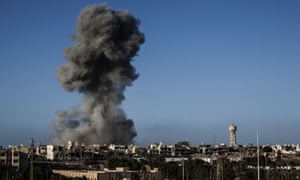
An airstrike on Islamic State militants in Sirte, Libya in 2016.
                      Airstrike on Islamic State militants in Sirte, Libya in 2016 )Manu Brabo/AP)

It’s an illustration of the insincerity of many world leaders that more than 250 French public figures, including former president Nicolas Sarkozy and three former prime ministers, recently demanded that Qur’anic verses endorsing the killing of non-Muslims be “struck down” – just as the Second Vatican Council expurgated elements of Catholic doctrine in the early 1960s. This meretricious proposal affects to assume that Islam is a centralised religion like Catholicism (it isn’t), that the Qur’an can be snipped and remain the Qur’an (it can’t), and that because they recognise the same holy book the Islam of the jihadi is the same as that of the Sufi or the Europeanised Muslim with his Qur’an on the top shelf and his bottle of burgundy on the bottom. When will someone put these contradictions of text, practice and culture into terms accessible to the layperson? Who will speak across the divides?

Enter Ed Husain. A Briton of Indian parentage, a Muslim whose bestselling book, The Islamist described his temporary embrace of the values of global jihad in the 90s, Husain retained his religious faith even after he became a government adviser on deradicalisation. Since then he has lived off the fat of the neoliberal establishment that ran the world before the age of Trump, working for Tony Blair’s Faith Foundation as well as several other well‑heeled thinktanks on both sides of the Atlantic. The anti-extremism organisation he co-founded in 2007, Quilliam, is considered by many to be hopelessly compromised by its support for government efforts to squeeze Muslims into the corset of “British” values.

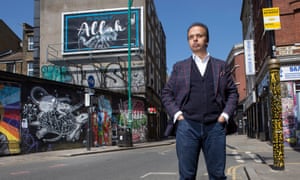
Ed Husain in Brick Lane, London, May 2018.
                            Husain in Brick Lane, London, May 2018 (Andy Hall, The Observer)

Husain’s politics and the company he keeps may be questioned, but they evidently haven’t stopped him from thinking productively about Islam as a force for good in the world. An account of the compassion, reason and wonderment that Islam has exhibited for much of its history, this book is a powerful corrective to the widespread perception, fostered by jihadis and Islamophobes alike, that it’s a belief system for misanthropes.

Ever since its inception Islam’s ethos had been contested, but a disastrous turn came with rejection of the printing press and the triumph of scholasticism over independent reasoning, exacerbated by a morale-sapping struggle against European expansionism in the 19th and 20th centuries.

Husain rightly says that the root of much Muslim confusion is a sense that a glorious past has soured into defeat and humiliation, but fallen prestige is hardly the monopoly of Muslims. The West has also lost ground, particularly its white males; dealing with changes in status is a part of being human. In general, Husain is too apt to view Muslims and their dignity as qualitatively different from those of other people. His modern politics can also be sketchy. With justification he criticises Saudi Arabia for its promotion of bigotry – less understandable is his soft spot for the  Turkey of Recep Tayyip Erdogan –  less a paragon of generous Islam than thuggish majoritarianism. His insistence that Muslim nations accommodate the tiny Jewish state in their midst is common sense but a suggestion of a Middle Eastern union including Israel reads somewhat grotesquely in the light of the recent carnage in Gaza.
For all that, Husain has written a valuable book, full of suggestions for Islam’s implementation from a position of magnanimity and love. Then the confidence will return.
 The House of Islam: A Global History is published by Bloomsbury. To order a copy for £21.25 (RRP £25) go to guardianbookshop.com or call 0330 333 6846. Free UK p&p over £10, online orders only. Phone orders min p&p of £1.99.

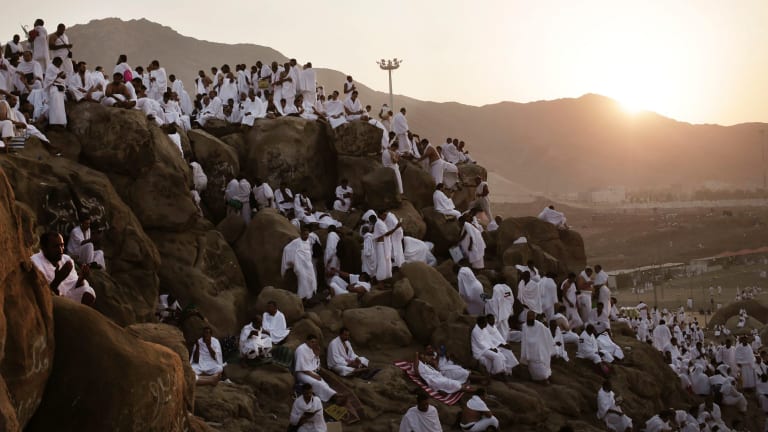
Muslim pilgrims pray on the Mountain of Mercy during The Haj. Mount Arafat, marked by a white pillar, is where Prophet Muhammad is believed to have delivered his last sermon to tens of thousands of followers some 1400 years ago, calling on Muslims to unite.
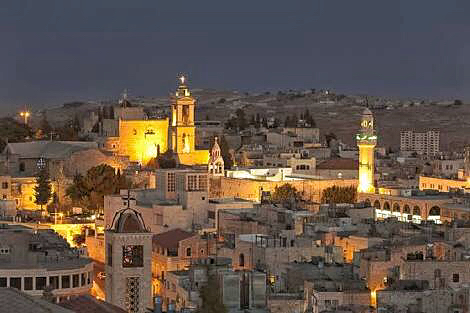
Muslim pilgrims pray on the Mountain of Mercy during The Haj. Mount Arafat, marked by a white pillar, is where Prophet Muhammad is believed to have delivered his last sermon to tens of thousands of followers some 1400 years ago, calling on Muslims to unite ( Nariman El-Mofty/AP)

In The House of Islam, Ed Husain affirms the centrality of the pluralist foundations and principles of Islam. Pluralism has also been rooted in Husain’s “lived reality”. His book opens powerfully, with Husain affirming his plural identity: “I am a Westerner and an observant Muslim. Caught between two worlds, I have learnt to dovetail the two facets of my identity. This book is a reflection of that inner bridge between Islam and the West”.

Yet, as the inflections of this superbly written book suggest, Husain’s “inner bridge” extends beyond “Islam and the West” and incorporates “the West” (Britain where he was born and raised), Islam (his faith) and India, his ancestral homeland.

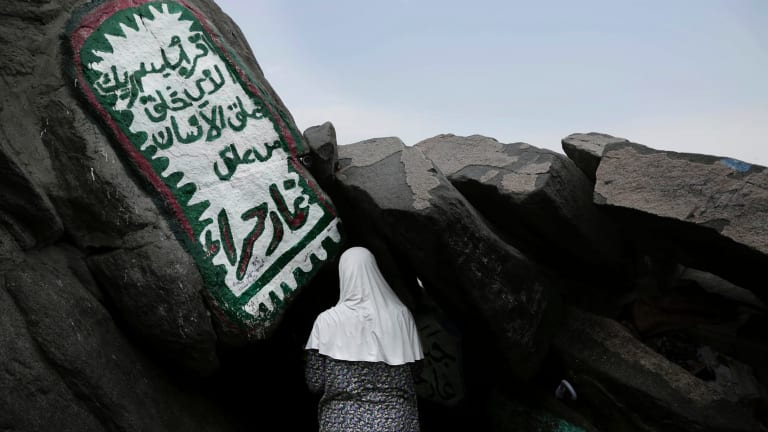
A Turkish Muslim woman prays inside Hiraa cave, where Prophet Muhammad received his first revelation from God to preach Islam, on Noor Mountain, on the outskirts of Mecca, Saudi Arabia.
A Turkish Muslim woman prays inside Hiraa cave, where Prophet Muhammad received his first revelation from God to preach Islam, on Noor Mountain, on the outskirts of Mecca, Saudi Arabia.Photo: AP

Husain’s Indian heritage comes across in his whimsical ruminations of Mughal Sufi history, in particular the riveting narrative of Jahanara Begum – the complex and colourful Sufi-inspired daughter of the Mughal emperor Shah Jahan (1592–1666), who built the Taj Mahal in memory of his beloved wife.

Hussain’s Sufi proclivities are apparent in the chapter “Who is a Sufi”, arguably one of the most engaging chapters. Husain describes the Sufi as one who “seeks only to please God, and does so in secret as often as possible”, grapples with “the heart and soul of Islam” and strives towards “maintaining equilibrium while swimming in deep oceans of spiritual awareness, and the ways in which the human ego could be crushed”.

Preoccupied with spiritual awareness and depth, Sufi Islam transcends the performative trappings of superficial appearances such as beards and head-coverings, fixation with the simplistic binaries of haram and halal (what is forbidden and not forbidden in Islam) and the state’s imposition of sharia law.

In contrast to the rigid, punitive and literalist tendencies of Salafi Islam, as promoted by the conservative monarchies in Saudi Arabia and other Gulf states and supposed Islamic states such as Iran, Sufi Islam’s leanings are inclusive, compassionate and speak to the complex yearnings of the human soul.

These leanings are evident in Rumi’s message of learning, hope and redemption, as the renowned Sufi poet ruminated: “Come. Come, whoever you are./ Wanderer, worshipper, lover of learning./ It doesn’t matter./ Ours is not a caravan of despair./ Come, even if you have broken your vows a thousand times./ Come, yet again, come, come.”

Husain’s considerable insights on the house of Islam, made up of more than 1.5 billion Muslims, have been shaped by his lived incarnations as an Islamist, Salafist and current abode in mystical Sufi Islam. His destiny within Sufi Islam culminated after many years of study under the guidance of Islamic scholars and living in the Middle East.

Enriched by these experiences, Husain notes that he has the “rare privilege of being an insider both in the West and in the Muslim World”. Yet, it could also be deduced that his acute insights have been cultivated by his status as an “outsider” in both the West and the Arab Middle East – stemming from his minority Indian ethnicity in both domains.

The House of Islam is understandably concerned with authoritarian and Salafi-Wahhabi Gulf Arab theology and culture that has become commonly adopted as a marker of Muslim authenticity. This peculiarity has assumed the status of the ideal religious identity – even though Arabs constitute a numerical minority in the Muslim world.

Husain insightfully asserts that Arabisation as well as Westernisation has “disoriented the traditional Muslim equilibrium”, as manifested by the rise of Salafi jihadi groups such as Isis and al-Qaeda.

With the spread of ultra-conservative Salafi theology in many parts of the Arab and non-Arab Muslim world, Muslims are expected to dress in accordance with “modest” traditional Arabic attire and women are under pressure to wear the headscarf and other coverings. Arab and non-Arab Muslims are also expected to jettison their pre-Islamic history and culture – derided as remnants from pre-Islamic ignorance or jahiliyya.

Husain reminds us of the paradox of the current Salafi dominance by noting that in the 1790s, Salafis were not even considered Muslims by the chief qadi (cleric) of Mecca; indeed, for several years Salafis were kept away from the holy cities and The Haj.

He highlights the theological ties between Salafi Islam and jihadi Islamists, such as Isis and al-Qaeda, by pointing out that “not every Salafi is a jihadi, but every jihadi is a Salafi…. Today’s jihadism, violating all the ethics of Islam, is nothing more than the continuation of the puritanism of the Salafi-Wahhabis”, which originated from the Saudi kingdom – guardian of Mecca and Medina, Islam’s most revered cities.

There is no space for plurality and doubt in Salafi theology, rooted as it is in the discourse of yaqeen (certainty) and the propagation of an authoritarian one-dimensional piety.

The House of Islam is a valuable read, particularly for those with some understanding of Islam and the Muslim world. Husain is a gifted writer and perceptive observer particularly of the Arab Middle East.

That said, the book makes minimal references to the more dynamic and democratising Muslim-majority states such as Indonesia, Malaysia and Tunisia – countries that were conceived as secular states (have largely remained secular or quasi-secular) and made considerable democratic breakthroughs via the ballot box. Instructively, Indonesia (the most populous Muslim-majority country) and Malaysia (one of the most industrialised Muslim-majority countries) are not located in the Arab Middle East.

Instead of pointing to Israel as a source of emulation for the Muslim world, Husain could well have highlighted these consolidating democracies. All three countries boast a vibrant civil society, coalition governments based on power-sharing and political systems based on secular constitutionalism.

Despite the penetrating insights in The House of Islam, Husain’s narrative of the myriad hurdles confronting the Palestinian struggle for self-determination, and Israel’s role in this struggle, is somewhat disappointing.

Just as the Muslim world has its share of religious and political extremists, so does Israel and an alarming number of Western democracies that are dominated by populists and ethno-nationalists. This calls for a systematic analysis of the economic, socio-political, structural and institutional factors that have fuelled the ascendency of all forms of extremism, intolerance and exclusion, often rooted in authoritarian beliefs and systems. In many respects, the House of Islam is a microcosm of The House of Human History.

https://www.smh.com.au/entertainment/books/the-house-of-islam-review-ed-husain-on-the-history-of-a-welcoming-religion-20180809-h13r0w.htm

Lily Rahim is an Associate Professor at the University of Sydney, where she teaches Political Islam and Southeast Asian Politics. Her more recent books include Muslim Secular Democracy and The Politics of Islamism. Ed Husain is a guest at the Melbourne Writers Festival (mwf.com.au).

O little town of Bethlehem, how still we see thee lie…

Bethlehem has captured the imagination of the world for centuries – we are culturally and spiritually drawn to this famous Palestinian town, and specifically, to an event that may or may not have happened 2,020 years ago. Many express doubt but we nevertheless embrace the myth and the magic it inspires: the appearance of a “star of wonder, star of light, star of royal beauty bright”, harking back to prophecies of old; stories of wise men journeying on camels’ back from the exotic and mysterious east, choiring angels, simple shepherds watching their flocks, and homely livestock; and an auspicious birth in the outhouse of a village pub – all the well-loved dramatis personae of the classic manger scene.

These moments in time have long inspired painters and poets, and are recalled by carol singers from the field mice of The Wind in the Willows to the sentimentality of that famous book by the one they now hail as “the man who invented Christmas” to the songs that make shopping at this time of the year cruel and unusual punishment.

For over a century, Christian pilgrims have flocked to Bethlehem from all over the world – until COVID and the current conflict. It has long been the bedrock of the town’s economy. As a frequent visitor to Israel and Palestine, an amateur historian and a one-time catholic, I’ve visited the town and the Church of the Nativity many times over the years. Though I do not profess faith, I treasure Bethlehem for what it represents in Christianity’s story and also my own.

Poets have always been ambivalent about Bethlehem. It’s been invested with a symbolism quite detached from the geographic. TS Elliot’s magi we’re unsure what it all actually meant, whilst to WB Yeats, it might’ve been a place where bad things would happen. But then they hardly knew the place, and them and countless others, it is a place of myth and memory, most of it imagined.

And whilst “the hopes and fears of all our years” abide with this town of some 27,000 souls, it has a life of its own, a history, a society, an economy, and a political story that reaches back eleven thousand years.

Like Jerusalem, its sacred, senior sibling, just ten kilometres away as the crow flies (and much, much longer by road due to the impositions of the occupation), the “little town of Bethlehem”  is as much a city of the mind and heart as one of bricks and mortar and of ordinary people with myriad preoccupations and passions.

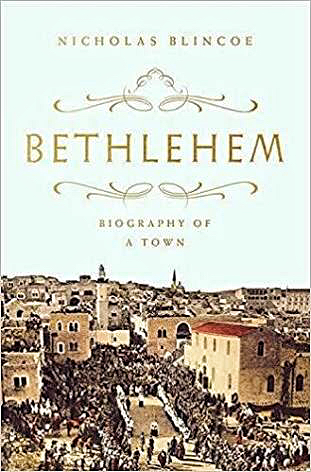
British author and screenwriter Nicholas Blincoe has now written an affectionate and informative biography of a town that is as close to the heart of our culture as any town ever was, and yet one that is almost unknown. Whilst “the hopes and fears of all our years” abide with this town of some 27,000 souls, it has a story of its own that reaches back eleven thousand years.

Ballad of a border town 

Blincoe’s story is part history, part travelogue and memoir, the past intermingling with the present in informative and ofttimes entertaining anecdotes and interviews, memories and personal experiences, as he takes us on a journey from the stone age to the stone wall – one that is in places eight metres in height.

Bethlehem has since the beginning of recorded history been a border-town on a physical and metaphysical borderland.

A borderland between “the desert and the sown”, the Judean Desert with it’s sheep-herding nomads and Bedouin bandits, and the orchards and vineyards in the fertile wadis that for centuries had supplied world-famous wine and olive oil.

A borderland also between the Christians who once constituted a majority, and who for generations have tended to the churches, shrines, and monasteries that were drawn to the holy ground around the Church of the Nativity, and the vast Muslim hinterland from whence over the centuries have come traders and invaders, missionaries and marauders, tourists and tanks. For two thousand years, Jerusalem and Bethlehem have been one of the world’s preeminent destinations for religious tourism, and over two million tourists and pilgrims visit the town each year.

Bethlehem’s location has given it a social, political, economic, and strategic significance disproportionate to its size. It grew the confluence of the springs and aqueducts that have supplied nearby Jerusalem for millennia. “All ittakes to conquer Jerusalem is to seize its water supply…This is what every future invader did.” It was close to the historic trade route between the Kings Road that linked the Hijaz to the Hauran, Damascus and the north, and the ancient Palestinian ports on the Mediterranean.

Its importance as a Christian island in a sea of Islam saw it serve as a refuge for the oppressed and dispossessed of Ottoman pogroms and genocides and also of the Nakba, it has earned a reputuaion as a haven for the more secular and radical elements of the Palestinian national movement their struggle with more religious and indeed fundamentalist adversaries.

But over the last half-Century, it is town that is increasingly cut off and isolated by the Separation Wall, encircled and encroached upon by the ever multiplying and expanding Israeli settlements (forty one at the last count with well over 100,000 inhabitants), hostile and acquisitive settlers, and the daily impositions and injustices of the military occupation with its restricted roads, armed soldiers and border police, checkpoints and the Kafkaesque permit system.

A cultural caravanserai

For most of his historical narrative, Blincoe maintains a degree of scholarly detachment with regard to the serpentine history and politics of the region, and  crafts a captivating tale of warlords and adventurers, of soldiers and saints,  as a parade of foreign armies pass through. Egyptians, Hittites, Persians, Greeks, and Romans, Arabs, Franks, and Mamluks, Turks, Brits, and finally, Israelis. There is a great picture of a group of Anzacs from the far side of the world in their winter coats emerging from the cave of the nativity in December 1917. Rulers and rebels have passed this way, and many, like mad, bad King Herod, Bar Kokba’s Jewish fighters, and the Shabab of the Palestinian Intifada-t have died nearby.

Given its religious significance, Bethlehem has forever been a focus and at times, a flash-point for events that have enmeshed the Holy Land and its Holy Places, from the fossicking of Emperor Constantine’ mother Helena and the self-imposed exile of estranged Empress Eudocia, through the Muslim conquest, the Crusades and Mongol raids to the Crimean War, the Palestine Campaign of WW1, and the Arab-Israel conflict. Bethlehem’s history has been one of civilization, colonization and conquest.

As a former scholar of philosophy, Blincoe seems particularly at home amidst the theological disputes of the early Christian, Byzantine period, and brings to life a host of passionate, idiosyncratic, adventurous, and infuriating men and women – the wandering saints and scholars, clerics and ascetics, wealthy widows and society matrons of the Middle Ages, and an unending caravan of pilgrims, tourists, evangelical adventurers and amateur archaeologists that have walked these hills and valleys for centuries. As with Jerusalem, seekers of the numinous could never get enough of the place.

He doesn’t shy away from the social, theological and political complexities of his chronicle, but his objectivity is severely tested in his final chapters when writing of Bethlehem and the occupation.

But then he does after all have a lot of skin in the game: he is married to Bethlehem filmmaker Leila Samsour, dividing his time between London and Bethlehem. He is quite embedded with Leila’s Christian Palestinian family, one with deep roots in the town’s history and politics, and has often been in the thick of the crises, protests, incursions and violent clashes that periodically embroil his adopted home.

He is not some desktop warrior, NGO apparatchik or “occupation tourist”. And whilst he deplores the actions of the settlers and the right wing politicians – Avigdor Leiberman and other nationalist MKs are virtual neighbours of his – and ascribes to revisionist Israeli historians like Ilan Pape and Benny Morris’ reading of the Nakba, he is not one of Israel‘s haters But he is disappointed, saddened, infuriated even by the Jewish state’s often cavalier and callous approach to its Palestinians who are its neighbours and also, its sullen, subject people.

Banksy’s Bethlehem Bouquet. Paul Hemphill

Breaking the wheel

Palestine, and with it,  Jerusalem and Bethlehem, have always been under strangers’ dominion. But in the past, the rulers largely left the locals to live their own lives and manage their own affairs in accordance with their own social, political, and religious ways, and in the fullness of time, they departed, ceding the land to the next despot. Until, that is, the Israelis. In the words of Daenerys Targaryen: “ We’re not going to stop the wheel. I’m going to break the wheel.”

Year by year, Bethlehem’s economy shrinks. Over two million tourists and pilgrims visit “Royal David’s City” annually, but its economically stressed, and it has the highest unemployment rate (nearly 30%) in the West Bank.

Year by year, Bethlehem’s Christian population diminishes as people head overseas in search of a better life – and particularly its young folk. In 1950, Bethlehem and the surrounding villages were 86% Christian, but by 2016, the Christian population was but 12%.

Year by year, the settlements grow, and settlers, encouraged by an extremist, nationalist government and a seemingly compliant IDF, become more emboldened in their expansion onto Palestinian land. Considered illegal under international law, Israel regards them as legitimate suburbs of Jerusalem- a territorial fait accompli that is tantamount to de facto annexation.

Year by year, Bethlehem becomes more and more cut off from the rest of the West Bank by walls, wire, and a web of “Israeli only” highways, and indeed from the world beyond the wall. Travel to Jerusalem and to the rest of the West Bank is severely restricted by roads, checkpoints and permits, whilst the interaction between Israelis and Palestinians that existed during the seventies and eighties, in workplaces, educational and health institutions, friendships and romances, ceased after the terrors of the second, bomb Intifada as israel and Israelis withdrew into their mental and physical fortress.

A generation of young people on either side of the old and ostensibly moribund Green Line have grown up with negligible contact with their peers on the “other side” – and this is most likely to be limited to military service in the Occupied Territories on the one hand, and confrontations with armed soldiers on the other.

Writing of the 1948 war, Blincoe notes: “From their future actions it became clear that both Jordan and Israel saw the term “Palestine” as an empty tag: it was the name of a piece of real estate rather than the home of people demanding self representation”, this is how he sees the future for Palestine and for Bethlehem, his adopted home. He argues that the settlement project is first and foremost about land and cheap housing for middle and lower class Israelis pressed by rising property values and a shortage of affordable housing to rent or buy in Israel proper. it is real estate developers, he argues, with friends in high places, who are calling the shots, rather than the more visible and vocal Zionist nationalists. As the Israeli historian and one–time deputy mayor of Jerusalem Meron Benvenisti puts it, the settlements are a “commercial real estate project that conscripts Zionist rhetoric for profit”. The story of Jesus and the money-changers somehow comes to mind.

It is an intriguing argument that invites further research. it also echoes what would appear to be a similar patter in those parts of the West Bank that are under the direct control and administration of the Palestinian Authority, as we have reported earlier in Castles Made of Sand, an account of the land rush that is taking place in Area A.

With this and all the other pressures in play, from Blincoe’s perspective, the future prospects of Palestine and the little town of Bethlehem not appear to be promising. Bethlehem – Biography of a Town does not have a happy ending.

Synchronicity – a footnote

A few days after this post was published, an article by Hillel Zand appeared in the Matzav Review addressing the settlements and the real estate argument:  “Israel’s right-wing has strengthened in recent years because it has promoted heavily financing the settlement project as a way to compensate for the not insignificant negative side-effects of neoliberal economic policy, especially rising housing prices and increasing inequality and poverty…In Israel, the “losers” are being compensated by the advocates of these policies with incentives, subsidies and entitlements that allow them to maintain, or even raise, their quality of life by living in West Bank settlements”.

The Israel-Jordan collaboration referred to by Blincoe also raised its controversial head recently when Justice Minister Ayalet Shaked and her boss Naftali Bennett hinted, favourably, at the prospects of US’ impending “peace deal” that includes the West Bank being ceded to Jordan and Gaza to Egypt. Murmurings from US allies Egypt and Saudi Arabia have also indicated support for such an idea.

Aida Refugee Camp, Bethlehem. Paul Hemphill

Walls and wire define the brotherhood of man.  Paul Hemphill

Some further reading about Bethlehem:

There are the PLO’s official facts and figures, and the National Catholic Reporter on the declining Christian population. And there is always Wikipedia. There are a series of posts in In That Howling Infinite about Jerusalem and Palestine in: O Jerusalem, and A Middle Eat Miscellany

Author’s Note: 

Whenever I pen commentaries such as this, people ask why I rarely forward my own opinion on the issues I am presenting or discussing. On the contrary, I would argue that my views are fairly transparent in the subjects I chose to engage with, the words I use, and the vein in which I use them.

With respect to my numerous posts about Israel and Palestine, and the Middle East in general, I  come to my conclusions from a political science and sociology perspective – that’s where my academic experience came from – and a background in conflict resolution, supported by study and travel. If I do on occasions display any particular bias, it originates in my longtime interest, understanding and affection for the history, politics culture and language of the region, of its geography and archaeology, and of its people of all faiths and nationalities that I make my observations.

I am presently working on a piece that encapsulates my thoughts on this complex and controversial subject. But meanwhile, here is a brief exposition.

I do believe that the systematic dispossession of almost a million Palestinians and the destruction of half of their towns and villages in 1948 is Israel’s original sin. It is the primal stain that colours and corrupts all that followed. And yet, if not for the actions, often daring, often brave, often questionable, and often deplorable, of the politicians and soldiers of 1948 – and of the generations that folllowed –  Israel would not exist today. This paradox is addressed sympathetically by Avi Shalit in My Promised Land, referred to above, and scathingly by ‘new history’ scholar Ilan Pappe in The Ethnic Cleansing of Palestine.   

The Occupation, fifty years old this year, which grew out of the unexpectedly total victory of June 1967, has taken on strategic, ideological and indeed messianic dimensions by many in the  Israeli government and political elite. It compounded the original sin, deepened the primal stain, released the demons of messianic fervour, and wounded Israel’s soul. The settlements locked the nation into the the colonialist project. With the close-call of the Yom Kippur War, the violence and murder of the first and second Intifadat, and present Palestinian jaquerie, Israel’s heart has not just hardened, it has become sclerotic.

I admit that I have always been sympathetic towards Israel – from my first visit in 1972. But it is not a blinkered viewpoint. I am deeply critical of Israeli politics and policies, and have no respect for many of its leaders.

Ayelet Shaked, the nationalist’s La Passionaria, and her boss Naftali Bennett do not not represent ALL Israelis! They hold extremist views just like we in UK, US, and Australia have parties and individuals with extremist views. But there are hundreds of thousands of Israelis who oppose the present government and long for justice and peace. And if – a very big “if” – Arab Israelis and the Israeli left could work together, they could obtain a majority in the Knesset and change Israel’s politics.

Yet meanwhile, Binyamin Netanyahu and his nationalist allies call all the shots, the Israelis continue to control and exploit the land, its people, and its resources, whilst varying degrees of annexation are on the cards. The settlements are an abomination, as are the policies and practices of the state and its occupying army, as described by Lyons and others. There’s no escaping these facts.

But I am likewise critical of Palestinian governance, politics and politicians. Hamas and the PA are on the nose in their respective fiefdoms, and if a moderate “third force” were to arise – and survive, because sure as hell, they would risk being murdered – Palestinians who just want a quiet, normal life, adequate services, and opportunities for their children, and Israelis who want likewise, might – just might – reject their extremist, dogmatic, entrenched leaders and reach some form of modus vivendi.

Palestinians themselves have to take control of their own lives, kick out their corrupt leaders, cease inculcating their children with hatred and jihadism, and use all that international good will and dollars to build a viable economy that can provide jobs, opportunities, and security, economic and physical to the people. Only this way will they be inoculated against cronyism, corruption and extremism. And yet, the dead hand of a moribund, patriarchal, conservative and ethnocentric culture holds them back –  but that is the subject of another, future discussion for In That Howling Infinite.

Today, the ‘powers that be’, defenders and beneficiaries of a status quo that looks more like a cul de sac, predominate over a dispiriting array of competing, clamouring factions, left, right, nationalist, secular, tribal, Haredi, and Islamist alike. New, young, brace, local voices in both Israel and Palestine, are not heard.

So what happens next?

I get that question too. And I am perennially reluctant to venture an answer beyond one that runs like “on the one hand…but then on the other”.  I inevitably fall back on Robert Fisk’s response to the same question with regard to the calamitous freezing over of the Arab Spring and the fall and rise again of the same old autocrats and tyrants: “my crystal ball is broken”. It’s a cop out, really, but just as cogent as that famous line in that UK spy drama Spooks: “What’s gong to happen to me?” “Bad things!”

One thing is for sure: as songwriter Warren Zevon sang, “the hurt gets worse, and the heart get harder”.

October 8th 2017

For more posts on Jerusalem, Israel and the Middle East, visit:
https://m.facebook.com/HowlingInfinite/
https://m.facebook.com/hf1983/

See also, my collection of posts about Jerusalem. 

The Church of the Nativity. Paul Hemphill

Where Christianity began. Paul Hemphill

Pity the nation that is full of beliefs and empty of religion

I was inspired to write this post on viewing the video below, a harrowing picture gallery of the Bosnian War, the bloodiest but not the last of the Wars of the Yugoslav Succession. I was reminded  of the iconic Lebanese poet Khalil Gibran’s poem, Pity the Nation,  a sardonic and incisive take on the politics of his time and his homeland. It is chilling in its prescience with regard to contemporary politics in the Middle East and indeed, much, much closer to home on in our liberal democracies where les mots de jour, and indeed, des temps are ‘populism’ and ‘post-truth’,  where allegations of ‘alternative facts’ and ‘fake news are ubiquitous and duplicitous, and where, in a milieu of fear, anger and loathing, intolerance and ignorance appear to be on the rise.

Today, in America, 1984 and The Handmaid’s Tale are best-sellers, and doubtless, as resignation and surrender sink in, Fahrenheit 451 and Catch 22 will catch on with intellectually and numerically inclined. The one is the temperature at which paper burns (“Remember, the firemen are rarely necessary. The public itself stopped reading”), the other, the mother of all vicious circles. The 22 was meant to be 18, but Joseph Heller was gazzumped by Leon Uris’ holocaust melodrama Mila 18  (which I do happen to like).

I was also reminded of a book of the same name. In Pity the Nation, his tombstone of a book about Lebanon’s civil war, and Israel’s intervention therein (inspired by Gibran’s poem, and by the fact the he has been a resident of Lebanon for going on half a century), the redoubtable British  journalist Robert Fisk writes of a Lebanese doctor, Amal Shamaa: “I had to take the babies and put them in buckets of water to put out the flames. When I took them out half an hour after, they were still burning. Even in the mortuary, they smouldered for hours”. “Next morning”, Fisk continues, “Amal Shamaa took the tiny corpses out of the mortuary for burial. To her horror, they again burst into flames”. Such is the effect of phosphorous shells on mortals. Made in America, used on Arabs, by Jews. But it happens anywhere and everywhere, inflicted by anyone on everyone.

And that, is in essence, the underlying message of Gibran’s poem, published posthumously after his death in 1931.

Pity the nation that is full of beliefs and empty of religion.
Pity the nation that wears a cloth it does not weave
and eats a bread it does not harvest.

Pity the nation that acclaims the bully as hero,
and that deems the glittering conqueror bountiful.

Pity a nation that despises a passion in its dream,
yet submits in its awakening.

Pity the nation that raises not its voice
save when it walks in a funeral,
boasts not except among its ruins,
and will rebel not save when its neck is laid
between the sword and the block.

Pity the nation whose statesman is a fox,
whose philosopher is a juggler,
and whose art is the art of patching and mimicking

Pity the nation that welcomes its new ruler with trumpeting,
and farewells him with hooting,
only to welcome another with trumpeting again.

Pity the nation whose sages are dumb with years
and whose strongmen are yet in the cradle.

Pity the nation divided into fragments,
each fragment deeming itself a nation.

Kahlil Gibran, The Garden of The Prophet (1933)

ارحم على الامة
ارحم على الأمة المليئة بالمعتقدات والخالية من الدين.
ارحم على الأمة التي تلبس ثوبا لا يحاك.
وتأكل خبزا لا تحصد.
أشفق على الأمة التي تعتبر المتنمر بطلاً ،
ويعتبر منتصرها رائعا.
ارحم أمة تحتقر الشغف في أحلامها
لكنه يخضع لها عندما تستيقظ.
ارحم على الأمة التي لا ترفع صوتها
إلا عندما تمشي في جنازة ،
وتفتخر فقط بين أطلالها ،
ولن تنقذ نفسها عندما توضع رقبتها
بين السيف والكتلة.
ارحم على الأمة التي فيها رجل الدولة وهو ثعلب ،
والفيلسوف مشعوذ
فنه من الترقيع والتقليد
ارحم على الأمة التي تستقبل حاكمها الجديد بصوت عالٍ ،
ويقول وداعا له بسخرية ،
فقط للترحيب بآخر من خلال الاحتفال الصاخب مرة أخرى
ارحم على أمة حكماؤها أغبياء السنين ،
وأولئك الذين لا يزال رجالهم الأقوياء في المهد.
ارحموا الأمة منقسمة ،
وكل قطعة تعتبر نفسها أمة.

خليل جبران

The following song, E Lucevan Le Stelle, encapsulates all this:

“And time, ’tis said reveals its dead, and we will speak what was unsaid. How he was wrong, and I was led – his song I sing who gives me bread. It wasn’t me! I kept my head – I had my kin and kind to serve. It wasn’t me – I kept the faith. It wasn’t me who lost his nerve”.

It charts the cartography of carnage: Bali, Beslan, Gaza, Grozny, Kabul, Kigali, Sabra, Srebrenica, and other “far-away places with strange sounding names”. ”Many have perished, and more most surely will”. This latter quotation is adapted from Auden’s often overlooked masterpiece The Age of Anxiety, a meditation on a world in pain. “The bane of bad geography, the burden of topography, lines where they’re not meant to be are letters carved in stone”. “Bombs and babies, girls and guns, dollars, drugs and more betides, wash like waves on strangers’ shores: damnation takes no sides”.

Related posts In That Howling Infinite:

A House Divided – the nature of civil war
Pity the Nation
A brief history of the rise and fall of the west
Bombs and Babies
Solitudinem faciunt pacemappellant

Postscript

Lawrence Ferlinghetti, American poet, painter, liberal activist, and co-founder of the legendary City Lights Booksellers & Publishers in San Francisco, wrote the following poem in 2007 as a tribute to Gibran, and as a sad testament to the aphorism “plus ça change, plus c’est la même chose”.

“Pity the nation whose people are sheep and whose shepherds mislead them.

Pity the nation whose leaders are liars, whose sages are silenced, and whose bigots haunt the airwaves.

Pity the nation that raises not its voice except to praise conquerors and acclaim the bully as heroand aims to rule the world with force and by torture.

Pity the nation that knows no other language but its own and no other culture but its own.

Pity the nation whose breath is money and sleeps the sleep of the too well fed.

Pity the nation – oh, pity the people who allow their rights to erode and their freedoms to be washed away.

My country, tears of thee, sweet land of liberty.

The death of the singer will not kill the song

It is not Leonard Cohen about whom I write.

The passing of a beloved singer or poet is a sad affair, the initial shock on hearing the news segueing into bitter-sweet memories of songs and poems and how they provided a soundtrack or bookmark to significant events in our lives. We’ve had opportunities aplenty this year with so many of our icons knocking on heaven’s door.

But the murder of singers and poets on account of their words and their voices is sadder still. It diminishes our lives and indeed, it diminishes the world in which we live, and in its hatred and nihilism, strikes at the heart of the values we hold most dear.

So it was with Spanish poet Garcia Lorca, murdered in 1936 by Generalissimo Franco’s Nationalist soldiery at the beginning of the savage Spanish Civil War. So it was with Chilean folk singer and songwriter Victor Lara, slain in a soccer stadium in September 1973 by Augusto Pinochet’s thugs.

Rest In Peace, Amjad Fareed Sabri, acclaimed Pakistani maestro of Qawwali Sufi devotional music who was murdered in Karachi in June this year by Taliban militants.

Ajmat and his brother Maqbool were the acclaimed Sabri Brothers, two the most renowned qawwals – up there with Nusrat Fateh Ali Khan, muse and mentor of Jeff Buckley.

The Sabri Brothers

The Sabri Brothers

The songs Ahmad Sabri and his father performed are part of a Sufi tradition dating back to the 13th century. Known as Qawwalis, steeped in mysticism and sometimes based on mystic poetry, they are a key part of the spiritual life of millions of Muslims across south Asia and enjoyed by wider audiences of many faiths.

But both the music, and the shrines at which it is often performed, have long been a target for religious conservatives who shun all forms of music and consider the shrines unorthodox. Dozens of sites have been targeted in attacks, including a 2010 suicide bombing at one of Pakistan’s most popular shrines. Qawwalis have long been criticized by the Taliban and other hard-line groups that reject all music as un-Islamic, and particularly object to those songs which focus on the life of the prophet Muhammad.

The murder of a popular singer from a famous and well-loved musical dynasty was a clear warning to others trying to celebrate and preserve Pakistan’s indigenous traditions, and the  pluralism and diversity of religious practice and cultural expression in this tortured part of the world.

I recall seeing the Sabri Brothers perform in London in 1977, led in those days by Ajmad’s father Ghukam Farid, just before I departed for Oz. I still treasure – and play – these glorious songs of praise. their driving rhythms, exotic melodies, and spirited call and response, and enthralling and hypnotic,  Here are two of my long-time favourites, sung by Sabri Senior. Listen for yourself.

‘Bhar do Jholi’ is a praise song for the Prophet and for his companion Bilal and his grandson Hussein, (who with his father Ali are the founding martyrs of Shia Islam).  Read the translated lyrics here.

‘Balaghal bi Kamalihi’ tells the story of Muhammad’s night journey to Jerusalem on the horse Buraq.  Read the translated lyrics here.

For more on the Sabri Brothers and Qawwali, see:

https://en.m.wikipedia.org/wiki/Qawwali

https://en.m.wikipedia.org/wiki/Amjad_Sabri

https://en.m.wikipedia.org/wiki/Sabri_Brothers

https://en.m.wikipedia.org/wiki/Nusrat_Fateh_Ali_Khan

Read about Victor Jara and Garcia Lorca here:

https://www.theguardian.com/music/2013/sep/18/victor-jara-pinochet-chile-rocks-backpages

https://en.m.wikipedia.org/wiki/Federico_Garc%C3%ADa_Lorca

Read also, David Kilcullen’s cogent piece on ISIS AND al Qaeda:

One, Two, Three, What are we fighting for?


Amazing Grace : There’s Magic In The Air

“If I forget thee, Oh Jerusalem!”

Jerusalem, The Golden. The Arabs call the city ‘Al Quds’, “The Holy’. It was deemed sacred from pre-history. Iconoclast scholars suggest that Jerusalem was actually the holiest place in Islam, and that like Islam itself and the Prophet, Mecca and Medina were retrofitted to suit the conqueror’s narrative. A city of the mind as much as of this earth, it haunts the prayers and dreams of three faiths, and to this this day, it is coveted and contested. “The air above Jerusalem”, wrote Israeli poet Yehuda Amichai, “is filled with prayers and dreams, like the air above cities with heavy industry. Hard to breath”. Arthur Koestler wrote: “The angry face of Yahweh is brooding over the hot rocks which have seen more holy murder, rape and plunder than any other place on earth”. Perhaps it is because Jerusalem is mankind’s number one hot spot! “There’s this thing that happens here, over the hell mouth”, says Buffy, “where the way a thing feels – it kind of starts being that way for real. I’ve seen all these things before – just not all at once”. More Jews have probably died violently in Jerusalem than in the Holocaust. And countless folk of other faiths have likewise perished.

Paul Hemphill, A Brief History Of The Rise And Fall Of The West

Jerusalem is all about faith and passion, and there is no city on Earth that people get more passionate about. The light is luminous. In high summer it almost shimmers. The very air is full of prayer and politics, passion and pain, and the rocks and stones virtually sing a hallelujah chorus of history. I am not a religious person, but I cannot help getting excited by the place –  although I do not transcend to transports of delight and delirium.

These include a group of mental phenomena involving the presence of either religiously themed obsessive ideas, delusions or other psychosis-like experiences that are triggered by a visit to the city of Jerusalem. It is not exclusive to one particular religion or denomination, having affected Jews, Christians and Muslims from many different countries and backgrounds. In The Simpsons episode The Greatest Story Ever D’ohed, the Simpsons travel to Israel where Homer is afflicted with the syndrome, the illness and its effect on Homer being one of the plot’s central themes. In The X-Files episode Revelations, agents Scully and Mulder try to subdue a man afflicted with a form of the syndrome.  read all about in Messianic Carpet Rides

It is Shabbat in Jerusalem, and there’s magic in the air.

This morning, Enya wafting across the square in front of the Imperial Hotel. This afternoon, a Gregorian Chant rendering of REM’s “Losing my religion”. This evening, Haredim hustle through Omar Ibn Al-Khatab Square just inside the Jaffa Gate on the way to the Kotel, and the walls in Royal David’s Citadel are alive with Son et Lumiere, a weird blend of classical and faux movie music, retelling the ageless story of this ageless old town.

The Kotel, or Western Wall, is open to all, twenty four seven. Women now have their own section – a hard-fought for innovation. And Jews of all courts and communities share the space without rancour, each tribe differentiated by their interpretation of the Holy Torah, and by their garb, as determined by the fashion codes of 18th Century forebears in Eastern Europe and Mitteleuropa, heedless of the Mediterranean climate.

This, the only variable remnant of the Herodian Great Temple, is Judaism’s Holiest Place. And down below, in the tunnel, one can now actually walk the wall’s fundament (and view the biggest house-brick in history). This too is now a sacred site, the more holy the closer one gets to the location of the long-destroyed Holy of Holies. Tucked away in in a courtyard in the heart of the Arab Quarter is yet another, tiny remnant called appropriately The Little Wailing Wall. It’s location, up a narrow deserted alleyway is one Jews where do not venture. We had the space all to ourselves.

Immediately above the Kotel, on Temple Mount, is the Islam’s third holiest, Al Haram ash Sharif, the “noble sanctuary “. It is said that the Prophet alighted here on his night journey to Jerusalem on Borak, the winged horse with a human face, conversed with Abraham, the father of the three faiths, and thence, ascended to Paradise. Revisionist historians suggest that Jerusalem may indeed have been the primary Islamic city, sacred from times long forgotten, until Mecca and Medina were retrofitted to suit the conquering Muslims’ desert narrative.

Non-Muslims can enter the Haram for strictly limited times (three hours a day, on five days of the week), and then, only through the Maghrebi (or Western) Gate, which ascends like an unsightly concertina from the right of the Kotel Plaza. Admittedly, the Haram custodians are wary of would-be desecrators and of Jewish religious elements seeking to pray on the Mount (haram!), and set precedents for the rebuilding of The Temple. But they do themselves and Islam no favours when the other People Of The Book permit pilgrims of all persuasions and passions to enter their precincts.

And passion is the name of the game.

On the Church Of All The Nations, at the foot of The Mount Of Olives, pious of all nations prostrate hysterically across the stone where Jesus wept and prayed in the Garden of Gethsemene. There is bliss in the Filipino pilgrims choraling ‘Amazing Grace’ in the Basilica of St. Anne. There is ecstasy In The Church of the Holy Sepulcher, an Escher jumble of chapels and chalices. Russian pilgrims, most of them babushkas, led by a priest in black, and looking like they have just come in from their villages on the steppe, clutch their many wooden crosses and clamour at the penultimate Station Of The Cross. A young man dressed like Jesus sits in a terry-towel habit of white, beard and hair looking for all the world like the Jesuses in ‘GodSpell’ and ‘Super Star’. Groups gather in clumps, cabals, and covens and read the Word to each other. A kind of ecclesiastical book club with only one book.

Over the centuries, The Church, as it is called, has seen much biffo and bloodshed as three faiths butted each other for dominance. At times, knives and guns have been drawn. The Ottomans sent in troops at one time to restore order, and they didn’t pussyfoot around. They used their weapons and scores of faithful were killed. Nowadays, there is the occasional dust up with monks from the opposing teams going at each other with baskets and brooms. There is a ladder below the middle window that has not been moved for three hundred years because no one can agree as to which faith can remove it. The right hand door was sealed up several hundred years ago to control (and charge for) pilgrim access. Nowadays, entry is free.

It’s that centuries old conflict between the three custodian faiths, the Roman Catholics, the Greek Orthodox, and the Armenians. They each have their own chapels within the church. The Greek’s have the glitziest. Historically, the first two have always been the strongest, backed by the French and the Russians respectively! It was one of the many causes of the bloody and arguably unnecessary Crimean War. Russian influence prevails still with state-supported legions of pilgrims who throng the Via Dolorosa. The Ethiopians now have a small presence. They have be given a tiny little chapel ON THE ROOF!  And there is a rival Tomb of Christ just outside the Old City walls in Arab East Jerusalem , patronized mainly by Protestants. But that is another story.

You know you are near the the Church of The Holy Sepulcher because the aroma of frankincense and candle wax hits you before you reach the it. The Pope arrives for a flying visit next week, so there are banners and all manner of preparations taking place to greet His Holiness. Outside the church of churches, still the basilica that the crusaders restored to Christendom in a welter of blood and violence, shops hawk kaffiyehs, kippas and headscarves, icons, crucifixes and menorahs. Jerusalem is economically ecumenical. And the patronage of pilgrims unites the divided sects of the Old City in a common purpose that prevails regardless of the political impasse, positions, and non-negotiables that divide their political and pastoral leaders.

At the Jaffa Gate, we look out from our balcony in The grand old New Imperial Hotel, a late 19th Century mix of trash & treasure, five-star history, and ten-star views. The Kaiser slept here in the days when Germany had an emperor. His bust sits in the entrance hall (on the floor, strangely enough, but nothing is surprising in this Fawlty Towers of a hotel). The old gate was demolished to let him and his entourage pass through. He didn’t want to walk like Omar al Khatib did when he first entered al Quds and claimed the city for Islam. British General Allenby walked too, and may have even stood on this same balcony in 1918 when he addressed Jerusalem and declared it liberated from Turkish rule. He left the the best news for the politicians to reveal a while later, and for the world to agonize over ever since.

And meanwhile, back in the now: Jaffa Gate, Shabbat.

The pilgrims are still flowing though like schools of fish, with matching hats, and happy, awestruck faces. Filipinos and Brazilians, Indians and Americans. And in a poignant sort of irony, Germans. Gloria in excelsis Deo! Tourists and backpackers amble through in daggy dress, maps and cameras in hand, all mini-back-packs and sun hats. Why do tourists dress so badly? And why in bright reds and blues that make them stand out so in photographs! Thank god for Photoshop!

Jews of all sects walk by all day and all night, in a myriad of hats and coats, the men in their devotional array, their ladies in plain garb. Young men walk out in groups of black, locked in serious discourse, young women, in many shades of sober fashion, yet all striving somehow for an individual voice. Young folk don bright plumage regardless of the chains of faith. Young soldiers ramble by, a hotchpotch in khaki and beige, half with handbags and sandals, clutching their mobile phones, and half with weapons and in army boots. A reminder that this is at once a land of fable and also one on constant alert. And just to prove this, on occasions, noisy groups of stotting teens with Israeli flags gallivant through the Old City, and one time, semi-automatics, “trying it on” with the ever vigilant Border Police who endeavour to keep the peace on this here frontier. Unmarked white vans, and incongruously, horse floats, are never far behind to foil these attempts to mark territory.

Yes, Jerusalem is all about faith and passion, and there is no city on Earth that people get more passionate about.

© Paul Hemphill 2014.  All rights reserved

image

Read more about Jerusalem in In That Howling Infinite: Oh, Jerusalem, A Middle East Miscellany, and A Short History of The Rise and Fall of The West