Here are random thoughts on the latest television dramatization of War and Peacewhich showed on free-to-air here in Australia in September 2017 and has been repeated many times since.
In the early ‘seventies, I went through a ‘Russian’ phase, wading patiently and pensively through the greatest literary hits of Tolstoy, Dostoevsky, Turgenev and Solzhenitsyn. They seemed to suit my temperament during the cold, damp winter months as I journeyed back and forth on the London Undergound to mundane and monotonous temp jobs. I recall watching all seven hours of Sergei Bondarchuk’s epic‘sixties adaptation in one overnight sitting at at an art house cinema in Bloomsbury Square in 1973. But I fell asleep during the thunderous battle of Borodino. The BBC crammed its 1972 adaptation of War and Peace into fifteen hours over twenty episodes– the film that shot Anthony Hopkins and Robert Powell to stardom.
How on earth do you compress some 1,500 close-typed pages into just six one-hour episodes, as the Beeb’s latest period piece does?
A lot, obviously, has to go.
So, out go all the long expositions and naval-gazing ruminations. There no need to ponder much on the inner manifestations of the ‘Russian soul’, whatever that might be. The philosophizing that was retained felt lightweight and incongruous against the splendour of the social scene, the rural vista, the battlefields, and great historical events. Hence Andre’s deep-and-meaningfull thoughts on glory, and latterly, on bucolic visions, seemed a tad intrusive. Pierre’s thoughts on freedom. freemasonry and, latterly, after his near-death experiences, on brotherly love and the simple life, appear lightweight and cloying.
And to suit our twenty-first century tastes, in comes some glamorous naughtiness – a surfeit of sexy vignettess which old Leo Tolstoy would probably have loved but would never have committed to print, and some poetic license (or licentiousness), bare thighs and cleavage so that we well and truly got the message. It was, nonetheless a “polite society” sans filth, blood, and profanity.
What Tolstoy left to surmise and imagination, this down-sized saga leaves no sheet unturned. Helene and Anatole Kuragin really do appear to have had it off together, and she does indeed bonk Nikolai’s mates Dolokhov and Drubetskoy, and sundry others – she was quite clearly the Petrograd bike. And, of course, she comes to a bad, hallucinogenic, and sanguinary end.
The families are well drawn, and quite humorously depicted. The scheming, naughty Kuragins; the affectionate and lighthearted Rostovs, headed up by their bumbling, adoring and ultimately impecunious papa – well played by comedian Adrian Edmondson. The uptight, and undemonstrative Bolkonskys, with Jim Broadbent giving a masterclass in fine acting – “best in show” indeed. We get a fair if Kubrikesqe ‘Eyes Wide Shut’ picture of Pierre Bezukhov’s wicked, dissolute lifestyle, and his faltering, stumbling road to redemption.
So, does this truncation of the big book work? I would say yes. The story flowed, the various story-lines held together, and it was relatively easy to keep track of the characters by their appearance if not by their long names. The best way to judge a serialization is by the question: do you finish an episode looking forward to the next? And the answer is yes.
As for the cast, it appears like anyone who was anybody in British television drama or comedy, looked good in historical costume and was not in Game of Thrones, got a gig and a chance to do Napoleonic dress-ups – with the exception perhaps of Colin Firth, Aiden Turner, John Simm, Matt Smith, Jenna Coleman, Olivia Colman and Claire Foy.
Lily James is gorgeous in an elfin, ingenue way. Although her Natasha Rostova looks and behaves like an eighteen year old throughout, and not the thirteen years old who ages in years and wisdom as portrayed by Tolstoy. She sang beautifully, and she sure can dance. The famous Natasha’s Dance scene was nicely done if too brief. It was over too quickly and failed to show how important this particular scene was to Tolstoy ; in the book, the Rostovs retire to a wooden hut at the end of a day’s hunting, where folk songs are played to the balalaika. Natasha dances to a song, but it is not a waltz or polka she is doing – instinctively, she dances like a peasant girl. The Russian soil is in her blue blood. Nevertheless, I do like Lily James. And so, it seems do the powers that be: she’s doing quite alright these days with lead roles in Darkest Hour, Mama Mia! Here we go again (singing and dancing again), and Yesterday, again singing and dancing – the lass cant keep still.
Paul Dano, the slim, young, scheming, preacher of There Will Be Blood, as Pierre Bezukov? Still slim and young looking, though “kinda funny looking” as they say in Fargo-speak. But portraying the tall, fat, shortsighted, dissolute and bumbling Pierre? Amazingly, it seems to have worked. His is a credible performance, although his “niceness” to the Rostovs and Bolkonskys, and his transformation to all-round good guy could be quite irritating. Inept, opinionated, inadequate, and out of his depth both romantically and socially. My favourite Pierre moment in the book is when he resolves to liberate or lighten the burden on his serfs – a subject close to Tolstoy’s heart – and how his steward circumvents his wishes. This was not even touched on in the film.
Jim Broadbent as the crusty, cranky old curmudgeon Bolkonsky Senior was a tour de force. He stole every scene he was in, and although he was not like I imagined from the book – less ascetic, more rough-edged – he was the best character in the film.
Adrian Edmondson, comedienne Jennifer Saunders’s other half, and bad boy of The Young Ones and Bottom, was an unexpected delight as the genial but incompetent Rostov patriarch. He played it for laughs, and his decline under financial pressures and family tragedy was nicely handled.
James Norton’s wannabe martial hero Andrei Bolkonsky was a stitched up, uptight, frustrating, and irritating jerk. You wanted to give him a good shake. And that’s just how Tolstoy would have liked it. He looked good, especially in uniform, and carried himself just as a stitched up, uptight jerk would. I guess that makes his apotheosis and death all the more interesting. So nice that everyone got to say their goodbyes. The Gladiatoresqe ‘out of body’, vanishing into into the Russian sunset sequence as he passed on was a bit too much, but.
Jessie Buckley as his sister Princess Marya was excellent. Whilst she was in no way as plain and unprepossessing as Tolstoy painted her, her “ugly duckling” transformation was lovely to behold. I actually felt happy that she finally found happiness. She had to lose her father and brother to find herself, and also, find Nikolai, the naive and gallant hussar. Irish Jessie has been making quite a name for herself of late as a country and western singer, and in major roles in the dubious Taboo and chilling Chernobyl.
Jack Lowden’s Nikolai, Natasha’s air-headed, profligate brother, was very well cast. A selfish prick who takes his folks for granted (and bankrupts them for bad measure), and treats pretty, poor, patient, pauper Sonya terribly, he has awful taste in friends (except for loyal Denisov) and plays a terrible game of cards,. But he sings beautifully (his duet with Natasha is a delight), and looks great in uniform.
Tuppence Middleton played Helene Kuragin as the soap-opera bad girl. She looked good, took her clothes off, wore see-through fashions, and camped it up (would Tolstoy have let her out like that, I wonder? He would doubtless of appreciated her “indoors,). And you couldn’t wait for Pierre to kick her out.
Helene and Anatole Kuragin
Minor characters were presented – with the exception of Matthieu Kannovitz’s Napoleon – a very poor caricature. I liked Brian Cox’s Kutuzov, but for me, he will always be Dalgeish of Deadwood. And Aneurin Barnard was excellent as the opportunistic Boris Drubetskoy. His meeting with Napoleon was a hoot. He is a great actor, having portrayed Cilla Black’s Bobby in Cilla, David Bailey in We’ll Take Manhattan. Rebecca Front was very good as his scheming, impecunious and irritating Mama – well remembered from the comedies The Thick of Itand Nighty Night, and still, to a degree, playing it for laughs – even when securing Pierre’s inheritance by wrestling a soon-to-be disappearing will from the hands of his avaricious relatives.
Stephen Rea played Prince Vassily Kuragin with a supercilious lugubriousness, whilst Callum Turner portrays his son Anatole as a card-board cut-out rake. Gillian Anderson, looked resplendent as society hostess Anna Pavlovna Scherer, did not have very much to do except play, well, a society hostess. And lastly, there was Tom Burke’s over-the-top bad-boy Fedor Dolokhov. As Tolstoy himself put it: “There are three things I love to do!’ he roared. ‘Fight, drink, and I can’t remember the other one … “ And: “I think you’re an absolute ruffian,’ Helene tutted, branding him ‘disgusting.’
One judges the success of a visual dramatization by how well renders the original’s iconic scenes and set-pieces. Here then is a brief critique.
The famous, plot-setting grand ball was nicely done – the set, the clothes, and the dancing, building up well to Nat and Andy’s meeting and floor show. Natasha’s Dance at the Rostov dacha, so iconic and important to Tolstoy’s narodnik sympathies, was, however, disappointingly undercooked. Bezukhov and Dolakhov’s duel in the snow , was deftly done, demonstrating what a foolish, deadly practice this was. Pierre’s Freemason initiation was risably pythonesqe – all signs and handshakes and overdone dramatics. Why bother?
The French Invasion of 1812, heralded Halley’s Comet, as a vast army crossing the Neimen, Boney’s fateful Rubicon, is melodramatically underwhelming but perhaps, to be otherwise would have required a very big budget. and yet, the battle of Borodino – I was awake for this one – was probably the best screen portrayal of this bloodbath that I have seen. The French occupation of Moscow was cliched and cursory, whilst the burning of the city, always difficult portray in film, came across as cut-price CGI. The disastrous French retreat from Moscow, prisoners in tow, was likewise difficult to portray, but somehow, by thinking small and focusing on the micro-dramas of the debacle, and with some cold-weather channeling of David Lean’s Dr Zhivago, it actually worked.
And finally, when the tumult and the shouting ended, the captains and the kings departed, and the characters have met their various ends or apotheoses, what of that bucolic happy families ending?
As Tolstoy himself was to say, in the opening lines of another weighty tome, all happy families are alike. The rural family barbecue was a derivative denouement. The surviving members of the three families, now three generations, gather together after all their trials and tribulations in an idyllic rustic lifestyle bought and paid for with Bezukhov and Bolkonsky money. It is reminiscent of the final scene in Cold Mountain, Shenandoah, How the West was Won, The Sound of Music, and many others in which ‘Good’ eventually triumphs over despair, deprivation and disaster – you know how it goes: “We’re so glad all the bad stuff is over and done – may our lives now be pleasant and delightful”. Or as Tiny Tim (of Dickens’ fame, not Tulips) declaimed, “God bless us all!”
But, Tolstoy’s drawn-out, ponderous and indeed, anticlimactic and awful “getting of wisdom” finale would not have worked on screen. “Thankfully!” many would declare. And anyhow, isn’t this how the classic hero’s quest is meant to end: with revelation redemption, reunion, and a kind of contentment. The old Count, in his mystical, mythic way, wouldn’t have wanted it any other way.
And after six hours of pretty good entertainment, who am I to blow against the wind?
We’re going to speak Frussian, join the army, fall in love, fall out of love, get very cold, and then die
John Crace, Mon 11 Jan 2016
Illustration: Matt Blease
It was July 1805, and all St Petersburg was concerned about the advance of Bonaparte. Though not so much as to cancel a soiree at which Pierre, a bastard by birth but not by nature, was to be introduced to Russian society.
“Pierre is not one of nous,” several guests observed. “Not only does he forget choses but he doesn’t speak Frussian. Et he drinks even plus que nous.”
Prince Andrew, a bastard by nature but not by birth, cleared his throat delicately. “As a member of the officer class, I have decided to join the army,” he declared.
“I shall join the hussars,” Nicholas declared, while his sister Natasha eyed up potential husbands. They might become rather scarce.
Pierre checked his fob watch. The pages were turning faster than he expected and his father had now died. “I seem to find myself the richest man in Russia.”
War proved more terrible than either Andrew or Nicholas has expected. Dreams as well as men got killed. “How I embrace death,” Andrew murmured as the battle of Austerlitz raged. “Pas so vite,” said Napoleon. “Permettez-moi de vous donner une main. Now I must wash my chubby little body.”
“I’m home,” said Andrew as his wife died in childbirth.
Pierre felt the burden of expectation and married Helene but, helas, she had a bit on the cote. The anguish was intolerable, but Pierre felt obliged not to kill his love rival in a duel and left St Petersburg for many years to ruminate on Freemasonry before deciding a knotted handkerchief was not for him. Instead, he chose to improve the lot of his serfs, who had up till now remained entirely invisible. “Harrumph,” he concluded at last. “I cannot improve their lot because they have never had it so good.” Tolstoy nodded approvingly, lifting his eyes momentarily from the handsome handmaiden beneath him.
“So, 500 roubles on the peace lasting,” said Nicholas, as Napoleon and the Tsar embraced in friendship, thereby losing the remains of the Rostov fortune.
“I am distraught,” Andrew declared as Natasha fell dangerously ill.
It was now 1812 and Pierre was beside himself as the French approached Moscow. “‘I am deranged with symbolism and Helene has left me even though I left her first. I vow to kill Napoleon,” he said.
“Je ne peux pas believe que je have just perdu the battle of Borodino,” Napoleon squeaked, his shoe-lifts giving him gip. “The French had by lointhe best army.”
“But Russia had nature and spirituality on its side,” said Tolstoy while a chorus of Volga boatmen sang patriotic songs.
“Can you not faire quelque chose about the fumee in Moscow?” asked Napoleon. “Et quand will I receive the surrender?”
“Jamais,” Mother Russia replied. First scorched earth, then General Winter. War is hell.
Pierre hovered between madness and death as the French performed atrocities during their withdrawal from the icy embrace of Mother Russia.
“There is a nobility in being broke,” said Nicholas’s aunt. “So I am going to give you some more money.” “Oh, thank you,” Nicholas replied. “Now I can marry Mary. And maybe you and Andrew can make up now, Natasha?”
“I forgive you, Natasha,” said Andrew, before dropping dead.
“That’s handy,” said Pierre, appearing out of nowhere. “Maybe I can marry you instead.”
“Yes please,” Natasha whimpered. “I can give up my singing, we can have four children and I can become a right old drudge, because Leo thinks that submission is a woman’s natural state.”
Tolstoy bowed his head. He was tired. The novel was a difficult thing. Not that his book was a novel, of course. Though people would be bound to call it that. Fools all of them. We can only know we know nothing.
Flashing for the warriors whose strength is not to fight Flashing for the refugees on the unarmed road of flight An’ for each an’ ev’ry underdog soldier in the night An’ we gazed upon the chimes of freedom flashing
Bob Dylan, Chimes of Freedom
Hear the cry in the tropic night, should be the cry of love but it’s a cry of fright Some people never see the light till it shines through bullet holes
Bruce Cockburn, Tropic Moon
When Freedom Comesis a tribute to Robert Fisk, indomitable, veteran British journalist and longtime resident of Beirut, who could say without exaggeration “I walk among the conquered, I walk among the dead” in “the battlegrounds and graveyards” of “long forgotten armies and long forgotten wars”. It’s all there, in his grim tombstone of a book, The Great War for Civilization (a book I would highly recommend to anyone wanting to know more about the history of the Middle East in the twentieth century – but it takes stamina – at near in 1,300 pages – and a strong stomach – its stories are harrowing).
The theme, alas, is timeless, and the lyrics, applicable to any of what Rudyard called the “savage wars of peace” being waged all across our planet, yesterday, today and tomorrow – and indeed any life-or-death battle in the name of the illusive phantom of liberty and against those intent on either denying it to us or depriving us of it. “When freedom runs through dogs and guns, and broken glass” could describe Paris and Chicago in 1968or Kristallnacht in 1938. If it is about any struggle in particular, it is about the Palestinians and their endless, a fruitless yearning for their lost land. Ironically, should this ever be realized, freedom is probably the last thing they will enjoy. They like others before them will be helpless in the face of vested interest, corruption, and brute force, at the mercy of the ‘powers that be’ and the dead hand of history.
The mercenaries and the robber bands, the warlords and the big men, az zu’ama’, are the ones who successfully “storm the palace, seize the crown”. To the victors go the spoils – the people are but pawns in their game.
There goes the freedom fighter,
There blows the dragon’s breath.
There stands the sole survivor;
The time-worn shibboleth.
The zealots’ creed, the bold shahid,
Give me my daily bread
I walk among the conquered
I walk among the dead
Here comes the rocket launcher,
There runs the bullets path,
The revolution’s father,
The hero psychopath.
The wanting seed, the aching need
Fulfill the devil’s pact,
The incremental balancing
Between the thought and act.
The long-forgotten army
In the long-forgotten war.
Marching to a homeland.
We’ve never seen before.
We feel the wind that blows so cold amidst
The leaves of grass.
When freedom comes to beating drums
She crawls on broken glass
There rides the mercenary,
Here roams the robber band.
In flies the emissary
With claims upon our land.
The lesser breed with savage speed
Is slaughtered where he stands.
His elemental fantasy
Felled by a foreign hand.
The long-forgotten army
In the long-forgotten war.
Marching to a homeland.
We’ve never seen before.
We feel the wind that blows so cold amidst
The leaves of grass.
When freedom comes to beating drums
She crawls on broken glass.
Thy kingdom come, thy will be done
On heaven and on earth,
And each shall make his sacrifice,
And each shall know his worth.
In stockade and on barricade
The song will now be heard
The incandescent energy
Gives substance to the word.
Missionaries, soldiers,
Ambassadors ride through
The battlegrounds and graveyards
And the fields our fathers knew.
Through testament and sacrament,
The prophecy shall pass.
When freedom runs through clubs and guns,
And broken glass.
The long-forgotten army
In the long-forgotten war.
Marching to a homeland.
We’ve never seen before.
We feel the wind that blows so cold amidst
The leaves of grass.
When freedom comes to beating drums
She crawls on broken glass
When freedom comes to beating drums
She crawls on broken glass
Fifty years ago this month, on August 20, 1968, troops from the Warsaw Pact, a military alliance formed in 1955 between the Soviet Union and seven Eastern European nations in its thrall invaded Czechoslovakia to crush liberal reforms enacted by communist leader Alexander Dubçek in the brief era known as the Prague Spring. In ex post factum justification, the following month, LeonidBrezhnev, General Secretary if the Communist Party of the Soviet Union, expounded what became known as The Brezhnev Doctrine: “When forces that are hostile to socialism try to turn the development of some socialist country towards capitalism, it becomes not only a problem of the country concerned, but a common problem and concern of all socialist countries”.
The Brezhnev Doctrine was meant to counter liberalization efforts and uprisings that had that challenged Soviet hegemony inside the Eastern Bloc, considered by Moscow as an essential defensive and strategic buffer in the event hostilities were to break out with NATO, the western alliance. In practice, it meant thatbloc members enjoyed but limited independence. Any challenge to the cohesiveness of the Eastern Bloc, whether, by either threatening the communist parties’ grip on power, or Lenin forbid, actually attempt to secede, the Soviet Union assumed the authority and the power to define “socialism” and “capitalism“, and to act militarily to defend the status quo.
With Dubçek detained and Prague occupied, the country was subsequently taken over by a hard-line Communist regime subservient to Moscow. In 1968 alone, 137 people were killed by Warsaw Pact soldiers, and a total of more than 400 died during an ccupation of that ended only after the 1989 Velvet Revolution, following the fall of the Berlin Wall and the collapse of the Soviet Union, when veteran dissident poet Vacláv Havel became the first and last democratically elected president of Czechoslovakia – he served from 1989 until the dissolution of Czechoslovakia in 1992 when he became the first President of the Czech Republic.
The events in Prague in August 1968 are described and appraised in an recent, informative ‘long read’ in The Independent, republished below.
With friends like these…
But first, as part of a continuing chronicle of the events of 1968 in Into That Howling Infinite (see below), here are some recollections of my own.
The Soviet invasion of Czechoslovakia was in many ways a seminal event in my own journeying. Until then, I was a political ingenue and a naive communist (yes, a member – the only party I have ever joined!) fellow-traveler, although my evolving perspectives were transforming and expanding as I studied the history and politics of Russia and the Soviet Union, under the tutelage of exiled Hungarian academic Tibor Szamuely.
The summer’s events in what is now-bisected Czechoslovakia occurred against a backdrop of anti-war demonstrations in the US, including the Kent State shootings (“four dead in Ohio”), the assassinations of Martin Luther King and Robert Kennedy, and the tumultuous evenementsde Mai ‘68 in Paris. These came as I was writing a dissertation on the Hungarian Rising of 1956 – a tragic precursor to Prague and to Brezhnev’s doctrine – and provided a pertinent background narrative and also, a coda for my story.
The shock-waves of the Prague pogrom rippled through my own world in 1970 when I was contemplating how to spend my summer vacation once I had earned enough money on the motorway construction site to pay for my travels.
I had a Czech friend – self-exiled Camille –who encouraged me to visit his country that summer and to drop in on his folks in Prague. Having completed my dissertation, I was pretty keen to visit such a historical and controversial city. So I booked a one-way ticket to Prague on British Caledonia – my first-ever aeroplane flight! It was my intention to visit the place where “Good King Wenceslas last looked out” and then head home to England via Austria and Germany.
But, as they say, man proposes, God disposes. Or life is what happens when you are busy making other plans. The date I’d chosen to travel just happened to fall two years to the day of the Soviet invasion. Our turboprop plane headed east into what was still the Soviet Bloc – that had twenty yeqrs to run – and flew OVER Prague! The first we happy travellers – students mostly – knew was that we were circling to land in the Hungarian capital of Budapest.
So there we were, in passport control, without visas and accommodation, our itineraries awry, amidst border officials who were wondering who the hell we were and what the f@$£ we were doing there in their portal to the Iron Curtain. Eventually, things were sorted, visas issued, money exchanged (exorbitantly, as was the way in those days), and a bus provided to take us to a Communist Party Youth hostel, bleak, spartan, and crowded with enthusiastic, gorgeous Young Communist lads and lasses.
So there I was, in my first communist country. And, you know what, “they who know only England, who only England know”. I walked through old Buda and Pest, strolled by the Danube and the Sejm, the famous parliament building, walked the boulevards of my dissertation, and saw the scars of battle still there in the brickwork twelve years after the doomed Intifada of 1956.
I’d heard and read about how the affluent and decadent west was an altogether different and better world than the drab, depressed and depressing cities of the workers’ paradises to our east. And yet, to my ingenue eyes, the look, life and life-style of Budapest appeared no better or worse than my Birmingham and Berkshire backwaters.
Maybe it was because of my youth, inexperience, and background – maybe I hadn’t traveled enough to interpret and to judge. Apart from brief Boy Scout and schoolboy excursions into Europe-lite, Brit-friendly Belgium and Luxembourg, this was my first foray into distinctly ‘foreign’ lands with histories, cultures, governance, and world views quite different to the fields that I had known.
I’d like to think that perhaps it is something intrinsically part of my software – an ability to adapt, accept, empathize, and, as far as it is indeed possible for a stranger, to become one with the scenery and slip into the machinery, and, to put it bluntly, take it all at face value. As a “stranger in a strange land”, I accepted what I saw, observed, heard and learned, moved on – to quote American beat poet Lawrence Ferlinghetti – like “a mirror walking down a strange street’. For this is how I traveled in thise roving years, leaving very little by way of words and pictures of my travelling. All I saw, heard, observed, felt and learned was mostly stashed away on my hard-drive to be accessed in latter years – waiting, perhaps, for the advent of social media, blogs and highly portable electronic devices.
Given the circumstances of our arrival, and the atmosphere prevailing in the Bloc on the anniversary of Prague invasion, the authorities had given me a visa for four days only. I had therefore to depart the country quick-smart. I had effectively two choices of non-Soviet countries –westwards to Austria, or south to what was then Yugoslavia. In a split second decision, I took the road less traveled – south to Szeged and the Serbian border. Wondering through the rural outskirts of Novi Sad, I was taken home by a pair of Serbian boys. I spent my first evening with their most hospitable family and slept that night on a bed of furs. “Novi Sad, Beograd” the lads had chanted, and so, instead of setting my direction home, I hitch-hiked south to the ancient Danube city of Belgrade.
In the Yugoslav capital, I resolved to keep going southwards. Over the next two weeks, I transited Yugoslavia to Thessaloniki, where decided to continue with my southern odyssey – to Athens and the Greek Islands. At journeys end, I hitchhiked back the way I’d come, only this time, reaching Austria via the Croatian capital of Zagreb.
That impulsive decision in Budapest led me into new pastures. Back in Britain, an Indian summer gave way to bleak autumn and dark and damp winter, and my compass re-calibrated. I had been focused on Eastern Europe and the Soviet Union, on deep history and the Russian ‘soul’ (whatever that might be), on ideologies, betrayals, and Cold War skulduggery. But the clear Hellenic sky and the cobalt blue of the Mediterranean, the parched hills and pine woods of the Peloponnese, the dazzling light and the warm sun on my body, and the ruins and bones of antiquity sang a siren’s song. As Jack Bruce warbled:
You thought the leaden winter would bring you down forever, but you rode upon a steamer to the violence of the sun. And the colours of the sea bind your eyes with trembling mermaids, and you touch the distant beaches with tales of brave Ulysses.
My thoughts and dreams no longer ranged eastwards. My next journey took me back to the Mediterranean, and thence, following in the footsteps of Alexander the Great – the golden hero of legend, not the “mad, bad and dangerous to know” destroyer – through the Middle East and on to the Hippy Trail to India. There and back again, to quote JRR Tolkien, so fresh in my undergraduate canon. I traveled through lands of which I knew little, picking up fragments of history and heritage, parables and politics as onwards I roamed.
Through the lands of antiquity and of empire: Greece and Cyprus; Egypt and Israel; the Levant (old French for the lands of the rising sun – Lebanon, Syria, and Jordan; Iraq before Saddam, and Iran under the Shah; Pakistan and India, who went to war with each other whilst I crossed their frontiers (a story for another time); and then back to Britain by way of Turkey and the fabled Pudding Shop.
I stood beside the great rivers of ancient stories – the Nile, the Jordan and the Orontes, the Tigris and Euphrates, the Indus and the Ganges. I traveled though deserts and mountains, the Himalayas and the Hindu Kush. I climbed through the Kyber Pass, immortalised by imperialendeavour and hubris, and the valley of Kashmir, a betrayed and battered paradise. I stood atop ancient stones in Memphis and Masada, Baalbek and Babylon, Jalalabadand Jerusalem.
On my return, I resolved to learn more about these lands, their peoples, and their histories, and this I did. The Middle East has long-since captivated and colonized much of my intellectual life, Imbuing it with a passion that has found expression in my persona. my politics, my prose, my poetry, and my songs.
In these troubled times, much of the world I once traveled is closed to the casual and the curious. I mourn for those dear, dead days when the map of the world was a signpost and not a warning. But today, I go wherever and whenever I can go, and I feel a wonderful sense of homecoming when I touch down in the bright sunlight. I get the thrill of fresh adventure when I arrive in new places with their sights, sounds and aromas. I reclaim and revel in the curiosity and wonder, knowledge and understanding, awareness and wisdom that was born back there in Budapest.
And that is how Leonid Brezhnev changed my life!
These are the lands of testament and prophecy, of sacrifice and sacrament, of seers and sages, of vision and vicissitude, of warriors and holy men. The spiritual and the temporal have melded here since time immemorial. We still see the remnants of ancient empires and the echoes of their faiths. We can chart their decline and fall in the fortunes of their monuments and their mausoleums, in the “tumbled towers and fallen stones, broken statues, empty tombs” where “ghosts of commoners and kings walk the walls and catacombs of the castles and the shrines”. Histories carved in stone,mysteries locked in stone, as “canyons and castles pass ageless and ageing and captive in time”.Forward to East – An Arab Anthology.
The Prague Spring: 50 years on what can we learn from Czechoslovakia’s failed attempt to reform communism?
Mick O’Hare, The Independent, 19 August 2018
Soviet tanks arrive to crush the ‘Prague Spring’ ( AFP/Getty )
Fifty years ago this week, on 21 August 1968, the citizens of Prague awoke to find tanks on their streets. For some it came as no surprise. Student activist Pavel Kamenicky was sleeping. “At first I thought it was the university bus trying to find the right gear,” he says. “But I realised it was way too loud. I jumped up thinking, ‘they’ve come’.”
Czechoslovakia had dominated news bulletins throughout the summer after its premier, First Secretary Alexander Dubcek, had begun reforming his communist government’s structures earlier that year. But now, what had become known as the Prague Spring, or Dubcek’s “socialism with a human face”, was lying crushed beneath the tank tracks in Wenceslas Square.
The Soviet Union feared its grip on the satellite states of eastern Europe was loosening and its patience had finally run out. Czechoslovakia and Dubcek had fallen foul of USSR leaderLeonid Brezhnev’s eponymous doctrine, espoused retroactively in justification the month after Warsaw Pact troops took to Prague’s streets: “When forces that are hostile to socialism try to turn the development of some socialist country towards capitalism, it becomes not only a problem of the country concerned, but a common problem and concern of all socialist countries,” Brezhnev said.
Soviet forces, alongside those of Poland, Hungary and Bulgaria, crossed the Czechoslovakian border at 11pm on the evening of 20 August. East Germany withdrew at the last minute when it was realised that, just over two decades after the end of the Second World War, the presence of German troops on Czech and Slovak soil could lead to unintended repercussions. The following morning, the foreign soldiers were in the capital, offering fraternal support to loyal comrades in Czechoslovakia.
Soviet tanks had intervened in post-war eastern Europe before. Towards the end of October in 1956, Hungarians revolted against their Marxist-Leninist governmentand declared a new administration, withdrawing from the Warsaw Pact and disbanding the communist-run state security apparatus. But barely two and half weeks later the western world watched aghast, but impotent, as Soviet forces entered Budapest to restore one-party rule.
Yet there had been real hope that Czechoslovakia could be different. 1968 was, of course, a year of revolution and political protest across the planet. But the Czechoslovak version was in many ways a rather gentler form of dissent. Dubcek had never set out to overthrow communism, merely to reform it.
The nation’s planned economy had been in decline throughout the 1960s. Dubcek had replaced previous first secretary, Antonín Novotný, in January 1968 and had attempted to liberalise communist party rule by tolerating political institutions and organisations not directly controlled by the party. Even multi-party government was mooted. More repressive laws were loosened, travel was made easier and freedom of expression, especially in media, accepted.
Leonid Brezhnev shares a joke with US president Richard Nixon in 1973 (AP)
Unwittingly though, Dubcek had created either a vicious or a virtuous circle, depending on one’s political viewpoint. Reform emboldened progressives and led to demand for further liberalisation. Dissidents, especially students, but also the wider population in numerous Soviet satellite nations, began to push for similar freedoms.
He was wrong: 2,000 tanks and a 250,000-strong Soviet-led force of men invaded on Brezhnev’s orders; 137 Czechoslovak civilians were killed resisting; and, pleading with his citizens not to fight back, Dubcek was flown to Moscow.
Some citizens used the power of argument to voice their opposition, engaging troops in discussion to make their point – until photographs were used in Soviet propaganda to suggest the locals were making friends with the invaders. Dubcek returned as little more than a puppet of the Soviet regime and was replaced early in 1969. Half a million of his supporters were expelled from the Communist Party.
Leaders of communist countries meeting in Poland in 1955 to sign the mutual defence treaty commonly known as the Warsaw Pact (AFP/Getty)
The members of Nato, especially the United States – already involved in conflict in Vietnam and aiming to broker a disarmament agreement with the Soviet Union – condemned the invasion but had no intention of intervening. In the aftermath, 300,000 Czechoslovaks, many highly qualified, emigrated to the west, although the authorities soon clamped down on their ability to leave.
The period between 1969 and 1971 is known in Czechoslovak history as the era of “normalisation”. The country returned to the Soviet fold; opposition both within and without the country faded; and the Communist Party returned to the hardline position it had held before the onset of the Prague Spring.
So, 50 years later, what does the anniversary offer today’s Europeans still struggling with political upheaval and, certainly in the east of the continent, getting to grips with increasingly nationalistic, repressive governments? Apart from the sense of betrayal felt by Czechs and Slovaks, both towards their own government and their supposed allies, and the reminder that totalitarianism brooks no dissent, are there lessons to be learned from the Prague Spring; and what became of Dubcek, its architect? Unsurprisingly the legacy is complex – as legacies are wont to be.
Perhaps the key to understanding Czechoslovakia in 1968 is that, unlike similar uprisings against the establishment, both in communist Europe but also elsewhere around the world – witness the Arab Spring of 2010 and 2011 – the Prague Spring was not a movement of only liberals, students (among other young people) and political intellectuals fighting a conservative establishment. It had wider cross-generational support drawing on the strong traditions of democracy that had developed in Czechoslovakia between the two world wars, after its formation in 1918.
Czech-born writer Milan Kundera, author of the Unbearable Lightness of Being, who lived in exile in France from 1975, argued that it was a movement falling back on the “best traditions” of Czechoslovakia’s brief history: a “higher quality of democracy not based on the ills associated with capitalism”. By contrast, the later revolutions that would finally overthrow communism in Europe at the end of the 1980s were driven as much by the “victory” of Reaganism, free-market economics and monetarism as they were by the right to vote freely and express opinions openly.
It has become fashionable, with hindsight, to blame the suppression of the Prague Spring on “communism”. But let it not be forgotten that it was fervent communists who were carrying out Czechoslovakia’s reforms. Whether the Prague Spring was a “purer” revolution than those that followed is probably an argument for political ideologues alone, but a glance across the border towards Viktor Orban’s Hungary shows that the spoils of the “freedom” won in 1989 might not always manifest themselves with good intent.
Two decades after Dubcek’s attempt to reform communism from within, the then premier of the Soviet Union, Mikhail Gorbachev, issued an apology on behalf of all Warsaw Pact nations, stating that the invasion of Czechoslovakia was a mistake, and that the USSR should never have interfered in the internal affairs of another sovereign state. (It should be noted that both Romania and Albania had refused to participate in the 1968 intervention; and Albania ultimately withdrew from the Warsaw Pact in the aftermath.)
It was the culmination of a number of apologies from Warsaw Pact nations throughout 1989 and it seems reasonable to argue that there was a direct link between these acknowledgements and the overthrow of communist governments in East Germany, Poland, Romania and, most poignantly, Czechoslovakia, that same year. Protesters realised that their actions would no longer lead to Red Army interference, and the Soviet bloc of eastern European nations had replaced their communist rulers within months of one another.
VaclavHavel,was elected first president of Czechoslovakia (Getty)
Perhaps 1968 showed us, if 1956 had not already, that the post-war façade of communist interdependence, internationalism and fraternal allegiance was broken, if indeed it had ever been more than a charade at all. The alliance was built on flimsy foundations and maintained by suppression. Czech historical novelist and writer Ivan Klíma has said that – for good or ill – the most important legacy of the Prague Spring was the delayed but ultimate destruction of the international communist movement.
But warnings must still be heeded. In a world where a nationalistically invigorated Russia under Vladimir Putin increasingly looks beyond its borders for a bulwark against Nato and the EU, the demise of communism and the Warsaw Pact does not mean a concurrent diminishing of militarism: the annexation of Crimea by Russia has shown us that very clearly. And – even putting aside the Brexit debate – illiberal governments in Slovakia, Poland and Hungary threaten to overturn the European Union’s free-market liberal consensus. The threat, while changed in ideology, still lurks.
And what of Dubcek? After he was ousted as first secretary he worked for the forestry service near Bratislava, in his native Slovakia. And after the final overthrow of communist rule in Czechoslovakia’s Velvet Revolution of 1989 he briefly returned to political prominence as chairman of the Czechoslovak Federal Assembly, and later as leader of the Slovak Social Democrats.
Pavel Kamenicky, now 70, says: “We were idealistic. But Dubcek should have realised what was going to happen. Did he really think Brezhnev would shrug and say ‘carry on’?” On the other hand, Dubcek’s son Pavol has defended his father’s position, once saying: “I don’t know if people really understand what it meant to have your fate in Brezhnev’s hands.”
For right or wrong, however, Dubcek had in truth become more or less a political irrelevance by the time of the Velvet Revolution. Václav Havel, the poet and statesman who played a prominent role in the events of 1989 and became Czechoslovakia’s first post-Soviet era president, said: “Dubcek is a symbol of our nice memories, but nobody thinks he can influence the situation now.” Dubcek himself rarely spoke of 1968.
Although a Slovak, Dubcek was opposed to the 1993 split between the Czech Republic and Slovakia and maintained his belief in the idea of a single, united nation. He was killed in a car crash in 1992, declared in an official investigation to be an accident. Conspiracy theories abound and even today 50 per cent of those Slovaks who know of him believe his death was almost certainly not an accident.
The crushing of the Prague Spring continues to echo down the ages, its eventual legacy yet to be determined.
We’ve got too much money we’re looking for toys. And guns will be guns and boys will be boys. But we’ll gladly pay for all we destroy. Cause we’re the Cops of the World, boys, We’re the Cops of the World
Phil Ochs
In our continuing series of the events of 1968, here is the enthralling story of folk singer Phil Ochs and the Democratic National Convention in Chicago fifty years ago this month. Hubert Humphrey was selected as candidate to run unsuccessfully against Richard Nixon that fall, and Chicago’s Mayor Daley set the city’s finest upon the thousands who had gathered to protest the Vietnam War, racial injustice, and other social and political ills in what contemporary reports described as a “police riot”.
The serpentine storylines of American author Nathan Hill’s astonishing debut novel The Nixconverge on the chaos and carnage of this convention. He sets the scene so lyrically, merits quoting in full:
“The day before the riots the weather turned. The grip of the Chicago summer loosened and the air was spring-like and agreeable…In the very early dawn there appeared on the ground a thin, slick dew. The world was alive and lubricated. It felt hopeful, optimistic, and therefore disallowable as the city prepared for battle, as National Guard troops arrived by the thousands on green flatbed trucks, as police cleaned their gas masks and guns, as demonstrators practiced evasion and self-defense techniques and assembled various projectiles to lob at the cops. There was a feeling among them all that so great a conflict deserved an nastier day. Their hatred should ignite the air, they thought. Who could feel revolutionary when the sun shined pleasantly on one’s face. The city instead was full of desire. The day before the greatest, most spectacular, most violent protest of 1968, the city was saturated with want”.
A reader’s comment in response to this essay declares: “1968! What a year! Everything was so groovy then. What happened in the following decades? Phil Ochs hung himself, Abbie Hoffman was arrested for drug dealing and later died of an overdose, Jerry Rubin turned into a corporate consultant and died in LA trying to cross Wilshire Boulevard while drunk and was hit by a car. Chicago is now a killing field and more segregated than ever thanks to the Yippies who morphed into the continuous white corporate America”.
But in reality, apart from the great music, 1968 was a sad year for the USA. Martin Luther King and Robert Kennedy were assassinated. Four students were shot dead by the National Guard in Ohio. The war in Vietnam continued to bleed out and divide the nation.
How the 1968 DNC protests in Chicago ‘killed’ protest folk singer Phil Ochs
Ryan Smith, Chicago Reader, 25th August 2018,
Phil Ochs during a 1967 Vietnam protest outside the UN building in New York.
It probably seemed like a gloomy joke when Phil Ochs put an image of his own tombstone on the cover of his 1969 album Rehearsal for Retirementwith an inscription that read: “Born El Paso, Texas; Died Chicago, IL, 1968.”
The grave, which also featured a black-and-white photo of Ochs—rifle slung over shoulder—standing in front of an American flag, was an obvious reference to the radical leftist folk singer’s role in the bloody protests outside the Democratic National Convention 50 years ago this week. Specifically, Ochs was in Chicago to help plan and participate in the Youth International Party’s (also known as Yippie) “Festival of Life” protest in Lincoln Park. He was among a core group of organizers arrested as they tried to publicize their own candidate for president, a pig.
Ochs witnessed all of the violence and chaos in Chicago while the Democratic establishment, guarded by a small army of Mayor Richard J. Daley’s troops, chose pro-Vietnam war candidate Hubert Humphrey. The singer saw it as the “final death of democracy in America.”
“It was the total, final takeover of the fascist military state—in one city, at least,” Ochs said inan interview in New York shortly after the DNC. “Chicago was just a total, absolute police state. A police state from top to bottom. I mean it was totally controlled and vicious.”
Certainly, Ochs didn’t perish. Nor was he one of the hundreds of anti-war protesters hurt in the ensuing melees with police and the National Guard that week. What he and many of his peers in the New Left instead suffered was a kind of spiritual death.
“I’ve always tried to hang onto the idea of saving the country, but at this point, I could be persuaded to destroy it,” Ochs said. “For the first time, I feel this way.”
The cover of Phil Ochs’s 1969 album Rehearsals for Retirement
If the music of Phil Ochs doesn’t ring a bell, you’re not alone. History has a way of sanitizing, obscuring, or just plain forgetting much of the protest music of the past. Woody Guthrie’s “This Land is Your Land,” for instance, was never intended to be a paean to our republic but a defiant Marxist response to Irving Berlin’s “God Bless America.” And the radical pro-labor and anti-war tunes contained in the Industrial Workers of the World’s Little Red Songbook (detailed in a recent Reader feature) are all but unknown today.
The same goes for Ochs. He wrote eight albums of fierce and fiery folk songs before he died by his own hand in 1976, but his legacy has been papered over when we think of the protest music of the tumultuous 60s. When Lady Gaga asked, “Anybody know who Phil Ochs is?” before covering his 1967 ballad “The War is Over” at a free concert during the 2016 Democratic National Convention, it got a lackluster response.
It’s no wonder: Ochs’s radical politics pulled no punches. When the Ohio State student newspaper refused to publish some of his pieces, he started his own underground magazine called the Word. During his early musical career—as part of a duo called the Singing Socialists and then as a solo artist—his songs often sounded like left-wing columns on current events set to music. Bob Dylan once famously once kicked him out of his car during an argument saying, “You’re not a folk singer, you’re a journalist.” Ochs didn’t totally deny it—his first album for Elektra in 1964 was even titled All the News That’s Fit to Sing, a play on the New York Times‘s tagline, and the songs were written about topics allegedly pulled from the pages of Newsweek magazine.
Many of his songs, as one might expect, take direct aim at reactionary conservatives and the architects of the Vietnam war: “We’ve got too much money we’re looking for toys. And guns will be guns and boys will be boys. But we’ll gladly pay for all we destroy. ‘Cause we’re the Cops of the World, boys,” he sang on “Cops of the World.”
Other tracks hold up a mirror to moderate liberals and implicate them in the excesses of American empire and systems of inequality and institutional racism. His scathing 1966 song “Love Me, I’m a Liberal” mocks hypocritical Democrats he described as “ten degrees to the left of center in good times, ten degrees to the right of center if it affects them personally.” Sung from the perspective of a liberal, Ochs croons the lyrics: “I love Puerto Ricans and Negros, as long as they don’t move next door. So love me, love me, love me, I’m a liberal.”
Mass-market success eluded Ochs his entire career. His most popular album, a 1966 live album, peaked at 150 on the Billboard charts. But he was an influential presence at folk festivals and at political rallies at college campuses all over the country. It was while visiting UC Berkeley to perform at a teach-in against Vietnam during the Free Speech Movement protests in 1965 that Ochs met and befriended Jerry Rubin, one of the founders of the Yippies.
It was Rubin who convinced Ochs to play music at the Festival of Life, the Yippies’ theatrical spoof of the DNC in Chicago. “[The Festival] was to show the public, the media, that the convention was not to be taken seriously because it wasn’t fair, and wasn’t going to be honest, and wasn’t going to be a democratic convention,” Ochs latertestified in court.
To show their contempt for the American political system, they vowed to nominate their own Democratic candidate—one of the swine kind. Abe Peck of the underground paper Chicago Seedtold the New York Timesthat after the nomination, they were “going to roast him and eat him. For years, the Democrats have been nominating a pig and then letting the pig devour them. We plan to reverse the process.”
Phil Ochs paid an Illinois farmer for Pigasis, the pig the Yippies tried to nominate as president.
Ochs and several other Yippies traveled to various farms in the Chicago area before the convention to pick out what Yippie Judy Gumbo, in her 2008 recollection of 1968, called “the largest, smelliest, most repulsive hog we could find.” The 145-pound black-and-white pig, dubbed Pigasus, was taken to the Chicago Civil Center for a press conference on August 23. Five Yippies were taken to jail at the press conference as they were taking Pigasis out of the truck—including Rubin and Ochs, while the presidential hog hopeful was taken to the Chicago Humane Society. All humans were released after posting a $25 bond.
The crowds at the five-day Festival of Life in Lincoln Park averaged between 8,000 and 10,000, nowhere near the 15,000 that organizers expected. Many were scared off by Daley’s saber rattling. A week before the convention, the city of Chicago turned downtown into a combat zone, with a special 300-strong CPD task force armed with riot gear. “No one is going to take over the streets,” said Daley. After the Yippies were denied a permit by the city, the Chicago Seed advised activists to avoid coming. “Don’t come to Chicago if you expect a five-day festival of life, music, and love. The word is out. Chicago may host a festival of blood,” the paper wrote.
“Daley’s preconvention terror tactics were a success in keeping out large numbers of people. For instance, his threats to set up large-scale concentration camps,” Ochs said. “Daley issued many statements like that, very threatening statements, and these and come succeeded in keeping a lot of people away. But the people who did show up were the toughest, really, and the most dedicated.”
Few countercultural artists and musicians came as well. Ochs invited Pete Seeger, Judy Collins, Paul Simon, and others to perform but he was the only folk singer to show. As he sang “I Ain’t Marchin’ Anymore”, hundreds of protesters burned their draft cards.
The only rock band to appear were the MC5, a radical leftist group managed by John Sinclair, a Yippie who’d formed the White Panthers—an organization of white allies to the Black Panthers. MC5 played at the Festival of Life.
Ochs believed his peers didn’t see the DNC protests as a “worthwhile project.”
“There really hasn’t been that much involvement of folk people and rock people in the movement since the Civil Rights period except that one period where the anti-war action became in vogue and safe, you know, large numbers of people and all that publicity, and then they showed up,” Ochs said, while also acknowledging their fear. “I’m sure everybody was afraid. I was afraid.”
As it turns out, there was plenty to fear. Especially on Wednesday, August 28, the day that most people think about when they think about that convention in Chicago. That early morning, protesters agitated along the east side of Michigan Avenue across from the Conrad Hilton Hotel where the Democratic delegates were staying. That included Ochs, who wore a flag pin on his suit jacket.
“Phil was born in El Paso, Texas, and really loves America,” Gumbo later said. “Even when he’s being gassed along with the rest of us.”
He also tried to engage with the young National Guardsmen pointing their bayoneted rifles toward the sky, Gumbo recalled:
As we walk, Phil introduces himself to the impressed guardsmen and asks if they’ve ever heard his songs. Like “I Ain’t Marching Anymore.” Many nod.
“I once spent $10 to go to one of your concerts” one complains. “I’ll never do that again.”
In 1968, $10 was a lot of money. Phil stops and talks directly to the guy, explaining why he is opposed to the war. The Guardsman starts to smile, and even lowers his rifle a little bit, very appreciative that a celebrity like Phil is speaking to him like a real person.
But the smiles soon disappeared as about 3,000 protesters tried to march and the police didn’t let them and some of them started throwing rocks, sticks, sometimes feces. What ensued was a 17-minute melee in front of the hotel between the marchers and a force that included some of the 12,000 Chicago police in addition to 6,000 army troops and 5,000 National Guardsmen that had been called to protect Chicago on the orders of Mayor Daley. Officers beat activists bloody in the streets of Chicago with nightsticks—live on national TV. It was called the Battle of Michigan Avenue, a nickname used to describe a one-sided affair that a government commission later declared to be a “police riot.” In all, 100 protesters and 119 cops were treated for injuries and about 600 protesters were arrested.
A public poll taken two months later found that more people thought the police had used too little force rather than too much, 25 to 19 percent. Many Chicagoans were also on Daley’s side, a fact that disturbed Ochs.
“The Chicagoans were unable to recognize that this was a national convention. They literally, psychologically couldn’t. They kept thinking, ‘This is our city, our convention.’ When it’s a national election they’re talking about,” he said. “I’m really beginning to question the basic sanity of the American public . . . I think more and more politicians are really becoming pathological liars, and I think many members of the public are. I think the Daily News, Tribune poisoning that comes out is literally creating—and television—all the media are creating a really mentally ill, unbalanced public.”
But Ochs also left Chicago feeling unbalanced and disillusioned with the idea that the system could be repaired or reformed.
“Maybe America is the final end of the Biblical prophecy: We’re all going to end up in fire this time. America represents the absolute rule of money, just absolute money controlling everything to the total detriment of humanity and morals. It’s not so much the rule of America as it is the rule of money. And the money happens to be in America. And that combination is eating away at everybody. It destroys the souls of everybody that it touches, beginning with the people in power,” he said.
This sense of despondency was reflected in his music. Many of his politically charged anthems had been critical of American society but were nonetheless anchored in a kind of can-do optimism. But in mid-1969, the man who once sang “Can’t add my name into the fight while I’m gone / So I guess I’ll have to do it while I’m here” released Rehearsal for Retirement,” an entire album of what he called “despair music.”
In the funereal track “William Butler Yeats Visits Lincoln Park,” Ochs sang about the bleak scene in Chicago at the Democratic National Convention: “They spread their sheets upon the ground just like a wandering tribe. And the wise men walked in their Robespierre robes. When the fog rolled in and the gas rolled out. In Lincoln Park the dark was burning.”
Ochs wouldn’t return to Chicago until almost a year after the Festival of Life to testify in the trial of the so-called Chicago Eight. They were the main organizers of the protests—including Rubin and Yippies cofounder Abbie Hoffman, and members of the Students for a Democratic Society, the National Mobilization Committee, and Bobby Seale of the Black Panthers—charged with conspiracy to cross state lines with intent to incite a riot.
The trial was a circuslike spectacle, and Ochs’s testimony was no different. The defense lawyer William Kunstler asked him discursive questions about Pigasus (“Mr. Ochs, can you describe the pig which was finally bought?”), had Ochs deny that he’d made plans for public sex acts in Lincoln Park, and tried to get him to play his song “I Ain’t Marchin’ Anymore” in front of the judge and jury until the defense objected. The trial dragged on for months, and Ochs returned to Chicago in December 1969 to play the so-called Conspiracy Stomp, a benefit for the Chicago Eight, at the Aragon.
R. Crumb drew the poster for the Conspiracy Stomp
The criminal and contempt charges against the Chicago Eight were eventually overturned or dropped, but the FBI escalated its attempt to build a case against them and Ochs. “I’m a folk singer for the FBI,” he told an audience during one show. Special agents monitored his travels in person and received updates from foreign authorities when, for example, he flew to Chile to meet with supporters of Salvador Allende, a socialist elected in 1970. (After his death in 1976, the FBI declassified the 420-plus-page file they kept on him, with information including the claim that a lyric about assassinating the president from Rehearsal for Retirement‘s “Pretty Smart on My Part” was a threat against President Nixon.)
Ironically, the FBI had increasingly less justification to do so. Ochs considered leaving the country at the end of 1968, but instead moved to Los Angeles and drastically changed his act. The tactics of the Yippies, he came to believe, were ineffective at enacting change. He turned, believe it or not, to Elvis Presley.
In Gunfight at Carnegie Hall, a concert album recorded at Carnegie Hall in New York on March 27, 1970, Ochs dressed in a Elvis-style flashy gold- lamé suits and sang medleys of covers of the King and Buddy Holly. He laid out his new philosophy bare in a monologue to the audience:
“As you know, I died in Chicago. I lost my life and I went to heaven because I was very good and sang very lyrical songs. And I got to talk to God and he said, ‘Well, what do you want to do? You can go back and be anyone you want.’ So I thought who do I want to be? And I thought, I wanted to be the guy who was the King of Pop, the king of show business, Elvis Presley.
Phil Ochs in his Elvis suit.
“If there’s any hope for America, it lies in a revolution. If there’s any hope for a revolution in America, it lies in getting Elvis Presley into becoming Che Guevera. If you don’t do that, you’re just beating your head against the wall, or the cop down the street will beat your head against the wall. We have to discover where he is, he’s the ultimate American artist.”
But Ochs’s Elvis-impersonator act bombed even as the singer begged the crowd to be more open-minded, pleading, “Don’t be narrow-minded like Spiro Agnew.”
Over the course of the 70s, the singer fell into mental illness, depression, and alcoholism. His death came at his own hands on April 9, 1976, at the age of 35. His real passing came almost exactly seven years after he announced his death on vinyl in early May 1969.
The tombstone wasn’t meant as a prophecy, it was a lament of the past
Islam, the faith of some two hundred million souls, has a long and well-documented history of pluralism and tolerance, and indeed, learning. But in recent decades, the faith has been hijacked by the punitive and literalist proclivities of theSalafis, condoned, coopted and championed by the conservative, corrupt, brutal, patriarchal and misogynistic autocracies of Saudi Arab and other Gulf States and ostensibly Islamic states like Iran. If ever there were exemplars for the “religion of peace”, and followers of a “merciful and compassionate” God, these are certainly not. To borrow another faith’s noun, theirs’ is in so many ways a gospel of bondage. [read Alastair Crooke’s excellent article on the history of Wahhabism]
[This, by the way, is a book review and not a theological critique. I neither profess nor profane, although my personal opinions might occasionally intrude. I admit to a sound but not specialist familiarity with and knowledge of Islam and Muslims, and a wide but not expert knowledge of the Middle East]
In The House of Islam – a global history offers the potential for a softer, kinder, spiritual Islam. Author Ed Husain, British-born of Indian heritage, wears his Sufi heart on his sleeve. “Preoccupied with spiritual awareness and depth, Sufi Islam transcends the performative trappings of superficial appearances such as beards and head-coverings, fixation with the simplistic binaries of haram and halal (what is forbidden and not forbidden in Islam) and the state’s imposition of sharia law.”
Little wonder that in many rooms in the House of Islam, Sufis are suspect, sanctioned and silenced – often brutally. As are many “heterogeneous” offshoots of this one true faith, including for many, more than two hundred million Shiah.
It is the authoritarian, mediaeval Salafi-Wahhabi Arabian Peninsula theology and culture that has become commonly adopted as a marker of Muslim authenticity and has assumed the status of the ideal religious identity – notwithstanding the historical preeminence of Cairo, Damascus and Baghdad as centres of Muslim learning – and even though Arabs constitute a numerical minority in the Muslim world.
This “Arabization” and indeed, “Saudification” of Islam has colonized, distorted and, indeed, contorted and corrupted the spiritual message of Islam, and with the concurrent attractions and challenges of westernization, has, in Husain’s words, “disoriented the traditional Muslim equilibrium”, and brought forth jihadi abominations like al-Qaeda and Da’ish.
With the spread of ultra-conservative Salafi theology in many parts of the Arab and non-Arab Muslim world, Muslims are expected to dress in accordance with “modest” traditional Arabic attire and women are under pressure to wear the headscarf and other more extreme coverings – the latter never sanctioned by either Qur’an or Hadith writ. The writ runs deeper than outward appearance, as exemplified by the subordinate status of women in most Muslim societies. Moreover, Arab and non-Arab Muslims are also expected to abandon their pre-Islamic history and culture – derided as remnants from pre-Islamic ignorance. In its most extreme manifestation, this saw the destruction of humanity’s priceless heritage at Palmyra and Nineveh. Some salafis call for the razing of Egypt’s pyramids.
Muslims in their glory days would refer to what went before as al Jahiliyya, the age of ignorance. But in so many ways, multitudes have returned there, helped in no small part by their more atavistic coreligionists who see salvation, wisdom and benefit to all in reverting to a medieval ethos and lifestyle of some golden age of faith which most scholars maintain never existed.
Islamists are intolerant of anything resembling a free exchange of ideas and information – the very concept of democracy is haram as the Prophet and his successors never thought of it – and possess a cultural antipathy, and iconoclastic rage for all things western, including, in some places, western education (the derivation of the name ’Boko Haram’ for Nigeria’s ISIS franchise). The fundamentalist mindset in all its patriarchal intolerance, prejudice and misogyny is itself often embraced by the ignorant and the uneducated, the downcast and dispossessed, the bitter and the bigoted.
Husain points out that “not every Salafi is a jihadi, but every jihadi is a Salafi. Today’s jihadism, violating all the ethics of Islam, is nothing more than the continuation of the puritanism of the Salafi-Wahhabis“, which originated from the Saudi kingdom – guardian of Mecca and Medina, Islam’s most revered cities. There is no space for plurality and doubt in Salafi theology, rooted as it is in the discourse of yaqeen (certainty) and the propagation of an authoritarian one-dimensional piety.
This said, there are many more Muslim-majority states such as Turkey, Indonesia, Malaysia and Tunisia – countries that were conceived as secular states, and have largely remained secular or quasi-secular) , and indeed, have and made considerable democratic breakthroughs via the ballot box. Indonesia (the most populous Muslim-majority country) and Malaysia (one of the most industrialised Muslim-majority countries) are not located in the Arab Middle East. And yet, as events in Turkey and Indonesia have shown, the lure of radical Islam and its cultural and moral strictures is an attractive one to would-be authoritarians and to governments fearful of rising populist and nationalist tides.
And herein lies another portend. Just as the Muslim world has its share of religious and political extremists, so do an alarming number of Western democracies that are dominated by populists and ethno-nationalists who often do not hesitate to use religion as a blunt instrument of groupthink. I am thinking here of Russia and its Othodox Church, and of Polish Catholicism, but even ostensibly democratic USA and Israel are subject to the overweening influence of powerful evangelical and Haredim interest groups that endeavour to stamp their moral code on the more temporal majority. As radical British playwright Dennis Potter once remarked, “religion is the wound, not the bandage”.
Academic Lily Rahim notes in he review, published below, that this calls for a systematic analysis of the economic, socio-political, structural and institutional factors that have fueled the ascendancy of all forms of extremism, intolerance and exclusion, often rooted in authoritarian beliefs and systems. And that is a huge, multifaceted project, taking in the economic and social inequality that persists in countries rich and poor, the gap between the few ‘haves’ and the many ‘have-nots’, the power imbalances between the ‘North’ and the ‘South’, the pernicious rise of sectarianism and ethnocentrism, the mirage of ‘manifest destiny’, and the historical habit of the strong to bomb the weak and the poor to blazes.
Civil war and economic desperation have propelled millions of refugees across the Mediterranean and the Aegean Sea into Europe, threatening the unity and stability of the European Union. Islamic fundamentalism has filled the vacuum created by crumbling dictatorships and vanishing borders, unleashing atavistic, uncompromising and vicious Jihadis against their own people and co-religionists, and onto the streets of cities as far apart as Paris and Brussels, Istanbul and Baghdad, Jakarta and Mogadishu. In Syria particularly, but also in Iraq, Libya, Yemen, and Afghanistan, the longest war in the 21st Century, outsiders have intervened to further complicate the chaos, rendering an early end to what Rudyard Kipling called these “savage wars of peace” a forlorn hope.
“In many respects, the House of Islam is a microcosm of The House of Human History”.
Two other reviews of Ed Husain’s informative and illuminating boo follow.
Boys prepare food for devout Muslims to break their day-long fast on the last Friday of Ramadan in Mumbai, India ( Rajanish Kakade/AP)
Of the world’s 1.6 billion Muslims a very large number – perhaps a majority – observed the Ramadan fast last month. This doesn’t simply mean abstaining from food and water during the hours of daylight (as well as sex and cigarettes), but in many cases involves a deliberate reappraisal of one’s relation to God and the world, with more prayers and philanthropy and less shopping.
Of all the obligations that define Islam, Ramadan arouses perhaps the most irritation among some outsiders. A practice that places such a strain on the body is surely an affront to reason. Nor does it seem to make economic sense for workers to be tired and unproductive while declining to perform their allotted roles as consumers with credit ratings. And yet the west has absorbed Ramadan, if uneasily, with supermarket promotions for dates (the Prophet’s favoured breakfast), school assemblies on the subject and “What is Ramadan?” features even in the Sun.
Knowledge about Islam may have improved, but the speed with which relations are changing between Muslims and non-Muslims, and between Muslims, necessitates a constant reassessment of different worldviews and the way they interrelate. Isis’s defeat in Mesopotamiahas not led to any meaningful dialogue between cultures. On the contrary, withGaza aflame, the Iran nuclear accord uprooted and Sunni-Shia tensions at an all-time high, the prospects for detente have rarely been bleaker.
Airstrike on Islamic State militants in Sirte, Libya in 2016 )Manu Brabo/AP)
It’s an illustration of the insincerity of many world leaders that more than 250 French public figures, including former president Nicolas Sarkozy and three former prime ministers, recently demanded that Qur’anic verses endorsing the killing of non-Muslims be “struck down” – just as theSecond Vatican Councilexpurgated elements of Catholic doctrine in the early 1960s. This meretricious proposal affects to assume that Islam is a centralised religion like Catholicism (it isn’t), that the Qur’an can be snipped and remain the Qur’an (it can’t), and that because they recognise the same holy book the Islam of the jihadi is the same as that of the Sufi or the Europeanised Muslim with his Qur’an on the top shelf and his bottle of burgundy on the bottom. When will someone put these contradictions of text, practice and culture into terms accessible to the layperson? Who will speak across the divides?
Enter Ed Husain. A Briton of Indian parentage, a Muslim whose bestselling book, The Islamist described his temporary embrace of the values of global jihad in the 90s, Husain retained his religious faith even after he became a government adviser on deradicalisation. Since then he has lived off the fat of the neoliberal establishment that ran the world before the age of Trump, working for Tony Blair’s Faith Foundation as well as several other well‑heeled thinktanks on both sides of the Atlantic. The anti-extremism organisation he co-founded in 2007, Quilliam, is considered by many to be hopelessly compromised by its support for government efforts to squeeze Muslims into the corset of “British” values.
Husain in Brick Lane, London, May 2018 (Andy Hall, The Observer)
Husain’s politics and the company he keeps may be questioned, but they evidently haven’t stopped him from thinking productively about Islam as a force for good in the world. An account of the compassion, reason and wonderment that Islam has exhibited for much of its history, this book is a powerful corrective to the widespread perception, fostered by jihadis and Islamophobes alike, that it’s a belief system for misanthropes.
Husain often cites the Prophet in support of his contention that authentic Islam is a fusion of the good and the workable. Those jihadis who claim Muhammad as their inspiration should reflect that he spent just 10 days out of a 23-year ministry in combat. The Prophet tolerated much worse insults than the caricatures that were used as an excuse for the Charlie Hebdo massacre three years ago. The founder of a religion commonly associated with the forced marriage of young girls accepted a marriage proposal from a woman 15 years older than himself, while his decrees on inheritance, divorce and infanticide vastly improved the lot of Arabian women.
Ever since its inception Islam’s ethos had been contested, but a disastrous turn came with rejection of the printing press and the triumph of scholasticism over independent reasoning, exacerbated by a morale-sapping struggle against European expansionism in the 19th and 20th centuries.
Husain rightly says that the root of much Muslim confusion is a sense that a glorious past has soured into defeat and humiliation, but fallen prestige is hardly the monopoly of Muslims. The West has also lost ground, particularly its white males; dealing with changes in status is a part of being human. In general, Husain is too apt to view Muslims and their dignity as qualitatively different from those of other people. His modern politics can also be sketchy. With justification he criticises Saudi Arabia for its promotion of bigotry – less understandable is his soft spot for the Turkey of Recep Tayyip Erdogan – less a paragon of generous Islam than thuggish majoritarianism. His insistence that Muslim nations accommodate the tiny Jewish state in their midst is common sense but a suggestion of a Middle Eastern union including Israel reads somewhat grotesquely in the light of the recent carnage in Gaza.
For all that, Husain has written a valuable book, full of suggestions for Islam’s implementation from a position of magnanimity and love. Then the confidence will return.
• The House of Islam: A Global History is published by Bloomsbury. To order a copy for £21.25 (RRP £25) go toguardianbookshop.comor call 0330 333 6846. Free UK p&p over £10, online orders only. Phone orders min p&p of £1.99.
Muslim pilgrims pray on the Mountain of Mercy during The Haj. Mount Arafat, marked by a white pillar, is where Prophet Muhammad is believed to have delivered his last sermon to tens of thousands of followers some 1400 years ago, calling on Muslims to unite ( Nariman El-Mofty/AP)
In The House of Islam, Ed Husain affirms the centrality of the pluralist foundations and principles of Islam. Pluralism has also been rooted in Husain’s “lived reality”. His book opens powerfully, with Husain affirming his plural identity: “I am a Westerner and an observant Muslim. Caught between two worlds, I have learnt to dovetail the two facets of my identity. This book is a reflection of that inner bridge between Islam and the West”.
Yet, as the inflections of this superbly written book suggest, Husain’s “inner bridge” extends beyond “Islam and the West” and incorporates “the West” (Britain where he was born and raised), Islam (his faith) and India, his ancestral homeland.
A Turkish Muslim woman prays inside Hiraa cave, where Prophet Muhammad received his first revelation from God to preach Islam, on Noor Mountain, on the outskirts of Mecca, Saudi Arabia.Photo: AP
Husain’s Indian heritage comes across in his whimsical ruminations of Mughal Sufi history, in particular the riveting narrative of Jahanara Begum – the complex and colourful Sufi-inspired daughter of the Mughal emperor Shah Jahan (1592–1666), who built the Taj Mahal in memory of his beloved wife.
Hussain’s Sufi proclivities are apparent in the chapter “Who is a Sufi”, arguably one of the most engaging chapters. Husain describes the Sufi as one who “seeks only to please God, and does so in secret as often as possible”, grapples with “the heart and soul of Islam” and strives towards “maintaining equilibrium while swimming in deep oceans of spiritual awareness, and the ways in which the human ego could be crushed”.
Preoccupied with spiritual awareness and depth, Sufi Islam transcends the performative trappings of superficial appearances such as beards and head-coverings, fixation with the simplistic binaries of haram and halal (what is forbidden and not forbidden in Islam) and the state’s imposition of sharia law.
In contrast to the rigid, punitive and literalist tendencies of Salafi Islam, as promoted by the conservative monarchies in Saudi Arabia and other Gulf states and supposed Islamic states such as Iran, Sufi Islam’s leanings are inclusive, compassionate and speak to the complex yearnings of the human soul.
These leanings are evident in Rumi’s message of learning, hope and redemption, as the renowned Sufi poet ruminated: “Come. Come, whoever you are./ Wanderer, worshipper, lover of learning./ It doesn’t matter./ Ours is not a caravan of despair./ Come, even if you have broken your vows a thousand times./ Come, yet again, come, come.”
Husain’s considerable insights on the house of Islam, made up of more than 1.5 billion Muslims, have been shaped by his lived incarnations as an Islamist, Salafist and current abode in mystical Sufi Islam. His destiny within Sufi Islam culminated after many years of study under the guidance of Islamic scholars and living in the Middle East.
Enriched by these experiences, Husain notes that he has the “rare privilege of being an insider both in the West and in the Muslim World”. Yet, it could also be deduced that his acute insights have been cultivated by his status as an “outsider” in both the West and the Arab Middle East – stemming from his minority Indian ethnicity in both domains.
The House of Islam is understandably concerned with authoritarian and Salafi-Wahhabi Gulf Arab theology and culture that has become commonly adopted as a marker of Muslim authenticity. This peculiarity has assumed the status of the ideal religious identity – even though Arabs constitute a numerical minority in the Muslim world.
Husain insightfully asserts that Arabisation as well as Westernisation has “disoriented the traditional Muslim equilibrium”, as manifested by the rise of Salafi jihadi groups such as Isis and al-Qaeda.
With the spread of ultra-conservative Salafi theology in many parts of the Arab and non-Arab Muslim world, Muslims are expected to dress in accordance with “modest” traditional Arabic attire and women are under pressure to wear the headscarf and other coverings. Arab and non-Arab Muslims are also expected to jettison their pre-Islamic history and culture – derided as remnants from pre-Islamic ignorance or jahiliyya.
Husain reminds us of the paradox of the current Salafi dominance by noting that in the 1790s, Salafis were not even considered Muslims by the chief qadi (cleric) of Mecca; indeed, for several years Salafis were kept away from the holy cities and The Haj.
He highlights the theological ties between Salafi Islam and jihadi Islamists, such as Isis and al-Qaeda, by pointing out that “not every Salafi is a jihadi, but every jihadi is a Salafi…. Today’s jihadism, violating all the ethics of Islam, is nothing more than the continuation of the puritanism of the Salafi-Wahhabis”, which originated from the Saudi kingdom – guardian of Mecca and Medina, Islam’s most revered cities.
There is no space for plurality and doubt in Salafi theology, rooted as it is in the discourse of yaqeen (certainty) and the propagation of an authoritarian one-dimensional piety.
The House of Islam is a valuable read, particularly for those with some understanding of Islam and the Muslim world. Husain is a gifted writer and perceptive observer particularly of the Arab Middle East.
That said, the book makes minimal references to the more dynamic and democratising Muslim-majority states such as Indonesia, Malaysia and Tunisia – countries that were conceived as secular states (have largely remained secular or quasi-secular) and made considerable democratic breakthroughs via the ballot box. Instructively, Indonesia (the most populous Muslim-majority country) and Malaysia (one of the most industrialised Muslim-majority countries) are not located in the Arab Middle East.
Instead of pointing to Israel as a source of emulation for the Muslim world, Husain could well have highlighted these consolidating democracies. All three countries boast a vibrant civil society, coalition governments based on power-sharing and political systems based on secular constitutionalism.
Despite the penetrating insights in The House of Islam, Husain’s narrative of the myriad hurdles confronting the Palestinian struggle for self-determination, and Israel’s role in this struggle, is somewhat disappointing.
Just as the Muslim world has its share of religious and political extremists, so does Israel and an alarming number of Western democracies that are dominated by populists and ethno-nationalists. This calls for a systematic analysis of the economic, socio-political, structural and institutional factors that have fuelled the ascendency of all forms of extremism, intolerance and exclusion, often rooted in authoritarian beliefs and systems. In many respects, the House of Islam is a microcosm of The House of Human History.
Lily Rahim is an Associate Professor at the University of Sydney, where she teaches Political Islam and Southeast Asian Politics. Her more recent books include Muslim Secular Democracy and The Politics of Islamism. Ed Husain is a guest at the Melbourne Writers Festival (mwf.com.au).
“Thirty years ago, we had a chance to save our planet. Almost nothing stood in our way – except ourselves”.
The New York Times recently devoted its weekly magazine to one article only, a lengthy feature by American novelist and essayist Nathaniel Rich.
Losing Earthis a historical narrative of the years 1979 to 1989, a decade when humankind first came to a broad understanding of the causes and dangers of global warming and climate change. Complementing the text is a series of aerial photographs and videos taken over the past year by George Steinmetz. The article is based on 18 months of reporting and well over a hundred interviews. It tracks the efforts of a small group of American scientists, activists and politicians to raise the alarm and stave off catastrophe.
It will come as a revelation to understand how thoroughly they grasped the problem and how close they came to solving it.
As early as the mid ‘sixties, American scientists and intelligence experts were warning how increasing carbon emissions and what Rich describes as “the unwitting weaponisation of the weather” could alter weather patterns and wreak famine, drought and economic collapse. In 1965, President Lyndon Johnson’s Science Advisory Committee was its published its executive report on carbon dioxide warned of the rapid melting of Antarctica, rising seas, increased acidity of fresh waters — changes that would require no less than a coordinated global effort to forestall. In 1974, during Richard Nixon’s presidency, the C.I.A. issued a classified report on the carbon-dioxide problem. It concluded that climate change had begun around 1960 and had “already caused major economic problems throughout the world.” The future economic and political impacts would be “almost beyond comprehension.”
It was recognised that unless coal production and use was phased out and fossil fuel combustion dramatically reduced, the world was careering toward an existential crisis. And the all important questions were asked: Could the global warming trend be reversed? Was there time to act? How would a global commitment to cease burning fossil fuels come about,? And, crucially, who had the power to make such a thing happen?
The ritual repeated itself every few years. Industry scientists, at the behest of their corporate bosses, reviewed the problem and found good reasons for alarm and better excuses to do nothing. Why should they act when almost nobody within the United States government — nor, for that matter, within the environmental movement — seemed worried?
Why take on an intractable problem that would not be detected until this generation of employees was safely retired? Worse, the solutions seemed more punitive than the problem itself. Historically, energy use had correlated to economic growth — the more fossil fuels we burned, the better our lives became. Why mess with that?
In July 1883, National Academy of Sciences commissioned a 500 page report, ‘Changing Clinate’. Things were dire but there should be caution and not panic. Better to wait and see. Better to bet on American ingenuity to save the day. Yes, the climate would change, mostly for the worst, but future generations would be better equipped to change with it. America had solved every existential problem it had confronted over the previous generation; it would not be daunted by an excess of carbon dioxide.
The Washington Post called this “clarion calls to inaction”, loud-sounding nothing’s which the administration and the fossil-fuel industry willingly bought into.
Whilst acknowledging the phenomenon, scientists, politicians and fossil industry executives argued about the urgency and the means. President Reagan indeed appeared determined to reverse the environmental achievements of Jimmy Carter, before undoing those of Richard Nixon, Lyndon Johnson, John F. Kennedy and, if he could get away with it, Theodore Roosevelt.
Because of the lag between cause and effect, it was unlikely that humankind would detect hard evidence of warming until it was too late to reverse it. At a congressional hearing in 1982, Melvin Calvin, a Berkeley chemist who won the Nobel Prize for his work on the carbon cycle, said that it was useless to wait for stronger evidence of warming. The time for action was past … “It is already later than you think.”
Three decades ago, the problem was recognized by scientists, industrial leaders and politicians of all parties. But then, it was if a stupid bomb dropped. As Rich writes in his epilogue, “Everyone knew — and we all still know. We know that the transformations of our planet, which will come gradually and suddenly, will reconfigure the political world order. We know that if we don’t act to reduce emissions, we risk the collapse of civilization. We also know that, without a gargantuan intervention, whatever happens will be worse for our children, worse yet for their children and even worse still for their children’s children, whose lives, our actions have demonstrated, mean nothing to us”.
Can we turn things around? The prognosis is not an optimistic one. It would appear that human beings, whether in global organizations, democracies, industries, political parties or as individuals, are incapable of sacrificing present convenience to forestall a penalty imposed on future generations. “ … we have trained ourselves, whether culturally or evolutionarily, to obsess over the present, worry about the medium term and cast the long term out of our minds, as we might spit out a poison”.
You cannot stop the birds of sadness from passing overhead, but you can sure as hell stop them nesting in your hair.
It is late summer in 1806, in the colony of New South Wales. After he loses everything he owns in a disastrous flood, former convict, failed farmer, and all-round no-hoper and ne’er-do-well Martin Sparrow heads into the wilderness that is now the Wollemi National Park in the unlikely company of an outlaw gypsy girl and a young wolfhound.
The Making of Martin Sparrow, Historian Peter Cochrane’s tale of adventure and more often than not, misadventure, is set on the middle reaches of the Hawkesbury River, north of Windsor, and the treacherous terrain of the picturesque Colo Gorge.
But first, some background history …
Between 1788 and 1868, about 162,000 convicts were transported by the British government to various penal colonies in Australia. It had began transporting convicts to the American colonies in the early 17th century, but the American Revolution had put an end to this. An alternative was required to relieve the overcrowding of British prisons and on the decommissioned warships, the hulks, that were used to house the overflow. In 1770, navigator Captain James Cookhad claimed possession of the east coast of Australia for Britain, and pre-empting French designs on Terra Australis, the Great Southern Land was selected as the site of a penal colony. In 1787, the First Fleetof eleven convict ships set sail for Botany Bay, arriving on 20 January 1788 to establish the first European settlement on the continent. Botany Bay, named by Cook for its abundant and unique flora and fauna, was deemed unsuited, and six days later, the fleet hove to in the natural harbour to its north and established Sydney, named for the fleet’s commander.
Other penal colonies were later established in Tasmania – Van Diemen’s Land– in 1803 and Queensland In 1824, whilst Western Australia, founded in 1829 as a free colony, received convicts from 1850. Penal transportation to Australia peaked in the 1830s and reduced significantly in succeeding decades. The last convict ship arrived in Western Australia in 1868.
Convicts were transported primarily for petty crimes – serious crimes, like rape and murder, were punishable by death. But many were political prisoners, exiled for their participation in the Irish Rebellion of 1798 and the nascent trade union movement. Their terms served, most ex-convicts remained in Australia, and joining the free settlers, many rose to prominent positions in Australian society and commerce. Yet they and their heirs bore a social stigma – convict origins were for a long time a source of shame: “the convict stain”. Nowadays, more confident of our identity and our national story, many Australians regard a convict lineage as a cause for pride. A fifth of today’s Australians are believed to be descended from transported convicts.
A wise man doesn’t burn his bridges until he knows he can part the waters
In the young colony, for free and unfree, men and women alike, life could be nasty, brutish and short, beset by hard labour, hard living and for many, hard liquor, cursed with casual violence, and kept in order by a draconian regime of civil and military justice. Particularly so for the felons, formerly of the convict transports, and only moderately less for free settlers and the expirees, former convicts endeavouring to make a living on hard-scrabble blocks on the outer fringes of the Sydney Basin, far from young and barely civilized Sydney Town.
Sydney Society 1800
Cochrane’s history credentials are evident in his feel for the time and the place, the lifestyle and its accoutrements. And it’s a good pitch for a motion picture. A colonial “western” indeed, for the book echoes those fine films that portray the sordid and seedy side of the pioneer story, like Altman’s chilly McCabe and Mrs Miller, and latterly, the magnificently decadent Deadwood, with less brutal elements of Alexandra Iñárritu’s The Revenant. I noted at least two lines borrowed from classic westerns – Clint Eastwood’s avenger tale The Outlaw Josie Wales, and Arthur Penn’s frontier drama The Missouri Breaks – and there are probably more.
Cochrane has assembled a cast that is as representative and as colourful of the transplanted populace as it undoubtedly was, although some may come across to readers as a tad stereotypical and over-the-top. Loyal and honest servants of the crown like dour, Scottish Chief Constable Alister Mackie and his erudite sidekick American Thaddeus Cuff, who is never lost for bon mots and folk wisdom; whores that would not be out of place in Deadwood’s seedy Gem; cruel; corrupt soldiers who are a law unto themselves; and veterans of the Indian wars (waged by the East India Company, that is). Some are soberly righteous and others less so, given to either producing or consuming in excess a hooch named for its after effects: “bang-head”); unscrupulous and violent sealers, hunters, bushmen, and escaped convicts; and a wise and inquisitive doctor and an eccentric and obsessively peregrinating botanist intent on determining how the platypus produces its young. And, that unlikely trio at the commencement of this piece.
For many of the characters, and particularly the melancholy Martin Sparrow, it is a tale of hope and renewal, survival and redemption – again like those iconic westerns. There is something about “the frontier”, on the lawless and dangerous edges of civilization, that tries and proves a man or woman’s soul. Cuff declares that “all life turns on a pitiless wheel”, but, he adds, “we ain’t stuck in brutishness. We got a choice”.
Damnation and redemption walk hand in hand. It is perhaps no coincidence one of the river’s most righteous settlers, the former Redcoat Joe Franks, has a passion for seventeenth century Puritan preacher John Bunyan’s A Pilgrim’s Progress, that allegorical saga of faith in adversity written whilst the author was doing a twelve year stretch for his religious beliefs. Hope springs eternal on the Hobbesian frontier, and we are constantly reminded of this by the sardonic constables: “hope is the poor mans bread”, but he who lives on hope dies fasting. Whilst hope might be “the mainspring of faith, it is also “physician to misery” and “grief’s music”. And yet, to the irrepressible Romany girl, who has seen and suffered much, it might also be the “little songbird in the well of our troubled soul”.
… the search for happiness can be like the search for your spectacles when they’re sittin’ on your nose.
The country into which most of the cast venture is not, as we now acknowledge, an empty land. It was a peopled landscape, a much revered, well-loved, and worked terrain, its inhabitants possessed of deep knowledge, wisdom and respect for “country”. Cochrane acknowledges the traditional owners as they roam the fringes of his story and often venture into it, mostly as a benign presence, aiding and advising the protagonists in the mysterious ways of the wilderness.
Whilst many colonists, particularly the soldiery, regard the native peoples as savages and inflict savage reprisals upon them for their resistance to white encroachment, others, in the spirit of the contemporary ‘Enlightenment’ push back against the enveloping, genocidal tide with empathy and understanding. “It’s the first settlers do the brutal work. Them that come later, they get to sport about in polished boots and frock-coats … revel in polite conversation, deplore the folly of ill-manners, forget the past, invent some bullshit fable. Same as what happened in America. You want to see men at their worst, you follow the frontier”. “They don’t reckon we’re the Christians, Marty … We’re the Romans. We march in, seize the land, crucify them, stringing ‘em up in trees, mutilate their parts”.
But they know in their hearts that this ancient people and its ancient ways are helpless against the relentless tide of the white man’s mission civilatrice. “It might be that the bolters have the ripest imagination, but sooner or later, an official party will get across the mountains and find useful country, and the folk and the flag will follow, that’s the way of the world. It’s a creeping flood tide and there’s no ebb, and there’s no stopping it. No amount of … goodwill”. To paraphrase Henry Reynolds, acclaimed chronicler of the frontier wars, they can hear that uneasy whispering in their hearts.
It is Cochrane’s description of the landscape that makes an otherwise entertaining but derivative “quest” narrative soar to literally panoramic heights:
“They heard the sound of frogmouths and boobooks and night birds unknown to them, and heard the whoosh and splash and smack of fish jumping in the shallows and the constant sound of the tide chafing the banks and far off a dingo howling, and they saw the river rats scurrying for cover and myriad shapes in the dark recesses of the forest, and higher up they saw great bands of ancient sandstone, moonlit, cracked and fissured by the chisel work of ages”.
“They stood atop a cliff wall that ran north to the dense green line that marked the horizon, above a point where the valley was lost in the braided folds of mountain spurs and patches stone and a wash of the darkest forest green … The far cliffs were fractured by heavily forested gullies and slot canyons carved deep through stone. To the north he could see open patches of grassland on the valley floor, the lumpy shapes of marsupials grazing, smaller things foraging, clustered together, wood ducks and a flock of black cockatoos in full flight following the line of the far wall, the stone there fissured and scarred like the hide of a dragon”.
“Soon they were there, standing four in a line atop the stone cliffs, a sheer drop to the thickly timbered slopes that flattened to a valley floor perhaps a mile away, the river there flanked by irregular patches of forest and grass meadow and game feeding on the grasses – emu and wallaby, a wild dog loping along, and wildfowl breaking from the reeds. They saw a flock of parrots skimming the canopy, their colours coursing down like windswept rain. They saw a wedge-tailed eagle, those ragged wings, wheeling, slow, hypnotic, in the heavens above”.
Landscapes such as these are familiar to me. I view them from high places and walk the forests, and I have seen and heard the myriad birds and animals that inhabit the lands east of our Great Dividing Range. Indeed, many of them I view from my home in the forest. I felt the thrill of recognition as Cochrane’s adventurers ventured forth.
Breathtakingly beautiful it might be, but, then and now, it’s a hard and dangerous land. “… deadly cruel if you’re lost in there. I tell you both this: the wilderness in the west begs a certain reverence and demands a certain humility”.
The weather swings from searing heat to devastating floods – it is such a deluge that propels Martin Sparrow on his odyssey. The terrain in treacherous – one careless misstep and a fall can be deadly. The flora and the fauna might be exotic and magical to behold, but not everything is benign. There are snakes, funnel webs, wild dogs, eels, and bull sharks, and a particularly unpleasant wild pig. The travelers are constantly checking for mosquitoes, leeches and ticks. And the deadliest of all, the humans.
Well, these days it seems all the wilderness does is abet a multitude of crimes and occasionally a smidgen of restitution I suppose. Small mercies.
A perilous place the bush may have been, but that did not deter those who sought to venture there and indeed, find a path through the Great Dividing Range. In ensuing decades, many explorers would weave their way westwards to view that “vision splendid of the western plains extended”, as our national bard described it. But in convict days, the vision splendid was one of freedom, from slavery’s metaphorical chains -actual irons were not required in the colony because the dense and impenetrable forests that covered the lowlands and the slopes of the ranges were as “iron bars all the way to the sky” and the nomadic “savages”, de facto guards, so to speak, and for freedmen, from backbreaking toil of the their meagre farmsteads. “… it’s the misery of this mercantile tyranny … or the sovereignty of the commonweal, fire of the brutish parties that govern us here”.
Tales of an inland haven, a sanctuary from the military despotism and the rigours of pioneering were part of the convict “dreaming”. Some say this was a rhetorical ploy to throw the Law off the scent as the real escape route was by boat along the coast. The authorities dismissed it as a fantasy, a fable, or, to quote Robbie Robertson, “a drunkard’s dream if ever I did see one”. All that lay out yonder was trial and tribulation and death by a thousand stings, bites, or spears.
And yet, the magical thinking of a happy land far, far away is part of our human storytelling. “Somewhere over the rainbow, skies are blue, and the dreams that you dream of really do come true”. Even Westworld’sandroids, who yearn, like Pinocchio, to be human, roam relentlessly towards the freedom of “the valley beyond”.
The notion of becoming a “bolter”is the primary theme of the story, and indeed the “making” of the luckless, lovelorn, indebted and hence perennially, melancholy Martin Sparrow who was ever wont to “stagger from one calamity to another”. A paradisaical village of free folk beyond the mountain fastness and the long arm of the constabulary, on the banks of “a river of the first magnitude” that winds its way to a mighty, whale-splashed ocean far to the west of the unknown continent, as they note, the celebrated Mr Flinders himself had surmised, their wants satisfied by bevies of copper-coloured women:
“And there it is, the most beautiful grassy woodlands that you are ever to see, and way below, a small village, embosomed in a grove of tall trees, by a most majestic river, flowing west, as far as the eye can see, and small boats gliding the channels between little islands, and women, knee-deep in the shallows, casting their nets … Olive-skinned, well-favored by nature and most pliable and yielding in all regards”.
Give a man his wish, you take away his dreams.
And so, amidst Cochrane’s historical and political exposition – and he wears his historian heart on his sleeve – and remarkable scenic descriptions, a mob of folk of widely disparate authority, status, means, temperament and ability head off in twos and threes into the wild. Some are driven by duty; for others, it’s a living; and for our unlikely duo and dog, it’s a quixotic leap in the dark. Some perish, others sicken, and several arrive at their own epiphanies and apotheoses. I recall Paul Simon: “Some have died, some have fled from themselves, or struggled from here to get there”; and also, Robert Lewis Stevenson’s observation that often, “to travel hopefully is a better thing than to arrive, and the true success is to labour”.
Till a voice, as bad as Conscience, rang interminable changes On one everlasting Whisper day and night repeated—so: “Something hidden. Go and find it. Go and look behind the Ranges— “Something lost behind the Ranges. Lost and waiting for you. Go!
Rudyard Kipling, The Explorer (1898)
Orphan Girl
This beautiful song was written by Brendan Graham for the Annual Great Famine Commemoration at Sydney’s Hyde Park Barracks in 2012 to commemorate the immigration to Australia of over four thousand female orphans who, between 1848 and 1850, were brought from Ireland during the Great Hunger. It is performed by the celebrated Choral Scholars of University College of Dublin, featuring soloist Abby Molloy
As part of its marketing strategy, publisher Penguin Books, has seen fit to share extracts from the opening chapter of The Making of Martin Sparrow. I have republished them below.
1.
Sparrow woke on wet sand somewhere downriver with a terrible stink in his nostrils, the smell of death and decay, rot and ruin all about. At first he did not stir, there in the pre-dawn, pale light to the east beyond the river, the tide on the turn, ebbing now, the flow yet a faint murmur in his ears.
Confusion held him still, as did the formidable lassitude in his bones and the damp cold on his skin. The sound of his breathing confirmed the likelihood that he was alive. He raised his head and looked about, sucked up a wad of gritty phlegm and spat onto the sand. He wondered if perhaps his deliverance was the work of a kindly fate, a chance to make good his miserable existence. Hard to know.
The sand was strewn with muck and wreckage. The hen coop was there, his hens dead, in company with tangles of lumber and thatch, fence posts and scoured saplings, a big, raggedy cut of wagon canvas and a lidless coffin, the muddied panelling infested with yellow mould that glowed bright in the soft dawn light.
He sat up and brushed himself off, noticed a long cut on the inside of his forearm, but it wasn’t bad. If it was bad, deep, he might have bled to death while he lay there in the dark, half drowned. But it wasn’t and he didn’t. That was lucky.
He studied the coffin; reckoned sooner or later he’d have to take a look, in all probability stare rotting death in the face. A crow alighted on the rim, shuffled one way then the other, then hopped in, keen to join its companions. Sparrow saw a flurry of black wings as the disputatious gathering settled to its work.
There was a blood-soaked tear in his britches and a hungry leech on his thigh, like a small, fat velvet purse. He flicked the greedy little sucker onto the ground, took a twig and pierced it, watching his own blood spill out and colour the sand to russet.
In the shallows he scooped up a fragment of the Sydney Gazette, but the newspaper dissolved in his fingers as he tried to unfold the sodden sheet.
Sparrow surveyed the farms beyond the river, the flooded fields; wildfowl feeding on the flattened corn, flood-wrack washing seawards on the flow. He dropped to his knees and laved water onto the little puncture wound on his thigh and the cut on his arm. Quite why he did that he did not know for he was otherwise layered in muck all over.
Memories washed about inside his head dispelling some of the confusion – the lightning storm, the torrents of rain, the hen coop caught in the violent flow; wheat stacks coursing the river; the unremitting fury of the waters, crops awash, the bottoms gone; the exodus of reptiles; the dismal cries from distant quarters, the sound of muskets dangerously charged.
He got up and turned about, scanned the lowlands to the west, the mountains far off, full of mystery and foreboding, and full of promise too.
The sound: the ebbing tide, the pecking crows.
Sparrow stepped quietly from the water. Stood. Listened some more. He crossed the sand, took hold of the wagon sheet, heavy with wet, and edged towards the coffin until he could see the beaks spearing into that shrunken face riddled with wounds, a fledgling on the old man’s chest, pecking at his coffin suit. He did not hesitate, for their pleasure had filled him with an unfamiliar wrath and rendered him vengeful. He hurled the wagon sheet across the coffin. The captive birds panicked and leapt into the cloth and flapped and squawked and leapt again, like hearts beating in some hideous thing.
Sparrow took hold of a heavy stick and began to beat the cloth with all his might. A wing appeared askew the panelling and he smashed at it and heard the creature scream. And he kept on just so, until the canvas lay sunken in the coffin and the birds were all but still, dead or dying, their frames faintly visible. He leant on the stick, sucking for breath, awaiting further movement in the coffin, watching as blood seeped into the cloth. The birds made a few pitiful sounds, now and then a ripple or a shudder or the flap of a wing.
Sparrow stood over the coffin until the cloth stopped moving. He looked west to the mountains. Tiredness took hold. ‘Maybe it’s true, maybe I don’t got the mettle,’ he said.
He crossed the sand, stood over his coop, dropped to his knees. His hens in death, his good, sweet, giving birds, were naught but a lumpy pile of dirty feathers and claws.
He reached into the coop and gently palmed his birds apart, settling his hand upon a muddied wing; recalled the signs: the lightning storm in that inky blackness over the mountains, the discolouration of the flow and the rapid rise of the river.
But the waters had receded, briefly – a most deceptive interval that filled Sparrow with a false notion of security and he had not then seized his opportunity. He had not got in his crop, not one ear of corn; nor had he got his scarce possessions off the floor of his hut, nor moved the coop to higher ground, thus condemning the hens to a most frightful expiration, such an end as filled Sparrow with dread for reasons he did not care to contemplate. For all that, he was truly sorry.
More than once Mortimer Craggs had told him to stop being sorry. ‘Sorry for this, sorry for that,’ said Mort. ‘You got to stop being sorry, Marty, you gotta stop forthwith and seize the dream, for therein lies our path to an unfettered liberty, y’foller me?’
Sparrow did not quite follow, but he’d said yes anyway for he did not want further badgering from Mort, who was a fierce badgerer and a most indiscriminately violent man once roused. Mort might well whack a man; or he might take a filleting knife and slit his nose. You never did know what Mort might do.
Sparrow felt the sun on his back at last. Once more he looked west across the water-logged lowlands to the foothills and thence the mountains. He recalled his last conversation with Mort Craggs, before Mort took off with Shug McCafferty, before they bolted for freedom.
‘I just ain’t ready to go,’ he’d said. He was uncertain as to why Mort had invited him to join the bolt, for they were not friends, just acquaintances, a lethal acquaintance dating back to the years of his youth in the village of Blackley on the river Irk.
‘I think you don’t got the mettle, Martin,’ said Mort, fingering the ridge of proud flesh on his cropped ear.
‘I have things to say to Biddie first,’ said Sparrow.
‘Forget the whore, there’s women on the other side, there’s a big river, there’s a village, women aplenty, copper-coloured beauties, the diligence of their affections something to behold.’
‘How do you know that?’
‘Can’t say, not till you commit to the venture, swear a binding oath.’
‘I cannot swear an oath, binding or otherwise, not yet.’
The very idea of copper-coloured women on the other side of the mountains puzzled Sparrow, deeply. He was somewhat lost for a perspective on this startling infomation. ‘Like the Otahetians?’ he said.
‘No, nothin’ like them and I can say no more Marty, not another word.’
And that was the last conversation he’d had with Mort Craggs.
Sparrow had to wonder if perhaps his yearning for Biddie Happ was a foolish dream. If it was not a foolish dream before the flood it most likely was now. His thirty-acre patch was swamped, his corn crib gone, his corn crop flat in the mud, the wildfowl, the borers and the mould most likely hard at work this very day. His hut might well be gone too, lost to the flood. His hens were dead, he was deep in hock, mostly to Alister Mackie, and would have to beg for seed for another crop and that meant more hock, regardless of the weather to come. In short, it was now most unlikely that Biddie would see any chance of elevating her prospects by joining with him, Martin Sparrow, former felon, time-expired convict, failed farmer on the flood-prone bottoms of the Hawkesbury River. Fool of a man.
He sat on the sand, bowed his head and ran his fingers down his forehead, over the faint indentations that continued onto his eyelids and cheeks, the all but faded scars that folk took to be the remnants of small pox.
He tried to sort his pictorial thoughts. That wasn’t easy with Biddie presenting herself in one instant and the copper-coloured beauties in the next. ‘I should have gone with Mort,’ he said aloud. He thought about the birthmark on Biddie’s face, the mark she tried to hide with that lovely sweep of hair, pinned just so. He wondered if copper-coloured women ever got birthmarks. As to that, he just didn’t know. The mysteries, numberless.
2
Alister Mackie sipped his Hai Seng tea, treading the porch boards by the tavern door, treading to waken his bones as the pale grey light of dawn brought the distant mountains into view and the mass of huddled humanity on the village square came to life, the refugees from the flood stirring from makeshift tents on rickety frames, tattered paniers lumpy with tools and keepsakes, waifs bedded in carts and barrows, piglets trussed and tumbled in the mud, game dogs on tethers and crated fowls crooning their disquiet.
He held the mug in his two hands, sniffed at the steam coming off the brew, searching the scene: the double guard on the stone granary and the commissariat store; soldiers by the barracks door in various measures of infantry undress; washerwomen in and out of the washhouse; the butcher, busy on his scaffold, a hundred pounds of pork on the hook; the little church, the smithy, the stone gaol. The village they called Prominence.
The drudge called Fish joined Mackie on the porch. He wiped his hands on his apron. ‘You want I take the mug?’ he said.
Mackie handed him the mug.
‘They’re hammered, like castaways, every last one of them,’ said Fish.
‘They are, yes.’
‘I seen floods, but I never seen a flood like this one.’
‘Nor I.’
‘Here and there the tops of trees, otherwise an ocean.’
‘Yes.’
Mackie stepped off the porch. He weaved his way through the bivouac to the commissariat store on the far side of the square and from there he followed the ridgeline past the granary to the top of the switchback path, where he paused by the doctor’s cabin to scrutinise the work of the floodwaters below. The government garden, gone, an acre of greens torn from the slope as if scythed away by some pale rider’s mighty blade; the cottages on the terrace, squat and sodden, the weatherboard swollen and warped. Felons in the shallows, gathering up the ruins of the wharf, the guards perched on their haunches.
Mackie joined his constables, Thaddeus Cuff and Dan Sprodd, at the foot of the switchback path and together they stepped from spongy duckboards into the shallows and clambered aboard the government sloop. Packing away the mooring lines, they drifted into the current and settled at their ease. A light westerly, a port tack, the wind and the tide obliging.
Cuff patted the planking beneath the rowlock, looking up into the big gaff rig as the sail took the wind. ‘This tub reminds me of Betty Pepper,’ he said. ‘Deceptive quickness in stout disguise, charms you’d never guess first off.’
He glanced back at the cottages on the terrace and there she was, Bet, watching them go; her porch strewn with soaked possessions, the high-water mark like a dirty wainscot on the cottage wall. The young strumpet Biddie Happ was there too, squaring a muddied rug on a makeshift line. Cuff raised his hat and Bet responded with a curt swish of her hand and took a broom and set to sweeping the mud off her porch. Biddie patted at the swathe of red hair that covered the birthmark on her face.
‘They’ll miss me,’ said Cuff, ‘they cannot help themselves.’ He grabbed the wicker handles on a gallon glass demijohn, upended it, took a swig, then another, and then he passed the receptacle to Dan Sprodd.
Sprodd took a swig and passed it back to Cuff who took another swig, knowing it would aggravate the chief constable.
‘Hardly underway, you set a fine example, Thaddeus,’ said Mackie.
‘Thank you!’ said Cuff.
‘You should ration that.’ Mackie wagged a finger at him.
‘I don’t go with the shoulds, the shoulds are a tyranny. I see no joy in rationing bang-head, or anything else for that matter,’ said Cuff.
‘Americans take their liberties very seriously,’ said Sprodd, as if Mackie was sorely in need of the information.
‘Indeed, we do!’ said Cuff.
‘As do I,’ said Mackie.
‘I’ll tell you now, spirits put clout and vigour in a man. You’ll get honest toil from a pint of bang-head, miracles of effort from a quart.’
‘That or the fatal dysenteries!’
Cuff quite liked the sound of the chief ’s lowland brogue but it was too early to argue with any persistence. Sleepiness, briefly, had the better of his contrarian temperament. ‘Hear that Dan?’ he said, ‘We are not to be trusted with the drink; we, the meritorious constabulary.’
We are the boys of Wexford, who fought with heart and hand To burst in twain the Saxon chain, and free our native land!
The Boys of Wexford, RD Royce 1898
Glory-o, Glory-o to her brave men who died For the cause of long down-trodden man. Glory-o to Mount-Leinster’s own darling and pride Dauntless Kelly, the boy from Killane.
Patrick Joseph McCall, 1898
It was on this day in 1798, during the first great Irish rebellion against British dominion, that the Battle of Vinegar Hill took place at Inis Córthaid, now the second-largest town in County Wexford.
The Rebellion of 1798 (Éirí Amach) also known as the United Irishmen Rebellion, was an uprising against British rule in Ireland during the summer of ‘98. The United Irishmen, a republican revolutionary group influenced by the ideas of the American and French revolutions, were the drivers of the rebellion. It was led by Presbyterians irate at being shut out of power by the Anglican establishment whilst Catholics became increasingly involved. Plans called for significant French support, which never eventuated. The uprising was poorly organized, uncoordinated, and quickly suppressed by much more powerful British forces. Both sides indulged in bloody reprisals. Between 10,000 to 30,000 souls perished, most of them Irishmen and women of all denominations.
The rebellion raged Ireland-wide, but County Wexford was its heart. Overlooking the town, Vinegar Hill was the site of the largest camp and the headquarters of the Irish rebels who held County Wexford for thirty days against vastly superior English forces; and it was there, after inflicting several defeats upon the insurgents that the English sought to finally destroy the rebel army. Battle raged on Vinegar Hill itself and in the streets of Enniscorthy with considerable loss of life among both rebels and civilians. It marked a turning point in the rising, being the last attempt by the rebels to hold and defend ground against the British military.
The famous statue in the market square of Enniscorthy shows the doomed Father Murphy, a leader of the ’98, pointing the way to Vinegar Hill for a young volunteer, ‘The Croppy Boy’.
Father Murphy and The Croppy Boy
The Battle of Vinegar Hill, Enniscorthy
History – and indeed, our lives – have a way of echoing across the world and down the years. In 1804, Irish convicts in the far-away penal colony of New South Wales, raised the flag of rebellion against the British soldiery and the colonial masters they served. It was the only convict rising in Australia. Many of those convicts would have been involved in the ‘98, and transported to Botany Bay for their part in it. Their quixotic Intifada was crushed at a place they called Vinegar Hill after the Wexford battle. In 1979, having migrated to Australia, I visited what is believed to be the site of the convicts’ revolt, the Castlebrook lawn cemetery on Windsor Road, Rouse Hill, where a monument commemorating the revolt was dedicated in 1988, Australia’s bicentennial year. Once open farmland, a place of market gardens and horse riding (back in the day,we would canter across its gently rolling paddocks), it is now a suburban sprawl of McMansions.
The Battle of Vinegar Hill, New South Wales
Myth and memory often embellish the stories and the glories of oppressed people rising up against the power, but when we recall these oftimes forlorn hopes, from Spartacus to the Arab Spring, it is difficult to imagine ourselves, in our relatively comfortable, free and democratic countries, in the position of people desperate and passionate enough to risk life and limb and to face the terrible consquences of heroic failure. We can but sense, vicariously, the ache and the urge behind Lord Byron’s passionate couplet:
Yet, Freedom! thy banner, torn, but flying, Streams like the thunder-storm against the wind.
And ponder Seamus Heaney’s poignant Requiem for the Croppies:
The pockets of our greatcoats, full of barley No kitchens on the run, no striking camp We moved quick and sudden in our own country. The priest lay behind ditches with the tramp. A people, hardly marching on the hike We found new tactics happening each day: We’d cut through reins and rider with the pike And stampede cattle into infantry, Then retreat through hedges where cavalry must be thrown. Until, on Vinegar Hill, the fatal conclave. Terraced thousands died, shaking scythes at cannon. The hillside blushed, soaked in our broken wave. They buried us without shroud or coffin And in August the barley grew up out of the grave.
Father Murphy and me
I’ve always felt a connection with Vinegar Hill and “the boys of Wexford” who fought there.
In Birmingham, back in the early fifties, we lived with our aunt in a cold-water, back-alley walk-up on the border of Balsall Heath (just inside Moseley, a ‘better’ suburb). Aunty Mary was my mother’s mother’s sister. Her family had lived through Ireland’s war of independence and the civil war that followed, and she carried with her the memory of those times when she migrated to Birmingham before the Second World War – after her husband had run off “with another woman” (these things happened in Catholic Ireland). She lived in that same old house right through the Blitz when German bombers regularly targeted The Second City’s engineering, motor and arms factories, and not a few public buildings including the Piccadilly and Waldorf cinemas on nearby Stratford Road which were destroyed with considerable loss of life. Mary would serve tea to the bomb-disposal lads as they carried out their dangerous work. When her sister died and daddy Paddy (Patrick Joseph, my middle names) had decamped – he’d found a new Love – Mary brought their six children over to Birmingham from Enniscorthy one by one.
I never met nor learned what became of my grandfather. My aunt and mother would say that if Paddy Whelan died, the devil himself would come and tell us. Old Nick never did, but my brother Robert recently chased down the records. Paddy also crossed the water, passing on in Leicester – not that far from Brum – in 1985 at the age of eighty.
My father arrived in Brum by another road. He was born in Castlederg in County Tyrone. An Ulster man, indeed, and Protestant too, He and several of his brothers has likewise crossed the water in search of a new life. Most Ulster ‘Proddies’ migrated to Glasgow in those days – the original homeland of the the Protestant settlement of Ulster initiated by King James I of England and consolidated with Orange King Billy’s victory over the forces of catholic ex-king James II at the Battle of the Boyne in 1690. you can read more about all that here, and its legacy in Northern Ireland here. How he and my mom got together is another story and quite unrelated to this one. But it had a lot to do with the times. geography, coincidence, miscommunication, innocence – and romance.
I was born in Mary’s house. She had a friend who had once given birth so that friend was the midwife. My brothers followed over the next two years. By then, the National Health Service had kicked in, and they were born in hospital. Childbirth, forever dangerous, was now rendered less life-threatening. There we all lived, three kids, our folks, Aunty Mary, three uncles, two aunts, a pekingese called Monty, named for the famous field Marshall, and an ancient white cat called Gorgee. Monty was flattened by a bus on Moseley Road, right outside our home.
Three bedrooms, girls in one, boys in another, and our family in the third. Outside loo and coal shed, no bathroom or hot water (we kids bathed in the kitchen sink and grown-ups went down to The Baths). Cold and damp, and close to the shops. And there we lived until 1956 when a council house in Yardley Wood became our first family home. Cold and colder running water that froze in winter, but it was at least inside the house; a bathroom with hot water heated in a big gas boiler; and an outside flush lavatory that was nevertheless immediately adjacent to the backdoor and not down in the garden. A big garden it was too, for winter and spring vegetables, snowmen and summer camp-outs.
There we grew, with free medical treatment for all our ailments, and free optical and dental care. I still have crooked teeth – no fancy orthodontics on the NHS – but I have all my teeth still. And my eyesight. We were educated for free. This came in during the war with the Butler Act. So, thanks to the Welfare State, we were housed and healthy enough to get to primary school and beyond. Once there, we had free books, free pens and paper and compulsory sport, and doctors and nurses would turn up on a regular basis to check our vitals. And thus, we were able to reach the glorious ‘sixties ready to rock ‘n roll.
In 1956, my uncle took me “across the sea to Ireland” to meet our family – my mother’s, that is. Dad was a proddie from County Tyrone, and we didn’t talk about them. We stayed in the tiny terrace house in Patrick Street where my mother was born in 1928, a crowded place with an outside toilet and a whitewashed back wall that looked out onto windswept fields beyond.
Uncle Sonny (Philip, really, but knicknamed for Al Jolson’s famous song), took me to the top of Vinegar Hill, and it’s lonely ruined round tower, used then as a shelter for cattle. We visited the statue of Father John Murphy and the young volunteer, and I learned the story of The Croppy Boy. Today, the term “croppy” is used derogatively to refer to a country bumpkin. Back then, it also referred to the young patriots who answered to the call “at the rising of the moon”. Their name came from their cropped hair – interpreted by some at the time as symbolic of the rejection of the powdered wigs of the gentry and also of the style popularised by French revolutionaries. Sonny took me to The Bloody Bridge on the outskirts of town where Father Murphy was tortured and executed by the English soldiers, the ‘yeos’ (or yeomen). I put my fingers in the groove in the bridge’s stone parapet, said to have been made by the dying priest himself. We walked across the bridge in Wexford Town where so many martyrs perished at the hands of the foe – and, alas, so many innocents were murdered by the rebels. Little matter that the bridge we now trode was the third built there since those fateful days.
History was alive, and it was black and white. People remembered, as if it was yesterday, how Oliver Cromwell cut a bloody swathe through Catholic Ireland and massacred the innocents of Wexford town. It was said that people hung Cromwell’s picture upside down in their living rooms, and turned his face to the wall for good measure. Relatives would recount how the Black and Tans, the English paramilitaries raised to terrorise the populace, held their bayonets to women’s throats demanding “where’s your husband?”…or father…or son…Even the English teachers at my English grammar school would remark that the ‘Tans were war veterans who’d survived carnage of the Western Front and wanted more.
In the summer of 1969 my brother and I and an old chum spent several weeks in an Enniscorthy that looked and felt felt like it had not changed since Aunty Mary’s day – so well portrayed in the academy award nominated film Brooklyn. Dressed as we were in hippie garb and sporting long locks, we cut incongruous figures in the pubs and at the local hop, and were so unsuccessful hitchhiking around the county that we walked many a long Irish mile. We hiked to Killane, Sean Kelly’s country, and inspired by the song, climbed upwards though heath and hedge to the top of Mount Leinster. We stayed at 13 Patrick Street, and spent a lot of time sitting up on Vinegar Hill, beneath its round tower, looking down on the River Slaney and the town beyond. My brother was a keen photographer, and he took the following pictures:
The Croppy Boy 1969
Enniscorthy from atop Vinegar Hill August 1969
Enniscorthy Sunset August 1969
Fast forward into another century, and I was “on the Holy Ground once more”. Adèle and I attended the wedding of an old pal and cosmic twin (born on the same day as me at about the same time, in English town beginning with B) we were the only Brits in a seminar at London’s School of Oriental and African Studies. Back then, SOAS was known to many Arabs as the school of spies, a status I was reminded of by the owner of our hotel when we all visited Damascus in 2006. But I digress.
The wedding was held at an old pub in right in the heart of Ireland, and in getting there, we did a whistle-stop tour of the south, including Enniscorthy, Wexford and Ross, the heartland of the ‘98 rebellion. When I first visited Enniscorthy, you could lie down in the middle of the Main Street and not be disturbed by traffic. This time, you could still lie down in th middle of Main Street – we were stuck in a traffic jam as we wound up the hill past Saint Aiden’s Cathedral to Patrick Street, which was no longer on the edge of town. The old house was still standing, as the song goes. Clean and crisp and pebble-dashed. As we stood outside number thirteen, a young goth girl in a multicoloured hoodie with tattoos and piercings opened the door. I told her how my mother and her brothers and sisters were born in this very house a long, long time ago, and that we’d come all the way from Australia to see it. “You don’t say!” she said.
13 Patrick Street, August 2004
Vinegar Hill August 2004
I was best man at that wedding, and in a speech largely devoted to the groom and our mutual, lifelong appreciation of Bob Dylan, I was able to relate to guests young and old tales of my Irish childhood, taking us all “down the foggy ruins of time”, and sang extracts from songs I actually did learn at my mothers knee. When I was little, mother Mary would march us up and down the parlour as she sang Enniscorthy’s songs of rebellion: Kelly the Boy From Killane, Boulavogue, and the eponymous Boys of Wexford. “In comes the captain’s daughter, the captain of the Yeos …” – I’ve always wondered what became of that young rebel lass. Transported to Australia with hundreds of others, maybe? The songlines of my Celtic twilight.
We were told that such songs were banned in Britain, and that we must never sing them in public. There’s nothing so tempting as forbidden fruit. A relative brought us over Irish Songs of Freedom, sung in a sweet tenor by Willie Brady – a daring deed indeed, listening to it was, and perhaps my first act of rebellion. We know now that this was all a cod. The Clancy Brothers were singing those rebel songs to packed houses the length and breadth of the British Isles and North America. And today, of course, you lose count of the collections and anthologies of Irish songs of freedom, rebellion or resistance, sung with vim, vigour, and nostalgic gusto from the Clancy Brothers and Dubliners back in the day to Sinead O’Connor and Celtic Woman.
In true men, like you men – songs of ‘98
So, on this, the two hundredth and twentieth anniversary of Vinegar Hill, let us remember the patriot men with a few of those old songs.
At Vinegar Hill o’er the pleasant Slaney Our heroes vainly stood back to back And the yeos at Tullow took Father Murphy And burnt his body upon the rack God grant you glory, brave Father Murphy And open heaven to all your men The cause that called you may call tomorrow In another fight for the green again
Boulavogue Patrick Joseph McCall 1898
The song commemorates local parish priest Father John Murphy, he of the statue in he market place, who led his parishioners into battle in Wexford. Father Murphy and the other rebel leaders were captured and executed. He was hanged, decapitated, his corpse burnt in a barrel of tar, and his head placed on a spike as a warning to other rebels.
Enniscorthy is in flames and old Wexford is won And tomorrow the barrow will cross On the hill o’er the town we have planted a gun That will batter the gateway to Ross All the Forth men and Bargy men will march o’er the heath With brave Harvey to lead in the van But the foremost of all in the grim gap of death … Will be Kelly, the boy from Killane
But the gold sun of freedom grew darkened at Ross
And it set by the Slaney’s red wave
And poor Wexford stripped naked hung high on a cross
With her heart pierced by traitors and knaves.
Glory-o, Glory-o to her brave men who died
For the cause of long down-trodden man.
Glory-o to Mount-Leinster’s own darling and pride
Dauntless Kelly, the boy from Killane.
Patrick Joseph McCall 1898
Sean Kelly was one of the leaders of the ‘98, celebrated for his role in then Battle of Ross, where he was wounded. After the fall of Wexford on 21 June, he was dragged from his sick bed, tried and sentenced to death and hanged on Wexford Bridge along with seven other rebel leaders. His body was then decapitated, the trunk thrown into the River Slaney and the head kicked through the streets before being set on display on a spike as a warning to others.
These were bad times for brave men.
The “grim gap of death” The battle of Ross, April 5th 1798
Some on the shores of distant lands Their weary hearts have laid, And by the stranger’s heedless hands Their lonely graves were made; But though their clay be far away, Beyond the Atlantic foam, In true men, like you, men, Their spirit’s still at home.
Who Fears to Speak of ‘98, John Kells Ingram 1843
History might not repeat, but indeed it sometimes rhymes. The republican tricolour flew for a week over Enniscorthy in April 1916. A month before, Padraig Pearse, who would be one of the leaders of the Dublin insurrection, visited Enniscorthy for the commemoration of Robert Emmet, the Republican leader hanged for his rising of 1803, and told officers of the town’s republican Irish Volunteers that orders for an armed uprising would come soon. One of the Volunteers’ active supporters was actually a local priest called Father Murphy!
This article by John Dorney in The Irish Story website recalls these little known events.
“County Wexford is famous in Irish nationalist folklore as the site of the 1798 rebellion. In that year the republican Society of the United Irishmen proclaimed a “Wexford Republic”, which operated for a month before it was bloodily suppressed. What is less well-known is the role of the county in the Easter Rising of 1916, when the town of Enniscorthy was taken over for a week by the local units of the Irish Volunteers. Although much less bloody than the celebrated events of ’98, or of the Rising in Dublin, in which almost 500 people were killed within five days of fighting, the Wexford rebellion of 1916 does provide a fascinating look at reactions to the insurrection in provincial Ireland”.
Never in recent memory have so many words have been printed about so little. at least not since The Australian’s last holy war.
Australia’s national broadsheet (that is, published nationally rather than in a particular state) The Australian, owned by expatriate Rupert Murdoch’s News Corporation, is indulging in a mighty bout of shadow boxing on the subject of whether or not western civilization is or isn’t in decline in our antipodean Elysium. Shadow boxing in the sense that it preaches largely to the converted on a subject that is close to the heart of its opinionistas, and of little consequence to the public at large. Its adversary is that will ‘o the wisp otherwise know as the ‘green-left’ that has set up a virtual red commune in the our universities and the soviet that is our national broadcaster.
Take the question of whether the Australian National University should have accepted money from a private body to establish a course in Western civilization aimed at educating a new generation of potential movers and shakers in the cultural foundations of our society. This argument has swept the pages of the conservative media like a wildfire with, it must be said, more heat than light. In the outrage industry it is hard to recall an episode that has generated, well, more outrage.
Cultural commentator Peter Craven writes: “It’s hard to imagine the heat of the Western civilization/Ramsay Centre debate being generated in the way it has been anywhere but in this country”. And it is indeed a peculiar penchant of our own predominantly white, middle aged, Anglo-Celtic cultural warriors. Nothing, it seems, stirs their blood more than an argument about academic license or press freedom if this is not favourably disposed to their side. One is tempted to ask what would these champions of “political incorrectness” do without academia and the ABC to rail against; although it might be observed that one person’s political correctness is another person’s political incorrectness.
Now, many of us share reservations about sources of university funding that may or may not have a particular political purpose, such as those directed at establishing Confucius institutes and such like, supported by Chinese government front organisations, and cash provided to the likes of the ANU’s Centre for Arabic and Islamic Studies by Middle East autocracies like Saudi Arabia and the UAE. Somehow, soft power exercised through football stadiums and other bread and circuses are preferable to surreptitiously propagating favourable opinion, research, and influence in our institutions of higher learning.
In a university like the ANU, recognized globally as one of Australia’s top three universities (with Sydney and Melbourne), a course in the great foundational texts of Western civilization would seem to be desirable. It would have been modeled on the Great Books courses offered as core curricula at American institutions like Columbia and Chicago. None of these courses are branded as disciplines in “Western civilization’’, this is the basis for the works studied, representing the canon of Western literature and thought.
Given the challenges facing us in an era disrupted by a rank populism that owes little to the Enlightenment – rather a return to the Dark Ages – it would seem all the more desirable for a great Australian institution like the ANU to focus on texts that have contributed to Western civilization.
And there is indeed nothing wrong with a university course dedicated to western civilization provided it included the bad bits as well as the “hope and glorious”, like the dark side of Empire, Ireland, Australia, and the MidEast, the Wars Of Religion, and such. And if it endeavoured to avoid bias and prejudice, and control by the Centre for Independent Studies. One would hope that the Centre for Arab and Islamic Studies would do likewise and resist the atavistic urging of its autocratic and anachronistic donors (we are assured that all is indeed above board). But it’s hard to dismiss the logic of that old German idiom Wes Brot ich ess, des Lied ich sing – His song I sing who gives me bread.
Much of the opposition to the proposed course by left-wing academics, students and commentators is inspired by its sponsors. Those old culture war-horses, former Liberal prime ministers John Howard and Tony Abbot get people thinking the course will be an Anglo-Christian, Rule Britannia whitewash, and a mirror of the old Oxbridge PPE that has spawned much of Britain’s Tory elite. To many, these two and those who think like them, are in thrall to our English heritage as a conquering Anglo-Celtic tribe and wish we were back in the 1950s when the Christian God was in his heaven, women were in the kitchen, blacks were in their place, and our White Australia Policy kept out all the rest.
The Abbott and Howard vision would no doubt be an Anglo-centric one. They seek a panegyric of Imperial nostalgia and a narrative that reflects their world view. I can’t quite see these old culture warriors and many Young Liberals for that matter (an incongruous, anachronistic cabal of reactionaries if ever there was one) getting off on Greek and Roman poetry and philosophy (Socrates and Sappho would not pass moral muster), Charles Darwin and Karl Marx, and the Russian and French literary canon. There’s much more to Western Civilization than Shakespeare, Milton and the King James Bible. Recall what Old Mahatma Gandhi said when asked about western civilization. He thought it might be a good idea, and worth giving it a try.
Much of the commentary concerning the Ramsay Centre has been secreted behind News Limited’s pay-wall, Which, by default, preaches to the conservatism converted. So I have taken the liberty to republish below some of the more intriguing coverage. I begin, however, an amusing overview from Crikey, followed by commentaries by journalist and academic Peter van Onselen, whom many on the right would probably regards as a communist mole and class traitor like Malcolm Fraser, and The Australian’s resident aynrandista and the counter-revolution’s Madame Defarge, Janet Albrechtsen. I present more cogent opinion pieces by sociologist John Carrroll, and the ever-readable and reasonable Peter Craven, whilst American pundit Daniel Pipes provides an international perspective on the wider “war of civilization” to ground the puny polemics of our parochial partisans. Western civilization is indeed under threat at the moment, and it certainly needs defending – from enemies far more dogmatic, determined and dangerous than the reds under our Murdoch myrmidons’ beds.
I’m with Craven when he writes: “It’s all been a bit mad, the suggestion that any reverence for Western civilization implies an endorsement of all the crimes done in its name, or the opposite notion, that it requires blatant boosting and barracking in a world of dangerous futile left-wing loons who do nothing but repudiate our heritage and deprive our children. None of which is to deny elements of truth in both bits of cartoon invective”. And I’m still with him when he concludes “We’re all better for reading these things. They civilise us. Take the Ramsay money and run”.
This story has all the makings of a classic Australian culture war campaign. But what are those exactly?
There’s no outlet in the country that’s dedicated quite as much energy to the latest culture war battle than The Australian. Last week, Australian National University announced it was dropping a controversial degree in Western civilisation, funded by the Ramsay Centre. The Oz has been closely following developments, especially since Ramsay Centre director and former PM Tony Abbott wrote about the centre being “not merely about Western civilisation but in favour of it” in Quadrant in April.
The story has all the makings of a classic Australian culture war campaign. Some of the coverage already shows signs of being a full Holy War. If it does, here’s what we can expect over the coming weeks:
News ‘exclusives‘
There has already been a small flurry of “exclusive” news stories from national education correspondent Rebecca Urban over the past few days, with headlines including “Uni blasted for double standards”, “ANU reaps mid-east millions”, and “Fury as uni dumps study of the West“.
If past campaigns are anything to go by, you can expect more stories up the front of the paper about the decision to close the centre, the people involved, and reactions from the their usual rent-a-quote sources. The IPA’s Bella d’Abrera has been quoted today, and Liberal MP Craig Kelly’s comments to Sky News have also made the cut. Abbott was quoted yesterday. In fact, Liberal politicians are always a good source for quotes — they’ve provided content for one of the news stories in today’s paper.
Urban has taken the lead on the “news” coverage (as she did with the Holy War on Roz Ward and Safe Schools), but other reporters will also be on the case. Today, Andrew Clennell, Samantha Hutchinson and Rachel Baxendale all have bylines on stories.
Bombardment
A key feature of any Australian Holy War is quantity. Today, for example, there are five full pieces in the print edition, including two comment articles. Expect this to continue, with roughly daily news stories, entries in Cut and Paste, commentary pieces from staff and external writers, editorials, and letters to the editor. As the “story” develops, expect increasingly trivial updates — the goal is to keep the story alive.
Vigilance
In order to keep the content coming, any social media posts, speeches and public appearances of anyone remotely relevant will be monitored, and their histories examined. Those under the radar will include Vice Chancellor Brian Schmidt, who announced the decision to drop the course. No target is ever too qualified or too well-respected to be above attack, so don’t expect his Nobel Prize or academic pedigree to be off limits. ANU’s history department head Frank Bongiorno, quoted in yesterday’s story by Rebecca Urban, could also be under suveillance, as could officials from the National Tertiary Education Union, especially branch president Matt King. His letter to ANU about the course after Abbott’s article was published was quoted in Urban’s piece about the uni withdrawing from the deal, and was cited by Ramsay Centre chairman John Howard as a reason for the deal falling through.
Call in the opinion attack dogs
Since June 2, when the paper printed news of the degree being dumped, there’s already been one editorial, two “Last Post” letters columns, and op-eds from foreign editor Greg Sheridan, Swinburne University of Technology’s John Fitzgerald, and higher education editor Tim Dodd. And before that, they had Janet Albrechtsen, Jennifer Oriel, former deputy PM John Anderson, and education minister Simon Birmingham writing about the degree. Sheridan is back today, and political editor Dennis Shanahan also had a piece on it.
Keep an eye out for more on this topic from Chris Kenny, Gerard Henderson, Henry Ergas and Terry McCrann.
How many words do you think The Australian will dedicate to this Holy War? Email boss@crikey.com.au to let us know
There’s an ugly side but it does not diminish Western civilisation
Peter Craven, The Australian, June’s 16th 2018
The Western civilisation that brought us Adolf Hitler also brought us Gustave Mahler
It’s hard to imagine the heat of the Western civilisation/Ramsay Centre debate being generated in the way it has been anywhere but in this country. Someone wants to leave a lot of money to establish courses at the Australian National University that trace the glories of what we have inherited from, say, Homer and Herodotus, Plato and the Psalms to wherever you want to stop: Wittgenstein and Proust, perhaps. The Ramsay Centre appointed a board that included John Howard and Kim Beazley.
Yes, but it also includes Tony Abbott, who writes an article in Quadrant suggesting the course must be for Western civilisation and the people who teach it should be selected to further this bias. And, lo and behold, this scares the horses, or rather the academics who are fearful of being Eurocentric, who want to interrogate the horrors of postcolonialism and generally back away from cultural triumphalism.
This, in turn, affects the Nobel prize-winning vice-chancellor of ANU, Brian Schmidt, the physicist, and he has to back off, so the pot of gold falls from the hands of the university. Sydney University is also chary but no doubt there will be negotiations with others.
It’s all been a bit mad, the suggestion that any reverence for Western civilization implies an endorsement of all the crimes done in its name, or the opposite notion, that it requires blatant boosting and barracking in a world of dangerous futile left-wing loons who do nothing but repudiate our heritage and deprive our children.
None of which is to deny elements of truth in both bits of cartoon invective. But, look, an investment of money in teaching the history and substance of our art and thought and literature can only be a good thing, even if we all know what Gandhi meant when he said of Western civilisation that he thought it was worth a try. Just as we all know the deep truth of what that great German Jewish critic Walter Benjamin meant when he said that the history of civilisation is always at the same time the history of barbarism.
We should never forget that Greece executed Socrates and Rome executed Christ. That our own English language civilisation that produced Shakespeare was also, during the reigns of Elizabeth I and James I, a period when people burned each other at the stake for their religious opinions. A monarchist like Abbott would not fail to recall, in the lead-up to the English Civil War that followed, how Oliver Cromwell, said of Charles I: “I will cut off his head with the crown on it.” And did.
That great epic poem, John Milton’s Paradise Lost, came from that period of horror and so did what is probably the most formidable work of political philosophy in our language, Thomas Hobbes’s Leviathan: Hobbes said life was nasty, brutish and short, and argued that violence should be the prerogative of the state.
The regicide and the absolutist would each have their place in a Western civilisation course. And why not? It was Guy Rundle recently in The Saturday Paper who said that literature courses these days were likely to exclude Milton even though all the writers on them would have read him.
So perhaps we need to push our own tradition a bit. None of which is to deny the argument that we already have courses on Western civilisation: they’re taught — sometimes badly, sometimes well, but abidingly — by the arts faculties of our universities.
But bear in mind that one of the competing orthodoxies in the teaching of literature when I was growing up — and one that caused a civil war in the Sydney University English department — derived from FR Leavis of Cambridge, and consisted of saying that much of the canon was not up to scratch. And years later when Harold Bloom — in reaction against relativism and deconstruction — wrote The Western Canon, he was not disputing the right to discriminate. He once said of that great flawed poet Ezra Pound —— who had referred to the Old Testament as “black evil” — “Call that a Western mind!”
We all have Western minds, alas, black, white and wishy washy. And there is nothing wrong with celebrating it, even though this is something that has traditionally been done rather more in America because the Americans are not afraid of a delicatessen approach to this subject. Think of the Great Books course of the University of Chicago, or the comparable course at Columbia. The latter was undertaken, in later middle age, by David Denby, then New Yorker film critic, and he wrote a book about what it was actually like to encounter such figures as Plato or Machiavelli who may be only known even to educated people by surmise and reputation or as archaic memories from adolescence.
One difficulty with Great Book courses, however, is that they require the teaching of people from different disciplines who, by necessity, see the world from different angles. If the lectures on Plato, say, were given by Raimond Gaita (whose own philosophical work is in the Platonist tradition) this would be very different from the way Jane Montgomery-Griffiths, the Monash classicist who now teaches drama, would teach the Electra of Sophocles.
Still, these problems would be surmountable, nor would it be impossible to teach a course like this while admitting that the Western civilisation that brought us Mozart and Mahler also brought us the Holocaust and Hiroshima.
Our Greco-Judeo-Christian tradition has a very strong emphasis on self-scrutiny: “Know thyself” (gnothi seauton), as Socrates said. And this, inevitably, in the Hebraic and Christian traditions involves self-reproach. Think of the self-massacring majesty of the Psalms. Think of those plangent words of the Anglican confession that can stir any believing or unbelieving soul: “We have left undone those things which we ought to have done; And we have done those things which we ought not to have done; And there is no health in us.”
What is great in our civilisation went along with plenty of frailty, plenty of fault. And, as someone who is wheeled out to talk about how much the great moments of the Christian calendar underlie our culture, I have always tried to emphasise the high and mighty parallels in Eastern religion and the way a work like the Bhagavad Gita enriches our sense of our own scripture — as TS Eliot knew. A reverence for our tradition will hardly diminish our sense of the great T’ang poets Pound translated or the classical art of China so beloved of Pierre Ryckmans. Just as we might as well acknowledge that the combination of totalitarianism and capitalism that characterises contemporary China is something we gave them, like the Opium Wars.
We should not be afraid of being cultural conservatives, though I remember the sorrow on the face of Bloom, the one time I met him, when I got him to admit that this is what we were. But that kind of conservatism has nothing to do with political boosterism.
It’s also worth remembering that some fraction of people I fought with during the theory wars could recognise a good writer — a Gerald Murnane or a Helen Garner — when they saw them.
But we are too afraid of words. I wonder if that conservative John Howard is haunted at times like these by the time when, as opposition leader, he was given a copy of War and Peace by Barry Jones. “Why, Barry?” “Because, John, if you ever become PM you’ll be better for having read it.”
We’re all better for reading these things. They civilise us. Take the Ramsay money and run.
Ramsay Centre has Tony Abbott to blame for ANU’s rejection
Peter van Onselen, The Australian, 9th June 018
The first rule of trying to seal a deal is to give the other party an excuse to say yes, not an excuse to say no. Which brings us to the Australian National University’s decision to reject the Ramsay Centre-sponsored course on Western civilisation.
The excuse to say yes was the money, plain and simple. The centre was offering millions of dollars and, yes, there was internal opposition at ANU — which, according to the latest world university rankings released this week, has maintained its status as Australia’s No 1 university.
But the excuse for vice-chancellor Brian Schmidt to say yes was compelling — in an era when funding for higher education isn’t what it once was, here was a chance to lock in long-term funding for a course Schmidt had some sympathy for. As do I. When the Ramsay Centre was announced I contacted its chairman, John Howard, to voice my support. I’ve spent my working lifetime as an academic promoting democratic principles derived from Western civilisation. Many of my writings on this page have done the same, just as I equally have condemned dictatorships and totalitarian regimes that don’t ascribe to Western democratic values.
Then, as if on cue, entered Tony Abbott, who couldn’t help but write an opinion piece for Quadrant magazine. In the piece he cited the Ramsay Centre’s unofficial design principle to not lose its philosophical direction: “Every organisation that’s not explicitly right-wing, over time becomes left-wing.” As though Western civilisation is owned by one side of this crude ideological divide. He went on to claim the centre would have a say over curriculum design and academic appointments when giving money to universities, which infuriated some academics (who still believe in academic independence) and many left-wing ideologues within the student and staff unions on campus at ANU.
Yes, they already were working behind the scenes to scuttle a deal between Australia’s best university — which also houses our only world top 10 humanities division — and the Ramsay Centre. But, courtesy of Abbott, the thing you never want to inject into the deal-making moment happened.
ANU had an excuse to say no.
There is no escaping the reality that, by design or by accident, Abbott became a martyr rather than a rational conservative seeking to lock down a deal to bring new ideas and potential cultural change to an important institution. He handed left-wing critics the ammunition they needed.
It’s not conservative to storm a defensive line you cannot defeat in one blaze of glory. True conservatives know that Western civilisation was built across thousands of years. Its incremental advance is why it has been so successful. Equally, any conservative with a modicum of strategic sense knows that getting a foot in the door from which incremental cultural and political change can happen is far more effective than blowing up a deal simply to get a few cheap headlines; headlines that preach only to the converted anyway.
I’ve worked in the Australian university sector for nearly 20 years, from PhD student to professor, across five institutions. I can tell you that the CV tag line of having once worked for Abbott is no asset.
The broad point that the so-called left (the labelling is a little crude) is dominant in the sector is absolutely true, although there are many other moving parts that don’t fit that crude classification in big universities. And, yes, at a superficial level there appears to be hypocrisy — universities tolerate taking money from non-democracies to fund centres yet the ANU unions kicked up a fuss about the Ramsay partnership.
But Abbott was wrong — strategically and intellectually — to seek to challenge academic independence, to claim his board could wield influence beyond the mandate formally discussed in the negotiations. It took the goodwill out of the discussions to get the deal done that the unions weren’t even part of. By gloating too early about the influence Abbott hoped his board would have, he gave his enemies the excuse they needed to thwart the deal. It was dumb. Of course there’s soft power handing out money but nobody wants that unsaid power to be explicitly detailed in a way that violates academic rules.
I don’t like Australian universities taking money from non-democracies, especially anyone tied to tyrannical non-democracies (which is most of them). And while I can see the failures of elements of Western civilisation, there is absolutely no doubt in my mind that it is an overwhelming success story in the annals of time, valuable to be taught over and above other histories.
In fact, a core ingredient of Western civilisation, robustly built organically from the 1700s on, is academic independence. Listening to critics of ANU’s decision not to go ahead with the partnership citing other worrying funding streams to higher institutions is as lowbrow as it is weak. Two wrongs don’t make a right. Fix such failures rather than build on them by letting what, according to the Quadrant article, is essentially a think tank violate academic standards and independence. That is no solution to existing failures. And even if that’s your clandestine ideological goal, keep it clandestine, don’t put it in a polemic publication before the deal has been inked.
The reason the left has the influence it does within some universities is because it plays by the rules, using the system to its advantage. That is what it has done by jumping on Abbott’s article — more fool him for giving it the ammunition. Conservatives are supposed to be better at using the rules to their advantage. A degree on the history of Western civilisation would show how they generally have been.
The idea that some other lesser institution may pick up the deal is no substitute. They haven’t a vice-chancellor such as Nobel laureate Schmidt, who can walk into any room (even at our best uni) and command the cultural discussion. He was a supporter until the deal was wrecked. It took the strategic genius of a prime minister who managed to blast himself out of office less than two years after winning a thumping victory, and six months after a partyroom warning, to unintentionally disempower Australia’s most formidable and awarded VC.
The loud critics of ANU’s decision completely miss the point. Bemoan the outcome by all means, but reflect on the process failures that led to the Pyrrhic victory (note the classical reference) of martyrdom over getting this centre established at ANU.
I see the suggestion floating around now is that the Ramsay money instead could go to a new liberal arts college because Australia’s public universities are too far gone. How ridiculous.
First up, only a fraction of the money businessman Paul Ramsay bequeathed is specifically allocated for this venture. There is nowhere near adequate funding to properly set up such an institution.
Second, it likely would lack credibility anyway and attract only students who already believe in the virtues of Western civilisation, when surely a key goal is to teach others about such things.
Finally, giving up on our university sector is the kind of defeatism I don’t associate with Western civilisation or conservatism.
Peter van Onselen is a professor at the University of Western Australia and Griffith University.
Disdain for the best of the west
John Carroll, The Australian, June 9th 2018
The Australian National University has just backed off hosting a course on Western civilisation on the grounds of it being somehow in conflict with what the university stands for. What does it stand for, we might ask.
One further step in the demoralisation of the academy has just taken place, care of ANU senior management caving in to a minority of noisy radical students, one which, while small in itself, can count on background support from most of the academic staff in the humanities. There is a long history behind how we, as a society, have let this come to pass. At issue is what has transpired in the humanities and social sciences, not in the rest of the university.
The Western university as we know it today was founded in the Middle Ages as a Christian institution. It was predicated on unquestioned and unifying faith. Within the faith, its central task was theological, to explain the works of God to man and to train minds for that interpretative work. The university was transformed by the Renaissance, and later the Enlightenment, into a humanist institution. In this, its second phase, culture replaced God as the transcendental force that welded the unifying vision. We are now well into a third phase in which the university has a confused idea of itself, and inasmuch as it has direction, it is to be found in pockets still under the influence of the ghosts of the old beliefs.
This history is best clarified by a closer look at the humanist era. The humanist university drew its lifeblood from three related ideals. One was aristocratic, that of the gentleman, a character ideal. The assumption was that the good society depends on a social hierarchy led by a cultivated elite, one with a strong sense of civic duty. That elite was defined by the character of its individuals.
The second ideal was that of “civilisation”, which was imagined as the pinnacle of human achievement. It depends on the most intellectually and imaginatively gifted, in trained application, producing great works. Civilisation has created the gothic cathedral and the steam engine, Hamlet and the Sistine ceiling, Newton’s laws of motion, graceful town planning, hygiene, democracy and codified law. The works of civilisation show humans at their highest, transcending mundane everyday life; making of themselves something immortal and godlike; and creating both powerful tools for the conquest of necessity and objects of supreme and edifying beauty.
A fresco featuring Plato, Arisotle and The School of Athens in the Vatican.
The third ideal was a utilitarian one, that culture and knowledge are useful. In Matthew Arnold’s formulation, deriving from Socrates, knowledge will make a person better and happier. Ignorance is the source of misery and evil. Humans who have knowledge will find it more difficult — in the extreme version, impossible — to do ill. They will be more rational about their lives and therefore make them more pleasurable and fulfilling. These qualities applied to society will result in it, too, being reformed and improved.
This humanist optimism had gone by the end of World War I, as German sociologist Max Weber reflected in a 1918 lecture titled “Knowledge as a Vocation”. Weber’s question was whether the university is possible in a godless and prophetless time, a time in which the traditional ultimate values had lapsed and no new ones had appeared. Weber observed that many were looking to the university to provide the meaning that had gone out of a disenchanted world. However, knowledge cannot provide meaning in the ultimate sense of answering Tolstoy’s questions: “What should we do and how shall we live?” Nor, according to Weber, should it try. Prophecy does not belong in the lecture halls.
What then remains? Weber finds three functions for the university: the advancement of knowledge, the teaching of methods of thinking, and the imposing on students of a clarity and consistency of thought within the framework of already given ultimate values. At this point, Weber’s defence of the university collapses in unacknowledged contradiction. The one function that preoccupies him is the third, but it depends on already given ultimate values, the lack of which is the problem that stimulated his lecture in the first place.
Weber concludes by defending the virtue of intellectual integrity, founded on the individual teacher’s own conscience. The implication is that rigorously disciplined scholars dedicated to their own branches of knowledge will communicate enough moral authority to their students to fill the metaphysical void.
Behind this flattering absurdity, Weber has described the modern university: where there is authority, it is in individuals obeying their own consciences, usually in isolation, an odd dispersion of one-person sects to be found sprinkled thinly through an ever-expanding bureaucracy.
In the US, there were examples of the survival of the old education, especially in the liberal arts colleges, often centring on courses teaching the great books of Western culture. Chicago and Columbia were notable. The Ramsay initiative at the ANU sought to revive this noble tradition.
In the 20th-century wake of the humanist university, there was one quite different strategy: to create a politically active institution. In the ashes of the last “idea” grew the university as training camp for political and social reformers. Here the university again followed the church, in compensating for a lack of belief in itself with political activism. Weber knew the phenomenon in the German universities of the 1890s. It reappeared in the 1930s with the sacking of Jewish professors, the burning of books and Heidegger’s rectorial address at Freiburg in which the eminent philosopher urged commitment to Hitler.
In the 30s it also appeared in other countries, England for instance, where a Marxist socialism became the fashion among intellectuals. The political motivation returned in the 60s and has continued ever since, this time pioneered by leftist students demanding that radical social reform replace learning as the main activity of the university.
Activism was energised by a displacement of religious zeal into politics. With the death of God and the marginalisation of the churches, salvation came to be sought in social crusades and highly charged moral causes, loosely guided by Marxist ideology. One might have imagined that the main historical lesson of the 20th century would provide a cautionary tale, that redemptive politics — whether communist or fascist — leads not to utopia but to a human wasteland strewn with a hundred million corpses. The universities, free from any constraining reality principle, were blind to this lesson.
The politicisation of the university continues unabated. For instance, until a decade or so ago, courses teaching Shakespeare and Jane Austen remained common. Today, if the creator of the classic novel is to be found in any English literature department, it will probably be because of her picture of colonialism — in reality, so trivial amid the magnificence of her work as needing a microscope to find.
The demoralisation of the humanist university was compounded by a profound attack launched by Friedrich Nietzsche in the 1880s, in a castigation of intellectuals, and indeed of the entire Western ascetic tradition of scholars and priests. Sorel, Spengler, Benda, Rieff, Allan Bloom and other later critics of intellectuals have been much under his influence, although their work is pale by comparison. Weber’s 1918 lecture is troubled precisely because it accepts Nietzsche’s case and cannot get around it.
Nietzsche’s argument contrasts instinct and knowledge. The history of civilisation is the history of increasing repression, of steadily proliferating checks on the instincts. This development is against nature. Healthy, strong, admirable human individuals are decisive, they see things clearly and can act on what they see — their instincts are good, and they obey them.
The high level of repression concomitant with civilisation produces people, by contrast, whose passions are tepid, who dither, who are ineffectual and who take to moralising in compensation for their inability to decide and to act. Hamlet is the literary exemplar. He lost the instinctive sense of what is good and bad, what is worth doing and what is not, and lived under the delusion that he could reason himself into action. It follows that the celebration of knowledge, epitomised in the philosopher and the university, is not a mark of progress, not the banner under which human life will be made better and happier.
In effect, Nietzsche makes two points. One is about the human types who pursue knowledge; the other about the function of knowledge itself. The first point is that it is the worst people who become intellectuals, types who are devious, inhibited and rancorous. Not only is repressed emotion sublimated into thinking but the overcharged intellectual faculty is then commandeered to manufacture tortuous justifications of bad motives as good ones, of bad acts as reasonable ones.
The recent politicisation of language in the universities exemplifies this. In diametric opposition to the principle of free speech, students are discouraged from saying what they think lest they transgress approved usage and risk being damned as a “racist” or whatever the current target for righteous indignation. It is as if they are being trained in political inhibition.
Nietzsche’s second point is that knowledge has helped us become more comfortable, not better or happier. The best societies have strong cultures. Culture is rooted in myth, not knowledge. Indeed, the pursuit of knowledge is a sure sign that the sacred myths have lost their authority. In particular, academic history is an abstract endeavour and only appears once real ties to the past have withered — family ties, tribal ties and communal ties. Our own Anzac Day illustrates this in its revitalised mythic force.
The last part of the argument is that the increasing repression of the active individual, combined with the canonisation of knowledge, has killed God. There are no transcendental powers left in a rational world. Where comfort is the highest value, it is the stomach, not the sacred, that rules. However, without belief in a higher order of some kind, human life becomes meaningless, losing purpose and direction.
Weber’s defence of the university is against modern culture as interpreted by Nietzsche. The task of the university is not to restore the spirit or revive the heart. In any case, Weber is too pessimistic to believe in that possibility. His modest claim is that the university allows specialist disciplines and that they have a virtue as long as their practitioners obey their ethos, that of intellectual integrity.
We know, early in the 21st century, that Weber’s uncertain defence of the university does not work — as a conglomerate of specialist disciplines vaguely unified at the individual level by an ethic of intellectual integrity.
Nor is a polytechnic a university, and, in any case, it only suits the natural sciences and perhaps such in-between studies as business and the various professions. A university draws its sustenance from the ultimate questions about the human condition, and therefore it centres on the humanities (including the social sciences). It always has.
The university requires a unifying and guiding vision. Experience in the past century proves that, without such a vision, it becomes demoralised, and those teachers who are not completely listless in their vocations tend to become rancorous, teaching against the authorities and truths of the inherited culture in what they themselves often celebrate as a “critical” or “radical” manner. This is not criticism in the sense of open-minded scrutiny of a text in order to gain access to some truth.
A university depends on collective belief in universals of goodness, beauty and truth — and that they carry with them some kind of transcendental value. When that belief fails, all that remains is to tear down and to shock — what the contemporary academy has unselfconsciously legitimised as “deconstruction”. The high priest of modernism, Marcel Duchamp, entered a urinal in an art exhibition in New York in 1917. His intention was to shock but also, more seriously, to challenge that there are no standards left by which to say that my porcelain urinal is less beautiful, good or true than any of the works of the old masters. Duchamp has carried the day, both in contemporary art and in university arts faculties.
A further cost of the collapse of confident belief in the university has been the failure of academics in the past two decades to resist bureaucratisation, to their own further detriment. Fifty-five per cent of those employed in Australian universities today are administrators. This is not the place to go into what they all do, or don’t do, in an institution devoted to teaching and research. Academics have joked, borrowing from Yes Minister, that the perfect university for the new order of management is one in which there are no academics and no students. Indeed, there is little chance that these vast structures of senior and middle management, with rare exceptions, will have any sense of the higher purpose of the institution they run. Recent events at the ANU are, given this context, unsurprising.
The humanist university has run down. The Christian university, founded in medieval form, is too culturally alien to the contemporary West to be revived. The church, the one institution that could replace the university as the master teacher of eternal truths, is in a state of hopeless disrepair. Yet the university is here to stay, for a bureaucratically organised society will, of its nature, maintain an educational hierarchy, with the universities at the pinnacle.
Nietzsche saw that cultural demolition will start with ascetic individuals, ones subject to high levels of instinctual repression, complexity of psychological disposition, given to thinking, those very individuals to fill the ranks of the priesthood, the academy and the caste of artists, writers and musicians. When they begin to lose their faith, they turn on the gods that have failed them.
It is commonplace that the most virulent critics of the pope and the Church of Rome are priests with faltering belief or laity in the process of defection. There is a sense of betrayal, a rage against the sacred walls that have crumbled, against the past authorities that still roam around uneasily in the individual unconscious but no longer command.
And “rage” is not an overstatement. George Orwell lamented towards the end of World War II that the whole left intelligentsia in Britain had been secretly pleased whenever the Germans won a battle. Orwell called himself a socialist at the time, and while he no doubt exaggerated, the visceral intensity and irrationality of national self-hatred is exemplified here — preferring Hitler to your own people. There is very little left at any level in the universities with the spine to resist this kind of cultural self-loathing.
The rage against a culture that has lost authority has percolated more and more widely through left-green political culture, if usually in more mellow tones. Generations of students in schools and universities have now been subjected to Marxist ideology, teaching them about the West’s capitalist exploitation of other peoples, of its own minorities and of the disadvantaged in general. That the West is evil has become the default reading for much of the tertiary-educated upper middle class. Yet only a small, noisy minority are rancorous. For most, a vague reflex view of the world has come to prevail, ignorantly held and often naive, while occasionally grounded in genuine empathy for those who are less well-off.
It is, of course, true that Western history has its negative episodes, but which society or civilisation hasn’t? Realist comparisons show the modern West, especially since 1945, in a very favourable light in terms of quality of life, fairness and respect for universal human rights.
The hatred of Western civilisation that has arisen in the cultural elites draws on one further motivational strand: power envy.
The very success of the West, in creating the most prosperous, the most powerful and the most just society the world has ever known, creates its own irritant. Those who are unhappy with their lives, insecure in their identities and anxious about their future may come to resent the extraordinary privilege, comfort and opportunity into which they have been born. Their society is successful and powerful; they are not.
What follows is identification with the “wretched of the earth”, those victims who are helplessly disadvantaged. This first appeared among radical university students in the 1960s, in a ludicrous inversion of the reality that they were a uniquely privileged generation of spoiled rich kids.
University rancour has commonly surfaced in a condescending disparagement of ordinary people and popular culture — for cheap taste, crass materialism, jingoism, xenophobia and syrupy values. The reality is that Western popular culture, by contrast, has retained a healthy belief in universal moral laws, in the value of the beautiful and in the ultimate significance of truth.
Power envy is linked with a paranoid reflex, which holds that if I can destroy what has power and persecutes me, then I myself can gain that power. Hence the radical hostility to the main power on our side, the US, and, increasingly on the left, to Israel — as the one prosperous, democratic and successful country amid the wretched stagnation of most of the Middle East.
Where to now? Central to any viable idea of the university, whether Christian, humanist or other, is a retelling of the human story as a kind of epic, with gravity and dignity, following the diverse ways it plays out its fateful tragedies. This requires interpretations of the story that reveal that life is more than an egoistic performance governed by power struggles.
All humans want answers to the big questions of where they come from, what they should do with their lives in order to make sense of them and what happens when they die. Deep engagement with the best literature, art, music and philosophy of our own Western culture is fundamental. Today’s students crave just this sort of education.
Here is the aim of the Ramsay Centre for western Civilisation, which will almost certainly have to set up its own independent institution if it is to prosper.
It is vitally important for the country that it succeeds.
John Carroll is professor emeritus of sociology at La Trobe University. johncarrollsociologist.wordpress.com
How to stop the culture wars: unite on the kernel of liberty
Janet Albrechtsen.The Australian, June 9th 2018
Janet Albrechtsen has been labelled Australia’s answer to Ayn Rand, who famously said: “The question isn’t who is going to let me; it’s who is going to stop me.” Former Labor leader Mark Latham once controversially said she was “a skanky ho who would die in a ditch to defend the Liberal Party” in parliament. Crikey dubbed her a “right-wing rage machine”. But The Australian’s “most talked about columnist” is adored by conservatives as well as her editors.
The body count from the killing fields of the Australian culture wars keeps piling up. And don’t imagine the battles are esoteric disagreements among elites. The battles over how free we are in a liberal society seep into every corner of the country, from a dour scientist at a north Queensland university to a glamorous morning television host beamed into Australian living rooms.
Here’s a tally from this week alone. The Australian National University recoiled in response to objections from a few unionists, pulling out of an unprecedented deal with the Ramsay Centre to provide students with generous scholarships and a new course in Western civilisation. The editor of literary journal Meanjin, Jonathan Green, wrote a long, grovelling apology for his white privilege because the latest cover wrongly chose to promote #MeToo feminism over indigenous people in the Balkanised world of identity politics. Television personality Sonia Kruger will have to answer to a government bureaucracy because she expressed a view about Muslim immigration. Go back a few days further, to when a fine professor of physics was sacked for not toeing an ideological line on climate change at James Cook University.
It’s easy to write up what’s wrong with intellectual freedom in Australia. It’s much harder to work out how we work through this mess. A sure way to entrench the madness is to stay in our bunkers, convince ourselves that we, on our side of politics, whichever that may be, hold the high moral ground. That has been the way for the past few decades and things have gone from bad to worse. It must be time, then, to try something different. Perhaps listen to the other side, find points of common ground, admit where we may be wrong, and do all this in the spirit of respect for others, curiosity about ideas and a determination that Western progress genuinely means progress.
Inquirer spoke at length this week with Grahame McCulloch, who has been general secretary of the National Tertiary Education Union since its inception in the early 1990s, and whose working adult life has been with the union movement. The NTEU has been in the press a lot in recent days, lining up on both sides of the culture wars that are ripping apart intellectual learning in this country.
The NTEU, under McCulloch’s leadership, was an early defender of Peter Ridd, the geophysicist recently sacked on trumped-up charges of misconduct by JCU because he spoke out about science that is not properly checked, tested or replicated. Ridd said some people pushing out research were not very objective: “They’re emotionally attached to their subject and, you know, you can’t blame them, the reef is a beautiful thing.”
On March 1, the Queensland division secretary of the NTEU, Michael McNally, wrote to union members at JCU explaining the union’s support for Ridd. McNally said the right to academic freedom was specifically enshrined in the enterprise bargaining agreement with JCU, and “it is not for a university management to determined that such scholarly debate either denigrates or offends others”.
On June 1, the NTEU issued a compelling press statement that asked: “Whither academic freedom?” It demanded Ridd’s immediate reinstatement by JCU.
“The NTEU is obliged to reassert its commitment to academic freedom, even or especially where its expression contains statements that may be at odds with many or most members’ views. Without the maintenance of the core value of academic freedom, our universities would cease to be worthy of the name,” wrote McNally.
Are we more comfortable bashing the NTEU when it does something wrong than paying credit when it does the right thing? After all, the NTEU’s support for Ridd hasn’t received much attention in the press. Whereas the words of one NTEU branch member opposed to funding from the Ramsay Centre for Western Civilisation has received blanket coverage.
Talking to Inquirer this week, McCulloch said “the NTEU was prepared to consider making some financial contribution to Peter’s defence but in any event his GoFundMe (where Ridd raised $260,000 for legal costs) was oversubscribed so it was unnecessary”.
“I believe in serious intellectual discussion. That is why I am on Peter Ridd’s side even if I am concerned about the methods of delivering his message. But that’s a different point,” adds McCulloch, who grew up in Hobart, was a student leader at the University of Tasmania and then national leader of the National Union of Students.
A few days before we spoke, McCulloch posted some comments on a blog by political scientist and writer Don Aitkin, pointing out that the NTEU has defended many cases of academic freedom in the past two decades, from Ted Steele at Wollongong University to Andrew Fraser at Macquarie University, Judith Bessant at RMIT, Roz Ward at Latrobe, and now Ridd. Andrew Fraser was an academic moved on by Macquarie University in 2005 because he expressed views about the problems of increased crime from African migration that offended the sensibilities of orthodox views on campus. The issue still offends polite circles, and still demands to be debated. The Macquarie branch of the NTEU didn’t like Fraser’s views, but the centrally run union took the view that it raised fundamental questions about individual rights and academic freedom. Supporting him was non-negotiable.
“The union’s support in the Steele, Fraser, Ward and Ridd matters attracted some hostility from sections of our membership and the press,” wrote McCulloch. “The interesting point is that the intellectual perspectives of the academics involved have ranged from the right conservative to radical left poles … this underlines that NTEU has adopted a principled defence of academic freedom — a necessary condition for a viable university — even at the cost of internal and external criticism.”
Whatever we may think of a government imposing Ward’s Safe Schools agenda, if we believe in academic freedom at universities, it must apply equally to Ward and Ridd and Fraser.
The NTEU has 28,500 members, 16,000 of them academic staff. Union coverage among permanent teaching and research staff in universities is high, between 35 per cent and 50 per cent, and between 15 per cent and 20 per cent among professional staff. It has been a swift transformation given that academic labour was one of the last workforces, before enterprise bargaining, to become unionised.
Since its inception, the NTEU has been fighting to include academic freedom clauses in collective bargaining agreements with all 37 public universities in Australia, to sit alongside internal review panels, which Ridd did not have access to at JCU. McCulloch explained the fine pedigree of academic freedom clauses, drawing on the Humboldtian universities in Germany, the liberal philosophy of John Newman, John Dewey who created the American Association of University Professors, and models of academic freedom in Canadian universities. The NTEU deserves praise for this pursuit.
Now for the hitch. The general secretary of that same union has nothing to say about the hijacking of education by Matthew King, the NTEU branch president in the ACT who opposed ANU accepting money from the Ramsay Centre to teach a course in Western civilisation. King used an article in Quadrant by Tony Abbott, a Ramsay board member, to launch spurious objections to the Ramsay donation.
McCulloch’s silence on this matter is unfortunate. After all, the craven hypocrisy of ANU and King is obvious. If they are so concerned about relinquishing academic freedom, what about ANU’s Centre for Arab and Islamic Studies which, as The Australian reported this week, receives money from Middle Eastern countries such as United Arab Emirates, Iran and Turkey? A Dubai foundation is listed as member of the centre’s advisory board. Six Australian universities host Confucius centres with money from Chinese donors who also assign a teacher to each program and have control over what is taught.
ANU’s pusillanimity is doubly clear. It had almost sealed a deal for students to learn the great books of Western civilisation, then caved in to a few rowdy voices. The next time ANU cries poor, the Education Minister surely will recall this episode as severely denting its credibility. And, by the way, why isn’t one of our premier universities already offering a course on the great books of Western civilisation, without outside money?
The head of a tertiary education union could have a lot to say here. What McCulloch will say is that he has had enough of the rising corporatism in universities that causes administrators to run for cover whenever there is a controversy. Vice-chancellors don’t want a Roz Ward or a Peter Ridd, or anyone who ruffles feathers. University bosses want calm waters so they can carry on with their marketing and advertising, domestically and especially overseas. Craven corporatism causes a university to lose sight of its mission as a place of learning, inquiry and debate. It explains why Bjorn Lomborg couldn’t find a home at an Australian university. It explains why University of Sydney vice-chancellor Michael Spence tried to stop the Dalai Lama from speaking on campus in 2013. Once leaked emails appeared in the media, the university tried to use logistics to justify its position, but emails pointed to a university keen to disassociate itself from a man who upset Chinese sensibilities. The same craven corporatism that explains JCU’s treatment of Ridd also explains ANU backing out of a deal with Ramsay. In fact, the NTEU branch manager exploited the cowardice of university administrators, writing to ANU vice-chancellor Brian Schmidt that the association with Ramsay “could potentially damage the intellectual reputation of the humanities at ANU and the ANU more broadly”.
McCulloch will say only this: “I have consistently, across many universities, had it put to me directly by senior management, up to and including deputy vice-chancellor level, that the profitability, and more particularly the reputation, of the university is the primary consideration in these matters. That we can’t afford to have things that might put our brand reputation in the international marketplace or in the research race … in jeopardy.”
McCulloch says this corporatist attitude is a seriously conformist and stifling influence on internal debate at all levels of a university. The NTEU boss has no beef with corporations but worries when university leaders “have swallowed this management jargon bible and intellectual discourse has been lost in an arid sea of performance-management indicators that lack substance”.
Is McCulloch’s silence over ANU and Ramsay a case of the dog that didn’t bark in the Sherlock Holmes story, a union boss staying quiet to support a union comrade at the branch level? Or is there another way to join the dots here? Given the NTEU’s public statements on other matters such as Ridd, McCulloch’s silence over the Ramsay debacle may suggest deep dissent within the NTEU and disagreement with the actions of a rogue branch at ANU. Either way, it doesn’t pay to tar everyone with the same brush. There is too much at stake. Equally, left and right occasionally joining forces won’t settle the culture wars. That will happen only when the warring sides find more common ground to embed fundamental principles of liberty and enlightenment in our universities, and beyond.
A good place to start is learning about what is good, not just bad, about Western civilization.
In an interesting excursion into to what The Australian’s readers might be thinking about this business. Here are the comments posted online with respect John Carroll’s article:
So what has Western civilization done for us? Now philosophy, value systems and history have been mentioned but what about literature, dance and classical music? Wouldn’t our lives be eminently poorer without thes
Most who have succeeded over the last century+ in those artistic endeavours you mentioned are likely to never have graduated from Uni. Classical music might have had some respected candidates within their fields but Classical Music itself hasn’t seen a front billing in popularity since probably the mid-late 19th century. Talented people no doubt but otherwise unknown.
Great article, not one stupid or senseless idea. The professor will never be heard on the ABC. Time to found new institutions all over, stop funding the existing ones incrementally.
Humanities “academics” have abandoned any pretence at upholding genuine intellectual values. And this has happened before. Just look at how, for example, with few exceptions, the Humanities in Germany served the Nazi state.
In China they celegrate to butcher Mao, and at Melb Uni they want to hang Captain Cook. The MU system is a joke
Great insight. Thank you Professor Carrol. More of this please The Australian. There is hope for our institutions of higher learning as long as this calibre of academic discipline survives the onslaught of mechanical bureaucratic politicians.
30 years ago a migrant said to me, Rolf, the West is going to excuse itself out of existence. Horrifically possible that may be true. Thankfully there are enough rebellious youth around.
And here I was thinking that ALL academics were devoid of common sense and reason and analytical thinking. There is some hope after all.
Except that Prof Carroll is long retired.
Why do so called conservatives like John Howard and Tony Abbott reject the scientific consensus on climate change. Science after all is one of the most important tenants of Western Civilization. Further they are both comfortable with the High Courts gymnastics calling asylum seekers indefinite detention administrative imprison instead of judicial imprisonment. Otherwise habeas corpus does not apply and we are no longer a western society. Then again neither man believes in the Christian 8th commandment bearing false witness against people. Remember it is not against the law to seek asylum, however both men call them illegals. They obviously do not understand the fundamental tenants of Western society. Very sad.
Science isn’t about consensus. Ever. Religion often is.
@Garrett This just appears to be a leftist rant……unsubstantiated drivel!
@Garrett In referring to science, many people seem to conflate theories or interpretation of the available evidence with demonstrable fact. This is the case with climate change (formerly “global warming”), and even with evolution as the origin of species. Catastrophic anthropogenic global warming and the evolution of man from single-celled organisms are strongly held beliefs, not empirically established facts – far from it.
A summary on the Parliament of Australia website says those who come to Australia by boat seeking Australia’s protection are classified by Australian law to be “unlawful non-citizens”, though they have a right under international law to seek asylum. In general, the tough response to asylum seekers arriving by boat was a pragmatic solution to an out-of-control border policy that had effectively ceded significant authority to a people-smuggling model. Most Australians are happy with the stricter stance.
The real problem with Western Civ studies for the Left is that it shows up the “new age” university education for what it is – a shallow and miserable imitation of true scholarship. WC will appeal only the strong and eager student rather than the lazy and bitter.
I am thankful that my degrees are in engineering and later business. Real fields of study that have real concepts able to have real applications
Your outlook is part of the malaise that has infected the Western world; bare ‘utility’ yields nothing but incomes and materialism, and in the end the despair of nihilism.
Engineering and science require rigour, intuition, creativity and hard work; failures are often very visible and result in litigation.
Most science science and humanities do not require those characteristics and often little more than an ability to live in an echo chamber full of non achievers, who believe that their ignorance qualifies them to pontificate on complex issues they do not understand eg electricity supply
Mine are in chemical engineering, physics, and…cosmology, er, similar to the V/C at ANU, O dear…can it be that studies of type 1a supernovae lead one to Mike’s malaise infecting the Western world? Nihilism awaits, so does despair…aaaaargh, off to the nearest euthenasiatorium…
You fundamentally miss the point. Pursuing any endeavour with passion creates truth, beauty and happiness. Gaining Knowledge for its own sake is shallow; having the wit and wisdom to know what to do with it is precious. Doing something worthwhile and doing it well is uplifting.
Power envy? I’m sure the captive market that colonies were and captive source of raw material via colonialism combined with captive source of labor through slavery helped a lot in modern Europe’s rise. Are we supposed to envy that?
On the other hand, this is one of the rare case of quality argument on this sections though. Hats off to the author who seems to understand that conservatism is different from the plain tabloid style appeal to baser instincts of humanity which daily mail and Murdoch media generally tries to cater to.
Slavery has been around for many thousands of years, in most cultures. Freedom from slavery is only a recent human achievement, especially in western cultures. It still occurs in Africa and Asia.
Thank you John for your patient, reasoned article on a subject of such importance that has been conflicted and distorted by those with other agendas.
Only the threat of a funding cut would now have any effect on having an open and free place for ideas and courses in Universities.
Agreed, the best article I have read in a long time. Thought provoking, timely and true.
JThis is the kind of truly great op-ed contribution from outside the newspaper industry that makes a great newspaper. No full-time press writer can produce a diamond like this week after week or day after day. I’m guessing it took months of work and distils a lifetime of experience and thought. It is the clearest and most incisive analysis of the tertiary education syndrome I have ever read.
However, it does not convince me that the Ramsay Centre can rescue the public university sector from itself, or even survive within it. On the contrary, it convinces me that the forces of nihilism are fundamental to public university humanities, because of the combination of academic autonomy and financial independence. Cut off from any need to justify its own existence or fertilise the source of its own sustenance, it must always end up this way. And freedom of thought, counter-intuitively, will always be its enemy, not its guiding light.
I would be approaching Notre Dame University, the only private university in Australia that has a fully developed faculty of humanities. It still has traditional courses in the liberal arts that celebrate the Western tradition, classics, the Enlightenment … everything that that state-run universities now refuse to study without lampooning it.
Great article. I hope Professor Carroll still has a job tomorrow when he fronts up at La Trobe.
He is an Emeritus Professor. He stands on his own good reputation. They can’t take that away from John Carroll.
This is one of the best articles I have ever read in a newspaper. There can be transcendent beauty in truth and high standards. The miserable regressives of the far-Left should be pulling people up but prefer to drag others down – jealousy, and feelings over facts, and avoiding personal responsibility which is arrested development. Their virtue is disguised hate. They hate humanity.
I don’t know if you have noticed or would agree that Professor Carroll’s article has, in general, raised the standard of ‘debate’, for want of a better word, on this board. It appears to be less given to specious name calling and subjective assertion and posters seem more willing to grapple with a few salient facts and real argument. It seems also that the general tone is a little less abusive. Maybe I’m dreaming. I hope not.
Socialism is revenge of the underling, pure and simple. Socialists identify with envy and guilt they divide and conquer.
ANU when are going to start burning books?
You have not heard or read of the burning of historian Geoffrey Blainey’s books that occurred at some Australian universities following some very mild remarks he made about immigration some 20 or so years ago?
Bit long but a great article. I wonder if the good professor would keep his job at La Trobe, after this article, if he was still employed there.
thank you Professor; a polemic work
Peterborough Cathedral is in [drum roll] Peterborough. Not Cambridge. If you look really closely you may discern a very subtle clue in the name. FAKE NEWS
Yes. It’s in Cambridgeshire though.
Correct. Many places are in Cambridgeshire but Peterborough Cathedral is only in one place, namely, Peterborough.
A cathedral – like a university – encompasses, or should encompass, more than the one place in which it is situated. The world at large does not need cloistered minds.
What a confused article. When I look at lists of the top universities in the World they are almost all universities with very strong Science, Engineerng and technology departments. Think MIT, Caltech, Stamford, Cambridge..Over the past 50 years social and humanity disciplines have ceased to be of great importance in deciding what a university shoiuld stand for. The disdainfull way that Carroll says a Polytechnic is not a University demonstrates that the arts departments in Universities have lost the plot.
No confusion at all. Carroll clearly distinguishes between the practical sciences and the humanities, with the corruption of the classical ideal of the university starting and being most advanced in the humanities.
Prof. Carroll is disparaging when he says “nor is a polytechnic a university” and it only suits the natural sciences and seems to make a put down about some business studies and various other professions. He reinforces that by saying a real university centres on the humanities. “It always has”, he said. Fortunately things change and the humanities can go on navel gazing while the world passes them by.
Both arts and science departments have lost the plot but it is less obvious in the science departments as they are just looking at physical phenomena.
Neither tend to have any idea about human nature or the true purpose of a university.
Professor Carroll simply states a fact when he says that a polytechnic is not a university. A 101 course in western civilization incorporated into degrees such as in science, engineering, law, economics, commerce, business, etc., would enrich the education of leaders in these fields and give them moral guidance.
A 101 course in western civilisation would be a good course, however to suggest any 101 humanities or social science course provides moral guidance is somewhat optimistic given than graduate and advanced degrees in these subjects have already created an amoral society
In the UK all technically oriented universities of repute started as polytechnics, other than Cambridge which had a strong maths and physics reputation, they were doing advanced research in many areas, the university community could not handle this and they were force ably converted to universities or merged into them. Part of the reasons for this was a general contempt for applied science which had led to the UK being among the last countries in Europe to offer university science and engineering courses, this forced the development of high grade polytechnics which were at least equal to universities in intellectual rigour. e.g. Loughborough, UMIST, Cranfield, Hadfield Rugby, London polytechnic. Without this forced conversion and assimilation of the polytechnics many of the universities would have died of irrelevance.
Victor Orbán’s landslide electoral victory on Sunday, gaining 134 seats out of 199 in Hungary’s parliament, increases his governing supermajority and endorses his tough policy of excluding illegal immigrants, especially from the Middle East. His success dramatizes a new reality across Europe and in Australia: a novel kind of party has emerged, disturbing the political scene and arousing impassioned debate.
Examples of this phenomenon include the other three members of the Visegrád group (Poland, Czechia, and Slovakia) as well as Austria’s four-month old government. Geert Wilders, leader of the Party for Freedom in the Netherlands, sees western Europe following the Visegrád group: “In the Eastern part of Europe, anti-Islamification and anti-mass migration parties see a surge in popular support. Resistance is growing in the West, as well.”
In France, the National Front emerged as the second strongest party in last year’s presidential elections, in Italy, a muddled situation could lead to an Orbán-like government, while Cory Bernardi’s Conservatives and Pauline Hanson’s One Nation have made their mark on the Australian scene. Indeed, like-minded parties have quickly become a significant force in some twenty countries.
General election seats won by civilizationist parties in Europe.
An initial problem is how correctly to name them in general. The media lazily lumps these parties together as far-right, ignoring their frequent leftist elements, especially in economic and social policy. Calling them nationalist is wrong, for they neither bellow calls to arms nor raise claims to neighbors’ lands. Populist misses the point because plenty of populist parties such as La France Insoumise (Rebellious France) pursue nearly opposite policies.
Best is to focus on their key common elements: rejecting the vast influx of immigrants and especially Muslim immigrants. Non-Muslim immigrants also cause strains, especially those from Africa, but only among Muslims does one find a program, the Islamist one, to replace Western civilization with a radically different way of life. Turned around, these parties are traditionalists with a pro-Christendom, pro-European and pro-Western outlook; they are civilizationist. (This definition also has the benefit of excluding parties like the neo-Nazi Golden Dawn in Greece, that despise traditional Western civilization.)
Enlightened opinion generally reacts with horror to civilizationist parties, and not without reason, for they carry a lot of baggage. Some have dubious origins. Staffed mainly by angry political novices, they feature dismaying numbers of anti-Jewish and anti-Muslim extremists, Nazi nostalgists, power-hungry cranks, economic eccentrics, historical revisionists, and conspiracy theorists. Some proffer anti-democratic, anti-European Union, and anti-American outlooks. Far too many – and especially Orbán – have a soft spot for Russian dictator Vladimir Putin.
Putin (L) and Orbán chat amiably.
But civilizationist parties also bring critical benefits to the political arena: realism, courage, tenacity, and a civilizational critique necessary if the West is to survive in its historic form. Therefore, contrary to many friends and allies, I favor working with most civilizationist parties, advocating critical co-operation rather than rejection and marginalization.
Four reasons drive this decision: First, civilizationist parties pose a lesser danger than do Islamists. They are traditionalist and defensive. They are not violent, they do not seek to overthrow the constitutional order. Their errors are correctable. Arguably, they are less dangerous even than the Establishment parties which permitted immigration and shirked Islamist challenges.
Second, they respond to political realities. The lure of power has already inspired some civilizationist parties to mature and moderate; for example, the founder of the National Front in France was expelled from his own party by his daughter due to his persistent antisemitism. This sort of evolution entails personnel fights, party divisions, and other drama; however inelegant, these are part of the growing process and, so, have a constructive role. As they gain governing experience, the parties will further evolve and mature.
Third, parties focused on civilizationism cannot be dismissed as ephemeral. They emerged quickly and are steadily rising in popularity because they represent a sizeable and growing body of opinion. As they relentlessly approach power; it is better they be engaged with and moderated than be reviled and alienated.
Finally, and most critically, civilizationist parties have a vital role in bringing their issues to the fore: without them, other parties usually ignore immigration and Islamist challenges. Conservative parties tend to overlook these issues, in part because their big business supporters benefit from cheap labor. Leftist parties too often promote immigration and turn a blind eye to Islamism.
Great Britain lacks a civilizationist party because Nigel Farage decided that UKIP would not deal with immigration and Islamism.
To appreciate the role of civilizationist parties, contrast Great Britain and Sweden, the two European countries most lax in dealing with culturally aggressive and criminally violent forms of Islamism. Lacking such a party, these issues are not addressed in Great Britain; immigration and Islamist inroads progress almost unimpeded. Prime ministers might provide excellent analyses, but their words lack practical consequences and problems such as the sex-grooming gangs go unaddressed.In contrast, because Sweden’s civilizationist party, the Sweden Democrats, has doubled its votes every four years since 1998, it has fundamentally altered the country’s politics to the point that the country’s right and left blocs have allied against it. While this maneuver successfully excluded it from power, some policy changes have already occurred and more may lie ahead, especially as a conservative party, the Moderates, has raised the hitherto inconceivable notion of cooperating with the Sweden Democrats.
This points to another implication: the presence of an expanding civilizationist party pressures legacy parties of both right and left. Conservative ones, fearing the loss of voters to civilizationist parties, adopt policies to keep their support. The Republican Party in France has moved sharply in this direction, first under François Fillon and now under his successor, Laurent Wauquiez. Germany’s Free Democratic Party withdrew from the “Jamaica” negotiations for this same reason. Angela Merkel may still be chancellor of Germany, but her interior minister, Horst Seehofer, is doing his best to apply civilizationist policies.
Leftist parties have also begun to take note of the voters they have lost, especially those workers who tend to be economically and culturally on the front lines. The Danish Social Democrats led the way when its leader, Mette Frederiksen, declared “We want to introduce a cap on the number of non-Western foreigners who can come to Denmark” and offered a detailed, if ungainly, plan. The party would set up reception centers outside Europe.
Migrants in Budapest, Hungary, in 2015.
I acknowledge their many faults, but parties focused on immigration and Islamism are essential for Europe not to become an extension of Northern Africa but to remain part of the Western civilization it created. Their raising the immigration and Islamist issues makes up for their shortcomings. This assessment leads me to urge cooperation with civilizationist parties, rather than a horrified shunning of them. In my experience, they are open to discussion and to learning; they also have something to teach. For example, Anne Marie Waters of For Britain focuses on Islamic law, or sharia, bringing new clarity to complex problems.
Returning to Viktor Orbán: despite his serious flaws as a democratic leader and an alignment with Putin, his electoral success points to a real and legitimate anxiety in Hungary about immigration and Islamization, especially in the aftermath of the 2015-16 surge in both. Orbán leads, but others are not far behind. In twenty years, I predict, civilizationist parties will likely be widely in government; no less important, their policies will have influenced their conservative and leftist rivals. It would be folly to try to ignore or ostracize this movement; far better to temper, educate, and learn from it.
Why is it that when we think of Roman Emperor Caligula, we recall the late John Hurt’s over the top, mad and malevolent portrayal in the classic BBC adaptation of Robert Grave’s sardonically serious I Claudius.(1976). Or else, Malcolm McDowell’s vicious, almost cartoon villain in Penthouse pontiff Bob Guccione’s semi-pornograpic biopic Caligula(1979).
British author Simon Turney turns I Claudius on its head with the bumbling, stumbling, stammering Clau-Clau of book and film cast as a canny, conniving and ultimately successful player positioning himself to assume the imperial purple. Gone is the Caligula so malevolently and magnificently portrayed by John Hurt. No horses in the Senate. No incest. None of the orgies, explicit sex and delectable cameos of Penthouse Pets. But there is violence and gore – loads of it, in fact – and plots and conspiracies aplenty. But it is Claudius who is “nasty, brutish and short” while young Gaius is tall, blonde and well-intentioned. He’s certainly not all hugs and puppies, but he’s an astute, well-meaning but misunderstood victim of imperial circumstance who rides the perilous waves of bereavement and betrayal to assume the psychotic Tiberius’ throne.
The full title of Turney’s tome says it all: Caligula: loving brother, reluctant ruler and tortured soul (Orion 2017)
It is inevitable that history is written by the victors and throughout the past two millennia there have been plenty of cases of good men being maligned by their successors, as well as evil men canonized by their heirs and successors. Rome was no different and may indeed be the very epitome of this. Being so far removed from our modern world, we have only fragmentary archaeological and epigraphic evidence to directly base our research on – that and the writings of those who lived in these times.
And so it is with Caligula. Turney argues that once the chaff is cleared away, misunderstandings and misrepresentations clarified, and the more obvious cases of character assassination discarded, we are left with a complex man who fell foul of the most influential and dangerous people in the Empire. He could hardly have been the monster he has painted, for while those powerful senators and nobles managed to remove him, the ordinary people of Rome held him up as the golden prince and the army remained his – the latter in part on account of how as a child, he’d accompanied his father on victoriouscampaigns in Germania and Syria, earning the sobriquet “Little Boots” – in Latin, “Caligula” – named for the replica army sandals he wore on these road trips.
So, leave your assumptions and preconceptions at the city gates and enter Rome, 37AD.
Emperor Tiberius Caesar is dying. No-one knows how much time is left to him, but the power struggle has begun. The ailing old tyrant thrusts Caligula’s family into the imperial succession in a bid to restore order to the chaos and carnage engineered by Sejanus, the cruel commander of the Praetorian Guard. The story is told through the eyes of Livilla, Caligula’s loyal, little sister and confidante. She recounts how her quiet, caring, beautiful brother became the most powerful man in the known western world, how, with lies, murder and betrayal, Rome was changed for ever. She is an attractive and insightful narrator, drawing the reader into her life as niece and hostage of mad, bad Tiberius and sister of his infamous successor.
Starship Captain Picard as Praetorian commander Sejanus
Being part of the extended family of the Divine Augustus is a tough gig. The five children of Germanicus appear to be cursed from birth. Their war-hero father is believed to have been poisoned on Tiberius’ orders, and mom and two brothers are arrested for treason, exiled on desert islands, and starved to death. Cold, ambitious, Agrippina is married off to an abusive husband, but keeps her eye on the ultimate prize. Sweet, docile Drusilla is wedded to a mild nonentity and pines for her own true love. Only Caligula and Livilla remain, as virtual captives on Capri, Tiberius’ pleasure island.
The ascent of the family into the imperial succession transforms Caligula from the easygoing lad Livilla knew to a shrewd, wary and calculating young man, used to watching his back and learning the dangerous power game of thrones. As much out of self-preservation as ambition, he maneuvers himself into the top job. A golden age beckons for Rome, but things unravel as political allies, friends, and finally family betray him and plot his demise. He becomes a bitter, resentful and vengeful Emperor, eventually losing touch with reality and his humanity. Even loyal Livilla comes a cropper. Power corrupts and absolute power, whilst not surreal scale of the films, leads Caligula to a rendezvous with the assassins’ knives.
Complementing the human drama of the quasi-Shakespearean rise and fall of a tragic hero, Turney also provides his tale with a political dimension. There is the well known backstory of the Roman Republic and how Julius Caesar was slain by gallant patriots who feared that he was about to make himself King – a concept that was anathema to SPQR, the Senate and people of Rome. Caesar’s heir, Octavius, who became Augustus, whilst hailed as ‘Imperator’, was most careful not to become ‘Rex’. Through Robert Graves’s epic, Claudius as courtier and as Caesar, perennially proclaims his desire to restore the republic – although, truth be told, the republic had run its course, governed by a corrupt and self serving senatorial elite. It was, perhaps, a nostalgic chimera, which, nevertheless, provides numerous conspirators in Turney’s narrative with a worthy motive. Caligula, they fear, is falling under the influence of royal middle eastern friends who advertise the attractions of absolute monarchy. At the end, Caligula’s Caesar complex commands a Caesar solution.
Turney next turns his attention next to another Roman emperor who was “mad, bad, and dangerous to know”. Skipping the lugubrious Nero, who features in Caligula as a chubby babe in the arms his devious and disloyal momma Agrippina, the projected series of “The Damned Emperors” will jump to Commodus, last seen impaled by Maximus Decimus Meridius, known today as Russell Crowe, in Ridley Scott’s solid if somewhat overwrought sword and sandals saga Gladiator (2000). It would appear that whatever history and show business has conceived, Turney aims to tear asunder.
In That Howling Infinite has traveled the Roman world many times before:


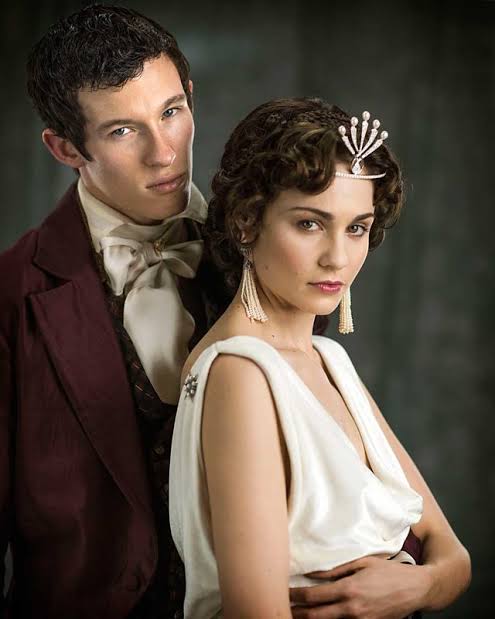
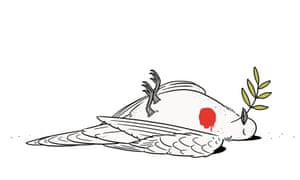
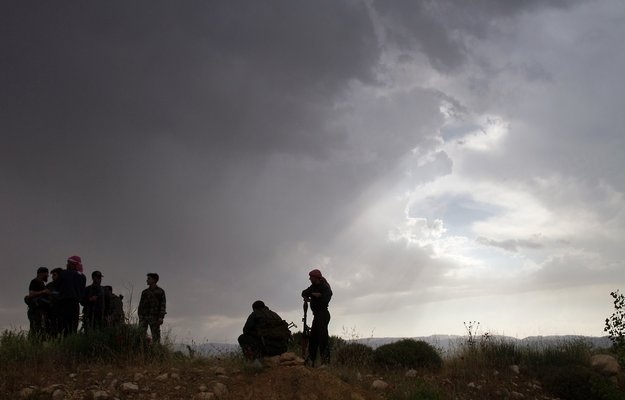

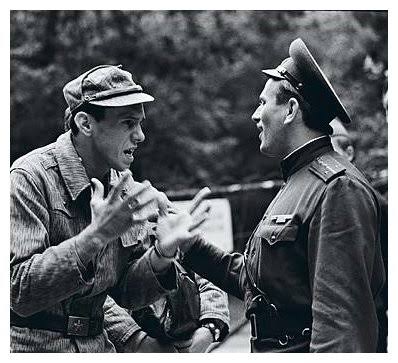

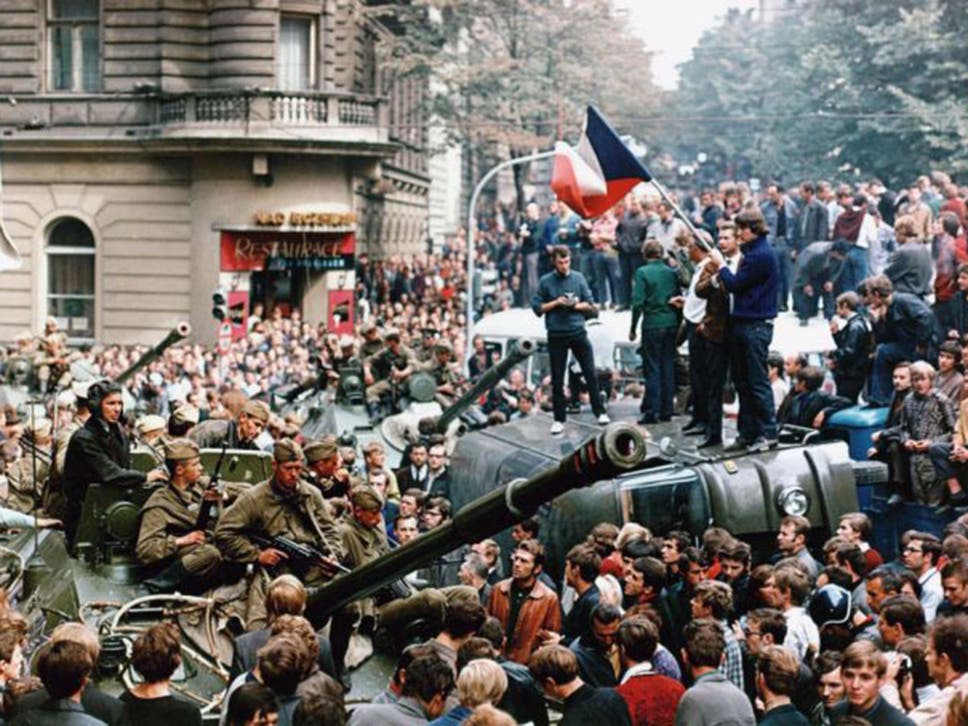
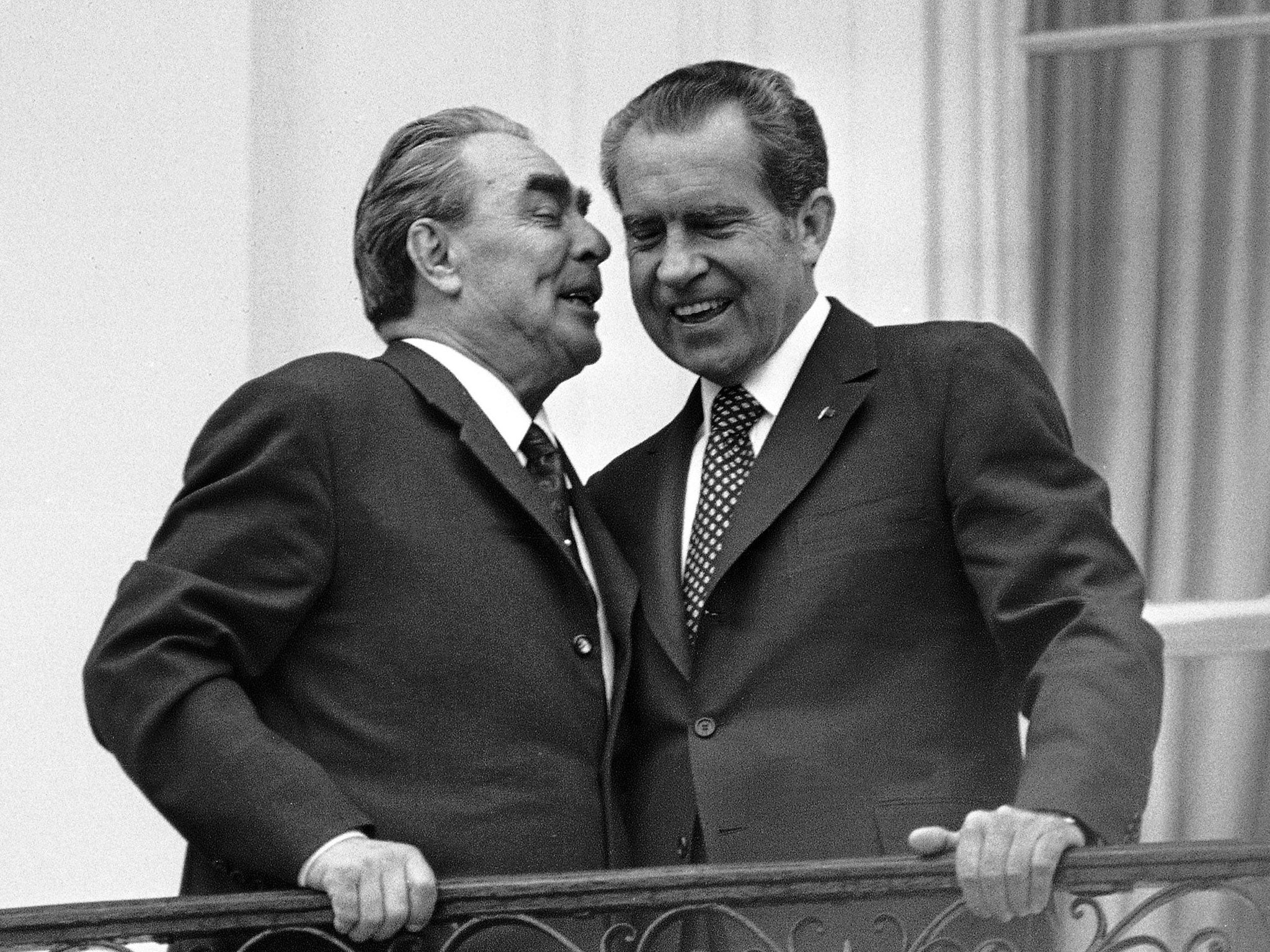
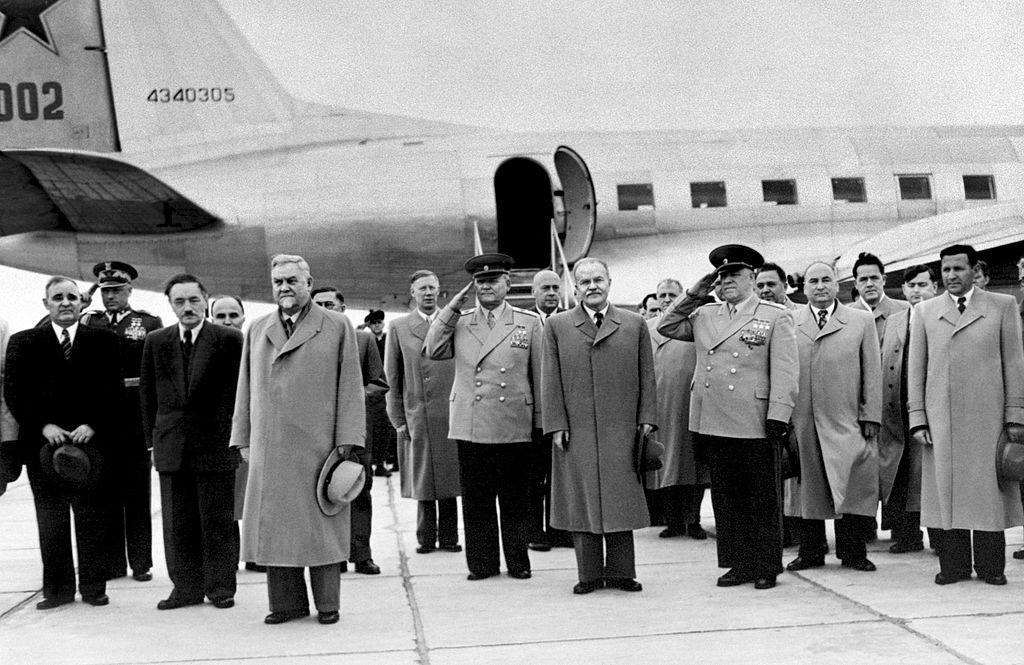
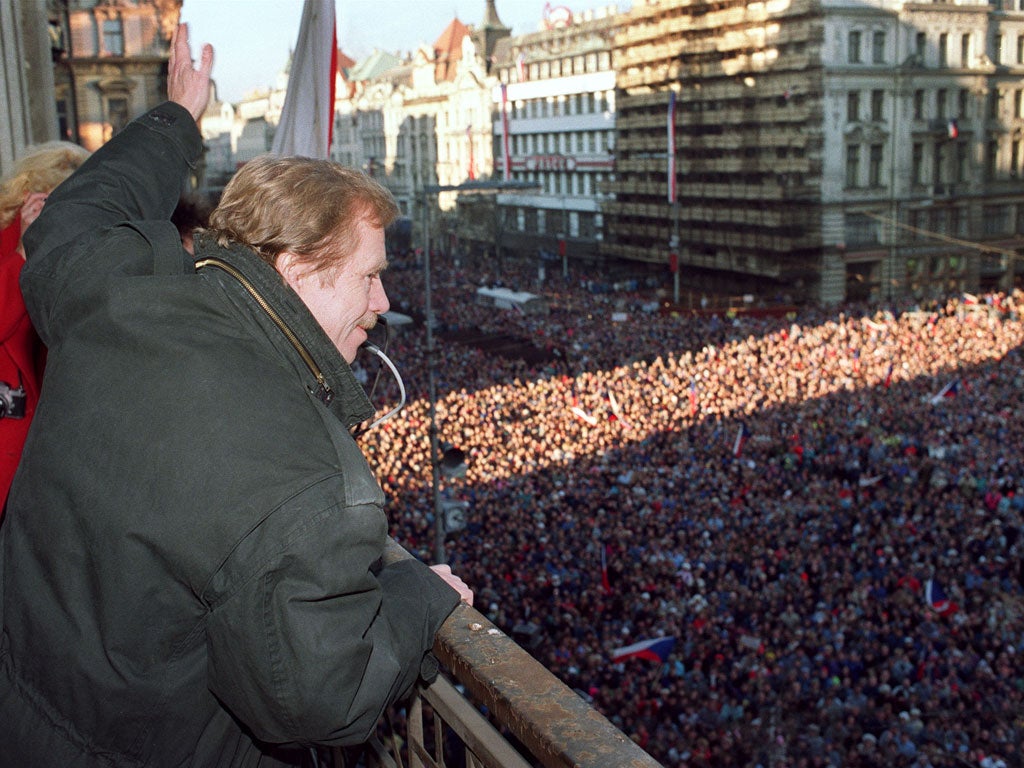


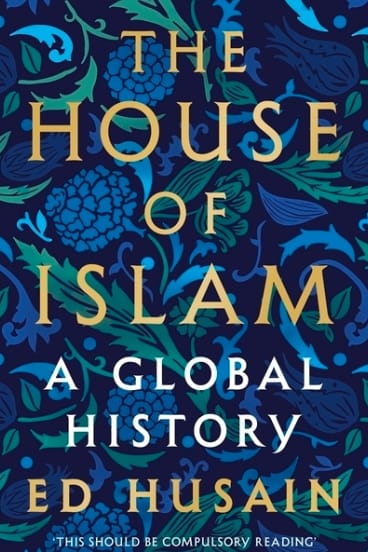
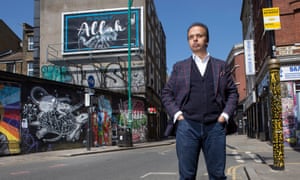
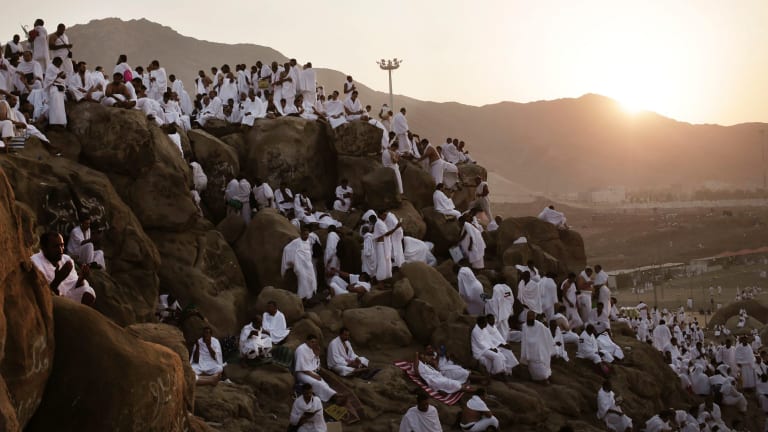
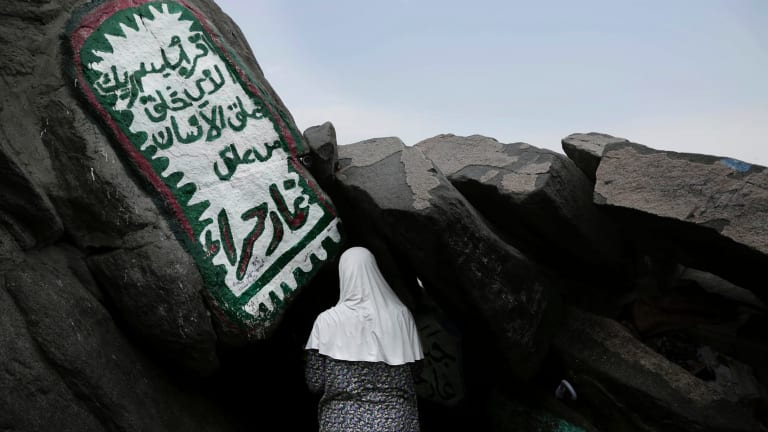


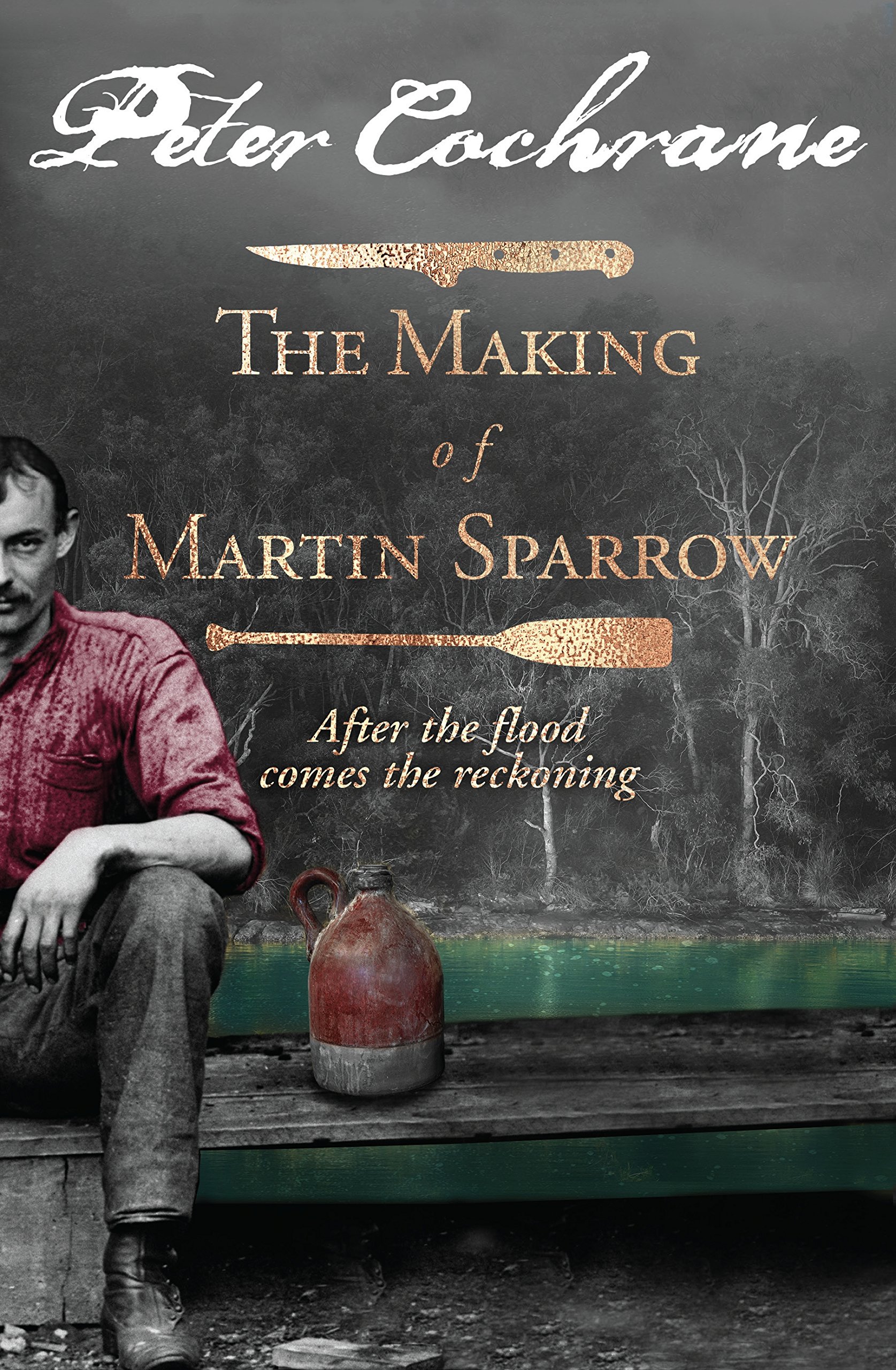


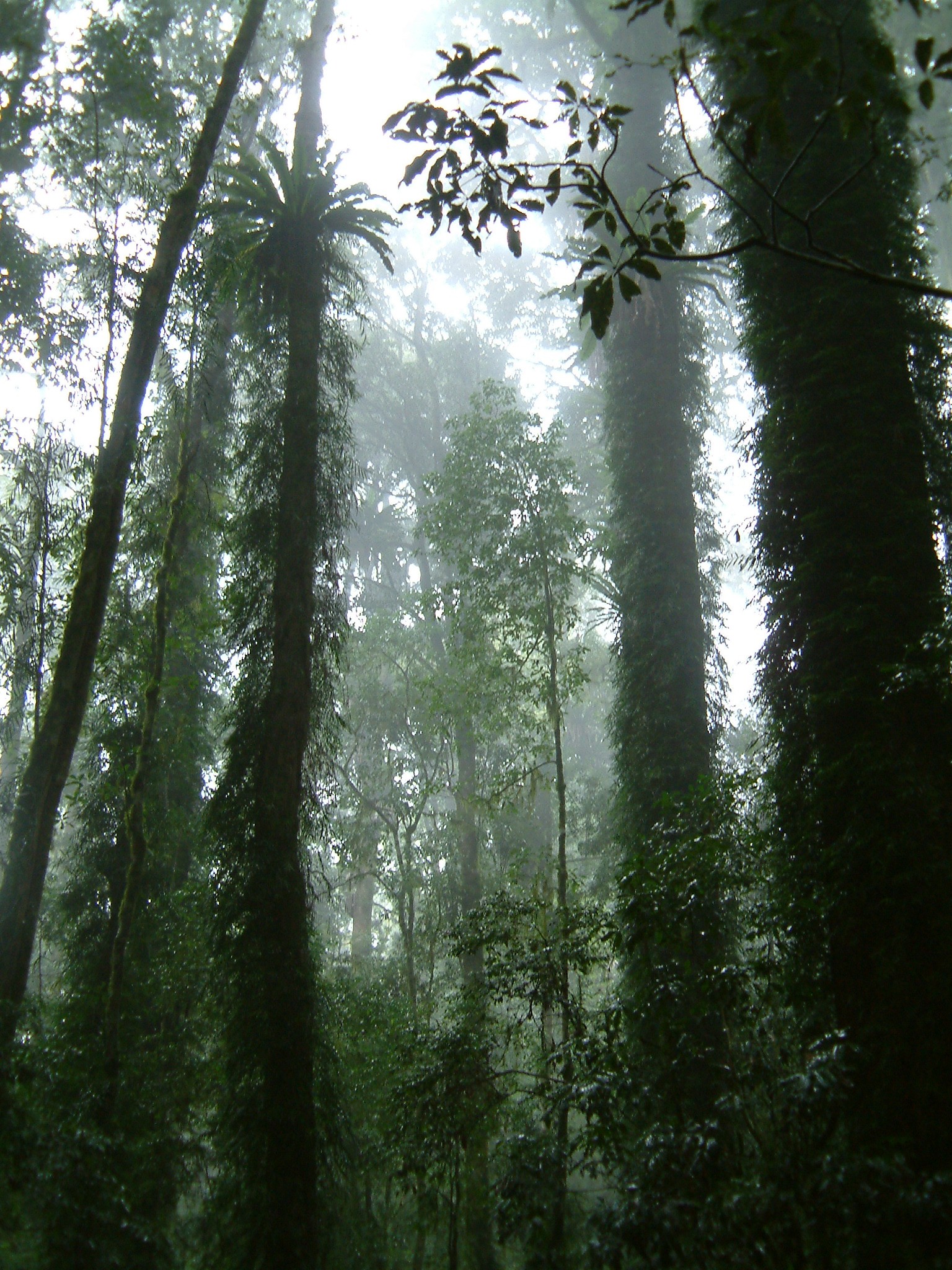








 General election seats won by civilizationist parties in Europe.
 Putin (L) and Orbán chat amiably.
 Great Britain lacks a civilizationist party because Nigel Farage decided that UKIP would not deal with immigration and Islamism.
 Migrants in Budapest, Hungary, in 2015.


 In That Howling Infinite