Recalling The Mersey Poets


for we had love and each other and the moon for company
when I spent summer with Monica and Monica spent summer with me

June this year saw the fiftieth anniversary the publication of Roger McGough’s wistful verse-memoir “Summer With Monika”, and in October, we celebrate the publication in 1967 of that great anthology The Mersey Sound which showcased the poetry of Liverpudlians McGough, Brian Patten and Adrian Henry.

Named for the musical revolution that originated in the northern English port city of Liverpool, it became one of the best-selling poetry anthologies of all time, exerting an influence on British poetry well beyond the decade. I bought the slim volume as soon as it came out, and back in the day, guitar in hand, I would set many of its poems to music as it nurtured my nascent song-writing and poetry skills. I recall now Patten’s “Somewhere Between Heaven and Woolworths’, and “Delicate John’ and the tunes I set to them. I still sing McGough’s Great War country-and-western-noir ‘Square Dance’: “Swing your partners dos-y-doed, all around the shells explode”

The poems had an immediacy, a relevance to those breakout times when a young man’s hopes and fears seemed to centre of the availability or otherwise (mostly not) of casual sex with gorgeous dolly birds, the American quagmire in Vietnam, and the imminent threat of a nuclear Armageddon. They spoke in a familiar vernacular, everyday English that we understood and related to about ordinary events and workaday artifacts that acquired a totemic significance upon the printed page. Toasters, teapots and fish ‘n chips. Kardomah cafes and Star of India restaurants. Bus-conductors, postmen, and milk bottles on the doorstep. Schoolyards and superheroes. Miniskirts and monarchy. The northern English weather.

And all this against the soundtrack of some of the greatest popular music that ever was spilling out of radios and record players in the suburban bedrooms and inner city bedsits of teenagers across the land. There wasn’t a great lyrical leap from the songs of the Beatles with their particular Liverpudlian spirit of place to the words, worries and wonderings of our very own British ‘Beat Poets’.

I have visited those days often in these pages. In A Window on a Gone World I wrote:

“This was indeed a decade of change and ferment. Values changed, morals changed, habits changed, clothes changed, music changed (the best music ever). The way people looked at the world and thought about it. We often look back and remark that a supernova of creativity burst over the western world during those years, the likes of which was not seen before and has never been seen again. And nowhere more so than in decadent, decaying, depressing, old England, trapped in tradition, class, and prejudice”.

I browsed through the whole book the other day, and in a way, it was like a reunion party, a meeting and greeting of old friends, a pleasant, nostalgic journey to a gone time. As that well-worn saying goes, the past is indeed another country – we certainly did things different then. The places and the people, the perceptions and perspectives, the preoccupations and the passions. As I read, I’d recognize words, phrases, images, ideas that osmosised into my own verse, particularly poetry I penned in the late sixties and early seventies, and which are gathered up in my Tabula Rasa collection.

It was my habit in those days to scribble little notes in the margins. And there they were now, for me to ponder fifty years on, and to wonder how the world looked when I wore a young man’s skin, and thought with the mind of a raw, inquiring, idealistic youth who had yet to break loose of the ties that bound, of family, school, and town. But the adventure had obviously begun – if only in the imagination, as I read and rehearsed, pondered and prepared for the great escape. An upper sixth, adolescent eclecticism well-illustrated by the picture below of my additions to Adrian Henri’s stream of consciousness nomenklatura:

Like Adrian Henri’s name-dropping, my neatly-written notes list a host of folk living and dead, mostly white and mostly male. Actors, authors and autocrats. Poets, painters, and philosophers. Popstars, policians and television personalities. Most are, even today, remembered and commemorated. Some are long forgotten. There are few on my list that I failed to recognize after  all these years. But praise be to Google! I soon rediscovered that Sean Lemass was Taoiseach of Ireland in 1967; that Frank Mitchell was a notorious ax-murderer killed that year on the orders of the infamous Kray twins; that Manny Shinwell was an MP and trade unionist, and Jack Dash, a communist trade union leader. Bartle Frere was governor of Cape Colony at the time of the Zulu wars, and Dudley Stamp, a celebrated geographer of the British landscape, both included, I believe, because I was doing A Levels in History and Geography at the time, and their names struck a chord of sorts. In the light of my later life DownUnder, one name was particularly prescient: Harold Holt’s short tenure as prime minister of Australia ended in 1967 with a ill-fated swim off the coast of Melbourne. There are now Harold Holt swimming clubs and annual swimathons all over the country.

I will conclude this personal retrospective with a some quotations, poems and recordings:

Brian Patten:

She walks across the room and opens the skylight
thinking, perhaps a bird will drop in
for and teach her to sing

The children who grow old
to who squabble and grow thin
who lick their lips at disaster .
and quietly whisper of sin

Adrian Henri:

I remember
walking in empty squares in winter rain
kissing in darkened hallways
walking in empty suburban streets
saying goodnight in deserted alleyways
in the midnight hour

The Independent recently published an affectionate tribute to Roger McGough on the occasion of this fiftieth anniversary. It includes Roger’s revisiting of one of his iconic poems:

Not for me a youngman’s death
Not a car crash, whiplash
One more for the road, kind of death.
Not a gun in hand, in a far off land
IED hidden in the sand death

Not a slow-fade, razor blade
bloodbath in the bath, death.
Jump under a train, Kurt Cobain
bullet in the brain, death

Not a horse-riding, paragliding
mountain climbing fall, death.
Motorcycle into an old stone wall
you know the kind of death, death

My nights are rarely unruly.
My days of all-night parties
are over, well and truly.
No mistresses no red sports cars
no shady deals no gangland bars
no drugs no fags no rock ‘n roll
Time alone has taken its toll

Let me die an old man’s death
Not a domestic brawl, blood in the hall
knife in the chest, death.
Not a drunken binge, dirty syringe
‘What a waste of a life’ death.

And here is one of my favourites from the Summer of Love:

Summer With Monika

They say the sun shone now and again
but it was generally cloudy
with far too much rain

they say babies were born
married couples made love,
often with each other
and people died
sometimes violently.

they say it was an average ordinary moderate
run-of-the-mill common or garden summer
but it wasn’t

for I locked a yellow door
and I threw away the key.
and I spent summer with Monica
and she spent summer with me

unlike everybody else we made friends with the weather
most days the sun called and sprawled all over the place
or the wind blew in as breezily as ever
and ran his fingers through our hair
but usually it was the moon that kept us company

some days we thought about the seaside
and built sand castles on the blankets
and paddled in the pillows
or swam in the sink and played with shoals of dishes

other days we went for long walks around the table
and picnicked on the banks of the settee
or just sunbathed lazily in front of the fire
until the shilling set on the horizon.

we danced a lot that summer
bossanovaed by the bookcase
or maddisoned instead,
hulligullied by the oven
or twisted round the bed

at first we kept birds in a transistor box
to sing for us but sadly they died
we being to embrace in each other to feed them.
but it didn’t really matter because
we made love songs with our bodies
I became the words
and she put me to music

they say it was just like any other summer
but it wasn’t
for we had love and each other
and the moon for company
when I spent summer with Monica
and Monica spent summer with me.

That was the year that was – may you live in interesting times

As I contemplate my annual review of In That Howling Infinite, I am reminded, with clichéd predictability, of that well-worn Chinese curse: “may you live in interesting times”.

A torturous and seemingly endless US election campaign defied all the pundits by producing an colourful and unpredictable POTUS. In the UK, the unthinkable Brexit came to pass, dividing the polity and discombobulating the establishment. Next year is certainly going to be worth watching.

The slow and tragic death of Syria continued unabated with Russian and Turkey wading into the quagmire alongside Americans, British, French, Australians, Iran, Lebanon, Gulf tyrants, and Uncle Tom Cobley and all. Da’esh might be on the the ropes in Iraq, but the long term survival of the unitary state is doubtful. And the proxy wars of the Ottoman Succession have spread to Yemen, the poorest country in the Middle Eas as Gulf tyrants face off against Shia Iran’s alleged puppets, and, armed and abetted by British and American weaponry, South American mercenaries, and Australian officers, bomb the shit out of the place.

Whilst the grim reaper scythed through the world from Baghdad to Berlin, from Aleppo to Ankara, the Year saw the passing of a record number of icons of the seventies and eighties, two of whom who have provided a continuing soundtrack for my life, Leonard Cohen and David Bowie. We shall not see the like of them again.

In our little corner of the cosmos, we endured the longest and most boring election campaign in living memory, resulting in an outcome that only accentuates Australians’ disenchantment with a lacklustre Tory government, a depressingly dysfunctional political system, and politicians of all stripes who, blinkered by short-termism, and devoid of vision, insist on fiddling whilst the antipodean Roman burns.

Meanwhile, in our own rustic backyard, we find that we too are “going up against chaos”, to quote that wonderful Canadian songster Bruce Cockburn. For much of the year, we have been engaged in combat with the Forestry Corporation of New South Wales as it proceeds to lay waste to the state forest that surrounds us. As the year draws to a close, our adversary has withdrawn with only half of its proposed harvest completed. But it will return in 2017, and the struggle will continue – as it will throughout the state and indeed the nation as timber, coal and gas corporations, empowered by legislation, trash the common treasury with the assent of our many governments.

And yet, life on the farm remains pleasant and delightful, though dams are low and rain would be most welcome. The bird and reptilian life continues to amaze us, and an ironic corollary to the clear felling of the Tarkeeth Forest is that “refugees” are seeking shelter here. Wallabies rarely seen on our land are now quite common, whilst echidnas, and, we suspect, endangered spotted quolls have been sighted hereabouts

We took time out mid-year to revisit Israel and Palestine, and road-trip through the two countries was much an education as a holiday. We certainly got our history and archeology fix, and in travelling through the Golan and the Negev, we found respite in a stunning natural environment. But the answers to our many political questions merely threw up more questions. We have unfinished business in this divine but divided land, and will return.

In That Howling Infinite addressed all these concerns during 2016, and matters more eclectic and exotic.

And so, to the year in review:

The new year commenced with a reprise of our memorable journey to Hadrians Wall, and of the Victorian lawyer who helped preserve it for posterity, the saga of the viking Harald Hardraga and also, my subjective overview of world history. In a more lighthearted vein, I indulged in an unscholarly discussion of how film and fiction have portrayed or distorted history, and in a review of Mary Beard’s superlative history of Rome, I asked the immortal question “what have the Romans done for us?”

The Life of Brian

In April, in response to a discussion with a Facebook friend in Oklahoma, I wrote a trilogy of exotically-titled posts examining the nature of rebellion, revolution, and repression: Thermidorian ThinkingSolitudinem Faciunt Pacem Appellant, and Sic Semper TyrannisThe origin of these Latin aphorisms is explained, by the way, in the aforementioned Roman review.

Nightwatch

Our travels through Israel and Palestine inspired numerous real-time posts, and a several retrospectives as we contemplated what we had experienced during what was as much an educational tour as a holiday. Historical vignettes included a tribute to bad-boy and builder King Herod the Great, a brief history of the famous Damascus Gate, and its place in Palestinian national consciousness, and a contemplation on the story of King David’s Citadel which overlooked our home-away-from home, the New Imperial Hotel. Thorny contemporary issues were covered with an optimistic piece on the Jerusalem Light Rail, a brief if controversial post about  Jewish settlers in the Old City, the story of Israel’s ‘Eastern’ Jews, the Mizrahim, and what appears to be a potentially problematic Palestinian property boom. Th e-magazine Muftah published an article I wrote about the conflicting claims to the city of Hebron. And finally, there is a poem recalling our visit to the Shrine of Remembrance at Yad Vashem and honouring the Righteous Gentiles who saved thousand of Jewish lives during the Shoah.

Carnivale

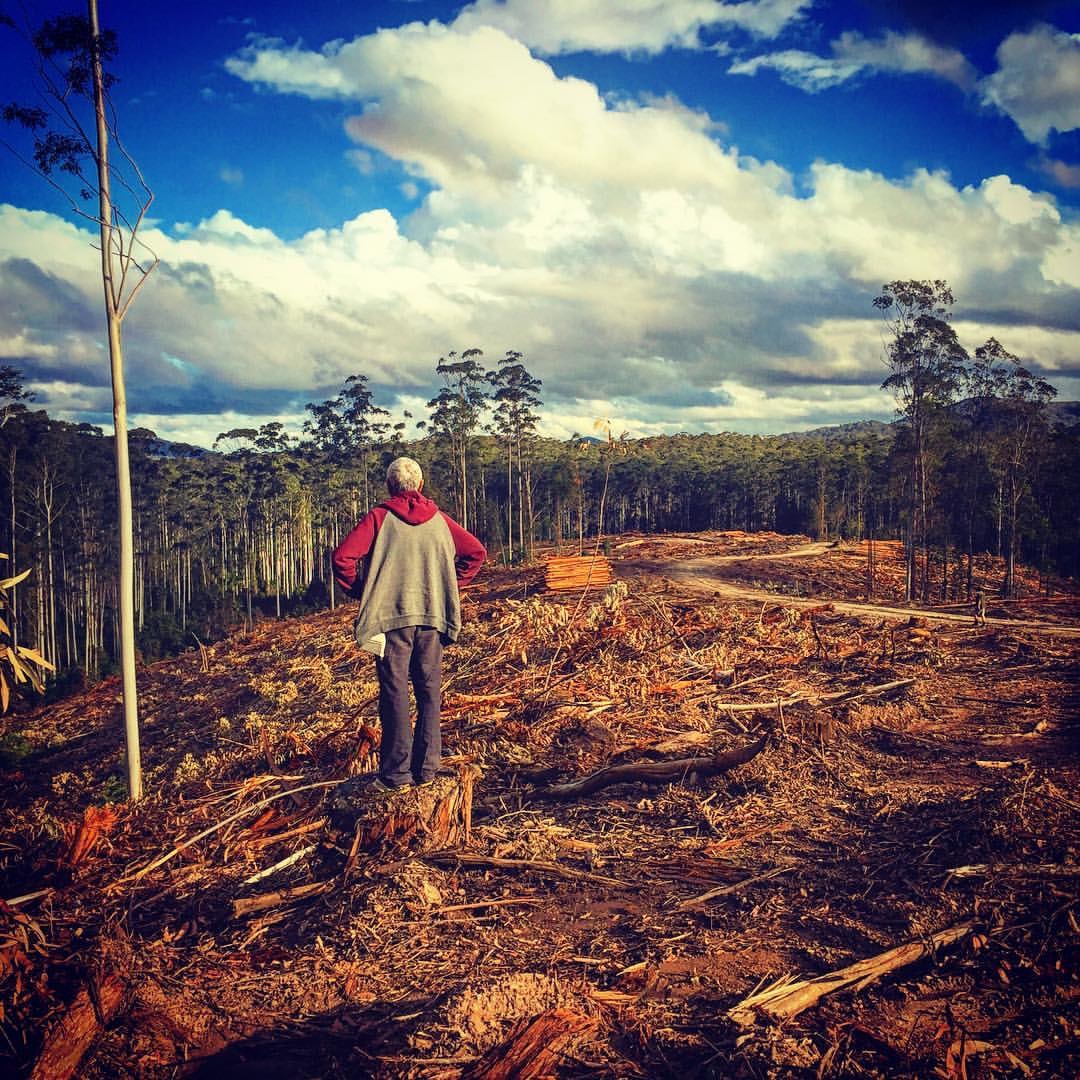
Wintertime passed with our minds on the Tarkeeth Forest. I had the pleasure discovering the history of our locality, and connecting via Facebook with the relatives of the Fells family of Twin Pines. But the latter half of the year was very much taken up with enduring and bearing witness to the clear- felling of the forest to our east. “If you go down to the woods today, you’re in for a big surprise.  If you go down to the woods today, you’ll never believe your eyes”. And you’d ask “what would JRR Tolkien have thought?”

Nothing quite prepares you for the devastation of clear felling. Joby, a Gumbaynggirr elder, surveys the Tarkeeth

The UK And US paroxysms fascinated and exasperated the mainstream and social media in equal measure, whilst the outcome of the Brexit referendum and the presidential election has initiated an a veritable orgy of punditry. Never have so many column inches and kilobytes been spent on loud sounding nothings as the sifting through the entrails of such events as Brexit, the US election, and the Australian senate! With half a dozen elections coming up in Europe, Trump’s inauguration and the triggering of Article 50 to take Britain out the European Union, we’re gonna have to endure a lot more. I confined my posts to two insightful pieces by respected right-wing Australian commentators, Paul Kelly’s Living in Interesting Times, and Greg Sheridan’s The Loss of American Virtue, and my own reflection on the right-wing media’s strange fascination with “insiders” and “outsiders”.

Finally, in comparison to last year, this year was very light on music and poetry. But American satirist Tom Lehrer got a retrospective, and murdered Pakistani qawwali singer Madhaf Sabri, an obituary, whilst an abridged and vernacular version of John Milton’s Paradise Lost told the tale of Lilith, the first and greatest femme fatale. In the words of the gloriously-named jockey Rueben Bedford Walker III says in EC Morgan’s magnificent The Sport of Kings, the subject of my first post for 2017, “Malt does more than Milton can to justify God’s ways to man”.

On that wise note,  I wish the world a Happy New Year – and may it be less interesting than this one.

In That Howling Infinite  is now on FaceBook. Check it out.  And just for the fun of it, here’s my review of 2015.

The Sabri Brothers

Dore Luciifer

When Harald Went A Viking

When we were in Istanbul in 2014, we were particular keen to see the famous Viking graffiti on a rail of the gallery of the beautiful Aya Sofya basilica. And there indeed it was, carved by Halvden, a 9th Century soldier of the Emperor’s Varangian Guard, an elite force of Viking mercenaries. The name Varangian  derives from the Greek via Old Norse væringi or ‘pledge’.

This year, we visited York, successively a Roman, Saxon, and Viking city.

I have an intense interest in connections, in the valences that link people, times, and places. And in York, there were many. Constantine, the creator of the Byzantine Empire, and founder of Constantinople, was declared emperor here on the death in York of his father. His statue sits (literally) outside York Minster. The Roman brickage we saw in Ephesus, Palmyra, and Jerusalem was replicated here in York, and in the forts of Hadrian’s Wall. And it was exciting to discover another connection to Istanbul, and that long-departed Viking warrior.

Viking Grafitti in Hagia Sophia, Istanbul

Viking graffiti in the Hagia Sophia, Istanbul

My story recalls one the most famous dates in English history, the the Battle of Hastings. But I shall not retell the story of that battle, nor of the battle at Stamford Bridge which preceded it. Rather, I will describe one particular Viking’s adventurous journeying before he met his doom near York in September 1066.

Harald Sigurdsson, named Hardrada (“Stern Counsel” or “Hard Ruler”), was born about 1015, and he was the first King to perish in 1066. King of Norway, his appetite grew with the eating, and he made unsuccessful plays for the thrones of Denmark and England. Failing the first, he invaded and raided east of what was then Eoforic (formerly Roman Eboracum, Viking Jorvik, and today, York – and there is an isolated hamlet on the plateau to our west in northern New South Wales called Ebor). His protagonist that day was one Harold Godwinson of Wessex, otherwise known as Harold II, King of England. Harold marched his army all the way up to Eoforic to confront his almost-namesake and Harald’s ally, one Tostig Goodwinson, Saxon turncoat and also, Harold’s embittered brother. In four days, Harold marched his army 180 miles from London, meeting and defeating Harald and Tostig at Stamford Bridge, just east of York. Hearing that William the Bastard, Duke of Normandy had landed near Hastings to challenge his claim to the English throne, King Harold then marched his army south again. 241 miles this time. The rest, as they say, is history.

King Harald is not hard to find on the Internet. There are websites, histories, and even novels that tell his story in lesser and greater detail – I republish a review of Don Hollway’s imaginative The Last Viking below. And, rumour has it, Leonardo DiCaprio is pondering the prospect of making a movie about him, and possibly starring in it. There are also many resources dealing with the Varangian Guard. I recommend Frank Westenfelder’s succinct blog history of mercenaries, Soldiers of Misfortune. So what follows is my own sensationalist synopsis, written as much for entertainment as for education.

As a teen Harald was caught up in internecine warfare between battling Viking eorls. Brothers and half-brothers, rebels and pretenders fought for lands and crowns in the realms that now constitute Scandinavia. Young Harald often fought and failed, and on failing, he fled. He washed up in Kyivan Rus on Lake Ladoga, east of present day Petersburg, and then entered the service of Grand Prince Jaroslav or (Yaroslavl) the Wise in Novgorod. The principality of Kyivan Rus, by the by, was the predecessor of today’s Ukraine, Russia, and Belorussia, and was established and ruled for over a century by Viking warriors. Harald captained the Grand Prince’s soldiery and, so the sagas sing, paid court to Jaroslav’s beautiful daughter Elesiv (Elisabeth). Ukrainian historians maintain that Yaroslavl actually ruled in raked in Kyiv and that his daughter was called Yelizaveta; but they tell the same story.

In Jaroslav’s service, Harold fought Poles, Estonians, Turkic nomads, and Byzantines. He eventually took five hundred Viking warriors to Constantinople – the Norsemen called it Mickelgard, or Great City – where his martial reputation saw him rise to head the Varangian Guard, that same mob that our Istanbul graffitist served in. Whilst this was specifically the emperors’s bodyguard, as an elite force, it fought on the empire’s frontiers against Arab pirates and raiders, marauding nomads from the steppes, Saracens, Normans and Bulgarians. The sagas say that Harald even traveled to Jerusalem – the Vikings called it Jorsalberg – protecting caravans of Christian pilgrims. Just picture it. A brigade of Norseman slashing and bashing their way through the wadis and wastelands of Syria, fifty years before the first crusaders put Jerusalem to the sword.

Harald passed twelve years in Byzantium departing a wealthy warrior. Not that his leaving was without complications. Implicated in murky financial dealings (including a fair amount of looting and blackmail), Byzantine power struggles, and, possibly, an illicit love affair with the Empress Zoe, he fled with his men in two ships. One was trapped by the famous chain that was strung across the Bosporus (see below for more details). but his boat reached the Black Sea and sailed thence to Rus’ once more, and the lovely Princess.

Elisef’s father, the renowned Jaroslav ‘the law giver’, was in fact the son of a Viking Varangian, and this may have been a reason he gave Harald sanctuary and employment in the first place, and encouraged him to seek service in Constantinople. Whilst there, Harald had secured sufficient funds to finance a bid for the Norwegian throne. After much battling and bargaining, he succeeded, and indeed, ruled Norway for twenty years until he made the fateful decision to try his hand in England.

Tostig was angry that Harold has taken the earldom of Northumbria away from him, and so encouraged Harald to challenge his brother’s disputed claim to the English throne. It is mooted that Viking Harald and French William each believed that he had been promised said crown by the dying English king, Edward the Confessor. Both therefore came ashore with their forces to claim what they reckoned was their inheritance. Which was why the unfortunate Harold did his exhausting round-trip in September and October of 1066.

At Stamford Bridge, Harald’s long run of good fortune ran out. the Norns, having long ignored him, decided to cut his thread. The Viking army was heavily beaten, and Harald himself was struck in the throat by an arrow and killed early on in the battle in a state of “berserkergang” or “battle rage”. He wore no body armour nor carried a shield, fighting fiercely with both hands clutching his heavy sword. Dying thus, sword in his hand, he was assured entry into Valhalla.

There’s a good account of 1066, the “year of the three battles”, in History Extra‘s story of the three battles that lost England.

And so our story ends. Scholars have considered Harald’s death in battle as the end of The Viking Age. He is also reckoned to have been the last great Viking king, indeed, the last great Viking.

© Paul Hemphill 2015

There is a song for every occasion, and with our our sojourn in York, and Viking fact and fiction echoing along its ersatz City Walls, I would like to share my very own Viking saga:

Further Reading

The Saga of Harald Hardrada

The original source for much of what we know of Harald is The Heimskringia Saga. therein is much more fascinating detail of his adventures, including the full story of his escape from Constantinople. All of Harald’s Varangians piled onto two ships and rowed like crazy for the chain. As they approached, he had every man who wasn’t rowing pick up any baggage he had and run to the back of the boat, so that the prow of was raised and the stern lay low in the water. Thus, the ships managed to run themselves halfway up onto the chain, whereupon all the vikings at the stern ran to the front with their gear, so that the ships tilted forward and came down on the other side. At least, that was the plan. Harald’s ship made it but the other broke its keel and sank, along with half of his men. The Saga is available in the online Gutenberg Library. Go to Saga 8, The Saga of Harald Hardrade.

Anglo Saxon Varangians

An exciting addition to the saga of the Varangian Guard is recent evidence that in the wake of they Norman Conquest, Saxon exiles emigrated from conquered England and joined the Emperor’s bodyguard. They acquired quite a reputation for martial prowess, and were believed to have established a city in what is today the Crimean Peninsula. Read Caitlin Green’s well-written post: New England on the Black Sea

The Vikings of Rus

The principality of Kyivan Rus, with its capital at Kyiv,  was established and ruled for over a century by Viking warriors who ventured south down the great rivers of today’s Ukraine, Russia, and Belorussia. The Viking age lasted from the end of the eighth century to the latter half of the eleventh.

The vikings raided and traded, subjugated and ruled whole countries or parts thereof, transforming existing politics and creating new ones. In so doing, they butted up against the Byzantine Empire, even reaching the gates of Constantinople itself. Envoys of the king of Rus first came to the city in 838, offering peace, friendship and trade. But there was also conflict. In 860, Vikings besieged the city and passing through the Bosporus into the Mediterranean, plundered Byzantine-controlled islands. This was repeated in 959.

Over time, relations became much more cordial. Prince Volodymyr the Great of Kyiv converted to Christianity in 988, a purely political move to secure the goodwill of the Byzantine empire, his most powerful and dangerous neighbour. He adopted the Byzantine orthodoxy, thus drawing  him closer to the empire, and proceeded to convert his subjects. Alliances of mutual benefit were formed, with Vikings fighting Byzantium’s border wars, and were often sealed with marriages between Viking lords and Byzantine princesses.

Constantinople was like a lode star to the Vikings. The princes of Kyivan Rus were attracted to its wealth and commerce, and also to the power, prestige and high culture. Indeed, they endeavoured to replicate it on the Dnieper. Voldymyr’s grandson Yaroslav/Jaroslav (he’s acclaimed by both Ukraine and Russia) rebuilt Kyiv in Byzantium’s image, in brick and stone, built a magnificent cathedral modeled on Theodosius’ Aya Sofia, naming it Saint Sofia, and a raised a Golden Gate like that in the Great City. Princes in other cities followed Kyiv’s example.

Everything was violently undone in 1238 when the Mongols invaded Kyivan Rus, and Kyiv itself was devastated in 1240, and did not recover its former importance and prosperity for centuries. Yet, the cathedral of St Sophia still stands in the heart of Kiev, as it has done for almost a millennium, its golden domes a symbol of the advent of Christianity in eastern Europe.

There’s a fascinating account of Kyivan Rus See Serhii Plokhy’s history of Ukraine, The Gates of Europe.

Read more in In That Howling Infinite :

Kirkwall Cathedral, Shetland, UK

Kirkwall Cathedral, Shetland, UK

If you love heroic fantasy a la George R.R. Martin, you’ll love ‘The Last Viking’

Harald Hardrada, the 11th-century Norse adventurer of Don Hollway’s “The Last Viking,” led an iron-hammered life of struggle, travel, scheming and violence. Especially that last. As Tom Shippey observed in his history of Viking culture, “Laughing Shall I Die,” everything the ax-wielding warriors of the North did “was based on violence. That is what Vikings were good at, especially good at, spectacularly good at.”

And none more so than Harald Hardrada, Harald the Hard-Ruler or Tyrant, whose marauding ways came to an end in England at the Battle of Stamford Bridge, near York, in the pivotal year of 1066. In effect, the 51-year-old invader, by then the king of Norway, was caught by surprise. The Anglo-Saxon King Harold Godwinson unexpectedly quick-marched his army north, covering 200 miles in four or five days instead of the usual two weeks. Hollway calls this “one of the greatest feats of military tactics in medieval history.” Yet even though Harald, the “thunderbolt of the North,” was defeated and killed, he unknowingly exacted a cold revenge. Immediately after this costly, hard-fought victory, the Anglo-Saxon king and his remaining, exhausted troops were compelled to hurry back south to face William of Normandy — soon to be William the Conqueror — at the Battle of Hastings. A fresher, bigger army might have changed English history. As it was, in just three weeks both the age of the Vikings and the reign of the Anglo-Saxons reached a blood-drenched close.

When we think of Vikings, we generally picture dragon ships raiding the coasts of England and Scotland or intrepidly sailing westward across the Atlantic to Iceland and, quite probably, North America. Yet Harald passed much of his young manhood in the wild, wild East, where this “almost legendary Norse hero”— as John Julius Norwich calls him in “Byzantium: The Apogee”— served as a mercenary in the Byzantine Empire’s elite Varangian Guard, eventually becoming its de facto commander. He also participated in diplomatic missions and military actions in the Holy Land, Sicily and Constantinople itself. Beyond that, matters grow somewhat hazy.

Much of what we know about Harald derives from Icelandic sagas, poems and histories, supplemented by Byzantine sources, such as Michael Psellus’s “Chronographia.” In “The Last Viking,” Hollway, a journalist specializing in military history, dramatically weaves together all the facts and most of what is conjectured about the Viking, the result being at once a biography and “a melding, comparison and recounting of the old tales.” Was the handsome blond warrior a favorite of the aging, lustful Empress Zoe? Did he gouge out the eyes of the pusillanimous Emperor Michael V? Was he the secret lover of the Emperor Constantine IX’s mistress? Might the imperial throne have actually been within reach of his sword-arm? Though it’s impossible to be sure, all of these questions could plausibly be answered “yes.” That’s what the ­skalds and chroniclers believed and that’s the riveting story Hollway tells.

In the year 1030 Harald was 15 years old when he joined his much older half brother Olaf, the deposed king of Norway, in the latter’s attempt to regain his throne. Just before the climactic battle of Stiklestad, Olaf told Harald he was too young for the upcoming clash of arms, to which the teenager reportedly countered, “I will certainly be in this battle. I’m not too weak to handle a sword. If necessary my hand can be strapped to the hilt.” During the fighting, Olaf was killed and Harald left for dead. But the boy survived, recovered from his wounds, and with a small company headed for Russia, traveled up the Neva River to Lake Ladoga and then on to Kiev, where his kinsman Prince Yaroslav ruled. Three years later, only 18, Harald captained that prince’s household guard. Recognizing that he could rise no higher in Kiev, this ambitious, natural-born commander sailed and portaged down the river Dnieper, then crossed the Black Sea to Miklagard, the Big City, as the Scandinavians called Constantinople.

                                                     “The Last Viking” author Don Hollway 

Hollway devotes half his book to Harald’s adventures and machinations during the decade he spent with the Varangian Guard. Toward the end of those years, the Viking and his closest lieutenants were cast into a lightless dungeon, yet nonetheless managed to break out, kidnap the emperor’s mistress and commandeer two galleys. But so what? Escape by sea was blocked by a heavy barrier chain stretched across the estuary known as the Golden Horn. Ever resourceful, Harald ordered his men to row toward it with all their might just as he and the others on board all rushed to the ship’s stern. This raised its bow high enough so that the vessel rode halfway over the chain, at which point everyone immediately raced forward to elevate the galley’s back half, allowing the ship to slide down into open water.

Once back in Kiev, Harald married Yaroslav’s pretty daughter Elisaveta, then journeyed homeward to seize power in Norway and attempt to subjugate Sweden and Denmark. Up to this point, the Viking could be construed a hero or at least a brilliantly audacious and quick-witted soldier of fortune, but in his unrelenting drive to be ruler of all Scandinavia he soon grew treacherous and cruel, looting and burning Danish cities, murdering any nobles who stood against him. His battle standard, white silk bearing the image of a black raven, became known as Land-Waster. The chance to bring England under its sway ultimately led to Harald’s last stand at Stamford Bridge.

A fencer and historical reenactor, Don Hollway excels at describing medieval weaponry, shield walls and battle tactics. Yet this isn’t just a book for military history buffs. If you love Frans Bengtsson’s picaresque masterpiece, “The Long Ships,” Robert Graves’s intrigue-suffused “I, Claudius,” or heroic fantasy in the mold of Robert E. Howard, George R.R. Martin and Howard Andrew Jones, you owe it to yourself to pick up “The Last Viking.” It’s that exciting, that good.

Michael Dirda reviews books for Style every Thursday.

The Last Viking – the True Story of King Harald Hardrada, Don Hollway, Osprey.

Sic semper tyrannis

You come at the king, you best not miss.
Omar Little, The Wire (after RW Emerson)

The phrase “one man’s freedom fighter is another man’s terrorist” is at once apt, correct, and yet often oversimplified to the point of disingenuousness. The word “terrorist” itself describes its goal. To instill fear in the heart of the enemy. In the past, the target would have been the king, the dictator, the ruling class, and those who served them and upheld their rule. Politicians, officials, solders and policemen. Today, terrorists indiscriminately target whole societies. Irish bombers blasted communities of the rival faith, murdered shoppers, office workers, and pub patrons, as well as soldiers and policemen. Palestinian suicide bombers hit malls and pizza bars in city centres. ISIS, al Qa’ida and the Taliban detonate cars in busy city streets and publicly execute prisoners in callous and calculating “lectures in flesh” (the phrase is civil rights lawyer Geoffrey Robertson’s, from his chilling account of the trials and execution of King Charles I of England and those who sentenced him, The Tyrannicide Brief.).

But targeted and random terrorism has a long historical pedigree. For centuries, it has been the desperate and nihilistic weapon of last resort of resistance and rebellion against perceived oppression and injustice, and against invaders and occupiers.

In the second century BCE Palestine, the Maccabees used assassination in their resistance to the Seleucid Greeks, and a century later, the Jewish zealots, the Sicarii, named for the easily concealed small daggers, paid the Romans in like coin, and ultimately in an insurrection that culminated in the destruction of Jerusalem in 70CE and the scattering of the Jewish race (giving history the emotive and symbolic last exit that was Masada). In an etymological irony that Mark Twain would have been proud of, the present unrest in Jerusalem, a large number of young Palestinians have perished in attempting to stab jewish soldiers and civilians. Their jaquerie is called the “Intifada Sakni-in”, the ‘Knife Uprising – an echo of those long-dead Sicarii “dagger men”.

Nowadays, one would be excused for thinking that “terrorism” and “terrorist” are synonymous with Arabs and Muslims. And a historical precedent reinforces this erroneous assumption. The Hashishan or “Assassins” of Middle East fame (yes, that is where that noxious noun originated) were Muslim men and boys mesmerized and mentored by Rashid ad Din as Sina-n, the “Old Man of the Mountain” (and all this, before Osama in the caves of Tora Bora), and were Twelfth Century  hit-men contracted out to rival Muslim princes in the internecine conflicts that plagued the Levant in the wake of the Crusades and the demise of the great Arab Caliphates.

But the assassin’s knife (and in modern times, the gun and bomb, and latterly cars and trucks) predates these medieval hoods and links the Hebrew rebels of old to the Irgun and Stern Gang who encouraged Britain and the UN to abandon Palestine in 1948, bequeathing most of it to the new state of Israel, and triggering the Palestinian diaspora. European anarchists and Irish rebels and loyalists were adept at shootings and ambushes. In Algeria, during the ‘fifties, the nationalist FLN and the “colon” OAS shot and bombed each other and those unfortunates caught in the crossfire. The IRA perfected the improvised explosive device that today has crippled thousands of American, Canadian, and Australian soldiers in Iraq abd in Afghanistan. Hindu Tamil separatists of Sri Lanka introduced the suicide bomber, an economical and efficient weapon against soft (civilian, that is) targets, deployed today by Islamist killers in the streets of London and Lahore, Damascus and Dar es Salaam, Jerusalem and Jakarta. Whilst Arabs – and particularly Palestinians may have given the world the hijacking of aircraft – a tactic that fell into disuse due to diminishing political returns and rapid response forces – other Arabs showed us how to fly them into public buildings as the whole world watched in horror and disbelief. The shockwaves of this one are still reverberating through the deserts of the east and the capitals of the western world.

In going up up against their occupiers, the Palestinians have an old heritage. In my old country, Boudicca and Caractacus fought a losing battle against the Romans in Britain during the First CE. The Roman historian Tacitus ascribed to a vanquished chieftain the memorable words  “solitudinem faciunt, pacem appellant” – they make a desert and they call it peace. After the battle of Hastings in 1066, the defeated Saxons pushed back against the Normans and brought the genocidal wrath of William the Conqueror down on their heads with the devastating “Harrying of the North”. The Green Man and Robin Hood legends are said to be a retrospective and romanticised remembering of the Saxon resistance. Warrior fugitives from that failed guerilla war fled as far as Constantinple, where many joined the Emperor’s acclaimed Varangarian Guard, (see When Harald Went A Viking) 

In the streets and the countryside of Ireland, my parents’ birthplace, the United Irishmen, Fenians, Free Staters, IRA and Unionists fought against the redcoats, tommies, and black and tans of the British Army. Fought amongst themselves, fought against each other, and killed and were killed in their centuries long war of liberation. And in my adopted country, indigenous Australians fought a futile frontier war against settlers and soldiers just as native Americans did, albeit on a much smaller scale, and paid the price in hangings, massacres, poisoned wells, dispossession, marginalization, and “stolen children”. The legacy of those times lingers still – see The Frontier Wars – Australia’s heart of darkness.

In Central America, Juarez led the Mexicans against the French, and Sandino, Nicaraguans against US marines. Spaniards rose up against Napoleon’s forces, giving the world the word “guerilla”, or “little war”. Russian partisans ambushed the Grande Armé and the Wehrmacht. Throughout occupied Europe, the very term “resistance” became synonymous with the heroic unequal struggle against tyranny. In another of history’s ironies, muqa-wamat, Arabic word for resistance, unites sectarian rivals Hamas and Hizbollah against Israel.

And not just resistance to invasion and occupation, but also against oppression by one’s own rulers. Religious tracts tie themselves in knots reconciling the obligation to obey our rulers with the right to resist and overthrow those that rule badly. The unequal struggle against tyranny – or what is perceived by the perpetrators as tyranny – is the cause that inspires men and women to desperate acts.

The most celebrated in fact, film and fiction is the death of Julius Caesar at the hands of peers who feared that he intended to usurp the ostensibly democratic Republic (ostensible because democratic it was not) and institute one-man rule. That ended badly for the conspirators, and for Rome, as it precipitated years of civil war and ultimately, half a century of empire).

In 1880 the reforming Czar Alexander II of Russia, discovered the hard way that liberating the serfs did not inoculate himself against the bomb that took his legs and his life. His fearful and unimaginative successors hardened their hearts and closed their minds against further reform. setting in train the crackdown on dissent and democratic expression that led eventually to the storming of the Winter Palace on Petrograd in 1917. Narodnaya Volya, the killers called themselves – the People’s Will. And that is what terrorists do. They appeal and owe fealty to a higher court, a greater good, a savage God.

So it was when student and Serbian nationalist Gavril Princip assassinated Archduke Ferdinand of Austria-Hungary in June 1914 and ignited the spark that lit the conflagration of World War 1 which precipitated the demise of the old European empires.

So too when John Brown and his sons brought their broadswords to bear on slavers and their sympathizers and made a date with destiny at Harpers Ferry. Their famous raid may or may not have accelerated the downward slide to the secession and civil war that erupted the following year, but it provided a moral and symbolic prelude and also, the resonating battle hymn of the republic. John Wilkes Booth bookended this bloody era with his histrionic and public murder of Abraham Lincoln, shouting “sic semper tyrannis”, “thus always to tyrants,” attributed to Brutus at Caesar’s assassination – today, it’s the Virginia state motto. Brown and Booth were quite clear in their motives. As was were the segregationalist shooters who did for African Americans Medgar Evers and Martin Luther King. Less so were the killers of the Kennedy brothers in the sixties.

To conclude, sometimes that savage, rebel God is one of faith, sometimes, of blood and soil. In some instances, it is revenge for wrongs real and imagined – the reasons at times lost or forgotten through the passage of time and fading memories. And often, “the cause” is corrupted by the immoral economics of illicit commerce, including contraband, kidnapping, blackmail and extortion. Sometimes all merge in an incongruous hybrid of religious passion, ethic identity, libertarian or anarchistic fervour, and protection racket. As was the case in Northern Ireland, in Lebanon, in sub-Saharan Africa, and currently so in Syria and Iraq.

But most times, terror and turmoil is simply a political weapon planned, targeted and executed as a mechanism of regime change. Rebellion, revolt and revolution. Resisting, opposing, challenging, confronting and defeating the central authority. The seizing, holding, consolidation and keeping of political power.

And one thing is for sure. The outcome is unpredictable. History does not move in straight lines, but often follows a bitter and twisted path. Cliched as it is, the phrase “be careful what you wish for” is an apt one. And when, as Bob Dylan sang, “the line it is drawn, the curse it is cast”, there is no going back. To quote WB Yeats’ famous lines, “all is changed, changed utterly”.

Terrorism, then, can shift the course of history. If we were to stumble into the swamp of alternative histories, imagine what might of happened

If Caesar had walked home from the senate on the Ides of March
If Lincoln had been able to guide the Reconstruction
If the reforming Czar had introduced democratic government to Russia
If Gavril Princip’s shot had missed the archduke
If Kennedy had returned from Dallas
If John Lennon outlived George Harrison
If Yitzak Rabin had left the peace concert in Tel Aviv
If the Twin Towers stood still

To quote “Stairway to Heaven”, a curiously apposite title given the millenarian mindset of many terrorists, “Oh, it makes you wonder!”

Fact or Fiction = Friction

A Contemplation of Historical Fiction in Book and Film

A post in the British Medieval History Facebook Group a couple of years back happily anticipated the upcoming showing on US TV channels of the adaptation of British author Philippa Gregory’s War of the Roses White Queen Trilogy. A tiny stone created large ripples. Over 400 comments weighed the pros and cons of the book, the film, and also, the fact that a fictionalized version of history was being discussed so enthusiastically among the ought-to-be seriously-minded group. Much midnight oil was burned over its historical accuracy or lack thereof. There was even hint of transatlantic conflict with American members being overwhelmingly ”pro” for each of the aforementioned and many – but not that many, really – British members being “con”.

I joined those in favour, contributing a mini review: “Good-looking historical soapie, but a story well told, well presented, well cast, and well acted. The whole yarn is there. The power plays, the politics, the treachery, and the bloodletting. The princes in the tower. Clarence drowned in the butt of booze. My horse, my horse, my kingdom for a whole posse of horses. The lead, Rebecca Ferguson, the blonde with the sword in our featured image, was the Bond girl in Spectre, but don’t let that put you off. Richard of Gloucester, who became R3, was perhaps too good looking. He is played by Aneurin Barnard, a fine British actor who did very well as Cilla Black’s beau Bobby in Cilla, as  photographer David Bailey in We’ll Take Manhattan, as Boris Drubetskoy in the BBC’s recent War and Peace. And James Frain, who played a smooth and sinister Cromwell in The Tudors, is an obsessive, controlling Warwick the Kingmaker”.

The robust exchange of views among group members inspired me to contemplate the connection between historical fiction and the real deal. What follows is a subjective amble through some of the highs and lows of historical film and fiction. It is a personal reflection, self-indulgent, and replete with comments, asides and digressions.

I confess a liking for slash and bash, doublet and hose, cloak and gown, suddsers. Indeed, to enlarge the historical envelope somewhat, i am partial to the “sword and sandal” epics or yore also, but I’ll l leave those for another day. Whilst I very rarely read the books (there are just too many other things to absorb nowadays), I relish the film adaptations – usually with a nice wine and an iPad and Wikipedia on hand to fact check. I am not too fussy – or high-brow – when it comes to entertainment. I am of the “I like what I like school” of literary appreciation, and I can watch the good, the bad, and the “this doesn’t really do anything for me” (although I have been getting fussier of late).

The Tudors

Tudor eye candy

Some can be excellent. The Tudors was addictive and sumptuous to behold, with its more gorgeous-than-life casting of the lead players. Henry VIII and Anne Boleyn will forever be Jonathan Rhys Meyers and Natalie Dormer for me, notwithstanding Nat’s gorgeous but doomed Marjaery Tyrell in the “you either love it or you hate it” Game of Thrones mega mythology and JRM’s sexy soccer coach in Bend it Like Beckham. The series was bright, glittering, and sexy, with an air of perpetual treachery and danger. Wolf Hall, by contrast, was dark and brooding (not just the candle-lit interiors), dour and doleful, with an air of perpetual treachery and danger – but it was not a patch on Hilary Mantel’s masterful novels.  The jewel in the crown has to be the late-seventies sword and sandals saga I Claudius, the life and times of a typical dysfunctional, incestuous, and vicious Roman family that was, to  borrow Lady Caroline Lamb’s description of Lord Byron, mad, bad and dangerous to know. All three were  relatively historically accurate, though with a fair bit of poetic license for dramatic effect.

I Claudius

I Claudius

Not all are this good, however. The adaption of Ken Follett’s cathedral-constructing edifice, The Pillars of the Earth, was like watching paint dry, and its sequel, World Without End outdid it in ennui and melodrama, notwithstanding its concluding twist on what may or may not have really happened to bad, sad King Edward II. The adaptation of Kate Mosse’s Labyrinth, a strange hotchpotch of magic and modernity told a story of the Albigensian Crusade and the persecution of the Cathars in 13th Century France, and was laboured and contrived. But even with these lacklustre longueurs, I hung in to the literally and figuratively bitter end. Historically accurate? Yeah, but, no but, yeah but…

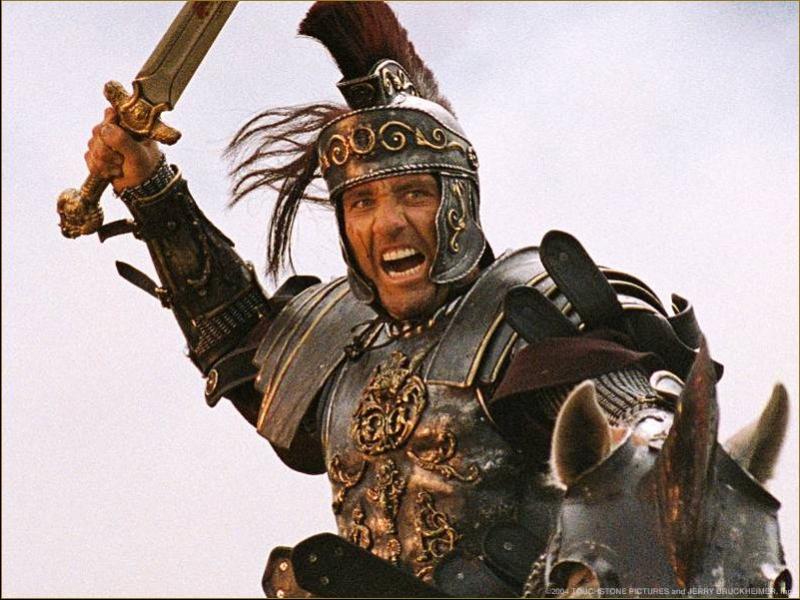
Even second division movies like King Arthur, Gladiator and Kingdom of Heaven can draw me in if well directed, well told, and cinematographically well depicted. When it comes to film-making, Ridley Scott, who directed the latter two, can do no wrong, although he can be hit and miss when it comes to the story line (he fares much better with Sci Fi – think Alien and Blade Runner – than with history). There are exceptions: Braveheart (and not just because the wigs looked like they were purchased from the people who gave us Conan the Barbarian), Troy, which was, well, kind of odd (including, as it did, Brad Pitt’s grumpy, well-buffed Achilles), and Oliver Stone’s Alexander which was actually unwatchable – I gave up on it, and I reckon Colin Farrell would leave this one off his cv.

King Arthur

King Arthur

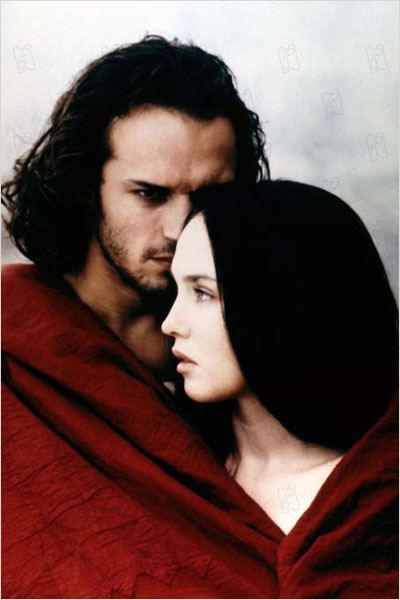
Fine fiction and, indeed, fine plays often make for fine films. Ian McEwan’s Atonement (prewar England and Dunkirk), David Lean’s Dr Zhivago (the Russian Revolution and Civil War) and Margaret Mitchell’s “Gone with the Wind” (the Old South, before, during and after the Civil War). Alexander Dumas’s La Reine Margot was transformed into a beautiful, brutal and sad film by Patrice Chereau (dynastic skulduggery and religious persecution in sixteenth century France). Then there is Robert Bolt’s A Man for all Seasons (Thomas More versus Henry VIII), James Goldman’s The Lion in Winter (Henry II versus his wife and sons), and Jean Anouilh’s Becket (Henry II again, versus his troublesome priest). Though all talk and no action – this trio were plays after all – they were beautifully rendered with stellar casts, each portraying a king who had to deal with opinionated, difficult people, each echoing Christoper Marlowe’s Edward II: “Was ever king thus overruled as I ?”

Moreover, high-end historical fiction has entered the literary canon. Like Robert Graves’ I Claudius, Alexander Dumas’ Three Musketeers, Charles Dickens’ A Tale of Two Cities,  Victor Hugo’s Les Miserables, Leo Tolstoy’s War and Peace, Mikhail Sholokov’s And Quiet Flows the Don, Boris Pasternak’s Dr Zhivago, and Remarque’s All Quiet on the Western Front. Each of these have made the transition to film, some with more success than others. Are there contemporary works that might enter the pantheon? What do you think? Maybe Hilary Mantel’s Wolf Hall trilogy – and also, her debut, A Place of Greater Safety, a French Revolution door-stop and a masterful retelling of those tortured times.

Queen Margot

Queen Margot

Probably the most controversial historical film of all time is David Lean’s “Lawrence of Arabia”. Historians, critics, and partisans of all faiths and factions have argued about this one ever since it first screened back in 1962. It is a deeply flawed film insofar as it reflects a condescending Orientalism, but a timeless masterpiece nonetheless. Love it or loathe it, one cannot deny the charismatic performance of Peter O’Toole, and the magnificent wide-screen vistas of Jordan’s Wadi Rum. That first vista of the desert sunrise with the music of Maurice Jarre. Man! Another film of that ilk – and also one of my all time favourites –  is John Huston’s “ The Man Who Would be King”, a ‘boy’s own’ venture based loosely on a story by poet and Empire booster Rudyard Kipling.

Sean Connery and Michael Caine go “undercover” in The Man Who Would Be King

I tend to skip the Mid Nineteenth Century and early twentieth century, which rules out quite a bit of Victoriana and Edwardiana – including “Downton Abbey”, Dickens, Jane Austen, and Emily Bronte. But that is more a matter of personal taste than a dislike for this period. Where does the recent Rajarama “Indian Summers” fit into this mix? A steamy, scenic, well-dressed melodrama of class, caste and copulation set in exotic and tumultuous times. Or the Anglo-Indian ‘upstairs-downstairs’ film “The Viceroy’s House”, a Romeo and Juliet story set against the political duplicity, violence and death of the partition of India in 1947.

To my mind , one of the most enthralling and memorable of historical dramas I have seen is David Milch’s magnificent “Deadwood”. It is set in the eighteen seventies, and is a western too! It ticks all the parental guidance boxes: substance abuse, sexual scenes, strong language, and adult themes. And as a bonus, the acting is superb, the characterization likewise, and the script that traverses from the sacred to the (very) profane and borrows heavily from the raw vernacular and language that channels Shakespeare and Melville. Its lead, Ian McShane, portraying the vicious, conniving, whore-master Al Swearagen, went on to play eccentric Swearagenesque cameos in the aforementioned “Pillars of the Earth” (with predictable, and in that bland film, welcome profanities), in “Game Of Thrones” (an imagining of Al as if he were later to repent and forswear his wicked ways?), and even in a Woody Allen B-movie (“Scoop”, in case you’re interested).

Deadwood

Deadwood

The historical dramas I enjoy can be relatively modern too if they reflect and contemplate well how folk lived, loved and perished in the near past. “Foyle’s’ War”, for example, captures perfectly the ethos and the spirit of place of Britain during the Second World War. Likewise “The Hour” beautifully recreates Britain during the nineteen fifties, just as “Mad Men” draws you back into moods, manners, music and mores of the sixties and early seventies.

But, let’s return to where I began.

Does historical fiction have a place in a History Group forum? Particularly if it plays fast and loose with the established historical record and substitutes glitz and glamour for historical realism.

Historical fiction is for many folk the portal into a lifelong passion for history. And so it was for me. As a young lad growing up in early sixties Birmingham, I devoured Louise Andrews Kent’s “boys own” explorer series.  I “went with” them all: Columbus, Marco Polo, Drake, Magellan, and Vasco da Gama. In a sense, I am still travelling with them and their successors both noble and notorious: Cortez and Pizarro, Lewis and Clark, Burton and Speke, Gertrude Bell and Freya Stark, and many others. My adolescent yearnings were sublimated by Sergeanne Golon’s almost soft-porn melodramas featuring the beautiful and pneumatic heroine Angelique. This was my introduction to the history of seventeenth century France: Richelieu, Louis Quatorz, Huguenots, Versailles, and the rest. She was actually bedded by the Sun King himself, and on another exotic frolic, amongst the Barbary pirates, landed herself in the Sultan’s harem. Such thrills for a young lad!

The seed was sown. And good teachers can inspire deeper, and even intense interest. Once my interest in history had been piqued as a youngun’, it was a fabulous teacher who channeled that interest into exploration and inquiry, and a charismatic and wise tutor at university, a Hungarian emigre and refugee of 1956, who despatched me down academic paths. The times were right too – the mid to late sixties, when questioning and dissent were in the air, and old shibboleths were being broken down. Timothy Leary advised that we ought not believe what those in authority told us, and this applied to all authorities, be they political, spiritual, social or intelkectual. I did not cleave to an academic path, however. Travel, romance, and music cast me up on other shores.  But the spirit of history still moved me and moves me still.

As for my historical education, the rest, as they say, is history. Or, to quote Saint Paul, “I put off childish things”, and got into the heavy stuff. My point being that young persons’ fiction, and grown-ups’ mass-market (some call it “pulp”) fiction like that of Philippa Gregory, Paulina Simons, and Bernard Cornwell’s Grail Quest, Sharpe and Anglo-Saxon series are inspired by and in turn, inspire an abiding interest in history. An old soldier once told me that he reckoned Zoe Oldenbourg’s “Heirs of the Kingdom”, a tale of the First Crusade and the bloody conquest of Jerusalem, was probably one of the most realistic and visceral depictions of warfare that he had read.

Talking of ‘series’, there is a worrying tendency of writers these days to fail to stop at the red light of one book. I blame it all on Frank Herbert and the fourth, fifth and sixth volumes of his “Dune Trilogy” (he really should have stopped at two!). There was, however a series that I devoured back in the nineteen seventies: George McDonald Fraser’s rollicking, picareque, and quite political incorrect Flashman books. These saw the eponymous anti-hero (the unreconstructed villain in Thomas Hughes’ Victorian yarn “Tom Brown’s Schooldays”) roving and rogering his way through the late nineteenth century, somehow managing to escape by the skin of his teeth from one military disaster after another, including Custer’s famous demise at Little Big Horn, and the last stand of the 44th Foot at Gandamak during the disastrous First Afghan War of 1842, One outstanding volume sees the pusillanimous Flashie fleeing eastwards out of The Crimea having precipitated the disastrous Charge Of the Light Brigade (Captain Nolan was fitted up – and we have had a long poem and at least two questionable films inflicted upon us) and making his way through the vast Asian hinterland, one step ahead of the invading Czarist armies, and of sundry Muslim warlords. Amidst the humour is a poignant reminder of those ‘lost worlds’ that succumbed to the relentless blade of progress,

Gandamak

                                                                          Gandamak

So, to conclude this self-indulgent post, I think my own position on the usefulness of historical fiction is transparently in the affirmative notwithstanding that I am a history tragic and news junkie, and most of my reading is non-fiction. I love walking down what Welsh poet RS Thomas called ‘the long road of history. My favourite quotation is that of Irish writer John Banville: “the past beats inside my like a second heart”.

Because as human beings, one thing is for certain:  we all love a good story. As they say, in Arabic, as indeed in all tongues, times and places, “ka-n ya ma ka-n bil ‘adim izzama-n wa sa-lifi al aSri  wa la-wa-n”‘ or, “once upon an time”.

The Man who Saved the Wall

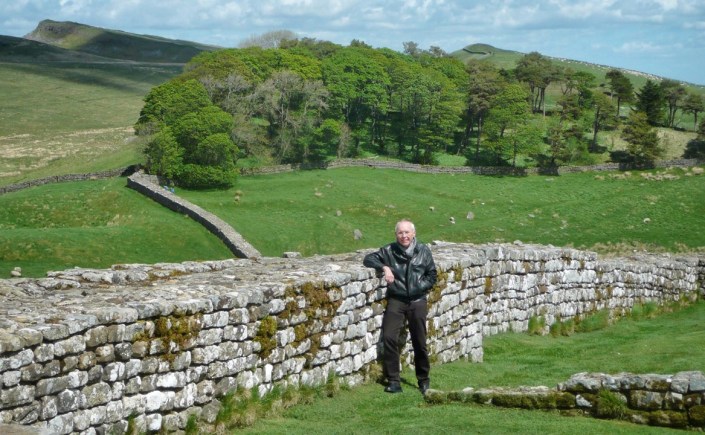
One of the highlights of last years’ travel in northern England was our visit to Hadrian’s Wall. In Roman Wall Blues, I wrote of the magical museum at Vindolanda, the Roman town just south of the wall, and contemplated the lives of those memorialized within. Earlier that day, we had walked through Chesters Fort, where the wall crosses the Tyne, the best preserved Roman cavalry fort in Britain.

image

Adjacent to the fort is a small but significant museum. It was here that we learned that what we are able to walk through and and wonder at today, we owe to the dedication, foresight, and finance of one man: John Clayton, one of the great unsung saviours of Britain’s historical heritage. His monument is the Chesters Roman Fort Museum which houses the Clayton Collection of 5,500 catalogued items from many sites on the central section of the wall.

A classically educated Victorian gentleman who combined demanding roles running the family law firm and acting as town clerk for the city of Newcastle-upon-Tyne, Clayton had a passion for archaeology and the Roman military legacy in his beloved Northumberland.

Were it not for Clayton, large parts of Hadrian’s Wall would have disappeared as the industrial revolution fuelled the demand for stone to build factories, mines and mills. His role in the preservation and survival of Chesters Roman Fort is undisputed.

During the early 19th century, Clayton lived at Chesters House in the parkland surrounding the Roman fort,  and from an early age he was fascinated by the Roman relics surrounding him. By the 1830s,  he began buying land to preserve the Wall. This was at a time when what is now a World Heritage Site was little understood, and indeed, was being unthinkingly destroyed through  the quarrying and removal of its stones for reuse in industrial and urban development.

Clayton’s enthusiasm helped preserve the central stretch of Hadrian’s Wall that includes Chesters (Cilurnum), Housesteads and Vindolanda. He carried out some of the first archaeological excavations on the Wall, carried out restoration work, and brought early tourism to the area by displaying some of the finds at Chesters. Clayton managed the estate and its farms for sixty years, generating the funds to finance to fund further preservation and restoration work on the Wall. He never married, and died in 1890.

The museum housing the Clayton Collection was opened adjacent to the fort site in 1903, 13 years after his death. Today, it is privately owned, but is curated by English Heritage on behalf of the Trustees of the Clayton Collection, and it has been refurbished to brin to contemprary standards of conservation, display, and interpretation. And yet, great care has been taken to respect its period character, and to retain the feel of a 19th century gentleman antiquarian’s collection,  with  many of the labels and original cases having been retained.

Click his name to read more about John Clayton and his museum.

see also my alternative Roman history in Roman Holiday. 

And the video, Roman Holiday in History.

John Clayon

Adele walks down to the best Roman baths in Britain

Adele walks down to the best Roman baths in Britain


That was the year that was – from New Orleans to Jerusalem.

Its been a diverse year In That Howling Infinite. We have traveled, to quote Bob Dylan, “all the way from New Orleans to Jerusalem” – and to many other places in between. Vikings and Roman legionaries; Bob Dylan, Jackson Browne and Bruce Cockburn; Britain in the ‘forties and Paris in the ‘fifties; America, the Levant, and even Wonderland. By Year’s end a million souls will have journeyed to Europe from the war-ravaged lands of the Middle East, and my final posts for the year contemplate what it might mean for refugees who find to safe haven in Australia.

Here is a retrospective.

The year began with a short piece on recent archeological discoveries in Jerusalem that strongly suggested that the Via Dolorosa that Jesus trode on his final journey to Golgotha was the wrong route, and that instead, it began just inside of the Jaffa Gate. I took a light-hearted look at the Jerusalem Syndrome, a mental condition involving the presence of religiously-themed obsessive ideas, delusions and other psychoses triggered by a visit to The Holy City.

image

I read but one piece of fiction this year – a sad admission from a lifelong bibliophile – but this one book was probably one of the best I have read: The Incorrigible Optimists Club , winner of the prestigious Prix de Goncourt, by Jean Michel Guenassia. It is set in Paris’ Rive Gauche, as the ‘fifties gives way to the ‘sixties; as the crooners makes way for rock n’roll; as the Cold War divides a continent, sending dissidents and refugees fleeing to a safe haven in Paris; as the Algerian war divides and destroys families: and as the seeds of ‘les evenments de Mai 1968’ are sown in the hearts and souls of France’s young people. It is a coming of age book, of young hopes and fears, love and loss, a book about writers and reading, and the magic and power of the written word in prose and poetry.

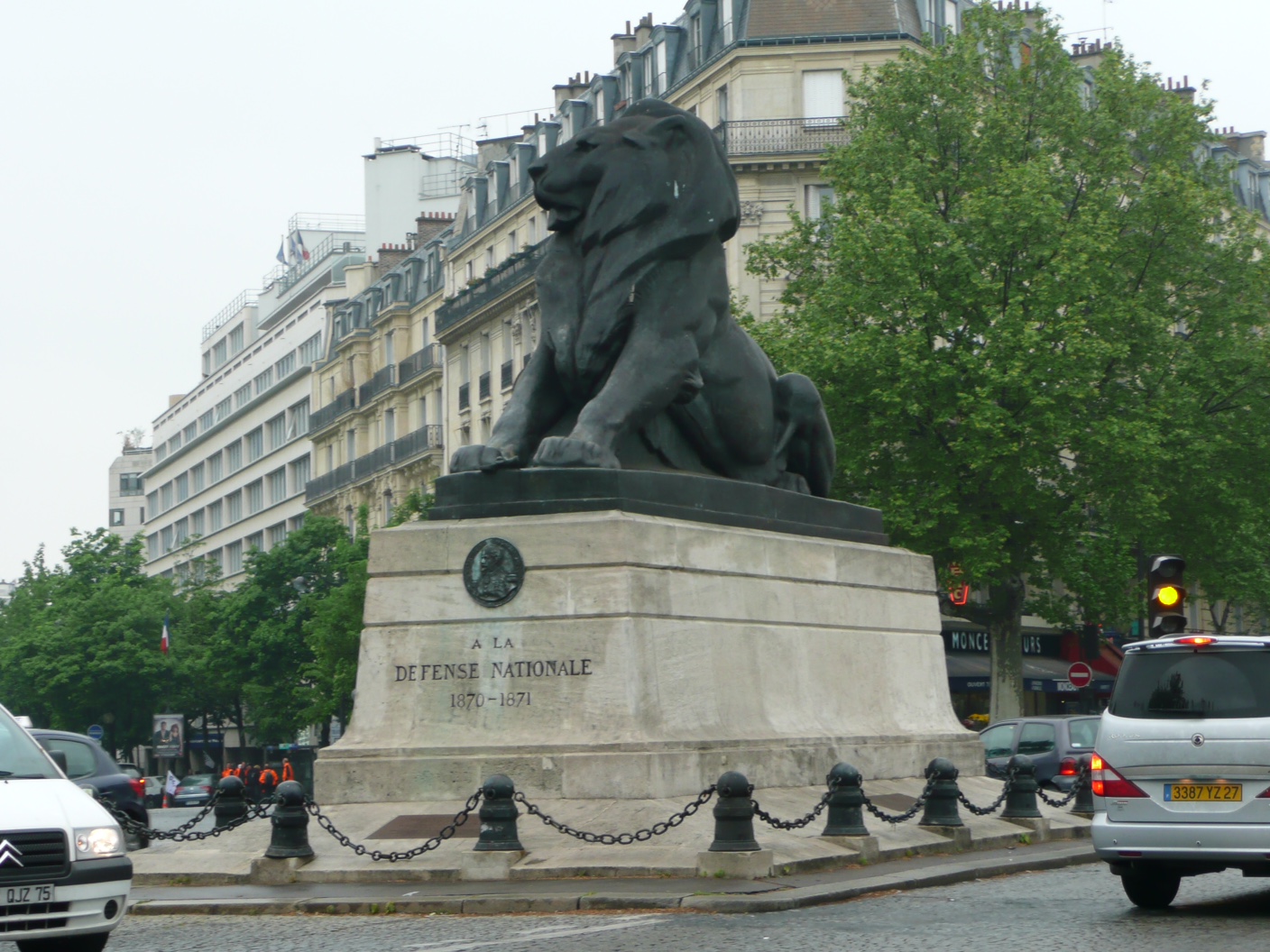
Le Lion de Belfort

March saw the passing of my old friend Dermott Ryder, chronicler and luminary of the Folk Music revival in Sydney in the early ‘seventies. Dermott’s Last Ride is my tribute to him. And April was a month of anniversaries and remembrance. Forty years since the outbreak of the Lebanese Civil War, and the centenary of the landings of the ANZACs at Gallipoli. Pity the Nation takes its title from Robert Fisk’s tombstone of a book on the long war; and he had taken it from a poem written in 1934 by Khalil Gibran, Lebanon’s most celebrated poet, a poem that was both a prophetic testament and a testimony of times to come: “Pity the nation divided into fragments, each fragment deeming itself a nation”. The Watchers of the Water is a song about Gallipoli sing by a Turkish solder.

May saw two diverse pieces of social history. The Spirit of 45  takes personal perspective of British filmmaker Ken Loach’s documentary of the excitement and optimism that followed the Labour Party’s election victory at the end of World War II. This laid the foundation stone for the British welfare state. Bob Dylan’s Americana discusses the meaning and significance of the lyrics and the imagery of Dylan’s early ‘eighties masterpiece Blind Willie McTell, a harrowing journey through America’s dark heart.

In June, we visited Yorkshire and in London, conjuring up memories and historical connections. Harald Went A Viking is a saga about the first of two kings to die on English soil in the late summer of 1066, and the adventures that took him from Norway to Constantinople and Jerusalem and finally, to Yorkshire. Roman Wall Blues takes its title from WH Auden’s poem about a homesick and grumpy legionnaire on Hadrian’s Wall, and contemplates the lives of the ethnically polyglot soldiery who defended the Empire’s borders. And June saw another famous anniversary, the Bicentennial of the momentous and bloody Battle of Waterloo. The Long Road to Waterloo prefaces a song for the men who, after twenty six long years of war, never came home.

Painting of the Battle of Stamford Bridge by Peter Nicolai Arbo, depicting King Harald Hardrada hit in the neck by an arrow

Battle of Stamford Bridge, depicting King Harald Hardrada hit in the neck by an arrow

In July, controversy erupted in the Land of the Free over the flying of the Confederate Flag in states that were once part of Old Dixie. The dead hand of the Civil War reached out and touched the hearts of Americans and their friends throughout the world in the wake of yet another mass shooting. This time, a young man gunned down worshippers at prayer. That the victims were folk of colour, and the shooter, a young white extremist, reopened wounds that have never really healed. Rebel Yell surmises that The South will always be with us, in our thoughts, in our historical memory, in our art and literature, our books and films, and our favourite music.

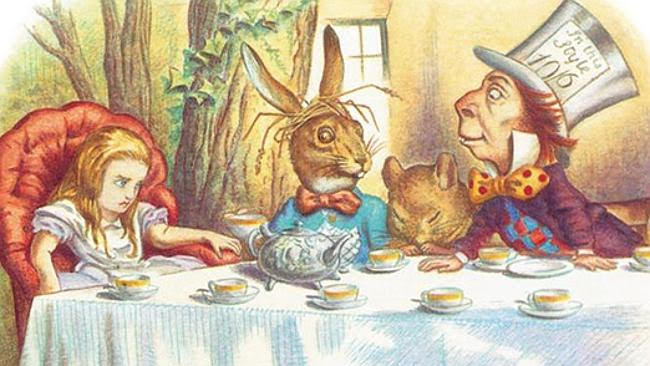
September marked the one hundred and fiftieth anniversary of the publication of Lewis Carroll’s timeless, fabulist masterpiece Alice In WonderlandGo Ask Alice, I Think She’ll Know reproduces Australian  critic Peter Craven’s masterful celebration of Alice 150. The title belongs to the mesmerizing Grace Slick of Jefferson Airplane who cut through to the rabbit chase channeling the long-gone Lewis in a psychedelic musical masterpiece.

Alice

On an infinitely sadder note, Ruins and Bones is a tribute to the memory of Syrian archeologist Khaled Muhammed al Asaad, murdered by ISIS in August 2015, and of Palmyra, the ‘Pearl of the Desert’.

Allende’s Desk and Osama’s Pyjamas is a brief commentary on the extension  of American military power and the pathology of demons and demonization. Tales of Yankee Power looks at American foreign policy during the 1980s from the perspective of the songs of Jackson Browne and Bruce Cockburn.

November’s Children of the Revolution looks at the events that led up to the beginning of the Syrian Civil War, and the early days before it became too dangerous to gather on the streets, when men, women and children would parade in public places, waving the flag of the old Syria, the one that flew before the Assad clan seized power in 1966. Canny camera men could take media-friendly shots of photogenic little girls in face makeup looking sad, vulnerable and defiant. Those days of hope are long gone.

A highlight of this past year has been my work as a volunteer with the Humanitarian Settlement Services programme. The HSS’ mission is to assist newly arrived refugees to settle in Australia. In No Going Home I endeavour to imagine the refugee journey. Hejira is a sequel of sorts and, indeed, a happy ending.

Happy New Year to these prospective New Australians, and to all my readers. May 2016 be fortunate and fulfilling.

Palmyra, viewed from Tadmor

Palmyra, viewed from Tadmor

A Window on a Gone World

London, back in the day. What wonders dwelt within. I recall here but a few. The old church of St. Bartolph-Without, which turned up in later days in a bad Dracula movie. The churchyard of St. Paul’s, a haven for summer’s day lunch-timing. Green Park in spring sunshine as the lily white skin of England divests for primavera. Berkeley Square, where the fabled nightingale sang, and where Clive of India, his mind curdled by corruption and conscience, and haunted by guilt and ghosts, cut his own throat.

Read more in  Tabula Rasa – Poems of Paul Hemphill, Volume One

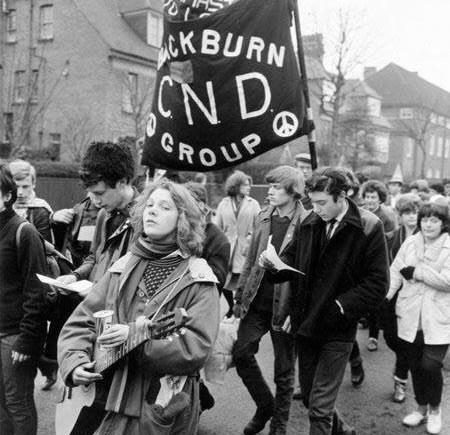
My first political excursion. The CND Aldermaston March reaches London, 1966

My first political excursion. The CND Aldermaston March reaches London, 1966

CND

See also The Spirit of ’45  and Something About London.


Down Under

Last Sunday, The Guardian published a delightful opinion piece by Guardian producer Madhvi Pankhania entitled ‘So long and thanks for all the flat whites: an English view of Australia’.

She began: “Recently my colleague Paul Owen shared his experiences about being an Englishman in New York, from the volatile customer service, to the way bragging is completely normal. This was after American Scott Waters FaceBook post about being won over by the England’s quaint villages where pubs are “community living rooms” went viral. I lived and worked in Sydney, Australia, for two years until this July, and I got to know its people and its outsider’s view of the rest of the world. Australians know something of the English – there are enough expats over there, and they also still have our Queen. Here’s my take on Australiana”.

I was amused and inspired enough to write a response from the land down under.

Dear Madhvi,

Seeing the title, for a moment, I thought you were writing about me. I enjoyed your article immensely, and was inspired to pen (type, really, but you know what I mean) a detailed response. Here it is, your points, one by one, and my perspective thereof in parenthesis.

1) Government policies on asylum seekers, prime ministerial cock-ups and sports achievements drive the international perception of Australia.

Sadly so, but our embarrassment of a prime minister was replaced and even though his replacement is still a Tory, it is as though a dark cloud has lifted. Politics dominates our front pages to the extent that old timers pine for the days when sport dominated the front pages. These days, it does so only when there is corruption, inappropriate behaviour or a doping scandal.

2) Don’t feel guilty about not tipping – unlike the US, businesses are responsible for paying staff decent wages and benefits, so anything extra you give doesn’t serve to prop up pay, but is a bonus. Cuts to take-home pay on weekends and public holidays, though, are a big current issue.

“Penalty rates” as we call them, on weekends and public holidays, including double-time on Sundays, are sacrosanct to unions and to those who have to work on weekends, but a shibboleth to conservatives and business who would like to see them smoothed out if not abolished.

3) Many Australians are the sons and daughters of migrants from all over the world, and have incredible stories of their journey to the country. And they’ll share these with you.

4) Australians have the gift of the gab; you can expect to hear some great stories.

5) There’s never a wrong time to strike up a conversation – the taxi driver, the barista, the dentist, the guy fixing your internet – they will ask how you are and tell you about their day. And why wouldn’t you want to hear their opinion on Tony Abbott’s latest blooper?

Yes indeed. But don’t let some people loose on issues like Muslims, asylum seekers, and immigration. We can be quite a conservative country at heart. And ironically, it is the naturalized immigrants who can be quite opposed to our “humanitarian intake” policy (Australians have a great penchant for euphemisms). And we do love a tall story. Like this one.

Number Six is missing? Was this censored or self-censored? Australians are great ones for conspiracy theories, especially those subtly alluded to above, though no here near as bad as the Americans.

7) But a word of warning, Australians can be sensitive – convict jokes will go down like a lead balloon.

8) In fact, making quips about Australia – unless you’re Australian – is a big no no.

Strange observation these. Apart from historians and politicians who like to engage in culture wars no one really thinks or cares about our convict heritage. And as for quips about Aussies, you might’ve been talking to the wrong Aussies. Generally, anyone and everything is fair game.

9) Europeans in Australia are ubiquitous. Try not to fall into the trap of only hanging out with other British people, as many others do – how else will you ask them about Peter Andre and Shane Warne?

Certainly true. There is a world of diversity here, and some great stories. See 3, 4, and 5.  As our National Anthem says, “For those who’ve come across the seas we’ve boundless plains to share”, (except if you arrive in small, leaky boats).

10) Whether it’s state, postcode, sports, media, or politics, competition between teams can fierce. Pick your side and be loyal. This is truest for contests like State of Origin – a rugby league match between states where the real prize of winning is the feeling of superiority.

We are quite a tribal bunch, and yes, irrationally loyal to our mob of choice. It’s often a bad case of “my mind is made up – don’t confuse me with the facts!”

11) In politics, even within parties, rivalries can go on for years. Prime ministers come and go, ousted by colleagues driven on by the spectre bad opinion polls. They are usually replaced by a former PM whose resentment has been bubbling for years. It’s the Dynasty of political entertainment.

12) Politics is the entertainment. Live, routine interviews with politicians’ scripted responses is considered prime time television. No one seems to get bored with impromptu press conferences, maybe because the rerun shows on other channels are about as interesting as watching paint dry. It’s either that or sports.

Indeed. Politics is our very own “blood sport”, and prime- time entertainment. And views can be quite polarized, predictable, and passionate. Virulent too – Games of Thronesy, even, but without he blood and bonking. Loyalties and hatreds linger for year – generations, evens.  Voting is compulsory DownUnder, and elections are full-on, emotional, high octane events. Election Day at the booths is one big party whilst the evening coverage of the counting, on all free to air channels, is all-night family entertainment, often filled with argument and alcohol.   

13) A politics/current affairs show is the most popular TV programme. Q&A is a politer version of a Question Time panel because why would they interrupt each other? British comedians and Greek singers are invited to make the panel more lively. And if you don’t watch it, you’ll be completely out of the loop with stories in the newspapers for the next few weeks.

Q&A is a strange beast, part current affairs, part reality TV show, loathed by the more extreme partisans of left and right, and often used as the whipping boy for conservative  politicians who would like to see the ABC abolished or owned by Rupert Murdoch. And yes, those British comedians and exotic singers often look and sound like lost extraterrestrials. But Nana Mouskouri and Joan Baez gave the oldies some sublime kumbaya moments at the end of all the partisan posturing.

14) Many politicians become big media presences. Like Clive Palmer, the Australian version of Donald Trump. He was a billionaire, says what he thinks and before he was an MP he was the owner of a dinosaur park and twerked for the public. It’s true! Some other politicians have done strange things, too, like threaten Johnny Depp’s dogs, or eat raw onions.

Queensland mining magnate Clive Palmer is a legend in his own longlunchtime, larger than life literally and figuratively. Not only was he actually elected to parliament – quite an achievement for an independent, but he formed his own party (which very rapidly disintegrated), and he donates his parliamentary salary to charity.  And yes, Tony Abbott’s onion eating was very peculiar, and the less said about Neanderthal Party deputy leader and wannabe dog killer Barnaby Joyce, the better.

15) Remember when Australia passed the law mandating plain packaging for cigarettes and another one imposing a price on carbon and people thought they were a new progressive force in the world? Now they can’t even pass gay marriage legislation, even with widespread public backing.

Relax, Madhvi. The world will be set aright. The carbon tax was abolished by the next, and now defunct prime minister, and Big Tobacco is taking us to court in Singapore to overturn the plain packaging legislation. Gay marriage will get through in the short to medium term now that the dead hand of Toney Abbott is taken off the wheel of state, but the Republic is still a long way away. Though we love Her Maj to death, and have no time for Chuck and Camilla, young and old alike are mad about Kate, Wills, George and Sophie.

16) is missing. See 13 above.

17) If you didn’t guess it yet, everyone’s really into politics.  And sport. Football is Australian Rules football (AFL), and football is soccer or A-league, rugby league is NRL. Or you could just follow the international cricket – but don’t mention this year’s Ashes.

19) Fancy learning to surf? It will only take years of practice and dedication to tame those waves – and most of the time you’ll feel like you’re drowning and being slammed against the bottom of the sea floor. And if you break surfing etiquette, you’ll feel the hard anger of professional surfers and wave police.

Sport certainly is a national religion, although we are quite ecumenical. Anything with a ball is divine, and horses, dogs and pokies are holy too.  Even politicians who hate sport are obliged to attend the various Finals and look enthusiastic about it. Serious interviews are interrupted with questions about which team they are barracking for on Saturday, or their tips on the Melbourne Cup. When one bookish state premier was filmed reading a volume from the western canon (probably Flaubert in the original French), he was ridiculed from Bendigo to Broome. Scandals, whether of substance abuse or sexual excess, are salaciously savoured with a mix of sadness and satisfaction.

20) The birds are beautiful, but why can’t they just stop squawking in the mornings and respect that you need a lie-in?

The birds are indeed amazing. They rise at five o’clock in the morning and sing, cackle or squawk all the live long day.  Bye the bye, item 21 is missing too. See 13 and 16. What was it you were not permitted to say in print? The fact that we have some of the most venomous snakes and spiders in the Universe, and some pretty mean denizens of the deep? Wouldn’t want to scare the tourists away.

22) Cockroaches will enter your home without fear, swivel their antennae and scuttle across your floor.

Yes, roaches can be very cheeky. As can fleas, ticks, sand flies, blowflies, horseflies and leeches which refuse to respect one’s personal space.

23) Queues are non-existent. Apart from when you wait to get a sandwich at lunchtime as they’re making it from fresh ingredients for every customer.

24) A sip of coffee is nectar to your lips, and even the cheap coffee is good. Some places even measure the water to the “perfect” temperature in chemistry beakers, and guys with big bushy beards hand you your flat white in the street.

Queues for good coffee are ubiquitous. Especially first thing in the morning when you crave a slug from the wonderful jug before you hit the hamster wheel. And yes, coffee here is the world’s best. Starbucks went broke in Sydney because it couldn’t compete (which is why it pays very little tax in Oz – but that, and the matter of Google, Apple, IKEA, and others paying their jus and fair share of income tax, is another story,  and another upcoming political battle).

25) A daily commute for some people is sailing past the Opera House and the Harbour Bridge, watching the occasional pod of dolphins.

And don’t forget the whales that play in Sydney Harbour, one of the most beautiful in the world.

25) People regularly sell all of their unwanted clothes and furnishings in front gardens, like an impromptu garage sale. You can go out for a walk and return with an old salad bowl.

In England, car park sales are held in, well, car parks. In Australia, garage sales are held, well, not in garages, but in front yards, and on the pavement. You can find everything that you never really wanted, from china to chainsaws, books to banana chairs, dildos to desks.

26) Cars are king of the roads and cities mainly have highways running straight through them. If you do walk in the centre of cities, the minutes spent waiting for the lights to change will feel like an eternity. Jaywalking is illegal though, so you’ll need to not let impatience get the better of you.

The car is indeed king (it was forever thus) and public transport neglected. Politicians promise public transit infrastructure, and pledge millions of dollars or our money, and all we get is roads, roads, and more roads. It could be to do with influence of the road transport and fossil fuel lobbies, but that is probably just another conspiracy theory – see 6. And yes, jaywalking is illegal and you can actually be fined in Sydney – although this is often to do with the fact that incredulous pedestrians start arguing with the enforcement officer.

27) Avocado is fresh, ripe and ubiquitous. Order it served on toast with some lemon and pepper and you will be told it’s the best brekkie in the world. It is.         28) Vegetables aren’t sold in packages of plastic. Then again, it’s just easier to eat out; Vietnamese pho is one of the great migrant dish imports.

Ah! The fruit and veggies. In abundance, but can be pricey in the wake of droughts, fires, and floods. The Thai, Arab and Turkish restaurants and cafes are great too.

29) If you get homesick, there’s a UK shelf in some supermarkets that stocks Marmite, PG Tips and Tunnocks caramel wafers

And there’s Barry’s Irish tea and Harrogate Yorkshire Tea, digestive biscuits, liquorice allsorts, and Dr Who tea pots. And of course, UK TV and BBC First channels on FOXTEL cable with a surfeit of English soaps, comedies and drama. Not to mention the History Channel’s stodgy diet of long-dead kings and queens.

30) There are English people everywhere. Most still believe they’ll move home one day.

31) There are none of the familiar comforts of high-street chain stores. No Marks & Spencer, Primark, or WH Smith. Small independent stores and restaurants do a better trade, and you tend to get better quality, individual products

And there ARE English people everywhere. And most will never go home. Why would you when this place is perfect one day, paradise the next (except for all the usual first world maladies like racism, refugees, child abuse, domestic violence, ice, corruption, inequality, and poverty). Lots of Irish people too, but the way. And Indians. Almost like home, really.

32) Anyone who’s everyone is on social media, and Instagramming every small achievement is standard … breakfast – delicious! New casual sportswear – so hot! Selfie on the beach – so amazing!

Social media is definitely full on, though no more so than in the UK, where wi fi availability is streets ahead of us. Here, it is patchy, depending on where you are, and vulnerable to political posturing and promises. We live in the bush and we are definitely the forgotten people.

33) Flying between states is the equivalent of taking a really luxurious bus.

We have forever suffered the tyranny of distance. It is a very long way between places, and whilst road trips are fun, and the scenery magical, the bush does tend to go on and on and on. Bus and train services are neglected (see 26), interminable and uncomfortable, so, unless you really like driving very long distances, flying is always the preferred option. Expensive but – it is cheaper to fly to Bali for a beano. See 44.

34) Australian slang – arvo, onya, sledge – is more fun, loose and creative than proper English, and the shortness is useful for Twitter. I remember hearing “ranga”, though, about someone with red hair and reeling at how mean it sounded. The words are good ammunition for Australian humour that laughs political correctness in the face. They laugh at everyone and everything, politicians, friends, family, but most of all you. Self-deprecation is a form of modesty, guys.

Language is fun in Oz. and yes, Madhvi, you are spot on. But I reckon the Poms are more politically-correct, particularly the liberal, middle class ones. You would never get Greek, Arab and Vietnamese comedians doing things like “Wogs out of Work” in the UK. Offensive. Off-colour (sorry about the pun). Tsk, tsk!

35) Finding a late-night drinking venue is an arduous journey that reaps few rewards. You think it’s because you’ve missed hidden spots, but no, they just don’t exist. Fun has a curfew of midnight; some Cinderellas have to go home. And no, one seedy hotel does not count as a late-night venue. What happens is that karaoke replaces real going out. Yep, it’s either that or a casino. Daytime weekend electronic music festivals also don’t count.

There is a good reason for this. Innocent people were literally getting killed on the streets at night. The “lock-out” laws have seen the level of booze-induced violence decrease dramatically. The owners of the swill palaces and 24 hour party people would dispute this, but.

36) Listening to Triple J’s Hottest 100 will keep your finger on the pulse of cool.

There is music for all tastes and passions on the dial, from hip hop to be bop, and all beats in between. Concerts by big name overseas artists require a small mortgage, however.

37) Everyone goes on about which is better – Sydney or Melbourne. What I’ll bring your attention to though, is that Brisvegas (Brisbane) has the better nickname.

Melbourne is cool, but Sydney is better. Brisvegas? Must be a Pom term. We don’t use it around here.

38) Wherever you are, you’ll have a great time commemorating Anzac Day. This national day, to mourn and respect soldiers who died at war, is when crowds come together to hoot, whoop, get steaming drunk and bet on the winner of … a coin toss.

This is the uncool picture of Anzac, our secular Christmas, Easter, Eid, and Hanukkah rolled into one. It is now a political and marketing extravaganza as people get up at dawn for the memorial services, watch the parades and the  piped bands, and endure hours of History Channel commemorations whilst Aussies young and old wonder the globe, suffering crowds and cold on the scattered battlefields of old. But folk still do get drunk and play Two Up on the “one day of the year” that it is legal.

39) The Australian way to drink beer is: on tap, all day long.

An old and increasingly inaccurate. stereotype. Wine sales overtook beer sales a long time ago. And Australian wine is world-class and reasonably priced in Sainbury’s, Tesco’s and M&S.

40) Indigenous Australians tend to be ignored on national holidays. They don’t really celebrate much – they’ve had their land stolen, their children taken, and have high suicide and incarceration rates. Many Australians do care about these issues, even though there isn’t a quick fix solution. A referendum in 2017 may give them recognition in the Australian constitution.

Yes, the indigenous Australians are still with us, contrary to the expectations of early twentieth century missionaries who endeavoured to give them comfort on their way out of this world. Our treatment of the aborigines and their present predicament is our original sin and national stain. Many care about these issues, and many don’t. Much has been done, and much still must be done. It’s a long winding road strewn with lost opportunities, good intentions, broken promises, and political expediency. But, as Martin Luther King once said, “Lord, we ain’t what we want to be; we ain’t what we ought to be; we ain’t what were gonna be, but thank God, we ain’t where we was!”

41) Most Australians aren’t racist. Not everyone is on board with the government’s hardline treatment of asylum seekers.

Most Aussies are not racists, sure, but there is a xenophobic streak that emerges in times of economic and political stress. Our divided response to asylum seekers and boat people, and Islamic terrorism shows us at our best and worst. But at most times, the better angels of our nature come to the fore.

42) Some of the vast outer suburbs of cities have thriving small communities, with kick-ass restaurants, though inner city dwellers stay away. This could be due to the hours of driving it takes just to get there. Or maybe its ruthless tribalism – a friend who grew up in Sydney said beach suburb kids weren’t too keen on “westies”, and north and south goad each other too.

43) Tasmania in winter is a dark and bleak land of no hope. The exquisite food and wine won’t be therapy enough for seeing barely any human beings. And definitely don’t visit Port Arthur in winter, unless you get a kick out of cold, austere tragedy.

We are a broad, wide land, and a diverse, multicultural society, twenty first century in many places, twentieth in others. That’s the joy of the place.
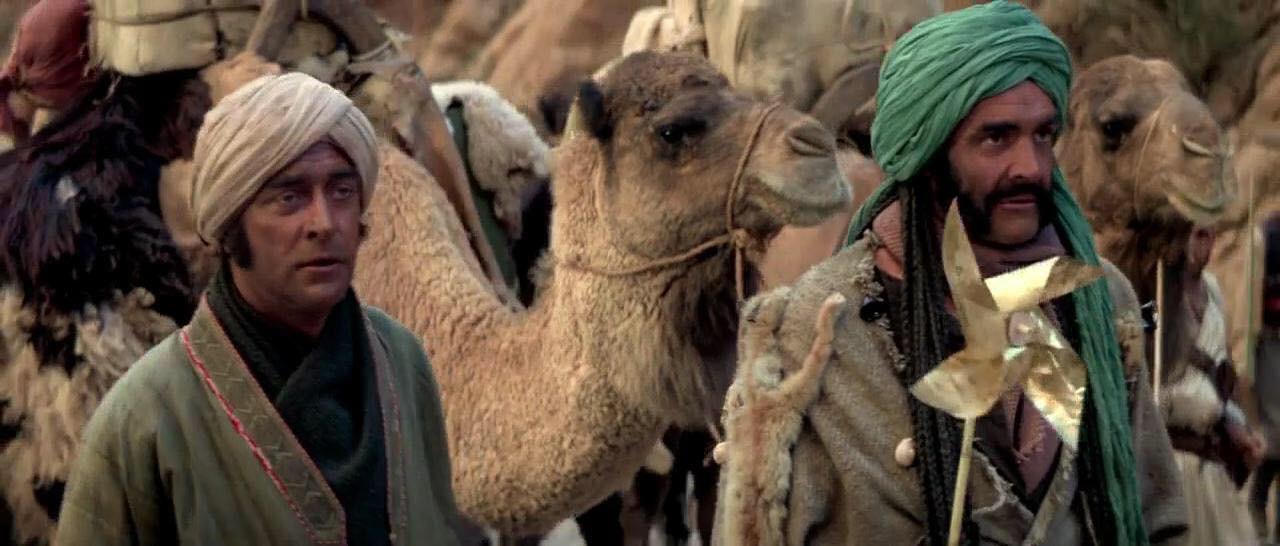
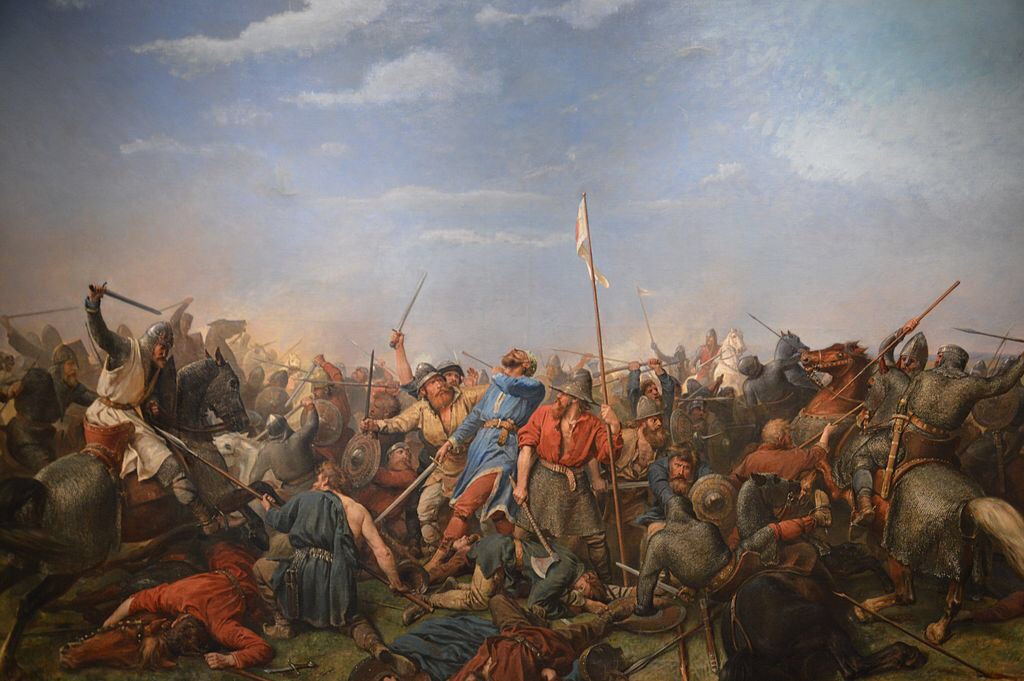
44) If you want sunset cocktails, Australians decamp to Bali over winter to spiritually revive. Or party.

Ah, to be young and free and living in Australia! But we do have a wee problem with alcohol abuse and binge drinking, and quite a bit of ancillary violence.

45) Australian women have swagger. They’re confident, powerful and words will not puncture them.

But, in Australia, there is still a toughened glass ceiling in politics and business, and two women are killed by domestic violence each week. Confident and powerful, maybe, in some places, but frustrated, exploited, vulnerable and frightened in others.