I am the monarch of the sea, The ruler of the Queen’s Navee, Whose praise Great Britain loudly chants. And we are his sisters, and his cousins, and his aunts! When at anchor here I ride, My bosom swells with pride, And I snap my fingers at a foeman’s taunts; And so do his sisters, and his cousins, and his aunts!
Sir Joseph Porter, HMS Pinafore, Gilbert & Sullivan
Once upon a time, in a land not so far away, there dwelt a prince and his beautiful princess…
It may be hard for post-baby boomer generations with their iPods and iPads, smartphones, Spotify and You Tube to imagine the halcyon days of pop-music when radio, vinyl, and badly mic’ed, ramshackle live performances were the only pop music media available to the fans, when the venerably ‘square’ BBC ruled the airwaves, when teenagers broke the musical shackles of the predictable and unthreatening ‘forties and fifties with its big bands, comic songs and crooners by tuning-in, often under their bed-covers, to the new ‘sounds’ broadcast by Radio Luxembourg, and when enterprising and adventurous rebels endeavoured to throw off the cultural chains of the monochrome ‘Aunty’ by setting up shop for themselves.
Fifty years ago last September, a new state was born in the North Sea just off the English coast. Its genesis lay in the herculean struggle of the English pirate radio stationsto establish free and independent airwaves – events so memorably portrayed in the rock ‘n rolling, all singing and toking The Boat that Rocked. Check the soundtrack – it’s fab!
Five years ago, newspapers around the world published the obituary of one of the world’s longest reigning but least known monarchs. This is his story.
Welcome to Sealand
“Sealand is the smallest country in the world. The country‘s national motto is E Mare, Libertas (From the Sea, Freedom), reflecting its enduring struggle for liberty through the years. Sealand has been an independent sovereign State since 1967. Upon the declaration of independence, the founding Bates family raised the Sealand flag, pledging freedom and justice to all that lived under it”.
So goes the Sealand homepage. That’s the vision. The reality is a little less exalted. But the Principality of Sealand does exist. Its a real-life, royal family, passport-issuing, micro-nation that has been around since 1967, and it is arguably the most credible place like it in the world,, as a browse through the Wikipedia lists of micronations will show.
Roy Paddy Bates was a bit of a buccaneer. A war veteran who had risen to the rank of major in the British army, he’d fought in North Africa, Sicily, and Italy, and had been wounded in action several times. After the war, he started various enterprises, including an import-export business, a wholesale meat business, and a thirty boat fishing fleet. Nowadays, we’d call him an entrepreneur and throw buckets of public money at him.
In 1965, the the Major Bates family embarked on a project that his wife Joan cheerfully described as “pioneering commercial radio.” Others called it ‘pirate radio’ because at that time the BBC was the only licensed broadcaster in England, Inspired in part by the success of the outlaw Radio Caroline, Roy established a his own pirate radio station on Fort Knock John, one of many abandoned WWII sea forts, a complex of no-frills anti-aircraft forts that were used for shooting down German planes on bombing runs to London, and broadcast pop music and paid advertisements. Radio Essex broadcast to a quarter of England, until HMG summonsed Roy in September 1966 for operating a transmitter without a license – he’d picked a tower just inside England’s three mile territorial limit. He was fined one hundred quid and shut down.
But Roughs Tower, another of the forlorn forts, lay just beyond the pale – six miles out and beyond the limit. This old battle station stands still, in twenty four feet of chilly North Sea brine, six miles east of Felixstowe, an industrial port on the southeast coast of England. Abandoned like its siblings after the war, it was occupied in 1965 by Jack Moore and his daughter Jane in the name of Wonderful Radio London.
But, in September 1967, the Moores were evicted by Major Roy who wanted to use it to for his own station. On Christmas Eve that year, Roy and his son Michael, then aged fifteen and home from boarding school, dismantled Radio Essex and hauled it to Roughs Tower. The government was snookered – but the Royal Navy blew up another old fort that stood beyond the three mile limit to prevent another hijack, pour décourager les autres.
Shortly afterwards, Roy and Joan were out with friends in a local pub when Joan said that she’d like to have “a flag and some palm trees” to go with the “island” her husband had won for her. The company canvassed the things Roy and Joan could do with a sovereign property, so Roy hired a lawyer to check it out. And yes, there was loophole in international law whereby the Bates family could claim Roughs Tower as its own: “dereliction of sovereignty” – in effect, if you don’t use it, you lose it.
On September 2, 1967, Major Roy renamed the tower Sealand and declared its independence from Great Britain with himself himself as its ‘prince’ and Joan, his princess. In 1975, His Highness introduced Sealand’s constitution, followed soon afterwards by a national flag, a national anthem, currency (pegged to the US $) and passports, and printed a series of postage stamps honouring great explorers like Christopher Columbus and Sir Walter Raleigh (both of whom, ironically spent their last days in jail, and Sir Walter ending his lfe on the executioners block).
Officially, the UK doesn’t recognize Sealand, and except for “diplomatic” incidents every now and then, HMG left this strange little fief alone. Until 1968, that is, when, in a move that helped force the sovereignty issue, Michael fired warning shots at workmen who were servicing a navigational buoy near the platform. When Michael and Roy next set foot on British soil, they were promptly arrested for weapons violations, only to be acquitted in October of that year since as Sealand was “about three miles outside territorial waters,” the Crown’s firearms laws didn’t apply there. The authorities, perhaps sensing an embarrassing precedent, chose not to appeal.
The British government extended its territorial limit to twelve miles in 1987, but Sealand has been allowed to plod on. Over time, other legal cases have appear to have have bolstered the Bates’ sovereignty claim, and the government’s stance remains one of hands-off. In 1984, the Department of Health and Social Security issued a written ruling that Michael Bates did not have to pay his national health insurance for the periods he resided on Sealand. In 1990, Sealand once again fired shots at a boat that came too close, and although local authorities investigated, the matter was quickly dropped.
Sealand was never used for pirate broadcasting. Changes in English law and the broadcasting environment saw Prince Roy lose interest in the pirate radio scene by the late ’60s. He explored other investment opportunities in the ’70s and ’80s, but little came of them except misadventure. Prince Michael has said that that a number of “undesirables” had contacted the family over the years hoping to use the place for various schemes – from setting up some sort of “pleasure island” to smuggling, and Roy has claimed that he was approached during the Falklands War by a group of Argentinians who wanted to buy Sealand and set up camp “on Britain’s doorstep.” “Of course I sent them away,” he told The Independent in 1990. “I’d never do anything that would pose a threat to the UK”. And indeed, he has said that in if Britain has another hour of need, he would rally to the call. Old soldiers never die…
“Cry havoc and let slip the dogs of war!”
The most momentous moment in Sealand’s history occurred in 1977. when the royal family were approached by a German and Dutch consortium of shady lawyers and diamond merchants who had plans to build a luxury casino on the platform. “They wanted to be part of what we were doing, and they wanted to develop it as well,” Princess Joan recalls. “Then they asked us to go to Austria” for a meeting. Roy was wary, but Joan persuaded him, saying, “What have we got to lose?”
A lot, it would seem. When they landed in Austria, five men met them and arranged to meet later. They never showed, and the suspicious, highnesses endeavoured to contact the mother ship. “In those days it was very difficult,” said Princess Joan. “We had no radio communication and no telephone communication. We phoned different people who worked in the area – fishermen and the Coast Guard. One of them said, ‘I saw a big helicopter hovering over Sealand.’ It didn’t feel right.”
And it wasn’t. Crown Prince Michael was at Sealand when the helicopter showed up. As he remembers it, the mystery party lowered down a man who claimed to have a telex (remember those?) from Prince Roy confirming that a deal had been done. Prince Mikel didn’t buy that. Then the helicopter lowered a man who whinged that “he was sick and needed a glass of whiskey.” The Prince let the chopper land, but it was ruse : a bunch of Dutch and German mercenaries led by one Alexander Achenbach, a German lawyer who held a Sealand passport, disembarked. Once on the deck, they locked the prince up without food or water for three days. He recounts that his assailants finally put him on a Dutch fishing boat that they “controlled,” took him to Holland, and left him there without passport and money.
He made his way back to Southend, where he met up with his folks. They hired a helicopter and a dashing pilot who’d worked on a few James Bond movies, gathered a posse and set forth to reclaim the fiefdom. When they arrived, Michael, shotgun in hand, slid down a rope and fired a shot – apparently by accident – and the mercenaries surrendered.
Achenbach was taken captive. The governments of Germany, the Netherlanda and Austria petitioned the British Governmet for his release, but HMG declined to intervene, citing its 1968 ruling. Germany sent a diplomat to Sealand to negotiate Achenbach’s release, and the ‘prisoner’ was eventually freed, with Roy asserting thereby that Germany had effectively recognized Sealand as a sovereign nation. Achenbach returned to Germany whereupon he established a government in exile, the Sealand Rebel Government. His successor, Johannes Seiger, continues to claim that he is the one true prince. The SRG too is one of those quixotic micronations. In 2009, another German, calling himself King Marduk I, after the old Babylonian deity, declared that he had claimed Sealand for his own nation, The Kingdom of Marduk! The days of Europe’s dynastic squabbles are apparently not over. But, honestly, you couldn’t make this stuff up!
“Keep on rockin’ in the free world”
Nowadays, when Sealand blips on the geopolitical radar, it has more often than not been a kind of low comedy that makes it a tabloid favourite. In 1997, for example, when the killer of celebrity Gianni Versace’s assassin committed suicide on a Miami houseboat, police discovered that the man who owned the boat was in possession of a Sealand passport. Nothing eventuated, but as it turned out, it would appear that lots of people have Sealand passports who shouldn’t – these apparently self-replicate without the Bateses’ knowledge. There were an estimated 150,000 in curculatiuon, and in 1997, their majesties revoked all of them. 2000, Sealand made the news again when law enforcement officials in Spain busted a Madrid-based gang allegedly tied to international drug trafficking and money laundering. It appeared to be using a fake Sealand website and thousands of phony Sealand passports as part of its criminal activity. In
Questioned by Interpol, Prince Roy bewailed the injustice of anyone using the Sealand name for black deeds. “[Sealand] has all been a game, an adventure, and it is very unfortunate to see it take this turn,” he told one reporter. “Nobody is more honest than my husband,” Joan said at the time. “He’s so honest he creaks.”
But as the Bates admit, life on Sealand hasn’t always been a thrill, and in recent years the tiny country has been sliding into obscurity. The biggest challenge for Roy was always that of figuring out what to do with their patrimony. Over the years, Prince Roy, Princess Joan and Michael, the dauphin, earned their keep with humdrum pursuits – like commercial fishing and fish processing – while shuttling back and forth between their royal seat and the mainland as dual citizens of Sealand and the UK. They’d ponder all sorts of moneymaking dreams and schemes like pirate radio outposts, tax havens, pleasure dens, casinos, and internet havens. In January 2007, The Pirate Bay attempted to purchase Sealand after harsher copyright laws in Sweden forced it to look for a base of operations offshore. WikiLeaks is said to have considered moving its servers there – a plan that came to nought when Julian Assange became enmeshed in his Swedish quagmire and his diplomatic quarantine as Ecuadorian Embassy house-guest.
An article in Wired in 2000 entitled Welcome to Sealand – Now Bugger Off!describes a project to set up Sealand as the world’s first truly offshore, almost-anything-goes electronic data haven – a place that occupies a tantalizing gray zone between what’s legal and what’s possible – outside the jurisdiction of the world’s nation-states. Simply put: Sealand won’t just be offshore. It will be off-government. The HavenCo initiative came, saw and collapsed by 2007, but the Wired story is a fascinating insight into the world of geeks and gigabytes.
But in reality, Sealand has been a quixotic financial sink-hole. Whilst none of the Bateses live on Sealand, they did visit and provide upkeep, and say they’ve spent huge amounts on supplies, legal fees, and improvements A caretaker usually occupies the place, which includes modest living quarters, a kitchen, a chapel and an exercise area. Sealand was abandoned briefly after a fire in 2006 but later repaired. Prince Michael has said in recent years that the family would consider selling the place — or, given the complications of selling a supposedly sovereign nation, leasing it – from 2017 to 2010, a Spanish real estate company offered Sealand for sale for €750,000.
Michael lives in Southend, where he runs his own business. Roy spent most of the ’90s living on Sealand by himself, ready to defend its sovereignty with rifle and shotgun until his was physcially unable to keep his lonely watch. Joan, afflicted with arthritis, retired to Southend, keeping in touch with Roy by cell phone. Roy Bates died on 9th October 2012 after suffering from Alzheimers disease for several years. He was succeeded by his son Michael. On 15th March 2016, it was announced that Princess Joan had passed on, at the age of 86, in an nursing home in Essex.
These events have made Sealand more than a little depressing: a geriatric experiment in nation-building, doomed to die a slow death, beaten into the sea by wind and waves. But Prince Michael, now the Prince of Sealand, said on the patriarch’s passing that their descendants would preside over Sealand for many generations to come. “The family,” he said, “plans to continue the legacy.”
So we beat on, boats against the current, borne back ceaselessly into the past.
Roy Bates, who commandeered a former British military outpost in the North Sea nearly 50 years ago and declared it a sovereign nation, died on Tuesday in Essex, England. He was 91. He had had Alzheimer’s disease for several years, his son Michael said in announcing the death. Make that Prince Michael.
Members of the Bates family still claim dynastic dominion over what they call the Principality of Sealand, a rudimentary platform of concrete and steel rising out of the water seven miles southeast of the main British island. And they are looking to expand the royal family.
Even if you never get the chance to visit — the trip requires a helicopter ride or a willingness to be hoisted by crane from a boat — you, too, can join the royal court of one of the world’s most enduring and entrepreneurial micronations. The official Sealand Web site sells titles (the “Count/Countess Title Pack”: about $320), identity cards, stamps, wristbands and e-mail addresses (just under $10 for six months). “It it helps pay for the whole Sealand thing,” Michael Bates said.
A country does need an economy, and the effort to sustain Sealand with Internet commerce is at least somewhat consistent with why Roy Bates arrived there in the first place.
In the 1960s, Mr. Bates, a former major in the British Army, was among a group of disc jockeys who tried to avoid England’s restrictive broadcasting regulations by setting up pirate radio stations on some of the country’s abandoned offshore outposts, which had been used to fire ground artillery at German aircraft during World War 2. Mr. Bates began broadcasting from one outpost within the three-mile limit of England’s territorial waters, and when he was driven from there in 1966 he planned to start a station at Her Majesty’s Fort Roughs, which was in international waters. Instead, he founded Sealand.
On Sept. 2, 1967, Mr. Bates declared it an independent nation, himself its royal overseer and his wife, Joan, its princess. It was her birthday. “They had a huge love affair,” Michael Bates said. “He really worshiped her.”
Mr. Bates was emboldened the next year when, after he faced weapons charges for firing warning shots at an approaching British vessel, a British court ruled that it had no jurisdiction over the case because the exchange had occurred in international waters.
Prince Roy Bates and Princess Joan. Standard/Hulton Archive, via Getty Images
A decade later, a greater drama ensued when a group of Germans with plans to build a luxury casino on the platform tried to take control of Sealand while Mr. Bates and his wife were away. They held Michael Bates hostage for several days before Roy Bates stormed Sealand and retook it in a dramatic helicopter raid. He imprisoned one of the men there. When the German government sought Britain’s help in freeing him, Britain declined to intervene, citing the 1968 ruling.
Germany sent a diplomat, the man was eventually freed, and Mr. Bates asserted that Germany had effectively recognized Sealand as a sovereign nation.
Even after Britain expanded its territorial waters to 12 miles from shore, it mostly left Sealand and the Bateses alone. The family has explored various means of economic development, including housing an Internet company that wanted to create a financial haven without government oversight. It is still considering playing host to an online casino. WikiLeaks is saidto have considered moving its servers there. [This plan came to nought when Julian Assange became enmeshed in his Swedish quagmire and an Ecuadorian house-guest]
For now, most of Sealand’s trade is driven by Roy Bates’s grandson James — Prince Royal James — who oversees the Sealand Web site.
“The history of Sealand is a story of a struggle for liberty,” the Web site says. “Sealand was founded on the principle that any group of people dissatisfied with the oppressive laws and restrictions of existing nation-states may declare independence in any place not claimed to be under the jurisdiction of another sovereign entity.”
Paddy Roy Bates was born on Aug. 29, 1921, in London. His father served in the Royal Artillery in World War I and suffered lung damage from being gassed. The family moved to Essex with the goal of improving his health. According to an account on the Sealand Web site, Roy Bates was the only one of five siblings who survived childhood, and he barely survived his 20s, suffering several war wounds as a British soldier.
“He once said that despite the paradox of him breaking away from the U.K. with Sealand, he would do it all again if his mother country needed him,” the account said.
Besides his son, his wife and his grandson, Mr. Bates’s survivors include a daughter, Penelope Hawker, who has not been especially involved with Sealand, and a granddaughter.
Roy Bates was not just a self-made prince, he was a self-made man. After the war, he imported beef and ran butcher shops. He built fishing boats in Essex, and some family members still fish commercially for cockles, mussels, oysters and other seafood. None of the Bateses live on Sealand, though they do visit and provide upkeep. A caretaker usually occupies the place, which includes modest living quarters, a kitchen, a chapel and an exercise area. Sealand was abandoned briefly after a fire in 2006 but later repaired.
Prince Michael and Family
Michael Bates has said in recent years that the family would consider selling the place — or, given the complications of selling a supposedly sovereign nation, leasing it — but he said on Thursday that no sale was planned. He expects his descendants to preside over Sealand for many generations to come.
“The family,” he said, “plans to continue the legacy.”
Further Reading
There’s no better place to start than Sealand’s own home page.
The Wikipedia entry for Sealand is a treasure trove of references about Sealand and also the political and legal aspects of micro-nations. Wikipedia is also a good place to start one ishes to inquire firther on the infinite variety ofmicronationsscattered across the globe.
An article in Wired in 2000 entitled Welcome to Sealand – Now Bugger Off!describes a project to set up Sealand as the world’s first truly offshore, almost-anything-goes electronic data haven – a place that occupies a tantalizing gray zone between what’s legal and what’s possible – outside the jurisdiction of the world’s nation-states. Simply put: Sealand won’t just be offshore. It will be off-government. The HavenCo initiative came, saw and collapsed by 2007, but the Wired story is a fascinating insight into the world of geeks and gigabytes.
For other posts in our Small Stories series of ordinary folk doing extraordinary things, see: A Tale of Twin Pines, the story of a Lebanese migrant to New Zealand, The Odyssey of Assid Corban.
The horse has been man’s most important companion – forget cats and dogs – and the most durable of historical alliances – against which every other covenant has been fragile and ephemeral – not even our relationship with our gods has shown a comparable degree of stability. Our story resonates with an equine leitmotif – in our dreams, our fantasies, our histories, our literature, and our movies; in our aesthetics and our notions of speed, strength, power, courage, fortitude, loyalty and beauty.
Hey and away we go Through the grass, across the snow, Big brown beastie, big brown face, I’d rather be with you than flying through space.
Mike Oldfield, On Horseback
Pastorale
Oh the world is sweet The world is wide And she’s there where The light and the darkness divide And the steam’s coming off her She’s huge and she’s shy And she steps on the moon When she paws at the sky
Leonard Cohen, The Ballad of the Absent Mare
What is there not to love about a horse?
Its big, brown, doe eyes; its earthy, sweaty aroma from a land somewhere between babies and barnyards; the warmth of its neck on your palm; the rough feel of its mane in your fingers; the smell and the squeak of saddle leather; the jingle-bells of the bridle. The strength you sense through your thighs; an exhilaration that is close to fear as you kick his flanks into a trot, a canter, a gallop, and whoa! and you’re never one hundred percent sure she will obey you. And then, when it’s over, the radiated heat, the damp hide, the glow of sweat, almost a mist of equine energy as you dismount after the ride. You feel wired, alive, and at one with the horse, with the land, with nature.
I first rode a horse in the late seventies, on my first visit to Australia with my first wife. Her old man was a doctor on locum in Coolah, New South Wales, beyond of the Black Stump’, which is to say, the back of beyond (and there really WAS a black stump on the outskirts of town, for the infrequent tourist to be photographed by in pre-selfie days). A local farmer had invited us out to ride his large property, and so we rode, in the heat haze of high summer, through wide, dry, open, paddocks, mobs of roos scattering as we approached, flocks of cockatoos roosting riotously in the branches of dead trees, and flies. Yes, I learned about the “Aussie salute” that summer. I fell in love with the Australian bush then and there, the “wide brown land” of Dorothea Mackelllar’s “sunburnt country“. A few years later, as a newly arrived immigrant, I would go riding again, this time with country friends in the Dungog cattle country north of Sydney.
I was not a good rider, but I loved the craic. Not a natural like my future wife. When we first met, she kept four horses and looked after a whole riding school of them, bringing them in bareback riding, stock-whip cracking, a proper jillaroo. ‘Western pleasure’, it was called. No jackets and jodhpurs – it was cowboy hats, boots and blue jeans – before helmets and Occupational Health and Safety. I rode her gorgeous chestnut quarter horse called Twopence, and she, a handsome palomino named Trigger (of course). A riding accident put me in hospital – and I never rode a horse again.
Twopence & Trigger
That was a decades ago, but living in the bush, I still feel pleasure when I see horses in their paddocks. The sight, sound, and smell strike a melodious, atavistic chord that many would recognize as distinctively Australian. How many Aussies of a certain age would not thrill at the Banjo’s ballad of the bushman that is almost our national poem:
He hails from Snowy River, up by Kosciusko’s side, Where the hills are twice as steep and twice as rough, Where a horse’s hoofs strike firelight from the flint stones every stride, The man that holds his own is good enough’.
In this centennial year of the Palestine Campaign of WWI and the gallop of the Australian Light Horse towards the strategic Beersheba wells – praised, inaccurately, as history’s last great cavalry charge, the Light Horseman and his hardy “Waler” (from New South Wales) have achieved iconic status in a media supercharged on “Anzackery”. Calmer voices have argued that on the scale of the carnage on the western front, where Diggers died in their thousands, and indeed the Gaza battle itself, where the Anzacs were a very small part of a very large army, it was really no big thing, But never let the facts get between a politician and a photo-opportunity. During the closing scenes of The Man Who Shot Liberty Valance, the journalist says: “This is the West, sir. When the legend becomes fact, print the legend”.
And it was always thus. As German academic and cultural scientist Ulrich Raulff’s tells us in his captivating “micro-history” Farewell to the Horse: The Final Century of Our Relationship:
“Like love and the stock exchange, our historical memory is a motherland of wishful thinking, sacrificed to our faith and blind to known facts…This is why historical myths are so tenacious. It’s as though the truth even when it’s there for everyone to see, is powerless – it can’t lay a finger on the all powerful myth”.
Farewell to the horse
It is an easy segue from my Australian pastorale to Raulff’s illuminating canter through the story of the “Centaurian Pact” between humans and horses. it is at once a ride, a revelation, and a reminiscence of my short-lived ‘cowboy’ days.
“The horse” Raulff begins, “has been man’s most important companion – forget cats and dogs – and the most durable of historical alliances – against which every other covenant into which we have entered has been fragile and ephemeral – not even our relationship with our gods has shown a comparable degree of stability”.
He then recounts how over the span of a few decades, a relationship that endured for six millennia went “to the dogs” – excuse my awful pet-food pun. And it happened almost unremarked, unnoticed, and unsung. “For a century, the oat-powered engine was the universal and irreplaceable power unit of the forced mechanization of the world”. And then it was gone, replaced by the internal combustion engine. And yet, the term “horsepower” is to this day a measure of the performance of vehicle engines (although now mostly replaced by kilowatts) – a horse was the equivalent of seven men.
“The twilight of the equine gods”, as Raulff describes it, was a long goodbye indeed, and in the realm of myth, memory and metaphor, horses are with us still; or as he so lyrically expresses it: “ghosts of modernity” (echoes of Dylan, in my mind, at least) that “haunt the minds of a humanity that has turned away from them”.
Like its subject, Farewell to the Horse is a handsome, wide-ranging, beast. More elegy than epitaph, eclectic and imaginative in scope, viewing the horse as muse, as mount, and as metaphor, Raulff sings the song of the horse – and if ever there was a ‘horse opera’, this is it.
Eloquently and at times poetically translated, and generously illustrated with pictures from galleries, libraries, and photo archives, Raulff takes the reader through the many worlds of the relationship. On his academic home-turf of sociology and psychology, his references are primarily German, but straying from his academic stable, he ambles into a lush and diverse pastureland of history and mythology, politics and philosophy. economics and geography, industry and commerce, physics and biology, science and medicine, sport and recreation. And art and literature: how artists and writers brought their perspectives, personas and passions onto canvas, photographs and the printed page. In many ways, its infinite variety reminded me of English historian Simon Schama’s fascinating Landscape and Memory.
Raulff has divided his book into four broad thematic sections, each with an evocative title – The Centauran Pact, A Phantom in the Library. The Living Metaphor, and The Forgotten Player – each exploring a particular aspect of the horse’s story. But he allows himself much extempore stream of consciousness as he periodically wanders off-script with childhood reminiscences and collected anecdotes, and dips into favourite paintings, books and films. He time-travels through six thousand years, and traverses the globe too in his long ride – from the Steppes of Eurasia to the Great Plains of America, from the cities of MittelEuropa to those of the Midwest, with side trips to the Middle East and Andalusia.
It was contagious. I too got to thinking beyond the page, recalling and contemplating a miscellany of ideas and images that came to mind whilst reading, and indeed, whilst writing this review, wandering down forgotten bridle-ways (literally, a horse riding path, or trail originally created for use by horses, but often now serving a range of travelers). And is this not what a good book should do?
The Song of the Horse
The horse, the intelligent mammal, the great vegetarian, a prey animal whose strength is in flight, who has no desire or need for confrontation or quarrel. It’s speed, its main asset, enabling it to flee its predators, is also what attracted it to the attention of man, with whom it entered into a long-lived, unequal devil’s bargain. “They were able to turn the inconspicuous potential energy of tough prairie grasses, inedible to almost all other animals into the spectacular energy of a fast endurance runner. Thanks to its natural properties as a converter of energy, the horse could bear kings, knights, female lovers and rural doctors, draw carriages and cannons, transport hordes of workers and employees, and mobilize entire nations”. And indeed, Raulff takes us on a jaunt through these tableaux.
He quotes historian Ann Hyland: “it was a small step, albeit a brave one, for man to mount a horse”, and writes: “The comparison with the moon landing is certainly not exaggerated. The moment when man began, by domestication and breeding, to connect his fate to the horse – not with a nutritional intention, but with a vectorial aim – may have been, before the invention of writing, the narrow gate through which man entered the realm of history”.
And lo, our story resonates with an equine leitmotif.
The horse is in our dreams and our fantasies, in our literature, and our movies, in our aesthetics, and our notions of speed, strength, power, courage, fortitude, loyalty and beauty. In their mythology, the ancient Greeks gave them wings and narwhal horns, whilst centaurs, part human and part horse, were believed to represent the combined forces within human beings – animal instinct and intellect – and the connection between the physical and spiritual realities, symbolizing independence, knowledge, adventure, fertility and spiritual wisdom.
In our western culture their variety is infinite – from the diverse mounts that conveyed Chaucer’s pilgrims to Canterbury to that paragon of American folk culture, the cowboy. From the rambunctious centaurs and cute coloured unicorns of Disney’s’ Beethoven Fantasia to the gaunt quartet bearing the seer of Patmos’ four horsemen of the Apocalypse. From the teenage innocence of National Velvet and Black Beauty to Thomas Hardy and Carey Mulligan’s sensual and photogenic jaunt in the recent remake of Far From the Madding Crowd. From the patriotic jingoism of Alfred J Tennyson’s The Charge of the Light Brigade and Rudyard Kipling’s East is East and West is West to Banjo Patterson’s blokey bush ballad The Man From Snowy River, which I have quoted above (and will reprise below). The horse has even entered into the invented worlds of science fiction, with Joss Whedon’s rollicking space-pirate adventure, Firefly, and more recently, Westworldwith its Wild West theme park populated by lifelike android cowboys and Indians on their robot horses.
Westworld
[If I have one small quibble about Farewell to the Horse, it is in its Eurocentricity. The Land Down Under doesn’t rate a mention even though the horse has played an important role in the evolution of Australia’s perceived national identity – “perceived” because here too, we are captive to that “powerful myth” that Raulff believes subverts fact]. We see horses every time we leave our rural property. They are an intrinsic part of our country life, and many of our friends are riders. Here are a couple of pictures of our good friend Chris riding the National Trail through Guy Fawkes National Park:
Whilst drawing cleverly on the arts – and the book is well-furnished with illustrations that are well spoken to in the text – Raulff does not venture into poetry, where there are to be found many wonderful images. Take but a few examples drawn from just one poem, East is East and West is West, referred to above, and marvel at the metaphors in Rudyard Kipling’s ‘Boys Own’ tale of a young British officer tracking down a daring Pathan bandit:
The Colonel’s son has taken horse, and a raw rough dun was he, With the mouth of a bell and the heart of Hell and the head of a gallows-tree”.
“It’s up and over the Tongue of Jagai, as blown dust-devils go, The dun he fled like a stag of ten, but the mare like a barren doe. The dun he leaned against the bit and slugged his head above, But the red mare played with the snaffle-bars, as a maiden plays with a glove”.
“They have ridden the low moon out of the sky, their hoofs drum up the dawn, The dun he went like a wounded bull, but the mare like a new-roused fawn”.
And, of course, there are the songs. Here’s the doomed Texan troubadour Townes van Zandt’s enigmatic anti-hero:
Pancho was a bandit, boys His horse was fast as polished steel, Wore his gun outside his pants For all the honest world to feel
Pancho and Lefty
And whilst Raulff includes a poignant picture of a lone, pedestrian cowboy carrying his saddle through the scrub like a mariner lost on the land, he doesn’t mention Leonard Cohen’s bereft and distraught cowpoke :
Say a prayer for the cowboy His mare’s run away And he’ll walk til he finds her His darling, his stray
The Ballad of the Absent Mare
But more from St. Leonard of Montreal later…
Frederic Remington’s Bronco
A Phantom Limb
The horse’s glory days may be over, but the echoes of a long and fruitful relationship linger in our lives and in our language – in our idioms and our figures of speech: “getting back in the saddle”, “pulling the reins” and “taking the reins”, “champing at the bit”, “gaining the whip hand”, and the timeless put-down, “get off your high horse!” Phrases such as these are used everyday by people who have never been physically close to a horse let alone ridden one, and whose visual encounters are limited to country outings, circuses, televised equestrian events and westerns (in Australia, as in the US, we can still enjoy country fairs and carnivals that feature rodeos and endurance rides).
Joe Curtin falls from his horse at a combined rodeo, branding, campdraft and gymkhana weekend in Birdsville, Australia. Nick Moir
And note that these usages are somehow connected to power, control, and aggression – and often, casual, almost matter-of-fact violence (the idea of being “horse-whipped”) – violence inflicted not only on humans but on the animals too.
Raulff asks: Why is it that the most powerful visual images of horses are in their warrior role? Does it not say more about ourselves than what was genetically a passive, docile, tame-able (we call it “horse breaking”) grazer?
Equestrian Statues
Salah ud Din al Ayubi, Damascus
The horse has a complex and varied curriculum vitae. For six millennia, it has been our dependable beast of burden, the bearer of people, packages and progress, shrinking distance and opening up new lands. But it has also been the agent of power, politics and pogroms. A bearer of great ideas, and also of great tyrants.
The horse has long been a living metaphor of power – the absolute political metaphor, indeed.
“The combination of horse and rider is a powerful symbol of domination, and one of the oldest in the book”. The caudillo, the martial “man on horseback” so beloved of painters and sculptors – and of putative dictators (although Stalin and Hitler, Raulff reminds us, despised horses). There’s Alexander the Great on Bucephalus, defeating Darius; David’s conquering Napoleon crossing the Alps; bodacious Boudicca reining in her chariot steeds on The Embankment. To be physically and violently unhorsed is to be taken down literally and figuratively. Hence Richard III’s anguished “my kingdom for a horse”, and George Armstrong Custer and the men of the Seventh Cavalry demountd and doomed on Last Stand Hill.
The rise of the horse changes the position of the people and along with it, their view of the world around them – what Raulff calls the ‘cavalier perspective’. It is rooted in an age-old fantasy of the fusion of man and beast, from centaur to chevalier. The unfortunate Aztecs believed the mounted conquistadors to be half man half beast. That dismissive rebuke “get off your high horse” echoes a primal fear of the mounted marauder, be he the Scythian archer, the Mongol warrior, the rogue knight or the Red Indian (“savage” he was called back in the day) of the Great Plains. Recall the Cossacks lining up on the snow-covered square, about to charge the defenseless marchers in David Lean’s Dr Zhivago. Recall, in Game of Thrones, the Dothraki, screaming their war cries, thundering down on the doomed Lannister infantry. “We still see traces of horses’ archaic role as inspirers of terror when required to intimidate picketing workers or to drive rallies of protesters out of shopping precincts”.
Something wicked this way comes – Clive Owen’s Slav King Arthur
During his travels, Raulff visited Israel, where he chanced to observe ultra-orthodox Jews protesting against their youth being conscripted into the Israeli Defense Force. Jerusalem authorities mobilized mounted police officers against the recalcitrant religious. He indulges in pogrom projection, imagining the Haredim being intimated by a Cossack Shtetl flashback. Fanciful, perhaps, but as a young man during the Vietnam demonstrations in London’s Grosvenor Square, I learned that there’s no greater killer of revolutionary passion than the sight of than a wall of fat horse’s arses backing towards you with those nervous hooves a’twitching.
And yet, the use of the horse in this manner forces it to go against its nature, trained to stand its ground in dangerous circumstances when all its instincts are to flee danger. Ostensible police brutality in Grosvenor Square was juxtaposed by the reality that police horses were stabbed by banners and tripped and stoned with glass marbles. Several were so injured that they had to be euthanized.
Horse meets Haredim in Jerusalem
…and meanwhile, in the other side of town
The Wide-Open Spaces
The power bestowed upon men by horses is much more than such authoritarian, martial muscle. The horse enabled landsmen to conquer what Australian historian Geoffrey Blainey called “the tyranny of distance”. For Rudyard Kipling’s “fluttered folk and wild”, it ushered in a tyranny of a malevolent kind.
The horse-led conquests of European and Asian empires during the second millennium BCE by the chariots and later, cavalry of the horse-people disgorging from the steppes like some equestrian blitzkrieg, transformed world history. They brought their political structures, their warfare, their masculine, spiritual character – their “asabiyyeh” or, literally “muscle” as famed Arab historian Ibn Khaldun put it. The Eurasian nomadic warrior, “that ‘natural born’ combatant, who, as tough and austere as his resilient horse, emerged as the terror of the sedentary populations of Europe and the orient”. The same could be said of the warriors of Islam as they erupted out of their Arabian heartland and reached the walls of Constantinople and the frontiers of the Franks.
One powerful factor in these invasions was the horsemen’s speed. “In every contemporary account of the Mongols, great stress is laid on their speed: suddenly they were there, only to vanish and appear somewhere else even more suddenly”. The alliance between man, horse, and the arrow was likewise significant, providing the ability to kill from a distance, whilst moving, on horseback.
“Thanks to the horse, distant territories could be conquered and vast dominions could be established. The horse and its rider made the land they traversed tangible, recognizable, and able to be taken”. The horse became indispensable in terms of control of the land, subduing its inhabitants, and enabling Its exploration. In America, it brought the conquistadors, and in time, ensured that The West was won with catastrophic consequences for the native Americans with the loss their land and hunting grounds.
War Horse
Since it’s domestication, we humans have never resiled from putting our beloved horses in harms way. As an inspirer of terror and as a battering ram of blood and bone, mounted cavalry have been used on battlefields against soldiers and in streets and villages against civilians. Horses and mules have long provided most of the muscle used to move men and machines – the true “horsepower” of any war effort – serving in a wide variety of roles, including being ridden, as draft animals pulling vehicles and heavy weapons, and as pack animals. They, like their human comrades have perished in uncounted numbers by shot and shell, by accident and cruelty, disease and starvation, and during World War I, by poison gas. Sending animals to war seems, today, somehow even more awful than sending people to war, but in the past, there was little room for that sentiment. Animals were absolutely essential to any war effort, and they had to be sent – during WWI, millions of them, Most were horses and mules, but dogs, pigeons, camels, and even water buffalo and elephants were also found in some theatres of the war.
Celebrated English composer Sir Edward Elgar wrote in August 1914: “Concerning the war I say nothing … the only thing that wrings my heart and soul is the thought of the horses … oh! my beloved animals … the men … and armies can go to hell but my horses: I walk round and round this room cursing God for allowing dumb brutes to be tortured … let him kill his human beings but … how can he? Oh my horses.”
Farewell Old Friend by Fortunio Matana
A Day at the Races
Our pact with the horse was much more than the power and the glory, the conquest and the trail-blazing. Horses’ fleetness, stamina and beauty satisfied other, more hedonistic yearnings, and today, their days on the field of battle long over, they serve to give us pleasure – and profit.
And they have always done thus – particularly in the antecedents and descendants of the Ancient Greek hippodrome (named thus for horses and the racing thereof). In the downtime between warring and raiding, hunting and horse and chariot racing attracted many a warrior’s energy and enthusiasm, and provided less martial spectators with, vicarious thrills. We have been racing horses for as long as they have been our companions, and wagering on their speed and stamina. This passion fostered complementary endeavours in breeding, training, thieving, and gambling.
The racing carnival still exerts an atavistic, ofttimes addictive spell over riders, owners and punters alike. “The spectacle of race day echoes times and indeed conflicts past, the jockeys’ bright colours, representing a return of heraldry, a way of distinguishing otherwise indiscernible participants”.
It’s there you’ll see the jockeys and they’re mounted out so stately, The pink, the blue, the orange and green, the emblem of our nation, When the bell was rung for starting, all the horses seemed impatient, I thought they never stood on ground their speed was so amazing
Galway Races (Ireland, traditional)
Wincanton races
In horse racing, nothing and no one is hunted, only the shadows of time”, Raulff notes prosaicly.
American author EC Morgan is similarly lyrical: “Time is a horse you never have to whip”,
In That Howling Infinite recently published a review of Morgan’s masterwork The Sport of Kings, a long and deep story about an old Kentucky horse-breeding family. She displays an unerring instinct for metaphor and music. A horse’s neck shudders under its rider’s hands “like a dreaming dog”. Of the racehorses, she writes: “they exploded out of the gate like doves from a cote”; and, “now the school of horses swung round the turn as if caught in a sweep net”.
Raulff explains why horse racing was indeed ‘the sport of kings: Britain emerged as the world power of thoroughbred racing under the racIng-mad Stuart Kings who transformed the sleepy village of Newmarket into the Mecca of the turf, supplanting hunting with punting as the favourite pastime of the idle rich and the indolent upper classes. When Scots King James wasn’t corralling and coaxing the best minds in the land into producing his beautiful Bible, he was both patron and participant with a keen eye for quality horse-flesh.
Teenage Daydream
Did I mention that horses can be dangerous? They are large, high, broad, and heavy, and for all their tameness in the hands of a seasoned rider, they can also be excitable, unpredictable, and wild. When you take up the reins, you literally put your life in your hands. In My Early Life , his biography of his cavalry days, Winston Churchill wrote: “No hour of life is lost that is spent in the saddle. Young men have often been ruined by owning horses or through backing horses, but never through riding them, unless, of course, they break their necks, which, taken at a gallop, is a very good way to die”.
But danger can come in other guises.
There was probably no way a cultural scientist trained in sociology and psychology could or would avoid how in its variegated pedigree, the horse has also figured as a sexual metaphor, conjuring up thoughts erotic with images of fair maids carried away by amorous riders. Raulff’s copious images include those famous abduction scenes beloved of renaissance painters, but there are many encounters in literature, art, cinema and song that are much less violent. It is as if the rider’s skill with his mount presages his prowess in the sack. There is titillation, there is temptation, and perhaps, surrender. Picture Ross Poldark cantering broodily across the Cornish clifftop, and lifting his Demelza up onto Seamus’ back (that is indeed his name).
True you ride the finest horse I’ve ever seen, Standing sixteen one or two with eyes wild and green, And you ride the horse so well, hands light to the touch. I could never go with you no matter how I wanted to.
Jimmy McCarthy, Ride On (listen to the song at the end end of this post)
Ross Poldark and Seamus
Ulrich gets into his stride, so to speak, when he commits to print his daydreams of the object of many a teenage baby boomers’ longing, the androgynous, pony-tailed cow-girl. He ponders also the puzzle of pubescent girls and horses – that tom-boy world, temporary “islands in the flowing river of time”: “Somewhere between a doll and a real-life partner, the horse is the ultimate sex toy. It’s the largest, most beautiful and final plaything before the transition from home and family to a new relationship with a sexual partner”.
Arwen Evenstar
Having raised the subject of women on horseback, there no ignoring the Amazons. Legend says that they were adept horse-women. As are the heroines of the literary canon who express their subversive sexuality in equestrian interludes – Emma Bovary, Anna Karenina, and Thomas Hardy’s Bathsheba Everdene. Each are subjected to the author’s affectionate attention. When JRR Tolkien wanted to present a strong and wilful heroine in his ostensibly homoerotic epic, he placed Éowyn on a horse, albeit incognito. But she was the exception to JRR’s macho rule. He would never have sent elf princess Arwen Evenstar out like that. But director Peter Jackson, sensing how well it would translate to film, substituted the luminous Liv Tyler for elf lord Glorfindel to confound the Nazgul riders at the ford of Bruinen. Here is a Carey Mulligan in glamorous array as Bathsheba:
The horse, the healer
So what is this spell that horses weave? We’ve talked about power. We’ve talked about prowess. We’ve talked about passion. Raulff doesn’t venture into the imaginative, the mystical, the magical, and, going further, ameliorative power of horses – that inexplicable feeling you sense when you’re in close proximity to a horse. presence, an aura of sentient calmness. Let’s reprise our opening paragraph:
“What is there not to love about a horse? Its big, brown, doe eyes; its earthy, sweaty aroma from a land somewhere between babies and barnyards; the warmth of its neck on your palm; the rough feel of its mane in your fingers; the smell and the squeak of saddle leather; the jingle-bells of the bridle. The strength you sense through your thighs; an exhilaration that is close to fear as you kick his flanks into a trot, a canter, a gallop, and whoa! and you’re never one hundred percent sure she will obey you. And then, when it’s over, the radiated heat, the damp hide, the glow of sweat, almost a mist of equine energy as you dismount after the ride. You feel wired, alive, and at one with the horse, with the land, with nature”.
It is said that there there is more to a horse than its rider and that undeniably physical allure – that if you put your hands on or even near a horse’s body and close your eyes, you can feel a golden thread of energy travelling from your hands to its body, and from that body to your hands. There is a quiet strength to a horse that communicates a state of calm, relation, and peace. Therapists who work with grief and trauma are discovering that an emotional connection can exist between a horse and a human, that being in nature, in the presence of horses, seems to help children, teenagers and adults expand their emotional awareness and enhance their mental health, beginning the work of reconnecting them to the self, and to their environment, and even healing something inside that has been broken, often for years.
Poets might describe it as an opening up the heart – WH Auden’s “healing fountain”. Therapists call it limbic resonance, the capacity for sharing deep emotional states arising from the limbic system of the brain, which can include heightened feelings of empathic harmony. Horses, they believe, are highly sensitive creatures and possess an uncanny ability to read and mirror us because it is a skill that keeps them alive. They are instinctively prey animals, and in order to survive, they had to become excellent interpreters of energy, emotion and intention. Their sensitivity has been bred into their DNA for millions of years. But It is still all about the heart and the emotional states of calm and even joy when we feel positive emotions.
As a coda to this brief commentary on the horse as healer, a friend of mine passed away recently in Bellingen Hospital. The hospice ward is an impressive place in terms of its staff and the care they give. As he lay in declining repose, a horse came to his bedside and lay its head on his chest – a small horse, but a horse nonetheless. I have learned since that this pony is a regular visitor to hospices and aged care homes in the area. Bellingen hospital also allows cats and dogs to visit their owners.
For further reading on the horse as therapist, read this piece on horse heart math and an article by Candida Baker, an equine facilitated learning practitioner who helps people suffering from trauma in the Sydney Morning Herald.
The Unequal Bargain
There are wealth of emotions associated with horses, such as pride and admiration, a desire for power, fear and joy, compassion, and companionship, and a lust for freedom. The pony is the cowboys’ closest pal. Western star and crooner Roy Rogers described it best:
Who carries your burden, who carries your load On tumbleweed land or a long dusty road Who asks you no questions, who tells you no lies That four legged friend with the two honest eyes A four legged friend, a four legged friend He’ll never let you down He’s honest and faithful right up to the end That wonderful four legged friend
Roy Rogers, A Four Legged Friend (listen to the song at the end end of this post)
Over two millennia we have lavished depthless emotion, boundless affection and unlimited treasure upon horses. But we have also been capable of great cruelty both casual and calculated, – from willful neglect and senseless whipping to silent sacrifice as expendable extras on battlefields and motion picture sets. Raulff documents in prose and picture the violence inflicted upon our “four-legged friend”, and also how pathos and sympathy for the horses’ plight evolved into a worldwide movement for the prevention of cruelty to all creatures great and small.
That very same Banjo Paterson who gave us the Snowy Mountain man’s famous ride also glorifying the racetrack – and yet the annual Melbourne Cup, Australia’s ‘race that stops a nation’, sees horses killed every year. we as a nation continue to praise and perpetuate what many see as animal cruelty. In Paterson’s day, horses were valuable and relied upon for transport and pleasure – theft was common – yet they were treated appallingly. Read The Man From Snowy Riverand reflect on the agony the hero inflicts upon his mount, which could barely move by the end of the ride and ‘was blood from hip to shoulder from the spur’. Yet Banjo, like apologists for the deaths on the track today – suggests that the horse was reveling in the chase.
But horses’ iconic place in our hearts and souls are sealed by their status as mobile metaphors of speed, of grace, of the wind in one’s hair, of wild, exhilarating, uninhibited freedom: “Run wild, run free”, like the troubled teen and the wild blue-eyed white colt in the 1969 British film of that name.
As Victorian bush poet James Cayce write in his poem A Magnificent Contradiction, a reminder of a debt that cannot be repaid:
The swirl of your mane alive in the wind, the glow on your flanks in the sun The spirit of freedom you stir in my soul, the rhythm and grace when you run. A whirlwind of power to wield or withhold; each movement made with conviction, A titan at work, a child at play; a magnificent contradiction
And it is with this in mind that Raulff concludes his epic ride, for it is one of the most poignant paradoxes that the idea of freedom and movement associated with horses and being on horseback, the image of the wild mustangs in The Misfits and Banjo Paterson’s Colt from Old Regret, is juxtaposed with the reality that this “creature of the wind”, as the Arabs described him, has surrendered her freedom and free will in the service of man.
Quoting the poet Albrecht Schaefer, Raulff tells of how “the horse knows that it would like to be free … but the burden is never ending, and it is rarely allowed to run and has to stand there even when it is frightened and when it is seized by the urge to return to its nature, to flee … It is trapped in eternal captivity, always overshadowed by an inescapable will to which it resigns itself without ever realizing”.
This magnificent animal, Raulff writes, “held in perpetual captivity, is seen by us as the epitome of all in nature that embodies nobility and magnanimity, stature, pride, and courage”.
Now the clasp of this union Who fastens it tight? Who snaps it asunder The very next night Some say the rider Some say the mare Or that love’s like the smoke Beyond all repair
Leonard Cohen, The Ballad of the Absent Mare
Icelandic horses play at a stud farm in Wehrheim near Frankfurt. M Proust/AP
Epilogue
The Troubled Trail – an equine parable
In primeval times, horses were indigenous to North America, but were long extinct by the time the white man came into the new world. He brought with him his deity and his diseases, his guns and his greed – and his horses. He conquered the land and broke it – its ecology, its pre-Colombian history, and its people.
In the early years, the horses of the conquistadors humbled and harried the Native Americans. In time, many horses scattered and ran wild, and on the open prairie grasslands, they prospered and multiplied. The free people of the plains captured and tamed those feral mustangs, and so mounted, were better able to travel over great distances to fresh pastures and to the wide grazing grounds of the vast herds of buffalo, a rich source of food and fashion.
The horse gave the Native Americans mobility and speed, and an economic asset of value. They began trading horses with their neighbours, and also horse stealing, whilst their mounts gave them the edge in their territorial vendettas with neighbouring tribes. They bought steel axes and knives From the white traders who ventured into their lands from the east, and also, firearms which augmented their already effective mounted archery. This gave them a tactical edge when they first came up against the mounted soldiers of the US Army.
They were a formidable foe, their speed and maneuverability and their skill with bow and rifle, were more than a match for the clumsy, old-school heavy cavalry, and these, indeed, were compelled to adjust their own style and tactics to match their guerrilla adversaries, taking up light weapons – carbines and revolvers – and fighting on foot as circumstances dictated.
An irony of the Battle of Little Big Horn in the summer of 1876 is that George Armstrong Custer and his men rode over-confidently and fatefully onto a battlefield in which they were out-horsed, outgunned, and outmaneuvered by their numerically stronger foe. Another irony is that the only US Army survivors of that famous battle were the cavalry horses. As a contemporary witness of the aftermath wrote:
“As the men looked up and searched the broken terrain with weary, tearful eyes, down by the river a horse was struggling to get to its feet. Several of the men recognized the horse because of its peculiar buckskin-like colour. It was Comanche, the favourite mount of Capt. Myles Keogh, who had valiantly rallied the men of “I” Company right up to the end… He had apparently sustained at least seven wounds, and his coat was matted with dried blood and soil.” Comanche’s wounds were serious, but he recovered and spent his days as a celebrity, taking part in ceremonies and parades as a symbol of Custer’s memory. After his death, he was stuffed and placed on display at the University of Kansas Museum of Natural History. https://www.globetrotting.com.au/comanche-the-horse-that-survived-custers-last-stand/
The US Army exacted a terrible revenge for Little Big Horn. The days of the Plains Indian were numbered as the army and the hunters destroyed the buffalo herds that fed and clothed the tribes, and killed their horses, ending forever their wandering ways. As Neil Young was later to sing in Pocahontas:
They killed us in our tepee And they cut our women down They might have left some babies Cryin’ on the ground But the firesticks and the wagons come And the night falls on the setting sun
Say a prayer for the cowboy
His mare’s run away
And he’ll walk til he finds her
His darling, his stray
But the river’s in flood
And the roads are awash
And the bridges break up
In the panic of loss.
And there’s nothing to follow
There’s nowhere to go
She’s gone like the summer
Gone like the snow
And the crickets are breaking
His heart with their song
As the day caves in
And the night is all wrong
Did he dream, was it she
Who went galloping past
And bent down the fern
Broke open the grass
And printed the mud with
The iron and the gold
That he nailed to her feet
When he was the lord
And although she goes grazing
A minute away
He tracks her all night
He tracks her all day
Oh blind to her presence
Except to compare
His injury here
With her punishment there
Then at home on a branch
In the highest tree
A songbird sings out
So suddenly
Ah the sun is warm
And the soft winds ride
On the willow trees
By the river side
Oh the world is sweet
The world is wide
And she’s there where
The light and the darkness divide
And the steam’s coming off her
She’s huge and she’s shy
And she steps on the moon
When she paws at the sky
And she comes to his hand
But she’s not really tame
She longs to be lost
He longs for the same
And she’ll bolt and she’ll plunge
Through the first open pass
To roll and to feed
In the sweet mountain grass
Or she’ll make a break
For the high plateau
Where there’s nothing above
And there’s nothing below
And it’s time for the burden
It’s time for the whip
Will she walk through the flame
Can he shoot from the hip
So he binds himself
To the galloping mare
And she binds herself
To the rider there
And there is no space
But there’s left and right
And there is no time
But there’s day and night
And he leans on her neck
And he whispers low
“Whither thou goest
I will go”
And they turn as one
And they head for the plain
No need for the whip
Ah, no need for the rein
Now the clasp of this union
Who fastens it tight?
Who snaps it asunder
The very next night
Some say the rider
Some say the mare
Or that love’s like the smoke
Beyond all repair
But my darling says
“Leonard, just let it go by
That old silhouette
On the great western sky”
So I pick out a tune
And they move right along
And they’re gone like the smoke
And they’re gone like this song
Reviewing 2017, I am reminded of Game of Thrones‘ Mance Rayder’s valedictory: “I wish you good fortune in the wars to come”.
On the international and the domestic front, it appeared as if we were condemned to an infernal and exasperating ‘Groundhog Day’.
Last November, we welcomed Donald Trump to the White House with bated breath and gritted teeth, and his first year as POTUS did not disappoint. From race-relations to healthcare to tax reform to The Middle East, South Asia and North Korea, we view his bizarro administration with a mix of amusement and trepidation. Rhetorical questions just keep coming. Will the Donald be impeached? Are we heading for World War 3? How will declining America make itself “great again” in a multipolar world set to be dominated by Russia Redux and resurgent China. Against the advice of his security gurus, and every apparently sane and sensible government on the globe (including China and Russia, but not King Bibi of Iz), his Trumpfulness recognized Jerusalem as the capital of Jerusalem. Sure, we all know that Jerusalem is the capital of Israel – but we are not supposed to shout it out loud in case it unleashed all manner of mayhem on the easily irritated Muslim street. Hopefully, as with many of Trump’s isolationist initiatives, like climate change, trade, and Iran, less immoderate nations will take no notice and carry on regardless. The year closes in, and so does the Mueller Commission’s investigation into Russia’s meddling in the last presidential election and the Trumpistas’ connivance and complicity – yes, “complicit”, online Dictionary.com’s Word of the Year, introduced to us in her husky breathlessness by the gorgeous Scarlett Johansson in a spoof perfume ad that parodies Ivanka Trump’s merchandizing.
Britain continues to lumber towards the Brexit cliff, its unfortunate and ill-starred prime minister marked down as “dead girl walking”. Negotiations for the divorce settlement stutter on, gridlocked by the humongous cost, the fate of Europeans in Britain and Brits abroad, and the matter of the Irish border, which portends a return to “the troubles” – that quintessentially Irish term for the communal bloodletting that dominated the latter half of the last century. The May Government’s hamfistedness is such that at Year End, many pundits are saying that the public have forgotten the incompetence of Labour leader Jeremy Corbyn, and predict that against all odds, his missus could soon be measuring up for curtains in Number Ten.
Beset by devilish twins of Trump and Brexit, a European Union written-off as a dysfunctional, divided bureaucratic juggernaut, appears to have found hidden reserves of unity and purpose, playing hardball with Britain, dismissing the claims of Catalonia and Kurdistan, rebuking an isolationist America, and seeing-off resurgent extreme right-wing parties that threaten to fracture it with their nationalist and anti-immigration agendas. Yet, whilst Marine Le Pen and Gert Wilders came up short in the French and Dutch elections, and centrists Emmanuel Macron and Angela Merkel hold the moderate middle, atavistic, autocratic and proto-fascist parties have risen to prominence and influence in formerly unfree Eastern Europe, driven by fear of a non-existent flood of refugees from the Middle East and Africa (these are headed for the more pleasant economic climes of Germany, Britain and Scandinavia), and perhaps, their historically authoritarian DNA. Already confronted with the Russian ascendency in the east, and the prospects of the Ukrainian – Donetsk conflict firing up in the near future, the EU’s next big challenge is likely to be reacquainting itself with its original raisin d’etre – the European Project that sought to put an end to a century of European wars – and addressing the potential expulsion of parvenu, opportunistic member states who fail to uphold the union’s democratic values. As a hillbilly villain in that great series Justifed declaimed, “he who is not with is not with us”.
The frail, overcrowded boats still bob dangerously on Mediterranean and Aegean waters, and the hopeful of Africa and Asia die hopelessly and helplessly. Young people, from east and west Africa flee poverty, unemployment, and civil war, to wind up in Calais or in pop-up slave markets in free but failed Libya. In the Middle East the carnage continues. Da’ish might be finished on the battlefields of Iraq and Syria, with the number of civilian casualties far exceeding that of dead jihadis. But its reach has extended to the streets of Western Europe – dominating headlines and filling social media with colourful profile pictures and “I am (insert latest outrage)” slogans. Meanwhile, tens, scores, hundreds die as bombs explode in Iraq, Syria, Yemen, Egypt, Afghanistan and Pakistan, with no such outpourings of empathy – as if it’s all too much, too many, too far away.
Bad as 2017 and years prior were for this sad segment of our planet, next year will probably not be much better. The autocrats are firmly back in the saddle from anarchic Libya and repressed Egypt to Gulf monarchs and Iranian theocrats. There will be the wars of the ISIS succession as regional rivals compete with each other for dominance. Although it’s ship of state is taking in water, Saudi Arabia will continue its quixotic and perverse adventures in the Gulf and the Levant. At play in the fields of his Lord, VP Pence declared to US troops in December that victory was nigh, the Taliban and IS continue to make advances in poor, benighted Afghanistan. Meanwhile, Africa will continue to bleed, with ongoing wars across the Sahel, from West and Central Africa through to South Sudan, ethnic tensions in the fragile nations of the Rift Valley, and further unrest in newly ‘liberated’ Zimbabwe as its people realize that the military coup is yet another case what The Who called “meet the old boss, same as the new boss”.
This Syrian mother and her child were rescued by the Greek Coast Guard.
In our Land Down Under, we endured the longest, most boring election campaign in living memory, and got more of the same: a lacklustre Tory government, and a depressingly dysfunctional and adversarial political system. Politicians of all parties, blinkered by short-termism, and devoid of vision, insist on fiddling whilst the antipodean Rome burns. All this only accentuates Australians’ disenchantment with their representatives, warps their perception of the value and values of “democracy”, and drives the frustrated, disgruntled, fearful and alienated towards the political extremes – and particularly the Right where ambitious but frustrated once, present and future Tory politicians aspire to greatness as big fishes in little ponds of omniphobia.
Conservative Christian politicians imposed upon us an expensive, unnecessary and bitterly divisive plebiscite on same-sex marriage which took forever. And yet, the non-compulsory vote produced a turnout much greater than the U.K. and US elections and the Brexit referendum, and in the end, over sixty percent of registered voters said Yes. Whilst constituencies with a high proportion of Muslims, Hindus, Christians and Chinese cleaved to the concept that marriage was only for man and women, the country, urban and rural, cities and states voted otherwise. The conservatives’ much-touted “silent majority” was not their “moral majority” after all. Our parliamentarians then insisted on dragging the whole sorry business out for a fortnight whilst they passed the legislation through both Houses of Parliament in an agonizingly ponderous pantomime of emotion, self-righteousness and grandstanding. The people might have spoken, but the pollies just had to have the last word. Thanks be to God they are all now off on their summer hols! And same-sex couples can marry in the eyes of God and the state from January 9th 2018.
Meanwhile, in our own rustic backyard, we are still “going up against chaos”, to quote Canadian songster Bruce Cockburn. For much of the year, as the last, we have been engaged in combat with the Forestry Corporation of New South Wales as it continues to lay waste to the state forest that surrounds us. As the year draws to a close, our adversary has withdrawn for the long, hot summer, but will return in 2018, and the struggle will continue – as it will throughout the state and indeed the nation as timber, coal and gas corporations, empowered by legislation, trash the common treasury with the assent of our many governments.
And finally, on a light note, a brief summary of what we were watching during the year. There were the latest seasons of Game of Thrones and The Walking Dead. The former was brilliant, and the latter left us wondering why we are still watching this tedious and messy “Lost in Zombieland”. Westworld was a delight with its fabulous locations and cinematography, a script that kept us backtracking to listen again to what was said and to keep up with its many ethical arcs and literary revenues. and a cavalcade of well cast, well-written and original characters. Westworld scored a post of its own on this blog – see below. The Hand Maid’s Tale wove a dystopian tale all the more rendered all the more harrowing by the dual reality that there are a lot of men in the world who would like to see women in servitude, and that our society has the technology to do it. To celebrate a triumphant return, our festive present to ourselves were tee-shirts proclaiming: “‘ave a merry f@#kin’ Christmas by order of the Peaky Blinders”. And on Boxing Day, Peter Capaldi bade farewell as the twelfth and second-best Doctor Who (David Tennant bears the crown), and we said hello to the first female Doctor, with a brief but chirpy Yorkshire “Aw, brilliant!” sign-on from Jodie Whittaker.
Whilst in Sydney, we made two visits to the cinema (tow more than average) to enjoy the big-screen experience of the prequel to Ridley Scott’s Alien and the long-awaited sequel to our all-time favourite film Blade Runner. Sadly, the former, Alien: Covenant, was a disappointment, incoherent and poorly written. The latter, whilst not as original, eye-catching and exhilarating as its parent, was nevertheless a cinematic masterpiece. It bombed at the box office, just like the original, but Blade Runner 2049 will doubtless become like it a cult classic.
This then was the backdrop to In That Howling Infinite’s 2017 – an electic collection covering politics, history, music, poetry, books, and dispatches from the Shire.
An abiding interest in the Middle East was reflected in several posts about Israel and Palestine, including republishing Rocky Road to Heavens Gate, a tale of Jerusalem’s famous Damascus Gate, and Castles Made of Sand, looking at the property boom taking place in the West Bank. Seeing Through the Eyes of the Other publishes a column by indomitable ninety-four year old Israeli writer and activist Uri Avnery, a reminder that the world looks different from the other side of the wire. The Hand That Signed the Paper examines the divisive legacy of the Balfour Declaration of 1917. The View From a Balcony in Jerusalem reviews journalist John Lyons’ memoir of his posting in divided Jerusalem. There is a Oh, Jerusalem, song about the Jerusalem syndrome, a pathology that inflects many of the faithful who flock to the Holy City, and also a lighter note, New Israeli Matt Adler’s affectionate tribute to Yiddish – the language that won’t go away.
On politics generally, we couldn’t get through the year without featuring Donald Trump. In The Ricochet of Trump’s Counterrevolution, Australian commentator Paul Kelly argues that to a certain degree, Donald Trump’s rise and rise was attributable to what he and other commentators and academics describe as a backlash in the wider electorate against identity and grievance politics. Then there is the reblog of New York author Joseph Suglia’s original comparison between Donald Trump’s White House and Shakespeare’s Julius Caesar. But our particular favourite isDeep in the Heart of Texas, a review of an article in The New Yorker by Lawrence Wright. His piece is a cracker – a must-read for political junkies and all who are fascinated and frightened by the absurdities of recent US politics.
Our continuing forest fight saw us return to Tolkien’s Tarkeeth, focusing this time around on fires that recalled Robert Plant’s lyrics in Ramble On: In the darkest depths of Mordor. The trial in Coffs Harbour ofthe Tarkeeth Three and the acquittal of two of our activists were chronicled on a series of interviews recorded by Bellingen’s Radio 2bbb, whilst other interviews were presented in The Tarkeeth Tapes. On a lighter note, we revisited our tribute to the wildlife on our rural retreat in the bucolic The Country Life.
I have always wanted to write a tribute to the Beatles, but I can’t better Australian journalist and author David Leser’s piece in the Sydney Morning Herald on Nov 25-26 2017.
I was 6½ years old when I saw the Beatles perform Love Me Do on Britain’s Granada Television. Like anyone old enough to remember that moment in 1962, I was thunderstruck – by the harmonies, the haircuts and the wavering harmonica that John Lennon was playing.
Our generation had never heard anything like it – not until we heard Please Please Me, and then I Saw Her Standing There, and then From Me to You, and then She Loves You, I Want to Hold Your Hand, Can’t Buy Me Love, I Feel Fine, Ticket to Ride, Help …
They just kept coming didn’t they? One glorious foot-stomping pop classic after another. Songs that took us to places of head-shaking ecstasy in less than 2½ minutes, blending influences of rock ‘n’ roll, rhythm ‘n’ blues, rockabilly, skiffle and – later – reggae, folk, country and western, Indian, psychedelia and string quartets.
Songs that started with choruses. Songs that went from minor falls to major lifts. Songs with beautiful bridges and mysterious openings, like that indescribable shimmering announcement of A Hard Day’s Night, or the 16-minute medley that concluded Abbey Road, their final recorded album. (And, yes, Abbey Road was always my favourite, even though Rubber Soul, Revolver, Sgt Pepper and The White Albumcould always ambush me with their brilliant innovations.)
Police officers hold back the tide of fans screaming for the Beatles outside the Sheraton Hotel, where they stayed in Sydney during their 1964 Australian tour. Photo: George Lipman
Songs that were arrows aimed at the collective heart of nations. Songs that captured the tempo and temper of a generation. Songs that saw two geniuses – John Lennon and Paul McCartney – hunting as one pair to become the greatest songwriting duo in history – and this before George Harrison finally emerged from their oversized shadow.
Songs that came to represent arguably the greatest outpouring of melody from one source since Mozart. Not scores of good songs. Hundreds of great songs that are still being analysed, deconstructed and, of course, played today.
I was eight when the Beatles came to Australia in 1964 and 300,000 people poured onto the streets of Adelaide to welcome them. I had photos of the Beatles all over my bedroom wall (actually I still have photos all over my wall, although not my bedroom) and I remember crying when my mother went to see them at the Sydney Stadium and told me I couldn’t go.
I was 14 when the Beatles disbanded in 1970 and my world was shattered for that central part of my history – our history – that had just died. And then again 10 years later when John Lennon was murdered in New York. I remember the moment as though it were yesterday – standing in a hospital corridor waiting to see my sick grandmother – as a woman in the room next door yelled to her deaf mother: “Did you hear mum? A madman just shot John Lennon.”
Fans await the arrival of Ringo Starr of the Beatles at Kingsford Smith Airport,Sydney, in June 1964. Photo: Trevor Dallen
It was as if I’d lost a member of my own family, which in a way I had; only to be repeated 21 years later when George Harrison died from cancer.
The Beatles were the stuff that dreams and screams were made of and like millions of boys my age, I learnt to play guitar and sing because of them. I fell in love to the Beatles. And with the Beatles – George first, then Paul, then John, then George all over again.
Paul McCartney and John Lennon begin writing songs together in 1962. Photo: AP
And, truth is, this love has never deserted me – nor many in my generation – no matter how far we’ve travelled from their phenomenon, in time and space. Of course there were other loves too: the Beatles’ great rivals – the Rolling Stones, the Who, Cream; the Beatles’ successors – Led Zeppelin, Talking Heads and Fleetwood Mac; the Jewish songwriters – Bob Dylan, Leonard Cohen and Paul Simon; the androgynous ground breakers Bowie, Michael Jackson and Prince; not to mention Nick Drake, Tim Buckley, Van Morrison, Cat Stephens and Bruce Springsteen. And all this well before we’d even entered the ’90s.
Such a long list of musical loves, but never like that first great love. And now that Paul McCartney is about to arrive on our shores after a near 25 year absence it feels appropriate to reflect on why this should be so, notwithstanding the millions of words already penned about the Greatest Band the World has Ever Known.
I remember the moment as though it were yesterday – standing in a hospital corridor waiting to see my sick grandmother – as a woman in the room next door yelled to her deaf mother: ‘Did you hear mum? A madman just shot John Lennon.’
It was always about the music, but the multiple stories that attached themselves to the Beatles were no less compelling. Two motherless Liverpool teenagers, one caustic and witty (Lennon), the other conciliatory and hugely ambitious (McCartney), crossing their city one day to find the only person who could teach them the B7 chord.
And then, in the space of a few short years, forging a songwriting partnership that would see them, by early 1964, capturing 60 per cent of the American singles market, all top five positions on the Billboard’s singles and then, the following week, 14 of the top 100 US singles.
The Beatles give a press conference during their 1964 Australian tour
They’d honed their stage craft during their Hamburg years (1960-62) when – among the bouncers, gangsters and sex workers of the notorious Reeperbahn – they’d performed 800 hours on stage, mostly on Preludin to stay awake, with show-stopping songs like Ray Charles’ What’d I Say.
They were the Rolling Stones before the Rolling Stones ever declared themselves a white Chicago blues band from London. For one thing, McCartney was a virtuoso musician who already knew his way around his left-handed guitar by the age of 15.
Paul McCartney on his One On One tour in 2016
Son of a big band leader, he was steeped in famous music hall songs, while also imbued with the rock ‘n’ roll of Fats Domino, Little Richard, Elvis and Chuck Berry, not to mention the revival of British jazz, known as skiffle. Plus he could sing harmonies like an angel and he taught Lennon how to tune his guitar.
By the time he’d reached his prime, he was playing bass, electric guitar, acoustic guitar, piano, harmonica, trumpet, recorder, oboe, flugelhorn, cello, violin, harpsichord, even the drums.
I had photos of the Beatles all over my bedroom wall and I remember crying when my mother went to see them at the Sydney Stadium and told me I couldn’t go, writes David Leser. Photo: Supplied
“Mr Lennon, is Ringo Starr the best drummer in the world?” a breathless interviewer once asked John Lennon. “Ringo isn’t even the best drummer in the Beatles,” Lennon replied.
It was an apocryphal story and it belied Ringo’s mastery – his rock-steady backbeat, his tom tom grooves, his syncopated propulsion, his languid rolls. As McCartney noted after Ringo first sat in for original drummer Pete Best: “I remember the moment standing there and looking at John and then looking at George, and the look on our faces was like …what is this? And that was the moment, that was the beginning, really, of the Beatles.”
And then the so-called “Quiet Beatle” George Harrison, the lead guitarist, whose magnificent songwriting talent only began to fully reveal itself in 1968, four years after Beatlemania had swept the world, with songs like While My GuitarGently Weeps, Here Comes the Sun and Something, the latter Frank Sinatra describing as “the greatest love song ever written.”
All great stories naturally have their tension and for the Beatles it was, firstly, the global hysteria that saw them turn their backs on live performances in favour of the studio. There they would end up penning their most brilliant songs – Day Tripper, We Can Work it Out, Norwegian Wood, Nowhere Man, In My Life, Paperback Writer, Eleanor Rigby. And all this before they got around to Sgt Pepper, The White Album, Let it Be and Abbey Road.
It was the tension also of the Lennon-McCartney rivalry that, at its best, would see them trading song for song – Lennon’s Strawberry Fields Forever for McCartney’s Penny Lane; or lyric for lyric, as in Day in the Life, arguably their greatest collaboration.
At its worst, though, was the feud that finally erupted in the wake of manager Brian Epstein’s death from a drug overdose in 1967. That’s when, according to Lennon, McCartney began bossing the others around, trying to assert his will over the band.
Lennon was withering about McCartney in his final Rolling Stoneinterview, claiming McCartney was an “egomaniac” who’d tried to destroy – subconsciously – his [Lennon’s] songs. He also damned Yesterday, the most covered song in history, with faint praise.
“Well, we all know about Yesterday,” he said. “I have had so much accolade for Yesterday. That is Paul’s song, of course, and Paul’s baby. Well done. Beautiful … and I never wished I had written it.”
That final interview came three days before Lennon was gunned down and whatever chance there might have been of a true reconciliation between these old Liverpool friends ended with those five shots from Mark Chapman’s .38 Special revolver.
In the 47 years since the Beatles disbanded the question has often been asked: “Who was the better songwriter, Lennon or McCartney?” In 2014, an American documentary crew attempted to provide an answer after spending 10 years asking 550 musicians, directors and actors for their verdict.
One respondent said it was like choosing between your mum and dad. Another said it was like deciding between “food, shelter and clothing”. Lennon got the highest number of votes, although when US President Barack Obama awarded Paul McCartney the annual Gershwin prize for popular song in 2010 he described the now 75 year-old McCartney as “the most successful songwriter in history.
“He has composed hundreds of songs over the years – with John Lennon, with others, or on his own. Nearly 200 of those songs made the charts. Think about that. And stayed on the charts for a cumulative total of 32 years. His gifts have touched billions of lives.”
My friends and I are among those billions, although I might be the most hopelessly devoted of all. Once a month a few of us gather for a night of Beatles songs and I’ll be damned if I’m still not trying to work out the complex chord progressions and the high notes to their two and three-part harmonies.
My daughters, too, are fans, even though they were born two decades after it all ended. When each girl turned five I gave them the complete works of the Beatles with the instruction: “If you want to learn about songwriting and melody then listen to this.”
My elder daughter is now a singer-songwriter, my younger daughter a photographer. No prizes for guessing where we’ll be the night McCartney rolls back the years.Liverpool
The great and the good, the wise and the weary, have all offered a definition of ‘history’. To Napoleon, it was “a myth that men agree to believe”. Historian Marc Bloch observed that it was “an endeavour towards better understanding”. His Nazi killers disagreed – their’s was a less nuanced, more zero-sum approach. Abba Eban, long time Israeli foreign minister, wrote that it “teaches us that men and nations behave wisely once they have exhausted all other alternatives”. Aldous Huxley wrote “that men do not learn very much from the lessons of history is the most important of all the lessons that history has to teach.” And channeling Mark Twain and Karl Marx, Buffy Summers remarked, “You know what they say. Those of us who fail history are, doomed to repeat it in summer school”. But best is John Banville’s admission in The Sea that “the past beats inside me like a second heart”. Simply put, we like to see some pattern, some sense of order to it all. Arthur Schlesinger Jr. commented: “The passion for tidiness is the historian’s occupational disease”. Niccolo Machiavelli wrote: “Whoever wishes to foresee the future must consult the past; for human events ever resemble those of preceding times. This arises from the fact that they are produced by men who have ever been, and shall ever be, animated by the same passions. And thus they necessarily have the same results”. And yet, whilst seeking patterns, we cannot really use them to predict outcomes. And it is impossible to know what really happened. The past is another country and all that. All we can say for sure is that in the end, history will remember where we end up much more than how we got there. And, history takes time. All the time in the world.
As Mark Twain remarked sardonically, “history doesn’t repeat itself. A best, it sometimes rhymes”. A recent rhyme was evident when an opulent exhibition on the life and legacy of Alexander The Great of Macedon was brought from ‘old world’ St.Petersburg, the twice renamed city of Peter The Great of Russia, to ‘ new world’ Sydney, Australia. For all his ‘greatness’, young Alexander was, like Lord Byron “mad, bad, and dangerous to know”, but with murderous psycho mixed in. In his ‘Inferno’, Dante had him standing in the river of boiling blood, along with war-mongers and murderers. Why don’t these people just stay at home! Well, what would you think? You are minding your own business down beside the rivers of Babylon, and then suddenly, there’s an army of 50,000 Greeks on the other bank intent on doing damage. Or there you are, beside the sacred Indus, just about to tuck into your chicken vindaloo, when a rampaging horde of homesick Greeks come charging over the horizon. And you ask to no one in particular, because they have all been massacred or enslaved by now, “Why don’t they do the things they do back in their own bloody country?” And there you are on the banks of the Tigris, minding your own business, and keeping out of the way of the Mukhabarat, when over the horizon in a cloud of dust and disco sweeps a column of armoured vehicles and hordes of ka-firi-n with rifles and ray-bans. And you ask to no one in particular, because they have all been bombed or strafed by now, “Why don’t they do the things they do back in their own bloody country?” Plus ça change, plus c’est la meme chose. Nothing much has changed, really.
Which brings us back perhaps, to what Basil Fawlty called ‘the bleeding obvious”. Beyond the scholars’ passion for patterns, and the dry dialectics of cause and effect, there is the personal dimension. Who were the actual inhabitants of ‘history’? What did they think and feel? The thinking of another time can be hard to understand. Ideas and ideologies once compelling may become unfathomable. And the tone and sensibility that made those ideas possible is even more mysterious. We read, we ponder, and we endeavour to empathize, to superimpose the template of our value system, our socialization, our sensibilities upon the long-dead. And thence, we try to intuit, read between the lines, draw out understanding from poems, plays, novels, memoirs, pictures, photographs, and films of the past. We feel we are experiencing another facet of the potential range of human experience. But in reality, we are but skimming the surface, drawing aside a heavy curtain for a momentary glimpse through an opaque window into the past. Simply put, people who lived ‘then’ are not at all the same as we who live ’now’.
Over two and a half thousand years ago, the controversial Greek poetess Sappho wrote:”I tell you, someone will remember us; even in another time”. And so we do, for one thing is for certain: we all love a good story. As they say, in Arabic, as indeed in all tongues, times and places, “ka-n ya ma ka-n bil ‘adim izzama-n wa sa-lifi al aSri wa la-wa-n”‘ or, “once upon an time”.
So, let us walk down what Welsh poet RS Thomas called ‘the long road of history”, beginning with, yes, the usual suspects: power and pride, greed, and aggrandizement, and as accessories after the fact, dolour, devastation, and death.
Time: Year Zero of the Christian era. Place: The Mediterranean littoral
Often, with overwhelming political and military power and economic wealth come arrogance, decadence, and complacency. And with lean and hungry barbarians on the borderland, the geographical interface between the desert and the sown, and soon hanging around the gates, so the seeds of decline and destruction are scattered and germinate. The Pharaohs conquered and ruled over much of North Africa and the Middle East for centuries. Indeed, the first historical record of a ‘formal’ set piece battle between two armies took place in 1468 BCE at Meggido, just south east of Haifa in present day Israel – some five thousand Egyptians took on and bested two thousand Canaanite soldiers of local city states. But Egypt was to fall to the ascendant and ambitious Greeks and Persians, and later, the Romans. And down went these mighty successors. Thebes, Athens, Sparta, Persepolis, Ctesiphon, Rome, Carthage, Byzantium, Constantinople. Grand names, but now bones, bones, dry bones. The Bard of Avon declaimed “The cloud-capp’d tow’rs, the gorgeous palaces, the solemn temples, the great globe itself, Yea, all which it inherit, shall dissolve”. As Percy B Shelley intoned: “My name is Ozymandias, king of kings: look on my works, ye Mighty, and despair!” Nothing beside remains. Round the decay of that colossal wreck, boundless and bare, the lone and level sands stretch far away”.
It was the English historian Toynbee who suggested that “civilizations die from suicide, not murder”. They lose their “mojo”. The 14th Century Arab philosopher of history, Ibn Khaldun, called it “assabiyah” – in short, they lose their élan, their sense of direction and their minds. His point was that the moribund Byzantine and Sassanian empires were broke and militarily overstretched, corrupt, venal and soft, and hence no match for the desert hardened, combat keen, tribally cohesive, spiritually zealous warriors of the one true faith.
At the dawn of the Christian era, the known world was divided up between the those Romans and Persians, who themselves had subjugated and subsumed the Greeks and Phoenician Carthaginians, and Hittites and Assyrians respectively (in the east, the Chinese and Indians boasted powerful, prosperous civilizations as old as The Pharaohs, but this is not their story). Anyhow, the Romans, who morphed into the Byzantines with the loss of the western empire (to nomadic rovers from out of the east) in the third and fourth centuries, and the Persians, were over extended and overspent, slave societies living off the land and labour of conquered peoples. Until they were challenged and defeated by another ascendant power. Those Arabs of Arabia and of the imperial marches.
For generations this lot had served as mercenaries and satraps of both empires, and fired up by the energy and unity of a new but hybrid faith, and muscled up with a martial spirit built upon generations of mercenary employment and privateering, stormed the sclerotic empires from within and without, and in the space of fifty years after the prophet’s death, built a domain that extended from Spain to Afghanistan. Modern genetic analysis has shown that the bloodline of these desert conquerors is as much a mosaic as most other overlords. Assyrian, Babylonian, Hittite, Persian, Egyptian, Nubian, Greek, Phoenician, Roman, Arabian, Hebrew. And whoever else may have been passing through. Many races came and settled, and many too were invaded and scattered. The ruins and artefacts endure still to remind us of their passage.
And this genetic calabash was stirred some more with the Arab conquests. As they surged eastwards and westwards, slaves were sent homewards as plunder and labour. This was the modus operandi of carnivorous empires throughout history. The Babylonians did it; the Romans too. They conquered and controlled though mass death and deportation, dragging their broken subjects in tens and hundreds of thousands across the known world. So too with the Arabs, therefore, as hundreds of thousands of souls from afar afield as the Pyrenees and the Hindu Kush ended their days in Cairo, Damascus, Jerusalem, and Baghdad. Blue eyed blondes and redheads, sallow skinned Turkic and Chinese. You see their heirs today in Homs and Aleppo, Gaza and Hebron. In a fascinating post-classical irony, the European empires were likewise catalysts for ethic trans-migration. The suburbs of Paris and Marseilles, Birmingham and Bradford reflect the colours, cuisines, and conflicts of once-upon-a-homeland.
It is the view of some revisionist historians that whilst Mohammad and his revelations provided the impetus for the Arab “surge”, the religion that we know as Islam was actually retrofitted to the Arab adventurers’ ethos, a kind of ex post facto justification for what was in reality an old fashioned smash and grab. They suggest, therefore, that Islam and the role of Mohammad within it as the messenger and final word were cleverly constructed one to two hundred years after his death by Arab dynasties seeking legitimacy and heavenly sanction for their own aggrandizement. But then, wasn’t it always thus? As Jarred Dimond and others have written, this pandering to invisible friends and post-mortem insurance is part of our genetic baggage. It goes back to way back, to Neanderthals, and before them, to chimpanzees, our closest relatives).
Notwithstanding this, these parvenus ushered in the flowering of Arab culture in the arts, architecture, literature, and science as caliphs encouraged intellectual inquiry, and invited polymaths from across the known world to abide in their domains. Indeed, much of the work of the Greek and Roman philosophers, mathematicians, astronomers, doctors and scientists was translated into Arabic and preserved for posterity when the Roman Empire was overrun by waves of barbarians, the beginning of what are called The Dark Ages.
One other ‘safe house’ for these tracts during these dire days was Ireland, in the monasteries of the far west, where monks would meticulously copy rare texts, often embellishing them with their own, ‘Celtic’ art work. The Book of Kells owes a stylistic debt to the monasteries of the Byzantine Levant. And whilst we digress on the subject of books, it is believed by some scholars that The Quran was not actually written in Mecca or Medina, but most likely in Baghdad, which did not exist whilst Mohammad breathed. Learned iconoclasts also purport that it was originally written in Aramaic, the language of the Levant at the time of Jesus, and that Arabic has not yet evolved as a written language. The Torah, the basis of Jewish law and custom, and of The Bible, was written in Babylon and not Jerusalem. And The New Testament? Well. that was assembled all over the shop: in cosmopolitan Athens, Rome, the desert solitudes of Syria and the Sinai. The Quran itself drew on both of these. Such is the power of foundation myths. There are always issues surrounding the literal ‘Word of God’.
Contrary to popular assumptions, these centuries were not that dark at all. The Islam tide was turned at Tours by the Frankish forces of Charles ‘the Hammer’’ Martel, named nostalgically for the Israelite rebel who defied and defeated the Seleucid Greeks in the Maccabee Revolt in the second century BCE. Charlemagne founded the French monarchy which endured until the unfortunate Louis the Last lost his head to the French revolutionaries in 1793. The Western Christian church established many fundamentals of law, politics and theology that endure to this day. There was, nevertheless, a lot of fighting, most of it between squabbling European potentates, and a major doctrinal rift in the Christian Church that saw it bifurcate, often with accompanying bloodshed, into the Catholic Church of Rome, and the Eastern Church of Constantinople. Between the Christian ‘West’ and the Muslim ‘East” however, there endured an armed peace interspersed with occasional warfare until the eleventh century. The Byzantine heirs of Constantine were reasonably content to maintain a kind of Cold War with the many fractious emirs who ruled the lands to their east, and to sustain their power and influence through canny diplomacy, alliances, mercenaries, and proxies (It is testament to the ‘byzantine’ skills of these emperors and their servants that the empire endured for a thousand years as a powerful political, economic, and military force until Constantinople fell to the Ottoman Mehmed the Conqueror in 1453).
Things changed utterly for east-west relations towards the end of the eleventh century. The heirs to the Roman Empire in the west, the Franks and the Normans, descendants of those nomadic marauders who broke the power of Rome, fired up with religious zeal and the prospects of material gain, embarked upon a series of Crusades to free the Holy Land, the paths that Jesus trode, from the heathen Mohammedan. But do not for a moment dismiss the power of religious fervour in those far-off days. The promise of a full remission of all sins and a place in paradise was a powerful motivator. Nevertheless, God and gilt, backed by martial grunt, conveniently colluded with another new power, out of the east. The Mongols had spilled out of the steppes of central Asia, having conquered the ancient Chinese empire, and once again, the nomads were on the move as the sons and heirs of Genghis Khan sought khanates and kingdoms of their own in the west. And when they advanced into the Levant, they came up against, and collaborated with the Franks against the Saracens. History is never black and white – the crusaders also did deals with Muslim warlords if it suited their common interests. In their politics as well as their lifestyles, many ‘went native’.
It was always thus. The barbarians, usually horsemen originating from central Asia, surge in from the wild lands, devastate the settled lands, and take the cities. In Eastern as well as Western Europe, and the Middle East, they came, they saw, they conquered, and they moved in. Settled down, intermingled, and developing a taste for the good life, and gave up their roving, rampaging ways. We are their heirs and successors, us descendants of Celts and Saxons, Goths and Vikings, Vandals and Huns, as are French people, Italians, Spaniards, Turks, and Arabs.
Vaslily Grossman encapsulated all this poignantly and succinctly in An Armenian Sketchbook: “The longer a nation’s history, the more wars, invasions, wanderings, and periods of captivity it has seen – the greater the diversity of its faces .Throughout the centuries and millennia, victors have spent the night in the homes of those whom they have defeated. This diversity is the story of the crazed hearts of women who passed away long ago, of the wild passion of soldiers intoxicated by victory, of the miraculous tenderness of some foreign Romeo towards some Armenian Juliet”.
The story of the Vandals is an epic in itself. From out of what we now call Sweden they came, ethnic kin to the Norsemen and Vikings. Scouring through the Baltic lands, and present day Poland, Germany, and France, they settled in Spain. Andalusia is Arabic for ‘Land of the Vandals’. And eventually they established a kingdom in Libya, challenging and then paying tribute to the ascendant Roman Empire.
But the Norsemen were not quite finished with the east. On a rail of the gallery of the beautiful Aya Sofya basilica in Istanbul, there is some graffiti carved by Halvden, a 9th Century soldier of the Emperor’s Varangarian Guard, an elite force of Viking mercenaries. One commander of this guard was Harald Hardrada, who, as King of Norway, died in Yorkshire at the Battle of Stamford Bridge, the first of two kings to die during the English summer of 1066. Whilst specifically the imperial bodyguard, the Varangarians fought on the empire’s frontiers against Arab pirates and raiders, marauding nomads from the steppes, Saracens, Normans and Bulgarians. How Harald came to Mickelgard, or Great City, as the Norsemen called Contantinople, is a story in itself, but the sagas say that he even travelled to Jerusalem, protecting caravans of Christian pilgrims. Just picture it. A brigade of Norseman slashing and bashing their way through the wadis and wastelands of Syria, fifty years before the first crusaders put Jerusalem to the sword. One further Scandinavian digression: in 1110, Sigurd, the teenage King of Norway, having fought his way around the Mediterranean with a sixty ship fleet massacring infidels as he went, landed at Acre in Palestine and wintered in what the Norsemen called Jorsalaberg (See Harald Went a ‘Viking).
“If I forget thee, Oh Jerusalem!” The Arabs call the city ‘Al Quds’, “The Holy’. It was deemed sacred from pre-history. Those aforementioned iconoclast scholars suggest that Jerusalem was actually the holiest place in Islam, and that like Islam itself and the Prophet, Mecca and Medina were retrofitted to suit the conqueror’s narrative. A city of the mind as much as of this earth, it haunts the prayers and dreams of three faiths, and to this day, it is coveted and contested. “The air above Jerusalem”, wrote Israeli poet Yehuda Amichai, “is filled with prayers and dreams, like the air above cities with heavy industry. Hard to breath”. Arthur Koestler wrote: “The angry face of Yahweh is brooding over the hot rocks which have seen more holy murder, rape and plunder than any other place on earth”. Perhaps it is because Jerusalem is mankind’s number one hot spot. “There’s this thing that happens here, over the Hell Mouth”, says Buffy, “where the way a thing feels – it kind of starts being that way for real. I’ve seen all these things before – just not all at once”. More Jews have probably died violently in Jerusalem than in the Holocaust. And countless folk of other faiths have likewise perished.
Razed down to the bedrock like Jerusalem of old
The crusader kingdoms of Palestine lasted a hundred years, leaving their castles and churches to remind us of their passing, and have haunted the Arab historical memory to this day. The Arabic word for foreigner, ‘faranjiye’ is derived from Frank (or maybe not – it is also said that Varangarian derived from the Greek Varangos, for the Scandinavian Varing or Vara, either a placename or a family name, which became the Arabic Varank). They fell to the Kurdish warlord from Tikrit (hometown of Saddam Hussein, small world that it is), Salah ad Din Ibn Ayyubi, and were restored to the House of Islam. But even this renowned soldier and schemer could not escape the assassin’s poison forever (it may have been just typhoid, but why spoil a good yarn?). He was supplanted by other despots, not the least, the famed one-time slave, the blonde, blue-eyed Mameluk Barbars who ruled Egypt, conquered Syria, and died when he inadvertently ate the poison he intended for his dinner guest. And then, out of the east, came the aforementioned Mongols, and these brought the house down. They conquered, settled, assimilated, and then weakened and fell as they, in their turn, were supplanted by, yes, another nomad band, this time the Turkic Ottomans (and again, out of central Asia). That’s how assabiyeh works. Once you have it, you have to work on it. Lose it and you are done.
The Ottoman Empire inherited the Arab, Islamic patrimony and assumed the caliphate as the official ‘Deputy of God’. The Ottoman Caliphate, successor to the famed Umayyad and Abbasid Caliphates of Damascus and Baghdad, endured until its abolition in 1924 by Kemal Ataturk, the creator of modern Turkey. It was restored in 2014 as ad Dawlet al Islamiye fi Iraq w ash Sham or Da’esh. We will get to that later, but meantime, the wars and plagues and famines that beset the Middle East brought an end to the golden age of Arab civilization, with all its ecumenical, martial, intellectual, artistic, and scientific adventurousness (the same wars, plagues, and famines scoured the western world too, but these had less far to fall). And so, time stood still for Islam and the Arab world, as the outlying, often neglected provinces of the ascendant Ottoman Empire. It is said of old, that before the advent of the Mongol lord, Hulagu, a cockerel could graze from Baghdad to Basra without alighting to earth, such was the fertility and prosperity of the Land of the Two Rivers. In the wake of the Mongol, with his mass slaughter and the destruction of the long-lasting irrigation systems, came the Arab proverb: “When God made Hell he did not think it bad enough so he created Mesopotamia.” The place never recovered, although the Marsh Arabs of southern Iraq endured through all of this until the present, when their way of life was finally destroyed by Saddam.
Meanwhile, the focus of our story shifts westwards with the crusader armies returning home, bringing with them a taste for the luxuries of the east, and scientific and philosophical ideas and inventions lost to the west during the Dark Ages (what they didn’t take home, however, was a tolerance for folk of different colours and creeds). The Islamic world settled into the backward looking atrophy that we see today. And in time, came the rise of the great European powers. To Western Europe came the social and economic upheavals of war and plague, and the social and intellectual unravelling that was to lead to the age of discovery. Came the power of the papacy, the questioning of that power, the end of the feudal system and the rise of absolute monarchy, and the invention of the printing press and with it, the dissemination of knowledge. All this set the stage for the next act.
Enter the Spanish and Portuguese, resource poor and priest-ridden, astutely patronizing the adventurers, and hence, made wealthy and powerful on the riches that then flowed in from the New World. Enter the inquisition and the straighteners of religious conformity, the bedrock of imperial power. And enter also, the mercantile nations who challenged their claim to the Americas (sanctioned and sanctified as it was by Alexander, the Borgia Pope) and papal supremacy: England, France, and Holland. The era of world empires thus began against a backdrop of trade and religious wars that would set the stage for the very gradual evolution of what would become democratic institutions. But that was way, way down the bloody track.
The wars of religion, between Catholicism and Protestantism morphed into great powers’ wars by proxy (for there is nothing new under the sun). These endured some two hundred years, giving us the renaissance and the reformation, and many, many people perished. And amidst the scramble for colonies and resources, and the ever-widening scope of scientific and intellectual inquiry, there ensued interminable blood-letting. Folk got much too close to the fire, literally and figuratively. Many were dragged there, and many were eager pyromaniacs. The Thirty Years War wasn’t called that for nothing, and unlike The Hundred Years War between France and England before that, which enjoyed a few time-outs between bouts, this was an interminable danse macabre that was at once mediaeval and mid-20th Century in its savagery. ‘Full on’ is the term we use today. It is said that it staggered to an end in 1648 because the combatants just collapsed with exhaustion.
And in its shattered wake, came the decline of the Spanish and the Portuguese, and the ascendency of the English, the French, and the Dutch. Germany and Italy were still a profusion of principalities and oppressed satellites, Russia had yet to emerge out of an anarchic fog, and the USA had not even been thought of. Meanwhile, in the most populous parts of the planet, the Chinese and Indian empires carried on ever, in splendid isolation, narcissistic and ethnocentric, though not above trading profitably with the occident. The potentates that is – the lower orders were, and in many in many ways remain, in a state of repression and submission.
So came an era of religious and intellectual ferment and the mass movement of peoples across the known world and beyond it, to the Americas. Innovation in transport, communications, industry and warfare, and the trans-global transit of armies and of international commerce in goods and in humanity literally changed the face of the planet. Eleven million slaves crossed the Atlantic in four centuries. Over forty million migrants “went west” in less than one. The inscription on Our Lady Of The Harbour, a gift from the Old World to the New, still says: “Give me your tired, your poor, your huddled masses, yearning to breathe free, the wretched refuse of your teeming shore, send these, the homeless, tempest tost to me, I lift my lamp beside the golden door”. And so indeed did folk travel, fleeing poverty and pogroms, powerlessness and persecution, seeking “a new home in the sun”. From the glens of the Gael, from the shtetl and the steppe, from Old Europe and Old Asia. The Great American Dreaming. Today, some 1,300 airplanes a day cross ‘the pond” (475,000 transits a year).
And the printing press and the bible in the vernacular changed the way men thought. Merchants and missionaries and military men, seekers and makers of fortunes, slavers and saviours, prophets and potentates, philosophers and pamphleteers, poets and painters. Enlightenment, revolution, and war. And in America, the creation of democratic institutions.
Royal France was a midwife to this American Revolution, and endured the ironic blowback when French armies returned home harbouring the virus of republicanism and the concepts of liberty and equality. Be careful what you wish for, for liberty wields a two-edged sword as the revolution devours its children. Mounting the scaffold, the doomed Girondin Manon Roland exclaimed “Oh Liberty, what crimes are committed in thy name!” The redoubtable journalist Robert Fisk noted that freedom and liberty often had to crawl over broken glass.
And thence, the Nineteenth Century and the Age of Revolutions – political, industrial, and ideological, bountiful and bloody. And the rise of new empires – Russia, Germany, and the USA, competing with the old, and all extending their power and influence throughout the world, conquering and colonizing the oldest – India, China, and the Ottomans – and spanning the globe. The Americas, Africa, Asia, Australasia, no place was beyond the reach of the empire’s military and mercantile power, and no indigene was safe from the depredations of these latter-day Medes and Assyrians. Diamond again: it was all down to “guns, germs, and steel”. The ‘discovered’ world was ripe for plunder. For land, for minerals, for food. And if the natives got fractious, we had machine guns and gun boats to back us up. For this was the era of militant and muscular Christianity and gunboat diplomacy, synergized in a divine plan to render the world a holier and happier place. Rudyard Kipling said it best: “Take up the White Man’s burden, send forth the best ye breed. Go bind your sons to exile to serve your captives’ need”. A new age of Empire had arrived wherein competing white countries seeking economic and political aggrandizement, sent their boys to die far away from home. The West, it seemed, had got its mojo back!
So far away from home
A little known facet of that century’s history is that contemporaneous to the western expansion of ‘These United States” and the spread of British red across the globe, Imperial Russia was moving eastwards. One outstanding volume of George McDonald Fraser’s rollicking, picaresque and quite political incorrect Flashman series sees the eponymous anti-hero fleeing eastwards out of The Crimea having precipitated the disastrous Charge Of the Light Brigade (Captain Nolan was fitted up), and making his way through the vast Asian hinterland, one step ahead of the invading Czarist armies, and of sundry Muslim warlords. In the Flashman books, the unreconstructed villain of Thomas Hughes’ Victorian yarn “Tom Brown’s Schooldays” is roving and rogering his way through the late nineteenth century, somehow managing to escape by the skin of his teeth from one military disaster after another, including Custer’s famous “Last Stand” at Little Big Horn, and the last stand of the 44th Foot at Gandamak during the disastrous First Afghan War of 1842.
Amidst the humour and ribaldry is a poignant reminder of those ‘lost worlds’ that succumbed to the relentless blade of progress, a theme revisited in Thomas Berger’s Little Big Man and Theodore Olsen’s Soldier Blue, set in the American West, and Vincent Cronin’s The Last Migration and James A Michener’s Caravans, set in Iran and Afghanistan respectively. Ibn Khaldun’s ‘asabiyyah’ is no match for modern weaponry.,
With trade and economic wealth creation came the rise of the middle class. The urban, mercantile elite who seek political power commensurate with their economic clout thus demand a say in how they are governed. In an age of mass production and the beginnings of mass communication, we see the emergence of the masses as a political concept, and of mass society in which rulers are responsive and reactive to the needs fears, and rages of the masses and their representatives. The times of Machiavelli give way to those of Marx. And the focus of history is as much on the ruled as on the rulers.
So passed the Nineteenth Century. The Old World ruled. The New had its own preoccupations, with civil war and western expansion. The east and the south were conquered and colonized. God (European and most probably, English-speaking) was in His heaven and all was good and right in the world. The old scourges continued as they has since time immemorial: plague and famine, drought and flood, economic boom and bust, migration and invasion, war and peace, and comme d’habitude, death and destruction on a large scale. Good times and bad times as ever, with little to impede the onward march of progress. A reporter once asked Gandhi: “What do you think of Western civilization?” The Mahatma replied: “I think it would be a very good idea”.
In came the Twentieth Century. Same old, same old, but with markets and machines much more efficient, and likewise our capacity to create and destroy. A time of totalitarian regimes and total war, social change and technological wizardry. In 1905, the Imperial Russian Navy sailed eighteen thousand miles to the Korea Strait only to be broken by the Imperial Japanese Navy. There was a new boy on the block, and once the guns of Tsushima Bay had fallen silent, signalling that the white man could indeed be beaten, and thence, the decline of the colonial empires of old as the “our new-caught, sullen peoples” threw off their chains. In the political, economic, military and demographic spheres, balances of power changed, and changed again. In the wake of two World Wars, from Old Europe to the USA and the Soviet Union, and then, in these present times, to a totally new configuration that reflects the transitory rise and fall of nations. As I write, we see a hesitant America and a struggling Europe competing with a resurgent and belligerent Russia, and the rise and rise of its fellow BRICs, Brazil, India and China – an ascendency that is not however assured in this unstable and unpredictable world of ours. And in the post-Cold War, global financial crisis world of wide-open borders and the mass movement across them of people, goods, and capital, everything has a price and can be bought and sold. Immoral mathematics: “in these shifting tides, bombs and babies, girls and guns, dollars, drugs, and more besides, wash like waves on strangers’ shores – damnation takes no sides” (from E Lucevan le Stelle).
And passing strange it is that whilst we can place men on the moon and machines on Mars, we still live in a world riven by superstition. We have come through the age of enlightenment, the age of revolutions, the age of machines, the age of mass society, mass war, and of mass communications, And yet, we are so, so ignorant. We thought that the rising tide of progress and knowledge would raise all the boats. But how wrong we were. The Muslims in their glory days would refer to what went before as al Jahiliyya, the age of ignorance. But in so many ways, we have returned there. Helped in no small part by their more atavistic descendants who see some wisdom and benefit to all in reverting to a mediaeval ethos and lifestyle.
One thing is pretty certain. We are almost closing a circle. The history of the West, for the past two millennia has been dominated by the emergence and triumph of Christianity and of Islam. As the early Muslims saw it, al Dar al Harb and al Dar al Islam, the houses of war and peace respectively. A pretty good description if the terms are used interchangeably. Much of what has passed has been refracted through the prisms of these theologies. Call it crusade or call it jihad; or call it blow back on a grand scale. The legacy of two millennia of empire is coming back up the pipes. “Take up the White Man’s burden (or any conqueror’s burden, in fact) and reap his old reward: the blame of those ye better, the hate of those ye guard”.
For surely, “by all ye cry or whisper, by all ye leave or do, the silent, sullen peoples shall weigh your gods and you”. Weigh them all and find them wanting. In compassion and loving kindness, in reason and rationality, in patience and peacefulness. And the greatest, saddest irony of all for all who have a passion for history and for charting the unbroken story of humankind, and for those with this passion who treasure the depths of their cultural lineage through all the fugues, follies, and fault lines of our heritage, is the dawning realization and regret, that after two millennia, the religion that kicked off so much controversy and conflict, schism and schadenfreude, brilliance and bigotry, bounty and bloodshed, that was the heir to ancient faiths and the progenitor of many more, is probably now doomed in the lands wherein it was born.
It’s as if over a millennium of painful, staggering, stuttering, blood soaked, inventive, and pioneering progress has meant naught, and that we might as well have remained in the dark, literally and figuratively. “It is written in the Book of Days where the names of God a wrought, where all our dead a buried and all our wars a fought”. We range through “the battlefields and graveyards and the fields our fathers knew”. The cartography of carnage: Bali, Beslan, Gaza, Grozny, Kabul, Kigali, Sabra, Srebrenica, to mention but a few of those “far-away places with strange sounding names”. ”Many have perished, and more most surely will”. This latter quotation is adapted from Auden’s often overlooked masterpiece The Age of Anxiety, a meditation on a world between the wreckage of The Second World War and the foreboding for the impending armed peace. “The bane of bad geography, the burden of topography. The lines where they’re not meant to be are letters carved in stone”. And all this against a back-drop of the revolution despoiled, hijacked and betrayed. “The revolution’s father, the hero psychopath” shows us how hopes and dreams can be “fooled by the riddle of the revolution”. “Words carried far in time and space will topple tyrants, but there’s no salvation”. (see In That Howling Infinite – Poems of Paul Hemphill)
When Miranda exclaimed “what brave new world, with such people in’t!’, when the dismal Dane moaned ‘what a piece of work is man, how noble in reason, how infinite in faculty, in form and moving, how express and admirable’, was the Bard being singularly ironic? He was writing at the dawn of the Sixteenth Century when the wars of religion were well under way, and yet, the reign of Elizabeth had brought a degree of civil calm, and King James was determined to heal the schisms, using his translation of The Bible as his balm. Reasons to be cheerful, perhaps. The Thirty Years War had yet to devastate continental Europe, and the English Civil war had still to come. Sweden had not yet ravaged Eastern Europe (yes, the Swedes had indeed attempted world dominion before ABBA). The Pilgrim Fathers were not to set sail for a decade, the Inca and Aztec were already no more, and as the Plains Indians rode the range mounted on the descendants of the conquistadors’ horses, the American West had not yet been discovered let alone ‘won’.
Some digression, that! So, back to where are we now, in the first decade of the 21st century. A world of wonders, no doubt, of technological advances in medicine, machines, and mass communications. But the new millennium began with the destruction of the Twin Towers, and war in Afghanistan and Iraq. The wars in these sad states continue. Conflagrations now engulf Syria, Libya, and Yemen, and turmoil threatens Egypt and Turkey. These are all the battlegrounds of old. Alexander marched this way and back (he burned Persepolis and died in Babylon, and his body, embalmed in gold, lies waiting to be discovered). In 1853 Czar Nicholas I of Russia demanded the right to protect Christian shrines in Ottoman Jerusalem, setting in train the chain of events that led to the Crimean War, and thence to the dissolution of the once grand Ottoman Empire. Indeed, the long decline and eventual demise of what the ascendant Europeans called ‘the sick man of Europe”, accompanied by Europe’s cultural and political – and in the case of France, territorial – conquest of the Muslim Middle East and South Asia bred a bitterness that endures and manifests today. In June 1914, in Sarajevo, a former outpost of that empire, a wrong turn put Archduke Franz Ferdinand, the heir to the throne of the imminently moribund Habsburg Empire in pistol range of Bosnian Serb Gavrilo Princip. The sixth attempt on his life that morning sounded the first shot of “the war to end all wars”, which led, incidentally to the destruction of the long-declining Ottoman Empire, to the Balfour Declaration, and to the Sykes Picot Agreement that created the tortured Middle East that today is the sum of all our fears.
So, we are still paying the price as all these ghosts watch over a brave new world of asymmetrical, ideological warfare weaponized by the Lords of War who know no frontiers or ethics, and waged by rag-tag armies who likewise know neither. The sundered and sullied tribes of man are caught up in the dreams and fears of their fathers and grandfathers, all the old hatreds and habits, schemes and shibboleths, the ethnic, sectarian and partisan traps of their elders. “There rides the mercenary, here roams the robber band. In flies the emissary with claims upon our land. The lesser breed with savage speed is slaughtered where he stands, his elemental fantasy felled by a foreign hand” (from ‘Freedom Comes’).
Over to the good and the noble players of the new Great Game who wage those ‘savage wars of peace’ that are “the white man’s burden”. As the seventeenth century philosopher Thomas Hobbes expounded gloomily, “I show in the first place that the state of men without civil society (which state may be called the state of nature) is none other than a war of all against all; and that in that war, all has a right to all things”. He had the English civil war on his mind, but, if he had slept for over four hundred and fifty years, and awoke today, he would cry “See! What did I tell you?” In the war of all against all, Homer’s blinded Cyclops is staggering around, endeavouring to catch the one who robbed him of his sight.
And he wages his savage wars of peace with weapons that would make the inquisition jealous. In his tombstone of a book about Lebanon’s civil war, and Israel’s intervention therein, the redoubtable journalist Robert Fisk writes of a Lebanese doctor, Amal Shamaa: “I had to take the babies and put them in buckets of water to put out the flames. When I took them out half an hour after, they were still burning. Even in the mortuary, they smouldered for hours”. “Next morning”, Fisk continues, “Amal Shamaa took the tiny corpses out of the mortuary for burial. To her horror, they again burst into flames”. Such is the effect of phosphorous shells on mortals. Made in America, used on Arabs, by Jews. But it happens anywhere and everywhere, inflicted by anyone on everyone.
And meanwhile, back in the lands of the rich folks, economic recession and high unemployment, and political and social instability, financial graft and funny money dressed up in manufactured metaphors like derivatives, sub-prime mortgages, and collateralised debt obligations. And in the lands of the poorer folks, those “faraway places with strange sounding names”, as The Springfields once sang, and of those who are climbing out of the mud, a sliding scale of prosperity and poverty, venality and violence. And threatening all of us, environmental degradation and climate change, with ice caps melting, low lands flooding, pasturelands turning to dust, and oceans becoming deserts. Fires and floods, and twisters and earthquakes, famines and plagues. As Joni Mitchell sang, paraphrasing Yeats, “Surely some revelation is at hand, surely it’s the second coming and the wrath has finally taken form” (the word ‘apocalypse’ is derived from the Greek for ‘revelation’).
We are not on the ‘Morningtown Ride’ to Honalee, but are we on the road to Pichipoi? This not the last stand of the 44th Foot at Gandamak but are we Israelites looking out over Canaan Land? We are not climbing Jacob’s ladder to Paradise, but are we sliding down the road to Ragnarok? In Dante Alighieri’s Inferno, the poet begins his descent into Hell saying:”I came to myself in a dark wood where the straight way was lost”. Journeying down and then back up through the seven levels of Hell, he finally returns to the surface saying: “And thence we emerged to see the stars again”. We yearn, to quote Nigella Lawson, “that blissful moment when the bagpipes stop”. But in all truth, the crystal ball is shattered. All bets are off. Everyone has a game, and all is now in play. And remember what Bob said: “Come writers and critics who prophesize with your pen, and keep your eyes wide, the chance won’t come again. And don’t speak too soon for the wheel’s still in spin, and there’s no tellin’ who that it’s namin’, for the loser now will be later to win, for the times they are a-changin”’.
Epilogue
Yarmouk Camp, Damascus 2014
Since I wrote this history, the final paragraph has effectively been mugged by reality. The heady days of February 2011, with the green of the Arab Spring fresh sprung from the soil of the economic and political bankruptcy of the Arab Middle East, had not yet transformed into a long, hard and bloody winter. Five years on, the wars of the Arab Dissolution have dragged the world into its vortex. Great Power politics and proxy wars are taxing intellectual and actual imaginations.
The fall of longtime dictators Zine el Abidine Ben Ali of Tunisia and Hosni Mubarak of Egypt, was precipitated by the yearning of their oppressed and impoverished people, and particularly the young, for freedom, justice, dignity and employment, and an end to endemic corruption, nepotism and brutality. It was followed rapidly by the outbreak of insurrections in Syria, Libya, and Yemen that have led, five years later, to the virtual destruction and disintegration of these countries, the ongoing dismantling of Iraq, and an expanding arc of violence, bloodshed and repression from Morocco to Pakistan, that has extended southwards across Africa into Mali, Nigeria, Somalia and the Sudans, and their unfortunate neighbours.
Civil war and economic desperation have propelled millions of refugees across the Mediterranean and the Aegean into Europe, threatening the unity and stability of the European Union. Islamic fundamentalism has filled the vacuum created by crumbling dictatorships and vanishing borders, unleashing atavistic, uncompromising and vicious Jihadis against their own people and coreligionists, and onto the streets of cities as far apart as Paris, Istanbul, Beirut, Djakarta, and Mogadishu. In Syria particularly, but also in Iraq, Libya and Yemen, outsiders have intervened to further complicate the chaos, rendering an early end to these wars a forlorn hope.
In the game of political ifs and buts, the world reaps the whirlwind of bad decisions by our owners and rulers. If “the Coalition of the Willing” hadn’t destroyed Iraq in the Third Gulf War; if the war in Afghanistan hadn’t been subcontracted out to warlords and private security firms; if the west hadn’t propped up tyrants and kleptocrats for decades; if it hadn’t turned a blind eye to its Saudi friends financing and inspiring the Salafi Killers; if the US had destroyed the Da’esh convoys as they crossed the open desert to capture and desecrate Palmyra; if the Russians had attacked IS rather than other Syrian militias; if the coalition had made as many bombing runs as the Russians. If so many events that had come before had not happened – the fall of the Shah and Iraq’s invasion of Kuwait (apparently given the nod by the US), and the wars that ensued; the Russian invasion of Afghanistan and the civil war that followed it; the rise of al Qa’ida. If, if, if. But, at the end of the day, Muslims pay the price, and yet, it will have to be Muslims who sort it out. Western boots on the ground will not fix it, but, rather, as in days of yore, it will create yet another whirlwind for us all to reap.
We are in midst of what could be described as the final phase of the Wars of the Ottoman Succession. The lines drawn on maps by British and French bureaucrats in the years after The Great War have been dissolved. The polities fabricated by Messrs Sykes and Picot, and manifested in the mandates that evolved into the present states of Syria and Iraq have effectively disintegrated. The future of the other former mandates, Lebanon, Jordan and Israel, is uncertain, as is that of Turkey, the country which rose out of the ashes of defeat and civil war to inherit the Ottoman Anatolian heartland. Indeed, new states could emerge from the maelstrom. A Kurdistan long denied; a partitioned Iraq; Ottoman redux: and the atavistic Islamic Caliphate.
All is, as Kent lamented in King Lear, “cheerless, dark and deadly.
The featured image: Timeless. A Syrian moment, in Foreign Policy 23rd July 2012. Paul Simon once sang “On the side of a hill in a land called somewhere”. Little changes.
The Destruction of the Temple, AD70, Francesco Hayes
So Far From Home, William Barnes Wollen’s The Last Stand of the 44th Foot at Gandamak, 13th January 1842 (1898). The phrase ‘so far from home’ is the title of young Mary Driscoll’s 1847 account of her migration from Ireland to America.
Yarmouk Camp, Damascus February 2014. Al Jazeeraz 26 February 2014
Babes in the Wilderness. Syrian children in the eye of the storm. Al Jazeera, September 2011
Some References
In addition to a multitude of Wiki and Google searches, and references to and quotations from many songs and poems, including my own poetry and verse , special note is made of the following books that I have read of late that have inspired this piece:
Karen Armstrong, Fields of Blood (Knopf)
Thomas Cahill, How The Irish Saved Civilization (Sceptre)
William Dalrymple, From The Holy Mountain (Harper Perennial)
William Dalrymple, Return Of A King (Knopf)
Robert Fisk, The Great War For Civilisation (HarperCollins)
Robert Fisk, Pity The Nation (Andre Deutsch)
Vaslily Grossman, An Armenian Sketchbook (NYRB Classics)
Tom Holland, In The Shadow Of The Sword (Doubleday)
Robert D Kaplan, The Revenge Of Geography (Random House)
Amin Malouf, The Crusades Through Arab Eyes (Schoken)
Simon Sebag Montefiore, Jerusalem, The Biography (Orion)
Simon Winchester, Atlantic (HarperCollins)
Great is the hand that holds dominion over Man by a scribbled name.
Dylan Thomas, The Hand That Signed the Paper,
Foreign Office, November 2nd, 1917
Dear Lord Rothschild,
I have much pleasure in conveying to you on behalf of His Majesty’s Government, the following declaration of sympathy with Jewish Zionist aspirations which has been submitted to, and approved by, the Cabinet
His Majesty’s Government view with favour the establishment in Palestine of a national home for the Jewish people, and will use their best endeavors to facilitate the achievement of this object, it being clearly understood that nothing shall be done which may prejudice the civil and religious rights of existing non-Jewish communities in Palestine or the rights and political status enjoyed by Jews in any other country.
I should be grateful if you would bring this declaration to the knowledge of the Zionist Federation.
Yours,
Arthur James Balfour
One wonders if, in the long, dark night of his eternal soul, Arthur James Balfour regrets the short letter he penned to Lord Walter Rothschild, of the international Rothschild financial dynasty, MP and Britain’s first Jewish peer. He remains a hero to Zionists and a villain to Arabs and their respective supporters. The brief document that bears his name is seen the beginning of what today is widely considered the world’s most intractable conflict. On that, if on little else, Israelis and Palestinians agree.
The Sykes Picot Agreementof May 1916 and the Balfour Declaration of November 1917, the first, divvying up the Ottoman Empire between Britain and France, the second, ostensibly laying the foundation stone for a Jewish state between the Mediterranean and the Jordan River, were effectively redundant by war’s end, as other agendas interposed. Yet, their misbegotten shots ricocheted through the twentieth century and on into the twenty first.
After 100 years, the two sides in the most closely studied conflict on earth are still battling over the past. Truth and reconciliation, let alone closure, are remote fantasies. Unlike slavery, apartheid, the Irish famine, and western colonialism – all, at least formally, consigned to the dust heap of history – the Arab-Jewish conflict between the Mediterranean and the River Jordan shows no signs of abating. Indeed, it remains as bitter as ever, stuck in a cul de sac of continued occupation and political deadlock.
Here, in this beautiful, ancient, tortured land, the past is not another country. History is alive, exhilarating, toxic, intensely political, and bitterly divisive – and it will be revisited with passion and anger on this resonant anniversary.
In That Howling Infinite presents here three quite different commemorative analyses of the Balfour Declaration and its legacy.
Ha’aretz discusses how Balfour’s legacy is toxic for both for Israelis and Palestinians, how it nourishes the idea that somehow the conflict between the sides was caused by external powers and can be solved by them. Palestinians maintain the myth that the Jews are somehow a foreign transplant that must be excised whilst Israelis persist in endeavouring to convince the world of the justice of our cause, as an alternative to actually making it in to a just one. “Lord Balfour did not give Palestine to anyone. Even if he had never written Lord Rothschild a letter, there would still be two nations with claims to this land. Their only hope of ever finding a way to share it is by letting go of these bankrupt historical myths”.
In The Original No – Why Arabs Rejected Zionism and Why it Matters, Natasha Gill examines the conflict from an original dispute resolution perspective. She argues that a viable peace process does not require either party to embrace or even recognize the legitimacy of the other’s narrative. It requires that both have an informed understanding of that narrative, and accept that it cannot be wished away, but must be recognized and acknowledged in the negotiation process.
Gill concludes: “Schoolyard choruses – “they started it” and “they are worse than us” – cannot serve as an interpretive framework for a 130-year-old conflict, or form the basis of national policy”. She is referring here to Israel, but it applies equally to the Palestinians..
A common thread of the three articles referred to above that of reversing out of the dead-end of competing and apparently irreconcilable perspectives and narratives – my story versus yours, my feelings versus yours, my hurt versus yours – and finding common ground to move forward. This is indeed an important aspect of conflict resolution per se. It is also about allaying assumptions and prejudices with regard to your competitor, opponent, or enemy, your mutual fears and suspicions.
Many would argue that the ‘peace process’ has been clinically dead for three years, and moribund for nearly three decades more. With Netanyahu’s ultra-nationalist coalition government contemplating the annexation of Area C, and ageing Mahmoud Abbas’ demise imminent, physically or polically, whichever happens first, time is running out for a just and equitable settlement that all sides can live with, no matter how begrudgingly.
The hand that signed the treaty bred a fever
A hand rules pity as a hand rules heaven; Hands have no tears to flow
Dylan Thomas, The Hand That Signed the Paper
The following are some brief thoughts on the destructive aftermath of the Balfour Declaration.
The irony of the present Middle East is that so many many of its problems – its intractable conflicts, its porous and indefensible borders, its mosaics of coexisting, and at times competing and conflicting faiths and ethnicities, its artificially created states with shallow political and institutional roots, its unreconciled and conflicting allegiances to family clan, tribe, sect and country, its atavistic attachment to the ‘ra-is’, the big man – can be traced back to two documents initiated in the midst of a European war, the Sykes Picot Agreement and the Balfour Declaration .
Two documents that were driven and shaped by the exigencies of that war and the planning for the peace that would follow it – and influenced by the diplomatic, strategic and imperial interests of European powers engaged in a long and bloody conflict, with hardly a thought for the millions of souls whose fate they were deciding, people who were in the most part, totally unaware and ignorant of the waves that were about to break over them. Hence the quotation from Dylan Thomas at the head of this post.
There is a school of thought that holds that the Balfour Declaration, like the Sykes Picot Agreement before it, was the cynical, opportunistic, duplicitous and predictably disastrous outcome of imperial skulduggery that set the Arab Middle East on a fateful course. And yet, others hold that the die were already cast, and that HMG’s formal favour for a Jewish national home was aspirational rather than practicable, let alone realistic, designed to please the influential and wealthy Jewish diaspora – and particularly that in the USA, a late-entrant to the European war. Both, of course, has unintended consequences that led to a century of turbulence (see The Economist‘s articleof the centenary of Sykes Picot).
Zionism was already on its determined way. It had grown out of the circumstances that prevailed in Europe at the time when Theodore Herzl was working on his project. Pogroms in the east, the Dreyfus case in France, and the conviction that antisemitism was indelible in the European psyche: Jews would never be fully accepted anywhere, no matter how well they assimilated. Hence the need for a Jewish national home. But he and his early Zionists were not initially exclusively focused on Palestine – there were vague visions of Jewish settlements in Kenya and Latin America. But the old, atavistic – secular Zionists would not have used the term “messianic” – yearning for Jerusalem got the better of them. It was the historical itch that couldn’t be scratched. And the Ottoman government was, as the time, quite amenable to the idea of enterprising, tax-paying settlers.
But, the notion of an actual Jewish state was quite clearly in the minds of the politically-aware and motivated Eastern Europeans, however, and this, augmented by a socialistic fervour common to fin de siècle dissidents and refugees meant hat that there was little doubt about their intentions from the beginning. Regardless of the Balfour Declaration, the endgame was Eretz Israel – although those early pioneers hadn’t conceived a name for their ‘national home’, and indeed did not do so until the very last minutes of the Mandate when David Ben Gurion made an executive decision.
Balfour did not actually commit to doing anything substantive. “Best endeavours to facilitate the achievement of this object” was as far as he went. It was the qualifier that followed that has forever branded “perfidious Albion”: “nothing shall be done which may prejudice the civil and religious rights of existing non-Jewish communities”.
The Palestinians Arabs were wise to the Zionist settlers’ long game, raising their concerns with the Ottomans and, post-Balfour, the British Mandate authorities, and rising in revolt when those concerns were ignored – only to be subdued by British arms. During the tumultuous and violent Mandateyears, they were out-played, outwitted, out-gunned, never really having a chance against the well organized and determined Yishuvwith its shadow government, institutions, and, most critically, military forces. And they were badly let down by the quality of their own leadership, by the political infighting, disunity, and opportunism, and a patriarchal political system that stymied the development of a coherent national consciousness and institutional framework to match that of the Jews.
The British too were outplayed and our-maneuvered, both before the Second World War and during the years leading up to 1948. As with India through the thirties and forties, lacking a cogent policy and a clear vision, Britain hamfistedly endeavoured to please everyone and ultimately satisfied no one. “Best intentions”, and “muddling through” concluded with “cut and run”, resulting in duplicity, desperation, death and destruction. The vagueness of Balfour’s promise came back to haunt them with a vengeance.
As events in Germany gave added urgency to the Zionist project, Ben Gurion and his colleagues adopted a wise if opportunist strategy of siding with the British in the war against Hitler. Arabs, like the Mufti of Jerusalem, Haj Amin al Husseini, in Palestine, and the Iraqi military junta led by Rashid Ali al Gaylani and Egyptian military conspirators, threw their lot in with the Third Reich, and indeed conspired against Britain. The Iraqi coup triggered Al Farhūd, a bloody pogrom in Baghdad in June 1941 in than 180 Jews were killed and 1,000 injured and 900 Jewish homes were destroyed. A bad move, paralleling, as it did, the Shoah. World opinion, or more precisely, the opinion of those who in those days controllled the new-born United Nations – the USA and the Soviet Union – weighed in behind the Zionists.
The Palestinian people, as most commentators have agreed, were essentially abandoned. By the British, by their Arab neighbours, by their own leaders. When all attempts by Britain to resolve the matter of Palestine by partition failed, and the Atlee government decided to abandon its mandate (in much the same hurried and chaotic manner as it had departed India the year before (see my post, Freedom at Midnight), the Arab inhabitants of the towns and villages of the area destined to become a Jewish state were disunited, unarmed and unorganized, and easy prey for the well-trained and determined Jewish military forces tasked by the Jews’ political leadership with the mission of seizing, clearing, and claiming The Land.
By the time neighbouring Arab armies entered Palestine, in numbers too small to make any difference to the military situation, Arab suburbs of the coastal cities has beeen emptied, hundreds of villages erased from the map, and over half a million people had fled to Egyptian Gaza, Lebanon, Syria, Jordan, and what is today the West Bank. The Palestinian state envisaged by British and the UN was strangled in its crib by King Abdullah of Jordan who seized for himself those areas not claimed by the new state of Israel, including Jerusalem, his hearts desire, whilst the ancient city of Gaza and its satellites was taken by Egypt.
Although the statement that the Palestinians “never missed an opportunity to miss an opportunity” is a cliche based on out-of-date and erroneous assumptions and prejudices, the cards were always stacked against them, and they were badly served by their leaders – most notably Husseini, who refused to let go of his pride and prejudice, King Abdullah of Jordan who played a game of double cross, his eyes fixed on al Quds, and who annexed what was to become Palestine instead of establishing its independence, and the Arab League which refused Israel’s offer after the Six Day War to return the West Bank in return for recognition (that Israel cannily knew this was an offer they couldn’t not refuse is another matter).
Almost seventy years have passed, and the Palestinians are abandoned still, by the world, by their Arab neighbours, and by their own leaders. Meanwhile, Zionism has moved on and has morphed into something much more sinister. Who knows how it will all play out.
Paul Hemphill, October 2017
Postscript – casting new light on an old narrative
“The Sykes Picot Agreement of 1916 – the bête noir of most progressive narratives of the modern Middle East, and to many ill-informed partisans, the causus bello of the intractable Arab Israeli conflict – was not the brainchild of perfidious Albion and duplicitous France, but rather a plan for the dismemberment of the Ottoman Empire concocted by the foreign minister of Imperial Russia. France’s Monsieur François-George Picot and Britain’s Sir Mark Sykes played second and third violin to the “third man” Sergei Sazonov. Both Russia and France had for decades sought to establish their political, strategic and economic interests at the expense of the so-called “sick man of Europe”, an ostensibly terminal invalid who throughout the nineteenth century, had experienced many deathbed recoveries. Czar Nicholas II, in common with his Russian Orthodox predecessors, dreamt of bringing Istanbul, formerly Constantinople, the heart of the orthodox patriarchate, or Tsargrad into the empire. It was no coincidence that the infamous Sykes Picot pact was outed by Russia’s Bolshevik regime after the collapse of the Czarist regime to discombobulate the revolution’s foremost European enemies”.
Never has as a poem been so precise in description of cause and consequence of great powers’ agreements, treaties, and declarations than that published by Dylan Thomas in 1936, a year replete with its own calamities:
The hand that signed the paper felled a city;
Five sovereign fingers taxed the breath,
Doubled the globe of dead and halved a country;
These five kings did a king to death.
The mighty hand leads to a sloping shoulder,
The finger joints are cramped with chalk;
A goose’s quill has put an end to murder
That put an end to talk.
The hand that signed the treaty bred a fever,
And famine grew, and locusts came;
Great is the hand that holds dominion over
Man by a scribbled name.
The five kings count the dead but do not soften
The crusted wound nor pat the brow;
A hand rules pity as a hand rules heaven;
Hands have no tears to flow.
During the closing scenes of The Man Who Shot Liberty Valance, the journalist says: “This is the West, sir. When the legend becomes fact, print the legend”.
Acclaimed British historian Max Hastings examines the reality of the events behind Christopher Nolan’s blockbuster whilst pricking the illusions and delusions of the Brexit balloon. “The irony…is that Churchill himself never saw anything in the least glorious about standing alone”. “Wars” said Winston, “are not won by evacuations”.
“After Brexit takes place I fear that this time around we shall be unable to rely upon the Russians to stage a grand diversion in the East to spare us from the hideous economic, social, cultural, and political consequences of attempting to fight on alone, without the impeccable justification that Hitler has forced such a course upon us”.
Whilst these are Hasting’s principal themes, he also demolishes a couple of common misconceptions. Firstly, the Dunkirk “miracle”, impressive as it was, was not the only major evacuation that harrowing summer. A few weeks later, “some 144,000 British troops, together with 24,352 Poles and 42,000 other Allied soldiers, were brought to England. Only historians are much aware of this “second Dunkirk”. Secondly, soldiers on the beach and commentaries thereafter talk of how the “bloody RAF!” was nowhere to be seen in the skies above Dunkirk. Recent archival research how shown that the RAF was indeed active in the hinterland, suffering heavy losses as it fought to prevent reinforcements and materiel reaching the Wehrmacht and and as it attacked the Luftwaffe before it hit the beaches.
During early 2018, I posted the following on the In That Howling Infinite Facebook page in response to an article in The Independent:
Once more into the breach…on Belgian beaches and parliamentary benches
This article, like many of its recent ilk, is bound to a create a furore among the “make Britain great again” brigade (I loved the Katie Hopkins connection…)
I recently watched Dunkirk and Darkest Hour to back, and they made curiously compelling companions. The best thing about Darkest Hour was Gary Oldman’s portrayal of Winston, and his delivery of the famous speeches (and I could happily watch loyal stenographer Lily James typing out menus all day long – she gave us a luminous Natasha in the Beeb’s recent and eminently bodacious War and Peace).
Dunkirk was harrowing for its portrayal of the chaos aboard the sinking hospital ship and the other doomed rescue ships, and for the chaos and confusion in the cockpits of the spitfires (is there anything Mad Max Tom Hardy isn’t in these days?)
But both films were quite corny and cartoonish in their representation of the “bulldog spirit” of the brave, plucky , and yes, white Englanders (Kenneth Branagh at his Shakespearean best, and Mark Rylance channeling Foyle’s War – there was, however, a token black chap with a small speaking role during Winston’s apocryphal trip on the London Underground – “Yes, Mister Churchill, we shall never surrender!”; and there was a single Frenchie on the beach, although he was nefariously disguised as a Brit and was outed immediately prior to his demise – played by Aneurin Barnard, another refugee from War and Peace, but being shell-shocked,incognito, or both, didn’t say a word). And apart from the speeches in Darkest Hour, the script in both films was hamfistedly cliched and clunky, and not much different from a Monty Python movie – or those patriotic Ealing Studios English war films.
Which might, of course, have been the intention.These two films and other nostalgia fests like the Crown and Victoria and Albert are quite in keeping with those Ealing films of old with their high production values, great actors like John Mills and Alec Guinness, stirring music in the Vaughn Williams vein, and hammy but patriotic scripts that were in their day Great Britishly politically correct.
SplendidIsolation
Max Hastings, New York Review of Books, October 12 2017
Christopher Nolan’s epic movie about the rescue of the British army from the beaches of northeastern France in May 1940 has become a worldwide box office success. This is splendid news for its makers, and can do no harm to American, Taiwanese, or for that matter Rajput audiences. In the eyes of some of us, however, its impact upon the British people is calamitous at this moment in our fortunes.
Dunkirk contains no foreigners except a few understandably grumpy French soldiers. It is a British tale that feeds the myth that has brought Churchill’s nation to the cliff edge of departure from the European Union: there is splendor in being alone. This was most vividly expressed at the time by King George VI, who wrote to his mother: “Personally I feel happier now that we have no allies to be polite to & pamper.” One of the British officers who escaped with his battalion via the beaches greeted news that the French had surrendered on June 17 by exulting mindlessly to his comrades in the mess: “Thank heavens they have, now at last we can get on with the war.”
Michael Korda, for decades a celebrated New York publisher, was born in Britain in 1933; his father was Vincent Korda, one of three Hungarian-born brothers who were cinema wizards of their day. Now he offers two books for the price of one, interweaving a historical narrative of the events of 1939–1940, climaxing with Dunkirk, and a succession of vivid fragments of autobiography. He describes the flow of Jewish refugees through the North London homes of his childhood: “They had the haunted look of people who have just witnessed a bad accident, people with aggressive charm and formal manners who had grown up with the Kordas in Túrkeve, or had been to university in Budapest with Alex, or loaned him money, or worked with my father on film sets in Vienna, Paris or Berlin.”
Vacationing in France in the summer of 1939, as the world tumbled toward catastrophe, he recalls his actress mother constantly reprising the comic hit song of the day “Tout va très bien, Madame La Marquise,” which tells of an aristocratic woman on holiday who calls home to check that all is well and hears from her servants of one catastrophe after another, each described as “a little incident, a nothing,” culminating in the suicide of her husband and the incineration of her château. Korda writes: “Even as a boy of six, I observed that everybody in France talked about la ligne Maginot reverentially as if it were a holy object.”
He is very funny about his family’s experiences embarking on the film That Hamilton Woman, which eventually became one of Churchill’s favorites: his father, as set designer, failed to grasp that this was a tale of Admiral Nelson. Supposing it to be about General Wellington, he began to create a backdrop for the Duchess of Richmond’s ball in Brussels before Waterloo.
Once the European struggle began in earnest with the launch of Hitler’s blitzkrieg, Korda writes, “my mother, when she thought about the war at all, had the cheerful conviction that everything would work out well in the end because it always had for Britain, except for the war against the American colonies, and that was too long ago to matter.” He discerns among Britain’s modern Brexiters the mood that he himself witnessed after Dunkirk.
This comparison seems valid. Boris Johnson, Liam Fox, Michael Gove, David Davis, Iain Duncan Smith, Jacob Rees-Mogg, and their misbegotten Tory kin daily assure the British people that once we have cast off the shackles that bind us to Europe, caravels laden with the spoils of free trade will bring gold, frankincense, and myrrh to our island; as an added bonus, the sun will shine every day. Watching Dunkirk, I half-expected Foreign Secretary Johnson to appear in lieu of Winston Churchill, promising to hurl back the Hunnish hordes led by Angela Merkel, and to show no mercy to such knock-kneed Pétainistes as France’s Emmanuel Macron.
The irony, of course, is that Churchill himself never saw anything in the least glorious about standing alone. In May and June 1940 he moved heaven and earth—even fantastically offering Paul Reynaud’s government political union with Britain—to persuade France to stay in the war rather than sign an armistice. When the Nazis invaded Russia in June 1941, Churchill embraced the tyranny of Stalin, morally hard to distinguish from that of Hitler, and greeted the Russians as comrades in arms. The foremost objective of his premiership was to woo the United States into belligerence.
No man understood better than Churchill that while Britain might somehow avert defeat, without fighting alongside friends it could not conceivably aspire to victory. Only necessity and a supremely courageous willingness to defy reason, which many British politicians and generals felt unable to share, caused him in June 1940 to proclaim his country’s determination to fight to the last.
Our most eminent living historian, Sir Michael Howard, who lived through that era relatively early in his ninety-four years, observed to me recently: “The great lesson of my lifetime is that all difficult problems and challenges are best addressed with partners and allies.” This is the wisdom that the modern Brexiters seek to trample. They find the “Dunkirk spirit” refreshingly bracing, which Churchill certainly did not. “I cannot say that I have enjoyed being Prime Minister v[er]y much so far,” he wrote wryly on June 4, 1940, to one of his predecessors, Stanley Baldwin.
And so to the Nolan film. It possesses many of the virtues and vices of Steven Spielberg’s epics, wrapped in a Union flag instead of the Stars and Stripes. It looks terrific, though it is noisier than any battle I have ever attended. It contains some adequate acting, reminiscent of the silent movie era, because the stars deliver few coherent lines, being merely required to look staunch, stressed, and indomitable at appropriate moments.
The film opens with unseen Germans firing on a group of British soldiers in the deserted streets of Dunkirk, killing all but one, Tommy (Fionn Whitehead), whose experiences during the ensuing week, on the beaches and offshore, form a principal theme of what follows. At intervals between being bombed and strafed by the Luftwaffe, Tommy and various companions board ships in hopes of escape, only to find each in turn stricken. Nolan offers some extraordinary sinking scenes: Tommy’s escapes make Leonardo DiCaprio’s misfortunes aboard the Titanic seem tame stuff.
Meanwhile the Royal Navy has commandeered a host of small boats from the harbors of the South Coast and dispatched them to aid the evacuation. One boat owner, named Dawson (Mark Rylance), sets forth with his teenage son, Peter (Tom Glynn-Carney), and a young helper named George (Barry Keoghan). Their first encounter with the war comes when they rescue a traumatized soldier (Cillian Murphy) from a floating hulk. He is so appalled on finding that they are heading for Dunkirk, from which he has just escaped, that he tries to seize control of the boat, hurling George onto a ladder below, which his head strikes with fatal effect—a mawkish moment.
Meanwhile in the air, there are spectacular scenes as three Spitfires duel with the Luftwaffe over the Channel. One RAF pilot (Jack Lowden) ditches in the sea, from which he is rescued by Dawson and his son. As they then approach the beaches amid a throng of such craft, a colonel on the Dunkirk mole (an old term for a pier or jetty) asks the Royal Navy’s Commander Bolton (Kenneth Branagh) what the boats mean. Branagh offers a performance as the elegant, unruffled naval officer that Noël Coward—who played Captain Kinross, based on Lord Mountbatten, in that notable wartime weepie In Which We Serve—might identify with. Bolton answers the colonel laconically: “Hope.” In the cinema where I saw the film, at that moment the audience burst into applause.
The small boats, including Dawson’s, load up with soldiers amid worsening perils—oil from a sunken minesweeper blazes on the water—before setting course for home and a heroes’ welcome. Commander Bolton gallantly lingers on the mole to ensure that some French soldiers can also get away. He remarks wryly that it has been not a bad fortnight’s work to rescue 338,000 British, French, and Belgian troops, when at the outset it was thought that no more than 30,000 could be taken off. Back home, the rescued Tommy reads in a newspaper Churchill’s heroic words to the nation, concluding with the vow that Britain will never surrender.
Most of us would agree that no work of art, whether novel, play, or film, has a responsibility to represent history accurately, any more than Shakespeare did, or David Lean’s Lawrence of Arabia. Spielberg’s Saving Private Ryan opens with a thirty-minute portrayal of the 1944 D-Day landings that is as vivid and realistic as anything we are ever likely to see on screen. Thereafter, however, that film deteriorates into routine Superman stuff that bears no relationship to anything that happened to US soldiers in Normandy. The mini-series Band of Brothers is a superb piece of filmmaking, probably the best ever made about Americans in World War II, but it is suffused with the romanticism that colors all of Spielberg’s work as well as much of that of Stephen Ambrose, who wrote the book from which it derives.
Nonetheless, for the record, we shall consider how far Nolan’s film tells the Dunkirk story like it was. There is no historical background to explain why the British army found itself on the beaches. On May 10, 1940, Hitler invaded France and the Low Countries. The British army, together with a substantial French force, promptly hastened north into Belgium, expecting the Germans to reprise their 1914 Schlieffen offensive.
Instead, however, in fulfillment of the only authentic personal inspiration of Hitler’s career as a warlord, the Wehrmacht’s main thrust pushed through the Ardennes, meeting the French army where it was weakest and bursting across the Meuse. The British found themselves falling back, fighting desultory actions but chiefly making haste to avoid encirclement. When the panzers reached the Channel coast, cutting off the British, the Belgians, and the French Seventh Army from the bulk of France’s forces further south, evacuation became the only plausible, though immensely difficult, option.
The first miracle of Dunkirk was that the German army scarcely interfered with the evacuation, partly because Hermann Goering assured Hitler that the Luftwaffe could dispose of the British, and partly because Churchill’s contingent was marginal alongside the forty-three divisions of the French army still in the field further south. There was no ground fighting in the town or port, so Nolan’s opening scene is spurious.
In the film, all the big ships seeking to rescue troops are sunk in dramatic circumstances, leaving small craft to do the business. This is a travesty. The Royal Navy sent thirty-nine destroyers to Dunkirk, of which only six were sunk, although many were damaged. Two thirds of all the men brought home sailed in big ships, notably including the destroyers, just one third in smaller ones.
The film shows air battles low over the Channel, whereas many soldiers came home full of bitterness toward the RAF because they never saw its aircraft: combat took place thousands of feet above, invisible to those on the ground or at sea. On the British side, it was dominated by Hurricanes, not Spitfires. Nolan shows a fighter floating for some minutes after ditching, whereas the huge Rolls-Royce Merlin engine in its nose would have sent the plane plunging to the bottom within seconds.
The character of Dawson may owe something to Charles Lightoller, a former officer on the Titanic who at the age of sixty-six took his boat Sundowner to Dunkirk, accompanied by his son and a friend, and brought home 120 men. Commander Bolton’s role at Dunkirk was fulfilled in reality by Captain Bill Tennant, who did a superb job as senior naval officer. Oddly enough Tennant, as evidenced by his diary, later became a bitter critic of Churchill’s war leadership.
Onscreen, endless British soldiers perish. Michael Korda suggests that the British army’s rate of loss was “comparable to that in the bloodiest battles of the First World War or the American Civil War, and an indication of just how hard the fighting was.” Yet what was remarkable about the real event was how few men died. In the entire May–June 1940 campaign, including Dunkirk and later episodes, just 11,000 British troops were killed, compared with at least 50,000 French dead.
A further 41,000 British troops were taken prisoner by the Germans, but alongside the 193,000 brought home, the “butcher’s bill” was small. General Sir Harold Alexander, who commanded the rear guard, told Anthony Eden on his return: “We were not hard pressed, you know.” This remark is sometimes cited as an example of his bent for heroic understatement, but was no more than the truth.
Cinema audiences are left to assume that after Dunkirk, the British sat down on their island and prepared to resist the Nazis on the beaches. In truth, in one of Churchill’s more spectacular follies, he promptly insisted upon dispatching another two divisions, one of them newly arrived Canadians, to Normandy and Brittany to show the French government and people that Britain remained committed to fight on at their side.
His chief of staff, Major General “Pug” Ismay, gently suggested to the prime minister that it might be wise for these troops to proceed slowly toward France, since it was obviously doomed. “Certainly not,” replied Churchill angrily. “It would look very bad in history if we were to do any such thing.” Few great actors on the stage of world affairs have been so mindful of the verdict of future generations. On June 13, four days before the French surrender and nine days after the Dunkirk evacuation ended, British soldiers were still landing at Breton ports.
By yet another miracle, within days of arrival in France their commander, Lieutenant General Sir Alan Brooke, persuaded Churchill that they must come home. This time there were no beaches—they embarked through the ports. Many prisoners, tanks, and vehicles, including the entire 51st Highland Division, fell into German hands and there was a spectacular disaster when the liner Lancastria, carrying over three thousand men, was sunk by air attack.
But thanks to Brooke, the prime minister was spared from evil consequences of his reckless gesture. Some 144,000 British troops, together with 24,352 Poles and 42,000 other Allied soldiers, were brought to England. Only historians are much aware of this “second Dunkirk,” and it seems ill-natured to make much of the fact that of 100,000 French soldiers brought to Britain, even De Gaulle at his most sanguine admitted that only one third agreed to serve with his newly created Free French forces, while the remainder preferred repatriation to France.
As for the British people, for the rest of 1940—the mood turned sourer in the following year—they did indeed display a stoicism and even euphoria as irrational as today’s Brexiter exultation. The MP Harold Nicolson wrote in his diary on June 15:
My reason tells me that it will now be almost impossible to beat the Germans, and that the probability is that France will surrender and that we shall be bombed and invaded…. Yet these probabilities do not fill me with despair. I seem to be impervious both to pleasure and pain. For the moment we are all anaesthetised.
The writer Peter Fleming, then an army staff officer, wrote in a similar vein: “It was as though the whole country had been invited to a fancy-dress ball and everybody was asking everybody else “What are you going as?” A latent incredulity [gave]…problems connected with invasion the status of engrossing digressions from the main business of life…. The British, when their ally was pole-axed on their doorstep, became both gayer and more serene than they had been at any time since the overture to Munich struck up in 1937.
Among countless reasons for revering Churchill’s performance in 1940 is that he himself never for a moment succumbed to such silliness. Though he justly described Dunkirk as a deliverance, he also warned the House of Commons and the nation that “wars are not won by evacuations.” He knew that while the men had been brought home, almost all their weapons and equipment had been lost: the British army was effectively disarmed.
Thereafter he and his nation set the world a magnificent example of defiance. But it was an impotent defiance, from which both Britain and democracy were redeemed only by the belated arrival of allies. It was 1944 before Churchill’s soldiers, aided by huge infusions of American men, matériel, and especially tanks, were fit to face a major European battlefield.
In the intervening four years, relatively tiny British forces fought the Germans in North Africa and Italy, and a large imperial army surrendered to the Japanese at Singapore in February 1942. Contrary to persisting British delusions, Hitler’s enmity and ambitions always focused on the East. Because of his invasion of Russia, the British and later the Americans were granted the priceless luxury of being able to prepare at leisure for the belated June 1944 liberation of northwest Europe: the band of brothers of the US 101st Airborne Division, for instance, spent almost two years in uniform before hearing a shot fired in anger.
Michael Korda suggests that thanks to the final triumph in 1945, “Dunkirk was, and remains, perhaps the greatest British victory of World War Two, that rarest of historical events—a military defeat with a happy ending.” This assertion stretches a very large point, not least because Churchill himself regarded the outcome of World War II as anything but happy, since Britain’s voice in the world, not to mention his own, had become so much diminished.
It would be unreasonable to demand that Christopher Nolan should have injected more than a fraction of these realities into his Dunkirk. The most absurd assaults on the film come from India, where critics complain that he does not feature the two companies of Indian service troops who were present on the beaches. This is comparable to the British wailing when Saving Private Ryan appeared that their soldiers were absent without leave from the screen. I wrote at the time that if any nation wants its part in any conflict glorified, it must make the films for itself.
Nolan seems to deserve congratulations for declining to include even a token American, for decades a prerequisite for securing a US audience for a British war movie. Indeed, this imperative so intimidated many British directors and their screenwriters that gallant American characters were often depicted showing the stupid English how battles should be fought.
This latest epic represents a version of history little worse than The Longest Day, A Bridge Too Far, or The Guns of Navarone. Some of us are grateful that so many schoolchildren are going to see it, because they will at least discover that in 1940 there were beaches, the rescue of an army, and sacrifice and considerable fortitude by their forefathers. Britain’s grown-ups, however, should have been forcibly denied entrance to cinemas at this moment when we are threatened with embarkation upon one of the most self-indulgent, willfully foolish acts of self-harm in the nation’s history.
For all the charm of Michael Korda’s personal reminiscence of 1939–1940, he is on much less sure ground in his narrative of the big events, partly because he is obviously a romantic, and partly because he relies heavily on elderly sources, including the British official history of the campaign in France, much of which is tosh. He is surely right, however, to conclude his book by comparing the emotions of the modern Brexiters with those of the British in June 1940: “There was a national sense of relief…at leaving the Continent and withdrawing behind the White Cliffs of Dover.” After Brexit takes place I fear that this time around we shall be unable to rely upon the Russians to stage a grand diversion in the East to spare us from the hideous economic, social, cultural, and political consequences of attempting to fight on alone, without the impeccable justification that Hitler has forced such a course upon us.
By all ye cry or whisper, By all ye leave or do, The silent sullen peoples Shall weigh your Gods and you.
Rudyard Kipling
And where the crazy whiteman And his teargas happiness Lies dead and long since buried By his own fantastic mess
Roy Harper
As a young lad in Birmingham, my school chums and I would be enthralled by a world map covered in red – the empire upon which the sun never set. As Britain turns its back on Europe, it would seem that quite a few folk are still enamoured of the defunct Imperium. A 2014 YouGov opinion poll that found 59% British people polled believed the old British Empire was something to be proud of. 34% wished they still had one.
Back in the day, we’d do school projects about cocoa cultivation on the Gold Coast (now Ghana, not our Australian schoolies’ mecca), rubber trees in Malaya and East Africa, and tea plantations in Assam and Ceylon – enhanced by attractive, child-friendly posters and other educational aids provided gratis by the likes of Cadbury, Dunlop and Typhoo. That these household names had factories in our industrial ‘second city’ which encouraged school outings rendered the wonders of empire all the more tangible.
In the Britain of my childhood, the “silent sullen peoples” of Rudyard Kipling’s famous poem were beginning to “colour-up” (pun quite intended) our monochrome, white-bread, demographic cityscape. The bleak and bland streets and suburbs of our English and Irish Birmingham were already rocking with new sounds and flavours, from the ska and reggae beats of Sparkhill to the spicy aromas of Balsall Heath and Alum Rock. There was prejudice, there was discrimination, there was at times violence, but as Britain emerged from the austerity of the war years, as the bombed cities were rebuilt, and a resuscitated economy created a consumer society, labour shortages persuaded politicians to facilitate mass immigration from the empire – and particularly, from the West Indies and the Indian subcontinent
Words like imperialism and colonialism, economics and exploitation, were yet to enter our vocabularies. The colonies and dependencies spread across all continents, and the ‘grown-up’ white ‘commonwealths’ and ‘dominions’ like Australia, New Zealand, Canada, South Africa, and Rhodesia, were the friends, partners, and indeed, children of the mother country.
It was, we perceived, in the innocence of youth and the blinkers of our school curricula, a benign and fruitful partnership of mutual benefit to all. “To serve our captives’ need”, we gave them our civilizing, Judeo-Christian, Anglo-Celtic values, our able and empathetic if patronizing and prejudiced administrators, our gallant soldiers, pious pastors, selfless doctors and inspiring teachers. They in return yielded up their natural resources and an abundance of cheap labour, and when the Empire was imperiled, they despatched their young men in their thousands to perish in our wars.
We were not to know that the mournful notes of the Last Post were sounding across a changing post-war world. The Union Jack was was descending on buildings and parade grounds the world over as unfamiliar new flags were raised in their stead. Tired, broke, and damaged Britain was retreating from Empire, as were France and the Netherlands, and a new imperium was rising in the west. Within a decade, India, and Pakistan and Ceylon were joined by Indonesia, and a score of young nations emerged throughout Africa. France fought long and bloody wars in Vietnam and Algeria to cling on to its colonial patrimony, and it too finally let go of its “fluttered folk and wild”.
And we were not to know the reality of Britain’s “mission civilatrice”. From the seventeenth century, the European colonizing powers were enmeshed by trade, greed, and national aggrandizement in what today we would define as “mission creep”. Distant posts morphed over three centuries into vast bureaucracies, mines and plantations that underwrote the North’s industrial and commercial hegemony, and into societies ruled by white, expatriate elites and segregated by class, caste, clan and colour.
How all this played out in The Raj is described in detail by politician and historian Shashi Tharoor in Inglorious Empire: What the British did in India. This is reproduced below, together with a video, whilst the full Kipling poem, a song by Roy Harper, and a review by Australian author Christopher Kremmer follows.
Read also my earlier posts on India and the passing of Empire:
But what about the railways…? The myth of Britain’s gifts to India
Shashi Tharour, The Gusrdian, March 9, 2017
The lieutenant-general of the Punjab takes tea with maharajas and Rajas in 1875. Photograph: Popperfoto
Many modern apologists for British colonial rule in India no longer contest the basic facts of imperial exploitation and plunder, rapacity and loot, which are too deeply documented to be challengeable. Instead they offer a counter-argument: granted, the British took what they could for 200 years, but didn’t they also leave behind a great deal of lasting benefit? In particular, political unity and democracy, the rule of law, railways, English education, even tea and cricket?
Indeed, the British like to point out that the very idea of “India” as one entity (now three, but one during the British Raj), instead of multiple warring principalities and statelets, is the incontestable contribution of British imperial rule.
Unfortunately for this argument, throughout the history of the subcontinent, there has existed an impulsion for unity. The idea of India is as old as the Vedas, the earliest Hindu scriptures, which describe “Bharatvarsha” as the land between the Himalayas and the seas. If this “sacred geography” is essentially a Hindu idea, Maulana Azad has written of how Indian Muslims, whether Pathans from the north-west or Tamils from the south, were all seen by Arabs as “Hindis”, hailing from a recognisable civilisational space. Numerous Indian rulers had sought to unite the territory, with the Mauryas (three centuries before Christ) and the Mughals coming the closest by ruling almost 90% of the subcontinent. Had the British not completed the job, there is little doubt that some Indian ruler, emulating his forerunners, would have done so.
Divide and rule … an English dignitary rides in an Indian procession, c1754. Photograph: Universal History Archive/Getty Images
Far from crediting Britain for India’s unity and enduring parliamentary democracy, the facts point clearly to policies that undermined it – the dismantling of existing political institutions, the fomenting of communal division and systematic political discrimination with a view to maintaining British domination.
In the years after 1757, the British astutely fomented cleavages among the Indian princes, and steadily consolidated their dominion through a policy of divide and rule. Later, in 1857, the sight of Hindu and Muslim soldiers rebelling together, willing to pledge joint allegiance to the enfeebled Mughal monarch, alarmed the British, who concluded that pitting the two groups against one another was the most effective way to ensure the unchallenged continuance of empire. As early as 1859, the then British governor of Bombay, Lord Elphinstone, advised London that “Divide et impera was the old Roman maxim, and it should be ours”.
Since the British came from a hierarchical society with an entrenched class system, they instinctively looked for a similar one in India. The effort to understand ethnic, religious, sectarian and caste differences among Britain’s subjects inevitably became an exercise in defining, dividing and perpetuating these differences. Thus colonial administrators regularly wrote reports and conducted censuses that classified Indians in ever-more bewilderingly narrow terms, based on their language, religion, sect, caste, sub-caste, ethnicity and skin colour. Not only were ideas of community reified, but also entire new communities were created by people who had not consciously thought of themselves as particularly different from others around them.
Large-scale conflicts between Hindus and Muslims (religiously defined), only began under colonial rule; many other kinds of social strife were labelled as religious due to the colonists’ orientalist assumption that religion was the fundamental division in Indian society.
Muslim refugees cram aboard a train during the partition conflict in 1947 … the railways were first conceived by the East India Company for its own benefit. Photograph: AP
It is questionable whether a totalising Hindu or Muslim identity existed in any meaningful sense in India before the 19th century. Yet the creation and perpetuation of Hindu–Muslim antagonism was the most significant accomplishment of British imperial policy: the project of divide et impera would reach its culmination in the collapse of British authority in 1947. Partition left behind a million dead, 13 million displaced, billions of rupees of property destroyed, and the flames of communal hatred blazing hotly across the ravaged land. No greater indictment of the failures of British rule in India can be found than the tragic manner of its ending.
Nor did Britain work to promote democratic institutions under imperial rule, as it liked to pretend. Instead of building self-government from the village level up, the East India Company destroyed what existed. The British ran government, tax collection, and administered what passed for justice. Indians were excluded from all of these functions. When the crown eventually took charge of the country, it devolved smidgens of government authority, from the top, to unelected provincial and central “legislative” councils whose members represented a tiny educated elite, had no accountability to the masses, passed no meaningful legislation, exercised no real power and satisfied themselves they had been consulted by the government even if they took no actual decisions.
As late as 1920, under the Montagu-Chelmsford “reforms”, Indian representatives on the councils – elected by a franchise so restricted and selective that only one in 250 Indians had the right to vote – would exercise control over subjects the British did not care about, like education and health, while real power, including taxation, law and order and the authority to nullify any vote by the Indian legislators, would rest with the British governor of the provinces.
Democracy, in other words, had to be prised from the reluctant grasp of the British by Indian nationalists. It is a bit rich to oppress, torture, imprison, enslave, deport and proscribe a people for 200 years, and then take credit for the fact that they are democratic at the end of it.
A corollary of the argument that Britain gave India political unity and democracy is that it established the rule of law in the country. This was, in many ways, central to the British self-conception of imperial purpose; Kipling, that flatulent voice of Victorian imperialism, would wax eloquent on the noble duty to bring law to those without it. But British law had to be imposed upon an older and more complex civilisation with its own legal culture, and the British used coercion and cruelty to get their way. And in the colonial era, the rule of law was not exactly impartial.
Crimes committed by whites against Indians attracted minimal punishment; an Englishmen who shot dead his Indian servant got six months’ jail time and a modest fine (then about 100 rupees), while an Indian convicted of attempted rape against an Englishwoman was sentenced to 20 years of rigorous imprisonment. In the entire two centuries of British rule, only three cases can be found of Englishmen executed for murdering Indians, while the murders of thousands more at British hands went unpunished.
The death of an Indian at British hands was always an accident, and that of a Briton because of an Indian’s actions always a capital crime. When a British master kicked an Indian servant in the stomach – a not uncommon form of conduct in those days – the Indian’s resultant death from a ruptured spleen would be blamed on his having an enlarged spleen as a result of malaria. Punch wrote an entire ode to The Stout British Boot as the favoured instrument of keeping the natives in order.
Political dissidence was legally repressed through various acts, including a sedition law far more rigorous than its British equivalent. The penal code contained 49 articles on crimes relating to dissent against the state (and only 11 on crimes involving death).
Rudyard Kipling, ‘that flatulent voice of Victorian imperialism would wax eloquent on the noble duty to bring law to those without it’. Photograph: Culture Club/Getty Images
Of course the British did give India the English language, the benefits of which persist to this day. Or did they? The English language was not a deliberate gift to India, but again an instrument of colonialism, imparted to Indians only to facilitate the tasks of the English. In his notorious 1835 Minute on Education, Lord Macaulay articulated the classic reason for teaching English, but only to a small minority of Indians: “We must do our best to form a class who may be interpreters between us and the millions whom we govern; a class of persons, Indians in blood and colour, but English in taste, in opinions, in morals and in intellect.”
The language was taught to a few to serve as intermediaries between the rulers and the ruled. The British had no desire to educate the Indian masses, nor were they willing to budget for such an expense. That Indians seized the English language and turned it into an instrument for our own liberation – using it to express nationalist sentiments against the British – was to their credit, not by British design.
The construction of the Indian Railways is often pointed to by apologists for empire as one of the ways in which British colonialism benefited the subcontinent, ignoring the obvious fact that many countries also built railways without having to go to the trouble and expense of being colonised to do so. But the facts are even more damning.
The railways were first conceived of by the East India Company, like everything else in that firm’s calculations, for its own benefit. Governor General Lord Hardinge argued in 1843 that the railways would be beneficial “to the commerce, government and military control of the country”. In their very conception and construction, the Indian railways were a colonial scam. British shareholders made absurd amounts of money by investing in the railways, where the government guaranteed returns double those of government stocks, paid entirely from Indian, and not British, taxes. It was a splendid racket for Britons, at the expense of the Indian taxpayer.
The railways were intended principally to transport extracted resources – coal, iron ore, cotton and so on – to ports for the British to ship home to use in their factories. The movement of people was incidental, except when it served colonial interests; and the third-class compartments, with their wooden benches and total absence of amenities, into which Indians were herded, attracted horrified comment even at the time.
Asserting British rule during the war of independence, also known as the Indian mutiny, 1857. Photograph: Universal History Archive/Getty Images
And, of course, racism reigned; though whites-only compartments were soon done away with on grounds of economic viability, Indians found the available affordable space grossly inadequate for their numbers. (A marvellous post-independence cartoon captured the situation perfectly: it showed an overcrowded train, with people hanging off it, clinging to the windows, squatting perilously on the roof, and spilling out of their third-class compartments, while two Britons in sola topis sit in an empty first-class compartment saying to each other, “My dear chap, there’s nobody on this train!”)
Nor were Indians employed in the railways. The prevailing view was that the railways would have to be staffed almost exclusively by Europeans to “protect investments”. This was especially true of signalmen, and those who operated and repaired the steam trains, but the policy was extended to the absurd level that even in the early 20th century all the key employees, from directors of the Railway Board to ticket-collectors, were white men – whose salaries and benefits were also paid at European, not Indian, levels and largely repatriated back to England.
Racism combined with British economic interests to undermine efficiency. The railway workshops in Jamalpur in Bengal and Ajmer in Rajputana were established in 1862 to maintain the trains, but their Indian mechanics became so adept that in 1878 they started designing and building their own locomotives. Their success increasingly alarmed the British, since the Indian locomotives were just as good, and a great deal cheaper, than the British-made ones. In 1912, therefore, the British passed an act of parliament explicitly making it impossible for Indian workshops to design and manufacture locomotives. Between 1854 and 1947, India imported around 14,400 locomotives from England, and another 3,000 from Canada, the US and Germany, but made none in India after 1912. After independence, 35 years later, the old technical knowledge was so completely lost to India that the Indian Railways had to go cap-in-hand to the British to guide them on setting up a locomotive factory in India again. There was, however, a fitting postscript to this saga. The principal technology consultants for Britain’s railways, the London-based Rendel, today rely extensively on Indian technical expertise, provided to them by Rites, a subsidiary of the Indian Railways.
The British left a society with 16% literacy, a life expectancy of 27 and over 90% living below the poverty line. Photograph: Bettmann/Bettmann Archive
The process of colonial rule in India meant economic exploitation and ruin to millions, the destruction of thriving industries, the systematic denial of opportunities to compete, the elimination of indigenous institutions of governance, the transformation of lifestyles and patterns of living that had flourished since time immemorial, and the obliteration of the most precious possessions of the colonised, their identities and their self-respect. In 1600, when the East India Company was established, Britain was producing just 1.8% of the world’s GDP, while India was generating some 23% (27% by 1700). By 1940, after nearly two centuries of the Raj, Britain accounted for nearly 10% of world GDP, while India had been reduced to a poor “third-world” country, destitute and starving, a global poster child of poverty and famine. The British left a society with 16% literacy, a life expectancy of 27, practically no domestic industry and over 90% living below what today we would call the poverty line.
The India the British entered was a wealthy, thriving and commercialising society: that was why the East India Company was interested in it in the first place. Far from being backward or underdeveloped, pre-colonial India exported high quality manufactured goods much sought after by Britain’s fashionable society. The British elite wore Indian linen and silks, decorated their homes with Indian chintz and decorative textiles, and craved Indian spices and seasonings. In the 17th and 18th centuries, British shopkeepers tried to pass off shoddy English-made textiles as Indian in order to charge higher prices for them.
The story of India, at different phases of its several-thousand-year-old civilisational history, is replete with great educational institutions, magnificent cities ahead of any conurbations of their time anywhere in the world, pioneering inventions, world-class manufacturing and industry, and abundant prosperity – in short, all the markers of successful modernity today – and there is no earthly reason why this could not again have been the case, if its resources had not been drained away by the British.
If there were positive byproducts for Indians from the institutions the British established and ran in India in their own interests, they were never intended to benefit Indians. Today Indians cannot live without the railways; the Indian authorities have reversed British policies and they are used principally to transport people, with freight bearing ever higher charges in order to subsidise the passengers (exactly the opposite of British practice).
This is why Britain’s historical amnesia about the rapacity of its rule in India is so deplorable. Recent years have seen the rise of what the scholar Paul Gilroy called “postcolonial melancholia”, the yearning for the glories of Empire, with a 2014 YouGov poll finding 59% of respondents thought the British empire was “something to be proud of”, and only 19% were “ashamed” of its misdeeds.
All this is not intended to have any bearing on today’s Indo-British relationship. That is now between two sovereign and equal nations, not between an imperial overlord and oppressed subjects; indeed, British prime minister Theresa May recently visited India to seek investment in her post-Brexit economy. As I’ve often argued, you don’t need to seek revenge upon history. History is its own revenge.
Inglorious Empire by Shashi Tharoor is published by Hurst & Company at £20
Rudyard Kipling published his famous poem to salute the US’ conquest of the Philippines in 1899, although he had originally written it to celebrate Queen Victoria Diamond Jubilee.
The White Man’s Burden
Take up the White Man’s burden –
Send forth the best ye breed –
Go bind your sons to exile
To serve your captives’ need;
To wait in heavy harness
On fluttered folk and wild –
Your new-caught sullen peoples,
Half devil and half child.
Take up the White Man’s burden –
In patience to abide
To veil the threat of terror
And check the show of pride;
By open speech and simple,
An hundred times made plain,
To seek another’s profit,
And work another’s gain.
Take up the White Man’s burden –
And reap his old reward,
The blame of those ye better,
The hate of those ye guard –
The cry of hosts ye humour
(Ah slowly !) towards the light:-
“Why brought ye us from bondage,
“Our loved Egyptian night ?”
Take up the White Man’s burden –
Ye dare not stoop to less –
Nor call too loud on Freedom
To cloak your weariness;
By all ye cry or whisper,
By all ye leave or do,
The silent sullen peoples
Shall weigh your Gods and you.
In 1970, Roy Harper, Britain’s high priest of lyrical angst Roy created a counterpoint with this song from Flat, Baroque and Berserk.
Shashi Tharoor’s indictment of the British in India
Christopher Kremmer, Sydney Morning Herald, August 18, 2017
Remember the scene in Monty Python’s Life of Brian when a Judean rebel leader fumes as his gormless but practical comrades detail the benefits of oppression under their powerful and technologically advanced Roman oppressors?
“Orright,” concedes the leader, Reg, played by John Cleese. “But apart from the sanitation, the medicine, education, wine, public order, irrigation, roads, the freshwater system and public health, what have the Romans ever done for us?”
In Inglorious Empire: What the British Did to India, Shashi Tharoor, writer, politician and United Nations-based diplomat for 30 years, asks a similar question to the one posed by Cleese’s beleaguered revolutionary.
In doing so, he seeks to remind misty-eyed Raj romantics that colonialism was no joke. As empires go, he says, Britain’s was uncommonly ruthless, devious and rapacious in its quest to enslave a people whose leaders failed to see how free trade, unwisely managed, can undermine a country’s long-term sovereignty and prosperity.
In the process, Tharoor accuses a number of historians, most prominent among them, Niall Ferguson, of being apologists for the racial discrimination, violence, economic sabotage and denial of liberty embodied by centuries of British rule in India.
It all began as a harmless commercial enterprise, Tharoor reminds us. In 1600, the British East India Company was formed under royal charter. Its aim was to compete with colonial rivals such as the French and Dutch for lucrative trade opportunities with India, an industrial and cultural superpower that under its Mughal emperors would account for 27 per cent of the world economy.
Awash with gems, natural resources, shipyards and a sophisticated cultural life, the Mughals were happy to trade. By the end of the century, however, they were tired, divided, and overextended. In 1739, the capital at Delhi was sacked by the Persians.
Meanwhile, in the expanding coastal trading posts, the initial presence of armed guards to protect the company’s staff and premises had evolved into a fully fledged army that by 1757 under Robert “Clive of India” had toppled the independent nawab of India’s richest province, Bengal. By 1800, the company had 260,000 men under arms and a talent for regime change that brought 200 million people under its control.
In 1857, after Hindu and Muslim rebels joined in a bloody revolt, India came under direct rule from London, and the company was eventually dissolved. The new Raj survived two world wars and the Great Depression, extending British rule for another 90 years until Gandhi’s Freedom movement triumphed in 1947, albeit at the terrible cost of Partition.
It is unusual, but not unheard of today to meet Indians who believe their country was better off under the Raj. Muddle-headed history is much more prominent in soon to be Brexited Britain. Tharoor cites a 2014 opinion poll that found 59 per cent of British people polled believed the old empire was something to be proud of. Thirty-four per cent wished they still had one.
Tharoor marshalls a formidable array of research to make the case that such attitudes are anachronistic and poorly informed. All the old chesnuts, for example, that the British modernised India, bequeathed it a tradition of parliamentary democracy and civilised the locals by teaching them the gentlemanly sport of cricket, are lined up and skewered, or at least plausibly challenged.
The company smashed India’s advanced textiles industries, literally by demolishing factories and imposing tariffs of 70-80 per cent on exports to Britain. In doing so, they turned a manufacturing, shipbuilding nation into a source of raw materials with little scope for value adding industries. The railways, he argues, were developed principally to more efficiently ship out those raw materials, and were financed by an elaborate and shonky racket that enriched British investors by inflating the cost of Indian rail track to twice that of Australia and Canada.
Meanwhile, ordinary Indians were taxed 50 per cent of their incomes, far beyond their experience and capacity to pay. Defaulters were tortured and jailed or, in the case of two-thirds of Indians under British rule in the late 18th century, fled their lands.
“The bones of the cotton weavers were bleaching the plains of India,” as one colonial administrator observed. The treasuries of princely states such as Bengal were systematically looted by coercive and corrupt methods, while prices for basic commodities were driven up by the opulent lifestyles of expatriate Britons.
Indian taxes not only paid the salaries of the British army of occupation, but also of the hundreds of thousands of Indian troops who became cannon fodder for British interests on the Western Front, at Gallipoli, and in Mesopotamia.
Behind the entire rip-off, as Ferdinand Mount, has observed, “lay the hard calculus of the City of London”. The Indian currency was manipulated to British advantage, and its trade with Europe was forced to go through London. Specifications were set to ensure that Indian steel could not be exported to Britain. India did not miss the bus of the Industrial Revolution – it was forcibly prevented from boarding it.
Discrimination against Indians in civil service employment was rife. Even the arch-colonial writer Rudyard Kipling observed that the bureaucracy was “neither Indian, nor civil, nor a service”. The “justice” British rule gave India meant it was almost impossible for a white man to be given a serious term in jail for murdering his Indian servant, which happened rather a lot. The racism of the occupiers gave the lie to the fiction of modern, enlightened and benign British rule. As one viceroy put it, “We are all British gentlemen engaged in the magnificent work of governing an inferior race”.
Tharoor acknowledges the sincere efforts of many British expats to ameliorate the harsh realities of colonial rule. But even in the 20th century, when the sun was setting on the Raj, enlightenment attitudes took second place to the desire to crush the Indian independence movement. The same people who condemned the nationalist leader Nehru to 10 years in British Indian jail cells also labelled Gandhi’s non-violent campaign for freedom as terrorism. Newspapers that alerted the public to such injustices, particularly the vernacular press, were often censored or shut down.
For all its claims to superiority, the British Empire was in charge in India during no fewer than 11 famines in which 30 to 35 million people died of starvation, Tharoor notes. Ultimately, he believes, Britain’s desire for wealth trumped all other values and considerations. The rhetoric of uplifting the benighted brown man was always a self-serving, grotesque and conceited pose to justify a regime that bribed and murdered, annexed and stole to enrich a certain class of Briton.
This book burns with the power of intellect married with conviction. It ends with Tharoor commenting that the way the Raj ended was its greatest indictment. The collapse of British rule amid devastating sectarian violence and creation of a Muslim “homeland” in Pakistan can be seen as the logical conclusion of 90 years of divide and rule strategies as London clung desperately to power in the subcontinent.
As they washed their hands and packed their carpet bags, the British departed an India in which 84 per cent of people could not read or write their own name in any language. What an achievement. In 1600, Britain produced 1.8 per cent of the world’s gross domestic product, compared with India’s 23 per cent. By the end of the Raj, Britain’s share had multiplied fivefold, while India had been reduced to penury.
But in 70 short years, India’s proud republic has made enormous strides in literacy, numeracy and poverty reduction, and is now the world’s fastest growing major economy.
Yet there are contradictions in the new India’s rise, some with their roots in the British period, like the ruling Hindu nationalist movement’s proclivity to cast the Indian identity in sectarian terms. At times, Tharoor’s determination to resist such trends leads him to downplay the injustices of earlier empires to more graphically illustrate the failings of the British one.
Yet overall, this is erudite, well-written, thoroughly documented and persuasive history that focuses varied sources into a coherent critique of colonialism in the Indian context. Tear up your copies of Ferguson’s neo-liberal mind rot and get angry like Tharoor.
Seventy years ago India and Pakistan came into being, the first of the tumbling dice that were the longtime colonies of European nations. Over the next two decades, Britain, France, the Netherlands and Belgium would retreat from their possessions in Africa, Asia, South America, and the Caribbean. The importance August 15th 1947 cannot be understated, and its echoes reverberate still.
In an earlier post, Freedom at Midnight (1) – the birth of India and Pakistan, I discussed the process by which this came about. Below are links to two articles published today which examine the legacy of partition, a legacy that, as these pieces demonstrate, it still subject to much debate.
Writing in the NewYork Times, Pankaj Mishra deconstructs Jawahawal Nehru’s famous declaration of independence on 15th August 1947: “…one can, of course, mourn this August 15 as marking the end of India’s tryst with destiny or, more accurately, the collapse of our exalted ideas about ourselves. But a sober reckoning with the deep malaise in India can be bracing, too. For it confirms that the world as we have known it, molded by the beneficiaries of both Western imperialism and anti-imperialist nationalism, is crumbling, and that in the East as well as the West, all of us are now called to fresh struggles for freedom, equality and dignity”.
Anil Dharker, writing in TheIndependent, paints a rosier picture. India emerged from the trauma of partition and proposed. prospered. “Seventy years on, that’s something to be proud of. Even more is the fact that the idea of India as one country has survived, in spite of the country’s huge diversity and population, which makes it akin to a continent. Numbers confirm this amazing story: India’s population is now over 1.2 billion, spread over 29 states and seven union territories. There are 22 official languages and very many more dialects. Each state has its own language, culture and cuisine”.
And yet, he concludes, India has not yet realized the ecumenical promise of Nehru’s famous “tryst with destiny”: “Not even the most flag-waving Indian however, will claim that everything is perfect. The caste system refuses to die out; Dalits (the term used for untouchables) still face upper-caste persecution; they and minorities (especially Muslims) remain equal citizens only on paper; conservative and orthodox men still resist women’s fight for equality; the criminal justice system and the police still favour the affluent; reactionary religious elements still create tensions and face the future backwards”.
WH Auden composed a poem commemorating the events of 1947.
Specifically, he wrote of Sir Cyril Radcliffe, the English lawyer appointed by the British government to determine the borders of the new states. It was he who drew the fateful lines on the map of British India. An ironically objective narrative which recounts the story just as Collins and Lapierre tell it in Freedomat Midnight. It is, perhaps by design and intent, reminiscent of a celebrated poem by Dylan Thomas, and indeed, to paraphrase the Welsh Bard, “the hand that signed the paper” felled a city and bred a fever.
Partition
Unbiased at least he was when he arrived on his mission,
Having never set eyes on the land he was called to partition
Between two peoples fanatically at odds,
With their different diets and incompatible gods.
“Time,” they had briefed him in London, “is short. It’s too late
For mutual reconciliation or rational debate:
The only solution now lies in separation.
The Viceroy thinks, as you will see from his letter,
That the less you are seen in his company the better,
So we’ve arranged to provide you with other accommodation.
We can give you four judges, two Moslem and two Hindu,
To consult with, but the final decision must rest with you.”
Shut up in a lonely mansion, with police night and day
Patrolling the gardens to keep the assassins away,
He got down to work, to the task of settling the fate
Of millions. The maps at his disposal were out of date
And the Census Returns almost certainly incorrect,
But there was no time to check them, no time to inspect
Contested areas. The weather was frightfully hot,
And a bout of dysentery kept him constantly on the trot,
But in seven weeks it was done, the frontiers decided,
A continent for better or worse divided.
The next day he sailed for England, where he could quickly forget
The case, as a good lawyer must. Return he would not,
Afraid, as he told his Club, that he might get shot.
The partition of India, seventy years ago this month, is at the heart of the identity of two of the world’s most most populous nations, branded painfully and indelibly onto their consciousness by memories of almost unimaginable violence.
The paradox of Indian (and Pakistani) independence is that the long and torturous struggle for freedom was built upon nonviolence and civil disobedience (led by, and indeed personified by Mahatma Ghandi), and concluded with the peaceful handover of authority from an impoverished Britain that was downsizing its Empire, and yet ended with the partition of the Indian subcontinent into a majority Hindu state and a Muslim one.
The British army departed India with barely a shot fired and only seven casualties, and yet partition brought violent death to between one and two million souls, and the largest enforced mass movement of people in modern history – an estimated fifteen million people were uprooted as communities that had lived together for millennia disintegrated in bloodshed as Muslims fled to the new Pakistan and Hindus and Sikhs fled from that Muslim state to India. The Partition was one of the greatest humanitarian disasters of the 20th Century, a century that was replete with such.
Britain’s exit from India has been well-documented, and yet, is still subject to debate and disagreement. The recent film The Viceroys House, dramatizes the critical months leading up to August 14th 1947, and the countdown to “freedom at Midnight” the title of the celebrated book by Larry Collins and Dominique Lapierre (1975). The film is centered around Lord Louis Mountbatten, the last Viceroy, and his wife Edwina. It one of history’s great ironies that this aristocratic socialite, sportsman, and decorated war-hero, scion of European royals and cousin to the King of England, should be appointed by a Labour prime minister to bring down the curtain on “the jewel in the imperial crown”, ending over three hundred years of British rule, and to usher in a socialist Indian government and a brand-new Muslim state.
It is a story replete with depressing ironies. The atavistic poisons released by partition resulted in the assassination of the Mahatma at the hands of a Hindu fundamentalist. Mountbatten, who had his ship sink under him in the Mediterranean during WW2, and travelled unscathed through a dangerous and disintegrating India, died at sea at the hands of the IRA just over twenty years later. Chilling omens for the modern world – as Mark Twain reportedly observed, history doesn’t repeat itself, but it often rhymes.
Freedom at Midnight, a chronological narrative of that dramatic year, and cited as a source for the film, is an entertaining and informative account. It paints sympathetic yet critical portraits of the principal players – Mr and Mrs Mountbatten, the ascetic and quixotic Gandhi the aloof and shrewd Jawahawal Nehru, the subaritic, dying Muhammad Ali Jinnah, and other leading lights of the Congress Party and the Muslim League, the civil servants and lawyers who had to implement Mountbatten’s exit plan, and India ‘s five hundred and sixty five princes and maharajahs, often sordid, subaritic and picaresque, very occasionally, liberal and progressive, but by 1947, anachronistic and doomed.
Nehru, Mountbatten and Jinnah
A counterpoint to Freedom at Midnight, is another book also cited as a source for The Viceroy’s House: The Shadow of the Great Game: The Untold Story of India’s Partition, by former aide to Mountbatten and longtime India civil servant, Narendra Singh Sarila. Whereas Freedom at Midnight sees HMG as virtually handing Mountbatten a free hand in extricating impoverished Britain from unruly and potentially ungovernable India, Sarila, like many Indian historians, sees the Brits as more clever and subtle than in fact they actually were. Perfidious Albion redux. The film juxtaposes a Romeo and Juliet tale of love across the religious divide against Britain’s alleged strategy of creating a friendly Pakistan as a buffer between newly independent and potentially socialistic India and an aggressive Soviet Union, and also, as a prospective British outpost close to the oil fields of Iraq, Iran and Arabia.
It is as if ingenue India, and Pakistan, the latter viewed by many some British policy makers as little more than an acronym, were set up to fail. And yet, they did not.
Bu the long arm of history reaches from the partition to the present, and from the present into an uncertain future. It’s icy fingers probe deeply into the politics and psyches of the Raj’s successor states and the relationships, rarely harmonious, mostly acrimonious, and oftimes toxic, between them. The unrsolved armed truce that exists between India and Pakistan in the wake of two wars, with Kashmir, the one-time, much-beloved rose now a sharp and inextricable thorn. The bloody birth of Bangladesh as Muslim but culturally and racially different East and West Pakistan found that they could not share the same Muslim house. The long and brutal racial and religious civil war in Sri Lanka. The rise of Islamic extremism in Pakistan and Hindu fundamentalism in India, which combined with political and military rivalry and atavistic hatreds, passed on from generation to generation, has exacerbated the already insoluble, seemingly permanent war-zone that is modern Afghanistan, another unfortunate piece on the confused battlefield of that old “Great Game”.
India for all its problems and paradoxes, remains the world’s largest democracy, and is today one of the world’s new economic and technological powerhouses (the so-called BRICs). Pakistan, which many predicted would not last its first decade, but would reunite with India, survived, and today, is regarded by many observers as a nuclear armed, potentially failed state, poised perpetually between rowdy democrats, “born to rule” dynasties, ambitious generals, and medieval mullahs.
Acclaimed historian and longtime resident of India, William Dalrymple, concluded in a succinct review of Nisid Hajari’s Midnight’s Furies in The New Yorker:
“Today, both India and Pakistan remain crippled by the narratives built around memories of the crimes of Partition, as politicians (particularly in India) and the military (particularly in Pakistan) continue to stoke the hatreds of 1947 for their own ends. Nisid Hajari ends his book by pointing out that the rivalry between India and Pakistan “is getting more, rather than less, dangerous: the two countries’ nuclear arsenals are growing, militant groups are becoming more capable, and rabid media outlets on both sides are shrinking the scope for moderate voices.” Moreover, Pakistan, nuclear-armed and deeply unstable, is not a threat only to India; it is now the world’s problem, the epicenter of many of today’s most alarming security risks. It was out of madrassas in Pakistan that the Taliban emerged. That regime, which was then the most retrograde in modern Islamic history, provided sanctuary to Al Qaeda’s leadership even after 9/11”.
The story of one-time Imperial South Asia still has a long way to run.
In 1947, WH Auden composed a poem commemorating the partition. Specifically, he wrote of Sir Cyril Radcliffe, the English lawyer appointed by the British government to determine the borders of the new states. It was he who drew the fateful lines on the map of British India. An ironically objective narrative which recounts the story just as Collins and Lapierre tell it in Freedom at Midnight. It is, perhaps by design and intent, reminiscent of a celebrated poem by Dylan Thomas, and indeed, to paraphrase the Welsh Bard, “the hand that signed the paper” felled a city and bred a fever.
Partition
Unbiased at least he was when he arrived on his mission,
Having never set eyes on the land he was called to partition
Between two peoples fanatically at odds,
With their different diets and incompatible gods.
“Time,” they had briefed him in London, “is short. It’s too late
For mutual reconciliation or rational debate:
The only solution now lies in separation.
The Viceroy thinks, as you will see from his letter,
That the less you are seen in his company the better,
So we’ve arranged to provide you with other accommodation.
We can give you four judges, two Moslem and two Hindu,
To consult with, but the final decision must rest with you.”
Shut up in a lonely mansion, with police night and day
Patrolling the gardens to keep the assassins away,
He got down to work, to the task of settling the fate
Of millions. The maps at his disposal were out of date
And the Census Returns almost certainly incorrect,
But there was no time to check them, no time to inspect
Contested areas. The weather was frightfully hot,
And a bout of dysentery kept him constantly on the trot,
But in seven weeks it was done, the frontiers decided,
A continent for better or worse divided.
The next day he sailed for England, where he could quickly forget
The case, as a good lawyer must. Return he would not,
Afraid, as he told his Club, that he might get shot.

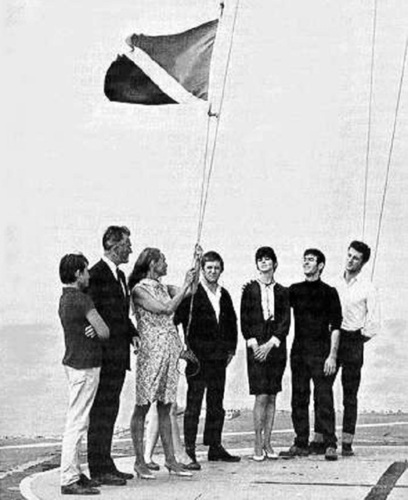
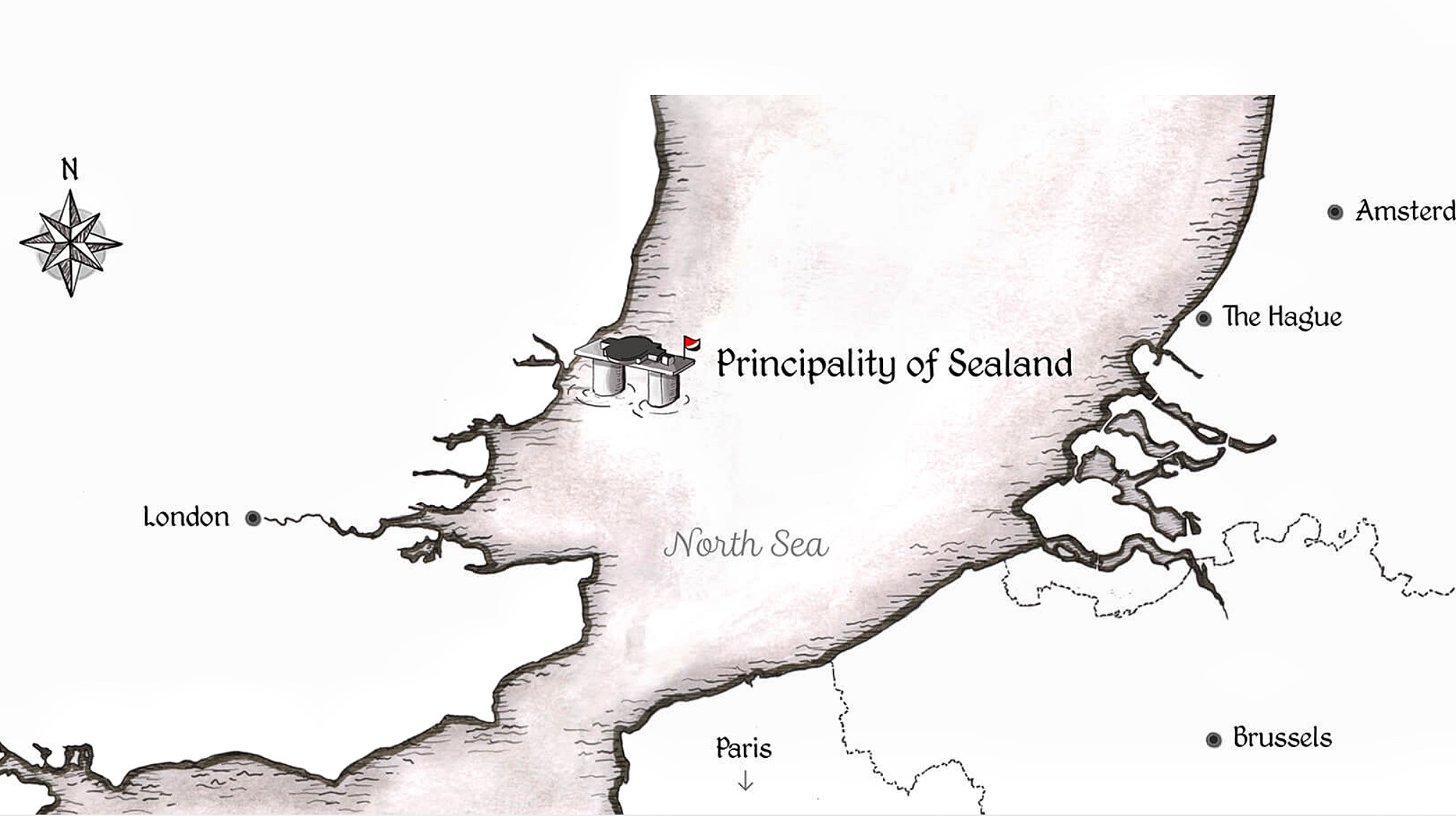

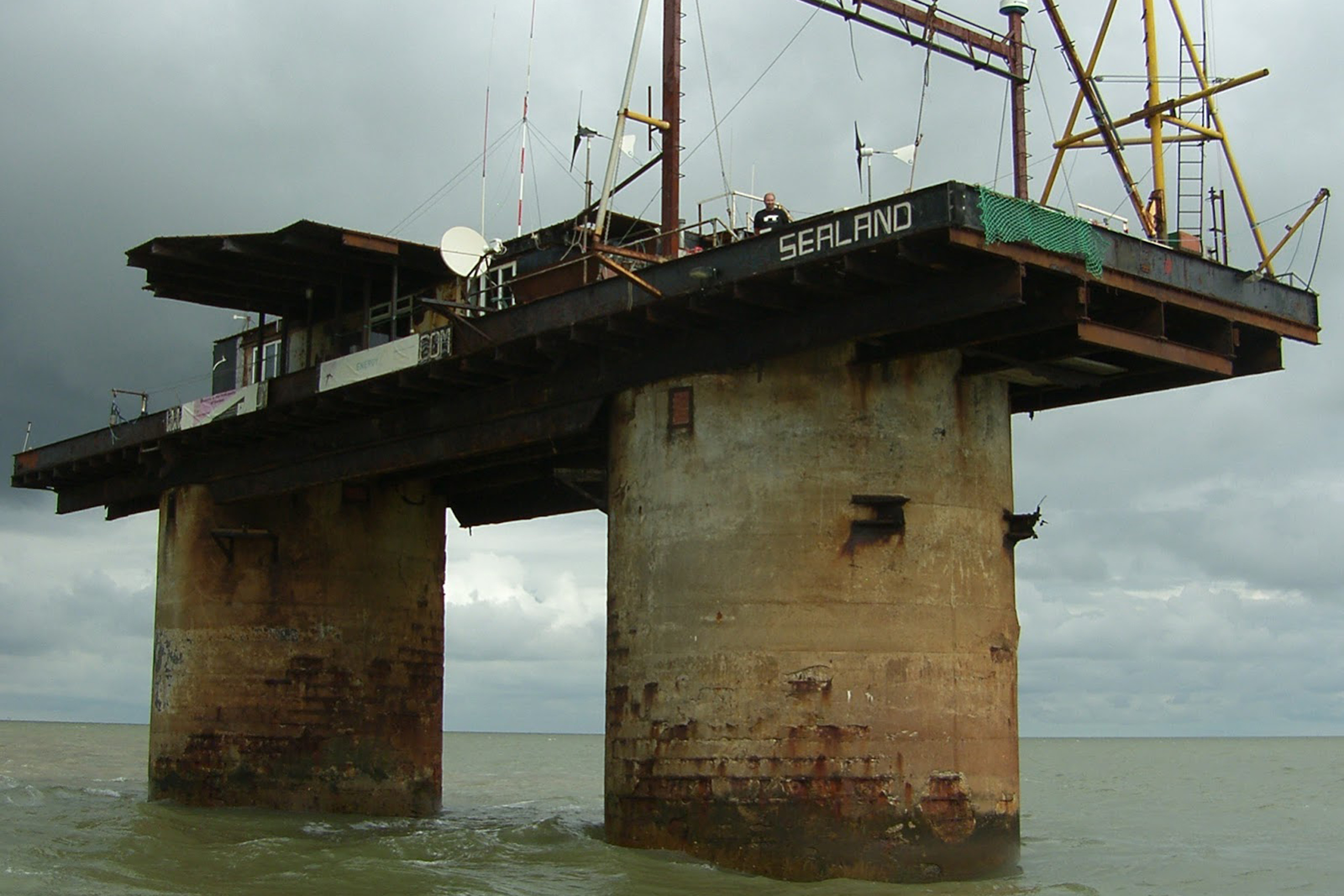


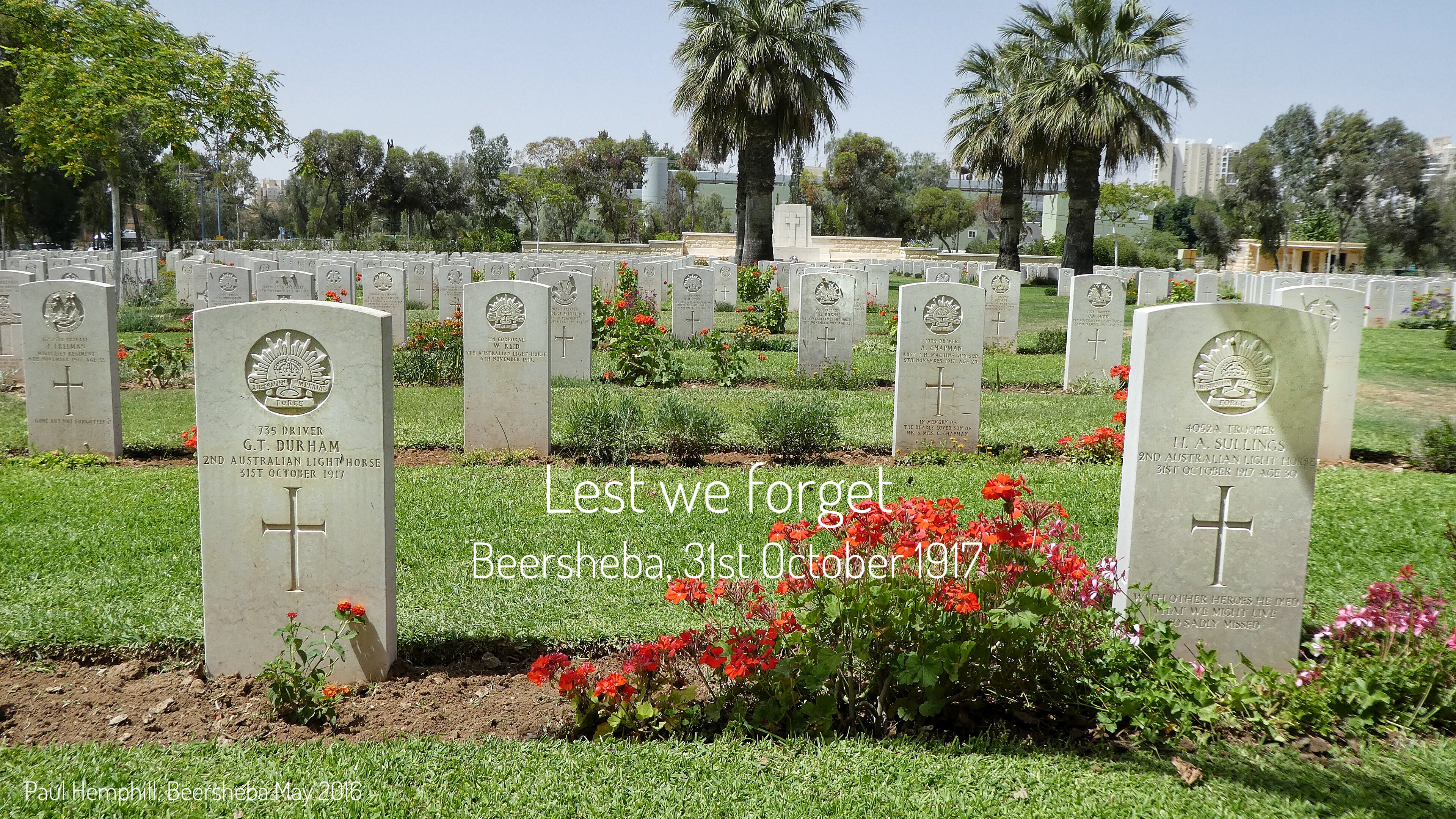


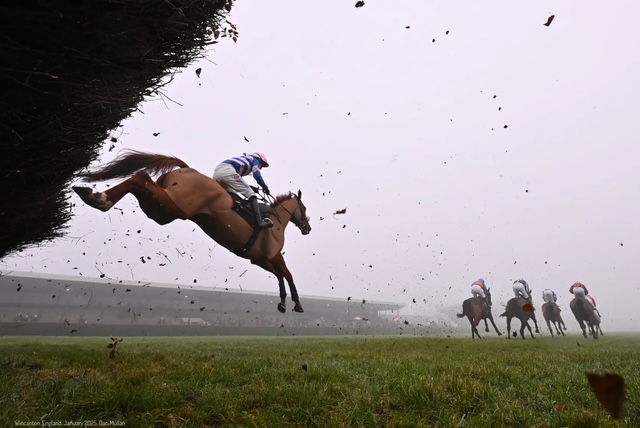

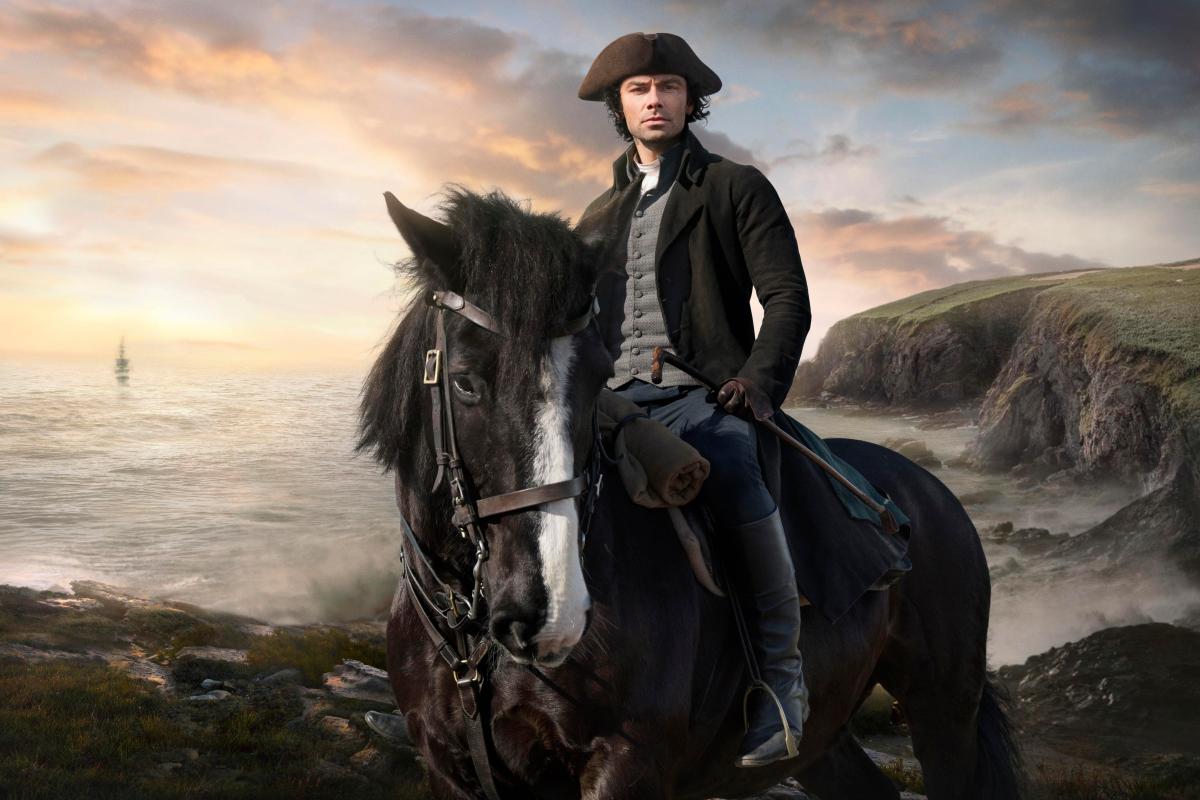


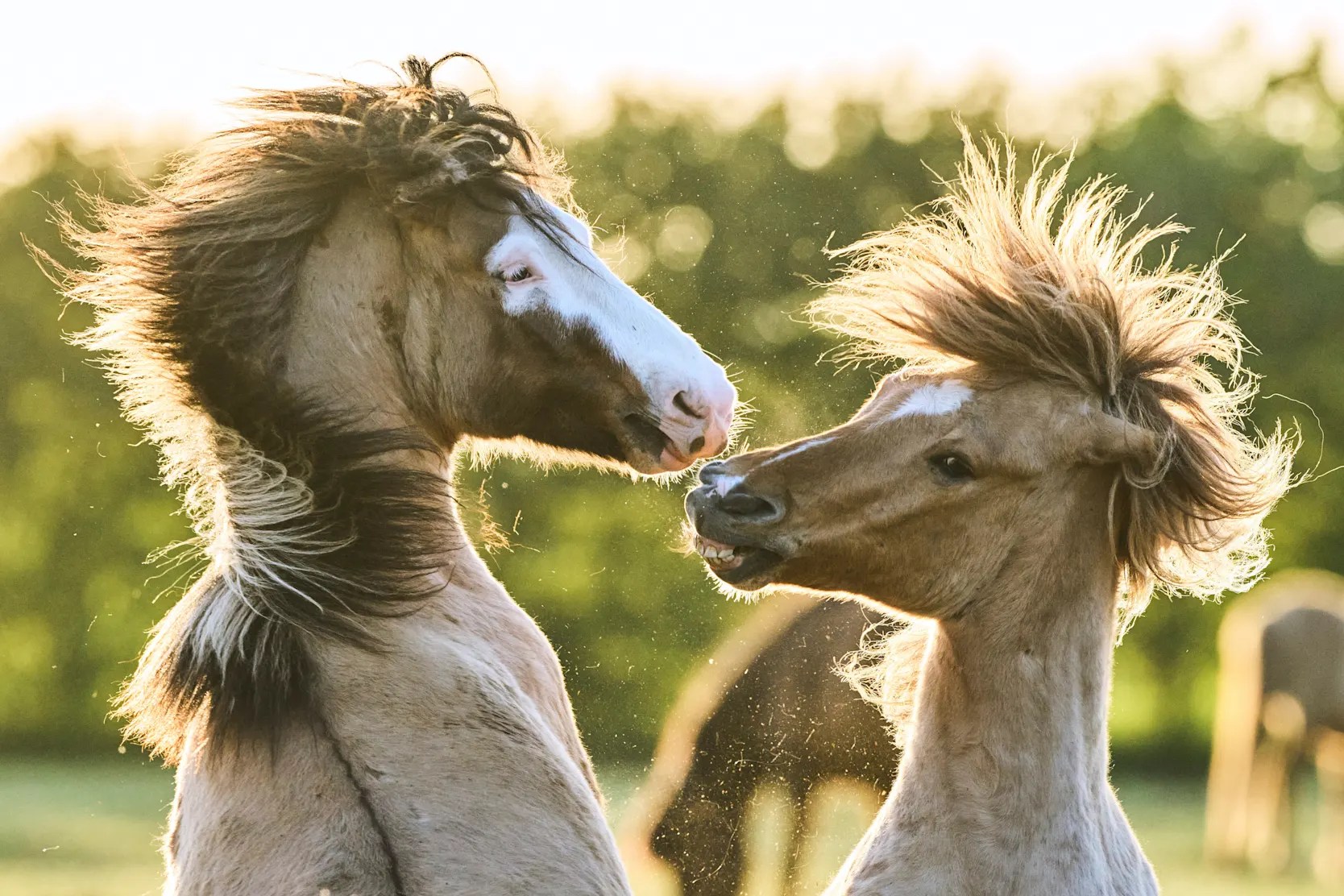


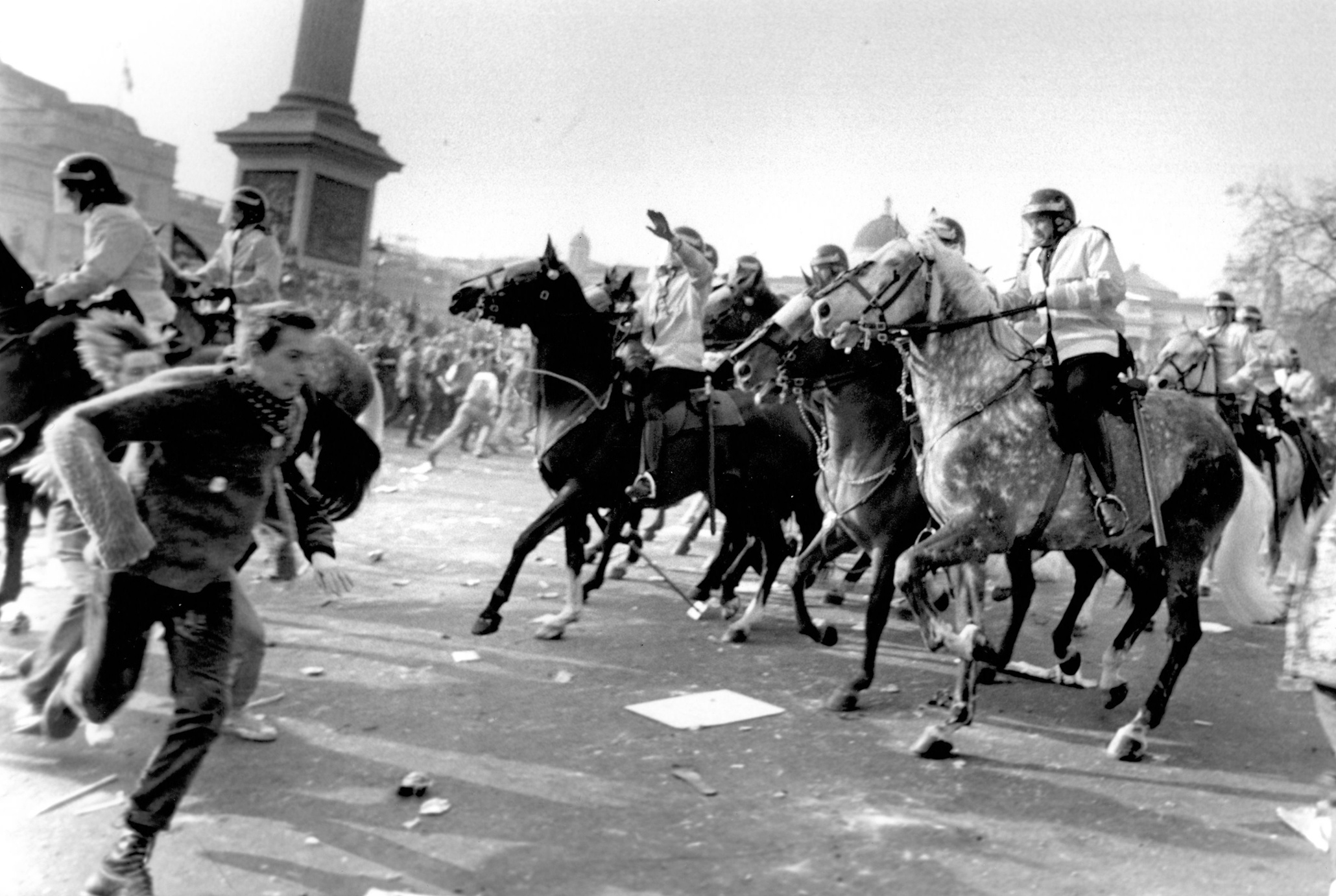






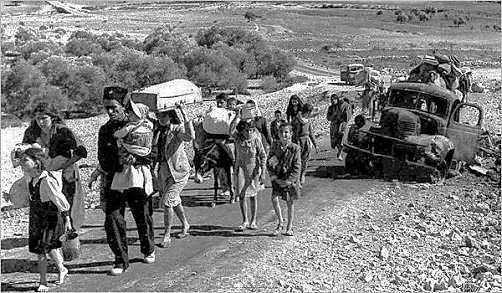



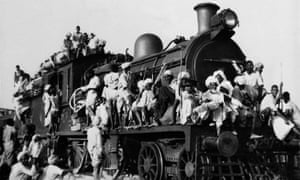
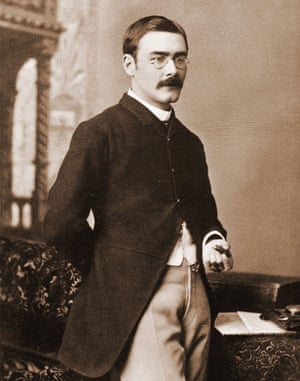
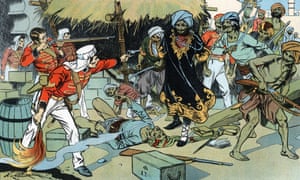
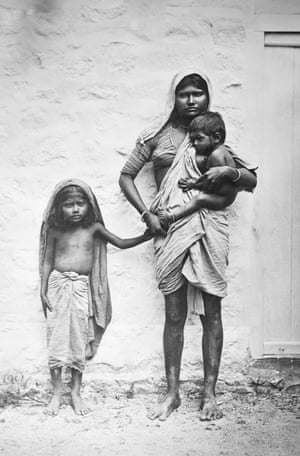




 In That Howling Infinite