The wild ride of Nestor Makhno

Revolution, civil war and the horseman of the Steppe

The Russian Civil War was one of the great catastrophes of the twentieth century, although it is often overshadowed by the world wars that framed it. Between 1917 and 1922, across the vast territories of the collapsing Russian Empire, perhaps ten million people died from combat, famine, disease, terror, and reprisal. Reds fought Whites, Whites fought Greens, and Greens fought everyone. Autocrats fought anarchists, nationalists fought internationalists, peasants fought cities, and villages fought armies.

The conflict stretched from Poland to Vladivostok, from the Arctic Ocean to the Caucasus, and drew into its vortex Russians, Ukrainians, Jews, Cossacks, Tatars, Armenians, Greeks, Mennonites, Germans, Czechs, Poles, and dozens of other peoples caught between competing visions of the future. and foreign powers inserted themselves into the chaos including Britain, Australia, the United States, and Japan.

As I wrote in an earlier essay, Red and white terror – the Russian revolution and civil war, this was not one war so much as many wars occurring simultaneously. It was less a civil war than a kind of World War 1.2: a continental struggle in which the old order died, and several incompatible new worlds attempted to be born.

The civil war was infamous for its cruelty, Fratricidal wars are bound to be cruel because of the lack of definable front lines, because of their instant extension into civilian life, and because of the terrible hatreds and suspicions which they engender. The fighting ranged right across the Eurasian landmass was violent beyond belief, especially the unspeakable cruelty of the Cossack atamans in Siberia.

All too often, whites represented the worst examples of inhumanity, yet on that score, the Bolsheviks were unbeatable. Reds and Whites are both revealed as more than comfortable burning villages, shooting traitors, suspected or real, and torturing and massacring prisoners, and men women and children caught in the crossfire.

There were many instances of racist violence mainly on the White side – particularly towards Jews. The Whites’ antipathy towards Jews was to some degree due to their perception that most senior Bolshevik were Jewish, but mostly it was that old devil that never went away, antisemitism. Retreat from the major cities brought out the worse in the Whites, with terrible massacres of Jews – although they were not the only perpetrators. It is estimated that there were some 1300 anti-Semitic pogroms in the Ukraine during the civil war, with some 50000 to 60000 killed by both sides. There were pogroms in Belarus also, but these were not nearly as murderous as in Ukraine. A Soviet report of 1920 mentions 150,000 dead and as many again badly injured.

Among the prophets, executioners, bandits, ideologues, adventurers, warlords, saints, opportunists and dreamers thrown up by that upheaval, few were more remarkable than Nestor Ivanovych Makhno: charismatic Ukrainian anarchist insurgent, peasant revolutionary, cavalry commander, military opportunist, libertarian idealist, and larger-than-life folk hero.

Unlike so many of his contemporaries, he survived. He survived the firing squads, the battlefields, the prisons, the epidemics, and the purges. Survived the tuberculous contracted in jail before the revolution and the many wounds inflicted throughout the war. The man who fought Germans, Austro-Hungarians, Ukrainian nationalists, Cossacks, White armies, Red armies and assorted local warlords eventually died not with a rifle in his hand but in a Paris hospital bed, impoverished and tubercular, an exile far from the black-earth steppe that had made him famous.

Or perhaps infamous – because Makhno belongs to that category of historical characters who stubbornly resist classification. The Whites hated him because he was a revolutionary peasant insurgent. The Bolsheviks hated him because he was a revolutionary peasant insurgent who refused to obey them. Ukrainian nationalists distrusted him because he placed anarchism before nationalism. Landowners feared him. Foreign occupiers hunted him. Even fellow anarchists sometimes regarded him with suspicion. Yet somehow this peasant from Huliaipole (now in the Zaporizhzhia Oblast of Ukraine) acquired an almost mythological stature.

A century later, artists still paint him, films are made about him, rock bands commemorate him. political activists still claim him, and historians still argue about him. Wikipedia’s entry about Nestor Makhno, is long, thorough, and extensively detailed, but makes for exciting reading with its comprehensive account of his colourful career during, before and after the civil war, and even, beyond the grave.

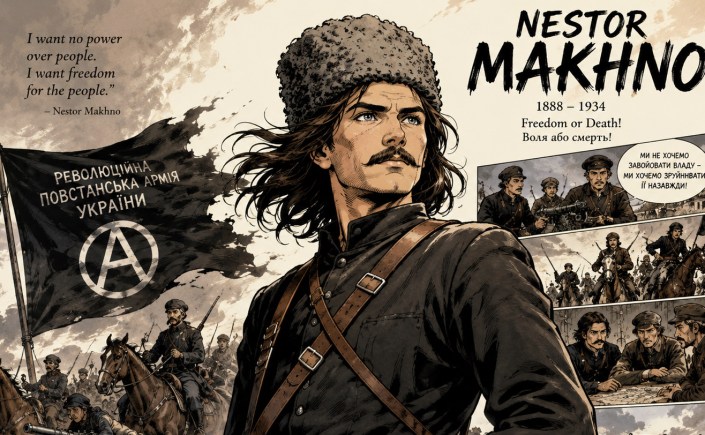
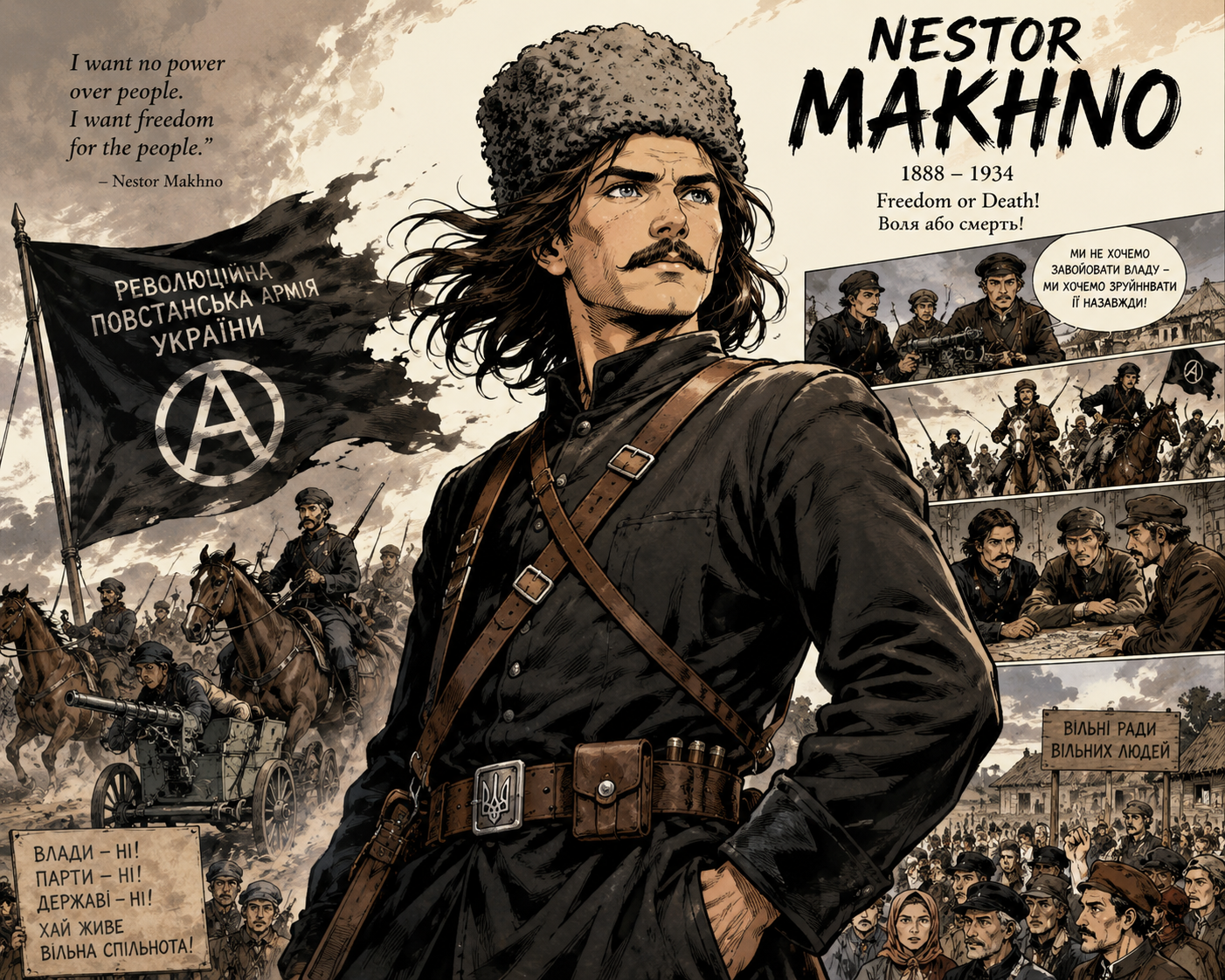
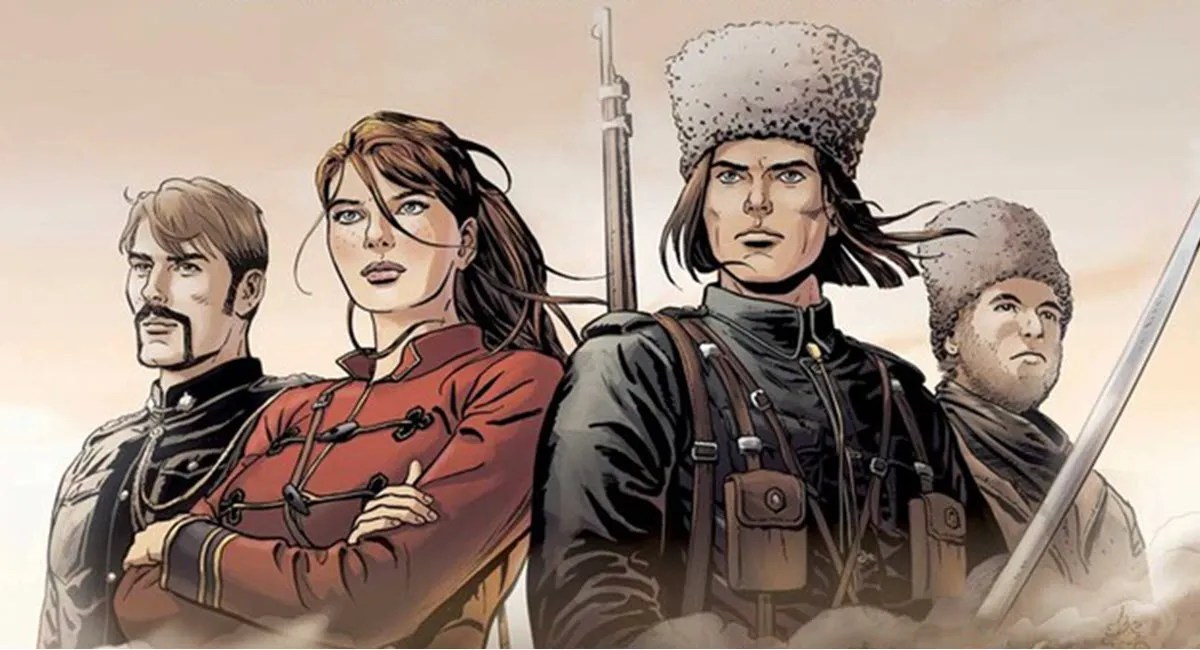
The two manga-style illustrations that prompted these reflections are themselves evidence of that enduring fascination.

Nestor Makhno, the Legend

The first thing one notices is that the artists are not attempting strict historical realism. The Makhno of these images is tall, windswept, and handsome, somewhere between a Cossack ataman, a samurai, and a western gunslinger. The black banner streams dramatically behind him. His gaze is fixed on some distant horizon. One expects a swelling Russian chorale to surge in the background panning across limitless grasslands.

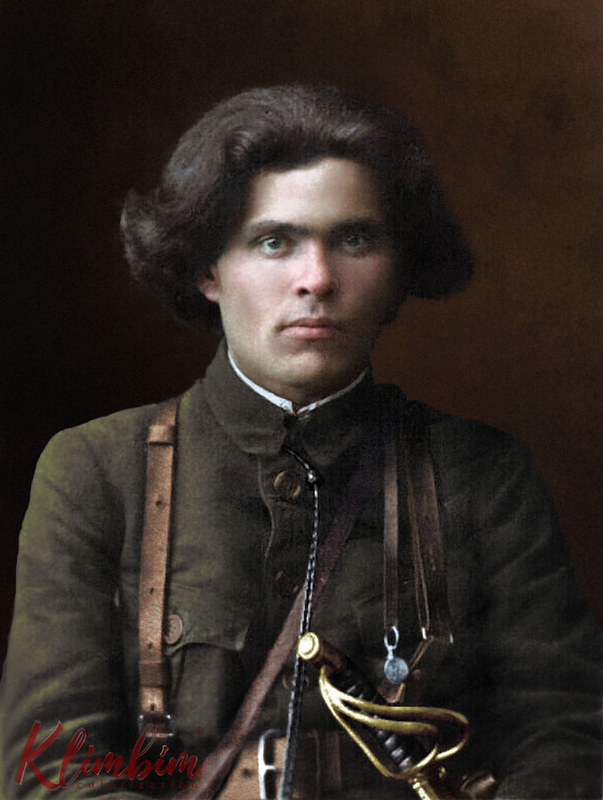
The real Makhno was another man. Contemporary photographs show a relatively short, compact man, often clean-shaven, intense rather than imposing. His contemporaries remembered not his stature but his energy. He seemed perpetually in motion. Charismatic, restless, impulsive, brave, reckless, idealistic and pragmatic in equal measure. The sort of man who appears during periods of social collapse and seems almost generated by the turbulence itself.

Yet the artists understand something important: historical memory rarely preserves people as they actually were. It preserves them as they are remembered. The artwork therefore depicts not so much the historical Makhno as “Makhno the Legend”, the anarchist rebel rider of the Ukrainian steppe. And legends tell us as much about those who create them as they do about their subjects.

The flag in the first picture identifies his force as the Revolutionary Insurgent Army of Ukraine. One speech bubble proclaims: “My ne khochemo zavoyovaty vladu – my khochemo zruynuvaty yiyi nazavzhdy!”  – “We do not want to seize power- we want to destroy it forever!” A poster declares: “No to authority! No to the Party! No to the State! Long live the free community!” Another slogan advocates “Free councils of free people.”

One can almost hear every bureaucrat in history grinding their teeth. For Makhno was that rarest of political creatures: an anarchist who genuinely seemed to mean it. Here was one who would have signed to Denearys Targaryen’s vow not to join the wheel but to break it.

A Kaleidoscope of Lost Futures

The popular memory of the Russian Civil War tends to reduce it to a struggle between Reds and Whites. Bolsheviks versus monarchists. Revolution versus reaction. Reality was considerably messier. The conflict resembled a kaleidoscope more than a chessboard.

The collapse of the Romanov Empire unleashed a bewildering array of competing visions. Monarchists wanted restoration. Liberals hoped for constitutional government. Socialist Revolutionaries dreamed of a peasant democracy. Bolsheviks sought proletarian dictatorship – with themselves as it unchallenged ruler. National movements emerged across the empire’s periphery. Foreign powers intervened. Countless local strongmen pursued their own ambitions. Entire regions changed hands repeatedly.

The lands between the Dnieper and the Don were particularly complex. They were never inhabited solely by Russians and Ukrainians in the neat modern national sense. These were borderlands in the deepest historical meaning of the word. Cossacks rode the steppe. Mennonite farmers cultivated colonies founded generations earlier. Jews lived in market towns and cities. Greeks inhabited settlements along the coast. Tartars maintained ancient communities. Armenians traded. Germans farmed. Merchants, smugglers, soldiers, pilgrims, revolutionaries and dreamers moved constantly through the landscape.

Every modern nation prefers neat origin stories. But history seldom cooperates.

Makhno emerged from this world of overlapping identities and competing loyalties. His Free Territory in southeastern Ukraine represented perhaps the most improbable political experiment of the entire Civil War: an attempt to create a libertarian society amidst one of the bloodiest upheavals in modern history.

Whether it could ever have survived is doubtful. The twentieth century belonged to states, bureaucracies, standing armies, intelligence services, and industrial administration. It rewarded those who could organise railways, requisition grain, count factory output and maintain prisons. Anarchism, though long part of Tsarist Russia’s political kaleidoscope, was a forlorn hope.

Makhno the Anarchist war lord had a precarious relationship with the ultimately ascendant Bolsheviks. Vladimir Lenin at one time looked upon him favourably. Leon Trotsky, commanding the Red Army, regarded him as a dangerous adventurer, an undisciplined partisan commander whose independence threatened revolutionary unity. Makhno regarded Trotsky as a would-be dictator masquerading as a liberator. Both men were, in their own ways, correct.

Their uneasy alliance against General Wrangel’s White Army in Crimea remains one of those moments when history briefly forces bitter enemies onto the same side before restoring them to mutual hostility. The Makhnovists helped defeat the Whites, but once that task was accomplished, the Bolsheviks turned on their troublesome allies.

The logic was almost inevitable. The Bolsheviks sought power. Makhno sought freedom from power. Those two projects could coexist only temporarily.

My old tutor Tibor Szamuely would undoubtedly have seen the episode as another illustration of what he called the Russian Tradition. Revolutions changed slogans and symbols, but the underlying gravitational pull of centralised authority remained remarkably constant. The old autocracy vanished. New forms emerged. Yet power continued to accumulate at the centre. The names changed. The structure endured. [See, in In That Howling Infinite, The Russian Tradition – Russia, Ukraine and Tibor Szamuely]

Yet for a brief moment Makhno’s movement offered a glimpse of a different possibility. That possibility was ultimately crushed, first by necessity, then by power, and finally by history itself.

Makhno and Anarchism

Makhno did not emerge from a vacuum. Like so much in Russian and Ukrainian history, he was both a product of his time and the inheritor of a much older tradition. The black banners that fluttered above the villages of southern Ukraine during the Civil War carried ideas whose roots stretched back decades, even centuries, nourished by peasant rebellion, intellectual dissent, and a deep suspicion of distant authority.

Russian anarchism emerged in the nineteenth century as a radical critique of both Tsarist autocracy and the centralising tendencies of socialism. Its two great theorists were Mikhail Bakunin and Peter Kropotkin, figures who remain among the most influential anarchist thinkers in history. Bakunin, the aristocratic revolutionary who spent years in prison and exile, rejected all forms of state power, arguing that liberation could never be achieved through a dictatorship, even one claiming to act on behalf of the workers. Kropotkin, the geographer and scientist, developed a more constructive vision, emphasising voluntary cooperation, mutual aid, and federations of free communities. Against the harsh Social Darwinism fashionable in his day, Kropotkin argued that cooperation was as important to survival as competition. Human beings, he believed, were capable of organising society without kings, bureaucrats, or party commissars.

These ideas found fertile ground in the Russian Empire. The vastness of the state, its bureaucratic inefficiency, and its often brutal methods of rule encouraged a culture of resistance. Anarchism attracted intellectuals, workers, and, perhaps most significantly, peasants. Long before Marxism became dominant, populist movements such as the Narodniks had romanticised the peasant commune as a foundation for a more egalitarian society. Although not anarchists in the strict sense, they helped create a political culture in which local self-government and suspicion of central authority were deeply valued.

The revolutionary years between 1905 and 1921 provided anarchism with its greatest opportunity. Across the empire, workers established councils, peasants seized land, and local militias sprang up with little regard for official authority. In the great cities anarchist groups were active among factory workers and sailors. The Kronstadt sailors, who would later revolt against Bolshevik rule in 1921 under the slogan “Soviets without Bolsheviks,” reflected many anarchist principles even if they were not uniformly anarchist in ideology.

It was in this turbulent environment that Nestor Makhno emerged. Born in 1888 into a poor peasant family in Huliaipole, a town in the steppe lands of southeastern Ukraine, Makhno encountered anarchism as a young man. Arrested for revolutionary activities after the 1905 Revolution, he spent years in Tsarist prisons where he came under the influence of anarchist intellectuals and immersed himself in the writings of Bakunin and Kropotkin. Prison served as his university.

When the Russian Empire collapsed in 1917, Makhno returned home and transformed theory into practice. His achievement was remarkable. Amid the chaos of civil war he helped create what became known as the. Makhnovshchina (loosely translated as “Makhno movement”), a vast anarchist experiment encompassing large areas of southern Ukraine. Villages elected their own councils. Land was redistributed. Local communities enjoyed a degree of autonomy rare in wartime. Makhno’s Revolutionary Insurgent Army of Ukraine ,often called the Black Army, defended these territories against a bewildering array of enemies: German occupiers, Ukrainian nationalists, White armies, and eventually the Bolsheviks themselves.

Military historians continue to marvel at Makhno’s campaigns. His forces perfected the use of the tachanka – a machine gun mounted on a horse-drawn cart – which allowed extraordinary mobility across the open steppe. His army repeatedly outmanoeuvred larger and better-equipped opponents. In 1919 and 1920, Makhno’s forces played a crucial role in defeating General Anton Denikin and later Baron Wrangel, two of the most formidable White commanders. Ironically, these victories helped secure the survival of the Bolshevik regime that would ultimately destroy the anarchist movement.

Makhno was not alone. Other anarchists left significant marks upon the revolutionary era. Volin (Vsevolod Eikhenbaum), an intellectual and organiser, sought to develop anarchist theory and worked closely with the Makhnovists. Lev Chernyi advocated individualist anarchism and was later executed by the Bolsheviks. Grigori Maximoff became a leading anarcho-syndicalist thinker in exile. Internationally, figures such as Emma Goldman and Alexander Berkman, both born in the Russian Empire, carried anarchist ideas to global audiences and later became disillusioned critics of Bolshevik authoritarianism.

Yet none combined military leadership, mass peasant support, and revolutionary vision quite as successfully as Makhno. His closest parallels are perhaps not found in Russia but elsewhere: Emiliano Zapata in Mexico, Buenaventura Durruti in Spain, or even the medieval peasant rebels who periodically erupted across Europe. Like them, Makhno embodied a recurring historical phenomenon: the attempt to create freedom from below rather than impose it from above.

The tragedy of Russian anarchism was that it found itself squeezed between two powerful forces. The Whites regarded it as revolutionary chaos; the Bolsheviks regarded it as a rival source of legitimacy. Both sought centralised authority, disciplined armies, and hierarchical control. Anarchism offered something messier and more elusive: local autonomy, voluntary association, and a belief that ordinary people could govern themselves. In the brutal arithmetic of the Civil War, such ideas proved difficult to defend.

Yet the legacy endured. Makhno became a folk hero to some, a bandit to others, and a symbol of resistance to authority for generations of radicals. His black flag bearing the slogan “We wish for freedom” represented more than a military movement. It expressed a persistent current in Russian and Ukrainian history – a stubborn refusal to accept that power must always flow from the centre, from the capital, from the party, or from the state. In a land famous for tsars, commissars, and strongmen, that may have been the most revolutionary idea of all.


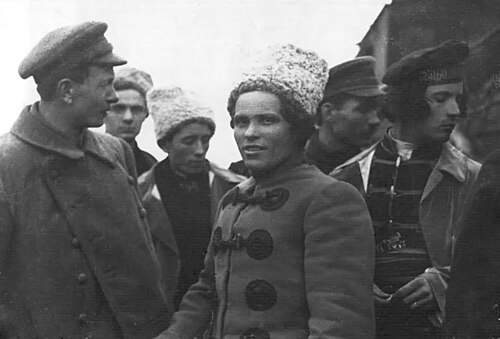
Makhno (centre) with other Insurgent command staff in Huliaipole (1919)

The Black Banner and the Long Shadow of Empire

Makhno’s story emerged from one of the great turning points of modern history: the collapse of empires. The Russian Civil War was not simply a struggle between Reds and Whites. It was also a struggle over what would replace the Romanov Empire. Across the former imperial territories, peoples sought to determine their own futures. Finns, Poles, Estonians, Latvians, Lithuanians, Georgians, Armenians, Azerbaijanis, Ukrainians and many others attempted to carve nation-states from the wreckage of imperial collapse. Some succeeded. Others failed. All became caught up in the wider maelstrom.

The tragedy of the twentieth century is that many of those hard-won freedoms proved fleeting. The new states born from the ruins of the Romanov, Habsburg, Hohenzollern and Ottoman empires found themselves trapped between larger and more powerful forces. First came the Nazi storm. Then came the Soviet one. Much of Central and Eastern Europe spent decades living under one form of domination or another. The promise of national self-determination so evident in the years immediately following the First World War often ended in occupation, dictatorship or subordination.

Yet history did not stop there.

The Soviet Union eventually followed the Romanov Empire into the graveyard of failed political systems. One by one, nations that had disappeared behind the Iron Curtain re-emerged as sovereign states. Flags long hidden returned to public squares. Languages once marginalised regained official status. Historical memories suppressed for decades resurfaced. The old imperial map dissolved once again.

Seen from this perspective, the present war in Ukraine is not simply a dispute over territory. It is part of a much longer historical argument about empire, sovereignty and identity.

A century after Reds, Whites and Greens fought across the same black-earth steppe, war once more rages in the lands where Makhno made his name. Huliaipole itself has found itself close to the front line. Mariupol, Melitopol, Berdyansk, Donetsk, Zaporizhzhia and Kherson appear both in histories of the Civil War and in contemporary battlefield reports. The same landscape that once carried cavalry columns, tachanki those iconic horse drawn machine gun wagons )and, as this is Russia, sleighs), and armoured trains now carries tanks, drones, missile batteries and mechanised brigades.

The present conflict is not a replay of the Russian Civil War. Historical analogies are useful servants but dangerous masters. Yet the recurrence is striking. Once again Ukraine finds itself at the centre of a struggle shaped by the afterlife of empire.

At its heart lies a question that has echoed through East European history for more than a century: who has the right to determine Ukraine’s future?

An increasingly irredentist Russia, drawing heavily upon imperial memory and historical grievance, has launched an assault upon a former imperial possession that insists upon its own sovereignty and right to choose its own path. The arguments are framed in terms of security, history, ethnicity and geopolitics. Beneath them lies a much older issue. The Russian Empire fell. The Soviet Empire followed it. Must Ukraine forever remain part of another state’s historical imagination, or may it exist fully as itself?

It is impossible today to read about the Russian Civil War without occasionally experiencing moments of historical déjà vu. The geography is hauntingly familiar. Kharkiv. Kherson. Mariupol. Melitopol. Odesa. Kyiv. A century ago, armies advanced and retreated across these landscapes. Reds, Whites, Greens, nationalists, foreign interventionists and local militias fought for possession of the same territory. Entire populations found themselves trapped between competing visions of political destiny.

The circumstances are very different today and historical analogies always have limits. Yet the persistence of geography and geopolitics is striking. The lands between the Dnieper and the Don remain what they have long been: a frontier between competing narratives of the past and competing visions of the future.The same rivers flow. The same cities endure. The same questions of identity, sovereignty, memory and belonging continue to reverberate across the region.

History does not repeat itself exactly. But it often revisits old addresses.

One suspects Makhno would have found the question both familiar and irritating.He was never a nationalist in the conventional sense. Unlike Bandera and later Ukrainian nationalists, Makhno did not fight for a Ukrainian nation-state. He fought for something simultaneously larger and smaller: local autonomy, peasant self-government and anarchist freedom. He distrusted all states, whether Russian, Ukrainian, Bolshevik, White, German or otherwise.

This has made his legacy awkward for modern Ukraine. States generally prefer heroes who wanted states. Makhno wanted free councils of free people.

As a consequence, he occupies an unusual place in Ukrainian memory. Unlike Bandera or Shukhevych, he has never become a central pillar of official state mythology. Unlike the controversial legacy of the OUN-UPA or the Waffen-SS Galicia Division, debates surrounding Makhno are not primarily about nationalism. Instead, he exists in several overlapping forms at once: the historical insurgent commander, the libertarian icon celebrated by anarchists across the world, the regional folk hero of southern Ukraine, and increasingly, the son of Ukraine who resisted domination from distant centres of power.

None of these versions fully captures the man.

The historical Makhno remains elusive. His movement opposed antisemitic pogroms more consistently than many contemporary forces and included Jews within its ranks, yet it operated amidst the appalling violence and carnage of the Civil War and was never entirely untouched by it. His Free Territory represented one of the most ambitious anarchist experiments in modern history, yet it was also shaped by the brutal necessities of war. Admirers romanticise him. Critics emphasise the contradictions. Both have evidence on their side.

Perhaps that ambiguity explains his enduring fascination.

The unknown artist who created the image at the head of this essay gave his Makhno a modern Tryzub or trident belt buckle, a symbol of today’s Ukrainian resistance and resilience. It is a striking touch and a thoroughly anachronistic one. The symbol derives from the seals of Volodymyr the Great and modern Ukrainian statehood. Makhno himself never wore it.

The artist is making a statement. This is not merely Makhno the anarchist. This is Makhno the Ukrainian hero. The image therefore fuses three different figures into one. There is the historical insurgent Makhno of the 1918-21 Civil War. There is the anarchist her of libertarian mythology. And there is the modern Ukrainian patriot Makhno recruited into the story of national identity – retrospectively enlisted into a national story that he himself might have regarded with considerable scepticism. He spent much of his life rejecting national labels in favour of anarchist ones.

The anachronisms are historically dubious but symbolically powerful. But history rarely asks permission before appropriating its characters in an ongoing contest over memory.

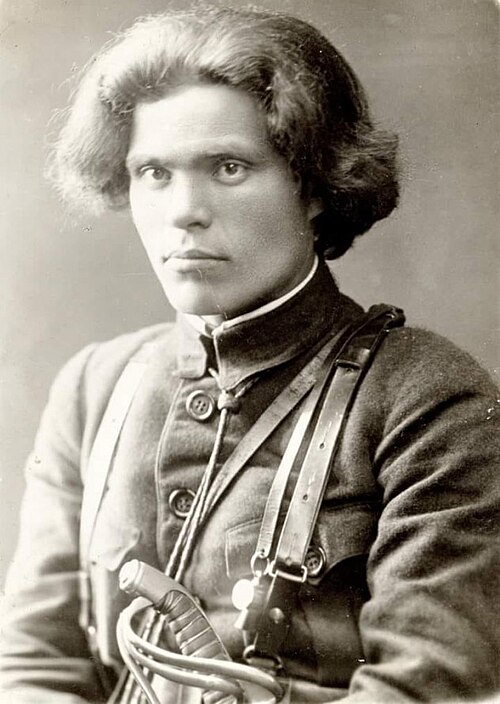
Makhno in Red Army uniform, 1919

Twilight in Paris

And then there is the final act.

What happens after the war is over? Most stories conclude when the hero rides away. Real life begins afterwards. Makhno’s cavalry charges, victories, defeats and escapes belong to legend. The more intriguing question is what became of the dream once the banners were lowered.

Defeated but not destroyed, Nestor Makhno escaped the fate that overtook so many of his contemporaries. Unlike countless White and Red commanders, he did not perish on a battlefield, before a firing squad, or later in Stalin’s Great Terror. Unlike John Brown, Custer, and Davy Crockett or the Australians Ned Kelly and another horseman Harry “the Breaker” Morant, he did not die with his boots on. Miraculously, given the odds against him, he survived.

And improbably, the horseman of the steppe ended his days in Paris.

One imagines him there during the 1920s and early 1930s, sitting in smoky cafés among White émigrés, ex-Bolsheviks, anarchists, monarchists, refugees and stateless wanderers arguing about futures that had already vanished. The thunder of cavalry had faded into memory. The revolutionary epic had dissolved into reminiscence.

Nestor Makhno died on 25 July 1934 at the age of forty-five, worn down by tuberculosis, old wounds and years of hardship and, latterly, poverty. He was cremated and his ashes placed in the columbarium of Père Lachaise Cemetery. Not beneath a black banner. Not in the black earth of the Ukrainian steppe. Not in the town where his rebellion began. His ashes were placed not in the Ukrainian black earth but in niche 6686, a small compartment among thousands of others.

There is something wonderfully ironic, literary even, about that. The anti-clerical anarchist who spent his life fighting states, hierarchies and institutions, who once commanded tens of thousands of insurgents and rode across southern Ukraine pursued by enemies on every side, ends his journey among the famous dead of France, surrounded by poets, musicians, revolutionaries and dreamers.

History possesses a sense of humour.

Yet perhaps the final irony belongs to memory itself. For the world has turned another circle since his death.

The Black Army vanished and the Free Territory of the Makhnovshchina disappeared. They survive only in memory. Stalin’s Soviet Union rose and fell. The nations that struggled for freedom amidst the ruins of empire endured decades beneath first Nazi and then Soviet domination before re-emerging as sovereign states. The world that produced Makhno  passed into history, and now, in the lands where Makhno once rode beneath a black banner, another war is being fought over questions of empire, identity, memory and self-determination.

What would Nestor Makhno make of it all?  We cannot know. But one suspects he would recognise the landscape immediately. And perhaps that is why he refuses to stay buried. The ashes remain in Père Lachaise. The legend still rides the steppe.

There is a Russian word, toska, which Nabokov famously described as a spiritual anguish without precise object. A longing for something absent. A yearning that cannot quite be named. One suspects Makhno understood it. So did Chekhov. So did many of the exiles who haunted Paris in those years. For what is exile if not a prolonged conversation with vanished possibilities?

The revolutionary epic dissolved into memoirs, arguments and recollections. The thunder of cavalry became stories told over coffee and cigarettes. The dream survived. The dreamers grew old.

Yet Makhno remains. Not exactly as he was. Not exactly as he would have wished to be remembered. But alive nevertheless in paintings, songs, novels, political arguments, historical debates, and manga-inspired artwork.

The artist who gave him a Tryzub belt buckle and the physique of a cinematic hero understands something essential. Historical memory is not an archive. It is a conversation between past and present. Each generation creates the figures it needs. And so the anarchist who rejected states has become part of a national story. The peasant insurgent has become a folk hero. The historical man has become a legend.

The ashes rest quietly in Père Lachaise. The legend still rides the steppe. And somewhere beyond the horizon, beneath a black banner snapping in the wind, Nestor Makhno continues his endless charge toward a freedom that history never quite allowed him to reach.

Paul Hemphill, June 2026

For more on Russia, Ukraine and the Soviet Union in In That Howling Infinite, see Russky Mir – Russian history’s long shadow

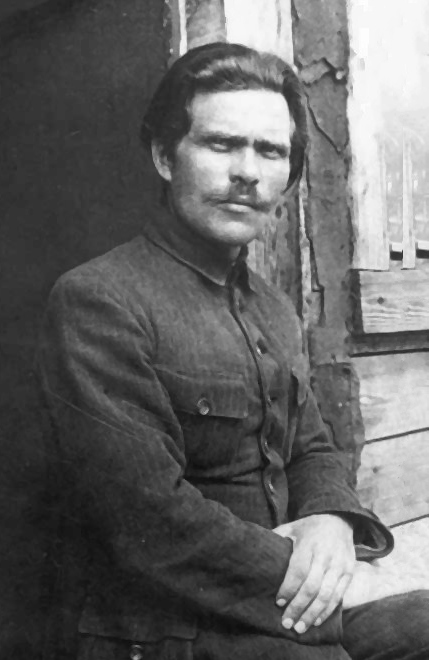
Makhno, 1921. Wikipedia

Author’s note

For the dear departed, Père Lachaise is the best address in Paris. Some 300,000 people reste ici. A cavalcade of French cultural and political history, with a few foreign entombments, including the playwright Oscar Wild and Doors front-man and zeitgeist icon Jim Morrison.

I have always loved the place. I have wandered its avenues among the celebrated and the forgotten, the visited and the unvisited. It occurs to me that perhaps there is a verse yet to be written about those whose names draw no pilgrims and whose flowers have long since withered. Next time I find myself there, I think I shall seek out niche 6686 and offer a quiet dobryi den to the old anarchist.

The singers, and the dancers, and the actors, and the chancers,
The rebels and the statesmen, and the fallen communards,
Napoleonic Generals and politicians’ wives.
The poets and the dreamers, all those other famous lives.

Paul Hemphill, Chanson – living next to Jim

Coda: The Wall

History occasionally produces coincidences so perfect that a novelist would be accused of over-writing them.

Nestor Makhno spent his final years in Paris and today rests in the columbarium of Père Lachaise Cemetery. Visitors come to see Oscar Wilde, Jim Morrison, Édith Piaf, Chopin, Proust and a host of other luminaries. Few seek out the old anarchist from Huliaipole. Yet not far from where his ashes lie stands one of the most potent revolutionary monuments in Europe: Le Mur des Fédérés, the Wall of the Federals.

It was here, on 28 May 1871, that the last defenders of the Paris Commune made their final stand. After a week of savage street fighting- the Semaine Sanglante, the Bloody Week – surviving Communards retreated through the eastern districts of Paris, fighting among the tombs and avenues of Père Lachaise itself. Cornered among the graves and monuments, they were overwhelmed. One hundred and forty-seven prisoners were lined up against the wall and shot. Thousands more would be executed in the days that followed.

The image possesses an almost unbearable symbolism. Revolutionaries making their last stand in a cemetery, fighting among the dead before joining them.

For later generations of socialists, communists and anarchists, the Paris Commune became something far greater than its brief seventy-two-day existence. Marx regarded it as the first example of proletarian government. Lenin studied it obsessively. Trotsky drew military lessons from its failure. Bolshevik revolutionaries saw in the Commune both an inspiration and a warning. It represented what revolution could achieve, but also what happened when revolution hesitated.

When the Bolsheviks seized power in 1917 they consciously invoked the Commune’s memory. Lenin famously noted with satisfaction when the Soviet regime survived longer than the Commune’s seventy-two days. Soviet propaganda elevated the Communards into secular saints of the revolutionary tradition. Streets, factories and institutions were named in their honour. Their red banner became one of the sacred relics of international socialism.

The symbolism endured even into the Space Age. The Soviet Union, which liked to present itself as the culmination of all previous revolutionary struggles, repeatedly invoked the Commune as a precursor to October 1917. A banner associated with the Paris Commune was ceremonially carried aboard an early Soviet space mission – a remarkable journey for a symbol born in the barricades of nineteenth-century Paris. One could scarcely imagine a more dramatic arc: from the cobblestones of Belleville to orbit around the Earth.

And here, perhaps, lies the final irony.

The Commune inspired the Bolsheviks. The Bolsheviks built the Soviet Union. Makhno spent much of his life fighting the Bolsheviks. Yet in death he came to rest within walking distance of the Wall of the Federals, among the ghosts of the very revolutionaries whose memory helped shape the revolutionary tradition that ultimately hunted him into exile.

The layers fold into one another like a Russian matryoshka doll. Open Makhno and one finds the Civil War. Open the Civil War and one finds the Revolution. Open the Revolution and one finds the Commune. Open the Commune and one finds the old dreams of liberty, equality and fraternity that first burst forth in revolutionary France. Each generation inherits the visions of those who came before, and each generation remakes them, sometimes beyond recognition.

One wonders what Makhno would have made of the Wall. He might have admired the courage of the Communards while distrusting those who later appropriated their memory. He might have reflected that revolutions, like nations, are often most attractive in defeat. Victors build institutions. Martyrs become legends.

And perhaps there is another lesson in Père Lachaise itself.

The cemetery gathers together monarchists and republicans, communists and anarchists, believers and atheists, poets and soldiers, dreamers and executioners. The quarrels that once seemed world-shattering now coexist in uneasy silence beneath the trees. The dead no longer argue.

Yet their stories continue to speak.

So when I eventually return to Père Lachaise and seek out niche 6686, I shall also walk to the Wall of the Federals and salute the ghosts of the old revolution. Between them lies much of the history of the modern age: revolution and reaction, hope and disappointment, dreams of freedom and the realities of power. The Communards fell there. Makhno rests nearby. The Soviet Union that claimed their inheritance has itself vanished into history.

And still the questions remain. The wall stands. The ashes remain. The legend rides on.

Le Mur des Fédérés, Pere Lachaise

Epilogue. Midnight in Paris (with apologies to Woody)

There is one final irony to Nestor Makhno’s story that deserves mention, because it reminds us how strange history can be.

When one thinks of Paris in the 1920s, one tends to think of Woody Allen’s Midnight in Paris, that charming fantasy in which a modern writer wanders the streets of Montparnasse at night and stumbles into the city’s golden age. There are Hemingway and Fitzgerald, Picasso and Gertrude Stein, Cole Porter at the piano, Salvador Dalí being magnificently Salvador Dalí, and a parade of artists, poets and dreamers whose names would come to define the twentieth century.

The film is whimsical, nostalgic and perhaps a little romanticised. But the extraordinary thing is that it is not entirely wrong. Paris really was like that.

The city into which Nestor Makhno arrived in exile was arguably the most intellectually crowded place on earth. Somewhere in Montparnasse, Ernest Hemingway was learning how to write short sentences and long silences. F. Scott Fitzgerald was turning glamour and self-destruction into literature. James Joyce was wrestling with language itself. Gertrude Stein was hosting salons where painters, writers and poets mingled late into the evening. Picasso and Matisse were redefining art. Stravinsky and Ravel were reshaping music. Josephine Baker was electrifying audiences. André Breton and the Surrealists were busy dismantling reality and rebuilding it according to dream logic.

And scattered among them were thousands of exiles.

The collapse of empires had turned Paris into a gathering place for the displaced. White Russian aristocrats who had fled the Revolution. Former tsarist officers reduced to driving taxis. Poets, philosophers and theologians trying to reconstruct vanished worlds. Jews escaping pogroms. Political refugees from every corner of Europe. Revolutionaries who had won and revolutionaries who had lost. Monarchists, liberals, socialists, anarchists, nationalists and stateless wanderers all sharing the same cafés, boulevards and boarding houses.

One can almost imagine the scene.

At one table sits Ivan Bunin, the future Nobel laureate, lamenting the Russia that had vanished. At another, the philosopher Nikolai Berdyaev debates faith and freedom. Across the room a young writer named Vladimir Nabokov quietly works on stories that few people yet read. Somewhere nearby Emma Goldman and Alexander Berkman are arguing about anarchism. Victor Serge is reflecting on the revolution’s betrayal. Trotsky occasionally passes through the émigré world like Banquo’s ghost, carrying with him the memory of power and the certainty of future assassination.

And then there is Makhno.

Not the manga hero with the flowing coat and trident buckle. Not the legendary ataman galloping across the steppe beneath a black banner. Just a tired, impoverished former insurgent commander, his lungs damaged by tuberculosis, surviving on odd jobs, writing memoirs, arguing politics, and trying to make sense of a world that had moved on without him.

It is difficult not to feel a touch of svetlaya grust’ – that luminous melancholy the Russians understand so well – in contemplating the image. Somewhere in the city Hemingway is inventing modern prose while Makhno is remembering cavalry raids across the Donbas. Picasso is dismantling perspective while former White officers reminisce about the Crimea. Joyce is transforming literature while exiled revolutionaries debate futures that have already vanished.

The worlds scarcely intersect, yet they coexist in the same city.

And perhaps they were not as far apart as they appear.

For all their differences, many of these figures were grappling with the same underlying question. The old world had collapsed. What would replace it? The question haunted the artists as surely as it haunted the revolutionaries. Some sought answers through politics, some through nationalism, some through religion, some through art. All were living among the ruins of certainties.

History often encourages us to imagine neat compartments: politics here, literature there, art somewhere else. The reality is usually messier and more interesting. The horseman of Huliaipole, the author of Ulysses, the creator of Cubism, the composer of The Rite of Spring, the future Nobel laureates, the forgotten exiles, the dreamers, the drunks, the philosophers and the refugees all inhabited the same city at the same moment.

Paris was large enough to contain them all.

Which means that somewhere, perhaps on a damp evening in Montparnasse, while jazz drifted from a nearby club and rain glistened on the pavement, Nestor Makhno may have walked past Hemingway on his way to a café argument, or crossed paths with Picasso without either man recognising the other.

Woody Allen would have appreciated the coincidence.

History, after all, often writes better stories than novelists.

Author’s note: Paris has a myriad of attractions for history tragics. For me, there are three ‘must sees’ that are at the top of the ‘out there’ list. Les Catacombes de Pariss are one. The folk cabaret Au Lapin is another. and the third is La Cimetière du Père-Lachaise, the most famous cemetery in the world.

Makhno in Red Army uniform, 1919

Makhno, 1921. Wikipedia

An Australian Jew’s submission to the Royal Commission

The Royal Commission into Antisemitism was convened in the shadow of the Bondi Beach massacre of December 2025, when fifteen people were murdered at a Hanukkah gathering in what has been described as the deadliest antisemitic attack in Australian history. It was, on any reading, a rupture –  not only because of its scale, but because it forced into the open a question that had been building, uneasily, for more than two years: how a country that prides itself on pluralism and civic ease had arrived at a moment where Jews could be targeted so explicitly, and so lethally, in public space.

That question does not begin at Bondi. Since the Hamas attacks of October 7, 2023, and the subsequent war in Gaza, Australia has seen a sustained wave of anti-Israel and anti-Zionist protest – much of it framed in the language of human rights, some of it more strident, even incendiary. Alongside this mobilisation has come a marked rise in antisemitic incidents: abusive chants at early demonstrations, harassment of visibly Jewish individuals, vandalism of synagogues and community institutions, graffiti, threats, social and professional exclusion, and a steady current of online vilification. Some of these episodes have been highly visible; many more have been ambient, cumulative, and privately absorbed. For the Jewish community, the sense has not been of isolated but of a gathering atmosphere – a shift in what can be said, and done, about Jews in public without consequence.

It is into this unsettled landscape that the Commission steps. Its task is not only to examine the failures that allowed Bondi to occur, but to consider whether that attack can be understood in isolation at all – or whether it belongs to a broader pattern of escalating hostility, contested language, and fraying social norms. In that sense, it is as much an inquiry into civic culture as it is into security.

Andrew Wirth’s submission is written with precisely that broader frame in mind. He contributes not as a representative of any organisation, but as a Jewish Australian – the child of Holocaust survivors, a member of a contemporary community that now finds itself, again, thinking seriously about questions of safety and belonging. His purpose is not to collapse legitimate criticism of Israel into antisemitism, nor to deny the moral force of Palestinian advocacy. Rather, it is to interrogate the relationship between the forms that advocacy has taken in Australia since October 2023 and the lived experience of many Jews during that same period.

He is, in effect, asking the Commission to look not only at events but at environment. To consider whether the prevailing ways of understanding harm – episodic, attributable, legally discrete — are adequate to a phenomenon that may instead be cumulative, ambiguous, and socially mediated. And to ask, quietly but insistently, whether Bondi was an isolated act of hatred, or the most violent expression of a climate that had already, for some time, been forming in plain sight.

The complete submission is republished in full below. As it is very lengthy, In That Howling Infinite has used AI to provide a comprehensive summary.

Much of the testimony before the Royal Commission on Anti-Semitism and Social Cohesion dealt not with abstract politics, but with the way the Israel-Palestine conflict has spilled into everyday Australian life: schools, workplaces, music venues, synagogues and online spaces. Among the most striking evidence was that of singer and author Deborah Conway, who described cancelled performances, organised protest campaigns, doxing, online abuse and threats directed at her for publicly identifying as both Jewish and Zionist. Whatever one’s views on Israel or Gaza, her testimony underscored the increasingly blurred line between political activism, social intimidation and hostility directed at Jews as Jews – a tension that sat at the heart of the inquiry’s hearings. Conroy’ testimony and that of others is also republished below.

In That Howling Infinite, April 2026

Long story short …

Wirth’s submission is, at heart, an attempt to change the lens through which the Commission looks – away from the forensic habit of isolating moments (a chant, a placard, a lone actor, a single atrocity) and toward something more diffuse and disquieting: the social atmosphere in which those moments become possible. He writes as a Jewish Australian, and as the son of survivors, but resists the pull of memoir. The authority he claims is not moral witness so much as analytic patience – an effort to describe how a climate forms, thickens, and, eventually, breaks.

His central contention is that the harms experienced by Jewish Australians since October 2023 are systemic and cumulative. Bondi – horrific, unprecedented – is not treated as an aberration but as a point of condensation, where a long-gathering set of pressures became visible in a single, devastating act. To understand that act, he argues, one must look not for a clean causal chain (this slogan → this shooter → this event), but for patterns of probability: the way repeated exposure to certain forms of rhetoric, symbolism, and social signalling can lower inhibitions, sharpen antagonisms, and render violence imaginable to those already inclined toward it. The analogy he reaches for is telling: not criminal law, but climate science. You cannot attribute a single storm to climate change with precision; you can, however, describe the conditions that make storms more frequent, more intense, more likely.

From this premise, the essay unfolds in widening circles.

He first dismantles the idea of a singular “pro-Palestinian movement.” What exists instead, he suggests, is an ecosystem: formal advocacy bodies fluent in the language of human rights; looser activist formations oriented toward protest and disruption; and a penumbra of fellow travellers – ideological extremists, vandals, conspiracists — who share space, slogans, and emotional energy if not formal affiliation. These elements are not centrally controlled, nor are they uniformly motivated. That, in a sense, is the point. The diversity allows for elasticity: respectable actors can maintain a principled public face while disclaiming the excesses of the wider milieu (“a few bad actors,” “not representative”), even as those excesses contribute to the overall tone and impact of the movement. Plausible deniability is not a bug but a feature.

Language is the next terrain. Wirth is careful not to claim that particular phrases are intrinsically violent in a narrow, lexical sense. Instead, he insists that meaning is contextual, historical, and relational. Words arrive carrying baggage. “Intifada,” whatever its literal translation, is heard by many Jews through the memory of suicide bombings and mass-casualty attacks; “from the river to the sea,” however it is intended, resonates with anxieties about elimination; “Zionists are…” constructions collapse a vast and internally diverse population into a single moral category, often freighted with the most toxic imagery available. The key point is not that every speaker intends harm, but that in a crowded, emotionally charged public sphere, ambiguity is not neutral. It creates room for multiple readings, including the most hostile ones, and allows those who wish to intimidate to do so under cover of contestability. The same words can be defended as benign and experienced as threatening – and both facts can be true at once.

Central to this slippage is the term “Zionist.” In activist discourse it operates as a floating signifier: sometimes a political descriptor, sometimes a moral indictment, sometimes a proxy for a people. Wirth’s claim – backed by survey data — is that the overwhelming majority of Australian Jews feel some connection to Israel and many are comfortable with the label “Zionist” in a broad, cultural or existential sense. To target “Zionists,” then, is in practice to target Jews as they understand themselves, even if the formal claim is otherwise. The distinction between Jew and Zionist, while logically defensible, does little work sociologically. Indeed, he suggests, the insistence on that distinction can become a way of telling Jews what they are allowed to be – a curious inversion in a discourse otherwise attentive to self-identification.

The essay then turns to causation – or rather, to the limits of conventional thinking about it. The familiar retort to concerns about protest rhetoric is that no direct link can be proven between speech and a specific act of violence. Wirth concedes the point and then sidesteps it. In complex systems, he argues, causation is rarely linear or attributable. The relevant question is not “did this slogan cause this attack?” but “does a given communicative environment increase or decrease the likelihood of such attacks occurring?” Here he draws on the literature around “stochastic violence”: the idea that repeated, dehumanising or inflammatory messaging can, over time, prime a small subset of individuals to act, even in the absence of explicit incitement. Responsibility is diffuse; effects are real. It is an uncomfortable model for legal systems built on individual intent, but a familiar one in other domains of risk.

If this is the mechanism, the effects are not confined to headline events. A large portion of the submission is devoted to what might be called the low-grade, high-frequency harms: insults, exclusion, intimidation, the steady drip of being cast as suspect or illegitimate. Synagogues require guards; schools adjust routines; people speak more cautiously, or not at all. There is a contraction of presence — a subtle withdrawal from the public square. Wirth is at pains to stress that for every reported incident there are many more that never reach formal channels but accumulate in private memory, at dinner tables, in the small recalibrations of daily life. This is where his argument edges closest to the experiential without relinquishing its analytic frame: harm as something lived continuously rather than episodically.

Against this backdrop, he is sharply critical of two patterns in the public response. The first is the tendency, among some pro-Palestinian advocates, to dismiss Jewish concerns as bad faith – “weaponisation,” an attempt to silence criticism of Israel, a manoeuvre in a political contest. This, he suggests, substitutes motive-hunting for engagement with the substance of the claims. The second is the reliance on generalised anti-racism frameworks as a sufficient policy response. Such frameworks, he argues, are necessary but not sufficient, because antisemitism does not map neatly onto the paradigms those frameworks were designed to address. Jews are often perceived simultaneously as powerful and vulnerable, insiders and outsiders – a dual coding that allows hostility to evade categories built primarily around visible disadvantage. Subsumed into the general, antisemitism risks disappearing.

He extends this scepticism to legal doctrine. Courts, tasked with balancing free expression against harm, tend to look for discrete, demonstrable injuries traceable to particular acts. But if the harm is cumulative, ambient, and probabilistic, that evidentiary demand becomes almost impossible to meet. The result is a persistent gap between lived experience and legal recognition – a sense, on the part of those affected, that the system cannot quite “see” what is happening. This is not, in his telling, an argument against free speech so much as a claim that the existing conceptual toolkit is ill-suited to a new class of problem.

The question of representation threads through the latter part of the submission. Wirth does not contest the right of anti-Zionist Jewish groups to participate in the debate, but he cautions against treating them as broadly representative. Their prominence, he suggests, owes less to their numbers than to their utility: they provide a form of internal validation for those who wish to deny any connection between anti-Zionist activism and antisemitic harm. The risk, for the Commission, is that such voices — legitimate but minority – might be weighted in a way that obscures the concerns of the larger community.

All of this leads to a set of recommendations that are, in tone, more calibrative than punitive. He does not call for the suppression of protest or the prohibition of criticism of Israel. Instead, he argues for clearer moral boundaries around language and conduct; for accountability within advocacy movements for what they tolerate as well as what they endorse; for policy approaches that acknowledge systemic harm; and, crucially, for investment in education – a rebuilding of the shared understandings that make any legal framework meaningful. Law, in his formulation, can draw lines; it cannot, by itself, restore the sensibility that gives those lines legitimacy.

Running beneath the analysis is a quieter, more disquieting claim: that the deepest failure of the past two years has been one of recognition. Not simply a failure to prevent specific acts, but a failure of institutions — governmental, cultural, civic – to articulate, early and clearly, that Jews are a vulnerable minority entitled to the same reflex of solidarity extended to others. Silence, in this reading, is not neutral. It is read, by all parties, as permission.

The essay closes, as it began, with Bondi –  not as origin but as revelation. A society that prides itself on its egalitarian reflexes is asked to consider whether, in this instance, those reflexes faltered; whether a movement framed in the language of rights allowed, in some of its forms, the targeting of a minority at home; and whether the balance between free expression and communal belonging has been misjudged. The question Wirth leaves hanging is not whether protest should be free – it must be – but whether it can remain so without eroding the conditions that make a plural civic life possible.

Author’s Note…

This opinion piece is one of several on the attitudes of progressives towards the Israel, Palestine and the Gaza war.

The first is Moral capture, conditional empathy and the failure of shock, a discussion on why erstwhile liberal, humanistic, progressive people from all walks of life have been caught up in what can be without subtly described as that anti-Israel machinery. Shaping facts to feelings – debating intellectual dishonesty– regarding the Gaza war, intellectual dishonesty is everywhere, on both sides of the divide, magnified by mainstream and social media’s hunger for moral simplicity and viral outrage. Standing on the high moral ground is hard work! discusses the issues of free speech and “cancellation”, and boycotts with regard to the recent self-implosion of the Adelaide Writers’ Festival, one of the country’s oldest and most revered.

As governments federal and state weigh the prohibition of potentially inflammatory phrases, we also consider syntax and semantics. Lawyers parse syllables and activists insist that what is heard is not what is meant, and what is meant is not what is said. The words hover, untethered from consequence, yet curiously heavy with it. If words can be made infinitely flexible, then meaning itself becomes negotiable; and if meaning is negotiable, then so too are responsibility and harm. See: Same old stone, different rock. What’s in a word? and What’s in a word? A world of meaning and of pain 

There are moments when public argument stops being a search for truth and becomes a test of belonging. Facts are no longer weighed so much as auditioned; empathy is rationed; moral language hardens into a badge system, issued and revoked according to rules everyone seems to know but few are willing to articulate. One learns quickly where the trip-wires are, which sympathies are permitted, which questions are suspect, and how easily tone can outweigh substance.

What interests me here is not the quarrel itself – names, borders, histories—but the habits of mind it exposes. The ease with which conviction can slide into choreography. The way intellectual honesty is praised in the abstract and punished in practice. The curious transformation of empathy from a human reflex into a conditional licence, granted only after the correct declarations have been made.

Across these pieces I circle the same uneasy terrain: the shaping of facts to fit feelings; the capture of moral language by ideological gravity; the performance of righteousness as both shield and weapon. Cultural spaces that once prided themselves on curiosity begin to resemble courts, where innocence and guilt are presumed in advance and the labour lies not in thinking, but in signalling.

This is not an argument against passion, nor a plea for bloodless neutrality. It is, rather, a meditation on how quickly moral seriousness curdles into moral certainty – and how much intellectual work is required to stand on what we like to call the high ground without mistaking altitude for clarity.

The position of In That Howling Infinite with regard to Palestine, Israel and the Gaza war is neither declarative nor devotional; it is diagnostic. Inclined – by background, sensibility, and experience – to hold multiple truths in tension, to see, as the song has it, the whole of the moon. It is less interested in arriving at purity than in resisting moral monoculture and the consolations of certainty. That disposition does not claim wisdom; it claims only a refusal to outsource judgment or to accept unanimity as a proxy for truth.

On Zionism, it treats it not as a slogan but as a historical fact with moral weight: the assertion – hard-won, contingent, imperfect – that Jews are entitled to collective political existence on the same terms as other peoples. According to this definition, this blog is Zionist. It is not interested in laundering Israeli policy, still less in romanticising state power, but rejects the sleight of hand by which Israel’s existence is transformed from a political reality into a metaphysical crime. Zionism is not sacred, but its delegitimisation is revealing – because it demands from Jews what is demanded of no other nation: justification for being.

On anti-Zionism, it has been unsparing. It sees it not as “criticism of Israel” (which you regard as both legitimate and necessary) but as a categorical refusal to accept Jewish collective self-determination. What troubles it most is not its anger but its certainty: its moral absolutism, its indifference to history, its willingness to borrow the language of justice to license erasure. It is attentive to how anti-Zionism recycles older antisemitic patterns – collectivisation of guilt, inversion of victimhood, and the portrayal of Jews as uniquely malignant actors – while insisting, with studied innocence, that none of this concerns Jews at all. If not outright antisemitism, the line separating it from anti-Zionism is wafer—thin, and too often crosses over.

Running through all of this is a consistent stance: a resistance to moral theatre, an impatience with historical amnesia, and a belief that intellectual honesty requires limits – on language, on fantasy, and on the indulgent belief that one’s own righteousness exempts one from consequence. And a lifelong hatred of antisemitism. The new antisemitism looks a lot like the old hatred!

We are not asking culture to choose sides; we are asking it to recover judgment

See in In That Howling Infinite, A Political World – Thoughts and Themes, and A Middle East Miscellany. and also: This Is What It Looks Like“You want it darker?” … Gaza and the devil that never went away … , How the jihadi tail wags the leftist dog, The Shoah and America’s Shame – Ken Burns’ sorrowful masterpiece, and Little Sir Hugh – Old England’s Jewish Question

A Royal Commission into Antisemitism: One Australian’s Submission

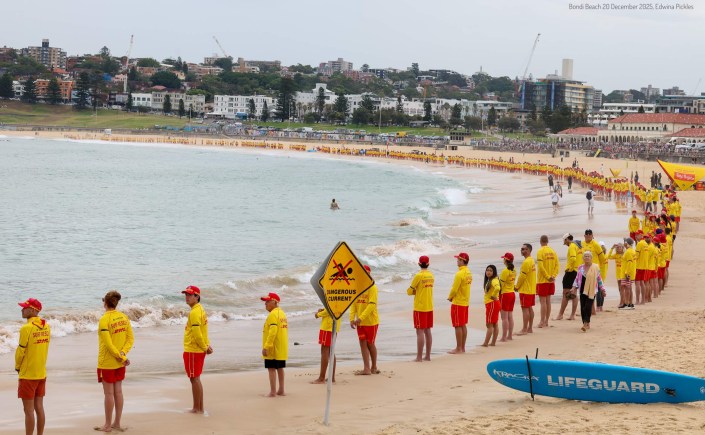
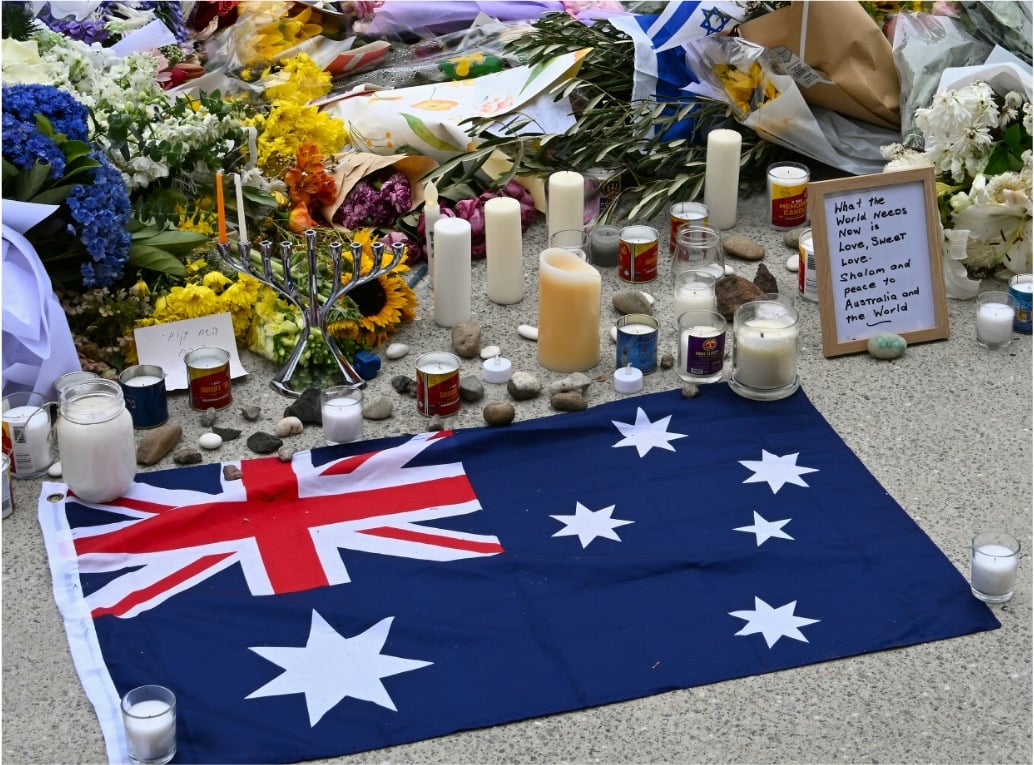
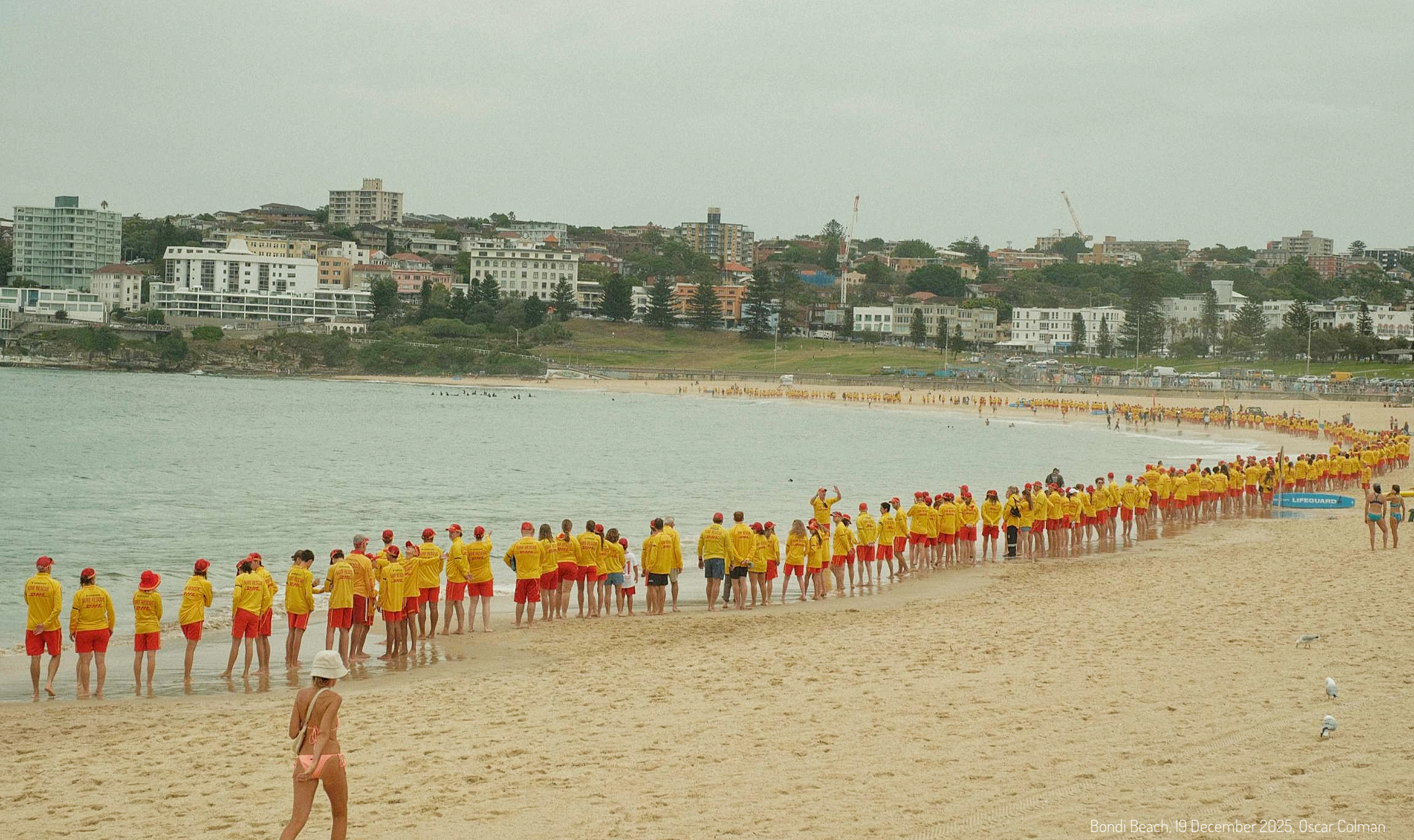
Aftermath of Bondi Beach massacre, Sydney 2025 (Image available under the Creative Commons)

Australia is in the midst of a major enquiry into antisemitism- a Royal Commission- following the terrorist attack at Bondi Beach. The community has been invited to make submissions. Below, I share mine. It is analytical rather than personal and represents my attempt to understand the links between anti-Zionist protest and harms to the Jewish community.

Who I am

I write as an Australian Jew.

I am writing entirely in my personal capacity and do not represent any Jewish communal, political or Zionist organisation. I am an engaged member of the Jewish community and regularly attend a local “egalitarian orthodox” synagogue.

I am a child of holocaust survivors. My father survived Auschwitz and Bergen-Belsen concentration camps and death marches; my mother was hidden in a convent for the latter part of the second World War. All four of my grandparents were murdered in Auschwitz.

I strongly support the right of Australians to advocate for the welfare, human rights and self-determination of both Jewish and Palestinian communities. I have been involved in inter-communal dialogue both in Melbourne and in Israel-Palestine and am commited to a just outcome in Israel and Palestine.

I am a medical specialist in the public hospital system and an associate professor at at Melbourne University.

Aims of this submission

I am writing primarily to reflect on, and critically evaluate, common claims made in reference to the relationship between pro-Palestinian advocacy and harms affecting the Australian Jewish community.

My primary contentions are that:

  1. The adverse impacts of the protest movement need to be understood as a systemic and cumulative phenomenon- this includes chronic low level psychological harm, social exclusion and the generation of an atmosphere associated with a heightened risk of sporadic violence
  2. The heterogeneity of participants and their motivations, the ill-defined targets (Israel, Zionists or Jews), and the ambiguity of protest language and symbols, together make attribution of harm and intent difficult. This ambiguity and heterogeneity allow a protest environment that tacitly fosters exclusionary, vilifying and even violent behaviour while allowing protest spokespeople plausible deniability.
  3. Consequently, the courts and relevant legislation, which assess the protest movement on a “slogan by slogan” or “event by event” basis -that is, through the lens of individual cases – cannot adequately “see” the broad environment as experienced by the Jewish community. It is a case of forest and trees.

Background

The attack on December 14, 2025, was the worst act of antisemitic violence ever committed on Australian soil. Fifteen people were murdered at a Hanukkah celebration at Bondi Beach.

Some have drawn a straight line between the Bondi massacre and anti-Zionist incitement, particularly focusing on the slogan “Globalise the Intifada”. Anti-Zionist advocates, in contrast, attribute blame to the shooters’ ISIS connection and the influence of radical Sydney clerics, insisting that the Bondi shootings have nothing to do with peaceful anti-Zionist activism.

Yet this murder was, in the perpetrators own words, intended to condemn “the acts of ‘Zionists”. It seems implausible that this targeting of Zionists was entirely unrelated to two years of inflammatory anti-Zionist rhetoric or that hate speech played no role in pushing perpetrators, primed by fundamentalist influencers, to cross some threshold to action.

Most Jewish Australians view Bondi against a backdrop of over two years of escalating incitement and a hardening anti-Jewish atmosphere. The Opera House protest in October 2023 marked a turning point. Reported chants, including “Where are the Jews?” and “F*** the Jews”, suggested a real shift in what could be said about Jews in public, seemingly without consequence.

Since then, high-profile incidents, such as arson attacks on synagogues, have attracted significant media attention.  Less visible are cumulative, psychologically harmful effects of effects of chronic “low level” stigmatisation.

Many find it hard to avoid the conclusion that this environment may have lowered the threshold for violence. A long-standing vulnerability has been brought into sharper focus, prompting calls for a precautionary response, including greater restraint in protest language.

The Bondi tragedy has produced grief, fear and anger within the Jewish community, alongside shock and sympathy across the wider Australian society. The subsequent critical national conversation has led to the present Royal Commission. Could we, as a nation, have done more to counter antisemitism and ensure Jewish safety? Why did our security services fail?  Was anti-Zionist activism a contributing factor for Bondi?

If so, do we need constraints on forms of protest? Should constraints be established through legislation or, at a deeper level, through education and cultural change?

Debate over public discourse and anti-Jewish incidents

Palestinian advocacy organisations have condemned the violence at Bondi and expressed sympathy for the victims. However, Jewish expressions of fear or calls for reassurance and safety have typically been dismissed as “weaponising antisemitism”, silencing debate or even “defending genocide”.

Anti-Israel groups like US Jewish Voice for Peace and the Australian Palestine Advocacy Network insist their activism is guided by justice and human rights and rejects racism or violence. Those claims are in their mission statements. Jewish anti-Zionist commentators and groups have denied any possible relationship between the language of protest and the attack.  “Zero evidence”, according to one commentator.

Consequently, they have criticised Jewish calls for safety and protections, and government proposals to restrict aspects of protest, as overreach or an attack on free speech rather than an attempt to provide community safety.

This insistence that no restrictions be placed on the language and forms of protests is accompanied by several claims that warrant critical evaluation:

  1. That the pro-Palestinian movement is peaceful and simply protesting injustice (including alleged genocide)
  2. That the language of protest, including terms such as “Globalise the intifada” is inherently non-violent;
  3. That public protest is directed against Israel and Zionists and not against Jews;
  4. That consequently activist speech cannot be linked with violence, or harms more broadly, affecting Jews
  5. That the imputation of violent connotations is simply an attempt to stifle free speech.

How might we reconcile this Jewish experience of harm with claims by Palestinian advocacy groups that the movement is non-violent and explicitly rejects antisemitism?

Below, I address a number of key questions and issues in turn.

1.The pro-Palestinian movement is a complex ecosystem and not accurately characterised as entirely peaceful

Palestinian advocacy groups stress that their activism is grounded in human rights. They claim that violence against Jews cannot be attributed to a movement that explicitly rejects antisemitism or the use of violence. This is a superficially reassuring but incomplete framing. It fails to acknowledge the range of actors (and agendas) within the pro-Palestinian advocacy community and beyond it, not all of whom necessarily share these peaceful ideals.

This heterogeneity is even reflected in the several labels used to describe the movement: pro-Palestinian, anti-Israel and anti-Zionist. While they may be used interchangeably, they represent very different agendas and targets: supporting the rights of a people, opposing the policies of a state and opposing, and often vilifying, those who can be linked with that state- that is, Jews.

A 2014 study of over 20 Palestinian civil society groups by the General Delegation Of Palestine in Australia captures the heterogeneity of the groups – likely a fraction of the number of groups active in 2026.

The study notes that Palestinian organizations “often have multiple desired outcomes and target audiences and undertake different kinds of activities.” The study explicitly distinguishes “advocacy groups” and “activist groups”. The former are the public facing, suit and tie wearing (my words) groups, that speak the language of human rights and engage in, to quote the study, “persuasion, lobbying and negotiation”.

“Activist groups”, in contrast, are described as “denunciative” engaging in “protest, street demonstrations, strike actions, public meetings” and whose desired outcomes are “diffuse and not necessarily … within defined policy and political parameters”. They “articulate messages in different forums, to different audiences” with different “tone, tenor, and language of the message”… “in language that resonates with their niche constituencies.” Of course we are now also increasingly aware of Islamist (and) influences in Australia which we now know to have been connected to the Bondi massacre.

Beyond explicitly Palestinian groups lies a wider ecosystem. It includes direct-action networks, unaffiliated vandals, right-wing extremists, Islamic fundamentalist groups and “old school antisemites”. They often mobilise around the same events, language and grievances or share physical and online spaces with non-violent advocacy groups. Their presence may shape how protests are experienced by those on the receiving end.

Speaking at the Lowy Institute lecture ASIO Director-General Mike Burgess observed that activist groups are often not “centrally controlled” or “uniformly motivated,” and may include “individuals who are increasingly willing to embrace or threaten violence to achieve their goals.”

This heterogeneity within the activist community allows for plausible deniability when violent or threatening behaviour is observed For example, after chants of “F-ck the Jews” and “where’s the jews” were reported at the Opera house protest, Fahad Ali of the Palestinian Action Groups dismissed this as reflecting a “small group of troublemakers” The same disavowal was made regarding a pro-Palestinian bikie group. This allows spokespeople to claim entirely benign aims while wider affiliates of movement take a more aggressive approach to members of the Jewish community.

To put it simply: claims that the Palestinian advocacy community is entirely peaceful is a very incomplete description of reality.

2.The language and forms of protest are not unambiguously peaceful, but rather contain phrases and symbols with the potential to be interpreted as violent by elements in the protest movement and broader society

The language and symbolism of protest span a wide range. Some slogans are political and entirely unobjectionable: “Stop the war,” “Free Palestine”.

Then there are the explicitly or implicitly violent slogans and symbols that often accompany protest. They include phrases such as “where’s the Jews”, “f*** the jews” “death to IDF” and  “by any means necessary” as well as symbols (terrorist flags, pictures of the Ayatollah, the Jewish Star of David in rubbish bins)  Symbols of Hamas, Hezbollah and Iran can be understood as implying support for their violent and eliminationist goals (described here, here, here, here, here). This celebration of violence was evident immediately after the Hamas massacre at the Opera House protest and the Lakemba celebration (and indeed there was further language of celebration and an anniversary event at Lakemba a year later.)

Slogans such as “Zionists are baby killers” and “all Zionists are terrorists” are clearly intended to, or can reasonably be expected to, incite hatred towards those who support Israel’s existence or are affiliated with Israel, regardless of their views on the conduct of the war.

In between are phrases whose meaning is contested, such as “from the river to the sea” and “globalise the intifada.” Many have expressed concern that such phrases are coded calls for violence or for the elimination of the Jewish state. Palestinian advocates have emphasised the innocent meaning of “river to the sea” and “Intifada” (here, here, here) and some go so far as to argue that attributing violent intent to such slogans is Islamophobic.

It is frequently explained, for example, that “intifada” simply means “shaking off” political oppression and is not inherently violent. But language does not operate through dictionary definitions alone. For many Jews, the word “intifada” evokes, and is inseparable from the Second Intifada — a sustained campaign of terrorism that killed more than 1,000 Israelis. That history inevitably shapes how the term is heard. As Susan Benesch of the Dangerous Speech Project explains, the experience of speech as “inflammatory” depends on the speaker, the audience, the medium and the context.

“Globalise the intifada” may carry one meaning in an academic lecture and quite another in a mass street march. Its impact can shift with the size, tone and location of a protest; with accompanying slogans (“death to the IDF,” “by any means necessary”); and with symbols associated with Hamas or Hezbollah. Such language may land very differently in demonstrations held immediately after the Hamas attacks of 2023 or in the wake of the Bondi terror attack. It will be experienced differently in the public square and outside a synagogue.

The activist community is not an army of philologists. Whatever the linguistic origins of “intifada”, its meaning is contested and may be interpreted differently by different groups. As the Palestinian led report mentioned above states, in some circumstances “…human rights and international law arguments can lose their meaning in inflammatory and, at times, ideological criticisms.”

It is that very ambiguity that allows those who do seek to intimidate (or even provoke violence) to use it with plausible deniability. As Susan Benesch states “One cannot make a list of words that are dangerous, since the way in which any message will be understood – like its effect on an audience – depends not only on its content but on how it is communicated…. The very same words can be highly inflammatory, or benign.”

3.The use of the term Zionist as the target of protest implicates most Jews despite claims by protesters that they are not antisemitic and do not target Jews

Activists claim to target Zionists and not Jews.

The problem is that the vast majority of Australian Jews are Zionists- if you target Zionists you are generally targeting Jews.

A 2023 Australian survey reported 80-90% of respondents indicated personal connectedness with and concern for Israel and 77% identified as Zionist. Most Australian Jews have cultural, religious or historical connections to Israel and support for the security and safety of its citizens, including for many Jews, close family. Some use the label Zionist to describe this connection. It is often an element of cultural identity and for Australia’s substantial post-Holocaust community, it carries connotations of “refuge”. For many Jews, this sense of connection does not imply endorsement of specific Israeli policies or leadership.

Anti-Zionists are well aware of this deep connection between Jews, Israel and Zionism, yet work hard to maintain the fiction that their activism does not target Jews.

They do it by presuming to tell Jews about their identity. (Something that would be considered offensive if directed at other groups. Jews are told that they are a disembodied “faith group” with no sense of peoplehood or organic connection to Israel. Palestinian advocates showcase the tiny minority of antizionist Jews who agree with them. Anti-Zionists insist that Zionism and Judaism are distinct noting that  “Not all Jews are Zionist” or “being Jewish is not identical to being Zionist”. This distinction is technically correct but doesn’t negate the connection of the vast majority of Jews with Israel.

Indeed, the identification of Zionists and Jews in the mental landscape of some activists is evoked by the use of classic antisemitic tropes in antizionist discourse. They speak of  “…the Jewish Lobby and the Zionist Lobby infiltrating” with their “Tentacles”, of powerful elites(including Jewish Law firms) and conspiracist notions  “We already know that Zionists are parasitic upon progressive spaces. It is under the guise of progressivism that Zionists launder their genocidal colonialism, while weaponising their influence to amplify occupation propaganda and steer cultural narratives away from Palestinian liberation.”

Thus, though the protest movement insists its focus is Israel and its policies, the use of the term Zionist does much unrecognised work in redirecting hostility from Israel to Jews. This reflects the multiple and conflicting resonances of the term Zionist in protest culture. In protest messaging, the term “Zionist” is a placeholder for a catalogue of evils: colonialism, racism, apartheid and genocide. It can be loaded with the most inflammatory rhetoric: Zionists as “child killers,” “Nazis” or “genociders.” It functions loosely as a political descriptor, a moral accusation and a marker of identity.

These dual resonances – Zionist as object of hate and Zionist as Jew – ripple through disparate communities, tacitly “criminalising” even the most benign connection with Israel and indirectly reinforcing antipathy towards Jews, without ever explicitly naming them. When “Zionist” functions simultaneously as a term of vilification and as a label many Jews apply to themselves, political critique almost inevitably slides into group-based hostility. The effect is to generate antipathy toward Jews without ever explicitly naming them.

It is not surprising that in some community sectors, a simple public expression of concern for the safety of Jews in Israel may be enough to evoke all the hostility now reflexly associated with the term Zionist. This leaves many Jews uncertain how to speak publicly at all.

Many Australians who support Palestinian rights in good faith may not recognise how protest language may facilitate this “slippage” of anger from Israel to Zionists, to Jews.  This slippage blurs the boundary between political critique and hostility toward the Jewish community.

A distressing incident in 2025 illustrates how boundaries between antisemitism and the language of anti-Zionist protest can blur. Year-5 Jewish students on an excursion were reportedly subjected to a barrage of insults from older students from another school including: “dirty Jews”, “baby killers”, and “Free Hezbollah”.

It is tragic that the Bondi attackers, allegedly motivated by opposition to “Zionists”, murdered Jews.

4.The reflex denial of any possible links between protest and violence is based on simplistic and outmoded understandings of causality in complex social systems

In response to Jewish community concerns about protest language and community safety, it is common to hear the reply that the relationship between speech and a specific terrorist act cannot be “proven”. This is technically true, but misleading. In complex systems, causation is a statistical concept.

It is widely accepted in the broader community that certain harms operate probabilistically: for example the relationship between climate change and extreme weather events is well recognised even though one cannot prove causation for an individual bush-fire or storm event. The same applies to the relationship between smoking and individual cases of lung cancer.

Similarly, there is a substantial literature supporting the view that the risk of harm from hate-speech is also probabilistic and operates at a population level.  This is true, even though we cannot attribute a given event (such as Bondi) to a specific persons, actions, slogan or protest event.

This phenomenon has been described as “stochastic terrorism” or “stochastic violence”. This has been defined as “…the use of mass communications to stir up … lone wolves to carry out violent or terrorist acts that are … individually unpredictable”. This literature recognises that violent acts are likely related to the emotional and cognitive effects of activism in the media and on the street. Psychological and linguistic studies and a recent major metanalysis of 55 studies on the impact of media messaging all describe similar mechanisms. This literature describes how rhetoric circulates within communities and can lower the threshold for violence in primed individuals. In these systems no one need explicitly call for violence, and no one is individually responsible. Risk arises through cumulative effects rather than direct incitement.

Susan Benesch of the Dangerous Speech Project describes dangerous speech as “Any form of expression (e.g. speech, text, or images) that can increase the risk that its audience will condone or commit violence against members of another group.” She further notes that “Hate speech … uses derogatory group slurs, metaphoric language, exaggeration, images, and symbols. … Its public expression ….allows like-minded individuals to find an echo chamber for their shared beliefs. And it has real and painful consequences for victims.”

Mike Burgess, speaking a month prior to the Bondi massacre, said that “Since October 2023, we’ve seen more provocative protests and a notable uptick in intentionally disruptive and damaging tactics by anti-Israel activists, including multiple acts of arson, vandalism and violent protest…” and “The conflict in the Middle East …. prompted protest, exacerbated tension, undermined social cohesion and elevated intolerance (making)  acts of politically motivated violence more likely. …. Inflammatory rhetoric and provocative, disruptive actions had been normalised, and the normalisation of violence and hatred against one community had created a permissive environment for similar behaviours in other communities.”

This is not an argument about direct causation or “collective blame”, but the debate over language and anti-Jewish violence requires the recognition of this well described sociological phenomenon and  constructive engage with its policy implications.

The inadequacy of frameworks premised on direct causation is not merely  theoretical but regularly surfaces in permissive court findings regarding the right to protest near synagogues, or to display language vilifying “Zionists”.

5.The harms to the Jewish community are not limited to dramatic violent acts but include chronic psychological and social harm

Bondi was a tragic event that finally shocked our community into recognising and responding to a problem that had been evident to most of the Jewish community for two years.

Pro-Palestinian/ anti-Zionist activism had invaded “intimate” Jewish spaces, with mobs outside synagogues or at recreational spaces in Jewish neighbourhoods. There has been vandalism of Jewish homes, schools, synagogues, community centres and of the offices of a university academic. Jews in the arts and other sectors of our community have been marginalised and doxxed and private businesses intimidated and shut down. There have been death threats to Jews and Jewish organisations.

A steady drum beat of vilification: “baby killers”, “genocidaires” and “Nazis” has created a charged and heated atmosphere in which many Jews have come to feel unwelcome or unsafe. For every act that hits the media there are countless stories, often related over the Sabbath dinner table, of personal slights, off-hand comments and slurs. There has been endless on-line hate. This incitement has been marked by episodes of violence, acts of arson and now murder.

The dramatic rise in incidents negatively impacting Australian Jews since October 2023 has been well documented in Executive Council of Australian Jewry (ECAJ) incident reports, as have Jewish experiences of antisemitism (2024 survey ) and antisemitic attitudes held by non-Jewish Australians (2021, 2025, ASECA survey).

Hate speech itself can be profoundly harmful psychologically. This is true for Jews in Australia (and)  the US Jewish community just as it was for the indigenous community during the voice debate. For some antizionists, the intimidation and marginalisation of Jews is not a by-product of activism but rather a specific goal. ASIO Director-General Mike Burgess, commenting on anti-Israel activists observed: “Directly or indirectly, their actions can marginalise, stigmatise and frighten sections of the community.”

A 2024 survey conducted in the weeks after the start of the Gaza war (including approximately 8% of the adult Jewish population) reported that 64% felt that antisemitism was a big problem, far higher than in a 2017 survey. One in five had personally experienced an insult or harassment because they are Jewish and a similar number was less open in showing their identity in public. Similar findings have been reported in the UK, Europe and the US.

This is particularly sensitive in Australia’s post Holocaust community. As Jeremy Waldronwrote of hate speech: “It does this not only by intimating discrimination and violence, but by reawakening living nightmares of what this society was like—or what other societies have been like—in the past. In doing so, it creates something like …a sort of slow-acting poison, accumulating here and there, word by word…”

6.Jewish community calls for support and safety reflect genuine grass roots concerns and are not simply political attempts to stifle legitimate debate as often claimed by anti-Zionist groups

Against the overwhelming evidence of adverse Jewish experiences, non-Jewish and Jewish pro-Palestinian and anti-Zionist groups regularly attempt to downplay the issue by:

  • disputing definitions of antisemitism, survey methodology and measurement.
  • dismissing communal concerns as “weaponising” antisemitism
  • claiming Jews are simply conflating antisemitism with criticism of Israel.
  • claiming that antizionist slogans and activism have nothing to do with Jews because “not all Jews are Zionists” or “Zionism and Jewishness are not identical”. Such claims, while true, are facile and in no way negate the experiences and views of the vast majority of the Jewish community who have strong connections with and concerns for Israel and are targets for antizionist activism
  • focusing on antisemitism from the political right, distracting from the complex and cumulative effects of anti-Zionist speech and activism from the progressive left, religious fundamentalist and anti-Israel groups.

The pattern is one of disputing and distracting rather than engaging with patterns of fear, withdrawal and marginalisation.

This approach stands in opposition to recommendations in the AHRC Framework which stresses that the  approach to racism should be “community-centric” and recognise that racism as a “complex and shifting phenomenon”.

7.Claims that antisemitism can adequately be addressed through existing “universal” mechanisms are not supported by evidence

Anti-Zionists resist specific policies to respond to antisemitism, casting their lot with generalised anti-racism frameworks. They reject the Special Envoy’s report on antisemitism, in part for reasons of free speech. The claim that the AHRC Framework is sufficient as the primary mechanism to deal with antisemitism is flawed.

While society-wide approaches to racism are essential, Indigenous Australians, migrants, women, LGBTQ+ communities, Muslims and Jews all have different histories of oppression and face different challenges.

The need for targeted measures for antisemitism is not about moral priority but relates to its specific dynamic. Jews are often not recognised as a minority let alone a vulnerable one, because they are coded “white” and linked with power, money, conspiracy and influence. There is growing ignorance of antisemitism’s history, its genocidal expression within living memory. A UN report highlighting the lack of awareness of antisemitism’s modern manifestations.

It must also be noted that the AHRC document was framed and developed primarily to deal with indigenous disadvantage. Its preamble it states that: “racism operates by racialising various groups of people negatively to maintain the dominance of groups racialised as white….”. This strong conceptual frame around issues of colour raises questions about its suitability as the sole vehicle for addressing antisemitism.

The assertion made by Jewish anti-Zionists, that “general anti-racism” measures, including the AHRC Framework, will be effective for antisemitism does not reflect what is known about antisemitism nor about the AHRC Framework.

As human rights law academic Kenneth Marcus has observed, when  antisemitism is subsumed under generalised frameworks of disadvantage, it often disappears from view.

The Special Envoy’s plan, while open to criticism, is consonant with Global Guidelineswhich have been endorsed by over 40 states and regional groups, and consistent with UN recommendations that addressing antisemitism requires specific strategies in addition to general anti-racism measures.

In public statements the JCA has argued that calls to curb the most hostile forms of anti-Zionist speech risk making Jews less safe, by exposing them to blame for increased state repression. It is worth asking whether reframing such calls as political manoeuvres rather than expressions of communal fear does not itself heighten that risk — by casting concern for safety as bad faith.

8.Minority Jewish voices substantially misrepresent the concerns of the wider Australian Jewish community

The Jewish Council of Australia (JCA) has expressed the intention to engage with the Commission, as is their right. However, public positions taken so far by the JCA and other anti-Zionist Jewish groups raise concerns about the nature and impact of their likely submissions.

The JCA presents itself as an expert voice that provides a counterbalance to allegedly unrepresentative communal leadership bodies such as the ECAJ.

While Jewish peak bodies are not directly elected by the whole of community (what community peak bodies are?), they include a wide range of community organisations across the country and are closely aligned the community’s concerns regarding safety and connection with Israel. Concerns regarding community safety are widespread and a deep connection to Israel and concern for Israel’s welfare are shared by around 90% of Australian Jews. Around three quarters self-identify as Zionist.(2017, 2023 and 2024).

The JCA and other anti-Zionist groups have a small number of high-profile spokespeople, however their views are unlikely to reflect more than a small minority of a Jewish community of over 110,000. The JCA claims over 1,300 supporters. However, many claimed supporters are anonymous and signing on to their website entails endorsing values such as human rights, freedom and equality. not necessarily the anti-Zionist nature of the group. It is far from clear that their those who have signed endorse the JCA’s view that antisemitism is unrelated to progressive and antizionist activism.

This doesn’t delegitimise their participation or views but should have bearing on the weight given these views at the Royal Commission.

Anti-Zionist Jewish positions are often cited by the broader anti-Zionist advocacy community and by segments of the media and civil society. This is not because the JCA is representative of the community, but rather because their views suit the agenda of those who seek to vilify the Jewish community without restriction.

This “spoiler effect” is not without precedent.

The recent referendum on an Indigenous Voice to Parliament, though set in a different political context, is illustrative. Tanya Muscat and Katharina Wolf from Curtin University described how “No” proponents “… were selectively framed by media to present a picture of broad Indigenous opposition, thereby neutralising support for the Yes campaign…(this)  illustrates the need for communication strategies that are not only inclusive, but genuinely representative and responsive to the diversity within Indigenous communities.”

The Commission should be alert to the risk that anti-Zionist Jewish voices, amplified beyond their representative weight, may obscure the genuine concerns and aspirations of the wider Jewish community.

9.Jewish vulnerability is not adequately recognised in legal and progressive cultural frameworks

Over the last two years or more, hostile speech targeting Jews has circulated, escalated and become normalised in a manner that seems unimaginable were this another minority.

Cautious responses across government, media, legal and other civic institutions have contributed to a permissive environment in which hostile language and behaviour have gone unchallenged.

In part this has happened because concerns expressed by Jews regarding antisemitism are often understood primarily through the lens of the Israel–Palestine conflict, where they are interpreted as attempts to “silence protest”. They are also contested through disputes over definition or methodology.

At a deeper level, Jews are not widely recognised as a vulnerable minority, despite being one of Australia’s smallest communities and carrying profound collective trauma within living memory. Jews are targeted by “the right” as “non-white” and conspiratorial (with replacement theories proliferating, particularly in the US) as well as by progressives who characterise them as white, European, powerful and conspiratorial. This antipathy from both sides of the political spectrum is not experienced by other minorities, and other vulnerable groups typically do not offer solidarity to the Jewish community.

Existing legal and anti-discrimination mechanisms are designed to deal with harms attributable to individual people and events. As discussed above, much of the harm associated with the protest movement can be understood as cumulative in nature, with risks being statistical. This framing is more akin to climate change than to individual criminal behaviour and so grappling with the cumulative effects and diffuse responsibility of mass movements needs alternative conceptual approaches and  mechanisms of mitigation and redress.

The NSW Court of Appeal’s April 2026 decision striking down the Public Assembly Restriction Declaration scheme found that it imposed an impermissible burden on the implied constitutional freedom of political communication. The courts framework assumes that harms from political expression are discrete and traceable, and that a more precisely targeted instrument is always available and always superior.

The stochastic violence framework challenges both assumptions. Where harm operates through cumulative population-level exposure and threshold effects, demanding tight causal specificity as a condition of constitutional validity is demanding something the nature of the harm structurally cannot provide. Where the relevant risk is ambient and systemic rather than incident-specific, a broader precautionary mechanism may be more — not less — consistent with the underlying harm theory than a narrowly targeted one would be.

Legal mechanisms designed to adjudicate individual acts, individual intent and individual causation are poorly suited to harms that are diffuse, cumulative and probabilistically distributed across a population.

The Commission should draw two conclusions from this. First, that the safety concerns motivating the legislation were genuine and documented. Second, that the gap between what existing legal frameworks can address and what the harm actually requires cannot be closed by litigation. It requires policy development grounded in the empirical literature on dangerous speech and probabilistic violence — to develop regulatory responses that are both constitutionally defensible and adequate to the harm being addressed. That is precisely the kind of deeper recommendation this Commission is positioned to make.

10. This is not just another free speech/protest issue- the current protests are the first large-scale human rights protest movement in Australia that explicitly or implicitly targets an Australian minority community

The claim that anti-Zionist protest stands in the tradition of great Australian civic activism deserves scrutiny. Australia has a proud history of protest in the cause of human rights.

Opposition to the Vietnam War targeted government military policy. The anti-apartheid movement targeted a foreign regime. Activism for LGBTQ+ and Indigenous rights targeted discriminatory laws and the Australian state. In each case the object of protest was governmental policy or the policies of a foreign state.

No Australian minority community was targeted, vilified or made to feel unsafe in its own country as a direct consequence of the protest itself.

The anti-Zionist protest movement is different.  Its stated target is the Israeli government but, as argued above, the language and conduct of significant elements of the movement extend — through slippage and cumulative normalisation — from Israel, to Zionists, to Jews. The people bearing the cost are not governments or institutions. They are Jewish schoolchildren, Jewish academics, and Jewish families whose synagogues have been vandalised and whose neighbourhoods have been subject to intimidatory protest.

A human rights movement that targets a vulnerable minority undermines its own foundational premise. This not simply the case of speaking truth to power but rather a large movement directing its forces at a vulnerable minority.

Powerful and effective advocacy for Palestinian rights is entirely legitimate and possible without dehumanising language, without intimidation in Jewish communal spaces, and without slogans carrying violent resonances for a community that has known genocide within living memory.

Some notes from personal experience

My parents came to Australia to escape European antisemitism. It was largely a successful migration, and this country has been good to our family and to the Jewish community more broadly.

Antisemitism has nonetheless been a sporadic presence throughout my life. As a child I heard comments about Jews and money. Walking to synagogue in a kippah I have had “bloody Jews” shouted from passing car windows on several occasions. A close friend was beaten in a football ground car park while wearing a kippah . A few years ago a tradesman stormed out of my home after apparently noticing a Jewish artefact, shouting in the street as he left: “the Nazis should have finished you off.”

This was unpleasant but had never risen to the sense of a systematic anti-Jewish campaign.

Since October 2023 something has changed.

Partly it is what has been said and done — the graffiti, the vandalism of Jewish centres, the tearing down of hostage photographs from public walls. Partly it is what has not been said. I have watched colleagues receive institutional solidarity after attacks on their communities over time After October 7th 2023 I received communications from institutional leaders that mentioned Gaza, mentioned the conflict, but did not mention Jews, did not mention what had happened to Israeli civilians and did not acknowledge what the Australian Jewish community was living through. That silence communicated something profound.

I have watched security guards at synagogues and Jewish schools become so normalised that we have largely stopped remarking on it. Soon after October 7th 2023 a Jewish nursing home in Melbourne started to employ guards at the entrance. My uncle, a Holocaust survivor, needs guards to protect him from antisemitic attack in Melbourne in 2026.

The sense that there has been a tectonic shift in attitudes towards Jews is widely shared in my community, and it deserves to be taken seriously.

Conclusions and recommendations

The concerns currently being expressed by Australian Jews do not turn on Bondi.

Rather, Bondi has served to crystallise awareness of the sustained and normalised hostility toward a minority community. This has operated through language, symbolism, social pressure and physical intimidation in a civic environment that has consistently failed to recognise, constrain or respond to it with the seriousness applied to harms affecting other minorities.

There is a moral accounting that has not yet been done. For two years, government and civic institutions sent a series of signals — largely through acts of omission— that shaped the environment in which hostility toward Jews escalated and became normalised. Just two early examples were the silence after the Opera House protest in October ’23 and our Foreign Minister’s refusal to visit the Nova memorial while in Israel. The has been a continuing absence of clear public statements about what forms of protest and language are acceptable — not legally, but morally.

This continuing silence and apathy were read, by the Jewish community and by the protest movement, as tacit acceptance of unconstrained forms of protest. The failure of government to reinforce moral and civic norms has had consequences that no subsequent legislative response can fully undo.

A Royal Commission that focuses narrowly on security failures at Bondi, without grappling with this broader institutional failure of leadership, will fail.

The protest movement should address its own accountability. Palestinian advocacy organisations that present themselves as defenders of human rights carry a particular responsibility. Tolerating, excusing or deflecting attention from dehumanising language directed at Jews is a contradiction the Commission should name directly. “We reject antisemitism” in a mission statement is not accountability. Genuine commitment to human rights principles requires actively calling out vilifying language when it appears, refusing to share platforms with those who use it, and accepting that the credibility of a movement is shaped by what it tolerates as much as by what it explicitly endorses. The question the Commission should put to these organisations is not whether they intend harm, but rather whether they effectively provide cover for unacceptable conduct incompatible with the protection of human rights.

The Commission will hear from minority Jewish voices who are seeking to limit scrutiny of anti-Zionist activism and minimise the widely held concerns of the community they claim to represent. Anti-Zionist Jewish voices are amplified not because they reflect Australian Jewish experience but because they are useful to those who wish to deflect that scrutiny. It would be a serious failure if the genuine and widely held fears of over 100,000 Australian Jews were obscured by a small, unrepresentative minority whose positions are largely indistinguishable from those opposing any restraint on anti-Zionist activism.

The Commission should weigh the asymmetry of what is at stake. On one side of the balance sits some degree of restraint in the most inflammatory language and protest forms — forms that reasonable people can recognise as serving no legitimate advocacy purpose. On the other sits a community that has spent two years reporting fear, concealing identity in public, withdrawing from civic life, and watching its institutions firebombed while being told that its concerns are weaponisation, overreach, or simply the price of free speech. Freedom of speech is a central value. So is the right of a minority community to exist in civic space without being treated as a legitimate target. These are not equivalent considerations, and recommendations that treat them as symmetrical will not address the harm.

This is not a call for censorship, silencing debate or banning protest. It does not equate criticism of Israel with antisemitism. Nor is it a concern about mere Jewish discomfort relating to robust debate. The case for Palestinian rights is legitimate and can be made powerfully without language that dehumanises, without slogans that carry violent resonances, and without forms of protest that target Jewish communal spaces. The question is not whether advocacy is permissible. It is whether the most harmful modes of that advocacy are necessary to it.

What is at stake is not comfort but belonging: whether Australian civic spaces remain places where minorities can live, speak and participate without being treated as objects of collective hostility.

No regulatory or legislative response will be adequate without investment in the civic and educational foundations that make such responses meaningful. The past two years have exposed not only a failure of law and policy but a failure of shared understanding — across institutions, media and the general public — about what antisemitism is, how it operates.

Regulation addresses behaviour but education is needed to address the conditions that make certain behaviours seem acceptable. Any set of recommendations that omits this foundation is treating symptoms. The Commission should recommend that addressing antisemitism be incorporated into school curricula. The media and public institutions require structured guidance on recognising hate speech that operates through political framing.

The Commission is accordingly asked to consider the following recommendations:

  1. Recognise the systemic nature of the harm. The cumulative, probabilistic character of harm from hate speech and inflammatory protest language should be acknowledged explicitly. A framework built solely around adjudicating discrete incidents and provable individual causation will continue to fail the Jewish community as it has failed it for the past two years.
  2. Develop regulatory responses adequate to systemic harm. The NSW Court of Appeal’s invalidation of the post-Bondi protest restrictions indicates the limitations of current judicial processes to address the nature of harms experienced by the Jewish community. The Commission should recommend policy grounded in the empirical literature on speech and harm —that are both constitutionally defensible yet adequate to the nature of harms experienced by the Jewish community.
  3. Require accountability within the protest movement. Advocacy organisations that claim to reject antisemitism and violence bear a corresponding responsibility to actively call out vilifying language and intimidatory conduct within the broader protest ecosystem they share. Passive disavowal after the fact is not accountability. The Commission should consider whether organisations and individuals that claim human rights credentials while tolerating dehumanising language directed at Jews should continue to receive public legitimacy, funding or institutional support.
  4. Reject the adequacy of generalised anti-racism frameworks as the sole response.The AHRC Framework was developed primarily around racialised disadvantage and the experience of communities of colour. Antisemitism has a distinct dynamic — Jews are simultaneously coded as white and powerful by progressives, and as foreign and conspiratorial by the right — and is rendered invisible by generalised frameworks. Specific strategies, consistent with Global Guidelines endorsed by over 40 states and with UN recommendations, are warranted and should be implemented alongside, not instead of, broader anti-racism measures.
  5. Weigh community voices accurately. The Commission will hear from Jewish anti-Zionist groups whose positions diverge sharply from those of mainstream communal organisations and most community members. Their right to participate is not questioned. However the weight accorded their submissions should be proportionate to genuine representativeness, and the Commission should be alert to the amplification of minority Jewish voices to serve interests other than accurate representation of the Jewish community.
  6. Invest in education and civic foundations. The Commission should recommend that antisemitism — its history, its specific character and its modern manifestations — be reflected in institutional training.
  7. Demand moral leadership, not only legal mechanism. The most important failure of the past two years has not been legislative. It has been the failure of government, universities, media and civil society to say clearly and repeatedly that Jews are a vulnerable minority community entitled to the same recognition, solidarity and protection extended to other minorities; that their fears are legitimate; and that certain forms of language and protest are not made acceptable by being coded. No other minority is expected to bear resentments originating in distant conflict or in the acts of isolated individuals.

The “I’ll ride with you” movement, which supported Muslims who were feeling vulnerable to backlash following the  Lindt Café siege, exemplifies our community’s capacity to recognise and respond to minority vulnerability with solidarity. No equivalent solidarity was extended to the Jewish community in the wake of October 7th, or in the two years of escalating hostility that followed.

Randa Abdel-Fattah’s claim that “Zionists (i.e. most Jews) have no right to cultural safety” exemplifies the cloud that has hung unanswered over the Jewish community for far too long. This slogan, and the tragic downstream effects when such views become normalised (and even celebrated in some sectors), represent the deep challenge before the Royal Commission and the Australian community more broadly.

ABOUT THE AUTHOR
Andrew is a medical specialist working in Australia. He is a regular visitor to Israel and a member of an egalitarian shul in Melbourne. He is married and has three sons. He occasionally suffers from thought bubbles that transmogrify into written form.

Jewish singer Deborah Conway accuses Aussie actor of running anti-Semitic boycott campaign against her

Jewish singer Deborah Conway has accused an Australian actor of running an anti-Semitic boycott campaign against her that led to venues cancelling her shows.

Fifty-six witnesses were called in the Royal Commission on Anti-Semitism and Social Cohesion last week, sharing how “Nazi style slurs” are being hurled at children in schools that now look more like prisons due to increased security concerns in the wake of Hamas’ attack on Israel on October 7, 2023.

Conway, a Jewish Australian, told the commission several of her shows have been pulled over the last few years, claiming an Australian actor, who she did not name inside the hearing, had sent letters to venues stating “Deborah Conway is a self-confessed Zionist and a supporter of genocide”.

The letters also allegedly included words to the effect that if they were to platform her “you are complicit in genocide”.

“I think some of the venues found that incredibly disturbing and they pulled back,” Conway said.

Conway revealed the name of the actor she has accused of running the campaign while speaking outside the hearing, however NewsWire has chosen not to name the woman.

“She signed her name very boldly and openly and she was proud of the letter she had written,” Conway claimed outside the hearing on Monday.

Singer Deborah Conway has suffered a flurry of online abuse in the wake of October 7, 2023. Picture: NewsWire / Damian Shaw

Deborah Conway Picture: NewsWire / Damian Shaw

Conway also detailed how in another instance, 70 people wearing balaclavas rocked up to a venue hitting pots and pans together, and said if they went ahead with one of Conway’s shows “we will make sure that we turn up with 300 people, and we will make sure that business is very hard for you”.

“So they pulled it, which I don’t blame them — I would too,” Conway said.

The musician also copped a flurry of online abuse after she and a group of about 600 Jewish creatives were doxxed in February 2024.

“I hope your entire family dies in an air strike and you have limbs amputated without aesthetics — I assume he means anaesthetics,” Conway read to the commission on Monday.

“I hope that after this happens you have no access to clean bandages, antibiotics or food.”

Conway called anti-Zionism a ‘genocidal impulse’. Picture: NewsWire / Damian Shaw

Anti-Zionism a ‘genocidal impulse’

Conway described anti-Zionism as a “genocidal impulse”, telling the hearing that “when people chant from the river to the sea … that is a call to end the entity of Israel”.

“I want there to be peace, I want there to be a two-state solution, I want everyone to just relax. Let everyone eat their hummus and get on with it,” Conway said.

“But unfortunately … we’re not living in the land of unicorns and rainbows.”

She said she can’t bear the idea of young artists who are being targeted and vilified for believing Israel should be allowed to exist.

“That’s their crime, and that’s a crime that I think is completely beyond the pale,” she said.

“When they say Zionism equals Nazism … genocide … and then they end up with a sign that goes in the bin.

“They’re throwing us all in the bin. It’s not going to end well.”

Conway is an Australian singer and songwriter. Picture: NewsWire / Damian Shaw

Conway is an Australian singer and songwriter. Picture: NewsWire / Damian Shaw

‘Larger than life’: Tribute to slain Rabbi

The father of a 14-year-old who survived the Bondi attack with bullet wounds paid tribute to Rabbi Eli Schlanger who died in the Bondi attack on December 14 last year.

The speaker was present at the Chanukah by the Sea event where two gunmen allegedly opened fire, killing fifteen people.

“He was so happy, it was an amazing event ‘til the minute before,” the man said.

He described Mr Schlanger as “larger than life” and “an amazing human being” who was always ready to help.

His 14-year-old daughter was shot while shielding children during the attack, with the man saying his daughter had asked him afterwards “(Dad) why they hate us so much, why they want to kill us?”

The speaker also told the royal commission a Jewish community member brought their Mezuzah — a religious scroll placed at the door of Jewish Homes — to see if it was intact and correct.

Once he opened it he found a “Free Palestine” scroll in it instead of the religious verse.

‘No friends left’: Jewish 15yo targeted online

A 15-year-old Jewish boy, known only as ABB, detailed how he had been bullied since the end of 2024 and was targeted in a Minecraft chat group comprised of children from his school.

A Jewish teenager says he was targeted with anti-Semitic abuse while playing the popular online game Minecraft with kids from his school. Picture: Supplied by Telltale Games

A Jewish teenager says he was targeted with anti-Semitic abuse while playing the popular online game Minecraft with kids from his school. Picture: Supplied by Telltale Games

Someone had written “I hate the Jews” in the chat group at one stage, but his stomach turned “upside down” after someone commented “rabid filthy rotten gut-wrenching grotesque rabbi yamaka wearing bank owning iron doming Hashem following Jew” on another occasion.

“It made my stomach turn upside down, I really just had to step away from my computer for a little bit and then, when I came back, I think I just closed and logged off for the day,” the teen said.

The children continued with the abuse after the 15-year-old confronted them at school and “told them to stop because it was destroying my mental health”.

He didn’t tell his parents right away because he thought he could handle it, “but it just got out of hand”.

“I walked into their room and said I have no friends left,” the teen told the hearing.

His mother, ABD, said her son had “tears in his eyes” as he told them how his friends had locked him in a part of the game and left him alone to die.

“Appalled”, ABD said her stomach drops knowing how her son had “normalised” and had to “make his peace” with the ordeal.

“(He) accepted it as part of his school life,” she said.

His parents said the school handled the situation really well and held an investigation, with three of the children also apologising to ABB.

However if ABB is near the group too long at school they tell him to leave, the boy said.

“Every time I go up to them, because some of my other friends sit with them … if I stay there for a little too long, they’ll be like ‘get out of here’ or something like that,” ABB said.

ABB also told the hearing of how a group of Year 12s recently shouted something along the lines of “Hitler was right to kill them all”.

“I turned around expecting to see somebody staring at me or pointing at me but I found it was just a group of Year 12 boys who were just talking amongst themselves using it for general conversation,” he said.

The October 9, 2023 rally at the Opera House has been described as a critical turning point in the rise of Jewish hate during the inquiry. Picture: NewsWire / Jeremy Piper

The October 9, 2023 rally at the Opera House has been described as a critical turning point in the rise of Jewish hate during the inquiry. Picture: NewsWire / Jeremy Piper

The boy’s father, ABE, said he no longer recognises this country, telling the hearing people used to be “a lot more tolerant”.

“All of those Australian idioms that we have for people having a fair go, that seems to have been lost,” he said.

“I would like to see something come out of this commission where we can chart the course back towards that Australia, or that attitude that we had in Australia.”

Propaganda fuelling ‘disunity’ and ‘discord’

Rabbi Daniel Rabin, who is part of a synagogue in Caulfield in Melbourne, said “we wouldn’t be sitting here if this was just about criticism of Israel”, telling the hearing Australians are being fed propaganda which is fuelling the disunity the country is experiencing.

Mr Rabin acknowledged that criticism of Israel is OK, but “huge lies” are circulating, telling the commission the word “genocide” is being “thrown into everything”.

“It’s the seeping through of this propaganda that’s found it’s way everywhere,” he said.

Rabbi Daniel Rabin detailed a campaign of abusive calls his synagogue has received. Picture: NewsWire / Damian Shaw

Rabbi Daniel Rabin Picture: NewsWire / Damian Shaw

“I think there are those who naturally have this hateful mission, but I think it’s affecting many regular Australians who are being fed this narrative, which I think is causing so much of the disunity and this discord that we are finding ourselves in at the moment.”

He recounted a campaign of abusive calls his synagogue had received, with the phrase “baby killers” seeming to be the favourite.

“When you say somebody is a baby killer … I can’t think of anything more grotesque to say about a person,” he said.

“It’s actually mind boggling that people are accusing us of that and then calling our synagogues … it’s hurtful, it’s disgusting.”

Mr Rabin spoke of having eggs and anti-Semitic slurs thrown at him before October 7, 2023, but the abuse has increased in the wake of Hamas’ attack.

Just days after the attack a car passing by he and his 10-year-old son shouted out “horrific things” he didn’t feel comfortable repeating at the inquiry.

“Having my 10-year-old son with me, of course he looked at me and he said ‘Why do these people hate us?’” he said.

“And that was very confronting … very difficult to explain to him.”

Fifteen people were killed in the Bondi attack in December 2025. Picture: NewsWire / Flavio Brancaleone

Fifteen people were killed in the Bondi attack in December 2025. NewsWire / Flavio Brancaleone

Jewish musician’s career and business destroyed after doxxing

Jewish musician Joshua Moshe told the hearing how his life started to fall apart after he was doxxed, with he and his wife both receiving hate messages and threats.

The couple’s homeware shop in north Melbourne was vandalised with boycott stickers and graffiti in the wake of the doxxing, while photos of them both taken from their social media accounts and plastered with “Zionists” and “Boycotting”.

At one point he received a photo of his son along with a voicemail that said “You racist motherf***er better keep watching your motherf***ing back”.

The abuse forced the couple to close up their shop and move to a different spot in the city. “This was devastating to experience … ongoing torrent of messages.. I was feeling extremely anxious, devastated, feeling like my life was starting to unravel,” Mr Moshe said.

Musician Joshua Moshe told the hearing how his life started to fall apart after he was doxxed. Picture: NewsWire / Damian Shaw

Musician Joshua Moshe  Picture: NewsWire / Damian Shaw

Musician Joshua Moshe and his partner Maggie May Moshe spoke with the media outside the hearing on Monday. Picture: NewsWire / Damian Shaw

Musician Joshua Moshe and his partner Maggie May Moshe spoke with the media outside the hearing on Monday. Picture: NewsWire / Damian Shaw

A saxophonist and composer, Mr Moshe was part of an award-winning band for seven years up until the doxxing incident, when he found out via social media that he’d been kicked out of the band.

The band had posted an online post — which they recently issued an apology for — which said the group was “disgusted, deeply shocked and betrayed”, claiming Mr Moshe had made comments in a Zionist WhatsApp group.

“We explicitly condemn any form of Zionism, racism, bullying anti-Semitism and prejudice of any kind,” the post said.

Mr Moshe said the Zionism that he believed in was that Jewish people deserved a home in some part of their ancestral homeland.

ECAJ researcher targeted with ‘horrifying’ anti-Semitic caricature

Executive council of Australian Jewry (ECAJ) research director Julie Nathan described the “horrifying” moment a sexualised caricature of her was shared on the internet.

The caricature was accompanied with the words “Julie simply desires to be filled with Aryan seed”.

“It’s very much a sexualisation, so you have this Jewish caricature, this is the feminine version of it, with the long, curly hair, and the long fingernails … It was horrifying to see” Ms Nathan told the royal commission.

Executive Council of Australian Jewry research director Julie Nathan says trying to keep track of anti-Semitic incidents online is ‘like trying to count the stars’. Picture: NewsWire / Damian Shaw

Executive Council of Australian Jewry research director Julie Nathan says trying to keep track of anti-Semitic incidents online is ‘like trying to count the stars’. Picture: NewsWire / Damian Shaw

Ms Nathan, who authors the Jewish group’s annual report on anti-Semitism in Australia, said a new form of anti-Semitism has emerged since October 7, 2023 telling the hearing there was a 316 per cent rise in anti-Semitic incidents in Australia according to their 2024-2025 annual report.

“We’re getting much more brazen and much more confident coming out and not ashamed or worried about it being anti-Semitic and inciting violence against Jews,” she said.

Online posts or publications are not included in the report “because there are so many it’s uncountable”, Ms Nathan said.

“It’s like trying to count the stars,” she said.

Pro-Palestine material is also not counted as anti-Jewish, with Ms Nathan explaining a “free Palestine” sticker would only be considered anti-Semitic if it was stuck on a synagogue or a Jewish school, for instance.

“Israel is a state like any other state, and just as we in Australia are free to criticise our government, our country … we accept that, and even though people may lie about things or may use offensive language,” Ms Nathan said.

“We accept that as being, you know, political discourse or political language. It’s only when it crosses the line into anti-Semitism, that’s when we will count it as anti Semitic.”

The incidents, which are all personally reviewed by Ms Nathan, are recorded under six different categories including: physical assault, vandalism, verbal abuse, hate messages, graffiti and material such as banners and stickers.

She spoke of some people on social media screenshotting the annual report and making fun of it, saying: “We’re doing well boys, let’s keep the momentum going”.

Chief executive officer of The Dor Foundation Tahli Blicblau said scenes at a Western Sydney protest on October 8, 2023, ‘set the tone’ for the normalisation of Jewish hate. Picture: NewsWire / Damian Shaw

Chief executive officer of The Dor Foundation Tahli Blicblau sPicture: NewsWire / Damian Shaw

Ms Blicblau said online spaces have helped move anti-Semitism away from ‘shameful radical fringes’. Picture: NewsWire / Damian Shaw

Fireworks in the street is Israel was ‘counting its dead

Fireworks in the streets as Israel was “still counting its dead” in the wake of Hamas’ 2023 attack “set the tone” for the normalisation of Jewish hate in Australia, the leader of a Jewish organisation has told a hate inquiry.

Many pointed to the Sydney Opera House protest on October 9, 2023, as a critical turning point in the rise of Jewish hate; however, Dor Foundation Tahli Blicblau chief executive instead submitted that scenes at a Western Sydney protest the day prior were pivotal.

“The events of October 7 were described as a day of pride and courage,” Ms Blicblau told the royal commission on Monday.

“Cars were driving through Western Sydney setting off fireworks … that glorification of violence that night at a time when Israel was still counting its dead really set the tone for a permissive environment in which glorifying violence was accepted and permissible.”

Nine witnesses will give evidence on Monday. Picture: Gaye Gerard /NewsWire

 Picture: Gaye Gerard /NewsWire

Research from the Jewish body, which was established in 2024 to combat anti-Semitism, has revealed that most Australians can’t recognise anti-Semitic tropes.

Radical ideologies had converged in such a way that anti-Semitism was slipping into public discourse easier, Ms Blicblau said.

“They’re shrouded just enough in language, often of human rights, to be acceptable,” she said.

“Most Australians can’t recognise anti-Semitic tropes when they see them, so they’re presented with these hateful tropes and because they don’t recognise it as being anti-Semitic, it’s more likely to become normalised and accepted.”

Ms Blicblau also spoke to the role of online spaces in helping move anti-Semitism away from “shameful radical fringes”.

“The role of the internet and social media allows these hateful comments to reach millions of people within milliseconds, so in order to combat the new form (of anti-Semitism) … we need to operate there,” Ms Blicblau said.

The hearing continues

If you must say it, don’t say it in Jerusalem!

It was entitled: “Keeping Wolves from the Flock: The Case for Good Religion to Fight Anti-Semitism”. It was delivered on International Holocaust Remembrance Day on 27 January 2026 at the Binyaney Ha’uma Conference Center, Jerusalem, Israel. The presenter was former Australian prime Minister Scott Morrison. It was well received by audience, and praised by Israeli prime minister Binyamin Netanyahu. And it quickly reverberated back home.

The venue, the timing, and the company mattered. Israel, in the midst of an ongoing war and under the leadership of a government increasingly isolated internationally, was hardly a neutral stage. The event itself was framed as a moral gathering – a stand against antisemitism at a moment when Jewish communities worldwide feel newly exposed and embattled. Into this charged atmosphere stepped a deposed and disgraced Australian leader, now embarked on an international, largely ecclesiastical speaking circuit, offering prescriptions not for Israel, but for Islam in Australia.

The reaction in Australia followed well-worn grooves. Conservative outlets and commentators – most loudly those aligned with Murdoch media – cast Morrison as a truth-teller, bravely naming uncomfortable realities about radical Islam and standing up for Jewish security against a censorious, “woke” establishment that had been slow to deal with the acknowledged threat of radical Islamism. Progressive commentators, by contrast, focused on the dangers of securitising religion, the selective targeting of Muslims, exacerbating existing Islamophobia, and the symbolic violence of lecturing Australian minorities from abroad. The argument was instantly polarised, less a conversation than a mirror held up to our own media ecosystems and their predictable reflexes.

What was largely missing, however, was sustained attention to the deeper questions the speech inadvertently raised – questions that recur across debates about diversity, cohesion, and authority in plural societies. Who gets to speak about whom, and from where? How does a liberal democracy balance legitimate security concerns with religious freedom and civic trust? When does critique shade into control, and when does concern curdle into performance? And what happens when discussions about coexistence are conducted not face to face, but at altitude, before distant audiences primed for applause?

It is to those questions – rather than to the outrage or applause – that the brief following essay turns.

The politics of posturing 

There is a particular genre of speech that is recognisable before one even reaches the second paragraph. It is delivered abroad, framed as courageous, freighted with moral urgency, and aimed not so much at those ostensibly being addressed as at a wider, watching audience. Scott Morrison’s address in Israel belongs squarely in this genre. It is less a contribution to Australian social cohesion than a performance within a global culture war, delivered from a stage carefully chosen for its symbolism rather than its suitability.

Morrison, now out of office and out in the world, occupies a familiar post-political niche as he treads an international speaking circuit, heavily ecclesiastical in tone and audience, where moral clarity is prized over policy detail and applause over accountability. This matters, because the speech was not made in the Australian Parliament, not to Australian Muslims, not even in Australia. It was made in Israel – at a moment when Benjamin Netanyahu, politically cornered and morally embattled, will accept reassurance and affirmation from almost any quarter. In that sense, the speech served two purposes: it burnished Morrison’s credentials with a transnational conservative audience, and it offered Netanyahu symbolic solidarity. Australia, and Australian Muslims, were almost incidental.

The content of Morrison’s address has been widely rehearsed: calls for nationally consistent standards for Islamic institutions; accreditation and registration of imams; translation of sermons; expanded scrutiny of foreign funding; praise for Middle Eastern states that have “reasserted authority” over religious teaching. None of these ideas, taken in isolation, are wholly unthinkable. Liberal democracies already regulate religion in numerous ways – through education standards, charity law, financial transparency, and criminal statutes relating to incitement and abuse. No faith operates in a vacuum, and Islam is not exempt from the tensions between patriarchal authority and moral absolutism, and the egalitarian instincts of a secular, humanist society like Australia’s.

Nor is it controversial to observe that Islam, like Christianity before it, is engaged in a long, unfinished argument with modernity. Questions of gender, authority, pluralism, sexuality, and the limits of clerical power are not impositions from outside but live debates within Muslim communities themselves (see, in In That Howling Infinite, Islam’s house of many mansions and Educate a girl and you educate a community – exclude her and you impoverish it ). Australian Islam, however, is overwhelmingly benign, pragmatic, and law-abiding – a quiet negotiation between inherited tradition and lived reality, not a breeding ground of medieval zealotry. The men and women who left Australia to fight for ISIS were not summoned by local mosques but seduced by freelancing radicals in unregulated prayer halls algorithmic feeds, online grievance, and a search for meaning in a fractured digital world in which they find no place..

This is where Morrison’s argument begins to fray. Security agencies themselves – including ASIO director Mike Burgess – have been clear: you cannot arrest your way to social cohesion, nor spy your way to less youth radicalisation. The most rapidly evolving threats now emerge from the post-Covid morass of conspiracy theorists, anti-government paranoiacs, white nationalists, and apocalyptic survivalists – movements that often cloak themselves in Christian symbolism without any expectation that Christianity as a whole should be placed under special surveillance. To single out Islam, therefore, is not just analytically weak but politically loaded.

That loading is amplified by Morrison’s own biography. He is not a neutral secularist but an openly proselytising evangelical Christian, steeped in a tradition that would respond angrily to equivalent proposals applied to its own institutions. His political career was marked by secrecy, performative culture-war gestures, and a tendency to govern by symbolic posture rather than deliberative engagement – a style that ultimately saw him removed from office. These things do not invalidate his right to speak, but they do shape how his speech is received in his home country.

Then there is the matter of exemplars. Morrison’s citing of Saudi Arabia, the UAE, Egypt, and Jordan as models of religious regulation is not merely unfortunate; it is disqualifying. These are regimes that suppress women, persecute Christians and heterodox Muslims, criminalise dissent, and weaponise religion as an instrument of authoritarian control. They have form for dealing with Islamists like the Muslim Brotherhood with what the Americans euphemistically call “extreme prejudice”.

To invoke them while speaking the language of freedom of worship is to betray a deep confusion about the difference between liberal regulation and illiberal domination. If the aim is integration, these are strange teachers to cite.

Yet even all this misses the most important point, which is not what Morrison said but how and where he said it.

It is presumptuous to lecture Australians from abroad. It is disrespectful to address Australian Muslims without engaging them directly. And it is incendiary to do so from Israel – a place that is anything but neutral in Muslim political consciousness, and where questions of religion, power, land, and legitimacy are already saturated with pain and contestation. To speak from there is to speak over, not to; to align oneself symbolically before dialogue has even begun. No amount of policy caveating can undo that gesture.

This is where the charge of Islamophobia becomes both understandable and, paradoxically, incomplete. Morrison did not denounce Muslims as such, nor did he advocate exclusion or expulsion. But by singling out Islam, invoking authoritarian models, and delivering his critique from a stage freighted with geopolitical meaning, he helped reinforce the sense that Muslims are a problem to be managed rather than citizens to be engaged. That perception matters, because alienation is not a side effect of radicalisation; it is one of its preconditions.

The reactions to the speech followed predictable lines. British commentator Brendan O’Neill, for example, writing in The Australian, cast Morrison as a brave blasphemer, persecuted by a censorious “Islamophobia industry” – a piece of rhetorical theatre entirely consistent with Spiked’s long-standing contrarian brand and its comfortable alignment with Murdoch culture-war politics. Jacqueline Maley, writing in the Sydney Morning Herald, and the progressive wing of liberal commentary, focused on the dangers of securitisation, surveillance, and selective moral panic. Neither is wrong, exactly, but neither escapes their own political ecosystem.

What is striking is how little the speech had to do with Australia at all. It was not an attempt to build consensus, to consult, or to wrestle with the messy realities of pluralism. It was an attention-seeking intervention by a man no longer accountable to the electorate and yet nostalgic for its attention, speaking to an international audience that rewards moral certainty and civilisational framing. In that sense, the speech says less about Islam than it does about the temptations of post-power relevance.

If there is a lesson here, it is an old one. Social cohesion is not forged by speaking about communities from afar, nor by borrowing the language of security to police belief. It is built, slowly and imperfectly, through proximity, dialogue, and the unglamorous work of trust. Morrison chose distance instead. And in doing so, he turned a necessary conversation into a symbolic skirmish – one that generated headlines, applause, and division, but very little understanding. One that we hope, unrealistically alas, in today’s febrile political climate, will be forgotten sooner rather than later.

Call it concern if you like; politics has another word for speeches that travel so far to say so little at home: posturing.

For more on the Middle East in in That Howling Infinite, see A Middle East Miscellany.

Recent posts on the current state of Australian politics include Same old stone, different rock. What’s in a word?’ Shaping facts to feelings – debating intellectual dishonesty, Moral capture and conditional empathy, and Standing on the high moral ground is hard work!

Same old stone, different rock. What’s in a word?

We condemn explicit anti-semitism but tolerate coded forms

The arrest of Brendan Koschel, a speaker at the Sydney’s anti-immigration March for Australia on Australia Day who described Jews as “the greatest enemy to this nation” was rightly condemned. Such statements are plainly antisemitic and sit outside the bounds of legitimate political expression. Few would argue otherwise. The speed and clarity of the response reflect a broadly shared moral consensus: explicit hatred of Jews is unacceptable and dangerous.

What is less settled is how society responds when similar animus appears in more indirect, politically coded forms. The case invites a broader examination of consistency – of whether antisemitism is being judged by its substance or merely by the vocabulary through which it is expressed.

There is no question that Palestinians have endured profound and ongoing suffering. The devastation in Gaza, mass civilian death, displacement, and the long history of occupation and statelessness demand serious moral attention. Anger, grief, and protest in response to these realities are understandable, and often justified. Acknowledging Palestinian suffering is not a concession; it is a moral necessity.

Yet since October 7, this moral urgency has unfolded alongside a striking rise in hostility directed at Jews well beyond the scope of political critique. Synagogues and Jewish schools have been vandalised. Jewish businesses have been targeted for boycotts based on ownership rather than conduct. Individuals have been harassed, doxed, or pressured to publicly renounce Israel as a condition of social or professional acceptance. These acts are widely acknowledged as regrettable, but they are often treated as peripheral to the movement that surrounds them, rather than as evidence of a deeper moral asymmetry.

That asymmetry becomes clearer when language is examined more closely. Explicit statements condemning “Jews” as a collective are swiftly identified as racist and, in some cases, criminal. By contrast, sweeping denunciations of “Zionists” are frequently treated as legitimate political speech, even when they rely on imagery of disease, conspiracy, or collective guilt.

This distinction matters because “Zionist” is not an abstract or neutral category. In practice, it commonly refers to Jews who support the existence of a Jewish homeland – a position held by a substantial majority of Jewish people in Australia. Surveys consistently indicate that around 80 per cent of Australian Jews identify, in some form, as Zionist. As a result, hostility directed at “Zionists” often functions as hostility toward Jews as a group, translated into a more socially acceptable register. For more on this, see below, “Looking for the good Jews”.

Those who use such rhetoric often insist that they oppose only an ideology, not a people. That claim deserves to be taken seriously. Criticism of Israel – of its government, its military conduct, and its laws – is legitimate and necessary. Opposition to Zionism as a political project is not, in itself, antisemitic. Jewish political opinion is diverse, and many Jews themselves are critical of Zionism in some or all its forms. Israelis are themselves politically divided

The problem arises when this distinction collapses in practice. When Zionists are described as uniquely evil, conspiratorial, or beyond moral consideration, the language begins to mirror longstanding antisemitic tropes. The shift is not always conscious or malicious, but it is real. What would be immediately recognised as hate speech if applied to Jews directly is often defended when routed through political terminology.

This pattern is reinforced by the dynamics of contemporary public discourse. Slogans such as “from the river to the sea,” “globalize the intifada,” and “death to the IDF” circulate widely, in part because they are rhetorically efficient and algorithmically rewarded. They compress history into chant, complexity into certainty. Yet these slogans are also widely heard—by Jews and Israelis—as eliminationist in implication. They gesture toward the disappearance of Israel, invoke campaigns associated with violence against civilians, or endorse the killing of a collective. Comparable language directed at other groups would not be treated as permissible political speech.

Here again, the double standard is evident. A far-right speaker who names Jews directly is prosecuted and publicly shunned. More educated or progressive actors, using different language to express closely related ideas, face little scrutiny. In some cultural and institutional spaces, their rhetoric is actively celebrated.

This uneven moral landscape is sustained by a broader condition of moral capture. In activist environments shaped by social media, intensity is rewarded, hesitation penalised. Historical complexity gives way to moral theatre; political literacy is displaced by symbolic alignment. Once captured, movements become resistant to self-critique. Harm that flows from their rhetoric—such as the intimidation of Jews with no connection to Israeli policy—is reframed as incidental, or simply ignored.

The result is not the elimination of antisemitism, but its adaptation. It becomes more fluent, more respectable, more compatible with prevailing moral fashions. Speech-policing approaches that focus on the crudest expressions may satisfy the desire to be seen to act, but they leave this refined version largely untouched.

The Koschel case thus illustrates a deeper problem. By punishing explicit hatred while tolerating its coded forms, society draws a moral line based on style rather than substance. Prejudice is not challenged; it is merely taught to speak a different language.

A society genuinely committed to opposing antisemitism would need to confront both its vulgar and its sophisticated manifestations. That means applying the same moral standards to hatred expressed from a rally stage and to hatred embedded in politically sanctioned rhetoric. Without that consistency, condemnation becomes selective—and antisemitism endures, renamed but intact.

Coda: On Consistency

What ultimately emerges from this discussion is not a dispute about free speech or political passion, but a question of moral consistency. Antisemitism is widely condemned when it appears in its most explicit and vulgar forms. When it reappears in coded, politicised, or culturally fashionable language, it is often reclassified as critique and exempted from scrutiny.

This distinction rests on vocabulary rather than substance. Hatred expressed without euphemism is punished; hatred expressed through politically approved categories is tolerated, and at times endorsed. The result is not a reduction in prejudice, but its translation into more socially acceptable forms.

Such selectivity undermines the very principles it claims to defend. If collective blame, dehumanisation, and eliminationist implication are wrong, they are wrong regardless of the speaker’s ideology or the language used to convey them. Moral seriousness requires applying the same standards across contexts, rather than adjusting them to fit cultural or political comfort.

A society that confronts antisemitism only when it is crude teaches a damaging lesson: that prejudice is unacceptable only when it is unsophisticated. In doing so, it leaves itself vulnerable to the more durable and corrosive versions—those that pass as conscience, activism, or moral clarity.

Consistency is not censorship. It is the refusal to let hatred rebrand itself as virtue.

Looking for the “good Jews”

An extract from Moral capture, conditional empathy and the failure of shock

In This Is What It Looks Like, we wrote: “… antisemitism does not arrive announcing itself. It seeps. It jokes. It chants. It flatters those who believe they are on the right side of history, until history arrives and asks what they tolerated in its name”.

One of those jokes landed, flatly, on January 7 when the otherwise circumspect Age and Sydney Morning Herald published a caricature drawn by the award-winning cartoonist Cathy Wilcox. It presented those calling for a forthcoming royal commission into antisemitism as naïve participants in a hierarchy of manipulation. At the surface were the petitioners themselves; beneath them senior Coalition figures – Sussan Ley, Jacinta Nampijinpa Price, John Howard, David Littleproud – alongside Rupert Murdoch and Jillian Siegel, lawyer, businesswoman and Australia’s Special Envoy to Combat Antisemitism; and behind them all, setting the rhythm, Israel’s prime minister, Benjamin Netanyahu. Each layer marched to a beat not its own.
Cathy Wilcox cartoon, SMH 7 January 2026

Critics argued that the image revived a familiar and corrosive trope: the suggestion of hidden Jewish influence directing political life from the shadows. The cartoon, titled Grass roots, depicts a cluster of foolish-looking figures demanding a royal commission. They are presumably meant to represent the families of the dead, as well as lawyers, judges, business leaders and sporting figures who had urged government action long before the Prime Minister concluded that continued indifference might stain his legacy. When he finally announced a royal commission—expanded, without explanation, to include the elastic phrase “social cohesion”—no journalist paused to ask what that addition was meant to clarify.

In the drawing, a dog stands among these Australians, holding a placard and thinking, “Don’t mention the war.” The grass beneath their feet is supported by a menacing cast: and stock villains of the anti-Zionist imagination. The implication is unmistakable: that the pleas of grieving families and prominent citizens are neither organic nor sincere, but choreographed – another performance conducted from afar.

That implication did not arise in isolation. Across social and mainstream media, many progressives called for Jillian Segal to be removed and her report rejected out of hand. Others elevated Jewish critics of the war, of Zionism, or of Netanyahu as moral exemplars – “good Jews,” “some Jews tell the truth” – as if Jewish legitimacy were contingent on ideological alignment.  Some wrote openly that Jews, “for their numbers,” exercised excessive influence. One circulating meme complained, “We didn’t vote for a Zionist voice”, whilst other posts informed their echo chamber that Chabad Bondi, a branch of the global Jewish outreach organisation, which had organised the Hanukkah gathering on the fateful Sunday evening and also the local commemorations for the victims (and later, the tribute at the Sydney Opera House) was but another tentacle of the sinister and  uber-influential Jewish Lobby. Some of the most incongruous postings have been of ultra Orthodox Jews – Haredim – with signs condemning the Gaza war and Zionism, as if to say these are the authentic, “good” Jews. Some footage actually shows Haredim protesting against the Israeli government’s efforts to conscript exempt yeshiva students into the IDF – but, as they say, every picture tells a story.

Running beneath this was a persistent misconception. Judaism was treated as a religion, detachable and voluntary, rather than as an ethnoreligious identity shaped by lineage, memory and shared fate. Jews were asked not simply to oppose Israeli policy but to renounce their “homeland,” their inheritance, their sense of collective belonging. Census figures were deployed to minimise Jewish presence, overlooking the fact that many Jews, with Germany in the 1930s still in mind, remain reluctant to advertise religious affiliation. Genealogical platforms tell a different story: the number of people who discover Jewish ancestry far exceeds those who publicly profess the faith.

Another factor further clouds understanding. Jews are rarely dogmatically regarded as part of what Australians loosely call our “multicultural” society – a variegated demographic more often reserved for the post–White Australia waves of migration – communities that are visibly non-European or culturally distinct. Jews slipped beneath that radar. Many arrived well before the Second World War, and those who came before and after tended to integrate, to go mainstream, to succeed, and therefore not to stand out.

As a result, Jews were quietly folded into an older Judeo-Christian demographic, grouped alongside Protestants and Catholics as part of the cultural furniture rather than recognised as a minority with a distinct history and vulnerability. In most urban, and even regional settings, many Australians would be unaware that Jewish families live among them at all. At the same time, a surprising number of people carry Jewish ancestry several generations back, or are connected through marriage or descent, without regarding this as identity in any conscious way.

This invisibility cuts both ways. It has allowed Jews to belong without friction, but it has also made Jewishness strangely abstract – easy to misclassify as belief rather than continuity, easy to overlook as lived experience, and easy, when political passions rise, to treat as conditional.

Here the paradox sharpens, particularly among progressives. There is genuine respect for Indigenous Australians’ reverence for history, genealogy and Country: an understanding that identity is inherited as much as chosen, that land carries memory and obligation across generations. Yet the Jewish connection to Zion is denied that same conceptual dignity. What is recognised as ancestral continuity in one case is dismissed in the other as theology, nationalism or ideology.

The inconsistency is telling. Jewish attachment to place is stripped of its historical depth and cultural persistence, judged by standards not applied elsewhere. In that light, the cartoon does more than offend. It gives visual form to a deeper habit of thought: one that sorts Jews into acceptable and unacceptable categories, organic grief and foreign orchestration, legitimate belonging and suspect attachment- depending on who is being asked to explain themselves, and to whom.

All of this helps to explain the dangerous and disturbing upsurge in antisemitism over the past two years and earlier.

The Bondi massacre did not invent anti-Semitism in Australia; it exposed a system already bent, quietly, against seeing it. Two recent articles in The Australian show in complementary ways two faces of the same failure: one structural, one intimate. On the one hand, Professor Timothy Lynch diagnoses the intellectual and institutional blindness that allows hatred to incubate unchecked; on the other, author Lee Kofman shows the personal toll when grief itself is made conditional on passing someone else’s moral purity test. Together, they reveal a society in which moral frameworks have become cages rather than guides.

For decades, Australian multiculturalism has performed a delicate contortion: apologising for its own history while demanding loyalty from newcomers. Original British settlement is framed as a sin; multiethnic immigration is a progressive corrective. The paradox, Lynch notes, is that the very order migrants join is simultaneously denigrated by the leaders they are expected to trust. Within this structure, Jews occupy an uncomfortable space: electorally negligible, culturally visible, historically persecuted, yet paradoxically recoded as white and colonial. Zionism – a project of survival and refuge – is reframed as a form of imperial wrongdoing, while other nationalisms pass without scrutiny. Anti-Semitism, filtered through progressive identity politics, becomes an exception to the very rules designed to prevent harm.

Bondi rendered these abstract asymmetries concrete. The massacre forced recognition that anti-Semitism, once dismissed as campus rhetoric or aestheticised resistance, could and would become lethal.

Author’s note …

This opinion piece is one of several on the attitudes of progressives towards the Israel, Palestine and the Gaza war.

The first is Moral capture, conditional empathy and the failure of shock, a discussion on why erstwhile liberal, humanistic, progressive people from all walks of life have been caught up in what can be without subtly described as that anti-Israel machinery Shaping facts to feelings – debating intellectual dishonesty– regarding the Gaza war, intellectual dishonesty is everywhere, on both sides of the divide, magnified by mainstream and social media’s hunger for moral simplicity and viral outrage. Standing on the high moral ground is hard work! discusses the issues of free speech and “cancellation”, and boycotts with regard to the recent self-implosion of the Adelaide Writers’ Festival, one of the country’s oldest and most revered.

There are moments when public argument stops being a search for truth and becomes a test of belonging. Facts are no longer weighed so much as auditioned; empathy is rationed; moral language hardens into a badge system, issued and revoked according to rules everyone seems to know but few are willing to articulate. One learns quickly where the trip-wires are, which sympathies are permitted, which questions are suspect, and how easily tone can outweigh substance.

What interests me here is not the quarrel itself – names, borders, histories—but the habits of mind it exposes. The ease with which conviction can slide into choreography. The way intellectual honesty is praised in the abstract and punished in practice. The curious transformation of empathy from a human reflex into a conditional licence, granted only after the correct declarations have been made.

Across these pieces I circle the same uneasy terrain: the shaping of facts to fit feelings; the capture of moral language by ideological gravity; the performance of righteousness as both shield and weapon. Cultural spaces that once prided themselves on curiosity begin to resemble courts, where innocence and guilt are presumed in advance and the labour lies not in thinking, but in signalling.

This is not an argument against passion, nor a plea for bloodless neutrality. It is, rather, a meditation on how quickly moral seriousness curdles into moral certainty – and how much intellectual work is required to stand on what we like to call the high ground without mistaking altitude for clarity.

The position of In That Howling Infinite with regard to Palestine, Israel and the Gaza war is neither declarative nor devotional; it is diagnostic. Inclined – by background, sensibility, and experience – to hold multiple truths in tension, to see, as the song has it, the whole of the moon. It is less interested in arriving at purity than in resisting moral monoculture and the consolations of certainty. That disposition does not claim wisdom; it claims only a refusal to outsource judgment or to accept unanimity as a proxy for truth.

On Zionism, it treats it not as a slogan but as a historical fact with moral weight: the assertion – hard-won, contingent, imperfect – that Jews are entitled to collective political existence on the same terms as other peoples. According to this definition, this blog is Zionist. It is not interested in laundering Israeli policy, still less in romanticising state power, but rejects the sleight of hand by which Israel’s existence is transformed from a political reality into a metaphysical crime. Zionism is not sacred, but its delegitimisation is revealing – because it demands from Jews what is demanded of no other nation: justification for being.

On anti-Zionism, it has been unsparing. It sees it not as “criticism of Israel” (which you regard as both legitimate and necessary) but as a categorical refusal to accept Jewish collective self-determination. What troubles it most is not its anger but its certainty: its moral absolutism, its indifference to history, its willingness to borrow the language of justice to license erasure. It is attentive to how anti-Zionism recycles older antisemitic patterns – collectivisation of guilt, inversion of victimhood, and the portrayal of Jews as uniquely malignant actors – while insisting, with studied innocence, that none of this concerns Jews at all. If not outright antisemitism, the line separating it from anti-Zionism is wafer—thin, and too often crosses over.

The interest in moral capture is analytical rather than accusatory. It is not arguing that writers, academics, or institutions are malicious; rather, it argues that they have become intellectually narrowed by the desire to belong to the “right side of history.” Moral capture explains how good intentions curdle into dogma, how solidarity becomes performative, and how the fear of social exile replaces the discipline of thought. It accounts for the strange phenomenon whereby intelligent people outsource their moral judgment to slogans, and experience constraint not as an intolerable injury to the self.

The Adelaide Writers’ Festival affair iss seen not primarily about Randa Abdel-Fattah, nor even about free speech. It is a case study in institutional failure and cultural self-deception. The mass withdrawals are viewed not as acts of courage or principle but as gestures of affiliation – ritualised displays of virtue by people largely untouched by the substance of the dispute. What is disturbing is the asymmetry: the speed with which a festival collapsed to defend eliminationist rhetoric, and the silence that greeted the doxxing, intimidation, and quiet cancellation of Jewish writers and artists. Adelaide did not fall because standards were enforced, but because those standards were applied selectively and then disowned at the first sign of reputational discomfort.

Running through all of this is a consistent stance: a resistance to moral theatre, an impatience with historical amnesia, and a belief that intellectual honesty requires limits – on language, on fantasy, and on the indulgent belief that one’s own righteousness exempts one from consequence.

We are not asking culture to choose sides; you are asking it to recover judgment

.See in In That Howling Infinite, A Political World – Thoughts and Themes, and A Middle East Miscellany. and also: This Is What It Looks Like“You want it darker?” … Gaza and the devil that never went away … , How the jihadi tail wags the leftist dog, The Shoah and America’s ShameKen Burns’ sorrowful masterpiece, and Little Sir Hugh – Old England’s Jewish Question

Moral capture and conditional empathy

In This Is What It Looks Like, published very soon after the Bondi Beach massacre, we wrote:

“Facebook fills with empathetic words and memes from politicians, public figures and keyboard activists who spent the past two years condemning Israel in ways that blurred – and often erased – the distinction between Israeli policy and Jewish existence, creating at best, indifference to Jewish fear and, at worst, a permissive climate of hostility toward Jews as such. Today it is all tolerance, inclusivity and unity – and an air of regret and reverence that reeks of guilt.

But not all. Social media has fractured along familiar lines. At one extreme are conspiracy theories — false flags, invented victims, claims the attackers were Israeli soldiers. At the other is denial: what antisemitism? Between them sits a more revealing response. There is genuine shock and horror, even remorse – but also a careful foregrounding of the Syrian-Australian man who intervened, coupled with a quiet erasure of the victims’ Jewishness; a reflexive turn to whataboutism; and a refusal, even now, to relinquish the slogans and moral habits of the past two years. If antisemitism is acknowledged at all, it is ultimately laid at the feet of Israeli prime minister Binyamin Netanyahu.

Why this reticence, we asked, this resistance to reassessment after the Bondi attack? Perhaps it lay less in ideology than in psychology. For some, was there is a simple inability to relinquish prior convictions – positions publicly held, repeatedly performed, and now too entangled with identity to abandon without cost. For others, was it perhaps a deeper reluctance to acknowledge having been misinformed or misdirected, an admission that would require not just intellectual correction but moral self-reckoning? Was it that empath has become selective: extending it fully to Jewish victims would require suspending, even briefly, a framework that collapses Jewish identity into the actions of the Israeli state. And finally, we asked whether many were no longer reasoning freely at all, but are caught inside the machinery – the rhythms of platforms, slogans, group loyalties and algorithmic reinforcement – where reconsideration feels like betrayal and pause feels like capitulation.

Indeed, since October 7, 2023, In That Howling Infinite has pondered why erstwhile liberal, humanistic, progressive people from all walks of life have been caught up in what can be without subtly described as that anti-Israel machinery referred to above in which opposition at a safe distance to what is seen as Netanyahu’s genocidal Gaza war has seen professed anti-Zionism entangled with anti-Semitism.

What we are witnessing is not a fringe radicalisation but a moral capture: people who would once have prided themselves on scepticism, nuance and historical memory now moving in formation, repeating slogans whose lineage they neither examine nor recognise. The machinery works precisely because it flatters their self-image. It offers the intoxication of righteousness without the burden of precision; solidarity without responsibility; protest without consequence.

This is not old-style antisemitism with its crude caricatures and biological myths. It is something more elusive – and therefore more powerful. It presents itself as ethics, as international law, as human rights discourse scrubbed clean of Jewish history. Israel becomes not a state among states but a symbol onto which every colonial sin can be projected. Complexity is treated as evasion; context as complicity. The very habits of mind that once defined liberal humanism – distinction, proportion, tragic awareness – are recoded as moral failure.

And because the animating energy is moral rather than ethnic, many participants genuinely believe themselves immune to antisemitism. They do not hate Jews; they merely deny Jews the one thing liberalism once insisted all peoples possess: the right to historical contingency, to imperfect self-determination, to moral fallibility without metaphysical damnation. That is how an ancient prejudice survives under a modern flag.

What makes this moment particularly dangerous is that the capture extends across institutions that once acted as guide rails and  backstops: universities, cultural organisations, media, NGOs, even parts of the political class. When the liberal centre internalises a narrative, it no longer needs coercion; it polices itself. Silence becomes virtue. Dissent becomes indecency. The boundaries of acceptable speech narrow – not by law, but by moral shaming.

This is why inquiries and commissions feel inadequate, even faintly beside the point. The problem is not that we do not know enough. It is that too many people who should know better have decided – consciously or otherwise – that some falsehoods are useful, some hatreds understandable, some erasures permissible.

History suggests these moments do not end because facts finally win an argument. They end when enough people recover the nerve to say: this is not true, this is not proportionate, this is not who we are. That requires intellectual courage before it requires policy – and at the moment, courage is in shorter supply than outrage.

What, then, do we actually mean by moral capture?

Lifesavers line Bondi Beach, 19 December 2026, Oscar Colman

An intellectual box canyon

It describes a condition in which an individual or group becomes psychologically, socially, and culturally enclosed within a moral framework so totalising that it can no longer be revised or questioned without threatening their sense of self. It is best understood not as a theory, still less as a conscious posture, but as a lived and almost tangible condition: a quiet enclosure of mind and conscience in which questioning the framework feels not merely wrong, but personally destabilising. It is not simply ideology or prejudice, but a subtle narrowing of moral imagination—a shaping of what can be felt, what can be said, and ultimately, what can be seen.

Under moral capture, empathy becomes conditional. It travels only so far before it threatens the moral story we have already committed to, the narrative through which we recognise ourselves as good. Judgement is no longer exercised independently but is subordinated to alignment. We begin thinking from conclusions rather than reasoning toward them, measuring the world not against principle but against the positions we have already staked as right. Certain conclusions feel self-evident; certain questions become illegitimate; doubt itself starts to register as moral weakness rather than intellectual honesty.

Positions once held as views harden into identity, reinforced by social approval, public performance, and the feedback loops of online life. People can feel sincere, committed, and righteous even as their capacity to notice contradiction, hold tension, or revise belief steadily diminishes. What is lost is not feeling, but freedom—the freedom to think, to hesitate, and to change one’s mind.

In a phrase, moral capture is an intellectual box canyon: wide at the entrance, reassuringly coherent and morally clear once inside, but increasingly difficult to exit without retracing your steps

Our moral choices, once optional, become invested in our identity. What we once held as a conviction now defines us, fuses with our sense of self, our social belonging, our reputation. And habits reinforce themselves. Ritualised moral performances, applause from peers, and the accelerating feedback of online platforms harden the framework, making reconsideration feel not just difficult, but almost impossible.

In this state, otherwise humane, intelligent people can feel virtuous, committed, and righteous while the breadth of their moral imagination steadily narrows. Certain truths -even the most visible – become unsayable. Empathy grows selective. The unthinkable becomes thinkable, so long as it fits the story our framework allows.

This essay is my attempt to explore moral capture as it happens in real time: to see how it shapes our response to atrocity, how it bends grief and outrage, and why even shock – when filtered through these habits – becomes partial, provisional, and fragile.

Conditional empathy and the failure of shock

In That Howling Infinite did not begin thinking about moral capture because it was looking for a new explanatory framework, nor because it believed itself morally exempt from the currents of the moment. Rather, because in the aftermath of the Bondi atrocity something felt profoundly unsettled – not only tragic, but discordant. The language of grief arrived swiftly and abundantly. Condolences were offered, candles lit, unity invoked. And yet this display sat uneasily alongside two years of rhetoric in which Jewish fear had been minimised, relativised, or quietly absorbed into a moral narrative that treated Israel not as a state among others, but as a singular moral contaminant.

What was disturbing was not the outrage directed at Gaza. The suffering there is real, appalling, and morally unavoidable. Israel’s retaliation has been devastating and, in many instances, disproportionate. Reasonable people can, and must, grapple with that reality. What was troubling was how easily that outrage had slid, over time, into habits of thought that blurred distinctions which once mattered: between state and people, policy and identity, criticism and contempt. The taboo on antisemitism, long assumed to be settled history, began to look less like a moral achievement than a conditional courtesy.

After Bondi, we did not expect a mass moral conversion or  imagine that people who had spent two years publicly performing righteous indignation would suddenly execute a full reversal – a neat return to complexity, restraint and tragic awareness. That would have been unrealistic, perhaps even unfair. What we did expect, and hoped for, was hesitation. A pause. A moment of reassessment. An acknowledgement, however tentative, that something in the moral atmosphere had gone wrong.

Instead, what emerged was something more revealing: grief without revision; empathy carefully bounded; sorrow hedged with qualifications. The familiar “Ah, but…” arrived almost on cue. It was there, in that reflex, that we began to see the outline of a deeper phenomenon – not simple prejudice, not even ideology, but moral capture.

Moral capture occurs when a moral framework that once helped organise reality becomes totalising – so emotionally, socially and symbolically reinforced that it can no longer be revised without threatening the self who holds it. At that point, facts do not merely challenge the framework; they imperil identity. And when identity is at stake, reason quietly steps aside.

One of the clearest signs of moral capture is the collapse of distinctions. Israeli policy becomes Jewish existence. Jewish fear becomes political theatre. Antisemitism becomes a rhetorical device wielded by Benjamin Netanyahu. Violence against Jews becomes, if not justified, then contextualised into moral thinness. Language flattens. Precision feels like evasion. Context is treated as complicity.

This helps explain the strange choreography of response after Bondi. There was genuine shock and sorrow, even remorse. But it was accompanied by careful editorial choices: the foregrounding of a heroic rescuer, the quiet erasure of the victims’ Jewishness, the reflexive turn to whataboutism, the insistence – sometimes whispered, sometimes explicit – that responsibility lay elsewhere. Jewish suffering could be acknowledged only insofar as it did not demand a reckoning with the moral habits of the past two years.

Why this resistance? Part of the answer lies in identity as investment. For many on the modern left, opposition to Israel has not remained a policy position; it has hardened into a moral identity, publicly performed, socially rewarded, and algorithmically amplified. Positions once adopted as expressions of concern or solidarity have become entangled with one’s sense of self -who one is, where one belongs, what one signals to the world. To revise those positions now would involve not merely intellectual correction, but moral self-reckoning: admitting error, acknowledging harm, risking social alienation. That is a price most people instinctively avoid.

Solidarity, under these conditions, mutates into surrender. The capacity to stand with the vulnerable while retaining independent moral judgement is lost. Complexity becomes betrayal. Reassessment becomes cowardice. To pause is to hesitate; to hesitate is to defect. Moral reasoning gives way to moral alignment.

This process is intensified by platforms that act as algorithmic accelerants. Social media does not reward reflection; it rewards repetition with conviction. Moral language becomes compressed into slogans. Outrage is incentivised; nuance is penalised. Over time, people cease reasoning toward conclusions and begin reasoning from them. The machinery does the rest. Group loyalty replaces judgement. Reconsideration feels like capitulation.

In this environment, antisemitism does not need to announce itself. It seeps. It jokes. It chants. It flatters those who believe they are on the right side of history by assuring them that their anger is justice and their certainty courage. The world’s oldest hatred does what it has always done: it waits for permission. That permission is rarely granted all at once. It is granted gradually, rhetorically, respectably.

This is why Bondi did not “break the spell.” Atrocities shock only when the moral framework remains flexible enough to absorb them. Here, the framework was already closed. Violence could be mourned, but not allowed to destabilise the story that preceded it. Empathy could be expressed, but only within boundaries that preserved moral coherence. Jewish fear remained an inconvenience—something to be managed, not centred.

The habituation of moral capture meant that grief was permitted only insofar as it did not demand reassessment. Empathy was bounded, sorrow hedged, and moral recognition carefully staged. Those who might have been shocked into reflection instead performed selective empathy, affirming the gestures of mourning while leaving the architecture of two years of moral habit intact

Throughout this exploration, In That Howling Infinite  asked myself an uncomfortable question: do we lack the empathy and outrage that others so visibly express? Are we insufficiently moved? Insufficiently angry? We do not think so. Though saddened by Gaza and angered by unnecessary suffering, it is appalled by violence against Jews. What differs, perhaps, is not the presence of feeling but the habits through which it is processed. It’s background, sensibility and experience incline it toward holding multiple truths in tension – to see, as the song has it, the whole of the moon. That does not make it wiser, only more resistant to moral monoculture.

Moral capture is powerful precisely because it allows people to remain good in their own eyes while surrendering the disciplines that once made goodness durable. It does not feel like hatred. It feels like justice. It does not announce itself as intolerance. It presents as virtue.

What we have learned on this journey is not that outrage is illegitimate, nor that empathy must be rationed. It is that empathy becomes dangerous when it is conditional; that solidarity curdles when it demands surrender; and that moral frameworks, once weaponised against reconsideration, eventually turn on the very values they claim to defend.

History does not ask whether our intentions were pure. It asks what we normalised, what we tolerated, and what we allowed to be said in our name. Moral capture works hardest to ensure we never ask those questions of ourselves. The task now is not to abandon conviction, but to recover freedom it the freedom to doubt our own righteousness, to let empathy travel where it is inconvenient, and to remember that seeing only half the sky is not the same as moral clarity.

Only then do we begin to see the whole of the moon.

In That Howling Infinite  December 2025

Author’s note …

This opinion piece is one of several on the the attitudes of progressives towards the Israel, Palestine and the Gaza war. Shaping facts to feelings – debating intellectual dishonesty– regarding the Gaza war, intellectual dishonesty is everywhere, on both sides of the divide, magnified by mainstream and social media’s hunger for moral simplicity and viral outrage. Standing on the high moral ground is hard work! discusses the issues of free speech and “cancellation”, and boycotts with regard to the recent self-implosion of the Adelaide Writers’ Festival, one of the country’s oldest and most revered.

There are moments when public argument stops being a search for truth and becomes a test of belonging. Facts are no longer weighed so much as auditioned; empathy is rationed; moral language hardens into a badge system, issued and revoked according to rules everyone seems to know but few are willing to articulate. One learns quickly where the trip-wires are, which sympathies are permitted, which questions are suspect, and how easily tone can outweigh substance.

What interests me here is not the quarrel itself – names, borders, histories—but the habits of mind it exposes. The ease with which conviction can slide into choreography. The way intellectual honesty is praised in the abstract and punished in practice. The curious transformation of empathy from a human reflex into a conditional licence, granted only after the correct declarations have been made.

Across these pieces I circle the same uneasy terrain: the shaping of facts to fit feelings; the capture of moral language by ideological gravity; the performance of righteousness as both shield and weapon. Cultural spaces that once prided themselves on curiosity begin to resemble courts, where innocence and guilt are presumed in advance and the labour lies not in thinking, but in signalling.

This is not an argument against passion, nor a plea for bloodless neutrality. It is, rather, a meditation on how quickly moral seriousness curdles into moral certainty – and how much intellectual work is required to stand on what we like to call the high ground without mistaking altitude for clarity.

The position of In That Howling Infinite with regard to Palestine, israel and the Gaza war is neither declarative nor devotional; it is diagnostic. Inclined – by background, sensibility, and experience – to hold multiple truths in tension, to see, as the song has it, the whole of the moon. It is less interested in arriving at purity than in resisting moral monoculture and the consolations of certainty. That disposition does not claim wisdom; it claims only a refusal to outsource judgment or to accept unanimity as a proxy for truth.

On Zionism, it treats it not as a slogan but as a historical fact with moral weight: the assertion – hard-won, contingent, imperfect – that Jews are entitled to collective political existence on the same terms as other peoples. According to this definition, this blog is Zionist. It is not interested in laundering Israeli policy, still less in romanticising state power, but rejects the sleight of hand by which Israel’s existence is transformed from a political reality into a metaphysical crime. Zionism is not sacred, but its delegitimisation is revealing – because it demands from Jews what is demanded of no other nation: justification for being.

On anti-Zionism, it has been unsparing. It sees it not as “criticism of Israel” (which you regard as both legitimate and necessary) but as a categorical refusal to accept Jewish collective self-determination. What troubles it most is not its anger but its certainty: its moral absolutism, its indifference to history, its willingness to borrow the language of justice to license erasure. It is attentive to how anti-Zionism recycles older antisemitic patterns – collectivisation of guilt, inversion of victimhood, and the portrayal of Jews as uniquely malignant actors – while insisting, with studied innocence, that none of this concerns Jews at all. If not outright antisemitism, the line separating it from anti-Zionism is wafer—thin, and too often crosses over. 

The interest in moral capture is analytical rather than accusatory. It is not arguing that writers, academics, or institutions are malicious; rather, it are argues that they have become intellectually narrowed by the desire to belong to the “right side of history.” Moral capture explains how good intentions curdle into dogma, how solidarity becomes performative, and how the fear of social exile replaces the discipline of thought. It accounts for the strange phenomenon whereby intelligent people outsource their moral judgment to slogans, and experience constraint not as an intolerable injury to the self.

The Adelaide Writers’ Festival affairis seen not primarily about Randa Abdel-Fattah, nor even about free speech. It is a case study in institutional failure and cultural self-deception. The mass withdrawals are viewed not as acts of courage or principle but as gestures of affiliation – ritualised displays of virtue by people largely untouched by the substance of the dispute. What is disturbing is the asymmetry: the speed with which a festival collapsed to defend eliminationist rhetoric, and the silence that greeted the doxxing, intimidation, and quiet cancellation of Jewish writers and artists. Adelaide did not fall because standards were enforced, but because those standards were applied selectively and then disowned at the first sign of reputational discomfort.

Running through all of this is a consistent stance: a resistance to moral theatre, an impatience with historical amnesia, and a belief that intellectual honesty requires limits – on language, on fantasy, and on the indulgent belief that one’s own righteousness exempts one from consequence.

We are not asking culture to choose sides; you are asking it to recover judgment

.See in In That Howling Infinite, A Political World – Thoughts and Themes, and A Middle East Miscellany. and also: This Is What It Looks LikeYou want it darker?” … Gaza and the devil that never went away … , How the jihadi tail wags the leftist dog, The Shoah and America’s Shame – Ken Burns’ sorrowful masterpiece, and Little Sir Hugh – Old England’s Jewish Question

Looking for the “good Jews”

In This Is What It Looks Like, we wrote: “… antisemitism does not arrive announcing itself. It seeps. It jokes. It chants. It flatters those who believe they are on the right side of history, until history arrives and asks what they tolerated in its name”.

One of those jokes landed, flatly, on January 7 when the otherwise circumspect Age and Sydney Morning Herald published a caricature drawn by the award-winning cartoonist Cathy Wilcox. It presented those calling for a forthcoming royal commission into antisemitism as naïve participants in a hierarchy of manipulation. At the surface were the petitioners themselves; beneath them senior Coalition figures – Sussan Ley, Jacinta Nampijinpa Price, John Howard, David Littleproud – alongside Rupert Murdoch and Jillian Siegel, lawyer, businesswoman and Australia’s Special Envoy to Combat Antisemitism; and behind them all, setting the rhythm, Israel’s prime minister, Benjamin Netanyahu. Each layer marched to a beat not its own.

Cathy Wilcox cartoon, SMH 7 January 2026

Critics argued that the image revived a familiar and corrosive trope: the suggestion of hidden Jewish influence directing political life from the shadows. The cartoon, titled Grass roots, depicts a cluster of foolish-looking figures demanding a royal commission. They are presumably meant to represent the families of the dead, as well as lawyers, judges, business leaders and sporting figures who had urged government action long before the Prime Minister concluded that continued indifference might stain his legacy. When he finally announced a royal commission—expanded, without explanation, to include the elastic phrase “social cohesion”—no journalist paused to ask what that addition was meant to clarify.

In the drawing, a dog stands among these Australians, holding a placard and thinking, “Don’t mention the war.” The grass beneath their feet is supported by a menacing cast: and stock villains of the anti-Zionist imagination. The implication is unmistakable: that the pleas of grieving families and prominent citizens are neither organic nor sincere, but choreographed – another performance conducted from afar.

That implication did not arise in isolation. Across social and mainstream media, many progressives called for Jillian Segal to be removed and her report rejected out of hand. Others elevated Jewish critics of the war, of Zionism, or of Netanyahu as moral exemplars – “good Jews,” “some Jews tell the truth” – as if Jewish legitimacy were contingent on ideological alignment.  Some wrote openly that Jews, “for their numbers,” exercised excessive influence. One circulating meme complained, “We didn’t vote for a Zionist voice”, whilst other posts informed their echo chamber that Chabad Bondi, a branch of the global Jewish outreach organisation, which had organised the Hanukkah gathering on the fateful Sunday evening and also the local commemorations for the victims (and later, the tribute at the Sydney Opera House) was but another tentacle of the sinister and  uber-influential Jewish Lobby. Some of the most incongruous postings have been of ultra Orthodox Jews – Haredim – with signs condemning the Gaza war and Zionism, as if to say these are the authentic, “good” Jews. Some footage actually shows Haredim protesting against the Israeli government’s efforts to conscript exempt yeshiva students into the IDF – but, as they say, every picture tells a story.

Running beneath this was a persistent misconception. Judaism was treated as a religion, detachable and voluntary, rather than as an ethnoreligious identity shaped by lineage, memory and shared fate. Jews were asked not simply to oppose Israeli policy but to renounce their “homeland,” their inheritance, their sense of collective belonging. Census figures were deployed to minimise Jewish presence, overlooking the fact that many Jews, with Germany in the 1930s still in mind, remain reluctant to advertise religious affiliation. Genealogical platforms tell a different story: the number of people who discover Jewish ancestry far exceeds those who publicly profess the faith.

Another factor further clouds understanding. Jews are rarely dogmatically regarded as part of what Australians loosely call our “multicultural” society – a variegated demographic more often reserved for the post–White Australia waves of migration – communities that are visibly non-European or culturally distinct. Jews slipped beneath that radar. Many arrived well before the Second World War, and those who came before and after tended to integrate, to go mainstream, to succeed, and therefore not to stand out.

As a result, Jews were quietly folded into an older Judeo-Christian demographic, grouped alongside Protestants and Catholics as part of the cultural furniture rather than recognised as a minority with a distinct history and vulnerability. In most urban, and even regional settings, many Australians would be unaware that Jewish families live among them at all. At the same time, a surprising number of people carry Jewish ancestry several generations back, or are connected through marriage or descent, without regarding this as identity in any conscious way.

This invisibility cuts both ways. It has allowed Jews to belong without friction, but it has also made Jewishness strangely abstract – easy to misclassify as belief rather than continuity, easy to overlook as lived experience, and easy, when political passions rise, to treat as conditional.

Here the paradox sharpens, particularly among progressives. There is genuine respect for Indigenous Australians’ reverence for history, genealogy and Country: an understanding that identity is inherited as much as chosen, that land carries memory and obligation across generations. Yet the Jewish connection to Zion is denied that same conceptual dignity. What is recognised as ancestral continuity in one case is dismissed in the other as theology, nationalism or ideology.

The inconsistency is telling. Jewish attachment to place is stripped of its historical depth and cultural persistence, judged by standards not applied elsewhere. In that light, the cartoon does more than offend. It gives visual form to a deeper habit of thought: one that sorts Jews into acceptable and unacceptable categories, organic grief and foreign orchestration, legitimate belonging and suspect attachment- depending on who is being asked to explain themselves, and to whom.

All of this helps to explain the dangerous and disturbing upsurge in antisemitism over the past two years and earlier.

The Bondi massacre did not invent anti-Semitism in Australia; it exposed a system already bent, quietly, against seeing it. Two recent articles in The Australian show in complementary ways two faces of the same failure: one structural, one intimate. On the one hand, Professor Timothy Lynch diagnoses the intellectual and institutional blindness that allows hatred to incubate unchecked; on the other, author Lee Kofman shows the personal toll when grief itself is made conditional on passing someone else’s moral purity test. Together, they reveal a society in which moral frameworks have become cages rather than guides.

For decades, Australian multiculturalism has performed a delicate contortion: apologising for its own history while demanding loyalty from newcomers. Original British settlement is framed as a sin; multiethnic immigration is a progressive corrective. The paradox, Lynch notes, is that the very order migrants join is simultaneously denigrated by the leaders they are expected to trust. Within this structure, Jews occupy an uncomfortable space: electorally negligible, culturally visible, historically persecuted, yet paradoxically recoded as white and colonial. Zionism – a project of survival and refug e- is reframed as a form of imperial wrongdoing, while other nationalisms pass without scrutiny. Anti-Semitism, filtered through progressive identity politics, becomes an exception to the very rules designed to prevent harm.

Bondi rendered these abstract asymmetries concrete. The massacre forced recognition that anti-Semitism, once dismissed as campus rhetoric or aestheticised resistance, could and would become lethal. Lynch observes that progressive moral frameworks – micro-aggressions monitored, systemic racism theorised -stop precisely at the Jew. A royal commission, he argues, would not be vindictive; it would be a sober exercise in moral clarity, tracing the cultural and ideological currents that incubated violence. Yet the same cultural institutions that produced those currents remain invested in their own innocence, framing ideas as harmless discourse even as they provide tacit validation for hatred.

Kofman brings this insight down to the level of lived experience. Her grief, initially raw and private, became a public transaction. Condolences were offered, often, with moral caveats: critique Israel just so, moderate outrage, avoid triggering Islamophobia, defer to “Good Jews” as intermediaries for acceptable mourning. Grief, she realised, was conditional: to mourn fully, one had to pass a moral test. She claimed her place among the Bad Jews – those attached to ancestral lands, critical yet loyal, unbowed by external sensibilities. In doing so, she and others began to speak publicly, reclaiming authority over their grief and over the narrative of their own people. The silver lining, Kofman suggests, lies not in filtered approval from outsiders but in the courage of authenticity: listening, amplifying, and insisting on nuance.

Both authors reveal the same systemic dynamic from different angles: moral capture. Identity has become an investment; empathy is asymmetric; ideological frameworks collapse distinctions, judging hate by its source rather than its effect. Lynch shows that structural conditions—campus rhetoric, art institutions, political taboos – render society defenseless against the incubation of lethal prejudice. Kofman shows that these same conditions turn grief into a contested commodity, rationed according to moral convenience. Bondi, in its horror, exposes the cost of these failures. The killers were here, not abroad; the culture that nurtured their hatred was domestic, familiar, and in many cases, ideologically protected.

The lesson is twofold. First, moral frameworks must be able to interrogate themselves without fear: to analyse ideas, ideologies, and cultural norms is not to endorse them. Second, grief, solidarity, and moral recognition cannot be rationed according to convenience or identity politics. True empathy – what Kofman calls listening beyond comfort zones and algorithmic echoes – requires attending to the voices of those most affected, even when they unsettle our assumptions. In other words, the antidote to moral capture is both structural and intimate: rigorous, unflinching public inquiry alongside the personal courage to honor grief unconditionally.

Bondi’s tragedy leaves no simple remedies. But by exposing the moral contradictions of multiculturalism and the conditionality of recognition, Lynch and Kofman give us a framework for reflection: a society that cannot see hate, cannot hear grief, and cannot tolerate nuance is a society poised for repetition. The challenge -and the opportunity – is to recover both: vision and voice, system and sensibility, analysis and empathy.

Chorus of ‘Bad Jews’ finds its voice: My grief is not conditional on your moral purity test

Lee Kofman, The Australian, 3 January 2026
Fifteen people had to die for Jewish grief and fear to finally receive public validation. Picture: AFP

15 people had to die for Jewish grief and fear to finally receive public validation. AFP

The morning after the Bondi terror attack, I was scheduled to appear on a podcast about creativity. Going ahead with it was my way of finding that mythical oil jar which, according to Hanukkah lore, lit the Jewish people’s darkness in their hour of need.

My darkness deepened as I drove to the studio. A phone call with a friend turned into a shattering revelation. Her niece, the same age as my 10-year-old child, was murdered in Bondi. The tragedy that sat heavy in me turned visceral. Still, I drove on. I needed to be around good people. To believe in goodness.

My podcast interlocutor, another Jewish artist, seemed similarly shell-shocked. “I always look for a silver lining,” he said. “I haven’t found it yet, but I’m waiting.”

“Maybe there won’t be silver lining,” I said. The miraculous oil jar was fiction after all … We agreed to disagree, as Jews often do, ending the recording with a silent, long hug.

If only I could be so hopeful. In the days since Bondi, I have mostly felt fury and sadness. For two years, since October 7, 2023, my community has been warning that unchecked Jew-hatred – online, in weekly rallies, in cultural institutions, via the boycotting of Jewish artists, the abuse of Jewish university students and lecturers, and anti-Semitic violence – would lead to bloodshed. We had been proven right. It took 15 dead bodies for people to see what “Globalise the intifada” looks like in practice. Fifteen dead for Jewish grief and fear to finally receive public validation.

Mourners gather in front of tributes laid in memory of victims of the Bondi Beach shooting. Picture: AFP

Mourners gather in front of tributes to victims of the Bondi Beach shooting.  AFP

Validation was coming my way too, at first primarily from people who have supported me throughout the past two years, often at their own peril. I received dozens and dozens of moving messages of love and anguish. Was this my silver lining? Soon others arrived. Still from within my milieu – mostly left-wing, creative, non-Jewish people – but now also from those I hadn’t heard from in a long time. And from those who have contributed to normalising Jew-hatred. In certain circles, I realised, validation came with caveats. It felt as if our mourning became a subject of scrutiny, a suspect thing. Some offered condolences, then detailed the evils of Benjamin Netanyahu or guns, as if either explained (justified?) what happened.

Others, more diplomatic, sent links to videos and articles by those they regard as “Good Jews” – a handful of extreme left, anti-Zionist Jewish public figures and organisations with marginal Jewish followings, whose narratives fit those of some “progressive” milieus and are used by them as shields against accusations of anti-Semitism.

A pro-Palestine rally in Sydney. Picture: NCA NewsWire/ Dylan Robinson

A pro-Palestine rally in Sydney. NCA NewsWire/ Dylan Robinson

(Bad) Jewish community is overreacting again, Good Jews were saying. Anti-Semitism is as much a problem as other types of racism. Worse, (Bad) Jews are politicising the tragedy to curtail freedoms. Because the rallies with Islamist flags, promoting totalitarian political ideologies, and with chants of “all Zionists are terrorists” were peaceful and must continue. The government has done all it could; look how much money has been poured into security. Jewish organisations should hire more guards and stop celebrating events in the open, then all will be fine. Also, we should tone down our grief, to avoid encouraging Islamophobia, Good Jews suggested.

Demonstrators at a pro-Palestine rally in Melbourne CBD. Picture: NCA NewsWire / David Crosling

Demonstrators at a pro-Palestine rally in Melbourne CBD. NCA NewsWire / David Crosling

For those who sent me those later messages, I realised, my grief was conditional. To be entitled to it, I had to pass a moral test: Was I a Good or Bad Jew?

Doubtlessly, I am a Bad one. A Jew who, while opposing the current Israeli government, is deeply connected to my ancestral land, where I lived for 14 years, and to my community in Australia. A Jew unprepared to dilute her grief for somebody else’s sensibilities. A Jew holding the government and many of our cultural institutions accountable for the marginalisation, hatred and violence my people have been enduring in this country over the past two years.

Another message came through. A young journalist sent an Instagram reel in which she spoke about deciding to stop minimising her Jewishness to fit in. She’s normally a gentle person, but her words were bold, her fury palpable. I watched the video several times. I could see she was becoming Bad Jew. A badass Jew.

Lee Kofman. Picture: Aaron Francis / The Australian

Lee Kofman. Aaron Francis / The Australian

Soon, Bad Jews sprang up all over the place. Many who had been (understandably) fearful and quiet spoke publicly for the first time. The usually outspoken ones took things up a notch. I messaged my podcast interlocutor: “You were right. Even Bondi’s tragedy has a silver lining.” The chorus of my people was growing. The Bad Jews had spoken.

Jews are a mere 0.4 per cent of Australia’s population, not all that useful for vote-courting politicians. Unfortunately, we do not possess those powerful, all-reaching tentacles attributed to us. But we’ve always been a people of words, and our hope to survive is embedded in our willingness to use words boldly and authentically.

In recent years, Bad Jews have been pushed out of many public spheres, told it isn’t the time for our voices. (I was told this many times, especially after the publication of Ruptured: Jewish Women in Australia Reflect on Life Post-October 7, which I coedited with Tamar Paluch.) Since the Bondi massacre, however, the media has been more willing to give space to Bad Jews too.

Today I choose to be hopeful. I notice that while some non-Jews put my grief to test, more have asked how they can help. One important thing to do right now is to listen to Jewish voices, and to choose carefully who you learn from and who you amplify. To show true solidarity is to climb out of your comfort zone and algorithms. To listen to those Jews who challenge rather than confirm what you think you know about us. (Are Zionists really terrorists? Are Jews really white?)

After years of the Australian Jewish community being misunderstood and gaslit, light must be shed on our complexities and nuances. Let this be everyone’s silver lining.

This was one of five pieces published in Australian Book Review under the title “After Bondi”. Lee Kofman is the author and editor of nine books, the latest of which are The Writer Laid Bare (2022) and Ruptured (2025).

How multiculturalism chic invites violent anti-Semitism

Timothy Lynch, The Australian, 3 January, 2026

People gathered outside Parliament House in Melbourne in support of the Palestinian people. Picture: NewsWire / Andrew Henshaw

Outside Parliament House, Melbourne,. NewsWire / Andrew Henshaw

The proximate debate over a royal commission into the first mass-casualty terrorist attack on Australian soil is becoming a proxy for a larger conflict over multiculturalism.

Two camps have formed. The first, led de facto by Josh Frydenberg, demands a reckoning on how a fashionable anti-Semitism in our cultural institutions incubated the Akrams’ barbarity.

The second, led reluctantly by Anthony Albanese, who wants it all to be about guns, refuses to admit this ancient hatred has a genesis in modern progressivism. To concede any correlation, let alone a causal relationship, between the two is verboten. The multicultural project remains beyond impeachment.

The unstoppable force of Jewish Australians, post-Bondi, has met the immovable object of left-wing assumptions. The Bondi Beach crisis has exposed the jagged edges of a social experiment we are told is both ineluctable and inevitable.

Immigration as curse and cure

For decades, Australia has been trapped in a series of moral and philosophical contortions. Much of the contemporary left treats original immigration – the arrival of the British 200 years ago – as a cardinal sin. To atone, the modern progressive movement has championed multiethnic immigration as a corrective measure. This has created a paradoxical situation where the nation is required to apologise for its existence at every public event yet simultaneously expects arriving migrants to find loyalty and respect for a system, and its history, that its own leaders appear to despise.

By genuflecting and apologising for our British heritage, we weaken the system that immigrants take such risks to join. We have created a public discourse where the core of the Australian experiment is framed as something shameful, making it harder to assimilate newcomers into a positive notion of what this country represents.

We are living through the failure of the multicultural experiment to produce the social harmony its architects promised. Instead of a seamless integration, we see the exposure of small, vulnerable communities to the power of growing, noisy ones. This would put Jewish Australians at a growing disadvantage – they are electorally negligible – even before the anti-Semitism that makes them guilty by proxy of Israeli “war crimes” is factored in.

Tens of thousands attended the March for Humanity protest over the Sydney Harbour Bridge. Picture: News Corp

Tens of thousands attended the March for Humanity over Sydney Harbour Bridge. News Corp

Factored in they are. Sudanese nationalist sentiment in Australia carries none of the blame for the humanitarian catastrophe that is Sudan today. But Zionism? The success of the cosmopolitan left is to turn Jewish nationalism into a form of colonial oppression.

Asymmetric multiculturalism

The only Middle Eastern state with the gender rights demanded by Australian campus progressives must be “decolonised”. When Israel acts in self-defence it commits “genocide”. Do the rainbow flags flown by our rural councils and art museums cause this? Long bow, that. Do they prevent it? No. Multiculturalism is complicit in the creation of a social order in which anything Western is regarded as suspect and anything non-Western elevated beyond its moral capacity to bear.

This has been called a form of asymmetric multiculturalism: the privileging of some peoples (usually of colour) over others (often whites). The Jews, a Semitic people, as are the Arabs, are less deserving of support because progressives have made them white and Western.

Left-wing activists have had much success convincing their peers that men can be women; we have missed how they have transitioned the Jews, the perennial victims of history, into the agents of colonial whiteness.

A tiny nation peopled mostly by those escaping the Nazi Holocaust, Soviet communism and Muslim anti-Semitism (there is no thriving Jewish minority in any Muslim-Arab state) has become the target rather than the beneficiary of liberal moralising. The profound historical illiteracy of multiculturalism, as taught in our schools and universities, has something to do with this.

None of this mattered very much to Australians until December 14, 2025. Until then, we mostly dismissed campus anti-Semitism as just what students and their lecturers do. Wasn’t the Vietnam War protested in similar terms to Gaza?

Pro-Palestine protesters occupying the Arts Building at Melbourne University. Picture: NewsWire / David Crosling

Pro-Palestine protesters occupythe Arts Building, Melbourne University. NewsWire / David Crosling

We became inured to the Israelophobic propaganda on office windows. The Palestinian flag that flies above the bookshop in Castlemaine, Victoria, flutters still – we just stopped noticing it. Let them play at “fostering a culture of resistance”. These middle-class activists weren’t complicit in the Akrams’ afternoon of resistance, were they? If you watch SBS World News regularly, you will be assured that neo-Nazis are anti-Semitic. I agree. Masked men marching annually at Ballarat mean Jewish Australians ill (and Muslims too). But the differently masked “anti-fascists” marching against Israel every Saturday afternoon? They have nothing at all to do with the creeping violence against Jews.

Protesters during a Pro-Palestine demonstration at Hyde Park in Sydney. Picture: NCA NewsWire / Flavio Brancaleone

Pro-Palestine demonstration,Hyde Park, Sydney. NCA NewsWire / Flavio Brancaleone

I don’t agree with this anymore. Not since Bondi. So-called “anti-racism” has become a prop of multiculturalists. To be anti-racist is to take inadvertent racism as indicative of a more malign form hiding in the wings. Micro-aggressions, left unchecked, will become macro-aggressions. So, police the micro diligently. I buy some of this. But why doesn’t its logic extend to the Jews?

Why do so many of the anti-Israel left refuse to connect the dots between a kippah pulled from a man’s head on a Sydney bus, the firebombing of a Melbourne synagogue and the massacre at Bondi? If the victim of each had been anything other than Jewish, we can imagine the cries of “systemic racism”.

The issue of Aboriginal deaths in custody got its own royal commission in 1987. A Labor prime minister (Bob Hawke) commissioned “a study and report upon the underlying social, cultural and legal issues behind the deaths”. The issue of Jewish deaths at Bondi Beach deserves the equivalent systemic investigation.

The liberty of distance is fading

Geoffrey Blainey argued in The Tyranny of Distance (1966) that the physical peril of emigration from Britain, under sail, meant it was a significantly male activity – leading to a deep sense of “mateship” in our social development. He has been more controversial, but not obviously incorrect, in his claim that “in recent years a small group of people has successfully snatched immigration policy from the public arena and has even placed a taboo on the discussion of vital aspects of immigration”.

The more immune to democratic discourse our immigration policies have become, the likelier an Akram or two will slip in (Sajid Akram entered on a student visa in 1998). This is not an indictment of every Muslim who contributes to the success of their chosen nation. Secular Australia provides a standard of living and a freedom of religion to immigrants, who happen to be Muslim, unmatched in the lands they leave.

Because we are physically isolated, we have been able to posture as pro-refugee and pro-immigrant, knowing how difficult it is for small boats to reach our shores. We watch the British fail to police the English Channel – a body of water that once withstood Nazism but now fails to resist desperate young men in leaky boats – and we feel safe in our demands for an expansively humanitarian entry policy.

But this liberty is a temporary shield. The ecumenical immigration policy championed by the left (in which need, not creed, is the primary consideration) ignores the vital question of how newcomers assimilate into Australian society.

We have reached a situation where our public institutions offer no alternative to a soft multiculturalism that refuses to acknowledge that spiritual and ideological predilections are enduring. We could have acted against Sajid Akram if he held illegal guns; we were powerless to disarm his religious prejudices. His hatred of Israel would have found support in many of our cultural institutions, even if his actions in defence of that hatred have been disowned by them.

The Akrams confirm an unresolved dilemma of multiculturalism: those in antipathy to its values are among its key beneficiaries. The father seems to have done well for himself. The son was born and raised in Australia. As Claire Lehmann argued, his “radicalisation did not occur in a failed state or a war zone. It occurred in southwest Sydney.”

Sajid Akram, one of the Bondi shooters. We were powerless to disarm his religious prejudices. His hatred of Israel would have found support in many of our cultural institutions. Picture: Sky News

This dilemma was not posed by the deadliest terrorist attack in world history. On September 11, 2001, 19 foreigners flew commercial airliners into the centres of US economic and military power. The introversion of Bondi was spared the US after 9/11. It went to war abroad, in search of monsters to destroy. Australia does not have that option. The monsters are here.

But the US congress did call a 9/11 Commission. It remains the most accomplished public inquiry in US history. The clarity of its final report remains unmatched, a model for how a royal commission into the Bondi massacre might convey its findings.

The moral contortions of identity politics

The multicultural exception for Jews is perhaps the most glaring incongruity of our current moment. Because Jewish Australians are successful, they are often excluded from the protections of the left’s moral schema. They find themselves hated by the anti-Semitic right and demonised by a left that views Israel as a proxy for Western civilisation.

This intellectual anti-Semitism prevents us from indicting dogmas that are explicitly engineered against pluralism.

We end up in the absurdity of Queers for Palestine, a campaign group that speaks to the idiocies of a movement that defends jihadists that would throw its members from buildings. Since October 7, 2023, a minority of progressive Australians have determined to eliminate the only nation in the Middle East where LGBTQI+ rights can be exercised; Israel offers sanctuary to those fleeing Arab homophobia.

Queer pro-Palestine activists in Melbourne. Picture: Instagram

Queer pro-Palestine activists in Melbourne.  Instagram

Our public discourse is saturated in identity politics. Bondi highlights this without offering an obvious way to dry ourselves off.

The Prime Minister’s reticence over a royal commission is informed by the harm doctrine so fashionable within identity politics: that the public airing of the hatred that allegedly drove the Akrams would (Albanese said) “provide a platform for the worst voices” of anti-Semitism.

As several commentators have observed, this would be like calling off the Nuremberg trials for fear that Nazi race theory might get an airing, that its survivors would have to relive their trauma.

We cannot prosper post-Bondi with such a do-no-harm approach. If being kind – that banal corollary to so much of our public policy – is the solution, we need to be told how greater kindness and largesse towards the perpetrators of the massacre would have turned them into pliable multiculturalists.

Because we have lost our religious sensibilities – a secularisation championed by so many on the progressive left – we are increasingly denuded of a vocabulary needed to understand sectarian violence. Instead, we believe wrapping men like the Akrams in a fuzzy blanket of kindness will vanish away their tribal enmities.

Anti-Semitism is systemic

In the miserable days since Bondi, it is apparent how we have bifurcated into two distinct interpretations of its cause and meaning. This does not map precisely on to a left-right axis; the growing call for a royal commission is increasingly bipartisan.

One side seeks to move on by dismissing the Akrams as an aberration. Nothing to see here.
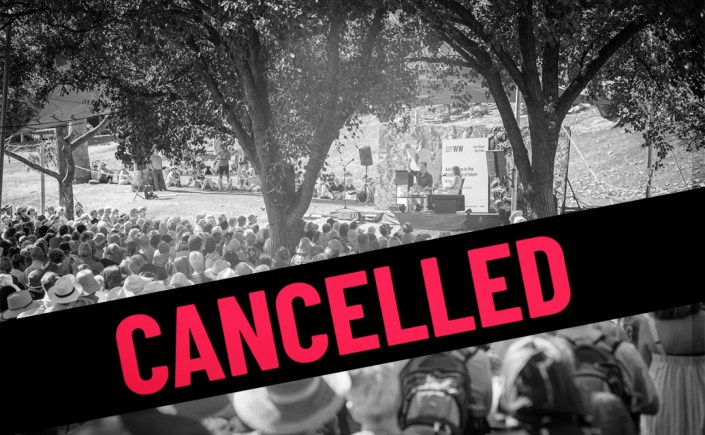
The other, whose members have been dismayed by the Australian anti-Semitism that has gone unchecked since Hamas raped and killed its way into and out of southern Israel, now fear something far more deep-seated and systemic in the copycat attack on eastern Sydney.

Traditionally, it has been that first camp that has found large causes in singular events. For a half-century, progressives have told us that curing racism and poverty would end crime. Conservatives demurred: better policing, fixing the broken windows, would deter deeper criminality.

As I observed last week, Bondi continues to prompt a diagnostic inversion: a progressive Labor government fixates on a narrow cause – guns and the access of two bad men to them – while its opponents seek answers in the broader culture, with which only a royal commission could begin to grapple.

Anti-Semitism is the oldest hatred. We need a better understanding of how its modern form has been refracted in the prism of soft multiculturalism and identity politics.

A royal commission is not guaranteed to do this. Ironically, using methodologies favoured by progressives – an appreciation for deep cultural causes – would help us grasp any connection between an intellectual phobia towards Israel and the Akrams’ violence against Jewish Australians.

Timothy J. Lynch is professor of American politics at the University of Melbourne

Standing on the high moral ground is hard work!

The most surprising thing about recent turmoil surrounding the Adelaide Writers Festival – its brief disinvitation of Australian Palestinian academic, author and activist Randa Abdel-Fattah, the rapid apology and reinstatement, the boycotts, denunciations, and counter-accusations – was these events generated so much newsprint, TV, radio, blogs, substacks, podcasts, memes and Facebook posts. It wasn’t because it’s summertime and the slow news weeks between Christmas and Australia Day. After all, there were some remarkable stories making their melancholy rounds: the Iranian bloodshed, Maduro kidnapping, Donald Trump’s Greenland fantasia … But this literary scandal held its own against all of these. 

 It was widely presented as yet another skirmish in the culture wars, a familiar clash between free speech and censorship, principle and power. But to read it that way is to miss what the episode actually illuminated. Beneath the noise lay a deeper unease about how cultural institutions confer legitimacy, how moral certainty now polices intellectual life, and how concepts such as freedom of speech, cancellation, and accountability have been stretched, moralised, and hollowed out by performative outrage. The Adelaide Writers’ Festival affair was not an aberration so much as a stress test – of institutional courage, historical understanding, and a cultural milieu increasingly unused to constraint, yet convinced of its own moral infallibility.

The brief removal of Randa Abdel-Fattah from the 2026 program – followed by an apology, a reinvitation, and institutional retreat – was framed almost instantly as a free-speech scandal, a cancellation, an act of racist silencing. In fact, it was something more revealing and more uncomfortable: a momentary hesitation by a cultural institution about whether platforming is neutral, and a swift lesson in how difficult it has become to impose even minimal constraints on those who speak in the language of moral certainty.

Cultural institutions do not merely host conversations; they legitimise them. To be invited onto a festival program is not simply to be given a microphone but to be publicly endorsed as a credible participant in civic discourse. That endorsement carries responsibilities, both for the institution and for those it platforms. One of them is to ensure that political critique does not slide into eliminationist moralism – particularly when that moralism operates in a social climate where anti-Jewish vilification is no longer theoretical but lived.

The reaction to the Adelaide Festival board’s initial decision was immediate and predictable. Abdel-Fattah accused the board of “stripping” her of humanity and agency. Fellow writers and cultural figures denounced the decision as betrayal, censorship, capitulation to dark forces. Boycotts were announced – 180 authors of all genres fled for the exits – solidarities declared, moral lines drawn. What was striking was not merely the ferocity of the response but its underlying assumption: that any boundary placed around speech—however provisional, however context-specific – was illegitimate by definition.

Their reaction demonstrates how unused some cultural actors have become to any constraint at all.

In fact, much of the subsequent withdrawal by authors – most of whom had never engaged with the specifics of Abdel-Fattah’s record or statements nor adopted a public stance with regard to one of the world’s most intractable conflicts – reflects a convergence of social, psychological, and institutional dynamics rather than principled assessment. This is tangentially corroborated by the ABC suggesting that many of its star presenters – including John Lyons, Laura Tingle and Louise Milligan – withdrew for various reasons and that actual support for Al Fattah was not one of them. However, Lyons has no love for the Israeli government and the occupation, and harbours an intense animus for “the Jewish Lobby” whilst Tingle strained credulity after December 7 when she stated that the atrocity was not Islamic terrorism.

A writer who did not pull out was Peter Goldsworthy, author, poet and general physician. He wrote in The Australian, 30 January 2026:

“Did I boycott this year’s event? Not a chance – too many writers, and too many audience members, and booksellers, had too much to lose. Again, I would have protested before my sessions, which is what I believe the other 180 writers might have been better off doing. I acknowledge they each made a big personal sacrifice, with honourable intentions, whether in the name of free speech, or solidarity with a colleague – and I know that many would have boycotted the 2024 event, too, if they had known that Friedman had effectively been cancelled. I also know that some of them, including several high-­profile names, felt an overwhelming social media pressure to withdraw – and now regret it”.

“Who could blame them?”, he asked. “The lynch mobs of social media are implacable. The Iranian-­Australian writer Shokoofeh Azar wrote in these pages of such pressures applied to her. A supporter of Palestinian rights but an opponent of Hamas, she received revolting threats because she refused to join the boycott. “You should be killed along with the Israelis,” one read.  I hope she is reinvited next year. I hope Abdel-Fattah accepts the invitation that has already been extended to her. I hope more Jewish writers are invited. I hope Tony Abbott is reinvited. And Thomas Friedman. And yes, I hope I am re­invited.”

In contemporary literary culture, silence is read as complicity, and once the loudest voices framed the decision as racist censorship, a moral script snapped into place. Authors who had no prior engagement with the issue were suddenly presented with a binary: signal solidarity or risk suspicion. Pulling out became reputational insurance, a way to declare moral correctness without actually examining the facts. In such moments, gesture substitutes for judgment; moral theatre displaces deliberation.

The same pattern was reinforced by what can only be described as delegated thinking under moral capture. Once a cause is deemed righteous, individuals stop asking what actually happened and start asking what someone like them is supposed to do. The fact that Abdel-Fattah had previously advocated silencing others – the so-called silencing of critics, journalists, and even Jewish voices – was largely irrelevant. The narrative did not permit contradiction. Nor did the historical record: Jewish creatives had been mass-doxxed, their identities and private lives circulated as punishment for wrong beliefs, while the same festival had previously cancelled Thomas Friedman, a liberal American Jewish columnist, without similar outcry. Nor was there much opposition to the ejection of Jewish singer and author Deborah Conway and her partner from the Australian cultural space. Conway wrote in today’s Australian of how in February 2024, “I was eventually apprised of a letter circulating that was demanding Perth Writers Festival drop me from its speakers schedule. Entitled “Perth Festival and Writing WA’s decision to platform Deborah Conway causes suffering for Palestinians: an open letter from Australian writers and artists”, the letter would eventually garner 500 signatures, including Abdel-Fattah’s. To Writing WA’s credit it stood by its decision to book me and tried to ameliorate the pitchfork squad by including more diverse authors in the program. That and a lot of security”.

There was also an element of low-cost virtue in the withdrawals of most of the festival’s invited guests. Pulling out of a festival is a small personal inconvenience but a large symbolic payoff: moral courage performed for peer applause, self-indulgence masquerading as ethical clarity. Complexity, nuance, and historical literacy are optional; alignment, visibility, and performative righteousness are not. Once momentum builds, hesitation or refusal appears as betrayal, and the act of withdrawal is transformed into a statement of principle rather than a reflection of principle.

This is not a defence of state censorship; it is a recognition of institutional reality. No one in this episode was silenced in any meaningful sense. No books were banned, no speech criminalised, no platforms eradicated. What was briefly withdrawn was a single form of institutional endorsement. To describe this as an assault on free speech is to inflate a contingent editorial judgment into a moral catastrophe – and to quietly assert that some voices are entitled to public platforms as a matter of right.

That inflation depends on a broader cultural habit: the conflation of consequence with persecution. “Cancellation” has become a moralised misdescription, collapsing everything from online criticism to contractual decisions into a single melodrama of victimhood. In environments shaped by moral capture, refusal is reimagined as violence, disagreement as erasure, and restraint as dehumanisation. Withdrawal is not reluctant; it is theatrical. Boycott becomes a badge of purity. Moral signalling replaces argument.

The substance of what is being defended matters here. Criticism of Israeli policy – severe, uncompromising, even angry criticism – is not antisemitic in itself. But there is a line between critique and negation, and it is a line that has increasingly been crossed with impunity. Anti-Zionism, in its eliminationist form, does not argue with Israel’s conduct; it denies Jewish collective existence altogether, treating the very fact of a Jewish state as uniquely criminal among the world’s nations.

This distinction is not merely theoretical. Abdel-Fattah’s public record – celebration of October 7, denial or inversion of Jewish suffering, rhetoric of irredeemability, chants of “intifada” involving children – pushes beyond critique into erasure. Language of liberation becomes language of elimination, moralised as justice. “Resistance by any means necessary” is not an analytical position; it is a slogan that sanitises violence while denying responsibility for its consequences.

Here historical illiteracy and political naivety quietly do their work. Concepts such as genocide, apartheid, and colonialism are deployed as totalising metaphors, severed from their historical specificity and redeployed as instruments of moral annihilation. The irony – that Holocaust inversion once central to Soviet anti-Zionism has been seamlessly absorbed into contemporary activist rhetoric – is rarely acknowledged. That this rhetoric positions Jews everywhere as implicated in an illegitimate state is treated not as a problem but as a feature.

All of this unfolds within a broader climate of intimidation and fear. Jewish creatives have been mass-doxxed, their personal details circulated as punishment for wrong beliefs. Jewish students and artists conceal their identities. Synagogues are attacked. And yet, when institutions attempt – tentatively – to draw lines around eliminationist speech, they are accused of racism and cowardice. The harm that prompts boundary-setting is rendered invisible, while the discomfort of those encountering limits is elevated into moral injury.

The inconsistency is instructive. The same Adelaide Writers Festival that briefly balked at hosting Abdel-Fattah had no difficulty cancelling Thomas Friedman, a liberal American Jewish columnist, without comparable anguish or apology. Standing on the high moral ground is evidently easier when the cancellation flows in the culturally approved direction. Accountability, it seems, is only intolerable when it is applied to one’s own side.

This is where freedom of speech, cancellation, and intellectual honesty must be rescued from their rhetorical misuse. Freedom of speech protects expression from coercive suppression; it does not guarantee institutional endorsement. Cancellation is not a synonym for criticism or refusal; it is a narrative deployed to short-circuit scrutiny. And intellectual honesty requires more than fervour – it demands a willingness to distinguish critique from negation, to acknowledge historical complexity, and to accept that one’s own moral universe may contain blind spots.

What the Adelaide affair ultimately exposes is not a failure of liberalism but the strain placed upon it by cultures of moral purity and value signalling. In such cultures, self-indulgence masquerades as courage, self-importance as solidarity, and certainty as virtue. Institutions are pressured to choose between complicity and chaos, knowing that any attempt to impose standards will be met with outrage.

Had the Adelaide Festival held its ground, the resulting mess would not have been a tragedy but a clarification. It would have affirmed that legitimacy is not cost-free, that language has consequences, and that standing on the right side of history requires more than shouting one’s righteousness into the void. If accountability is uncomfortable – if it disrupts festivals, friendships, and reputations – that may be precisely the point.

The alternative is not harmony but habituation: a slow acclimatisation to eliminationist rhetoric wrapped in the language of justice, and an intellectual culture so unused to constraint that it mistakes every limit for oppression. In that light, the mess is not a sign of failure. It is the sound of a moral ecosystem being tested – and, however briefly, resisting capture.

To step back from the drama, the Adelaide affair is less a story about one author or one festival than a mirror held up to the cultural field itself. It reveals how easily moral certainty can ossify into capture, how virtue signalling can masquerade as courage, and how intellectual honesty can be sacrificed to the allure of alignment and applause.

Institutions, in turn, are forced into an ethical calculus: to platform freely is to risk complicity; to refuse is to provoke outrage. Standing on the high moral ground – truly standing, not merely performing – is therefore hard, uncomfortable, and rarely rewarded. Yet that difficulty is precisely its value. If accountability requires a mess, a moment of collective awkwardness and public testing, then enduring it may be the only way to cultivate a cultural ecosystem in which words are not cost-free, principles are not performative, and freedom of speech coexists with responsibility. In other words, the test of courage is not in the applause it earns, but in the restraint, discernment, and historical awareness it demands.

In That Howling Infinite December 2025

Author’s Note…

This opinion piece is one of several on the the attitudes of progressives towards the Israel, Palestine and the Gaza war. The first is Moral capture, conditional empathy and the failure of shock

There are moments when public argument stops being a search for truth and becomes a test of belonging. Facts are no longer weighed so much as auditioned; empathy is rationed; moral language hardens into a badge system, issued and revoked according to rules everyone seems to know but few are willing to articulate. One learns quickly where the trip-wires are, which sympathies are permitted, which questions are suspect, and how easily tone can outweigh substance.

What interests me here is not the quarrel itself – names, borders, histories—but the habits of mind it exposes. The ease with which conviction can slide into choreography. The way intellectual honesty is praised in the abstract and punished in practice. The curious transformation of empathy from a human reflex into a conditional licence, granted only after the correct declarations have been made.

Across these pieces I circle the same uneasy terrain: the shaping of facts to fit feelings; the capture of moral language by ideological gravity; the performance of righteousness as both shield and weapon. Cultural spaces that once prided themselves on curiosity begin to resemble courts, where innocence and guilt are presumed in advance and the labour lies not in thinking, but in signalling.

This is not an argument against passion, nor a plea for bloodless neutrality. It is, rather, a meditation on how quickly moral seriousness curdles into moral certainty – and how much intellectual work is required to stand on what we like to call the high ground without mistaking altitude for clarity.

The position of In That Howling Infinite with regard to Palestine, israel and the Gaza war is neither declarative nor devotional; it is diagnostic. Inclined – by background, sensibility, and experience – to hold multiple truths in tension, to see, as the song has it, the whole of the moon. It is less interested in arriving at purity than in resisting moral monoculture and the consolations of certainty. That disposition does not claim wisdom; it claims only a refusal to outsource judgment or to accept unanimity as a proxy for truth.

On Zionism, it treats it not as a slogan but as a historical fact with moral weight: the assertion – hard-won, contingent, imperfect – that Jews are entitled to collective political existence on the same terms as other peoples. According to this definition, this blog is Zionist. It is not interested in laundering Israeli policy, still less in romanticising state power, but rejects the sleight of hand by which Israel’s existence is transformed from a political reality into a metaphysical crime. Zionism is not sacred, but its delegitimisation is revealing – because it demands from Jews what is demanded of no other nation: justification for being.

On anti-Zionism, it has been unsparing. It sees it not as “criticism of Israel” (which you regard as both legitimate and necessary) but as a categorical refusal to accept Jewish collective self-determination. What troubles it most is not its anger but its certainty: its moral absolutism, its indifference to history, its willingness to borrow the language of justice to license erasure. It is attentive to how anti-Zionism recycles older antisemitic patterns – collectivisation of guilt, inversion of victimhood, and the portrayal of Jews as uniquely malignant actors – while insisting, with studied innocence, that none of this concerns Jews at all. If not outright antisemitism, the line separating it from anti-Zionism is wafer—thin, and too often crosses over. 

The interest in moral capture is analytical rather than accusatory. It is not arguing that writers, academics, or institutions are malicious; rather, it are argues that they have become intellectually narrowed by the desire to belong to the “right side of history.” Moral capture explains how good intentions curdle into dogma, how solidarity becomes performative, and how the fear of social exile replaces the discipline of thought. It accounts for the strange phenomenon whereby intelligent people outsource their moral judgment to slogans, and experience constraint not as an intolerable injury to the self.

The Adelaide Writers’ Festival affairis seen not primarily about Randa Abdel-Fattah, nor even about free speech. It is a case study in institutional failure and cultural self-deception. The mass withdrawals are viewed not as acts of courage or principle but as gestures of affiliation – ritualised displays of virtue by people largely untouched by the substance of the dispute. What is disturbing is the asymmetry: the speed with which a festival collapsed to defend eliminationist rhetoric, and the silence that greeted the doxxing, intimidation, and quiet cancellation of Jewish writers and artists. Adelaide did not fall because standards were enforced, but because those standards were applied selectively and then disowned at the first sign of reputational discomfort.

Running through all of this is a consistent stance: a resistance to moral theatre, an impatience with historical amnesia, and a belief that intellectual honesty requires limits – on language, on fantasy, and on the indulgent belief that one’s own righteousness exempts one from consequence.

We are not asking culture to choose sides; you are asking it to recover judgment

.See in In That Howling Infinite, A Political World – Thoughts and Themes, and A Middle East Miscellany. and also: This Is What It Looks LikeYou want it darker?” … Gaza and the devil that never went away … , How the jihadi tail wags the leftist dog, The Shoah and America’s Shame – Ken Burns’ sorrowful masterpiece, and Little Sir Hugh – Old England’s Jewish Question


The Shoah and America’s Shame – Ken Burns’ sorrowful masterpiece

And high up above my eyes could clearly see
The Statue of Liberty
Sailing away to sea
And I dreamed I was flying
Paul Simon, American Tune

Ken Burns is a documentary maker and storyteller without equal. All his films are masterpieces of American history. I’ve watched much if not most of his work. They are among the most unforgettable histories I’ve ever viewed, high up in what I’d consider the pantheon of the genre, alongside The Sorrow and the Pity, The Battle of Algiers, Salvador and Waco – Terms of EngagementThe Civil War raised the bar so high that very few documentary filmmakers have reached it, with its mix of surviving photographic images (in an style that Apple now promotes as its “Ken Burns Effect”) and the mesmerizing recitation of diaries, letters home, and official communications. The West confronted his country’s enduring creation myth with an honesty balanced by empathy. The Dustbowl was breathtaking in its images, its narrative and the spoken testimonies it presented. The Vietnam War was a relentless, harrowing story told in pictures and the witness of the people ground zero of a a conflict that has been called “chaos without a compass”.

The US and the Holocaust is Burns’ latest film. It does not make for easy viewing being a searing indictment of America’s response to the catastrophe that was approaching for European Jewry. It’s a significant exposition centred on just how much evidence was accessible to Americans during that appalling time, and asks just why rescuing Jews was no priority, except for those few individuals who actually took risks to help. As Burns observed: “There is an American reckoning with this, and it had to be told. If we are an exceptional country, we have to be tough on ourselves and hold ourselves to the highest standard. We cannot encrust our story with barnacles or sanitise our history into a feel-good story”. As historian Rebecca Erbelding suggests, “There is no real perception in the 1930s that America is a force for good in the world or that we should be involved in the world at all. There is no sense among the American people, among the international community, that it is anyone else’s business what is happening in your own country”. There is indeed a disconnect between America’s self regard as the land of the free and the “light on the hill”, and the cold reality – and realpolitik – of its actual record at home and abroad. There is a none too subtle irony in the titles Burns has chosen for each two hour episode, drawn from extracts from the poem by Emily Lazarus that adorns the base of The Statue of Liberty (see below).

Burns work reminds us that historical memory in America, Europe, and indeed Australia is often like a sieve. Give it a good shake and only the big chunks are left. The story of the US’ public opinion and government policy regarding the worsening plight of European Jewry during the nineteen thirties and the a second World War is not one of those. When I posted an article about the film on Facebook, many Americans commented that they were unaware of their country’s disregard and outright obstruction. Burns has opened a crack that has let the light in.  

The quotations cited above are from a review published recently in the Weekend Australian which I have republished below – it is an excellent and quite detailed account of the issues and the incidents featured in this sorry tale, and I cannot better it. But I will note one distinctive feature of Ken Burns’ documentaries – his skill at recounting unfolding stories which he interweaves through the ongoing narrative, drawing viewers inexorably in and acquainting them with the characters, their hopes and their fears, and ultimately, their fates be these tragic – alas. in the most part – or fortunate.

In The Vietnam War, I followed the journey of an eager and patriotic young soldier, Denton “Mogie” Crocker, as he roved out from mall town USA to the battlefields of Indochina. I recount it. in The Ballad of Denton Crocker – a Vietnam elegy. In America and the Holocaust, there is the story of Anne Frank’s family as they sought asylum in the USA from the moment the the Nazi regime started to come down hard on Germany’s Jewish community. We all know how that ended for Anne and her sister. There is also the saga of what Hollywood called “the voyage of the damned”, the subject of an overwrought and overacted feature film, which nevertheless was based upon the actual voyage of the SS St.Louis which departed Hamburg with nearly a thousand desperate but hopeful travellers, but was refused entry into American and Canadian ports, and returned eventfully to Rotterdam where Britain, Belgium, France and the Netherlands gave them shelter. The latter three were conquered by the Wehrmacht in 1940, with harrowing consequences for those passengers who settled there, but a half of the St. Louis’ human cargo survived the war, predominantly those who were permitted to settle in Britain. 

On a personal note, whilst I am myself of Irish descent, Catholic and Protestant in equal measure on each side, my wife’s father’s family were Jews from eastern Germany and Czechoslovakia and experienced the same travails as those described in Burns’ film. Many, including her father’s elderly parents, perished in the death camps, and are memorialised the Yad Vashem shrine of remembrance in Jerusalem – which I have visited many times. Others managed to leave Germany, including her father, who settled in London, where she was born, and her uncle who a  lawyer who left Germany in 1933 after the promulgation of the infamous Nuremberg Laws, who settled in England and  and then made Aliyah to Palestine, ending his days in Haifa, in an independent Israel. Others headed westwards to Latin America in the hope of securing entry to the US from there.

Epilogue. Antisemitism, the devil that never dies

It has been said, with reason, that antisemitism is the devil that never dies. And yet, is antisemitism a unique and distinct form of racism, or a subset of a wider fear and loathing insofar as people who dislike Jews rarely dislike only Jews?

Fear of “the other” is a default position of our species wherein preconceptions, prejudice and politics intertwine – often side by side with ignorance and opportunism. it is no coincidence that what is regarded as a dangerous rise in antisemitism in Europe, among the extreme left as much as the extreme right, is being accompanied by an increase in Islamophobia, in racism against Roma people, and indeed, in prejudice in general, with an increase in hate-speech and incitement in the media and online, and hate-crimes.

We are seeing once again the rise of nationalism and populism, of isolationism and protectionism, of atavistic nativism and tribalism, of demagogic leaders, and of political movements wherein supporting your own kind supplants notions of equality and tolerance, and the acceptance of difference – the keystones of multicultural societies. It is as if people atomized, marginalized and disenfranchised by globalization, left behind by technological, social and cultural change, and marginalized by widening economic inequality, are, paradoxically, empowered, energized, and mobilized by social media echo-chambers, opportunistic politicians, and charismatic charlatans who assure them that payback time is at hand. These days, people want to build walls instead of bridges to hold back the perceived barbarians at the gates.

© Paul Hemphill 2023 All rights reserved

From Little Sir Hugh – Old England’s Jewish Question

Also, on American history and politics, My country, ’tis of thee- on matters American

The New Colossus

     Emily Lazarus

Not like the brazen giant of Greek fame,
With conquering limbs astride from land to land;
Here at our sea-washed, sunset gates shall stand
A mighty woman with a torch, whose flame
Is the imprisoned lightning, and her name
Mother of Exiles. From her beacon-hand
Glows world-wide welcome; her mild eyes command
The air-bridged harbor that twin cities frame.
“Keep, ancient lands, your storied pomp!” cries she
With silent lips. “Give me your tired, your poor,
Your huddled masses yearning to breathe free,
The wretched refuse of your teeming shore.
Send these, the homeless, tempest-tost to me,
I lift my lamp beside the golden door!”

Ken Burns’ “The US and the Holocaust” tells of a shameful past

Graeme Blundell, The Weekend Australian, 11th March 2023

A scene from The US and the Holocaust
The latest documentary series from Ken Burns’s Florentine Films, The US and the Holocaust, is inspired in part by the US Memorial Museum’s “America and the Holocaust” exhibition. The series was developed with the assistance of the museum’s historians (many of whom appear in it) and its extensive archives.

It’s a significant exposition centred on just how much evidence was accessible to Americans during that appalling time, and asks just why rescuing Jews was no priority, except for those few individuals who took the risk to help.

For Burns, the series is the most important work of his professional career.

“There is an American reckoning with this, and it had to be told,” he says. “If we are an exceptional country, we have to be tough on ourselves and hold ourselves to the highest standard. We cannot encrust our story with barnacles or sanitise our history into a feel-good story.”

The US and the Holocaust was originally supposed to be released in 2023 but Burns accelerated production by several months, “much to the consternation of my colleagues, just because I felt the urgency that we needed to be part of a conversation”. That conversation for Burns and his colleagues is about “the fragility of democracies” and demonstrating how, “we’re obligated then to not close our eyes and pretend this is some comfortable thing in the past that doesn’t rhyme with the present”.

The filmmaker is fond of quoting Mark Twain’s, “History doesn’t repeat itself but it often rhymes,” and like all his films he wants this one to rhyme with the present.

“We remind people that it’s important that these impulses are not relegated to a past historical event,” Burns says. “It’s important to understand the fragility of our institutions and the fragility of our civilised impulses.”

As Holocaust historian Deborah Lipstadt, a significant voice in Burns’s documentary, says with some alarm in the series, “The time to stop a genocide is before it starts”.

And Peter Hayes, also a revered historian, says, underling the subtext of the documentary, “exclusion of people, and shutting them out, has been as American as apple pie”.

The three-part, six-hour series is directed and produced by Burns, Lynn Novick and Sarah Botstein, two of his long-term collaborators, and beautifully written by another Burns regular, Geoffrey Ward. As always Burns manages to find major actors to play the parts of his central characters in voice over, including Liam Neeson, Matthew Rhys, Paul Giamatti, Meryl Streep, Werner Herzog, Elliott Gould, Joe Morton and Hope Davis.

And like so many of Burns’s films it’s narrated in that mesmerising way by Peter Coyote, who Burns calls “God’s stenographer”. Coyote is able to voice such complex ideas with authority and empathy, often with a kind of beguiling liturgical intonation.

Stylistically recognisable and cinematically audacious, Burns’s memorable documentaries (many of which he has co-produced with Lynn Novick) include The Civil War, Baseball, Jazz, The War, The National Parks, The Dust Bowl, Prohibition, Country Music and more recently Hemingway. He constructs a compelling narrative by using almost novelistic techniques, imaginatively selecting archival material, photographed in his now famous way, immersing us in photographs, developing characters and arranging details around their stories.

The filmmakers present their story in this new series across three overflowing episodes in six challenging, engrossing hours: the first The Golden Door (Beginnings-1938); the second Yearning to Breathe Free (1938-1942); and the final The Homeless, Tempest-Tossed (1941-).

There are two parallel storylines that continuously reverberate off each other – the American side details the history of American anti-Semitism, the notion of “race betterment” and the evolving immigration policy; the German narrative arc deals with the way hatred of the Jews sprouted over time, how the Nazis pursued the end of Jewish intellectualism, and of course the process of their extermination.

The first episode covers the period from roughly the end of the 19th century to the late 1930s, a historical background that delivers context and perspective for the complex narrative that follows.

A scene from The US and the Holocaust

It’s broken by a short pre-titles sequence that involves new archival material from the centre of Frankfurt in 1933 of Otto Frank, father of Anne, Hitler having been in power for some months. Otto is desperate to get his family to America, but in the absence of an asylum policy, Jews seeking to escape Nazi persecution in Europe had to go through a protracted emigration procedure. It’s an unanticipated and surprising piece of the Franks’s story highlighting an American connection to the Holocaust.

(It’s a lovely, if distressing, example of the way Burns likes compelling personal narrative to wrap his ideas around, finding “characters” who become involved as events dictate.)

There was limited willingness to accept Jewish refugees. America did not want them, as Coyote says. Frank would continue to apply when they moved to Amsterdam but his immigration visa application to the American consulate in Rotterdam was never processed.

As the filmmakers later show so tragically, existence for European Jews became a deadly, exhausting pursuit of passports, identification cards, transit visas, and affidavits. As the journalist Dorothy Thompson, who features in the series, said, “For thousands and thousands of people a piece of paper with a stamp on it is the difference between life and death.”

We then cut to a beautiful period film sequence of the Statue of Liberty, Mother of Exiles, surrounded by slowly floating clouds, and a beautiful reading of the famous poem by 19th-century poet Emma Lazarus printed on a bronze plaque mounted inside the lower level of the pedestal:

Give me your tired, your poor,

Your huddled masses yearning to breathe free …,

I lift my lamp beside the golden door!

But the Golden Door, which gives the title for the first episode, had begun to close. The filmmakers take us back through history at quotas and the favouring of northerners over immigrants from southern or eastern Europe. Asians were largely locked out by the time of the Chinese Exclusion Act of 1882.

A so-called “racial abyss” was feared by Americans as the new century began; white people feared they would be outbred by the newcomers and their offspring. The white Protestant majority at the end of 19th century was certain that unless things changed they were about to be replaced.

A part meeting with a sign reading "Kauft nicht bei Juden"- Don't buy from Jews.
A US Nazi Party meeting with a sign reading “Kauft nicht bei Juden”- Don’t buy from Jews.

A “mordant sentimentalism” was blamed by some for the US becoming “a sanctuary for the oppressed”, and “suicidal ethics” were leading to the extermination of the white people.

Helen Keller called it “cowardly sentimentalism” and Henry Ford, the series reveals, blamed Jews “for everything from Lincoln’s assassination to the change he thought he detected in his favourite candy bar”. He even published a hugely successful newspaper to triumphantly publish anti-Semitic harangues.

Jews were dismissed as “uncouth Asiatics” and the hogwash “science” of eugenics, the theory that humans can be improved through selective breeding of populations, was promulgated by conservationist Madison Grant’s The Passing of the Great Race. The filmmakers show how it evolved and thrived in response to America’s changing demographics.

It was a concept taken up by Hitler who also admired America’s expansion across the continent from east to west, brushing aside those who were already there. This was manifest destiny. “The immense inner strength of the US came from the ruthless but necessary act of murdering native people and herding the rest into cages,” he wrote. His dream was of territorial expansion and Germany would in time conquer the wild east of Europe he believed. “Our Mississippi,” he said, “must be the Volga”.

Jews, scapegoats for centuries, watched as anti-Semitism was normalised in the US, in and out of Washington. Burns and his colleagues closely follow the complex manoeuvrings of President Roosevelt as he coped with the anti-immigrant xenophobiaas well as a wilful, and for many, all-consuming obsession with white supremacy.

As historian Rebecca Erbelding suggests, “There is no real perception in the 1930s that America is a force for good in the world or that we should be involved in the world at all. There is no sense among the American people, among the international community, that it is anyone else’s business what is happening in your own country”.

The series unfolds with Burns’s typical elegance: the stylised organisation of personal anecdote, Coyote’s sonorous narration, erudite, subdued commentary from historians and some ageing witnesses to atrocities, an elegiac soundtrack from Johnny Gandelsman, and gracefully realised visual documentation.

Much of the German archival footage is not unfamiliar but some new sequences horrify and disturb deeply. SS soldiers parade in the streets, chanting “When Jewish blood spurts off a knife, everything will be all right”. And the midnight book burnings on May 10, 1933, are a frenzied, phantasmagoria of volumes hurled into bonfires, including the works of Jewish authors like Albert Einstein and Sigmund Freud as well as blacklisted American authors such as Ernest Hemingway and Helen Keller.

The series is an extraordinary piece of work, resonant and at times frightening. As historian Nell Irvin Painter says, “Part of this nation’s mythology is that we’re good people. We are a democracy, and in our better moments we are very good people. But that’s not all there is to the story”.

The US and the Holocaust is streaming on SBS On Demand.

Actor, director, producer and writer, Graeme Blundell has been associated with many pivotal moments in Australian theatre, film and television. He has directed over 100 plays, acted in about the same number, appeared in more than 40 films and hundreds of hours of television. He is also a prolific reporter, and is the national television critic for The Australian.