Blood and Brick … a world of walls

When our gallant Norman foes
Made our merry land their own,
And the Saxons from the Conqueror were flying,
At his bidding it arose in its panoply of stone,
A sentinel unliving and undying.
Insensible, I trow, as a sentinel should be,
Though a queen to save her head should come a-suing,
There’s a legend on its brow that is eloquent to me,
And it tells of duty done and duty doing.
The screw may twist and the rack may turn,
And men may bleed and men may burn,
O’er London town and its golden hoard
I keep my silent watch and ward!
WS Gilbert and Arthur Sullivan, The Yeomen of the Guard

I read British historian David Fry’s informative Walls: a history of civilisation in blood and brick a few years ago.

We’re not talking here of idioms, metaphors and analogies, like “facing the wall”, “up against the wall”, “another brick in the wall” and the anodyne “blank wall”. It’s all about imposing and impressive, massive and deliberately built structures designed to protect, contain or separate.

The breaching of Israel’s formidable high-tech wall which ostensibly sealed off the Palestinian enclave of Gaza on October 7th 2023 (more on that later) brought me back to my earlier notes. I’d gathered a few excellent reviews and random thoughts thereon, and I resolved to complete this article. The reviews republished below are informative and comprehensive, and well-worth reading.

I offer my own thought on the subject by way of an introduction. Neither they or I mention of a certain iconic song by Pink Floyd (I “almost mentioned the war” above) but I couldn’t resist opening with what many would call “the wall of walls”. It’s not Hadrian’s Wall, which has fascinated me since our first visit in 2015, when we stood atop the windswept knoll that is Housesteads Roman Fort on a freezing May morning. Nor is the Great Wall of China, iconic and impressive as it is – though I’m sure that if it had existed, you’d’ve been able to see this too from space. By the way, the opening quotation is a paean to the Tower of London, which, “if walls could talk” would have a great tale to tell.

The author at Housesteads Fort on Hadrian’s Wall

The view from Housesteads Fort, Hadrian’s Wal

The Wall has stood through it all …

I am the watcher on the wall. I am the shield that guards the realms of men. I pledge my life and honor to the Night’s Watch, for this night and all the nights to come.
The Oath of The Night’s Watch, Game of Thrones

George RR Martin, the author of the Game of Thrones epic has said that his Ice Wall separating the northern wintry waste with its nomads and its demons from the settled and temperate Westeros with its castles and cities, its palaces and slums, and destitute and the depraved, was inspired by a visit to Hadrian’s Wall – only he built it much longer and much, much higher. “We walked along the top of the wall just as the sun was going down. It was the fall. I stood there and looked out over the hills of Scotland and wondered what it would be like to be a Roman centurion … covered in furs and not knowing what would be coming out of the north at you” However, the author adds thats: Hadrian’s Wall is impressive, but it’s not really tall. A good ladder would be all you need to scramble right on over it. When you’re doing fantasy, it has to be bigger than in real life”.

We built a wall once …

A big one. Separating the backyard of our house from Camden Street, Newtown, Sydney. It was well over six foot high, rendered and scored to look “authentic” and entered thought a gate set into an ornate arch moulded to replicate the century-old portico of our front door. To build a wall that high, we had to take Council to the Land and Environment Court. We left that house over two decades ago. Our old house has changed hands several times since, but when the present owners wanted to redevelop the back end of that one-time corner shop that we once called home, Council mandated that the wall and the gateway had to be preserved because it was “heritage”. Such is the power and presence of walls.

Which brings us to the punchline. We built the wall for privacy and for security. But one night, while we were socialising upstairs, person or persons unknown scaled our wall, entered our house and swiped the handbags on the kitchen table. When the police came to investigate, a very agile constable shimmied up the wall and sat atop. So much for our wall. We ought to have laid broken glass or razor wire!

And that is the thing about walls:

Walls work … until they don’t 

We know that the Ice Wall protected by those Watchers of our opening quote fell to the zombie ice dragon Viserion and the dead. Drogon, the last of Queen Daenerys Targaryen’s “children” shattered the walls of Kings Landing, the decadent yet depressing capital of Westeros, and incinerated its unfortunate townsfolk.

The dead watch Visarion do his thing

Hadrian’s Wall fell into disrepair – it was always permeable, and in time, had served its purpose – which was perhaps as much about public relations as protection. Archeologist Terri Madenholme wrote in Haaretz: “Despite itself having a culture of violence, Rome aimed to project an image of a nation of the civilized, and what better way than having it monumentalized in stone? When Hadrian set to build the 73-miles-long wall drawing the border between Roman Britannia and the unconquered Caledonia, the message became even more clear: this is us, and that’s them. Hadrian’s Wall was much more than just a border control, keeping the Scots in check: it was a monument to Roman supremacy, an attempt to separate the civilized world from the savages”.

“He set out for Britain”, Hadrian’s historian tells us, “and there he put right many abuses and was the first to build a wall 80 miles long [Roman miles] to separate the barbarians and the Romans.

The Great Wall of China has in many places withstood the ravages of time, which says something about the skills of the workers who built it and the quality of its brickage. It had only been breached by Genghis Khan and the Manchus – until August 24 2023 when two Chinese construction workers in Shanxi province, were looking for a shortcut and drove heavy machinery through it, causing what authorities described as “irreversible damage” when they used an excavator to widen a gap in the wall.

The hole in the wall

The famous Theodosian Walls protected Constantinople since the foundation of the new capital of the Roman Empire by Emperor Constantine in 324 until they were breached by the Ottoman sultan Mehmet the Conqueror in 1453. He’d brought along a huge army and a bloody big gun. [The event is imaginatively recreated in Cloud Cuckoo Land  the 2021 novel by Pulitzer prize-winning author Anthony Doerr] Istanbul remained the capital of then Ottoman Empire for over half a millennium, and though dilapidated and discontinuous, they endure still. We have walked around them.

During the Cold War, Soviet controlled East Germany built its Berlin Wall virtually overnight to halt the haemorrhage of its population to the west and freedom, and it endured for thirty years with all its concrete, wire, guards, guns and deaths, until it fell, over thirty years ago, virtually overnight. And rejoicing Germans demolished it for souvenirs.

In Belfast, the capital of Northern Ireland, there are imposing walls that have actually stood longer than that in Berlin. Now called the the Peace Walls, they were first erected by the British army in 1969. They were temporary affairs of corrugated iron, as the inter-community conflict solidified and ossified, they were soon  extended and upgraded to bricks, steel and concrete. The walls separated predominantly Protestant loyalist and Catholic nationalist enclaves throughout The Troubles, the three decades of bombings, murders, riots and civil-rights protests.

Though not all linked, 38 kilometres of walls still slice through the city, outliving the conflict that engendered them. Only some short sections have been removed – partly they’ve become a tourist attraction, while the communities that live closest to them say they still provide a sense of security – though tensions may have eased, people are easily divided and it’s much harder to bring them together again. In the Shankill and Falls roads area of western Belfast, which were particularly notorious during The Troubles, the wall is splattered with political messaging, which makes it easy to know which side you’re on. One side has portraits of British soldiers and the queen and kerbs are painted red, white and blue. On the other the colours of the Irish flag predominate, framing portraits of Republican heroes and hunger-strike martyrs.

Belfast’s Peace Wall

Walls or fortified fences are all the fashion in the Middle East. Egypt has built one on its border with Libya – and also with Gaza. Saudi Arabia has put one between it a Yemen and also, one with Iraq. Kuwait has one too with its former invader. In the Maghreb, Morocco constructed the longest wall in the world dividing the former colony of Spanish Sahara from its independence fighters in their Algerian sanctuaries; and yet, the modern world’s longest enduring independence struggle continues.

The Israelis built the Separation Wall to halt the bombings of buses and bistros in Jerusalem and Tel Aviv during the Second Intifada and have maintained it as an instrument of security and control and of divisive national politics. And on the whole, it has worked, except that it has entrenched the isolation from each other of the Israeli and Palestinian communities, and increased in many, a lack of familiarity and empathy and a mutual fear and loathing that does not auger well for peaceful coexistence.

If you walk atop the Ottoman Walls that still circle the Old City of Jerusalem, you can see it and the Haram Al Sharif, the Dome of the Rock, from where the walls pass Mount Zion. It snakes away in the distance through the arid landscape and white sandstone suburbs like an incongruous grey scar. We’ve crossed through the wall and IDF and Border Police checkpoints many times in our travels through Israel and Palestine. On one journey, a cross-country drive across the Judean desert from the satellite city of Ma’ale Adumin to the ancient and amazing monastery of Mar Saba, we passed through fields where Bedouin women harvested wild wheat with sickles as their forebears did of old and actually walked across the footings of a section of the wall that has been abandoned when the high court determined that its construction would prevent the Bedouin from traversing their traditional grazing grounds.

In his final book, Night of Power, published posthumously in 2024, the late foreign correspondent Robert Fisk provides a dramatic description of this “immense fortress wall” which snakes “firstly around Jerusalem but then north and south of the city as far as 12 miles deep into Palestine territory, cutting and escarping its way over the landscape to embrace most of the Jewish colonies … It did deter suicide bombers, but it was also gobbled up more Arab land. In places it is 26 feet or twice the height of the Berlin wall. Ditches, barbed wire, patrol roads and reinforced concrete watchtowers completed this grim travesty of peace. But as the wall grew to 440 miles in length, journalists clung to the language of ‘normalcy’ a ‘barrier’ after all surely is just a pole across the road, at most a police checkpoint, while a ‘fence’ something we might find between gardens or neighbouring fields. So why would we be surprised when Italian Prime Minister Silvio Berlisconi, traveling through the massive obstruction outside Bethlehem in February 2010 said that he did not notice it. But visitors to Jerusalem are struck by the wall’s surpassing gray ugliness. Its immensity dwarfed the landscape of low hills and Palestinian villages and crudely humiliated beauty of the original Ottoman walls Churches mosques and synagogues .. Ultimately the wall was found to have put nearly 15% of West Bank land on the Israeli side and disrupted the lives of a third of the Palestine population. It would, the UN discovered, entrap 274,000 Palestinians in enclaves and cut off another 400,000 from their fields, jobs, schools and hospitals”.

Leftwing Israeli journalist Amira Haas, who lives in the West Bank, takes Fisk on a tour of the wall:

“Towering 26 feet above us, stern, monstrous in its determination, coiling and snaking between the apartment blocks and skulking in wadis and turning back on itself until you have two walls, one after the other. You shake your head a moment – when suddenly through some miscalculation surely – there is no wall at all but a shopping street or a bare hillside of scrub and rock. And then the splash of red, sloping rooves and pools and trees of the colonies and yes, more walks and barbed wire fences and yet bigger walls. And then, once more the beast itself, guardian of Israel’s colonies: the Wall.

The Separation Wall between Jerusalem and Ramallah. Paul Hemphill 2016

Israel also built a forty-mile so-called smart fence around the Hamas-controlled enclave of Gaza, decked out with cameras, radars, and sensors. It was meant to both stop large-scale Hamas attacks and provide warning if Hamas was gathering its forces. This failed disastrously on October 7th 2023.

Those defenses, of course, did work for many years. The Hamas, which used to send numerous suicide bombers into Israel, was largely unable to penetrate the border from Gaza, in large part due to the fence. In fact, Hamas had to plan for several years and conduct a massive operation to overcome the defenses – not an easy task and one that should have been detected and disrupted by Israeli intelligence.

The Hamas’ assault on the black Shabbat demonstrated chillingly that defenses by themselves are never sufficient. They must be backed up by intelligence and a rapid-response capability, making any breach less consequential for Israel and potentially disastrous for Hamas. Indeed, had Israel been able to scramble a small number of attack helicopters to Gaza quickly as the assault force was breaching the fence, Hamas would have suffered huge losses.

Yes, walls work, until, for one reason or another, they don’t …

Aida Refugee Camp outside  Bethlehem, Paul Hemphill 2016

An illusion of safety

I will ask more of you than any khal has ever asked of his khalassar! Will you ride the wooden horses across the black salt sea? Will you kill my enemies in their iron suits and tear down their stone houses? Will you give me the Seven Kingdoms, the gift Khal Drogo promised me before the Mother of Mountains? Are you with me? Now… and always!”  
Danearys Targaryen, Game of Thrones

And they were, and they did, with the help, of course, of dragons.

While walls are destined to fall one day, people like walls. They project a language of security – but their construction stems from a sense of insecurity, an intense fear of losing what you have.

In an early post, The Twilight of the Equine Gods, we talked of the horsemen of the plains and steppes who descended violently upon the sedentary lands of Europe the Middle East and China. The folk on the pointy end of their depredations built walls to keep them out.

But while people feel safe behind walls, their impregnability is often illusory.

Walls have gates and these permit ordinary, decent folk to enter and exit – to work, to trade, to parlay, to mingle, communicate and court. The forts along Hadrian’s Wall tell the story of such coexistence and cohabitation. But some people don’t bother with gates. Thieves can scale them and climb over them. Enemies too – they clamber over them, dig under them, mine them and bring them tumbling down, or by subterfuge, they can suborn, beguile or bribe a turncoat or waverer to open the gates or reveal a secret entrance. The ancient Greeks bearing their dubious gifts brought down “the topless towers of Illium” with a ruse that launched a thousand analogies and the famous aphorism “beware Greeks bearing gifts”. The Greeks have never lived that one down.

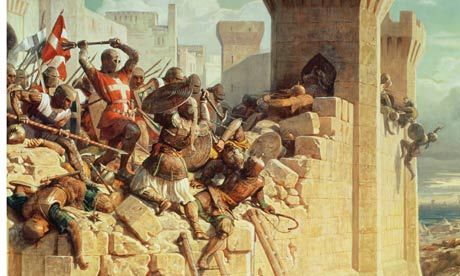
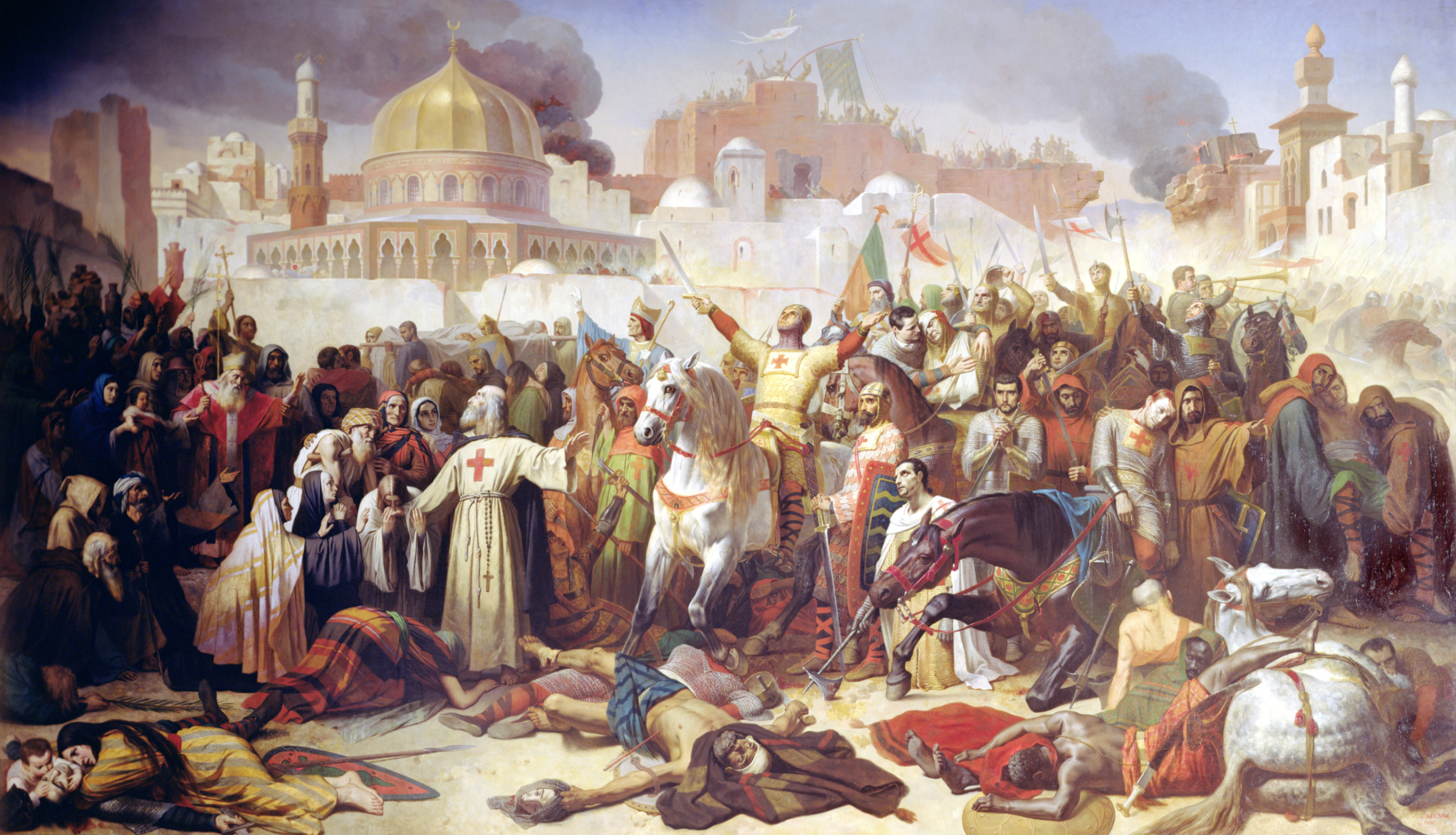
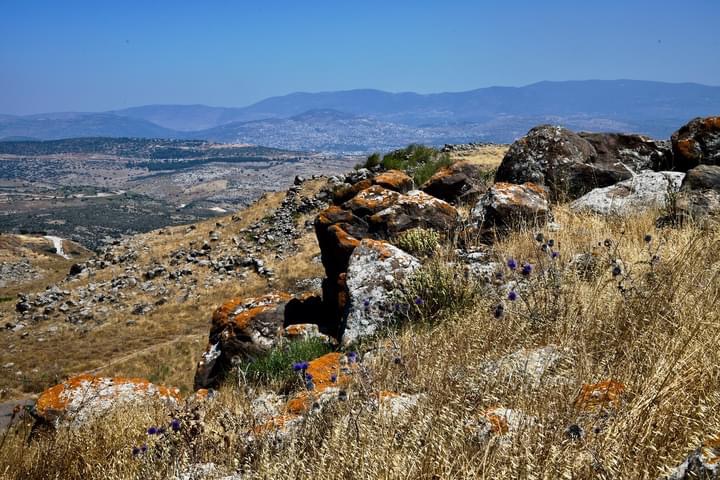
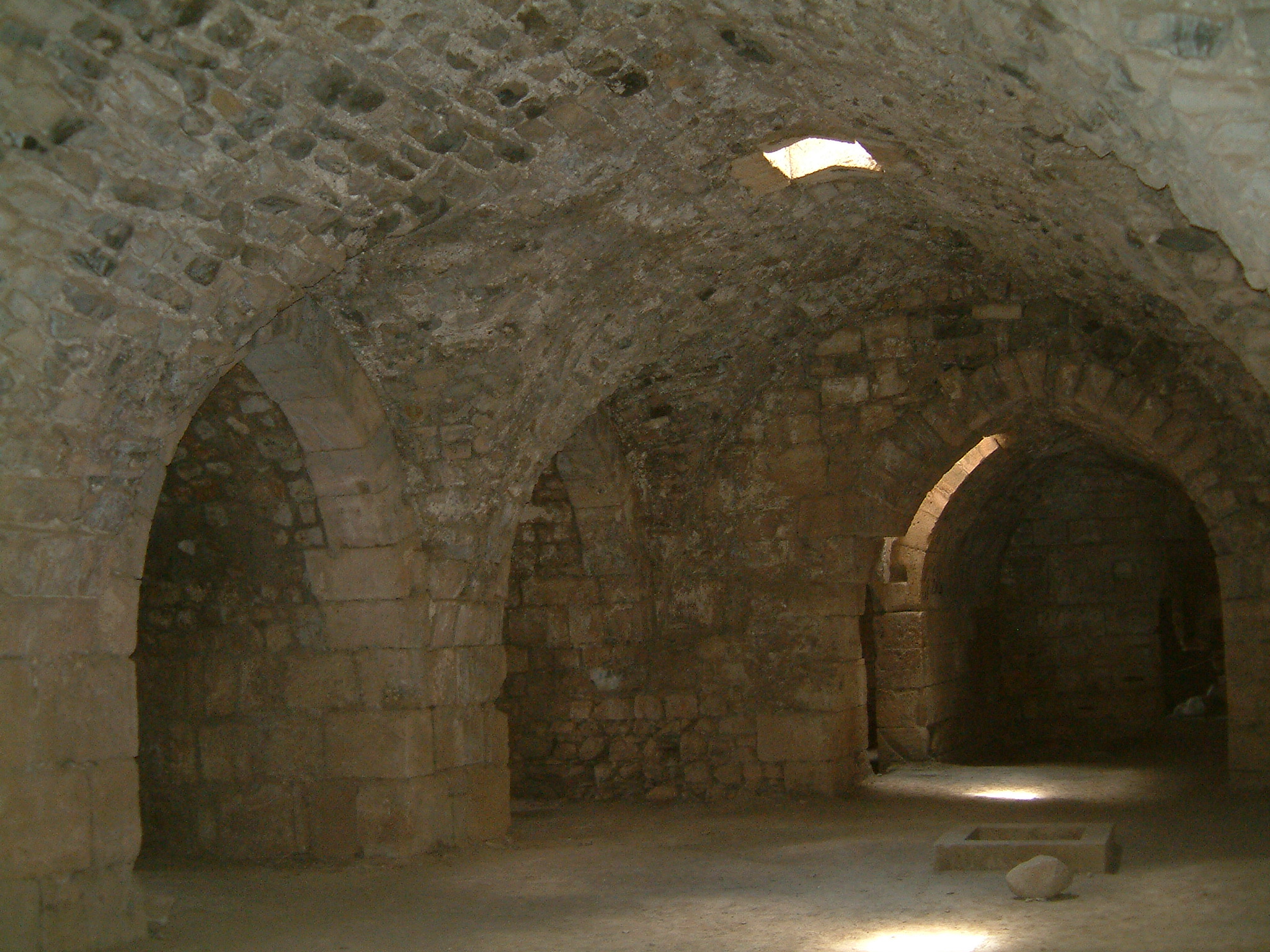
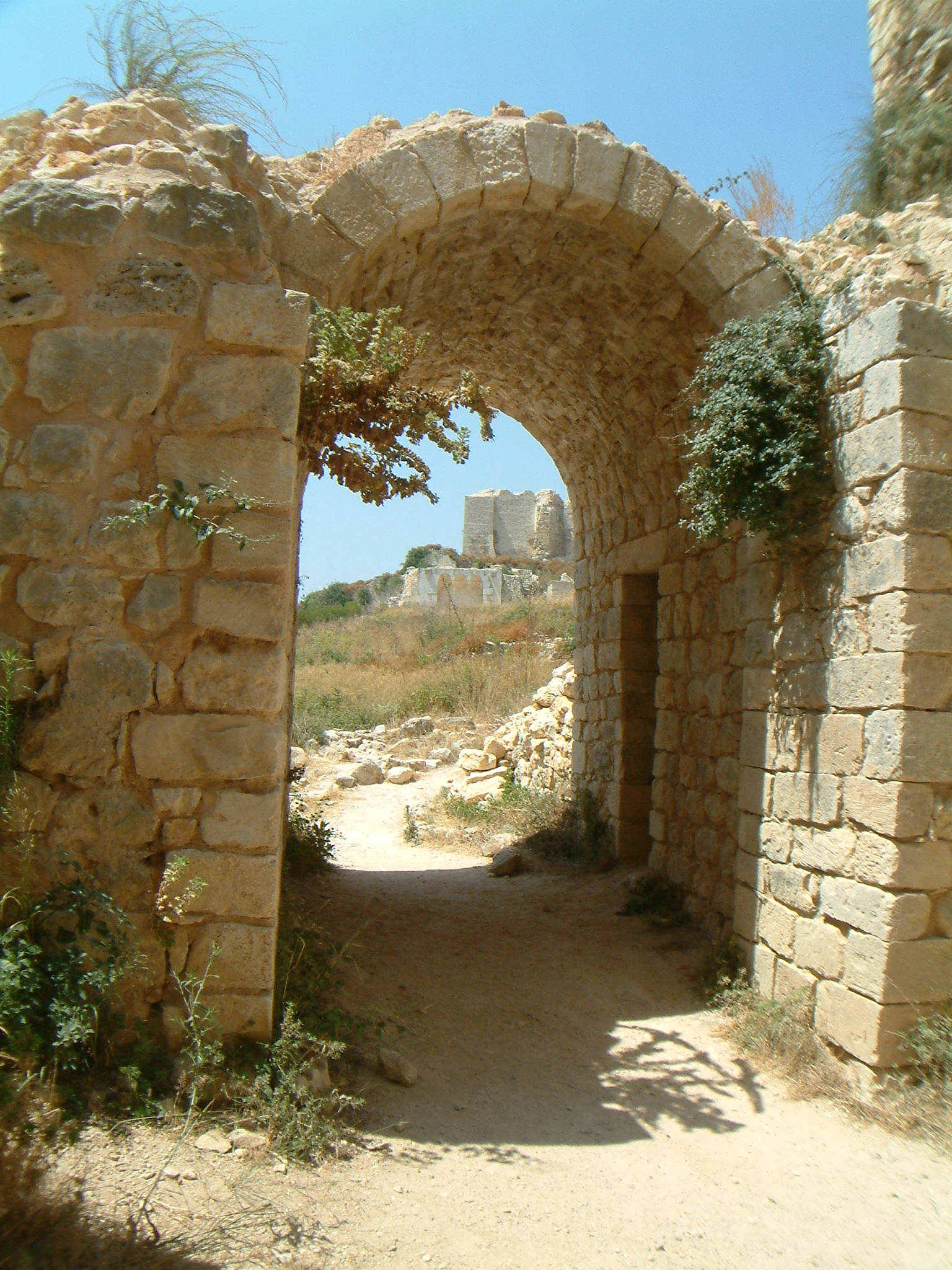
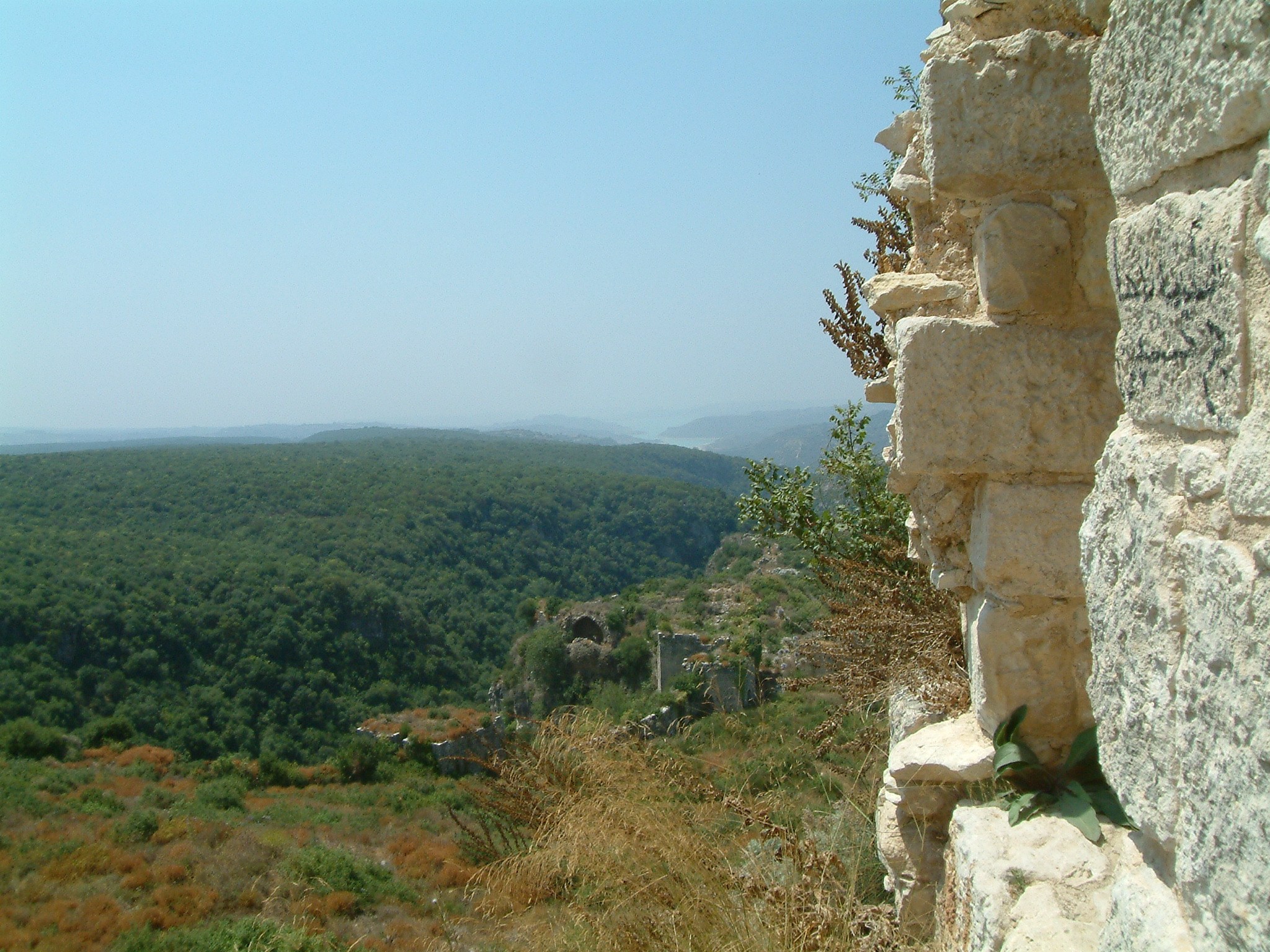
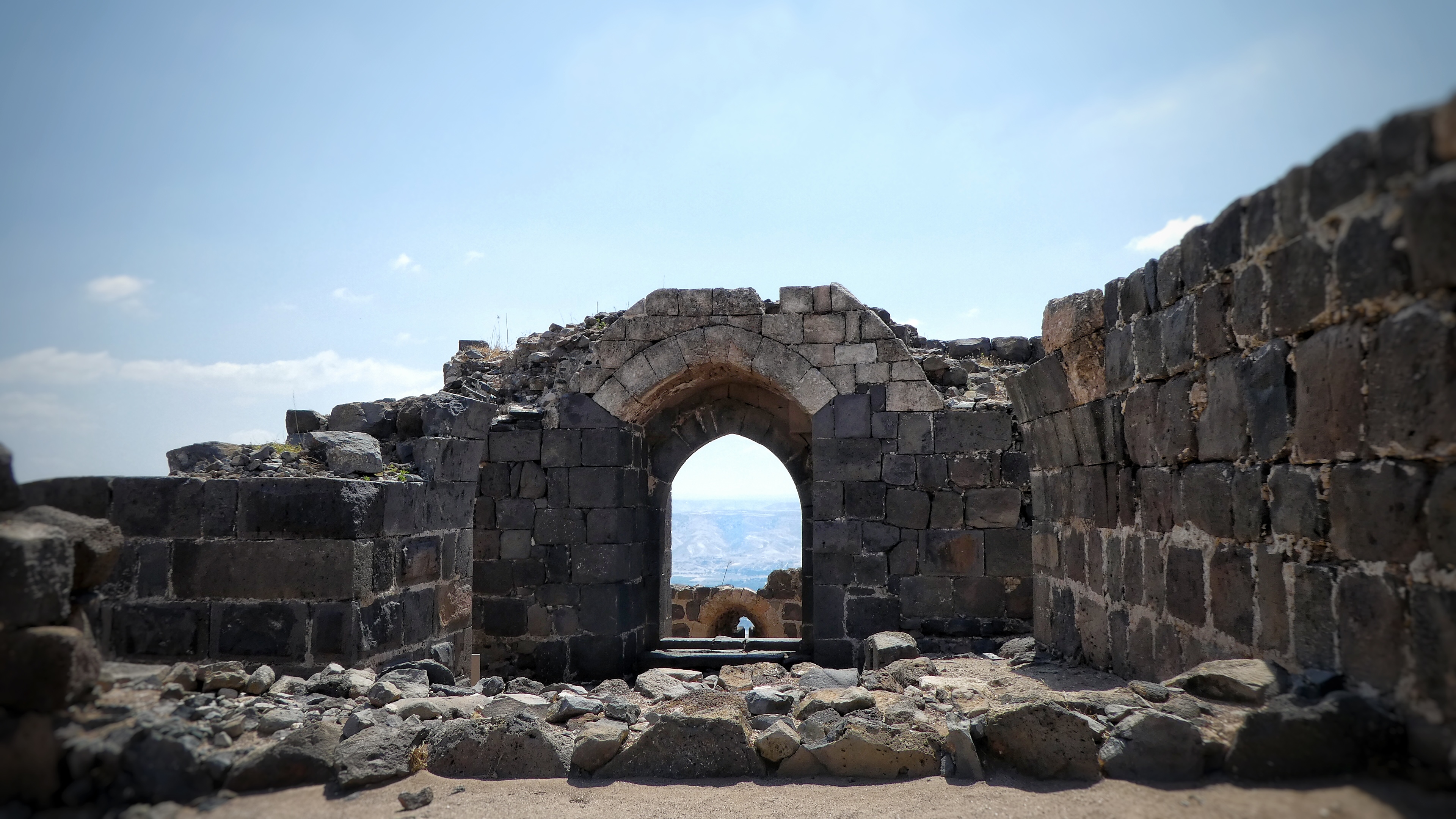
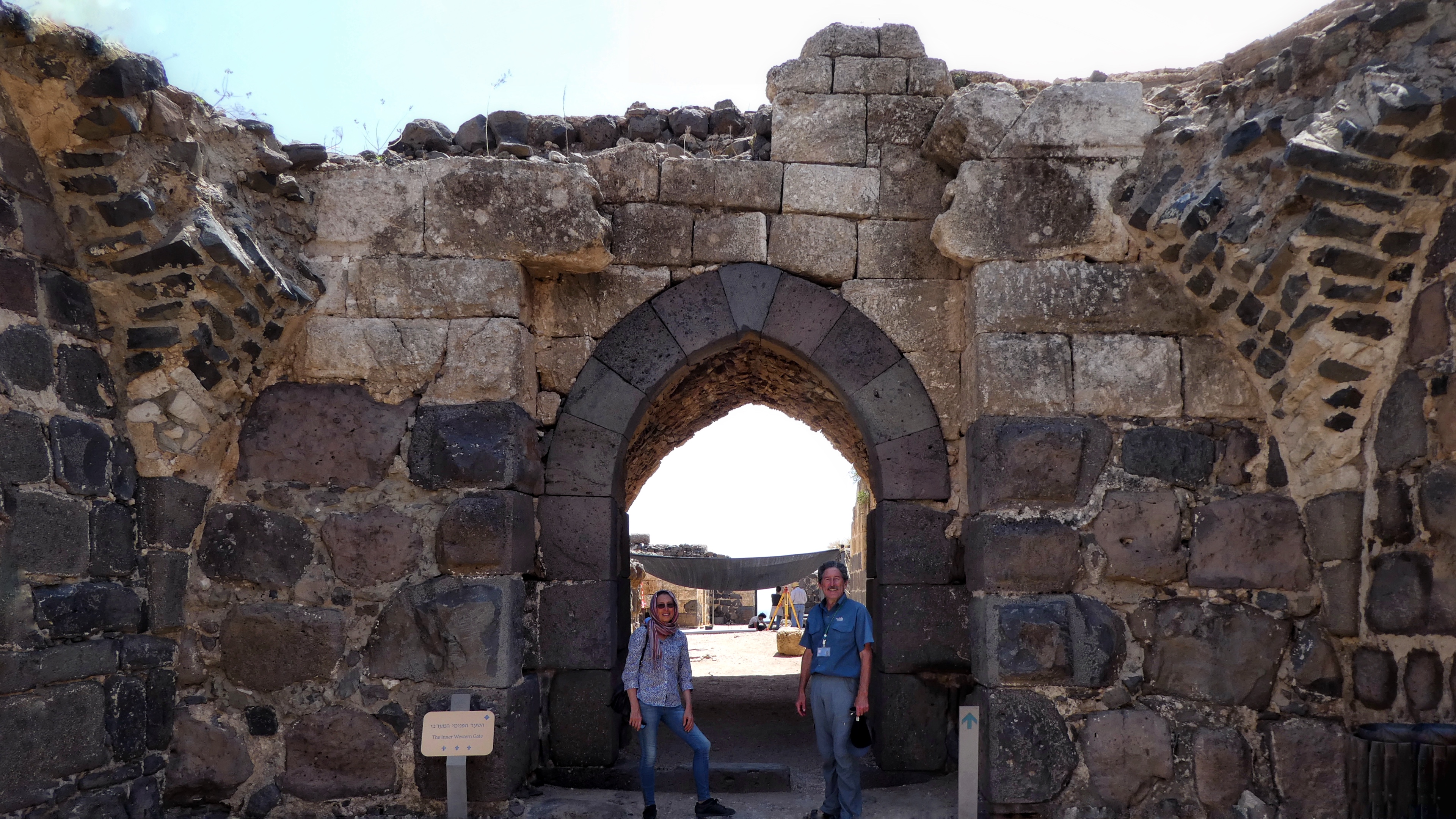
I’ve had the privilege and pleasure of walking the corridors and standing on battlements of some of those great crusader castles of Syria and Palestine – of Qala’t al Husn, known to the world as Krak de Chevaliers, of Qala’t Salahuddin in Syria’s Alawite heartland, and Belvoir in Israel. These fell not by storm but by subterfuge – plants, turncoats or bribes By geological happenstance, these three significant citadels were built above the great Rift Valley that runs from Africa to Turkey and from their still imposing ramparts, the traveller can look out over several countries and appreciate the strategic importance of these man-made megaliths.

Krak de Chevaliers, Husn, near Homs, Syria. Paul Hemphill 2006

Krak de Chevaliers,Paul Hemphill 2006

The Golden Gate, Jerusalem, from Gethsemene. Paul Hemphill 2016

A world of walls

And the great and winding wall between us
Seem to copy the lines of your face
Bruce Cockburn, Embers of Eden

In his Booker Award winning novel Apeirogon, Irish author Column McCann’s Palestinian protagonist Rami, speaking of the death of his daughter at the hands of the IDF, says: “all walls are destined to fall, no matter what”. But Rami “was not so naive, though, to believe that more would not be built. It was a world of walls. Still, it was his job to insert a crack in the one most visible to him”.

Walls are in vogue nowadays. We declare that we should be building bridges, and yet, we keep building walls. Indeed, walls and wire define and divide the brotherhood of man.

Walls keep unwanted people out and nervous people in. Or prisoners – the world is full of those. The USA, The Land of the Free, incarcerates more than any other nation – except China. More than Iran, or Turkey, each with tens of thousands of political prisoners. The majority of inmates in American and Australian jails are black.

And walls protect us from “the other”.

Australian commentator Waleed Aly wrote in the SMH 9 November 2019: “A wall doesn’t just exclude. It obscures. It renders those on the other side invisible. And once people are invisible, they become mythological beasts. Their lives, their attitudes, their aspirations all become figments of our imagination”. Read the full article below.

To my thinking, this can apply to several of today’s intractable conflicts. The division between North and South Korea, for example, with its heavily weaponized DMZ. Iran and its ostensible enemies. And as I alluded to above, the walls that divide Israelis and Palestinians in the West Bank and in Gaza.

Back in the day, I would walk from Ramallah, then but a small town, to Jerusalem. I’d traverse the old city, and head up the Jaffa Road to the bus station and thence, to Tel Aviv. Today, there is the Separation Barrier and checkpoints, and exclusive roads – easier for visitors like ourselves as we traversed the Occupied Territories, but excruciating and humiliating for the tens of thousands of Palestinians who, until October 7, crossed into Israel daily to work “on the other side” and visit family and friends in East Jerusalem and in Israel.

Amira Haas describes the road I once walked down: “It’s a destruction of peoples life – it’s the end of the world. See here? We go straight to Jerusalem. Not now. This was a busy road and you can see here how people invested in homes with a little bit of grace, the strength of the houses, the stone. Look at the Hebrew signs because these Palestinians used to have so many Israeli customers”. But, Fisk writes, “almost all the shops are closed, the houses shuttered, weeds and sticks along the broken curb. The graffiti is pitiful, the sun merciless, the sky so caked with the heat that the grey of the Wall sometimes merges into the grey stone of the sky. “It is pathetic this place” Amira Hass says. I’ve always been showing it to people always, you know hundred times and it never stop shocking me”.

The border fence between Saudi Arabia and Iraq

The border fence between Kuwait and Iraq

Girt by sea … 

That’s from our Australian national anthem, a paean to our pale Anglo-Celtic Christian heritage, continually updated as our values and our demography changes. It reminds us that walls are not necessarily built of bricks and mortar. An ocean can serve the same purpose.

The English, for example, have always rejoiced in their insular status. As early as the 13th century, an English chronicler described England as “set at the end of the world, the sea girding it around”. It was the sentiment which Shakespeare put into the mouth of the dying John of Gaunt in Richard II”: This precious stone set in the silver sea, which serves it in the office of a wall, or as a moat defensive to a house, against the envy of less happy lands.” It is part of the classic canon of English patriotism. Yet it was and remains a myth. As historian Jonathan Sumption, has pointed out, politically, England was not an island until defeat in the Hundred Years War made it one – had been part of a European polity.

Indeed, the aforementioned Hadrian’s Wall served as a more strategic historical reference point. In the preface to Pax, the latest volume of his magisterial history of the Roman Empire, English historian Tom Holland notes that the northern bank of the river Tyne was the furthest north that a Roman Emperor ever visited. What was so important about Hadrian’s visit to Tyneside in 122AD was his decision there to mark in stone, for the first time, the official limits of his Empire. North of this great wall, there was paucity and unspeakable barbarism, scarcely worth bothering about; below the wall was civility and abundance and the blessings of Romanitas. To this day, those 73 miles of the Vallum Hadriani across the jugular of Britain still shape the common conception of where England and Scotland begin and end, even though the wall has never delineated the Anglo-Scottish border. For this colossal structure left enduring psychological as well as physical remains. To the Saxons, it was “the work of giants” and was often thought of as a metaphysical frontier with the land of the dead – George  R got that part right too.

The “sceptred isle” tag prevails, but. It’s how many Brit’s saw themselves back then and right up to the sixties when we had to memorise it at grammar school: This earth of majesty, this seat of Mars, this other Eden, demi-paradise, this fortress built by Nature for herself against infection and the hand of war. This happy breed of men, this little world”. I couldn’t resist quoting it.

Our Island Story: A Child’s History of England, by British author Henrietta Elizabeth Marshall, first published in 1905, covered the history of England from the time of the Roman occupation until Queen Victoria’s death, using a mixture of traditional history and mythology to explain the story of British history in a way accessible to younger readers. It depicted the union of England and Scotland as a desirable and inevitable event, and praises rebels and the collective will of the common people in opposing tyrants, including kings like John and Charles I. It inspired a parody, 1066 and All That. Former Prime Minister David Cameron chose the book when asked to select his favourite childhood book in October 2010: “When I was younger, I particularly enjoyed Our Island Story … It is written in a way that really captured my imagination and which nurtured my interest in the history of our great nation”.

Maybe the Island Nation prevailed in its time – notwithstanding John Bull’s Other Island just over the water and the “troubles” it caused. But the French port of Calais that was such a headache to the Plantagenet kings back in the day is a persistent migraine today as folk from faraway places arrivethere hoping to board flimsy boats, casting their fortunes and their lives to the waves of one of the world’s busiest and tempestuous sea ways in the hope of a better life in the green and pleasant land of song and story.

We in Australia do have a unique wall – the ocean surrounding us.

Our former and now disgraced Australian prime minister Scott Morrison prime minister once declared that he himself was a wall, barring what we in official Australia call unauthorized arrivals by sea. The wall surrounding our continent – we are indeed the only nation that covers exclusively its own continent – is a wide watery one – huge, forbidding, and, depending on the operating budget and competence of the Australian Border Force, impenetrable. And it costs is a motza. In December 2020, The Guardian reported that Australia will spend nearly $1.2 billion on offshore detention – it’s called “processing” – that financial year, even though fewer than 300 people remained in ‘offshore detention” in Papua New Guinea and Nauru That’s roughly $4m for each person. Our government has spent more than $12 billion on offshore processing in the past eight financial years.

It might be less than the US$20 billion President Trump wanted to waste on a border wall, but it is far more as a proportion of government revenue and national income and more than five times the UN refugee agency’s entire budget for all of Southeast Asia.

That’s all from me. The reviews follow, but first some of the articles referred to in my narrative.

© Paul Hemphill 2024.  All rights reserved.

Al Tariq al Salabiyin – the Crusaders’ Trail

Roman Wall Blues – life and love in a cold climate

The Twilight of the Equine Gods

Thirty years after the fall of the Berlin Wall, we are building them again

Waleed Ali, Sydney Morning Herald, November 7, 2019

Sometimes that is literal as in the case of Donald Trump most famous, still unfulfilled promise. Sometimes this is figurative as in the case of Brexit (though it has dangerously literal implications in Northern Ireland). And sometimes this is a particularly pointed development, as in the case of countries that were once part of the Soviet bloc, which have turned in sharply illiberal, nationalist, anti-immigrant directions: places like Hungary and Poland.

Even as far afield as Australia we are being lightly stalked by this fortress mentality, too. Mostly this has focused on boats, but it is spreading now to a populist suspicion of globalisation more generally, especially where it involves us having obligations to other countries or the environment.

I don’t want to stretch the comparison too far. Today’s walls are about excluding the foreigner, while the Berlin Wall was built for the opposite reason: to keep East Germans in. But there is still an important continuity here, something powerful and important in the idea of a wall, that makes it so symbolic, whatever immediate function it serves. More profound than the physical barrier is the psychological one. That’s as true today as it was in Berlin.

Konrad Schumann leaps the barbed wire into West Berlin on 15 August 1961

Children at the Berlin Wall on Sebastianstrasse, around 1964 (Lehnartz/ullstein bild, Getty Images)

The fall of the Berlin Wall, November 1989

These narratives tell an uncomplicated story of the other that is really designed to tell an uncomplicated, heroic story about oneself. The East’s imagined multitudes of poor Westerners was a way of saying the Eastern system was superior and just. Hence, the West had to be wild and unequal. Meanwhile, the Western story of the East was a way of eliding its own shortcomings, establishing a triumphant narrative of freedom that swept away concerns about social injustice.

Walls make this so much easier. Aside from all else they do, walls prevent us from knowing each other. That has serious real-world consequences. We call the period after the Berlin Wall fell “reunification”, but it was really a Western annexation of the East. East became West, not some other accommodation. So thorough was the West’s self-regard, so comprehensive its belief in the East’s unmitigated bleakness, that it respected none of the institutions the East had built. It privatised and sold off its industries to the highest bidder – inevitably West Germans. It shut down its companies, more or less assuming they had nothing to offer.

The result saw East Germans with little choice but to head West for jobs, and the East hasn’t quite recovered. Today it is older, poorer, and endures higher unemployment. It’s only by knowing this that we can understand why a government study found 38 per cent of East Germans think reunification was a bad thing. A majority feel they are now second-class citizens. We’re seeing a rise of far-right radicalism, even neo-Nazism, in Germany. Its heartland is in the East.

Today’s walls are built on the same logic. They all offer some self-aggrandizing view of the world in which everyone else deep down wishes they were like us. Whether believing in the eternal supremacy of the British Empire in the case of Brexit, or that asylum seekers are really more interested in finding a back door to Australia than they are in fleeing persecution, the foreigner exists mostly as a counterpoint to our own magnificence. What matters is that they remain unknown and unknowable so we can mould them to our opposites, and they can be scapegoated for our problems.

We’re so committed to this kind of psychology that we will establish walls precisely where we’re told they can’t be built. Even something as borderless as the internet has become a landscape of barricades, populated by people talking only about their enemies and only to their friends. As a result, almost no one is knowable anymore.

So let me add one more idea to this week’s litany of Berlin Wall reflections: that it be a symbol of human arrogance. The arrogance to control and lie to one’s own people, sure. But the arrogance of choosing isolation, too. The arrogance of believing that the other has nothing to offer us. And the arrogance of believing that we can be fully formed in others’ absence; of treating other people as mere raw material from which we can manufacture ourselves.

Waleed Aly is a regular columnist and a lecturer in politics at Monash University.

A crash course in barrier building

Walls: a history of civilisation in blood and brick by David Fry Faber 2018.
Reviewed in the Australian by Pat Shell, March 16, 2019

“Build bridges, not walls. It’s a slogan”, writes Frye (Ancient and Middle Eastern History/Eastern Connecticut State Univ.), “designed to give military historians fits.”

Bridges, after all, have military purposes: to get across moats and earthworks and to ford rivers into enemy territory. Walls, on the other hand, make peace – history offers plenty of examples, he writes, to show that “the sense of security created by walls freed more and more males from the requirement of serving as warriors.”

Indeed, by Frye’s account, walls are hallmarks of civilization, if ones that are easily thwarted.

One of his examples is the Tres Long Mur, a defensive structure built more than 4,000 years ago, stretching across the Syrian desert and shielding some of the world’s oldest towns from marauders from the steppes beyond. There are mysteries associated with the ruins, just as there are with the Great Wall of China, another of Frye’s examples—and one that proves, readily, that where walls go up, people find ways to get around and over them.

The author’s pointed case study of Hadrian’s Wall shows that it may not have been a defensive success, but that does not mean it didn’t have a defensive purpose, as some scholars have recently argued. As he writes, wittily, “there is little to be gained from rationalizing an irrational past.”

Another defensive failure is the Maginot Line, which became more symbolic than practical in an age of modern tanks; on the reverse side are spectacular successes, such as the great walls of Constantinople, which shielded the city from siege by as many as 200,000 soldiers of the caliphate, “one of the greatest turning points in history.”

Walls have many purposes, he concludes, and it is rather ironic that the matter of walls is often as divisive as a wall itself.

A provocative, well-written, and – with walls rising everywhere on the planet – timely study.

Walls work, and walls save lives. So declared Donald Trump in the 2019 State of the Union address. Not long after that, he went a step further, just clearing Congress’ refusal to front with the funds for 4 billion bricks to be a national emergency.

There are times when that view could be right. How a well-built levee might postpone the inevitable when the rain keeps fallin’ and the river done rose. For a while it least.

But the US president wasn’t talking about breakwaters and climate change mitigation. The tsunami he is hoping to surf home to a tsecond term is a tidal bore of human flesh. He thinks that a Mexican wall is needed to keep out rapists, drug dealers, terrorists and Venezuelan communists.

But his wall, if ever built, will never achieve what wall builders through the ages have vainly striven for: to stop time itself, to freeze history at the pinnacle of their power. And in so doing, through the erection of military masonry on a monumental scale, confidently wallow in the triumphant delusions screamed by Ozymandias at weary gods who have heard it all before.

In short, the inevitable corollary of the invention of Real Estate: the creation of an exclusive neighbourhood to keep out riffraff.

Walls, David Frye’s fascinating and timely analysis of the rise and fall of empires, religions, cultures and languages, is so compellingly readable because it urges to look closely at human artifacts so everyday, so ordinary that we only rarely see them as instruments of power and authority. They can be impressive, sure, but not like an aircraft carrier steaming lies and all the flight of the two banners overhead.

We walk past walls every day. We live behind them. They hold up our roofs. Once fitted with a solid locked door and the steel-grated windows, they protect us, and not just from the wind and the rain.

Frye is an American historian. His main point is not just that walls, the stone and earthen shield of homesteads, palaces, towns, indeed entire nations, are as old as civilisation itself. He thinks that for all intents and purposes, walls are civilisation itself, or, at the very least have allowed civilisations to come into being.

He reminds us that like armies, walls don’t go anywhere. Like armies, they can be enormous, and symbolic of great power and proprietary rights, but they rise and fall in situ, and define the status of all who live around them.

Either you live inside the wall, or you don’t. And depending on how you define civilizations, they rarely flourish without a stable address of some sort. The Athenians wouldn’t have bothered building the Parthenon if they’d had to pull it down every winter to follow their goats to Macedonia in search of greener pastures. But they had to be able to go to bed at night confident that the marvels of the Acropolis would still be there in the morning.

And while the kind of people who write and read books such as Walls are by definition “inside the wall” characters, Frye notes the disdain with which “basket carrying” sybarites were regard by those on the outer.

The barbarians, the hordes. The marauding warriors. Luxury is for wimps, art an affectation citation for the feeble and effete. The Huns, Mongols, Cossacks, Names that are synonymous for people who would rather burn a city to the ground than simply move in and celebrate their luxurious residential arrangements by draining the wine cellars and frolicking in the fountains.

When the great unwashed arrived in sufficient numbers to break down the ramparts, they didn’t mess around. To them, plumbing, hanging gardens, marble theatres and elegant geometry will not try ounce of human aspiration, but conversions.

It is this primal fear of defenses overwhelmed that fuels Trump’s calculated hysteria today. While he may, without quite saying it in so many words, be grasping for historical legitimacy by asking his countrymen to “Remember The Alamo”, He does play on fears food in for thousands of years of siege warfare, and the grizzly fates that befell the losers.

And while the discounted insurance premiums that come with the electrified fences and gated communities of Bel Air and Rhode Island might ease the terror of wealthy Americans, a home invasion is small beer compared to the total collapse of “homeland security” in the real world.

Of the examples Frye gives of barriers breached and the resultant bloodbaths, and there are many, perhaps the most extraordinary is the Mongol demolition of Thirteenth Century China. “ The population of China fell from a 120 million in 1207 to 60 million in 1290. Mongols “boasted that they could ride over the sites of many former cities without encountering any remains high enough to make their horses stumble”.

Genghis Khan, born and bred on the merciless steppe, saw Chinese sophistication as an affront to nature, much as the Spartans mocked the music and theatre of the Athenians.

He shrugged off the carnage and destruction he had wrought as nature’s mockery of Chinese hubris and pretensions: “Heaven is weary of the beauty of the inordinate luxury of China”.

Trump doesn’t care for it much either, it seems. Perhaps a wise adviser might take a moment to point out to him the bridges are usually a far better long-term investment than barbed wire.

as The Eurasian Steppe by the archaeologist Warwick Ball makes clear, rather than a semi-wild anteroom to the continent, “the history, languages, ideas, art forms, peoples, nations and identities of the steppe have shaped almost every aspect of the life of Europe”. Europeans from further west have for centuries been prone to viewing the steppe as the haunt of wild tribes, and the source of occasional, fearsome destruction.
https://unherd.com/2022/07/the-fate-of-europe-lies-in-the-steppes/

Review of Walls: history of civilisation in blood and brick 

John M. Formy-Duval, retired teacher of ancient and medieval history and educator, on this books and  reading blogspot.

In Walls: a History of Civilization in Blood and Brick, David Frye has written an encompassing and enlightening review of walls through the centuries, ranging from 2000 B.C. to the present. A “Selected Timeline” covers the subject matter in four geographical areas: Near East and Central Asia; Europe; China; and the Americas. Frye writes that walls can take the form of “protectionist economic policies,” a “great internet firewall,” razor wire with motion sensors, or concrete barriers. Stringent, punitive immigration policies around the world seek to keep the perceived destroyers of “our culture out.” That is, we belong here; you do not.

“Few civilized people have even lived without them,” Frye emphasizes. From ditches to sapling fences to berms to walls, the level of sophistication rose as people perceived an increasing need for protection from, literally, the barbarians at the gate. Farmers settled and fortified their small villages. Even today one finds fences around Maasai villages in Tanzania. As villages transitioned into cities, their walls grew with them, often into great defensive bulwarks. Even Shakespeare’s Juliet recognized that “these walls are high and hard to climb.”

The epilogue “Love Your Neighbor, but Don’t Pull Down Your Hedge” covers the period from 1990 to the present. This section begins and ends with an account of how the Malibu coastline transitioned from the single ownership of May Rindge in 1892 until 1926, when she grudgingly agreed to lease some properties after numerous shootings, sheep poisonings, and a Supreme Court decision that went against her. Focusing on the present, Frye embarks on an account of the spate of walls built since the Berlin Wall was torn down. From the United States to the Middle East to Southern Europe and India, and nearly everywhere else, it seems, the pace, enormity, and sophistication of these walls is astounding.

People are familiar with the walls Israel has erected in which “infrared night sensors, radar, seismic sensors for detecting underground activity, balloon-born cameras, and unmanned, remote-controlled Ford F-350 trucks, equipped with video cameras and machine guns, augment the wall’s concrete slabs and concertina wire.” Lesser known is Saudi Arabia’s effort, begun in 2003, to create a barrier across its eleven-hundred-mile border with Yemen. The barrier rises across the desolate Empty Quarter, home of significant oil reserves. “Ten-foot high steel pipes, filled with concrete” provide the frame for razor wire while tunnels burrow deep underground. The Saudis have a second, more heavily fortified wall that ranges six hundred miles along their border with Iraq. Egypt, Jordan, India, Thailand and Malaysia, Morocco and Algeria, and Kenya are also in the wall-building business, often with funds or construction assistance either from the United States government or private businesses.

The U.S. was in the wall-building business along our border with Mexico long before the present administration, although the present focus changed the dialogue. We had barriers, little more than fences, before the Berlin Wall fell. Under President Clinton, for example, extensions were added to the existing barriers in 1993, 1994, and 1997. After Berlin, however, the word “wall” was largely abandoned in favor of softer language, and in 2006 the “Secure Fence Act” extended the extensions undertaken during Clinton’s time in office. Who knows what will happen at the present time?

Walls have deep effects on us. They box us in; they shut us out; they keep others out. They come in physical form, but they can be purely psychological, designed to prevent us from sinking into “the other side of the tracks.” Professional nomenclature excludes people and gives the holders of the language key a sense of superiority. Myriad iterations of “wall” provide endless means to isolate us and keep them out.

Frye provides the who, what, where, when, and how of walls ancient and modern. The Great Wall and Hadrian’s Wall are generally known, but he touches on the thousands of walls that continue to exist today and continue to be built “while we wait on everyone else to become just as civilized as we are.”

About Walls

Review in Always Trust in Books blog

For thousands of years, humans have built walls and assaulted them, admired walls and reviled them. Great Walls have appeared on nearly every continent, the handiwork of people from Persia, Rome, China, Central America, and beyond. They have accompanied the rise of cities, nations, and empires. And yet they rarely appear in our history books.

Spanning centuries and millennia, drawing on archaeological digs to evidence from Berlin and Hollywood, David Frye uncovers the story of walls and asks questions that are both intriguing and profound. Did walls make civilization possible? Can we live without them?

This is more than a tale of bricks and stone: Frye reveals the startling link between what we build and how we live, who we are and how we came to be. It is nothing less than the story of civilization.

‘The creators of the first civilisations descended from generations of wall builders. They used their newfound advantages in organization and numbers to build bigger walls. More than a few still survive. In the pages that follow, I will often describe these monuments with imposing measures – their height, their thickness, sometimes their volumes, almost always their lengths. These numbers may begin to lose their impact after a while. They can only tell us so much. We will always learn more by examining the people who built the walls or the fear that lead to their construction.’

David Frye’s Walls is a classic non-fiction read that left me not only well informed but with a deeper appreciation and understanding of world history. From 10,000 B.C right up to the present day, David Frye explains how fundamental the invention, construction and development of walls were (and still are) to the progression of humanity. If you are here purely for a history of walls then you may be disappointed as DF is more interested in the influence instead of the existence of walls. DF took me on a guided tour through key periods in the history of mankind and how the creation (and protection) of walls allowed us to flourish as a species but also the ramifications and innovations that they led to later on.

DF lead me through civilisations that either accepted or rejected the concept of being walled (or caged) in and how their decisions affected the population and also the other nations around them. Walls redefined our ability to exist in a barbaric world and allowed us to focus on scientific and cultural advancements. It also allowed some kingdoms to go soft, so to speak. DF also focuses on the absence of walls and how it changed the civilisations who refused to hide behind them; nations like the Spartans, Mongols and Native Americans who lived to fight for what was theirs or claim new lands for themselves.

The amount of coverage is exceptional, from the Roman Empire, Mesopotamia and China (with their many great walls) to Greece, Constantinople and Berlin. Walls are essential to the telling of history and David Frye did a fantastic and immersive job with his writing. Informative, concise, engrossing (narrative elements), well structured and paced out, David’s writing made this book totally worth my time. He could have easily knocked out this book with his extensive knowledge of war and culture but he went the extra mile. Making connections, observations and theories that made the content more comprehensive and digestible (with some hilarious comments too).

Recent history seems in part to be governed by a chain reaction that saw the building of more and more elaborate walls. Each emperor saw fit to out do their predecessors or competition. Each iteration of wall has its successes and failures, while destroying them advanced weaponry and military tactics along the way. I loved spending time with different time periods and walking amongst the mythos, history, socio-economic backgrounds, knowledge and statistics surrounding the world’s walls and those compelled to build them for their own needs or the needs of many. I especially enjoyed how David Frye’s message about walls was fluid and how it evolved over the course of the book. How humanity grew out of their need for walls and yet still see them in a symbolic nature. How destroying a wall can be as powerful as building one.

Frye knows perfectly where to stop and elaborate or move on to new points. He also doesn’t shy away from the darker shades of history so be aware of graphic detail. There is a lot to learn in this book but DF has written it in a way that it is never too much and I always wanted to know more. There are many highlights to Walls and I can’t recommend it enough to Non-Fiction lovers of many varieties. If you like detail, history, mythology (and ghost stories), the many aspects of building civilisation and humanity’s past then Walls is a great book to get stuck into. We owe walls our lives and without their protection our societies would have never been the same.

‘The walls alone have seen the truth, and they are mute’

David Frye

A native of East Tennessee, David Frye received his Ph.D. in late ancient history from Duke University in 1991 and is presently a professor of history at Eastern Connecticut State University, where he teaches ancient and medieval history. Frye’s academic articles have appeared in the UK, Germany, Sweden, and Denmark, as well as the United States, in journals such as Nottingham Medieval Studies, Classical World, Byzantion, Historia, Hermes: Zeitschrift fur klassische Philologie, The Journal of Ecclesiastical History, and Classica et Mediaevalia. In addition, he has published in various popular archaeological and historical magazines and on the online humor site McSweeney’s. As part of his research, he has participated in archaeological excavations in Britain and Romania. (Goodreads Biography)

 

The calculus of carnage – the mathematics of Muslim on Muslim mortality

Call it moral relativism or “whataboutism” (or, like some conjuror’s trick, “don’t look here, look over there!) but it is not a matter of opinion, more a simple matter of observation, to point out that Muslims are in the main subdued when their fellow Muslims are killed by other Muslims.

The Syrian civil War has killed over half a million souls. 150,000 have did in Yemen.  In Sudan, more than ten thousand people have perished in the latest civil war. ISIS killed tens of thousands. Iraq, Libya, Afghanistan. Muslims killed by Muslims. And millions displaced and enduring famine and disease.

In recent years Muslims have slain more Muslims than those killed by Israeli forces and settlers since 1948 (though we”ll never know how many  – official and semiofficial figures cite casualties from the Independence War and al Nakba of 1948 to 2021, 63,543, including 31,227 fatalities, plus, of course, the ghastly toll of the current Gaza war, but this is probably massively understated).

There has been no significant unrest in the West over the hundreds of thousands of Muslims killed by fellow Muslims (apart from a visceral horror of the violence inflicted upon civilians and prisoners by the jihadis of the Islamic State. No public outcry or social media fury, no angry street protests by left-wing activists of vacuous members by armchair, value-signaling clicktavists.

Why this apparent indifference? Many left-wing impressions are coloured by a an antipathy for the policies of the United States, an antipathy that for many was born of the Vietnam War and was perpetuated by America’s interference in the affairs of nations large and small since then – and of course, America’s strong ideological and military support for Israel. Uncle Sam certainly does have a case to answer. There’s no denying the hundreds of thousands, millions maybe, of bodies of men, women and children that could be laid at the foot of Abe Lincoln’s huge statue in Washington DC.

And what of the rise in antisemitism around the world? After the blood Hamas pogrom of October 7, it took just 24 hours for anti-Israeli sentiment to turn into anti-Jewish sentiment. It was on full display throughout the West before the bodies of the men and women and children murdered had even been counted and identified, and the number of hostages revealed; and before Israel’s relentless and brutal retaliation again Gaza which has killed tens of thousands more innocents.

A charitable explanation would be a mix of political and historical ignorance and a dogmatic belief that renders Jews, whether Israeli or in the diaspora ‘white’, ‘colonial’ and ‘oppressors’, and Muslims ‘oppressed’, and encourages progressives to turn a blinkered or blind eye to some of the most hideous crimes on the planet. It is an ideological stance uninformed by knowledge and awareness of the nature of the Israeli and Palestinian entities, their peoples, and their cultures in the 21st Century.

But there is also reality that what we’ve been seeing in cities around the world is that antisemitism is the devil that never goes away.

I republish below an article that summarizes quite well the mathematics of Muslim on Muslim mortality. It is written by a rightwing author in a right-wing publication, and many of his observations thereon may be selective, subjective, controversial, and potentially exaggerated and inaccurate, but the underlying basic arguments is sound. Countries subject to interminable potentially intractable and often internecine conflict, rigid, authoritarian, and ofttimes theocratic conservative beliefs and social structures, and endemic political instability rarely prosper in our modern interconnected world and often end up serving as expendable pawns in more powerful players’ power games. 

I also republish a recent article by The Australian’s foreign editor Greg Sheriden on how the rising antisemitism in the West is undoubtable fueled by the increasing numbers of migrants form conservative countries where antisemitism is encouraged and inculcated by the media, by educational systems and by socialization.

These communities often have an enormous political and cultural impact on their host countries. While the overwhelming majority of Muslims in Australia and other western countries are law-abiding, productive citizens, a small minority is attracted to some form of political violence or intimidation. And, if Australia’s Arab and North African Muslims are remotely similar to those in Europe and the US, they harbour serious anti-Semitic attitudes, plus other views that are anti-Western.

In 2014, the Jewish Anti-Defamation League conducted an immense survey that sampled the opinions of 53,000 people in numerous countries. It found that 74 per cent of Middle East and North African respondents (not necessarily all of them Muslim, though the overwhelming majorty would be) expressed anti-Semitic attitudes, which was measured by endorsing six or more of 11 common anti-Semitic stereotypes, such as Jews controlling world banking, or the US government, or being responsible for most of the world’s wars. This figure of 73 per cent was vastly in excess of any other regional or national group. Non-Jewish think tanks produce similar results. A survey conducted by the Henry Jackson Society in 2020 found nearly half of British Muslims hold anti-Semitic views.

See also in On That Howling Infinite, “You want it darker?” … Gaza and the devil that never went away …

For more on antisemitism in In That Howling Infinite, see: Little Sir Hugh – Old England’s Jewish Question; and The Shoah and America’s Shame – Ken Burns’ sorrowful masterpiece 

For more on Palestine and Israel in In That Howling Infinite, see: A Middle East Miscellany

The paradox of piety
Observes no disconnect,
Nor registers anxiety
As the ship of fools is wrecked.
So, leaders urge with eloquence,
And martyrs die in consequence.
We talk in past and present tense.
As greed and fear persist.
For reasons only dead men know,
Few can resist the call to go.
That is your fate, the wise man said,
The good book in his fist!

From E Lucevan Le Stelle, Paul Hemphill

Journalists should not be duped into blaming Jews for the Middle East’s problems

Chris Mitchell, Australian Business Review, 17 December 2023

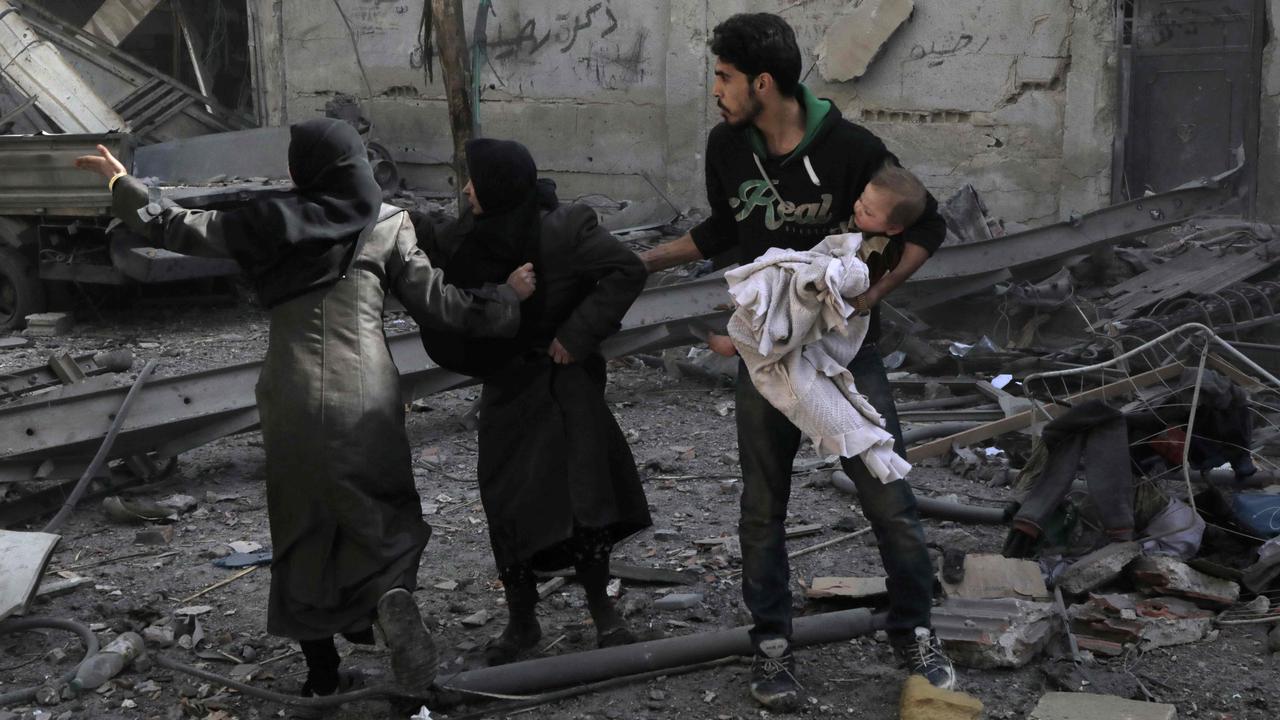
Syrians run for cover following Syrian government air strikes on the Eastern Ghouta rebel-held enclave of Douma, on the outskirts of the capital Damascus in 2018. Picture: AFP

Syrians run for cover following government air strikes on the Eastern Ghouta rebel-held enclave of Douma, Damascus 2018. AFP

Why do so many journalists analysing the Middle East’s problems think the answers lie in a tiny country of 9.7 million people, seven million of whom are Jewish?

Israel has no natural resources while Arab countries surrounding it occupy 1000 times more land, dominate global oil production and have a combined population of more than 400 million?

Look at income distribution patterns and one thing becomes apparent. The Arab and Persian worlds are among the poorest areas on Earth, despite the vast wealth of their rulers. Israel, with ingenuity its only resource, has average income about the same as Australia’s, while most in the Middle East languish on lower wages than black South Africans or Brazilians.

Yet it’s not only the grinding daily poverty of the Arab street that the moralising Western left ignores. It’s also the violence done to ordinary Muslims across the Middle East and North Africa by other Muslims. Add the 48,000 Islamic terror attacks listed by the French think tank Fondapol between 1979 and 2021 and their 210,000 mostly Muslim victims.

Where is the left on the medieval Arab and Persian regimes that spread Islamist terror from the Middle East to Europe, Pakistan, Afghanistan and Indonesia?

This is not another call for a Muslim reformation, but for political and media honesty.

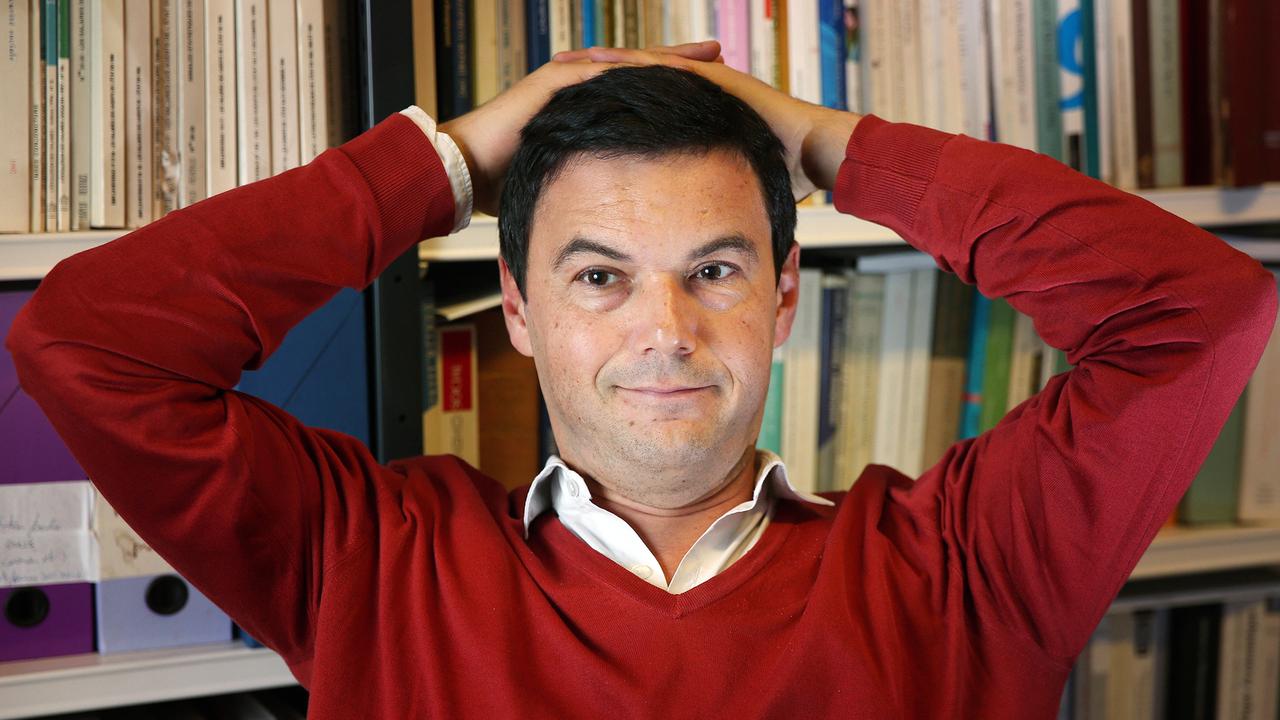
Yet the Islamic Middle East certainly needs modernisation. The left’s favourite French economist Thomas Piketty and fellow Paris School of Economics writers Facundo Alvaredo and Lydia Assouad in 2018 analysed income inequality in the Middle East. They found “the Middle East appears to be the most unequal region in the world with a top decile share as high as 64 per cent (of national wealth) compared with 37 per cent in Western Europe, 47 per cent in the US and 55 per cent in Brazil”.

Regular readers will know this writer has a daughter living in Tel Aviv and working in the tech sector. Previously, family members have lived and worked in Jordan. Comparisons between the two countries are fascinating given both were once part of British mandate Palestine.

Thomas Piketty and colleagues analysed Middle East income inequality. Picture: Getty Images
Thomas Piketty and colleagues analysed Middle East income inequality. Getty 

Jordan has a slightly larger population of 11.3 million. With at least three million Palestinians according to the government, and perhaps many more if you follow the historical arguments, it occupies four times the land area of Israel.

Life expectancy for males in Israel is 81 years and 85 for females.

In Jordan the averages are 72 and 77.

Israel’s unemployment rate is 3.5 per cent, Jordan’s 17.9.

Average income in Israel is $80,000 and in Jordan $6,500.

Jordan is a good and safe place to visit but it is clear within hours that it is much poorer than Israel. Israel’s GDP of $783bn dwarfs Jordan’s of $72bn.

The wealth picture is less stark comparing Israel with the Middle East’s oil states. Saudi Arabia has 32 million people, GDP of $1.5 trillion and is the world’s No.18 economy. Its GDP per capita is $40,000, so half Israel’s. Saudi average wages are less than Israel’s, although Saudi prices can be cheaper.

Iranian GDP sits at $549bn but its wage levels are far below those in Saudi Arabia and Israel. Its legislated minimum wage this year sits at $1700 a month.

The Western left also ignores violence against Muslims by Muslims. Few demonstrators took to the streets of Western cities to protest during the Syrian civil war this past decade. The death toll as of last March stood at 613,000, dwarfing the casualties in Gaza the past two months.

Ditto the ongoing Yemen civil war that started in 2014 and in which 150,000 have died fighting and 227,000 have perished in famine.

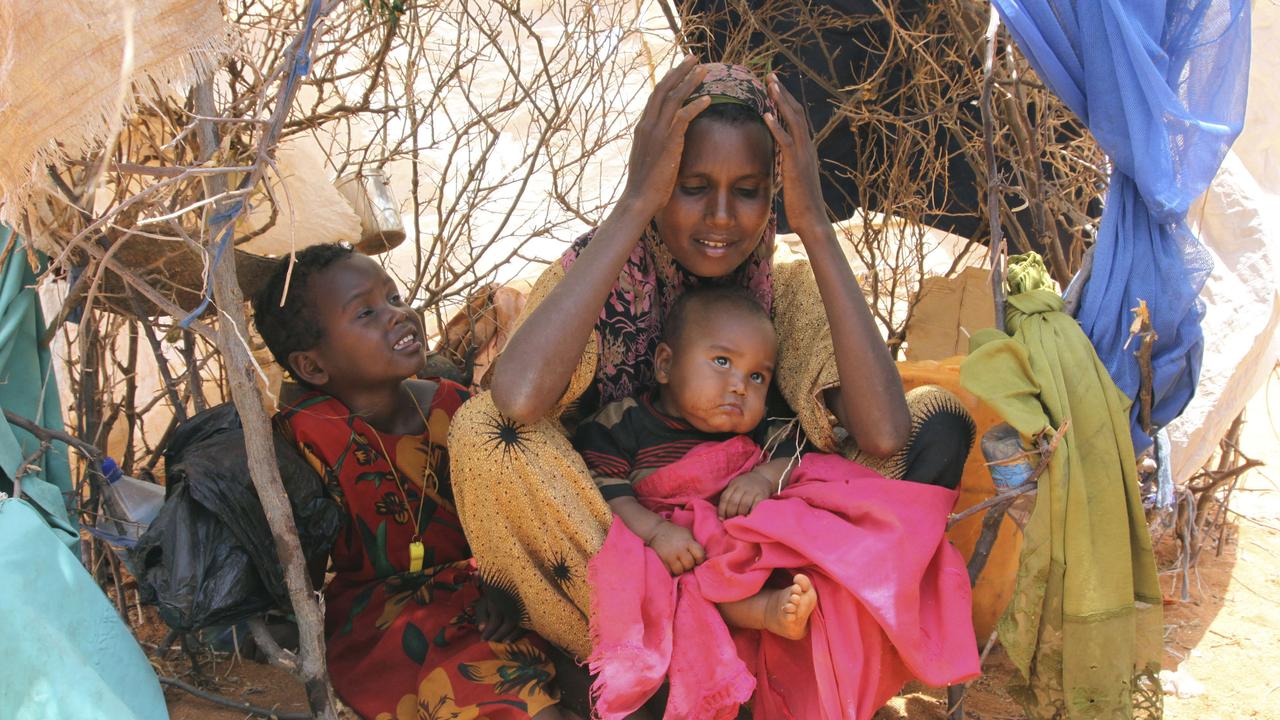
The disastrous Somalian civil war has been going for 40 years. Genocide Watch last year said between 350,000 and one million mainly Muslims have been killed since 1991 and 3.5 million displaced Somalis, including 1.5 million children, face starvation. The country is 99 per cent Muslim.

Add the millions killed in the Iran-Iraq war in the 1980s and the thousands killed by al-Qa’ida in Iraq after the US invasion in 2003.

To put the Israel story into perspective, between 1948 and 2021 total Palestinian deaths number 31,227. Total Israeli deaths in war excluding terrorism number 24,981. The 1948, 1967 and 1973 wars that cost Palestinians so much of their land followed invasions by Israel’s Arab neighbours.

Former farmer Habiba Osman Ahmed in Dollow refugee camp in southern Somalia in 2011. After Somalia's 20-year civil war pushed the drought into famine she didn’t even have a pot to cook in, and had to share with another family.
Former farmer Habiba Osman Ahmed in Dollow refugee camp in southern Somalia. 2011. After Somalia’s 20-year civil war pushed the drought into famine she didn’t even have a pot to cook in, and had to share with another family.

Islam has also been waging war on black Africa for much of the past 100 years.

Tablet Magazine on December 12 said “the same Jihad that targeted Jews on October 7 has been targeting black Africans for decades”.

Tablet discusses the “hidden holocaust” from 1983 to 2005 when “northern Sudanese Arabs sought to subjugate and enslave the black Sudanese of the mostly Christian south. The onslaught cost the lives of perhaps 2.5 million black Sudanese. The Arab Muslim government’s jihad utilised kidnapping as its terror weapon of choice, not to mention casual gang rape and mutilation”.

Tablet cites Arab pogroms against black Africans in Nigeria, Mauritania and Sudan’s Western Darfur. Asking why the civil rights left ignores these, it says “on account of their ‘intersectional’ dogma – which makes Jews ‘white’ and Muslims ‘oppressed’ – the Western human rights industry, media and campus left activists are ideologically determined to mostly ignore some of the most hideous crimes on the planet”.

Trouble is, most journalists know nothing about Islam or Islamism. The Koran is not a peaceful book: it does encourage Jew hatred and other violent behaviours against non-believers. When large communities celebrate the martyrdom of their sons and daughters, the left needs to understand that fanatics mean and do what they say. They really do see Jihad as the road to paradise.

This religious outlook has served the interests of the Sunni princes who finance the spread of Wahabism and the Islamic boarding schools (Pesantren) that spread it to Pakistan and Indonesia. It serves Iran well to finance Hamas and Hezbollah.

Blaming Jews for the Middle East’s problems lets the mullahs and princes off the hook for what they don’t do for their own people. Journalists covering the Middle East should not be duped the way the Arab street is. Of course Palestinian lives matter but Islamism is the real “context”.

Matti Friedman
Matti Friedman

Back on August 26, 2014, after another Israeli-Gaza war, former AP Jerusalem bureau editor Matti Friedman published a fascinating account in Tablet explaining how much the Western media mis-reports what is really happening in Israel and Palestine. He says AP had more than 40 staff in Israel in 2011 but only a single stringer in Syria where tens of thousands were dying each week. Its Israel bureau was bigger than staff numbers in Russia, China or India. Why?

The answer then was the same as now: it’s about Western media assumptions about Jews, power and victimhood.

That combines with a complete media disregard for what real Palestinians think and want and what Islamists really believe.

Here’s a clue. Most Palestinians and Hamas do not support a two-state solution. They support the elimination of Israel, and at least some support the elimination of all Jews.

A poll last week by the Palestinian Centre for Policy and Survey Research found 72 per cent support across Gaza and the West Bank for Hamas’s murder of 1200 civilians on October 7. While 95 per cent thought Israel had committed war crimes since October 7, only 10 per cent believed Hamas had.

Chris Mitchell began his career in late 1973 in Brisbane on the afternoon daily, The Telegraph. He worked on the Townsville Daily Bulletin, the Daily Telegraph Sydney and the Australian Financial Review before joining The Australian in 1984. He was appointed editor of The Australian in 1992 and editor in chief of Queensland Newspapers in 1995. He returned to Sydney as editor in chief of The Australian in 2002 and held that position until his retirement in December 2015.

Muslim migrants and Western Left create new anti-Semitism crisis

Greg Sheridan.

Palestinian supporters demonstrate in Melbourne against the current Israeli bombardment and invasion of the Gaza Strip.
Palestinian supporters demonstrate in Melbourne against the Israeli bombardment and invasionThe worldwide crisis in anti-Semitism, so much of it fuelled by Arab and North African anti-Semitism, now in a crude alliance with the anti-Semitism of the far left, points to a deeper malaise in Western democ­racies.

It raises again the compatibility of large Arab and North African populations with the traditions and culture of liberal democracy.

Consider. EU Home Affairs Commissioner Ylva Johansson declared Europe confronts a “huge risk of terrorist attacks” over Christmas because of the conflict between Israel and Hamas in Gaza.

In December a terrorist killed one tourist and injured others in Paris. In Dublin a knife attack allegedly by a Muslim asylum-seeker left children and adults severely wounded, though Irish police say they believe it was not terror related. In Germany, alleged terrorists were arrested preparing a bomb. In Brussels in October a Tunisian terrorist killed two Swedish football fans.

If Middle East conflict pro­duces terrorism in Western democratic nations, it’s reasonable to ask how anyone living in a modern, free, democratic society views random murder as a constructive, purposeful, moral response.

Australian agencies believe there is an increased risk of politically or communally motivated violence here, too, but not to the point where they’ve formally altered the terror alert level.

We’ve also seen US President Joe Biden plead for the world, including Western feminists, to condemn the “horrific” sexual violence of the October 7 Hamas atrocities. The deliberate, premeditated Hamas attacks were the most depraved, sexualised sadism the world has seen. Yet Western feminists, deafening in their silence, practise #MeToo unless you’re a Jew.

In Australia, the authorities decided that Islamic clerics who welcomed the Hamas atrocities and urged all Muslim nations to spit on Israel so it would drown had no legal case to answer. Demonstrators filmed on the Sydney Opera House forecourt screaming “Kill the Jews! Gas the Jews! F..k the Jews!” – none of them has been arrested or charged either.

Imagine the shuddering national convulsions that would follow if some group of extremist Christian activists gathered a few hundred demonstrators to scream: “Kill the Muslims!” All society would be rightly outraged. The whole nation would denounce it. The counselling bill at the ABC alone would double the national debt.

But society seems never to react this way when the target group is Jewish, although NSW has moved to strengthen its laws.

The Albanese government has been mealy-mouthed, equivocal, all at sea on all of this. It can’t mention anti-Semitism without conjuring a spectral, matching Islamophobia. Let’s be clear. The global anti-Semitism crisis, a profound civilisational challenge, is not matched by an equal, opposite and morally equivalent phenomenon called Islamo­phobia.

Start with the numbers. There are perhaps 1.9 billion Muslims and about 16 million Jews. There are about 50 Muslim majority nations and one Jewish majority nation. In dozens of other nations, Muslims make up a big minority. Only in the US do Jews pass even 2 per cent. Within Australia there are about 100,000 Jews, perhaps a touch more, and almost 900,000 Muslims. The size of the Jewish population is static. The Muslim population will continue to grow rapidly. Its age profile is younger, it has a higher birthrate and continuing Muslim immigration.

Opposition foreign affairs spokesman Simon Birmingham will lead a bipartisan delegation to Israel in solidarity with the Jewish state. The Albanese government is terrified of being seen as too pro-Jewish or pro-Israel. No head of government solidarity visit from it. Instead, in response to Birmingham, the anonymous Tim Watts, Assistant Minister for Foreign Affairs, will call in on Israel as part of a Middle East Cook’s tour. Foreign Minister Penny Wong will visit Israel early next year as part of a wider Middle East tour. By then it’s certainly not a visit of solidarity but an old-fashioned Australian pretence of participating in Middle East diplomacy.

Jews are the most intensely targeted people in the world for terrorism and irrational hatred. It’s true there have been a small number of violent attacks on Muslims in the US by people it would be fair to call far-right terrorists. Such attacks are horrific and deserve absolute condemnation. Their number, thankfully, is very small.

The vast majority of Muslims who die in terrorism are killed by fellow Muslims. Hamas killed Israeli and foreign Muslims on October 7.

A pro-Palestinian rally in Sydney in October. Picture: NCA NewsWire / Monique Harmer
Pro-Palestinian rally in Sydney in October. CA NewsWire / Monique Harmer

The plague of anti-Semitism is a crime against Jewish people. It is the world’s oldest racial hatred. There are distinct anti-Semitic traditions in the West, but after the Holocaust, in which the Nazis murdered six million Jews, all of the old Western traditions of anti-Semitism have been repudiated.

The West has a new tradition of anti-Semitism in the West, on the far left, especially at universities.

This week, in US congressional testimony, Harvard University president Claudine Gay, Liz Magill of the University of Pennsylvania and Sally Kornbluth of the Massachusetts Institute of Technology all said anti-Semitism was a serious and growing problem at their institutions.

That is astonishing, and grotesquely illiberal, for 2023.

But it’s hooked up with an entirely different anti-Semitism too. For by far the most important dynamic of anti-Semitism, globally and within the West itself, is the age-old Arab and North African anti-Semitism.

Naturally, a concern for the suffering of innocent people in Gaza is not a sign of anti-Semitism. Every human being feels compassion for the people of Gaza. The moral responsibility for their suffering lies 100 per cent with Hamas.

Anti-Semitism has broadened and is now a deep, pervasive ideological, cultural and fanatical strain in contemporary Western life. Proceeding from the left’s identity politics ideology, which damns the entire Western project as intrinsically unjust, sexist, economically exploitative, colonialist, racist, hetero-normative, the left has, logically enough, arrived at a hatred of Jews, for the Jewish tradition is so central to the West. And because the left sees all Muslims as victims, it has allied with Islamic anti-Semitism.

But the cross-pollination of Islamic and Western anti-Semitism goes back a long way. It reached a height in the deep Nazi collaboration with both the Muslim Brotherhood and the mufti of Jerusalem. Arab anti-Semitism long predates either Nazis or the Muslim Brotherhood.

The earliest military victories of Muslims involved conquering and sometimes slaughtering Jewish communities. Christians and Jews were often allowed to live reasonably safely in Muslim kingdoms, but only as acknowledged inferiors, dhimmis. Frequently that status was abrogated.

Bernard Lewis, the legendary scholar of Islam, has written that “the golden age of equal rights (under Islam) was a myth”. In the ninth century Baghdad Jews were required to wear a yellow badge, echoed by the Nazis a millennium later. This happened in many Arab centres.

It’s important to note many Christian kingdoms practised similar or worse persecution of Jews. The facts about Arab history simply establish the obvious that a long and pervasive anti-Semitism flourished in Arab and North African culture. There are indeed some explicitly anti-Jewish pas­sages in the Koran.

The contrast with Christianity is that all Christian denominations comprehensively repudiated their past anti-Semitism, which in any event was never uncontested. There has not been a similar Arabic repudiation of anti-Semitism. Some Arab states are liberalising a little, but it’s easy to over-estimate this.

Arab anti-Semitism also obviously long predates the modern state of Israel.

From the mid-1930s the Nazis strongly backed Arab anti-Semitism. They co-operated especially with Amin al-Husseini, the mufti of Jerusalem, who helped recruit Bosnian Muslims into Hitler’s SS.

Sayyid Qutb, the leading thinker of the Muslim Brotherhood, was notable for his hatred of the West. However, he also hated Jews, describing them as “the bitterest enemies of Islam” and urging Muslims: “Do not rest until your land is free of the Jews.”

Sayyid Qutb.
Sayyid Qutb.

The Nazis provided money for the Muslim Brotherhood and translated some Islamist publications into German. The Nazis wanted to eradicate European Jews and also the Jews of the Middle East. For six years, the Nazis broadcast anti-Semitic material, in Arabic, on radio. In the 1930s and ’40s, radio was the one true mass medium.

The first most important rejection of the two-state solution, a Jewish Israel next to an independent Palestine, came when all of Israel’s neighbours and the local Palestinians refused to accept the UN partition of the territory and launched an all-out war against Israel.

Today there are probably 40 million Muslims in Western Europe and North America, though so much population movement is irregular and undocumented that it’s impossible to establish reliable figures. They are having an enormous political and cultural impact. They also have introduced into those nations a savage new burst of anti-Semitism. It is neither racist nor discriminatory to look at the beliefs and behaviours of potential and actual immigrant populations and question problematic features for a liberal democratic society.

It goes without saying, but must be said, that the overwhelming majority of Muslims in Australia are law-abiding, productive citizens. A small minority is attracted to some form of political violence or intimidation. And, if Australia’s Arab and North African Muslims are remotely similar to those in Europe and the US, they harbour serious anti-Semitic attitudes, plus other views that are anti-Western.

In 2014, the Jewish Anti-Defamation League conducted an immense survey that sampled the opinions of 53,000 people in numerous countries. It found that 74 per cent of Middle East and North African respondents (not necessarily all of them Muslim, though the overwhelming majorty would be) expressed anti-Semitic attitudes, which was measured by endorsing six or more of 11 common anti-Semitic stereotypes, such as Jews controlling world banking, or the US government, or being responsible for most of the world’s wars. This figure of 73 per cent was vastly in excess of any other regional or national group.

Non-Jewish think tanks produce similar results. A survey conducted by the Henry Jackson Society in 2020 found nearly half of British Muslims hold anti-Semitic views.

In 2015 German chancellor Angela Merkel admitted a million Muslim irregular immigrants to Germany. By 2017 she pronounced that German multiculturalism had “utterly failed”. By 2018 she said “refugees or people of Arabic background” had brought a new wave of anti-Semitism to Germany.

In 2020, the libertarian Cato Institute published a long essay, Freedom in the Muslim World, by Mustafa Akyol. This was a systematic comparison of human freedom across a range of dimensions among Muslim societies and against international averages.

Akyol found that Muslim societies were substantially less free than the global average, and much less free than Western Europe or North America. Of course, there was great variety among Muslim nations and some were relatively free. The least free of all were the Muslim nations of the Middle East and North Africa.

He also found, paradoxically, in numerous Muslim nations increasing democracy led to decreasing personal liberties. In other words, the curtailing of human freedom was often a popular move by Muslim governments.

I’ve spent some time in the past few years in Poland, Hungary and Greece. In Poland and Hungary I interviewed Jewish leaders who told me these were the safest countries for Jews in Europe. In every case the government and society had turned against traditional anti-Semitism. But, most important, there were very few Muslims, so little active, threatening anti-Semitism.

Greece does receive a lot of asylum-seekers but doesn’t give them much welfare and they quickly move on. In Thessaloniki in northern Greece recently I saw a hotel hosting a big international delegation and there was the Israeli flag flying proudly out the front with no sign, in the days I was there, of demonstrations or disturbance.

Australia, on the other hand, is subject to an Israeli travel warning; it’s not safe for identifiable Jews or Israelis.

Nobody wants a religiously or ethnically discriminatory immigration program. But countries and cultures with deep traditions of anti-Semitism and anti-Western sentiment pose a big challenge if they are a major source of immigration.

Consider three books.

The French Intifada, by Andrew Hussey, establishes an extraordinary degree of hostility towards France itself by its Muslims. Reflections on the Revolution in Europe by Christopher Caldwell establishes how attitudes have in some manner grown more radical through succeeding generations among Europe’s Muslims. He also establishes that European voters never wanted this huge influx. The Strange Death of Europe by Douglas Murray shows Europe being eaten up by hostile attitudes among its citizens, both some immig­rants and the left establishment at universities, with no one to defend Europe’s traditional beliefs.

As we watched anti-Semitic demonstrations in London recently, an English colleague remarked: “Imagine what it’ll be like in 20 years, when the Muslim population is twice as big as now.”

In France, where Muslims may be nearly 10 per cent of the population, they are younger and have a higher birthrate than the host population. They could be 40 per cent of France by 2060.

Islam holds that its mission is to establish a political order in accordance with its teachings. Once the Islamic minority becomes big enough, that becomes a problem.

To settle immigrants successfully, a society should be self-confident, secure in its history, civic identity and ethical culture. Sound like the West at the moment? There are now types of self-loathing in our societies almost beyond parody. The Canadian Human Rights Commission recently argued that having public holidays for Christmas and Easter is discriminatory because other religions’ holiest days don’t have public holidays.

There’s plenty of equivalent nuttiness in Australia. When we hate our own traditions that much, how can we imagine migrants with contrary ideas will fall in love with our nation?

Greg Sheridan is The Australian’s foreign editor. His most recent book, Christians, the urgent case for Jesus in our world, became a best seller weeks after publication. 

“You want it darker?” … Gaza and the devil that never went away …

They’re lining up the prisoners
And the guards are taking aim
I struggle with some demons
They were middle-class and tame
I didn’t know I had permission
To murder and to maim
Leonard Cohen, You want it darker?

There is no decent place to stand in a massacre”.
Leonard Cohen, The Captain

The events of the past four weeks in Israel should make us all question our previous assessments and assumptions. One assumption is that antisemitism is no longer a major threat to Diaspora Jews, and that much of the talk about it was an obsession and distraction from much weightier issues that Jews should be focusing on.

The Hamas’ assault was almost perfect act of Taqiyyah, deception and dissimulation in an ostensibly Islamic cause. The term تقیة taqiyyah is derived from the trilateral root wāw-qāf-yā, literally denoting caution, fear, prudence, guarding against a danger), carefulness and wariness. It used unprecedented intelligence tactics to mislead Israel over past last months, by giving a public impression that it was not willing to go into a fight or confrontation with Israel while preparing for this massive operation. As part of its subterfuge over the past two years, Hamas refrained from military operations against Israel even as another Gaza-based armed group known as Islamic Jihad launched a series of its own assaults or rocket attacks.

One of the reasons Israel was caught unaware was because its security apparatus believed Hamas had changed its ways. Contrary to all the evidence afforded by a long history and a painful present, a belief emerged that its leaders are at least somewhat “like us” – they want the same things, they act the same way. Israel watched Hamas train for October 7 believing that the training for the real thing was itself the deception. All of the country’s formidable military technology meant nothing for the simple reason that — despite decades filled with thousands upon thousands of Hamas-directed attacks and kidnappings — they believed there was nothing on the other side of that fence to be overly alert to.

The audacity and brutality of the attack were as astonishing as its secrecy. The images of fear and bloodletting, of ecstatic attack and capture, guarantee that October 7, 2023, will become an indelible tragedy in Jewish history. Hamas probably succeeded beyond their expectation. Now they are having to deal with an Israel determined to decimate them

Since the Simhat Torah massacre, which mirrored in so many ways the pogroms inflicted upon Jewish communities in Eastern Europe in the late nineteenth and early twentieth centuries, what we’ve been seeing in cities around the world is that antisemitism is the devil that never goes away. One could also ask whether anti-Zionism is but an old hatred clad in new clothes. One phenomenon of anti-Semitism is its ­ability to mutate over history: from religious hatred to ethnic hatred to hatred of Israel in any form. If the marchers want a two-state ­solution, a pathway to peace, they do not say so. They chant “From the river to the sea”, which is a call for ethnic cleansing at best, and genocide at worst, though many do not know the name of the river, or the name of the sea.

Hamas recorded and broadcast the images of its atrocities on October 7 to make sure Israel and the world knew exactly what it had done. Israel has struck back hard on Gaza, killing many civilians in the densely populated region to reach Hamas targets. The Palestinian authorities say over 10,000 civilians have been killed, over a third of them children, and about two-thirds of Gaza’s 2.3 million people have been made homeless, unable to escape the territory. As tens of thousands flee and the bodies pile up, the brief moment of sympathy for Israel has receded and a tide of anti-Jewish sentiment is rising around the world.

International political theorist Arta Moeini wrote in Unherd on 4th November: “The moment Hamas carried out its heinous terror attacks against Israel, the war in Gaza was instantly globalised, reverberating in the hearts and minds of people oceans away who were neither Israeli nor Gazan. Millions on social media picked a side, proudly displaying their solidarity flags and condemning their opponents as either evil terrorists or genocidal oppressors. Both foreign states and populations assumed reflexive positions, railing against antisemitism or settler-colonialism and identifying with the “victims” in a Manichaean struggle that cares little for historical context, nuance or open debate. They became virtual participants in the conflict, as if their own lives and futures depended on it, cancelling and dehumanizing their opposition other just as the most extreme Hamasi Islamist or Israeli Zionist would do”.

In western, Liberal-democratic countries with some of the largest Jewish communities there are mass marches with open calls to kill Jews; there is the defacement and removal of posters of hostages being held in Gaza; and Israel is being held responsible by mainstream politicians and media figures for war crimes committed by Hamas; and there’s a flood of antisemitic poison on social media. It appears to have given permission for progressive activists to clothe antisemitism as anti-colonialism, and indeed, an alibi to say the most racist of things, and yet to retain all innocence in their own minds. And the more morally certain people are that they are right, the easier it is for them to miss their own complicity.

Rare is the criticism of the less savoury aspects of Muslim religion and society, like its patriarchal authoritarianism, its latent misogyny, and its antisemitism and homophobia. The intersectional narrative inhaled by activists, giving comfort to the “oppressed” legitimizes unspeakable cruelty against the “oppressor”. Hence, we have the sublimation of antisemitism into support and justification for the atrocities of the Hamas. [Pogrom, by the way, is a Russian-Yiddish word derived from “to destroy by violence]

Many people, particularly on the left, have forgotten or just ignore what triggered the latest bloody episode in the long running bloody saga. If you deliberately target civilians, regardless of your ideology, religion or ethnicity, you have lost all moral authority whatsoever. There are no excuses, no mitigations and no explanations. You have become the very thing you purport to hate.

For sure, an almost sixty year long occupation of the West Bank and the ongoing blockade of Gaza are criminal, and Israel’s behaviour thereby, is inexcusable. We can argue forever whether it is justifiable or necessary. But remember that in Gaza, the Hamas is a quasi-government, and a reactionary, exclusivist outfit with a “post-Israel” vision that will produce an ethnically cleansed theocratic dictatorship. And when it launched its troops on the kibbutzs of the Negev twith orders to behave like Da’ish, murdering kids at a music festival killing, raping, mutilating, and abducting unarmed men, women, children and babies, the opprobrium inevitably and unfortunately attaches to all Palestinians.

It is not helped when in the West Bank and elsewhere, such “bravery” is celebrated with sweets, ululation and “happy shots”, when people in a crowd in the forecourt of the iconic Sydney Opera House chant from the river to the sea” and “gas the Jews”, and social media is awash with memes that display but limited knowledge of the history and politics of the Middle East.

The Hamas now holds some 250 Israeli men, women and children captive in Gaza, adding to over two million Palestinians that are serving as human shields against what it knew would be inevitable Israeli vengeance. It has reportedly three months of supplies in its tunnels whilst above them, the Gazans run out of gas, food and water and medical facilities are brought to a standstill. Hundreds of thousands of civilians are now caught in a crossfire of Hamas’ making. There are reports that the Hamas is preventing Gazans from leaving, determined to use them as human shields, and has actually fired on fleeing convoys. They need to be protected, but how? We need to seek justice for Palestinians without glorifying unspeakable violence.

Luxury beliefs and historical illiteracy 

The term “luxury beliefs” was coined to describe how privileged progressives like to traffic in a kind of unhinged extremist rhetoric. Partly, it’s a byproduct of their insulation from ever having to experience the practical impact of what they advocate. When people in Australia chant “from the river to the sea”, and “gas the Jews”, relatively few are saying this because they have a material interest in obliterating the real Israel and rendering the land “Judenfrei” (remember that word!) More have no particular animus toward Jewish people – they just don’t care about them. But most are moved by a desire to weaken what Israel symbolizes: the US.

Many left-wing impressions are coloured by a an antipathy for the policies of the United States, an antipathy that for many was born of the Vietnam War and was perpetuated by America’s interference in the affairs of nations large and small since then – and of course, America’s strong ideological and military support for Israel. Uncle Sam certainly does have a case to answer. There’s no denying the hundreds of thousands, millions maybe, of bodies of men, women and children that could be laid at the foot of Abe Lincoln’s huge statue in Washington DC. But giving aid and comfort to a regime that is antithetical to your beliefs and also your lifestyle does not compute. It is an ideological stance uninformed by knowledge and awareness of the nature of the Israeli and Palestinian entities, their peoples, and their cultures in the 21st Century. None of these are what they were in the nineteen seventies and eighties.

Writing in The Australian on 29th October, commentator Gemma Tognini wrote: “As I watched mainly white, middle-class privileged (in the truest sense of that word, not the co-opted, cheapened version) people parade themselves around as soft apologists for a declared terror organization, I felt despair. How? How did we get here? … What’s been on display on university campuses since October 7 has been terrifying in its historical illiteracy, lack of humanity and ideological zealotry”.

It’s worthwhile quoting what else she had to say about such “luxury beliefs”:

“… This is the soft generation. Their grandparents fought type 2 diabetes, not Nazism. It was reported that (perhaps unsurprisingly) the University of Sydney Student Representative Council urged students to “stand against oppression … until Palestine is free”. Let me tell you one thing I’m willing to bet on. Not one of them would volunteer to go help the cause. Not one of them would give up their Uber eats, days at the pub and total freedom to go live in a place where being gay is an offence punishable by death, fewer than 20 per cent of women are allowed to work and more than 20 per cent of women are married under the age of 17. Good luck wearing a bikini or your active wear in downtown Gaza.

And then, there’s a punchline: “… this conflict in the Middle East, this visceral, existential attack on Israel, and on Jewish people the world over, seems to have ripped something open to reveal an ideological hatred that I don’t understand. It’s a good impetus to raise the voting age, to be honest. If your response to the fact that the Arab states are refusing to take refugees, that Egypt won’t open its northern border for the same reason, is “Israel’s committing genocide”, then sorry, you’re not intellectually agile enough to be in the conversation … If it were 1400 young people barbarically slaughtered anywhere else in the world, if it were any other ethnic cohort, these same junior cowards, and the universities they attend, would be condemning the act and the actors”

I couldn’t say it better, particularly her allusion to “historical illiteracy, lack of humanity and ideological zealotry”. Many people out there in the world of university politics, social media, and reflex virtue signalling, have, for a variety of reasons a limited, even cursory knowledge of the roots and fruits of intractable conflicts that originated decades, centuries, millennia ago. As the late Israeli Amos Oz explained in his excellent book, How to Cure a Fanatic, Arabs and Jews typically understand each other far better than westerners understand either of them. Cost-free wisdom from western liberals is so often pathetically ill-informed and bathing in self-righteousness.

Russia’s invasion of Ukraine did not originate in 2022 or 2014 or even 1991 when Ukraine departed the defunct Soviet Union. The wars of the Yugoslav secession did not begin when Serbia attacked the newly independent states of Slovenia, Croatia, Bosnia and Kosovo from 1991. The seeds of the Syrian civil war were sown well before 2011. So too with the story of Israel and Palestine, one of the world’s most intractable conflicts, did not begin on October 7th.

A war of words 

Understanding is not enhanced when a conflict morphs into a battle of words as well as weapons, the words invariably loaded with emotional and ideological weight. Enter the old adage “one person’s terrorist in another’s freedom fighter. The Hamas calls itself al muqawamah, resistance – it’s the “m” in its acronymic name – see below) as also does Hezbollah, which means literally Party of God (though the deity him/herself has no say in the matter). Türkiye’s opportunistic president calls Hamas fighters mujahidin, holy warriors, a name that recalls Afghanistan resistance to Russia’s invasion in the eighties. Whilst some refer to a terrorist attack, many pro-Palestinian groups have called it an intifada, as have memes and posters put up by “progressives” recalling the two earlier risings against the occupation, implying that it was the work of freedom fighters resisting colonialism. Some have even called for a “global intifada”, though against what and whom is unclear.

Then there’s the sad semantics around other descriptors, each loaded with partisanship and emotion. Self-defense. Proportionate or disproportionate response. Collective punishment. Moral equivalence. Human shields. Hostages. Refugees. Collateral damage. Just war. War crimes. Genocide. Justice, Revenge. Warriors. Executioners. Shahidiin (or martyrs). Thugs. Pick a side, pick your vocabulary to suit. It makes you wish for the now depleted ammo of syntax like “shock and awe” and “war on terror” – though we’re getting plenty of both right now as “we sit back and watch while the death count gets higher”.

Only two things are certain: antisemitism is the devil that has never gone away, and everything is broken.

As Leonard Cohen sang, “There is no decent place to stand in a massacre”.

Meanwhile, in the corridors of power

On 24th October, Antonio Gutierrez, the perennially exasperated and disappointed secretary general of the United Nations, told the Security Council that “it is important to also recognize the attacks by Hamas did not happen in a vacuum. The Palestinian people have been subjected to 56 years of suffocating occupation. They have seen their land steadily devoured by settlements and plagued by violence; their economy stifled; their people displaced, and their homes demolished.

Truth be told, it has indeed been the past that has brought us to this. Lost in the miasma of violence is the fact that Israel has occupied the West Bank for 56 years and, along with Egypt, maintained  a cordon sanitaire around the Gaza Strip. Prominent features of life for Palestinians in these areas are violence, dispossession, and dehumanization. Under these circumstances, there are few Palestinians who regard resistance as illegitimate. The ‘Hamas attack was a reaction to many things, including settler attacks on and evictions of Palestinians in the West Bank; attacks on Muslim and Christian holy sites by Israeli extremists; and Israel’s normalization with Arab countries, that is seen as an attempt by Israeli Prime Minister Benjamin Netanyahu to “liquidate” Palestinian rights and the Palestinian cause.

“But” as Guterres then stressed, “the grievances of the Palestinian people cannot justify the appalling attacks by Hamas.  And those appalling attacks cannot justify the collective punishment of the Palestinian people”. Their hopes for a political solution to their plight have been vanishing”.

Israel’s delegate was predictably enraged. But Guterres’ statement at least condemned the Hamas – unlike a UN General Assembly resolution a few days later which condemned Israel for its collective punishment of defenseless Gazans whilst completely ignoring the direct causus bellum. Making no reference to the barbarous attack by the Hamas was an absurdist denial of reality, as if Israel had decided to bomb Gaza on a whim, unprovoked.

Like Guterres, politicians across the western world endeavour to straddle the barbed wire fence, calling almost out of habit for the elusive “two state solution” as a panacea for the Palestinians’ plight. But in reality, there can be no two-state solution when an immovable and irredentist Hamas remains as a powerful if beleaguered “third state”. As Australian prime minister Anthony Albanese stated, “we have picked a side against Hamas. And we did that very clearly and unequivocally because the actions of Hamas are against the interests of both the Israeli population, clearly, but also against the interests of Palestinians”.

Calls for a ceasefire by world leaders and humanitarian organization’s go unheeded in the stark reality that a ceasefire would effectively give the Hamas the justification to declare victory whist permitting the mortal threat it poses to Israel to continue. Israel knows that if its response to the terrorists is unconvincing, the attacks on it on all sides will redouble. The sharp rise in global antisemitism reminds Jewish people that they may never be truly safe anywhere., and this intensifies, rather than weakens, the desire for a defendable homeland.

The Hamas and together with the ineffectual, corrupt and discredited Palestinian Authority which ostensibly governs the West Bank, and Hezbollah, the Lebanese paramilitary force on Israel’s northern border, most Arab states, Iran, and their western and southern sympathizers blame the situation on the historical behaviour and present policies of Israel and the US, implying that really, Israel had it coming.

There is much discussion in the mainstream media about what comes next if the Hamas is destroyed or effectively neutered and Gaza is “liberated” from its thrall. Should the IDF reinstate the occupation it ended two decades ago? Should Israel hand the enclave over to the Palestinian Authority, to use a decidedly un-Muslim analogy, organize a piss up in a brewery? Or should the UN, or at a stretch, the Arab League, a club of autocrats and tyrants, assume military and political administration until it can be reincorporated into a reformed and workable Palestine?

And even then, should any of these scenarios work out, would Israel be in the mood to make nice? The Hamas pogrom has not helped Palestinians in besieged Gaza, nor will it help those in the occupied West Bank who have been subjected to IDF incursions and vigilante violence by angry settlers. Nor will it encourage Israel to moderate its draconian policies and end the occupation.

Little mention has been made, both before and after outbreak of war of what may have been going on in the PA’s domain. The old, ineffectual and rejected Mahmoud Abbas, “emir” of Palestine, in the eighteenth year of his four-year term, is ill and probably dying, so there is a power struggle already underway in what are in fact three Palestines, Gaza, the West Bank, and the Diaspora (principally Syria, Lebanon and Jordan) over the succession. Meanwhile, Iran and its proxy, Hezbollah are stirring the pot, whilst even the Yemeni Houthis, who you’d think were busy with their own nasty civil war, the third strand, with Hezbollah and the Hamas of Iran’s “Axis of Resistance”, are lobbying missiles Israel’s way up the Red Sea.

The whole thing is a bloody mess (literally and figuratively) and the implications for Israel, Palestine and others unpredictable. The violence reminded me of the Lebanese civil war, and particularly, of Maronite Christian militia’s massacre of Palestinians in Sabra and Chatila (ironically, with Israeli connivance) in 1982. I am reminded also of Chaim Nachman Bialik’s poem, Al haShehita (On the Slaughter), about the Kishinev Pogrom in present day Moldova in the spring of 1903:

And cursèd be he that saith: avenge this! Such vengeance for blood of babe and maiden Hath yet to be wrought by Satan.

Whosoever sows the wind reaps the whirlwind.

Rafah, Gaza

From the river to the sea, Palestine will be free 

It is much more than a snappy chant. The Hamas’ stated goal is the “liberation” of what is presently Israel and the expulsion annihilation of its people, and it pays little heed for the suffering of the people of Gaza – Hamas leader Moussa Abu Marzouk, for example, in a recent interview on Russia Today’s Arabic channel, told an interviewer that his movement had not built bomb shelters in Gaza for its population because it was the job of the UN and the “occupation” – that is, Israel – to look after the civilians of the Strip.

In an interview on October 24, 2 on Lebanon’s LBC TV. Ghazi Hamad of the Hamas political bureau declared that the Hamas, was prepared to repeat the October 7 “Al-Aqsa Flood” Operation time and again until Israel is annihilated. He added that Palestinians are willing to pay the price and that they are “proud to sacrifice martyrs.” He said that Palestinians are the victims of the occupation, therefore no one should blame them for the events of October 7 or anything else, adding: “Everything we do is justified.”

Some extracts:

“We must teach Israel a lesson, and we will do this again and again. The Al-Aqsa Flood is just the first time, and there will be a second, a third, a fourth, because we have the determination, the resolve, and the capabilities to fight. Will we have to pay a price? Yes, and we are ready to pay it. We are called a nation of martyrs, and we are proud to sacrifice martyrs”.

“We did not want to harm civilians, but there were complications on the ground, and there was a party in the area, with [civilian] population … It was a large area, across 40 kilometres”.

“The existence of Israel is illogical. The existence of Israel is what causes all that pain, blood, and tears. It is Israel, not us. We are the victims of the occupation. Period. Therefore, nobody should blame us for the things we do. On October 7, October 10, October the millionth – everything we do is justified”.

Hamad: “The occupation must come to an end … I am talking about all the Palestinian lands”
News anchor: “Does that mean the annihilation of Israel?”
Hamad: “Yes, of course”.

If the Arabs put down their weapons today, there would be no more violence. If the Jews put down their weapons today, there would be no more Israel.
Golda Meir, Israeli prime minister, 1973

© Paul Hemphill 2023 All rights reserved

Note: al Hamas is the Arabic word for ‘zeal’ and also, an acronym for Ḥarakah al-Muqāwamah al-ʾIslāmiyyah, the “Islamic Resistance Movement”; Hezbollah means ‘Party of God’.

For more on antisemitism in In That Howling Infinite, see: Little Sir Hugh – Old England’s Jewish Question; and The Shoah and America’s Shame – Ken Burns’ sorrowful masterpiece 

For more on Palestine and Israel in In That Howling Infinite, see: A Middle East Miscellany

Addendum – poster wars

Why are Americans tearing down posters of children held hostage by Hamas?

Linda Dayan wrote in Haaretz on 26th October:

Those removing flyers may not be ready to look into the eyes of ‘the other side’ and acknowledge that they are people. But the consequences of this lack of introspection go far beyond posters

If you’re a Jew on Instagram, you’ve probably seen a particular genre of video going around: a shaky phone camera follows a person, either in a big city or on a college campus, as they tear down posters bearing the names and faces of Israeli civilians kidnapped by Hamas.

Sometimes they’re smiling, sometimes they’re defiant, sometimes they hide their faces from the person filming them. In one, the person says “kalba” (the Arabic word for bitch) while tearing down a flyer. In another, a man holding a wad of posters says he is doing so because “Jews in Israel – I mean, the Israeli government – are bombing Gaza.” When the cameraman asks, in a thick Israeli accent, why Hamas killed babies and even pets, he responds: “I can’t explain what people filled with rage do.”

Channel 12’s Yuna Leibzon tweeted photos from New York of posters that had been defaced – instead of “kidnapped,” they now read “occupier.” (If the person who did this is not Algonquian, I have unfortunate news for them about their own status.)

It is clear that the posters rouse discomfort in these people, and not in the “this could have been me” way that many Jews view them. Some, like the aforementioned man, look into the faces of abducted children and see the airstrikes that followed. Others have mentally transformed them into human embodiments of the occupation. A few accounts state that the people tearing down the posters do not believe that Hamas took hostages at all.

The people kidnapped by Hamas, much like the October 7 atrocities, represent a kink in a very clear narrative thread. The people holding tight to this thread might not be ready to face the realization that not all acts are justified so long as they bear the banner of “resistance.” They might not be ready to hold the idea that it’s okay to say out loud that the occupation is wrong, but so is holding an infant hostage. They might not be ready to look into the eyes of “the other side,” and acknowledge that they are people.

But the consequences of this lack of introspection go far beyond posters and posing. After a silent vigil in which they held photos of the kidnapping victims, Jewish students at the Cooper Union had to barricade themselves into the library as anti-Israel protesters stormed the building. The Anti-Defamation League reported 193 antisemitic incidents since October 7 – a 21 percent spike in the United States. A University of California, Davis, professor posted online against “all these Zionist journalists who spread propaganda and misinformation,” and noted that their children are vulnerable.

It is good, correct and just to stand up for Palestinians, to make the plight of Gazan civilians known, to mourn for the innocent lives lost. None of that demands erasing the reality of Hamas’ campaign of kidnapping and murder. And none of that demands harassing, threatening and attacking Jewish institutions and individuals, wherever they may be.

Of course, this may not be about Palestinians at all: Alawi and Shi’ite students in America did not have to barricade themselves in after Bashar Assad’s airstrikes on the Yarmouk Palestinian refugee camp. And in that case, perhaps these people can leave the Palestinians out of such campaigns, and be open about the narratives and ideologies that drive them to erase the faces of our children.

A defaced poster depicting a woman held captive by Hamas is seen as people attend a pro-Palestinian rally as part of a walkout by New York University students

Authors Note

Whenever In That Howling Infinite posts commentaries such as this, people ask why I rarely forward my own opinion on the issues I am presenting or discussing. On the contrary, I would argue that my views are fairly transparent in in the subjects I chose to engage with, the words I use, and the vein in which I use them. 

The following is an updated version of a postscript I wrote six years ago after I’d last visited Israel. It does not mention in detail the events since then, including the Israel’s rapprochement with its autocratic neighbours, the political paralysis that has afflicted Israeli politics for several years, and the war now being wages in the besieged enclave of Gaza. The rest still holds true.

With respect to my numerous posts about Israel and Palestine, and the Middle East in general, I  come to my conclusions from a political science and sociology perspective – that’s where my academic experience came from – and a background in conflict resolution, supported by study and travel. If I do on occasions display any particular bias, it originates in my longtime interest, understanding and affection for the history, politics, and culture of the region, of its geography and archeology, and of its people of all faiths and nationalities.

I believe that the systematic dispossession of almost a million Palestinians and the destruction of half of their towns and villages in 1948 is Israel’s original sin. It is the primal stain that colours and corrupts all that followed. And yet, if not for the actions, often daring, often brave, often questionable, and often deplorable, of the politicians and soldiers of 1948 – and of the generations that followed –  Israel would not exist today. This paradox is addressed sympathetically by Avi Shalit In My Promised Land, referred to above, and scathingly by ‘new history’ scholar Ilan Pappe in The Ethnic Cleansing of Palestine.   

The Occupation, fifty-six years old this year, which grew out of the unexpectedly total victory of June 1967, has taken on strategic, ideological and indeed messianic dimensions by many in the  Israeli government and political elite. It compounded the original sin, deepened the primal stain, released the demons of messianic fervour, and wounded Israel’s soul. The settlements locked the nation into the colonialist project. With the close call of the Yom Kippur War, the violence and murder of the first and second Intifadat, and present Palestinian jacquerie, Israel’s heart has not just hardened, it has become sclerotic.

I admit that I have always been sympathetic towards Israel – from my first visit in 1972. I’ve travelled its length and breadth and also visited the major Palestinian cities of the West Bank. But mine is not a blinkered viewpoint. I am deeply critical of Israeli politics and policies and have no respect for many of its leaders. Yet there are hundreds of thousands of Israelis who oppose the present government and long for justice and peace. And if – a very big “if” – Arab Israelis and the Israeli left could work together, they could obtain a majority in the Knesset and change Israel’s politics.

Meanwhile, Binyamin Netanyahu and his nationalist coalition allies call all the shots, the Israelis continue to control and exploit the land, its people, and its resources, whilst varying degrees of annexation are on the cards. The settlements are an abomination, as are the policies and practices of the state and its occupying army. There’s no escaping these facts.

But I am likewise critical of Palestinian governance, politics and politicians. The Hamas and the PA are on the nose in their respective fiefdoms, and if a moderate “third force” were to arise – and survive, because sure as hell, they would risk being murdered – Palestinians who just want a quiet, normal life, adequate services, and opportunities for their children, and Israelis who want likewise, might – just might – reject their extremist, dogmatic, entrenched leaders and reach some form of modus vivendi.

Palestinians themselves have to take control of their own lives, kick out their corrupt leaders, cease inculcating their children with hatred and jihadism, and use all that international good will and dollars to build a viable economy that can provide jobs, opportunities, and security, economic and physical to the people. Only this way will they be inoculated against cronyism, corruption and extremism. And yet, the dead hand of a moribund, patriarchal, conservative and ethnocentric culture holds them back – but that is the subject of another, future discussion for In That Howling Infinite.

Today, the ‘powers that be’, defenders and beneficiaries of a status quo that looks more like a cul de sac, predominate over a dispiriting array of competing, clamouring factions, left, right, nationalist, secular, tribal, Haredi, and Islamist alike. New, young, brace, local voices in both Israel and Palestine, are not heard.

So what happens next?

I get that question too. And I am perennially reluctant to venture an answer beyond one that runs like “on the one hand…but then on the other”.  I inevitably fall back on Robert Fisk’s response to the same question with regard to the calamitous freezing over of the Arab Spring and the fall and rise again of the same old autocrats and tyrants: “my crystal ball is broken”. It’s a cop out, really, but just as cogent as that famous line in that UK spy drama Spooks: “What’s going to happen to me?” “Bad things!”

One thing is for sure: as songwriter Warren Zevon sang, “the hurt gets worse, and the heart get harder”.

October 8th, 2017, and 6th November 2023

The new anti-Semitism looks a lot like the old hatred

The current wave of anti-Jewish hostility did not originate with the Gaza war, and its horrors. It has been building for decades.

Anti-Israel signs are held at a Palestine rally in Melbourne’s CBD. Picture: NCA NewsWire / David Crosling

Anti-Israel signs are held at a Palestine rally in Melbourne’s CBD. Picture: NCA NewsWire / David Crosling

Since the Hamas mass terrorist attack on October 7 and Israel’s military response, we have witnessed an explosion of anti-Jewish hatred. It is frequently mixed in with legitimate expressions of support for Palestinian civilians suffering the terrible violence of a protracted conflict. The Netanyahu government’s conduct of the war is certainly a reasonable target for trenchant criticism, including by Israel’s own citizens.

The combination of these themes makes the public response to the Gaza war complex and difficult to process. For most Jews it is nothing short of a continuing nightmare.

Deep anti-Semitism has been on vivid display in certain parts of the movement leading the anti-Israel protests. This has been explicit in celebrations of Hamas and its terrorist massacre of Israeli civilians as a heroic act of resistance, together with calls for such attacks to be repeated. This has been paired with simultaneous insistence, in some quarters, that no atrocities were committed. The dual response is reminiscent of a certain type of Holocaust denial. On one hand the mass violence that the Nazis committed against European Jewry is justified as a response to the odious behaviour of the Jews, and the threat that they posed to their host societies. On the other the historical reality of the Nazi genocide is questioned, or it is denied entirely.

Shalom Lappin.

Shalom Lappin.

The New Antisemitism by Shalom Lappin

The New Antisemitism by Shalom Lappin

Some anti-Israel demonstrations have skidded into violent assaults on local Jewish communities, and harassment of Jewish students on campuses around the world. Boycotts, exclusions, and “political” acceptability tests in the academic, publishing and entertainment worlds are now common phenomena. They recall darker periods of Jewish history. No other diaspora ethnic group associated with a country run by a widely censured regime is subject to this sort of marginalisation.

When racists target Muslims, or other immigrant groups after terrorist attacks, or the misdeeds of a foreign government, broad segments of public opinion, particularly on the liberal left, defend the victims of prejudice, precisely as they should. By contrast, attacks on Jews are explained away as possibly misguided expressions of fully comprehensible outrage at Israel’s egregious behaviour.

The current wave of anti-Jewish hostility did not originate with the Gaza war, and its horrors. It has been building for decades, as indicated by the steady annual increase in anti-Semitic incidents across the globe, at least since 2000. This has now become a flood. It is the result of deeper economic and political forces that have undermined the social contract that once defined the post-war era. A sharp rise in economic inequality within countries across the world is a major factor driving the unravelling of the post-war era. The unconstrained globalisation of financial markets and trade has been largely responsible for the skewed within-country (as opposed to between-country) distribution of wealth. It is creating a cleavage of populations into a comparatively small group of wealthy beneficiaries of economic growth, and increasingly large groups of people who endure a declining standard of living and jarring social dislocation. This disaffection has provided the basis for a variety of extremist anti-globalisation movements that exploit identity politics as the focus of their reaction to the chaos and instability that is attending the collapse of the post-war order.

A pro-Palestine activist in New York. Picture: AFP

A pro-Palestine activist in New York. Picture: AFP

These movements thrive on the sense of powerlessness among electorates. This is feeding a breakdown of mainstream political institutions, which are increasingly perceived as unable to respond effectively to the pressing problems that people are contending with in their daily lives. Polarisation between far-right and far-left anti-globalisation movements has now become a defining feature in the political life of many countries, with traditional centrist parties fading into irrelevance in a variety of places. The alliance of much of the far left with radical Islamist movements (also a form of anti-globalist, identity-focused reaction) has accentuated this clash. The nature of the alliance has come sharply into view in the course of the ongoing anti-Israel protests over the past 10 months.

The far-right threat has emerged in recent European elections, in Trump’s current presidential campaign, and in the current riots sweeping the UK. It is also apparent in the authoritarian regimes that control Russia, Hungary and Turkey, as well as in Modi’s Hindu nationalist government.

Anti-Semitism is a central feature of the anti-globalisation movements of the far right, the far left and radical Islamism. This is due to the fact that it is deeply entrenched within both Western and Middle Eastern cultures. It encodes myths of power and conspiracy that provide simple, satisfying answers to complex problems in times of severe crisis. It turns on the notion that the Jews are an illicit collectivity whose continued existence as a group obstructs the realisation of the respective (and mutually incompatible) utopian programs to which each of these movements is dedicated.

Anti-Semitism was marginalised in the West during the post-war period. It has now flooded back into mainstream discourse as a potent factor in mobilising support for totalising ideologies across the political spectrum. In its capacity to cross political boundaries from right to left, anti-Semitism is a unique form of racism. To identify it properly, it is necessary to understand its history throughout the millennia that it has plagued the societies where it has taken root. It is essential to recognise its very specific expression as a reaction to the current political and social crisis. It is also important to combat it in its current manifestation, rather than through the backward-looking ideologies of the past.

For the most part the gate keepers of liberal opinion and the custodians of public discourse have simply stepped aside while anti-Jewish campaigns, often packaged as “anti-Zionism”, have been raging in their institutions. They issue pious incantations of their commitment to banishing racism, gender discrimination, anti-Semitism and Islamophobia, while doing nothing to implement this commitment in the current crisis. They take strong action against assaults on other embattled ethnic minorities and gender groups, as ought to be the case. They assume the role of neutral moderators when such attacks are launched against Jews. They frequently sanitise these attacks as an exercise of the right to free speech, even when this speech crosses into active incitement to hatred and violence.

The current wave of anti-Jewish racism is not only a threat to Jews. It is a challenge to the survival of democracy and the viability of liberal values. Political leaders are singularly failing to address this threat, and the forces that have produced it. They are largely content to step back and allow the manifestations of anti-Semitism to multiply, as long as the appearance of public peace is maintained. In fact, this peace is increasingly frayed. The extremist movements that converge on the Jews as the source of their problems have much larger agendas. They seek to transform the social order in their own image, overturning the foundations of liberal democracy.

In treating anti-Semitism as a parochial development, threatening only Jews, current political and cultural leaders are allowing large swathes of public life to be taken over by movements that are determined to overturn democracy. Recent history is littered with precedents that warn of the dangers involved in ignoring the larger threat that anti-Semitism presages. By failing to address these movements, and the deeper causes of the crisis that generated them, political and cultural leaders in the West risk repeating past historical errors that have led to disastrous consequences. It is long past time to address this issue honestly and effectively. To start to do so requires that we acknowledge the extent of the problem, and that we describe it accurately. Most people who shape mainstream opinion in the West have yet to take this initial step.

Shalom Lappin’s The New Antisemitism (Polity Books, 1 September) investigates the upsurge of anti-Jewish racism now manifest across the world

.

Bringing it all back home – the missing mosaic and other ‘stolen’ stuff

“Old stuff. The Old World is full of it. But objects speak.They tell us things”.

The word “loot” derives from from the Hindi lūṭ or “booty” either from Sanskrit loptra, “booty, stolen property” orluṇṭ, “to rob, plunder”. It is one of the many words that entered into the anglophone vernacular in the wake of European imperial expansion. Charles James’s “Military Dictionary, London 1802, defines it as “Indian term for plunder or pillage”, and “goods taken from an enemy”. Like the very concept of empire itself, the word is a loaded one, loaded with historical memories, with national identities, and with differential moralities. Are goods taken in war by the victors as reparations or recompense for blood and treasure spent? Are they stolen goods that the perpetrators have a moral obligation to return to their rightful owners – or, as is the case with most of the inheritors of once imperial patrimony, the current territorial powers that be.

These questions loom large in the commentatary of an entertaining if lightweight, and yet, most informative programme running on the ABC at the moment, called, provocatively, Stuff the British Stole.

In this Australian-Canadian production Marc Fennell, the affable host the ABC’s Mastermind, trots the globe recounting the stories of the artefacts that ended up in British and Australian museums, galleries and churches during the days of Empire. Arriving in the wake of global protests that have seen statues ripped down and colonial legacies scrutinised with renewed vigour, the series offers an accessible beginner’s guide to the British empire’s long shadow and sticky fingers. Along the way, he encounters academics and diasporic communities for whom these objects, and the dispossession, death and cultural erasure they represent, have been open wounds for generations.

Each artefact acquired during the age of Empire is a reminder of colonial rule, be this benign or oppressive as determined from the perspective of the observer. For a long time, Britain’s best excuse for having nicked and then held on to many of these priceless antiquities has been that in a world of chaos and destruction, its institutions have long been the safest place to keep its ill-gotten treasures. The programme asks rhetorically in commentary and actually to museum curators: “is there an honourable way of handing in to your stolen stash?” Shouldn’t you be handing it back to its people? “Is this loot” asks the narrator of the director of the Art Galley of NSW. It is a public art gallery”, he replies.” … it belongs to the people of NSW … it’s there for education and discussion … I think it’s best not to use words like this right away … it was coming out of the rubble in the middle of a war zone … its a bit problematic”.

Britain was not the sole perpetrator of plunder, mind. A lot of loot of found its way into the museums of other European empires and and also the United States and Russia. And it was acquired in much the same way, in a mix of altruism, academic inquiry, subterfuge and outright banditry.

In our own travels, Adèle and I encountered an amusing tale of imperial skulduggery. When we were in Damascus, we stood by the modest catafalque of the celebrated Muslim war lord Salah ad Din al Ayubi, known in the west as Saladin, as our guide recounted the story of how before the First World War, the German Kaiser visited the Levant, then under the rule of the Ottoman Empire. Whilst visiting the Old City of Damascus, Wilhelm cast covetous eyes over the famous sultan’s casket. It is said that his entourage attempted to poach Salah ad Din’s tomb and spirit it back to Germany, but was intercepted by the Sultan’s police. By way of contrition, the emperor presented Damascus with a gaudy new catafalque more suited, he reckoned, to the last resting place of a renowned warrior. The two monuments now sit side by side in Salah ad Din’s small mausoleum beside the looming Roman wall of the splendid Umayyad Mosque, and pilgrims weep beside them. Our guide, a Syrian Kurd, upbraided elderly fellahin visiting from the countryside for praying at the empty fake – “don’t you know that Salah ad Din al Ayubi was not Arab but Kurdi, and he is in that tomb, not this one!”

But I digress …

Marc Fennell with Stuff the British Stole

A stone and a rock, a statue and a shirt …

Episode One kicks off a tad earlier than Imperial age, and closer to home with Scotland’s Stone of Scone, the big brick upon which Scottish kings were crowned until Edward I took it home to Westminster as a symbol of Sassenach conquest. It has seated the arses of British monarchs ever since, and though it was sent back home to Edinburgh in recent times as a recognition of Scottish nationalist sympathies, it will doubtless be lent to London for the enthronement of Charles, Third of His Name.

But the usual imperial suspects follow. There’s the Koh i Nor Diamond “gifted” to Queen Victoria from an adolescent Duleep Singh, maharajah of the independent but defeated state of Punjab, along with his empire, in the mid-19th century It is now in Britain’s Crown Jewels, tucked away in the vaults of Tower of London (the ones on show to the public are replicas). Once the centrepiece of the Great Exhibition, the diamond is now set in a crown that Queen Consort Camilla may or may not wear at her husband’s coronation in May. Britain’s royals have amassed a Smaug-like treasure trove of bling that might featured in future lists of Stuff the British Stole.

The Peking Shadow Boxer is an ancient bronze statue “rescued” from the ruins of war by a British sea captain during the Boxer Rebellion at end of the nineteenth century and now somewhere in the storerooms of the Art Gallery of New South Wales – the rebellion was one of Australia’s first overseas war. Then there is the story of a ceremonial war-shirt once worn by Native American Blackfoot chief Crow Foot, his “uniform’ or regalia, if you will, “gifted” (no one really knows how or why) to the Mounties during treaty negotiations when Canada was a British Dominion, and now, “in a place where it does not belong”, in London’s V&A Museum. This episode was particularly visceral. Coming almost contemporaneously with the recent revelations of what happened in Canadian “residential schools” that endeavoured to “take the Indian out if the Indians”.
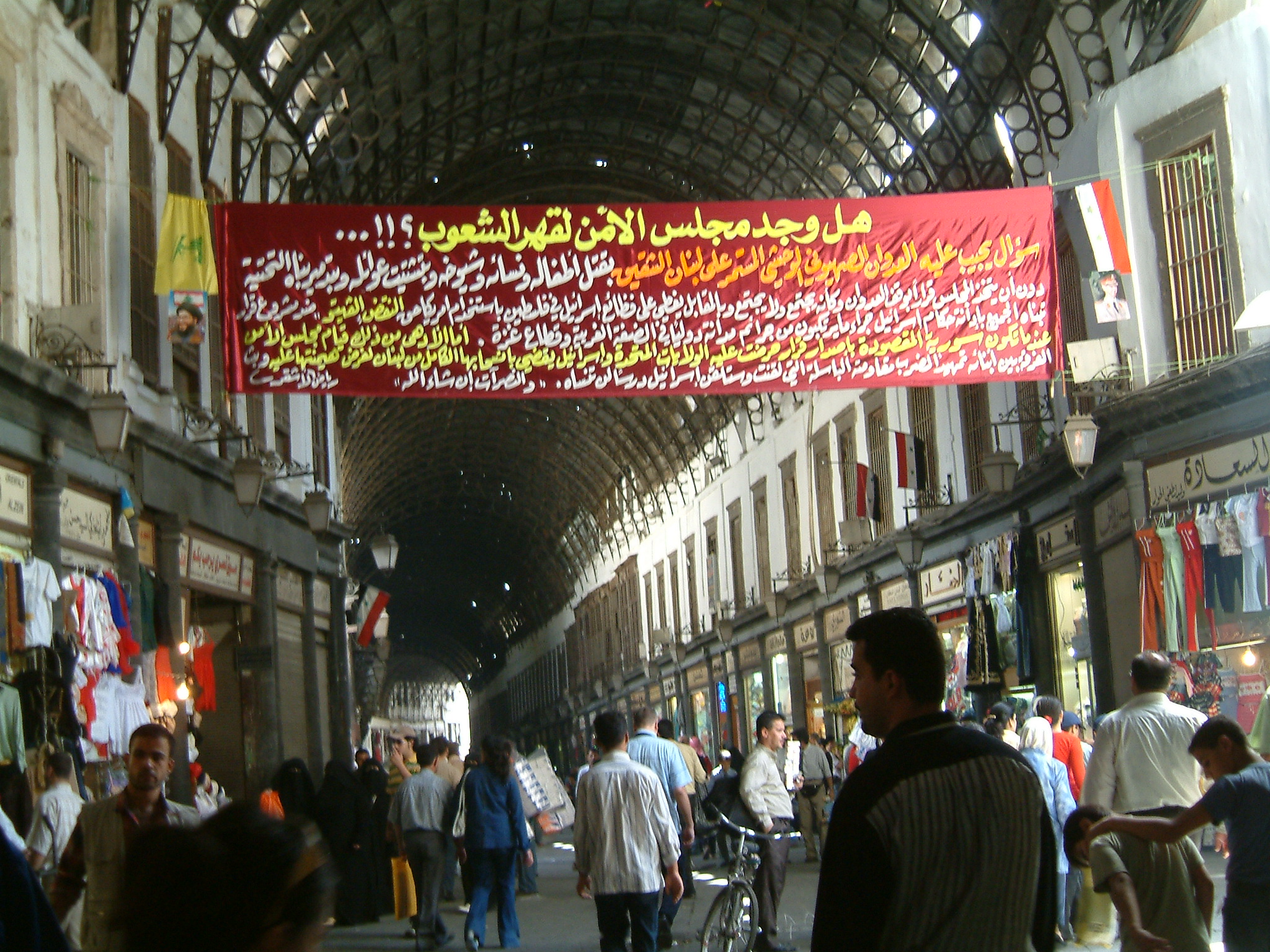
We’ve heard that one in Australia too as we still struggle to come to terms with our past. As Mark Twain quipped, history might not repeat, but sometimes it rhymes. And it is passing ironic that the final episode is a brief, sadly predictable chapter in Australia’s frontier war in the early Nineteenth Century.

The hunt for Yagan’s head

Yagan was warrior and Noongar man whose people lived by what is now the Swan River near Perth in Western Australia. Settlement land grabs and tit for tat robberies and murders, and revenge for the deaths for his brother and father provoked him to violence. The colonial authorities put a price of his head, dead or alive, for a payback killing in 1834-35 and he was shot in the back by two young settlers. His head cut off and was paraded around the colony to send a message to his people.

It took over a century to track down Yagan’s head. Ken Colberg, a Noongar war veteran and elder, made it his mission to find it. He traced it to a house in London – a colonial lieutenant had brought it back to England and endeavoured to sell it to a surgeon who was interested in such “trophies “. The surgeon declined to purchase it so the soldier conveyed it to Liverpool where he flogged it to Liverpool Museum. Over a century later, on the instructions of the museum, it was buried in Everton Cemetery near Liverpool in an unmarked common grave along other with other remains including 22 still born babies interred by a local hospital. Two English archaeologists agreed to assist Ken in his quest, tracing the location of the grave and negotiating with the authorities and descendants of the deceased children to effect Yagan’s exhumation.

It was handed over to a Noongar delegation in Liverpool Town Hall on 28th August 1997 – the day Princess Diana died in Paris. Ken made a passing reference to this during the ceremony: “That is how nature goes … Nature is a carrier of all good things and all bad things. And because the Poms did the wrong thing, they now have to suffer”. That went down well in the. Australian media, his comment prompted a media with newspapers receiving many letters from the public expressing shock and anger. Ken later claimed that his comments had been misinterpreted.

Yagan’s remains were finally laid to rest in Australian soil, on the banks of the Swan River on Noongar country.

And so concluded the first season of Stuff the British Stole. But there’s more to come – season two is promised and is already available as a podcast. It includes Tipu Sultan’s mechanical Tiger from Bengal, India, presently in the British Museum, commissioned by the sultan and depicting a tiger munching down on a prostrate English soldier. That one was taken when Tipu met his doom at the hands of Clive (of India, that is, and looter in chief of Indian artefacts). There’s there’s a revered chalice from Cork from a time when catholic worship was banned by British authorities; the Gweagal Shield acquired by Captain Cook when he hove to in Botany Bay; and the Makomokai tattooed heads from Aotearoa. And, of course, the most celebrated of artefact of all, the Elgin Marbles that most folk associate with the British Museum rather than with the Athens Parthenon which has served successively as a temple, church and mosque before Venetian ships bombed it in the seventeenth century – and from whence the eponymous Lord Elgin lifted them on the dubious pretext of preservation and plonked them down in perfidious Albion.

The return of Yagan. Ken Colberg is in the centre

Which brings us to the mosaic …

This is the story that enticed me into Stuff the British Stole and thence, into this post. Having enjoyed half a century of interest in the Middle East, I was immediately sucked in. And as with Yagan’s los head, it too has as Australian connection.

It is April 1917, during the second battle of Gaza, and British General Allenby’s army of soldiers from Britain and its empire is pushing northwards across the Negev Desert towards Ottoman-ruled Gaza and thence Jerusalem. It’s not officially called Palestine yet – the old Roman name, favoured by theologians, romantics, and British tourists and politicians, would not enter world politics and controversy for a few years yet. The Reverend William Maitland Woods is chaplain of the Australian and New Zealand Anzac division, and soldiers of a Queensland brigade of the Australian Light Horse are digging trenches at Besor Springs, near Gaza. The Reverend is an amateur archeologist and made a habit of entertaining the troops with stories about the Holy Lands where they were campaigning. The soldiers uncover the remnant of a 6th Century Byzantine mosaic dating from 561-562, during the reign of Emperor Justinian. A excited chaplain seeks professional advice from curators at the Cairo Museum and is given permission to organise a group of volunteers to uncover and remove the remains. Sapper McFarlane of the New Zealand Wireless Troop was given the job of drawing what they uncovered. That’s him in the picture below.

The reverend convinces his higher-ups that the mosaic must be saved, and sixty three crates are sent to Cairo. Egypt at the time was a British “dependency “ (good word, that).

There then commenced a tussle between British high command in Cairo and the Australian defence department. By September 1917, the Australian Records Section was feverishly collecting battlefield trophies. Charles Bean the official ANZAC historian liked to call them “relics”, consistent with the reverential language of “spirit”, “sacrifice” and “the fallen” he afforded his soldiers. The British : “It’s not a trophy of war – you cannot have it – it may be returned” or words to that effect. TheAussies: we wanted stuff for our prospective Australian War Museum, and anyhow, we’ve shed blood in this fight”.

And so, what would be called the Shellal Mosaic ended up in Canberra. Most of it, anyway. Other fragments found their way to St James Church in the Sydney CBD and in a church in Brisbane. It is believed that some diggers took pieces too. In 1941, when the War Memorial was under construction, an appeal was sent out to ageing members of the light horse regiments to return the bits they’d souvenired, but there were few, if any, volunteers.

Concerned, with very good reason, that the treasure might not get all the way Down Under, Woods gathered up several baskets of tesserae from the site, the individual fragments from which a mosaic is made, and commissioned an artisan to fashion an exact replica of the inscription headstone, one metre by half a metrre. He gave this to a friend, a Colonel John Arnott who at war’s end, returned to his family property at Coolah in rural New South Wakes and embedded itinto his garden steps. The farmhouse and its steps are with the family today.

Ancient History interlude: What makes the Shellal Mosaic such a significant archaeological find? For one, it was a Christian chapel from the Byzantine period when Hellenic pagan culture was giving way to Christianity. For two, the mosaic was made of marble, an expensive material and not commonly used other than by the very wealthy. And for three, the use of exotic animals from different lands, such as lions, tigers, flamingos and peacocks, common images in Byzantine art, all paying homage to a central chalice, could point to other pagan races and lands embracing Christianity.

The Shellal Mosaic

Yet, the tale gets curiouser and curiouser …

During the excavations, Maitland Woods discovered a chamber beneath the mosaic. It contained human bones lying with its feet to the east and its arms closed on the chest. The bones and inscriptions on the mosaic got the reverend quite excited, more so than the more mosaic itself as a rough translation of the inscription suggested to him that let him they were the bones were those of St George – of England and dragon fame, not the Dragons.the league football team of the eponymous suburb in southern Sydney which was not established until 1920. They were not, however. Saintly George lived in intolerant pagan Roman times and was martyred for his faith. More likely, they belonged to a local bishop time called as George. Woods feared these would be sent to England in perpetuity so he packed them up and gave a ‘parcel’ to his friend, Reverend Herbert Rose, for safe keeping, and this found its way to Rose’s home parish of St Anne’s in Strathfield in Sydney’s inner west, where they are interred in the floor in front of the church’s communion table. Woods’ fears were justified. During the delivery of the remaining bones from Cairo to London, George’s skull disappeared, never to be seen again.

As Yagan would aver, heads do that.

© Paul Hemphill 2023 All rights reserved

For further history stories in In That Howling Infinite, see Foggy Ruins of time – from history’s back pages

For stories about the Middle East, see A Middle East Miscellany

For stories about Australia and also the Frontier Wars, see Down Under – Australian history and politics 

Bronze, stone and possum fur

Song of the Road (2) – The Accidental Traveller

In a highway service station
Over the month of June
Was a photograph of the earth
Taken coming back from the moon
And you couldn’t see a city
On that marbled bowling ball
Or a forest or a highway
Or me here least of all
You couldn’t see these cold water restrooms
Or this baggage overload
Westbound and rolling taking refuge in the roads
From Joni Mitchell’s Hejira

When the Beatles and their partners, with Donovan and Mia Farrow in tow, travelled to India to sit at the well-kissed feet of the Maharishi, they would’ve travelled by BOAC jetliner. But hundreds if not thousands of young people from Europe and North America were already making their own own way, by boats, trains, trucks and automobiles, motorbikes and bicycles, and in extremis, shank’s pony, some ten thousand kilometres and more  to the end of the line, be this Kathmandu, Kolkata (where I ended up), South East Asia (Tim Page, a recently departed friend, ended up there as a war photographer in America’s “crazy Asian war) or Australia (that’s where my uni pals washed up – see below). Other adventurers set out in the opposite direction from conservative Australia and New Zealand-Aotearoa heading for Britain, the “old country” and a wider world. The numbers would swell during the seventies and the “overland” as it was then called became the well-travelled “Hippie Trail” – until the Iranian Revolution and the Afghan wars effectively blocked it to all but a resolute and crazy-brave few.

The Beatles in India

I’d never intended to hit the hippie trail back in the day. In the northern summer of 1971, I didn’t even know it existed.

I’d just finished my final exams, graduating with a good degree, but after three exciting and formative years, it was as if everything had suddenly ground to a halt. Uni was over; a romantic relationship was on the rocks; I was footloose and free, floating and feeling the urge to escape elsewhere, somewhere, anywhere. I’d no idea at all what I would do next, other than an inchoate plan to undertake post-graduate study – guided by my tutor and mentor exiled Hungarian academic Tibor Szamuely, my academic interest was Eastern Europe and the Soviet Union, but that was to be down the track.

When the finals results came out, I spent the evening at the student union with friends, unwinding and getting pissed; and the very next day, I walked into the Student Travel office and booked a one-way air ticket to Athens (only my second time on an aeroplane), passage by steamer from Piraeus, Athen’s port, to Alexandria, Egytpt, via Limassol, Cyprus, and back from Egypt to Piraeus and thence to Tel Aviv, Israel, with no bookings for onward travel.

Seized by the idea of visiting the two principal antagonists of the almost recent Six Day War, I’d a naive and uninformed notion to view both sides of the Arab-Israeli puzzle (and we’re no nearer a solution today, and I’ve spent half a century since watching and waiting – but that is another story). Within a few weeks, I’d bought a second-hand rucksack and sleeping bag, converted my savings to traveler’s cheques – there were still currency restrictions in the UK on how much cash you could take out of the country – packed a few things, and in the words of Cat Stevens, I was “on the road to find out”.

That road took me through the Middle East, and on and on, until I reached Kolkata in Bengal. What was planned as but a two month holiday to “clear my mind out”, to quote that Cat song again, extended to over six months as the appetite grew with the eating.

I traveled through lands of which I knew very little, picking up fragments of history and heritage, parables and politics as eastwards I roamed, through the lands of antiquity and of empire: Greece and Cyprus; Egypt and Israel; the Levant (old French for the lands of the rising sun – Lebanon, Syria, and Jordan); Iraq before Saddam, and Iran under the Shah; Pakistan and India, who went to war with each other as I crossed their frontiers (a story for another time); and then back to Britain by way of Turkey and the fabled Pudding Shop.

I stood beside the great rivers of ancient stories – the Nile and the Jordan, the Orontes and the Yarmouk, the Tigris and Euphrates, the Indus and the Ganges. I traveled though deserts and mountains, the Himalayas and the Hindu Kush. I climbed through the Kyber Pass, immortalised by imperial endeavour and hubris, and the valley of Kashmir, a betrayed and battered paradise. I crossed Lake Van, in the shadow of Mount Ararat, and the Bosphorus, from into Europe. I stood atop ancient stones in Memphis and Masada, Baalbek and Babylon, Jalalabad and Jerusalem.

On my return, my plan to specialize in Soviet Studies evaporated as I resolved to learn more about these lands, their peoples, and their histories, and this I did. The Middle East has long-since captivated and colonized much of my intellectual life, imbuing it with a passion that has found expression in my persona, my politics, my prose, my poetry, and my songs.

See: East – an anthology and Song of the Road (1)  – my hitchhiking days

Broken statues, empty tombs.
Ghosts of commoners and kings
Walk the walls and catacombs,
The castles and the shrines,
Marking lives and story lines,
Lie the ruins and the bones,
The ruins and the bones,
Ruins and bones.

Through the desert to the beyond … 

I was at the end of the beginning. Having travelled through Egypt and Israel, I’d decided, for many reasons, that I wasn’t ready to return to England as planned, and recalling the advice of a fellow traveler I’d met in Cairo, I resolved to head east …

In early 1972, I wrote in an empty1962 diary: “Friday 20th August 1971, a fateful day indeed, when manifold and manifest destinies unfolded, when plans were forgotten and begotten, when the past was shelved and the future postponed. To the desert. Through the desert. To the beyond. To see. To decide. To move forever onwards with no direction home. With no grip of time to defeat me or dictate to me …”

Less prosaically, my actual travel diary recorded on that day:

“Arriving in Nicosia from Tel Aviv at 15.15 after a neglectful and body-shaking El Al flight, I headed straight into town from.an almost deserted airport. How much Anglo, how much Greek, how empty. Hot and boring in my mobile mood. Bought a ticket to Beirut and headed straight out again on the six o’clock Air Liban Boeing 707. A highly hospitable fifty five minute flight and by seven o’clock I was passing through Lebanese customs … “

The following day, I wrote:

Saturday, 21st August 1971, Beirut
“Now for a calculation space … I have £55 in travelers’ cheques and £25 in cash. Eighty quid in all. How far will that go? Syria? Iraq? Jordan? Afghanistan, Iran? Then home? Visas, maybe five quid? Amman to Baghdad, four? Damascus Amman Two? Amman to Baghdad, Teheran, Kabul 10 quid? That’s £21 all up. Kabul to Istanbul, £13, so £34 in all. £3 max in each for contingencies? £15 or £49. Leaving about 30 quid by Istanbul. Cutting Jordan, could save four. India? There is time, but little money … Even if the three quid were cut and Jordan too, that would leave £19 from Kabul to Delhi – but I must eat, I must eat somewhere – hence, no India…this time … “

But the appetite grew with the eating and the road led on and on …

Life on the road …

People will tell you where they’ve gone
They’ll tell you where to go
But till you get there yourself you never really know
Where some have found their paradise
Others just come to harm
Amelia, it was just a false alarm

Joni Mitchell, Amelia

Traveling was sooo different back then in the days before ubiquitous air travel, the Internet and mobile phones. On the road, our destinations were set, but these were fluid in their timeline and attainment. Much of our information came by word of mouth from other travellers on the road. You’d head to places other people had recommended, without having seen pictures and read descriptions on the internet. You couldn’t book a hotel room in advance so we often never knew where we’d sleep. You’d find a bed for the night once we’d arrived in a city, town or village or if you were in the information loop, you’d rock up at well-frequented hostelries like Amir Kabir in central Teheran, Mrs Dunkeley’s Guest House in the heart of New Delhi, and the famed houseboats on Dal Lake in Kashmir. Often, you slept on floors, in railway station waiting rooms, in constant fear of robbery, or beneath the stars. You’d spend long hours waiting in the post office to place a call home, and sometimes the operator didn’t know where that was. Letters would take an age to reach their destination. I wrote letters to England from Amir Kabir, and picked up the replies on my return journey months later. You’d work out how to deal with banks and money changers to convert travelers cheques to the local currency – and  keep a close count of every cent because these were limited, and you were constantly worried about being ripped off.

Hotel Amir Kabir, Teheran

Like many on the road, I travelled on the cheap, crowded onto local buses, struggling to grab a third class seat on packed trains, eating street food. watched every dinar and dollar, rial and rupee. To supplement my diminishing funds, I washed dishes – and sold blood twice, to the Red Crescent in Jerusalem’s Old City (risky) and In New Delhi (in hindsight, potentially suicidal).

I’d only intended to be out of the country for about a month, but had cleaned out my bank account. I’d worked on building sites in Birmingham during the summer breaks from University, and had earned enough to keep me in books and records and other “luxuries” and also for travel. And I got to India and back to Istanbul before I ran out of cash and had to get my folks to wire me enough for a ticket home. My university pals who took The Overland a year later washed up in Darwin stoney broke and had to work their way all the way south to Bondi Beach, where they’d resolved to rent a flat overlooking the Pacific Ocean. Of the five who roved out, three returned to England, but two remained, establishing careers, marrying “sheilas” and raising children and grandchildren – by happy circumstance, I too settled in Australia six years later, and John (RIP) and Christian became my oldest friends in Australia.

Most of us travelled without cameras and so relied on travel diaries and memories. I had a dinky old Kodak and couldn’t afford a lot of film – I sold some for extra cash somewhere along the way – so I had had just a few pictures on a couple of rolls. And I had to wait until my return to England to take them to Boots Chemist for processing. And looking back, perhaps it was easier and also most adventurous in those days to be present, to live in the moment, and to be surprised over things you hadn’t seen before, not even in books and photographs. So many everyday things are now very practical with ATMs and mobile phones and travel advisories to hand, whilst our mobile phones and tablets absorb so much of our attention. In some ways these take away much of the vicarious risks and also, magic. I’m sure glad to have experienced travelling in the old-fashioned way.

If you never go, you’ll never grow 

I’ll conclude this story by observing in the present how in all my journeying, I never came to harm, whether by mishap or misadventure, malice or malignancy.

The accidental journey was driven by a combination of whim, thrift, expedience, and necessity, but also, by a sense of romantic adventure – buoyed by what seems in retrospect, a naive feeling of dare-devil invulnerability.

Passers-by, and local people I’d meet would often ask where I was going and why I traveled thus. They’d tell me it was dangerous, that there were men out there who would rob me or do me harm. When I returned home, folk would ask if I faced danger and if I was  afraid. Yet, we who traveled the world before jumbo jets and cruise ships understood that bad things could happen and that they sometimes did whether you journeyed by thumb, van, bus or train. In hotels and hostels from Beirut to Baghdad, Kabul to Kolkata, you’d pick up word-of-mouth “travel advisories”, warnings and “war stories”. In India, I’d been told of a chap who’d been robbed and stranded in Afghanistan, and I actually met him when I bunked down in a backpackers’ in Sultanahmet, Istanbul, on my way back to Britain.

As I journeyed “there and back again”, I took risks on rickety buses and in reckless cars. I’d walk alone through slums and shanty towns and eat food sold on the streets. I risked typhoid and cholera outbreaks, caught “Cairo belly”, sold blood in “third world” clinics, and ran from thrown stones and the sound of gunfire. I was arrested for spying on the Aswan Dam in upper Egypt (though released soon afterwards) and handcuffed as a “joke” in a Beirut police station. I’d crossed a battle-scarred landscape between Syria and Jordan on foot, and watched the military buildup in Kashmir as the Indo-Pakistan war was breaking out.

So yes, there always was a risk; but if you think too much about it, you’d never go, and if you never go, you’ll never grow.

The Road goes ever on and on
Down from the door where it began.
Now far ahead the Road has gone,
And I must follow, if I can,
Pursuing it with eager feet,
Until it joins some larger way
Where many paths and errands meet.
And whither then? I cannot say.
Walking Song, JRR Tolkien

© Paul Hemphill 2023 All rights reserved

My road in pictures

The brown fedora, Giza 1971

By the rivers of Babylon, August 1971

Srinegar, October 1971

Luxor, Egypt 1971

Me and the gang, Mount Scopus, Jerusalem 1971

Layers, Damascus 2009

Salah ad Din al Ayubi, Damascus 2009

Sun al Hamadiyya, Damascus 2006

Bakdash ice cream parlour, Damascus 2009

Cruising the Golden Horn, Istanbul 2014

The Sulaymaniya Mosque, Istanbul 2014

Jerusalem the Golden

Bondi or Bust

The morning after the night before …
In late summer 1972 we housemates threw an all-night farewell party before going our separate ways. Christian, Brendan, John, Mike and Eric embarked on the hippie trail across Asia and ended up in God’s Own Country. Having recently returned from that same odyssey, I remained in London, but destiny saw me washed up DownUnder five years later. The first picture portrays the laid-back lethargy of that morning in East Finchley. Chris is in the shot so Brendan must’ve taken the photograph. The second is taken when we got it all together for a more formal tableau with Chris behind the camera.


Shortly thereafter, the five pioneers set off for Dover and the East. Many years later, Christian revealed these pictures from their journey. The first is of John and Chris soon after landing in northern Australia. The others are pictures of Chris’ tote bag. He still has it.

From the foggy ruins of time – our favourite history stories

I wear the weave of history like a second skin,
I wake with runes of mystery of how we all begin,
I walk the paths of pioneers who watched the circus start,
The past now beats within me like a second heart.
Paul Hemphill. E Lucivan Le Stelle

Whilst its scope is eclectic and wide ranging in content In That Howling Infinite is especially a history blog. It’s subject matter is diverse. Politics, literature, music, and memoir are featured –  but it is at its most original and informative, a miscellany of matters historical, gathered in Foggy Ruins of Time – from history’s back pages – yes, an appropriation of lyrics from two Bob Dylan Songs.

In compiling the annual retrospective for 2022, I decided I would put together a list of my favourite posts in each of the categories described above, beginning with the history ones. My primary criteria were not so much the subject matter, which is diverse, as can be seen from the ten choices (shown here in alphabetical order) but firstly, what I most enjoyed writing and secondly, those I considered the most original insofar as I referenced and republished few other voices, other than direct quotations from the sources I was consulting and books I was reviewing.

A cowboy key – how the west was sung

Outlaw songs and outlaw gothic are as much apart if the mythic Wild West as cowboys and gunslingers. A nostalgic canter through some of my personal favourites on records and in movies.

Androids Dolores and Teddy enjoy the Westworld view

Al Tariq al Salabiyin – the Crusaders’ Trail 

Western folk, long on romanticism and short on historical knowledge, associate crusades and crusaders with medieval knights, red crosses emblazoned on white surcoats and shields and wielding broadswords battling it out with swarthy scimitar-swinging, be-turbaned Saracens. Here, we widen that orientalist perspective.

The Crusades

A Short History of the Rise and Fall of the West

“… one thing is for certain: we all love a good story. As they say, in Arabic, as indeed in all tongues, times and places, “ka-n ya ma ka-n bil ‘adim izzama-n wa sa-lifi al aSri  wa la-wa-n”‘ or, “once upon an time”. An original,  idiosyncratic and not strictly accurate journey through those foggy ruins of time.

Somewhere in Syria

Beyond Wolf Hall – Icarus ascending 

We know how the story of Thomas Cromwell ends. It’s how Booker prize winner Hilary Mantel gets us there that matters. Our questions here are whether Thomas could sense where it was all headed, and whether he could have quit while he was ahead.

Beyond Wolf Hall – Revolution Road

“A wide-ranging rural road trip through England’s green and pleasant land takes the traveller by antique and desolated abbeys and monasteries, their ageing walls crumbling and lichen covered, their vaulted pediments open to the English elements. The celebrated poets of the romantic era immortalized these relics in poetry, and even today, when one stands in grassy naves, gazing skywards through skeletal pillars, one can almost feel an ode coming on”. A brief dissertation on Thomas Cromwell’s English revolution.

Mark Rylance and Damian Lewis as Tom and Hal

Martin Sparrow’s Blues

It is late summer in 1806, in the colony of New South Wales. After he loses everything he owns in a disastrous flood, former convict, failed farmer, and all-round no-hoper and ne’er-do-well Martin Sparrow heads into the wilderness that is now the Wollemi National Park in the unlikely company of an outlaw gypsy girl and a young wolfhound. Historian Peter Cochrane’s tale of adventure and more often than not, misadventure, set on the middle reaches of the Hawkesbury River at time when two culturally and spiritually disparate peoples collided.

Roman Holiday – the perils of a poet in Nero’s Rome

In the First century, the Roman Empire was a far-ranging and cosmopolitan polity extending from the shores of the Atlantic to the borders of Persia. As far as we can ascertain from the historical record, Meniscus Diabetes was born in Rome in 25 CE. His father was a Greek slave in the Imperial Household of Tiberius Caesar, Emperor of Rome. These were turbulent times for Rome and Romans, but our hero managed to navigate through them.

The Sport of Kings – CE Morgan’s “Great American Novel 

The Sport of Kings’ is not a history book – nor is it an historical novel. But it is most certainly about history. And about identity. As Morgan puts it: “You would never escape the category of your birth”. It is also about memory and myth: “Repeated long enough, stories become memory and memory becomes fact”. It is both a meditation on race, on slavery – America’s “original sin” – and a bitter inversion of the American dream.

The Twilight of the Equine Gods 

An illuminating canter through the story of the “Centaurian Pact” between humans and horses. it is at once a ride andrevelation, and a reminiscence of my short-lived ‘cowboy’ days. The horse” has been man’s most important companion – forget cats and dogs – and the most durable of historical alliances, and yet, over the span of a few decades, a relationship that endured for six millennia went “to the dogs” – excuse my awful pet-food pun. And it happened almost unremarked, unnoticed, and unsung.

Tim Page’s War – a photographer’s Vietnam journey 

Our forest neighbour, recently deceased and internationally acclaimed English photojournalist Tim Page ran away from boring ‘sixties Britain to the exotic East at the age of seventeen, taking the ‘overland’ route that decades later would be called ‘the Hippie Trail’. He washed up in the great war of our generation, and left it critically injured and indeed clinically dead in a medivac chopper. This is the story of a war, and a young man who wandered into that war.

Al Tariq al Salabiyin – the Crusaders’ Trail

The story that dominated the news in the last year of the Eleventh Century was how the heirs to the Roman Empire in the west, the Franks and the Normans, descendants of nomadic marauders who broke the power of Rome, fired up with religious zeal and the prospects of material gain, embarked upon the first  of a series of Crusades to free the Holy Land and the paths that Jesus trode, from the heathen Mohammedan.

The spark that lit the holy fire is almost too familiar in the retelling, and yet it remains indispensable to any long view of the Crusades. On 27 November 1095, outside the walls of Clermont in southern France, a crowd gathered at the summons of an ageing but ascendant pope whose words were about to tilt the axis of Mediterranean history. Urban II – sixty years old, politically embattled in Rome, and yet at the height of his authority – had convened a council to wrestle with the crises pressing in on Christendom: the papacy’s own internal instability, desperate appeals from a shrinking and frightened Constantinople, and rumours drifting westward of Jerusalem under the mailed fist of the Seljuk Turks. The cathedral could not contain the multitude, so a wooden platform was erected in a cold, open field, the November light thin and pitiless. There, Urban rose to speak.

From across almost a millennium, his address reads less like a sermon and more like an ignition sequence. First came the lamentation: the “horrible tales” seeping out of the East – Christians butchered in their homes, pilgrims robbed and mutilated, churches desecrated, the Holy City itself profaned. Urban’s imagery was designed to wound: intestines torn from the living, women violated beside the altars. Medieval Europe knew violence intimately, but this – an assault upon Jerusalem, the locus of Christ’s passion – had the quality of sacrilege. It was not simply a call for help; it was a desecration demanding redress.

Then came the pivot. Urban shifted from lament to command, from mourning to mandate. Jerusalem, he declared, was “the navel of the world,” held captive by an “accursed race,” crying out for rescue. He was not summoning an army so much as sanctifying one. What he offered was a pilgrimage of arms, a martial devotion with the astonishing promise of plenary remission: salvation available not through cloister or confession, but on the battlefield. The crowd erupted. “Deus vult!” – “God wills it!”- rolled across the field like a winter storm breaking. The bishop of Le Puy was the first to step forward, but hundreds followed in moments, thousands soon after. In that instant a new identity was born. Men ceased to be merely French or Italian or Norman or German. They became Crucesignati: those who had taken the cross.

Urban’s spell was rhetorical, not strategic. He had consulted no great lords, commanded no armies, and possessed no grand plan for the liberation of the Holy Land. Yet within months, tens of thousands nobles, peasants, monks, wanderers, and entire families – began the long march east. Many departed too soon and perished before they reached the Balkans; others succumbed to famine, disease, or ambush along the two-thousand-mile road. Perhaps a third survived. And when that hardened remnant reached Jerusalem in August 1099, exactly three years later, they stormed the walls in a frenzy and massacred Muslims and Jews alike. Faith had propelled them; blood sealed their triumph.

Clermont occupies a paradoxical place in the broader sweep of Crusading history. It was not, as later romantic mythmaking would insist, the beginning of a civilisational clash between Christendom and Islam. By 1095, that frontier had existed for centuries: from 1633, Islamic armies had swept through the ancient Christian provinces of the Near East and North Africa, conquered most of Spain, pressed repeatedly into Europe, and continued to raid its Mediterranean coasts. Jerusalem had fallen to Caliph Umar Ibn al Khattab in 638. The world Urban addressed was not naïve to the East; it was harried by it. What he unleashed at Clermont was therefore not the beginning of conflict but its transformation – from a series of regional contests into a mass, messianic mobilisation that bound spiritual salvation to military victory.

The Crusader states that emerged from this convulsion – the Latin principalities of the Levant – briefly reshaped Near Eastern power and granted the Byzantine Empire a stay of execution. Urban himself would not live to hear of Jerusalem’s fall; he died weeks before the news reached Rome. Yet the consequences of that cold November day radiated outward through the centuries. Few moments in medieval history illustrate so starkly how a single speech, delivered from a rickety platform beneath a hard winter sky, could alter the trajectory of continents.

In 1099, things changed utterly for east-west relations, whilst the crusaders and the fiefdoms they established in the Levant have haunted historical memory to this day.

Preface

The Crusades have enthralled me from an early age. From the television serials and films of Robin Hood and Ivanhoe to Ridley Scott’s derivative, flashy, but entertaining Kingdom of Heaven. Indeed, westerners, long on romanticism and short on historical knowledge, associate crusades and crusaders with medieval knights, red crosses emblazoned on white surcoats and shields and wielding broadswords and battle axes battling it out with swarthy scimitar-swinging, be-turbaned Saracens. In succeeding years, I widened my early, naive perspective, learned more about the crusades and actually visited many of the fortresses the invaders built to defend their stolen patrimony, including the breathtaking Qala’at Al Husn – Krak de Chevaliers west of the Syrian city of Homs, described by TE Lawrence as “the best preserved and most wholly admirable castle in the world”. A selection of my photographs accompanies this article.

What follows is a contemplation on the origins, character and events of the crusades. It does not claim to be a comprehensive and scholarly treatise – erudite and dedicated historians have been there and done that. Rather it is a synthesis my own knowledge of the history of the Middle East and opinions and observations derived therefrom. The inspiration and impetus derived from a three part documentary series that screened on Al Jazeera a few years back. I have my criticisms of the series – it is hammy and very badly dressed, with op shop clothes and fake beards and wigs – i would never have let my crusaders and saracens out looking like that! – and lots of running and galloping around in sand deserts (the Levant is anything but … ) This was most probably due to a meagre budget, but with academic talking heads from Europe and the Middle East giving a commentary in English, French and Arabic, it contains many stimulating talking points, and it makes for a fascinating if harrowing tale.

What’s in a word? 

Let’s begin with etymology.

Saracen derives form from the Greek, Sarakēnós or desert dwellers. a term with negative connotations widely used among Christian writers in Europe during the Middle Ages to refer to Arab Muslims. The implication was that they were a shady bunch. Arabs themselves did not use the word, but, irony of ironies, in modern Arabic, sariqun means thieves and bandits – very  much like the derivation of the word Tory from the Irish word tóir ‘, bandit or highwayman, but in reality, a member of the Irish resistance to the depredations of Oliver Cromwell’s army in the mid seventeenth century. Beware of the pit of false associations and assumptions.

The Muslims called the invaders – for that is what they were – Franks believing that the invaders came from the western European land. Muslim historians did not use the term crusader; to them, it was not a religious war or a Christian one – it certainly was an unchristian war even if the cross was its symbol. They regarded eastern Christians just as much as victims as Muslims – which was indeed the case. To fired-up Franks, all cats were black in the dark. But in time, Arabs too came to refer to the Crusades as al Hurub as Salabiya, the Crusader Wars, salib being Arabic for ‘cross’.

The words Crusade and Crusader have different connotations in the western and eastern worlds.

Arabs and Muslims generally regard the Crusaders as invaders motivated not by faith but by ignorance and prejudice, and by material and territorial gain. Back then, the Arabs, and also, the Byzantines, regarded the Franks as brave, bold warriors, but also as opportunists and hypocrites, and uncouth and under-civilized compared to themselves.

When contemporary westerners talk of crusades in a Middle Eastern context, it is an unfortunate appropriation that is intended to imply righteous and spiritually and morally-justified and resolute endeavour – and yet to other cultures, it transmits a contrary and sinister signal. Arabs (and Afghans, Iranians, Kurds, and others) run for their rocket-launchers or for meagre shelter. The word is catnip to the propagandists and recruiters of al Qaida, ISIS, and the Taliban, and to Hamas and Hezbollah.

The Crusades were not originally called such. For a century, western Christians called it The Lord’s War”,  The Lord’s Militia, and, without a hint of irony, The Pilgrimage. It was only later that it came to be called was called The Crusades by European historians – who were in the main, monks – in 12th Century Germany, when a word emerged that meant “marked by the cross”, and the “Crusader” entered common usage.

There are other lexicographical connections. The Arabic word for foreigner, ‘faranjiye’ is derived from Frank (or maybe  not – for it is also said that ‘faranjiya’ was a transliteration of Varangarians, the Byzantine emperor’s Viking bodyguard, deriving from the Greek Varangos, for the Scandinavian Varing or Vara, either a place name or a family name, which became the Arabic Varank).

To head down an historical byway, one particular commander of the Varangarian Guard was Harald Hardrada, who, as King of Norway, died in Yorkshire, England, at the Battle of Stamford Bridge, the first of two kings to die during the English summer of 1066. Whilst specifically the imperial bodyguard, the Varangarians fought on the empire’s frontiers against Arab pirates and raiders, marauding nomads from the steppes, Saracens, Normans(in southern Italy) and Bulgarians. How Harald came to Mickelgard, or Great City, as the Norsemen called Constantinople, is a story in itself, but the sagas say that he even traveled to Jerusalem, protecting caravans of Christian pilgrims. Just picture it. A brigade of Norseman slashing and bashing their way through the wadis and wastelands of Syria, fifty years before the first crusaders put Jerusalem to the sword. One further Scandinavian digression: in 1110, Sigurd, the teenage King of Norway, having fought his way around the Mediterranean with a sixty ship fleet massacring infidels as he went, landed at Acre in Palestine and wintered in what the Norsemen called Jorsalaberg (See;  Harald Went a ‘Viking).

 Jerusalem dreaming

Like most historical events, the crusades were not black and white. The Christian and Muslim claims on the Levant were and remain historically, geographically and archaeologically tenuous. Neither were traditional, indeed, indigenous settlers. It was and is still about conquest – to have and to hold. Hence the Frankish lords, and the Muslim warlords who confronted and in time felled and expelled them, laid claim to power by force of arms, and by their mission, Jihad – and then and now,  Jerusalem!

Jerusalem has always been about faith and passion – and to this day, there has been no city on Earth that people have got more passionate about.  It’s a place of exquisite beauty. For many, its long history is more a matter of faith than of fact, the prime place on earth for God to meet Man, and for for some, the best argument against religion.  I feel it myself whenever i am there!  The light is luminous. In high summer it almost shimmers. The very air is full of prayer and politics, passion and pain, and the rocks and stones virtually sing a hallelujah chorus of history. I am not a religious person, but I cannot help getting excited by the place –  although I do not transcend to transports of delight and delirium like some do.

The city was deemed sacred from pre-history. Jews have long called it Jerusalem the Golden – it constitutes the bedrock of their ancient faith. Christians venerate it as the site of the death and resurrection of the Christ.  The Arabs call the city ‘Al Quds’, “The Holy’.

Iconoclast scholars suggest that Jerusalem was actually the holiest place in Islam, and that like Islam itself and the Prophet, Mecca and Medina were retrofitted to suit the conqueror’s narrative.  The Haram ash Sharif, or Noble Sanctuary. The Dome of the Rock stands atop the boulder on which Abraham was said to have sought to sacrifice his son Isaac when the Lord stayed his hand, and from which Mohammad was said to have leapt to heaven to meet with his prophetic predecessors after his Night Journey to Jerusalem on the back of of Buraq, a steed with a human face.

A city of the mind as much as of this earth, Jerusalem haunts the prayers and dreams of three faiths, and to this day, it is coveted and contested. “The air above Jerusalem”, wrote Israeli poet Yehuda Amichai, “is filled with prayers and dreams, like the air above cities with heavy industry. Hard to breath”.  Arthur Koestler wrote: “The angry face of Yahweh is brooding over the hot rocks which have seen more holy murder, rape and plunder than any other place on earth”. Perhaps it is because Jerusalem is mankind’s number one hot spot.  “There’s this thing that happens here, over the Hell Mouth”, says Buffy Summers the Vampire Slayer, “where the way a thing feels – it kind of starts being that way for real. I’ve seen all these things before – just not all at once”. More Jews have probably died violently in Jerusalem than in the Holocaust. And countless folk of other faiths have likewise perished.

It was and remains venerated, coveted and fought over. During its long history, it has been attacked 52 times, besieged 23 times, captured and recaptured 44 times and destroyed twice. There is a harrowing account of the Roman siege and fall in 70 CE in Simon Sebag Montefiore’s Jerusalem – a Biography, a must-have travel companion when visiting. Whilst the Romans laid siege and starved the city, it’s population already boosted during Passover, the Jewish rebels within fought a civil war among themselves. Tens of thousands died, and more were enslaved, and the Jews of Roman Palestine scattered across the known world. The city was raised to the ground – you can still see the huge bricks of the temple scattered around the foot of the eastern wall, just along from the Kotel plaza – and Emperor Hadrian rebuilt it in the Roman style, renaming it Aelia Capitolina.


The taking of Jerusalem by the Crusaders,15th July 1099

The Lord’s War

The crusaders were drawn to the biblical “land of milk and honey” promised by god to the Jews, and now, by Pope Urban, his representative on earth. The ordinary folk who joined the quixotic Peter the Hermit’s disastrous “people’s crusade” in 1096 set out for the Holy Land out of an ignorant and innocent belief in a release from the vale of tears that was their ordinary feudal lot. There is no reason not to believe that for many Christians, attaining the Kingdom of Heaven was more Important than our brig span on this mortal coil. For a poor man in feudal days, death and salvation on crusade was preferable to a lifetime of hard labour in the fields of an earthly lord.

The people’s crusade has been regarded as a prelude to the First Crusade or, as a distinct part it, to be distinguished from the “Princes’ Crusade” which followed it three years later. This was much more well-organized, well-armed, and well-funded, and its participants were of an altogether different and secular mindset, and cut from a brutal and acquisitive martial cloth: the younger sons of western European aristocratic families and their armed gangs, fighting men, and more aptly, bandits, of poor means and avaricious dreams, and warlords who craved lands and lordships, provinces and principalities. They sought not salvation but sovereignty. And they only agreed to participate in the crusades if there was something in it for them.

In our more secular, rational times, we condemn those who maim and murder in the name of their god. But do not for a moment dismiss the power of religious fervour in those far-off days. The promise of a full remission of all sins and a place in paradise was a powerful motivator (and among some faithful, it still is).

Nevertheless, God and gilt, backed by martial grunt, propelled young and old, rich and poor, the mighty and the meek down the long, hard, and for most, murderous road to Jerusalem. Many perished en route, including tens of thousands of Jews who happens to be living in what is now Germany, Austria and the Balkans, and as many Christians in Anatolia and the Levant who happened to look like, well, Muslims! Collateral damage was not a Twentieth Century phenomenon.

Though outnumbered and beset by fatigue, hunger and thirst, the soldiers of Christ stormed Jerusalem and put thousands of its inhabitants to the sword – men, women, children and livestock, Muslims, Jews and Christians – it really didn’t  matter because after all those long months and miles of trial and tribulation, their blood was up, and they were doing God’s work. Six months afterwards, a Frankish visitor recorded that the Holy City reeked still of death and decay.

There was nothing new here! Jerusalem has witnessed much bloodshed during its long history.

It has been attacked 52 times, besieged 23 times, captured and recaptured 44 times and destroyed twice. There is a harrowing account of the Roman siege and fall in 70 CE in Simon Sebag Montefiore’s excelent Jerusalem – a Biography, a must-have travel-companion when visiting the Old City. Whilst the Romans laid siege and starved Jerusalem, it’s population already boosted during Passover, the Jewish rebels within fought a civil war among themselves. When the legions finally broke into the city, tens of thousands died, and more were enslaved, and the Jews of Roman Palestine were scattered across the known world. The city was razed to the ground – you can still see the huge bricks of the temple scattered around the foot of the eastern wall, just along from the Kotel plaza – and Emperor Hadrian rebuilt it in the Roman style, renaming it Aelia Capitolina.

When the Christian Crusaders sacked Jerusalem a millennium later, they left it standing with all the Roman, Byzantine and Muslim architecture that we see today, but slaughtered the unfortunate inhabitants. The next conqueror, Salah ad Din was more merciful a century later – he released the Christians who paid a ransom, though enslaving those who couldn’t raise the cash – it is said that he actually put his hand in his pocket to release a a few sad souls. Instances like this fostered the occidental myth of the noble and merciful Saladin that has endured in fiction and in film.

The crusader kingdoms of Palestine  lasted a hundred years, leaving their castles and churches to remind us of their passing. They were, in modern parlance, a colonial project, the First Crusade was followed by a new campaign in Western Europe, not for pilgrims and solders, but for the common people to settle, live and work in the Holy Land – Germans, French, Italians. Former serfs became landholders. Minor nobles styled themselves as lords and monarchs in the lands they had seized, and displayed all the material accoutrements of rank and status. Wherever there was land and water, the newcomers moved in, seizing and settling the fertile coastal littoral and the fertile valleys – and iconic though arid Jerusalem, of course, and leaving the desert wastes and wadis to the Saracens.

“Settler colonialism” the crusader kingdoms might have been, but unlike other colonial projects from Romans to the  British and French empires, many of the newcomers came to admire and mimic local ways. The Franks and Germans settled down, became landholders and aristocrats, settled down and absorbed the local vibe – clothes, food, hygiene habits (including regular bathing) and sexual relationships. In old British Empire parlance, they “went native”.

The Seven Crusades in Brief

That First Crusade owed its success more to Muslim disunity than to military might. The Franks were few in number, their ranks depleted during their oriental odyssey by battle, disease and defections – as ambitious lords and their entourages established their own domains in the cities they seized – Antioch, Tyre, and Acre, and in the east, the outlier Anatolian County of Edessa – out and out land grab and coup d’état by Baldwin of Boulogne, younger brother of Godfrey, who became the first king of Jerusalem.

The Franks soon fractured; the ‘Leper King’ of Jerusalem was surrounded by power-hungry warlords who pushed against his policy coexistence with the Muslims – principally Raymond de Chatillon and Guy de Lusignan, garishly portrayed as storybook villains in Ridley Scott’s slash-and-bash Kingdom of God.

The Muslim fight-back began, however, when they found capable warlords who enforced unity, cohesion and purpose amongst jealous and competing emirs. First, there were the Zengids, Imad ed Din and his son, Nour ed Din, both murdered by recalcitrant emirs, who seized Edessa – and then the Ayyubids – most notably, a Kurdish warlord from Tikrit (hometown of Saddam Hussein, small world that it is), Salah ed Din Ibn Ayyubi,

Salah ad Din, the legendary Saladin, was clever, cunning, and for all his fictional and cinematic credentials as a very “noble savage”, a cold-hearted and cruel emir. Back in his day, Egypt was ruled by the Shia Fatamids – he engineered a military putsch and massacred them all. But he is revered to this day as an Arab and Muslim hero – notwithstanding his murderous methods and his Kurdish pedigree.

Salah ad Din al Ayubi guards the Damascus Citadel

The Kingdom of Jerusalem fell to Salah ad Din in 1187, after the devastating defeat of the crusader army on the Horns of Hattin in Galilee, and the surrender of the city by Balian of Ibelin (portrayed inaccurately with stiff upper lip by Orlando Bloom in Ridley Scott’s film).  This is what Hattin looks like today, still as hot and dry as it was on that fateful day so long ago. The photographs were taken by our friend and guide Shmuel Browns of Isreal Tours.

Though they lost Jerusalem and Acre, the crusaders held on to their other domains, and successive popes and potentates fired hopes of its deliverance into the hands of true believers. Once again, the Muslims were their own worst enemies. Salah ed Din, the renowned soldier and schemer, could not escape the assassin’s poison forever (it may have been just typhoid, but why spoil a good yarn?), and his death left the Ayyubid lands in the hands of lesser men.  Pilgrims weep beside his tomb adjacent to the glorious Omayyad Mosque in Damascus. There are actually two catafalques – one modest and one extravagant, the latter donated by Kaiser Wilhelm of First World War fame during his celebrated tour of the Levant. It is said that his entourage attempted to poach Salah ad Din’s tomb and spirit it back to Germany, but were intercepted by the Sultan’s police.

Further crusades followed; there were to be seven in all, several headed up by the Holy Roman Emperor (an empire that was, in eighteenth century historian Edward Gibbons’ words, neither Roman nor holy), and the kings of France and England – the latter being Richard I, the celebrated “Lion Heart”, remembered by Muslims to this day more for his brutality than for his deeds of derring-do. The Second, launched to recapture Edessa, and failing in that, to take Damascus, was beaten back by Imad ad Din. The Third was King Richard’. He’d  hoped to take back Jerusalem, after several military successes, languished on the Mediterranean coast.

There has been much folklore build around the contest between the Lion Heart and Saladin, but in fact the two never met. Salah ad Din’s brother handled the inconclusive negotiations. Richard eventually headed home, a journey which saw him held for literally a “kings ransom” for over a year in what is today’s Austria. After an absence of four years, he returned to England to confront his brother John who has acted as regent whilst he’d been gallivanting through the Levant. Hence the finale of so many many bad Robin Hood and Ivanhoe fictions and films – one always anticipates the friendly, avuncular brogue of Sean Connery. Richard died on campaign in France five years later, in 1199 whilst besieging a nondescript French fortress. He was killed by a crossbow wound that turned gangrenous – a scene reenacted in another of Ridley Scott’s dubious historical epics, about Robin Hood, of course – he really should have stuck to xenomorphs. Richard’s heart was buried at Rouen in Normandy, his guts in Châlus (where he died), and the rest of his body at the feet of his father Henry II (of The Lion in Winter fame) at Fontevraud Abbey in Anjou.

Between the third and fourth, there occurred in about 1212 a quixotic venture that has gone down in historical memory and indeed, myth, as the Children’s Crusade, a dream-driven and ultimately fatal frolic intended to convert the Muslims of the Holy Land to Christianity, but instead, led to tens of thousands of children from France and Germany to be sold into slavery.

The Fourth Crusade demonstrated how for many soldiers of the cross, greed trumped creed when they sacked Constantinople in 1198, the greatest Christian city in the world, and slaughtered thousands of its inhabitants in what has been interpreted as the Papacy’s assault on the Orthodox faith – in reality, it was a brutal and bloody smash-and-grab. The Fifth made for Egypt in 1217 in what Winston Churchill might have described, in another time about another place, as a”soft under-belly”, and failed, just like Winston’s disastrous Dardanelles campaign, when the River Nile’s floods quagmired the  Franks’ heavy cavalry.

The Sixth, led by Frederick II, the Holy Roman Emperor, recovered Jerusalem without bloodshed, Frederick having made a deal with Salah ed Din’s son Kamil, who had fallen out with his siblings. But fifteen years later, in 1244, it was reconquered. The Seventh returned to Egypt – what do they say about those who ignore history, etcetera? – and came up against the Mamluks, a Caucasian slave army raised bu Egypt’s Ayyubid rulers. In 1250, the Mamluks checkmated (ironically, a transliteration of the original Arabic), the invaders and their commander, French King Louis IX (later to be called Louis the Pious, but, whatever …) was taken captive. The king and his nobles were ransomed, and the rest given the choice between conversion and decapitation. And yet, the end of the Ayyubid dynasty followed soon afterwards when the the slave solders seized power for themselves and set their emir on the throne.

As often happens, the tides of history turn as events further afield intrude – and these afforded the crusader kingdoms a reprieve. In defending their stolen patrimony against the Arab push-back, the Crusader Kings conveniently colluded with another new power that had emerged out of the east. The Mongols had spilled out off the steppes of central Asia, having conquered the ancient Chinese empire; and once again, the nomads were on the move as the sons and heirs of Genghis Khan sought khanates and kingdoms of their own in the west. When they advanced into the Levant, they came up against, and then collaborated with the Franks against the Saracens. History is never black and white – the crusaders also did deals with Muslim warlords if it suited their common interests. In their politics as well as their lifestyles, many ‘went native’. They even employed the same hit-men, the infamous Hashashiyun, the Assassins, shadowy knives for hire, who although Shia in religious persuasion, and opposed to Sunni rulers, hired themselves out to Muslims and Crusaders alike.

The Mongol warlord Hulagu stormed Baghdad in 1258 and put it to the sword. It is said of old, that before the advent of Hulagu, a cockerel could graze from Baghdad to Basra without alighting to earth, such was the fertility and prosperity of the Land of the Two Rivers. In the wake of the Mongol, with his mass slaughter and the destruction of the long-lasting irrigation systems, came the Arab proverb: “When God made Hell he did not think it bad enough so he created Mesopotamia” (the British and Indian Armies learnt this the hard way during the disastrous Mesopotamian Campaign of 1916). The place never recovered, although the Marsh Arabs of southern Iraq endured through all of this until the present, when their way of life was finally destroyed by Saddam Hussein.

The antique, strategic and economically powerful cities of Aleppo and Damascus fell soon after, and with the fall of Baghdad, this ended the Abbasid caliphate. Only the Mamluks in Egypt held out, and under Sultan Saif ad Din al Qutuz, – born in Transoxiana in Central Asia – fought back, stemming the Mongol tide at Ain Jalut, Goliath’s Spring, in Galilee, in 1260. The Mongol forces, commanded by a Christian mercenary, included a sizeable contingent of Muslim and Christian Allies. The enemy of my enemy is my friend.

The victory established the legitimacy of Mamluk power in the Levant. And yet, Qutuz was assassinated soon afterwards, and the blond, blue-eyed former slave soldier Malik az Zahir Rukn ad Din Baibars, born just east of the Volga River, took power – it was said that he had a hand in Qutuz’ murder – and  for seventeen years, he engaged in perpetual jihad against the Salabiyin. Village by village, town by town, fortress by fortress, all the way from from Cairo to Antioch – which fell in 1268.  He was supplanted by other despots, not the least, the famed one-time slave, the blonde, blue-eyed Mameluk Baibars who ruled Egypt, conquered Syria, and died when he inadvertently ate the poison he intended for his dinner guest. it was Baybars who brought the crusader kingdoms to an end – in 1291, when Acre, the last remaining crusader cities, fell to his forces.

Faith’s flickering flame

The causes of the decline in crusading and the failure of the crusader states are multi-faceted. The nature of crusades was unsuited to the defense of the Holy Land. Crusaders were on a personal pilgrimage and usually returned when it was completed. Although the ideology of crusading changed over time, crusades continued to be conducted without centralized leadership by short-lived armies led by independently minded potentates, but the crusader states needed large standing armies. Religious fervour was difficult to direct and control even though it enabled significant feats of military endeavour. Political and religious conflict in Europe combined with failed harvests reduced Europe’s interest in Jerusalem. The distances involved made the mounting of crusades and the maintenance of communications difficult. It enabled the Islamic world, under the charismatic leadership of Zengi, Nur al-Din, Saladin, the ruthless Baibars and others, to use the logistical advantages of proximity.

The curtain was descending on the Crusader kingdoms. The remaining enclaves endeavoured to deal with Baybars, but he died when he inadvertently ate the poison he had intended for his dinner guest – or so it is said. His successor, Al-Ashraf Salāh ad-Dīn Khalil ibn Qalawūn, opted for jihad, setting his sights on Tripoli. The Crusade, meanwhile, had run out of steam. The Roman church was losing respect and influence in Europe as kings and princes contested its dominance and dissident preachers condemned its decadence and hypocrisy.

The Crusader fire flamed, flickered, and died.

There would be no help forthcoming for the beleaguered folk of Outremer – promoting the the beginning of “Frankish flight”. The Muslim forces of the Levant and Egypt united to take Acre, the last crusader foothold, in 1291. Those farangi who could could not flee or be ransomed, were enslaved, the ultimate and unfortunate fallout of failure. Qalawun was assassinated by dissident emirs two years later. Levantine Sultans would have had problems getting life insurance.

Crusader cemetery at Atlit Beach, near Haifa, Isreal.

Farewell to the Faranjiye

When all was done and dusted, when the last ships departed, the unfortunate thousands who were unable to escape, were consigned to military barracks, slave markets, and harems. Their descendants’ genes added to the Middle East’s ethnic kalabash, along with the DNA of Persians, Assyrians, Greeks and Romans who went before, the white Circassian boys and girls enslaved in succeeding centuries, and the French, African, Indian and Anglo soldiers who followed on in recent history.

And those who could, went “home” – strangers in a strange land. The crusades built a bridge between east and west, between civilizations. When they decamped the Levant during the Muslim “reconquista”, the fleeting Franks carried in their cultural luggage  many incendiary materials that arguably helped to spark the Renaissance and the Reformation. They imported vocabulary, fruits and vegetables and exotic spices that we savour still. With al oud, they gave us the lute (although this may have infiltrated via Moorish Iberia – eternally blessing us with the Spanish guitar). Other stowaways included Arabic translations of long-lost Greek texts on philosophy, politics, medicine, science, astronomy and more, and Arabic scholars to translate them into Latin.

The Crusades were long, brutal and bloody, and ultimately a pointless failure. And yet, the world would be poorer but for the cultural legacy of these two centuries of contact and conflict.

The Return of the Crusader. Karl Friedrich Lessing 1835

“The Return of the Crusader,” painted by Karl Friedrich Lessing in 1835, masterfully captures the poignant essence of a crusader’s homecoming. Through evocative brushstrokes and intricate details, Lessing brings to life the emotional journey of a warrior returning from the Holy Land, conveying both the triumphs and trials of his quest. The artwork seamlessly blends historical narrative with a profound exploration of human experience, inviting viewers to delve into the complexities of faith, resilience, and the inexorable passage of time.

Epilogue

The Christian passion for Crusades did not end with the fall of Outremer. Contrary to popular belief, the passion for aggression in the name of the One True God do not end with the lonely old knight in Indiana Jones and  the Last Crusade. Once kindled, it took centuries to subside – if it indeed has today!

In Eastern Europe, the Knights of the Teutonic Order, blooded in the Holy Land, sought to deliver the pagans of the Baltic lands to the Lord – by the sword. The blood lust did not abate, nor the desire for land and its resources as they turned on the already christianized Poles, Lithuanians and Rus. Soviet cinema icon Sergei Eisenstein tells the story in epic style in Alexander Nevsky. Wartime propaganda it might have been, but nonetheless, it did happen.

In France during the Thirteenth Century, Catholic nobles turned their wrath on the unorthodox Cathars – they called themselves the “good Christians” – as the Albigensian Crusade raped, pillaged and burned its way through the Languedoc, consigning thousands of ‘heretics’ to the cleansing fire. As in the Levant, loot and lands reinforced the prophet motive behind what became known as “the burning times”.

In Spain, Catholic kings clawed back the Muslim Moorish kingdoms of Andalusia in the Reconquista. The last Muslim kingdom fell to Ferdinand and Isabella of Aragon and Castille in 1492, the year they dispatched Christopher Columbus westwards to seek a passage to the Indies and expelled the Jews from Spain. Columbus himself saw his mission as the beginning of a great crusade against the Ottoman Turks and for the liberation of Jerusalem. This did not eventuate, but those who followed him to the New World became “conquistadors” in the service of God. King and mammon.

Demonstrating Mark Twain’s aphorism that whilst history does not repeat itself, it sometime it rhymes, a populist rightwing (and Jewish) candidate in the upcoming French presidential election has named his anti-immigrant and anti-Muslim party “Reconquête” or “Reconquest”.

The rise and rise of the Ottoman Empire after the fall of Byzantine Constantinople in 1453 rekindled the crusader fire in the breasts of Christian kings – faith forever furnished by the prospects of lucre. When Sultan Sulayman The Magnificent, laid siege to Vienna in 1529, the Catholic kings of Europe dispatched troops to frustrate him and force him to retreat. Vienna was the high tide the Ottoman ascendancy, and it was down hill all the way to what became known in the Nineteenth Century as the Eastern Question: “what shall we do about the Old Man of Europe?” This was diplomatic code for how France, Britain and Russia could benefit from the disintegration of a moribund Ottoman Empire. One of the triggers for the quixotic, heroic, pointless and bloody Crimean War was the tussle between France and Russia over the right to protect the Holy Places of Jerusalem.

The Eastern Question did not go away after this bloody stalemate. Conflict between the empire and breakaway Christian states continued for over half a century, with the European powers as ever seeking an edge – until an assassination in the once Ottoman City of Sarajevo changed the game entirely. The Holy Land assumed a strategic importance during the World War that followed, and remained a magnet for politicians’ millenarian fantasies. Welsh Pentecostal prime minster Lloyd George succumbed to the spell of the Promised Land and the return of the wandering Jews to their ancient homeland  “from Moab to the sea”. That gave us, among other contemporary troubles, the Balfour Declaration, the State of Israel, an Nakba, the Occupation, and in contra-flow, the Palestinian National Movement, “the right of return”, and the Hamas Charter. Roots and fruits .

So when in the wake of 9/11 George W Bush referred to his War on Terror and invasion of Iraq as a crusade, small wonder Muslims the world over became agitated, and many declared Holy War against al Salabiyin.

 © Paul Hemphill 2021.  All rights reserved

On the trail of the Crusaders  – a journey in pictures 

 ... canyons and castles pass pass ageless and ageing and captive in time. Valences, Paul Hemphill

Monarchs and lords have built castles for millennia for security, to guard strategic places, and to coew the local, often conquered populace  or routes, and to impress and cow the local populace. People feel strong behind castle walls, they feel powerful, and they feel safe. But their impregnability is often illusory.  Enemies can scale them and climb over them, and they can dig under them, or by subterfuge, suborn, beguile or bribe a turncoat or waverer to open the gates or reveal a secret entrance. Those great crusader castles of Syria and Palestine, Krak de Chevaliers, Sahyun Castle and Belvoir, fell not by storm but by subterfuge.

We have had the privilege and pleasure of visiting many crusade castles in Syria and Israel, and present below a small gallery of pictures taken thereof.

Krak des Chevaliers

The Crusader fortress of Qalaat al Husn in the Homs Governate of Syria is considered to be one of the most important preserved medieval military castles in the world, and one of the most spectacular. T. E. Lawrence described it as “perhaps the best preserved and most wholly admirable castle in the world”. In places the walls are 100 feet thick.  In its day, it garrisoned some 2,000 men – and their horses: see the picture below. It was known by its crusader name Castle of the Horsemen or Knights. But the name Krak originated in the earlier castle Qalaat Akrad – the Castle of the Kurds. It is one of many fortresses that were part of a defensive network along the border of the old Crusader states. The fortress controlled the road to the Mediterranean, and from this base, the Knights Hospitallers could exert some influence over Lake Homs to the east to control the fishing industry and watch for Muslim armies gathering in Syria.

The stables of the Castle of the Horsemen

 Qala’t Salah ad Din

Sahyun Castle  also known as the Castle of Saladin is a medieval castle in northwestern Syria. It is is ocated 7 km east of al Haffah town and 30 km east of the city of Latakia, in high mountainous terrain on a forested  ridge between two deep ravines The site has been fortified since at least the mid 10th century. Early in the 12th century the Franks took control and it became  part of the newly formed crusader stare of the Principality of Antioch. The Crusaders undertook an extensive building programme, giving the castle much of its current appearance. In 1188 it fell to the forces of Salah ad Din after a three-day siege. In 2006, the castles of Qal’at Salah El-Din and Krak des Chevaliers were recognised as a World Hertiage Site by UNESCO.

Qalaat Salah ad Din
The entrance bridge across the ravine

Belvoir Castle

Belvoir Castle (Kokhav Hayarden), situated just south of Beit She’an in northern Israel, was built by the Hospitaller Knights in the late 12th Century to guard the sugar trade between the Jordan Valley and Acre. It surrendered to Salah ad Din in 1189 three years after the battle of Hattin and the fall of Jerusalem and Acre. It was destroyed in 1220 to prevent its reoccupation during subsequent crusades. Young French archeologists were busy here during our visit. It was good to watch then at work.

Belvoir Castle, Isreal;

Akko

Old Akko, once Ptolomais, and Acre, was  major seaport for Greeks, Romans, Byzantines, Arabs, Crusaders, and Ottomans. Cleopatra came here. Richard the Lion Heart committed a bloody atrocity here. Napoleon besieged it. And the famous jailbreak that inspired Leon Uris’ Exodus took place here – those scenes in the movie were actually filmed at Akko Prison. Excavations in the Ottoman citadel and in exercise yard of Acre Prison revealed a magnificent crusader city buried below. Dating back to the 12th and 13th centuries, it includes the fortress of the Order of the Knights of St John, the Hospitallers. The world heritage site is a series of beautifully conserved and where necessary, carefully reconstructed halls, chambers, passage wants and streets.

Akko Harbour

The Subterranean Crusader City at Akko

Qala’at Namrud

Qal’at Namrud is situated  on the southern slopes of Mount Hermon in the Golan some 800m above sea level, It was built bt Salh ad Din’s nephew to guard a major access route to Damascus against armies coming from the west. It was captured by the Mongols, recaptured by Mamluk Sultan Baybars, and it lost its strategic value as the Crusader threat receded. It was destroyed by an earthquake in the 18th century. Sic transit gloria.

Qal’at Namrud

Qal’at Namrud

Caesarea Fortress

In 1101, the Frankish army under King Baldwin I conquered the ancient Herodean city of Caesarea. It was captured by Saladin in 1187 after only a short siege and  was retaken in 1191 by Richard the Lion Heart, , who exiled the Muslim inhabitants.  The cathedral of the Crusader city was built on the podium raised by King Herod to serve as his city’s acropolis. The end of Crusader Caesarea came in 1265, when the Mamluk Sultan Baybars attacked the city. After a short siege, the Crusader defenders gave up hope and evacuated the city. The conquering Mamluks, fearing a return of the Crusaders, razed the city’s fortifications to the ground.

The castle gate

Ceasarea gate house

Atlit

Atlit Castle lies on the Mediterranean cost between Caesarea and Haifa.  Today it is a military facility and access is forbidden. However, one can still wander through the derelict crusade cemetery close by. Atilt Detainee Camp, where Jewish refugees fleeing Nazi persecution where incarcerated behind barbed wire. In October 1945, the Palmach underground army, under the leadership of Yitzhak Rabin, carried out a daring raid which released all the prisoners.

Crusader fortress and cemetery at Atlit Beach

A crusaders grave outside Atlit castle,

Atlit Detainee Camp

Atlit Detainee Camp

Authors Note

Much of the story of Jerusalem itself  is extracted from From A Short History Of The Rise And Fall Of The West. For more on the Middle East and matters historical, see also in In That Howling Infinite, A Middle East Miscellany, and Foggy Ruins of Time – from history’s pages.
The bibliography of the Crusades is enormous and varied.  Below are two brief and very accessible books.

Ghayath al Madhoun – the agony of an exiled poet

Never in modern times – since the Second World War – have there been so many refugees. There are over sixty nine million people around the world on the move today – people who have been forcibly displaced from their homes and are fleeing from persecution or conflict. Forty million people have been internally displaced within their own countries – including six million Syrians. Over 25 million are refugees in neighbouring countries and further afield -. 25% of them are in Turkey, Lebanon, Iran, Pakistan, and Uganda. five million are Syrians. These figures are of those registered by the UNHCR. The real numbers are much higher. [See below, The World Refugee Crisis in Brief]

no one leaves home until home is a sweaty voice in your ear
saying-
leave,
run away from me now
i don’t know what i’ve become
but i know that anywhere
is safer than here
Somali poet Warsan Shire, Home

A million spaces in the earth to fill, here’s a generation waiting still – we’ve got year after year to kill, but there’s no going home. Steve Knightley, Exile

Historical and social memory, and indeed, remembrance and commemoration, and their opposites, forgetfulness and letting go, are intrinsic to our human story. Often our interpretation of history, and our historical narrative, is a version of what we want rather than what actually existed. And hence, the enduring, enthralling, captivating, and almost existential power of invention, if not quite myth, in the telling of our national stories. It is of particular potency amongst people who have for one reason or another left their native land and reside in another.

It is to varying degrees applicable to all migrants – myself included as a migrant to Australia in the Seventies, and my parents, as working class Irish immigrants to England in the late Nineteen Forties – but it is most poignant and melancholy with respect to exiles and refugees.

“We cannot imagine, us in our safe, comfortable, connected anglophone worlds the pain of exile. We cannot begin to imagine. No amount of empathy and Saint Paul’s exhortation to walk a mile on the shoes of The Other. For thousands, tens of thousands, hundred of thousands, millions even, there is no going home. For there is no home.  “Crying for home”, as Van Morrison so lyrically sung it, the idea of homecoming is a chimera, a forlorn hope. Van the Man could, can, and will forever be able to go home, just as I, an immigrant and the son of immigrants can go home. I can return to my father’s town, my mother’s town, my home town, and London Town”.  From In That Howling Infinite‘s No Going Home

I live in a our country town in northern New South Wales, and work as a community volunteer with Yazidis – mostly Iraqi Kurds but also Syrian. These were the ethnic and religious minority that suffered egregiously at the hands of Islamic State ( and indeed have suffered throughout history at the hands of Muslims who regarded their ancient religion and its rever bee for the mystical Melek Taus, The Peacock Angel, as akin to devil-worship. It is salutary to listen to their stories and to understand how they cleave to their history, faith and culture, and also, hold onto their pain as they adapt to living in Australia. I am conscious of their terrible homesickness, and the pain that they feel because for them, there is no going home – home for many of them no longer exists. I have Bosnian friends from once cosmopolitan Sarajevo who endured the Serbian siege and still have family in Sarajevo and Belgrade. They visit their relatives often but their Bosnia, their Sarajevo, their childhood and youth, indeed, are gone forever.

For the exile, the refugee, the involuntary migrant, their’s is a yearning, a longing, an absence of belonging – an existential homelessness and rootlessness, that is almost like a phantom limb. It is a bereavement, a loss, a spiritual and cultural death that could qualifies for descriptors drawn from Elisabeth Kübler-Ross’ Five Stages of Grief: (Shock and disbelief), denial, anger, bargaining, depression, (testing) and acceptance.

One way the refugee can assuage his or her anguish is through writing. Chicago librarian and writer Leslie Williams notes: “The literature of exile encompasses bitter, impassioned indictments of unjust, inhumane regimes, but also includes wrenching melancholy for lost homes, lost families, and a lost sense of belonging. The pervasive feeling of rootlessness, of never being quite at home echoes across centuries of exile writing” (read here her The Literature of Exile).

It is from this perspective that we look at the poetry of Syrian Palestinian poet Ghayath al Madhoun. His work is the fruit of two exiles. His father fled Palestine for Syria  in 1967 after the Six Day War, known to Palestinians as al Naksa, ‘the setback’. and the occupation of the West Bank, and marrying a Syrian from Dara’a in southern Syria. He settled in the Yarmouk refugee camp in southern Damascus. Occupied by rebel militias and ultimately Syrian and Russian forces during Syria’s civil war, Yarmouk was devastated and Madhoun fled to Europe, washing up in Stockholm, Sweden, where he now lives and writes.

Yarmouk camp,.Refugees wait for UNRWA food-deliveries February 2014

Of his life as a Palestinian in Syria, he wrote:

How beautiful life would’ve been
if I had an ID card in my pocket.
I’d travel with it to my mother in Daraa
without explaining to the policeman from Idlib
the difference between the Palestinians of 48 and the Palestinians of 67 —
or I’d just lose it as my friends do.

In Sweden, he was a stranger in a strange land – “like an olive tree at the north pole,” he once said. However, the irony is that while he was struggling alone with the northern ice, he became, after the Syrian exodus, a host in the house of exile. In I Can’t Attend, he writes:

In the North, close to God’s boundary wall, enjoying a developed culture, the magic of technology, the latest achievements of human civilization, and under the influence of the drug that grants safety, health insurance, social security and freedom of expression, I lie in the summer sun as if I am a white man and think of the South, contriving excuses to justify my absence.

In an excellent overview of modern Syrian poets, Waeed Wahesh writes that for Madhoun, exile Is a personal war;

“Ghayath al Madhoun’s poetry is full of paradoxes, news, and scientific and historical information. It’s crowded with names. It’s a poetry with appetite for saying. It wants to argue, but it doesn’t want to do that immediately. It conjures more the tools of modern art, especially installation art. A poetic narration comes out of a cluster of vocabulary and miscellaneous meanings. This narration combines magic and real, eastern and western, question and answer.

al Mahjar – or émigré – poets carried on their shoulders a renaissance burden, and their poetry was characterized by nostalgia, but they didn’t present examples of the environments and the struggles they went through at these exiles. This is what we find in the writings of the author of “Each Time the City Expanded, my Room Became Narrower.” His poetry faces, especially in his two latest books, questions entangled with the idea of European centralism. We who followed him to the north can see the reality of this struggle. The stereotypes faced on this journey can be summarized as follows: Islamophobia; anti-Arabism; hostility toward Palestinians by Israel’s supporters; the hostility of citizens – who may not have animosity toward Islam or Arabs – toward immigrants; and the resentment of previous generations of immigrants regarding the new ones, based on fear of losing their privileges. Furthermore, if a person survived all of this, then there is the impassable bump: the hatred toward the eastern men. Being an eastern man in the west means you despise women and seek to assemble wives like slaves.

On the edge of these sharp blades, the poet stands in confrontation, and converts this conflict into poet material, inquiring about the Palestinian’s rights and condemning the Mediterranean Sea, which has turned into a “predatory animal.”

Despite all the political background, al Madhoun doesn’t write political poetry. He writes about a life he knows. It’s true that its trait is violence, terrorism, oppression and asylum, but it’s true also that he searches for a horizon of possible life”.

Madhoun’s entry in Wikipedia is unusually lyrical”:

“The central themes in al Madhoun’s poetry, which has been translated into numerous languages, are war and destruction, death and fight, exile and homesickness. The speaker is a witness to violence and demise and, as the only survivor, lends his voice to the dead … The protagonists of the poems are the victims of the Syrian civil war, the injured, people fleeing and seeking asylum, and those who remain in the war zone. The complex, prosaic poems are nourished by the rich imagery of Arabic poetry as well as the traditions of European poetry. “Cruelty, brutalization, and love are just as universal in al Madhoun’s texts as the language of poetry. They impressively demonstrate that the Palestinian refugee from Syria is much closer to us than many would like to believe” (Deutschlandfunk). »His poems are carried by graphic vividness, absurdity, and great stylistic sensitivity”.The FAZ wrote: “He is the great poet of a great catastrophe”.

We present I Can’t Attend in full below, in English and also in the original Arabic. We also republish two other poems by this excellent poet.

In the poem, we meet the exiled poet as a stranger in a strange land, enjoying all the benefits of an advanced, heterogeneous Scandinavian country but constantly thinking of his homeland and endeavouring to justify to himself why he cannot return. The exile can never shake off a pervasive feeling of rootlessness, of never being quite at home.

The obvious reason for his exile is the Syrian civil war, now in its tenth year, which has shattered his country and scattered its people across the globe – and which has killed many of his friends. He now has a a northern girlfriend who he suggests has caused him to forget, though but for a while, for the memory of his life in Damascus and his family there.. He gives us a pathetic excuse – who will feed his fish when he is away.

He is terribly homesick and suffers from grief and depression, and also, survivor’s guilt. He has this deep longing, a wrenching melancholy for his lost home, his distant family, his sense of identity and belonging. He feels guilty about his exile,  It is as if the line between what was, what is and what shall be is blurred, as if he has become a non-person, a living ghost indeed. He fears that he will lose his connection with home, that he will loosen and loose the threads that bind him to his home – his memories.

But the war is forever in his thoughts, Its imagery shapes his prose poem, and he feels the immense loneliness, dislocation and uncertainty that is part of being a stranger, a dark-skinned Arab stranger at that, in a Nordic Land. There is, after all no place like home, and but home is far, far away. He juxtaposes the two societies:“Slow rhythms, slow grief, slow death”. There is a paradox at the heart of a western society, a society that protects you from being killed by others but is unable to protect you from yourself.

The poem concludes with a litany of excuses as to why he is in Sweden and not in Damascus. These become more and more fanciful, more and more mystical, magical realism indeed. He no longer speaks his own language. His old self is disappeared. It is as if he has died inside.

See also in In That Howling Infinite on the theme of exile and loss: Songs for a wounded city – Beirut, Fairuz and Nizar Qabbani, Visualizing the Palestinian Return – the art of Ismail Shammout, and, in Arabic, تصور عودة الفلسطينيين – فن إسماعيل شموط

For Damascus

I Can’t Attend

In the North, close to God’s boundary wall, enjoying a developed culture, the magic of technology, the latest achievements of human civilization, and under the influence of the drug that grants safety, health insurance, social security and freedom of expression, I lie in the summer sun as if I am a white man and think of the South, contriving excuses to justify my absence. Emigrants, travellers, refugees go by me, genuine inhabitants, bogus inhabitants, tax-dodgers, alcoholics, the newly rich and racists, all of them crossing in front of me as I sit in the North thinking of the South, composing spurious stories in order to cover up my absence and explain how I can’t attend.

Yes, I can’t attend, for the road between my poem and Damascus is cut off for postmodern reasons: these include the fact that my friends are ascending to God at a rapidly increasing rate, faster than my computer processor, while other reasons relate to a woman I met in the North who made me forget the taste of my mother’s milk, and some are connected to the fishes in the fish tank, who won’t find anyone to feed them in my absence.

I can’t attend, for the distance between my reality and my memory confirms that Einstein was right and the energy produced by my longing equals mass multiplied by the speed of light squared.

I can’t attend but I can be absent, yes, I can be absent with great skill. I’ve become an expert in recent times and I’ve acquired a diary where I make a note of the times I have to be absent and I have memories that haven’t happened yet.

I can be absent as if I have never existed, as if I am nothing, as if air has never entered my lungs, as if I’ve never had enemies before, as if I’m concentrated memory loss, a coma transmitted like a contagious disease.

I can’t attend as I’m currently busy with the cold war I fight daily with isolation, with indiscriminate shelling by darkness, with systematic depression, with the attacks of loneliness that target the kitchen, the checkpoints that stand between me and summer, the bureaucracy caused by the separation of the legislative and executive powers, the routine procedures of the tax department. You’ve talked to me at length about the war, now let me tell you a little about the peace that I enjoy here in the North. Let me tell you about gradations of skin colour, what it means when people don’t know how to pronounce your name, about black hair, about the democracy that always favours the rich, the health insurance that doesn’t cover your teeth because they aren’t part of the body. Let me talk to you about the tasteless vegetables, the flowers with no smell, the racism masked by a smile. Let me tell you about the fast food, fast trains, fast relationships, slow rhythms, slow grief, slow death.

Will you believe me if I say to you that my shoes are tired, that inside me is a wolf I can’t restrain once he’s smelt blood? Will you believe me if you see on my body the marks of the bullets that have hit my friends there, while I’m sitting here in front of a computer screen? Do you believe in coincidence? My absence is a coincidence planned with extreme care, a well-considered random act. I’ve discovered by coincidence that it’s no coincidence that coincidences happen, and in fact the coincidence is when they don’t happen. The point is, will you believe me if I swear to you by music? I swear by music that a European residence permit prevents us from being shot but makes it more likely that we’ll kill ourselves.

Fine, I’ll tell you the truth. I’ll tell you why I can’t attend. It happened on a summer’s evening when I met a sad woman on my way home. In her hand she carried a forest and in her bag a bottle of wine. I kissed her and she became eleven months pregnant…

That’s not what’s stopping me attending. I’ll tell you the truth. Damascus caught me in bed with another woman. I tried to put things right, to say what happened was a spur of the moment thing, nothing more, and it wouldn’t happen again. I swore by everything, by the moon, fireworks, women’s fingers, but it was all over, so I fled to the North.

That’s not what’s stopping me attending. I’ll tell you the truth. When I was a child I didn’t know anything about the market economy. Now, after I’ve become a citizen of a first world country, I don’t know anything about the market economy.

This isn’t what’s stopping me attending. I’ll tell you the truth. When I was intending to come, my suitcase collided with an item of breaking news and my language was smashed to bits, the passersby grabbed hold of the pieces and I no longer had a language…

That isn’t what is stopping me attending. I’ll tell you the truth, I’m dead, yes, I died several years ago.

That isn’t what’s stopping me attending. I’ll tell you the truth…

Translation: Catherine Cobham

I Can’t Attend

لا أستطيعُ الحضور.

غياث المدهون

في الشمالِ، بالقربِ من سياجِ الله، مستمتعاً بالتطورِ الحضاري وسحرِ التكنولوجيا، وبآخرِ ما توصلتْ إليهِ البشريةُ من أساليبِ التمدن، وتحتَ التأثيرِ المخدرِ الذي يمنحهُ الأمانُ والتأمينُ الصحيُّ والضمانُ الاجتماعي وحريةُ التعبير، أتمدَّدُ تحتَ شمس الصيفِ كأنَّني رجلٌ أبيض، وأفكرُ بالجنوب، مختلقاً أعذاراً تبررُ غيابي، يمرُّ بجانبي مهاجرونَ ورحالةٌ ولاجؤون، يمرُّ سكانٌ أصليونَ ومزيفونَ ومتهربونَ من الضرائب، كحوليونَ وأغنياءُ جددٍ وعنصريون، كلُّهم يعبرون أمامي وأنا جالسٌ في الشمالِ أفكرُ بالجنوب، وأؤلفُ قصصاً مزيفةً كي أُغطي على غيابي، وكيفَ أنَّني لا أستطيعُ الحضور.

نعم، لا أستطيعُ الحضور، فالطريقُ بين قصيدتي ودمشق مقطوعةٌ لأسباب ما بعد حداثية، منها أنَّ أصدقائي يصعدون إلى الله بتسارعٍ مُضطردٍ أعلى من سرعةِ مُعالجِ كمبيوتري، وبعضُها يخصُّ امرأةً قابلتها في الشمالِ فأنستني حليبَ أمي، وبعضها متعلقٌ بحوضِ السمكِ الذي لنْ يجدَ منْ يطعِمَهُ في غيابي.

 لا أستطيعُ الحضور، فالمسافةُ بين واقعي وذاكرتي تؤكِّدُ أنَّ أينشتاين على حقّ، وأنَّ الطاقةَ المنبثقةَ من اشتياقي تساوي حاصلَ ضربِ الكتلةِ في مربَّعِ سرعةِ الضوء.

 لا أستطيعُ الحضور، لكنَّني قادرٌ على الغياب، نعم، أستطيعُ الغيابَ بمهارةٍ عالية، وقد أصبحتُ محترفاً في الآونة الأخيرة، وصارَ لي أجندةٌ أرتِّبُ فيها مواعيدَ غيابي، وصارَ لي ذكرياتٌ لم تقعْ بعد.

أستطيعُ الغياب، كما لو أنَّني لم أكنْ، كما لو أنَّني عَدَم، كما لو أنَّ الهواءَ لم يدخلْ رئتي من قبل ولم يكُ لي أعداء، كما لو أنَّني فقدانُ ذاكرةٍ مُرَكَّز، كما لو أنَّني غيبوبةٌ تنتقلُ بالعدوى.

لا أستطيعُ الحضور، فأنا الآنَ مشغولٌ بالحربِ الباردة التي أخوضها يومياً مع العزلة، بالقصفِ العشوائيِّ للعتْم، بالاكتئابِ الممنهجِ وغاراتِ الوحدةِ التي تستهدفُ المطبخ، بحواجزِ التفتيشِ التي تقفُ بيني وبين الصيف، بالبيروقراطية بسببِ فَصْلِ السلطاتِ التشريعيةِ والتنفيذية، بالروتينِ في دائرةِ الضريبة، لقد حدَّثْتَنِي طويلاً عن الحرب، دعني أحدِّثك قليلاً عن السلامِ الذي أنعمُ به هنا في الشمال، دعني أحدِّثك عن تدرجاتِ لونِ البشرة، عن معنى ألَّا يعرفَ الناسُ أنْ يلفظوا اسمك، عن الشَّعر الأسود، عن الديمقراطيةِ التي تقفُ دائماً في صالحِ الأغنياء، عن التأمين الصحِّي الذي لا يشمل الأسنان لأنَّها ليست جزءاً من الجسد، دعني أحدِّثكَ عن الخضار التي لا طعمَ لها، عن الورودِ التي لا رائحةَ لها، عن العنصريةِ المغلفةِ بابتسامة، دعني أخبركَ عن الوجباتِ السريعةِ والقطاراتِ السريعةِ والعلاقاتِ السريعة، عن الإيقاعِ البطيءِ والحزنِ البطيءِ والموتِ البطيء.

هل ستُصدقني إنْ قُلتُ لكَ إنَّ حذائي متعبٌ، وإنَّ في داخلي ذئباً لا أستطيعُ كبحَهُ بعد أن اشتمَّ رائحة الدم، هل تصدقني إنْ رأيتَ على جسدي آثارَ الرصاصاتِ التي أصابتْ أصدقائي هناكَ بينما أنا جالسٌ هنا خلفَ شاشةِ الكمبيوتر، أتؤمنُ بالمصادفة، إنَّ غيابي مصادفةٌ مخططٌ لها بعنايةٍ بالغة، خبط عشواء مدروسة، ولقد اكتشفتُ مصادفةً أنْ ليس مصادفةً أنْ تحدثَ المصادفة، إنما المصادفةُ ألَّا تحدث. المهم، هل ستصدقني إنْ حلفتُ لكَ بالموسيقى، أقسمُ بالموسيقى أنَّ تصريحَ الإقامةِ في أوروبا قد يباعد ما بيننا وبين الموتِ بالرصاص، لكنَّه يقاربُ ما بيننا وبين الانتحار.

حسناً، سأخبركَ الحقيقة، سأخبركَ لمَ لا أستطيعُ الحضور، حدثَ ذلك في إحدى أمسياتِ الصيف، حين صادفتُ في الطريق إلى البيت امرأةً حزينة، كانتْ تحملُ في يدها غابة، وفي حقيبتها زجاجةَ نبيذ، قبَّلتُها فأصبحتْ حاملاً في الشهر الحادي عشر…

ليس هذا ما يمنعني من الحضور، سأخبركَ الحقيقة، لقد أمسكتني دمشقُ مع امرأةٍ أُخرى في الفراش، حاولتُ أنْ أُصلحَ الموقف، وأنَّ ما جرى نزوةَ ليس إلا، وأنَّها لن تتكرر، أقسمتُ بكلِّ شيء، بالقمر، بالألعابِ النارية، بأصابعِ النساء، لكنَّ كلَّ شيءٍ كانَ قد انتهى، فهربتُ إلى الشمال…

ليس هذا ما يمنعني من الحضور، سأخبركَ الحقيقة، حين كنتُ طفلاً، لم أكنْ أعرفُ أي شيءٍ عن اقتصاد السوق، الآن وبعدَ أنْ أصبحتُ مواطناً في إحدى دول العالمِ الأول فإنَّني لا أعرفُ أي شيءٍ عن اقتصادِ السوق…

ليس هذا ما يمنعني من الحضور، سأخبركَ الحقيقة، حينَ كنتُ أهمُّ بالمجيء، اصطدمتْ حقيبتي بخبرٍ عاجلٍ فانكسرتْ لغتي إلى قطعٍ وتناهبها المارة، ولم يعدْ لديَّ لغة…

ليس هذا ما يمنعني من الحضور، سأخبركَ الحقيقة، أنا ميِّت، نعم، لقد توفيتُ منذ عدةِ سنوات…

How I became…

Her grief fell from the balcony and broke into pieces, so she needed a new grief. When I went with her to the market the prices were unreal, so I advised her to buy a used grief. We found one in excellent condition although it was a bit big. As the vendor told us, it belonged to a young poet who had killed himself the previous summer. She liked this grief so we decided to take it. We argued with the vendor over the price and he said he’d give us an angst dating from the sixties as a free gift if we bought the grief. We agreed, and I was happy with this unexpected angst. She sensed this and said ‘It’s yours’. I took it and put it in my bag and we went off. In the evening I remembered it and took it out of the bag and examined it closely. It was high quality and in excellent condition despite half a century of use. The vendor must have been unaware of its value otherwise he wouldn’t have given it to us in exchange for buying a young poet’s low quality grief. The thing that pleased me most about it was that it was existentialist angst, meticulously crafted and containing details of extraordinary subtlety and beauty. It must have belonged to an intellectual with encyclopedic knowledge or a former prisoner. I began to use it and insomnia became my constant companion. I became an enthusiastic supporter of peace negotiations and stopped visiting relatives. There were increasing numbers of memoirs in my bookshelves and I no longer voiced my opinion, except on rare occasions. Human beings became more precious to me than nations and I began to feel a general ennui, but what I noticed most was that I had become a poet.   

… كيف أصب.حتُ

سقطَ حُزنُها من الشرفةِ وانكسر، أصبحتْ تحتاجُ إلى حزنٍ جديد، حين رافقتُها إلى السوق، كانتْ أسعارُ الأحزان خياليةً فنصحتُهَا أنْ تشتريَ حُزناً مستعملاً، وجدنا حزناً في حالةٍ جيدة، غيرَ أنَّهُ واسعٌ قليلاً، كانَ كما أخبرَنَا البائعُ لشاعرٍ شابٍ انتحرَ في الصيفِ الماضي، أعجبَها الحزنُ وقرَّرنا أخذه، اختلفنا مع البائعِ على السعرِ، فقال إنَّه سيعطينا قلقاً يعودُ إلى الستينياتِ كهديةٍ مجانيةٍ إن اشترينا الحزن، وافقنا وكنتُ فرحاً بهذا القلقِ الذي لم يكنْ في الحسبان، أحسَّتْ بفرحتي فقالت هو لك، أخذتُ القلقَ في حقيبتي ومضينا، مساءً تذكرتُ القلق، أخرجتُهُ من الحقيبةِ وقلَّبتُهُ، لقد كانَ بجودةٍ عاليةٍ وبحالةٍ جيدةٍ رغم نصفِ قرنٍ من الاستعمال، لا بدَّ أنَّ البائعَ يجهلُ قيمتَهُ وإلَّا ما كان ليعطينَاهُ مقابلَ شراء حزنٍ رديءٍ لشاعرٍ شاب، أكثرُ ما أفرحني به هو أنَّهُ قلقٌ وجودي، مشغولٌ بحرفيةٍ عاليةٍ وفيه تفاصيلُ غايةٌ في الدقةِ والجمال، لا بدَّ أنَّهُ يعودُ لمثقفٍ موسوعيٍ أو سجينٍ سابق، بدأتُ باستعمالهِ فأصبحَ الأرقُ رفيقَ أيَّامي، وصِرتُ من مؤيدي مباحثاتِ السلام، توقفتُ عن زيارةِ الأقاربِ وازدادتْ كتبُ المذكراتِ في مكتبتي ولم أعدْ أُبدي رأياً إلا ما ندر، صارَ الإنسانُ عندي أغلى من الوطنِ وبدأتُ أشعرُ بمللٍ عام، أمَّا أكثر ما لفتَ انتباهي هو أنني أصبحتُ شاعراً.

Massacre

Massacre is a dead metaphor that is eating my friends, eating them without salt. They were poets and have become Reporters With Borders; they were already tired and now they’re even more tired. ‘They cross the bridge at daybreak fleet of foot’ and die with no phone coverage. I see them through night vision goggles and follow the heat of their bodies in the darkness; there they are, fleeing from it even as they run towards it, surrendering to this huge massage. Massacre is their true mother, while genocide is no more than a classical poem written by intellectual pensioned-off generals. Genocide isn’t appropriate for my friends, as it’s an organised collective action and organised collective actions remind them of the Left that let them down.

Massacre wakes up early, bathes my friends in cold water and blood, washes their underclothes and makes them bread and tea, then teaches them a little about the hunt. Massacre is more compassionate to my friends than the Universal Declaration of Human Rights. Massacre opened the door to them when other doors were closed, and called them by their names when news reports were looking for numbers. Massacre is the only one to grant them asylum regardless of their backgrounds; their economic circumstances don’t bother Massacre, nor does Massacre care whether they are intellectuals or poets, Massacre looks at things from a neutral angle; Massacre has the same dead features as them, the same names as their widowed wives, passes like them through the countryside and the suburbs and appears suddenly like them in breaking news. Massacre resembles my friends, but always arrives before them in faraway villages and children’s schools.

Massacre is a dead metaphor that comes out of the television and eats my friends without a single pinch of salt.

Translated from the Arabic by Catherine Cobham

المجزرة

المجزرة مجازٌ ميتٌ يأكل أصدقائي، يأكلهم بلا ملحٍ، كانوا شعراءَ، وأصبحوا مراسلين مع حدود، كانوا متعبين وأصبحوا متعبين جداً، “يعبرون الجسر في الصبح خفافاً “، ويموتون خارج التغطية، إنني أراهم بالمناظير الليلية، وأتتبعُ حرارة أجسادهم في الظلام، ها هم يهربون منها إليها، مستسلمين لهذا المساج الهائل، المجزرة أمهم الحقيقية، أما الإبادة الجماعية فهي مجردُ قصيدةٍ كلاسيكيةٍ يكتبها جنرالاتٌ مثقفون أحيلوا إلى التقاعد، الإبادة الجماعية لا تليق بأصدقائي، فهي عملٌ جماعي منظم، والأعمال الجماعية المنظمة تذكرهم باليسار الذي خذلهم.

المجزرةُ تصحو باكراً، تحمّمُ أصدقائي بالماء البارد والدم، تغسلُ ملابسهم الداخلية وتعدُ لهم الخبز والشاي، ثم تعلمهم قليلاً من الصيد، المجزرة أحنُّ على أصدقائي من الإعلان العالمي لحقوق الانسان، فتحتْ لهم الباب حين غُلِّقتْ الأبواب، ونادتهم بأسمائهم حين كانت نشراتُ الأخبار تبحث عن عدد الضحايا، المجزرة هي الوحيدةُ التي منحتهم اللجوء بغض النظر عن خلفياتهم، لم يهمها وضعهم الاقتصادي، لم يهمها إنْ كانوا مثقفين أو شعراء، إنها تنظر إلى الأشياء من زاوية محايدة، لها نفس ملامحهم الميتة، وأسماءُ زوجاتهم الأرامل، تمرُّ مثلهم على الأرياف والضواحي، وتظهرُ فجأة مثلهم في الأخبار العاجلة، المجزرة تشبه أصدقائي، لكنها دائماً تسبقهم إلى القرى النائية ومدارس الأطفال.

المجزرة مجازٌ ميتٌ يخرجُ من التلفزيون، ويأكل أصدقائي دون رشة ملح واحدة.


The World Refugee Crisis in Brief

The Melancholy Mathematics

Like death and taxes, the poor and racism, refugees have always been with us.  But never in modern times – since the Second World War – have they been so many!

There are over sixty nine million people around the world on the move today – that have been forcibly displaced from their homes – fleeing from persecution or conflict.

This doesn’t count economic migrants who have hit the roads of sub Saharan Africa and Central America fleeing drought and crop failure, economic recession and unemployment, poverty, gangs and cartels, seeking a better life for themselves and the families in Europe or the USA.

Three quarters of a million ‘economic migrants’ are on the move in Central America, whilst the UN estimates that at least four million people have left Venezuela because of its political and economic crisis in what has been described as the biggest refuge crisis ever seen in the Americas. There are refugee camps on the Colombian border. Most are in Columbia but others have entered Brazil and Peru.  But these are not by legal definition refugees – see below, The Refugees’ Journey .

Of those sixty nine million people over 11 million or 16% are Syrians. The numbers keep growing Thirty one people at being displaced every minute of the day. In 2018 alone, 16.2 million people were newly displaced.

Forty million people have been internally displaced within their own countries – this includes six million Syrians and off our radars, some two million souls who once lived in the contested regions of eastern Ukraine.

Over 25 million are refugees in neighbouring countries and further afield. 25% of them are in Turkey, Lebanon, Iran, Pakistan, and Uganda. Some 57% of them come from three countries: Syria, 6.3 million, Afghanistan 2.6 million and South Sudan 2.4 million. The top hosting counties are Turkey 3.5 million, Lebanon, 1 million, Pakistan 1.4 million, Uganda 1.4 million and Iran 1 million.

Jordan shelters over three quarters of a million Syrians; during the Iraq wars, this relatively poor country sheltered a similar number of Iraqis, and still hosts tens of thousands of Iraqi Christians who’ve fled persecution at home.

These figures are of those registered by the UNHCR. The real numbers are much higher. The Lebanese government estimates that there are more than 1.5 million Syrian refugees in the country.

Much of the focus these days is on the Middle East – Syria and its neighbours, on Libya and the frail boats crossing the Mediterranean, on the war in Yemen which has killed over thirteen thousand and displaced over two million.

But situation in Africa is as dire.

More than 2 million Somalis are currently displaced by a conflict that has lasted over two decades. An estimated 1.5 million people are internally displaced in Somalia and nearly 900,000 are refugees in the near region, including some 308,700 in Kenya, 255,600 in Yemen and 246,700 in Ethiopia.

By August 2018, the Democratic Republic of the Congo hosted more than 536,000 refugees from Burundi, the Central African Republic and South Sudan. And yet, there are over 4.5 million Congolese people displaced inside their own country and over 826,000 in neighbouring countries, including Namibia, Angola and Kenya.

Should the present situation in Sudan deteriorate into civil war, another tide of humanity will hit the road.

And closer to home, there are millions of refugees in Asia.

As of March 2019, there are over 100, 000 refugees in 9 refugee camps in Thailand (as of March 2019), mainly ethnic Karen and Shan. Refugees in Thailand have been fleeing ethnic conflict and crossing Myanmar’s eastern border jungles for the safety of Thailand for nearly 30 years.

There were an estimated 1 million Rohingya living in Myanmar before the 2016–17 crisis, and since August 2017, an estimated 625,000 refugees from Rakhine, had crossed the border into Bangladesh.

The top-level numbers are stupendous. The detail is scary.

Some 52% of the world’s refugees and displaced are children. And many are unaccompanied. Every hour, around 20 children run for their lives without their parents to protect them.

Children are the most vulnerable to disease and malnutrition and also to exploitation and lose years of schooling. Millions are elderly and are also face health problems.

And the problems facing young people and adults are all enormous. International aid is limited and host countries often unsympathetic. Work opportunities are few, some countries even forbidding refugees to take work, whilst unscrupulous employers exploit the desperate. Migrants are often encouraged, sometimes forcibly, to return to their countries of origin regardless of whether or not it is safe for them to return. There are reports that many have returned to Syria into the unwelcoming hands of the security services.

Refugees have lived in camps and towns in Pakistan and Thailand, Namibia and Kenyan for decades. Most refugee children were not born in their parents’ homelands.

And the camps are by no means safe havens. There may be no shelter or only basic shelter in tents; no privacy; a lack of clean water; meagre food; limited medical care; and the threat of injury, disease and epidemics. They may be poor physical security and armed attacks, and abuse by the authorities and officials. There may be organized crime, shakedowns and extortion, corruption and bribery.

Families may have become separated, exposing women and children without the protection of male family members to more fear and violence. Women are subsequently vulnerable to harsh conditions, including potential sexual and physical and abuse, poor healthcare, and unequal access to food and water. They may be coping with the loss of the head of the family and with the changing roles and responsibilities that come from being the sole parent. They may not know if their male family members will return to them safely and they must deal with the stress and anxiety, the grief and loss arising from their recent experiences. They might be fearful of the future, which in a camp is unknown and unpredictable.

From In That Howling Infinite’No Going Home

تصور عودة الفلسطينيين – فن إسماعيل شموط

As a COVID-19 lock-down diversion, In That Howling Infinite has translated the story of the life and art of Ismail Shammout into Arabic:  Visualizing the Palestinian Return – the art of Ismail Shammout. Please excuse any grammatical and vocabulary errors.

قمنا بترجمة قصة حياة وفن إسماعيل شموط إلى اللغة العربية. يرجى إعفاء أي أخطاء نحوية ومفردات

المفتاح والعودة – فلسطين كمجاز

رأى الشاعر الفلسطيني محمود درويش فلسطين وطنًا ولكن أيضًا مجازًا – لفقدان عدن ، وأحزان الطرد والنفي ، من أجل القوة الباهتة للعالم العربي في علاقته مع الغرب (محمود درويش ، فلسطين كمجاز)

نشرت النجمة والأستاذة الفلسطينية الأسترالية نجمة خليل حبيب – ومدرسي للغة العربية في العديد من الفصول الدراسية في جامعة سيدني – ورقة بحثية في مجلة نيبولا عام 2008 تبحث في كيفية عودة “العودة” – موضوع متكرر في الأدب العربي المعاصر. – تم تناوله في الرواية العربية ، وكيف يصور من يعيش حلم “العودة” ومن عاد بالفعل إلى فلسطين بعد حرب 1967 أو بعد اتفاقيات أوسلو.

تكتب: “يتجلى مفهوم” العودة “في هذا الأدب بطرق مختلفة بما في ذلك العودة الروحية (كما يتجلى في الأحلام والتطلعات) ؛ العائد المادي الحرفي ؛ عودة الفرد (“العودة” على أساس لم شمل الأسرة) ؛ “العودة” نتيجة احتلال غزة والضفة الغربية بعد حرب 1967 ؛ و “العودة” نتيجة لعملية السلام بعداتفاقيات أوسلو“.

Al Mufta مفتاح

المفتاح ، المفتاح ، المفتاح هو رمز دائم للعودة. وهي موجودة في فن الشارع وفي اللافتات والملصقات في جميع أنحاء فلسطين وفي مخيمات اللاجئين. إنه رمز ، لذكرى ، يعود في يوم من الأيام – إلى المنازل الضائعة ، القرى ، الضواحي ، البلدات ، الأرواح وسبل العيش. كما يكتب نغمه ، “العودة” (العودة) متأصلة بعمق في الذاكرة الجماعية الفلسطينية. إنها متجذرة في ضميرهم كإيمان لا يمكن إنكاره ، لأن إنكاره سيعني اقتلاع العقدة التي يعتمد عليها التاريخ والهوية الفلسطينية الحديثة ”.

ولكن بالنسبة للكثيرين ، هو أكثر من ذلك. كتب نجمة: “سواء حدث النفي طوعًا أو في ظل ظروف قمعية ، فإن حلم العودة إلى الوطن يبقى على قيد الحياة في ذهن الشخص المنفي. يتوهج أو يتلاشى من شخص لآخر ومن ظرف إلى آخر ؛ ومع ذلك ، فإن مفهوم “العودة” لم يعد معناه الأساسي ، ولكنه أصبح ينظر إليه على أنه وسيلة للمقاومة وتحدي القمع “.

وتلاحظ الكاتب والناشط الأمريكي الفلسطيني الناشط فواز تركي أن “حق العودة وحلمها هو الصخرة التي تأسست عليها أمتنا والتوازن الاجتماعي الذي يوحد الأمة في هذا العالم البائس”.

إنه الحلم ، الأمل الذي مكن عشرات الآلاف من اللاجئين في المخيمات في جميع أنحاء بلاد الشام من إدراك وضعهم على أنه مؤقت ومقاومة جاذبية الاستيعاب والتعميم في البلدان المضيفة لهم – إذا كان هذا ممكنًا بالفعل نظرًا لأن معظم المضيفين لديهم بثبات قاومت منح الفلسطينيين الحقوق والامتيازات التي يتمتع بها مواطنوهم. في حين أن كونهم جزءًا كبيرًا من الشتات في الغرب قبلوا الإدماج والتجنس ، فإن هؤلاء الفلسطينيين يتواصلون مع شعبهم وثقافتهم في فلسطين ، ولا يزالون يحتفلون بأعيادهم الوطنية.

فر ما بين سبعمائة وثمانمائة فلسطيني من منازلهم في إسرائيل الحالية أو تم طردهم خلال حرب عام 1948. بقي العديد في إسرائيل إما في منازلهم الأصلية أو حيث لجأوا. لقد أصبحوا مواطنين إسرائيليين ، ولكن حتى بالنسبة لهم ، تستمر الذكريات ويستمر الكثيرون في الإشارة إلى المدن والقرى والمحليات بالأسماء التي كانت لديهم قبل قيام دولة إسرائيل.

ومع ذلك ، فإن العودة وحق العودة هو وهم ، حلم يتدلى أمام أعينهم من قبل قادتهم مثل عرض منوم مغناطيسي. ووضع لاجئ الأمم المتحدة ، وهم قديم متعب دأبت عليه الأونروا لتبرير وجودها ورواتبها الجيدة ، وجامعة الدول العربية كورقة تين لنبضها. كان تعريف وتأسيس الأونروا مخطئًا منذ اليوم الأول ، وبينما خلق اللجوء إلى الأجيال ، ولّد أملًا زائفًا ، وأحلامًا غير قابلة للتحقيق ، وحاجزًا لجهود السلام اللاحقة هناك بالفعل اقتصاد كامل ، وعيش ، ونمط حياة مكرس ويعتمد على إدارة الصراع ومشكلة اللاجئين بدلاً من حلها. كان المنفى غير معقول وغير عادل ، لكن الماضي لن يتراجع أبدًا – وبالتأكيد قرارات الأمم المتحدة.

المفتاح ، إذن ، هو أمل بائس ، باب مغلق لا يمكن لأي كمية من المفاتيح فتحه ؛ والواقع هو أن يكون هناك حظر ، خارج السياسة ، خارج المجتمع ، خارج سوق العمل والإسكان. اللاجئون هم أقلية في فلسطين. لا توجد مفاتيح للمنازل والشقق الجديدة التي ترتفع في مدن الضفة الغربية وحولها في طفرة عقارية مستمرة منذ عدة سنوات ولا يمكن الوصول إليها وبأسعار معقولة إلا للطبقة المتوسطة المتنامية من موظفي السلطة الفلسطينية والمنظمات غير الحكومية الأجنبية والمهنيين الشباب.

ولكن بالنسبة للاجئين ، كل هذا مفارقة. إنهم محرومون من فلسطين القديمة من آبائهم وأجدادهم وأسلافهم. لكنهم أيضاً أغلقوا فلسطين الجديدة التي تناضل من أجل الولادة.

شعراء مثل درويش والروائيين استوعبوا وعكسوا النكبة والعودة في عملهم. ينعكس حلم العودة في كتاباتهم. كما هو الحال مع فناني الجرافيك – لا شيء بنفس القوة والحيوية مثل إسماعيل شموط ، المولود في ليديا ، فلسطين عام 1930. عندما وصل آخر مرة في رام الله ، “عاصمة” إدارية بحكم الأمر الواقع لهذا الجزء من حكومة الضفة الغربية من قبل السلطة الفلسطينية – المنطقة أ (لعباس ، نكتة الذكاء) من إدارة أوسلو ، قمنا بزيارة المركز الثقافي دار زهران ، وهو منزل عثماني تم ترميمه بشكل جميل جنوب وسط المدينة مباشرة (وساحته المركزية المليئة بالصور من المفتاح).

من خلال الصدفة المحظوظة ، كانت دار زهران تستضيف معرضًا صغيرًا للوحات بالتذكير بسلسلة مذهلة من اللوحات للفنان الفلسطيني الراحل إسماعيل شموط التي تحكي قصة النكبة والطيران والمنفى.

لقد نشرت من جديد أدناه سيرة موجزة لشموط من مدونة

Palijounrneys.

https://www.paljourneys.org/en/biography/9727/ismail-shammut

فن إسماعيل شموط

يتذكر إسماعيل شموط ويحتفل به لتصويره للحياة اليومية في القرى الفلسطينية قبل النكبة ، لتصويره المروع لهروب وطرد الكثير من سكان فلسطين العرب المنتدبين ، ولوحاته الرمزية للشتات التالي.

إن فلسطين هي مكان خالد ، يكاد يكون منامياً ، شبه بعيد عن الزمان والمكان بواقعه المعاصر. كان الحنين والفنانين والشعراء في عصر سابق يصفونه بأنه رعوي مع صوره للحياة اليومية في الريف ، ونقوشه من الشباب والكبار الشباب والرجال والنساء والأطفال والرضع. هناك أزواج من الشباب في الأزياء التقليدية ، والأمهات الشابات مع الأطفال في الأسلحة ، والمزارعين في الحقول ، ومجموعات عائلية من أجيال عديدة. هم في الصالات والمطابخ ، في الساحات والحدائق والحقول والبساتين وأسواق الشوارع كمشترين وبائعين. هناك موسيقيون ومغنون وراقصون في بيئات اجتماعية لا تعد ولا تحصى – في الحفلات والاحتفالات والزواج والمهرجانات والعروض والمواكب.


واحتفالًا بدائرة الحياة من المهد إلى اللحد وإيقاع الفصول ، هناك مشاهد من وقت الحصاد وجمع ثمار الحقول والبساتين. هناك الحبوب والخضروات والزيتون والبطيخ والمشمش والرمان والتين والعنب والبرتقال الذي اشتهرت فلسطين به منذ زمن طويل.

هذه المشاهد الخلوية لعالم مضى – ذهب لنا جميعًا ، وليس فقط لشعب بلاد شموط – تُقترن بصور بيانية للنكبة ، والمنفى ، والطرد والتشريد ، والغزو والاحتلال ، والاحتجاجات والمقاومة المستمرة . وعبر كل شيء ، هناك زخارف أمل وسلام – أزهار وطيور مغنية وحمامات – وأيضًا صراع ومقاومة – أعلام ولافتات وبنادق وصخور.

وتشمل هذه اللوحات الشهيرة شموط لطيران الفلسطينيين وطردهم ، والطريق الطويل الصعب للطائرة على درب الدموع ، والشمس المعادية تنبض. عرضه للحرارة والجوع والعطش والإرهاق يتذكر قصيدة WH Auden المروعة  “درع أخيل”، مع صورها المتناقضة والمضطربة للفرح والاحتفال والدمار القاتم ، أحادي اللون تقريبًا … “سهل بدون ميزة ، عارية وبنية ، لا شفرة من العشب ، وليس علامة على الجوار ؛ لا شيء يأكله ولا مكان للجلوس فيه ، لكن المجتمعين على فراشه وقفت على جمهور مفهومة ، مليون عين ، ملايين الأحذية في الطابور ، دون تعبير ، في انتظار إشارة “.

تظهر هذه الصور ، النزيهة والخطيرة ، في لوحات أكبر تصور العقود التي تلت ذلك ، سواء المباشرة – المخيمات والتناثر – والمعاصر – الاحتلال ، الانتفاضتان ، المقاومة المستمرة ، وعملية السلام المتعثرة بشكل دائم . تظهر في الخلفية رموز وأيقونات فلسطين في الماضي والحاضر – خاصة القدس والقدس الذهبية ، والأماكن المقدسة الثمينة جدًا للعديد من الأديان – المساجد والكنائس والأديرة والمدارس ، بما في ذلك الحرم الشريف وكنيسة القيامة.

هناك صور لمخيمات اللاجئين ، ومدن الخيام المزدحمة التي استقر فيها المنفيون لأول مرة ، وحقول النفط الخليجية التي يعمل فيها المغتربون ، والمهن التي دخل إليها المغتربون في جميع أنحاء العالم ، من العمال إلى عمال المختبرات. يوجد أطفال المدارس في مكاتبهم وعمال المكاتب على أجهزة الكمبيوتر ، والحشود ، دائمًا ما تكون حشود من الأشخاص الذين لا حصر لهم ، مجهولي الهوية ، تقريبًا مجهولي الهوية. هناك مسيرات ومظاهرات واشتباكات مع جنود مجهولي الهوية مجهولي الهوية. هناك شباب يرمون الحجارة ويواجهون سيارات مدرعة وجنود يحملون أسلحة. وهناك أحداث سياسية مثل اللقاء الذي عقد في كامب ديفيد بين ياسر عرفات واسحق رابين والذي سهله الرئيس كلينتون ، مما أثار الآمال والتوقعات لم تتحقق.

دى اللوحات هي قوية ومؤثرة بشكل خاص. امرأة مسنة وابنتها تعانقان شجرة الزيتون مع اقتراب جرافة. يسعى صبيان صغيران لعرقلة  ;طريقه الذي لا هوادة فيه – وهو مشهد غير معتاد على الإطلاق ، مثل الصورة التي قمت بإقرانها بالعروض

“كيف نجد أشجار الزيتون عندما تختفي جميع أشجار الزيتون؟”


إسماعيل شموط – سيرة

وُلد إسماعيل شموط في بلدة اللدة في 2 مارس 1930. وكان والده عبد القادر شموط تاجرًا لبيع الفواكه والخضروات. كانت والدته عائشة الحاج ياسين. كان لديه سبعة أشقاء: إبراهيم ، كوثر ، جميل ، ميسر ، انعام ، جمال ، توفيق. كانت زوجته الفنان تمام عارف الأكحل ، المولود في يافا عام 1935. أولاده هم يزيد ، بشار ، وبلال.

في عام 1936 بدأ المدرسة الابتدائية ، ورصدت موهبته الفنية في سن مبكرة. تولى مدرسه داود زلاطيمو توليه المسؤولية. خدم زلاطيمو مدرسًا للفنون في ليدا من عام 1930 حتى عام 1948 ، وزينت رسوماته للأحداث التاريخية والطبيعة جدران المدرسة. تم تعليم شموط من قبل زلاطيمو لرسم بالقلم الرصاص والحبر ، والطلاء بالألوان المائية ، والنحت في الحجر الجيري.

بعد إقناع والده الديني والمحافظ بأن “الفن يمكن أن يكون مهنة مربحة” ، بدأ بتزيين فساتين الزفاف بالورود والطيور ثم افتتح متجرا خاصا به ، وهو في الواقع أول استوديو له. وهناك رسم أول زيوته التي تصور المناظر الطبيعية والبورتريه قبل النكبة عام 1948.

بعد ثلاثة أيام من سقوط اللدة و الرملة على يد القوات الصهيونية ، في 13 يوليو 1948 ، اضطر شموط وعائلته (إلى جانب سكان المدينتين) إلى المغادرة والذهاب سيرا على الأقدام إلى رام الله ولم يُسمح لهم بحمل المياه . توفى شقيقه الشاب توفيق من العطش قبل وصولهما إلى قرية نيلين ، بالقرب من رام الله. وثق شموط مسيرة الموت والإرهاق والعطش في العديد من اللوحات المنفذة في الخمسينيات. استمرت العائلة في التحرك حتى استقرت في الخيام التي شكلت في نهاية المطاف مخيم خان يونس للاجئين.

باع شموط المعجنات لمدة عام ، ثم تطوع لتدريس الرسم في مدارس اللاجئين ، التي أقيمت في خيام. هذا سمح له باستئناف مهنته الفنية وعرض لوحاته في غرفة في مدرسة خان يونس الحكومية في عام 1950. وفي نفس العام التحق بأكاديمية الفنون الجميلة في القاهرة وعاش من أرباحه ، ورسم ملصقات الأفلام.

أقام شموط معرضه الأول في عام 1953 ، حيث جمع ما يكفي من اللوحات لمعرض كبير “لكن لم يكن لديه ما يكفي من الشجاعة” لعقده في القاهرة. لذلك عرض في نادي الموظفين في مدينة غزة بالاشتراك مع شقيقه جميل. في ذلك المعرض ، قدم شموط ستين لوحة بما في ذلك لوحاته الشهيرة الآن إلى أين؟ وفم من الماء. اعتبر هذا المعرض أول معرض فني معاصر في تاريخ فلسطين من قبل فنان فلسطيني على الأرض الفلسطينية ، وفقًا لحجمه وعدد الأعمال المعروضة وطريقة افتتاحه والحضور الجماعي.


في عام 1954 ، أقام معرضًا في القاهرة تحت عنوان “اللاجئ الفلسطيني” بالاشتراك مع طالب فني في أكاديمية الفنون الجميلة ، تمام الأكحل ، والفنان الفلسطيني نهاد سباسي. كان هذا المعرض تحت رعاية جمال عبد الناصر ، في ذلك الوقت رئيس وزراء مصر ، وحضره قادة فلسطينيون. شجعته أرباحه من هذا المعرض على السفر إلى إيطاليا حيث سرعان ما حصل على منحة للدراسة في أكاديميا بيلي أرتي في روما ، وظل هناك لمدة عامين (1954-1956).

بعد تخرجه ، انتقل للعيش والعمل في بيروت مع شقيقه جميل في وكالة الأمم المتحدة لإغاثة وتشغيل اللاجئين الفلسطينيين (الأونروا). أنشأ الأخوان مكتبًا للفن التجاري وتصميم الكتب ؛ وقد تضمن الأخير كتيبًا للجيش اللبناني بعنوان “التربية المدنية الإنسانية”.

في عام 1959 ، تزوج من زميلته الفنانة تمام الأخال ، وبعد ذلك عملوا معًا عن قرب ، من الناحية الفنية والمهنية. قاموا بتدريب معلمي الفنون في بيروت والقدس والضفة الغربية وقطاع غزة وعقدوا معارض مشتركة في تلك المناطق.

تابع شموط والآخر عن كثب إنشاء منظمة التحرير الفلسطينية في المؤتمر الوطني الفلسطيني الأول في القدس في عام 1964. في عام 1965 ، أنشأ قسم الثقافة الفنية في قسم الإعلام والتوجيه الوطني لمنظمة التحرير الفلسطينية (المعروف لاحقًا باسم دائرة الإعلام والثقافة) ) ووجه أنشطته حتى عام 1984. عندما أغلقت مكاتب منظمة التحرير الفلسطينية في القدس ، عاد الزوجان إلى بيروت في عام 1966 واستأنفوا العمل مع منظمة التحرير الفلسطينية هناك ، بالإضافة إلى عملهم الشخصي كفنانين. أكمل شموط عددًا لا يحصى من الملصقات والمشاريع الأدبية والسياسية والتقليدية ، ونظمت صحيفة

الأخال عشرات المعارض السياسية والشخصية في مدن حول العالم ، بما في ذلك غزة والقاهرة والقدس ورام الله ونابلس وعمان وواشنطن (بالإضافة إلى اثني عشر مدن أمريكية أخرى) ، طرابلس ، دمشق ، الكويت ، لندن ، بلغراد ، صوفيا ، بكين وفيينا ، بالإضافة إلى الجداريات المسماة “المسار في عمان وأنقرة واسطنبول والدوحة والشارقة ودبي والقاهرة ودمشق وحلب وبيروت . ومن بين أبرز إنجازاته قاعة تسمى دار الكرامة في بيروت حيث تم عرض معارض موسمية لفنانين شباب من مخيمات اللاجئين الفلسطينيين ، وكذلك معارض تضامن عربية ودولية أخرى

في عام 1969 ، أسس شموط وغيره من الفنانين الفلسطينيين أول اتحاد عام للفنانين الفلسطينيين. ظل أمينًا عامًا لها حتى عام 1984. وشارك أيضًا في تأسيس الاتحاد العام للفنانين العرب في عام 1971 وكان أول أمين عام لها ، وهو المنصب الذي شغله حتى عام 1984.

بعد الغزو الإسرائيلي للبنان في عام 1982 ، ورحيل المقاومة الفلسطينية وقادتها ، وإغلاق مكاتب منظمة التحرير الفلسطينية ، اضطر شموط (الذي كان يعاني من مرض في القلب وتفاقم) إلى الانتقال مع أسرته إلى الكويت في عام 1983 ، حيث عاشوا خلال احتلال الكويت عام 1991 وحرب الخليج الثانية. بعد تحرير الكويت ، أُجبرت الأسرة مرة أخرى على الانتقال عام 1992 ، هذه المرة إلى ألمانيا. في عام 1994 ، استقر أخيرًا شموط والأخل في عمان ، الأردن.

يعتبر شموط عمومًا رائدًا في الفن الفلسطيني المعاصر. كان فنانًا ملتزمًا كان أسلوبه واقعيًا مع بعض العناصر الرمزية. سيطرت القضية الفلسطينية على فنه ، وقد تم توزيع بعضها على نطاق واسع في المخيمات والمنازل وتضامنًا مع حملات فلسطين في الدول العربية وخارجها. يمكن اعتبار بعض أعماله أيقونة للشعب الفلسطيني.

لم يتوقف شموط عن تصوير الخروج الفلسطيني من فلسطين في لوحات تحمل ألقابًا ومعانيًا موجودة كثيرًا في أذهان الناس وفي تجربته الخاصة ؛ مثال على ذلك هو اللوحة التي تحمل عنوان أين؟ (1953). كانت لوحاته مستوحاة من حياة المخيم (مثل      Memories and Fire ، 1956 ؛ We Shall Return ، 1954 ؛ و Bride and Groom at the Border ، 1962) ودعت إلى التفكير في معنى الأمة في الانتظار.

منحته منظمة التحرير الفلسطينية الدرع الثوري للفنون والآداب ، وميدالية القدس للثقافة والفنون والآداب ، وجائزة فلسطين للفنون. منحه منتدى الفكر العربي الجائزة الإبداعية للرسم العربي. يتم منح جائزة سنوية باسمه عن اللوحة الفلسطينية الممتازة. تم الحصول على أعماله من قبل العديد من المتاحف العربية والدولية.

أجبرته حالة قلبه على الخضوع لثلاث عمليات حرجة ، أجريت الثالثة في لايبزيغ ، ألمانيا ؛ توفي في 3 يوليو 2006 ودفن في عمان.

بالإضافة إلى لوحاته ، كتب قصصًا عن الرسم والحرف الفلسطينية وأنتج عددًا من الأفلام التي تأثرت بخبراته الفنية. تشمل هذه الأفلام فيلمًا بعنوان الذكريات والنا (1973) ) ، وفاز بجائزة الأفلام الوثائقية القصيرة في مهرجان لايبزيغ ؛ نداء عاجل (1973) ؛ وعلى الطريق إلى فلسطين (1974). أنتجت نورة الشريف فيلمًا قصيرًا يدعى إسماعيل ، وتناول جزءًا من حياته خلال فترة ولايته الأولى كلاجئ في مخيم خان يونس. يتوفر موقع ويب مخصص لعمله على الموقع

http://www.ismail-shammout.com

   In That Howling Infinite   رأ المزيد عن سياسات وتاريخ الشرق الأوسط في كتاب   

In English: Visualizing the Palestinian Return – the art of Ismail Shammout

Joy فرح

Tel as Sabi’ – Tarkeeth’s Anzac Story

The 25th April is Anzac Day, Australia’s national day of remembrance, honouring Aussies and Kiwis who perished in foreign wars from South Africa to Afghanistan. It takes its name from the ill-fated Gallipoli campaign – on this day in the spring time of 1915, Australian and New Zealand soldiers landed under heavy fire from Ottoman forces entrenched in the heights above what was later to be called Anzac Cove on Turkey’s Gallipoli peninsula. 

The Anzacs were just part of a wider campaign devised by British Secretary of the Navy Winston Churchill to knock The Ottoman Empire out of the war with one decisive blow by seizing the strategic Dardanelles Strait and occupying Istanbul, the capital. It do not go well. The Ottoman soldiers commanded by Mustafa Kamal Pasha, the future founder of modern Turkey, Kamal Atatürk, held the high ground and fought stubbornly and bravely, and ultimately, victoriously. 

The bloodshed ended in stalemate. The Allies withdrew eight months later leaving behind over eight thousand dead Australians and nearly three thousand New Zealanders (along with over thirty thousand English, Irish, and Frenchmen, Indians and North Africans, and close on ninety thousand Ottoman soldiers, Turks and Arabs, Muslims and Christians), without, historians say, having had any decisive influence on the course of the First World War. 

The rest, as we say, is our history. 

The Anzac Trail

Whenever we visit Israel, our friend and guide Shmuel of Israel Tours drives us all over tiny beautiful and vibrant country (travelling through the West Bank, we use Palestinian guides). During the pandemic year, most Israelis had been locked down three times and like in many countries, the all-important tourist trade barely has registered a pulse. When permitted to travel beyond his home in Jerusalem, Shmuel has spent the year exploring and learning, visiting places he has never guided to before. He believes that he has exited the plague year a better guide, and we are already making plans for our next Israel adventure, including recently excavated Herodian palaces and further travel in the Negev Desert. 

Shmuel recently told me that he had visited Tel Sheva, Tel as Sabi’ in Arabic, in the Negev, five kilometres east of the city of Beer Sheva, a site inhabited since the fourth   millennium BC. The ancient fortified town dates from the early Israelite period, around the tenth century BC. The walls, homes, storage warehouses and water reservoir system have been excavated and opened to the public. Today, Tel as Sabi’ s also known as the first of seven Bedouin townships established in the Negev as part of the Israeli government’s policy to plant the once-nomadic Bedouin permanent settlements. 

It was from the foot of this stark desert hill that the Light Horse Brigade launched its famous charge towards the Ottoman lines at the strategic rail-head and wells of Beersheva on October 31st 2017. 

Today, it is the ninth (not seventh) stop on The Anzac Trail which traces the route of the Light Horse Brigade from Gaza on the Mediterranean coast to Beer Sheva. For obvious reasons, it begins beyond Gaza’s wire and concrete encirclement and trail culminates at the Anzac Memorial Centre In Beer Sheva, inaugurated on the 100th anniversary of the battle. 

The Charge at Beersheba” by Sir Ivor Hele 1973

Tel as Sabi’ to Tarkeeth 

As we commemorate Anzac Day this Sunday, few folk in Bellingen Shire would know that there is a link between that hill in the heart of the Negev and Tarkeeth on the north bank of the Kalang River just six kilometres west of Urunga as the crow flies.  

In A Tale of Twin Pines, the first of our Small Stories, I wrote of how researching the history of the Urunga area where we live, I came across Lloyd Fell’s story of the Fell Family Farm. This was located close to the present Twin Pines Trail, just east of Fells Road on South Arm Road, and west of the Uncle Tom Kelly motorway bridge over the Kalang River. Click here to access TwinPinesStory.pdf

Lloyd tells the story of how in 1926, New Zealand farmer, solo-yachtsman, and returned ANZAC Chris Fell first saw the land that became the family farm, purchasing it from a deceased estate for a thousand pounds. Chris was impressed by the two mature hoop pines that stood on either side of the track leading to a rough timber house that already stood there – and these gave the farm its name. He cleared the bush, felling and hauling timber until he had sufficient land and capital to run cattle. In time, he built up a prosperous dairy business and cattle stud where he and his wife Laura, a Sydneysider from a well-to-do Vaucluse family, raised their three children. The house has long gone, but the two magnificent pines are still there. 

On October 31st 1917, Chris Fell and his comrades in the New Zealand Mounted Infantry fought on Tel as Sabi’. 

Tel as Sabi 1917, showing Ottoman trenches (AWM)

Chris Fell and the battle of Beer Sheva

As told in Short Stories – a tale of Twin Pines:

in his ebook The Twin Pines Story, Lloyd Fell tells how his father served as a mounted machine gunner with the New Zealand forces in the Gaza campaign of late 1917. His war record reports that he was one of the machine gunners who fought through the day before the famous charge to knock out the Turkish machine guns on the strategic Tel al Saba, east of the strategic desert town Beersheba.

The strong position the Ottomans had established on the hill was a key obstacle to the conquest of the town and the ANZACs had to seize it before storming Beersheva itself. The Ottoman soldiers fought valiantly, and it was only at around 3 p.m. that the fighters of the New Zealand Brigade, primarily the Auckland regiment, succeeded in capturing the hill in a face-to-face battle. Had these fortifications not been overrun, the Light Horse would have been prevented from advancing on the wells. Afterwards, the machine gunners and their Kiwi mates took part in a bayonet charge against the enemy.

As Jean Bou wrote in The Weekend Australian:

“The New Zealand brigade was sent against Tel el Saba’, but this steep-sided hill with terraced entrenchments was formidable. The dismounted horsemen, with the limited fire support of their machine-gunners and the attached horse artillery batteries, had to slowly suppress the enemy defences and edge their way forward. Chauvel sent light horse to assist, but as the afternoon crawled on, success remained elusive. Eventually the weight of fire kept the defenders’ heads down enough that the New Zealanders were able to make a final assault. The hill was taken and the eastern approach to Beersheba opened, but nightfall was approaching”

Major-General Harry Chauvel, the ANZAC commander faced a dilemma. The light was fading and there wasn’t enough time to properly regroup to assault the town. An unsuccessful attack would mean withdrawing far to the south, whilst delaying ng the attack until morning would deny him the element of surprise and and also give the Turks time to destroy the town’s vital wells. He decided to attack, and assigning the  the mission to the Australian 4th Light Horse Brigade. 

Epilogue

The 31 light horsemen who fell are buried in the Beersheba War Cemetery along with 116 British and New Zealand soldiers who perished in the Beersheba battle. There are 1,241 graves in the military cemetery, soldiers being brought in from other Great War Middle East battlefields. We visited it in May 2016.  It is a tranquil, poignant, and beautiful place in the Negev Desert, where the bodies of young men from Australia and New Zealand and from the shires of England, Ireland, Scotland and Wales were laid to rest. “Lest we forget”

See also, : The Taking of Tel el Saba

In In that Howling Infinite, see also, Tall Tales, Small Stories, Obituaries and Epiphanies,  The Watchers of the Water, and Loosing Earth – Tarkeeth and other matters environmental

Read in In That Howling Infinite more stories about Israel, Palestine and the Middle East: A Middle East Miscellany