Lewis Carroll’s fabulist masterpiece is 150 years of age this year.
In June, we had the pleasure visiting Ripon Cathedral in Yorkshire. An enthusiastic verger ushered us to the choir stalls. One carving therein depicts a griffin catching a rabbit who escapes down a hole. Is this where Alice, in pursuit of the White Rabbit, fell “down, down, down “to the centre of the earth, landing “bump, bump, bump?”. “Young Charles Dodgson would have played in these very stalls”, she told us. “Just imagine”. Charles’ dad was canon, and the lad would have hung out here, amidst ornate misericord carvings replete with fabulous creatures. On another misericord, a small character resembles what you would look like if you go eating mushrooms:
“One pill makes you larger and one pill makes you small; and the ones that mother gives you don’t do anything at all. Go ask Alice when she’s ten feet tall. And if you go chasing rabbits, and you know you’re going to fall, Tell ’em a hookah-smoking caterpillar has given you the call. Call Alice. When she was just small”.
The mesmerizing Grace Slick of Jefferson Airplane cut through to the rabbit chase channeling the long-gone Lewis in a psychedelic musical masterpiece. The polymath Anglican deacon may not have approved of the ambiance and the subtext of Grace’s soaring rant, but he would have appreciated where she was at:
“When logic and proportion have fallen sloppy dead, And the White Knight is talking backwards, and the Red Queen’s off with her head. Remember what the dormouse said: Feed your head! Feed your head!”
Which brings me back to Alice’s 150th birthday.
Among the welter of Victorian stories for children, which, however spirited, are always both sentimental and self-conscious, Alice’s entry into a new and nightmare world is unique. And as a tribute to the anniversary of the publication of Alice’s Adventures In Wonderland, I cannot hope to do better than Peter Craven in his masterful tribute in this weekend’s The Australian. Craven traces the bloodline, the DNA even, of Carroll’s creation. Gilbert & Sullivan, Oscar Wilde, Saki, James Joyce, TS Elliot, the Goons, Monty Python, “the great source of nonsense high and low”, he writes, “where language goes nuts and logic goes haywire as well as highwire”. The curiouser and curiouser world down the rabbit hole. An “epic of a nonsense world that absolutely refuses to acknowledge its lunacy”. The Reverend Dodgson, better known, by his pen name, Lewis Carroll, was a man with two profiles: a pious writer, mathematician, photographer, and priest who was not only an artist and a genius but a very odd fellow indeed.
Read Craven’s lovely piece, and celebrate Alice’s 150 by reading Alice’s Adventures in Wonderland again. Here it is, complete with the iconic John Tenniel illustrations.
With Carroll, the high dream and the poetry are in the nonsense and it’s part of his genius to have taken a vision of narrative and language that might, with just a twist, have become modernist and abstract, and given it to the Anglo-Saxon world as a children’s story as old and deep as lullabies and the world of sleep where every dream comes and every burble can seem like babble.
If you want an obvious example of the pure linguistic inventiveness of this world (where language goes nuts and logic goes haywire as well as highwire) take the lines Alice reads early on in Through the Looking-Glass.
“ ’Twas brillig, and the slithy toves / Did gyre and gimble in the wabe: / All mimsy were the borogoves, / And the mome raths outgrabe. // Beware the Jabberwock, my son!”
Anyone who has glanced at James Joyce’s Finnegans Wake, with its multiple puns across languages, all contained within a lilting Irish brogue that highlights the Anglo-Saxon backbone of English, will be reminded of Jabberwocky (“Eins within a space and a wearywide space it wast ere wohned a Mookse; “Latin me that, my trinity scholard, out of eure sanscreed into oure eryan!”).
Anyone who has encountered the sheer melodic strangeness, the luxuriance and defamiliarising effect of the proto-modernist poetry of the greatest poetic innovator of the Victorian age, Gerard Manley Hopkins, will see another kind of parallel. “I caught this morning morning’s minion, king- / dom of daylight’s dauphin, dapple-dawn Falcon …”
Carroll had been there before them. Except that in reducing English — English verse in this case — to pure sonic nonsense and suggestion, he was doing do so facetiously.
In France they had the symbolist movement and the poet Mallarme declaring “Paint not the thing, but the effect it produces”, so that language was being used to give us the rustle and shadow of a world through its ghostly glide, as in the poetry of TS Eliot (who translated these effects back into English) where the yellow fog in The Love Song of J. Alfred Prufrock is like a spectral cat.
But take a step back to the origin of this extraordinary children’s story. Charles Lutwidge Dodgson, a young Oxford don, a brilliant mathematician, is rowing along the river and is telling a story to the 10-year-old Alice Liddell and her two sisters. And for all the pleasure of the rowing and the messing about in boats, the true captivation is the story Dodgson is telling about the wonderland that opens up when a girl like Alice goes down that rabbit hole, into the curiouser and curiouser world where she grows big, grows small, and everything seems animated by some principle of distortion yet still seems gravely itself at every point. His friend in the boat asks the man who will eventually take the nom de plume Lewis Carroll if he’s just extemporising these wacko stories. “Oh yes, I am just making it up as I go along,” the storyteller says.
And then Alice Liddell says would Mr Dodgson write down this story and give it to her as a present. And so 18 months later he wrote it up for her and gave it to her with his illustrations.
Then in 1865 the expanded version appeared from Macmillan with the illustrations by John Tenniel, later supplemented by Through the Looking-Glass, to haunt the world as a romance of the 19th-century dreamworld ever since.
No one has ever known what focus of obsession or wonderment drew Dodgson to Alice Liddell. Simon Winchester has written a book, The Alice Behind Wonderland, about the photographs Dodgson took of Alice from the time she was six. The celibate clergyman obviously took a delight in the young child, but why shouldn’t he? There’s no evidence his feeling for her was anything but chaste.
Still, relations with Alice’s family — her classicist father Henry Liddell was co-author of what’s still the standard dictionary of classical Greek — did not stay close and there’s the suggestive fact that some pages were torn from Carroll’s diary. Alice did not attend Carroll’s funeral in 1898. She married in 1880 and had a long life. She was forced by neediness to sell her Lewis Carroll collection and in 1932 she came to New York to celebrate the centenary of the birth of the author, the man who 70 years earlier had turned her into the heroine of his dream story. She was mobbed, she apologised to the people of America for not signing their books, her own manuscript had been bought by an American.
Before she left on that trip she had signed a copy for the six-year-old Elizabeth, the girl who would become the Queen. At the end of World War II, the librarian of congress brought the manuscript to London and gave it back to the people of Britain. It was accepted on their behalf by the archbishop of Canterbury with appropriate solemnity. This underlined the common inheritance of English-speaking people in this extraordinary and iridescent story that had become the greatest folktale of the age.
It is a remarkable thing to create a modern fairy story that also embodies, through a spirit of comedy and enchantment at its most delirious, the deeper culture of a civilisation. Alice in Wonderland succeeds in doing this partly because Alice is such a credible girl.
Carroll is so good at inhabiting a child’s-eye view of the world without ever making Alice mawkish or mushy or infantile. She is in her own terms shrewd, practical, alert, full of energy and imagination and a desire to know what’s going on, however bizarre and uncanny it may be.
And the style in which Carroll couches his epic of a nonsense world that absolutely refuses to acknowledge its lunacy (and nor should it) is a masterpiece of plain elegance and precision.
She was looking about for some way of escape, and wondering whether she could get away without being seen, when she noticed a curious appearance in the air: it puzzled her very much at first, but, after watching it a minute or two, she made it out to be a grin, and she said to herself ‘‘It’s the Cheshire Cat: now I shall have somebody to talk to.’’
‘‘How are you getting on?’’ said the Cat, as soon as there was mouth enough for it to speak with.
Alice waited till the eyes appeared, and then nodded. ‘‘It’s no use speaking to it,’’ she thought, ‘‘till its ears have come, or at least one of them.’’ In another minute the whole head appeared, and then Alice put down her flamingo, and began an account of the game, feeling very glad she had someone to listen to her. The Cat seemed to think that there was enough of it now in sight, and no more of it appeared.
The removal of the sublime Cheshire Cat is naturally enough — at the axe-happy queen’s instigation — to be by execution. But, of course, the cat starts his fading-away trick and the executioner is mightily unamused: “The executioner’s argument was, that you couldn’t cut off a head unless there was a body to cut it off from: that he had never had to do such a thing before, and he wasn’t going to begin at his time of life.’’
Alice can be read with a fair amount of ease by anybody. It’s in a fresh, idiomatic, racy style that avoids the rich ponderous quality of a lot of grand Victorian prose, so that it can in fact — like Huckleberry Finn and decidedly unlike Moby-Dick (which is no children’s book, whatever they used to imagine) — be read when you’re nine years old. And should be.
But Alice in Wonderland is likely to take every child’s fancy and the main thing is probably to encourage kids — perhaps particularly boys — that they are not too old for it. And the trick there is probably the simple one of convincing them it’s very funny and very weird.
And that’s true. It is bottomlessly funny and sad and wise, and if it’s a kids’ book, even a little kids’ book, it is so with an extraordinary clairvoyant intensity of vision, pitiless and naked to the wildness and poignancy of the world.
Listen to the sublime and solemn description of the Mock Turtle and the Gryphon as they delineate a dance of lobsters with Alice trying not to disclose the fact that she thinks of things from the sea as essentially things to eat:
‘‘You may not have lived much under the sea — ’’ (“I haven’t,’’ said Alice) — ‘‘and perhaps you were never even introduced to a lobster — ’’ (Alice began to say ‘‘I once tasted — ’’ but checked herself hastily, and said ‘‘No, never’’) ‘‘ — so you can have no idea what a delightful thing a Lobster Quadrille is!’’
‘‘No, indeed,’’ said Alice. ‘‘What sort of a dance is it?’’
‘‘Why,’’ said the Gryphon, ‘‘you first form into a line along the sea-shore — ’’
‘‘Two lines!’’ cried the Mock Turtle. ‘‘Seals, turtles, salmon, and so on; then, when you’ve cleared all the jelly-fish out of the way — ’’
“That generally takes some time,’’ interrupted the Gryphon.
‘‘ — you advance twice — ’’
There’s a wonderful understatement that is the medium for releasing the book’s enchantment and delirium. Even though Carroll knows all about the pure suggestiveness of language, as in Jabberwocky, he needs — and effortlessly conjures up — a windowpane prose that has all the necessary clarity and transparency for the wackiness of what is to transpire at every point.
It’s the quality you get in one of the greatest small-scale 20th-century masterpieces about the dreamlike and impossible: Franz Kafka’s Metamorphosis, the story about how Gregor Samsa wakes up to discover that he has turned into a giant insect. It’s the story of Kafka where he is closest to the technique of classic realism, where he is at his sharpest and most Flaubert-like.
Aristotle, the Greek philosopher of literature (and everything else), said that a probable impossibility was to be preferred to an improbable possibility.
This simply means that something like A Midsummer’s Night Dream, with its fairies and asses’ heads, is better, it is more real as writing, than a bad soap opera where something that could happen, but wasn’t likely, takes centrestage with a complete lack of believability.
Alice in Wonderland and Through the Looking-Glass are full of the high logic and precise realism of the impossibility, and what makes the impossibility so real is that the never less than intellectual Carroll gives his narrative the precision of dream. So the grumpy duchess can be nursing an actual pig. And so we can get all the realistic semi-intellectualised dialogue of Tweedledee and Tweedledum.
“I know what you’re thinking about,” said Tweedledum: “but it isn’t so, nohow.”
“Contrariwise,” continued Tweedledee, “ if it was so, it might be; and if it were so, it would be; but as it isn’t, it ain’t. That’s logic.”
“I was thinking,” Alice said very politely, “ which is the best way out of this wood: it’s getting so dark. Would you tell me, please?”
But the fat little men only looked at each other and grinned.
Was there ever a more vivid portrait of two all but interchangeable dumb-arse clever boys?
A close cousin is Humpty Dumpty who knows everything about words and how to jump hoops through them, logically and super logically: “ ‘When I use a word,’’ Humpty Dumpty said, in rather a scornful tone, ‘it means just what I choose it to mean — neither more nor less.’ ”
And this very intellectual idiot gives a very precise impersonation of a literary critic by undertaking to produce an analysis of Jabberwocky.
This aspect of Alice in Wonderland is inexhaustible because its brilliance is in its silliness and vice-versa. The Goons and Monty Python have nothing on it because its wit and its disdain for intelligence are part and parcel of the same thing, and the Wonderland frame is wonderful because it allows the surrealism of what transpires to have an absolutely ordinary rainbow of actuality.
It’s a bit dazzling just how much realism Carroll packs into his evocation of the surreal through the eyes of an innocent and practical child. There’s something so silly and so dazzlingly profound in the fight between the Lion and the Unicorn towards the end of the Looking-Glass section and then the King’s description of his messenger.
“ ‘Not at all,’ said the King. ‘He’s an Anglo-Saxon Messenger — and those are Anglo-Saxon attitudes. He only does them when he’s happy. His name is Haigha.’ (He pronounced it so as to rhyme with ‘mayor’.)’’
Anglo-Saxon attitudes — who but Lewis Carroll could act them out? The whole book is an enchanted circus of Anglo-Saxon attitudes, but it is also the broadest and most panoramic of comic spectacles.
There’s even the apparition of a White Knight who has the poignancy, the tragicomic absurdity of Cervantes’s Don Quixote in miniature. He flits, he flutters, he indicates his great frailty.
So there are even tears in this strange book of the world that is made up of so many animated jokes, yet the walking jokes and paradoxes have human faces and shapes and possibilities, however glancing, of real feeling, and destiny.
Alice in Wonderland is a book of the deepest kind of magic. It is compounded of poetry and logic and it believes in neither. It is a work of wisdom and a work of madness. It is hilarious and there is a sense in which it is a place where all our memories begin, or seem to.
It’s marvellous that it’s turned 150 and everyone has an excuse to read it again.
Peter Craven is one of Australia’s best known critics and cultural commentators.
I was in love with Dusty Springfield. In the drear tea-time of my adolescent soul, I worshiped her truly, madly, deeply. Tiny girl, big hair, panda eyes, hands moving like a beckoning siren. I just had to hear “da da da da da da” and then “I don’t know what it is that makes me love you so…” and I was hers for the next two and a half minutes. Until…
It was one of those beautiful late-spring evenings that you would get in the England of memory. The evening sun poured through the gothic stained glass windows of the school library – it was one of those schools. A group of lower sixth lads, budding intellectuals all, as lower sixth tended to be, gathered for a ‘desert island disks” show-and tell of their favourite records. Mine was ‘Wishin’ and Hopin‘ by you know who. Then it was on to the next. Clunk, hiss, guitar intro, and: “My love she speaks like silence, without ideas or violence, she doesn’t have to say she’s faithful, but she’s true like ice, like fire…” Bob had arrived, and I was gone, far gone. So was Dusty.
I bought a guitar. A clunky, eastern European thing. I tried ‘Blowin’ in the Wind’, but what came out was unrecognisable. My dad said he’d break it over my head. One day, that tipping point was reached. It sounded indeed like ‘Blowin’ in the Wind’, or something similar. I was away, and the rest, as they say, was hearsay.
On a high of hope and hype, so it all began. With a heritage of Irish rebel songs and folksongs, and the ‘sixties folkie canon (but never, ever ‘Streets of London’). Sea shanties, a capella Watersons, Sydney Carter’s faith-anchored chants, ‘The Lord of the Dance’ being the most beloved (a song now and forever burdened with the curse of Michael Flatley). Across the pond, young Bob Dylan, Joan Baez, and Peter, Paul & Mary decanted fine old wine into new bottles, and during the Easter CND march in London in 1966, billeted in an old cinema in Southall, a first public ‘performance’ with Ewan MacColl’s “Freeborn Man of the Traveling People”. The journey had begun, and, as the father of America poetryhad crooned, “Afoot and light-hearted, I take to the open road, healthy, free, the world before me, the long brown path before me, leading wherever I choose”.
And it led beside strange waters. “Marc Bolan warbled “My people were fair, and had sky in their hair, but now they’re content to wear crowns stars on their brows“. But didn’t they all in the days when Tolkien was king, and elves and ents walked amongst us. We thoroughly understood and empathized. And we marveled at the Scottish bard who could pen ‘The Minotaur’s Song‘ and ‘Job’s Tears‘, and then run off with Old Father Hubbard. Then Roy Harper, the high priest of Anglo angst, sang ‘McGoohan’s Blues’, a twenty minute digression from the concept if not the plot of an iconic if indecipherable television series. “The Prisoner is taking his shoes off to walk in the rain”.
These are lands of testament and prophecy, of sacrifice and sacrament, of seers and sages, of vision and vicissitude, of warriors and holy men. The spiritual and the temporal have melded here for millennia. We see still the remnants of ancient empires and the echoes of their faiths. We chart their decline and fall in the fortunes of their monuments and their mausoleums, in the “tumbled towers and fallen stones, broken statues, empty tombs” where “ghosts of commoners and kings walk the walls and catacombs of the castles and the shrines”.
The cloud-capp’d tow’rs, the gorgeous palaces, The solemn temples, the great globe itself, Yea, all which it inherit, shall dissolve. Shakespeare, The Tempest, Act 4 Scene 1
Nothing beside remains. Round the decay Of that colossal wreck, boundless and bare, The lone and level sands stretch far away. Percy Bysshe Shelley, Ozymandias
Read also,The Rubble Of Palmyraby Leon Wieseltier, published in The Atlantic, 5th September, 2014
I didn’t surrender, but they took my horse and made him surrender. They have him pulling a wagon up in Kansas I bet.
Chief Dan George, as Lone Watie in The Outlaw Josie Wales
In the winter of ’65 We were hungry, just barely alive By May the 10th, Richmond had fell It’s a time I remember, oh so well, The night they drove old Dixie down.
Robbie Robertson and The Band
The Band, from The Last Waltz
I do not profess to be an expert on the subject, and being an outsider, I do not presume to preach. Nor am I a civil war tragic like some of our politicians here in Australia – they can tell you precisely who said what at what o’clock on such and such a location on this battlefield or that.
Mind you, a civil war that claimed more than seven hundred thousand American lives, tore a young nation apart, and the echoes of which reverberate still one hundred and fifty years later, is bound to exert a degree of fascination on an inquiring mind.
Recently, the dead hand of the American Civil War reached out and touched the hearts of Americans and their friends throughout the world in the wake of yet another mass shooting. This time, a young man gunned down worshippers at prayer. That the victims were folk of colour, and the shooter, a young white extremist, reopened wounds that have never really healed.
What made this massacre different from all the other massacres was the prominence of the Confederate flag in the iconography of the fresh-faced killer. The battle flag of Dixie has never gone away. It flies inThe Dukes of Hazzard, True Blood, and even The Walking Dead, and is a favoured accessory above government buildings and at right wing rallies in The South, those former secessionists states that lay south of the Mason-Dixon line
But what also makes this slaughter different from all those other slaughters is that something is actually being done about it.
Not, however a tightening of gun laws. The Second Amendment is safe and still well kept. The President mourns with the grieving relatives and congregation and breaks into song. POTUS’ rendering of Amazing Grace goes viral on You Tube. But as ever, nothing can be done. No God or mortal can stymy the U.S’ long-time love affair with the gun, nor challenge the NRA choke-hold on the American polity – particularly with the next presidential race in the starting blocks.
No, not the right to bear arms. But the rather, the right to flaunt the Stars and Bars, an enduring symbol of the lost Confederate cause, and a rallying point for those who still believe the rebel cause to be just, those who take solace from an heroic defeat, and those who believed that “the South will rise again”, and indeed those who KNOW that the South has indeed risen again. For have not the white, right wing, God fearing, Clinton-baiting, and Obama-hating ‘Red’ states of the South conquered and colonized the American political system?
Flags can unite nations. And also divide them. And none more so, it seems, than this one. Professor Colin Tatz once said People will forget what you said. People will forget what you did. But people will never forget how you made them feel. This flag is potent symbol that spans both sides of the great divide. It is seen by many a a symbol of racism, and in the wake of the killings, there has been a loud call to remove it from public places and events. Others see it as part of their identity, of who they and their families are. They refuse to surrender it and to trade it in for Old Glory. The call has been met with with, well, dare I say it, defiance and rebellion. If you’ve got one, flaunt it – on houses, on cars, on roadsides, on Facebook posts, blogs and websites. Here are few of th m, all worth reading to place the battle flag in its social and political context:
I do not want to editorialize here. Rather, I would like to share the following piece in the Washington Post. It is symptomatic of the intellectual and cultural reaction to tragic events. If your cannot do something positive and practical about a problem. Advocate something symbolic, politically correct, a placebo even. Like banning the film Gone with the Wind.
The past is another country. They thought things differently there: The iconic film opened with “There was a land of Cavaliers and Cotton Fields called the Old South. Here in this pretty world, Gallantry took its last bow. Here was the last ever to be seen of Knights and their Ladies Fair, of Master and of Slave. Look for it only in books, for it is no more than a dream remembered, a Civilization gone with the wind…”
So, as students of history, do we call for the suppression of an artistic rendering of the past because we feel uncomfortable with the ideas, opinions and sentiments expressed therein? If this sprawling Southern soap opera, this pseudo Shakespearean tale of love lost and found and lost again, against a backdrop of great events, is to be consigned to the oublier of history, why cease there? Why not Lawrence of Arabia? The Outlaw Josie Wales? The Searchers? Showboat?
Let’s not go there. The South will always be with us, in our thoughts, in our historical memory, in our art and literature, our books and films. It is forever on the border of our consciousness. Even when listening to our favourite music.
One leg up and one leg down like an old cock sparrer, flyin’ over Piccadilly with me bow an’ arra. Sydney Carter, Eros
Eros has had a good Brasso session and is looking grand in the intermittent summer sunshine. The skylines of Regent Street, Piccadilly, and Shaftsbury Avenue look gorgeous in their Georgian and Regency splendour. The traffic is terrible and the tourists throng in confused and bemused bunches. The theatres still advertise musicals I would never see in a month of Sundays. The royal parks are in full bloom and abound with swans, geese and ducks and their young families. Soho looks as tacky as ever. And although Carnaby Street looks like, well, just any other street, and Swinging London is a fading artifact of the past, London is London as it always was and always will be in my mind’s eye and in my memories.
There is something about London. It’s in the air and it’s in the paving stones, in the crowds and the smell of the rain (lots of it). I have been coming back here every few years for over thirty years. And it still feels like coming home. As time goes by, you forget more than you remember, but random memories come breaking through the years, your thoughts wind back to way back when. London with its technicolor costume of colour, creeds and complexions, it’s paradoxes of posh and poor, it’s troves of trash and treasure.
In 1777, celebrated essayist Samuel Johnson said “when a man is tired of London, he is tired of life”. A cliché, yes, over-used and over-quoted, oft times, out of context. A cover story of Time Magazine on ‘Swinging London’ in April 1966 was entitled “You can walk across it on the grass’. That was and remains part of the magic of the place. That, and its art, its architecture, its history. “Don’t look at”, they say, “look up!” And, exploring the main streets, mean streets and backstreets, parks and parade grounds, mews and alleys of Old London, I always reckoned that old Sam got it spot on – and still do today, whenever I chance to return.
And adjacent, in Hayes Mews, the hostelry with the longest pub name in London, ‘The Only Running Footman’. Such a magical name, it was, conjuring up motion and majesty, speed and style. And it remained in my mind this half-century hence. I had an affinity with this anonymous, antique athlete. These were my running days. I ran everywhere. To the underground, to work, to the shops, to the pub (but not back), though the city, around the town. I revelled in the movement, in the freedom, in the physical and psychological exhilaration of it all. My running days are long over, but I still run in my dreams
These were days of adapting to new environments and circumstances. They were exciting, they were challenging. I was young, restless, at turns, idealistic and cynical, puritanical and hedonistic. In retrospect, days of emotional and intellectual ferment. Days of “finding one’s way in the world”. Not some reformationey, renaissancial, enlightenment thingy. Post-adolescent onanism, more like.
As John Lennon sang: “Strange days indeed. Most peculiar, Mama!“ Irish bombs, miners’ strikes, power cuts, rubbish piled up on streets, and economic recession. A three-day week as England closed down for want of coal. Candles and coldness. Late starts and early finishes. A stack of books left in the lift in case I was caught when the lights went out. In one job, I’d walk through a bomb shattered foyer, into the mail room, to put all the mail thru a whopping great X ray machine to see if the paddies had sent us any letters. The police arrested my bike when I left it chained to a parking meter – in case it was used to hide a bomb. And you would actually hear explosions as you went about your business. Arriving at a much smaller Heathrow Airport, finding it surrounded by armoured cars and armed soldiers and police. I got a kick out of the blitz-like solidarity, the trench humour, and deprivation and darkness. Layla rocked a London that was neither as drear not as dammed as some paint it. Back then, I was in love with the place. I was young, idealistic, and as the poet said “Bliss was it in that dawn to be alive, but to be young was very heaven!“
From Tabula Rasa – Poems of Paul Hemphill , Volume One
Over the heather the wet wind blows, I’ve lice in my tunic and a cold in my nose. The rain comes pattering out of the sky, I’m a Wall soldier, I don’t know why. The mist creeps over the hard grey stone, My girl’s in Tungria; I sleep alone. Aulus goes hanging around her place, I don’t like his manners, I don’t like his face. Piso’s a Christian, he worships a fish; There’d be no kissing if he had his wish. She gave me a ring but I diced it away; I want my girl and I want my pay. When I’m a veteran with only one eye I shall do nothing but look at the sky
We’ve marvelled at Roman brickage from Syria to Cirencester, from Bath to Baalbek, but had never ventured to Hadrian’s Wall in Northumbria. WH Auden’s whimsical song, Roman Wall Blues, came to mind as we stood atop the windswept knoll that is Housesteads Roman Fort on a freezing May morning.
In the preface to Pax, the latest volume of his magisterial history of the Roman Empire, English historian Tom Holland notes that the northern bank of the river Tyne was the furthest north that a Roman Emperor ever visited. What was so important about Hadrian’s visit to Tyneside in 122AD was his decision there to mark in stone, for the first time, the official limits of his Empire. North of this great wall, there was paucity and unspeakable barbarism, scarcely worth bothering about; below the wall was civility and abundance and the blessings of Romanitas. To this day, those 73 miles of the Vallum Hadriani across the jugular of Britain still shape the common conception of where England and Scotland begin and end, even though the wall has never delineated the Anglo-Scottish border. For this colossal structure left enduring psychological as well as physical remains. To the Saxons, it was “the work of giants” and was often thought of as a metaphysical frontier with the land of the dead.
George RR Martin, author of The Game of Thrones, the artistic juggernaut, has said that his Ice Wall separating the northern wintry waste with its nomads and its demons from the settled and temperate Seven Kingdoms of Westeros with it castles and cities, it’s palaces and slums, it’s despots, destitute and the depraved, was inspired by a visit to Hadrian’s Wall – only he built it much longer and much, much higher.
“We walked along the top of the wall just as the sun was going down. It was the fall. I stood there and looked out over the hills of Scotland and wondered what it would be like to be a Roman centurion … covered in furs and not knowing what would be coming out of the north at you. George RR Martin has said that his Ice Wall separating the northern wintry waste with its nomads abd its demons from the settled and temperate Westeros with it castles and cities, it’s palaces and slums, and destitute and the depraved, was inspired by a visit to Hadrian’s Wall – only he built it much longer and much, much higher. “We walked along the top of the wall just as the sun was going down. It was the fall. I stood there and looked out over the hills of Scotland and wondered what it would be like to be a Roman centurion … covered in furs and not knowing what would be coming out of the north at you”.
There we were, then, on the edge of empire. The Roman Empire, that is. Among outposts and outcasts. Up on the hills in the nithering wind and the cold rain, the snow and the sleet, and in the valley below with the baths and the brothels. This is where worlds collided. Between the Roman cives and their satraps, and the barbarians of the northlands. Between Britannia and Caledonia. Where solders from Rome and the Italy-yet-to-be that surrounded it, from Gaul, Batavia, Asturias and Tungria, now France, Spain and the Low Countries, from Germania and Sarmatia in Central and Eastern Europe, marched and marauded, drank and dined, foraged and fucked, lived and died.
At the height of Empire, some seven hundred soldiers manned the fort we now call Housesteads, up high on the moors, a windswept outcrop with a vista of 360 degrees and a temperature near zero. Many more legionaries garrisoned the more sheltered Chesters Fort in the nearby-by valley below where the wall crosses the Tyne. These included cavalry, drafted from Sarmatia, in present day Hungary. This was the fanciful premise of King Arthur (2004) starring Clive Owen as a handsome, tortured soul wandering through a flawed film and Keira Knightly as a scantily clad, elfin warrior Guinevere, backed up by a gallant band of photogenic heroes who hailed from the eastern steppes.
When the Romans departed Britain, Hadrian’s Wall fell into disrepair – it was always permeable, and in time, had served its purpose – which was perhaps as much about public relations as protection. Archeologist Terri Madenholme wrote in Haaretz: “Despite itself having a culture of violence, Rome aimed to project an image of a nation of the civilized, and what better way than having it monumentalized in stone? When Hadrian set to build the 73-miles-long wall drawing the border between Roman Britannia and the unconquered Caledonia, the message became even more clear: this is us, and that’s them. Hadrian’s Wall was much more than just a border control, keeping the Scots in check: it was a monument to Roman supremacy, an attempt to separate the civilized world from the savages”.
“He set out for Britain”, Hadrian’s historian tells us, “and there he put right many abuses and was the first to build a wall 80 miles long [Roman miles] to separate the barbarians and the Romans.”
Housesteads Fort
At Vindolanda, to the south, a small town grew up around a large military camp. First of wood and then of stone, constructed by the legionnaires themselves, who included in their number skilled masons and carpenters. Their settlements endure to engage our imaginations today. In times of turmoil, these soldiers fought and fell. In quieter times, they relaxed and recuperated. And the locals gathered about them, built houses and gardens, opened shops and pubs and those aforementioned brothels. And life went on like it does in our time.
During conflict, the Roman auxiliaries guarded the borderlands, deterring the Picts, a dark-skinned painted people who raided from the northern badlands. When peace prevailed, the locals visited, traded, and settled in the viccii or villages that grew organically to the south of the forts that were constructed at intervals along the empire’s perimeter wall. There, they traded, and provided goods, services and entertainment for themselves and for the martial strangers that had come among them from faraway places they’d never heard of.
In the early days, the auxiliaries were not permitted to bring wives and children to the frontier. But folks being folk, they very soon established friendly relations with their neighbours, and legionaries would keep informal wives and families in the vicus. Soviet writer and war-correspondent Vasily Grossman encapsulated all this poignantly and succinctly in An Armenian Sketchbook: “The longer a nation’s history, the more wars, invasions, wanderings, and periods of captivity it has seen – the greater the diversity of its faces .Throughout the centuries and millennia, victors have spent the night in the homes of those whom they have defeated. This diversity is the story of the crazed hearts of women who passed away long ago, of the wild passion of soldiers intoxicated by victory, of the miraculous tenderness of some foreign Romeo towards some Armenian Juliet”.
Officers were allowed to bring their wives and children to their postings, and these endured their provincial, primitive exile by importing the necessities of a comfortable Roman life, including the celebrated Roman plumbing and central heating. Chesters boasts the best preserved military bathhouse in Britain. And so, the accessories of civic consumerism reached the frontier. Food and wine from the warm South were transported to the cold north-lands. Fashions in clothes and jewelry, day-to-day articles and artifacts, from glass and pewter dinnerware to cutlery, tools and sundry hardware. Recently, it has been revealed that these domestic items included what is believed to be the only known Roman dildo. Remnants and reports gathered in the Vindolanda museum open a window into a gone world.
Housesteads Fort
The wonderful Vindolanda tablets have preserved a picture of the oh-so-normal lives of these transplanted souls so far away from home. Amidst accounts and inventories, orders and troop dispositions, a quartermaster reports that supplies of beer are running low. An officer writes to another in a neighboring fort inquiring about the availability of accommodation for visitors and the quality thereof. One tablet reveals that Roman soldiers wore underpants, which, in view of the locale and climate thereabouts, is comforting to know. And another recounts workplace harassment and bullying that would today invoke grievance procedures. The wife of an officer invites another to a birthday party at her house in Vindolanda. There is an undercurrent of “Please come, I am bored shitless”, though a polite Roman matron would not commit such sentiments to a wooden tablet (nor reveal to her friend the existence of that aforementioned sexual comforter). It is probably the oldest surviving document in Latin written by a woman.
So who were these folk so near to us in their needs and desires, their hopes, fears and expectations, and so far from us in time, space and purpose? What did they think and feel? It is a question oft asked by empathetic history tragics. The thinking of another time can be hard to understand. Ideas and ideologies once compelling may become unfathomable. And the tone and sensibility that made those ideas possible is even more mysterious. We read, we ponder, and we endeavour to empathize, to superimpose the template of our value system, our socialization, our sensibilities upon the long-dead. And thence, we try to intuit, read between the lines, draw out understanding from poems, plays, novels, memoirs, pictures, photographs, and films of the past.
We feel we are experiencing another facet of the potential range of human experience. But in reality, we are but skimming the surface, drawing aside a heavy curtain for a momentary glimpse through an opaque window into the past. Yet, we persist nevertheless, because that is what humans do. Over two and a half thousand years ago, the controversial Greek poetess Sappho wrote ”I tell you, someone will remember us; even in another time”.
And in Vindolanda, up there on the wall, on the weather-beaten rim of the long-gone empire, we do …
One of the great unsung saviours of the UK’s heritage is remembered in the museum housing his remarkable collection at Chesters Roman Fort Museum which houses the Clayton Collection of and 5,500 catalogued items from a variety of sites along the central section of the wall.
Few people today have heard of John Clayton, yet he is one of the single most important individuals in the history of Hadrian’s Wall.
A classically educated Victorian gentleman who combined demanding roles running the family law firm and acting as town clerk for the city of Newcastle-upon-Tyne, Clayton had a passion for archaeology and the Roman military legacy in his beloved Northumberland.
Were it not for Clayton, large parts of Hadrian’s Wall would have disappeared as the industrial revolution fuelled the demand for stone to build factories, mines and mills. His role in the preservation and survival of Chesters Roman Fort – the best-preserved Roman cavalry fort in Britain, is now undisputed.
In the early 19th century Clayton lived at Chesters House in the parkland surrounding the Roman fort and from an early age became fascinated by the Roman relics that surrounded him.
By the 1830s he began buying land to preserve the Wall, at a time when what is now a World Heritage Site was little understood, and was being unthinkingly vandalised by quarrying and removal of stones for reuse. Clayton’s enthusiasm helped preserve the central stretch of Hadrian’s Wall that includes Chesters (Cilurnum), Housesteads and Vindolanda. He carried out some of the first archaeological excavations on the Wall and even brought early tourism to the area by displaying some of the finds at Chesters. Clayton managed the estate and its farms successfully, generating cash to fund further preservation and restoration work on the Wall. He never married, and died in 1890
The museum housing the Clayton Collection was opened next to the fort site in 1903, 13 years after his death. It is privately owned but curated by English Heritage on behalf of the Trustees of the Clayton Collection, and has been refurbished to bring it up to 21st century standards of conservation, display and interpretation. Yet, great care has been taken to respect its character and to retain the feel of a 19th century gentleman antiquarian’s collection, and many of the labels and original cases have been retained..
The rebel yell that resounded in Paris in the summer of 1789 reverberated around Europe for 26 years until it sounded for the last time on the fields of Waterloo. On an overcast summer’s morning on Sunday 18th June, two hundred years ago, over one hundred thousand soldiers prepared to face each other in damp Belgian farmland. More gathered during that “longest day”. When darkness fell, up to fifty thousand of them lay dead or seriously wounded. A British rifleman would later recall: “I had never yet heard of a battle in which everybody was killed, but this seemed likely to be an exception, as all were going by turns.”
To historians, Waterloo is one of the great battles of history, a turning point, the beginning of the modern era. It ended the wars that had convulsed Europe – and since the French Revolution, theFirst FrenchEmpire and the career of Napoleon Bonaparte, one of the greatest commanders and statesmen in history. And it ushered in almost half a century of international peace in Europe; no further major conflict occurred until the Crimean War.
This song is for all those men who, after these long years of war, never came home.
Chaos is majestic in its way. I contemplate this vista of destruction and death with pain and helplessness in my soul. Red Army Captain Pavel Kovalenko, in All Hell Let Loose, Max Hastings, 2011
Before him, he carries noise, and behind him, he leaves tears; death, that dark spirit, in’s nervy arm doth lie; which, being advanc’d, declines, and then men die. Volumnia, in Shakespeare’s Corialanus, Act 2, Scene 1.
A new age dawned when the Bastille fell
Twenty six long years ago.
We marched the road of Europe
In the revolution’s glow.
In the floodtide of that revolution,
We bartered our young lives away.
And shoulder to shoulder we stood to arms
And held our foes at bay.
Against the might of empires,
Beyond our wildest dreams,
We fought the professional armies
Of Europe’s old regimes.
And hungry, tired and poorly armed,
We ragged volunteers
Pushed them back in disarray
Far from our own frontiers.
And we talked that time of setting stars
And the twilight of great powers.
And we never once thought that the sun would set
On an empire such as ours’.
But the siren song of liberty
Has lost its golden thrill.
The new age is now stained with blood
And we are marching still.
There came a great adventurer
For whom France was much too small.
As if we’d had not enough of war,
We answered to his call.
He was like a father unto us.
He served his children’s need.
A substitute for politics, for intellect and greed.
But he overreached in pomp and pride
To serve his vanity.
And we, the soldiers of the line,
Paid with our blood his fee.
‘til the whole world turned against us.
It neither forgot nor forgave
We who came to liberate
But stayed on to enslave
And we talked that time of setting stars
And the twilight of great powers.
And we never once thought that the sun would set
On an empire such as ours’.
But the siren song of liberty
Has lost its golden thrill.
The new age is now stained with blood
And we are marching still.
From the dust of Torres Vedras
To the bloodstained Russian snow.
We followed the Eagles loyally.
Never questioned why we go.
‘til the tide of conquest turned abut,
And showed us how it feels
To retrace weary footsteps
With the wolves hard at our heels.
And now we march our final march
On Belgium’s fertile soil.
We see an end to all or pain
And an end to mortal toil.
And the dream which fired us through the years
Has nothing left to yield
But peace that comes from a nameless death
On a confused battlefield.
And we talked that time of setting stars
And the twilight of great powers.
And we never once thought that the sun would set
On an empire such as ours.
But the tyrant song of liberty
Has lost its golden thrill.
The new age is now stained with blood
And we are marching still.
Born in the early years after the end of World War II, I was aware that the dominant mood was relief that it was over, sadness at those lost and most importantly a forward looking attitude to improve things and not simply to get back to what life had been like before. The traces of the conflict were all around me in once blitzed Birmingham – in the barren, levelled ‘wastelands’ where streets had once stood, in the austerity, and the monotonous and monochrome drabness of couture and cuisine. To my boyish mind, “the war” was a shared community experience, a shadow which few, I now recall, talked about; but also, the stuff of puerile fantasies fostered by comic books, Airfix models, and patriotic movies that were literally and figuratively black and white.
Life was not all roses in those immediate post-war years, but better by far than what went before. Rationing was still in place when I was born in Birmingham in 1949, not ending until 1954. Young men still had to do their national service (the last call up was in 1960, the year I started Secondary school). We lived with our aunt in a cold-water, back-alley walk-up on the border of Balsall Heath (just inside Moseley, a ‘better’ suburb). Aunty Mary was my mother’s mother’s sister. When her sister died and daddy Paddy ran off with another women, Mary brought the six children over to Birmingham from Enniscorthy, County Wexford one by one. She had come to Birmingham from Ireland before the war, after her husband had run off (these things happened in Catholic Ireland). And she lived in that same old house right through the Blitz when German bombers regularly targeted The Second City’s engineering, motor and arms factories, and not a few public buildings including the Piccadilly and Waldorf cinemas on nearby Stratford Road.
I was born in her house. She had a friend who had once given birth, so that friend was the midwife. My brothers followed over the next two years. By then, National Health Service had kicked in, so they were born in hospital. Childbirth, forever dangerous, was now rendered less life threatening. There we all lived, three kids, our folks, three uncles, two aunts, a dog and a cat. Three bedrooms, girls in one, boys in another, and our family in the third. Outside loo and coal shed, no bathroom or hot water (we kids bathed in the kitchen sink and grown- ups went down to The Baths), Cold and damp, and close to the shops. And there we lived until, in 1956 when a council house in Yardley Wood became our first family home. Cold and colder running water that froze in winter, but it was at least inside the house; bathroom with hot water boiled in a big gas boiler; and an outside flush lavatory that was nevertheless immediately adjacent to the backdoor and not down the garden. A big garden too, for winter and spring vegetables, and summer camp-outs.
There we grew, with free medical treatment for all our ailments, and free optical and dental care. I still have crooked teeth – no fancy orthodontics on the NHS – but I have all my teeth still. And my eyesight. We were educated, for free. This came in during the war with the Butler Act. So, thanks to the Welfare State, we were housed and healthy enough to get to primary school and beyond. Once there, we had free books, free pens and paper, and compulsory sport, and doctors and nurses would turn up on a regular basis to check our vitals. And thus, we were able to reach the glorious ‘sixties ready to rock ‘n roll.
Which brings me by a circuitous route to British director Ken Loach’s 2013 documentary, The Spirit of ’45, a celebration of the radical changes that took place under the Labour government of Clement Attlee which came to power in 1945.
What a year that was! No sooner had the war ended, than the British electorate voted out its esteemed and beloved war leader, Winston Churchill, and bought Labour’s promise of a democratic socialism. Drawing on archive footage, and presented in black and white with contemporary interviews with dockers and miners, doctors and nurses, politicians and economists, Loach describes the nationalisation of the public services, and their subsequent privatisation three decades later. His interviewees provide poignant anecdotes about the poverty of the 1930s, dangerous and exploitative working conditions, poor housing, and abysmal health care, and the renewed sense of purpose and optimism after the end of the war and Labour’s landslide victory. He recounts the subsequent expansion of the welfare state, with its free to all medical service, and the nationalization of significant parts of the British economy, most notably, electricity, the railways, and the mines.
The Attlee government was elected due to a general belief that nothing would or could be as it had been before. Britain had pulled together to win the war; now, it would transform the peace. This was The ‘Spirit’ of ’45.
But whilst ‘spirit’ can imply ‘esprit’ and elation, it can also mean ‘ghost’ insofar as Loach rages against the death of all that hope, optimism, and vision in the decades that followed.. It is a call to arms for a return to the public unity of those heady post-war years and against the policies of subsequent governments, and most particularly those of Margaret Thatcher, that have progressively demolished the Britain that Clement Attlee and Aneurin Bevan strove to build. And it is a reminder that the NHS is worth fighting for at a time when it is being progressively dismantled. With stills of modern soup kitchens and the Occupy movement camped outside St Paul’s, Loach clearly believes that Occupy inherits that spirit of ’45.
Viewing The Spirit of ’45 was exhilarating. It was full of Wow! moments. The footage of the poverty of the depression years, the slum dwellings, urchin children playing on the streets or on the slag heaps, the unemployment queues, the scavenging for coal, the Jarrow March. Diseases now preventable or eradicated, then mortal. Five in a bed, and two of them dead. Malnutrition and rickets. Bread and dripping sandwiches? You needed beef for dripping. Fat chance. It was bread and jam, thank you (and grateful for it, one was tempted to respond – there were indeed some Monty Python moments there, particularly the one-down-manship sketch “when I was a lad, we were so poor…”
Relying so heavily on memories and reminiscences, the film is nostalgic, sentimental, and simplistic even, with little in-depth analysis. A tick-a-box of the many innovations that greeted the arrival of the baby boomers. Presented in such a clear and uncluttered fashion, it was quite stirring. That is Ken Loach for you. What you see is what you get: a one-sided history lesson.
The film leaps from the Attlee government straight into the darkest days of the Thatcher government, with no discussion of the political, economic and social changes and challenges in between. The road from Clement to Maggie was an eventful and for many, a traumatic one. The Counter Revolution took decades to establish itself. The great experiment of 1945 contained the seeds of its own destruction.
Loach’s focus on the years of nationalization and privatization makes narrative and dramatic sense.
But the years in between were dramatic also. Read Dominic Sandbrook’s great quartet. The titles say it all: Never Had It So Good: A History of Britain from Suez to the Beatles; White Heat: A History of Britain in the Swinging Sixties; State of Emergency; The Way We Were: Britain 1970–1974; and Seasons in the Sun: The Battle for Britain, 1974-1979. These were best of times, these were the worst of times, as the Great Man might have said. And the worst was to come, when Britain apparently went down the gurgler, and Thatcher had to break it to fix it. And like Dr Frank’s monster, it did not quite come back together right.
The Spirit of ’45 received favourable reviews (one follows), most writers qualifying their praise with Loach’s unapologetic partisanship – he is Ken Loach, after all, and you either dig him or you don’t. My favourite film is his 1995 Spanish Civil War drama,Land and Freedom. And you most certainly don’t get a balanced view of that conflict from this. As with The Spirit of ’45, you just sit back and go for a revolutionary ride.
See also othet memories in In That Howling Infinite:
Ken Loach rarely makes documentaries, and when he does, they’re usually about an urgent topical issue, such as the 1980s miners’ strike (‘Which Side Are You On?’) or the 1990s Liverpool Dockers’ strike (‘The Flickering Flame’). On the surface, ‘The Spirit of ’45’ takes a longer view than those films. This rousing and saddening film reminds us of the air of progress and reconstruction that took hold in British politics immediately after World War II. It takes us right back to the founding of the welfare state and, with it, the nationalization of the health service, transport, energy, housing and other areas of public life, as initiated by Clement Attlee’s 1945-1951 Labour government. The faces we see at the beginning of the film of young Britons celebrating in the fountains at Trafalgar Square in May 1945 symbolize the hope of a nation: that things can only get better after six years of war.
But Loach, the director of ‘Kes’ and ‘Looking for Eric’, is equally concerned with the spirit of modern Britain. For him, the socialism of our past – of Attlee and his comrades Nye Bevan, Herbert Morrison and others – could teach the present a thing or two. And so the second part of ‘The Spirit of ’45’ ponders an altogether different mood than that in the 1940s: Thatcherism and the more recent failure of organised labour to live up to its founding principles. If ‘The Spirit of ’45’ might provoke David Cameron to raise his eyes skywards, it might also have Ed Miliband cowering behind an unwritten manifesto. Loach’s quiet, unforced position is that the left is equally guilty of abandoning the promise and passion of the post-war years.
Yet, as political essays go, this is a tender, soft and humane film. It’s a compelling mix of interviews, old and new, with archive footage, much of it from old newsreels and public information films. There’s no voice-over, just faces and voices – the voices of ageing nurses, doctors, miners, union officials and others, alongside a handful of economists and historians. Some of Loach’s arresting interviewees, like Sam Watts from Liverpool and the former Welsh miner Ray Davies, recall what poverty looked like in the 1930s, reminding us why the welfare state was necessary in the first place. Others, like a trio of nurses from Manchester and the Welsh GP Dr Julian Tudor Hart, remember the excitement and the work of the early NHS. In fact, the NHS emerges as one of the film’s chief concerns: it’s both the great survivor of the welfare state and the institution of that age currently facing the biggest threat from political decisions.
Ninety-odd minutes is not enough for this subject. There are inevitable omissions (no education, for example), and Loach makes a slightly jarring leap from a chronology of nationalization that speeds through the 1950s and ’60s to the 1979 election of Thatcher. But always apparent is his clear thesis and the infectious commitment and fervour of his interviewees. The film works all at once as a lament, a celebration and a wake-up call to modern politicians and voters.
Bob Dylan’s song, named for blues singer Blind Willie McTell, was recorded in May 1983 for the Infidels album but was not released until 1991’s The Bootleg Series Volumes 1–3. The melody is loosely based on St. James Infirmary Blues. Bob plays piano and Dire Straits’ front man and songwriter Mark Knopfler, twelve-string guitar. Although inexplicably excluded from Infidels, the song is now recognized as one of Dylan’s best.
He said of his song: “I started playing it live because I heard the Band doing it. Most likely it was a demo, probably showing the musicians how it should go. It was never developed fully, I never got around to completing it. There wouldn’t have been any other reason for leaving it off the record. It’s like taking a painting by Monet or Picasso – goin’ to his house and lookin’ at a half-finished painting and grabbing it and selling it to people who are ‘Picasso fans”.
Howe continues: “McTell himself had been recorded by musicologist John Lomax who, apart from teaching himself ancient Greek and Latin, realised before anyone else the invaluable contribution to American music that had been made by black American cowboys. He and his sons John Jnr and Alan spent their lives recording the music that was already fading from American life and whose practitioners were dead, in jail or otherwise silenced. McTell’s thin volume of music – he died in 1959 – is a jaunty mix of blues and country and perhaps with hints of Scott Joplin. One of his songs to survive – with that distinctive clear, penetrating vocal – is Statesboro Blues which has been recorded by Taj Mahal, David Bromberg and was famously part of most Allman Brothers’ sets. English folkie Ralph May recorded it before changing his surname to McTell”.
Dylan’s song traces lines in American history from slavery, chain gangs, hostile Confederate “rebel yells” to the Civil War and the burning of rundown plantations after it when the cheap labour that sustained them dried up.
For Dylan, “God is in His heaven” but man proved himself untrustworthy in the Garden of Eden through “power and greed and corruptible seed”. Knopfler too was struck by this composition’s undecorated beauty. “I love that song,” he said. Indeed, they had been discussing influences with Dylan “who was big into Robert Johnson, and I said ‘do you listen to Blind Willie McTell?’. It could be that I put Blind Willie McTell into Bob’s head”.
Indeed it could. It’s not a song about McTell (pictured left), it is just a device to link the verses together, and unlike Johnson, McTell rhymes with lots of words. Dylan clearly thought he had never nailed the song he heard in his head. There are three versions of it about, the one with Knopfler that came out on the Official Bootleg Series, another with the Rolling Stones’ Mick Taylor on slide, and a third yet-to-surface version, of which Knopfler said: “I did (it) with electric guitar and piano. I don’t know what happened to that, which was really spaced out.”
On May 5, 1983, Dylan and Knopfler recorded it a final time, a hauntingly spare rendition. Still Dylan was unhappy. He never returned to that song. It sounds like another manufactured myth of Dylanology to point out that it would have been Blind Willie’s 80th birthday.
Whatever the untold story, Bob Dylan captures its essence in the following quote from Greil Marcus’ masterful telling of the story behind Dylan’s memorable collaboration with The Band in the sessions that became The Basement Tapes, The Invisible Republic: “I have to think of all this as traditional music. Traditional music is based on hexagrams. It comes about from legends, Bibles, plagues, and it revolves around vegetables and death”
Blind Willie McTell is Dylan’s historical equivalent of his A Hard Rains Gonna Fall, a graphic compendium of images, not of an impending apocalypse this time, but of scenes from America’s harrowing history. More specifically, it is history of The South, a South that you don’t see in Gone With The Wind.
In 1936, Margaret Mitchell wrote: “There was a land of Cavaliers and Cotton Fields called the Old South. Here in this pretty world, Gallantry took its last bow. Here was the last ever to be seen of Knights and their Ladies Fair, of Master and of Slave. Look for it only in books, for it is no more than a dream remembered, a Civilization gone with the wind”.
There is no such romantic reverie in Dylan’s song. It is a journey to through America’s heart of darkness. As Leonard Cohen wrote in Democracy, America is “the cradle of the best and the worst”. And Dylan dwells on the latter.
As with all Dylan songs, commentators and aficionados have pondered the breadth and the depth of the lyrics. I reprint some of their thoughts below, if you have the time and the curiosity. But first, here the lyrics, followed by some of my own thoughts.
Seen the arrow on the doorpost
Saying, “This land is condemned
All the way from New Orleans
To Jerusalem”
I traveled through East Texas
Where many martyrs fell
And I know no one can sing the blues
Like Blind Willie McTell
Well, I heard that hoot owl singing
As they were taking down the tents
The stars above the barren trees
Were his only audience
Them charcoal gypsy maidens
Can strut their feathers well
But nobody can sing the blues
Like Blind Willie McTell
See them big plantations burning
Hear the cracking of the whips
Smell that sweet magnolia blooming
See the ghosts of slavery ships
I can hear them tribes a-moaning
Hear that undertaker’s bell
Nobody can sing the blues
Like Blind Willie McTell
There’s a woman by the river
With some fine young handsome man
He’s dressed up like a squire
Bootlegged whiskey in his hand
There’s a chain gang on the highway
I can hear them rebels yell
And I know no one can sing the blues
Like Blind Willie McTell
Well, God is in His heaven
And we all want what’s His
But power and greed and corruptible seed
Seem to be all that there is
I’m gazing out the window
Of the St. James Hotel
And I know no one can sing the blues
Like Blind Willie McTell
When I first listened to the song, I misheard the very first words. It was my fancy that the song opened with an arrow thumping into a door post – an archetypical image from many Westerns, movies that Dylan has often referenced – a signal that bad things are about to happen. I imagined a message attached to the arrow, another movie trope, a message of prophetic warning. Mankind has been weighed and found wanting. My good friend Malcolm Harrison corrected my initial perception. The arrow is ON the doorway, not IN it, he said, pointing eastwards. More likely, the arrow echoes the blood of lambs daubed on the Israelites’ doors protecting them as the Angel of Death passed over, forcing Pharoah to let the enslaved Chosen People go. As was Egypt condemned, so is America. The whole world, even, from New Orleans, music Mecca at the end of the Mississippi, the River of Song flowing through the heartland of The Blues from Nashville and Memphis in Tennessee, to the Gulf of Mexico. To fabled Jerusalem, a city of the mind and heart as much as of this earth.
The narrator travels through East Texas, literally the borderland where the South ends and the West begins. It was also The Frontier, where the West was won. The fallen martyrs could be any the souls who perished here. Soldiers and settlers, Indians and slaves, the nameless dead of the wars with Mexico, the American Civil War, and the Indian Wars, the dead of the expansion westward and of the indigenous resistance to it, or casualties of Reconstruction, the Ku Klux Klan, the Dust Bowl, and the Great Depression.
He then takes us out beyond City Limits to the to the realm of Midnight Ramblers and Hoochy Coochie Men, fast guns and fast women, traveling circuses and honky-tonks, itinerant preachers and gospel tents. This was another ‘frontier’, a no-man’s-land where the laws of man and morality did not run.
And then, to the dark side of Dixie. Slavery was America’s Original Sin, a stain running through its technicolor grain. Carried to captivity from Africa; taken aboard ship to the New World, and placed in bondage. Four hundred years of slavery end ending in civil war and a wasteland. And yet there was still another hundred years of toiling towards true freedom. As Martin Luther King said, “Lord, we ain’t what we want to be; we ain’t what we ought to be; we ain’t what were gonna be, but thank God, we ain’t where we was”.
The Civil War and its aftermath. Crime and punishment. Sin and corruption. Trial and retribution. There are the winners with their fine clothes and bad habits, and the losers who end up working on the chain gang, another archetypical American image. And finally, that rebel yell echoing down the years. It used to be said that the South would rise again. It did, and indeed, some reckon, the South finally won the war.
The song ends where is started with the accusing prophecy. The road to heaven’s gate is a rocky one indeed. The back story is the decline and fall of civilizations, viewed through the fall of Man and the expulsion from The Garden. Race and slavery, sin and corruption, crime and punishment, trial and retribution, and the condemnation of all. Does the narrator sit in the famous hotel, watching the world pass by, or has he been imagining the passing parade he has described in the song? Is he a mere observer or is he a seer?
The Band did a great cover of Blind Willie McTell on their 1993 Jericho album.
The Darker Meanings In A Bob Dylan Masterpiece
Sean Wilentz, The Beast, 09.05.2010
The Power Station studio is hushed; there is a barely audible footfall, then Dylan strikes a single piano key. It is a quiet but stark call to musical order. Mark Knopfler softly, exquisitely picks an acoustic guitar in the background, then joins in; Bob Dylan hits a quick pair of somber E- flat minor chords, sketches two measures of melody, and begins to sing, wearily: “Seen the arrow on the door po-ost, sayin’ this land is condemned.” Twenty years after A Hard Rain’s A-Gonna Fall, he has written another of his many songs that traverse appalling sights and sounds. Almost right away, it is obvious that the melody of Blind Willie McTell comes from St. James Infirmary– the same melody that dominates Blind Willie McTell’s own The Dyin’Crapshooter’s Blues—with possibly just a touch of Frédéric Chopin’s Marche Funèbre.
Recording the song has been giving Dylan difficulty. Three complete takes from the first day of work on the album, with his entire ensemble, don’t work, and neither do two complete takes from the seventh Infidels session. Now, after a grueling three weeks of recording sessions, working six days a week, Dylan returns to Blind Willie McTell and attempts to rediscover it at the piano, much as he attempted in 1966 after he lost “She’s Your Lover Now.” With Knopfler playing beside him, his foot quietly tapping out the time, Dylan runs through the entire song, slowly, but fails to reconnect: whatever he had once heard in his head is gone. Infidels would appear later in the year without Blind Willie McTell and the recording of Dylan and Knopfler’s studio run-through would circulate as a demo tape for possible use by other performers, until it finally appeared in 1991 on an official three-CD retrospective of rare Dylan performances and outtakes. Only then did listeners learn that Dylan had recorded a masterpiece.
Dylan’s revision of the second line describes a yearning for life everlasting—but also humankind’s blasphemous disregard for the separation of heaven and earth.
The arrow on the doorpost that the singer sees when the song begins is a sign. It might protect the home inside, much as doorway signs of lamb’s blood protected the enslaved Israelites in the Passover story. It might mark the household as righteous and observant, like the Jewish mezuzah, affixed to the doorposts of the pious in accord with the holy injunctions in Deuteronomy. But it certainly signifies that the land as a whole is condemned. Which land? “All the way from New Or- leeans to Je- ru- sa- lem,” Dylan sings. The land where blacks were enslaved; the land where the Israelites ruled only to be cast out and oppressed, and where Herod, in trying to kill the Christ child, massacred the innocents: these lands and all the lands between them, the whole world over, are damned.
The singer suddenly tells of traveling through East Texas, home to Blind Lemon Jefferson, though not to McTel, “where many martyrs fell.” The martyrs could be, as the word normally connotes, holy victims, or they could be broken slaves and lynched freedmen, or even Confederate and Union soldiers, or soldiers from the war against Mexico, or the fallen fighters at the Alamo. Or they might include John F. Kennedy. Or they could be all of these. And what does the singer know from these sights and travels? That “no one can sing the blues like Blind Willie McTell.”
The next verse thrusts us into Willie McTell’s world. The singer recalls hearing a hoot owl singing late at night, after some sort of show had ended and the tents were being struck and folded. (They could be revival show tents or medicine show circus tents; McTell had connections to both.) Yet even though the singer heard the owl, a symbol of wisdom and victory in ancient Greece, although in other cultures a symbol of bad luck and evil – nobody else did; the owl’s only audience was the stars above the barren trees. By contrast, one can only imagine that an enthusiastic crowd cheered the charcoal gypsy maidens, strutting their feathers, whom the singer recalls next. It seems that the tent show was a lusty one, with swaggering black chorus girls who might have stepped out of “The Dyin’ Crapshooter’s Blues”—although Dylan himself had performed with his own soulful black maidens, who were also, at various times, his lovers. In the American South, the lines between one kind of show and the other – Holy Rollers and hoochie-coochie- had always been blurry; indeed, one sometimes followed the other on the same night. But no matter because, finally, Dylan sings, “ No-bu-dee can sing the blues like Blind Willie McTell.”
Now sunk in deepest Dixie, the song moves backward in time, not forward through space, and the singer doesn’t just relate what he finds, but calmly bids us to look for ourselves: See them big plantations burnin’, Hear the cracking of the whips,Smell that sweet magnolia bloomin’, See the ghosts- uuuuuuuuuvv slavery ships.
From the Civil War and slavery’s Armageddon back to slavery times, cruelty cracked while lush beauty bloomed, and in back of it all stood the shades of the deathly Middle Passage. Suddenly, though, time has slipped again: these are ghosts, not the ships or slaves themselves, and the singer tells of how he can still “hear them tribes a- moanin’” and hear the undertaker’s bell ringing. The moaning tribes are the tribes of Africans being sold into slavery, but they could also be the moaning Africans of today, or the ancient enslaved tribes of Israel, or any suffering tribe you choose, at any time you choose. And though the undertaker’s bell tolled all over the slave South, that bell has tolled forever, and it tolls for everyone. And still – still – the singer repeats, “Nobody can sing the blues like Blind Willie McTell.”
Now the song flashes on other southern scenes, and Dylan’s voice rises in revulsion. A woman, who seems to know exactly what’s up, is down by the riverside with a fine young man, dressed to the nines, who is carrying a bottle of bootleg whiskey (the song does not say whether they are black or white, because they could be either). Up on the highway, a convict chain-gang toils and sweats. The singer can hear rebel yells. And now he knows no one can sing the blues like Blind Willie McTell. An instrumental break sets off the singer’s tale of his journey from his final reflections. Atop Knopfler’s strums and liquid licks, Dylan plays a jumpy piano, banging out the chorus with doubled-up, backbeat chords.
Then he sings: “Well, God is in His heaven, And we all want what’s His.” As performed on the session tape, the lines echo the famous conclusion of the poet Robert Browning’s Pippa’s Song – “God’s in His heaven – All’s right with the world!”, by which Browning really meant that despite all of the evil and vicious injustice in the world, it is still possible to have faith in God. But as rendered in Dylan’s official book of lyrics, Well God is in heaven”. The lines echo the Bible and convey a darker message. “God is in heaven, and thou upon earth,” reads Ecclesiastes 5:2. Dylan’s revision of the second line describes a yearning for life everlasting- but also humankind’s blasphemous disregard for the separation of heaven and earth. Continuing in a biblical vein, the song explains that in this world, all is vanity, and “power and greed and corruptible seed seem to be all that there is.” And there is still another possibility, just as close to Dylan’s preoccupations and the historical themes of “Blind Willie McTell”: “But God is in Heaven, and Grant in the Town, And Right through might is Law, God’s way adore,” Herman Melville wrote in one of his poems in Battle Pieces, describing the fall of Richmond, the Confederate capital, and the conclusion of the Civil War. The singer has seen, heard, and smelled unspeakable things, in the past and in the present. He reports no redress and no redemption, even in Jesus Christ; the only sign he sees of the Lord’s true and righteous judgment is an arrow marking condemnation of a heedless world riddled with greed, corruption, and the lust for power. And with that the singer concludes, gazing out a hotel window, his voice rising again, as if to give himself and his listeners something to hold on to, proclaiming one last time the one thing that he really knows, that “ no one can sing the blu- oo-ues like Blind Will-ah-ee McTe-uhl.” All he has left is the song and its singer.
Dylan and Knopfler play two more verses of instrumental, slowing and swelling at the end, and the performance concludes with a softly ringing harmonic and quick single note from Knopfler’s guitar. There the studio life of “Blind Willie McTell” ended for Dylan. It was May 5, 1983—which, as best anyone can tell, but unknown to everyone at the Power Station, would have been Blind Willie McTell’s 80th birthday.
(Sean Wilentz is a history professor at Princeton University whose books include The Rise of American Democracy: Jefferson to Lincoln and The Age of Reagan: A History, 1974-2008 and Bob Dylan in America, Doubleday 2010)
Others have a different view. Tony Attwood wrote on November 12, 2008 on bob-Dylan.org.uk
I suspect that for most of us, Blind Willie McTell was the name of a blues singer whose music we had never heard of. I suspect also that for most of us it is unimaginable that such a wonderful piece of music should not appear on a mainstream album from Bob Dylan.
There have been other instances of such oddness on Dylan’s part – the delay in releasing Mississippi, for example, and the issues surrounding Dignity. In the case of the former, the original version was a love song that Dylan didn’t want to reveal – and he had to wait until he had re-written it as a political commentary. In the latter case, the piece is flawed. It is a masterpiece, but it isn’t right (as the multiple attempts to play it in different ways show. In effect it is hard to find the right way to cope with the piece – but more on that when I move on to that song)
But Blind Willie McTell falls into neither category. It is not only a perfect song, with not a word out of place, the classic recording that we have is itself wonderful. The slightly out of time piano works. The guitars work. Why not release it?
The first insight I can offer is that the song has nothing to do with the music of Blind Willie McTell. My source, Atlanta Strut, is a fine collection, and I am told it is representative of Willie McTell’s work. But it raises the question – what is the connection between the songs of McTell’s and Dylan’s song. In fact, on the surface there isn’t a connection. He’s not singing at all about McTell – it is just a throw away line in the song, that no one can sing the blues like Blind Willie McTell. Where is the connection between the famous line about “power and greed and corruptible seed” and a song like “I got religion and I’m so glad”.
Musically, Dylan’s song is a true masterpiece – although in effect a borrowed masterpiece. Back to strophic form, as it has to be for a song about the blues, it never tires through verse after verse, because of the unusual chord structure.
So we are edged towards the references to Willie McTell being a reference to the whole issue of slavery, and the music of the slaves and their descendants. “There’s a chain gang on the highway”… the humiliation of the people continues generation to generation. But even here it doesn’t quite work – because if humiliation is the theme, then Blind Willie McTell isn’t the man to cite.
In the end, we get a clue as to where we are going, appropriately, at the end…
And that is the clue. St James Hotel was nothing to do with Willie McTell – except McTell did record the song St James Infirmary Blues (on which Dylan’s tune is based) under the title Dying Crapshooter’s Blues. The melody is a derivative, and I suspect Dylan wasn’t too happy with that fact, which probably explains why he didn’t put it on an album.
Whatever the costume Dylan wishes to don – folk troubadour, confessional songwriter, country crooner, tough bluesman, Beatnik rock and roller – his music always carries with it a vital understanding of roots music. The best folk songs sound modern but they also sound like they could’ve been written a hundred years ago. And that is the crux of Dylan’s music; that essence which places it not in a time period or genre but into the larger continuum of the American music tradition.
If any song by Bob Dylan fully exemplifies the above, it’s Blind Willie McTell. It was recorded for but curiously left off of 1983’s Infidels, an album warmly received for its return to secular themes after Dylan’s much-reviled gospel period. Religious overtones still find their way into the subject matter however. The version I’ll be discussing in this article is actually a demo; a take that Dylan recorded with a full band has yet to be officially released. Since I don’t own a would-be illegal copy of it, the full-band version will remain untouched in this article. Dylan aficionados being the notorious bootleggers that they are, (I’m not kidding; they were actually the first fan base to circulate bootlegs on a widespread level starting in the 60’s) the song found its way onto unofficial tapes and quickly became of Dylan’s most popular compositions among his fans and colleagues. The man himself never performed it live until he heard a cover by the Band, but since then it has become a concert staple for the “Never Ending Tour.”
So what makes Blind Willie McTell such a powerful song that deserves to be heard outside the circle of Dylanologists arguing over who exactly is “Einstein disguised as Robin Hood?” It’s the very subject matter of the song itself; a damning of America’s troubled past and the redeeming music that emerges from those who have suffered the most. Dylan imbues the song with a sense of timelessness in two important ways. First, he adopts the melody from “St. James Infirmary Blues,” an American folk song about a man who finds his lover lying dead in a hospital as a result of their morally questionable actions. This already connects the song to the rest of Americana by doing what people have been doing for hundreds of years; taking old songs and changing them. (St. James Infirmary Blues is itself adapted from an an English folk song known as The Unfortunate Rake). As I’ll discuss later, it also ties into the larger theme of the song itself. The second thing Dylan does to make the song mythic in scope is weaving the narrator’s perspective in and out of different periods of American history. This conveys to the listener that the cycle of pain and seeking relief from that pain through music is not unique to any time; it is something universal to the American experience.
Although not an outright gospel tune, religious imagery plays a key part in the lyrics. It becomes a framing device that Dylan uses to chastise America’s various ills in a manner similar to the way the narrator of “St. James” laments the sins that’ve brought their lover to death.
The last couplet ends each and every verse, tying together scenes of Civil War (There’s a chain gang on the highway, I can hear them rebels yell), debauchery (There’s a woman by the river With some fine young handsome man/. He’s dressed up like a squire, Bootlegged whiskey in his hand”), slavery (See them big plantations burning, Hear the cracking of the whips) and death (Hear the undertaker’s bell). Dylan’s vocals grow louder and louder by the end of each refrain. At the collapse of the last verse he’s practically howling the words, giving one of his best vocal performances. It is here where the song gets its name, but why is Blind Willie McTell mentioned at all? Again, Dylan is tying the song and the subject matter to Americana at large. The blues was developed in the Mississippi Delta, an expression of pain molded by the experiences of living in Jim Crow America. Blind Willie McTell is revered as one of the best of the original Delta blues singers (Dylan obviously thinks so) and thus the metaphor now becomes clear. Amidst the evils of America, it is in the music created by those affected that Dylan finds redemption. Even though he is blind, Willie McTell expresses the pain of living in America in a more beautiful and better way than most of those with sight. Another telling aspect are the last days of the blues singer’s life; after becoming a preacher, he never sang the blues again. But America is not yet at peace.
Religion enters the lyrics again during the last verse, and it is here that we find another link to St.James Infirmary Blues. St.James was a real place that opened as a hotel in New Orleans in 1859 and was later converted into a military hospital by Union troops during the Civil War. The lyric serves not only as a nod to “St. James” but also as a tie-in to the Civil War and the larger themes of death and the decay of America. Dylan’s last rendition of the refrain ends on a hopeful note, despite the apocalyptic overtones of the rest of the song. Even as the narrator is in bed dying at the St. James Hotel, he still manages to find meaning in Blind Willie McTell’s music. Whether the rest of us can find similar redemption in anything is the real question the song poses. It’s one that people have asked themselves throughout our nation’s history and is a vital part of what makes the song so haunting. Astounding for a piece of music that might’ve been thrown away forever, Blind Willie McTell is surely deserving of the accolades usually reserved for Bob Dylan’s more popular tunes.
You can find Blind Willie McTell on the Bootleg Series Volume 1–3 (Rare and Unreleased) 1961-1991, an officially released compilation of various Dylan bootlegs collected over the years. St. James Infirmary Blues has been covered by countless artists over the years, but the version that made the song famous was Louis Armstrong’s 1928 recording. The White Stripes (also big fans of Blind Willie McTell, to which their first record is dedicated) have also released their own take on this classic folk song. Blind Willie McTell himself recorded around 70 songs over his lifetime and they are all available on various compilations. If you want to to dive right into the deep end, you get all three volumes of his Complete Recorded Works from Document Records.
First of all, what’s the arrow on the doorpost? I seem to remember hearing somewhere that stations on the Underground Railroad would paint arrows on their doorposts as secret identification to runaway slaves, but I’ve tried to confirm this in the local library with no success, so I could be completely imagining it. It would fit in real nice with slavery references later. Putting signs on doorposts obviously ties in with the blood of lambs on the Israelites’ doors (they were slaves, too) in Egypt, a land that, like the slaveholding South, was condemned.
Also, what’s significant about East Texas? I think he’s comparing the South to the Holy Land, dead slaves being equated to religious martyrs, all of which leads to Blind Willie McTell–in the song he’s not only a blues singer par excellance, but maybe something of a prophet as well. Blues singer as prophet – the only one able to fully express the horror and despair of what man is doing to man. But why East Texas in particular? McTell was from Atlanta, wasn’t he, so it’s not a reference to his stomping grounds.
Tents. Circus? Maybe a revival meeting, maybe a minstrel show? Maybe both (didn’t one usually follow the other, after the kids went to bed?). But in either case the owl is the one who really has something to say, and nobody’s listening–even the trees, his audience, are barren and desolate. Parallel between the owl and a prophet no one listens to, and with McTell. The choice of McTell is significant here, I think, in part because he’s not one of the most famous of bluesmen. I mean, he’s well-known in blues circles, and now among Dylan fans, but your average American, who may have heard of John Lee Hooker, Robert Johnson, Muddy Waters, etc., chances are doesn’t know McTell. I think Bob’s suggesting that not only is the bluesman a prophet, but he’s an unheeded one, like the owl.
The gypsy maidens. If the tents are from a minstrel show/juke joint type of scene, then these would be the dancers. “Strut their feathers well” is a wonderfully evocative image of sassy, erotic dancing, I take it, and maybe he also means that they were using feather boas like you see in old movies. And their dancing, too, in this context, is likely meant to express a certain desperation, a certain longing (lust being a hallowed component of even the most philosophical of blues), but even so, McTell expresses it better.
(The next verse) seems to kaleidoscope the whole history of American slavery into one series of vivid images. The plantations burning is the apocalyptic end of the institution of slavery in the Civil War. The cracking of the whips, though, contrasted to the sweet magnolia blooming, is the long period when slavery was practiced, to support the genteel society of the South. The slavery ships need no explanation, but the fact that they’re ghosts is significant: not only does this underscore the deadly nature of the ships, but it brings the listener back to the present, when those ships are long gone, but their effects still remain on American society. Tribes moaning takes us back to the very beginnings of slavery on the continent, when slavers broke up tribes and families, exploiting tribal enmities and loyalties. The undertaker’s bell casts a note of deathly finality over the whole verse’s reflections on slavery, and he concludes by once again insisting that the only one with power to fully deliver the burden of what has gone on (burden in the Old Testament sense of a message of prophecy) is Blind Willie McTell.
(Then)”There’s a woman by the river…” I think this woman and this man are what Bob elaborated on in Man in the Long Black Coat. The woman is by the river – a multifaceted image, as others have pointed out, in this case, I suspect it means mobility and escape. Could have just as easily been a road. The fine young handsome man is the Man in the Long Black Coat – alluring, groomed and handsome, but somehow sinister – the bootleg whiskey. What’s she doing with him? He’s alluring and sinister, ’nuff said. While they’re trying to escape the desperation of their lives, the world is still going to hell around them – the chain gang (slaves? prisoners? some kind of image of bondage) is at work on the highway, and the rebels (asserting their freedom, in direct contrast to the chain gang) are trying to split up the country. The rebel yell, too, is an echo of the blues song – a direct vocal expression of desperation, defiance, strong emotion. Inspiring, but scary if you’re a slave, in chains – where in the distance are the rebels, are they coming this way, and what have they got on their minds?
“Well God is in His heaven”…The conclusion of the whole matter, like it says in Ecclesiastes. We all want Heaven – but all we can seem to find is power, greed, and a wicked mankind. These relate to God – God has power, although it’s not the same as man’s political power to exploit; God has riches, although they’re spiritual and not the material ones that inspire greed; and God created man, that seed which, we find, is all too corruptible. ie. everybody talks about God, but their actions are just a parody of His nature. Case in point being all those ministers in the South who for hundreds of years maintained that God and the Bible justified the slave economy.
The St..James hotel? I’m sure the reference is also to James in the New Testament, but I confess I don’t get exactly what he means. This image brings us neatly back to the present, though, where the singer is contemplating all this evil and desperation, and realizes with a surety that no one at all can do it justice except Blind Willie McTell, prophet and bluesman. Oracles in Greece were supposed to be blind, weren’t they?
The intricate layers of irony in this song have been pointed out elsewhere, but it doesn’t hurt to repeat them in this context. Throughout, the singer is protesting that only McTell can really sing the blues. But the singer is singing. Dylan is singing. In one of his best songs ever he’s protesting his inability to get it right (and then very coyly not releasing the song, protesting he never got it quite right). And even in the lyrics, he strictly confines himself to description, instead of the kind of open statements the blues excel in, as if to say, I can tell you what I see, but I can’t interpret it completely for you. Of course, telling us exactly is poetically the greater accomplishment, because it enables us to make the judgement.
The Lebanese Civil War broke loose forty years ago this month. A cold war fuelled, by aggregating hostility between the Palestinian refugee community, a militarized state within a state, and their reluctant Lebanese hosts, became hot with deadly clashes between Palestinian and Maronite militias. Sects, clans, families, and the political parties and militias that gathered about them, went for their guns, the hounds of hell were loosed, and the massacres began.
In a Levantine echo of the Thirty Years War that raged through Western Europe from 1618, cities were destroyed and the countryside ravaged as armies, militias and gangsters fought over the fallen body of a divided and devastated land. Muslims fought Christians, Sunni fought Shi’a, Maronites fought Orthodox, Druze fought Muslims and Christians, Syrians fought Lebanese and Palestinians, communists fought nationalists, and Palestinians, at one time or other, fought everyone, including other Palestinians. And all changed partners and enemies in a bloody danse macabre that was at once mediaeval and mid-20th Century in its savagery.
This Hobbesian “war of all against all” drew in outsiders. Syrians, who during the course of their intervention, changed allies and adversaries as their political and strategic aims and interests mutated, and ruled the country until, implicated in the assassination of popular former prime Minister Rafik Hariri in 2005, beat an undignified retreat (whilst never quite relinquishing the levers of power). Israelis, threatened by guerrilla attacks in the Fatah land of southern Lebanon, ostensibly invaded Lebanon to destroy the Palestinian military machine, and as the midwife in the birth of the Shi’a Hezbollah, waded with eyes wide shut into a quagmire that many have viewed as their Vietnam. Americans and French, who intervened with the aim of separating the warring sides and pushing them towards a ceasefire, departed in the aftershock of Hezbollah bombs that killed hundreds of their servicemen. And United Nations Blue Berets who serve and die still in the hostile borderlands.
The war raged for the next fifteen years, staggering to an end in 1990 after claiming over 150,000 lives and destroying the lives of tens of thousands of others, including over 100,000 permanently handicapped. Nearly a million souls fled their homes, and some 76, 000 remain displaced to this day, now forgotten in the midst of the new and greater Syrian diaspora, whilst tens of thousands emigrated permanently. There are still some 17,000 “disappeared” who may be either still in Syrian or Lebanese jails, or more likely, in one of hundreds of unmarked graves scattered across this tiny country.
There are no memorials, no cenotaphs, no national commission to trace the missing, and no Madiba to gather and reconcile the sundered tribes. Just memories of what those who endured call “the events”, and for some, a selective amnesia. A harrowing half-life endures, sleeping embers constantly being fanned to life by the ill winds that blow across the porous frontier with Syria and the iron curtain that separates Hezbollah from Israel. It said that old wars beget future wars. And in no land can this be more of a self-fulfilling prophecy if the Gods Of War have their way.
As well they might as the legacy lives on in the rise and rise of Hezbollah, a non-state that is stronger than the state. In the use of car bombs, suicide bombers, foreign hostages, and human shields as canny weapons in what we now call asymmetrical urban warfare. In the destruction of the Palestinians’ once formidable military muscle, now quarantined in the Gaza ghetto and the impotent Palestinian Authority. In remembrance of the massacres of Sabra and Shatilla that still haunt Israeli and Palestinian dreams, when Yasser Arafat decamped for Libya with his army and left his people at the mercy of the Phalange militia. The Palestinians are still in Lebanon, still yearning for their terra irredenta in the south.
And in Lebanon redux, some say the old hatreds linger still and could rekindle the fires of war. Others hope that a younger generation do not take the road to perdition travelled by their elders. Armed young men in Sunni Tripoli and in Beirut’s Shi’a suburbs, and fighting in Syria may disagree. Calmer countries chart their fortunes with the rise and fall of their financial indices, whilst Lebanese can check the political weather by watching the market price of hand-guns and Kalashnikovs. They may have buried the hatchets, but many know where they are buried.
The roots and fruits of the Lebanese civil war are myriad and complex. The redoubtable journalist Robert Fisk unravels them best in his tombstone of book, Pity The Nation. Read it and weep. For it is a bloody saga of trial and treachery, of enmity and endurance, of courage and cravenness, but most of all, of infinite sadness. And none more so than when he writes of a Lebanese doctor, Amal Shamaa: “I had to take the babies and put them in buckets of water to put out the flames. When I took them out half an hour after, they were still burning. Even in the mortuary, they smouldered for hours”. “Next morning”, Fisk continues, “Amal Shamaa took the tiny corpses out of the mortuary for burial. To her horror, they again burst into flames”. Such is the effect of phosphorous shells on mortal flesh.
The title of Fisk’s book is that of a poem written in 1931 by Khalil Gibran, Lebanon’s most celebrated poet, a poem that was both a prophetic testament and a testimony of times to come: “Pity the nation divided into fragments, each fragment deeming itself a nation”.
Pity the nation that is full of beliefs and empty of religion. Pity the nation that wears a cloth it does not weave and eats a bread it does not harvest.
Pity the nation that acclaims the bully as hero, and that deems the glittering conqueror bountiful.
Pity a nation that despises a passion in its dream, yet submits in its awakening.
Pity the nation that raises not its voice save when it walks in a funeral, boasts not except among its ruins, and will rebel not save when its neck is laid between the sword and the block.
Pity the nation whose statesman is a fox, whose philosopher is a juggler, and whose art is the art of patching and mimicking
Pity the nation that welcomes its new ruler with trumpeting, and farewells him with hooting, only to welcome another with trumpeting again.
Pity the nation whose sages are dumb with years and whose strongmen are yet in the cradle.
Pity the nation divided into fragments, each fragment deeming itself a nation.
Kahlil Gibran, The Garden of The Prophet (1933)
ارحم على الامة
ارحم على الأمة المليئة بالمعتقدات والخالية من الدين.
ارحم على الأمة التي تلبس ثوبا لا يحاك.
وتأكل خبزا لا تحصد.
أشفق على الأمة التي تعتبر المتنمر بطلاً ،
ويعتبر منتصرها رائعا.
ارحم أمة تحتقر الشغف في أحلامها
لكنه يخضع لها عندما تستيقظ.
ارحم على الأمة التي لا ترفع صوتها
إلا عندما تمشي في جنازة ،
وتفتخر فقط بين أطلالها ،
ولن تنقذ نفسها عندما توضع رقبتها
بين السيف والكتلة.
ارحم على الأمة التي فيها رجل الدولة وهو ثعلب ،
والفيلسوف مشعوذ
فنه من الترقيع والتقليد
ارحم على الأمة التي تستقبل حاكمها الجديد بصوت عالٍ ،
ويقول وداعا له بسخرية ،
فقط للترحيب بآخر من خلال الاحتفال الصاخب مرة أخرى
ارحم على أمة حكماؤها أغبياء السنين ،
وأولئك الذين لا يزال رجالهم الأقوياء في المهد.
ارحموا الأمة منقسمة ،
وكل قطعة تعتبر نفسها أمة.
خليل جبران
Muslim gunmen clash with right-wing Phalange militiamen outside the Phoenicia Intercontinental hotel in Beirut, December, 1975.
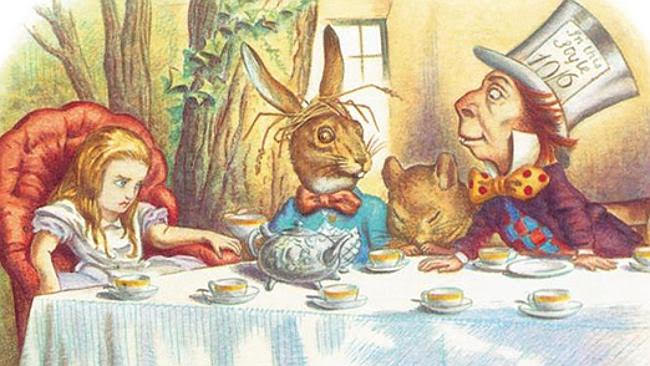

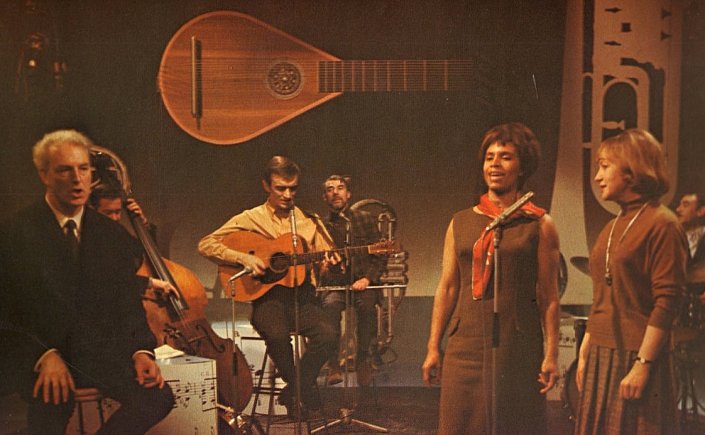




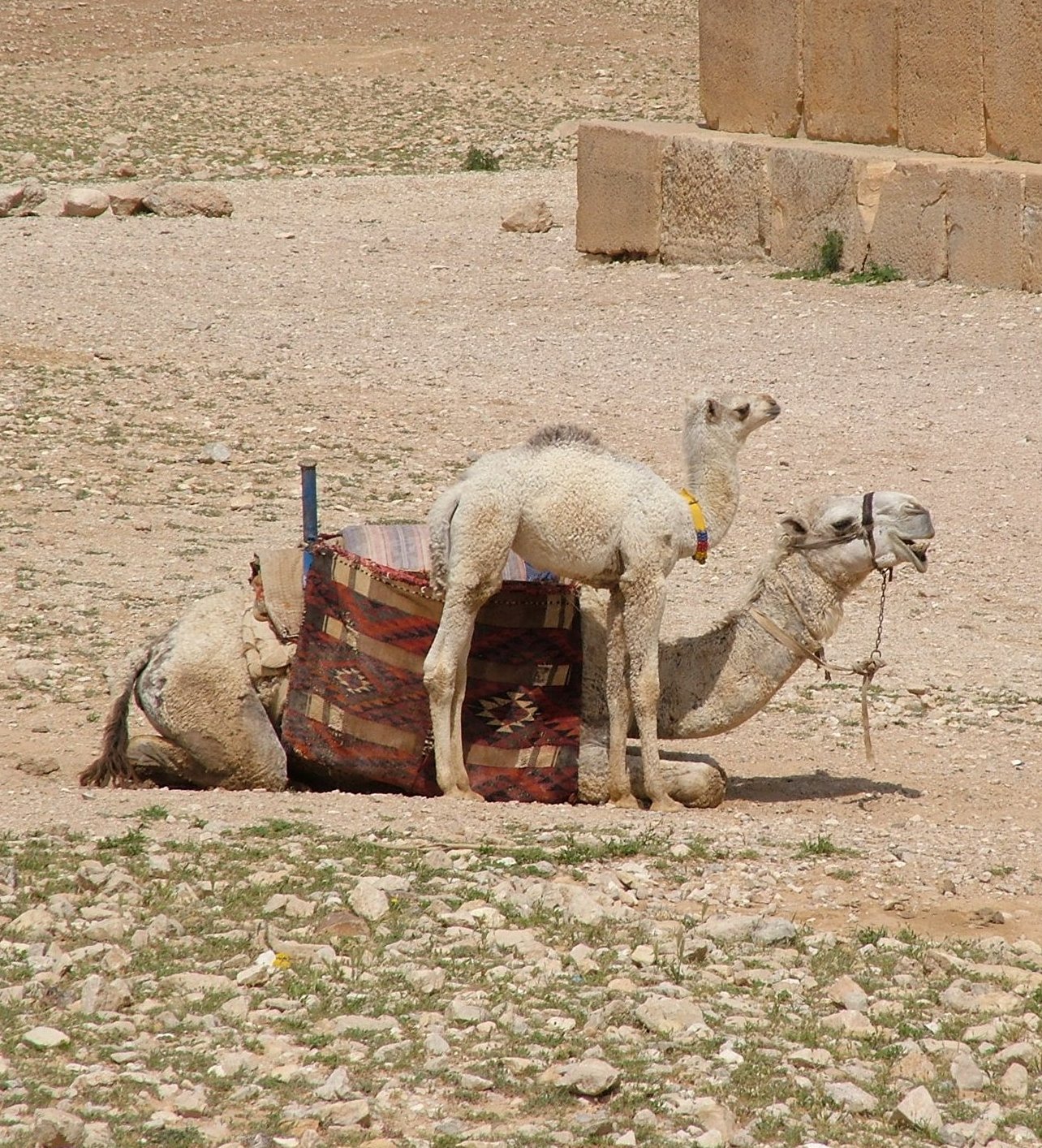


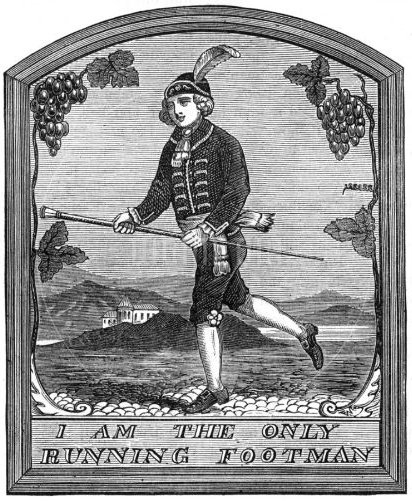


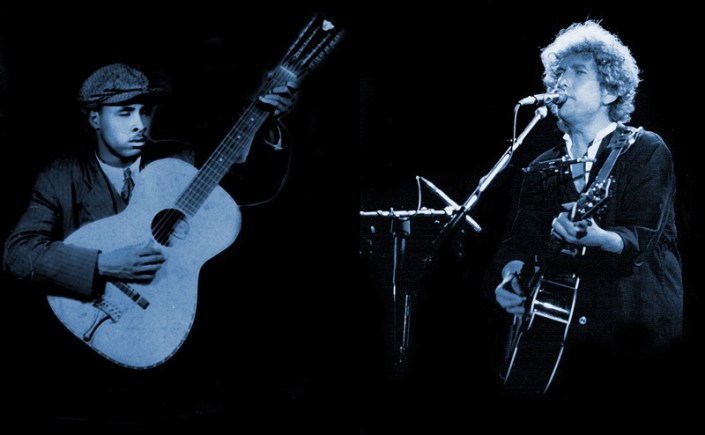
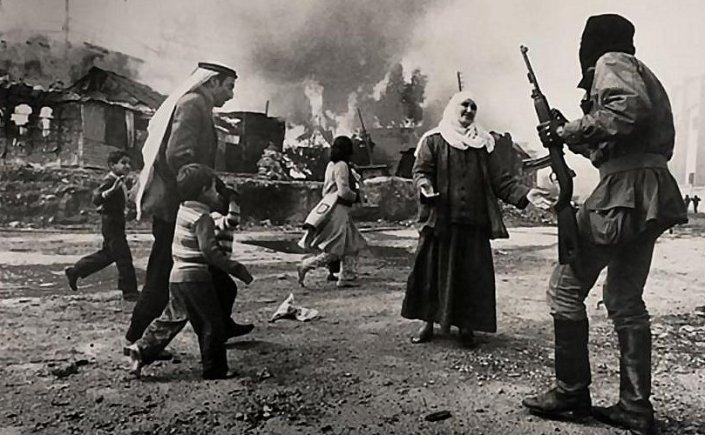

 In That Howling Infinite