We’ve got them Australia Day blues … again

We Acknowledge the Gumbaynggirr People, the traditional custodians of the Land we live upon, and the Land from the Tablelands to the sea. We also pay respect to Elders past, present and emerging of the Gumbaynggirr nation  

Australia Day has always been celebrated on 26th January – except when it wasn’t …

On this day, we celebrate the first settlement of white settlers on Australian shores. Captain Cook had been here a decade before, and Dutch, Portuguese and English mariners had touched land at various point earlier in the century, but didn’t find the amenities attractive enough to stick around.

People, particularly right wing politicians and opinionistas, and white Anglo-Celtic nationalists regards this seminal moment as “a good thing” to borrow a phrase from “1066 and All That”. After all, it brought the benefits of European civilization to those whom Rudyard Kipling might later have referred to as “fluttered folk and wild, half demon and half child”. After two centuries of dispossession, enslavement, massacre, and, in recent times, gradual steps towards recognition and restitution, many descendants of the first peoples think otherwise and regard 26th January as Invasion Day, a time of mourning, as do an ever increasing proportion of the population generally, particularly the younger generations.

The day is celebrated throughout the land with ceremonies and performances by representatives of our many cultures. But indigenous artists, dancers, and musicians face a profoundly deep dilemma when asked to perform. By participating in official commemorations, are they helping to sanction and even sanitize a day they associate with deep historical pain and trauma? Conversely, by boycotting the event, would they be giving up an important opportunity to celebrate and promote indigenous culture, helping non-indigenous Australians to understand that Australia has an indigenous history as well as a white one, and that this is a living culture and that over two hundred years, it is still with us today.

Australia Day January 26th 1988

The days and weeks leading up to Australia Day have become a time for debating our history, and also, our  identity. Author and commentator Henry Ergas as wrote in The Australian on 18 January 2025: “Historical events need to be faced, not defaced. We can celebrate foundational events such as Australia Day without reducing them to a Manichean choice between good and evil, sin and virtue: as John Stuart Mill aptly put it, “Ages are no more infallible than individuals”, our own included. Rather, the point is that foundational events are foundational: they set a beginning whose course always remains to be shaped. And by maturely commemorating those events we can find, as others have, the enduring values to steer us along that course and make our common future one all Australians consider well worth having”.

Australia Day is also very much about memory and myth. As American author CE Morgan has written, “Repeated long enough, stories become memory and memory becomes fact”. German academic Ulrich Raulff put it this: “ … our historical memory is a motherland of wishful thinking, sacrificed to our faith and blind to known facts … This is why historical myths are so tenacious. It’s as though the truth even when it’s there for everyone to see, is powerless – it can’t lay a finger on the all powerful myth”.

And so  around this time every year, people argue about moving the date to one that is less divisive, and indeed, to one that more realistically commemorates the founding of the Commonwealth of Australia. January 1st for example. is put forward as the day six states came together as one Commonwealth under a federal government. The problem with January 1st is of course that being New Year’s Day, and already a fireworks and hoopla day off, no one would notice. The British monarch’s official birthday weekend in June (it’s actually George III’s, but never mind) is also mooted. But that’s wintertime And not good for the beach and a cold beer. Moreover, January 26th is ideally placed as the last long-weekend before the kids go back to school.

As if responding to Pavlov’s bell, folk of a conservative persuasion evoke the irrevocable sanctity of January 26th as a commemoration of how we became who we are – that is, a mainly white and Christian but increasingly multi-hued and multi-faith democracy at the fag-end of the earth. The conservative media seize upon it as an opportunity to serve up overblown, meretricious flimflam not withstanding the fact that the story of the First Fleet is thrilling enough without over-leavening it with patriotic flag-waving, triumphalism, and a big serve of manifest destiny.

The idea of celebrating the acknowledged virtues of our country – its tolerance and openness, its acceptance of immigrants of all colours, cultures, and religious beliefs, its mythical values of “mateship” and a “fair go” are sound. In citizenship ceremonies across our island continent, migrants from all over swear allegiance to our nation and it’s English monarch (but we won’t go there). And yet, the day itself has evolved into a shibboleth, a caricature, a bombastic, jingoistic carnival of flags and fireworks, partying and posturing. It’s as if we forget that on January 26 1788, Captain Arthur Phillip established a penal colony – not a nation. Of the 1336 souls who landed, over half of them were in chains, and most of the others were guarding them.

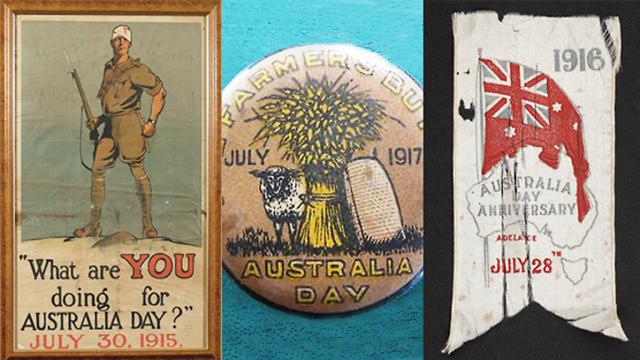
Ironically, the day is not at all sacrosanct. For most of the century of our existence as a nation, most Australian states did not see a reason to celebrate this Sydney-centric beano with such gusto. Indeed, as the picture below shows, the date itself was quite portable. the It was only on the occasion of our bicentenary in 1988 that it officially donned the aura of a secular holy day of obligation – and, of course a public holiday conveniently placed between the hot and lazy Xmas holidays and the commencement of the school year.

Recent polls have show that a majority of Australians wouldn’t be too fussed if the date was moved, although since the failure of the referendum for an Indigenous Voice to Parliament in October 2024, more Australians appear to favour sticking to the holiday we know (though a significant proportion are hard pressed to say what it is we are actually commemorating). Commentators on the right attribute the poll results to what they see as “the end of woke” (and emboldened by the failure of the referendum, they also advocate a winding back of Welcome to Country ceremonies and acknowledgements like the one at the head of this piece).

But has support for changing the date we celebrate Australia Day really fallen away, or was it never really there in the first place (“Australia Day roars back into favour: poll”, January 24, 2025)? The media megaphone has been magnifying the issue for some years, stoking controversy to create something of a self-fulfilling prophecy. Some Australians may be eager for change, but probably most of us Australians have always been content with 26th January, and besides, we have more pressing matters to think about.

“For now”, wrote Stan Grant, author, commentator, and Wiradjuri man, “26 January is all that we are. It is all that we are not. Australia lives in that tension”. We have yet to come to terms with it, and no matter what date we chose, it will continue to be challenged: Indigenous leader and Voice advocate Megan Davis said she was not a “change the date” person because the shift would only move rather than resolve a toxic argument.

Perhaps one good reason we ought to abolish Australia Day is that we are not grown up enough as a nation to deserve it.
And so, enjoy our national day, as the “black armband” and “white armband” tribes leave off their month-long cage-fight that has dominated the media during the Xmas holiday doldrums, and just enjoy a day off.

And we can have a break from self righteous patriotics until our next official day off: Anzac Day, when we celebrate our defeat the hands of Johnny Turk at Gallipoli, and when, of course, The Australian and it’s hired hacks will get carried away by all the Anzacery bluster, and express their indignation with all who criticize that shibboleth. The irony of Anzac Day is that whilst it rightfully remembers the cost and futility of war, its commercialization has meant that more money is spent on political and patriotic posturing than on our serving soldiers and on those who return home injured and traumatized. As Samuel Johnson quite rightly (is said to have) said, “patriotism is the last refuge of the scoundrel”.

© Paul Hemphill 2018, 2025. All rights reserved

We republish below a bit of Australia Day history, and. also, what I consider a reasonably well-nuanced appraisal of the culture wars being fought out over Australia Day. Paul Kelly of The Australian  is a conservative commentator, and is obliged to recite form the News Corp song sheet when it comes to repeating the cliched mantras of his mother-ship – or is it ‘fathership’?) but he weighs well the tired arguments of left and right and argues for what would, could or should pass for the ‘reasonable middle’.

See also, The Frontier Wars – Australia’s heart of darkness, and We oughtn’t  fear an indigenous voice – but we do.

For more in In That Howling Infinite on Australian history and politics, see Down Under


We’ve had those Australia Day blues for a long time as this report from the ABC demonstrates:

We thought they were going to be massacred’ 

ABC Broken Hill. Aimee Volkofsky, 25 January 2018

Watch the  video here:  Eighty years since forced First Fleet re-enactment (ABC News)

WARNING: This story contains images of deceased Indigenous people.

Aboriginal men perform a dance at a 1938 re-enactment of the landing and proclamation of Captain Arthur Phillip at the 150th Australia Day celebrations.    (State Library of NSW)

On January 26, 1938, as the first rally against Australia Day was held, 25 Indigenous men were told if they did not perform the role of ‘retreating Aborigines’ in a re-enactment of the First Fleet, their families would starve.

Government officials had selected the best dancers and singers from Menindee mission in far-west New South Wales and told them they were required to perform cultural dances in Sydney. What they were sent to take part in was a re-enactment of the landing and proclamation of Captain Arthur Phillip at the 150th Australia Day celebrations.

Ngiyaampaa elder Dr Beryl (Yunghadhu) Philp Carmichael, born and raised on the mission, was only three at the time, but her memory of the fear in the community never left her.

Ngiyaampaa elder Dr Beryl (Yunghadhu) Philp Carmichael,

My grandfather protested Australia Day in 1938

The inescapable reality is that Australia’s current national day excludes and alienates Indigenous people — 80 years after my grandfather marched the streets in a fight for equality, writes Ngarra Murray. “All I can remember is the crying, all the women were crying,” she said.  “Whether they were taking them away to be massacred or what, no-one knew. The community went into mourning once they were put on the mission truck.”

The men returned a week later, but Dr Carmichael said it was many years until they would talk about their experience. ‘They came back very quiet,” she said. “It was only in the late 70s they started saying something about what it was like down there. We knew whatever happened down there really hurt them and we didn’t question them.”

Hidden from friends and family

It is speculated that part of the reason for bringing Indigenous people all the way from Menindee was because those in Sydney refused to take part. In Sydney plans were afoot to hold a rally on Australia Day; the Aborigines Progressive Association would declare it a ‘day of mourning’.

Aboriginal rights leaders William Ferguson and John Patten published the Aborigines Claim Citizen Rights! pamphlet on January 12, 1938. In it they declared, “We do not ask you to study us as scientific freaks … the superstition that we are a naturally backward and low race … shows a jaundiced view of anthropologists’ motives”.

Those in power at the time seemed eager to keep the Menindee men well away from activists, keeping them locked away in police barracks.

The incident was detailed in a biography on William Ferguson, written by Jack B Horner in 1974. “The Secretary of the Protection Board had a shrewd idea that Ferguson would try to prevent the Menindee men from taking part in this re-enactment. The Board was taking no chances. Nobody could meet the Aborigines in the coming week in Sydney, without … obtaining personal permission.” — from Vote Ferguson for Aboriginal freedom: a biography by Jack B Horner
Dr Carmichael said there had been whisperings of the movement on the mission, and a direct link to Mr Ferguson.

“Most people on missions couldn’t read and write; that made it really hard for them to understand the government documents they were throwing around,” she said. “Old Bill [Ferguson], because he knew his brother Duncan was back on the mission, he used to send messages back to him. But in the end the mission manager found that out, picked the old fella [Duncan] up in a truck and dumped him over the hill [outside the mission boundary].”

Mr Ferguson attempted to get word to the Menindee men while they were in Sydney but, as elaborate as they were, his efforts were unsuccessful.  “Then followed in the week before the celebrations an amusing battle of tactics between the Protection Board officers and the executive of the Aborigines’ Progressive Association….Some Sydney relatives of a Peter Johnson from Menindee tried to see him at the barracks.  The relatives had been sent by Ferguson, of course, in order to pass to Hero Black (the leader of the Menindee party) a message not to take part in the mortifying ‘retreat’ from the ‘first party of Englishmen’.” (From Vote Ferguson for Aboriginal freedom: a biography by Jack B Horner) . They were eventually allowed a closely supervised visit from two female relatives.

The men soon discovered their duties would include playing the part of Aboriginal people fleeing British soldiers.

Threatened with ration cuts

While the activists may have gotten their message through to the performers, discouraging them from taking part in the re-enactment, the men were left with little choice.

Dr Carmichael said when it came to performing traditional dance, the men were troubled to find they would be led by an Aboriginal actor who did not speak their language or know their culture.

“The government unknowingly or knowingly put up a big Aboriginal, good looking fella as the leader of the dancers and they didn’t even know him. He wasn’t from Ngiyaempaa,” she said. “That really devastated the people and they refused to dance. [The government] threatened them and threatened them; if they didn’t perform they’d cut off the rations to their people on the mission. It was the toughest time of their lives, I think.  I’m just happy we survived’

Eighty years on, as debate continues around whether January 26 is celebrated or mourned, Dr Carmichael said she was happy to have survived, even though she was sad about the past. “We were brought up to tolerate a lot of things and to give thanks for being alive,” she said. “I’m just glad I survived with my culture intact and am alive to teach and pass it on. We should strive for peace, between all nations. We need to come together as people.”

Australia Day: we must face the two truths about January 26

Paul Kelly, Editor-At-Large, The Australian,  
Illustration: Eric Lobbecke

Australia Day is getting bigger, brighter, more celebratory and stained by the rising tide of culture war hostility. The transformation of January 26 from a sleepy public holiday two generations ago into a boisterous party and civic commemoration has provoked a political backlash conceived in two different sentiments — grievance and exploitation.

The debate is not just about our national day. It’s really about who we are, what symbols we honour and, ultimately, the legitimacy of our civilisation. This debate can break one of two ways: robust differences can generate a better understanding of Australia and its national day or the upshot can be a destructive orgy of self-interested identity politics leading to a diminished and divided country.

The progressive crusade to ­remove January 26 as Australia Day has won fresh momentum for a movement bent upon imposing its views on the nation. Nobody should be surprised.

The volatility of social media, the power of negative politics and the emotional manipulation around “invasion day” constitutes sufficient warning that things could go badly wrong.

A nation ignorant of its history or simply unable to handle its history is heading for trouble in the present age of populist and cheapjack disruption.

Those pledged to “change the day” underestimate the popularity of the late January public holiday before the kids return to school, when barbecues abound in parks and backyards, fireworks make a spectacular night, the Australian flag adorns cars and front verandas, the sense of community is tangible, and civic and citizenship ceremonies at the local level testify to a beating patriotism.

In every such event there are tributes to the first Australians. This is embedded in our civic ­culture. More indigenous peoples are participating and being recognised on Australia Day, with its ­official emphasis on multi­culturalism and diversity. Since governor Lachlan Macquarie nominated the public holiday in 1818, the day has seen enormous and essential reinterpretation.

Beware, however, the emerging malaise — a culture war between the green-identity, politics-progressive left determined to destroy the current day and the hopelessly unpersuasive conservatives who defend the status quo, speak and listen only to one another and lose every battle because they cannot find a language to appeal to a ­diverse mainstream.

There are two truths about January 26, 1788. It was the threshold moment for one of the most audacious experiments of the ­Age of Enlightenment seeding a British settlement and society on the continent most distant from Britain under the practical yet visionary leadership of Arthur Phillip, in many ways the true founder of Australia who, against almost every prospect, had the ­insight to believe this convict ­colony at the ends of the earth would one day be “the most valuable ­acquisition Great Britain ever made”.

Those who say the story of the First Fleet and settlement are boring and uninspiring are dead in their imagination and blind in their vision.

The associated truth is that the oldest civilisation on earth, isolated for thousands of years from the rest of the globe and hence ­extremely vulnerable, was unable to defend ­itself and suffered dis­possession of its lands, ravage from disease, loss of life in conflict and loss of its way of life.

Despite the ­initial good ­intentions towards the Aborigines displayed by Phillip, the great moral failure in Australian polity was the belief there was no place, no dignity and, indeed, no life for the original Australians.

Both truths are authentic. Neither can, nor should, be denied. This is our inheritance and, in its soaring achievement and murderous squalor, it constitutes the unique meaning of Australia. One of the central purposes of our existence is to find a way of living with these truths and ensuring the peoples who embody such different traditions can live together and thrive together. There is simply no alternative.

We should exist neither in perpetual grievance nursed by the ­indigenous peoples and those, like the Greens, who recklessly exploit their grievances, nor in the complacency of those Europeans who still pretend there was no dark side to the civilisation we enjoy.

The issue is whether we have the maturity to hold together conflicting truths and sort things through, or whether we choose ideological indulgence and cynical zero-sum politics.

Australia Day needs to stand because the nation cannot run or hide from either the glory or ­tragedy in its duality. The answer to indigenous feelings about January 26 is to construct, not destroy — if there is sufficient agreement, then construct a new day of indigenous commemoration, suffering, survival and triumph. That will take time but over time it may emerge as one of the constructive solutions for Australia.

Declaring that January 26 must be shut down as a day of shame, genocide and mourning offers no solution to anyone. Telling the ­descendants of Arthur Phillip that the origin of the British civilisation and prosperous multicultural democracy they have built lacks sufficient legitimacy to be honoured as the national day is dishonest and destructive. How could it not be?

In this paper today, indigenous leader Noel Pearson says the blackfellas were here 65,000 years before whites arrived and it is vital we “recognise and honour this”. Pearson also says the whitefellas aren’t going away, they created something and it is also vital to “recognise and honour this”.

Tearing one truth down in the cause of another is the road to ruin for Australia. Both truths need to be confronted and engaged. “Trying to erase January 26 is denying the very history we want Australians to face up to,” Pearson says. “There is no other relevant time or date other than those 24-48 hours when ancient Australia passed into the new Australia.” It is this transition the nation must face.

The enemies of this obligation are thick on the ground as radicals and conservatives, often peddling phony mantras. The self-interested cynicism in the stand of Greens leader Richard Di Natale is gobsmacking. With his eye on stealing future votes in inner-city Melbourne, Di Natale announces changing Australia Day will be a priority for the Greens during the rest of the year since the day is about theft and genocide.

What will replace January 26? Why should Di Natale bother with such trifles when there are ideological axes to be swung and votes to be purchased through cultivating national self-abasement under the fraudulent cover of morality?

In response, Labor leader Bill Shorten was just pathetic: he won’t defend Australia Day, he won’t abandon Australia Day and he doesn’t like another day of ­Aboriginal commemoration. In the end he says the day itself is not what really counts. Yes, this is the alternative PM on our national day. Perhaps we should be grateful he didn’t line up with Di ­Natale’s view that the flag should be flown at half mast on the national day.

Malcolm Turnbull, unsurprisingly, said he’d like to hear Shorten speak “proudly and passionately” about Australia Day. But Shorten has a problem, given the embrace by much of the Labor rank and file of a progressive orthodoxy ­towards changing the national day anyway and at odds with majority public opinion.

Indigenous ALP frontbencher Linda Burney stepped into this confusion, criticising the Greens, saying Australia Day won’t be changing any time soon, but highlighting the difficulty it poses for Aborigines as a day of celebration. Aware that NSW ALP policy calls for consultation about a new and separate public holiday devoted to indigenous commemoration, Burney put this idea on the table. It is not ALP policy but Burney was being constructive and her proposal merits serious consideration.

Turnbull preaches an Australia Day that brings people together and celebrates our multicultural diversity. The government has properly removed the right of local councils to hold citizenship ceremonies if they refuse to recognise Australia Day and hold citizenship ceremonies on that day. But the ­reality cannot be avoided: division over Australia Day will mount in the future and this will require astute leadership and management.

For many Aborigines, January 26 will remain invasion day, and that is understandable. But any alternative national day that commemorates British settlement or the foundation of Australia has a similar problem. The logical ­alternative of January 1 — the ­inauguration of the Commonwealth of Australia — would honour an event that denied any role or existence for Aboriginals and assumed they were a dying race.

In truth there is no escape from the history — yet the historical story must be authentic, not convenient mythology. Australia was always destined to be settled by a European power. The force of the Enlightenment and the Industrial Revolution would never be denied from the great southern land. There are few inevitabilities in history and this was inevitable.

We are fortunate the European power was Britain, not France or Spain. This was an 18th-century blessing. We are fortunate the British came not just to establish a convict colony but to bring their values and institutional ethos.

Phillip had an 18th-century faith in improvement, a belief he was founding a new British society and serving the cause of humanity. With slavery still not abolished in the empire, Phillip declared from the inception of Australia that “there can be no slavery in a free land and consequently no slaves”.

The Aborigines he encountered were not a nation state. They were a collection of hundreds of tribes speaking different lan­guages, devoid of collective political purpose or leadership, often at war with each other and without the structures to allow sovereign negotiations or dealings.

To say the British should not have come is a ludicrous denial of reality and makes as much sense as saying the early explorers should not have advanced inland to ­discover the continent. To pretend the Aborigines could or should have retained their possession of the continent forever is delusional and is a device to avoid historical reality.

The encounter between the British and the Aborigines was without precedent in human history. The idea that good intentions were enough for success is absurd. Historian Geoffrey Blainey says in first volume of his The Story of Australia’s People: “The racial conflict in Australia — nearly all would agree today — should have been handled more wisely and firmly but the British leaders lacked the political and cultural experience needed to handle a ­dilemma that was exceptional in world history. Furthermore, London at one end of the globe and Sydney and Hobart at the other end viewed the dilemma and their duties and powers, differently.”

The idea that the British ­arrivals should have negotiated a treaty is nonsense. With whom and on what basis? There is no ­answer. During the 70 years after settlement many thousands of ­Aborigines were killed by Europeans — though far more died from diseases — creating a moral legacy the nation cannot deny and must confront.

Efforts to do this have been substantial while incomplete. Witness the Reconciliation process, the Mabo case and granting of native title rights, huge though flawed public funding, and the continuing process of constitutional ­recognition.

The first Australians lost much from the events of 1788 yet they also gained much, eventually — proving that indigenous peoples could live and thrive in a modern urban society. Aborigines are poised to become more prominent in every facet of Australian life.

The related truth, however, is that as a nation we cannot pretend there is full atonement for the ­dispossession. We cannot say: “Sorry, let’s leave.” We could not do this in 1808, let alone 1901, let alone 2018. There can be no full rendering of justice, no full recompense after dispossession. History cannot be reversed.

We must honour and reflect on the history, restore Aboriginal rights, and strive for justice as much as practicable. But it cannot serve indigenous Australians to engage in perpetual grievance, to magnify the sins of the past in an endless demand for atonement and more atonement still, part of a futile quest to deny any legitimacy to January 26. That is the road to a self-defeating misery.

The bulk of the Australian population, including the millions of post-World War II immigrants and their descendants, will neither accept nor tolerate the idea that the British founding of this country was a shameful and illegitimate event. When the Greens and other progressives promote this sentiment — exploiting indigenous ­resentment for their own ideo­logical and electoral gains — there is no upside for our polity, just ­counterproductive bitterness with the risk of violence.

Where is the legitimacy in January 26? It lies in the society that evolved and continues to evolve, a nation that, for all its faults, is democratic, egalitarian, tolerant and, in per capita terms, has opened its door to immigrants on a more sustained basis than ­virtually any other developed country. This constitutes a powerful legitimacy.

It was Noel Pearson more than a decade ago, in a famous letter to John Howard, who offered the most honest and enduring framework for presenting and understanding contemporary Australia. For Pearson, the nation embodies three traditions: the indigenous peoples, the first Australians, who roamed this continent for 65,000 years, long before the ages of Babylon, Athens and Rome, finding a way to live and thrive in this environment; the British inheritance dating first from the voyages of James Cook and then from the ­initial colony under Phillip, followed eventually by Lachlan Macquarie and more settlements across the continent that led to a polity of British-derived laws, values and institutions that still operate today; and the immigrant tradition, the ethnic input from so many nations that broadened and deepened the culture and led to a multicultural nation, one of the most successful on earth.

These three traditions need formal embodiment. Pearson’s vision was adopted by Tony Abbott as PM. But it needs a more declaratory form authorised by the parliament or the people. This is a critical step in finding a national identity that is shared and inclusive and can win wide support ­because of its validity.

The issue of constitutional recognition of indigenous peoples needs to be reopened with a new process. This time there needs to be greater realism on all sides. The Turnbull cabinet rejected the final recommendation for an indigenous advisory body to be inserted into the Constitution because it believed such a referendum had no prospect of success. Those ­attacking this decision have singularly failed to offer any explanation or strategy of how such a referendum could be passed.

There have been some suggestions that the Australia Day issue can be postponed pending the ­inauguration of an Australian ­republic. That is a tempting but most unwise proposition. The ­republic will not provide the ­answer and, moreover, it is probably many years or decades away.

While the republic is a necessary step in Australia’s evolution, its cause is currently weak and devoid of energy. This is because of the ­destructive transformation in progressive politics to embrace change based on individual and group rights around sex, gender and race, a combination of tribal and narcissistic imperatives.

The republic has no voice or ­appeal in this world. It won’t change your personal life, it won’t relate to how you live, it won’t speak to your gender, sexual or ­racial identity. Paul Keating once lamented the republic had been consigned to an after-dinner conversation; these days it doesn’t even win that rating. When was the last dinner party you attended where the republic got anything more than the briefest mention?

Shorten pledges that in office he will launch a path to the republic. But that will prove immensely difficult in today’s Australia. The republic is now a token of progressive politics, nothing more. The emotions, energy and priorities of progressive politics lie ­elsewhere.

The nation must face the Australia Day issue and competing historical truths as a constitutional monarchy or not at all.

The Twilight of the Equine Gods

The horse has been man’s most important companion – forget cats and dogs – and the most durable of historical alliances – against which every other covenant has been fragile and ephemeral – not even our relationship with our gods has shown a comparable degree of stability. Our story resonates with an equine leitmotif – in our dreams, our fantasies, our histories, our literature, and our movies; in our aesthetics and our notions of speed, strength, power, courage, fortitude, loyalty and beauty.

Hey and away we go
Through the grass, across the snow,
Big brown beastie, big brown face,
I’d rather be with you than flying through space. 
Mike Oldfield, On Horseback

Pastorale

Oh the world is sweet
The world is wide
And she’s there where
The light and the darkness divide
And the steam’s coming off her
She’s huge and she’s shy
And she steps on the moon
When she paws at the sky
Leonard Cohen, The Ballad of the Absent Mare

What is there not to love about a horse?

Its big, brown, doe eyes; its earthy, sweaty aroma from a land somewhere between babies and barnyards; the warmth of its neck on your palm; the rough feel of its mane in your fingers; the smell and the squeak of saddle leather; the jingle-bells of the bridle. The strength you sense through your thighs; an exhilaration that is close to fear as you kick his flanks into a trot, a canter, a gallop, and whoa! and you’re never one hundred percent sure she will obey you. And then, when it’s over, the radiated heat, the damp hide, the glow of sweat, almost a mist of equine energy as you dismount after the ride. You feel wired, alive, and at one with the horse, with the land, with nature.

I first rode a horse in the late seventies, on my first visit to Australia with my first wife. Her old man was a doctor on locum in Coolah, New South Wales, beyond of the Black Stump’, which is to say, the back of beyond (and there really WAS a black stump on the outskirts of town, for the infrequent tourist to be photographed by in pre-selfie days). A local farmer had invited us out to ride his large property, and so we rode, in the heat haze of high summer, through wide, dry, open, paddocks, mobs of roos scattering as we approached, flocks of cockatoos roosting riotously in the branches of dead trees, and flies. Yes, I learned about the “Aussie salute” that summer. I fell in love with the Australian bush then and there, the “wide brown land” of Dorothea Mackelllar’s sunburnt country“. A few years later, as a newly arrived immigrant, I would go riding again, this time with country friends in the Dungog cattle country north of Sydney.

I was not a good rider, but I loved the craic. Not a natural like my future wife. When we first met, she kept four horses and looked after a whole riding school of them, bringing them in bareback riding, stock-whip cracking, a proper jillaroo. ‘Western pleasure’, it was called. No jackets and jodhpurs – it was cowboy hats, boots and blue jeans – before helmets and Occupational Health and Safety. I rode her gorgeous chestnut quarter horse called Twopence, and she, a handsome palomino named Trigger (of course). A riding accident put me in hospital – and I never rode a horse again.

Twopence & Trigger

That was a decades ago, but living in the bush, I still feel pleasure when I see horses in their paddocks. The sight, sound, and smell strike a melodious, atavistic chord that many would  recognize as distinctively Australian. How many Aussies of a certain age would not thrill at the Banjo’s ballad of the bushman that is almost our national poem:

He hails from Snowy River, up by Kosciusko’s side,
Where the hills are twice as steep and twice as rough,
Where a horse’s hoofs strike firelight from the flint stones every stride,
The man that holds his own is good enough’.

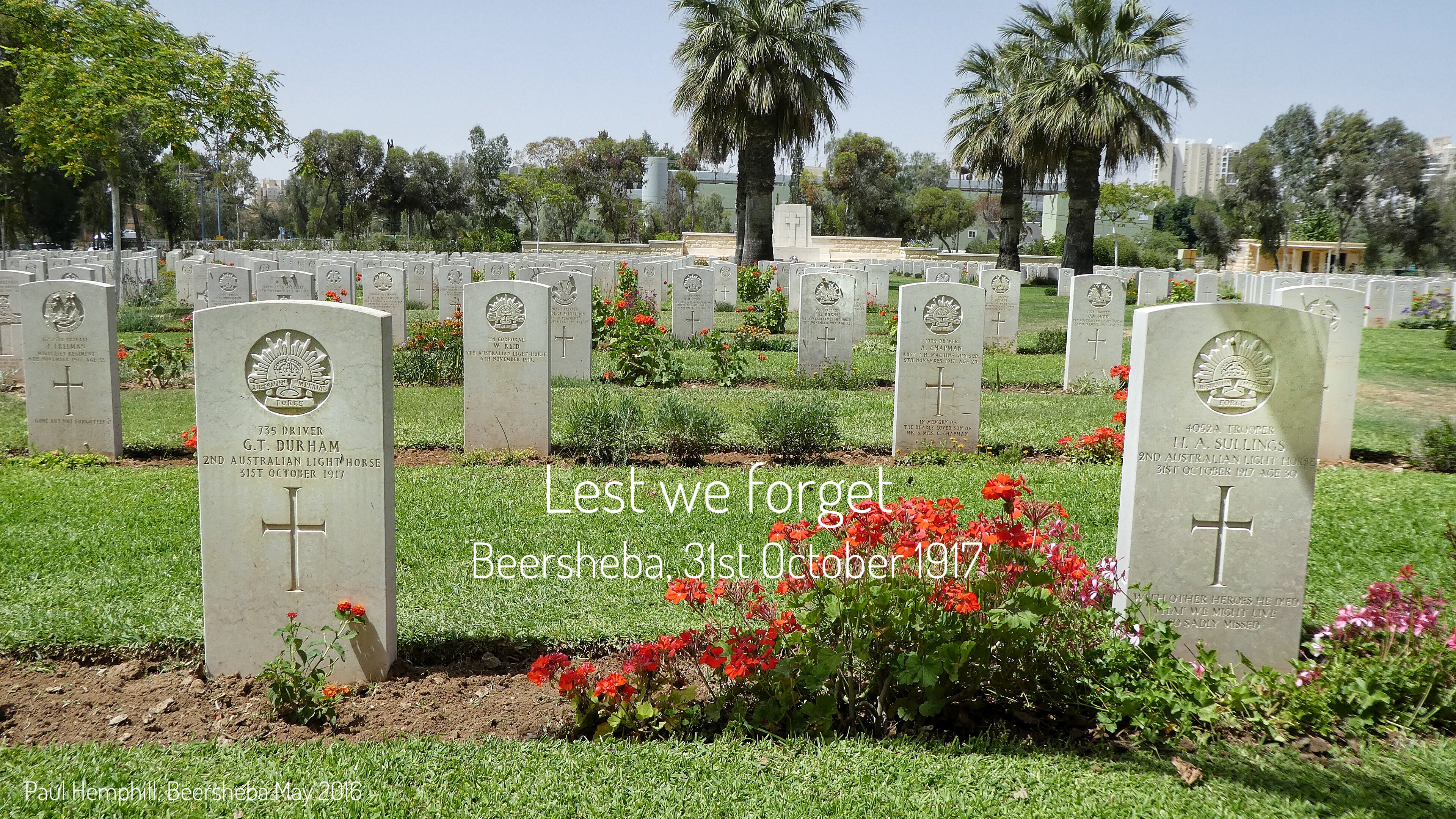
In this centennial year of the Palestine Campaign of WWI and the gallop of the Australian Light Horse towards the strategic Beersheba wells – praised, inaccurately, as history’s last great cavalry charge, the Light Horseman and his hardy “Waler” (from New South Wales) have achieved iconic status in a media supercharged on “Anzackery”. Calmer voices have argued that on the scale of the carnage on the western front, where Diggers died in their thousands, and indeed the Gaza battle itself, where the Anzacs were a very small part of a very large army, it was really no big thing, But never let the facts get between a politician and a photo-opportunity. During the closing scenes of The Man Who Shot Liberty Valance, the journalist says: “This is the West, sir. When the legend becomes fact, print the legend”.

And it was always thus. As German academic and cultural scientist Ulrich Raulff’s tells us in his captivating “micro-history” Farewell to the Horse: The Final Century of Our Relationship: 

“Like love and the stock exchange, our historical memory is a motherland of wishful thinking, sacrificed to our faith and blind to known facts…This is why historical myths are so tenacious. It’s as though the truth even when it’s there for everyone to see, is powerless – it can’t lay a finger on the all powerful myth”.

Farewell to the horse

It is an easy segue from my Australian pastorale to Raulff’s illuminating canter through the story of the “Centaurian Pact” between humans and horses. it is at once a ride, a revelation, and a reminiscence of my short-lived ‘cowboy’ days.

“The horse” Raulff begins, “has been man’s most important companion – forget cats and dogs – and the most durable of historical alliances – against which every other covenant into which we have entered has been fragile and ephemeral – not even our relationship with our gods has shown a comparable degree of stability”.

He then recounts how over the span of a few decades, a relationship that endured for six millennia went “to the dogs” – excuse my awful pet-food pun. And it happened almost unremarked, unnoticed, and unsung. “For a century, the oat-powered engine was the universal and irreplaceable power unit of the forced mechanization of the world”. And then it was gone, replaced by the internal combustion engine. And yet, the term “horsepower” is to this day a measure of the performance of vehicle engines (although now mostly replaced by kilowatts) – a horse was the equivalent of seven men.

“The twilight of the equine gods”, as Raulff describes it, was a long goodbye indeed, and in the realm of myth, memory and metaphor, horses are with us still; or as he so lyrically expresses it: “ghosts of modernity” (echoes of Dylan, in my mind, at least) that “haunt the minds of a humanity that has turned away from them”.

Like its subject, Farewell to the Horse is a handsome, wide-ranging, beast. More elegy than epitaph, eclectic and imaginative in scope, viewing the horse as muse, as mount, and as metaphor, Raulff sings the song of the horse – and if ever there was a ‘horse opera’, this is it.

Eloquently and at times poetically translated, and generously illustrated with pictures from galleries, libraries, and photo archives, Raulff takes the reader through the many worlds of the relationship. On his academic home-turf of sociology and psychology, his references are primarily German, but straying from his academic stable, he ambles into a lush and diverse pastureland of history and mythology, politics and philosophy. economics and geography, industry and commerce, physics and biology, science and medicine, sport and recreation. And art and literature: how artists and writers brought their perspectives, personas and passions onto canvas, photographs and the printed page. In many ways, its infinite variety reminded me of English historian Simon Schama’s fascinating Landscape and Memory.

Raulff has divided his book into four broad thematic sections, each with an evocative title – The Centauran Pact, A Phantom in the Library. The Living Metaphor, and The Forgotten Player – each exploring a particular aspect of the horse’s story. But he allows himself much extempore stream of consciousness as he periodically wanders off-script with childhood reminiscences and collected anecdotes, and dips into favourite paintings, books and films. He time-travels through six thousand years, and traverses the globe too in his long ride – from the Steppes of Eurasia to the Great Plains of America, from the cities of MittelEuropa to those of the Midwest, with side trips to the Middle East and Andalusia.

It was contagious. I too got to thinking beyond the page, recalling and contemplating a miscellany of ideas and images that came to mind whilst reading, and indeed, whilst writing this review, wandering down forgotten bridle-ways (literally, a horse riding path, or trail originally created for use by horses, but often now serving a range of travelers). And is this not what a good book should do?

The Song of the Horse

The horse, the intelligent mammal, the great vegetarian, a prey animal whose strength is in flight, who has no desire or need for confrontation or quarrel. It’s speed, its main asset, enabling it to flee its predators, is also what attracted it to the attention of man, with whom it entered into a long-lived, unequal devil’s bargain. “They were able to turn the inconspicuous potential energy of tough prairie grasses, inedible to almost all other animals into the spectacular energy of a fast endurance runner. Thanks to its natural properties as a converter of energy, the horse could bear kings, knights, female lovers and rural doctors, draw carriages and cannons, transport hordes of workers and employees, and mobilize entire nations”. And indeed, Raulff takes us on a jaunt   through these tableaux.

He quotes historian Ann Hyland: “it was a small step, albeit a brave one, for man to mount a horse”, and writes: “The comparison with the moon landing is certainly not exaggerated. The moment when man began, by domestication and breeding, to connect his fate to the horse – not with a nutritional intention, but with a vectorial aim – may have been, before the invention of writing, the narrow gate through which man entered the realm of history”.

And lo, our story resonates with an equine leitmotif.

The horse is in our dreams and our fantasies, in our literature, and our movies, in our aesthetics, and our notions of speed, strength, power, courage, fortitude, loyalty and beauty. In their mythology, the ancient Greeks gave them wings and narwhal horns, whilst centaurs, part human and part horse, were believed to represent the combined forces within human beings – animal instinct and intellect – and the connection between the physical and spiritual realities, symbolizing independence, knowledge, adventure, fertility and spiritual wisdom.

In our western culture their variety is infinite – from the diverse mounts that conveyed Chaucer’s pilgrims to Canterbury to that paragon of American folk culture, the cowboy. From the rambunctious centaurs and cute coloured unicorns of Disney’s’ Beethoven Fantasia to the gaunt quartet bearing the seer of Patmos’ four horsemen of the Apocalypse. From the teenage innocence of National Velvet and Black Beauty to Thomas Hardy and Carey Mulligan’s sensual and photogenic jaunt in the recent remake of Far From the Madding Crowd. From the patriotic jingoism of Alfred J Tennyson’s The Charge of the Light Brigade and Rudyard Kipling’s East is East and West is West to Banjo Patterson’s blokey bush ballad The Man From Snowy River, which I have quoted above (and will reprise below). The horse has even entered into the invented worlds of science fiction, with Joss Whedon’s rollicking space-pirate adventure, Firefly, and more recently, Westworld with its Wild West theme park populated by lifelike android cowboys and Indians on their robot horses.

Westworld

[If I have one small quibble about Farewell to the Horse, it is in its Eurocentricity. The Land Down Under doesn’t rate a mention even though the horse has played an important role in the evolution of Australia’s perceived national identity – “perceived” because here too, we are captive to that “powerful myth” that Raulff believes subverts fact]. We see horses every time we leave our rural property. They are an intrinsic part of our country life, and many of our friends are riders. Here are a couple of pictures of our good friend Chris riding the National Trail through Guy Fawkes National Park:

Whilst drawing cleverly on the arts – and the book is well-furnished with illustrations that are  well spoken to in the text – Raulff does not venture into poetry, where there are to be found many wonderful images. Take but a few examples drawn from just one poem, East is East and West is West, referred to above, and marvel at the metaphors in Rudyard Kipling’s ‘Boys Own’ tale of a young British officer tracking down a daring Pathan bandit:

The Colonel’s son has taken horse, and a raw rough dun was he,
With the mouth of a bell and the heart of Hell and the head of a gallows-tree”.

“It’s up and over the Tongue of Jagai, as blown dust-devils go,
The dun he fled like a stag of ten, but the mare like a barren doe.
The dun he leaned against the bit and slugged his head above,
But the red mare played with the snaffle-bars, as a maiden plays with a glove”.

“They have ridden the low moon out of the sky, their hoofs drum up the dawn,
The dun he went like a wounded bull, but the mare like a new-roused fawn”.

And, of course, there are the songs. Here’s the doomed Texan troubadour Townes van Zandt’s enigmatic anti-hero:

Pancho was a bandit, boys
His horse was fast as polished steel,
Wore his gun outside his pants
For all the honest world to feel
Pancho and Lefty

And whilst Raulff includes a poignant picture of a lone, pedestrian cowboy carrying his saddle through the scrub like a mariner lost on the land, he doesn’t mention Leonard Cohen’s bereft and distraught cowpoke :

Say a prayer for the cowboy
His mare’s run away
And he’ll walk til he finds her
His darling, his stray
The Ballad of the Absent Mare

But more from St. Leonard of Montreal later…

Frederic Remington’s Bronco

A Phantom Limb

The horse’s glory days may be over, but the echoes of a long and fruitful relationship linger in our lives and in our language – in our idioms and our figures of speech: “getting back in the saddle”, “pulling the reins” and “taking the reins”, “champing at the bit”, “gaining the whip hand”, and the timeless put-down, “get off your high horse!” Phrases such as these are used everyday by people who have never been physically close to a horse let alone ridden one, and whose visual encounters are limited to country outings, circuses, televised equestrian events and westerns (in Australia, as in the US, we can still enjoy country fairs and carnivals that feature rodeos and endurance rides).

Joe Curtin falls from his horse at a combined rodeo, branding, campdraft and gymkhana weekend in Birdsville, Australia. Nick Moir

And note that these usages are somehow connected to power, control, and aggression – and often, casual, almost matter-of-fact violence (the idea of being “horse-whipped”) – violence inflicted not only on humans but on the animals too.

Raulff asks: Why is it that the most powerful visual images of horses are in their warrior role?  Does it not say more about ourselves than what was genetically a passive, docile, tame-able (we call it “horse breaking”) grazer?

Equestrian Statues

Salah ud Din al Ayubi, Damascus

The horse has a complex and varied curriculum vitae. For six millennia, it has been our dependable beast of burden, the bearer of people, packages and progress, shrinking distance and opening up new lands. But it has also been the agent of power, politics and pogroms. A bearer of great ideas, and also of great tyrants.

The horse has long been a living metaphor of power – the absolute political metaphor, indeed.

“The combination of horse and rider is a powerful symbol of domination, and one of the oldest in the book”. The caudillo, the martial “man on horseback” so beloved of painters and sculptors – and of putative dictators (although Stalin and Hitler, Raulff reminds us, despised horses). There’s Alexander the Great on Bucephalus, defeating Darius; David’s conquering Napoleon crossing the Alps; bodacious Boudicca reining in her chariot steeds on The Embankment. To be physically and violently unhorsed is to be taken down literally and figuratively. Hence Richard III’s anguished “my kingdom for a horse”, and George Armstrong Custer and the men of the Seventh Cavalry demountd and doomed on Last Stand Hill.

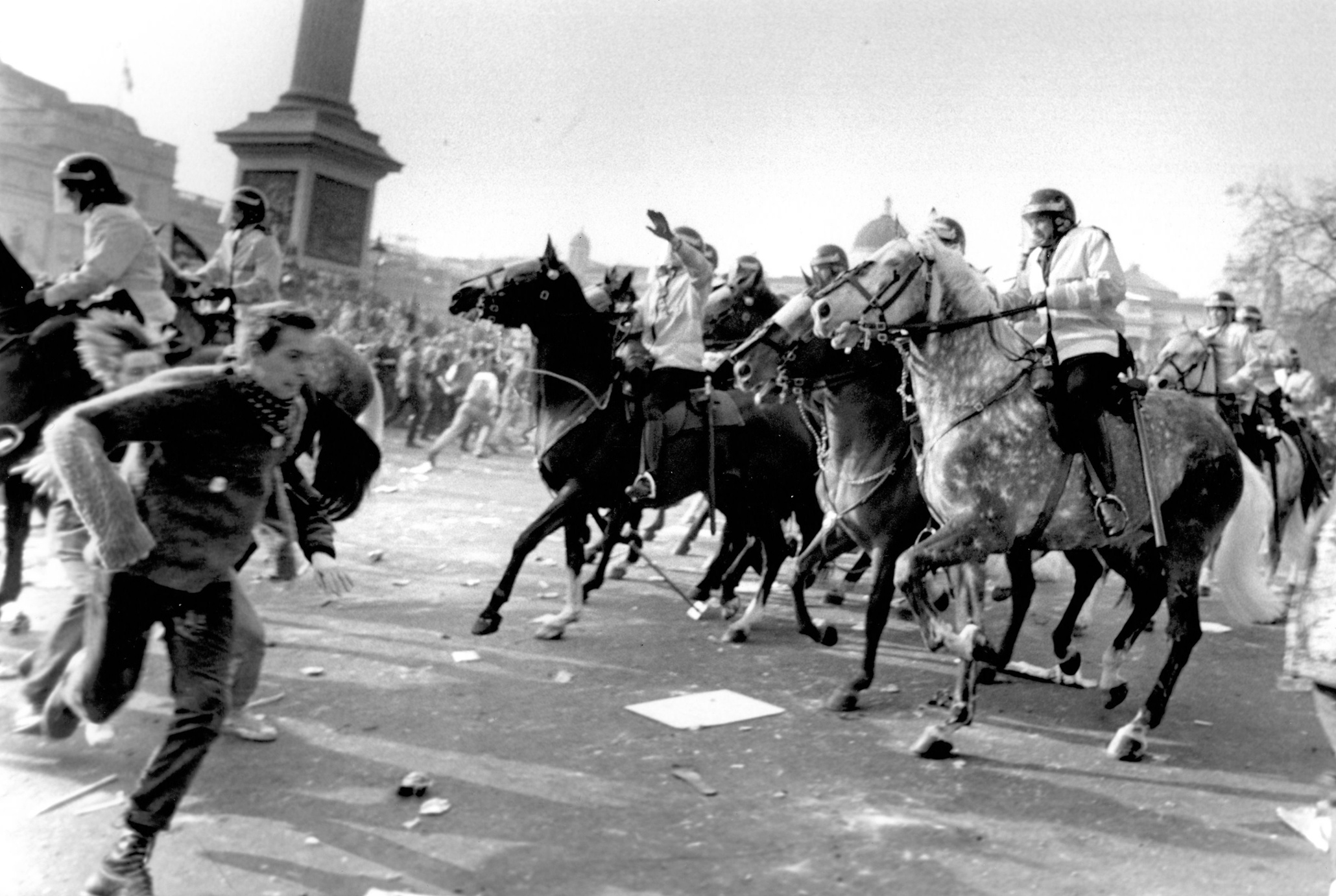
The rise of the horse changes the position of the people and along with it, their view of the world around them – what Raulff calls the ‘cavalier perspective’. It is rooted in an age-old fantasy of the fusion of man and beast, from centaur to chevalier. The unfortunate Aztecs believed the mounted conquistadors to be half man half beast. That dismissive rebuke “get off your high horse” echoes a primal fear of the mounted marauder, be he the Scythian archer, the Mongol warrior, the rogue knight or the Red Indian (“savage” he was called back in the day) of the Great Plains. Recall the Cossacks lining up on the snow-covered square, about to charge the defenseless marchers in David Lean’s Dr Zhivago. Recall, in Game of Thrones, the Dothraki, screaming their war cries, thundering down on the doomed Lannister infantry. “We still see traces of horses’ archaic role as inspirers of terror when required to intimidate picketing workers or to drive rallies of protesters out of shopping precincts”.

Something wicked this way comes – Clive Owen’s Slav King Arthur

During his travels, Raulff visited Israel, where he chanced to observe ultra-orthodox Jews protesting against their youth being conscripted into the Israeli Defense Force. Jerusalem authorities mobilized mounted police officers against the recalcitrant religious. He indulges in pogrom projection, imagining the Haredim being intimated by a Cossack Shtetl flashback. Fanciful, perhaps, but as a young man during the Vietnam demonstrations in London’s Grosvenor Square, I learned that there’s no greater killer of revolutionary passion than the sight of than a wall of fat horse’s arses backing towards you with those nervous hooves a’twitching.

And yet, the use of the horse in this manner forces it to go against its nature, trained to stand its ground in dangerous circumstances when all its instincts are to flee danger. Ostensible police brutality in Grosvenor Square was juxtaposed by the reality that police horses were stabbed by banners and tripped and stoned with glass marbles. Several were so injured that they had to be euthanized.

Horse meets Haredim in Jerusalem

…and meanwhile, in the other side of town

 The Wide-Open Spaces

The power bestowed upon men by horses is much more than such authoritarian, martial muscle. The horse enabled landsmen to conquer what Australian historian Geoffrey Blainey called “the tyranny of distance”. For Rudyard Kipling’s “fluttered folk and wild”, it ushered in a tyranny of a malevolent kind.

The horse-led conquests of European and Asian empires during the second millennium BCE by the chariots and later, cavalry of the horse-people disgorging from the steppes like some equestrian blitzkrieg, transformed world history. They brought their political structures, their warfare, their masculine, spiritual character – their “asabiyyeh” or, literally “muscle” as famed Arab historian Ibn Khaldun put it. The Eurasian nomadic warrior, “that ‘natural born’ combatant, who, as tough and austere as his resilient horse, emerged as the terror of the sedentary populations of Europe and the orient”. The same could be said of the warriors of Islam as they erupted out of their Arabian heartland and reached the walls of Constantinople and the frontiers of the Franks.

One powerful factor in these invasions was the horsemen’s speed. “In every contemporary account of the Mongols, great stress is laid on their speed: suddenly they were there, only to vanish and appear somewhere else even more suddenly”. The alliance between man, horse, and the arrow was likewise significant, providing the ability to kill from a distance, whilst moving, on horseback.

“Thanks to the horse, distant territories could be conquered and vast dominions could be established. The horse and its rider made the land they traversed tangible, recognizable, and able to be taken”. The horse became indispensable in terms of control of the land, subduing its inhabitants, and enabling Its exploration. In America, it brought the conquistadors, and in time, ensured that The West was won with catastrophic consequences for the native Americans with the loss their land and hunting grounds.

War Horse

Since it’s domestication, we humans have never resiled from putting our beloved horses in harms way. As an inspirer of terror and as a battering ram of blood and bone, mounted cavalry have been used on battlefields against soldiers and in streets and villages against civilians. Horses and mules have long provided most of the muscle used to move men and machines – the true “horsepower” of any war effort – serving in a wide variety of roles, including being ridden, as draft animals pulling vehicles and heavy weapons, and as pack animals. They, like their human comrades have perished in uncounted numbers by shot and shell, by accident and cruelty, disease and starvation, and during World War I, by poison gas. Sending animals to war seems, today, somehow even more awful than sending people to war, but in the past, there was little room for that sentiment. Animals were absolutely essential to any war effort, and they had to be sent – during WWI, millions of them, Most were horses and mules, but dogs, pigeons, camels, and even water buffalo and elephants were also found in some theatres of the war.

Celebrated English composer Sir Edward Elgar wrote in August 1914: “Concerning the war I say nothing … the only thing that wrings my heart and soul is the thought of the horses … oh! my beloved animals … the men … and armies can go to hell but my horses: I walk round and round this room cursing God for allowing dumb brutes to be tortured … let him kill his human beings but … how can he? Oh my horses.”

Farewell Old Friend by Fortunio Matana

A Day at the Races

Our pact with the horse was much more than the power and the glory, the conquest and the trail-blazing. Horses’ fleetness, stamina and beauty satisfied other, more hedonistic yearnings, and today, their days on the field of battle long over, they serve to give us pleasure – and profit.

And they have always done thus – particularly in the antecedents and descendants of the Ancient Greek hippodrome (named thus for horses and the racing thereof). In the downtime between warring and raiding, hunting and horse and chariot racing attracted many a warrior’s energy and enthusiasm, and provided  less martial spectators with, vicarious thrills. We have been racing horses for as long as they have been our companions, and wagering on their speed and stamina. This passion fostered complementary endeavours in breeding, training, thieving, and gambling.

The racing carnival still exerts an atavistic, ofttimes addictive spell over riders, owners and punters alike. “The spectacle of race day echoes times and indeed conflicts past, the jockeys’ bright colours, representing a return of heraldry, a way of distinguishing otherwise indiscernible participants”.

It’s there you’ll see the jockeys and they’re mounted out so stately,
The pink, the blue, the orange and green, the emblem of our nation,
When the bell was rung for starting, all the horses seemed impatient,
I thought they never stood on ground their speed was so amazing
Galway Races (Ireland, traditional)

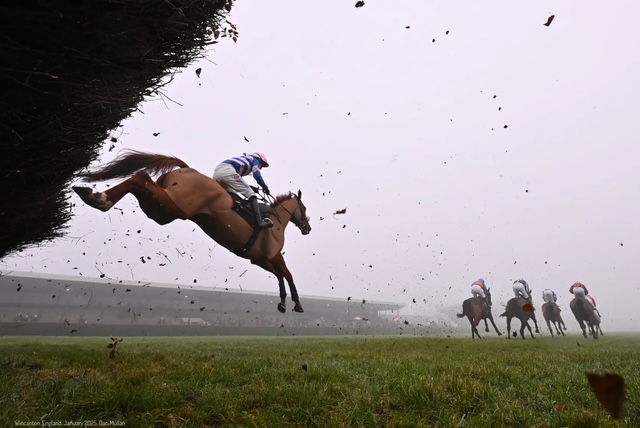
Wincanton races

In horse racing, nothing and no one is hunted, only the shadows of time”, Raulff notes prosaicly.

American author EC Morgan is similarly lyrical: “Time is a horse you never have to whip”,

In That Howling Infinite recently published a review of Morgan’s masterwork The Sport of Kings, a long and deep story about an old Kentucky horse-breeding family. She displays an unerring instinct for metaphor and music. A horse’s neck shudders under its rider’s hands “like a dreaming dog”. Of the racehorses, she writes: “they exploded out of the gate like doves from a cote”; and, “now the school of horses swung round the turn as if caught in a sweep net”.

Raulff explains why horse racing was indeed ‘the sport of kings: Britain emerged as the world power of thoroughbred racing under the racIng-mad Stuart Kings who transformed the sleepy village of Newmarket into the Mecca of the turf, supplanting hunting with punting as the favourite pastime of the idle rich and the indolent upper classes. When Scots King James wasn’t corralling and coaxing the best minds in the land into producing his beautiful Bible, he was both patron and participant with a keen eye for quality horse-flesh.

Teenage Daydream

Did I mention that horses can be dangerous? They are large, high, broad, and heavy, and for all their tameness in the hands of a seasoned rider, they can also be excitable, unpredictable, and wild. When you take up the reins, you literally put your life in your hands. In My Early Life , his biography of his cavalry days, Winston Churchill wrote: “No hour of life is lost that is spent in the saddle. Young men have often been ruined by owning horses or through backing horses, but never through riding them, unless, of course, they break their necks, which, taken at a gallop, is a very good way to die”.

But danger can come in other guises.

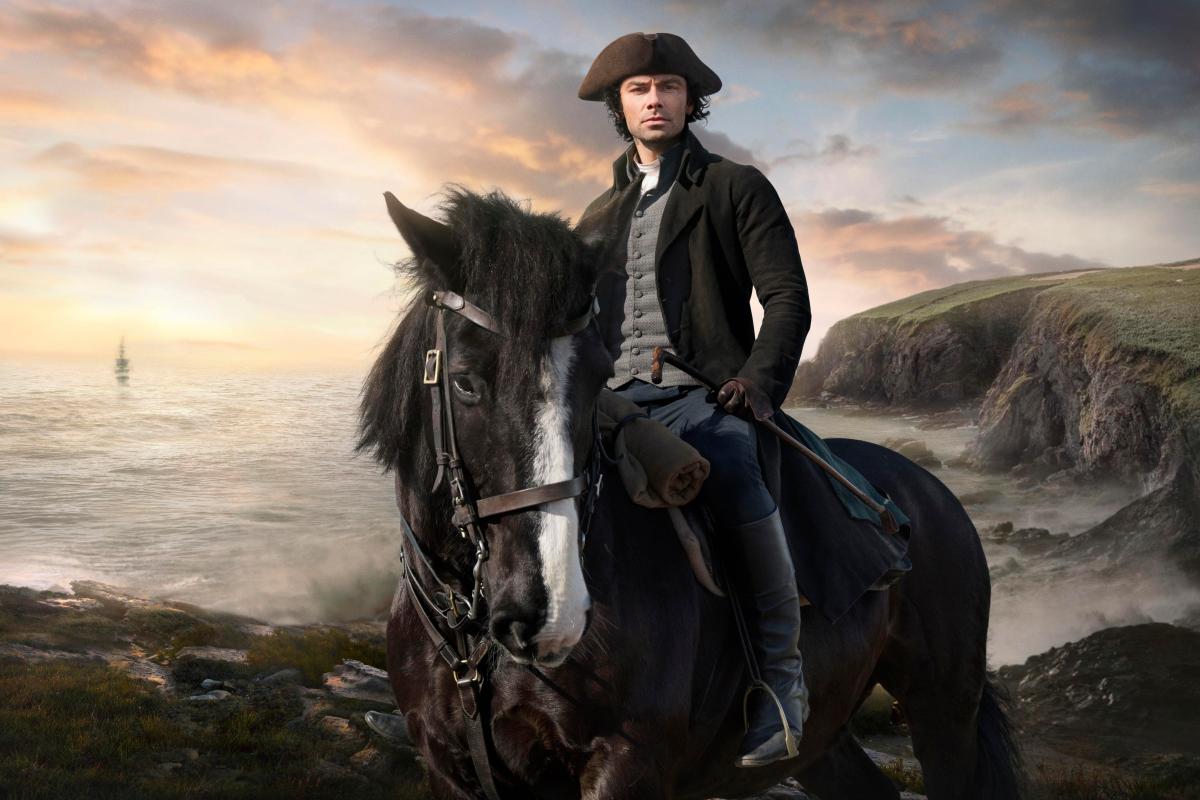
There was probably no way a cultural scientist trained in sociology and psychology could or would avoid how in its variegated pedigree, the horse has also figured as a sexual metaphor, conjuring up thoughts erotic with images of fair maids carried away by amorous riders. Raulff’s copious images include those famous abduction scenes beloved of renaissance painters, but there are many encounters in literature, art, cinema and song that are much less violent. It is as if the rider’s skill with his mount presages his prowess in the sack. There is titillation, there is temptation, and perhaps, surrender. Picture Ross Poldark cantering broodily across the Cornish clifftop, and lifting his Demelza up onto Seamus’ back (that is indeed his name).

True you ride the finest horse I’ve ever seen,
Standing sixteen one or two with eyes wild and green,
And you ride the horse so well, hands light to the touch.
I could never go with you no matter how I wanted to.
Jimmy McCarthy, Ride On (listen to the song at the end end of this post)

Ross Poldark and Seamus

Ulrich gets into his stride, so to speak, when he commits to print his daydreams of the object of many a teenage baby boomers’ longing, the androgynous, pony-tailed cow-girl. He ponders also the puzzle of pubescent girls and horses – that tom-boy world, temporary “islands in the flowing river of time”: “Somewhere between a doll and a real-life partner, the horse is the ultimate sex toy. It’s the largest, most beautiful and final plaything before the transition from home and family to a new relationship with a sexual partner”.

Arwen Evenstar

Having raised the subject of women on horseback, there no ignoring the Amazons. Legend says that they were adept horse-women. As are the heroines of the literary canon who express their subversive sexuality in equestrian interludes – Emma Bovary, Anna Karenina, and Thomas Hardy’s Bathsheba Everdene. Each are subjected to the author’s affectionate attention. When JRR Tolkien wanted to present a strong and wilful heroine in his ostensibly homoerotic epic, he placed Éowyn on a horse, albeit incognito. But she was the exception to JRR’s macho rule. He would never have sent elf princess Arwen Evenstar out like that. But director Peter Jackson, sensing how well it would translate to film, substituted the luminous Liv Tyler for elf lord Glorfindel to confound the Nazgul riders at the ford of Bruinen.  Here is a Carey Mulligan in glamorous array as Bathsheba:

The horse, the healer

So what is this spell that horses weave? We’ve talked about power. We’ve talked about prowess. We’ve talked about passion. Raulff doesn’t venture into the imaginative, the mystical, the magical, and, going further, ameliorative power of horses – that inexplicable feeling you sense when you’re in  close proximity to a horse. presence, an aura of sentient calmness. Let’s reprise our opening paragraph:

“What is there not to love about a horse? Its big, brown, doe eyes; its earthy, sweaty aroma from a land somewhere between babies and barnyards; the warmth of its neck on your palm; the rough feel of its mane in your fingers; the smell and the squeak of saddle leather; the jingle-bells of the bridle. The strength you sense through your thighs; an exhilaration that is close to fear as you kick his flanks into a trot, a canter, a gallop, and whoa! and you’re never one hundred percent sure she will obey you. And then, when it’s over, the radiated heat, the damp hide, the glow of sweat, almost a mist of equine energy as you dismount after the ride. You feel wired, alive, and at one with the horse, with the land, with nature”.

It is said that there there is more to a horse than its rider and that undeniably physical allure – that if you put your hands on or even near a horse’s body and close your eyes, you can feel a golden thread of energy travelling from your hands to its body, and from that body to your hands. There is a quiet strength to a horse that communicates a state of calm, relation, and peace. Therapists who work with grief and trauma are discovering that an emotional connection can exist between a horse and a human, that being in nature, in the presence of horses, seems to help children, teenagers and adults expand their emotional awareness and enhance their mental health, beginning the work of reconnecting them to the self, and to their environment, and even healing something inside that has been broken, often for years.

Poets might describe it as an opening up the heart – WH Auden’s “healing fountain”. Therapists call it limbic resonance, the capacity for sharing deep emotional states arising from the limbic system of the brain, which can include heightened feelings of empathic harmony. Horses, they believe, are highly sensitive creatures and possess an uncanny ability to read and mirror us because it is a skill that keeps them alive. They are instinctively prey animals, and in order to survive, they had to become excellent interpreters of energy, emotion and intention. Their sensitivity has been bred into their DNA for millions of years. But It is still all about the heart and the emotional states of calm and even joy when we feel positive emotions.

As a coda to this brief commentary on the horse as healer, a friend of mine passed away recently in Bellingen Hospital. The hospice ward is an impressive place in terms of its staff and the care they give. As he lay in declining repose, a horse came to his bedside and lay its head on his chest – a small horse, but a horse nonetheless. I have learned since that this pony is a regular visitor to hospices and aged care homes in the area. Bellingen hospital also allows cats and dogs to visit their owners.

For further reading on the horse as therapist, read this piece on horse heart math and an article by Candida Baker, an equine facilitated learning practitioner who helps people suffering  from trauma in the  Sydney Morning Herald. 

The Unequal Bargain

There are wealth of emotions associated with horses, such as pride and admiration, a desire for power, fear and joy, compassion, and companionship, and a lust for freedom. The pony is the cowboys’ closest pal. Western star and crooner Roy Rogers described it best:

Who carries your burden, who carries your load
On tumbleweed land or a long dusty road
Who asks you no questions, who tells you no lies
That four legged friend with the two honest eyes
A four legged friend, a four legged friend
He’ll never let you down
He’s honest and faithful right up to the end
That wonderful four legged friend
Roy Rogers, A Four Legged Friend (listen to the song at the end end of this post)

Over two millennia we have lavished depthless emotion, boundless affection and unlimited treasure upon horses. But we have also been capable of great cruelty both casual and calculated, – from willful neglect and senseless whipping to silent sacrifice as expendable extras on battlefields and motion picture sets. Raulff documents in prose and picture the violence inflicted upon our “four-legged friend”, and also how pathos and sympathy for the horses’ plight evolved into a worldwide movement for the prevention of cruelty to all creatures great and small.

That very same Banjo Paterson who gave us the Snowy Mountain man’s famous ride also glorifying the racetrack – and yet the annual Melbourne Cup,  Australia’s ‘race that stops a nation’, sees horses killed every year. we as a nation continue to praise and perpetuate what many see as animal cruelty. In Paterson’s day, horses were valuable and relied upon for transport and pleasure – theft was common – yet they were treated appallingly. Read The Man From Snowy River and reflect on the agony the hero inflicts upon his mount, which could barely move by the end of the ride and ‘was blood from hip to shoulder from the spur’. Yet Banjo, like apologists for the deaths on the track today – suggests that the horse was reveling in the chase.

But horses’ iconic place in our hearts and souls are sealed by their status as mobile metaphors of speed, of grace, of the wind in one’s hair, of wild, exhilarating, uninhibited freedom: “Run wild, run free”, like the troubled teen and the wild blue-eyed white colt in the 1969 British film of that name.

As Victorian bush poet James Cayce write in his poem A Magnificent Contradiction, a reminder of a debt that cannot be repaid:

The swirl of your mane alive in the wind, the glow on your flanks in the sun
The spirit of freedom you stir in my soul, the rhythm and grace when you run.
A whirlwind of power to wield or withhold; each movement made with conviction, 
A titan at work, a child at play; a magnificent contradiction

And it is with this in mind that Raulff concludes his epic ride, for it  is one of the most poignant paradoxes that the idea of freedom and movement associated with horses and being on horseback, the image of the wild mustangs in The Misfits and Banjo Paterson’s Colt from Old Regret, is juxtaposed with the reality that this “creature of the wind”, as the Arabs described him, has surrendered her freedom and free will in the service of man.

Quoting the poet Albrecht Schaefer, Raulff tells of how “the horse knows that it would like to be free … but the burden is never ending, and it is rarely allowed to run and has to stand there even when it is frightened and when it is seized by the urge to return to its nature, to flee … It is trapped in eternal captivity, always overshadowed by an inescapable will to which it resigns itself without ever realizing”.

This magnificent animal, Raulff  writes, “held in perpetual captivity, is seen by us as the epitome of all in nature that embodies nobility and magnanimity, stature, pride, and courage”.

Now the clasp of this union
Who fastens it tight?
Who snaps it asunder
The very next night
Some say the rider
Some say the mare
Or that love’s like the smoke
Beyond all repair
Leonard Cohen, The Ballad of the Absent Mare

© Paul Hemphill 2018.  All rights reserved


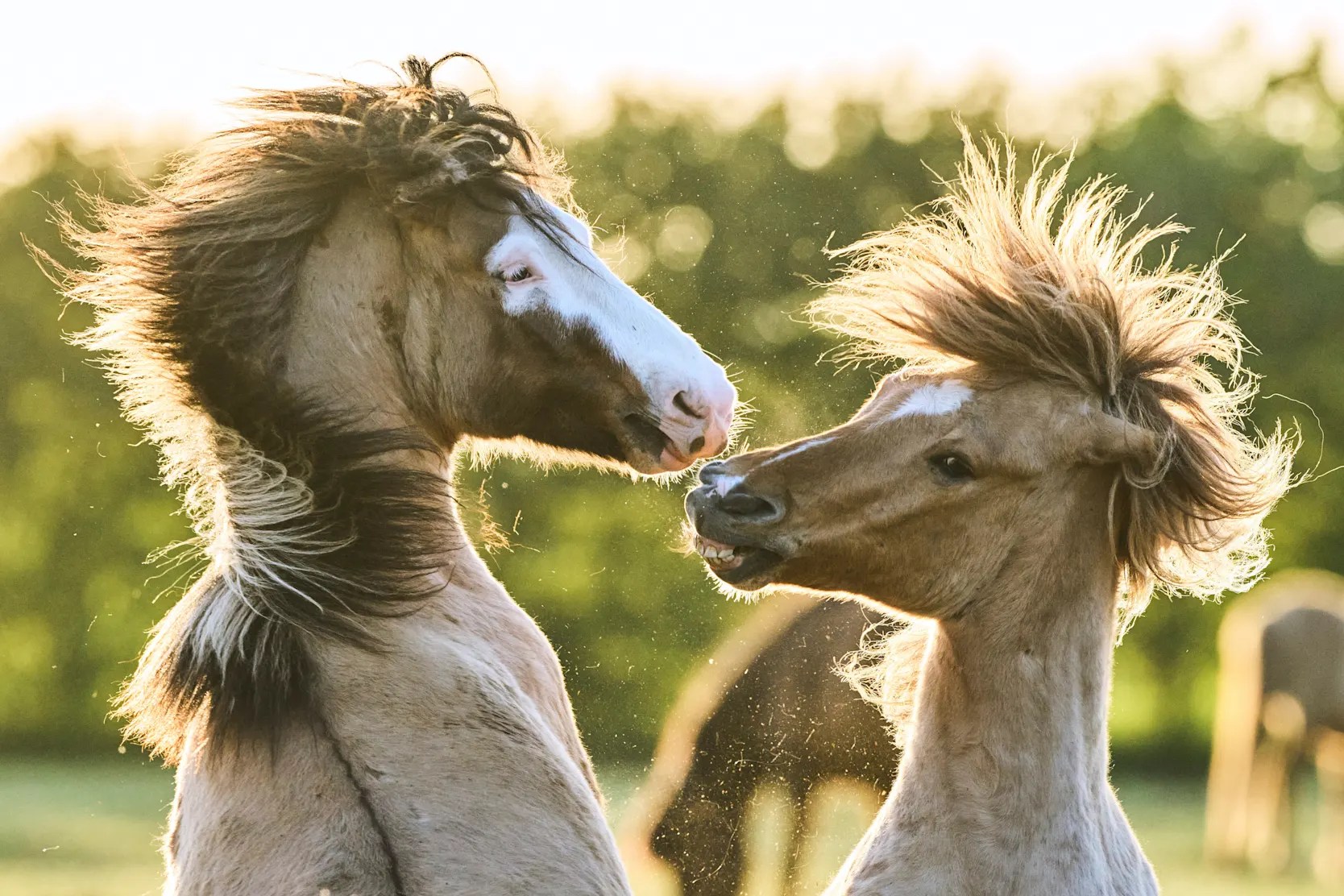
Icelandic horses play at a stud farm in Wehrheim near Frankfurt. M Proust/AP

 Epilogue

The Troubled Trail – an equine parable 

In primeval times, horses were indigenous to North America, but were long extinct by the time the white man came into the new world. He brought with him his deity and his diseases, his guns and his greed – and his horses. He conquered the land and broke it – its ecology, its  pre-Colombian history, and its people.

In the early years, the horses of the conquistadors humbled and harried the Native Americans. In time, many horses scattered and ran wild, and on the open prairie grasslands, they prospered and multiplied. The free people of the plains captured and tamed those feral mustangs, and so mounted, were better able to travel over great distances to fresh pastures and to the wide grazing grounds of the vast herds of buffalo, a rich source of food and fashion.

The horse gave the Native Americans mobility and speed, and an economic asset of value. They began trading horses with their neighbours, and also horse stealing, whilst their mounts gave them the edge in their territorial vendettas with neighbouring tribes. They bought steel axes and knives From the white traders who ventured into their lands from the east, and also, firearms which augmented their already effective mounted archery. This gave them a tactical edge when they first came up against the mounted soldiers of the US Army.

They were a formidable foe, their speed and maneuverability and their skill with bow and rifle, were more than a match for the clumsy, old-school heavy cavalry, and these, indeed, were compelled to adjust their own style and tactics to match their guerrilla adversaries, taking up light weapons – carbines and revolvers – and fighting on foot as circumstances dictated.

An irony of the Battle of Little Big Horn in the summer of 1876 is that George Armstrong Custer and his men rode over-confidently and fatefully onto a battlefield in which they were out-horsed, outgunned, and outmaneuvered by their numerically stronger foe. Another irony is that the only US Army survivors of that famous battle were the cavalry horses. As a contemporary witness of the aftermath wrote:

“As the men looked up and searched the broken terrain with weary, tearful eyes, down by the river a horse was struggling to get to its feet. Several of the men recognized the horse because of its peculiar buckskin-like colour. It was Comanche, the favourite mount of Capt. Myles Keogh, who had valiantly rallied the men of “I” Company right up to the end… He had apparently sustained at least seven wounds, and his coat was matted with dried blood and soil.” Comanche’s wounds were serious, but he recovered and spent his days as a celebrity, taking part in ceremonies and parades as a symbol of Custer’s memory. After his death, he was stuffed and placed on display at the University of Kansas Museum of Natural History. https://www.globetrotting.com.au/comanche-the-horse-that-survived-custers-last-stand/

The US Army exacted a terrible revenge for Little Big Horn. The days of the Plains Indian were numbered as the army and the hunters destroyed the buffalo herds that fed and clothed the tribes, and killed their horses, ending forever their wandering ways. As Neil Young was later to sing in Pocahontas:

They killed us in our tepee
And they cut our women down
They might have left some babies
Cryin’ on the ground
But the firesticks and the wagons come
And the night falls on the setting sun

© Paul Hemphill 2018.  All rights reserved

Frederic Remington’s Braves


The Ballad of the Absent Mare

Leonard Cohen 

Say a prayer for the cowboy
His mare’s run away
And he’ll walk til he finds her
His darling, his stray
But the river’s in flood
And the roads are awash
And the bridges break up
In the panic of loss.

And there’s nothing to follow
There’s nowhere to go
She’s gone like the summer
Gone like the snow
And the crickets are breaking
His heart with their song
As the day caves in
And the night is all wrong

Did he dream, was it she
Who went galloping past
And bent down the fern
Broke open the grass
And printed the mud with
The iron and the gold
That he nailed to her feet
When he was the lord

And although she goes grazing
A minute away
He tracks her all night
He tracks her all day
Oh blind to her presence
Except to compare
His injury here
With her punishment there

Then at home on a branch
In the highest tree
A songbird sings out
So suddenly
Ah the sun is warm
And the soft winds ride
On the willow trees
By the river side

Oh the world is sweet
The world is wide
And she’s there where
The light and the darkness divide
And the steam’s coming off her
She’s huge and she’s shy
And she steps on the moon
When she paws at the sky

And she comes to his hand
But she’s not really tame
She longs to be lost
He longs for the same
And she’ll bolt and she’ll plunge
Through the first open pass
To roll and to feed
In the sweet mountain grass

Or she’ll make a break
For the high plateau
Where there’s nothing above
And there’s nothing below
And it’s time for the burden
It’s time for the whip
Will she walk through the flame
Can he shoot from the hip

So he binds himself
To the galloping mare
And she binds herself
To the rider there
And there is no space
But there’s left and right
And there is no time
But there’s day and night

And he leans on her neck
And he whispers low
“Whither thou goest
I will go”
And they turn as one
And they head for the plain
No need for the whip
Ah, no need for the rein

Now the clasp of this union
Who fastens it tight?
Who snaps it asunder
The very next night
Some say the rider
Some say the mare
Or that love’s like the smoke
Beyond all repair

But my darling says
“Leonard, just let it go by
That old silhouette
On the great western sky”
So I pick out a tune
And they move right along
And they’re gone like the smoke
And they’re gone like this song


Grosvenor Square, London 1968

Poll Tax Riots, London 1990

Grosvenor Square 1968

That was the year that was – going up against chaos

Reviewing 2017, I am reminded of Game of Thrones‘ Mance Rayder’s valedictory: “I wish you good fortune in the wars to come”.

On the international and the domestic front, it appeared as if we were condemned to an infernal and exasperating ‘Groundhog Day’.

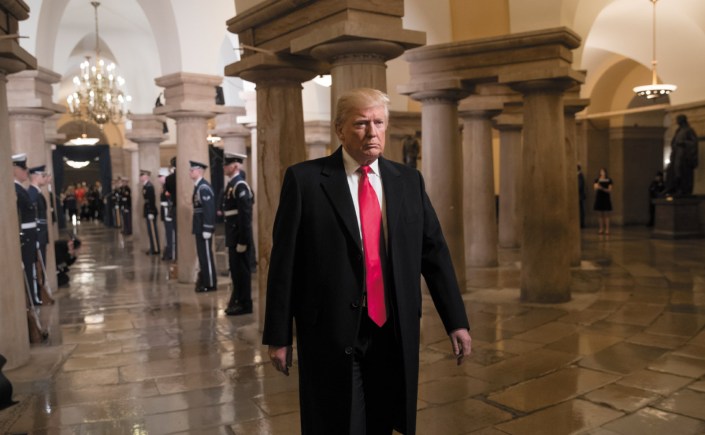
Last November, we welcomed Donald Trump to the White House with bated breath and gritted teeth, and his first year as POTUS did not disappoint. From race-relations to healthcare to tax reform to The Middle East, South Asia and North Korea, we view his bizarro administration with a mix of amusement and trepidation. Rhetorical questions just keep coming. Will the Donald be impeached? Are we heading for World War 3? How will declining America make itself “great again” in a multipolar world set to be dominated by Russia Redux and resurgent China. Against the advice of his security gurus, and every apparently sane and sensible government on the globe (including China and Russia, but not King Bibi of Iz), his Trumpfulness recognized Jerusalem as the capital of Jerusalem. Sure, we all know that Jerusalem is the capital of Israel – but we are not supposed to shout it out loud in case it unleashed all manner of mayhem on the easily irritated Muslim street. Hopefully, as with many of Trump’s isolationist initiatives, like climate change, trade, and Iran, less immoderate nations will take no notice and carry on regardless. The year closes in, and so does the Mueller Commission’s investigation into Russia’s meddling in the last presidential election and the Trumpistas’ connivance and complicity – yes, “complicit”, online Dictionary.com’s Word of the Year, introduced to us in her husky breathlessness by the gorgeous Scarlett Johansson in a spoof perfume ad that parodies Ivanka Trump’s merchandizing.

Britain continues to lumber towards the Brexit cliff, its unfortunate and ill-starred prime minister marked down as “dead girl walking”. Negotiations for the divorce settlement stutter on, gridlocked by the humongous cost, the fate of Europeans in Britain and Brits abroad, and the matter of the Irish border, which portends a return to “the troubles” – that quintessentially Irish term for the communal bloodletting that dominated the latter half of the last century. The May Government’s hamfistedness is such that at Year End, many pundits are saying that the public have forgotten the incompetence of Labour leader Jeremy Corbyn, and predict that against all odds, his missus could soon be measuring up for curtains in Number Ten.

Beset by devilish twins of Trump and Brexit, a European Union written-off as a dysfunctional, divided bureaucratic juggernaut, appears to have found hidden reserves of unity and purpose, playing hardball with Britain, dismissing the claims of Catalonia and Kurdistan, rebuking an isolationist America, and seeing-off resurgent extreme right-wing parties that threaten to fracture it with their nationalist and anti-immigration agendas. Yet, whilst Marine Le Pen and Gert Wilders came up short in the French and Dutch elections, and centrists Emmanuel Macron and Angela Merkel hold the moderate middle, atavistic, autocratic and proto-fascist parties have risen to prominence and influence in formerly unfree Eastern Europe, driven by fear of a non-existent flood of refugees from the Middle East and Africa (these are headed for the more pleasant economic climes of Germany, Britain and Scandinavia), and perhaps, their historically authoritarian DNA. Already confronted with the Russian ascendency in the east, and the prospects of the Ukrainian – Donetsk conflict firing up in the near future, the EU’s next big challenge is likely to be reacquainting itself with its original raisin d’etre – the European Project that sought to put an end to a century of European wars – and addressing the potential expulsion of parvenu, opportunistic member states who fail to uphold the union’s democratic values. As a hillbilly villain in that great series Justifed declaimed, “he who is not with is not with us”.

The frail, overcrowded boats still bob dangerously on Mediterranean and Aegean waters, and the hopeful of Africa and Asia die hopelessly and helplessly. Young people, from east and west Africa flee poverty, unemployment, and civil war, to wind up in Calais or in pop-up slave markets in free but failed Libya. In the Middle East the carnage continues. Da’ish might be finished on the battlefields of Iraq and Syria, with the number of civilian casualties far exceeding that of dead jihadis. But its reach has extended to the streets of Western Europe – dominating headlines and filling social media with colourful profile pictures and “I am (insert latest outrage)” slogans. Meanwhile, tens, scores, hundreds die as bombs explode in Iraq, Syria, Yemen, Egypt, Afghanistan and Pakistan, with no such outpourings of empathy – as if it’s all too much, too many, too far away.

Bad as 2017 and years prior were for this sad segment of our planet, next year will probably not be much better. The autocrats are firmly back in the saddle from anarchic Libya and repressed Egypt to Gulf monarchs and Iranian theocrats. There will be the wars of the ISIS succession as regional rivals compete with each other for dominance. Although it’s ship of state is taking in water, Saudi Arabia will continue its quixotic and perverse adventures in the Gulf and the Levant. At play in the fields of his Lord, VP Pence declared to US troops in December that victory was nigh, the Taliban and IS continue to make advances in poor, benighted Afghanistan. Meanwhile, Africa will continue to bleed, with ongoing wars across the Sahel, from West and Central Africa through to South Sudan,  ethnic tensions in the fragile nations of the Rift Valley, and further unrest in newly ‘liberated’ Zimbabwe as its people realize that the military coup is yet another case what The Who called “meet the old boss, same as the new boss”.

This Syrian mother and her child were rescued by the Greek Coast Guard.

In our Land Down Under, we endured the longest, most boring election campaign in living memory, and got more of the same: a lacklustre Tory government, and a depressingly dysfunctional and adversarial political system. Politicians of all parties, blinkered by short-termism, and devoid of vision, insist on fiddling whilst the antipodean Rome burns. All this only accentuates Australians’ disenchantment with their representatives, warps their perception of the value and values of “democracy”, and drives the frustrated, disgruntled, fearful and alienated towards the political extremes – and particularly the Right where ambitious but frustrated once, present and future Tory politicians aspire to greatness as big fishes in little ponds of omniphobia.

Conservative Christian politicians imposed upon us an expensive, unnecessary and bitterly divisive plebiscite on same-sex marriage which took forever. And yet, the non-compulsory vote produced a turnout much greater than the U.K. and US elections and the Brexit referendum, and in the end, over sixty percent of registered voters said Yes. Whilst constituencies with a high proportion of Muslims, Hindus, Christians and Chinese cleaved to the concept that marriage was only for man and women, the country, urban and rural, cities and states voted otherwise. The conservatives’ much-touted “silent majority” was not their “moral majority” after all. Our parliamentarians then insisted on dragging the whole sorry business out for a fortnight whilst they passed the legislation through both Houses of Parliament in an agonizingly ponderous pantomime of emotion, self-righteousness and grandstanding. The people might have spoken, but the pollies just had to have the last word. Thanks be to God they are all now off on their summer hols! And same-sex couples can marry in the eyes of God and the state from January 9th 2018.
Meanwhile, in our own rustic backyard, we are still “going up against chaos”, to quote Canadian songster Bruce Cockburn. For much of the year, as the last, we have been engaged in combat with the Forestry Corporation of New South Wales as it continues to lay waste to the state forest that surrounds us. As the year draws to a close, our adversary has withdrawn for the long, hot summer, but will return in 2018, and the struggle will continue – as it will throughout the state and indeed the nation as timber, coal and gas corporations, empowered by legislation, trash the common treasury with the assent of our many governments.

And finally, on a light note, a brief summary of what we were watching during the year. There were the latest seasons of Game of Thrones and The Walking Dead. The former was brilliant, and the latter left us wondering why we are still watching this tedious and messy “Lost in Zombieland”. Westworld was a delight with its fabulous locations and cinematography, a script that kept us backtracking to listen again to what was said and to keep up with its many ethical arcs and literary revenues. and a cavalcade of well cast, well-written and original characters. Westworld scored a post of its own on this blog – see below. The Hand Maid’s Tale wove a dystopian tale all the more rendered all the more harrowing by the dual reality that there are a lot of men in the world who would like to see women in servitude, and that our society has the technology to do it. To celebrate a triumphant return, our festive present to ourselves were tee-shirts proclaiming: “‘ave a merry f@#kin’ Christmas by order of the Peaky Blinders”.  And on Boxing Day, Peter Capaldi bade farewell as the twelfth and second-best Doctor Who (David Tennant bears the crown), and we said hello to the first female Doctor, with a brief but chirpy Yorkshire “Aw, brilliant!” sign-on from Jodie Whittaker.

Whilst in Sydney, we made two visits to the cinema (tow more than average) to enjoy the big-screen experience of the prequel to Ridley Scott’s Alien and the long-awaited sequel to our all-time favourite film Blade Runner. Sadly, the former, Alien: Covenant, was a disappointment, incoherent and poorly written.  The latter, whilst not as original, eye-catching and exhilarating as its parent, was nevertheless a cinematic masterpiece. It bombed at the box office, just like the original, but Blade Runner 2049 will doubtless become like it a cult classic.

This then was the backdrop to In That Howling Infinite’s 2017 – an electic collection covering politics, history, music, poetry, books, and dispatches from the Shire.

An abiding interest in the Middle East was reflected in several posts about Israel and Palestine, including republishing Rocky Road to Heavens Gate, a tale of Jerusalem’s famous Damascus Gate, and Castles Made of Sand, looking at the property boom taking place in the West Bank. Seeing Through the Eyes of the Other publishes a column by indomitable ninety-four year old Israeli writer and activist Uri Avnery, a reminder that the world looks different from the other side of the wire. The Hand That Signed the Paper examines the divisive legacy of the Balfour Declaration of 1917. The View From a Balcony in Jerusalem reviews journalist John Lyons’ memoir of his posting in divided Jerusalem. There is a Oh, Jerusalem, song about the Jerusalem syndrome, a pathology that inflects many of the faithful who flock to the Holy City, and also a lighter note, New Israeli Matt Adler’s affectionate tribute to Yiddish – the language that won’t go away.

Sailing to Byzantium reviews Aussie Richard Fidler’s Ghost Empire, a father and son road trip through Istanbul’s Byzantine past. Pity the nation that is full of beliefs and empty of religion juxtaposes Khalil Gibran’s iconic poem against a politically dysfunctional, potentially dystopian present, whilst Red lines and red herrings and Syria’s enduring torment features a cogent article by commentator and counterinsurgency expert David Kilcullen.

On politics generally, we couldn’t get through the year without featuring Donald Trump. In The Ricochet of Trump’s Counterrevolution, Australian commentator Paul Kelly argues that to a certain degree, Donald Trump’s rise and rise was attributable to what he and other commentators and academics describe as a backlash in the wider electorate against identity and grievance politics. Then there is the reblog of New York author Joseph Suglia’s original comparison between Donald Trump’s White House and Shakespeare’s Julius Caesar. But our particular favourite is Deep in the Heart of Texas, a review of an article in The New Yorker by Lawrence Wright. His piece is a cracker – a must-read for political junkies and all who are fascinated and frightened by the absurdities of recent US politics.

Our history posts reprised our old favourite, A Brief History of the Rise and Fall of the West, whilst we examined the nature of civil wars in A House Divided. Ottoman Redux poses a hypothetical; what if The Ottoman Empire has sided with Britain, France and Russia in World War I? In the wake of Christopher Nolan’s blockbuster movie, Deconstructing Dunkirk looked at the myths surrounding the famous evacuation. On the seventieth anniversary of the birth of India and Pakistan, we looked at this momentous first retreat from Empire with three posts: Freedom at Midnight (1) – the birth of India and Pakistan, Freedom at Midnight (2) – the legacy of partition, and Weighing the White Man’s Burden. Rewatching the excellent sci-fi drama Westworld – one of the televisual gems of 2017 –  we were excited to discover how the plays of William Shakespeare were treasured in the Wild West. This inspired our last post for the year: The Bard in the Badlands – Hell is empty and the devils are here, the title referencing a line from The Tempest.

Happy Birthday, Indiaekkent

Our continuing forest fight saw us return to Tolkien’s Tarkeeth, focusing this time around on fires that recalled Robert Plant’s lyrics in Ramble On: In the darkest depths of Mordor. The trial in Coffs Harbour of the Tarkeeth Three and the acquittal of two of our activists were chronicled on a series of interviews recorded by Bellingen’s Radio 2bbb, whilst other interviews were presented in The Tarkeeth Tapes. On a lighter note, we revisited our tribute to the wildlife on our rural retreat in the bucolic The Country Life.

And finally to lighter fare. There was Laugh Out Loud – The Funniest Books Ever. Poetry offerings included the reblog of Liverpudlian Gerry Cordon’s selection of poetry on the theme of “undefeated despair”: In the dark times, will there also be singing?; a fiftieth anniversary tribute to Liverpool poets Roger McGough, Adrian Henri and Brian Patten, Recalling the Mersey Poets; and musical settings to two of our poems, the aforementioned Oh, Jerusalem, and E Lucevan Le Stelle.

And there was music. Why we’ve never stopped loving the Beatles; the mystery behind The Strange Death of Sam Cooke; Otis Redding – an unfinished life, and The Shock of the Old – the Glory Days of Prog RockLegends, Bibles, Plagues presented Bob Dylan’s laureate lecture. We reprised Tales of Yankee Power – how the songs of Jackson Brown and Bruce Cockburn portrayed the consequences of US intervention in Latin America during the ‘eighties. And we took an enjoyable journey into the “Celtic Twilight” with the rousing old Jacobite song Mo Ghille Mear – a piece that was an absolute pleasure to write (and, with its accompanying videos, to watch and listen to). As a Christmas treat, we reblogged English music chronicler Thom Hickey’s lovely look at the old English carol The Holly and the Ivy, And finally, for the last post of this eventful year, we selected five christmas Songs to keep the cold winter away.

Enjoy the Choral Scholars of Dublin’s University College below. and here are Those were the years that were : read our past reviews here:  2016   2015 

In That Howling Infinite is now on FaceBook, as it its associate page HuldreFolk. Check them out.

And if you have ever wondered how this blog got its title, here is Why :In That Howling Infinite”?

See you in 2018.


Why we’ve never stopped loving the Beatles

I have always wanted to write a tribute to the Beatles, but I can’t better Australian journalist and author David Leser’s piece in the Sydney Morning Herald on Nov 25-26 2017.

So here it is in full, pictures included: 

I was 6½ years old when I saw the Beatles perform Love Me Do on Britain’s Granada Television. Like anyone old enough to remember that moment in 1962, I was thunderstruck – by the harmonies, the haircuts and the wavering harmonica that John Lennon was playing.

Our generation had never heard anything like it – not until we heard Please Please Me, and then I Saw Her Standing There, and then From Me to You, and then She Loves YouI Want to Hold Your HandCan’t Buy Me LoveI Feel FineTicket to RideHelp …

They just kept coming didn’t they? One glorious foot-stomping pop classic after another. Songs that took us to places of head-shaking ecstasy in less than 2½ minutes, blending influences of rock ‘n’ roll, rhythm ‘n’ blues, rockabilly, skiffle and – later – reggae, folk, country and western, Indian, psychedelia and string quartets.

Songs that started with choruses. Songs that went from minor falls to major lifts. Songs with beautiful bridges and mysterious openings, like that indescribable shimmering announcement of A Hard Day’s Night, or the 16-minute medley that concluded Abbey Road, their final recorded album. (And, yes, Abbey Road was always my favourite, even though Rubber SoulRevolverSgt Pepper and The White Albumcould always ambush me with their brilliant innovations.)

Songs that were arrows aimed at the collective heart of nations. Songs that captured the tempo and temper of a generation. Songs that saw two geniuses – John Lennon and Paul McCartney – hunting as one pair to become the greatest songwriting duo in history – and this before George Harrison finally emerged from their oversized shadow.

 Songs that came to represent arguably the greatest outpouring of melody from one source since Mozart. Not scores of good songs. Hundreds of great songs that are still being analysed, deconstructed and, of course, played today.
I was eight when the Beatles came to Australia in 1964 and 300,000 people poured onto the streets of Adelaide to welcome them. I had photos of the Beatles all over my bedroom wall (actually I still have photos all over my wall, although not my bedroom) and I remember crying when my mother went to see them at the Sydney Stadium and told me I couldn’t go.

It was as if I’d lost a member of my own family, which in a way I had; only to be repeated 21 years later when George Harrison died from cancer.

The Beatles were the stuff that dreams and screams were made of and like millions of boys my age, I learnt to play guitar and sing because of them. I fell in love to the Beatles. And with the Beatles – George first, then Paul, then John, then George all over again.

And, truth is, this love has never deserted me – nor many in my generation – no matter how far we’ve travelled from their phenomenon, in time and space. Of course there were other loves too:  the Beatles’ great rivals – the Rolling Stones, the Who, Cream; the Beatles’ successors – Led Zeppelin, Talking Heads and Fleetwood Mac; the Jewish songwriters – Bob Dylan, Leonard Cohen and Paul Simon; the androgynous ground breakers Bowie, Michael Jackson and Prince; not to mention Nick Drake, Tim Buckley, Van Morrison, Cat Stephens and Bruce Springsteen. And all this well before we’d even entered the ’90s.

Such a long list of musical loves, but never like that first great love. And now that Paul McCartney is about to arrive on our shores after a near 25 year absence it feels appropriate to reflect on why this should be so, notwithstanding the millions of words already penned about the Greatest Band the World has Ever Known.

 I remember the moment as though it were yesterday – standing in a hospital corridor waiting to see my sick grandmother – as a woman in the room next door yelled to her deaf mother: ‘Did you hear mum? A madman just shot John Lennon.’

It was always about the music, but the multiple stories that attached themselves to the Beatles were no less compelling. Two motherless Liverpool teenagers, one caustic and witty (Lennon), the other conciliatory and hugely ambitious (McCartney), crossing their city one day to find the only person who could teach them the B7 chord.

And then, in the space of a few short years, forging a songwriting partnership that would see them, by early 1964, capturing 60 per cent of the American singles market, all top five positions on the Billboard’s singles and then, the following week, 14 of the top 100 US singles.

The Beatles give a press conference during their 1964 Australian tour.

They’d honed their stage craft during their Hamburg years (1960-62) when – among the bouncers, gangsters and sex workers of the notorious Reeperbahn​ – they’d performed 800 hours on stage, mostly on Preludin to stay awake, with show-stopping songs like Ray Charles’ What’d I Say.

They were the Rolling Stones before the Rolling Stones ever declared themselves a white Chicago blues band from London. For one thing, McCartney was a virtuoso musician who already knew his way around his left-handed guitar by the age of 15.

Son of a big band leader, he was steeped in famous music hall songs, while also imbued with the rock ‘n’ roll of Fats Domino, Little Richard, Elvis and Chuck Berry, not to mention the revival of British jazz, known as skiffle. Plus he could sing harmonies like an angel and he taught Lennon how to tune his guitar.

By the time he’d reached his prime, he was playing bass, electric guitar, acoustic guitar, piano, harmonica, trumpet, recorder, oboe, flugelhorn, cello, violin, harpsichord, even the drums.

“Mr Lennon, is Ringo Starr the best drummer in the world?” a breathless interviewer once asked John Lennon. “Ringo isn’t even the best drummer in the Beatles,” Lennon replied.

It was an apocryphal story and it belied Ringo’s mastery – his rock-steady backbeat, his tom tom grooves, his syncopated propulsion, his languid rolls. As McCartney noted after Ringo first sat in for original drummer Pete Best: “I remember the moment standing there and looking at John and then looking at George, and the look on our faces was like …what is this? And that was the moment, that was the beginning, really, of the Beatles.”

And then the so-called “Quiet Beatle” George Harrison, the lead guitarist, whose magnificent songwriting talent only began to fully reveal itself in 1968, four years after Beatlemania had swept the world, with songs like While My Guitar Gently WeepsHere Comes the Sun and Something, the latter Frank Sinatra describing as “the greatest love song ever written.”

All great stories naturally have their tension and for the Beatles it was, firstly, the global hysteria that saw them turn their backs on live performances in favour of the studio. There they would end up penning their most brilliant songs – Day TripperWe Can Work it OutNorwegian WoodNowhere ManIn My LifePaperback WriterEleanor Rigby. And all this before they got around to Sgt PepperThe White AlbumLet it Be and Abbey Road.

It was the tension also of the Lennon-McCartney rivalry that, at its best, would see them trading song for song – Lennon’s Strawberry Fields Forever for McCartney’s Penny Lane; or lyric for lyric, as in Day in the Life, arguably their greatest collaboration.

At its worst, though, was the feud that finally erupted in the wake of manager Brian Epstein’s death from a drug overdose in 1967. That’s when, according to Lennon, McCartney began bossing the others around, trying to assert his will over the band.

Lennon was withering about McCartney in his final Rolling Stoneinterview, claiming McCartney was an “egomaniac” who’d tried to destroy – subconsciously – his [Lennon’s] songs. He also damned Yesterday, the most covered song in history, with faint praise.

“Well, we all know about Yesterday,” he said. “I have had so much accolade for Yesterday. That is Paul’s song, of course, and Paul’s baby. Well done. Beautiful … and I never wished I had written it.”

That final interview came three days before Lennon was gunned down and whatever chance there might have been of a true reconciliation between these old Liverpool friends ended with those five shots from Mark Chapman’s .38 Special revolver.

In the 47 years since the Beatles disbanded the question has often been asked: “Who was the better songwriter, Lennon or McCartney?” In 2014, an American documentary crew attempted to provide an answer after spending 10 years asking 550 musicians, directors and actors for their verdict.

One respondent said it was like choosing between your mum and dad. Another said it was like deciding between “food, shelter and clothing”. Lennon got the highest number of votes, although when US President Barack Obama awarded Paul McCartney the annual Gershwin prize for popular song in 2010 he described the now 75 year-old McCartney as “the most successful songwriter in history.

“He has composed hundreds of songs over the years – with John Lennon, with others, or on his own. Nearly 200 of those songs made the charts. Think about that. And stayed on the charts for a cumulative total of 32 years. His gifts have touched billions of lives.”

My friends and I are among those billions, although I might be the most hopelessly devoted of all. Once a month a few of us gather for a night of Beatles songs and I’ll be damned if I’m still not trying to work out the complex chord progressions and the high notes to their two and three-part harmonies.
My daughters, too, are fans, even though they were born two decades after it all ended. When each girl turned five I gave them the complete works of the Beatles with the instruction: “If you want to learn about songwriting and melody then listen to this.”

My elder daughter is now a singer-songwriter, my younger daughter a photographer. No prizes for guessing where we’ll be the night McCartney rolls back the years.Liverpool

See also: Recalling the Mersey Poets 

The Tarkeeth Tapes – Interviews on Bellingen’s Radio 2bbb


Residents of Bellingen Shire have been protesting for almost two years against the aggressive forestry harvesting practices employed by Forestry Corporation New South Wales in the Tarkeeth Sate Forest.  The following is an on-line record and archive of interviews, videos and media coverage.

  1. Adele Hemphill talks to Bunda of 2bbb about the fires that have shrouded Bellingen in toxic smoke. 10th  November 2017

2. Adele Hemphill talks to Bunda about her forest neighbour from hell. 17th March 2017

3. Bellingen barrister John Carty talked to 2bbb’s Leo Bradney-George about the trials of the Tarkeeth Three, and particularly,  the acquittal of the Tarkeeth Two at Coffs Harbour courthouse on March 2nd 2017. 10th March 2017

4. Prior to the trial of the Tarkeeth Three on 17th January 2017, forest protector Sean Maigh talked to Leo Bradney-George about the Tarkeeth Forest and its defenders.

5. Paul Hemphill talks to Leo Bradney-George about an upcoming recital in the Tarkeeth Forest by acclaimed bandurist Victor Mishalow. 28th November 2016

The interviews are followed by a compendium, an archive, indeed,  of videos and media coverage of the Tarkeeth Forest protests.

See also on this blog:


Further viewing:  a selection of videos about the Tarkeeth protests

Here is what the recent burning of the windrows of Tarkeeth State Forest looked like to The Lord God Almighty. The Coffs Coast Advocate likened it to “a scene from a doomsday sci-fi movie”. The scariest thing is that this video was taken as dusk was descending. The Forestry Corporation fire crew work office hours – they had knocked off at four o’clock and left all this to burn overnight.


In September, last year, the windrow fire set by Forestry Corporation closed Fells Road and had the potential to threaten local homes. “It’s  dying down. It was a lot worse a minute ago”!

Greens MLC Jeremy Buckingham’s live coverage of Simmo’s lock-on at Tarkeeth on 25th July 2016:

Protest leader Susan Weil’s live coverage of the Not In My Forest action group’s onsite protest at Tarkeeth State Forest on 28th July 2016, where Sean and AJ locked on to a timber harvester machine:


A short video of the destructive clearfell and burn forestry operations that inspired the Tarkeeth Three to direct action:


Further reading:

  • Tales of Tarkeeth – other stories in this blog about Tarkeeth’s past and present.

A selection of local newspaper coverage of the Tarkeeth Forest story:

selection of local media coverage of The Tarkeeth Three:


The Country Life

Spring is here, spring is here
Life is skittles and life is beer
I think the loveliest time of the year
Is the spring, I do, don’t you? Course you do
But there’s one thing that makes spring complete for me
And makes every Sunday a treat for me…
Tom Lehrer

That music always round me, unceasing, unbeginning, yet long untaught I did not hear, but now the chorus I hear and am elated.  Walt Whitman

It is five in the morning and the sun she’s rising. Old King Koel has been making his lovelorn call for two hours already. As the shadows lift, a lone kookaburra calls. Another answers, and is immediately joined by a choral cacophony. A whip bird calls in the forest nearby, and somewhere therein, a white-chested pigeon commences its hopeful “woo woo”. Just across the way, barrel-chested wongas waddle across the grass, their heads bobbing fore and aft, abd on a dance floor bedecked with festive straw swiped from the garden and blue trophies gathered from all over, a bower bird rasps loudly to a potential lady love who is edging across the garden. As she enters his bower, he sits on a branch and serenades her with a melody that is all sweetness. A mob of spangled drongos chortle and jingle amidst the trees as if they were about to watch the show.

Spangled Drongos and a Regent Bower Bird feeding on a termite swarm

The day brightens and as the nectar warms in the sun, spine-bills, tiny scarlet honey-eaters and lithe wattlebirds flock to the bottle brushes, flocks of red-browed finches twitter in the grass, “Ollie, ollie” oriole carols in the tea trees, the noisy friar bird lives up to his name, and satin and regent bower birds bounce on the grevillia ground cover. The fig birds, all green coats and red eyes, are up early, their minds set on the ripening figs, getting in early before the competition gathers. Through the morning, king parrots squeal as they keep watch over ripening bananas and pawpaws, and yellow robins ring like bells, following us through the gardens as we turn the earth to reveal juicy takeaway. On the forest fringes, a wompoo bassoons his courting carol. Bollocks are blue, bollocks are blue, wom-poo!

Eastern Spinebill and Gymea Lily

The sun moves on, and the day is subdued in the noonday heat. Afternoon reaches for evening and at four o’clock, and as if to schedule, a flight of yellow-tailed black cockatoos cruise in, squarking to each other as they settle into the banksias and casuarinas for a feed. Drongos chuckle and chatter, gamboling and chasing each other through the trees, carrying on like, well, drongos, as they take turns to swoop into the dam for a dip.

Then it is beer o’clock, and as we are sitting here, we hear some serous catbird courting. She’s way down in the valley below, and he, up on the spur, and they’re calling to each other like some Forest Cathie and Heathcliff. Over the next hour, they draw closer and closer together, her call becoming louder and louder, his keener and keener, their calls converging in the forest to our right. And maybe, soon, catbird kittens?

Changeover is upon us, that magical interlude when daytime segues into night-tide and the sounds of daylight and darkness meet, mingle and separate as the one melts and the other flows. Twilight approaches, and there is a flurry of argument and scuffling as birds grab their last snacks and hassle and hustle each other as they retire to their roosts. Mobs of kookaburras squawk like David Bowie’s monkey birds. But the night-tide hunters stir in silence, and tawnies, boobooks and powerful owls depart their shady day-time perches.

And then it is frog time. The generator frog heralds the changeover from day to night. Next, the bleaters start up, followed by the ding dings, the bonk bonks, barkers, and bubble wraps, wark warks and wot wots, and the rubber duckies. And among them, little Peronii, the frog who drops down from the foliage of overhanging trees as the air cools. The music of the night!  We are waiting for the flying foxes to cross the evening sky for the silky oak nectar, and soon they will be slurping and chirping. The fireflies are ascending from the moist gullies, and for a brief time, bob like wandering bands of fairies through the forest that surrounds us; and the mozzies have begun to nip our ankles as we watch he show.

And did I mention the snakes? They’re waking early with these unseasonable Septembers. There’s one that set up home on the veggie garden on the lookout for little meals on legs …

Ah! The country life!

Carpet Python

See below for a picture gallery of our wild friends and neighbours …

Glossy Black Cockatoo

See also: Small Stories – A Tale of Twin Pines and Small Stories – the schools of the Tarkeeth  and Loosing Earth – Tarkeeth and other matters environmental

Postscript – About Bellingen

We  in Bellingen Shire, some ten kilometres west of the seaside town of Urunga on the mid north coast of New South Wales. The forest lies between the Bellinger and Kalang Rivers, and these are connected tidally to the ocean at Urunga – the only place in Australia where two rivers meet the ocean together. The forest rises from the rivers on either side of the Fernmount Range, the easternmost extension of the Great Dividing Range that spans the eastern edge of our island continent. Above and between the two rivers, it is a rain-harvesting, filtration and stabilization ecosystem vital to the waterways and wetlands around them, and is a habitat for bird, reptilian, mammalian and marsupial wildlife, including koalas, wallabies, echidnas, quolls, goannas, owls, fruit doves and cockatoos. The east-west Fernmount Range Trail is an ancient highway called the Yildaan Dreaming Track. It led from the plains beyond the Dorrigo massif to what is now the seaside town of Urunga, known then to the Gumbaynggirr people as a “place of plenty”. The first people would descend the spurs on the north and south flanks of the range to fishing and ceremonies on the riverside. The Tarkeeth Forest therefore contains areas of significant indigenous culture, recalling song lines and stories of the Dreamtime, places of ceremony, of birth and burial, and of atrocity.

We have been visiting Bellingen Shire for the last thirty years, and moved a house onto our bush block over twenty years ago. in the Bellinger Valley on the Mid North Coast of New South Wales. Bellingen is well known as a picturesque, well-preserved (founded in 1870) country town. In former times, it was the centre of a thriving dairy and timber industry, and in more recent times, as a popular tourist transit between the university city of Armidale and the country music capital of Tamworth to the west, and the Pacific “holiday coast” of Coffs Harbour, Sawtell, Urunga, and Nambucca Heads, with their sand, surf and sun.

Between the two is the Great Dividing Range, the rolling, high country escarpment of the New England Plateau with its gorges and waterfalls, and the world-heritage Dorrigo National Park with it timeless, untouched rainforests – a “land that time forgot”. And linking them all, the old trunk road, aptly if touristically named Waterfall Way.

Bellingen is popular for its cafes and coffee shops, craft industries and shops, music festivals, and federation facades. It’s visual appeal, and it’s bucolic rural environs have seen the town used on many occasions as a film location. In the seventies, it was a Mecca for young people seeking an alternative lifestyle. The hills thereabout are still scattered with cooperatives and communes, or, in local council-speak, multiple occupancy. In those days, no love was lost between the “hippies” and the farmers and loggers, and politics were dominated by the rural, conservative “born to rule” National and Country Party. Nowadays, it’s heir, the National Party still dominates the political scene, but its clear majorities decrease election by election, and by the turn of the century, there may no longer be a National Party member. But demographics do change, as does society. The hippies’ children and the farmers kids grew up together, attended the high school together, played, partied, and paired, and now, there are grand children and great grandchildren.

As the timber and dairy industry has declined, Bellingen’s economy has changed. Once exclusively agrarian – including a time as one of the prime producers of cannabis sativa – tourism plays a a vital role,  Bellingen advertises itself to visitors and to present and future residents as a clean, green and sustainable shire. Nature’s wonderland, from its golden beaches to its mountain rainforests and waterfalls. Tourist Heaven with a cornucopia of recreational activities for young and old. Lazy bathing and picnicking to energetic rambling and trecking, camping and climbing, canoeing and fishing. Cultural mecca with its cafes, live music,craft and artisan shops, and music festivals.

Two years ago, the online magazine Traveller published a breathless paean to “the bohemian town that is heaven on earth’. Happy traveller Sheriden Rhodes wrote: Some places are so beautiful; it feels like holy ground. For me, Bellingen has always had that consecrated feeling. It’s obvious, given the name the early pioneers gave the Promised Land, a scenic 10 minute-drive from Bellingen’s township itself. Here the land is so abundantly verdant and fruitful; it literally drips with milk and honey. It’s a place so special the fortunate locals that call it home, including its most famous residents George Negus and David Helfgott would much rather keep all to themselves”.

This is the spin. The reality is somewhat different. Bellingen and the “Holiday Coast” generally have seen a large influx of city folk seeking a different lifestyle for themselves and their children, and also of retirees seeking rural or seaside tranquility -in such numbers that Coffs Harbour and its seaside satellites have become in many ways the Costa Geriatrica.

Many newcomers are not fully aware that the Coffs Coast generally is one of the poorest areas of rural New South Wales. Statistics for youth unemployment and senior poverty are among  the highest in the state with all the attendant economic, social and psychological impacts as evidence in high rates of depression, domestic violence and substance abuse. Health and transport services outside the urban centres are  pretty poor. But on the right side of  the ledger, despite the environmental degradation of clear-felling, land-clearing, flammable, monoculture, woodchip-bound eucalyptus plantations that encircle Bellingen, a potential fire bomb primed to explode during one of our scorching, hot dry summers, the generational degradation of the Bellinger’s banks and the graveling up of its once deep depths, and the encroachment and expansion of water-hungry, pesticide and herbicide reliant blueberry farms, we in the Shire are indeed blessed by Mother Nature.

The coastline boasts magnicent headlands and promontories, and long, pristine and often deserted beaches. The World Heritage Gondwana rainforests are a national treasure, and surrounding national parks truly are a natural wonderland. We never tire of the drive from Urunga to Armidale via Waterfall Way, as it crosses the Great Dividing Range and the New England Plateau. The Kalang River as it flows beside South Arm Road and between the Tarkeeth and Newry State Forests is itself one of the Shire’s hidden and largely unvisited secrets, a haven for fishermen, canoeist and all who love mucking about in boats.

Compared to many places on this planet, we’ve really not much to complain about …


For other posts in our Small Stories series of ordinary folk doing extraordinary things, see: The Odyssey of Assid Corban, the story of a Lebanese migrant to New Zealand, and The Monarch of the Sea, the rollicking tale of an unlikely “pirate king”.

twilight

Eastern Spinebill

spinebill

Oreole

bleater

sleepy time time

Wompoo Fruit Dove

Trial and Tribulation – Radio 2bbb’s Tarkeeth interviews

People crushed by laws, have no hope but to evade power. If the laws are their enemies, they will be enemies to the law.  Edmund Burke

The protest against the aggressive and toxic nature of Forestry Corporation’s clearfell, burn and poison forestry operation at Tarkeeth State Forest has been ongoing for over a year. The protest campaign kicked off in March 2016 with meetings and rallies, followed by the establishment of a protest camp in June, and direct action by forest protectors in July.

In January 2017, the Tarkeeth Three, Peter “Simmo” Simmonds, John “Sean” May, and Amber “AJ” Daley were convicted at Coffs Harbour Courthouse for their direct actions to protect The Tarkeeth. Sean and AJ appealed their convictions, and these were quashed in March. Simmo, a dedicated and veteran environmentalist, did not appeal his conviction because he had breached an earlier bond in relation to his direct action against coal seam gas operations at Narrabri, when he locked on at Tarkeeth. Thus did the Tarkeeth Three become the Tarkeeth Two. Simmo has since been acquitted of breaching the Narrabri bond.

As forest protector and protest leader Susan Weil said after the January trial, the outcome of the court proceedings:“allows people around Australia to not panic, and to not be scared to go out and protest for the environmental issues and social issues that matter to them”.

The following article features two interviews broadcast by Bellingen’s community radio 2bbb, with respect to these direct forest actions and the subsequent court proceedings. There are also live videos of the locks-ons, and links to media coverage.


Bellingen barrister John Carty, Counsel for the appellants, talked with 2bbb radio host Leo Bradney-George about the trial of the Tarkeeth Three, and particularly, the acquittal of the Tarkeeth Two at Coffs Harbour Courthouse on 2nd March 2017.
John Carty explains how Forestry Corporation had acted in a “disingenuous and opportunist” manner.


Prior to the Tarkeeth Three trial on 18th January 2017, forest protector Sean talked with 2bbb radio host Leo Bradney-George about Tarkeeth Forest and its defenders.


Greens MLC Jeremy Buckingham’s live coverage of Simmo’s lock-on at Tarkeeth on 25th July 2016:

Protest leader Susan Weil’s live coverage of the Not In My Forest action group’s onsite protest at Tarkeeth State Forest on 28th July 2016, where Sean and AJ locked on to a timber harvester machine:


A short video of the destructive clearfell and burn forestry operations that inspired the Tarkeeth Three to direct action:


Further reading …

  • Tales of Tarkeeth – other stories in this blog about Tarkeeth’s past and present.

A selection of local media coverage of the Tarkeeth Three:


Tolkien’s Tarkeeth – In the Darkest Depths of Mordor

‘Twas was in the darkest depths of Mordor, I met a girl so fair, ’til Gollum and the evil  one crept up and slipped away with her, her, her…yeah!   Led Zepellin, Ramble On

And the embers of Eden burn. You can even see it from space.  Bruce Cockburn

In September 2016, as the Tarkeeth drama unfolded, I published Tolkien”s Tarkeeth – Images of Isengard. The aggressive forestry harvesting practices employed by Forestry Corporation New South Wales conjured up images of the sorcerer Saruman’s devastation of the forests of Isengard.

On Tuesday 11th April 2017,  Forestry Corporation  NSW set ablaze the debris left over from its clear-felling. That evening, Gwaihir, the Lord of the Eagles, flew over the burning hills of Bellingen Shire. This is what he saw:

Here is what the local newspaper reported:

https://www.coffscoastadvocate.com.au/news/like-a-scene-from-a-doomsday-sci-fi-movie-flames-b/3169934/

That November, FCNSW set the northside of the Fernmount Range escarpment ablaze in that they describe as routine hazard reduction to enhance our safety from bushfires. Forest defenders called it the Inferno.

https://m.facebook.com/groups/656451855903800/permalink/837814767767507/

And here is what I wrote the previous September:

JRR had never heard of the Tarkeeth Forest, but if he had, I am certain he would have had some harsh words for the clear-felling and burning big that is razing our forest even as I write.

In 1962, he wrote:

“Every tree has its enemy, few have an advocate. In all my works I take the part of trees against all their enemies”.

In 1972, just over a year before his death, he wrote:

“Dear Sir,

With reference to the Daily Telegraph of June 29th, I feel that it is unfair to use my name as an adjective qualifying ‘gloom’, especially in a context dealing with trees. In all my works I take the part of trees as against all their enemies. Lothlorien is beautiful because there the trees were loved; elsewhere forests are represented as awakening to consciousness of themselves. The Old Forest was hostile to two legged creatures because of the memory of many injuries. Fangorn Forest was old and beautiful, but at the time of the story tense with hostility because it was threatened by a machine-loving enemy. Mirkwood had fallen under the domination of a Power that hated all living things but was restored to beauty and became Greenwood the Great before the end of the story.

It would be unfair to compare the Forestry Commission with Sauron because as you observe it is capable of repentance; but nothing it has done that is stupid compares with the destruction, torture and murder of trees perpetrated by private individuals and minor official bodies. The savage sound of the electric saw is never silent wherever trees are still found growing.”

JRR Tolkien Letters 241 and 339

Yes, he really did say “Forestry Commission” – an old British statutory authority that bears no relation to our own government-owned Forestry Corporation, but keep Sauron and also Saruman in mind as you read the following.

As I survey the desolation of the Tarkeeth, I remember the words of poets long-departed.

Thomas Hardy, in his poignantly uplifting ‘The Darkling Thrush’:

The land’s sharp features seemed to be
The Century’s corpse outleant,
His crypt the cloudy canopy,
The wind his death-lament.
The ancient pulse of germ and birth
Was shrunken hard and dry,
And every spirit upon earth
Seemed fervourless as I.

And TS Elliot, in ‘The Wasteland’, a title so prophetically apt when I view the impact of clear-felling on what was until barely a week ago was a diverse ecosystem that had prospered in a failed monoculture plantation (See: my post ‘If You Go Down To the Woods Today‘):

What are the roots that clutch, what branches grow
Out of this stony rubbish? Son of man,
You cannot say, or guess, for you know only
A heap of broken images, where the sun beats,
And the dead tree gives no shelter, the cricket no relief,
And the dry stone no sound of water.

And then, there’s Bruce…


The ricochet of Trump’s counter-revolution

From time to time, I republish articles by News Ltd commentators that I believe worth sharing with those who cannot scale the News paywall. This, by The Australian’s Editor at Large, Paul Kelly, is one of those.

In this piece, Kelly argues that to a certain degree, Donald Trump’s rise and rise was attributable to what he and other commentators and academics describe as a backlash in the wider electorate against identity and grievance politics.

“This election, beyond its madness, was about a clash of moral ­vision. Trump stood for three ­visions: economic protection against free trade, nationalism against internationalism, and cultural tradition against social liberalism”.

He quotes US academic Mark Lilla: “In recent years American liberalism has slipped into a kind of moral panic about racial, gender and sexual identity that has distorted liberalism’s message and prevented it from ­becoming a unifying force capable of governing. One of the many ­lessons of the recent presidential campaign and its repugnant outcome is that the age of identity ­liberalism must be brought to an end”.

American voters were “disaffected with the liberal message”. He said: “Democrats have simply lost the country. They have lost the capacity to speak to the vast middle of America, an America that is, in large part, white, very religious and not highly edu­cated… identity liberalism was about self-expression, not persuasion, and claimed that “it’s narcissistic, it’s isolating, it looks within”.

Identity politics segue into grievance politics and the cultivation of victimhood and the creation of laws, rules and processes that appear to allow victims to pursue and punish the people who have offended them. This vests victims with a superior moral standing, even social status. Once the victim culture prevails, notions of morality and decency are redefined. As its scope widens any established idea is vulnerable: in Australian this is manifested in the belief that male-female gender norms should be respected, that Australia Day should be kept as January 26, and that the British civilization heritage should be fundamental to the school curriculum.

Kelly quotes another US academic, Jonathon Haidt, who writes that identity and grievance politics are tied to the idea of “emotional reasoning” or, the elevation of emotion over reason. Its essence is: “I feel it, therefore it must be true.” Feelings are permitted to guide reality. “A claim that someone’s words are ‘offensive’ is not just an expression of one’s own subjective feeling of offendedness. It is, ­rather, a public charge that the speaker has done something ­objectively wrong. It is a demand that the speaker be punished by some authority for committing an offense”.

We are now seeing the backlash, Kelly concludes. First in The UK, with Br sit, then with the triumph of Trump, this year in Europe, perhaps, and sooner rather than later, here in Australia:

“It is futile to think the counter-revolution will not occur. The only issues are its leadership, its rationality and the extent of its conservative or reactionary populism. If Prime Minister Malcolm Turnbull, as Coalition leader, feels this is not his responsibility then the vacuum will be ­occupied by others. As the two-generations-long campaign in the West for individual human rights reaches its logical cultural conclusion in identity politics, the results are an increasingly fragmented society, the ­decline of a shared historical narrative and a distorted moral order that damages us all”.

are we witnessing just another swing of the values pendulum, the correcting of a temporary imbalance, or something more challenging, permanent, and in the long-term, dangerous?

Read on…

Donald Trump’s election a rejection of identity and grievance politics

Paul Kelly, The Weekend Australian, 28th January 2017

As Donald Trump’s new presidency surges across our politics, creating chaos and uncertainty, there is one element in his victory where most Australian politicians remain in ideological denial — the revolt against identity politics.
Trump, in effect, was given permission to win the election by the US progressive class despite his narcissism, his coarseness and his smashing of the orthodox bounds of political and policy behaviour.

In retrospect, the 2016 US election story is a grand joke — enough voters in Middle America decided to tolerate Trump’s juvenile viciousness because they felt the narcissism of prevailing closed-minded progressive ideology was no longer to be tolerated. In the end, the alternative was worse than Trump. Is this too difficult an idea to grasp?

During the Obama era the US underwent a cultural revolution. Fuelled by social activists on race, sex and gender issues and the ­decisive swing by younger people to social liberalism as a way of life, the Democratic Party embraced identity politics as a brand. It mirrored the values transformation that swept through many American institutions: the academy, media, arts, entertainment and much of the high income earning elite. But revolutions are only guaranteed to bring counter-­revolutions in their wake.

Barack Obama won two presidential elections enshrining iden­tity and minority politics at the heart of his campaign. But Obama is a unique historical figure. What works for him doesn’t work for other Democrats — witness Hillary Clinton. In 2016 minority politics failed to deliver. Its momentum has been checked, with American progressives sunk in an angry valley of rage.

Last year Clinton, after a long and often tortuous journey, embraced not a call to all, but a collection of separate identity groups, a pervasive agenda of political correctness and pledges to end discrimination for lesbian, gay, bisexual and transgender people. This testified to the US Supreme Court decision in favour of same-sex marriage, the injustices visited on African Americans, the voting power of minorities and their ­decisive capture of the soul of the Democratic Party. The problem for the Democrats is now obvious: managing the Obama legacy without the magic of Obama.

This election, beyond its madness, was about a clash of moral ­vision. Trump stood for three ­visions: economic protection against free trade, nationalism against internationalism, and cultural tradition against social liberalism. In Australia there has been immense coverage of Trump’s victory combined with denial of its full meaning. It is a historic failure of progressivism.

In his defining New York Times article of November 18, “The End of Identity Liberalism”, US professor of humanities Mark Lilla said the liberal orthodoxy that ­society should “celebrate” its differences was splendid as moral pedagogy “but disastrous as a foundation for democratic politics in an ideological age”.

Lilla said: “In recent years American liberalism has slipped into a kind of moral panic about racial, gender and sexual identity that has distorted liberalism’s message and prevented it from ­becoming a unifying force capable of governing. One of the many ­lessons of the recent presidential campaign and its repugnant outcome is that the age of identity ­liberalism must be brought to an end.”

Lilla, no fan of Trump, said Clinton’s “strategic mistake” was slipping into “the rhetoric of ­diversity, calling out explicitly to African-American, Latino, LGBT and women at every stop”. It ­became a bigger problem when, having decided to play group politics, she ignored the biggest group: white voters without college degrees. They punted for Trump and who can blame them?

After the result Lilla said American voters were “disaffected with the liberal message”. He said: “Democrats have simply lost the country. They have lost the capacity to speak to the vast middle of America, an America that is, in large part, white, very religious and not highly edu­cated.” He said identity liberalism was about self-expression, not persuasion, and claimed that “it’s narcissistic, it’s isolating, it looks within”.

The superficial lesson of the US election is that identity politics failed at the ballot box. That’s ­important. But what’s even more important — for the US and Australia — is that identity politics is bad in its essence, bad for nations, bad for societies and bad for peoples. Identity politics is a far bigger issue in the US than Australia but that does not gainsay this reality.

It goes to the flaw in progressive politics — its blindness to consequences of its policies. This is relevant in Australia given the Labor Party is fully pledged to identity politics as a tactic while for the Greens it is core ideology. The pent-up backlash, however, will come in this country probably sooner rather than later.

Trump, personally liberal in many ways, rode the tide of conservative moral revolt. It was wider and deeper than liberals ­expected because the rising progressive ethos touches virtually every aspect of US life. Progressives misjudged partly because they felt Trump condemned himself as a bigot, sexist and anti-­Muslim extremist.

The genius of Trump’s “make America great again” slogan was that it resonated at multiple levels — with people who saw their jobs and incomes were being eroded along with something even bigger: they felt the values of their America were being stolen, that they were losing their country.

Lilla joins that other brilliant American academic, Jonathan Haidt, professor of ethical leadership at New York University and author of The Righteous Mind, whose speeches over the past year are a tour de force in documenting and exposing the crisis in the US university system caused by iden­tity politics.

These speeches are reinforced by Haidt’s 2015 Atlantic magazine article, “The Coddling of the American Mind”, co-authored with constitutional lawyer Greg Lukianoff, that reveals the ­destructiveness of identity politics.

The key lies in its cultivation of victimhood and the creation of laws, rules and processes to allow victims to pursue and punish the people who have offended them. This vests victims with a superior moral standing, even social status, with the assumption such pro­cesses represent superior public policy and prove the compassion of institutions that embrace these norms.

The argument “I’m offended” is the ultimate card. Once these norms are accepted, it is unbeat­able. This thinking is spreading rapidly into Australian institutions and is embraced by authorities who don’t understand the consequences of what they are doing.

Any Australian politician will gain currency by standing for the victim, winning moral acclaim and usually votes. The great examples are rejecting the same-sex plebiscite because it would offend and hurt gays and lesbians, the insistence under section 18C that people have a right to be offended because of racial comments, and the right of LGBTI students to have the school norms redesigned on gender grounds for self-protection. The principle in each case is the same: the norms of the majority must surrender to the demands of the victimised minority.

Once the victim culture prevails, then notions of morality and decency are redefined. As its scope widens any established idea is vulnerable: that male-female gender norms should be respected, that Australia Day should be kept as January 26 or that the British civilisation heritage should be fundamental to the school curriculum.

While Haidt’s analysis is university-based, it is valuable ­because US universities are the most advanced outreach of iden­tity politics. He argues this transformation weakens the integrity of institutions and damages the precise people it is supposed to protect.

“What has been happening since the 1990s is there’s been a change — the most sacred thing at university is the victim,” Haidt says. “There are six groups of victims traditionally since the 1990s so mostly whenever there are big political blow-ups and controversies they tend to be around race ­issues, gender issues, or LGBT ­issues. Those are the big three. There are three other groups that tend to be sacred but there seems to be less controversy around Latinos, Native Americans and the disabled. The last two years have been extraordinary ­because there’s been a revolution in just two years with a seventh group, now Muslims, in the ­sacred category. You know you’re in the presence of sacredness when any little thing, any affront or insult, elicits a huge reaction.”

Haidt describes how the process works at American univer­sities: “The transition to a victimhood culture is one characterised by concern with status and sensitivity.” The self-declared victim looks to the new norms for satisfaction. “They bring it to the attention of the authorities,” Haidt says. “If something happens, you don’t deal with it yourself. You ­report it. You get the president of the university, the dean, some older person, some bureaucratic authority, to bring them in. To punish the person who did this. In such a culture you don’t emphasise your strengths, rather the ­aggrieved emphasise the repres­sion and their social marginalisation. The only way to gain status is not just to be a victim but to stand up for other victims.”

This is an accurate description of the ethos and operating rules of the Australian Human Rights Commission.

What are the consequences? Haidt says: “Professors are ­increasingly afraid of students. Everybody’s on the Left but they’re increasingly being hauled up for some charge of racism or sexism. Professors all over the country are pulling videos, pulling material. Undergrads are being exposed to far less provocative material in 2016 than they were even in 2014. Just in the last two years professors all over the country are changing their teaching.”

The origins of this cultural sickness are deep and pervasive. Lilla says: “The fixation on diversity in our schools and in the press has produced a generation of liberals and progressives narcissistically unaware of conditions outside their self-defined groups and indifferent to the task of reaching out to Americans in every walk of life.

“At a very young age our children are being encouraged to talk about their individual identities, even before they have them. By the time they reach college many assume that diversity discourse exhausts political discourse and have shockingly little to say about such perennial questions as class, war, the economy and the common good.

“In large part this is because of high-school curriculums, which anachronistically project the iden­tity politics of today back on to the past, creating a distorted picture of the major forces and individuals that shaped our country.”

Haidt says that children born after 1980 got a message: “Life is dangerous but adults will do everything in their power to protect you from harm.” He’s right. But he misses the sharper political point. For progressives, identity politics and victimhood are a wedge to delegitimise leaders and institutions that sustain any conservative status quo against the radical ­social changes they want. This has played out in the politics of both the US and Australia.

Identity politics should be seen in its historical context. It is one manifestation of the chaotic yet momentous embrace of populism on both the Left and Right, fanned by social media, the crisis of traditional values and the debasement of the notion of what is a virtuous person. Emotional self-expression, not piety, is the behaviour that is now rewarded.

Haidt says identity politics is tied to the idea of “emotional reasoning” — or, to be crude, the elevation of emotion over reason. Its essence is: “I feel it, therefore it must be true.” Feelings are permitted to guide reality. Lukianoff and Haidt say: “A claim that someone’s words are ‘offensive’ is not just an expression of one’s own subjective feeling of offendedness. It is, ­rather, a public charge that the speaker has done something ­objectively wrong. It is a demand that the speaker be punished by some authority for committing an offence.”

Emotional reasoning is now evidence; it is seen as illegitimate for an authority or a government to inflict mental or emotional damage on people who constitute a historically repressed minority; subjective evidence of the hurt is all that is required to make the case. Let’s be clear: emotions and claims of mental damage have ­become political weapons to be ruthlessly deployed. This is a core tactic of identity politics.

Bill Shorten, the Australian Leader of The Opposition, grasps this and has used it brilliantly. Shorten and most of his parliamentary frontbench were ­explicit in their rejection of the same-sex marriage plebiscite: it had to be rejected because of the emotional damage it would do. Shorten said the “No” campaign would be “an emotional torment for gay teenagers” and raised the possibility of suicide. Many mental health clinicians backed him.

These views must be challenged. How healthy was it for the LGBTI community to present ­itself to the Australian public as such entrenched victims that they were unable to sustain a national vote on the marriage issue? Are such individuals better off having embraced this position? Are they better prepared for future life when, in an imperfect world, they will face inevitable discrimination from time to time?

Moving to the central contradiction in identity politics — as rele­vant in Australia as it is in America — Lilla said: “It says, on the one hand, you can never understand me because you are not exactly the kind of person I’ve defined myself to be. And on the other hand, you must recognise me and feel for me.”

Rates of mental illness have been increasing rapidly in both the US and Australia among young people. This is a serious issue but it is being exploited in the cause of ideology. As Haidt says, if young people are taught, encouraged and rewarded “to nurture a kind of ­hypersensitivity” that does not ­assist their lives. On the contrary, this new moral culture advocated by the progressives results in “an atrophying of the ability to handle small interpersonal matters on one’s own” while at the same time “it creates a society of constant and intense moral conflict”.

Nobody doubts that hurt and offence are genuine and justified across every minority group. That is a fact. But it is not the issue. The issue is the institutional, political and legal response. Haidt argues that the cult of victimhood in law and process “causes a downward spiral of competitive victimhood” and the generation of a “vortex of grievance”. The further tragedy is that victimhood penetrates both sides of the political conflict: men branded as sexist by feminists claim to be victims of ­reverse ­sexism.

Progressives have been setting the cultural agenda in Australia just as they have done in the US: on same-sex marriage, LGBTI rights, gender fluidity programs, social and ideological agendas in schools, the campaign against ­religious freedom, winning more support for affirmative action, radicalising the proposed indigenous referendum, shifting multi­culturalism towards the “diversity” side of the spectrum and deploying anti-discrimination law as an ­instrument of radical social change.

It is futile to think the counter-revolution will not occur. The only issues are its leadership, its rationality and the extent of its conservative or reactionary populism. If Malcolm Turnbull, as Coalition leader, feels this is not his responsibility then the vacuum will be ­occupied by others.

As the two-generations-long campaign in the West for individual human rights reaches its logical cultural conclusion in identity politics, the results are an increasingly fragmented society, the ­decline of a shared historical narrative and a distorted moral order that damages us all.