Well we know where we’re going But we don’t know where we’ve been And we know what we’re knowing But we can’t say what we’ve seen And we’re not little children And we know what we want And the future is certain Give us time to work it out
The Talking Heads
To borrow from Boz, these were the worst of times, these were the strangest of times. So disillusioned were we with our politics and our politicians, so dispirited by the sad state of the plant, so fissured and fractured as a society, with our intractable culture wars, we retreated into own private Idahos, pulled up the drawbridge and settled in with our iPads and iPhones and our Foxtel with the vino collapso and watched all the fun of the fair.
The mellifluous but perennially entertaining Donald Trump had a bad year, and a resolute Theresa May likewise. Confounding critics, she endeavours to persevere as she steers her foundering shipm of State towards Brexit and China’s Uighur Muslims. Barbaric Da’ish had a bad year (which was rather a good thing) , as did the unfortunate Rohinga of Myanmar, and the long-suffering people of Gaza.. Resilient Bashar Assad had a good year, with a little help from his Russian, Iranian and Hezbollah friends, but the wars of the Ottoman succession grind on. Vladimir Putin and the fat conductor Kim Jong Un had an excellent year, courtesy of POTUS. Angela Merkel lost her sparkle but royal Markle sparkled, and the luminous Taylor Swift, all legs and lipstick, emerged from her apolitical closet to swing the vote against the Donald in the US midterms. Her trim gluteus maximus starredin a court case that typified a year that saw women stand up strongly against years of aberrant male behaviour.
The Australian parliament devolved into a circus of tantrums and turncoats as the Liberal and National coalition devoured its own in a year book-ended by smutty sexual scandals, whilst canny Labor kept its powder dry for what bodes to be an whopping electoral victory in 2019. We wished that our rulers and representatives would stop behaving like children and start running the country and governing it for all of us.and then the children walked out of school en mass and told us that when they grew up they’d do a better job. The circus clowns huffed and puffed and denigrated the young ones – which only served to embarrass them more for their paucity of vision and partisan division.
And so, to the year in review:
During what was to many observers a dispiriting year of division and destruction, In That Howling Infinite maintained its watch with an eclectic mix of commentary, commemoration, culture and comedy. It was a big year – some forty posts in all. So many indeed that decided to reposted my favourite top five – those that I most enjoyed writing – on In That Howling Infinite’s Facebook page. See these at the conclusion of this review.
In a December post, Free Speech, One Each, we expressed disappointment with the ignorance, naivety, and self-absorption of electorates, left and right: their lack of historical knowledge and of curiosity, an unhealthy and self-defeating habit of accepting facts, narratives and theories based upon their preconceptions and prejudices. Nowadays, it often seems as if the reasonable middle has been excised from political discourse, drained out by the shrill voices of the extremes with their identity politics, virtue signalling, and vested interests. Social media has exacerbated the situation as folk lock themselves into their own echo chambers, listening only to those with whom they agree, ignoring or even avoiding contrary opinions and perspectives. It is a self-defeating, delusional, zero-sum form of groupthink that erodes trust and goodwill and prevents the development of consensus and cooperation. Meanwhile, opportunistic politicians and commentators build their constituencies by appealing to the particularistic, even atavistic wants and fears of their followers. Too often this reduces things down to atavistic lowest common denominators. They literally seize the low moral ground. Peoples problems and fears are real enough, and do need to be solved or allayed, but too often they are gulled, manipulated and recruited by modern-day snake-oil salesmen and show-tent shysters.
It was with this in mind that we caste a weary and cynical eye over Australian politics and society, particularly the ongoing history and culture wars, beginning in January with the self-explanatory We’ve Got The Australia Day Blues , and continuing with Conservatism in Crisis, Milo Downunder, an alt-right love story, and the ongoing angst about the Ramsay Centre and its proposed university course on western civilization. Never in recent memory have so many words been printed about so little – at least not until the right’s last holy war. And so, there is The long, dark teatime of The Australian’s soul and its sequel The Oz’s lonely crusade. By year’s end, both sides appear to have run out of puff and the course will most likely end up in small regional campuses rather than the prestigious halls of Sydney and Melbourne.
Southern Discomfort.
The year’s leitmotif was the ongoing fiftieth anniversary of 1968, a tumultuous year for the world, and a formative one for myself personally. Stories of the events of that year are interspersed my own recollections – what I was doing at at the time, and what was going through my youthful head. In Encounters with Enoch, I revisit English politician Enoch Powell’s controversial ‘Rivers of Blood’ speech. Then it’s Springtime in Parisas I recall les Évènements de Mai. And thence to Prague and the Soviet invasion of Czechoslovakia with Tanks for the memory – how Brezhnev changed my life. Finally, there was the year in review with Things fall apart, the centre cannot hold – 1968 revisited.
2018 was also the centenary of the armistice that ended The Great War. November 1918 – the counterfeit peace discussed how for many countries and peoples in Europe and beyond, the conflict and the bloodshed continued. We also shared a poignant, fitting tribute by Gerry Condon to all the “doomed youth” of all wars withDulce et ducorem est – the death of war poet Wilfred Owen
There were other anniversaries. The Wild Wood and the Wide World revisited Kenneth Grahame’s riverbank pastorale The Wind in the Willows 110 years after it’s publication. Ghosts of the Gulag, which followed on from an earlier discussion of film The Death ofStalin released earlier in the year, looked at the contribution of Alexander Solzhenitsyn on the fiftieth anniversary of The Gulag Archipelago. The Russian theme continued with Whoar! And Peace – a light look at the BBC’s recent racey adaptation of Tolstoy’s celebrated house-brick.
As always, the politics and people of the Middle East feature prominently in In That Howling Infinite. January kicked off with Ahed Tamimi – A Family Affair, a discussion about the young Palestinian activist and the first family of the resistance. Out of season, we visited the birthplace of the Christ child with O Little Town of Bethlehem, how still we see thee lie and tell the story of a border town that has existed since the beginning of recorded history. We considered whether an Israeli-Palestinian confederation was possible, and republished Israel author David Grossman’s A Fortess But Not Yet a Home, and a review of author Amos Oz’ Dear Zealots – letters from a divided land. Sadly, Oz passed on 28th December, his death and that of the indomitable Uri Avnery (see last September’s Seeing through the eyes of “the other’) in August saw the passing of two of the most forthright intellectual proponents of the receding ‘two state solution’. We also reviewed the intimations, imperfections and implications of Donald Trump’s “ultimate deal”, an ostensible end to the intractable Arab-Israeli conflict but which is effectively Throwing Abbas under the bus. The wider Arab and Islamic world features in Islam’s house of many mansions, and, in the wake of the murder of journalist Jamal Khashoggi and the Yemen war, we consider the possibility of Sanctioning Saudi -1973 revisited.
Our history posts were as eclectic as ever. We continued our series of Small Stories with a profile of The Monarch of the Sea, Prince Roy of Sealand, the smallest country in the world, and The Odyssey of Assid Corban from a tiny village in Lebanon to a wine dynasty in Auckland, New Zealand. A video of University College Dublin’s celebrated Choral Scholars inspired a look at an old Jacobite song Mo Ghile Mear, whilst the anniversary of the Irish rebellion of 1798 recalled another song and a host of personal memories: The Boys of Wexford – memory and memoir. We reviewed two historical novels. In Cuddling up to Caligula, we discovered a soft side to the controversial Roman Emperor; whilst melancholy Martin Sparrow’s Bluesshone fresh light on the travails of Australia’s early white settlers. And a review of Ulrich Raulff’s Farewell to the Horse, a history of man’s long relationship with our four-legged friend, galloped away from me as we sang the song of the horse with The Twilight of the Equine Gods – part history, part memoir, part prose-poem.
At the root of all this is freedom of speech. If we wish to preserve and extend our liberties or maintain our democracies, we need to understand this. We must equip ourselves to practice it well, educate our young to understand how unusual such liberty has been in human history and how difficult it is to maintain. Paul Monk
Every once in a while, The Australian commissions an articulate and respected conservative commentator to pen a piece on a topic dear to its editorial heart. He (these worthy souls are invariably old, white blokes) duly oblige, for kudos or cash or both, and yet are careful not to become ensnared in the NewsCorp echo-chamber that houses the more virulent and predictable of its opinionistas. Historian Geoffrey Blainey recently managed such as arabesque when writing about the controversial Ramsay Centre (see The Oz’s Lonely Crusade). Canadian psychologist Jordan Peterson did likewise in a tribute to Russian author Alexander Solzhenitsyn (see Ghosts of the Gulag).
Australian author Paul Monk has done likewise when invited to ruminate on free speech in western universities. Instead of laying into left-wing uni students and the so-called Green Left, the bêtes noir of columnists like Chris Kenny, Gerard Henderson and Janet Albrechtsen, Monk refused to sing their song. Instead, he reminds us of our history and of our responsibility as democrats and reasonable folk to maintain dialogue with and endeavour to understand the reasoning (or its dearth) of our ideological opponents. History has shown us that once the shouting stops, the shooting often starts.
Often, I am disappointed, saddened even, by the ignorance, naivety, and self-absorption of electorates, left and right: their lack of historical knowledge and of curiosity, an unhealthy and self-defeating habit of accepting facts, narratives and theories based upon their preconceptions and prejudices.
Nowadays, it often seems as if the reasonable middle has been excised from political discourse, drained out by the shrill voices of the extremes with their identity politics, virtue signalling, and vested interests. Social media has exacerbated the situation as folk lock themselves into their own echo chambers, listening only to those with whom they agree, ignoring or even avoiding contrary opinions and perspectives. It is a self-defeating, delusional, zero-sum form of groupthink that erodes trust and goodwill and prevents the development of consensus and cooperation.
Meanwhile, opportunistic politicians and commentators build their constituencies by appealing to the particularistic, even atavistic wants and fears of their followers. Too often this reduces things down to atavistic lowest common denominators. They literally seize the low moral ground. Peoples problems and fears are real enough, and do need to be solved or allayed, but too often they are gulled, manipulated and recruited by modern-day snake-oil salesmen and show-tent shysters.
Monk’s piece is a timely reminder as he enjoins is to teach our children well.
Five Rules for Civil Engagement
Paul Monk, The Australian, 8th December 2018
There seems to be an extraordinary amount of confusion around these days regarding freedom of speech in our universities and more generally. But civil society and constitutional government require freedom of speech. And freedom of speech requires sound meta-rules regarding the way it is conducted.
Suppress freedom of speech and you move towards authoritarian government. Without sound meta-rules you move towards anarchy and violence.
Around the world right now we can see a disturbing drift in each of these directions.
What do I mean here by “meta-rules”? I mean the overarching political and civil rules that govern the conditions under which debates are conducted and dissent or protest permitted.
Ever since the Greek city-states pioneered democratic government and freedom of speech 2500 years ago, there has been a long struggle over the nature of the rules and how to uphold them.
Our present debates about freedom of speech, “hate speech”, censorship and “deplatforming” belong squarely within this tradition. It was, after all, the Athenian democracy that condemned Socrates to death for “impiety” and “corrupting the youth”; but we tend to admire him rather than those who condemned him.
The meta-rules we need now, in the interests of science as well as democratic governance and civil peace, are five in number. 1. That there is such a thing as truth and that the whole point of civilised and patient discourse is to elicit the truth. 2. That, since this may prove difficult and time-consuming, we agree to disagree while the inquiry and discourse are pursued, rather than simply insisting on our prior opinion being the truth. 3. That the search for truth itself be conducted according to workable principles of reason and evidence, not dogma or vehement assertion. 4. That we strive to see the distinction between opinion and truth and accept that truth, once grasped, will generally require that we alter our opinions. 5. That we agree to open contentious subjects up to discussion under the above four rules, not shut them down.
These are pretty basic ideas. One would have hoped that they would not be challenged in any 21st-century liberal democracy. Yet, as Michiko Kakutani has written in The Death of Truth, even the first rule — accepting that there is such a thing as truth — is now under challenge from a bewildering variety of sources.
Holding the scientific and philosophical line on this is made more difficult by the fact human beings generally are prone to confirmation bias and other cognitive weaknesses, which obstruct the search for truth even in the best and most important cases.
Anarchic social media exacerbates these problems, creating thought bubbles, viral “road rage” and avenues for the rapid dissemination of confused, mendacious or inflammatory claims.
There are also deliberate attempts to sabotage the factual and philosophical foundations of truth seeking. Michael Lewis’s latest book, The Fifth Risk, in his gentle and lucid manner, exposes the institutional vandalism of the Trump administration in this regard. Contempt for or shameless denial of fact and truth is endemic in undemocratic governments around the world in our time: Russia, China, Turkey, Iran, Saudi Arabia.
But our liberal democracies should be bastions of the meta-rules. This is especially so in our universities, which are supposed to be the schools of reason and the havens of open exploration of ideas. George Orwell famously wrote: “If liberty means anything at all it means the right to tell people what they do not want to hear.”
But that gets us only to the starting gate. All too often people insist on telling us things that we do not want to hear for the good reason that it is abusive, ignorant, banal, degraded or otherwise objectionable.
Are we obliged to listen, much less agree? And if we are not disposed to do so, what happens next?
That’s where the meta-rules have to come in. We must be prepared to uphold them and call our interlocutors on them when they are violated. That’s demanding work; but it is the indispensable work of democratic politics and a scientific culture.
It is for this reason and not because one has any sympathy for bigoted or harebrained ideas that many of us are dismayed by the rise of “grievance studies”, the insistence on “safe places”, “trigger warnings” and the suppression of lines of “hate speech” at all too many of our universities.
There seem to be a growing number of things one cannot be allowed to say publicly or teach, or say within teaching, at universities. Is this what the Free Speech Movement of the 1960s has come to at universities? Is this the proving ground for well-informed and articulate practitioners of free speech and democratic principles?
I attended university between 1977 and 1987. My purpose was to learn enough to be able to participate intelligently in public discourse about the forces shaping our world. I didn’t go to university to agitate but to inquire, though I was aware of the student radicalism of the 60s.
I encountered people, including teachers, of many different opinions and ideological or religious persuasions and read as widely and deeply as I could concerning where these different beliefs had come from and why anyone would adhere to them. No political correctness or ideological straitjacket was in evidence. That appears to have changed.
I did, however, encounter individuals with strong opinions. I recall a tutorial during the 1979 course Classical Social Theory (on Marx, Weber, Durkheim and other modern social theorists) in which a fellow student declared bluntly and humourlessly that “come the revolution” people who thought as individualists like me “will all be shot”.
He didn’t threaten to assault me on the spot, though, and it never occurred to me to insist that he be expelled from the class or the university for saying such a thing. The meta-rules were in place and I disagreed with his politics. I was bemused by what these days one might dub his “hate speech” but not intimidated. I knew perfectly well that my classmate’s attitude was not merely some strange fantasy on his part.
Pol Pot had been overthrown in Cambodia only very recently, after having huge numbers of his country’s educated elite tortured and shot. Deng Xiaoping had just crushed the Democracy Wall movement in Beijing and had Wei Jingsheng imprisoned for — as the trial judge put it — “using so-called freedom of speech to stir up trouble”. The ruthless practice of Marxist-Leninist tyrannies throughout the 20th century was well known to me.
But being at a university in a liberal democracy, I felt safe enough to absorb such violent language in the tutorial room.
This extended to public lectures. In 1980, I attended a forum in the famous Public Lecture Theatre at the University of Melbourne, at which several well-known speakers addressed an audience of hundreds on the subject of Malcolm Fraser’s economic policies and the problem of relatively high unemployment.
David Kemp (Liberal), Tom Uren (Labor Left), Don Chipp (Australian Democrats) and Albert Langer (Monash University Marxist radical) all spoke. None was shouted down. Langer, however, gave a decidedly inflammatory address. The first three had all advocated various competing approaches to macro-economics and unemployment relief. Langer declared openly: “Those are all bourgeois solutions. If you want to do something useful, go and learn how to use a rifle. What this country needs is a revolution.”
There’s freedom of speech for you: used to advocate violence rather than the deepening of inquiry and debate. Langer was not so much a far-right Proud Boy as a Proud Leninist.
Afterwards, I approached him and asked would he care for a coffee. He cheerfully agreed and, as we strolled over to the Student Union, I conducted an exercise in freedom of speech. “Albert,” I said to him, “let’s suppose, for the sake of argument, that you were able to organise the revolution you’ve just called for and seize power in this country. What exactly would you then do?”
“That’s a good question,” Albert responded.
“Sure, it’s a good question,” I replied, “so what’s your answer?” He remained silent. “OK,” I went on, “let’s assume you pursued a standard policy of nationalisation, state planning and indoctrination, but things got gummed up and the economy hit the skids. What would you do then?”
“Oh,” he said airily, “we’d have to have another revolution … And why not? After all, if things worked out, it’d get boring. Revolutions are fun.”
We proceeded to the Student Union and ordered our coffees. He described himself as a “Marxist-Leninist-Stalinist-Maoist”, which struck me as absurd and objectionable but not sufficiently so as to derail the conversation. I have never since, however, been able to take Langer seriously. He remained at liberty, carrying on with his ratbaggery for years. Fortunately, though, he wasn’t able to organise an armed revolution and I was able to pursue my studies without being purged or shot.
The year after that public forum, curious about student radicals such as Langer, I undertook an honours thesis on the student rebellion and general strike in France in May of 1968. The soixante-huitards (sixty-eighters), as they have been dubbed, had quite anarchic ideas about freedom of speech and social change. “All power to the imagination,” was one of their most fetching slogans.
From a conservative point of view, they were assorted imbeciles, suffering from various Castroite or Maoist fantasies and Marcusean delusions. Charles de Gaulle derided them as “bed wetters”.
I was interested in the wellsprings of their revolt and how it played out in advanced industrial society. My inquiry was unhindered and I drew my own conclusions, critically evaluating the full spectrum of ideological opinions about les evenements de Mai. It was a valuable learning experience.
The Free Speech Movement as such had arisen at the University of California, Berkeley, in 1964-65 among restive students who had come to believe that learning at university was not enough. Agitation for social change was incumbent upon them and should be accommodated by the academic authorities.
There was a struggle over this. The FSM was part of a groundswell of such activism in the early 60s, not least through the nationwide American movement called Students for a Democratic Society. As the problems of war in Vietnam and racism heated up, elements of the SDS threw the meta-rules of democratic social order overboard and opted to attempt violent revolution. They formed the Weather Underground Organisation, inspired by the insurrectionism of Che Guevara and Carlos Marighella in Latin America. I studied all of this in the 80s when it was still a matter of recent history; during doctoral studies on American counterinsurgency strategy throughout the Cold War.
I identified to some considerable extent with Tom Hayden and the founders of the SDS and empathised with armed rebels in countries such as El Salvador and The Philippines. I was wary of the Marxist-Leninist brand of violent revolution, given its appalling history in the 20th century, but appalled by the death squads that plagued Central and South America in those years. My investigation itself, after all, required the meta-rules of liberal democracy.
Robert Redford’s 2012 film The Company You Keep, starring Redford, Susan Sarandon, Julie Christie, Nick Nolte, Stanley Tucci, Sam Elliott, Chris Cooper and Shia LaBeouf, romanticises the Weather Underground and its radical politics. The film’s worth seeing, but it’s not a good introduction to what happened back then.
Brian Burrough did a vastly better job in Days of Rage: America’s Radical Underground, the FBI and the Forgotten Age of Revolutionary Violence(2015). Crucially, for our present purposes, he shows how the FSM and SDS struggled with the meta-rules regarding freedom of speech and civil society and how the impatient and “radical” wing threw away those rules and opted for violence of the kind Langer extolled.
Such would-be revolutionaries, like neo-Nazis or violent anarchists or religious fanatics, pose a direct threat to the meta-rules. It’s all very well, after all, to seek truth in congenial, intelligent, well-informed and professional company. But what do we do when we confront venom, ignorance, hostility, entrenched resistance — when we confront one kind or another of what Churchill called “the fanatic”: someone who cannot change his mind and will not change the subject?
Well, that’s exactly when defence of the meta-rules, including by police protection if necessary, is most important.
Nadine Strossen, the first female national president of the American Civil Liberties Union and professor of constitutional law at New York University, has just given us a fine reflection on this challenge: Hate: Why We Should Resist it With Free Speech, Not Censorship. She makes a powerful case that when we find ideas objectionable, we need to have the courage to stand up and challenge them, not merely shout them down or try to ban them.
An unimpeachable “liberal” on race, class and gender, she states forthrightly: “On many campuses … students complain that they have been ‘assaulted’ when they are exposed to ideas that offend them, or even if they learn that a provocative speaker has been invited to campus. This false equation between controversial ideas and physical violence fuels unwarranted calls for outlawing and punishing ideas, along with violence.”
For reasoned debate and fruitful inquiry to take place, it is necessary that violence be outlawed, but it is counter-productive for ideas to be outlawed. What’s required is to foster the opportunity for strenuous debate and what may often be painful and difficult learning. If we cannot agree on that, our political and intellectual culture is in trouble.
Unfashionable as it is to state this these days, the ideas of freedom (eleutheria), political equality (isonomia), equality of speech (isegoria), freedom of speech (parrhesia) and democracy (demokratia) derive from classical Greece. They were imperfectly realised in the ancient world and the Greek and Roman republics gave way to autocratic rule. But we derive our key modern ideas about freedom and responsible government from those beginnings.
Plato, Aristotle and the School of Athens
As Josiah Ober wrote in The Athenian Revolution: “Some 2500 years after the revolution that made it possible, democracy is widely regarded as the most attractive form of practical (as opposed to utopian) political organisation yet devised. Among democracy’s virtues is its revisability — the potential of the political regime to rethink and to reform itself, while remaining committed to its core values of justice, equality, dignity and freedom.”
At the root of all this is freedom of speech. If we wish to preserve and extend our liberties or maintain our democracies, we need to understand this. We must equip ourselves to practise it well, educate our young to understand how unusual such liberty has been in human history and how difficult it is to maintain. Doing these things itself demands that we adhere to the meta-rules that make it possible. And here’s the kicker: so will building any realisable “utopia” be worth striving after? Martin Luther King Jr knew that and spoke faithfully to it, calling for the American republic to live up to its founding meta-rules.
Paul Monk (paulmonk.com.au) is the author of 10 books. The most recent is Dictators and Dangerous Ideas: Uncensored Reflections in an Era of Turmoil (Echo Books, 2018).
Of our elaborate plans, the end Of everything that stands, the end No safety or surprise, the end
Jim Morrison
For God so loved the world, that He gave His only begotten Son. John 3:16
The eleventh hour of the eleventh day of the eleventh month of 1918 saw an end to four years of carnage on the western front and the end of of the First World War. The armies were demobbed and men went home to lives that were changed utterly: British and French, Austrian and German, Belgian and Italian, Serbs and Bulgarians, Turks and Arabs, and also, soldiers from across the ocean – Americans and Canadians, Australians and New Zealanders, South Africans and Indians. Friends and foes.
The victors retired to a restless peace, but the vanquished, Germany, Austria, and Hungary, descended into revolution and civil war for a time as gangs of former soldiers fought on the left and the right. In eastern Europe, the crumbling of empires, the Russian revolution, civil war and the struggle to establish the borders of newly established states meant that armed violence continued, leaving deep scars and bitterness that many ways set the stage for the autocracies of the 1930s and further bloodshed.
The Polish-Soviet war lasted until 1921. The Russian Civil War, ending in 1923, raged across most of today’s Ukraine, Belarus, Moldova and the Baltic region. British, Australian, American and French soldiers were dispatched to Murmansk and Archangel to fight the Red Army; Poles fought Ukrainians and Lithuanians, and defeated the Soviets at the gates of Warsaw; pogroms were perpetrated against Jews just as they had been for years, decades, centuries prior, accelerating , with subsequent consequence, Aliyah to Palestine.
The Greek-Turkish war of 1919-1922, which saw the Greeks, with British and French support, endeavouring to seize Constantinople, led to terrible massacres, and a forced exchange of populations that uprooted one and a half million Greeks and Turks from towns and villages they had occupied for a millennium. Armies marched back and forth across the Great European Plain, bringing devastation and starvation and destroying millions of lives. Central Asia, the lands now covered by the once Soviet ‘’stans likewise became battlegrounds for Reds, Whites and local warlords.
And in ‘John Bull’s Other Island’, as expat GBS Shaw called it, a “terrible beauty was born” – WB Yeats’ exquisite words – the doomed intifada that was the rebellion of Easter 1916, launched, opportunistically yet quixotically whilst English eyes were elsewhere, led exponentially into open rebellion, a qualified victory, and a civil war and partition that rested, roused and then resurrected in Derry in 1968 and decades termed somewhat innocuously ‘The Troubles’.
For some, there was light at the end of the terrible territorial tunnel. Poles, Czechs, Slovaks, Finns, Estonians, Latvians and Lithuanians, achieved statehood, or the restoration of nationhood, as did, fleetingly, Ukrainians, Armenians and Azerbaijanis. Poland reappeared on the map after over a century of having been carved up by empires. Hungarians lost two-thirds of their territory and more than half of their population. “Little” Serbia, which had ignited the Balkan powder keg in 1914, with Gavril Princip’s famous shot that ricocheted through complacent, twitchy and mightily armed Europe, was united with its Slav but religiously fractured Balkan neighbours in the Kingdom of Yugoslavia – and we now know how well that worked out.
Beyond Europe too, a bitter ‘Peace’ sowed dragon’s teeth. Last year, we commemorated the centenaries of the infamous Sykes Picot Agreement, the first draft of a colonial dispensation that established borders that remained unchallenged until Da’ish assaulted the status quo in 2014, and the Balfour Declaration, which set in train the rise and rise of the state of Israel and the long descent of Palestinian hopes for a land of their own. Ironically, the most militant Zionist pioneers and later, soldiers, terrorists and statesmen, emigrated from Poland and the Tsarist empire. These many legacies resonate today.
The end of WW1 saw the destruction of the Ottoman Empire and left Britain in control of Palestine and Mesopotamia. The peace conferences that followed led to the creation of modern Turkey, and, though for decades under French and British colonial rule, Lebanon, Syria, Iraq and Jordan. The Kurds turned up at the conference table but were denied a seat and thereafter, a state.
The war changed more than maps, frontiers and regimes. The needs of modern warfare brought women into the workforce, galvanizing the movements that won them the vote in many democracies. The pace of technological change already underway in industrialized countries was quickened by the demands of war, and advances in land transportation and aviation continued exponentially, as did the development of weaponry, together with the insatiable demand for fossil fuels. Economic privation precipitated the first successful Communist revolution and many failed ones, whilst the peace, resentments, reparations, and recession prompted many to turn to far-right authoritarians in Italy and then Germany. The mass movements of populations helped spread the deadliest epidemic the world has ever known: the 1918 influenza virus or Spanish Flu, which quietly killed possibly up to a hundred million souls – more than both world wars combined.
In the last decades of the Twentieth Century, historians would observe with the benefit of hindsight how the Second World War rose ineluctably from the ashes of the first, just as the division of Europe and the Soviet enslavement (and I say this as a lifelong leftist) of those Eastern European countries that emerged after 1918 led to the Europe of today, and as the peoples of the Middle East reaped the whirlwinds of both conflagrations. Many look back on the tumultuous decades that followed the Great War, and sensing signals and signposts in contemporary temporal tea leaves, advise is to be afraid, be very afraid.
We like to identify patterns in history that help us understand and explain our contemporary world. But we should exercise caution. To continue the hindsight riff, remember that things we see in the rear view mirror appear closer than they really are. The world is very much different today, as is our knowledge, our perception, our hopes and fears, and so also, our prognostications and expectations. If we can do it all over again, we’ll do it differently, and much more dangerously and destructively. Having learned so much, we have, one fears, understood so little.
As we remember that moment in Western Europe and the Levant when the guns at last fell silent, let us contemplate melancholy mathematics of the human toll poignantly described by American economist and academic Patrick Chovanec in a fine article in the New York Review of Books, which I have reproduced below:
“In the Great War itself, over sixteen million people died, including almost seven million civilians. The US got off relatively lightly, with 117,465 people killed, just 0.13 percent of its population. In Serbia, somewhere between 17 and 28 percent of the country’s population was killed. But even numbers like these leave little concrete impression on our minds … people would (tell) me about a grandfather or great-uncle who fought and died in the war, and is forever twenty-four-years old in some field in France, or Turkey, or Italy, or at sea. For most people, that absence is what defined the war: someone left and never came home. The world that they shaped, by their presence and their absence, is the one that we live in, whether we realize it or not. And we, like them, can only grope our way forward, day by day, into an unknown future”.
Gavrilo Princip arrested after his assassination of Archduke Franz Ferdinand of Austria, Sarajevo, June 28, 1914
Four years ago, I went to war. Like many of the people whose stories I followed in my daily “live-tweets” on World War I, I had no idea what I was getting myself into. What began as an impulsive decision to commemorate the hundredth anniversary of Austrian Archduke Ferdinand’s death at the hands of a Serbian assassin, in June 1914, snowballed into a blood-soaked odyssey that took me—figuratively and literally—from the rolling hills of northern France, to the desert wastes of Arabia, to the rocky crags of the Italian Alps, to the steel turret of a rebel cruiser moored within range of the czar’s Winter Palace in St. Petersburg, Russia. And like the men and women who actually lived through it, now that the Great War is ending I find myself asking what, if anything, I’ve learned from it all.
In the American mind, World War I typically occupies an unimpressive place as a kind of shambolic preamble to the great good-versus-evil crusade of World War II, a pointless slugfest in muddy trenches for no worthy purpose, and no worthwhile result. Its catchphrases—“The War to End All Wars,” “Make the World Safe for Democracy”—evoke a wry and knowing chuckle. As if. But the war I encountered, as it unfolded day by day, was far more relevant, passionate, and unpredictable.
Posting daily newspaper clippings and photographs, found mainly in books and online archives, I began to see the Great War as a kind of portal between an older, more distant world—of kings with handlebar mustaches, splendid uniforms, and cavalry charges—and the one that we know: of planes and tanks, mass political movements, and camouflage. It snuffed out ancient monarchies in czarist Russia, Habsburg Austria, and Ottoman Turkey, and gave birth to a host of new nations—Poland, Hungary, Czechoslovakia, Syria, Iraq, Jordan, Lebanon, Finland, Estonia, Latvia, Lithuania, Ukraine, Armenia, Azerbaijan—that, in their struggles to survive and carve out an identity, continue to shape our world today. The British declared their intent to create a national homeland in Palestine for the Jews.
Daily Mirror/Mirrorpix via Getty Images
Russian infantry marching to battle, Poland, August 1914
The needs of the war brought women into the workforce, and helped win them the right to vote. The huge privations it inflicted triggered the world’s first (successful) Communist revolution, and the frustrations it unleashed prompted many, afterward, to turn to far-right authoritarians in Italy and then Germany. And finally—though many have forgotten it—the comings and goings of people caused by the war helped spread the deadliest epidemic the world has ever known: the 1918 influenza virus, which quietly killed an estimated 50–100 million human beings in their homes and in hospitals, more than both world wars combined.
I also encountered a cast of characters more varied and amazing than I thought possible. Rasputin, the dissolute Russian mystic who warned Czar Nicholas that going to war would destroy his dynasty, and was murdered in part because he was (falsely) suspected as a German agent. The Austrian Emperor Karl, who inherited a war he didn’t want, and tried fruitlessly to make peace. T.E. Lawrence, a scholarly young intelligence officer whose affinity for the Arabs helped turn them to the Allied cause, and shaped the modern Middle East. Mata Hari, a Dutch-born exotic dancer who played double-agent, seducing high-ranking Allied and German officers for valuable information, until she was caught and shot by the French as a spy.
Some of the names are familiar, and offer hints of future greatness—or infamy. A young anti-war journalist named Benito Mussolini, sensing the way the wind blows, changes his tune and aggressively advocates for Italy to enter the war, before signing up himself. A young Charles De Gaulle is wounded at Verdun and taken prisoner for the rest of the conflict. A relatively young Winston Churchillplans the disastrous Gallipoli Campaign and pays his penance by serving in the trenches, before making a political comeback. A young Harry S. Truman serves as an artillery officer on the Western Front, alongside (and outranked by) a young George C. Marshall (his future Army Chief of Staff and Secretary of State) and Douglas MacArthur (his future general in the Pacific and Korea). A young George S. Patton develops a fascination with tanks. A young Walt Disney doodles cartoons on the side of the ambulances he drives, in the same unit as a young Ray Kroc (the founder of McDonald’s). Another young ambulance driver, Ernest Hemingway, finds inspiration on the Italian Front for his novel A Farewell to Arms. A young Hermann Göring (later head of the Luftwaffe) becomes a dashing flying ace, while a young Erwin Rommel wins renown fighting at Verdun and in the Alps. Meanwhile, an odd young German corporal, who volunteered in the very first days of the war, is blinded by poison gas in its final days, and wakes up in hospital to the bitter news that Germany has lost. His name is Adolf Hitler.
General Photographic Agency/Getty Images
French troops under shellfire during the Battle of Verdun, 1916
The dramatic panoply of people, places, and events, however, only occasionally rises to the fore. For the most part, the war is a steady stream of ordinary people doing ordinary things: washing their clothes, attending a concert, tallying supplies, fixing a car. History books give us a distorted sense of time, because they fast forward to major events. A day may take a chapter, a month may be passed over in a sentence. In fact, there were periods where nothing much happened—plans were being made, troops trained, supplies positioned—and when you live-tweet, you experience that waiting. Sometimes, it led to intriguing surprises, like photographs of dragon dances performed by some of the 140,000 Chinese laborers brought over to France to lend muscle to the Allied war effort. Mostly, it was a matter of endurance. Each winter, the fighting came to almost a complete stop as each country hunkered down and hoped its food would last. The “turnip winter” of 1916–1917, when the potato crop failed, nearly broke Germany; the increasingly desperate craving for “bread and peace” did break Russia the following year.
The future president Herbert Hoover made his reputation by coordinating food relief shipments to German-occupied Belgium, and later as the US “food czar” ensuring Allied armies and populations were fed. The vast mobilization was effective: by 1918, the Allies were able to relax their food rationing, while Germany and its confederates, strangled by an Allied naval blockade, were on the verge of starvation. America’s war effort was accompanied by a vast expansion in the federal government’s power and reach. It nationalized (temporarily) the railroads and the telephone lines. It set prices for everything from sugar to shoes, and told motorists when they could drive, workers when they could strike, and restaurants what they could put on their menus. It seized half a billion dollars of enemy-owned property, including the brand rights to Bayer aspirin, and sold them at auction. The US government also passed espionage and sedition laws that made it illegal to criticize the war effort or the president. Some people were sent to prison for doing so, including the Socialist Party leader Eugene V. Debs, who ran for president for a fifth and final time from a cell.
Hulton Archive/Getty Images
A woman munitions worker operating a machine in an armaments factory, Britain, circa 1915
Winning the war, however, was far from a sure thing. For three years, the Allies threw themselves against an evenly-matched enemy on the Western Front, without making any breakthroughs, while the Eastern Front gradually crumbled. An early Allied foray to take out Turkey, at Gallipoli in 1915, ended in bloody disappointment. Inducing Italy to enter the war on the Allies’ side, that same year, was supposed to swing the entire conflict in their favor; instead, the catastrophic Italian rout atCaporetto, in the autumn of 1917, put the Allied effort in greater jeopardy. When Lenin seized power in Russia, at the end of 1917, he took it immediately out of the war and ceded immense land and resources to German control. True, the US had by then entered the war, in response to Germany’s submarine campaign against merchant ships and its clumsy diplomatic scheming in Mexico. But with the war in the East essentially won, the Germans saw a window in which they could shift all of their armies to the West and crush the exhausted British and French before enough American troops could arrive to make a difference. Their spring offensive, or “Kaiser’s Battle,” in early 1918 drove deep into Allied lines, prompting the French government to evacuate Paris.
The Germans’ big roll of the dice failed. The Allies held, and the US mobilized much faster than anyone expected. By the summer of 1918, a perceptible change had taken place. Hundreds of thousands of American troops were arriving every month at French ports, and their first units were taking part in battles, piecemeal at first, to push the Germans back. Even in September, however, nearly everyone expected the war to continue into 1919. That was when a huge US army of 3 million men would be ready to take part in a big Allied offensive that would drive all the way to Berlin. It never happened. That fall, the German army—and those of Turkey, Austria, and Bulgaria—first buckled, then collapsed like a rotten log. By November 11, the war was over.
The fact that nobody saw the end coming, the way it did, highlights the value of going back, a hundred years later, and reliving events day by day, as they took place. What may seem obvious now was anything but so then, and we do the people who lived through it, and our understanding of them, a real disservice when we assume that it was. “Life can only be understood backwards,” the Danish philosopher Søren Kierkegaard observed, “but it must be lived forwards.” The British historian C.V. Wedgewood elaborated on the same idea: “History is lived forwards but is written in retrospect. We know the end before we consider the beginning and we can never wholly recapture what it was like to know the beginning only.” We can’t entirely forget that we know what happened next, but when we at least try to identify with people who did not know, we shed new light on them, and on what did happen.
Fine Art Images/Heritage Images/Getty Images
Leon Trotsky with the Soviet delegation to negotiate a peace treaty with Germany, Brest-Litovsk, 1918
Take the Russian Revolution. We see it as the birth of a Communist superpower, and struggle to make sense of the seemingly half-baked, half-hearted effort by the Allies to intervene by sending troops, including Americans, to Russia’s ports in the far north and far east. People at the time, however, saw it almost entirely through the prism of the Great War. At first, the Allies welcomed the overthrow of the czar, and believed it would rejuvenate the failing Russian war effort. By replacing an infamous autocrat on the Allied roster with a fledgling democracy, it made “making the world safe for democracy” a more credible call to arms, and helped pave the way for the US to enter the war. When Lenin took over and made a ruinous peace with the Central Powers, he was seen as simply a German puppet. And when Bolshevik forces, augmented with released German and Austrian prisoners of war, attacked a unit of Czech soldiers crossing Siberia to rejoin the Allies on the Western Front, those suspicions blossomed into fear of a full-fledged German takeover of Russia. The Allies sent troops to key Russian ports to secure the war supplies stockpiled there and provide an exit route for the loyal Czechs. They considered trying to “reopen” the Eastern Front, but realized it would take far too many men. They assumed that when Germany was defeated, their proxy Lenin would eventually fall, and when the war ended, they naturally lost interest. It all makes sense, but only if you see through the eyes that people saw through at the time.
Did it really matter who won the war? In its aftermath, the Great War came to be seen as a colossal waste, a testament to the vanity of nations, of pompous older men sending foolish younger men into the meat-grinder for no good reason. War poems like “Dulce et decorum est” and novels like All Quiet on the Western Front have crystalized this impression. But this was not how people felt at the time. German atrocities in Belgium and on the high seas—some exaggerated, but others quite real—convinced many people that civilization, as they knew it, really was at stake. I was consistently and often surprisingly struck by the sincerity of support, not just on the home front, but among soldiers who had seen the worst of combat, for pursuing the war unto victory. The tone matures, but remains vibrant: these were, for the most part, people who believed in what they were fighting for. At what point the bitter cynicism set in, after the war ended, I cannot say. But at some point, that enthusiasm, and even the memory of it, became buried with the dead.
Bettmann/Getty Images
Boys wearing bags of camphor around their necks to ward off influenza, 1917
Though, in fact, in many places the war did not actually end. An armistice was declared on the Western Front, and the armies there were disbanded and sent home. But Germany, Austria, and Hungary all descended into revolution and civil war for a time, with gangs of demobilized soldiers fighting on all sides. In Russia, the Soviet regime and its multiple enemies would battle for several years, while trying to reconquer territory surrendered when it quit the war against Germany. The Greeks tried to reclaim Constantinople from the Turks, and would be massacred when the Turks succeeded in reconsolidating their country. The Poles fought wars with the Ukrainians and the Soviets to define the boundaries of their newly independent country. Jews and Arabs continue to fight over the new lands liberated from the Ottoman Empire to this day.
In the Great War itself, over 16 million people died, including almost 7 million civilians. The US got off relatively lightly, with 117,465 people killed, just 0.13 percent of its population. In Serbia, somewhere between 17 percent and 28 percent of the country’s population was killed. But even numbers like these leave little concrete impression on our minds. Some of the most touching parts of my experience live-tweeting were the times when people would tweet back to me about a grandfather or great-uncle who fought and died in the war, and is forever twenty-four-years old in some field in France, or Turkey, or Italy, or at sea. For most people, that absence is what defined the war: someone left and never came home. The world that they shaped, by their presence and their absence, is the one that we live in, whether we realize it or not. And we, like them, can only grope our way forward, day by day, into an unknown future.
Historica Graphica Collection/Heritage Images/Getty Images
“Australia’s national broadsheet (that is, published nationally rather than in a particular state) The Australian, owned by expatriate Rupert Murdoch’s News Corporation, is indulging in a mighty bout of shadow boxing on the subject of whether or not western civilization is or isn’t in decline in our antipodean Elysium. Shadow boxing in the sense that it preaches largely to the converted on a subject that is close to the heart of its opinionistas, and of little consequence to the public at large. Its adversary is that will ‘o the wisp otherwise know as the ‘green-left’ that has set up a virtual red commune in the our universities and the soviet that is our national broadcaster. Take the question of whether the Australian National University should have accepted money from a private body to establish a course in Western civilization aimed at educating a new generation of potential movers and shakers in the cultural foundations of our society. This argument has swept the pages of the conservative media like a wildfire with, it must be said, more heat than light. In the outrage industry it is hard to recall an episode that has generated, well, more outrage”.
As an hour of reckoning draws closer with respect to the Ramsay Centre’s intellectual monument to the virtues of Western Civilization, TheAustralian is still battling its demons with its staunch defense of this noblest of causes. None more resolutely than its latter-day Madame Défarge Janet Albrechtsen whose succinct summary of the academic left’s opposition to the course is : “White: bad. West: evil. No learning, no debate but lots of unshakable victim-hood”.
Since the phoney “culture war’ erupted six months ago, clearer heads have outed the motives of the opposing teams. The left thinks members of the Ramsay board, such as former prime minister Tony Abbott, are using it as an ideological Trojan horse, a nag that is Anglo-centric, Christian, white, and, predominately, male. The right considers the the opponents’ outrage is yet more more evidence that left-wing group think has overtaken our university campuses. And yet, even without the controversy sparked by the Ramsay board’s perceived politics, there is nevertheless unease among some academics about creating a new course focusing on Western and mainly antique works whilst Australia’s community becomes increasingly multicultural and socially polyglot.
This piece takes up where the last left off …
When negotiations between the Ramsay Centre an the Australian National University down last May, the prestigious University of Sydney entered the ring. In June, one of The Australian’sInquirer’s editors must have thought, “perhaps we ought to get someone with intellectual heft to have a shot at this”, to which another replied, “Hey, why don’t we get the professor to write something?” So they call ‘national treasure’ historian Geoffrey Blainey and ask him to put his epaulette-laden shoulder to the conservative wheel. The good professors thinks, “Blimey! I don’t have much to say about this storm in a tea cup, but to keep The Oz happy and earn some beer money, I’d better rustle something up”.
And so we got another couple of thousand word in defense of the, well, by now tired old debate, as the acclaimed conservative historian weighed in with a longish piece that actually added very little to this bonfire of the inanities. He did, however, make a few interesting but with regard to the subject at hand, irrelevant observations.
“Nothing has done so much to transform the world in the past 400 years as Western civilisation. It is a main cause of the rise of democracy, the spread of education, the dissemination of Christianity to new continents and the flowering of various fine arts. Yet another gift — thanks to Western medicine — is that billions of human lives are enhanced and prolonged. These gains are part of what we call Western civilization. Yet this is the civilization that most Australian universities are ceasing to study in depth or, if they do study it, often reach hostile or unsympathetic conclusions.
“Much of (the ANU’s) income is from Asian parents who attach invisible strings to their financial support. Chinese citizens might not send their sons and daughters to the ANU if it preached worrying messages about China and its history, and various other overseas citizens would be offended if Islam were heavily criticized in ANU lectures … It was little known until this month that one ANU department received large sums from Turkey, Iran and Dubai. Would the same money arrive next year if Israel suddenly became the more favoured nation in ANU books and articles?”
“But Western civilisation is not Eurocentric. Even in origins it owes a heavy debt to the Old and New Testaments — and they are Asian, not European, books in origin…The fact is that science and technology dominate the mainstream of Western civilisation, and they are the dynamic, not conservative, fields of knowledge. A … course in Western civilisation cannot be confined to Europe. Printing as an infant technology came from East Asia to Europe, where it was improved, with dynamic effects. The Protestant Reformation of the 16th century, one of the ultimate mainsprings of democracy, owed much to the printing press. The slow rise of democracy and the rise of mass education owed much to the printing press and cheap paper.
“There are few grounds…for the idea that a Ramsay-type course simply would be preaching the benefits of Western civilisation. It will gain legitimacy only if it weighs on the same scales the defects as well as merits of the changing civilisation in which we live”.
A week later, the cauldron was bubbling stilll. This time, it was the turn of Greg Sheridan, Cardinal Pell admirer, Tony Abbot aficionado, devout Catholic nostalgist, but otherwise competent and cogent veteran writer of foreign affairs. And former NSW premier, ex-foreign minister, American Civil War tragic, and longtime bush-walker Bob Carr, a self-confessed interrogator of “the canon” who surrendered the premiership out of ennui. We publish Sheridan’s artiucle below, after that of the good professor.
But first, welcome reality checks by the Herald’s Jacqueline Maley and Jordan Baker. In short, our hyperventilating culture warriors ought to get out more often and hang out with the oipolloi.
If negotiations succeed, the first of the University of Sydney’s Ramsay scholars will file into their classrooms in February 2020. There will be six to eight of them in each class, mostly fresh-faced 18- and 19-year-olds armed with sky-high ATARs, big dreams, and dog-eared copies of Homer’s Iliad, which is usually the first text dissected in a course on Western tradition.
They’ll chat about their selection interviews, their scholarships – up to 40 of them will get about $30,000 a year – and the other subjects they are studying. They may well talk about the outcry over their course, too, which probably intensified as their first day drew near; everyone they know would have had an opinion on their controversial choice of major.
They will graduate three years later with what the chief executive of the Ramsay Centre for Western Civilisation, Simon Haines, believes will be an education “in the old and important sense. What this course is supposed to be teaching you is to be a more thoughtful, more reflective, more articulate, more authentic, more self-possessed citizen, parent, friend, or member of the community.”
Negotiations may not succeed. The University of Sydneylast week revealed the termson which it would accept the Ramsay Centre’s millions, but there’s no guarantee the centre’s board, led by former prime minister John Howard, will agree to them. If it does, the university will begin drawing up a curriculum for the first significant Great Books course in Australia.
Such courses are an American creation, established in the 1920s to revive the concept of a broad education amid increasingly narrow focus on disciplines. Many have survived; there’s Columbia’s Core Curriculum, Yale’s Directed Studies, and Reed College’s Humanities 110. “The great book model was founded on the idea of independent thinking,” says Salvatore Babones, a US-born assistant professor in sociology at Sydney University.
Students discuss the themes that have recurred in great works of literature from “Plato to NATO” across philosophy, history and literature. They might discuss the concept of duty as argued by Aristotle, Cicero and Immanuel Kant; or revenge across The Iliad, Othello and Milton’s Paradise Lost.
Their teachers use the Socratic method. “Students are encouraged to disagree with each other with the gentle mediation of an experienced teacher,” says Haines. The classes are intellectually intense and so small that they leave nowhere for students to hide.
Some Great Books courses don’t want specialists teaching texts, and might enlist a philosopher to teach Thucydides’ History of the Peloponnesian War, for example, instead of a Greek historian. “A specialist wants to get into discipline-specific debates,” says Babones. “But the idea is not to get the ‘right’ understanding of the book, it’s to explore the book.” St John’s College in Annapolis in the US, which teaches only Great Books, believes that providing historical and social context is ideological, and unnecessarily distorts students’ independent thought.
But like Ramsay’s proposed course, US liberal arts courses have faced controversy. In the late 1980s, protesters argued that Stanford’s Western civilisation courses perpetuated European and male biases. Civil rights activist Reverend Jesse Jackson joined protesters chanting, ‘Hey hey, ho ho, Western civ has got to go.” Stanford cut the course, and an attempt by conservative students to reinstate it two years ago failed. More recently, students at Reed University protested in Humanities 101 lectures, arguing the course is too white, too male, too Euro-centric, and ignored how the texts might been used to perpetuate violence against people of colour.
Great Books courses are not entirely new in Australia; Sydney University already has one. But it is open only to Dalyell Scholars, elite students who’ve achieved an ATAR of 98 or above. Students can study it for two semesters, reading 12 texts over the year. A Ramsay-funded course would be far more ambitious, says Professor Peter Anstey, a senior advisor to the university during negotiations with the Ramsay Centre
Instead of 12 texts over one year, there would be 30 over three, with the option of an honours year. “What we are proposing is an undergraduate major that is six times the size of that [existing] course,” he says. “If we did get funding, our course in Western tradition would not just be a Great Books course. We would also teach students the skills for analysis and interpretation and so on. It’s a quantum leap from what we are currently doing.” The university would use subject specialists, some of them inter-disciplinary, to run the courses’ tutorials. “However, it might all fall over,” Anstey says. “We don’t know.”
When the Ramsay Centre first invited Australian universities to apply for two or three Western civilisation degrees late last year, funded from part of a $3 billion bequest from late healthcare magnate Paul Ramsay, it posted an example of a potential curriculum on its website. The University Sydney would draw up its own, but Ramsay’s is indicative. Students would begin with Homer, Sappho and Euripides, then move through the classical historians to Chaucer, Augustine and Machiavelli. In later years they would study Marx, W.E. Du Bois, and Patrick White. They would study female writers, but only a handful including Virginia Woolf and Jane Austen.
Some Sydney University academics don’t think much of that curriculum. “It’s largely about the conversation between modern English and German writers about the Graeco-Roman classics,” says Bruce Gardiner, a senior lecturer in the Department of English. “However much the university may massage the syllabus, its version would still be measured by the centre against its own version, which is neither cogent nor disinterested.”
Details of a Sydney University-Ramsay partnership are yet to be nutted out and hang on the Ramsay board’s decision, which could be weeks away. But an initial agreement with the Australian National University – before the negotiations broke down in May amid claims from ANU that Ramsay’s demands would interfere with academic independence (a claim denied by the centre) – illustrates what it might look like
Ramsay scholars would need ATARs of 97 or above and be selected by application and interview, the ANU agreement said. Some 12 academic staff would be paid for by Ramsay, and about 30 students would receive scholarships of about $30,000 a year so they could focus on their studies, a benefit some believe has been lost in the debate. “The opportunities for students in terms of scholarships are tremendous,” says Professor Matthew Hindson, a composer at the university’s Conservatorium of Music who supports Ramsay’s proposal at Sydney. “Students do it really tough these days.”
Not everyone agrees. Gardiner believes the scholarships are iniquitous. “The fundamental educational principle of equal opportunity would be entirely undermined were some to be treated, in this way, as more equal than others,” he says.
Partly because of the ANU scandal, the proposed partnership between Sydney and Ramsay has become mired in a culture war. The left thinks members of the Ramsay board, such as former prime minister Tony Abbott, are using it as an ideological Trojan horse; the right considers their outrage more evidence that left-wing group think has overtaken campuses. But even without the controversy sparked by the Ramsay board’s politics, there is still unease among some academics about creating a new course focusing on Western works while Australia’s community becomes increasingly multicultural.
Ahead of a speech on Australian education in China next week, Dr Nicholas Jose, professor of English at the University of Adelaide, has been thinking about the texts he would include in a Great Books course that reflects the ethnically diverse Australian community of 2018. He would begin with Aboriginal song poetry. “That raises the question of ‘what is a book?'” he says. “This is literature that was oral literature for many centuries before being written down and translated”. He would include texts from the Indian Sanskrit tradition, China’s Confucius, and the world’s first novel, the ancient Japanese Tale of Genji by Murasaki Shikibu. “Then there’s the literature of the southern hemisphere more broadly, whether it’s J.M. Coetzee’s Waiting for the Barbarians or great writers of Latin America,” he says.
An Australian Great Books course should be more ambitious than those on offer in the US, but “also specific to the questions of Australian civilisation in the 21st century,” says Jose. “Of course, the same themes apply in the thinking and literature of these other cultures – ambition, revenge, power, politics, greed, passion, love.”
Sydney’s deal with the Ramsay Centre might never come to pass. Even if the board accepts the university’s conditions – changing the name ‘Western civilisation’ to ‘Western tradition’, and giving Ramsay fewer rights on scholarship and academic appointment committees than other donors to reassure staff of the university’s academic independence – there is no guarantee the arts faculty and academic boards would approve the university’s proposed curriculum.
Professor Haines believes part of the resistance to Ramsay’s proposal is unease about introducing a concept that is unfamiliar to Australia’s academic landscape. But he believes it’s necessary. “We need more diversity, and more variety, and more different approaches in the university sector, as many in the humanities say themselves,” he says. “[We need] to reintroduce this kind of concept of a rounded education at a time when the pressure is ever stronger to make university e
Academic freedom, freedom of speech, the right to be a bigot that former Attorney-General George Brandis so famously advocated – the fight for such liberties is a luxurious hobby for people who have all their basic needs covered.
I have a hunch that the people who have enjoyed the greatest personal freedom the modern world can offer – those with money, freedom of career choice, and few caring responsibilities at home – are the ones most pre-occupied with freedom-based culture wars.
That doesn’t mean these freedoms are unimportant, on the contrary. It just means we need to be hyper-aware that the people with time on their hands to fight for them are highly unlikely to be representative of the mainstream.
Meanwhile, most Australians, preoccupied with paying mortgages, raising children, worrying about looming HECS debts or laughing with incredulity at the impossibility of buying a home have their views consistently misrepresented by people with an ideological agenda.
Recently we have seen this dynamic play out over a few very important issues.
The Ramsay Centre/Australian National University debacle is perhaps the most infuriating example of the gaping chasm between mainstream values and the agenda pushed by cultural warriors. The Ramsay Centre for Western Civilisation, funded by a bequest from the late billionaire Paul Ramsay, had been in talks to finance a Western Civilization degree at the Australian National University.
Then Tony Abbottwrote an article for Quadrantmagazine. The piece is well argued and worth looking up, if only because it reads like Abbott had been binge-watching Dead Poets Society before he wrote it. In it, Abbott explains the Ramsay Centre is not simply “about” Western civilisation but “in favour” of it, and asserts that “respect for our heritage has largely been absent for at least a generation in our premier teaching and academic institutions”. This statement is as false as it is sweeping, and proof, if it was needed, that Abbott is out of touch with what is being taught in iversities.
Crucially, Abbott also wrote that “a management committee including the Ramsay CEO and also its academic director will make staffing and curriculum decisions” for the new degree, which was wrong, insomuch as it had not been agreed upon. Abbott’s article helped cripple the negotiations, which were at a delicate stage when it was published.
But what truly killed the deal was the imposition that the centre wanted to make on the academic freedom of the university. ANU chancellor Gareth Evans and vice-chancellor Brian Schmidt wrote this week that: “We took our decision for no other reason than the centre’s continued demands for control over the program that were inconsistent with the university’s academic autonomy.” They said the Ramsay Centre had “an extraordinarily prescriptive micro-management approach to the proposed program” and most extraordinary of all: “the centre has gone so far as to insist on the removal of ‘academic freedom’ as a shared objective for the program”.
In his Quadrant piece, Abbott quoted a Tennyson poem on Britain as a land where “freedom slowly broadens down from precedent to precedent”. Such freedom stops when you have the culture police sitting in on tutorials to make sure the professor stays on message.
Similarly, Abbott and his small band of supporters in the Coalition party room are out of touch with mainstream Australia on the issue of reducing Australia’s carbon emissions. Their continued opposition to the National Energy Guarantee, which Energy Minister Josh Frydenberg is trying desperately to wrestle into legislation, shows zero regard for the majority of Australians who support renewable energy.
The 2018 Lowy Institute Pollshowed 84 per centof people agree that “the government should focus on renewables, even if this means we may need to invest more in infrastructure to make the system more reliable”. This is up from 81 per cent last year.
Likewise, the vote of the federal Liberal Party executive to “privatise the ABC”, the latest step in an anti-ABC campaign based on criticisms the broadcaster is a swamp of left-wing bias, only shows how out-of-step the executive is with average Australians.
The Roy Morgan MEDIA Net Trust Survey, published this week, shows the ABC is Australians’ most trusted media brand, followed by fellow public broadcaster SBS, with Fairfax Media, the only commercial publisher in the top three, coming third.
Finally, the campaign to change section 18C of the Racial Discrimination Act, which occupied the culture warriors for half a decade, was one of the most marginal of their un-Australian causes. A Fairfax-Ipsos poll taken in March 2017, amid the second round of debate over the section, showed78 per cent of Australiansopposed legalising speech that “offends, insults or humiliates” on the basis of race. Most trusted Brandis; 84 per cent; 78 per cent – they are the kinds of polling results politicians can only dream of.
Australian values, mainstream values, the values of Western civilisation that we have been hearing so much about lately: they are too important to be hijacked by men (for it is mostly men) who have too much time on their hands and little care for what most Australians actually believe in.
Let the culture warriors play their Boy’s Own war games over academia, free speech or even climate policy. But not for a minute can they tell us, with a straight face, that their views represent “mainstream Australian values”.
Australia’s universities are themselves creatures of Western civilisation. But many of their leaders refuse to teach or debate the history and the essence of their civilisation.
When some reply that they are independent and cannot possibly handicap themselves by accepting a big sum of Ramsay Centre money, then maybe they should devise their own courses.
Several vice-chancellors convey the strong impression that they are less interested in the vast sweep of Western civilization than in being the king of their own impressive castle. We must have academic autonomy, they say.
Australian National University vice-chancellor Brian Schmidt seems to be doubting his own civilisation. He is a great scientist, and our nation is lucky to have enticed him away from his fast-moving Arizona-Harvard escalator of fame.
His field is astronomy and astrophysics, and if this year in Canberra his university had been offered a huge Chinese grant for that domain of research, he would have turned on all lights and telescopes to accept it. Obstacles would have been swept aside. But when offered a new course in the humanities and social sciences, and especially in history, he says no.
He is backed so far by several academic heads who say they display already in the ANU a wonderful smorgasbord of courses. But why is there no room for one more plate, a larger plate that tries to fit into one piece many fragments of knowledge?
Nothing has done so much to transform the world in the past 400 years as Western civilization. It is a main cause of the rise of democracy, the spread of education, the dissemination of Christianity to new continents and the flowering of various fine arts. Yet another gift — thanks to Western medicine — is that billions of human lives are enhanced and prolonged.
These gains are part of what we call Western civilization. Yet this is the civilization that most Australian universities are ceasing to study in depth or, if they do study it, often reach hostile or unsympathetic conclusions.
The ANU is said to possess one of the best humanities and social sciences faculties in Australia. Why are its leaders not guiding the debate?
Although they respond enthusiastically to a few media queries, their answers raise fresh questions and doubts.
Where is a thorough academic statement that covers each of the key issues? Does the university already have a wide course that covers Western civilisation and much more? Of course the university has dozens of minor history courses, but is there one that covers the wider world?
Schmidt has been frugal in his public appearances. Interviewed expertly and politely by Stan Grant on ABC television, he cheerfully played a straight bat while giving away scant information. In the end he gave the impression, mistaken of course, that he knew less about the topic than did Grant. He relied almost solely on the argument that the university must be autonomous.
Why does he think the ANU has held such a high reputation in the world? He says it is “based on that academic autonomy we have”. With all respect, this seems slightly far-fetched. There is no evidence that the other 40 or so Australian universities have less academic autonomy than the ANU.
Academic autonomy, while important, can be illusory. Much of a university’s income is from the federal government, with strings sometimes attached.
Much of its income also is from Asian parents who attach invisible strings to their financial support. Chinese citizens might not send their sons and daughters to the ANU if it preached worrying messages about China and its history, and various other overseas citizens would be offended if Islam were heavily criticised in ANU lectures.
It was little known until this month that one ANU department received large sums from Turkey, Iran and Dubai. Would the same money arrive next year if Israel suddenly became the more favoured nation in ANU books and articles? In light of these facts the Ramsay Centre cannot be seen as a unique threat to academic autonomy. It is easy to toss around the hallowed phrase “academic autonomy” because it implies that academics preside over that autonomy. But the council that governs the typical Australian university — and appoints the vice-chancellor, and often has a hand in appointing other high officials and even professors — includes lay members.
Traditionally citizens of some distinction, many have not attended a university but still have a welcome say in its affairs. These council members sometimes prove much superior to certain professors in judging human nature.
The chancellor — the chairman of the governing body — of a new university is appointed usually by the state government and reflects its sympathies. Some of the best known leaders of the oldest universities were retired prime ministers. Sir Robert Menzies was chancellor of the University of Melbourne and EG Whitlam was prominent on the senate of the University of Sydney.
Gareth Evans has been chancellor of the ANU since 2010 and presumably was chairman of the committee that appointed Schmidt. Before beginning his long career as a federal Labor politician and prominent cabinet minister, Evans was an excellent law lecturer at the University of Melbourne, but it was not that area of expertise that won him the honoured post of chancellor of the ANU.
There is indignation that two former Liberal prime ministers, John Howard and Tony Abbott, were on the board of the Ramsay Centre and trying to influence the university’s autonomy. But Kim Beazley, former leader of the Labor opposition in the federal parliament, also was on the board during nearly all the months of negotiation. And on the other side of the debate, Evans was perfectly entitled to his say. It is unlikely Schmidt would have made a decision about academic autonomy without close consultation with his chancellor. As I was once the chancellor of a new university, I glimpse the unwritten rules and conventions.
Evans, being overseas, remained out of sight in this debate but his views were briefly and eloquently quoted in The Australian Financial Review: “Great universities are fiercely defensive of their autonomy, and alarm bells properly ring when potential donors refuse, for example, to accept ‘academic freedom’ as a shared objective, as was the case here.”
Do alarm bells sometimes ring in your head when you hear the phrase “academic freedom”? A noble phrase and worthy goal, it is sometimes scorned or misused by universities.
Should scholars retain academic freedom (and the high salary and superannuation that goes with it) when their performance as teachers and researchers fails to meet normal academic standards by a large margin? When freedom is venerated but incompetence is tolerated, the university has really lost its autonomy. Moreover, its paying students have been robbed.
The forces so vigorously opposing a new course in Western civilisation have not yet found persuasive arguments. About 100 academics at the University of Sydney, uneasy that their campus might be landed with the course, called the concept “conservative” and “Eurocentric”. Here was “European supremacism writ large”. But Western civilisation is not Eurocentric. Even in origins it owes a heavy debt to the Old and New Testaments — and they are Asian, not European, books in origin.
The Sydney 100 attach the word conservative without thinking. The fact is that science and technology dominate the mainstream of Western civilisation, and they are the dynamic, not conservative, fields of knowledge. A Ramsay Centre course in Western civilisation cannot be confined to Europe. Printing as an infant technology came from East Asia to Europe, where it was improved, with dynamic effects. The Protestant Reformation of the 16th century, one of the ultimate mainsprings of democracy, owed much to the printing press. The slow rise of democracy and the rise of mass education owed much to the printing press and cheap paper.
How can the Sydney 100 view Western civilisation as simply a European phenomenon or a woeful example of white supremacy?
There are few grounds, in any case, for the idea that a Ramsay-type course simply would be preaching the benefits of Western civilisation. It will gain legitimacy only if it weighs on the same scales the defects as well as merits of the changing civilisation in which we live.
I agree that universities have to be cautious. With much to be proud of, they have much to defend. Major earners of export income and supermarkets of knowledge, they closely watch their competitors at home and overseas. Every year they must woo a new procession of customers, from Shanghai to Gundagai.
Like huge corporations, they have to steer clear of the more damaging kinds of controversy. A harsh headline in the morning paper, an exposure on evening television news, the threat of a parliamentary inquiry, all have to be avoided.
Big decisions that were once made by a variety of specialist scholars, after much debate, are now made quickly and defensively on high.
You can bet your life that if this inflammable topic had come up for discussion in the late 1940s, in the small universities of that era, the debate would have been intense in tea rooms and lecture theatres. A surprising facet of the Schmidt debate is that it is taking place less in the ANU than in the media. And the university is not yet winning this debate.
If I understand the contents of the proposed course in Western civilisation, I would suggest that it does not go far enough. Many critics see the proposed course (which they mostly have not read) as a hostile invasion of Canberra on a wide front. But the teaching course proposed by the Ramsay Centre and rejected by the ANU is notable for its modesty. Perhaps that was the wisest path when approaching a university that ultimately has proved to be sceptical.
So many of those who reject Western civilisation are cultural offspring of the 1960s. They deplore the recent history of the environment and they rejoice in the rise of feminism, the campaign against racism and the crusade for civil rights. Especially in the 60s and later decades, they rediscovered the Aborigines and their lost history.
No university in the nation can equal the role of the ANU — and its celebrated researchers such as John Mulvaney, Jim Bowler, Rhys Jones and others — in unveiling the long and often ingenious story of Aborigines.
Without doubt these new teachings revealed weaknesses in Western civilisation, but many present-day scholars exaggerate. They minimise the benefits of Western civilisation and forget the gains.
They forget to report that Australia was sometimes a trailblazer globally. This was the first nation in the world to allow women not only the right to stand for parliament but also the right to vote.
These critics actually enjoy the fruits of the Western civilisation that they deride. Unlike their great-grandparents, they had the chance to study at secondary school and university, largely through dramatic improvements in the standard of living. It was Western civilisation and its genius in multiplying wealth and leisure that gave them this opportunity.
In the 90s I coined the phrase “the black armband view of history”. The phrase is still valid. Too many educated Australians feel guilty or ashamed about their nation’s past. Admittedly there is much to regret but there is far more to be praised.
If the ANU were defending a majority ideology and viewpoint, we might have to pay more attention to its arguments. But an opinion poll conducted this week shows that most Australians, whether Labor or Coalition voters, appreciate Western civilisation. The only major political viewpoint that is often opposed to Western civilisation is that of the Greens.
Until recently, John Warhurst was a professor of political science at the ANU. Discussing the Schmidt affair on the basis of his wide experience of universities and their politics, he concludes pragmatically: “Universities should be left to make their own decisions so long as they are consistent, pluralist, transparent and willing to explain themselves in the public square.”
This is the problem facing the leading university in Canberra. Its leaders have so far been unable “to explain themselves in the public square”.
Australian philanthropists, anyone who has accumulated a little extra money and would like to donate it generously to make a difference, should no longer consider giving any gift to an Australian public university in the field of humanities.
In the physical sciences, and mostly in the learned professions, our public universities are still good. But if you have any interest in or concern for Western civilisation, and all the treasures of human wisdom and insight involved in that vast, sprawling, critical and magnificent tradition, stay away altogether from our public universities.
If this tradition is to be creatively explored, renewed and understood, indeed intelligently criticised, it will happen outside our public universities. Pockets of excellence remain in the humanities in public universities but overall they are on an ideological path of narrowness and anti-intellectualism, and they are getting worse. Their university administrations will certainly never reform them.
This is the inescapable conclusion from the extraordinary opinion piece penned by Australian National University vice-chancellor Brian Schmidt and chancellor Gareth Evans to explain why they suddenly ended negotiations with the Ramsay Centre for Western Civilisation, which had offered huge donations to set up a degree based on the great books.
Such courses are common in the US. But in Australia only the small Campion College runs such a great-books-based program to an accredited degree level. (Full disclosure: I have been a visiting fellow at Campion, as I have been at sandstone universities.)
Schmidt and Evans made various allegations about Ramsay seeking improper control that were rebutted the next day by the centre’s chief executive, Simon Haines. Haines was at the meetings. Schmidt and Evans were not. Haines, and Ramsay board members John Howard and Tony Abbott, quoted ANU documents on its website to support their case that these disagreements were not serious until ideological political opposition emerged at the ANU. Schmidt and Evans have now offered a counter-narrative that also seems plausible.
However, it is not important to adjudicate who is giving the more accurate account. Schmidt and Evans make one crucial statement: “The Ramsay Centre for Western Civilisation simply did not trust the ANU to deliver a program acceptable to it.” If it is to succeed with other public universities, Schmidt and Evans argue, “it will have to change its approach”.
I don’t know if the Ramsay people agree with those propositions but I think Schmidt and Evans are right. No vice-chancellor in recent decades has stood up to on-campus far-left pressure. Ramsay is in negotiations with the University of Sydney. I have no doubt that if it embarks on a program there it will effectively be flushing its money down the toilet.
More than 100 Sydney University academics signed a protest letter against the prospect of Ramsay coming to their campus that declared: “The Ramsay programme represents, quite simply, European supremacism writ large.”
If a Ramsay Centre is established at Sydney it will be at best an embattled outpost surrounded by hostility and controversy. It will be at any moment subject to crippling demonstrations. It will wilt and die in the hostility or, more likely, be taken over in time by the educational left, the normal fate of any such conservative effort.
The grotesque inversion of normal standards in allowing the department of peace and conflict studies to be a throbbing principle of political activism, but expressing horror that someone in academe might have some genuine appreciation of Western civilisation, reveals the deep reality of Sydney Uni today.
The educational left is also politically left, but the bigger problem is the pedagogic and epistemological nature of the dominant view in humanities departments. This is not a distinctively Australian phenomenon. As is normal, our left-wing intellectual revolutionaries are completely derivative of US and British trends. Nor is this something conservatives made up to scare innocent children.
Let me offer you three random examples. The Economist, a socially liberal magazine, in its Bagehot column last week commented, entirely in passing, that an Oxbridge education “disposes people to despise their own country”.
Niall Ferguson, one of the great contemporary historians, recently lamented the systematic way the educational and political left have moved through mainstream Western university departments and taken over every new position. They are ruthless about appointing like-minded people who sign up to broadly sympathetic ideological approaches.
Mark Bauerlein, professor of English at Emory University in Atlanta, in a recent Australian interview suggested the effective suppression of the great books has become so ubiquitous and entrenched, yet their appeal is so timeless and magnificent, that they will survive now only through new courses springing up outside traditional departments.
Confronting the stark reality that you can no longer enjoy the prestige of the traditional institutions, no longer rely on them to do the job, that you must support the newer private institutions or undertake the herculean task of creating new institutions, can be bitter, especially if you like the quiet life. But you will never reach your destination if you don’t start your journey from reality.
The ANU says it has more than 150 courses concerned with Western civilisation. Yet as my colleague Rebecca Urban has reported, many of them approach their subject through the cliched lenses of class, race and gender as rendered by contemporary cultural theories.
The Institute of Public Affairs did a simple word search of the course description material and found that none of them mentions Dante Alighieri or Thomas Aquinas. It is not possible to understand the development of Western civilisation without understanding such figures. And of course there is no sense of a coherent integrated exposure to the development of Western civilisation.
There are two fundamental problems with humanities departments in many Western universities now — their content and their intellectual methods. Both have been overwhelmed by critical theory and postmodernism.
Postmodernism regards all traditional historical narrative as false, while critical theory denies the very reality of objective facts. Both are mired in a series of interlocking cliches and dogmatic assertions about gender, class and race. These approaches, far from being radical, hip and relevant, have resulted in massive decline across the Western world of enrolments in humanities.
Partly this is because these approaches render even beautiful texts horrible to read. When your analysis is fixated on a frequently fictional and highly tendentious a priori evaluation of class, gender and race, you don’t really read the books at all. It doesn’t matter whether you’re analysing Shakespeare or a restaurant menu, you can come up with the same theoretical analysis games.
Much that passes for humanities study in Western universities now routinely convicts the West — both Western societies today and the West more broadly throughout all its history — of five capital offences.
One, chronic, structural, irredeemable injustice in the economic order.
Two, always and forever being sexist, patriarchal and, most recently, destructively and oppressively heteronormative.
Three, pervasive racism in every aspect of their power structures.
Four, inherent and intrinsic militarism.
Five, false consciousness, imprisoning a supine public in unjust and wickedly untrue meta-narratives, which are themselves instruments of oppression.
Naturally, in the history of Western civilisation all kinds of crimes and injustices were committed, as in the history of every other civilisation. That is the nature of the human condition. The intellectual dialogue that students would engage in by studying a traditional great books course would be a thrilling journey of humanity trying to come to grips with questions of meaning and justice.
The idea that such a course is inherently triumphalist or all about European supremacism is a grotesque parody, a kind of kindergarten argument of stupefying misrepresentation of the contents of the Western canon itself.
It is not necessary to subject the great books of Western civilisation to the depravity of critical theory to imbue students with critical thinking. The great books do that themselves.
For example, Dante wrote his Divine Comedy in the early 14th century. During the Middle Ages there was a robust dialogue between popes and princes about the limits of political power and spiritual power. Pope Boniface VIII claimed a rather excessive degree of spiritual and temporal authority over all rulers. Partly as a result, Dante rather unkindly puts him in the eighth circle of hell.
If you actually engage with the great books, and read them before consigning them to a sterile theoretical subcategory of mind-numbing tediousness, you will find every critical faculty exercised and challenged. Human rights did not begin with the UN declaration after World War II but were at the centre of a great rolling theological and political dialogue. From the start, the Western tradition, profoundly influenced by Christianity, grappled with the evil of slavery. Many Christians stand rightly accused before the bar of history as slave owners. But many Christians denounced slavery.
Gregory of Nyssa, a 4th-century bishop, delivered a sermon in response to a rich man’s boast that he had bought slaves. Gregory asked: “For what price, tell me? What did you find in existence worth as much as this human nature? What price did you put on rationality … If he is in the likeness of God and … has been granted authority over everything from God, who is his buyer, tell me? To God alone belongs this power; or rather, not even to God himself. For His gifts are irrevocable.”
One of the worst ways to teach Western civilisation is as isolated bits and pieces without ever seeing the integrated, connected nature of Western thought. The West, uniquely, developed experimental science because of its theological views of nature. God was sacred and nature was natural. Nature didn’t embody warring or capricious demons. It was good, as Genesis had proclaimed. And it embodied order, as a reflection of divine order. The desire to discover the secrets of that order led to experimental science.
In an act of vandalism and cruelty, of neglect and foolishness, we are hiding from our young people all the fun and adventure of the great books, all the grandeur and excitement, all the drama and passion of the Western canon.
We will never recover it at our public universities. Better to recognise that, and make a start somewhere else.
A good article and perhaps Mr Sheridan can eventually grasp why Donald Trump is now President. Many millions of ordinary people in America have figured out just what was happening to western democracies and decided to do something about it. Unfortunately most journalists are so caught up in the institutionalised doctrines of the ‘new’ thinking at Universities because most of them are the products of it.
Yes. And Ramsay should walk away from the Public Unis and leave them to wallow in their ideological sewers. The left is nothing if it is not railing against something. Leave the academics to rail against themselves as is happening in the feminist movement and amongst the gender warriors where now all men are rapists and all women are victims. Normal people regard this as tiresome and are keen to see it unravel. At Unis before too long the public will demand that the students get an education, not an indoctrination. The Lomberg nonsense was a good start. Now it is Ramsay. Soon it will just unravel when miserable self loathing old lefties like Evans and a few thousand other 60’s and 70’s “revolutionaries” leave the trough.
It is difficult to see what we have understood as ‘western’ civilization lasting for many more decades, for both ideological and demographic reasons. We are now ideologically committed to multi culturalism, by which we mean, not having a plurality of cultures, but equating all cultures as of similar value, therefore forbidding critique. That’s hate speech. The exception is being super critical of our own past, and of the Christian influence within it. This leveling of cultures, is, in my view, non sustainable and illusory. Whilst secularism predominates, it lacks coherence and fails to satisfy deeper human needs. What will rise to the top? Whatever it is, it will be totalitarian in nature.
I am more optimistic. I dont think even the disillusioned millennials want totalitarianism. They are just disappointed with the pathetic leaders recently thrown up by democracy. But I think it is a cycle. There is evidence of the people in the west demanding values based leadership. Some of their choices are experimental and enigmatic and flawed, like Trump, but they presage change. The tired old mixed up sexual revolution generation (like Evans) is dying out literally, and that is great.
Universities should be redefined as “insular institutions for the social conditioning of young people, the propagation of ideas that don’t work and the defence of values-less stupidity.”
The bottom line is that publicly funded institutions HAVE to be accountable to the various Acts that require Universities to have open discussions. They are not there for themselves but for the people of Australia.
An audit to measure compliance is overdue. Funding will have to hinge on whether these institutions are fulfilling their PUBLIC duties and obligations full stop! We pay the taxes that fund these places.
Simply replace ‘Univesities’ with ‘ABC’ and it explains why nothing will change.
What has really annoyed me over the last week or so in reading all the articles & opinion pieces here is the way that the perpetually outraged have reduced this matter to a bomb throwing exercise between the “We love Tony fan club” and “everybody else”. The whole thing has been hijacked by the Abbott fans as another weapon in their war on the Liberal Party. Now I am not a supporter of Abbott as a politician although I freely admit being an admirer of (most of) his religious and family values and I am not sure if in fact he had anything to do with the material content of this course of study. I just wish that the Editor of The Australian had not allowed this matter to be hijacked as a populist political issue for the sake of clickbait, rather that the Editor had encouraged a far more nuanced academic debate such as this article by Mr Sheridan. I don’t pretend that I would have understood the arguments from either side but I would have enjoyed reading and trying to understand them.
Yes Conrad, “it’s time to move on”. When I see that phrase I know its NOT time to move on, unless you like to join the other leemings heading for the cliff of great social equality and diversity utopia. Prepare for the mass destruction mate, you’ll be the first to suffer.
If the post that I have just made is actually posted Barbara, your post is a perfect example of what I have just said.
Perhaps the 100 Sydney academics ensconced in their insular monastic universities would have preferred that Japanese supremacism had dominated in the Second World War rather than European.
I wonder exactly what these academics contribute to our society. I mean they don’t seem to produce anything of quantifiable value as do those engaged in the hard university areas such as medicine, engineering , sciences etc (although recent revelations indicate that some have been infected with the humanities plague and have rejected the scientific method). The 5 capital offences listed: economic injustice in the economic order, sexist, patriarchal and heteronormative, racist, inherent and intrinsic militarism and false consciousness, imprisoning a supine public in unjust and wickedly untrue meta-narratives, which are themselves instruments of oppression; all of these define Middle Eastern Islamic culture, not Western civilisation.
There are other ways of framing this. Let’s assume that HECs is a way of framing Western Civilization.
Here we have the consumers deciding what they want to buy. Here we have consumers making choices. Here we have the market, distorted as all markets are, operating as it ought to operate.
Here we have a University protecting its extremely valuable brand.
Here we have the purchaser unable to debase the that brand by piggybacking on it, replete with a bit of ambush marketing.
Where do all these points come together?
Southern Cross University.
Craven wants the money and would let the Ramsay Centre do what it wants because it would do what he wants.
Abbott could have a sort of St Patrick’s Seminary with some additional ‘canon’ texts added but without the gays, the feminists, the Marxists, the post-modernists, without Indigenous people and without global warming.
Howard could set the seal on a couple of decades of setting back the fight against global warming and a couple of decades of utter denial about the way in which Western Civilization utterly smashed the Indigenous population. Legitimacy at last!
But why will this not happen? Because, as it says in the canon of another domain, ‘Money can’t buy me love’.
Virtue signalling and rank hypocrisy does not buy you a loaf of bread either Pat .
If you and your ilk were in charge long enough , bread would be something only your “ elite “ would know anything about .
The logic of those who view western civilization through the prism of the five points Greg highlights totally escapes me.You could apply those same five prisms totally or in part to all civilizations.Surely an open mind should be maintained in examining all history and placing it in the context of the prevailing views of the time.Same applies to the recent phenomenon of apologizing for past what are now seen as injustices.Being over seventy I lived at the time when these perceived injustices were the prevailing world view and although I won’t be around to see it I will guarantee in fifty years society will look back in horror to the things that we now see as mainstream, and particularly the current post modernists philosophies.
Students doing such Western civilisation courses can learn what others have thought about the West’s 2,500 years of civilisation, and apply to the current age what they’ve learned from the past.
Negotiations have not ended – just mere sabre-rattling.
A very good article. Maybe the most optimistic point is that enrolements in humanities are falling. These remaining students will be the left wing politicians of the future.
Spot on Greg. We need to commence the redesign and new build of all our institutions. The West can do it. We have been in this type of instability before and our young are waiting for new leadership and ‘to go’.
It seems that many are unaware of the fondness for teaching ‘Critical Theory’ amongst left wing academics these days. From Wikipedia:
“Critical theory is a school of thought that stresses the reflective assessment and critique of society and culture by applying knowledge from the social sciences and the humanities. As a term, critical theory has two meanings with different origins and histories: the first originated in sociology and the second originated in literary criticism, whereby it is used and applied as an umbrella term that can describe a theory founded upon critique; thus, the theorist Max Horkheimer described a theory as critical insofar as it seeks “to liberate human beings from the circumstances that enslave them”.
In sociology and political philosophy, the term critical theory describes the neo-Marxist philosophy of the Frankfurt School, which was developed in Germany in the 1930s.”
Most often, what left-wing academics mean by “critical” is *not* critical reasoning, but merely criticising anything that runs counter to Marxist dogmas.
Well said Greg. Schmidt is a great scientist. He should have stuck to that and left university admin to someone who knows about it. As for Evans, well, he is just being his Biggles best.
A very tactful exclusion of your colleague, PVO, who supports the ANU narrow mindedness. You are right, the ANU is beyond redemption until the lefty thinkers see the error of their ways.
Both Schmidt and Evans are men of towering intellect and monumental achievement. But should they be running a university? Surely it is obvious that universities should be run by people who have established their credentials as leaders in tertiary education? Presumably people like Schmidt and Evans are appointed as bridges to the wider world. But part of the problem surely is that people of stature do not rise up through the ranks of tertiary education. Something is rotten in the state of Denmark.
Well one of them is. Wouldn’t rank Grovelling Gareth anywhere near this term.
Just on the Question of Slavery. A classic example of Revisionist Christian History. Christian England was only Second to Christian Portugal in transporting millions of slaves into the New World. Rather than some great moral epiphany, the only reason (not withstanding some isolated moral souls) England abandoned the Slave trade was the colonies had decimated her sugar trade and she sort to economically cripple them. Meanwhile England moved from the slave trade to direct oppression and plundering in India destroying a thriving economy and nation.
Slavery existed long before Western Civilisation (ask how the pyramids were built) and during & by Western Civilisation (as you point out)and finally ended by Western Civilisation (as Peter states).
But the modern Arts student at ANU will of course never hear the full story, courtesy of Evans and Schmidt. Only the Left viewpoint, as you kindly outline, allowed.
Um Oh Russ. Suggest you read up on the history of muslim slave traders before you start ranking societies. But of course that doesn’t fit with your mindset does it.
The Liberal Party has been blind to the decades-long leftist indoctrination going on in our universities. As a student in the 1970s, we truly were taught to despise our culture and civilisation, usually through snide references and cheap mockery. To our juvenile minds, we thought that was the ‘right’ attitude–ie to be unthinkingly left. It’s a training ground for the leftists, who then vote Greens or Labor. Why do the Liberals tolerate it? Surely not on ‘free speech’ grounds? Free speech at universities is only the ‘freedom’ to preach leftist, or worse, Marxist, doctrine.
This is why history is not being pursued. If students were taught real history they would be extremely scared of what is being preached to them by the marxists
I think, however, that there is a serious problem within the Ramsay vision of Western civilisation. Ramsay has a ‘great texts’ focus. This is too limited. It puts (for example) John Locke on the same level as the Bible. The latter is the fundamental ‘great text’ of the West. The truth is that Western civilisation cannot be taught or understood from a position wholly external to the Christian worldview. It cannot in principle be secularised.
What we are seeing today is many advocates of Western civilisation courses, including Simon Haines from Ramsay, but extending into the general public, who are thinking in terms of the Enlightenment. They are progressives, in other words, who see the West as having evolved via John Locke and other ‘greats’, from a benighted religious culture into the wonderful secular culture we have today. This is not going to communicate to students what Western civilisation – the real civilisation – is all about.
I would be disappointed if the Ramsay trust were to renegotiate with ANU. This worthy benefactor has really dodged a bullet. The ANU have been outed as a shameful bunch of left wing politicians that are not interested in anything academic- what is worse, is that we the tax payer fund this garbage institution that purports to be our national university
Yes. Being rejected by ANU is what my mother used to call a “blessing in disguise”.
Every builder knows when termites have infested a building, you knock it down, destroy the infestation, and rebuild with strong defences. The infested structure is irredeemable. Metaphorically, universities and their academies are the same.
Well said Greg. The Ramsay Centre should focus on either private universities or establish its own, or perhaps spend money on public awareness campaigns to counter the biased rubbish being taught in our slipping Education System. Perhaps it should also donate to political parties that strongly defend Western culture and values; Australian Conservatives springs to mind!
Postmodernism projects present grievances onto the past. The objective is to undermine and destroy western civilisation. It has been fueled by the environmentalism that developed in the 60s and the scare mongering that came with global warming catastrophism. Maurice Strong who chaired the 1992 Earth Summit was a Marxist and stated: “Isn’t the only hope of the planet that the industrialized civilizations collapse? Isn’t it our responsibility to bring that about?” The survival of Western civilisation faces challenges not only in the social sciences and humanities but in the natural sciences where scientists who question global warming alarmism are sacked or ostracized. Look what happened to Peter Ridd at James Cook.
Unfortunately, in the 1960s/70s, when our children were in primary school, all of this was flushed away. The readers wre replaced by a series about two modern children in the uninspiring series of “Dick and Dora”, intended to make children read about things with which they were already familiar and hence, it was argued, could learn to read more efficiently. This was rubbish of course and did not cause children to become avid readers. (fortunately in our case, their mother did that for them) (John, Nancy’s husband is writing!).
I don’t want to get bogged down in the merits of Western civilisation but to identify why one inherently cannot trust an academic culture that does not recognise the benefits of intellectual diversity. Ideas should be tested from a variety of viewpoints to find truth and bad ideas changed or rejected. Karl Popper said that a theory that cannot be falsified cannot be valid. Yet vast swaths of Left orthodoxy are not allowed to be challenged because they throw up all these alleged principles that are more important than truth. On the Ramsay issue 170 Sydney University academics have now signed a protest letter that Ramsay is at odds with “promoting a society of diversity, inclusiveness, and mutual respect.” Those words are not harmless motherhood statements but the Left’s Trojan horses for Marxism, and they are apparently of a higher order priority to the pursuit of truth. They promote identity diversity at the expense of ideas diversity. The Left has cleverly arranged their ideology and strategies in such a way that all pathways leads back to privileging their ideology irrespective of common sense observations that they are wrong. The Left insists that they know all and that challenging them is evil because the Left also claim to monopolise all lofty morals. This arrogant, unchallenged outlook means for example that social researchers should be suspected of corruption because they are not intellectually curious but merely inventing or massaging ‘facts’ to fit their ideological prejudices. There is nothing new to learn, just a plan to implement. It mocks the core functions of a university. With challenge impossible academic life becomes a virtue signalling contest to be the most extreme and other-worldly. The university becomes a place of ritual like an Islamic Madrassa where they chant dogma and rock back and forth, except at the centre of this religion is worship of oneself for transcending the earthly limits of pesky obstacles like facts and reason to become creatures of pure moral essence. John Stuart Mill said, “he who only knows his side of the case knows little of that.” Antipostmodernism Stephen
Excellent comment on an excellent article. I particularly liked: “With challenge impossible academic life becomes a virtue signalling contest to be the most extreme and other-worldly. The university becomes a place of ritual like an Islamic Madrassa where they chant dogma and rock back and forth, except at the centre of this religion is worship of oneself…”
We shall not cease from exploration, and the end of all our exploring will be to arrive where we started and know the place for the first time.
TS. Elliot, Little Gidding
“One of those days in England, with a sword in every pond”, sang Roy Harper, the high priest of anglo-angst. And so it was when we looked out on England and imagined a wider world. Our journey took us to this farthest shore on the brink of the mighty Pacific.
This month saw the passing of a fine old friend whom I’d first met fifty years ago this September when we arrived as young freshmen at the provincial red-brick university in Reading, Berkshire, a provincial southern town on the banks of the River Thames, less salubrious than its famous riverine neighbours Oxford and Windsor, and noted mainly for biscuits and beer. Fate determined that a bunch of disparate ingenues from all parts of the island boarded at the same ‘hall of residence’.
It was there that John and I bonded through folk music. I had a battered Spanish guitar that I’d strung with steel strings, and had started writing songs and playing them to our friends. One day, I left my guitar with John and headed to Hull to visit an old school chum and do my first trip (“those were days, yes they were, those were the days”). When I’d landed and hitch-hiked home, John had not only mastered the instrument, but was able to play me a couple of his favourite songs – Ralph McTell’s Streets of London and Michael Chapman’s One Time Thing (see below). Very soon, he could play them note-perfect from just listening to the vinyl. Instead of me showing him chords and finger picking, he was teaching me. And whilst emulating his guitar idols, over time he assembled a fine repertoire of his own songs.
With a bunch of university friends, we later flatted in London whilst they earned enough money to get themselves overland to Australia. There, two of the fellowship settled down, built families and careers, and raised a mob of clever, creative and beautiful children. I was never born to follow; but life seeks out its own highways and byways, and in time these led me also DownUnder.
Those London days inspired my Harperesque, navel-gazing epic London John (see below).
Though his later life rendered him victim to a treasonous DNA, he fostered and followed through a passion for the wide, dry flatlands west of the Great Divide. He would undertake long-distance solo driving tours “beyond the Black Stump” (which is to say “the back of beyond”, or more prosaically, “to buggery”); and would send us dispatches of his journeying, with beautiful photographs and stories of shooting the breeze with the locals and playing his guitar in pubs and by camp fires. When driving was physically no longer an option, he’d catch the train to outback Broken Hill.
Like Banjo Paterson, one of our national bards, and his poetic alter-ego Clancy of the Overflow, he treasured “the vision splendid of the sunlit plains extended, and at night, the wond’rous glory of the everlasting stars.
All those years ago …
Northern lads in a southern town.
Working-class in a middle-class world.
To Reading we’d come and then to London Town.
We are all compadres still.
Lent you my old guitar when I was roved out.
I came home and you’d played like a pro. Streets of London and One Time Thing.
Note perfect played by ear.
And you were teaching me.
In London we busked on the Undergound
Got busted when playing Pavan.
Bow Street Magistrates Court.
“Soliciting reward without license”.
The only record we’d make together.
You took the hippie trail to Asia and beyond.
Bound for Bondi Beach.
Sang of mushrooms and a dog on the shore.
Four amigos washed ashore DownUnder.
Where you found your true home.
I came hither by another road.
Our paths forever criss-crossed.
Like ships passing in the night.
You headed always to the bush
But got to see our forest home.
Once you lent me your Martin guitar.
And I went and lost it.
You probably never forgave me for that.
But maybe you’ll find it again in the valley beyond.
Because old friends always meet again.
There’s a song we’d all sung
When we were all young.
Of when we were no longer so.
Written by an ancient Greek
Over two thousand years ago.
I’d rolled it into a song of my own
As bold songwriters do.
And as years run us down and transfigure us
It echoes through the foggy ruins of time.
I hear it now as clear as the days we sang:
In those days when were men, Ah, you should’ve seen us then. We were noted our for our courage and agility. We carried all before us In battle and in chorus, And no one could’ve doubted our virility. But those days are past and gone And the feathers of the swan Are no whiter than our heads For now we’re old. And yet, as you can see, Thinning relics we may be, In spirit, we’re still Manly, young and bold.
Farewell, old friend,
And flights of angels sing you to your rest.
Vale John Rugg 1949 -2018
Valances
(early in the morning at break of day)
Valance: The capacity of something to unite, react, or interact with something; connections; relationships.
In the afternoon they came upon a land in which it seemed always afternoon.
Lord Alfred Tennyson, The Lotus Eaters
Out of the cradle so restlessly rocking,
Ringing the changes that resonate still,
The rolling momentum of memory sailing
Like some graceful galleon, onwards until
We came in due course to harmonious havens,
Seeking the warmth of another land’s sun –
Such was the feeling, and such was the motion
Of onwards, and upwards, and endlessly on,
Out of those valances, casual, knowing,
Seeking out payments for debts never due,
The curious cadence of melodies flowing,
Gathering vagrants in pastures anew,
Forgotten weekends of such transient yearnings,
The edginess felt as we near a strange land,
Vanishing echoes of strange dreams returning,
Just out of reach of the memory’s hand,
They’re falling like mist through my arms,
Flowing like mist through my arms,
Broken memories, fractured songs
Are flowing like mist,
Flowing like mist through my arms,
Flowing like mist through my arms,
Broken memories, fractured songs
Are flowing like mist, like mist through my arms.
Out of the days of such recklessly wandering,
Seeking sensation and stretching the mind,
Journeying aimlessly, canyons and castles
Pass ageless and ageing and captive in time,
What lies before us and what lies behind us
Are little compared to the treasures we find,
Are nothing compared to what’s lying within us
As secrets unfold and the stories unwind,
And down through the ages, the prophets and sages
Set beacons to guide us both forward and aft,
We rise on the billow, descend to the hollow,’
Climb to the top-mast, or we cling to the raft,
And when all is unravelled, the road that’s less travelled
Winds back to the start, and we know it again
For the first time, and we know that there’s no more to say,
So early in the morning, at breaking of day.
Falling like mist through my arms,
Flowing like mist through my arms,
Broken memories, fractured songs
Are flowing like mist,
Flowing like mist through my arms,
Flowing like mist through my arms,
Broken memories, fractured songs
Are flowing like mist, like mist through my arms.
In those days when men were men,
Ah, you should have seen us then
We were noted for our courage and agility.
How we carried all before us,
Both in battle and in chorus,
And no-one one could have questioned our virility.
But those days are past and gone,
And the feathers of the swan
Are no whiter than our heads, for we are old;
And yet as you may see,
Thinning relics we may be,
In spirit we’re still manly young and bold.
Though we may be phased out crocks,
The whiteness of our locks,
Does the country better credit, I should say,
Than the ringlets and the fashions
And the wild immoral passions
Of the namby-pamby youngsters of today.
But for all our sacrifice for to make a better life,
For those who followed to be proud and free.
Oh, we had to watch you grow
Into some horticultural show.
“Was it thus worth all our toil?” The dead ask me.
We lived like men, we looked the part;
We held our country to our heart;
We always did our best and better still;
But you who came too late to fight,
You’re living off the state alright,
And from our hard exertions, take your fill.
But those days, alas, are gone,
And the feathers of the swan
Are no whiter than our heads for now we’re old.
But if we could have seen
What the fruits of toil would’ve been,
Would we still have been so manly, young and bold?
Part Two
The image of my life is laid out before me:
It shows how well I fate, how hard I fall;
How people curse and jibe, how friends ignore me;
And I scream in a soundless voice, “I don’t care at all”.
You look at the world through different eyes to me:
You see life in a greyer shade of white;
Embrace the past, dictating what is there for me;
Telling me what is wrong and just what is right.
But I tell you I just don’t care.
You can’t change my mind.
And all your stories just won’t wear.
Let se speak my mind.
So i don’t fit your picture of the ideal man,
And if I don’t impress your sight – you say I must.
If I don’t don’t suit your taste like so many others can,
Must I conform to gain your meaningless trust?
I tell you I just don’t care.
You can’t harm my mind.
And all your fictions just won’t wear;
Let me speak my mind.
You say my behaviour’s a disgrace to modern life.
This permissive way of living’s got to stop!
“Why can’t you accept the guidance
Of those who are older and wiser?”
But then I just don’t have a wife to swap,
Or the guns to kill,
Or the power to guide men’s lives,
Or to bend their will,
And I don’t have the blood on my hands,
And I don’t have lies in my mind,
And your explanations won’t wear,
And you won’t change my nine.
And my ears are not deaf to the tears,
And my eyes are not blind to the plight,
And my senses not numb to a world
That has yet to emerge from its night.
Put me on the road to God;
I know it’s the path to Hell;
Ins if I fall, don’t heed my call.
Just say it was just as well.
Michael Chapman: One Time Thing. This was one of John’s early favourites back in the day. He’d borrowed guitar when I’d gone off on a frolic and when I’d got back. he’d not only learned how to play guitar, but he played this note perfect – and sang it much better than Chapman.
Amazing Blondel : Pavan. We got busted when we played this on the London Underground. John used to play the flute riff on his guitar. It was the only record we made together – in Bow Streets Magistrates Court!
Al Stewart. Ivich. Al was a longtime favourite of John’s, from Reading days, and we used to go to see him in Cousins in Soho when we lived in London. John admired his excellent guitar-work. A friend of ours – ex-GF of one of our flatmates, actually – went out with Al for a while. I think John had left for Australia by then, but I got to know him. He even came for supper at my folks’ home in Birmingham when he played there once. And most amusing, that was.
Here’s another Al Stewart song that John liked, In Brooklyn
Roy Harper, the English High Priest of Angst, was another of John’s favourites. Here’s one of his ‘softer’ songs. Very nice. Another Day.
And probably, John’s all time favourite, Ralph McTell’s Streets of London. John played this note perfect too, from the get-go. I hated it, but there’s no accounting for bad taste.
Photo Gallery
Picnic in Whiteknights Park 1969. The M1, Summer 1972. Brendan, John, Eric and Paul Hemphill Family Home, Birmingham, Summer 1972 Bardwell Park, October 1983 Paul, John, Andrew, Damian, Christian and Jean Federal Hotel, Bellingen, December 2013
Is it only six months since the cream of Australia’s intelligentsia, including those famous insider outsiders Mark Latham and Ross Cameron, News Corp flunkies Andrew Bolt and Janet Albrechtson, Alan Jones (of course), the entire Whine Nation cabal, including the irritating dwarf Malcolm Roberts (now consigned to that limbo where lame ex-pollies languish), and that gruesome twosome Cory Bernadi and George Christiansen rocked up to salute confused libertarian and Alt-Right poster-boy Milo Yiannopoulos?
[Author’s note: this piece was penned (don’t we miss that anachronism!) in a fit of frolic and nostalgia. I found Milo’s adventures in Australia quite entertaining and informative. May he come back soon! Many of the places and personages mentioned herein may be unknown to readers who are unacquainted with the politics of our great southern land. I beg your indulgence.]
That giant can of ‘Milo’ ? ‘Milo’ is a chocolate powder, often served in hot milk, and commonly given to kiddies as a dinkum night-cap (thus guaranteed to keep them up all night long). It is one of many Aussie icons – alongside meat pies, lamington cakes, kangaroos, the late Steve Irwin, and the ABC (our national broadcaster, which many on the right would like to see abolished). And we have many such BIG Things in Australia. Like the Big Merino in Goulburn, the Big Prawn in Ballina, and the Big Banana in my own regional centre, Coffs Harbour]
Did Milo REALLY make such a big impression DownUnder when he was out here last December? At the time, I thought that it was just shock jocks, insider “outsiders” (or is it outsider “insiders”?), a One Nation coven, and a mob of journos who view politics as entertainment, who fawned at the feet of this strange muppet.
I guess we will never really know because the media, forever breathlessly covering our antipodean political blood-sport, generally loses all sense of objectivity and proportion. And in vicariously entertaining and picturesque way, the carnival was quite newsworthy.
There was wide media coverage as demonstrators of all stripes flocked to Milo’s clandestine but well-publicized-Melbourne gig in their tens and proceeded to get stuck into each other, and the police turned out in force to break up the very telegenic brawl. Milo’s myrmidons were sighted sporting Trump flags and red “Make America Great Again” caps (which goes to show what an unoriginal lot we Aussies are). Guy Rundle of e-zine Crikey sent an entertaining dispatch from the Flemington front-line on 4th December 2018 (it is republished below). Damian Costas, the organizer of the event, who also happens to be the publisher of Australian Penthouse, Was billed A$50,000 for the services of the boys in blues, but he has yet to pay up. A case of “free speech, one each”?
it was a gift that kept on giving. Soon afterwards, celebrity sex therapist, Milo-fangirl and occasional News Corp mouthpiece Bettina Arndt spent quality time with Milo (our featured image), and joined the opinionistas of the House of Rupert by writing to a News Corp and Institute of Public Affairs template in an opinion piece in The Australian which echoed a Janet Albrechtsonesque angst about left-wing university group-think into a contrived diatribe against the preponderance of young women in said left-wing ranks. Universities, she says, are brainwashing our damsels and transforming them into latter-day Mesdames Defarge.
And yet, Betty, maybe girls were already left-wing before they enrolled in Uni. And one really can understand why they veer to the left given the example set by the conservative right-wing males who dominate our politics, business, churches and media. Sisters are doing it for themselves, and “the powers that be” do not like it.
They do not like very much, it seems. It is becoming quite predictable that “culture war” opinionistas coopt any contrarian who comes along as a crusader for their conservative cause. Late militant atheist Brit Christopher Hitchens; dissenting Danish environmentalist Bjorn Lomberg; Canadian psychologist Jordan Petersen. Even eccentric and useless climate-change denialist Viscount Christopher Walter Monckton. So it was not unusual that Milo got a guernsey from the News Corp chattercrats. As did Milo’s mate, photogenic Canadian Alt Right poster girl Lauren Southern who dropped in on us last month. Laurie canceled her New Zealand speaking tour, however, after the Mayor of Auckland banned her from speaking in his burgh. Yet another example of how the Kiwis are doing things better than its neighbour across the Tasman these days.
Southern Discomfort
The whole Milo mythos is founded upon a world of make-belief, a political world overly determined by rhetoric, fear and loathing, fireworks and fictions. It is driven by false narratives that envelop false hopes and expectations. But, like that big can of chocolate powder, we like big things in Australia, and if they are not as huge as we like them, in the immortal word of Captain Jean-Luc Picard, we make it so …
And so, whenever the likes of Milo and his ilk land on our fatuous shore, they are feted by the right and vilified by the left whilst the affronted at every hand huff and puff in self-righteous indignation, posture and pontificate, vigorously virtue-signaling energetically to their minuscule covens. The chucks cluck, the dogs bark, and the circus leaves town.
As Led Zeppelin once crooned, “Oh, it makes you wonder!”. But, as John Lennon sang: “Strange days indeed! Most peculiar, Mama!”
[I’ve just remembered what Milo’s martial get-up reminds me of – Michael Jackson. As the Donald would say, “Sad”]
Peter Fitzsimmons wrote a highly amusing piece in the SMH recently. Read ithere, or in full at the end of this post, he also reveals that Brexit bon-viveur Nigel Farge will grace our shores shortly. be still my beating heart!
Guy Rundle reminisces in Crikey ,4th December 2018:
Night had fallen on Flemington when your correspondent rocked up to the Milo extravaganza. The houso flats across the road, sheer cliffs of lights, the Citylink overpass glowing green on the other side.
Racecourse Road was blocked off either side of the Milo venue, Melbourne Pavilion, an old art deco hall with a concrete box attached to one end of it. “Weddings Events Functions” reads the sign on the side. All that, and, inevitably, boxing too.
Big cop trucks at each end of the area, flashing red and blue, cop helicopter thrumming overhead.
Cops and cops and cops around. Cops in yellow hi-viz; cops in blue; black-clad ninja-turtle riot squad. Rings and rings of them. Cops in number absurd.
“No place for fascists no place for fascists” or something, shout coming from the grounds beneath the flats. “We live here, fuck off.” The remnant left protesters, hardy anarchists mostly, had been joined by locals, young mainly, African mainly, from the flats.
The Milo late-show crowd were arriving on the other side of the street. They gleamed white in the fluoro and arc lights. A few Mediterranean types, of martial arts/UFC styling, top-crop hair and T-shirted, hard-body man tits. But mostly Anglo, boiled-potato pale.
“They don’t even know what they’re protesting,” they laughed, at the protesters.
“It was easy to get a park, because protestors don’t own cars.” That got a big laugh.
And:
“How can Milo be a racist? He’s married to a black man!”
“I know! I know!”
Heard that exchange six times if once. A sort of alt-right ring tone.
I’d missed the early session argy-bargy, because I’d been to — what else? — a book launch in Fitzroy. The first show crowd were just coming out, the cops directing them down a corridor between temporary barriers, running down a side street.
“Go go go go this way this way this way” — the cops treated it like they were getting the Kurds out of Iraq. The protesters were half a kilometre away.
“Lot of cops to protect one paedophilia advocate,” I said loudly, and one cop on the end of the line winced, visibly. I made a mental note.
The place was in lockdown, yet I was drifting easily back and forth between the lines, threading through the riot cops, my press card in a lanyard. Admirable respect for free activity of the press I thought.
Then I looked at the stage door, where bouncers and tour officials were gathered. Fat men in dark suits and lanyards, they — ah.
The cops thought I was with the tour.
There were 600 in the early show, took a while to get them out. They clutched copies of Dangerous, Milo’s self-published book, and copies of Australian Penthouse, sponsors of the tour, and my sometime publishers (hello, fellows! You still owe me author’s copies of the September and October issues by the way. Send them to the Crikey office, please).
“The show was great,” Trisha told me, without much prompting. Trump-style red baseball cap, bottle-blonde, fake-leather jacket, two copies of Dangerous, two copies of Penthouse. “I just love him, he’s so funny.”
“What do you like in what he’s saying?”
She thought for a long time.
“Ohhhhhhhhhhhhhh … well, I mean immigration. Not that we don’t like Muslims! Just not the wrong ones!”
“There anyone in Australia who inspires you like he does?”
“No one! No one!”
“Andrew Bolt?”
“He’s pretty boring.”
‘What about the pro-paedophilia stuff? ‘Thirteen year old boys can consent meaningfully’ …”
Trisha squirmed.
Ponytail man came up. There were a lot of ponytails in this crowd. Long, short, ’80s adman, postmodern architect, vegan grindcore maleorexic, Milo’s little ponies.
“I’ve seen Milo four times.” Ponytail man was soft-faced, soft-bodied. Milo men are either hard-body keto warriors, living off bullet coffee enemas and T-gel patches, or they appear to be carved from a giant bar of soap. Ponytail man wore a red tie, and a white cotton suit, over hips that wobbled like an offal tray.
“How was he tonight?”
“Top form, top form.” As if speaking of an employee.
“What’s the most important issue facing Australia today?”
“Oh corporate control. Banks, globalisation …”
“Who do you like politically here-“
“Oh the Citizens Electoral Council make … sense.” (A LaRouchite! I’d found a LaRouchite!)
“We need a state-owned bank, public ownership,” he said.
“But that’s exactly what most of the protesters would say!”
“Well, yes, we’ve got to build bridges …”
“And Milo, well, as far as he has any position at all, he’s sort of a gay Thatcherite.”
Ponytail’s eyes peeped out his puffy face, imploringly: don’t spoil this for me.
“What do you do?”
“I’m a music producer.”
“You make a living from that?”
“Well no,” he laughed, like George Martin between Beatles LPs. “I’m living off savings. And,” voice lowered, “getting some payments from the government.” (“Ah, Mr Ponytail,” the voice said on the phone at midnight, “you are too dangerous not to have on our side. Your fee will be dispatched fortnightly disguised as a Centrelink payment.”)
The helicopter thrummed, the protesters got louder. People were coming out of the flats now, it was getting big. Couple of smoke bombs went off near the tram stop, and the riot squad formed up in a phalanx. This was all piss-weak, yet they looked skittish. The more suited up cops are, the more scared they get.
Late-show arrivals, early-show departures commingled. Ross Cameron, the show MC, was walking around, looking at his notes, like anyone gave a damn what he said.
“You’re going to miss the late show Ross,” I said.
He looked up.
“Oh you’re right, yes, thanks very much,” and scurried in through the stage door. He thought I was security, too. Jesus, six Trots in Target suits and lanyards could have taken this place. It was Stupidolooza.
“Do you want to know what I think?” A large blonde swayed towards me, in big blue comedy shades, Jimmy Buffett fan sans margarita, and said, and I will sign an affidavit to this conversation, “they don’t like us cos we support Trump! Yahhhhhh,” she yelled towards the protestors “we’re lefties”.
“Lefties?”
“Oh hang on, no, I get those two mixed up.”
Her equally imposing friend turned up. “Stop talking to him.”
“This is my friend Tziporah,” Lefty said. “She knows a lot of stuff.”
Tziporah! Tziporah Malkah! Kate Fischer as was! Last time I’d seen her, I was writing lines for her for an awards night performance. A torturous joke that included the name “Wittgenstein”. It took a long time.
Tziporah had been casting herself as a Milo fan, or Milo-curious, hours earlier, posting a pic of herself kissing his pic on her “access all areas” pass. Now they wouldn’t let her in. Malkah and Lefty tottered back and forth between the entrances, but they’d been barred.
“You want to talk, call my agent,” Malkah said.
“But I don’t want to talk.”
“Call my agent.”
They tottered off.
The crowd was herded in, the old one herded off, the protesters got louder, plastic bottles started flying across the road.
Suddenly there was loud shouting, and a megaphone “back back, leave them alone …” and the riot squad, having demobbed, formed up again, and started coming across Racecourse Road to the flats.
I walked across with a few others. Malkah and Leftie, passes still dangling, had walked across to talk to the protesters, locals now, nearly all African, and appeared to have asked a question about Muslim extremism, and the organisers were having a bit of trouble restraining some of the more rambunctious.
“Back, back … OK OK look,” the organiser glanced around. No TV still around. “Leave the women alone! Leave the women alone!” Yeah. That would not have looked good on the news.
“Why are they holding this here –” one of the kids asked me, “to insult us?”
“It’s a boxing venue. They-“
The last anarchist charged over, white as the moon. “Don’t talk to the media! Don’t talk to the media.”
Big mistake. The kids, seeing his pale face and black hoodie thought he was a Milo-ister and laid into him. The organisers had to wade in and rescue him. It was all sorted out.
At which point, of course, the riot squad began to move, the Behan principle taking over (“no situation so bad, a policeman cannot make it worse,” Brendan Behan said).
Banging on their shields, they came into the flats gardens in a flank that even I could see was far too long. The kids got behind them. There was pelting with empty mineral-water bottles, the equivalent of a stern letter to The Flemington Leader. The squad narrowed their line and charged deep into the gardens. The kids legged it easily.
Piqued, the squad set up camp, holding a corden inside the gardens for 45 minutes, an empty Fanta can from the windows bouncing off a helmet now and again.
I tried the line again.
“Four hundred cops on night shift to defend a paedophile sympathiser. You must feel really proud of your work.” Tried it about half a dozen times. Pretty sure it got a few wobbles. Tease the cops about being agents of the banks, etc, no response. But, overtime aside, I don’t think anyone signed on to defend a Hitler Youth tribute act.
The gardens quietened.
‘Bout 11.30pm a cop car pulled up. A senior cop got out, took a look at the pointless vigil, and said something sharpish to the field commander. The riot squad moved backward slowly, and in 10 minutes they were gone.
Across the road, somewhere inside, a gay man likely to faint at the sight of a visible panty line was adjudicating on which women were and weren’t fuckable. Today, he’s addressing the right at Parliament House. Australian conservatism in our time.
Peter Fitzsimmons, Sydney Morning Herald, 7th August 2018
It remains one of my favourite bits of rugby writing.
In the late 1980s, after a Wallaby of modest repute changed national rugby camps to turn out for the Irish team instead, a writer for the Irish Timescommented: “Why is Ireland importing bad rugby five-eighths? Don’t we have enough bad rugby five-eighths of our own?”
Might I ask a different version of the same question for Australia in 2018?
Why on earth are we importing so many “alt-right” political nutters to Australia on speaking tours? Seriously, don’t we have enough alt-right – whatever that is – nutters of our own?
The most recent visitor to our shores was a 23-year-old Canadian, Lauren Southern, whose schtick seems to be warning about the dangers of Islam, multiculturalism, immigration, political correctness and the left side of politics in general, while also trying to right the many wrongs done to white people just because they are white. I repeat: she is just 23-years-old. From the fine, peaceful, happy country of Canada.
I ask you: how likely is it that this young woman, as fine as she might be, will have some wisdom, some insight into Australian affairs, something she can tell us, warn us about, that our own people of her ilk haven’t been saying around the clock, on the radio, in reams of columns, in parliament, on the street, for years?
Police assemble at Broadmeadows train station to manage people protesting against Lauren Southern who is in Australia on a speaking tour.Photo: Darrian Traynor
Hasn’t Pauline Hanson been doing all of the above for a quarter of a century? Wasn’t our very own Malcolm Roberts a seer on these very issues? And isn’t he planning a comeback? (Where are you, Mr Roberts, by the way? A nation turns its lonely, bemused eyes to you.)
As for paying up to $750 to see Ms Southern, close-up, and speak? Please.
Save your money, my friends. Turn on Sky News After Dark any day of the week. You can watch hours of that kind of stuff, from the comfort of your own home. You can call Bronwyn Bishop “Butter,” ’cos she’s always on a roll, on those very subjects. And don’t forget Ross Cameron. And that other fellow, someone-or-other Hargraves. On Sunday night, and I am not making this up, they even provided a platform for Blair Cottrell – previously notable for his criminality, and for advocating that every Australian classroom should have a portrait of Hitler on the walls – to give his views on immigration. I am not making that up, I said! And tell us, Blair, given your boast about using “violence and terror”, to get what you want from women, your views on feminism?
Yes, Sky News costs a bit, but if you divide the cost of subscribing by the number of cans of Pissed-Off they serve up, it is, seriously, as cheap as chips.
The Brit, Nigel Farage, will also be here shortly, I gather. He, you’ll recall, rose to fame by running the campaign which saw Britain commit to the economic suicide of Brexit and then turned his back on the whole mess, waltzing away on something of a world speaking tour. What, pray tell, can he see, that our own nutters haven’t spotted? In the first place, we don’t have a Brexit situation and in the second place, he’s never lived here, never shared our experience, never had much to do with us at all. So what would he know that, say, Alan Jones doesn’t?
Alan’s great on that kind of thing generally. When he speaks on the radio, there is never a pause, never a nuance to be examined, never a grey area which he is not sure about – he delivers outraged certainty, for a good 15 hours a week. Everything is either right or wrong, it is mostly wrong, and he is the only man who can right the wrongs. All your prejudices will be fed, all the bleak angels in your nature can gorge themselves and you can hit the day roundly pissed off at about 15 things at once. Yes, Alan is, as Paul Keating once described him, a “middle-of-the-road fascist” but he’s our middle-of-the-road fascist and that has to count for something, dammit.
For the Fascist 1500 metre race, our Alan would lap Farage. Not only that, he has endurance. I first heard Alan ranting like that in the Manly rugby dressing sheds, in 1983, and he is still going strong.
Milo Yiannopoulos? I frankly can’t remember what he was all about when he visited earlier in the year – I think it was most of the above, bar ganging up on gays – and only recall that our own Mark Latham delighted in displaying a photo of himself kissing him on the cheek. That would be a fair indication that Latham believes in his views, so if that is the stuff you want, my fellow Australians, if the Yiannopoulos brand of outrage is your thing, buy home-grown, buy Latham. He is producing so much of that highly refined bile – the really good Aussie stuff, not that imported rot – he is giving it away.
I am serious about this.
A consistent theme of the whole alt-Right thing, is to defend Australia, stop the bastards at our borders, say no to foreigners of all descriptions, make Australia great again by putting Australia first, etc.
Can’t the people who espouse all this then, and who want to consume that kind of stuff, start with our own nutters and set a good example?
Support Alan. Support Mark. Support Bronwyn and Pauline. And bring back Malcolm Roberts, the real star of the whole show.
But Blair Cottrell? Actually, no. Even we, have to draw the line somewhere.
An earlier version of this comment was briefly published online last month .
You cannot stop the birds of sadness from passing overhead, but you can sure as hell stop them nesting in your hair.
It is late summer in 1806, in the colony of New South Wales. After he loses everything he owns in a disastrous flood, former convict, failed farmer, and all-round no-hoper and ne’er-do-well Martin Sparrow heads into the wilderness that is now the Wollemi National Park in the unlikely company of an outlaw gypsy girl and a young wolfhound.
The Making of Martin Sparrow, Historian Peter Cochrane’s tale of adventure and more often than not, misadventure, is set on the middle reaches of the Hawkesbury River, north of Windsor, and the treacherous terrain of the picturesque Colo Gorge.
But first, some background history …
Between 1788 and 1868, about 162,000 convicts were transported by the British government to various penal colonies in Australia. It had began transporting convicts to the American colonies in the early 17th century, but the American Revolution had put an end to this. An alternative was required to relieve the overcrowding of British prisons and on the decommissioned warships, the hulks, that were used to house the overflow. In 1770, navigator Captain James Cookhad claimed possession of the east coast of Australia for Britain, and pre-empting French designs on Terra Australis, the Great Southern Land was selected as the site of a penal colony. In 1787, the First Fleetof eleven convict ships set sail for Botany Bay, arriving on 20 January 1788 to establish the first European settlement on the continent. Botany Bay, named by Cook for its abundant and unique flora and fauna, was deemed unsuited, and six days later, the fleet hove to in the natural harbour to its north and established Sydney, named for the fleet’s commander.
Other penal colonies were later established in Tasmania – Van Diemen’s Land– in 1803 and Queensland In 1824, whilst Western Australia, founded in 1829 as a free colony, received convicts from 1850. Penal transportation to Australia peaked in the 1830s and reduced significantly in succeeding decades. The last convict ship arrived in Western Australia in 1868.
Convicts were transported primarily for petty crimes – serious crimes, like rape and murder, were punishable by death. But many were political prisoners, exiled for their participation in the Irish Rebellion of 1798 and the nascent trade union movement. Their terms served, most ex-convicts remained in Australia, and joining the free settlers, many rose to prominent positions in Australian society and commerce. Yet they and their heirs bore a social stigma – convict origins were for a long time a source of shame: “the convict stain”. Nowadays, more confident of our identity and our national story, many Australians regard a convict lineage as a cause for pride. A fifth of today’s Australians are believed to be descended from transported convicts.
A wise man doesn’t burn his bridges until he knows he can part the waters
In the young colony, for free and unfree, men and women alike, life could be nasty, brutish and short, beset by hard labour, hard living and for many, hard liquor, cursed with casual violence, and kept in order by a draconian regime of civil and military justice. Particularly so for the felons, formerly of the convict transports, and only moderately less for free settlers and the expirees, former convicts endeavouring to make a living on hard-scrabble blocks on the outer fringes of the Sydney Basin, far from young and barely civilized Sydney Town.
Sydney Society 1800
Cochrane’s history credentials are evident in his feel for the time and the place, the lifestyle and its accoutrements. And it’s a good pitch for a motion picture. A colonial “western” indeed, for the book echoes those fine films that portray the sordid and seedy side of the pioneer story, like Altman’s chilly McCabe and Mrs Miller, and latterly, the magnificently decadent Deadwood, with less brutal elements of Alexandra Iñárritu’s The Revenant. I noted at least two lines borrowed from classic westerns – Clint Eastwood’s avenger tale The Outlaw Josie Wales, and Arthur Penn’s frontier drama The Missouri Breaks – and there are probably more.
Cochrane has assembled a cast that is as representative and as colourful of the transplanted populace as it undoubtedly was, although some may come across to readers as a tad stereotypical and over-the-top. Loyal and honest servants of the crown like dour, Scottish Chief Constable Alister Mackie and his erudite sidekick American Thaddeus Cuff, who is never lost for bon mots and folk wisdom; whores that would not be out of place in Deadwood’s seedy Gem; cruel; corrupt soldiers who are a law unto themselves; and veterans of the Indian wars (waged by the East India Company, that is). Some are soberly righteous and others less so, given to either producing or consuming in excess a hooch named for its after effects: “bang-head”); unscrupulous and violent sealers, hunters, bushmen, and escaped convicts; and a wise and inquisitive doctor and an eccentric and obsessively peregrinating botanist intent on determining how the platypus produces its young. And, that unlikely trio at the commencement of this piece.
For many of the characters, and particularly the melancholy Martin Sparrow, it is a tale of hope and renewal, survival and redemption – again like those iconic westerns. There is something about “the frontier”, on the lawless and dangerous edges of civilization, that tries and proves a man or woman’s soul. Cuff declares that “all life turns on a pitiless wheel”, but, he adds, “we ain’t stuck in brutishness. We got a choice”.
Damnation and redemption walk hand in hand. It is perhaps no coincidence one of the river’s most righteous settlers, the former Redcoat Joe Franks, has a passion for seventeenth century Puritan preacher John Bunyan’s A Pilgrim’s Progress, that allegorical saga of faith in adversity written whilst the author was doing a twelve year stretch for his religious beliefs. Hope springs eternal on the Hobbesian frontier, and we are constantly reminded of this by the sardonic constables: “hope is the poor mans bread”, but he who lives on hope dies fasting. Whilst hope might be “the mainspring of faith, it is also “physician to misery” and “grief’s music”. And yet, to the irrepressible Romany girl, who has seen and suffered much, it might also be the “little songbird in the well of our troubled soul”.
… the search for happiness can be like the search for your spectacles when they’re sittin’ on your nose.
The country into which most of the cast venture is not, as we now acknowledge, an empty land. It was a peopled landscape, a much revered, well-loved, and worked terrain, its inhabitants possessed of deep knowledge, wisdom and respect for “country”. Cochrane acknowledges the traditional owners as they roam the fringes of his story and often venture into it, mostly as a benign presence, aiding and advising the protagonists in the mysterious ways of the wilderness.
Whilst many colonists, particularly the soldiery, regard the native peoples as savages and inflict savage reprisals upon them for their resistance to white encroachment, others, in the spirit of the contemporary ‘Enlightenment’ push back against the enveloping, genocidal tide with empathy and understanding. “It’s the first settlers do the brutal work. Them that come later, they get to sport about in polished boots and frock-coats … revel in polite conversation, deplore the folly of ill-manners, forget the past, invent some bullshit fable. Same as what happened in America. You want to see men at their worst, you follow the frontier”. “They don’t reckon we’re the Christians, Marty … We’re the Romans. We march in, seize the land, crucify them, stringing ‘em up in trees, mutilate their parts”.
But they know in their hearts that this ancient people and its ancient ways are helpless against the relentless tide of the white man’s mission civilatrice. “It might be that the bolters have the ripest imagination, but sooner or later, an official party will get across the mountains and find useful country, and the folk and the flag will follow, that’s the way of the world. It’s a creeping flood tide and there’s no ebb, and there’s no stopping it. No amount of … goodwill”. To paraphrase Henry Reynolds, acclaimed chronicler of the frontier wars, they can hear that uneasy whispering in their hearts.
It is Cochrane’s description of the landscape that makes an otherwise entertaining but derivative “quest” narrative soar to literally panoramic heights:
“They heard the sound of frogmouths and boobooks and night birds unknown to them, and heard the whoosh and splash and smack of fish jumping in the shallows and the constant sound of the tide chafing the banks and far off a dingo howling, and they saw the river rats scurrying for cover and myriad shapes in the dark recesses of the forest, and higher up they saw great bands of ancient sandstone, moonlit, cracked and fissured by the chisel work of ages”.
“They stood atop a cliff wall that ran north to the dense green line that marked the horizon, above a point where the valley was lost in the braided folds of mountain spurs and patches stone and a wash of the darkest forest green … The far cliffs were fractured by heavily forested gullies and slot canyons carved deep through stone. To the north he could see open patches of grassland on the valley floor, the lumpy shapes of marsupials grazing, smaller things foraging, clustered together, wood ducks and a flock of black cockatoos in full flight following the line of the far wall, the stone there fissured and scarred like the hide of a dragon”.
“Soon they were there, standing four in a line atop the stone cliffs, a sheer drop to the thickly timbered slopes that flattened to a valley floor perhaps a mile away, the river there flanked by irregular patches of forest and grass meadow and game feeding on the grasses – emu and wallaby, a wild dog loping along, and wildfowl breaking from the reeds. They saw a flock of parrots skimming the canopy, their colours coursing down like windswept rain. They saw a wedge-tailed eagle, those ragged wings, wheeling, slow, hypnotic, in the heavens above”.
Landscapes such as these are familiar to me. I view them from high places and walk the forests, and I have seen and heard the myriad birds and animals that inhabit the lands east of our Great Dividing Range. Indeed, many of them I view from my home in the forest. I felt the thrill of recognition as Cochrane’s adventurers ventured forth.
Breathtakingly beautiful it might be, but, then and now, it’s a hard and dangerous land. “… deadly cruel if you’re lost in there. I tell you both this: the wilderness in the west begs a certain reverence and demands a certain humility”.
The weather swings from searing heat to devastating floods – it is such a deluge that propels Martin Sparrow on his odyssey. The terrain in treacherous – one careless misstep and a fall can be deadly. The flora and the fauna might be exotic and magical to behold, but not everything is benign. There are snakes, funnel webs, wild dogs, eels, and bull sharks, and a particularly unpleasant wild pig. The travelers are constantly checking for mosquitoes, leeches and ticks. And the deadliest of all, the humans.
Well, these days it seems all the wilderness does is abet a multitude of crimes and occasionally a smidgen of restitution I suppose. Small mercies.
A perilous place the bush may have been, but that did not deter those who sought to venture there and indeed, find a path through the Great Dividing Range. In ensuing decades, many explorers would weave their way westwards to view that “vision splendid of the western plains extended”, as our national bard described it. But in convict days, the vision splendid was one of freedom, from slavery’s metaphorical chains -actual irons were not required in the colony because the dense and impenetrable forests that covered the lowlands and the slopes of the ranges were as “iron bars all the way to the sky” and the nomadic “savages”, de facto guards, so to speak, and for freedmen, from backbreaking toil of the their meagre farmsteads. “… it’s the misery of this mercantile tyranny … or the sovereignty of the commonweal, fire of the brutish parties that govern us here”.
Tales of an inland haven, a sanctuary from the military despotism and the rigours of pioneering were part of the convict “dreaming”. Some say this was a rhetorical ploy to throw the Law off the scent as the real escape route was by boat along the coast. The authorities dismissed it as a fantasy, a fable, or, to quote Robbie Robertson, “a drunkard’s dream if ever I did see one”. All that lay out yonder was trial and tribulation and death by a thousand stings, bites, or spears.
And yet, the magical thinking of a happy land far, far away is part of our human storytelling. “Somewhere over the rainbow, skies are blue, and the dreams that you dream of really do come true”. Even Westworld’sandroids, who yearn, like Pinocchio, to be human, roam relentlessly towards the freedom of “the valley beyond”.
The notion of becoming a “bolter”is the primary theme of the story, and indeed the “making” of the luckless, lovelorn, indebted and hence perennially, melancholy Martin Sparrow who was ever wont to “stagger from one calamity to another”. A paradisaical village of free folk beyond the mountain fastness and the long arm of the constabulary, on the banks of “a river of the first magnitude” that winds its way to a mighty, whale-splashed ocean far to the west of the unknown continent, as they note, the celebrated Mr Flinders himself had surmised, their wants satisfied by bevies of copper-coloured women:
“And there it is, the most beautiful grassy woodlands that you are ever to see, and way below, a small village, embosomed in a grove of tall trees, by a most majestic river, flowing west, as far as the eye can see, and small boats gliding the channels between little islands, and women, knee-deep in the shallows, casting their nets … Olive-skinned, well-favored by nature and most pliable and yielding in all regards”.
Give a man his wish, you take away his dreams.
And so, amidst Cochrane’s historical and political exposition – and he wears his historian heart on his sleeve – and remarkable scenic descriptions, a mob of folk of widely disparate authority, status, means, temperament and ability head off in twos and threes into the wild. Some are driven by duty; for others, it’s a living; and for our unlikely duo and dog, it’s a quixotic leap in the dark. Some perish, others sicken, and several arrive at their own epiphanies and apotheoses. I recall Paul Simon: “Some have died, some have fled from themselves, or struggled from here to get there”; and also, Robert Lewis Stevenson’s observation that often, “to travel hopefully is a better thing than to arrive, and the true success is to labour”.
Till a voice, as bad as Conscience, rang interminable changes On one everlasting Whisper day and night repeated—so: “Something hidden. Go and find it. Go and look behind the Ranges— “Something lost behind the Ranges. Lost and waiting for you. Go!
Rudyard Kipling, The Explorer (1898)
Orphan Girl
This beautiful song was written by Brendan Graham for the Annual Great Famine Commemoration at Sydney’s Hyde Park Barracks in 2012 to commemorate the immigration to Australia of over four thousand female orphans who, between 1848 and 1850, were brought from Ireland during the Great Hunger. It is performed by the celebrated Choral Scholars of University College of Dublin, featuring soloist Abby Molloy
As part of its marketing strategy, publisher Penguin Books, has seen fit to share extracts from the opening chapter of The Making of Martin Sparrow. I have republished them below.
1.
Sparrow woke on wet sand somewhere downriver with a terrible stink in his nostrils, the smell of death and decay, rot and ruin all about. At first he did not stir, there in the pre-dawn, pale light to the east beyond the river, the tide on the turn, ebbing now, the flow yet a faint murmur in his ears.
Confusion held him still, as did the formidable lassitude in his bones and the damp cold on his skin. The sound of his breathing confirmed the likelihood that he was alive. He raised his head and looked about, sucked up a wad of gritty phlegm and spat onto the sand. He wondered if perhaps his deliverance was the work of a kindly fate, a chance to make good his miserable existence. Hard to know.
The sand was strewn with muck and wreckage. The hen coop was there, his hens dead, in company with tangles of lumber and thatch, fence posts and scoured saplings, a big, raggedy cut of wagon canvas and a lidless coffin, the muddied panelling infested with yellow mould that glowed bright in the soft dawn light.
He sat up and brushed himself off, noticed a long cut on the inside of his forearm, but it wasn’t bad. If it was bad, deep, he might have bled to death while he lay there in the dark, half drowned. But it wasn’t and he didn’t. That was lucky.
He studied the coffin; reckoned sooner or later he’d have to take a look, in all probability stare rotting death in the face. A crow alighted on the rim, shuffled one way then the other, then hopped in, keen to join its companions. Sparrow saw a flurry of black wings as the disputatious gathering settled to its work.
There was a blood-soaked tear in his britches and a hungry leech on his thigh, like a small, fat velvet purse. He flicked the greedy little sucker onto the ground, took a twig and pierced it, watching his own blood spill out and colour the sand to russet.
In the shallows he scooped up a fragment of the Sydney Gazette, but the newspaper dissolved in his fingers as he tried to unfold the sodden sheet.
Sparrow surveyed the farms beyond the river, the flooded fields; wildfowl feeding on the flattened corn, flood-wrack washing seawards on the flow. He dropped to his knees and laved water onto the little puncture wound on his thigh and the cut on his arm. Quite why he did that he did not know for he was otherwise layered in muck all over.
Memories washed about inside his head dispelling some of the confusion – the lightning storm, the torrents of rain, the hen coop caught in the violent flow; wheat stacks coursing the river; the unremitting fury of the waters, crops awash, the bottoms gone; the exodus of reptiles; the dismal cries from distant quarters, the sound of muskets dangerously charged.
He got up and turned about, scanned the lowlands to the west, the mountains far off, full of mystery and foreboding, and full of promise too.
The sound: the ebbing tide, the pecking crows.
Sparrow stepped quietly from the water. Stood. Listened some more. He crossed the sand, took hold of the wagon sheet, heavy with wet, and edged towards the coffin until he could see the beaks spearing into that shrunken face riddled with wounds, a fledgling on the old man’s chest, pecking at his coffin suit. He did not hesitate, for their pleasure had filled him with an unfamiliar wrath and rendered him vengeful. He hurled the wagon sheet across the coffin. The captive birds panicked and leapt into the cloth and flapped and squawked and leapt again, like hearts beating in some hideous thing.
Sparrow took hold of a heavy stick and began to beat the cloth with all his might. A wing appeared askew the panelling and he smashed at it and heard the creature scream. And he kept on just so, until the canvas lay sunken in the coffin and the birds were all but still, dead or dying, their frames faintly visible. He leant on the stick, sucking for breath, awaiting further movement in the coffin, watching as blood seeped into the cloth. The birds made a few pitiful sounds, now and then a ripple or a shudder or the flap of a wing.
Sparrow stood over the coffin until the cloth stopped moving. He looked west to the mountains. Tiredness took hold. ‘Maybe it’s true, maybe I don’t got the mettle,’ he said.
He crossed the sand, stood over his coop, dropped to his knees. His hens in death, his good, sweet, giving birds, were naught but a lumpy pile of dirty feathers and claws.
He reached into the coop and gently palmed his birds apart, settling his hand upon a muddied wing; recalled the signs: the lightning storm in that inky blackness over the mountains, the discolouration of the flow and the rapid rise of the river.
But the waters had receded, briefly – a most deceptive interval that filled Sparrow with a false notion of security and he had not then seized his opportunity. He had not got in his crop, not one ear of corn; nor had he got his scarce possessions off the floor of his hut, nor moved the coop to higher ground, thus condemning the hens to a most frightful expiration, such an end as filled Sparrow with dread for reasons he did not care to contemplate. For all that, he was truly sorry.
More than once Mortimer Craggs had told him to stop being sorry. ‘Sorry for this, sorry for that,’ said Mort. ‘You got to stop being sorry, Marty, you gotta stop forthwith and seize the dream, for therein lies our path to an unfettered liberty, y’foller me?’
Sparrow did not quite follow, but he’d said yes anyway for he did not want further badgering from Mort, who was a fierce badgerer and a most indiscriminately violent man once roused. Mort might well whack a man; or he might take a filleting knife and slit his nose. You never did know what Mort might do.
Sparrow felt the sun on his back at last. Once more he looked west across the water-logged lowlands to the foothills and thence the mountains. He recalled his last conversation with Mort Craggs, before Mort took off with Shug McCafferty, before they bolted for freedom.
‘I just ain’t ready to go,’ he’d said. He was uncertain as to why Mort had invited him to join the bolt, for they were not friends, just acquaintances, a lethal acquaintance dating back to the years of his youth in the village of Blackley on the river Irk.
‘I think you don’t got the mettle, Martin,’ said Mort, fingering the ridge of proud flesh on his cropped ear.
‘I have things to say to Biddie first,’ said Sparrow.
‘Forget the whore, there’s women on the other side, there’s a big river, there’s a village, women aplenty, copper-coloured beauties, the diligence of their affections something to behold.’
‘How do you know that?’
‘Can’t say, not till you commit to the venture, swear a binding oath.’
‘I cannot swear an oath, binding or otherwise, not yet.’
The very idea of copper-coloured women on the other side of the mountains puzzled Sparrow, deeply. He was somewhat lost for a perspective on this startling infomation. ‘Like the Otahetians?’ he said.
‘No, nothin’ like them and I can say no more Marty, not another word.’
And that was the last conversation he’d had with Mort Craggs.
Sparrow had to wonder if perhaps his yearning for Biddie Happ was a foolish dream. If it was not a foolish dream before the flood it most likely was now. His thirty-acre patch was swamped, his corn crib gone, his corn crop flat in the mud, the wildfowl, the borers and the mould most likely hard at work this very day. His hut might well be gone too, lost to the flood. His hens were dead, he was deep in hock, mostly to Alister Mackie, and would have to beg for seed for another crop and that meant more hock, regardless of the weather to come. In short, it was now most unlikely that Biddie would see any chance of elevating her prospects by joining with him, Martin Sparrow, former felon, time-expired convict, failed farmer on the flood-prone bottoms of the Hawkesbury River. Fool of a man.
He sat on the sand, bowed his head and ran his fingers down his forehead, over the faint indentations that continued onto his eyelids and cheeks, the all but faded scars that folk took to be the remnants of small pox.
He tried to sort his pictorial thoughts. That wasn’t easy with Biddie presenting herself in one instant and the copper-coloured beauties in the next. ‘I should have gone with Mort,’ he said aloud. He thought about the birthmark on Biddie’s face, the mark she tried to hide with that lovely sweep of hair, pinned just so. He wondered if copper-coloured women ever got birthmarks. As to that, he just didn’t know. The mysteries, numberless.
2
Alister Mackie sipped his Hai Seng tea, treading the porch boards by the tavern door, treading to waken his bones as the pale grey light of dawn brought the distant mountains into view and the mass of huddled humanity on the village square came to life, the refugees from the flood stirring from makeshift tents on rickety frames, tattered paniers lumpy with tools and keepsakes, waifs bedded in carts and barrows, piglets trussed and tumbled in the mud, game dogs on tethers and crated fowls crooning their disquiet.
He held the mug in his two hands, sniffed at the steam coming off the brew, searching the scene: the double guard on the stone granary and the commissariat store; soldiers by the barracks door in various measures of infantry undress; washerwomen in and out of the washhouse; the butcher, busy on his scaffold, a hundred pounds of pork on the hook; the little church, the smithy, the stone gaol. The village they called Prominence.
The drudge called Fish joined Mackie on the porch. He wiped his hands on his apron. ‘You want I take the mug?’ he said.
Mackie handed him the mug.
‘They’re hammered, like castaways, every last one of them,’ said Fish.
‘They are, yes.’
‘I seen floods, but I never seen a flood like this one.’
‘Nor I.’
‘Here and there the tops of trees, otherwise an ocean.’
‘Yes.’
Mackie stepped off the porch. He weaved his way through the bivouac to the commissariat store on the far side of the square and from there he followed the ridgeline past the granary to the top of the switchback path, where he paused by the doctor’s cabin to scrutinise the work of the floodwaters below. The government garden, gone, an acre of greens torn from the slope as if scythed away by some pale rider’s mighty blade; the cottages on the terrace, squat and sodden, the weatherboard swollen and warped. Felons in the shallows, gathering up the ruins of the wharf, the guards perched on their haunches.
Mackie joined his constables, Thaddeus Cuff and Dan Sprodd, at the foot of the switchback path and together they stepped from spongy duckboards into the shallows and clambered aboard the government sloop. Packing away the mooring lines, they drifted into the current and settled at their ease. A light westerly, a port tack, the wind and the tide obliging.
Cuff patted the planking beneath the rowlock, looking up into the big gaff rig as the sail took the wind. ‘This tub reminds me of Betty Pepper,’ he said. ‘Deceptive quickness in stout disguise, charms you’d never guess first off.’
He glanced back at the cottages on the terrace and there she was, Bet, watching them go; her porch strewn with soaked possessions, the high-water mark like a dirty wainscot on the cottage wall. The young strumpet Biddie Happ was there too, squaring a muddied rug on a makeshift line. Cuff raised his hat and Bet responded with a curt swish of her hand and took a broom and set to sweeping the mud off her porch. Biddie patted at the swathe of red hair that covered the birthmark on her face.
‘They’ll miss me,’ said Cuff, ‘they cannot help themselves.’ He grabbed the wicker handles on a gallon glass demijohn, upended it, took a swig, then another, and then he passed the receptacle to Dan Sprodd.
Sprodd took a swig and passed it back to Cuff who took another swig, knowing it would aggravate the chief constable.
‘Hardly underway, you set a fine example, Thaddeus,’ said Mackie.
‘Thank you!’ said Cuff.
‘You should ration that.’ Mackie wagged a finger at him.
‘I don’t go with the shoulds, the shoulds are a tyranny. I see no joy in rationing bang-head, or anything else for that matter,’ said Cuff.
‘Americans take their liberties very seriously,’ said Sprodd, as if Mackie was sorely in need of the information.
‘Indeed, we do!’ said Cuff.
‘As do I,’ said Mackie.
‘I’ll tell you now, spirits put clout and vigour in a man. You’ll get honest toil from a pint of bang-head, miracles of effort from a quart.’
‘That or the fatal dysenteries!’
Cuff quite liked the sound of the chief ’s lowland brogue but it was too early to argue with any persistence. Sleepiness, briefly, had the better of his contrarian temperament. ‘Hear that Dan?’ he said, ‘We are not to be trusted with the drink; we, the meritorious constabulary.’
We are the boys of Wexford, who fought with heart and hand To burst in twain the Saxon chain, and free our native land!
The Boys of Wexford, RD Royce 1898
Glory-o, Glory-o to her brave men who died For the cause of long down-trodden man. Glory-o to Mount-Leinster’s own darling and pride Dauntless Kelly, the boy from Killane.
Patrick Joseph McCall, 1898
It was on this day in 1798, during the first great Irish rebellion against British dominion, that the Battle of Vinegar Hill took place at Inis Córthaid, now the second-largest town in County Wexford.
The Rebellion of 1798 (Éirí Amach) also known as the United Irishmen Rebellion, was an uprising against British rule in Ireland during the summer of ‘98. The United Irishmen, a republican revolutionary group influenced by the ideas of the American and French revolutions, were the drivers of the rebellion. It was led by Presbyterians irate at being shut out of power by the Anglican establishment whilst Catholics became increasingly involved. Plans called for significant French support, which never eventuated. The uprising was poorly organized, uncoordinated, and quickly suppressed by much more powerful British forces. Both sides indulged in bloody reprisals. Between 10,000 to 30,000 souls perished, most of them Irishmen and women of all denominations.
The rebellion raged Ireland-wide, but County Wexford was its heart. Overlooking the town, Vinegar Hill was the site of the largest camp and the headquarters of the Irish rebels who held County Wexford for thirty days against vastly superior English forces; and it was there, after inflicting several defeats upon the insurgents that the English sought to finally destroy the rebel army. Battle raged on Vinegar Hill itself and in the streets of Enniscorthy with considerable loss of life among both rebels and civilians. It marked a turning point in the rising, being the last attempt by the rebels to hold and defend ground against the British military.
The famous statue in the market square of Enniscorthy shows the doomed Father Murphy, a leader of the ’98, pointing the way to Vinegar Hill for a young volunteer, ‘The Croppy Boy’.
Father Murphy and The Croppy Boy
The Battle of Vinegar Hill, Enniscorthy
History – and indeed, our lives – have a way of echoing across the world and down the years. In 1804, Irish convicts in the far-away penal colony of New South Wales, raised the flag of rebellion against the British soldiery and the colonial masters they served. It was the only convict rising in Australia. Many of those convicts would have been involved in the ‘98, and transported to Botany Bay for their part in it. Their quixotic Intifada was crushed at a place they called Vinegar Hill after the Wexford battle. In 1979, having migrated to Australia, I visited what is believed to be the site of the convicts’ revolt, the Castlebrook lawn cemetery on Windsor Road, Rouse Hill, where a monument commemorating the revolt was dedicated in 1988, Australia’s bicentennial year. Once open farmland, a place of market gardens and horse riding (back in the day,we would canter across its gently rolling paddocks), it is now a suburban sprawl of McMansions.
The Battle of Vinegar Hill, New South Wales
Myth and memory often embellish the stories and the glories of oppressed people rising up against the power, but when we recall these oftimes forlorn hopes, from Spartacus to the Arab Spring, it is difficult to imagine ourselves, in our relatively comfortable, free and democratic countries, in the position of people desperate and passionate enough to risk life and limb and to face the terrible consquences of heroic failure. We can but sense, vicariously, the ache and the urge behind Lord Byron’s passionate couplet:
Yet, Freedom! thy banner, torn, but flying, Streams like the thunder-storm against the wind.
And ponder Seamus Heaney’s poignant Requiem for the Croppies:
The pockets of our greatcoats, full of barley No kitchens on the run, no striking camp We moved quick and sudden in our own country. The priest lay behind ditches with the tramp. A people, hardly marching on the hike We found new tactics happening each day: We’d cut through reins and rider with the pike And stampede cattle into infantry, Then retreat through hedges where cavalry must be thrown. Until, on Vinegar Hill, the fatal conclave. Terraced thousands died, shaking scythes at cannon. The hillside blushed, soaked in our broken wave. They buried us without shroud or coffin And in August the barley grew up out of the grave.
Father Murphy and me
I’ve always felt a connection with Vinegar Hill and “the boys of Wexford” who fought there.
In Birmingham, back in the early fifties, we lived with our aunt in a cold-water, back-alley walk-up on the border of Balsall Heath (just inside Moseley, a ‘better’ suburb). Aunty Mary was my mother’s mother’s sister. Her family had lived through Ireland’s war of independence and the civil war that followed, and she carried with her the memory of those times when she migrated to Birmingham before the Second World War – after her husband had run off “with another woman” (these things happened in Catholic Ireland). She lived in that same old house right through the Blitz when German bombers regularly targeted The Second City’s engineering, motor and arms factories, and not a few public buildings including the Piccadilly and Waldorf cinemas on nearby Stratford Road which were destroyed with considerable loss of life. Mary would serve tea to the bomb-disposal lads as they carried out their dangerous work. When her sister died and daddy Paddy (Patrick Joseph, my middle names) had decamped – he’d found a new Love – Mary brought their six children over to Birmingham from Enniscorthy one by one.
I never met nor learned what became of my grandfather. My aunt and mother would say that if Paddy Whelan died, the devil himself would come and tell us. Old Nick never did, but my brother Robert recently chased down the records. Paddy also crossed the water, passing on in Leicester – not that far from Brum – in 1985 at the age of eighty.
My father arrived in Brum by another road. He was born in Castlederg in County Tyrone. An Ulster man, indeed, and Protestant too, He and several of his brothers has likewise crossed the water in search of a new life. Most Ulster ‘Proddies’ migrated to Glasgow in those days – the original homeland of the the Protestant settlement of Ulster initiated by King James I of England and consolidated with Orange King Billy’s victory over the forces of catholic ex-king James II at the Battle of the Boyne in 1690. you can read more about all that here, and its legacy in Northern Ireland here. How he and my mom got together is another story and quite unrelated to this one. But it had a lot to do with the times. geography, coincidence, miscommunication, innocence – and romance.
I was born in Mary’s house. She had a friend who had once given birth so that friend was the midwife. My brothers followed over the next two years. By then, the National Health Service had kicked in, and they were born in hospital. Childbirth, forever dangerous, was now rendered less life-threatening. There we all lived, three kids, our folks, Aunty Mary, three uncles, two aunts, a pekingese called Monty, named for the famous field Marshall, and an ancient white cat called Gorgee. Monty was flattened by a bus on Moseley Road, right outside our home.
Three bedrooms, girls in one, boys in another, and our family in the third. Outside loo and coal shed, no bathroom or hot water (we kids bathed in the kitchen sink and grown-ups went down to The Baths). Cold and damp, and close to the shops. And there we lived until 1956 when a council house in Yardley Wood became our first family home. Cold and colder running water that froze in winter, but it was at least inside the house; a bathroom with hot water heated in a big gas boiler; and an outside flush lavatory that was nevertheless immediately adjacent to the backdoor and not down in the garden. A big garden it was too, for winter and spring vegetables, snowmen and summer camp-outs.
There we grew, with free medical treatment for all our ailments, and free optical and dental care. I still have crooked teeth – no fancy orthodontics on the NHS – but I have all my teeth still. And my eyesight. We were educated for free. This came in during the war with the Butler Act. So, thanks to the Welfare State, we were housed and healthy enough to get to primary school and beyond. Once there, we had free books, free pens and paper and compulsory sport, and doctors and nurses would turn up on a regular basis to check our vitals. And thus, we were able to reach the glorious ‘sixties ready to rock ‘n roll.
In 1956, my uncle took me “across the sea to Ireland” to meet our family – my mother’s, that is. Dad was a proddie from County Tyrone, and we didn’t talk about them. We stayed in the tiny terrace house in Patrick Street where my mother was born in 1928, a crowded place with an outside toilet and a whitewashed back wall that looked out onto windswept fields beyond.
Uncle Sonny (Philip, really, but knicknamed for Al Jolson’s famous song), took me to the top of Vinegar Hill, and it’s lonely ruined round tower, used then as a shelter for cattle. We visited the statue of Father John Murphy and the young volunteer, and I learned the story of The Croppy Boy. Today, the term “croppy” is used derogatively to refer to a country bumpkin. Back then, it also referred to the young patriots who answered to the call “at the rising of the moon”. Their name came from their cropped hair – interpreted by some at the time as symbolic of the rejection of the powdered wigs of the gentry and also of the style popularised by French revolutionaries. Sonny took me to The Bloody Bridge on the outskirts of town where Father Murphy was tortured and executed by the English soldiers, the ‘yeos’ (or yeomen). I put my fingers in the groove in the bridge’s stone parapet, said to have been made by the dying priest himself. We walked across the bridge in Wexford Town where so many martyrs perished at the hands of the foe – and, alas, so many innocents were murdered by the rebels. Little matter that the bridge we now trode was the third built there since those fateful days.
History was alive, and it was black and white. People remembered, as if it was yesterday, how Oliver Cromwell cut a bloody swathe through Catholic Ireland and massacred the innocents of Wexford town. It was said that people hung Cromwell’s picture upside down in their living rooms, and turned his face to the wall for good measure. Relatives would recount how the Black and Tans, the English paramilitaries raised to terrorise the populace, held their bayonets to women’s throats demanding “where’s your husband?”…or father…or son…Even the English teachers at my English grammar school would remark that the ‘Tans were war veterans who’d survived carnage of the Western Front and wanted more.
In the summer of 1969 my brother and I and an old chum spent several weeks in an Enniscorthy that looked and felt felt like it had not changed since Aunty Mary’s day – so well portrayed in the academy award nominated film Brooklyn. Dressed as we were in hippie garb and sporting long locks, we cut incongruous figures in the pubs and at the local hop, and were so unsuccessful hitchhiking around the county that we walked many a long Irish mile. We hiked to Killane, Sean Kelly’s country, and inspired by the song, climbed upwards though heath and hedge to the top of Mount Leinster. We stayed at 13 Patrick Street, and spent a lot of time sitting up on Vinegar Hill, beneath its round tower, looking down on the River Slaney and the town beyond. My brother was a keen photographer, and he took the following pictures:
The Croppy Boy 1969
Enniscorthy from atop Vinegar Hill August 1969
Enniscorthy Sunset August 1969
Fast forward into another century, and I was “on the Holy Ground once more”. Adèle and I attended the wedding of an old pal and cosmic twin (born on the same day as me at about the same time, in English town beginning with B) we were the only Brits in a seminar at London’s School of Oriental and African Studies. Back then, SOAS was known to many Arabs as the school of spies, a status I was reminded of by the owner of our hotel when we all visited Damascus in 2006. But I digress.
The wedding was held at an old pub in right in the heart of Ireland, and in getting there, we did a whistle-stop tour of the south, including Enniscorthy, Wexford and Ross, the heartland of the ‘98 rebellion. When I first visited Enniscorthy, you could lie down in the middle of the Main Street and not be disturbed by traffic. This time, you could still lie down in th middle of Main Street – we were stuck in a traffic jam as we wound up the hill past Saint Aiden’s Cathedral to Patrick Street, which was no longer on the edge of town. The old house was still standing, as the song goes. Clean and crisp and pebble-dashed. As we stood outside number thirteen, a young goth girl in a multicoloured hoodie with tattoos and piercings opened the door. I told her how my mother and her brothers and sisters were born in this very house a long, long time ago, and that we’d come all the way from Australia to see it. “You don’t say!” she said.
13 Patrick Street, August 2004
Vinegar Hill August 2004
I was best man at that wedding, and in a speech largely devoted to the groom and our mutual, lifelong appreciation of Bob Dylan, I was able to relate to guests young and old tales of my Irish childhood, taking us all “down the foggy ruins of time”, and sang extracts from songs I actually did learn at my mothers knee. When I was little, mother Mary would march us up and down the parlour as she sang Enniscorthy’s songs of rebellion: Kelly the Boy From Killane, Boulavogue, and the eponymous Boys of Wexford. “In comes the captain’s daughter, the captain of the Yeos …” – I’ve always wondered what became of that young rebel lass. Transported to Australia with hundreds of others, maybe? The songlines of my Celtic twilight.
We were told that such songs were banned in Britain, and that we must never sing them in public. There’s nothing so tempting as forbidden fruit. A relative brought us over Irish Songs of Freedom, sung in a sweet tenor by Willie Brady – a daring deed indeed, listening to it was, and perhaps my first act of rebellion. We know now that this was all a cod. The Clancy Brothers were singing those rebel songs to packed houses the length and breadth of the British Isles and North America. And today, of course, you lose count of the collections and anthologies of Irish songs of freedom, rebellion or resistance, sung with vim, vigour, and nostalgic gusto from the Clancy Brothers and Dubliners back in the day to Sinead O’Connor and Celtic Woman.
In true men, like you men – songs of ‘98
So, on this, the two hundredth and twentieth anniversary of Vinegar Hill, let us remember the patriot men with a few of those old songs.
At Vinegar Hill o’er the pleasant Slaney Our heroes vainly stood back to back And the yeos at Tullow took Father Murphy And burnt his body upon the rack God grant you glory, brave Father Murphy And open heaven to all your men The cause that called you may call tomorrow In another fight for the green again
Boulavogue Patrick Joseph McCall 1898
The song commemorates local parish priest Father John Murphy, he of the statue in he market place, who led his parishioners into battle in Wexford. Father Murphy and the other rebel leaders were captured and executed. He was hanged, decapitated, his corpse burnt in a barrel of tar, and his head placed on a spike as a warning to other rebels.
Enniscorthy is in flames and old Wexford is won And tomorrow the barrow will cross On the hill o’er the town we have planted a gun That will batter the gateway to Ross All the Forth men and Bargy men will march o’er the heath With brave Harvey to lead in the van But the foremost of all in the grim gap of death … Will be Kelly, the boy from Killane
But the gold sun of freedom grew darkened at Ross
And it set by the Slaney’s red wave
And poor Wexford stripped naked hung high on a cross
With her heart pierced by traitors and knaves.
Glory-o, Glory-o to her brave men who died
For the cause of long down-trodden man.
Glory-o to Mount-Leinster’s own darling and pride
Dauntless Kelly, the boy from Killane.
Patrick Joseph McCall 1898
Sean Kelly was one of the leaders of the ‘98, celebrated for his role in then Battle of Ross, where he was wounded. After the fall of Wexford on 21 June, he was dragged from his sick bed, tried and sentenced to death and hanged on Wexford Bridge along with seven other rebel leaders. His body was then decapitated, the trunk thrown into the River Slaney and the head kicked through the streets before being set on display on a spike as a warning to others.
These were bad times for brave men.
The “grim gap of death” The battle of Ross, April 5th 1798
Some on the shores of distant lands Their weary hearts have laid, And by the stranger’s heedless hands Their lonely graves were made; But though their clay be far away, Beyond the Atlantic foam, In true men, like you, men, Their spirit’s still at home.
Who Fears to Speak of ‘98, John Kells Ingram 1843
History might not repeat, but indeed it sometimes rhymes. The republican tricolour flew for a week over Enniscorthy in April 1916. A month before, Padraig Pearse, who would be one of the leaders of the Dublin insurrection, visited Enniscorthy for the commemoration of Robert Emmet, the Republican leader hanged for his rising of 1803, and told officers of the town’s republican Irish Volunteers that orders for an armed uprising would come soon. One of the Volunteers’ active supporters was actually a local priest called Father Murphy!
This article by John Dorney in The Irish Story website recalls these little known events.
“County Wexford is famous in Irish nationalist folklore as the site of the 1798 rebellion. In that year the republican Society of the United Irishmen proclaimed a “Wexford Republic”, which operated for a month before it was bloodily suppressed. What is less well-known is the role of the county in the Easter Rising of 1916, when the town of Enniscorthy was taken over for a week by the local units of the Irish Volunteers. Although much less bloody than the celebrated events of ’98, or of the Rising in Dublin, in which almost 500 people were killed within five days of fighting, the Wexford rebellion of 1916 does provide a fascinating look at reactions to the insurrection in provincial Ireland”.
“In a fractured society”, writes The Australian’s Paul Kelly, “the Liberals are losing by choosing the wrong battles”. In his article, republlshed below, Kelly reveals the void in the heart and soul of a rudderless, directionless, dysfunctional government, and the loss of an ethos that once bound together the many mansions of the Liberal-National Coalition’s broad but perennially fractious church.
He writes: “The upshot is that the conservative movement in this country has no organisational structure, no agreed agenda or strategic mission.It features rival leadership contenders, crisscrosses the Coalition, pulls in a few celebrities, falls for the false mantra from its media champions and seizes up any grassroots eruptions of support from the suburbs and regions. This is not a winning formula. Conservatives suffer from serious tactical ineptitude and misread public opinion”.
But behind all of this, challenging the Coalition, and haunting the long dark night of Mr Kelly’s tortured conservative soul, is a social and cultural revolution that challenges all mainstream parties, and indeed, mainstream media (if the recent angst-ridden moralizing of the News Corp opinionistas is anything to go by) exemplified in the growth of social media and a new ethos of individual independence and “self-actualization”, accompanied by a decline in the status of and respect for the institutional political, commercial and cultural pillars of the past generations – government, church, family, and business.
Out there on ‘battler’, dinky-di, aspirational and struggle streets, the prevailing attitude is that of ‘a plague on all their self-interested, opportunistic and hypocritical houses!”
Kelly quotes the American conservative writer Yuval Levin: “Our culture has been moved by an increasingly individualistic ideal and so by a drive for greater distinction, more customization and the elevation of personal choice and identity”. To conservatives, this has meant the erosion of a once-unifying moral and cultural consensus, and the loss of comfortable and reassuring certainties.
Many of these old certainties, and the values, perceptions and assumptions that sustained them were actually quite regressive, and indeed, entrenched prejudice, oppression and discrimination, and it was good to see the back of them.
Turnbull Liberals doomed while conservatism in crisis
Paul Kelly, The Australian 10th March 2018
Featured picture: Australian Prime Minster Malcolm Turnbull with ousted PM Tony Abbott after the Coalition’s campaign launch in Sydney in 2016.
Conservatives in the Anglo democracies are confused, divided and mainly in retreat. The meaning of conservatism is now riddled with disputation. Conservatives fight over whether Donald Trump is saviour or demon, whether Brexit is a calamity or a liberation and whether the Turnbull government deserves to be saved or denounced.
In Australia there is not a single leader among the six premiers and Prime Minister who is a self-declared conservative. The triumph conservatives enjoyed with Tony Abbott’s 2013 victory has surrendered to frustration under Malcolm Turnbull, who is not a conservative and shuns the label.
President Trump brings the conservative dilemma to a peak. Many applaud him for defeating Hillary Clinton and are seduced by his success — yet Trump champions ideas that violate traditional conservatism. Witness his blowing the US budget deficit by $US1.5 trillion in his tax cut package and this week’s protectionist lurch, with his tariff policy denounced across the world, including by Reserve Bank governor Philip Lowe as “highly regrettable and bad”.
What do conservatives believe in 2018? Are they for massive public deficits and debt, or governments that pay their way? Are they for unilateral protectionism or a global free trade order? Do they, like Trump, favour quitting the Paris climate change accords or sticking by this global pact of 175 nations? Do they want a US president capable of extolling the values of liberal democracy and freedom against the rival Chinese model of state capitalism and dictatorial repression? Do they want leadership that respects women and shuns racist wedges, or are they unfazed by insults to women and racist political ploys?
Elected as a Republican, Trump is a pro-business populist nationalist who is a killing agent for traditional conservative norms. His success heralds the rise of a destructive populism that in the guise of revitalisation threatens to poison mainstream conservatism. But it is not just Trump who poses such fundamental questions. They are being put at home across the centre-right of Australian politics.
Turnbull’s 2015 removal of Abbott was driven by electoral alarm and self-interest by MPs, but its progressive character was potent. Conservatives are thinner along the corridors of power, yet their frustration is driving a pent-up ideological purpose. The Liberal Party now suffers the sharpest rivalry for a generation between conservatives and progressives. This risks becoming a dagger at its heart: it damages the Turnbull government and the threat exists of a serious convulsion after any election defeat next year. This is not just about personalities. It goes to rising differences over core Liberal and centre-right belief.
Conservatism is consumed by confusion over its principles and purpose. It is fragmenting in party terms — witness the Coalition bleeding votes to Hanson’s One Nation and Cory Bernardi’s Australian Conservatives. With John Howard long gone, it is devoid of any authority figure in office able to hold the movement together and retain it within the party. Abbott remains its figurehead with the faithful but his internal standing has nosedived.
The upshot is that the conservative movement in this country has no organisational structure, no agreed agenda or strategic mission, it features rival leadership contenders, crisscrosses the Coalition, pulls in a few celebrities, falls for the false mantra from its media champions and seizes up any grassroots eruptions of support from the suburbs and regions. This is not a winning formula.
Conservatives suffer from serious tactical ineptitude and misread public opinion. The array of prescriptions they demand from the Turnbull government — such as quitting the Paris accords, pitting coal against renewables, ditching Gonski funding, revisiting the National Disability Insurance Scheme and achieving small government with a new round of spending cuts — might delight conservatives but constitutes a package for guaranteed electoral suicide. No government would entertain it.
Many of these issues are legacies from battle that conservatives have already lost with current public opinion. Conservatives in Australia, far more than in the US or Britain, have almost no cultural power, little institutional power and have suffered near-annihilation in schools and universities.
The cultural ascendancy of the progressives has been a long and turbulent 40-year story originating with Gough Whitlam. The personal success of Howard as PM for 11 years merely disguised the extent to which progressives were taking control of institutions.
The three institutions that long sustained conservative sentiment in Australia have been transformed — the church, the family and the business sector. The church, notably the Catholic Church, long the conservative sheet anchor, is discredited, with its influence in eclipse; the traditional family structure with its values has surrendered to the “modern” family on the new norm that one type of family is as valid as another; and the business community, more pluralistic but unpopular, has abandoned financial support for the Coalition and, desperate to purchase credibility, presents as an agent of social and environmental change while singularly inept at selling an economic reform message.
Amid this political and cultural turbulence, former Liberal Party federal director Brian Loughnane has warned that restoration of unity on the centre-right — the condition that underwrote Howard’s success — is essential for Turnbull’s re-election.
Such unity is unlikely as de facto political warfare between the progressive and conservative rank and file only intensifies. It would be equally wrong, however, to think progressive ideology is the solution for the Liberal Party or Turnbull government. The notion of “modernising” the Liberal Party with progressive ideas only guarantees the fracture of voters on the right, a process now far advanced. Hanson is the beneficiary at present but other breakaways on the right will emerge.
The test for the Liberals is: can such fragmentation be contained or does it inevitably arise from the social and cultural forces being unleashed that have their most powerful demonstration in the Trump presidency? Trump’s success has ignited conservative energy, breakaways and populist revolts around the world.
The Howard formula of a Liberal Party that unites both the conservative and liberal traditions seems lost these days, a victim of turbulence in the political system and social transformation. Put another way, the ultimate question is whether Howard’s successful party model can be reconstructed or whether it has been terminated by social change.
In the US and Australia today the idea of a common culture is eroding. Ultimately, this threatens both sides of both politics — Liberal and Labor — since their ability to hold together a majority coalition of voters across shared values becomes harder if not impossible. It is a bottom-up revolution that has a long way yet to run.
The American conservative writer Yuval Levin described this process in his 2016 book The Fractured Republic: “Our culture has been moved by an increasingly individualistic ideal and so by a drive for greater distinction, more customisation and the elevation of personal choice and identity. “The highest rated television program of the 1950s, I Love Lucy, earned a 67.3 Nielsen rating … in 1953. This meant that roughly 67 per cent of active television sets in the country were tuned to the program. By contrast, the highest rated program of the current decade, Sunday Night Football, maxed out at a 14.8 rating in 2014…The idea that the publication of a new novel by a leading author or the latest production by a noted playwright would be a huge cultural moment … now seems impossibly quaint. Such moments matter to the subcultures in which they emerge, but there is barely a mainstream culture at all to receive them.
“The internet has been developing in our time in ways perfectly suited to advance this process of fragmentation …As each of us is encouraged by our culture, economy and politics to be more like our individual selves, we are naturally inclined to recoil from any demands that we conform to the requirements of some external moral standard — a set of rules that keeps ‘me’ from being ‘the real me’.”
This stretches to breaking point Edmund Burke’s concept of conservatism as a contract to transit time-honoured values and traditions: “It is a partnership in all science; a partnership in all art; a partnership in every virtue … it becomes a partnership not only between those who are living but between those who are living, those who are dead and those who are to born.”
This cannot apply to a society where individuals practise “living my truth” with as much emotion as possible — emotion now widely accepted as proof of sincerity. As our shared moral culture recedes, it is replaced by individuals being true to themselves and having the “courage” to reveal their authentic self to all and sundry.
The issue for conservatism has been its paralysis before this gobsmacking rise in individual expressionism and its violation of Christian views of human nature. The first warning signs came from the pro-market economic-based individualism of the 1980s and then in the culturally based individualism of the past 20 years.
The crisis of conservatism is a moral crisis. This has been apparent since the 90s in Australia, and the inability of conservatives to recognise and respond has been remarkable. Warning about the unpopularity of necessary economic reform after the loss of the 1993 election dominated by the Liberal Party’s free-market Fightback! agenda, the leader of the “dries” John Hyde said: “What Liberals must do is explain these policies in moral terms: in terms of the liberty of workers, of a fair shake for unprotected industry, of justice for all and compassion for the needy.”
They failed. Reflect 20 years later on the inability of today’s Liberal Party to explain its policies in moral terms. From budget repair to inequality to climate change to same-sex marriage, the progressives win because they make a moral appeal — witness their campaigns around the need for compassion and fairness, egalitarianism, saving the planet and marriage equality. These became moral crusades.
This is to justify neither their policies nor their arguments but to make the essential point that progressives typically tie their stance to a moral position. It is part of their cultural DNA. The conservatives, by contrast, are exposed in moral terms. They lack the intellectual depth and the language to persuade others of the merits of their position.
The irony is that while conservatives obsessed over the decline of religion, progressives devised arguments based on secular morality. Just because the shared culture and religion of the nation is disintegrating doesn’t mean that morality is irrelevant. Morality always matters — the political contest over morality is pivotal and the conservatives mainly lose it.
Conservatives despise what they see as the phony morality of progressives. But that doesn’t count. What counts are the moral arguments conservatives have failed to mount with sufficient persuasion. The list of battles they have lost is impressive or frightening, depending on your viewpoint.
In recent times conservatives have lost out over free speech and section 18C of the Racial Discrimination Act, spending cuts, opposition to creeping higher taxes, smaller government, less state regulation, trade union powers, industrial relations reform and jobs, same-sex marriage, union amalgamation, renewable energy, superannuation fund transparency and resistance to the Gonski model. They may lose the battle over the Adani coalmine and the defining contest over religious freedom.
This is not to deny substantial victories on border protection and national sovereignty, national security laws, the first phase of corporate tax cuts, better policing of the industrial relations system and a series of budget measures to restrain the deficit.
The failure of conservatism today is on vivid display when contrasted with Howard, a ruthless pragmatist. He surprised his opponents and the progressive class by turning his interpretation of conservatism into a weapon of political attack and electoral gain — yes, electoral gain.
The grounds on which he fought told the story — gun laws, national sovereignty by halting unauthorised arrivals, national security, social conservatism seen in family tax benefits, mutual obligation and individual responsibility, consumer choice and middle-class self-improvement, a social concept that popularised the “mainstream mob” against either elites or minorities, depending on the need, and a cultural agenda that spanned the patriotism of the Anzac legend, the bush ethos and monarchical stability.
There are three lessons from the Howard era that remain highly relevant. First, conservatism, like all movements, is lost without a leader whose task is to reinterpret the movement for the times and who delivers by exercising power. Second, it is a mistake to present conservatism as a rigid ideology, since that triggers the scepticism of the Australian public, but rather to frame initiatives as being practical, based in common sense, values and in the public interest.l
Third, conservatism’s success depends on tactical political judgment. Howard, for example, never restored knighthoods as PM nor would he have given a knighthood to the Duke of Edinburgh.
On the other hand, Howard as PM would have launched a high-profile national campaign against the Safe Schools program promoting gender and sexual diversity in schools, a campaign the current Liberal government declined to launch while insisting on reforms.
In short, don’t fight battles you are destined to lose. By picking battles you can win, your cause wins traction, prestige and more followers. Too many conservatives today break the Howard rules — they run on the wrong issues with implausible arguments, fail to persuade, delude themselves into thinking the silent majority is with them, and get shot down when the contest becomes serious.
The Liberal Party will not succeed while conservatism remains in crisis. Conservatism is too integral to the heart and soul of the party. If Turnbull believes his mission is to prove the Liberal Party can succeed essentially as a progressive entity, that project is doomed to fail as well.
An analysis, however, of Turnbull’s policies suggest that he seeks to govern from the centre; the problem with Turnbull is that he remains a transactional rather than conviction politician, weak in defining the terms of engagement against Labor and in projecting a clear message to middle Australia about living standards and values.
The 2019 election assumes a double meaning. It will determine not only whether the Turnbull government survives into a third term but also the future of the progressive-conservative power balance in the party, and whether the party stabilises or sinks into a full-blown crisis of identity.
The irony is that Labor, if it comes to power, will confront from opening day the demoralising social, economic and cultural forces that have played havoc with the Coalition.
There is no immunity for any government any more. Labor in office will reveal the equally lethal dilemma this time of a trade union/progressive party trying to hold together a fragile coalition of voters in an age of extreme individual self-expression.
“Whether we like it or not, community expectations on the conservation front are rising, not falling. And I suspect they will continue to rise…After 20 years, it is clear that RFAs have not ended the forest wars’.
I am republishing this article from The Australian for those who cannot jump the News Ltd pay wall. Although the writer is supportive of the forest industry and the Regional Forest Agreements that are coming up for renewal in NSW, Victoria and Tasmania, his report includes valuable background information.
Deep in East Gippsland’s Kuark forest, ancient trees tower overhead, the scent of sassafras wafts on the breeze and birdsong fills the air. Old-growth trees such as these provide a rare example of a landscape undisturbed by human harvest. But Kuark is under threat of logging.
Had it not taken action, Environmental Justice Australia says, by now the birdsong in Kuark would have been replaced by the sound of chainsaws, and the fragrance of sassafras supplanted by the odour of diesel.
The Kuark action taken in the Victorian Supreme Court is one of two legal challenges that point to the shape of things to come as the Keating era Regional Forest Agreements expire and discussions about how to manage forests nationally come to a head.Logging companies want increased access to timber and funding for new plantations.
Environmental groups have been flexing their political muscle — from the recent Queensland election, where they campaigned on tree clearing and the Adani mine, to this month’s Batman by-election in Victoria, where Labor is pitted against the Green
With RFAs coming to an end, green groups have started to apply to the timber sector the template of litigation and market intervention that has slowed Australia’s coal industry. “We are going back to the tools at our disposal: court action and the marketplace,” The Wilderness Society’s national director Lyndon Schneiders says.
International buyers are being warned off Australian products that do not meet “acceptable” forest practices. And courts are being asked by environmentalist groups to break through what they have long considered a key political compromise at the heart of the RFA process.
Environmental lawyers have challenged the belief that RFAs exempt logging operations from oversight under the federal Environment Protection and Biodiversity Conservation Act.
In Victoria, Friends of Leadbeater’s Possum has argued through Environmental Justice Australia that some of the past and future logging in Victoria’s central highlands should not be exempt from the EPBC Act, as it has not been undertaken in accordance with the RFA.
This is because the state government had failed to conduct five-yearly reviews, as required under the agreements with the commonwealth. The Federal Court is expected to rule on the matter today.
If the court action is a success in Victoria, the leadbeater’s possum quickly will be joined by the koala in NSW, where the state government has been similarly lax in sticking to the required timetable for five-yearly reviews of its RFAs.
While the Federal Court considers the possums, the Victorian Supreme Court has been asked to rule that the state government has an obligation to preserve a significant percentage of old growth in state forests.
The Victorian government says it has introduced 11th-hour protections in response to Kuark protests, whereby trees more than 2.5m in diameter could not be cut.
East Gippsland, where Kuark is located, was the first area whose RFA was due to expire, in February last year, but was extended temporarily. It is now due to expire this month along with the Central Highlands RFA, but the Supreme Court action is not expected to be heard until May.
The industry is already feeling the squeeze. Planned future timber harvest was lost to the state’s catastrophic Black Saturday bushfires in 2009. Last year the Victorian government poured more than $60 million into keeping the Heyfield hardwood timber mill open in the La Trobe Valley after the previous owner, Hermal Group, said dwindling timber supplies from VicForests had made it unviable.
Under government ownership, Heyfield is laying off workers and local manufacturers are saying it has become increasingly difficult to source timber of a size appropriate for making furniture. There is speculation about further cuts to timber supplies. The alternative is to downgrade protections for the leadbeater’s possum from critically endangered to endangered and open up new areas to logging.
The state government’s plan for Heyfield is unclear but it is possible the taxpayer money already invested will be lost along with the mill workers’ jobs it was trying to protect. A key decision on the leadbeater’s possum is expected shortly, before the Victorian election in November, setting up a contest of trees, possums and jobs.
Hermal, meanwhile, has been given $190m to relocate its operations to focus on plantation hardwood timber in Burnie, Tasmania.
In NSW, the looming expiry of RFAs has breathed fresh urgency into what have been long-festering concerns in forest areas from north to south. In January, eight NSW environmental groups wrote to Premier Gladys Berejiklian, urging her to intervene to protect an area of Gladstone State Forest near Bellingen, which they said was vital to the protection of koalas in NSW.
The environmental groups said polling in the north coast seats of Ballina and Lismore in December last year had shown people were very aware of the plight of koalas, and highly supportive of new national parks for their protection. The call coincided with a month-long NSW government road show for regional forest communities as part of its RFA renewal process. Environmental groups have boycotted the public information meetings, claiming a lack of good faith and accusing state and federal governments of having already made up their minds.
There are deep divisions within the NSW government over what environmental message it wishes to present in the lead-up to next year’s state election. State Nationals are pushing a hard line on tree clearing and environmental groups are worried redrawn RFAs may allow timber harvesting in hitherto protected areas.
Malcolm Turnbull committed the commonwealth to a new vision and plan for forest industries at an industry gala dinner in Canberra at the end of last year. The Prime Minister says the plan will provide “vision and certainty” and develop the industry as “a growth engine for regional Australia”. Details of the plan have been left to Assistant Minister for Agriculture and Water Resources Anne Ruston, who has spoken in support of continuing the RFAs. “RFAs are the best mechanism to balance competing economic, social and environmental demands on native forests,” she told the industry in December. Federal Labor has offered conditional support. “If it’s a good plan, it’s a well-thought-out plan and it’s an economically responsible plan, then of course we will support it,” opposition forestry spokesman Joel Fitzgibbon says.
But he is realistic about the difficulties ahead. “Whether we like it or not, community expectations on the conservation front are rising, not falling. And I suspect they will continue to rise,” Fitzgibbon says.
Labor was the architect of RFAs in the mid-1990s as it became increasingly split after Graham Richardson famously identified the electoral power of the environmental vote in north Queensland. RFAs were the peace bargain that came at the culmination of a torturous “forest wars” period for the Keating government. The final straw came with a 1995 blockade of Parliament House by timber workers.
The recently released 1995 cabinet papers show that when the deal was done federal cabinet was told: “Inevitably, RFAs will involve compromises in ambit conservation and industry positions, and this can be expected to attract criticism from the more extreme elements on both sides.”
More than $400m has been spent but state-federal bickering has dogged the development of RFAs from the outset. The agreements are set to expire between this year and 2022, and are up for renewal.
Greg McCormack, chairman of industry group the Australian Forest Products Association, says RFAs “have not been brilliant for the industry”. “RFAs were supposed to be the line in the sand which would sustain our industry,” McCormack says. “Since then, three million hectares were taken out of production and moved into national parks. Having said that, without RFAs those seeking to close our industry down would succeed very quickly via relentless legal challenges under the EPBC Act.”
Environmental groups are looking for new ways to attack on this front.
The timber industry calculates it is responsible for $24 billion in economic activity and 80,000 direct jobs. In its blueprint for the future it has called for support to expand the plantation reserve, build a biofuels revolution, bring carbon abatement cash to the industry and ensure a sustainable native forest estate.
“We simply cannot grow as an industry if we don’t get more trees in the ground,” McCormack says.
The challenge for government is not to repeat the mistakes of the past. This includes the tax-effective managed investment schemes whereby hundreds of plantations were established across the country, the vast majority of which failed due to a combination of factors including poor management and inappropriate locations so that trees lacked access to market.
The schemes were introduced to encourage agricultural diversification after the decline of the local forestry industry. A Senate report found managed investment schemes had quickly become an attractive tax deduction for wealthy investors, but as demand grew the nature of the industry changed rapidly, to the point where it is best described as an abhorrent Ponzi scheme. Two of the largest schemes, Timbercorp and Great Southern, collapsed in spectacular fashion, with combined losses of more than $1bn.
Today’s industry has set a national target of planting an additional 400,000ha, with up to a quarter of that done by farmers on a small scale. For funding, the industry is eyeing $100m from the Emissions Reduction Fund across four years, establishment of low-interest loans for plantations and new carbon-related financing programs, “including carbon pricing mechanisms and purchasing of the rights to stored carbon”.
The industry says it can now access 5.5 million hectares of Australia’s 125 million hectare state forest reserves. It wants the RFAs to be extended for another 20 years on a rolling five-year basis, with state and federal agreement that there will be no loss in net timber supply.
Conservation groups say it is too early to commit to extending the RFAs. “The first thing you should do is assess whether the RFAs have met their objective,” says Alix Goodwin, chief executive of non-governmental conservation group National Parks Association of NSW. “It should be a scientific and economic review done by someone who is respected and independent from the process.”
Such a review would look at the options for future forest management.
A base case might be to leave the forests as they are. A second option might be to continue logging. And a third option would be for state forests to be transferred to the protected areas system.
“Having done that, you would have a preferred pathway forward — and only if that said the best future use was logging would you then move to renegotiate the Regional Forest Agreements,” Goodwin says.
The National Parks Association has done its own research, which has led it to some stark conclusions about the economics of the state forest operations. It says the value of Australia’s native timber stocks has declined by 30 per cent to $2bn between 2005 and 2015, and hardwood sawn wood production has dropped by 44 per cent over a similar period. In contrast, plantation stocks increased in value to $10bn and softwood sawn wood production is up by 10 per cent.
The National Parks Association says Forestry Tasmania had lost $64m and Forestry Corporation (NSW) $84m between 2009 and 2012 in native forest logging operations.
Forestry Corporation also received annual funding from NSW Treasury in the form of a Community Service Obligation worth $15.6m in 2014-15.
In contrast to industry estimates, the association says direct employment in forestry and logging (including the native as well as plantation sectors) in NSW was 2131 according to the 2011 census, with extended employment of 5166, or 0.02 per cent of primary industries employment. Across Australia, 7561 people were directly employed in forestry and logging, with indirect employment estimated at 18,328, NPA says. Employment in the native forest logging sector in NSW is estimated to be about 600, and in Tasmania less than 1000.
NPA says the primary drivers behind the decline in hardwood production in state forests are increasing competition from hardwood and softwood plantations, both domestically and internationally, and higher costs relative to international competitors.
There is weak demand for structural timber; decreasing demand from Japan for pulp because of falling paper consumption and efficiencies in the production process; and a reduction in the area of forest available for harvest.
“Many of these trends are predicted to continue, which means that demand will continue to fall and profitability from native forest logging will be increasingly difficult to achieve,” according to the NPA report.
“A strong case can be made that continued native forest logging operations are not a result of certainty and sound management via the RFAs but, rather, of successive and regular government intervention using public funds.”
Like the industry, environmental groups see the future in plantation timbers.
But Schneiders says the industry’s woes are largely of its own making. “The industry is facing a shortfall of softwood timber because it put the wrong trees in the ground. They had the opportunity but billions of dollars was wasted on fraudulent tax schemes which put the wrong types of trees in the wrong places. Now they are going back again for another attempt.”
Nonetheless, environmental groups are willing to listen to proposals that include genuine carbon abatement. But they are wary of plans to encourage the use of forest residues for renewable power production. Most of all they believe there is still a rich vein of community opposition to logging old trees such as those at risk in the Kuark forest in Victoria, or a return to now protected stands in the north and south of NSW.
After 20 years, it is clear that RFAs have not ended the forest wars — but they may have helped to point the way to a more profitable future in plantations.




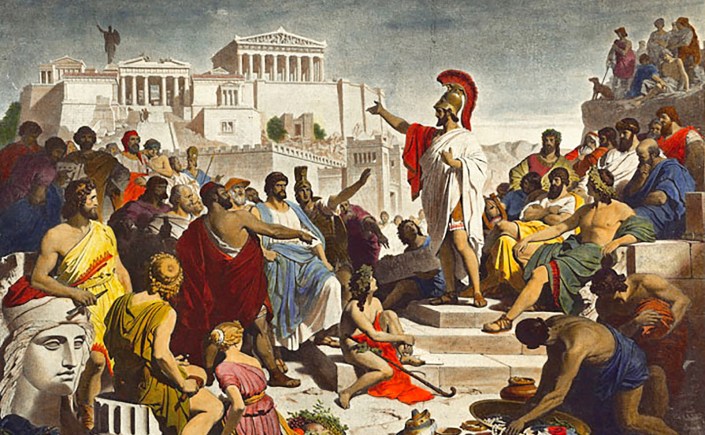
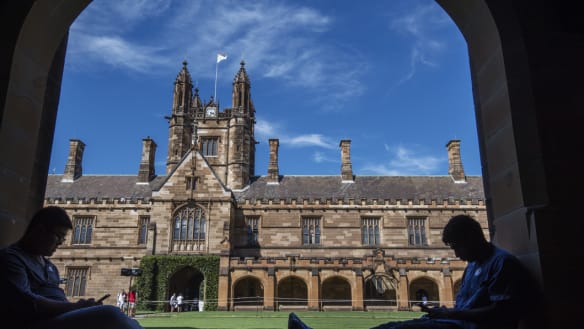



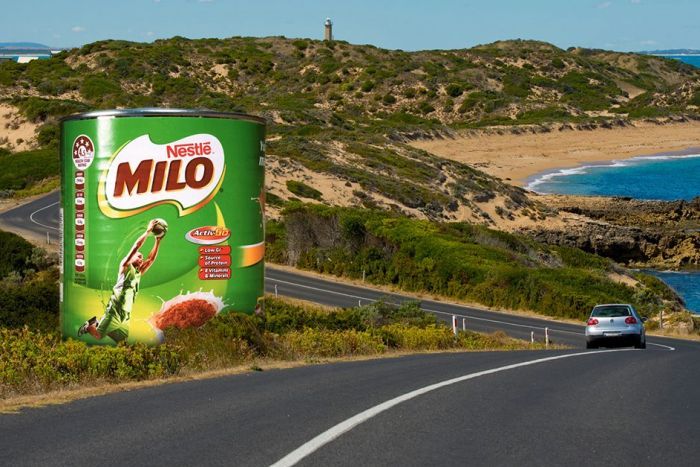
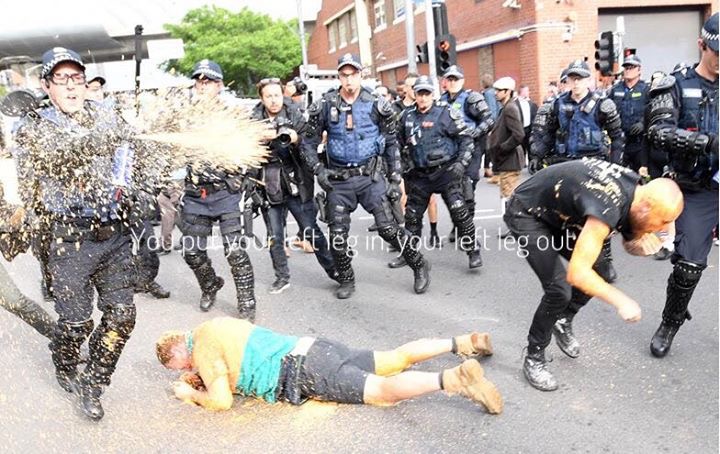


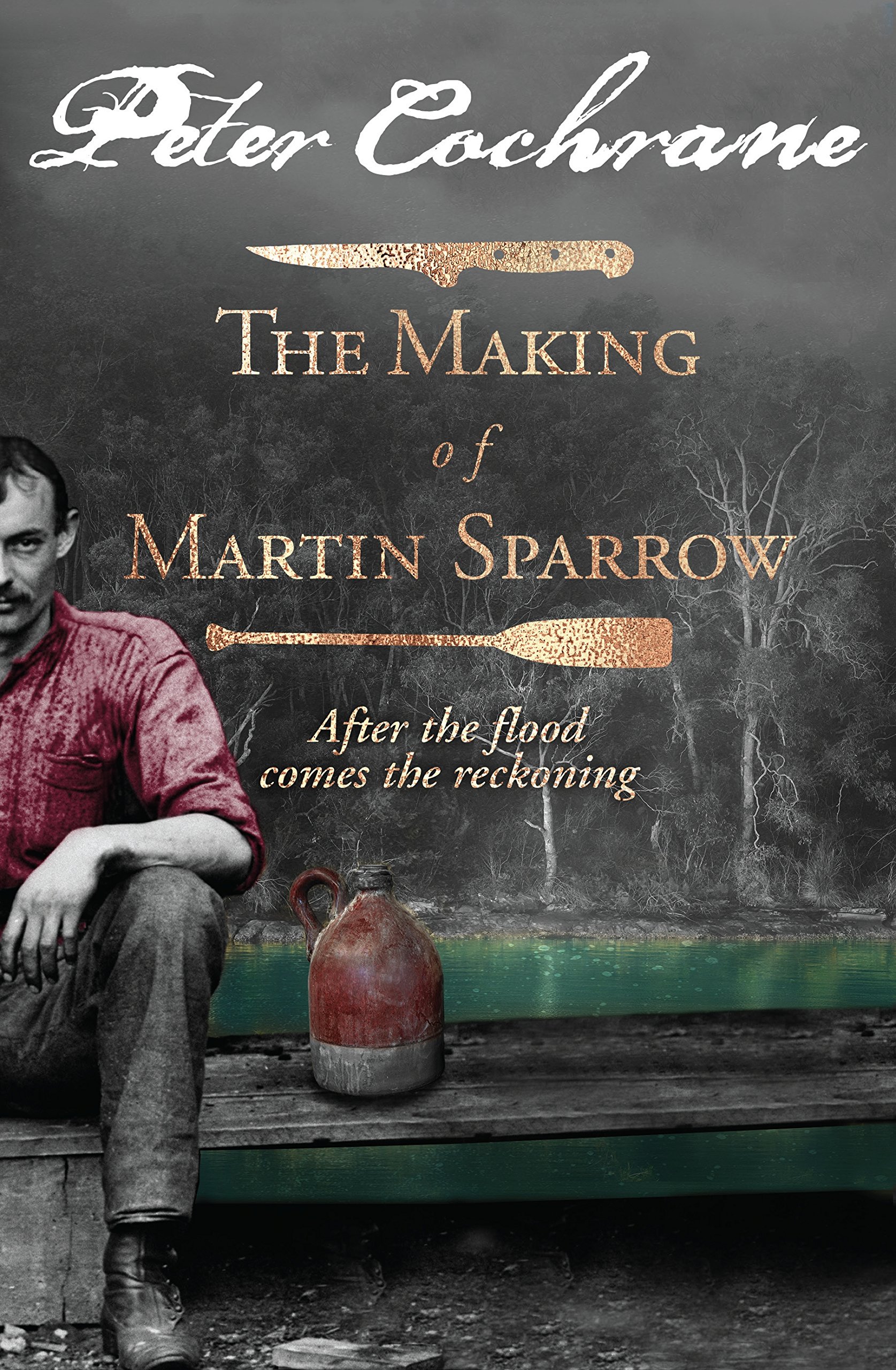









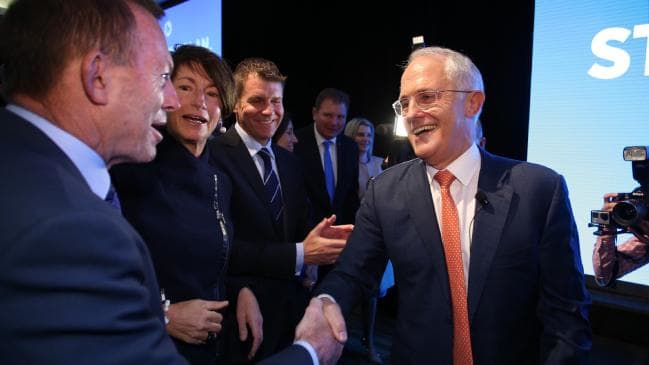


 In That Howling Infinite